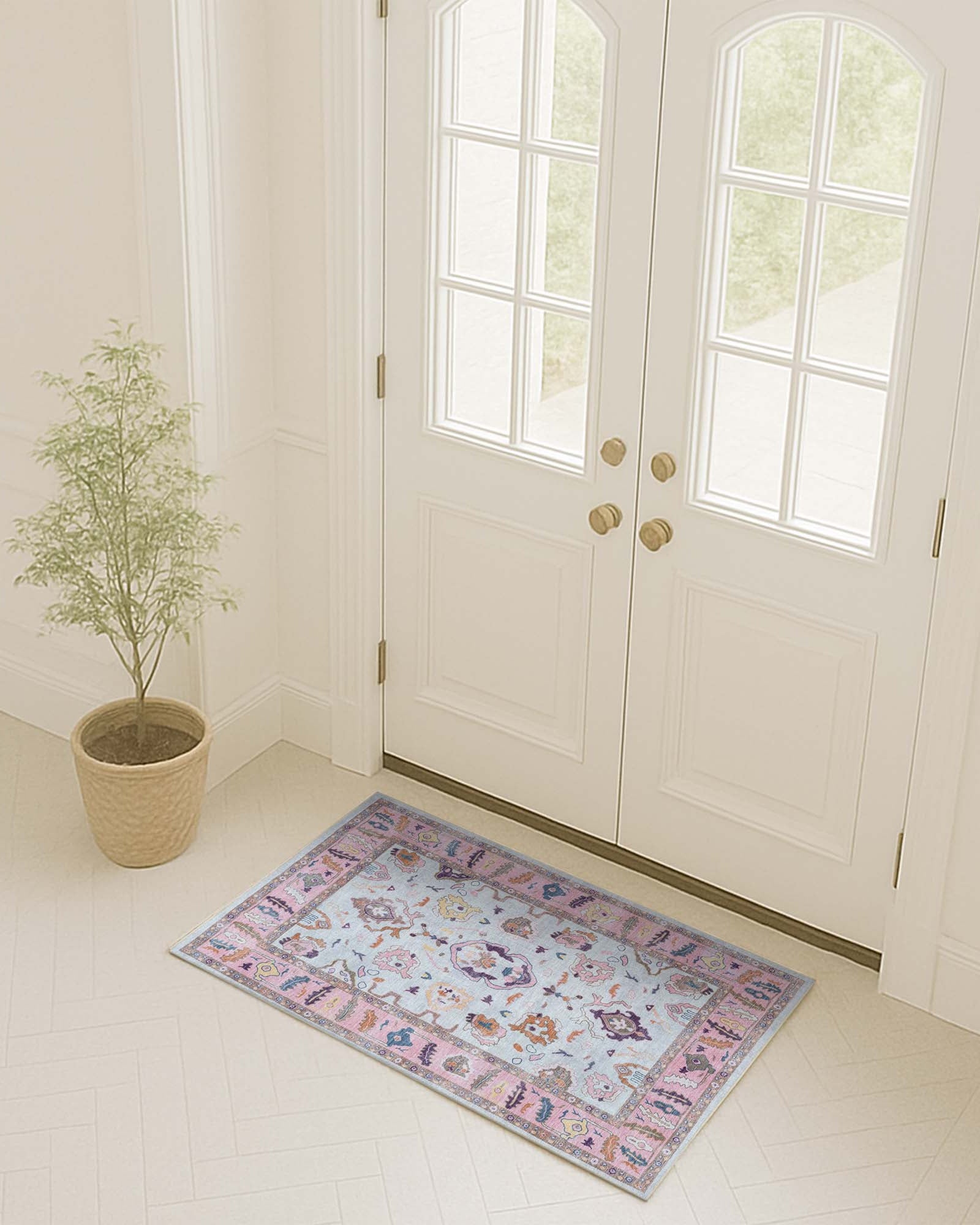
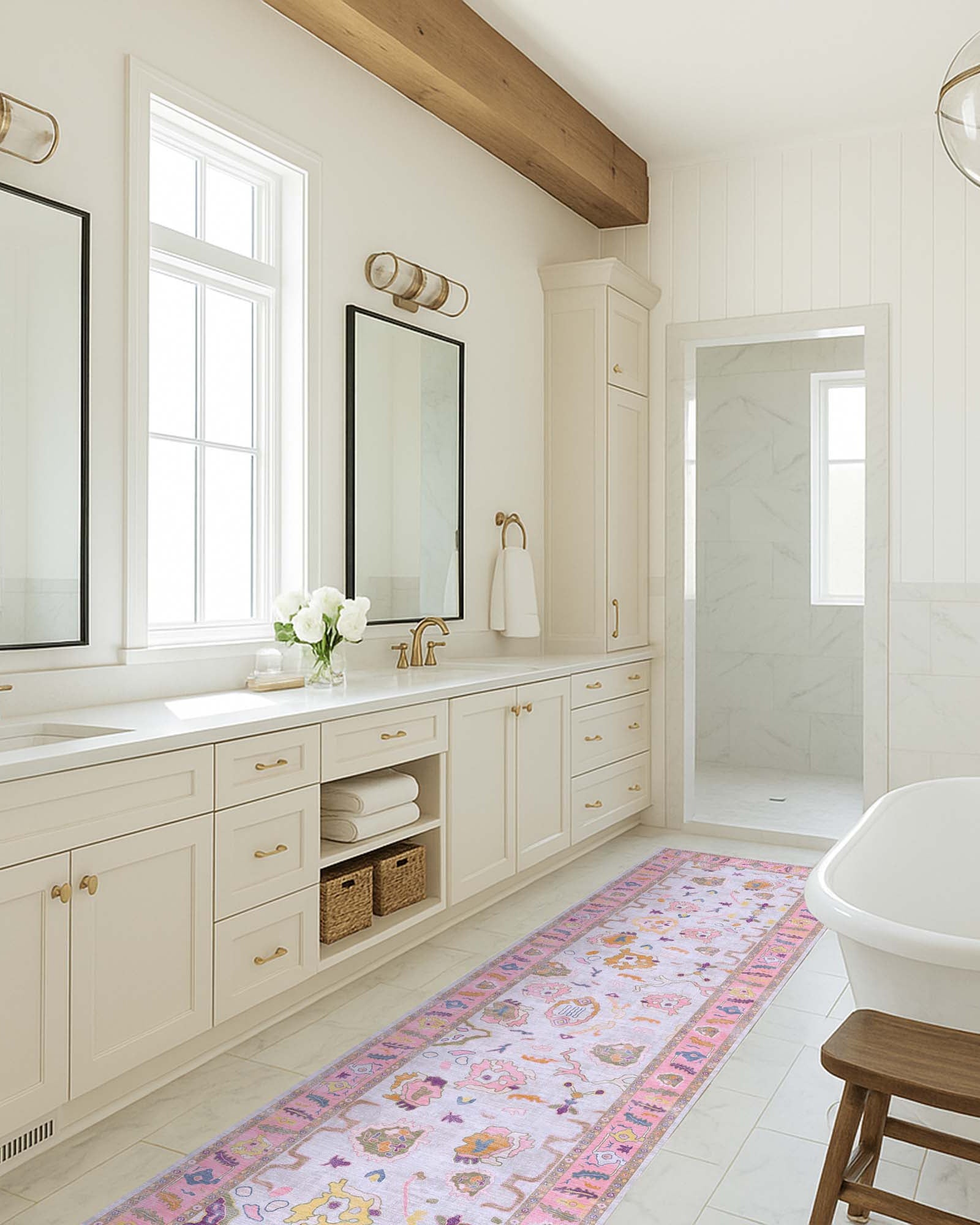
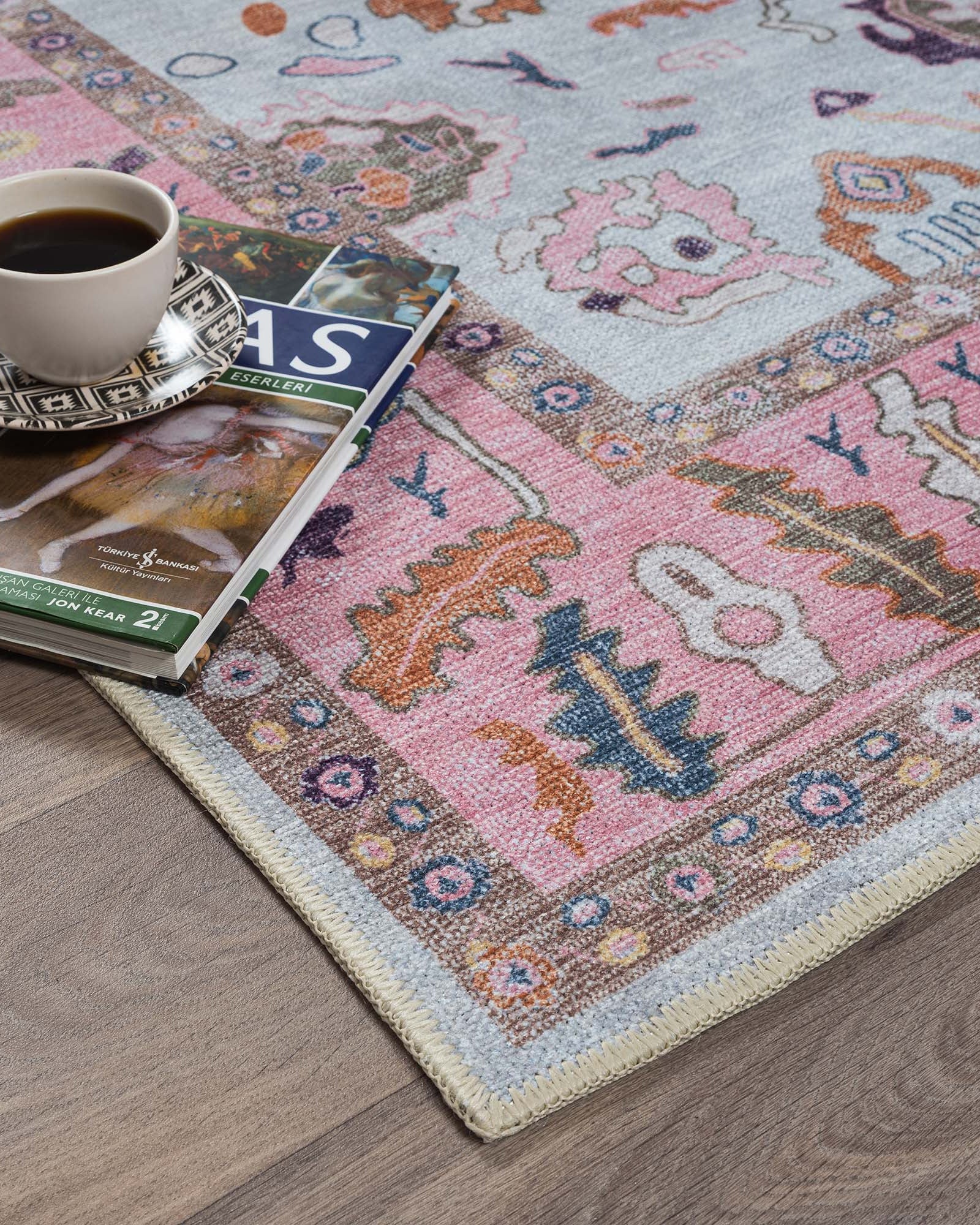
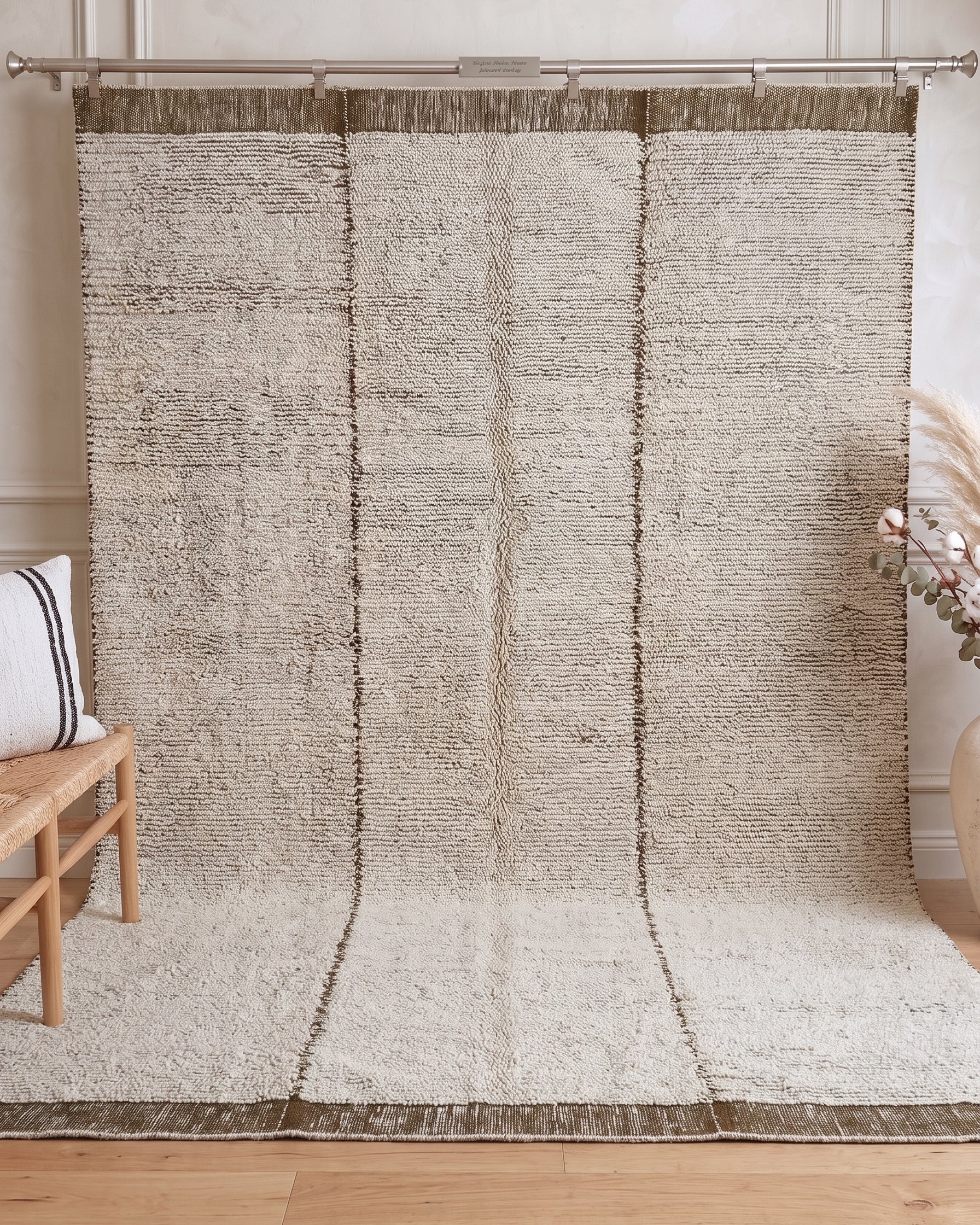
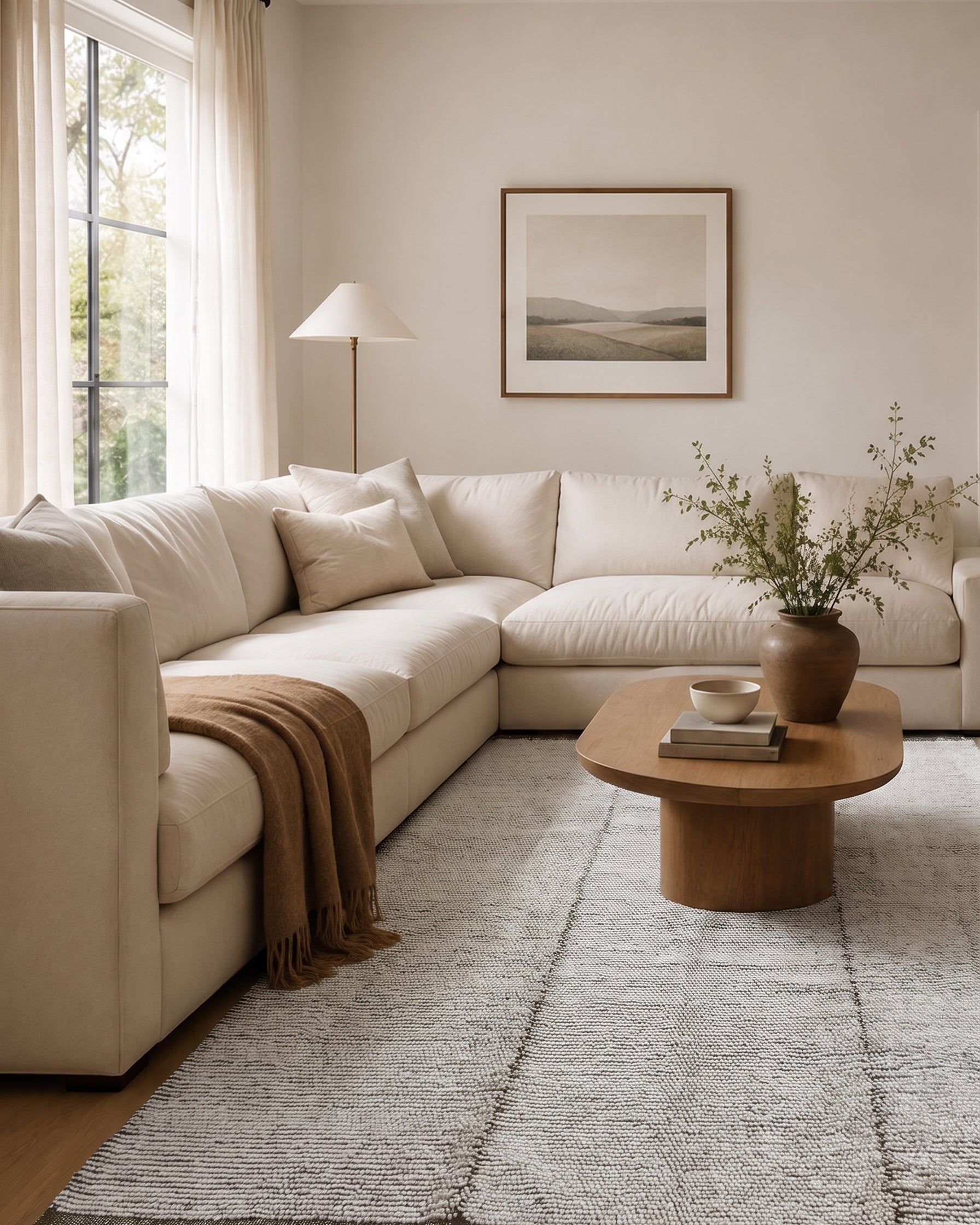
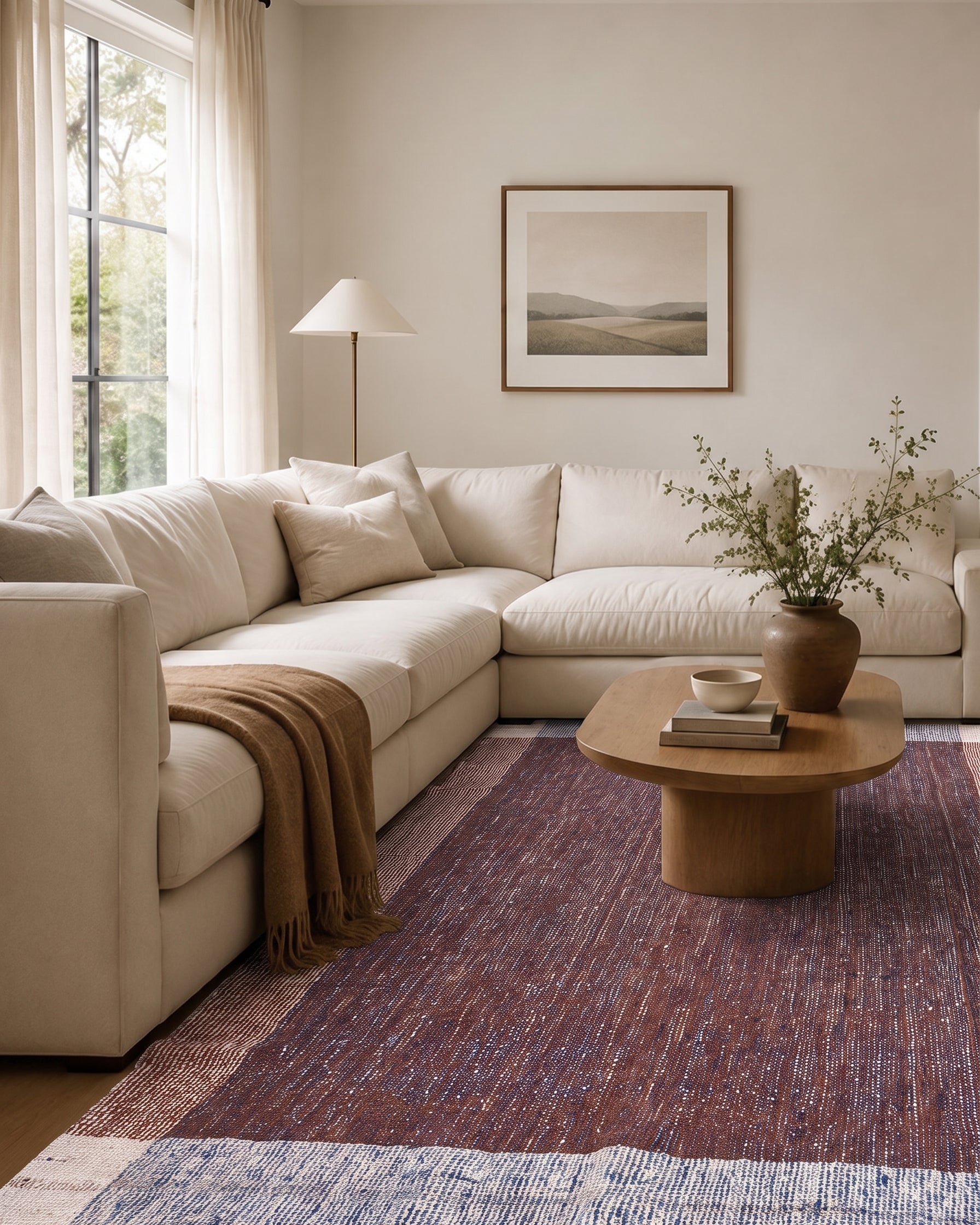
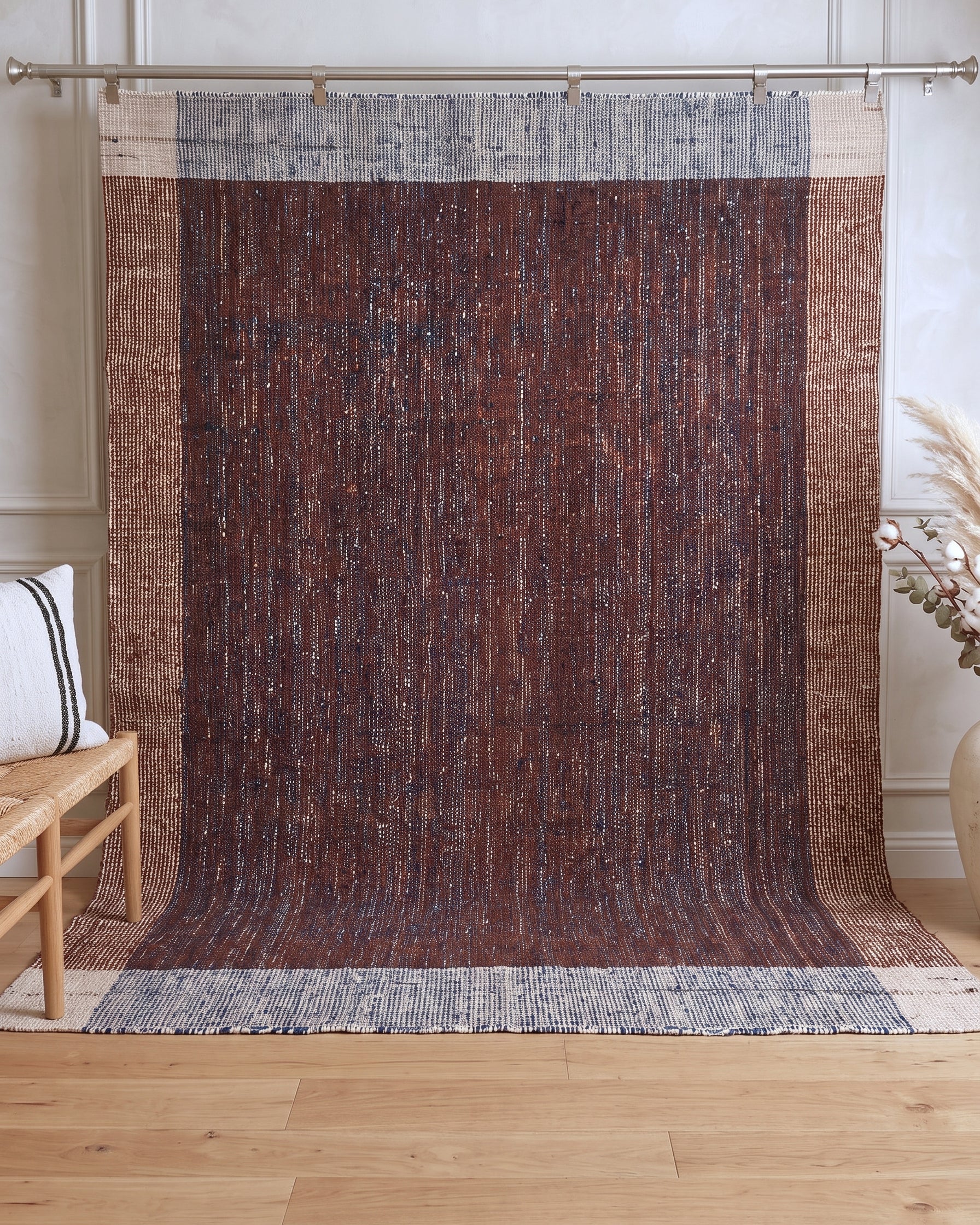
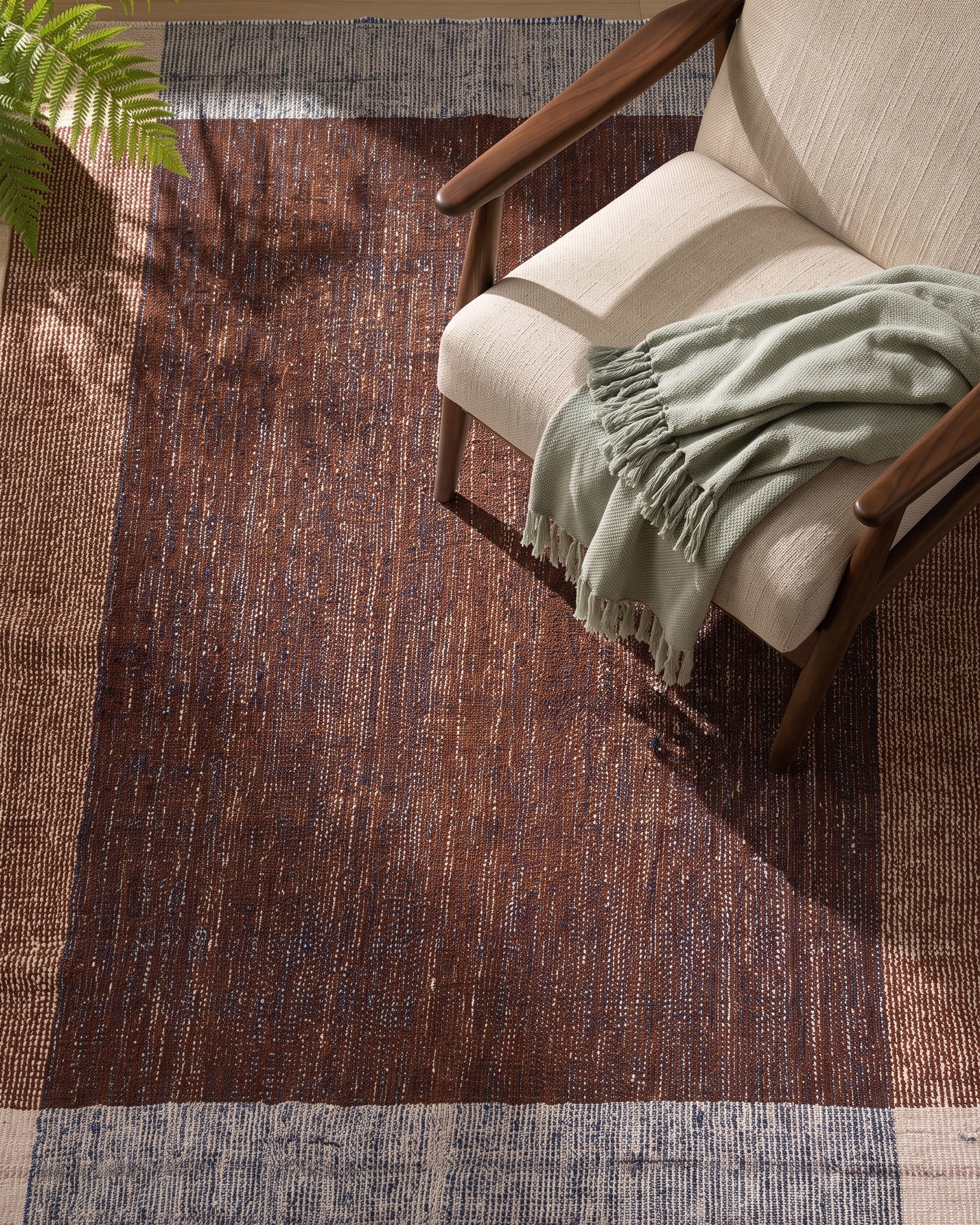
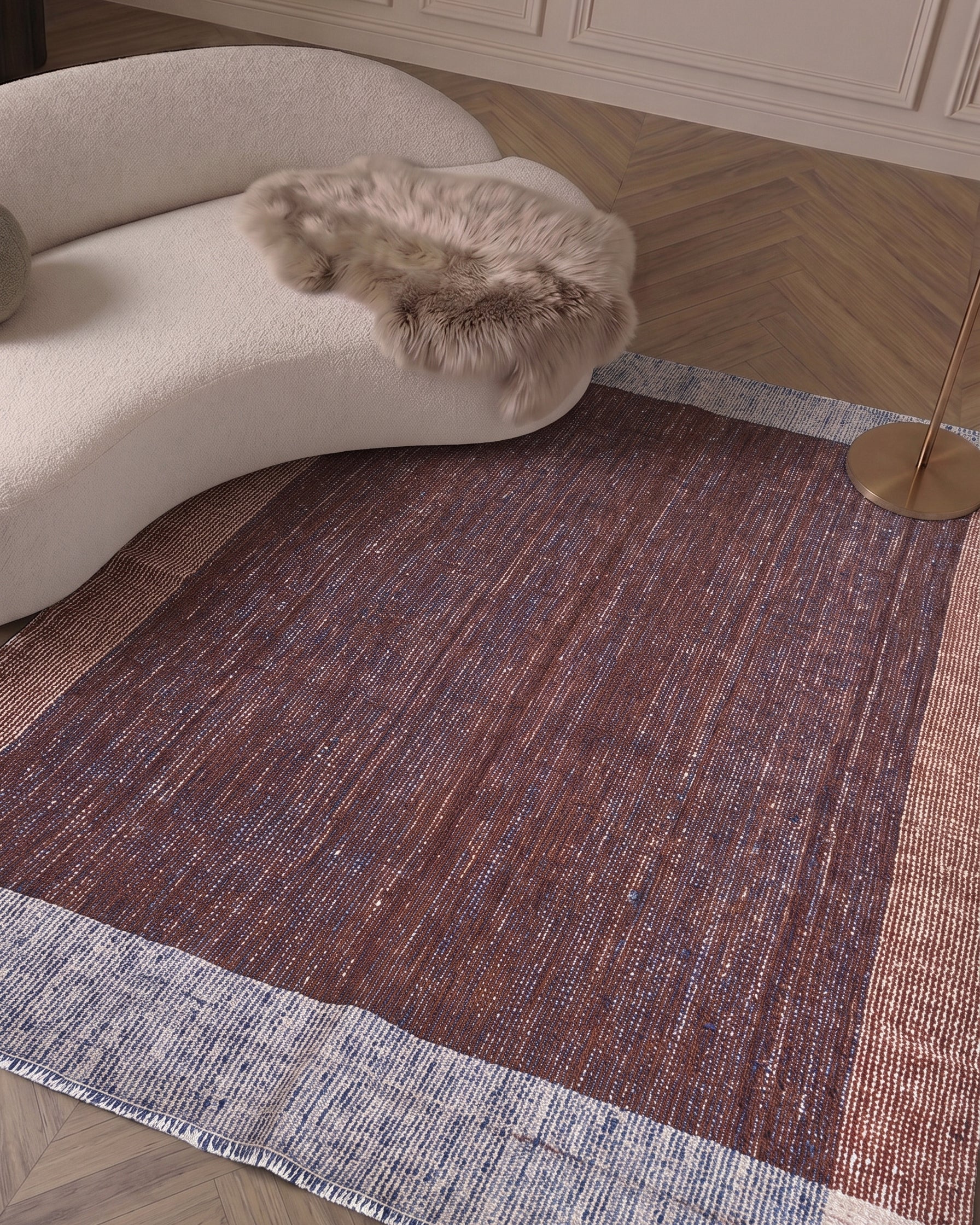
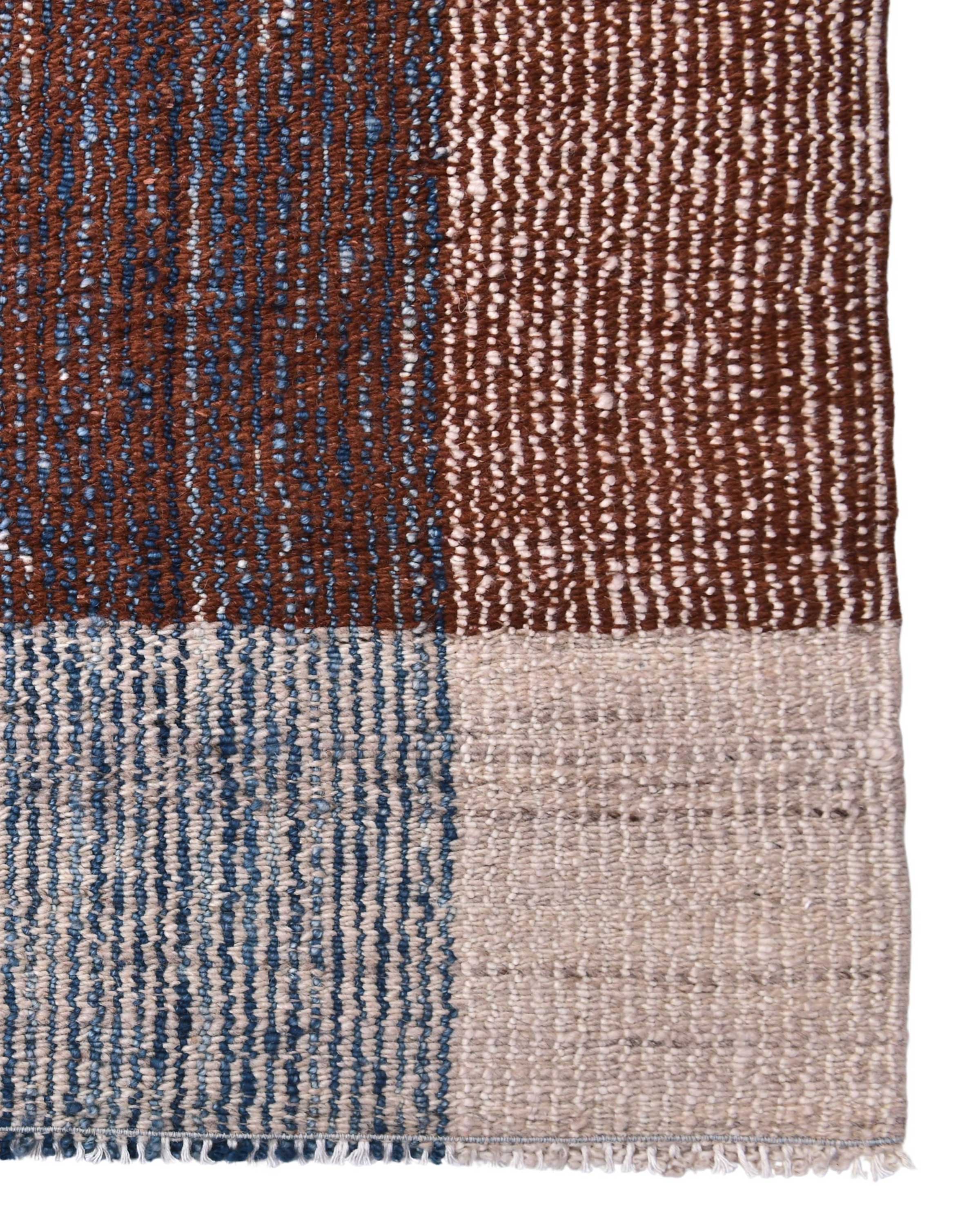
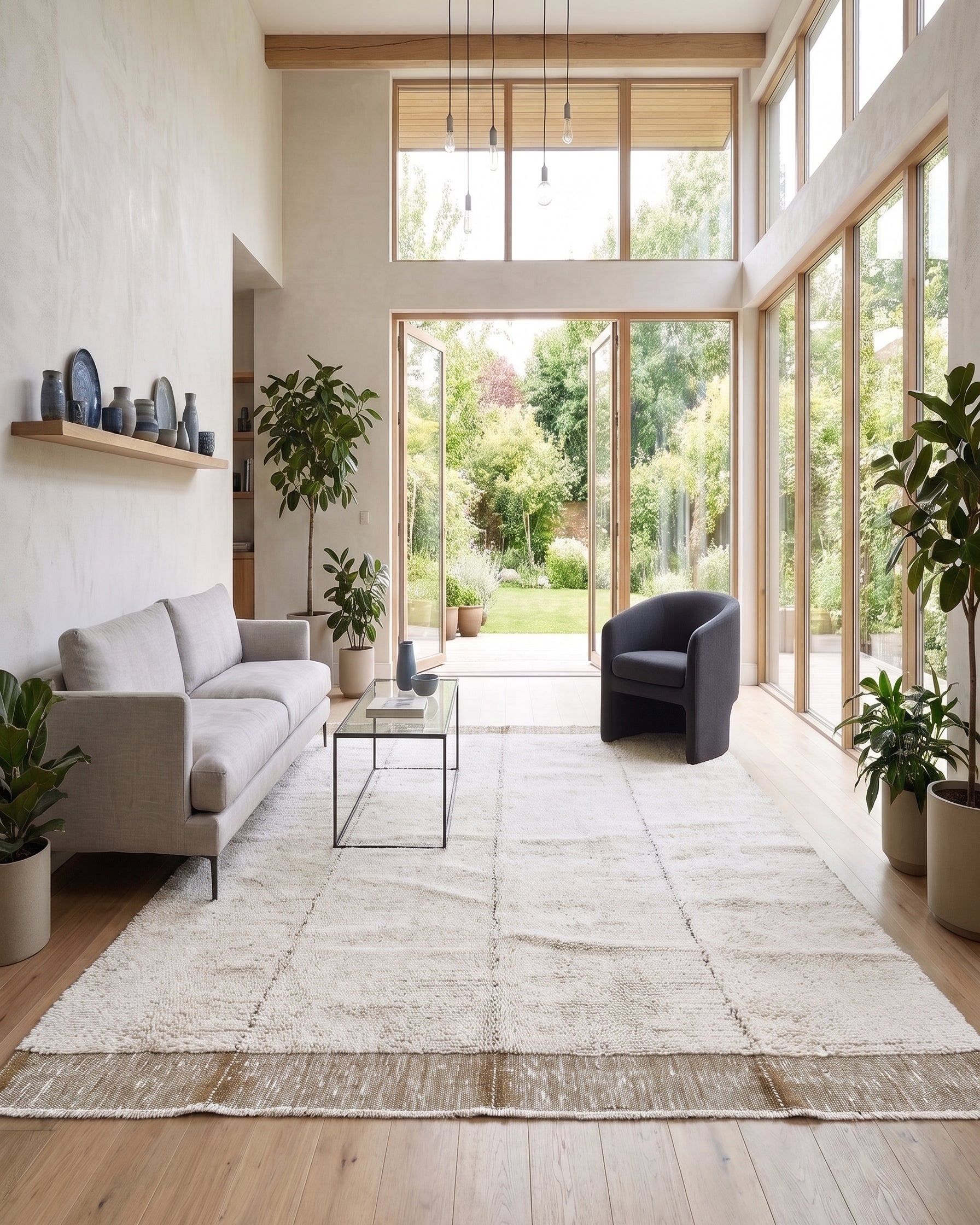
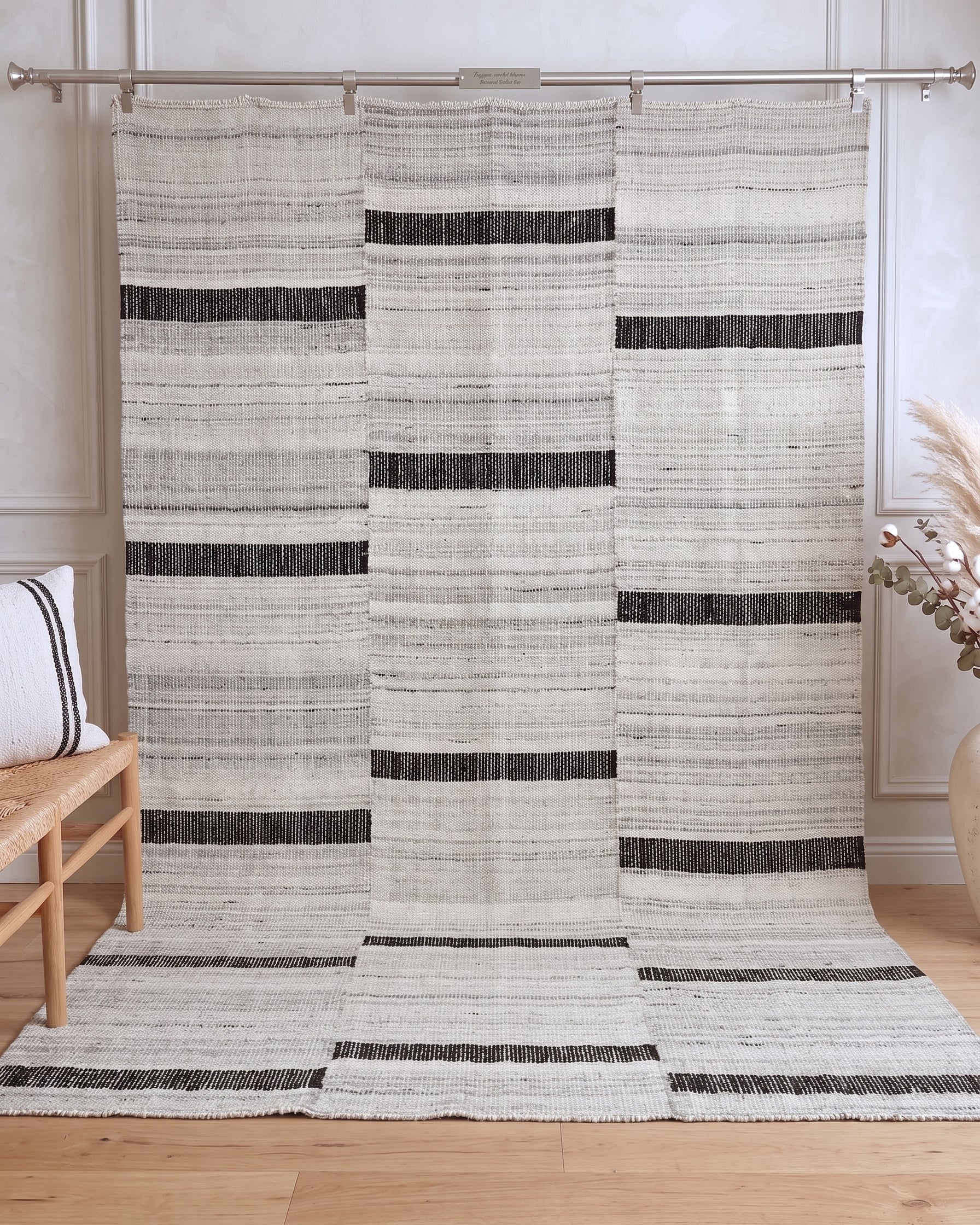
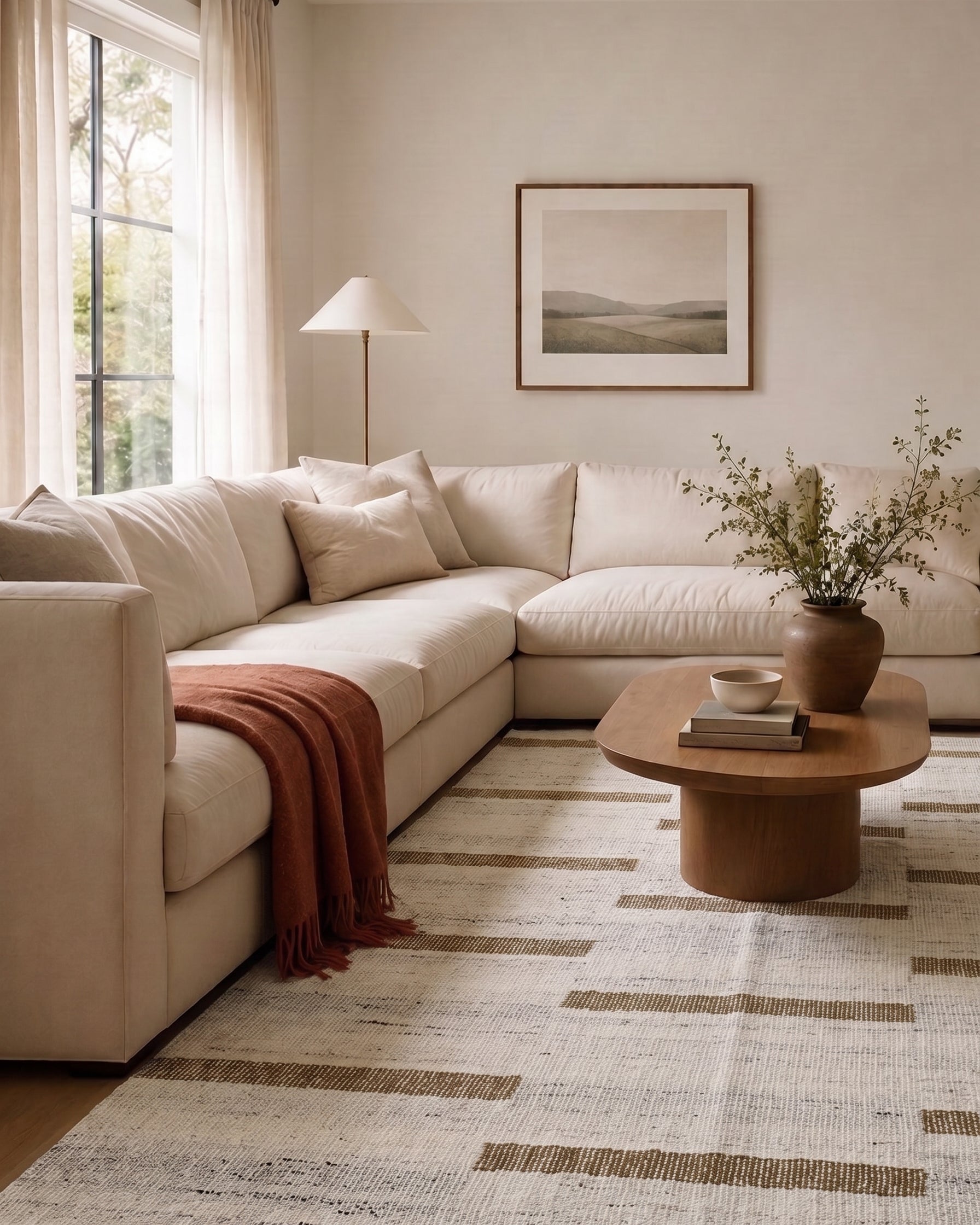
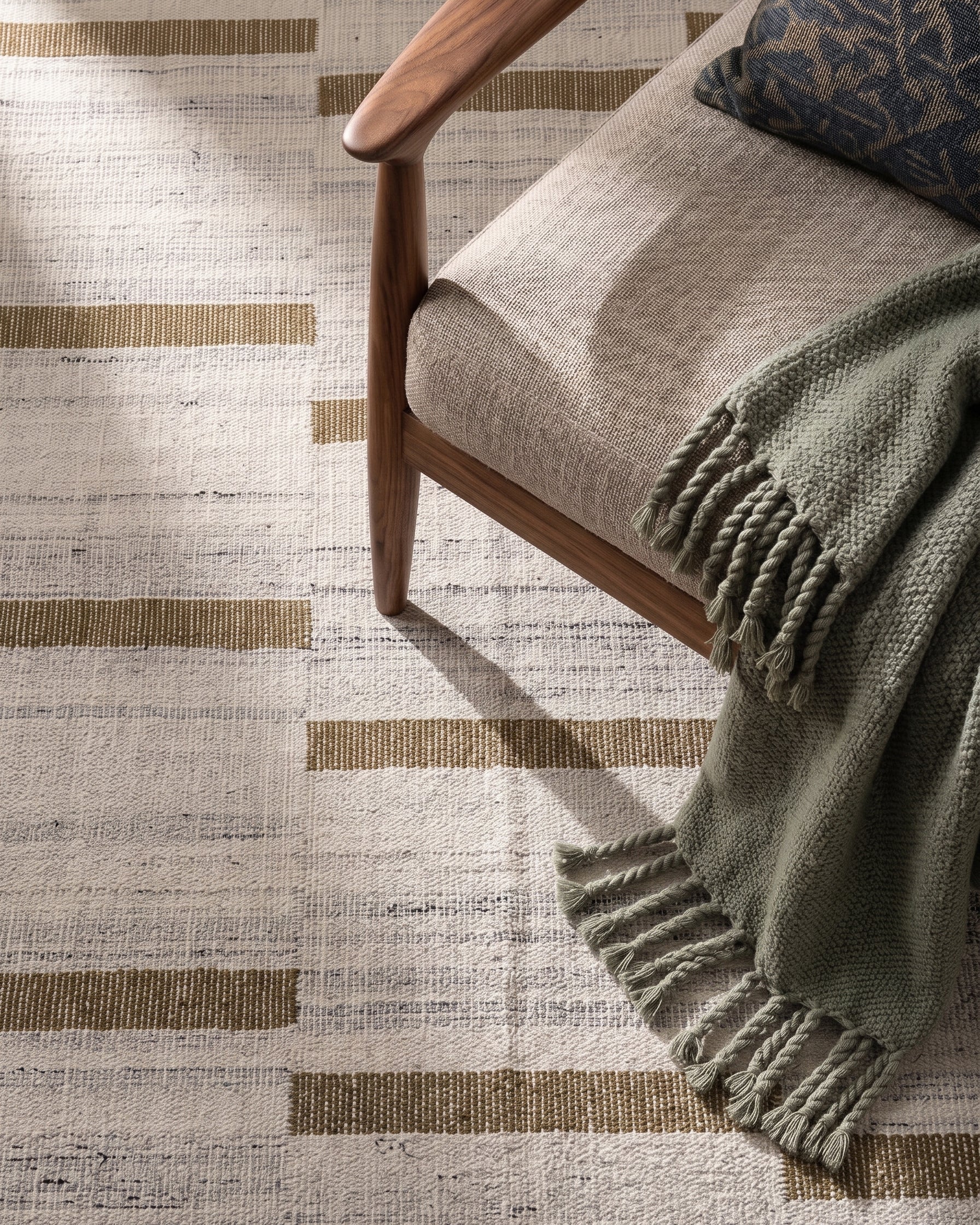
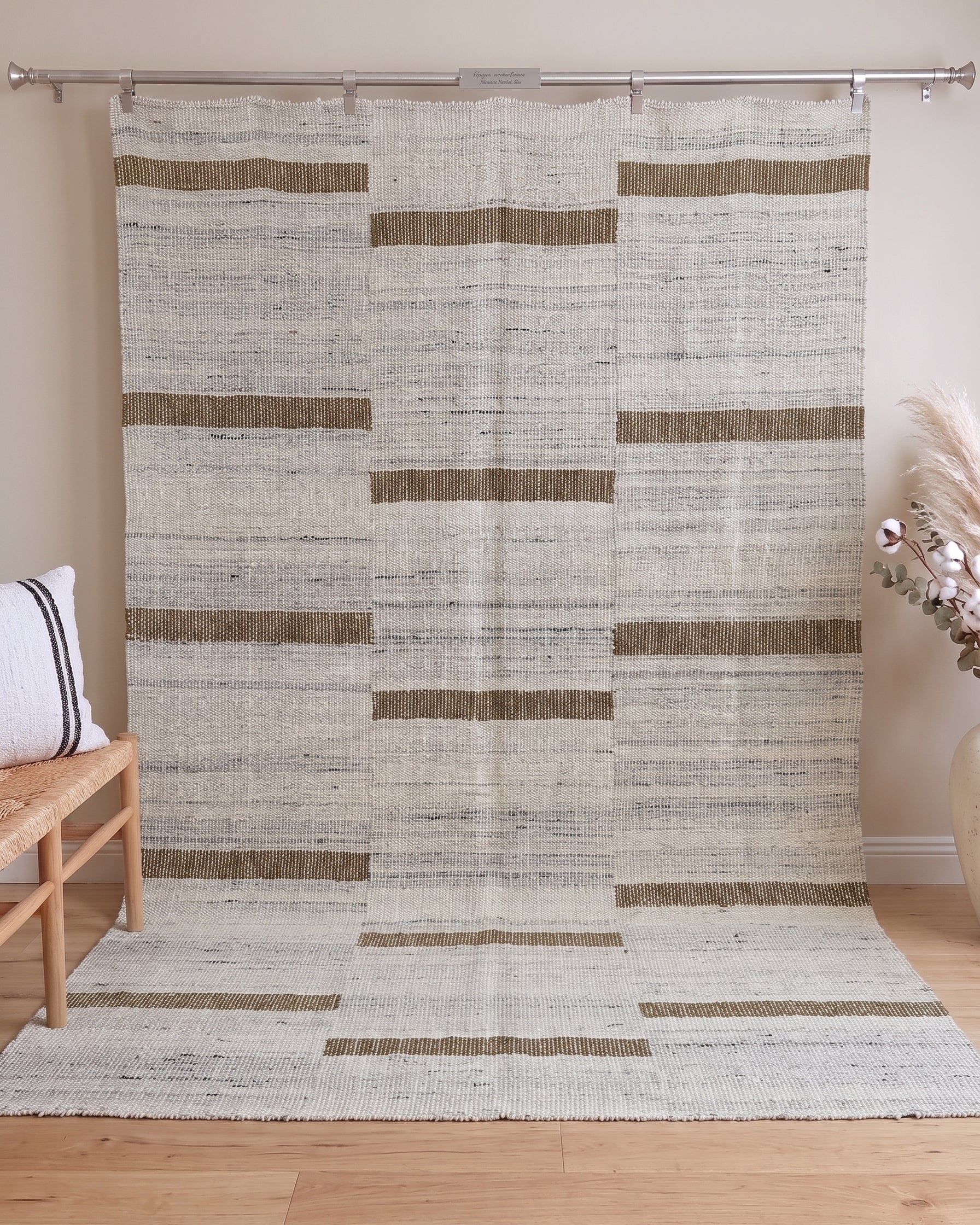
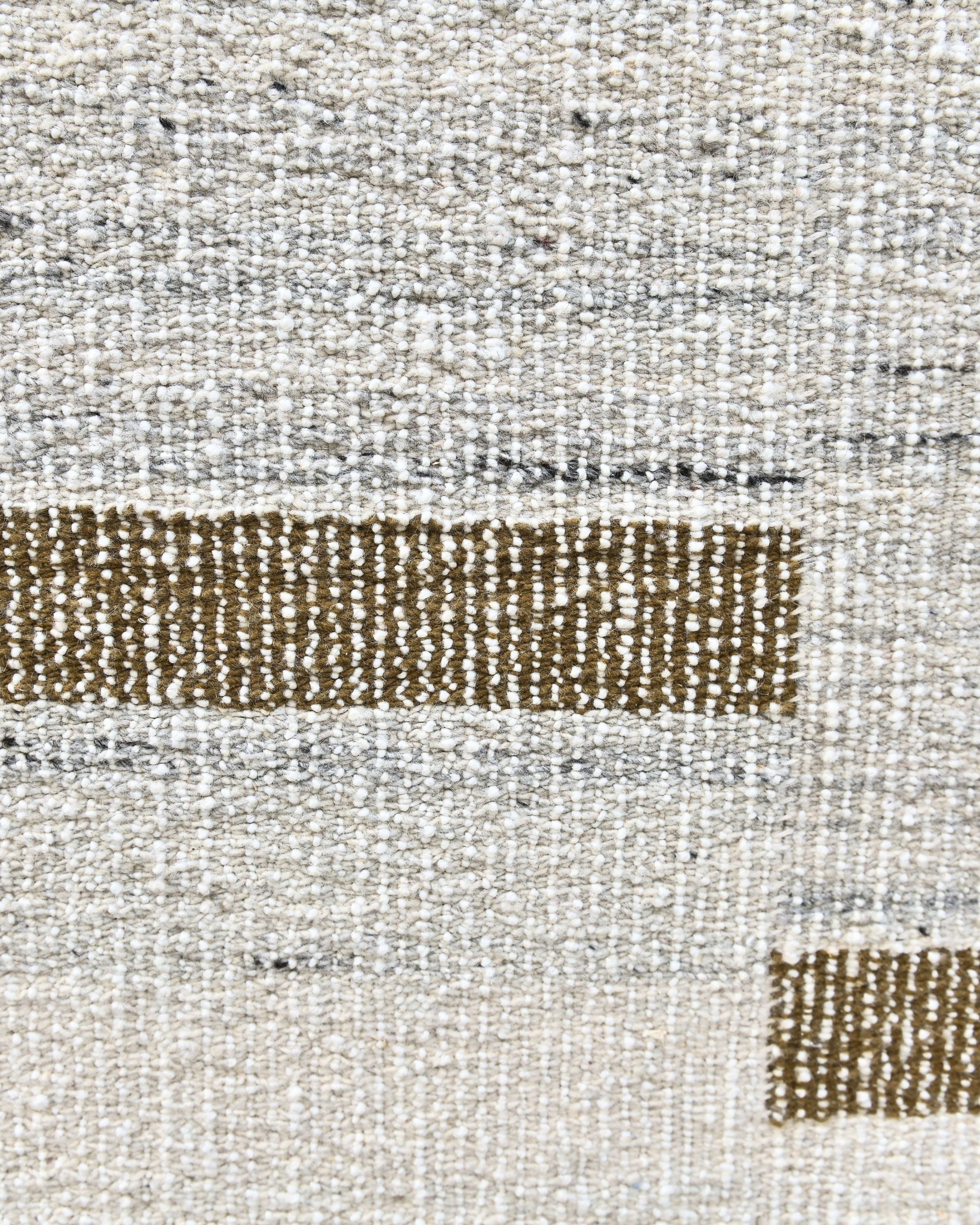
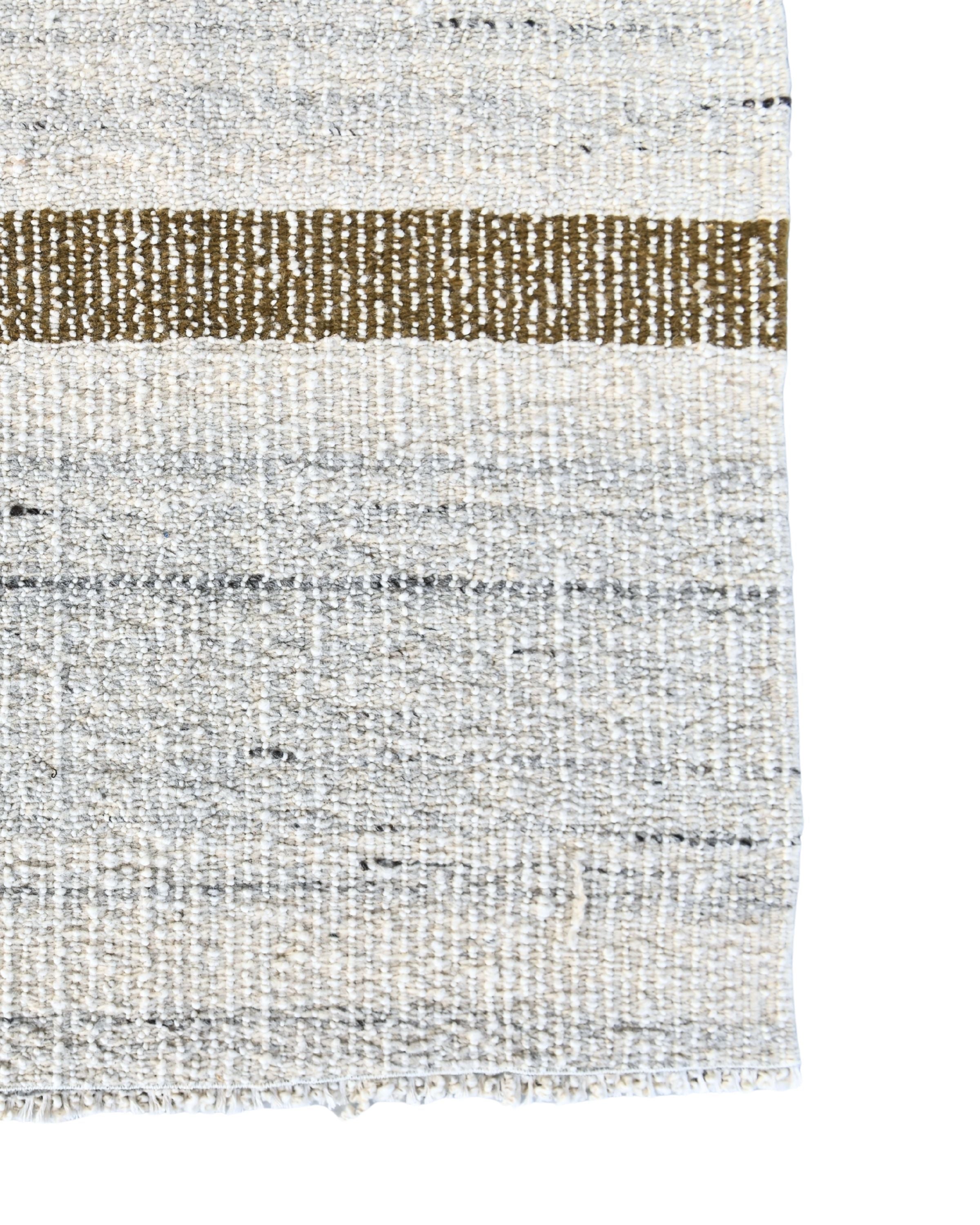
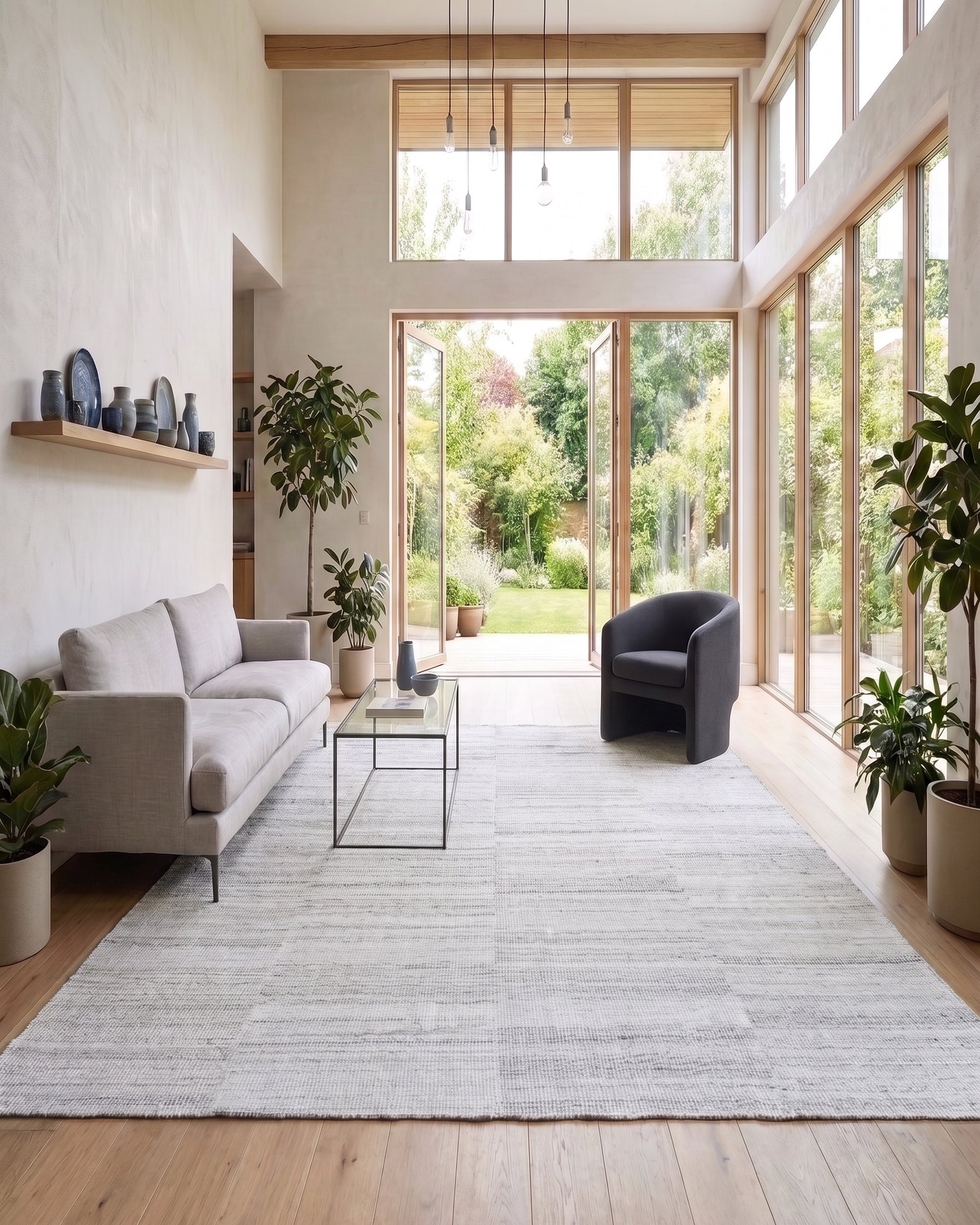
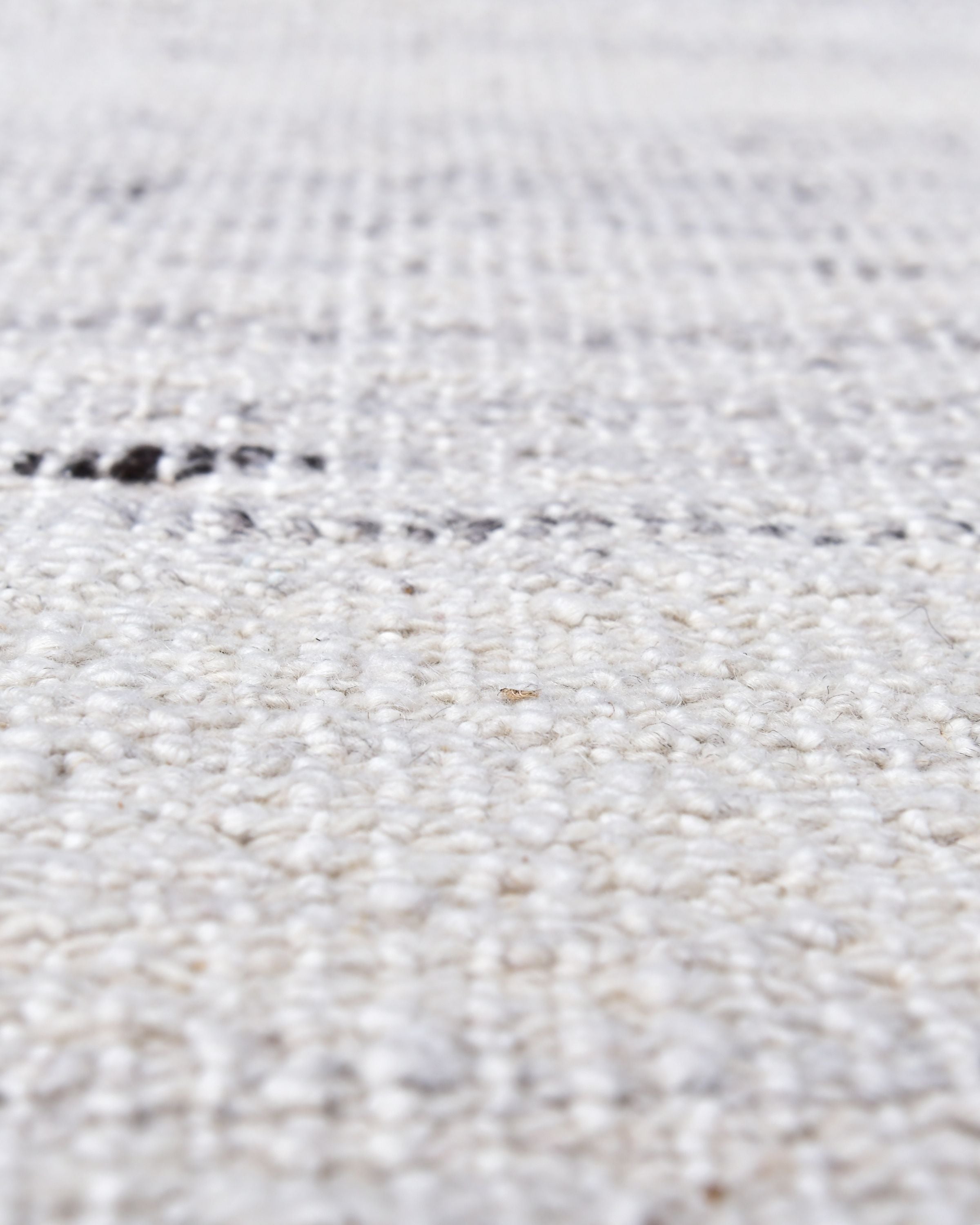
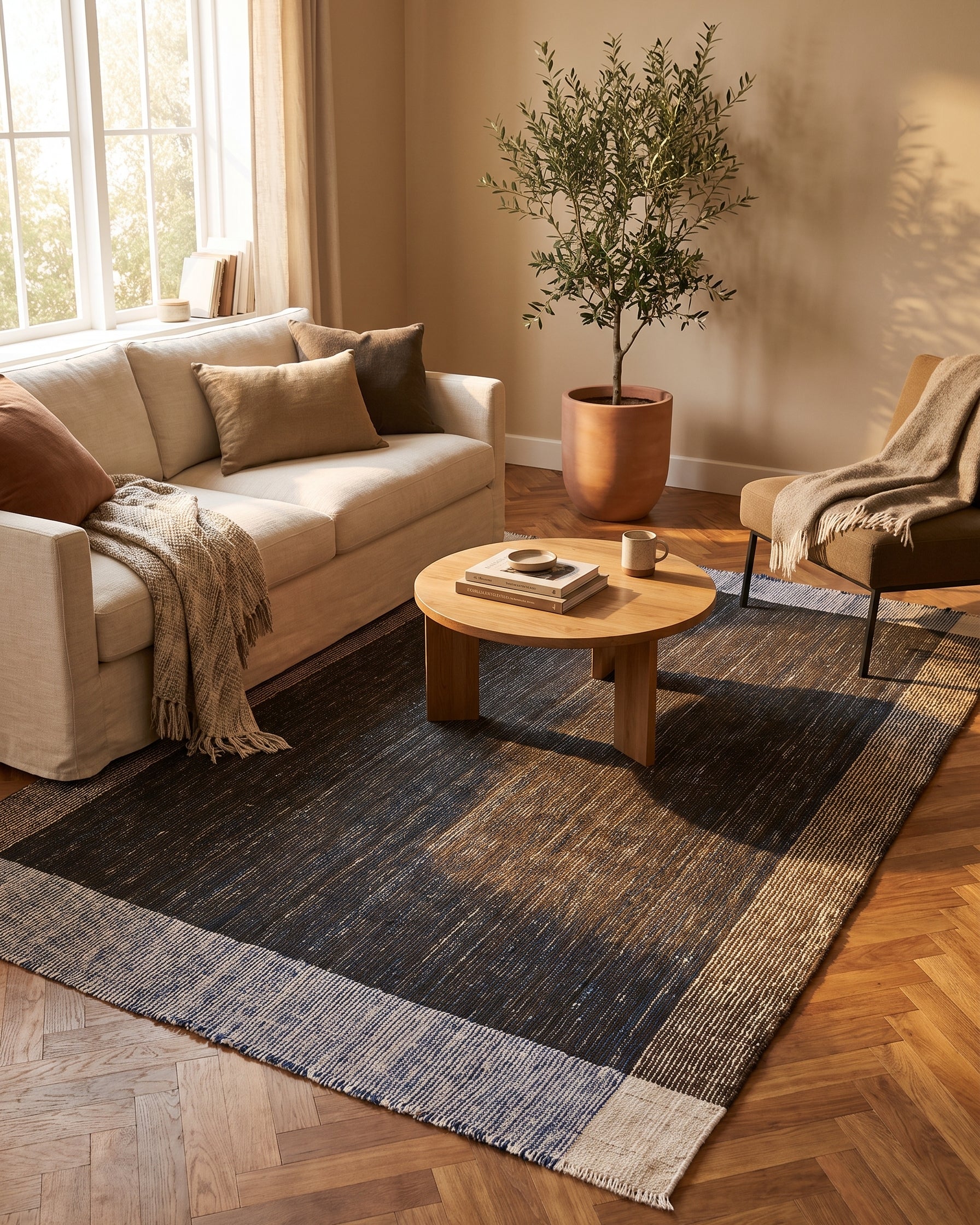
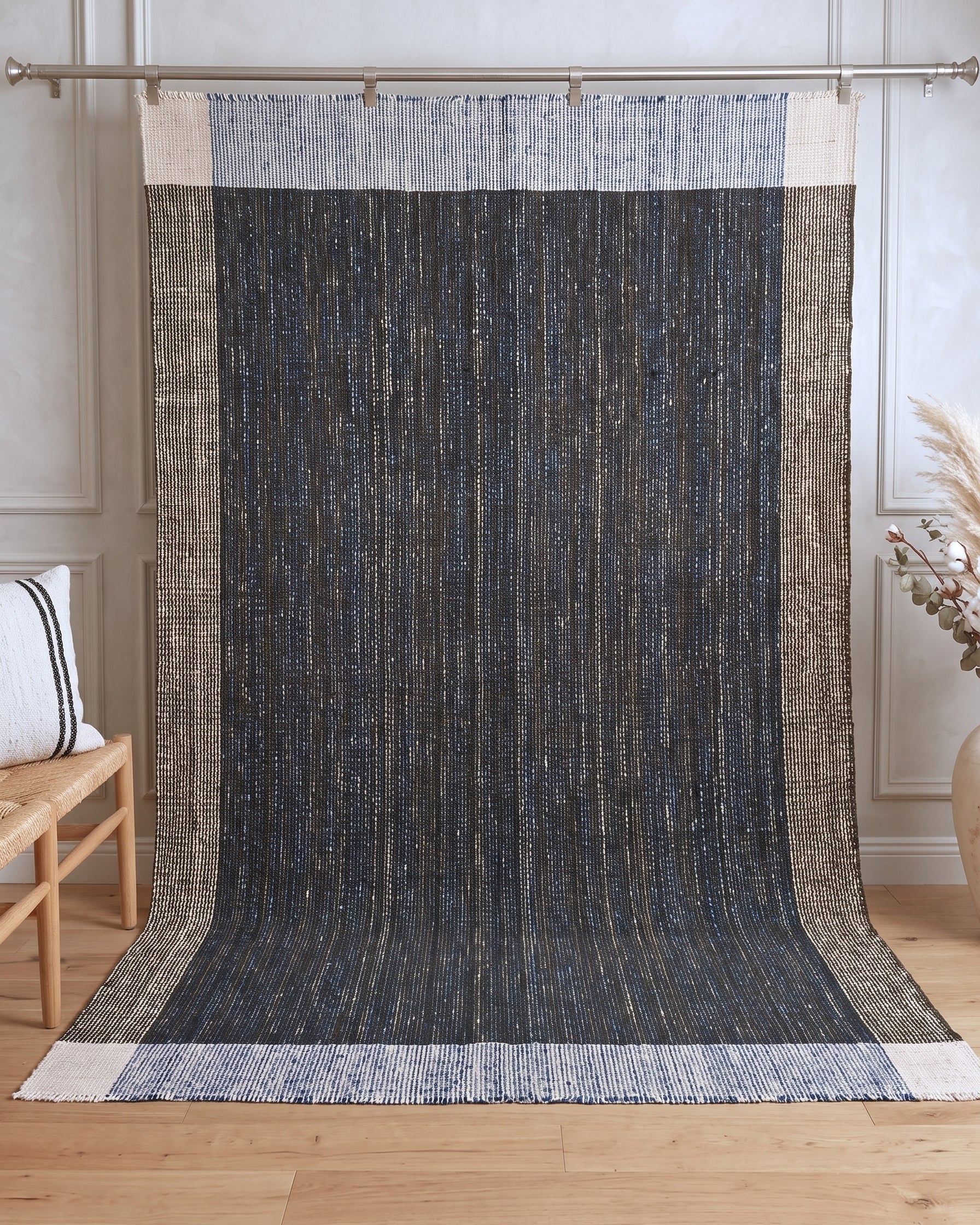
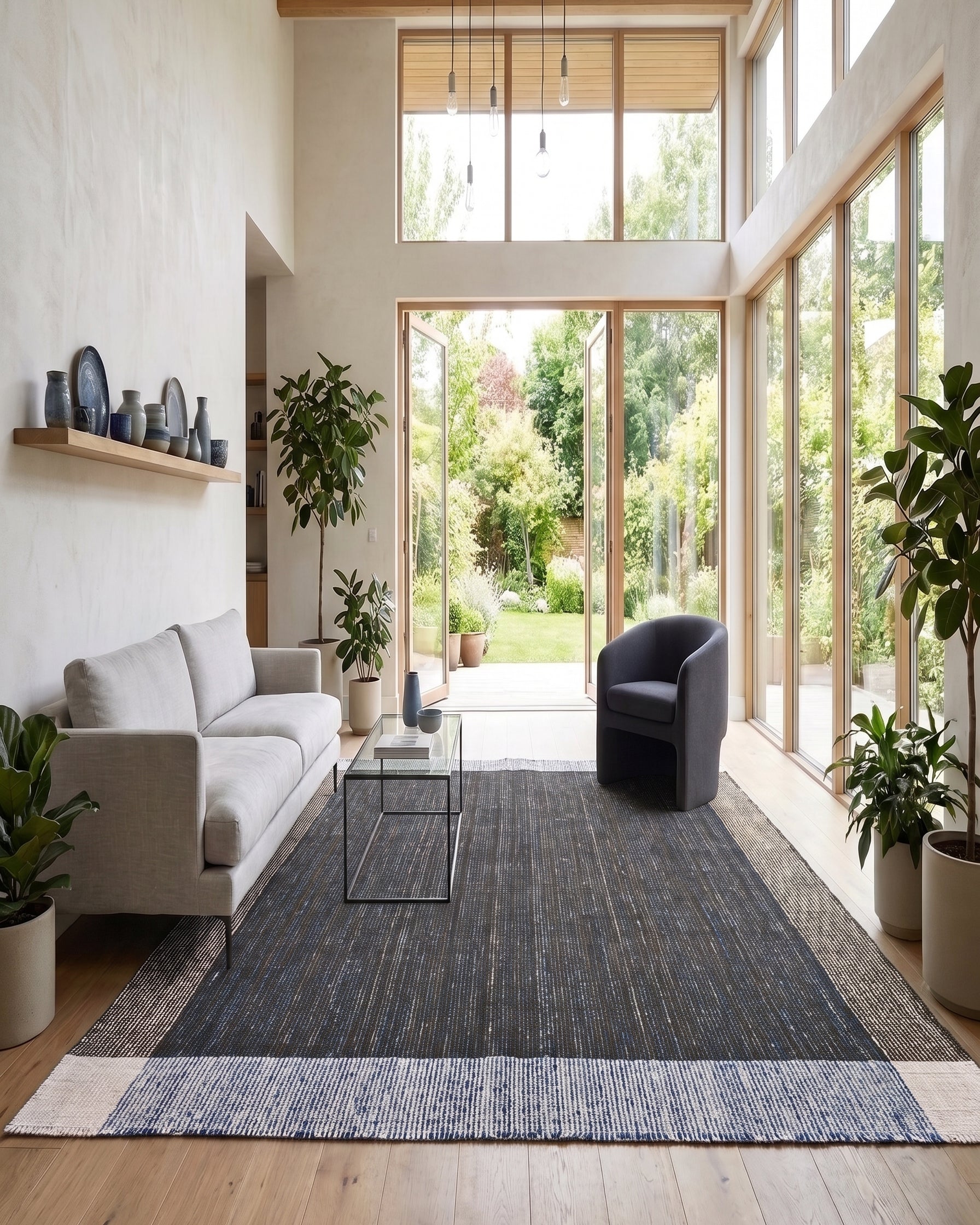
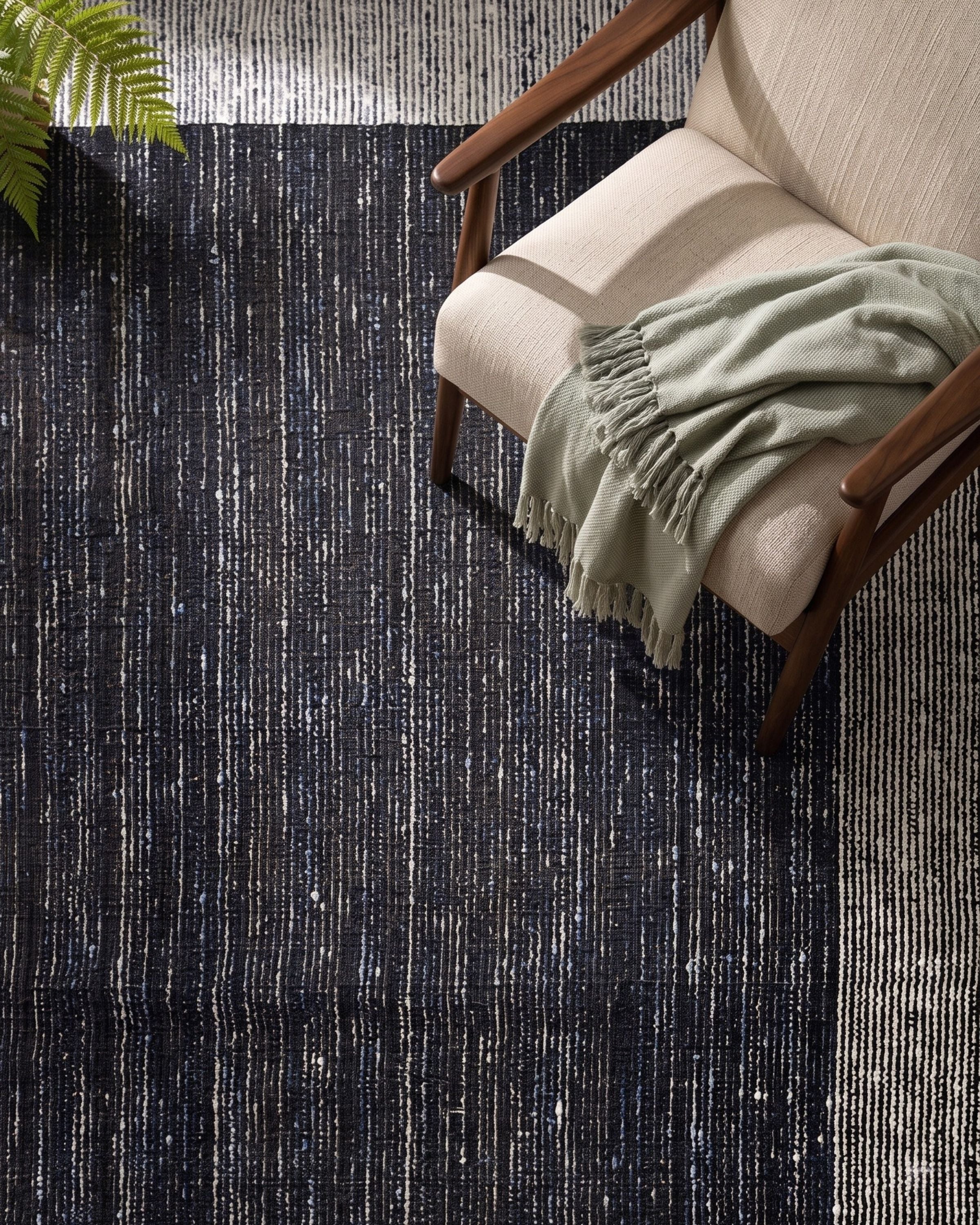
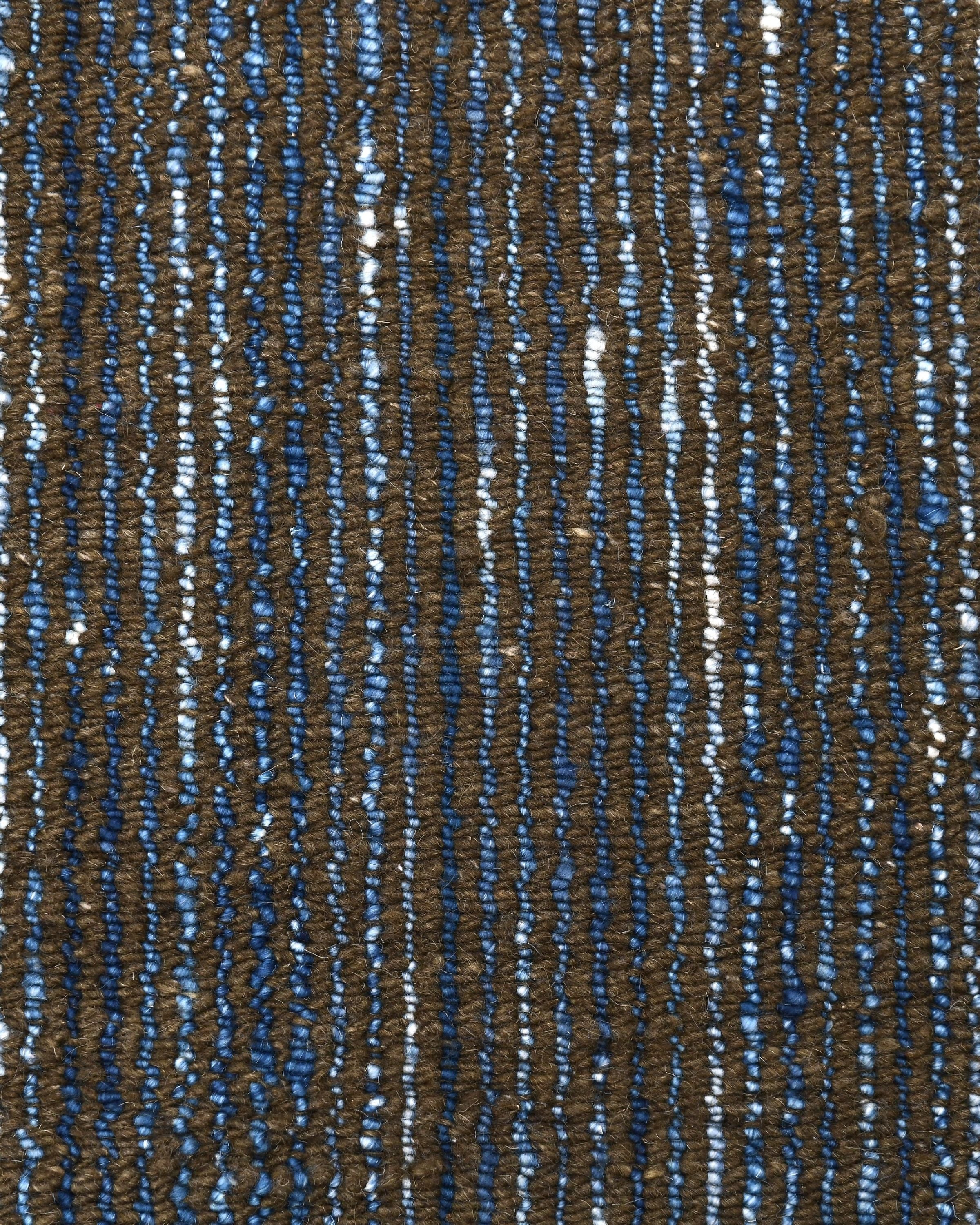
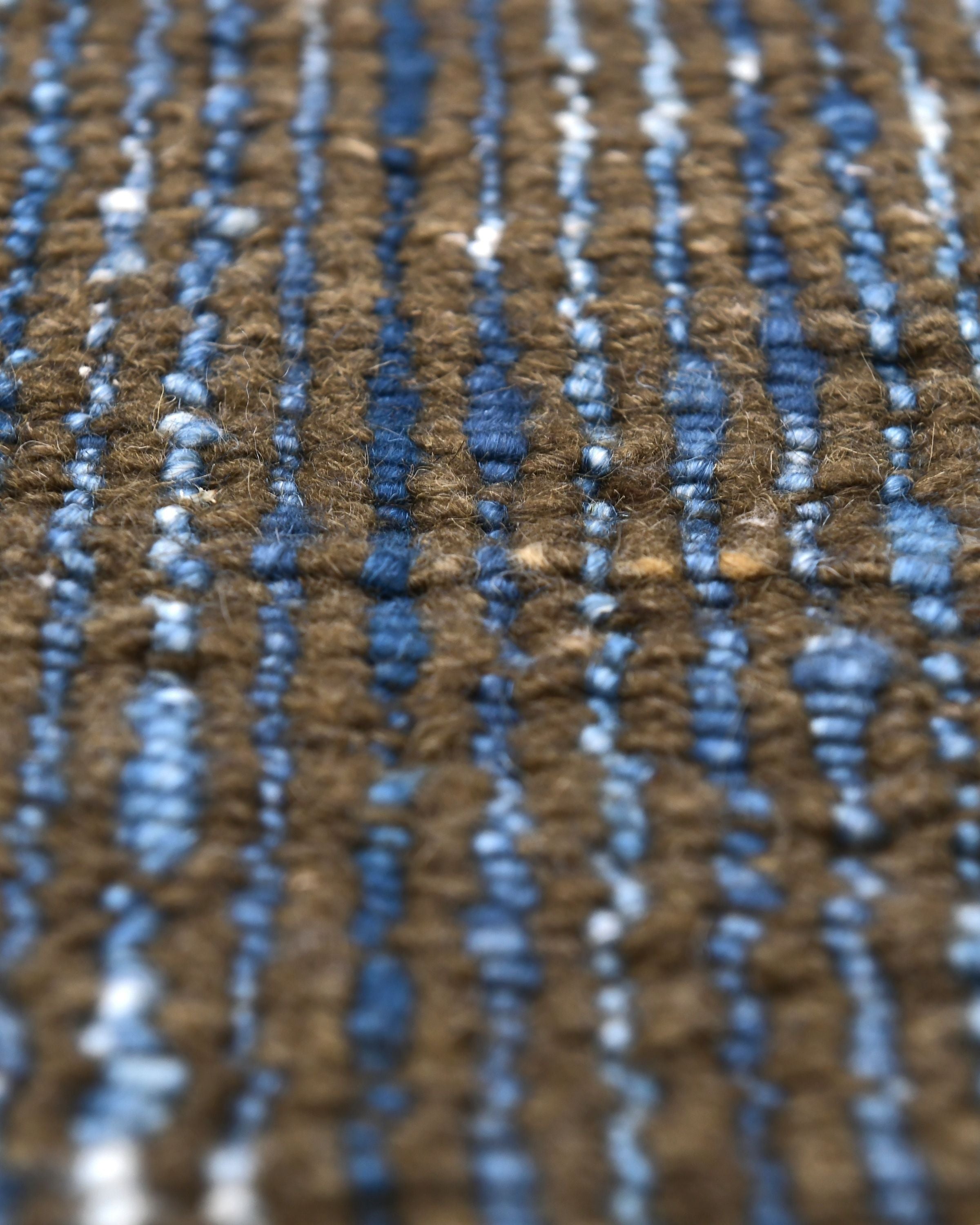
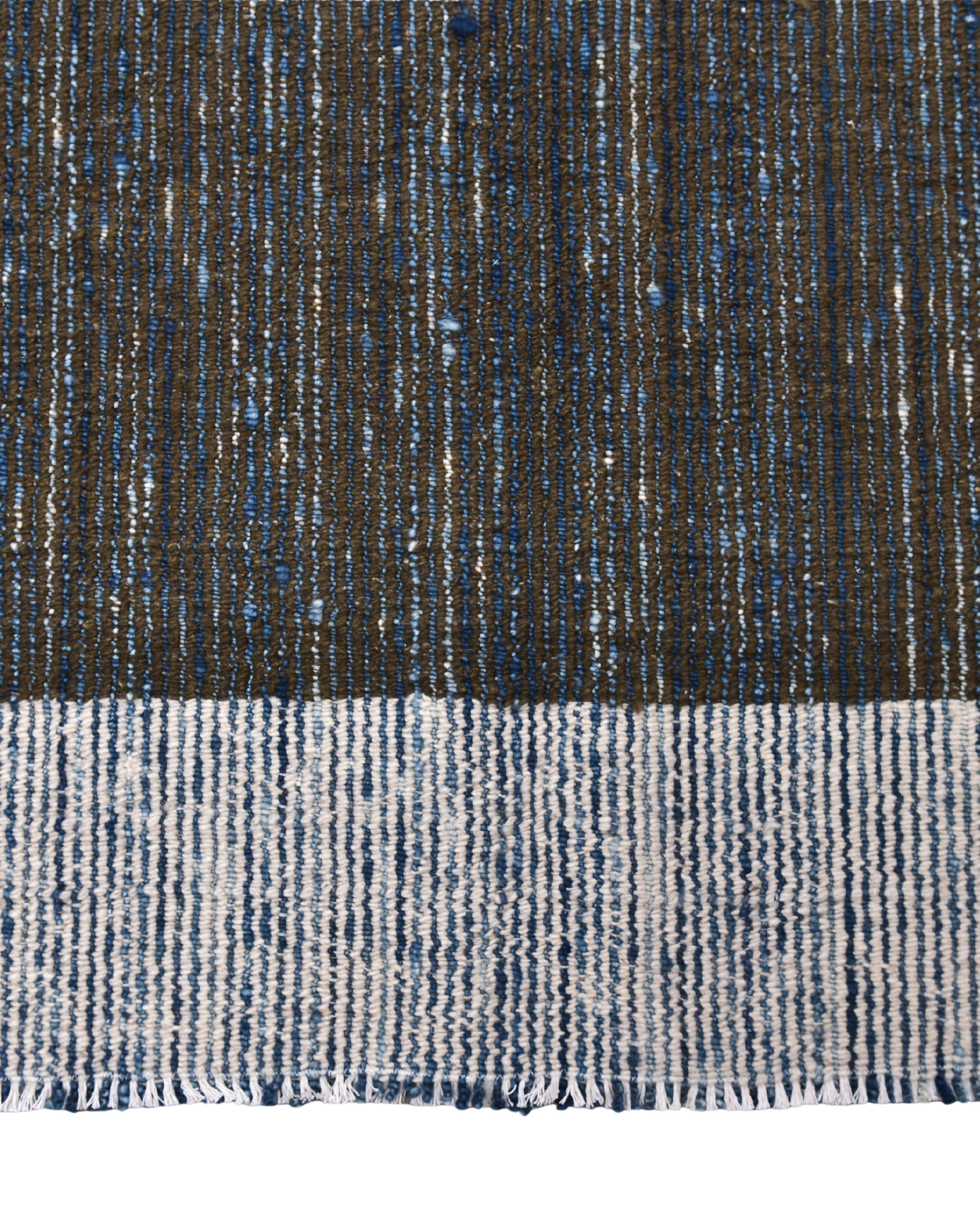
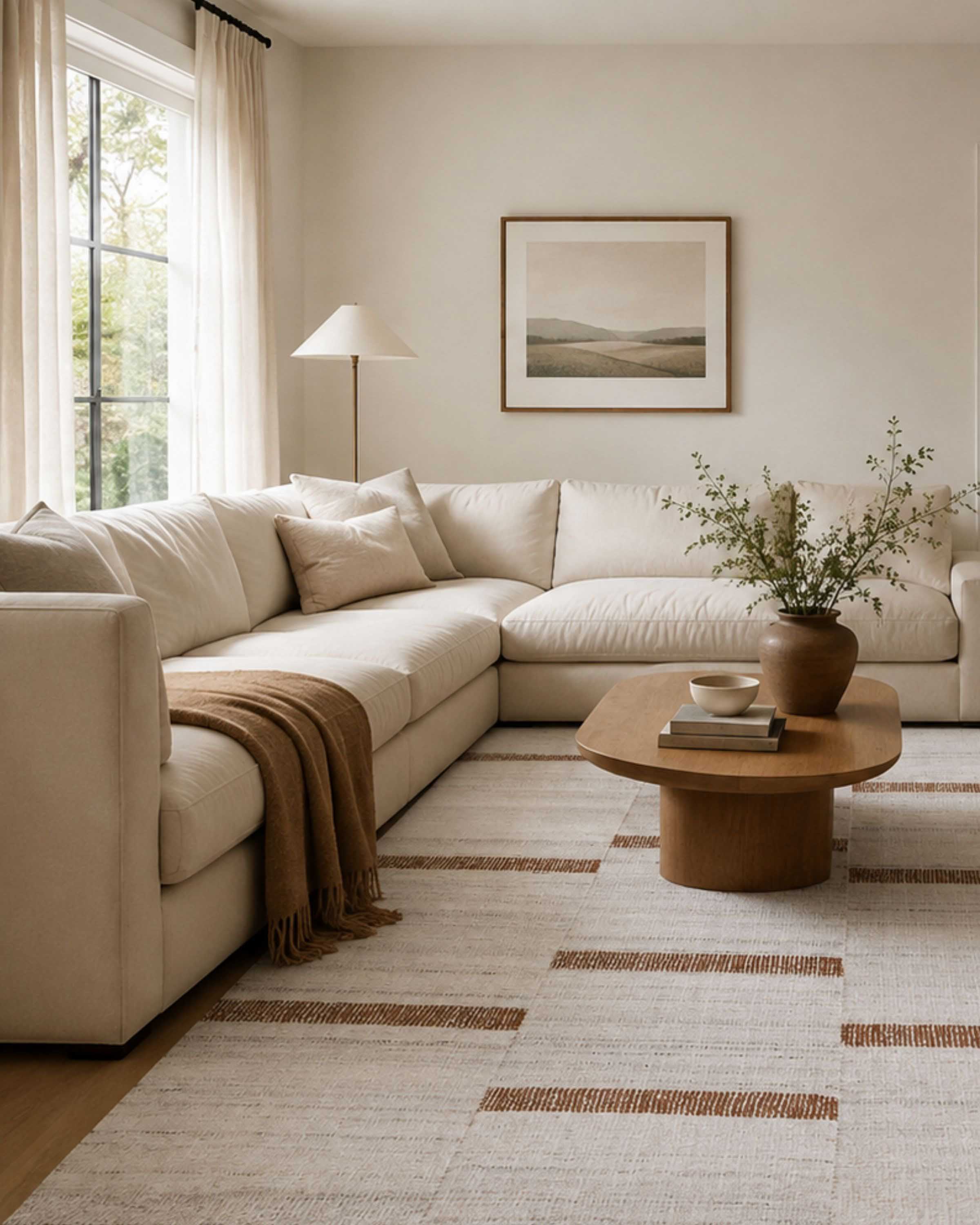
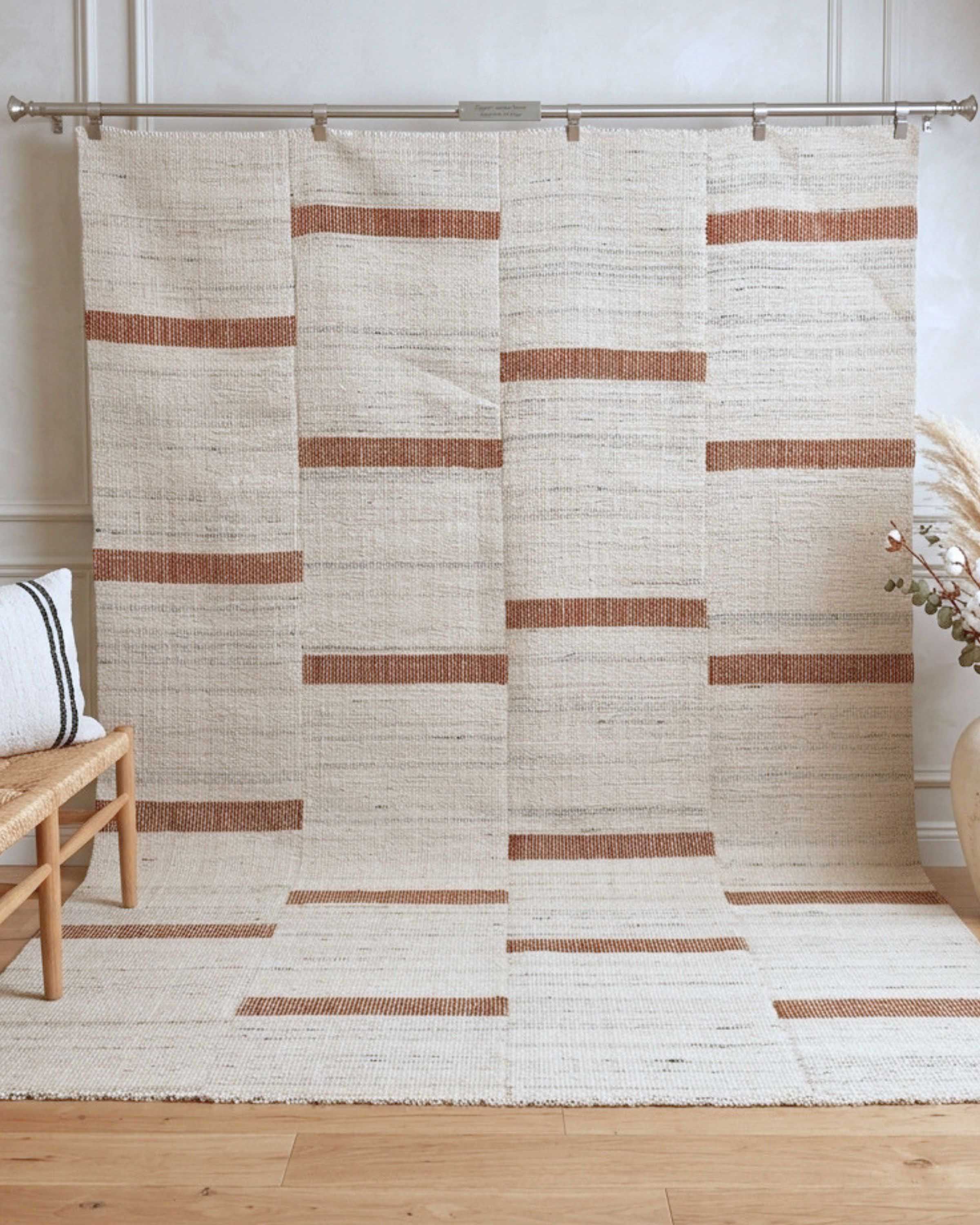
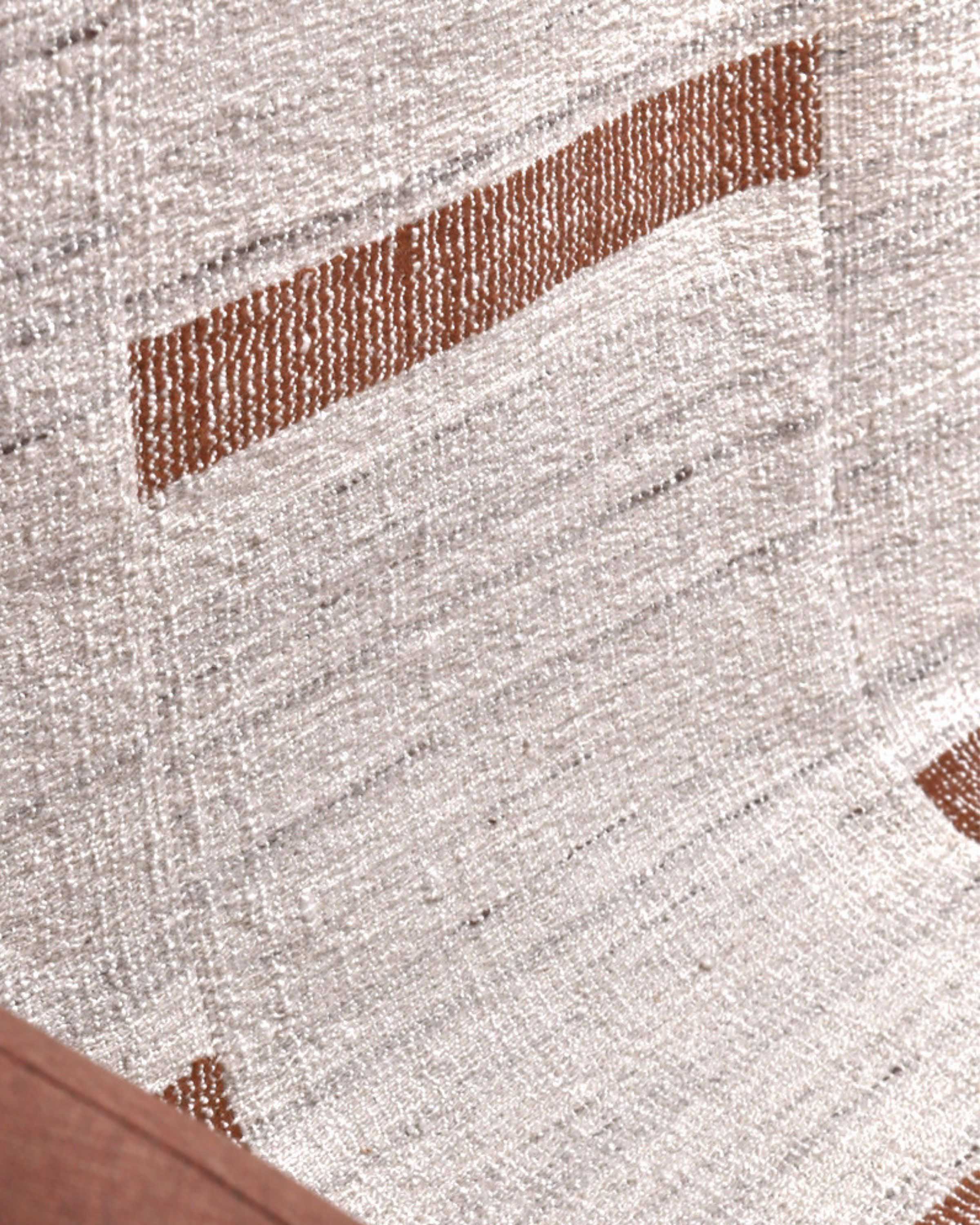
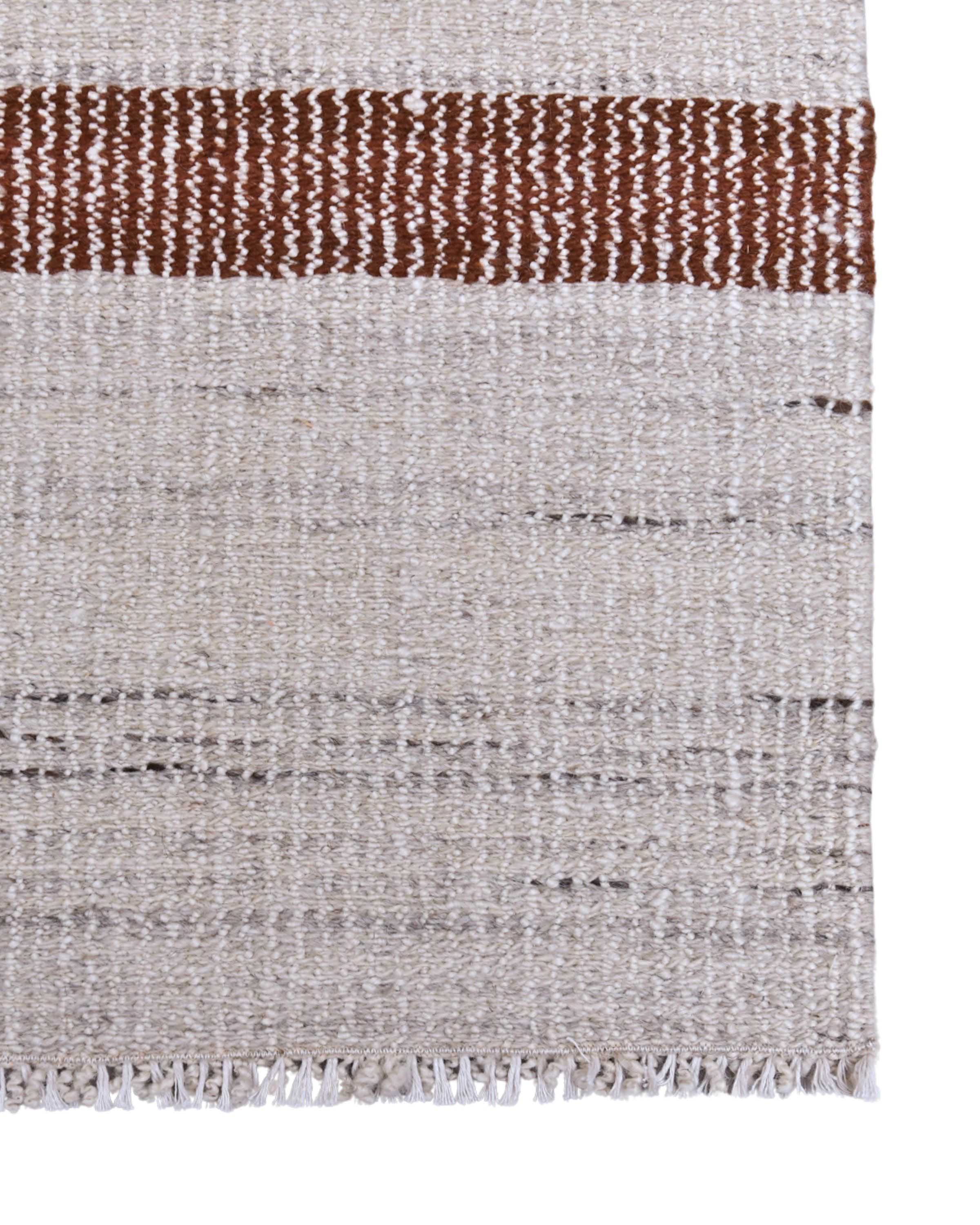
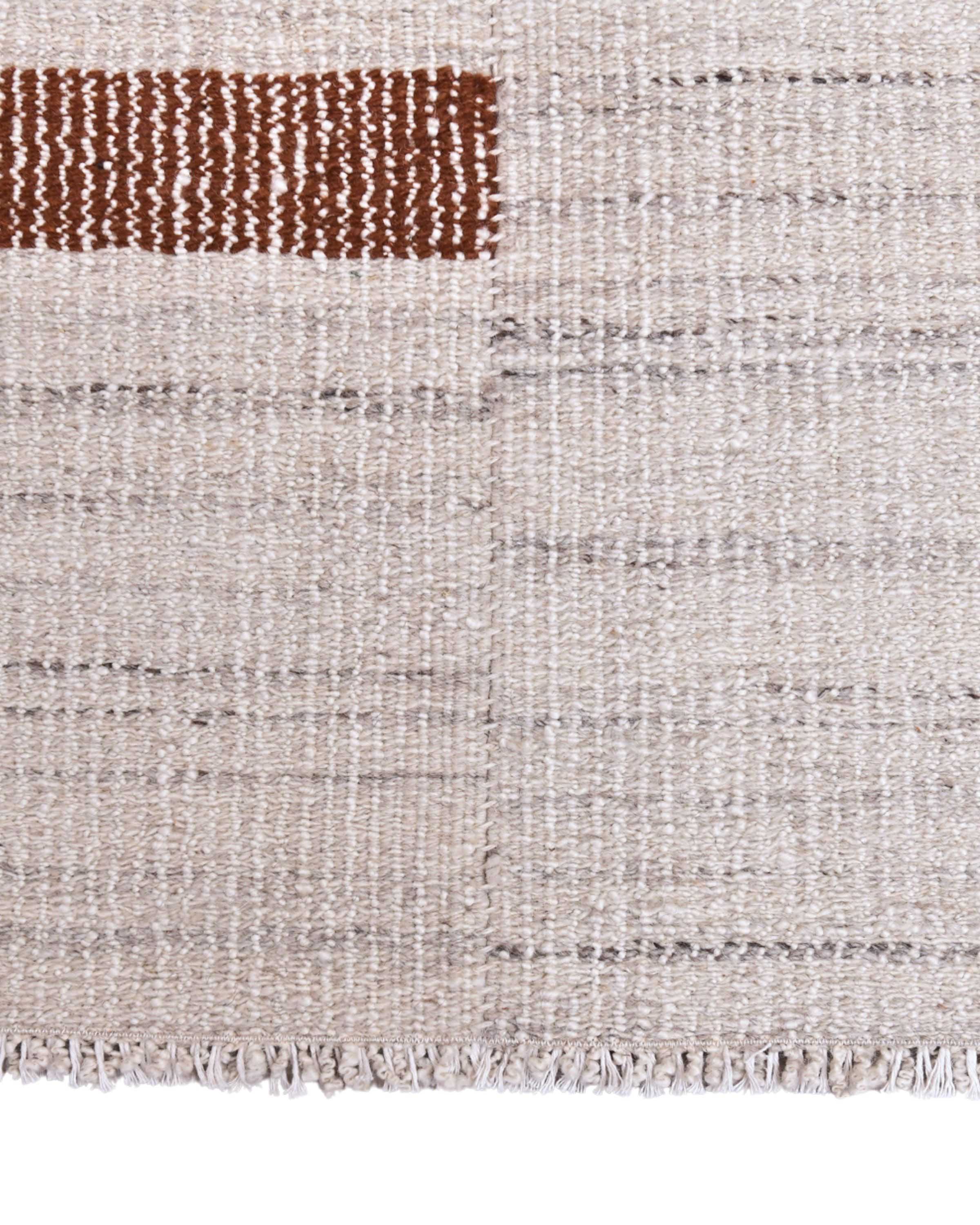
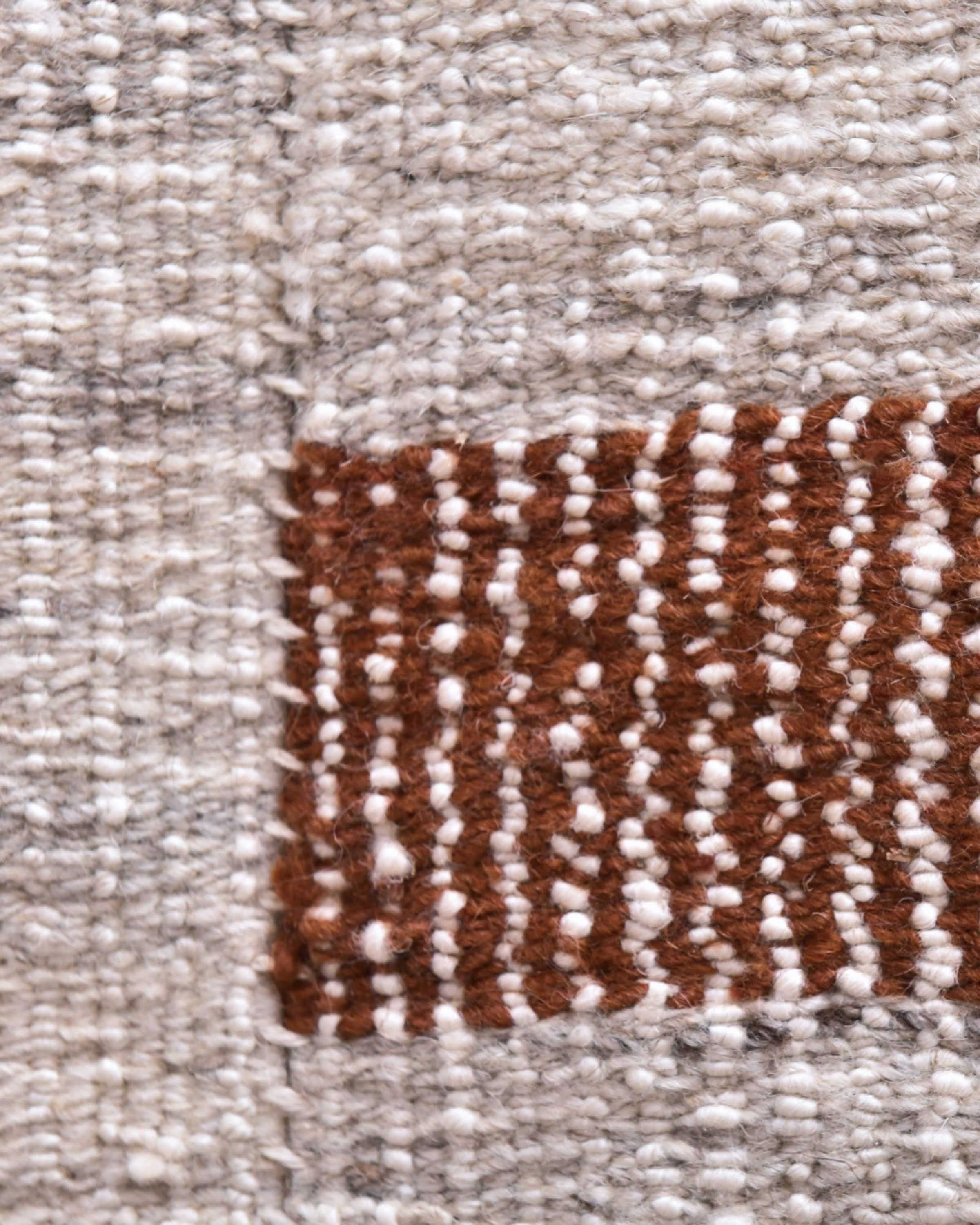
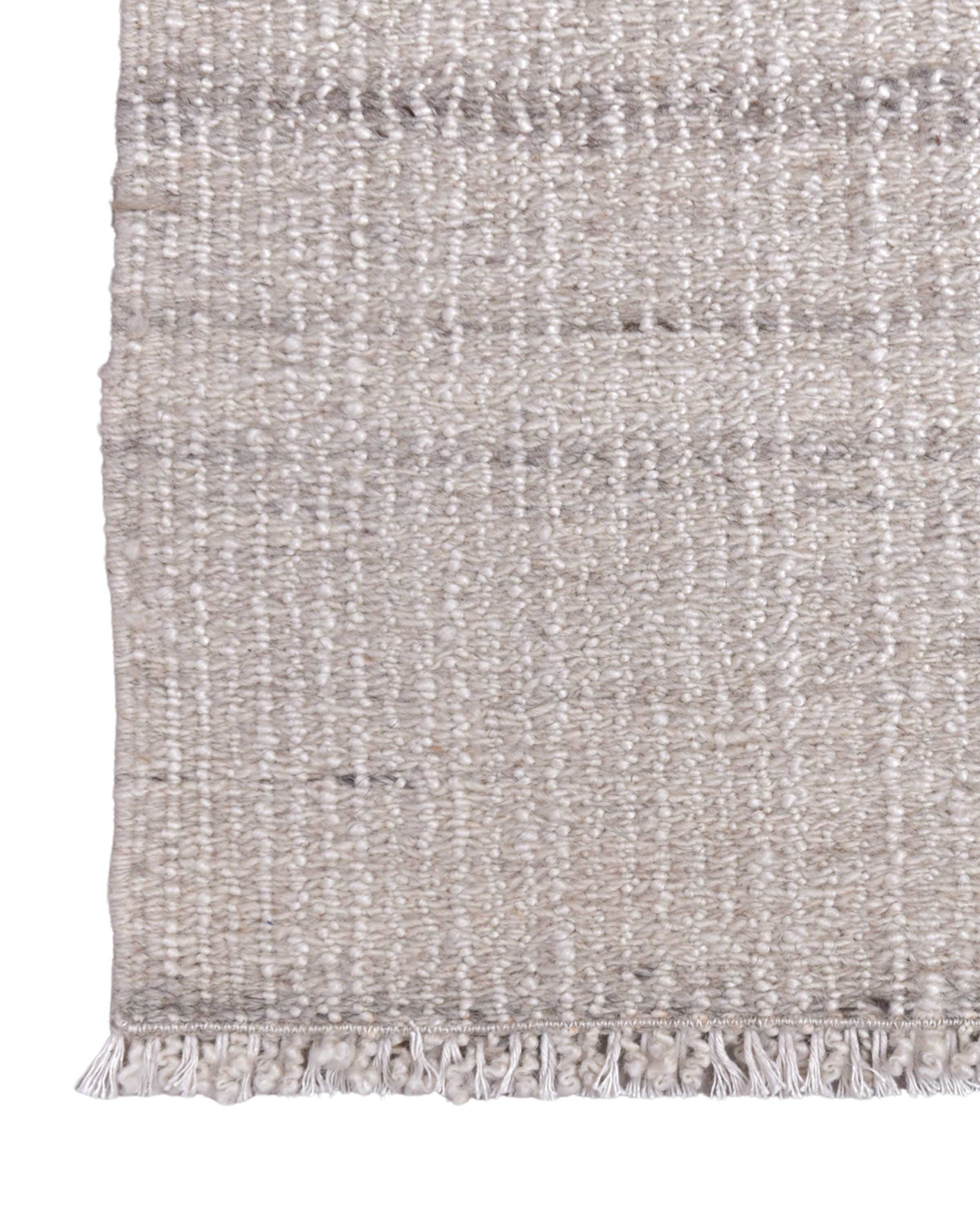
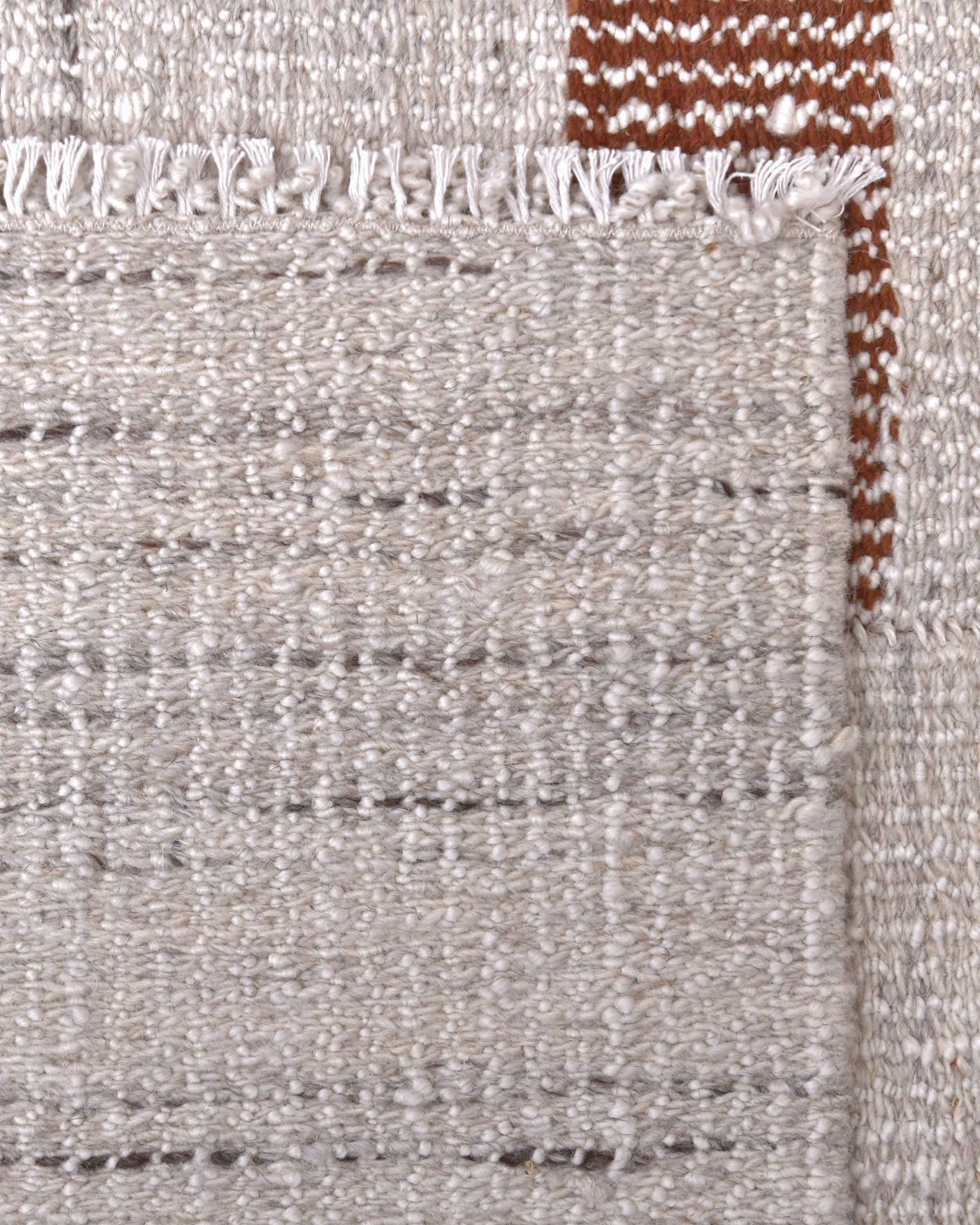
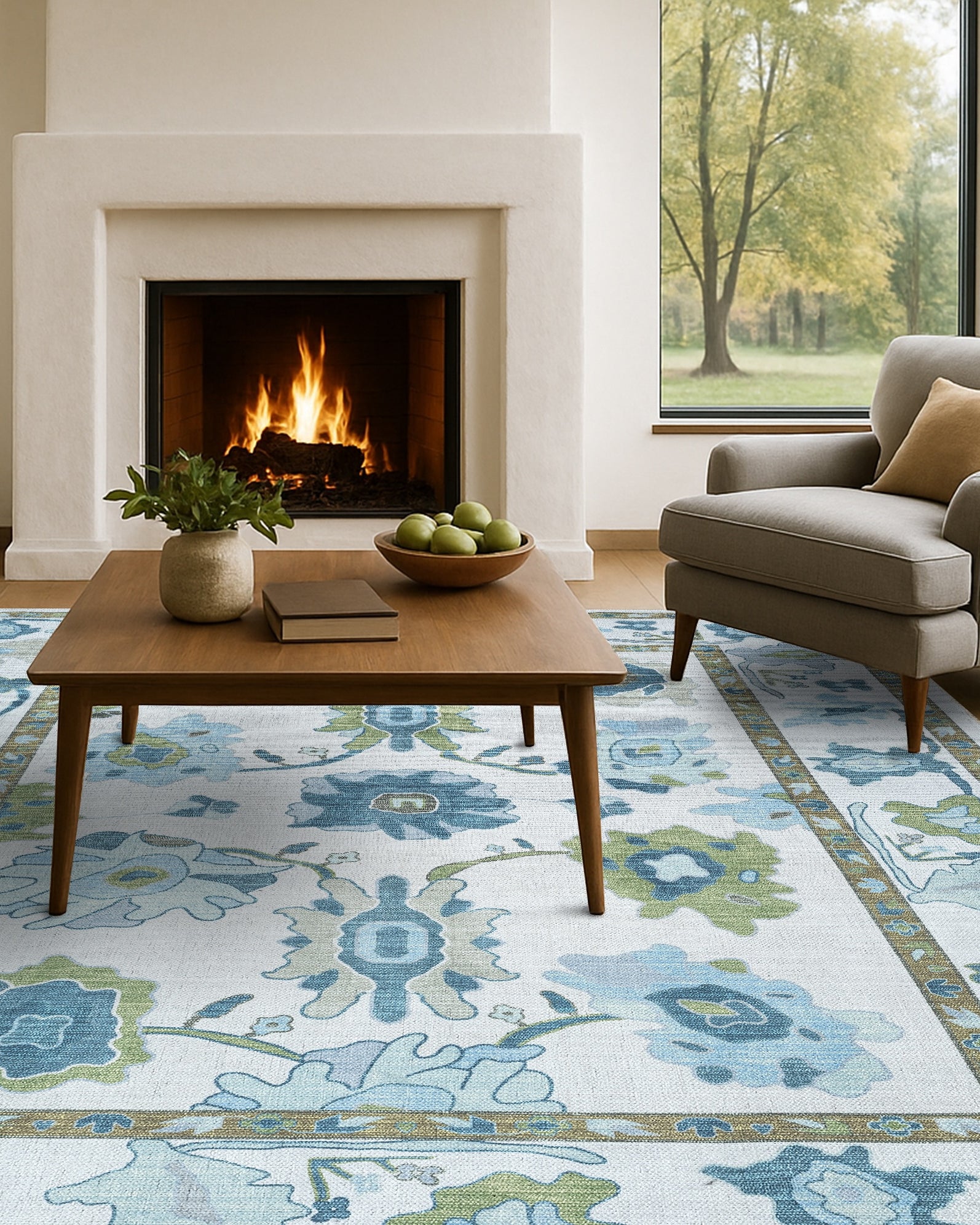
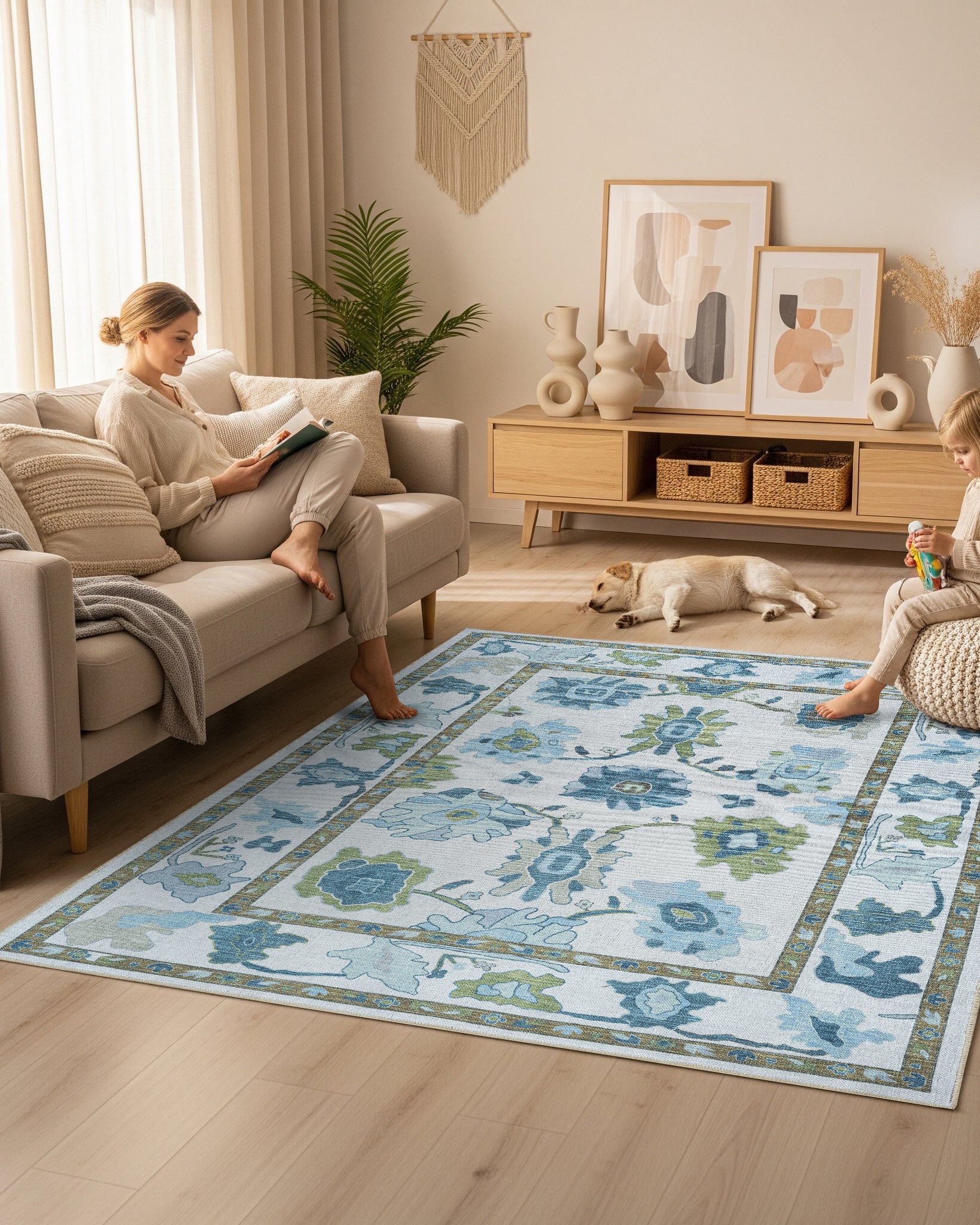
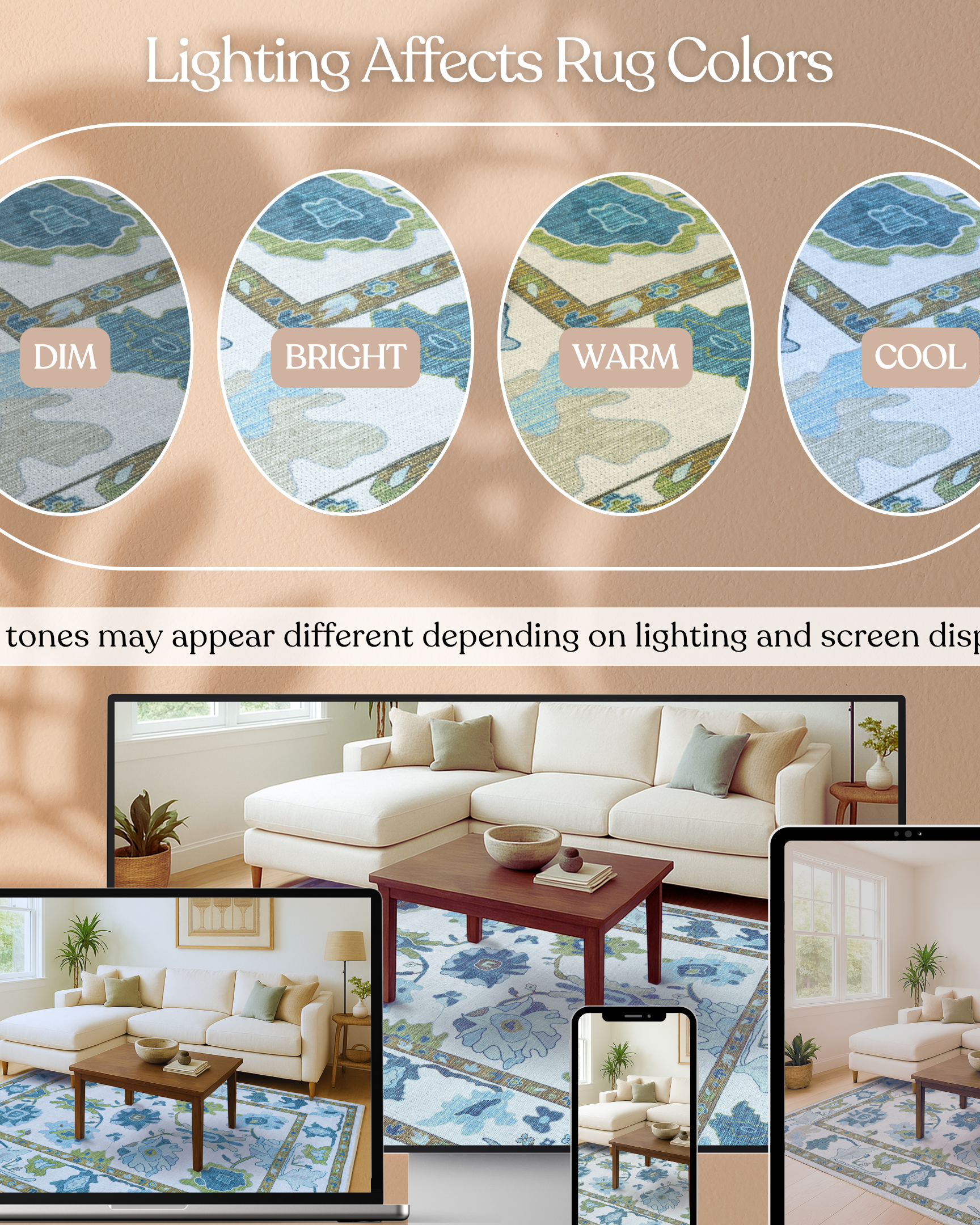
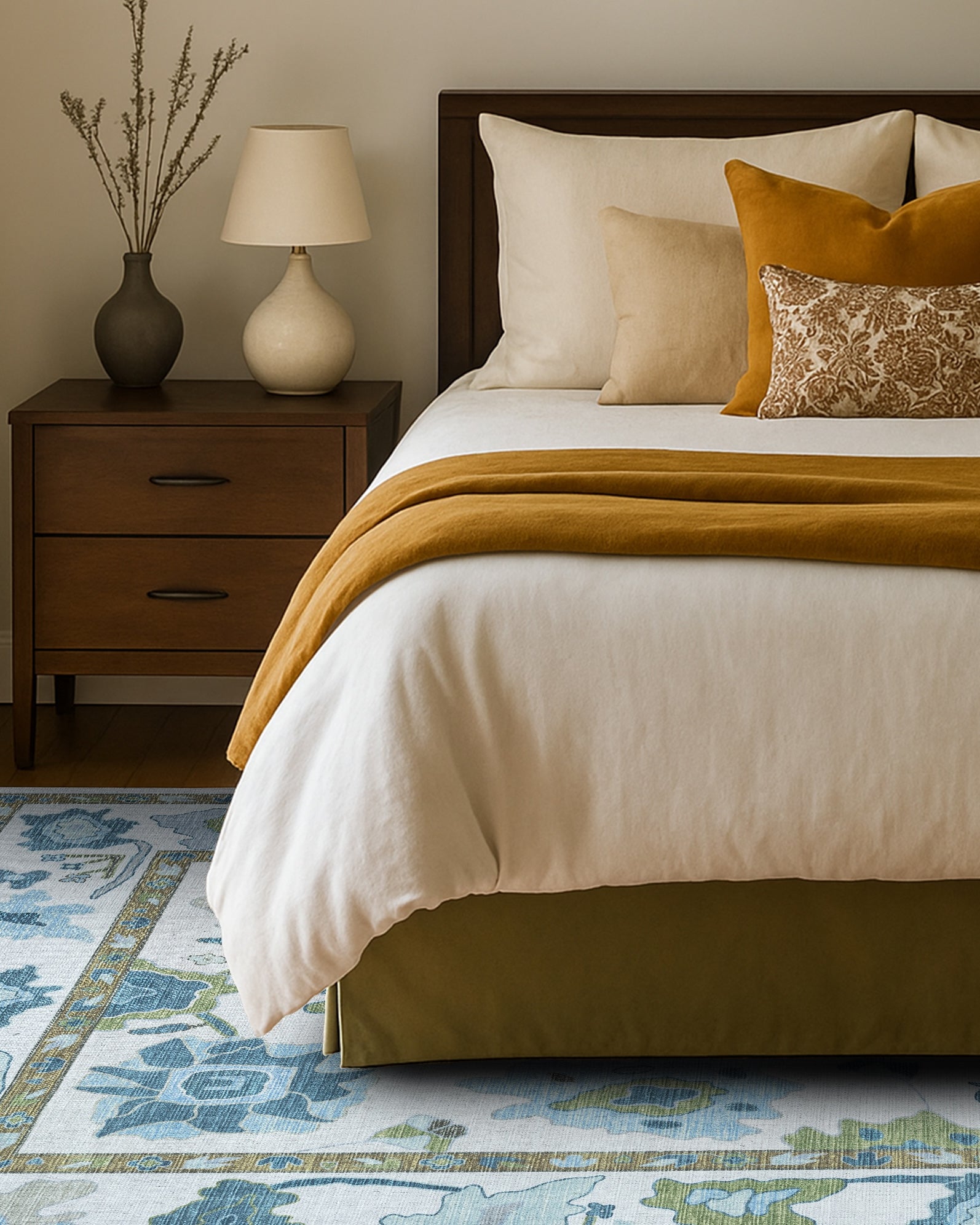
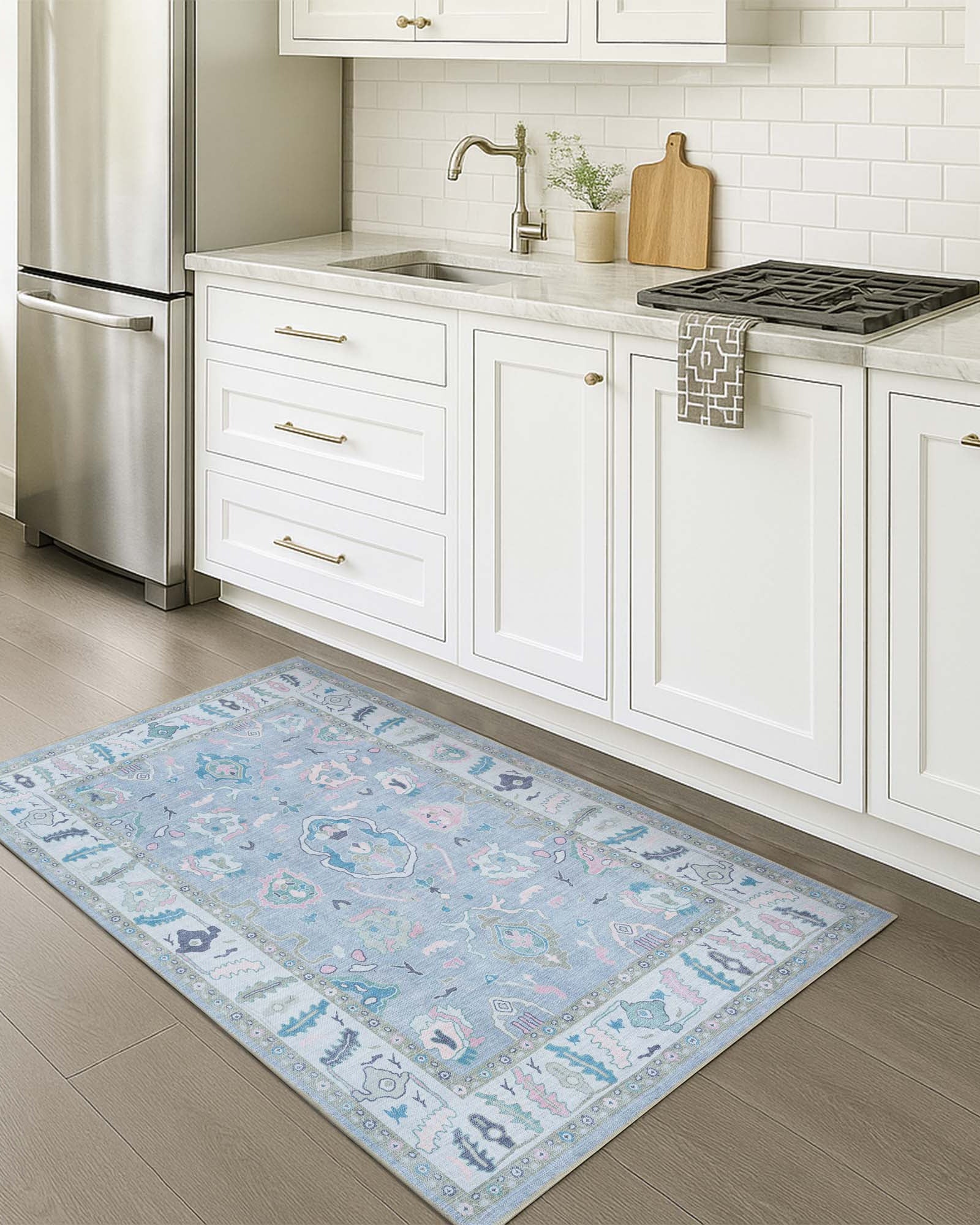
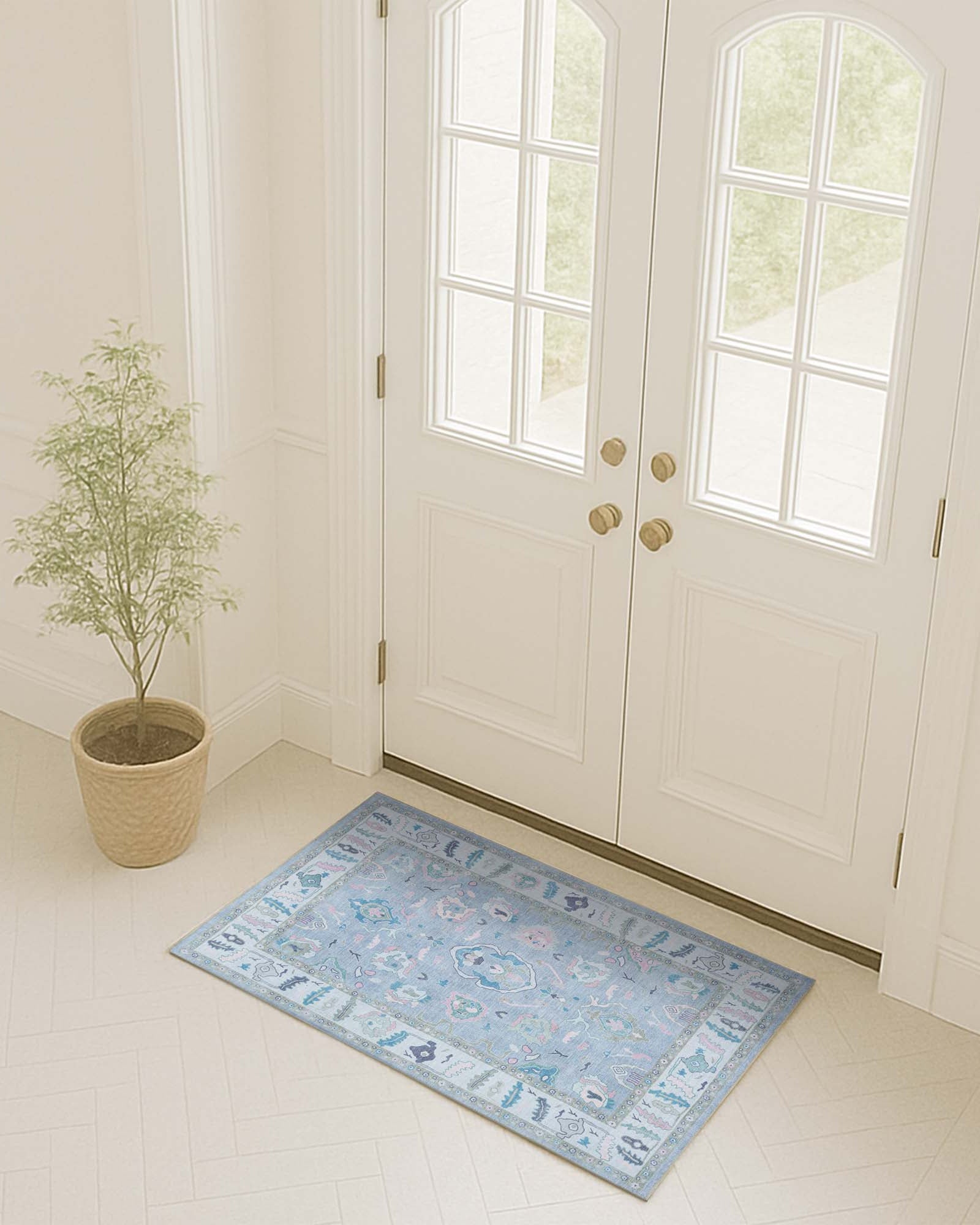
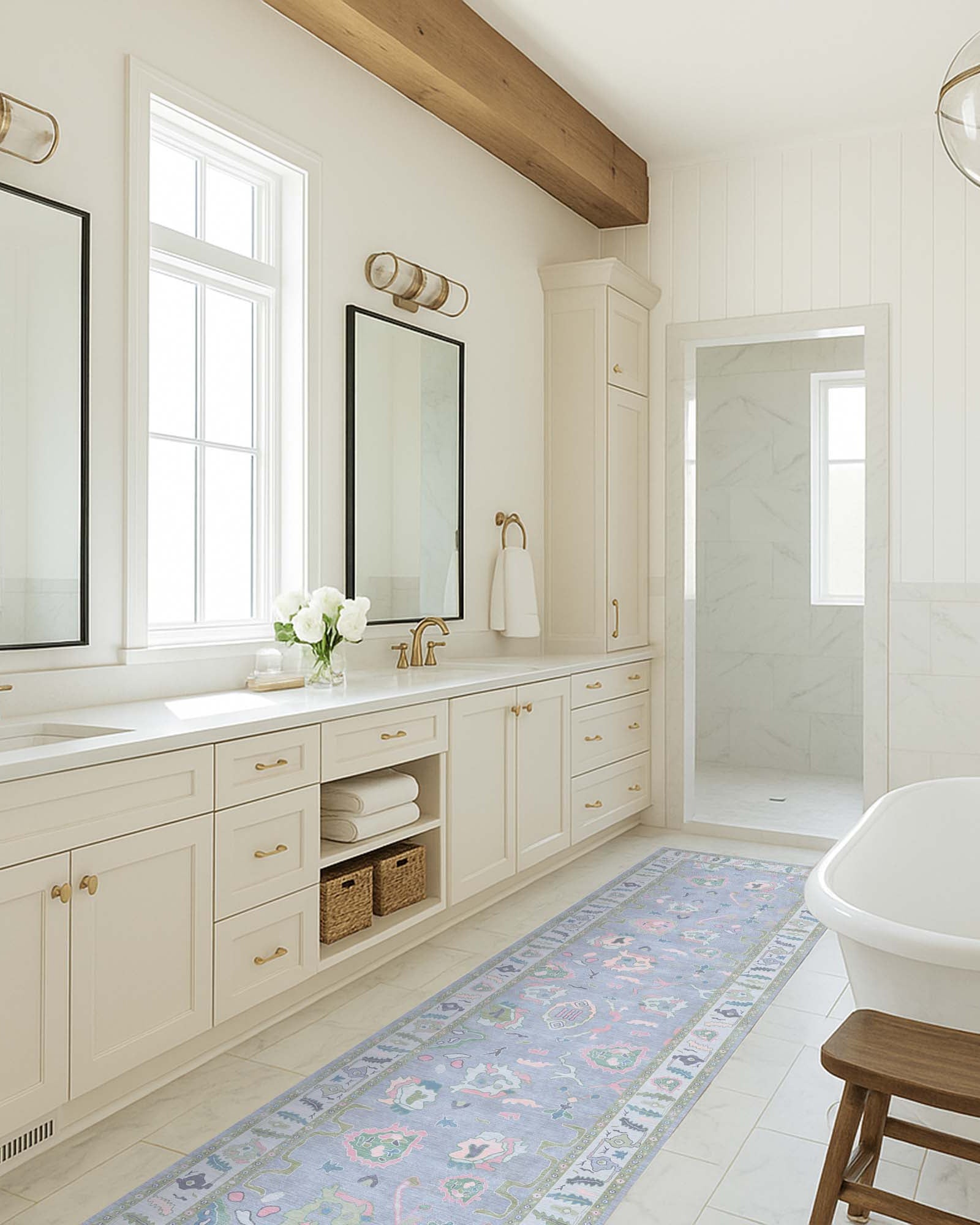
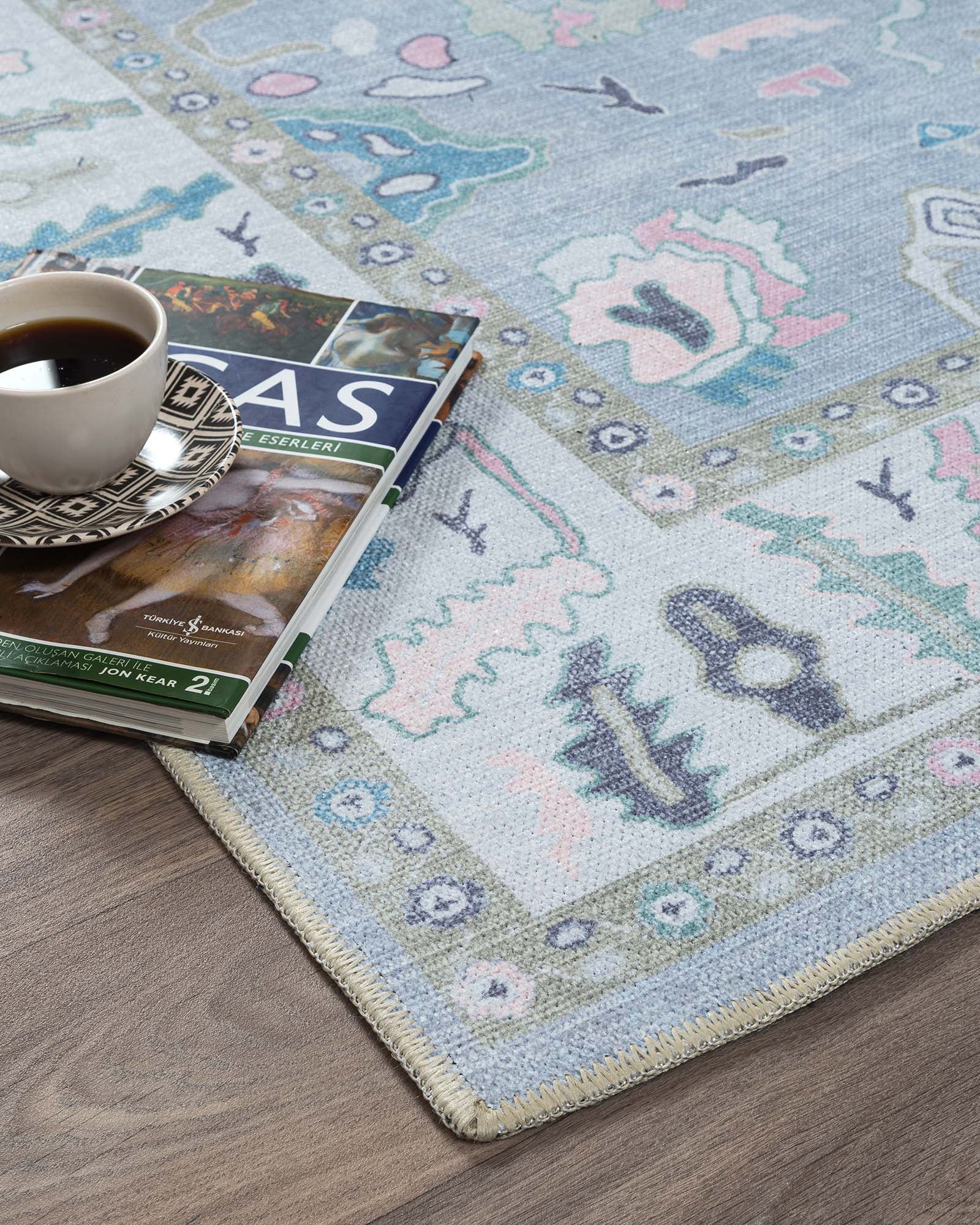
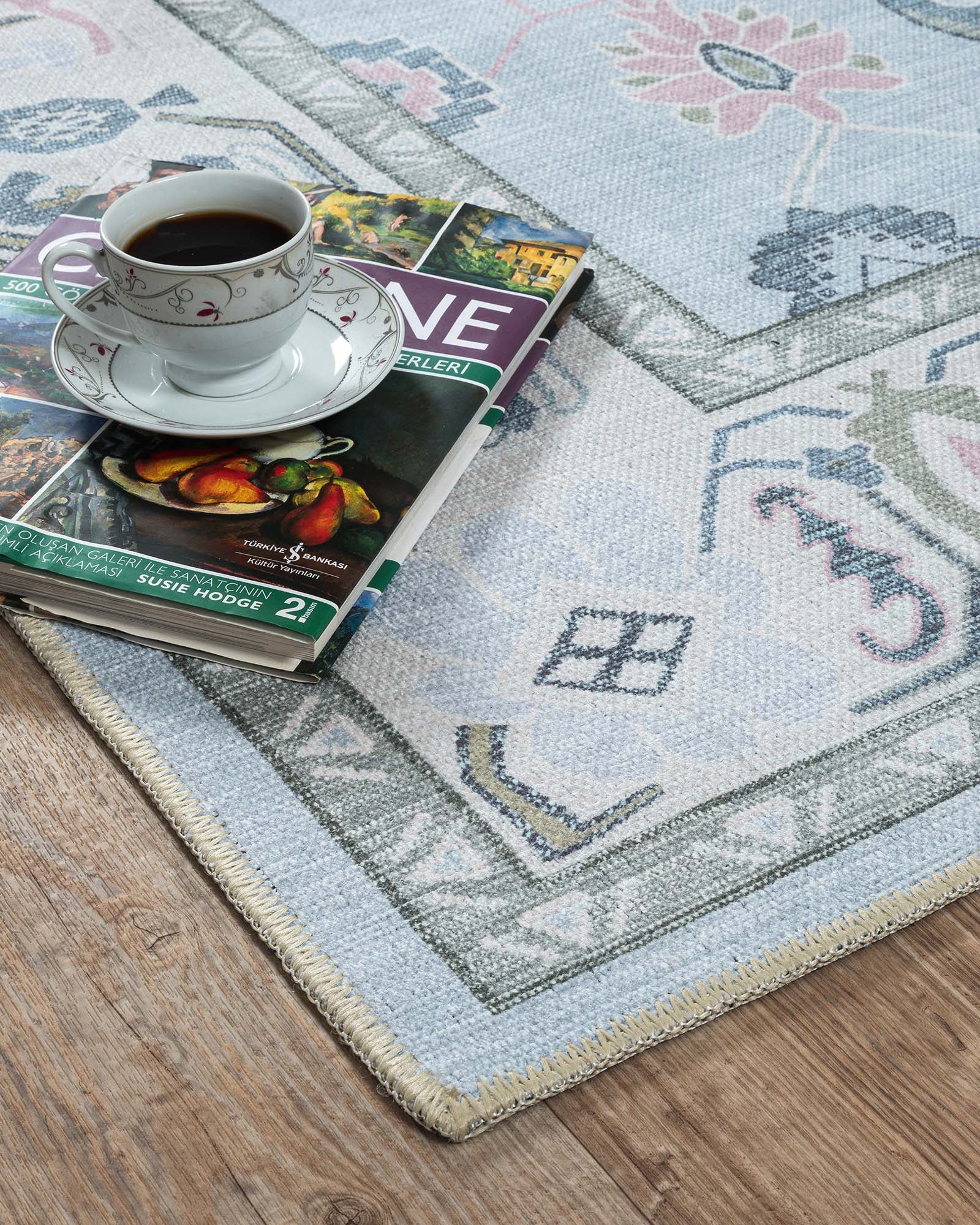
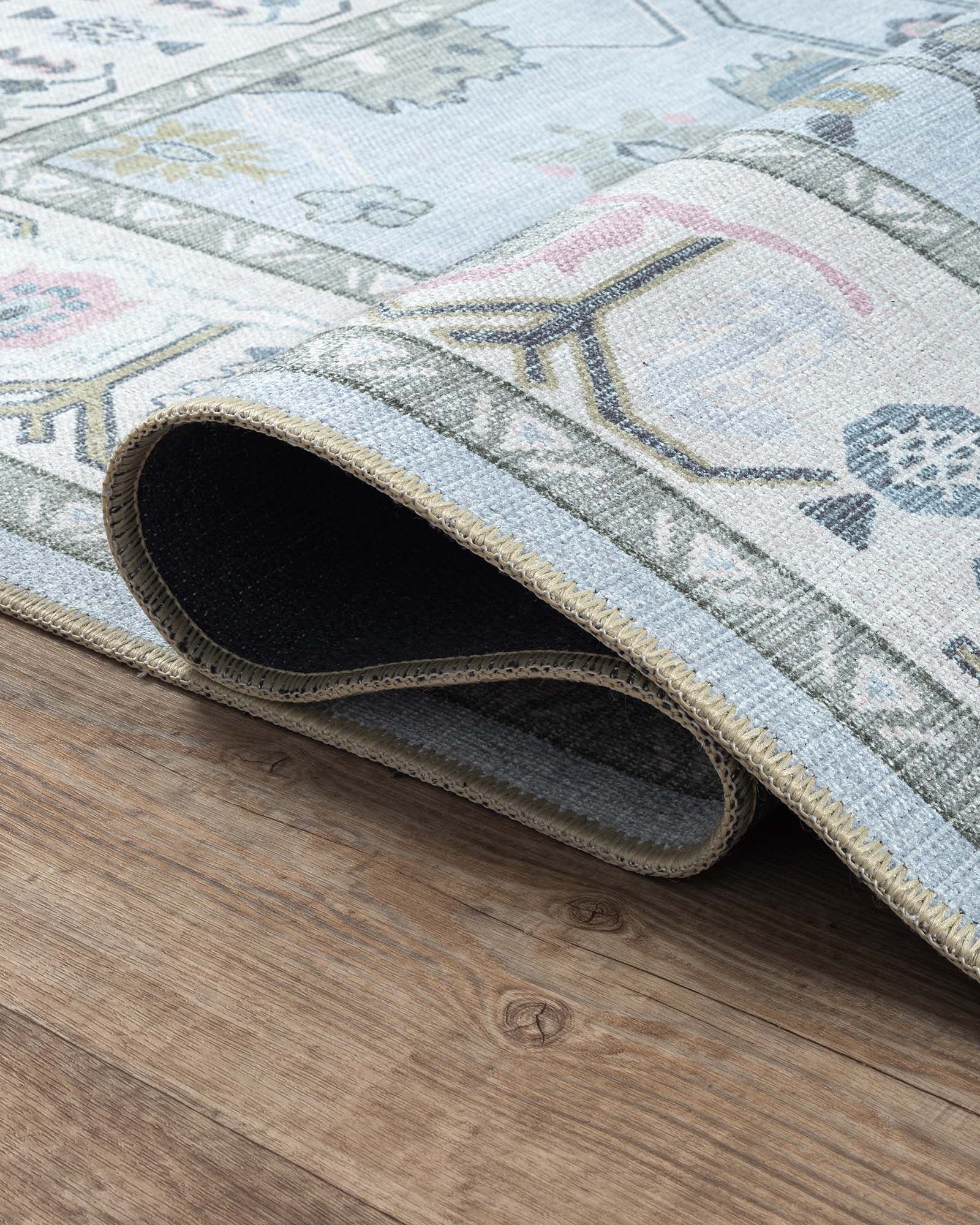
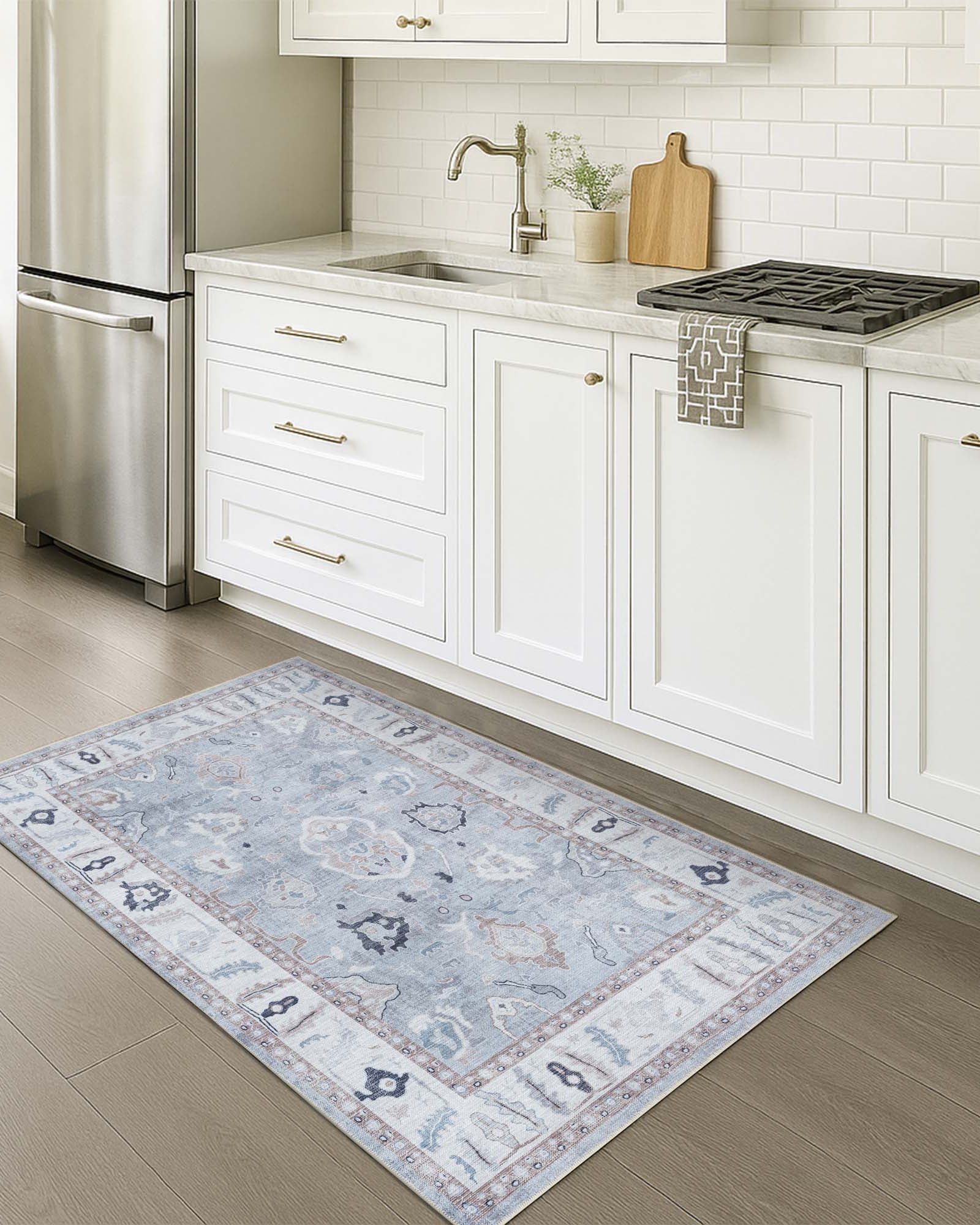
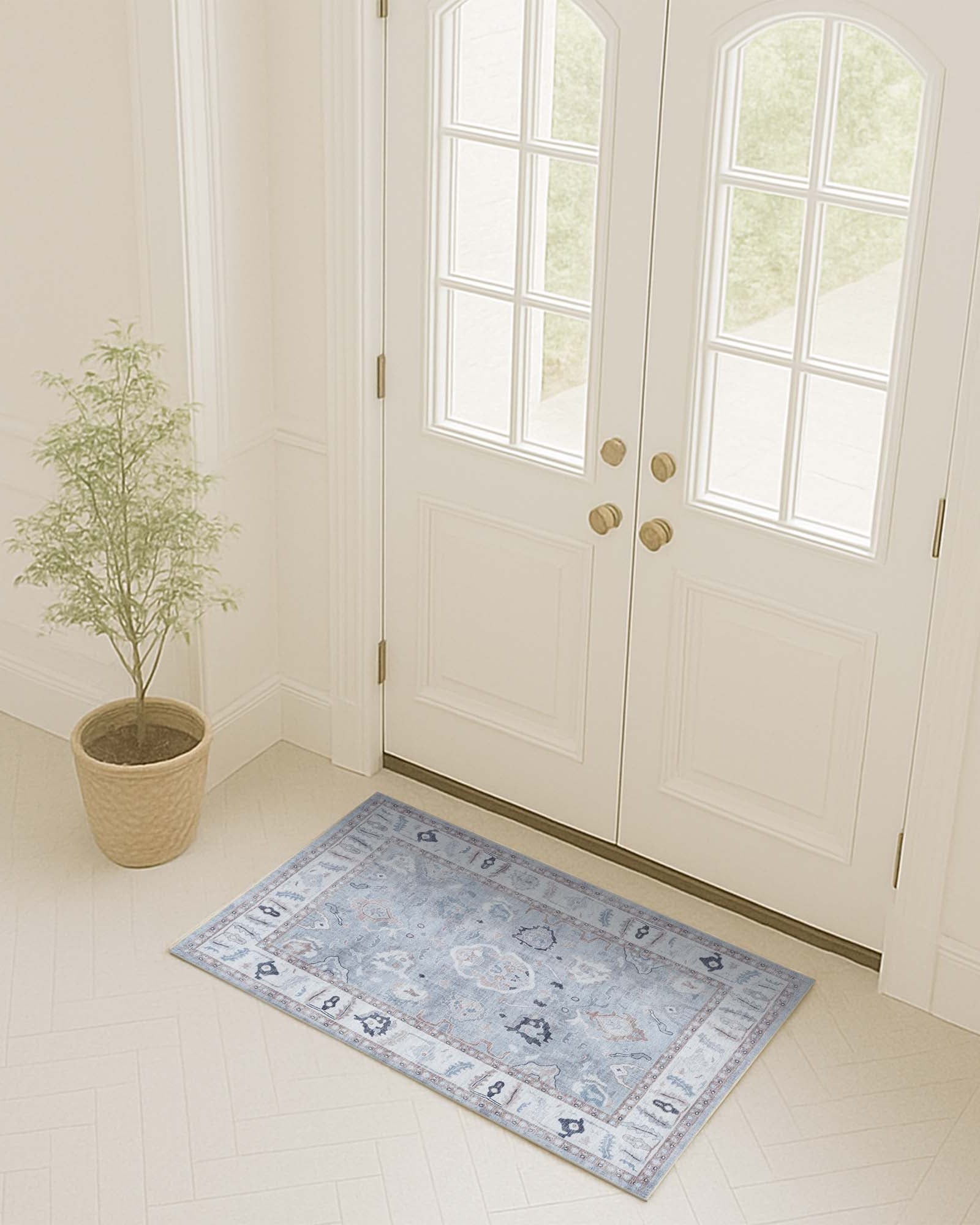
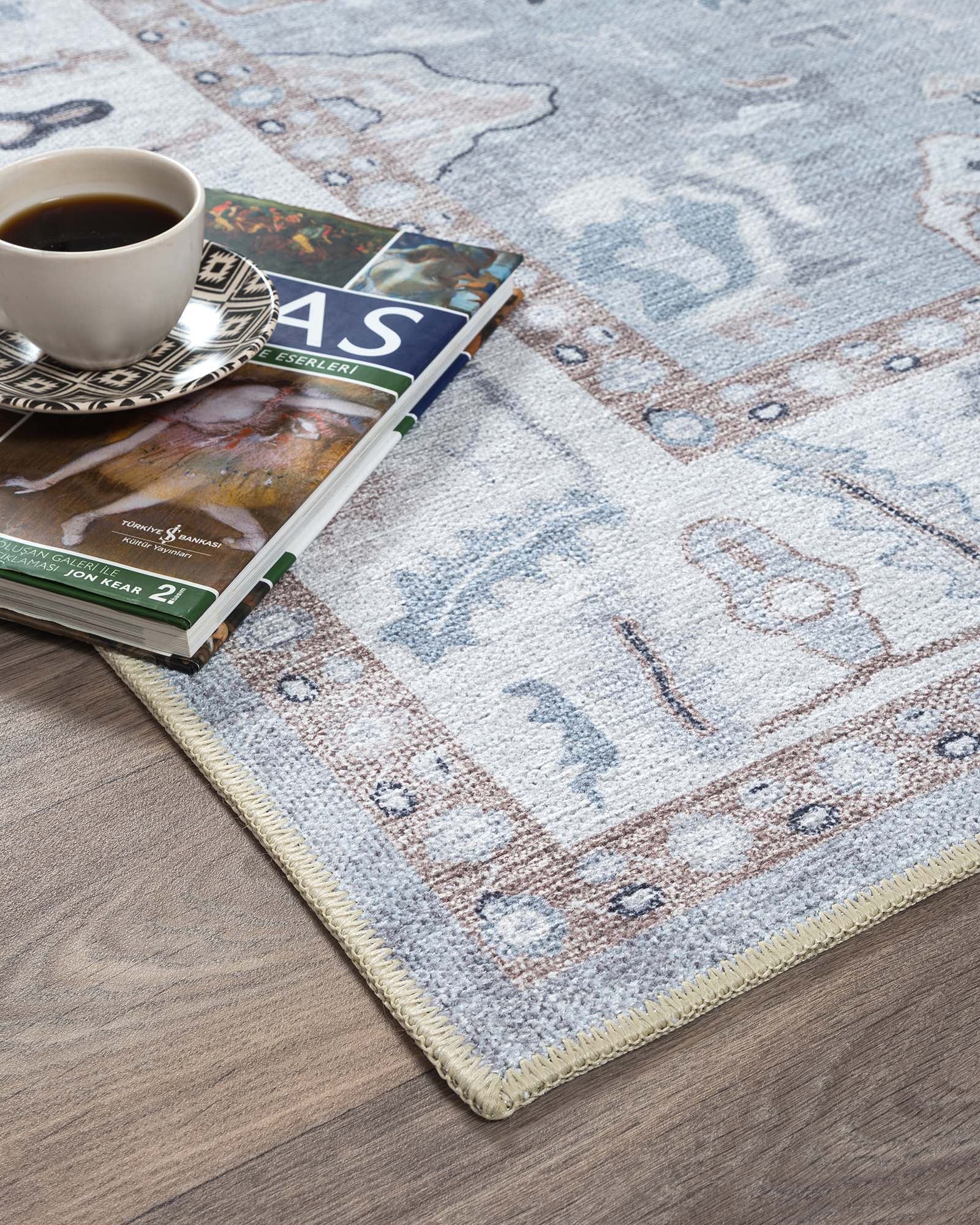
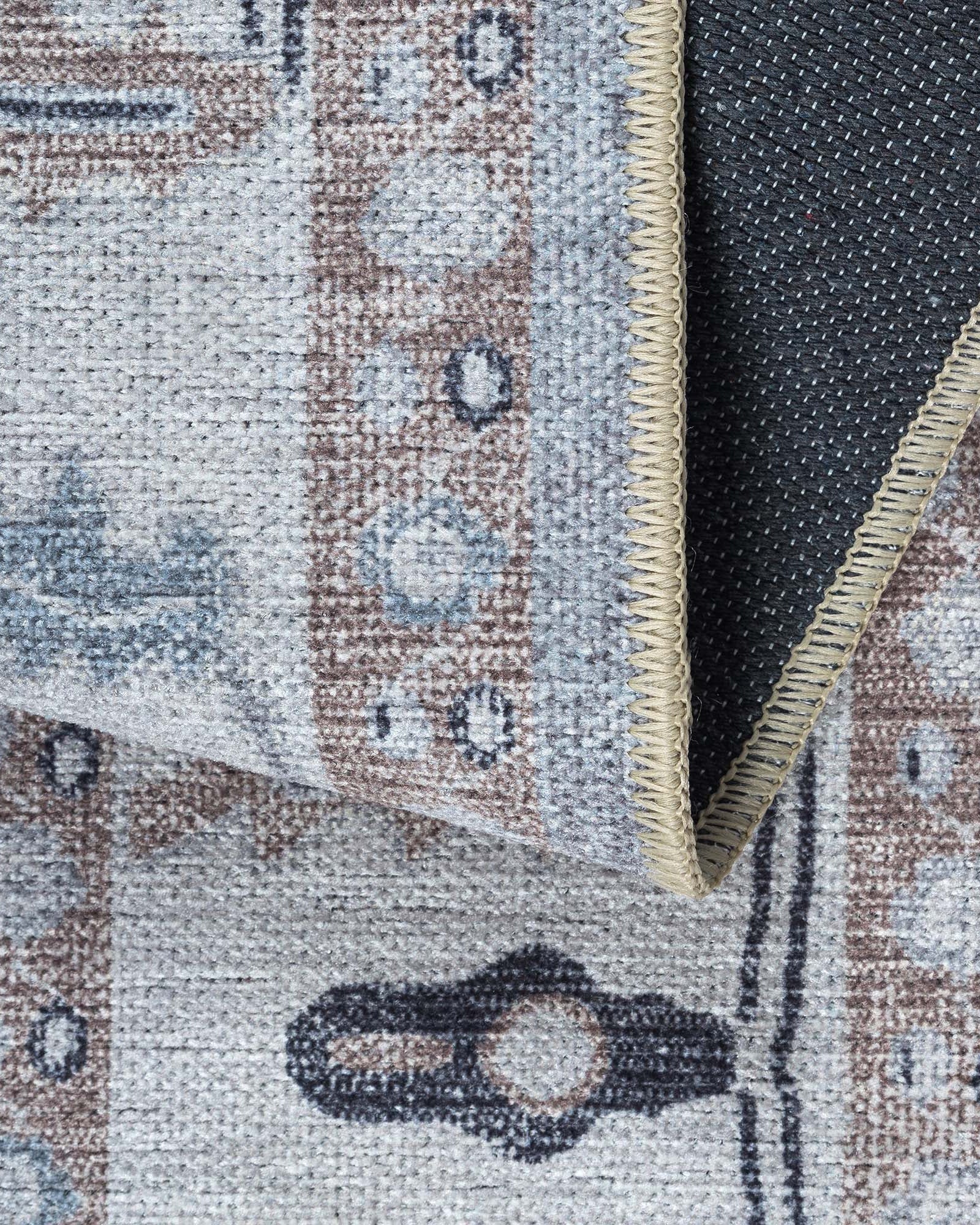
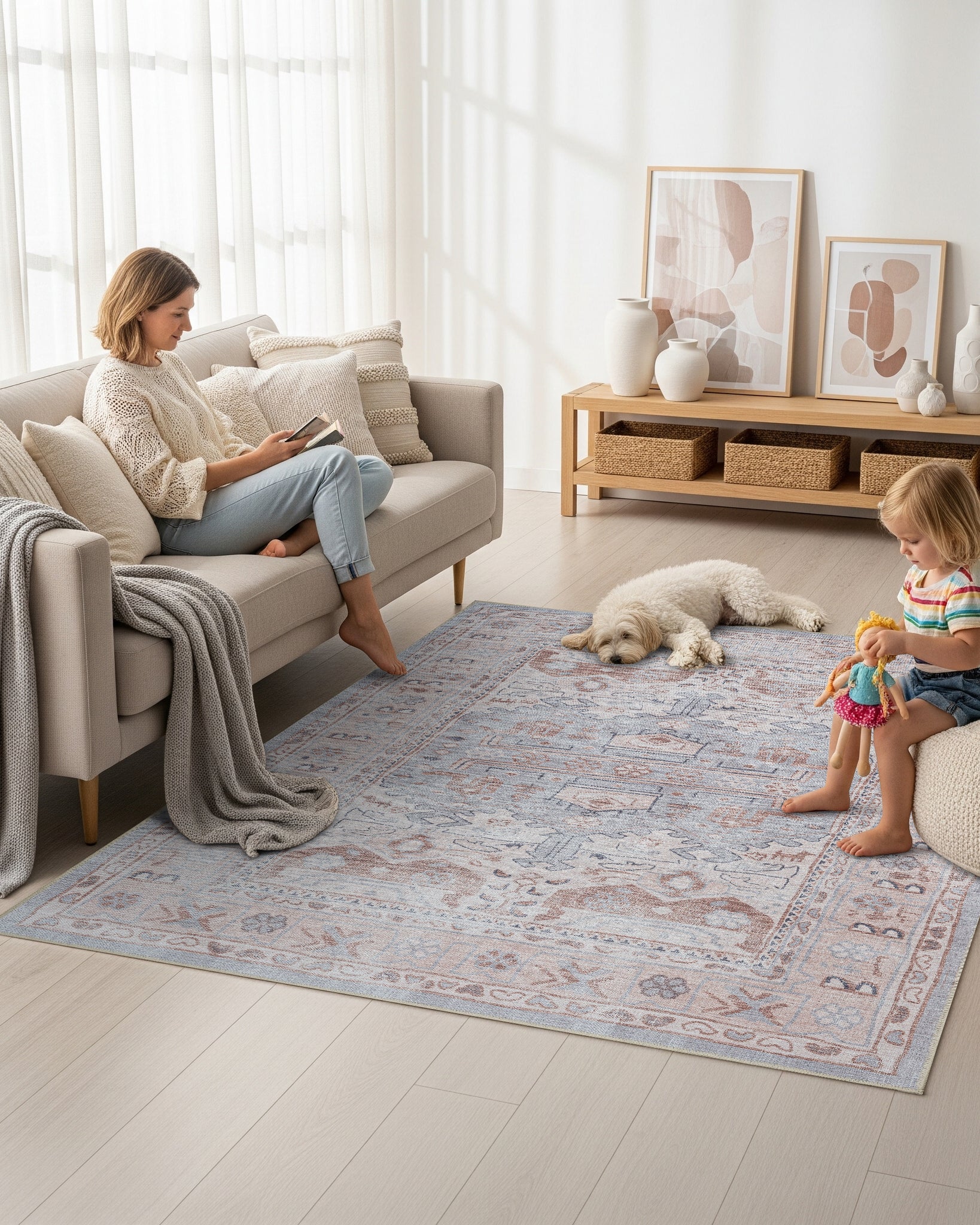
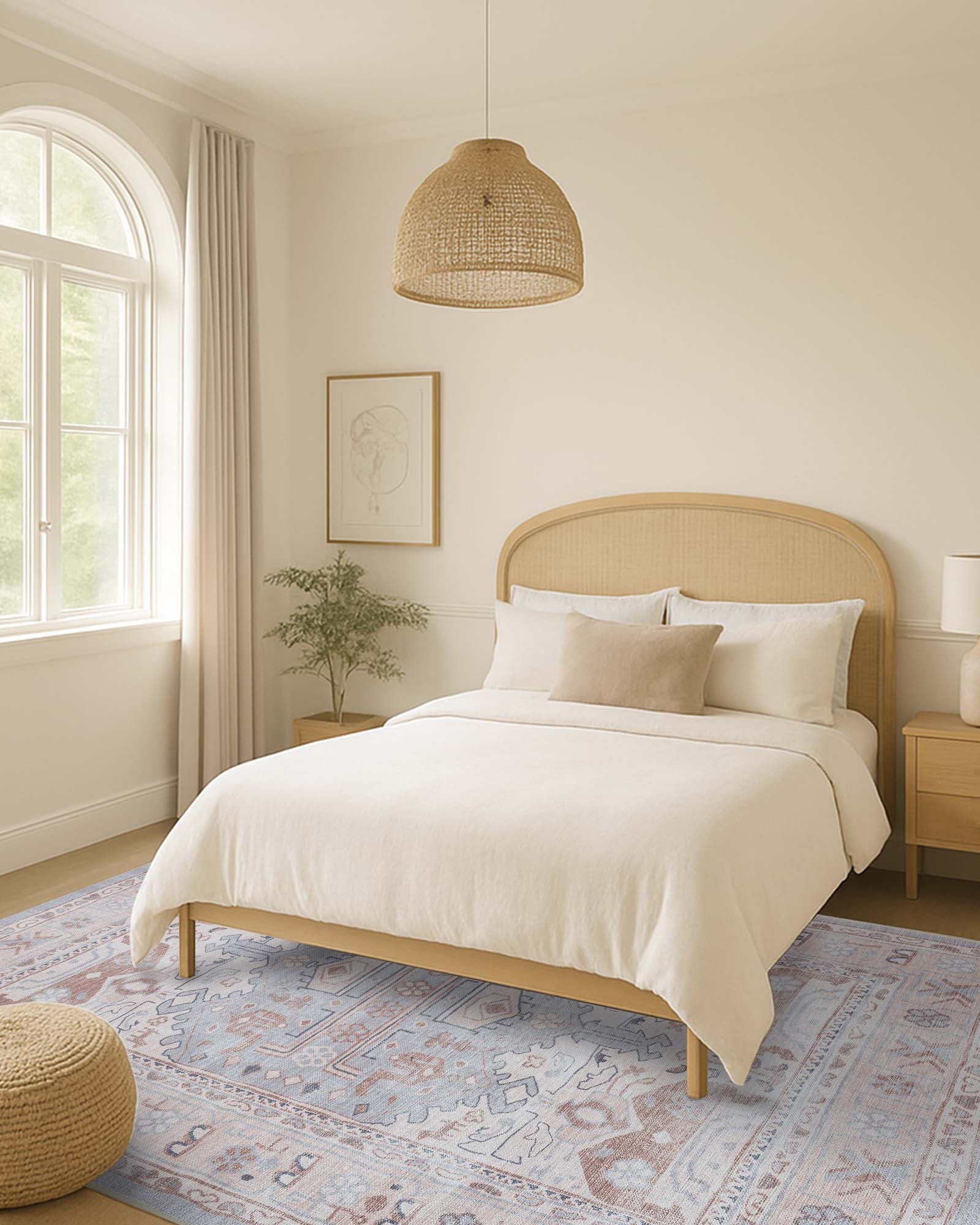
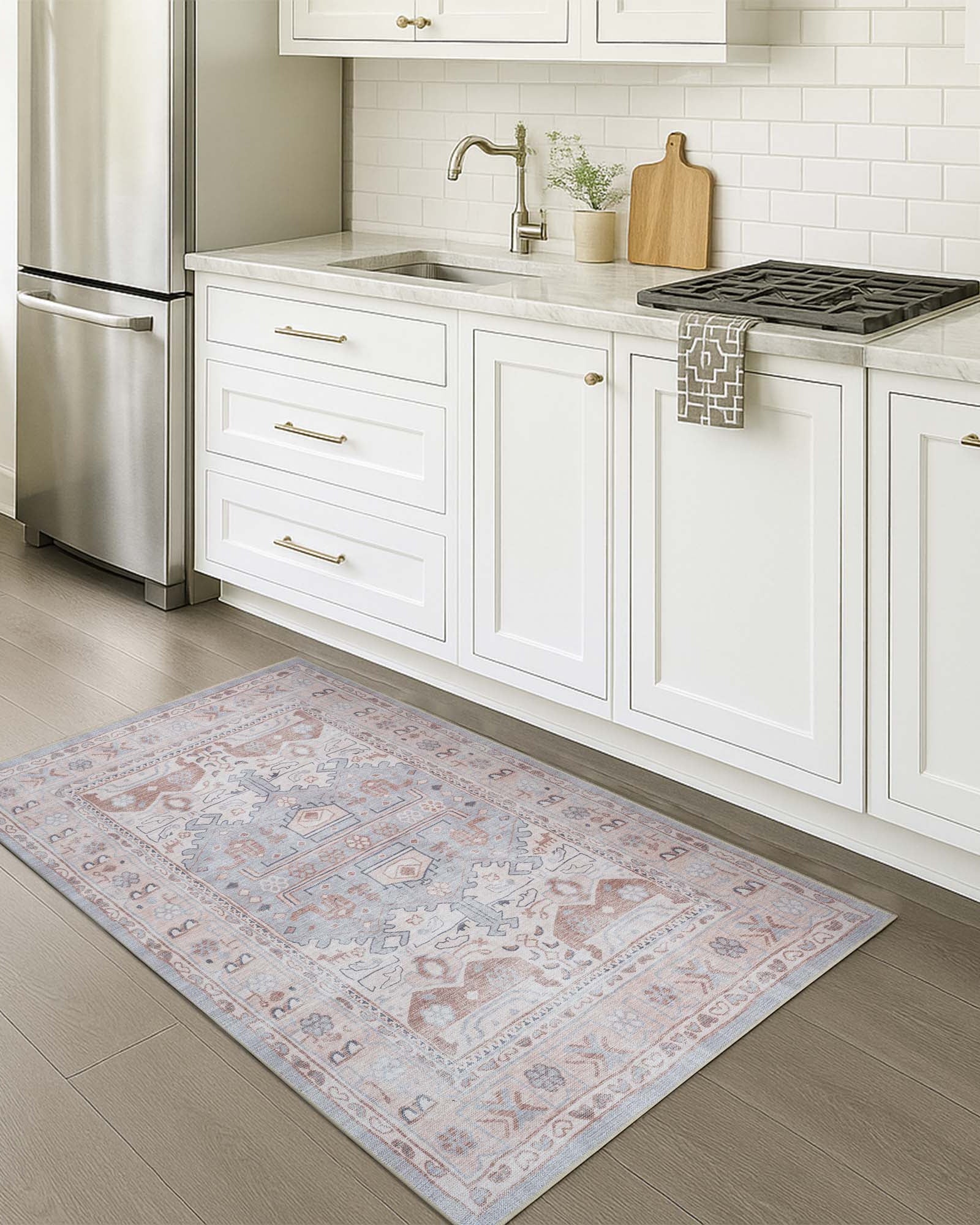
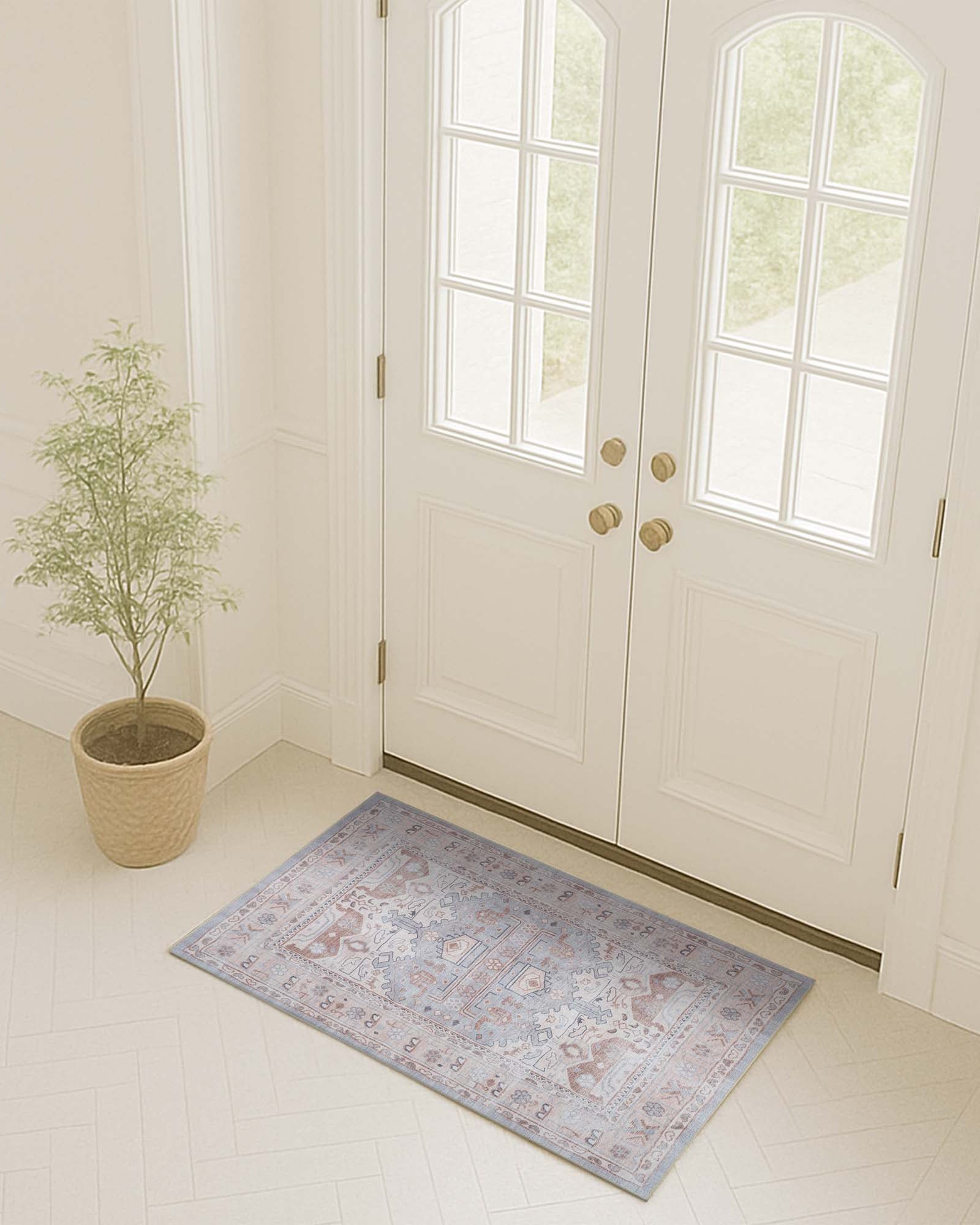
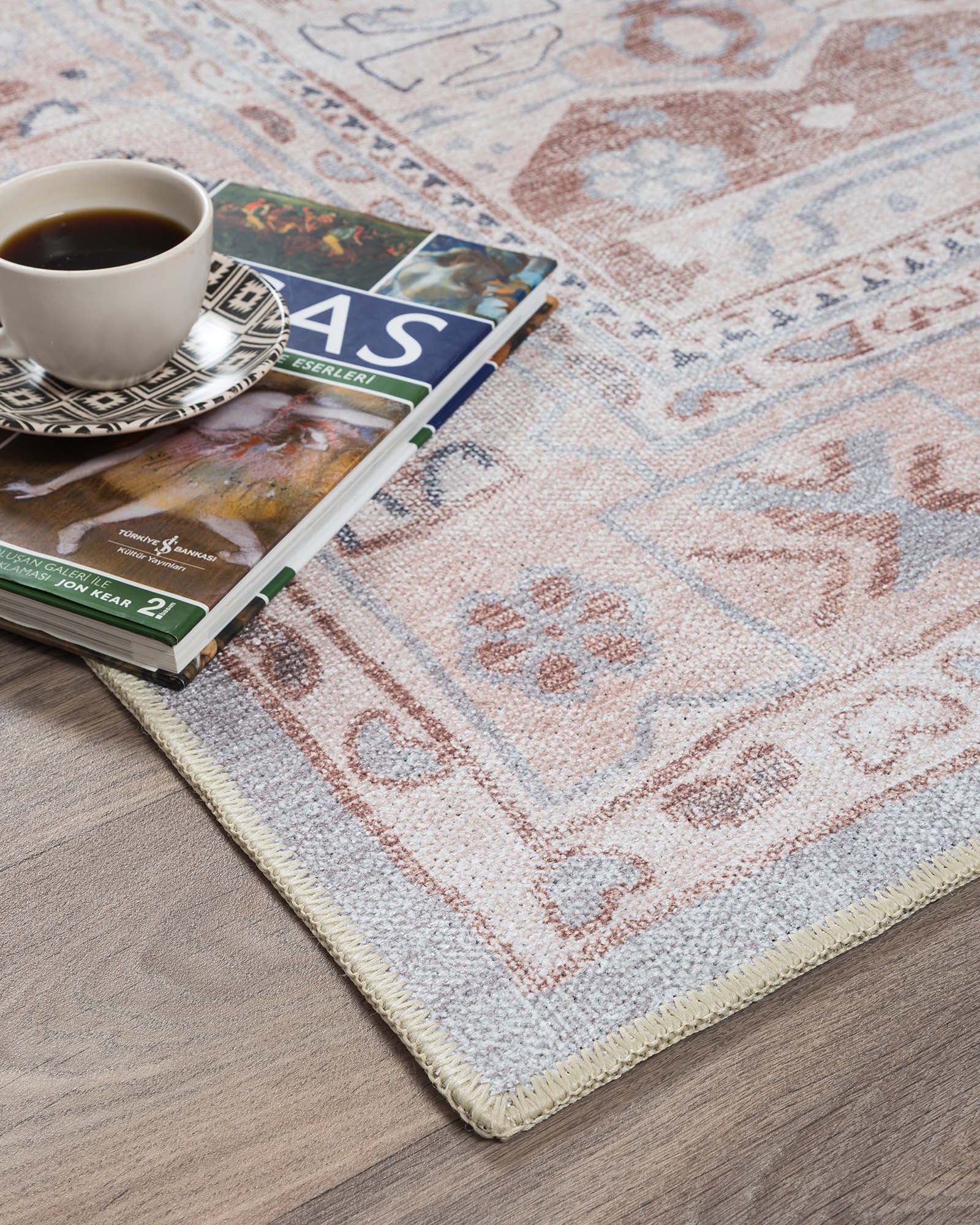
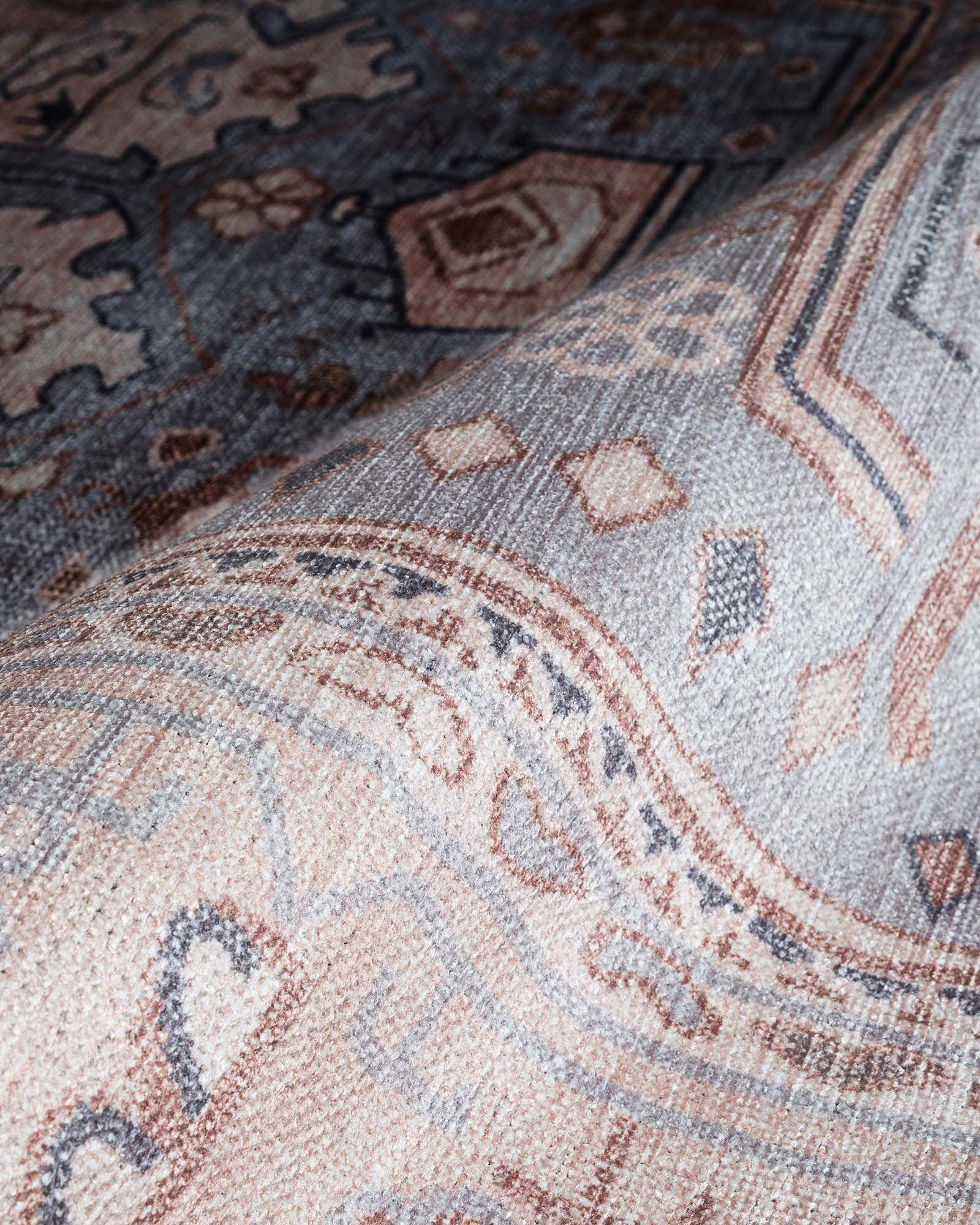
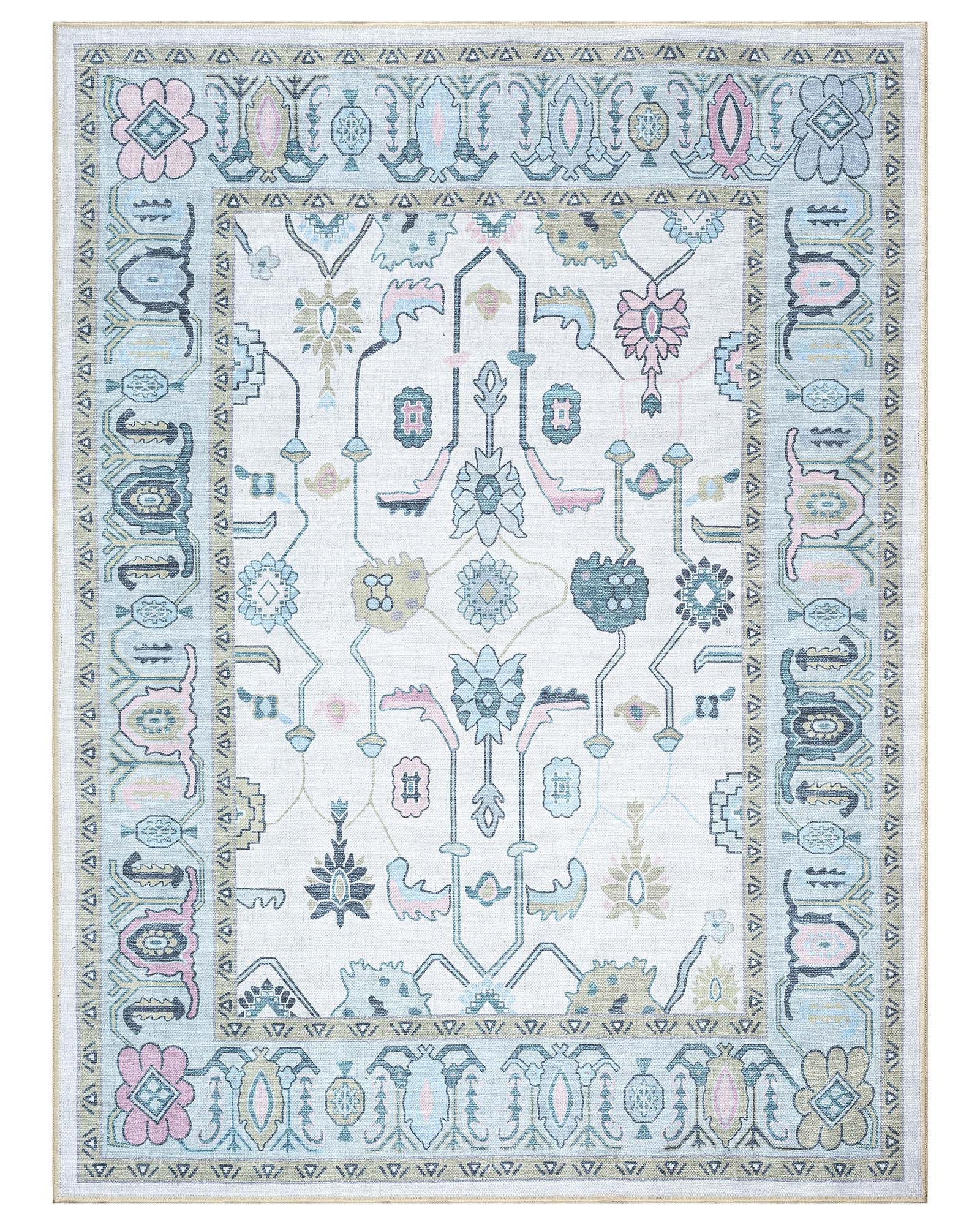
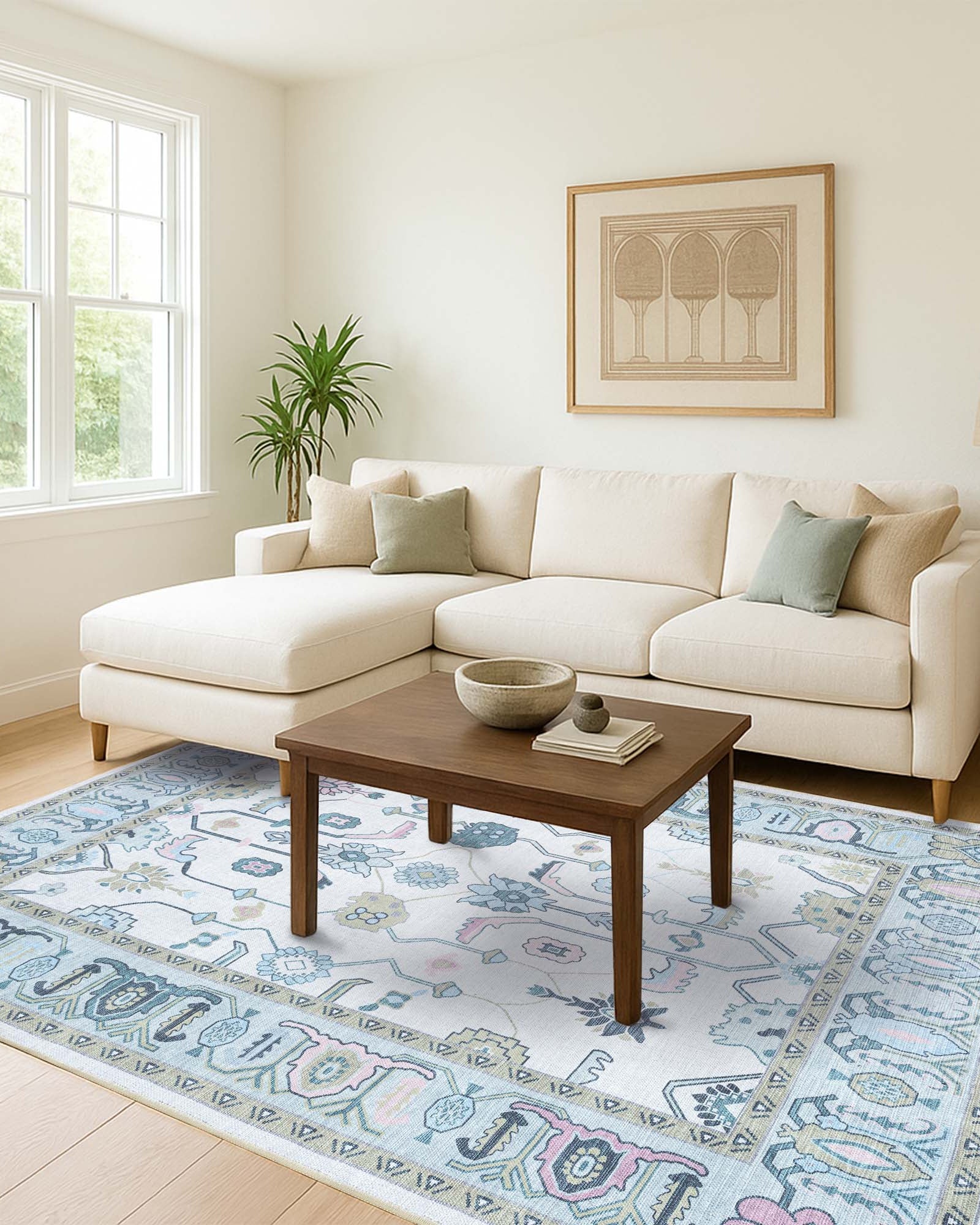
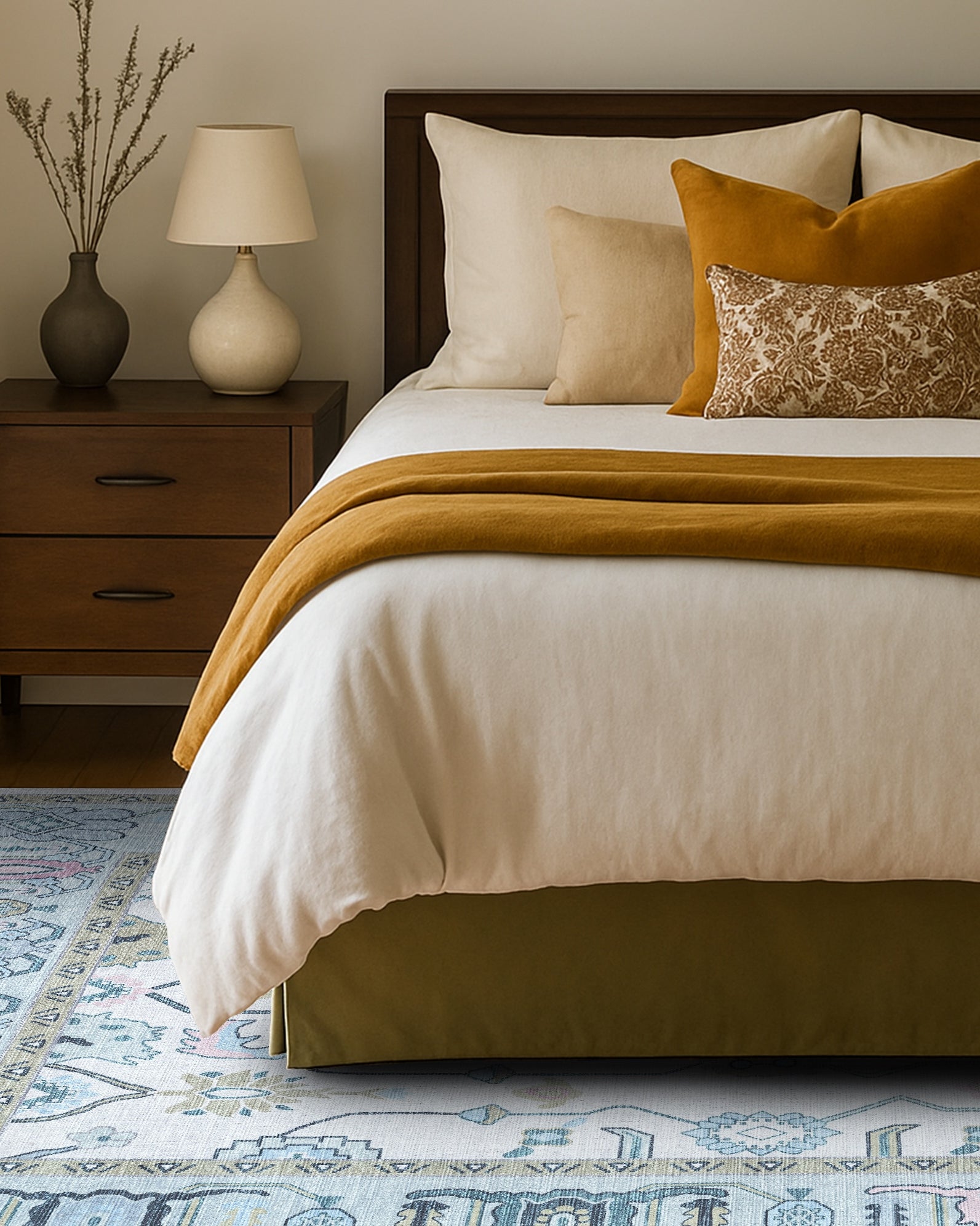
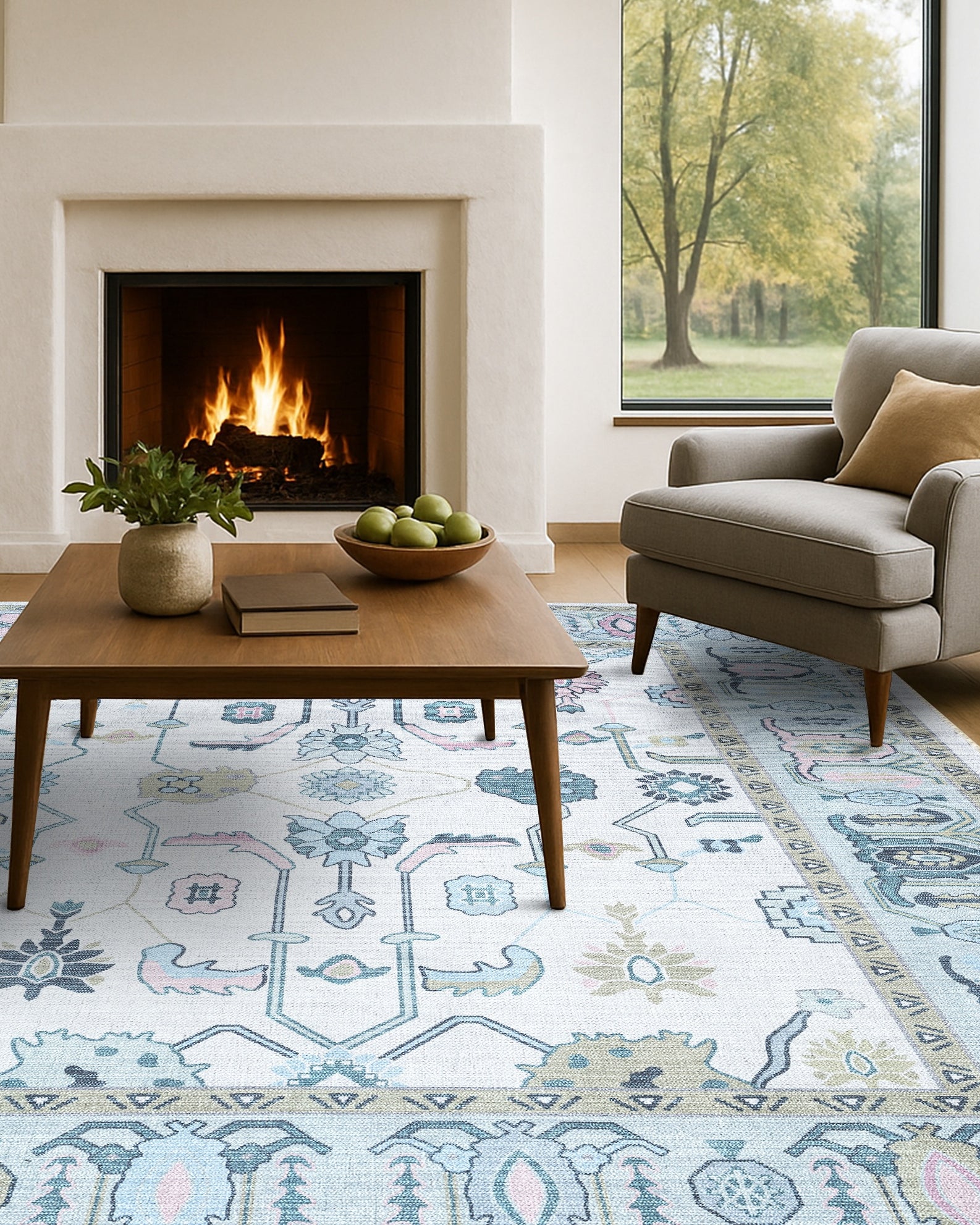
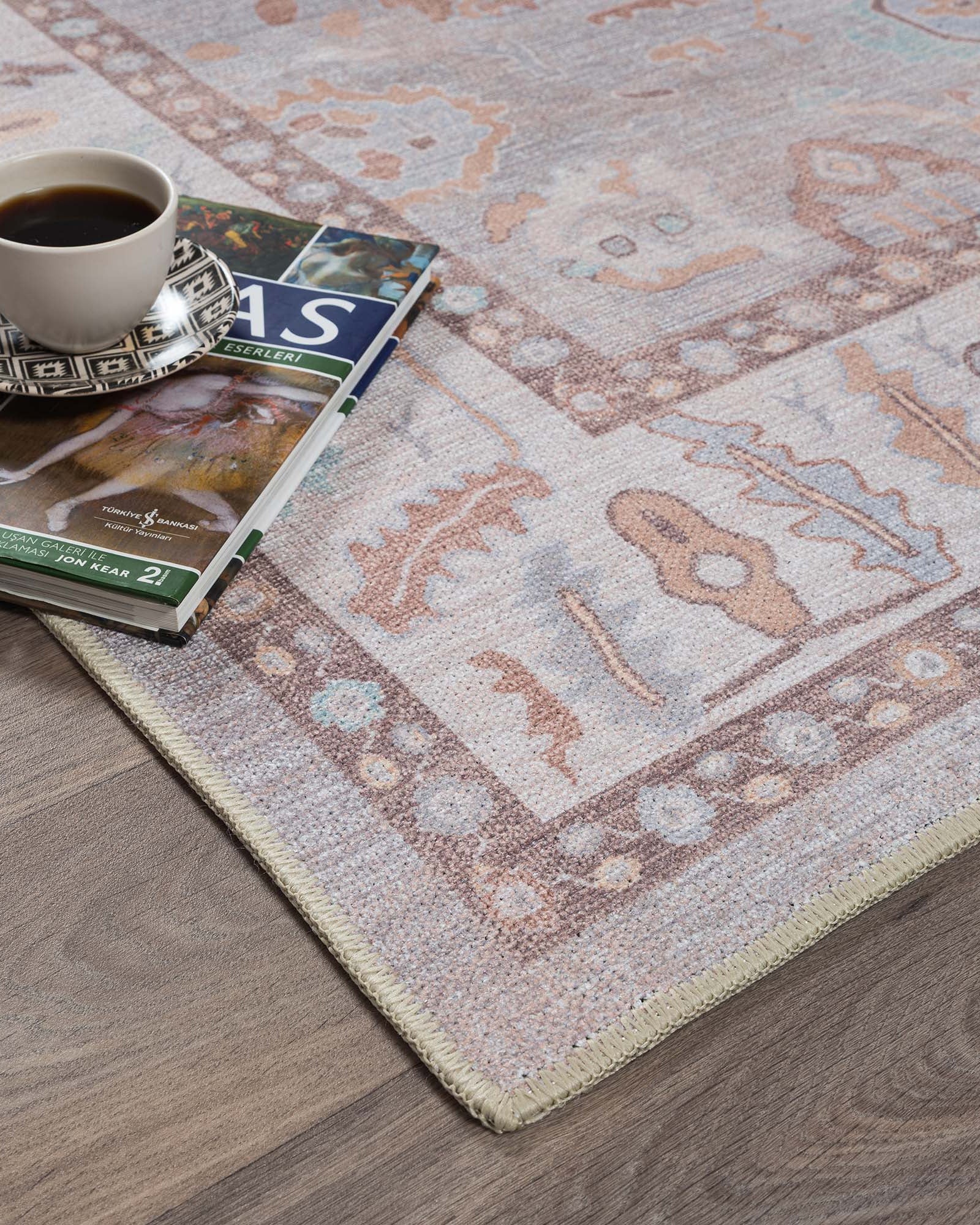
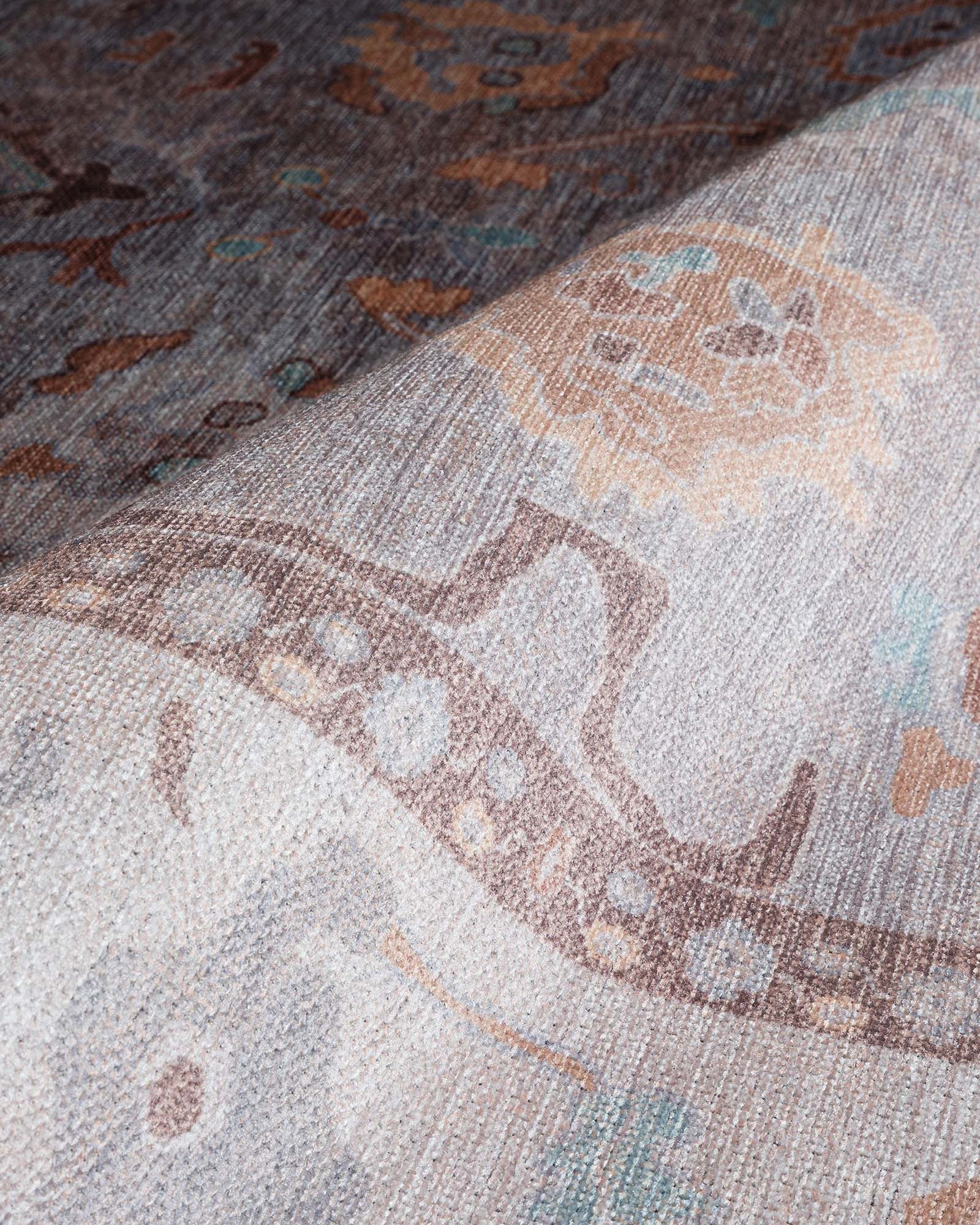
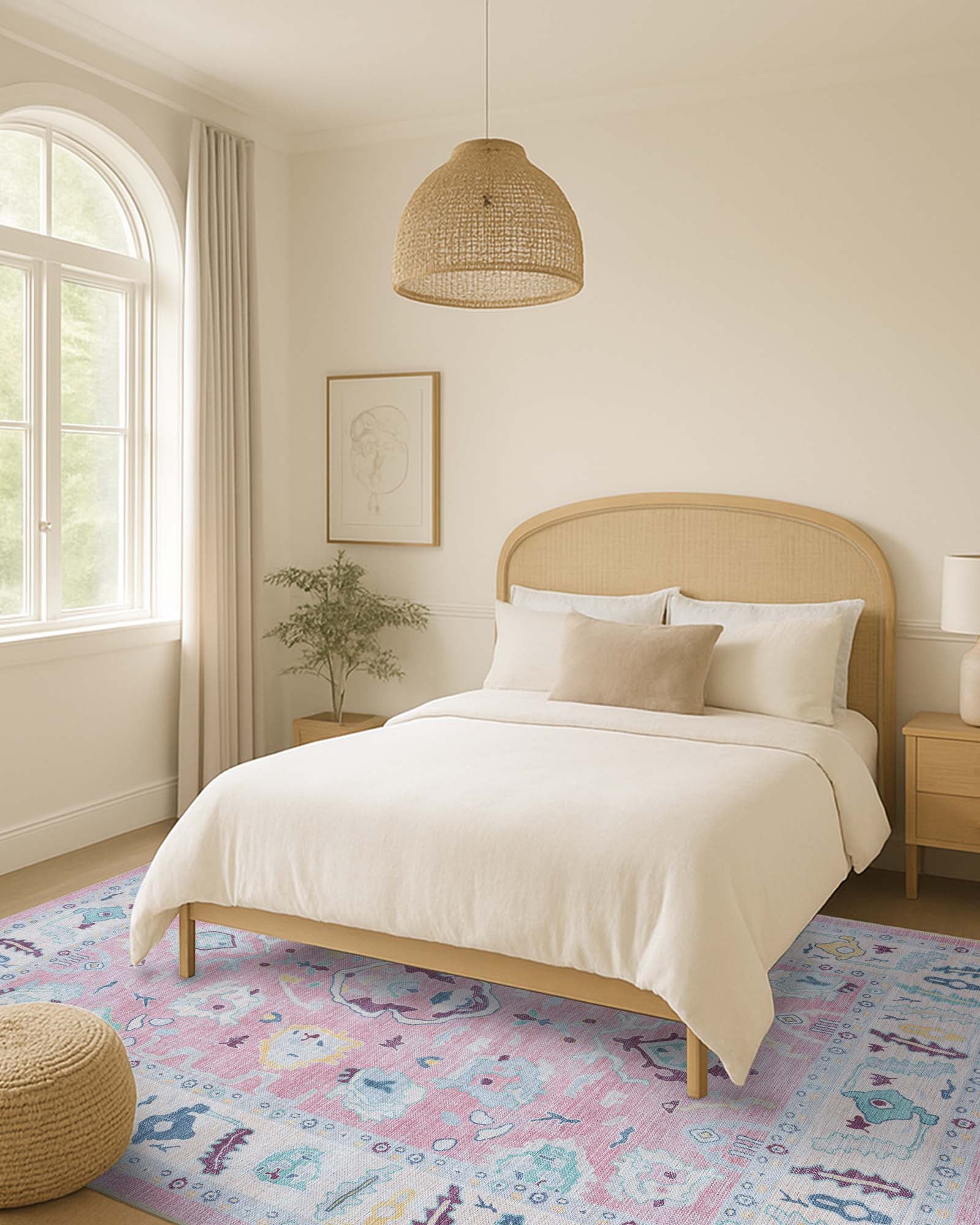
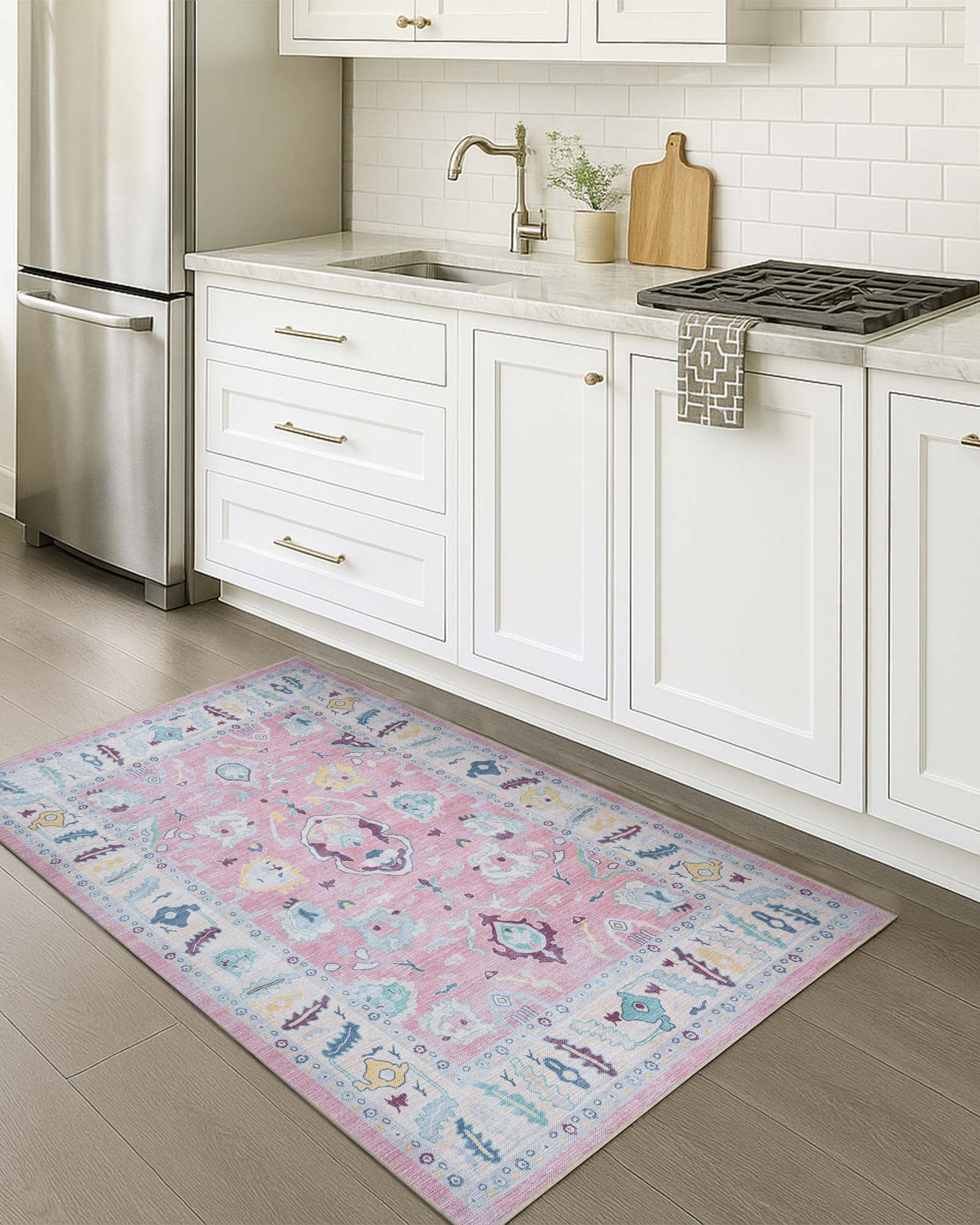
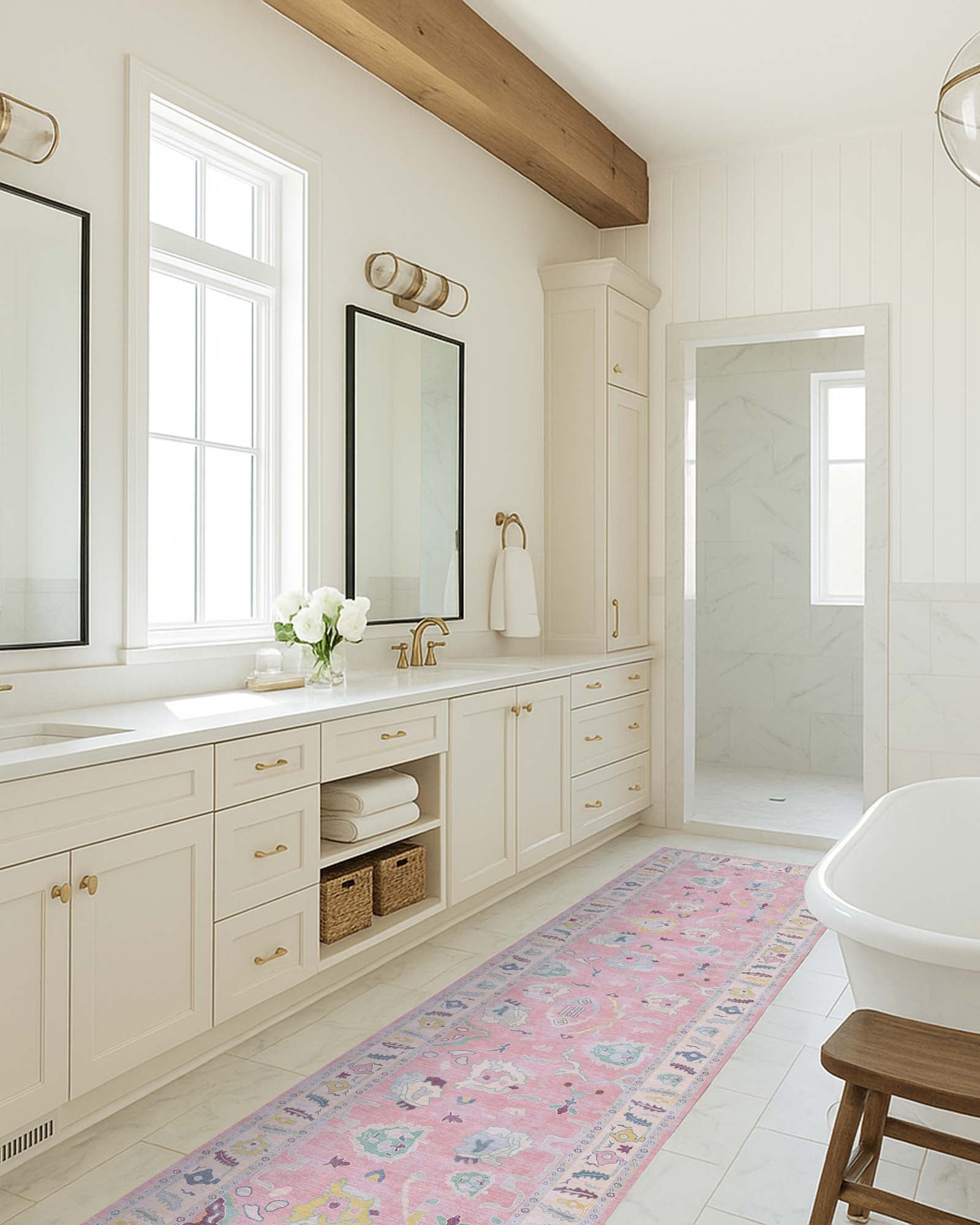
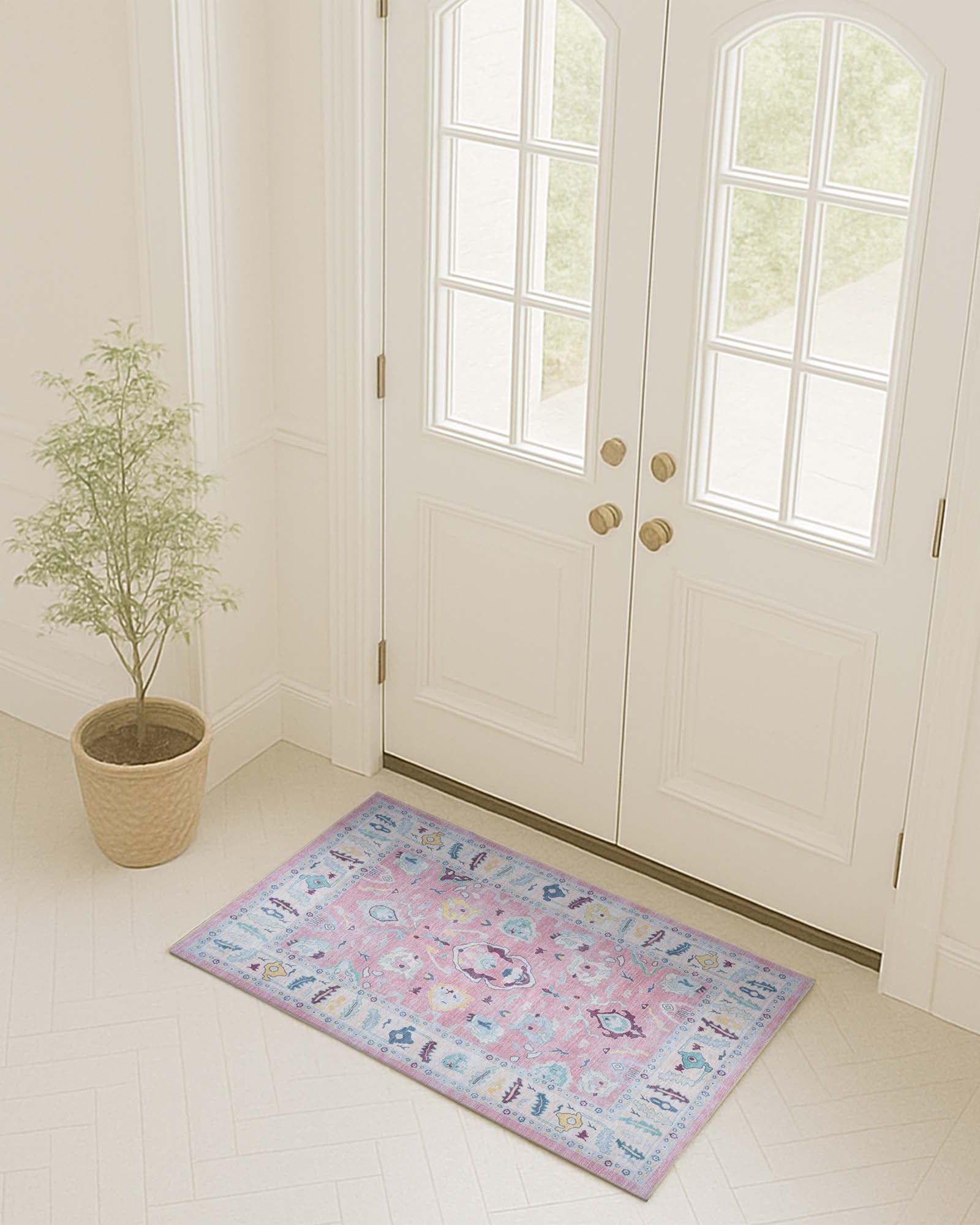
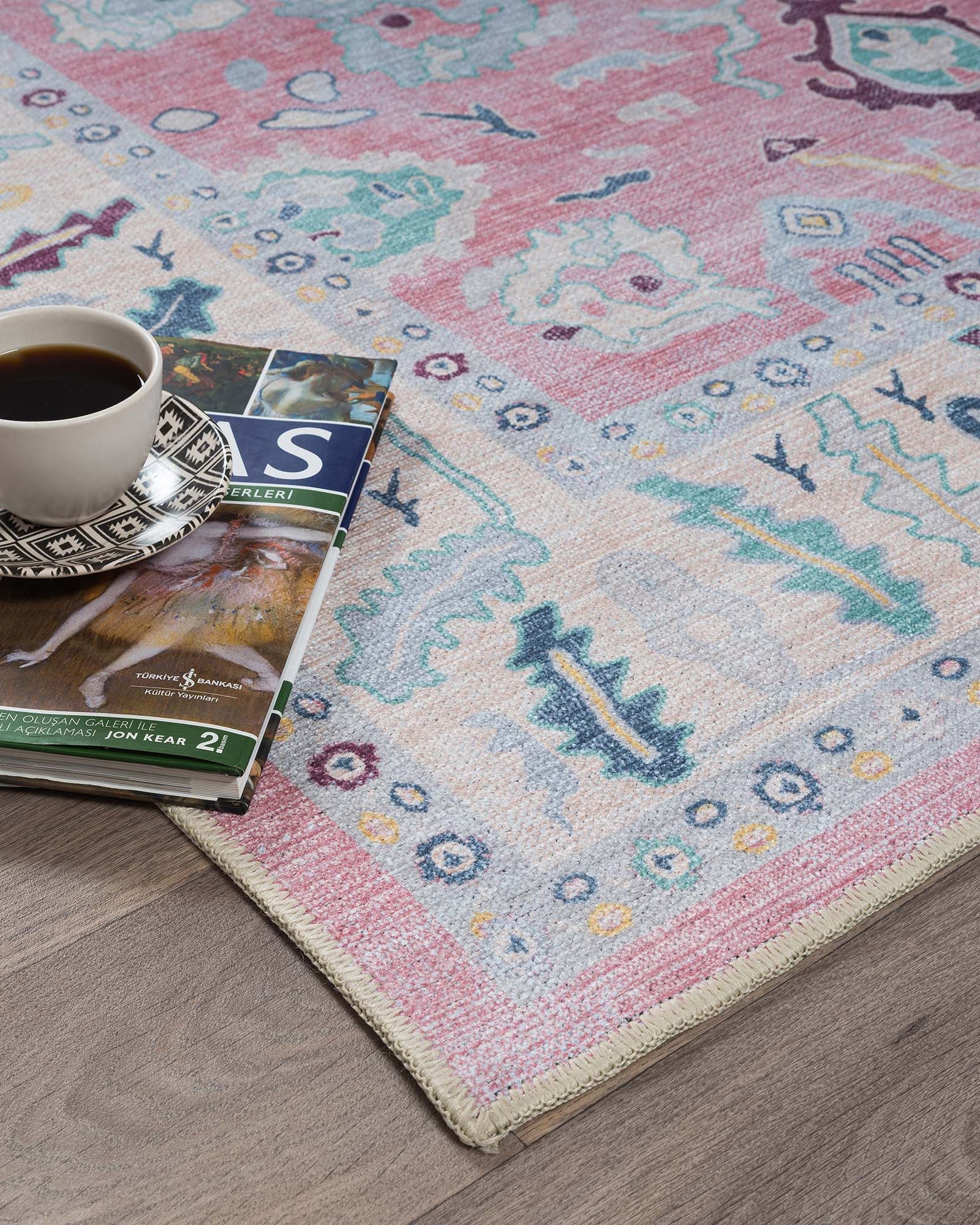
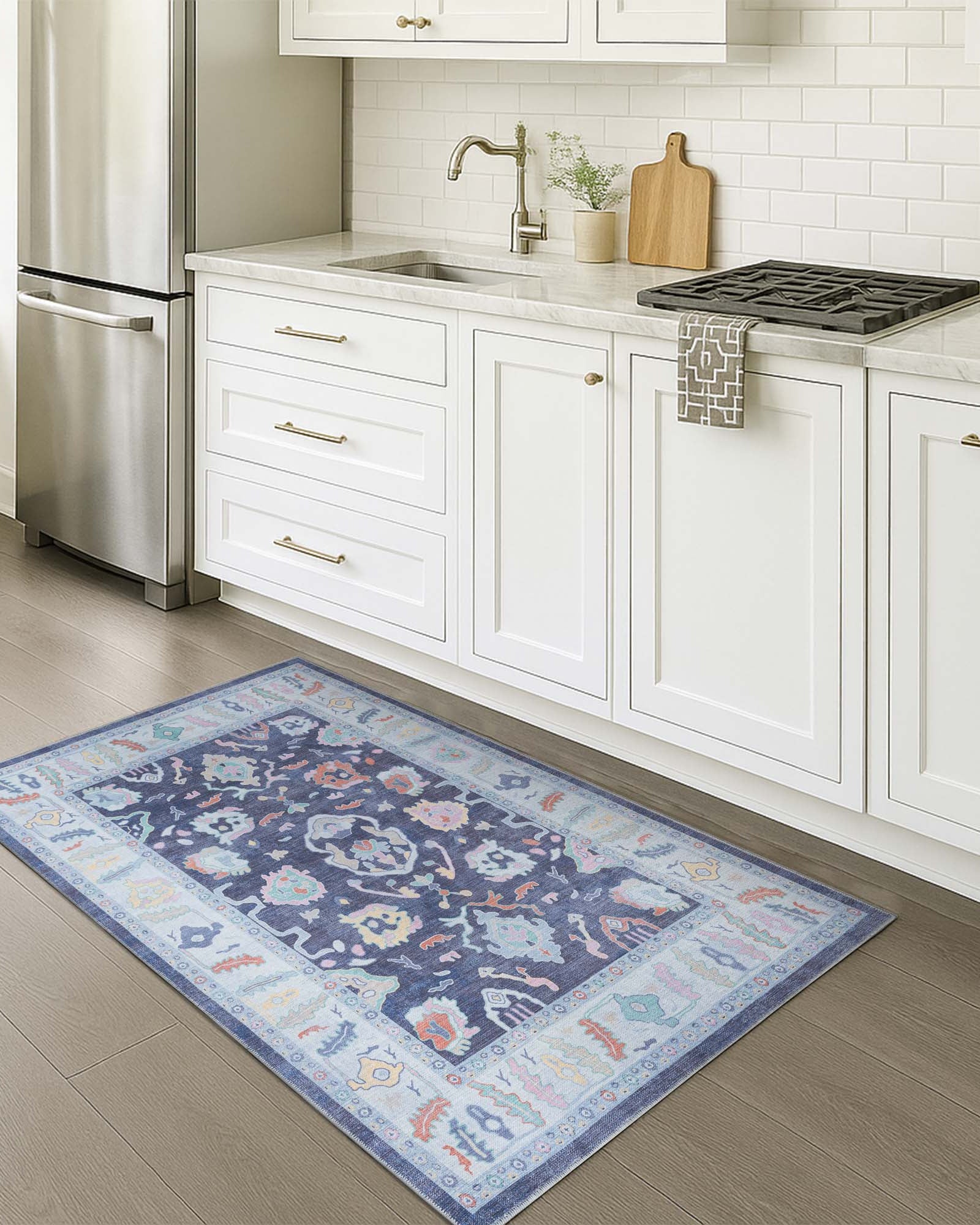
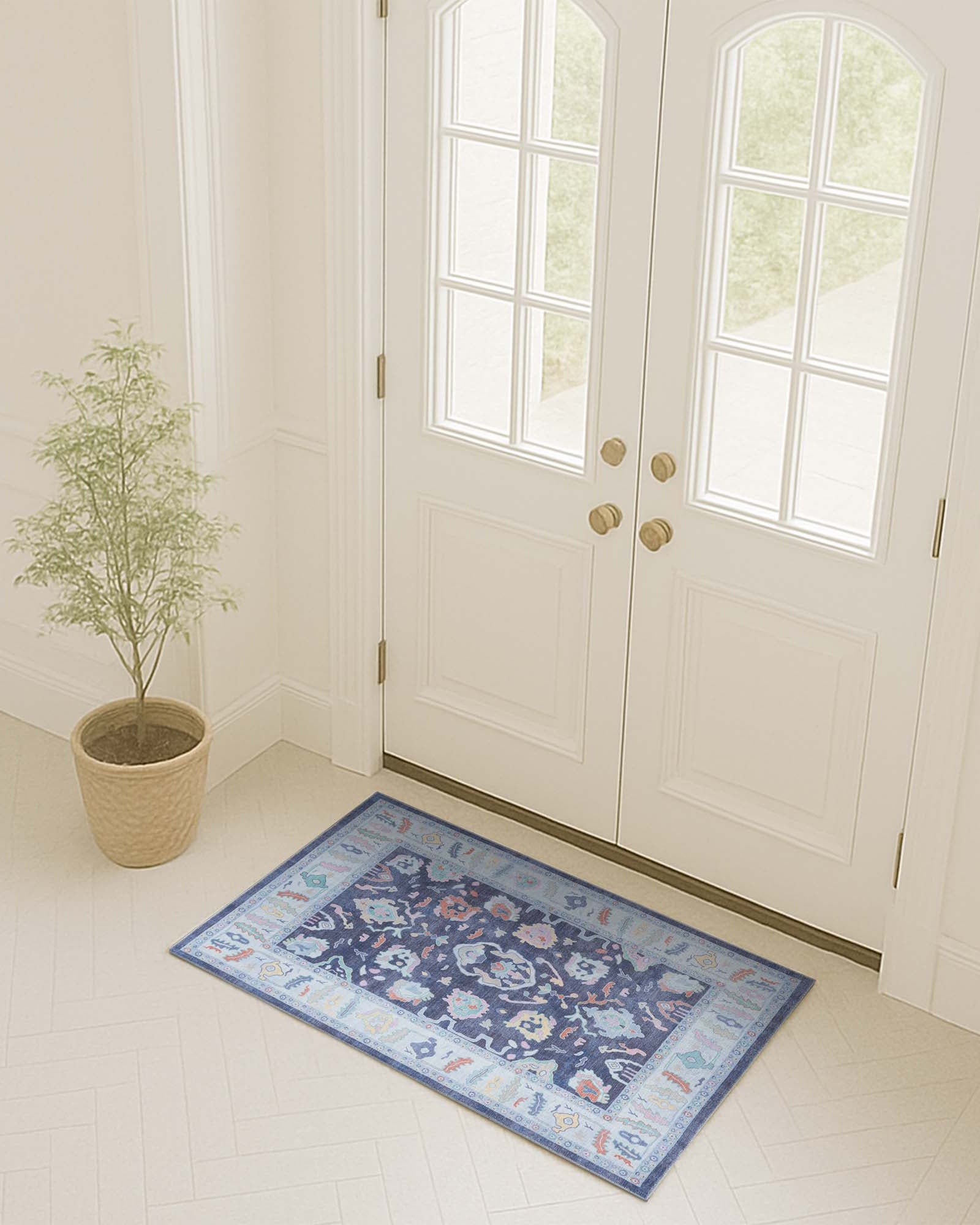
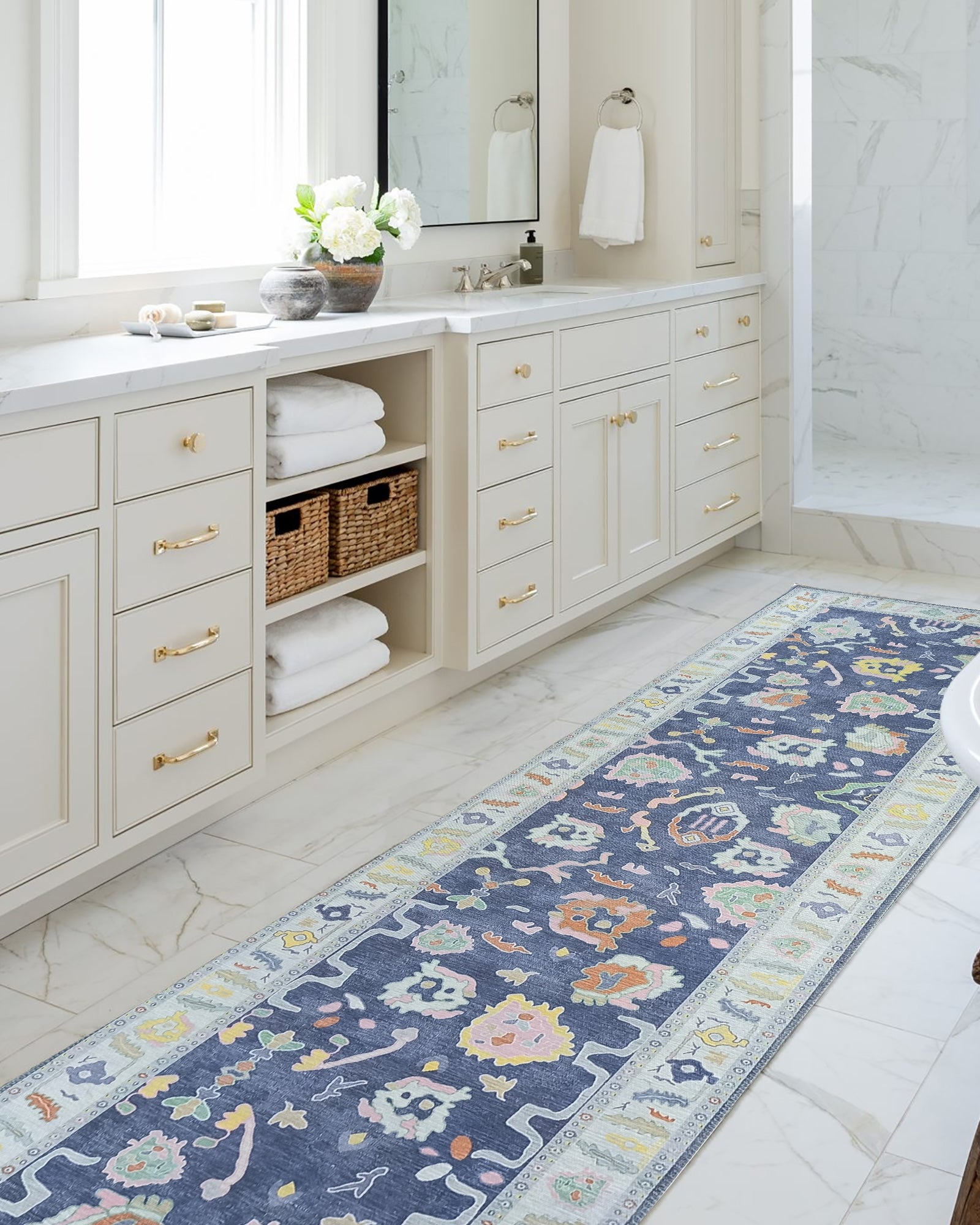
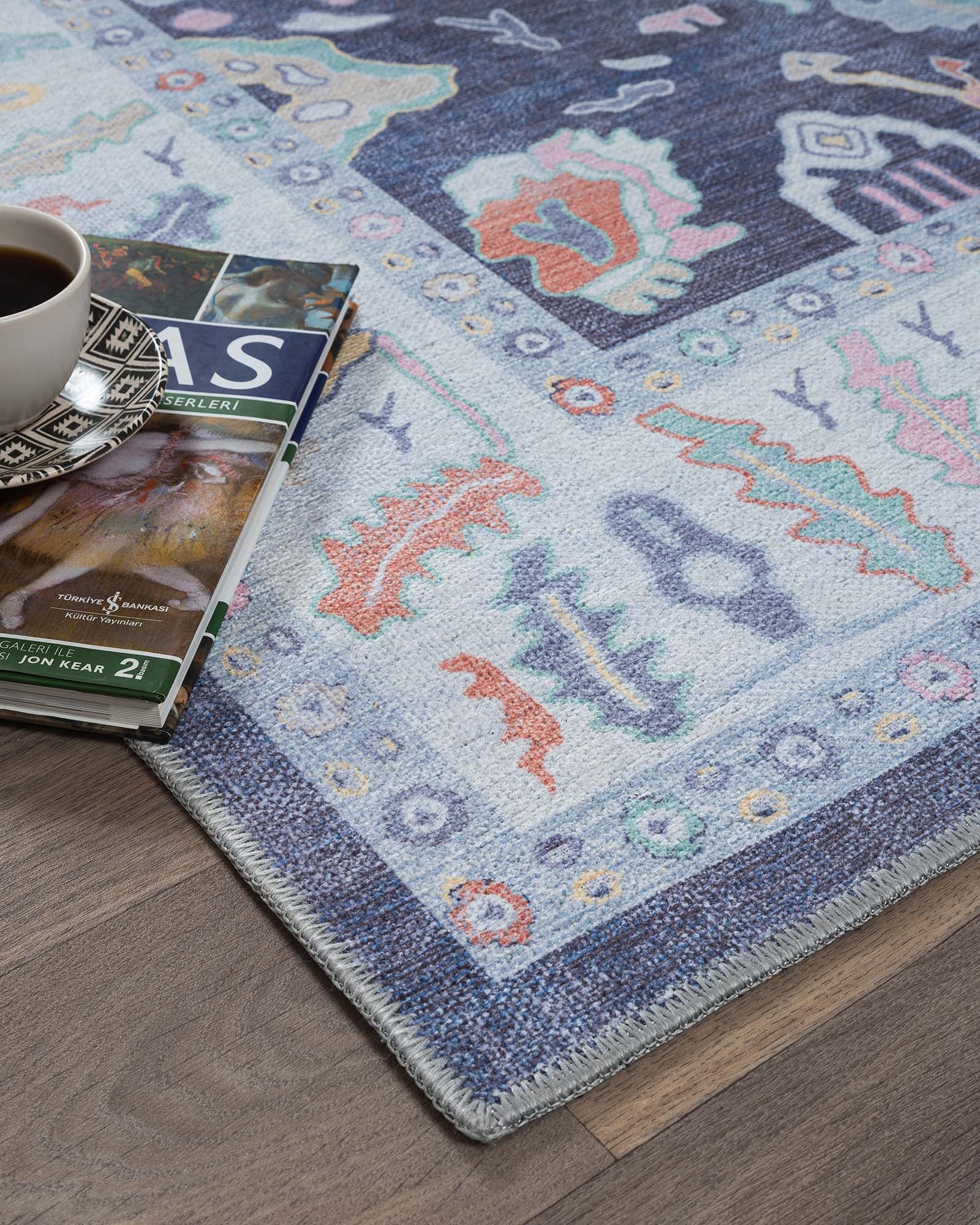
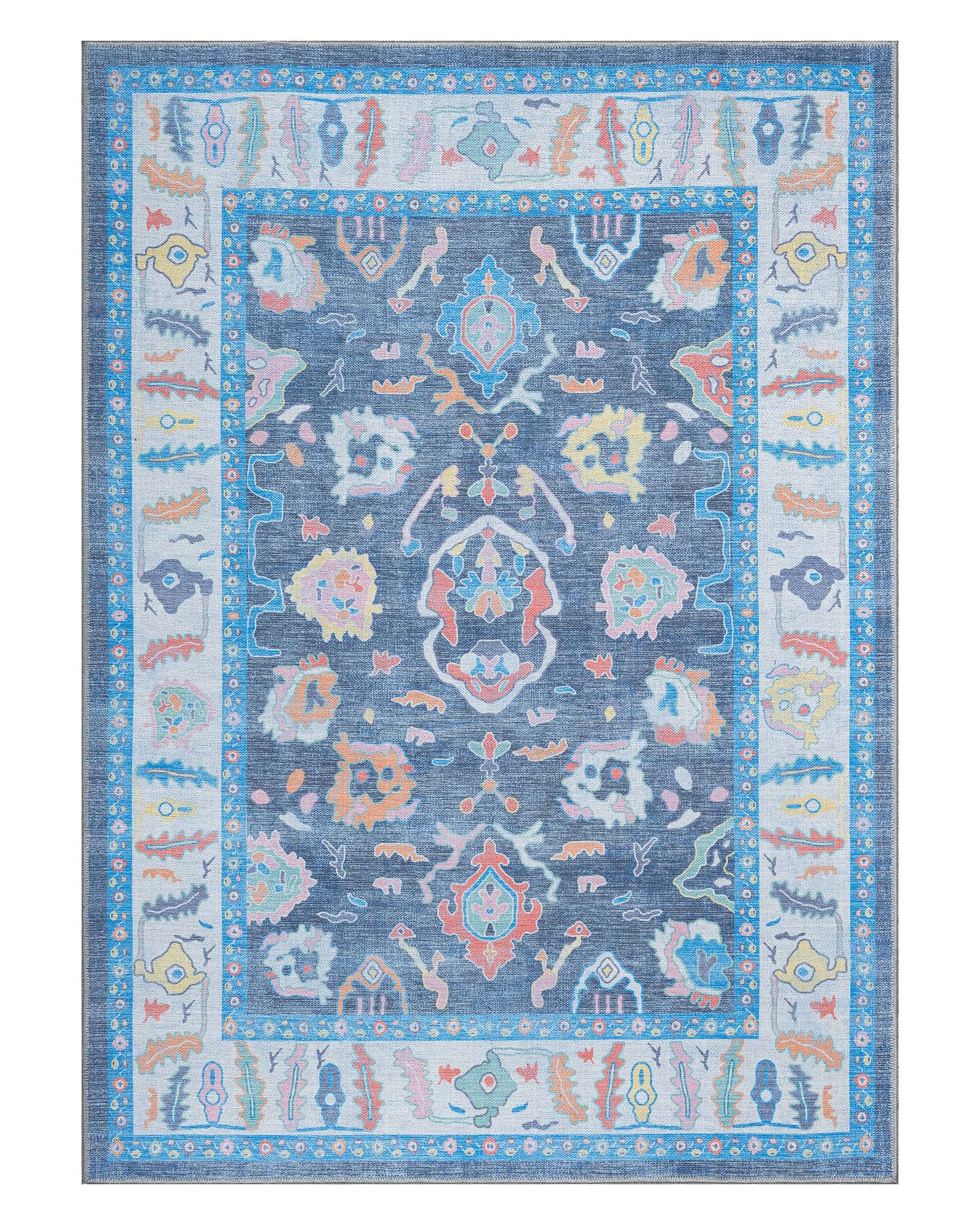
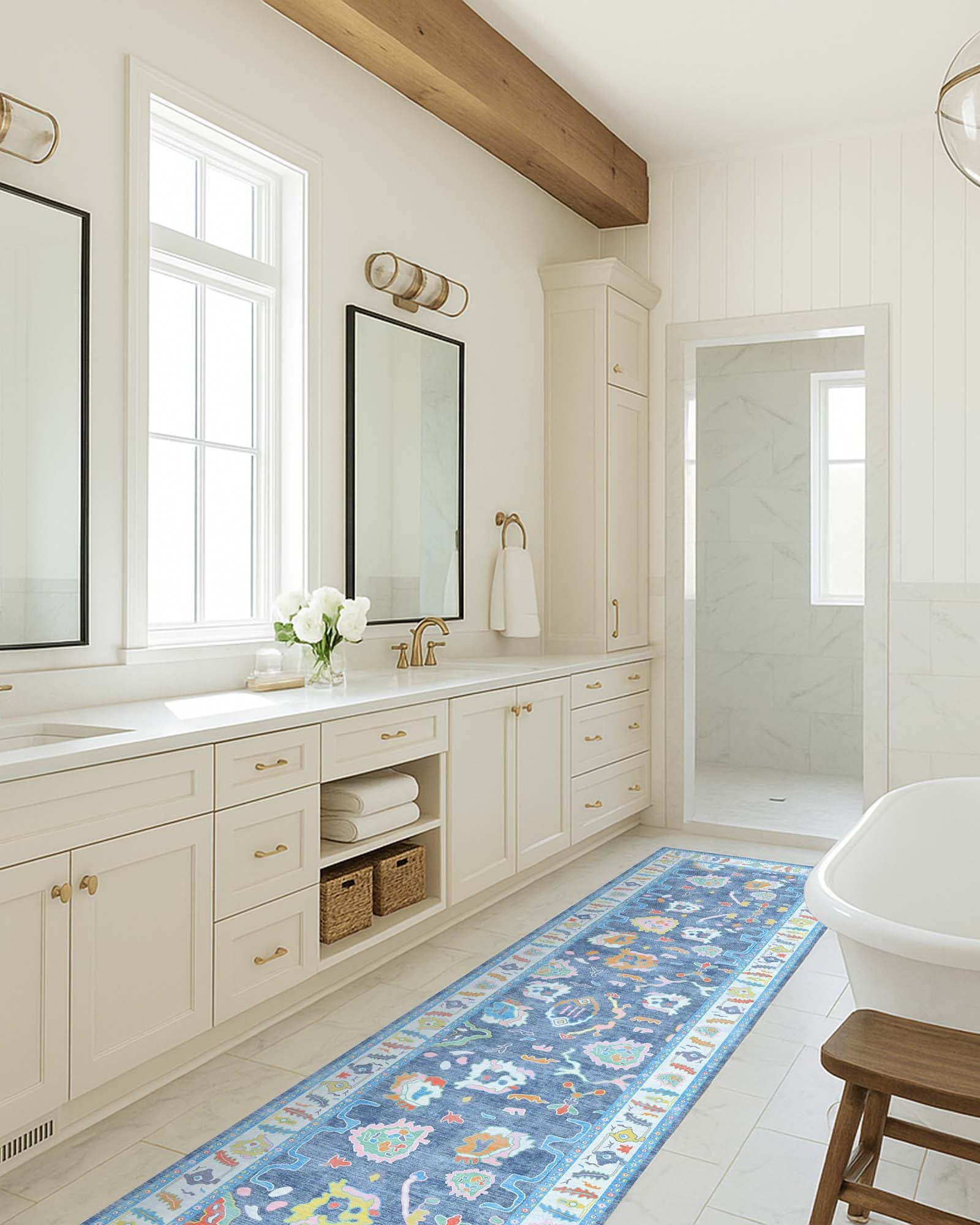
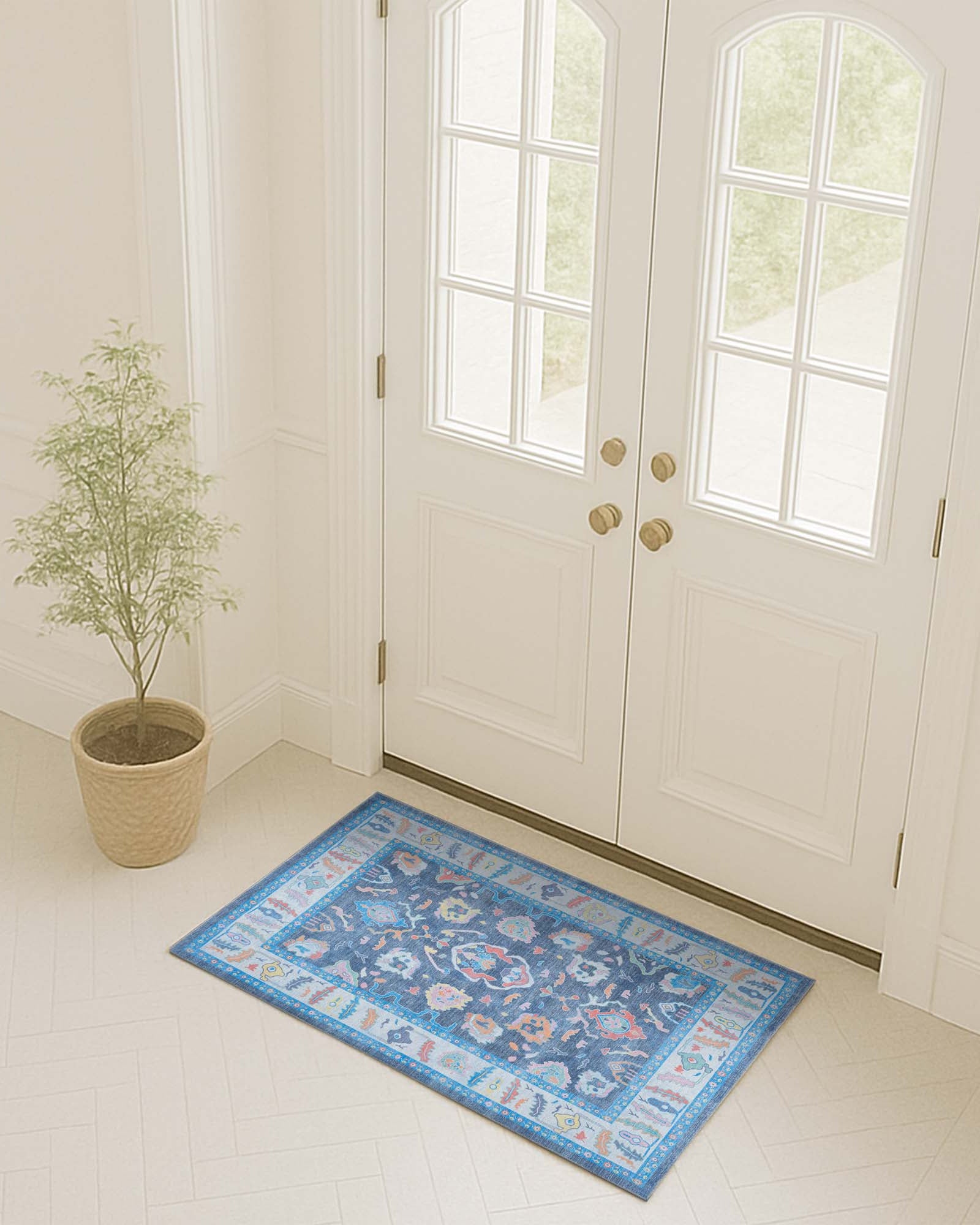
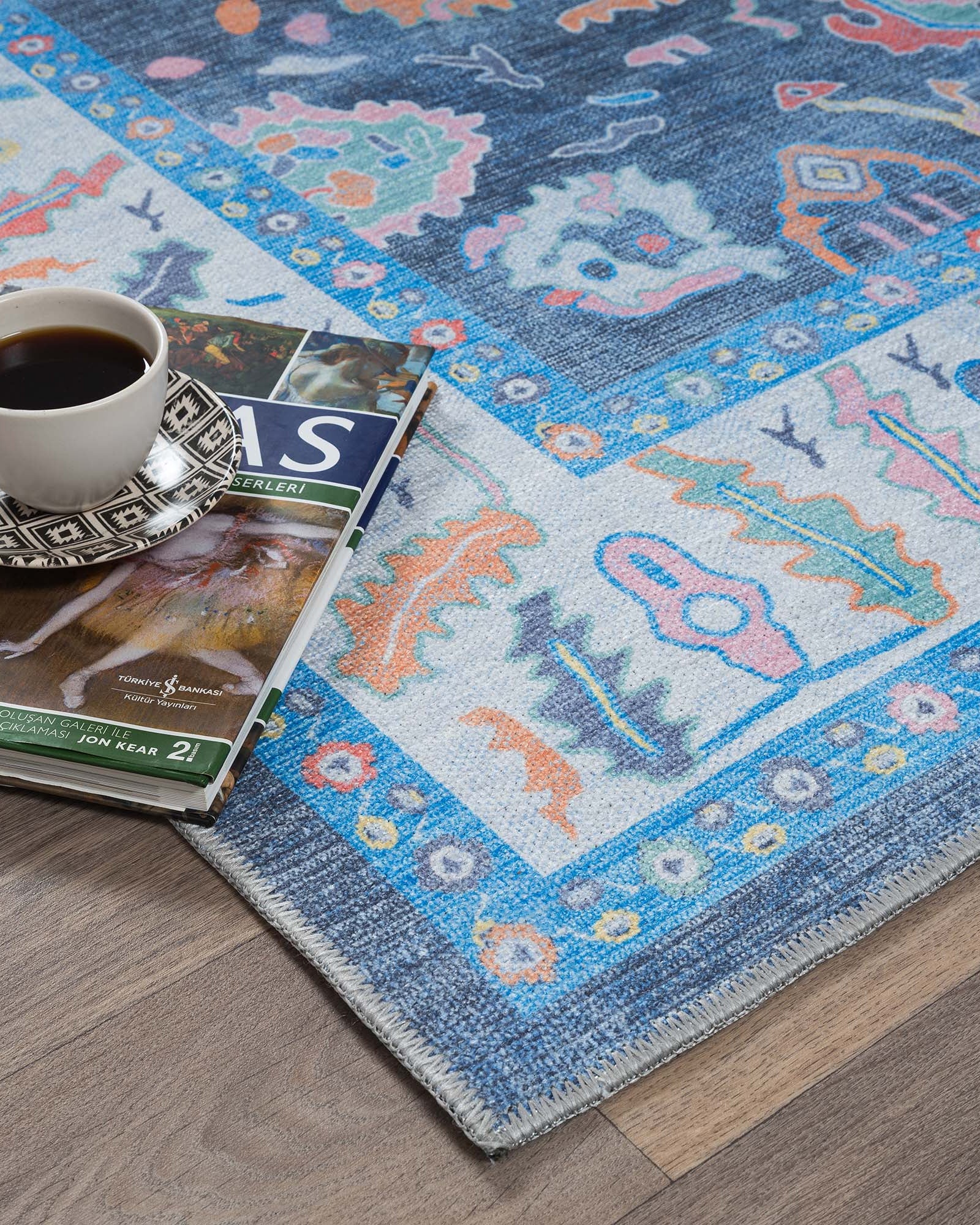
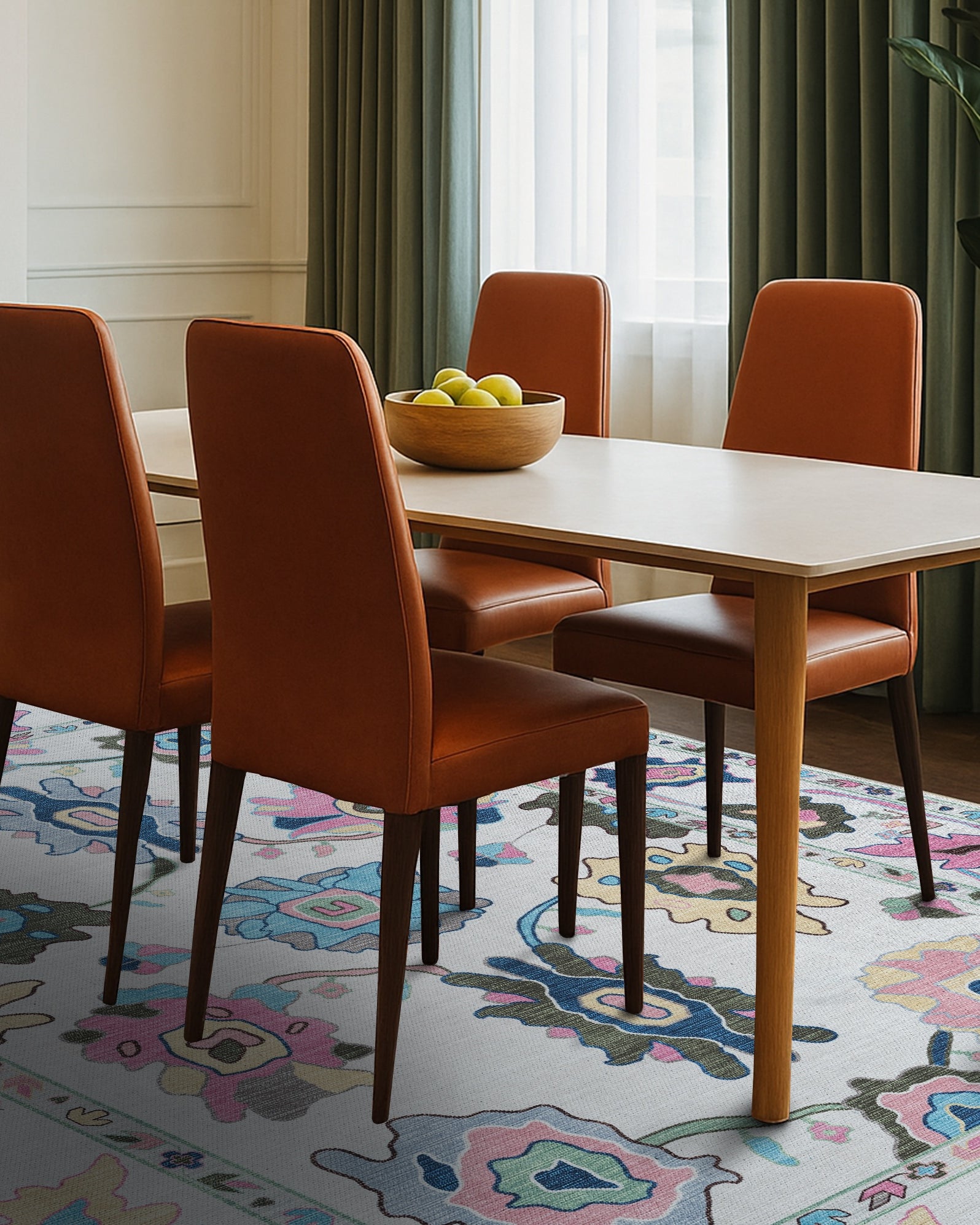
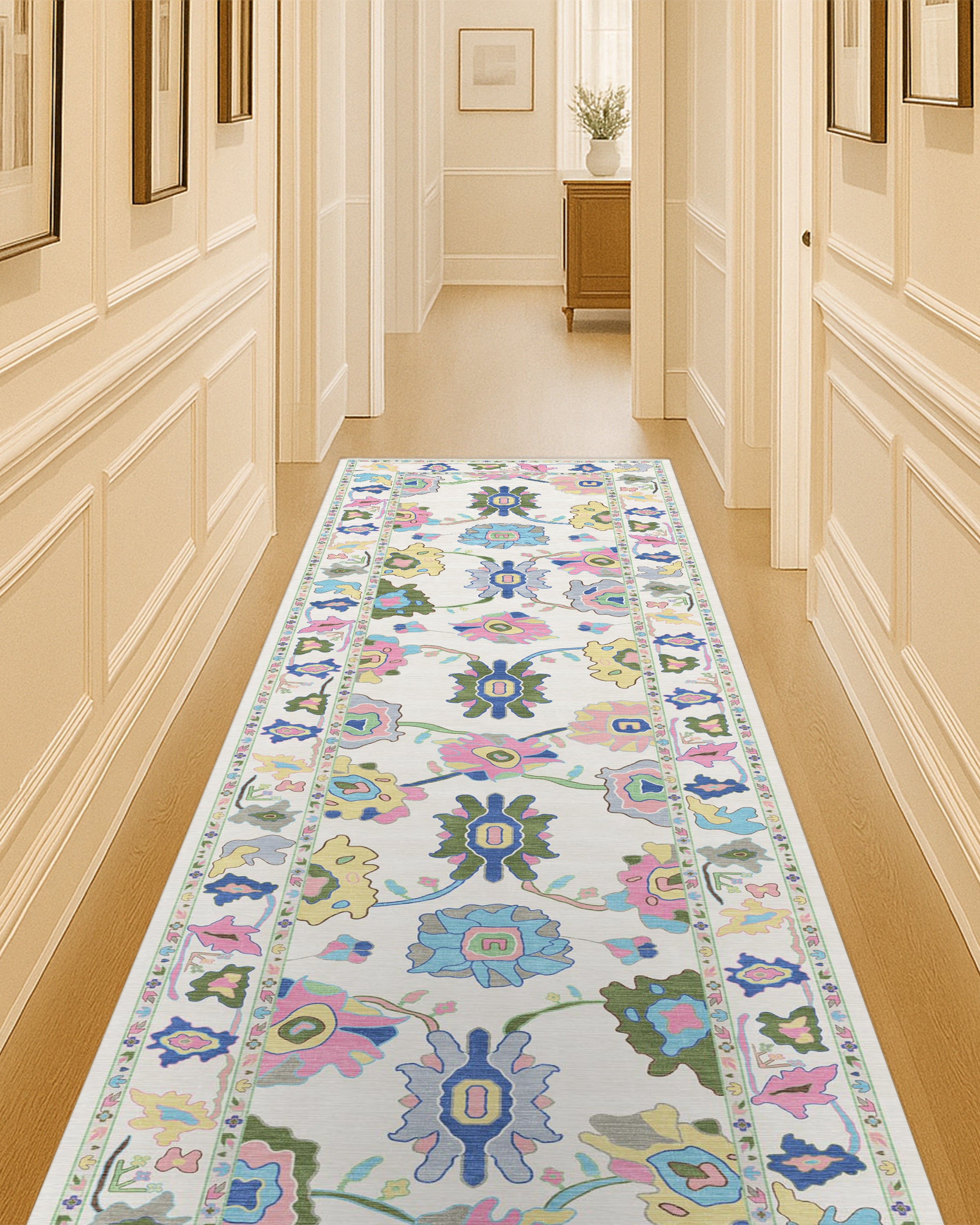
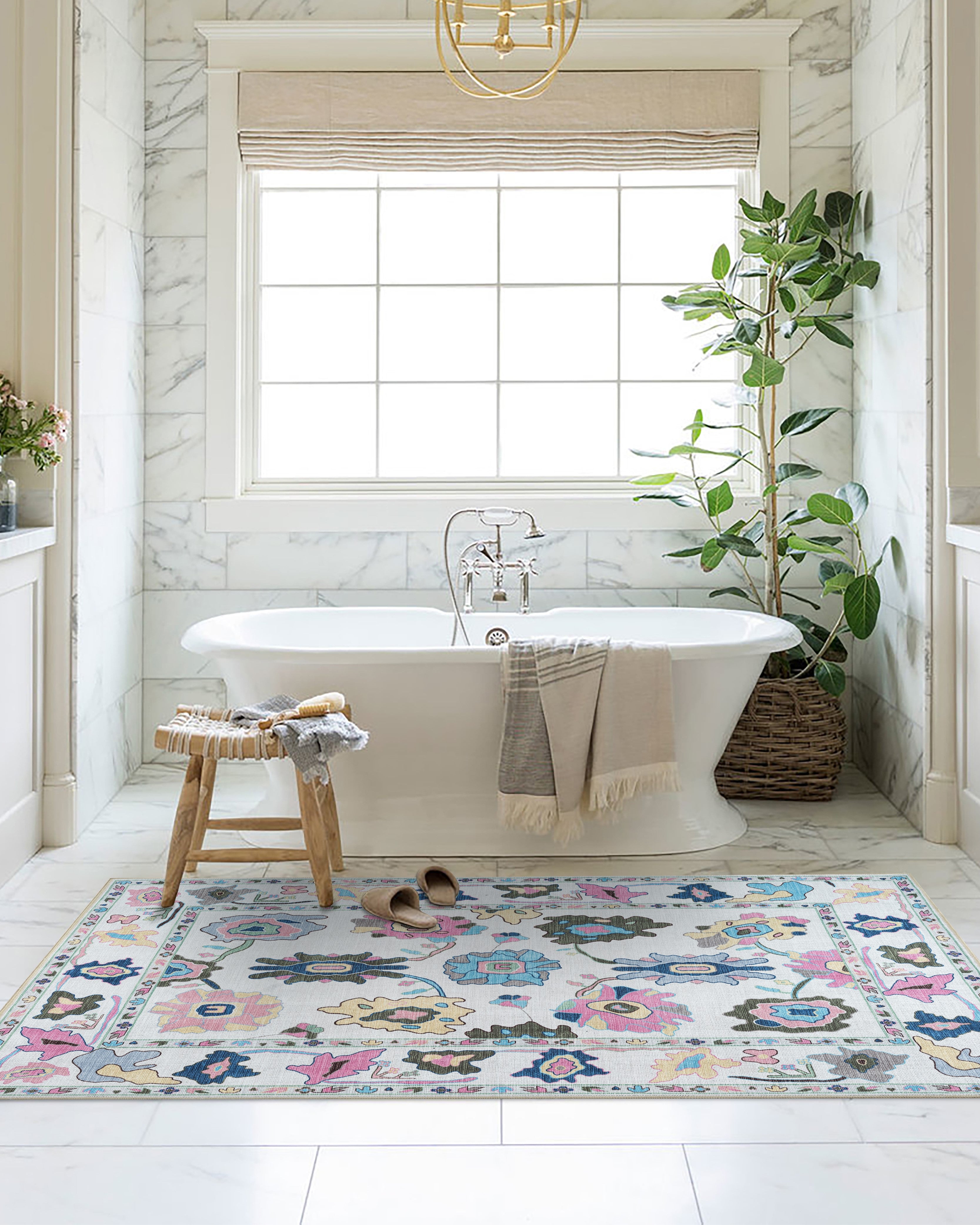
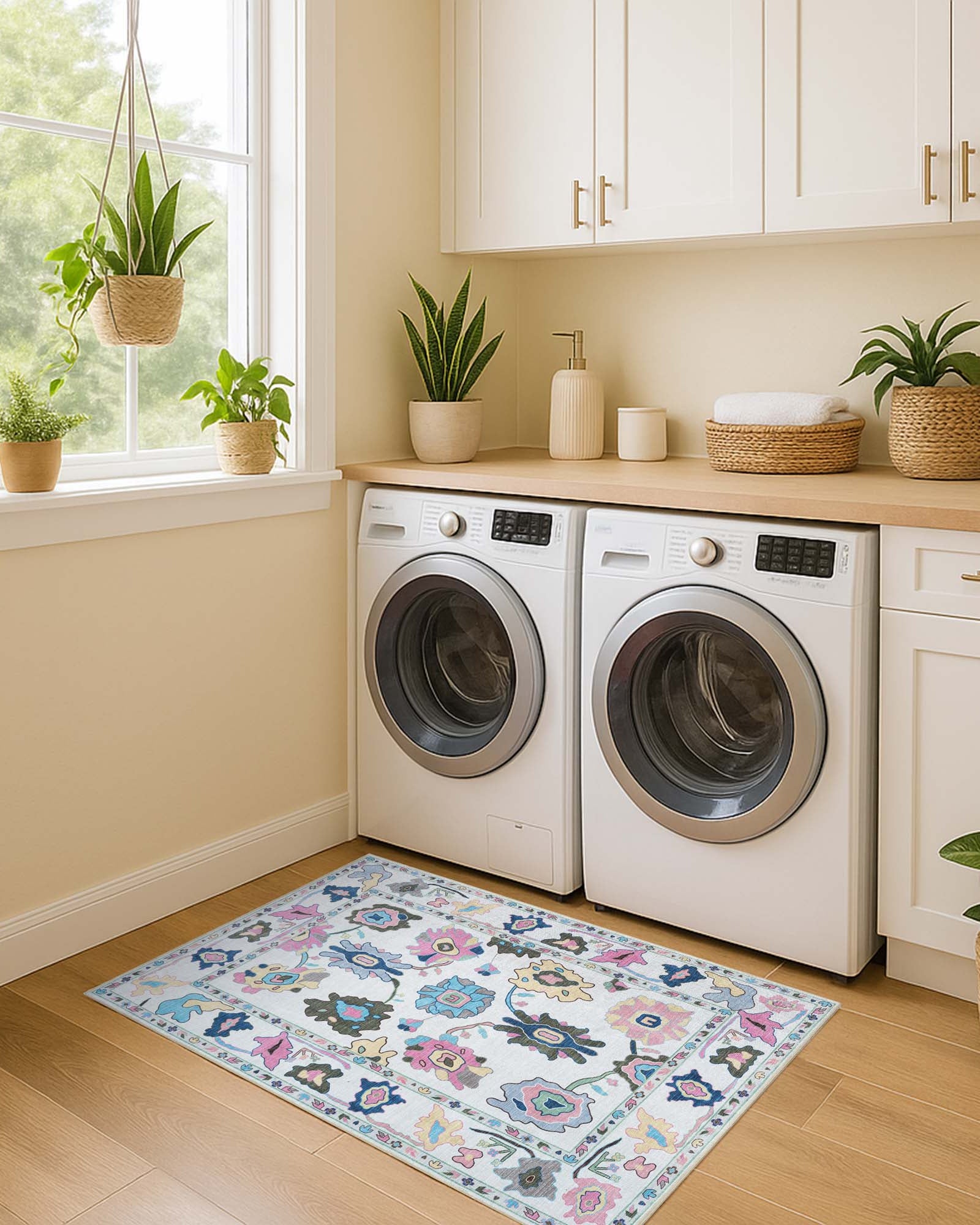
Every rug here was made on a loom by hand. That single fact covers more variation than most people expect, because the loom is a frame rather than a method — what happens on it ranges from a thin reversible flatweave to a dense knotted pile, and the difference decides how the rug feels, how long it lasts and where it belongs in a house. Each piece is an original with genuine age, sold as a single item.
What Happens on a Loom
A loom holds a set of vertical threads called the warp under tension. Everything the weaver does is a variation on passing horizontal threads, the weft, through that warp. In its simplest form the weft alone builds the fabric and the pattern. In its most complex, additional wool is knotted onto the warp between weft rows to build a pile above the fabric. Both are handweaving; they produce very different objects.
Flatweave
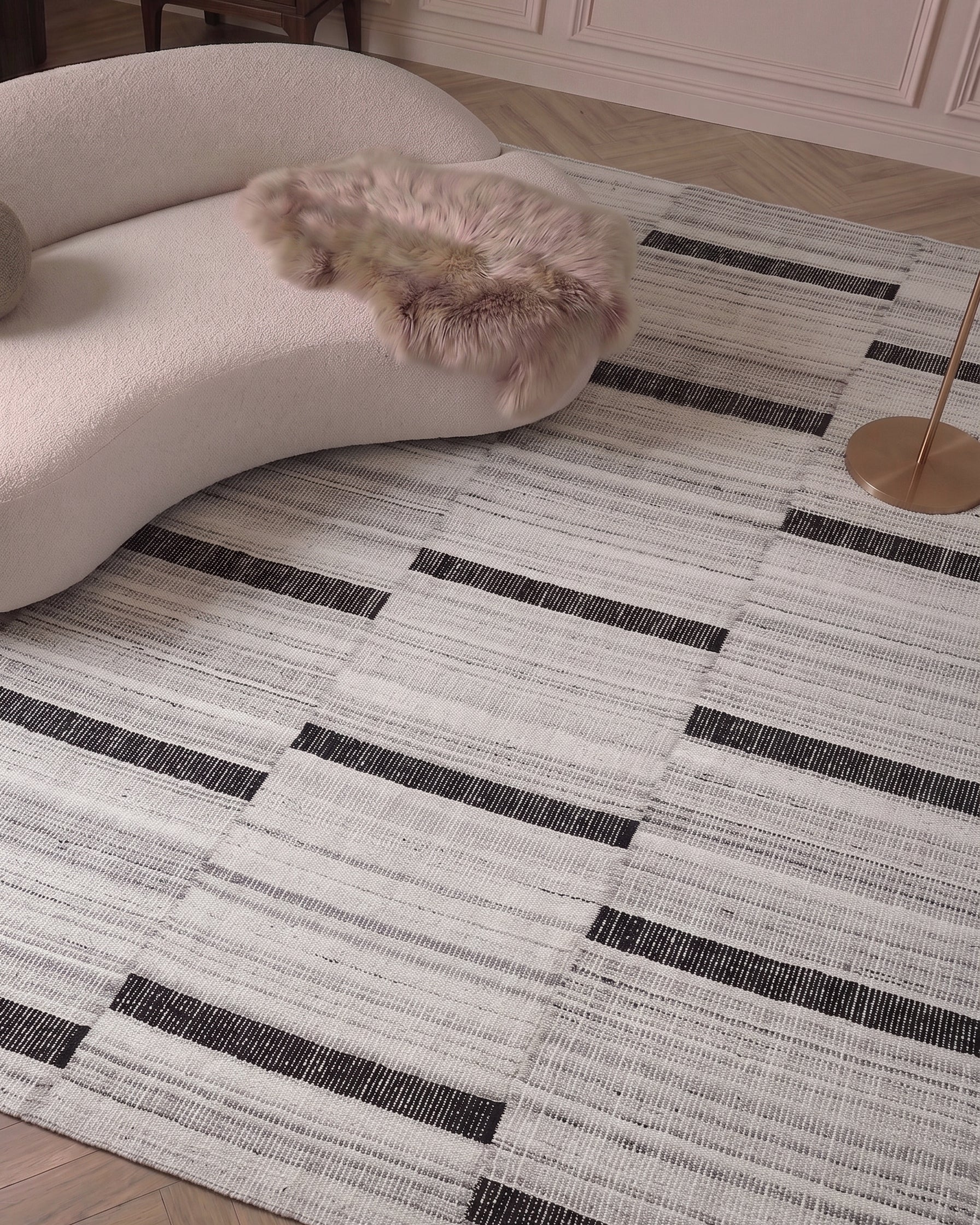
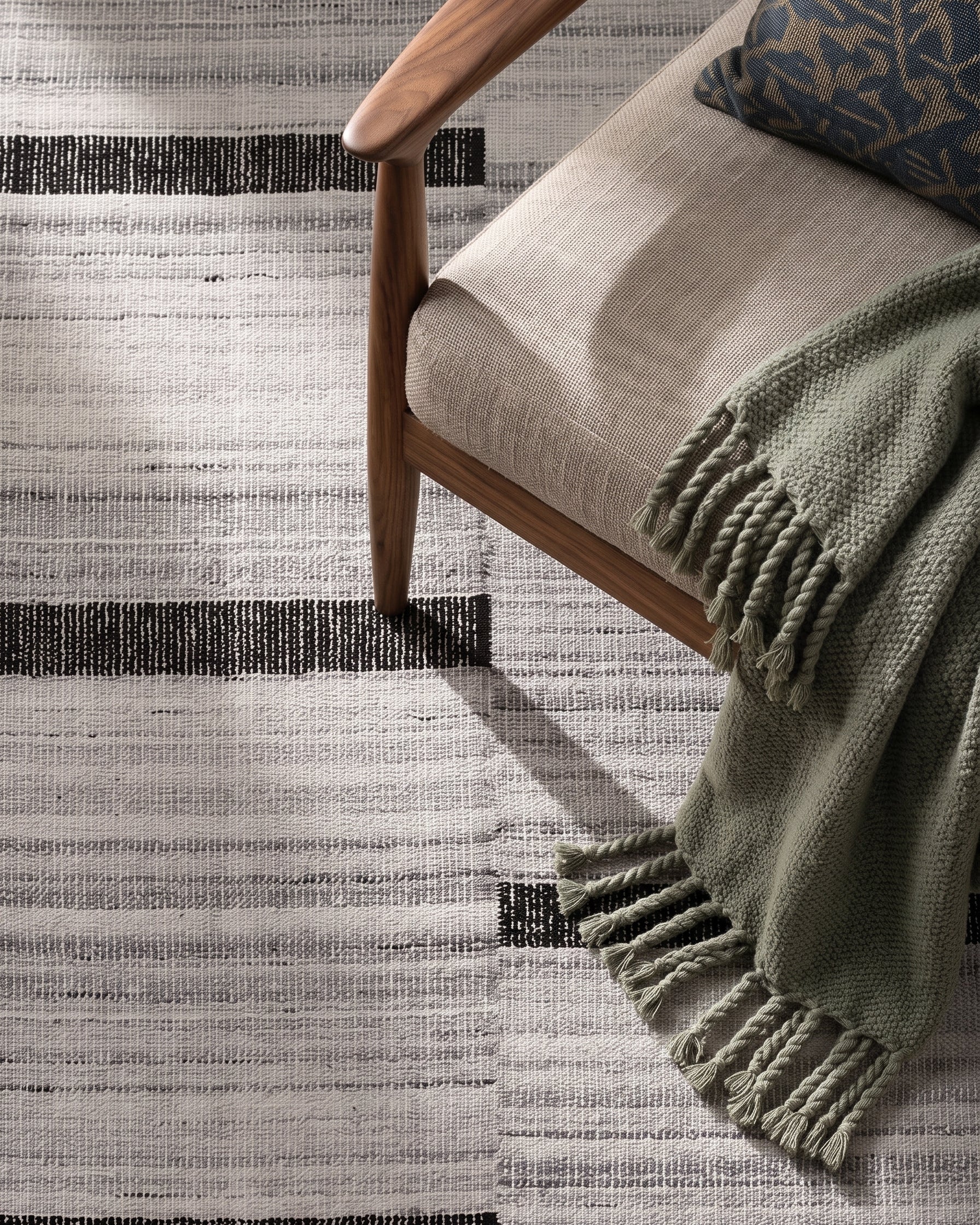
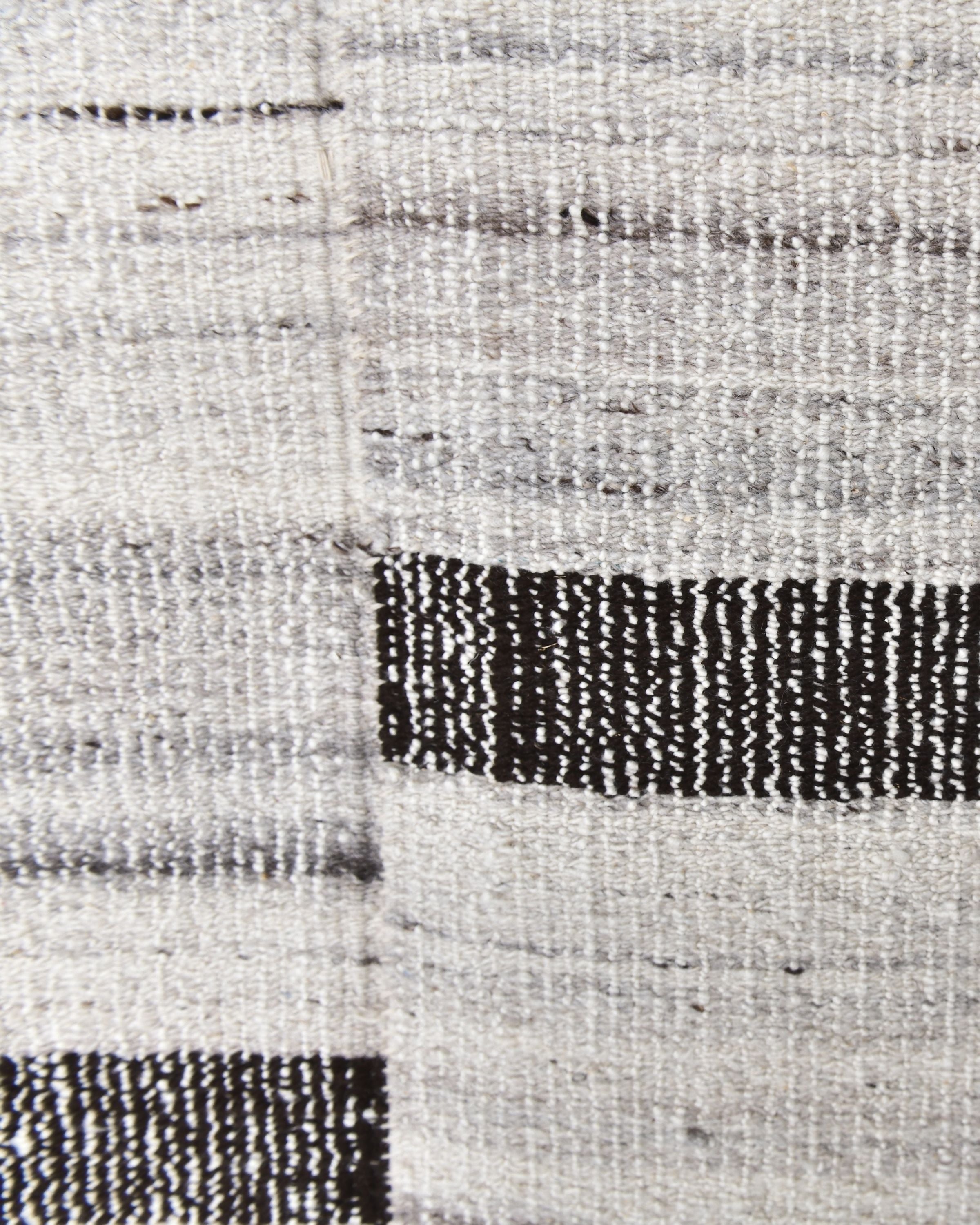
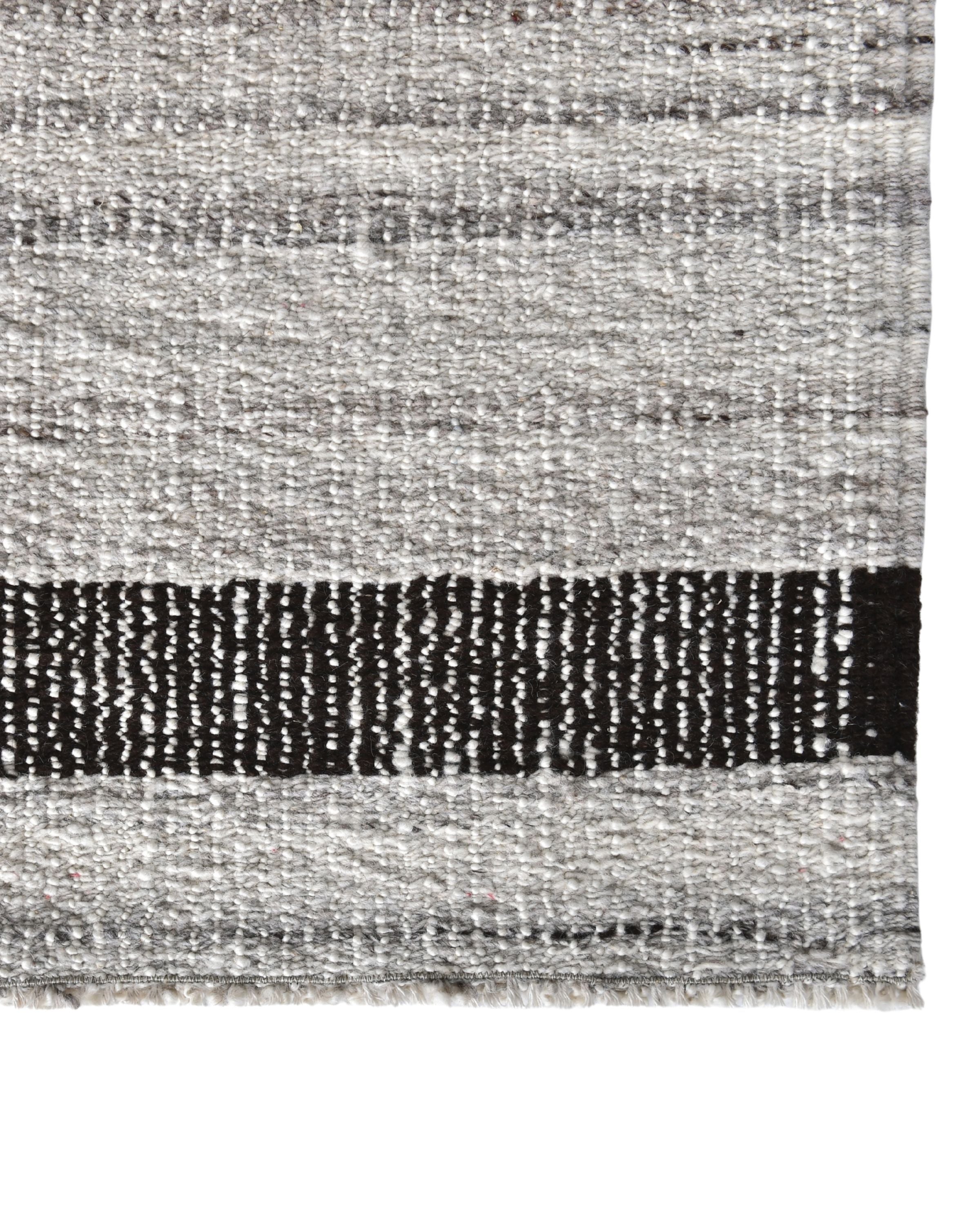
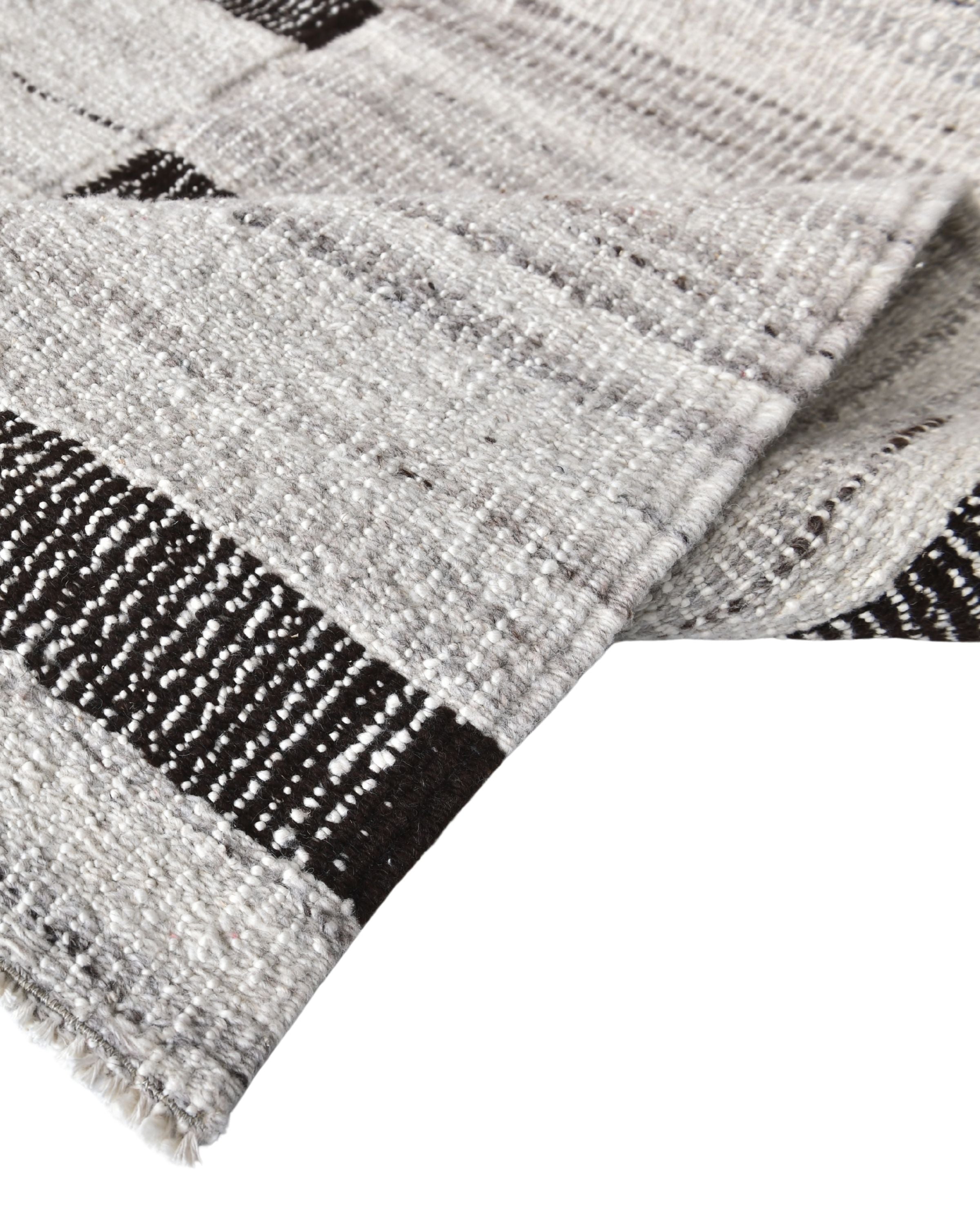
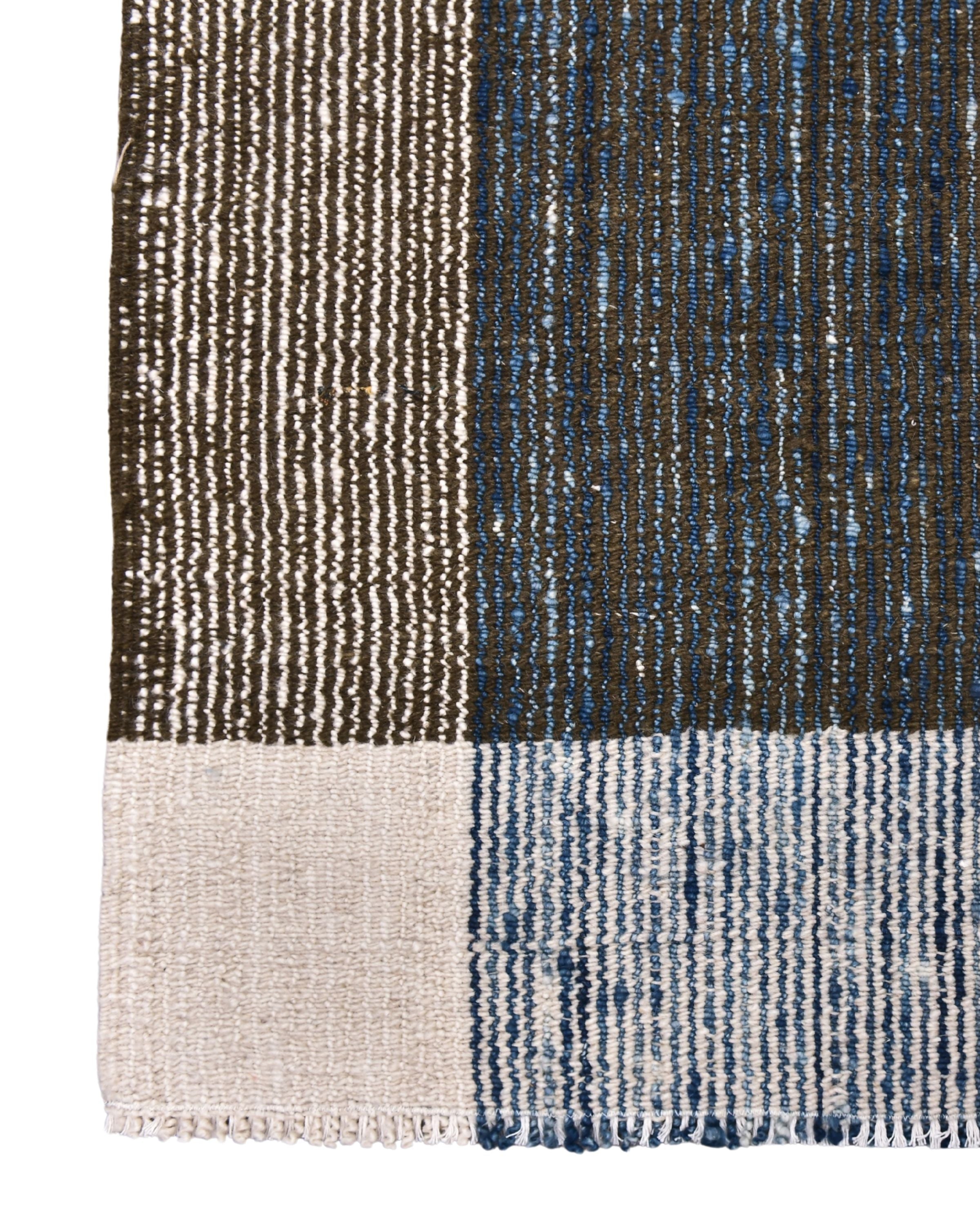
The weft does all the work. Coloured threads are passed back and forth and packed down until the fabric itself becomes the pattern, with no pile at all. The result is thin, light and identical on both sides. Where two colours meet along a vertical line the wefts turn back on themselves, leaving a small slit — hold a flatweave to the light and you can see through those openings, which is the fastest confirmation of genuine handweaving. This constraint is also why flatweave design is angular: long vertical lines weaken the fabric, so weavers step them diagonally.
Knotted Pile
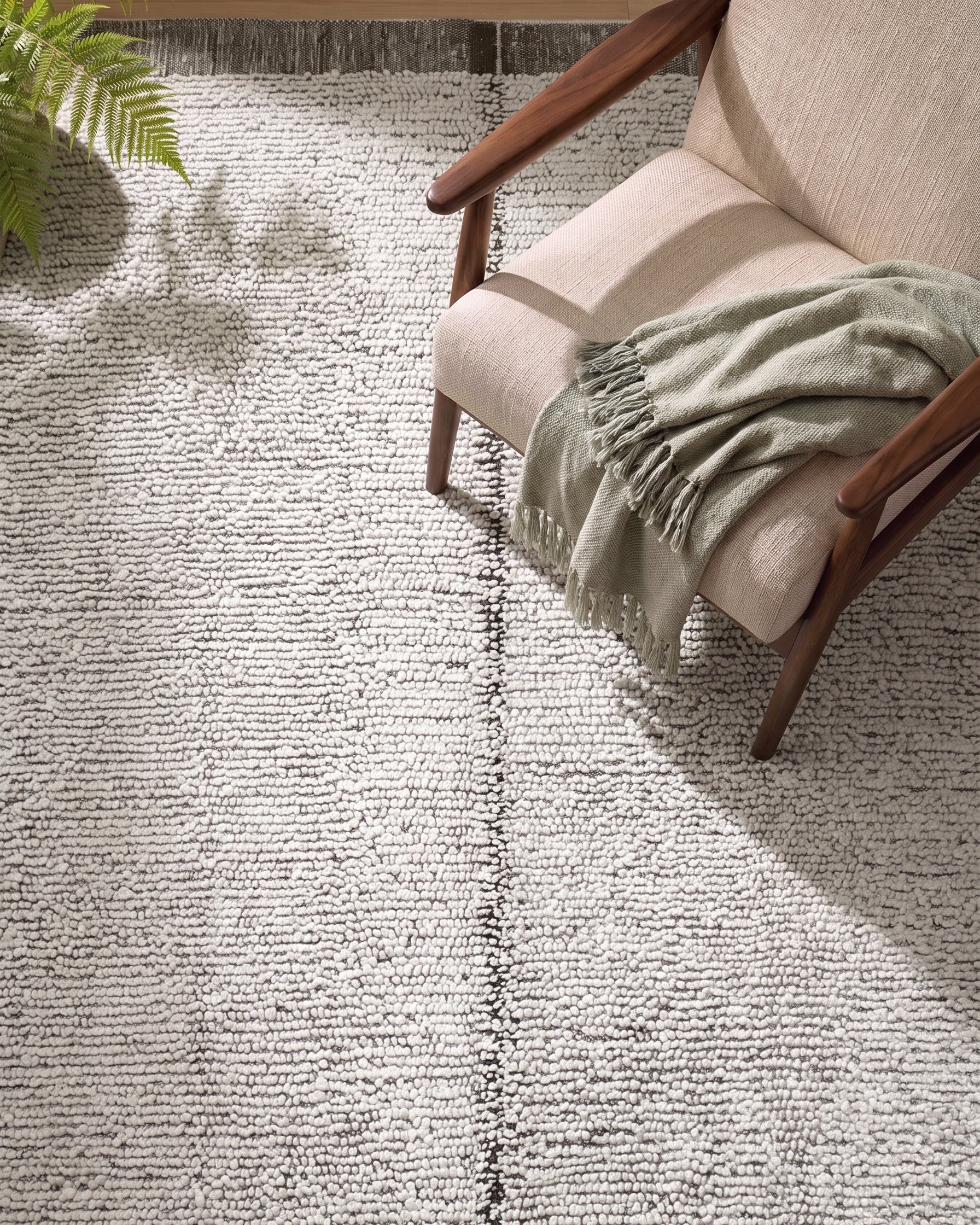
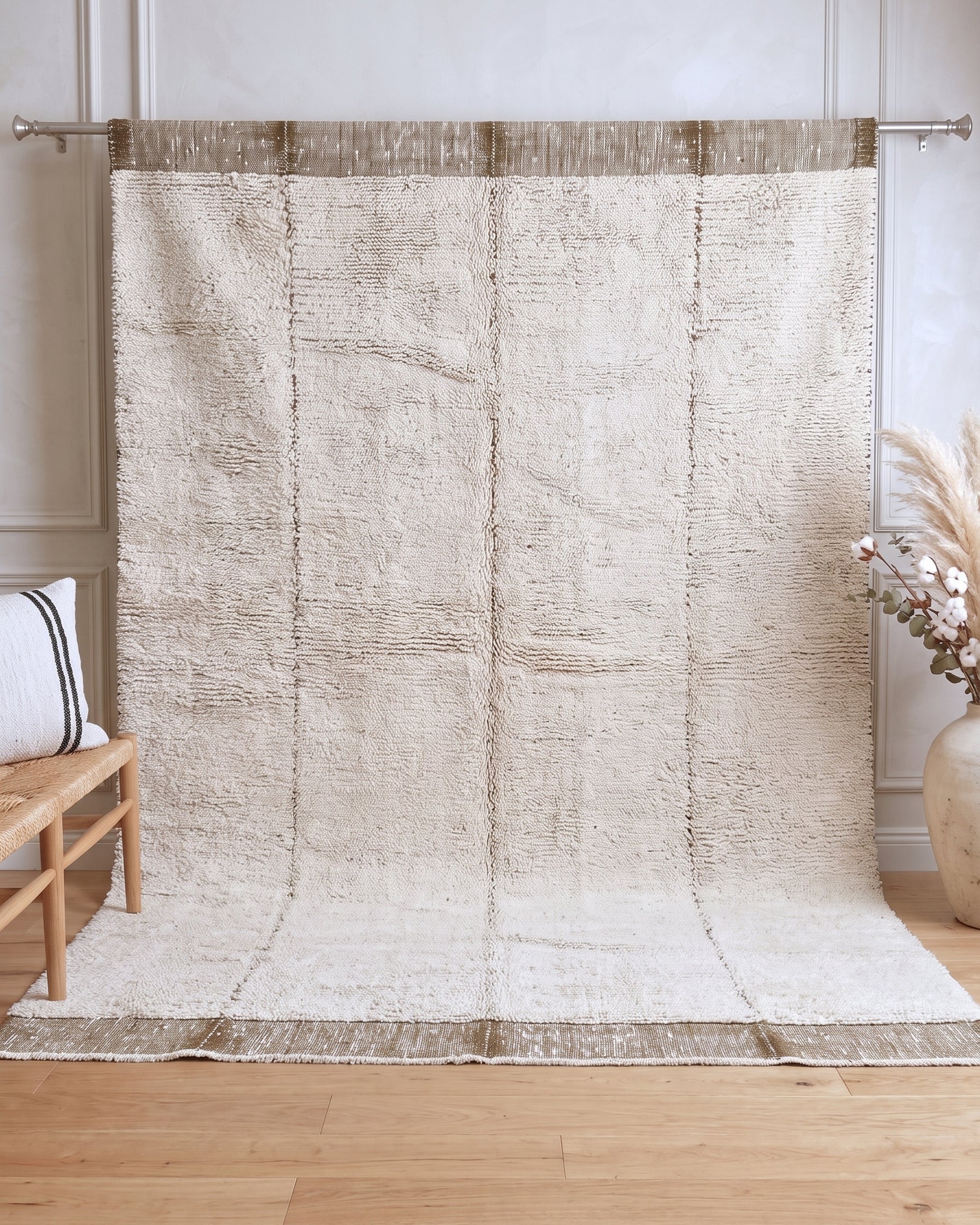
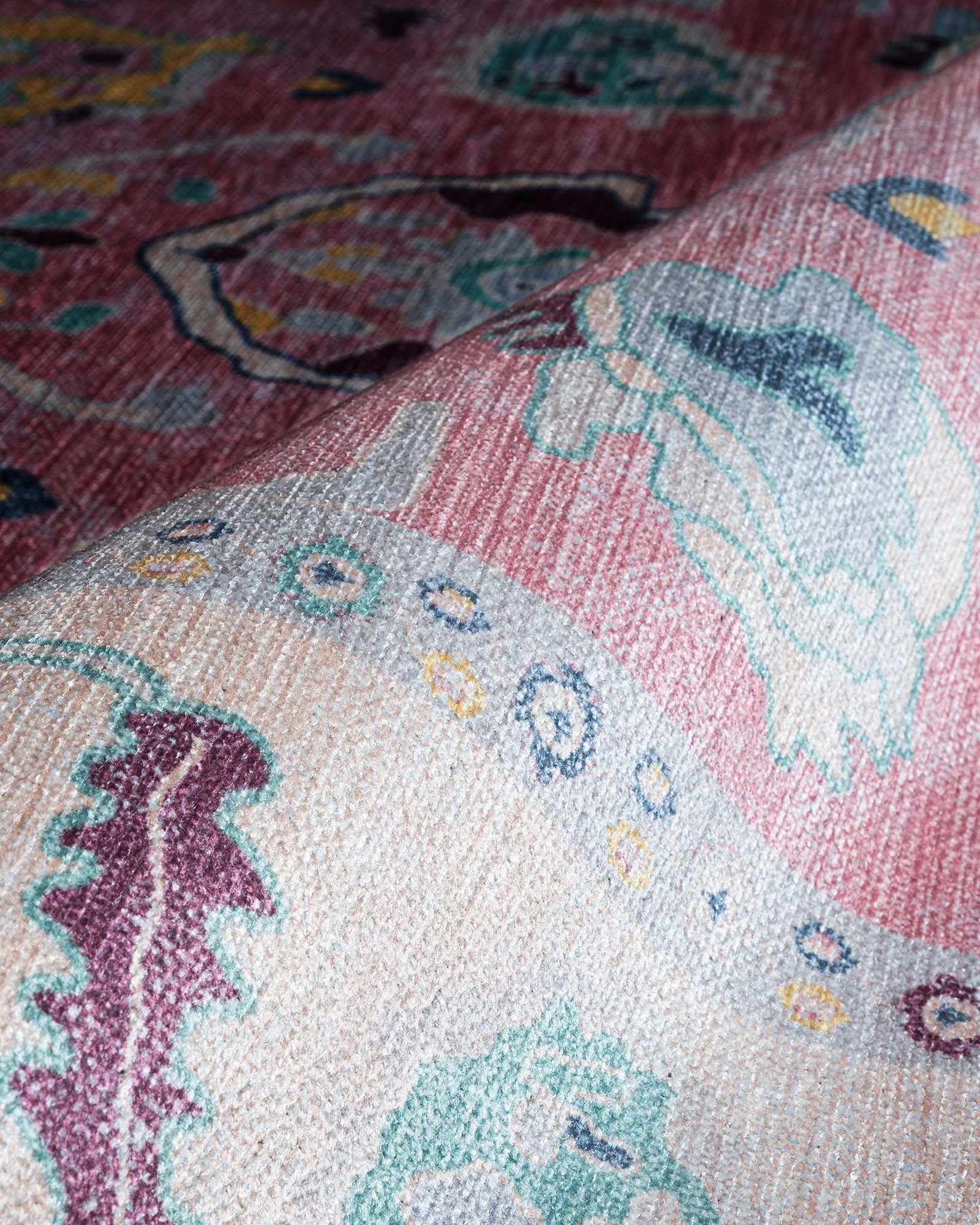
Between weft rows, the weaver ties short lengths of wool around the warp threads and cuts them, building up a pile of cut ends above the woven ground. A room-sized rug can hold several hundred thousand knots. This takes far longer than flatweaving and produces a thick, warm, cushioned rug that wears for generations. Strictly speaking the rug is both woven and knotted — the woven ground holds the knots in place.
Supplementary Weft
Between the two sit soumak, cicim and zili, where extra threads are wrapped or laid across a flatwoven ground. These give a raised, textured, almost embroidered surface with more body than a plain kilim but no cut pile. Soumak in particular produces a heavy, ridged fabric that is noticeably denser than a kilim of the same size.
Handwoven Versus Hand-Knotted
The terms are used interchangeably in the trade, which causes confusion when you are comparing listings. Handwoven is the broader word: it describes any rug made by hand on a loom. Hand-knotted is a specific type of handweaving in which pile is tied onto the warp. Every hand-knotted rug is handwoven; not every handwoven rug is hand-knotted, because flatweaves have no knots at all.
When you are shopping, the useful question is not which label a listing uses but whether the rug has a pile. Pile means warmth, cushioning and decades of wear. No pile means thin, light, reversible and easy to move. Every product page here states the construction directly.
What the Back of a Rug Tells You
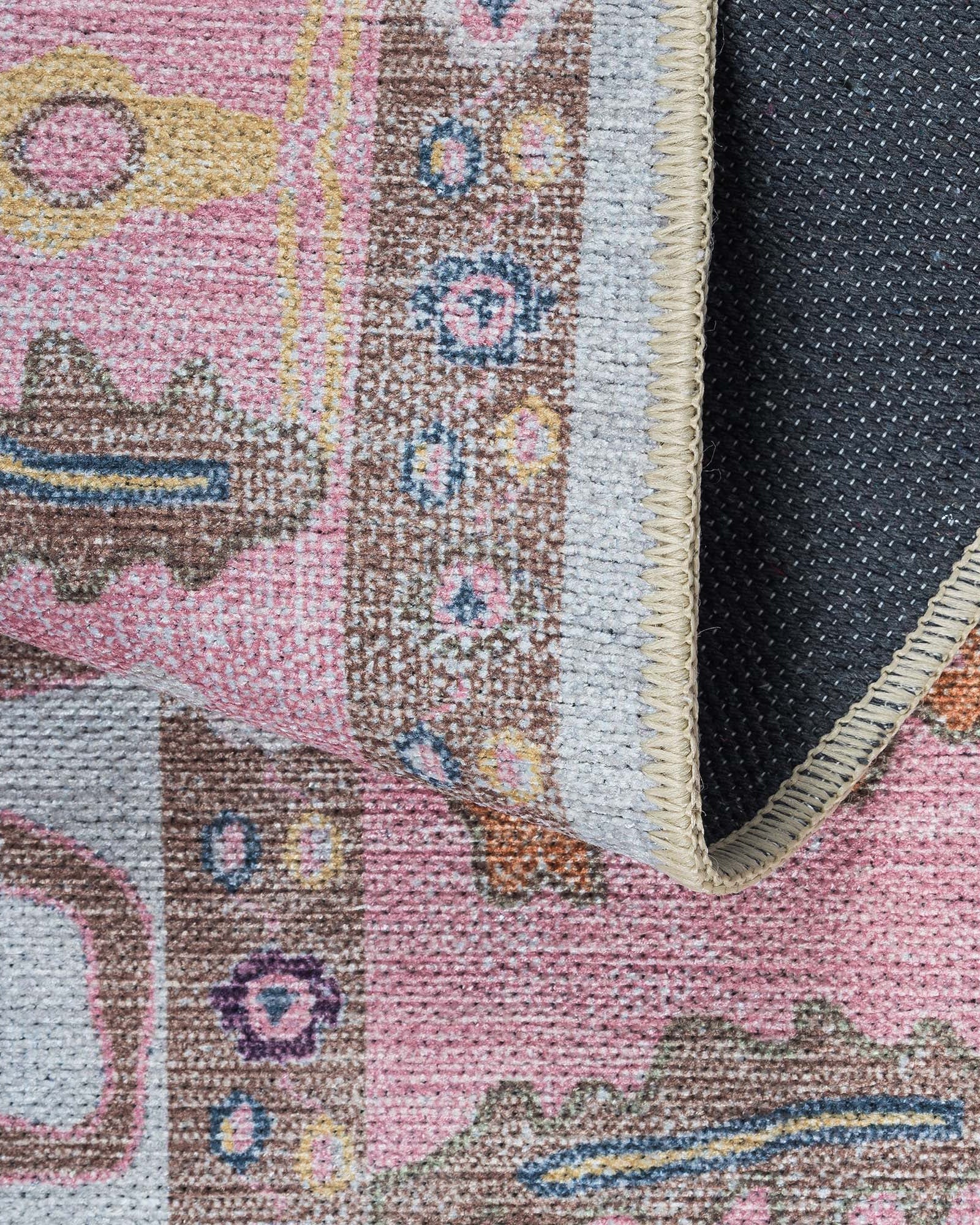
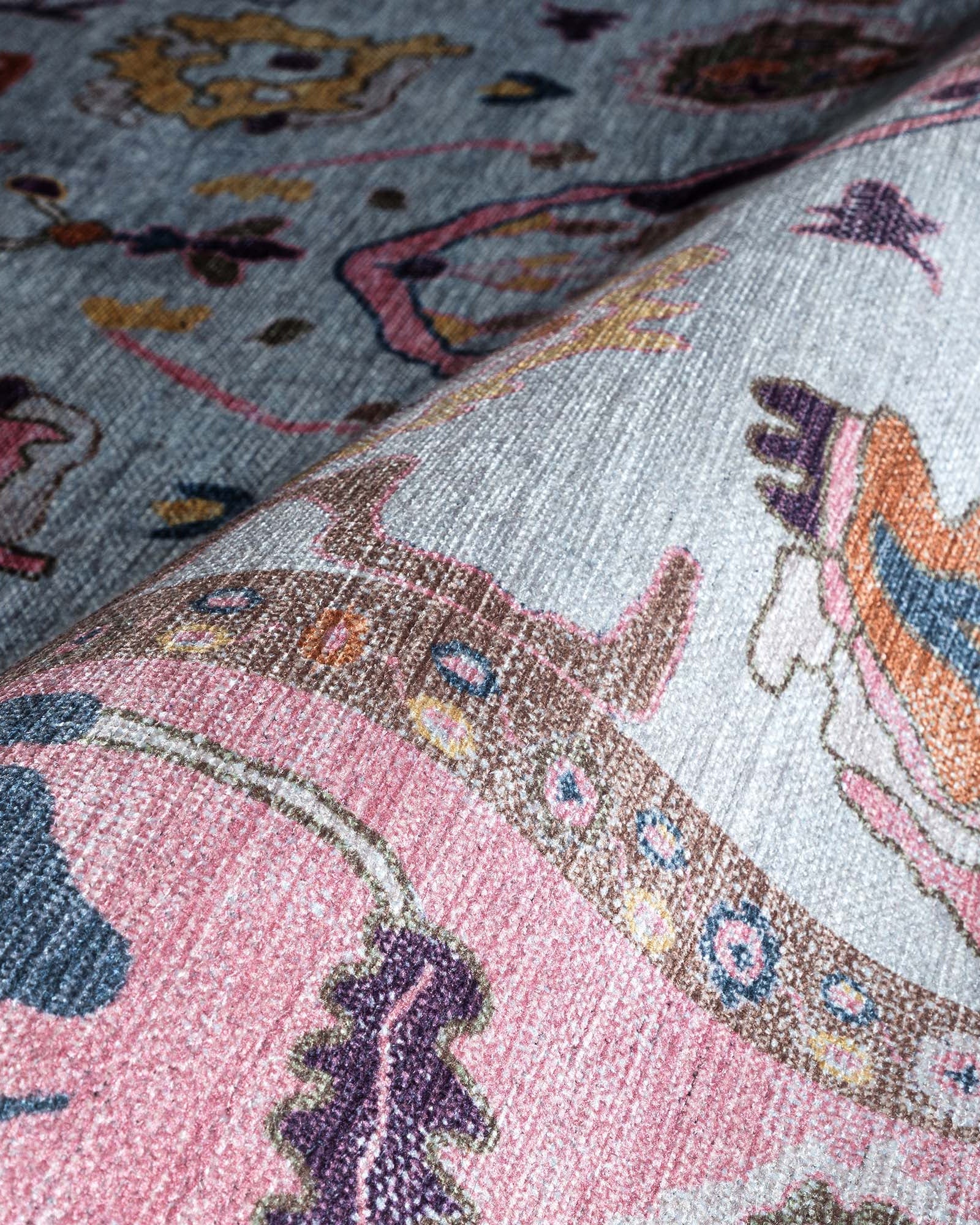
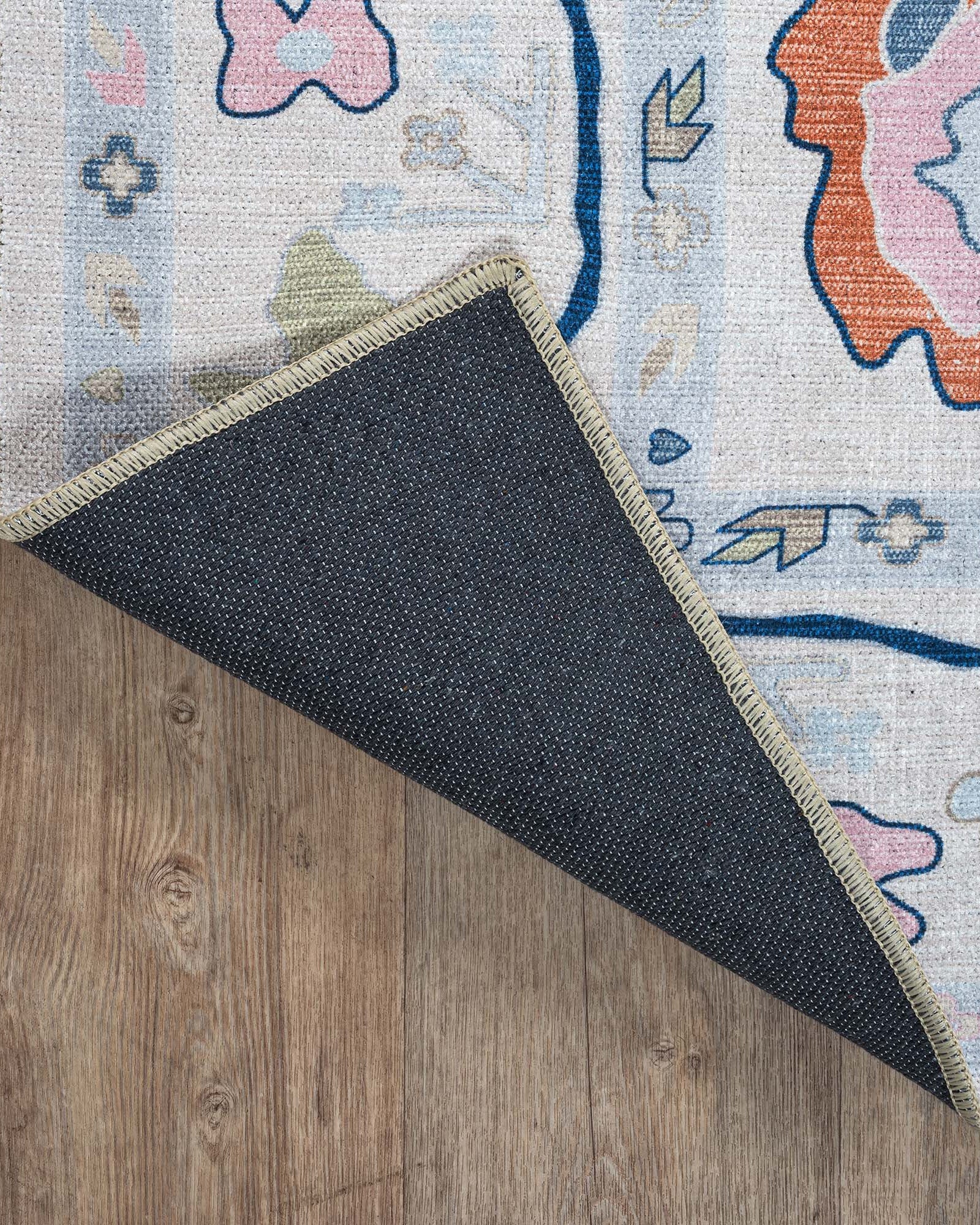
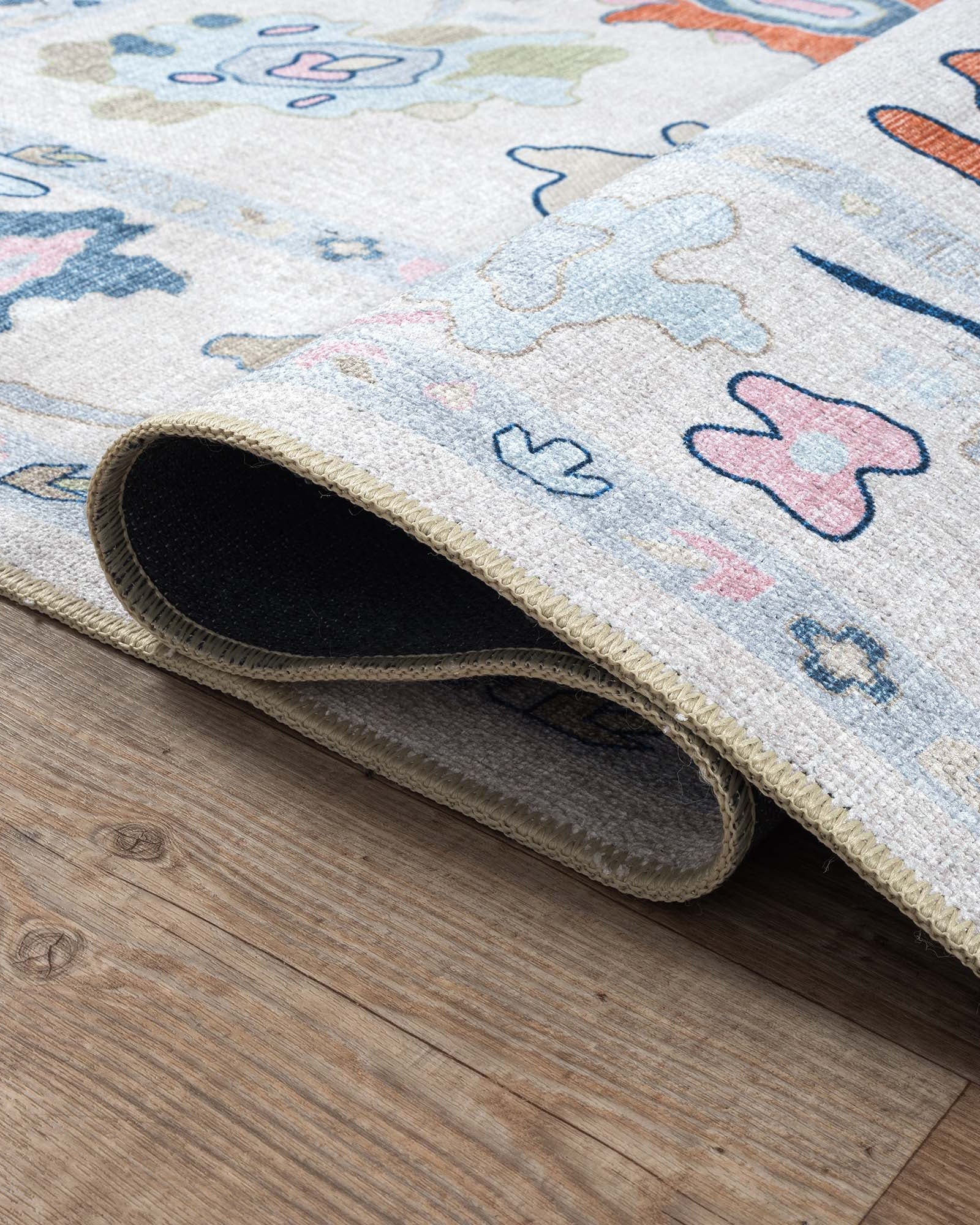
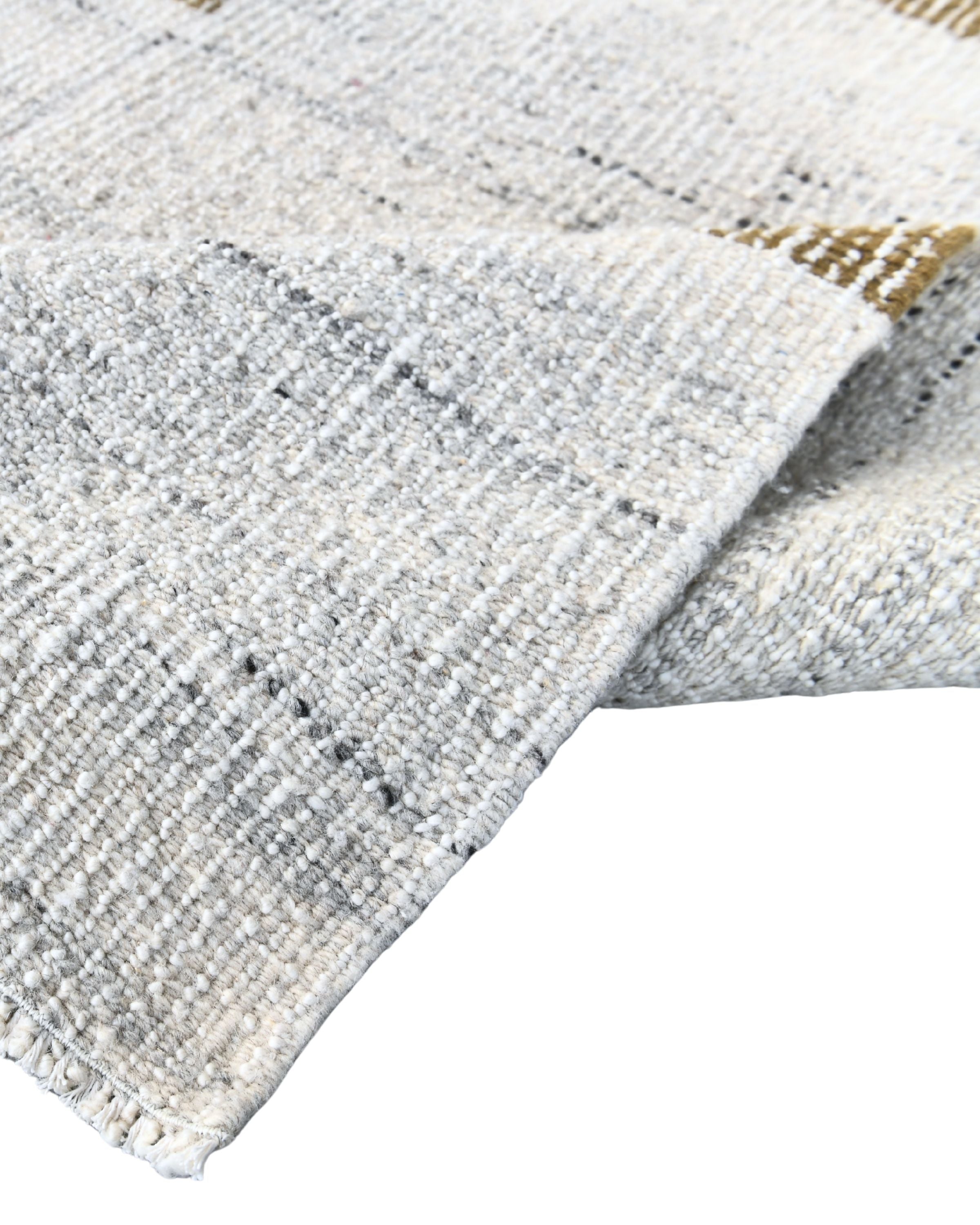
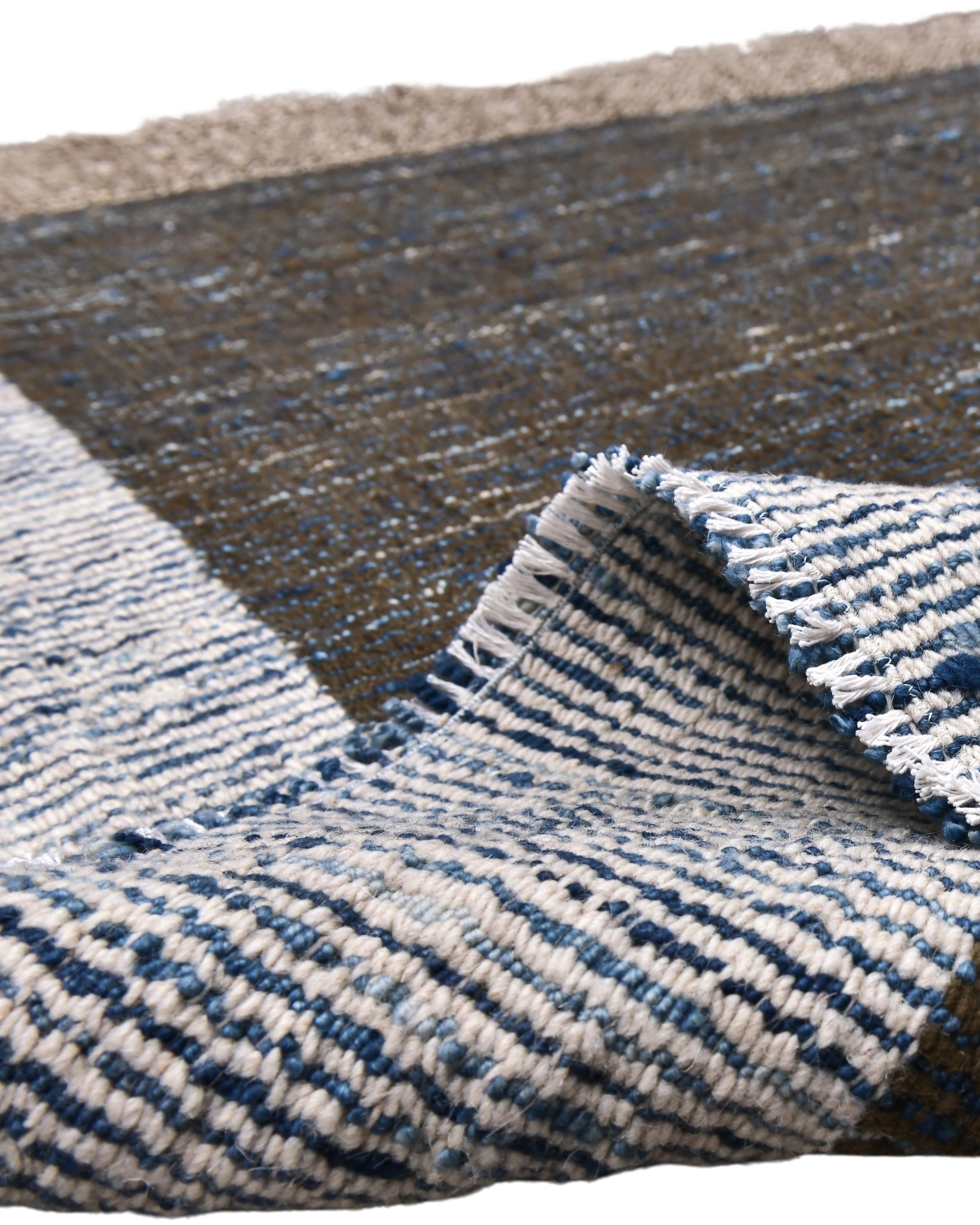
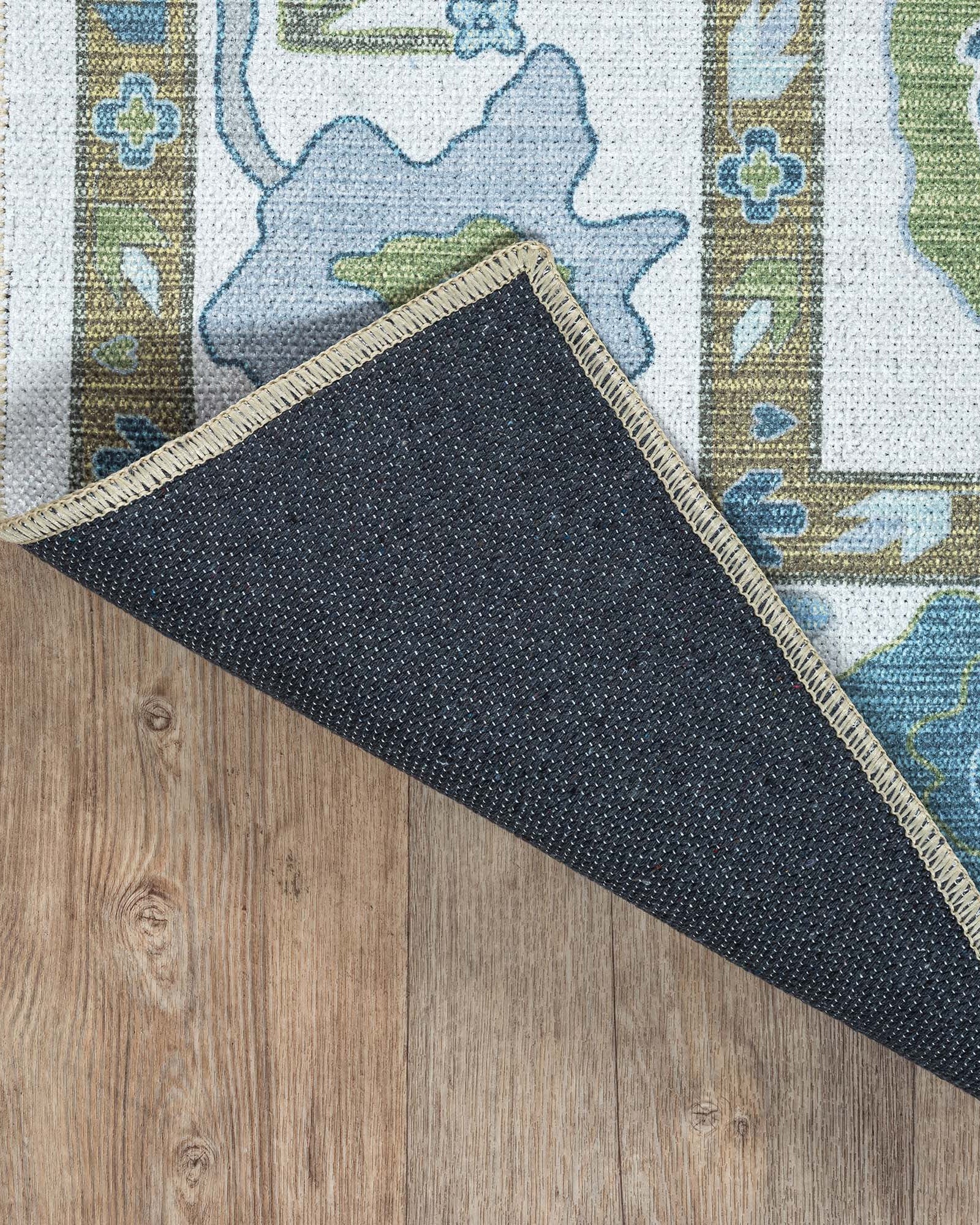
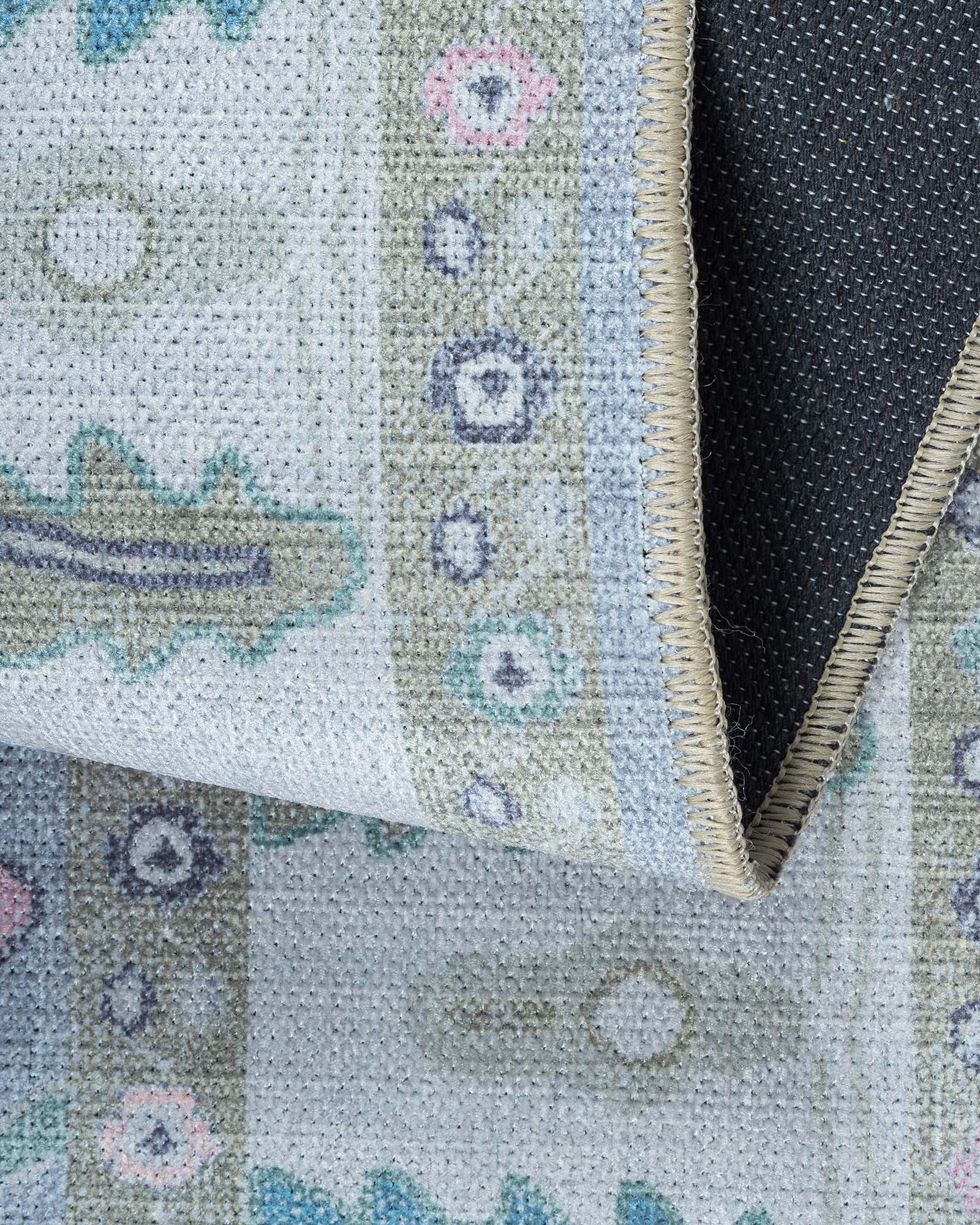
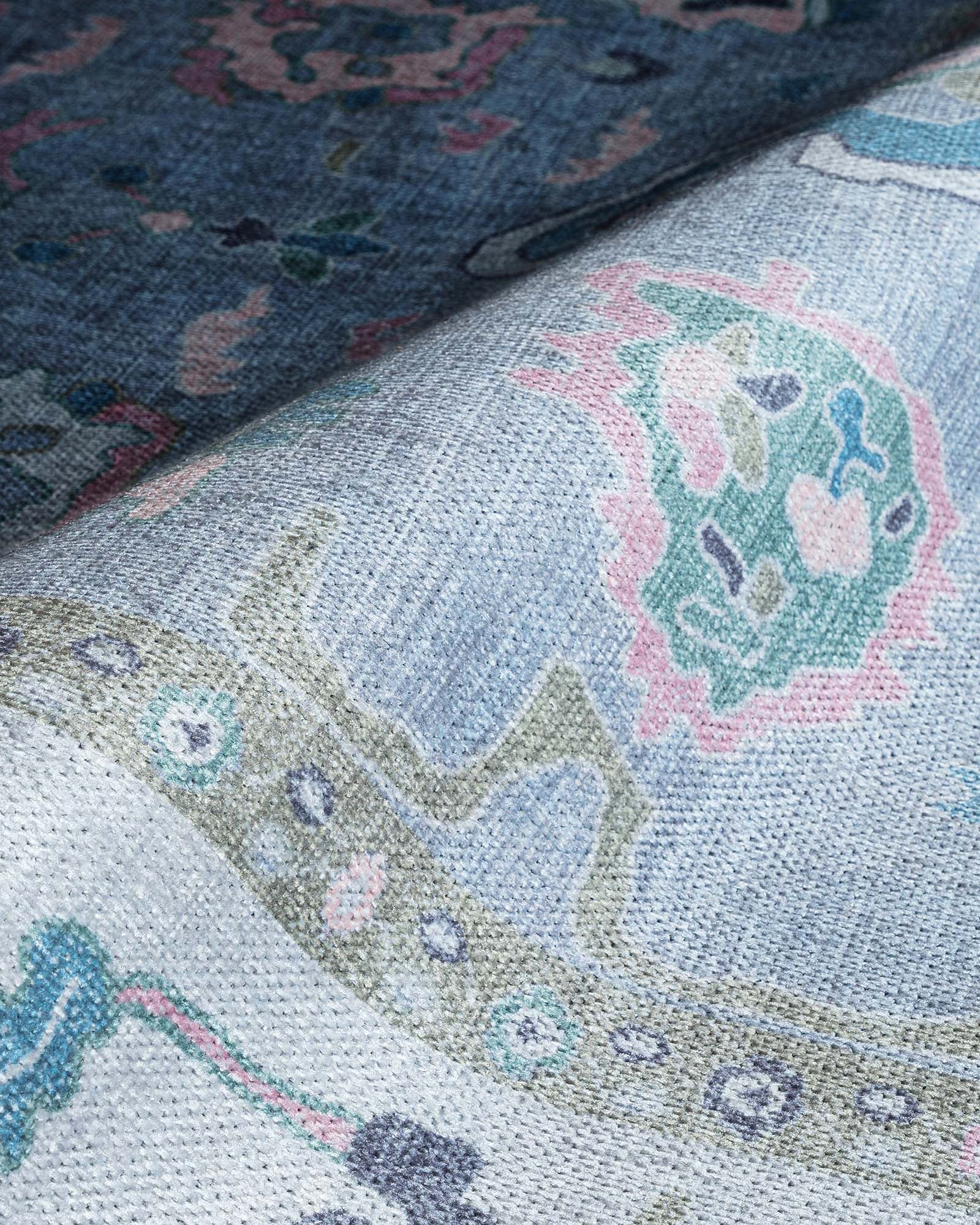
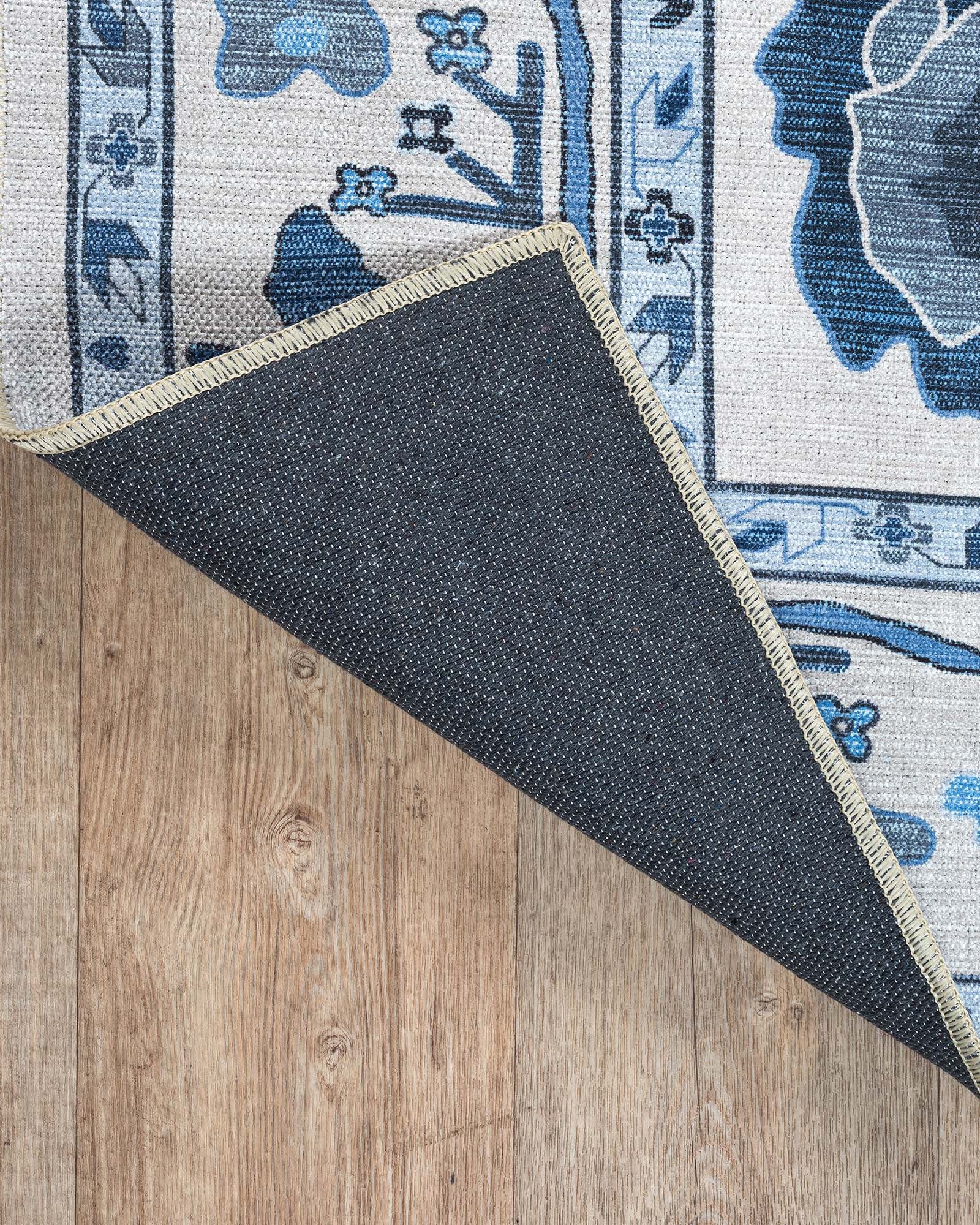
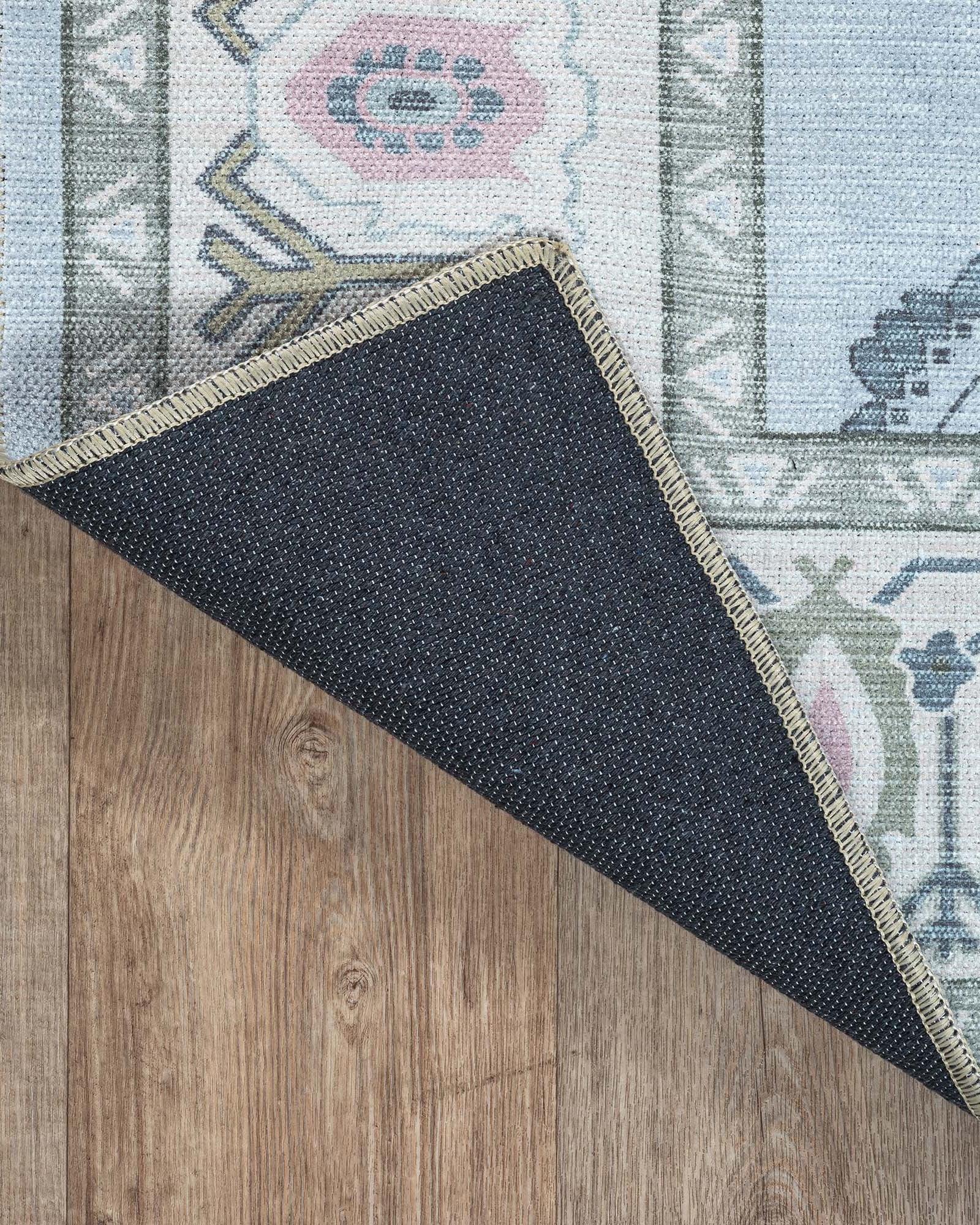
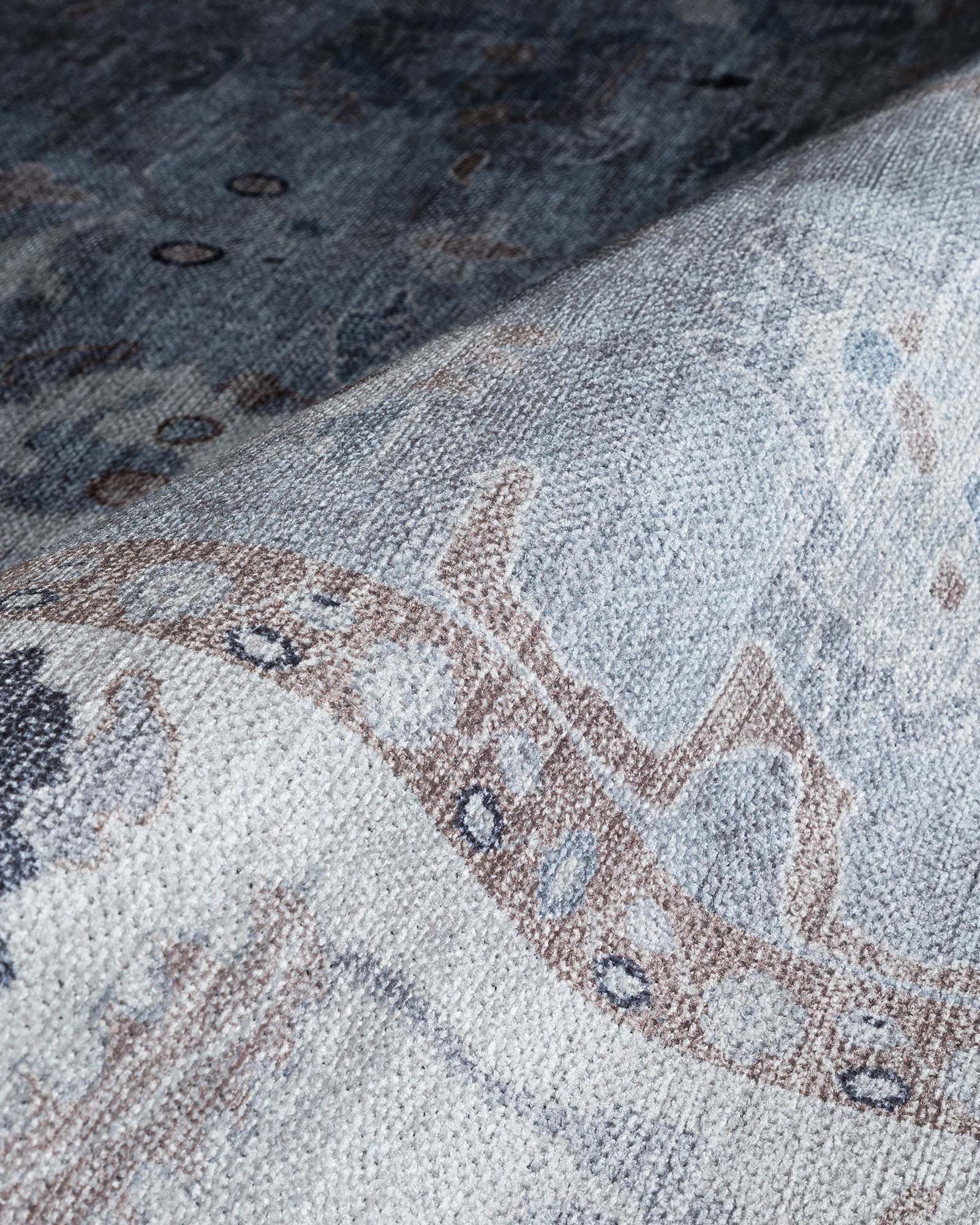
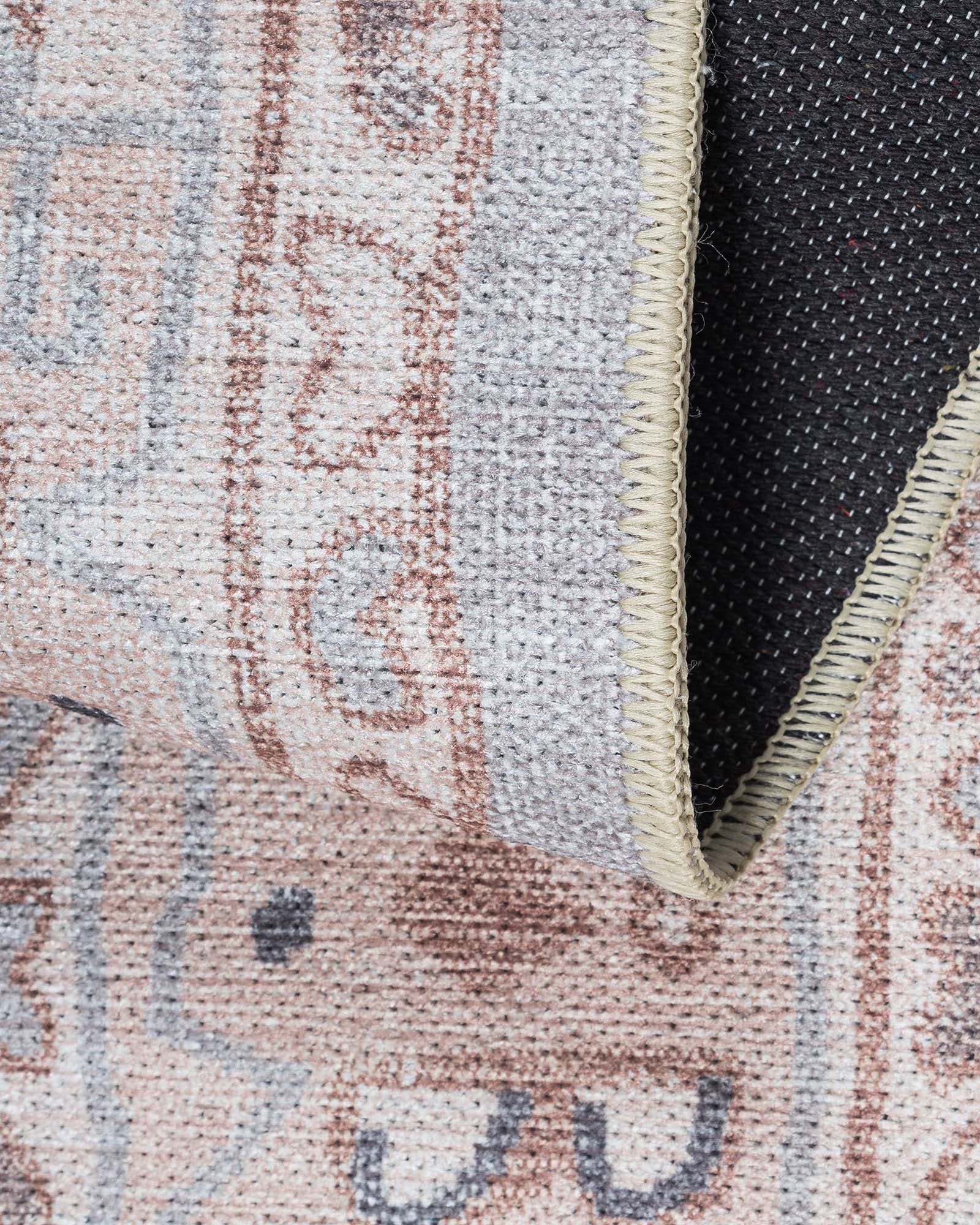
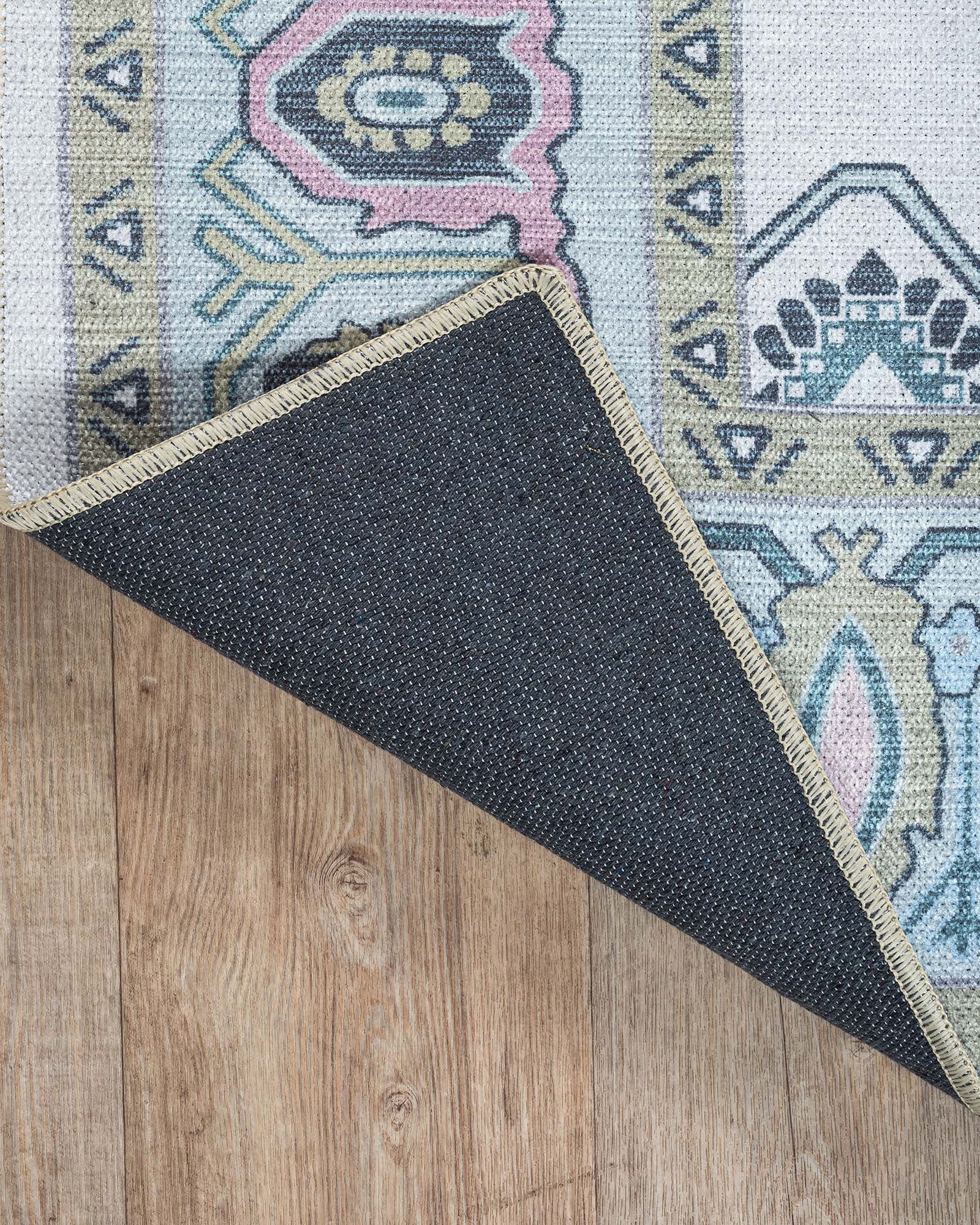
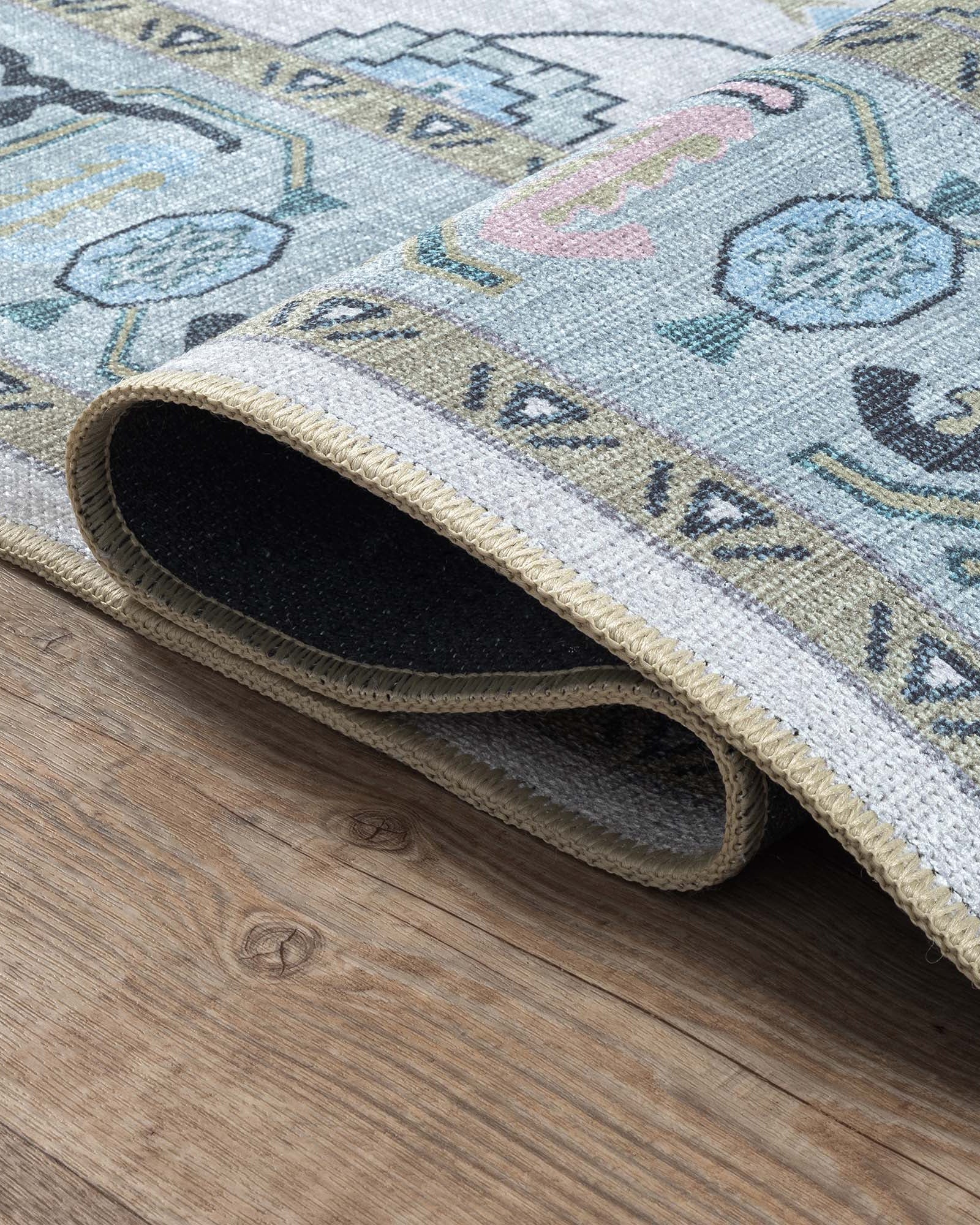
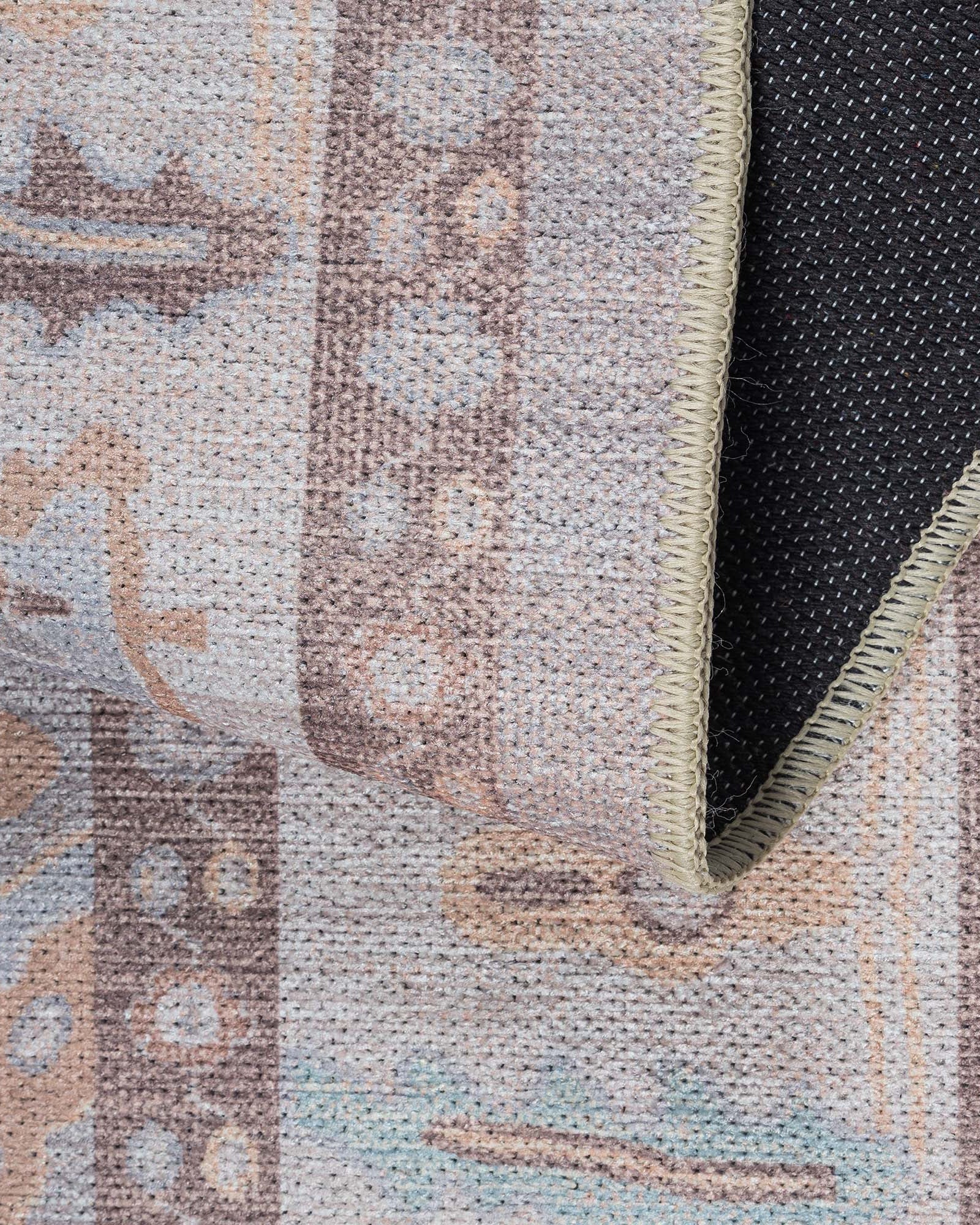
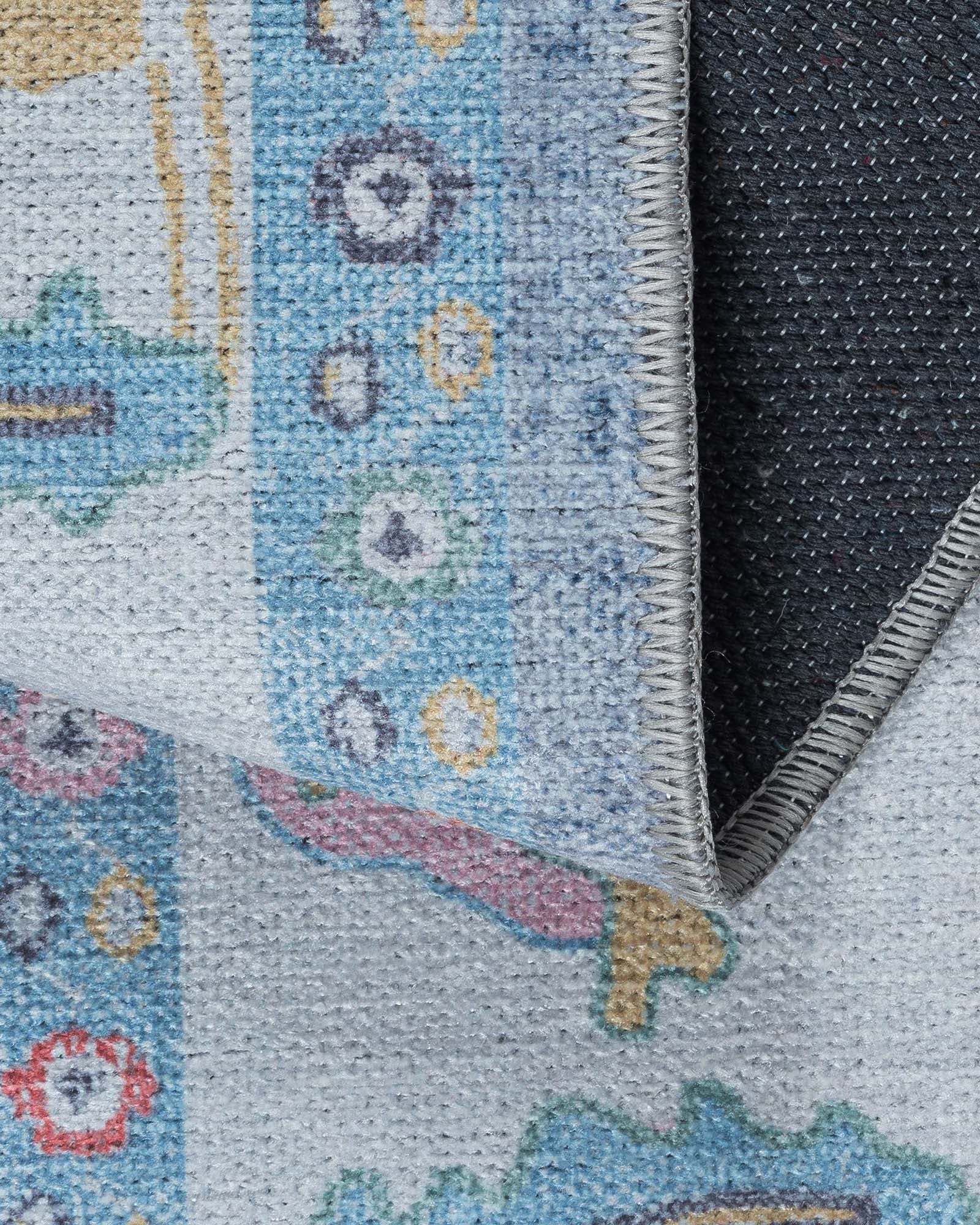
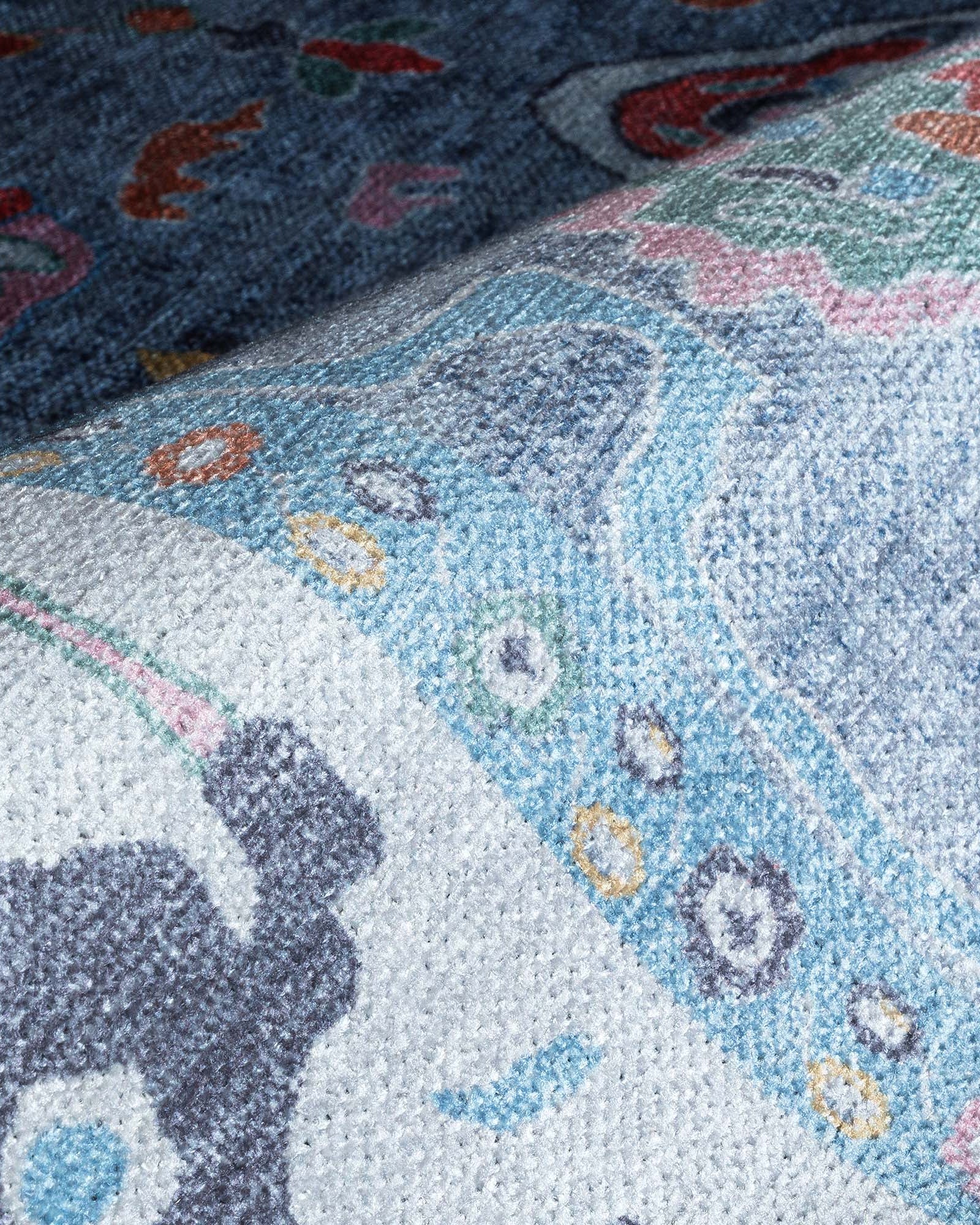
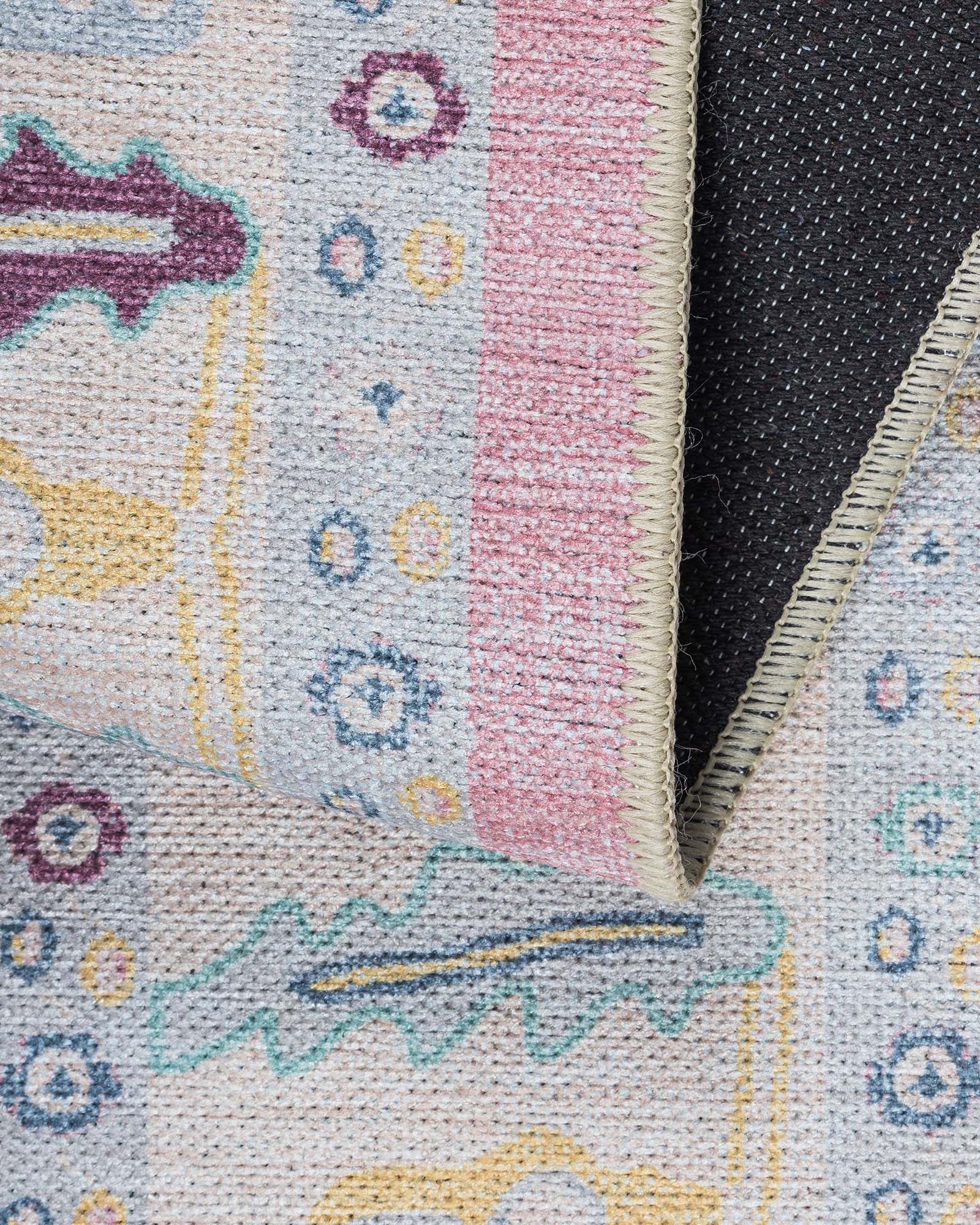
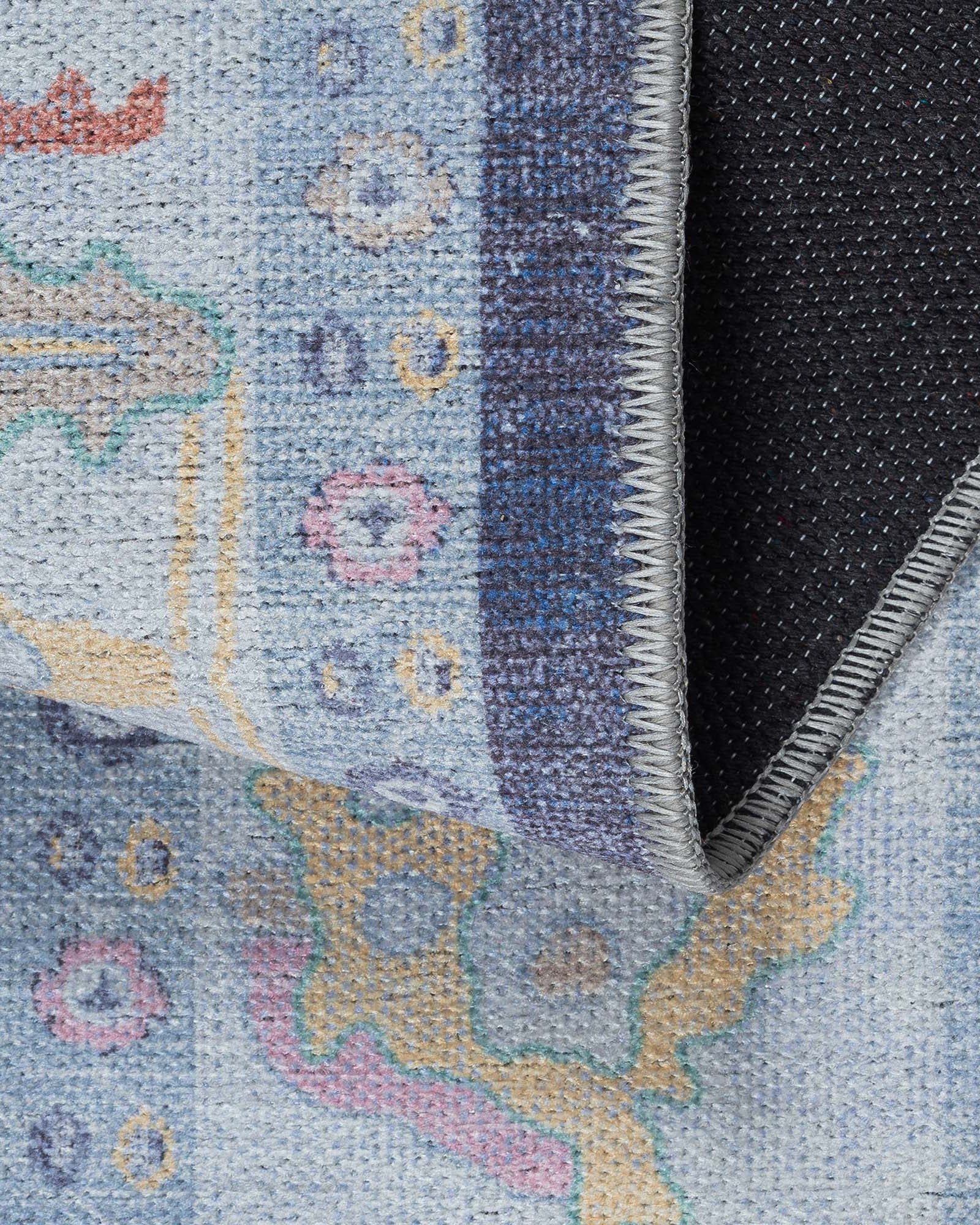
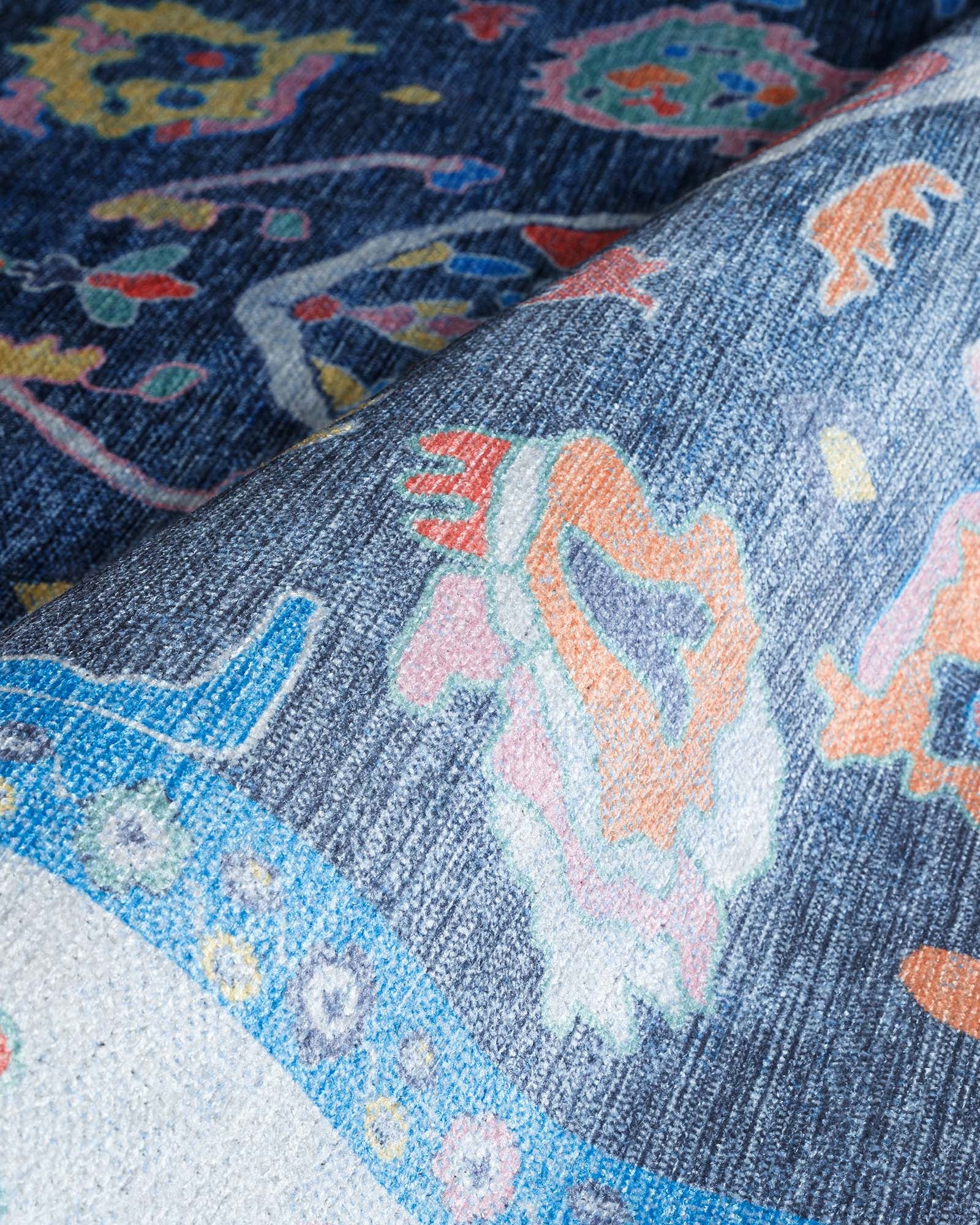
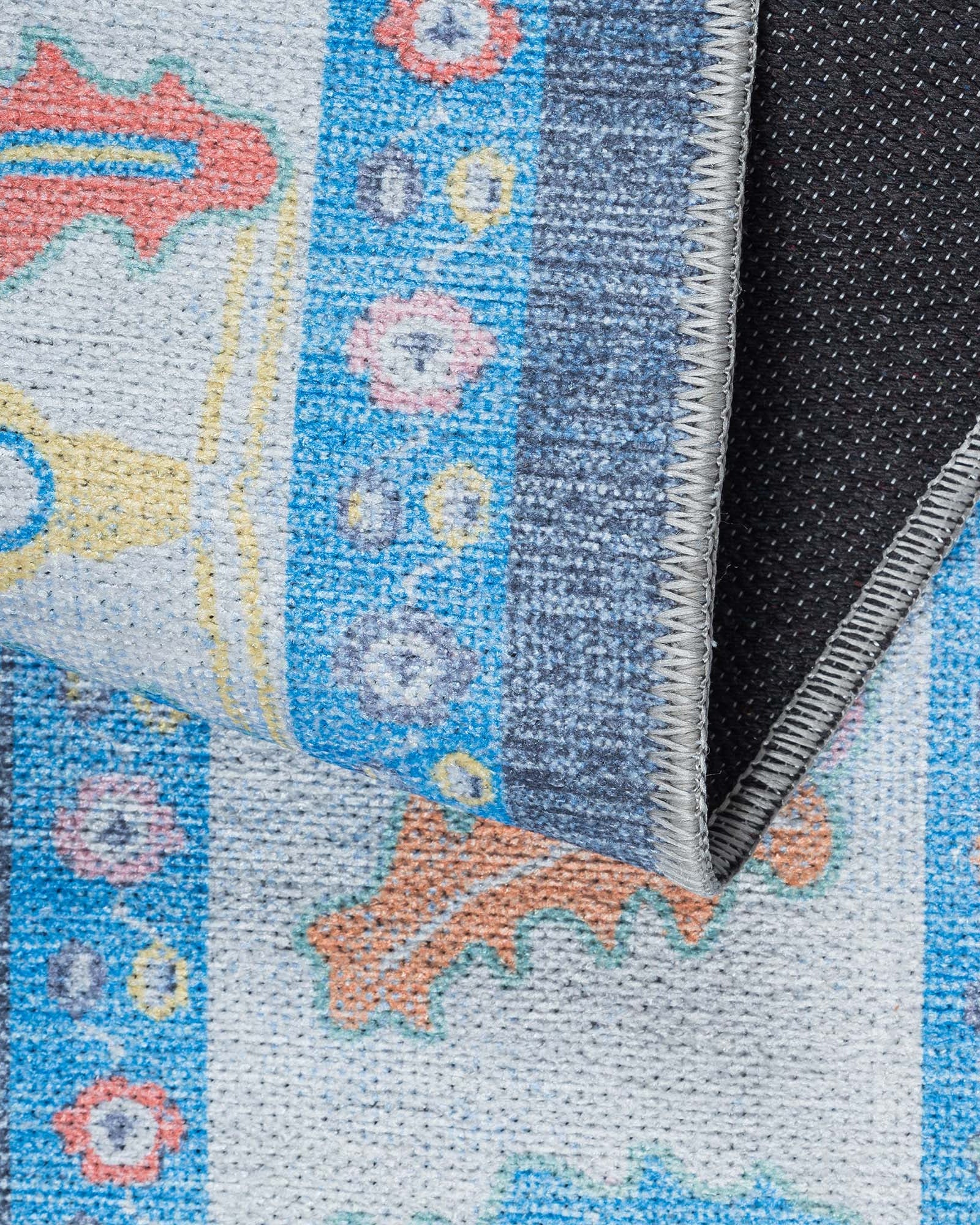
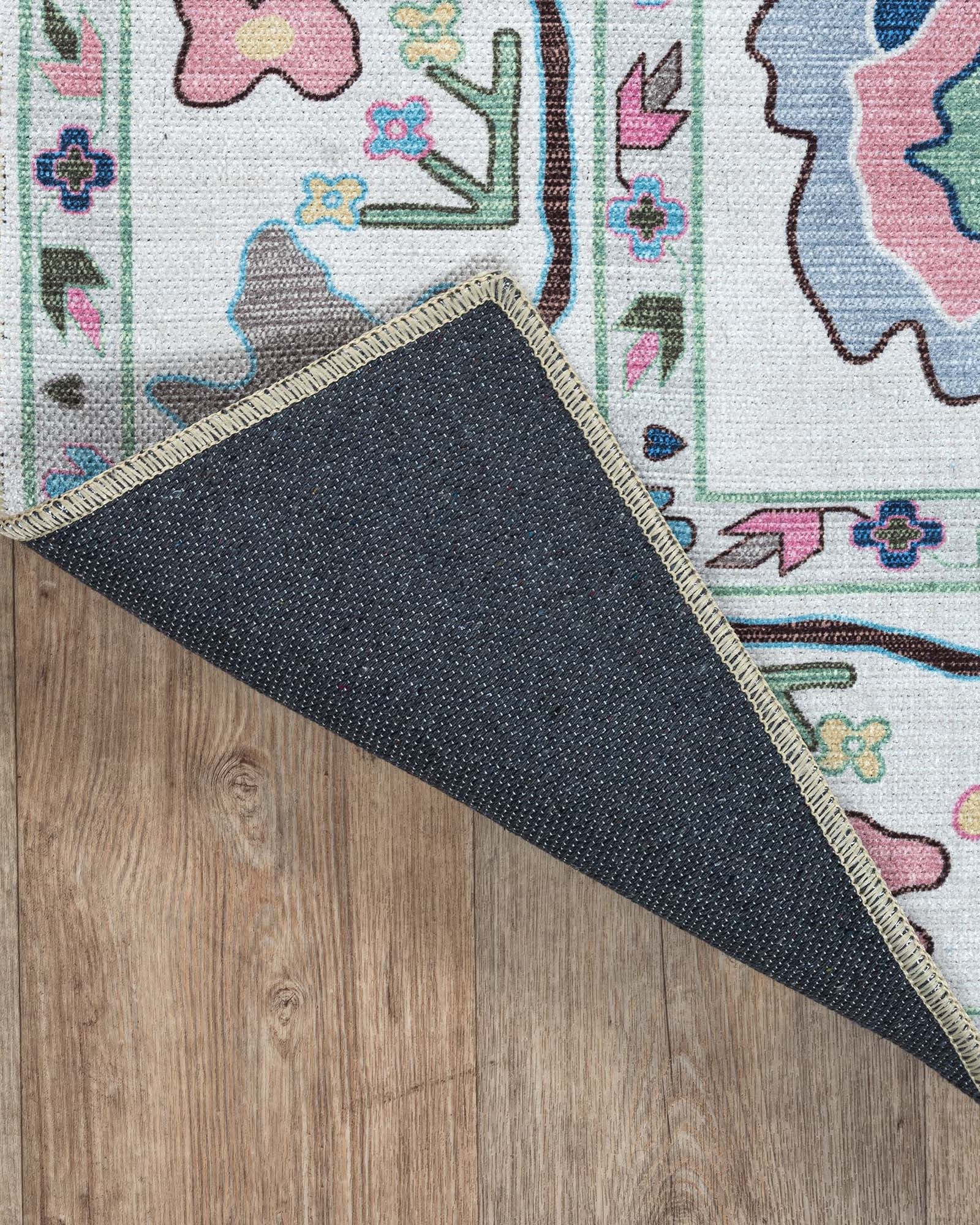
The reverse of a handwoven rug is where the honesty is. Because structure and design are the same thing, the pattern appears on the back with the same clarity as the front. On a flatweave the two faces are essentially identical. On a knotted rug you see the knot ends forming the design, along with the weft rows running between them.
What you will not see is a grid-like uniform backing, which indicates machine production, or a layer of glued cloth, which indicates a tufted rug made by punching wool through a backing and sealing it with latex. Neither construction appears in this collection.
Reading the Irregularities
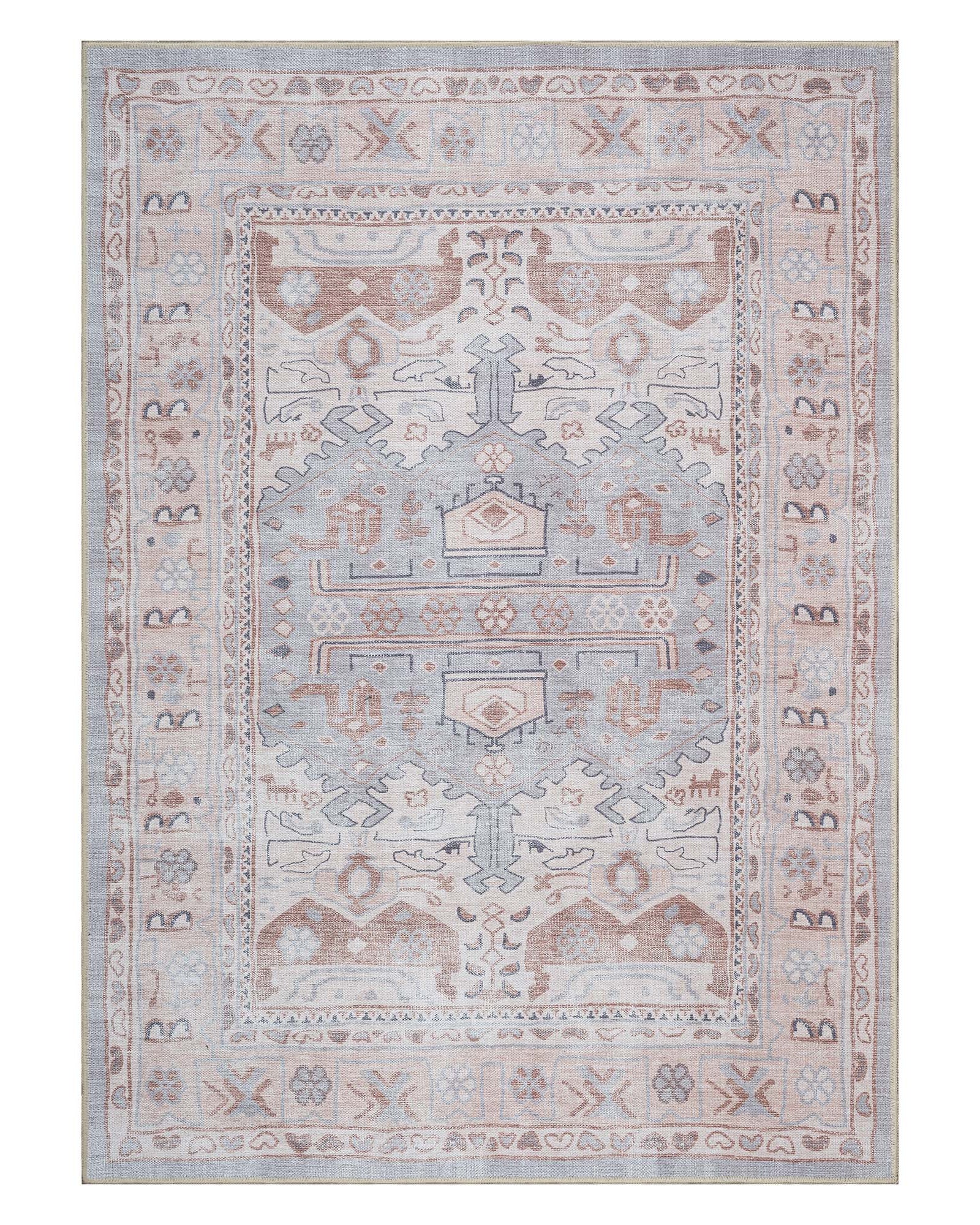
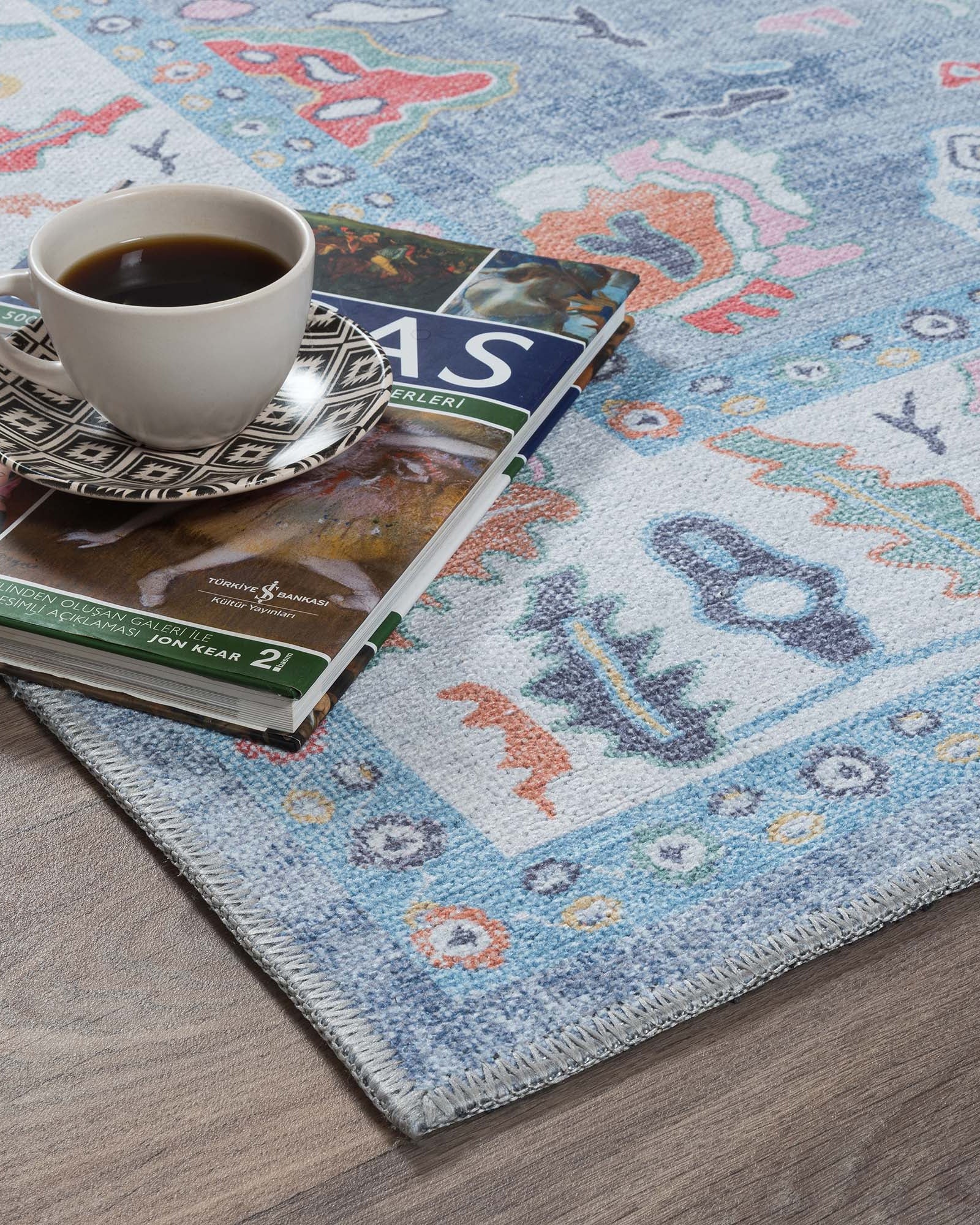
Hand tension is never machine tension, and the evidence is visible in every piece. Opposite edges of a rug commonly differ by an inch or more because the weaver's beating pressure changed over months of work. Rows sit at slightly varying heights. Borders sometimes fail to resolve exactly at the corners, because village weavers worked from memory rather than a plotted design and adjusted as they went. Horizontal tonal bands, called abrash, appear where the weaver moved from one dyed wool batch to the next.
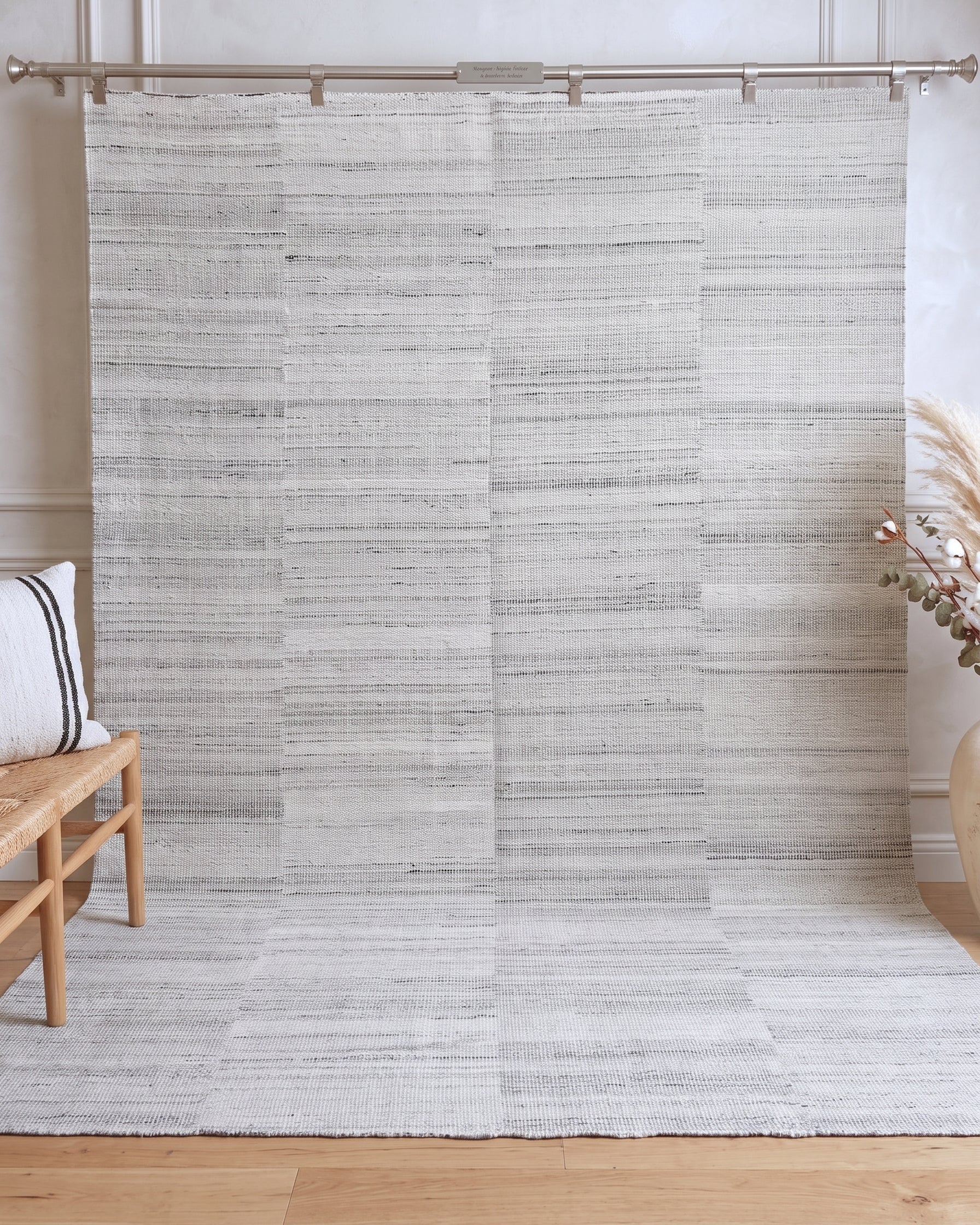
Many Anatolian flatweaves also carry a seam running the length of the rug — these were woven in two narrow panels on a portable loom and sewn together, because the loom was only so wide. That seam is original construction, not a repair.
Choosing by Construction
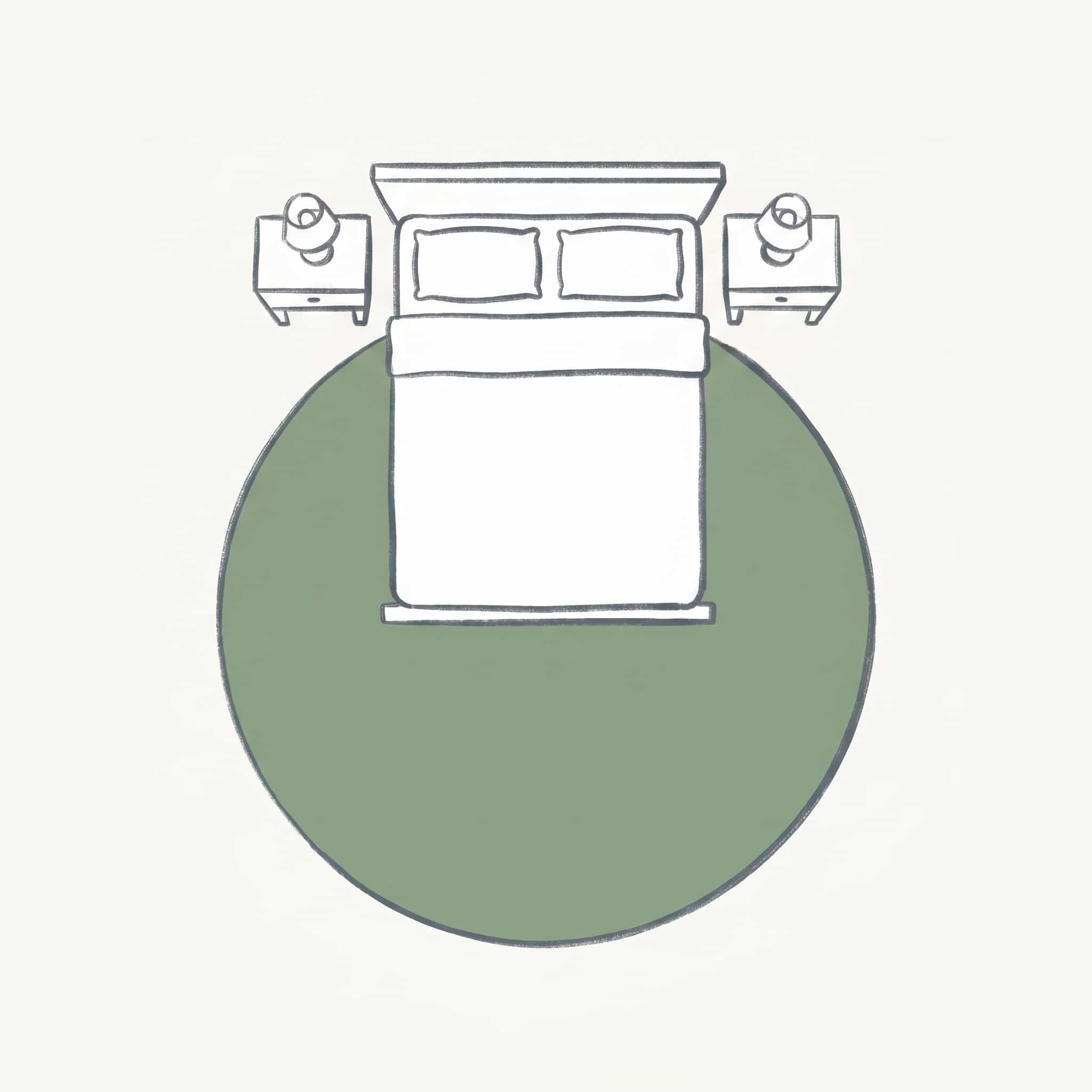
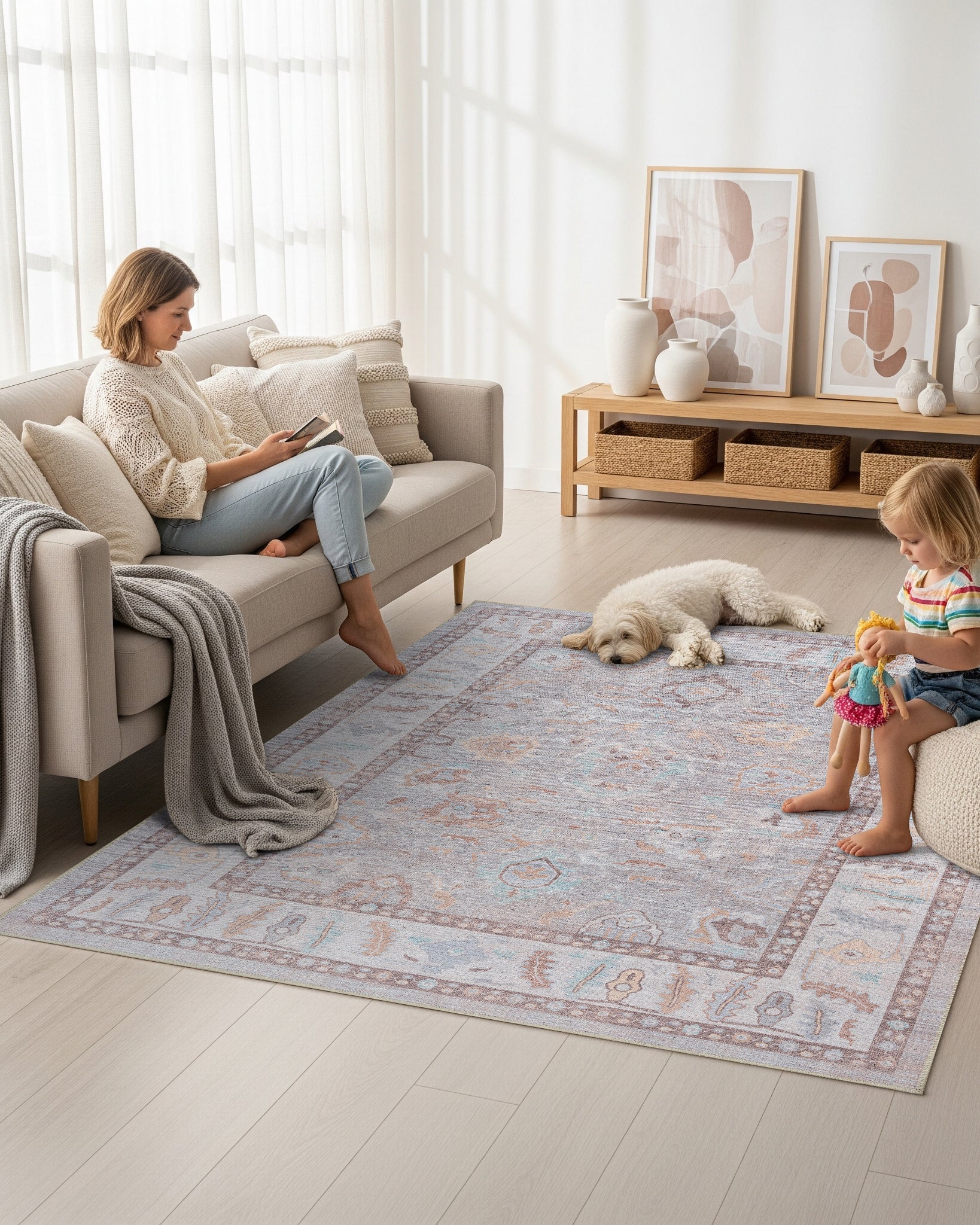
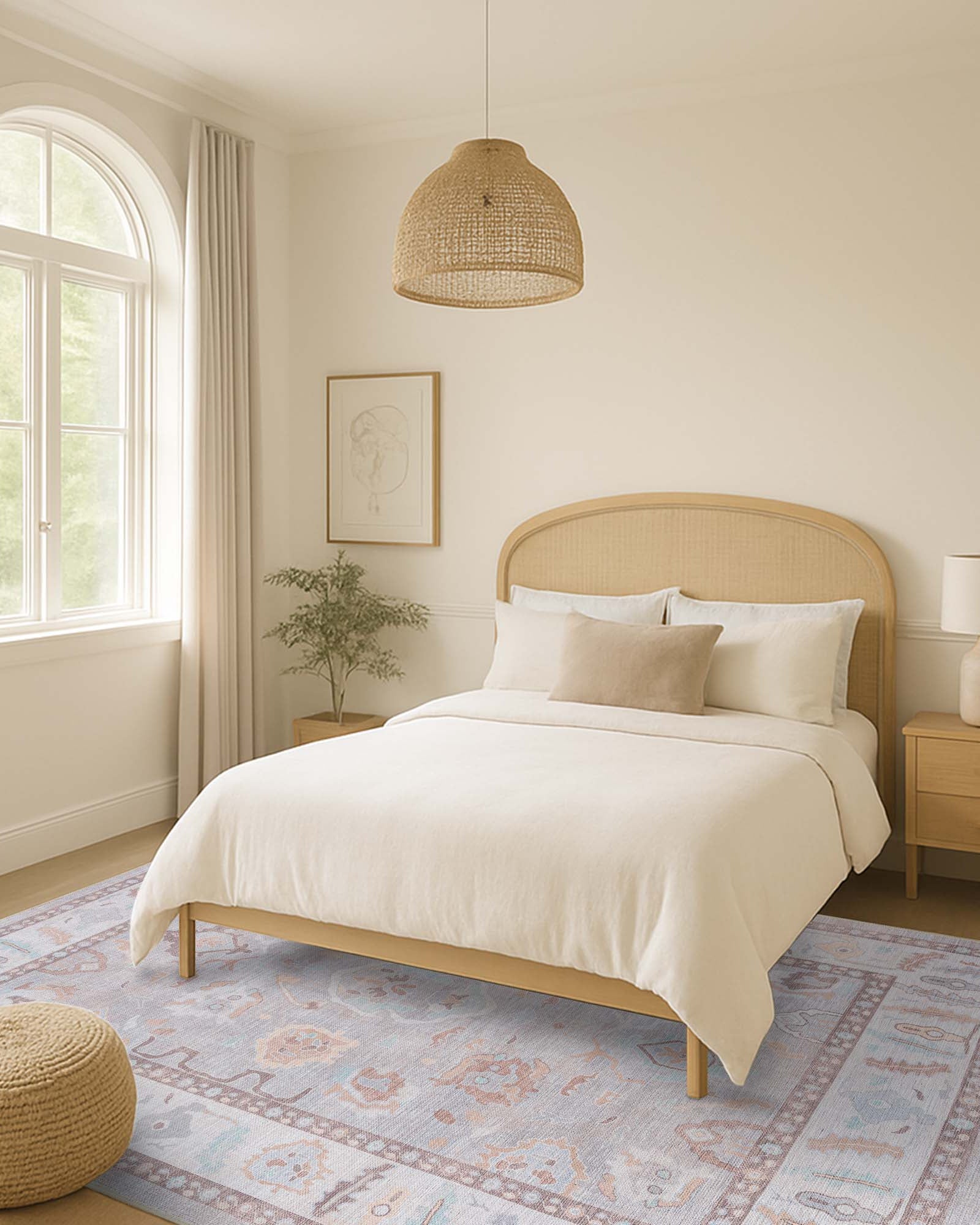
Knotted pile belongs where you want warmth and comfort underfoot: living rooms, bedrooms, anywhere people sit and stand for long stretches. It also absorbs sound better than any other floor covering, which matters in rooms with hard floors and high ceilings.
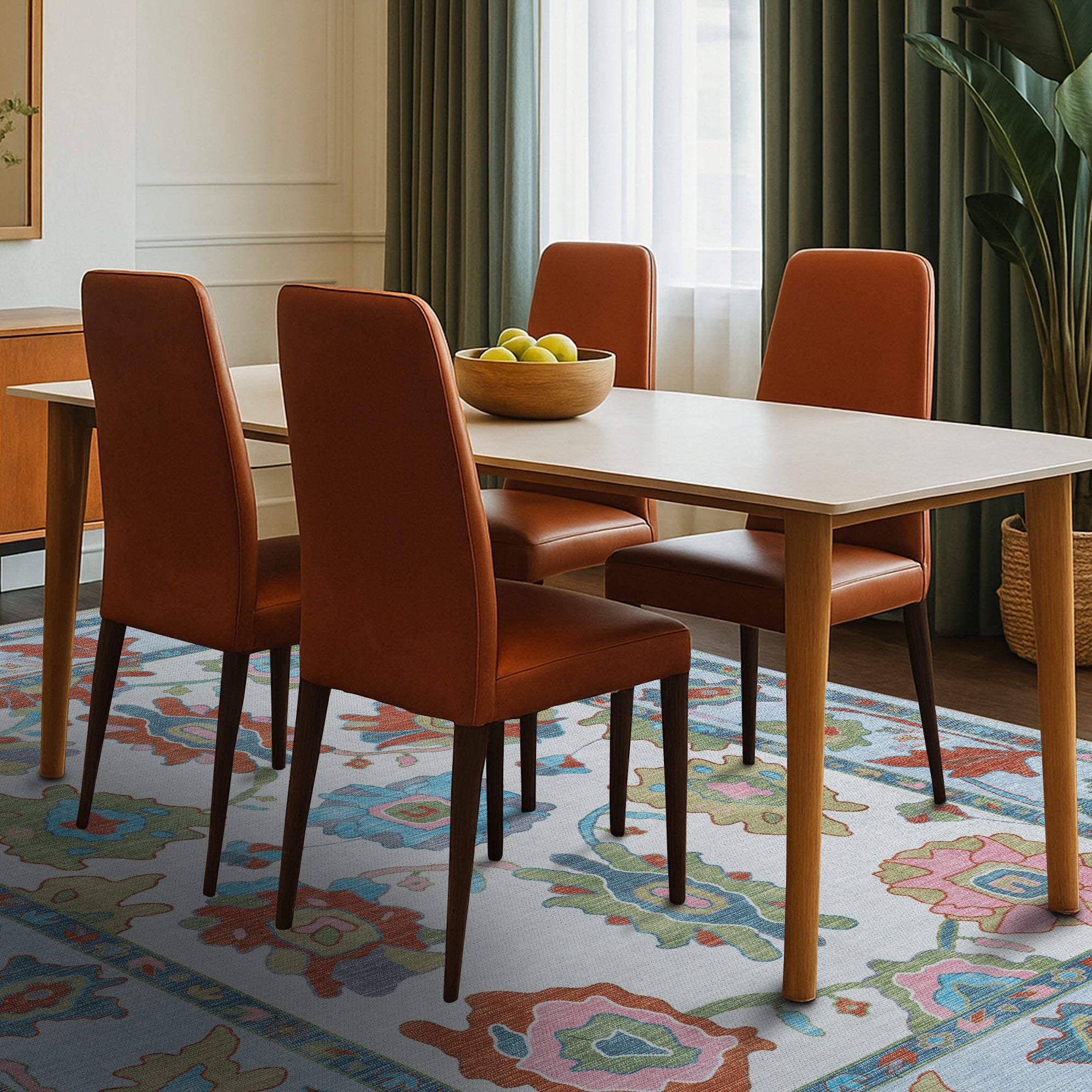
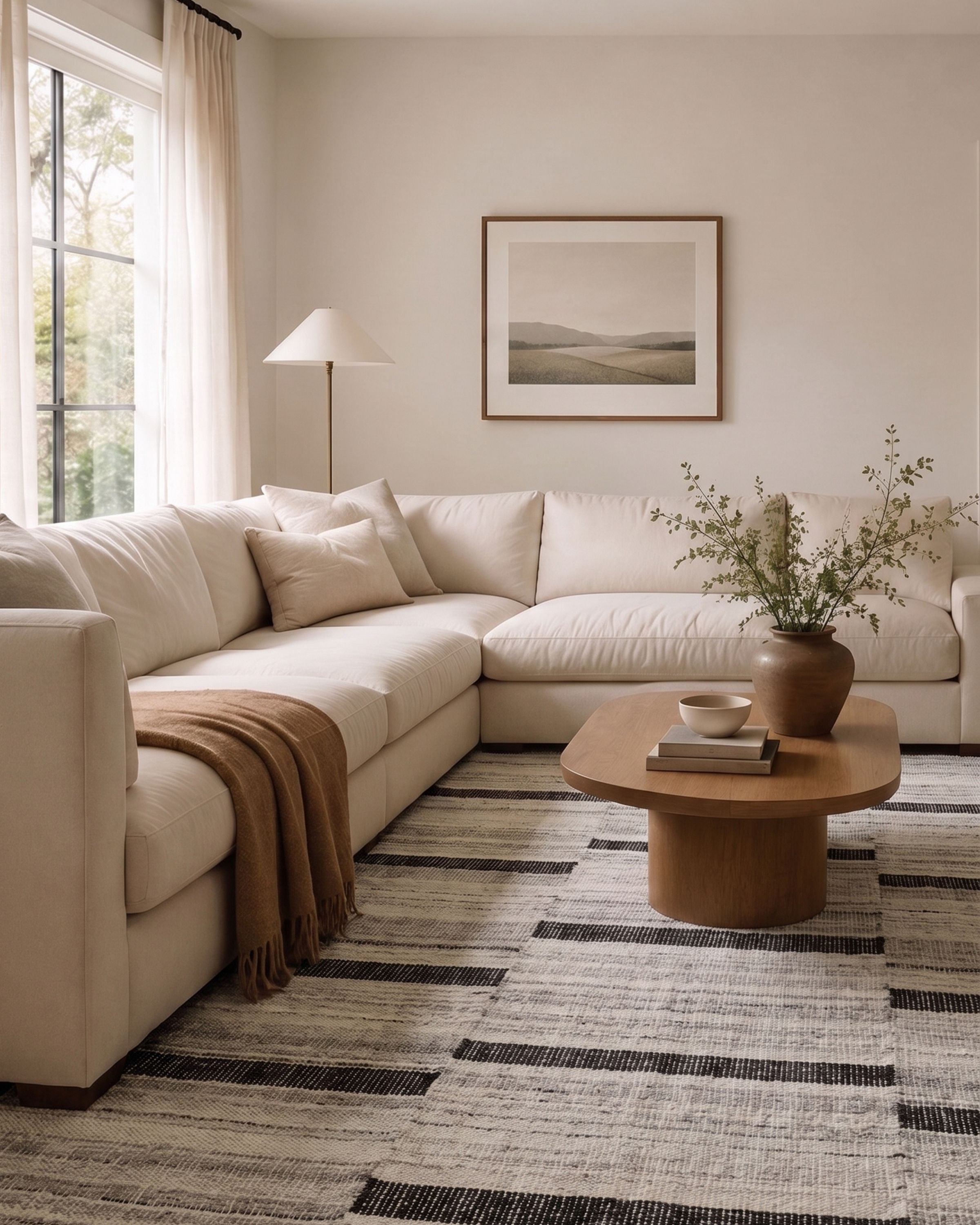
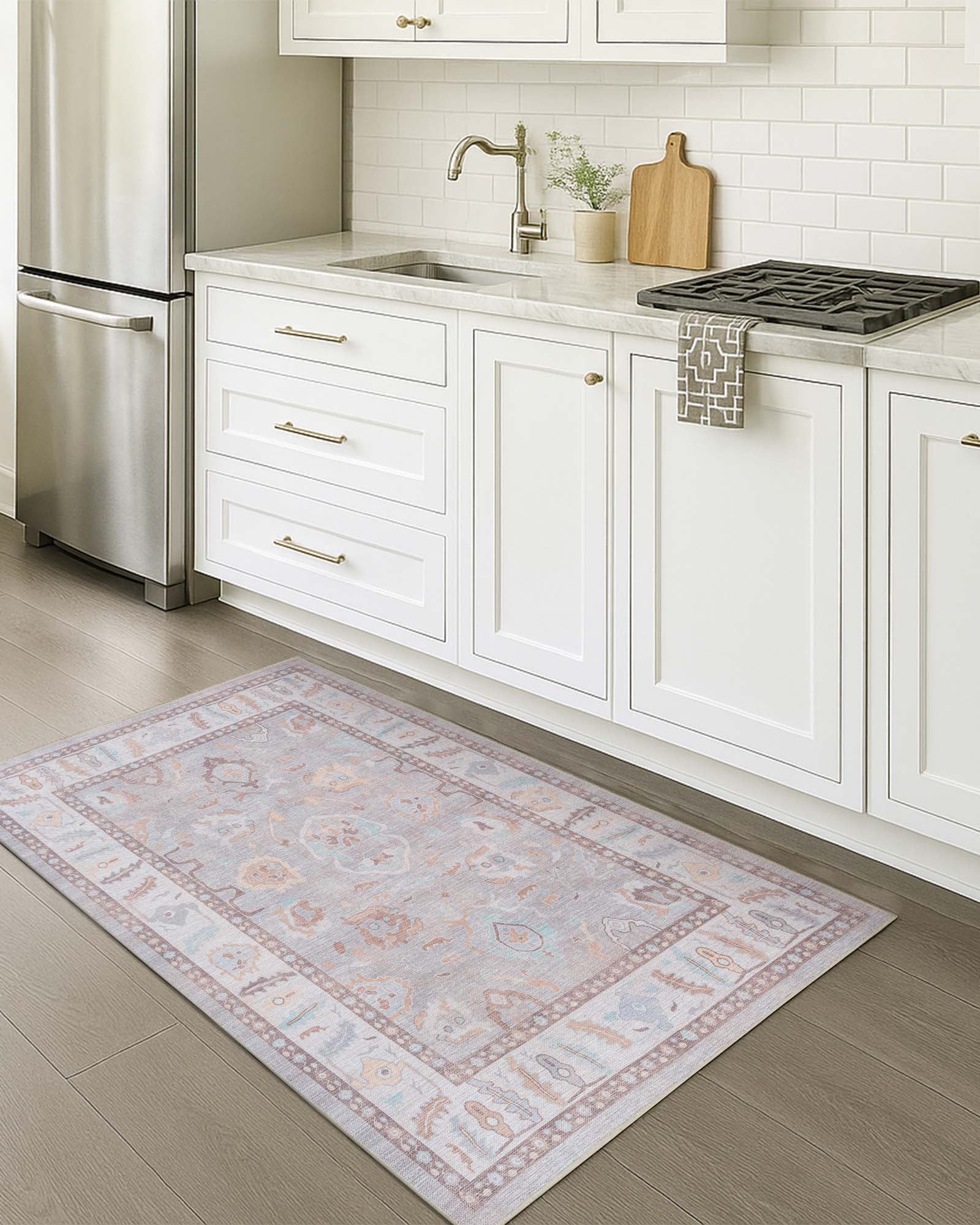
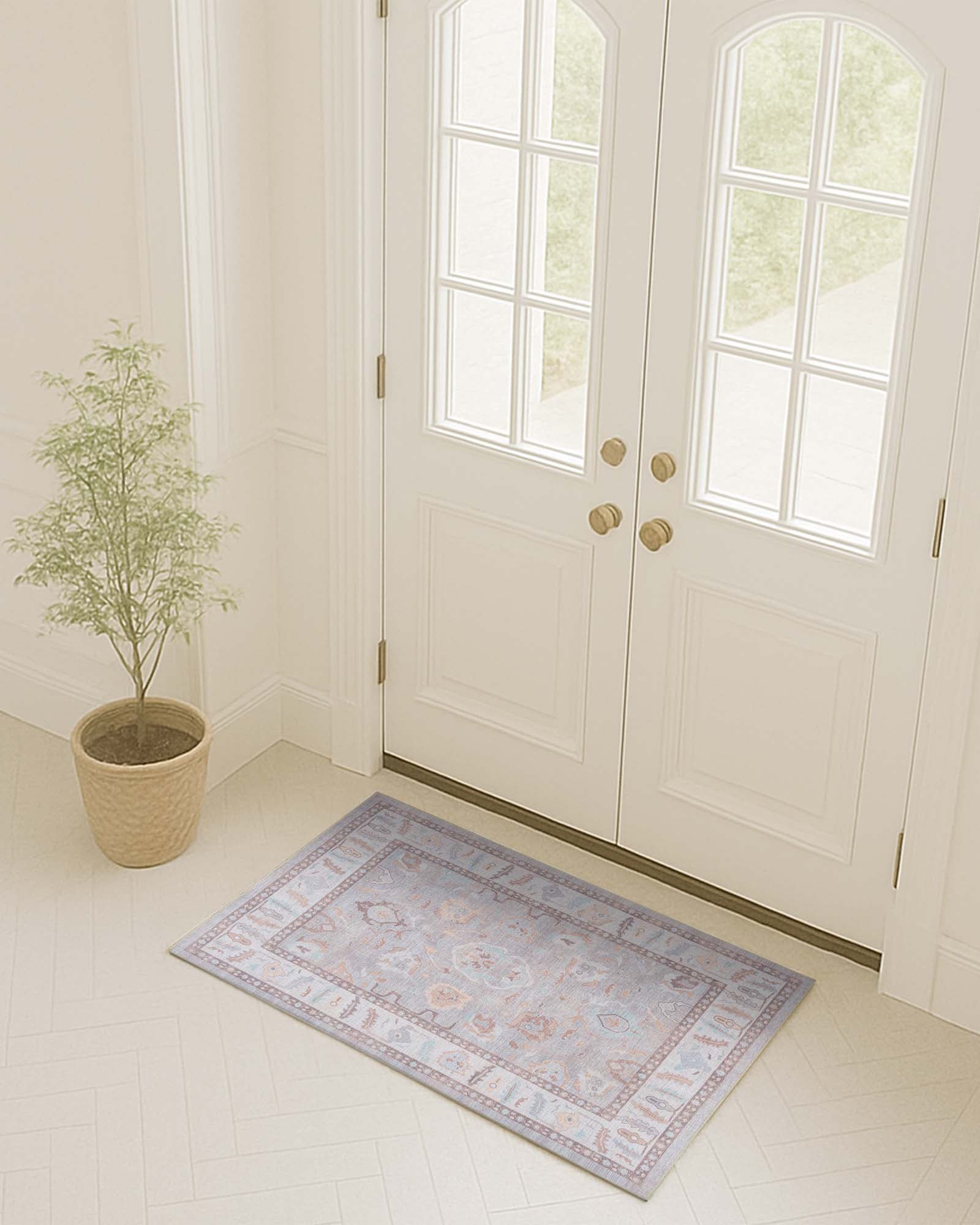
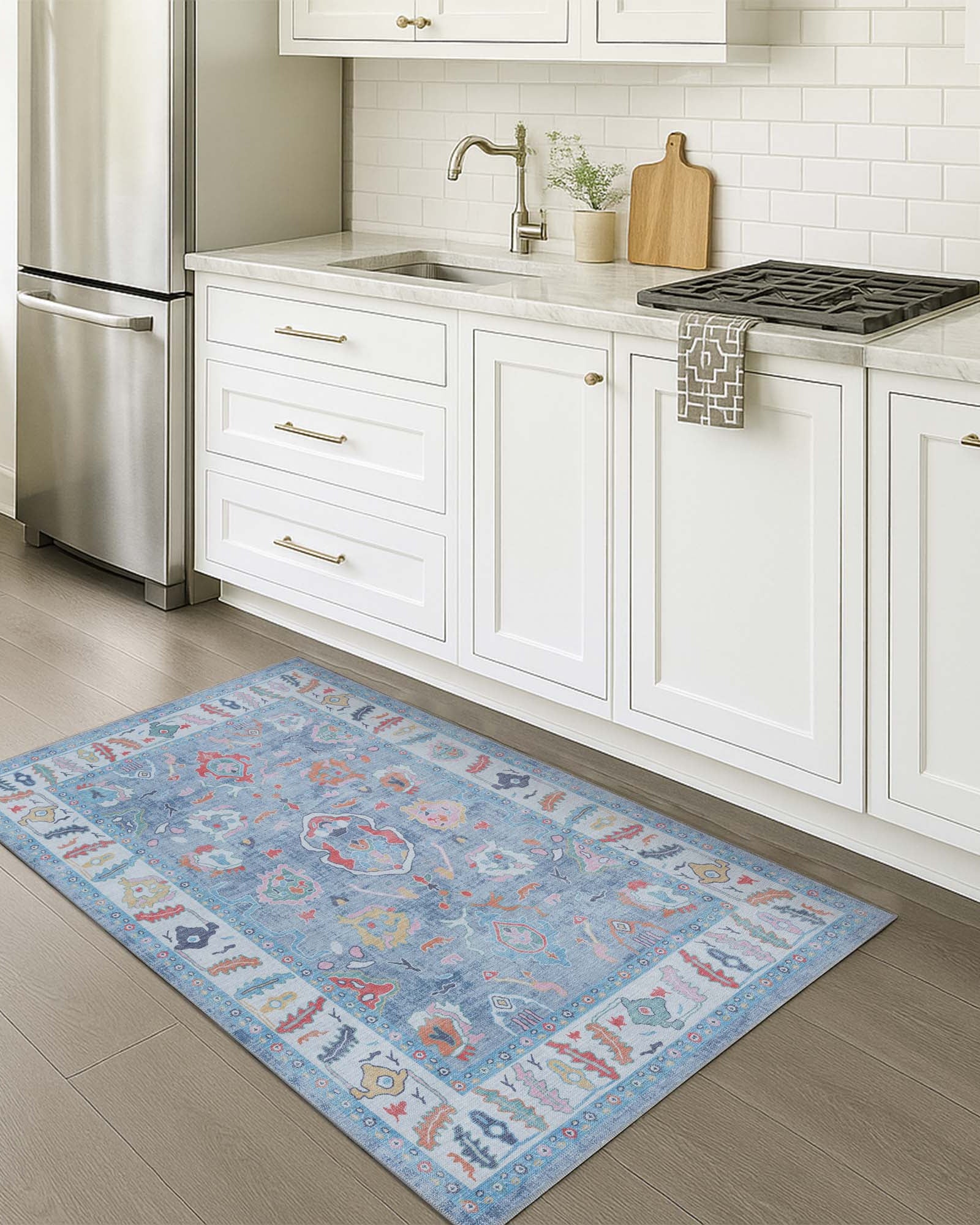
Flatweave belongs where thickness is a problem or portability is useful: under low-clearance doors, in tight entryways, in kitchens where a rug needs lifting and shaking out, and layered over a larger jute or sisal rug. It gives no cushioning at all, which is why it is a poor choice for a bedroom floor you walk on barefoot or under a dining table where chair legs catch thin fabric.
Age, Condition and Measurement
Pieces are grouped as antique at over eighty years, vintage at roughly forty to eighty, and semi-vintage below that. Every product page carries the construction method, estimated decade, origin where identifiable, foundation type, exact measured dimensions and a plain condition note. Expect honest wear — lower pile in walkways on knotted pieces, thinning and softened ends on flatweaves, old selvage repairs, shortened fringes. All of it is photographed as it is. Sizes are never standard, so order against the listed measurements.
Care
On knotted pile, vacuum with the beater bar off or raised and keep it off the fringe; on flatweaves use suction only, never a beater bar. Small flatweaves are better taken outside and shaken than vacuumed. Use a rug pad on hard floors — essential under a thin flatweave, which both slides and abrades from below. Rotate any rug twice a year, and flip reversible flatweaves annually so both faces wear evenly. Blot spills immediately with a white cloth and plain water, pressing rather than rubbing. Avoid home carpet-cleaning machines, steam cleaners and commercial spot treatments entirely, since heat and saturation felt wool and bleed aged natural dyes. Send anything set-in to a professional rug washer familiar with handwoven wool.