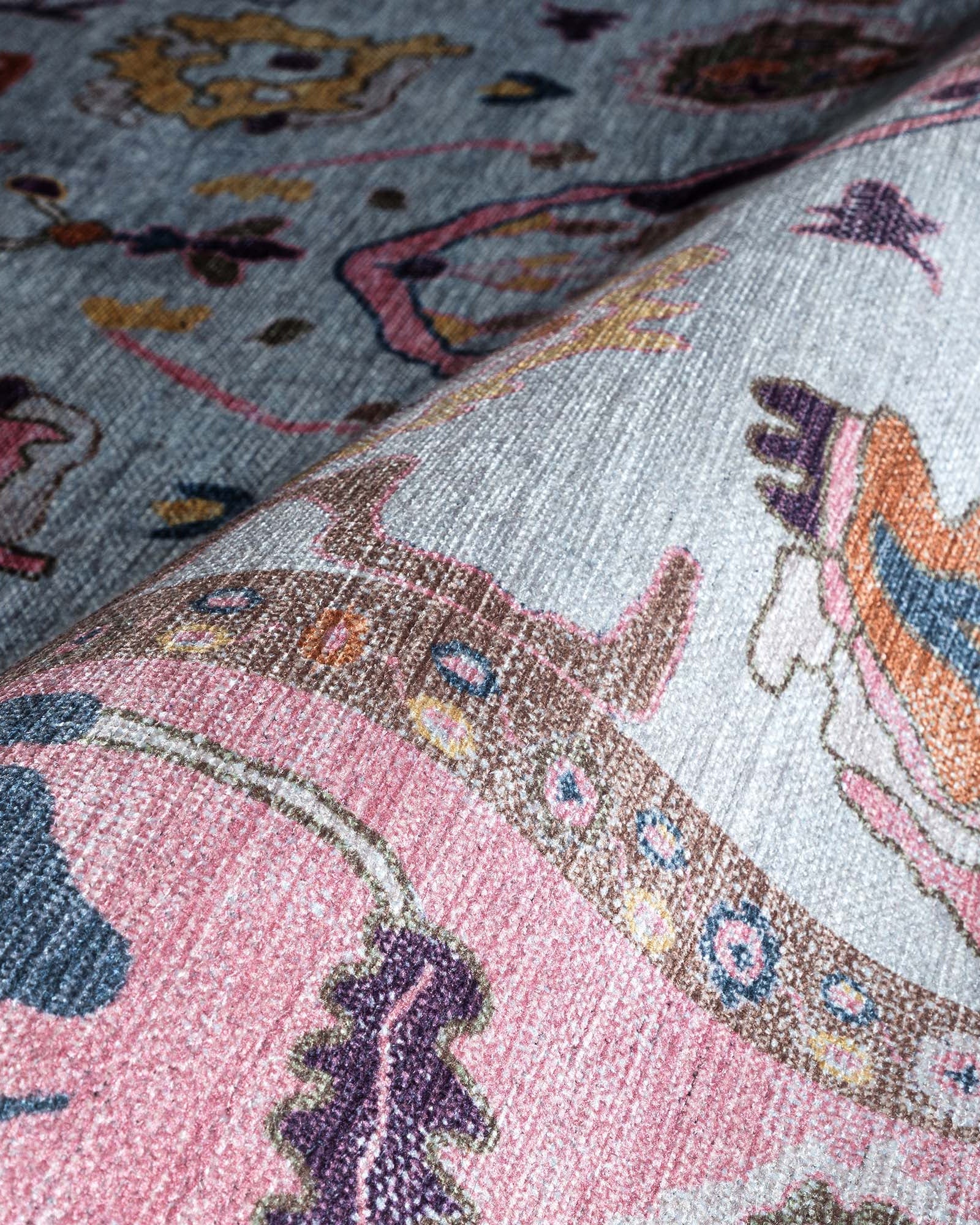
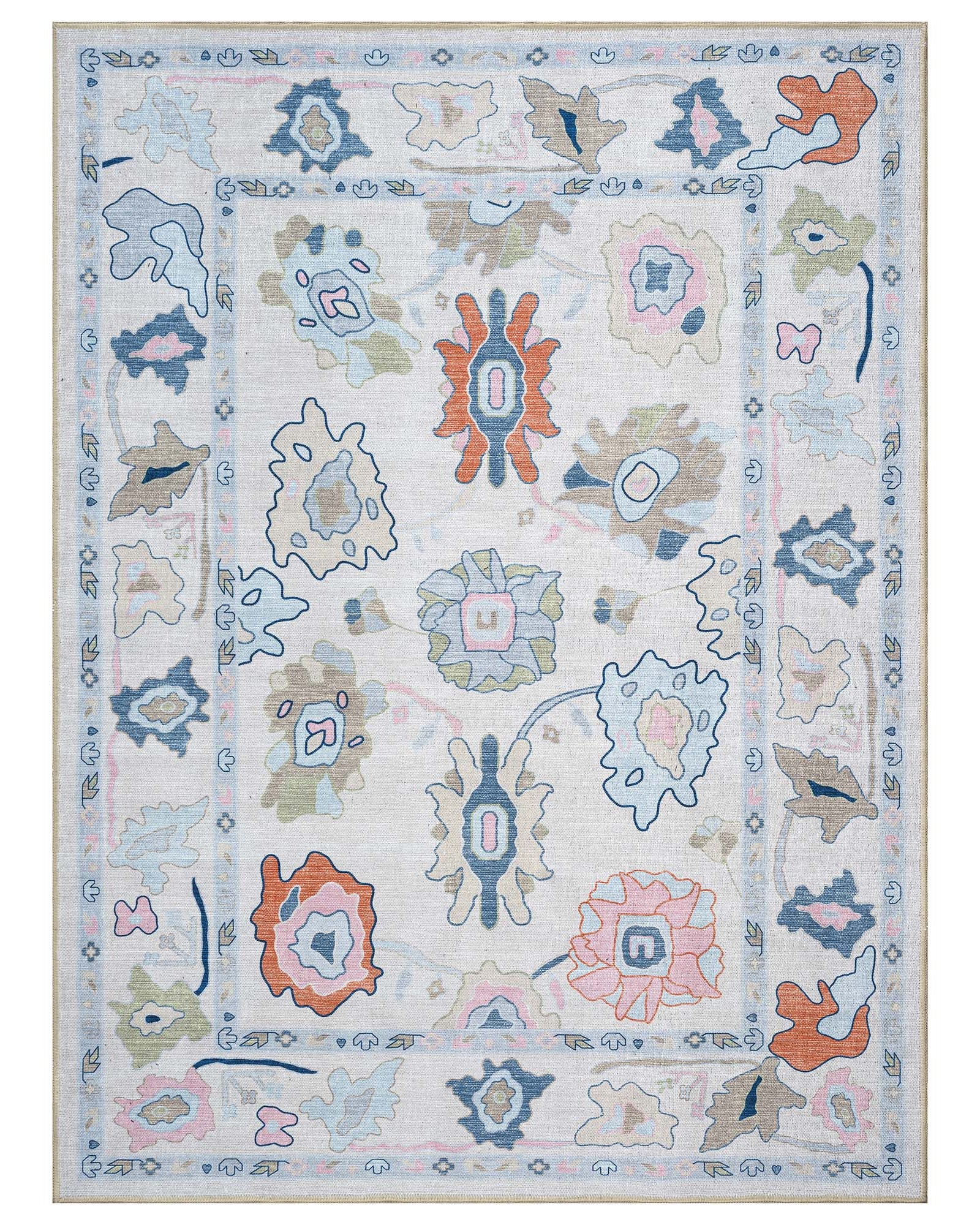
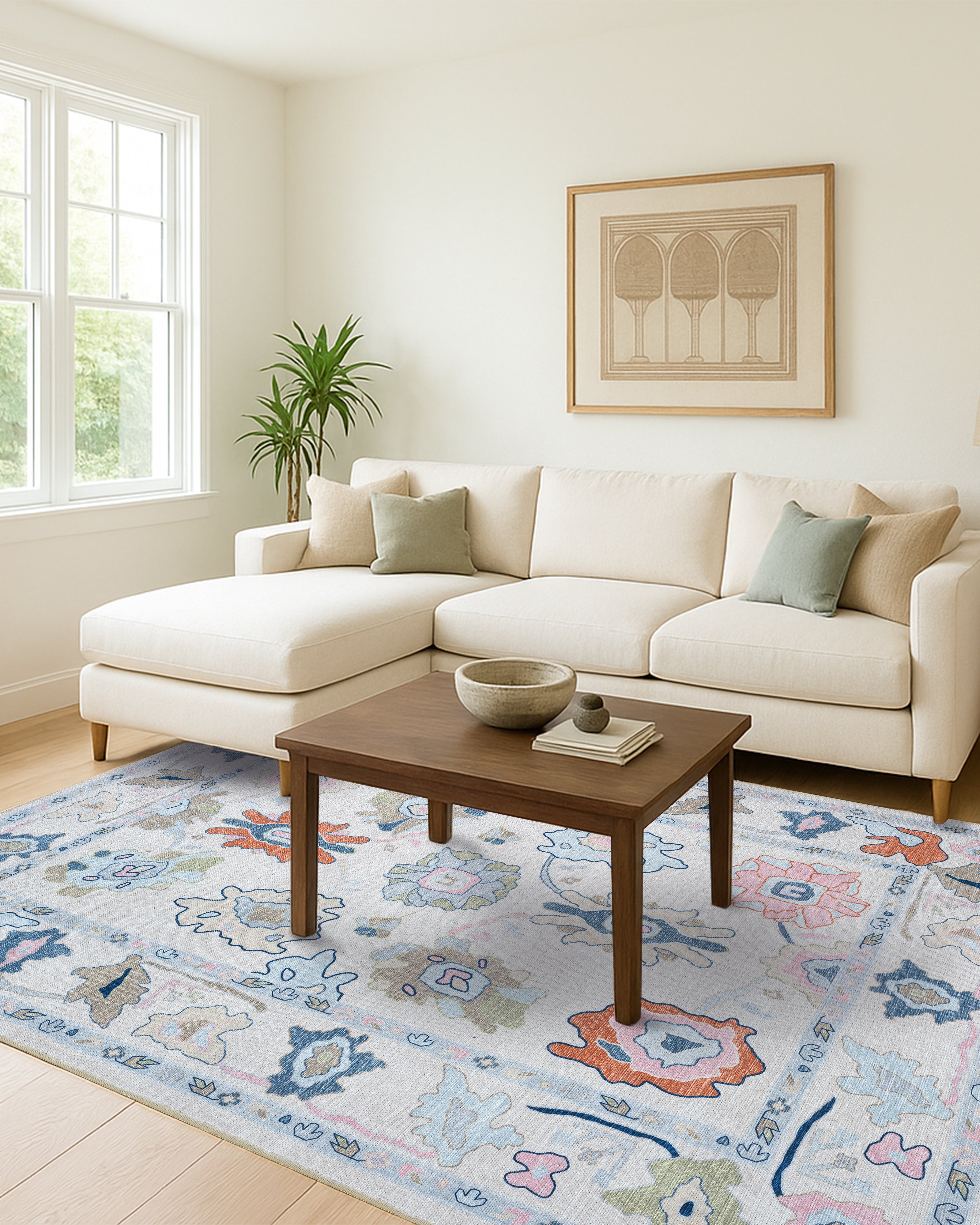
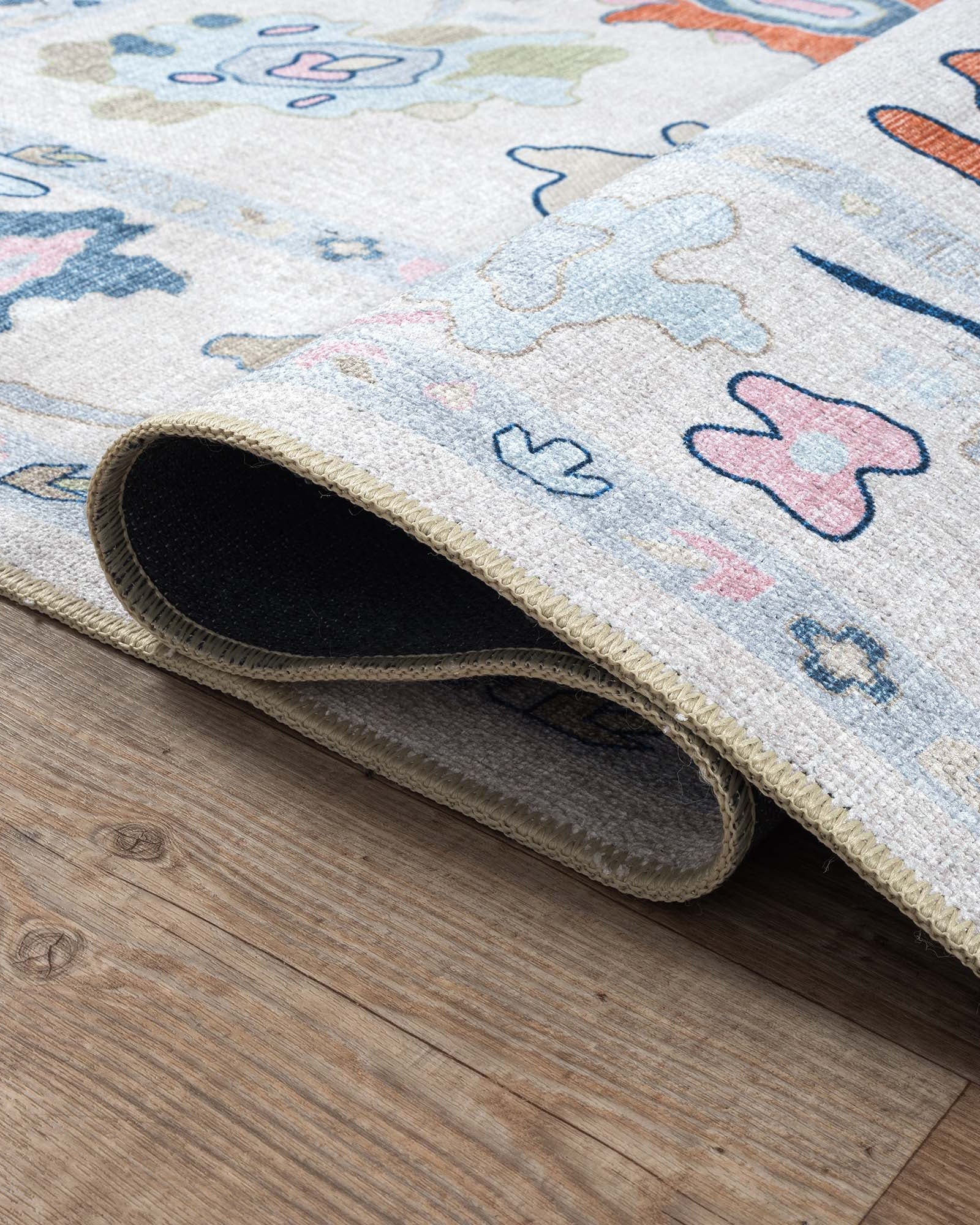
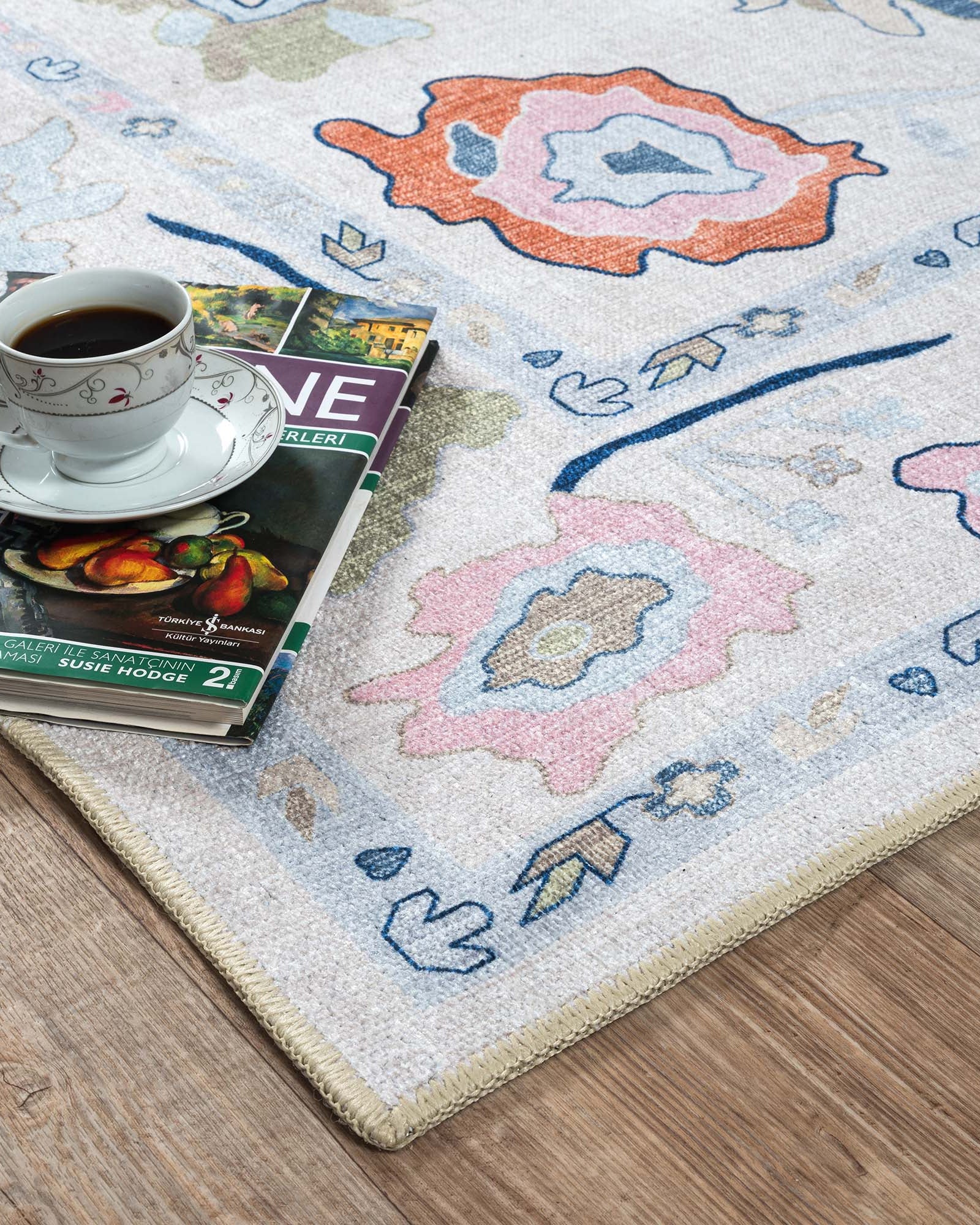
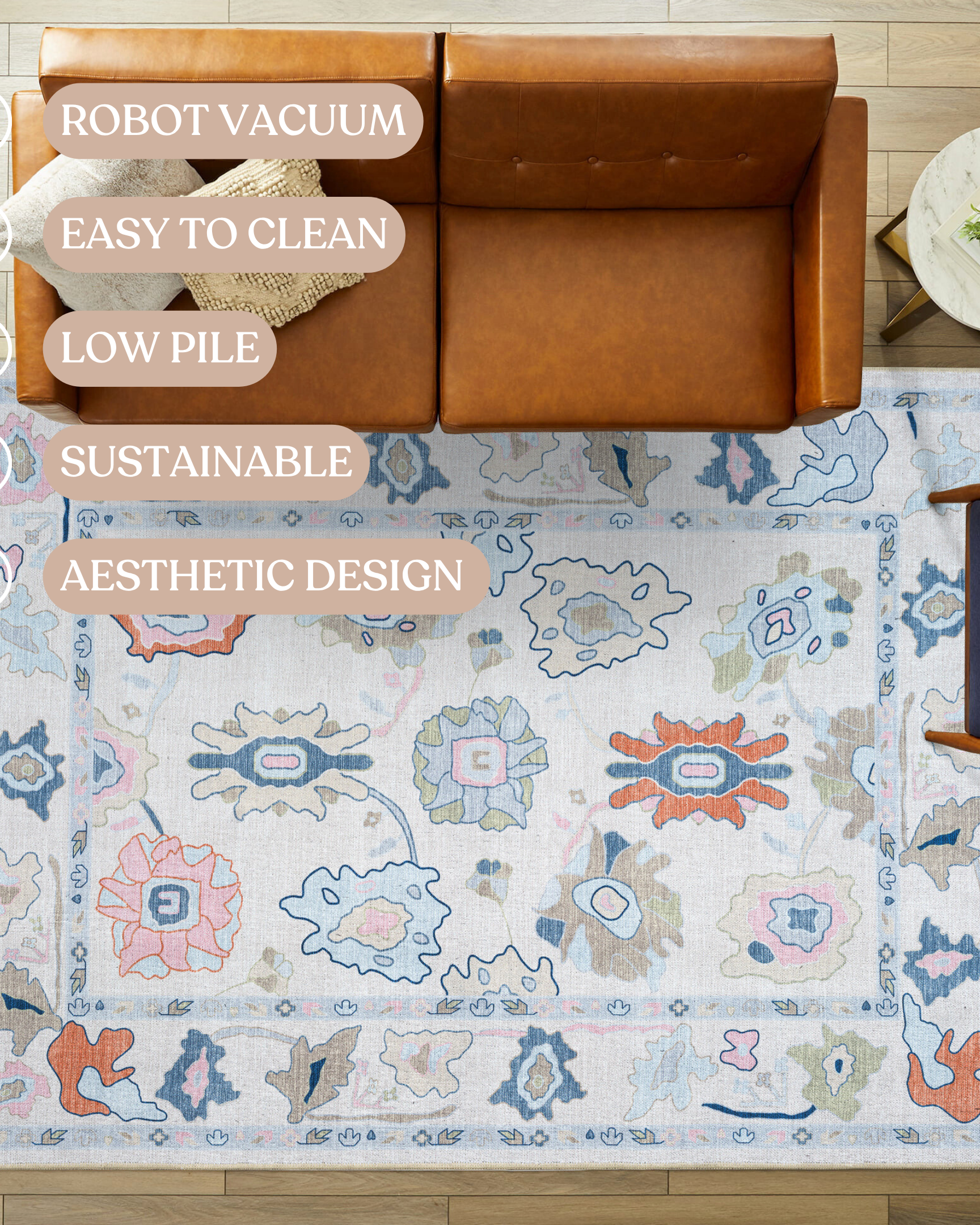
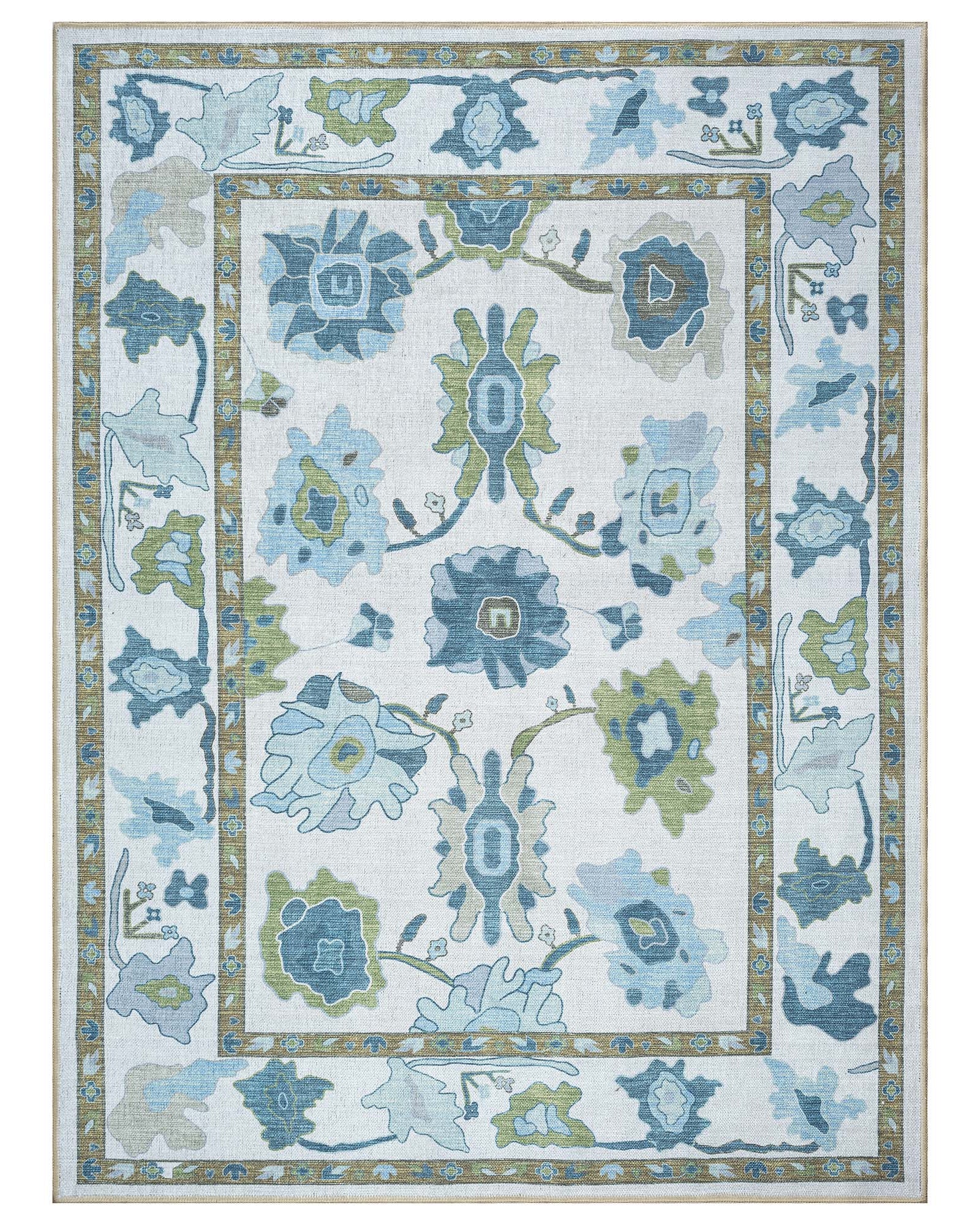
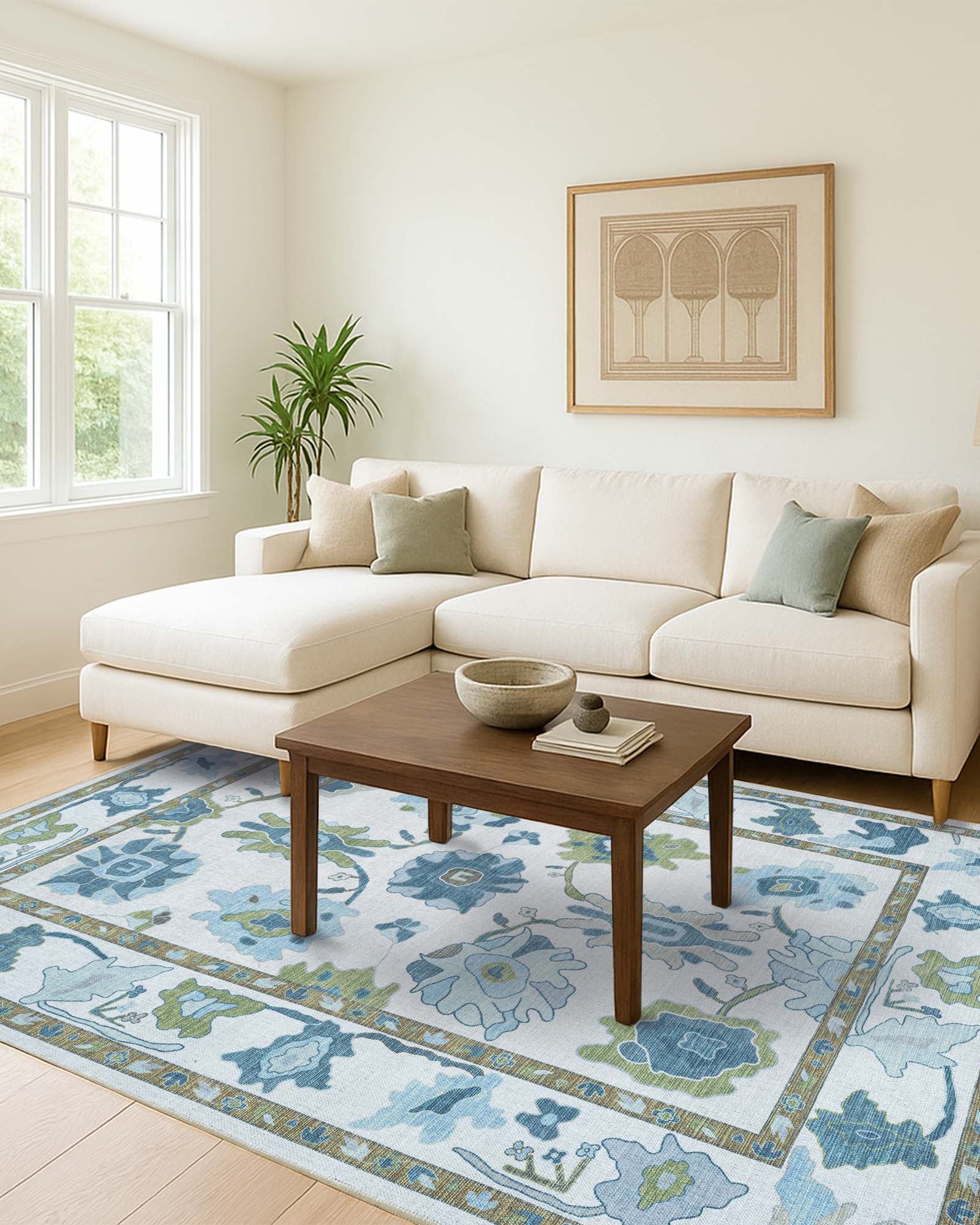
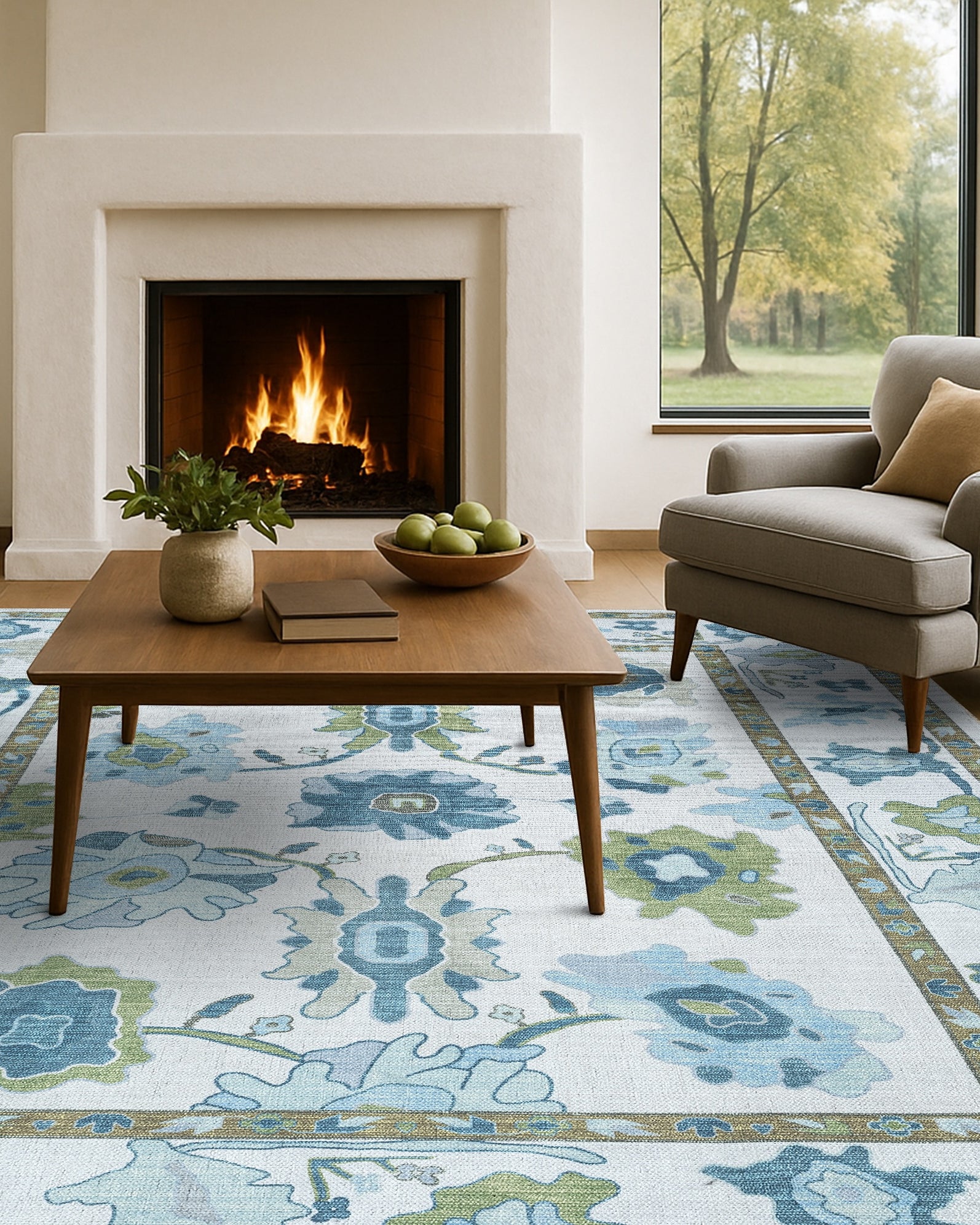
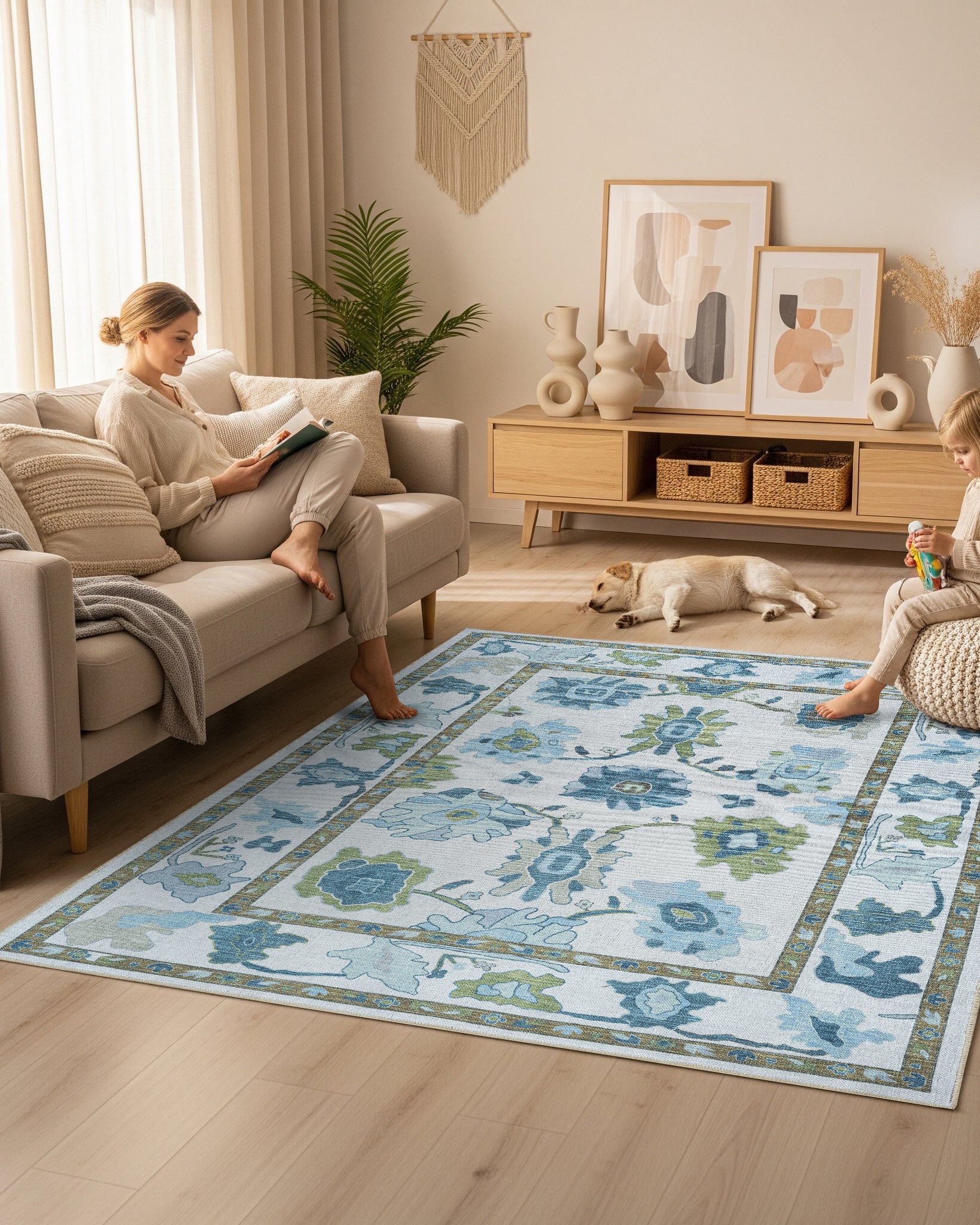
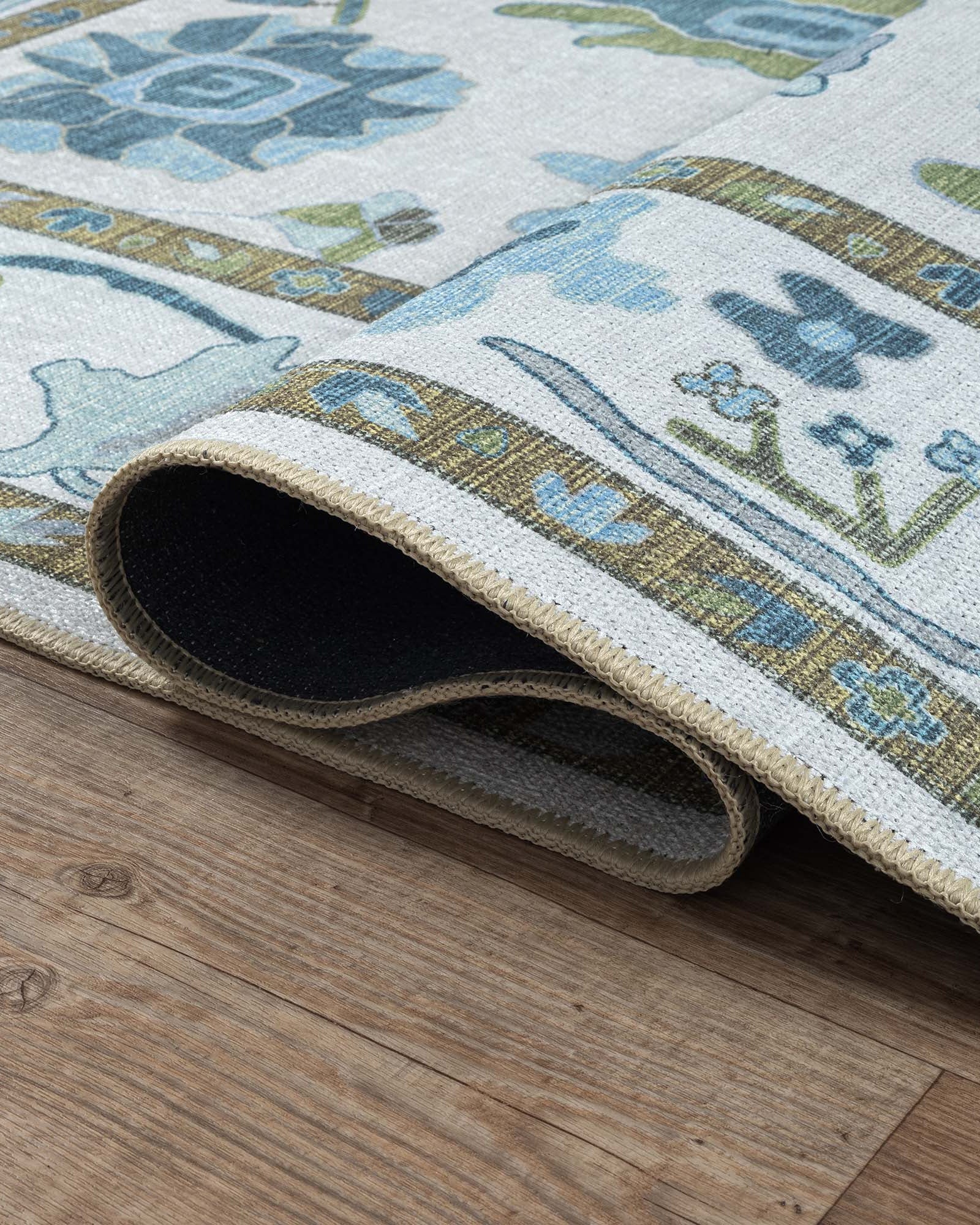
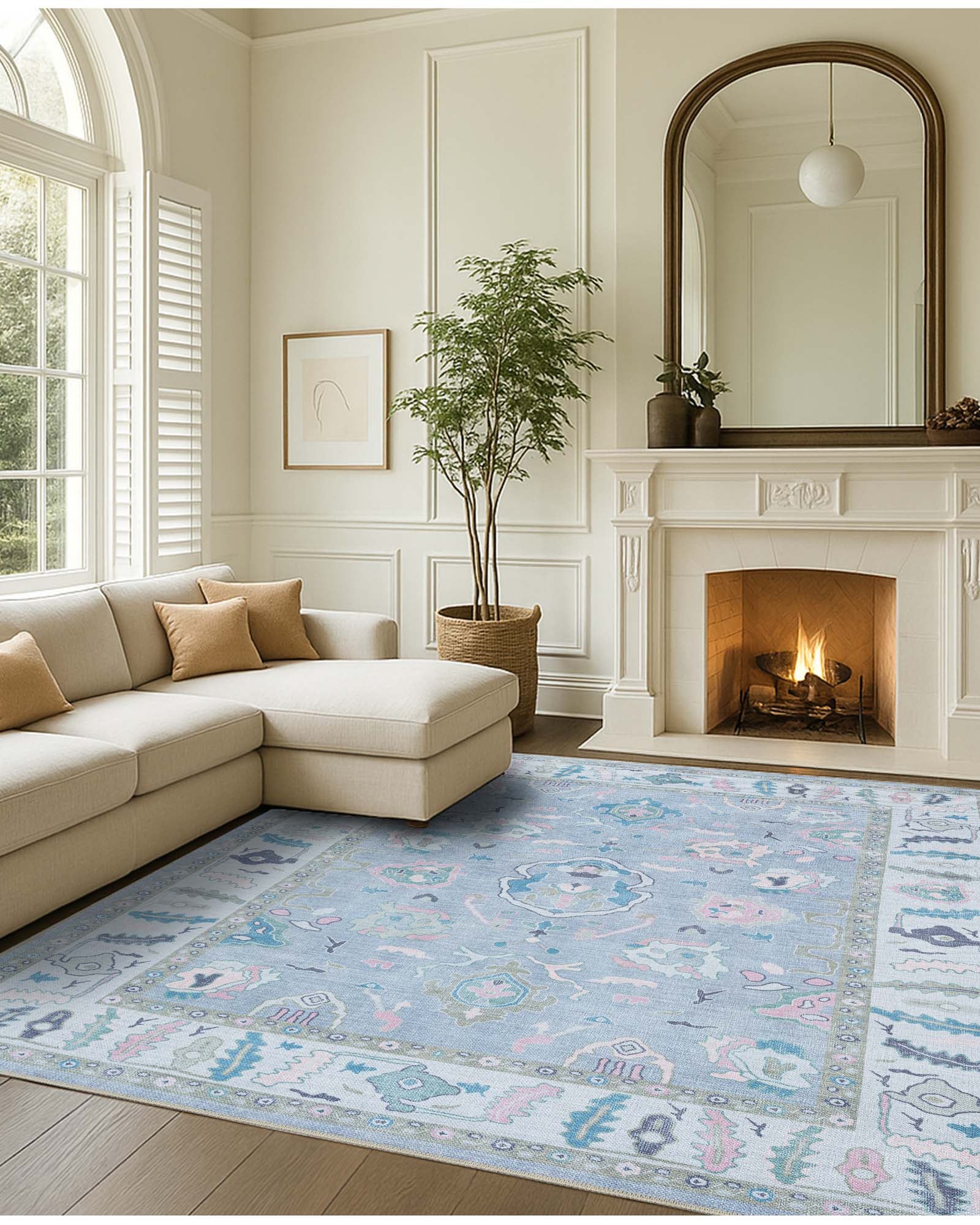
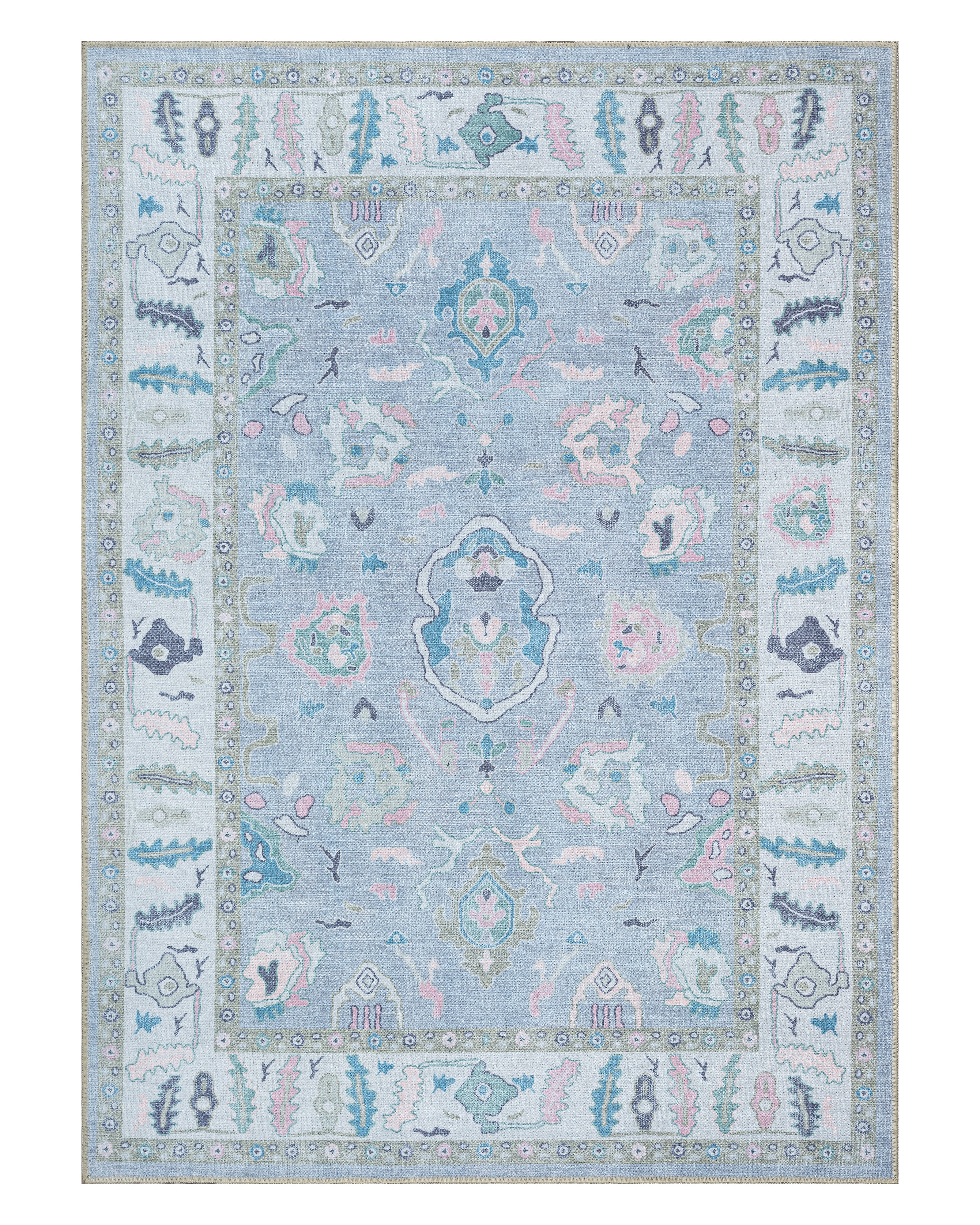
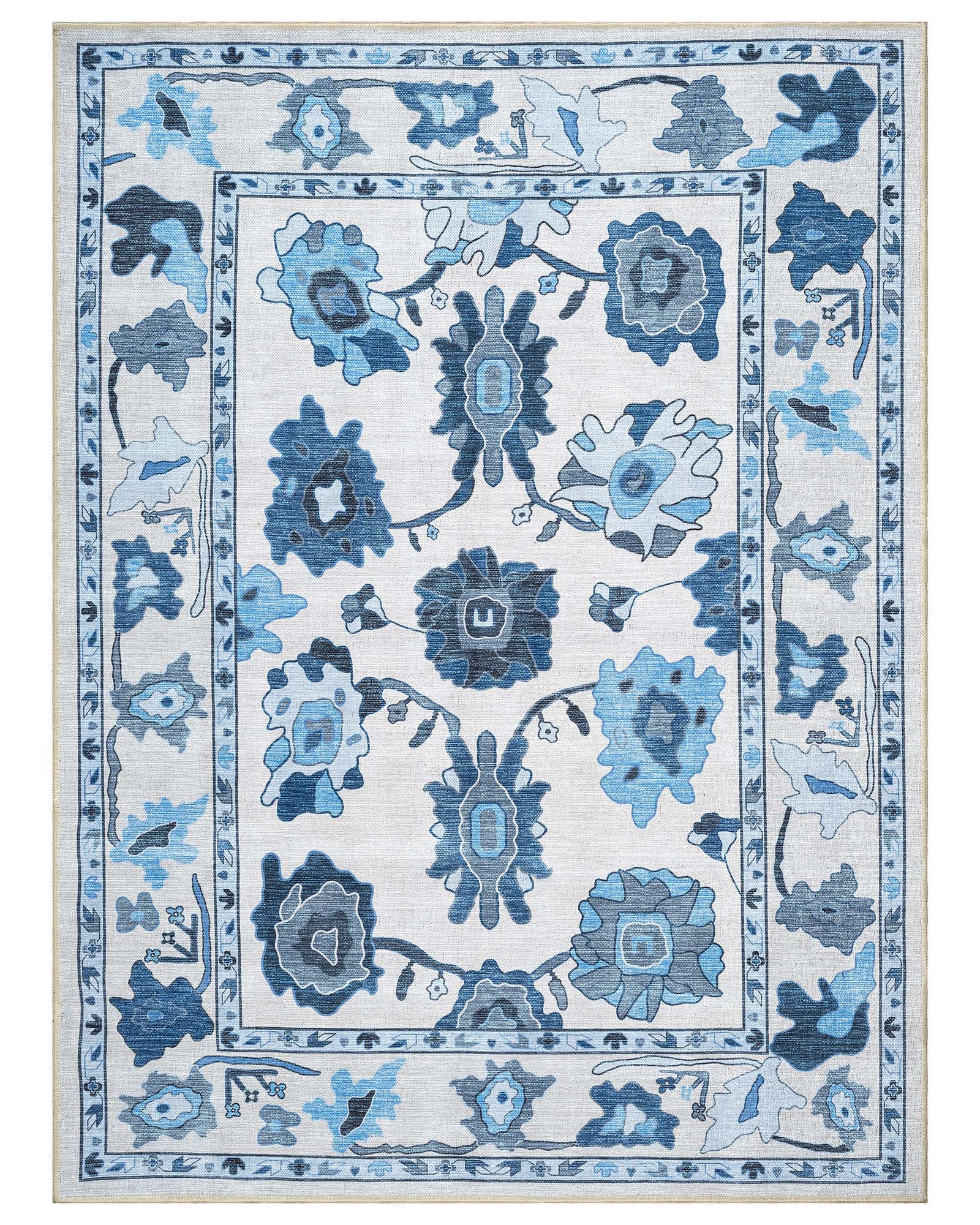
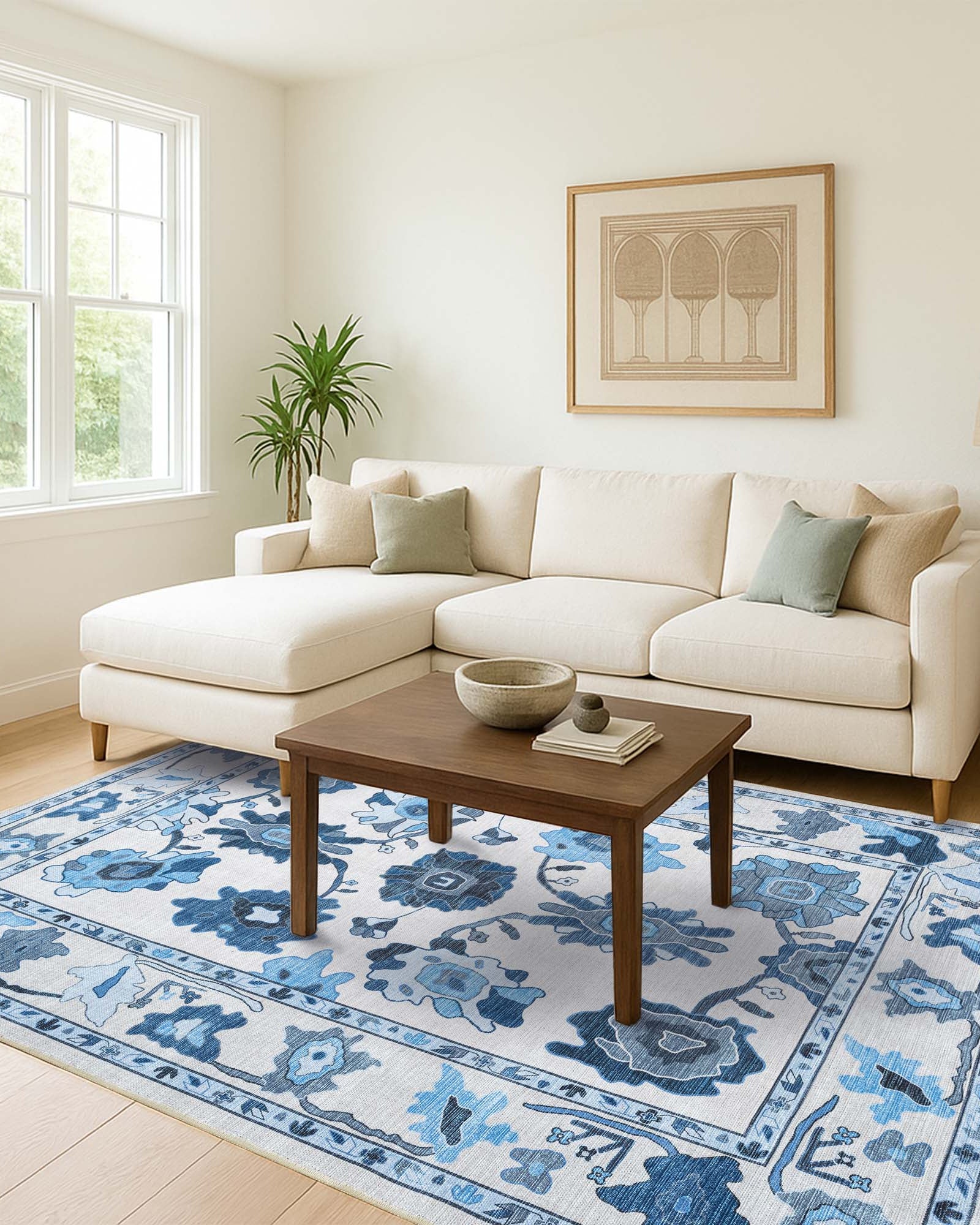
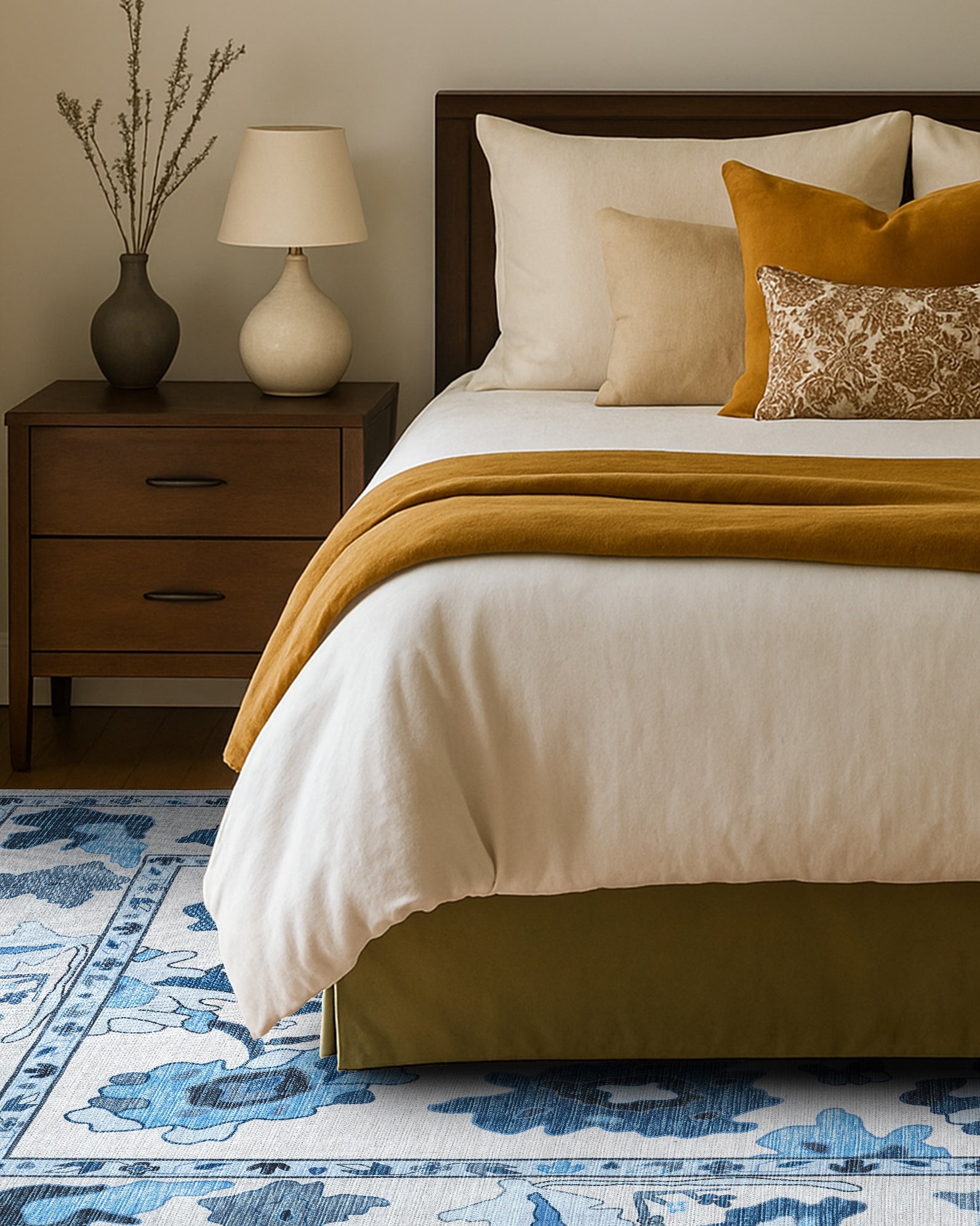
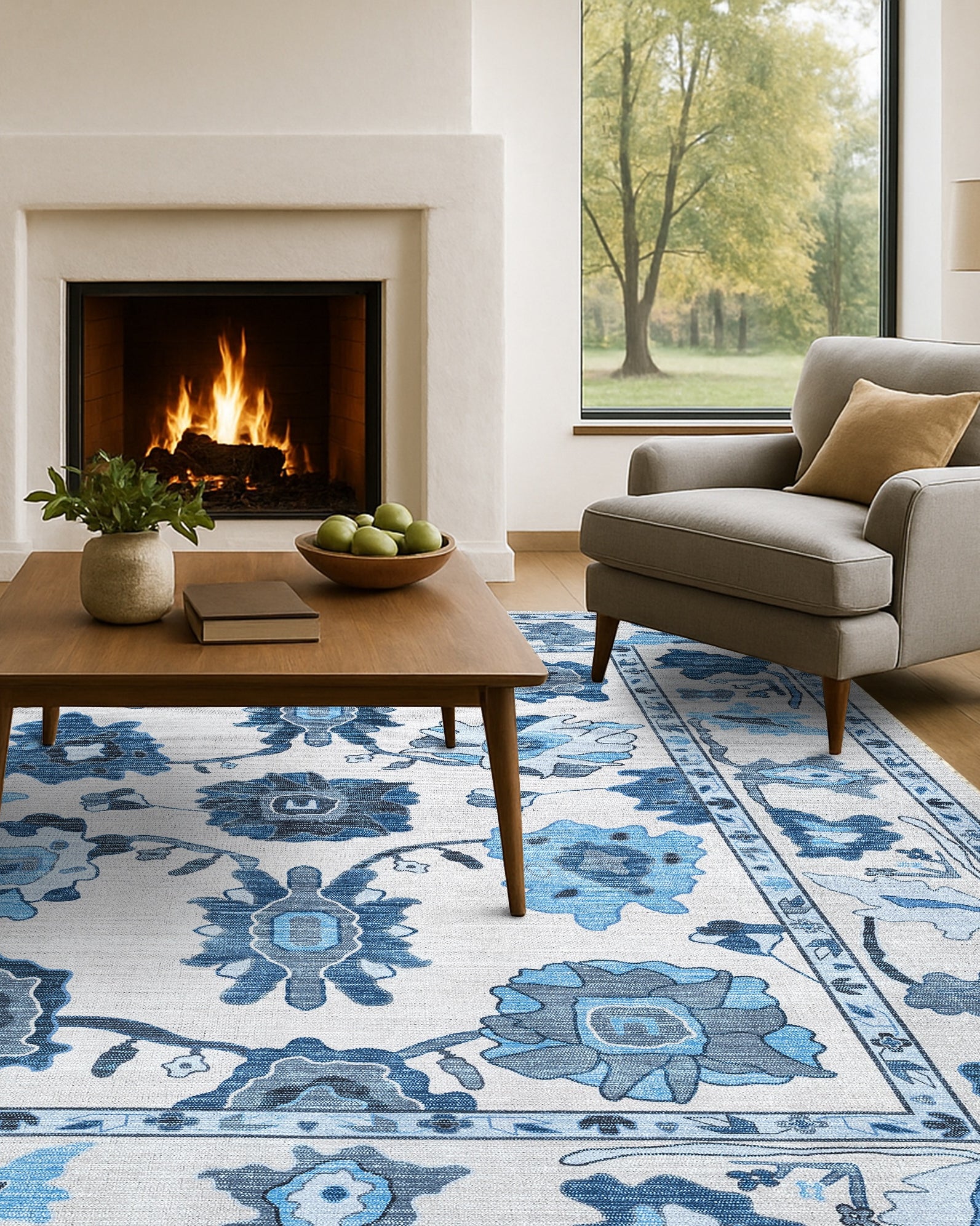
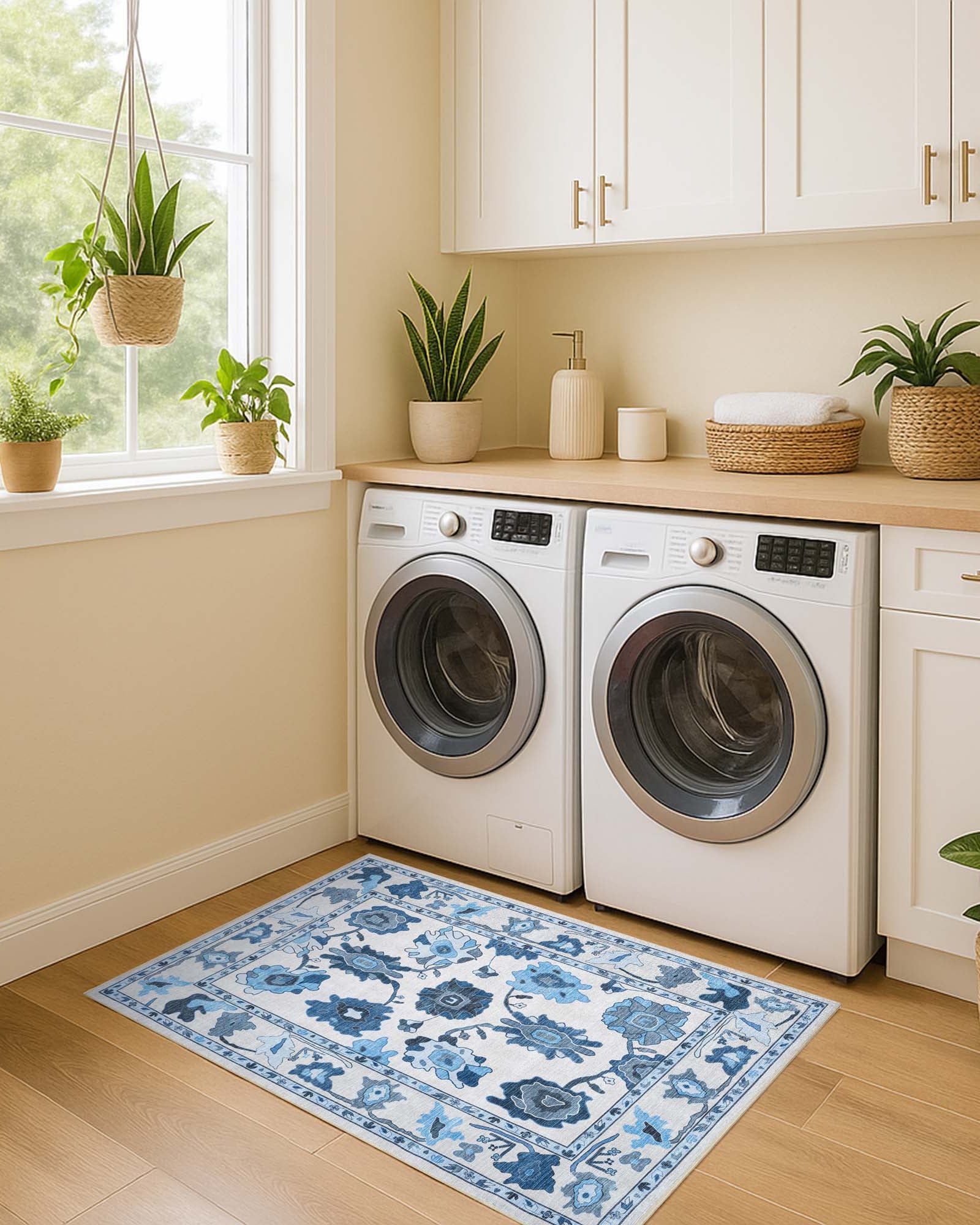
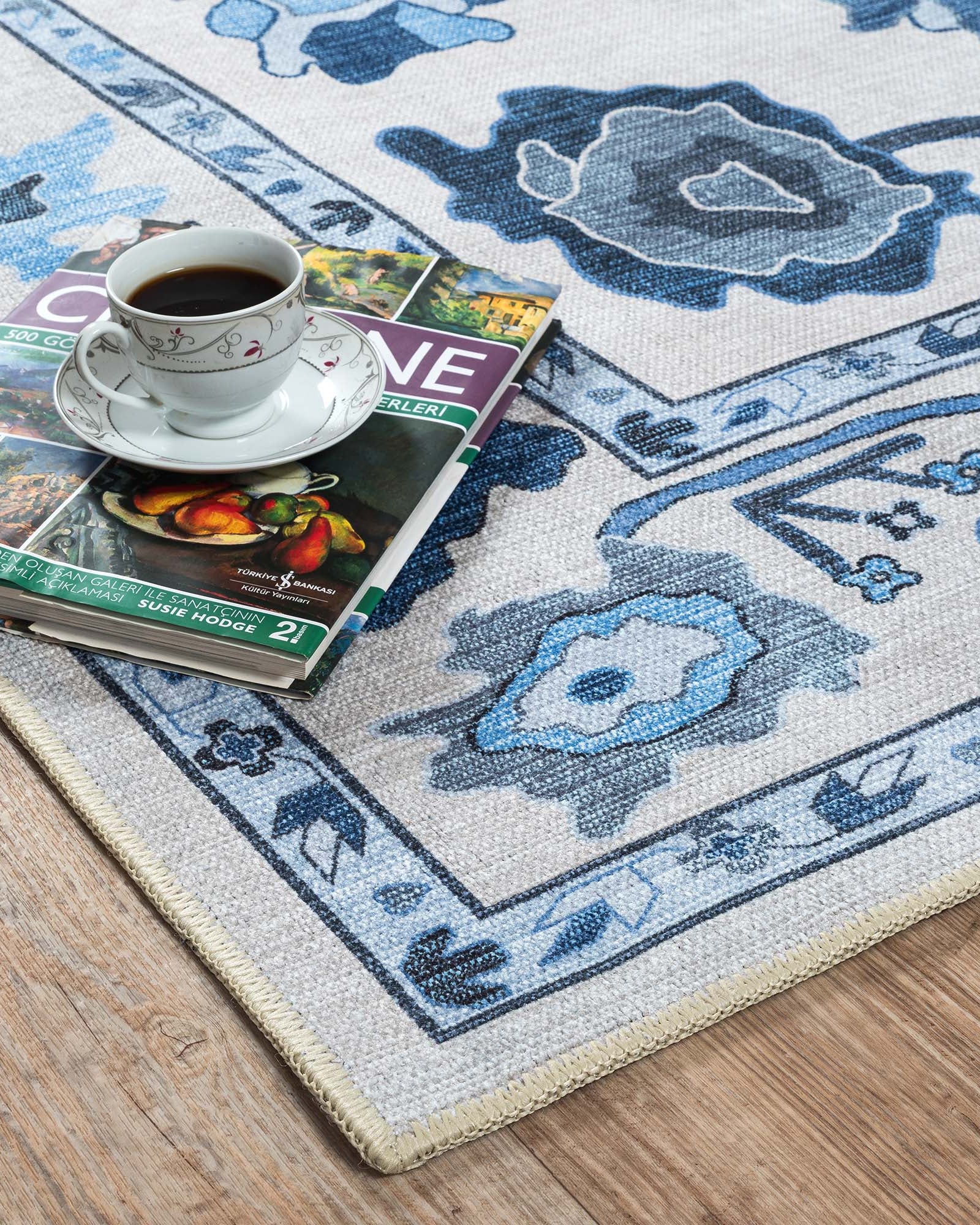
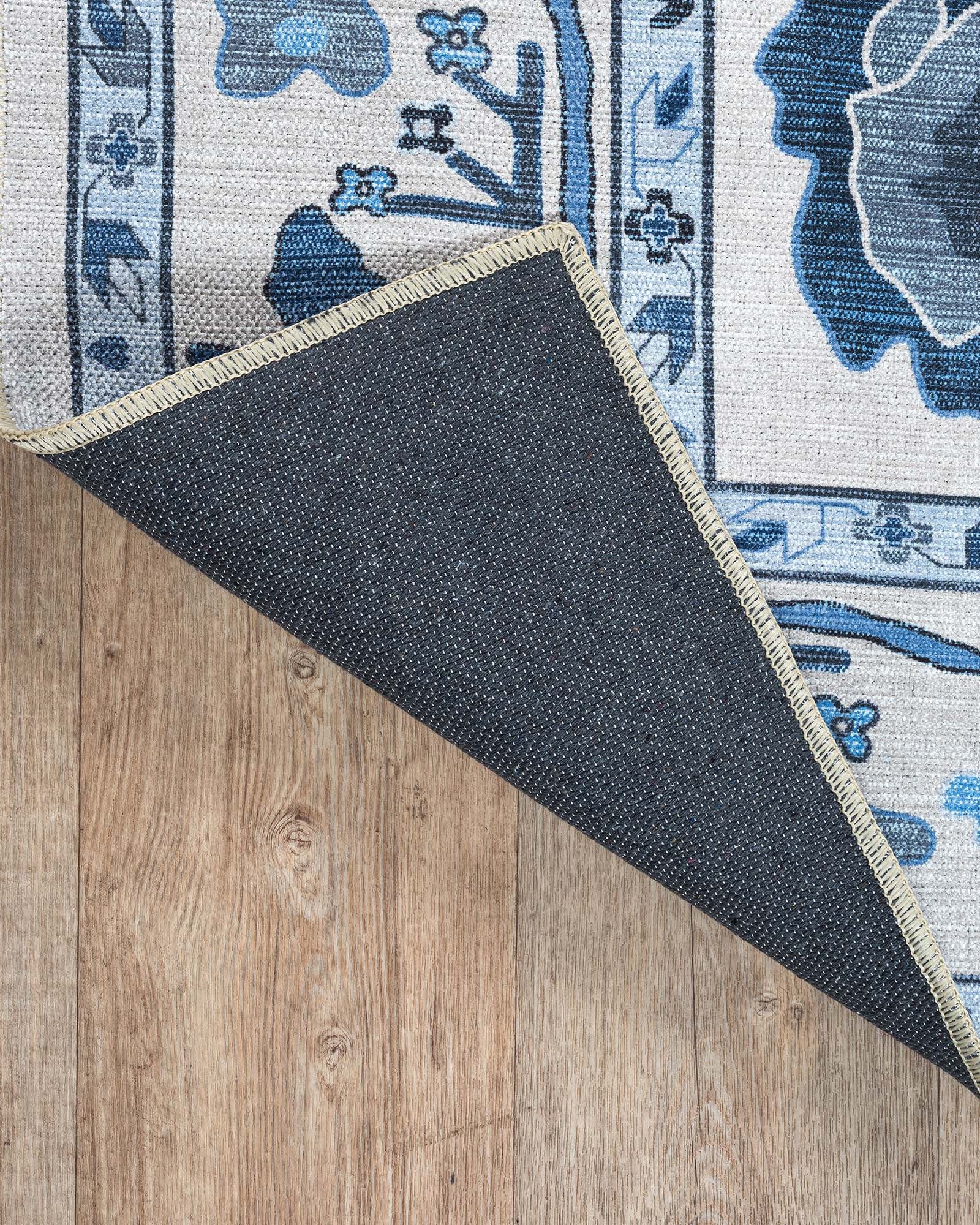
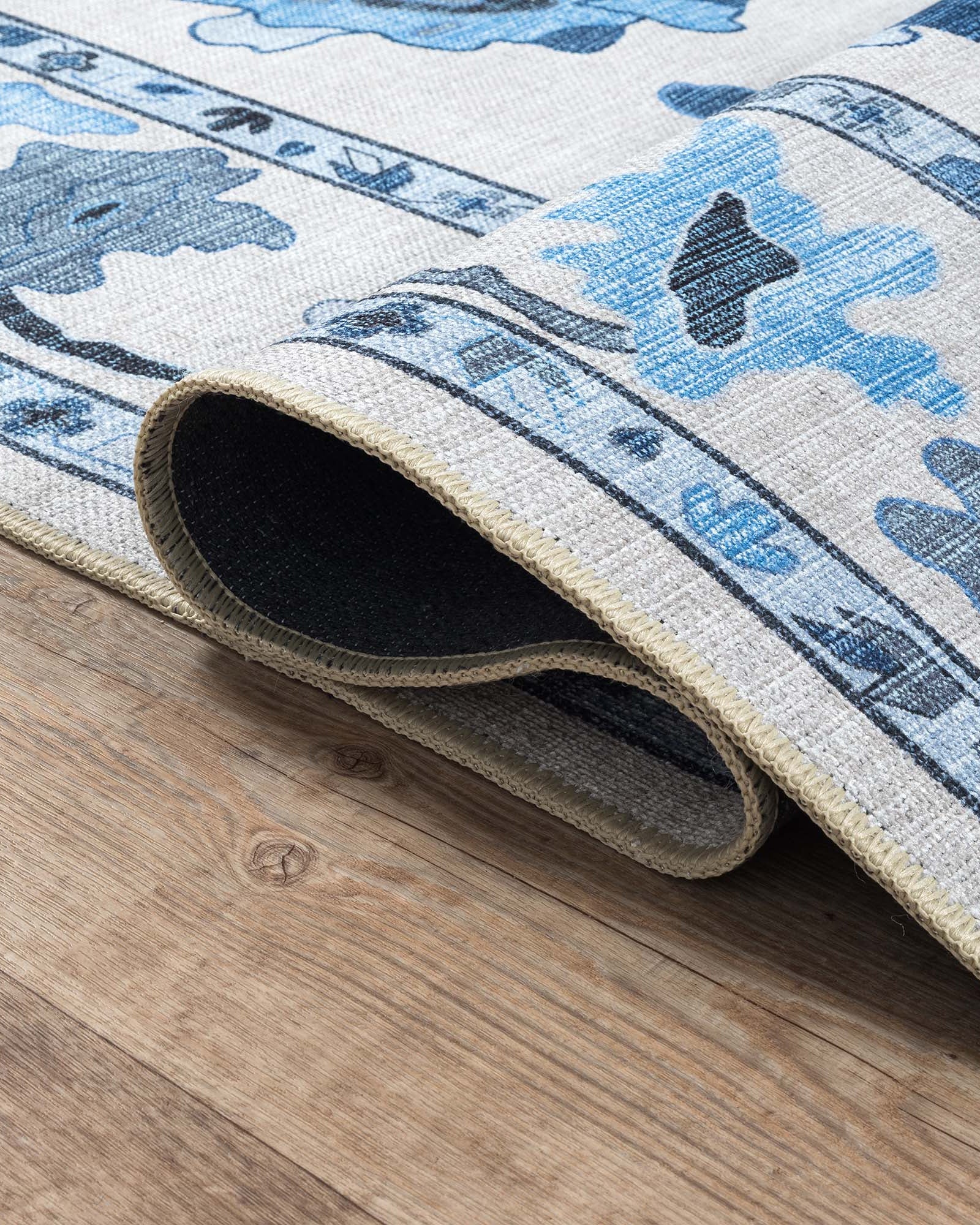
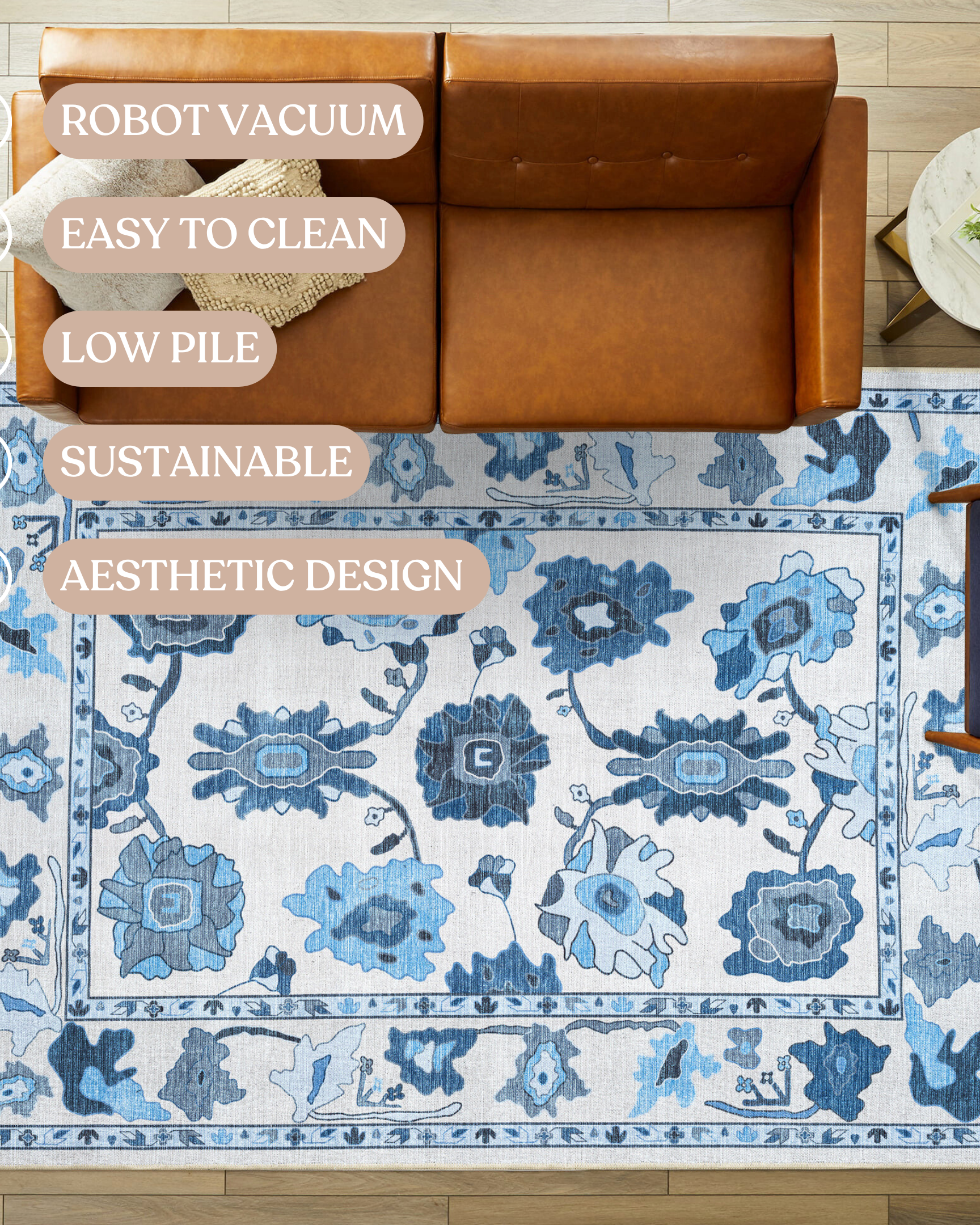
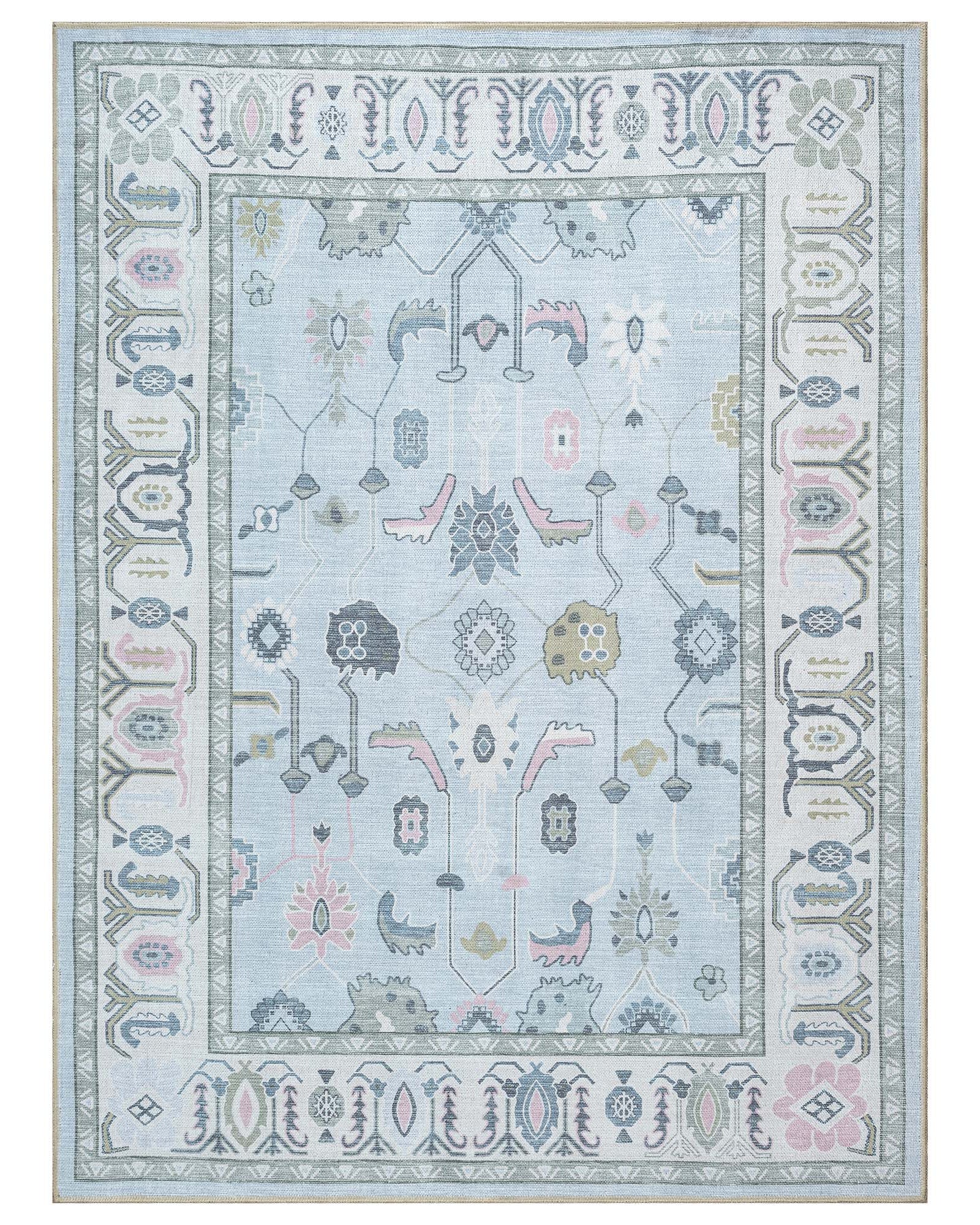
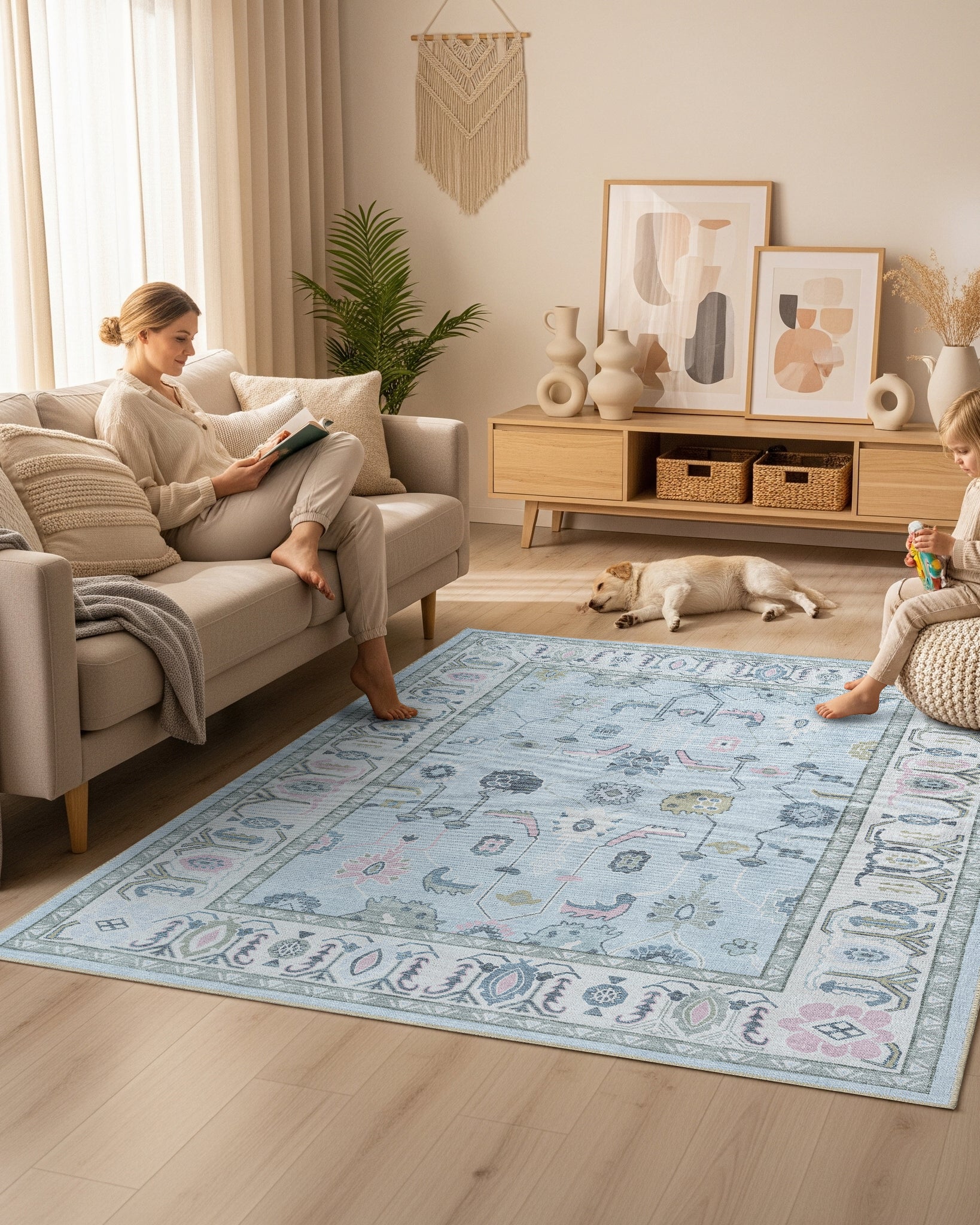
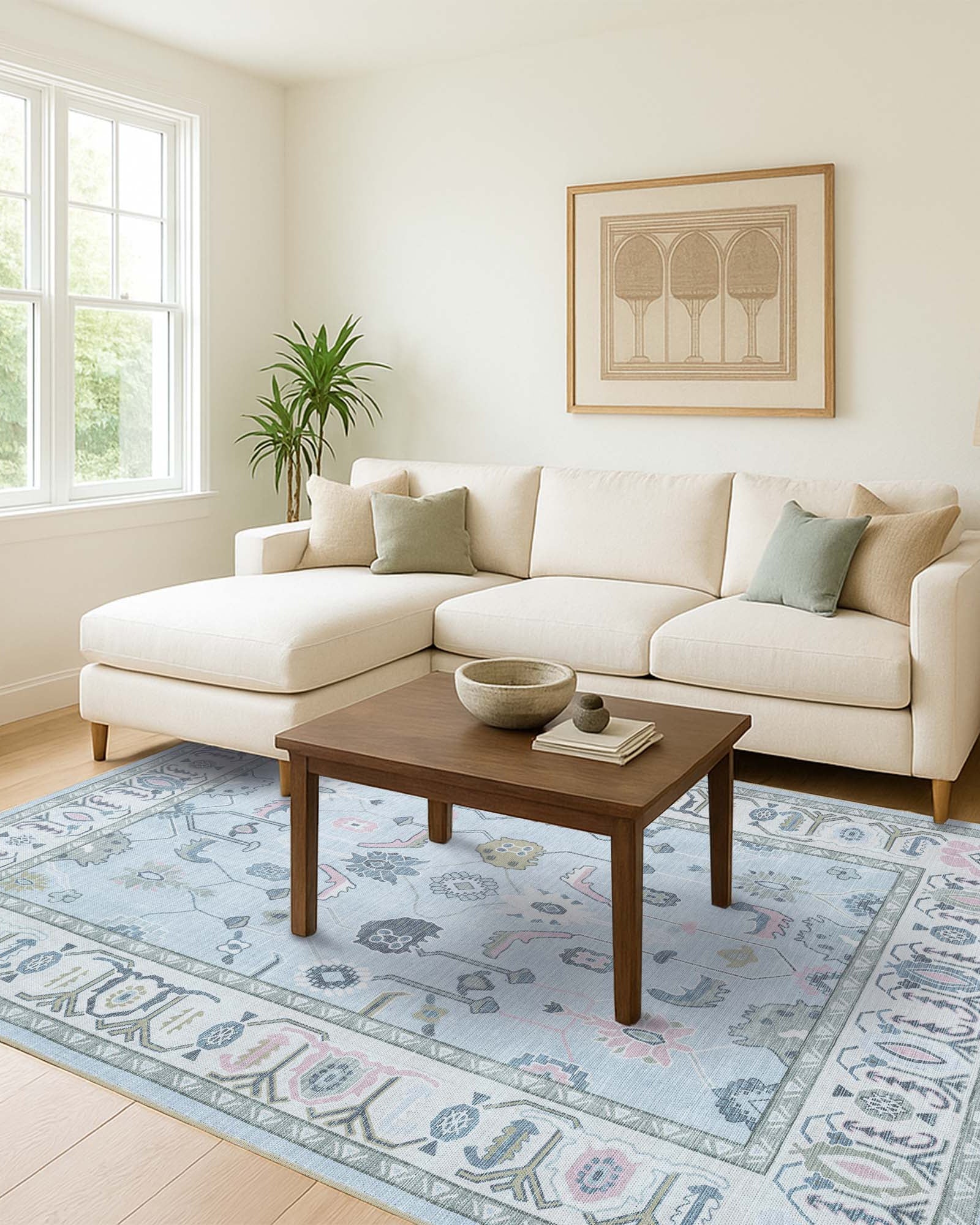
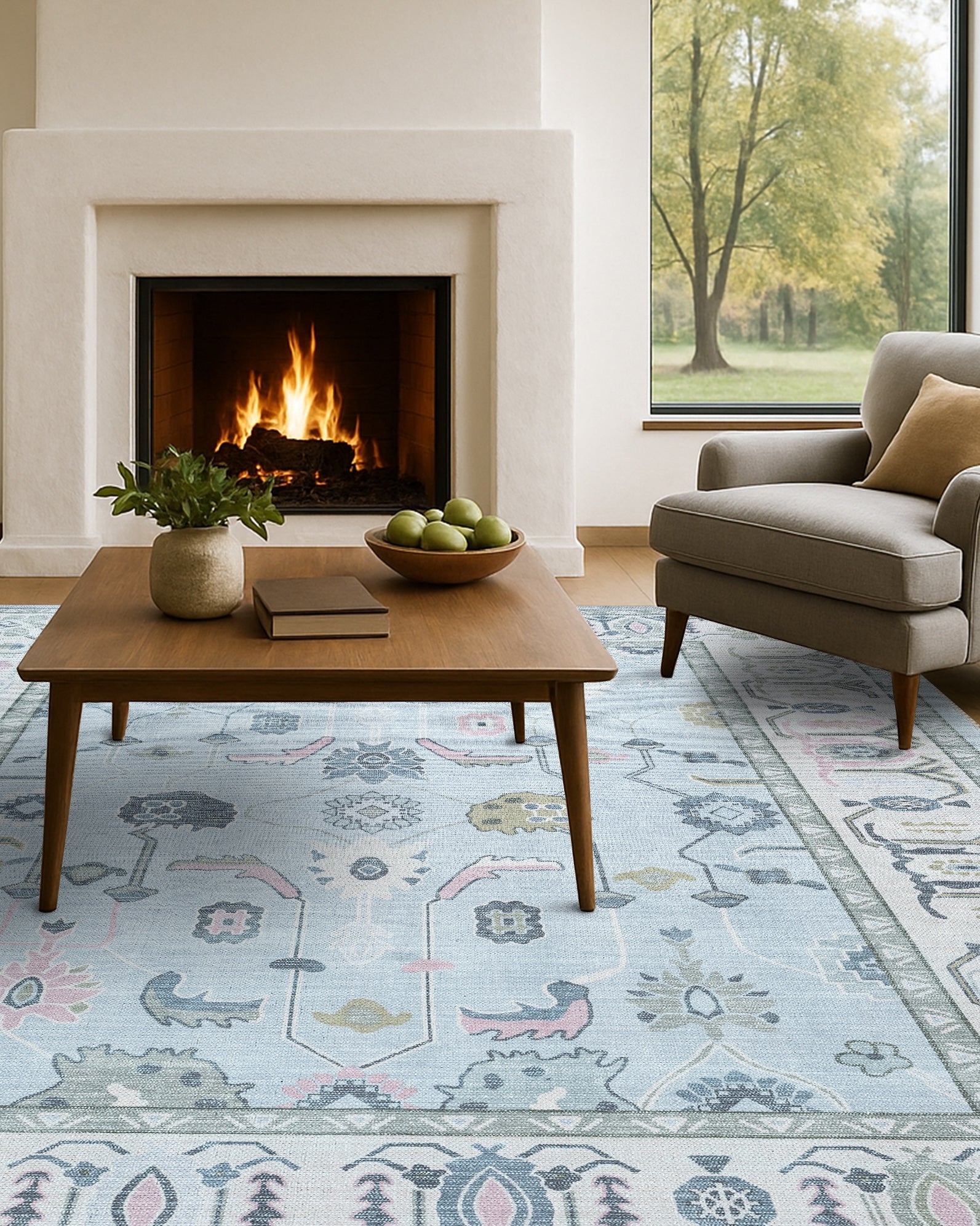
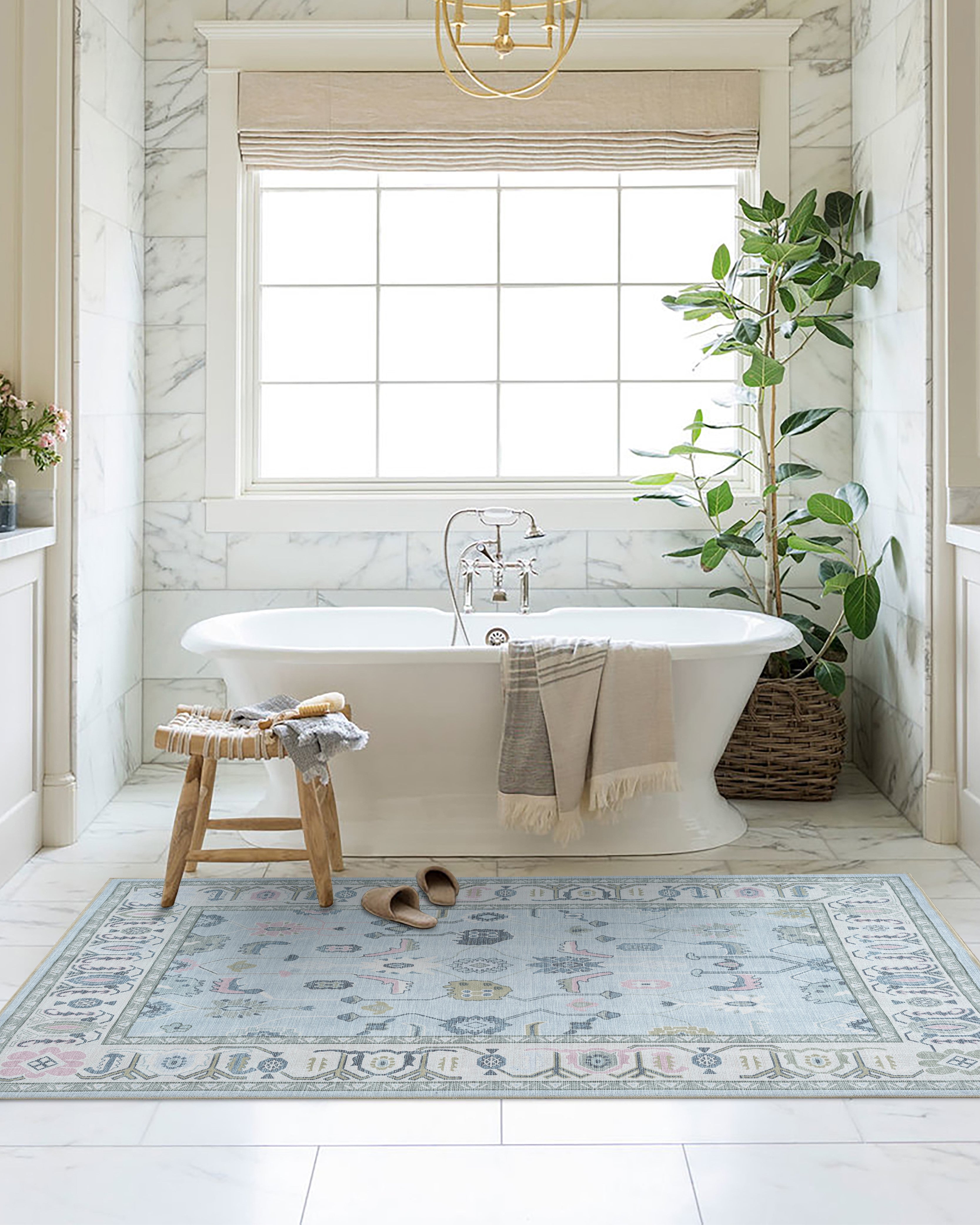
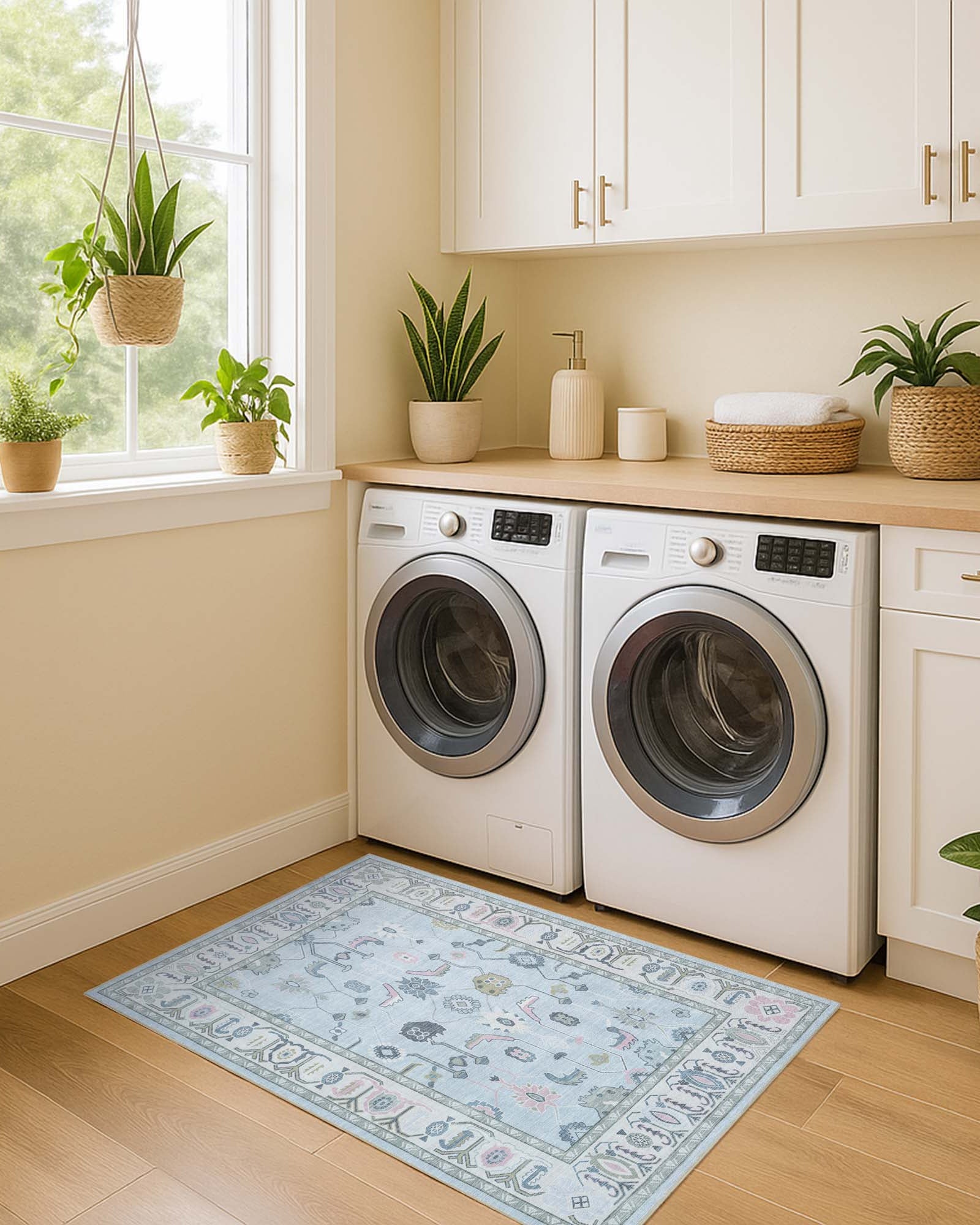
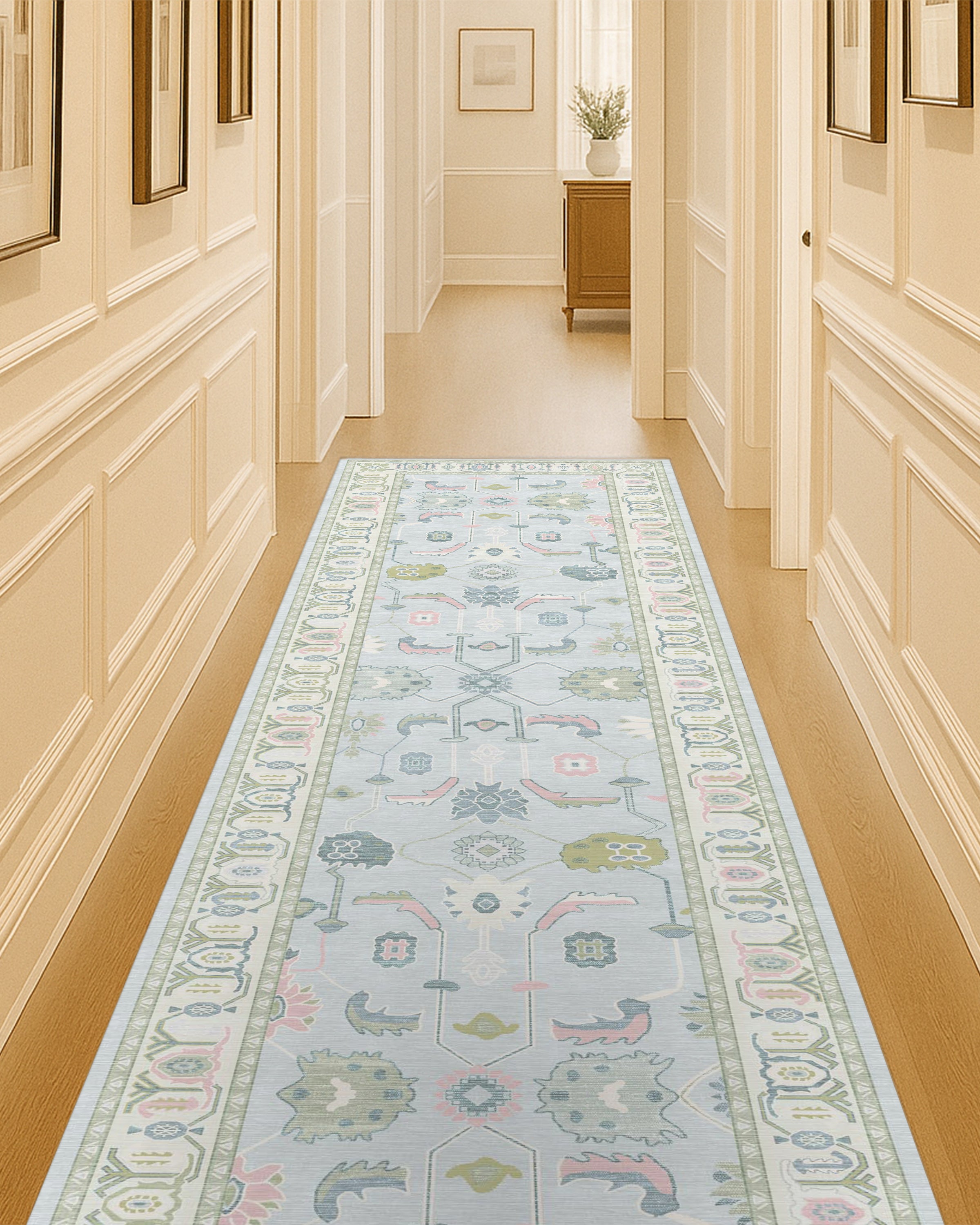
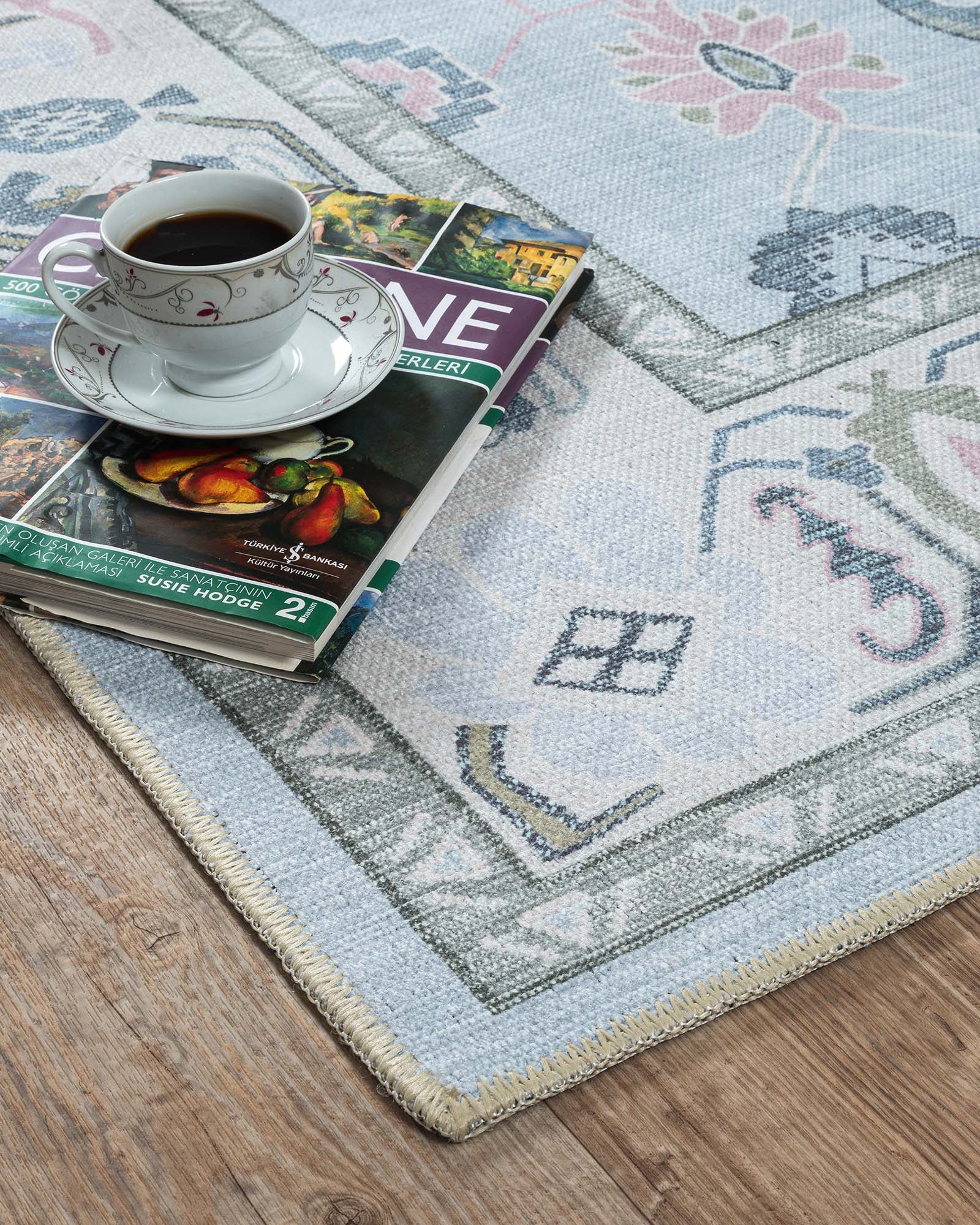
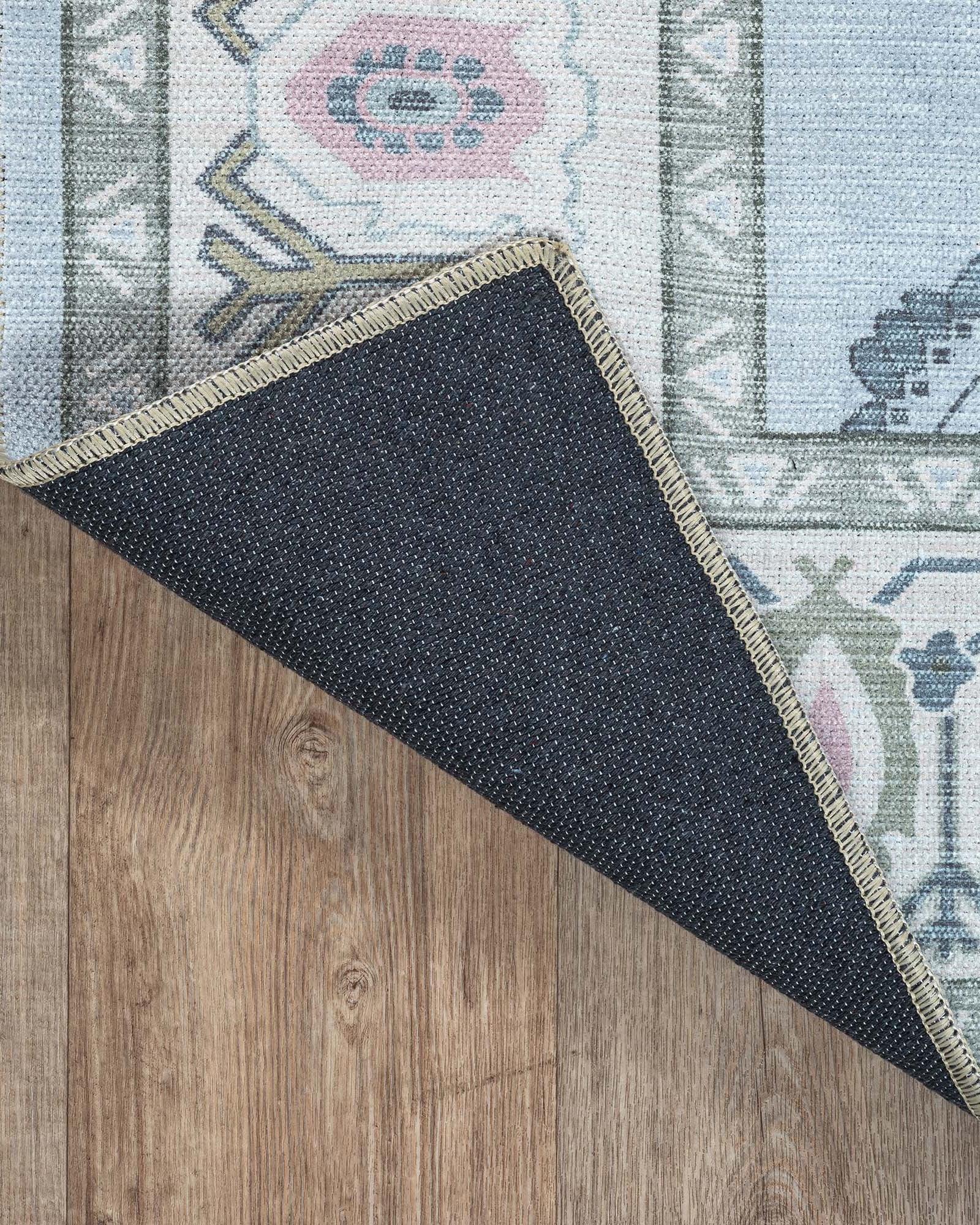
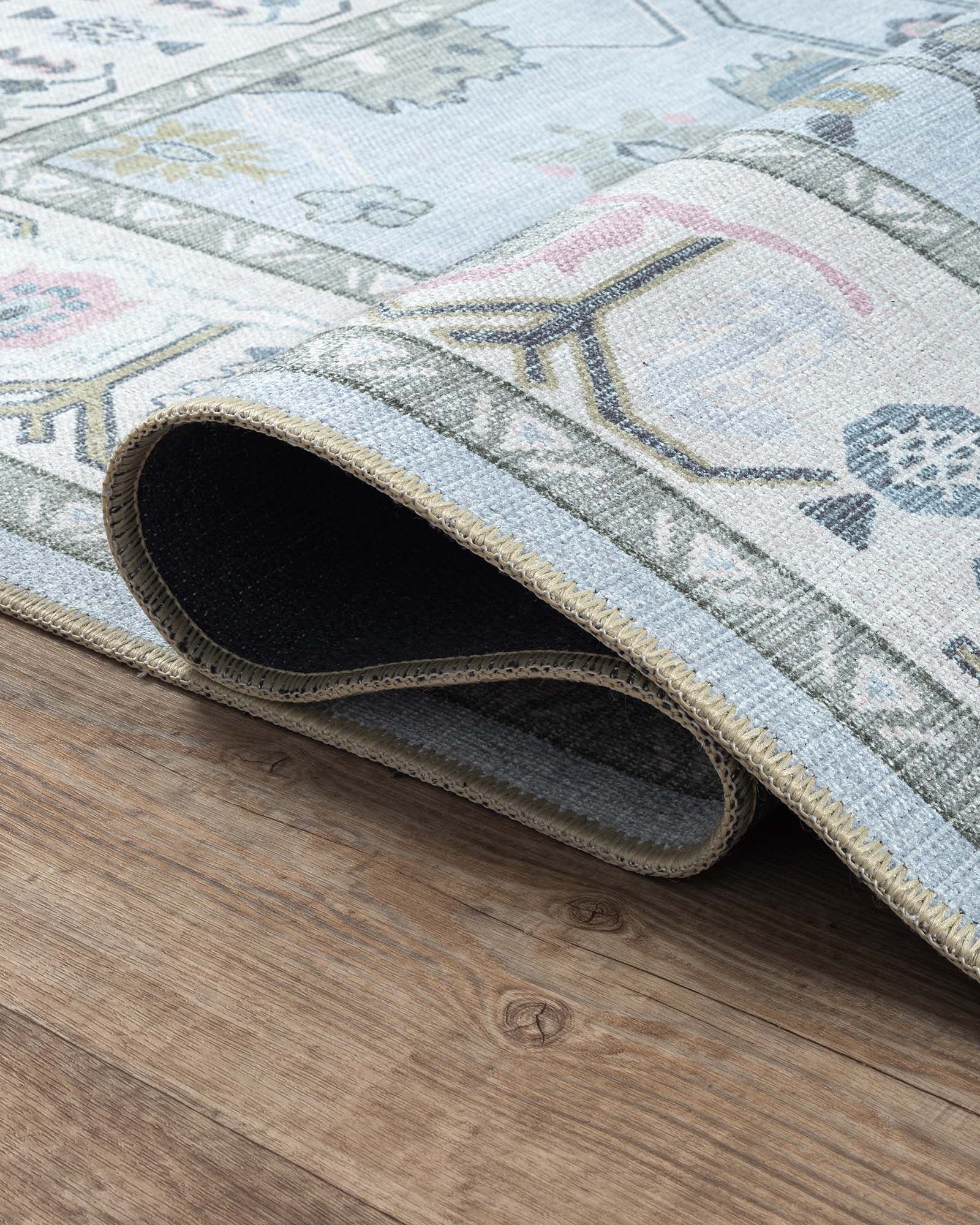
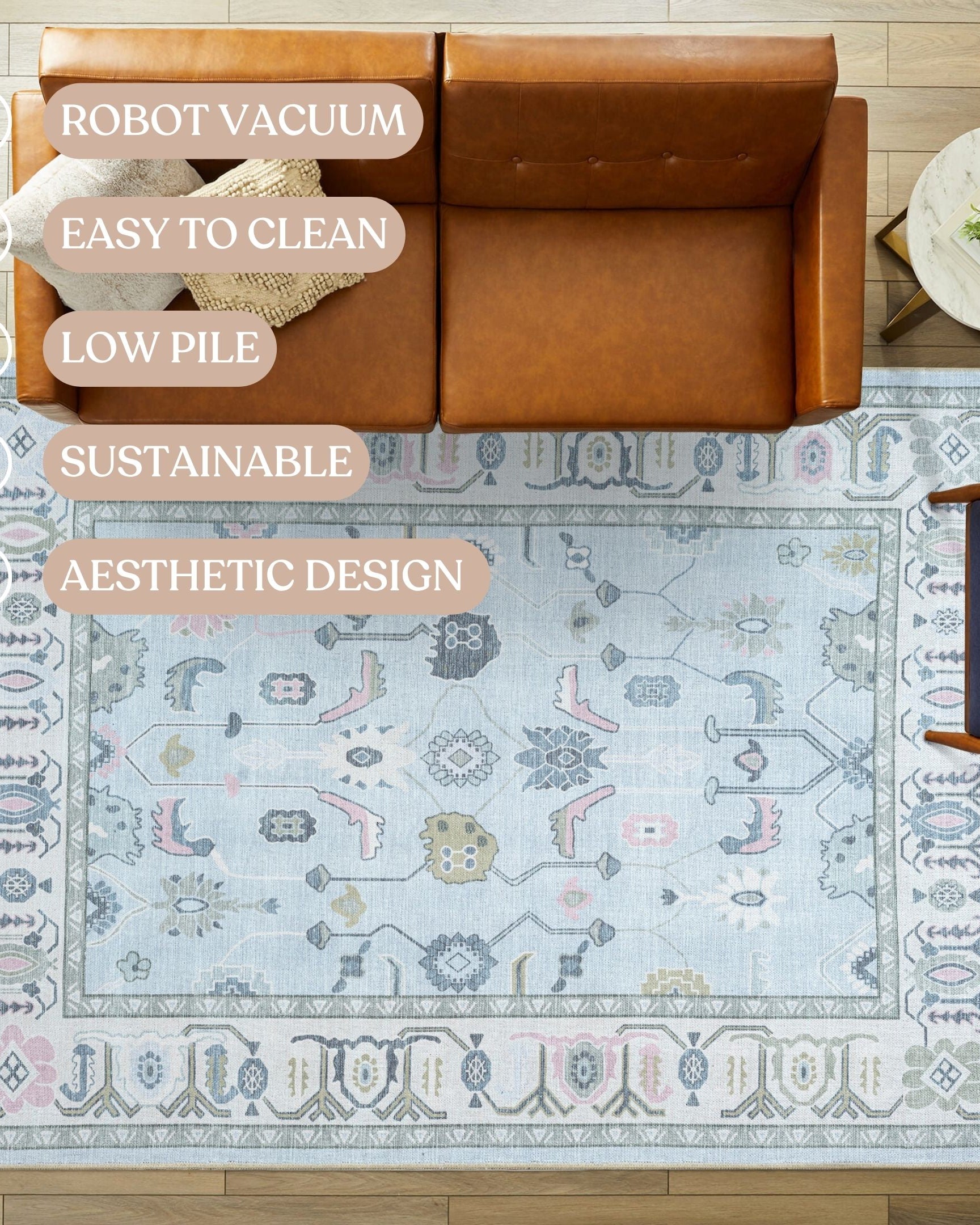
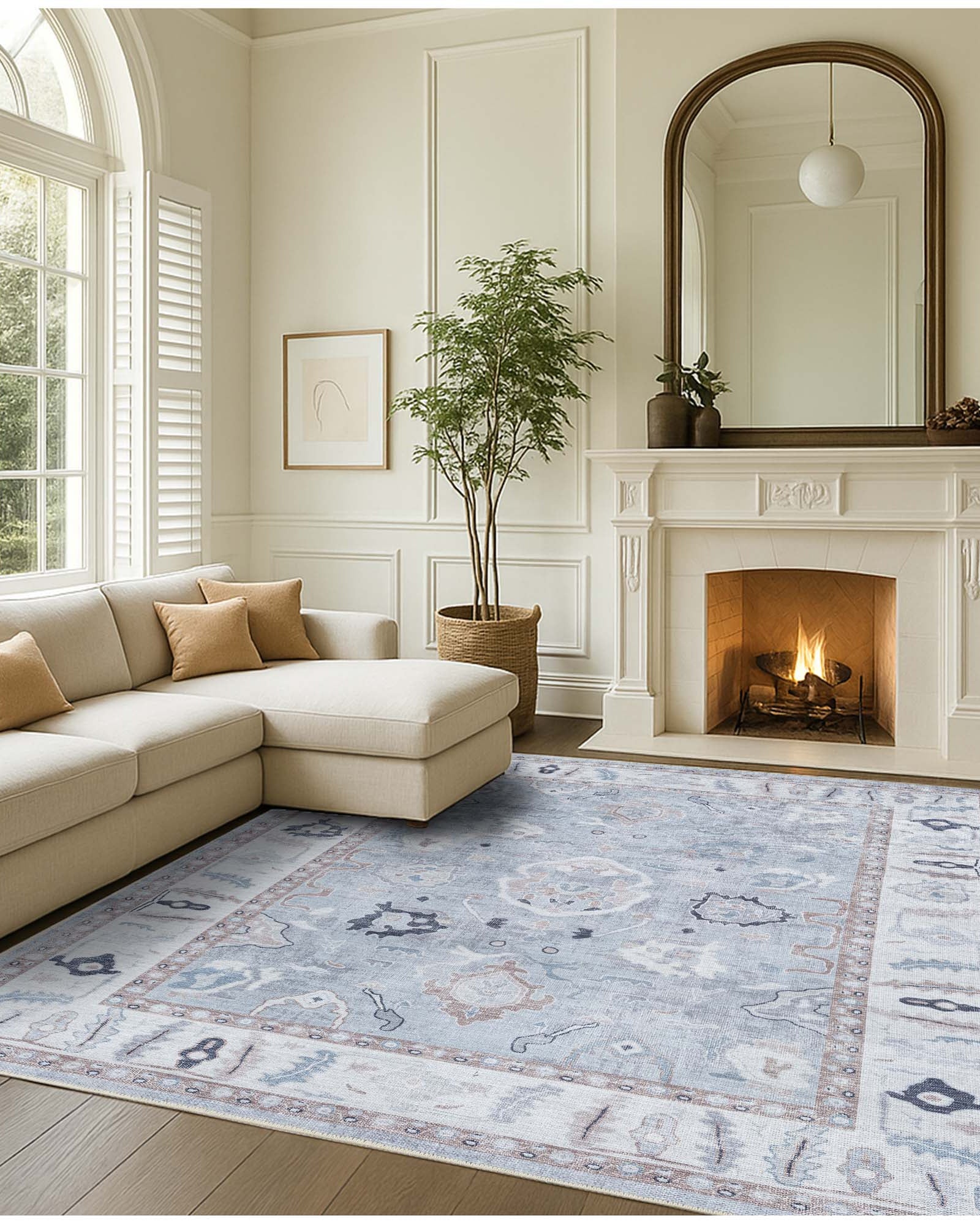
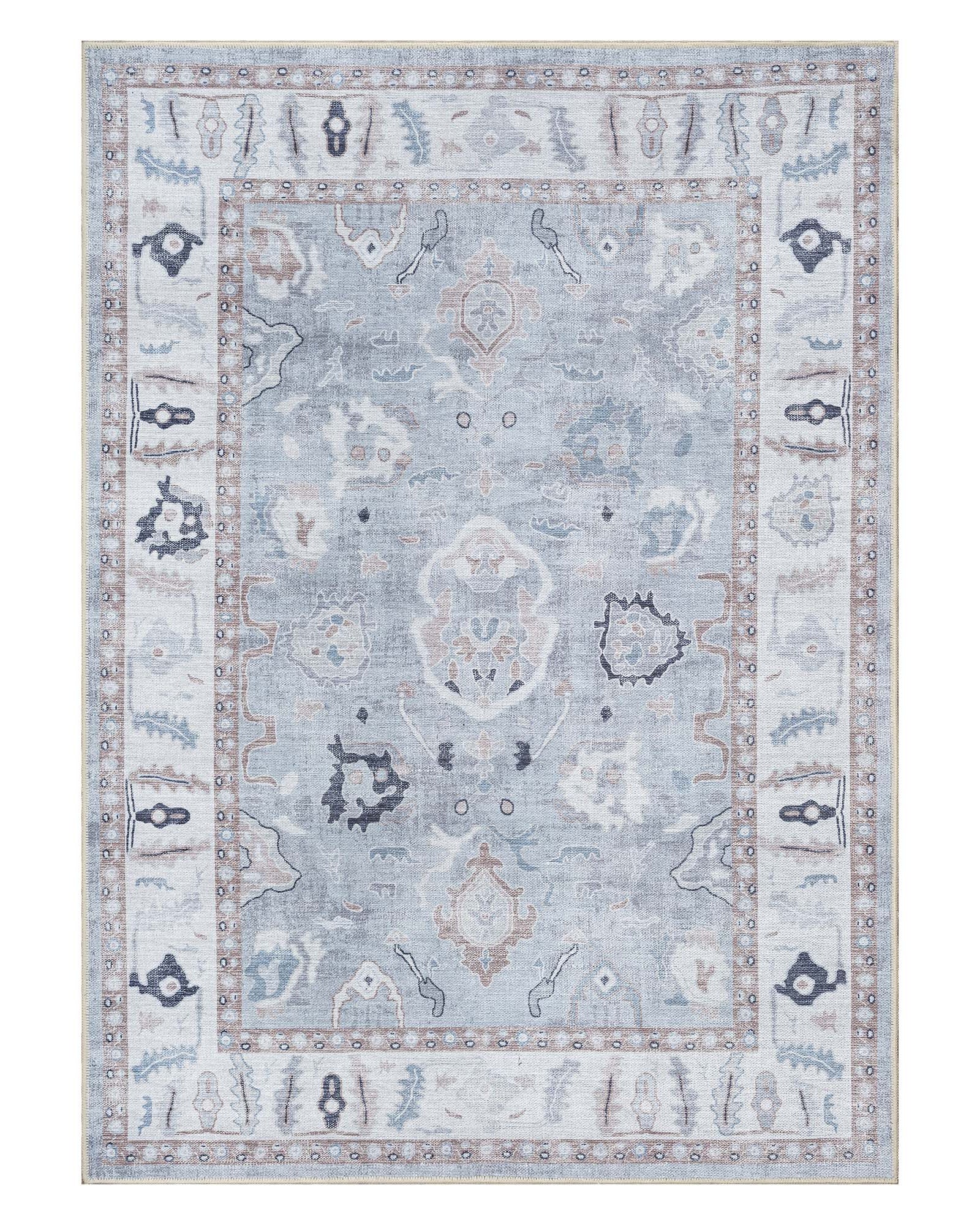
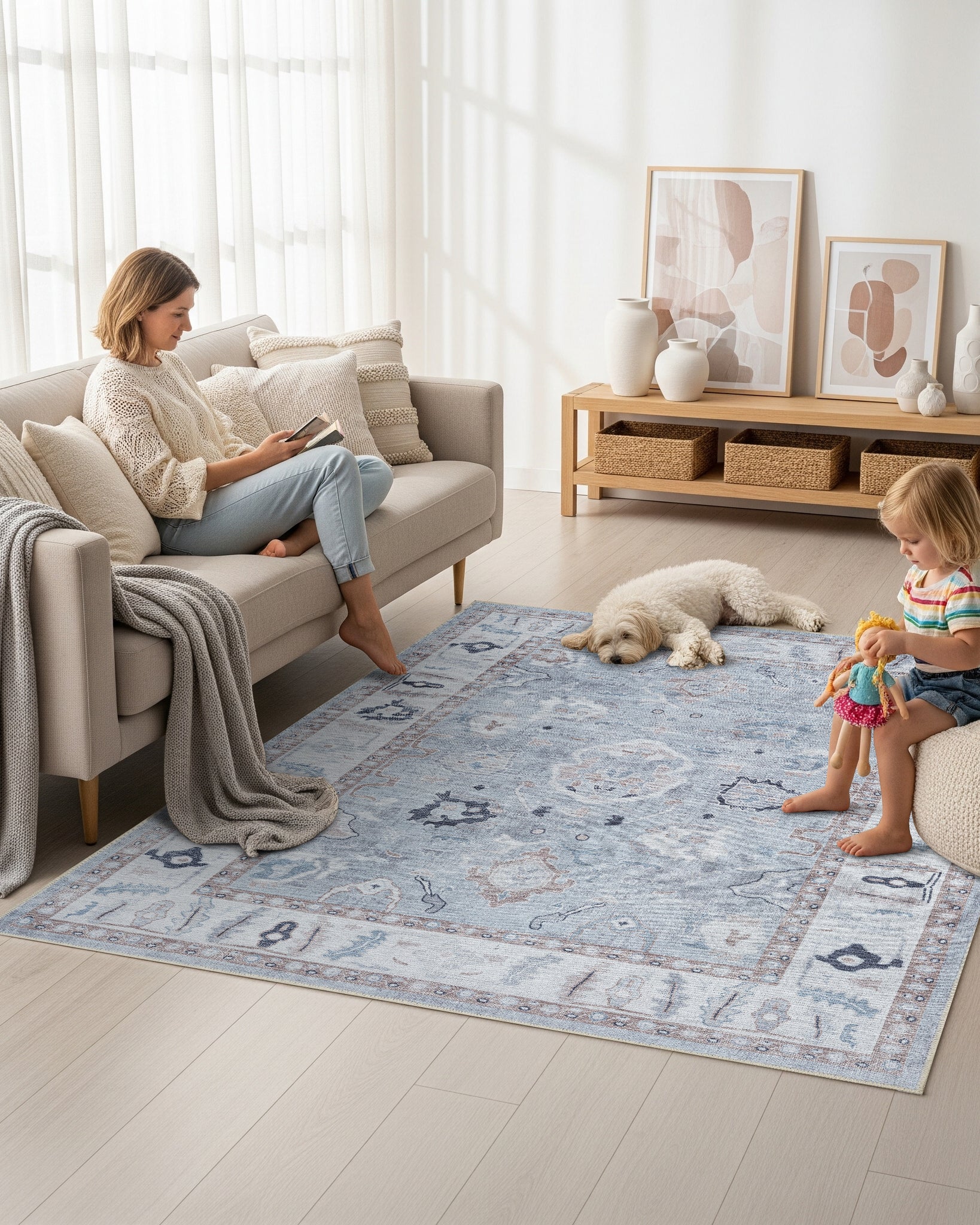
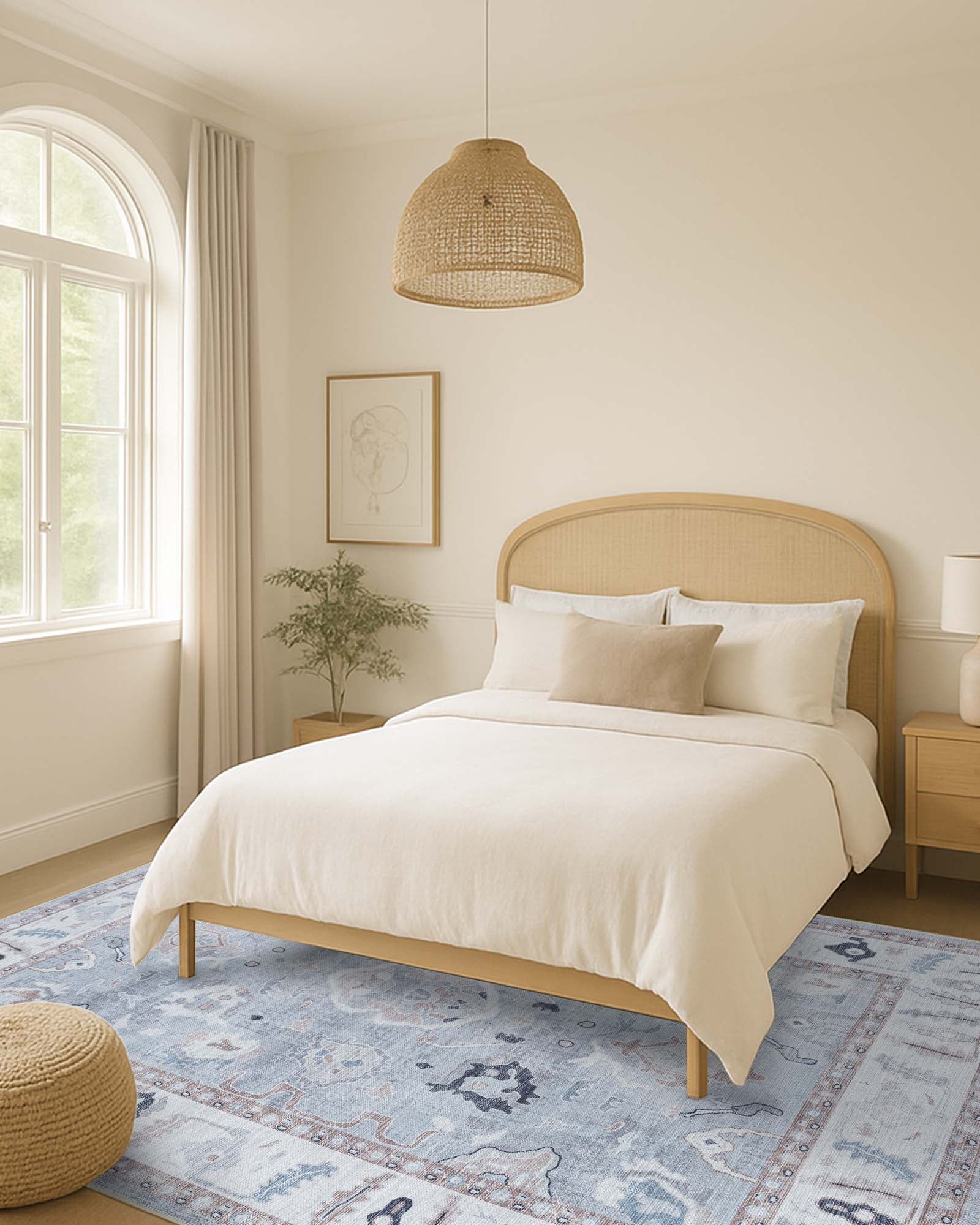
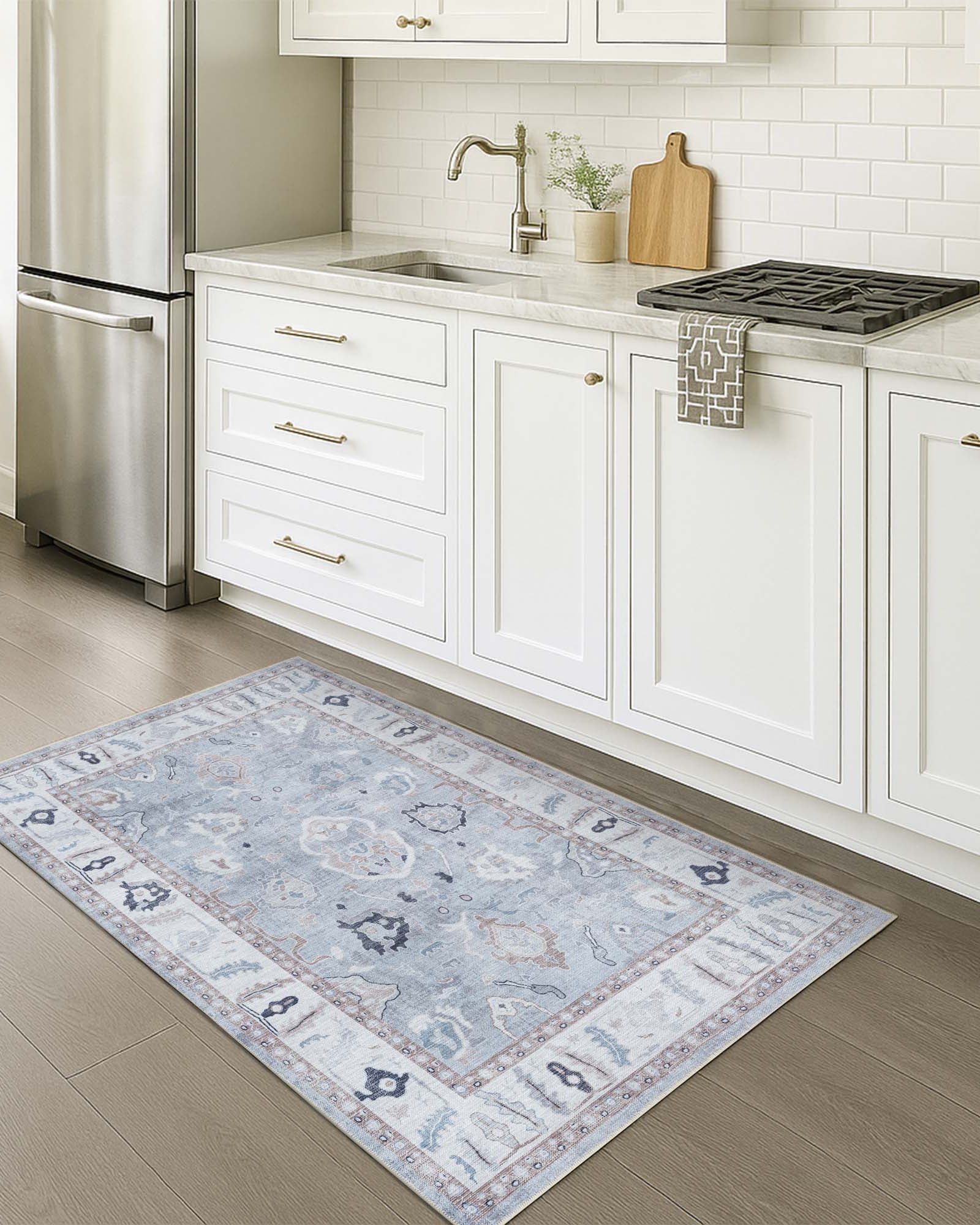
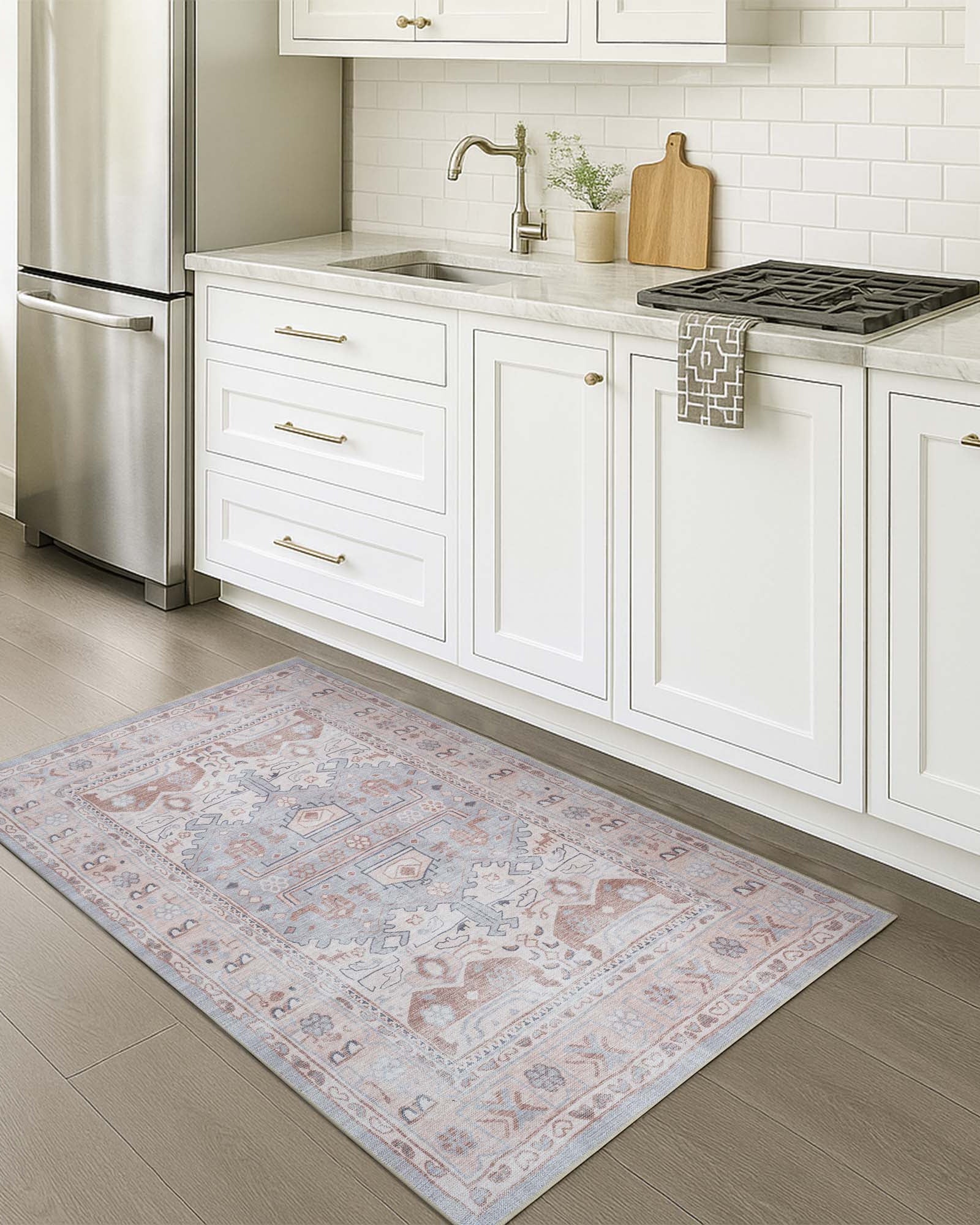
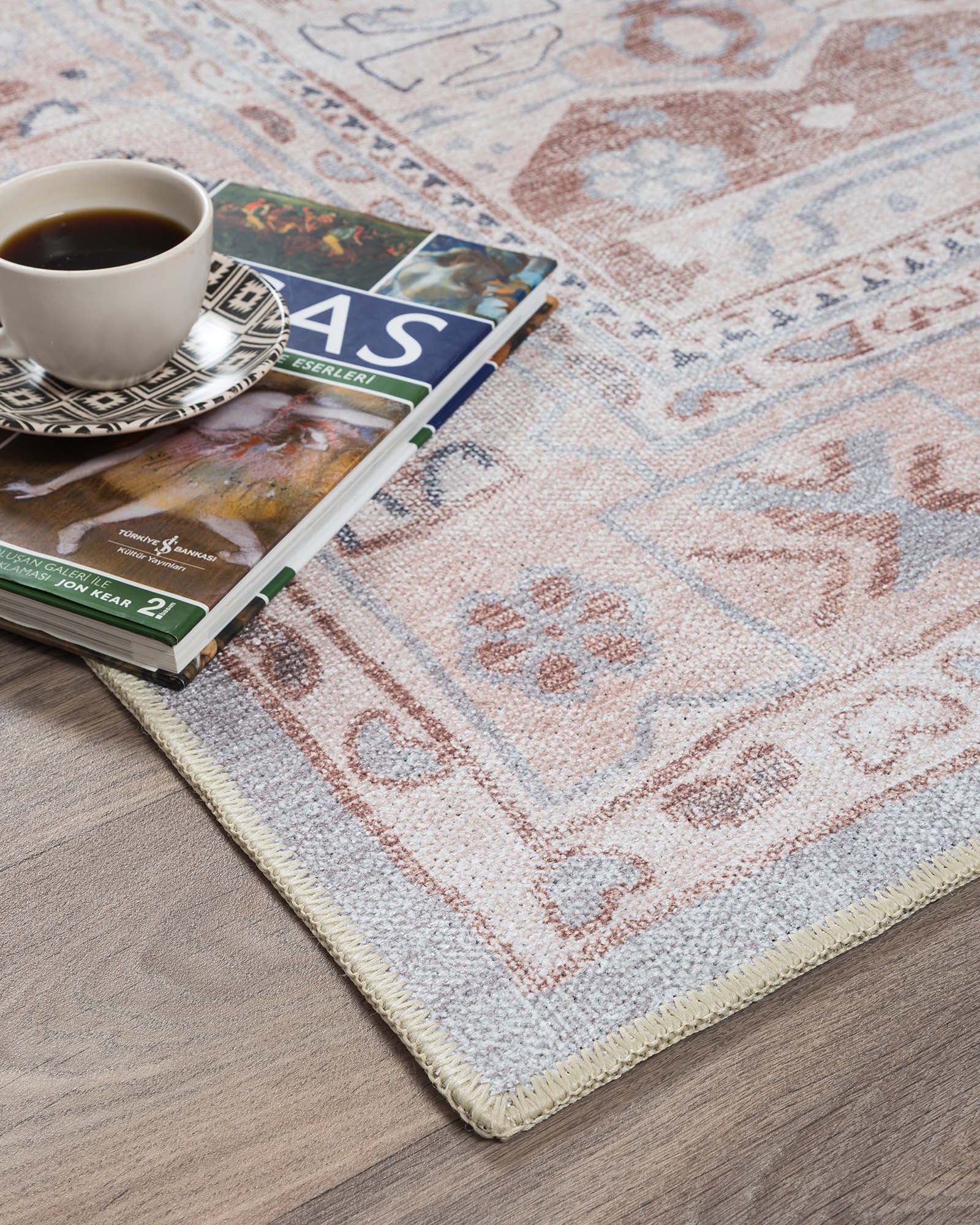
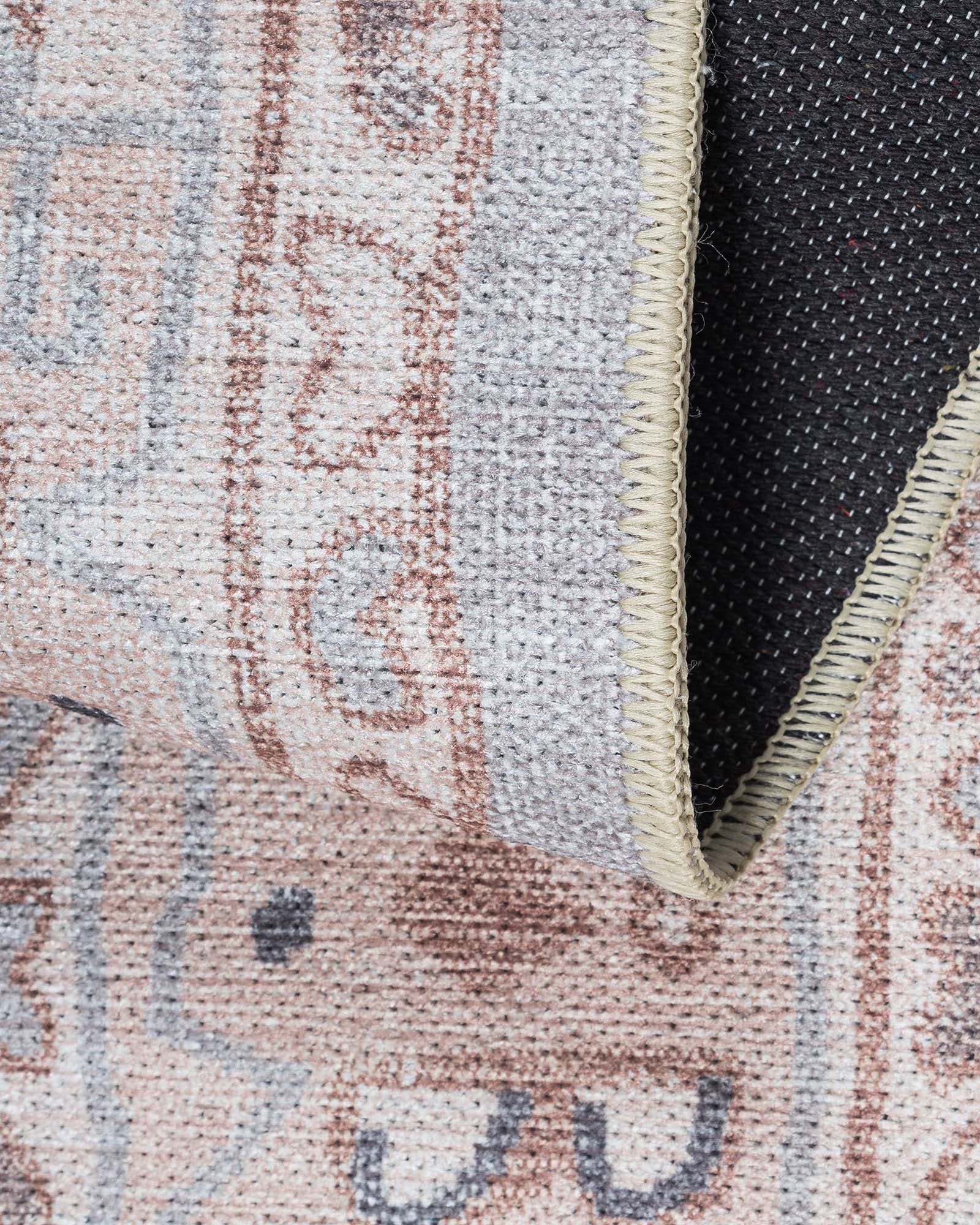
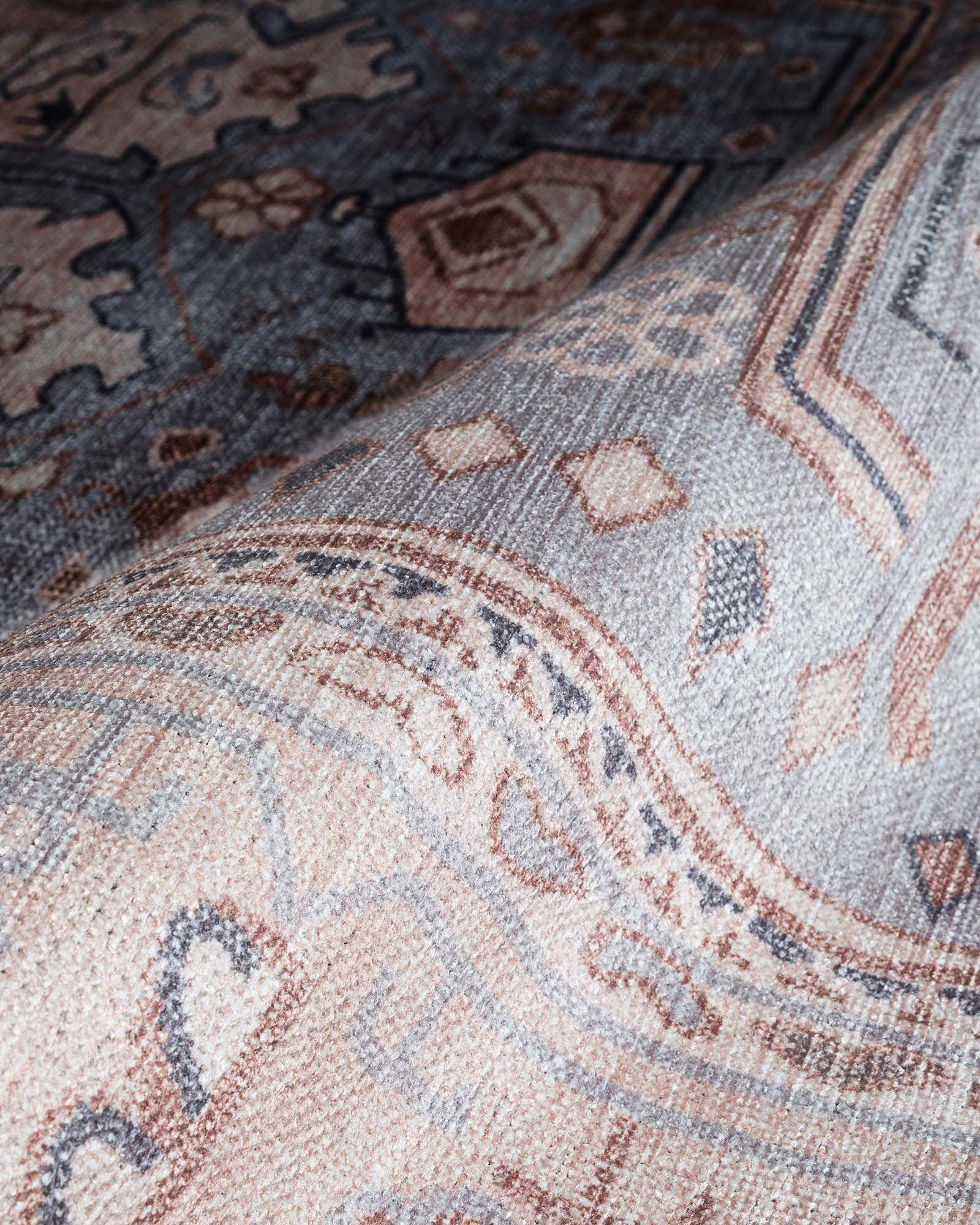
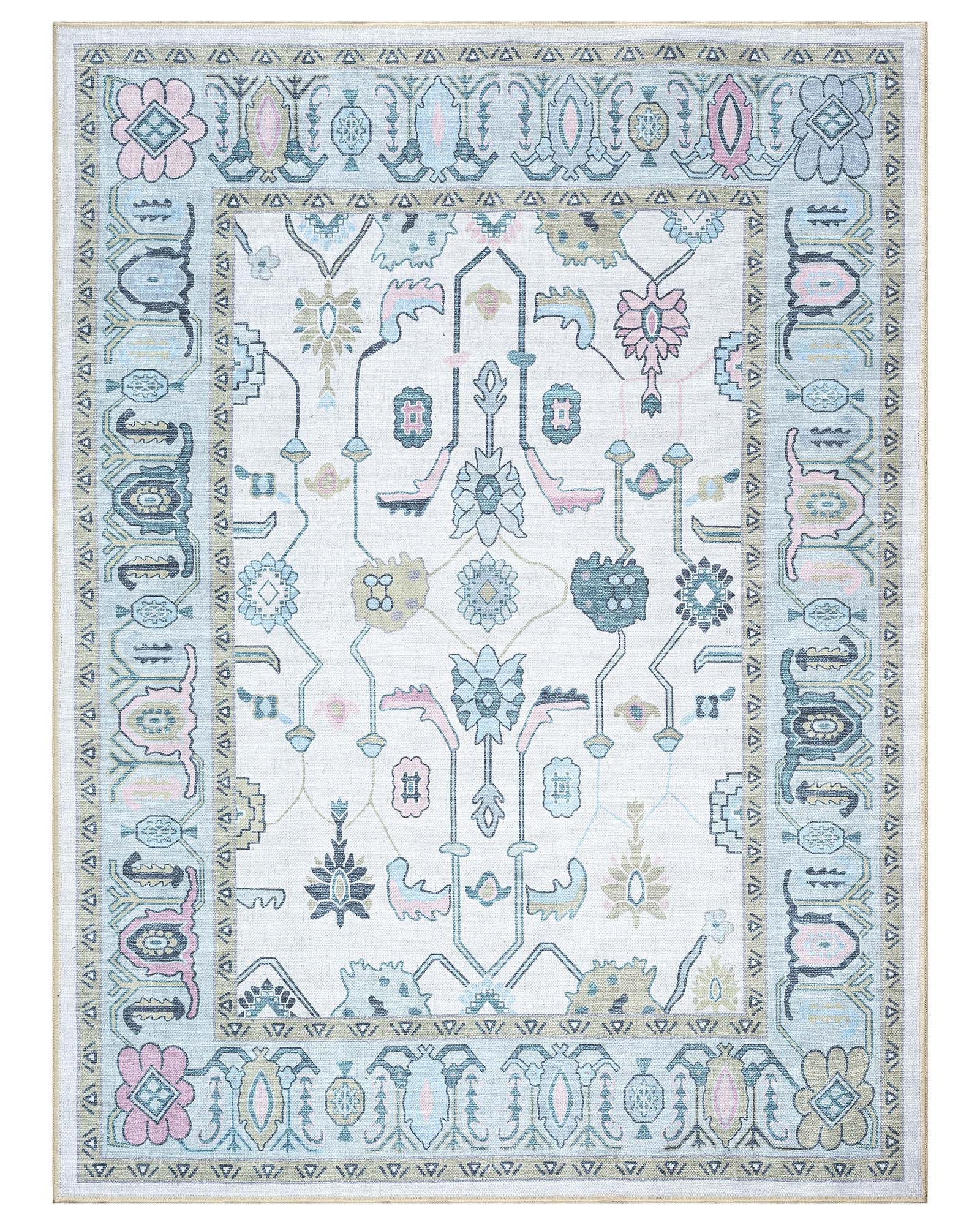
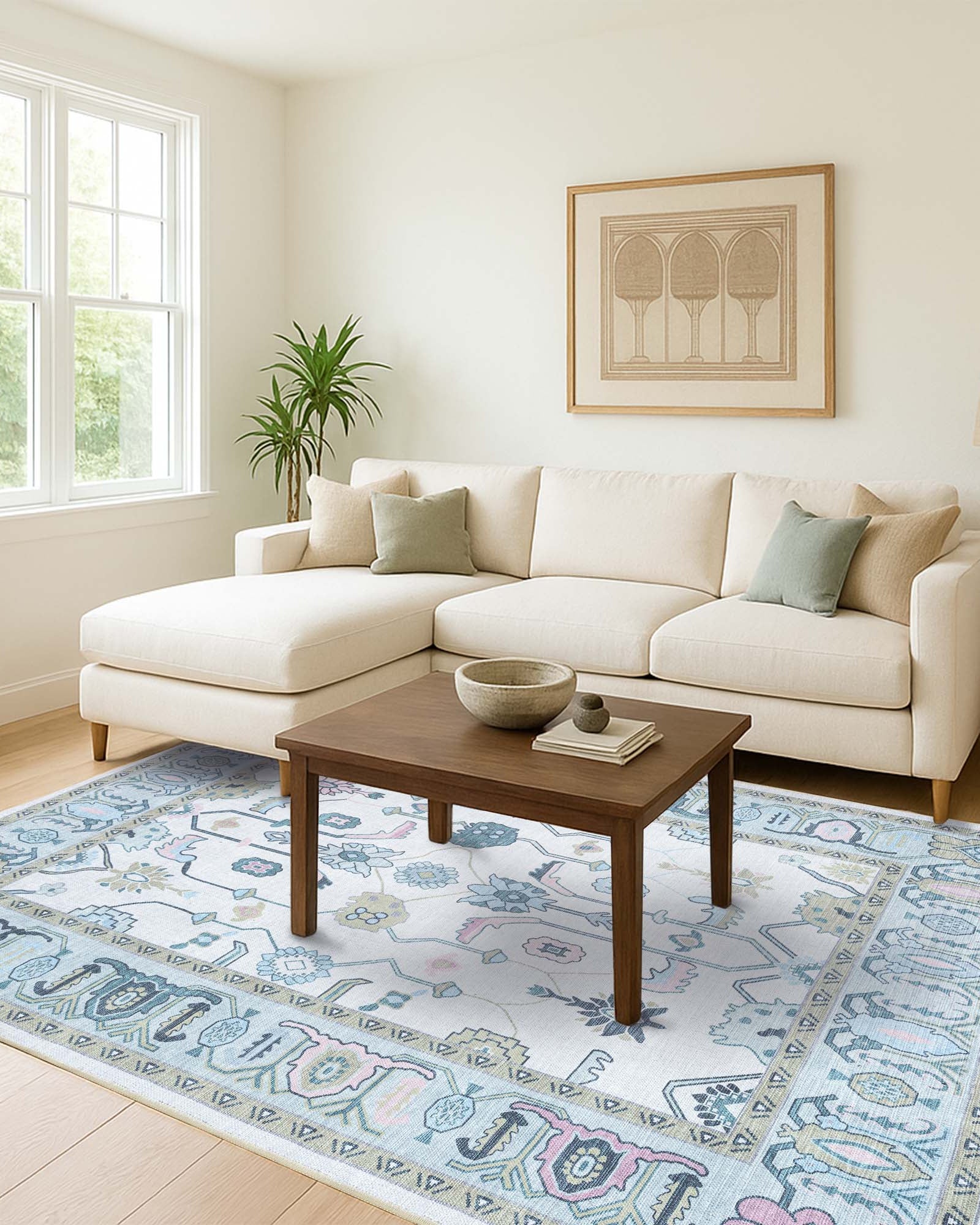
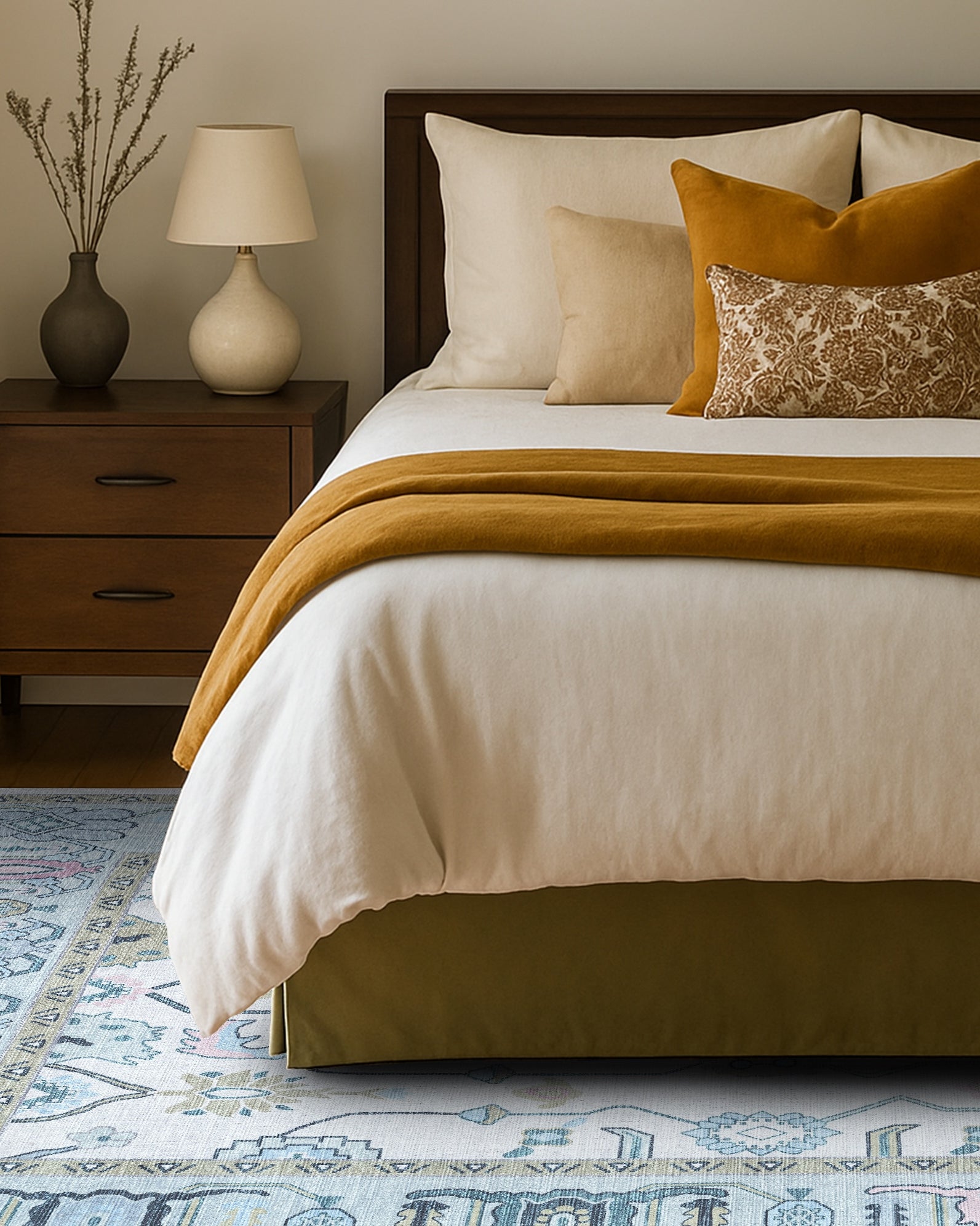
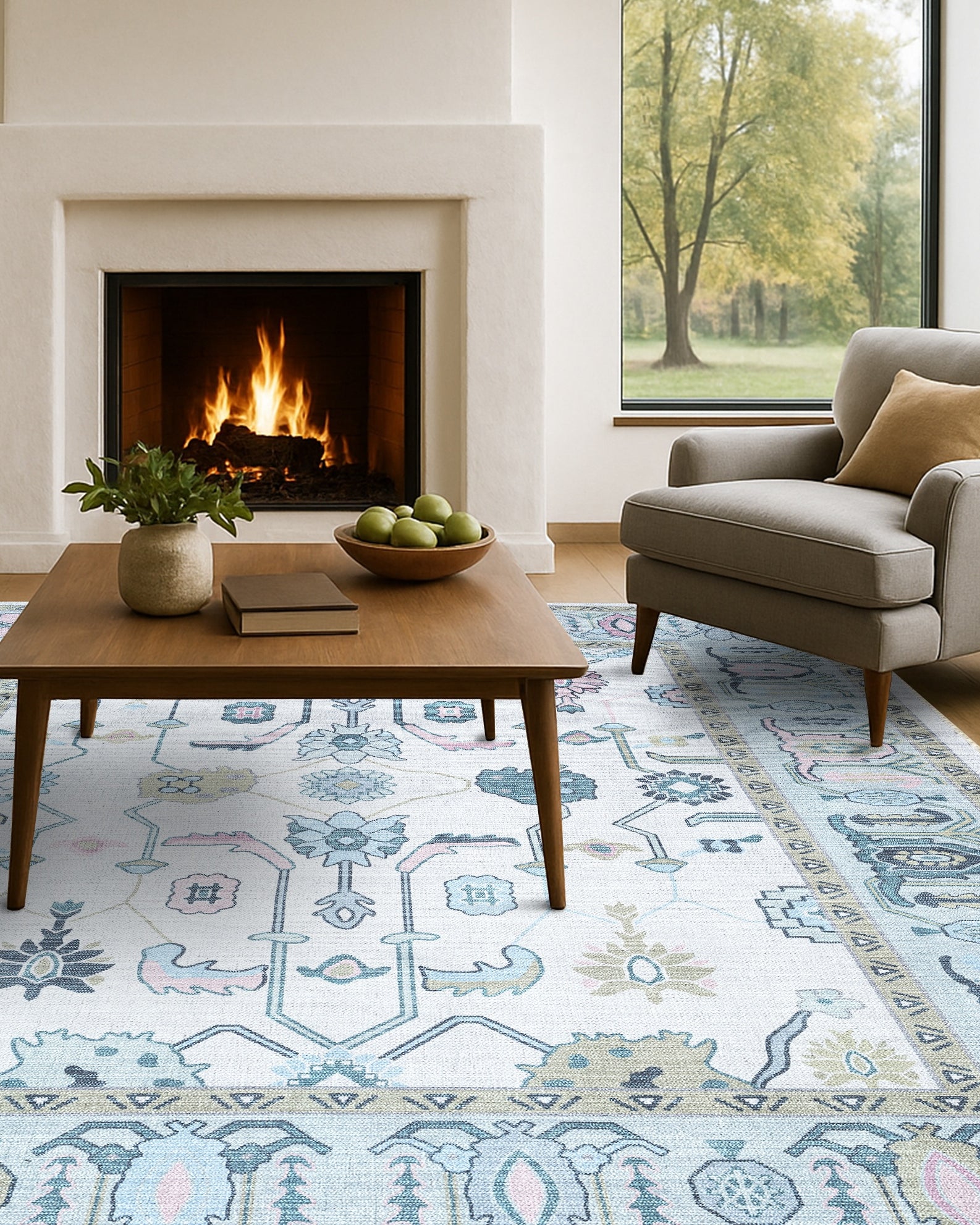
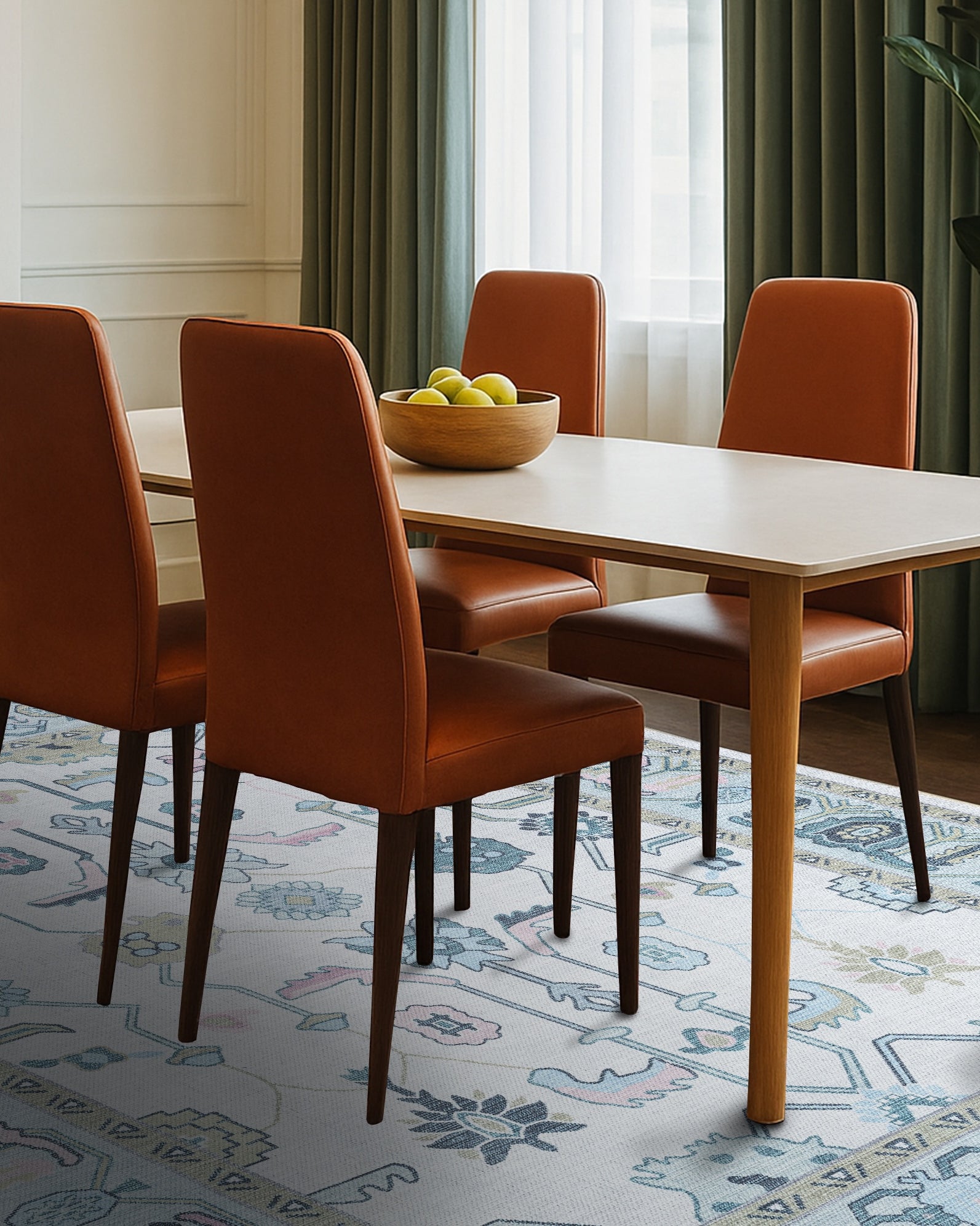
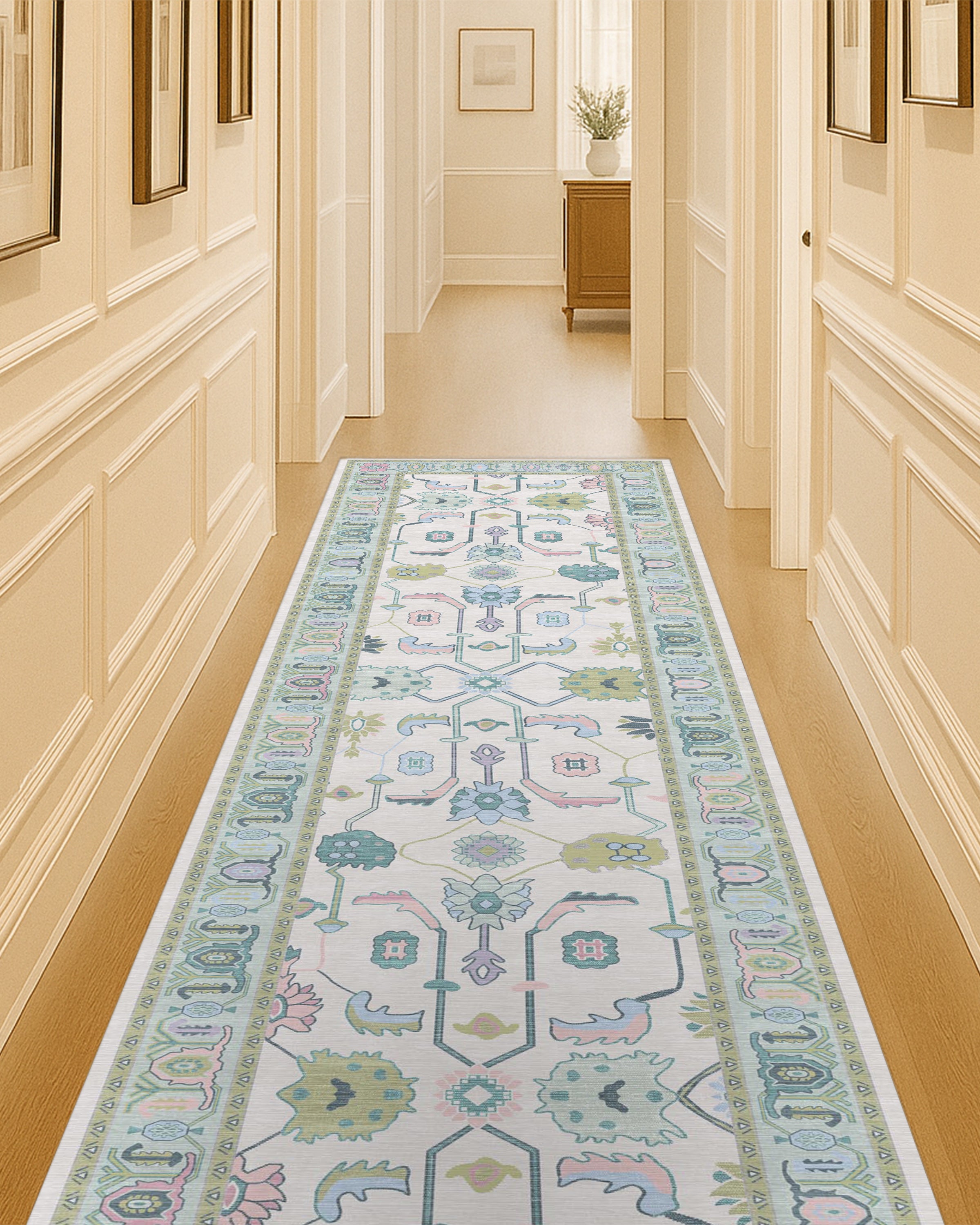
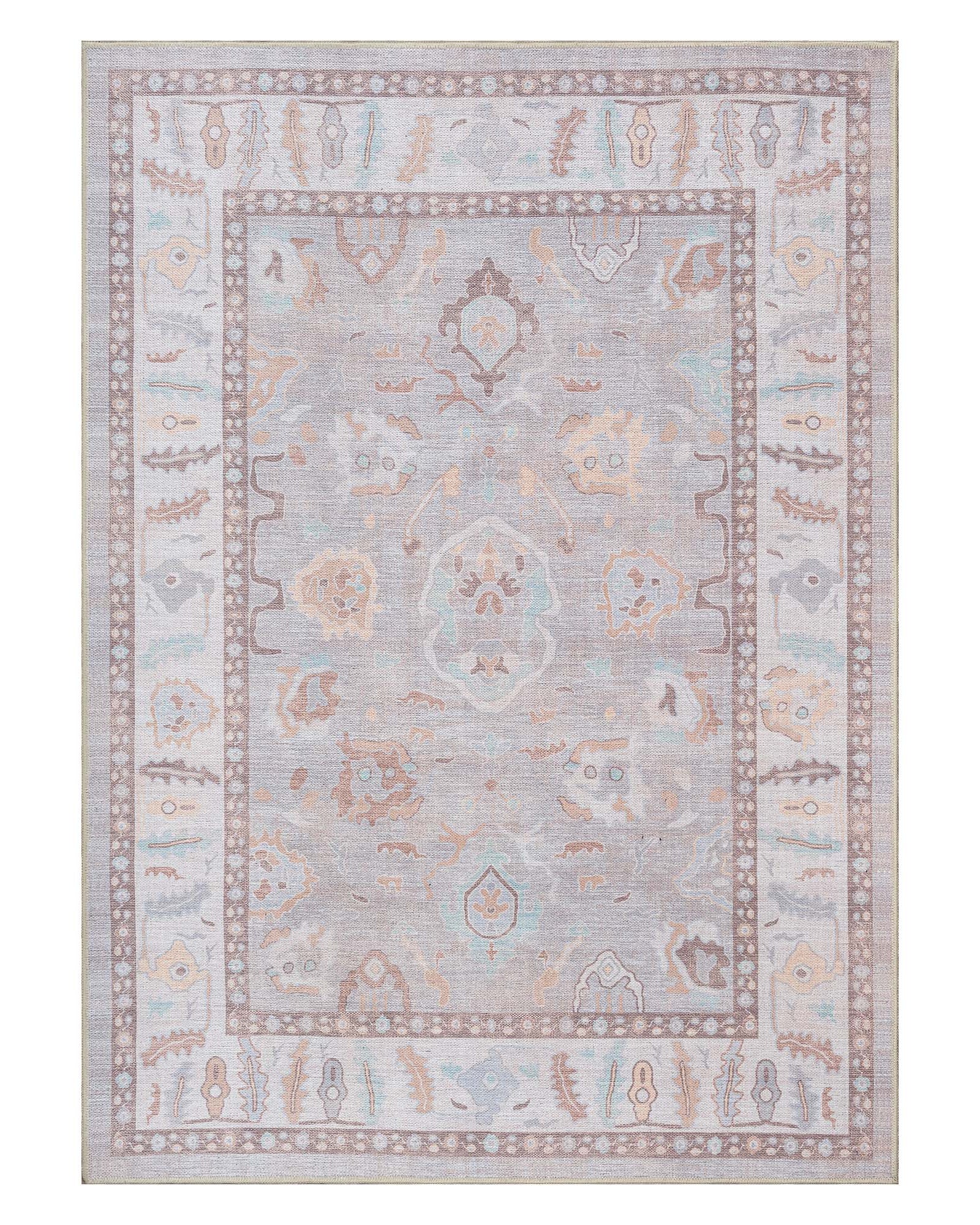
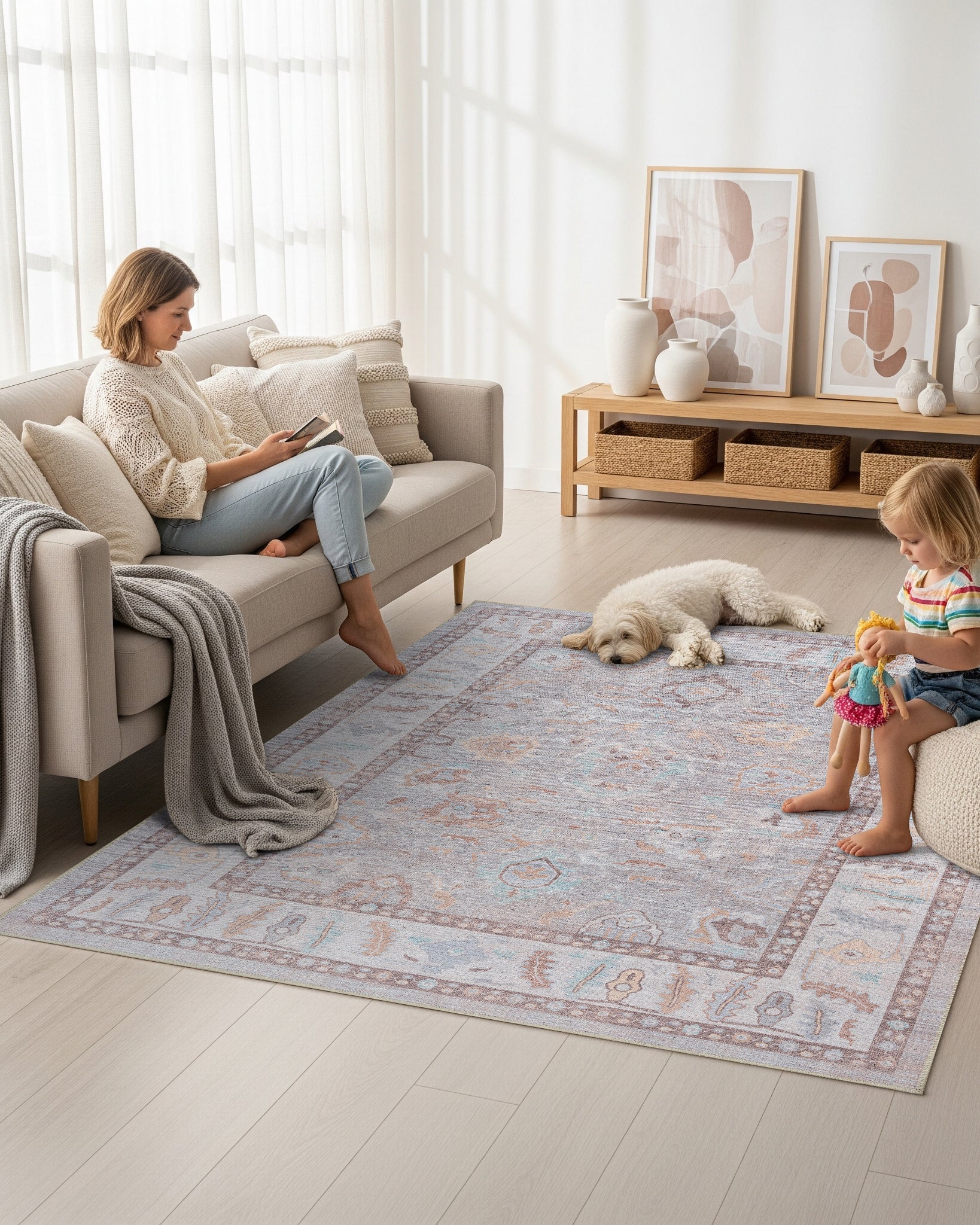
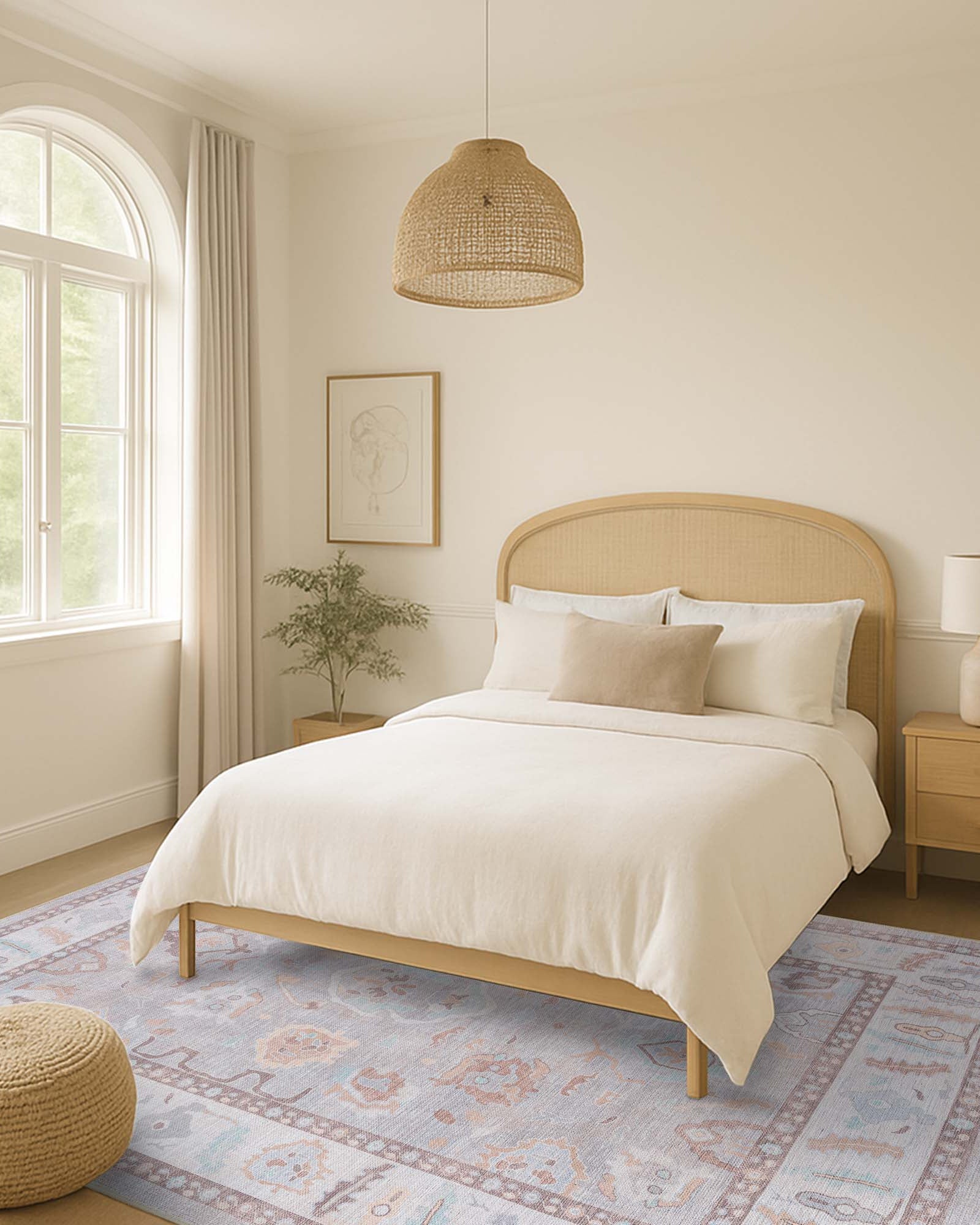
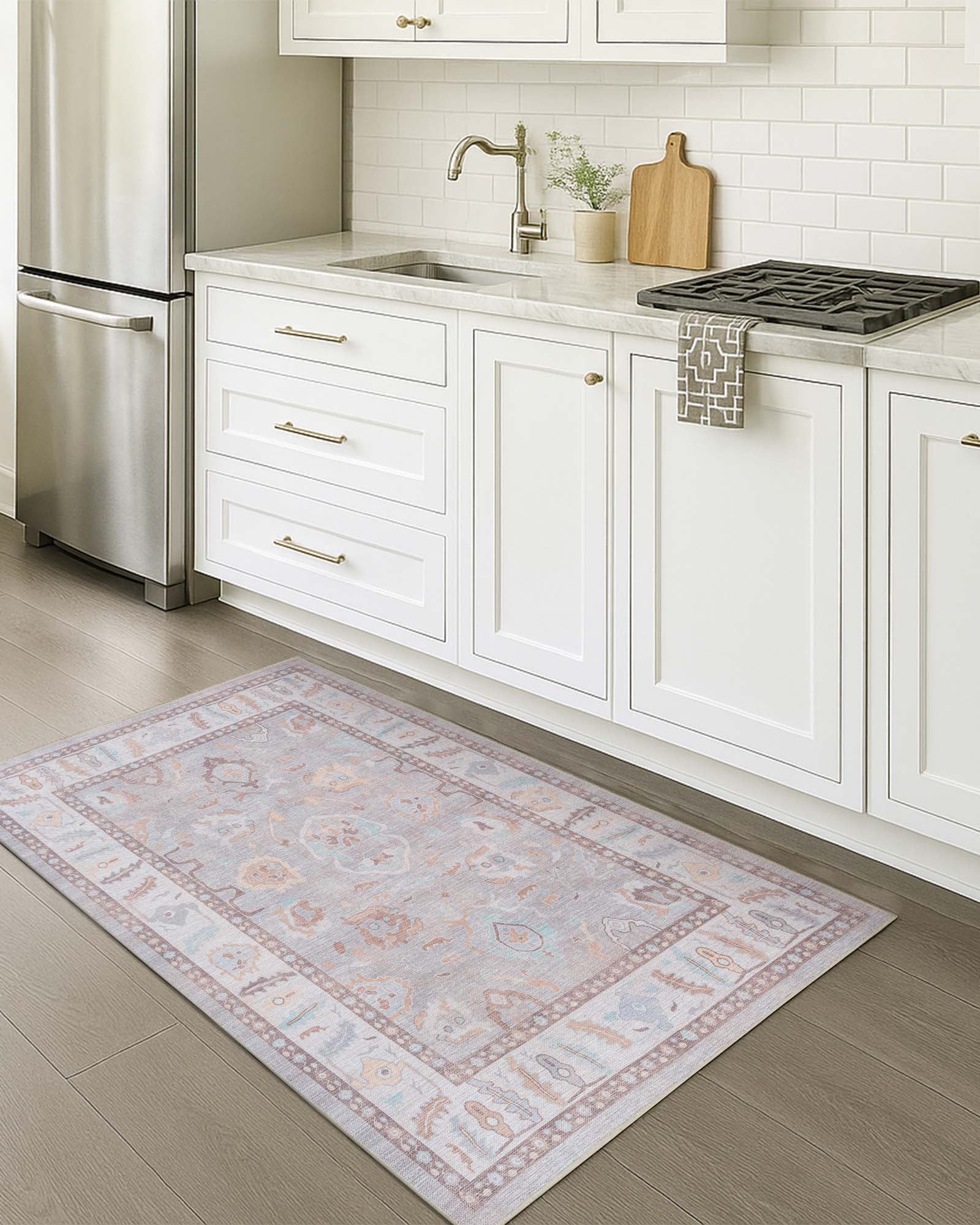
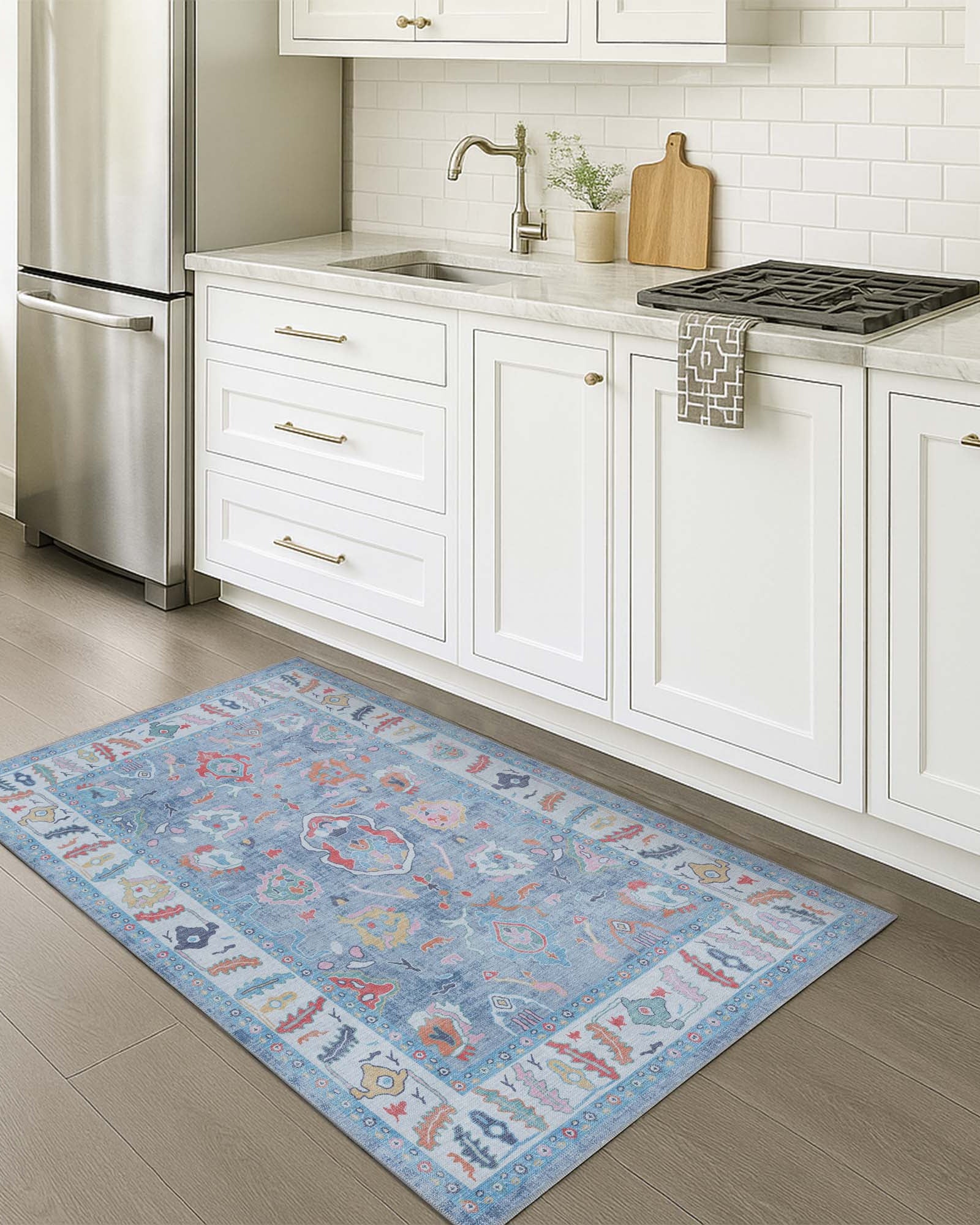
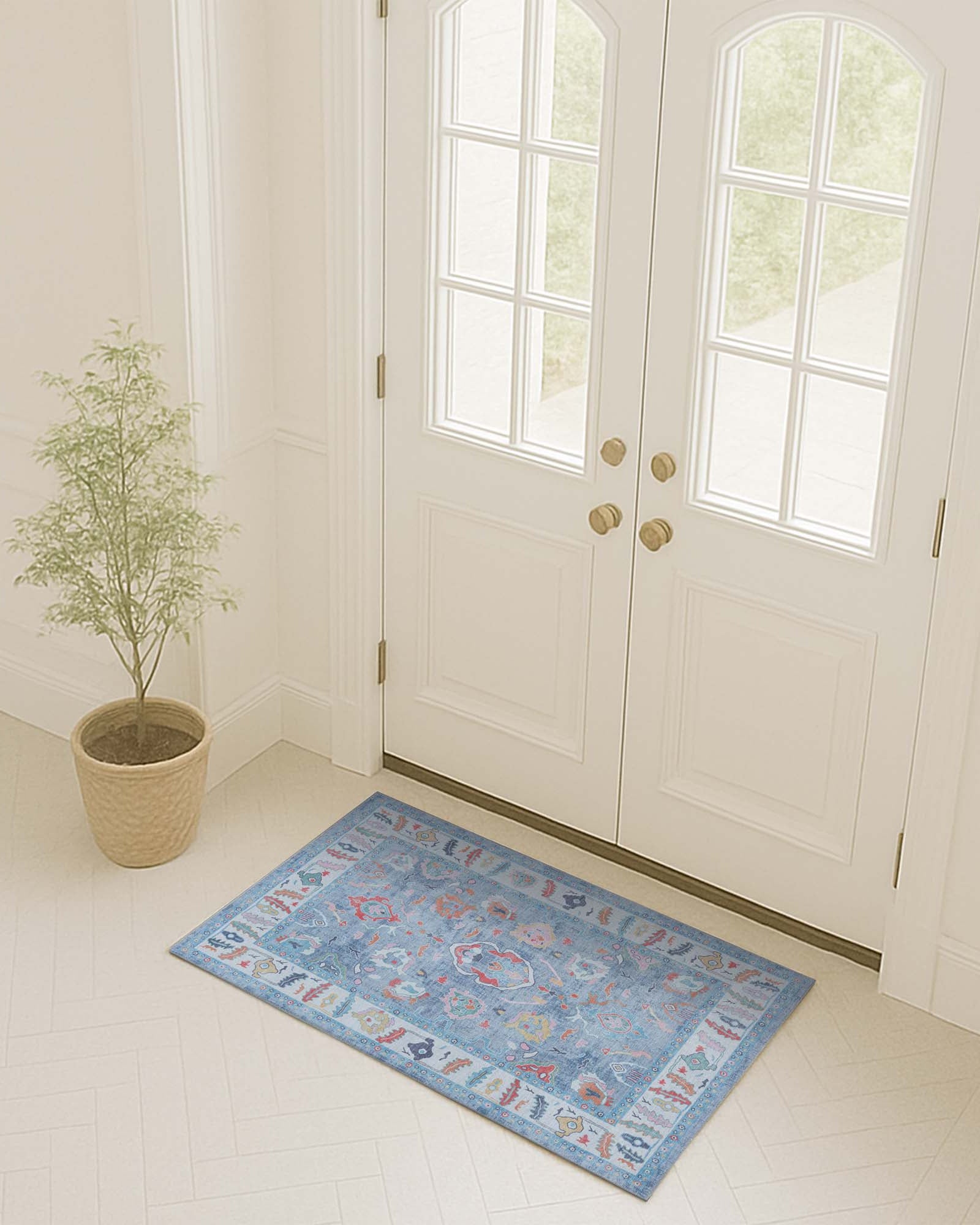
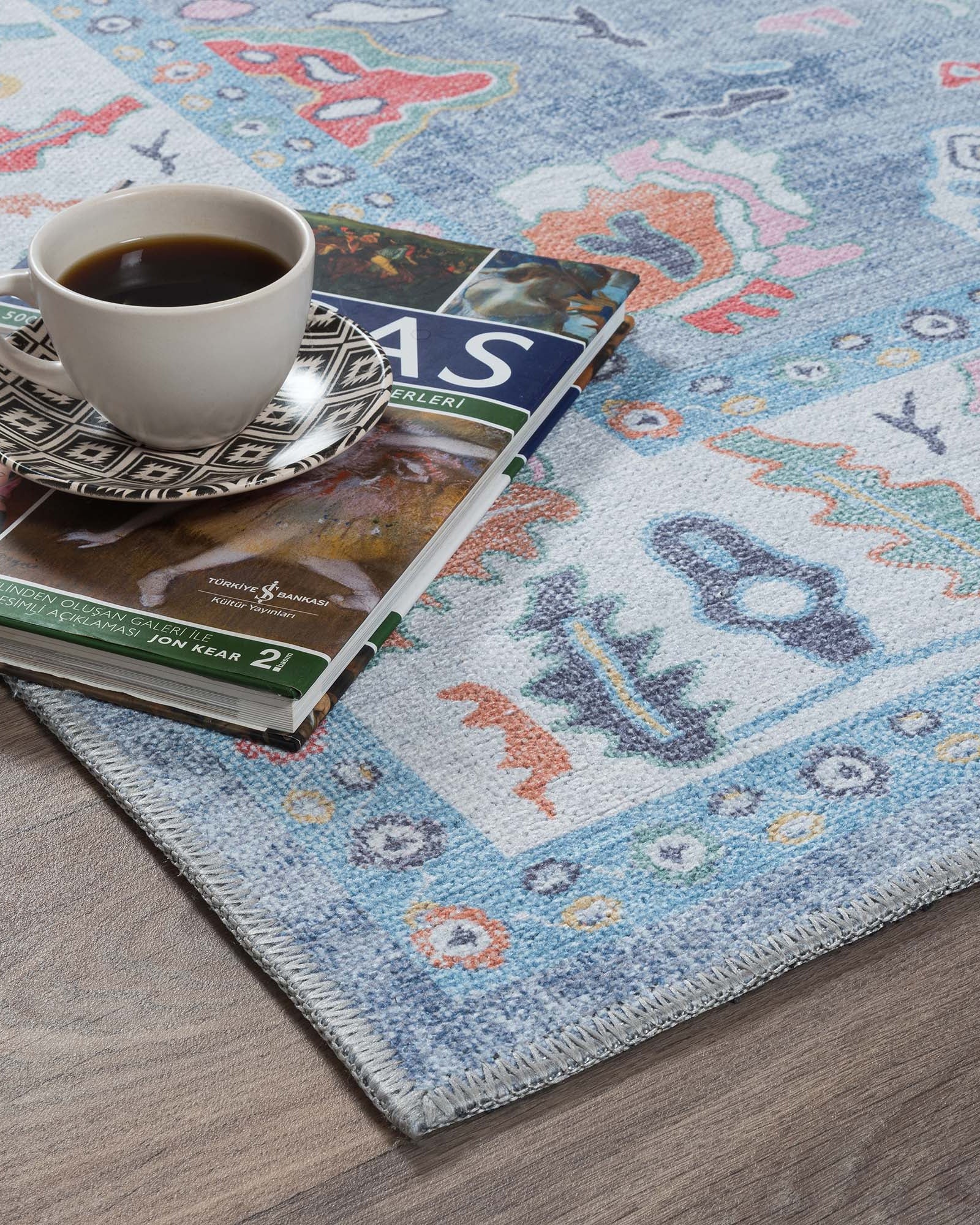
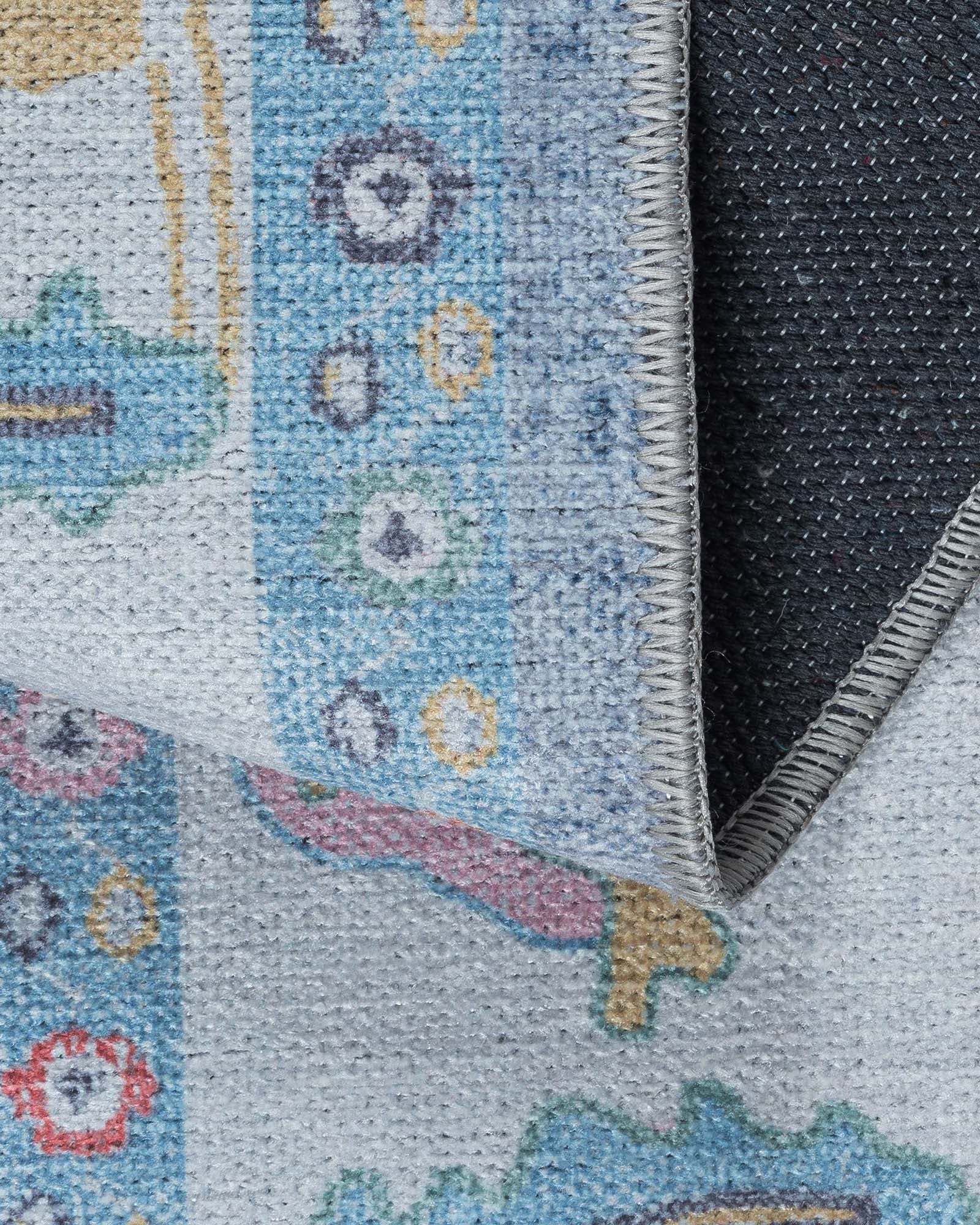
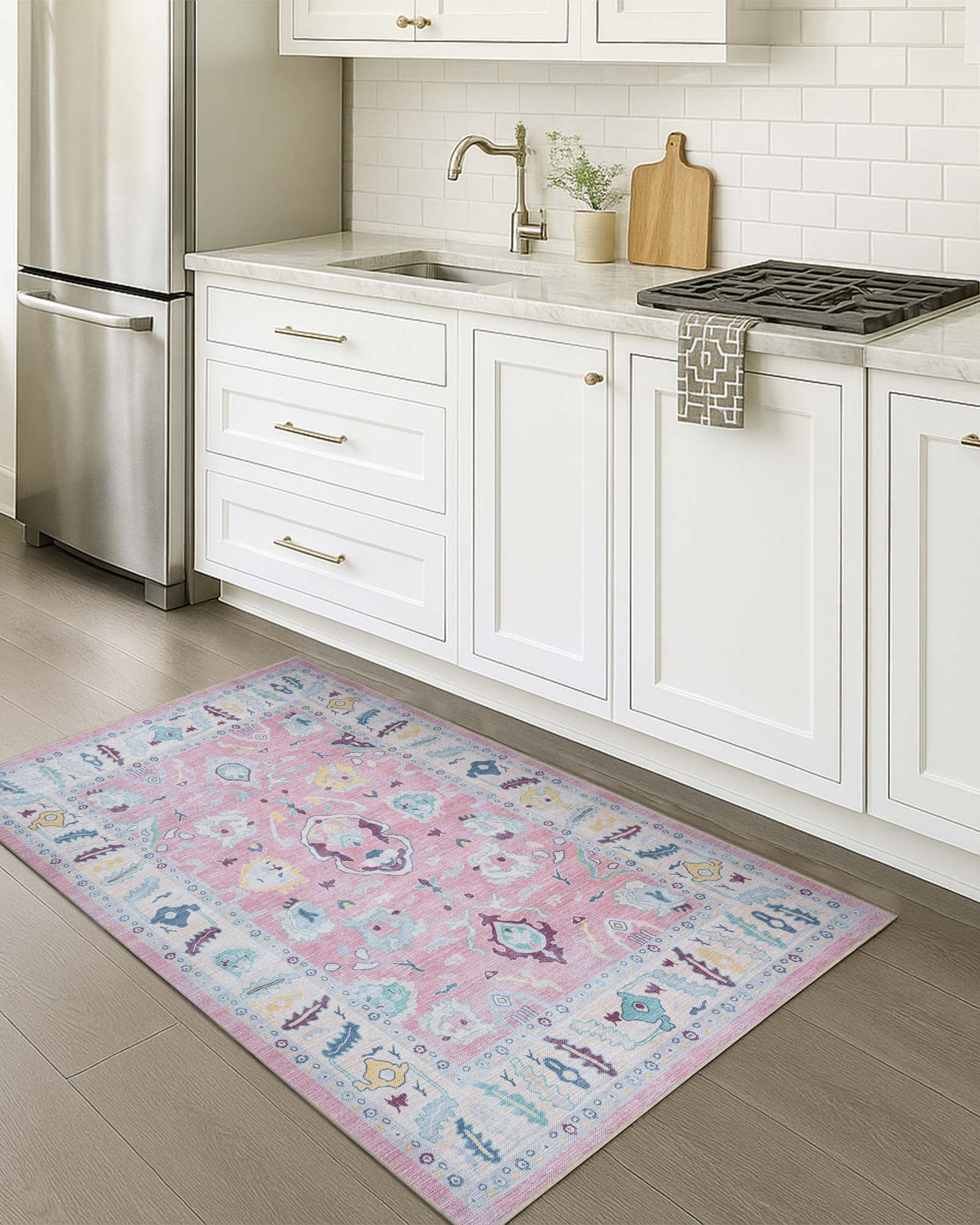
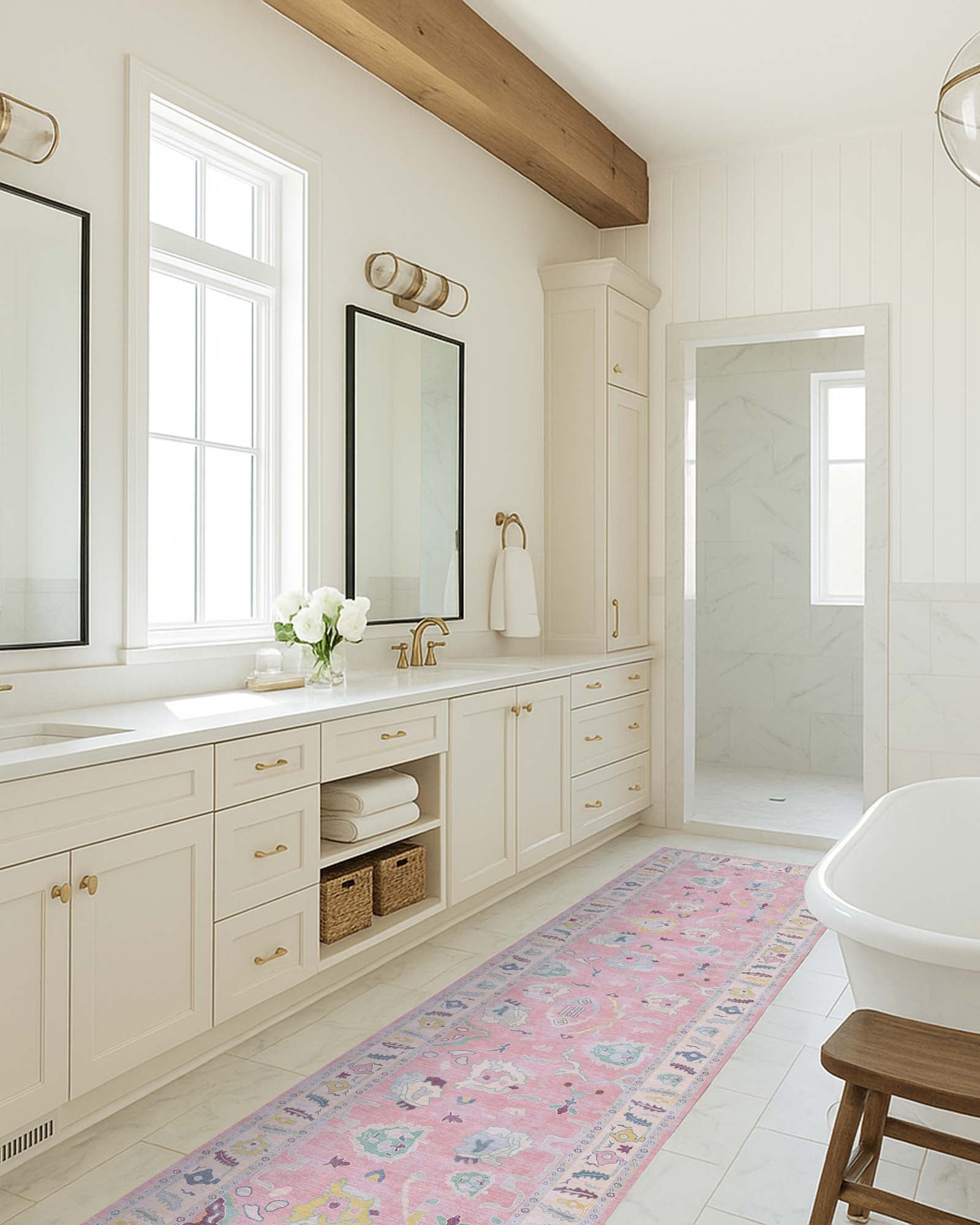
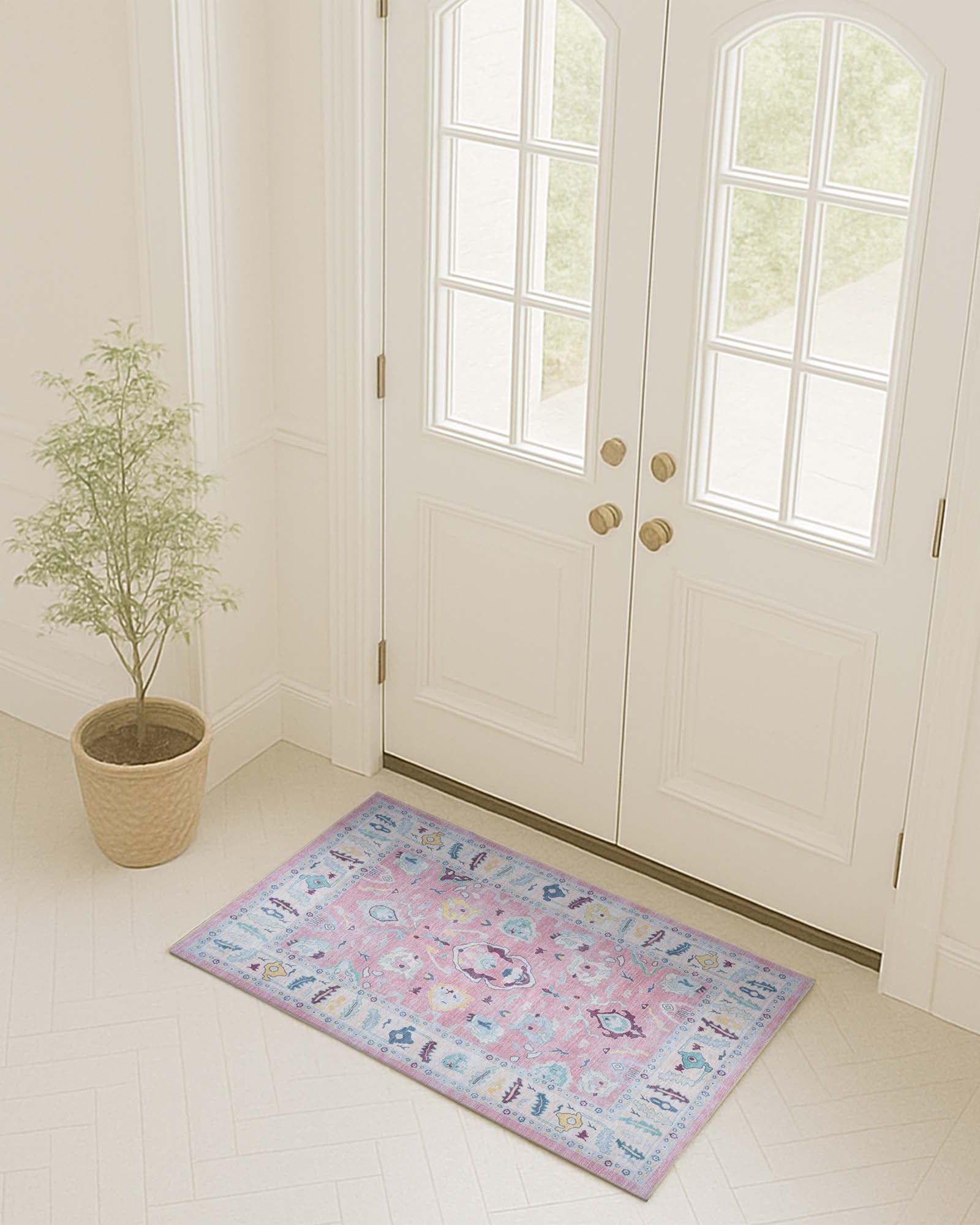
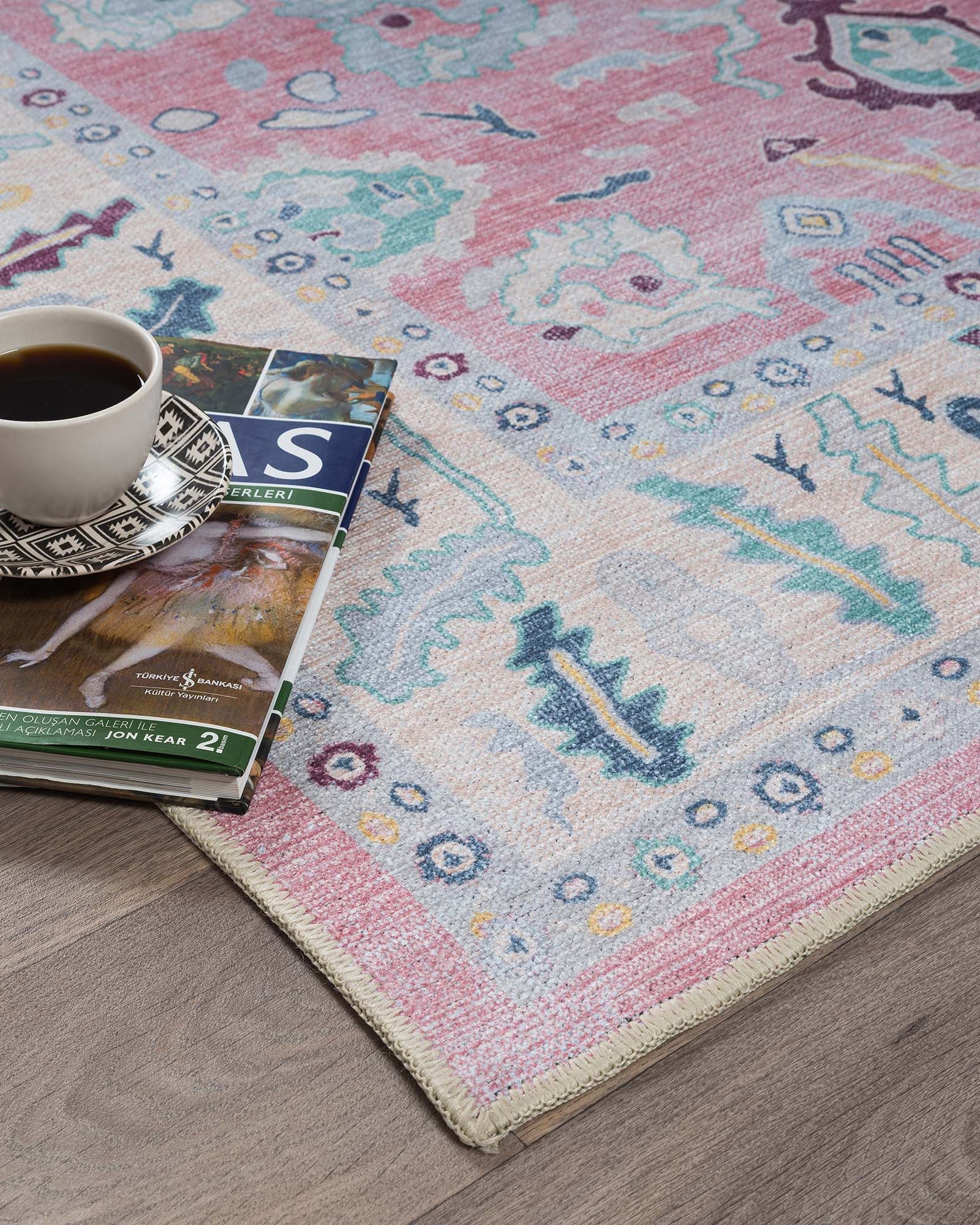
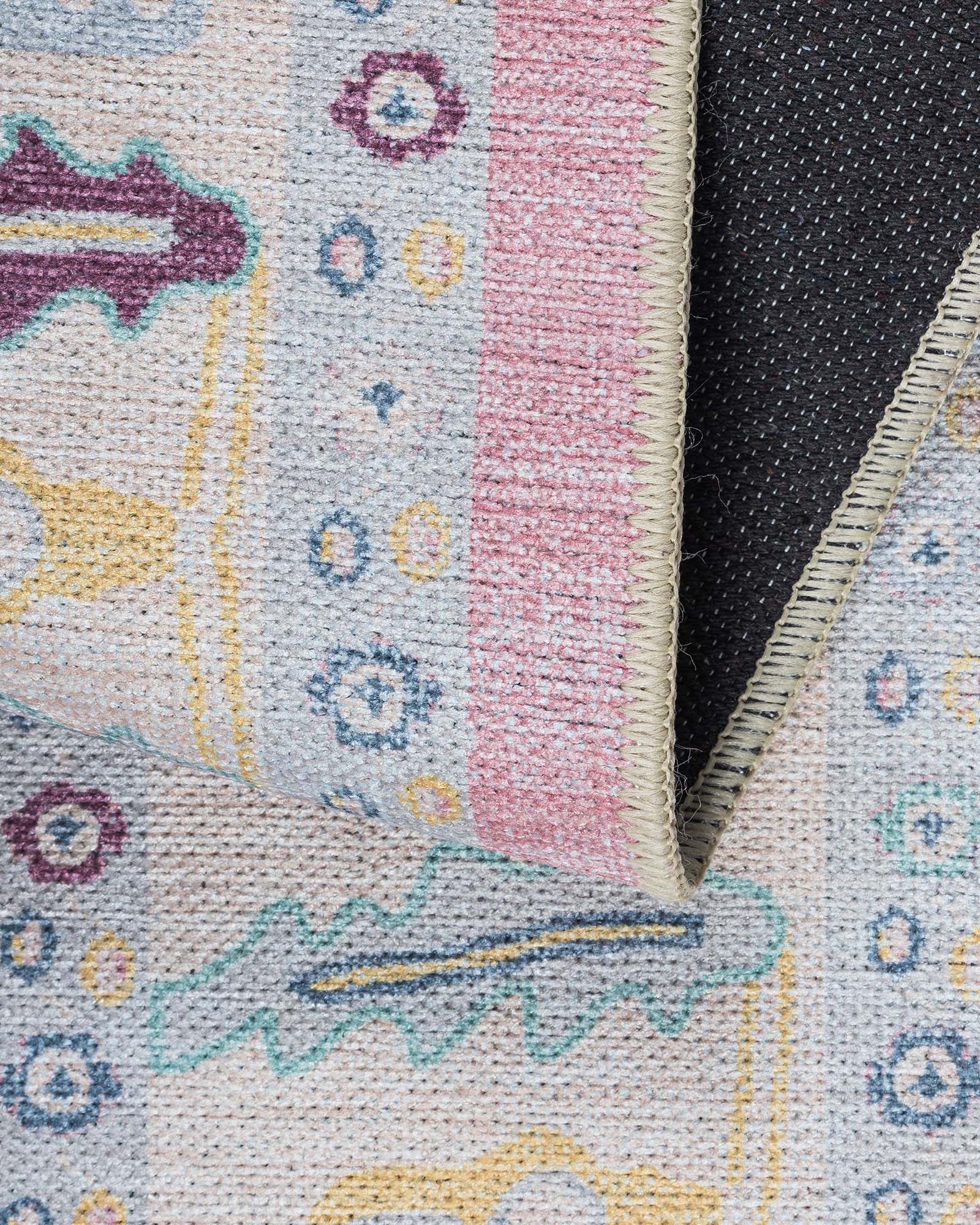
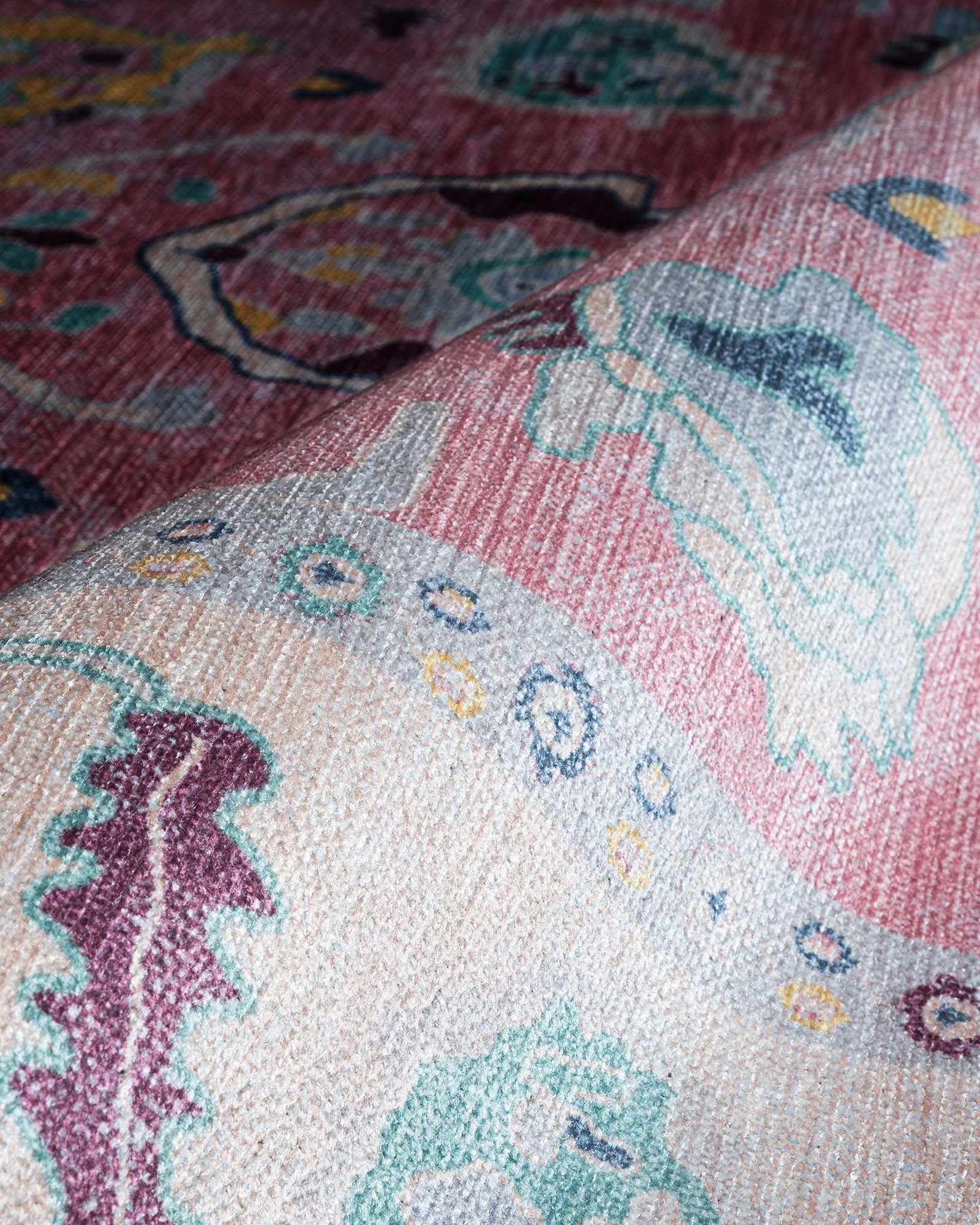
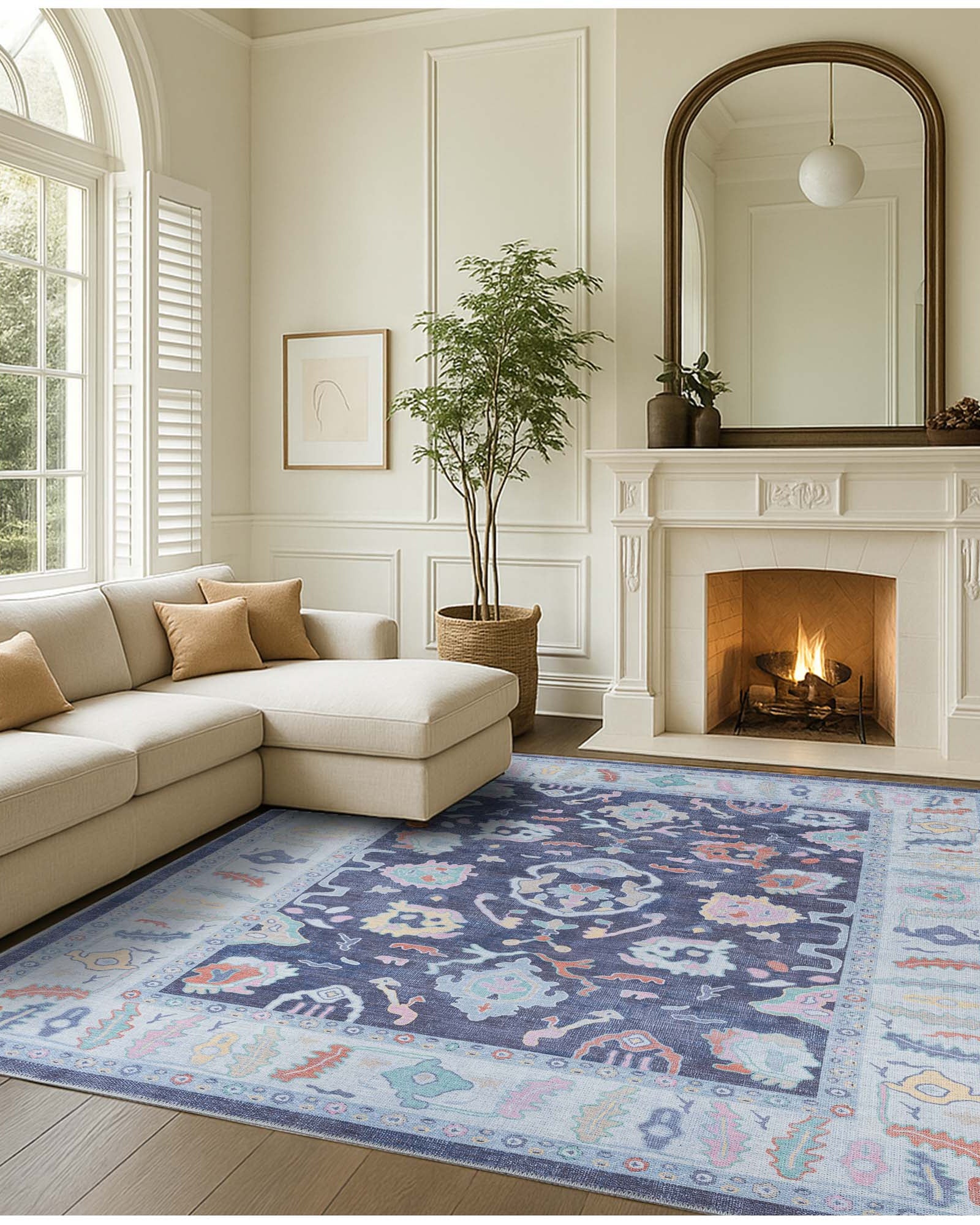
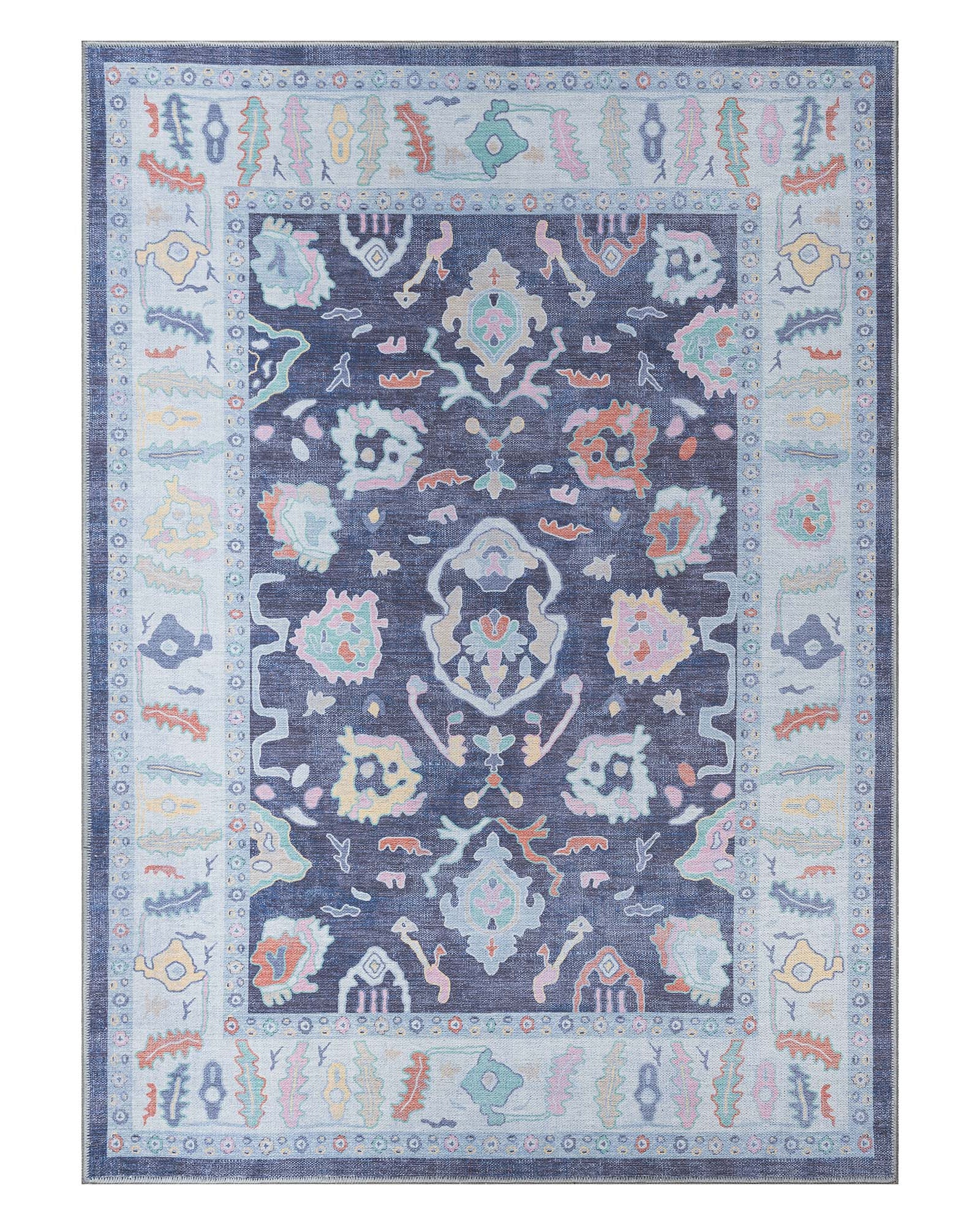
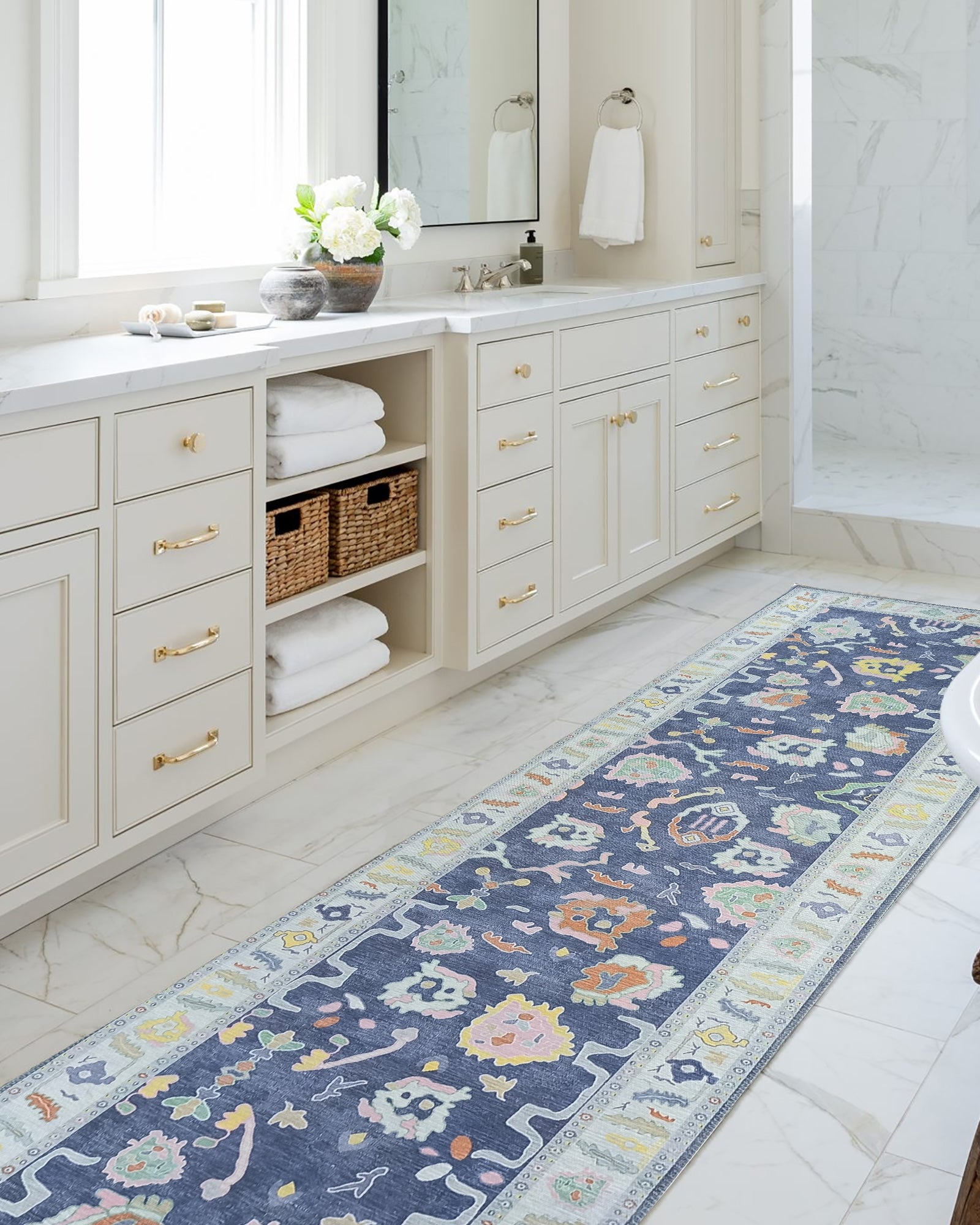
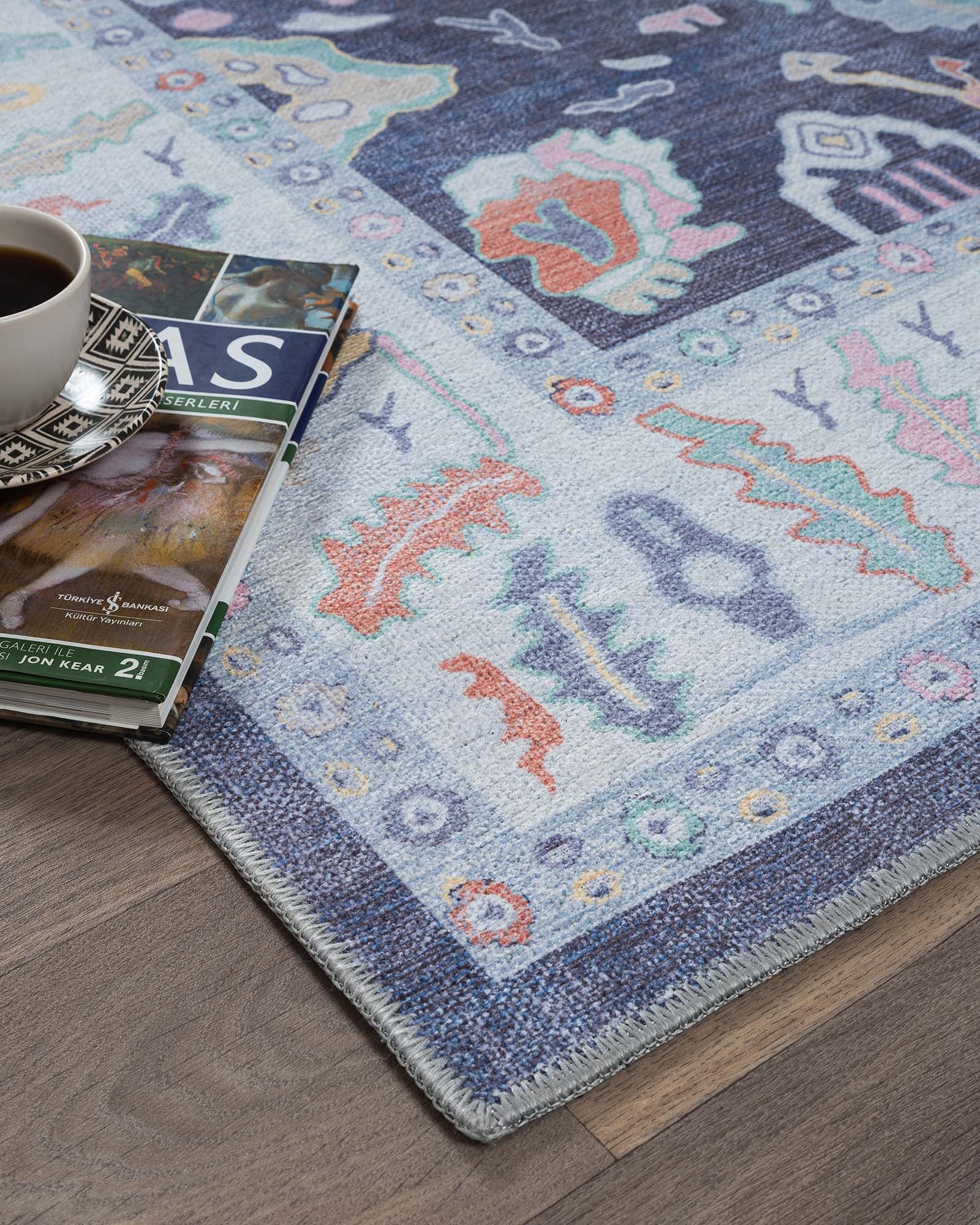
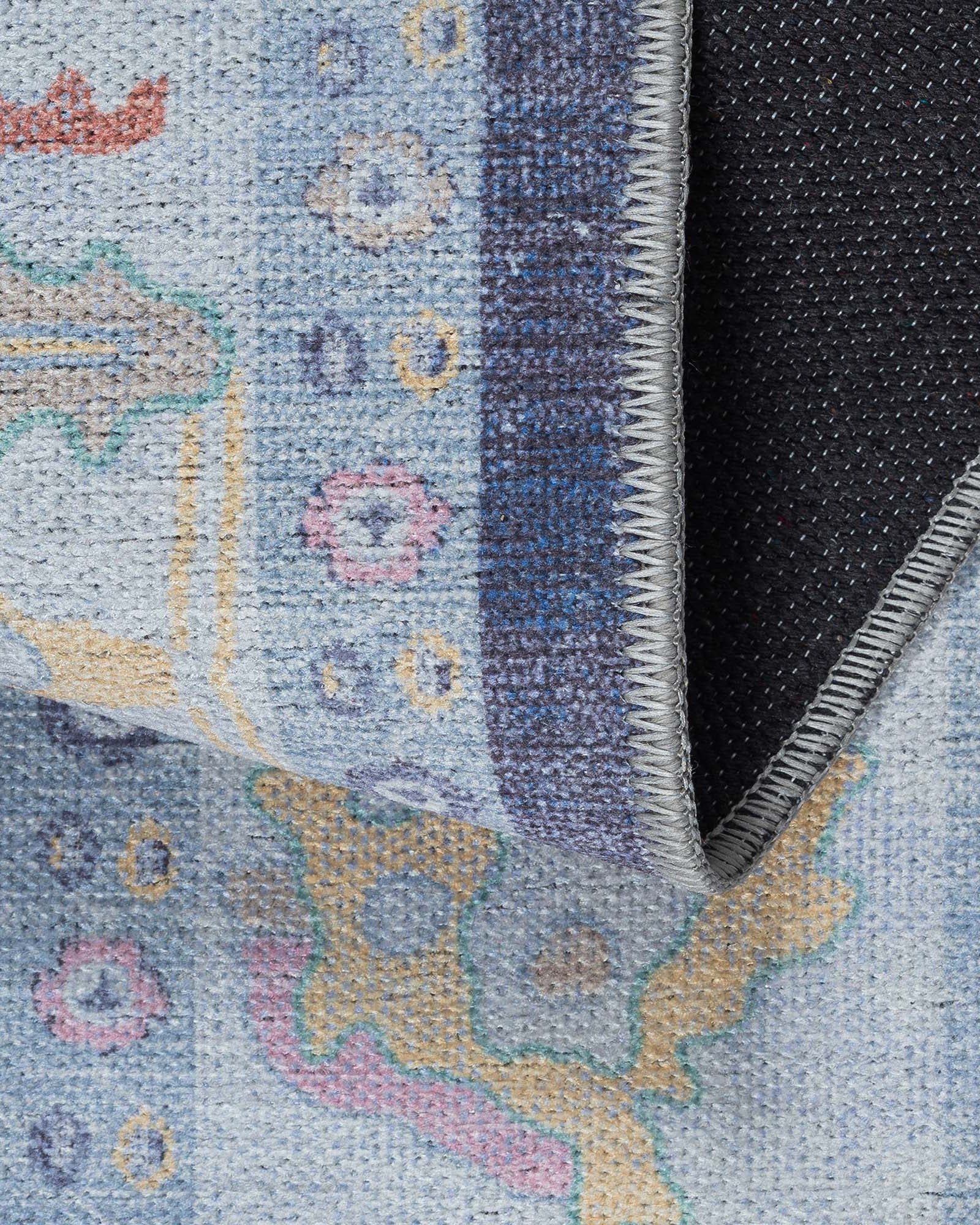
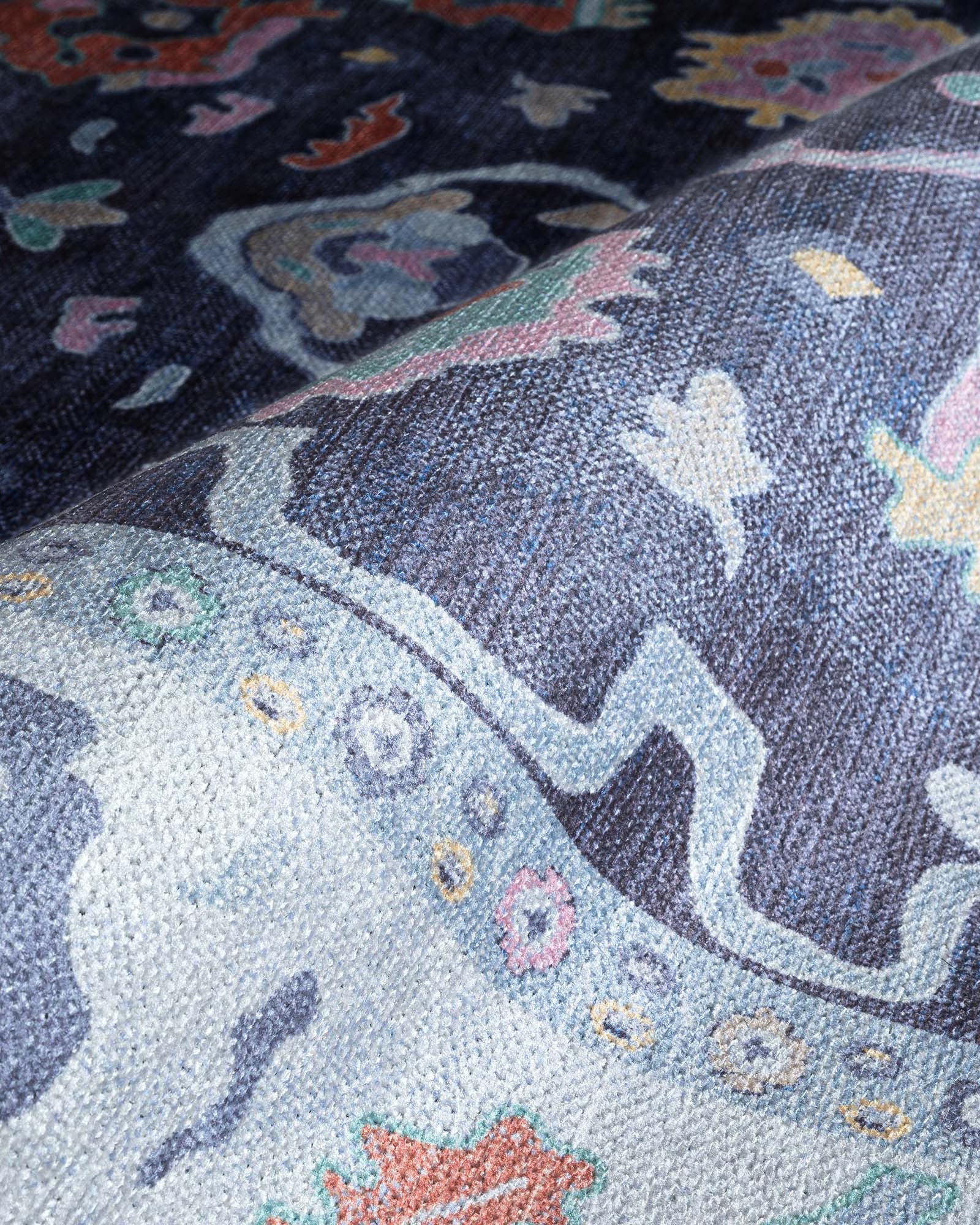
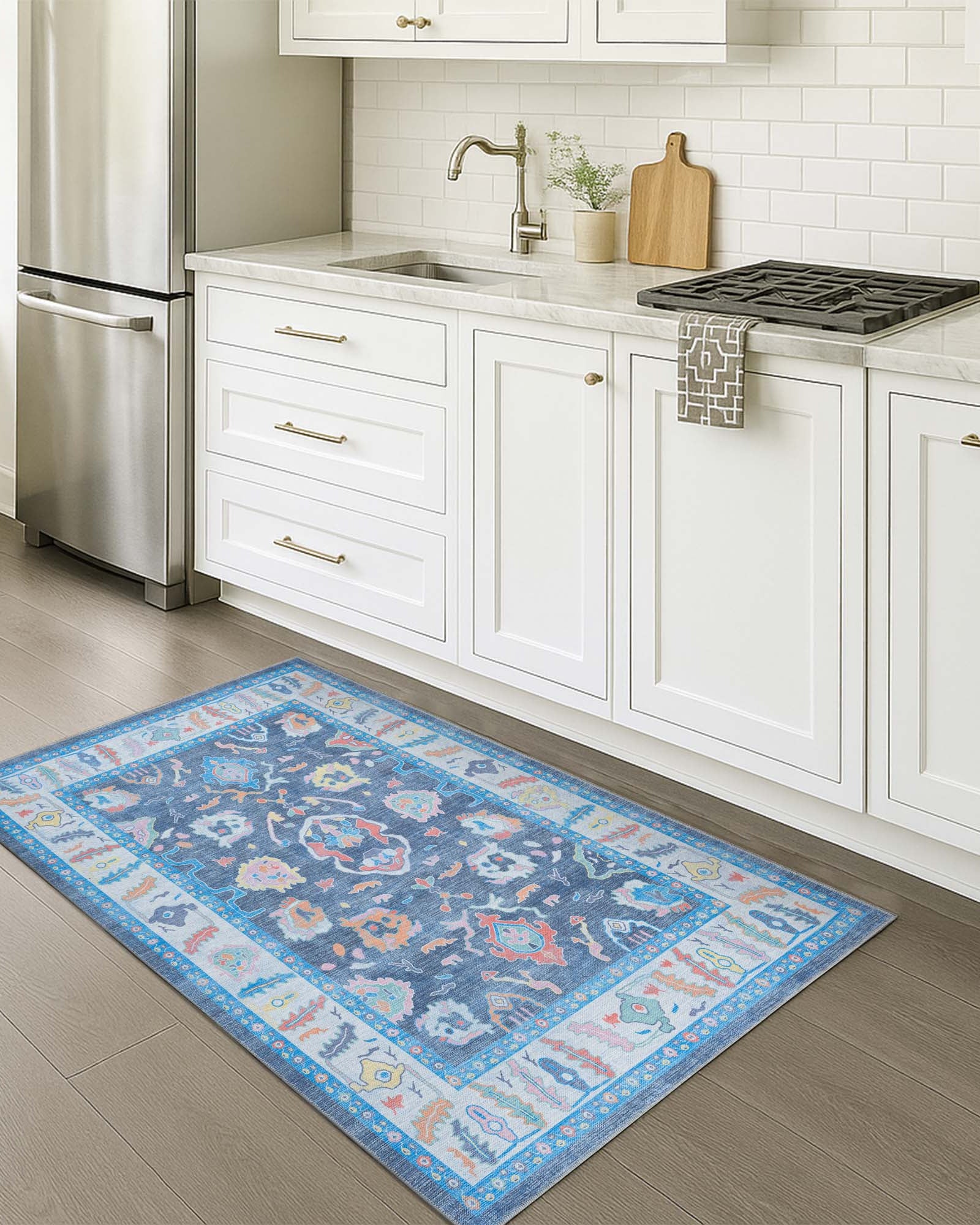
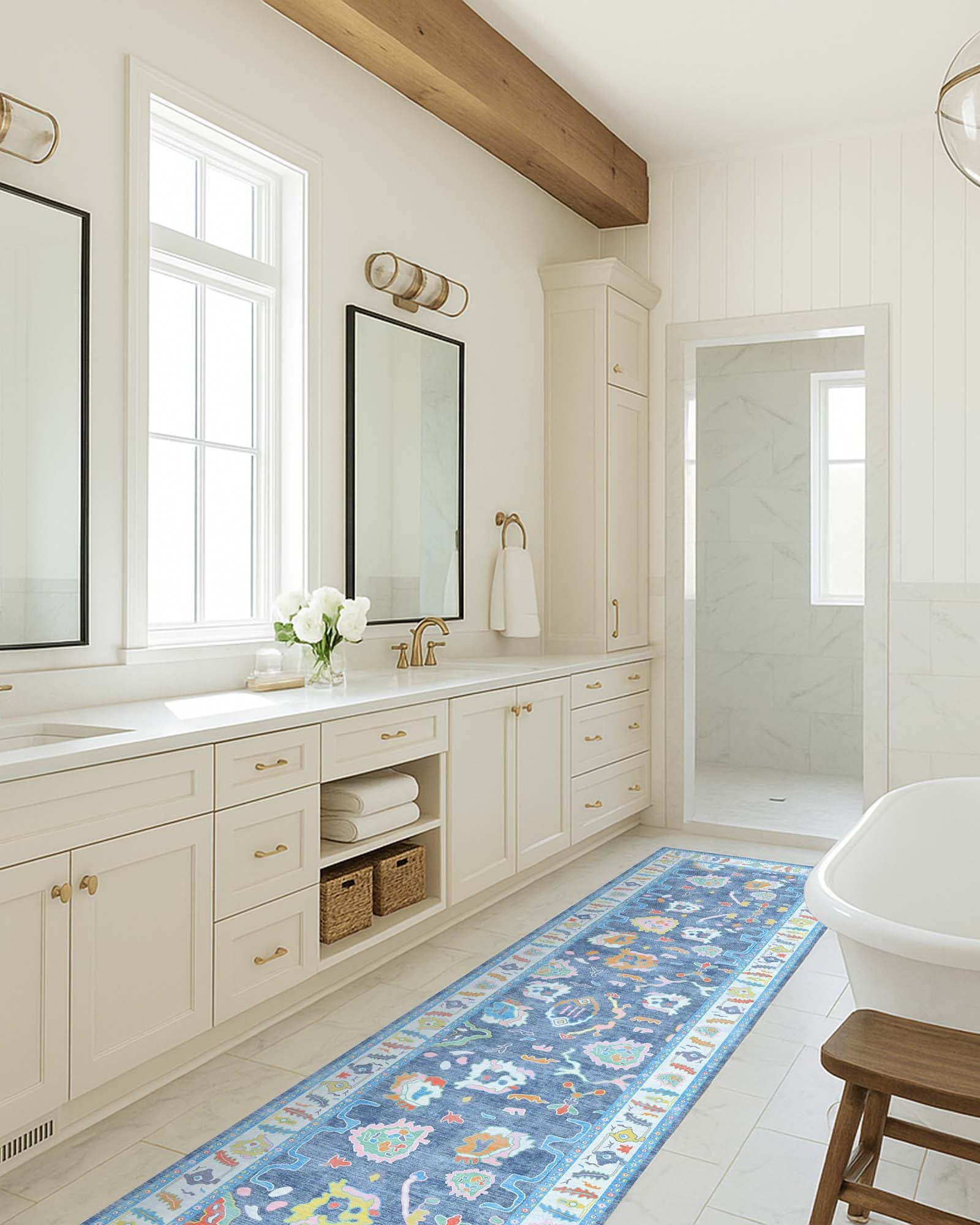
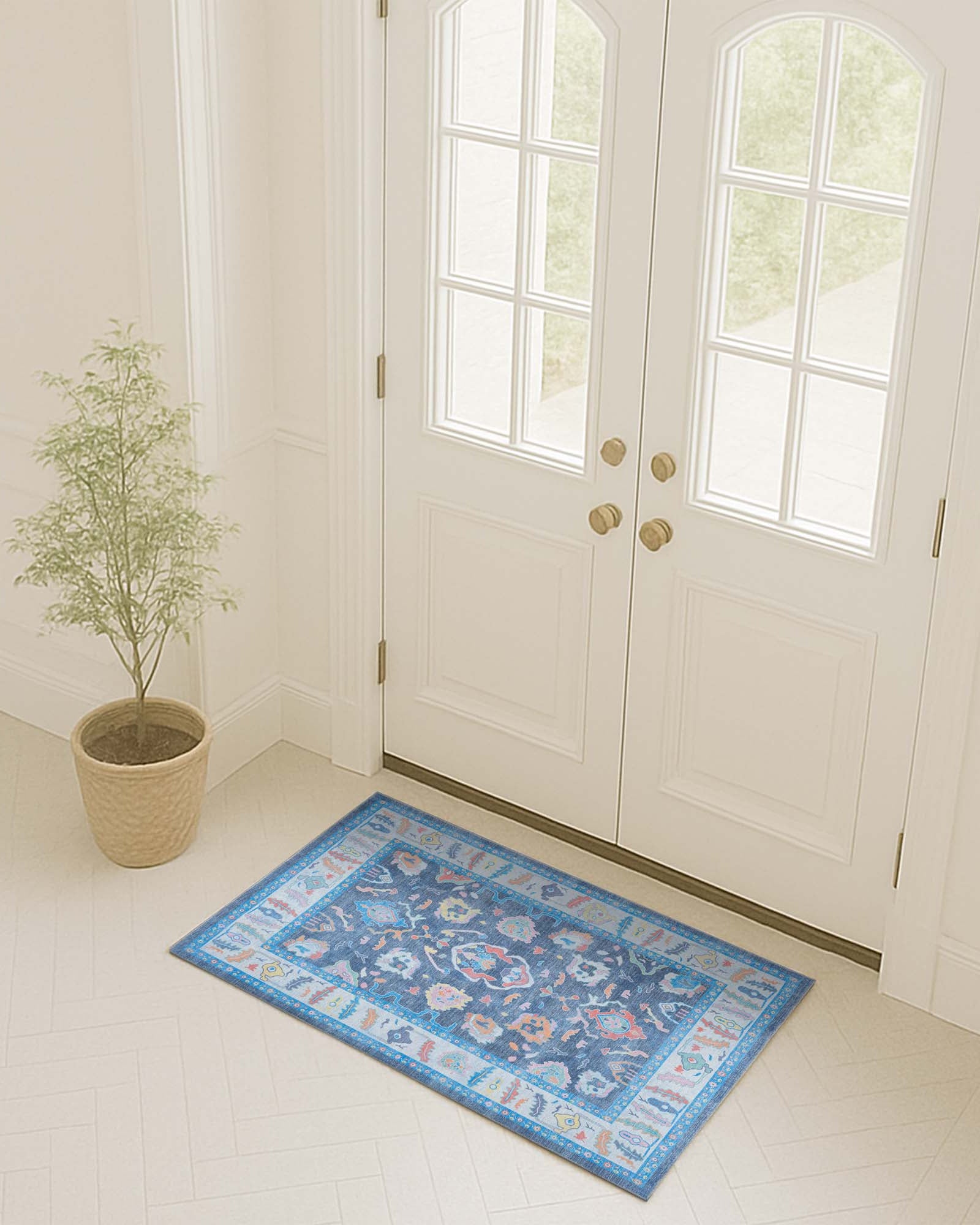
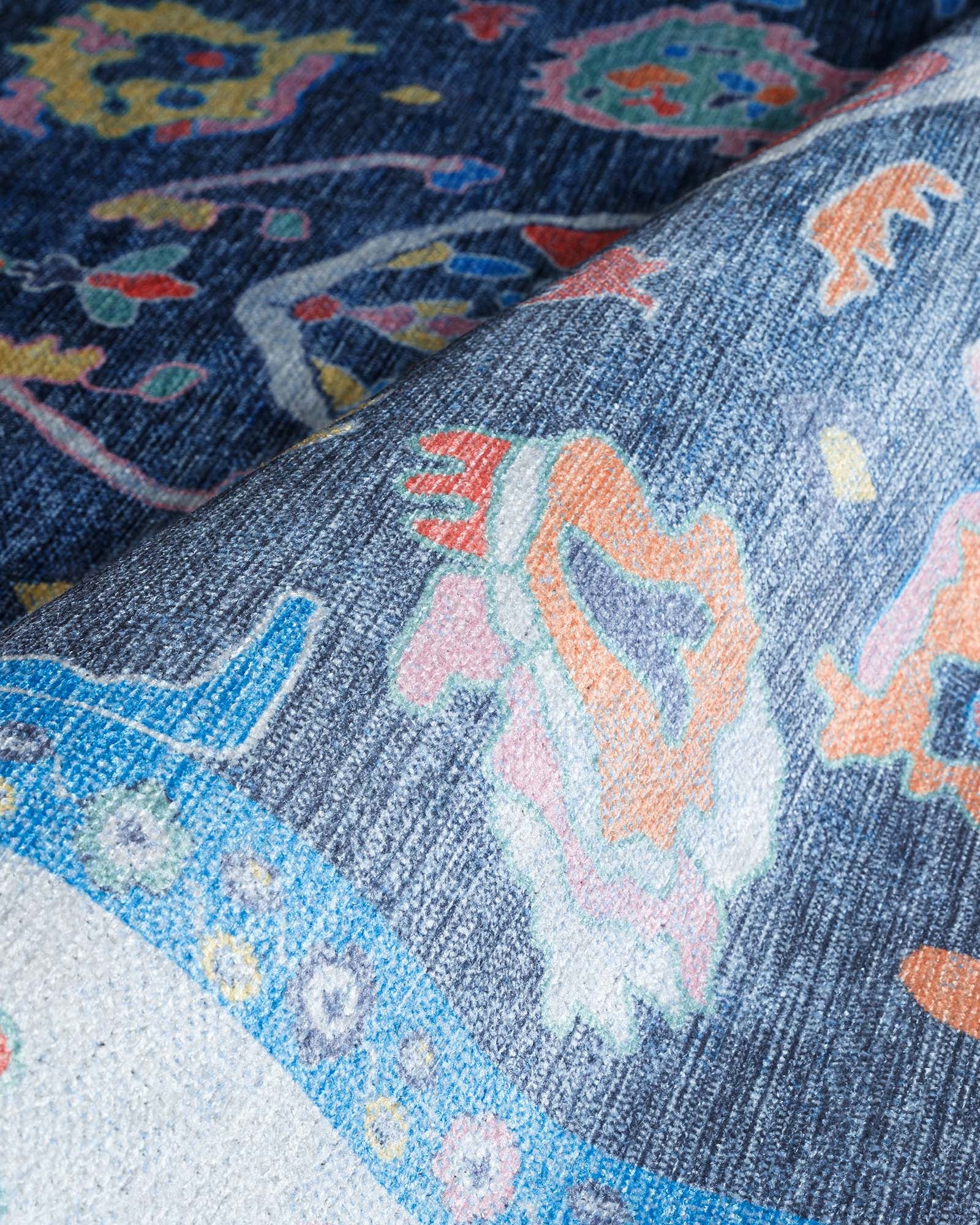
Pile height is the most practical thing about a rug and the least discussed. It decides whether a door will open over it, whether a dining chair slides or catches, how much dirt the rug traps and how often you have to think about it. Everything in this collection sits at the thin end of that range — hand-knotted wool worn down over decades of real use, typically under a quarter inch. Each piece is an original, sold as a single item.
How These Rugs Got Thin
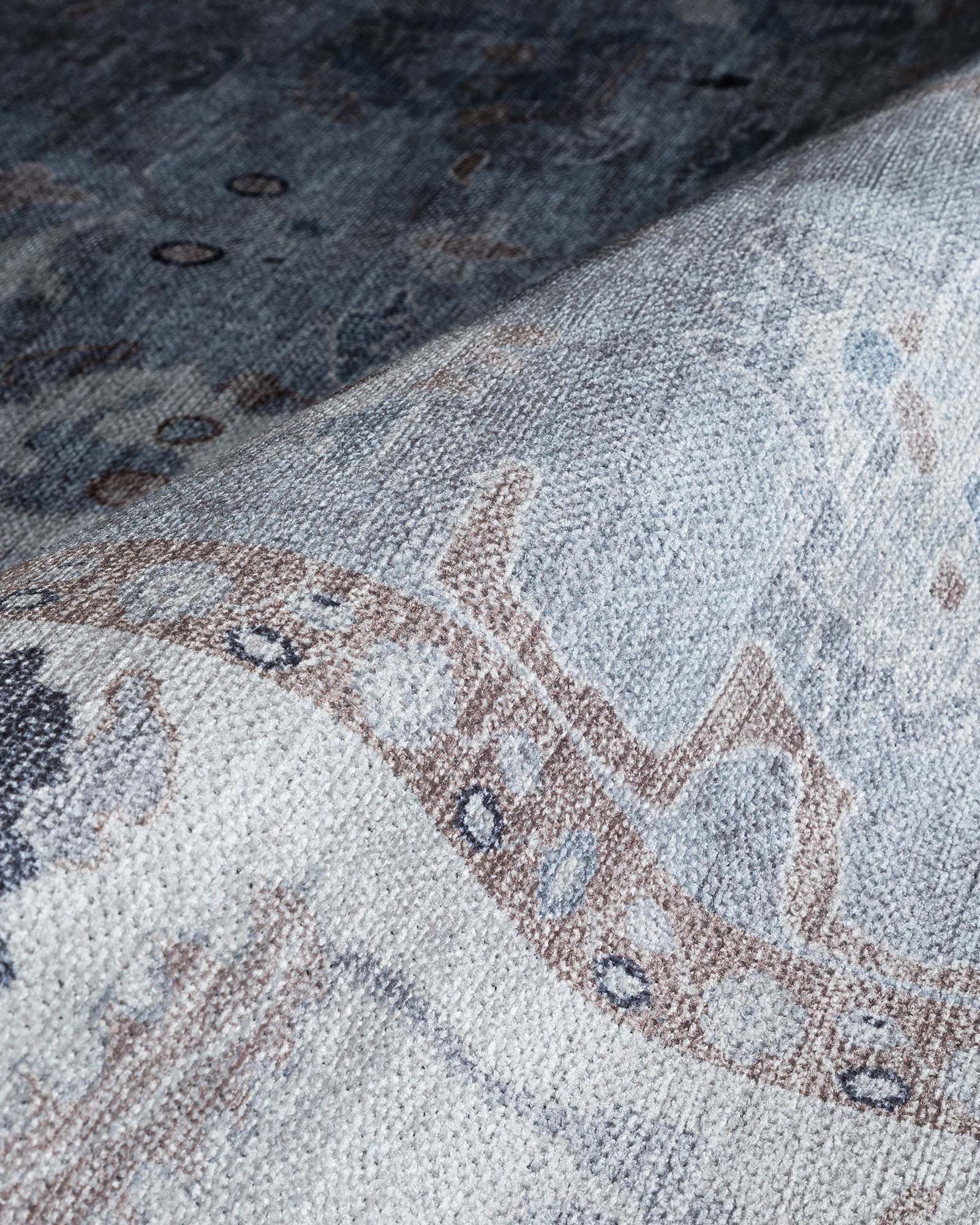
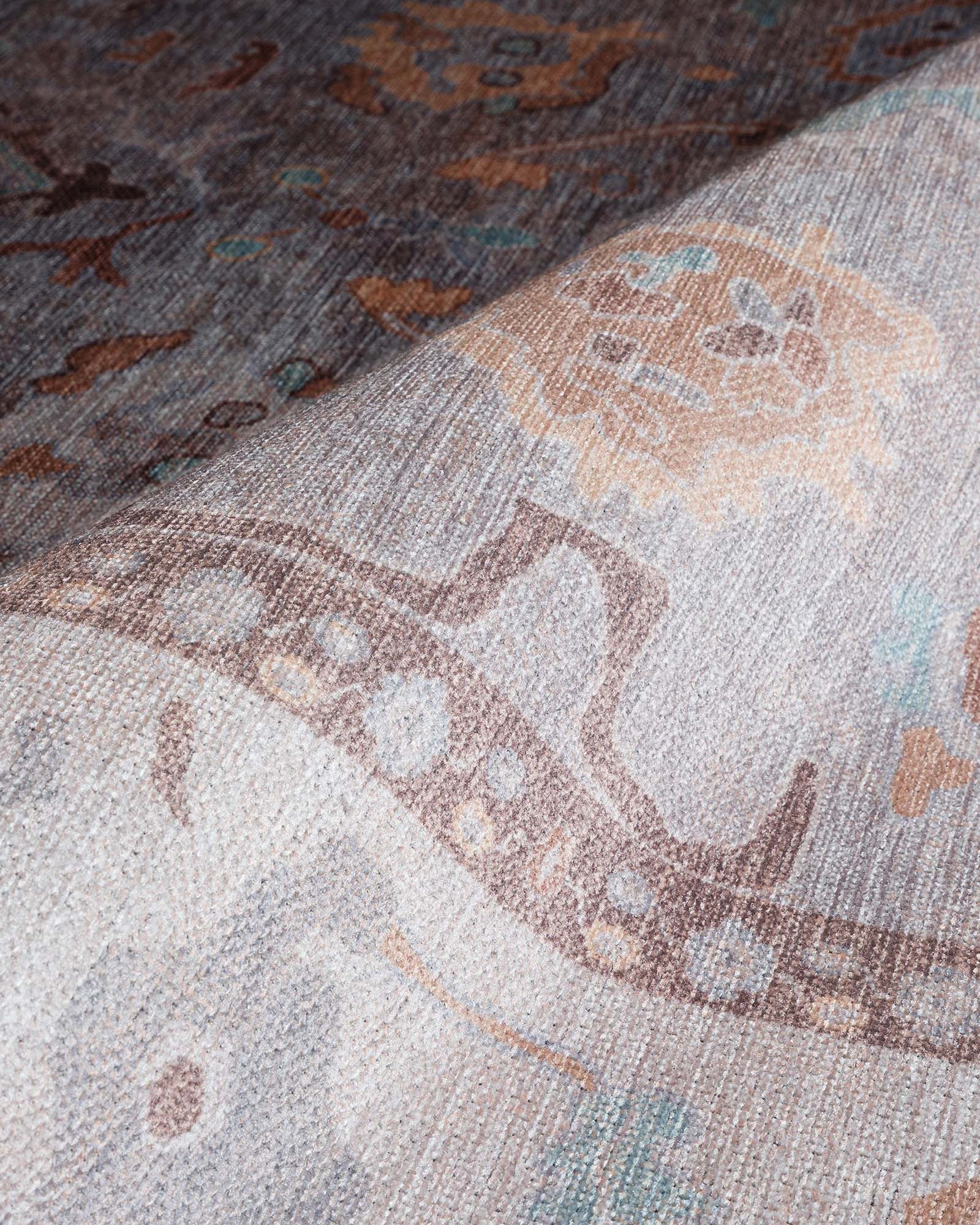
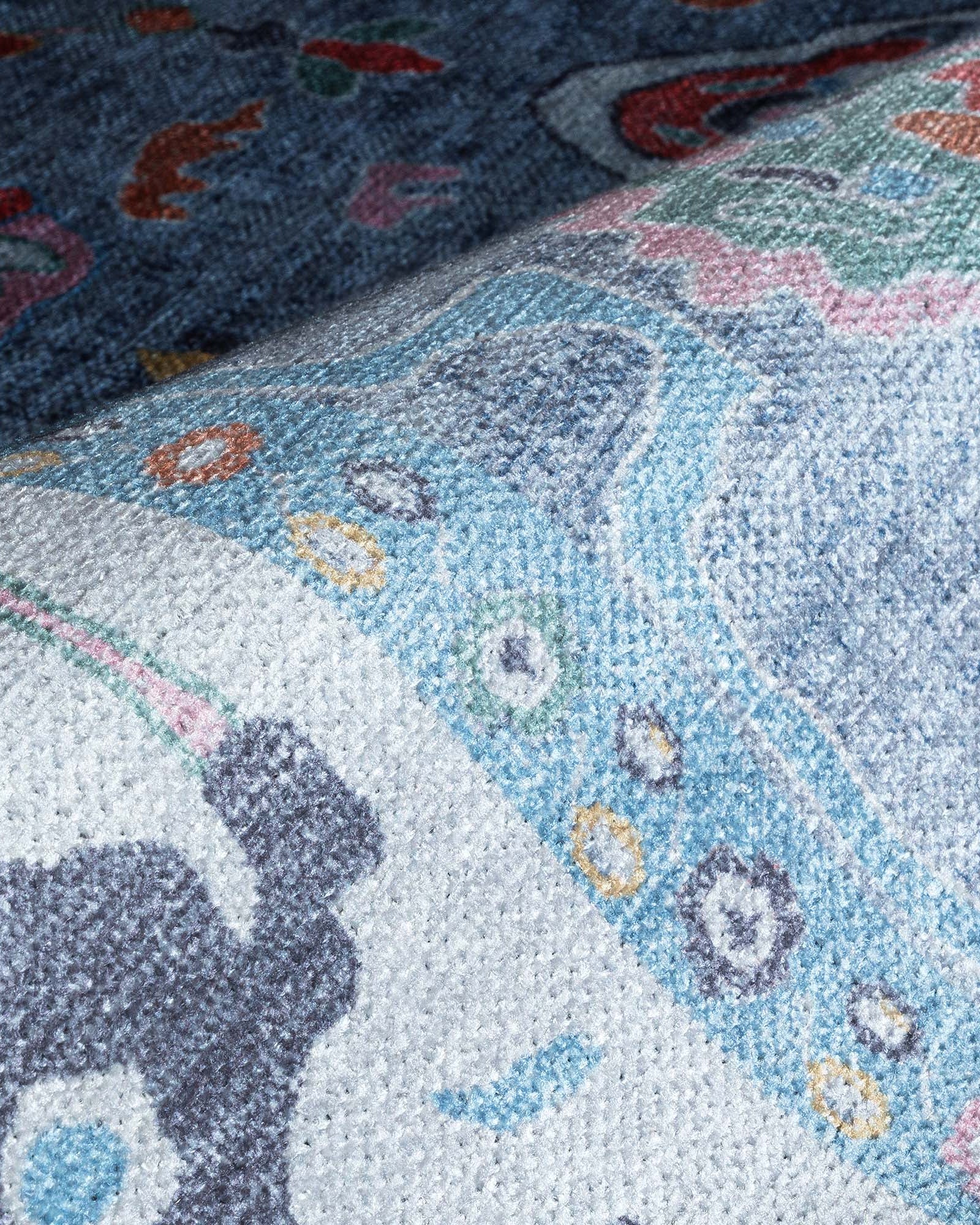
Nothing here was made low. Hand-knotted rugs leave the loom with full pile; what you see in this collection is the result of forty, sixty or a hundred years of footfall gradually shortening the cut ends of the knots. That distinction matters, because it means the rug's structure is intact even though its surface is not what it was.
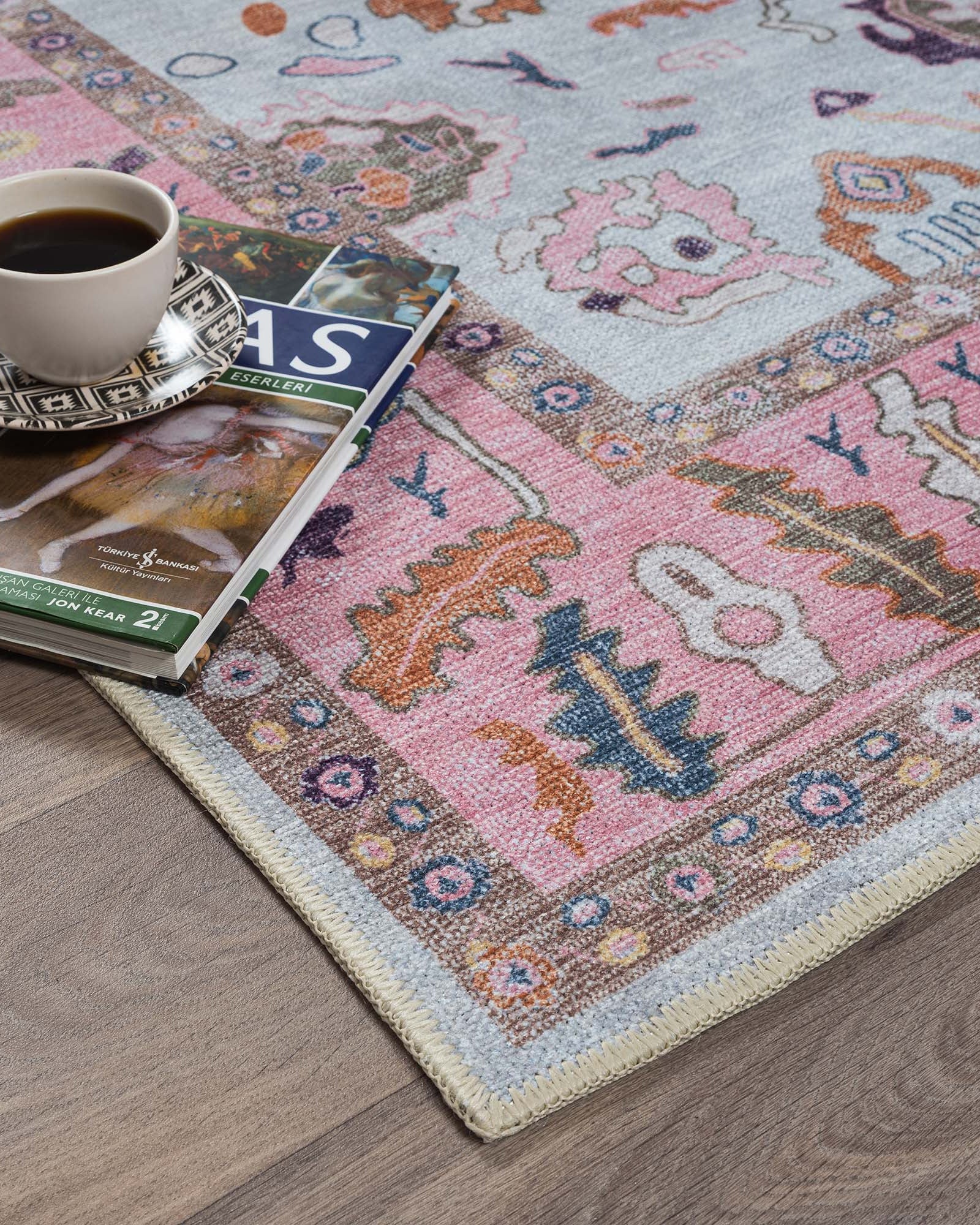
Wear is rarely uniform. Expect the pile to be lowest along walkways and doorways, better preserved at the edges and in corners, and sometimes noticeably fuller where furniture stood for years. This map of a rug's former life is visible on almost every piece and is part of what identifies it as genuinely old rather than artificially aged.
Worn Low Versus Structurally Damaged
There is a real difference between the two, and each product page states which you are looking at. A rug with even, overall low pile is stable — the knots are still tied and locked, the foundation is sound, and the rug can be used normally for years. A rug with localised holes, exposed foundation or brittle areas has moved past wear into damage, and belongs somewhere protected rather than in a hallway. Both exist in this collection and both are described in plain language.
Why Thin Is Often the Right Choice
Low pile solves specific problems that a thick rug creates.
Doors and Clearance
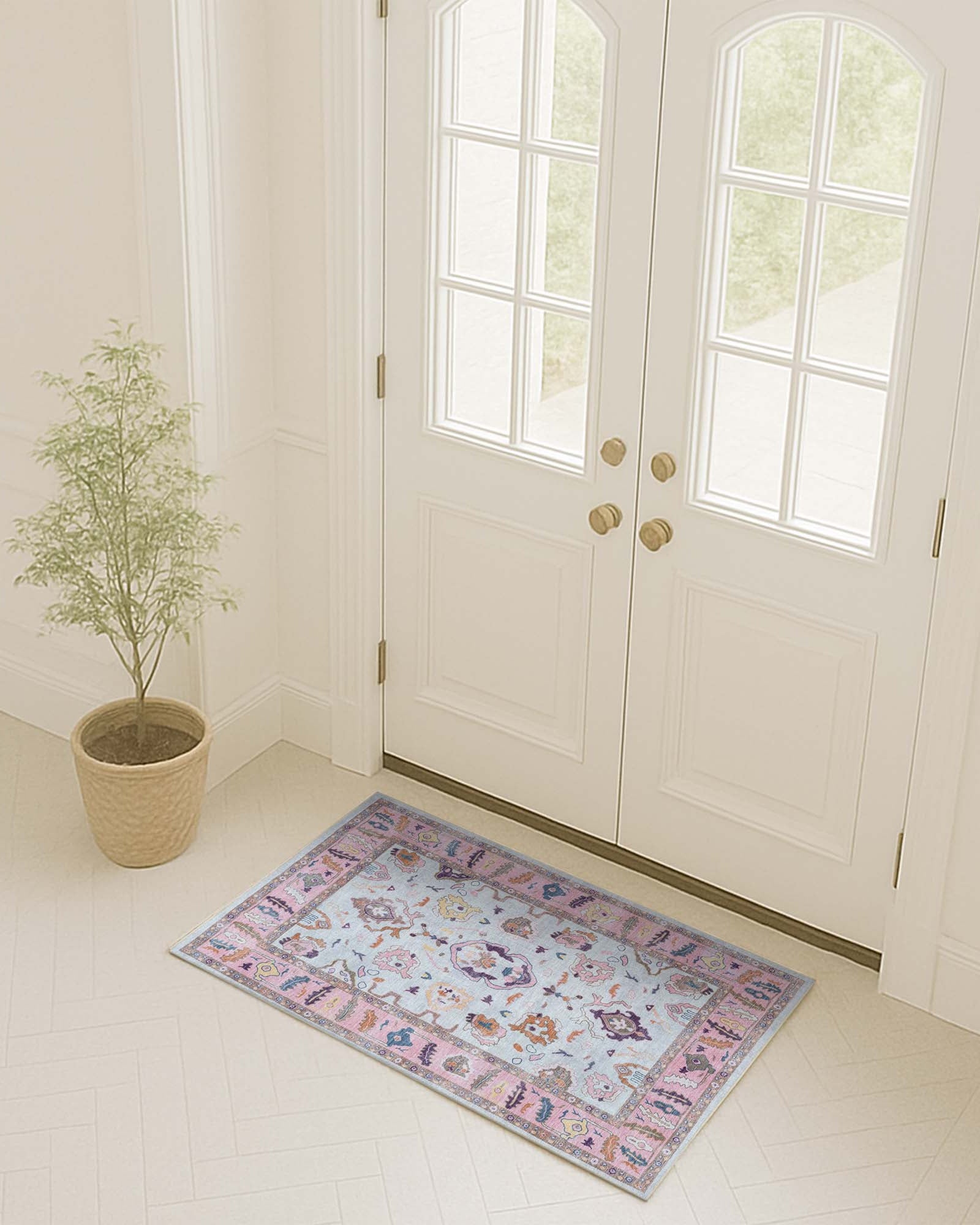
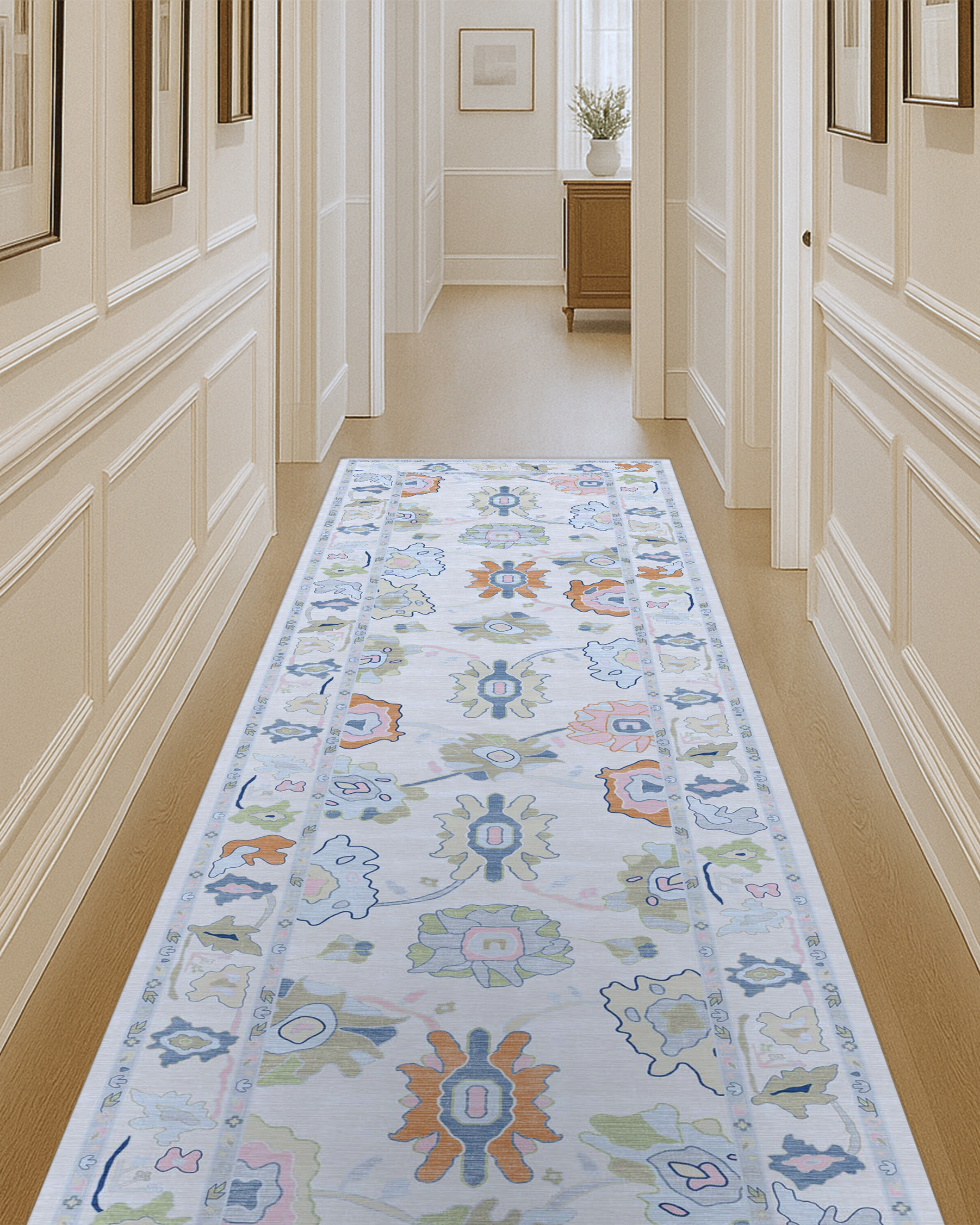
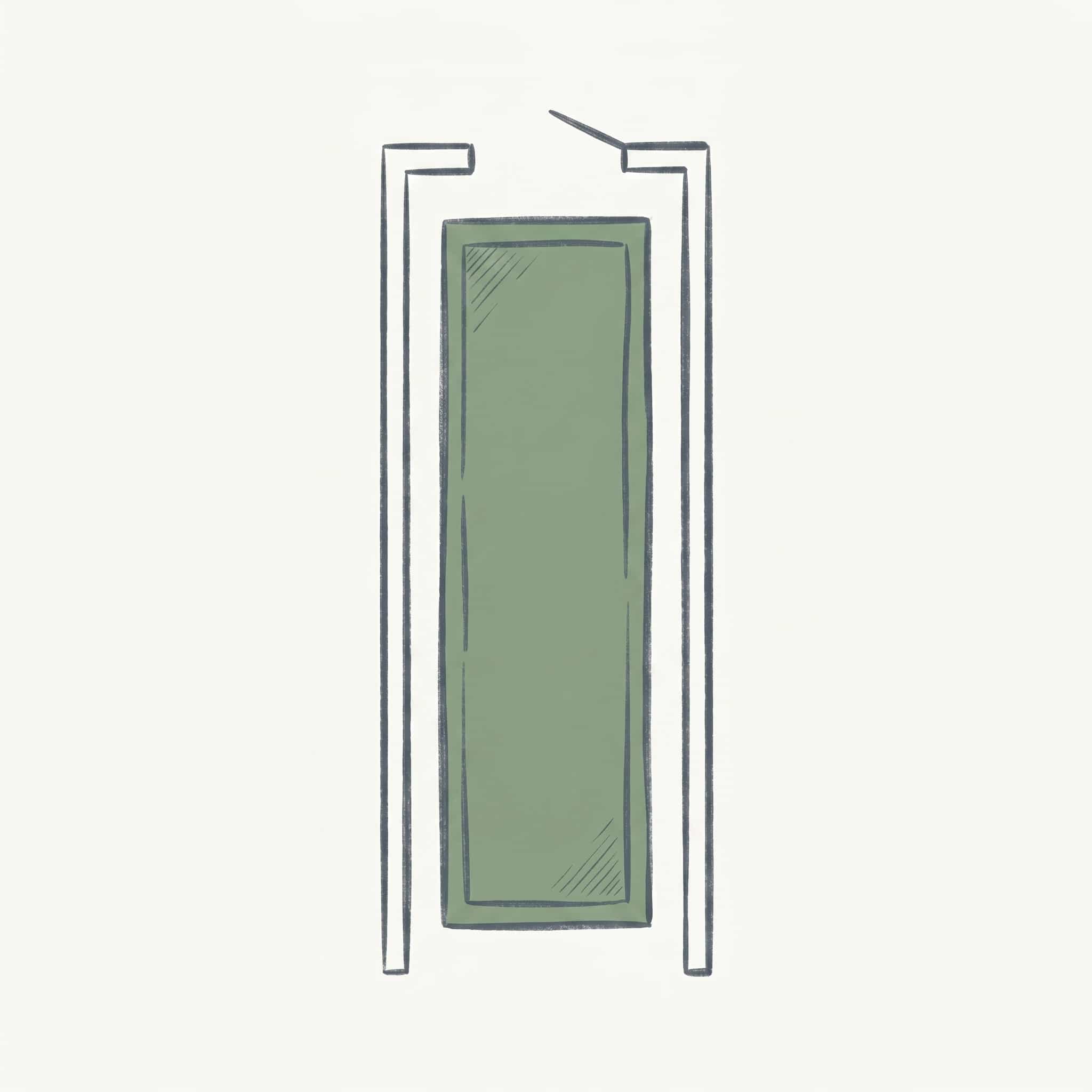
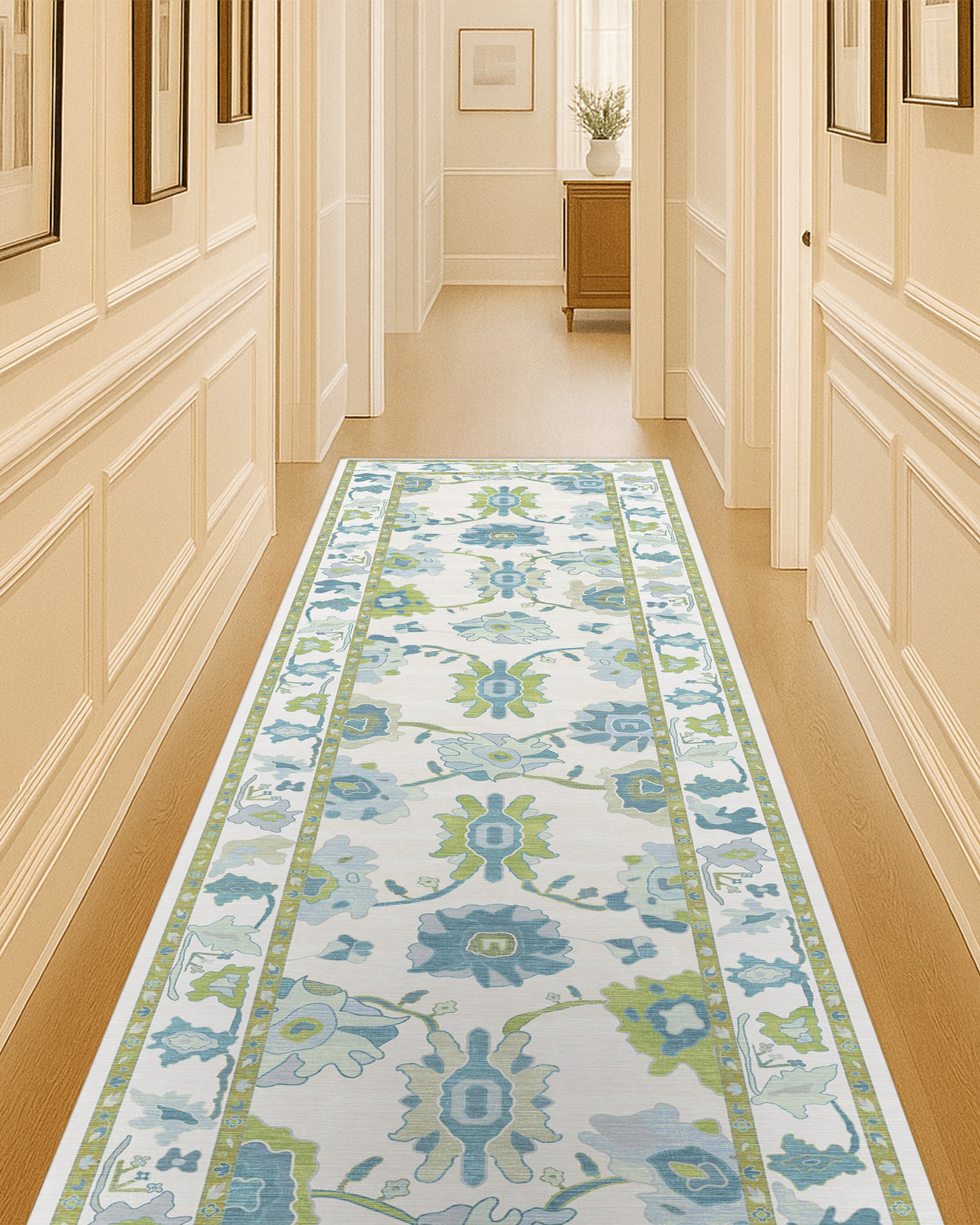
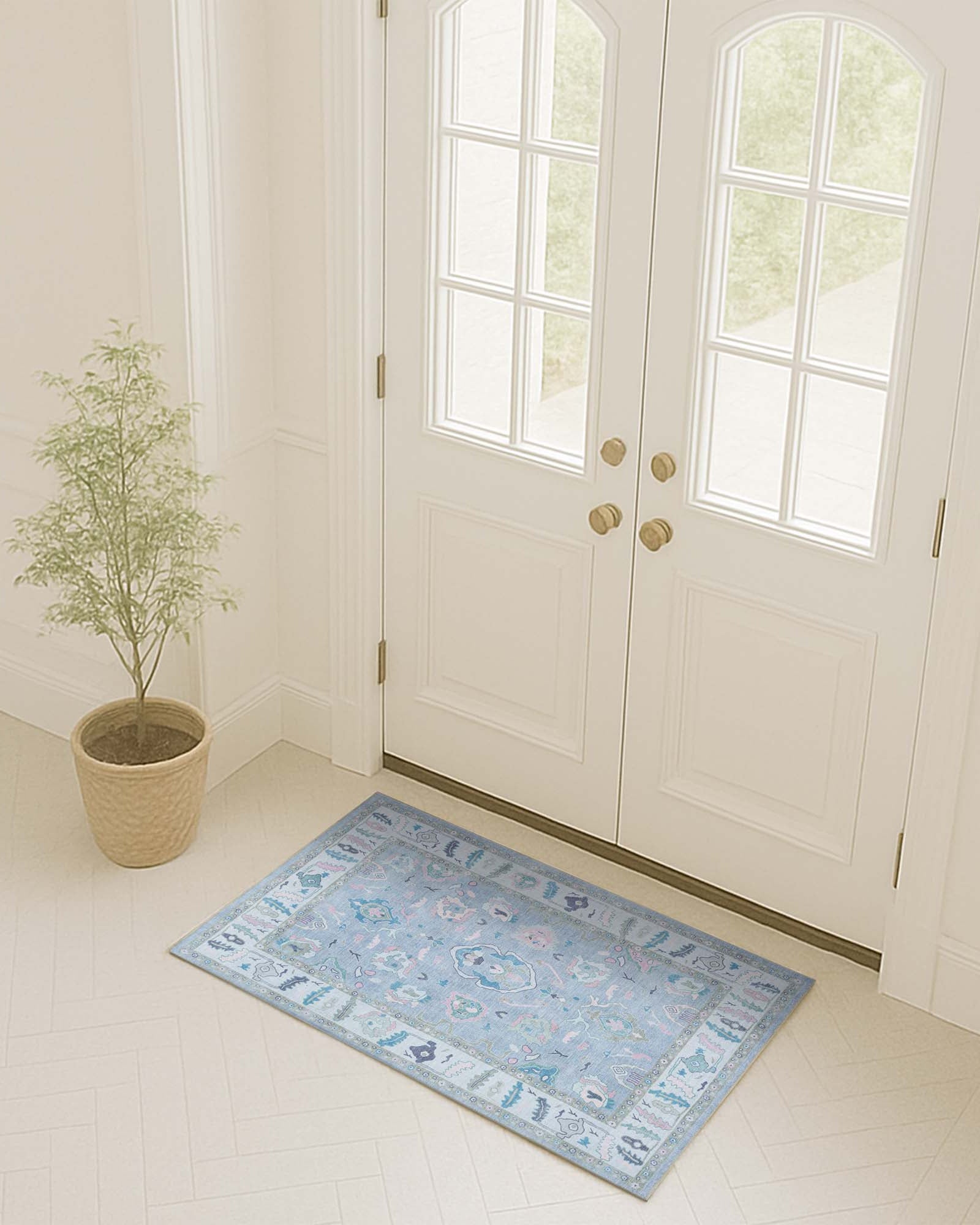
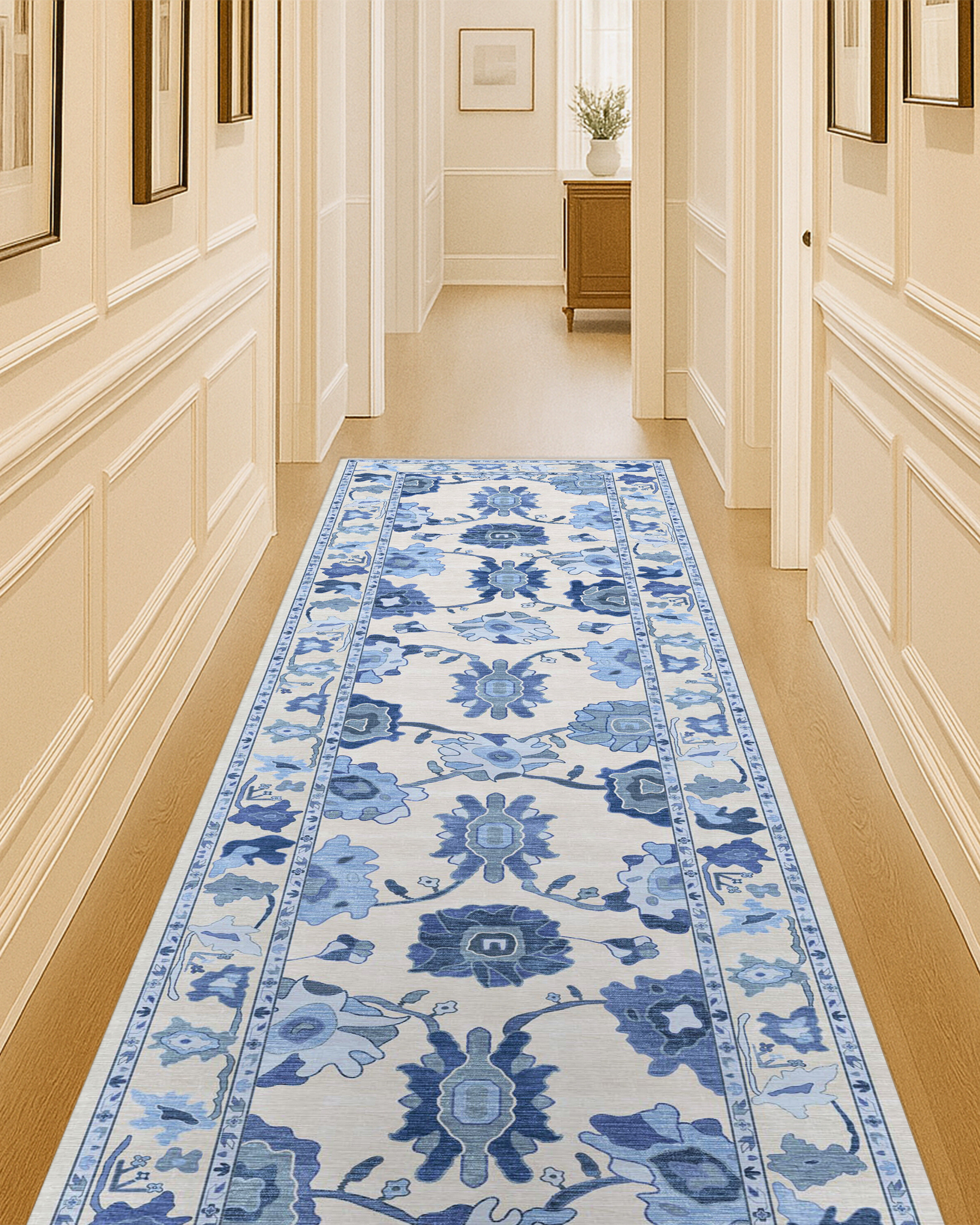
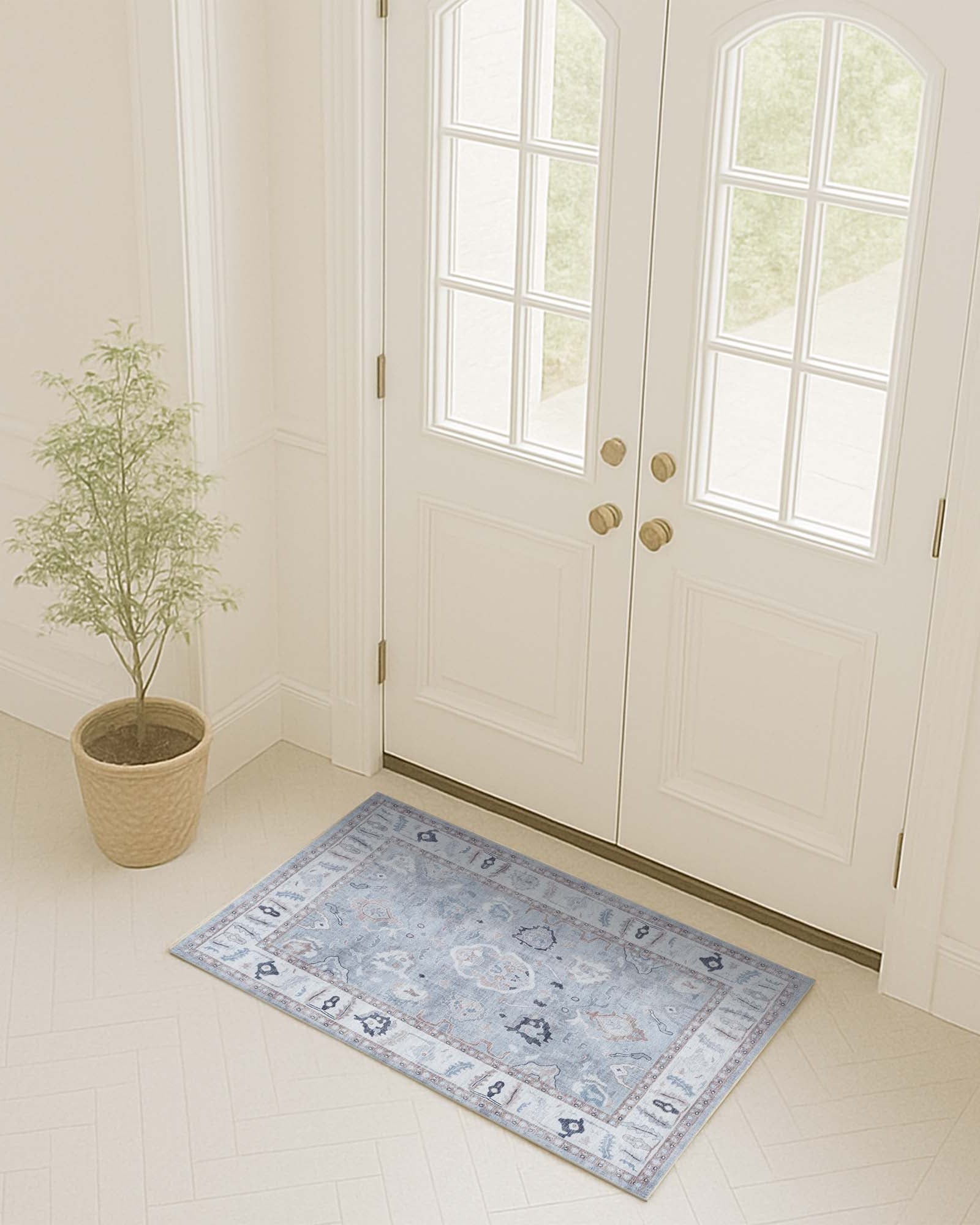
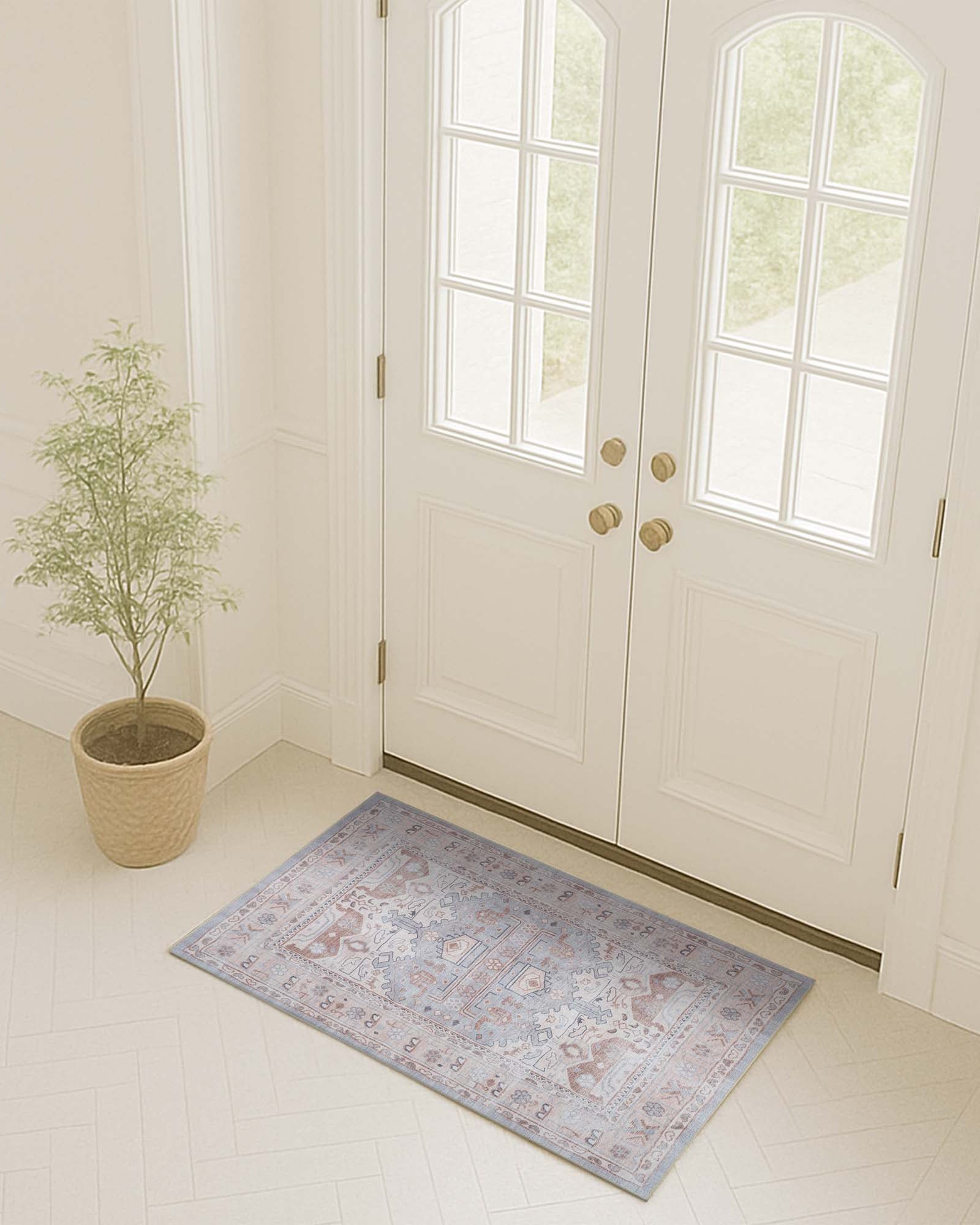
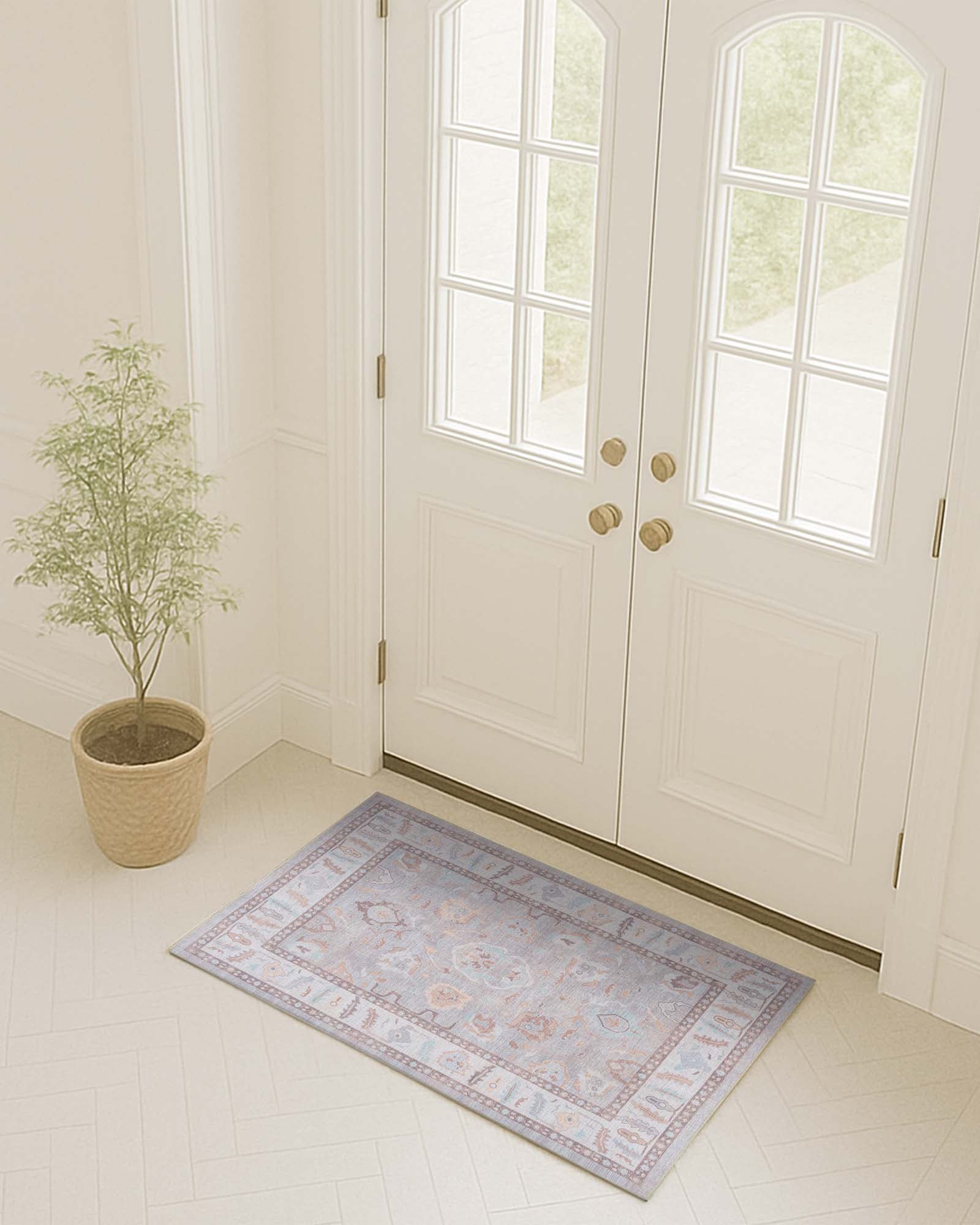
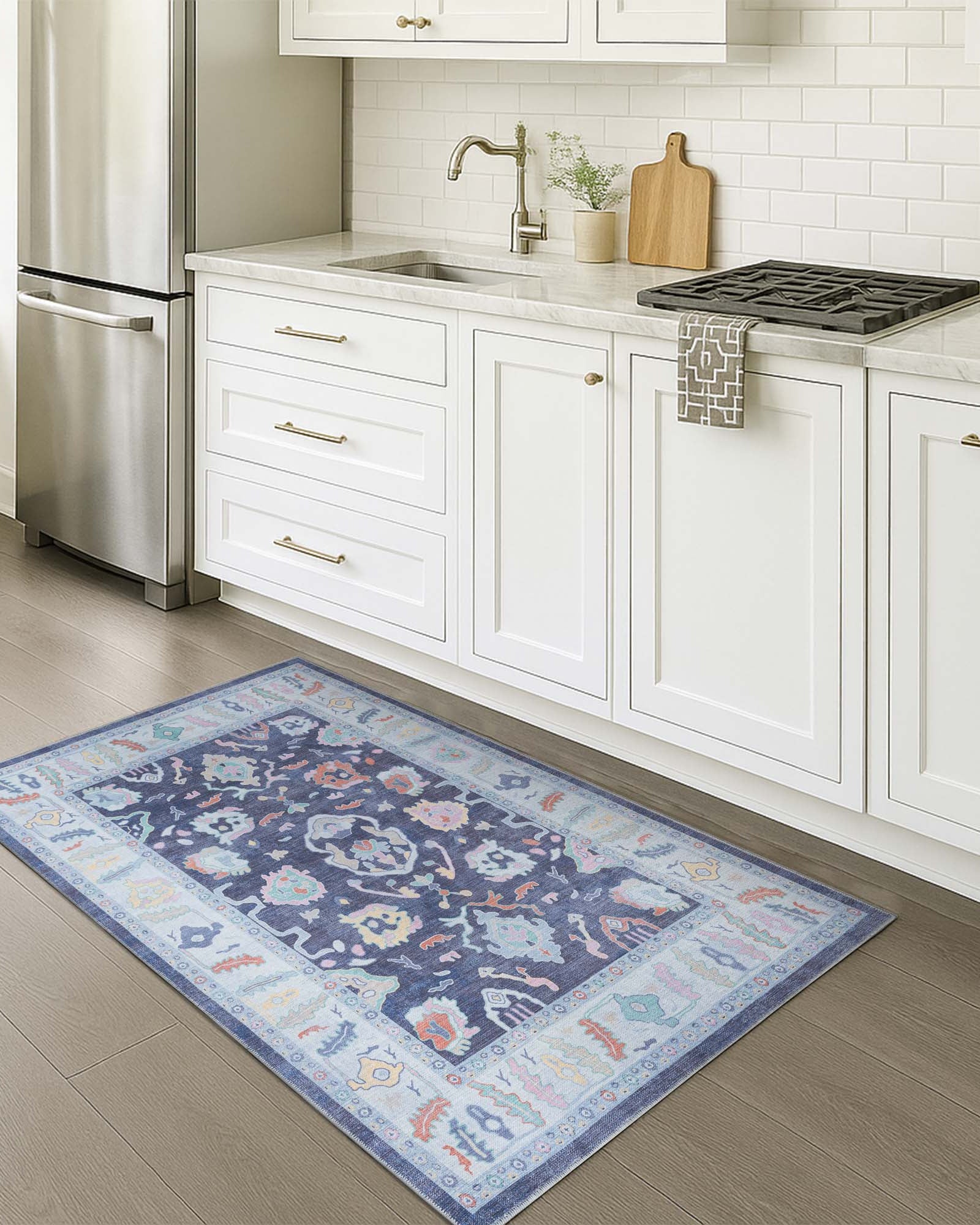
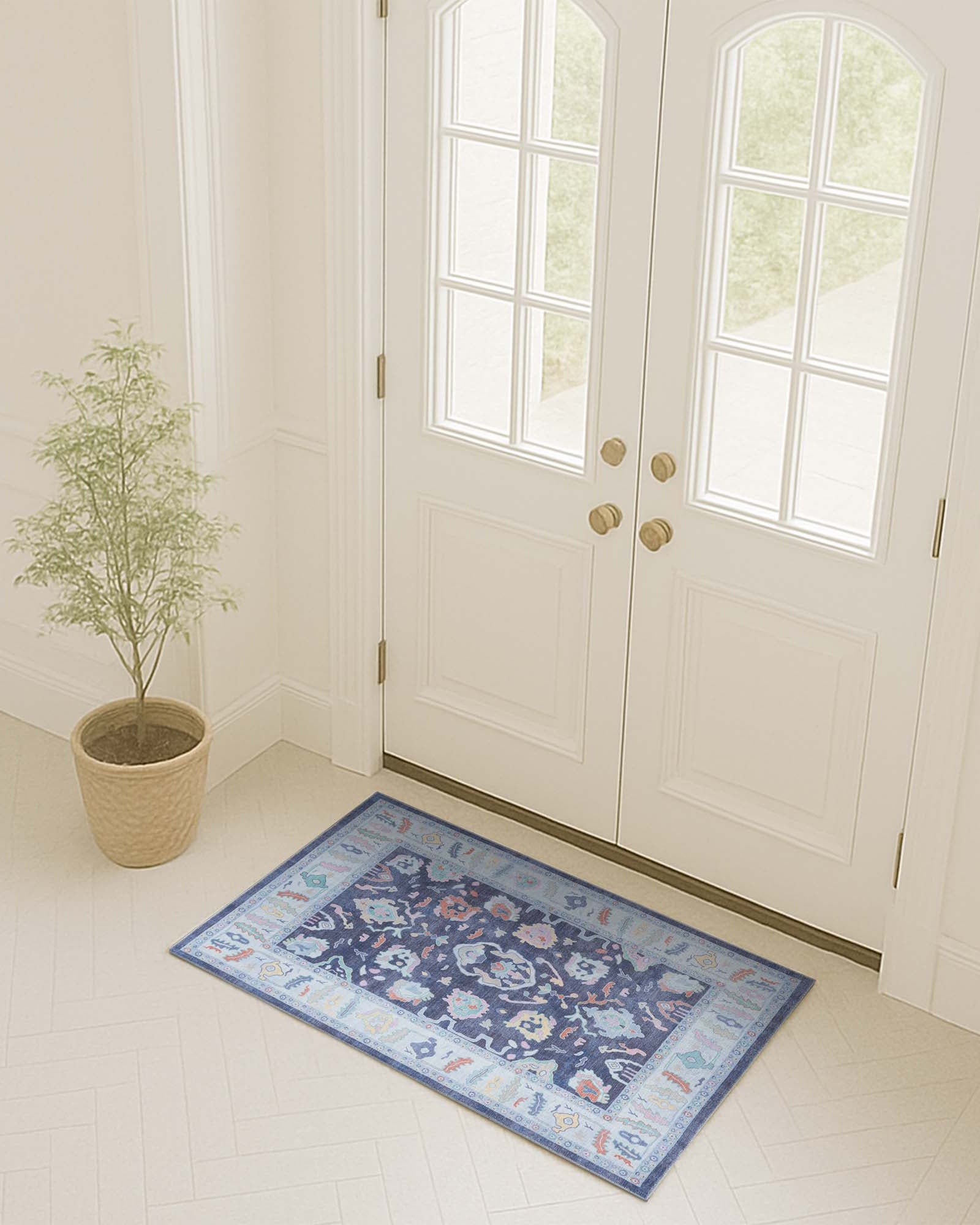
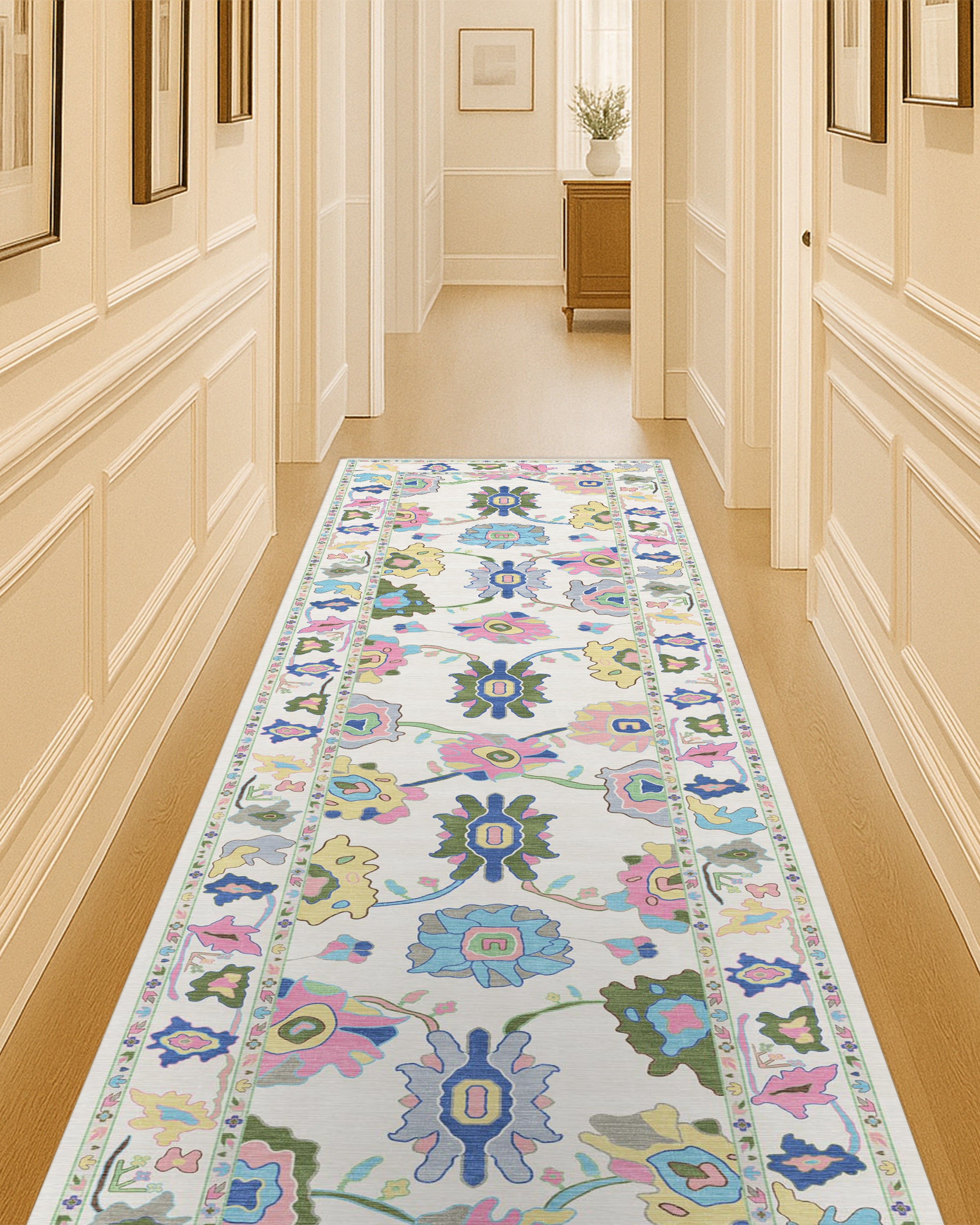
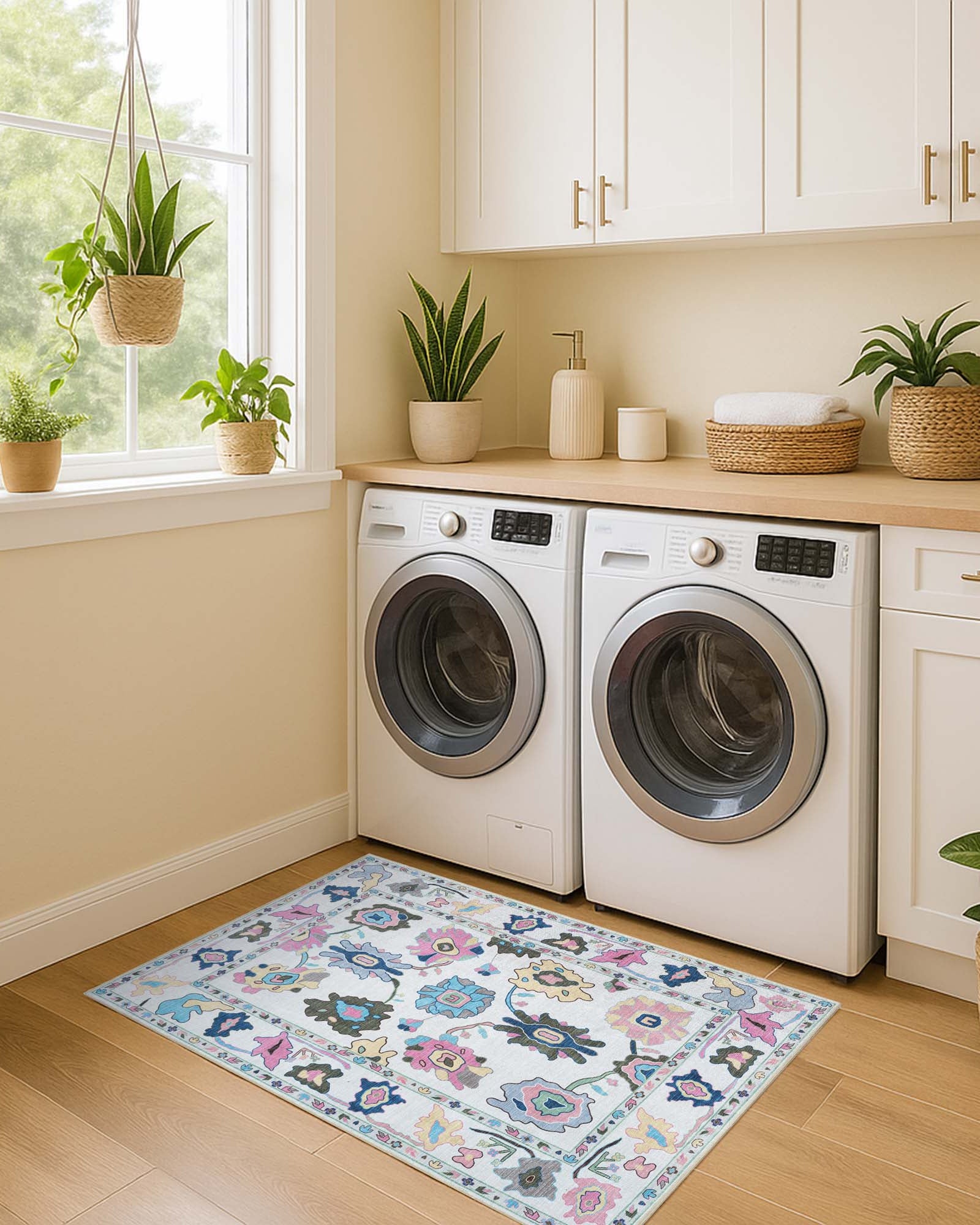
Interior doors typically clear the floor by half an inch or less. A thick rug means either planing the door or living with it catching. A low-pile piece slides underneath without any of that, which makes it the practical option in entryways, between rooms and in front of cupboards and appliances.
Dining Chairs
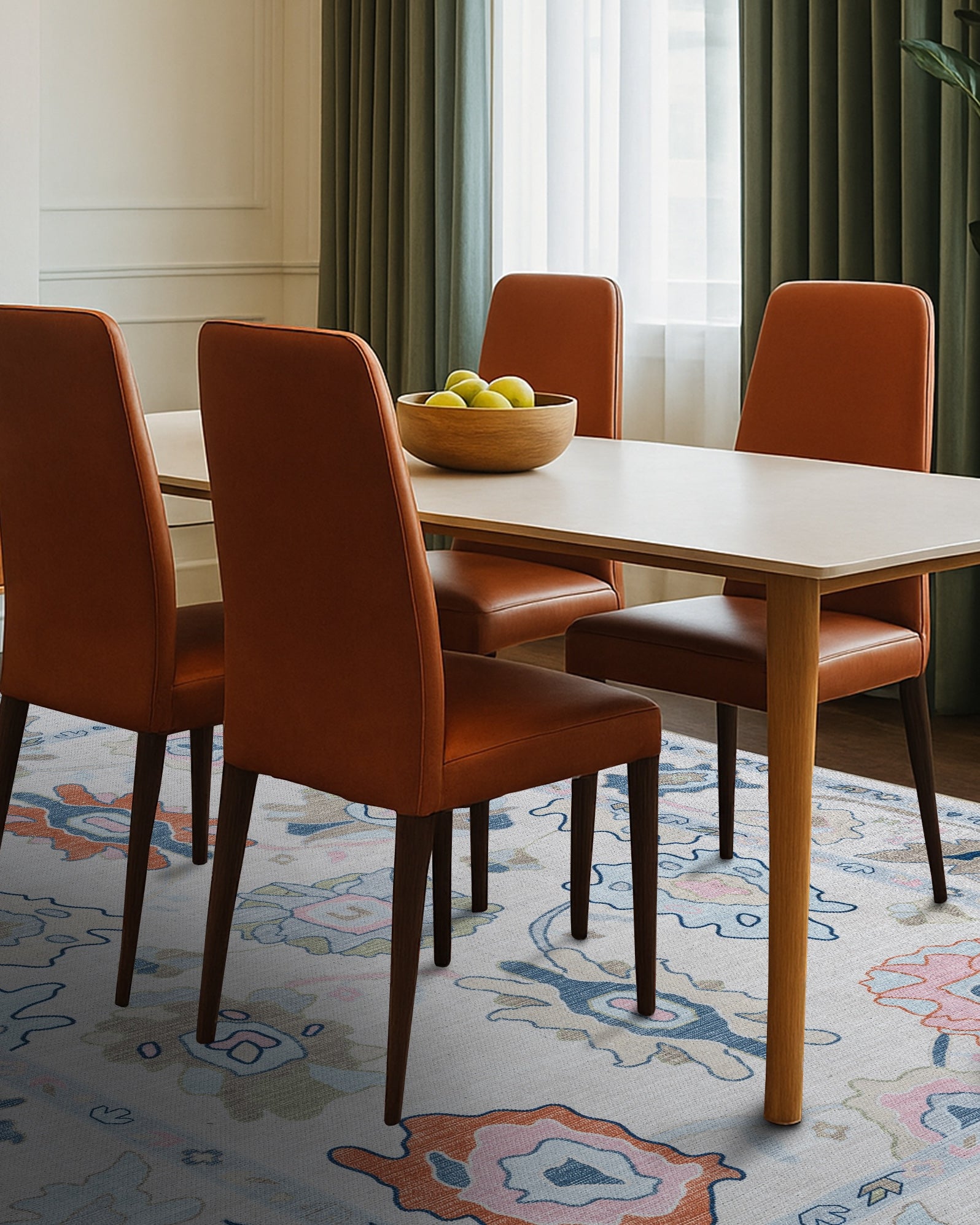
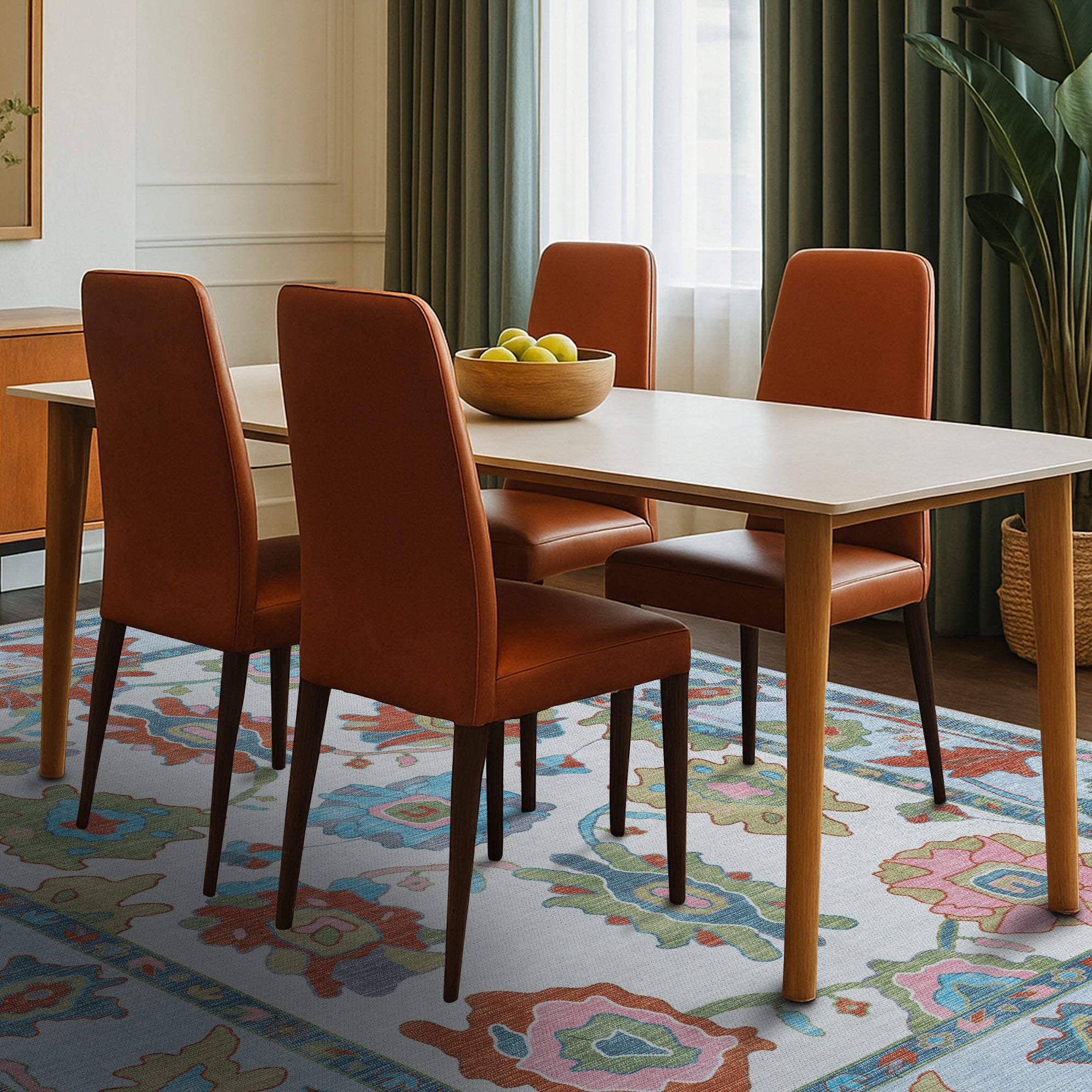
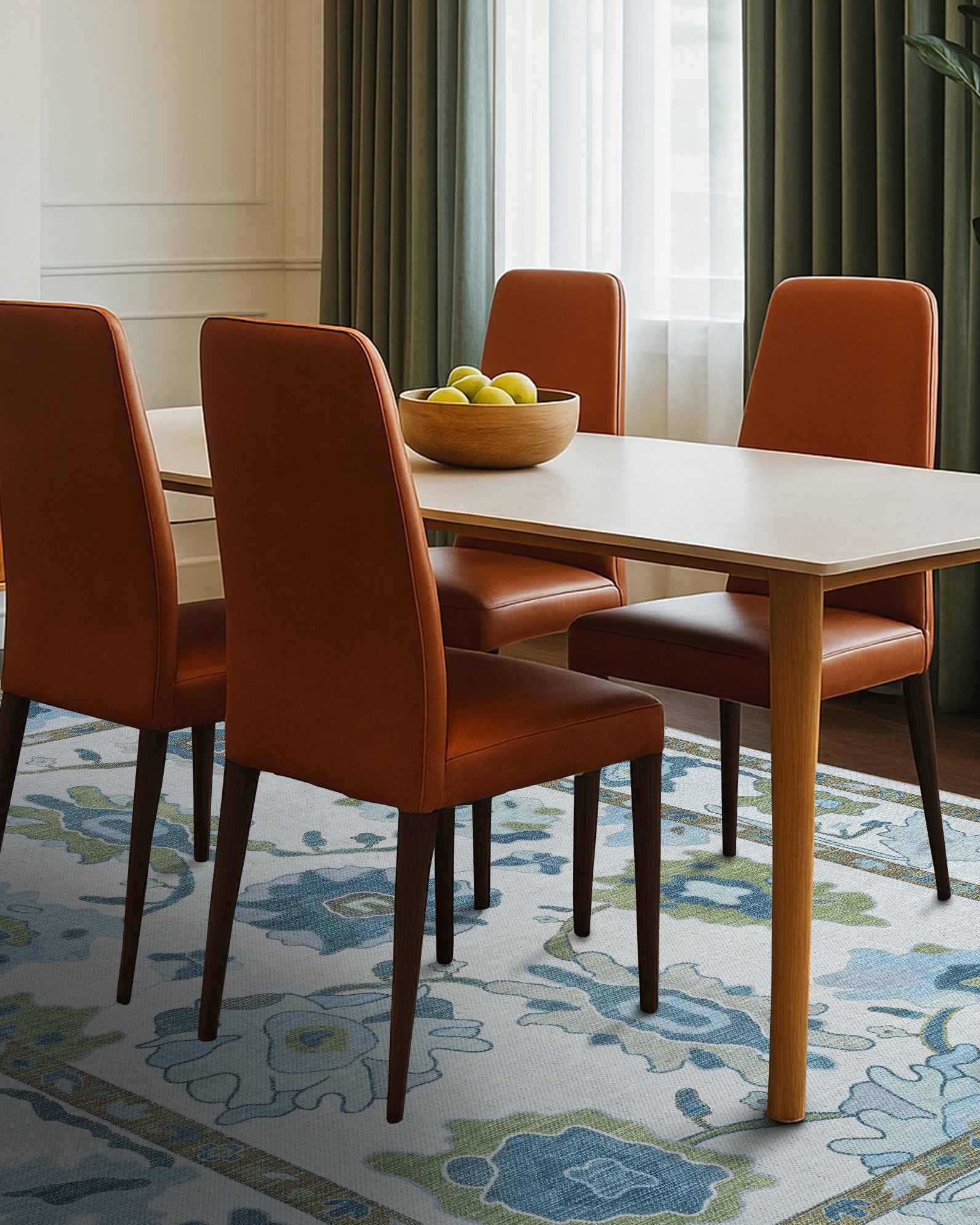
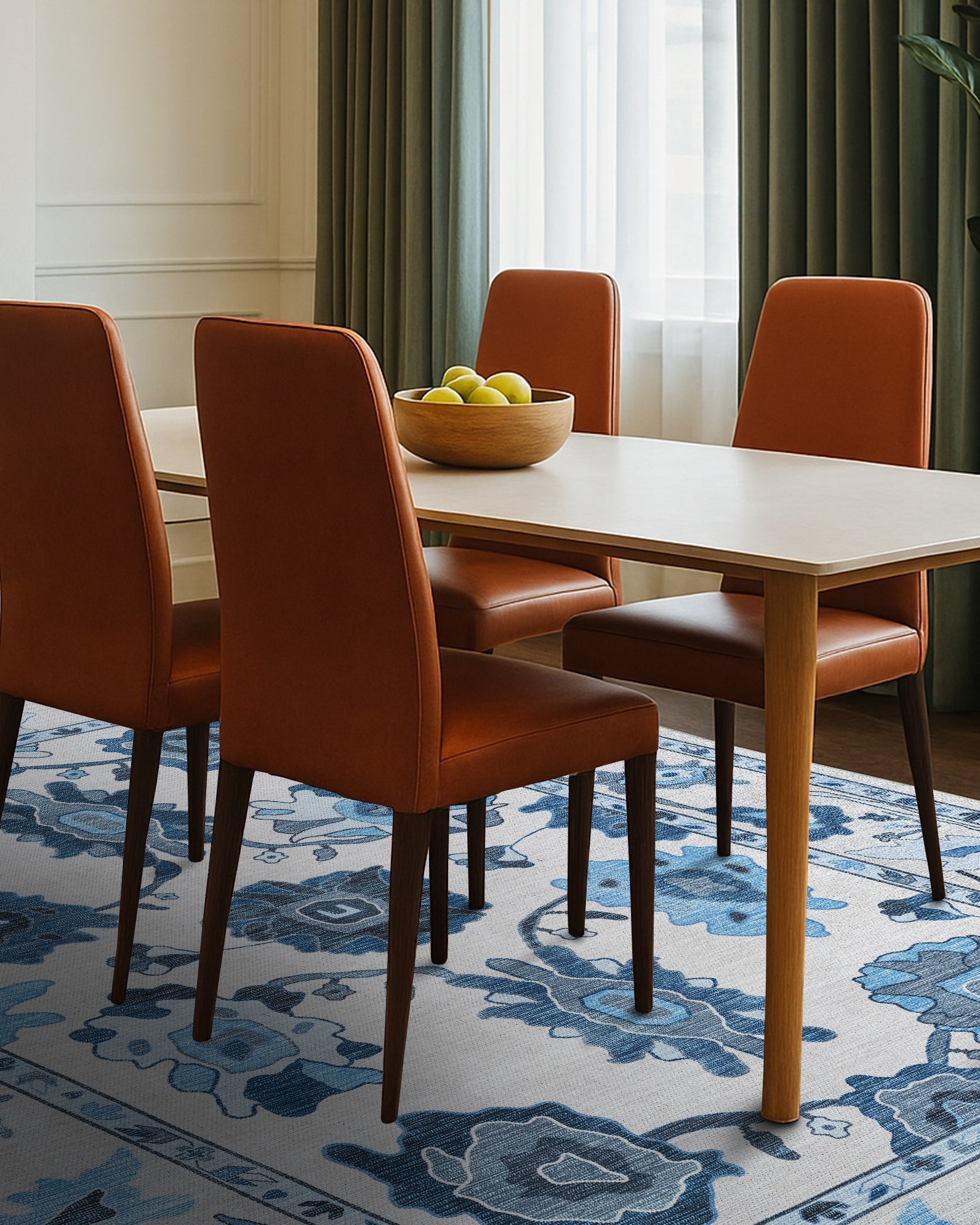
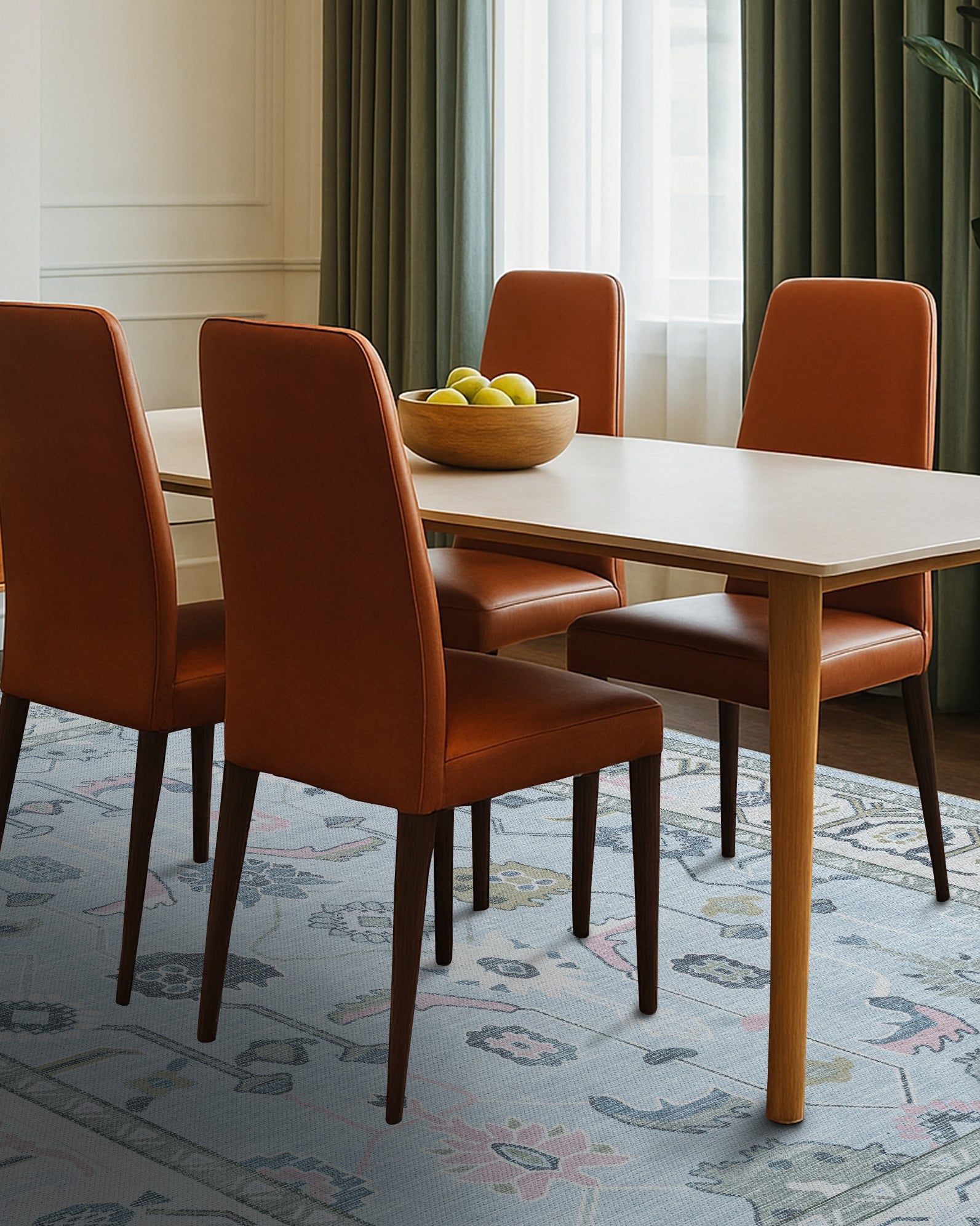
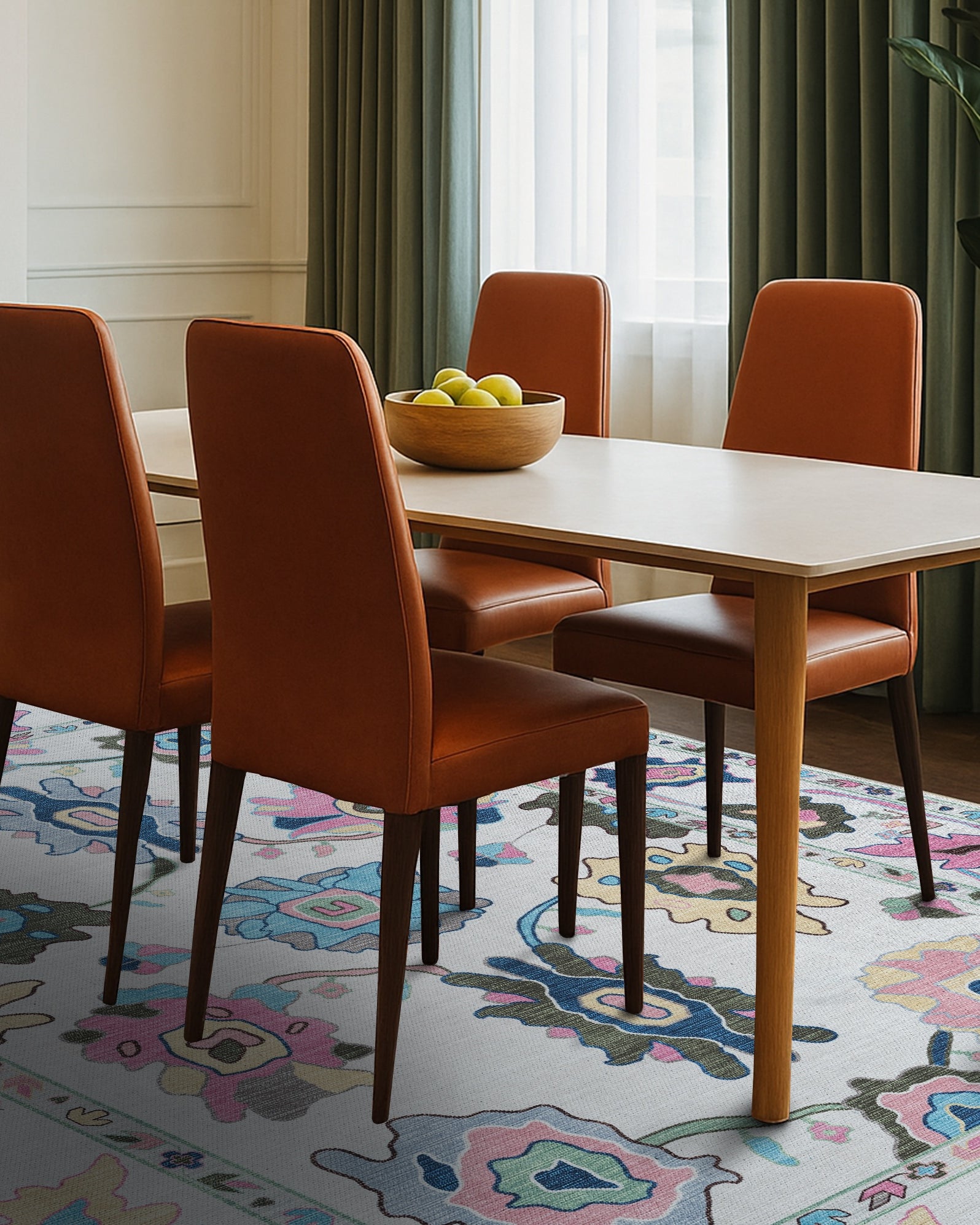
Chair legs sink into deep pile and drag when someone pulls back from the table. On a low-pile rug they glide. This is the single most common reason people end up looking for thin rugs, and it is why worn vintage pieces are among the best dining room options available — they also hide crumbs in their pattern rather than swallowing them in deep wool.
Dirt and Maintenance
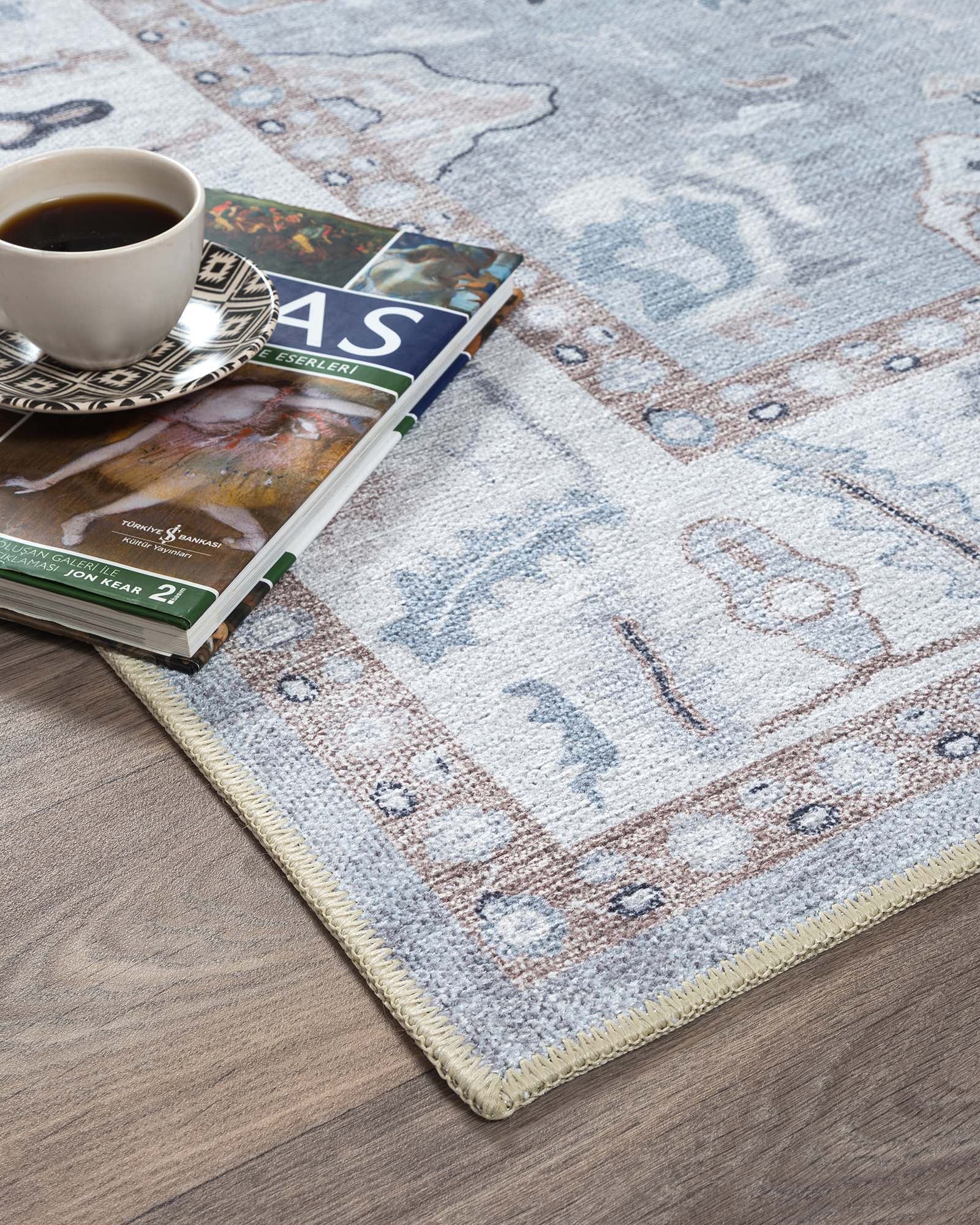
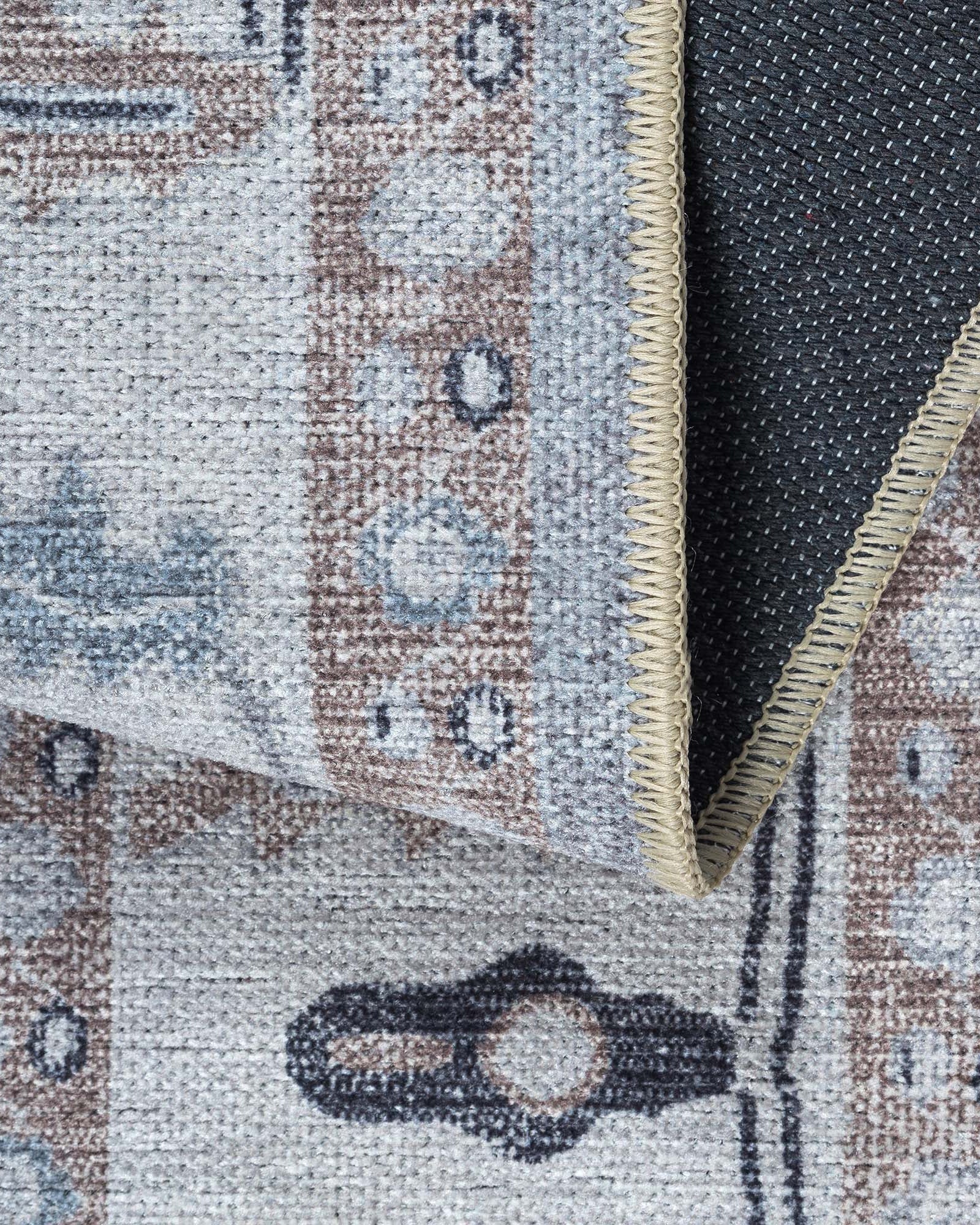
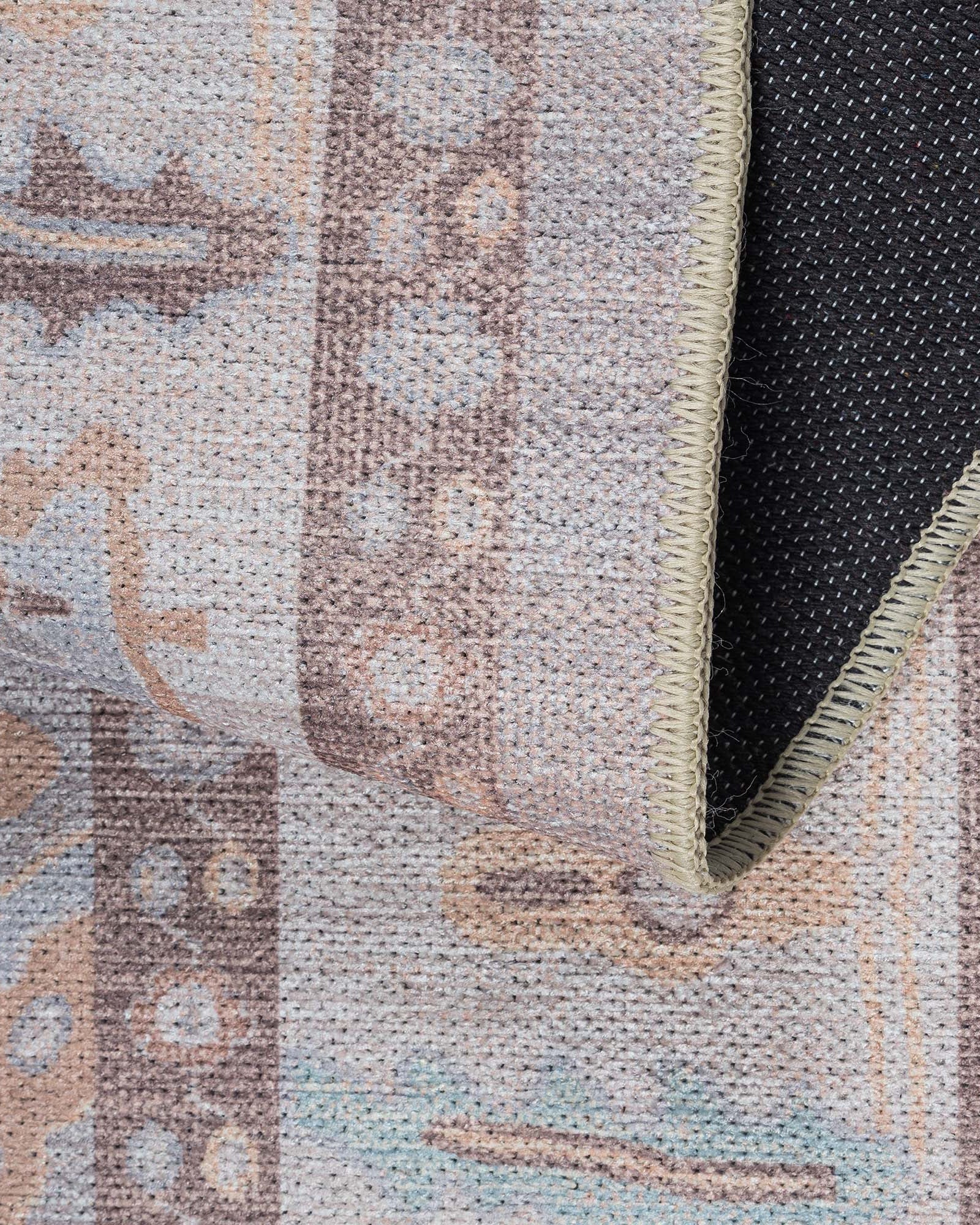
Deep pile is a reservoir: grit works down into it and stays. A thin rug holds far less, releases what it does hold more readily when vacuumed, and shows no footprints or vacuum tracks. In a busy household the maintenance difference is substantial.
Layering
Thin rugs sit flat over jute, sisal or a larger neutral rug without the edges rolling or the two layers fighting each other. If the piece you want is smaller than the room needs, low pile makes layering look deliberate rather than improvised.
What You Give Up
Cushioning, mostly. There is little wool left to walk on, so a low-pile rug underfoot feels closer to the floor than to a carpet. It also insulates less and absorbs less sound than a full-pile piece, which matters in a room with hard floors and high ceilings.
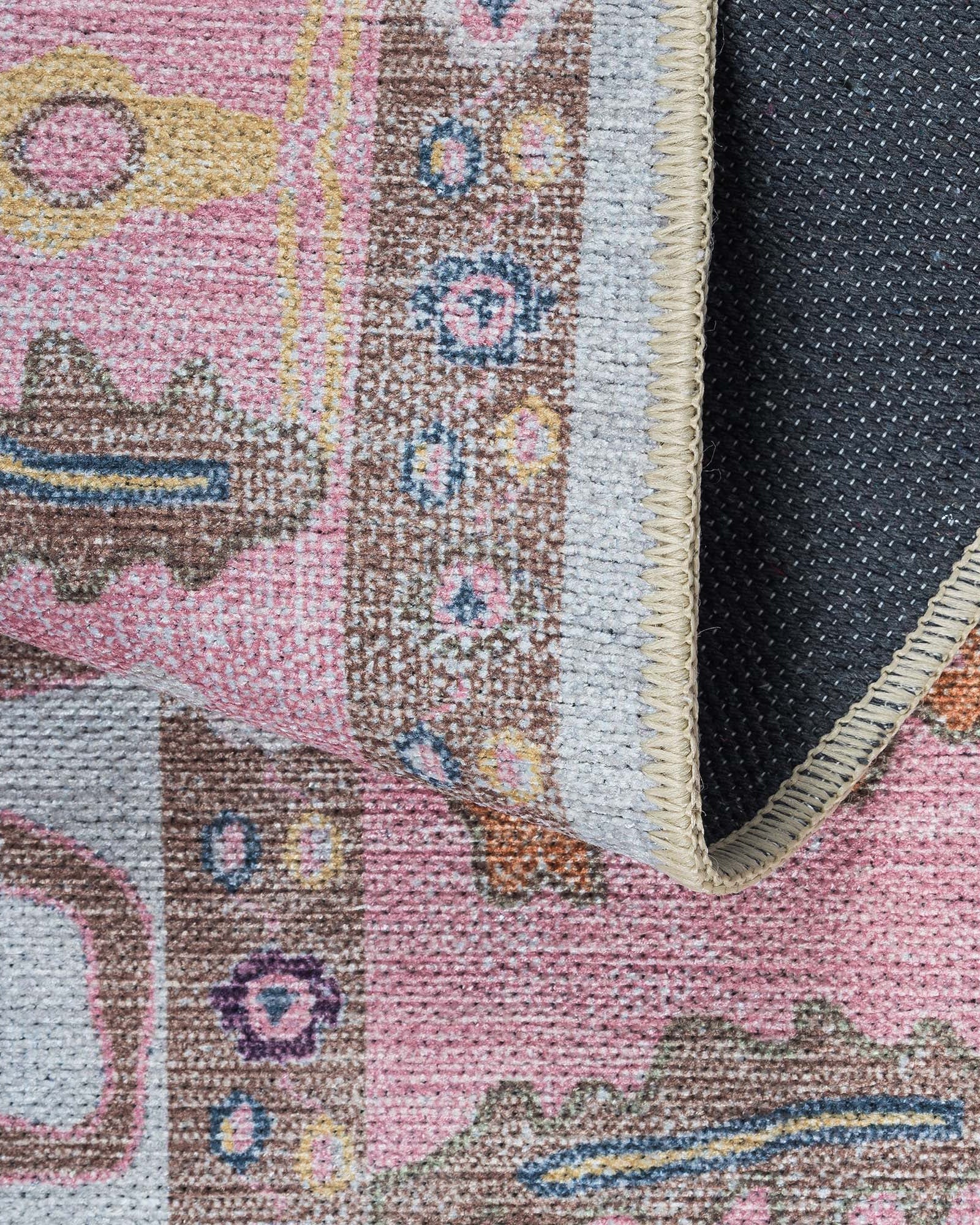
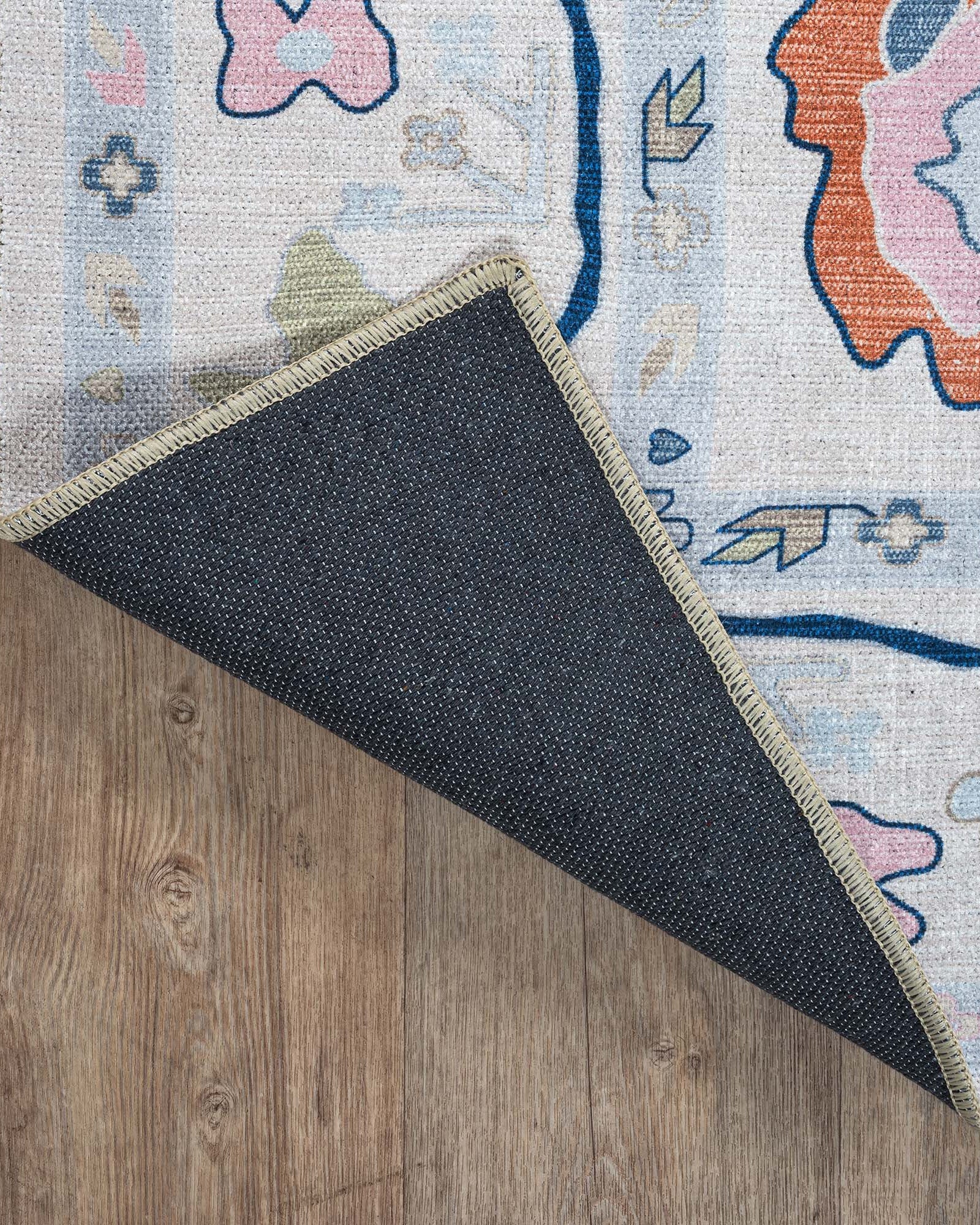
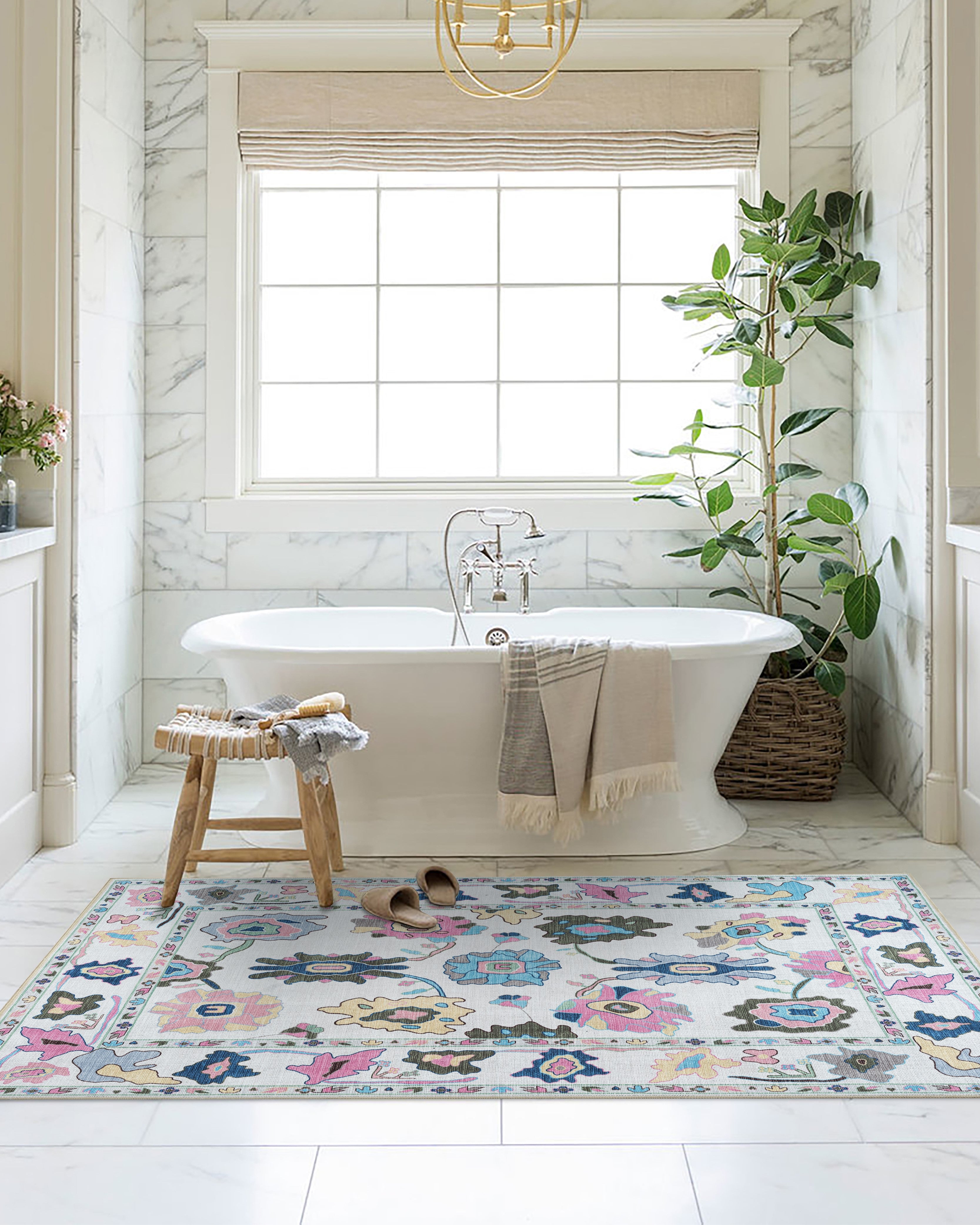
A good felt-and-rubber pad addresses most of this. On a thin rug a pad is not optional — it restores the comfort the rug has lost, stops it sliding, and protects the remaining foundation from grinding against the floor. Budget for one with every piece in this collection.
Where Not to Put One
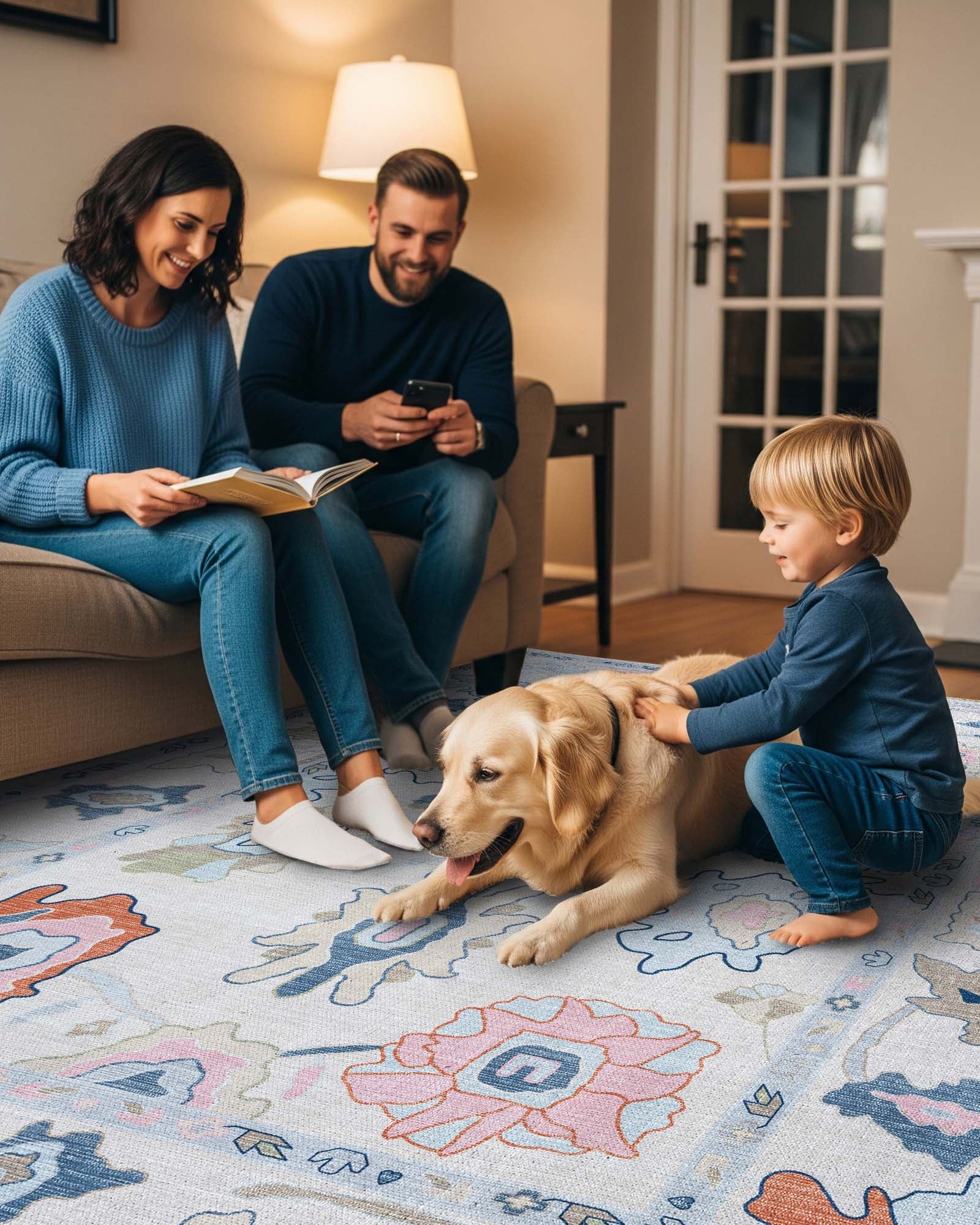
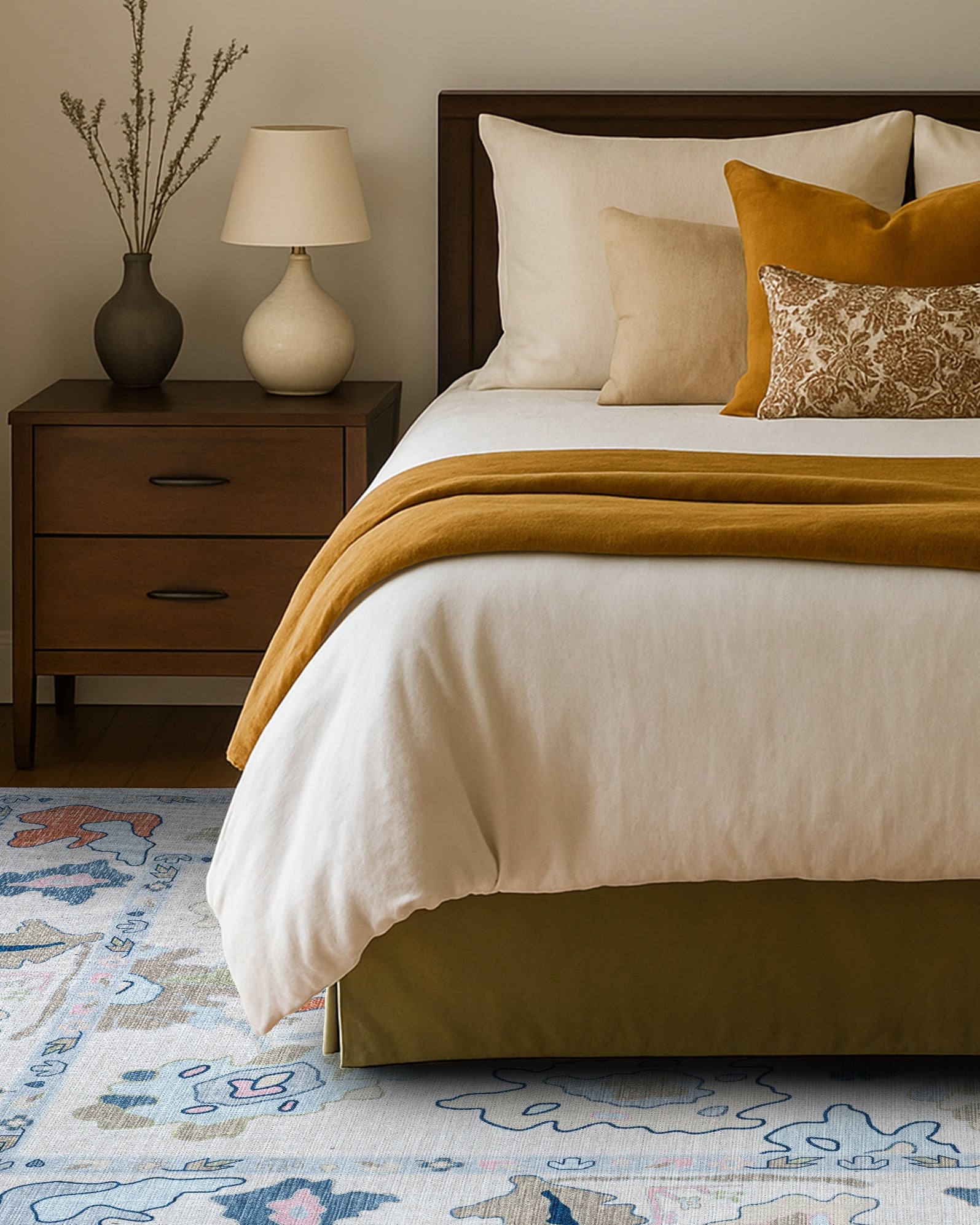
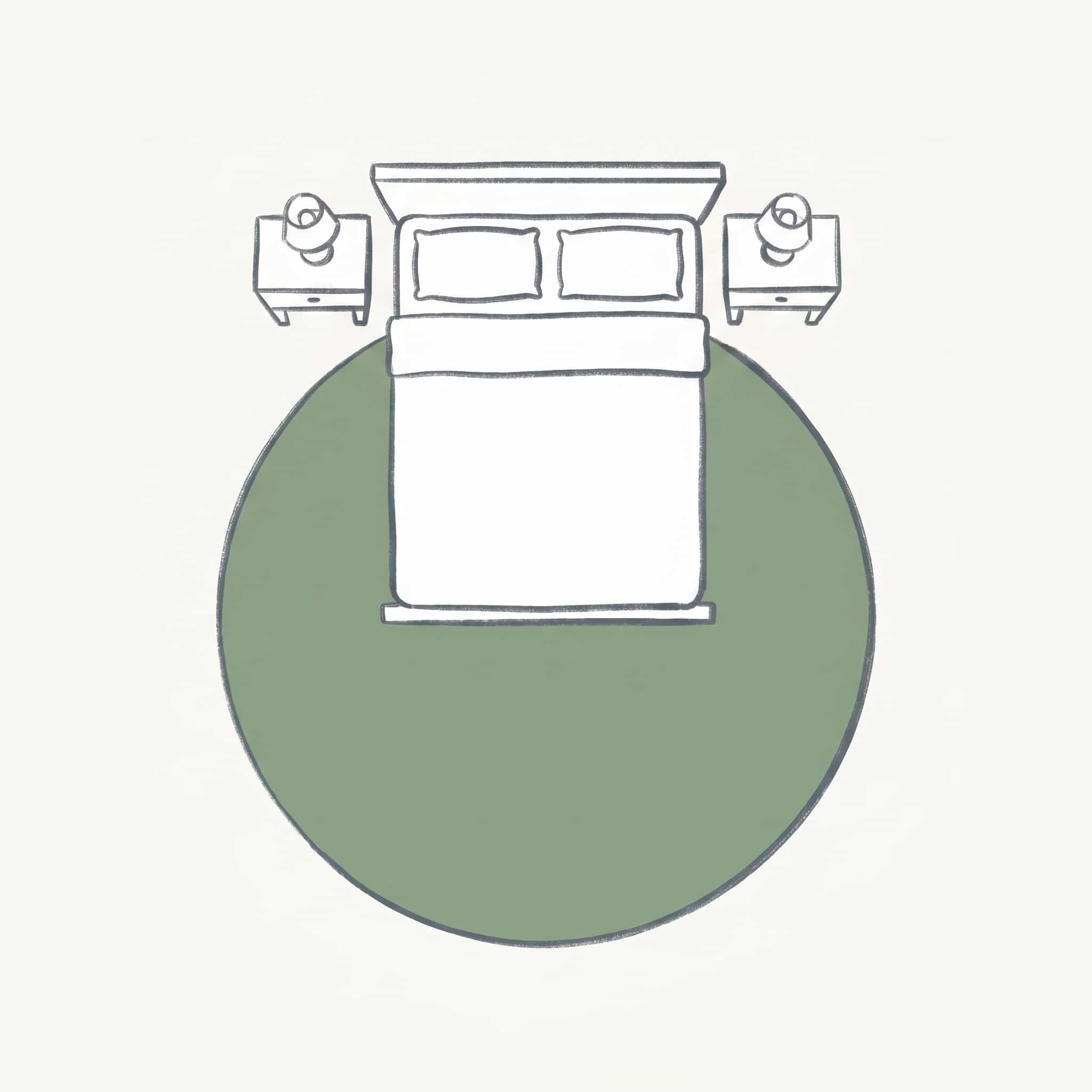
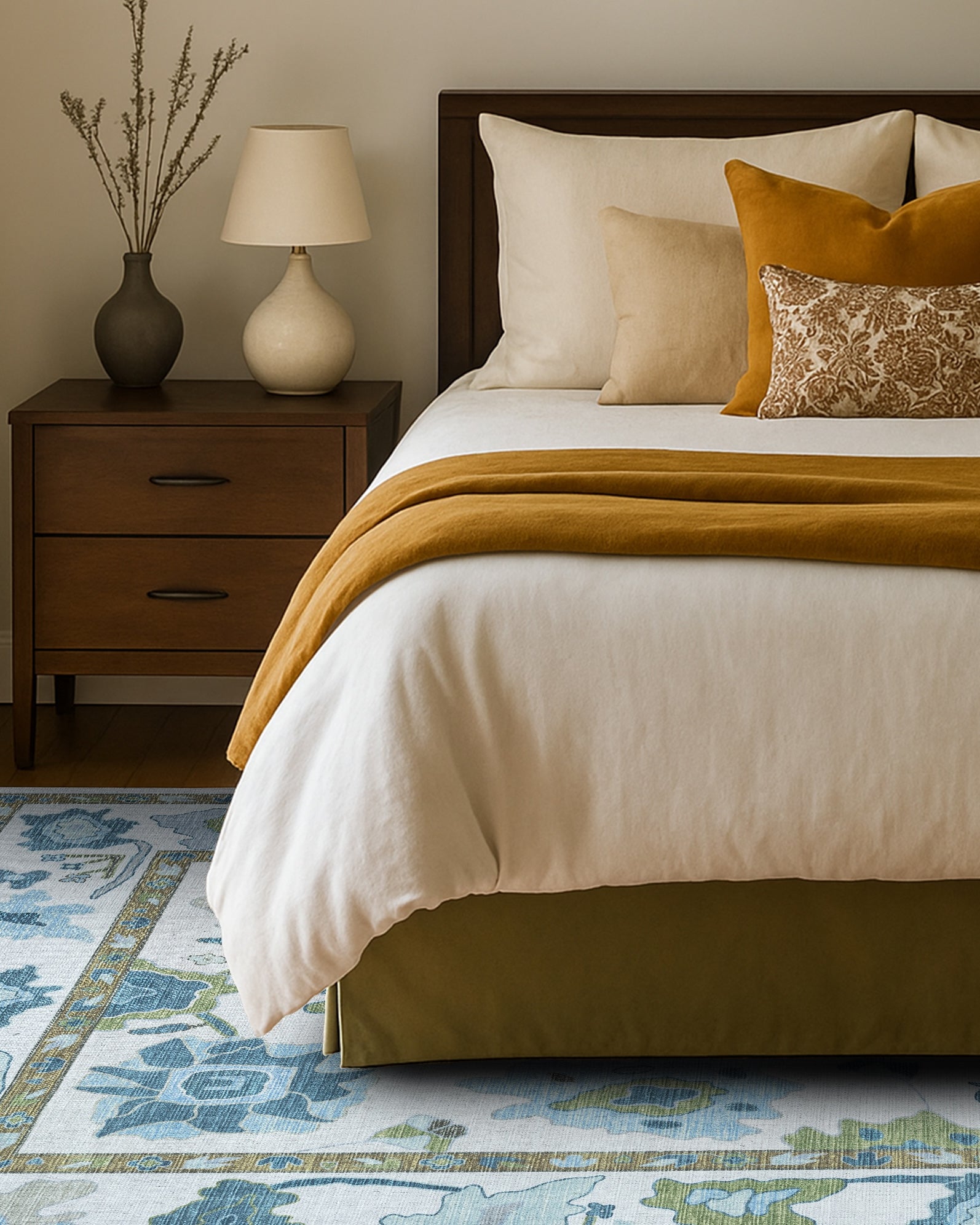
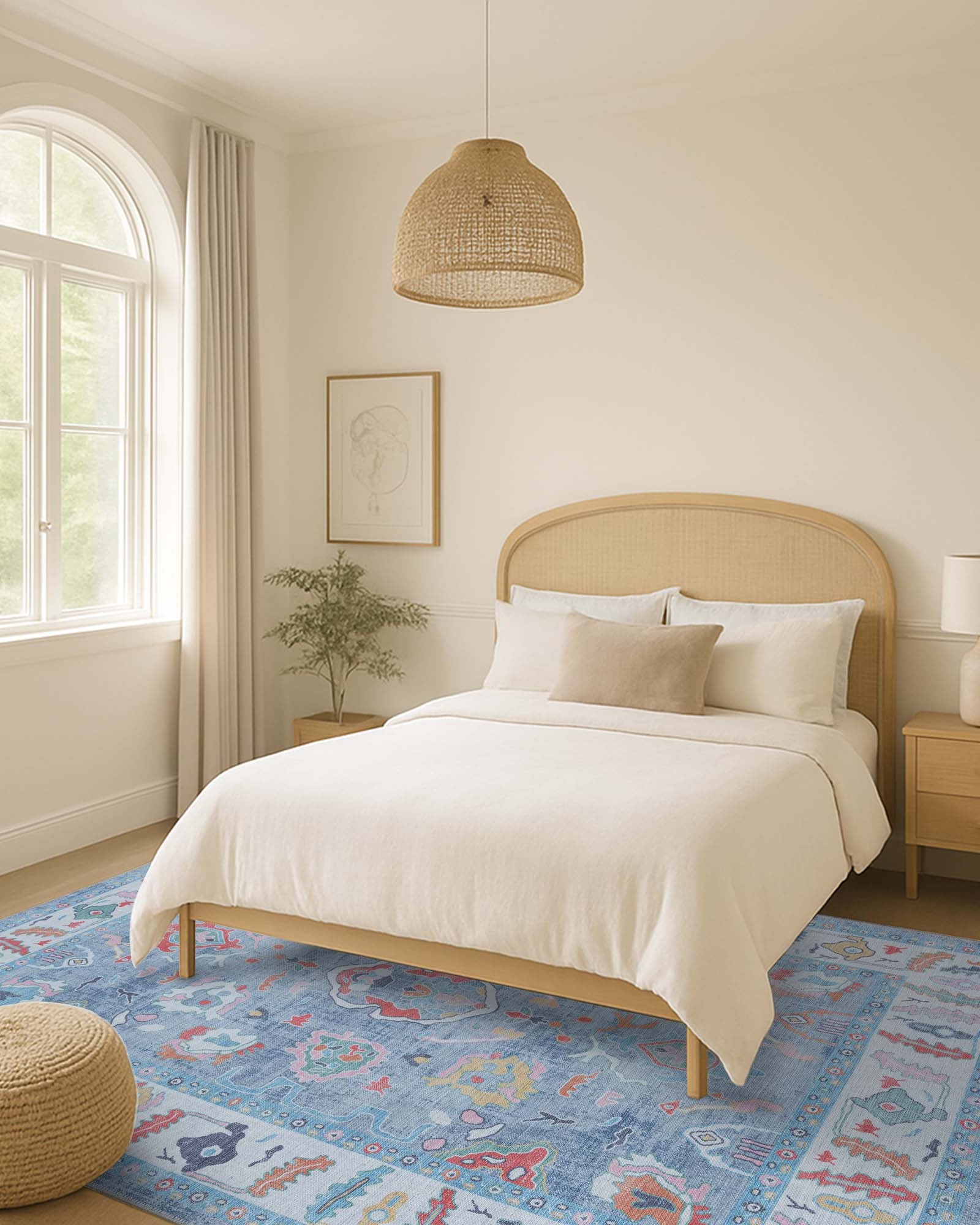
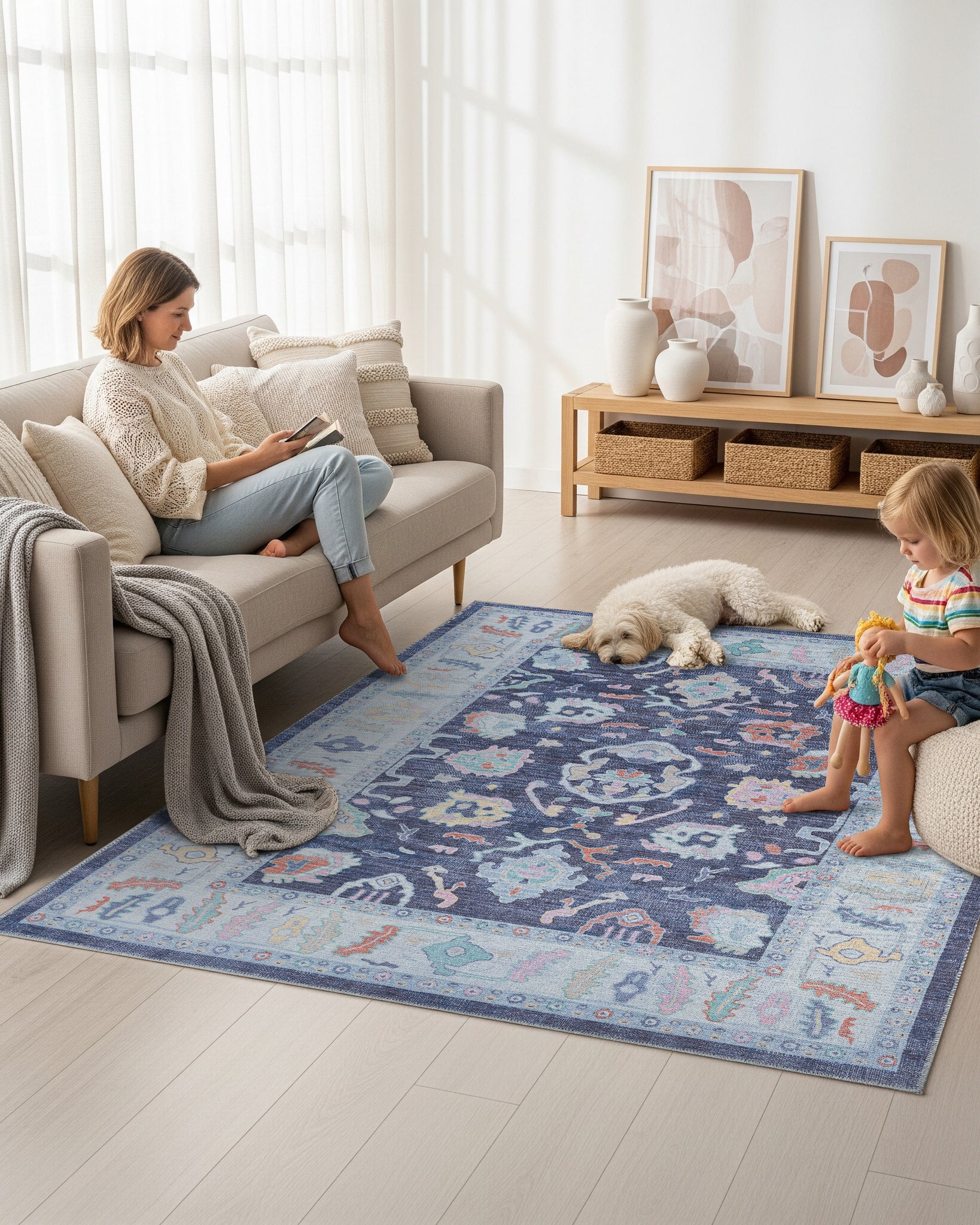
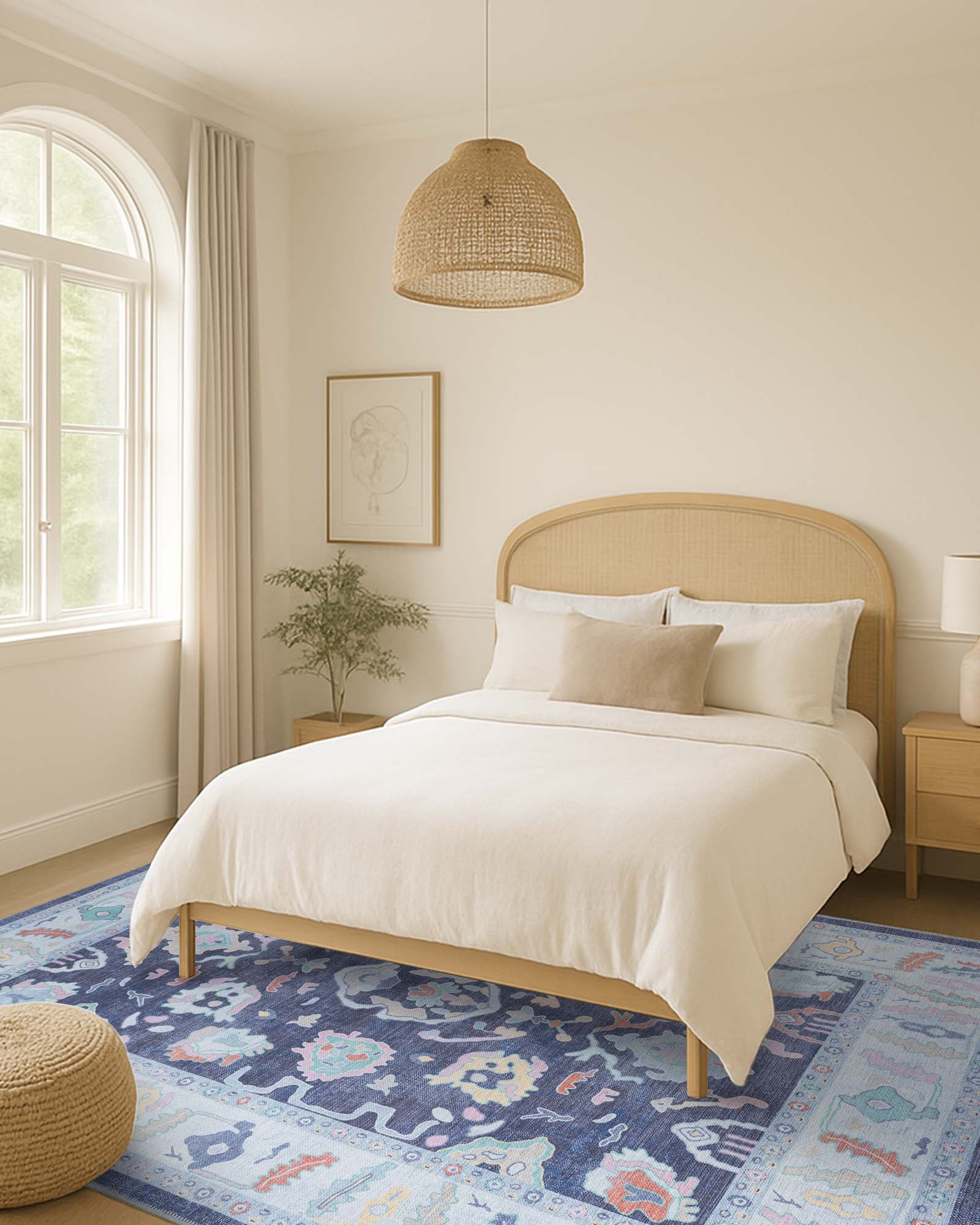
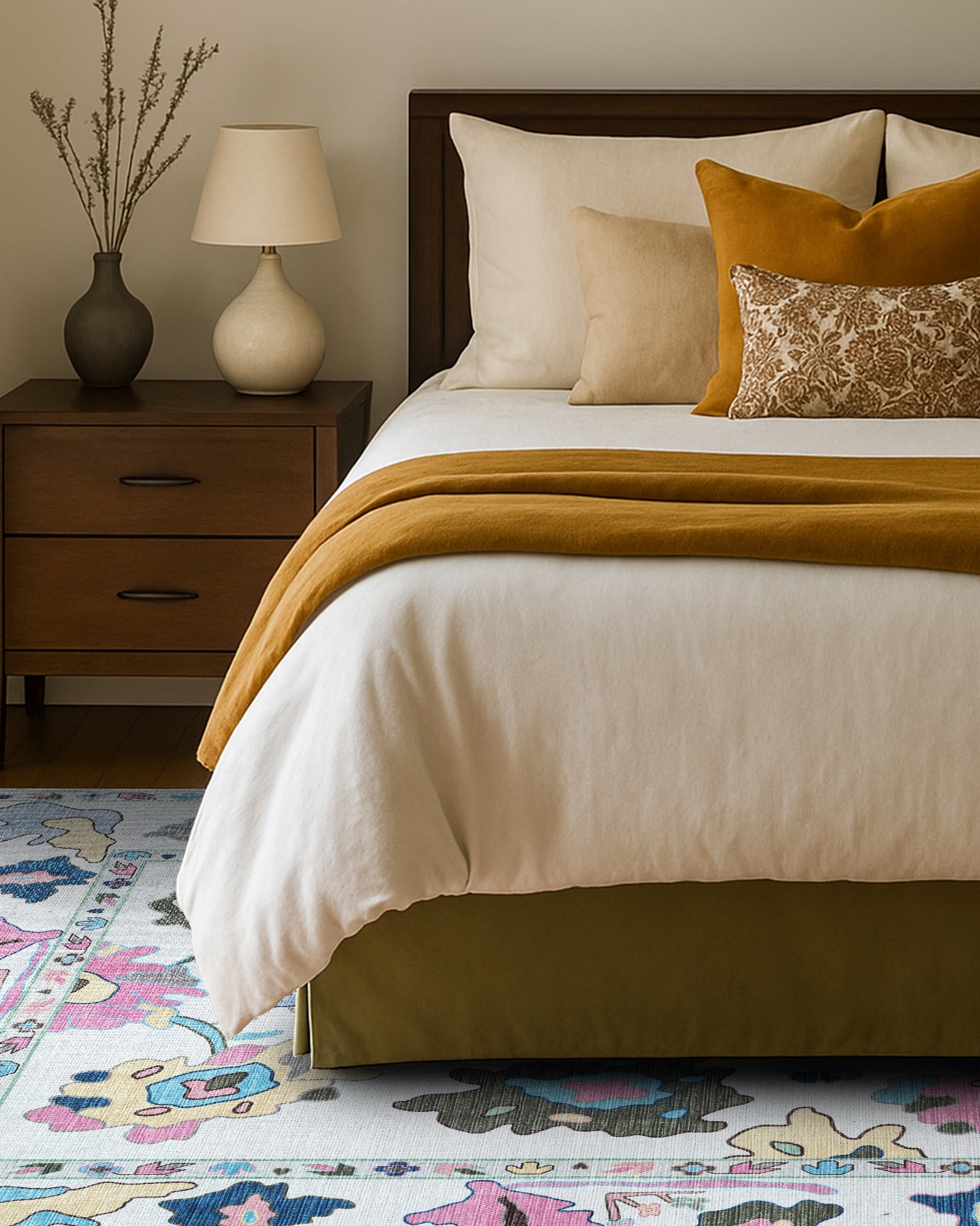
A bedroom floor you step onto barefoot every morning is the wrong place for a low-pile rug, and so is a nursery or any room where people sit on the floor. Those rooms want the fullest pile you can find.
Reading the Product Page
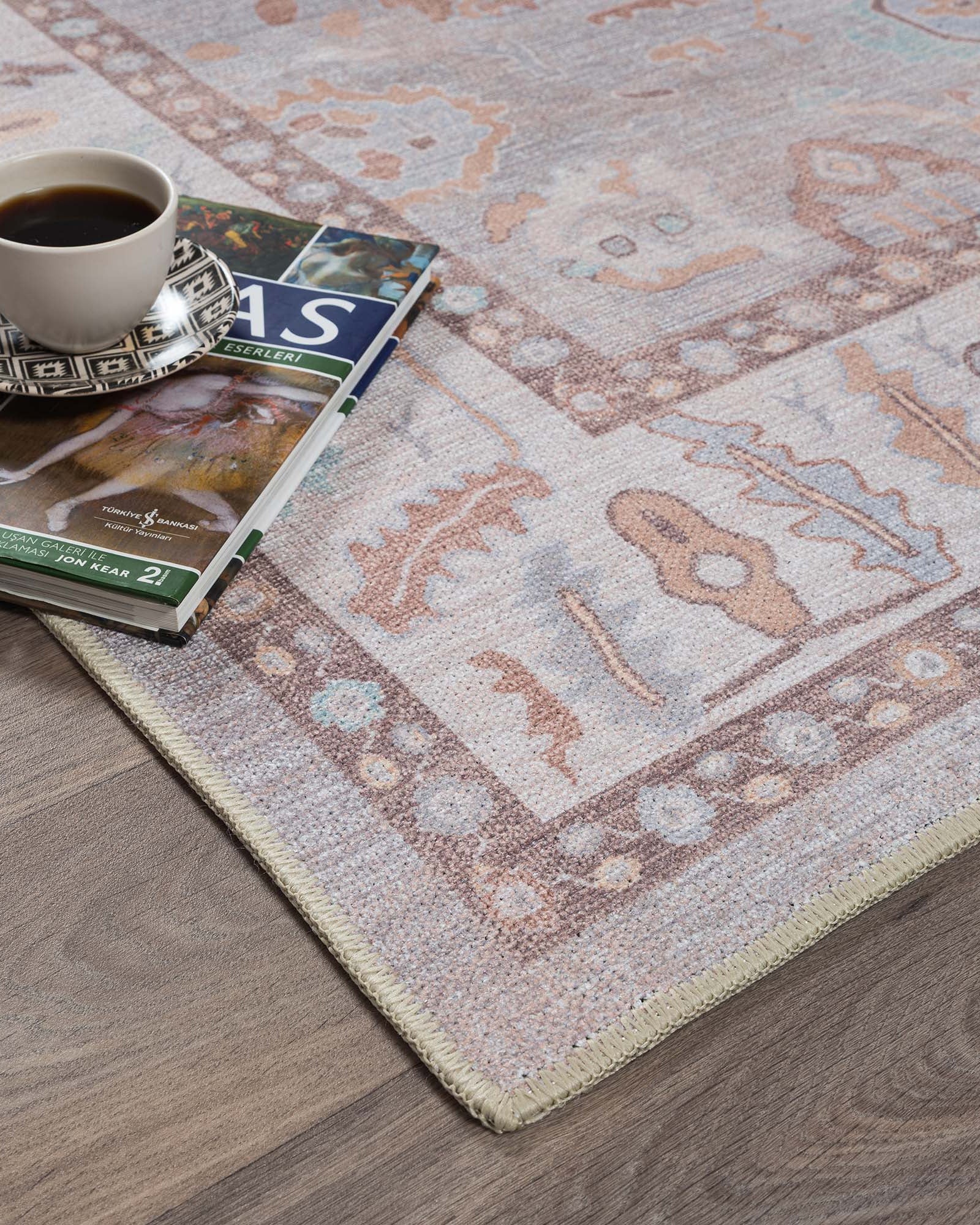
Pile height is listed on every piece, along with the estimated decade, origin where identifiable, foundation type, exact measured dimensions and a plain condition note covering where the rug is thinnest and whether any area has reached the foundation. Photography shows the wear as it is rather than concealing it.
Sizes are never standard. A rug listed at approximately 6' x 9' may measure 5'10" x 9'3", and opposite edges commonly differ by an inch or more. Order against the measurements shown.
Care
Vacuum with the beater bar off or raised — on thin pile an aggressive brush accelerates fibre loss with no benefit — and keep it off the fringe entirely. Use a rug pad on every hard floor. Rotate the rug 180 degrees twice a year so remaining pile wears evenly rather than concentrating loss in one path. Blot spills immediately with a white cloth and plain water, pressing rather than rubbing; thin rugs absorb through to the floor faster than thick ones, so speed matters. Avoid home carpet-cleaning machines, steam cleaners and commercial spot treatments, all of which can bleed aged natural dyes and saturate a thinned foundation. For anything set-in, use a professional hand-knotted rug washer.