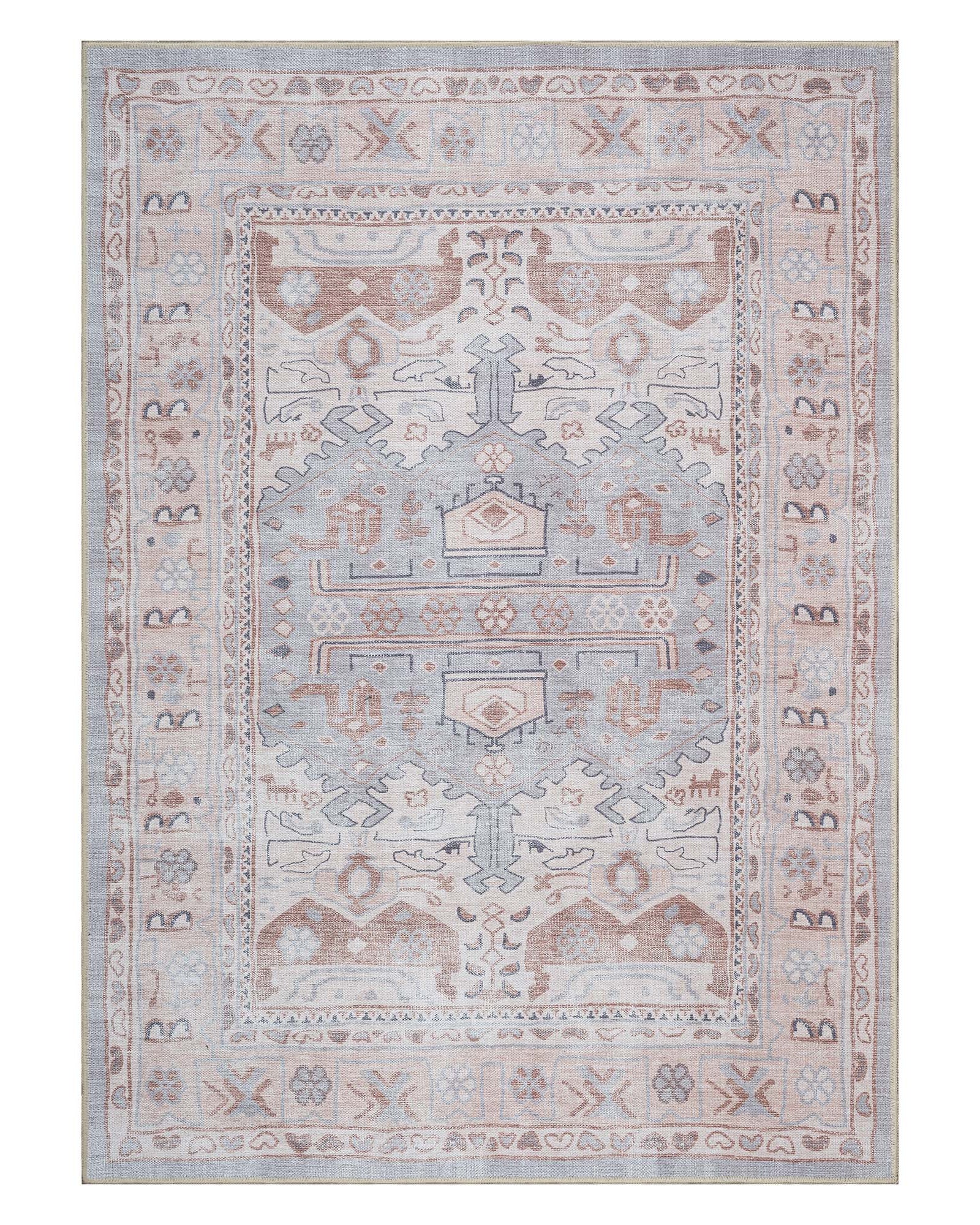
Before the 1870s there was no other option. Every colour in a rug came out of a plant, a root, a bark or an insect, prepared in a dye pot by the weaver or a village dyer. The rugs in this collection were coloured that way, and the reason it still matters is not romance — it is that natural dyes age fundamentally differently from synthetic ones, and that difference is visible in every piece here.
The Core Palette and Where It Came From
Most of the colour in Anatolian, Persian and Caucasian weaving comes from a small handful of sources, each with its own character and its own way of ageing.
Madder Root — Red
The root of Rubia tinctorum, dried and ground, dyed almost every red field ever woven. Its range is unusually wide for a single plant: bath length, mineral mordant and local water chemistry pull it anywhere from pale coral through brick and rust to deep garnet. Madder fades by softening rather than dulling, so an old madder red moves toward terracotta and rose while staying warm at every stage.
Indigo — Blue
A vat dye that works unlike any other. Wool goes into the vat yellow-green and turns blue on contact with air, with depth built through repeated dips — fifteen or more for a near-black navy. Indigo bonds to the outside of the fibre rather than penetrating it, so it wears away by abrasion, revealing lighter blue underneath along walkways. It is the most colourfast natural dye and is often the last strong colour left on a very old rug.
Weld, Chamomile and Pomegranate — Yellow
The weakest link in the natural palette. Yellow plant dyes are the least lightfast pigments in a rug and begin retreating within decades, sometimes disappearing entirely. This is why old rugs so often look as though yellow was never used — usually it was, and it has gone.
Walnut Husk and Oak Gall — Brown and Black
Walnut gives warm browns and is unusually stable. Black was typically made with iron mordants, and the iron slowly corrodes the wool it sits on — which is why black outlines in antique rugs are frequently worn lower than the colours beside them. That sunken effect is called corrosion, and it is a marker of genuine age.
Cochineal and Kermes — Crimson and Purple
Insect-derived dyes, expensive and reserved for finer workshop weaving. They produce cooler, bluer reds than madder does, and their presence usually indicates a piece someone paid well for.
How Natural and Synthetic Dyes Age Differently
Synthetic aniline dyes arrived in the region in the 1870s and spread quickly because they were cheap, fast and consistent. They also behave differently over time: they tend to fade toward flat, cool, greyish versions of themselves, and early synthetics in particular bled badly and dulled within years.
Natural dyes lose intensity while keeping their hue. A hundred-year-old madder red is a paler warm red, not a grey-pink. A faded indigo is a softer blue, not a washed grey. This is the most reliable single indicator of natural dyeing, and it is why naturally dyed rugs read mellow and settled rather than tired.
Abrash
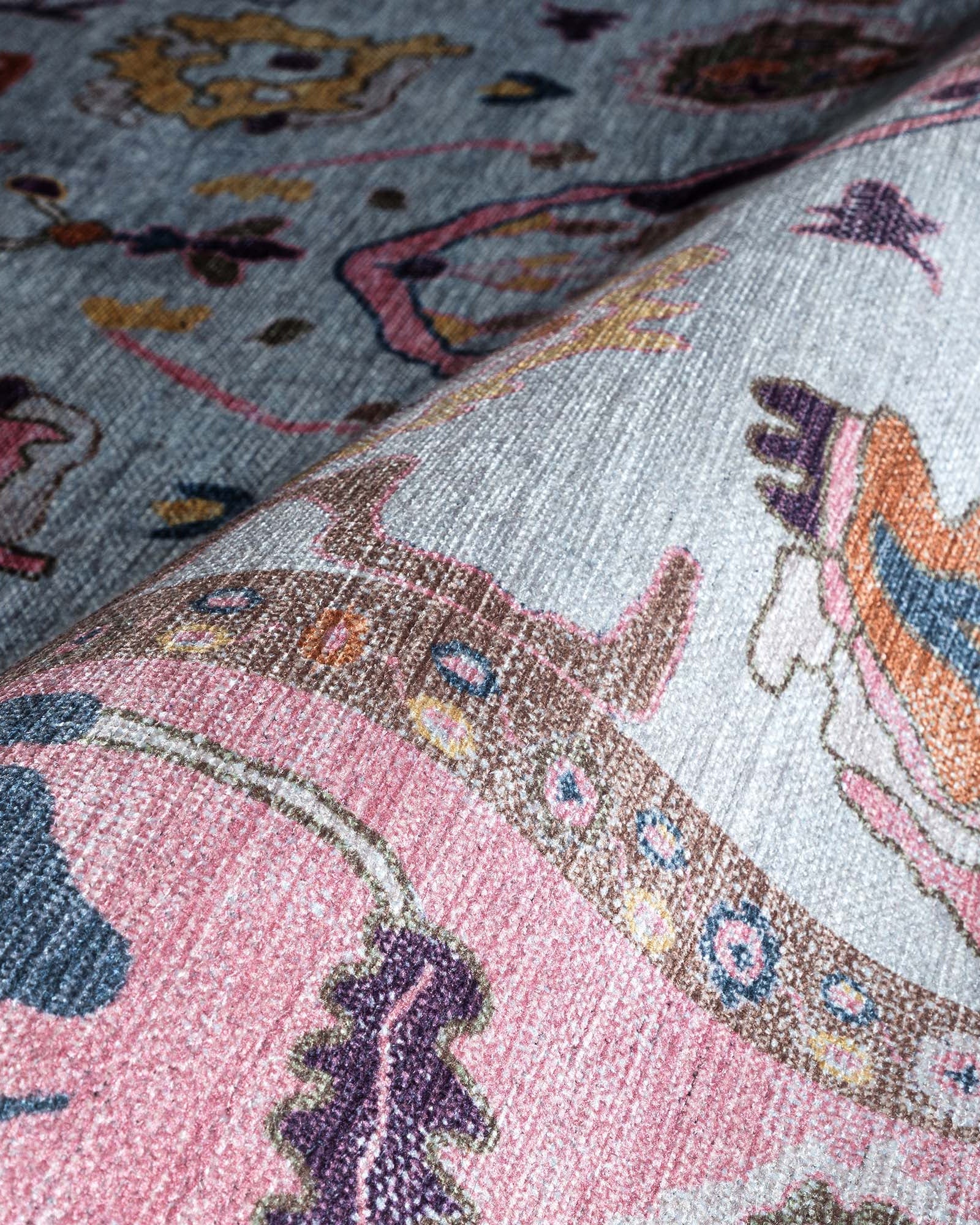
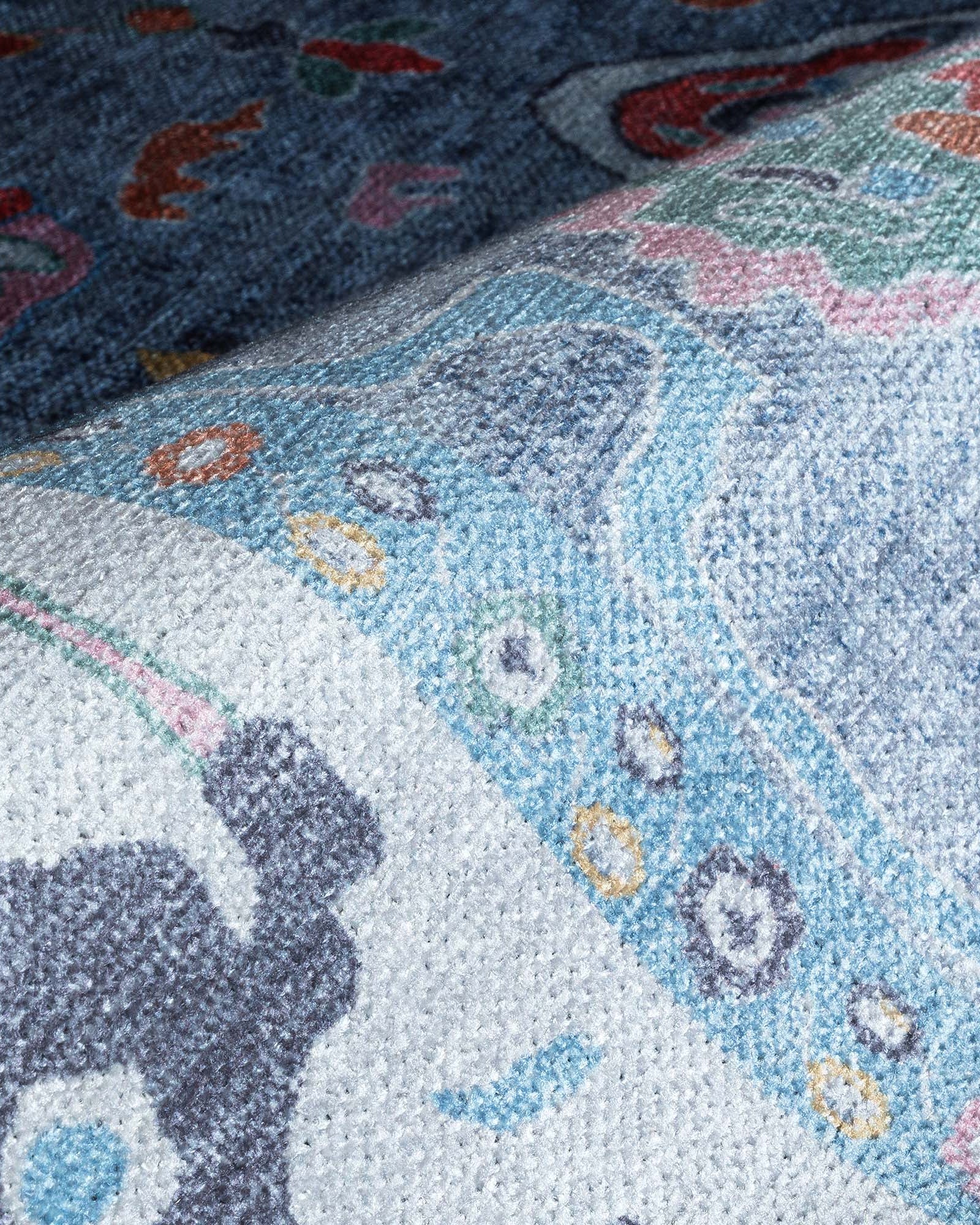
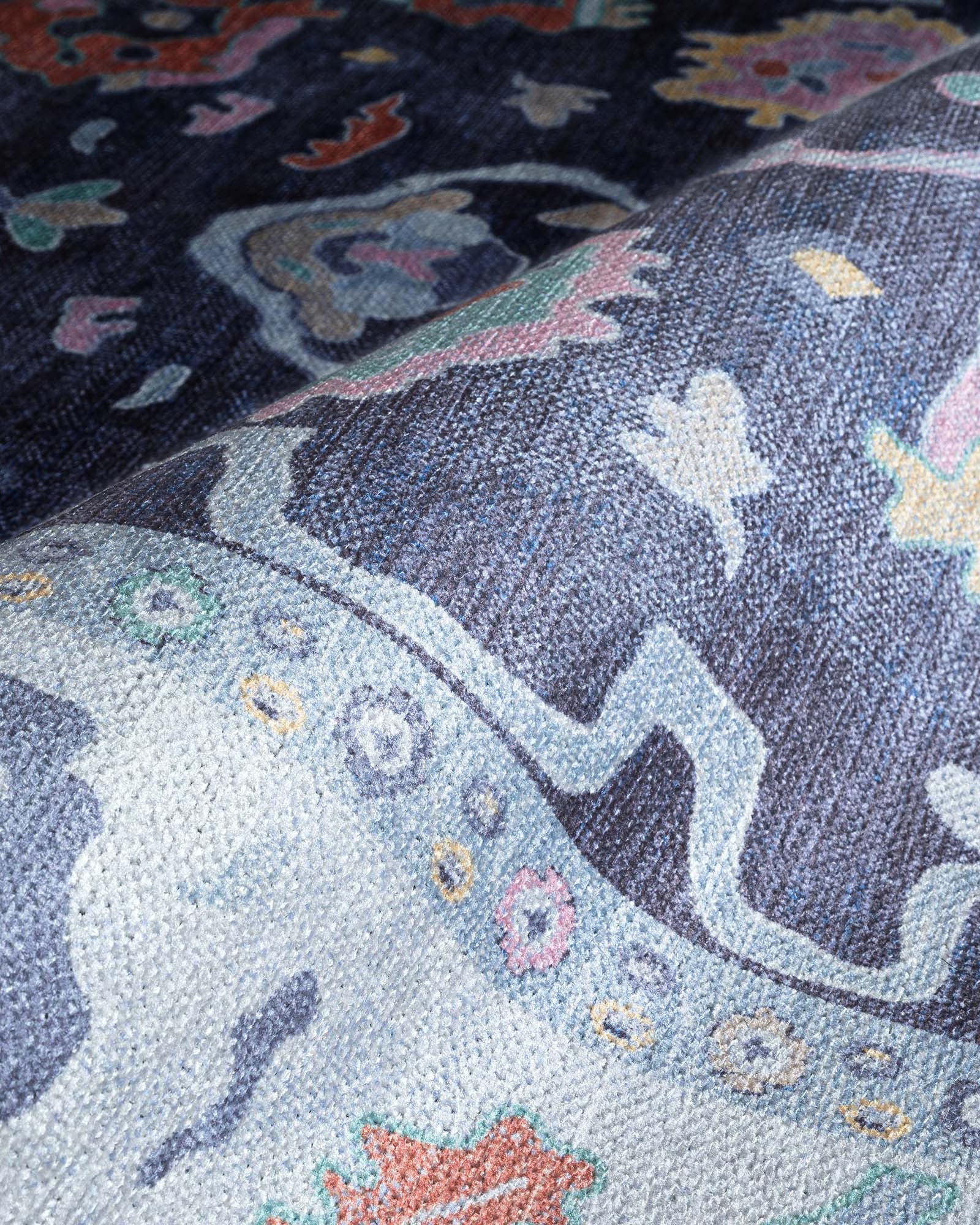
Dye lots were small — a household dyed as much wool as one pot could handle. When the weaver moved to the next batch, the shade shifted slightly, producing horizontal bands of tonal variation across the field. This is abrash, and it is the clearest visual fingerprint of hand dyeing. Machine-dyed wool has none of it.
Green Is Two Dyes
There was no reliable single-source green. Weavers dyed wool yellow, then overdyed it with indigo. Because the yellow component fades far faster, most old greens have drifted toward teal or blue-grey. A rug with unexpectedly blue leaves and vines was almost certainly woven green.
How to Recognise Natural Dyeing
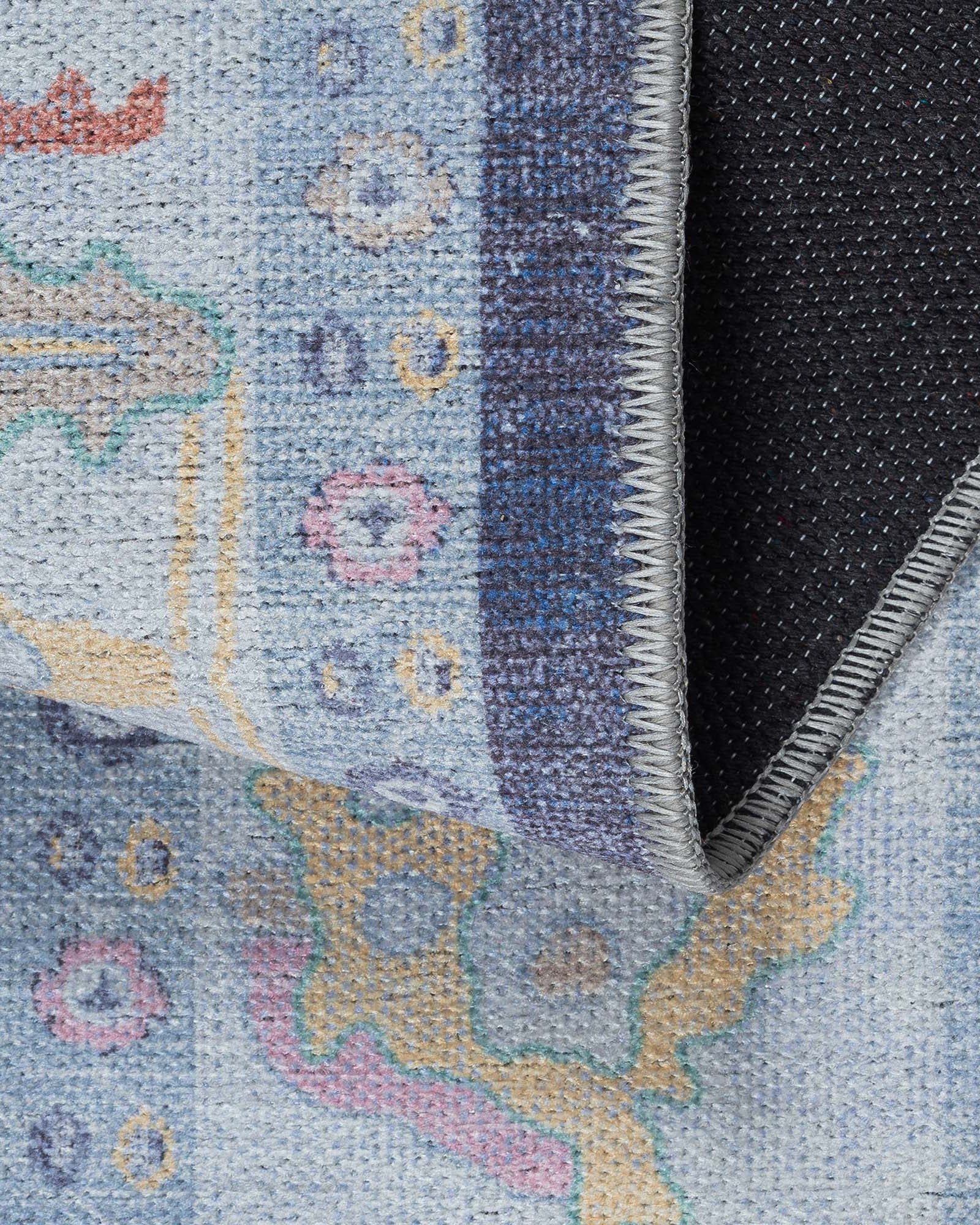
Several checks are available without any equipment. Look for abrash banding across the field. Part the pile and compare the colour at the base of the wool with the tip — natural dyes show a clear gradient where light has reached the surface, while synthetics often colour more uniformly through the strand. Check whether black outlines sit lower than adjacent colours, indicating iron corrosion. And look at how the faded areas read: warm and softened points to natural dye, flat and greyish points to synthetic.
Where a piece shows a mix — common in rugs woven during the transition decades — the product page says so rather than overstating.
Living With Naturally Dyed Wool
Two practical consequences follow from natural dyeing, and both affect how you should treat the rug.
First, light matters more. Natural dyes continue to change under ultraviolet exposure, and unevenly — the half of a rug near a window will move faster than the half under a sofa. Rotating the rug 180 degrees twice a year keeps that change uniform across the field rather than leaving a visible line.
Second, water matters more. Aged natural dyes, indigo especially, release colour when saturated and can carry it into adjacent ivory areas. Blotting with minimal plain water is safe; soaking is not, and alkaline or enzyme cleaners will pull colour straight out of the wool.
Age, Condition and Measurement
Pieces are grouped as antique at over eighty years, vintage at roughly forty to eighty, and semi-vintage below that. Every product page carries the estimated decade, origin where identifiable, exact measured dimensions and a plain condition note. Expect abrash banding, uneven fading across the field, deeper colour in areas that sat under furniture, and corrosion in black-outlined motifs. These are original characteristics of natural dyeing rather than damage. Sizes are never standard and opposite edges commonly differ by an inch or more.
Care
Rotate twice a year and keep pieces out of prolonged direct sunlight. Blot spills immediately with a white cloth and minimal plain water, pressing rather than rubbing, and never saturate the rug. Do not use a home carpet-cleaning machine, a steam cleaner or any commercial spot treatment — all three lift natural colour and can bleed it into pale areas permanently. Use a rug pad on hard floors, vacuum with the beater bar off or raised and stay off the fringe. For anything set-in, use a professional rug washer and tell them the rug is naturally dyed, because the washing method differs from that used for synthetic-dyed pieces.