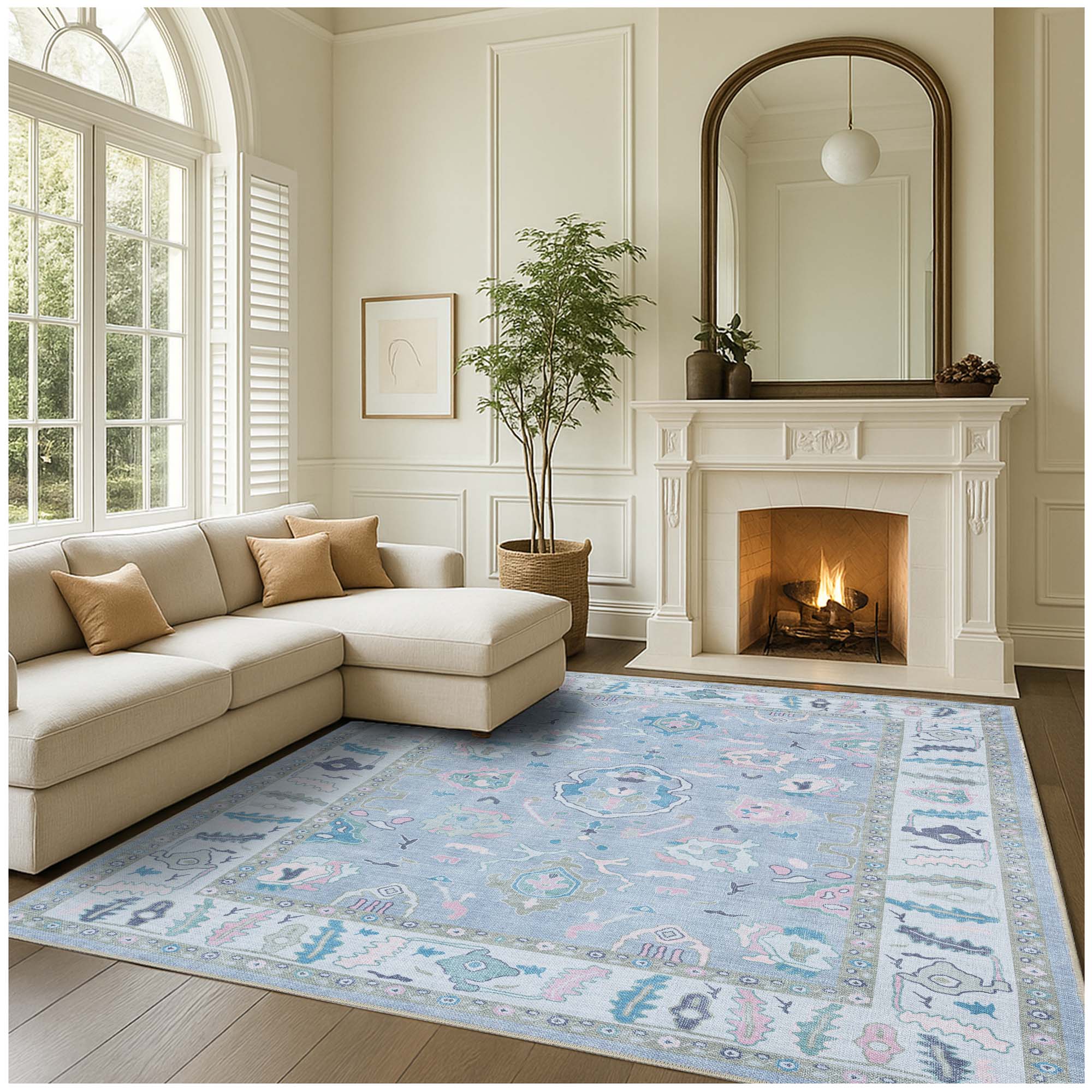
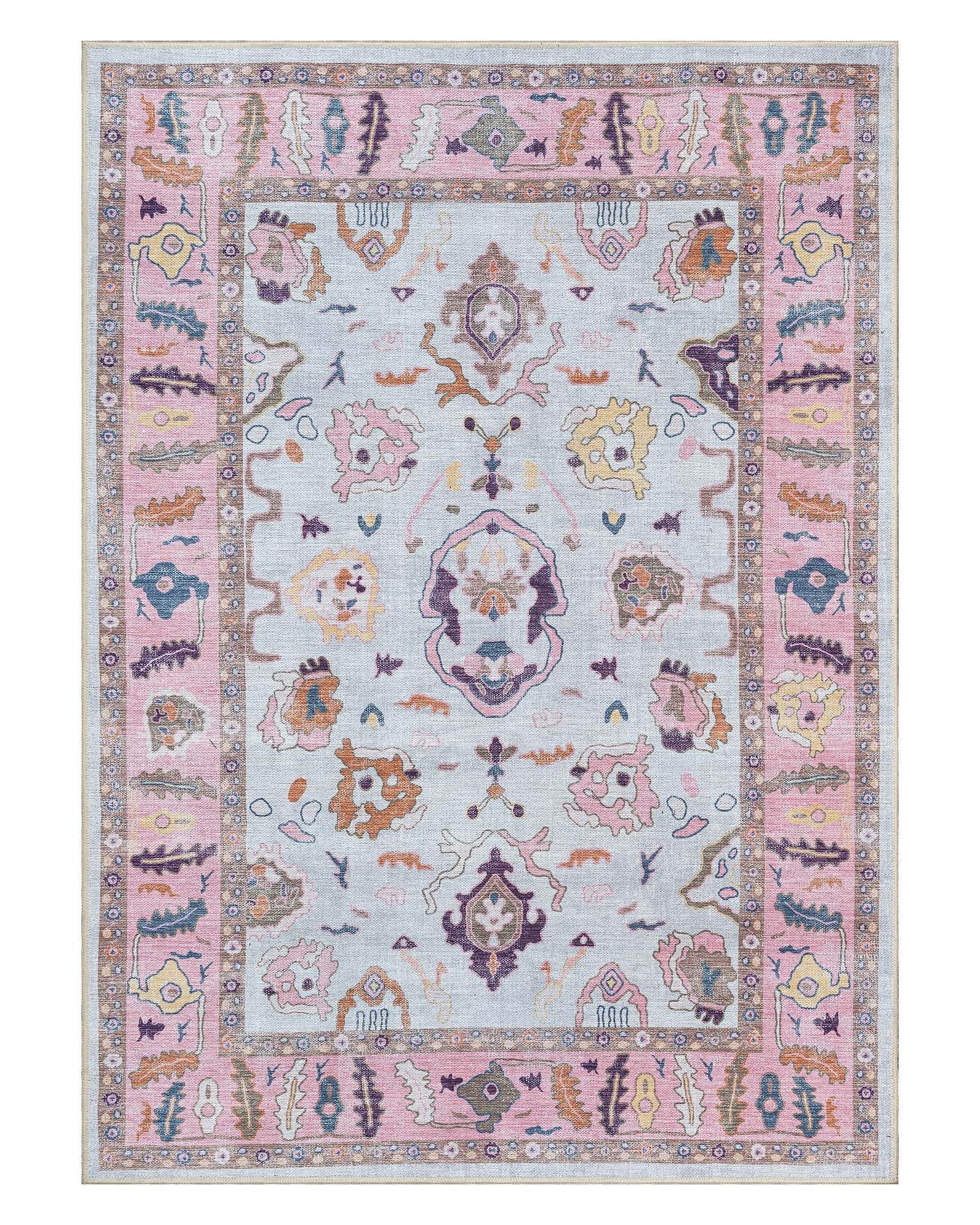
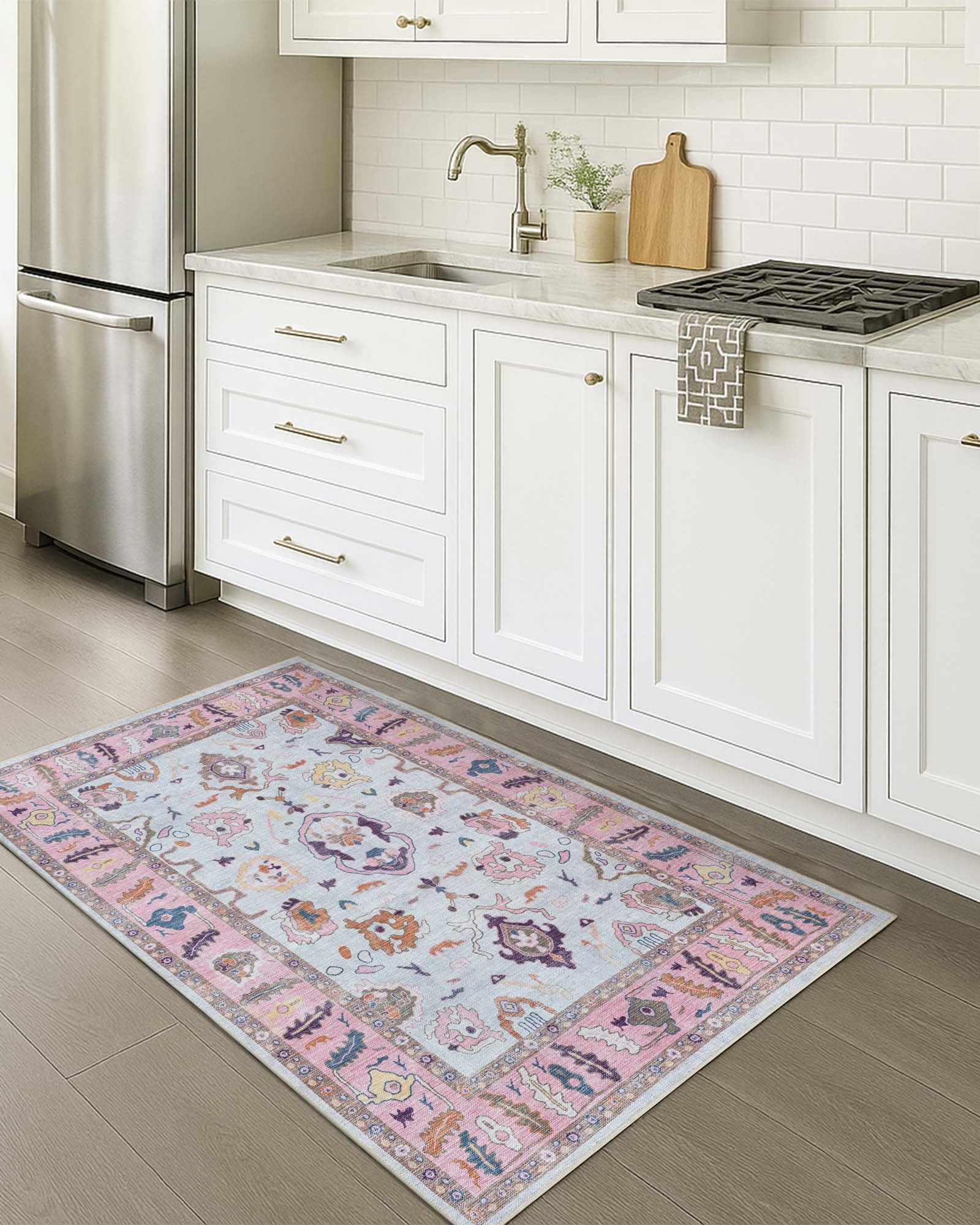
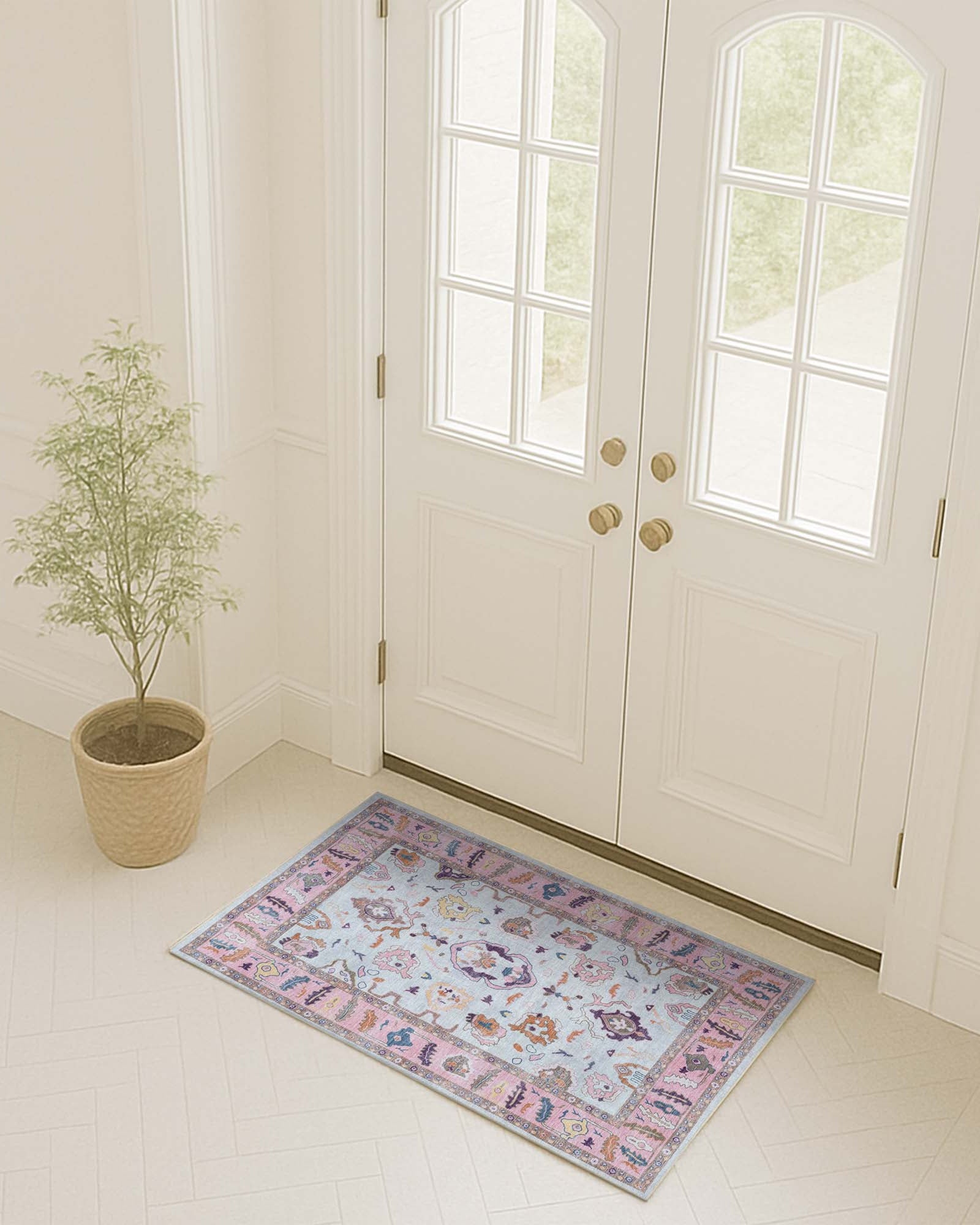
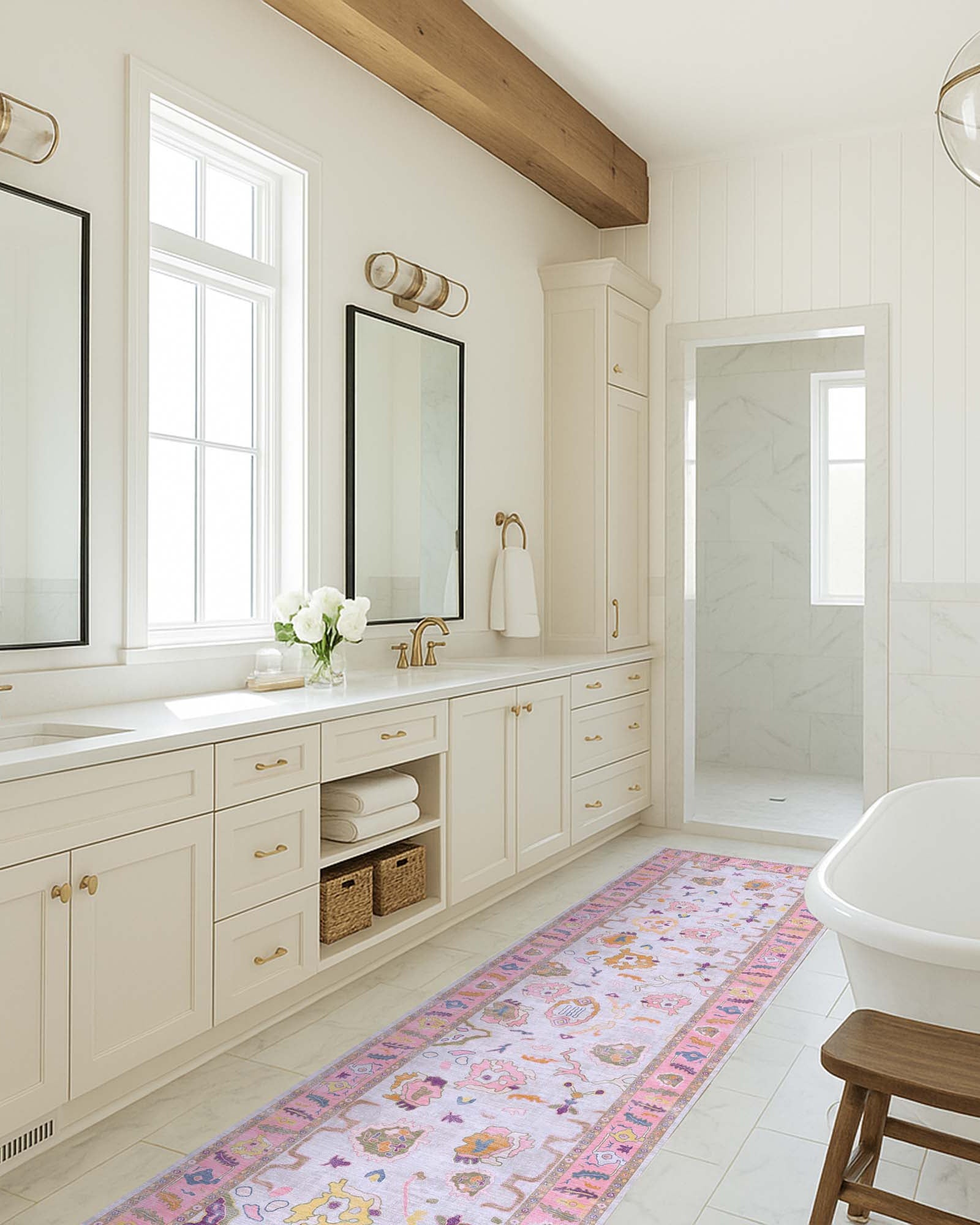
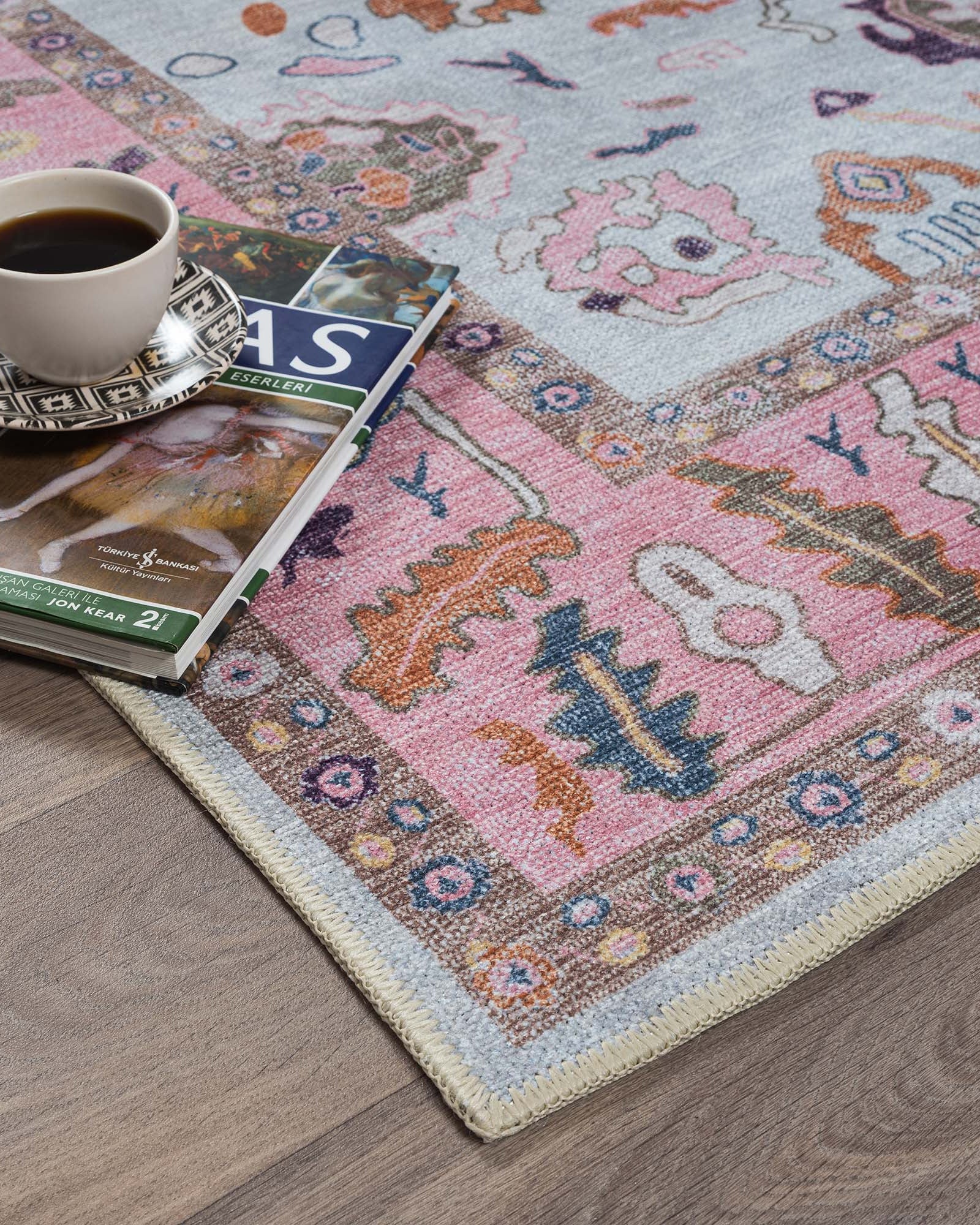
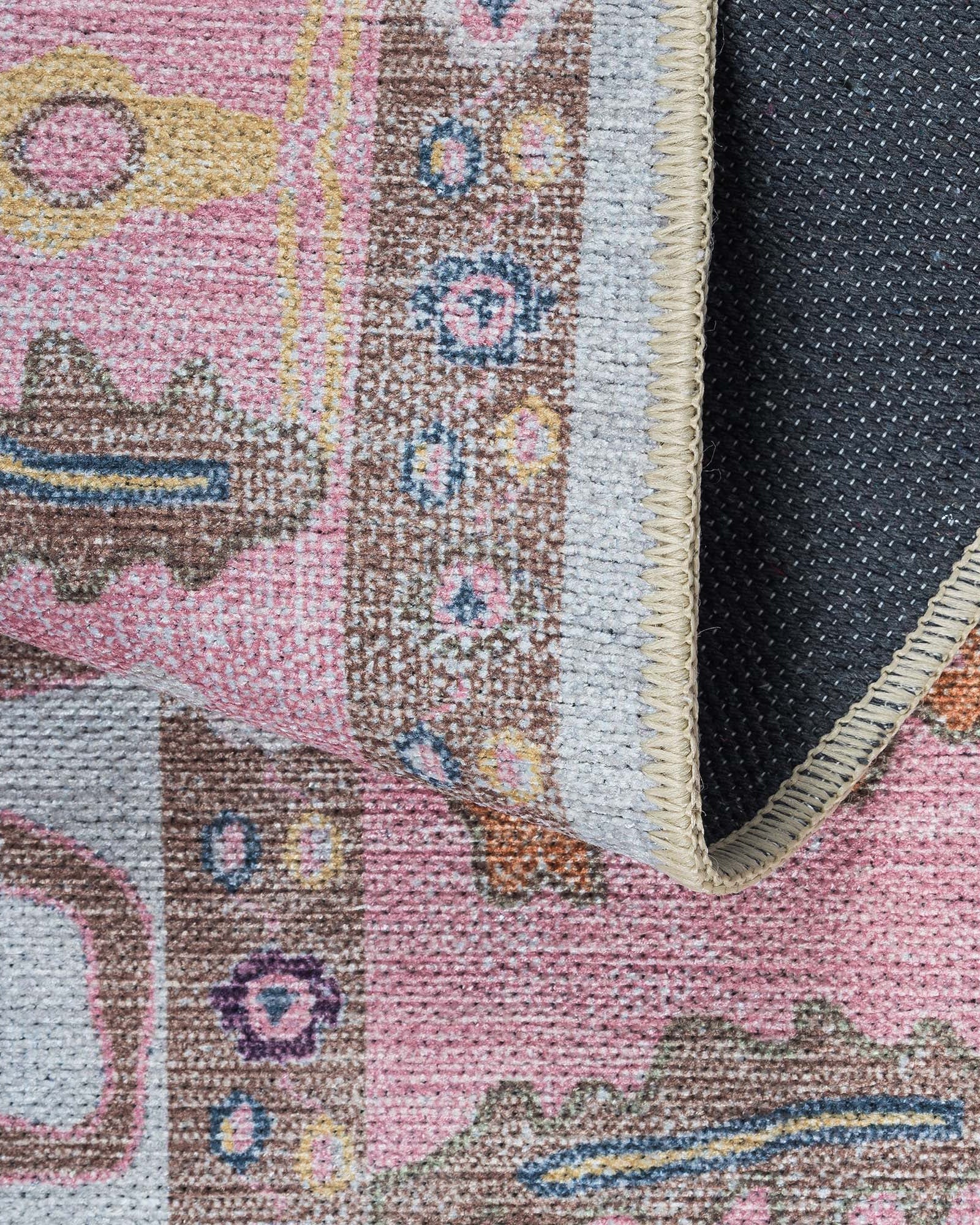
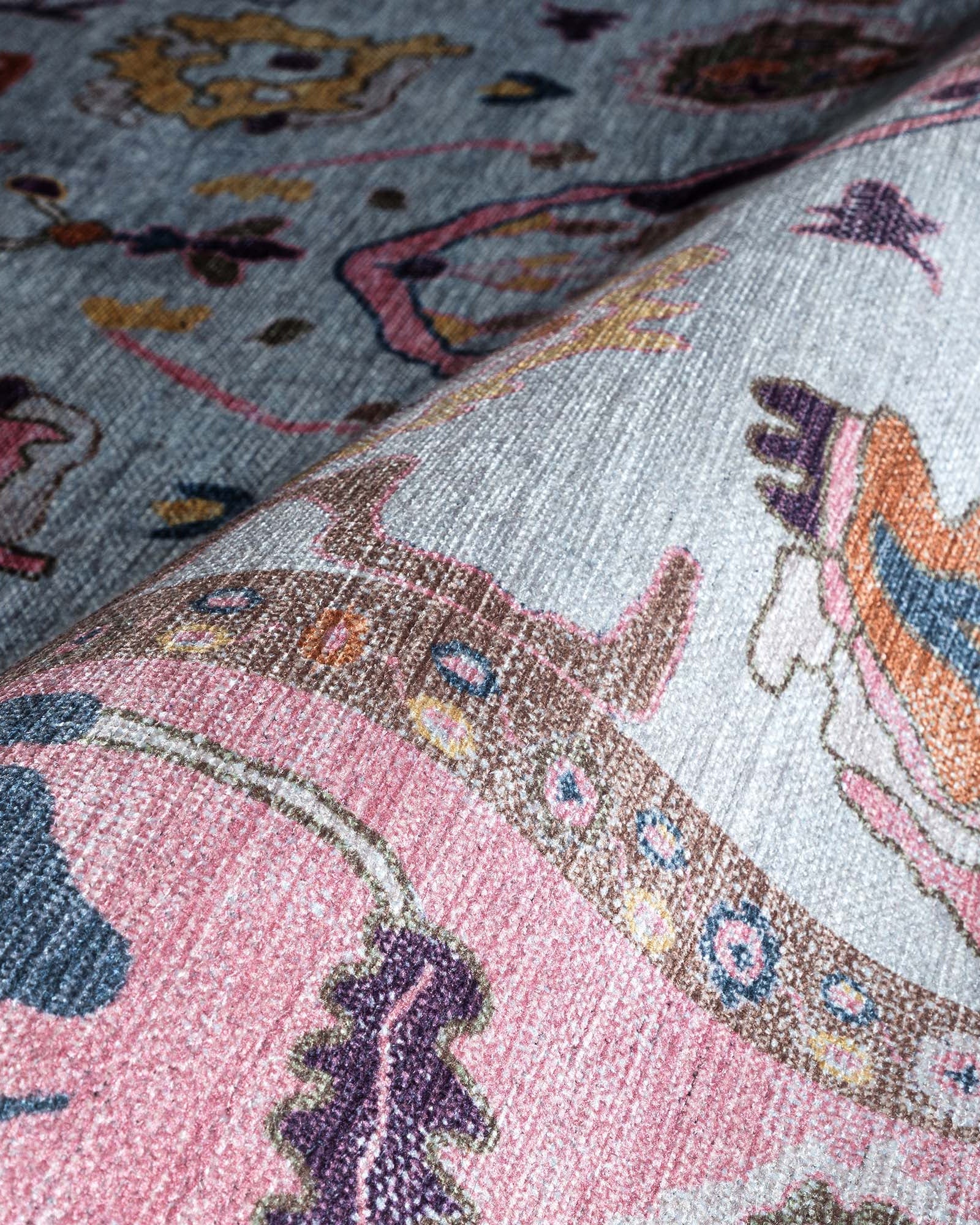
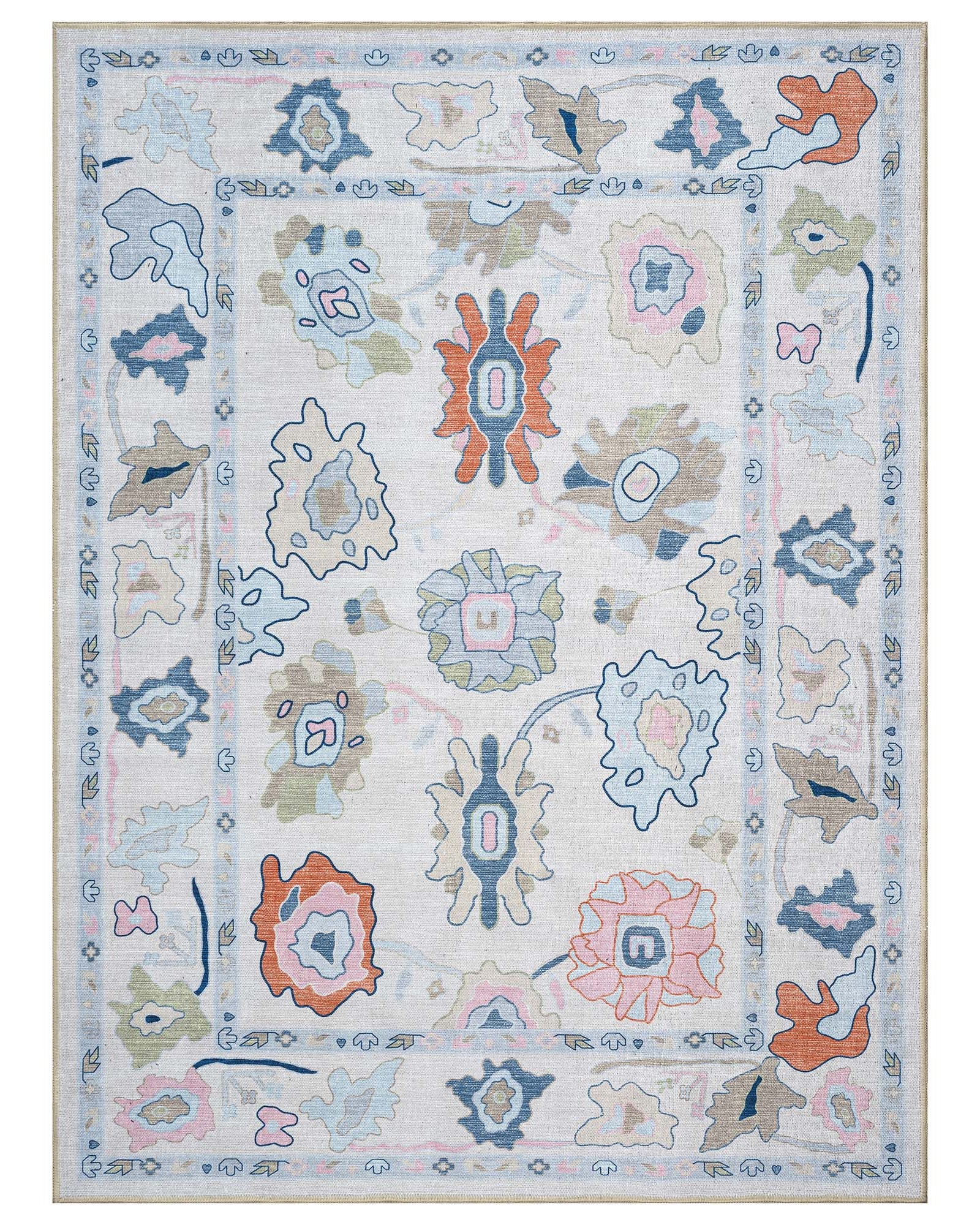
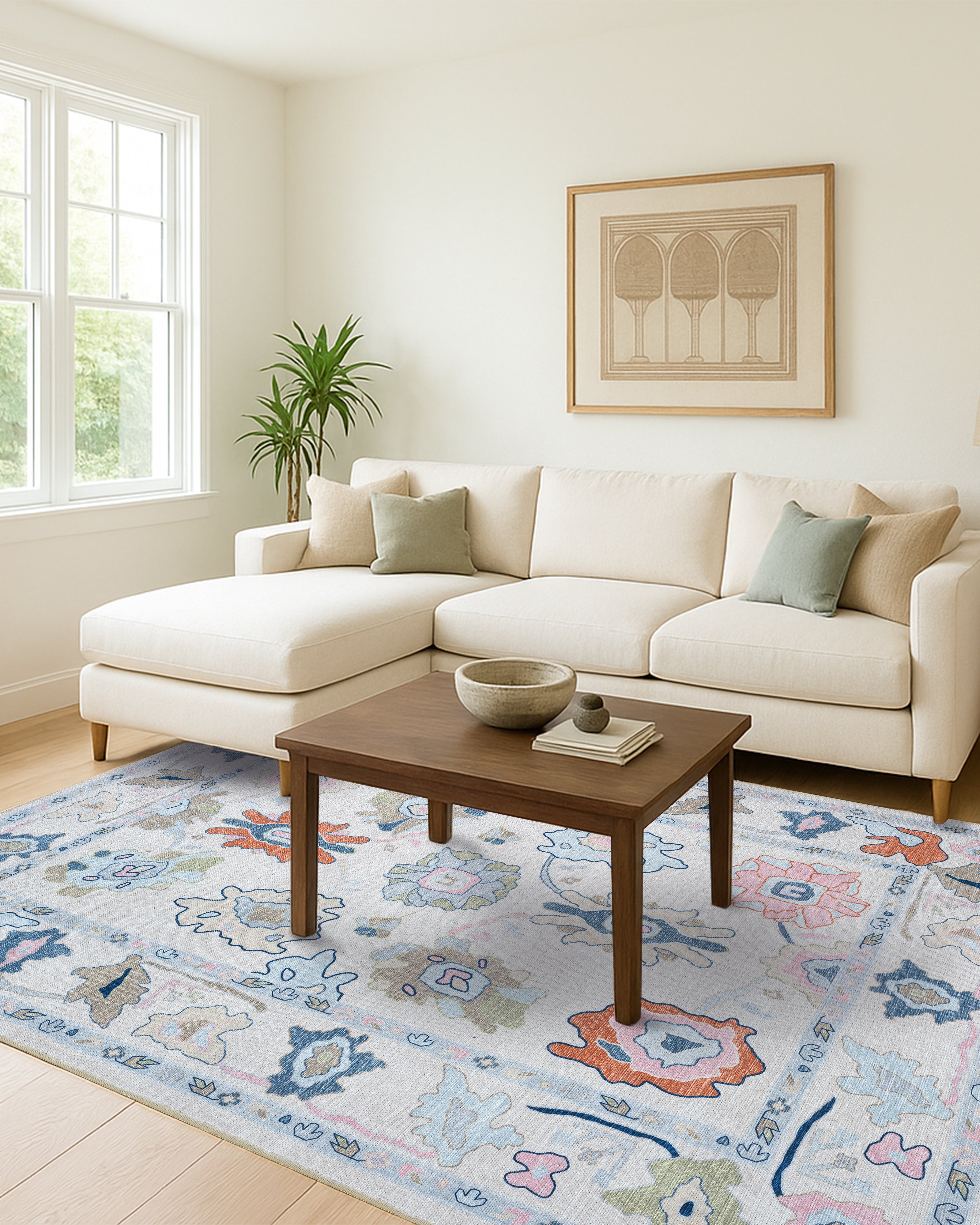
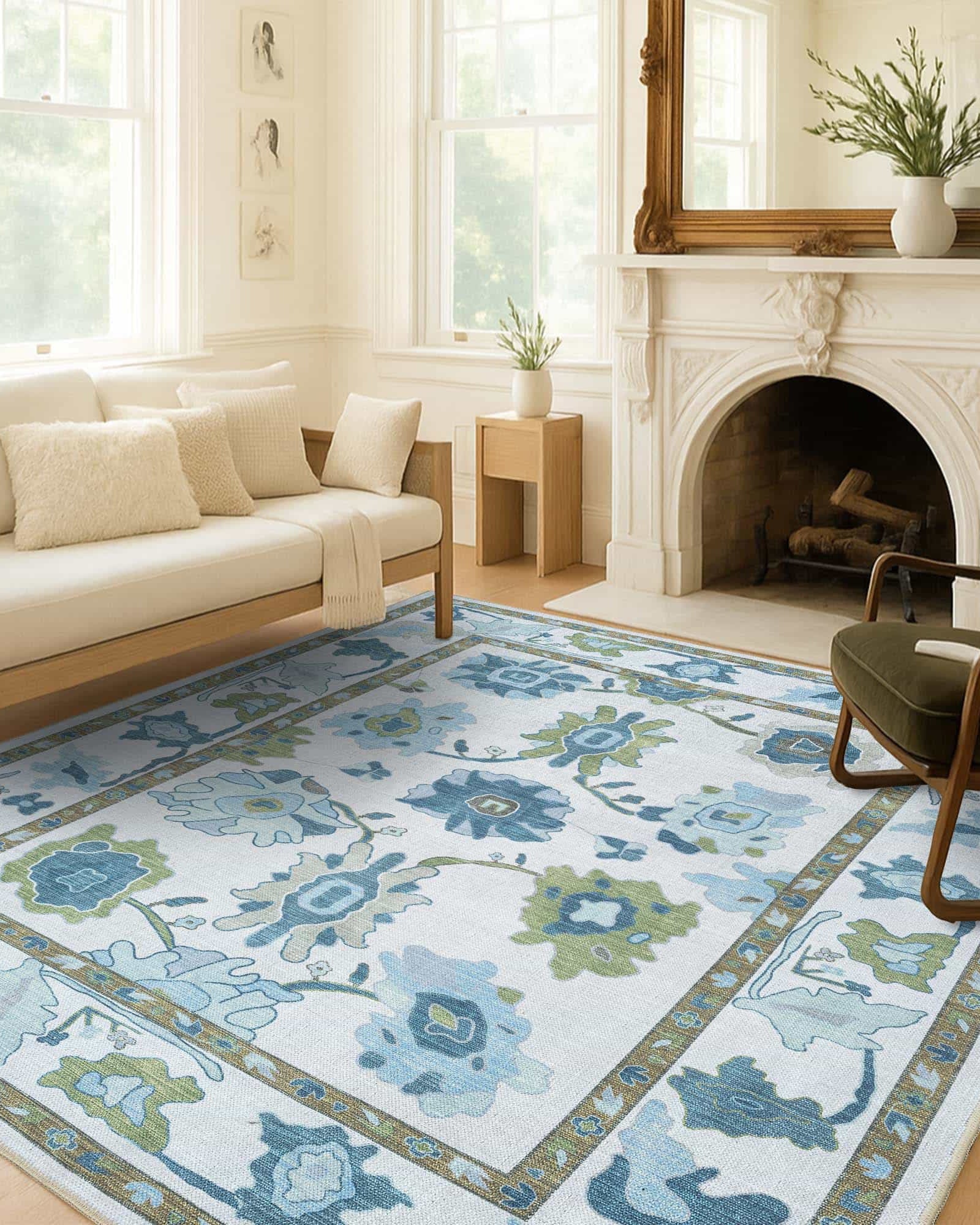
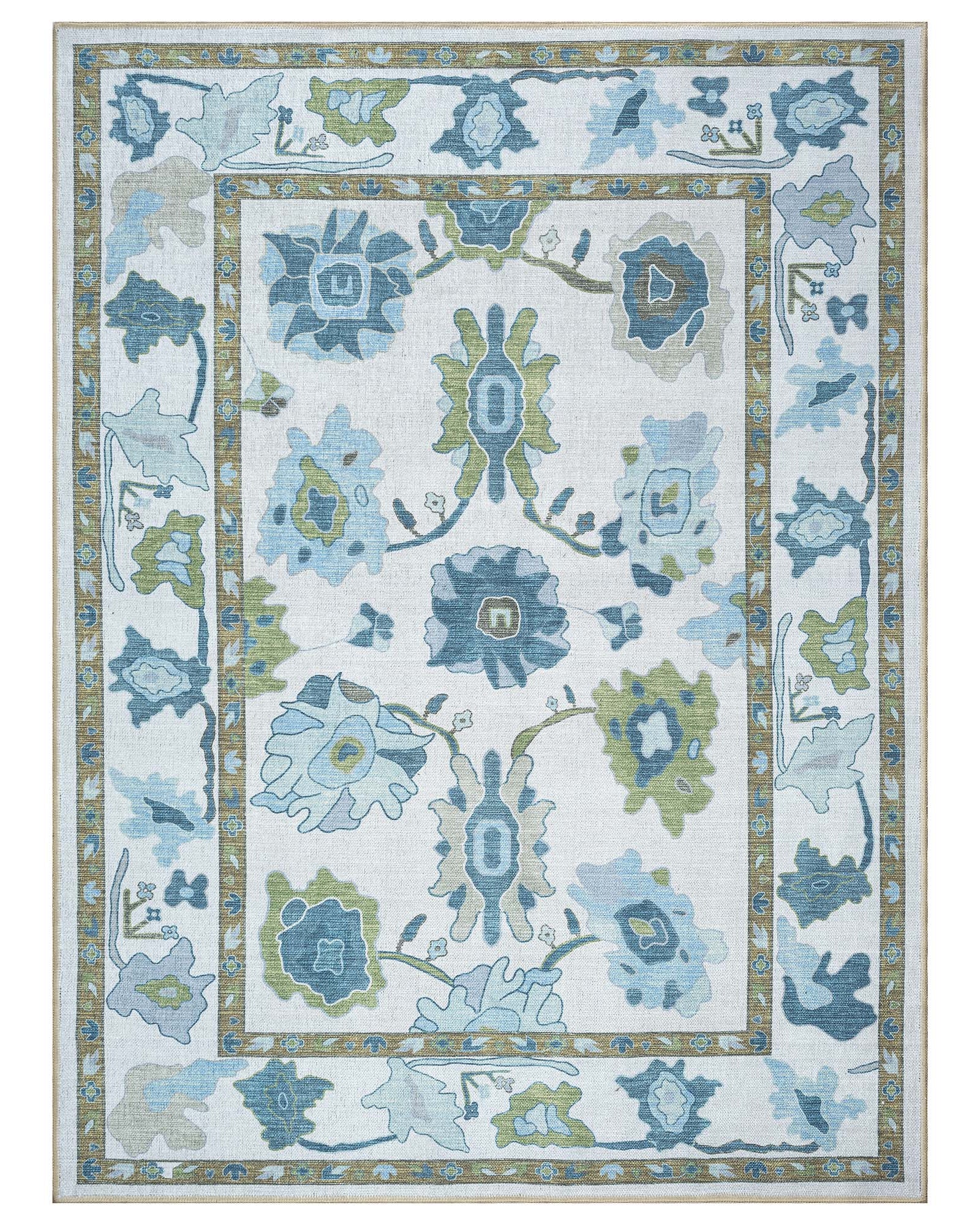
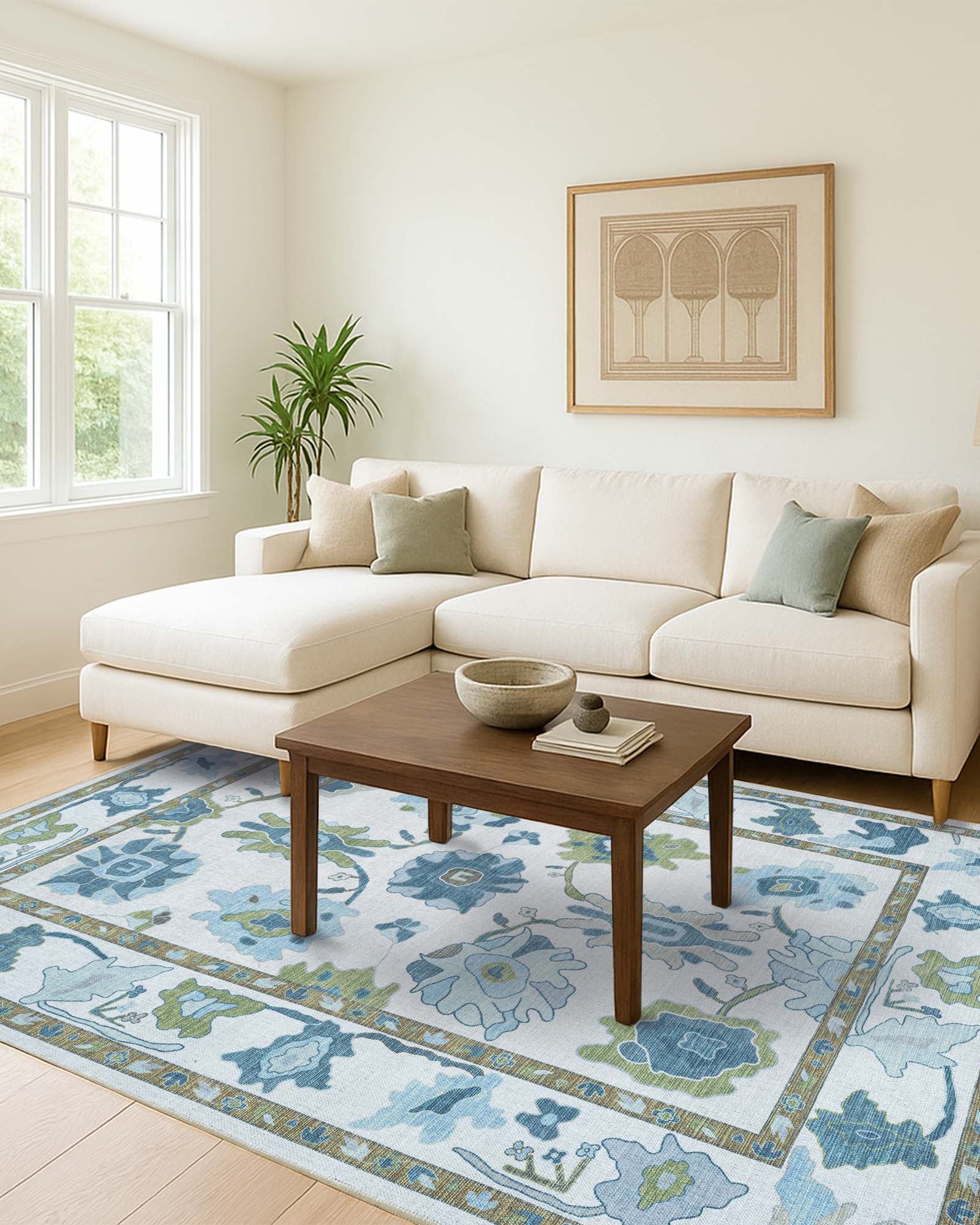
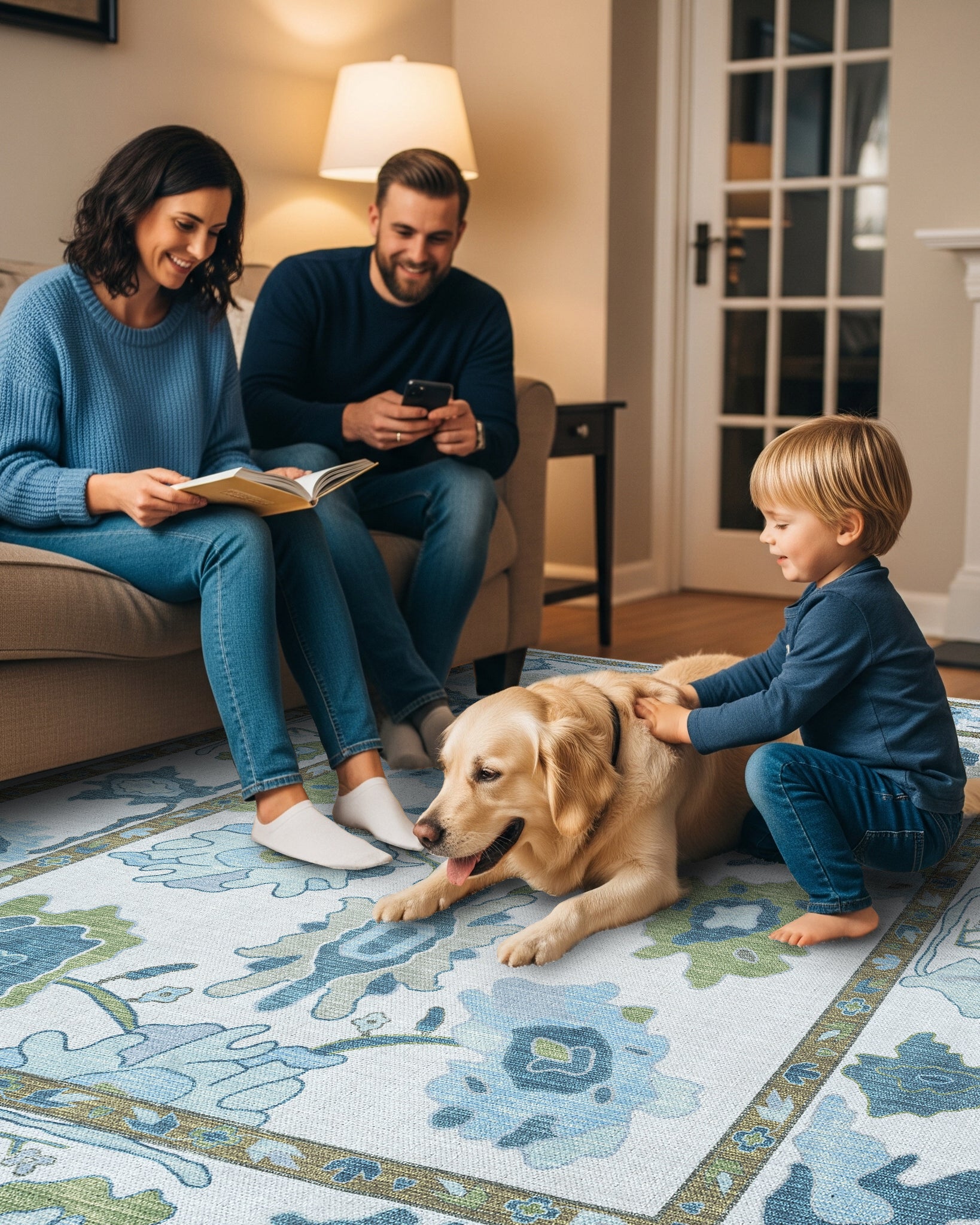
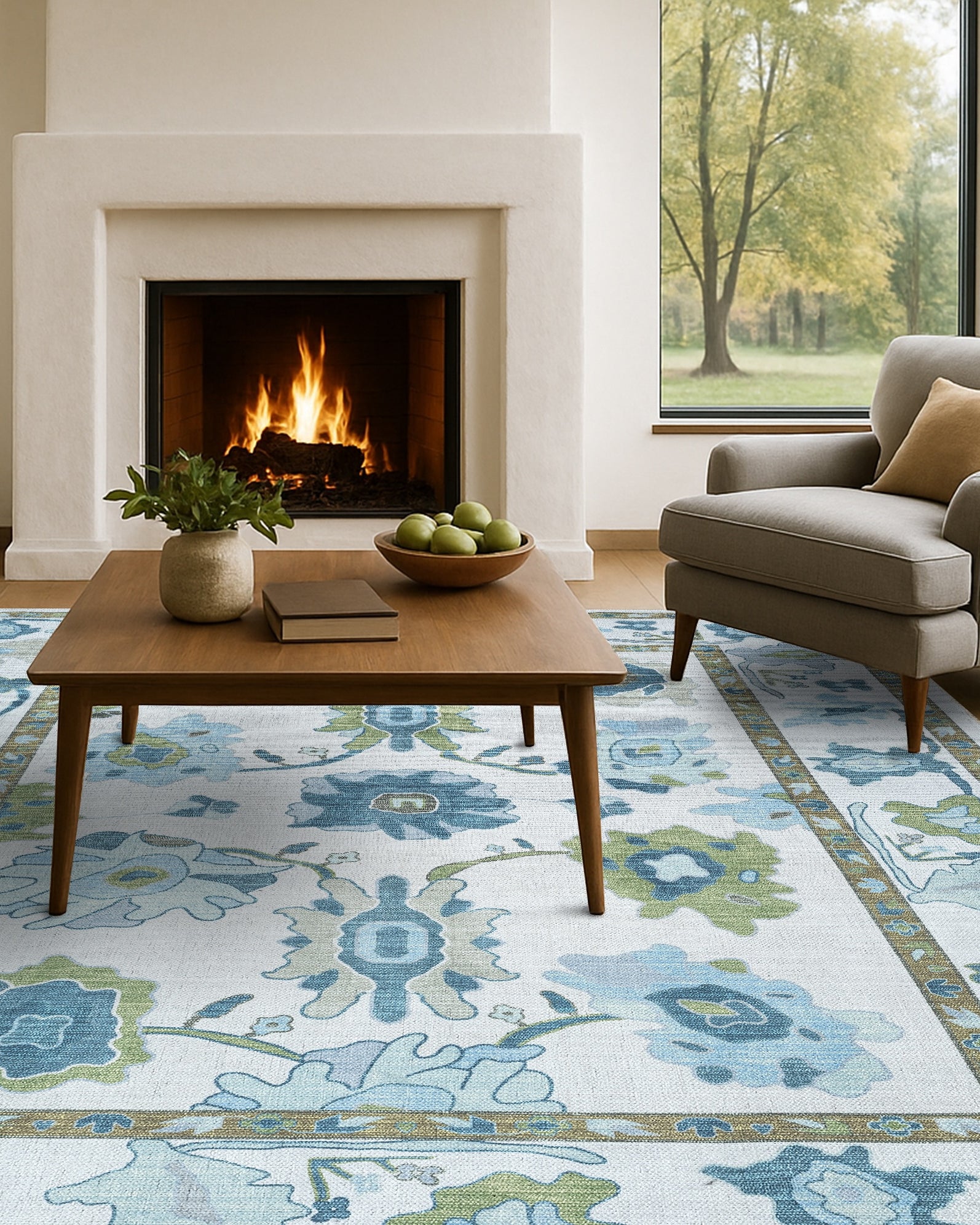
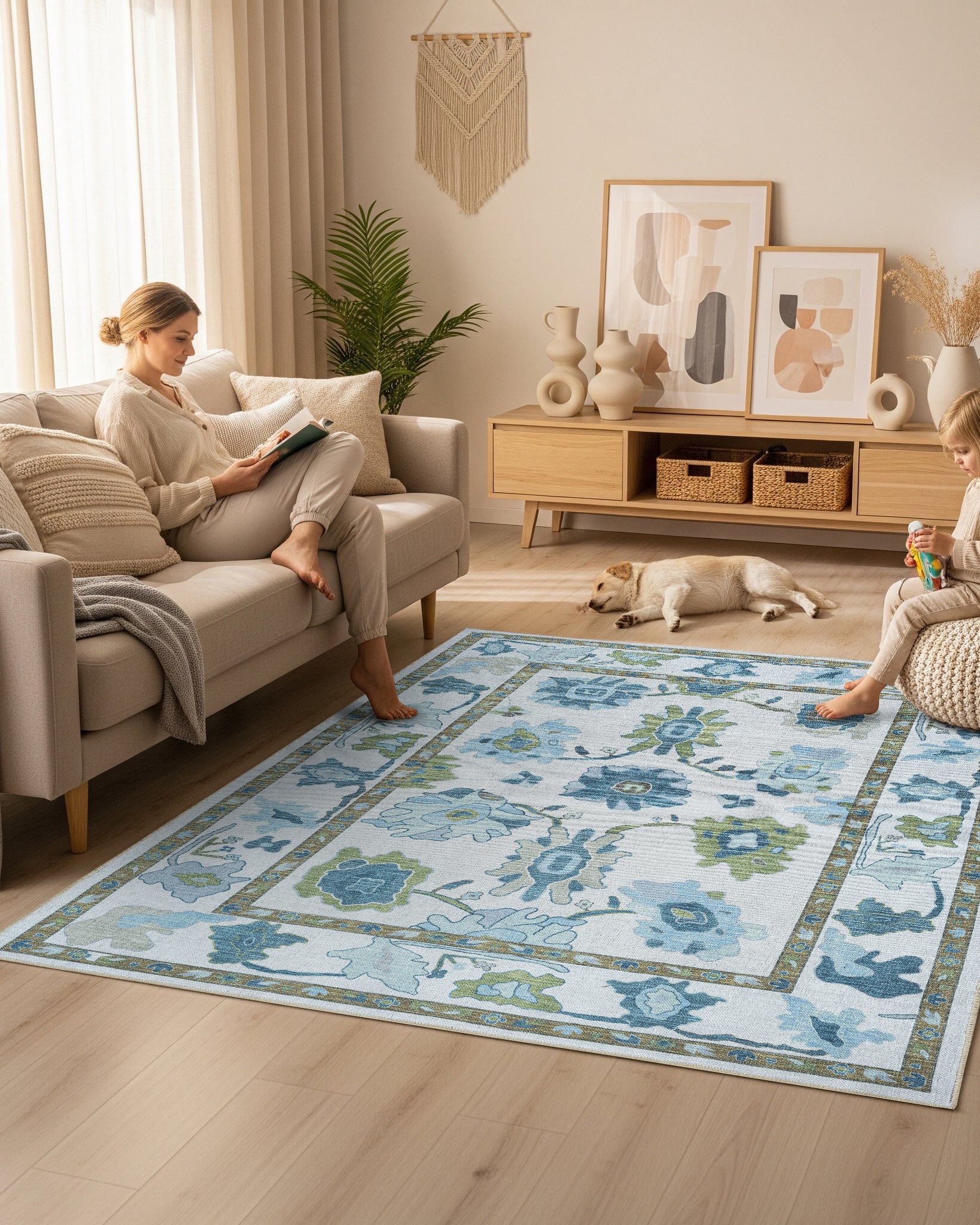
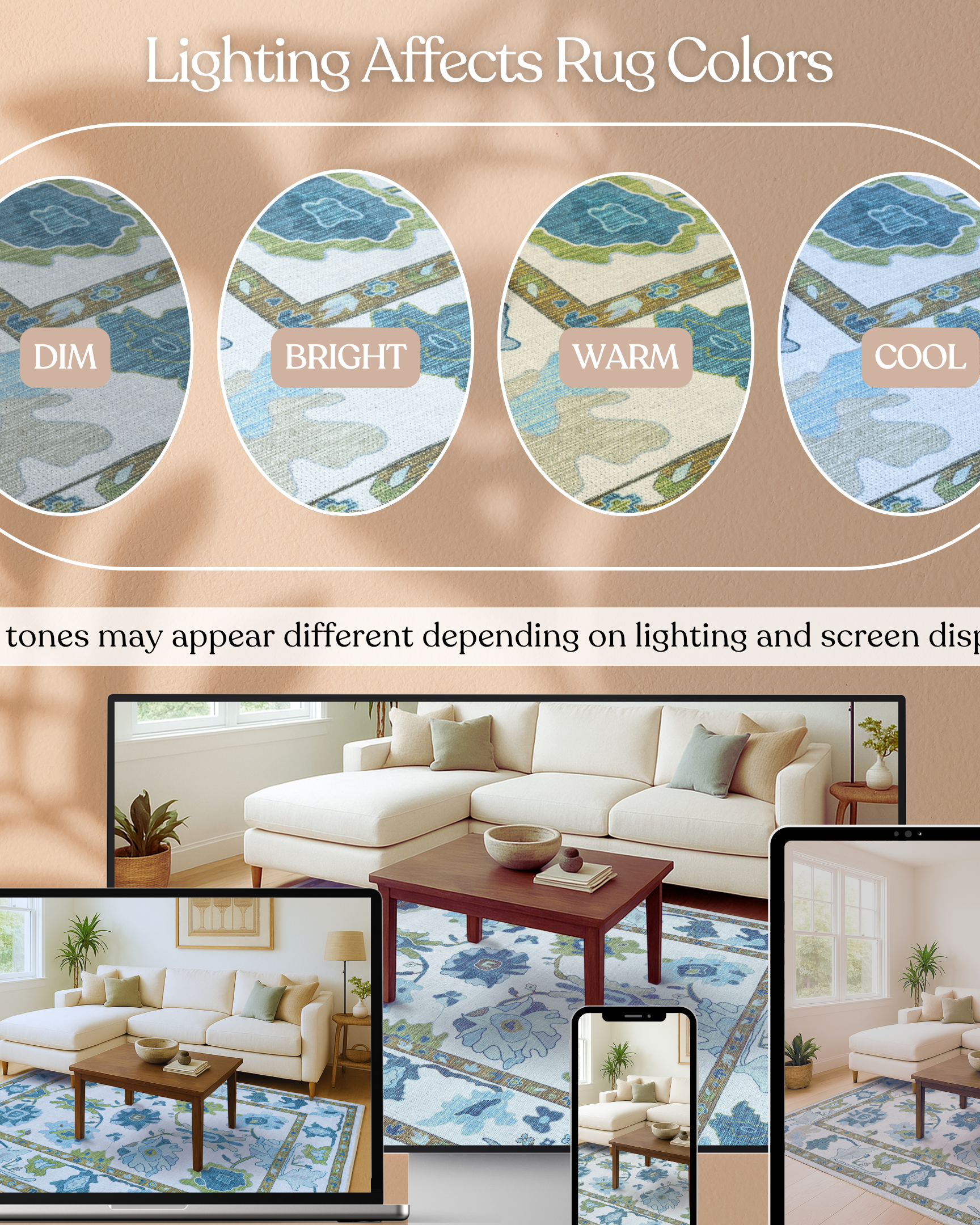
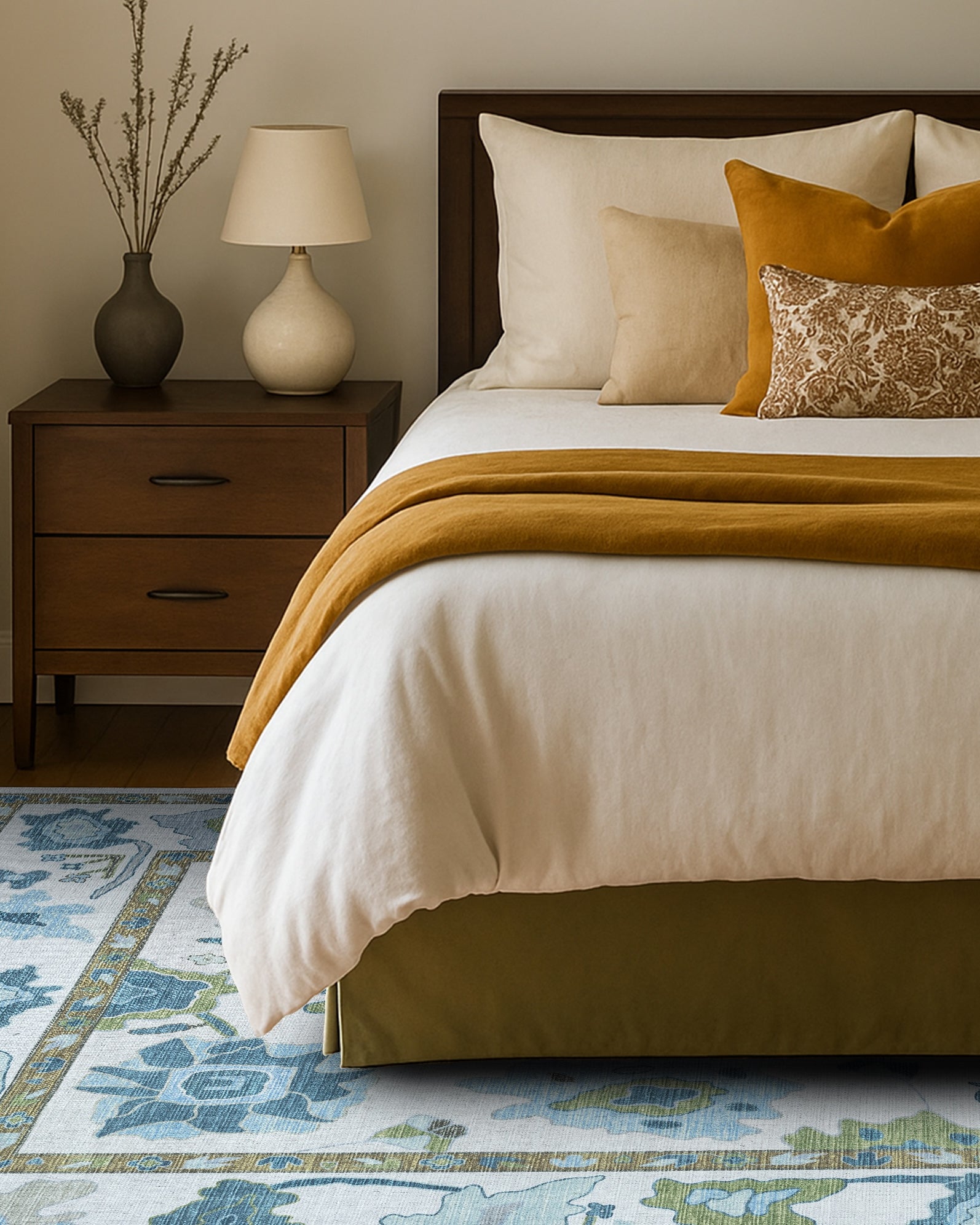
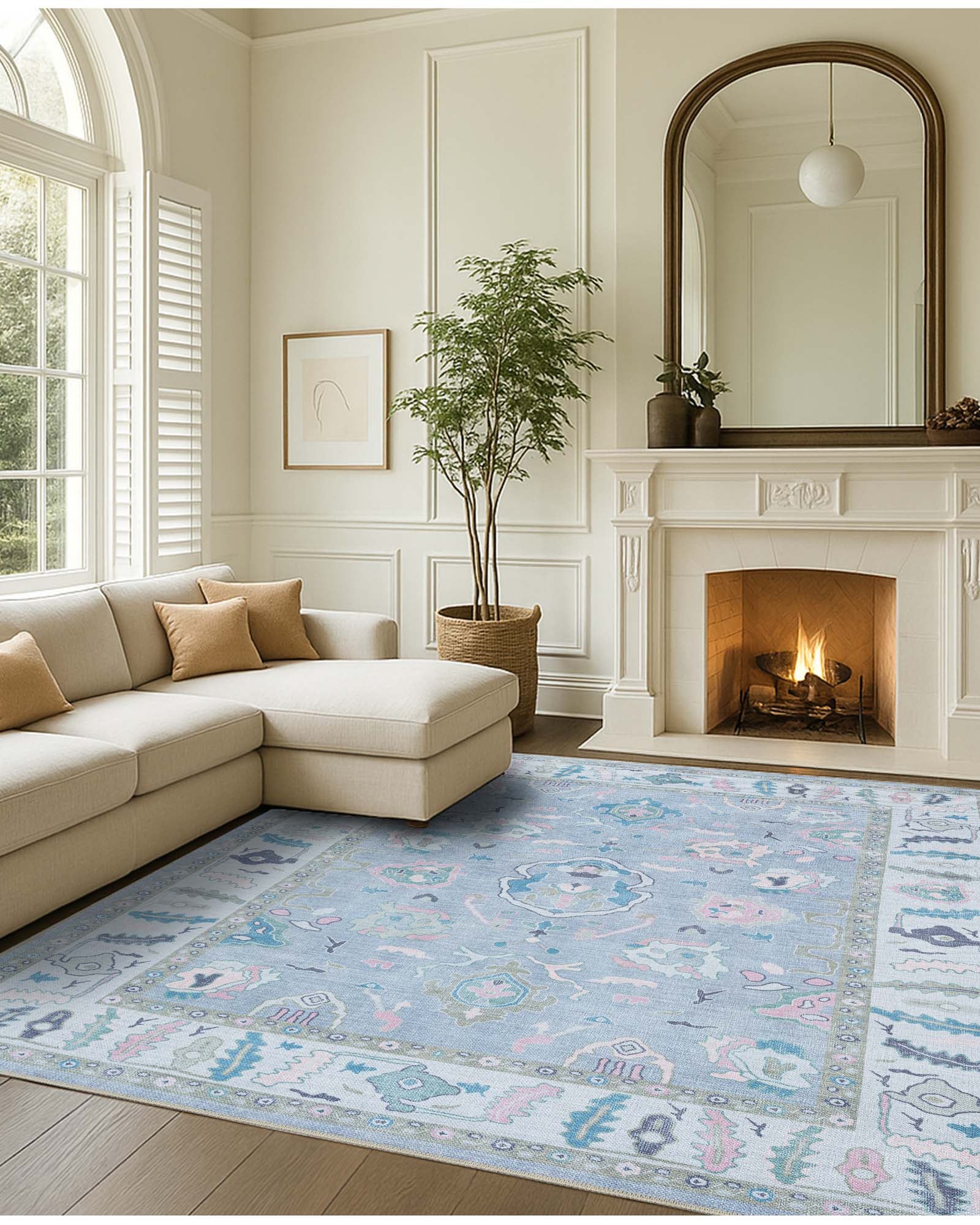
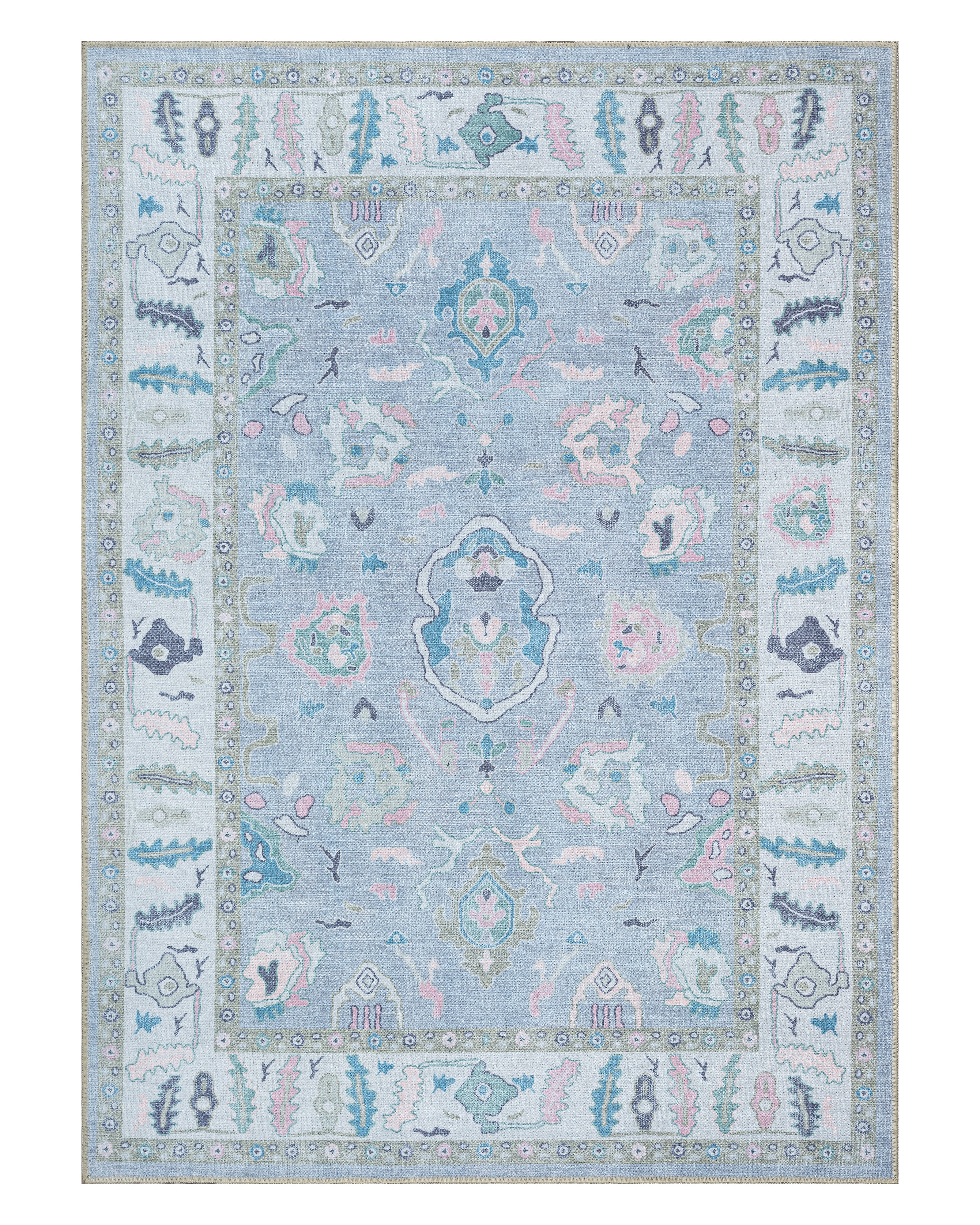
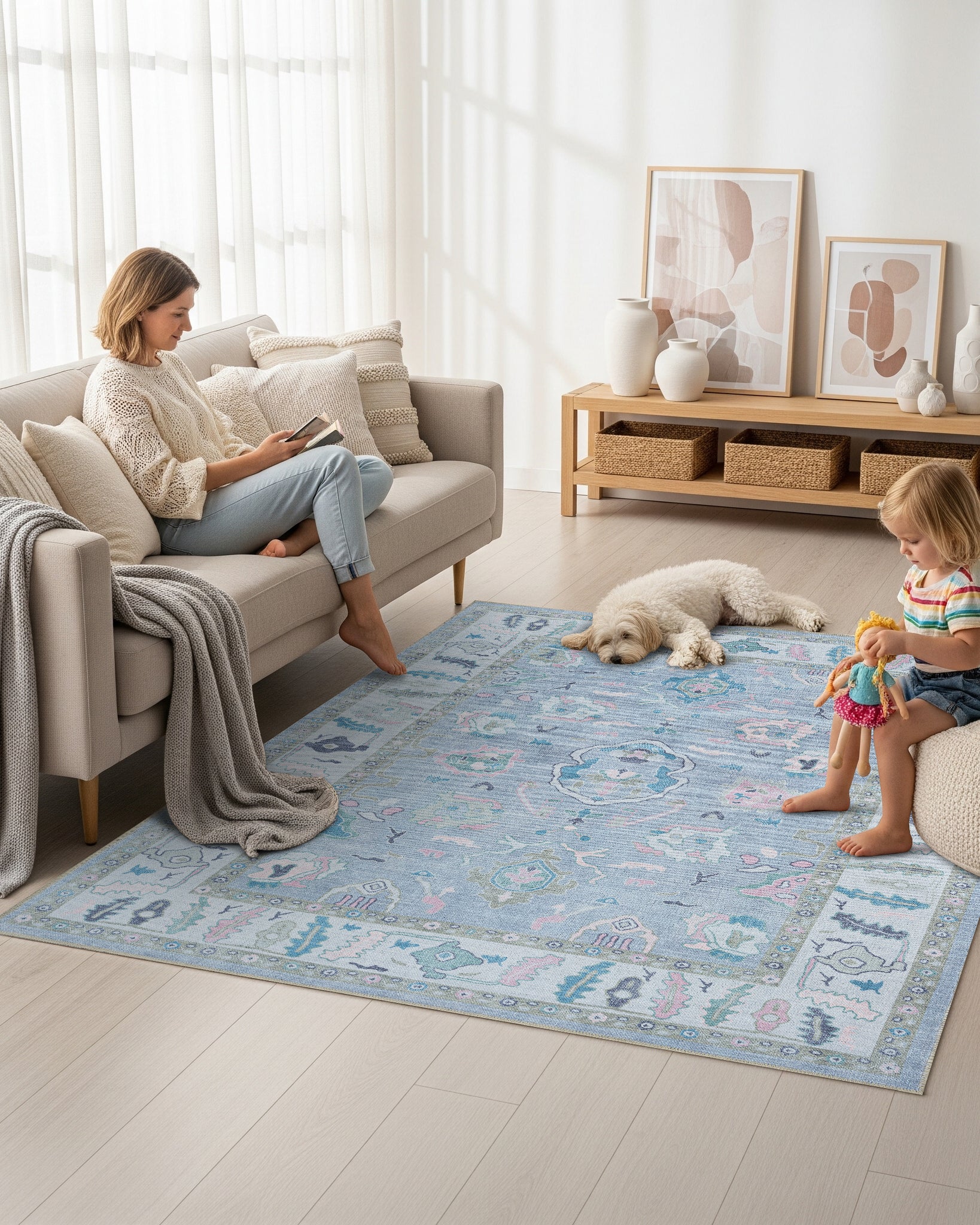
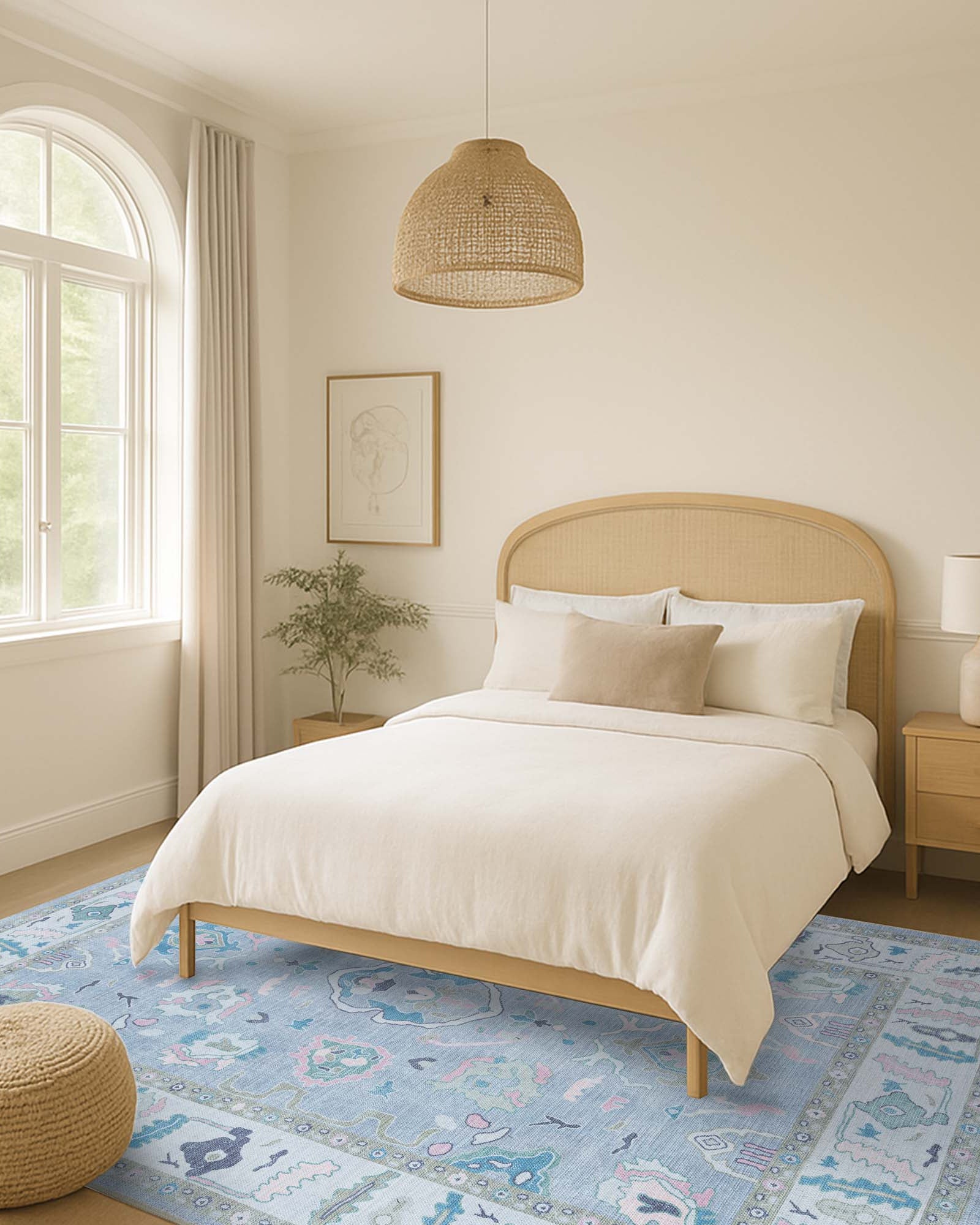
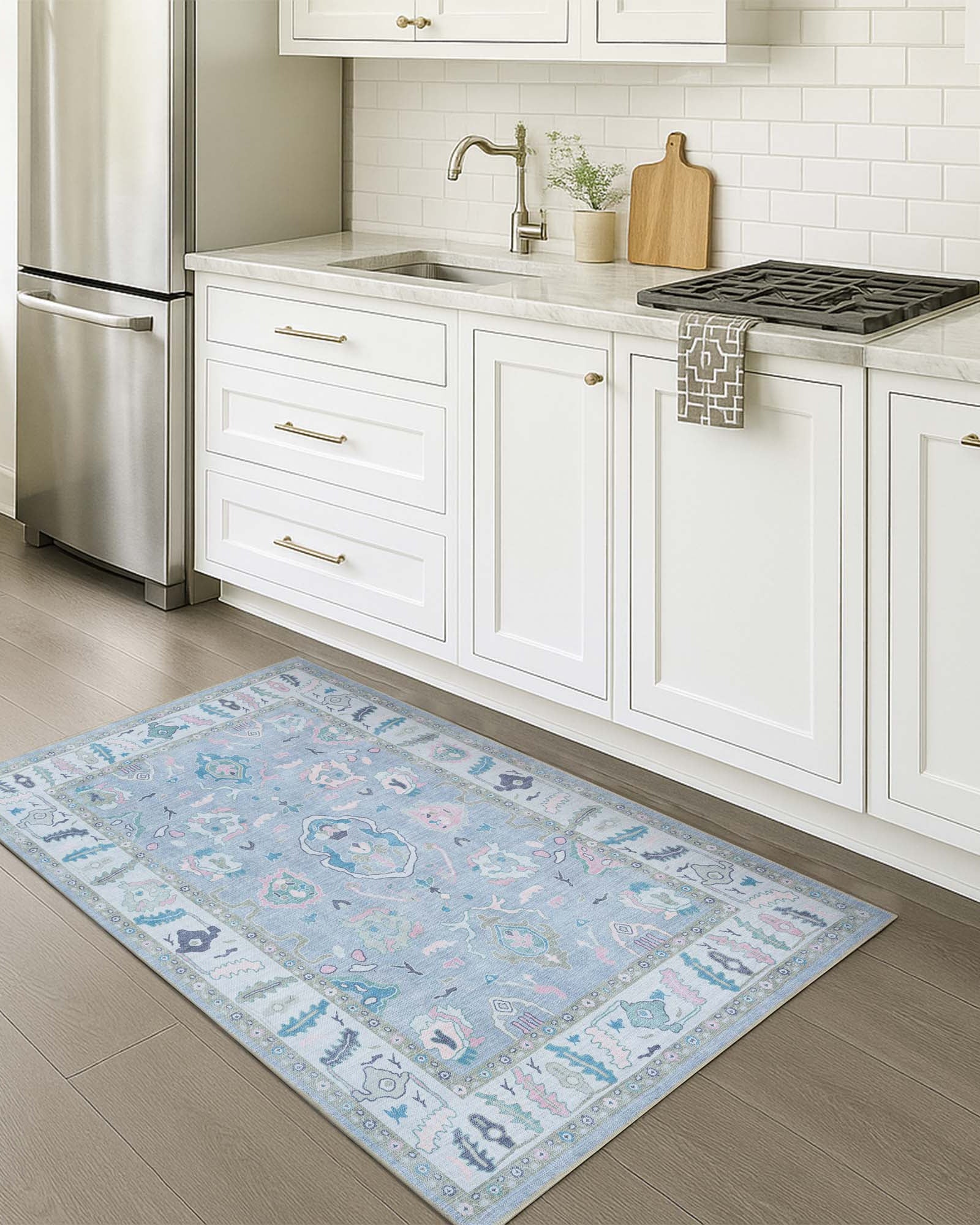
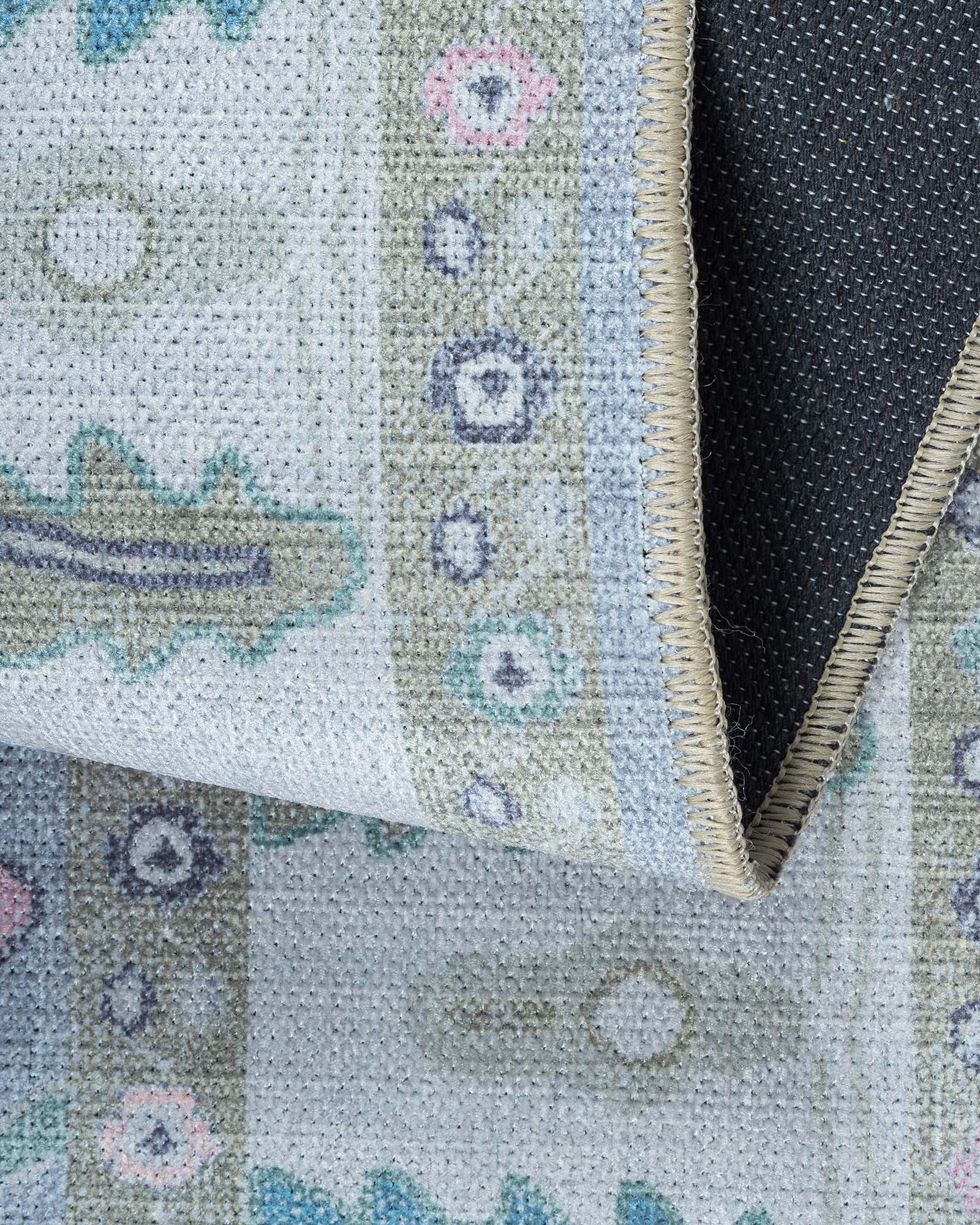
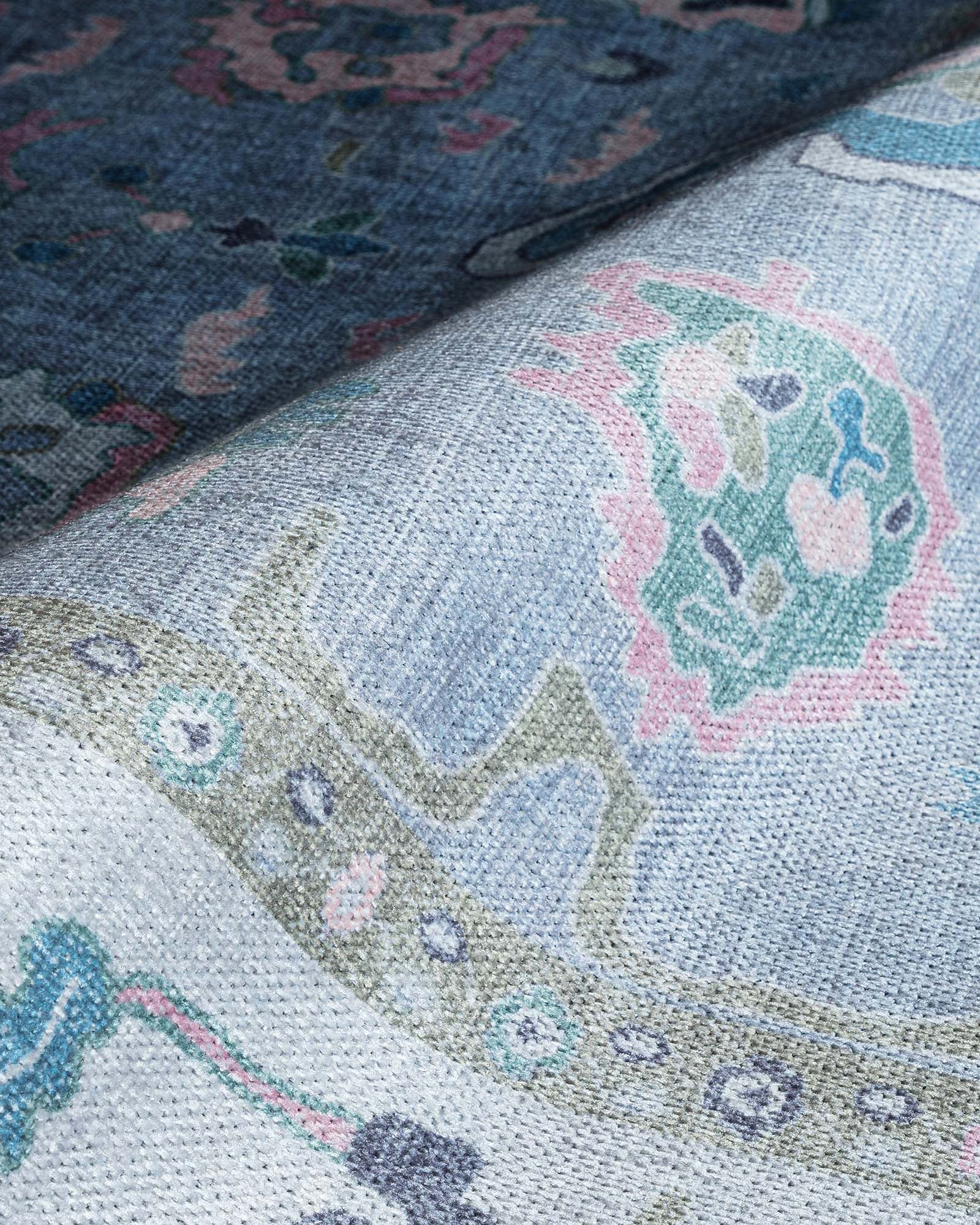
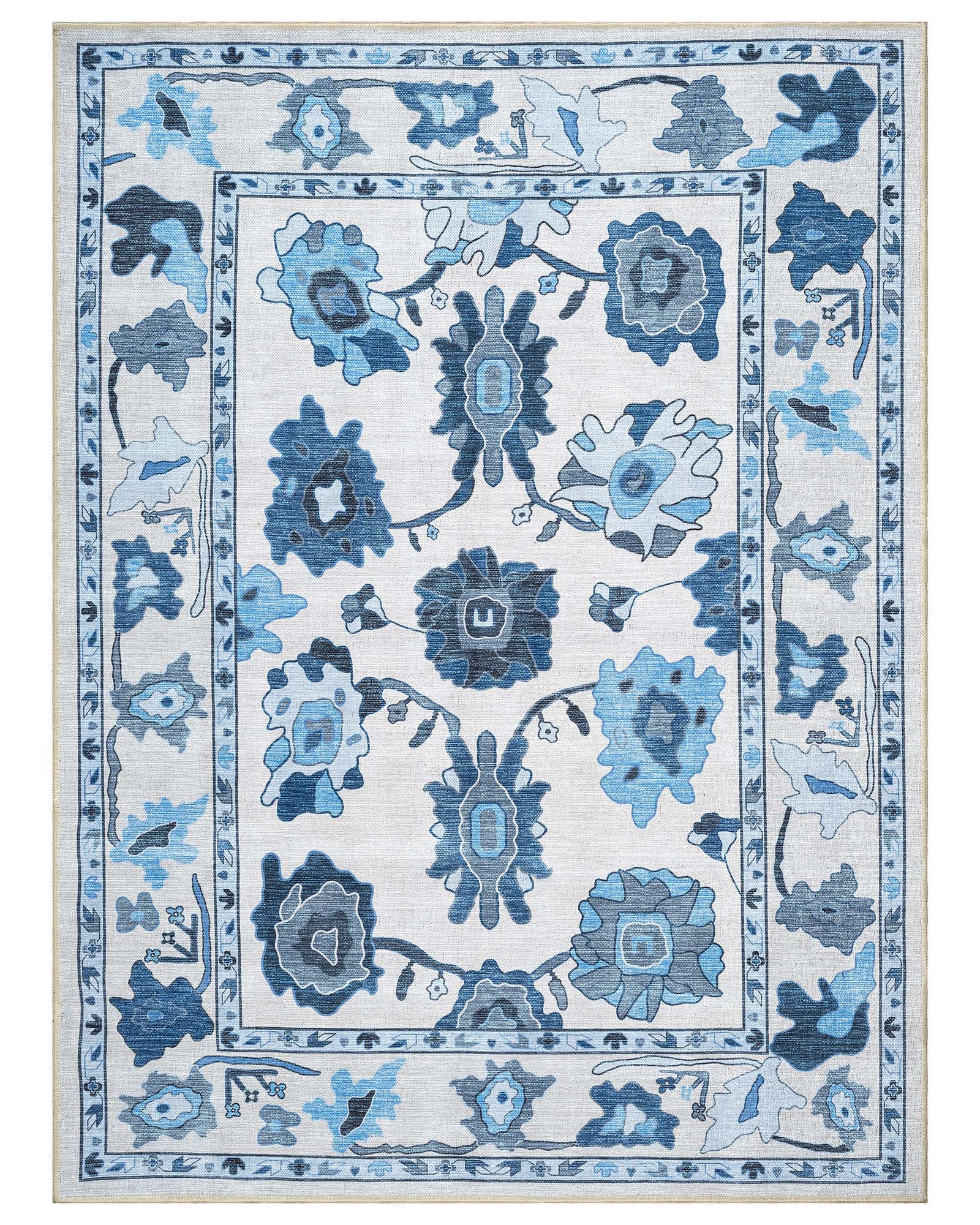
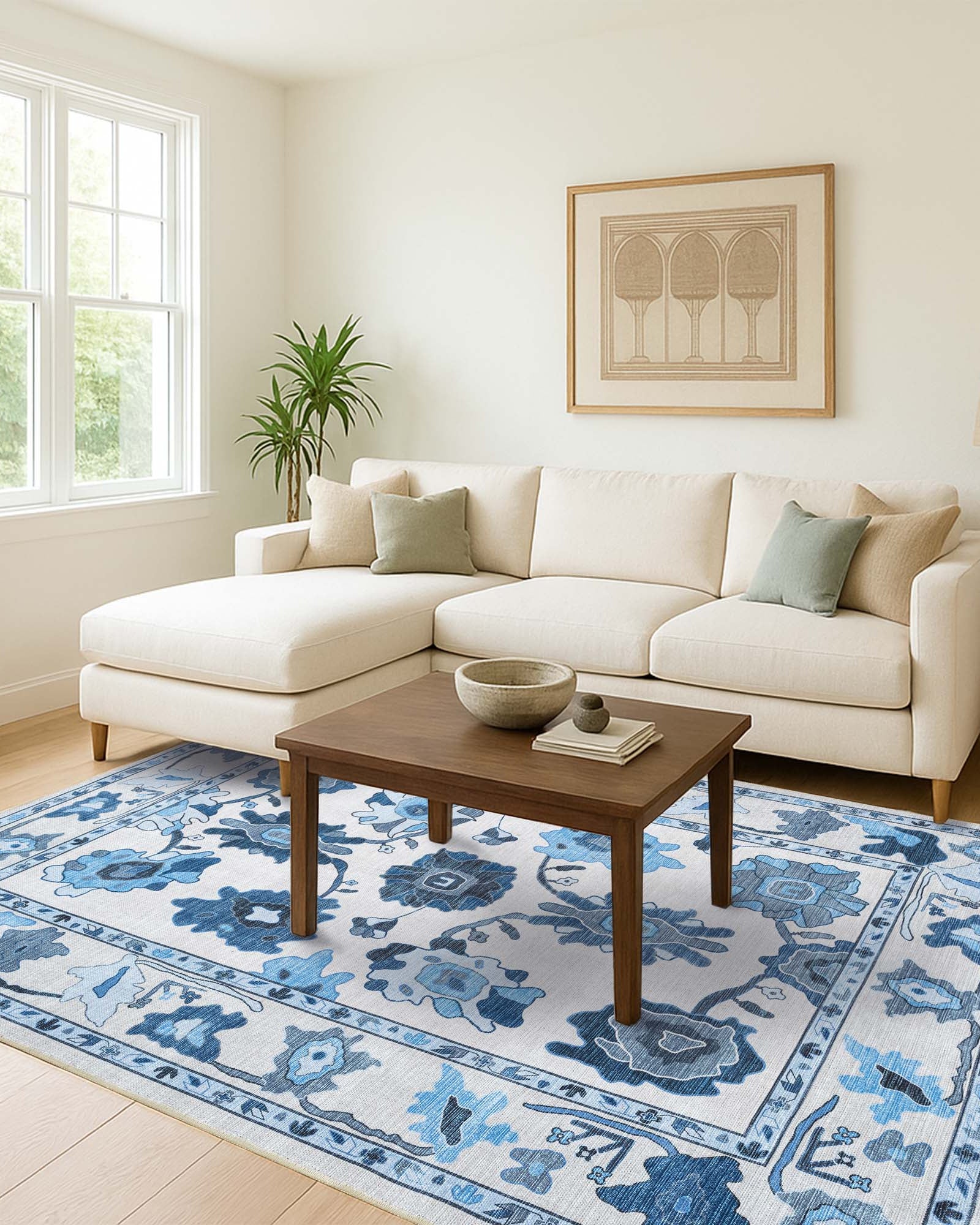
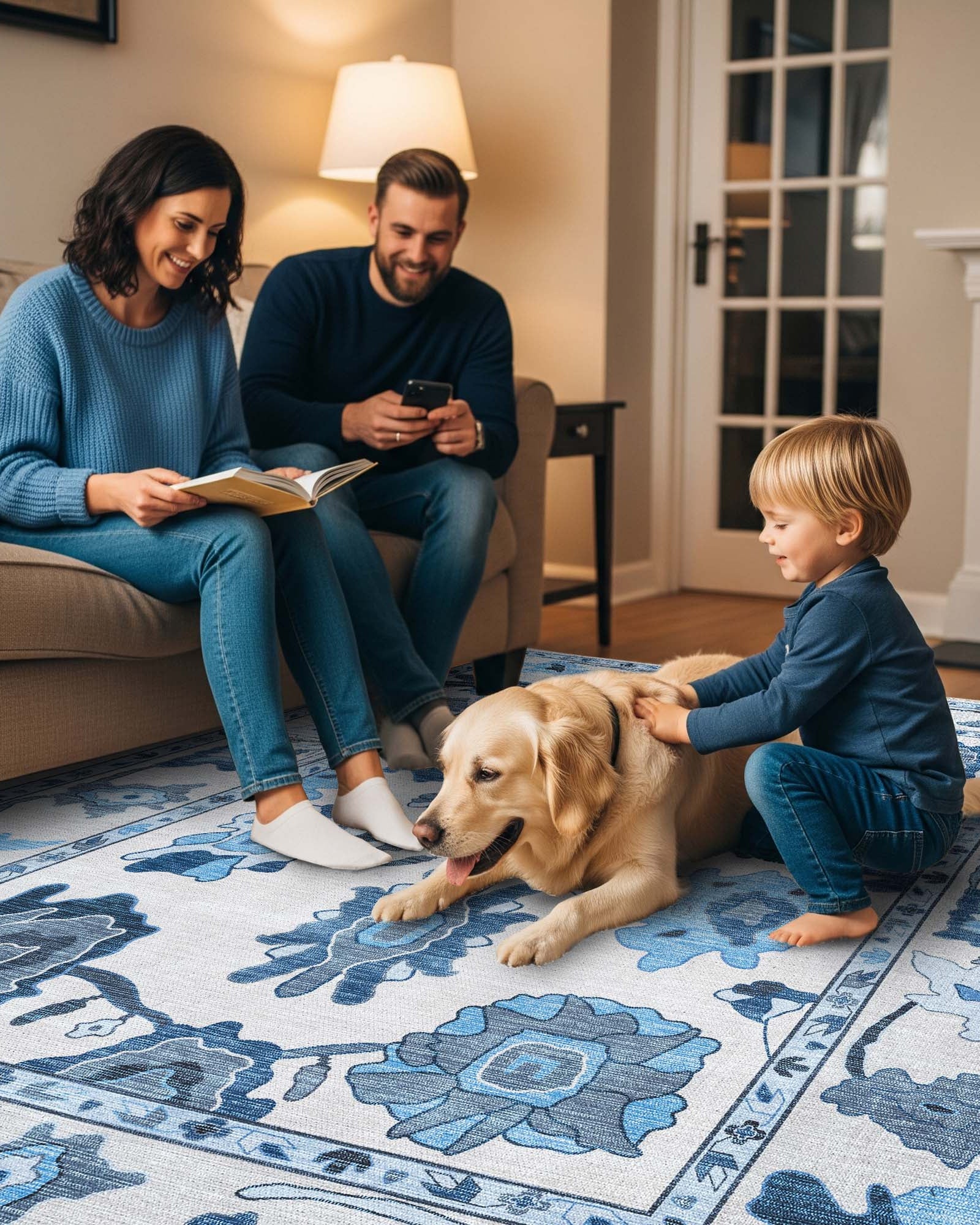
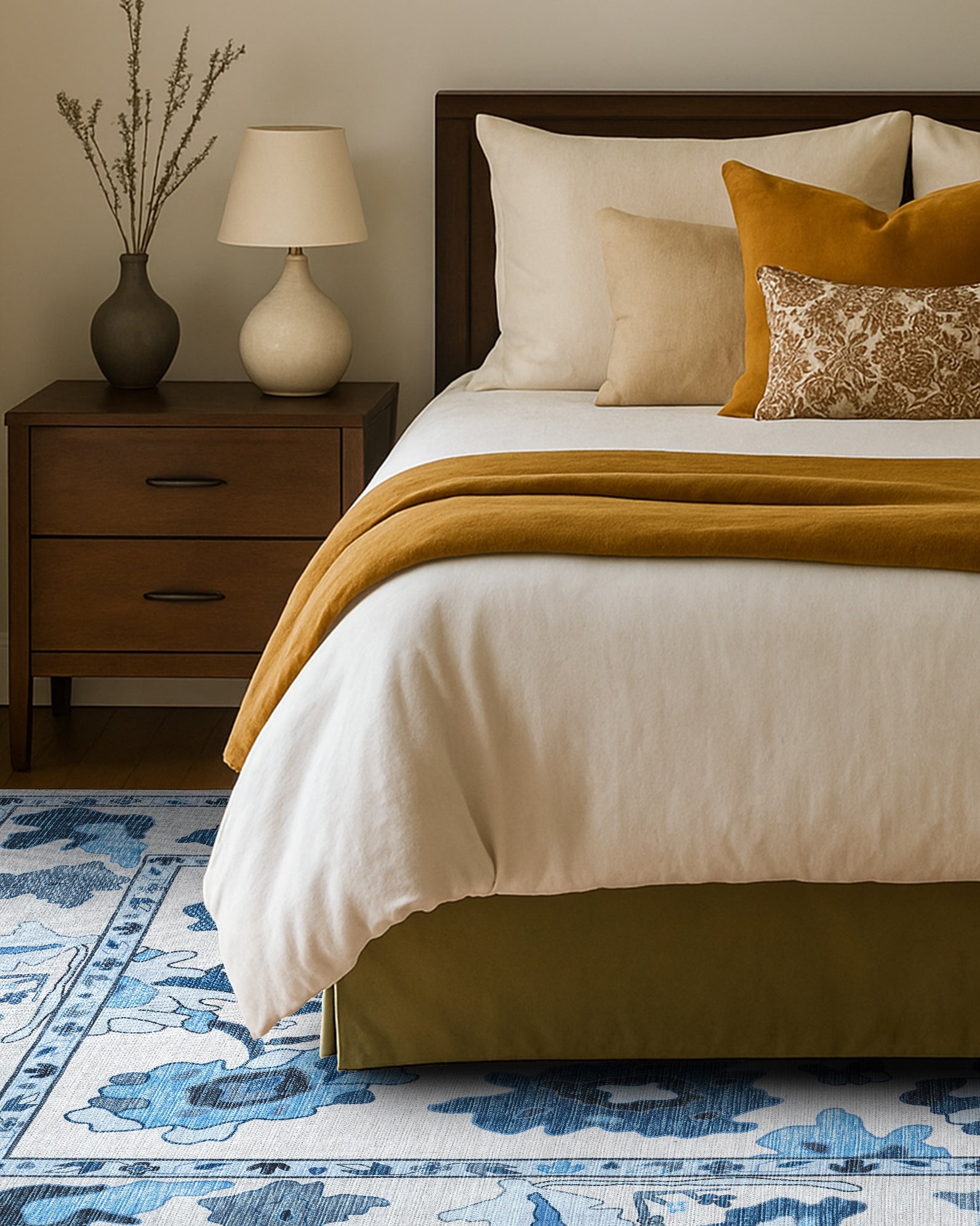
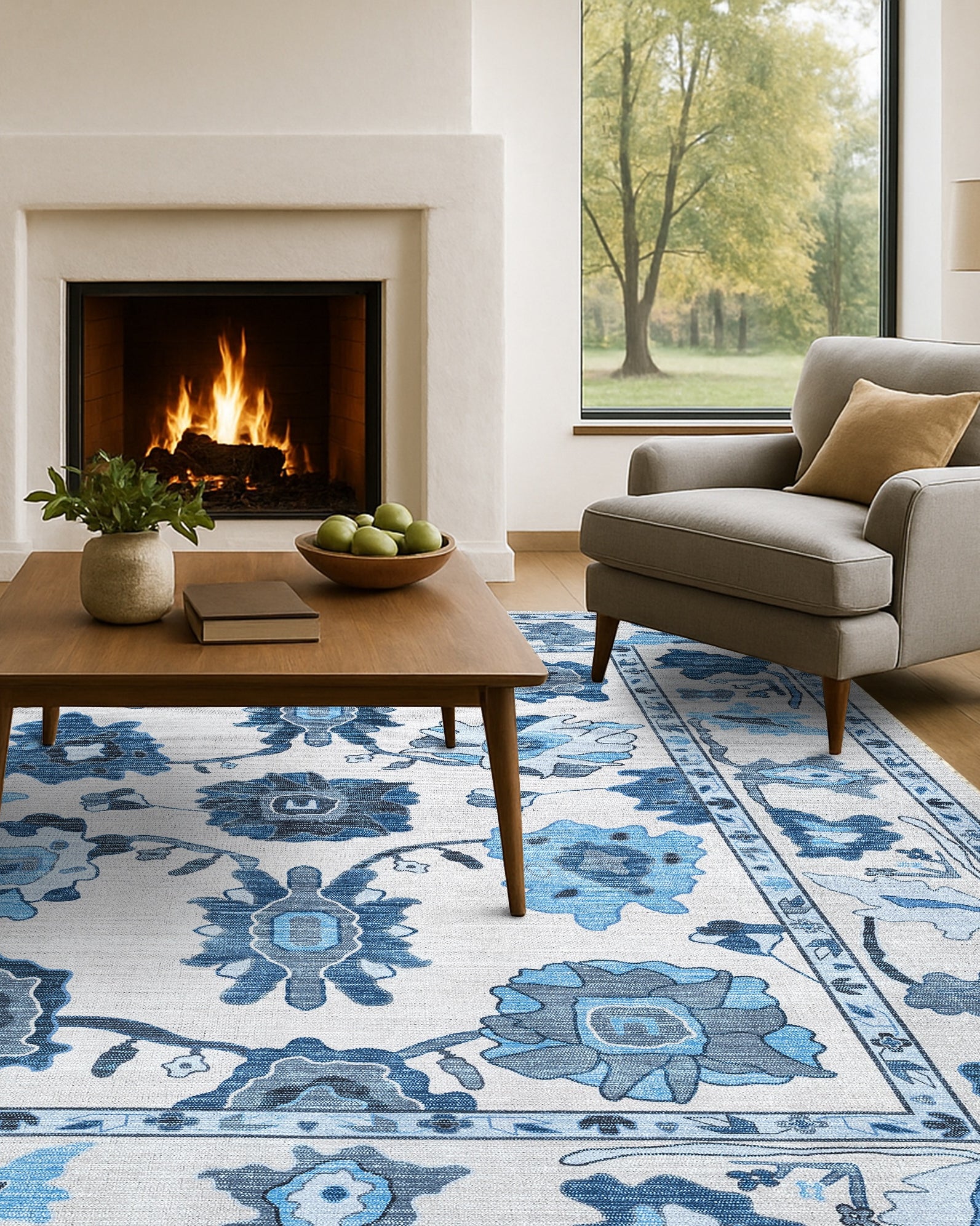
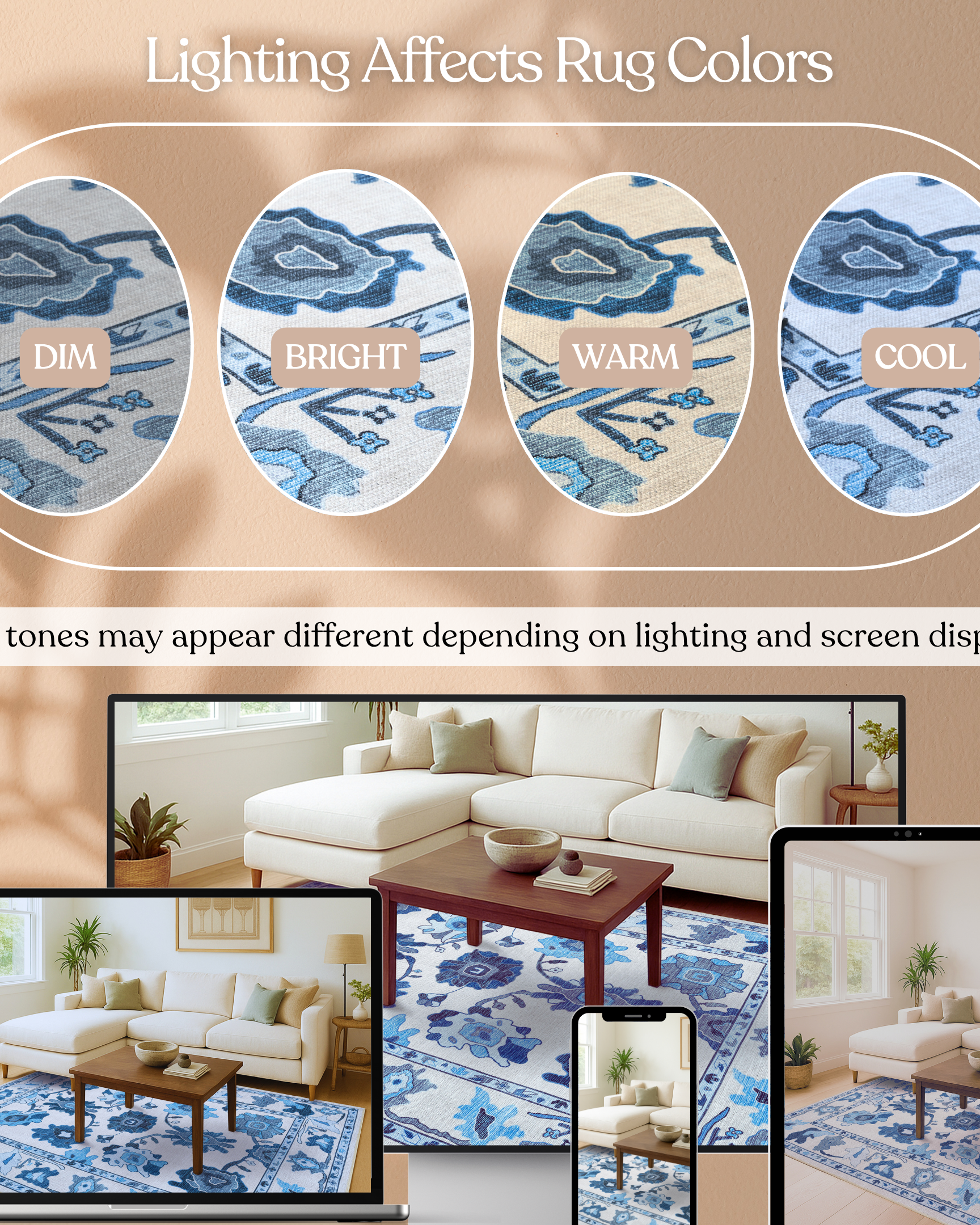
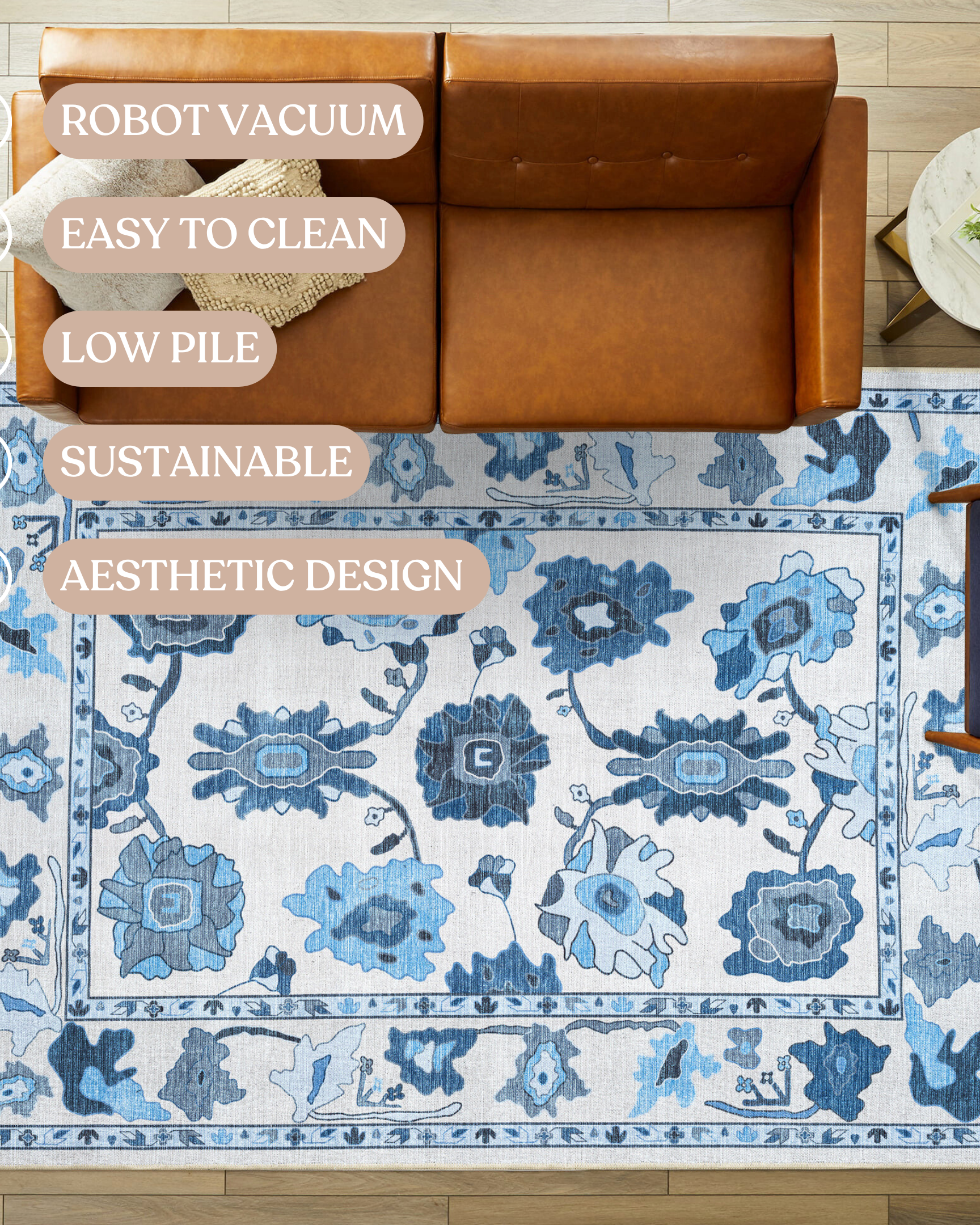
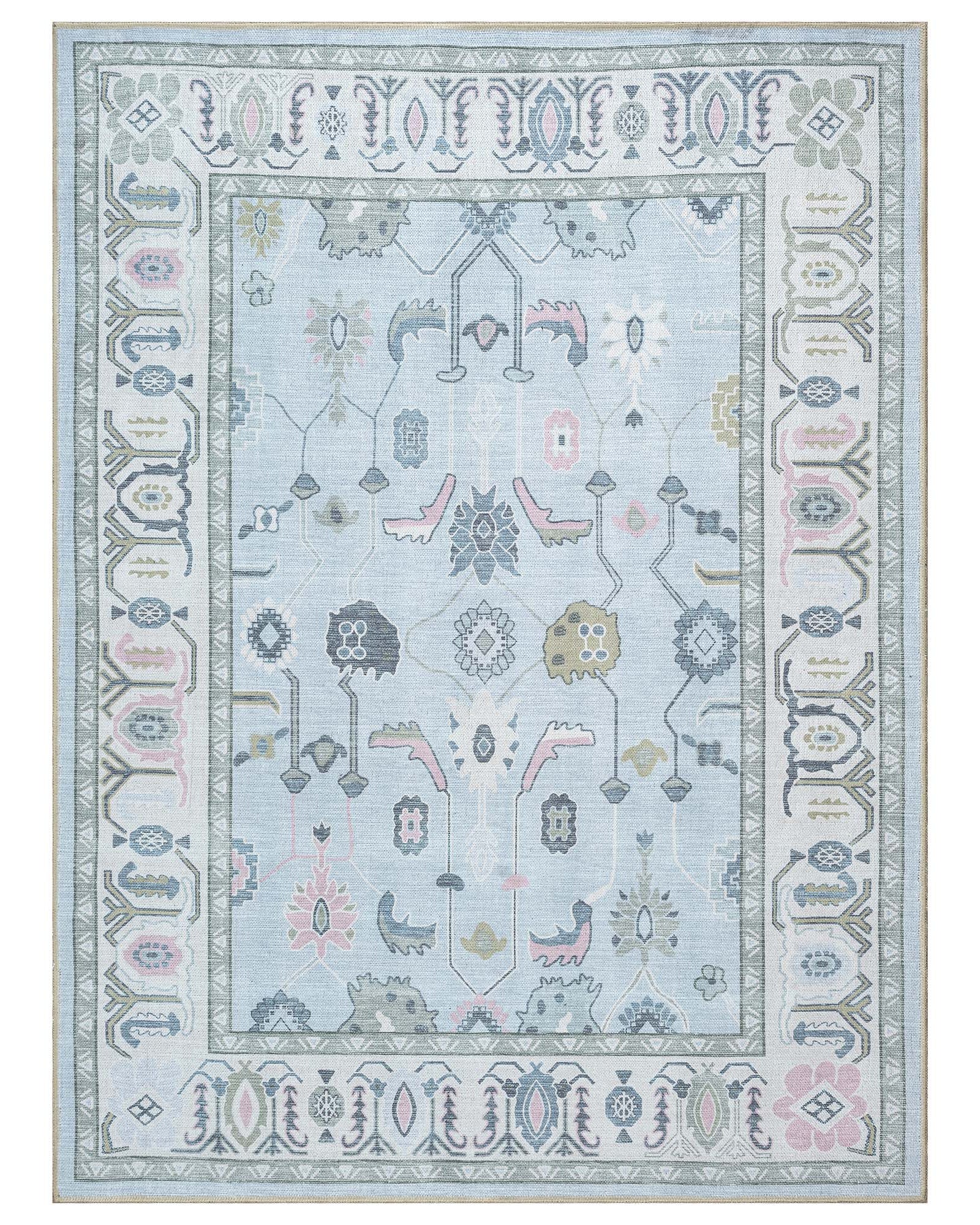
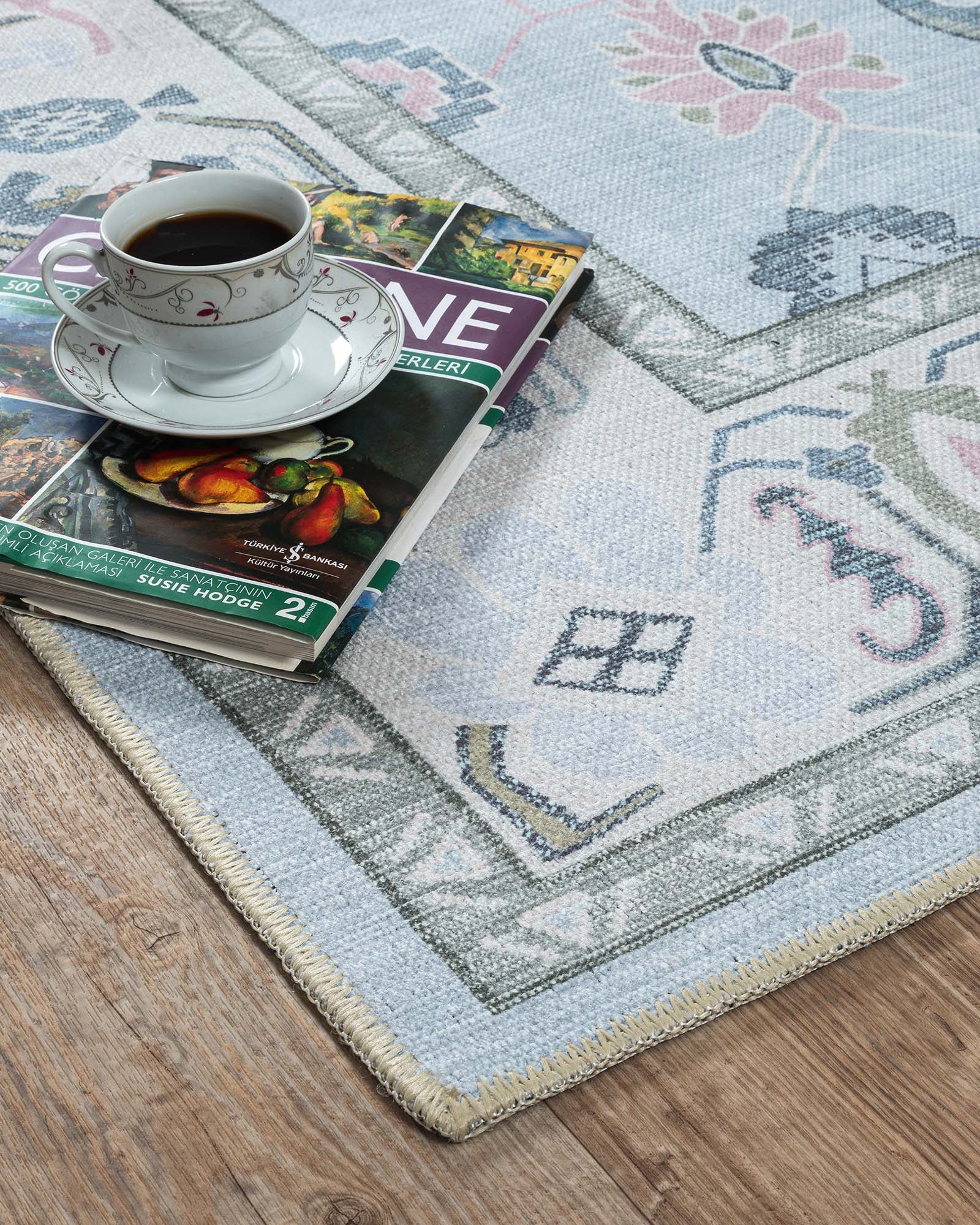
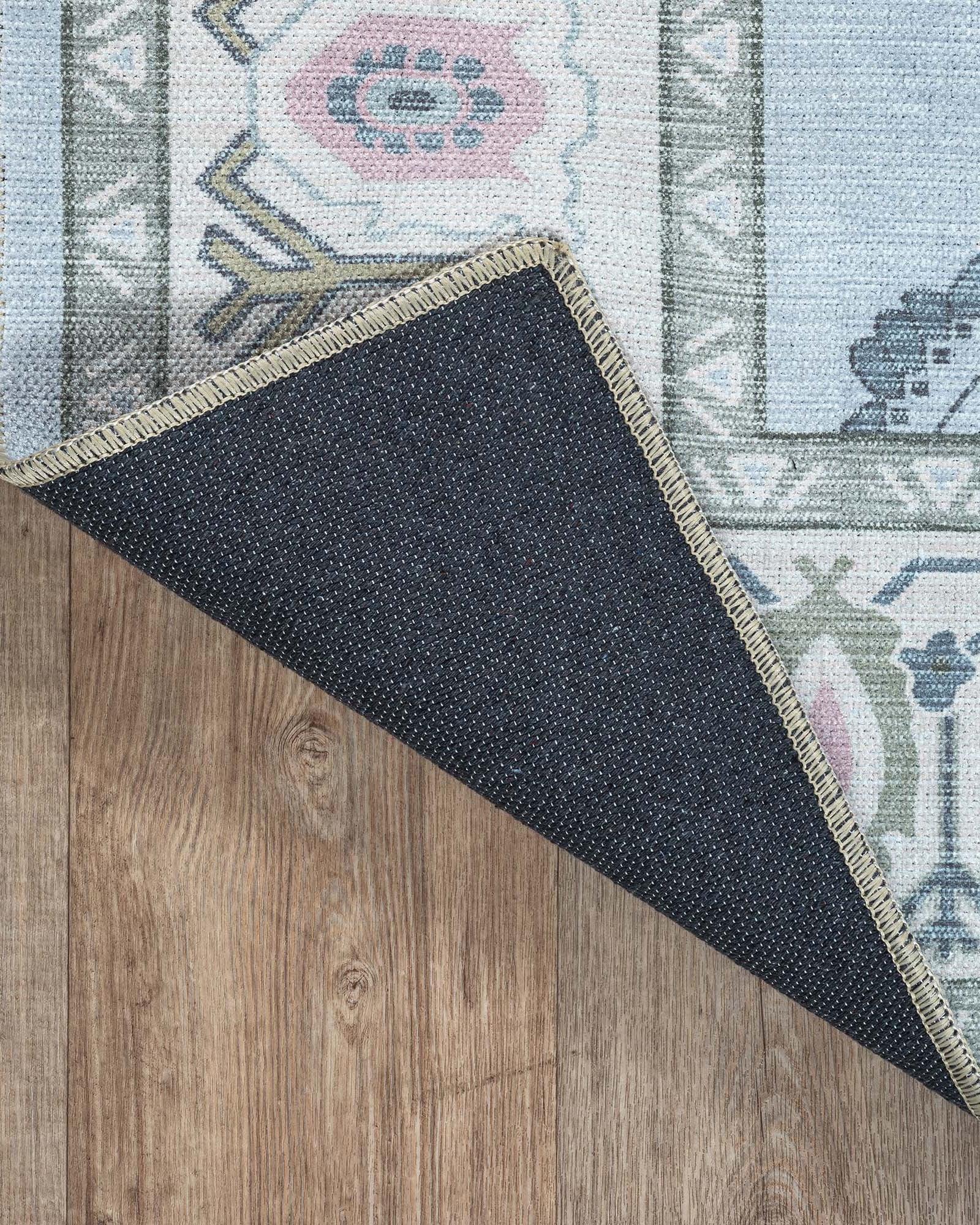
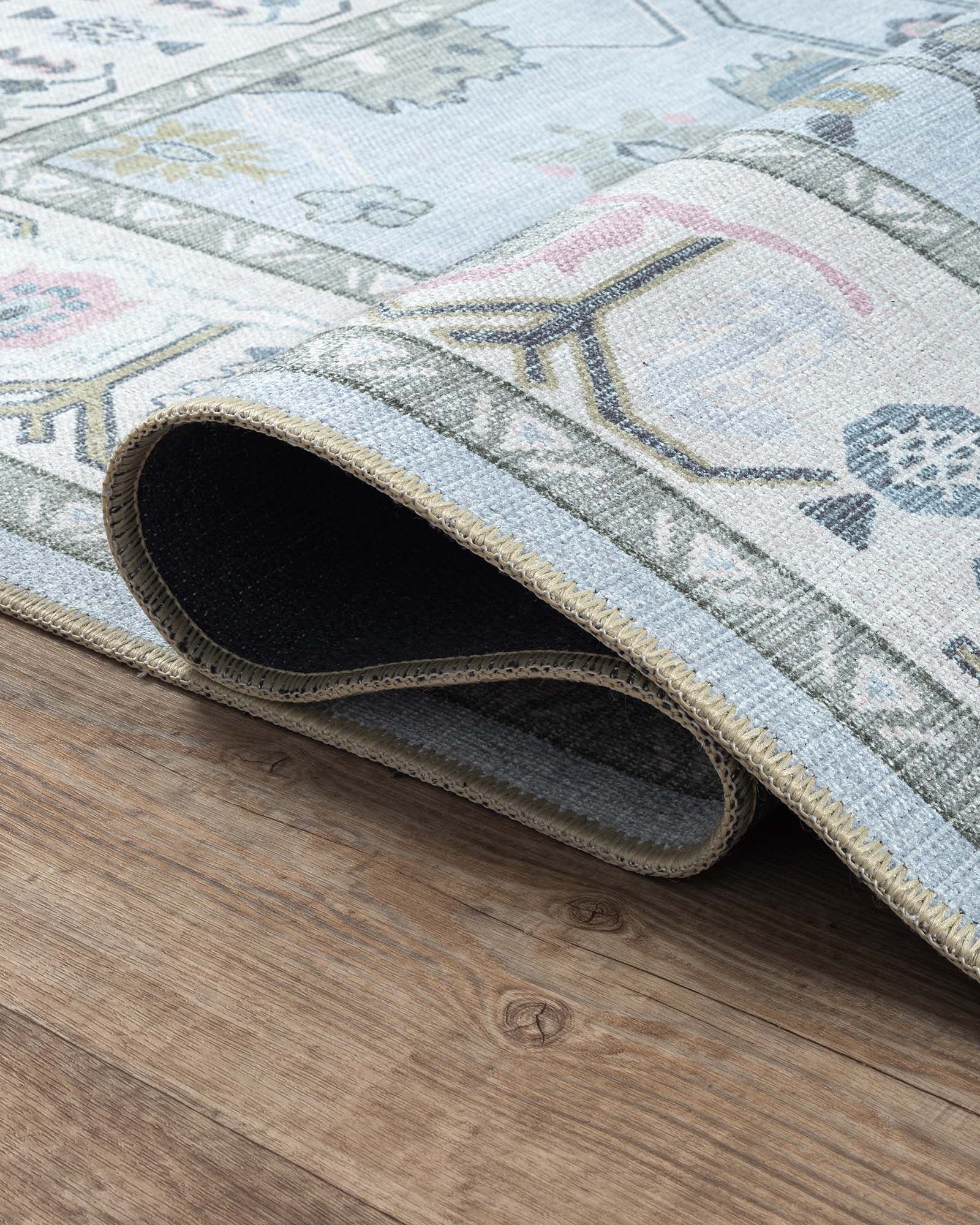
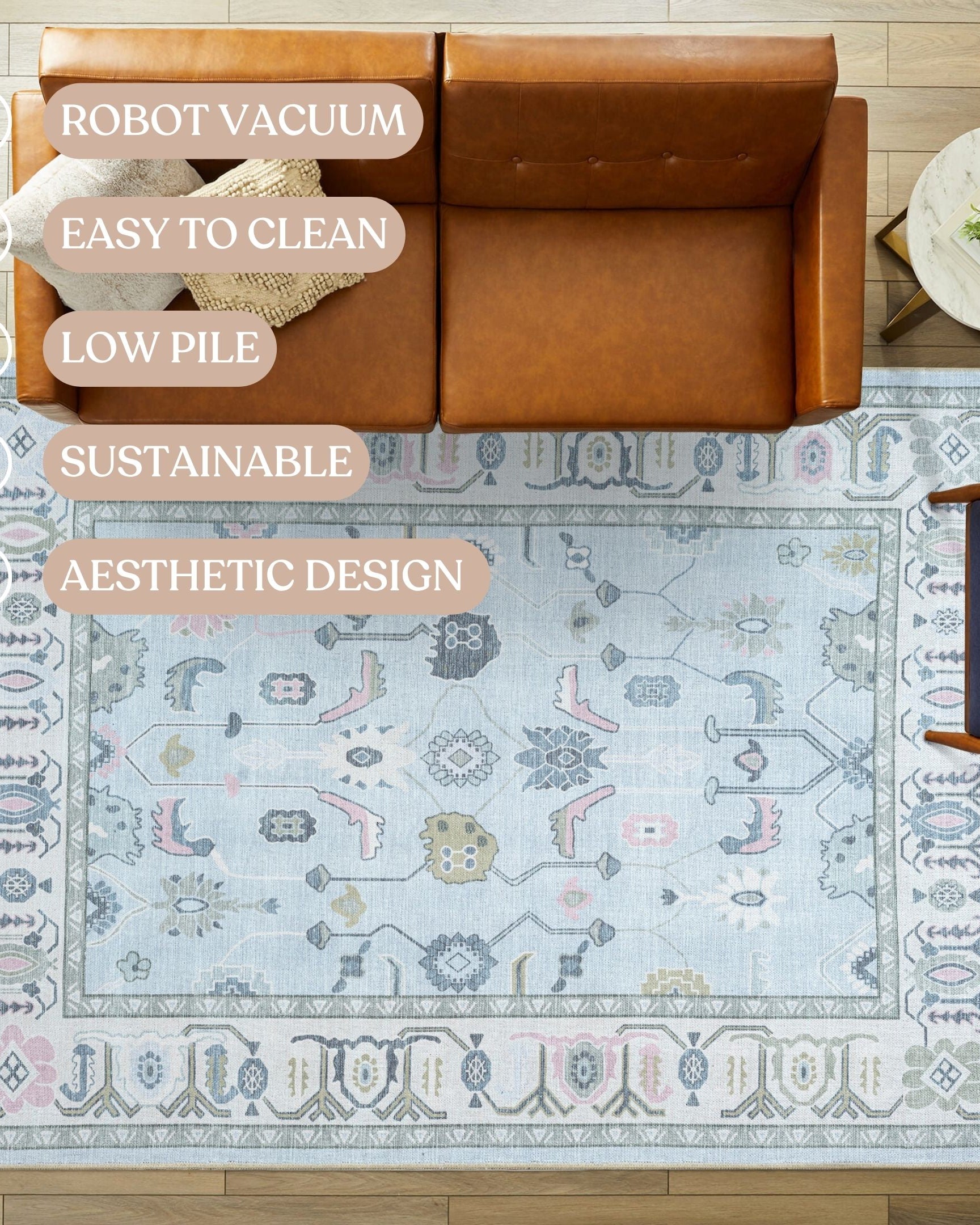
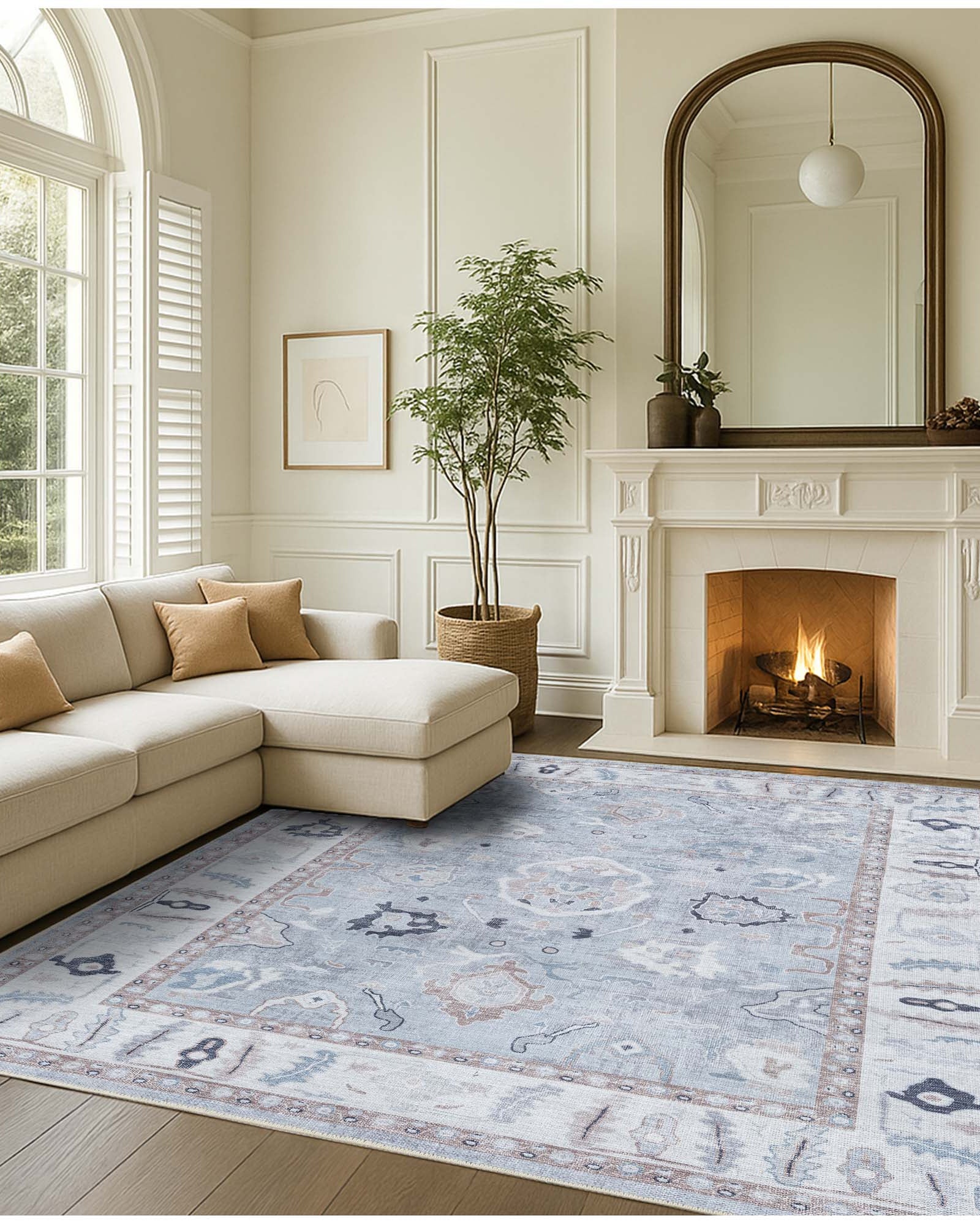
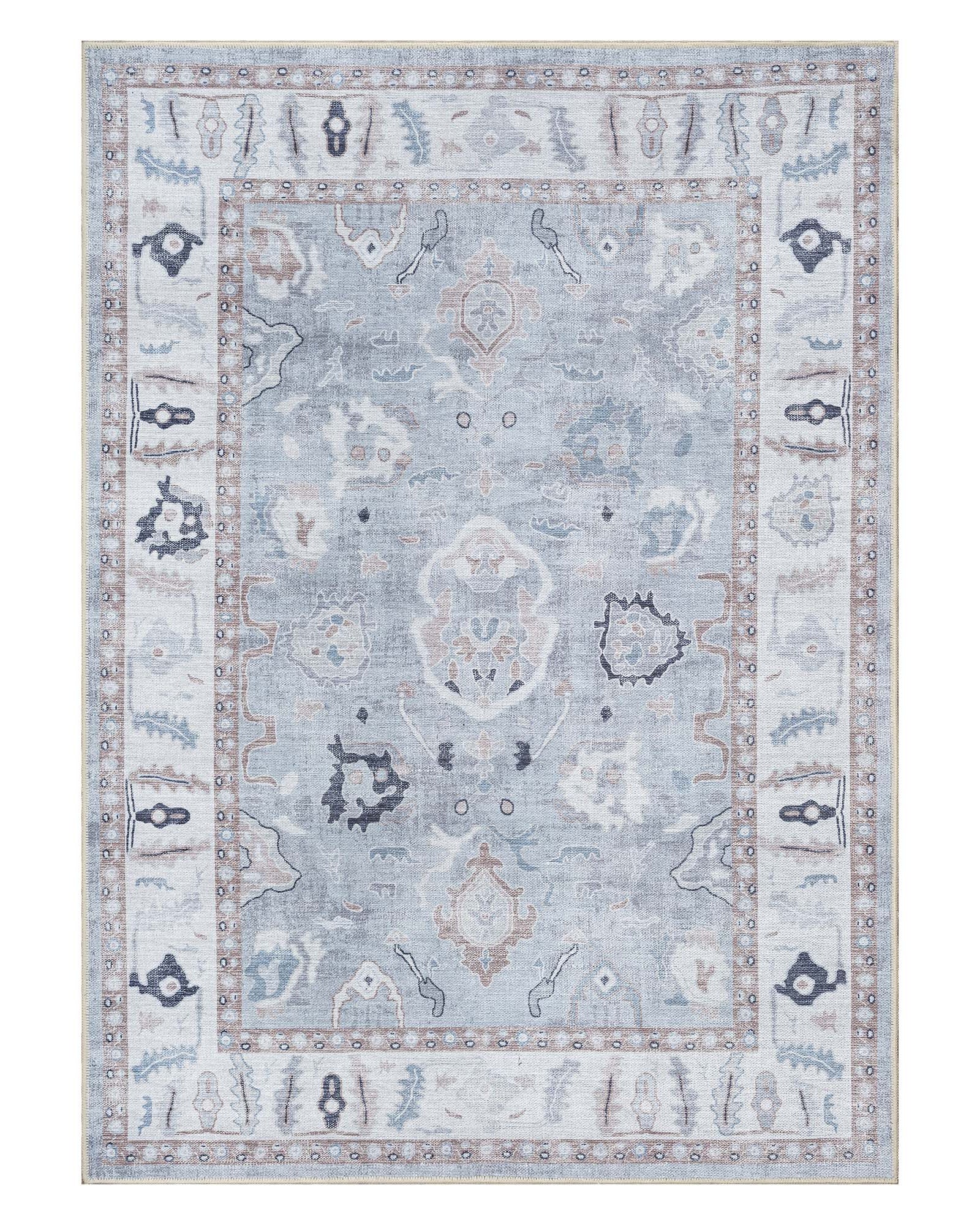
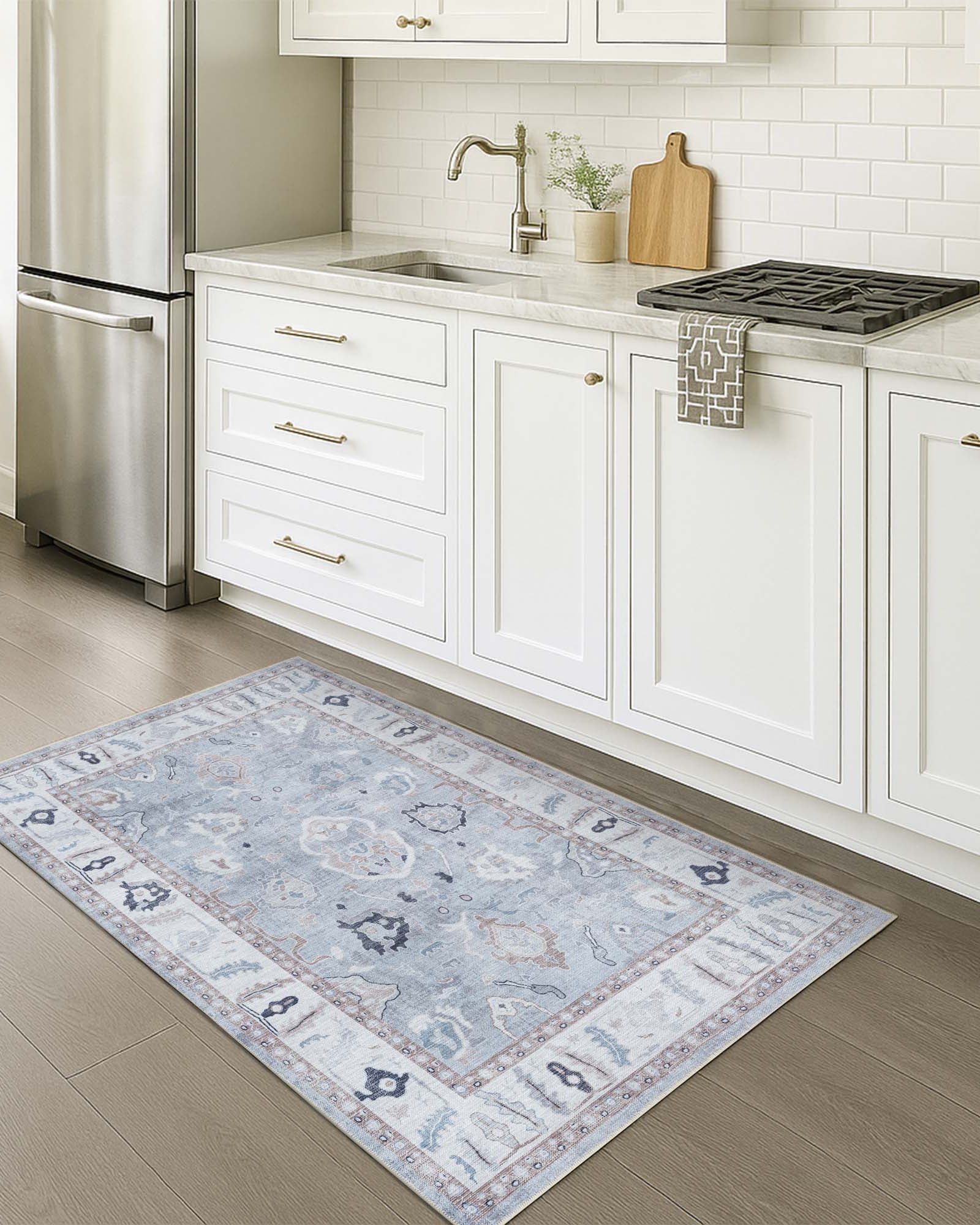
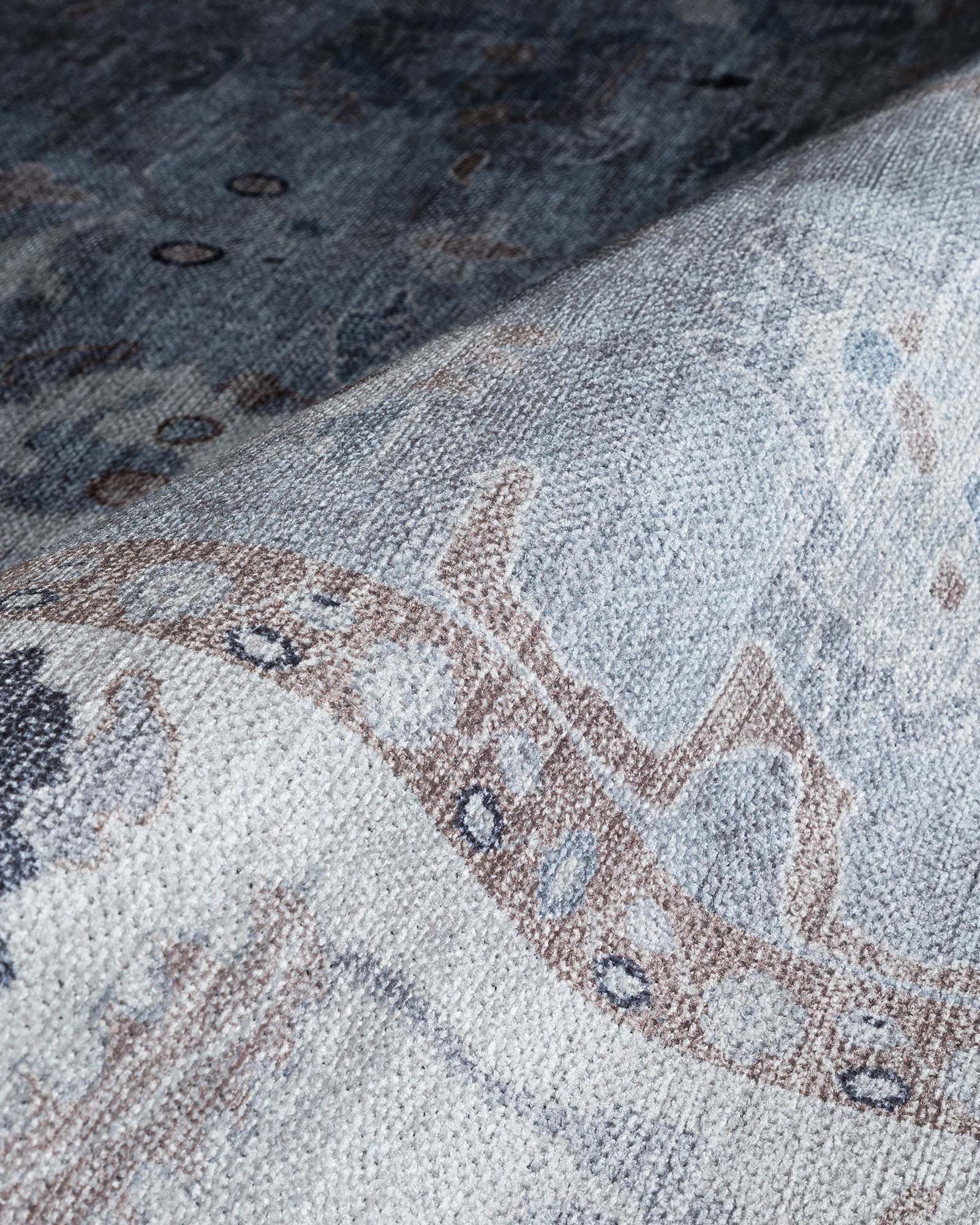
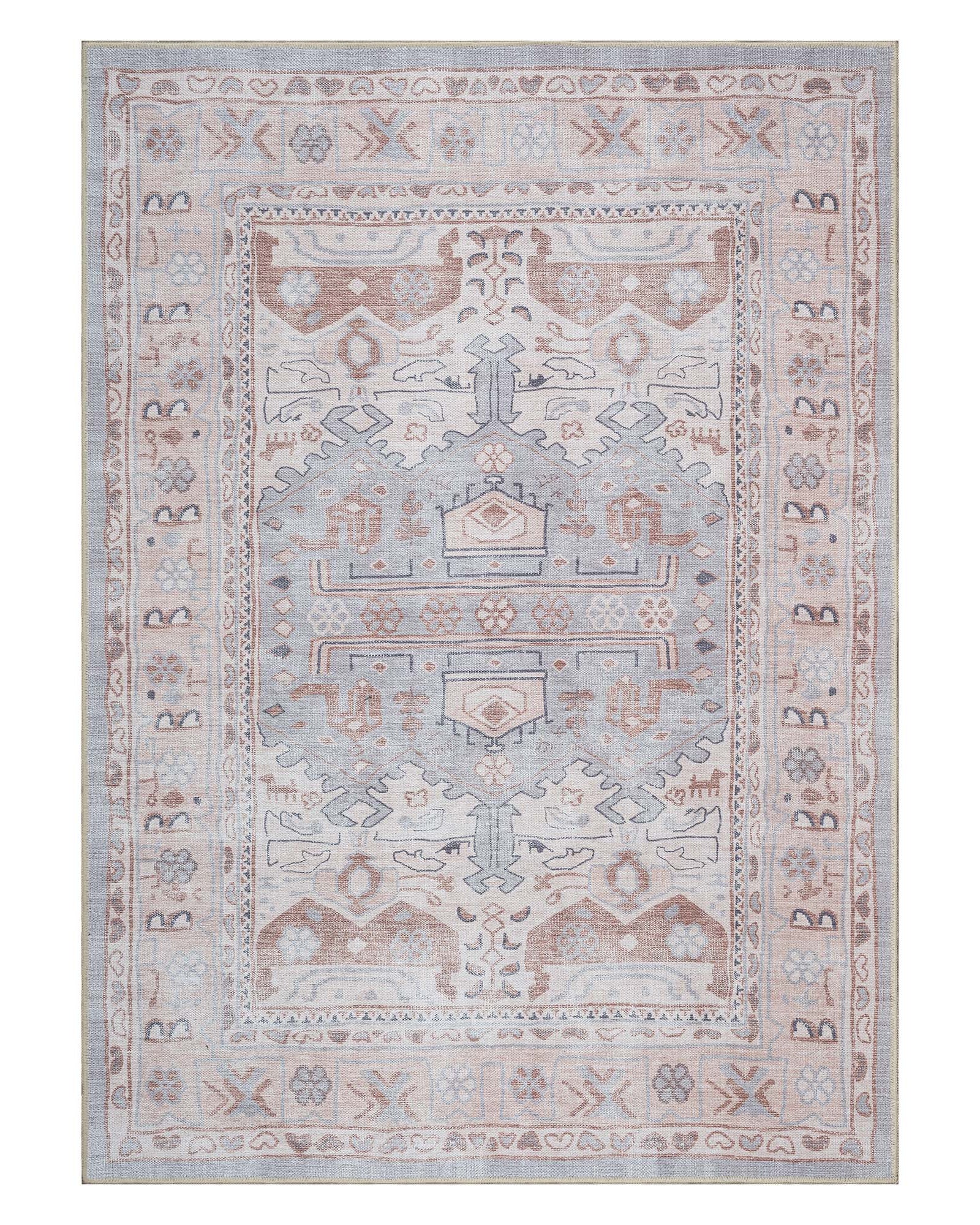
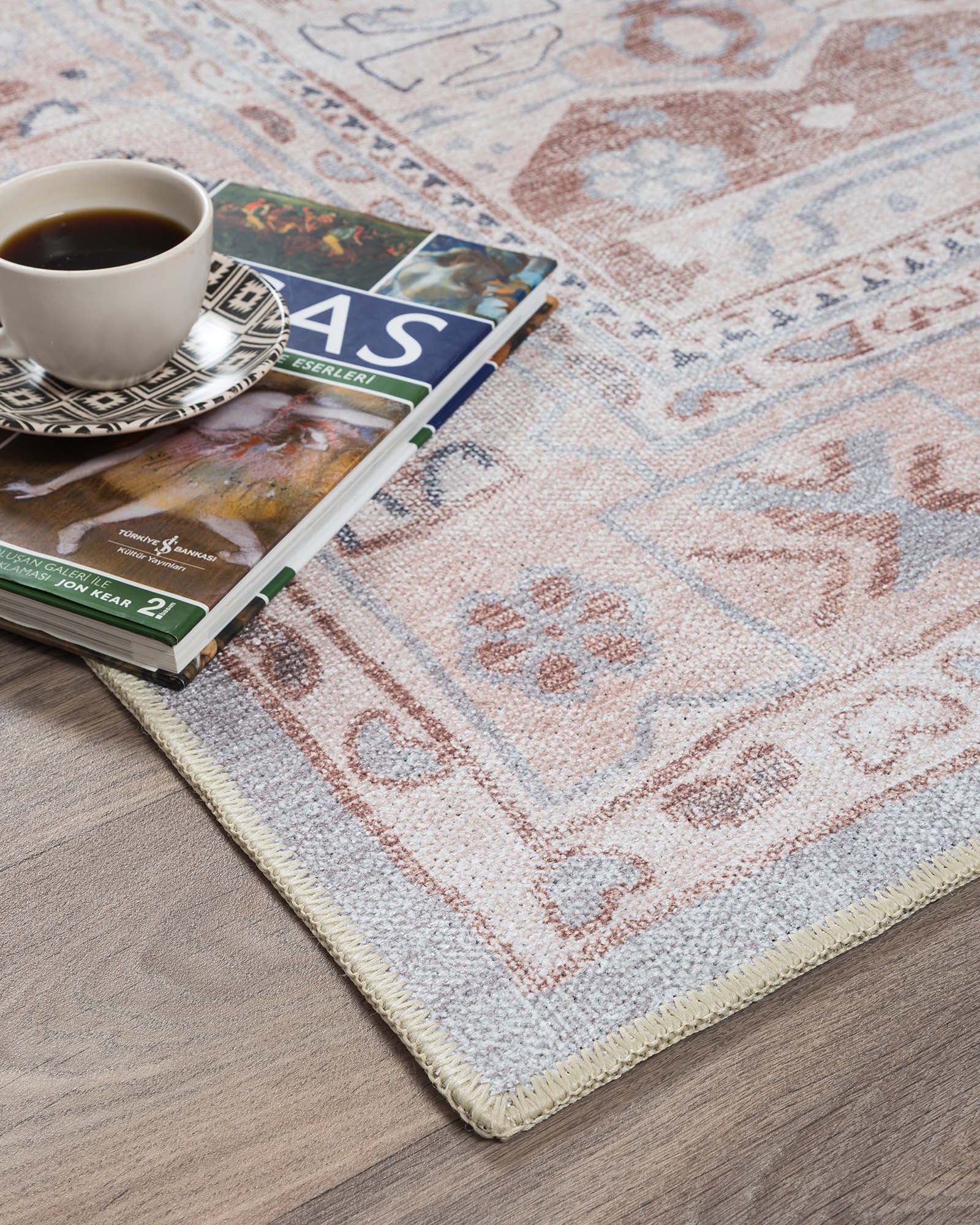
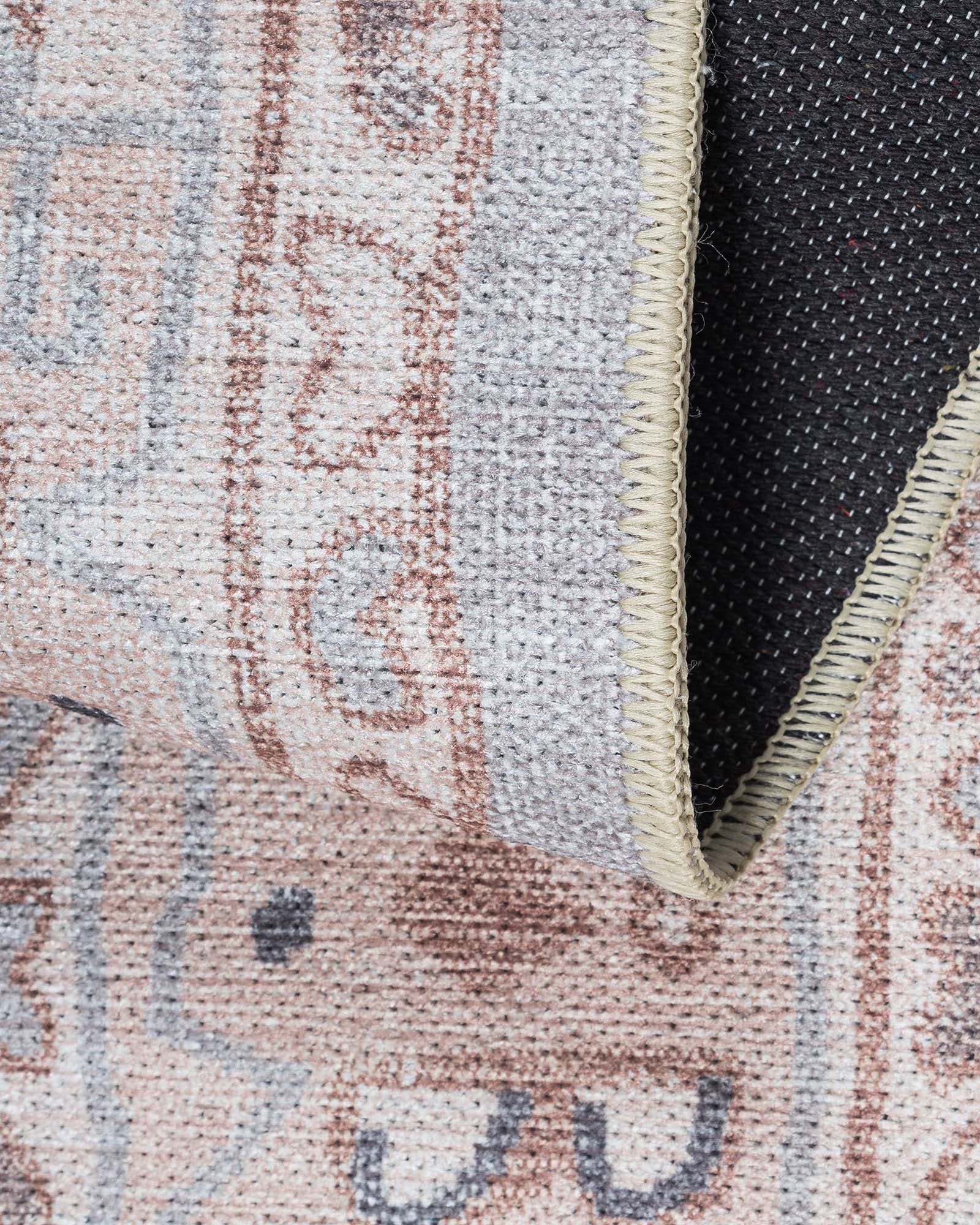
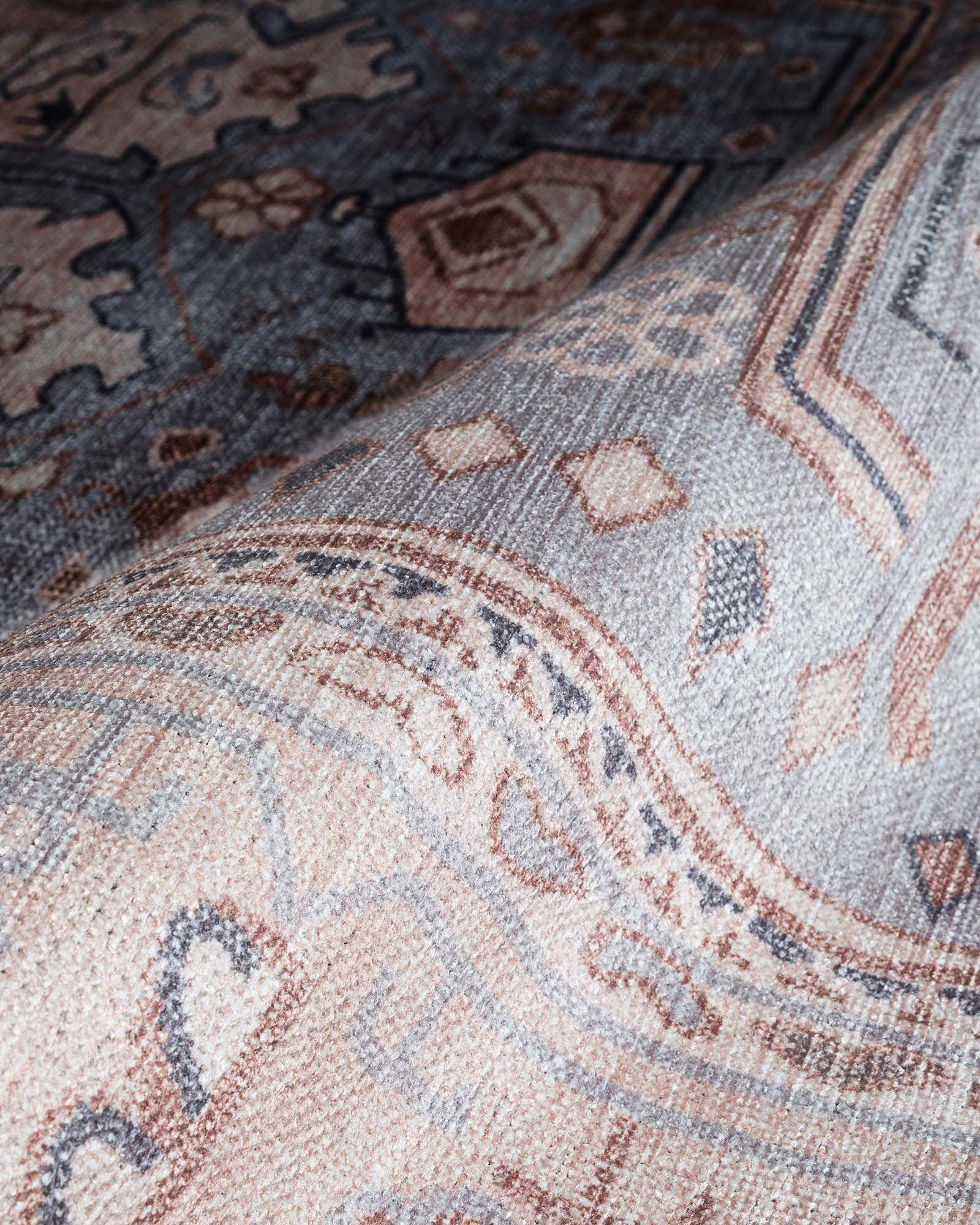
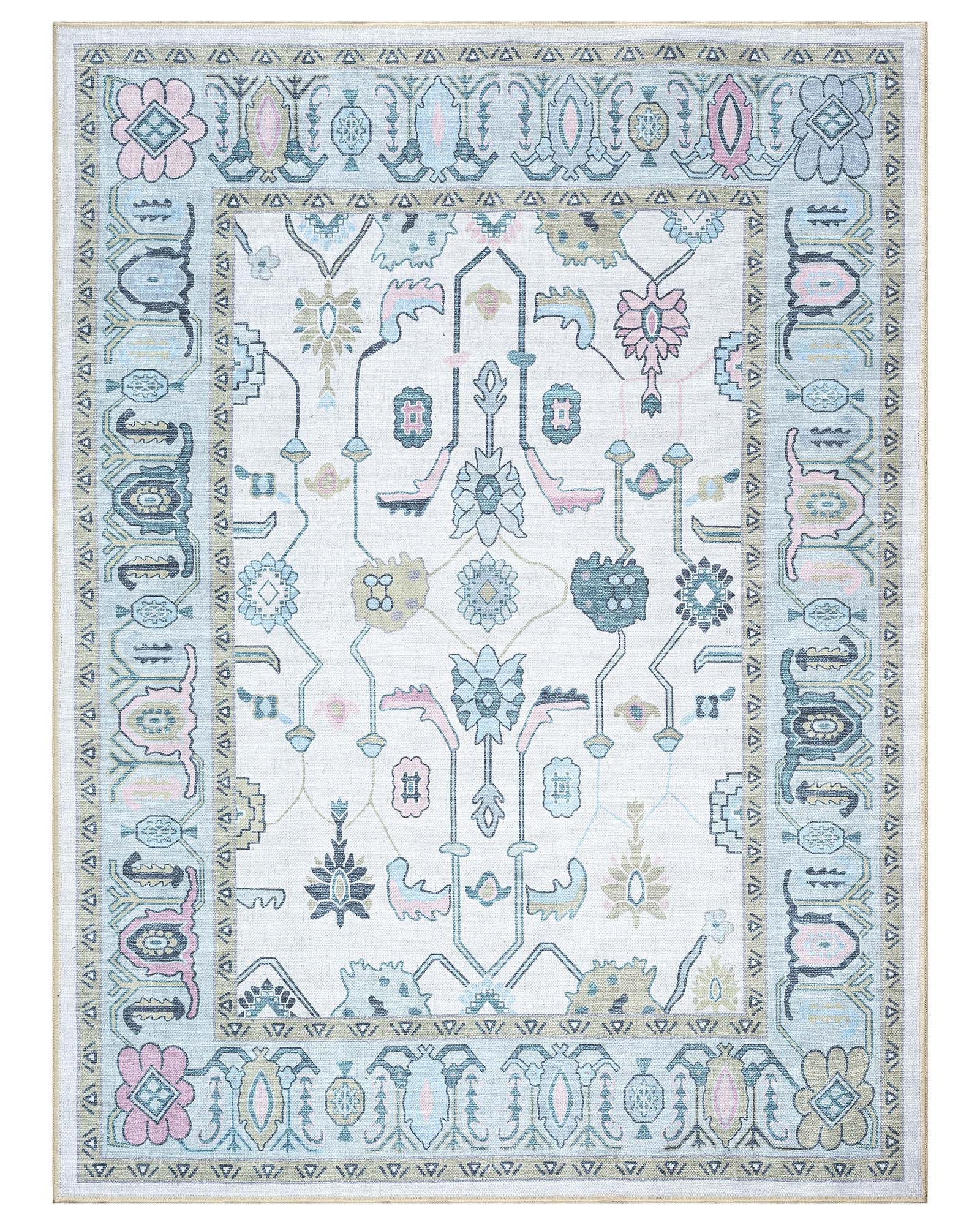
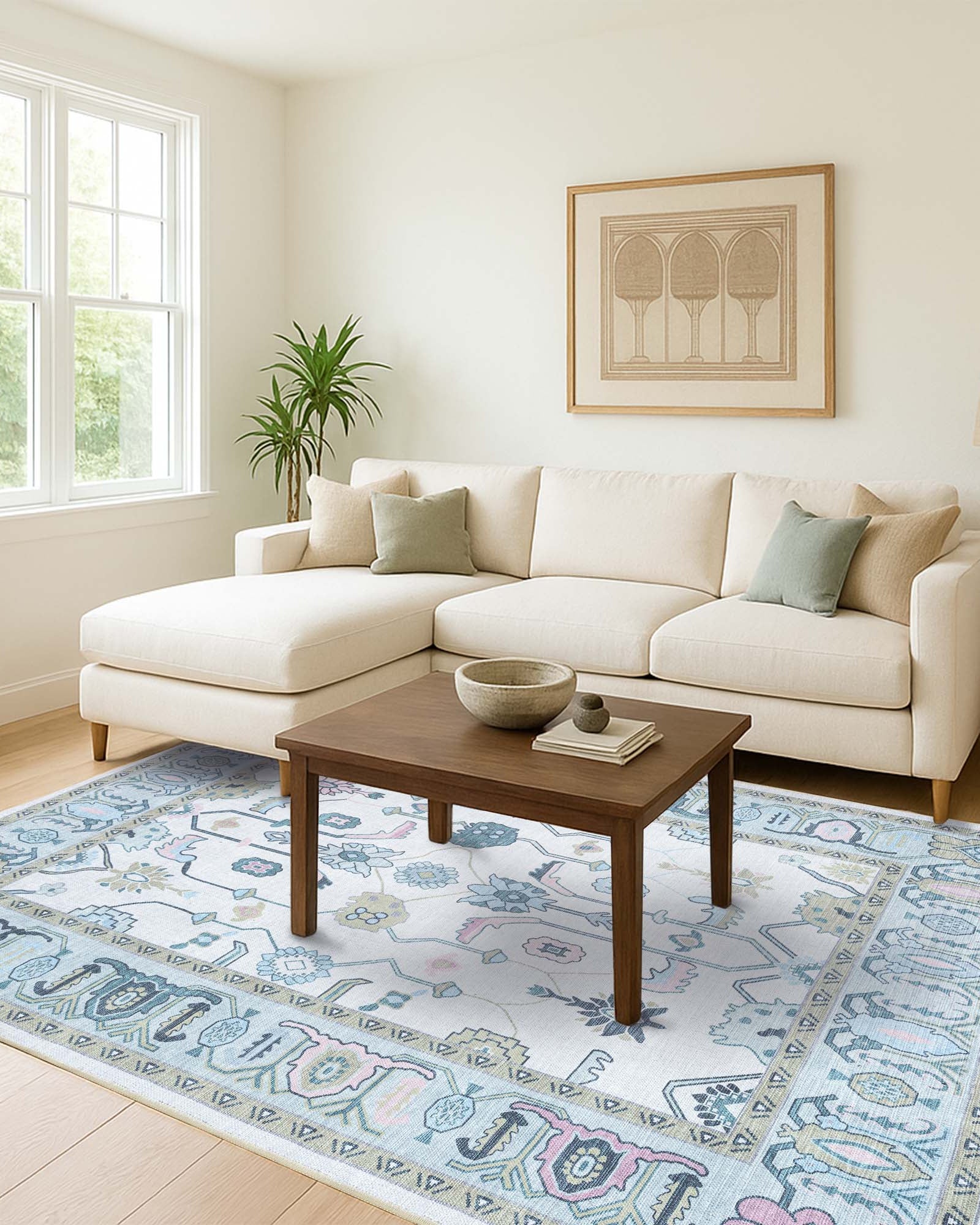
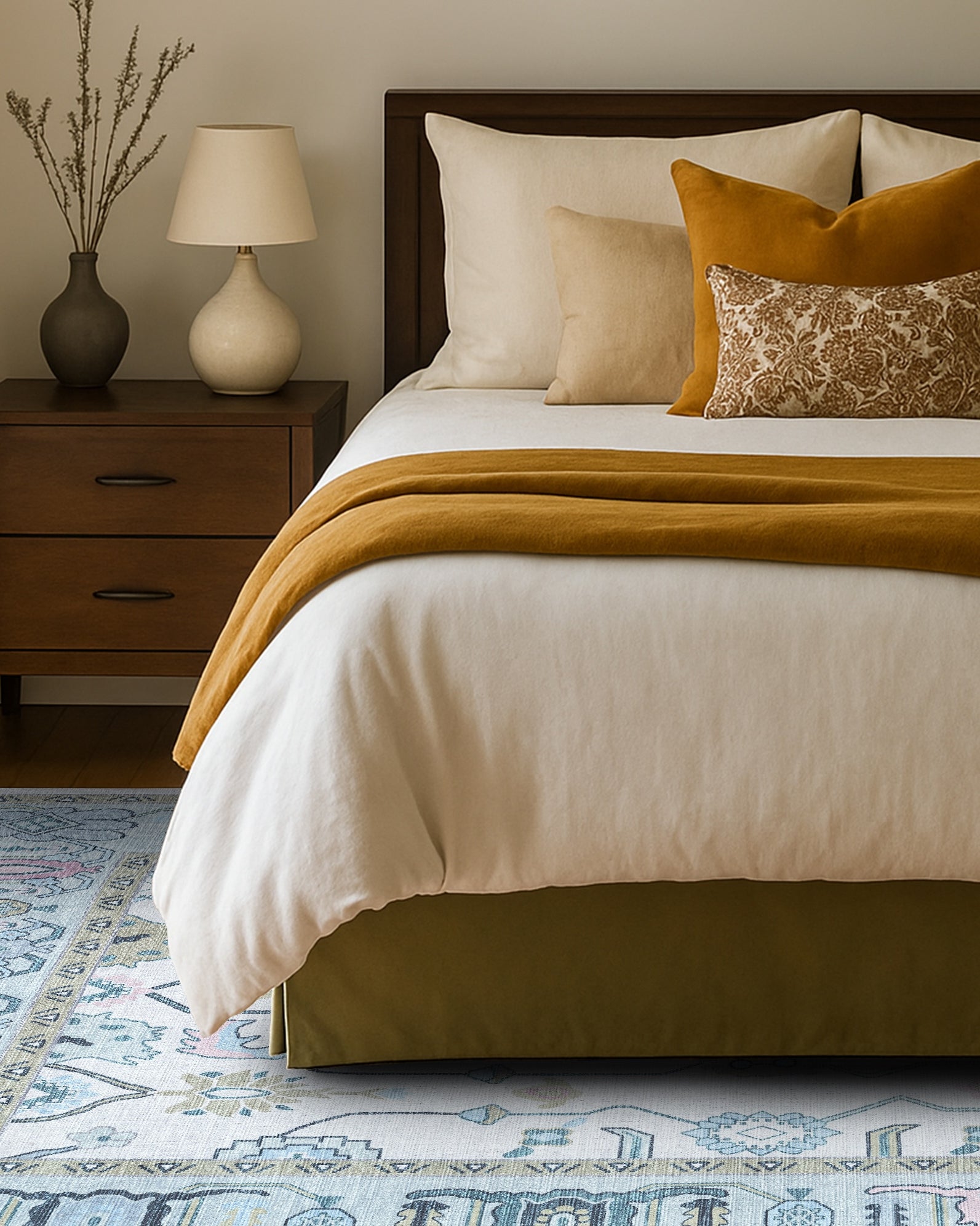
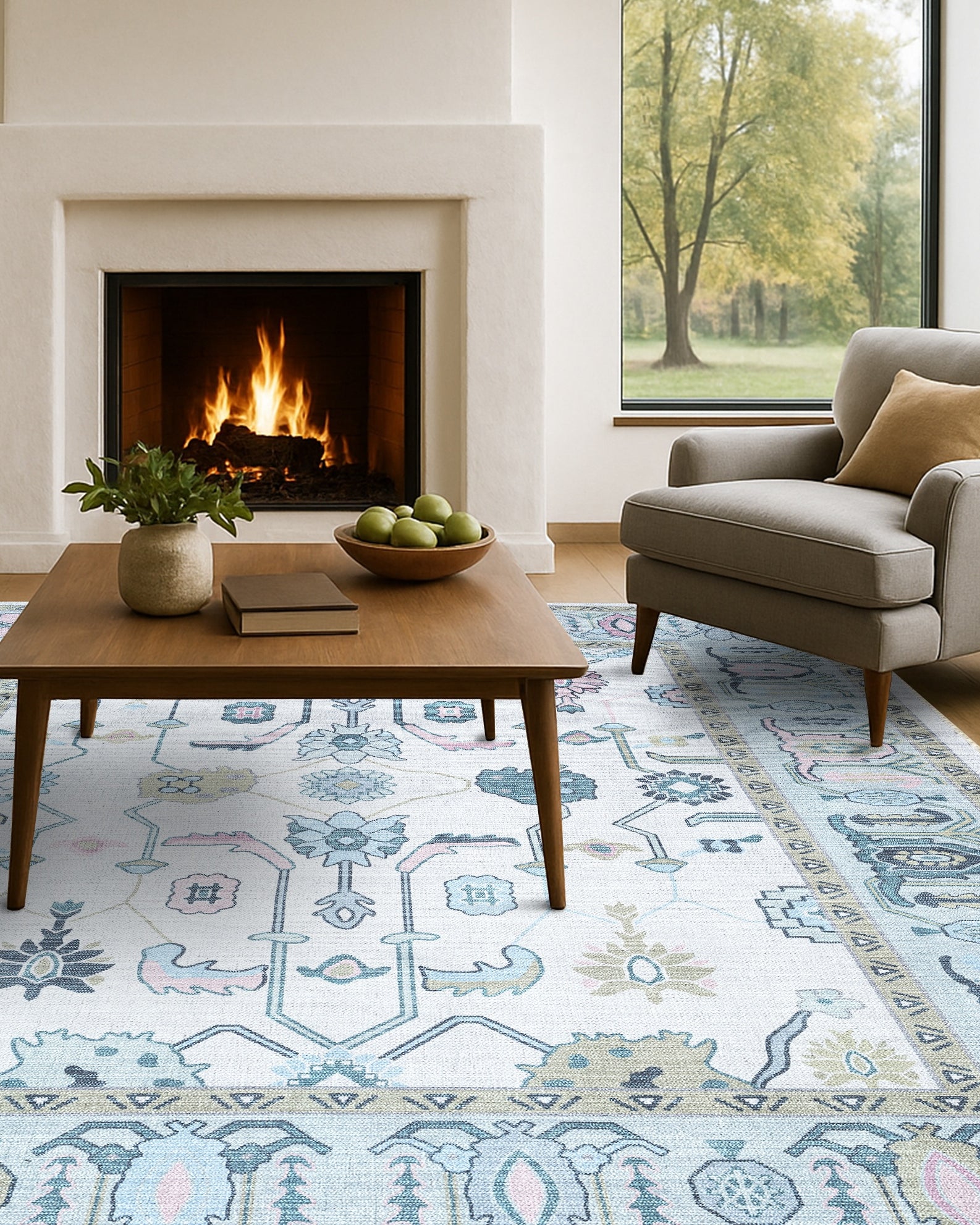
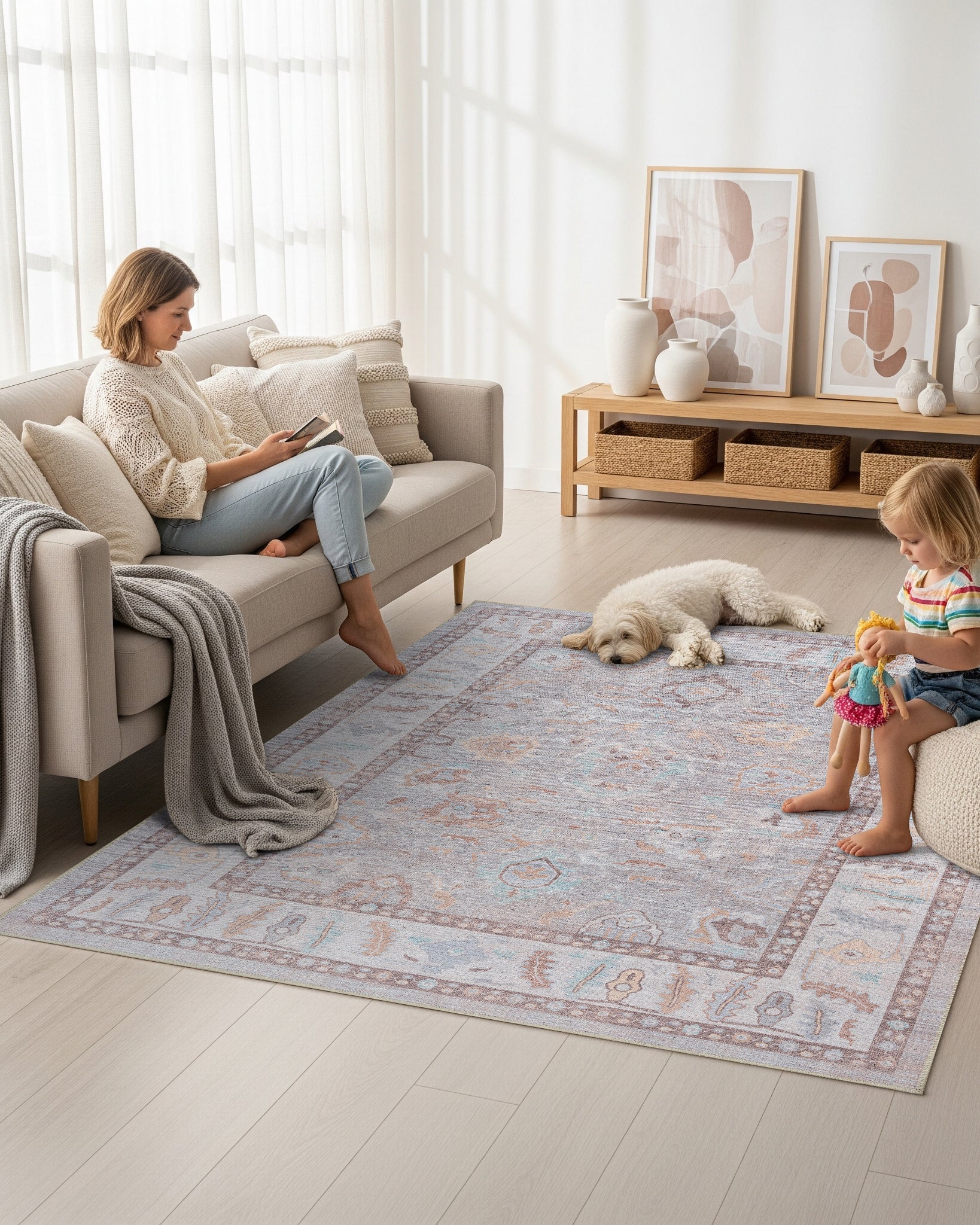
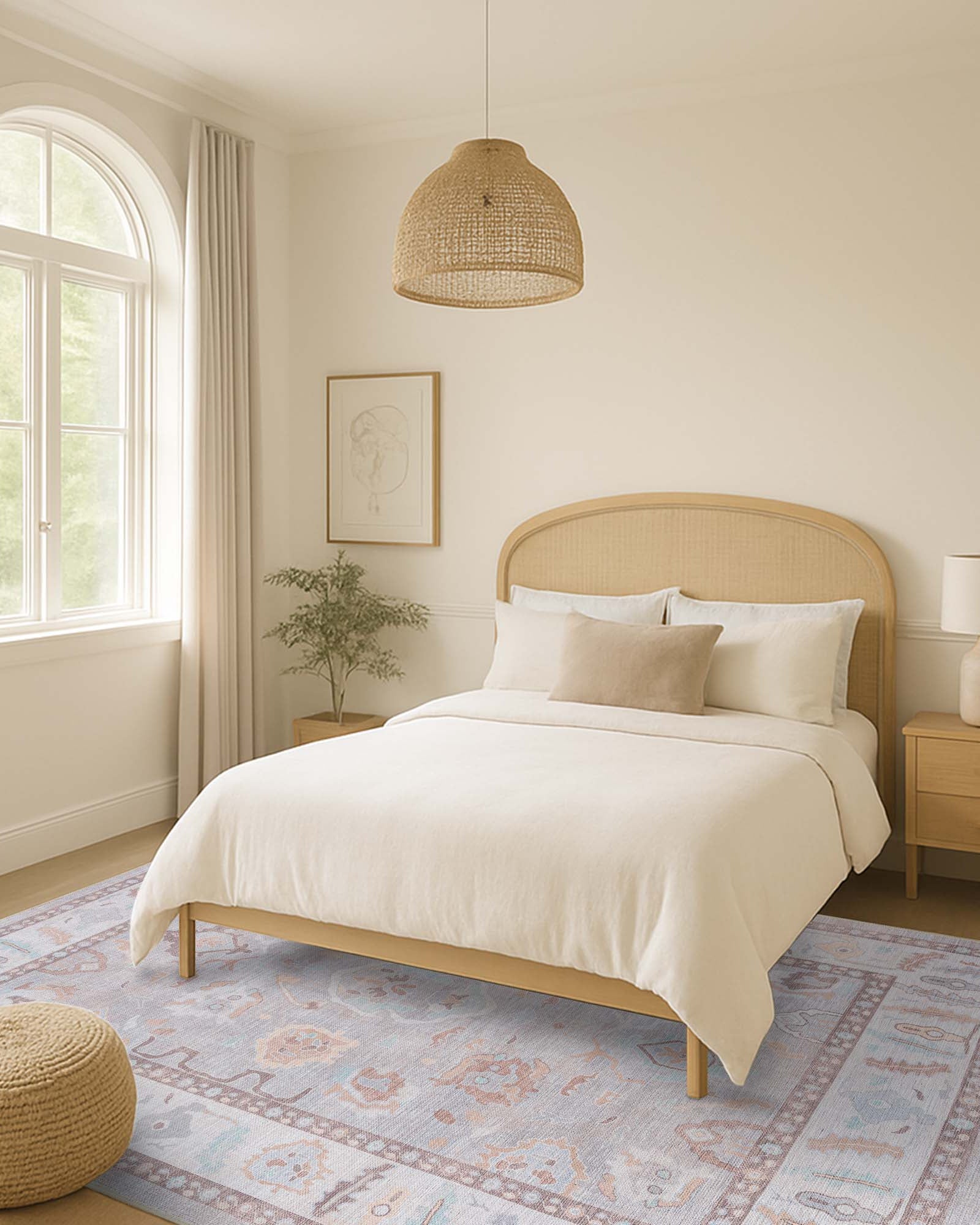
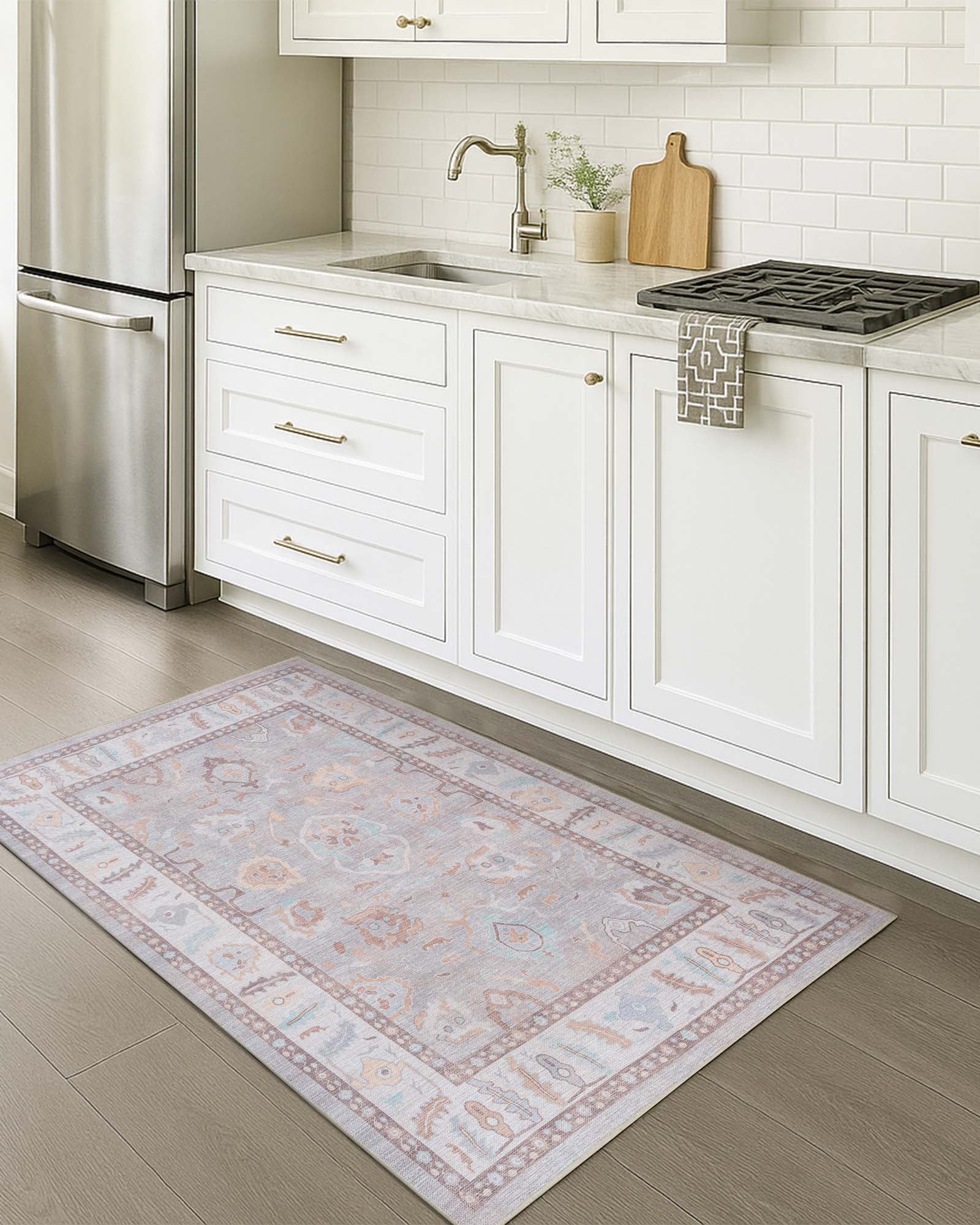
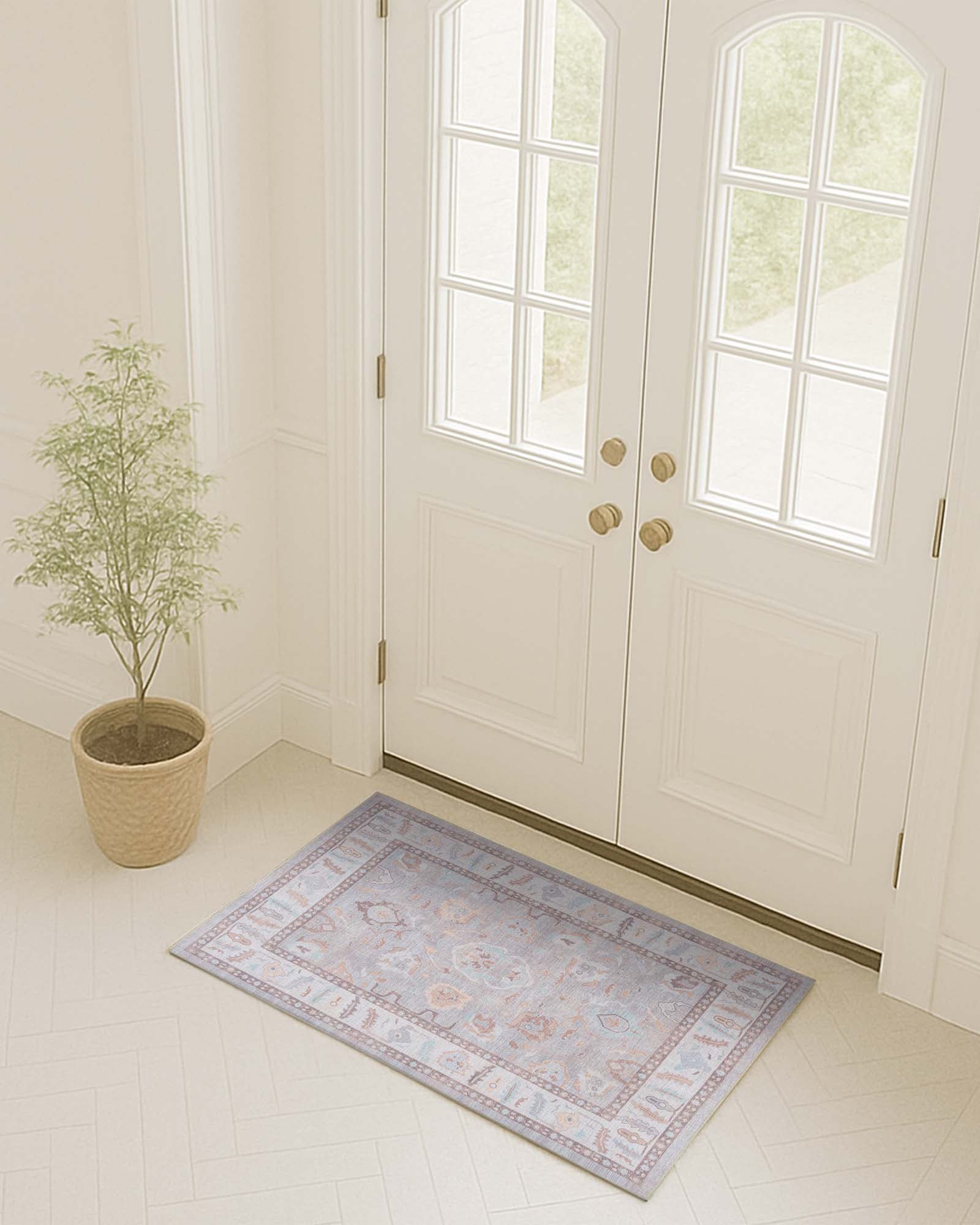
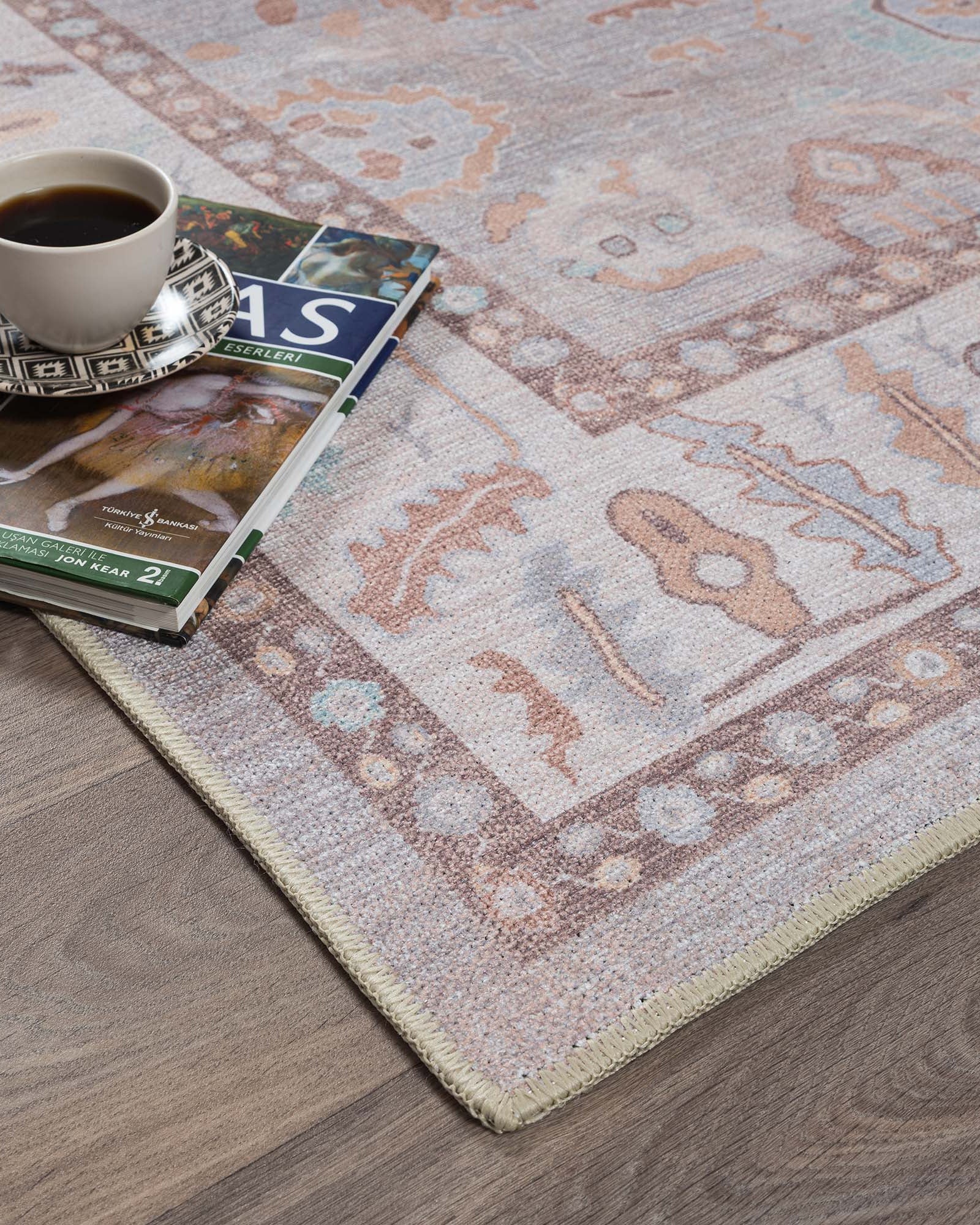
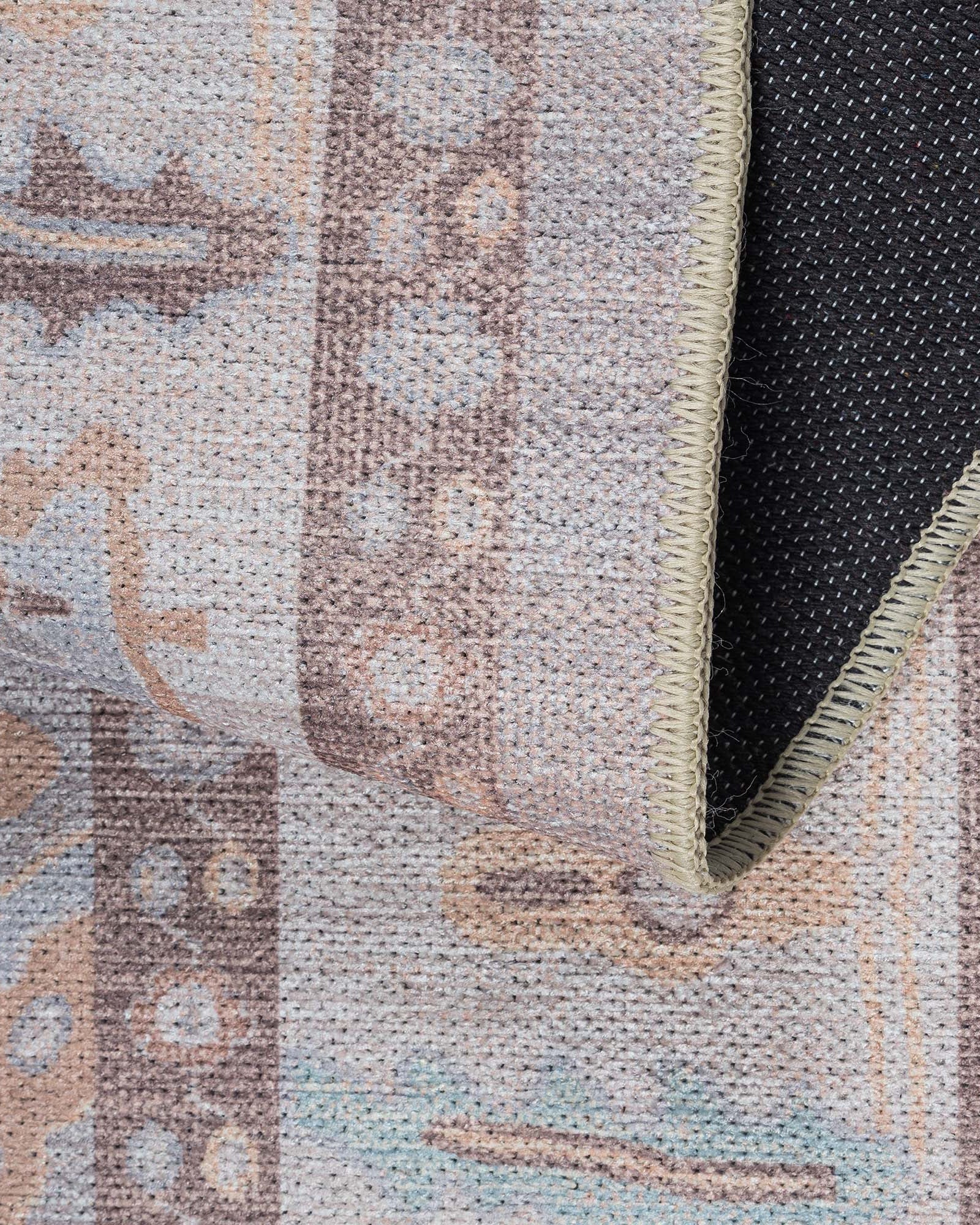
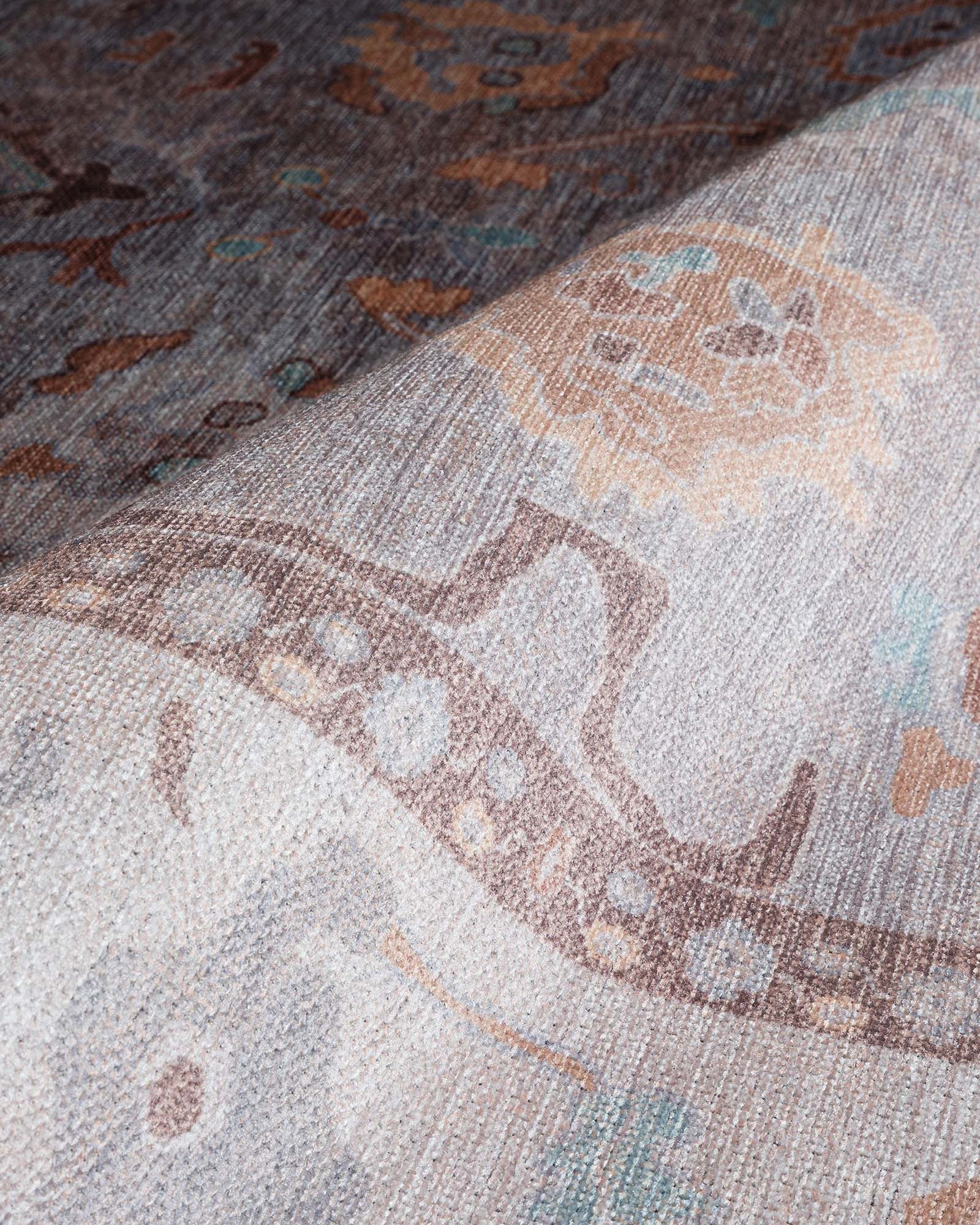
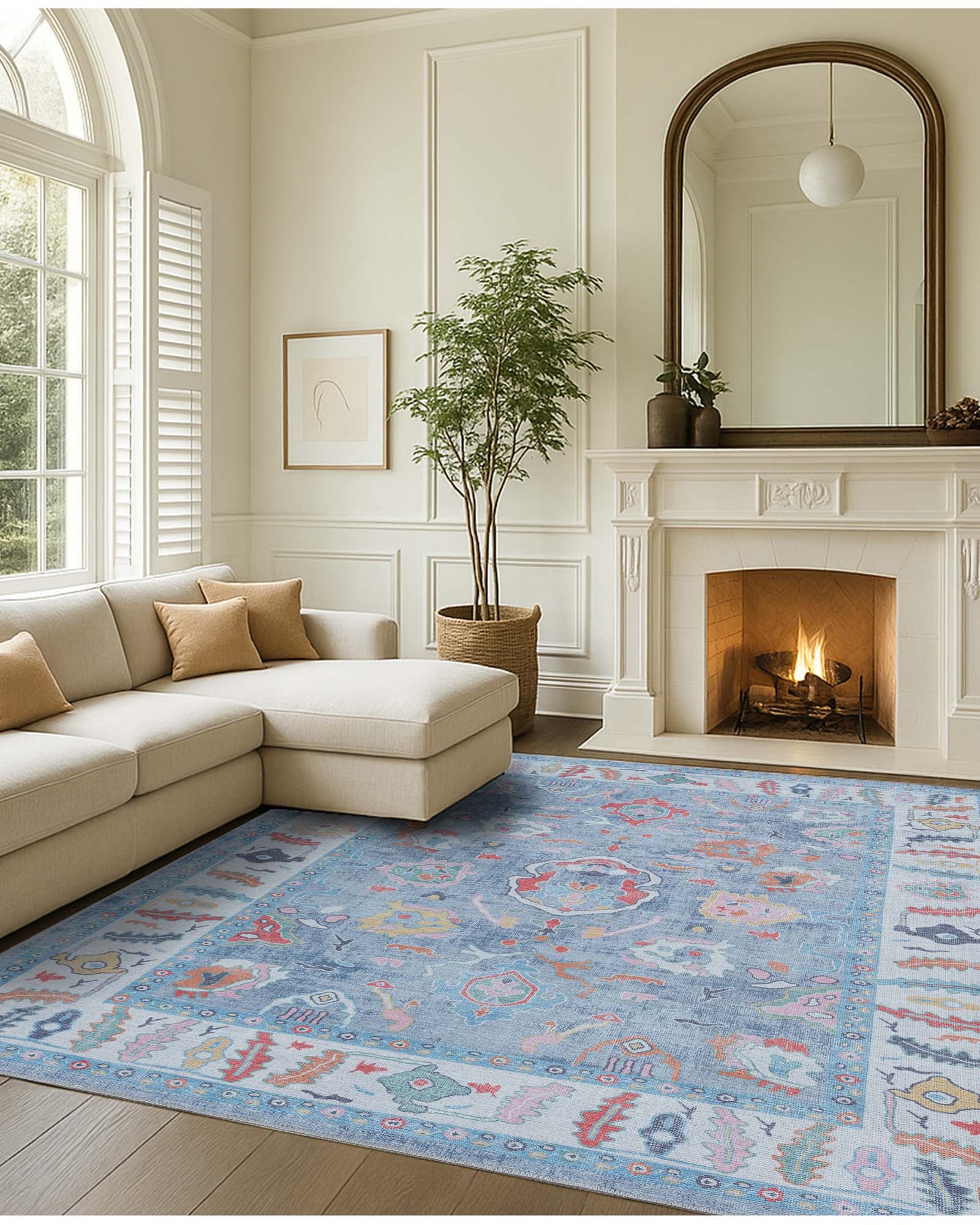
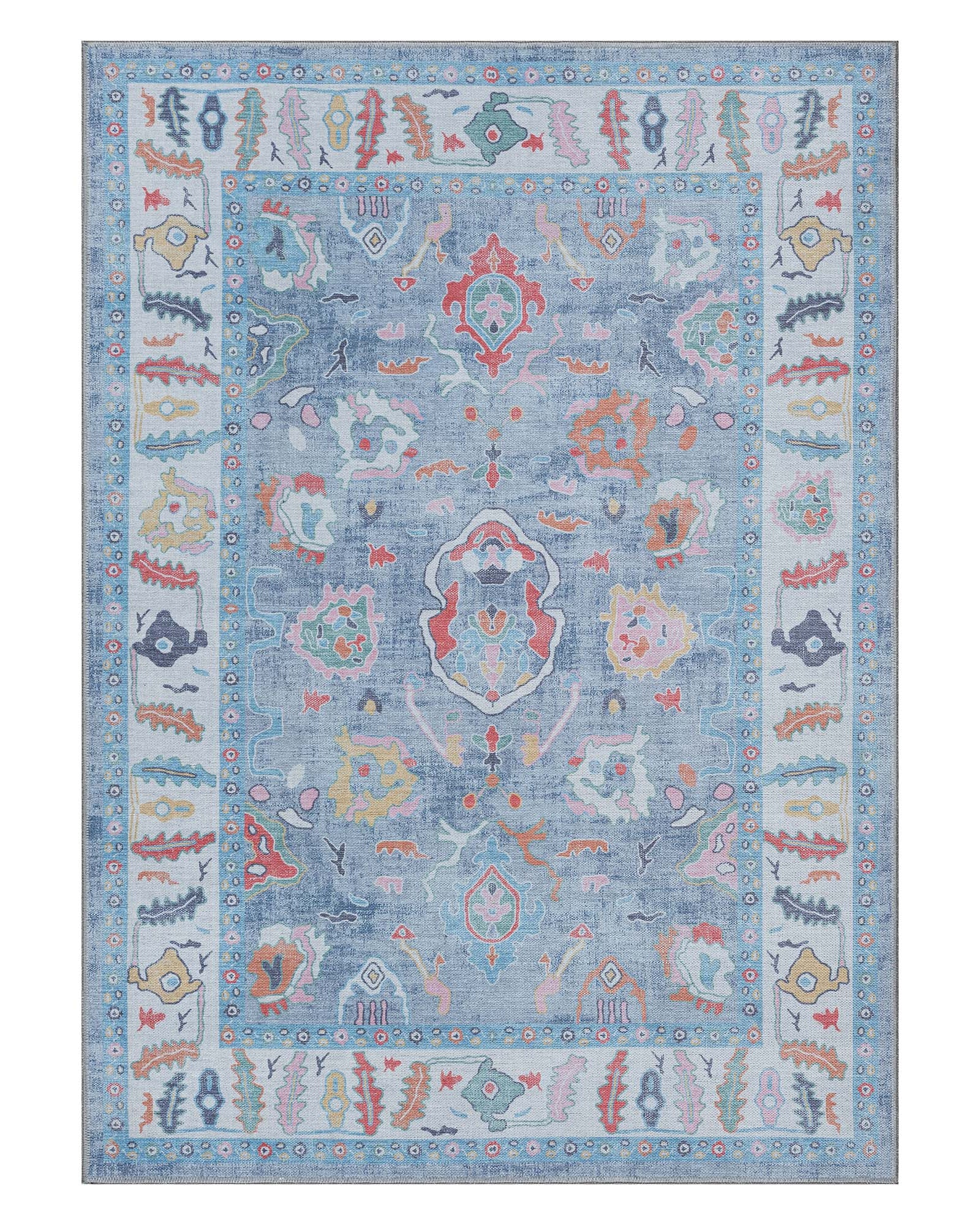
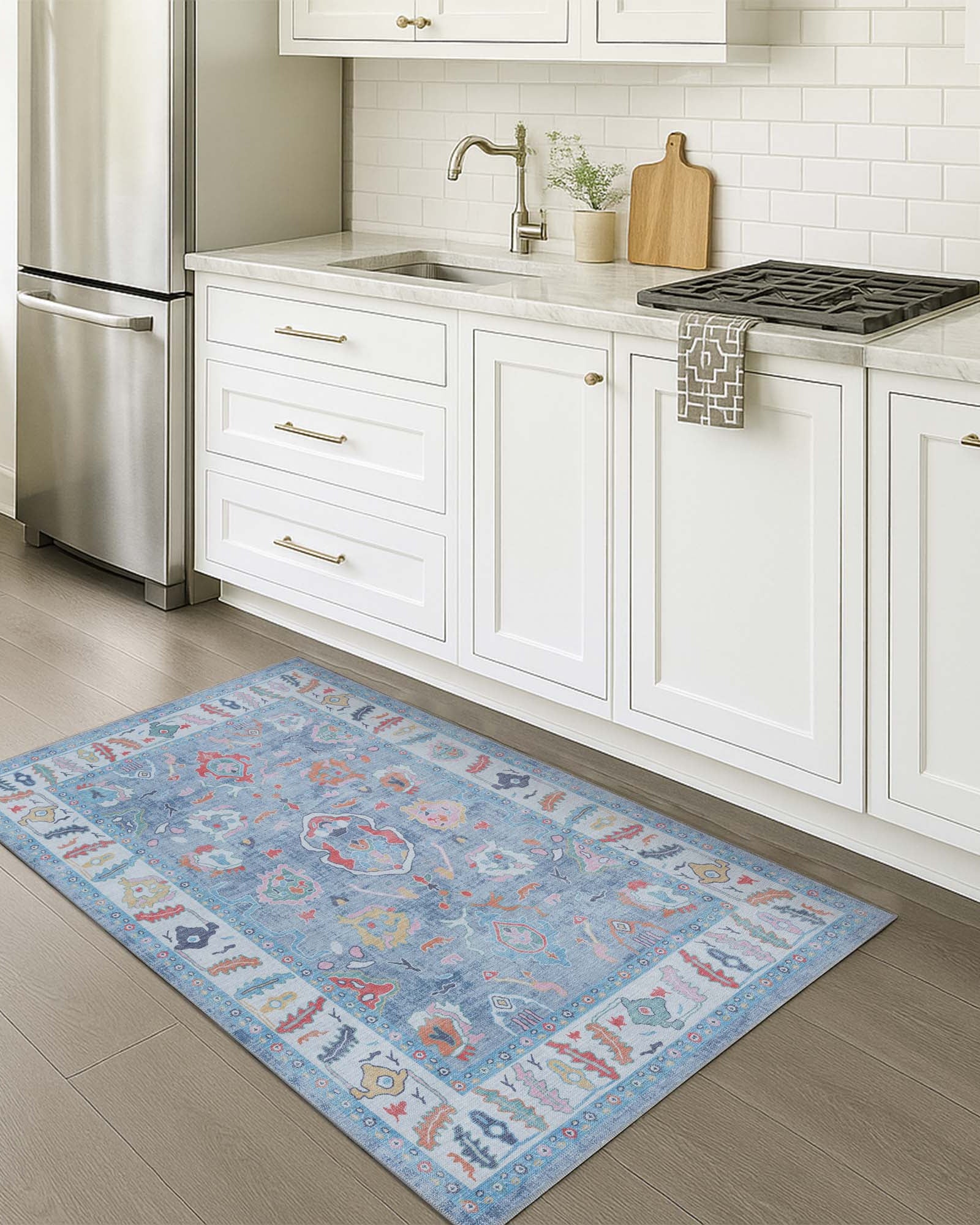
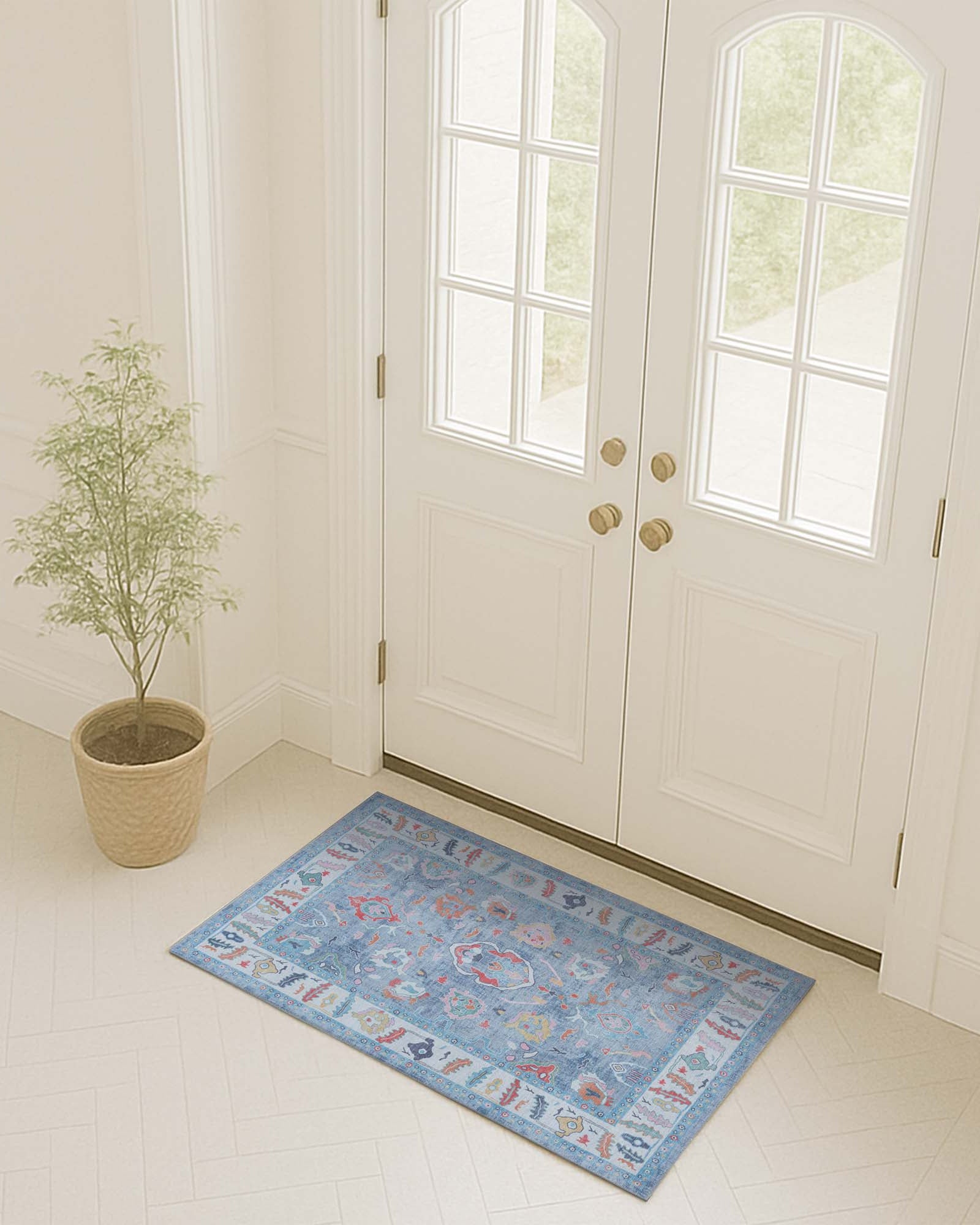
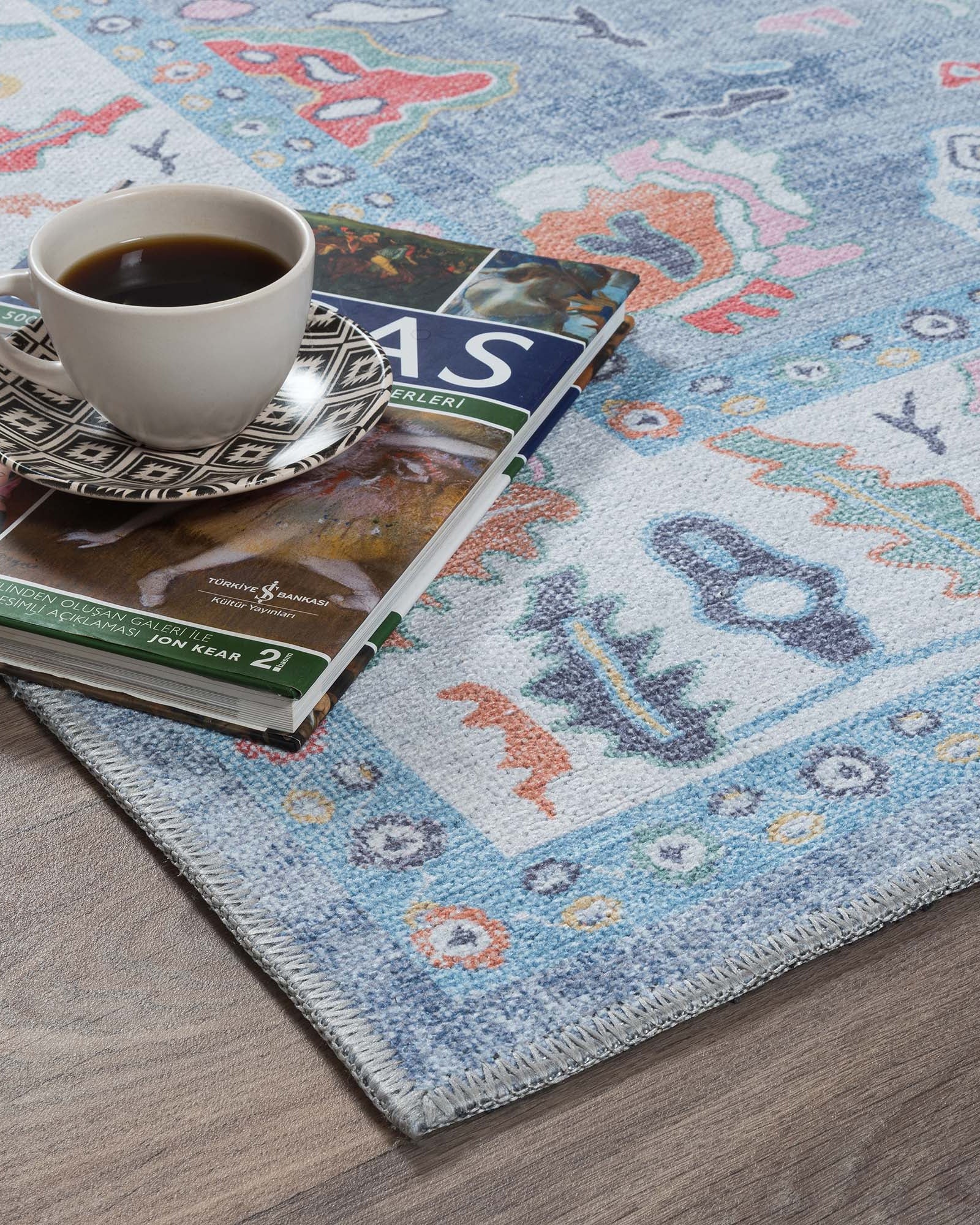
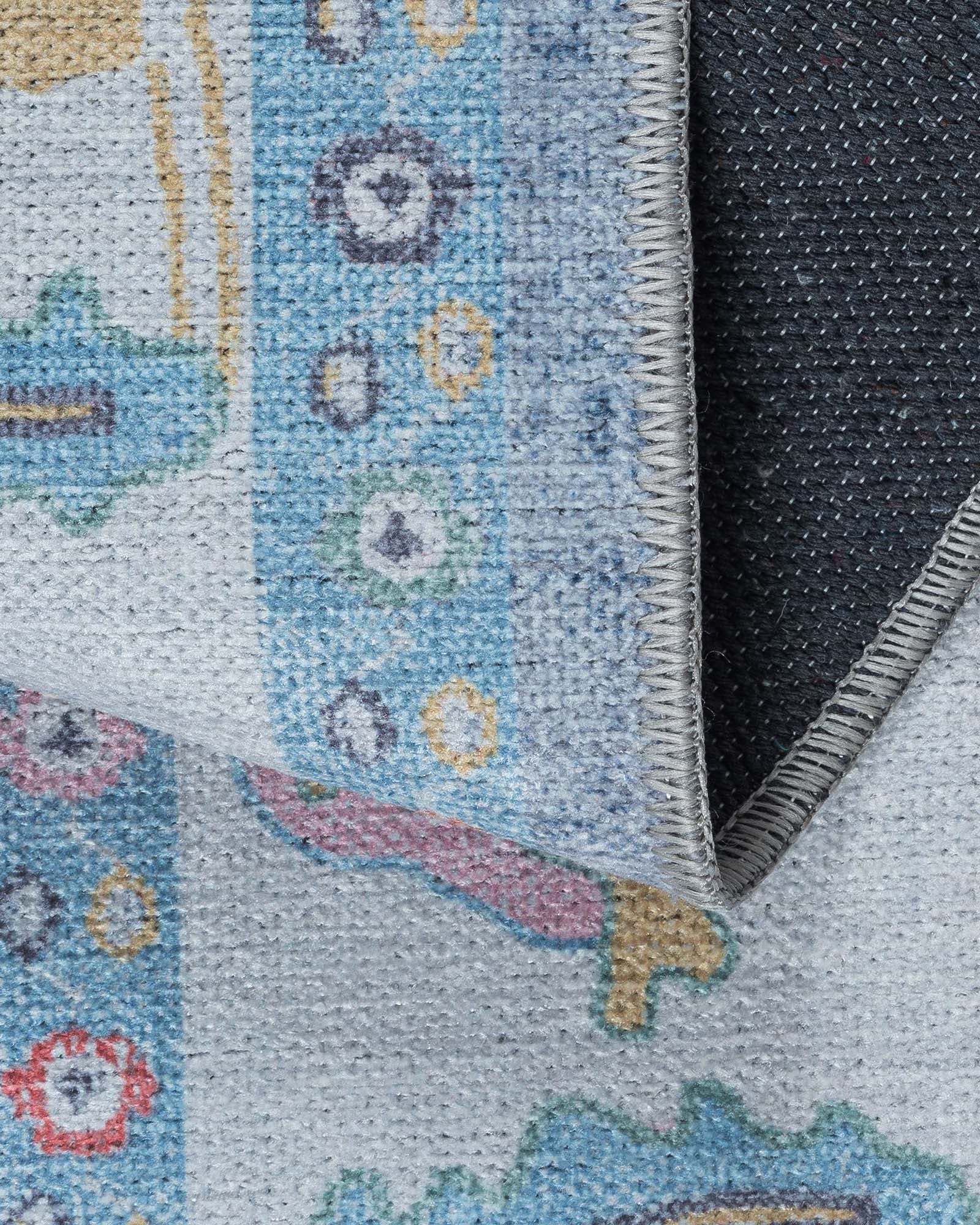
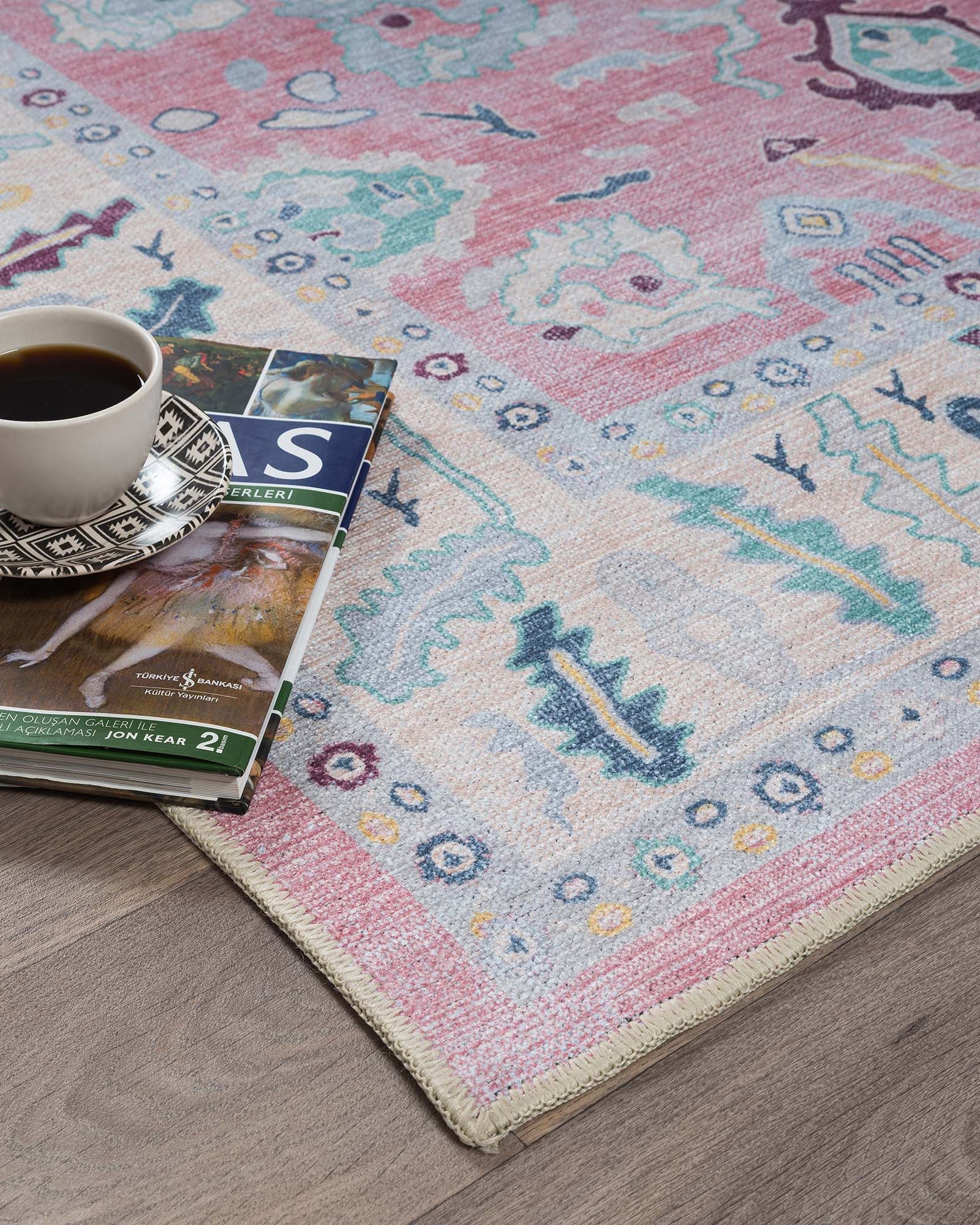
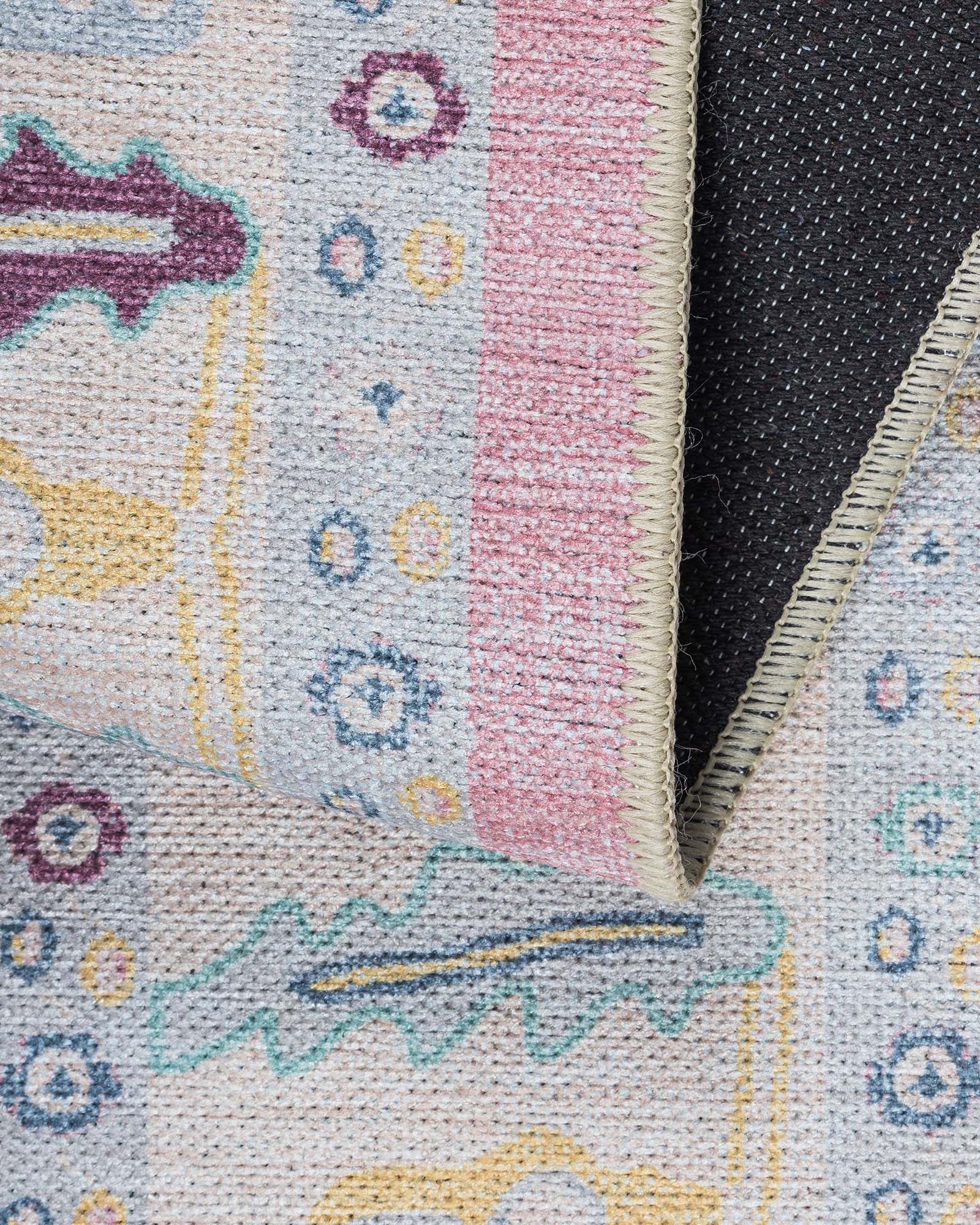
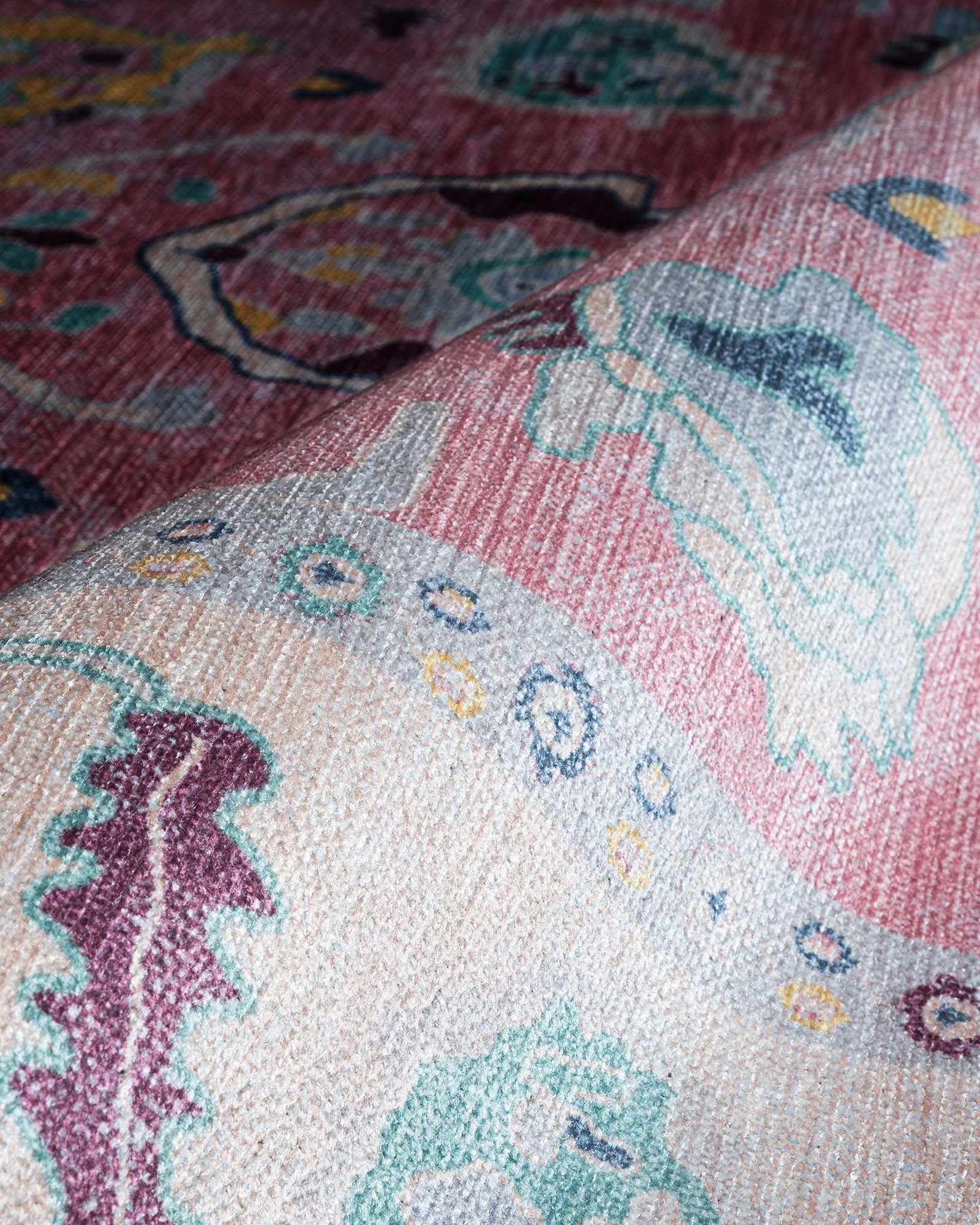
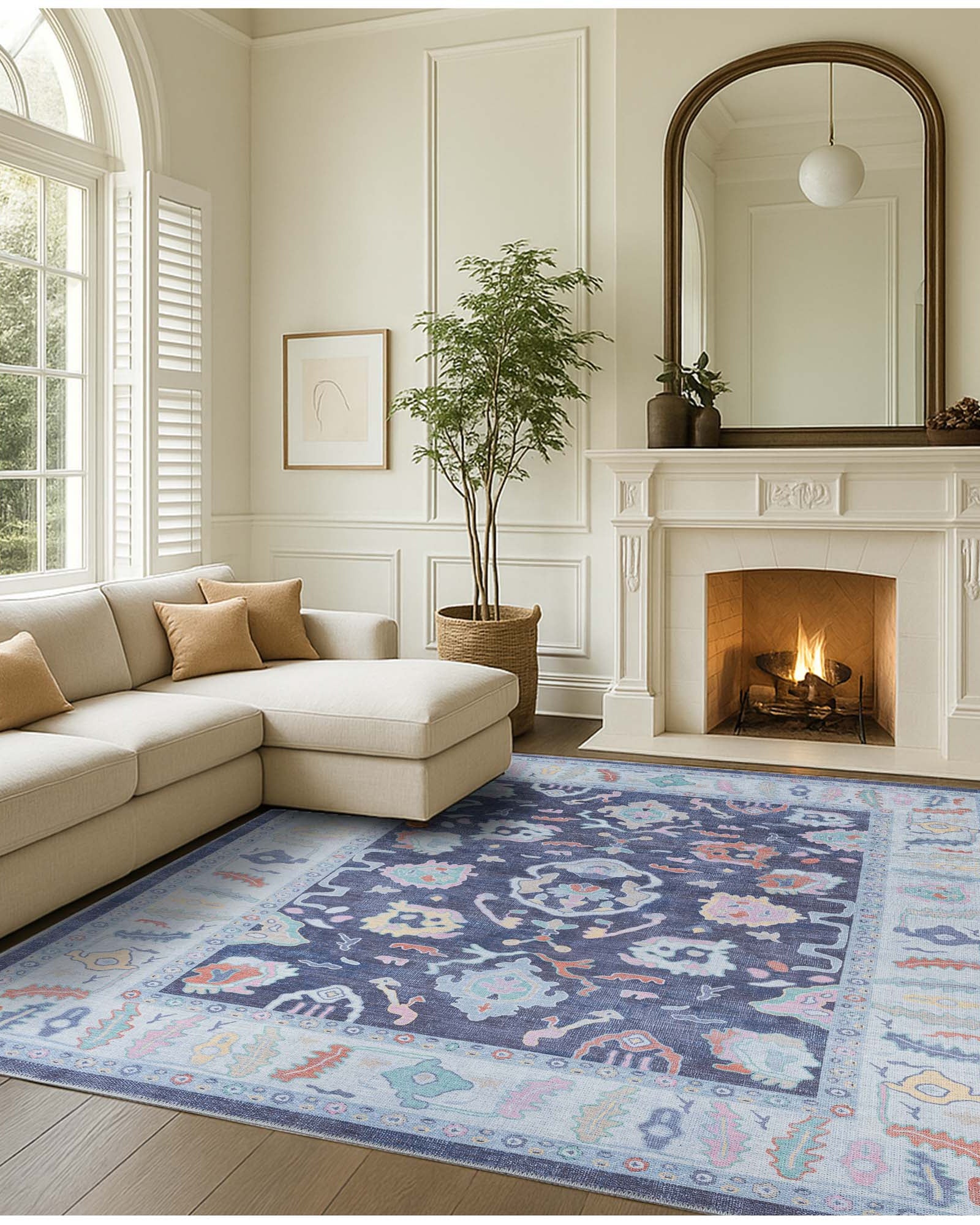
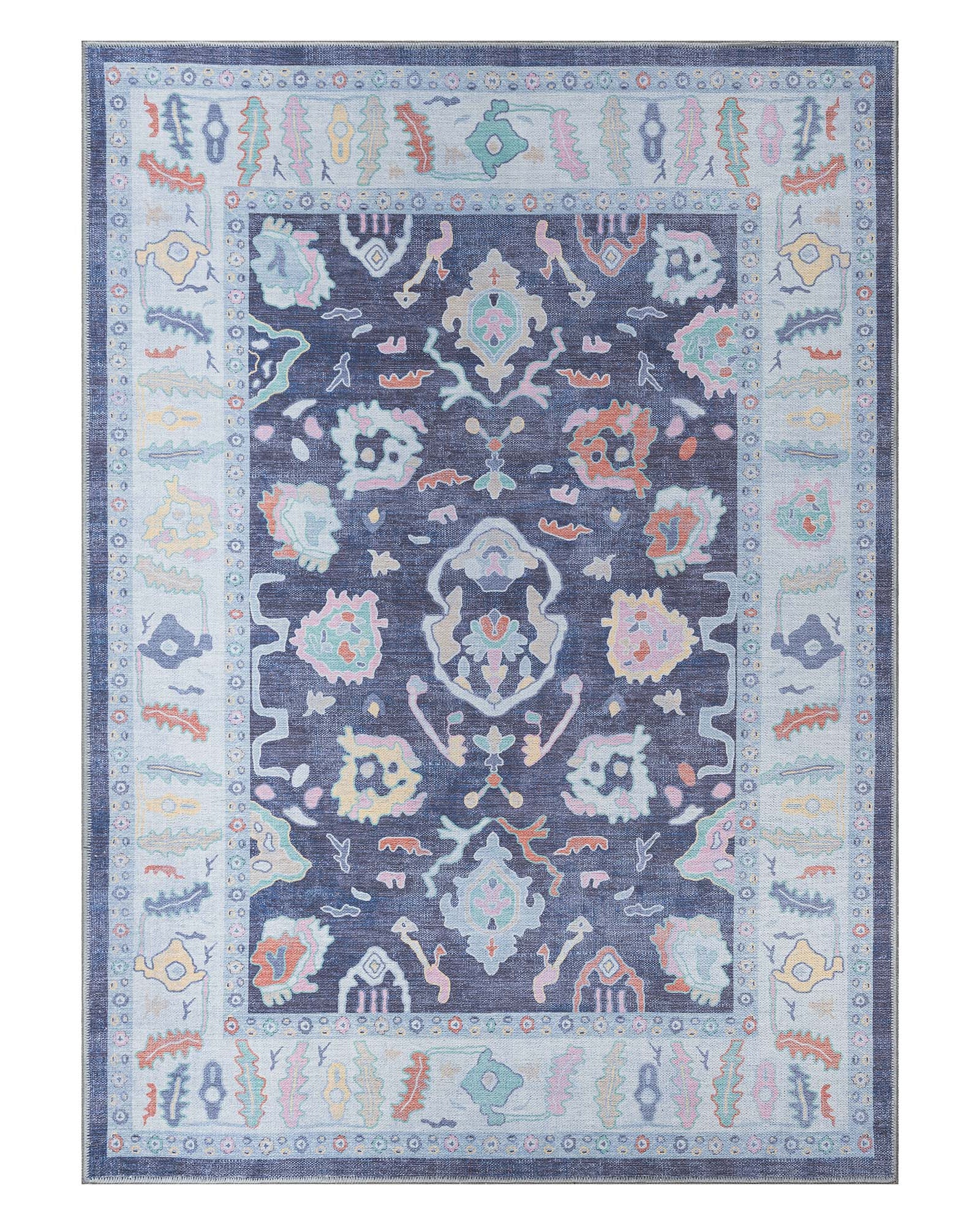
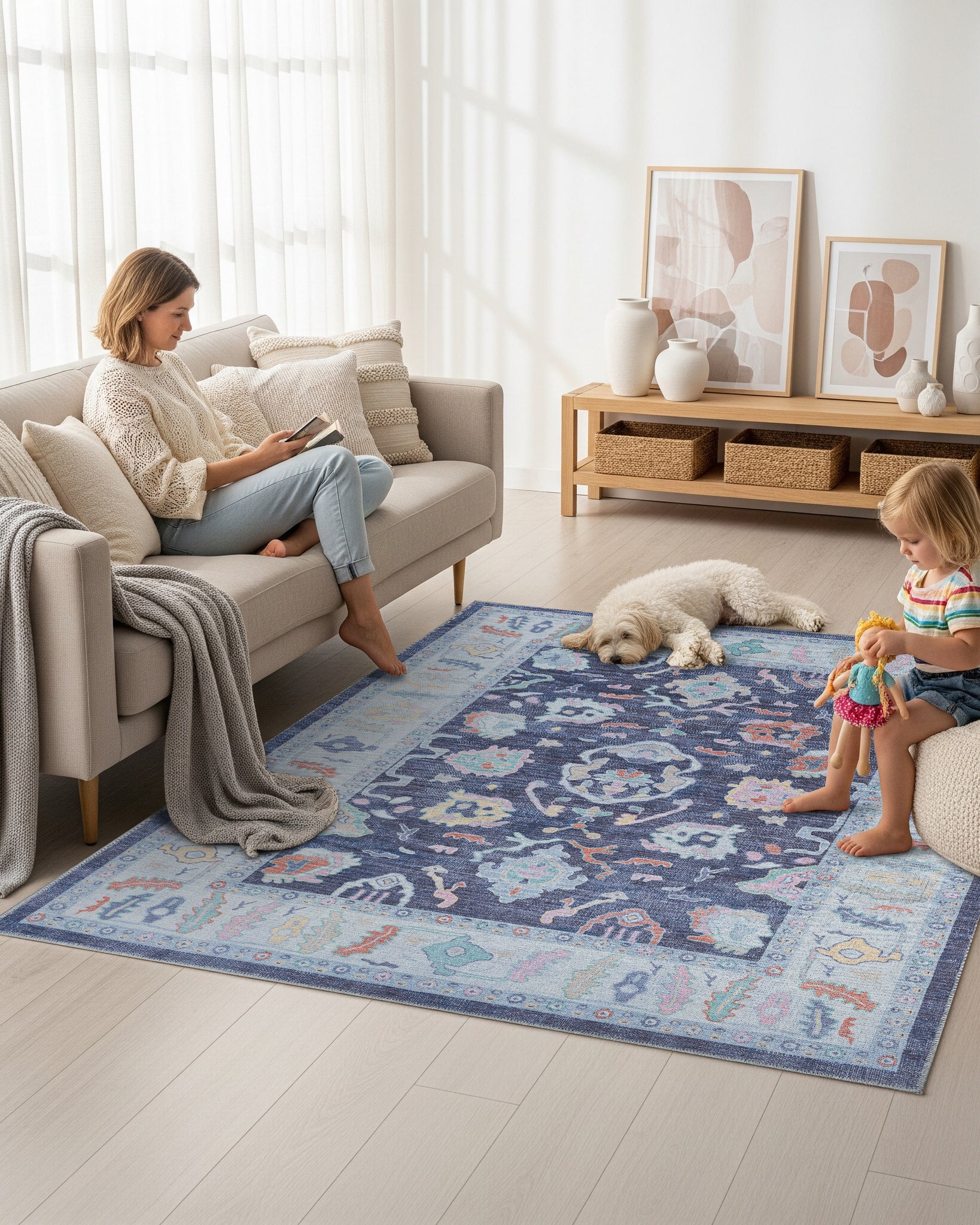
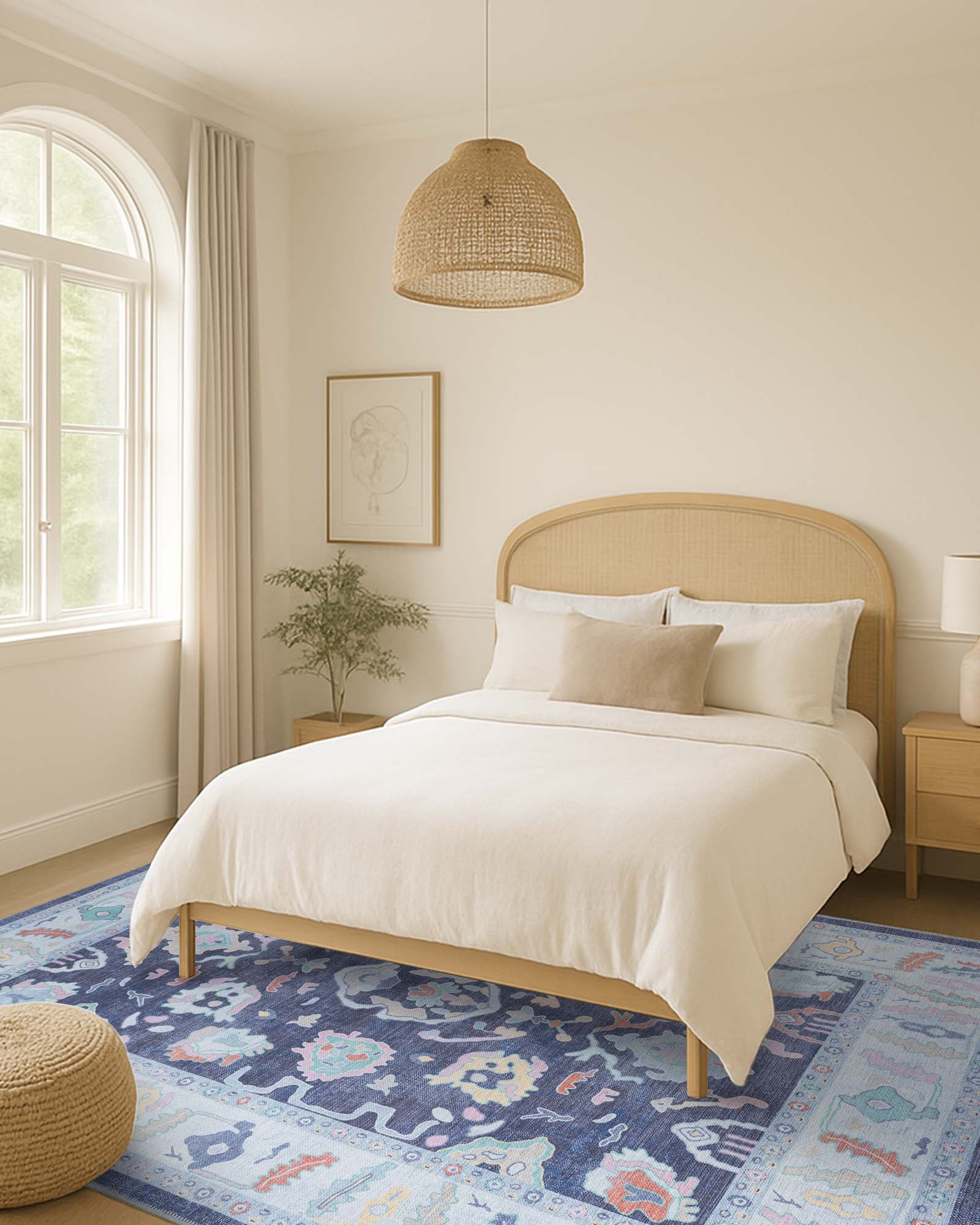
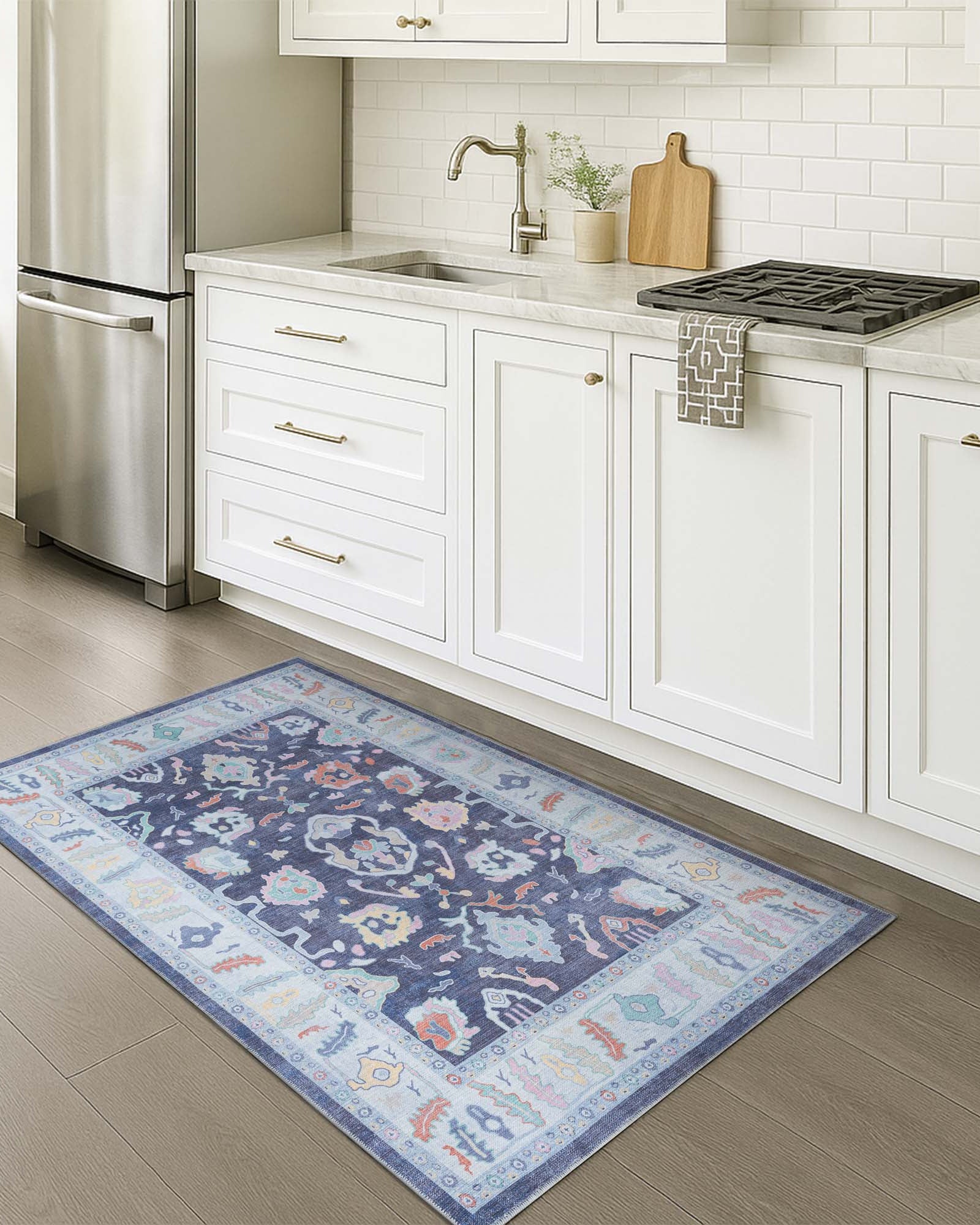
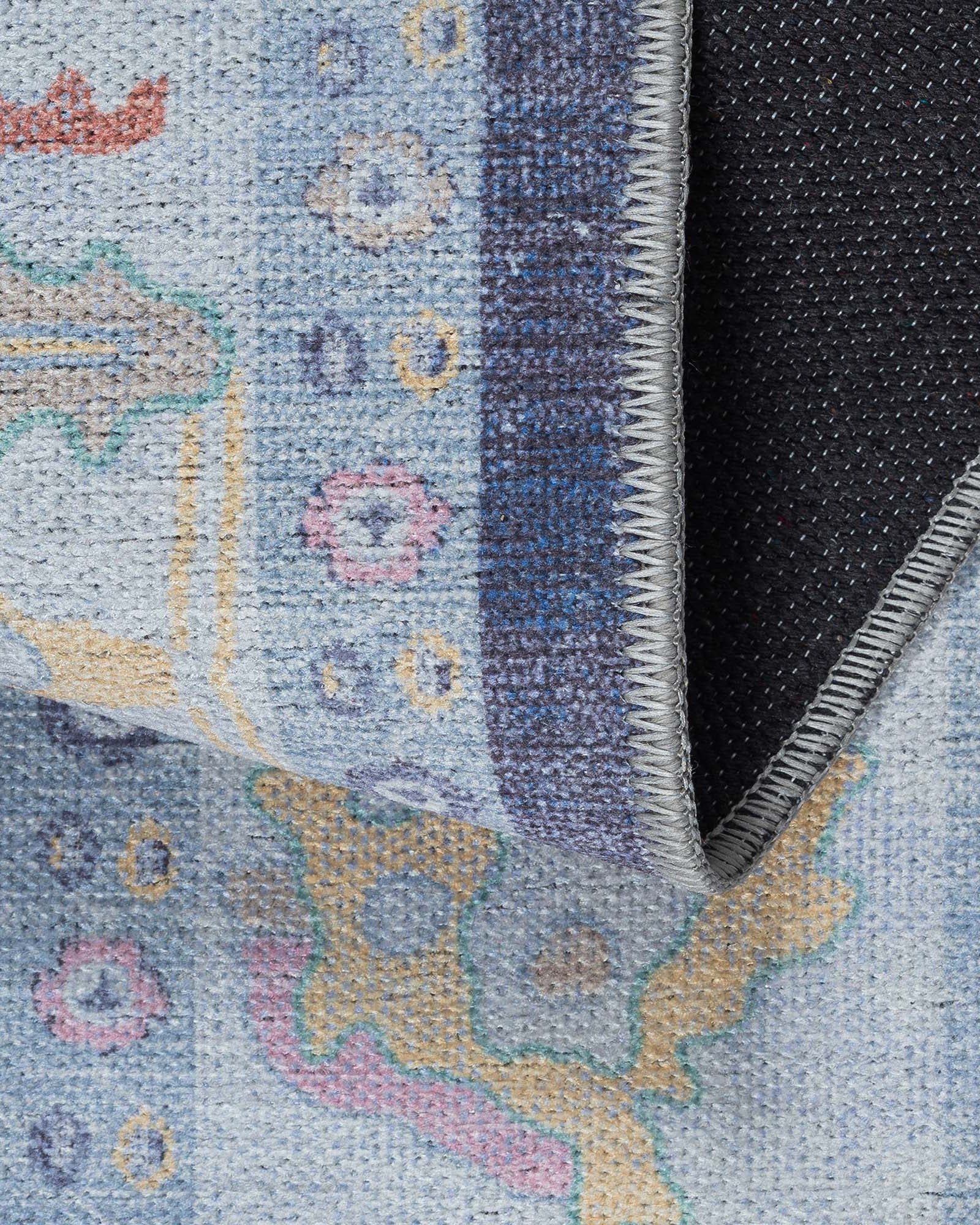
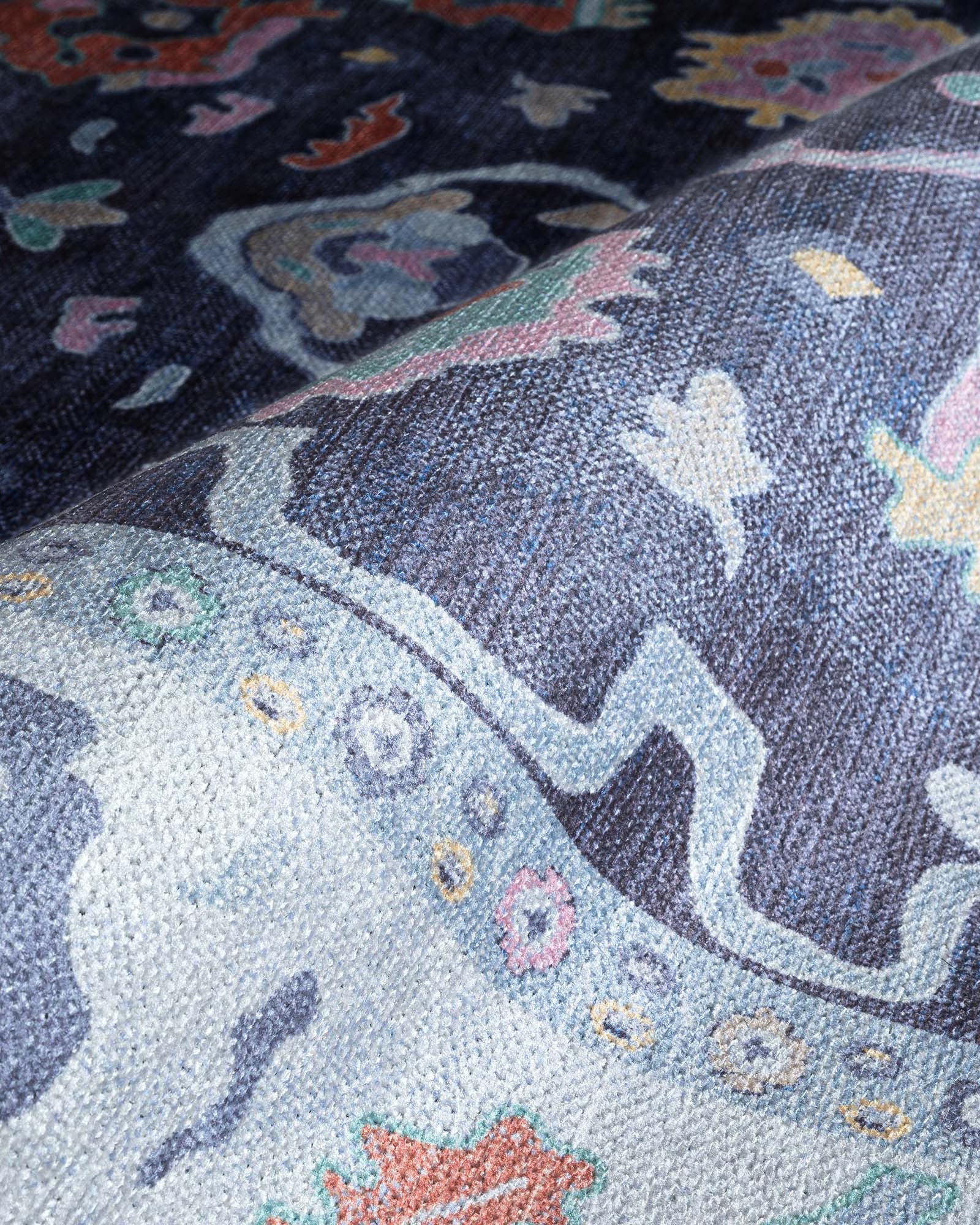
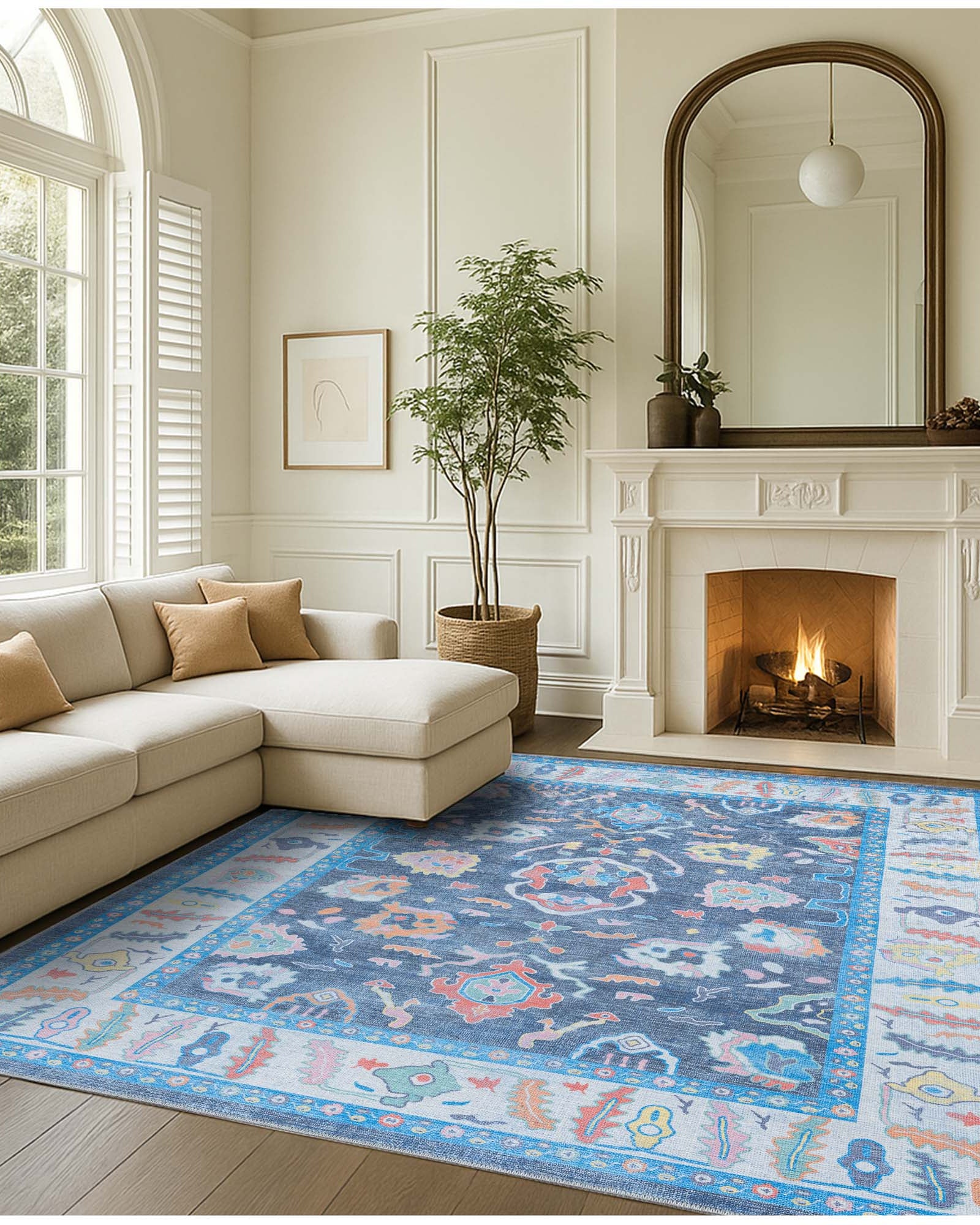
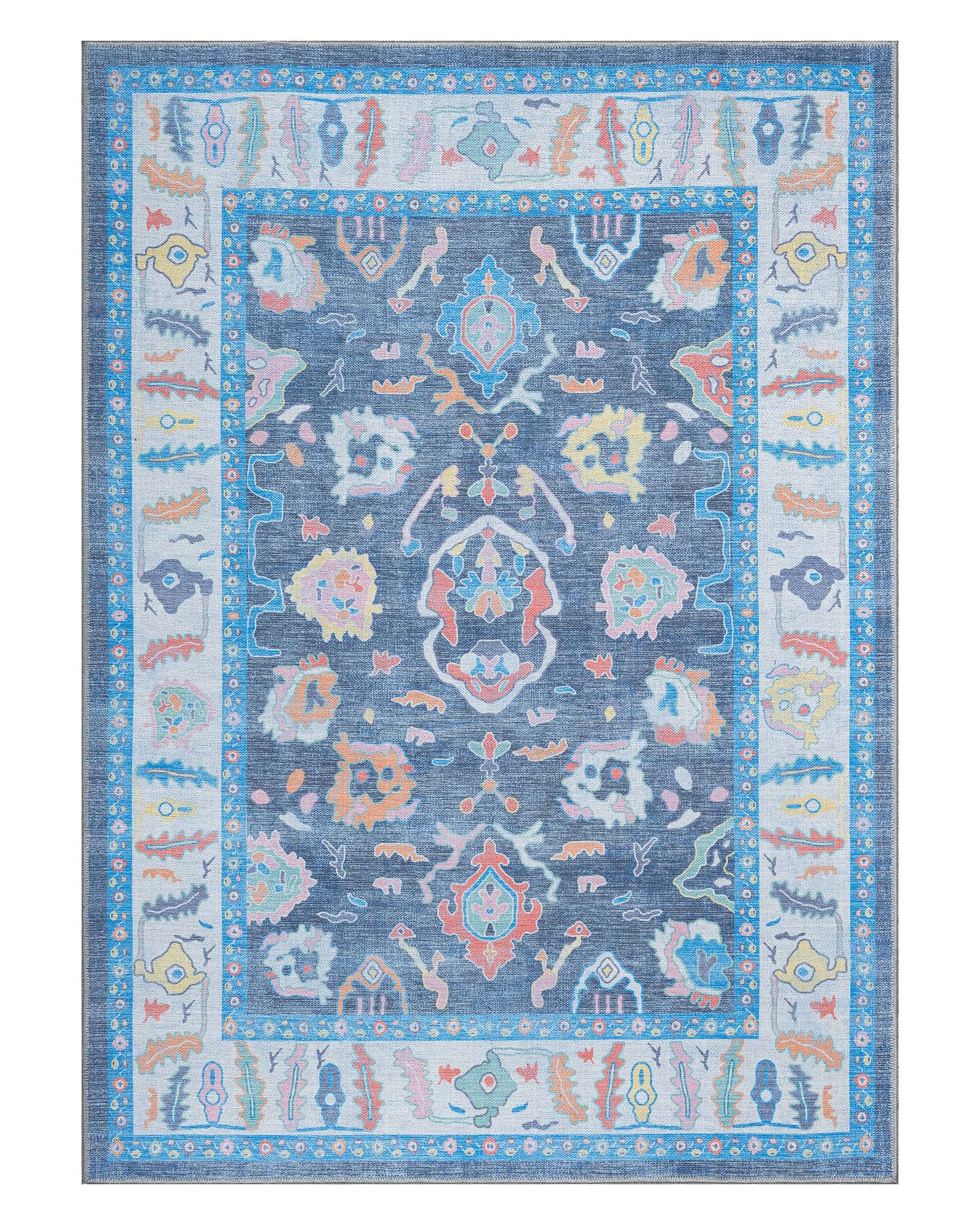
An overdyed rug starts life as a genuine hand-knotted vintage piece and is then deliberately transformed: the original colour is stripped out and a single saturated dye is applied over the whole surface. What survives is the structure — the knots, the wool, the woven pattern — now reading as a tonal ghost beneath one dominant colour. These are authentic old rugs given a contemporary treatment, not new rugs made to look distressed. Every piece is one-of-a-kind and the result of the process is never twice the same.
How the Process Works
The starting point is usually a vintage Anatolian or Persian rug in sound structural condition but with a palette or pattern that has little contemporary demand — a dated colourway, heavy repeat florals, or colours that have gone muddy with age. Rescuing these pieces is the point of the technique.
Stripping
The rug is washed repeatedly to remove as much of the existing colour as possible. This is the stage that determines the final look: original dyes do not surrender at the same rate. Deep madder reds and indigos hold on far longer than pale ivories and yellows, which is precisely why the pattern remains legible after re-dyeing rather than disappearing.
Re-Dyeing
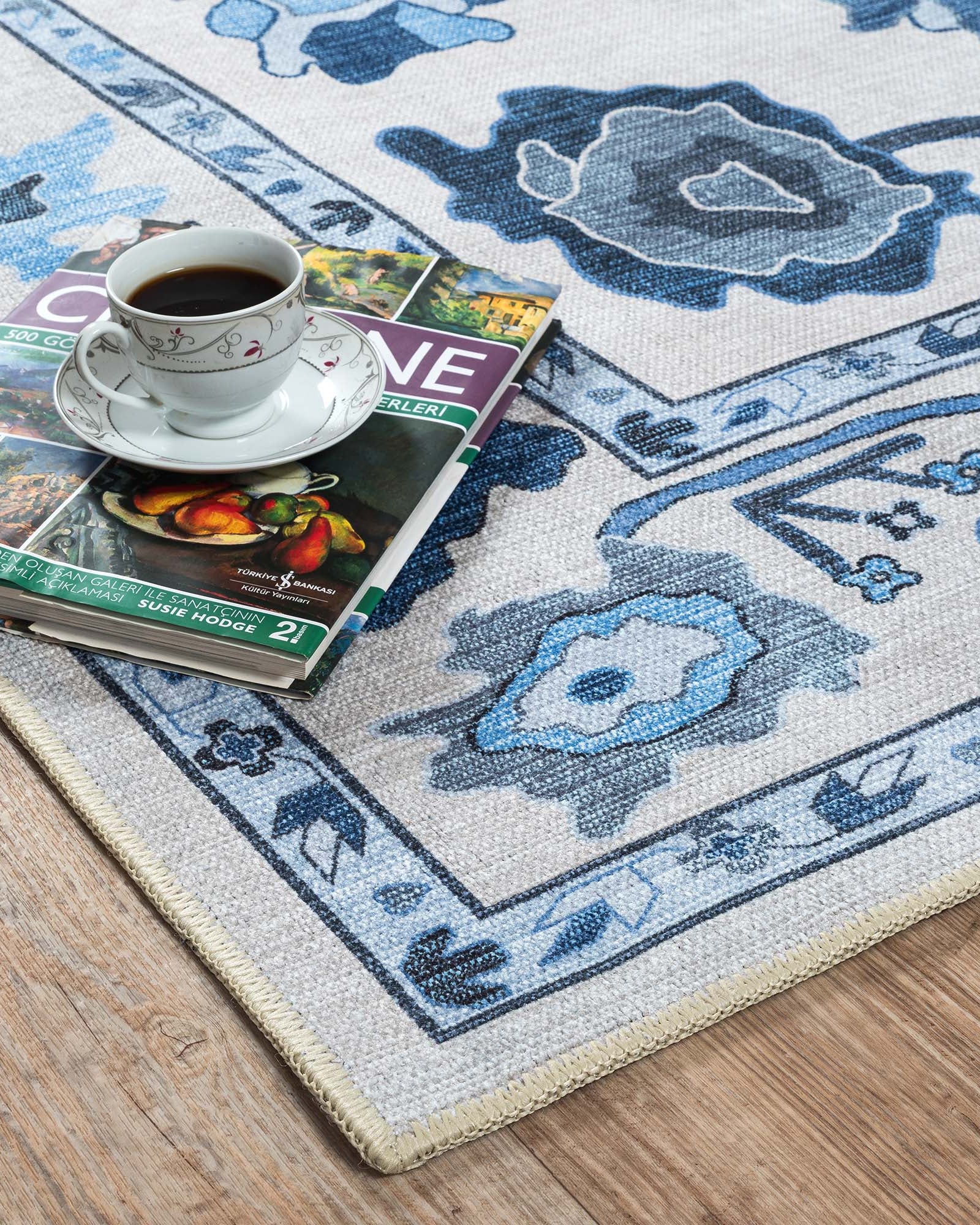
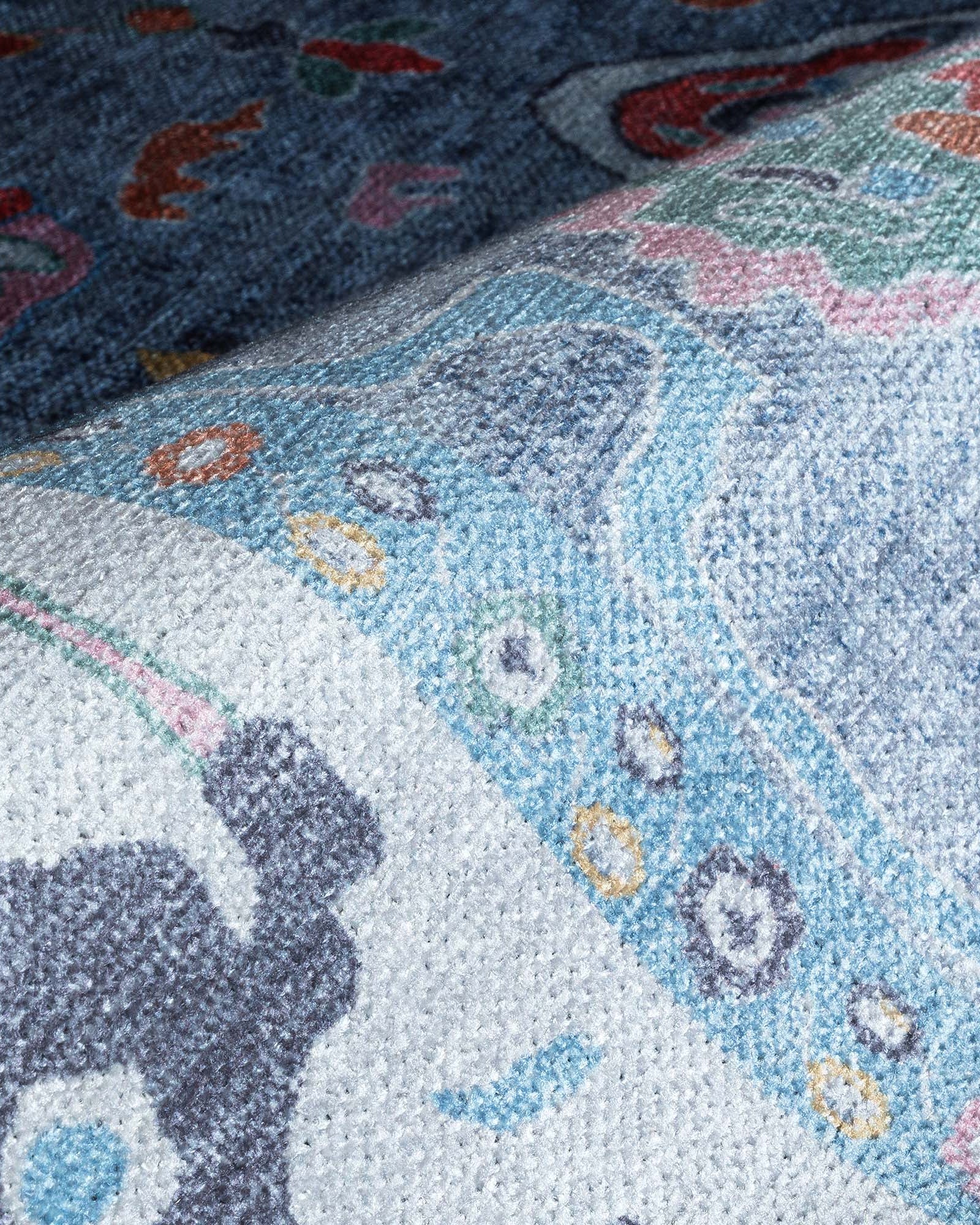
A single colour is then applied across the whole rug. Because the stripped fibres have uneven remaining pigment, the new dye lands at different intensities across the surface — dark where the old pattern was dense, lighter where the field was open. That is the entire visual effect: one colour, one rug, with the woven design showing through as a tonal shadow.
Shearing and Finishing
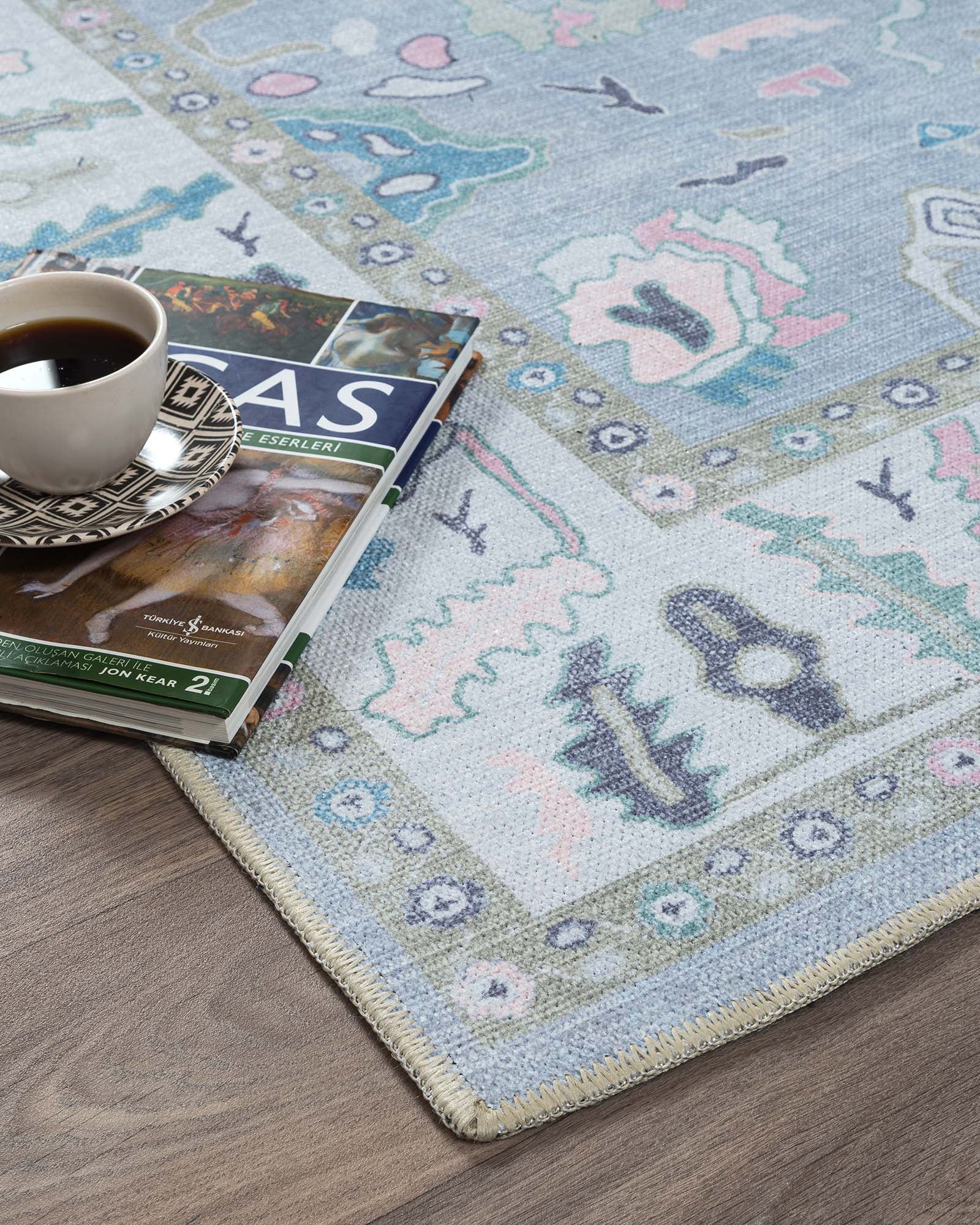
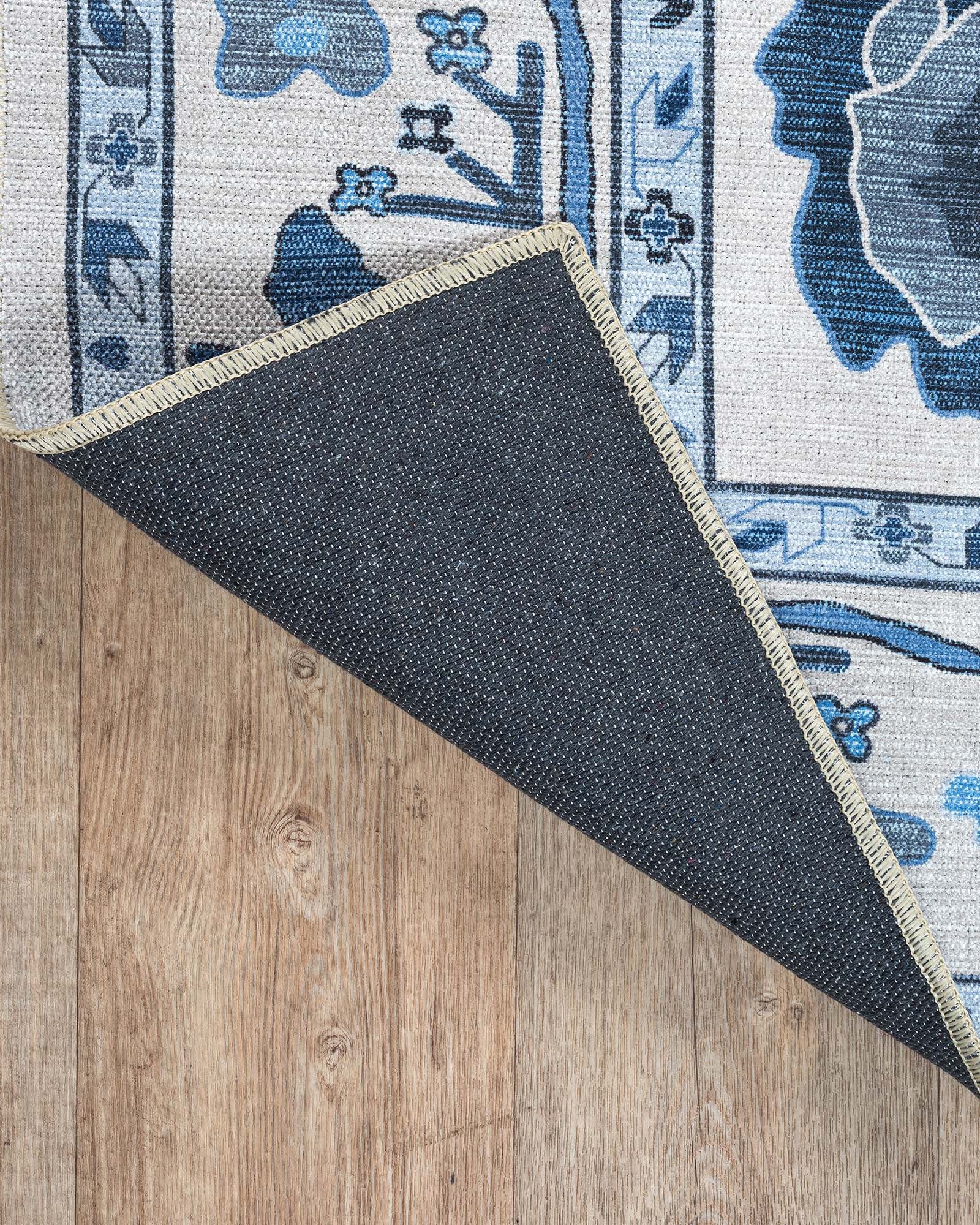
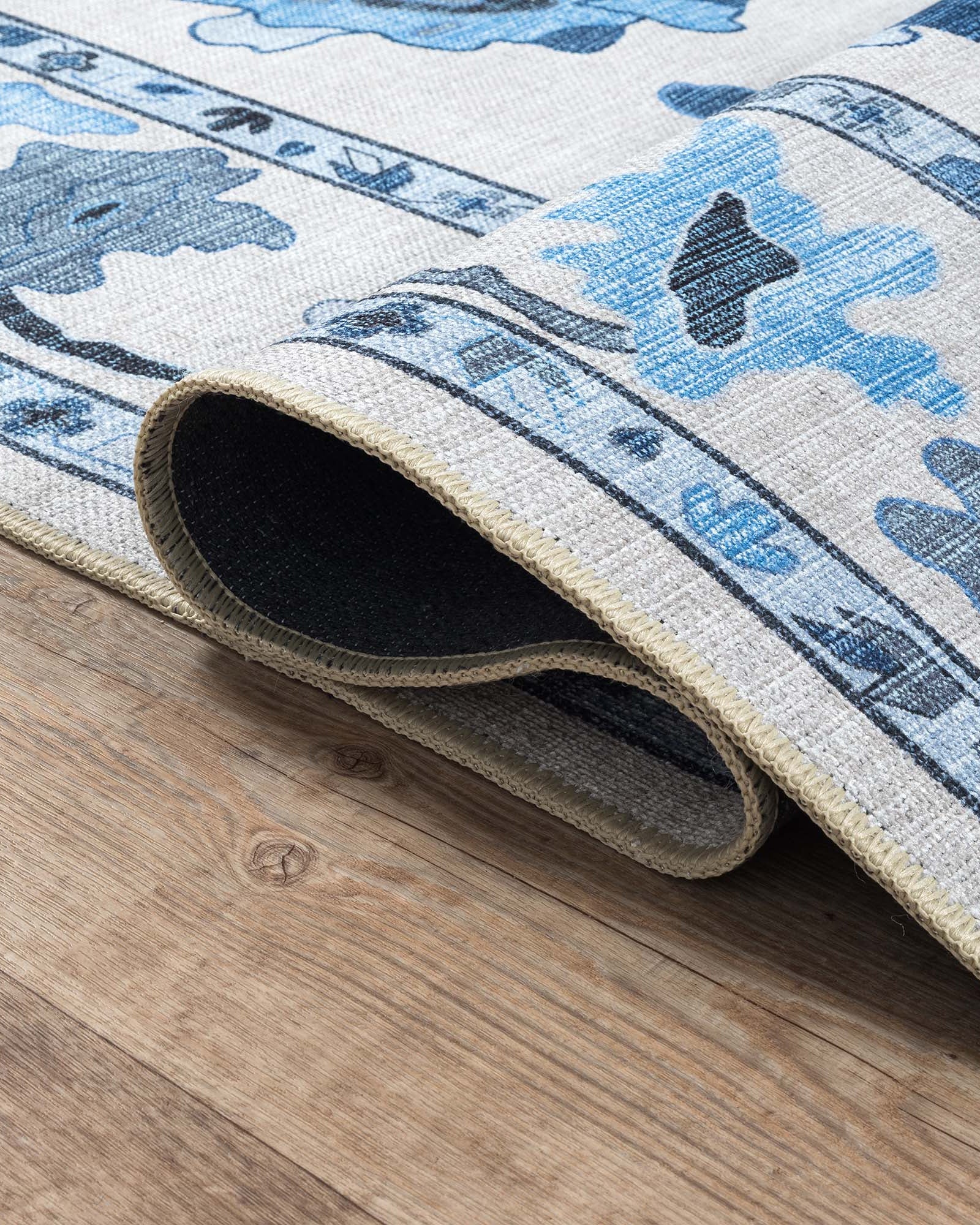
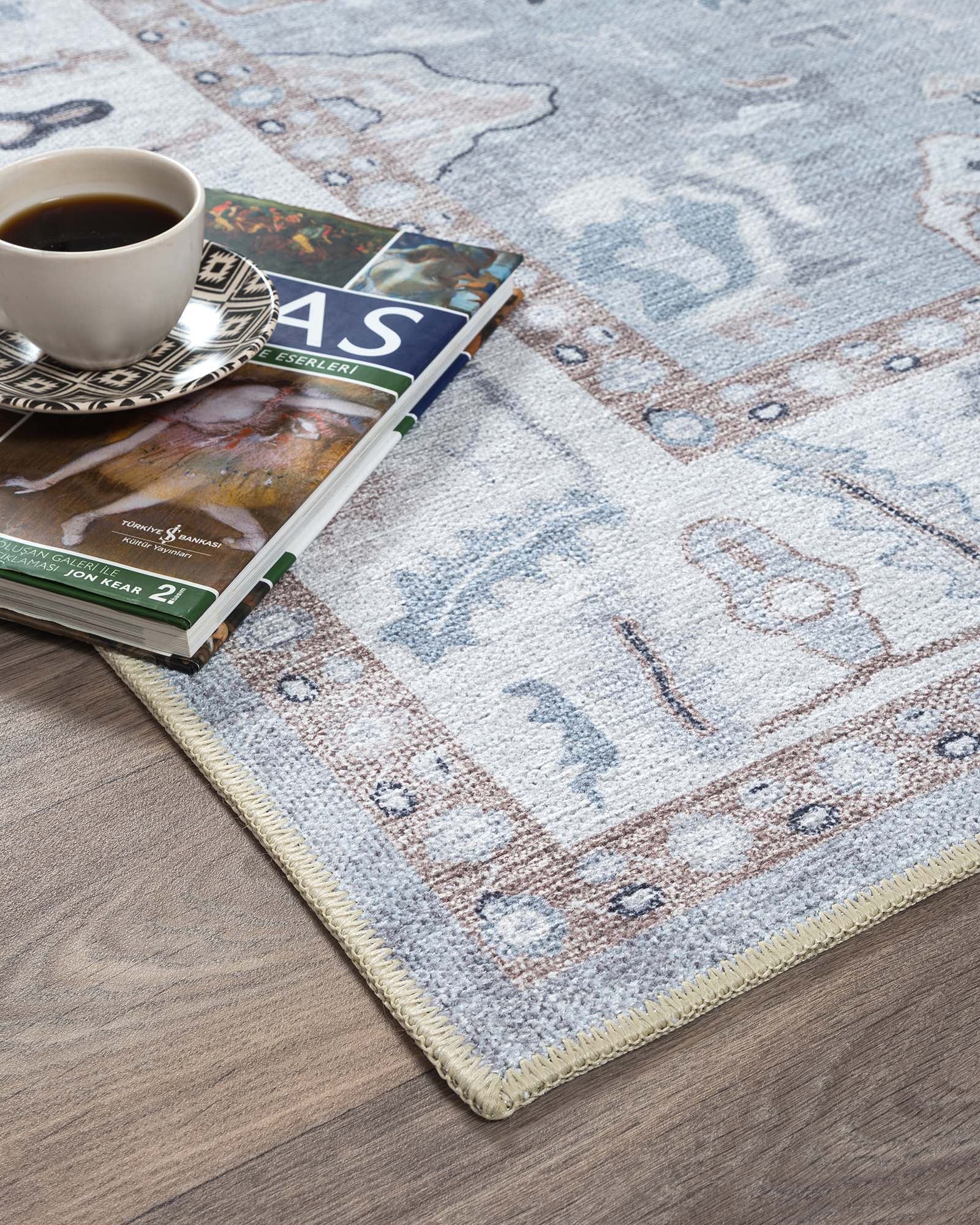
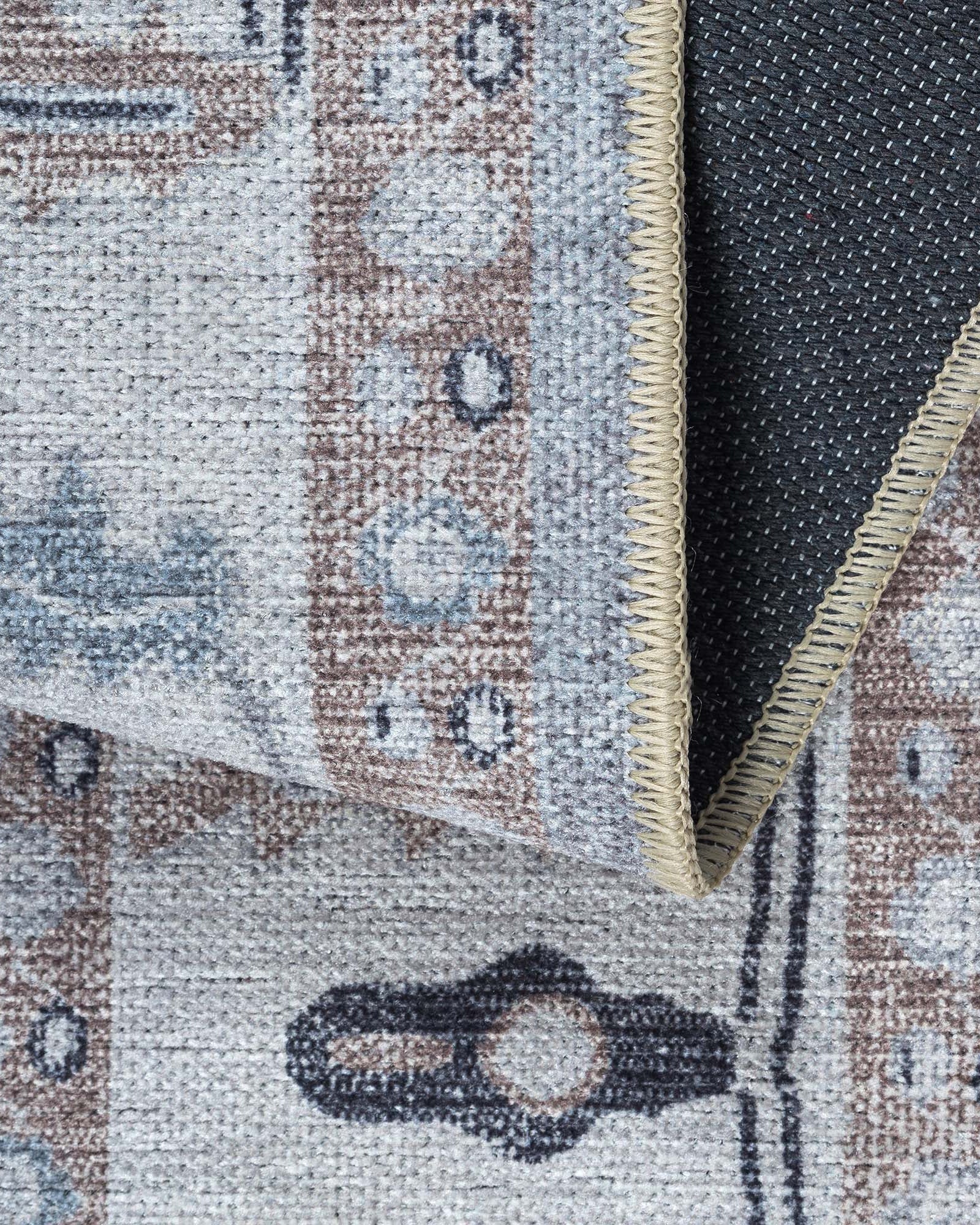
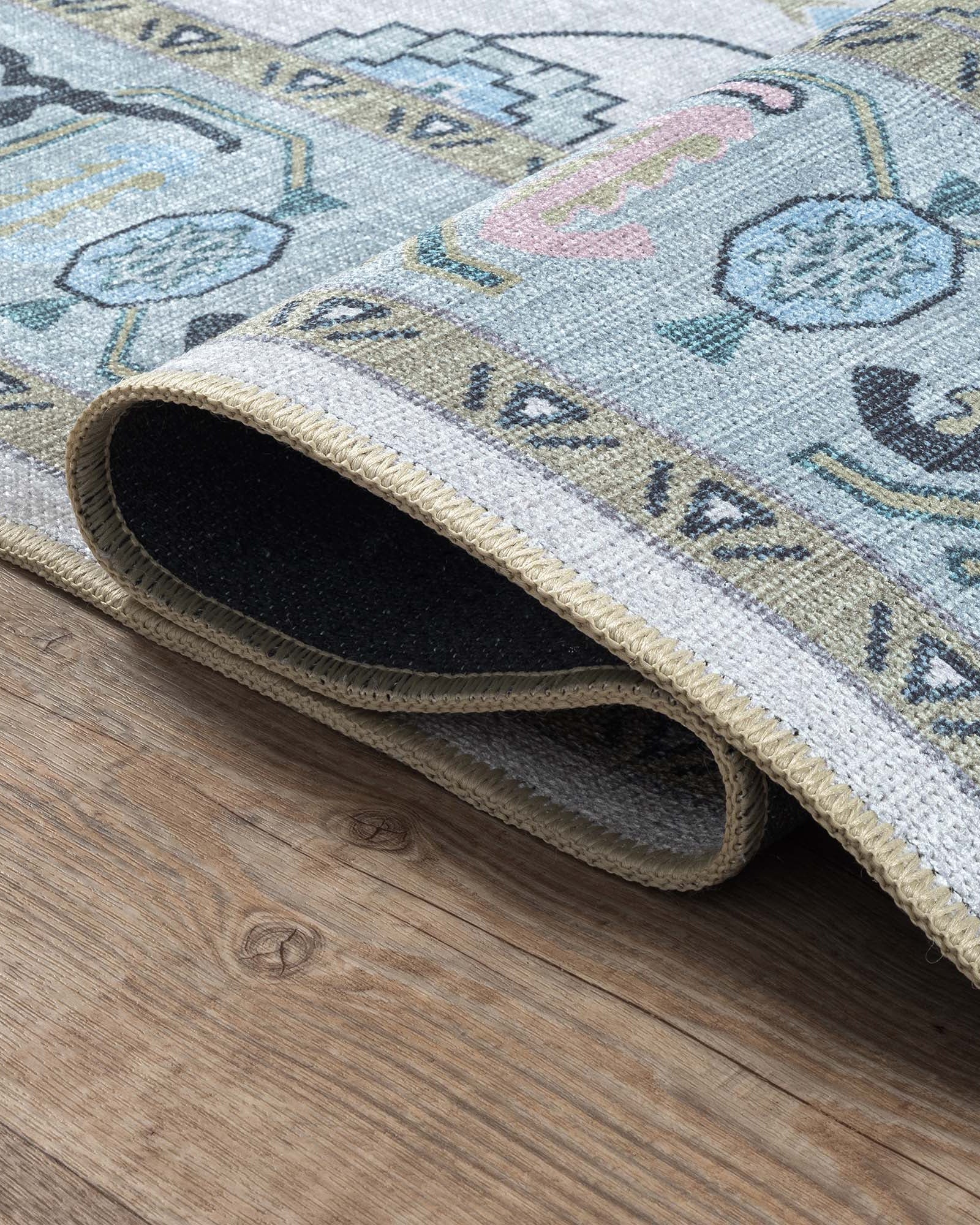
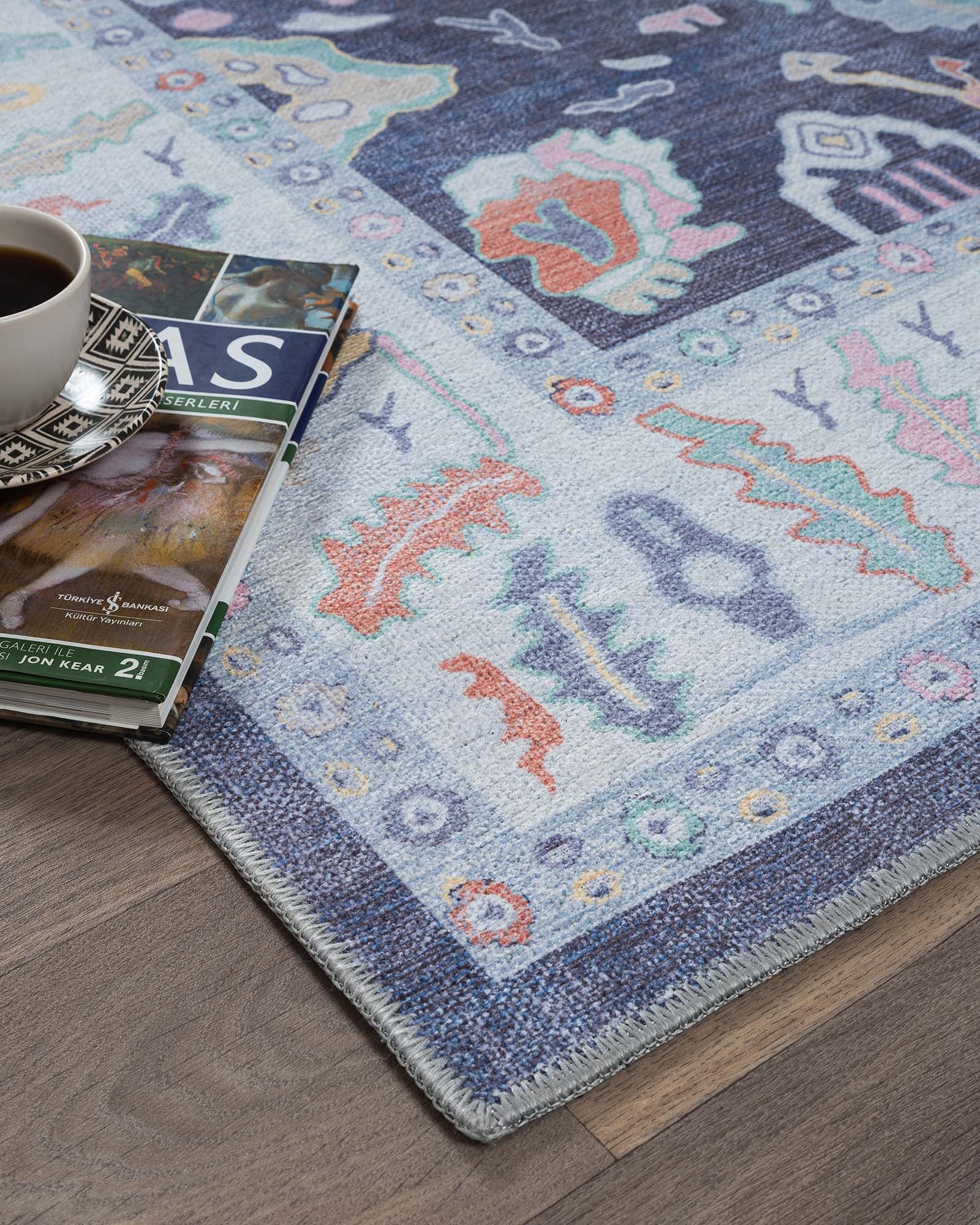
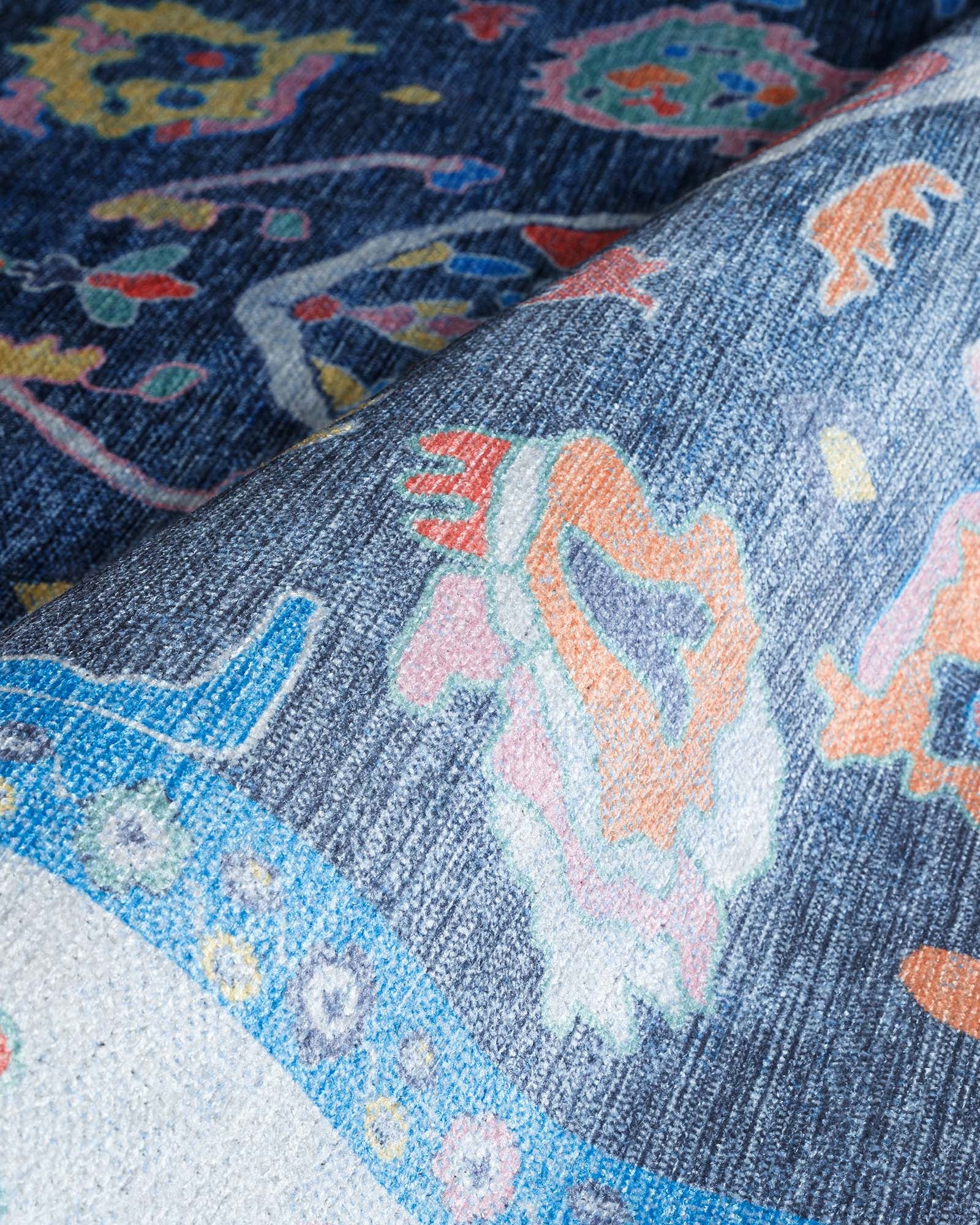
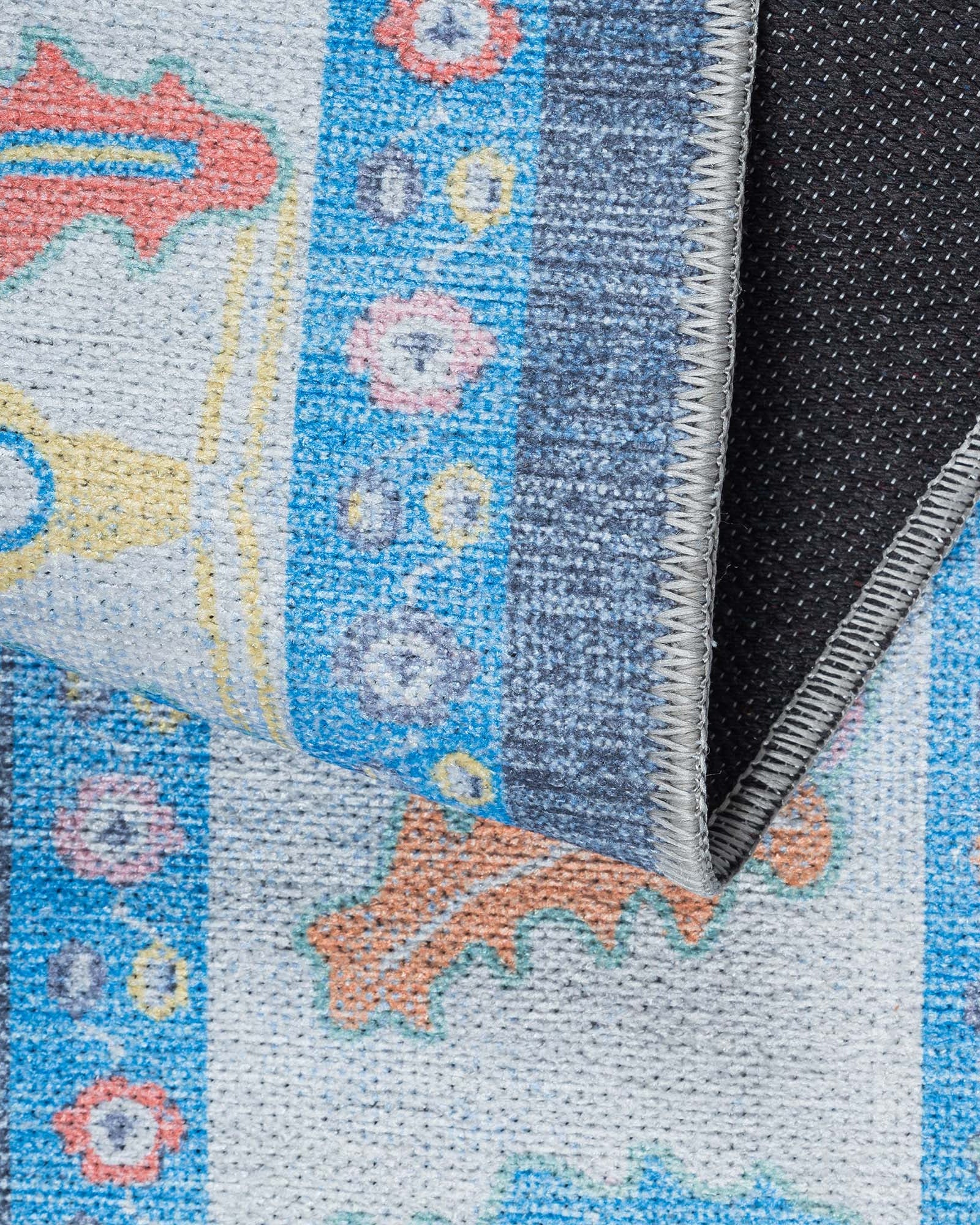
Most overdyed rugs are sheared low, sometimes lower than the original pile, which sharpens the pattern contrast and gives the flat, graphic surface associated with the style. The rug is then washed again and dried under tension. The finished piece is thinner and more pliable than it was originally.
What to Expect Visually
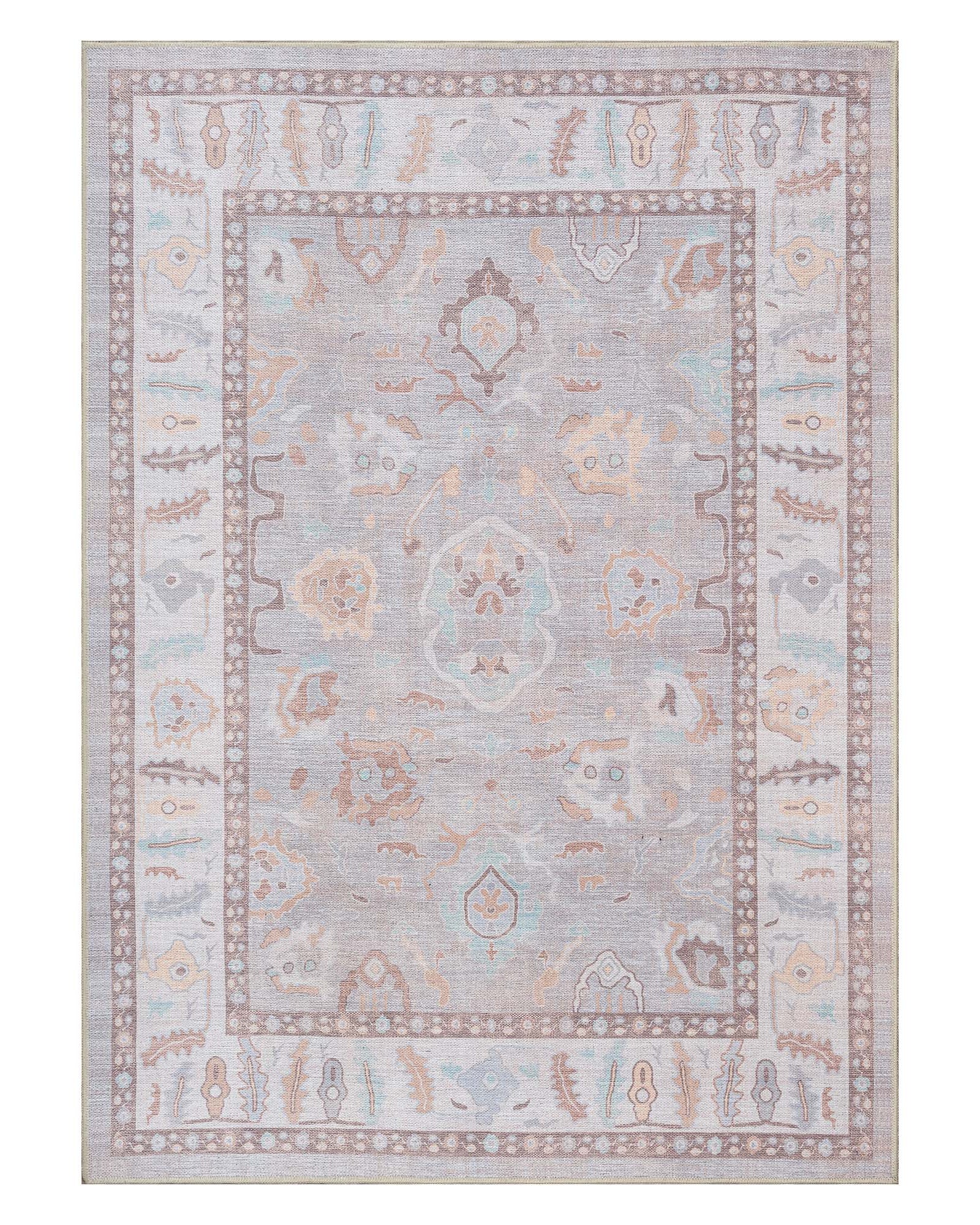
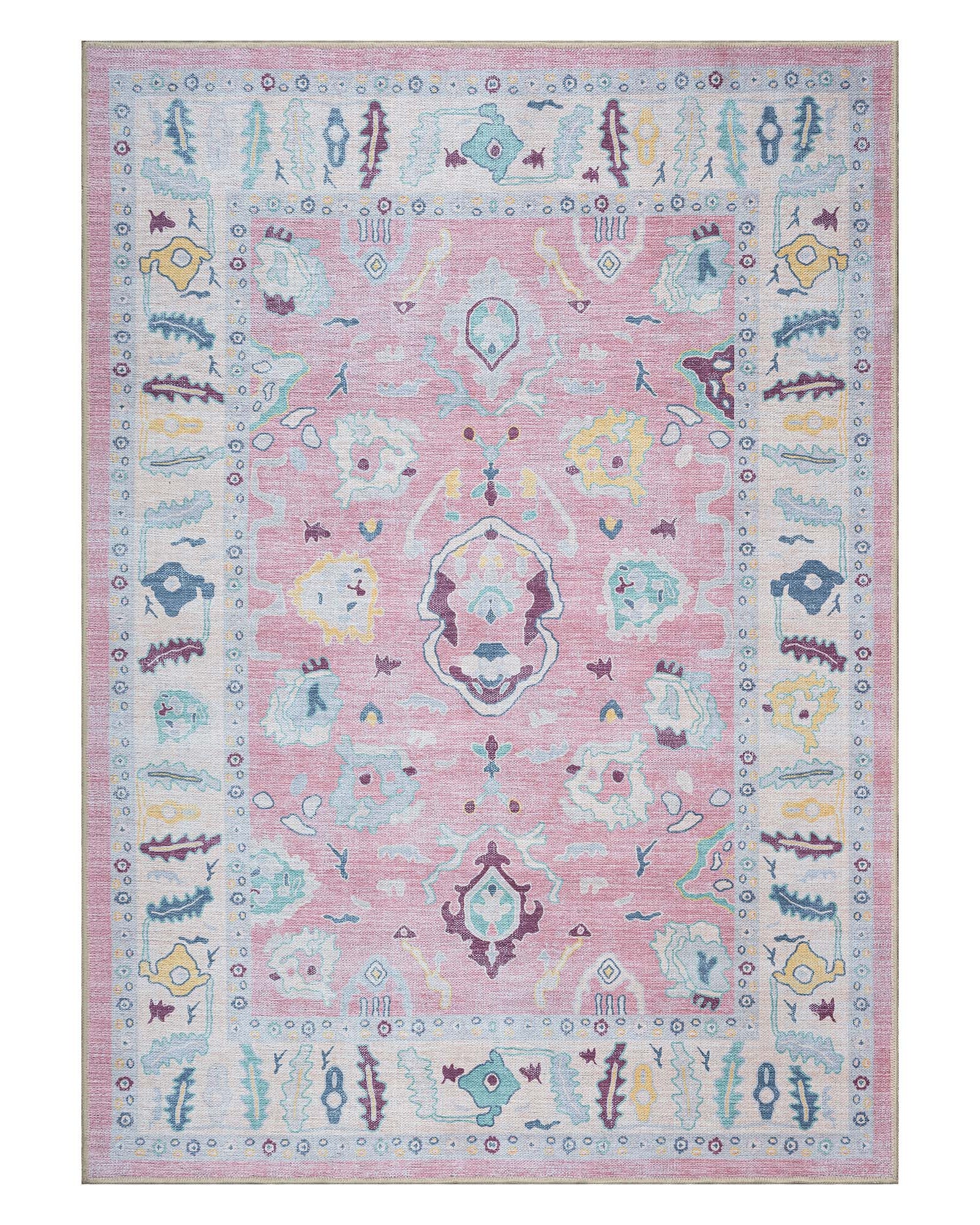
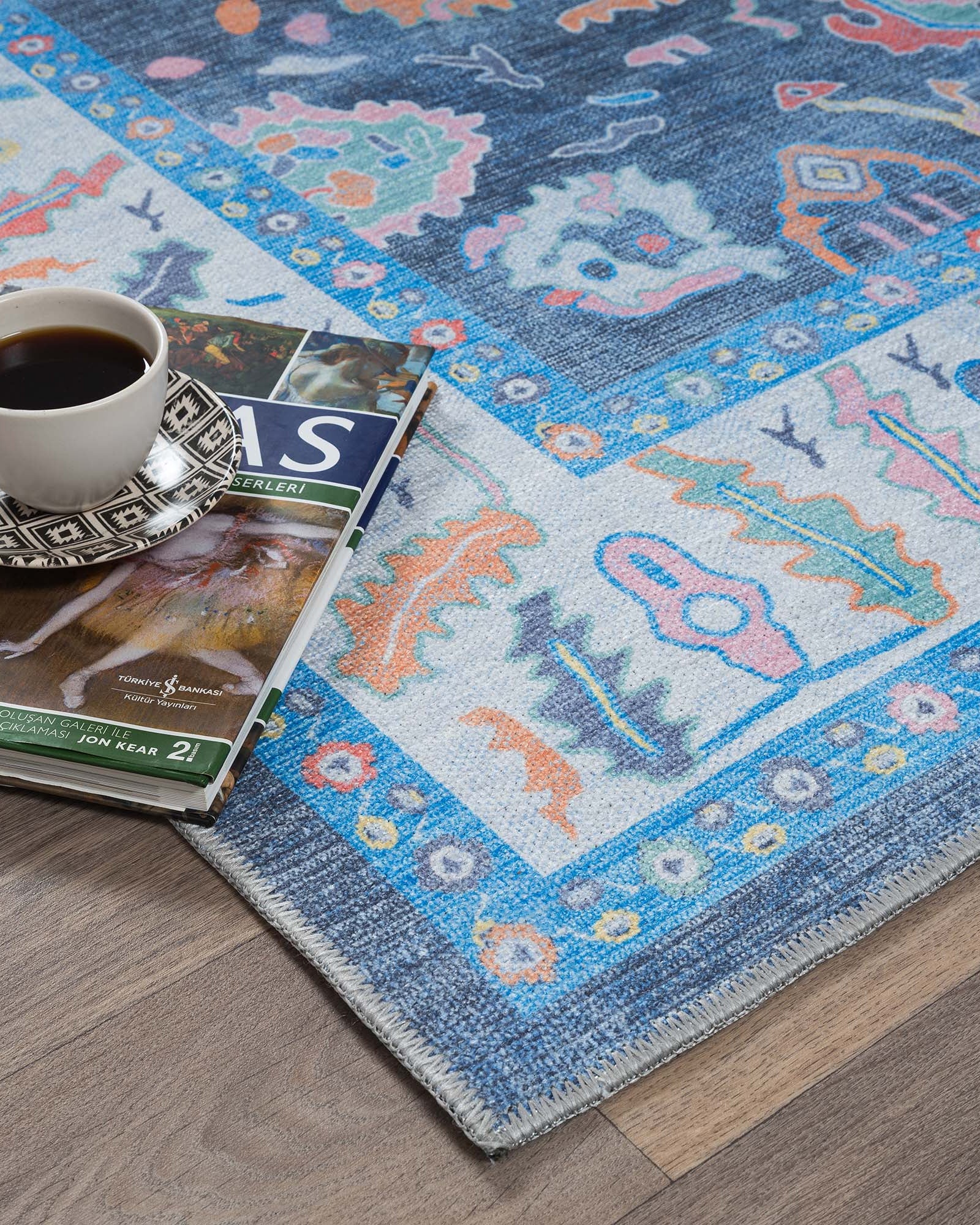
Unevenness is the product, not a fault. Expect variation in depth of colour across the field, patches where the old design reads clearly and others where it nearly vanishes, occasional flecks of original colour that refused to strip, and differences in saturation between the field and the border. Two rugs overdyed in the same colour on the same day will not match, because they started from different rugs. If you need two pieces that read as a pair, this is not the collection for that.
Common Colours
Deep indigo and navy, charcoal and near-black, saturated grey, teal, olive, plum and rust are the most frequent. Grey and charcoal overdyes read most neutral and are the easiest to place; strong blues and rusts function as a colour anchor in an otherwise quiet room.
Where Overdyed Rugs Work
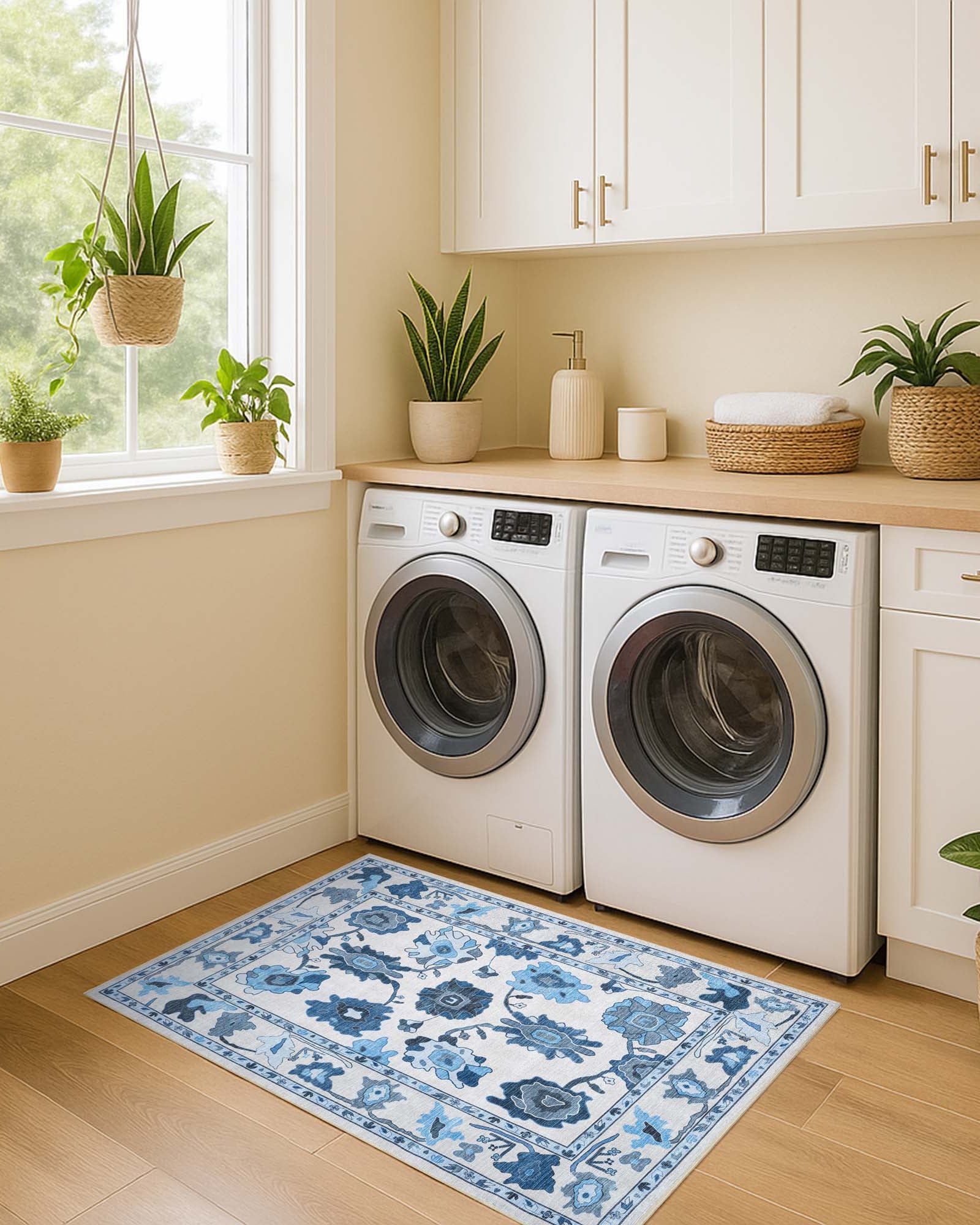
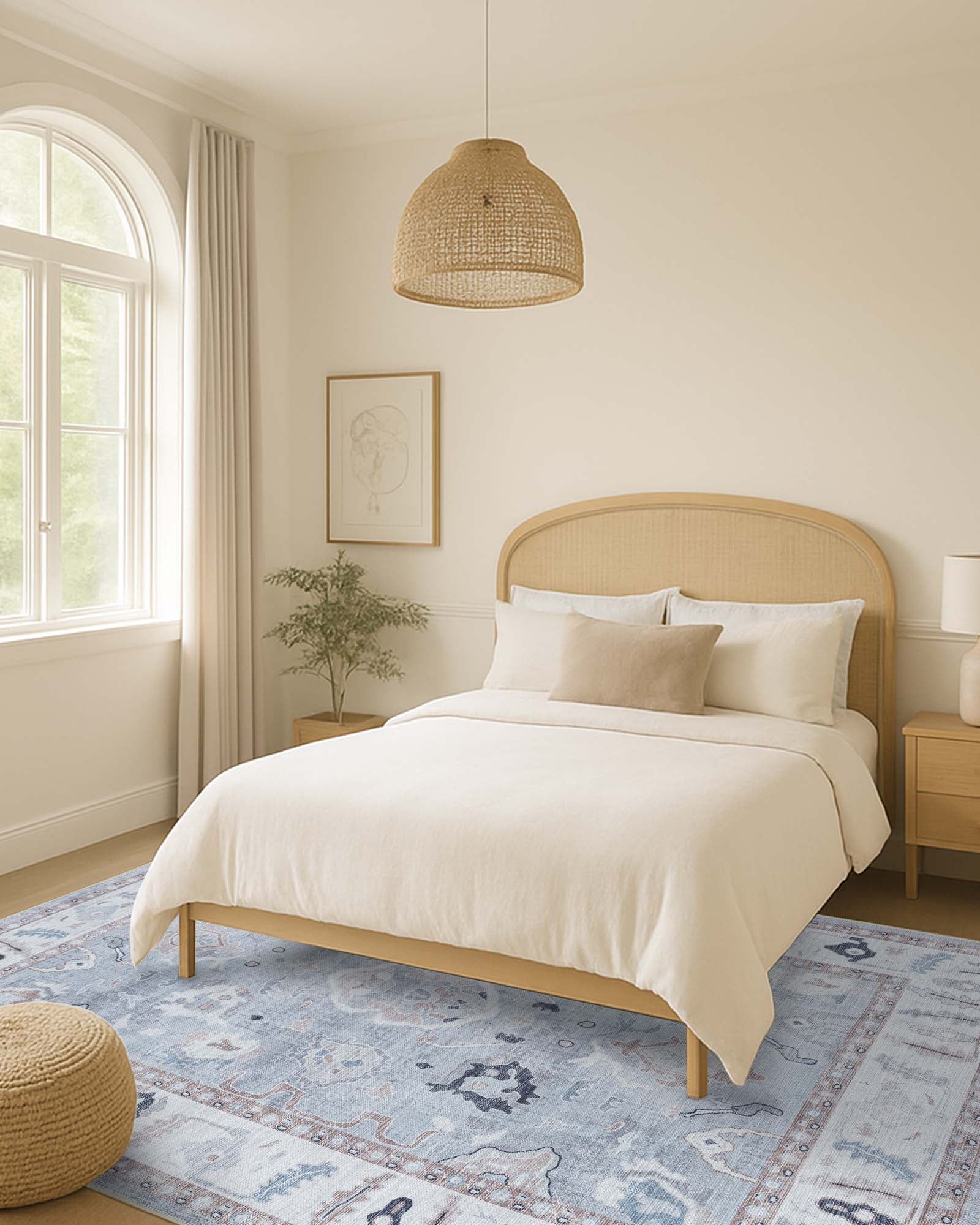
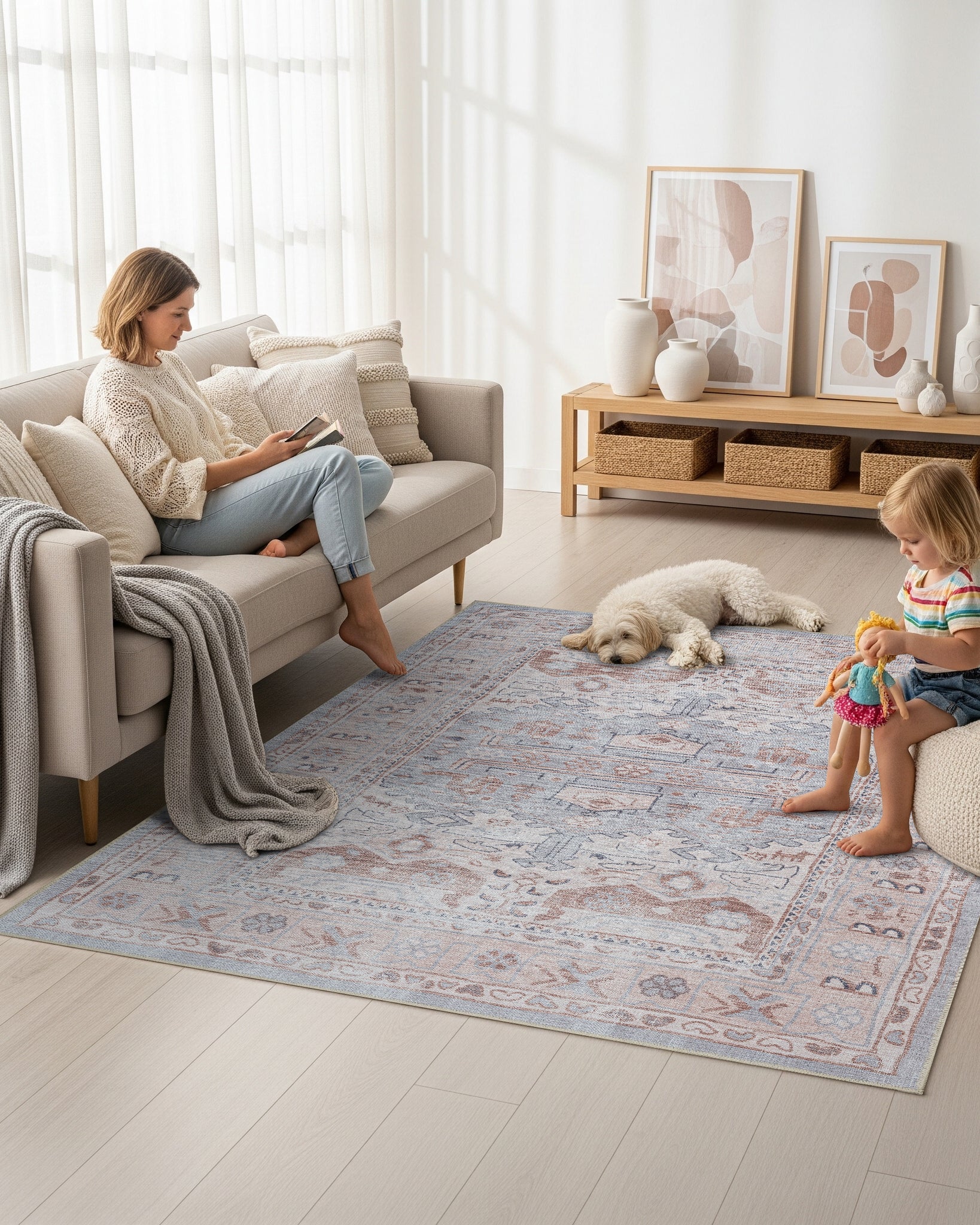
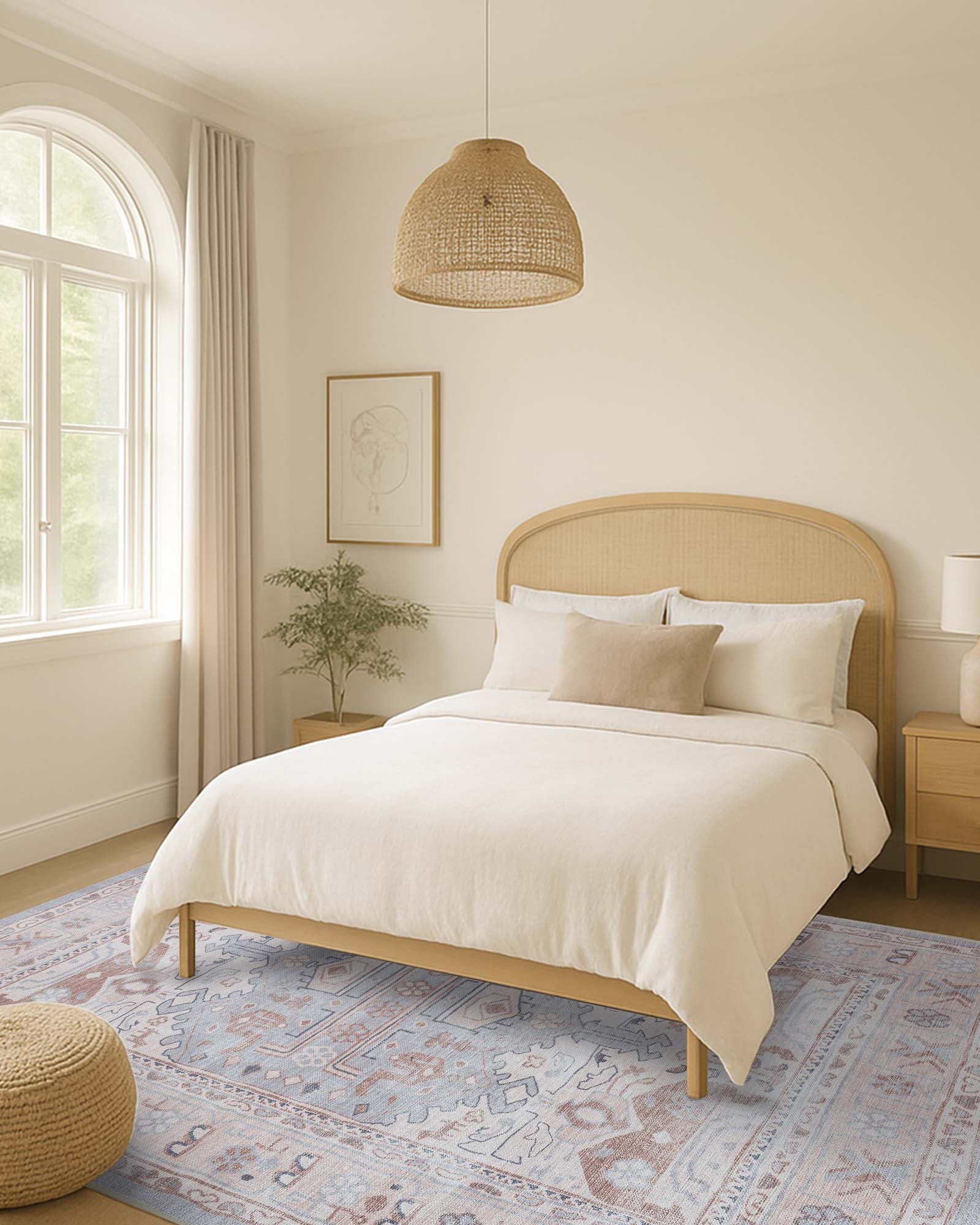
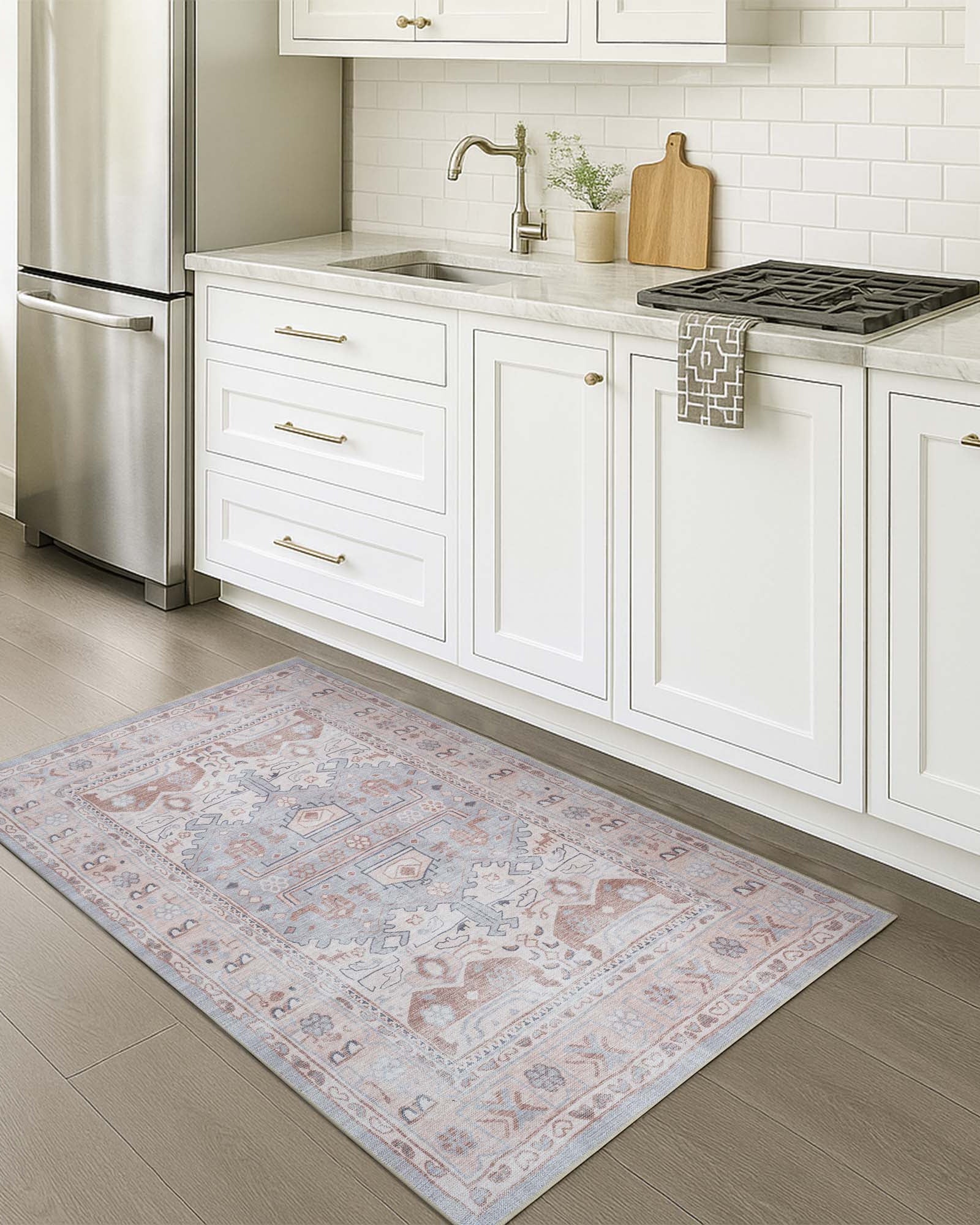
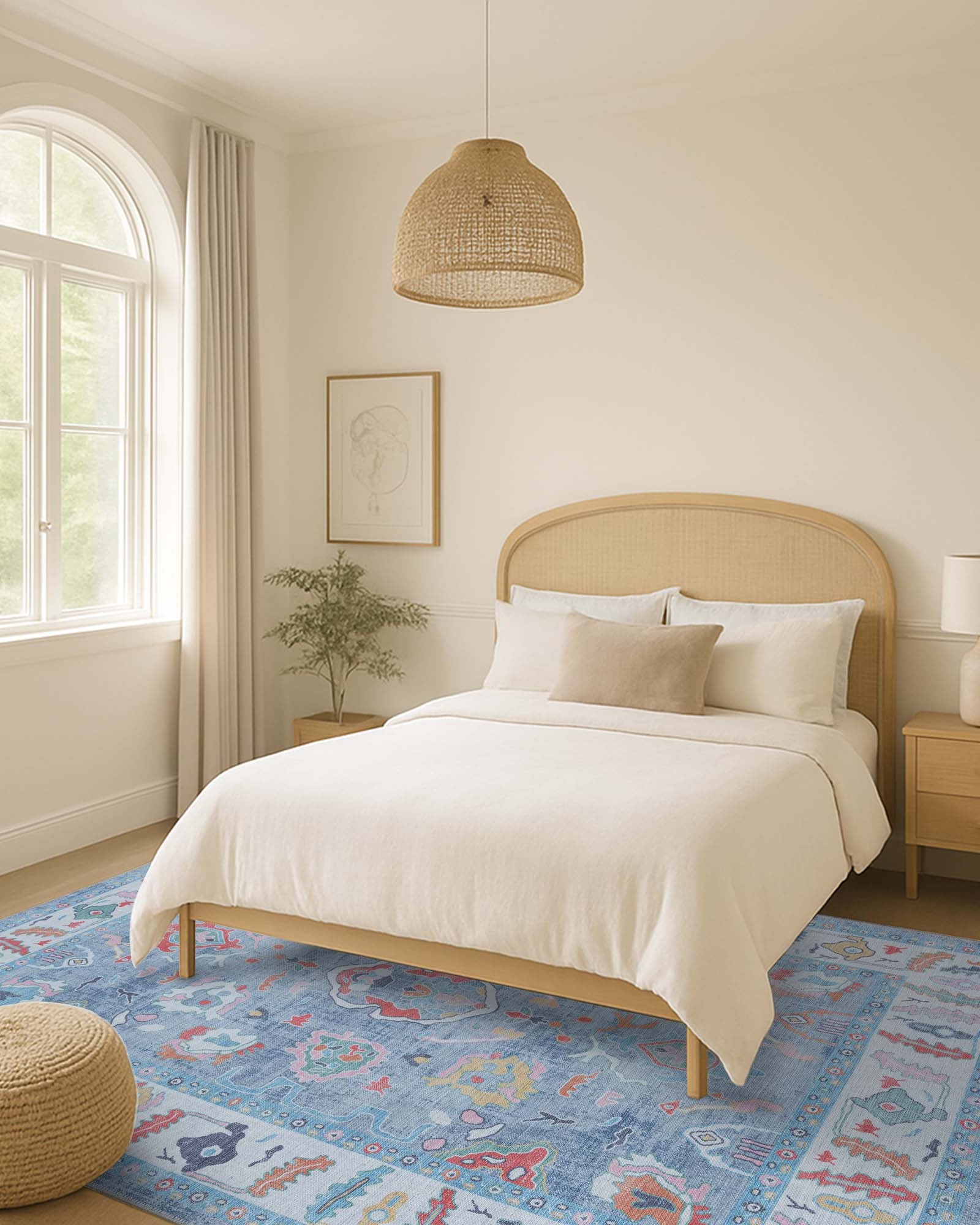
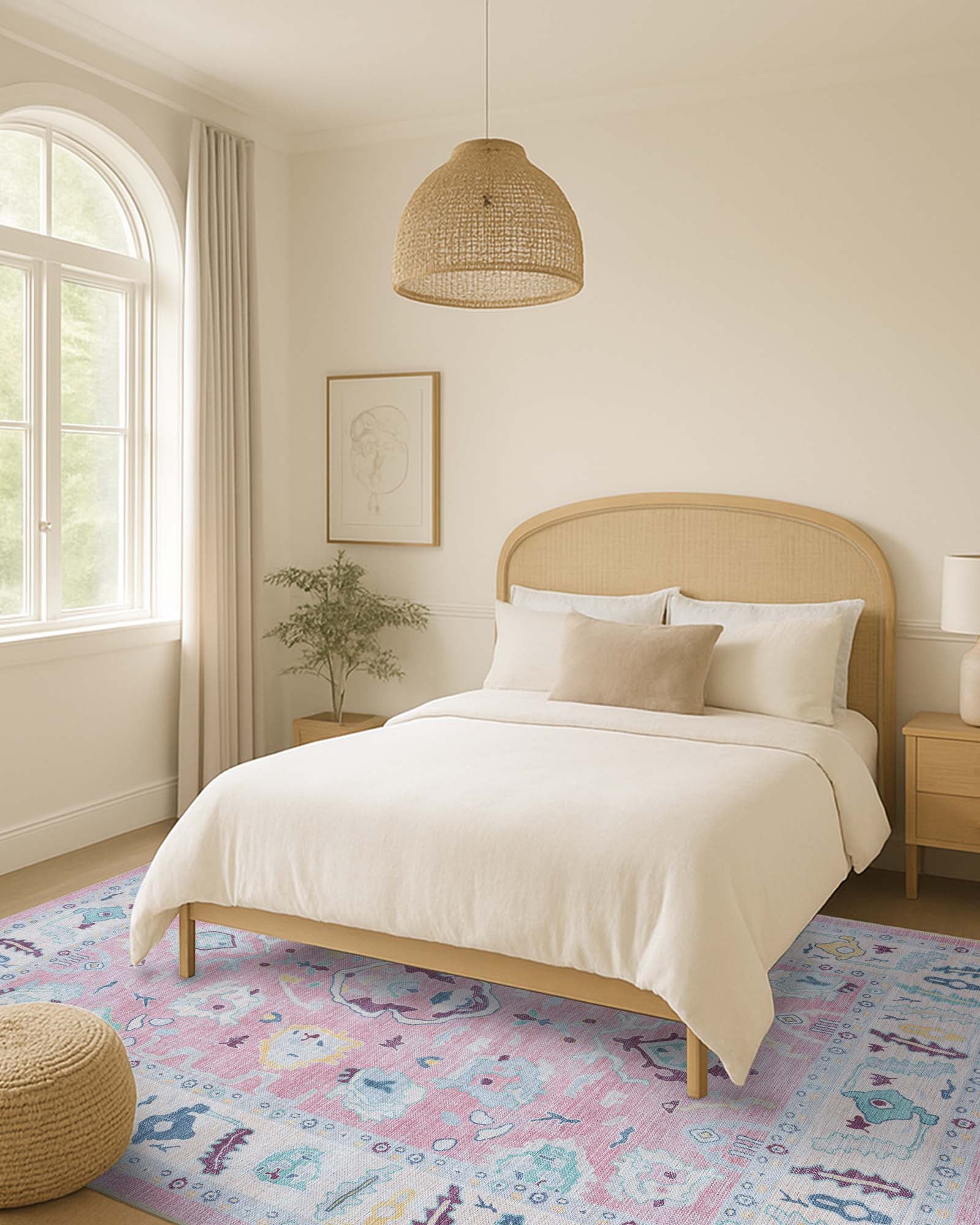
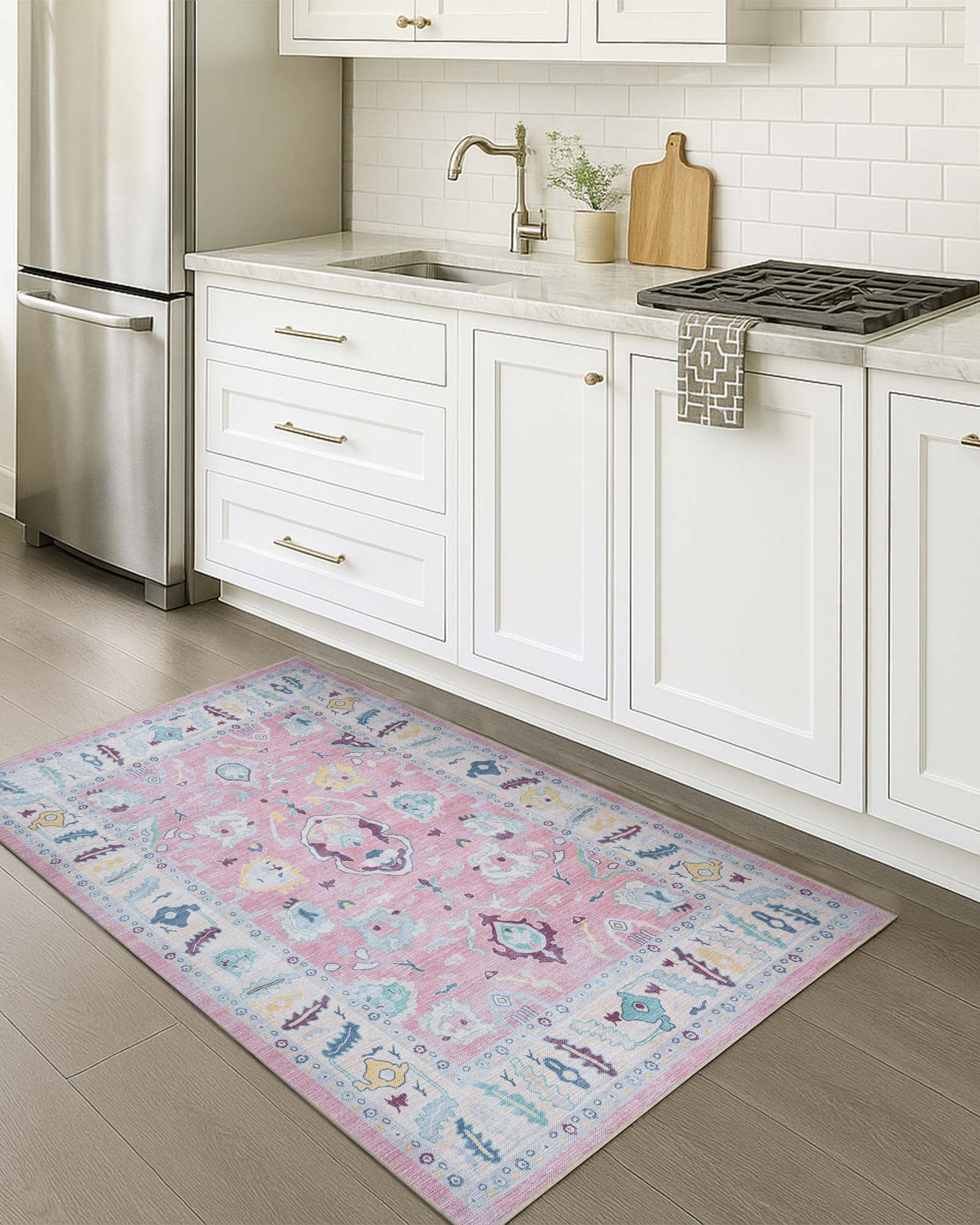
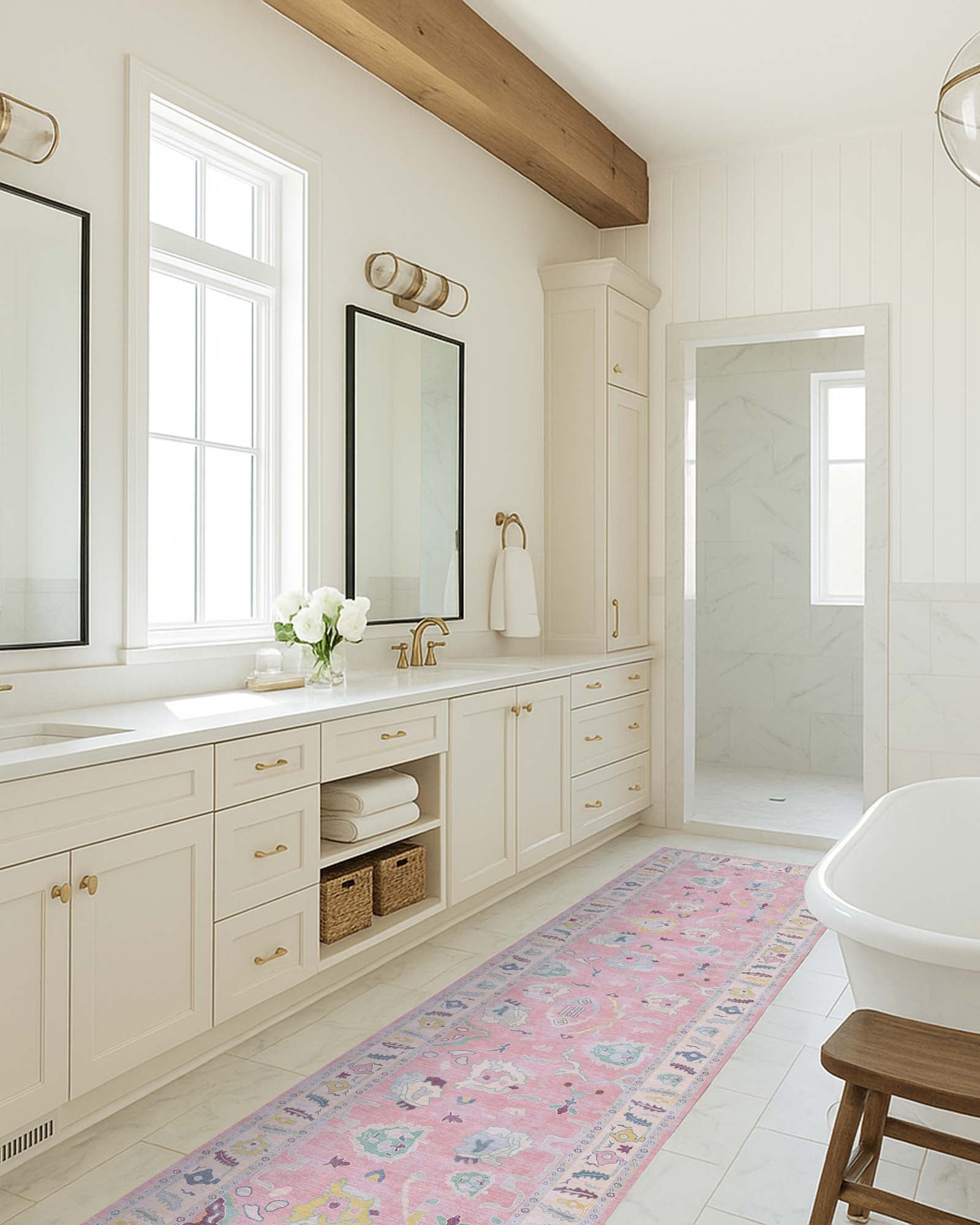
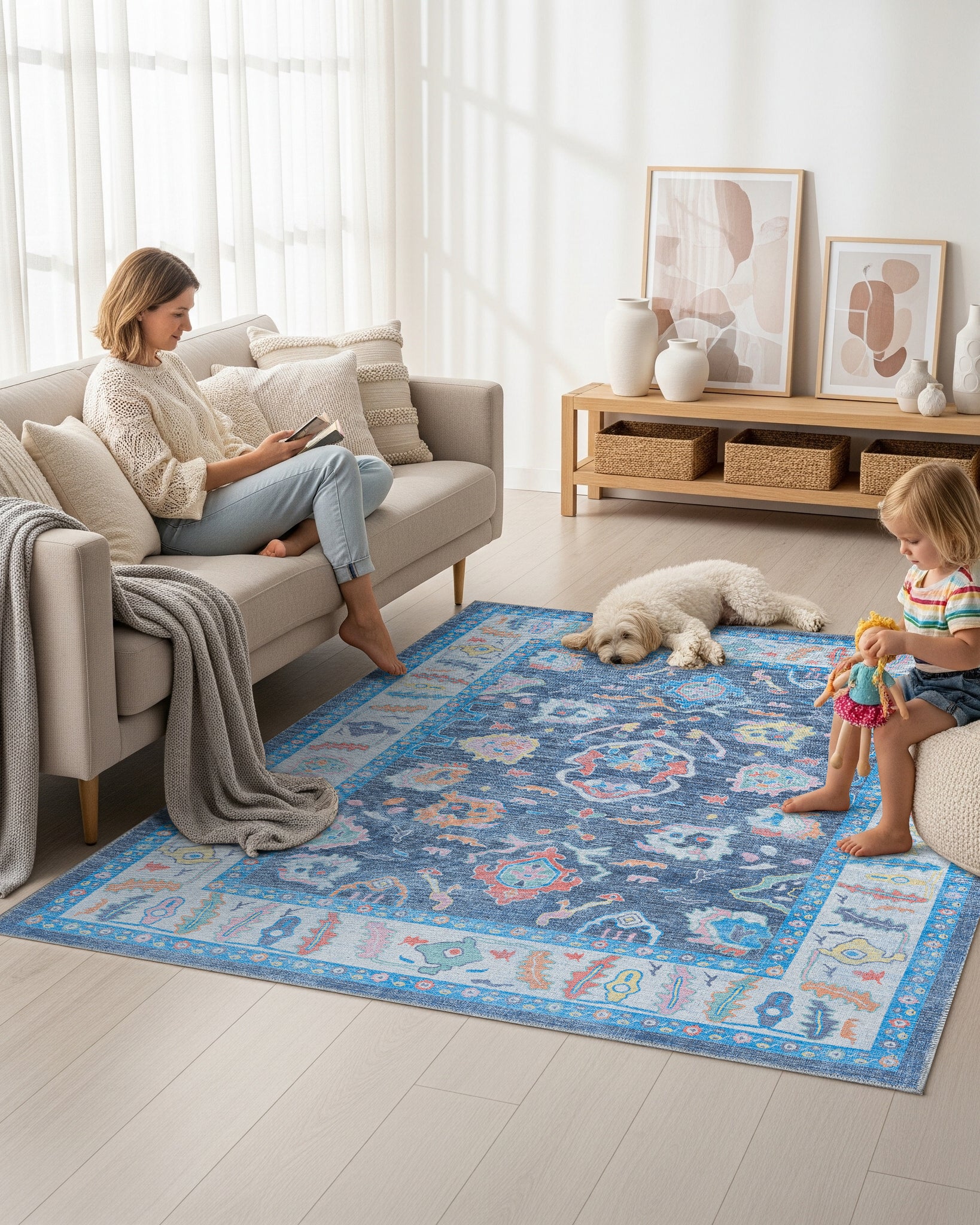
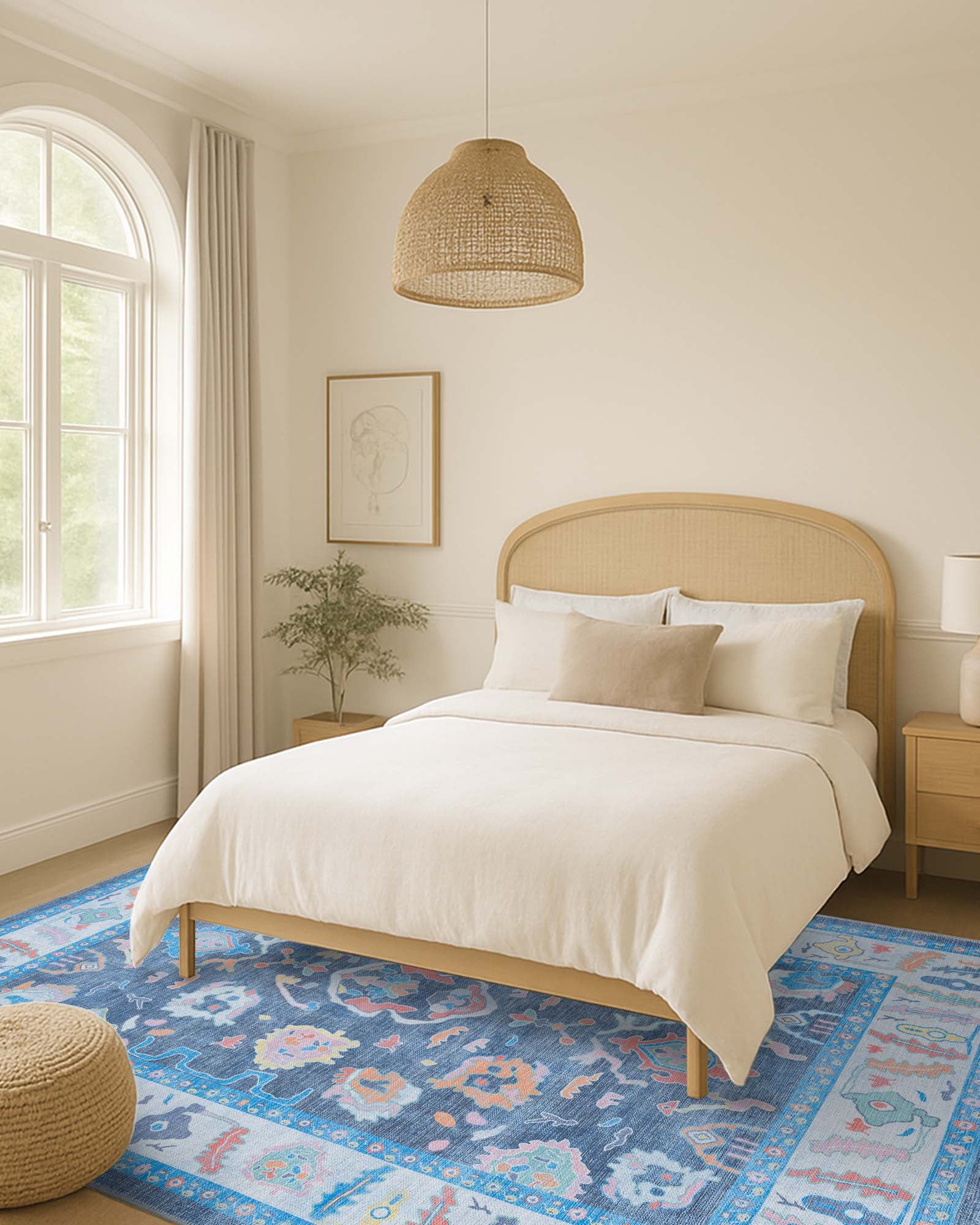
These are the most contemporary-leaning pieces in the one-of-a-kind range, and they solve a specific problem: you want a genuine hand-knotted rug with real age, but the traditional multi-colour palette does not suit the room. An overdyed rug gives you the texture, structure and irregularity of an old rug in a single modern colour that behaves almost like a solid.
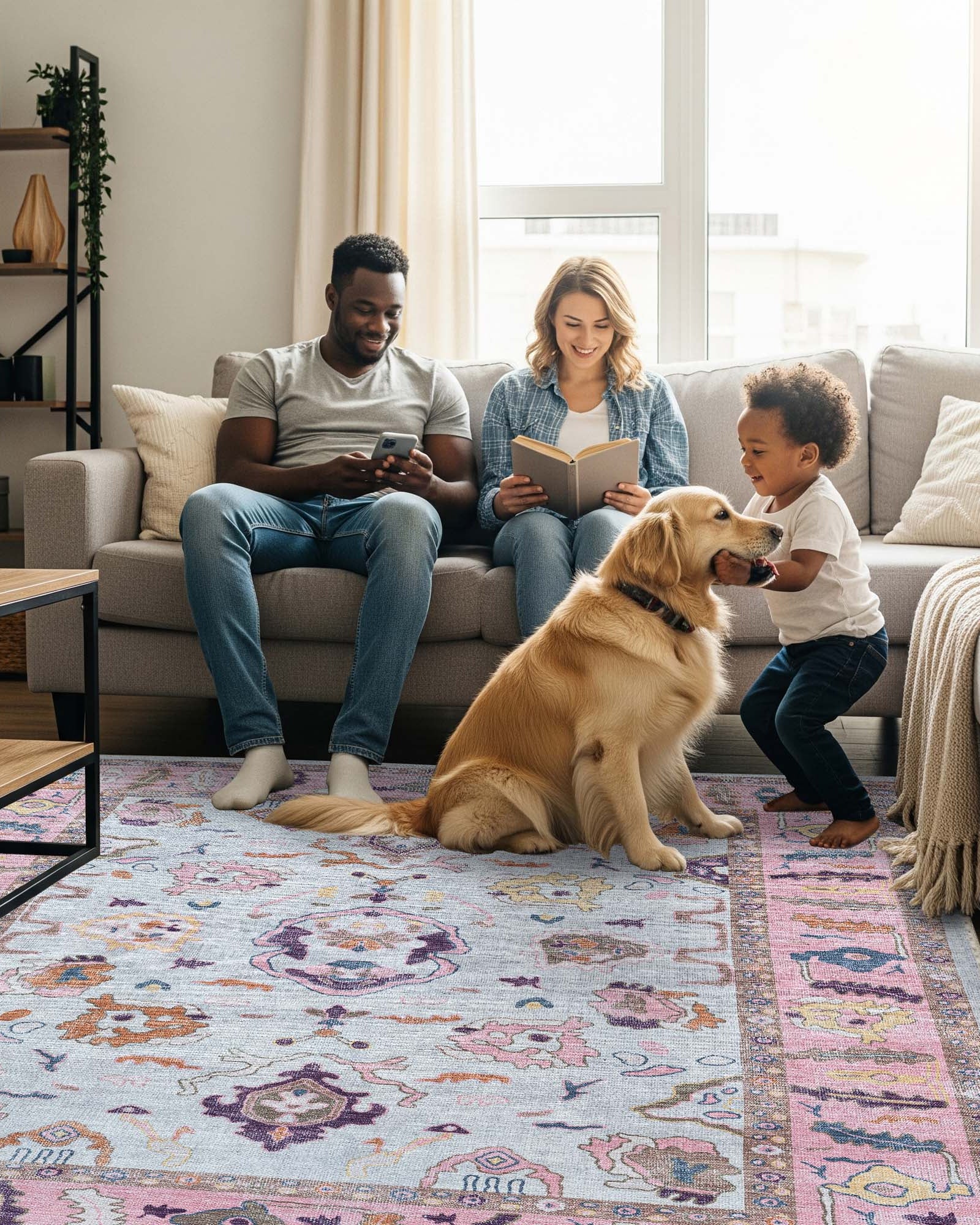
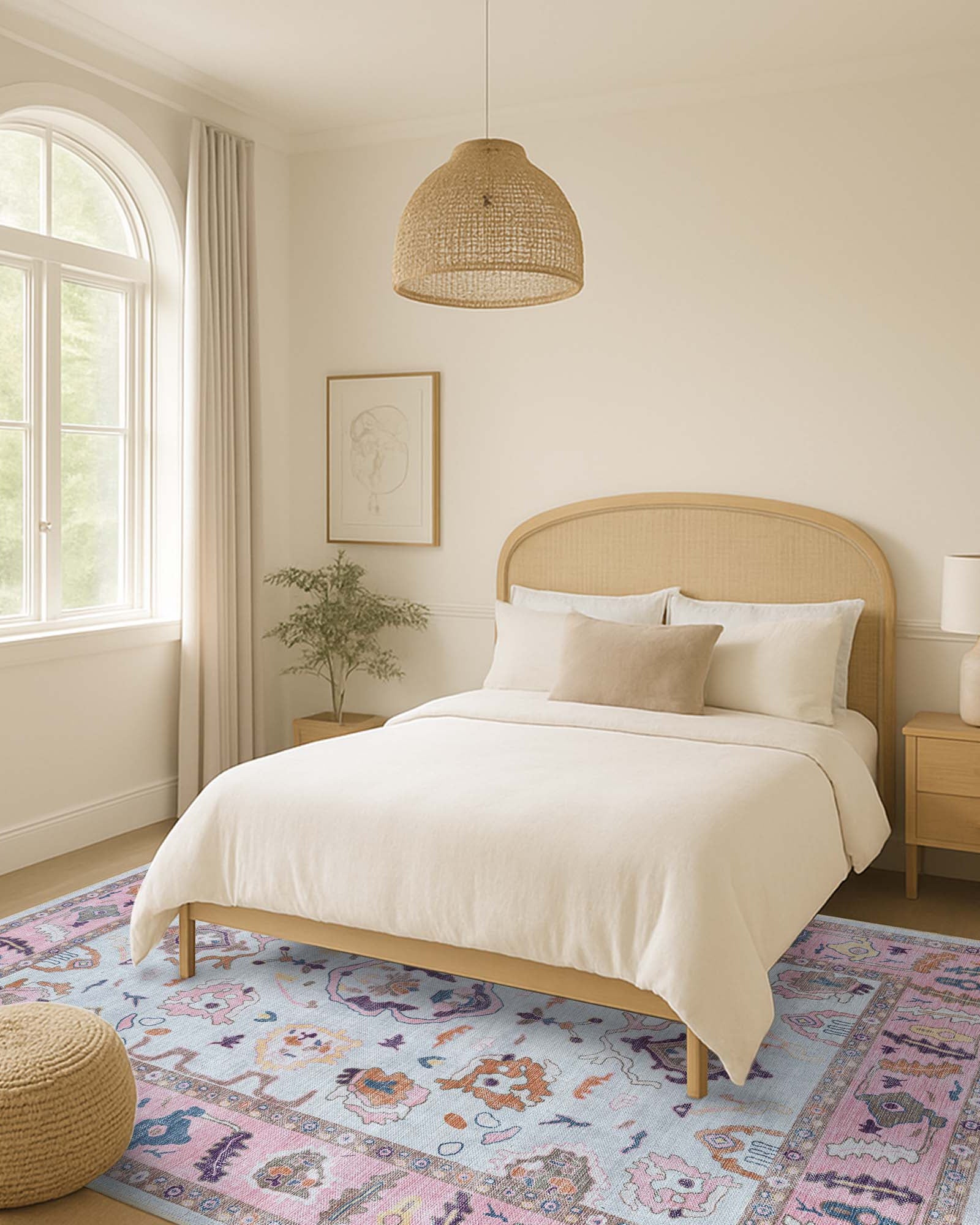
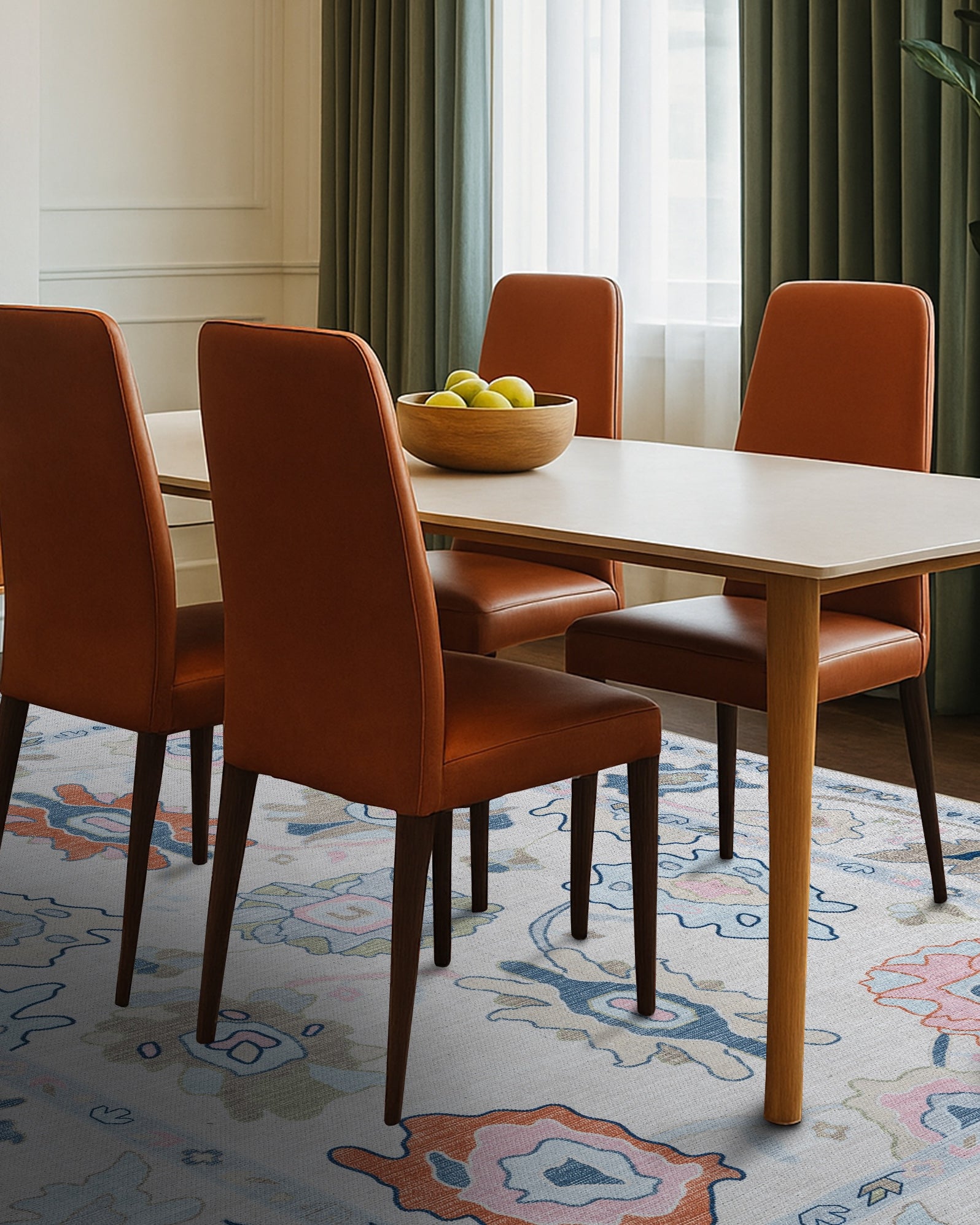
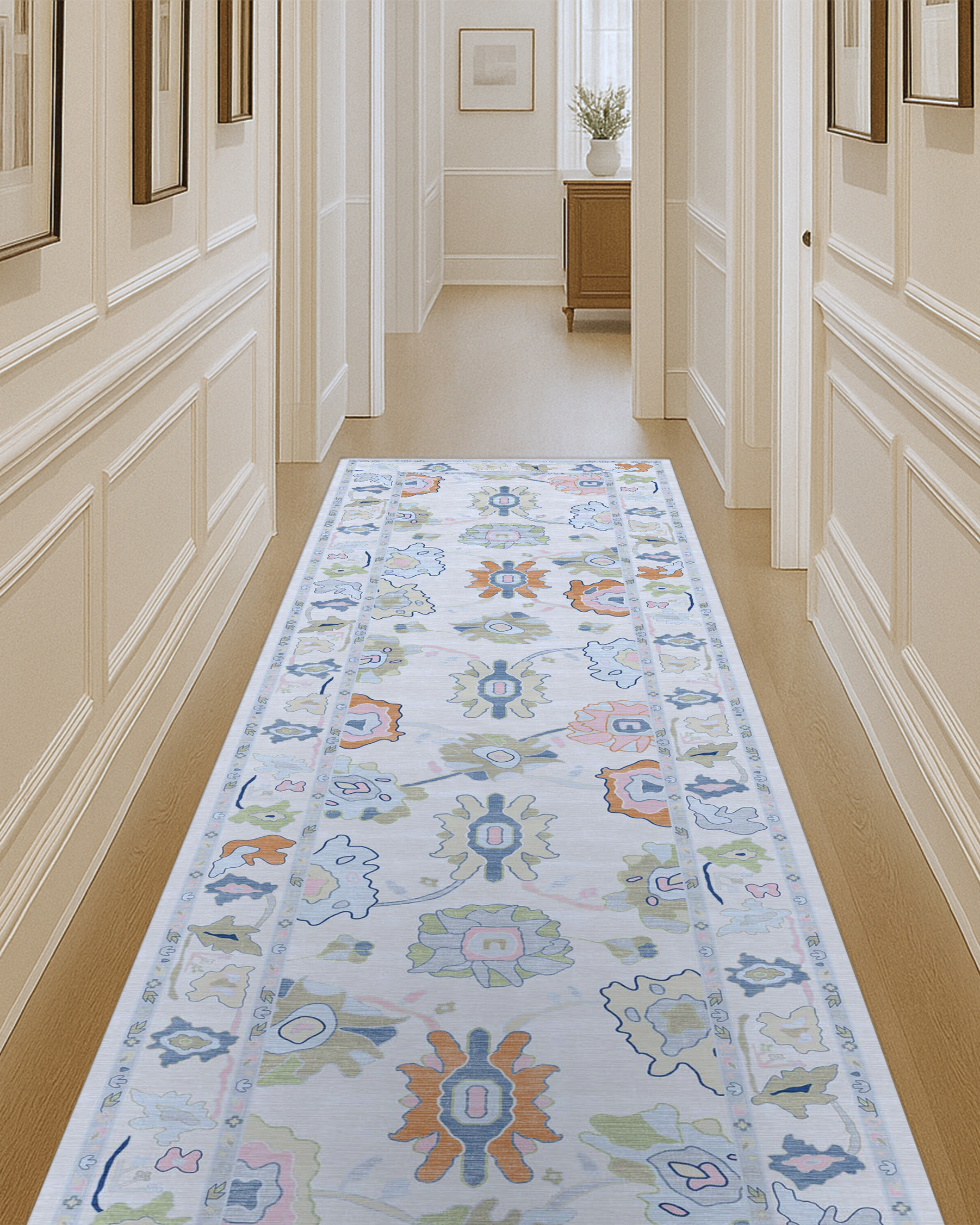
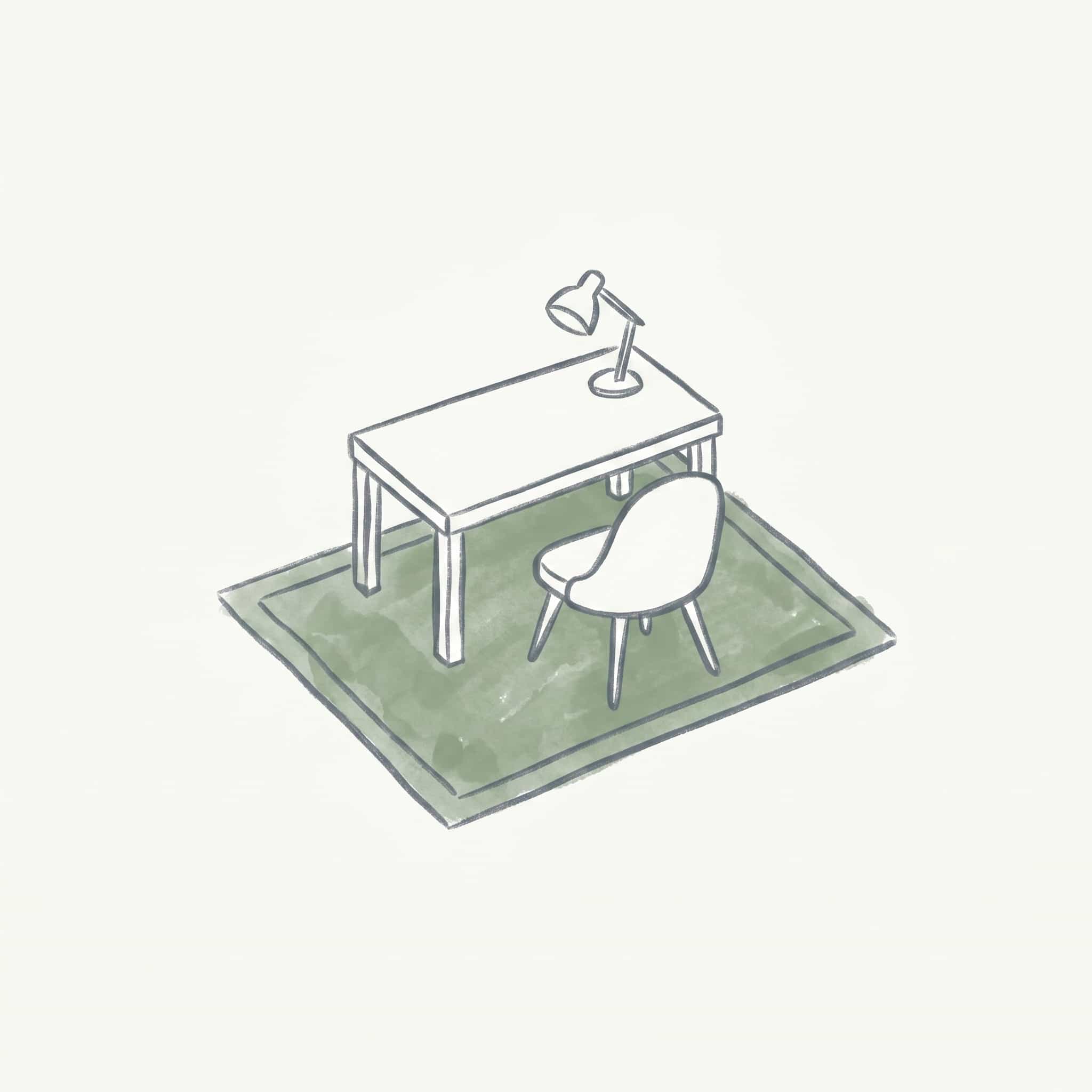
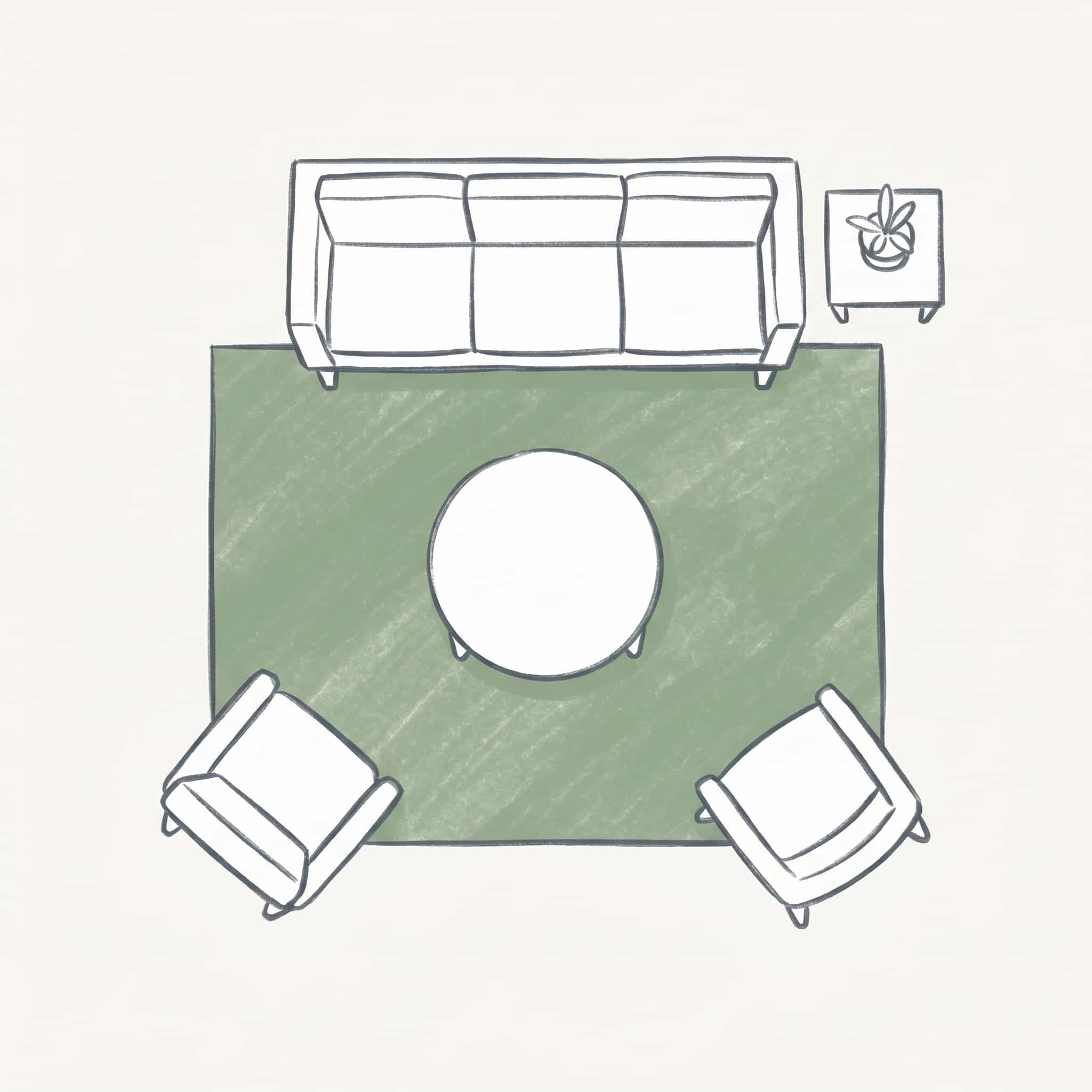
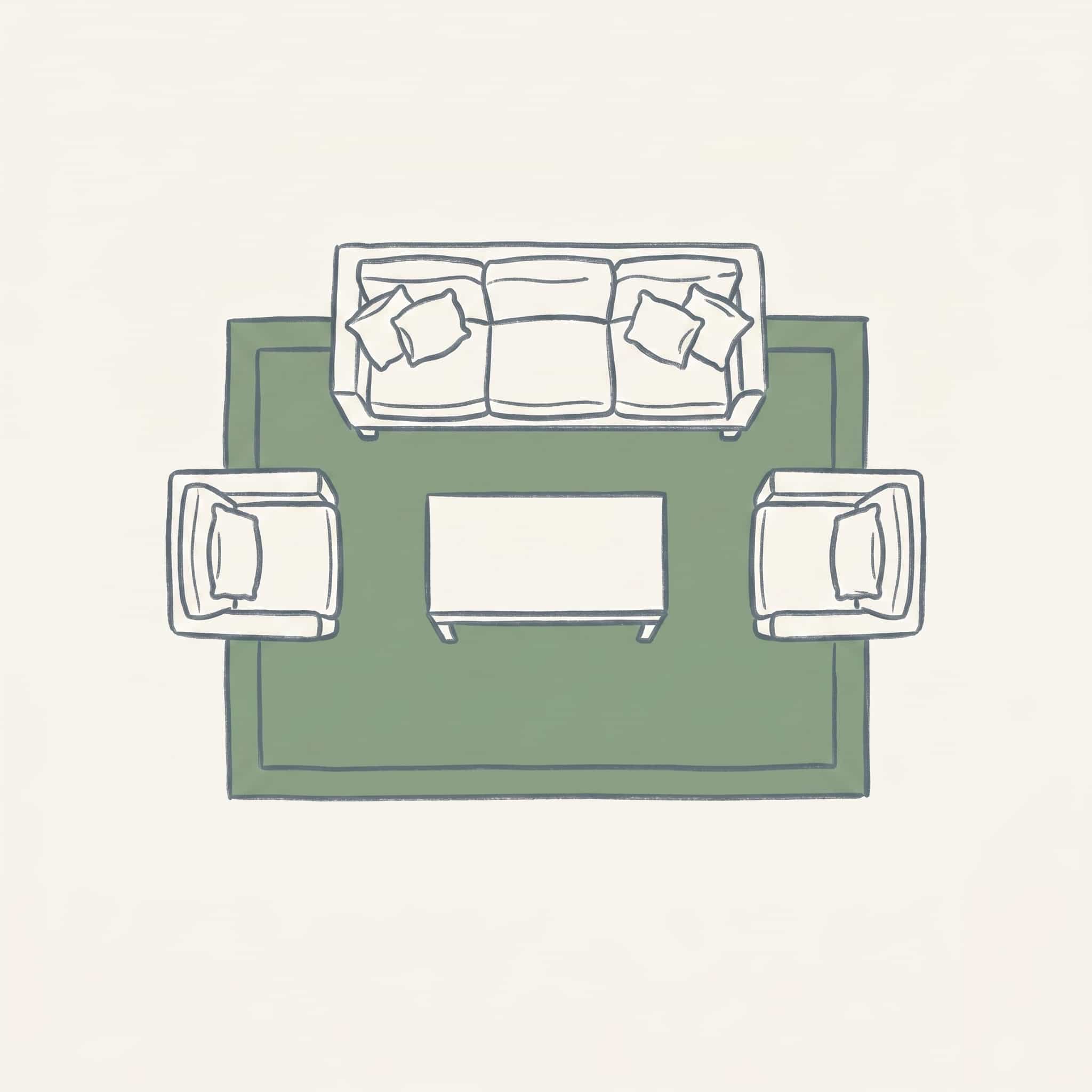
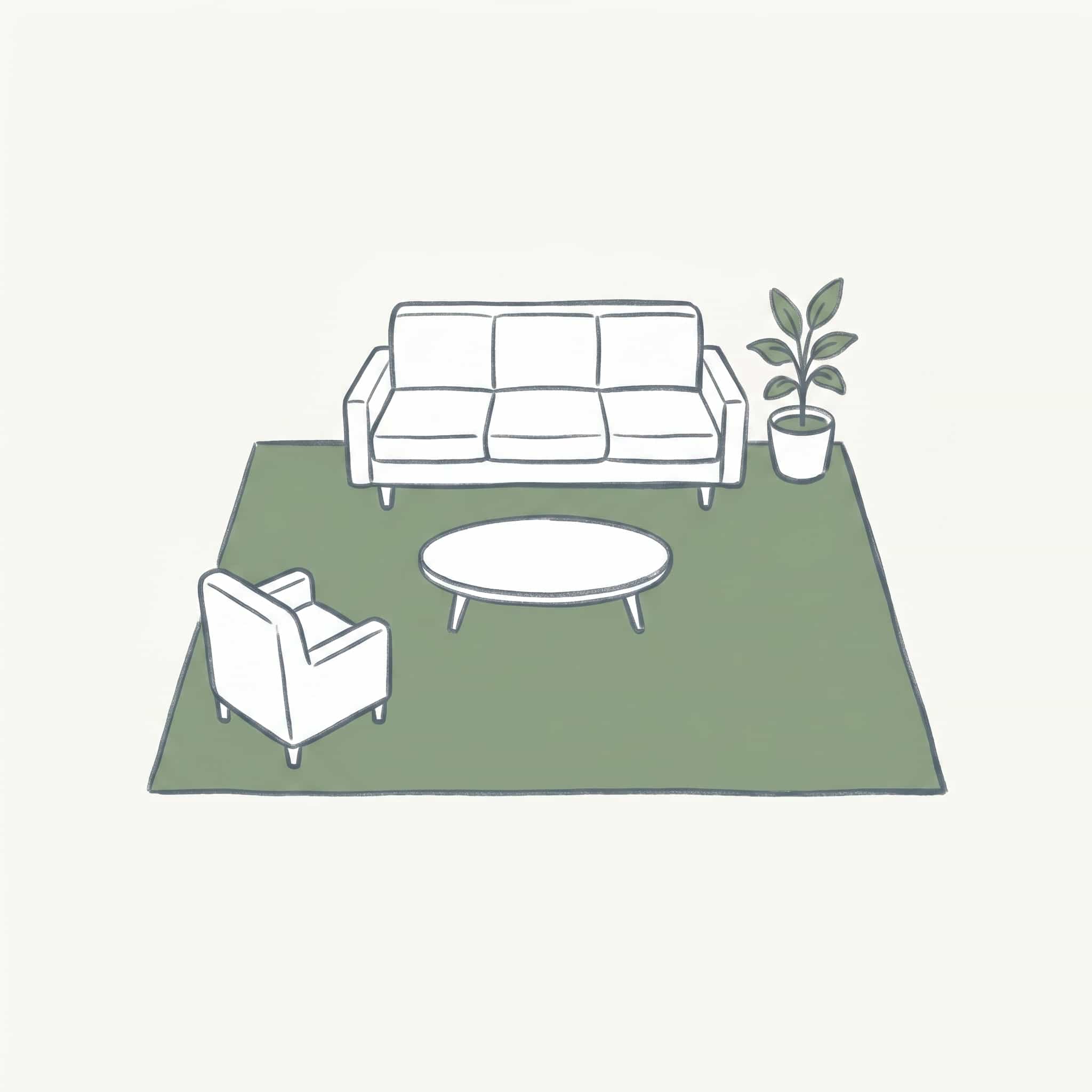
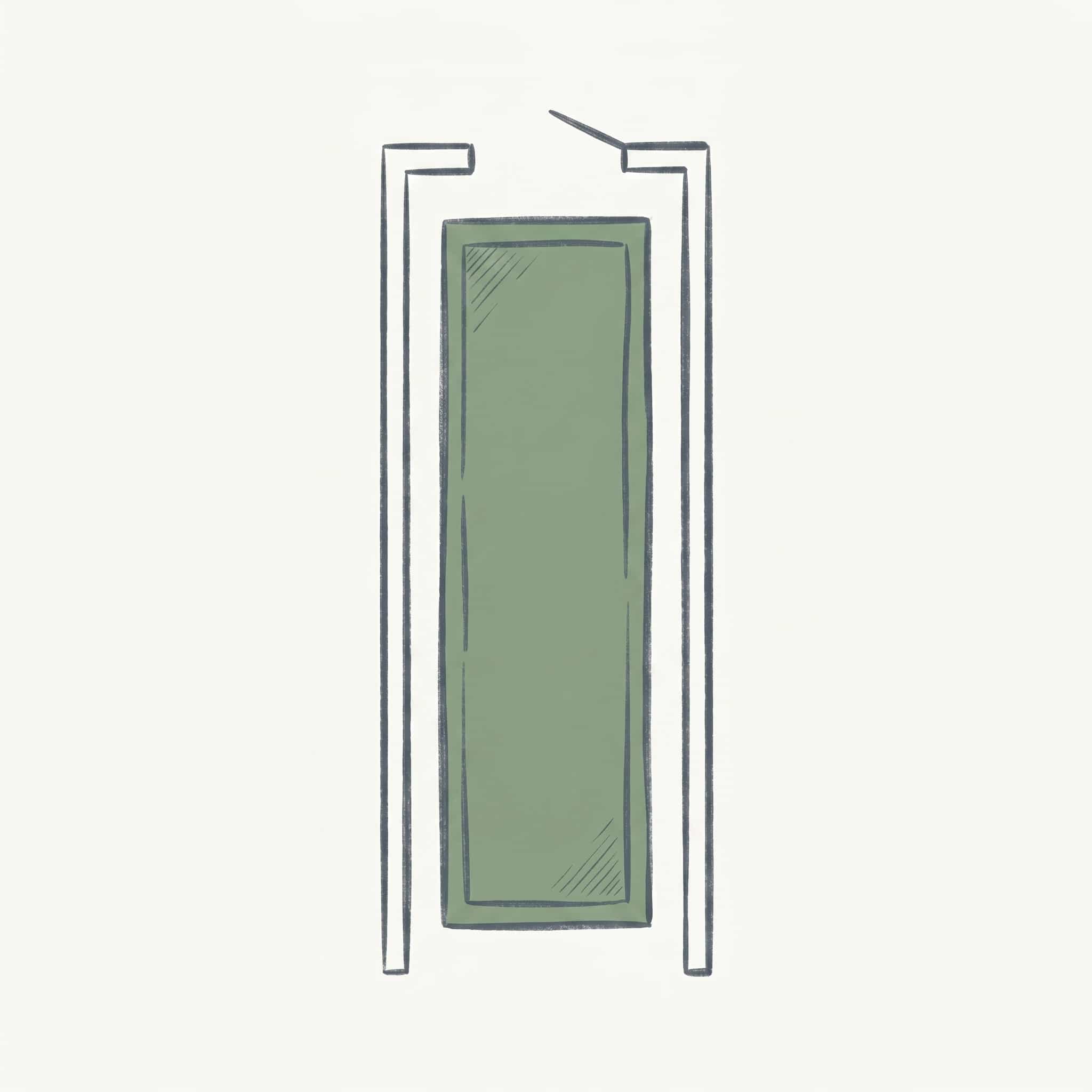
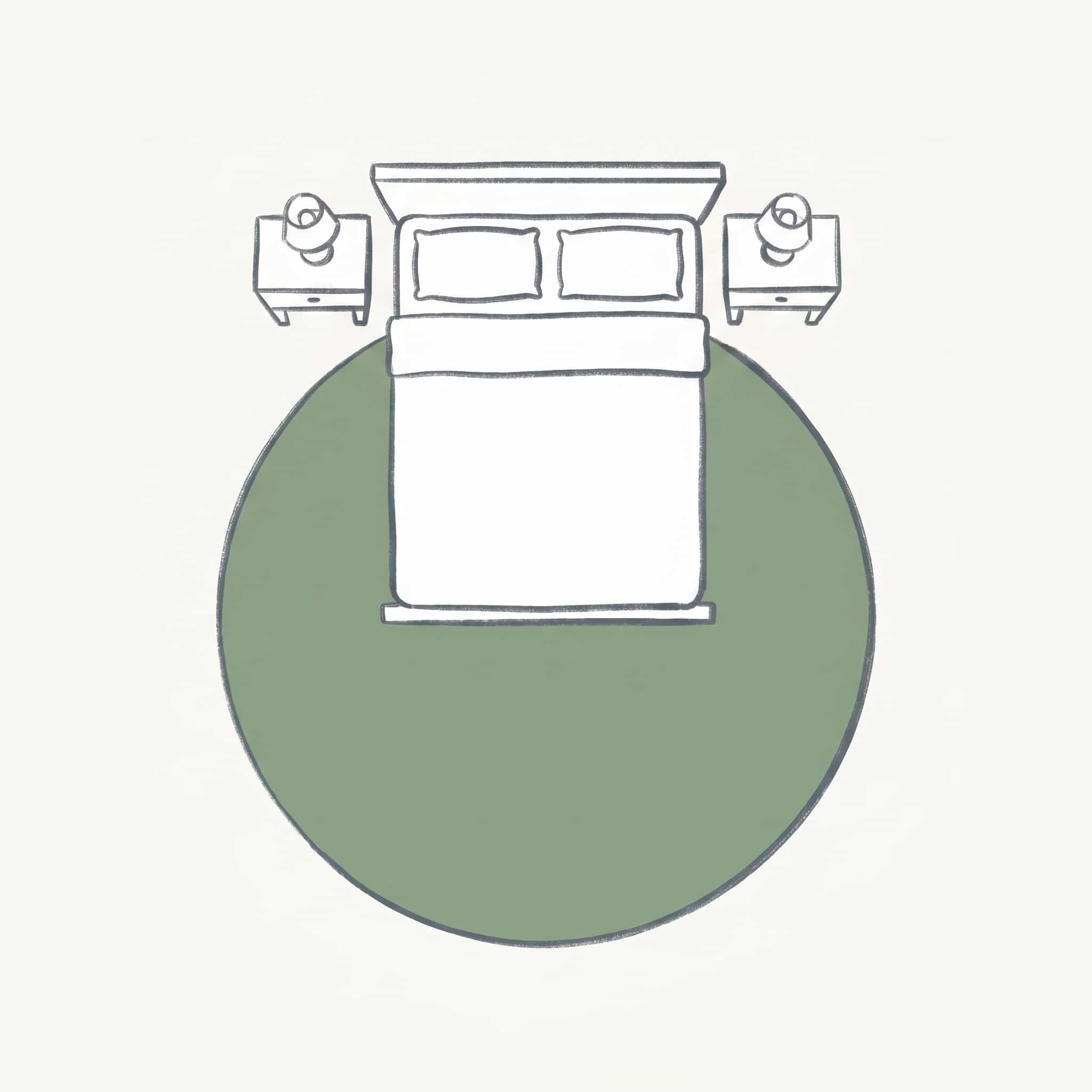
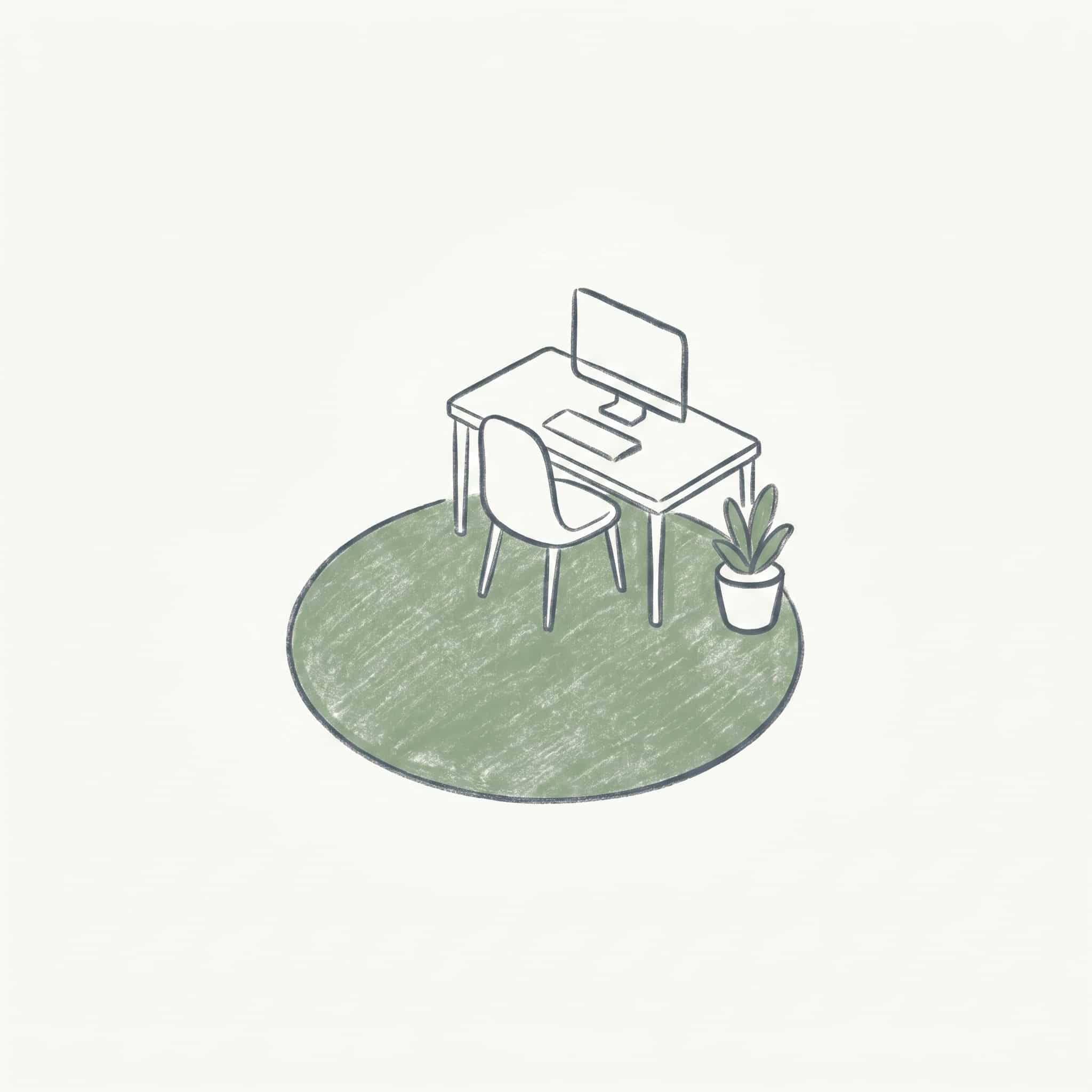
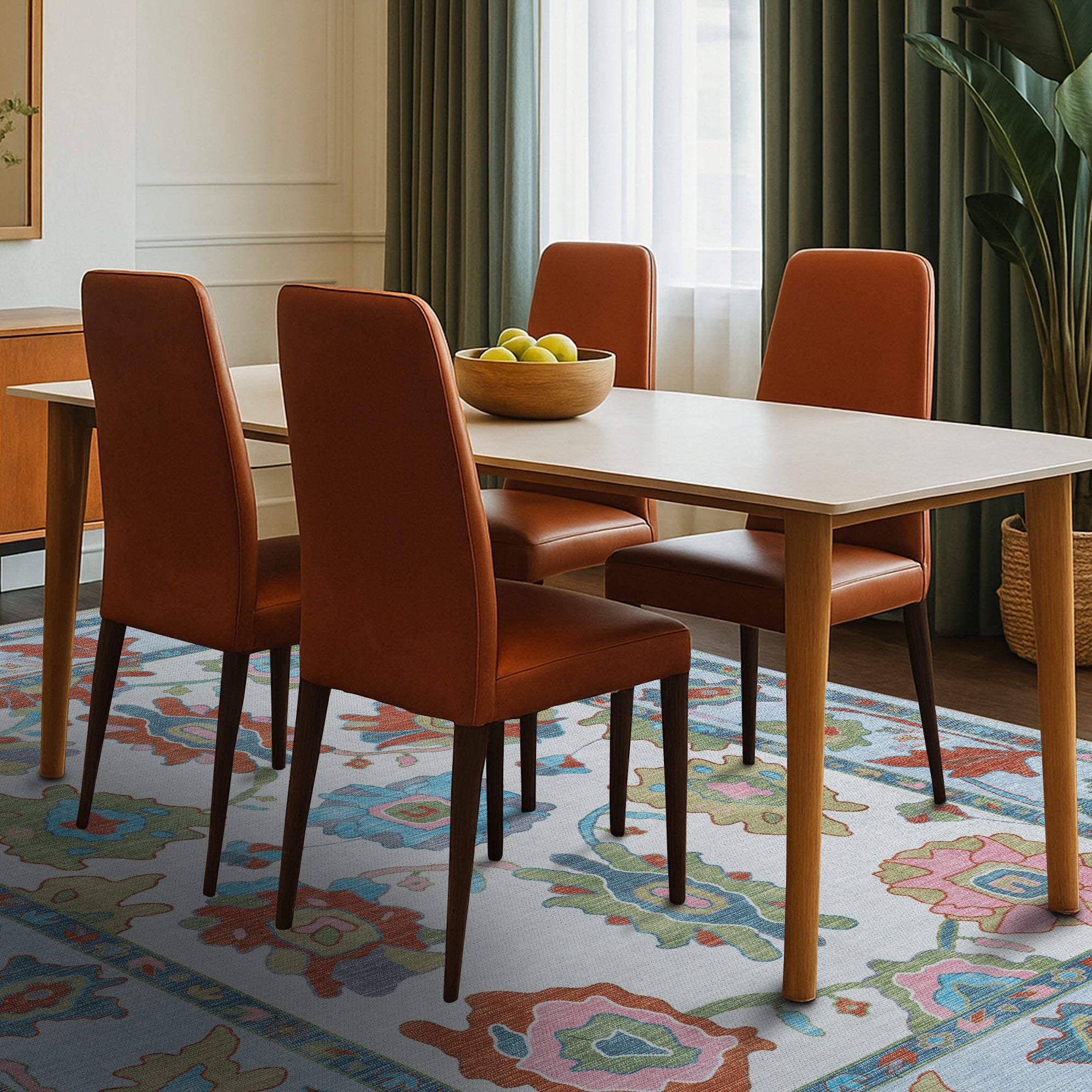
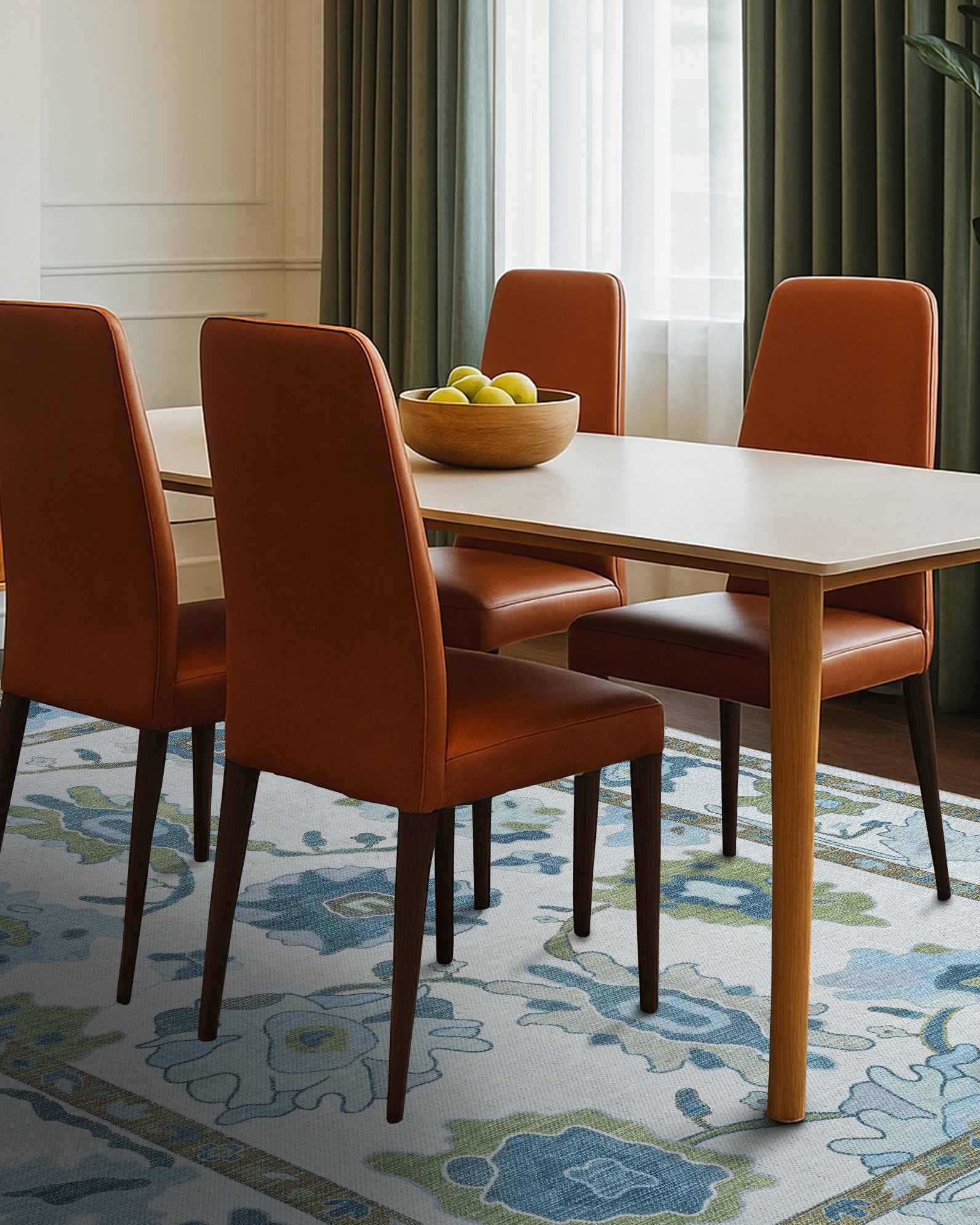
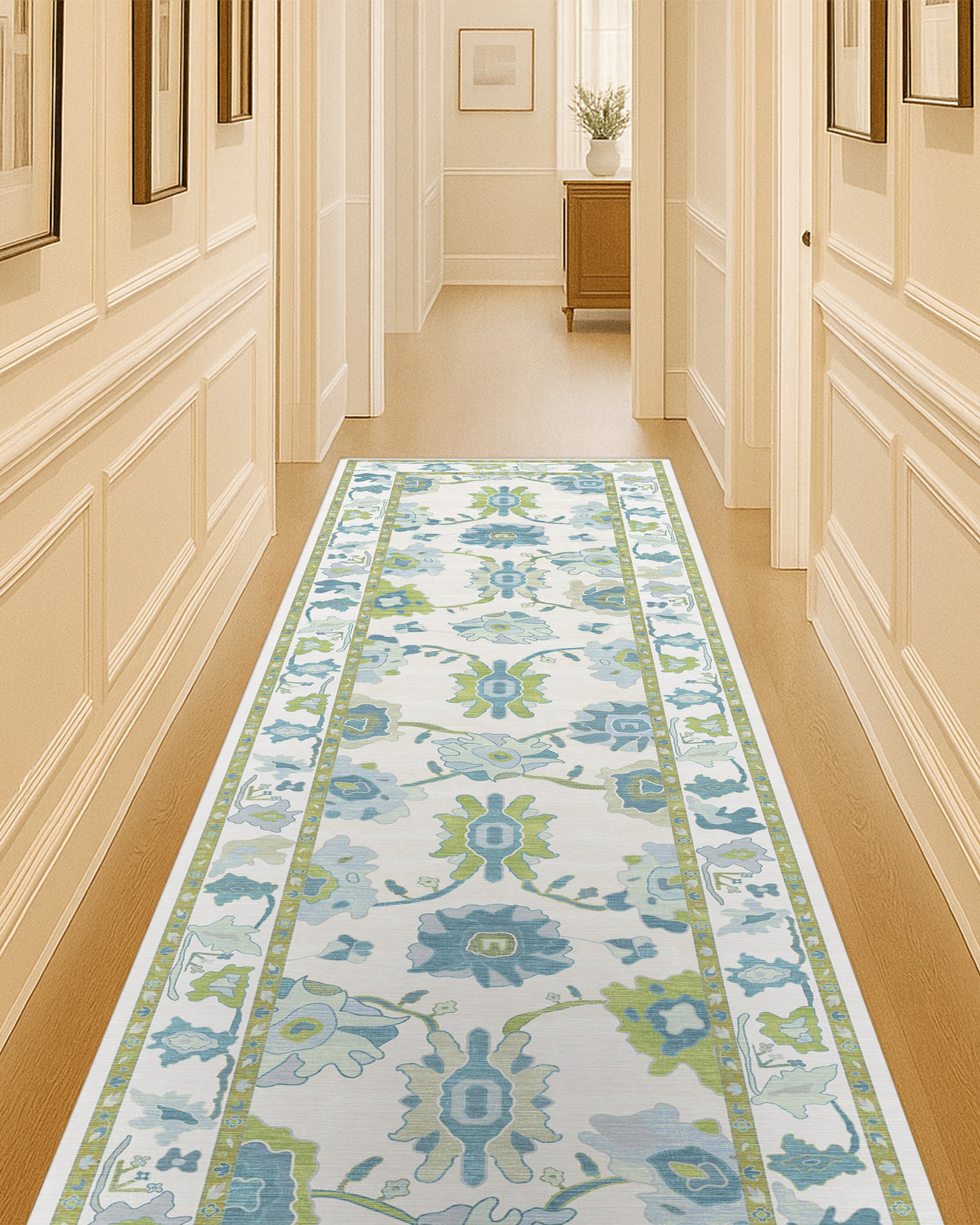
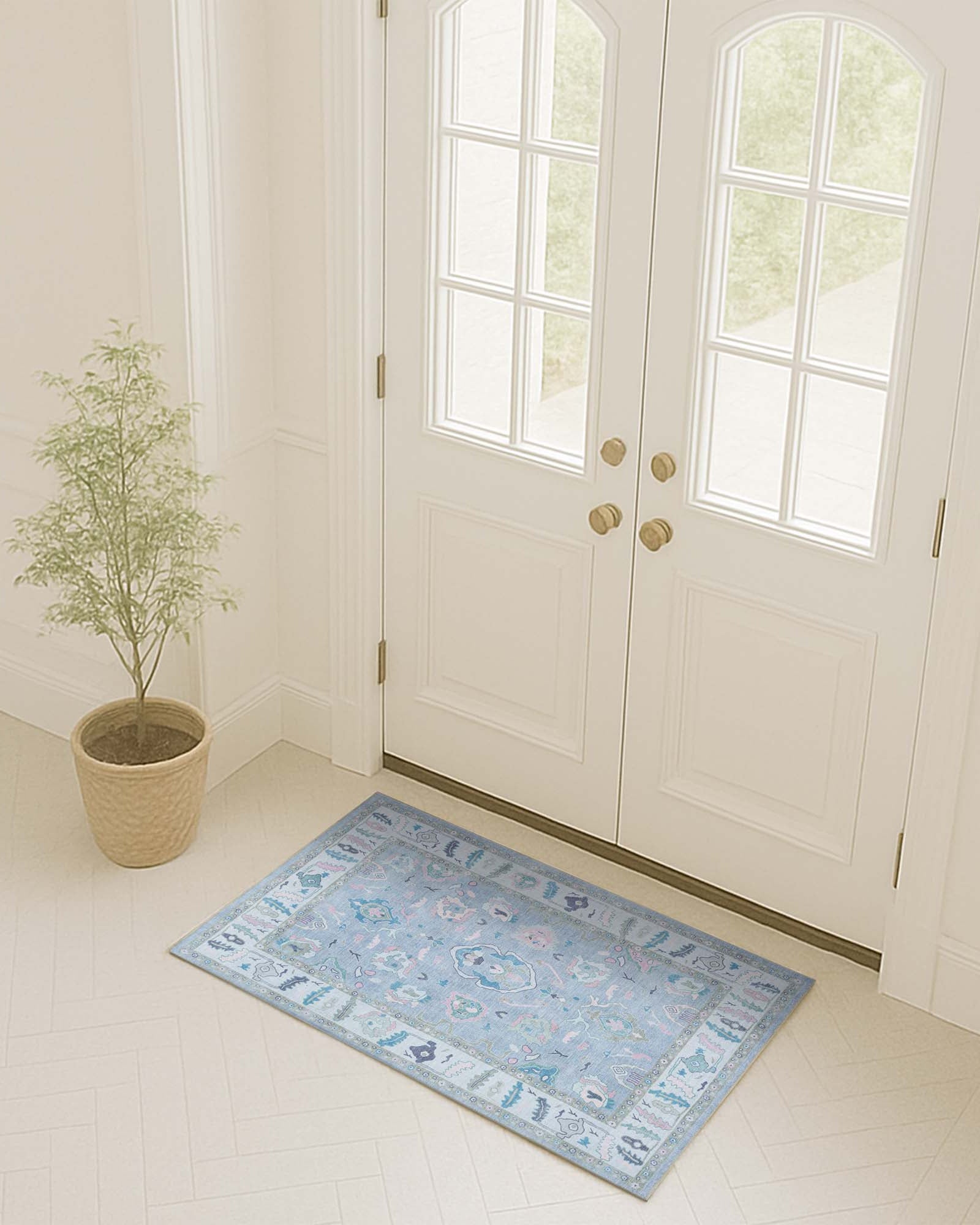
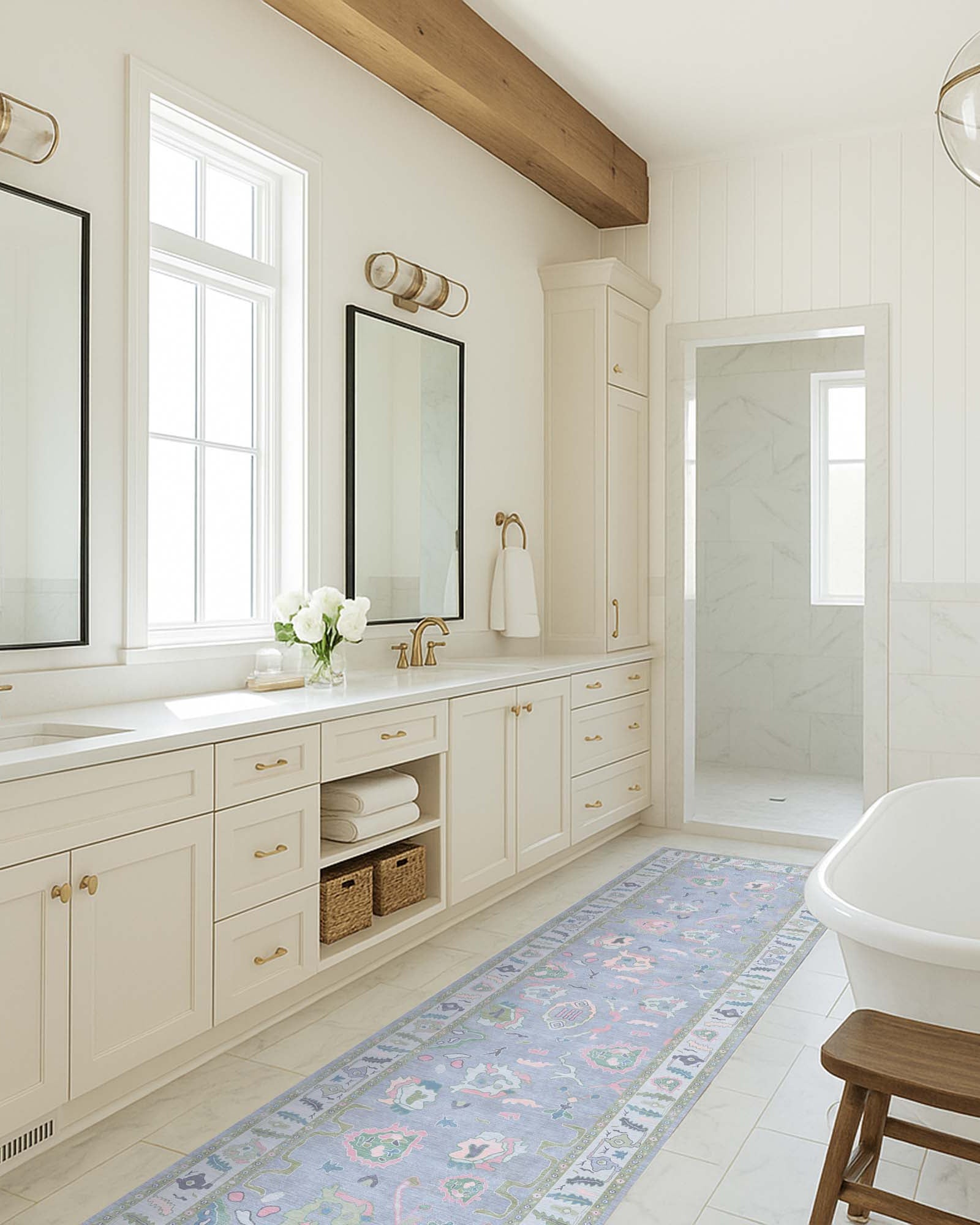
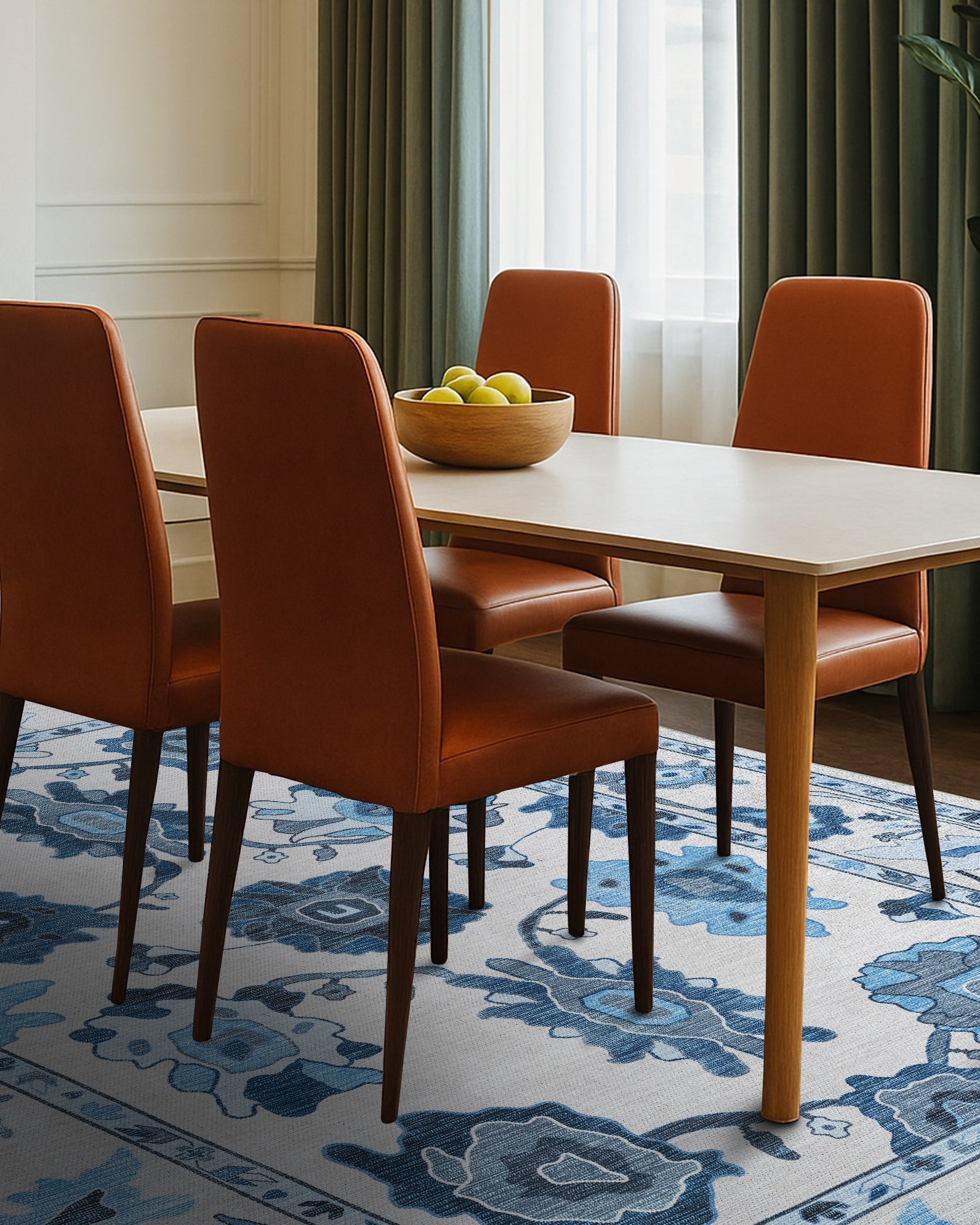
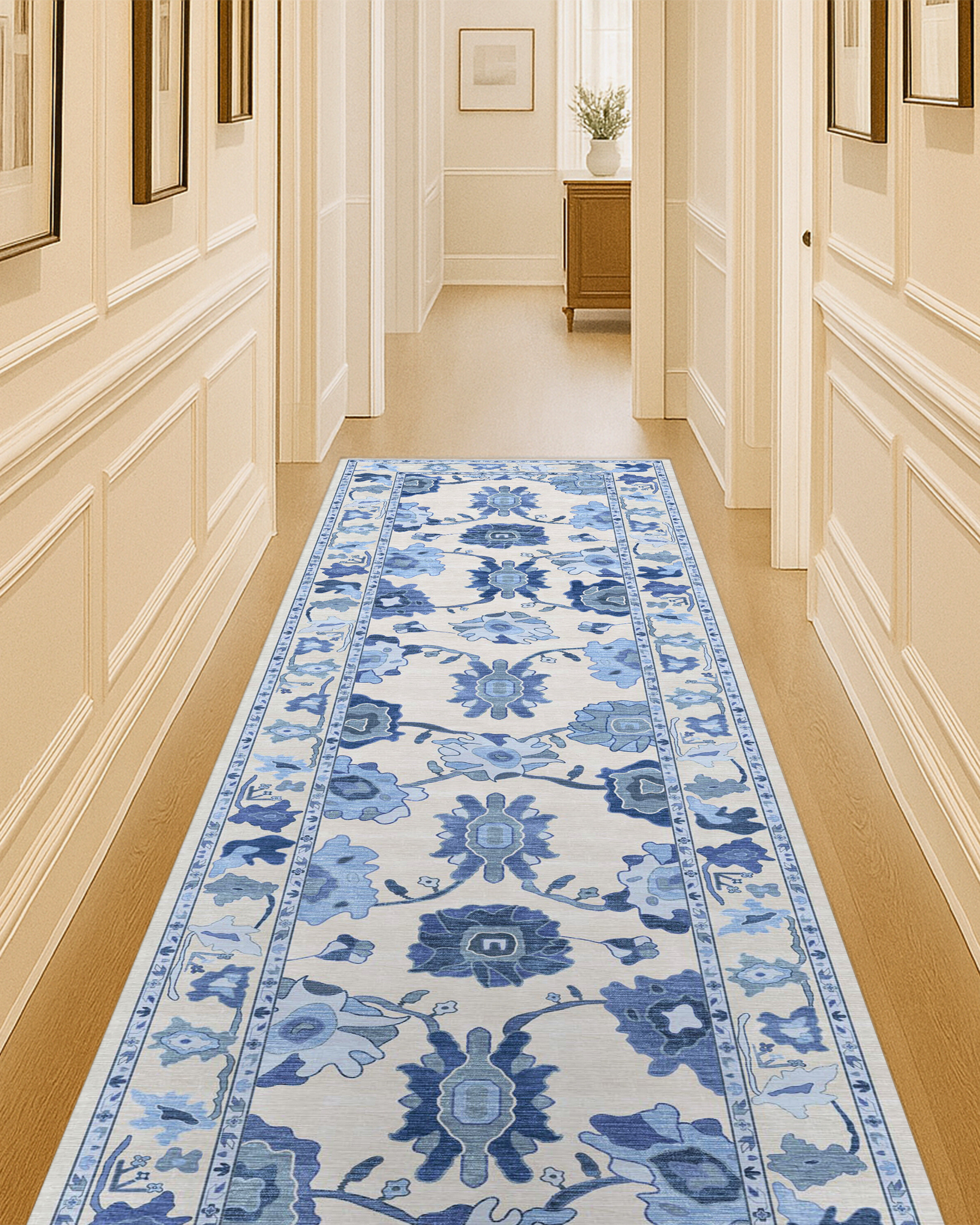
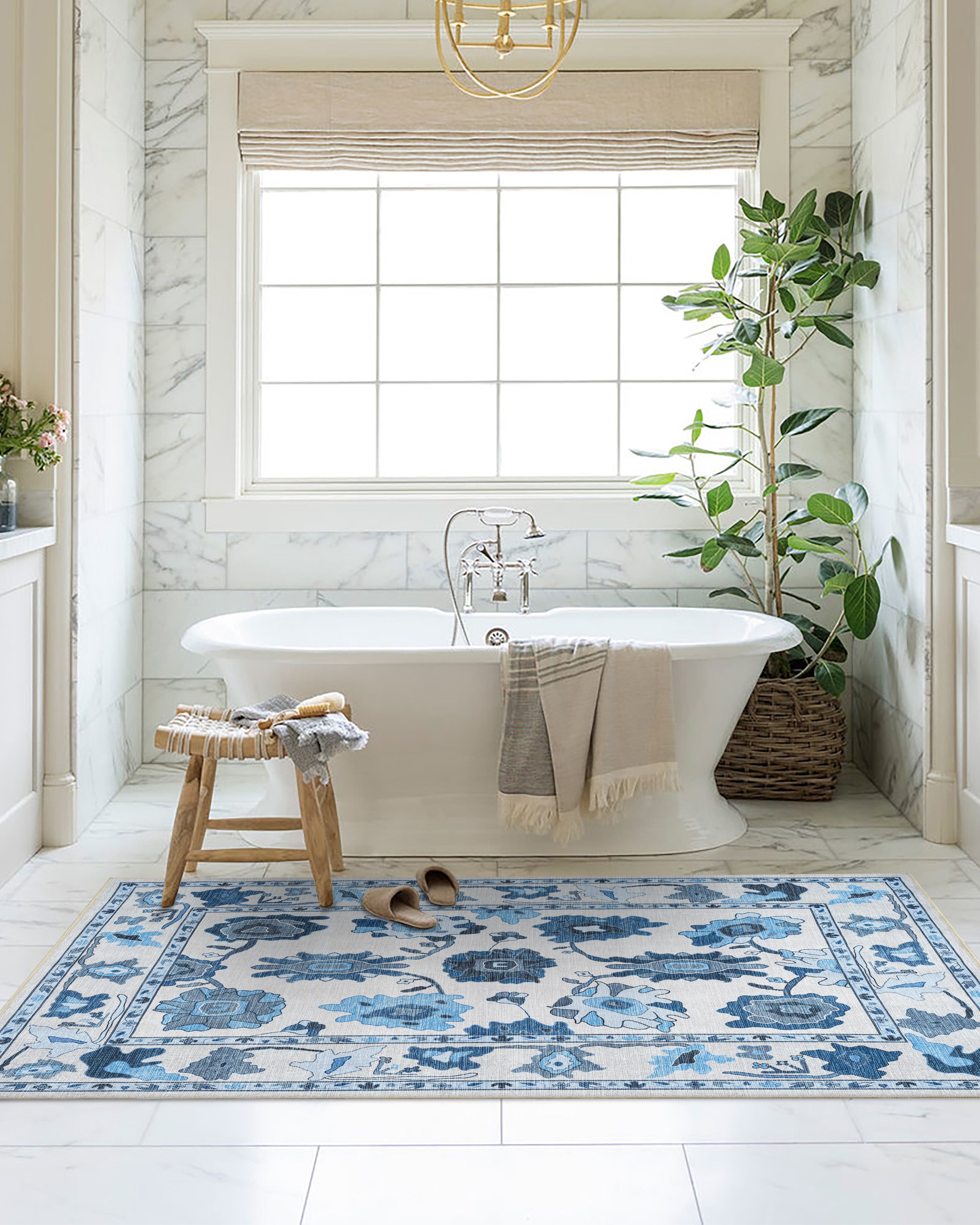
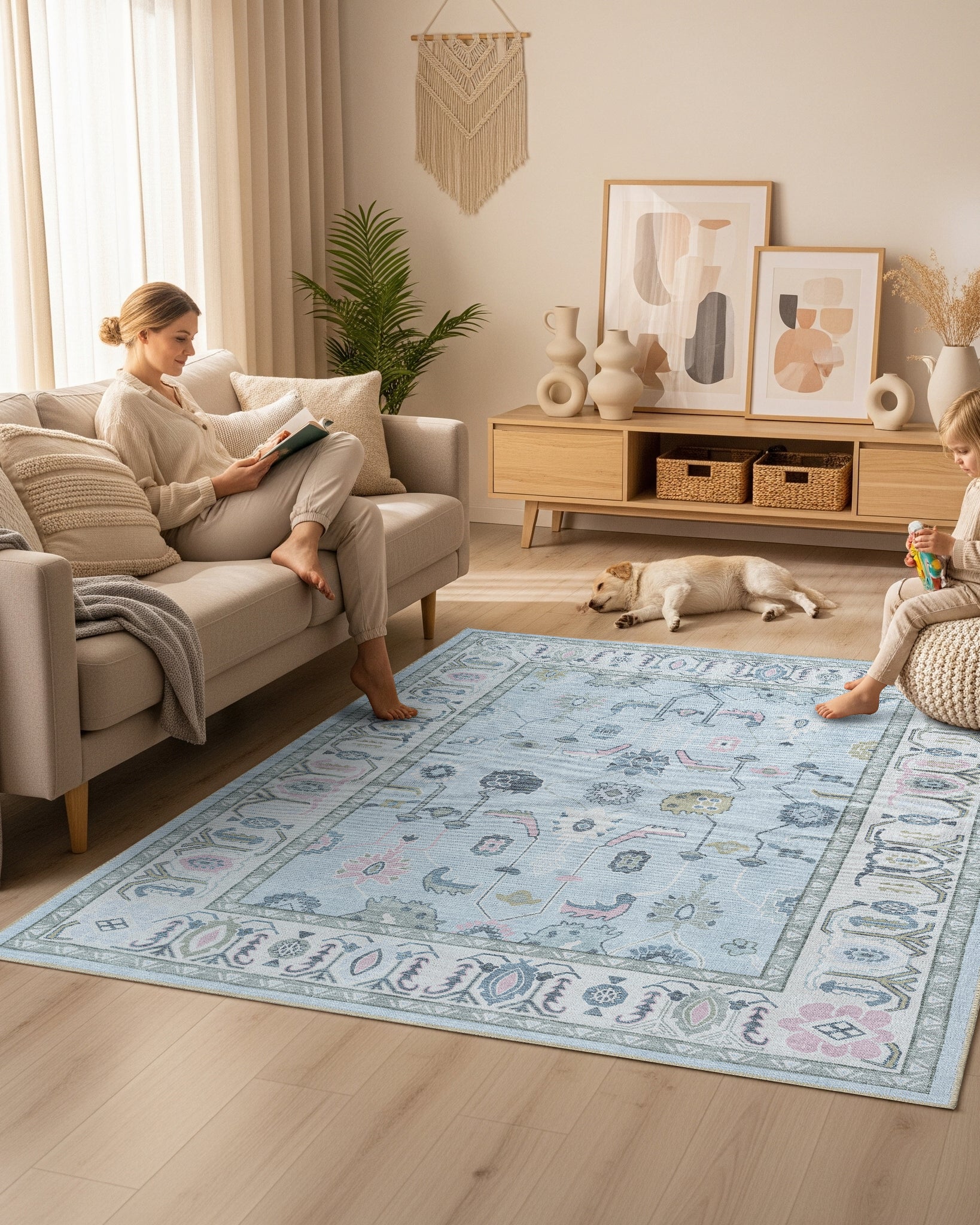
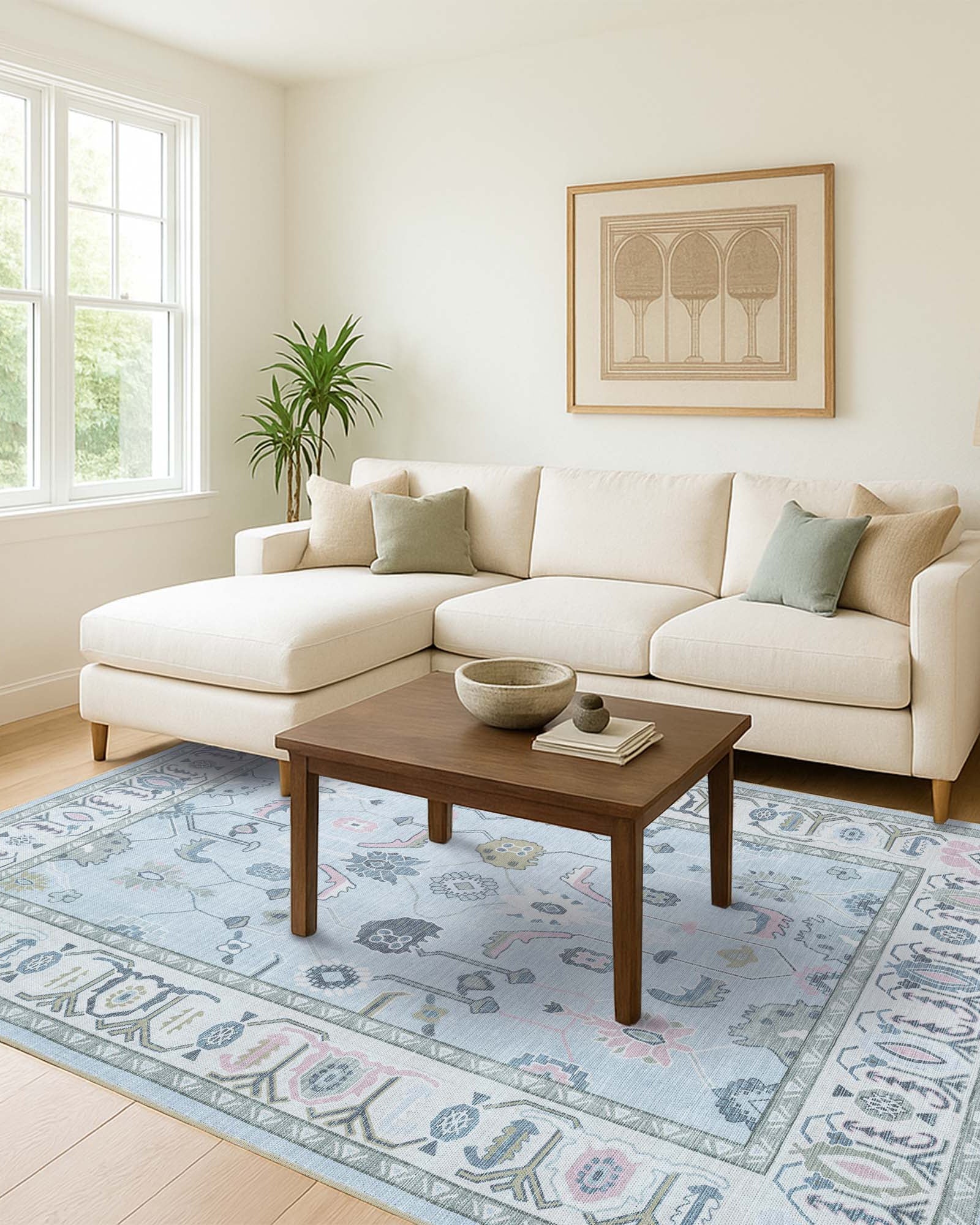
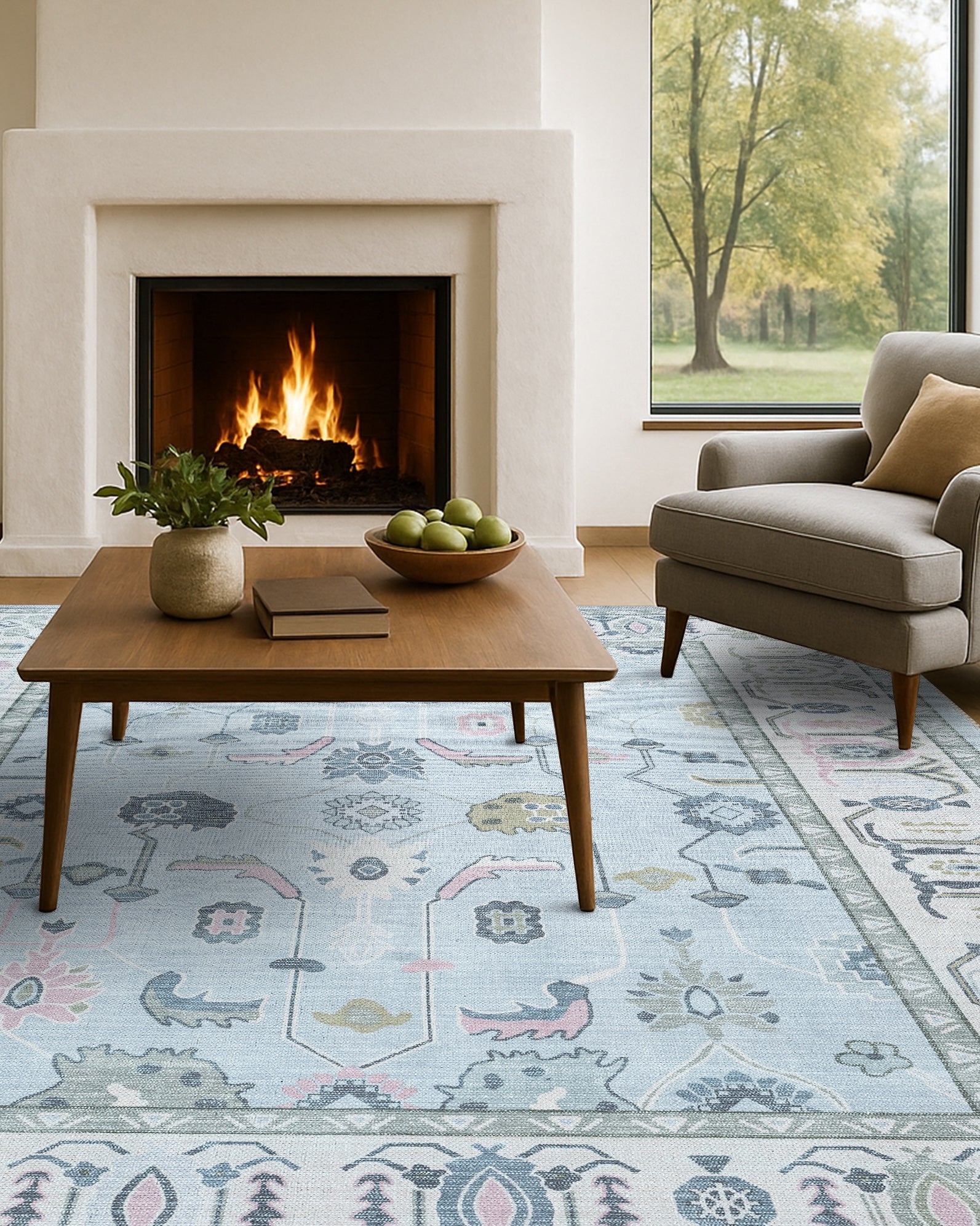
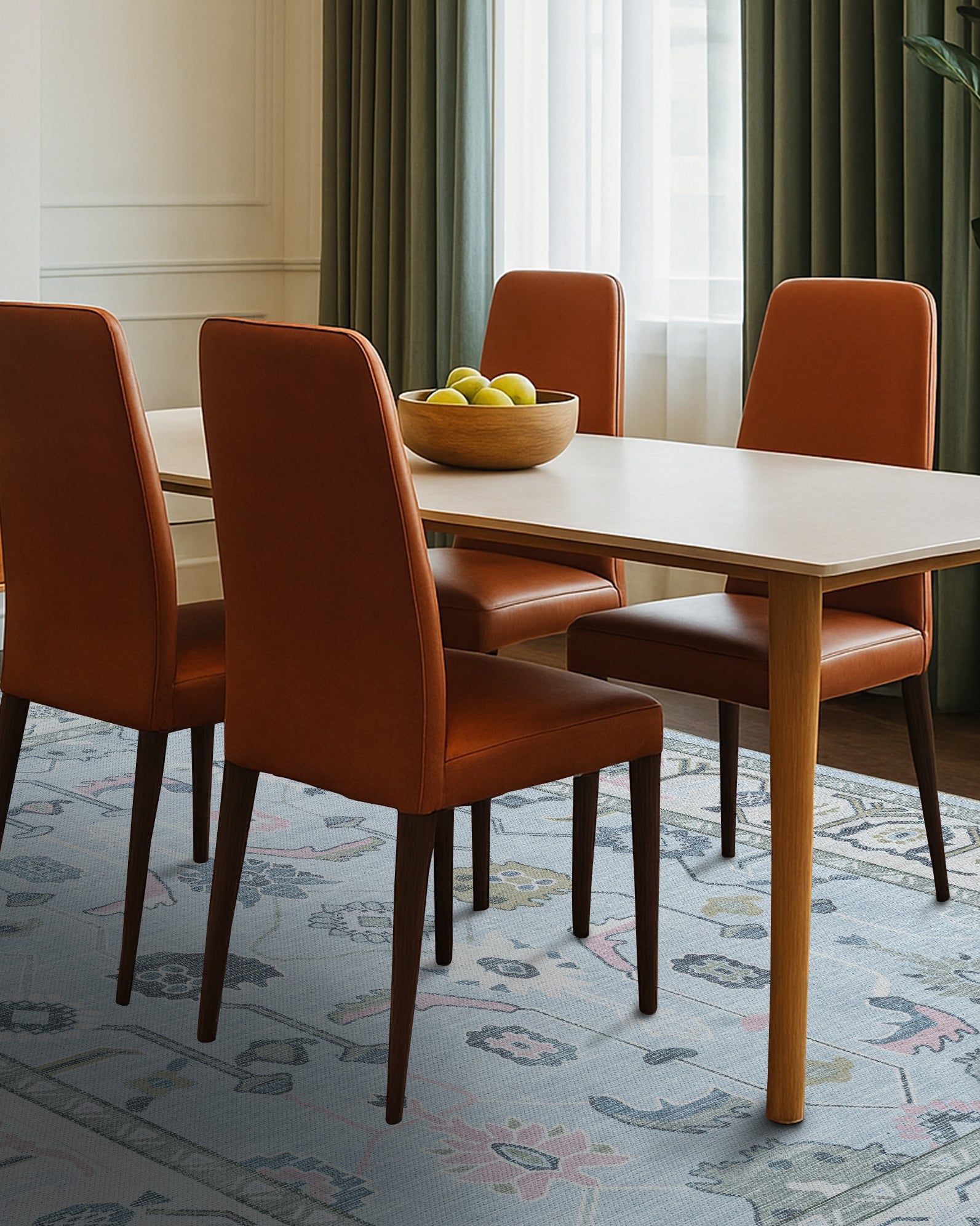
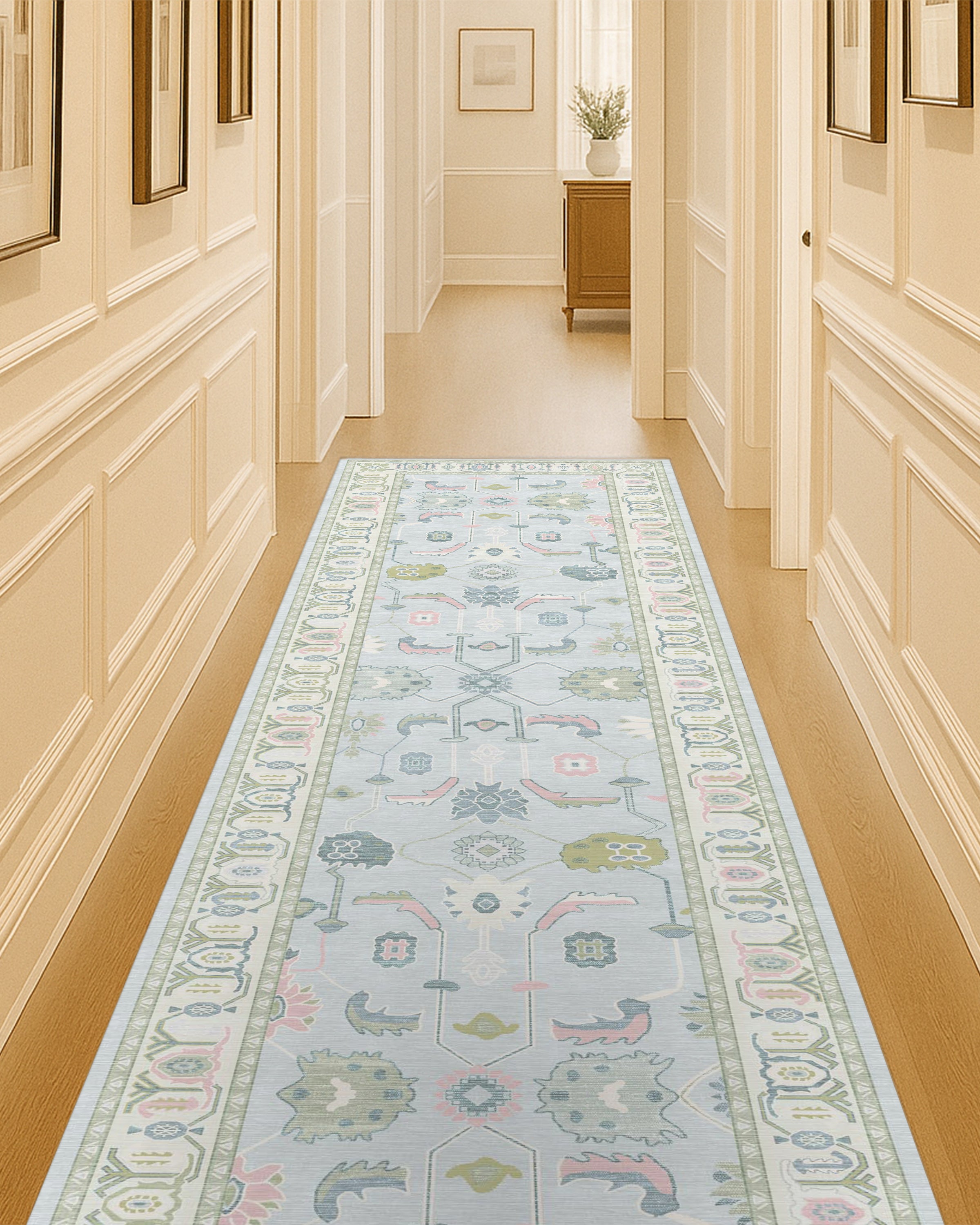
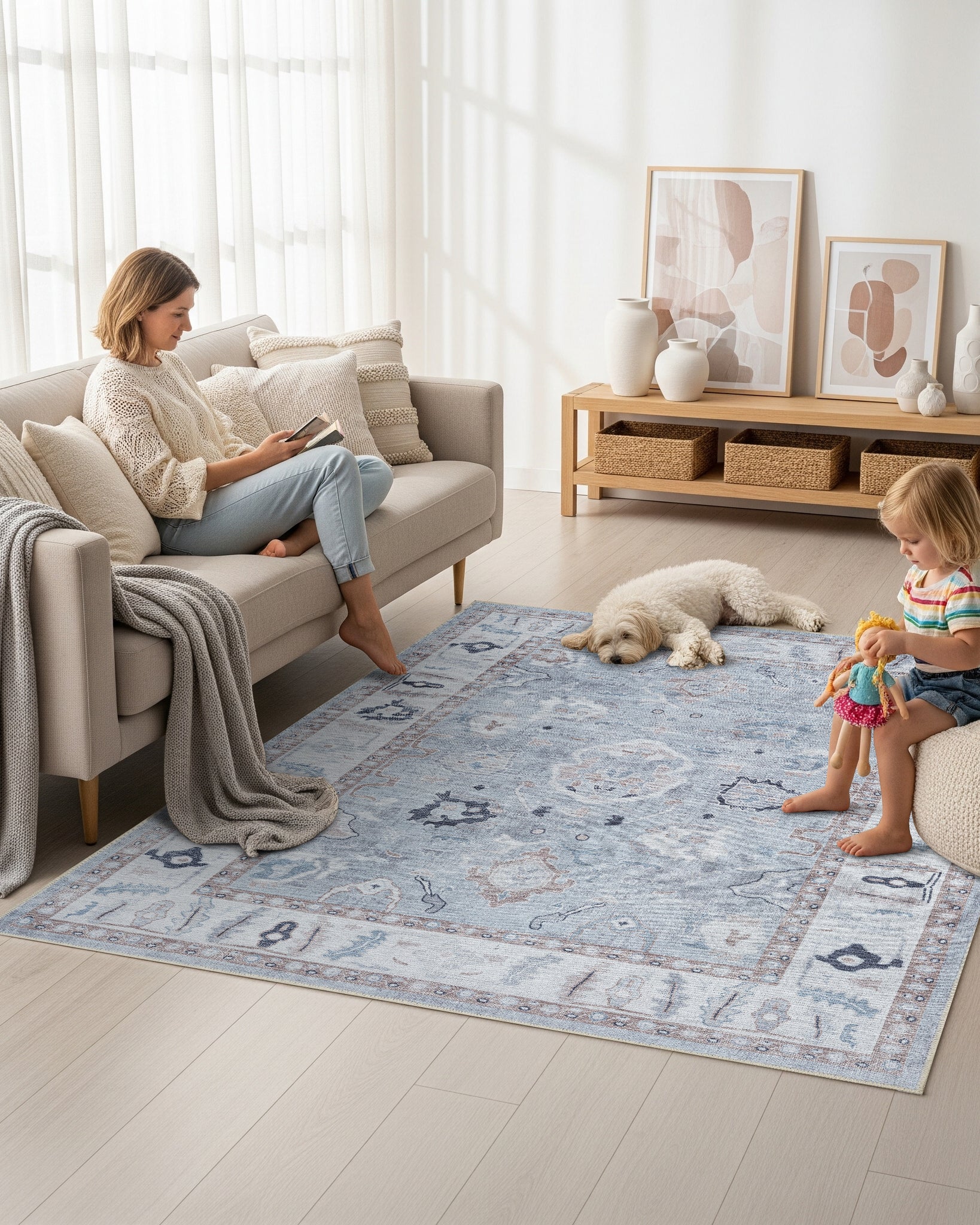
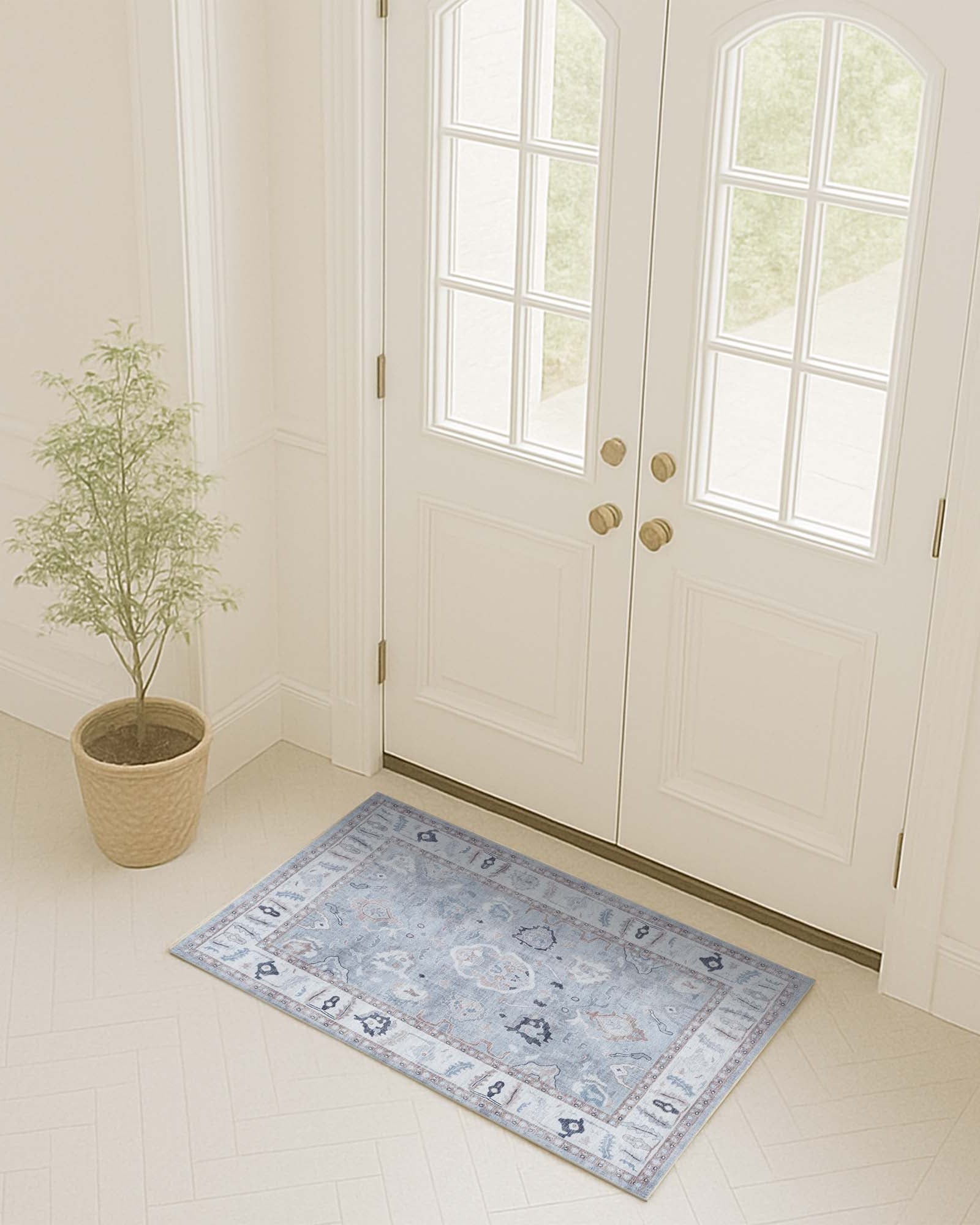
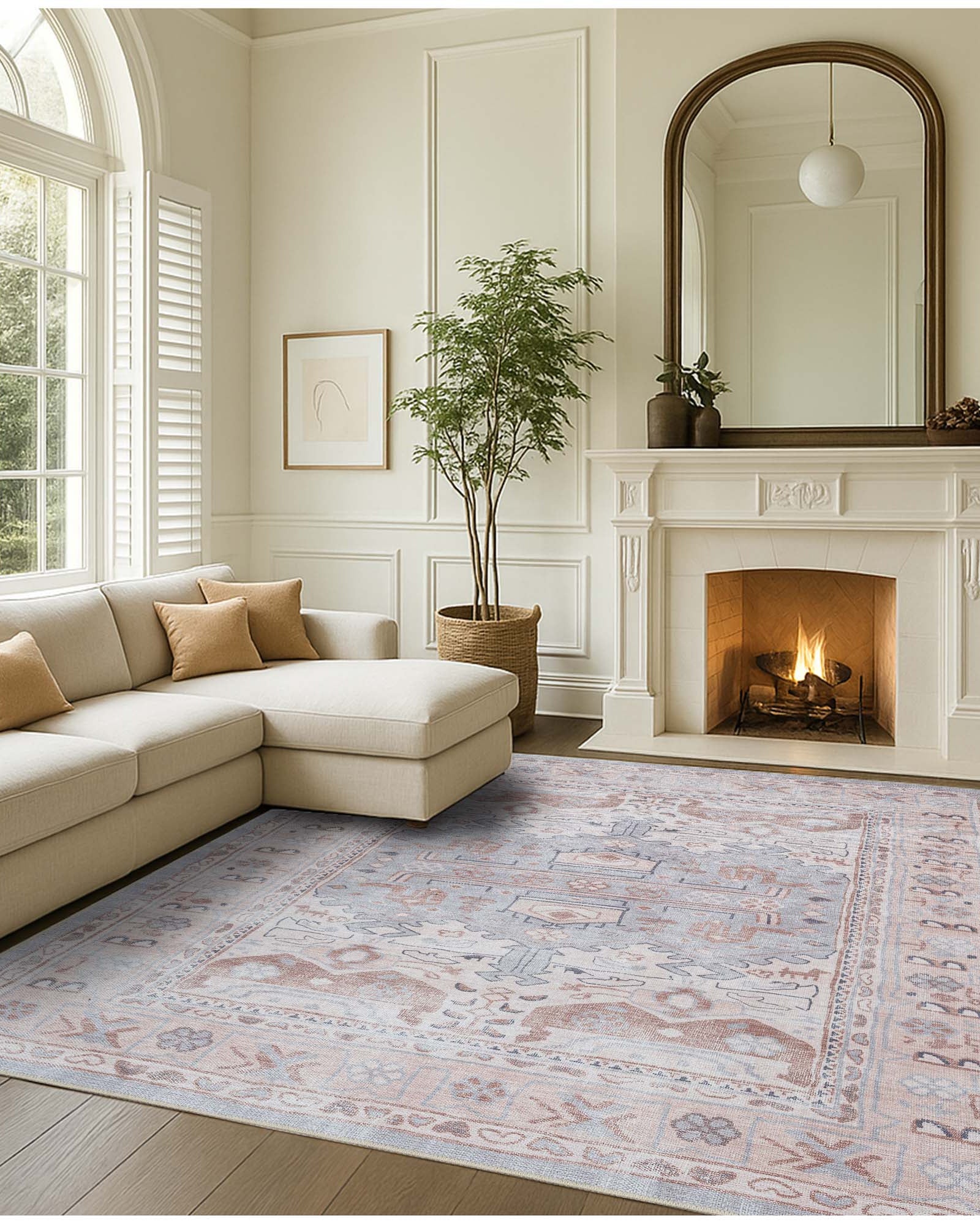
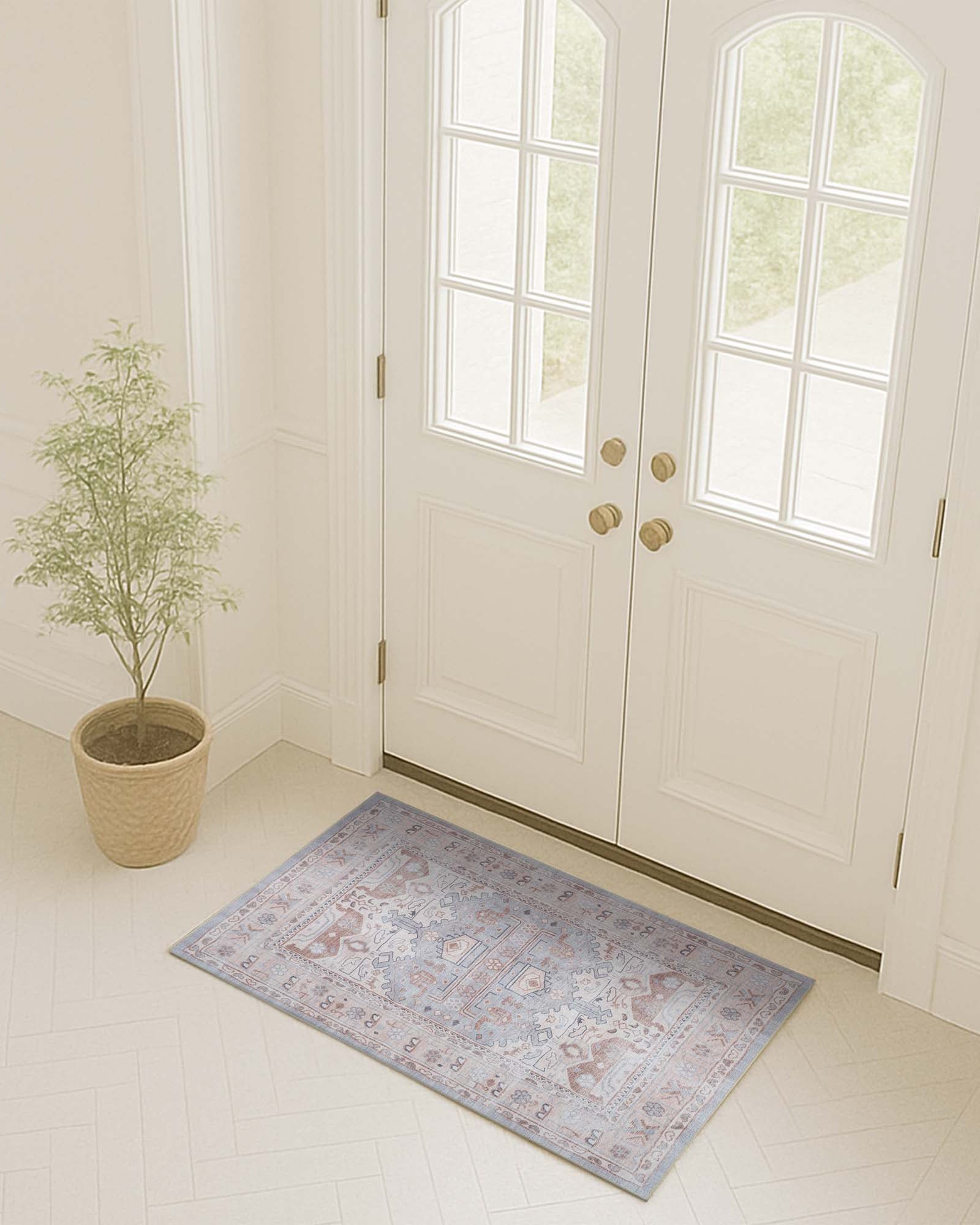
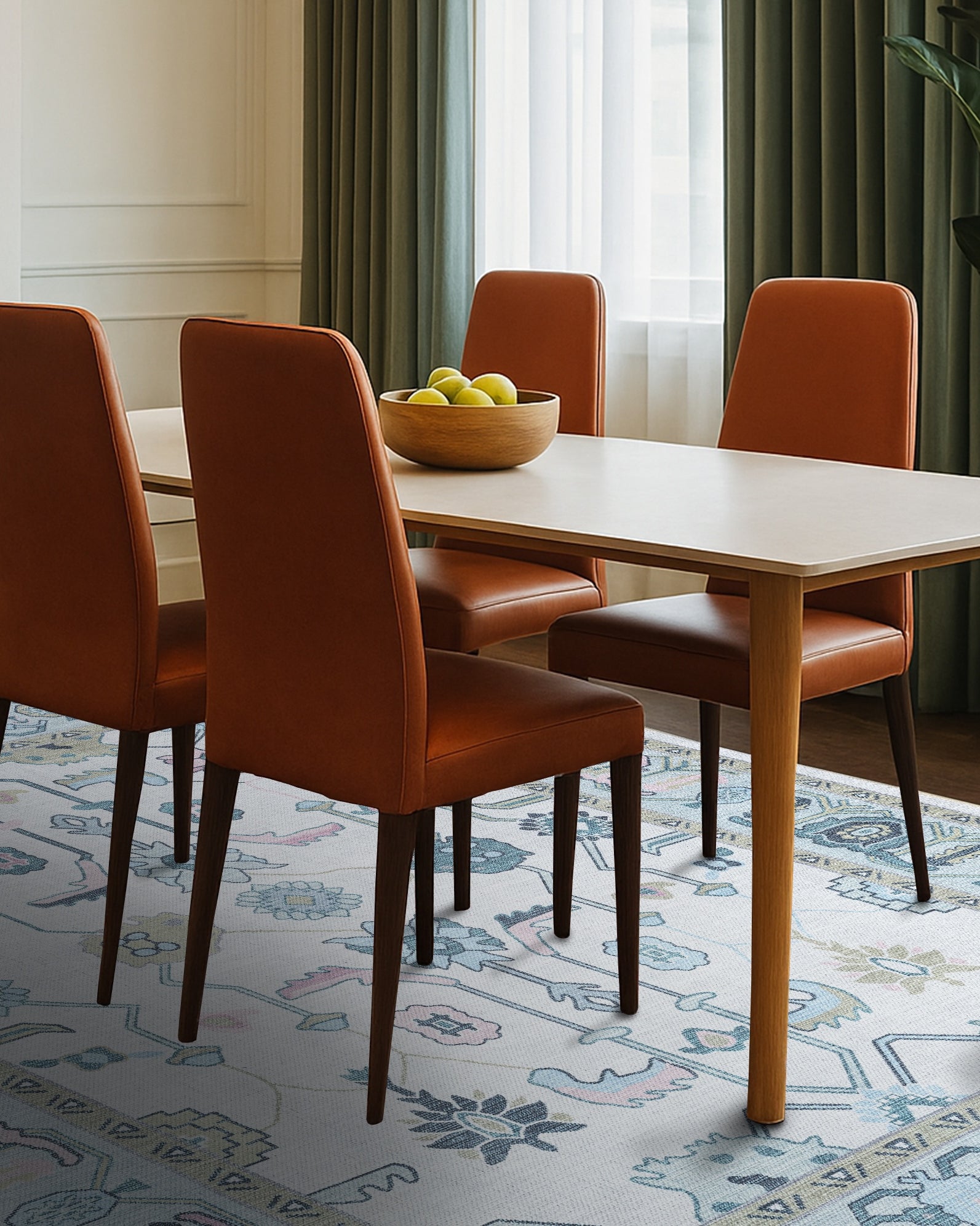
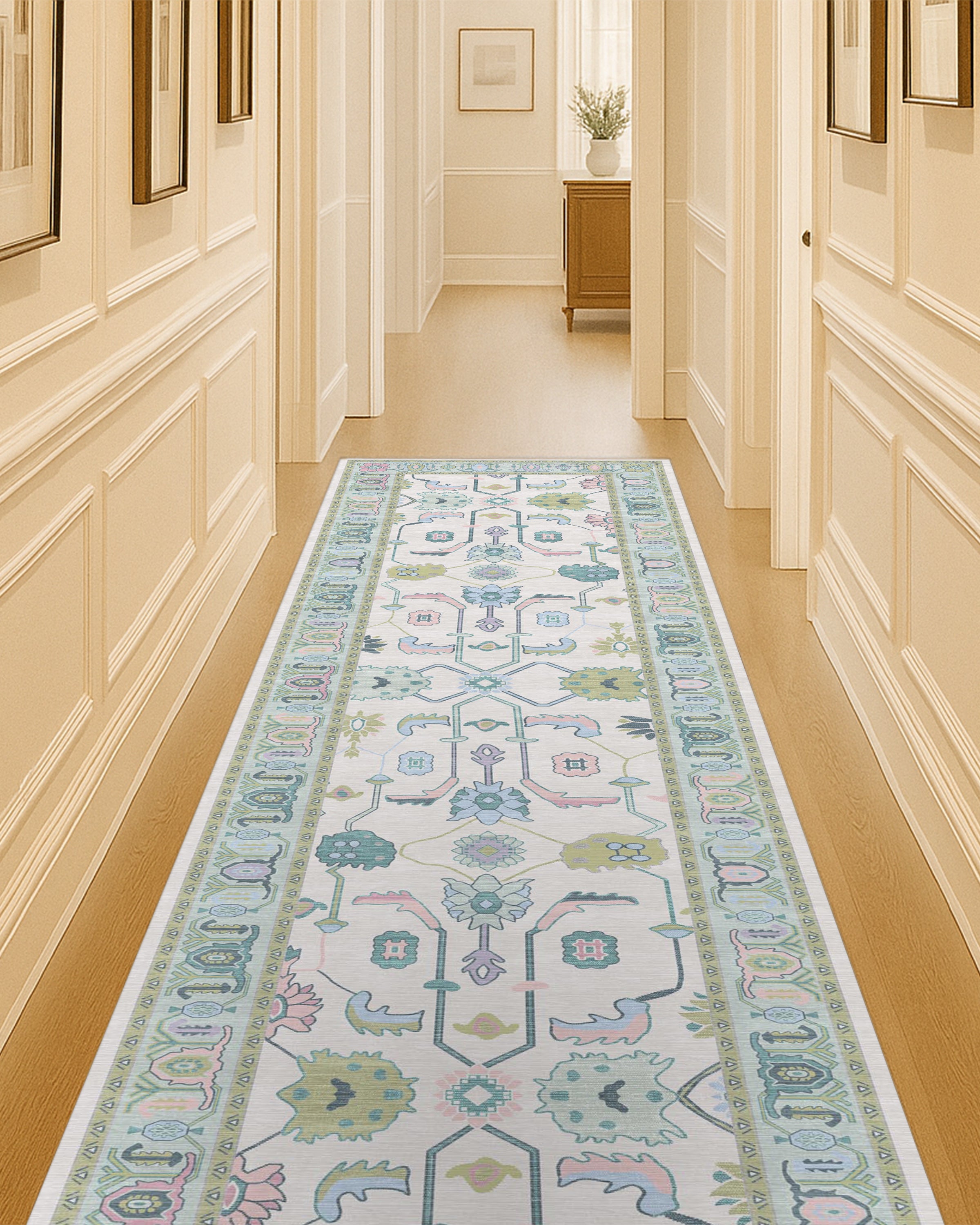
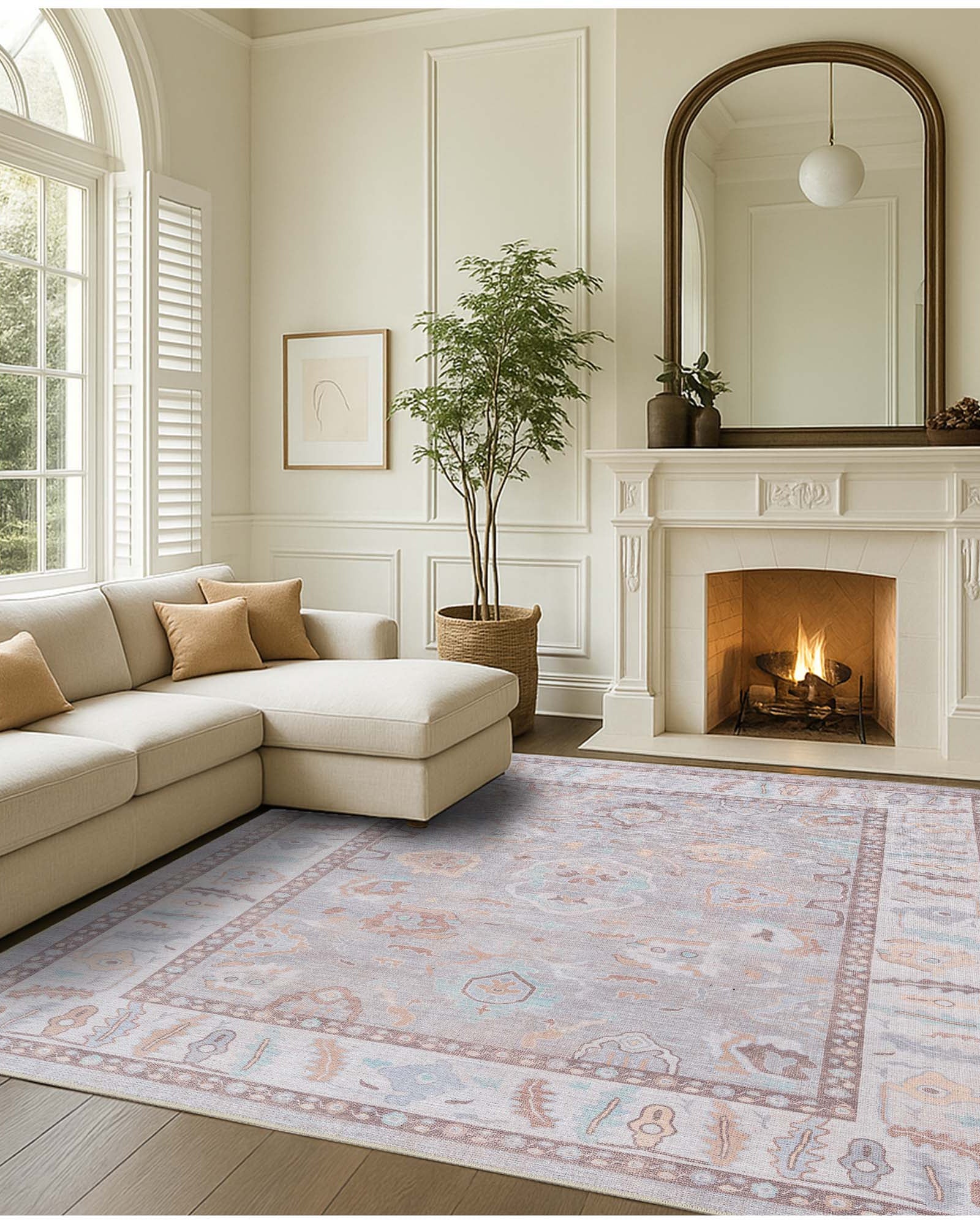
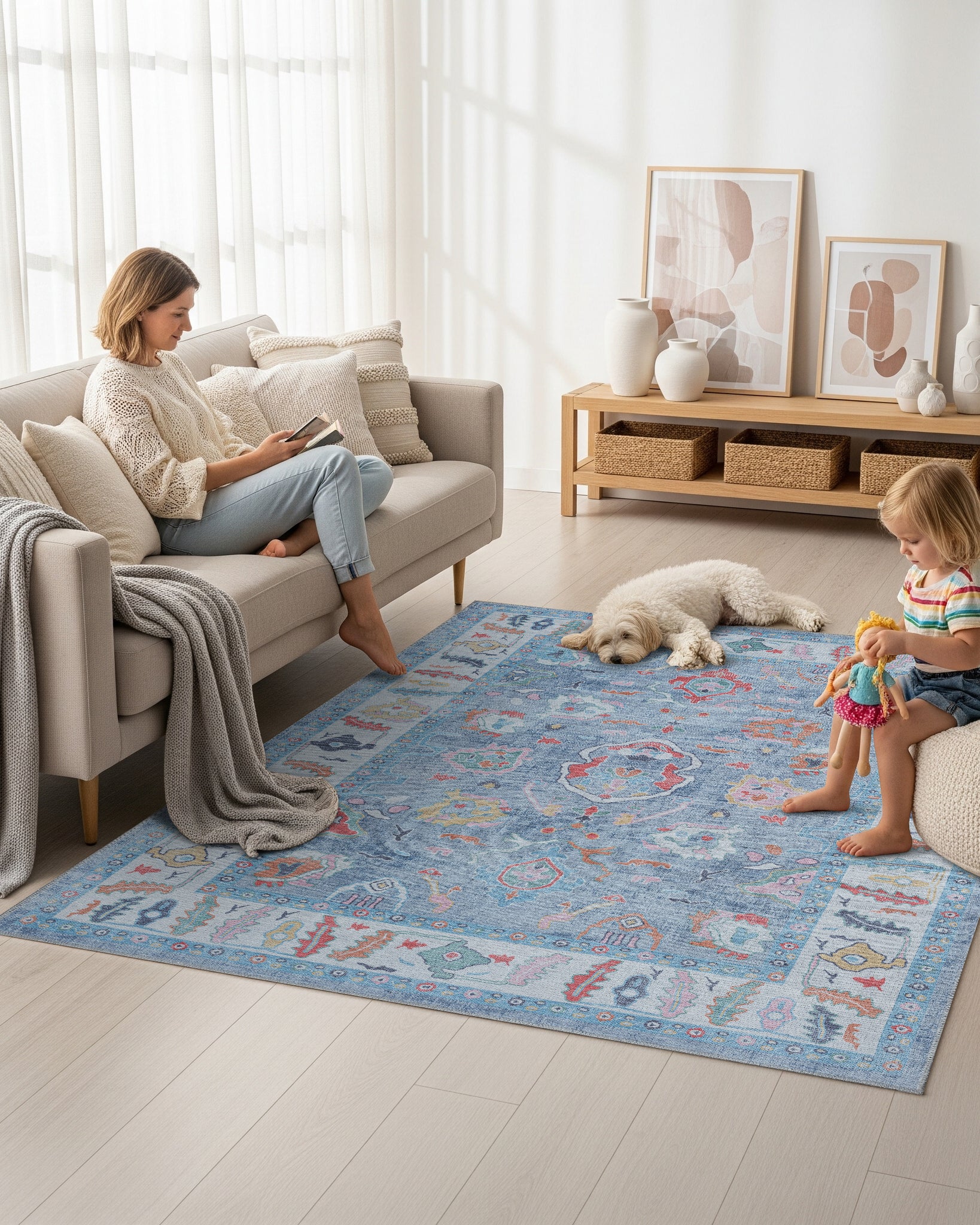
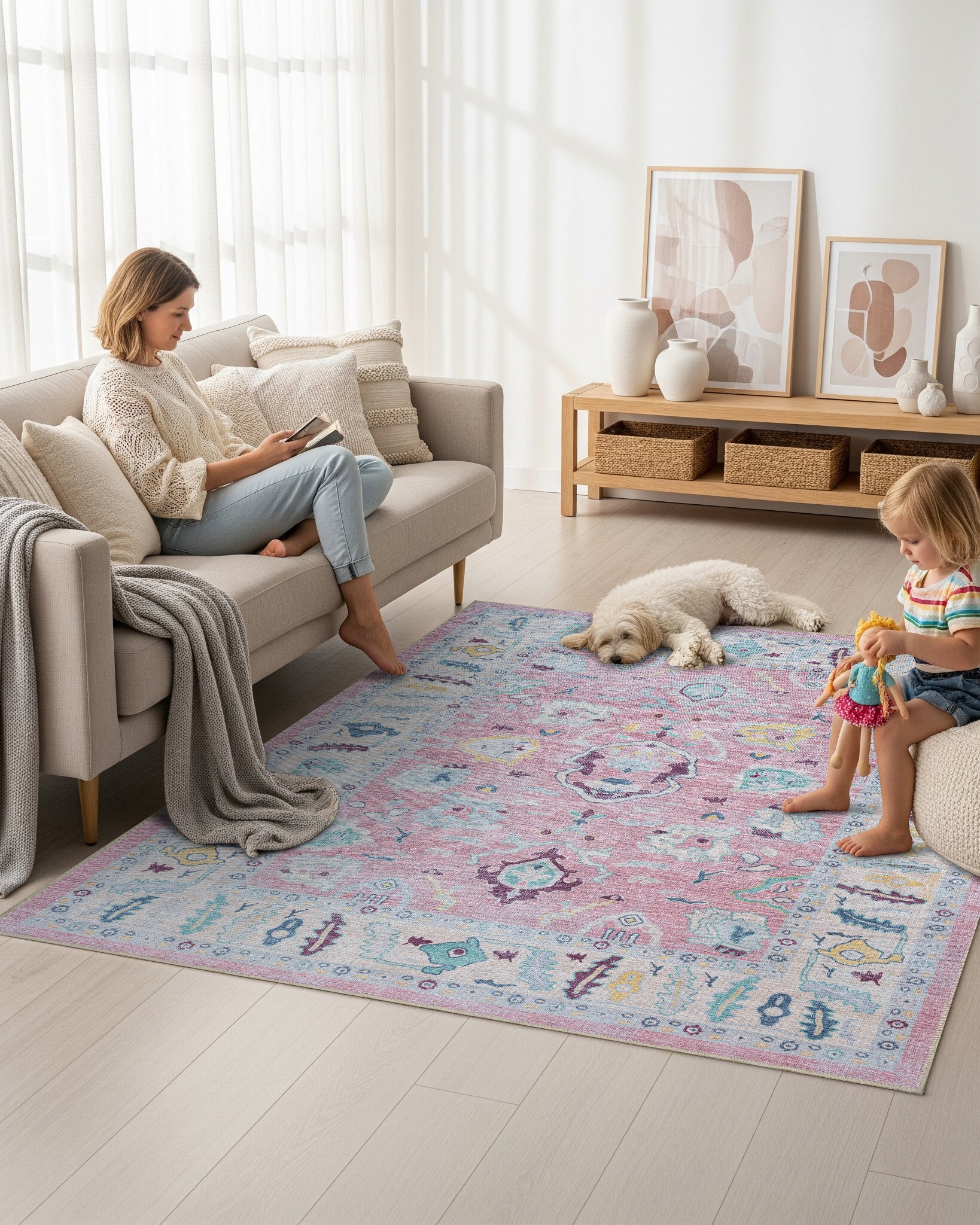
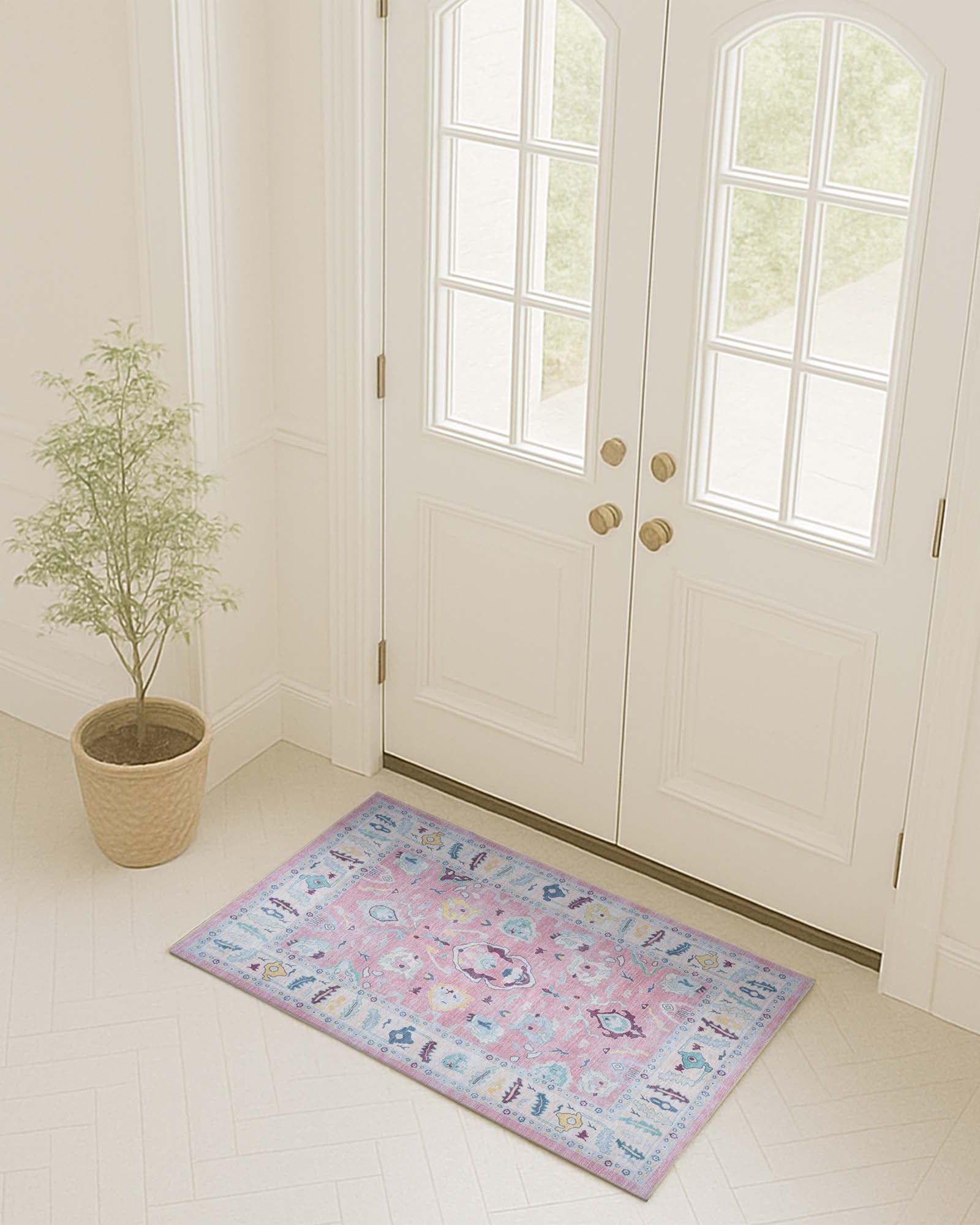
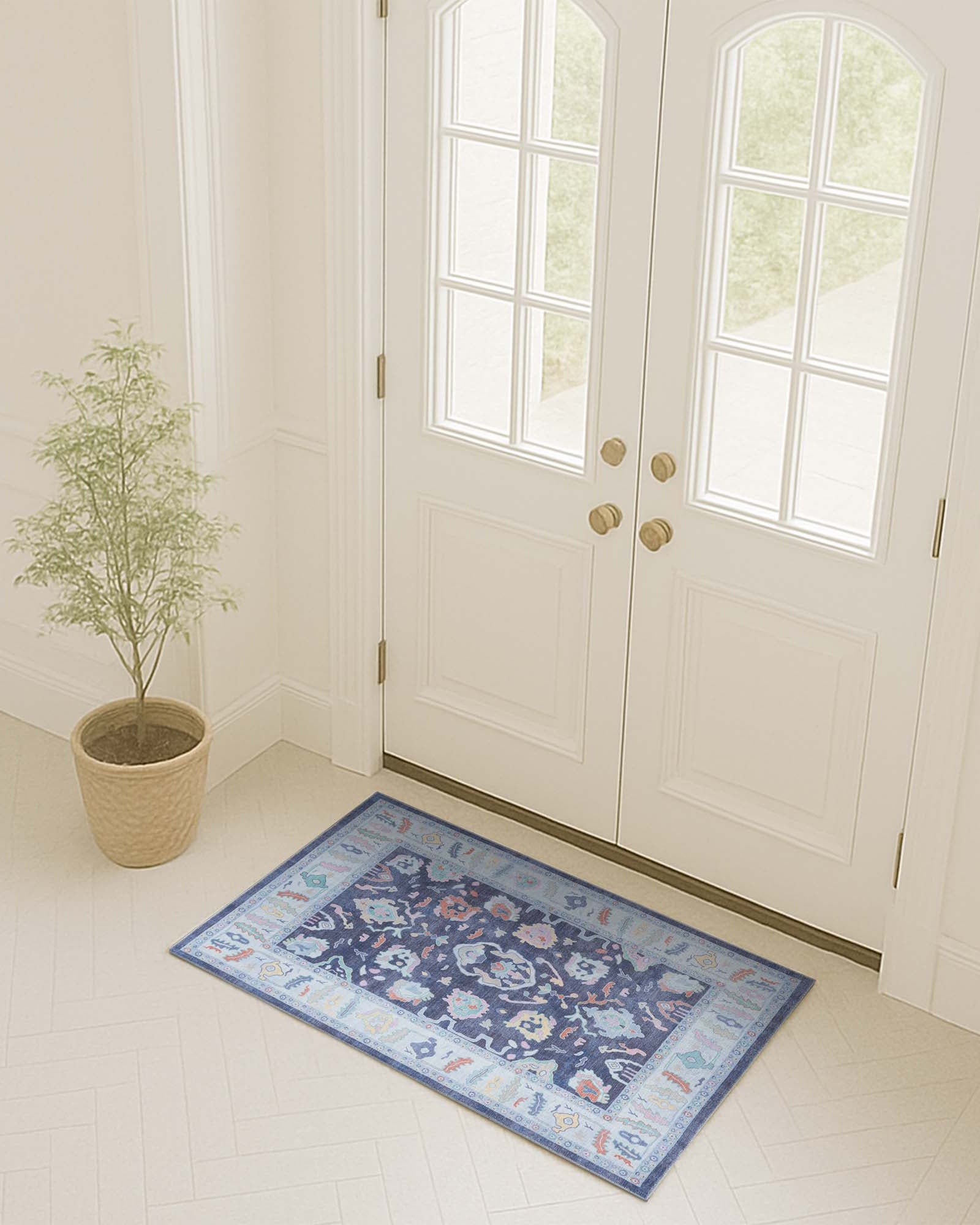
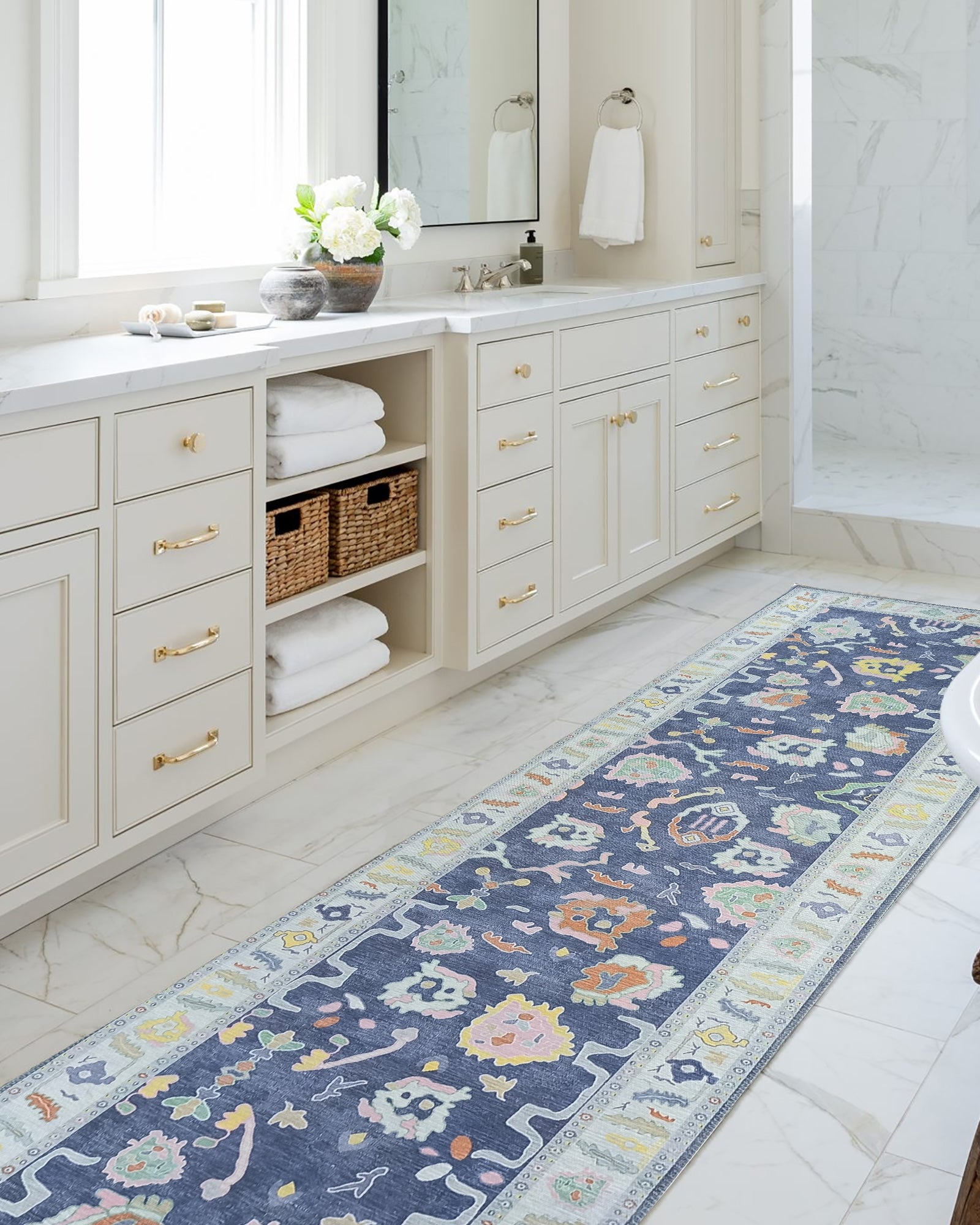
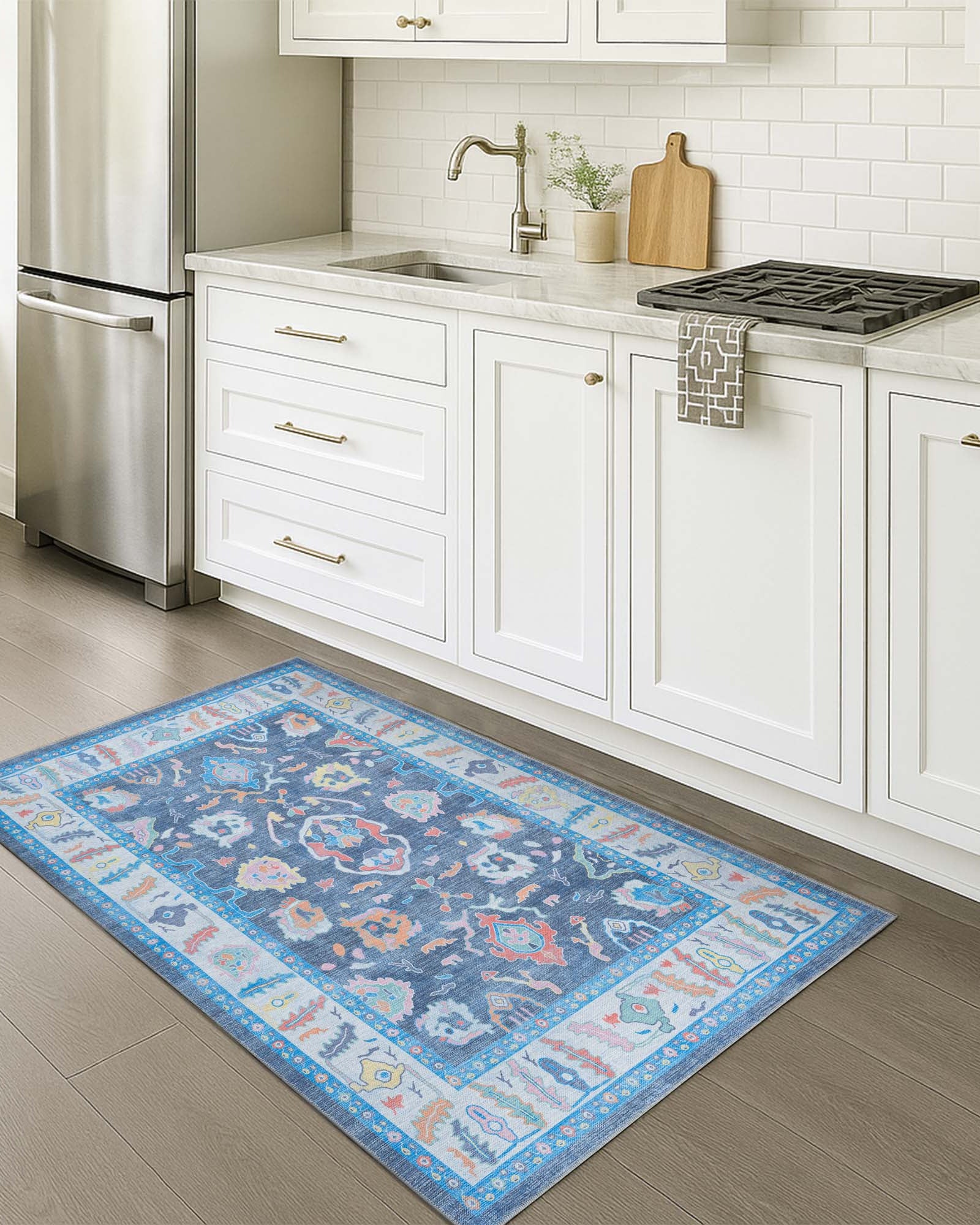
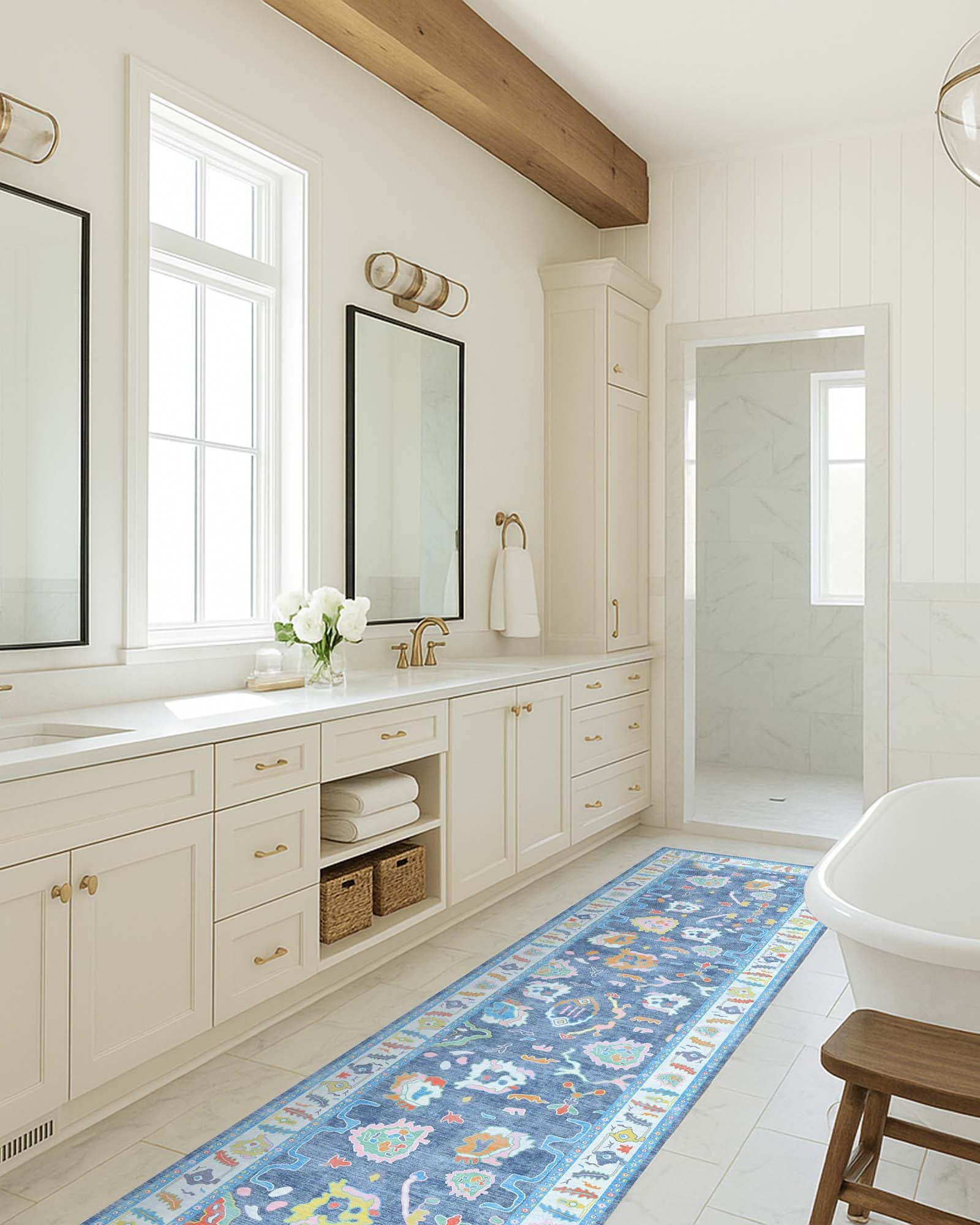
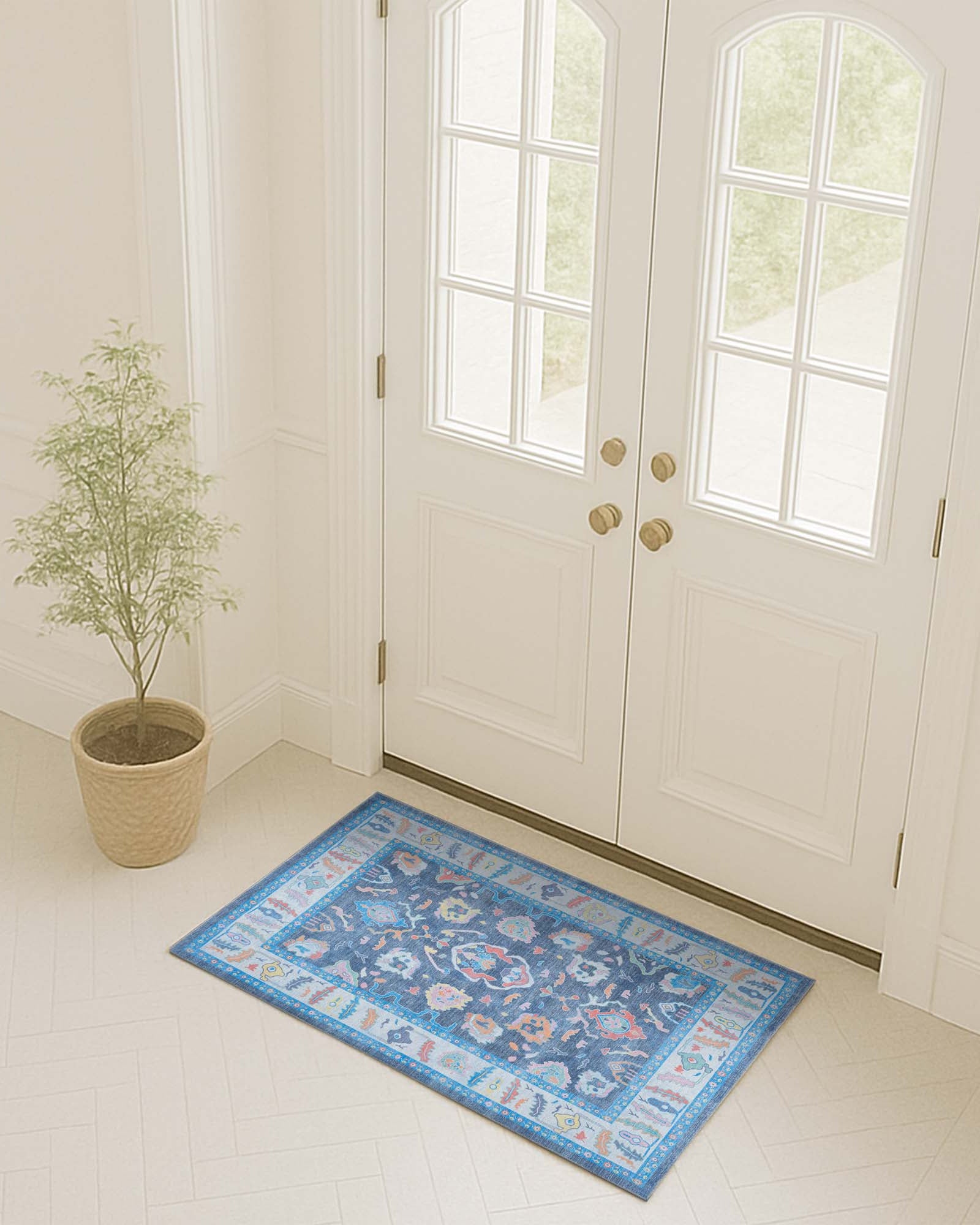
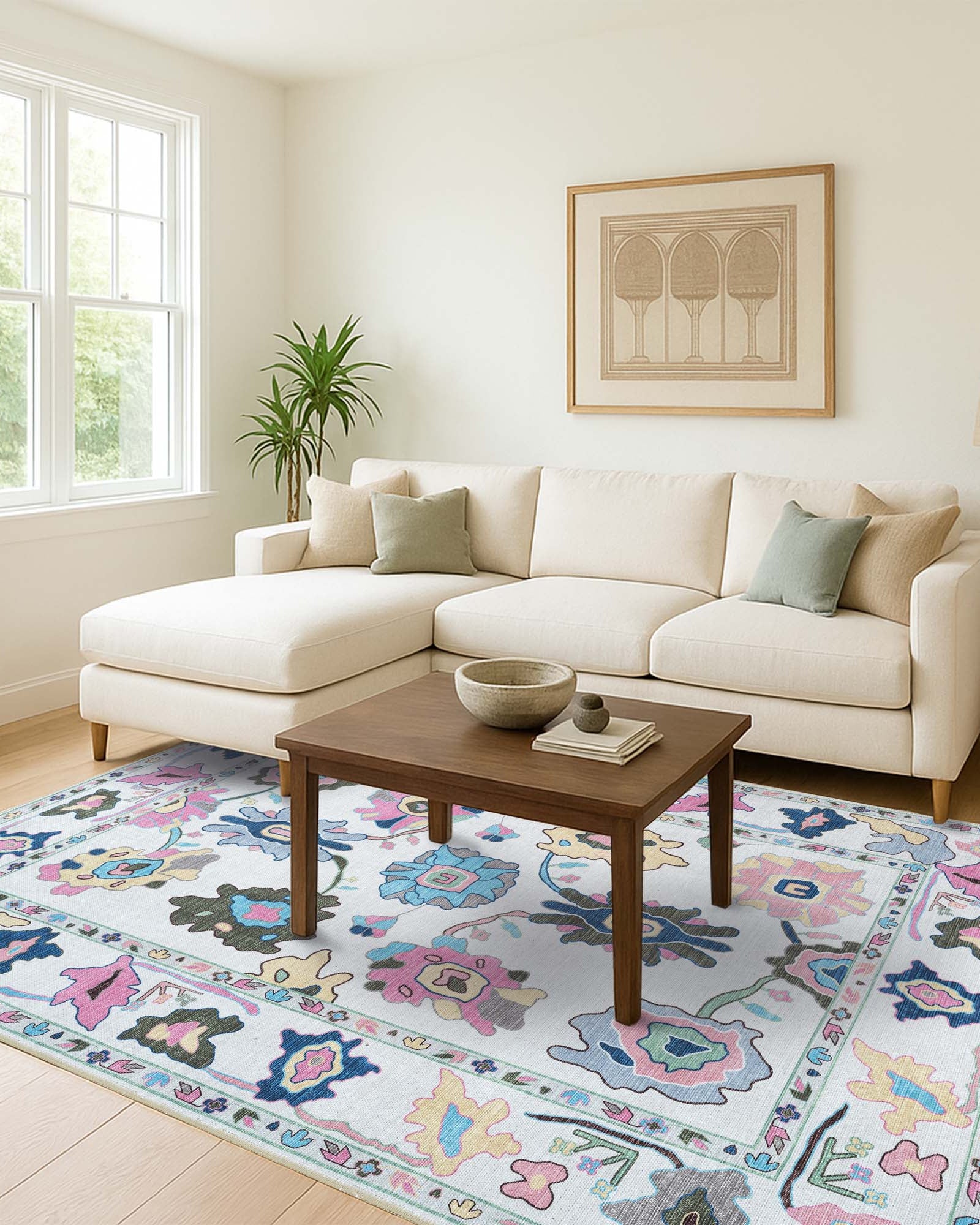
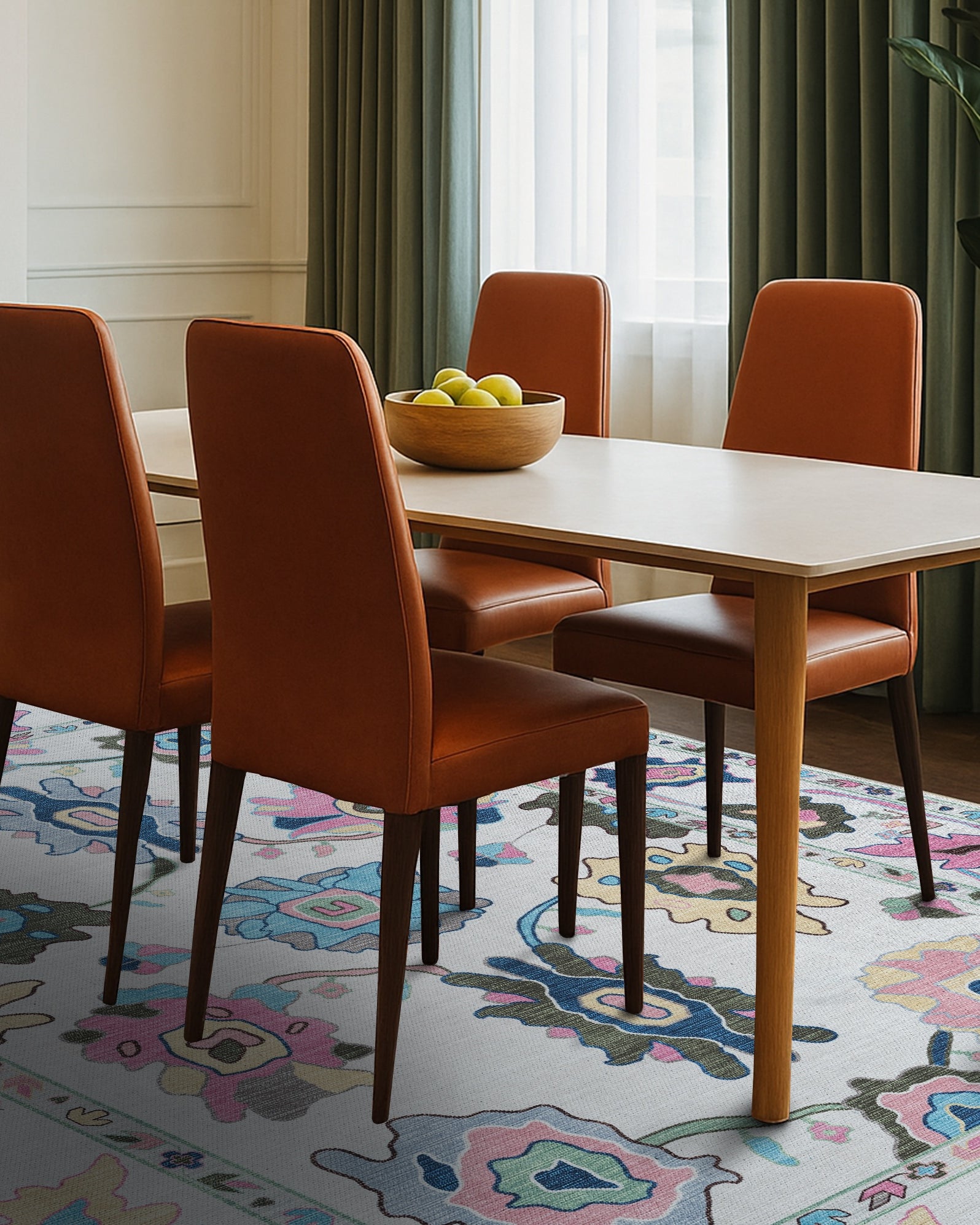
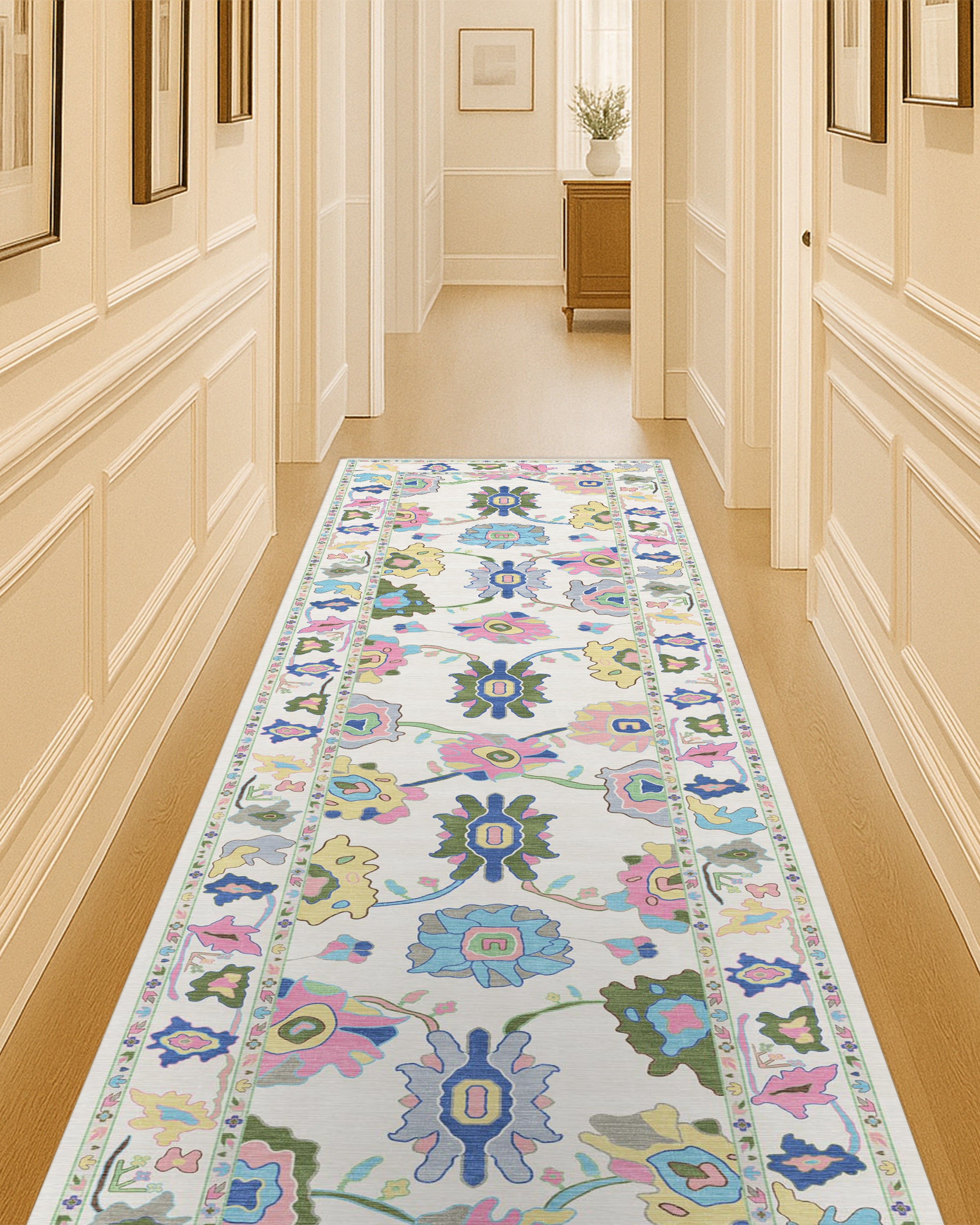
They sit well under modern and mid-century furniture, in rooms with a restrained palette, and anywhere a patterned rug would compete with art or upholstery. Because the surface is sheared low they are also practical in tight spaces, under low-clearance doors and in entryways. In a living room, keep at least the front legs of every seating piece on the rug; in a dining room, allow 24 inches past the table on all sides.
Condition, Age and Measurement
Each product page lists the estimated age of the base rug, its origin where identifiable, the overdye colour, exact measured dimensions and a plain condition note. Bear in mind that overdyed pieces have been through an aggressive chemical and mechanical process on top of decades of prior use, so expect thin areas, low pile throughout, occasional old repairs and softened ends. These are documented rather than retouched. Sizes are never standard — the base rugs were handwoven, opposite edges frequently differ, and the finishing process can shift dimensions slightly. Order against the listed measurements.
Care
Overdyed rugs need slightly more caution than untreated vintage pieces because the applied dye sits on already-stripped fibre. Use a rug pad on hard floors. Blot spills immediately with a white cloth and plain water only — no detergent, no commercial spot remover, both of which can lift the overdye and leave a pale mark. Do not use a home carpet-cleaning machine or a steam cleaner. Vacuum with the beater bar off or raised and keep it off the fringe. Rotate twice a year, and keep the rug out of prolonged direct sunlight, as a single-colour surface shows sun fading far more obviously than a multi-coloured one. Send anything set-in to a professional rug washer and tell them the rug is overdyed.