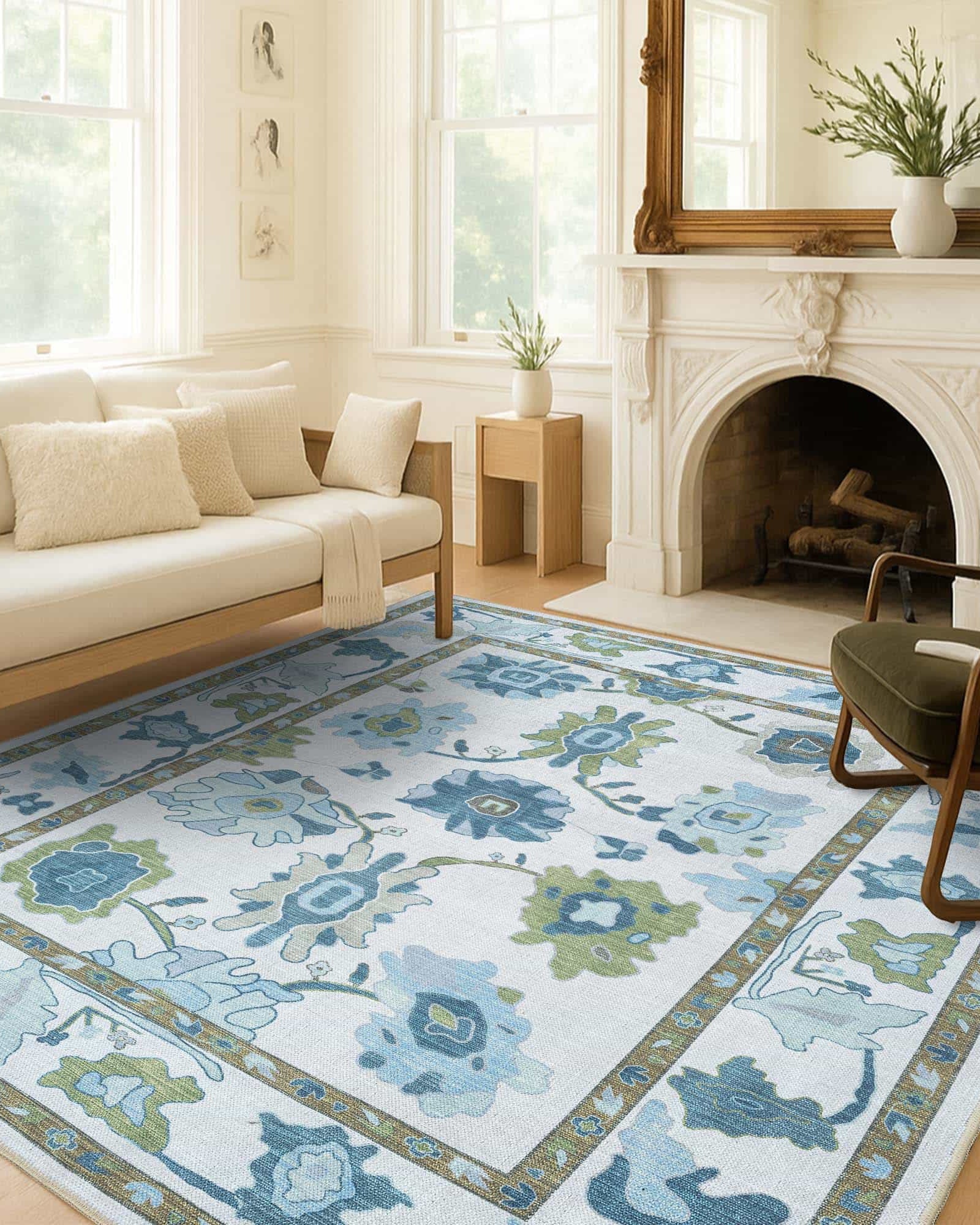
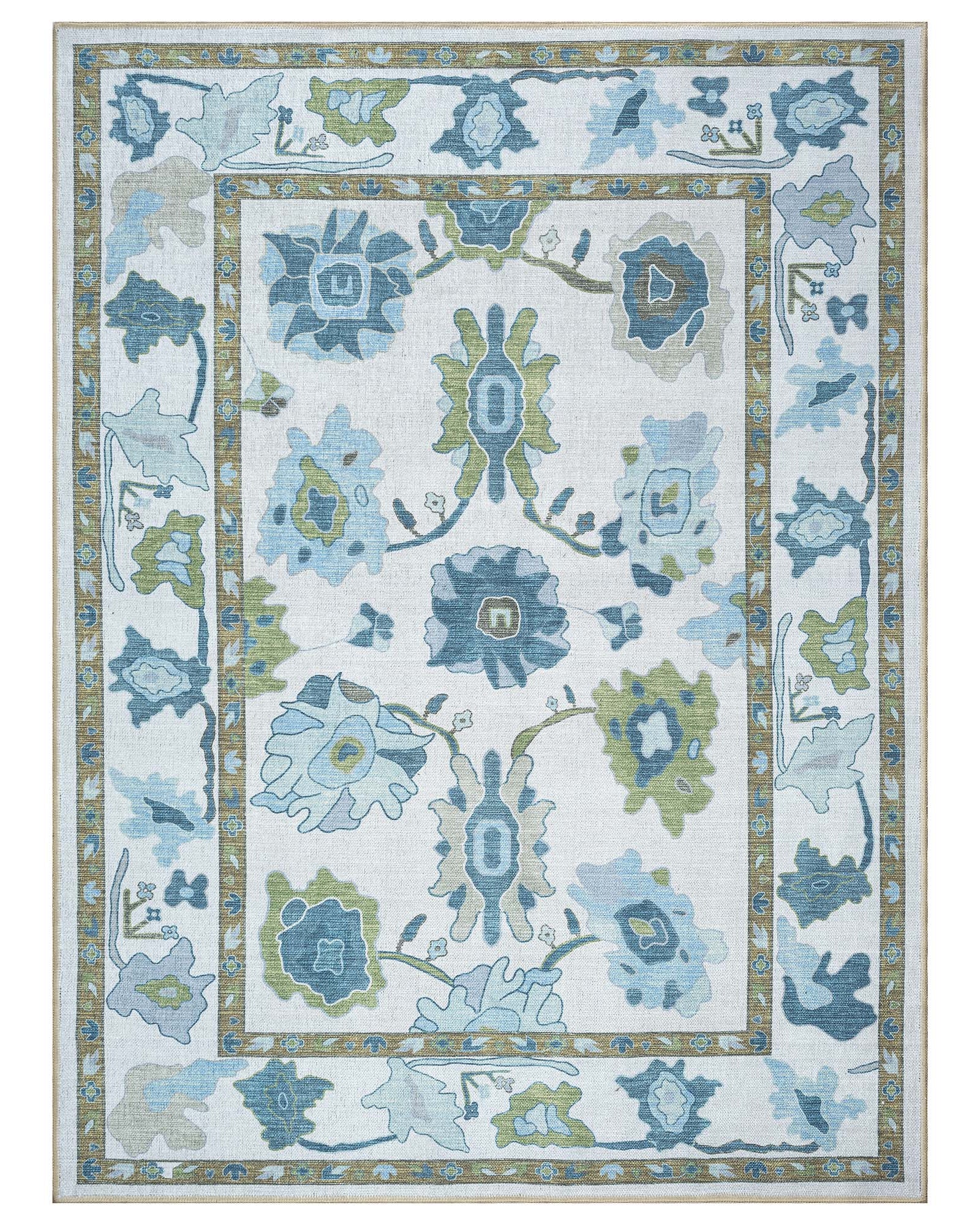
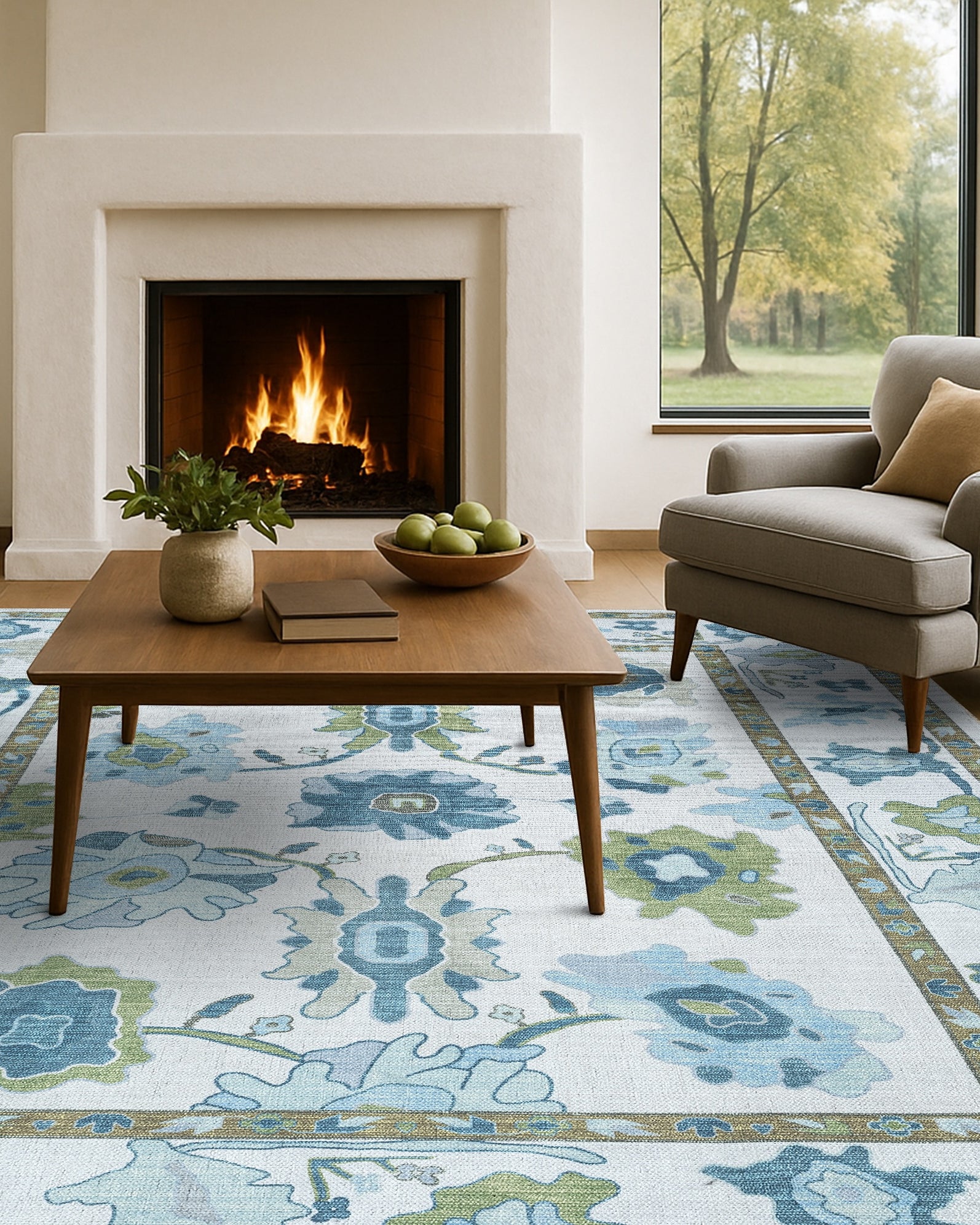
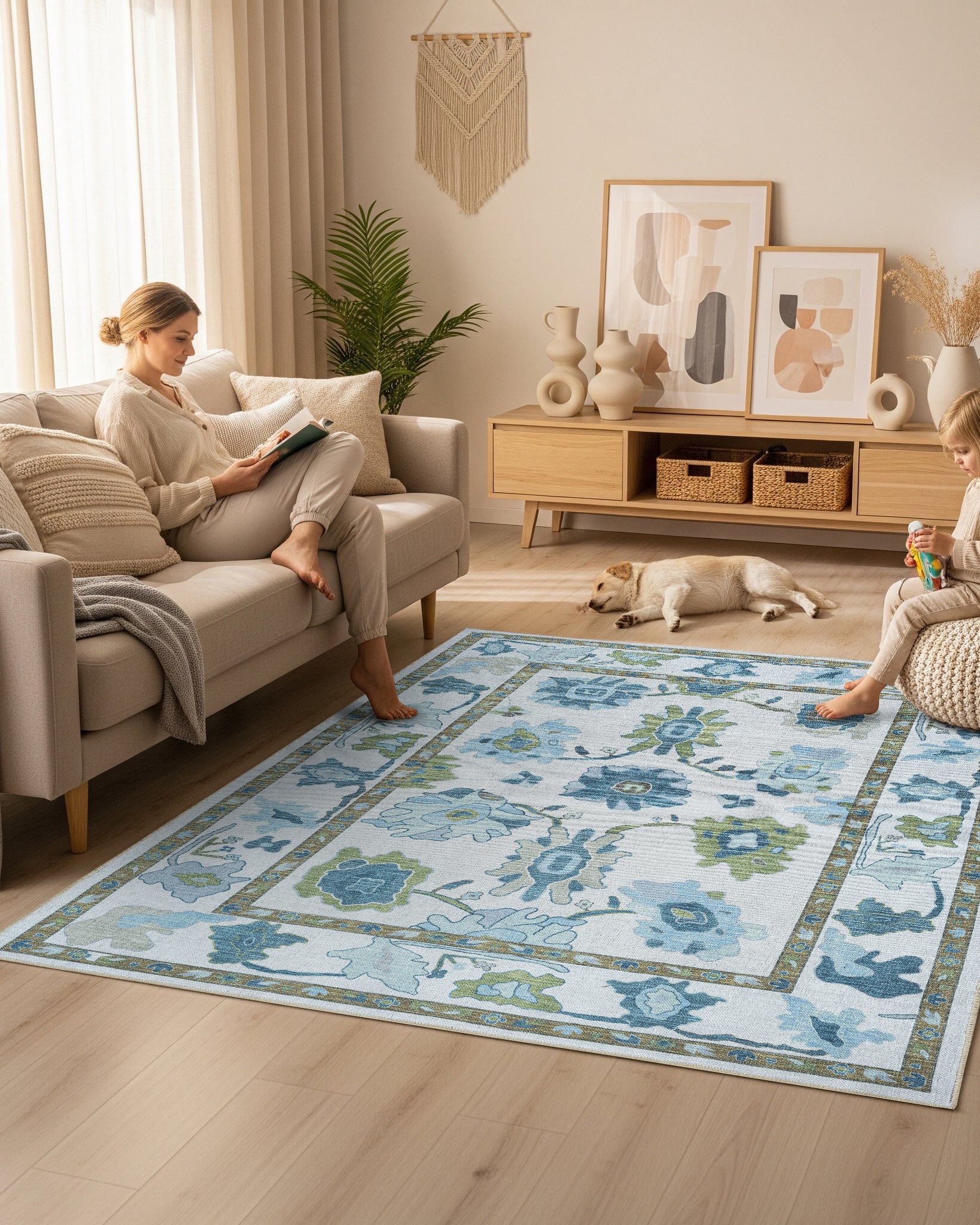
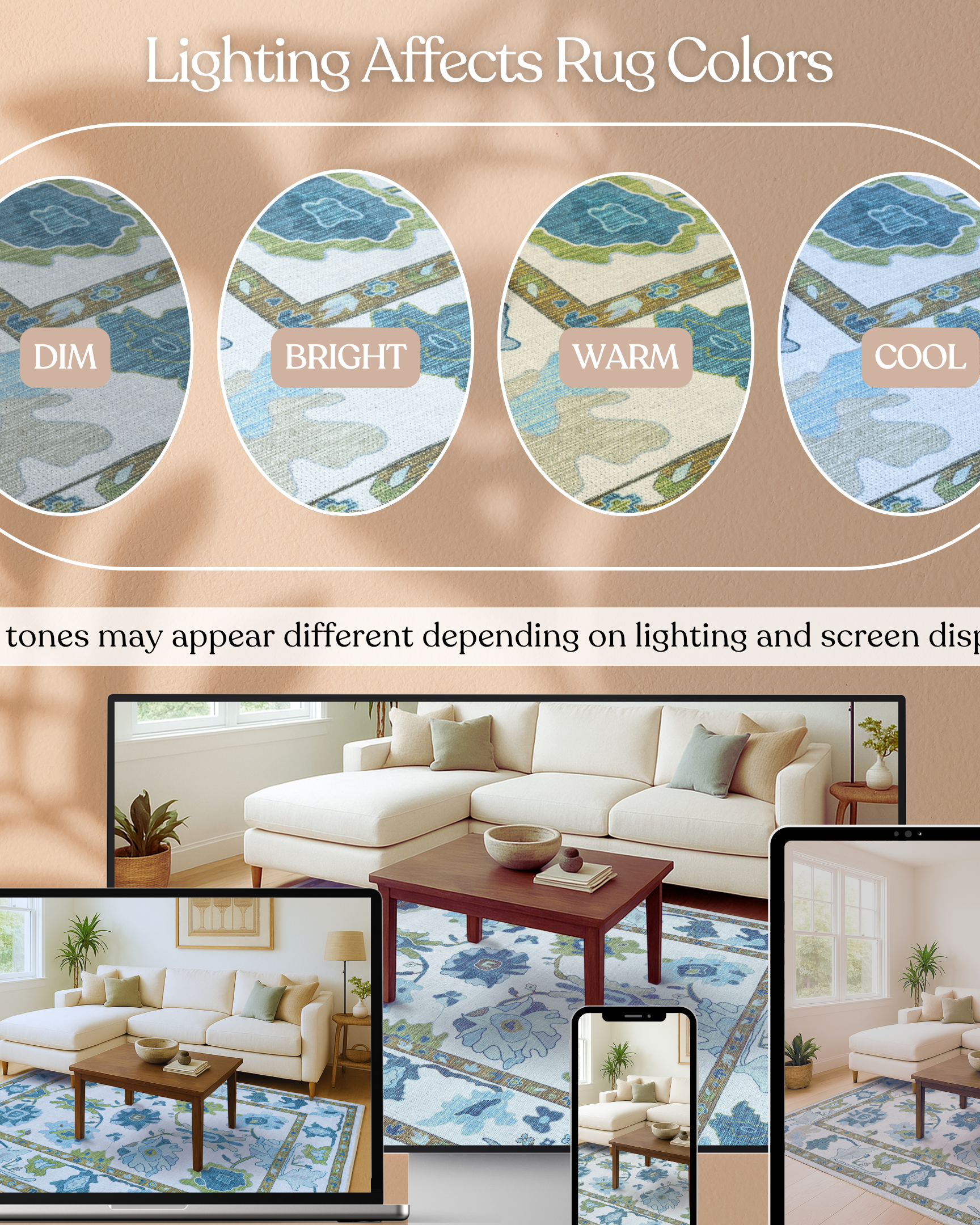
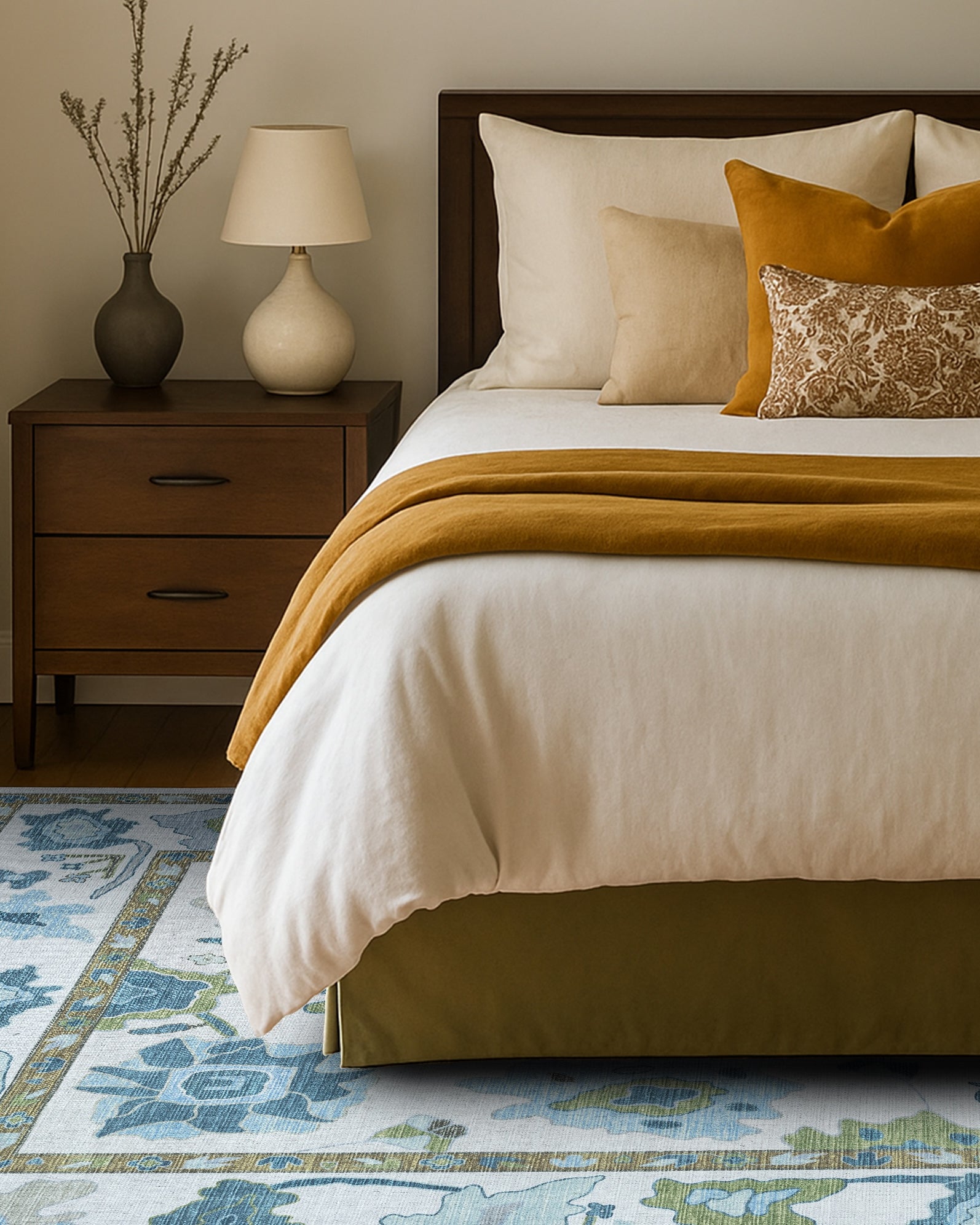
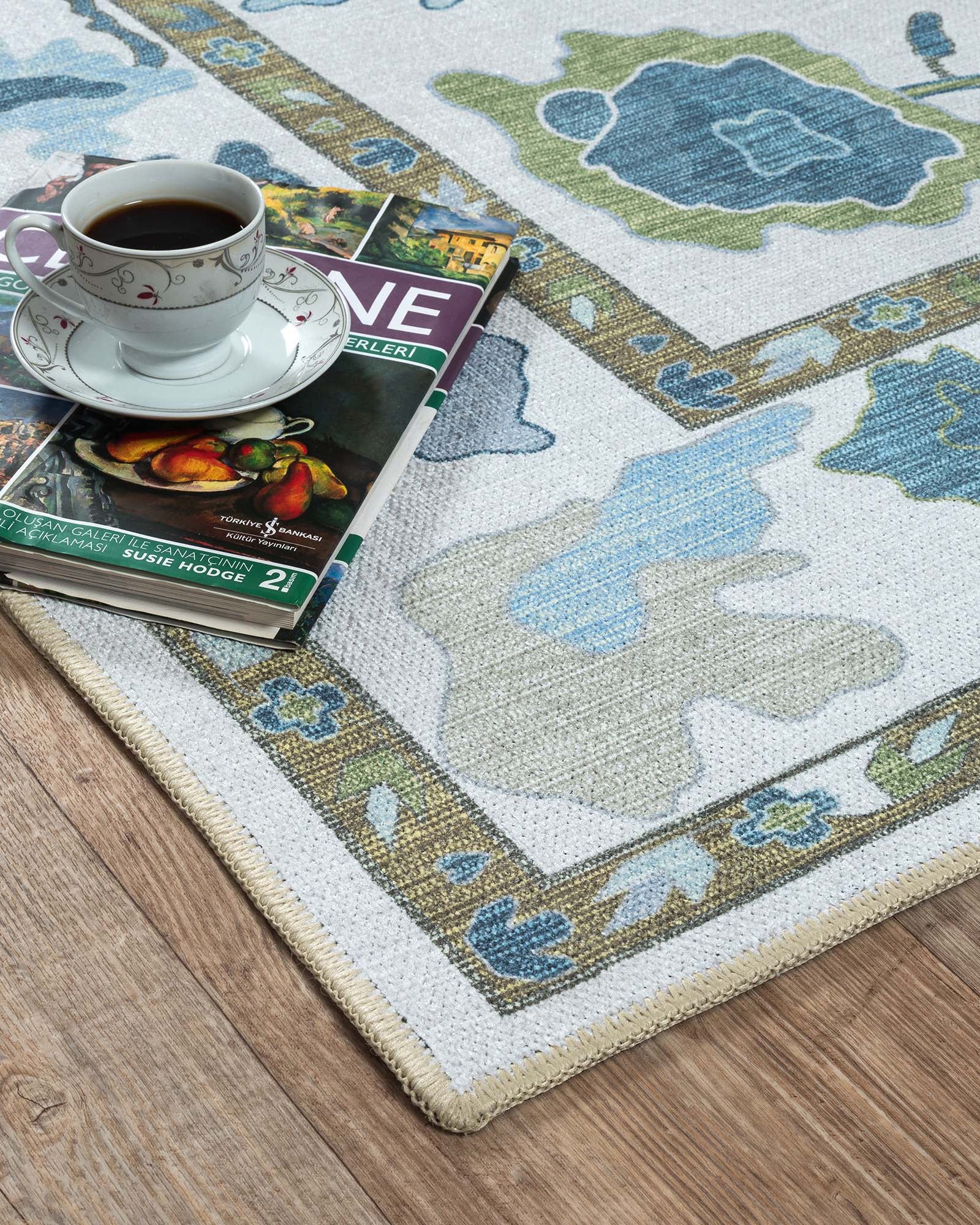
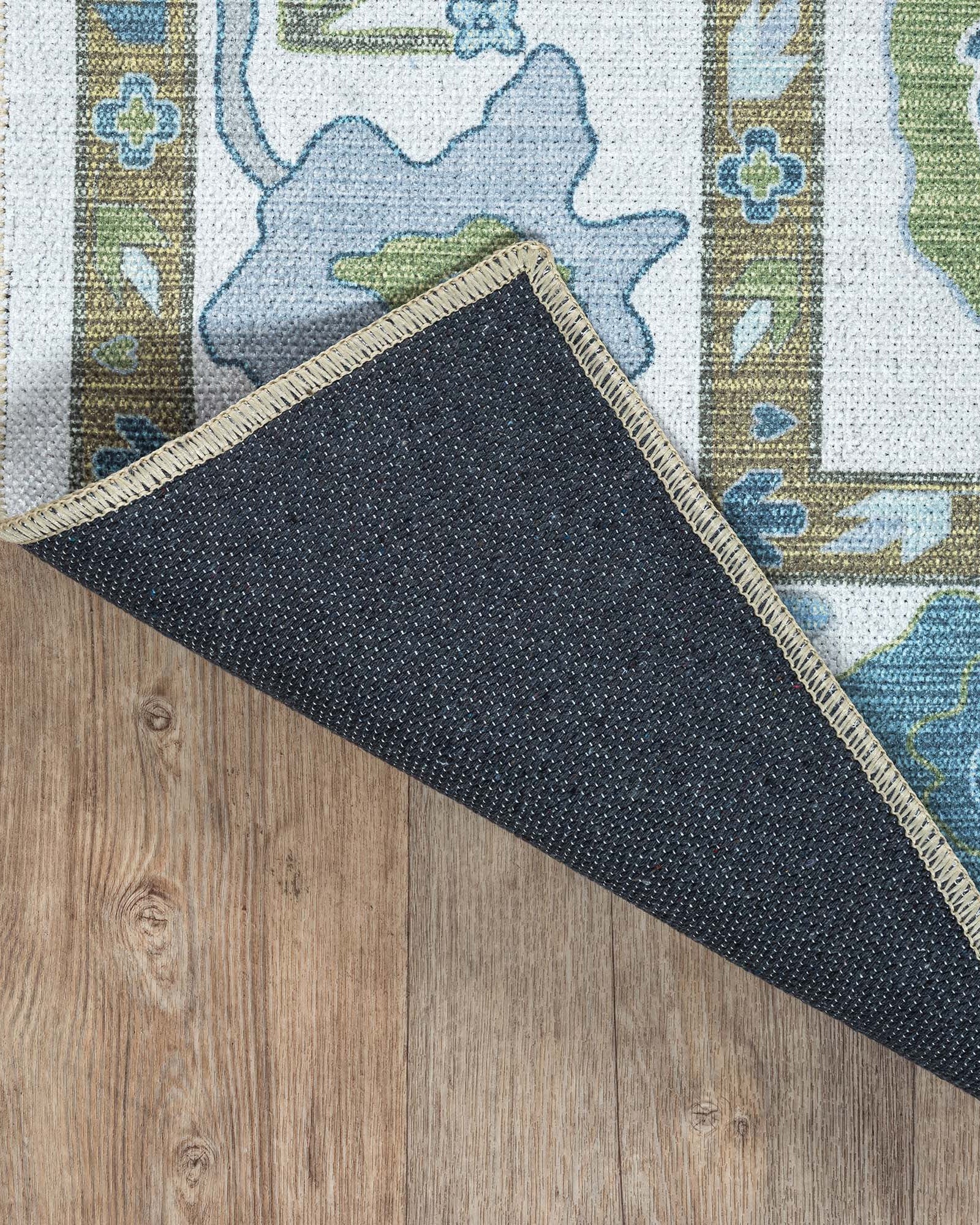
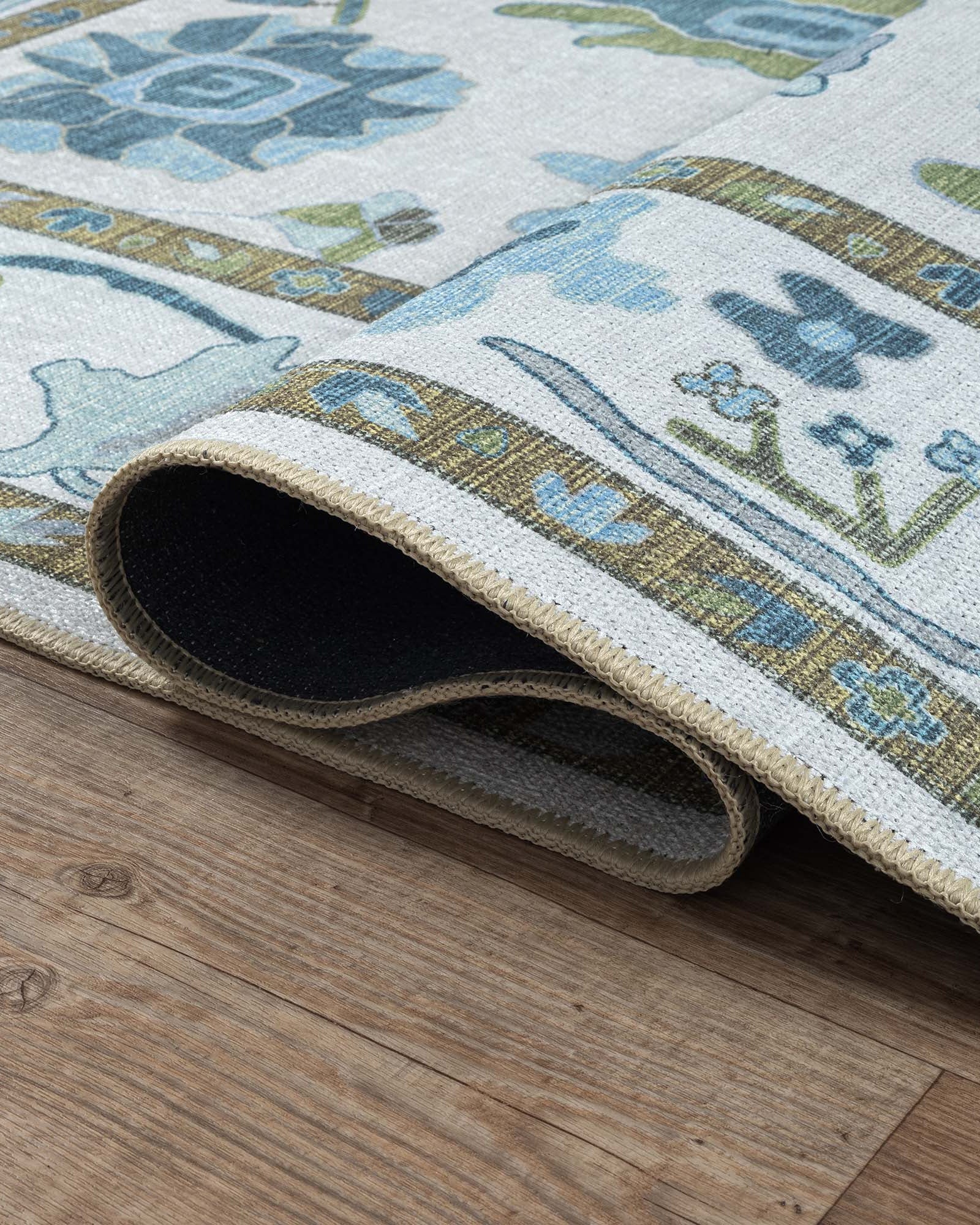
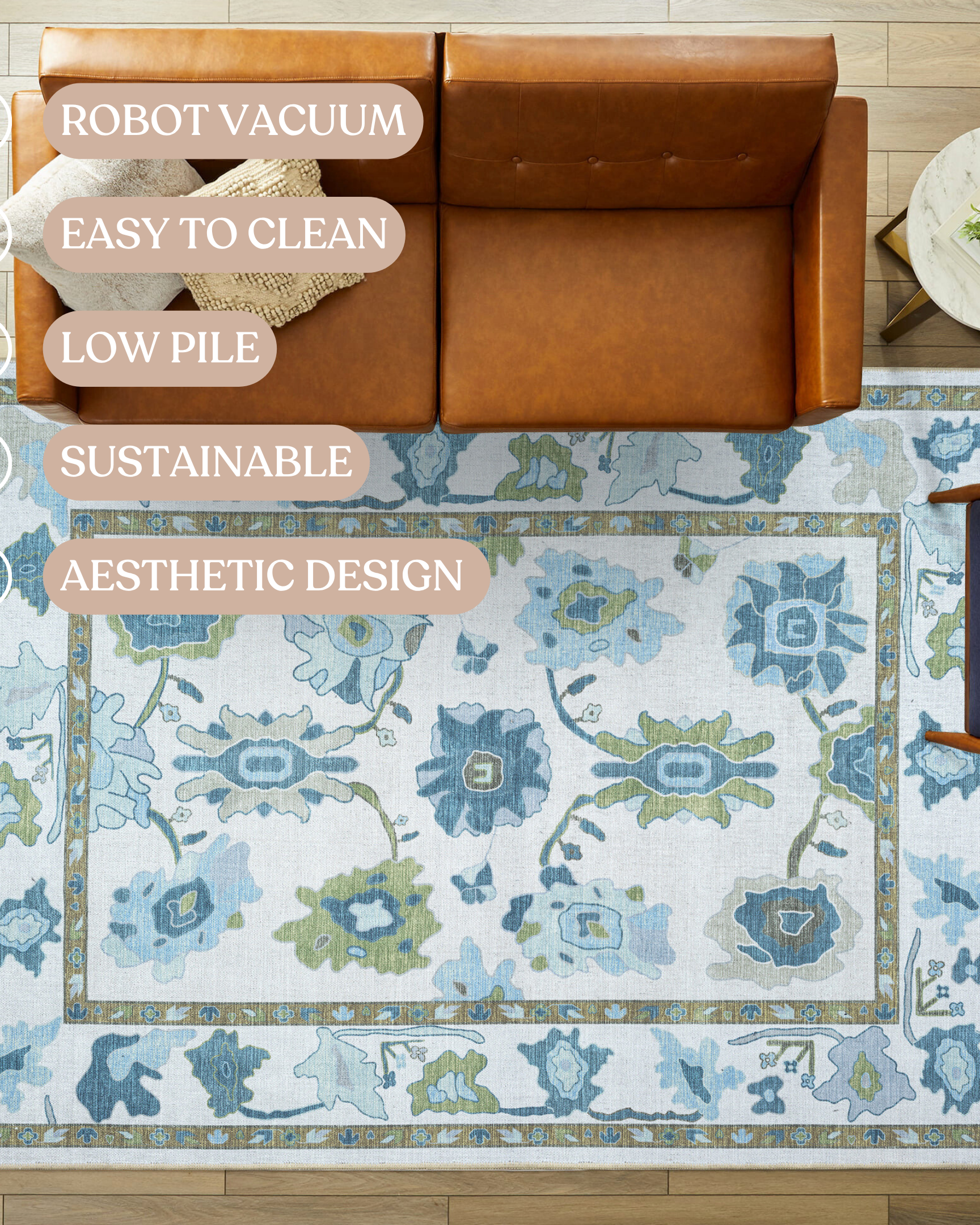
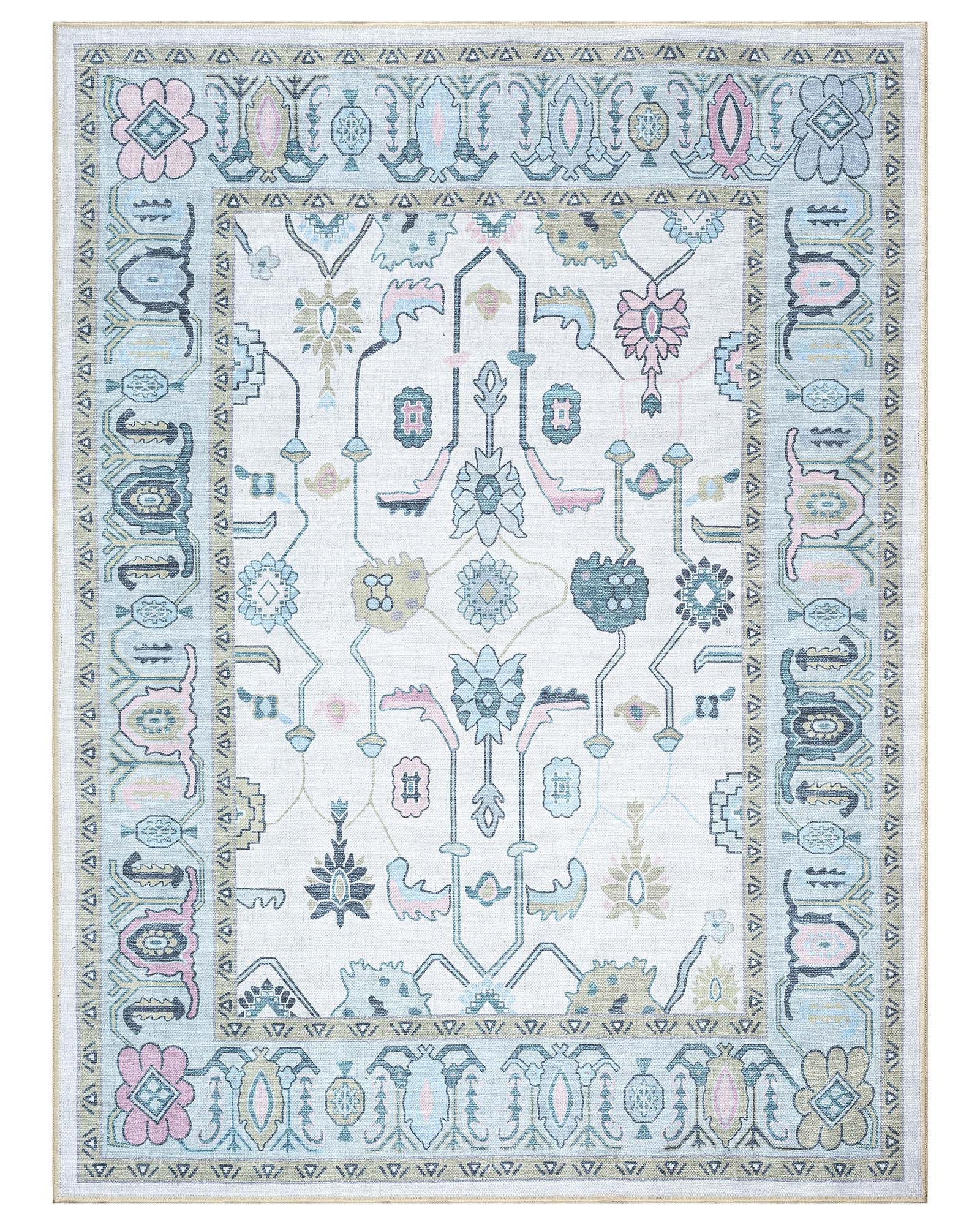
Green is the scarcest colour in old rug weaving, and the reason is chemical. There was no reliable single-source green dye in Anatolia, Persia or the Caucasus — no root, leaf or insect that produced a stable green on wool the way madder produced red or indigo produced blue. Every green in this collection was built by combining two separate dye processes, which made it slower, costlier and less predictable than any other colour on the loom. Genuine green vintage pieces are correspondingly uncommon, and every one here is an original hand-knotted rug sold as a single item.
How Green Was Made
The wool was dyed yellow first, then overdyed with indigo. Yellow came from weld, chamomile, sumac, saffron, pomegranate rind or vine leaves depending on the region, and each source gave a different base — weld a clean lemon, chamomile a warmer gold, pomegranate a brownish ochre. Once dry, the yellow wool went into the indigo vat, and the blue layered over it produced green.
Two variables decided the result: how strong the yellow was and how many indigo dips followed. A light yellow with a single dip made a pale sage. A deep gold with several dips made a dense forest green. Because the yellow bath itself was rarely consistent between batches, green wool varied more from lot to lot than any other colour, and green fields show pronounced abrash as a result.
Why Old Green Drifts Blue
The two components age at completely different rates. Yellow plant dyes are the least lightfast pigments in the entire natural palette and begin retreating within decades, while indigo abrades slowly and holds. As the yellow leaves, the green underneath it shifts — first toward teal, then blue-grey, and in very old pieces to something that reads simply as blue. This is why a hundred-year-old rug with blue vines and blue leaves was almost certainly woven green.
It also explains a common pattern in this collection: rugs where green survives clearly in protected areas under furniture or along a border, but has drifted blue across the exposed field. That divergence is authentic and one of the more reliable signs of genuine natural dyeing.
The Range Within Green
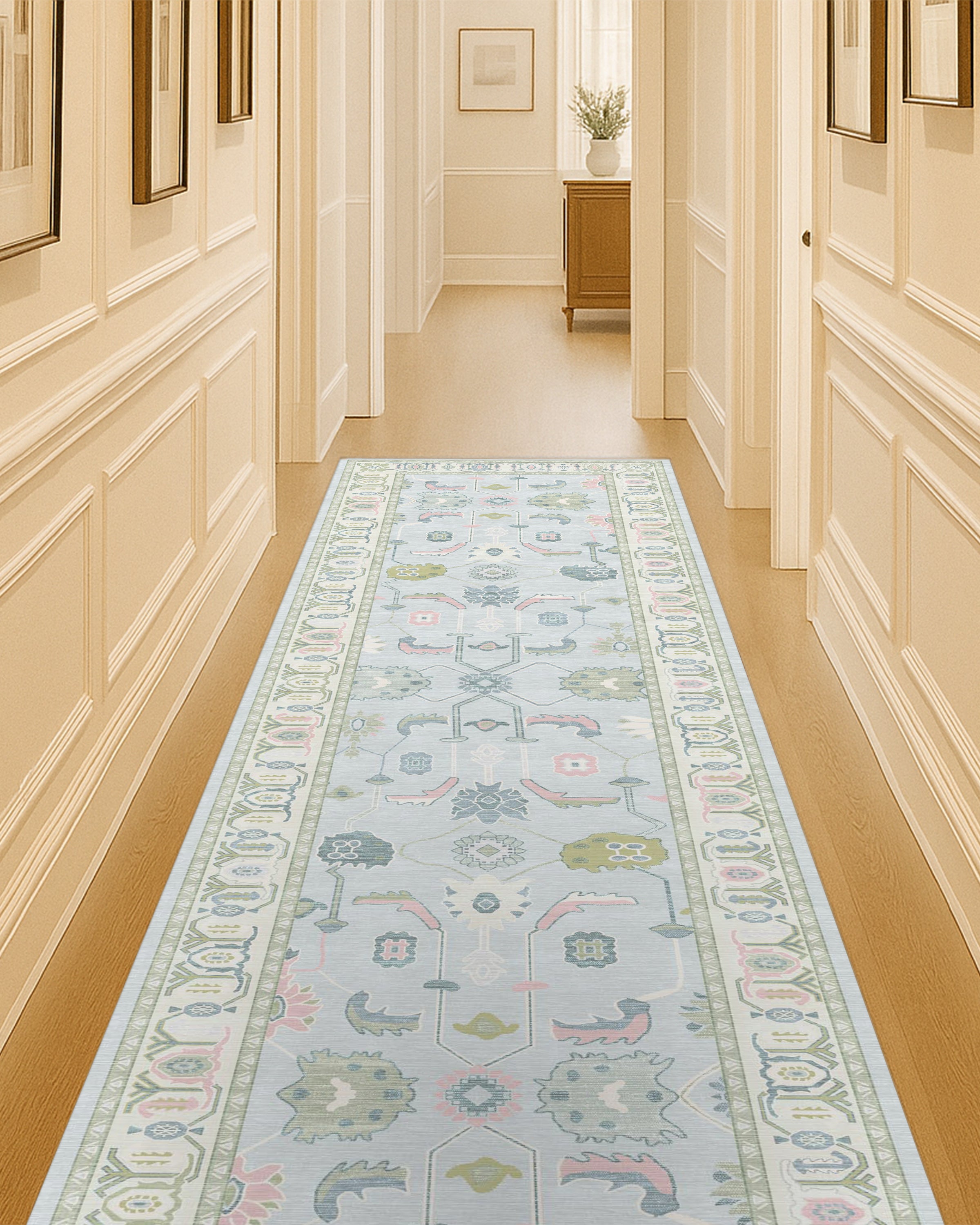
Sage and celadon are the most common survivors, soft and grey-leaning, and by far the easiest to place in a contemporary room. Olive and moss are warmer and deeper, built on a stronger yellow base, and they sit naturally with wood, leather and terracotta. Forest and emerald are genuinely rare at any age and usually indicate a workshop piece where the dyer had the time and materials to do it properly. Teal and blue-green are typically greens that have already drifted — beautiful, but worth understanding for what they are. Each product page names the dominant tone.
Where Green Rugs Come From
Persian workshop centres produced the most deliberate greens, using them in floral vines, leaf motifs and occasionally full fields where a patron could pay for the extra dye work. Kerman and Tabriz pieces show soft celadon and sage most often. Caucasian weavings use green sparingly but boldly, usually in geometric motifs against indigo or madder grounds. In Anatolian village weaving green appears mainly in borders and small motifs rather than fields, because the yellow-then-indigo process was too expensive to run at scale in a household. Flatwoven kilims occasionally carry strong green bands where a weaver had access to good yellow.
Using Green Rugs in a Room
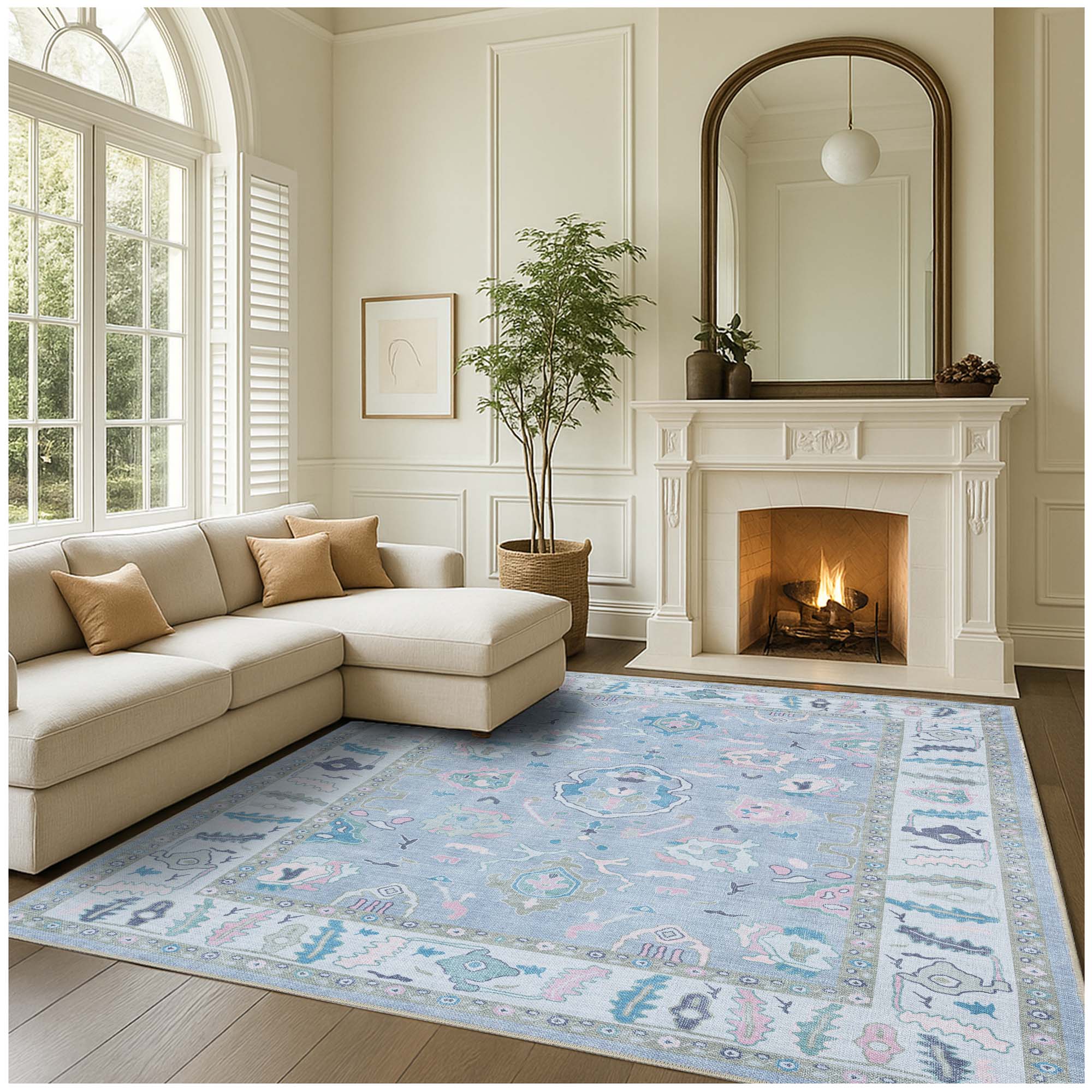
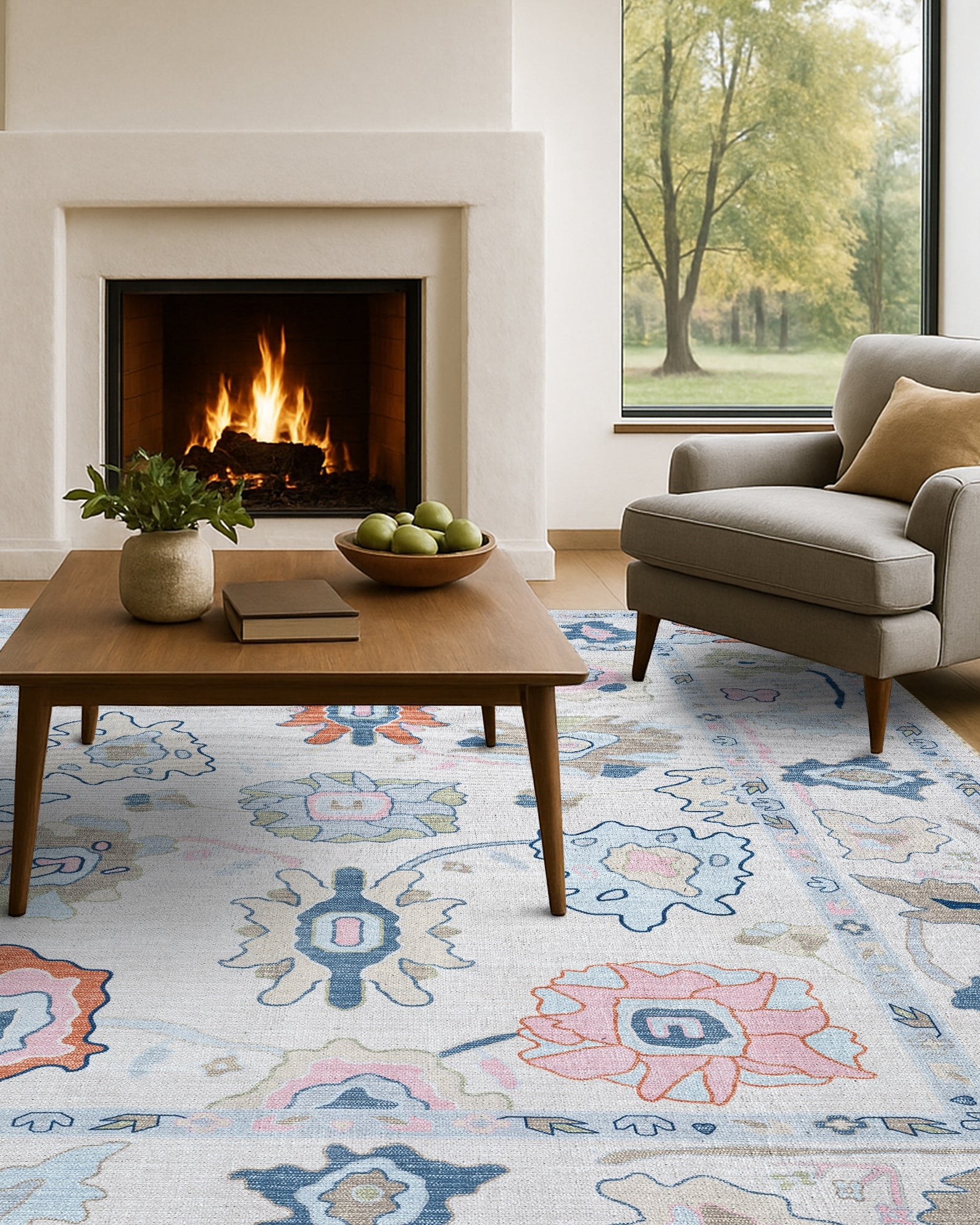
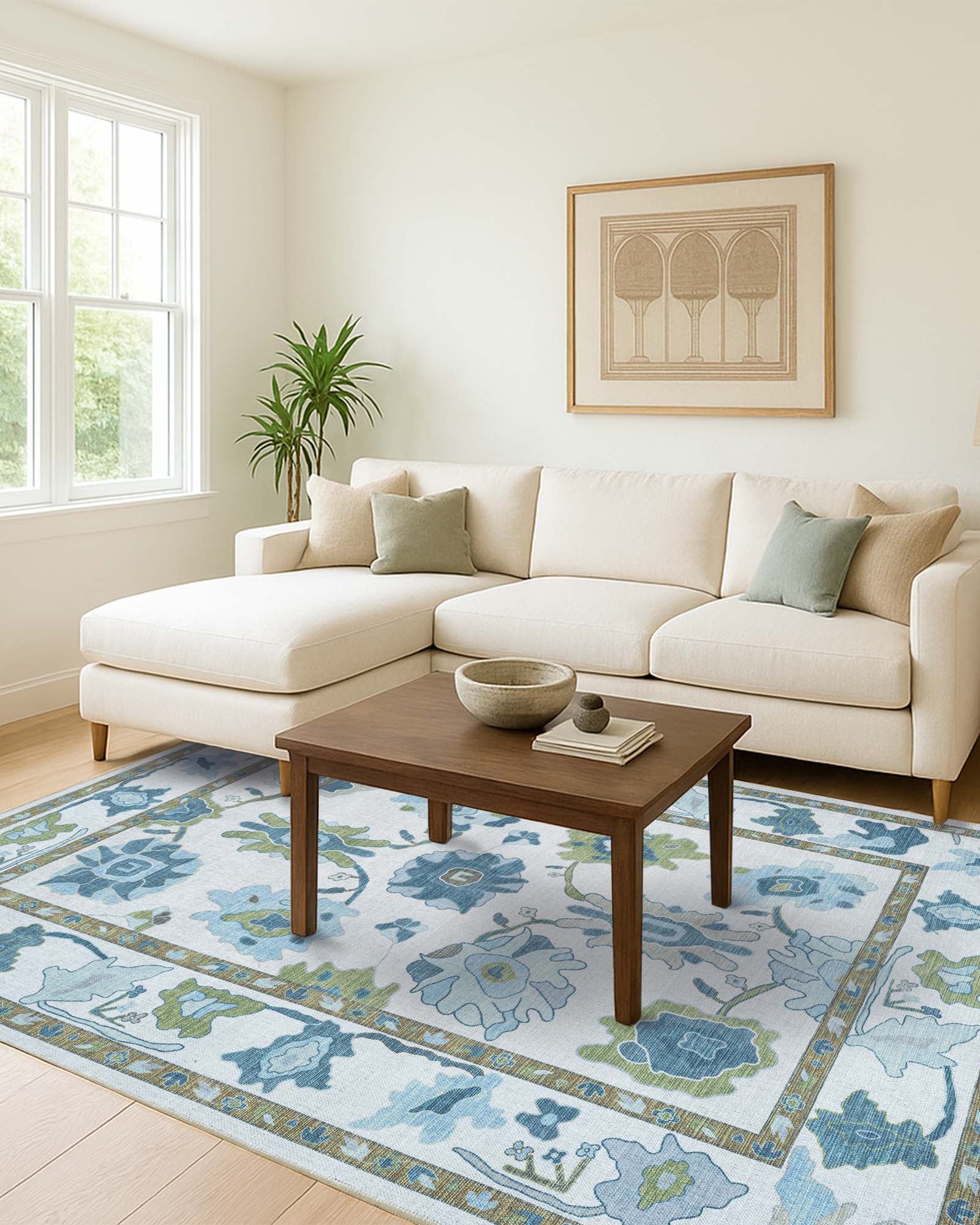
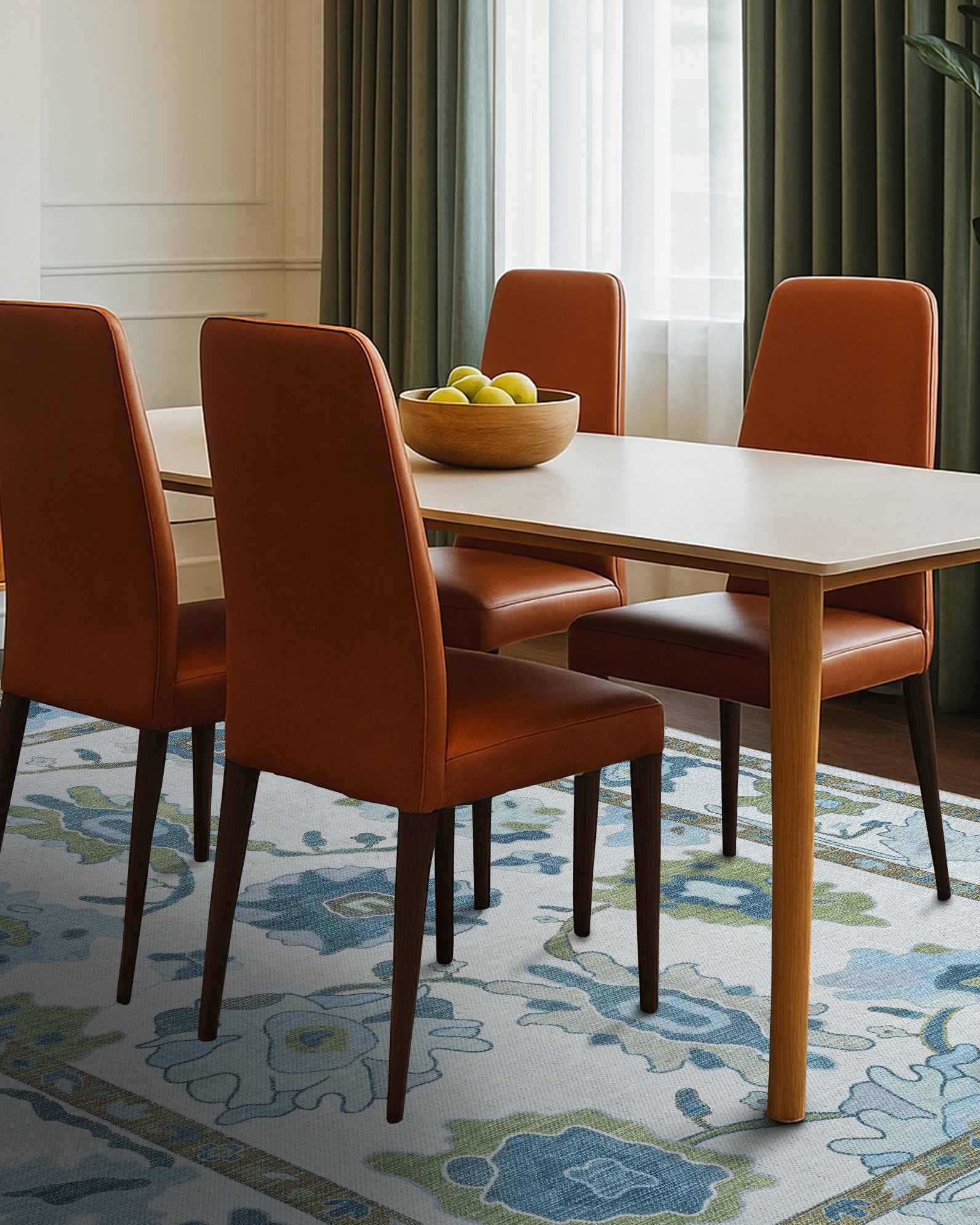
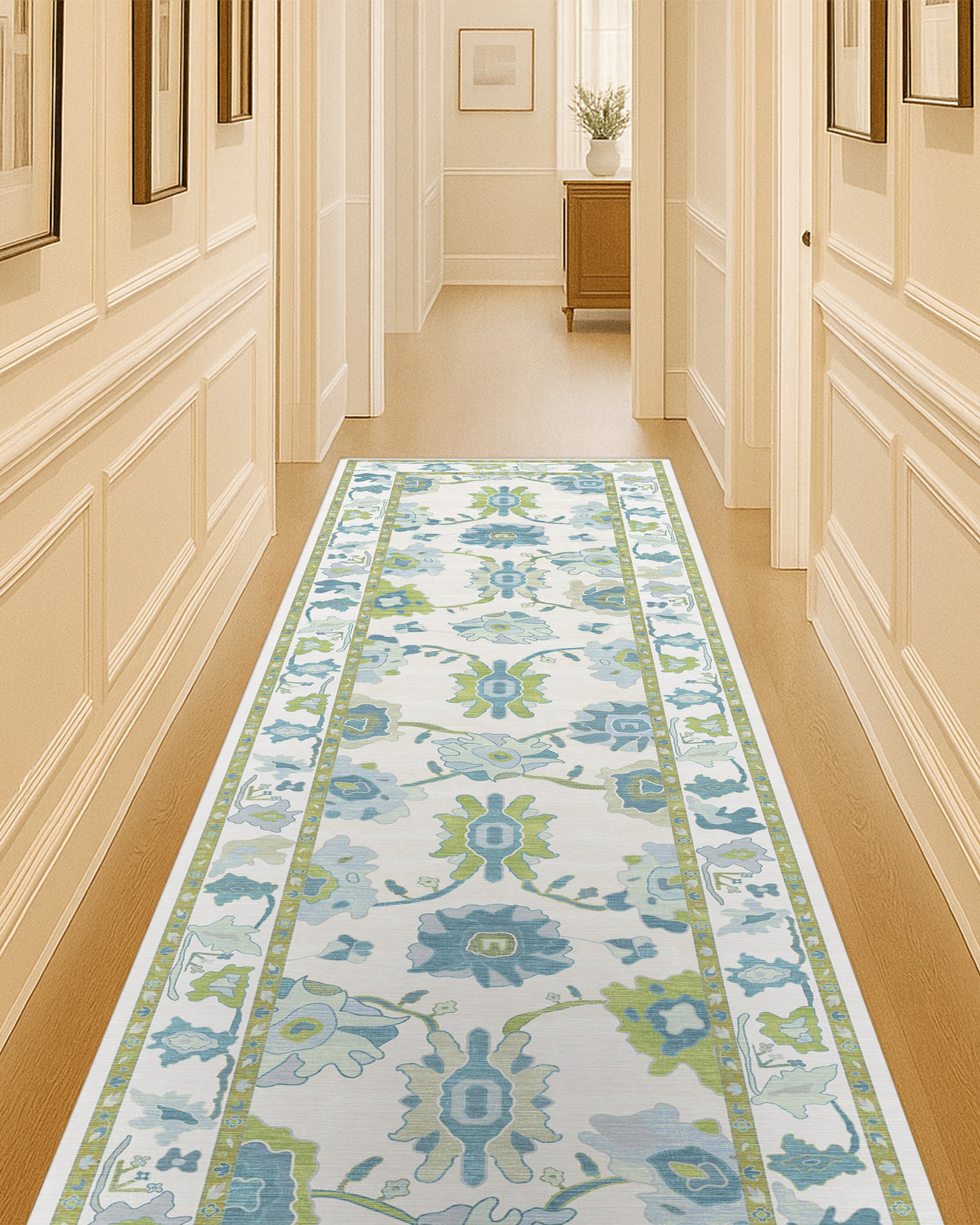
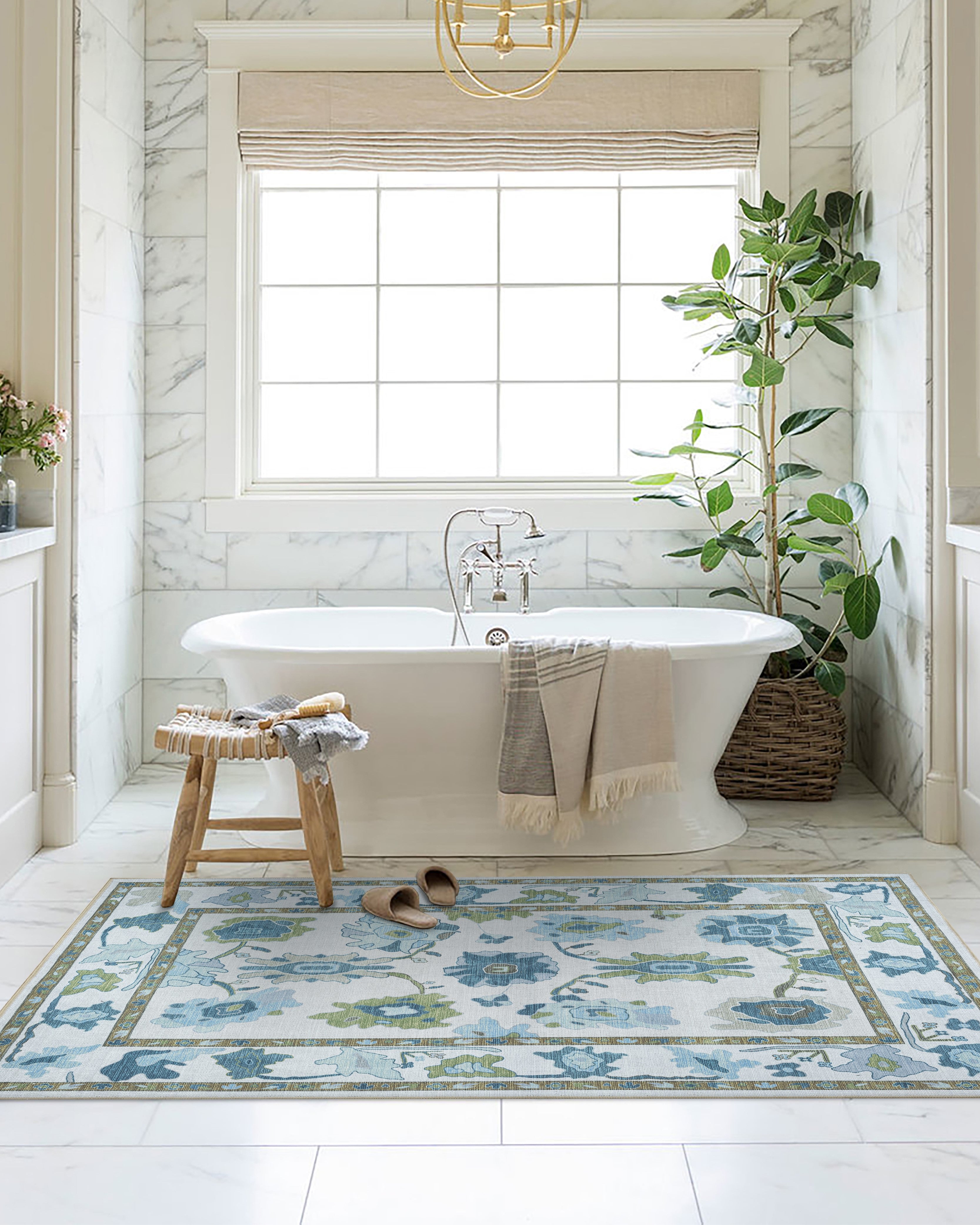
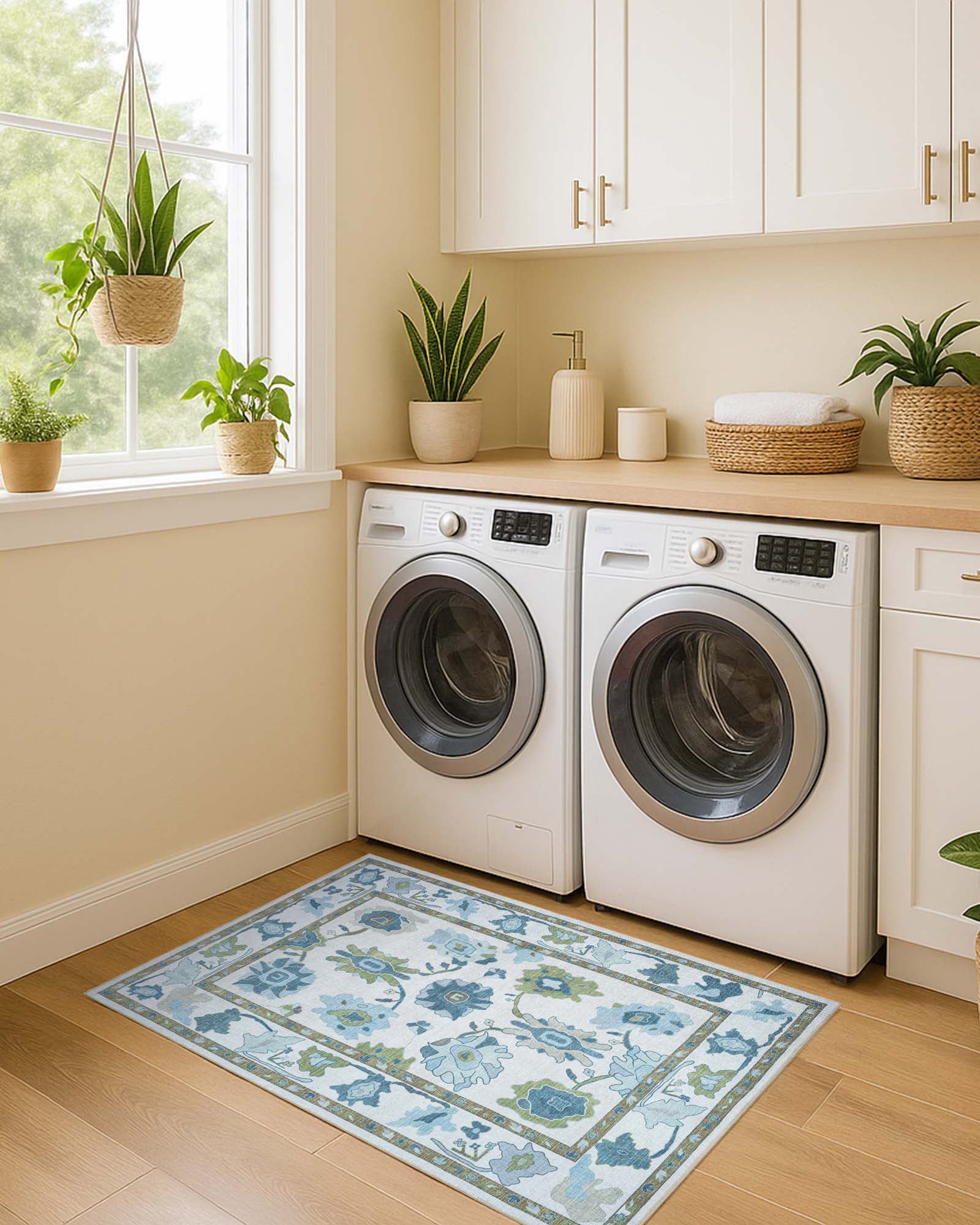
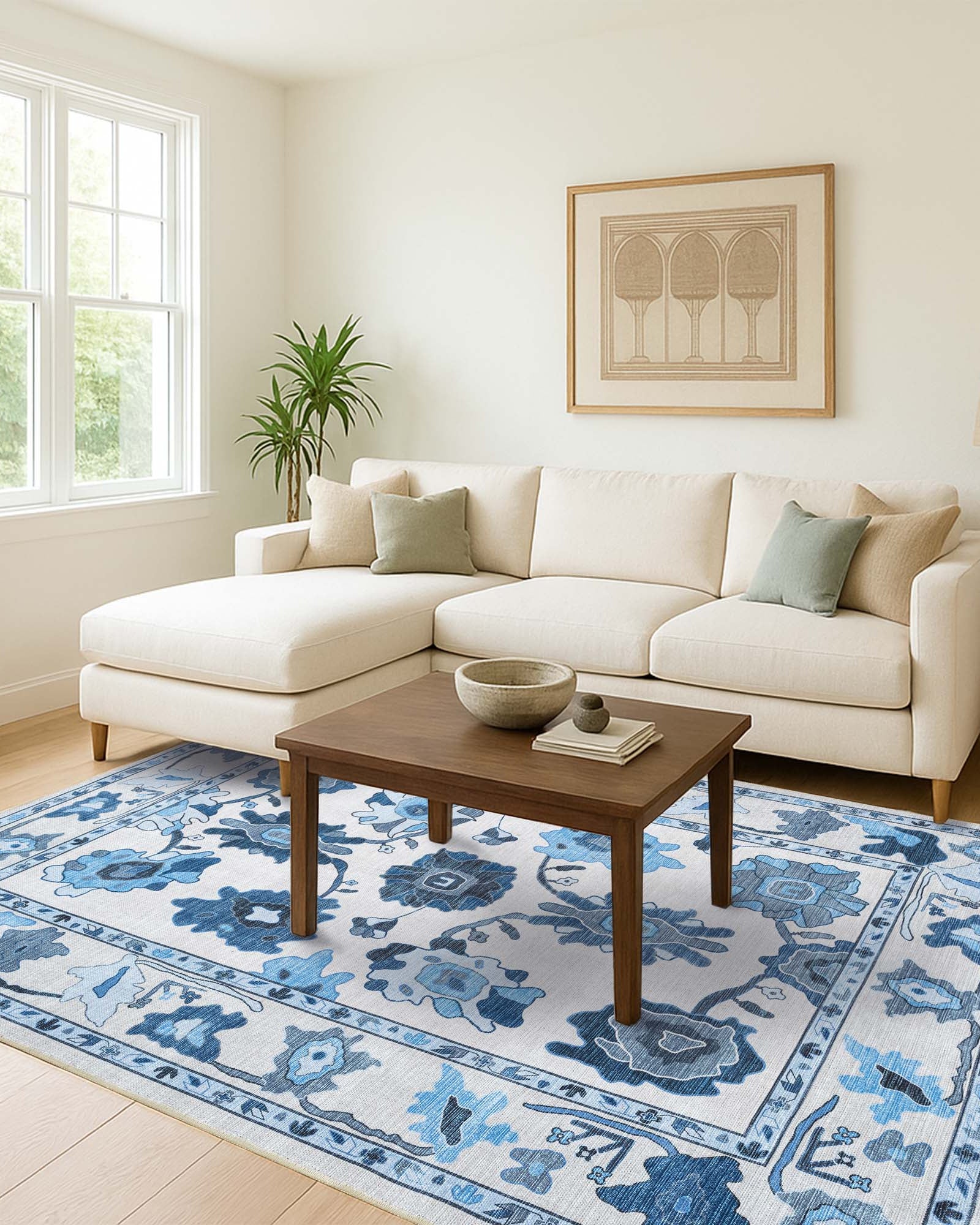
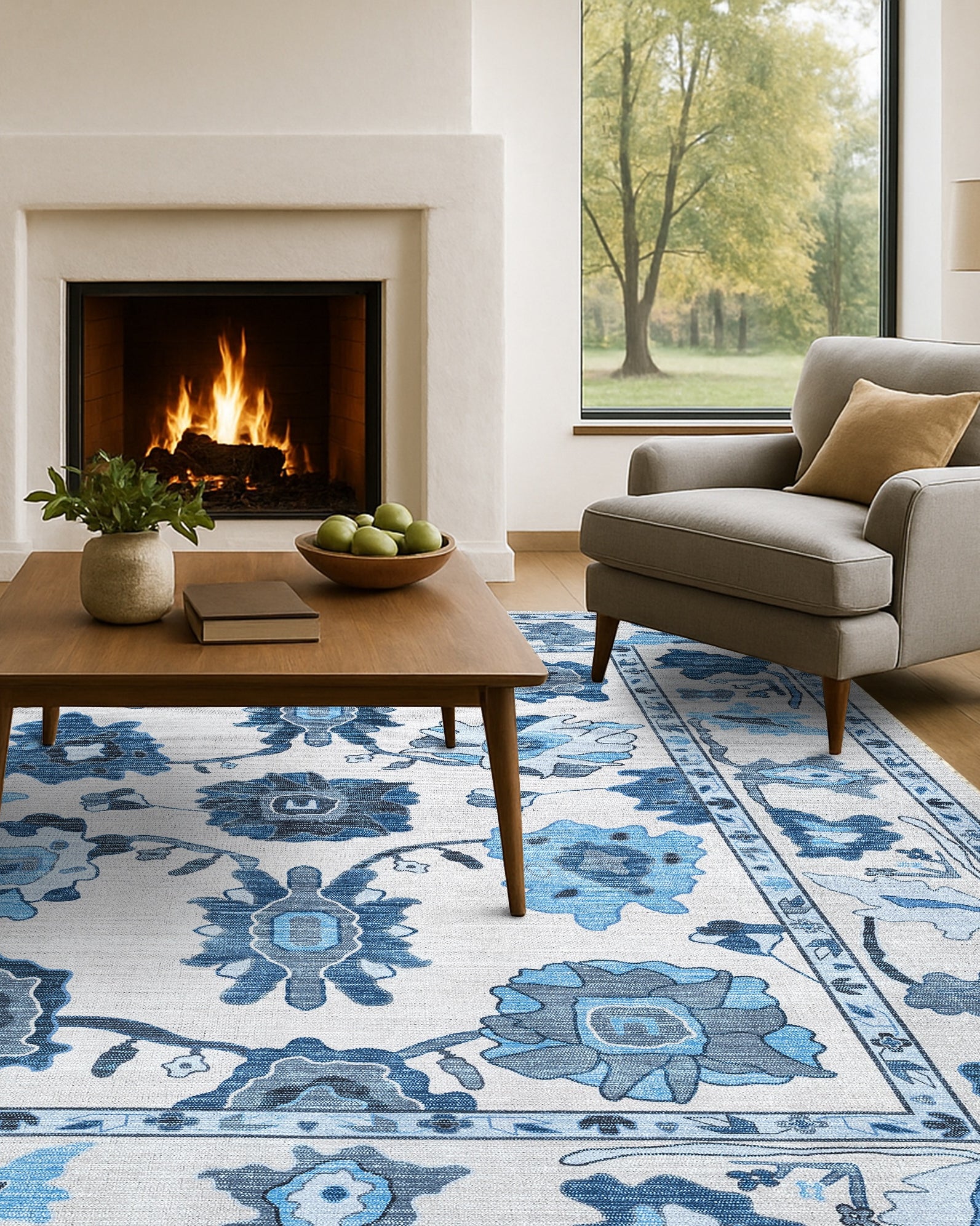
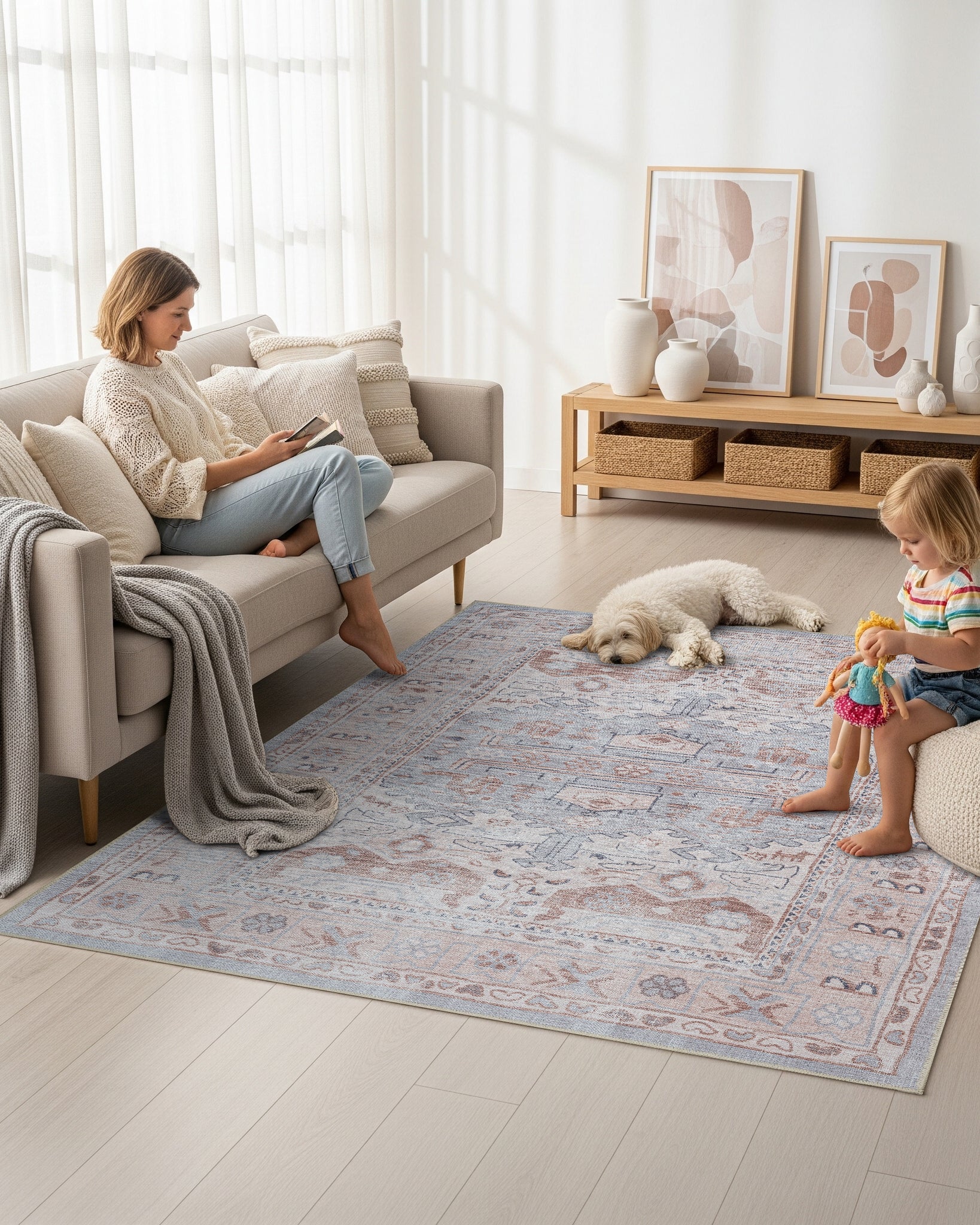
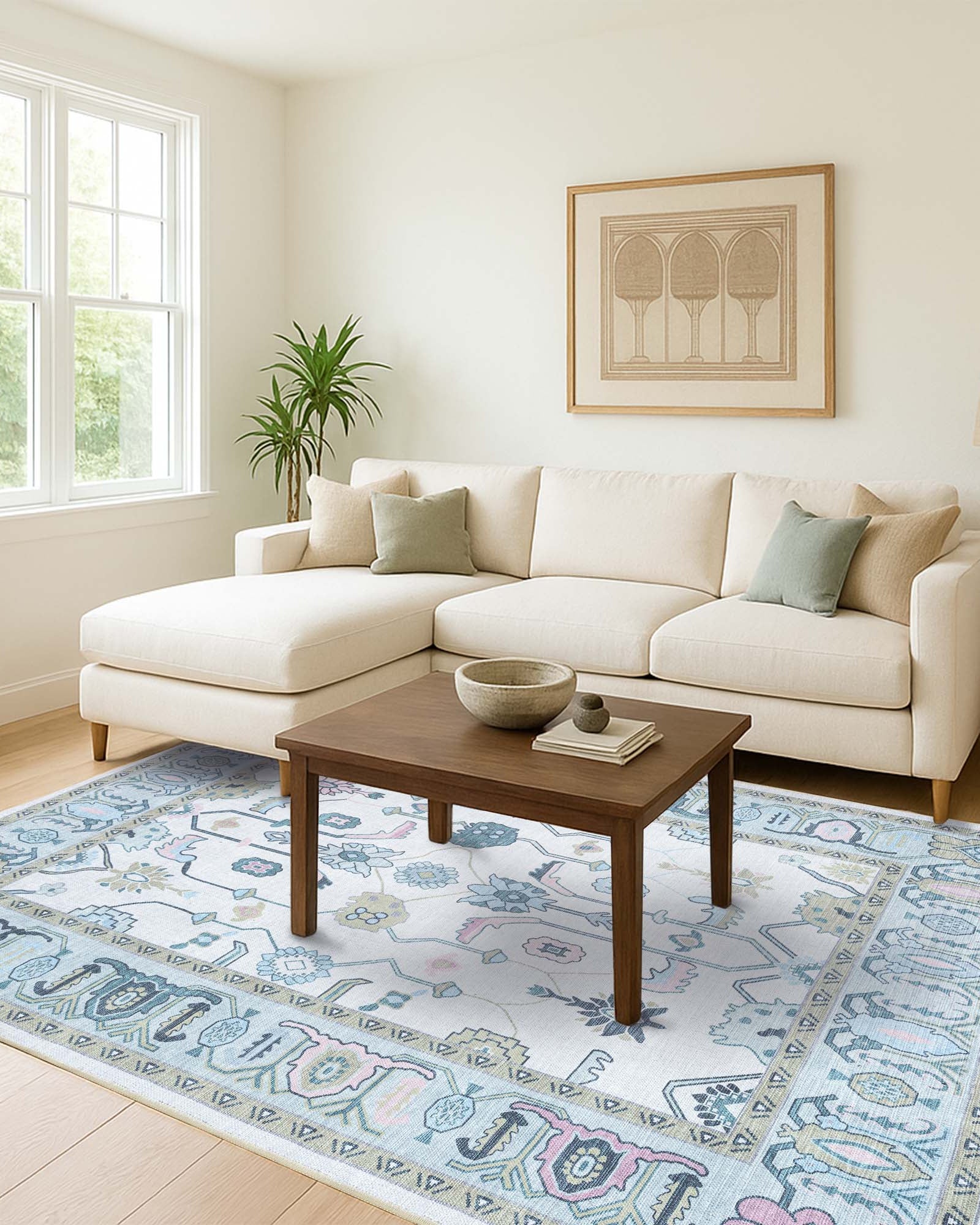
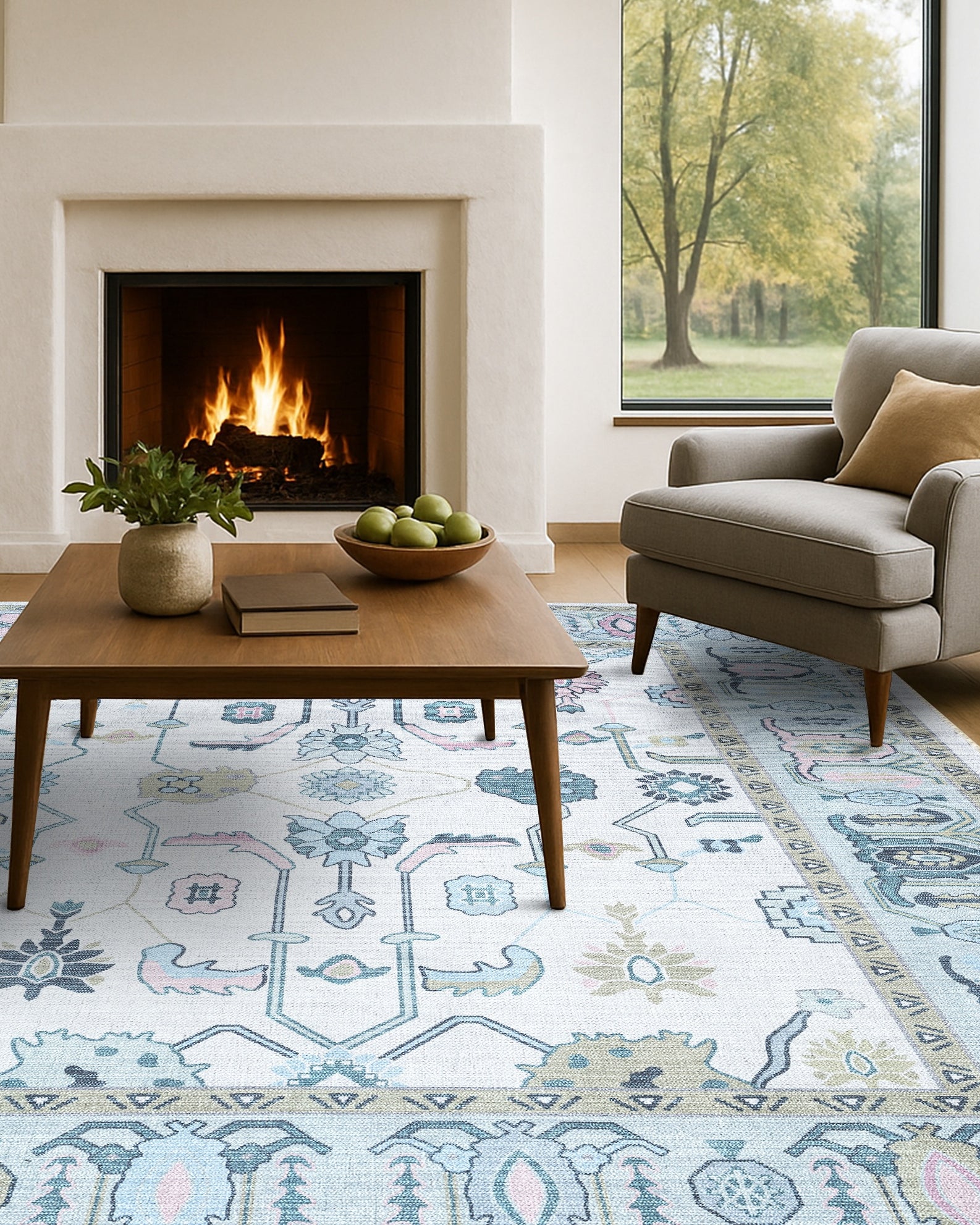
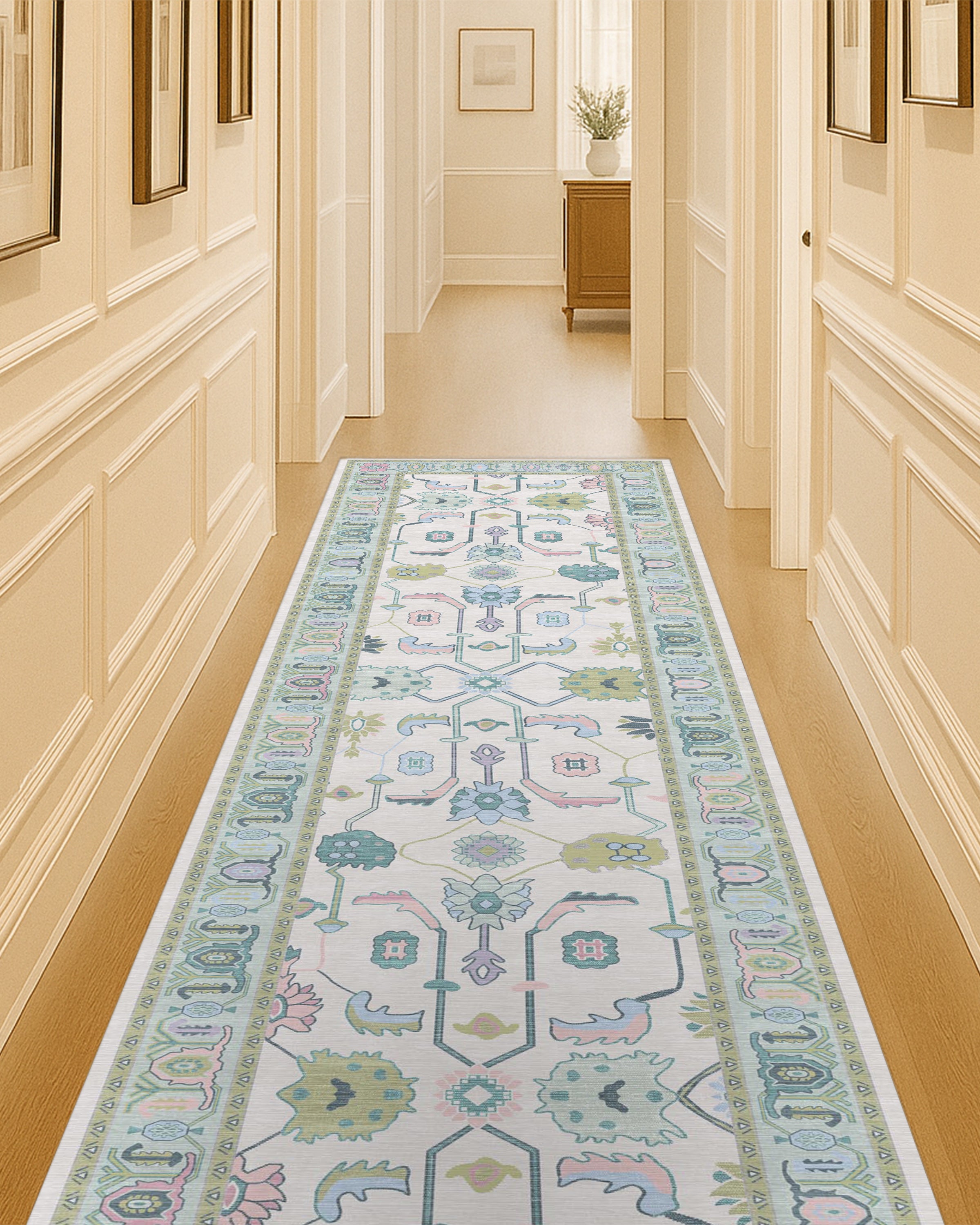
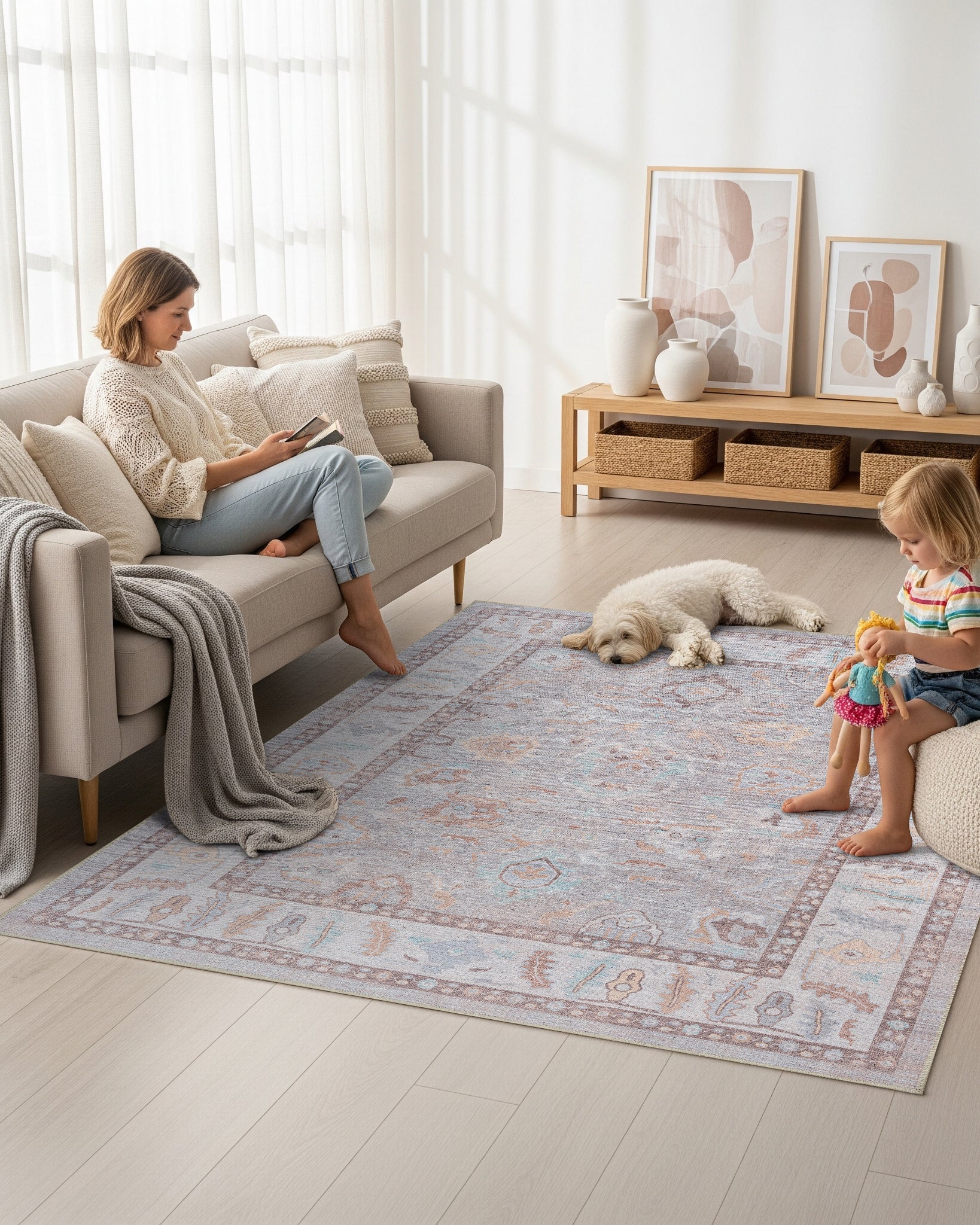
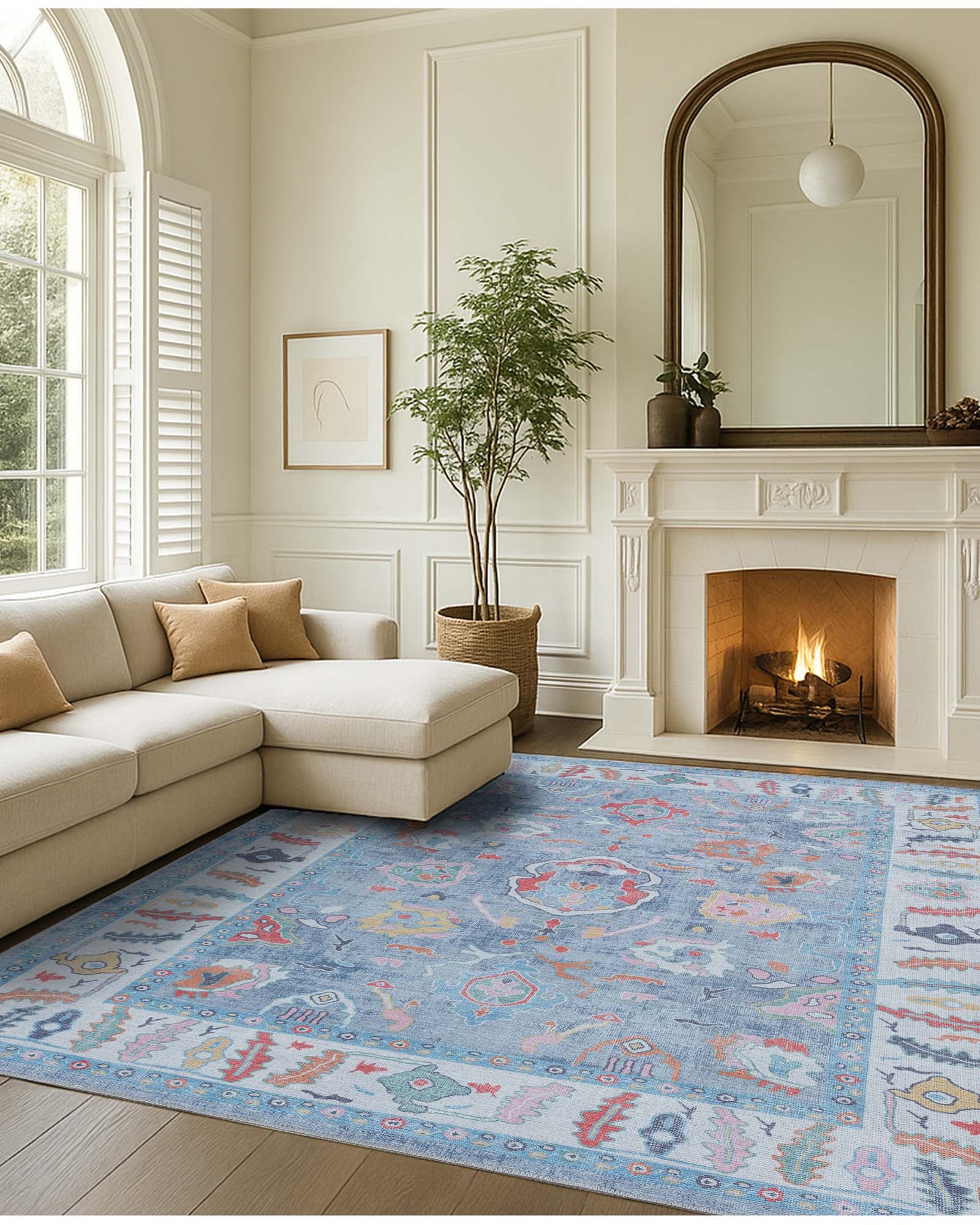
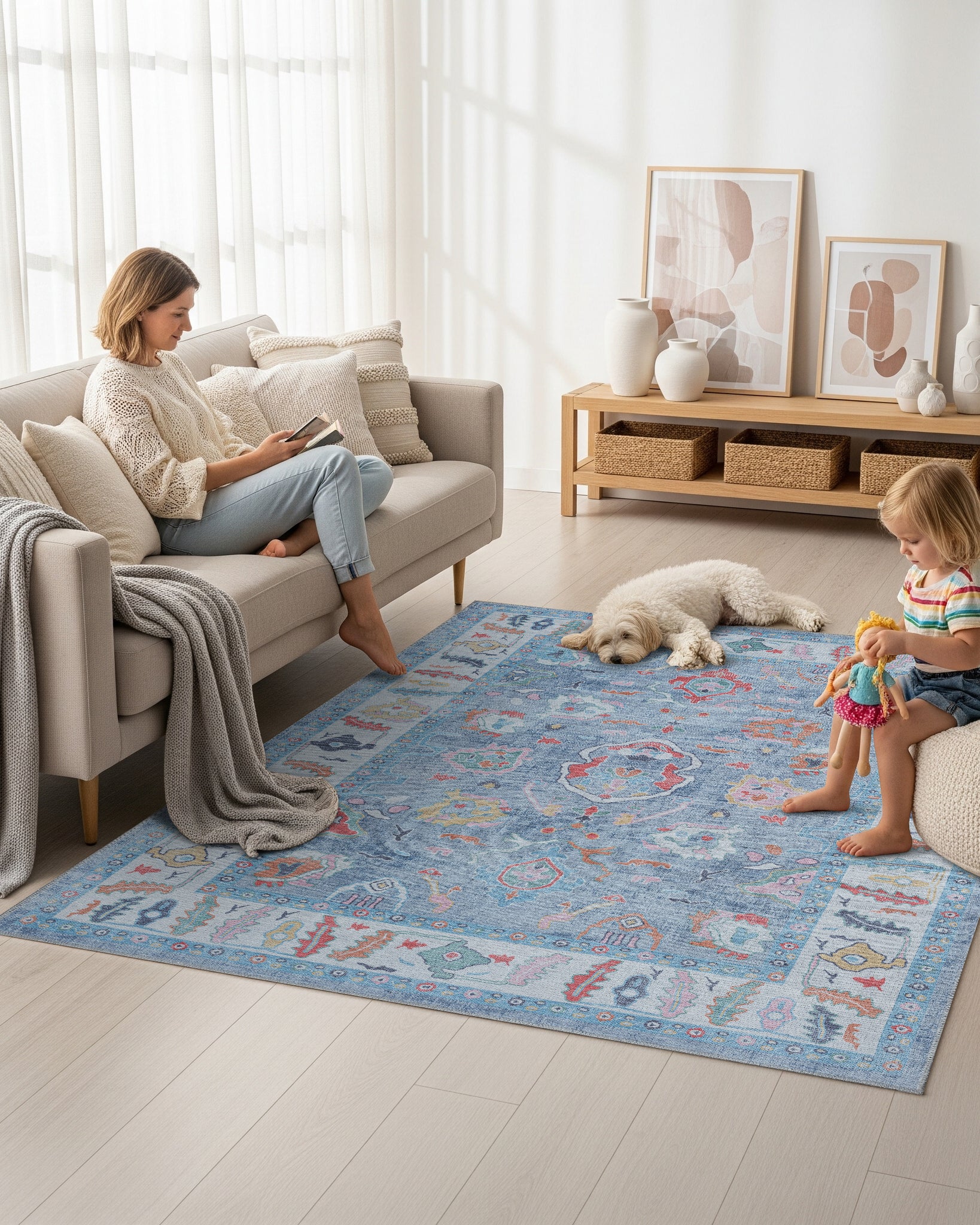
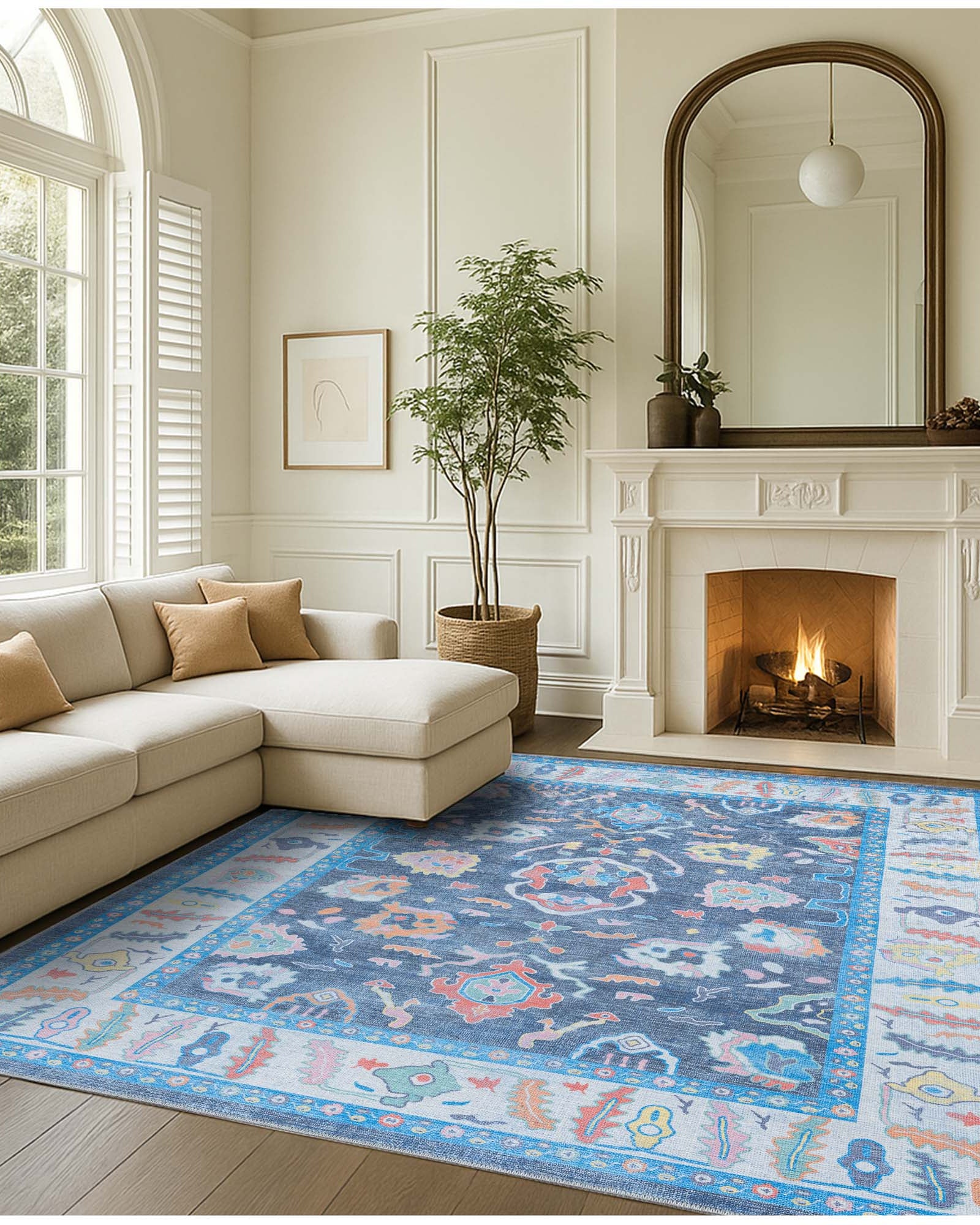
Green is the most natural-feeling colour you can put on a floor, and muted greens behave almost like a warm neutral — they ground a room without asserting themselves the way red or strong blue does. Sage and celadon sit well with cream walls, pale wood and linen. Olive and moss suit darker, warmer interiors with leather, brass and walnut. Deeper forest greens work best where the rest of the room is quiet, because they carry real colour weight.
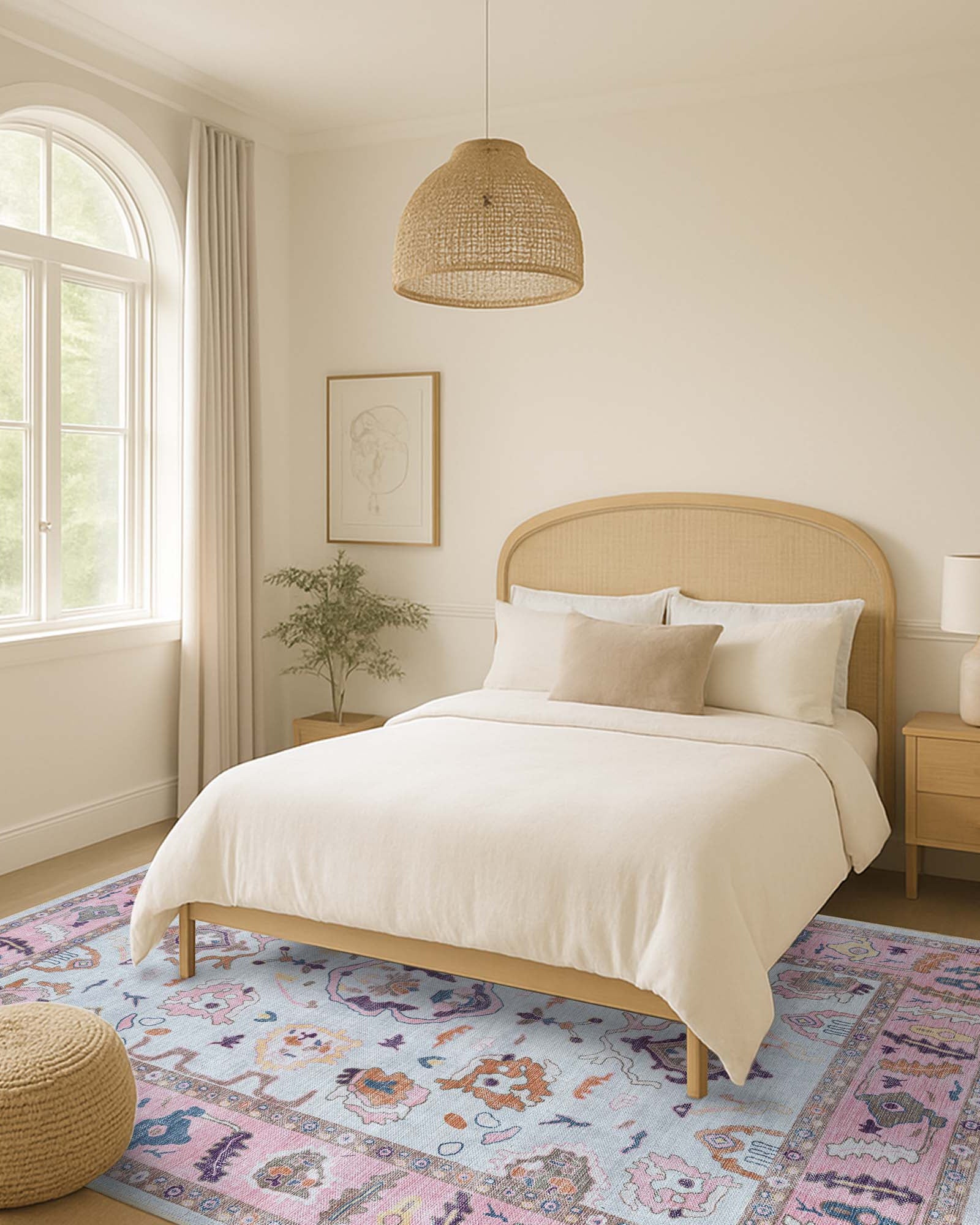
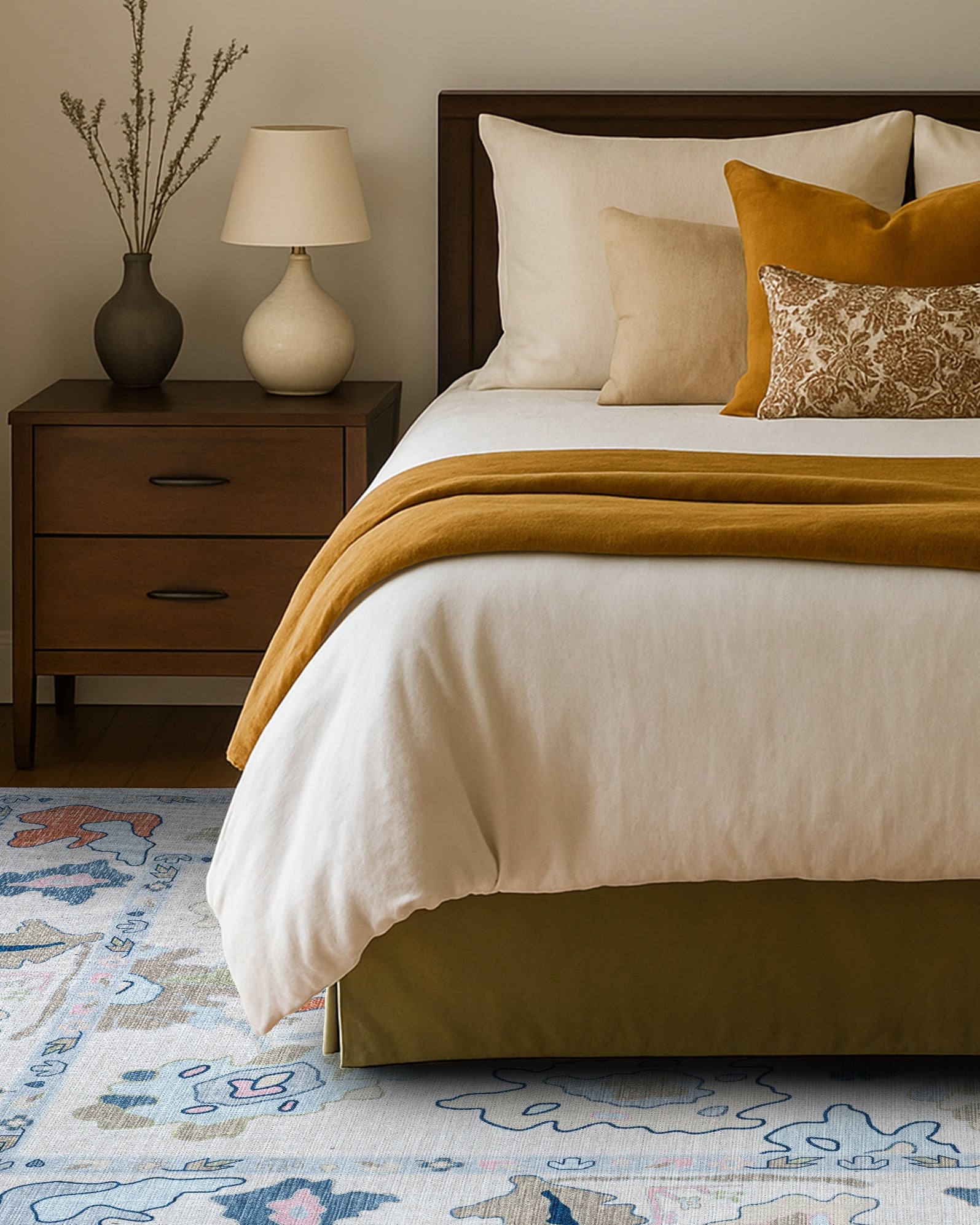
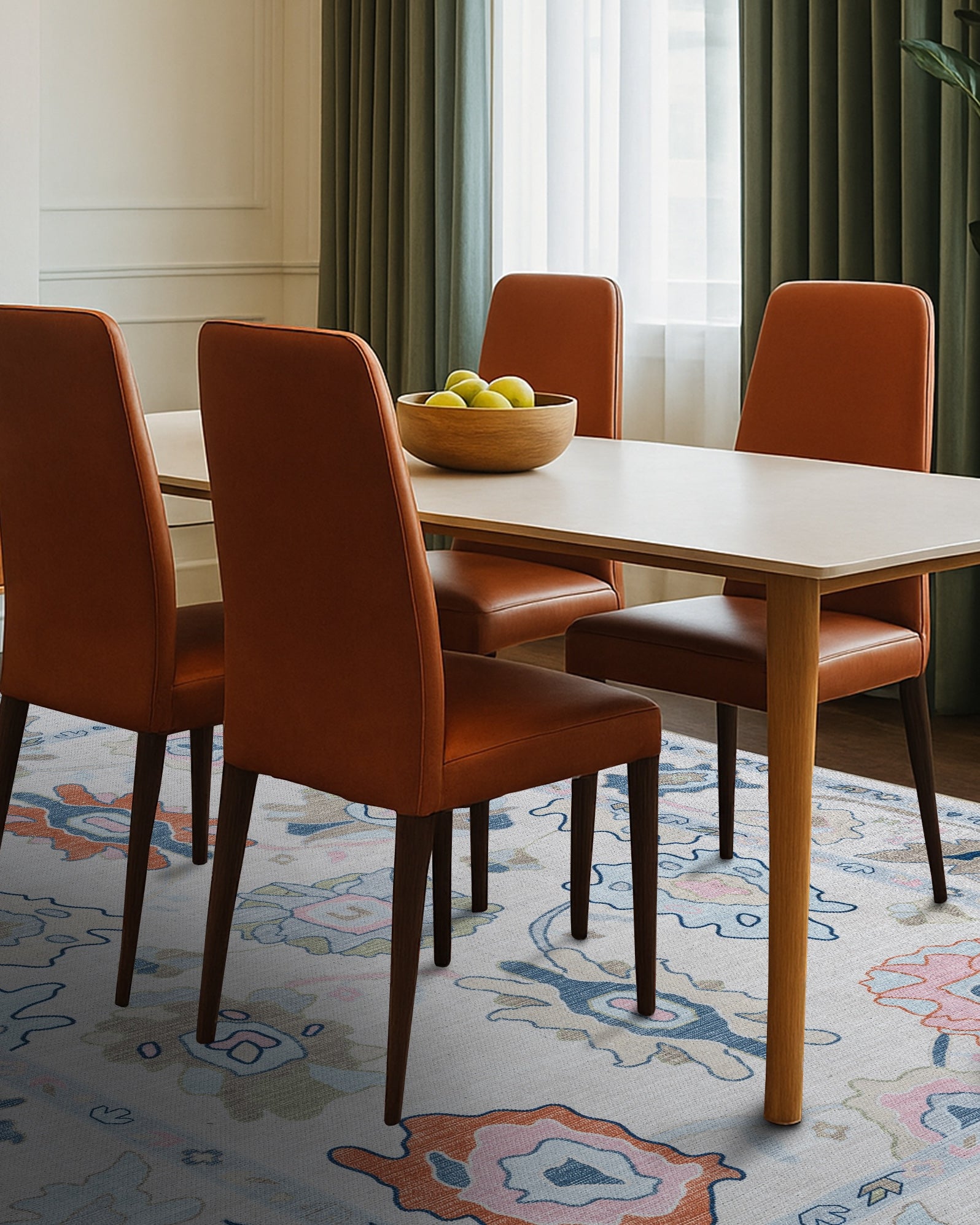
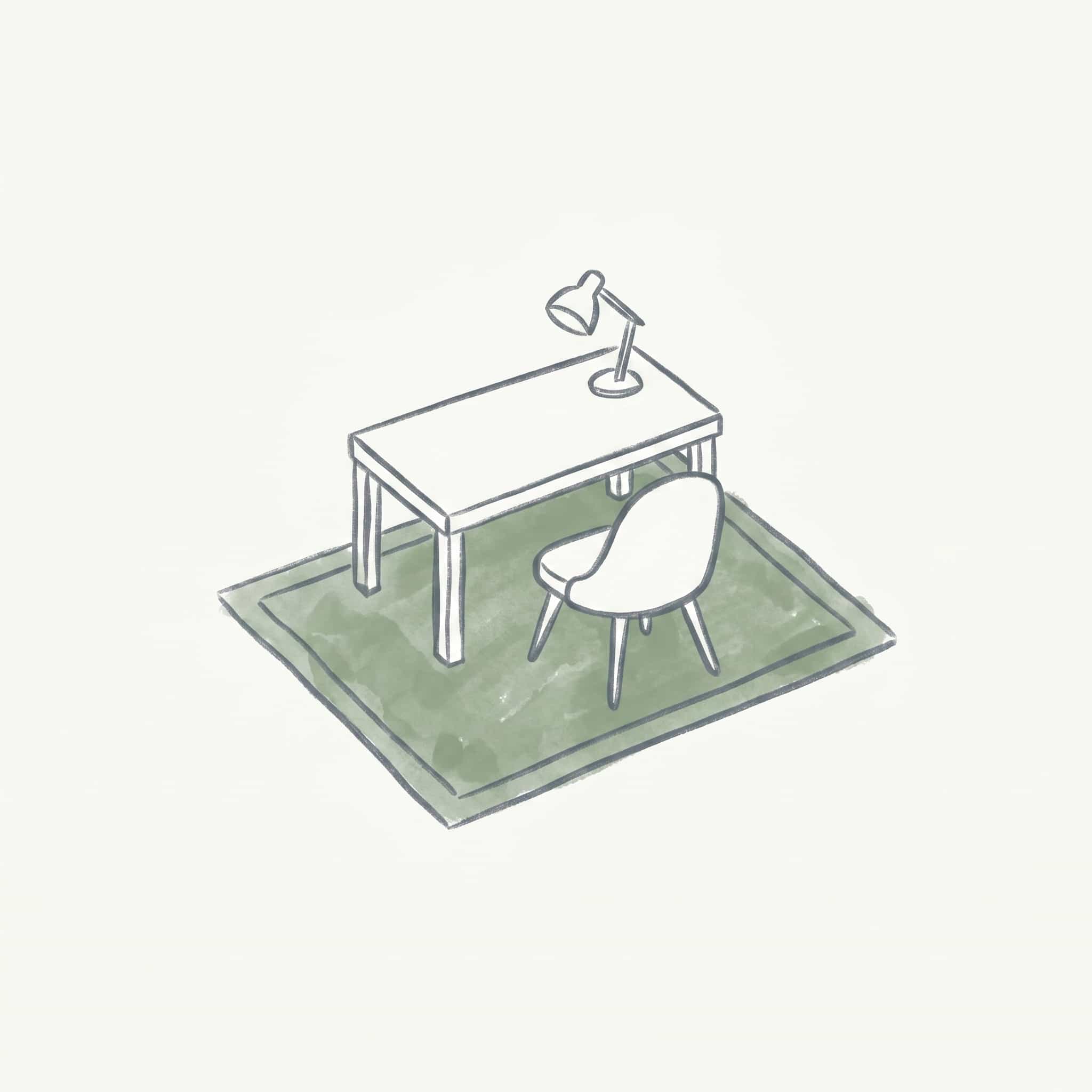
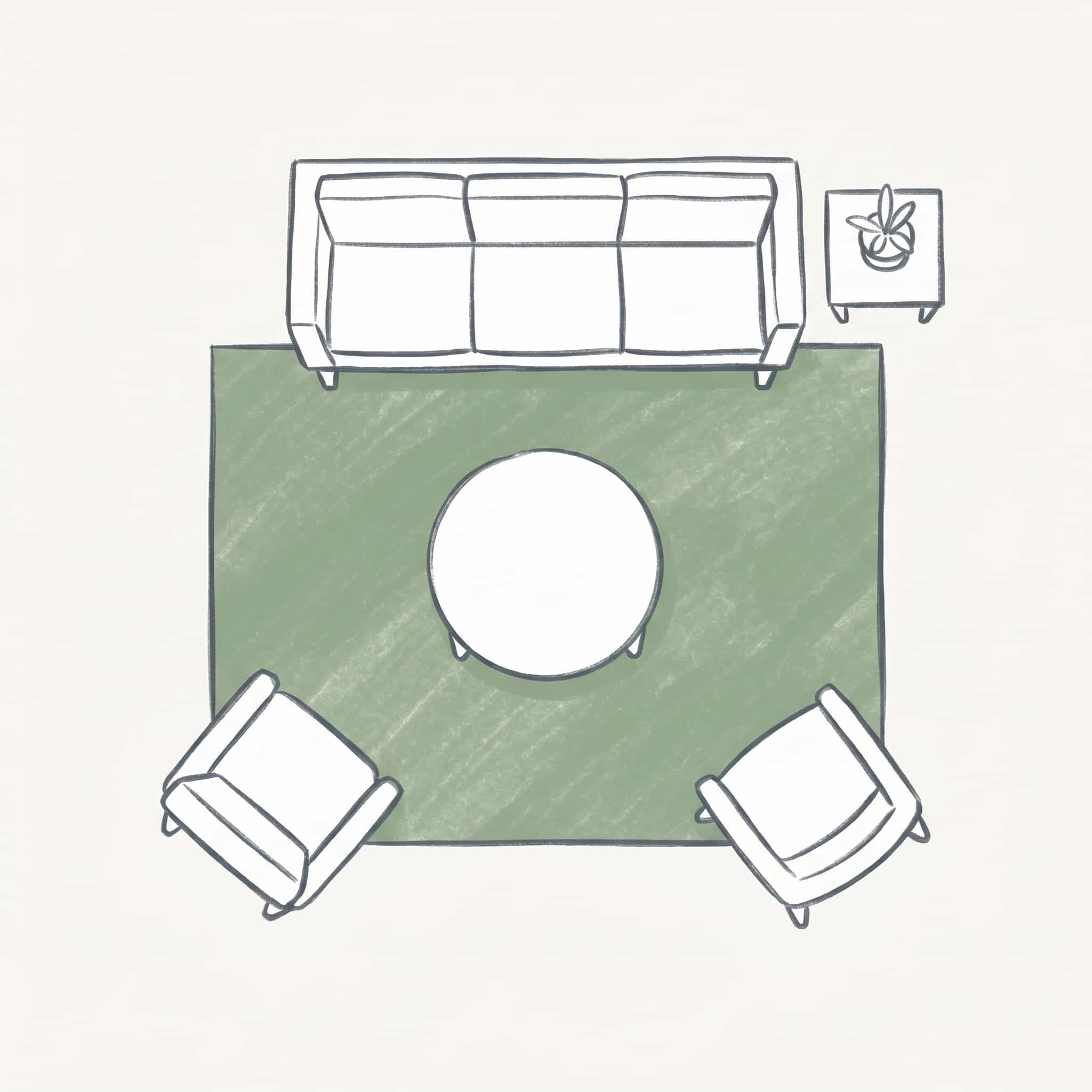
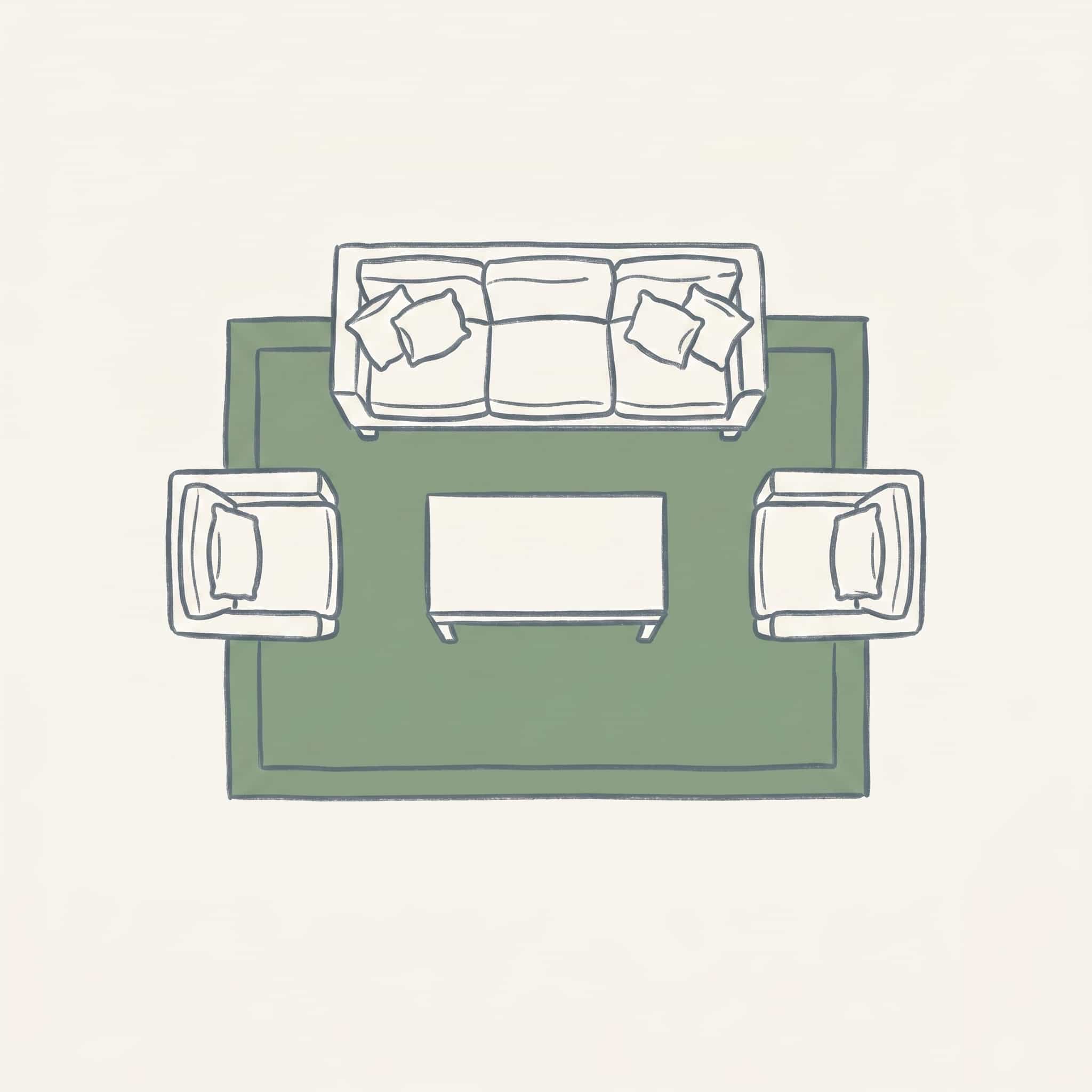
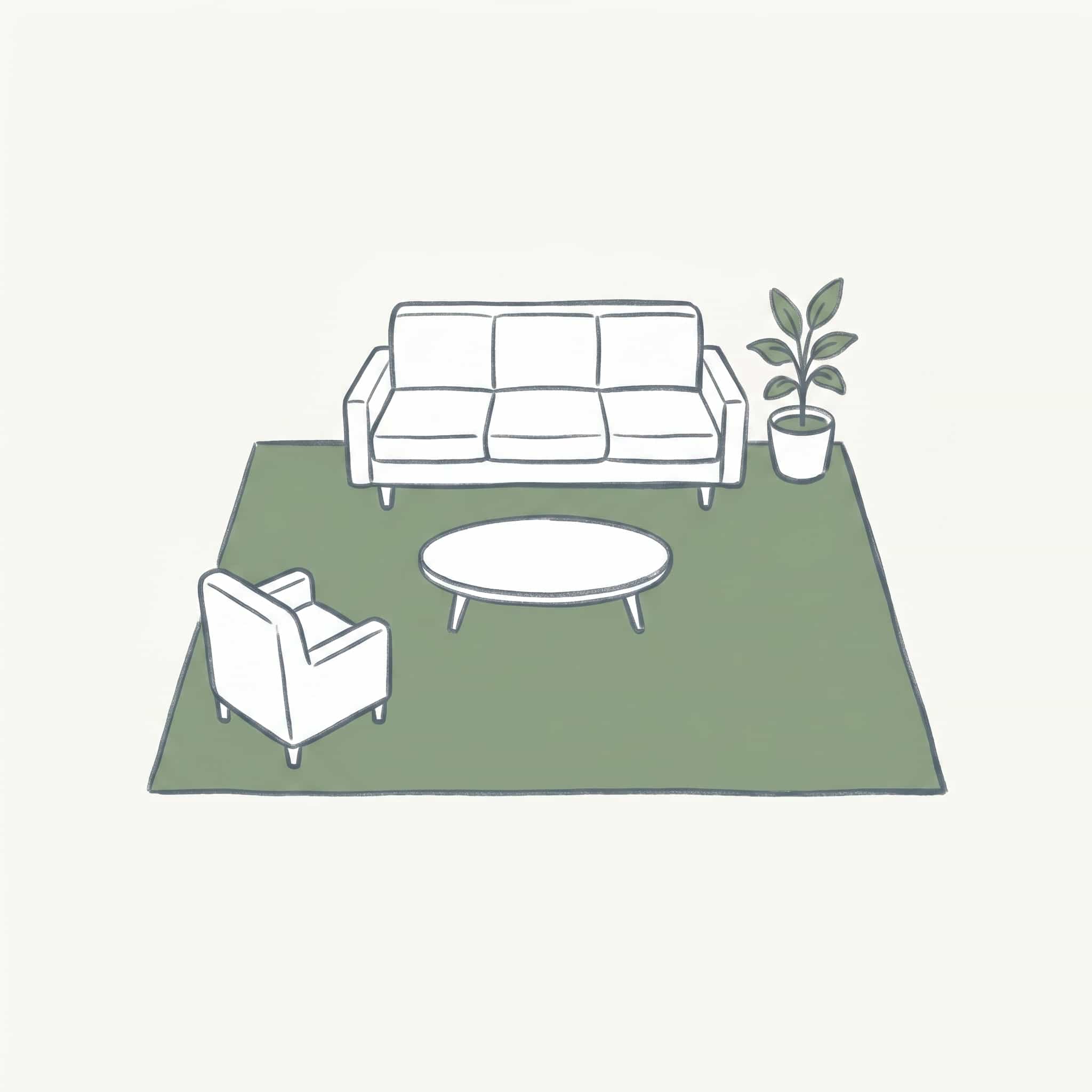
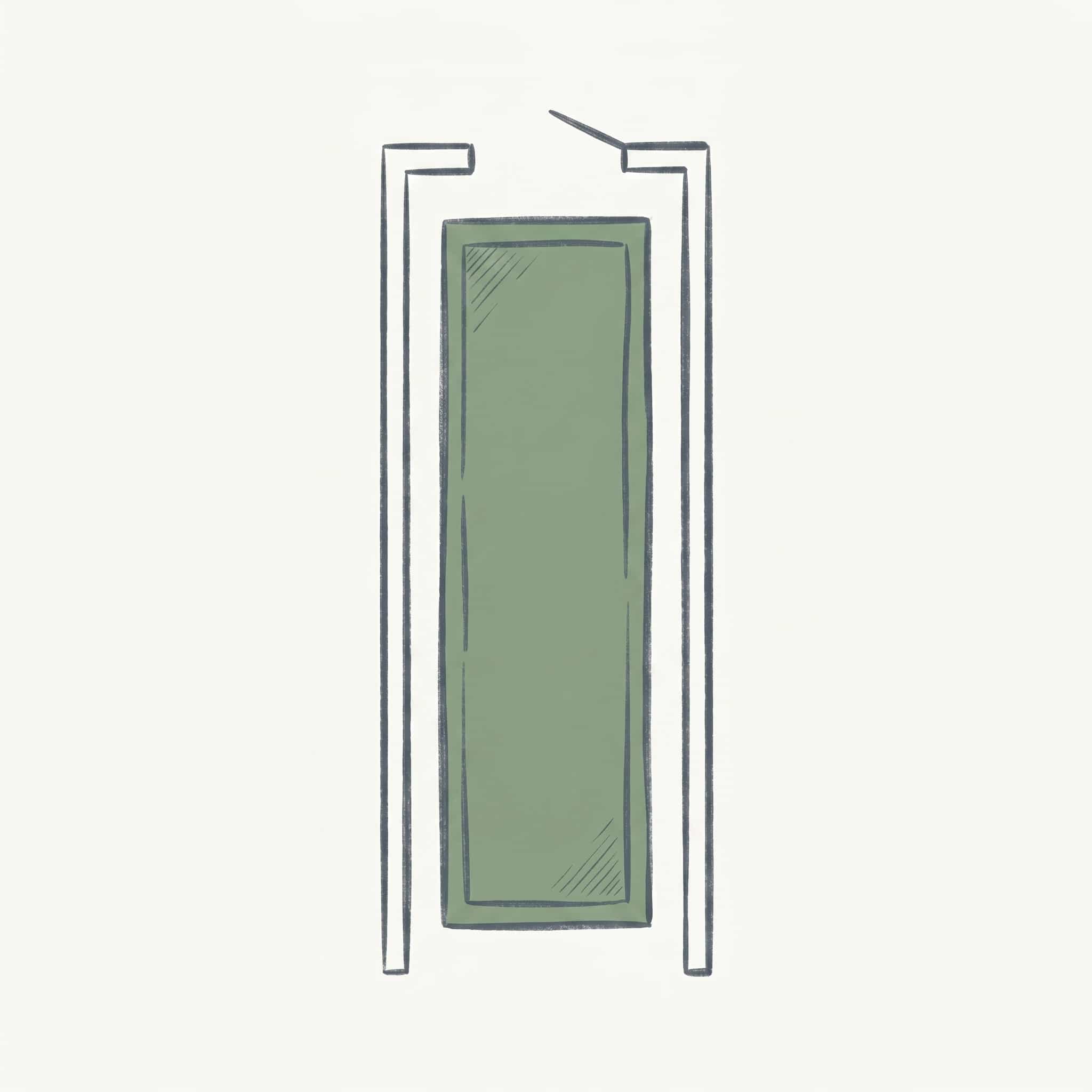
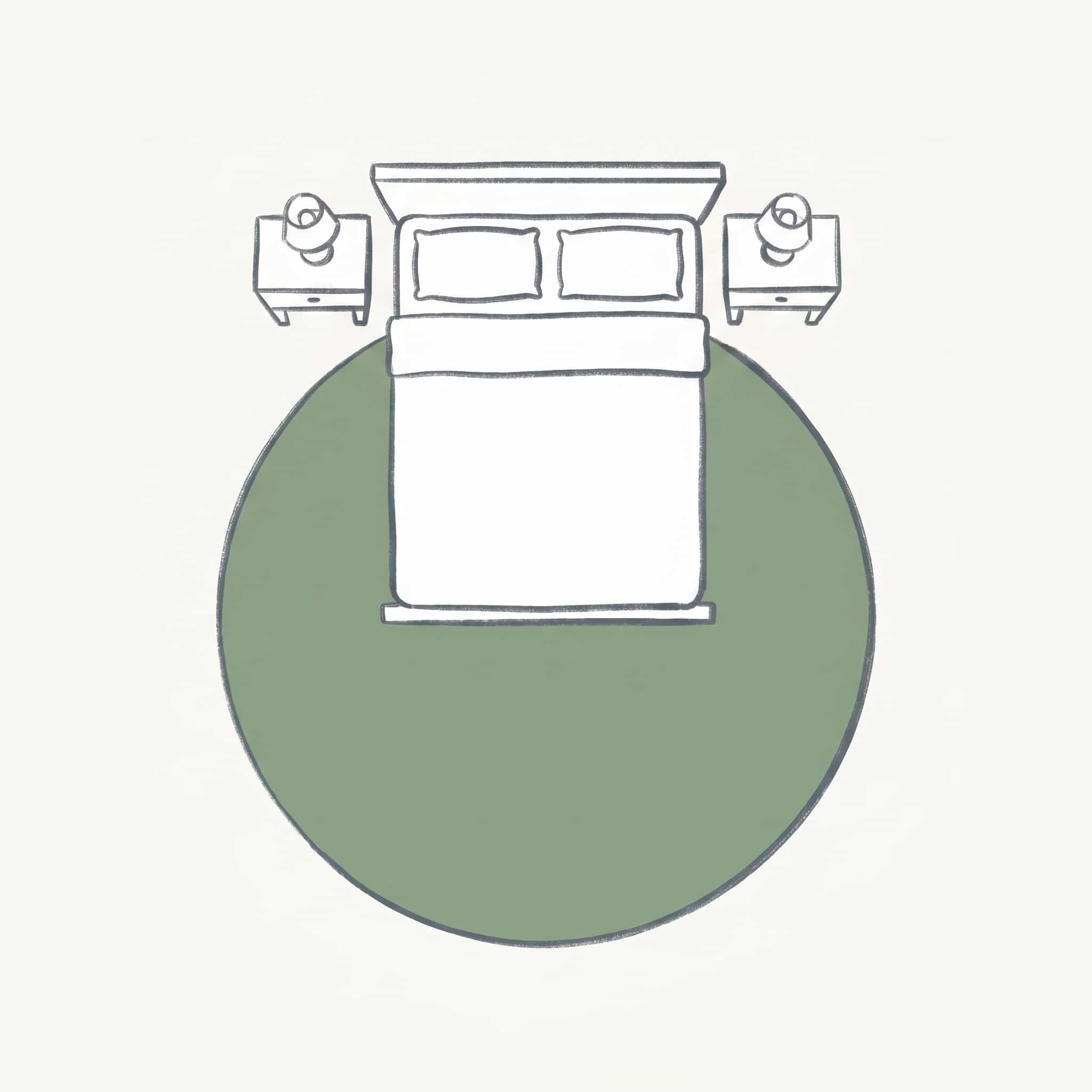
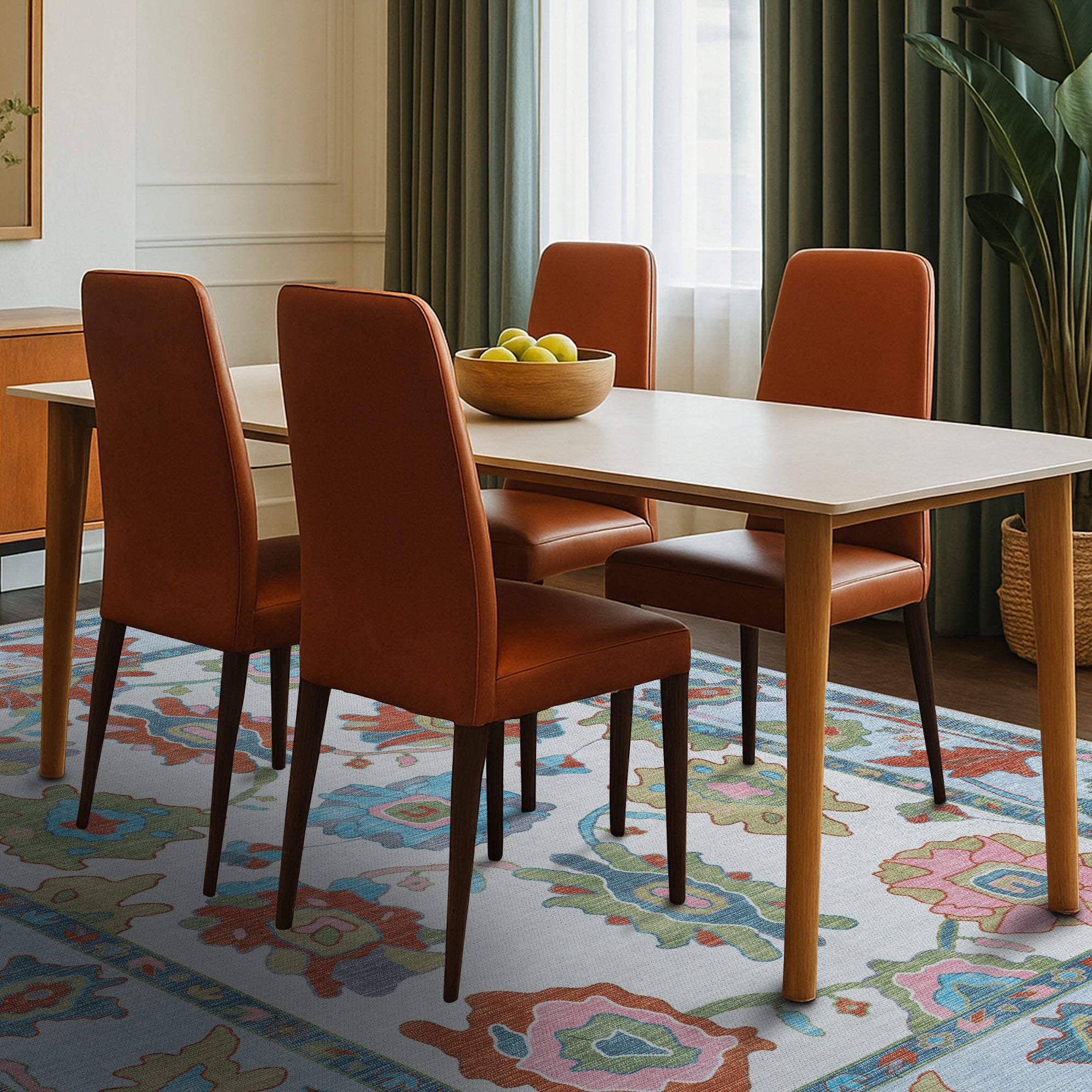
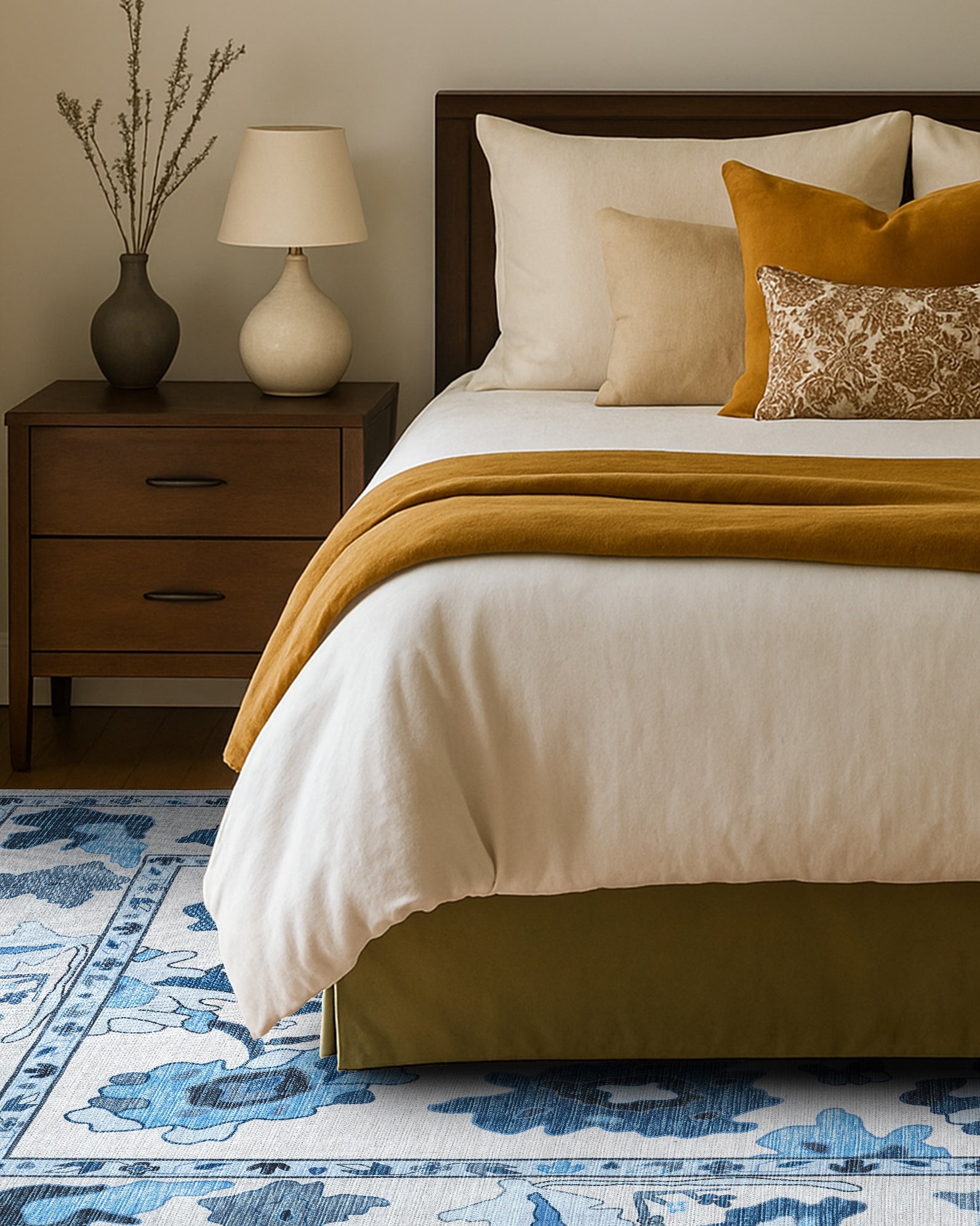
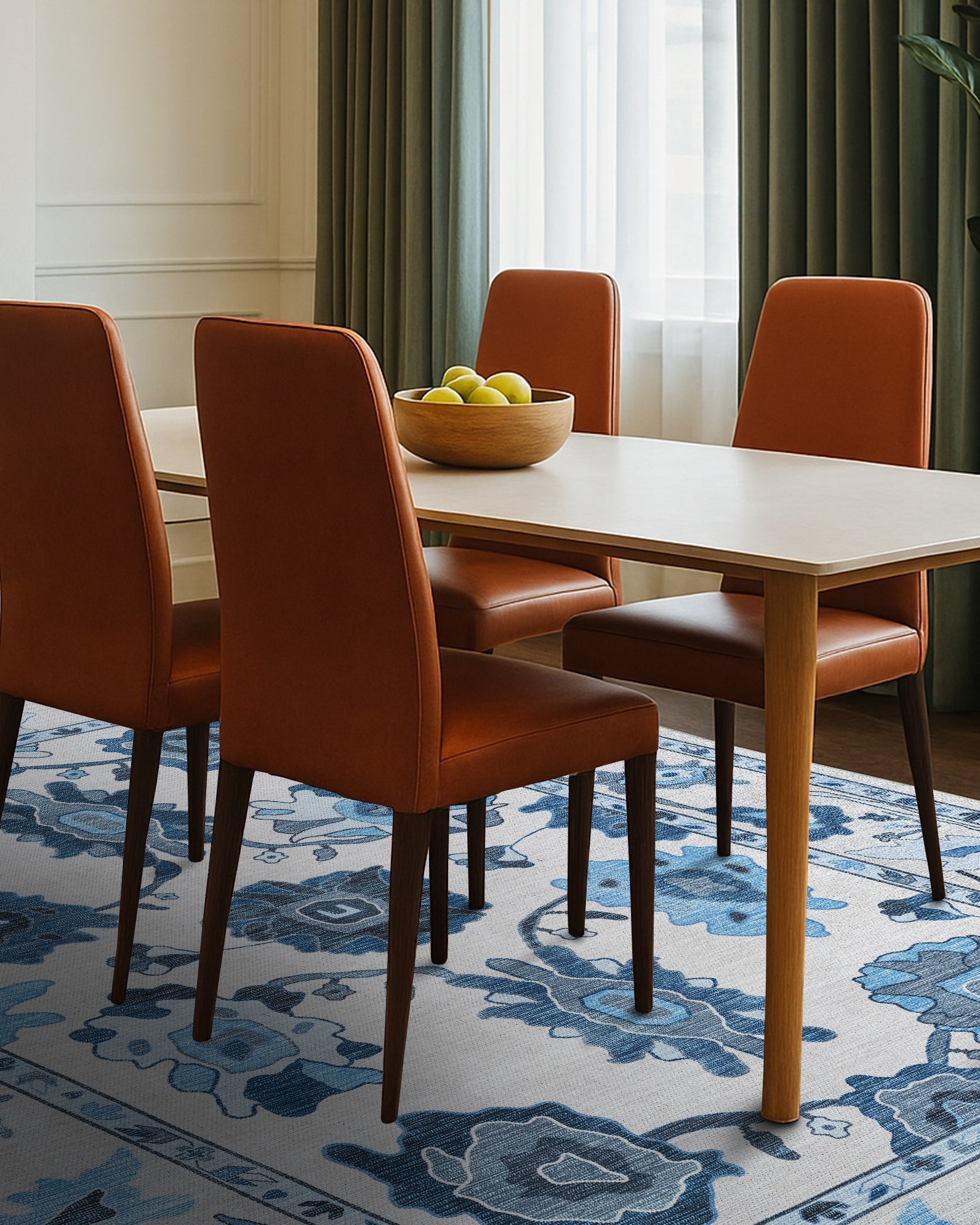
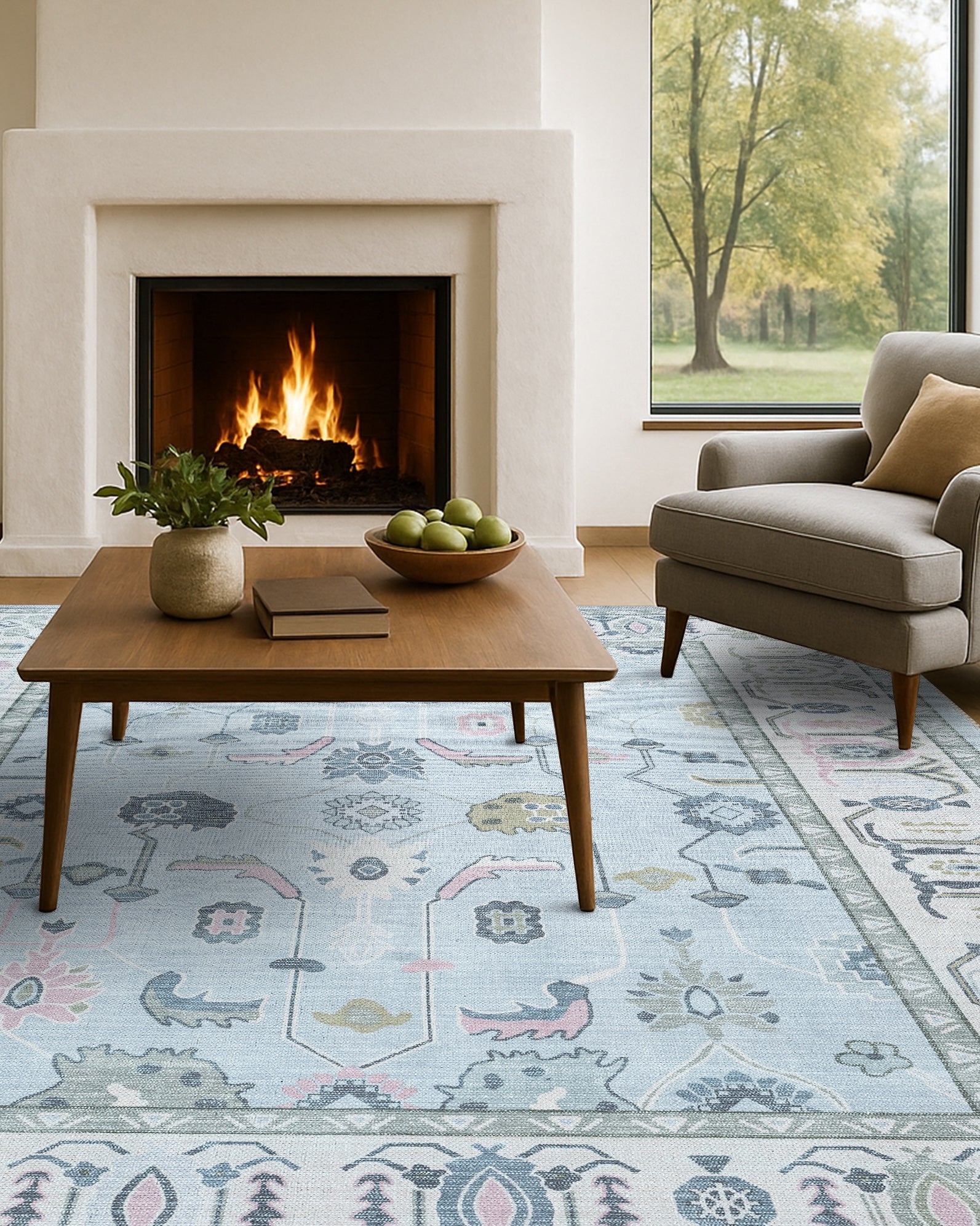
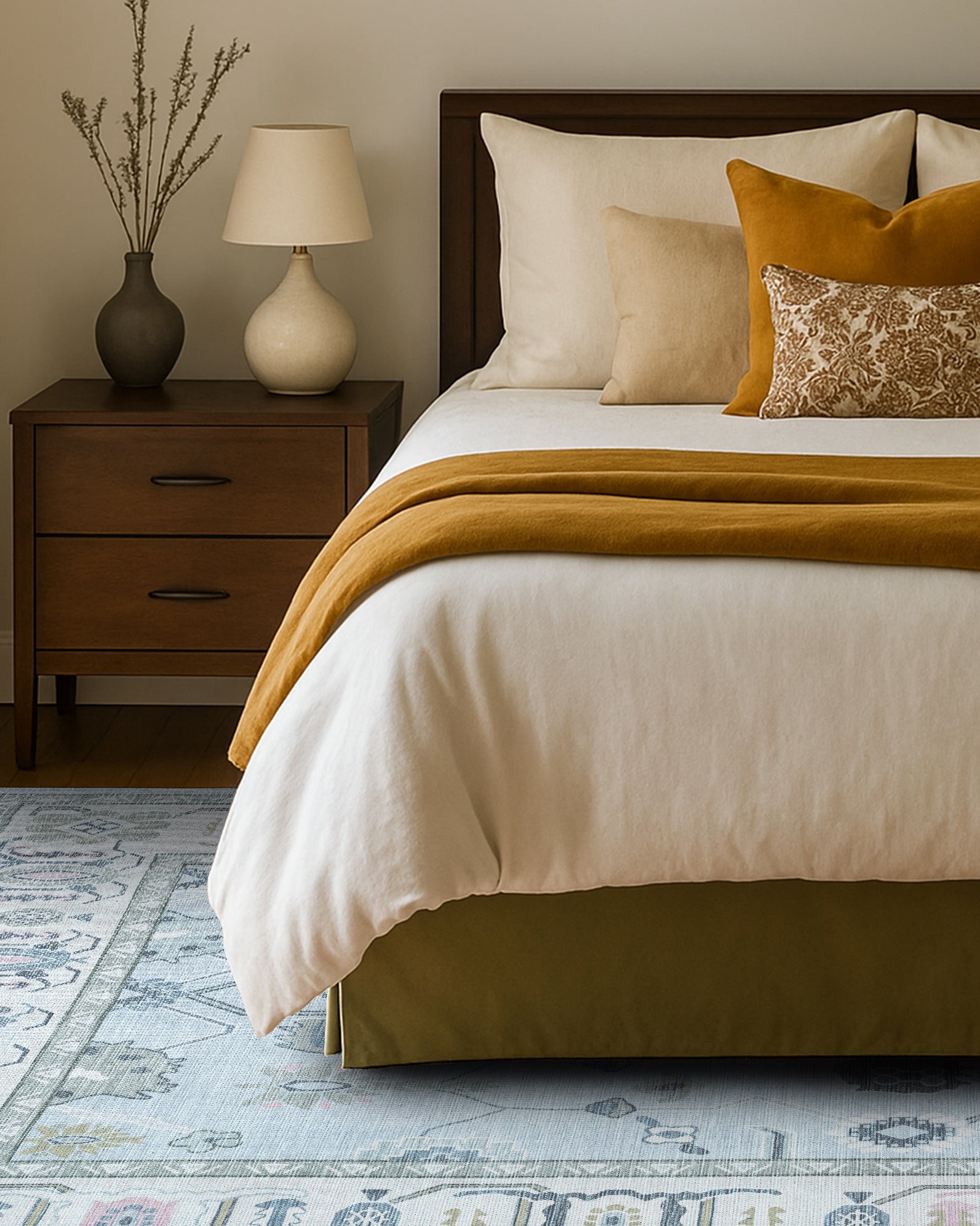
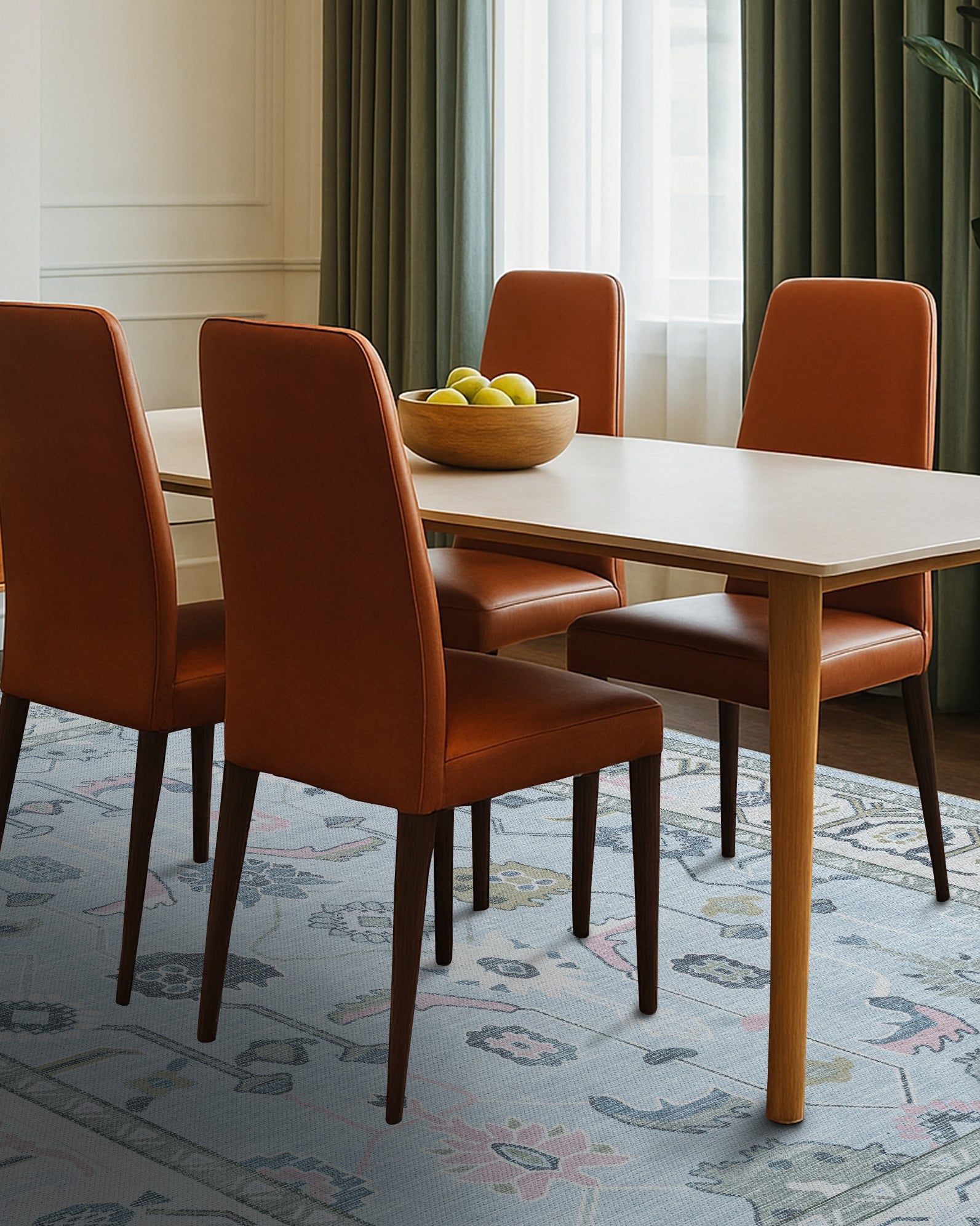
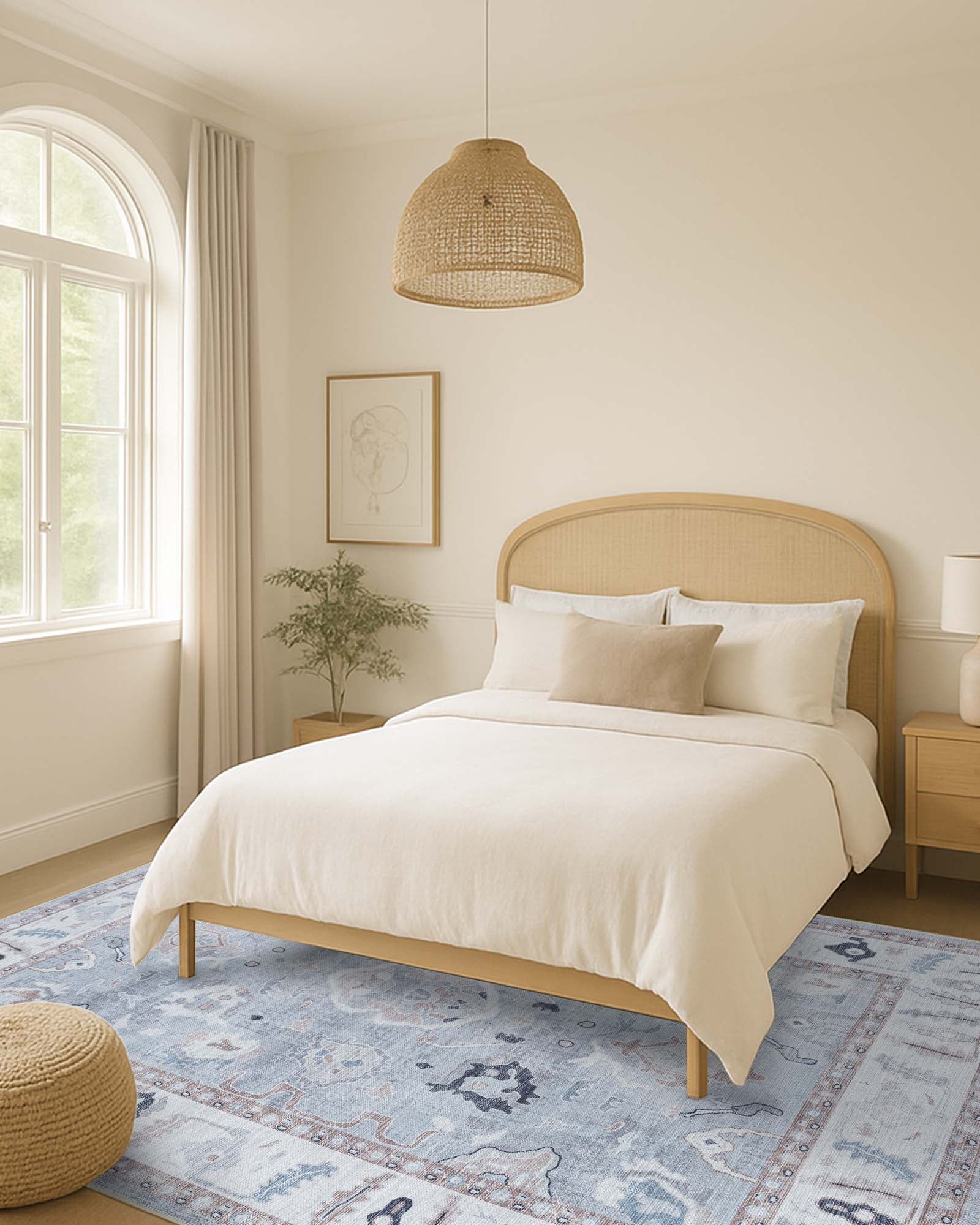
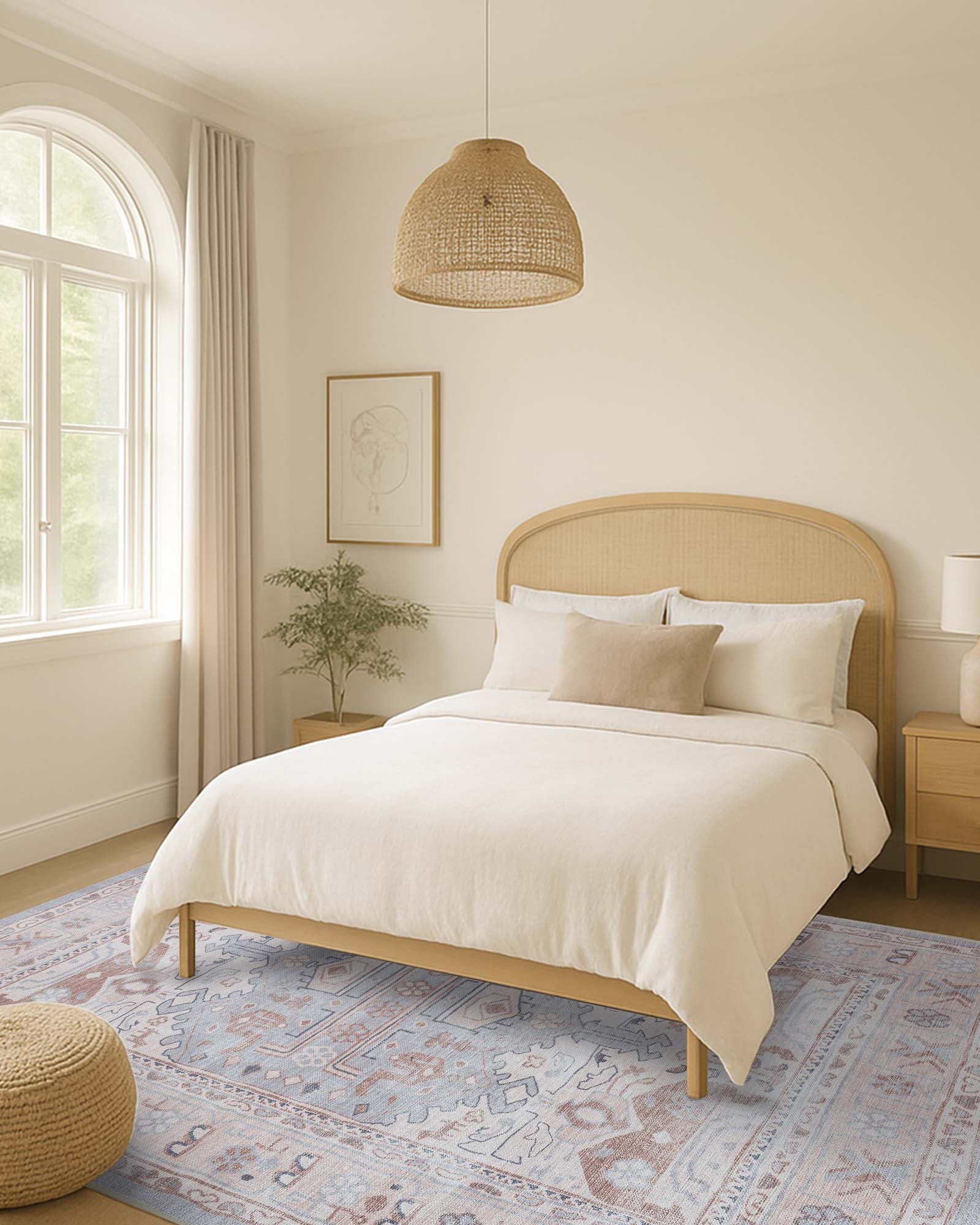
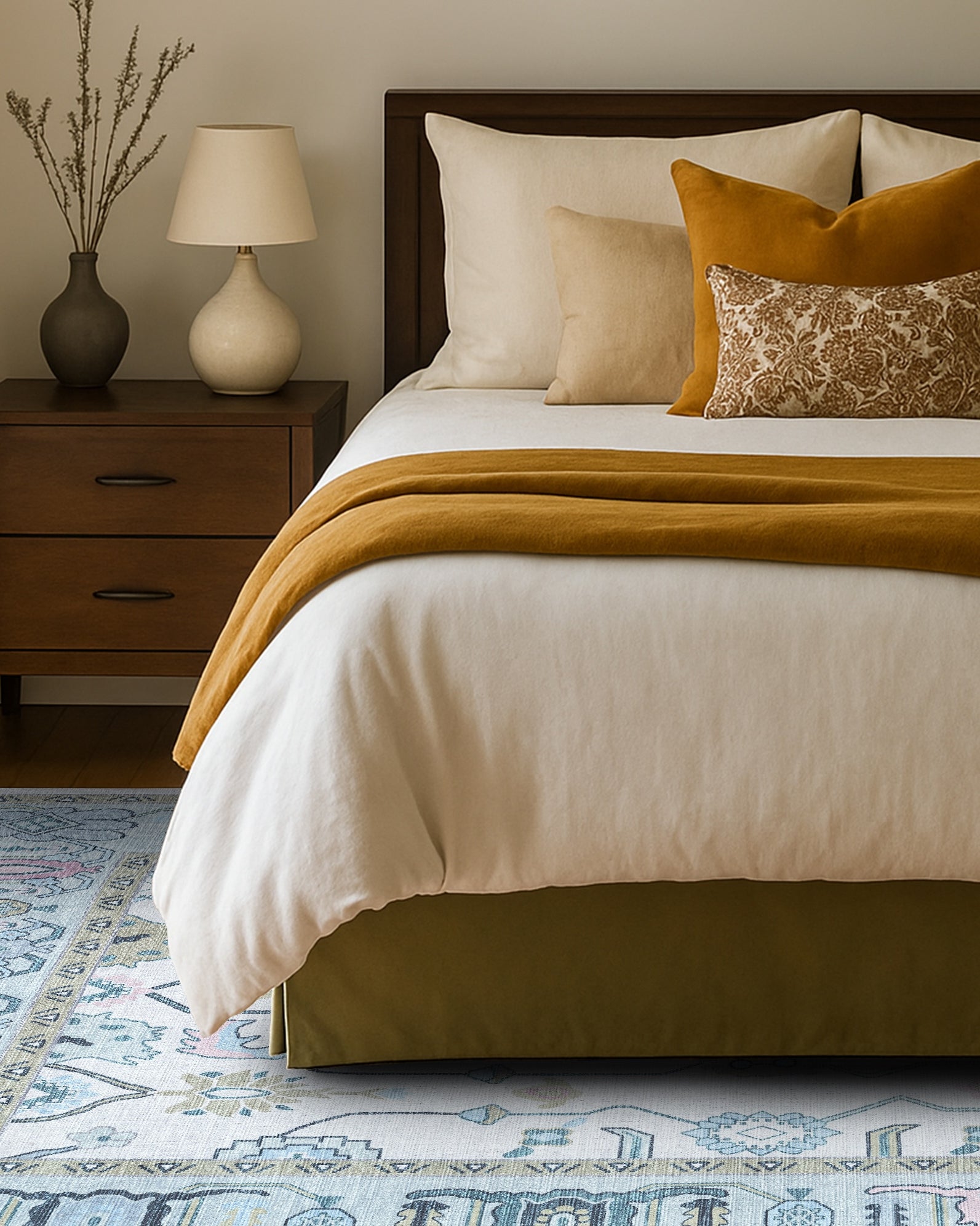
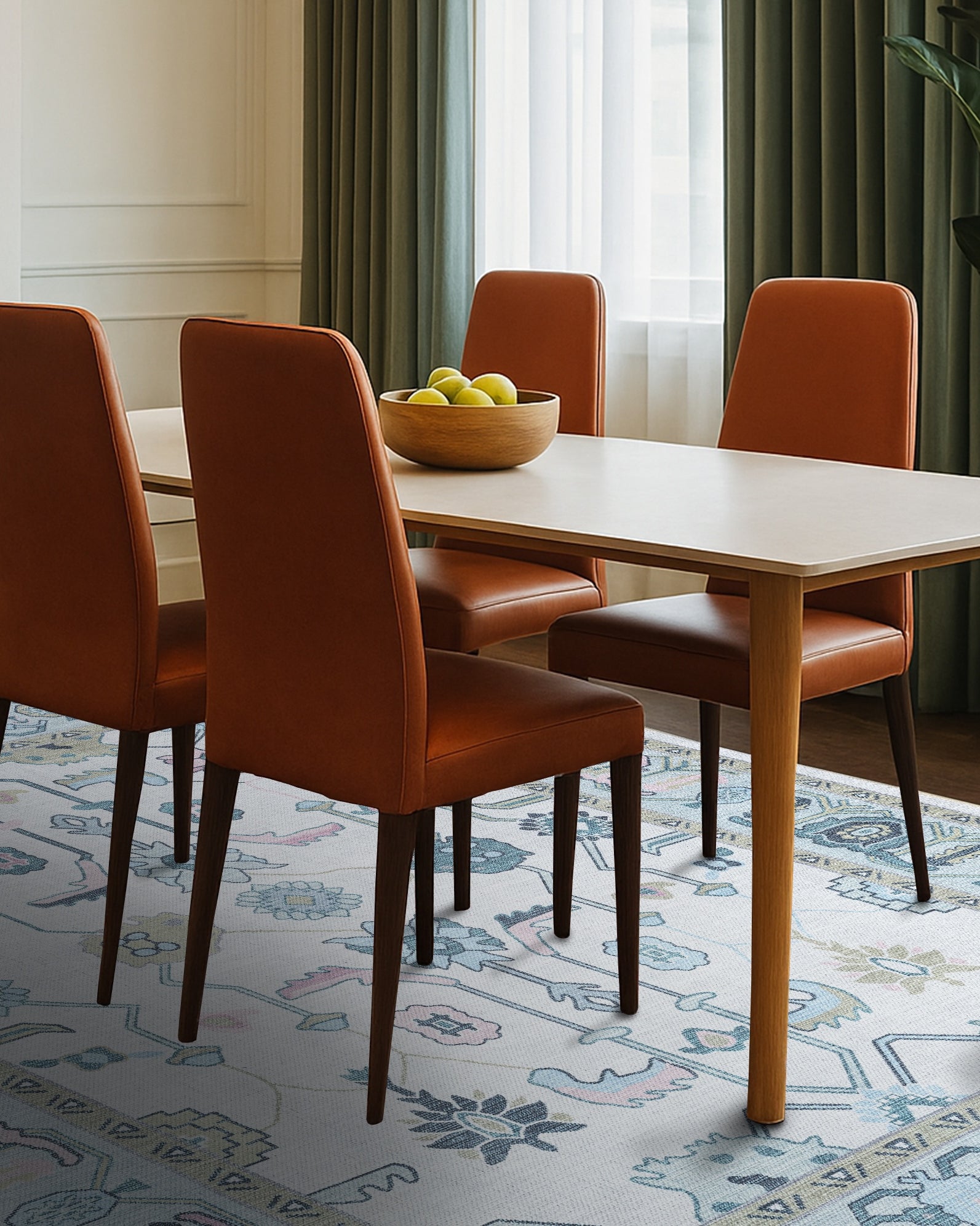
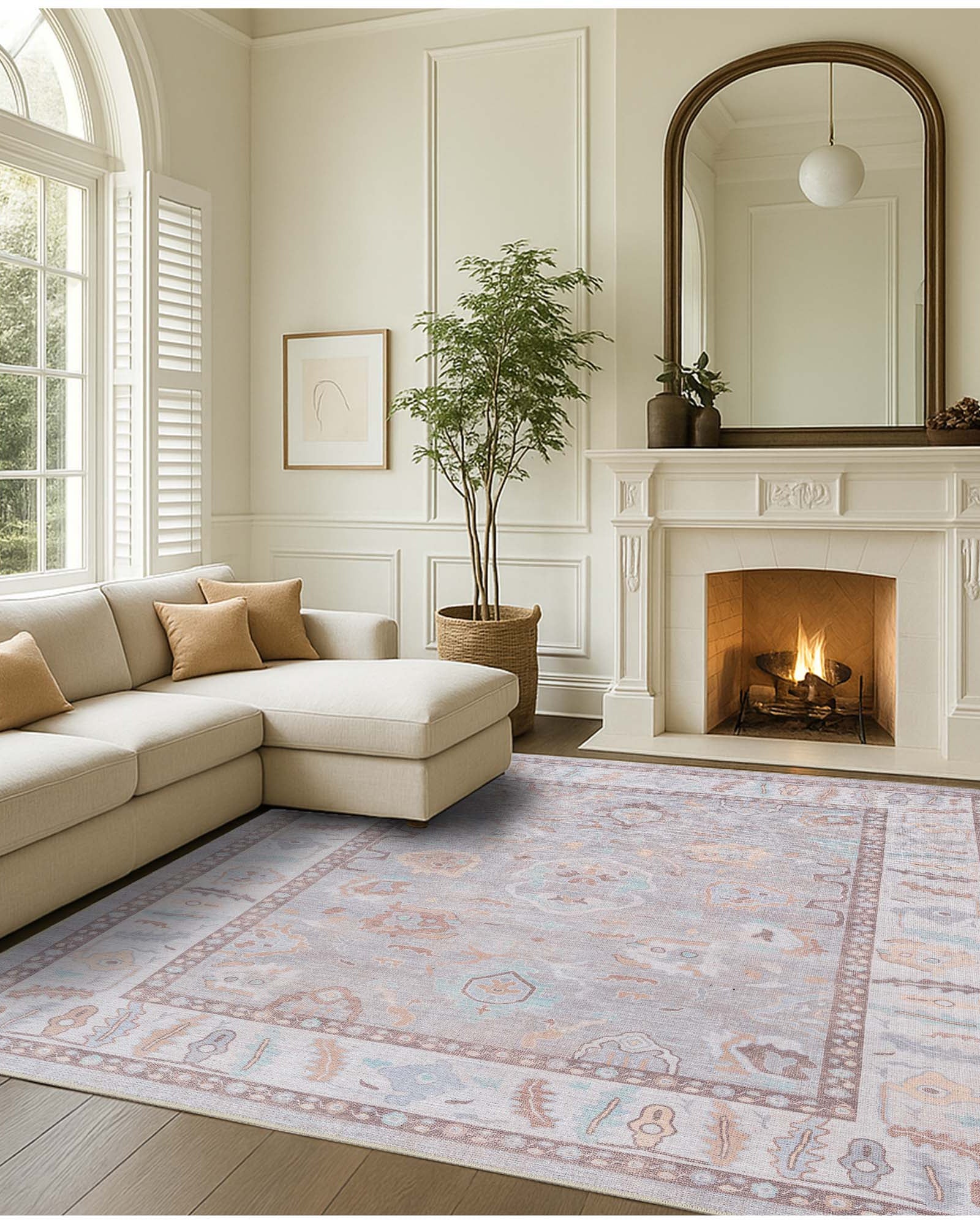
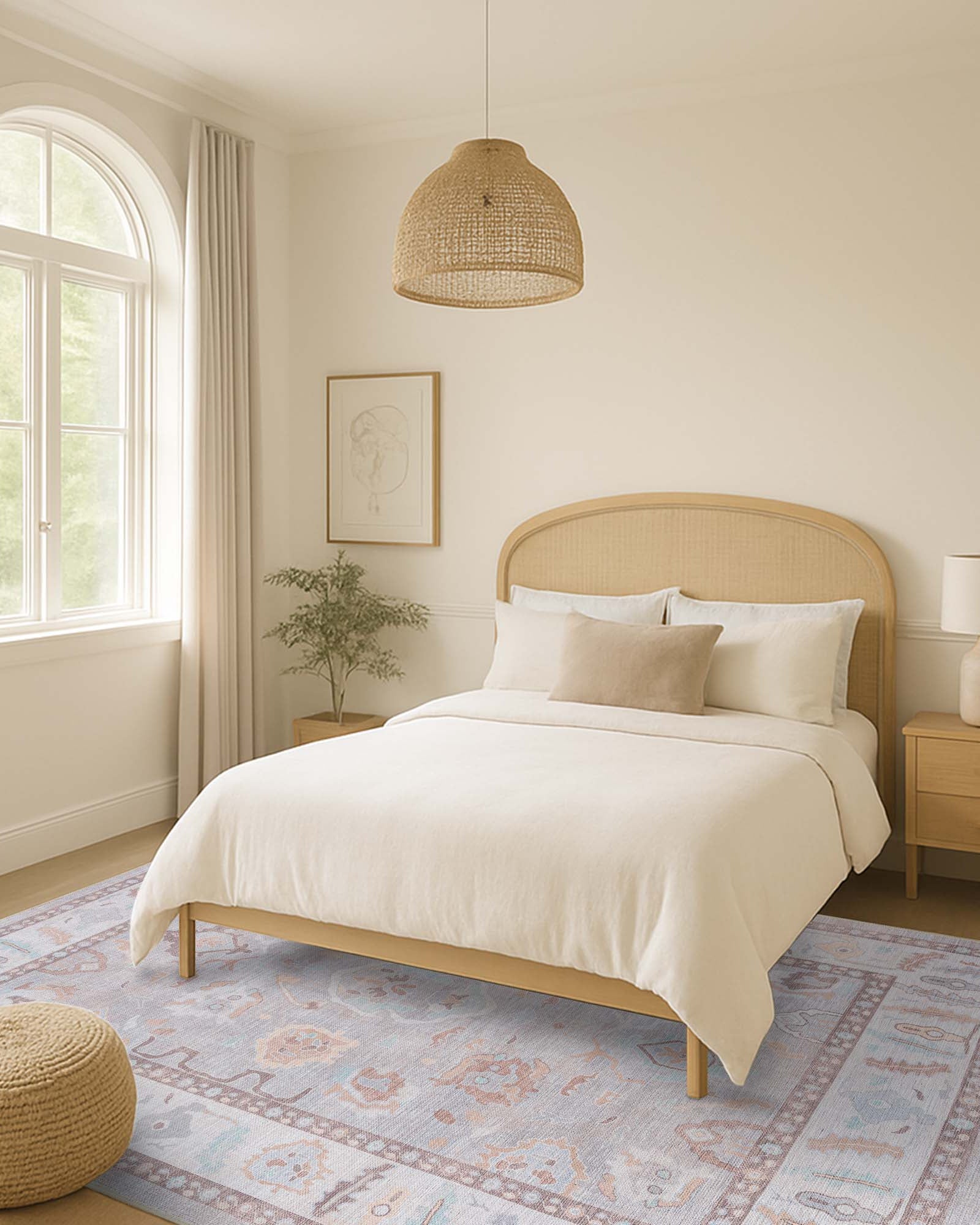
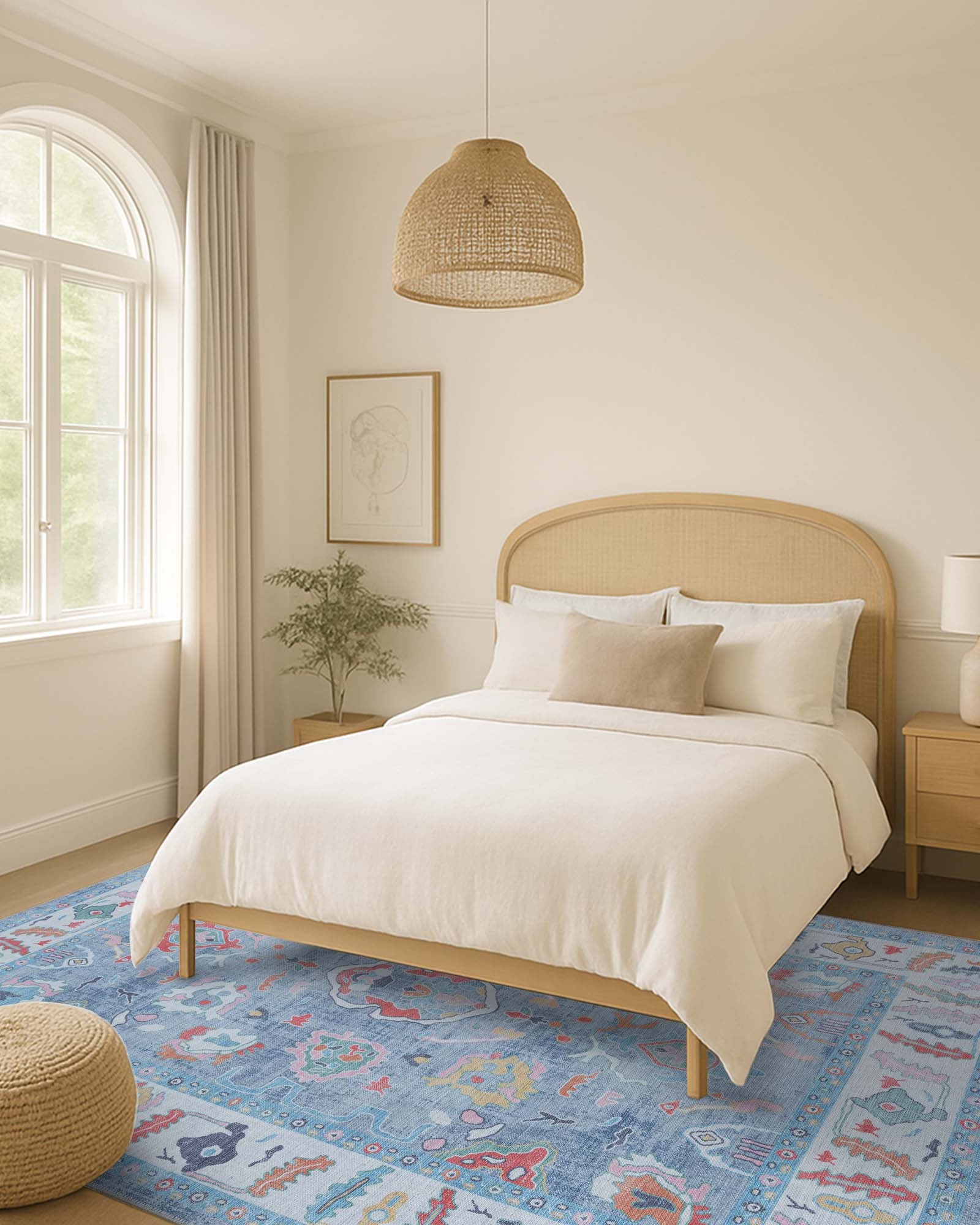
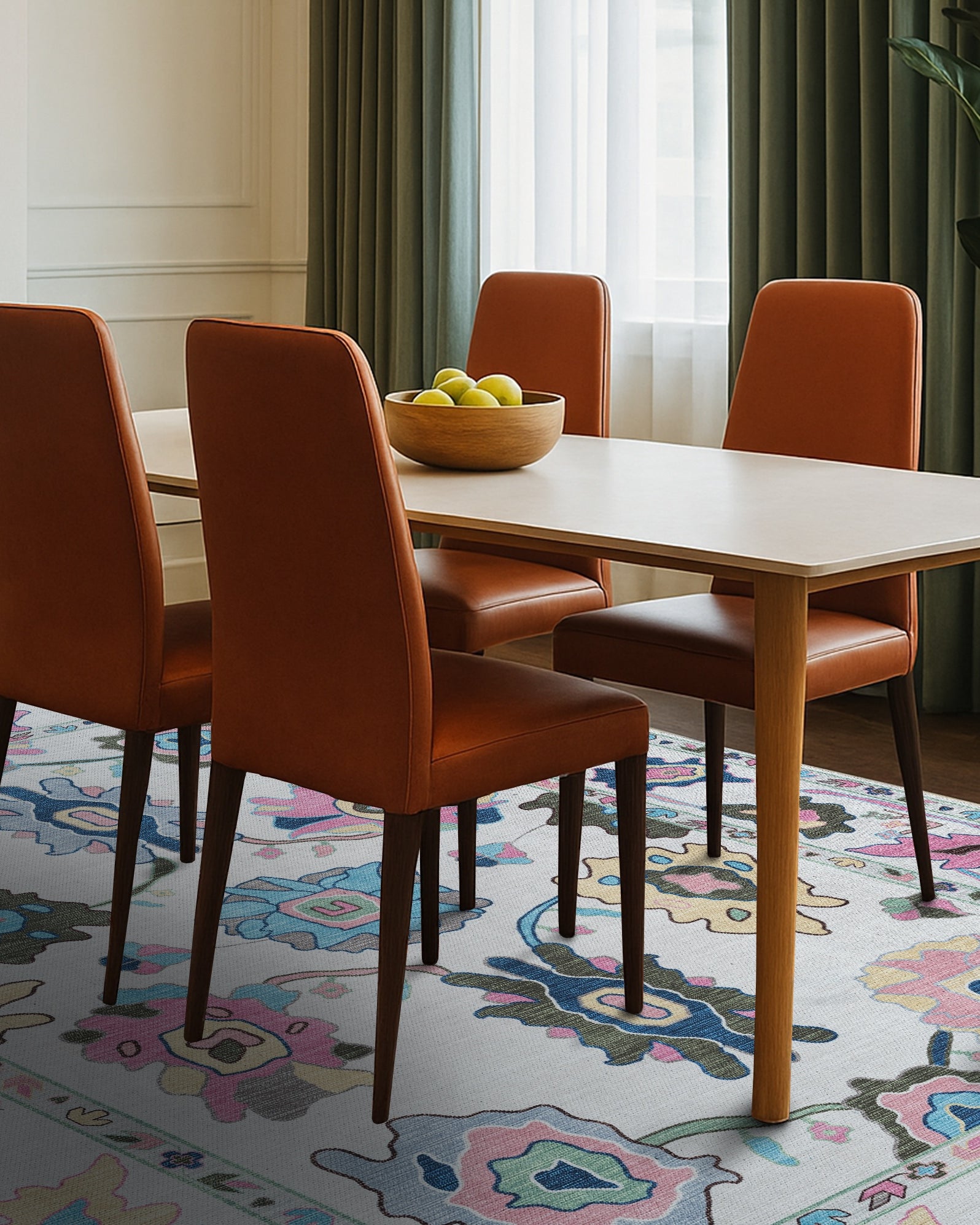
Green also solves a specific problem: rooms with a lot of plants, garden views or natural materials, where a red or blue rug fights what is already there and a neutral disappears. In a living room, keep at least the front legs of every seating piece on the rug. In a dining room, allow 24 inches past the table on all sides. In a bedroom, run the rug 18 to 24 inches past each side of the bed.
Condition, Age and Measurement
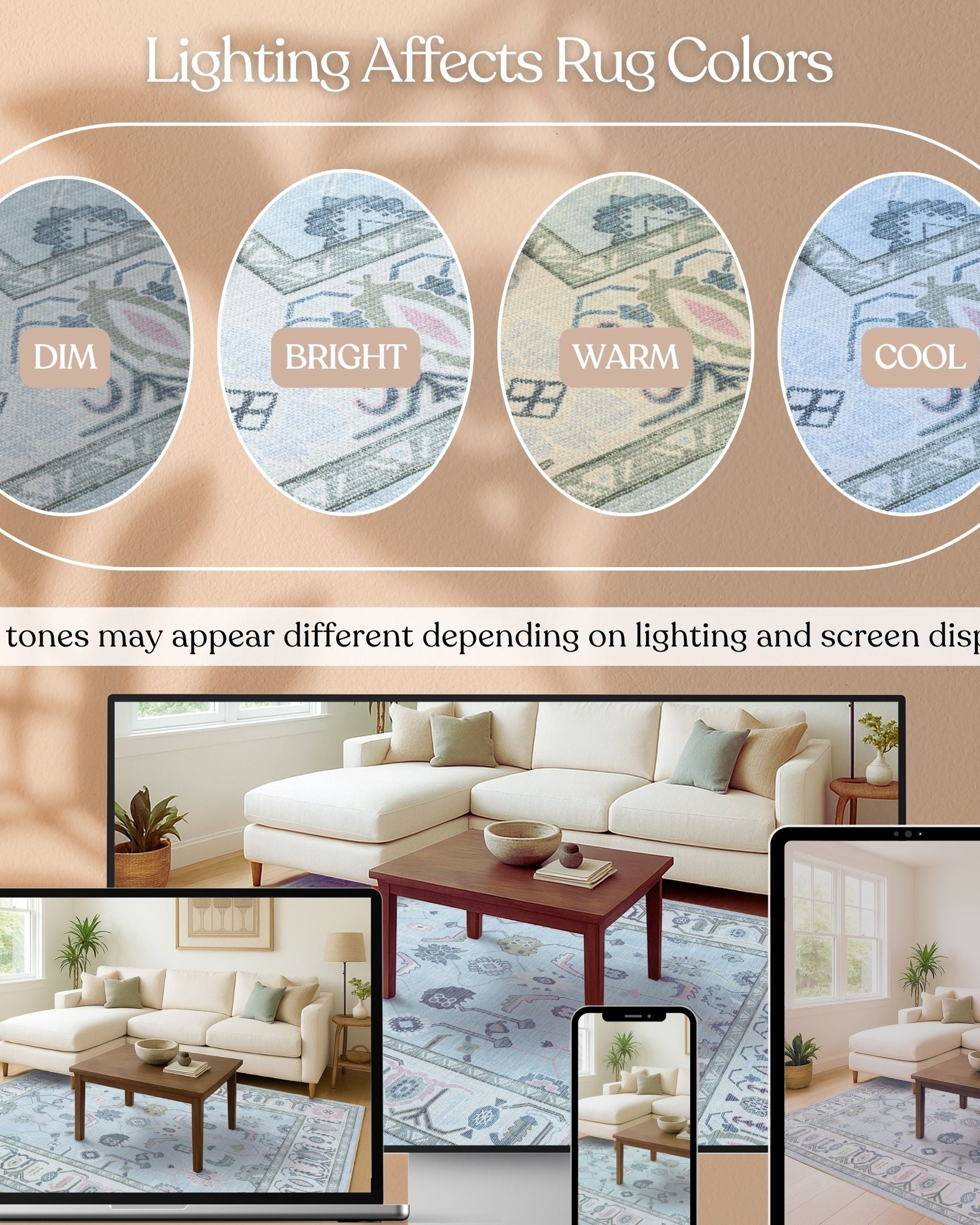
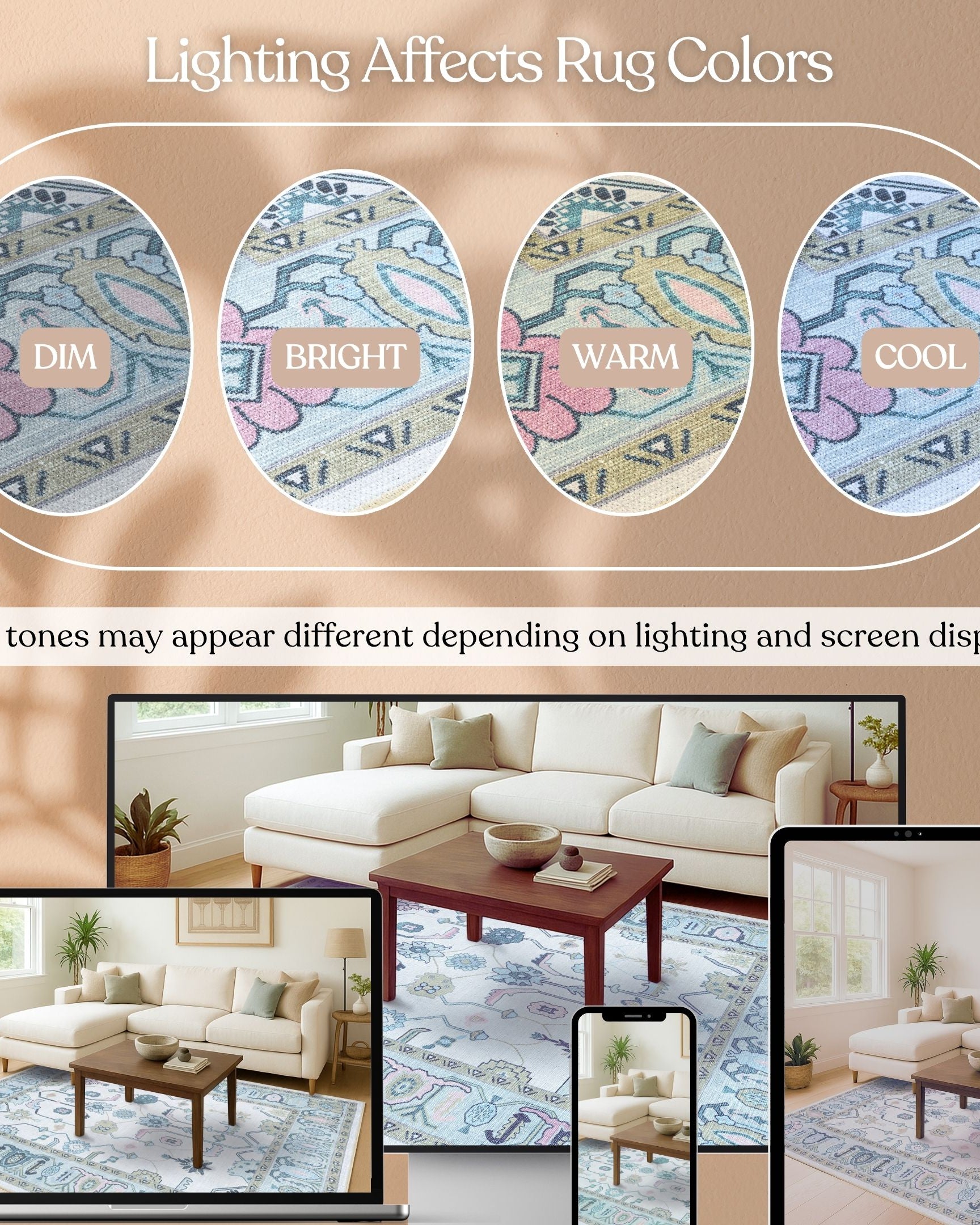
Pieces are grouped as antique at over eighty years, vintage at roughly forty to eighty, and semi-vintage below that. Each product page carries the estimated decade, origin where identifiable, exact measured dimensions and a plain condition note. On green rugs specifically, expect pronounced tonal variation — abrash from inconsistent yellow baths, and uneven drift toward blue or grey where light exposure differed across the rug. Both are original characteristics of two-stage dyeing, not damage or wear. Sizes are never standard and opposite edges commonly differ by an inch or more.
Care
Green needs more sun discipline than any other colour, because the yellow component is the least lightfast pigment in a rug. Keep green pieces out of prolonged direct sunlight where you can, and rotate them 180 degrees twice a year so any further drift stays even across the field rather than forming a hard line. The indigo component also means bleed risk when wet: blot spills immediately with a dry white cloth and minimal plain water, press rather than rub, and never saturate the rug. Skip home carpet-cleaning machines, steam cleaners and commercial spot treatments entirely. Use a rug pad on hard floors, vacuum with the beater bar off or raised and stay off the fringe. For anything set-in, use a professional hand-knotted rug washer.