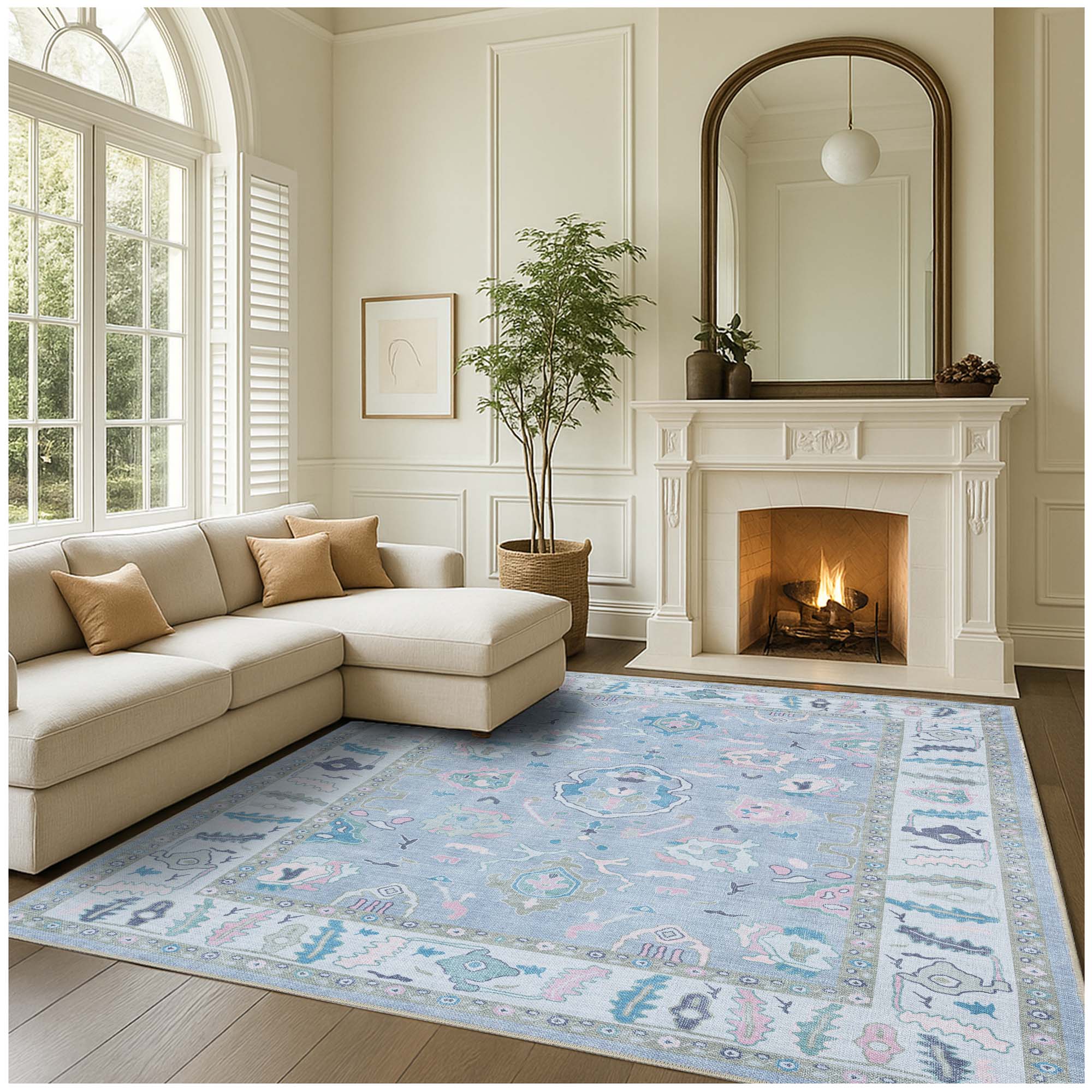
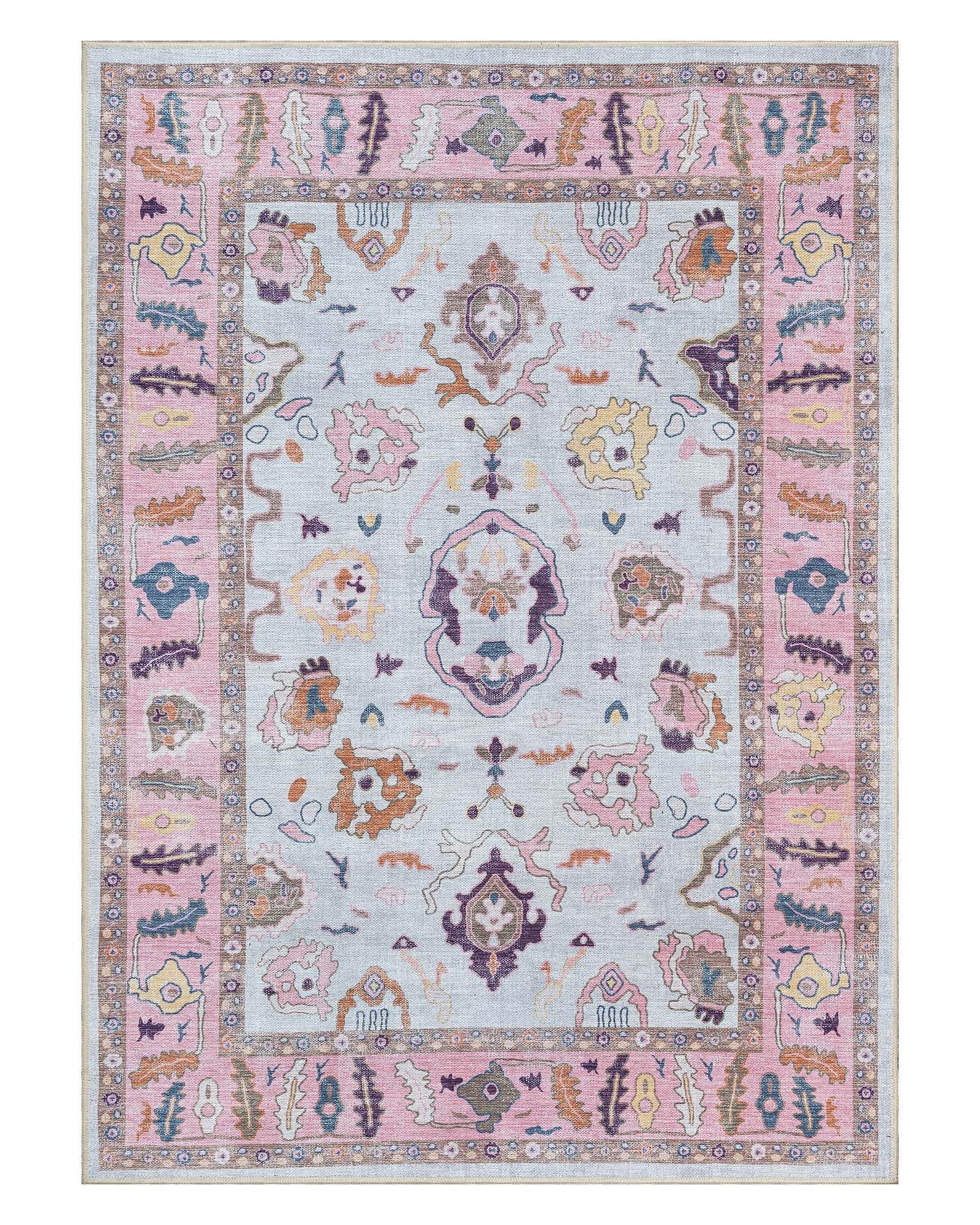
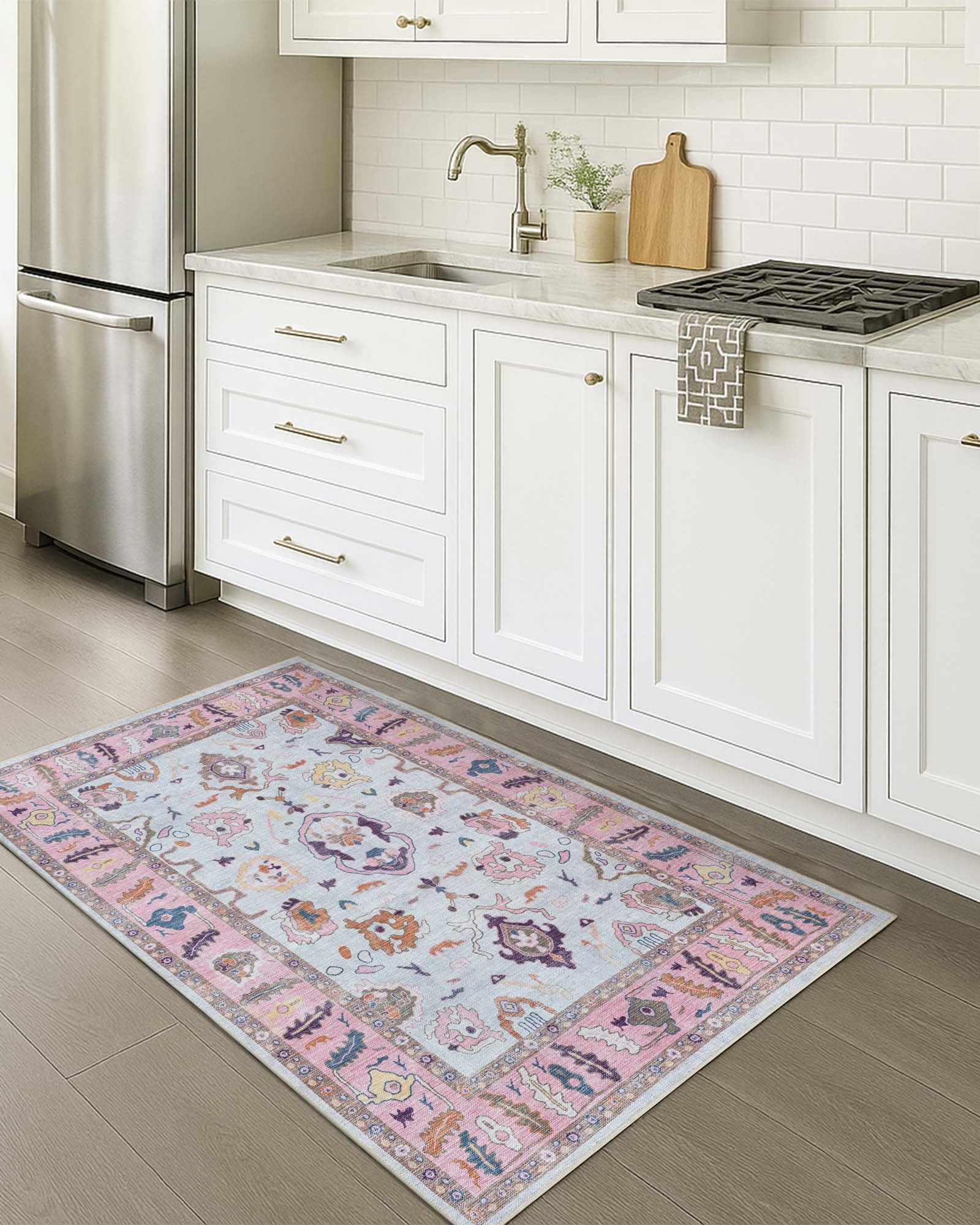
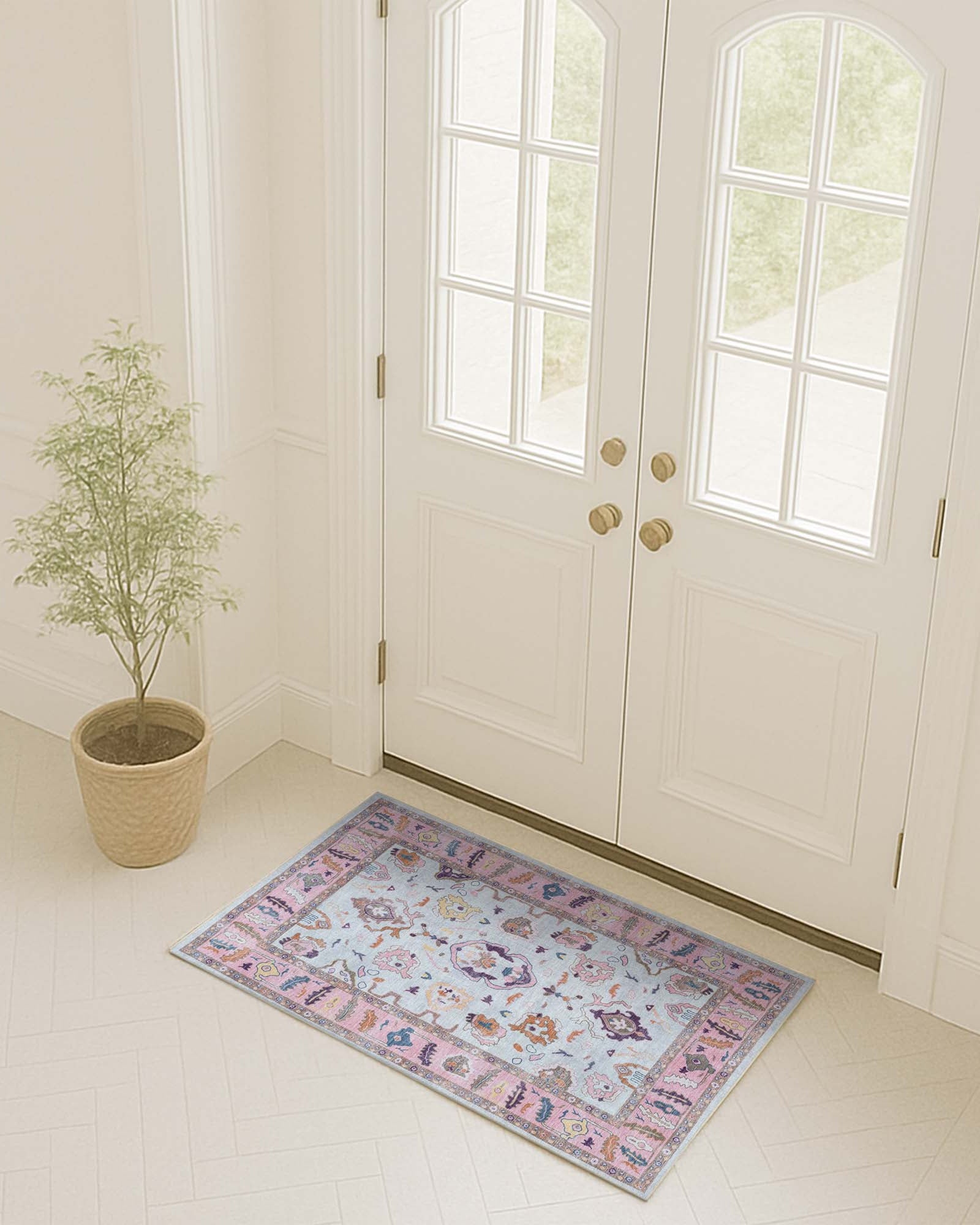
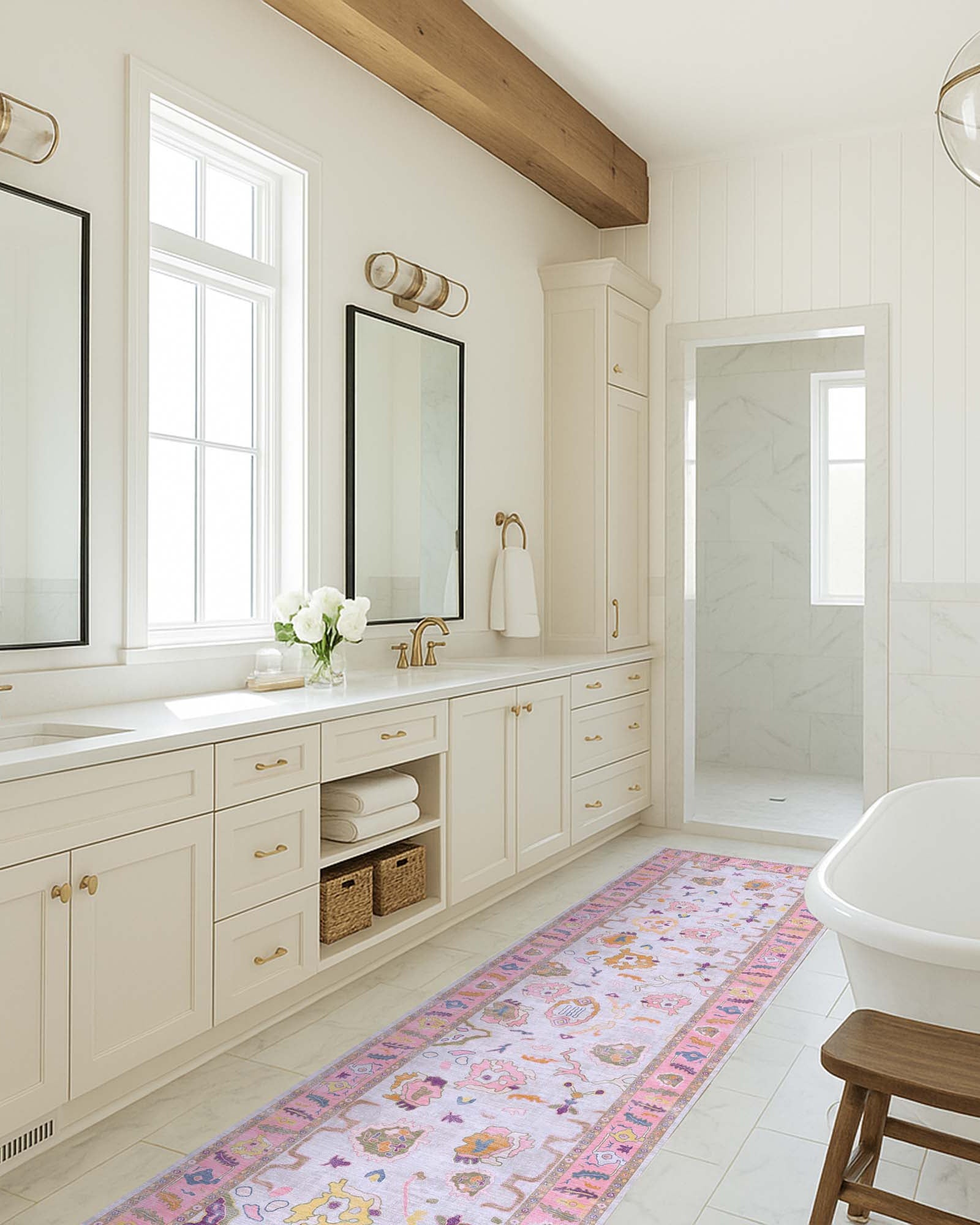
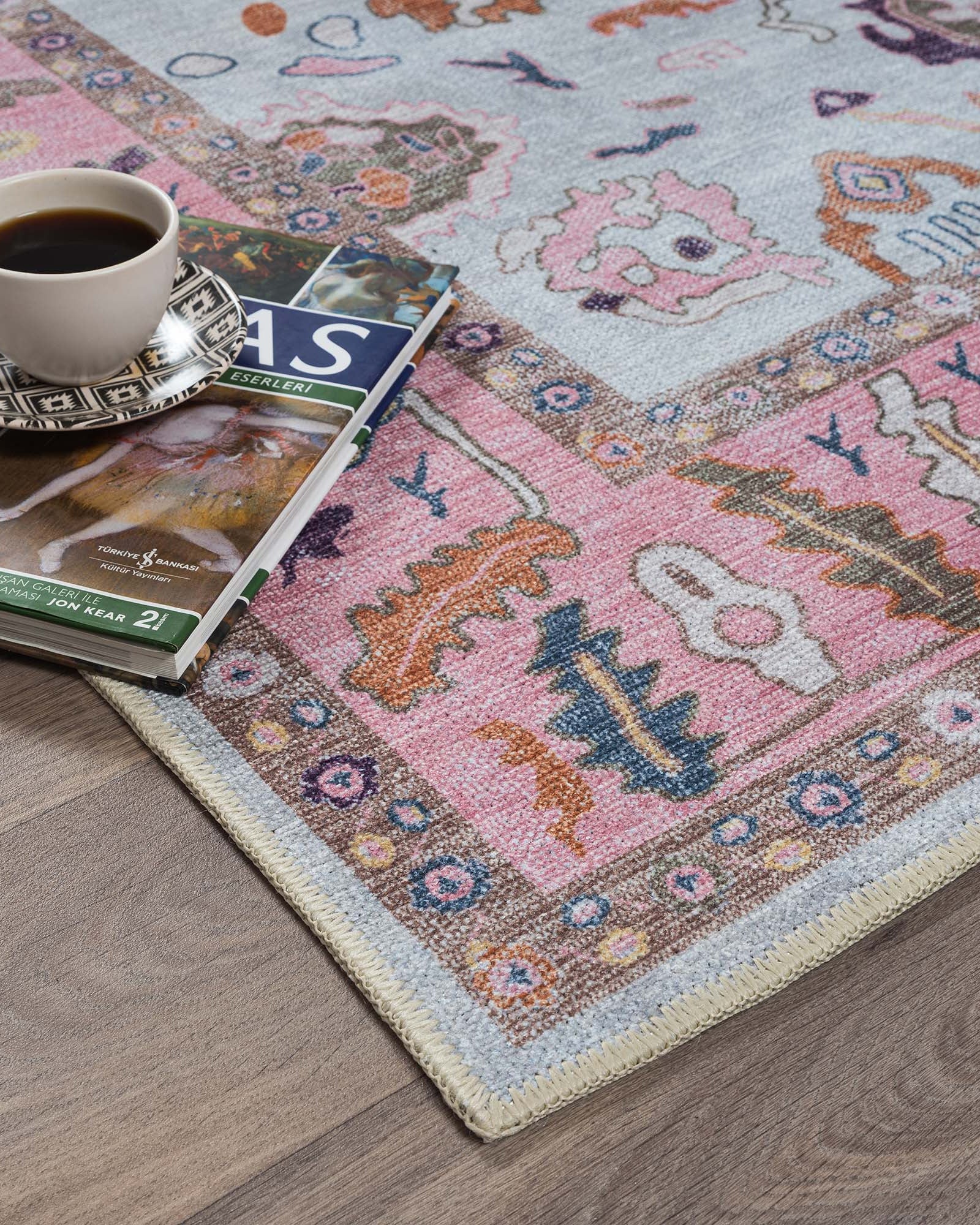
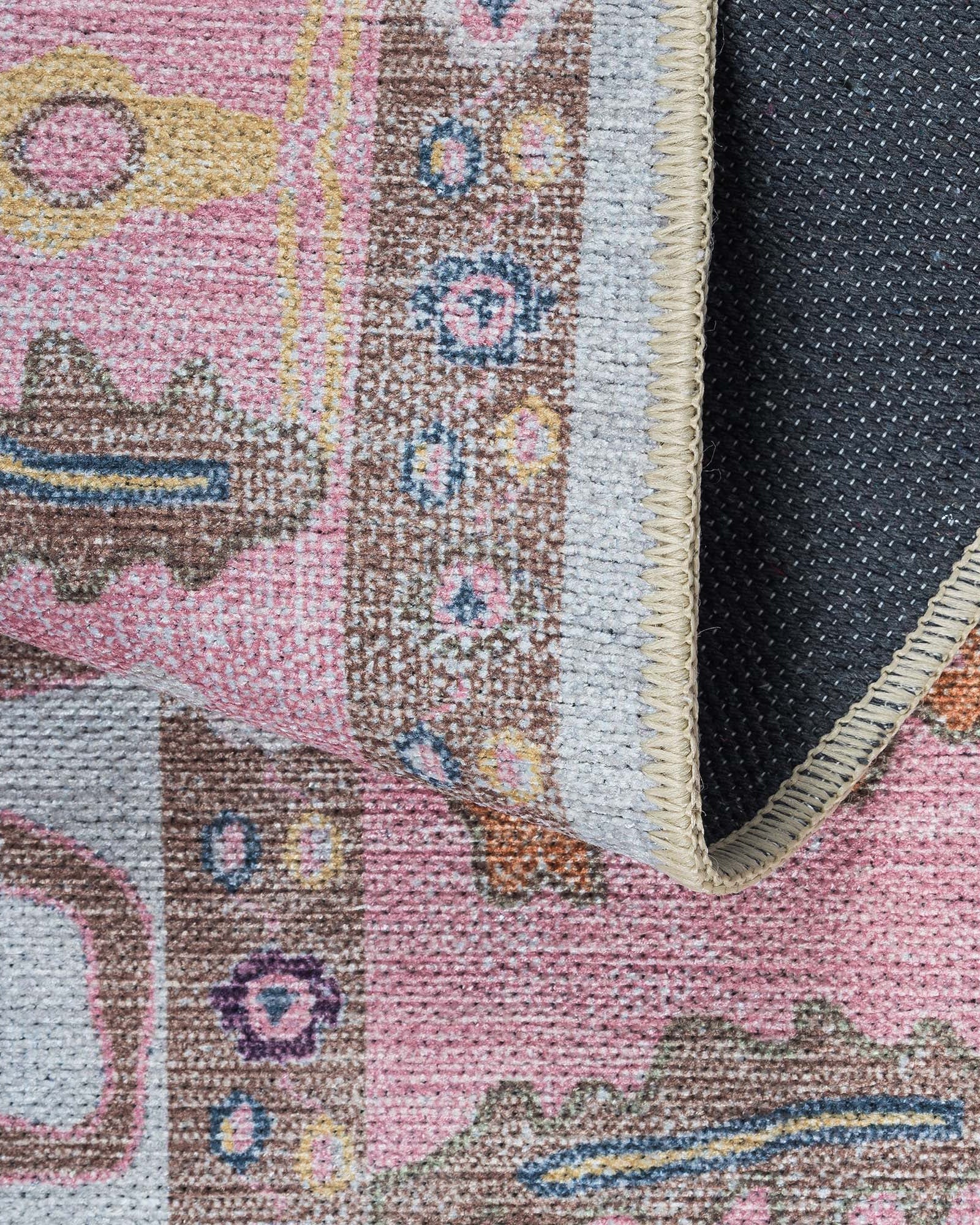
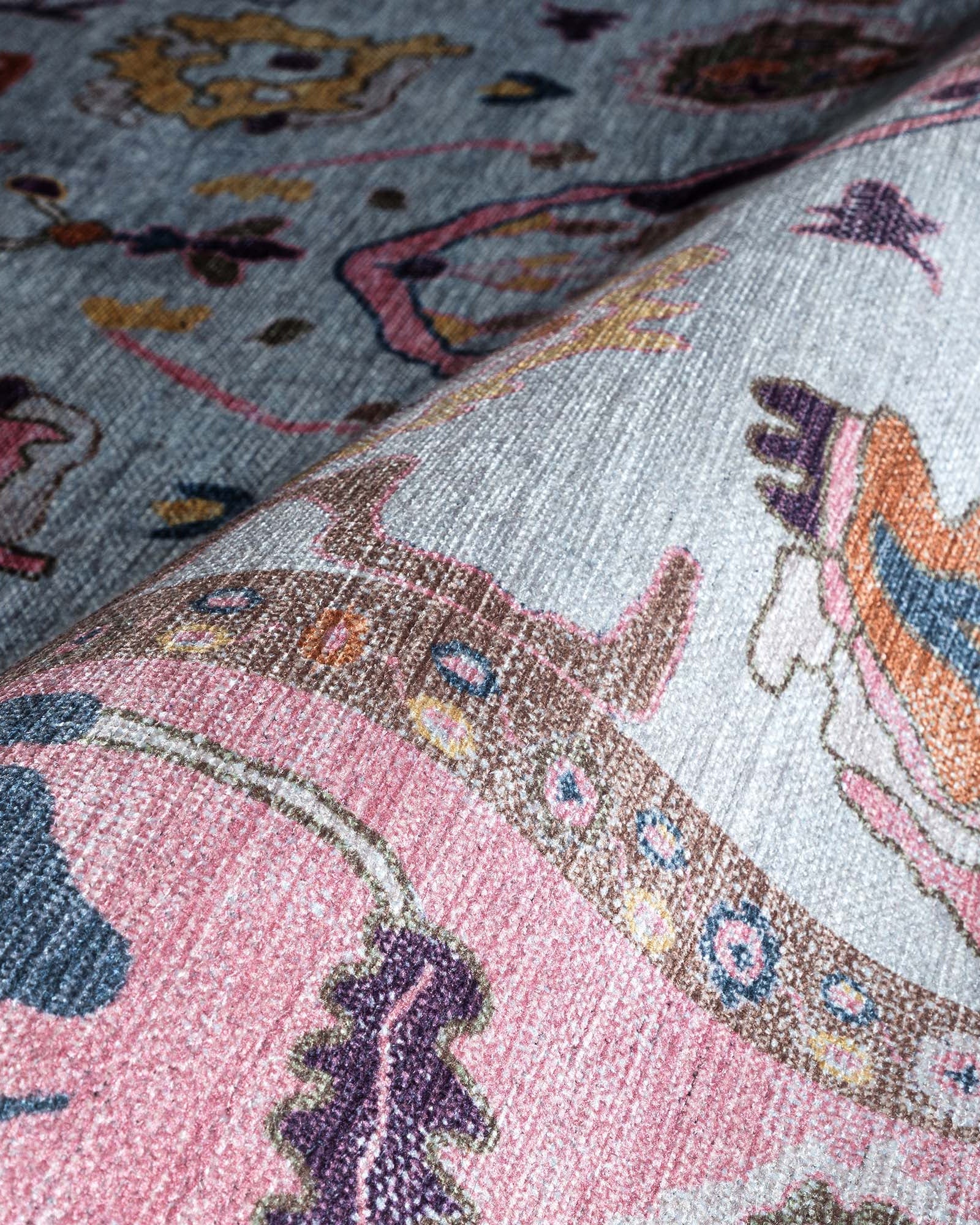
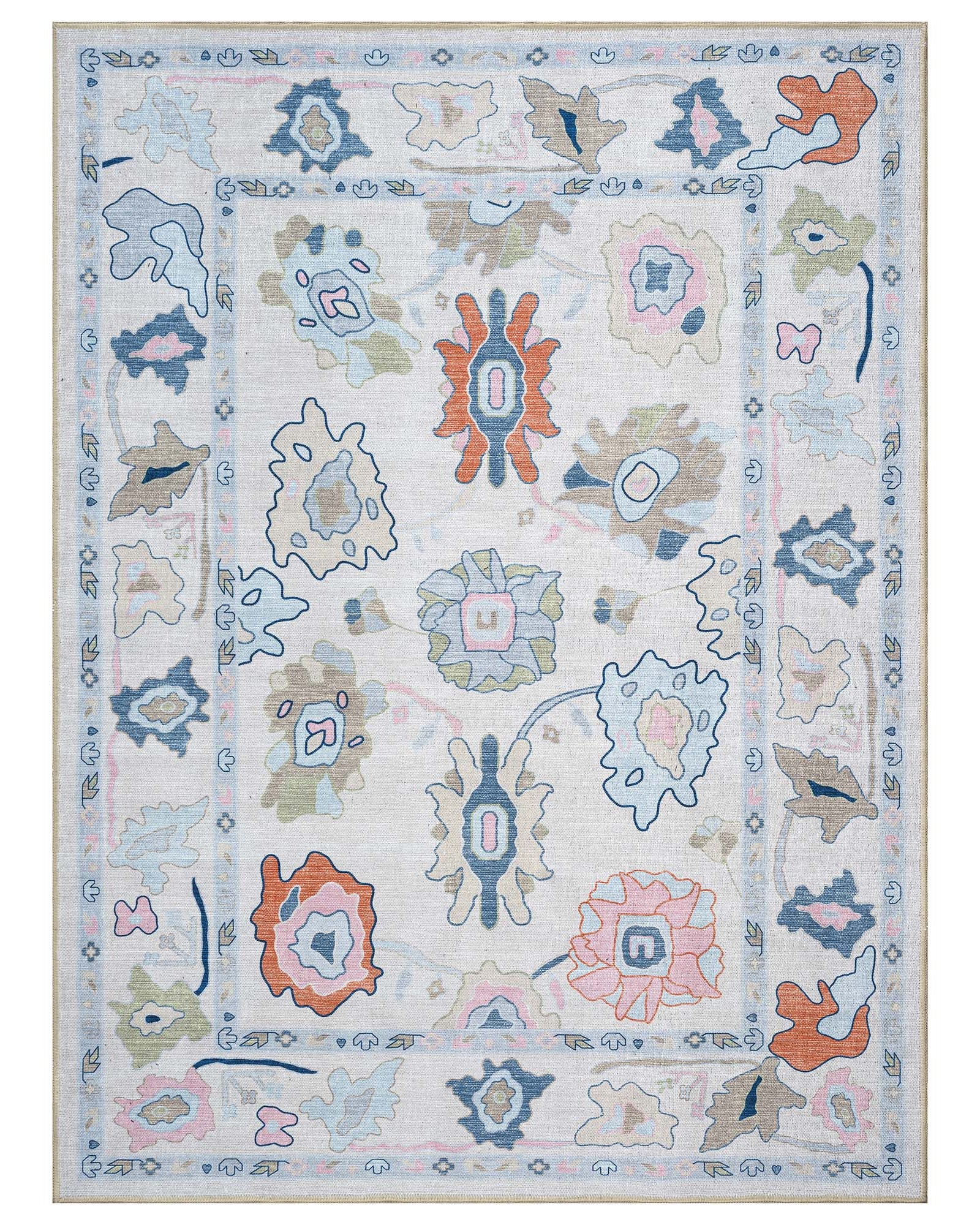
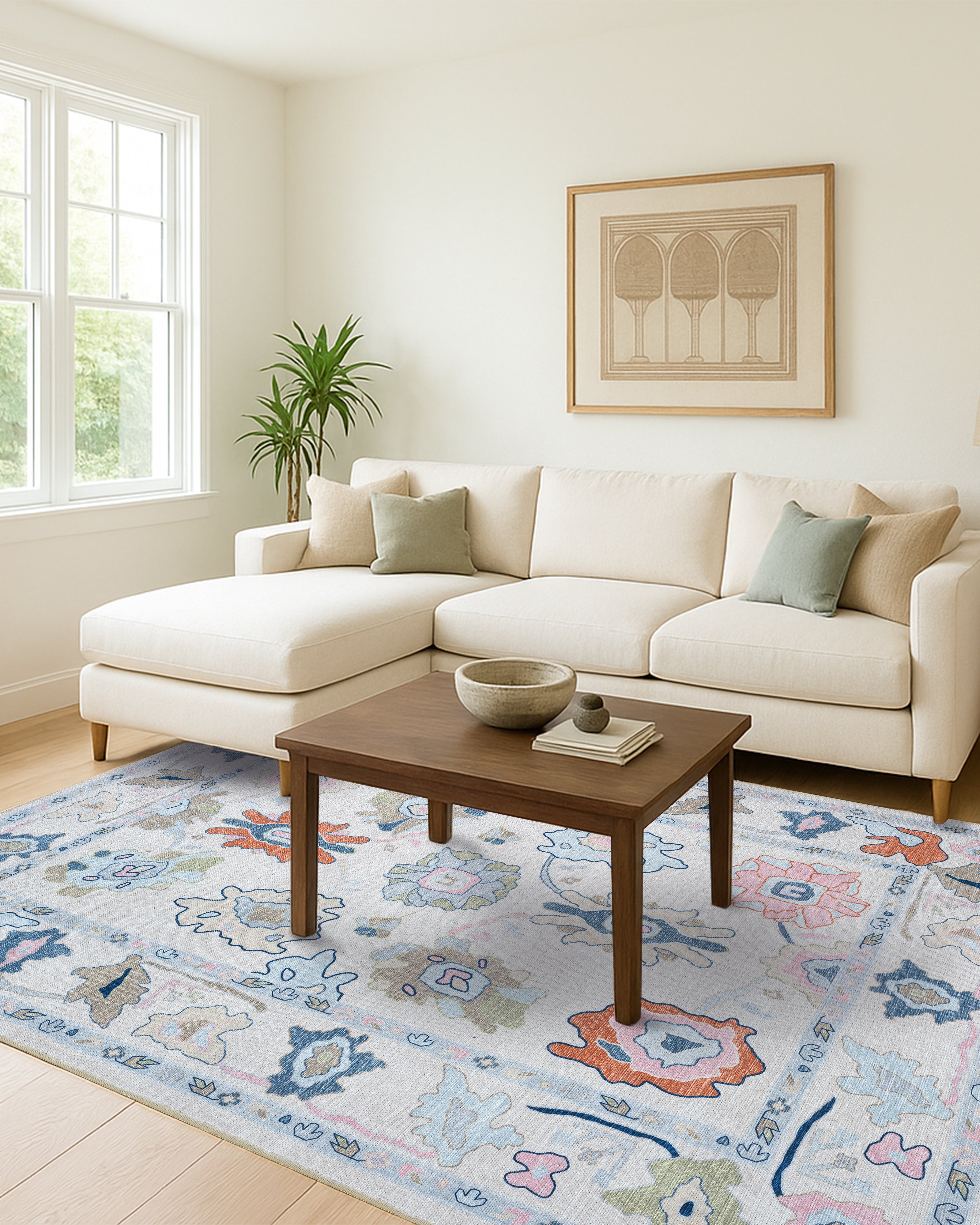
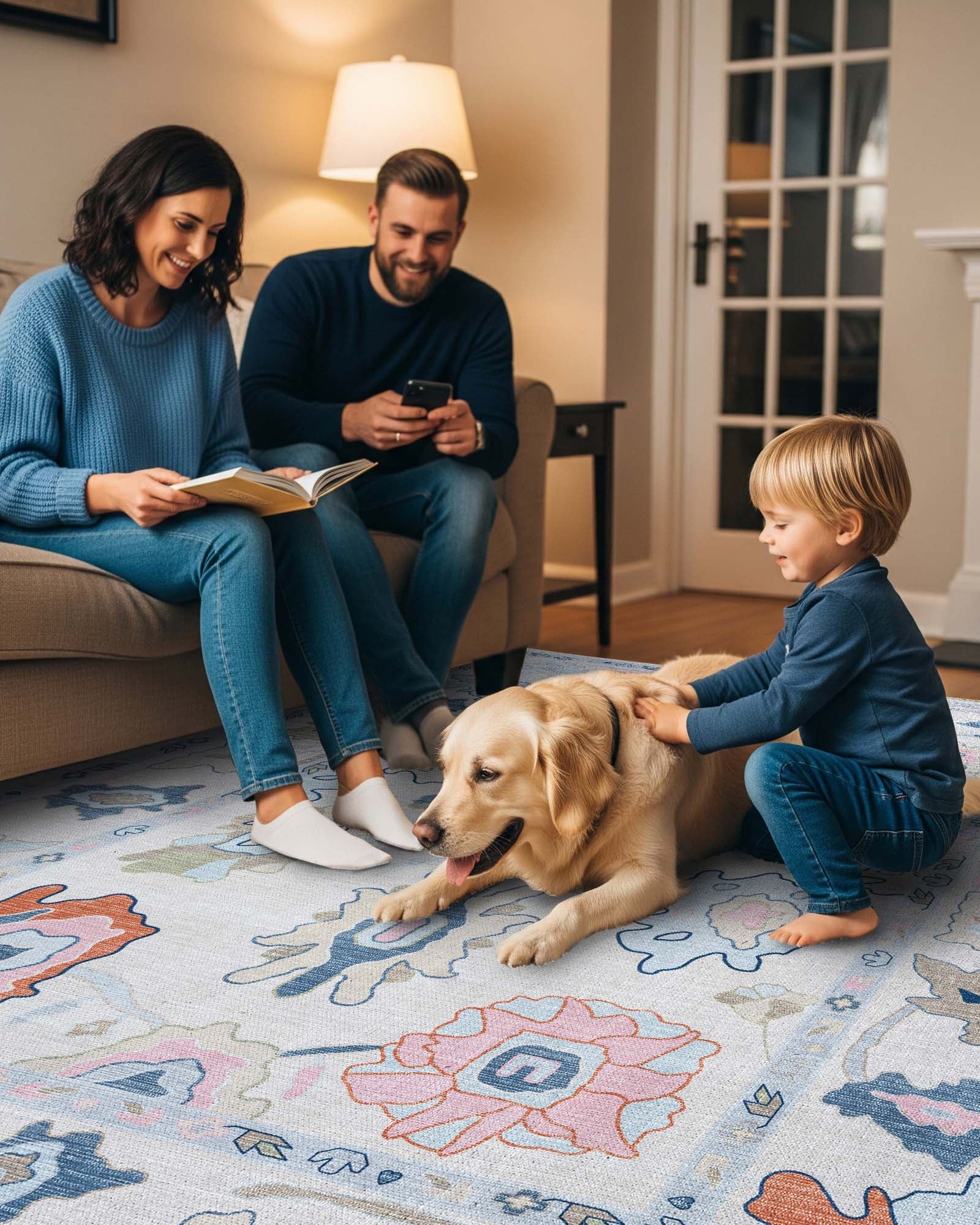
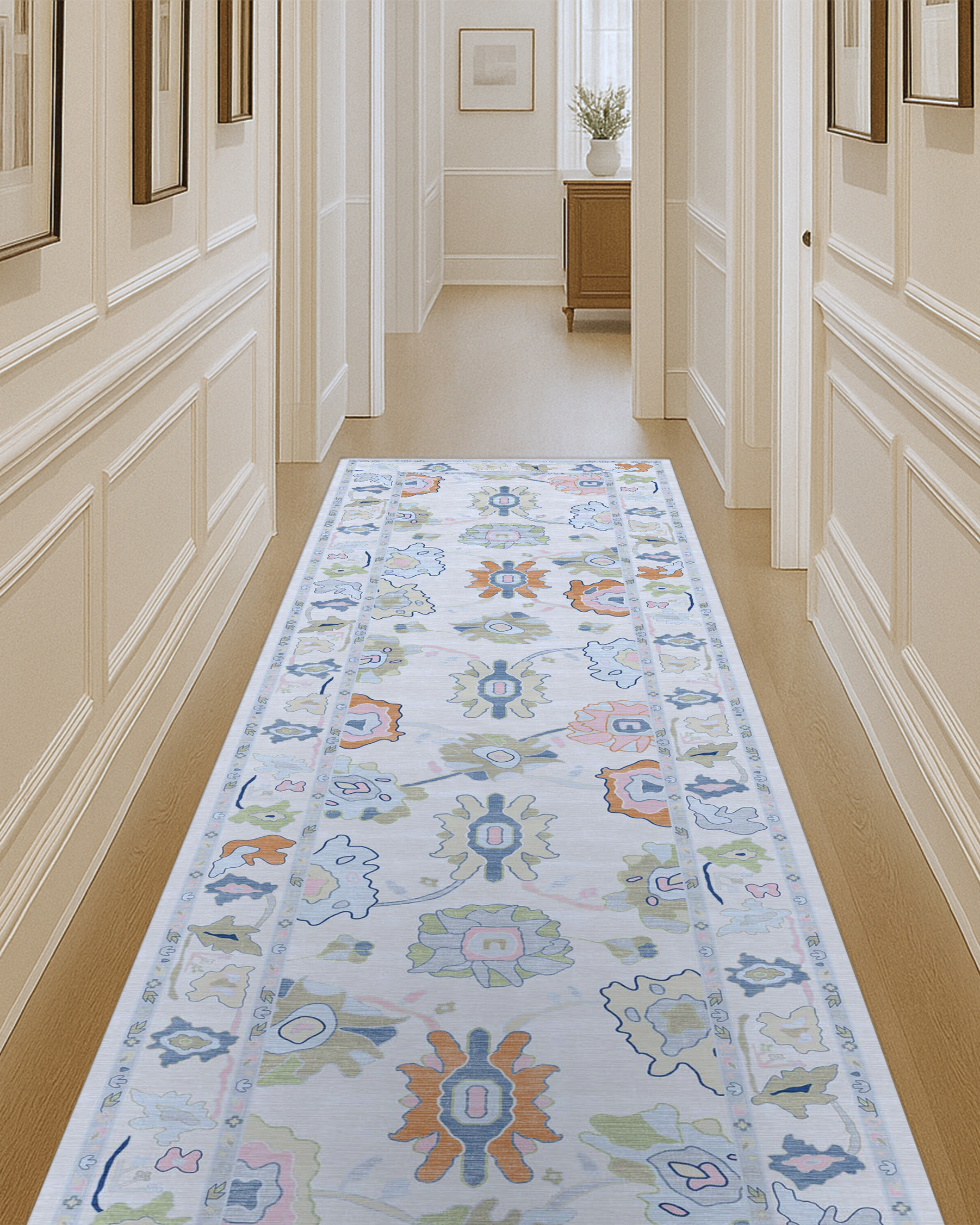
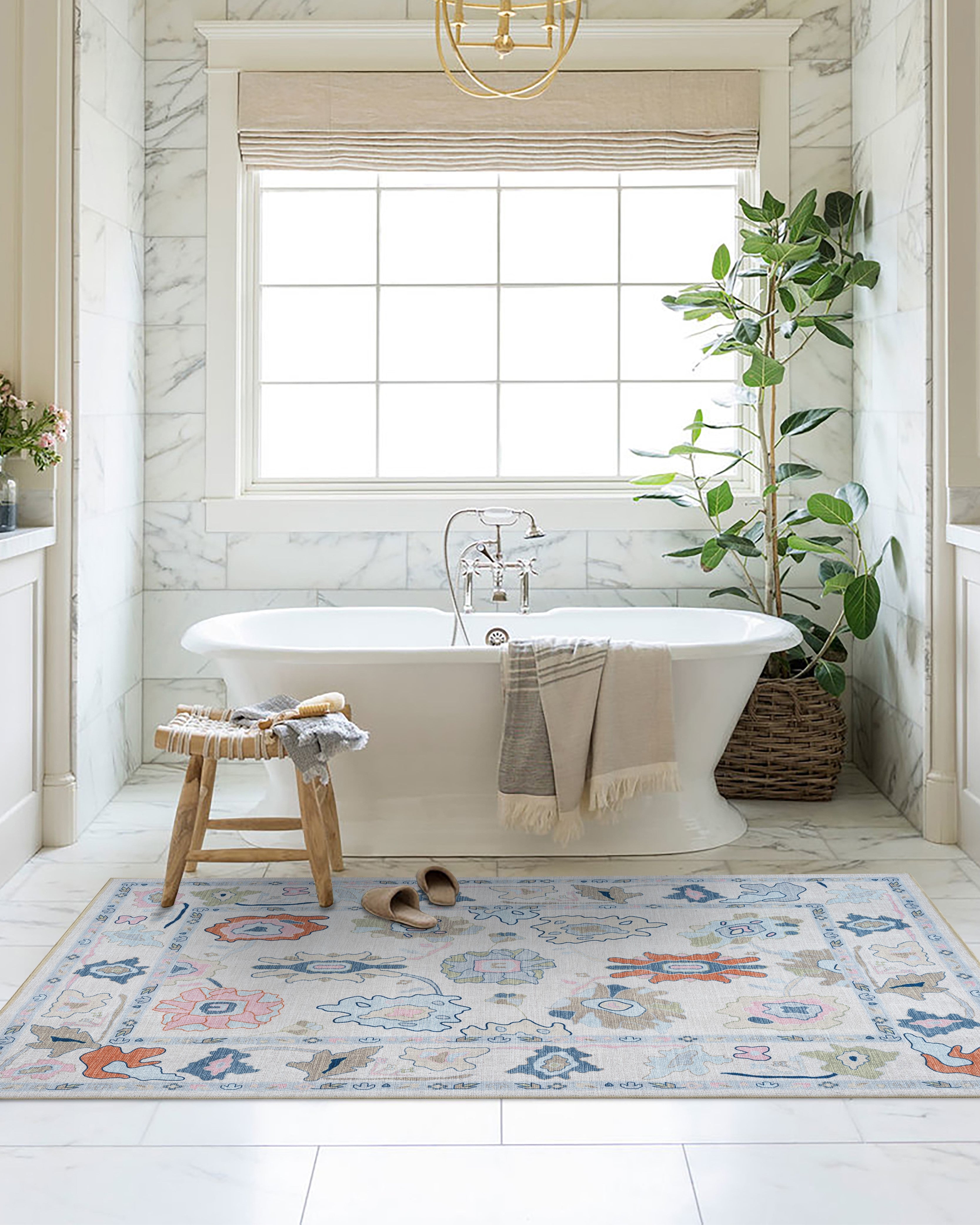
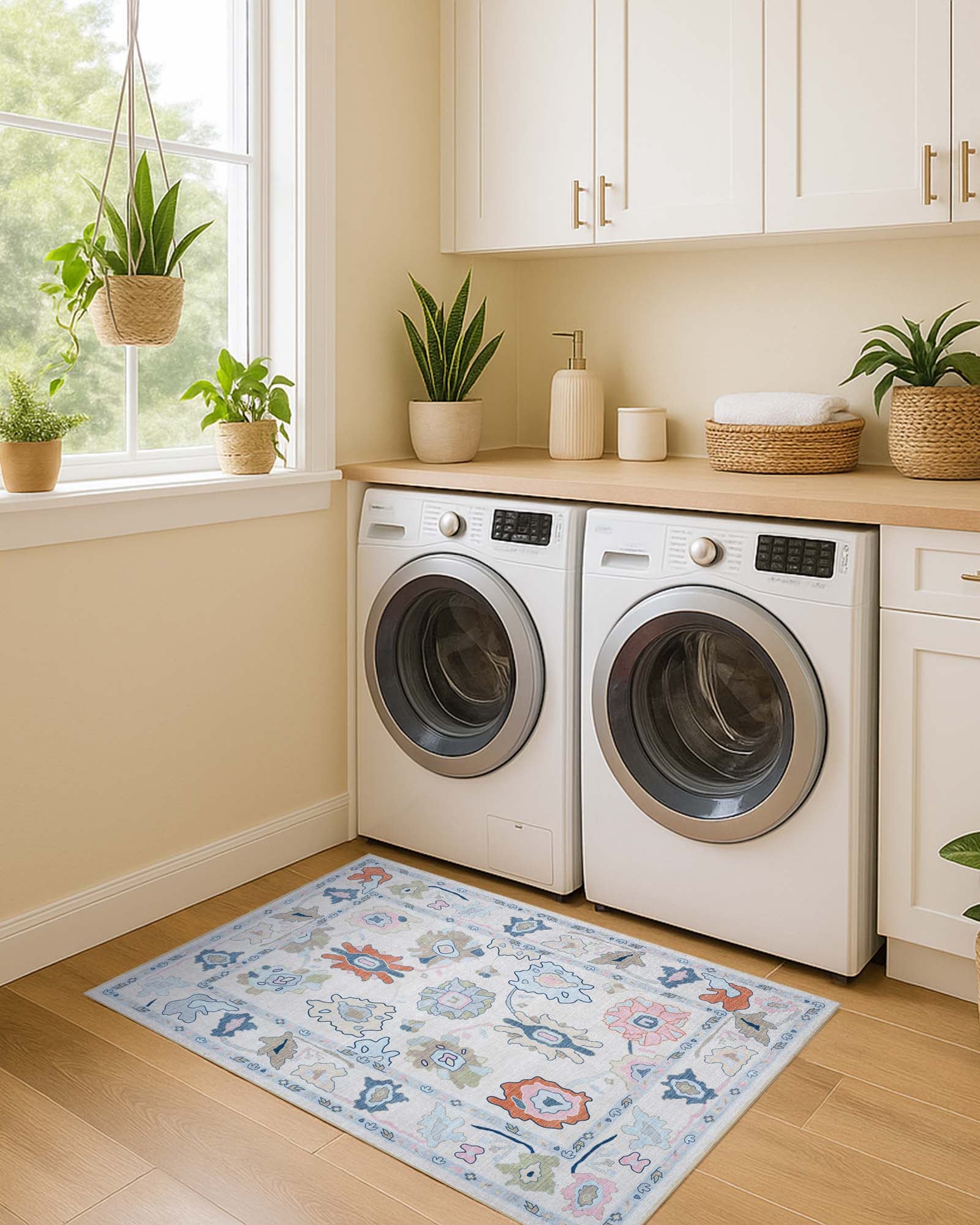
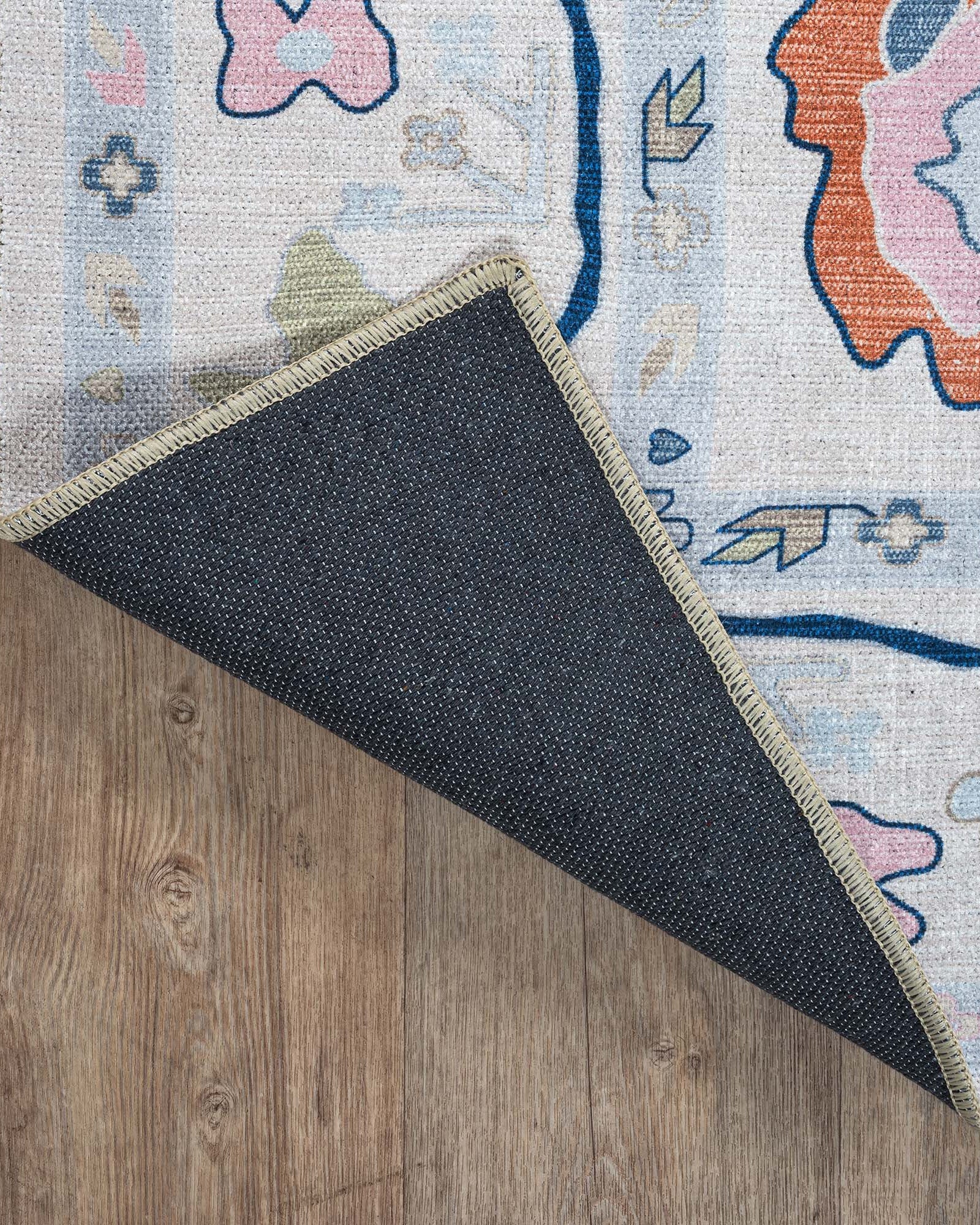
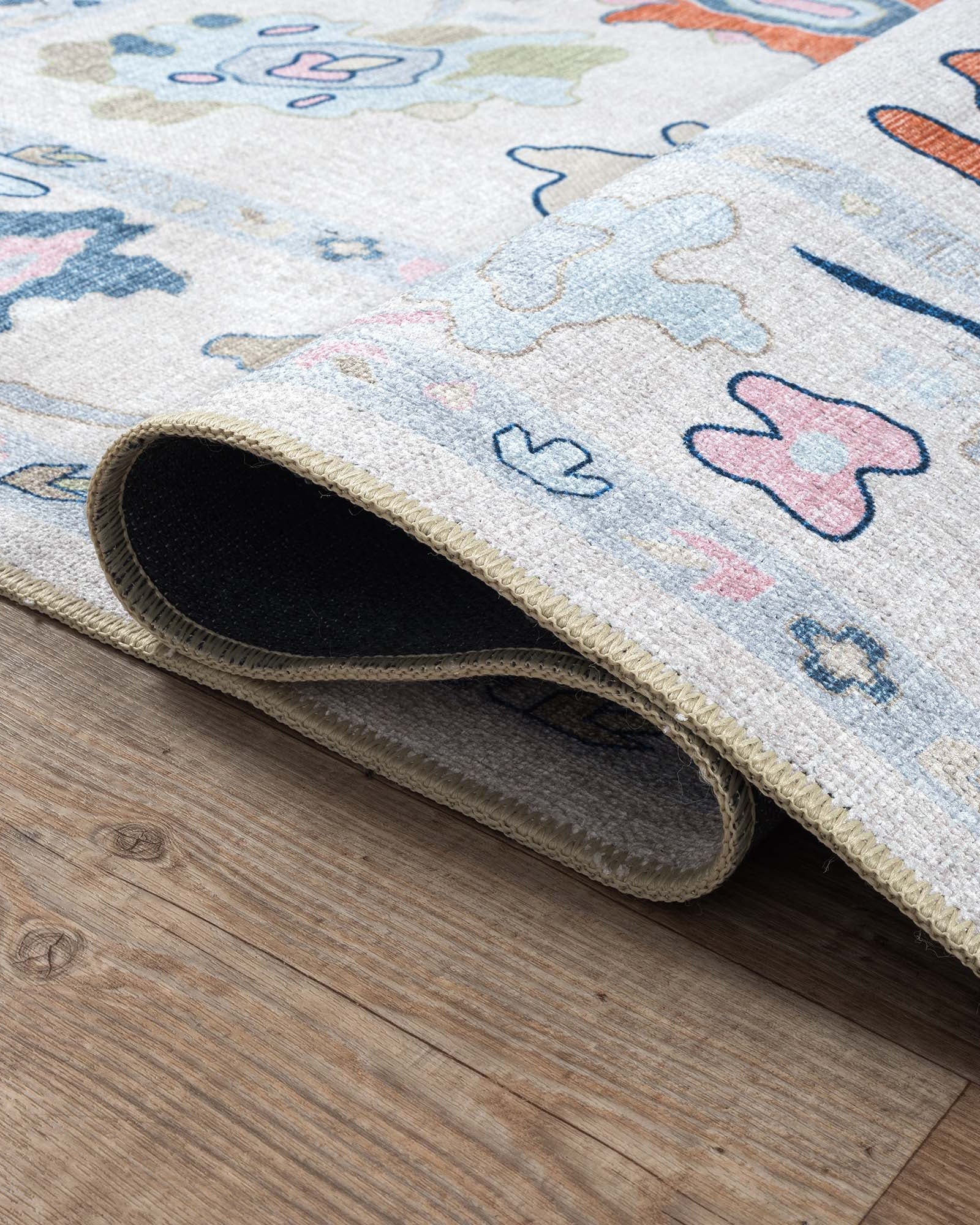
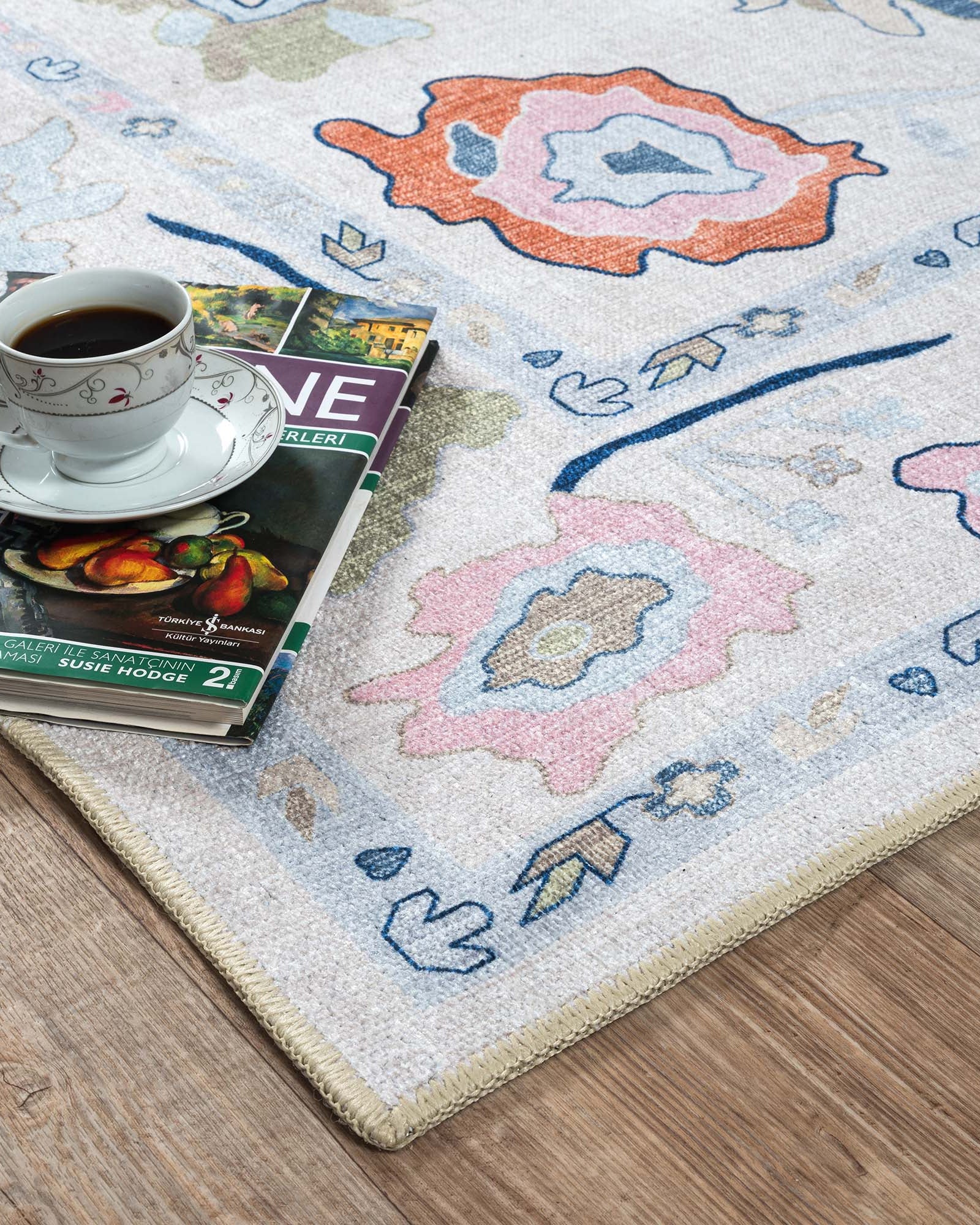
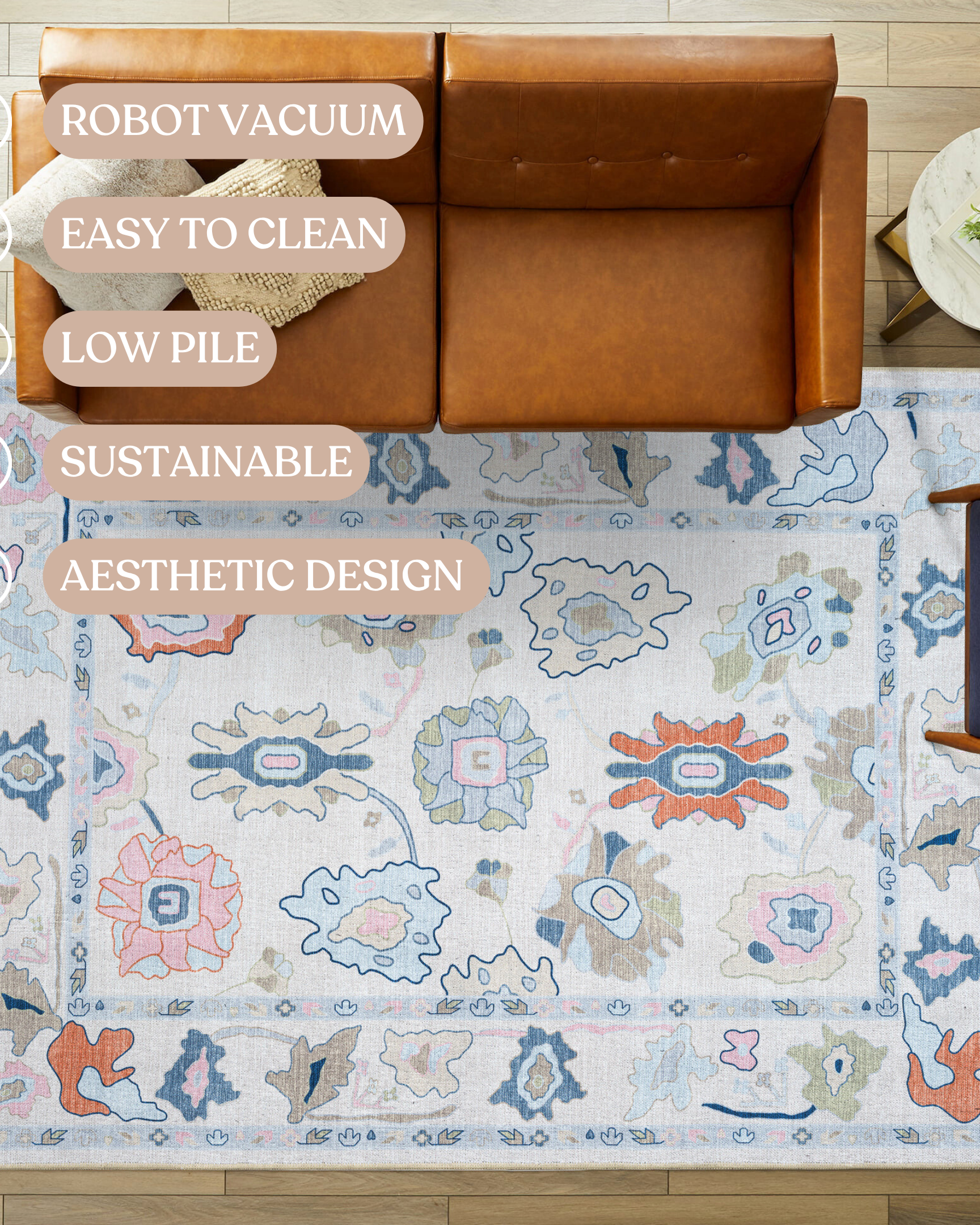
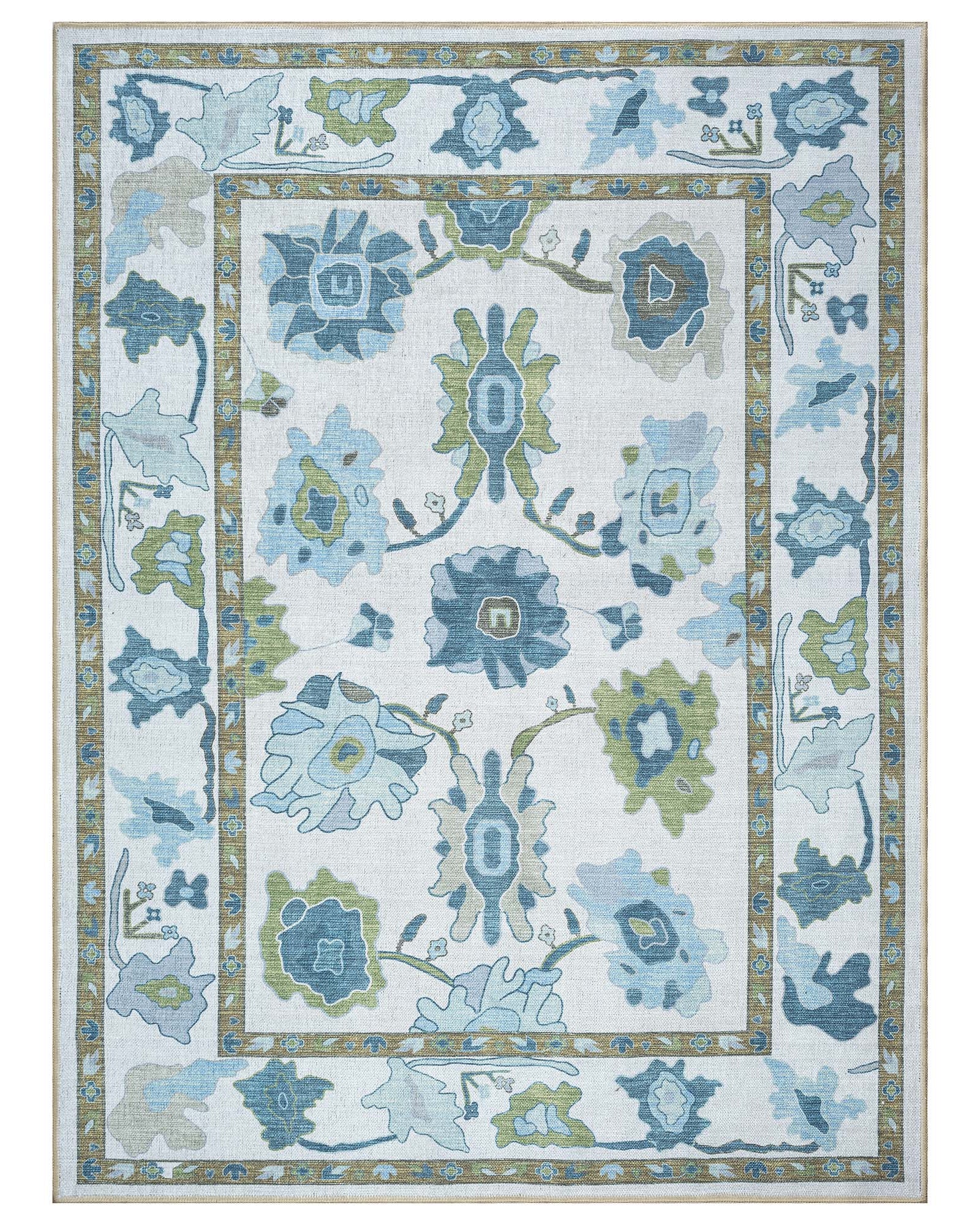
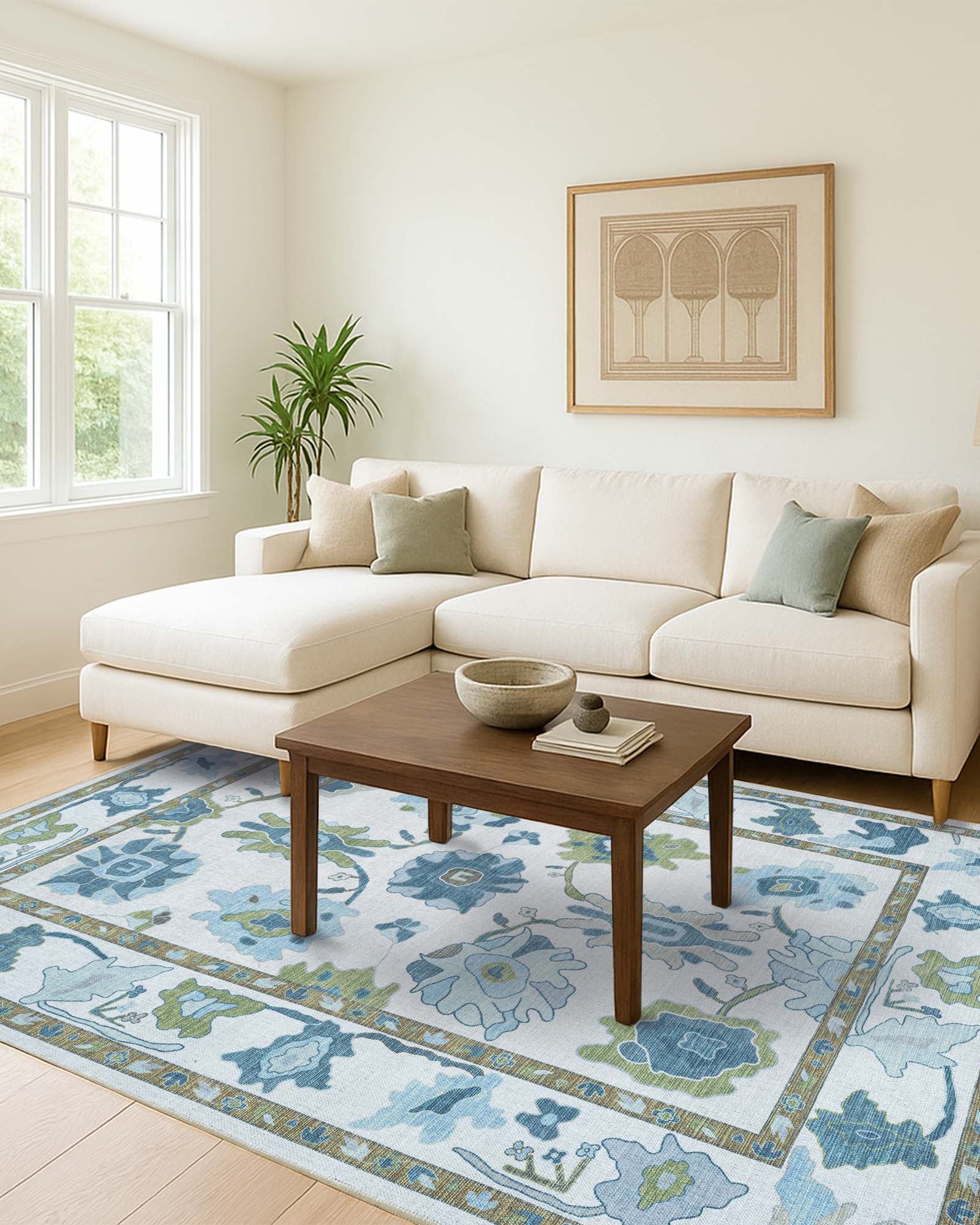
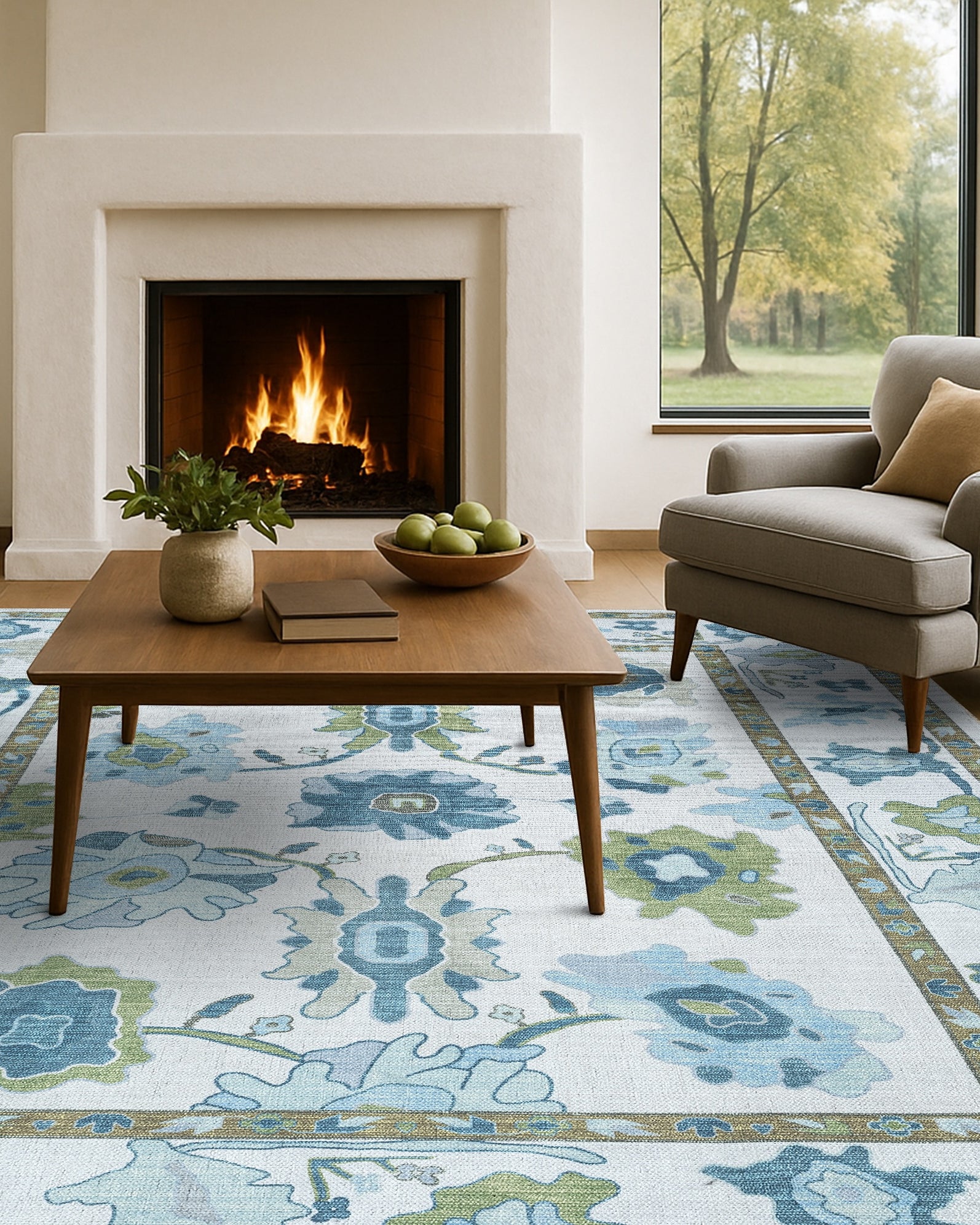
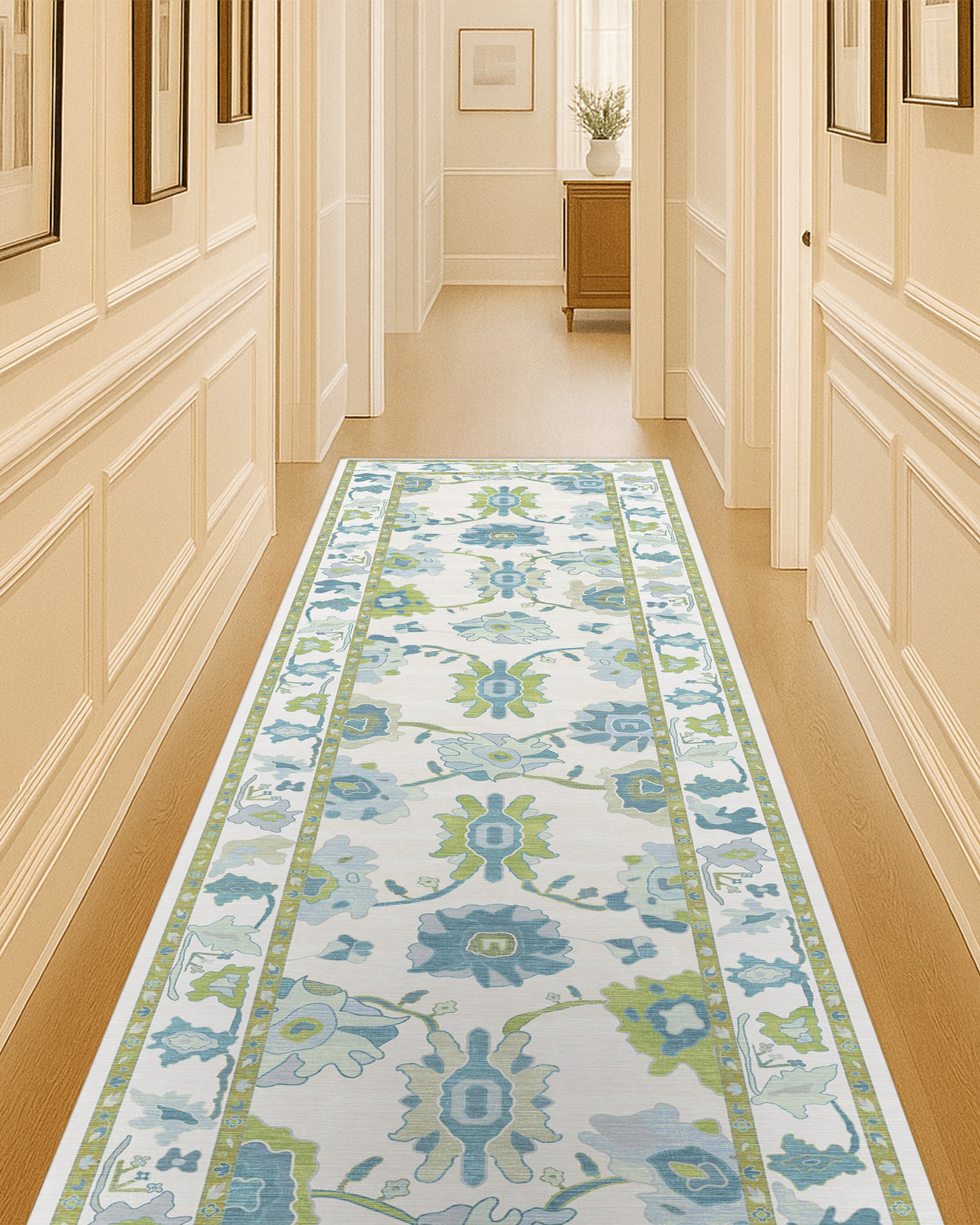
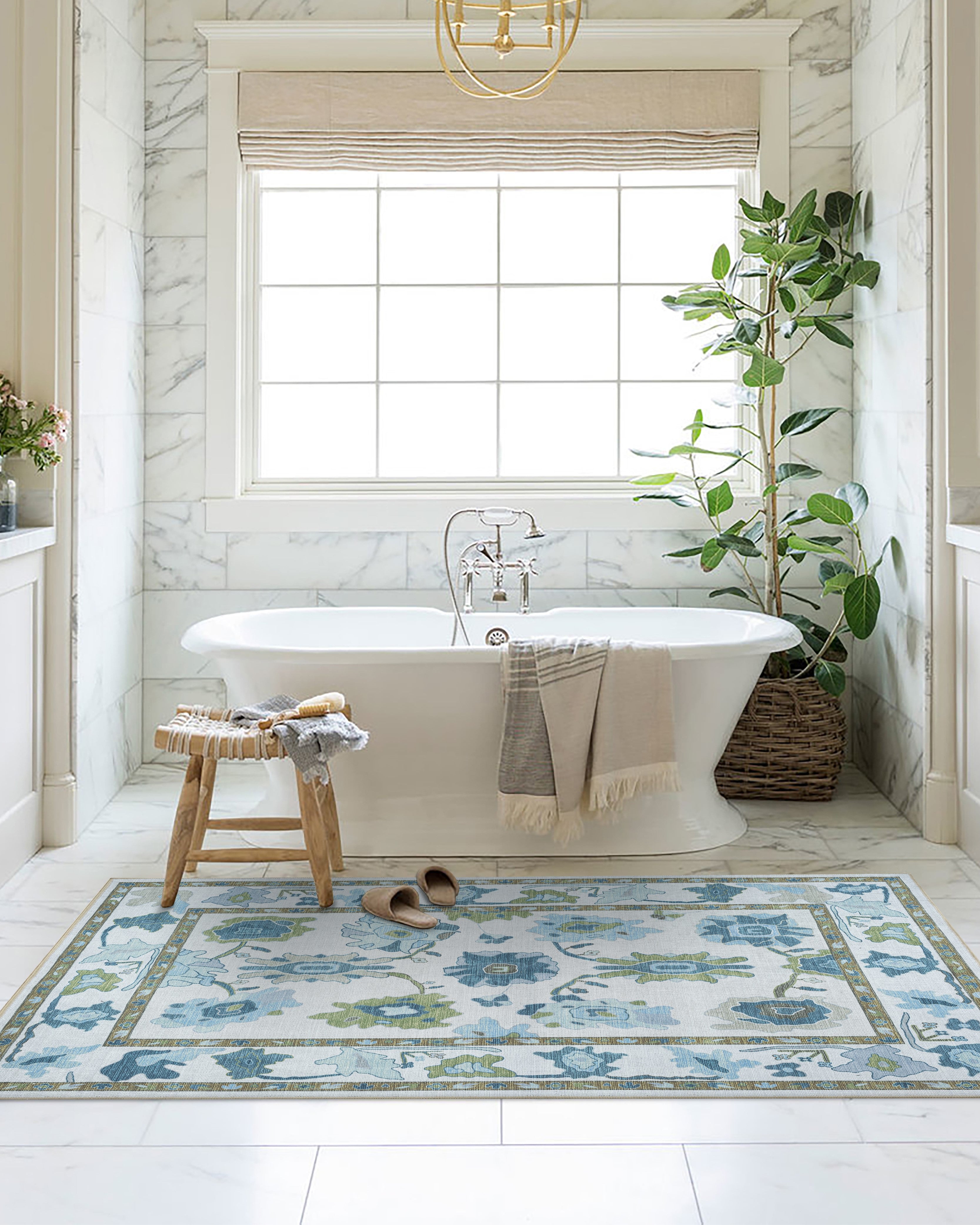
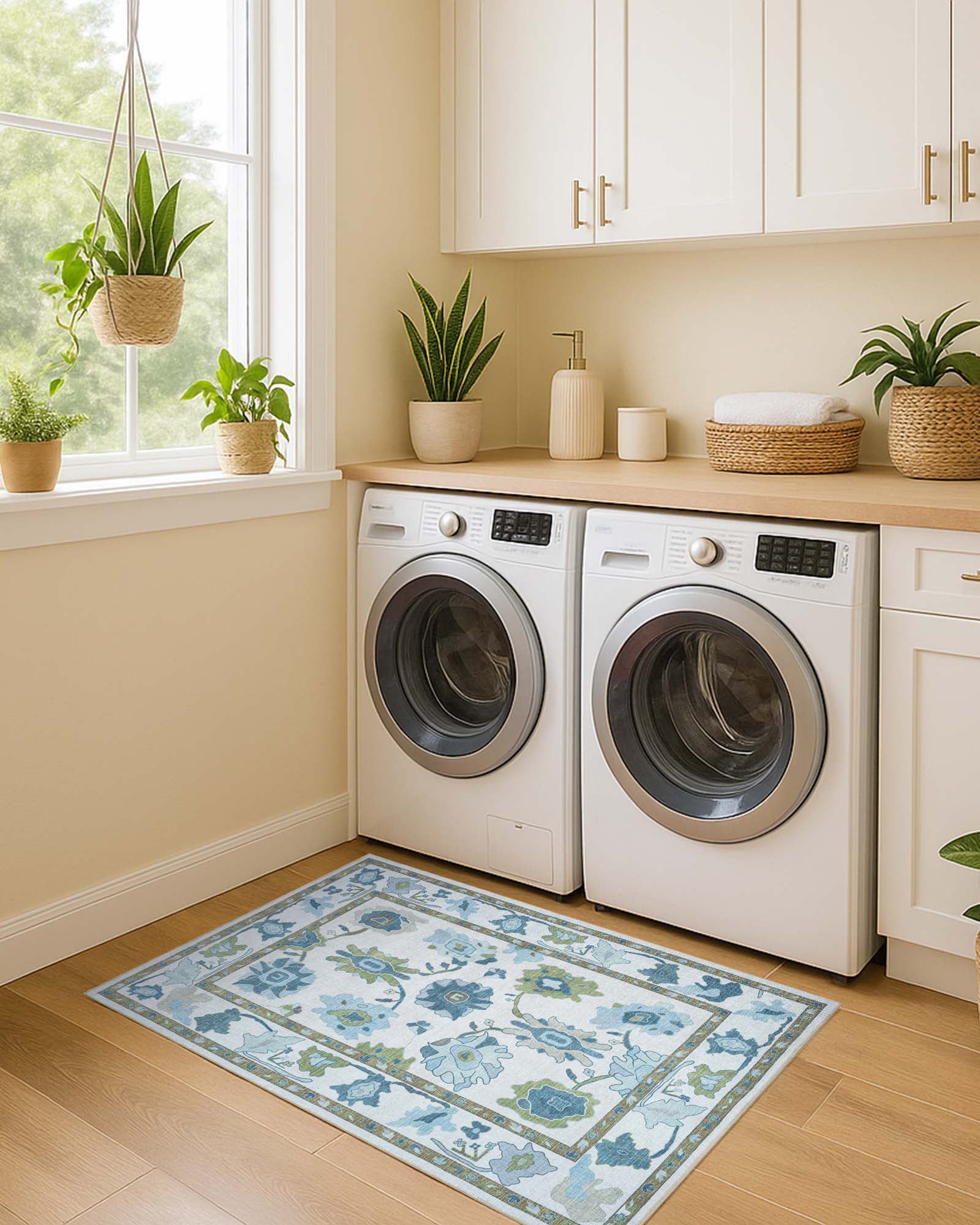
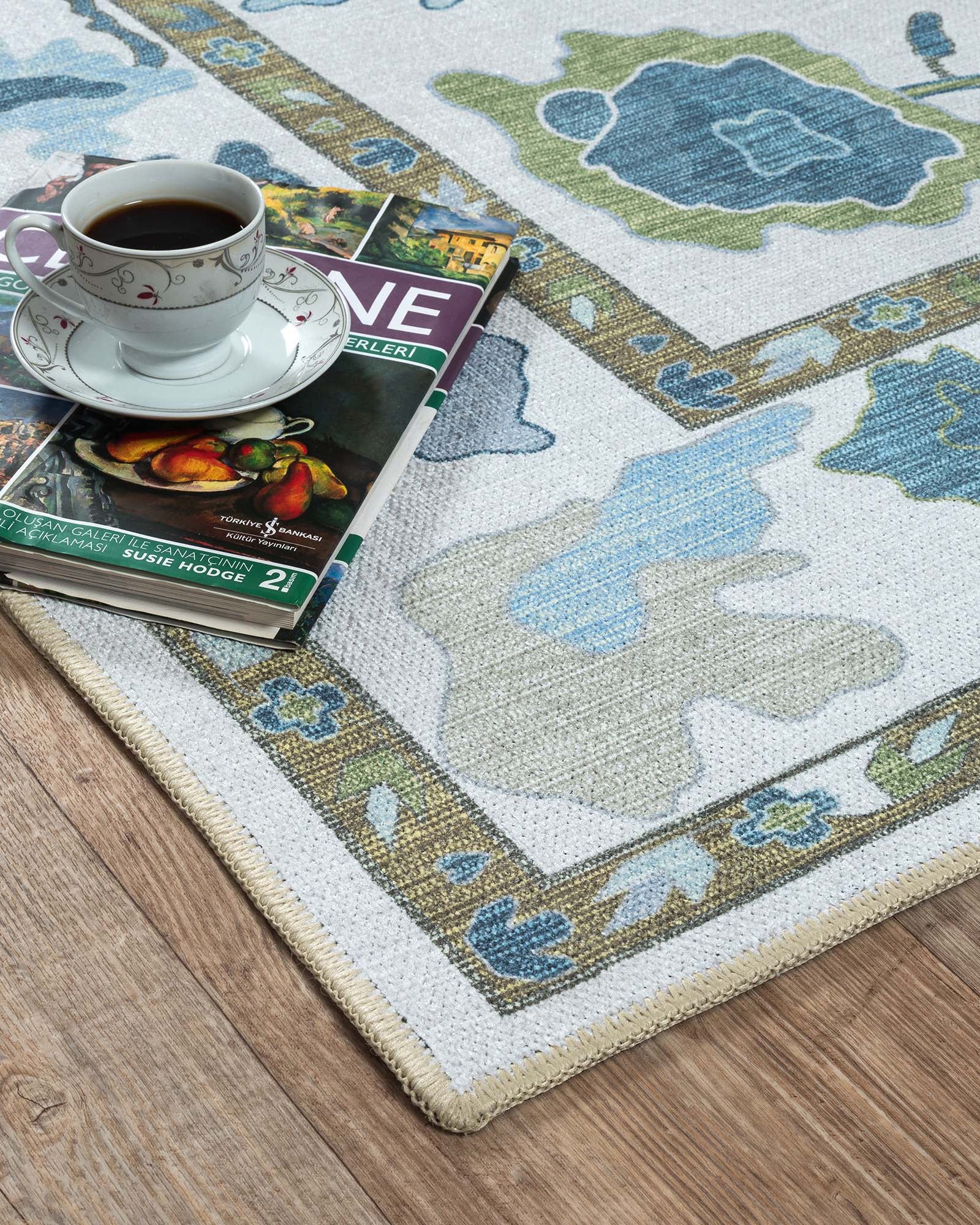
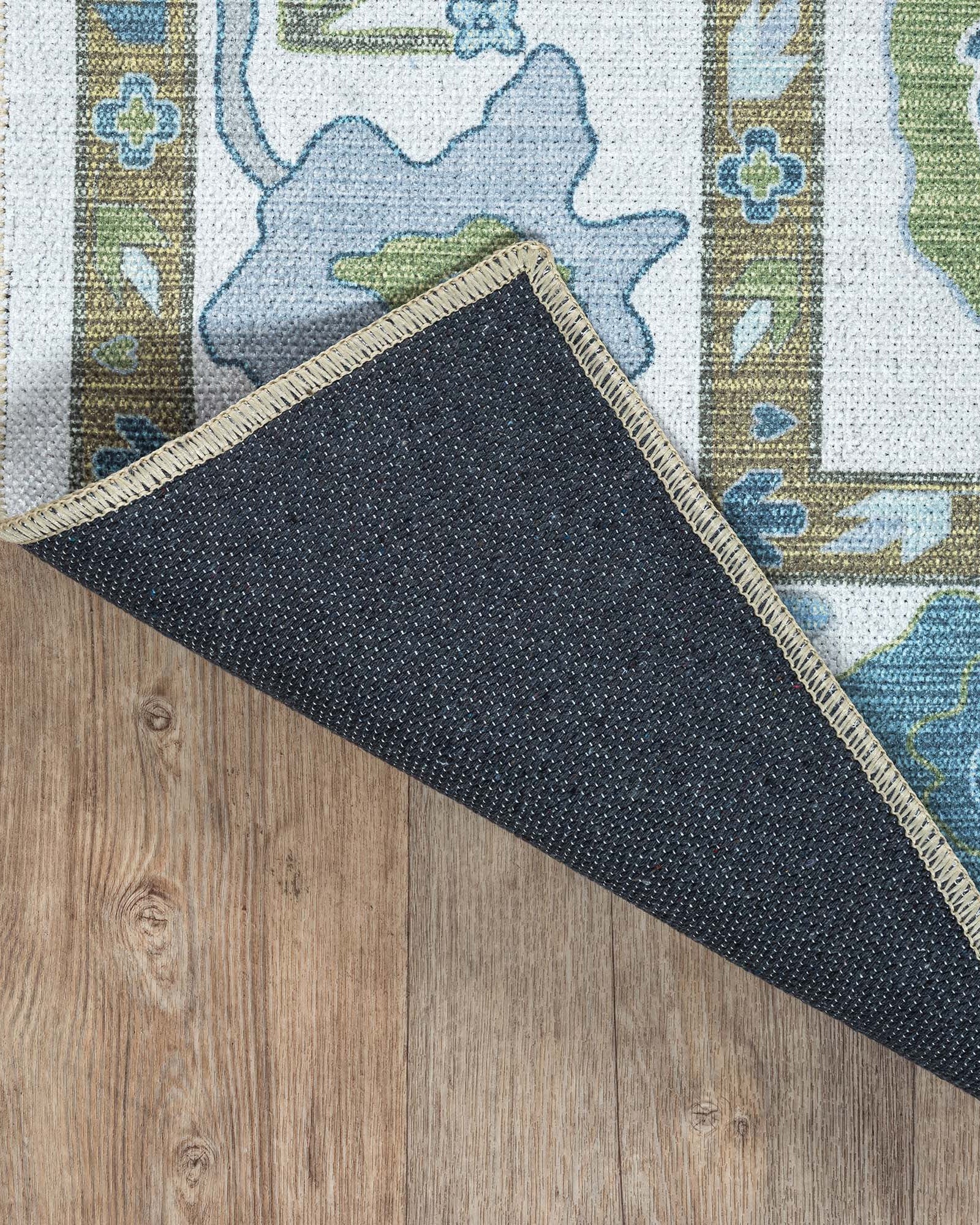
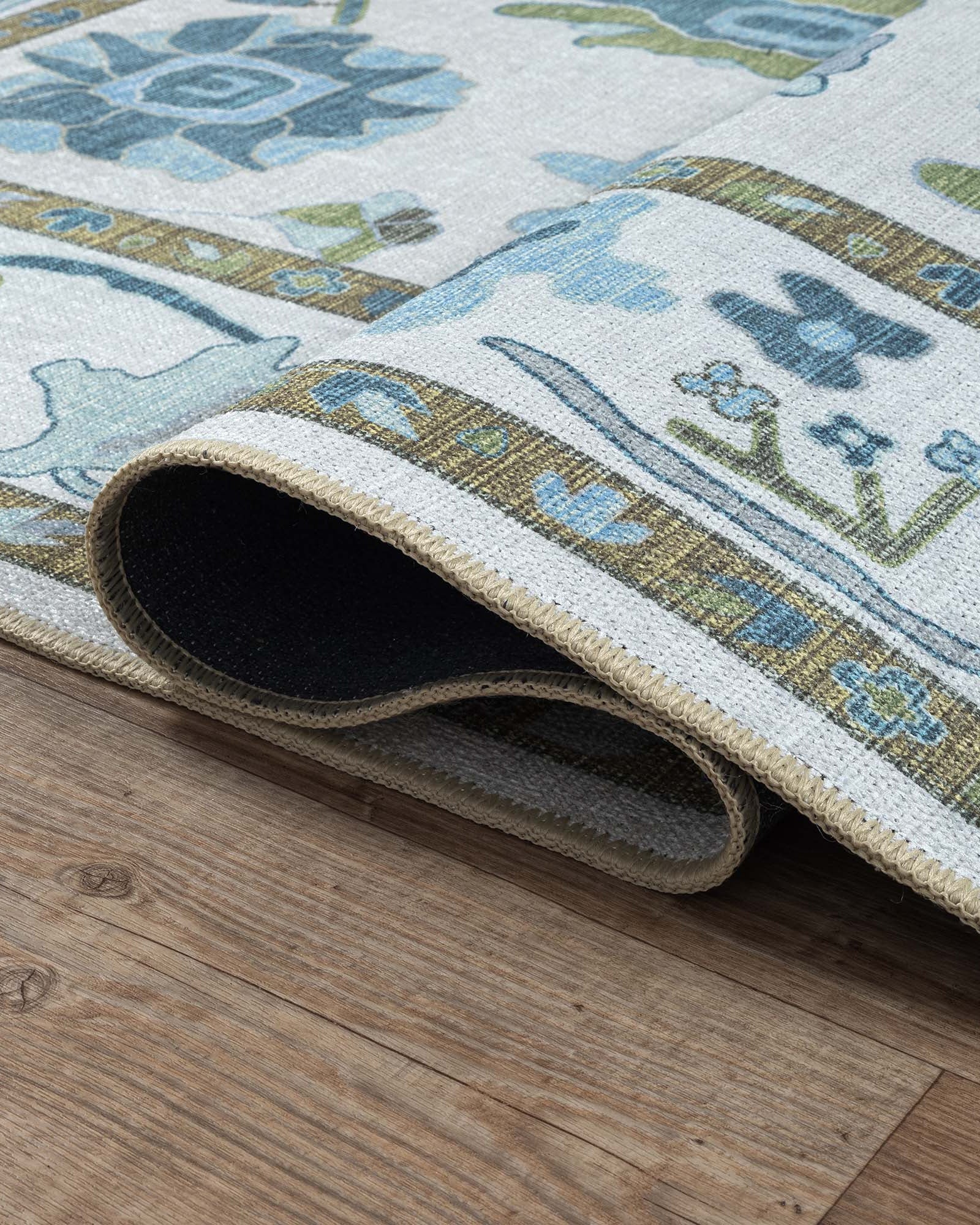
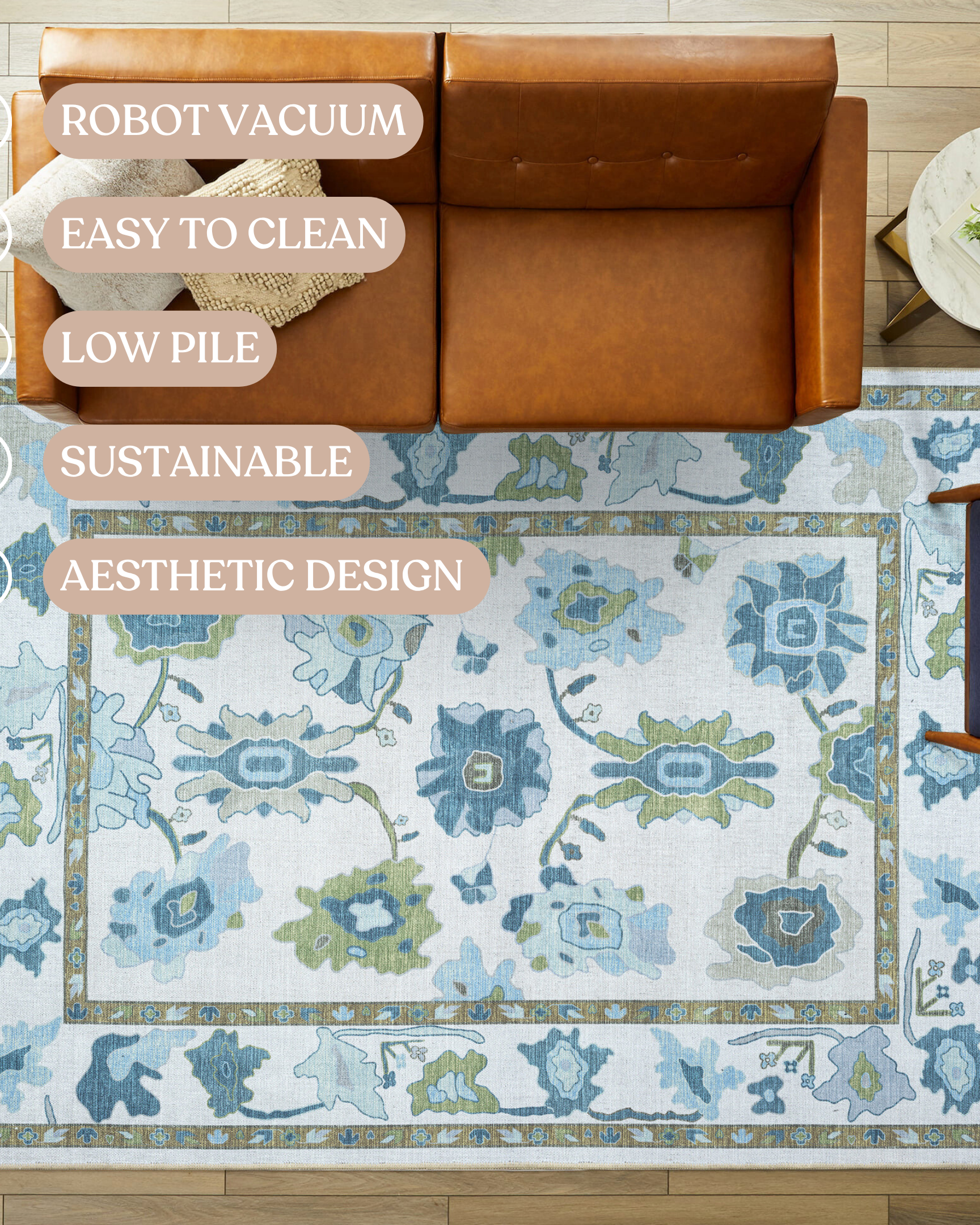
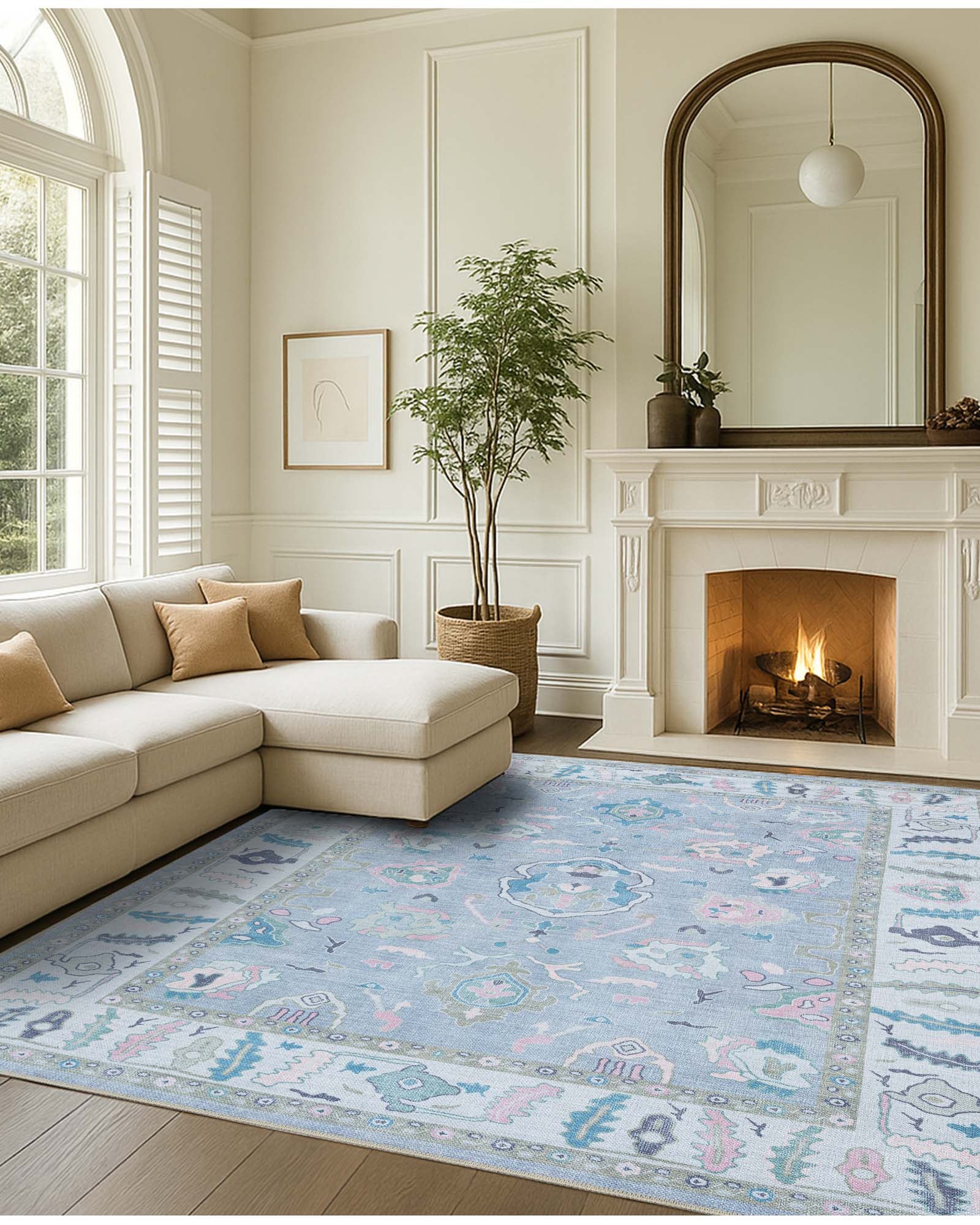
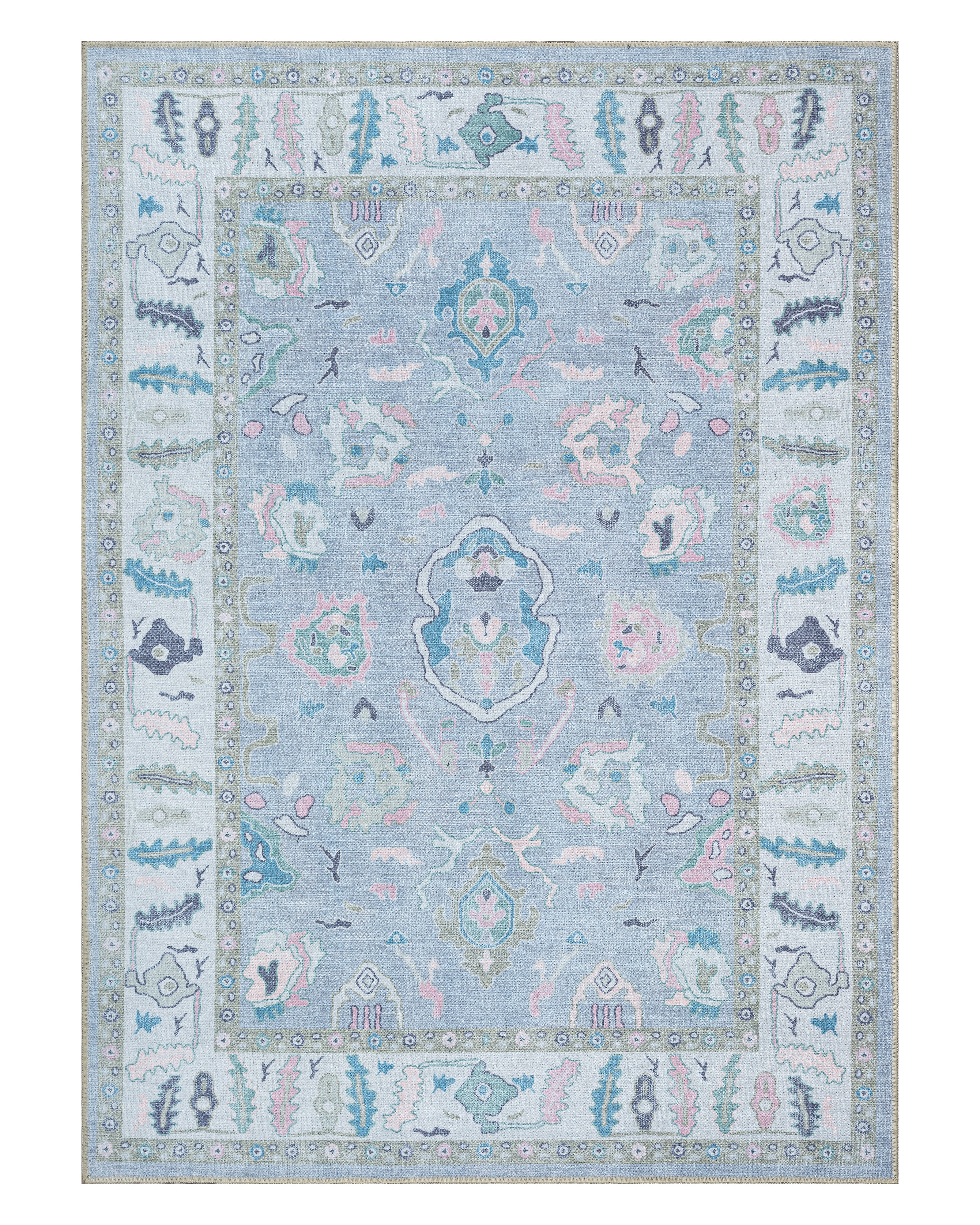
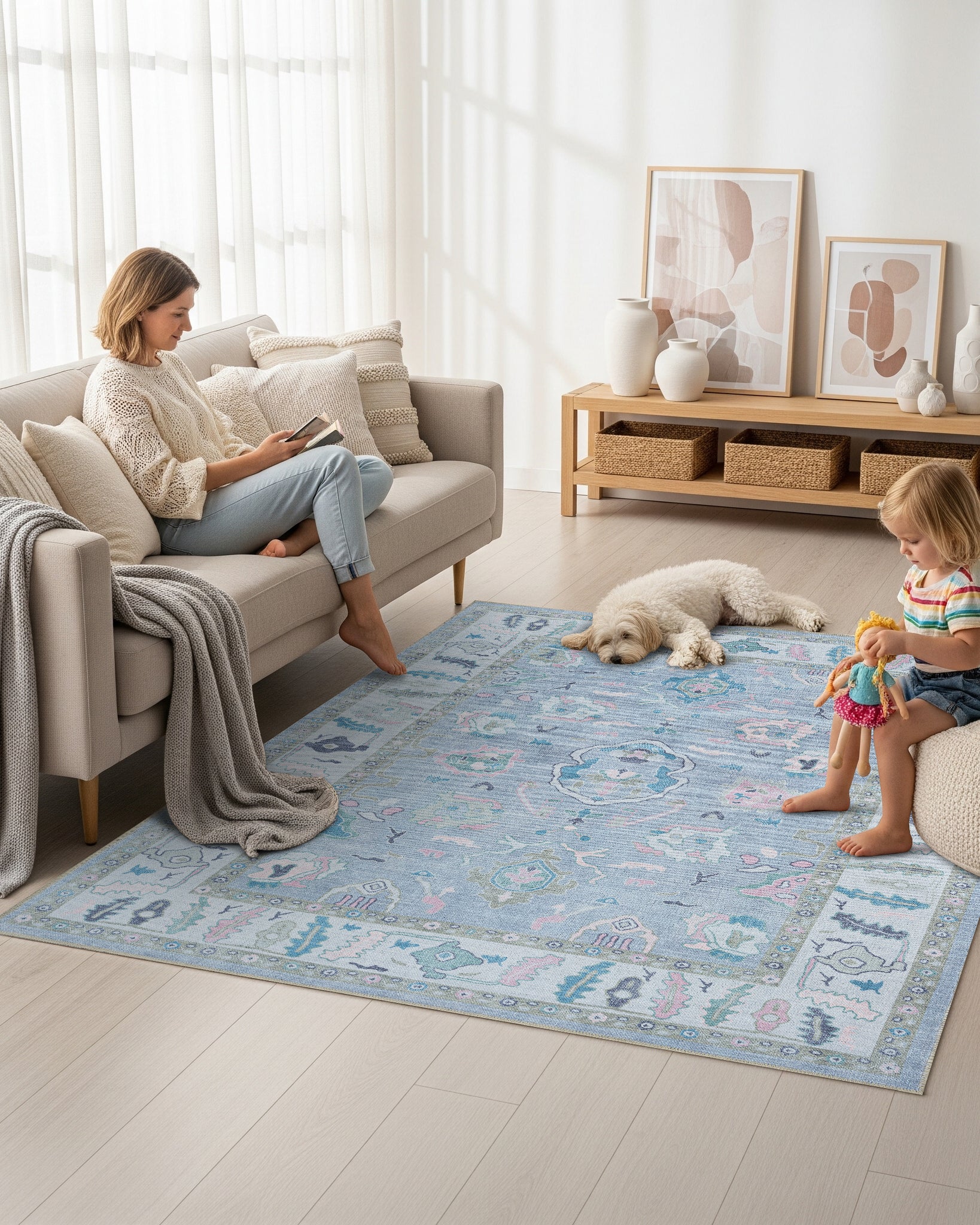
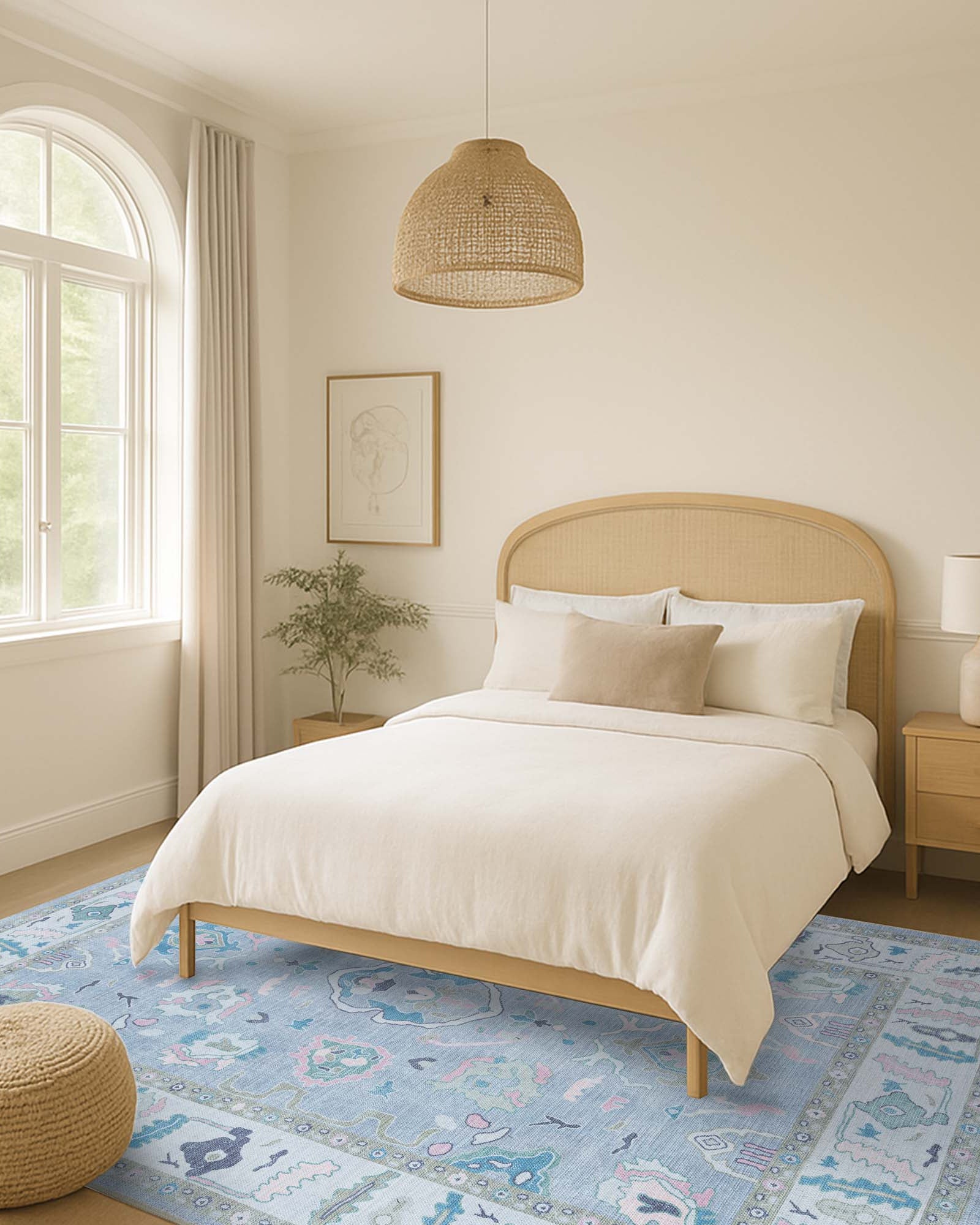
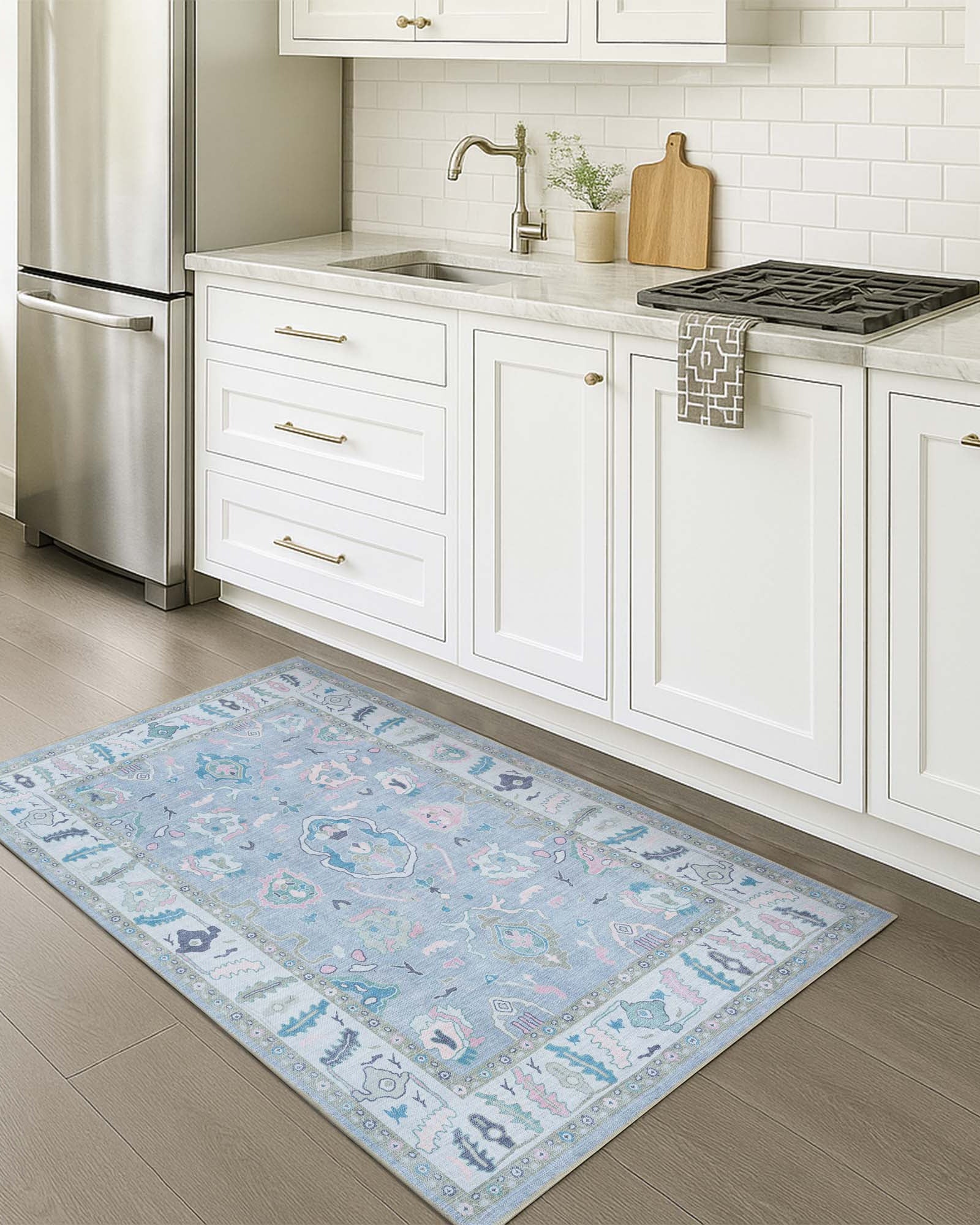
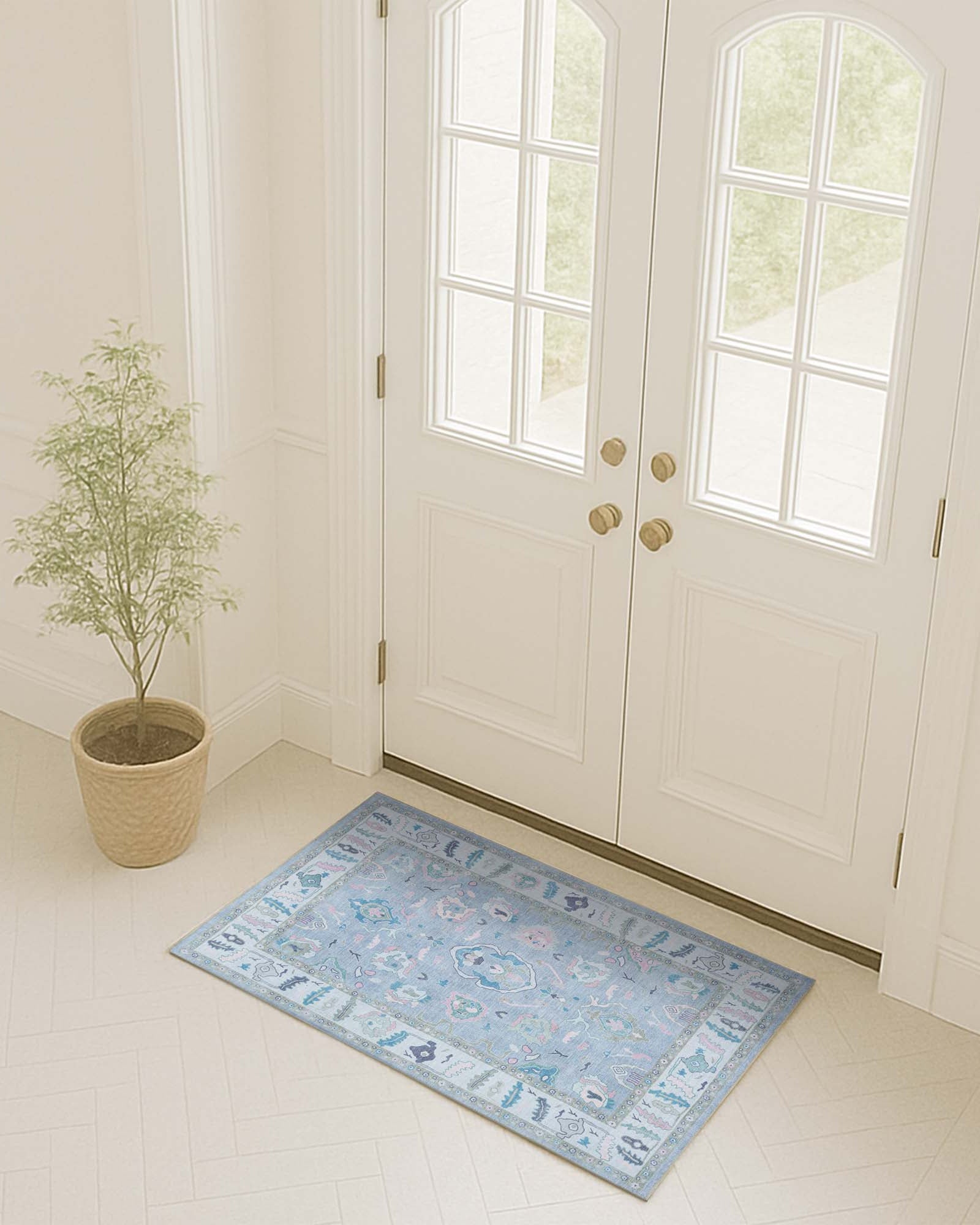
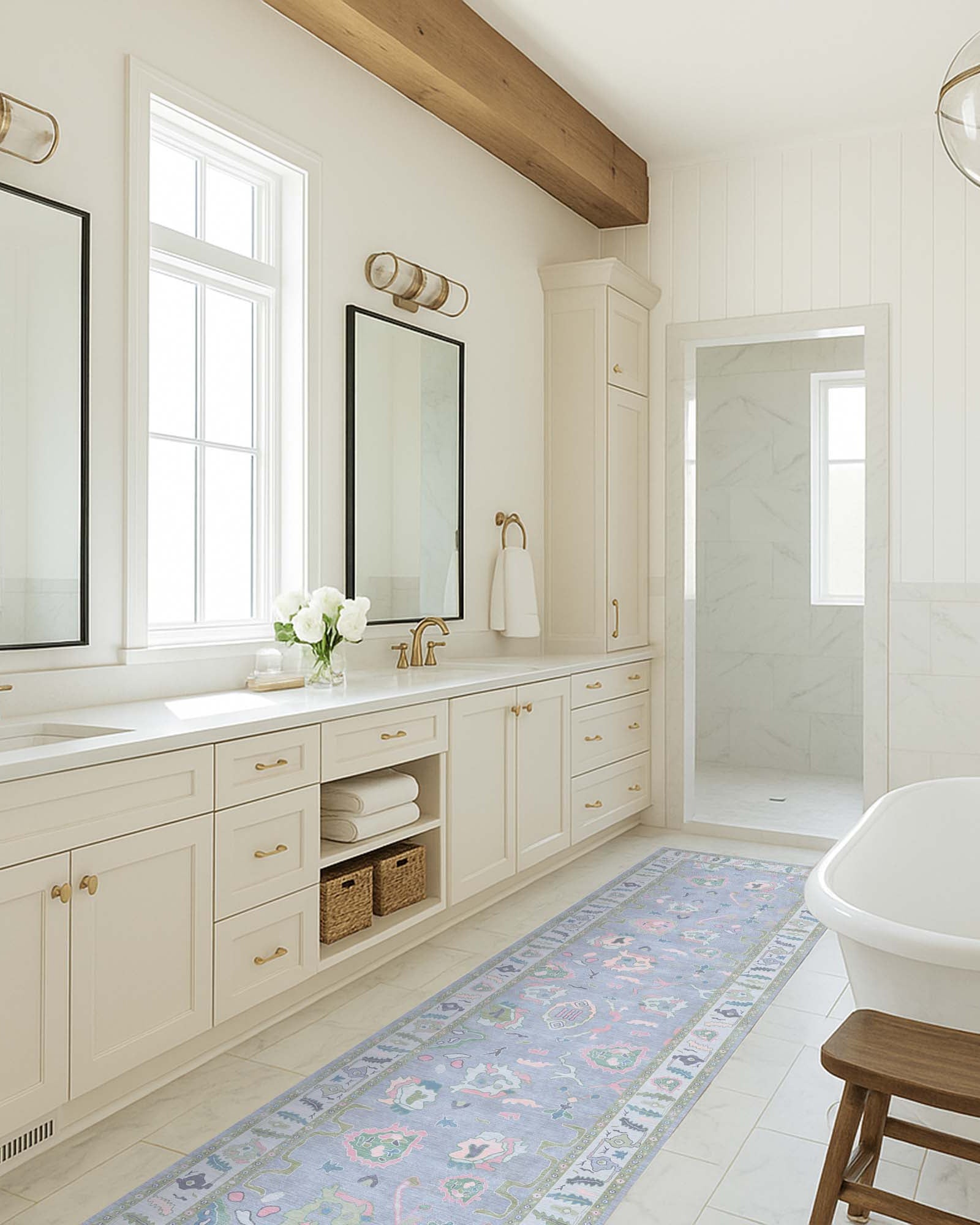
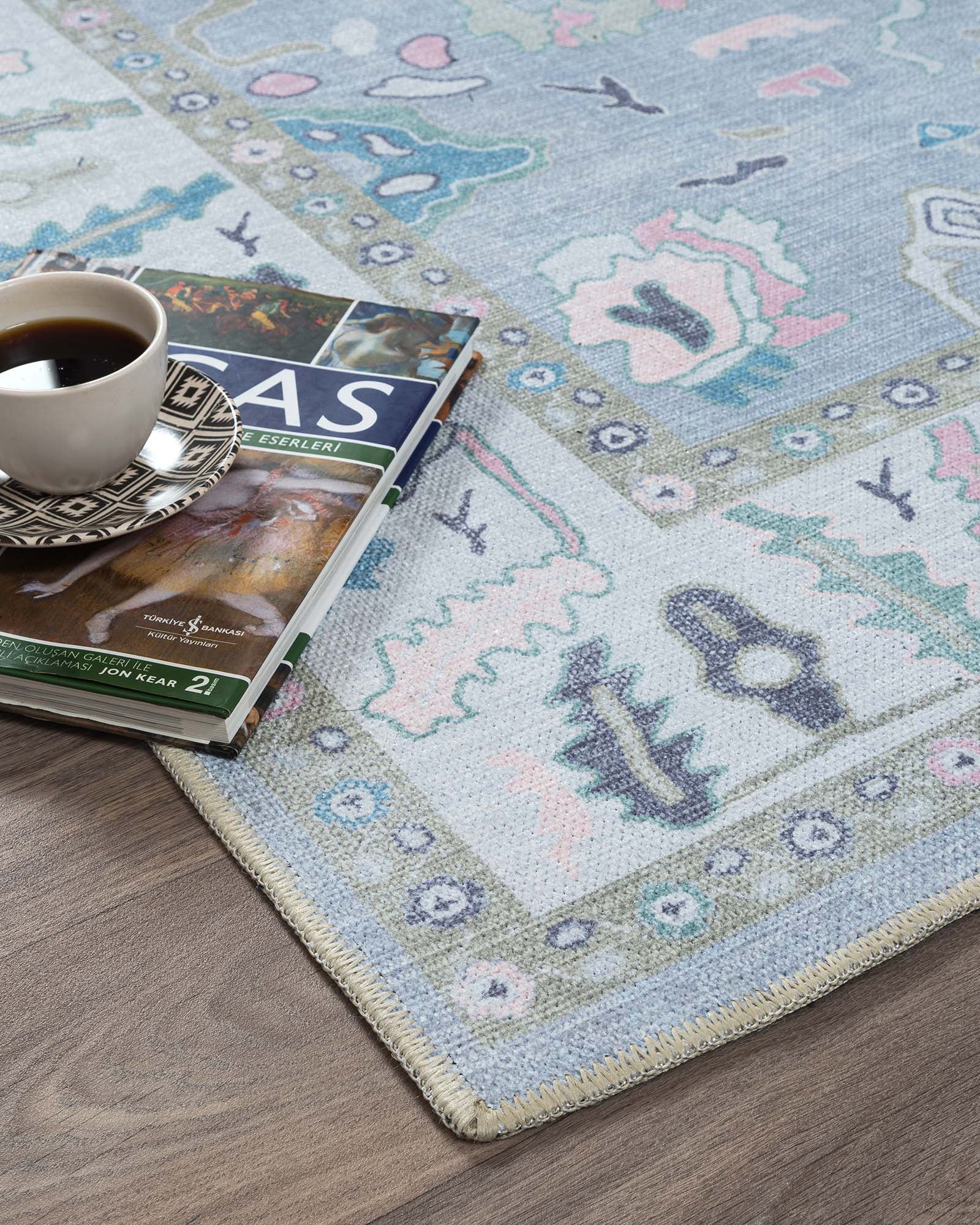
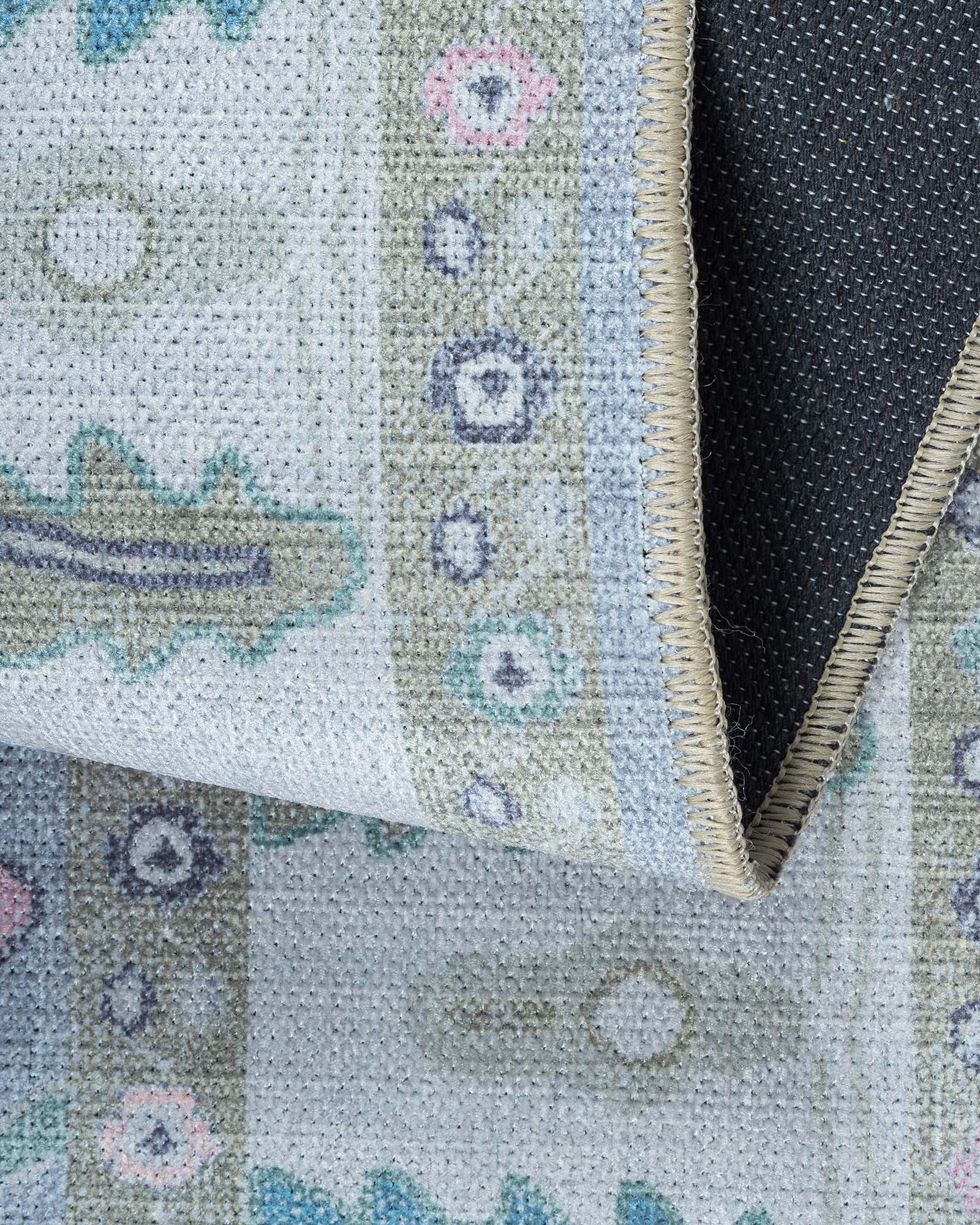
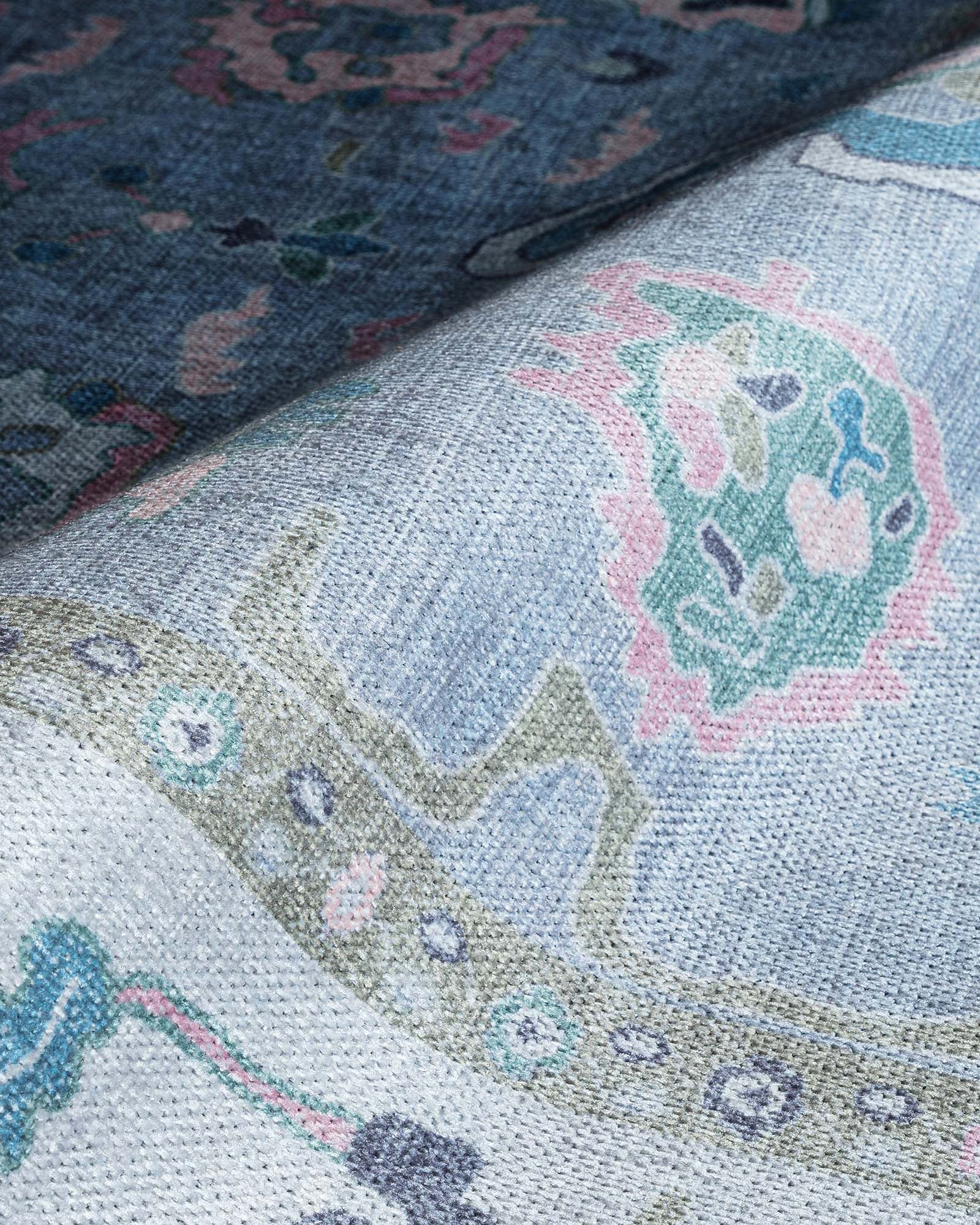
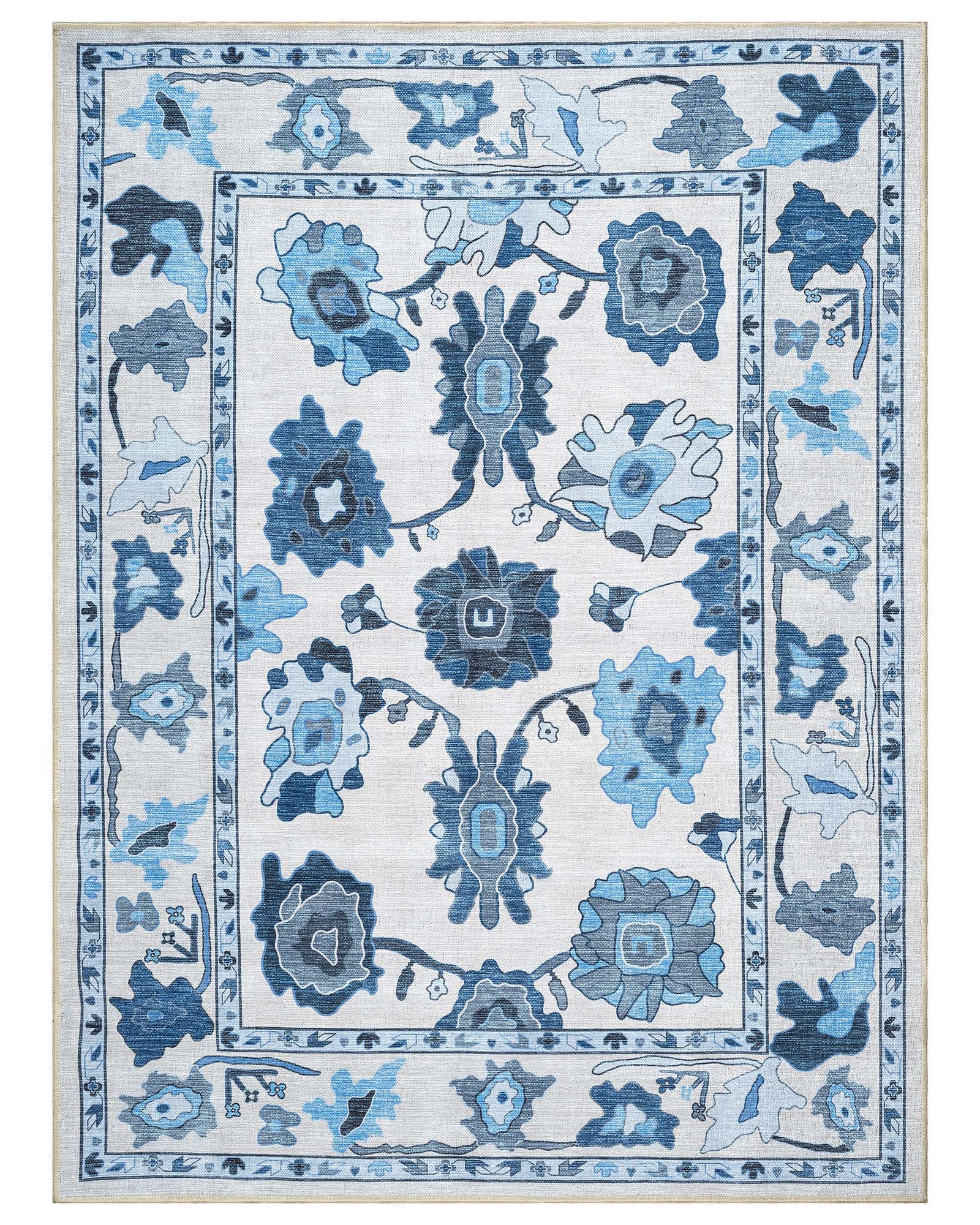
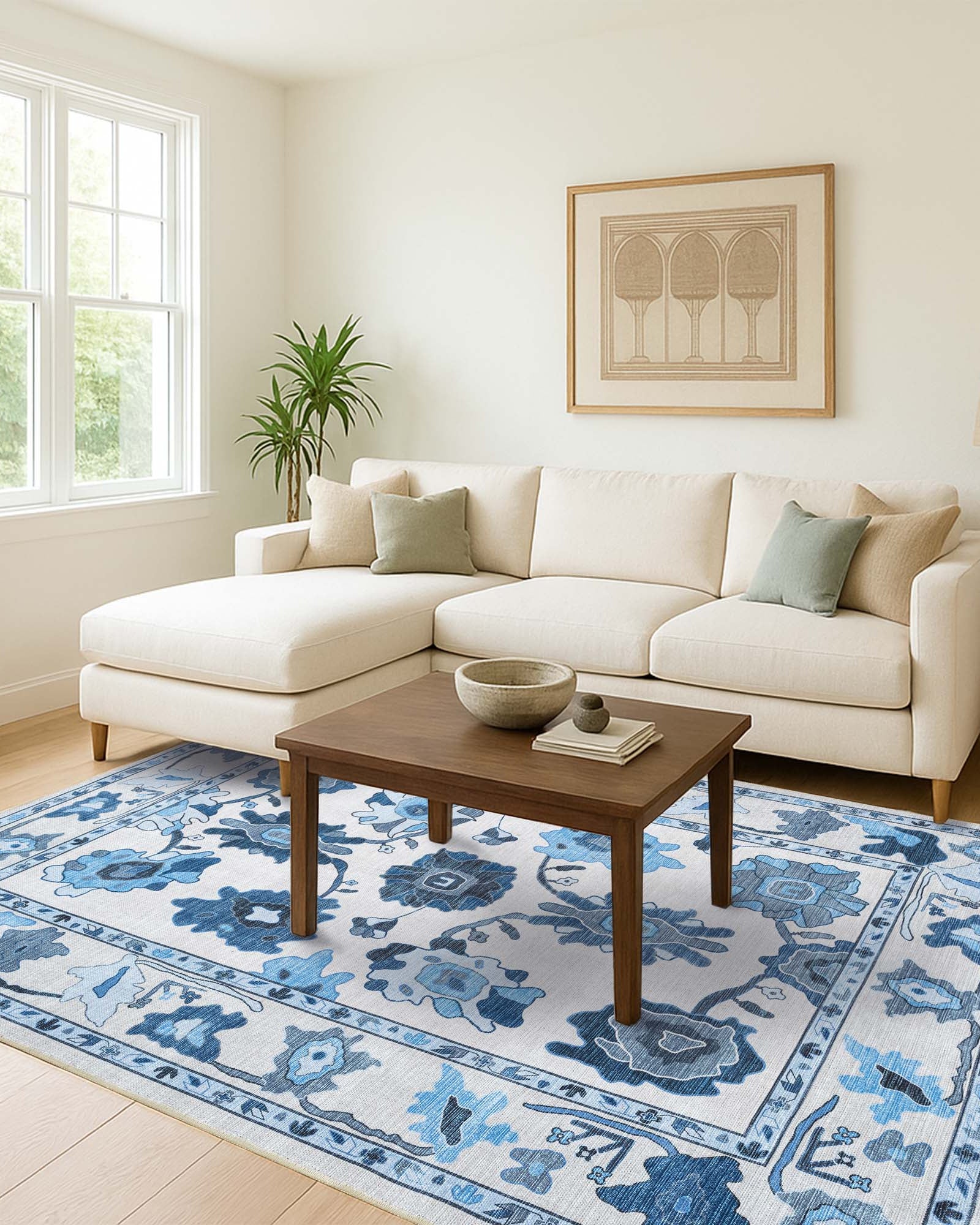
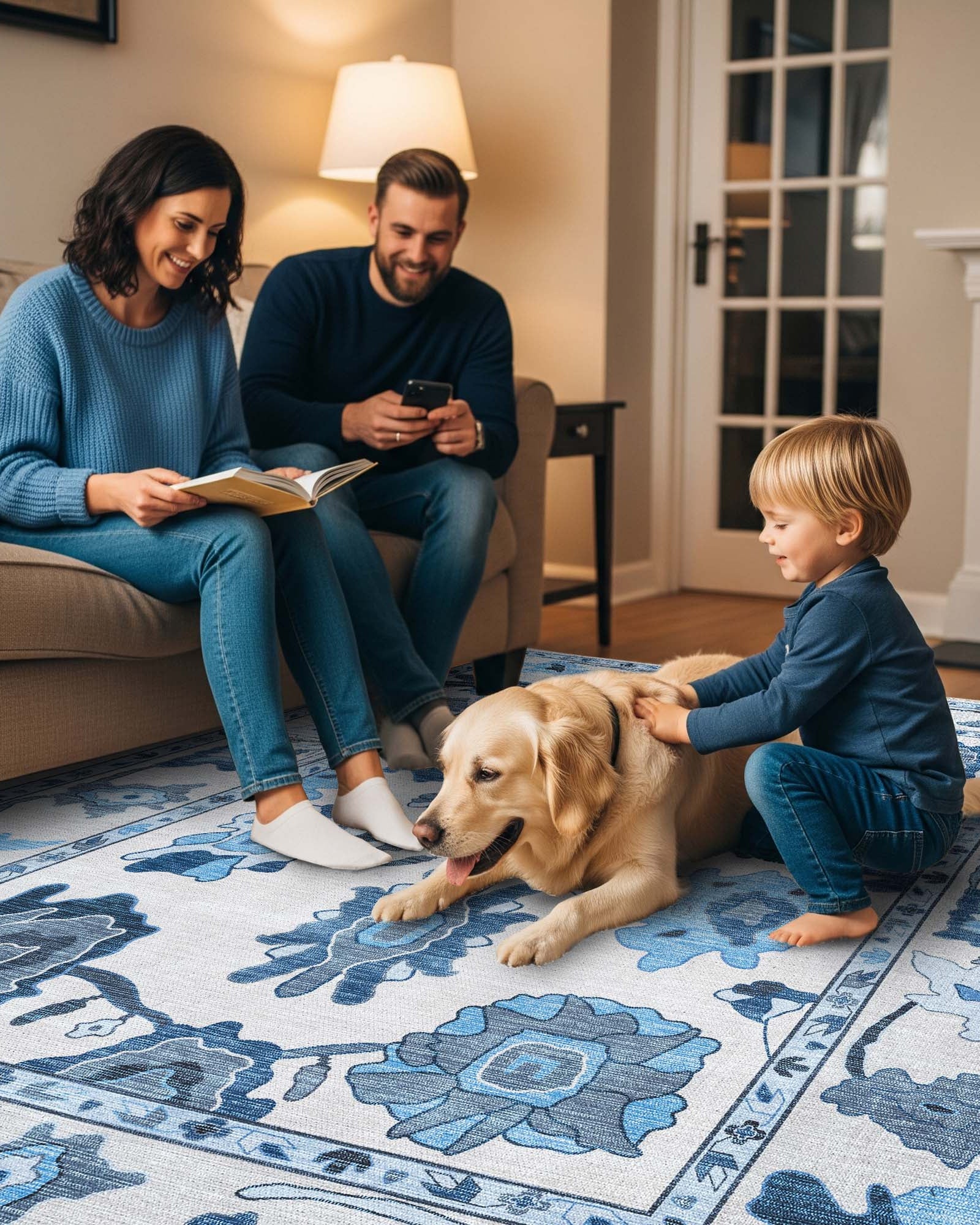
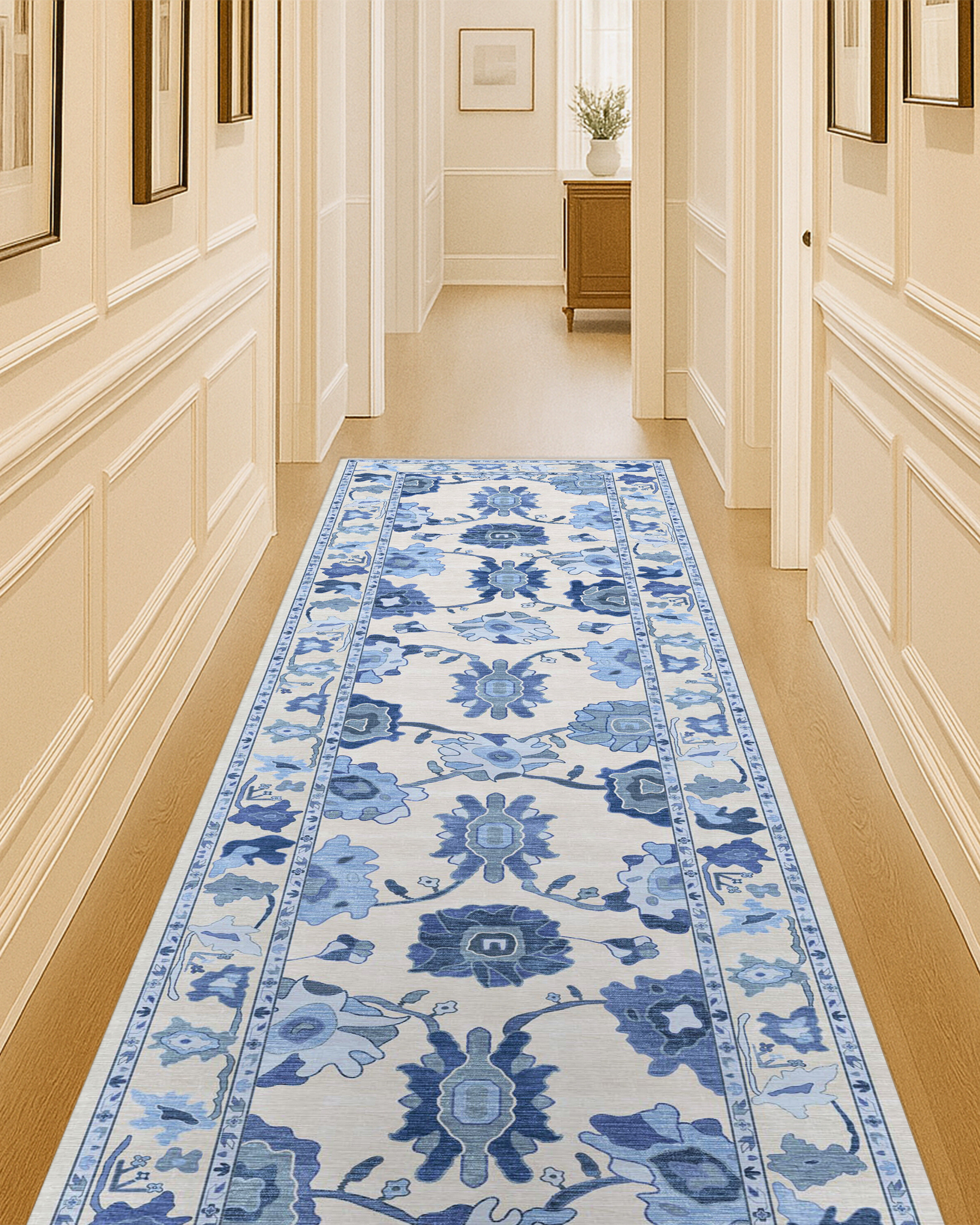
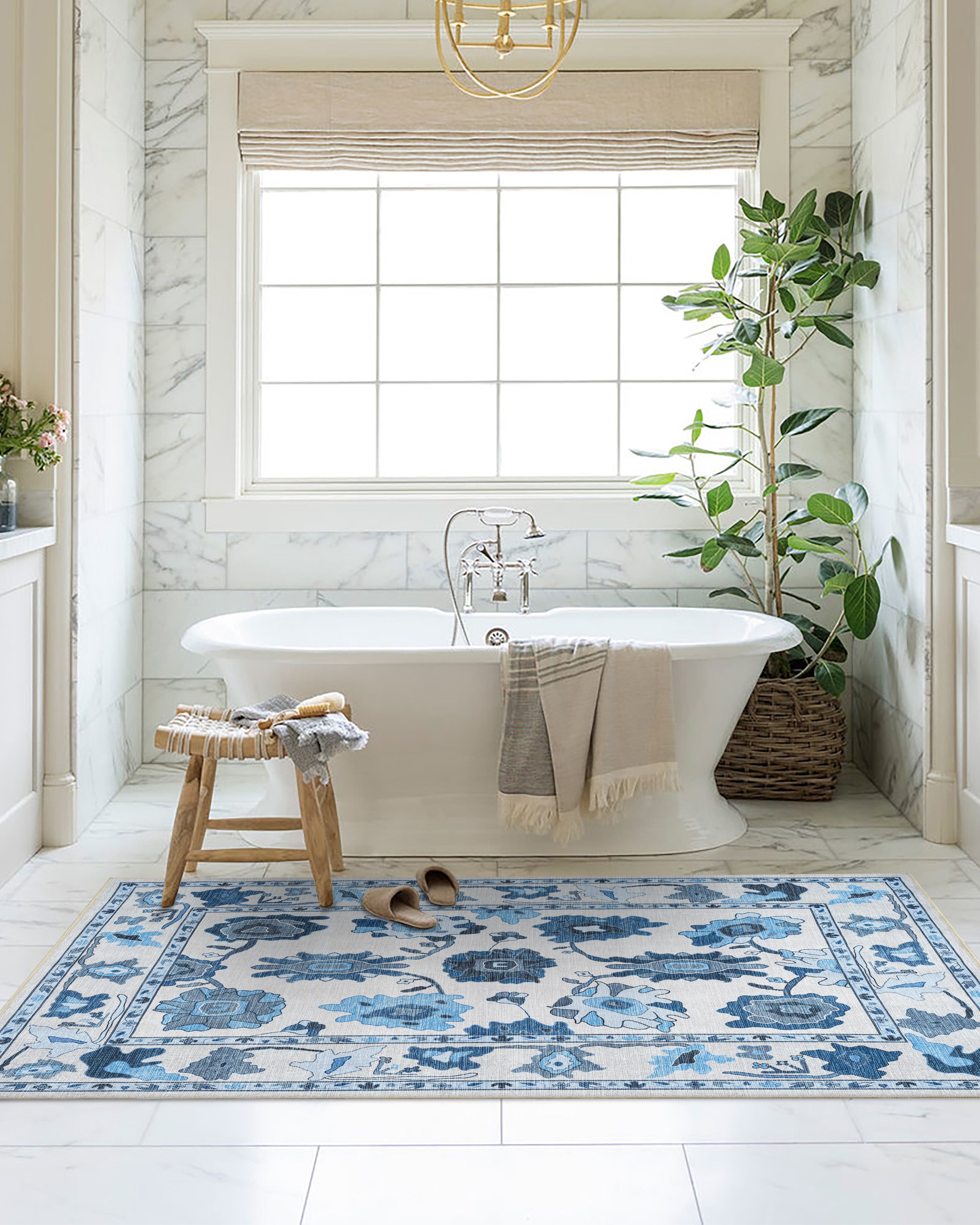
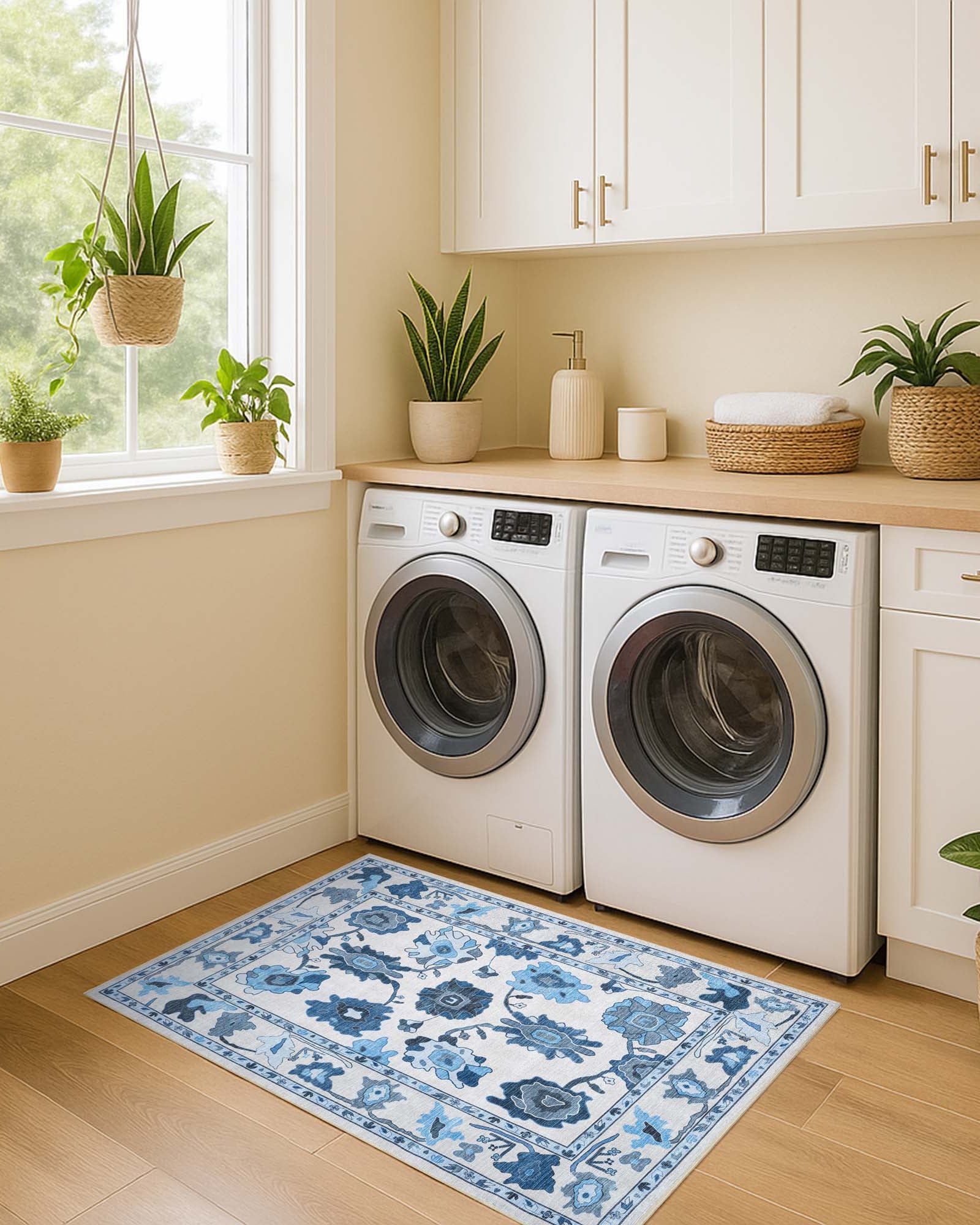
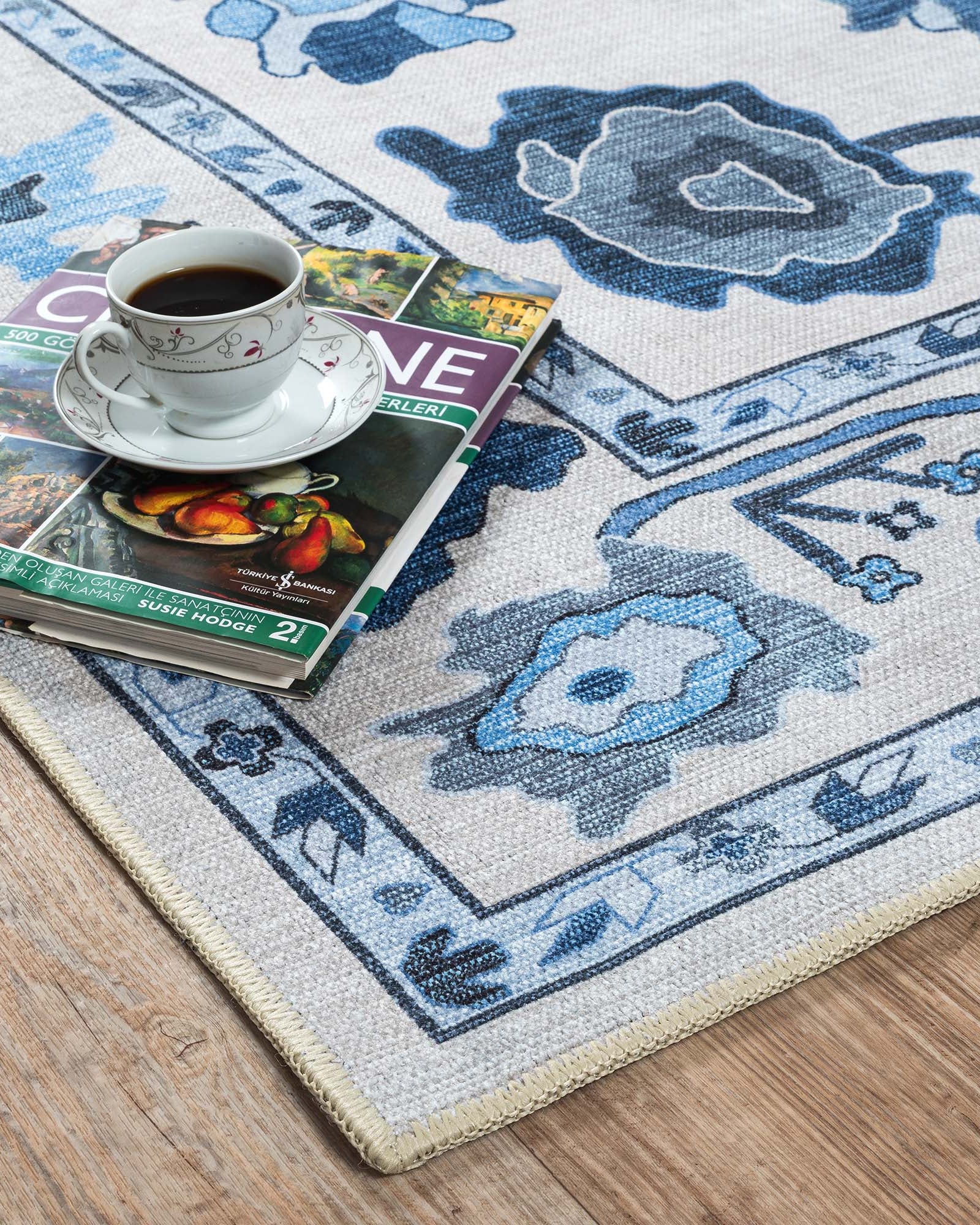
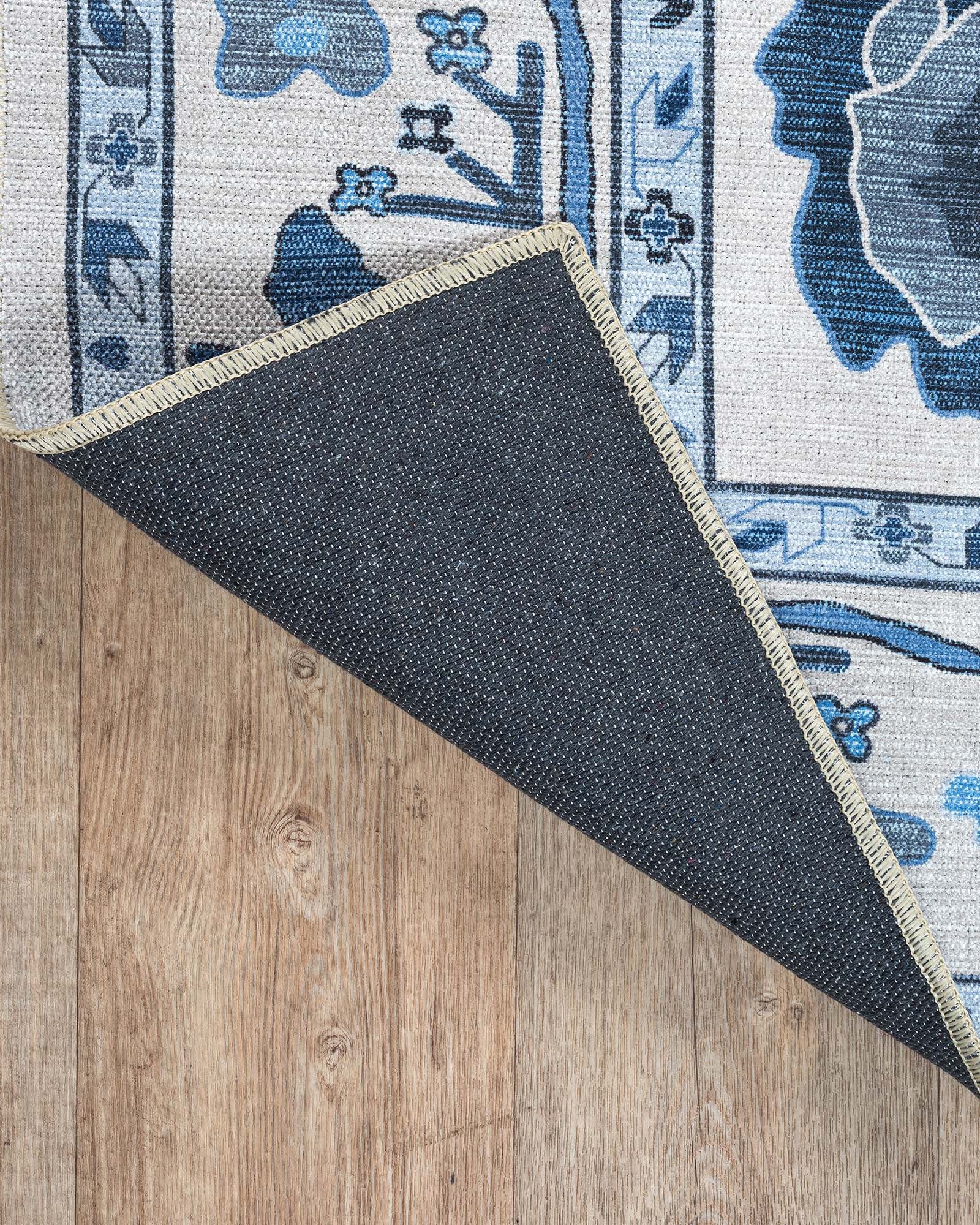
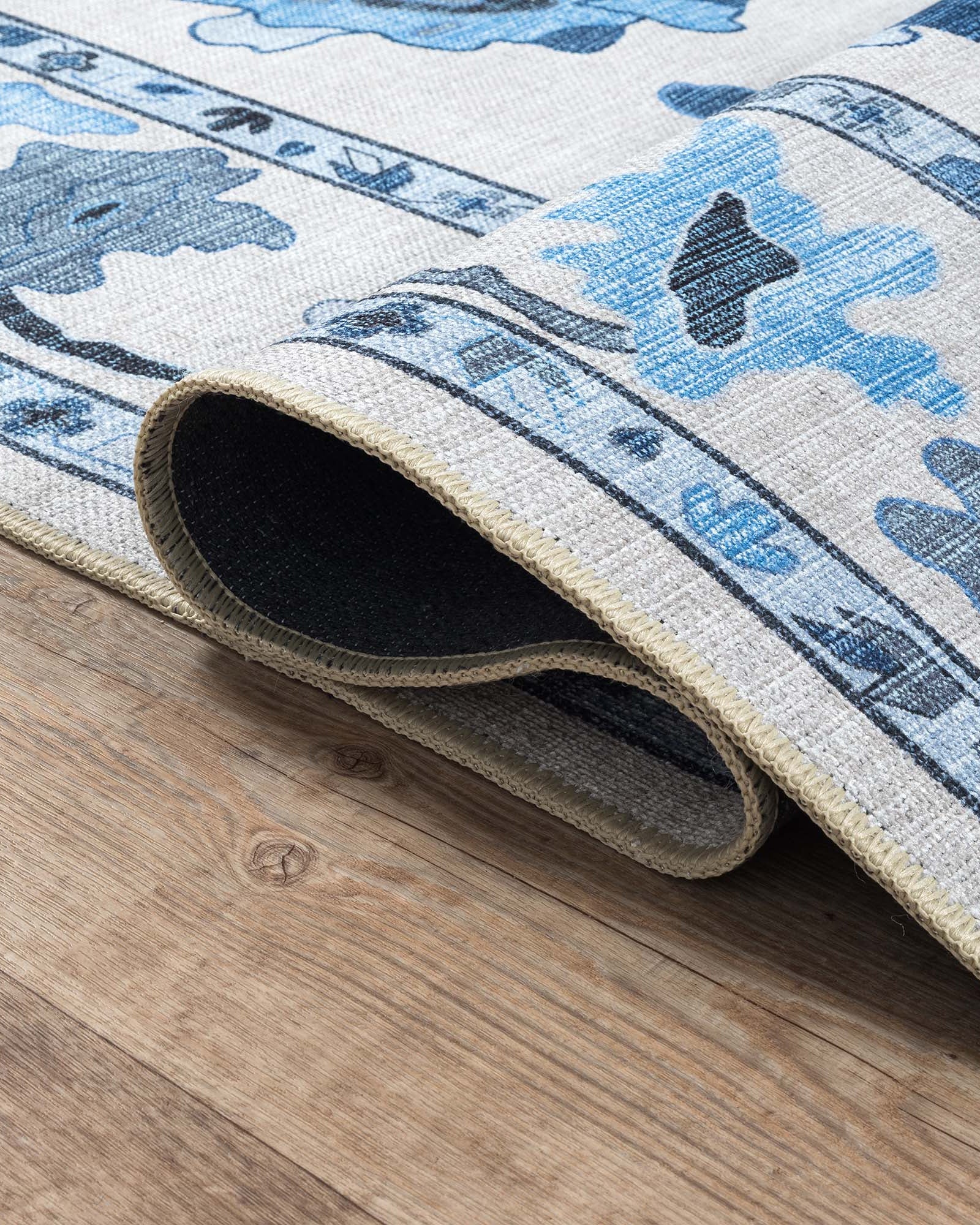
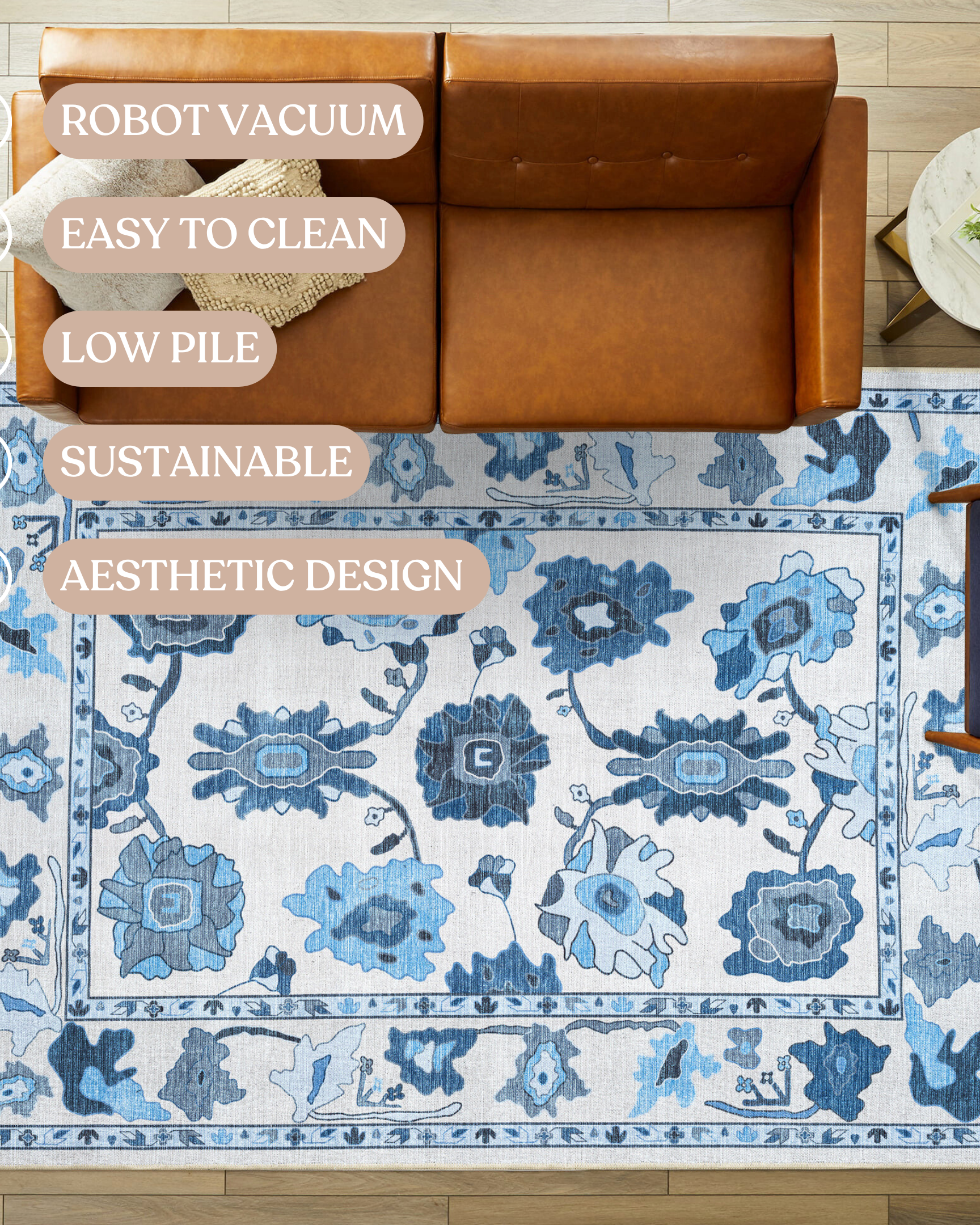
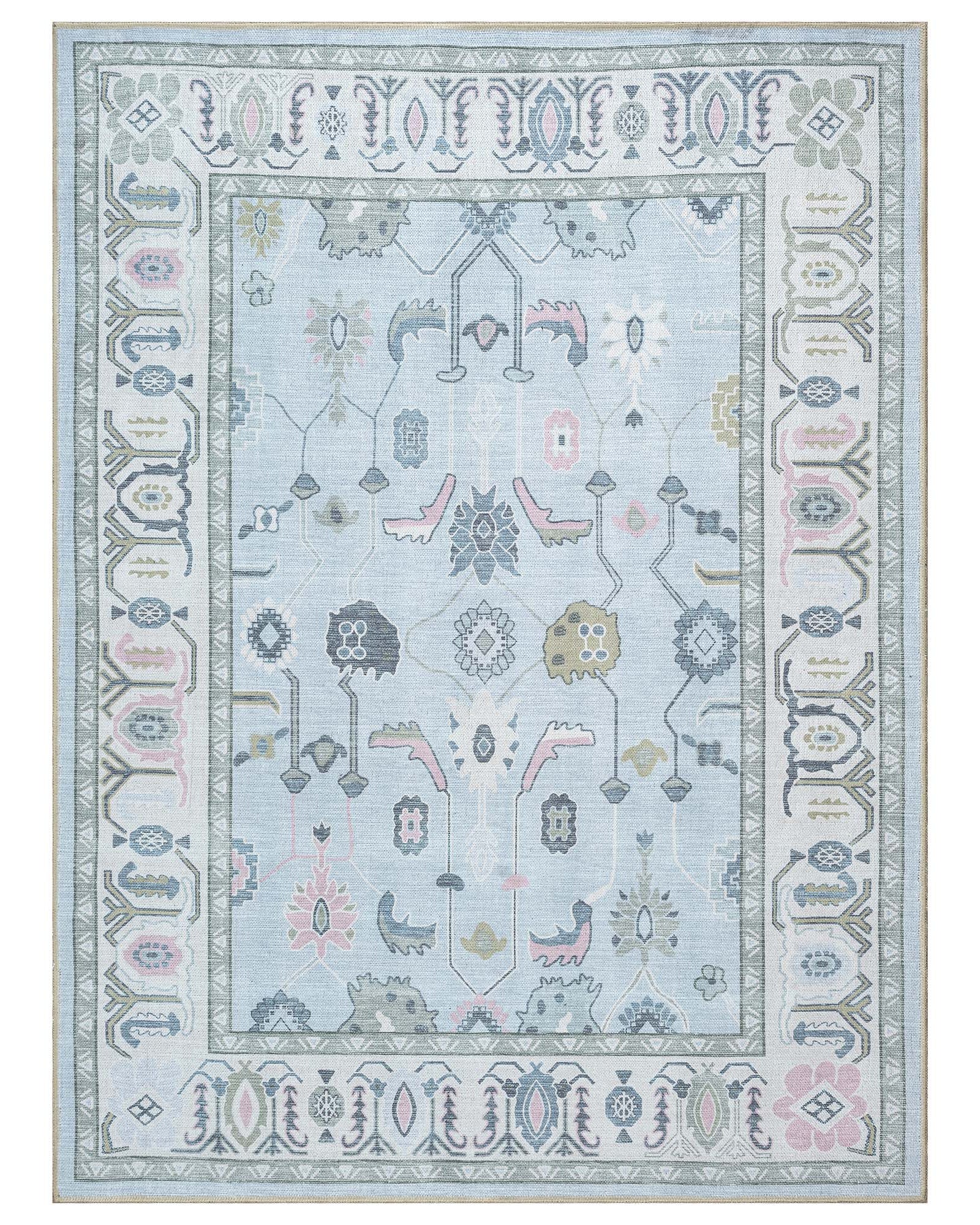
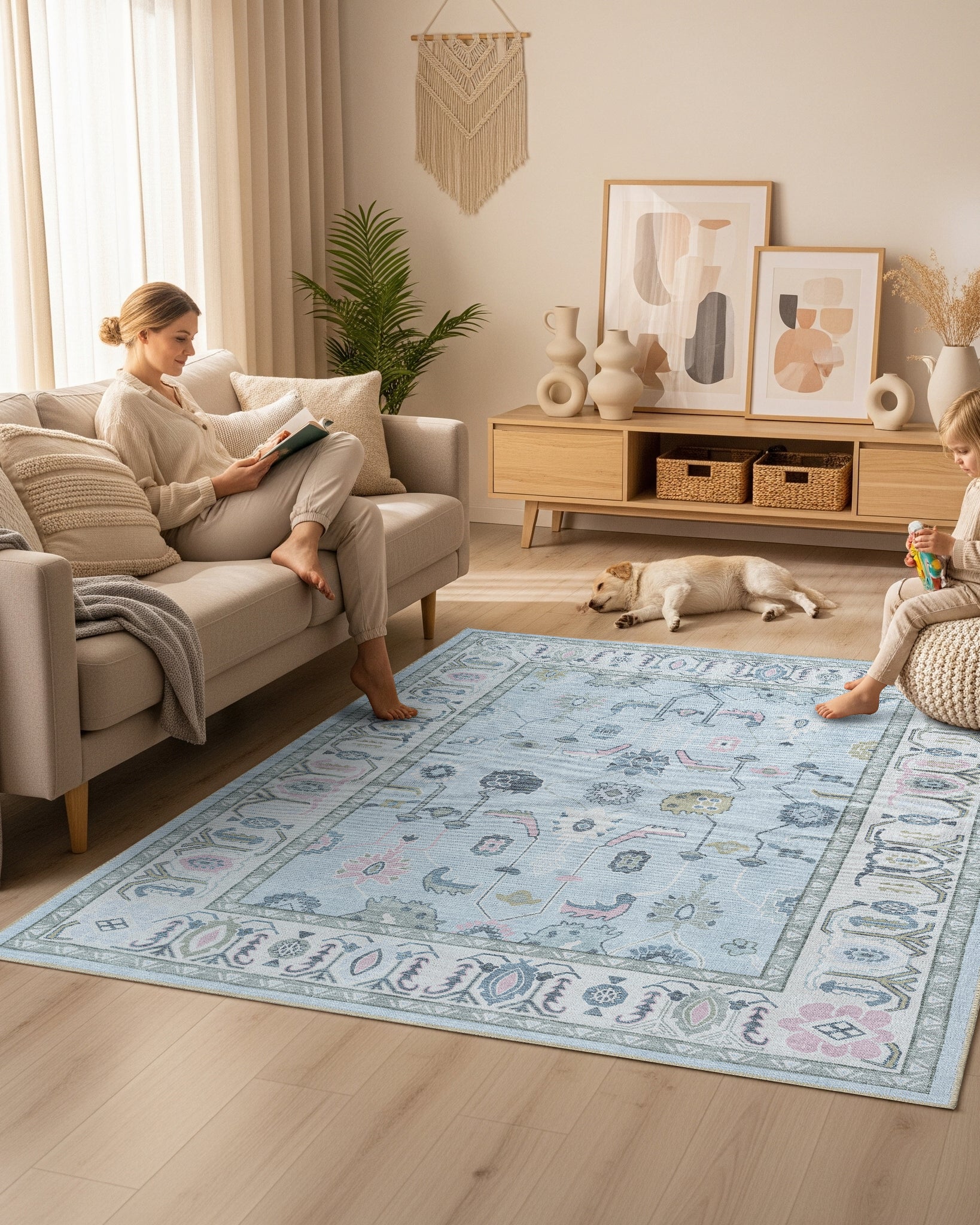
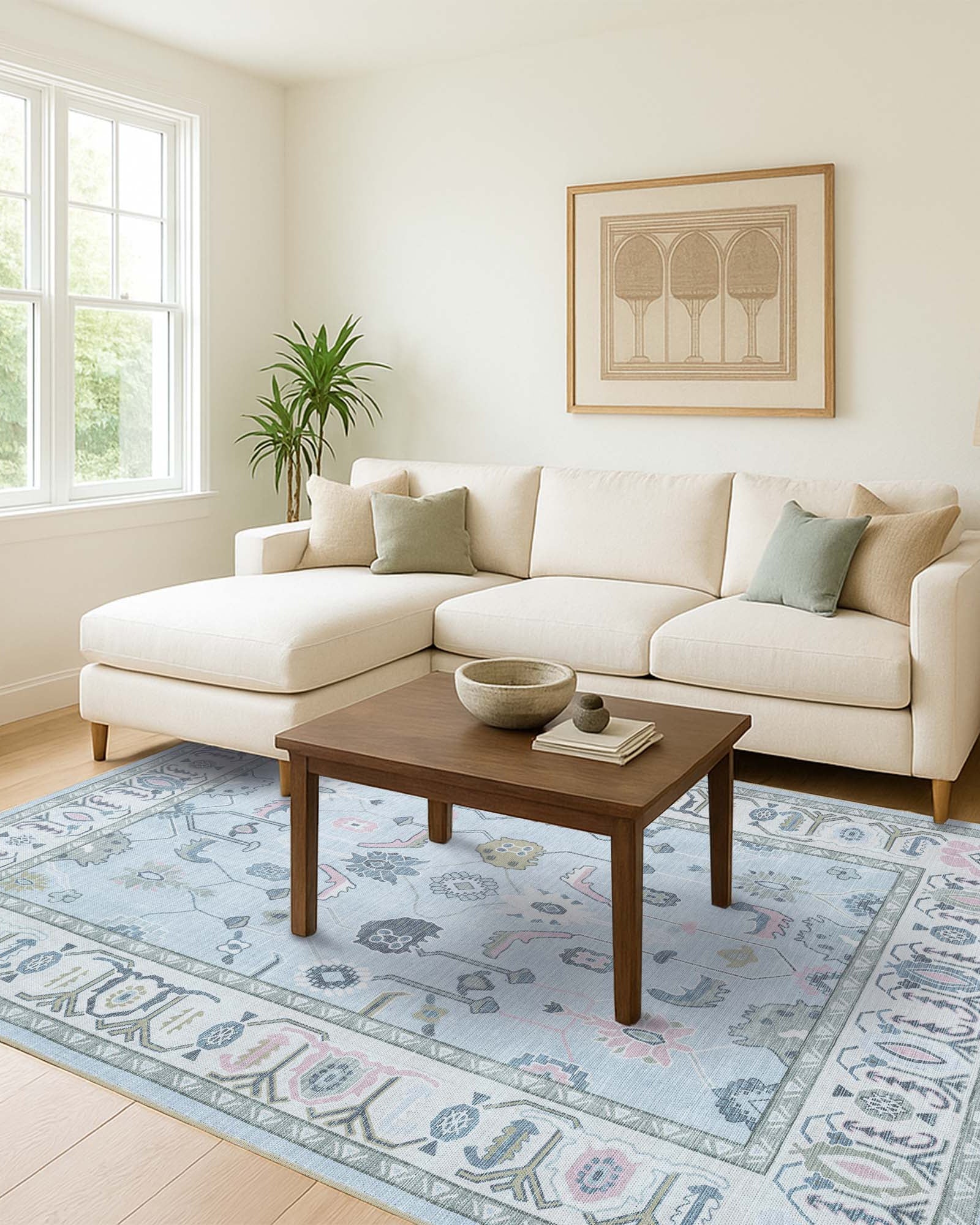
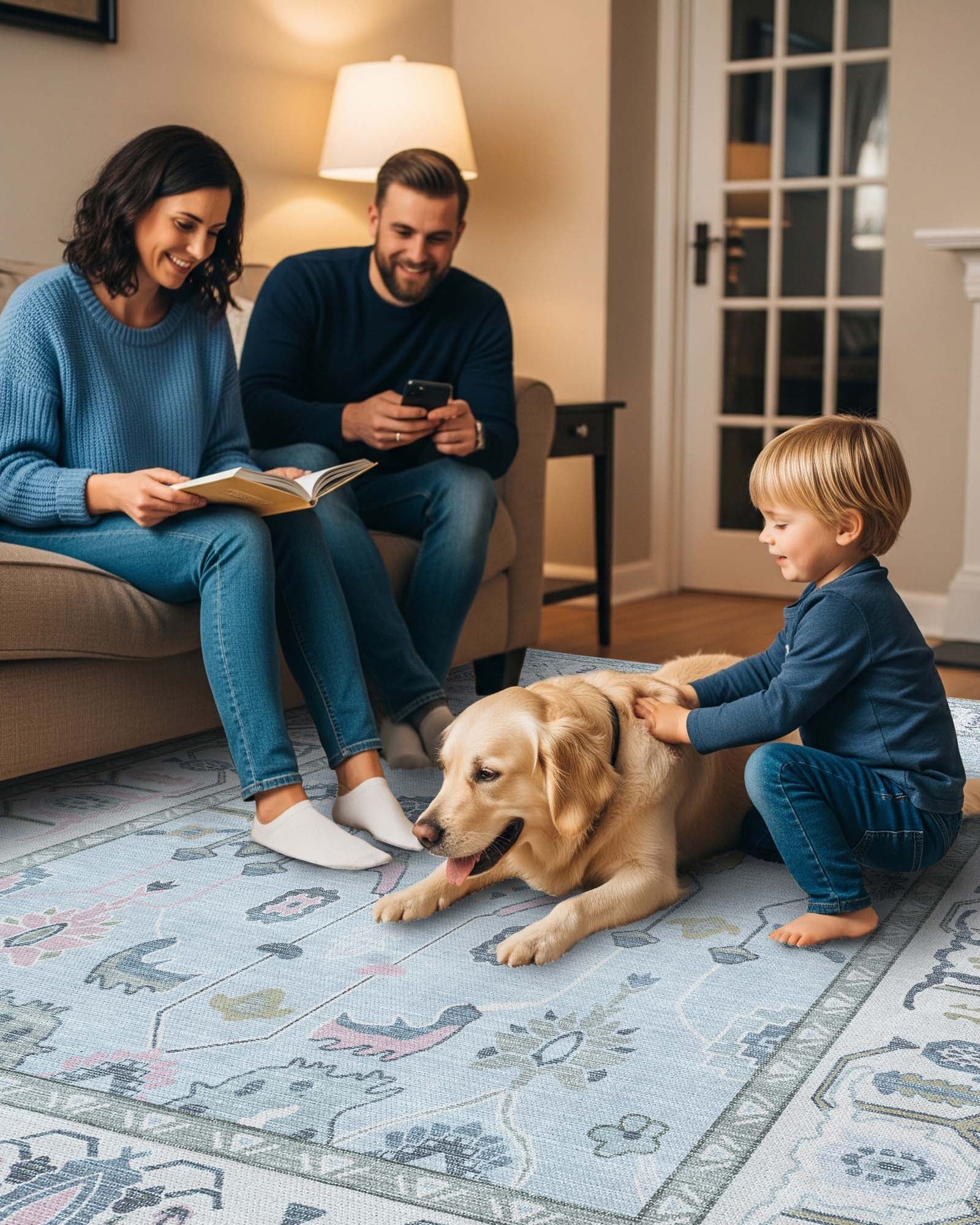
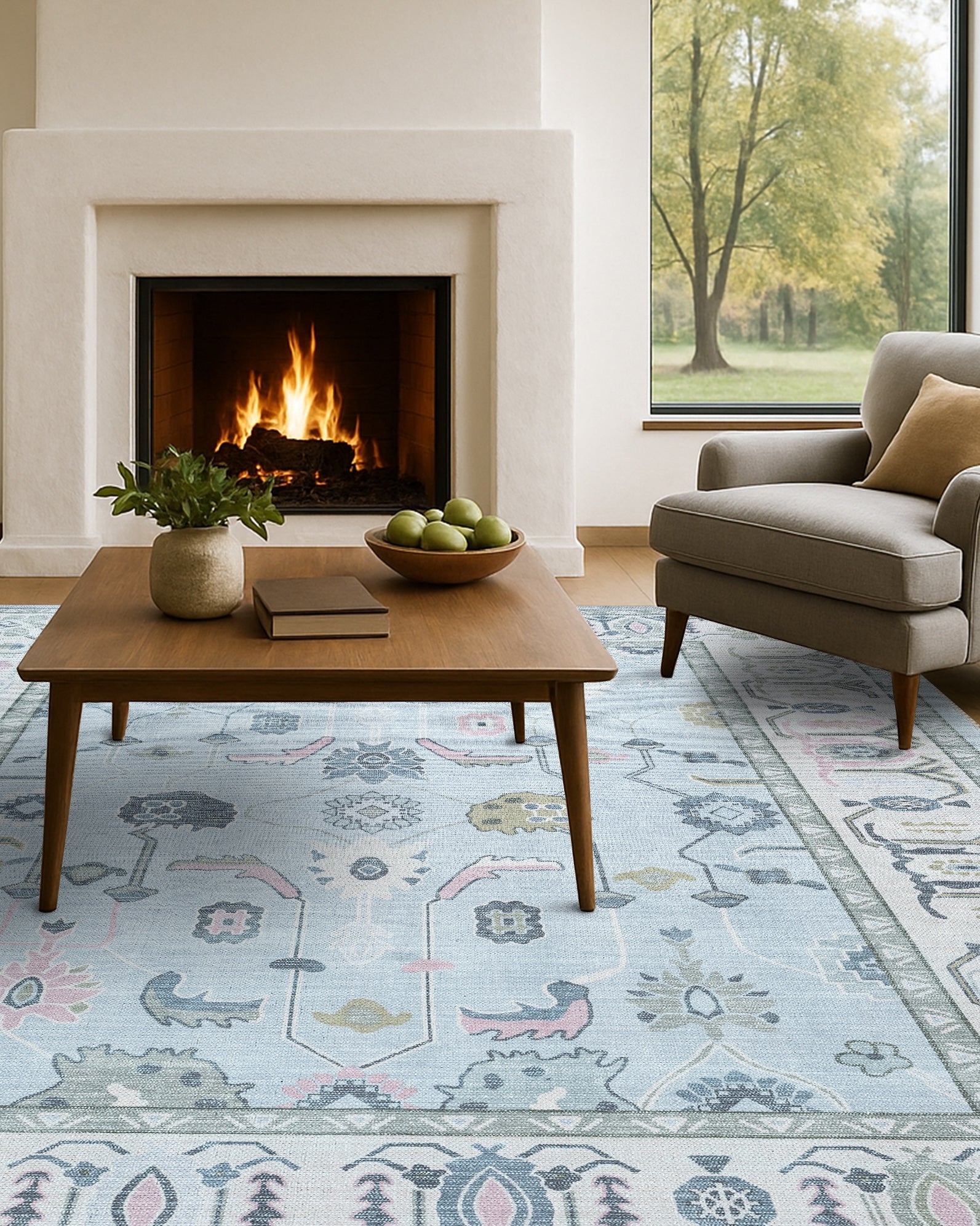
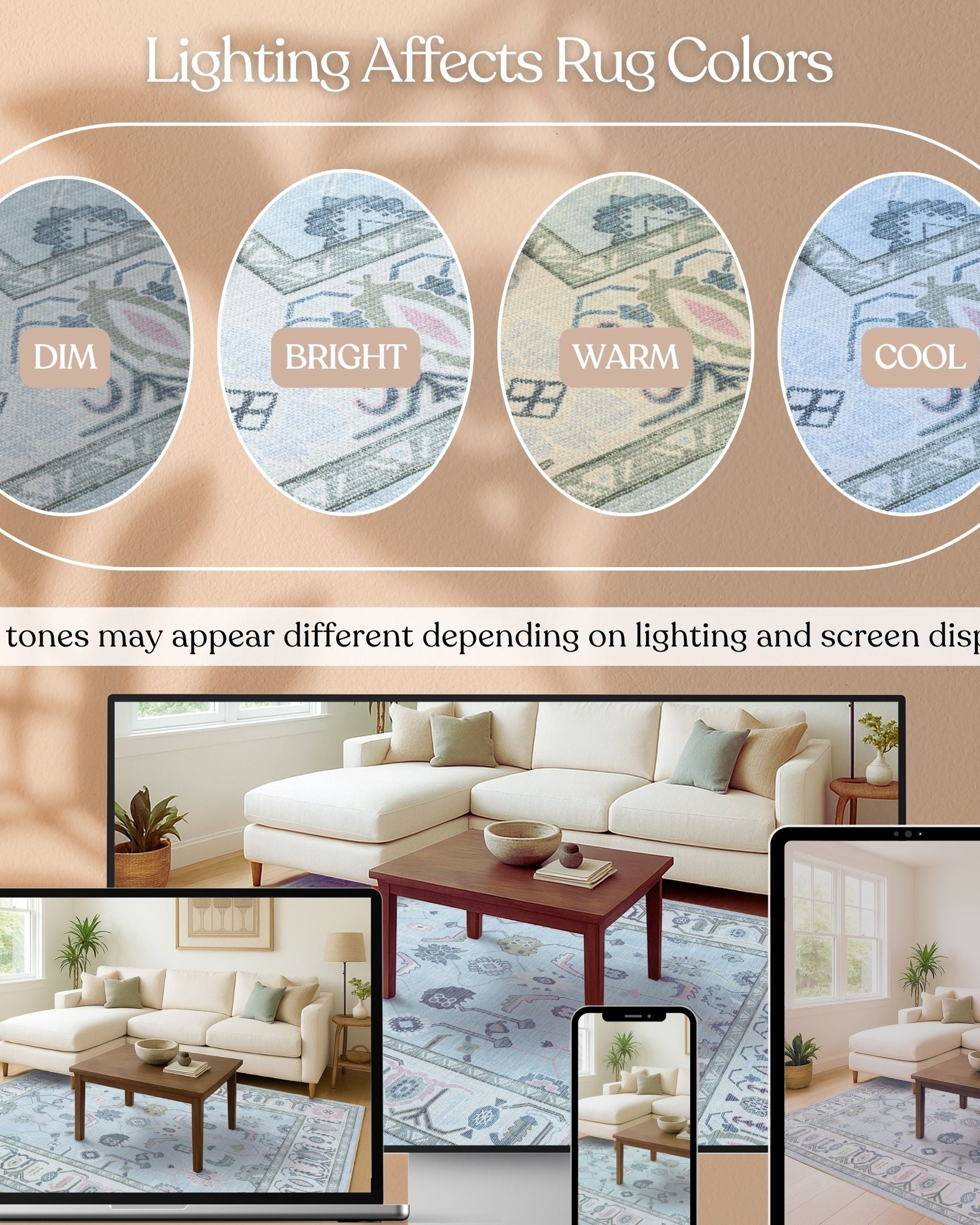
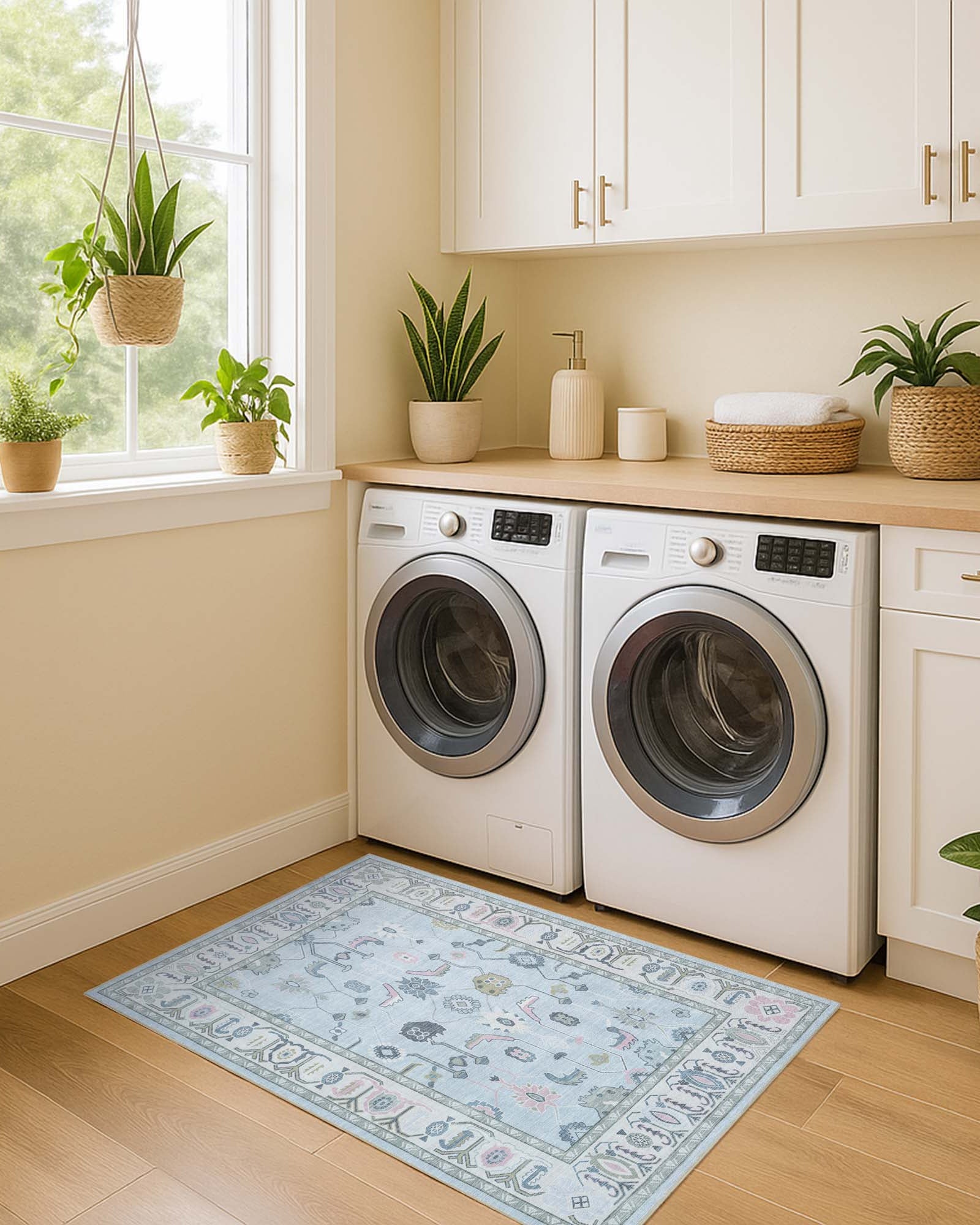
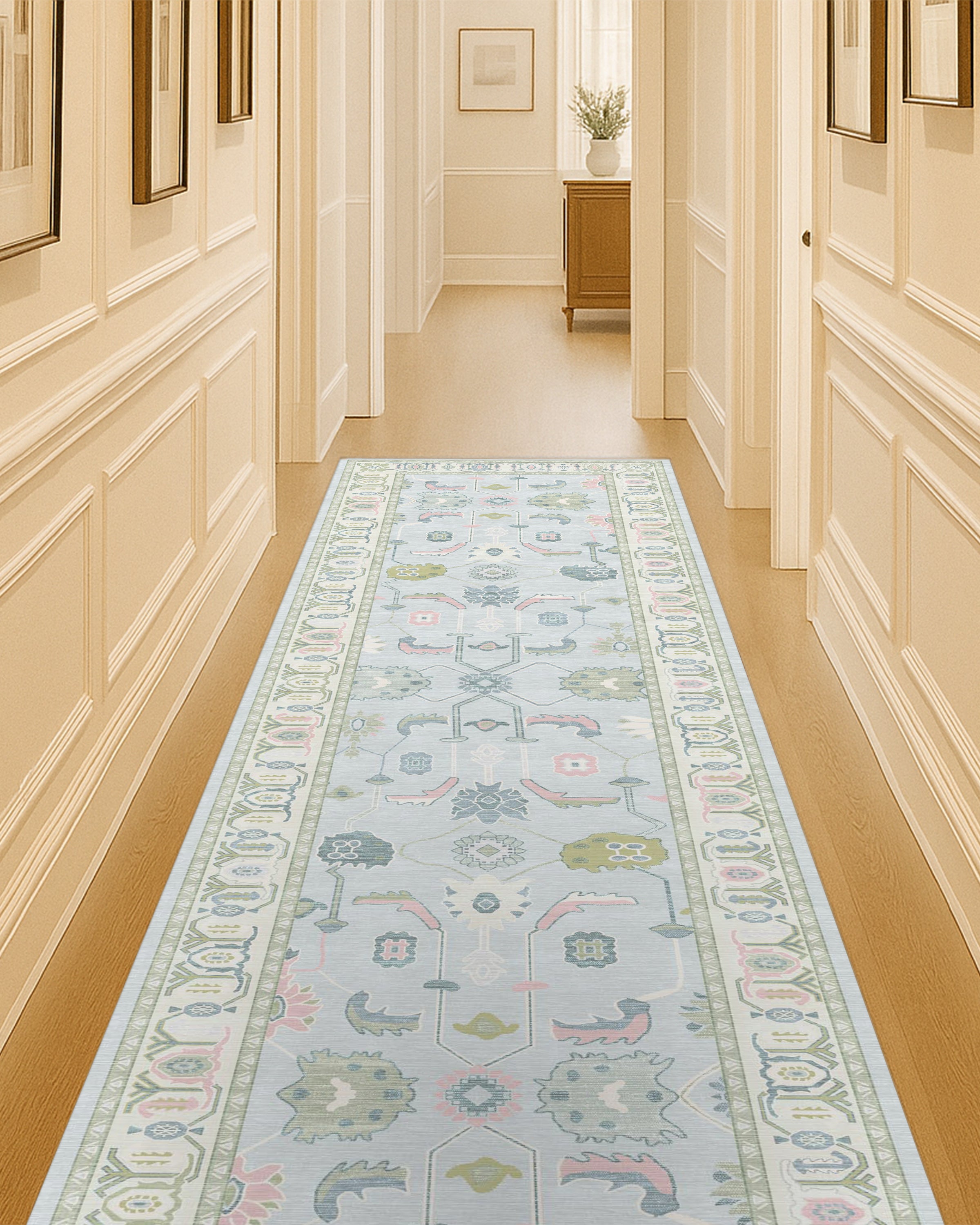
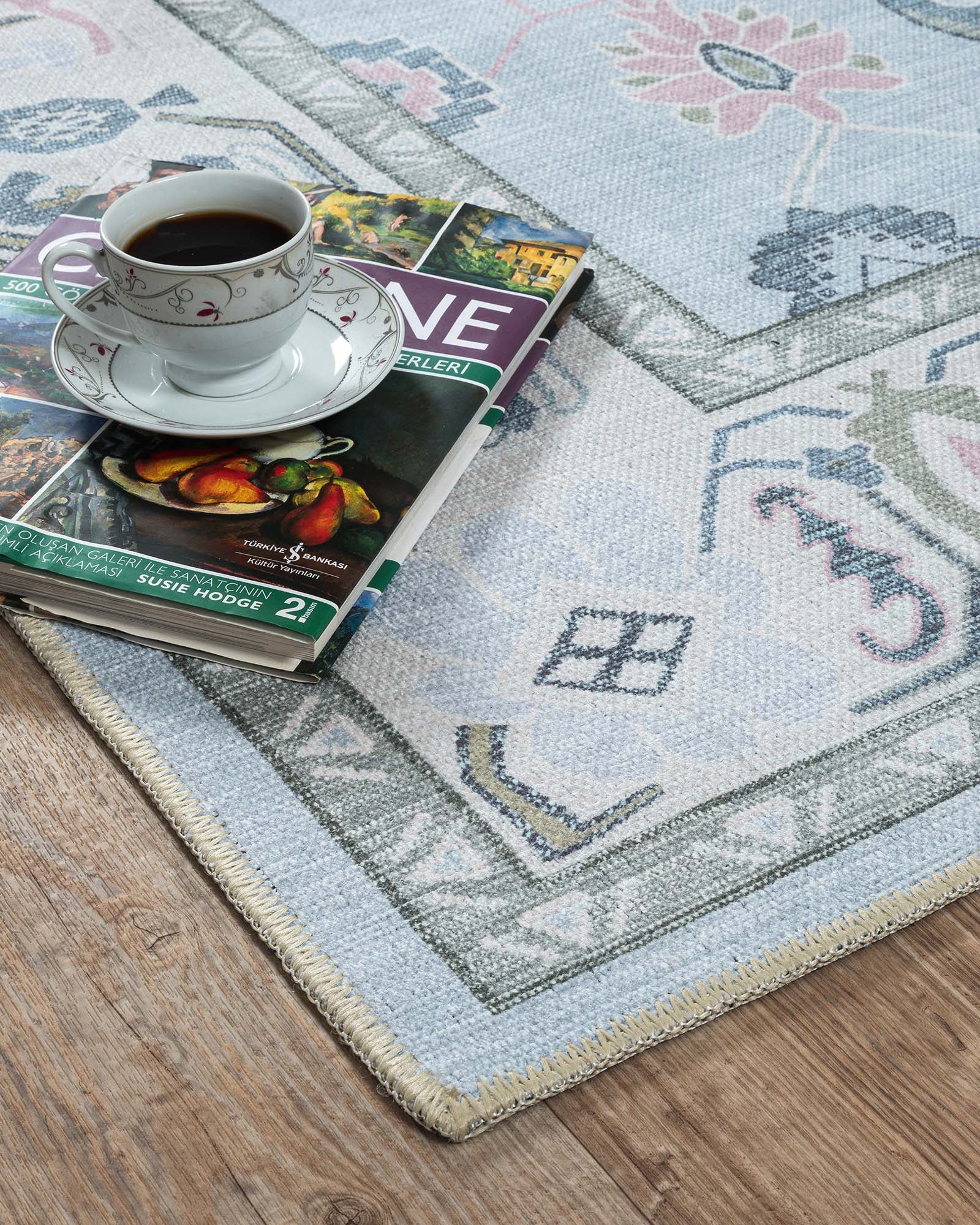
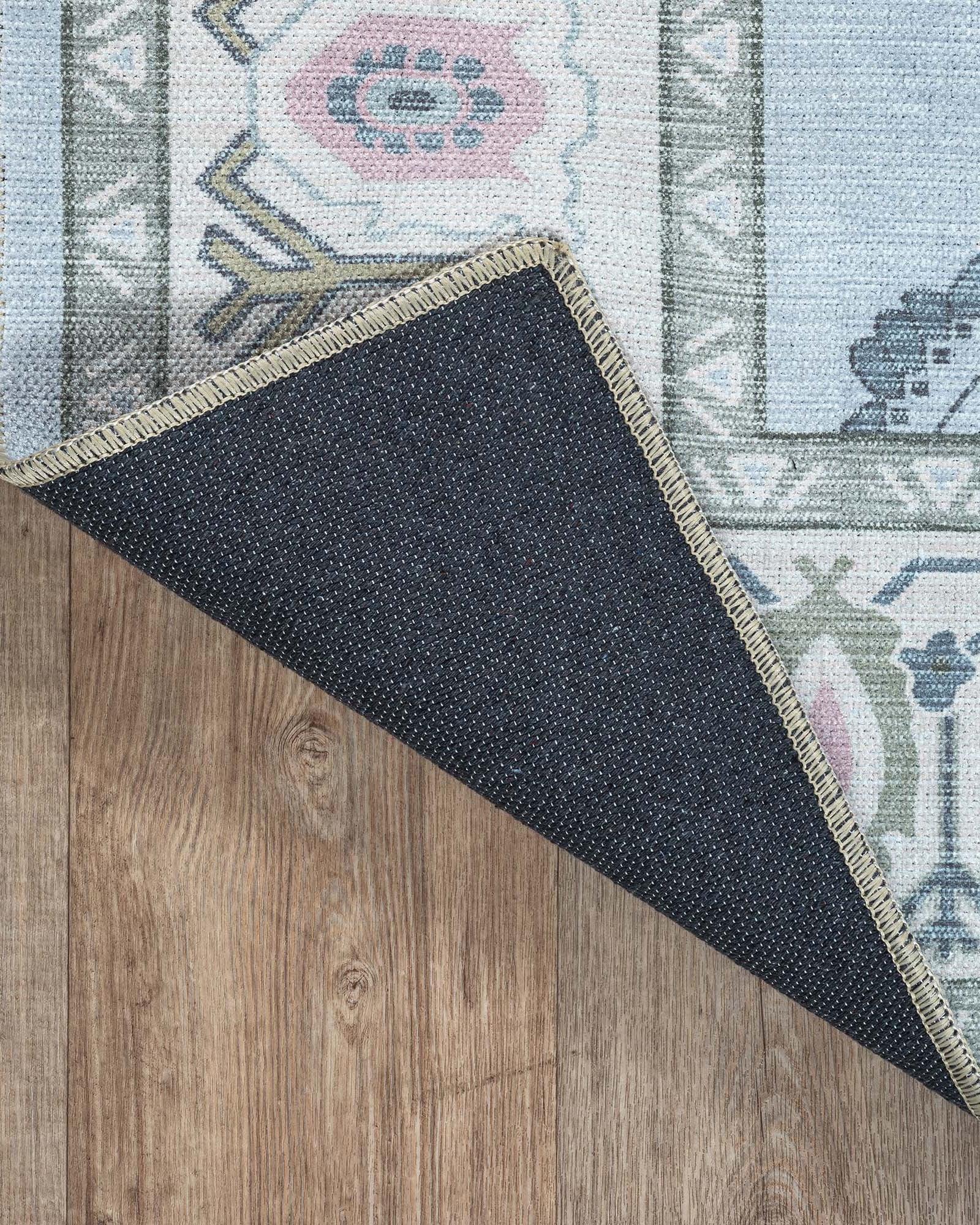
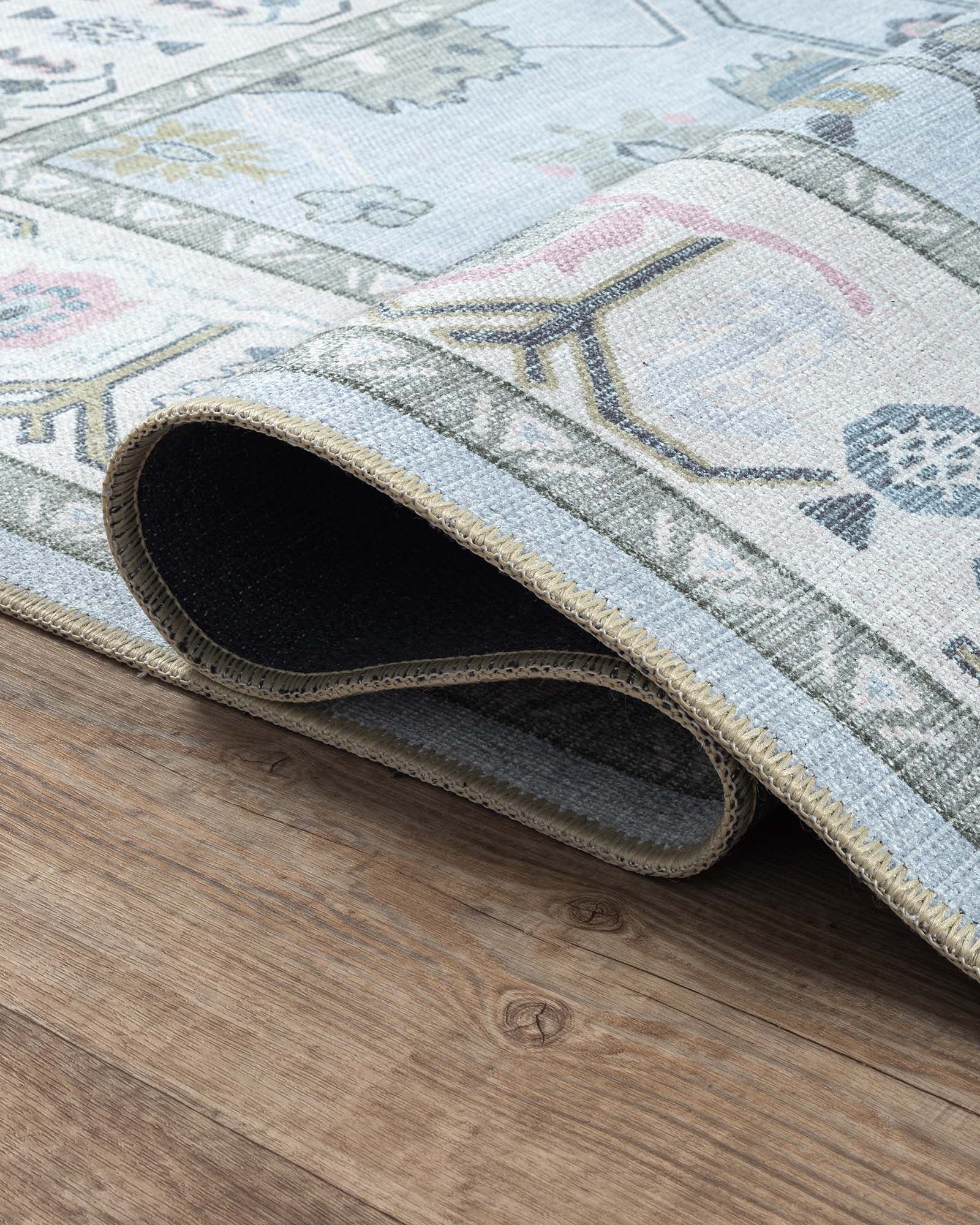
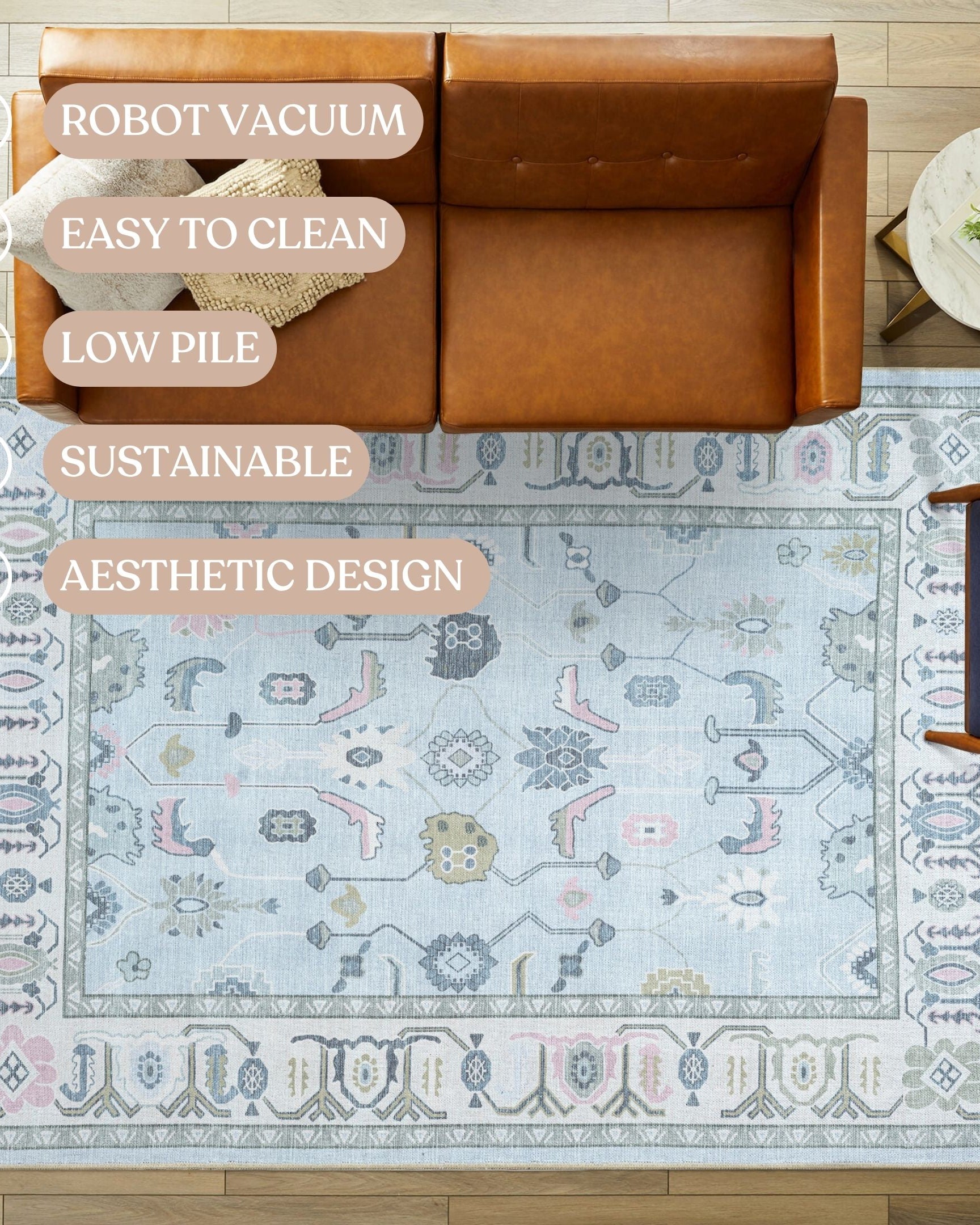
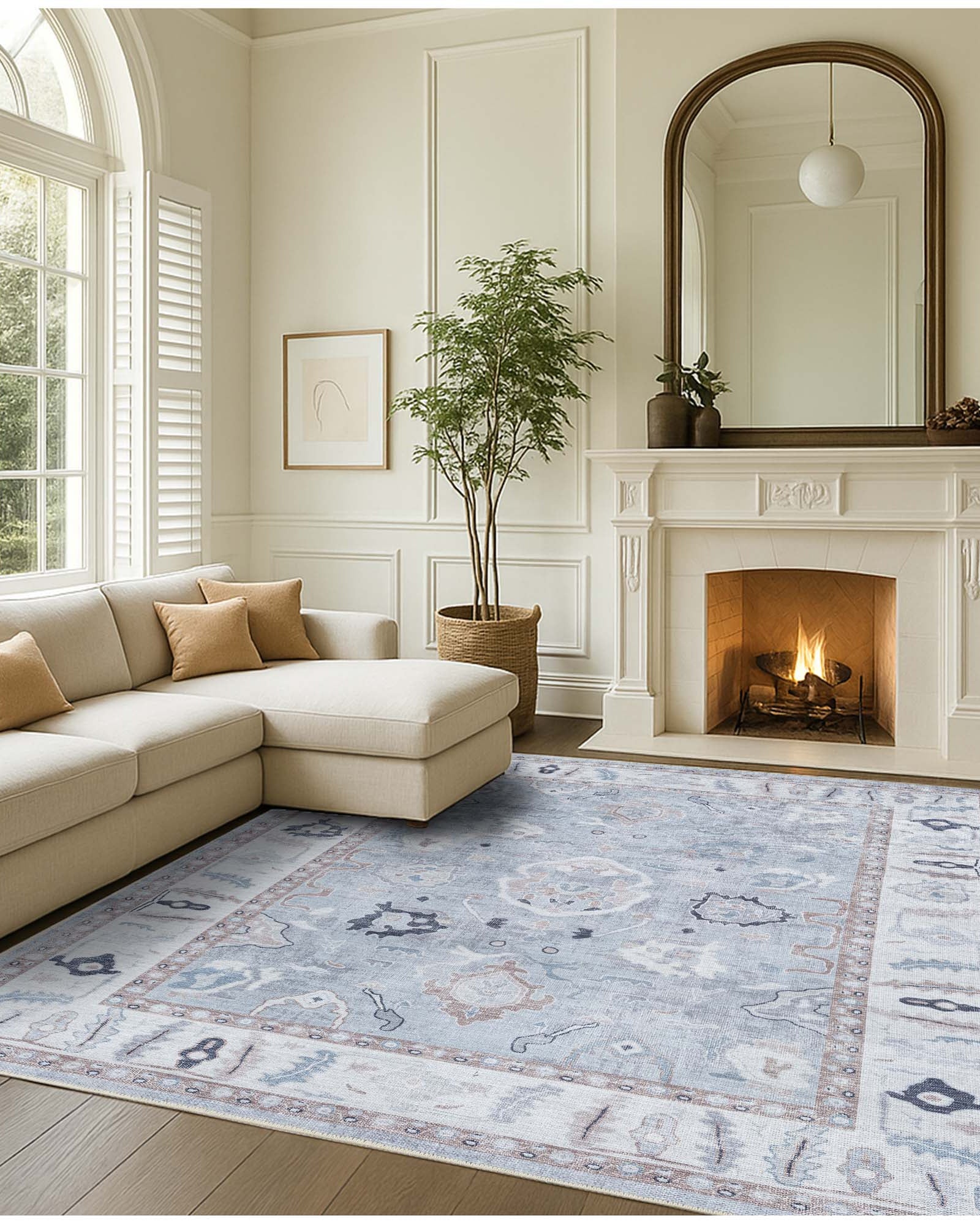
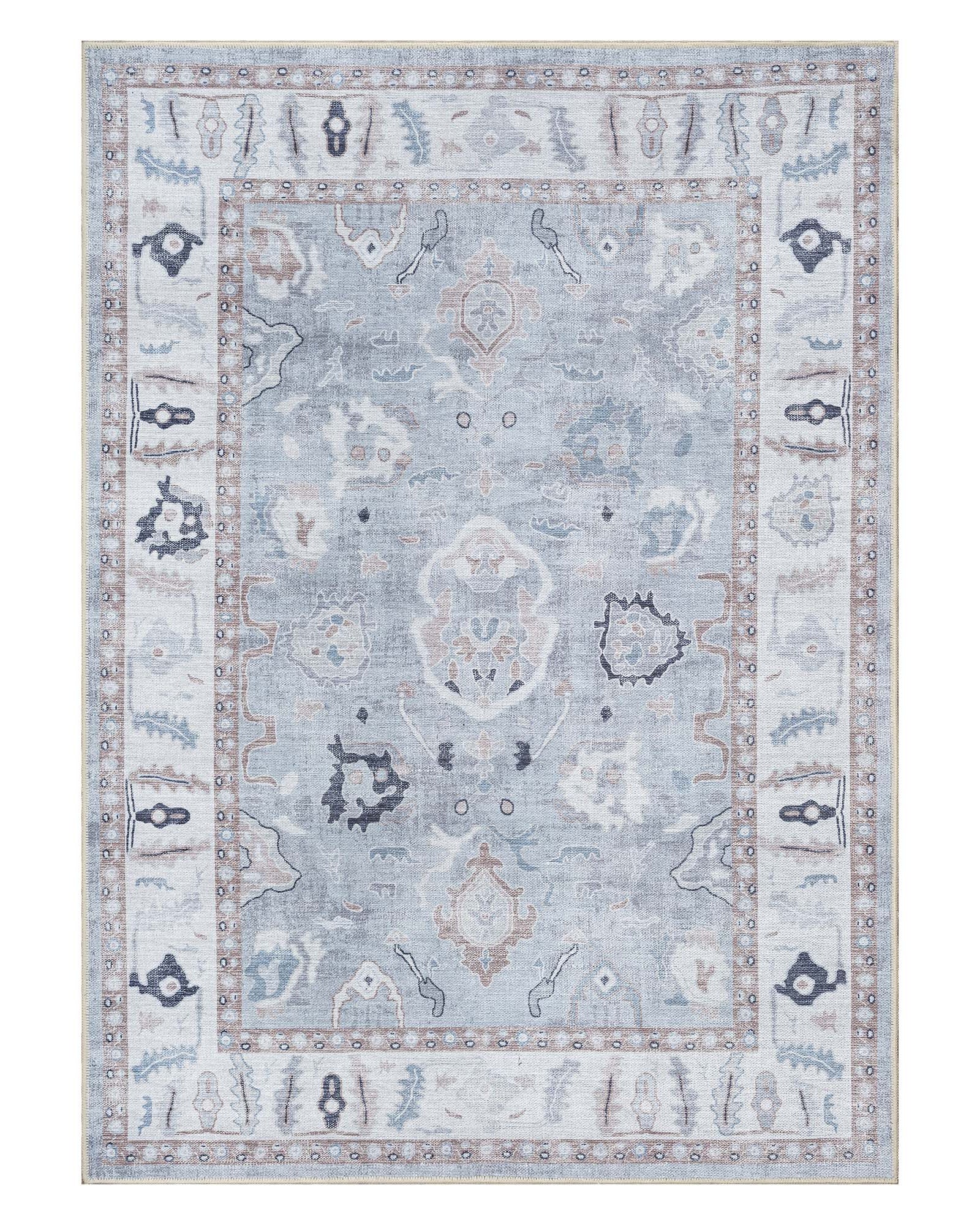
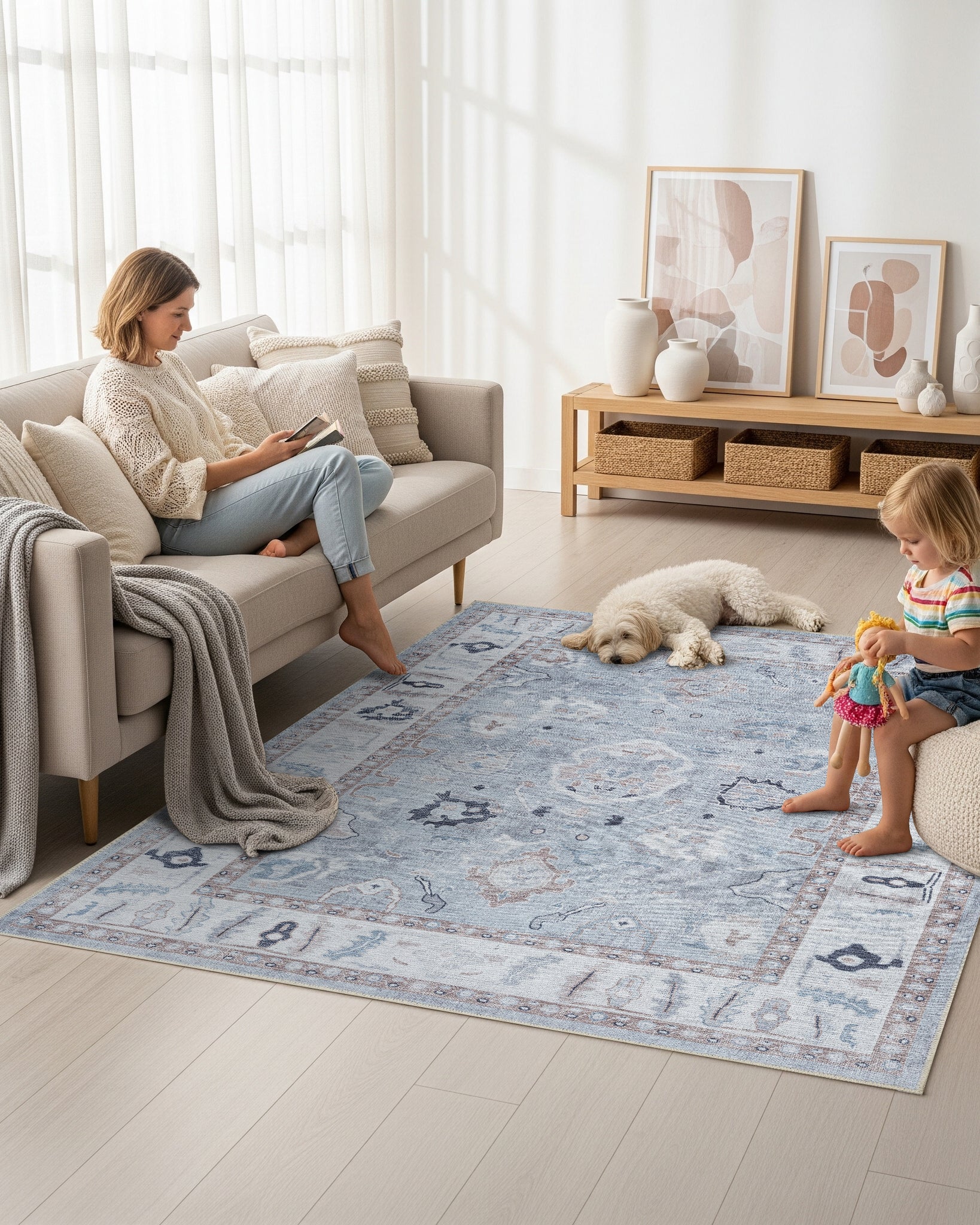
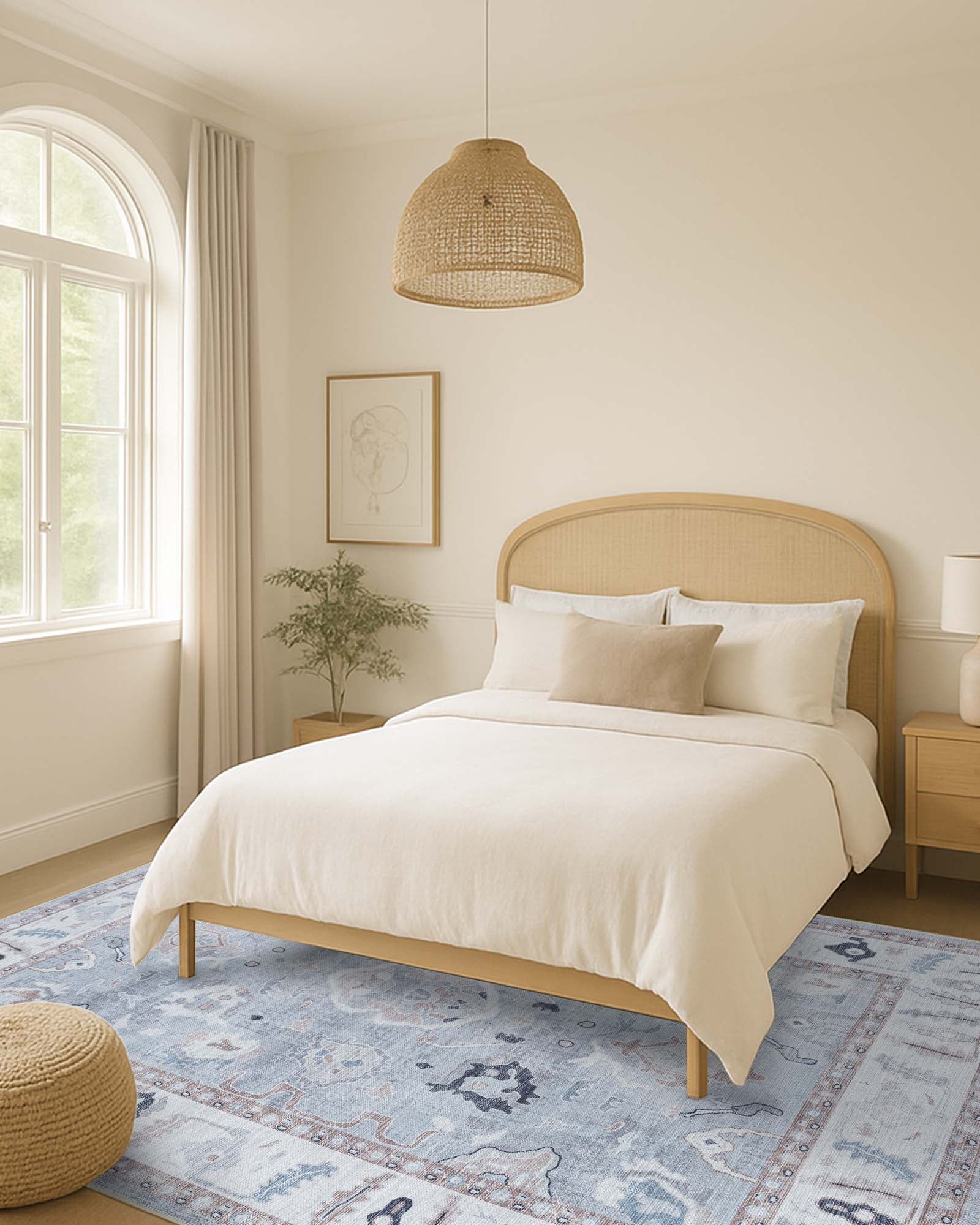
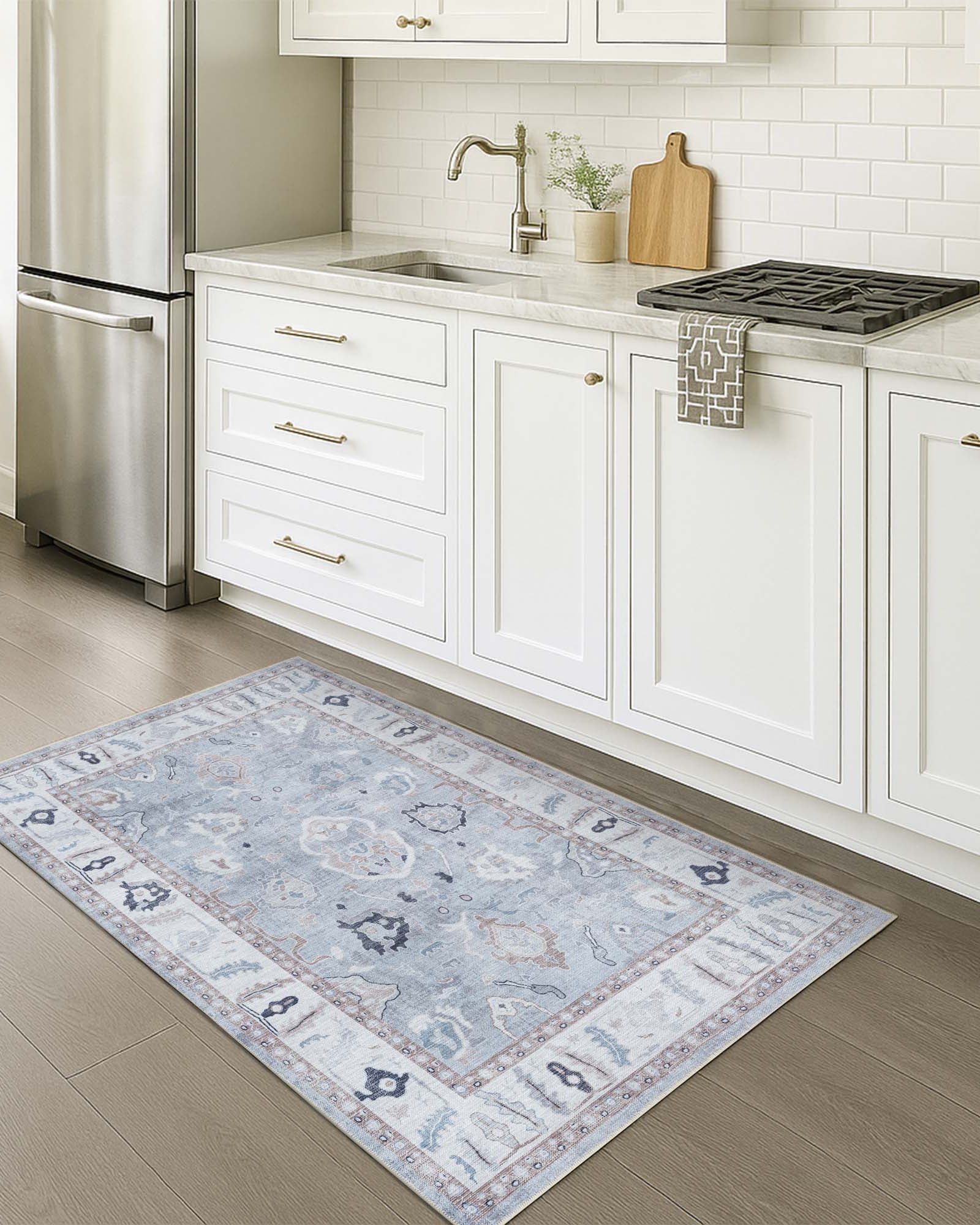
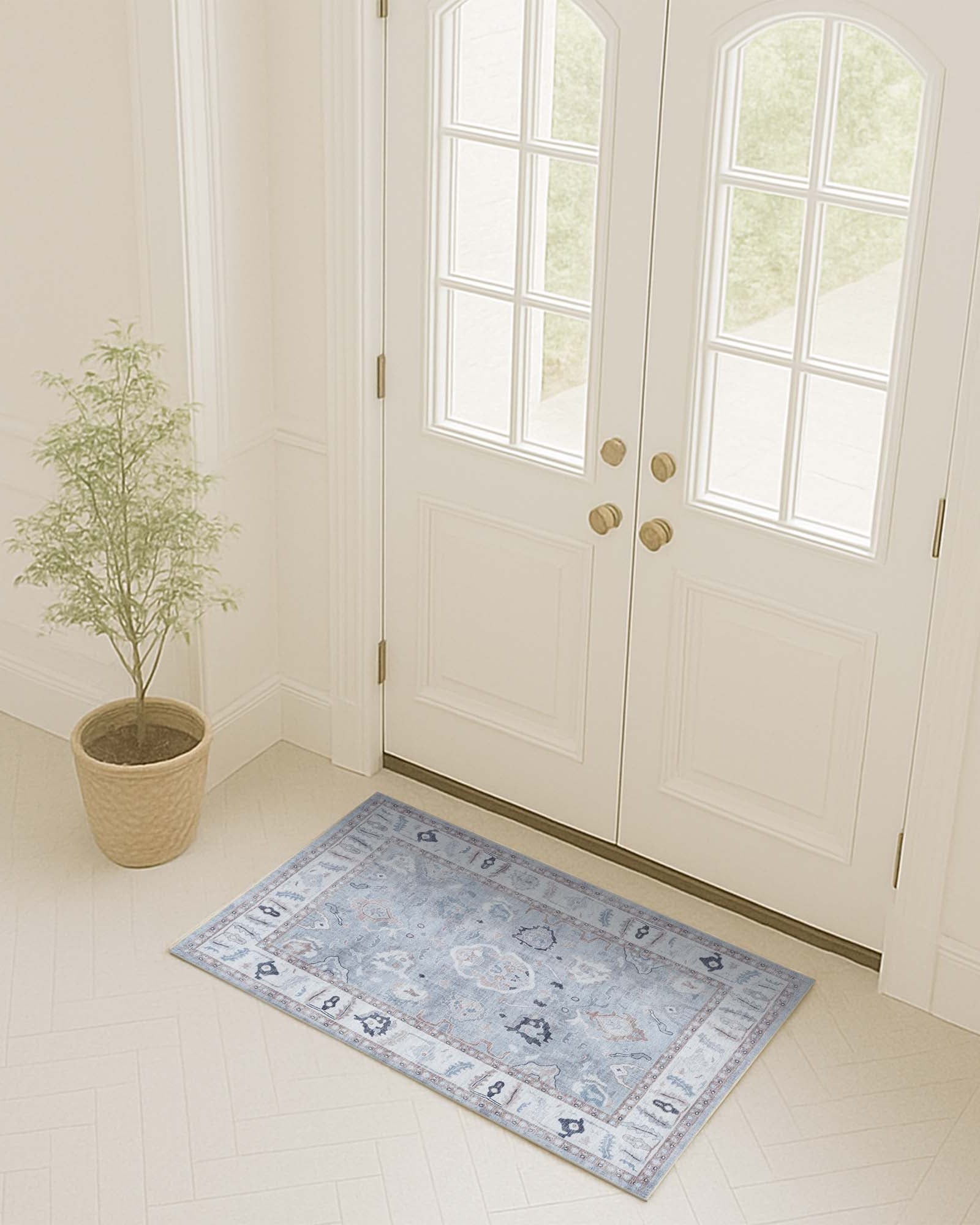
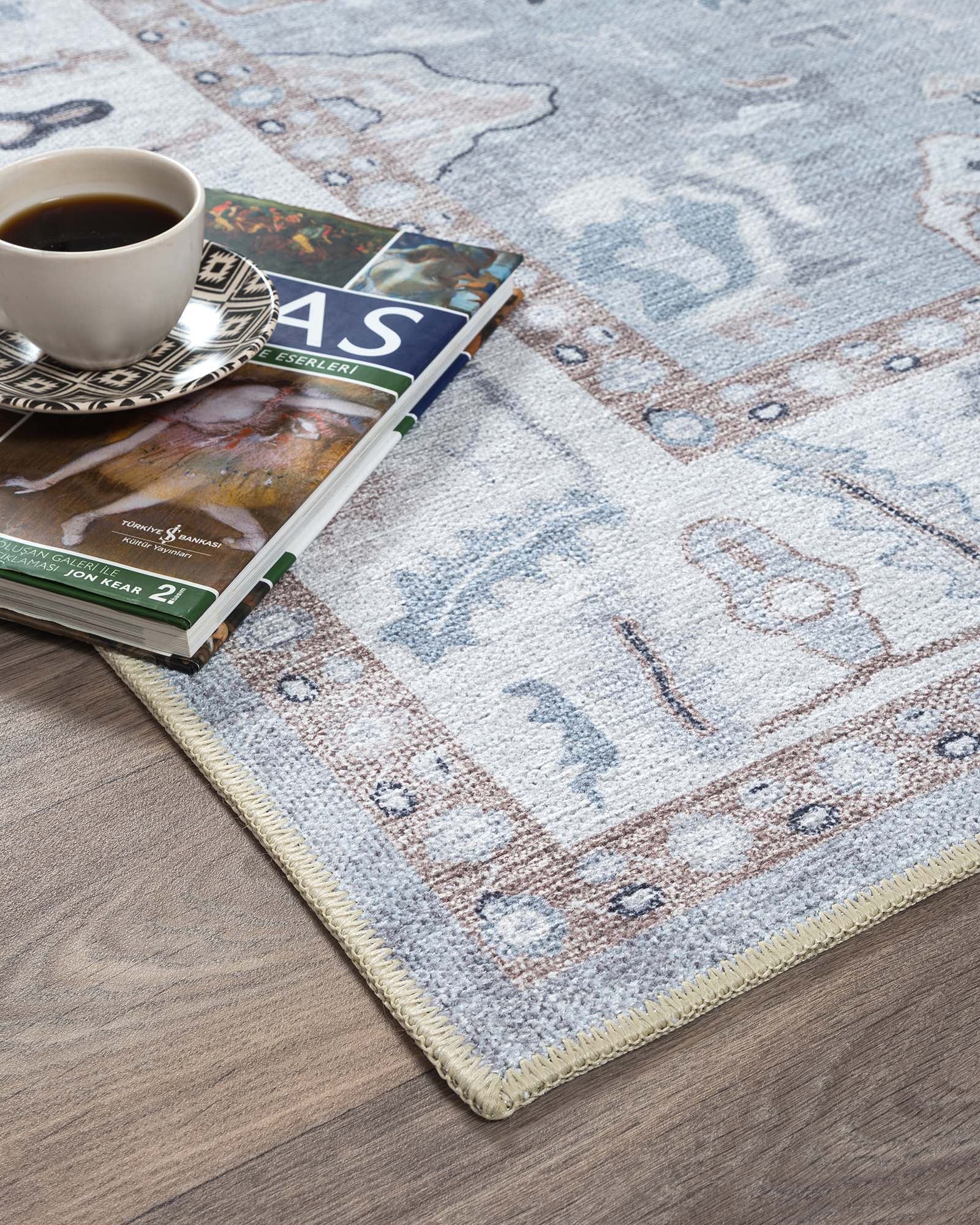
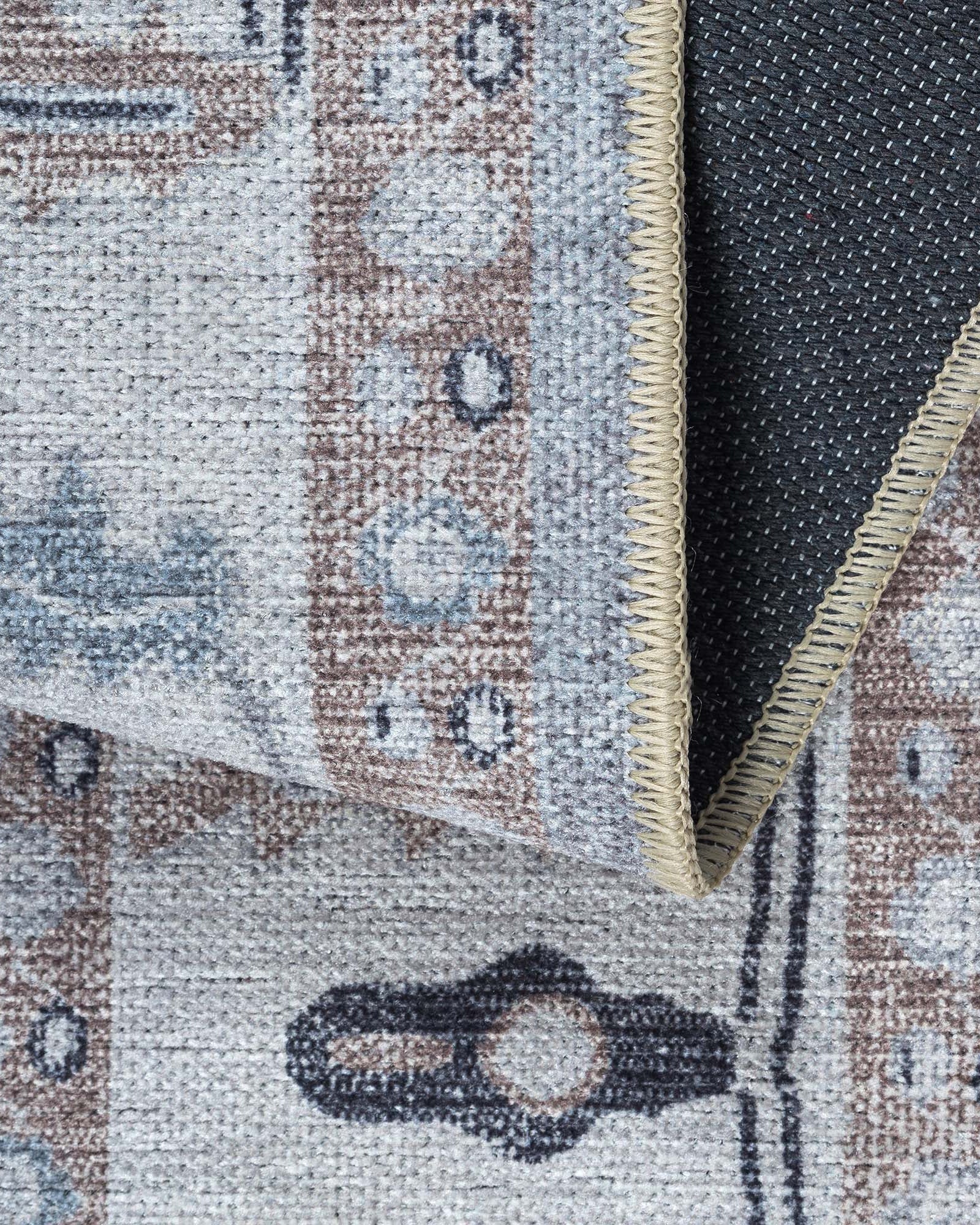
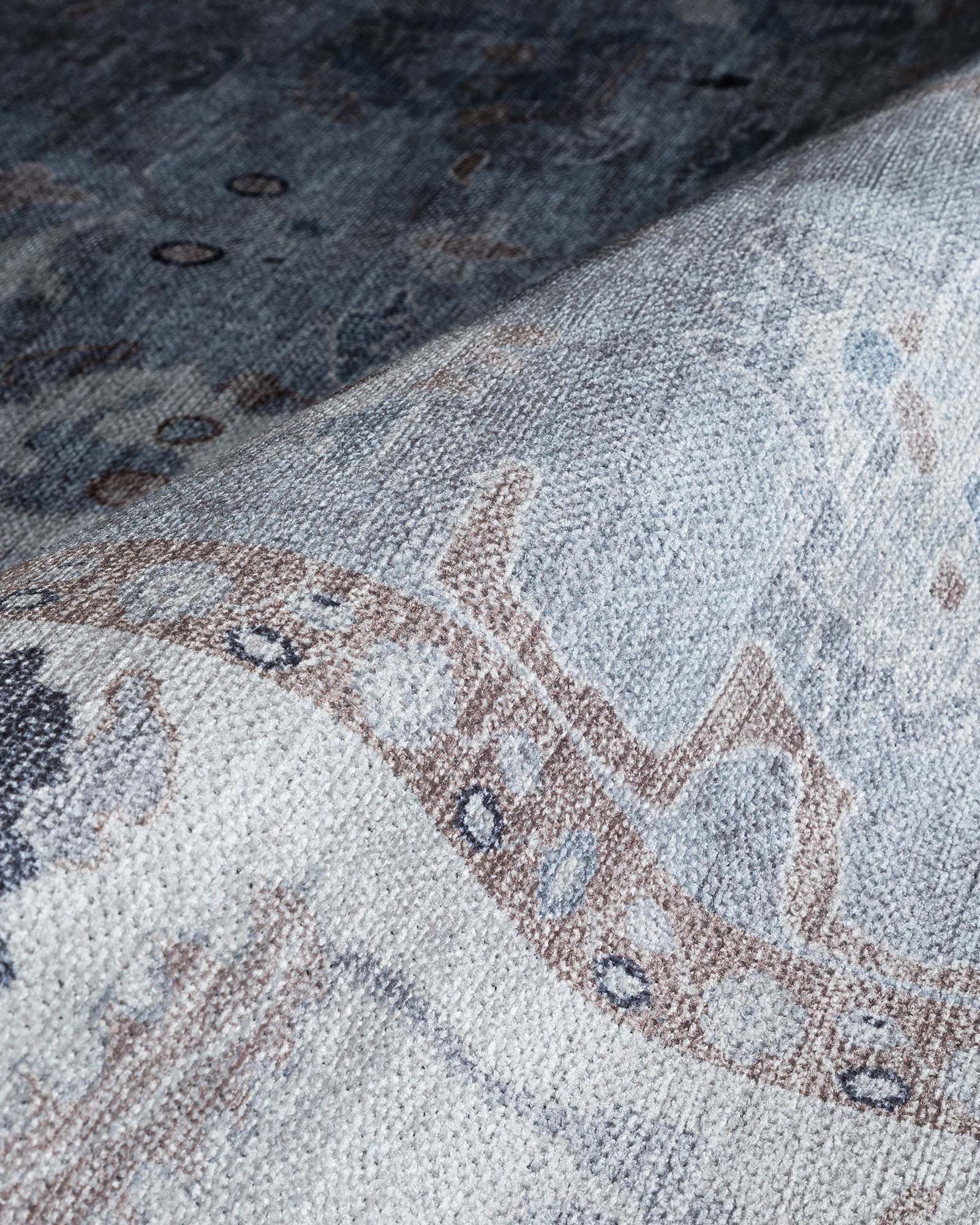
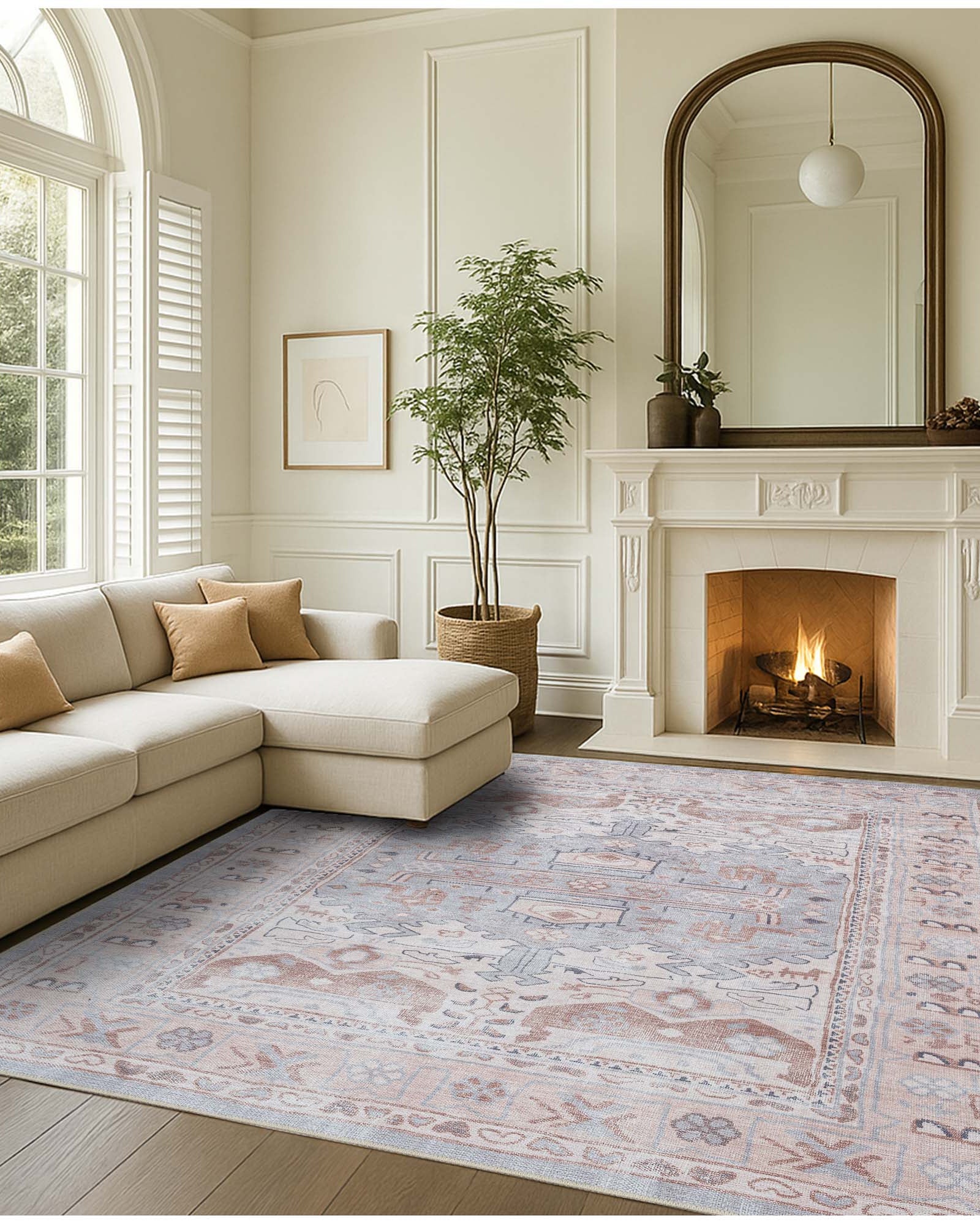
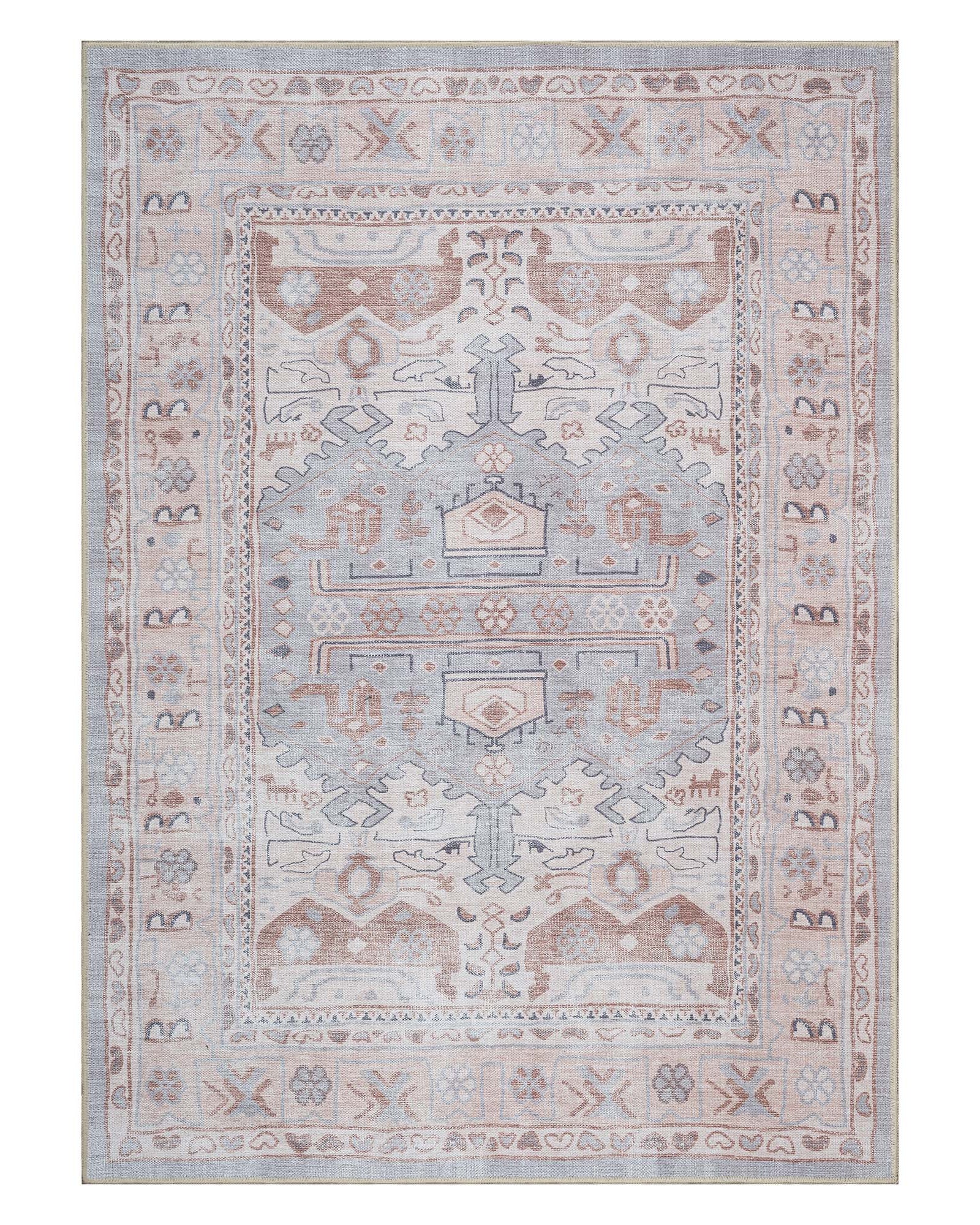
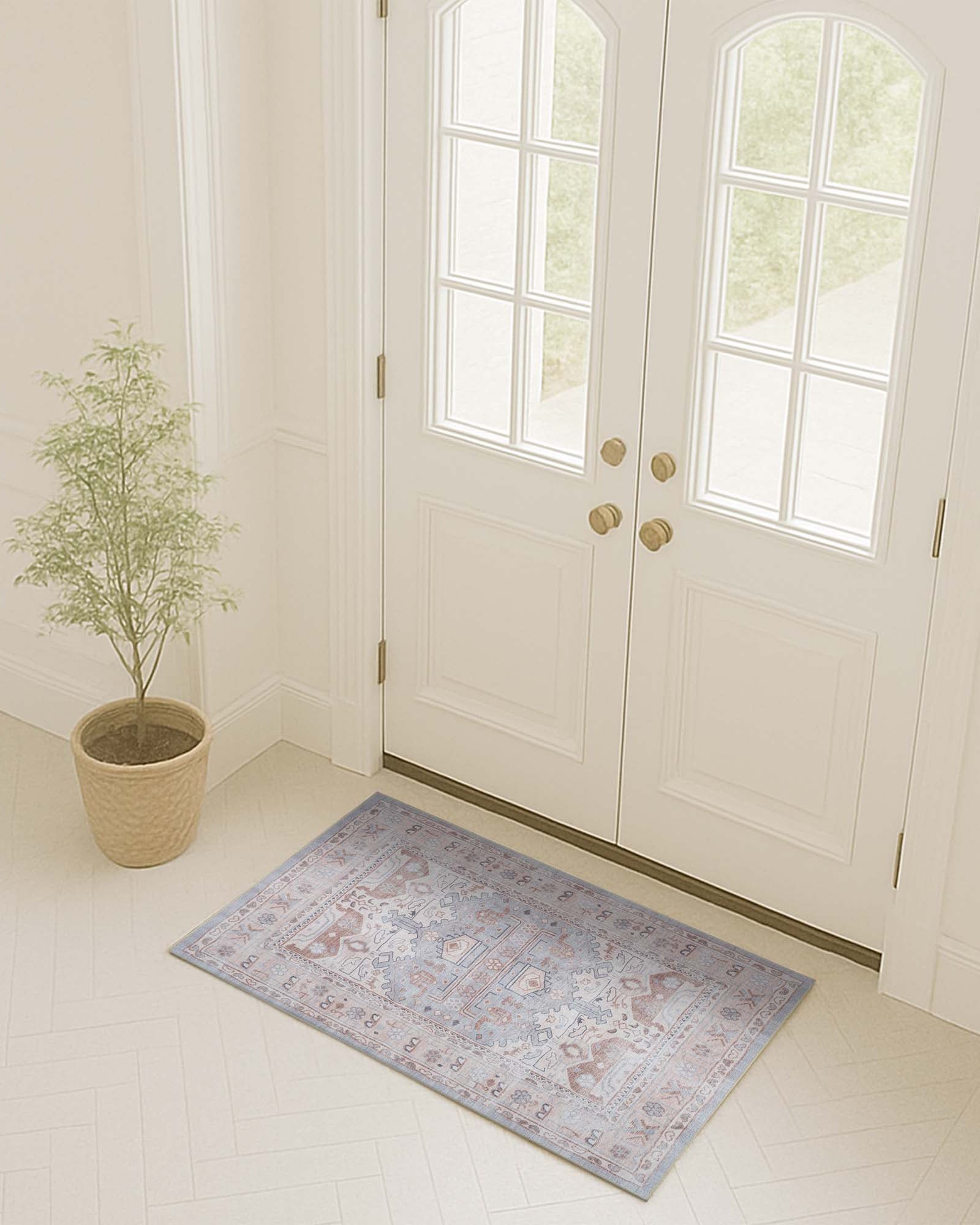
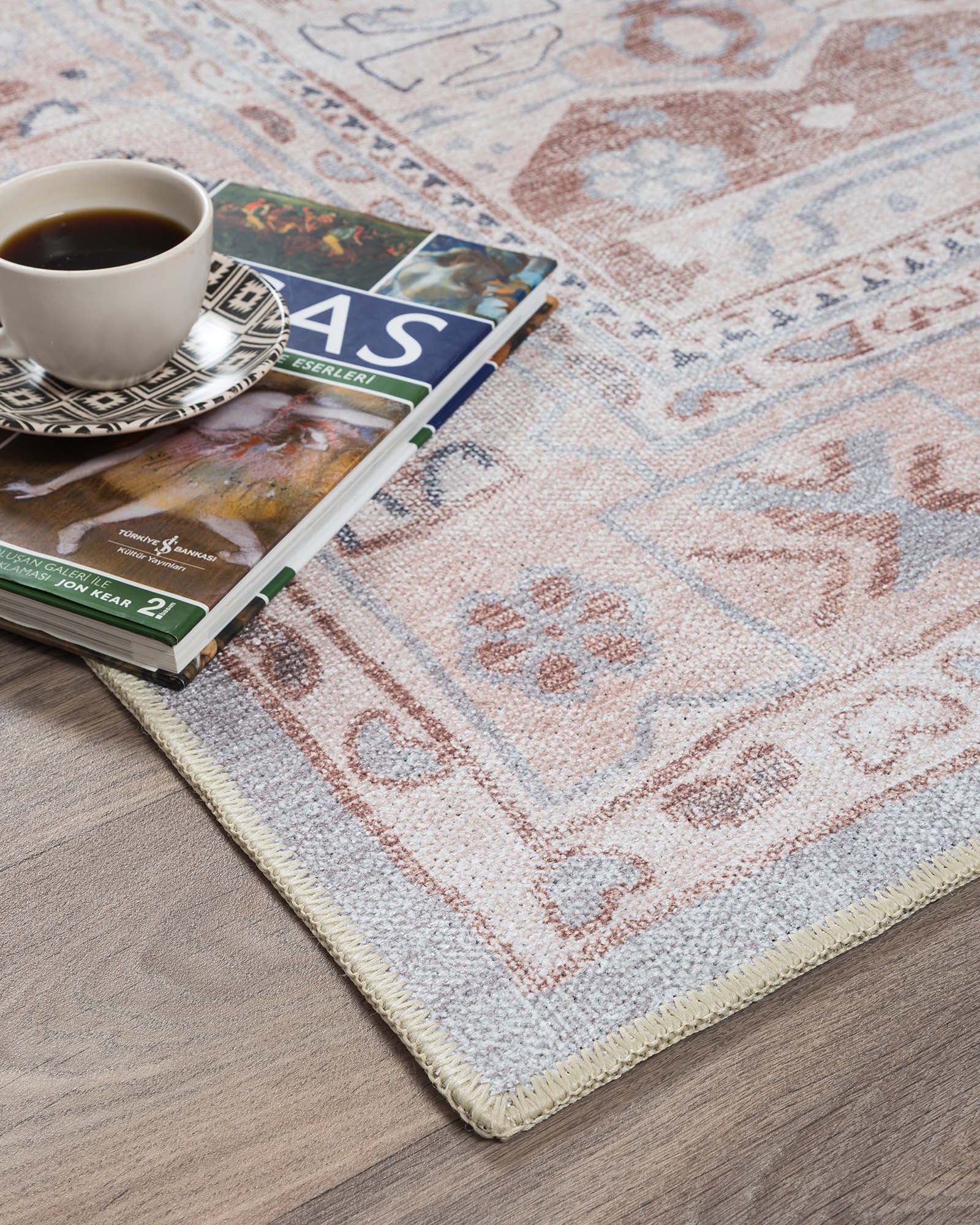
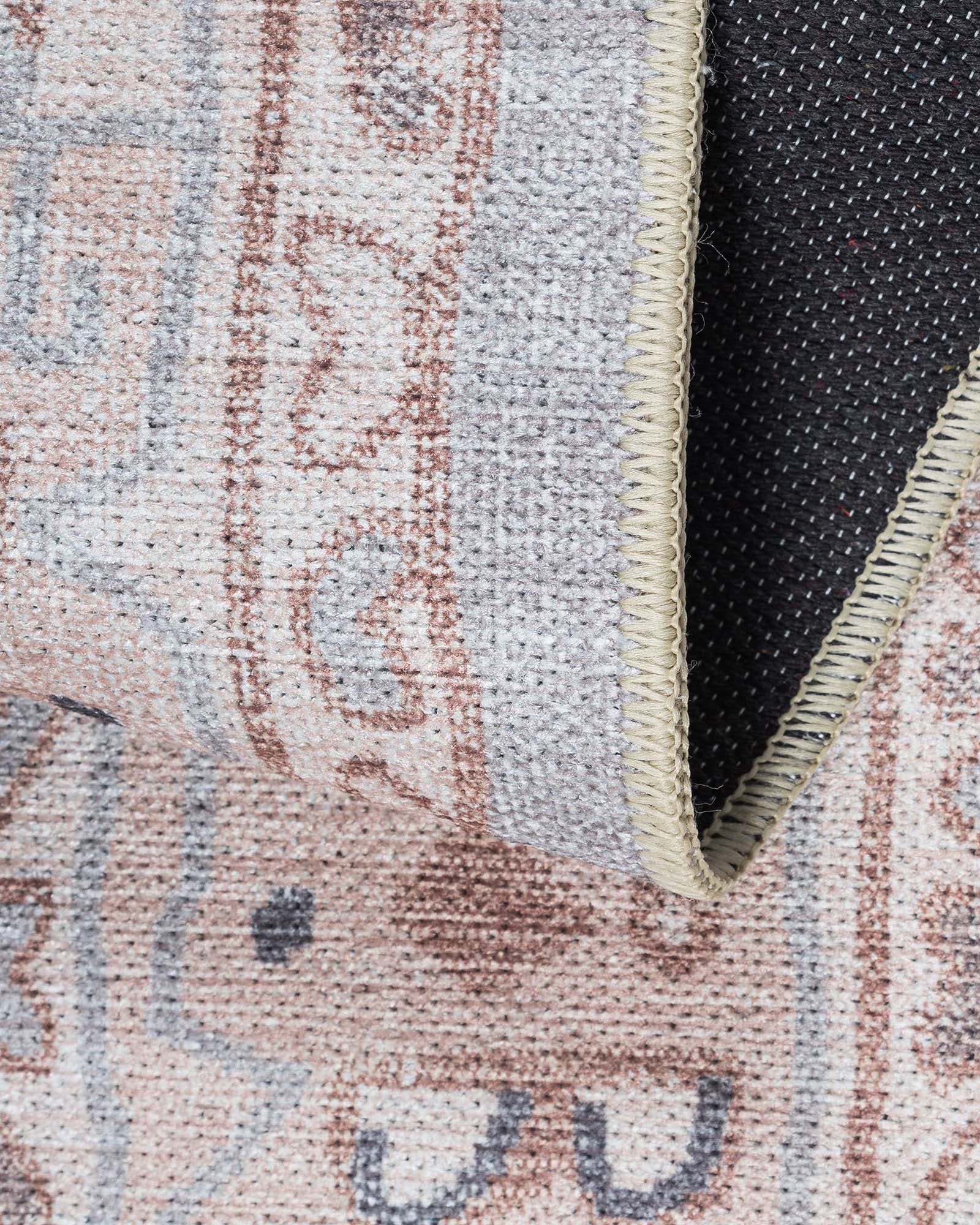
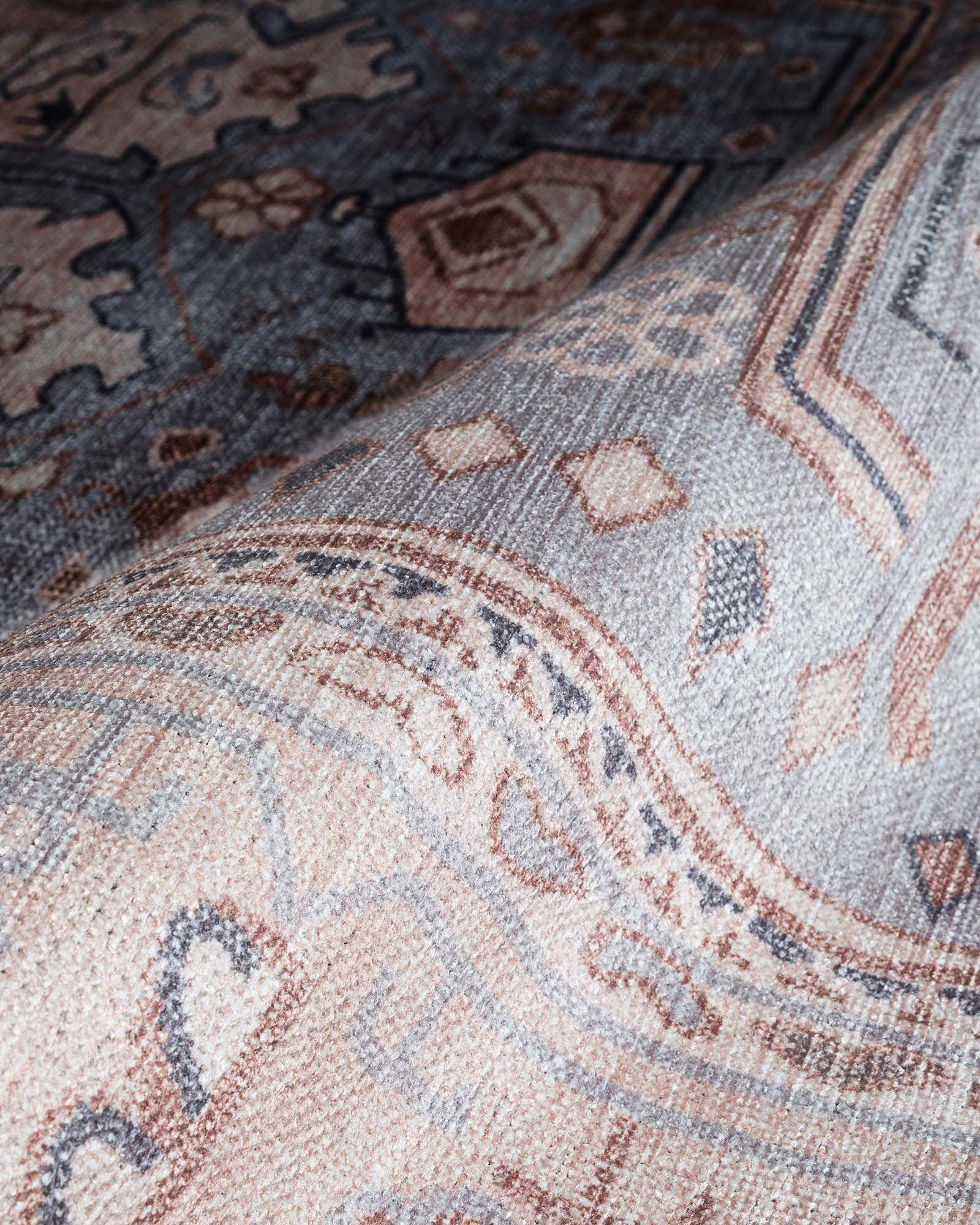
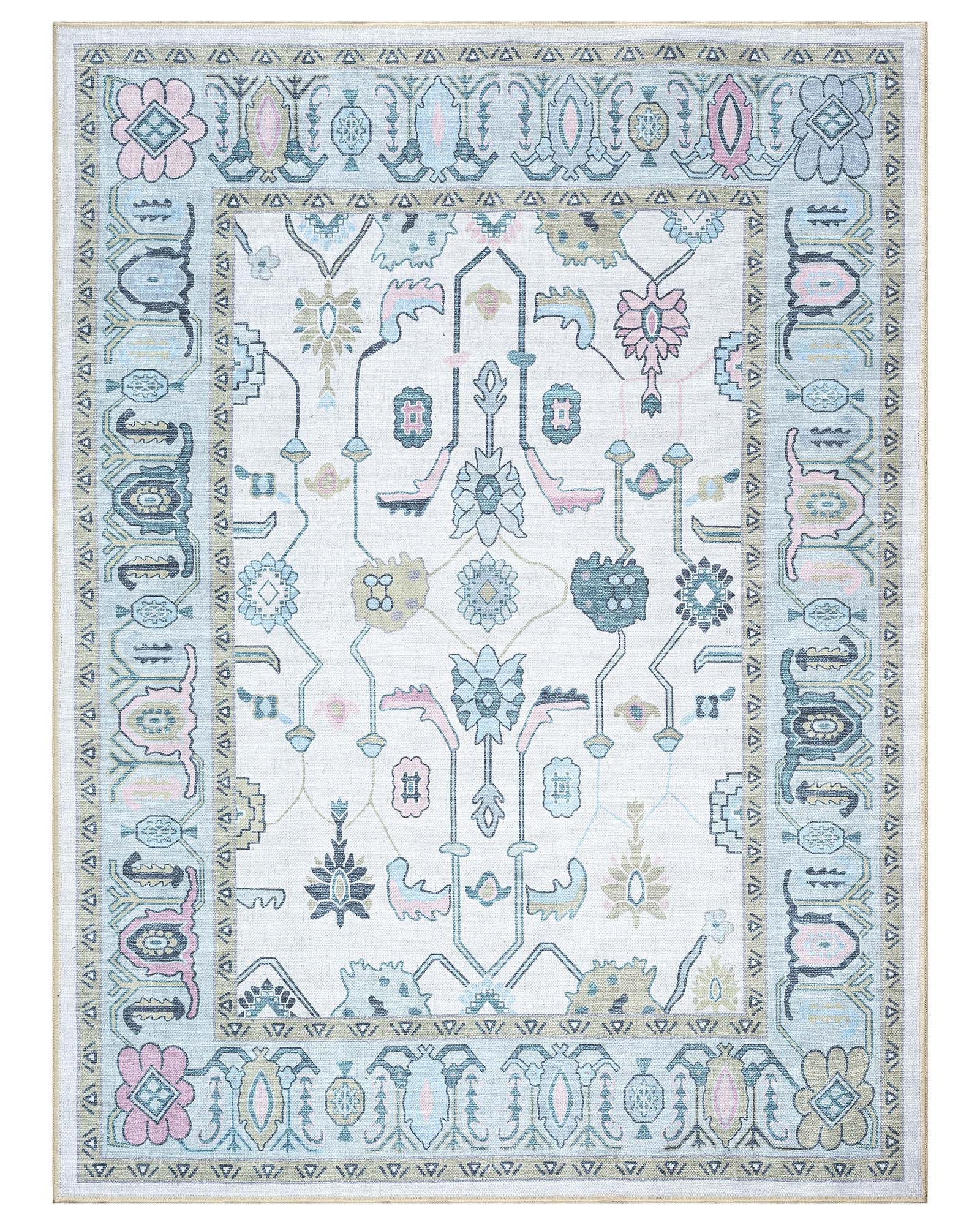
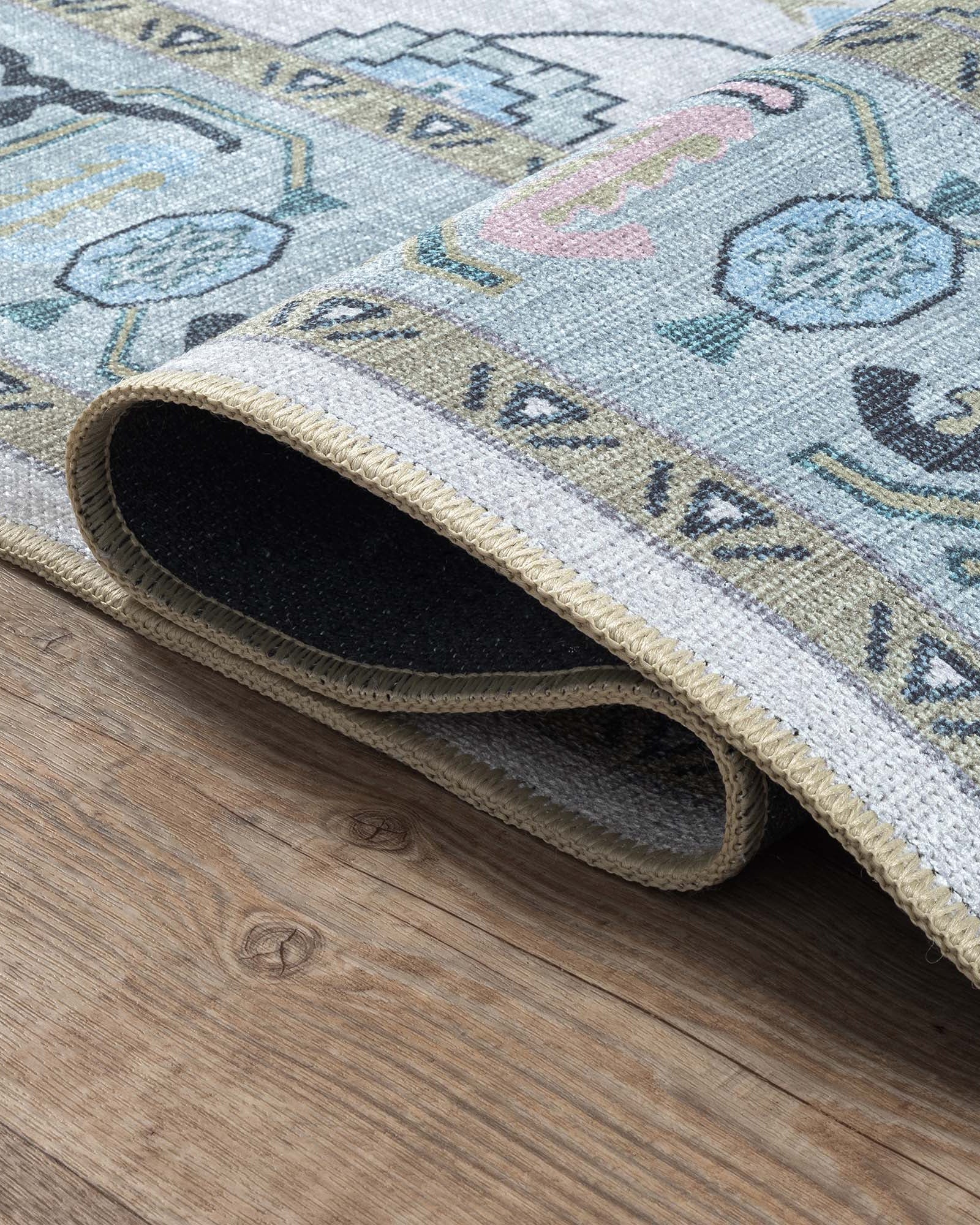
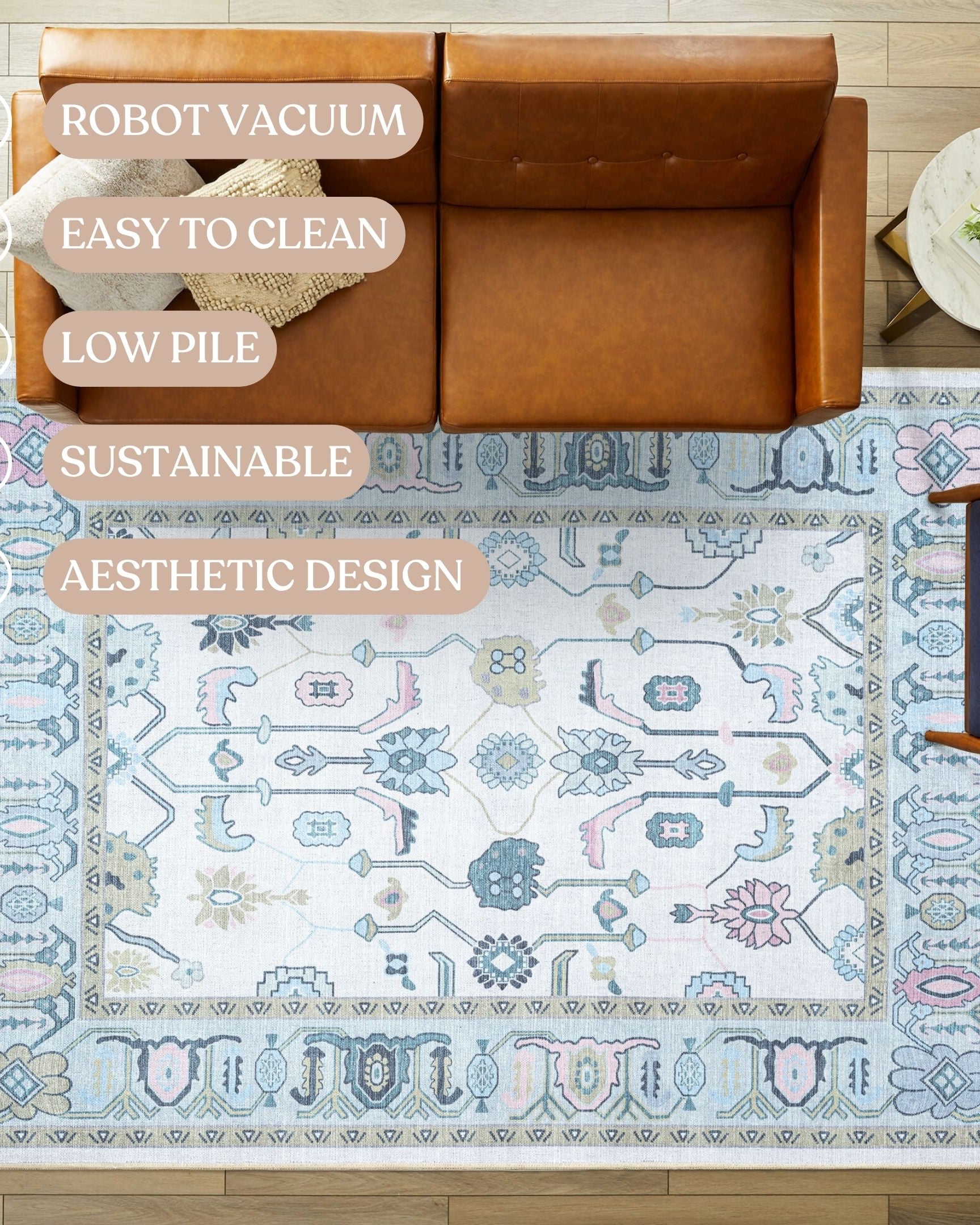
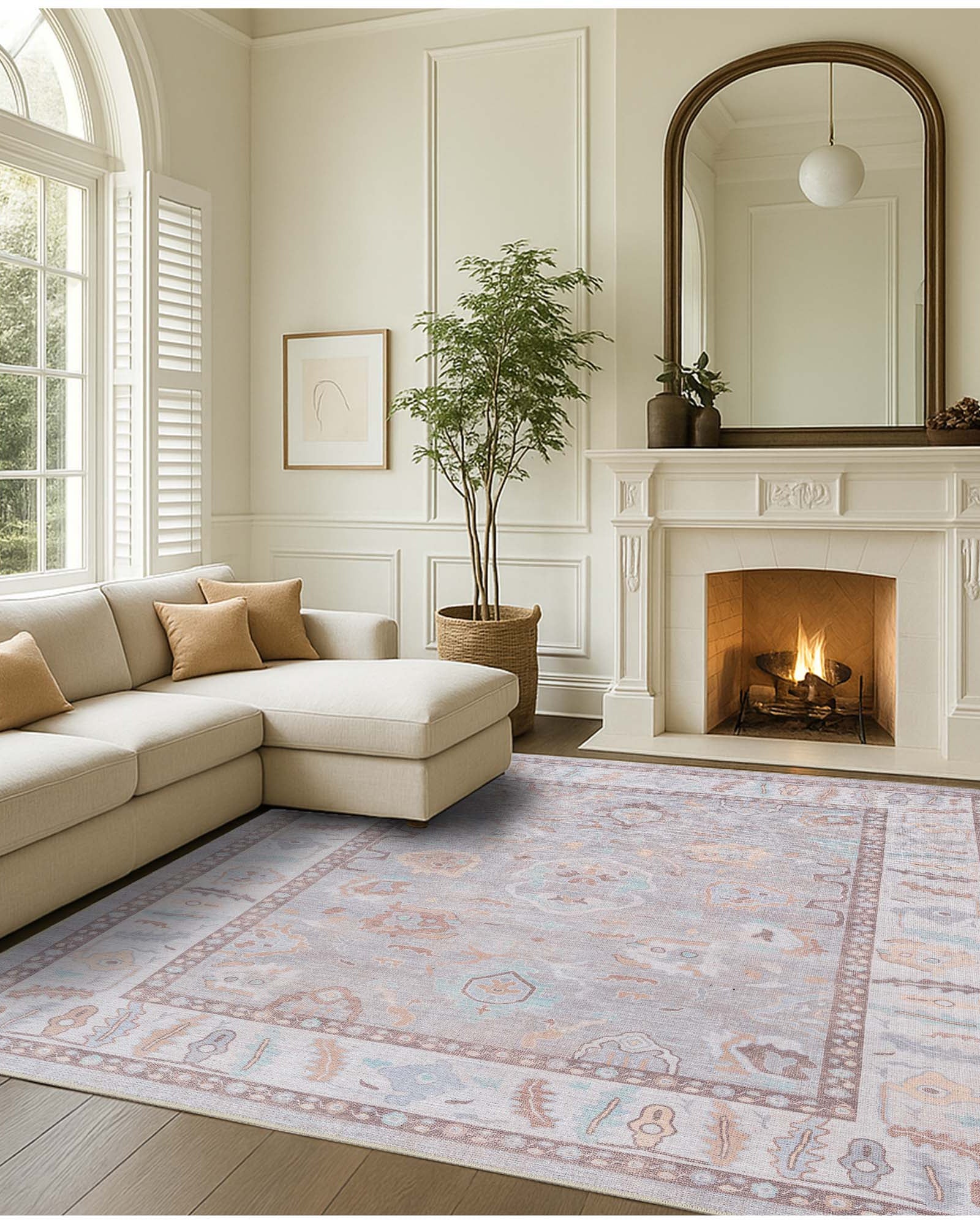
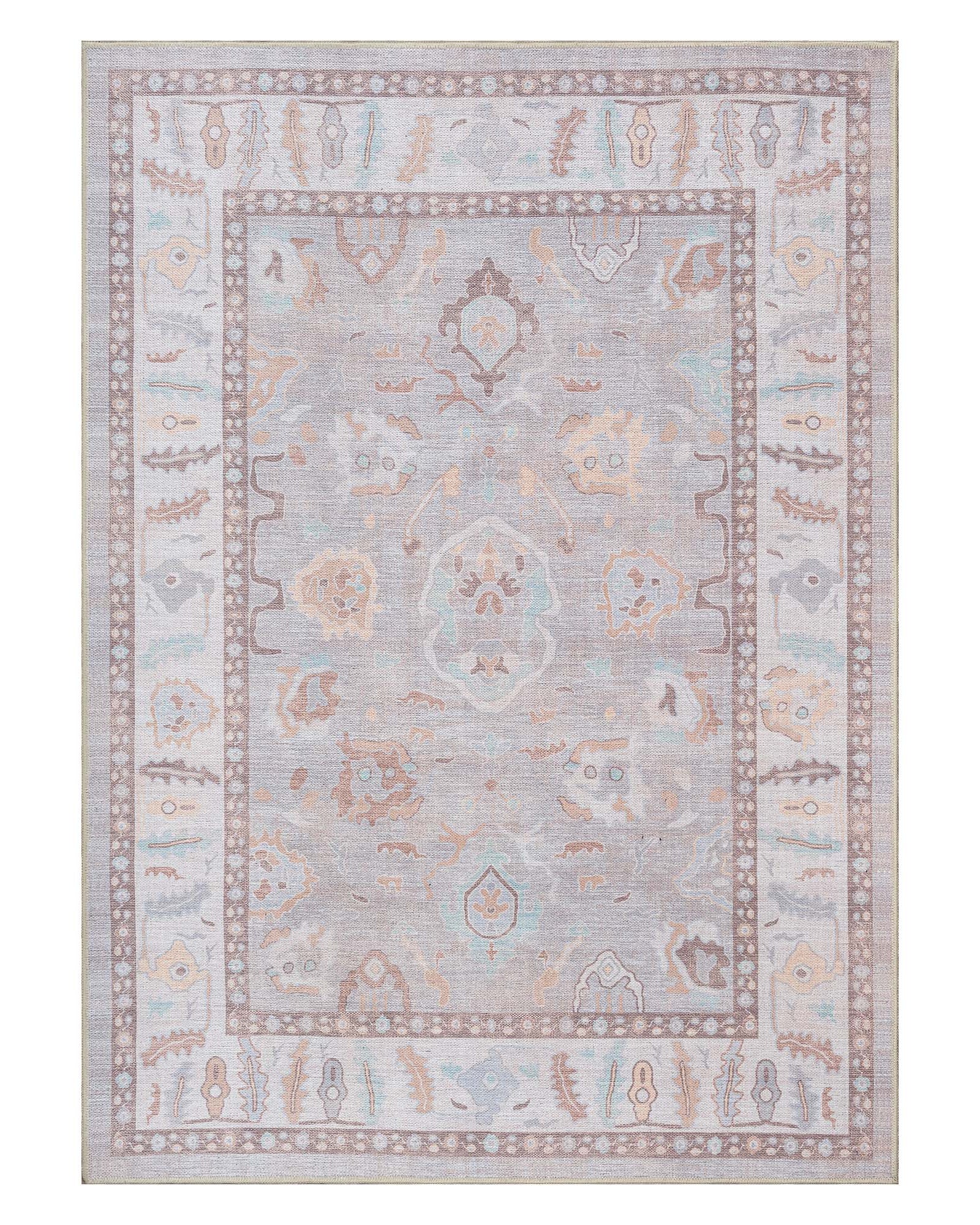
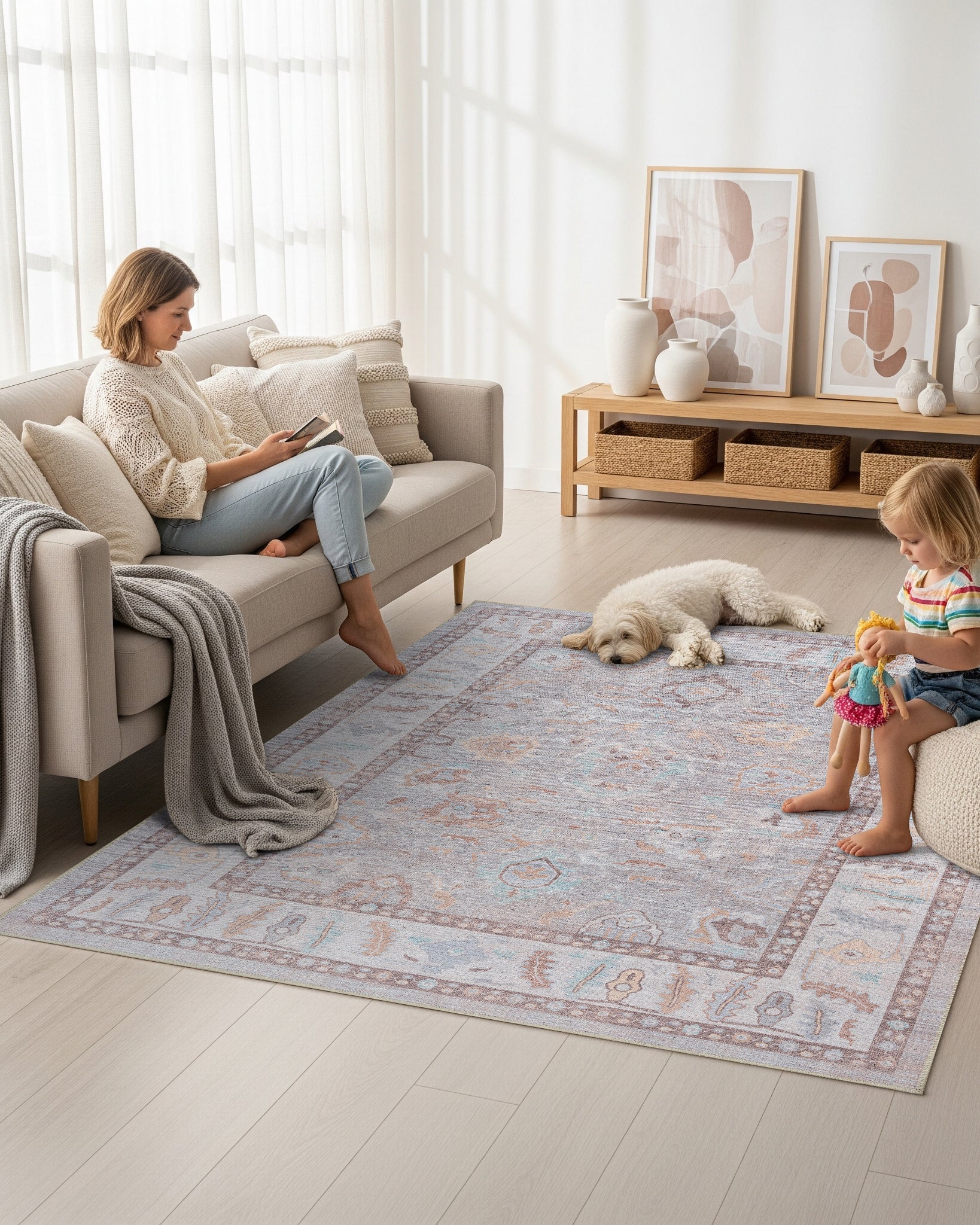
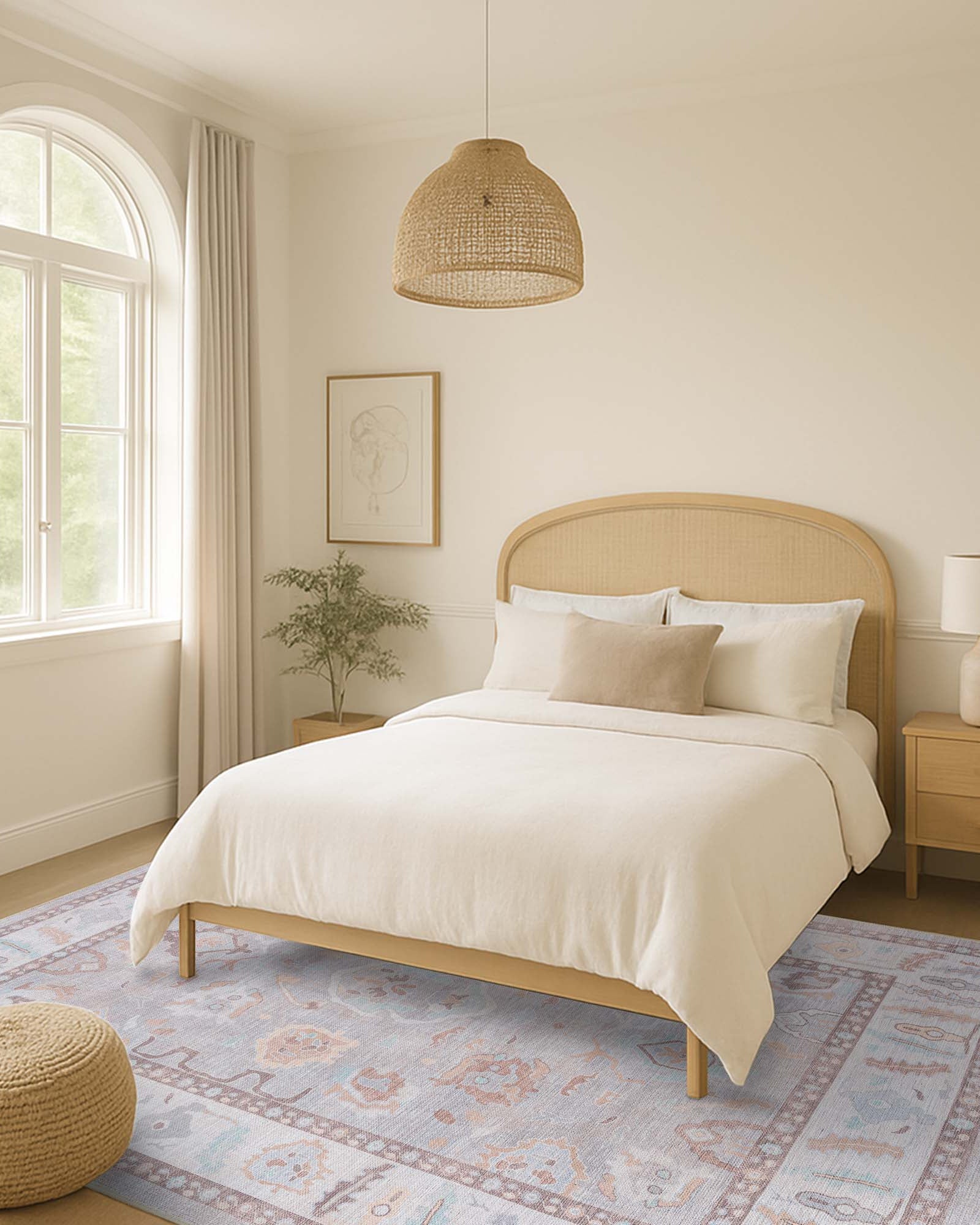
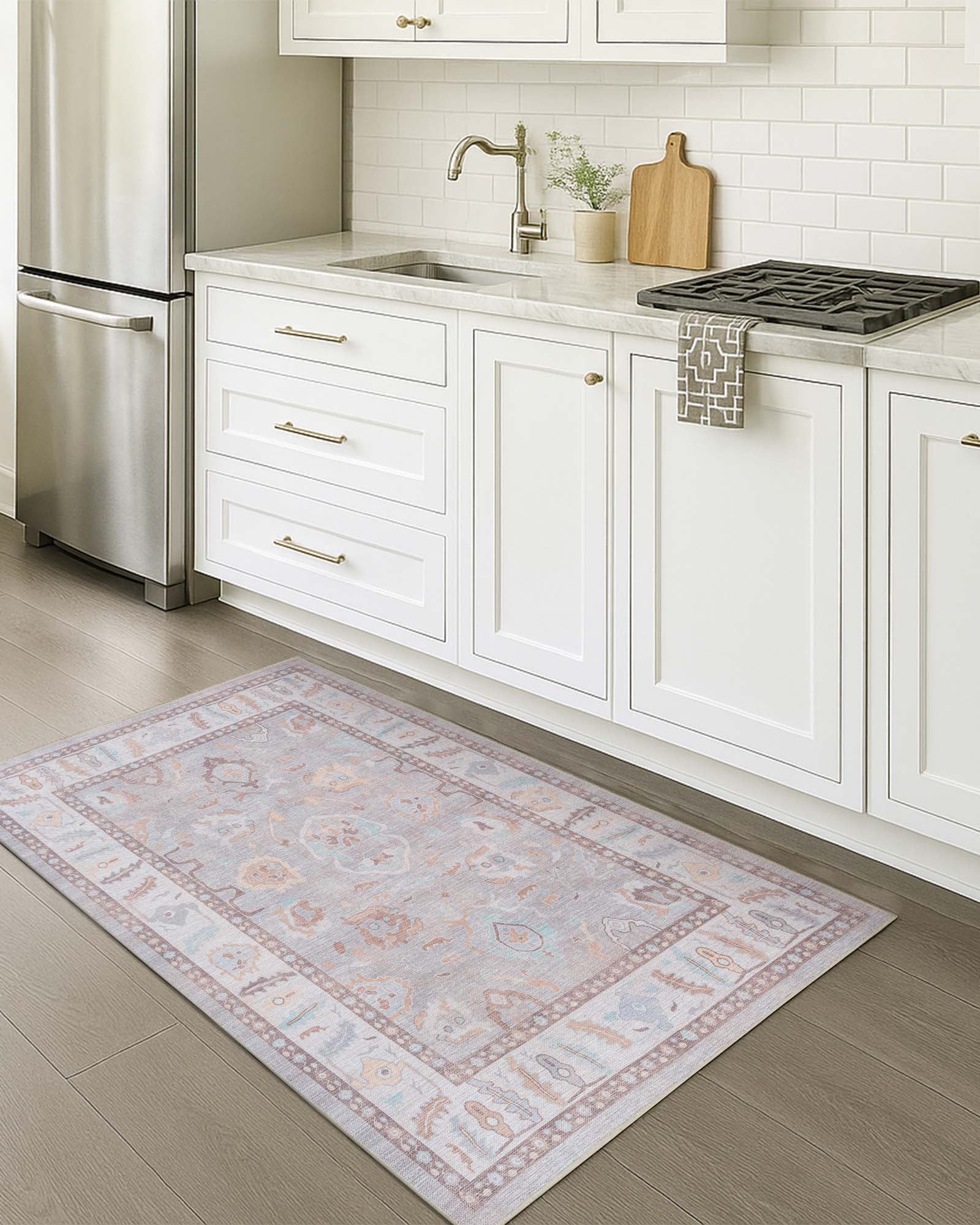
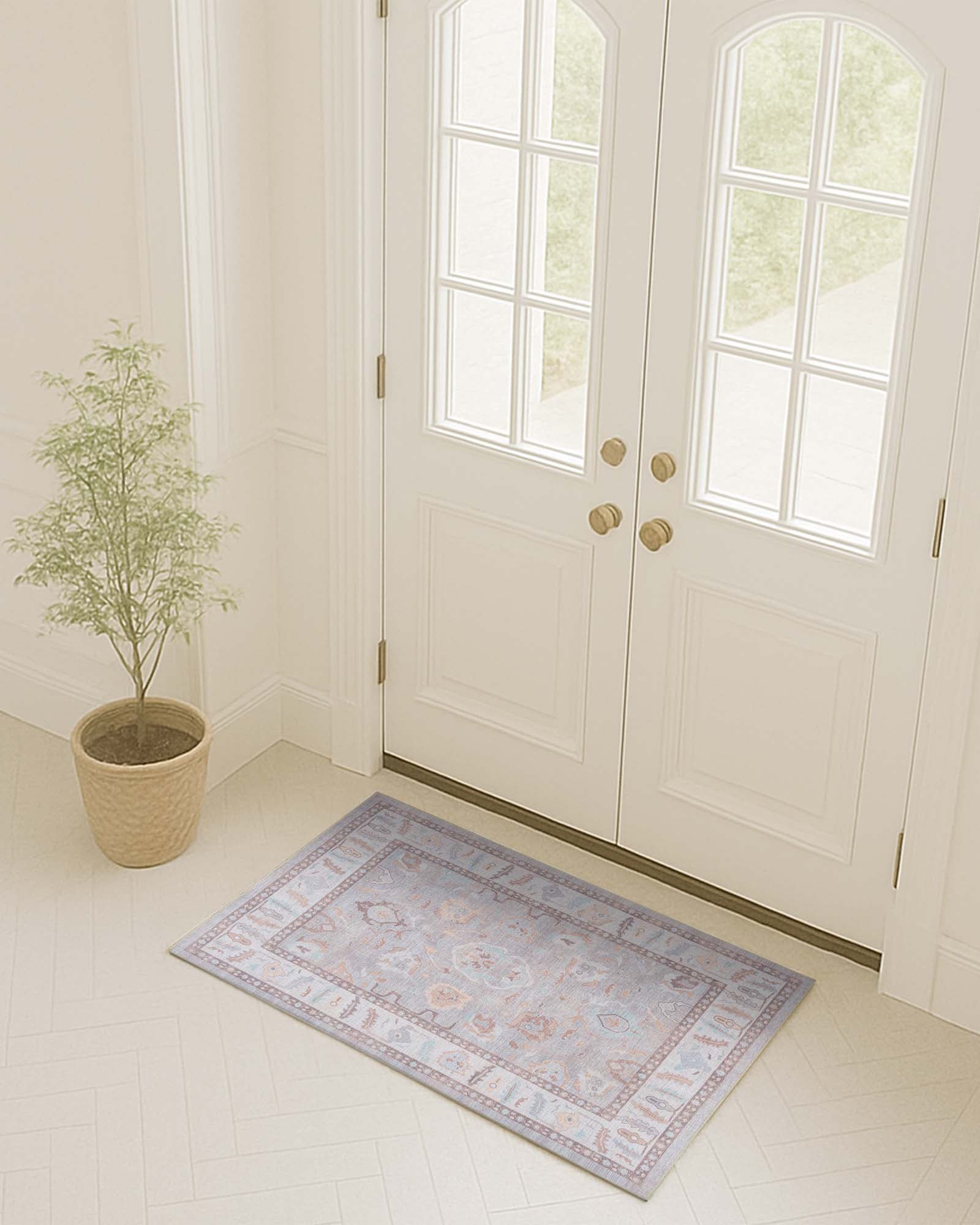
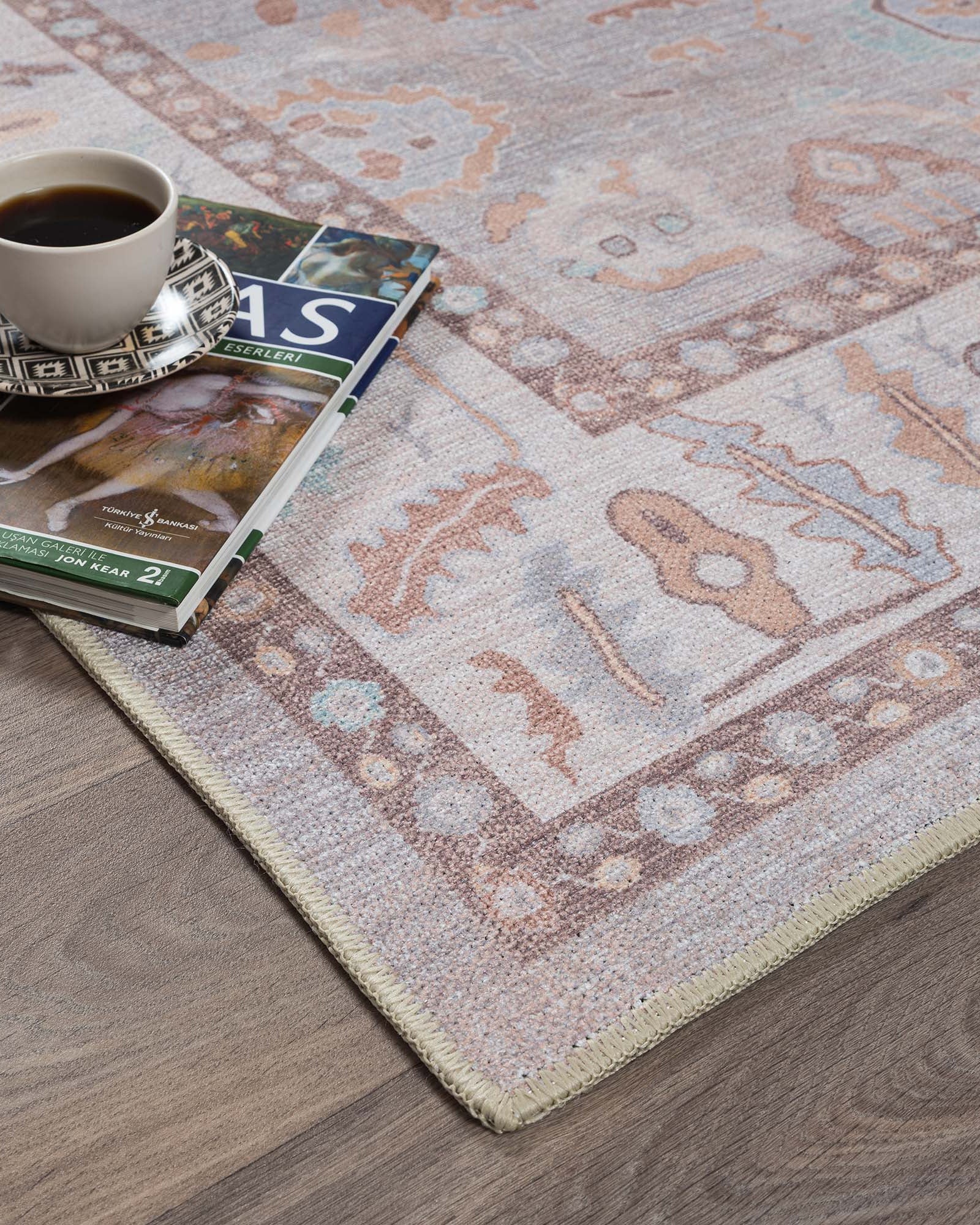
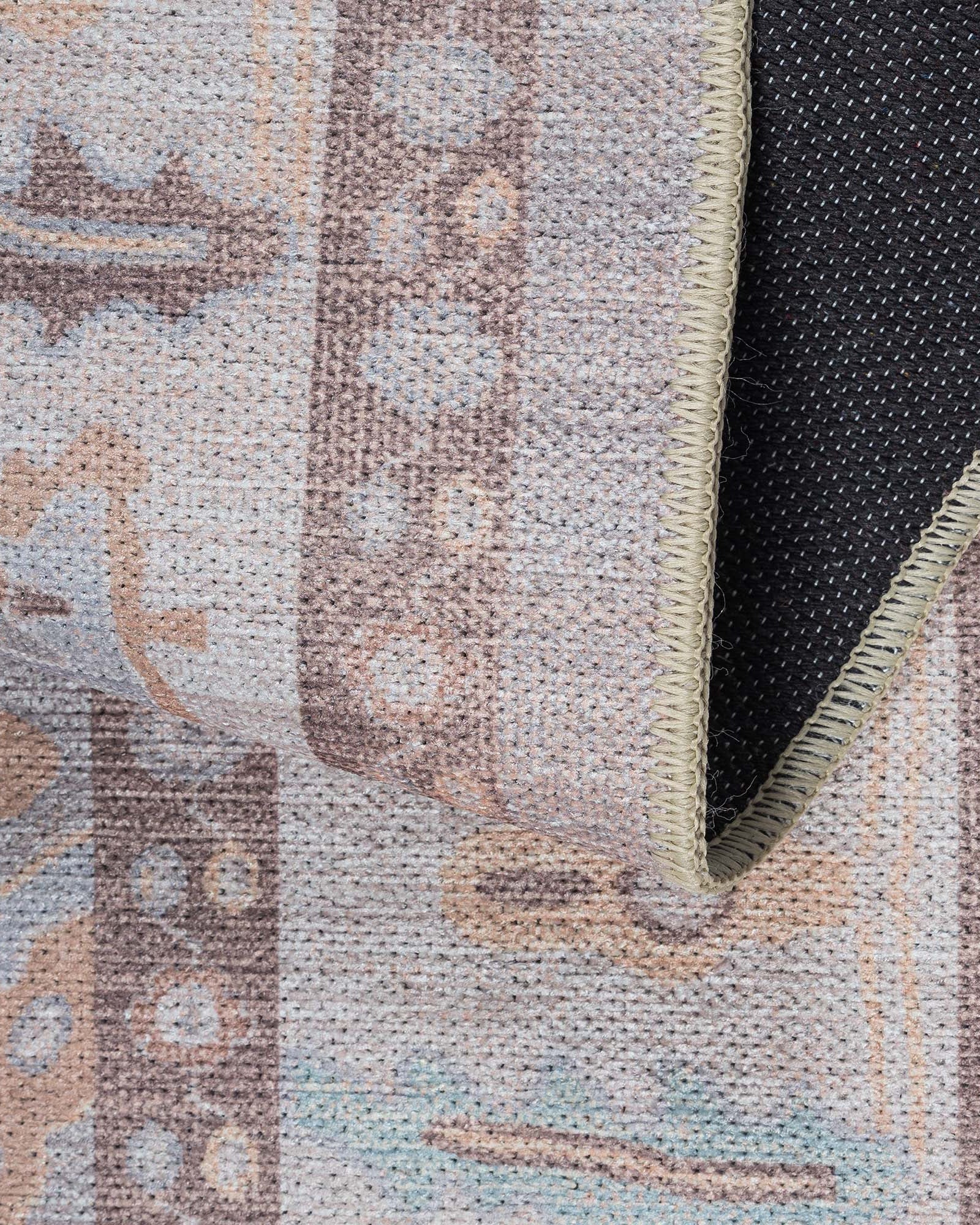
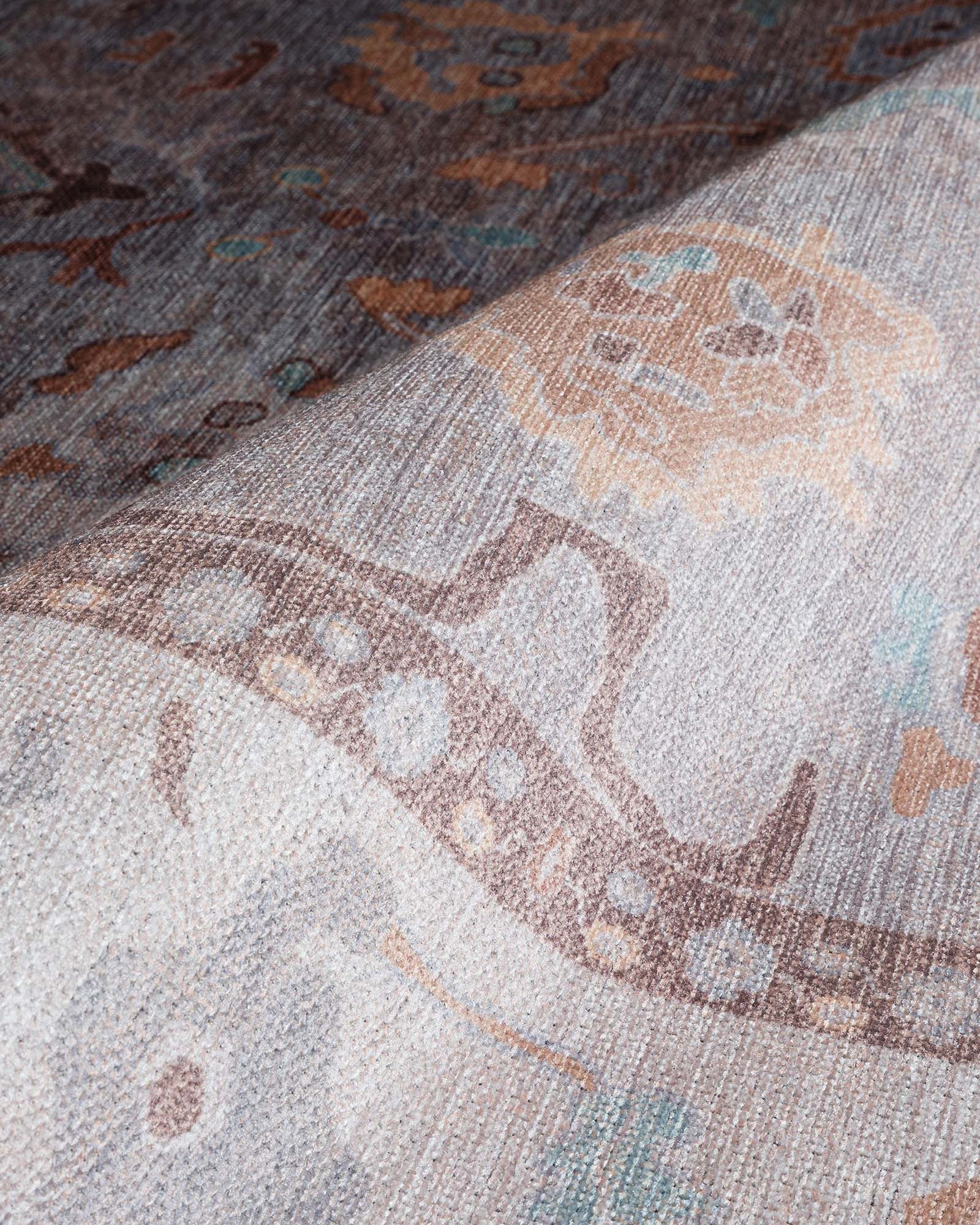
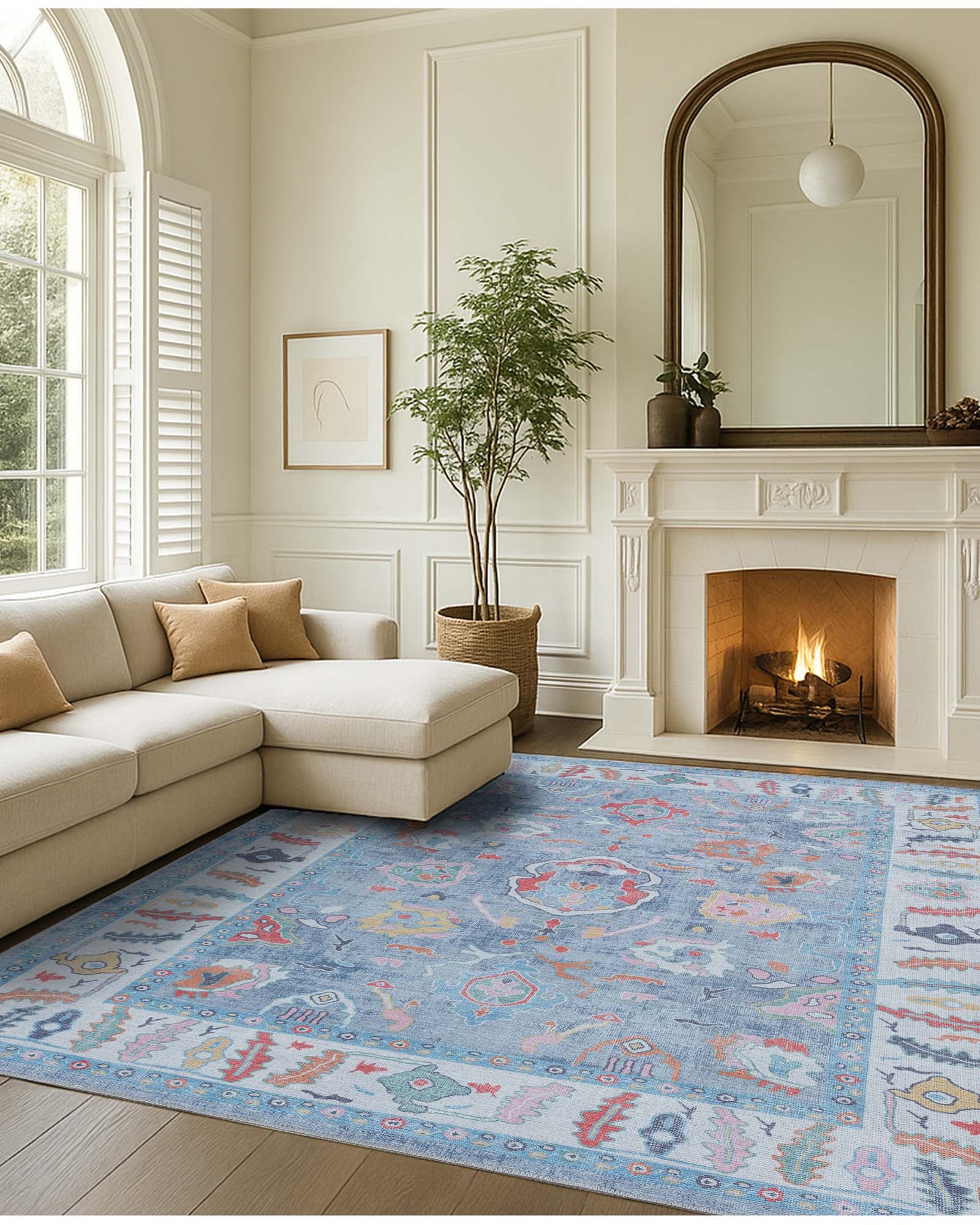
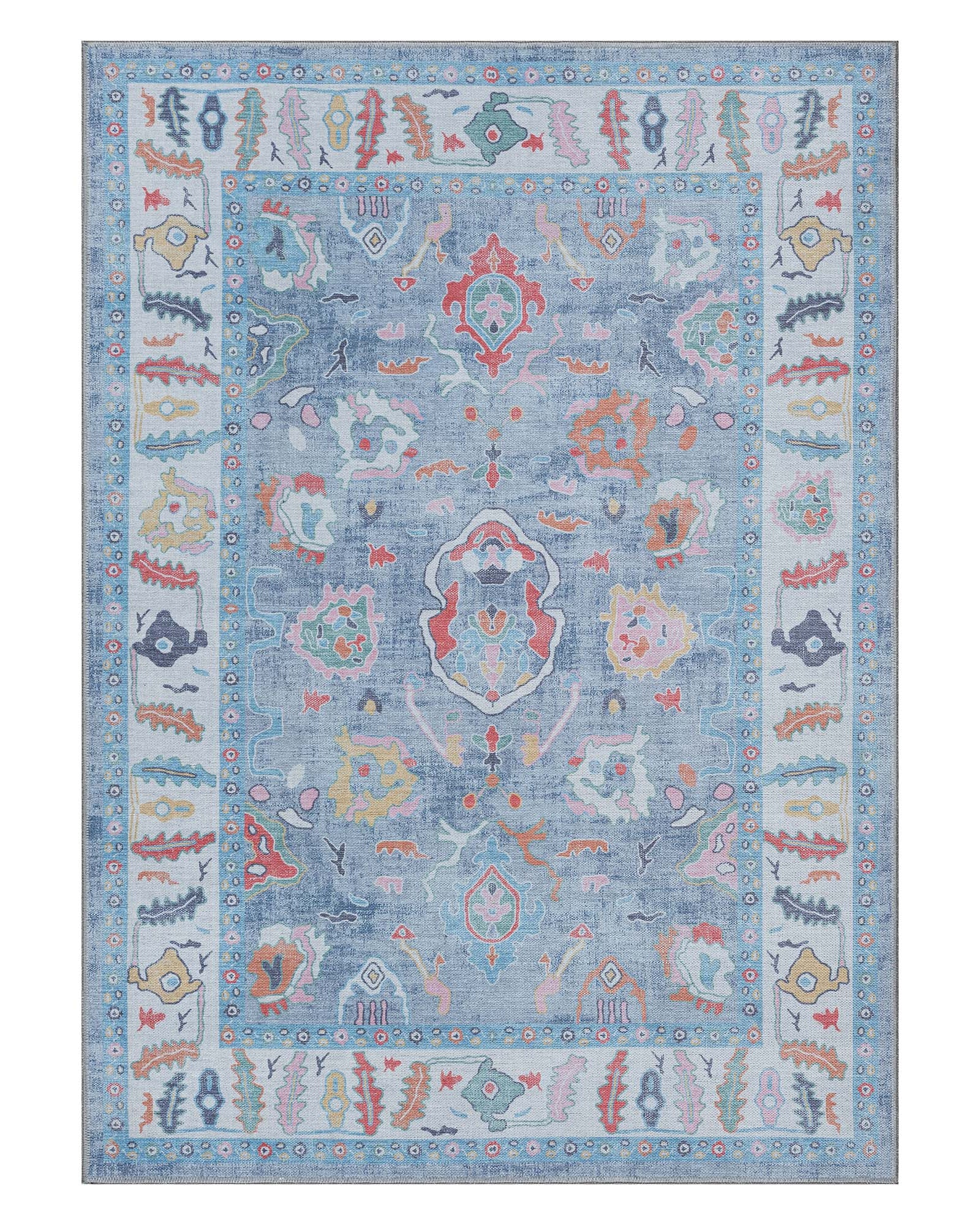
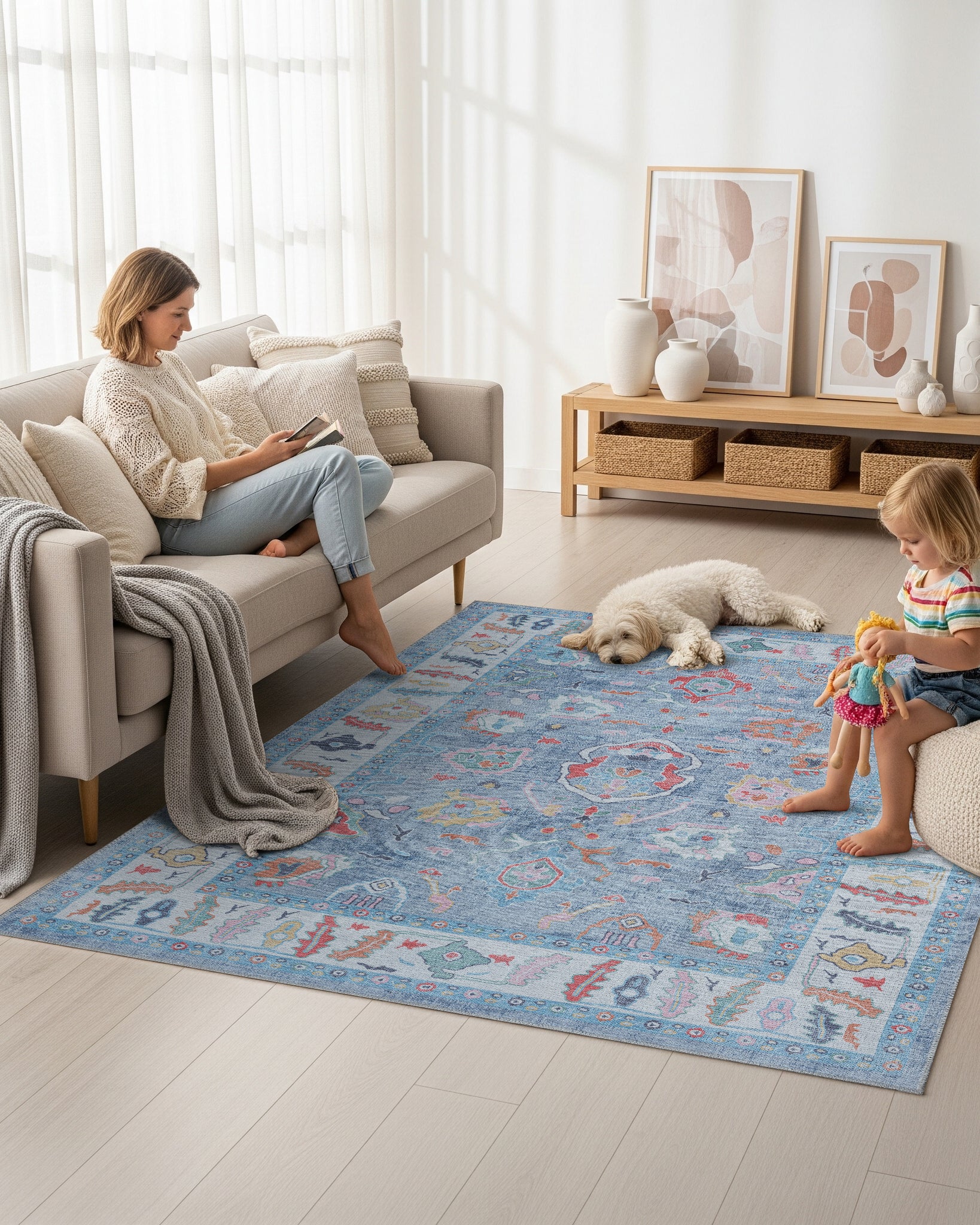
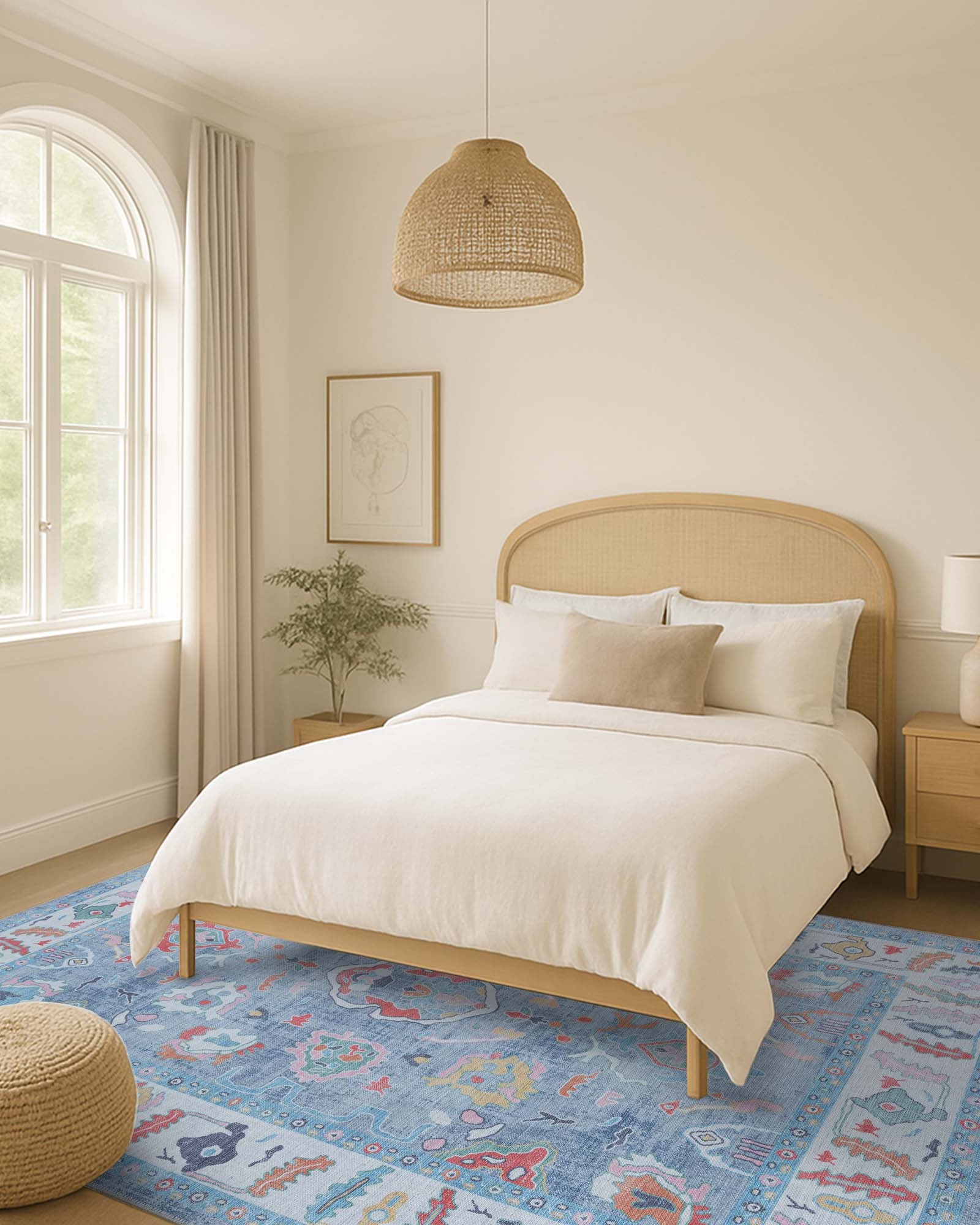
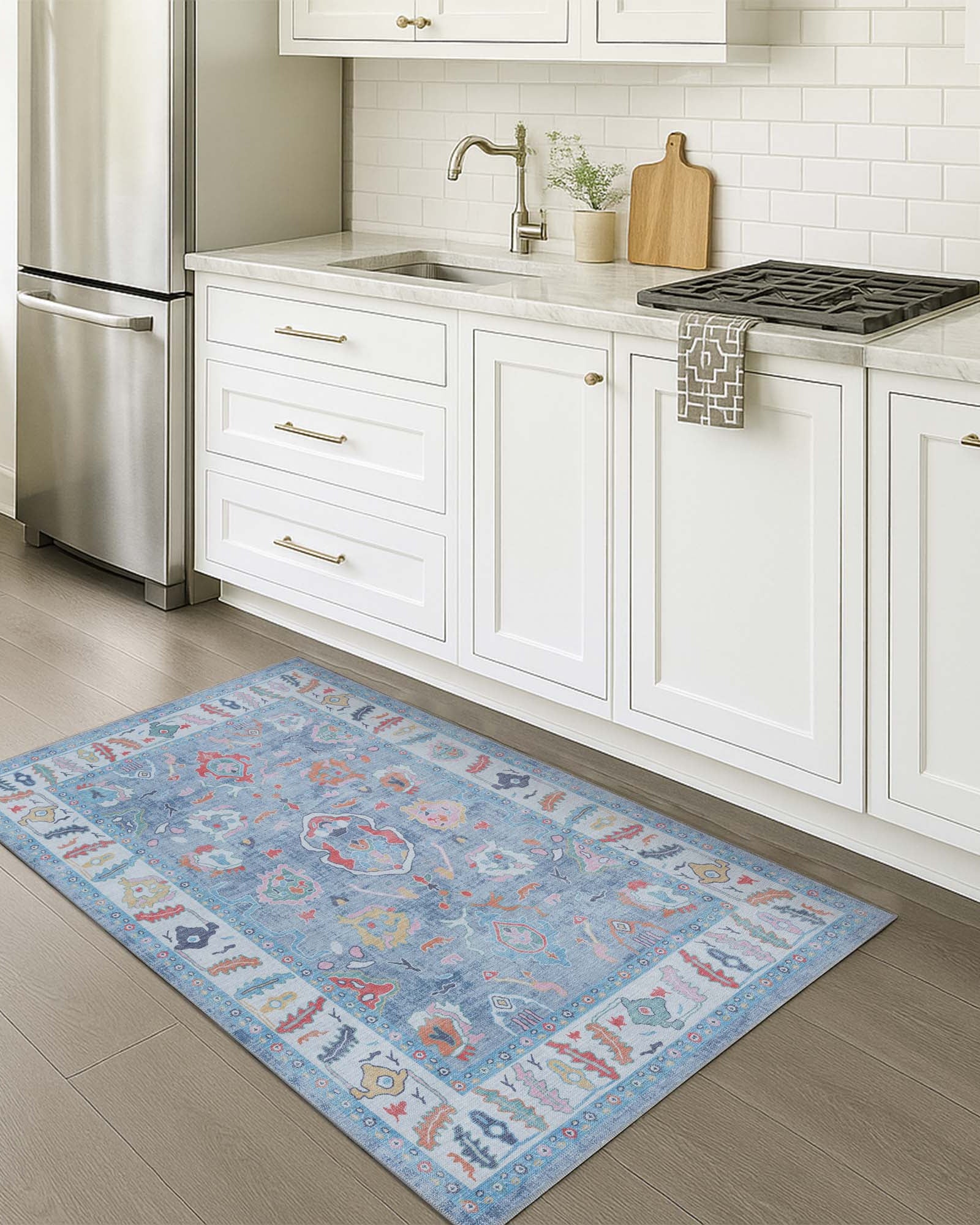
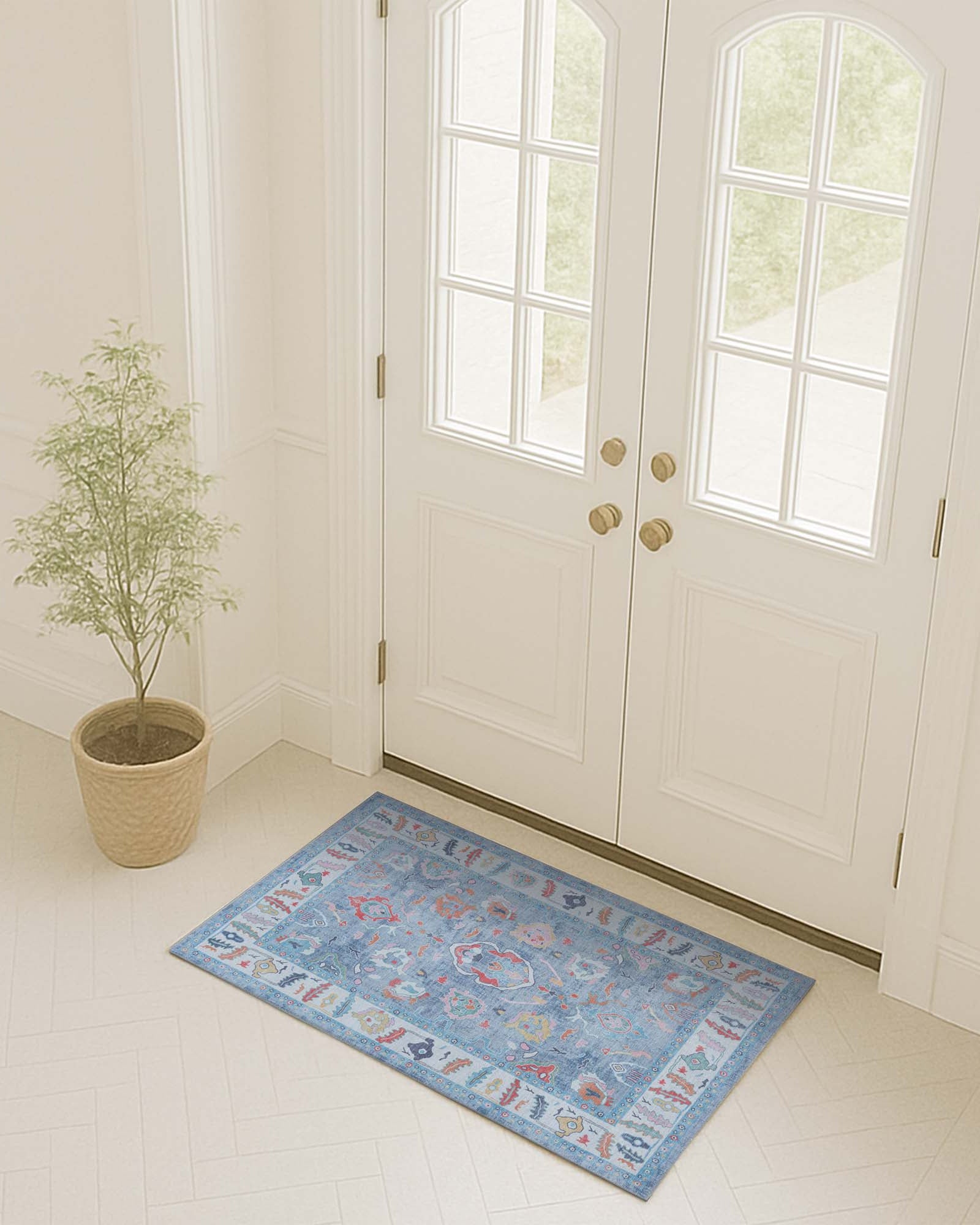
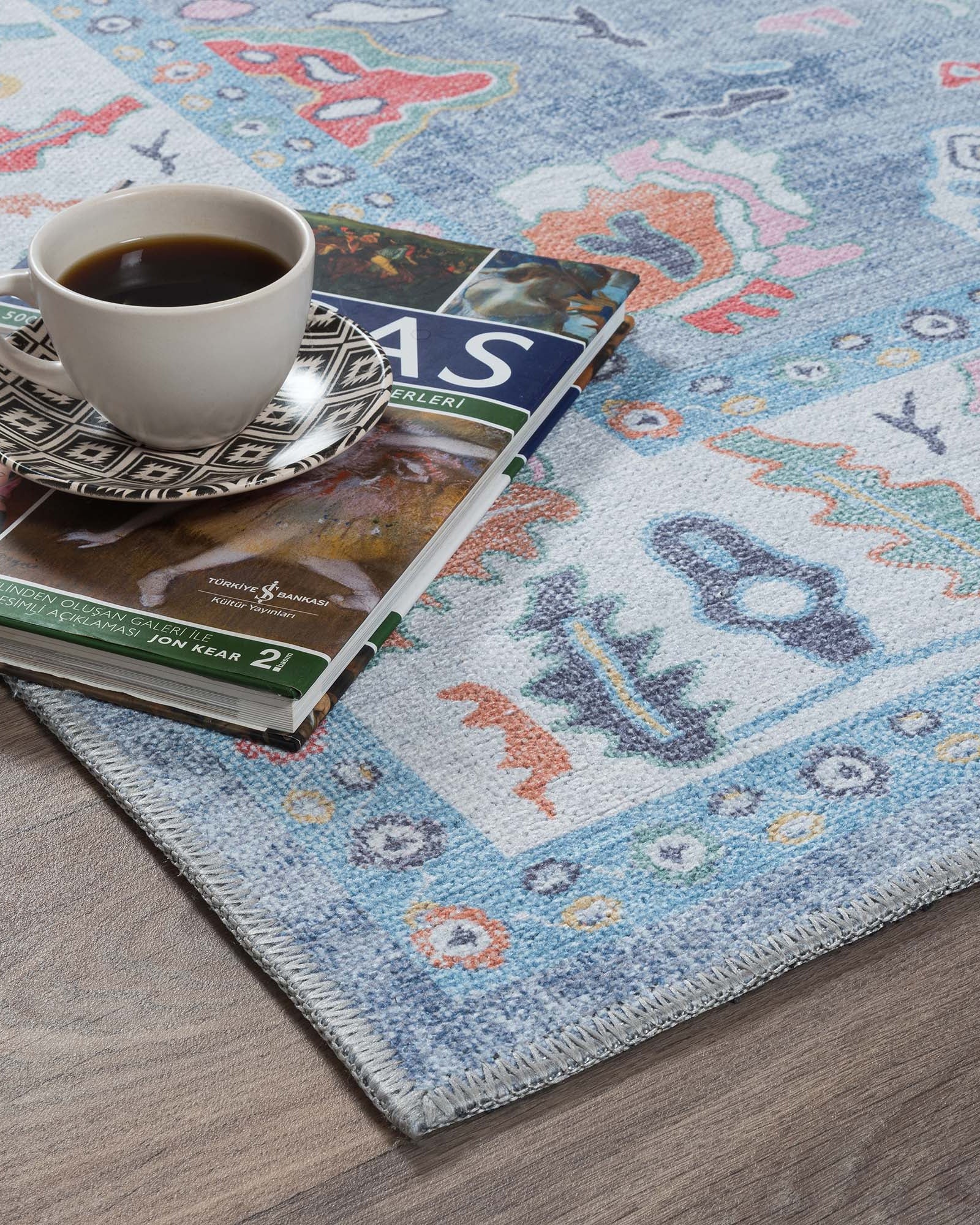
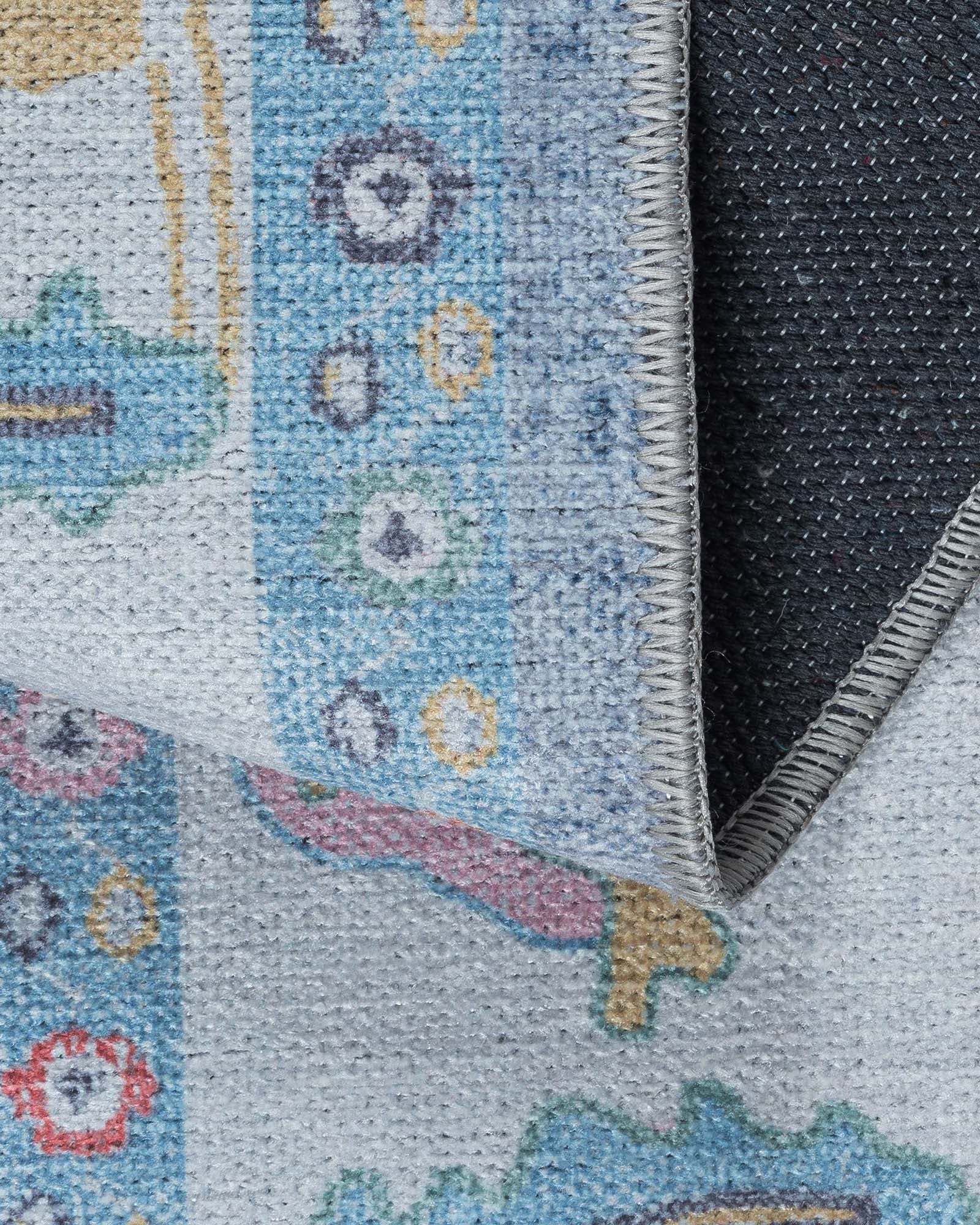
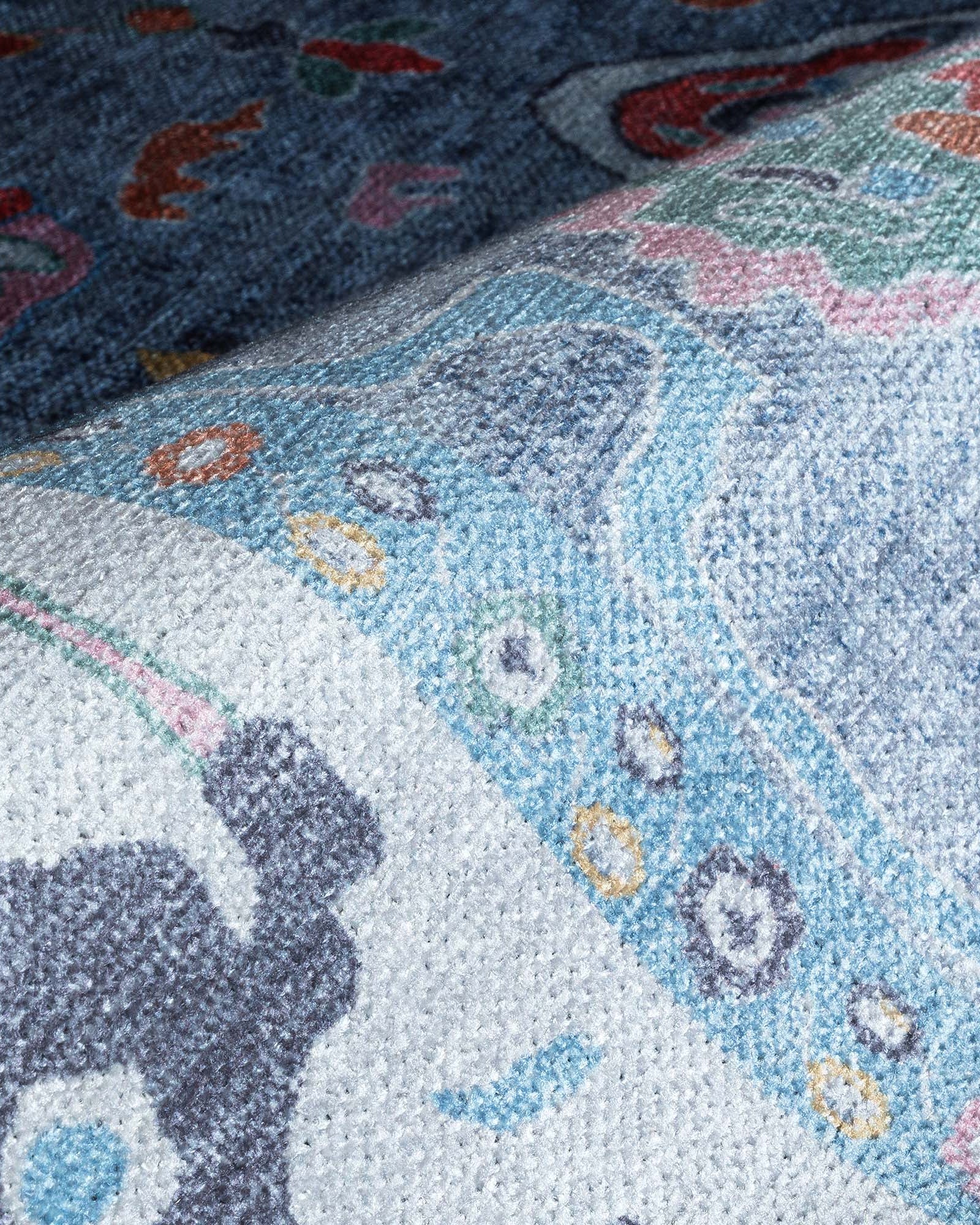
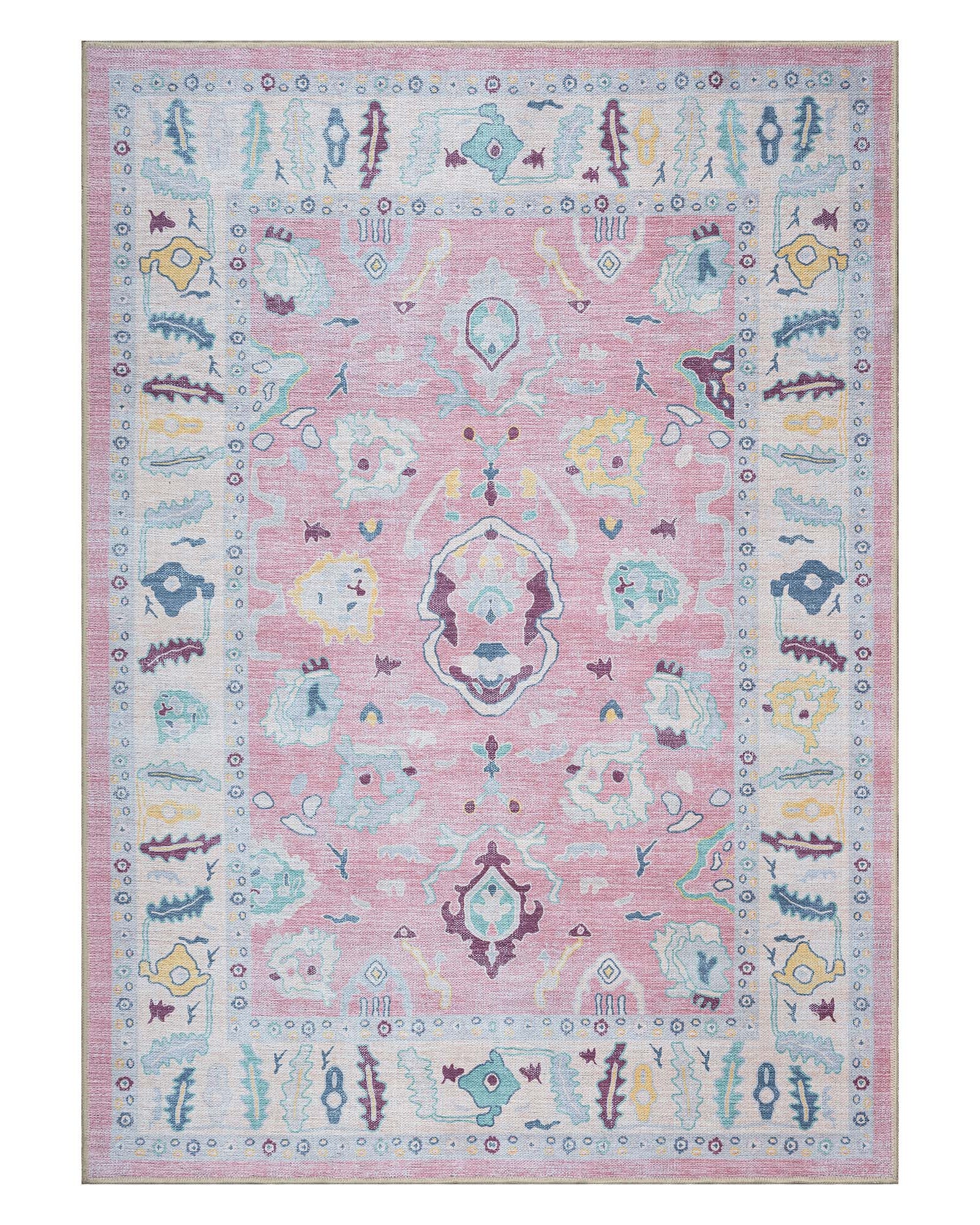
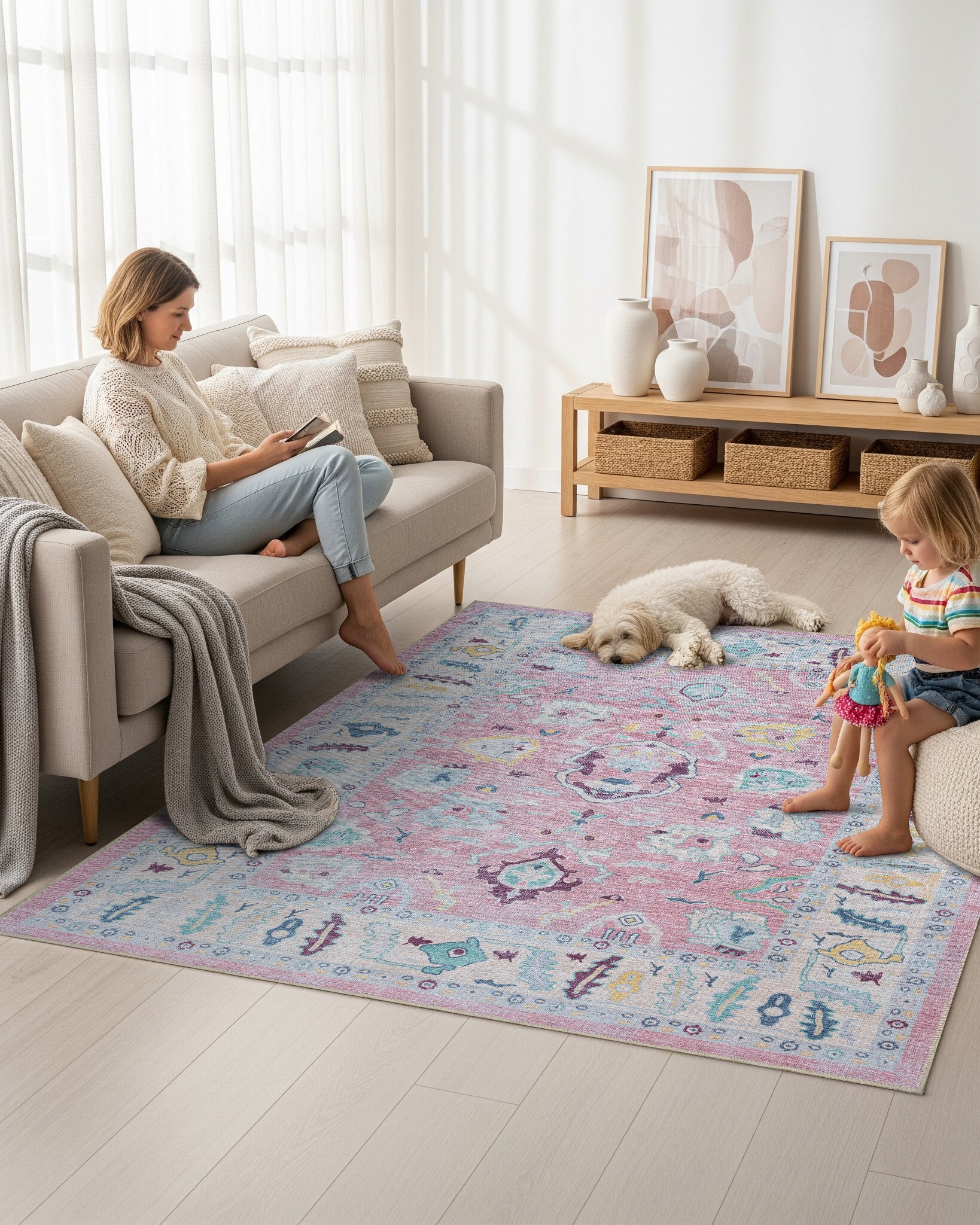
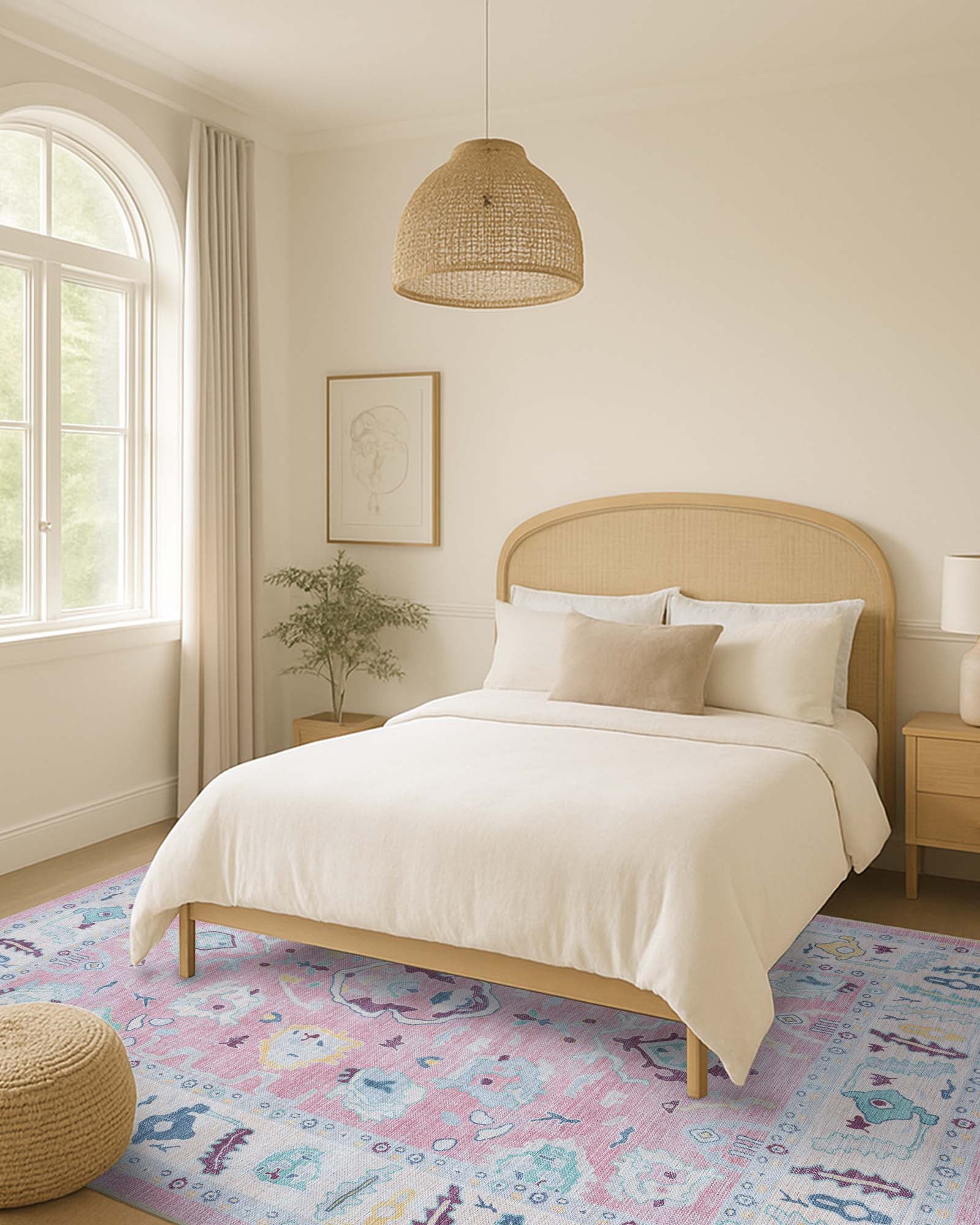
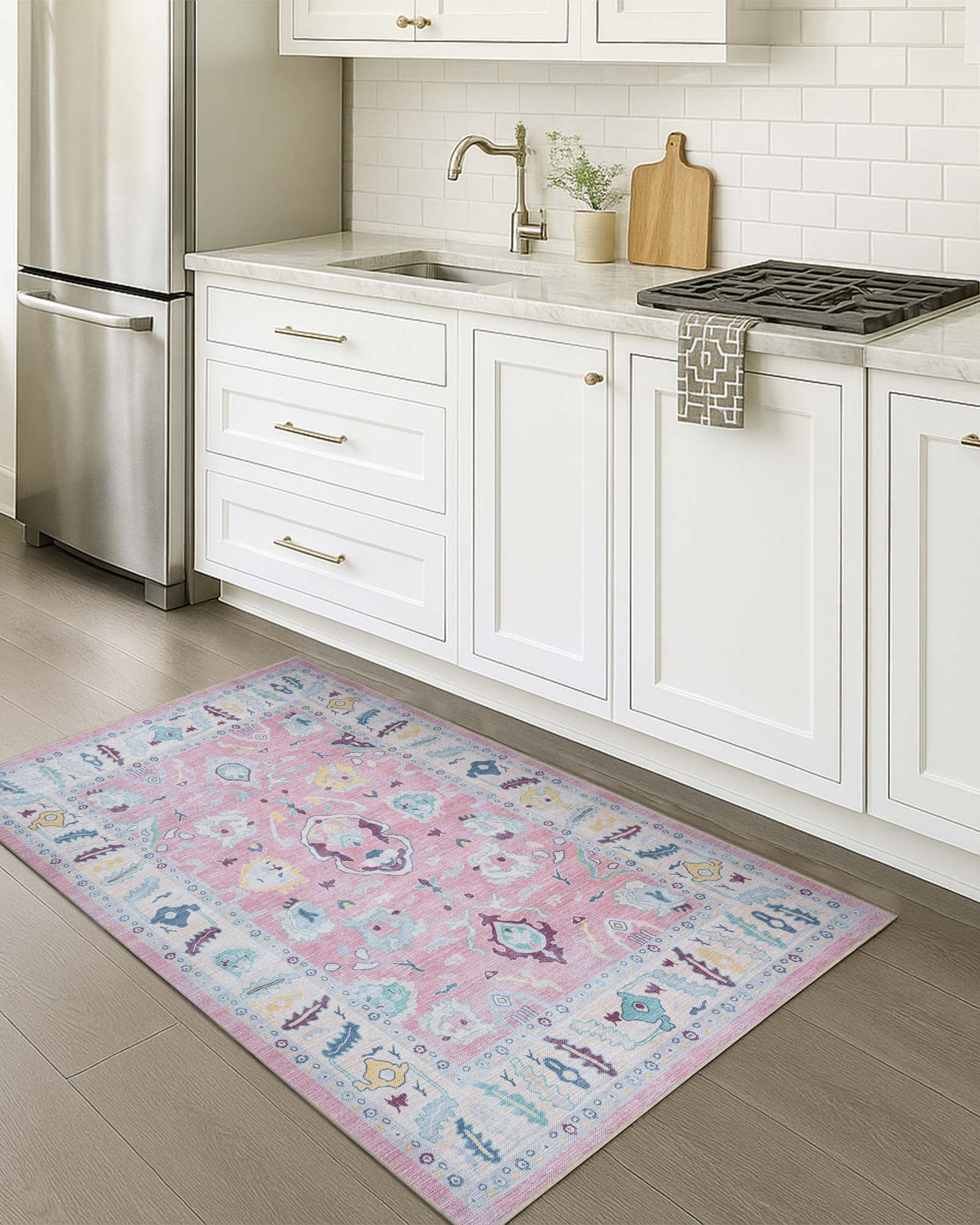
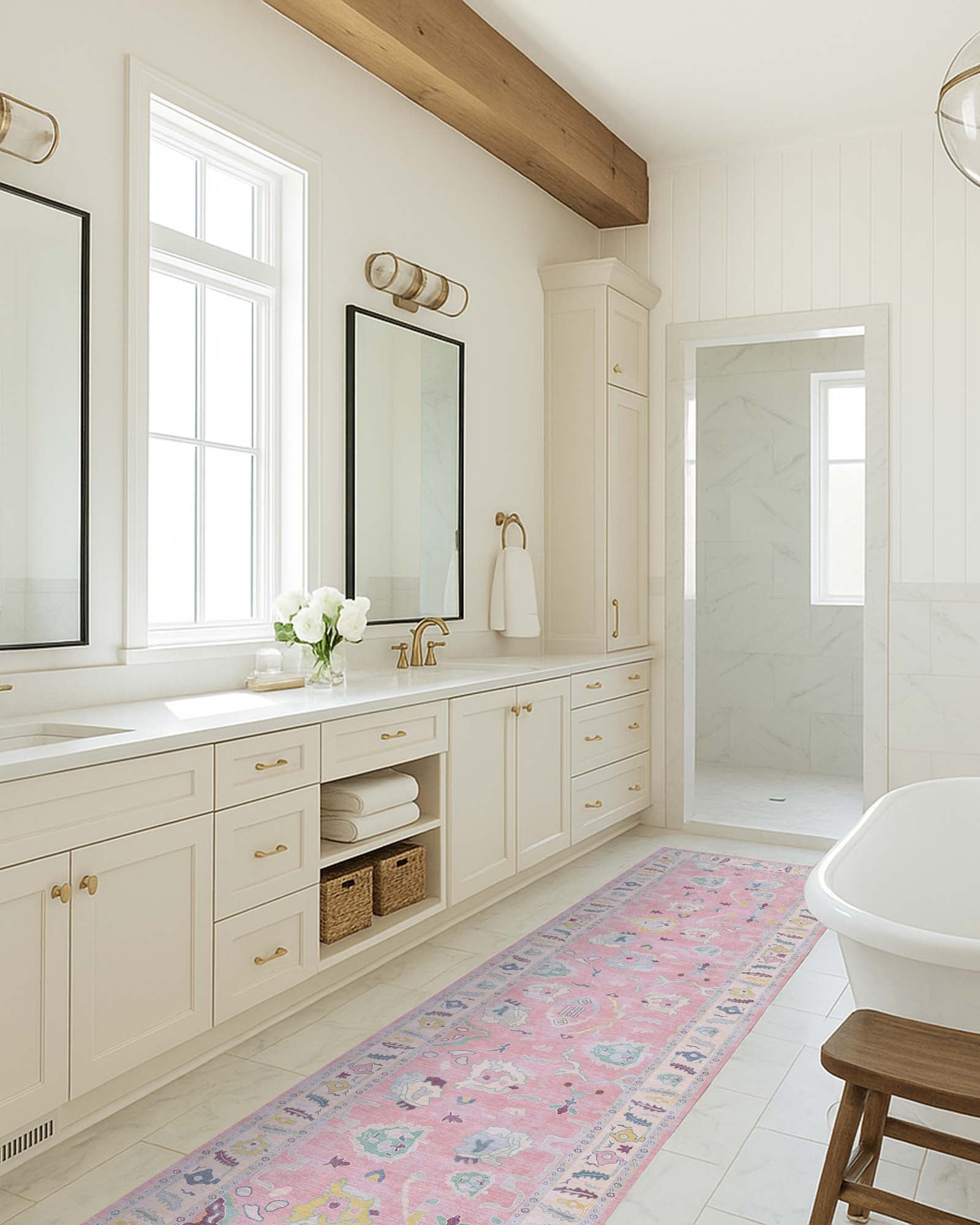
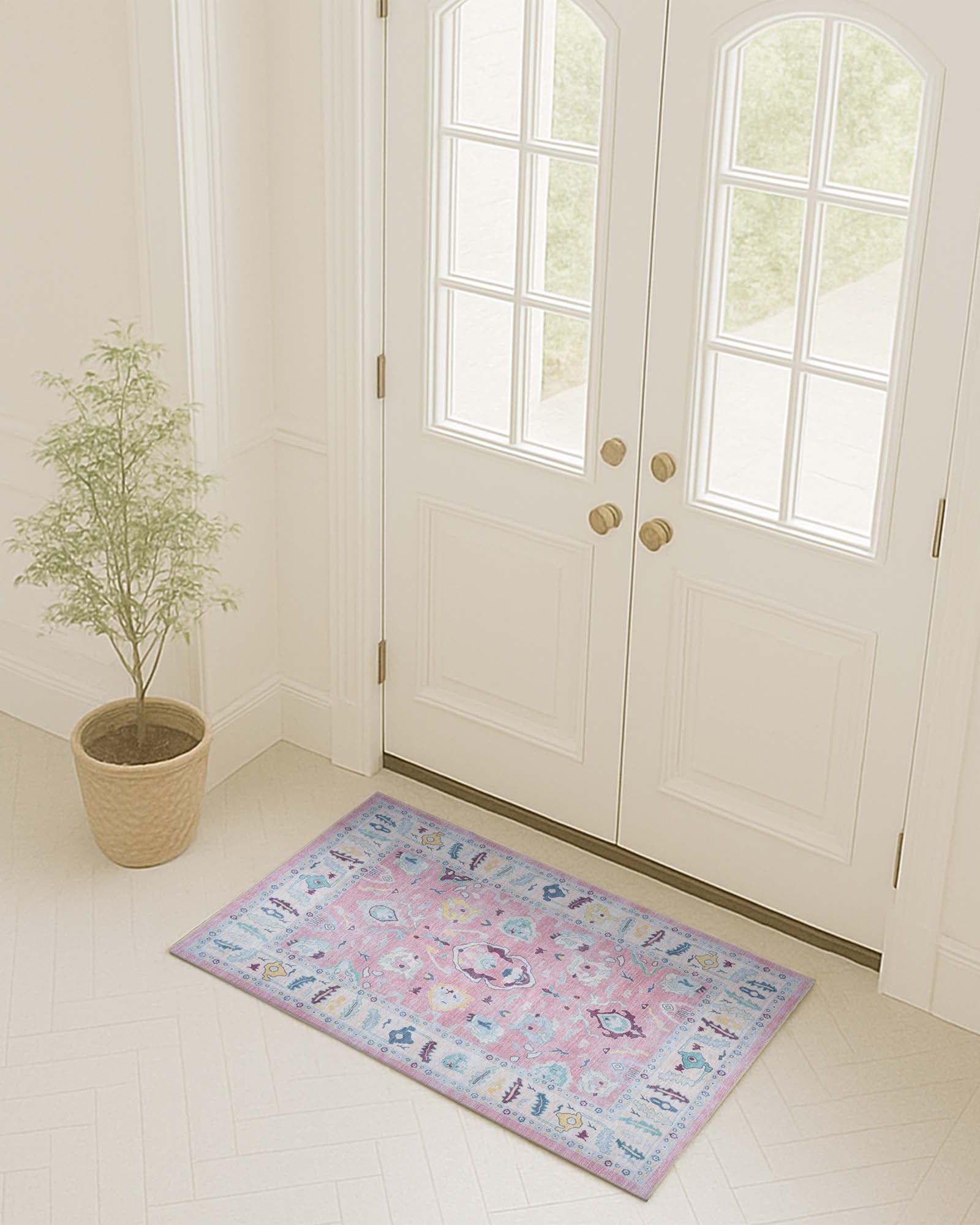
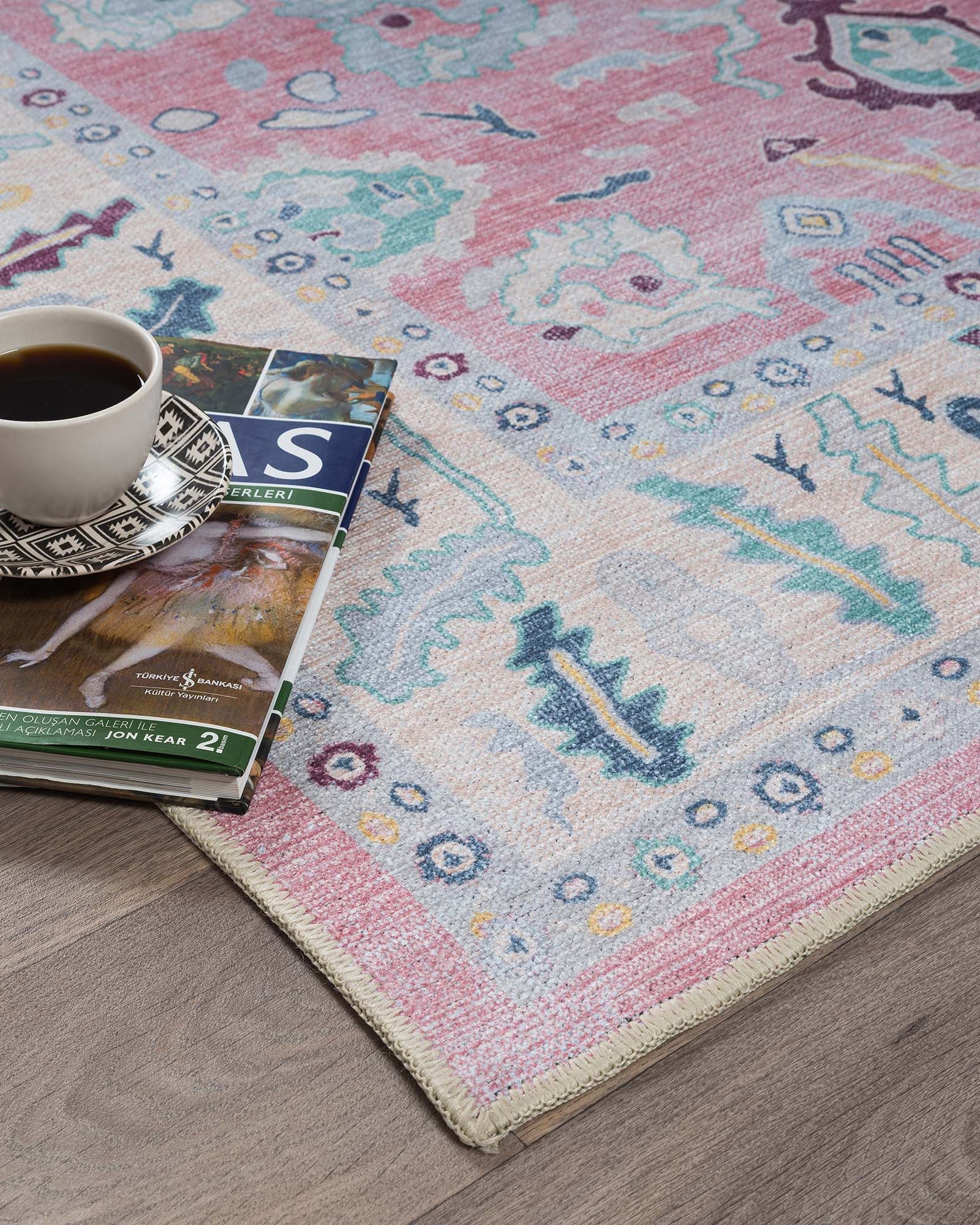
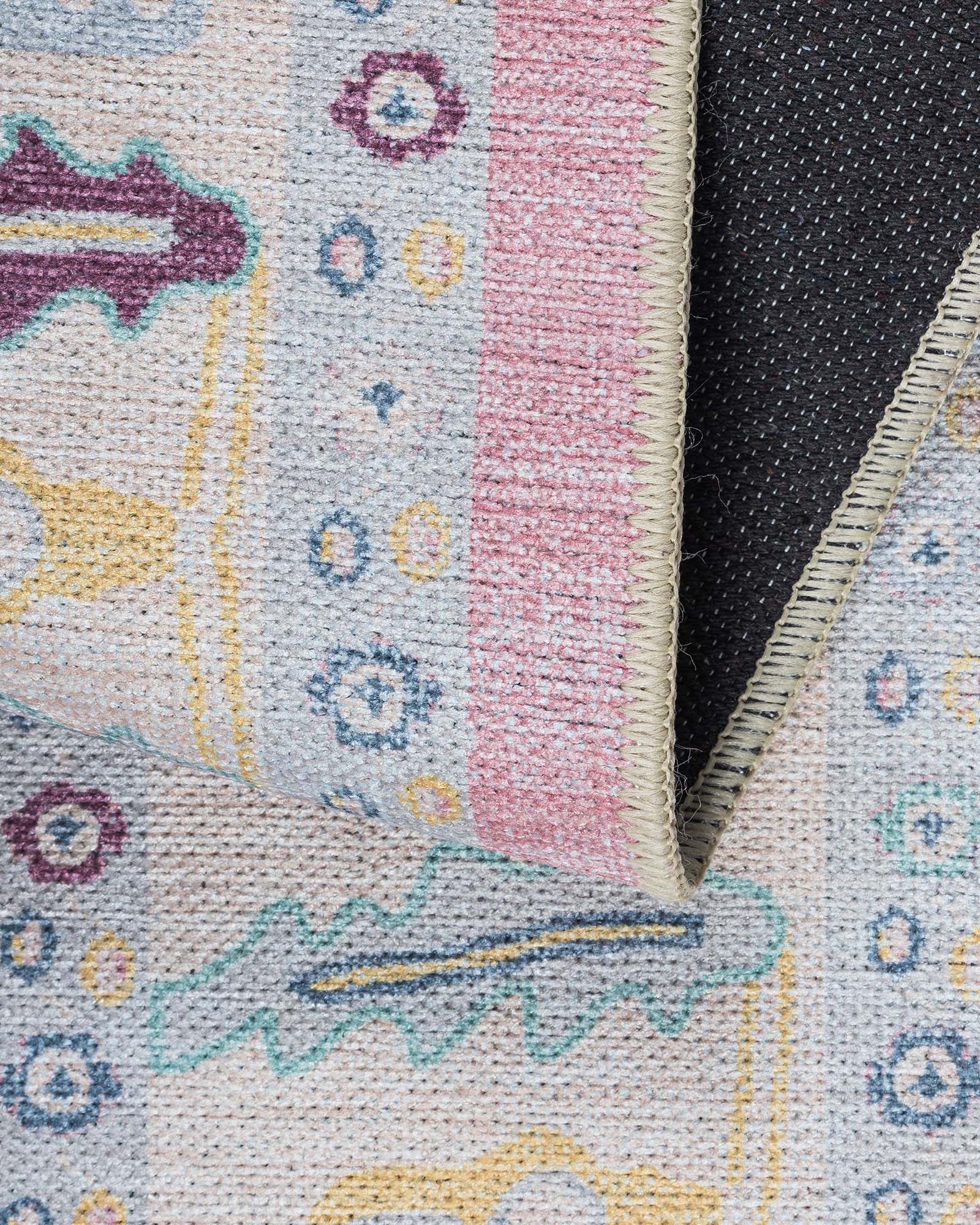
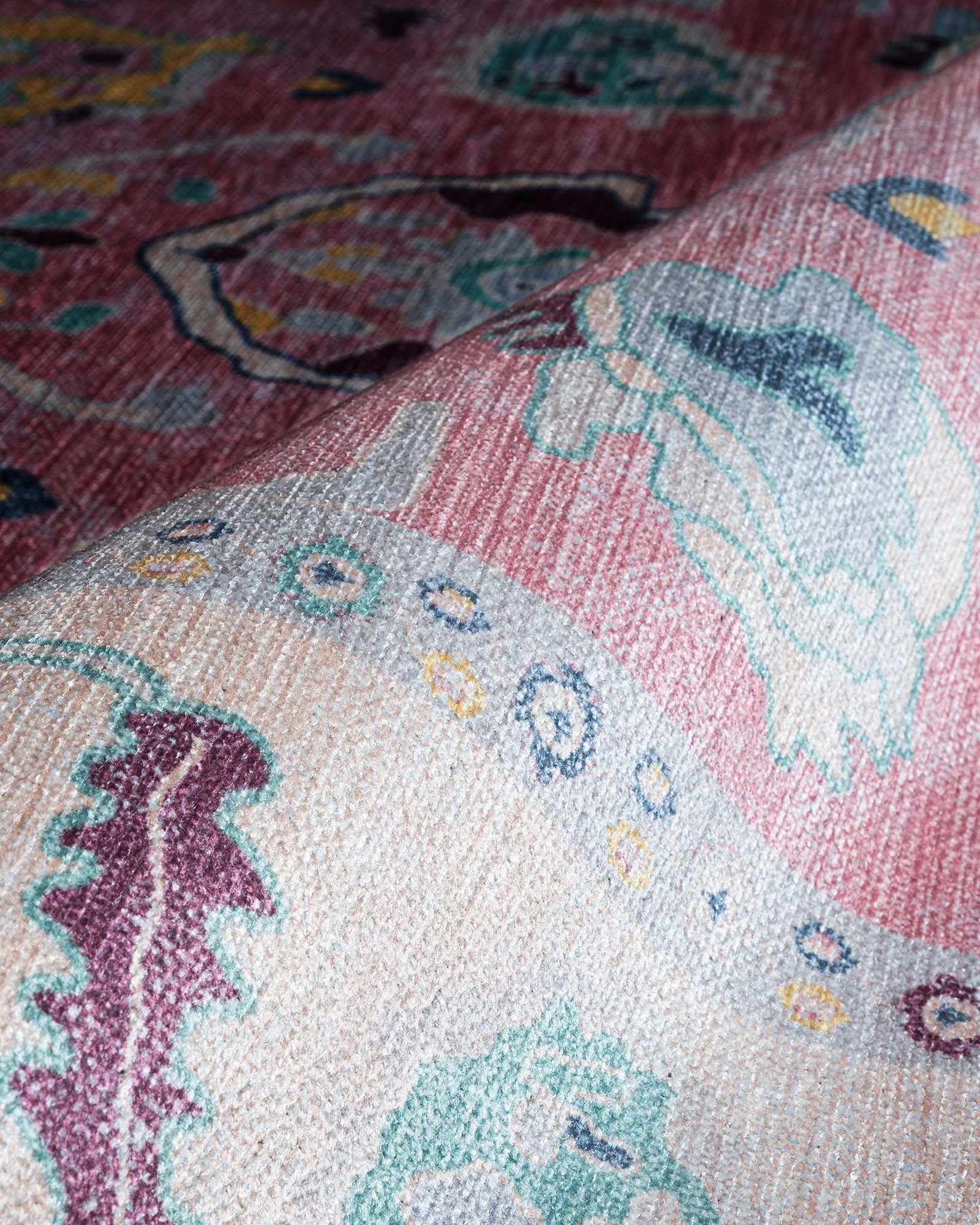
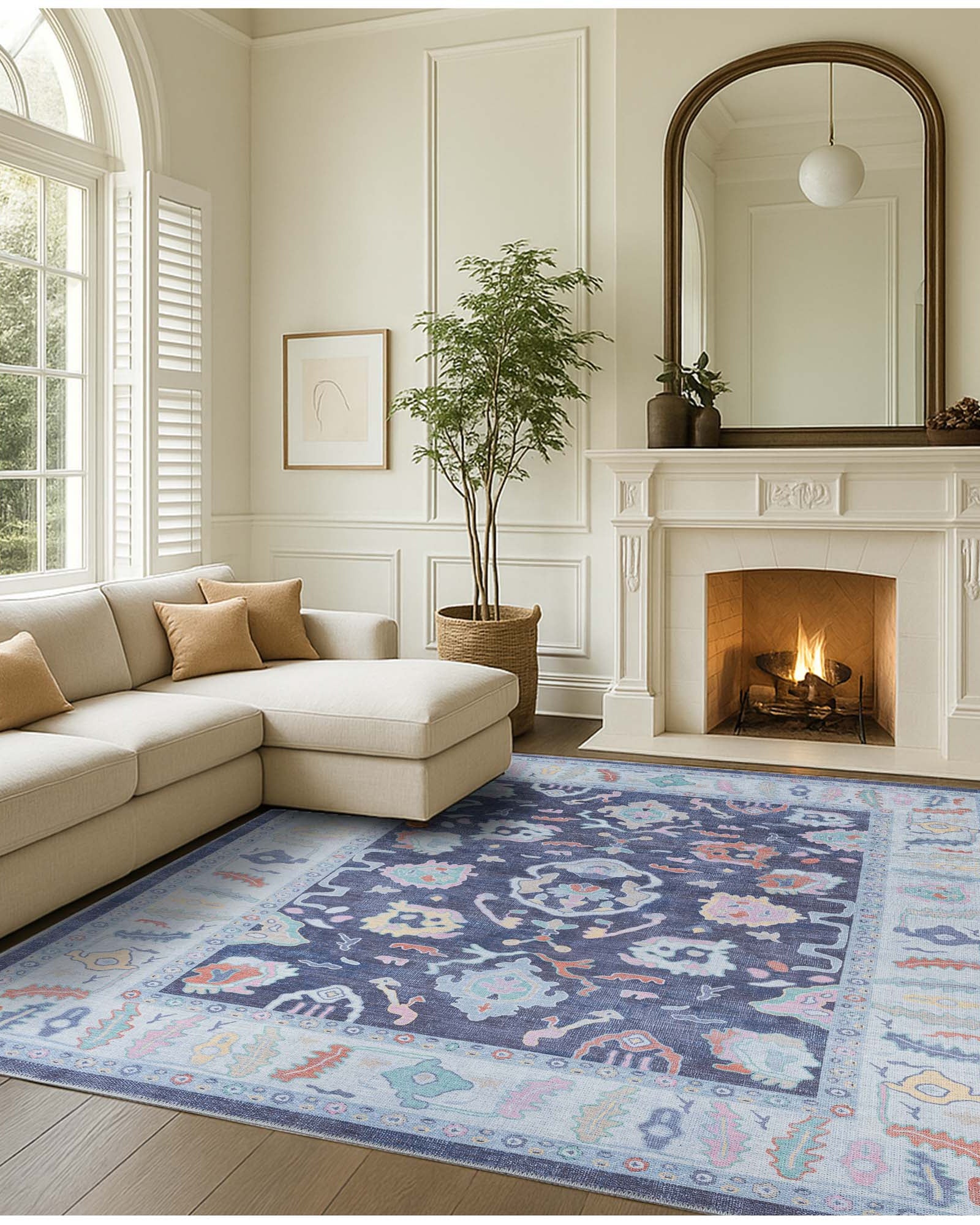
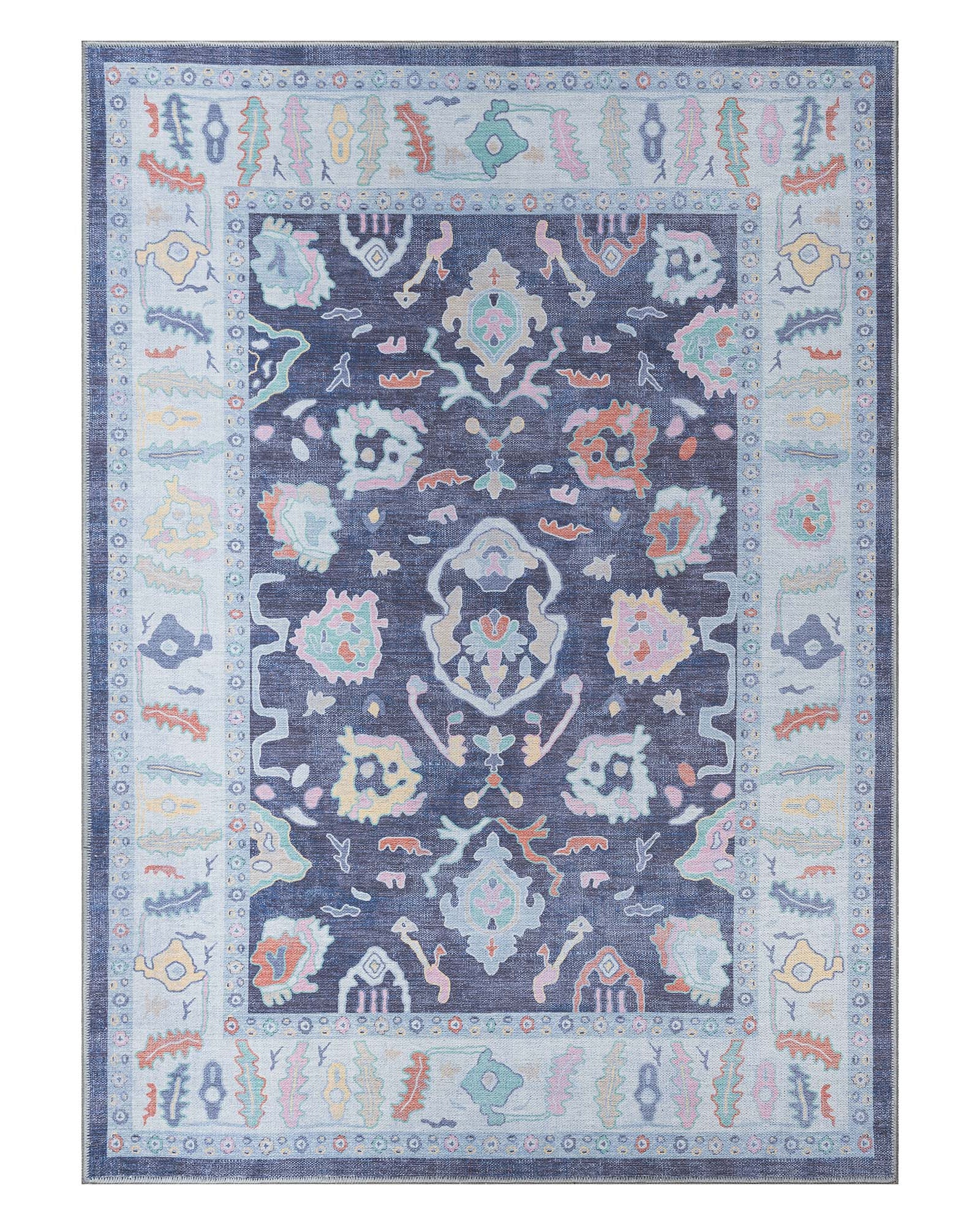
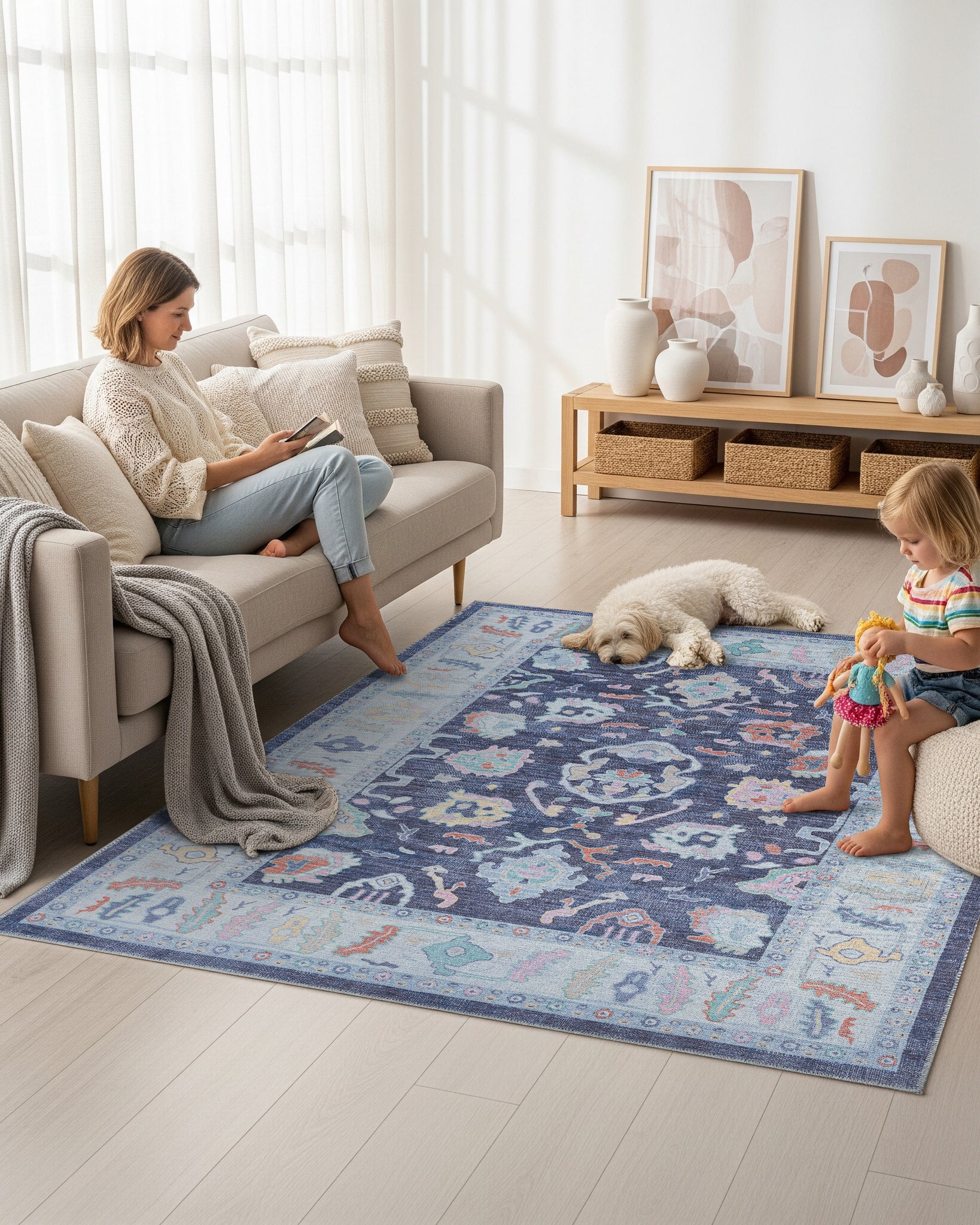
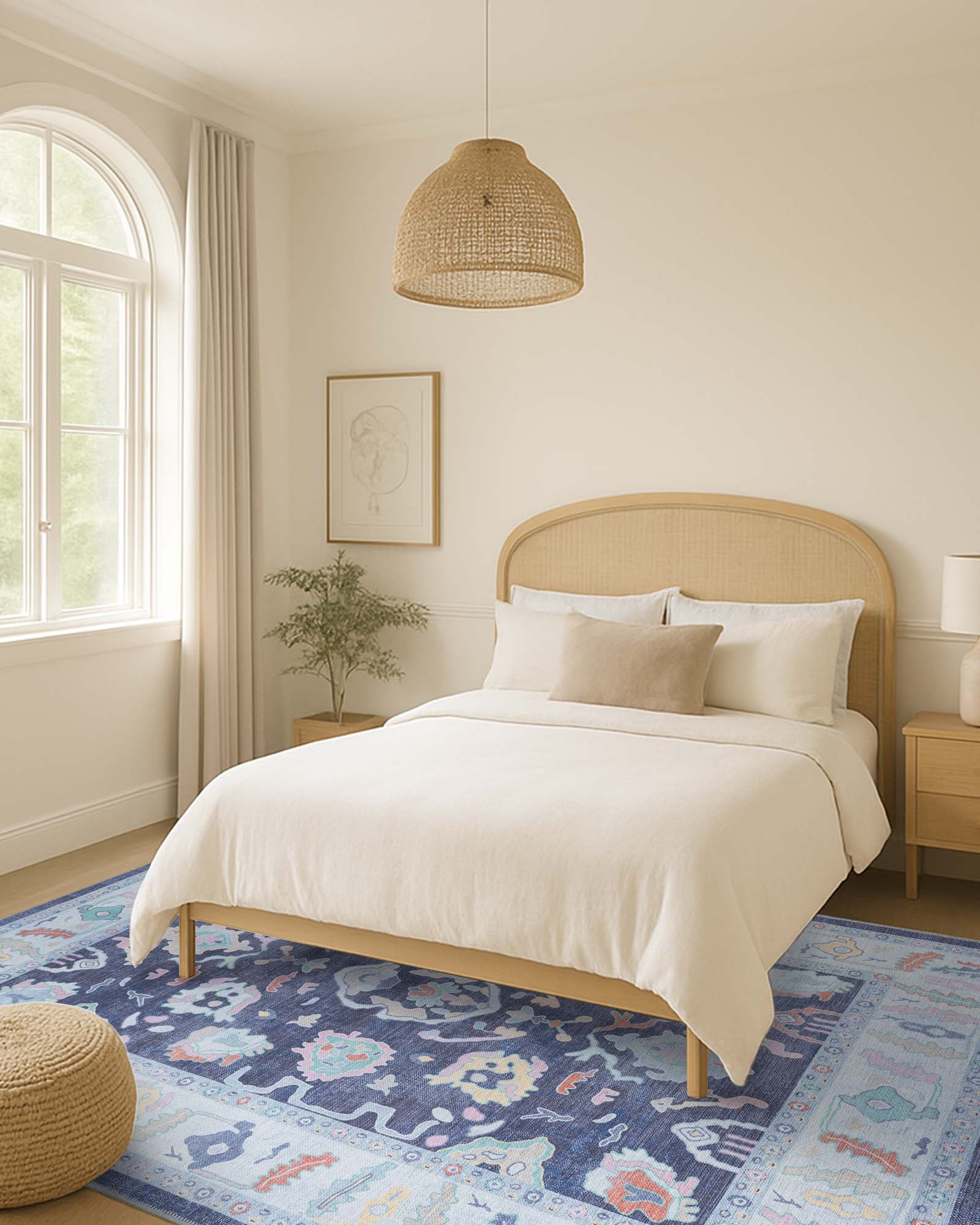
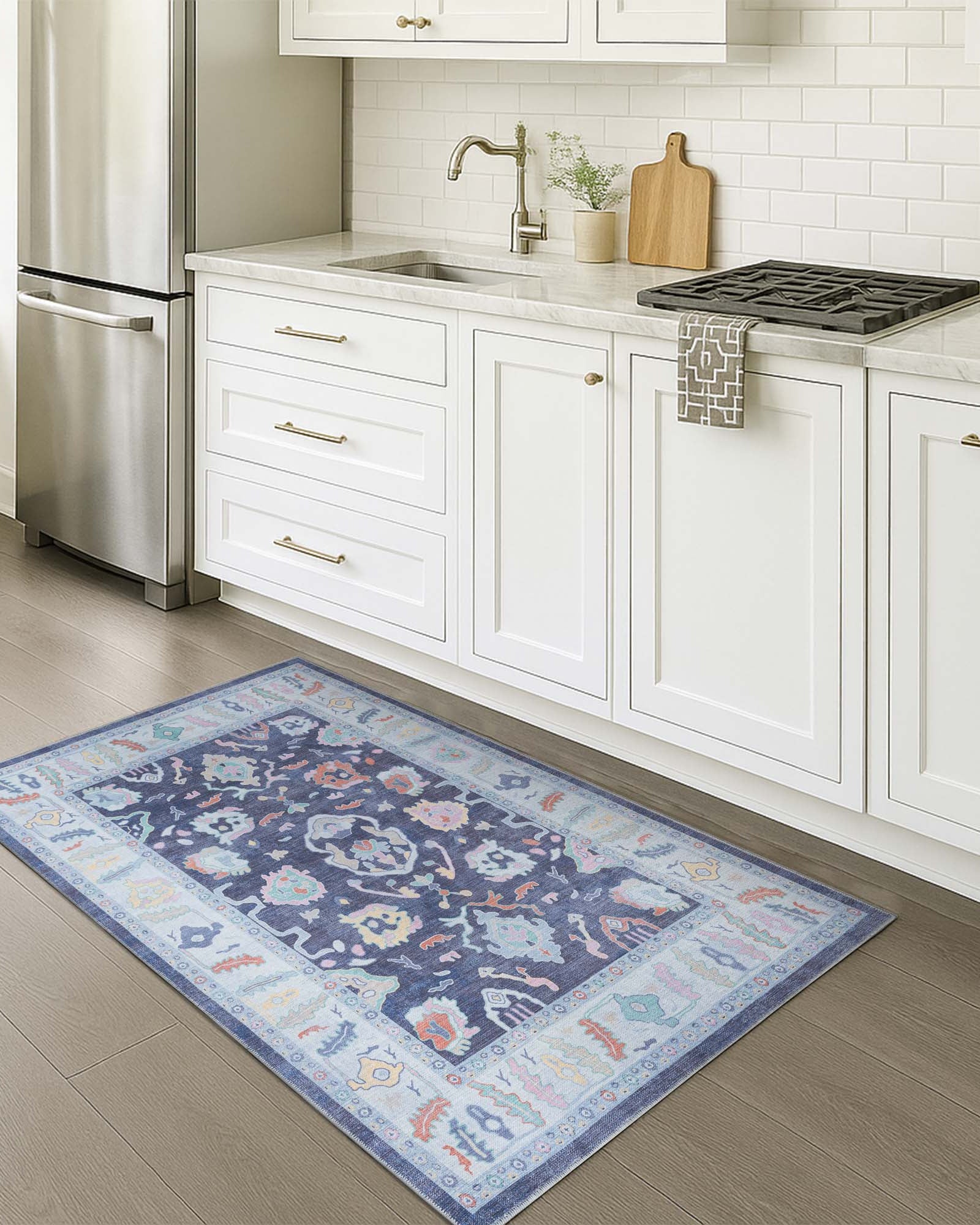
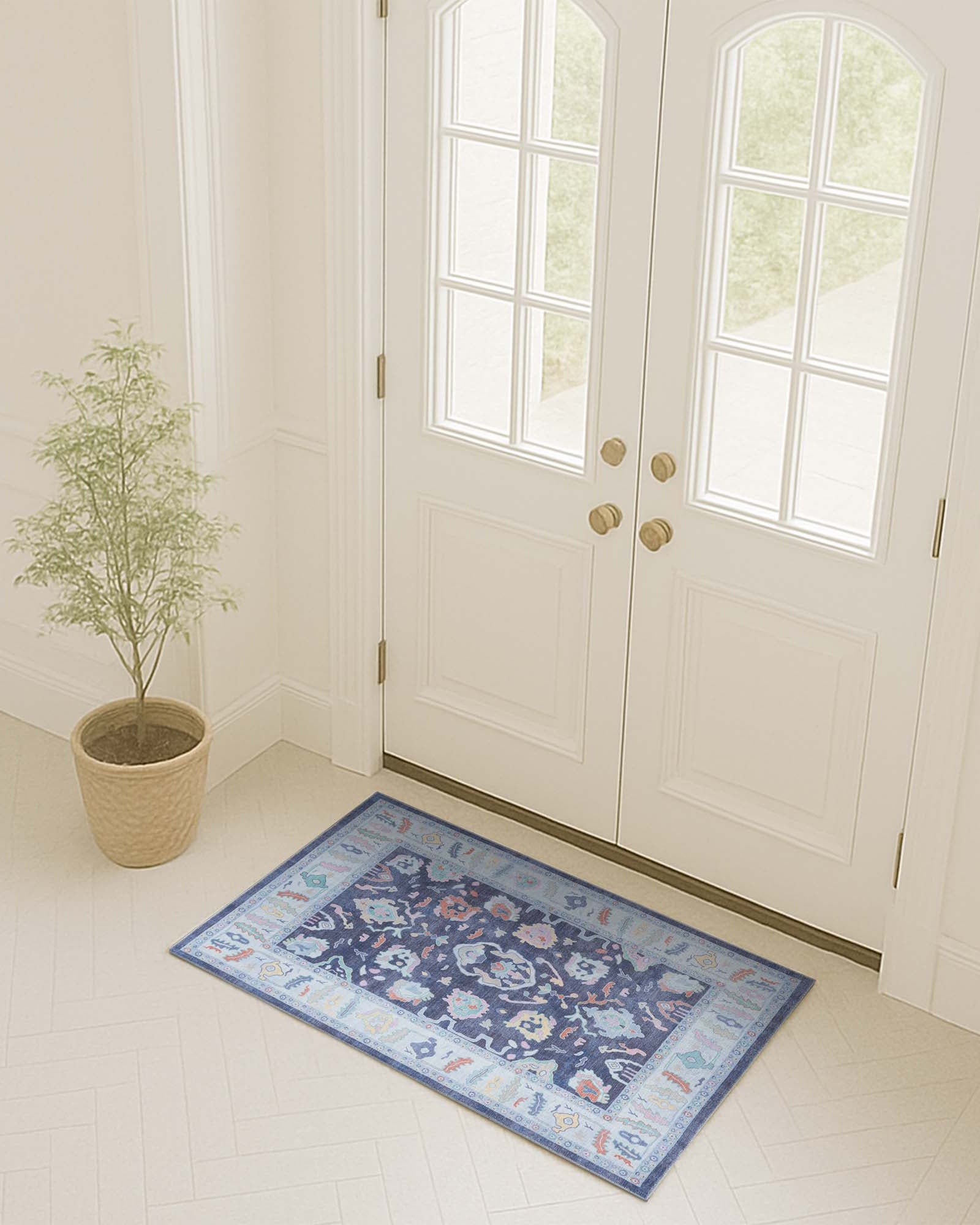
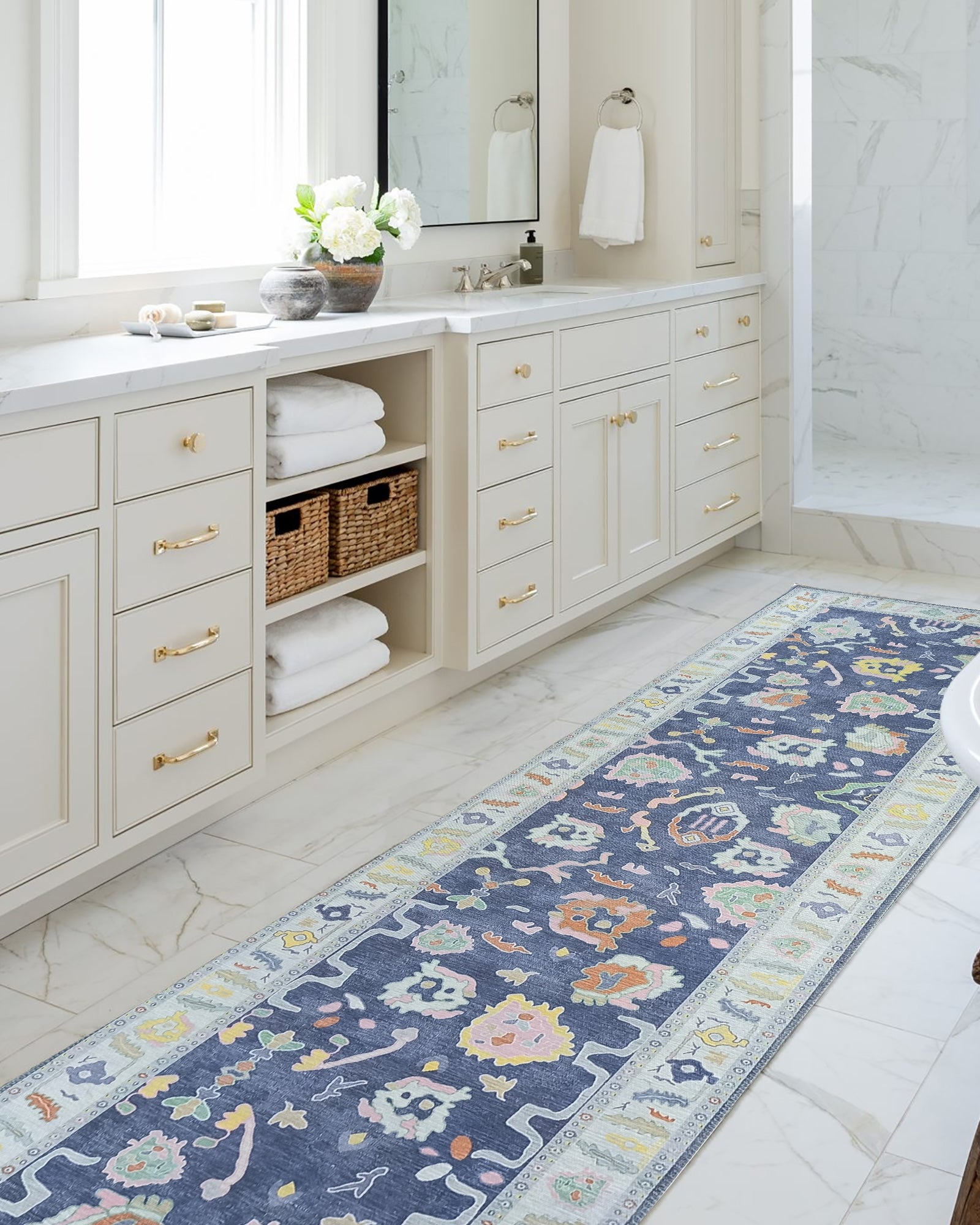
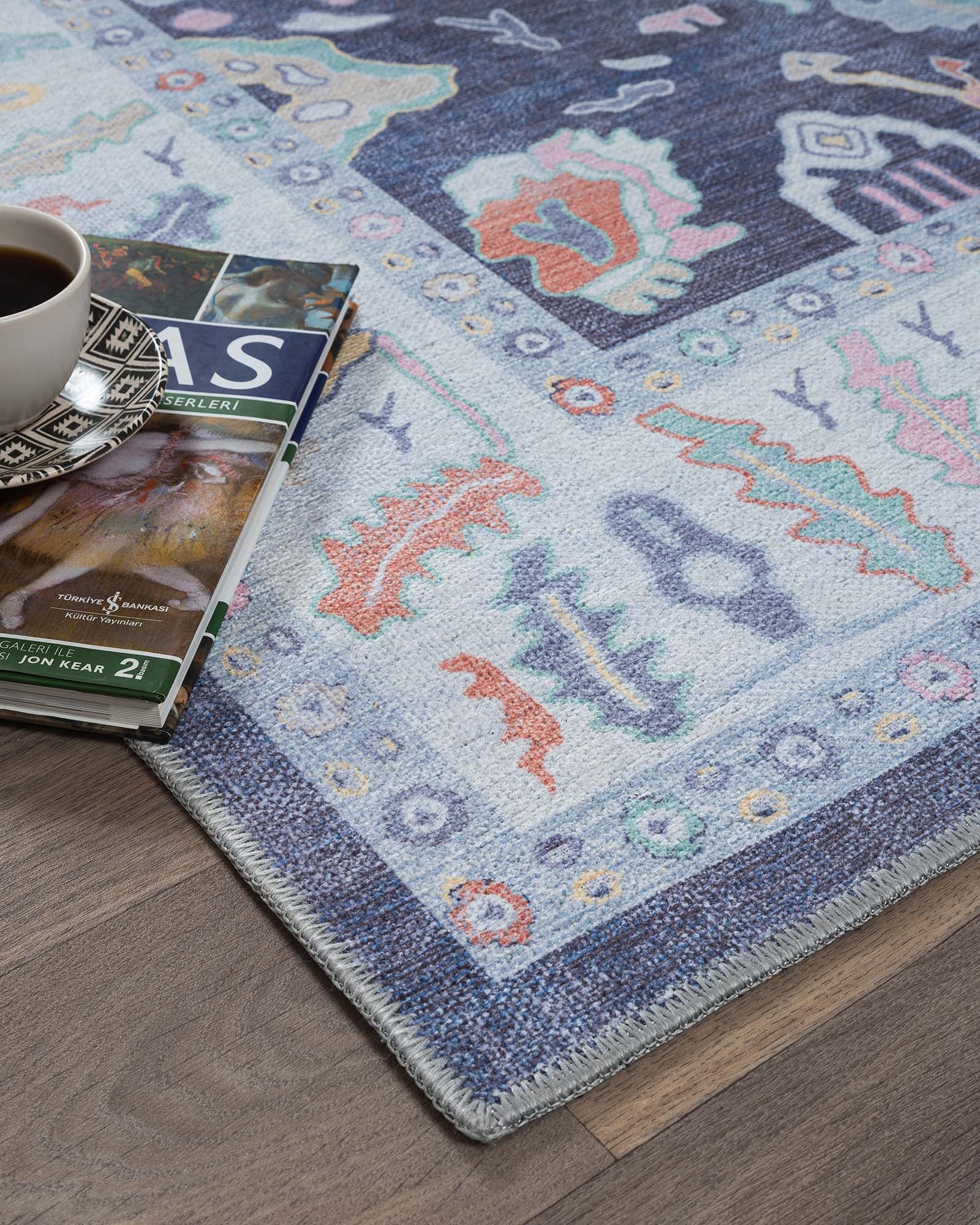
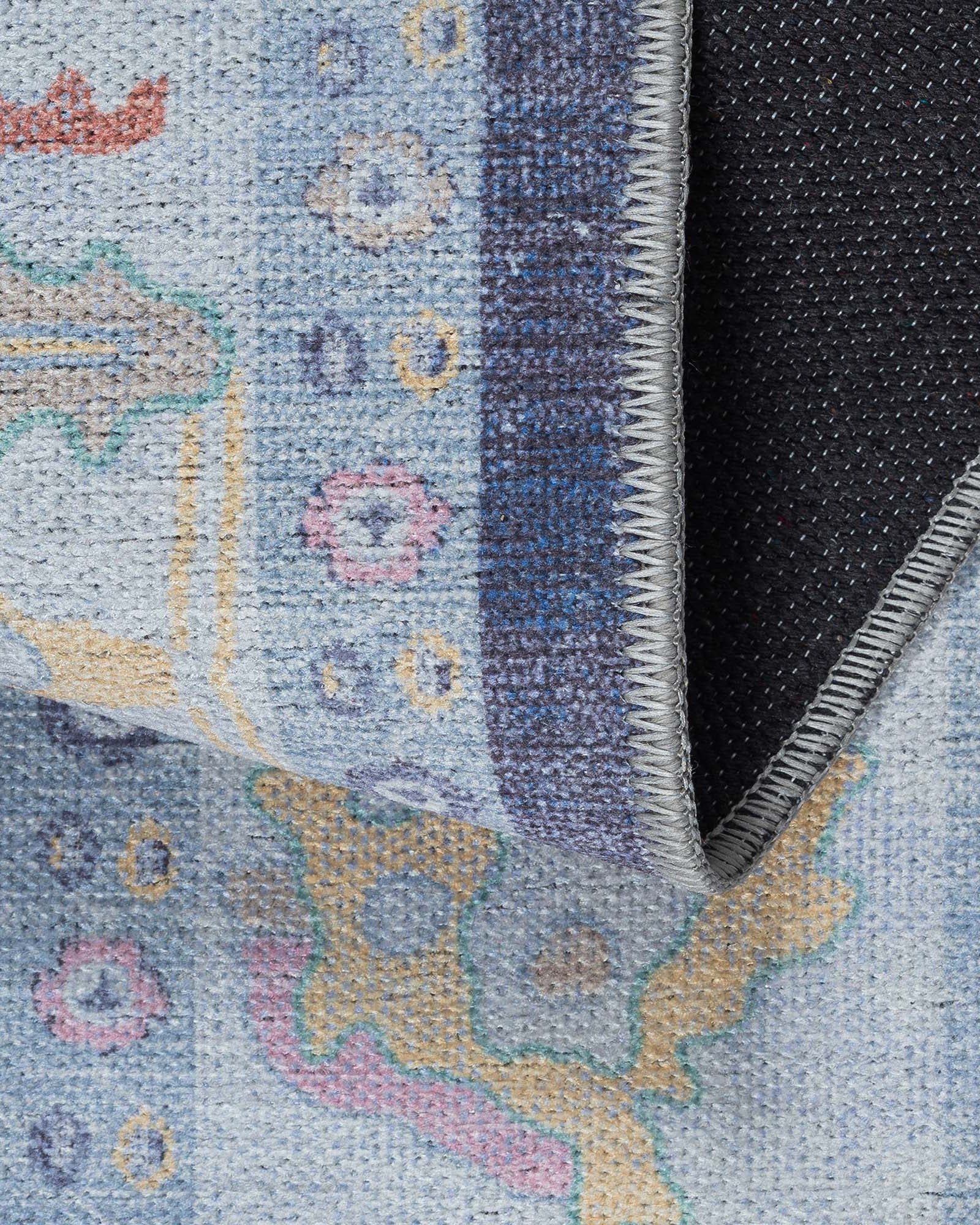
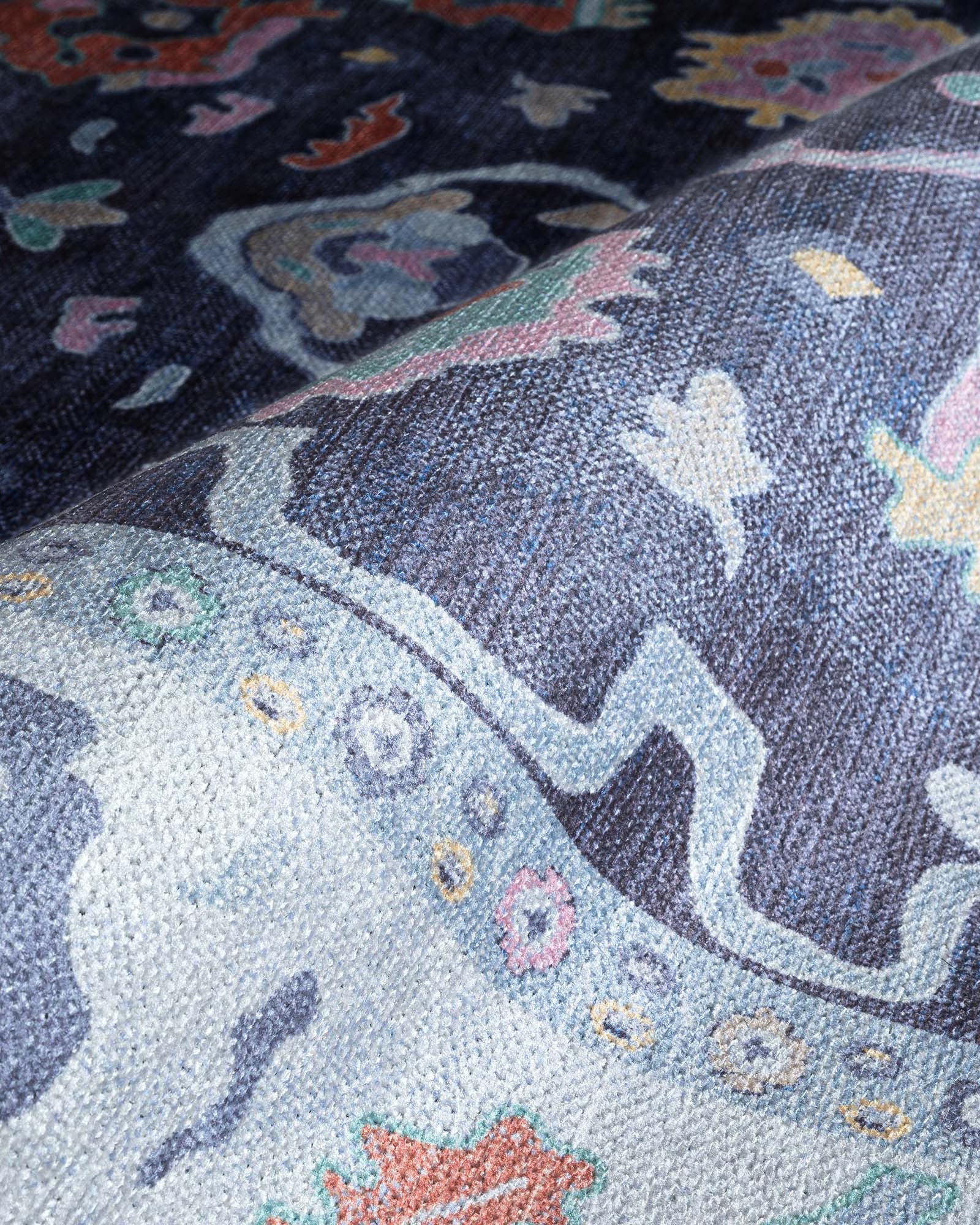
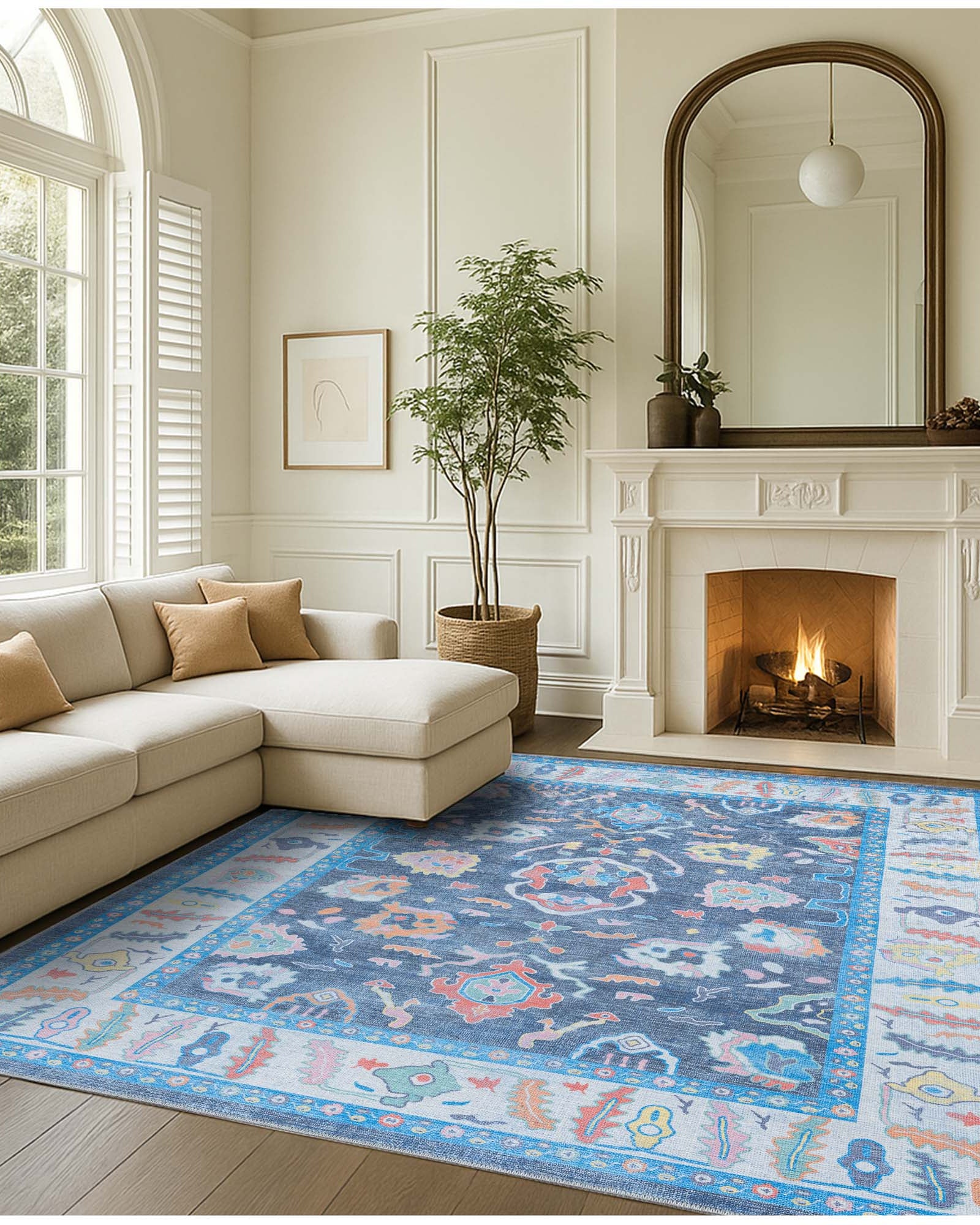
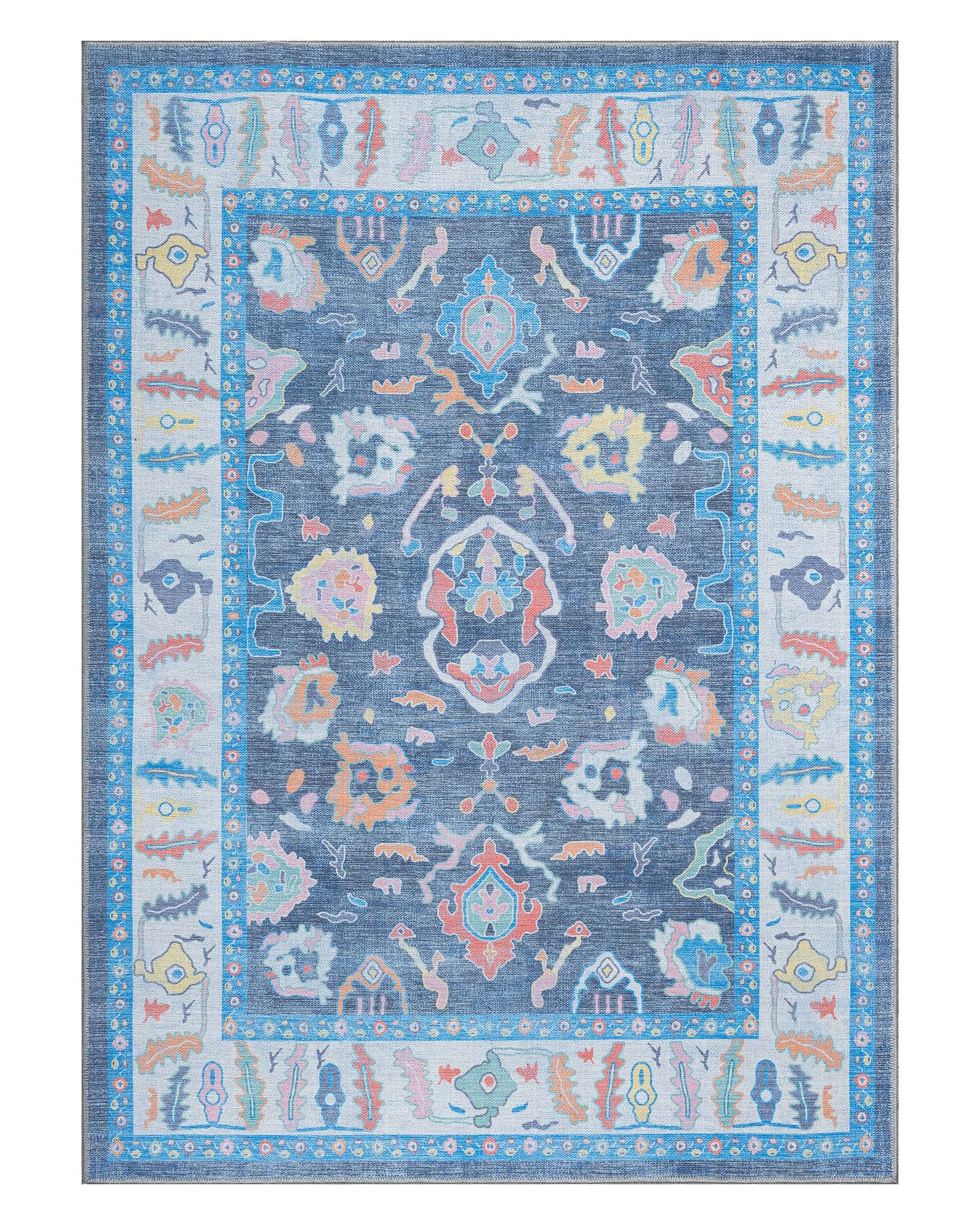
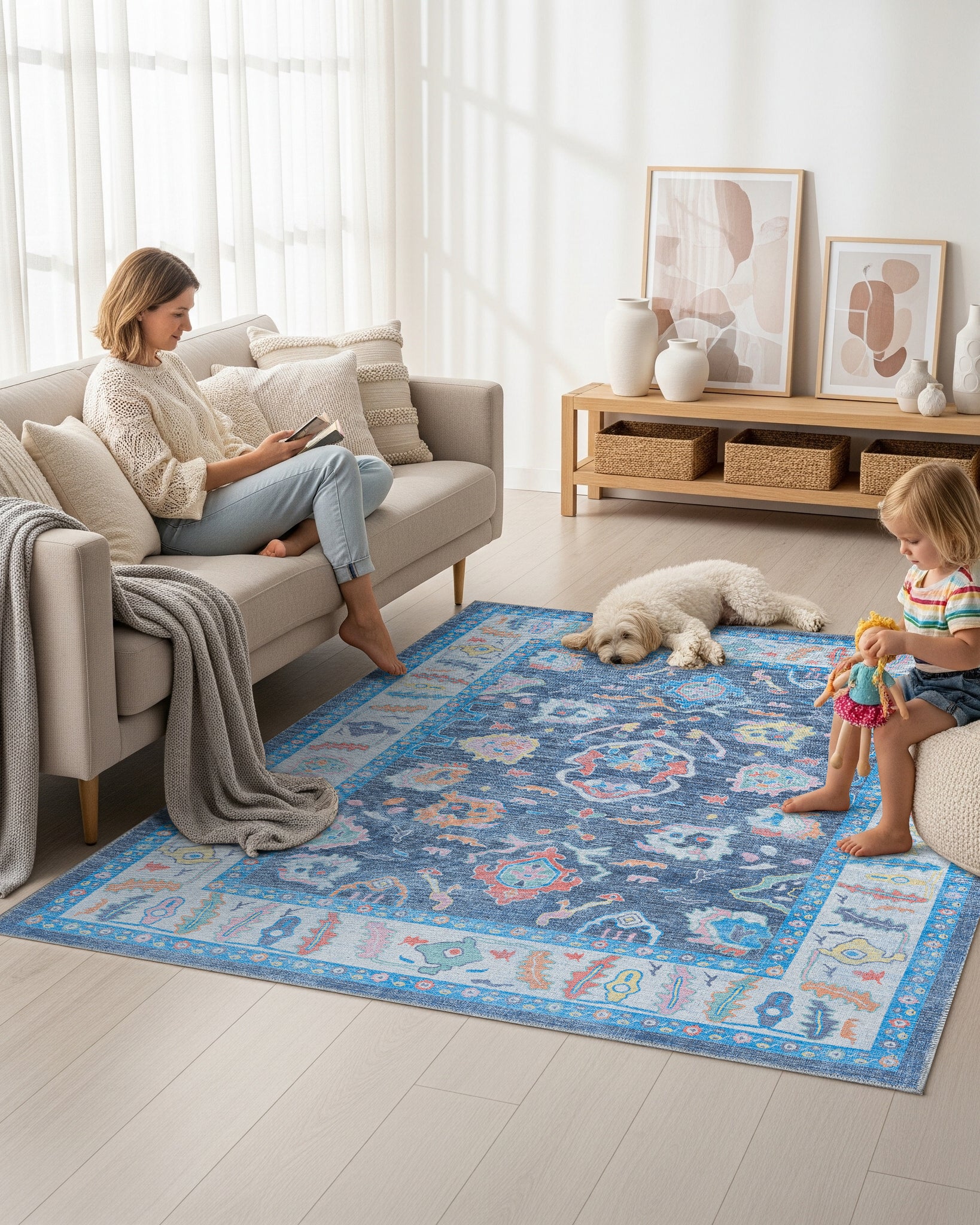
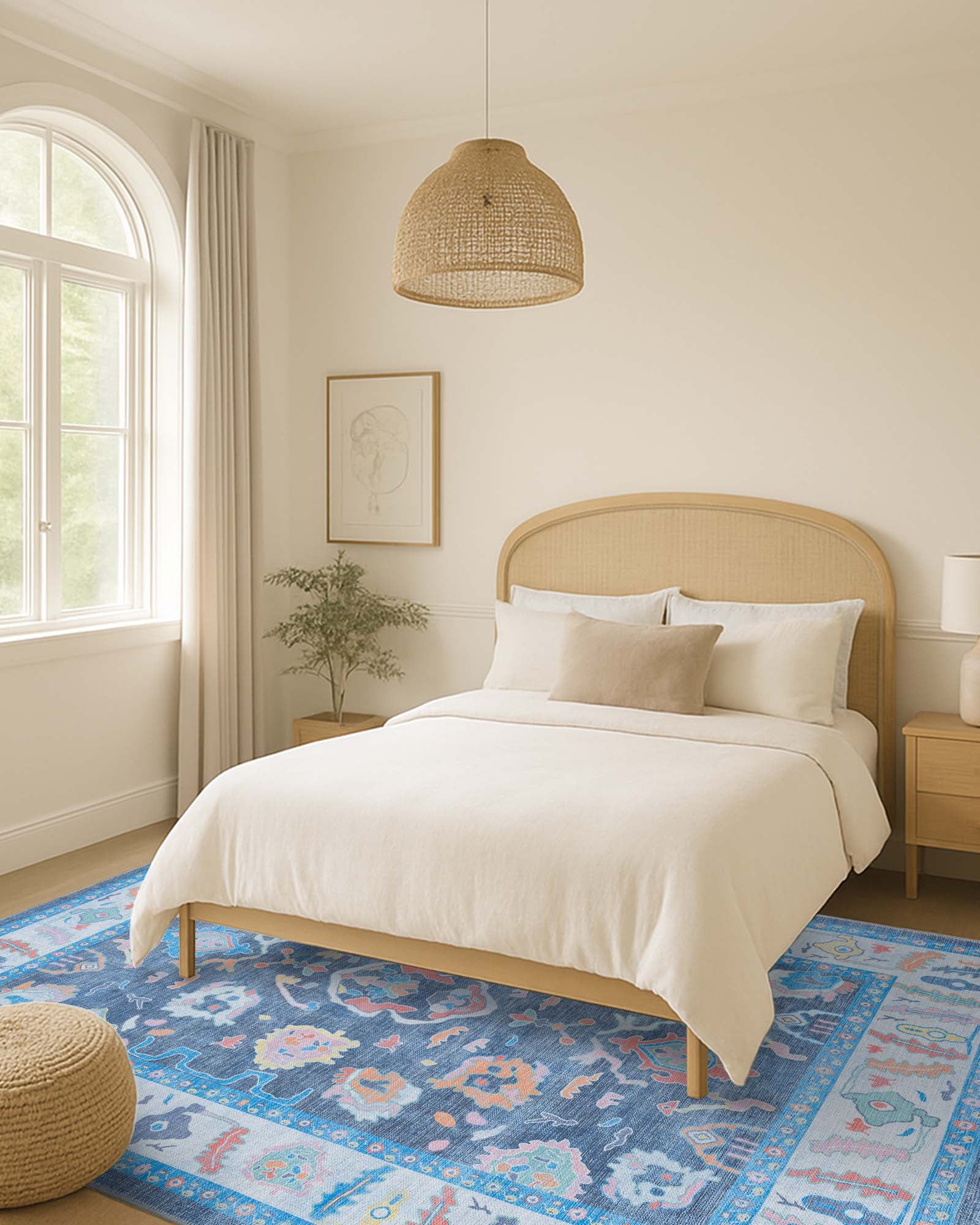
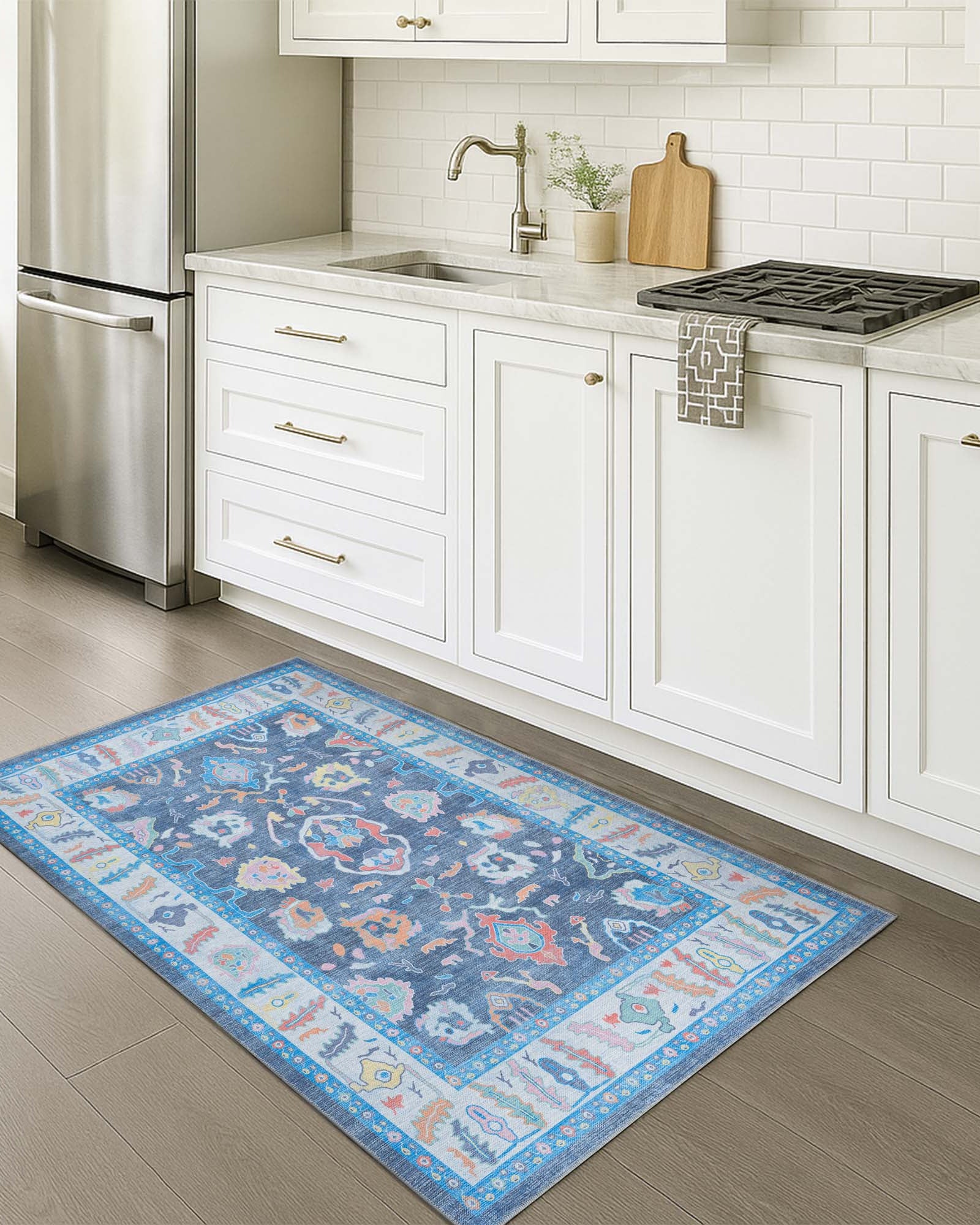
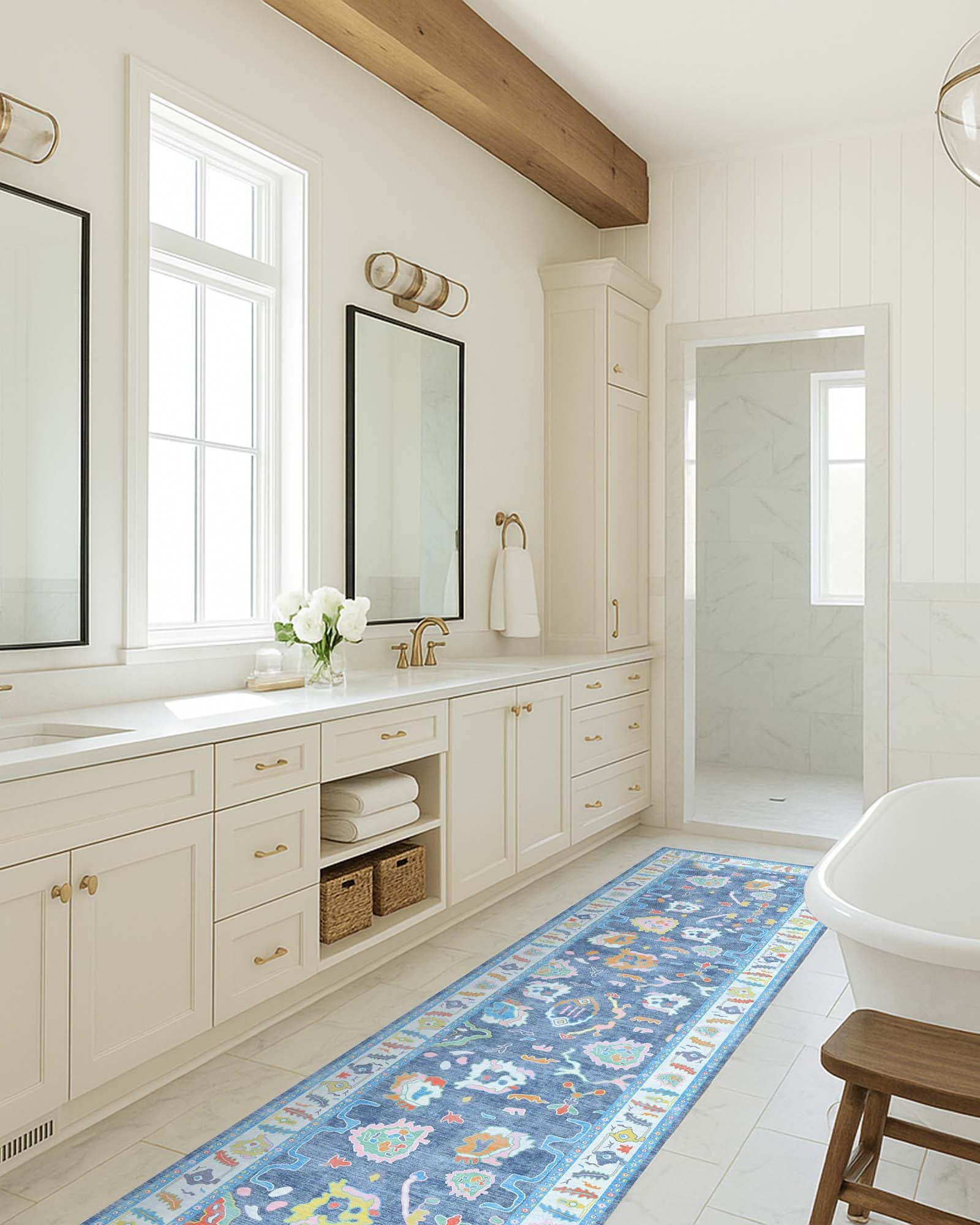
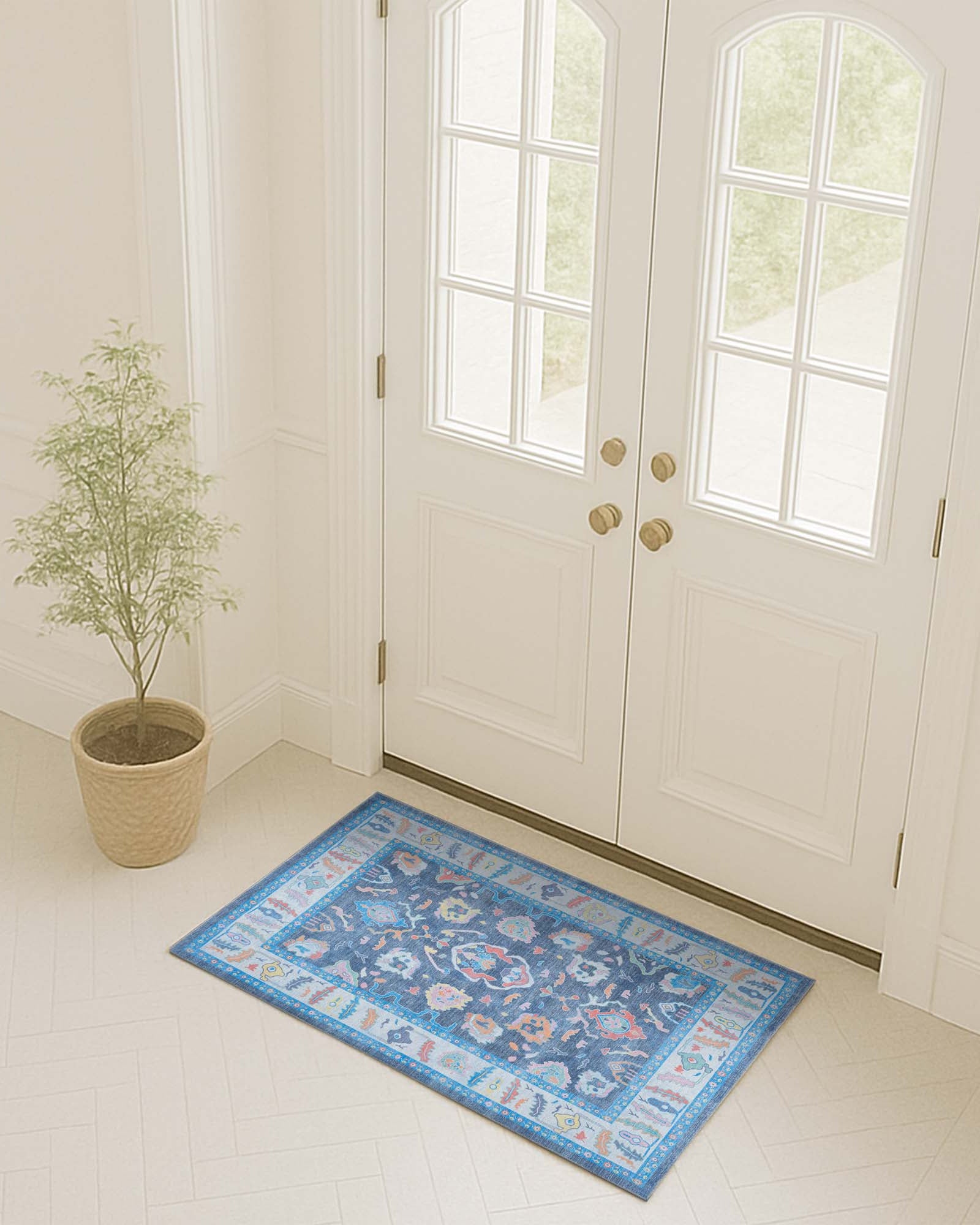
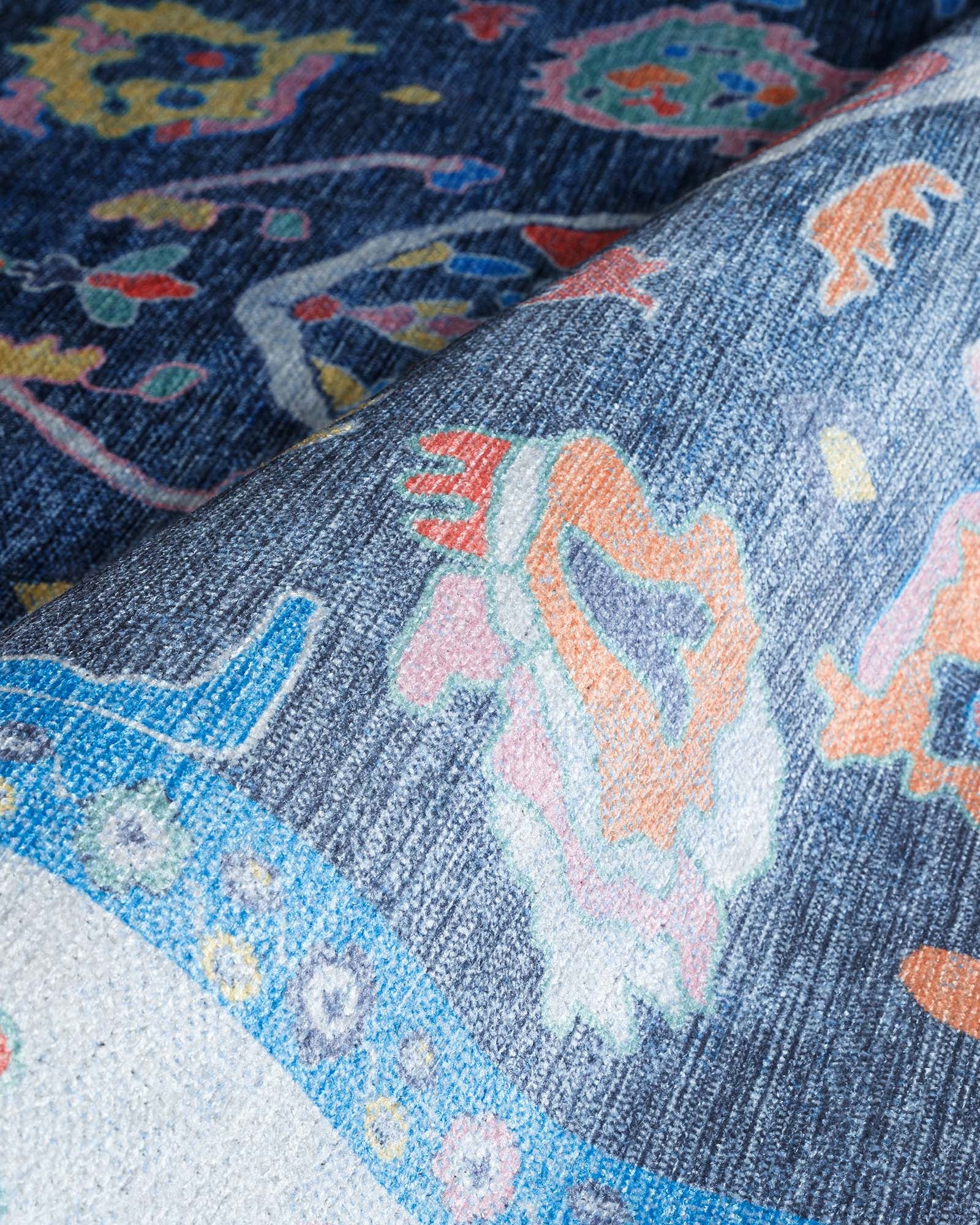
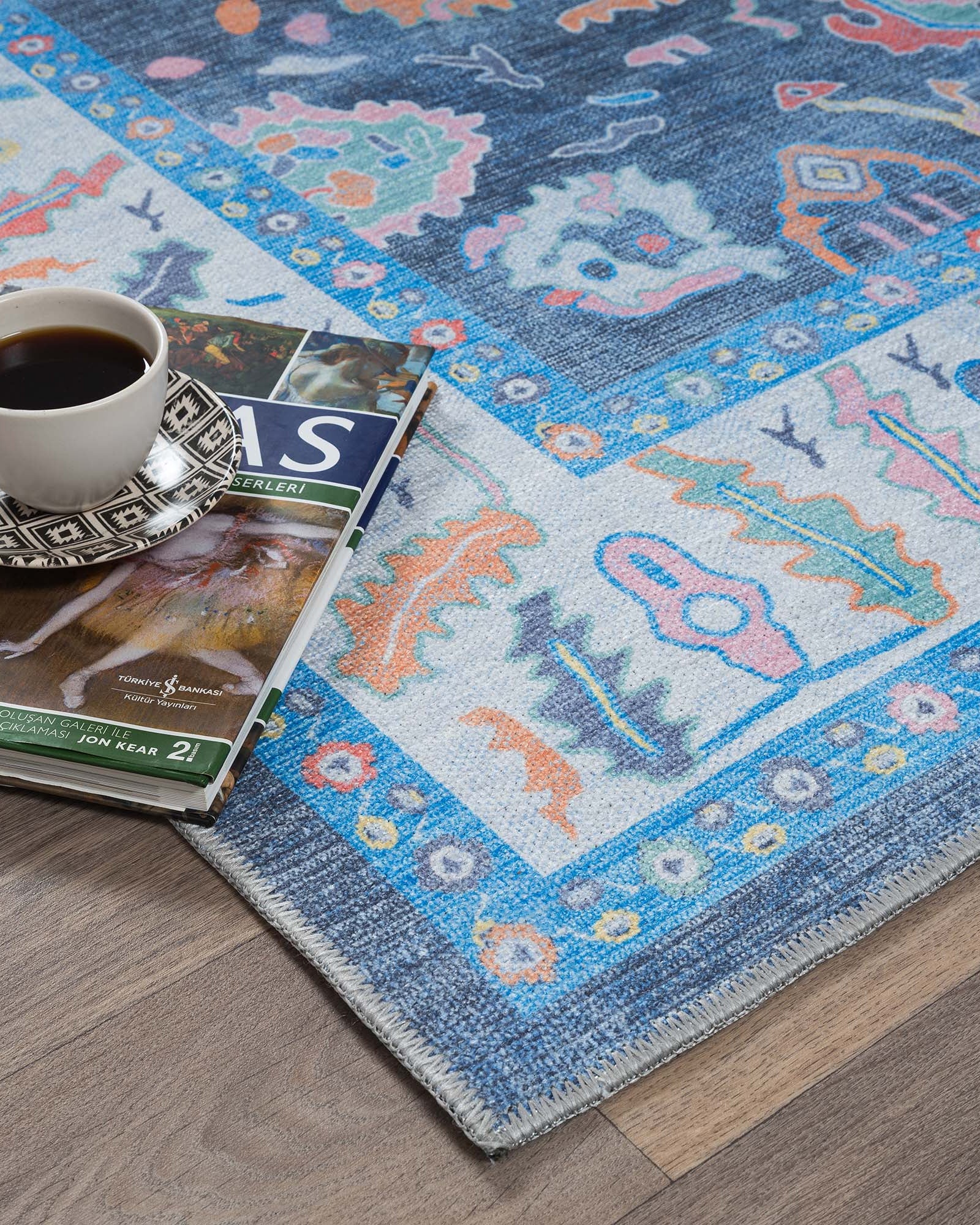
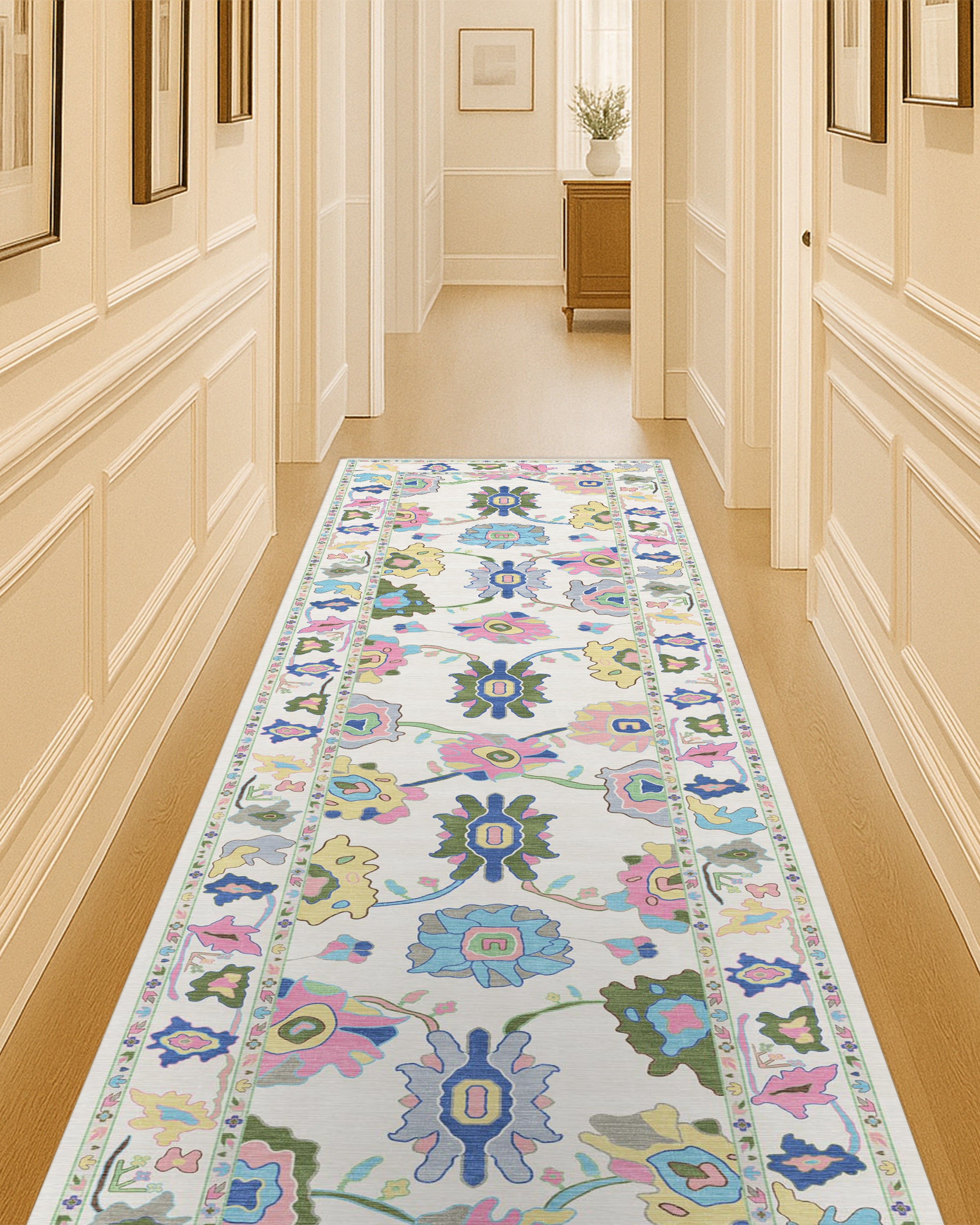
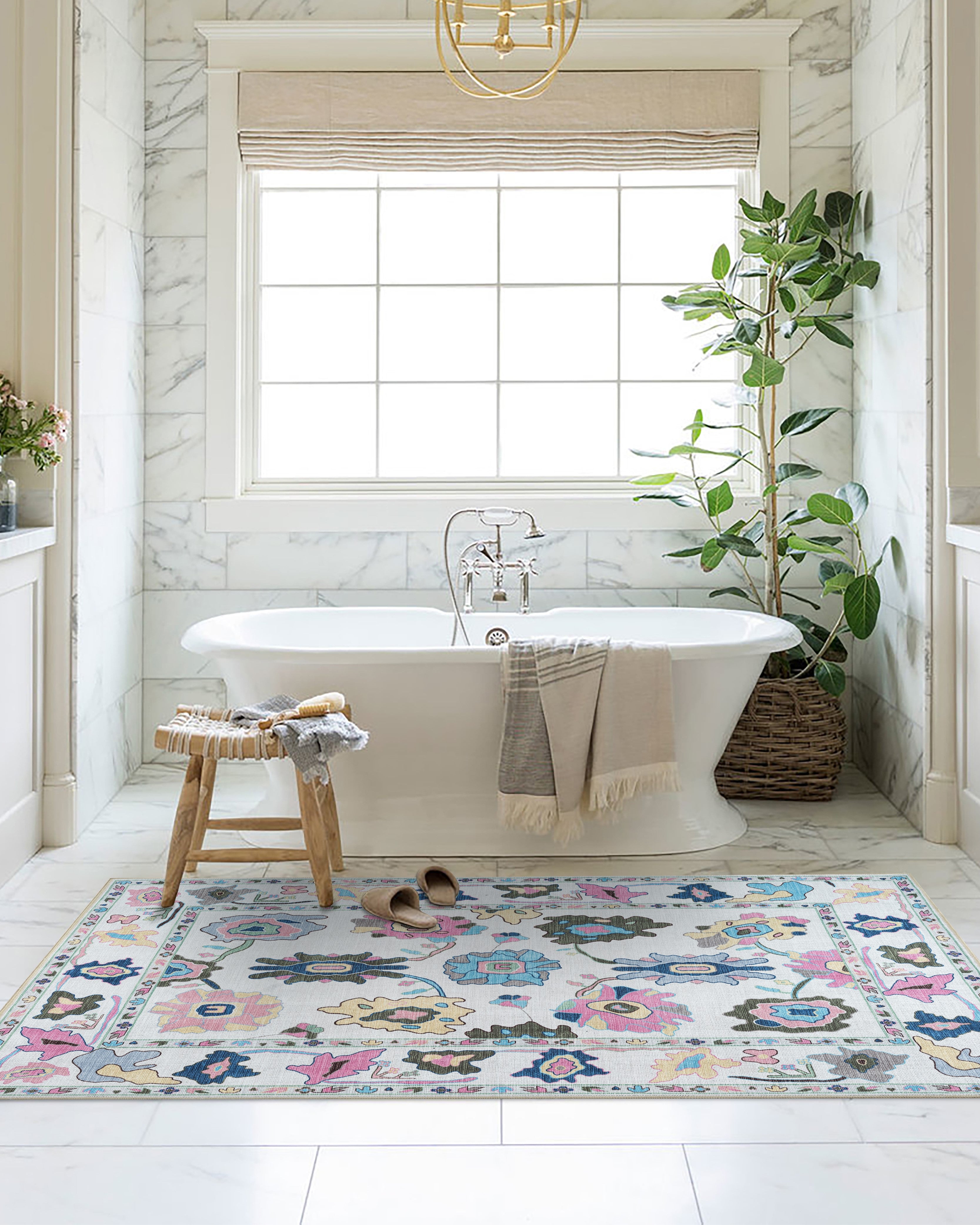
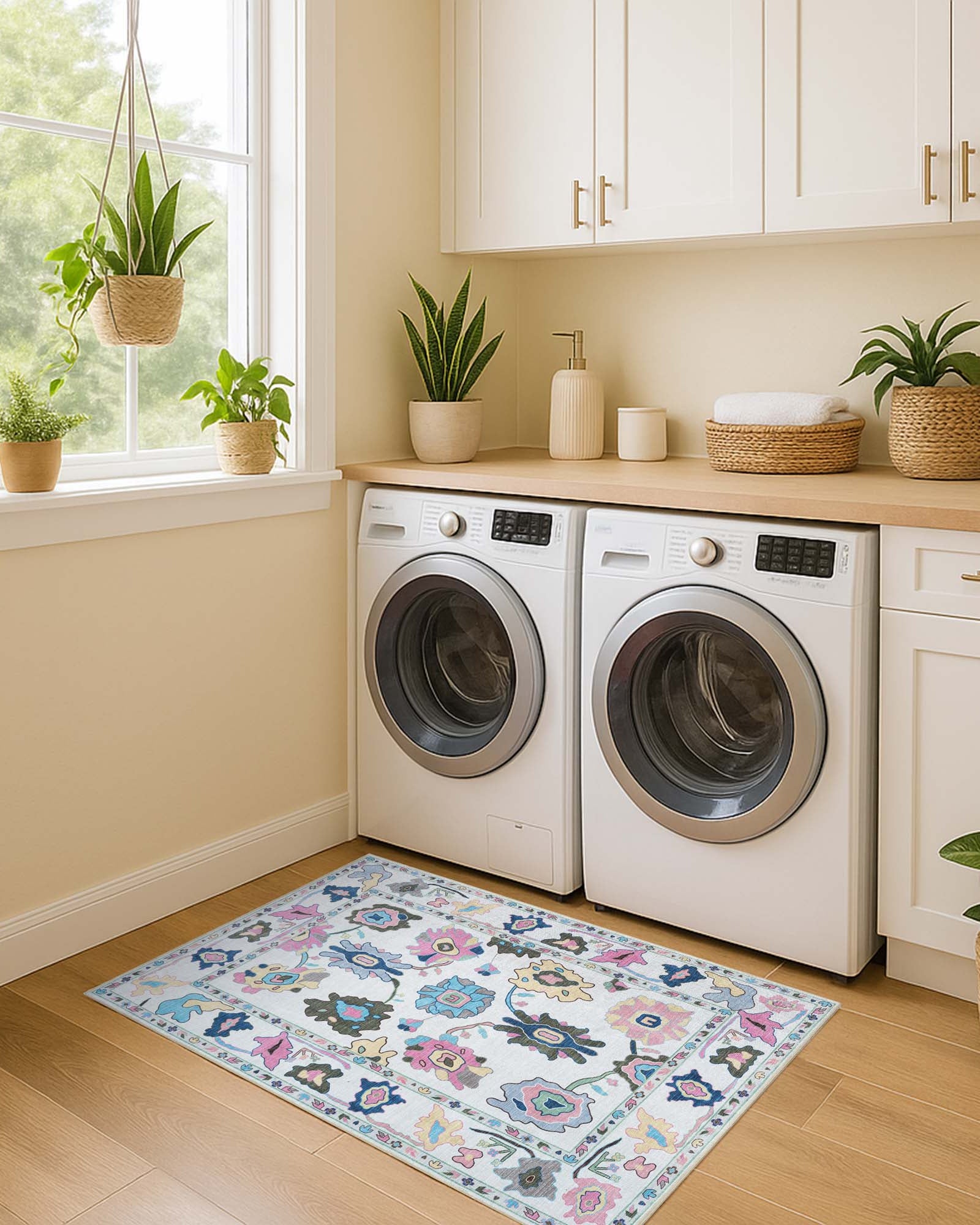
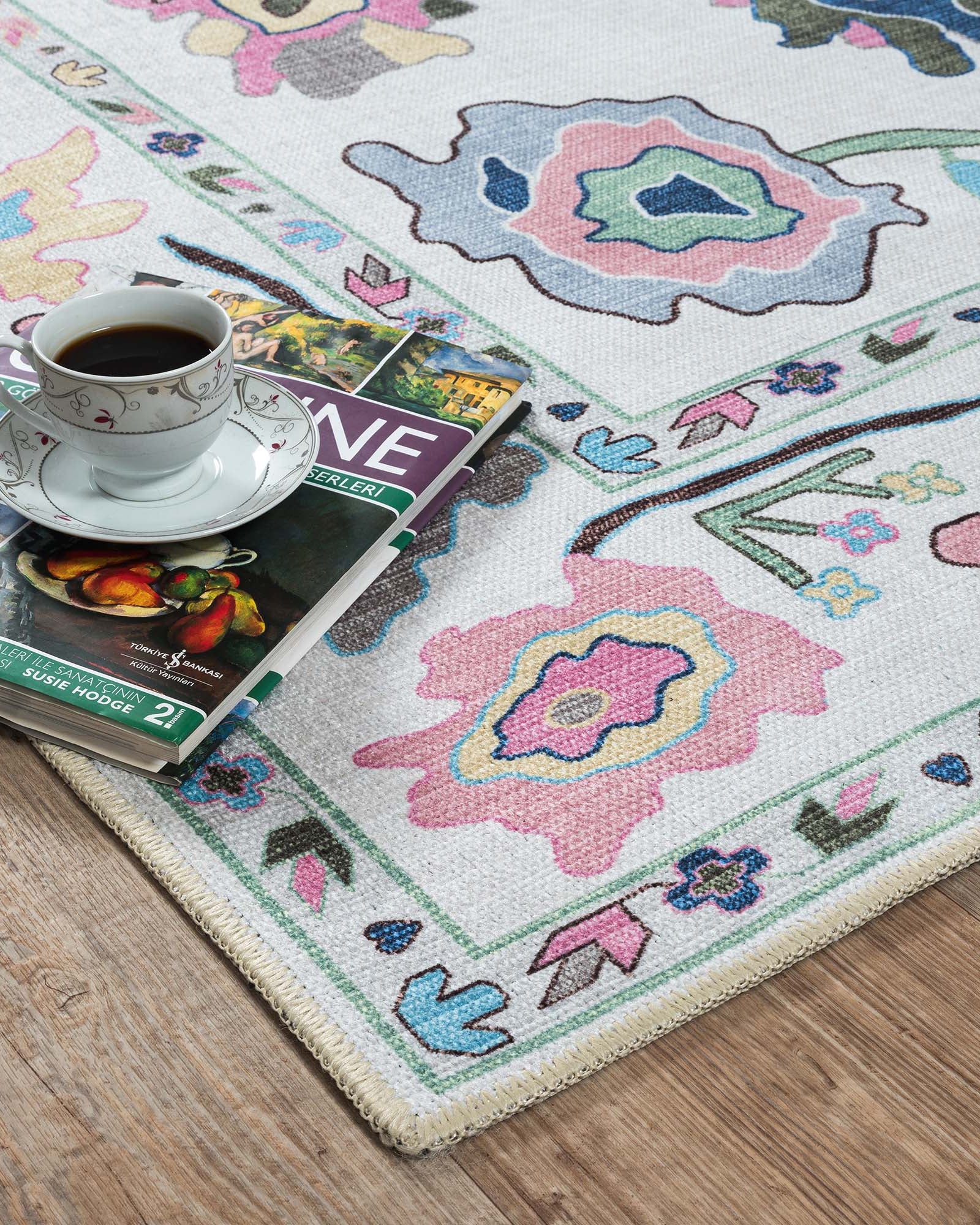
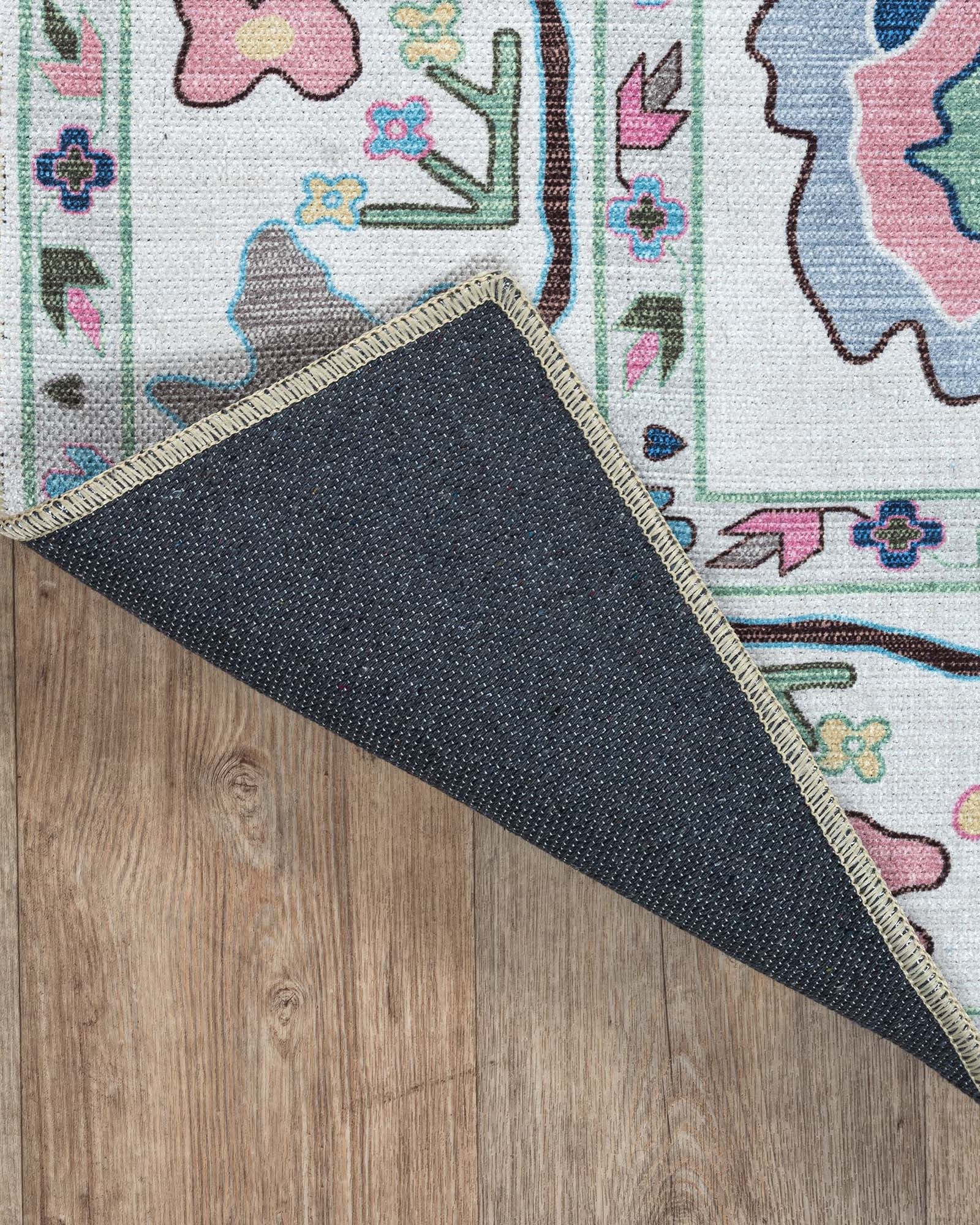
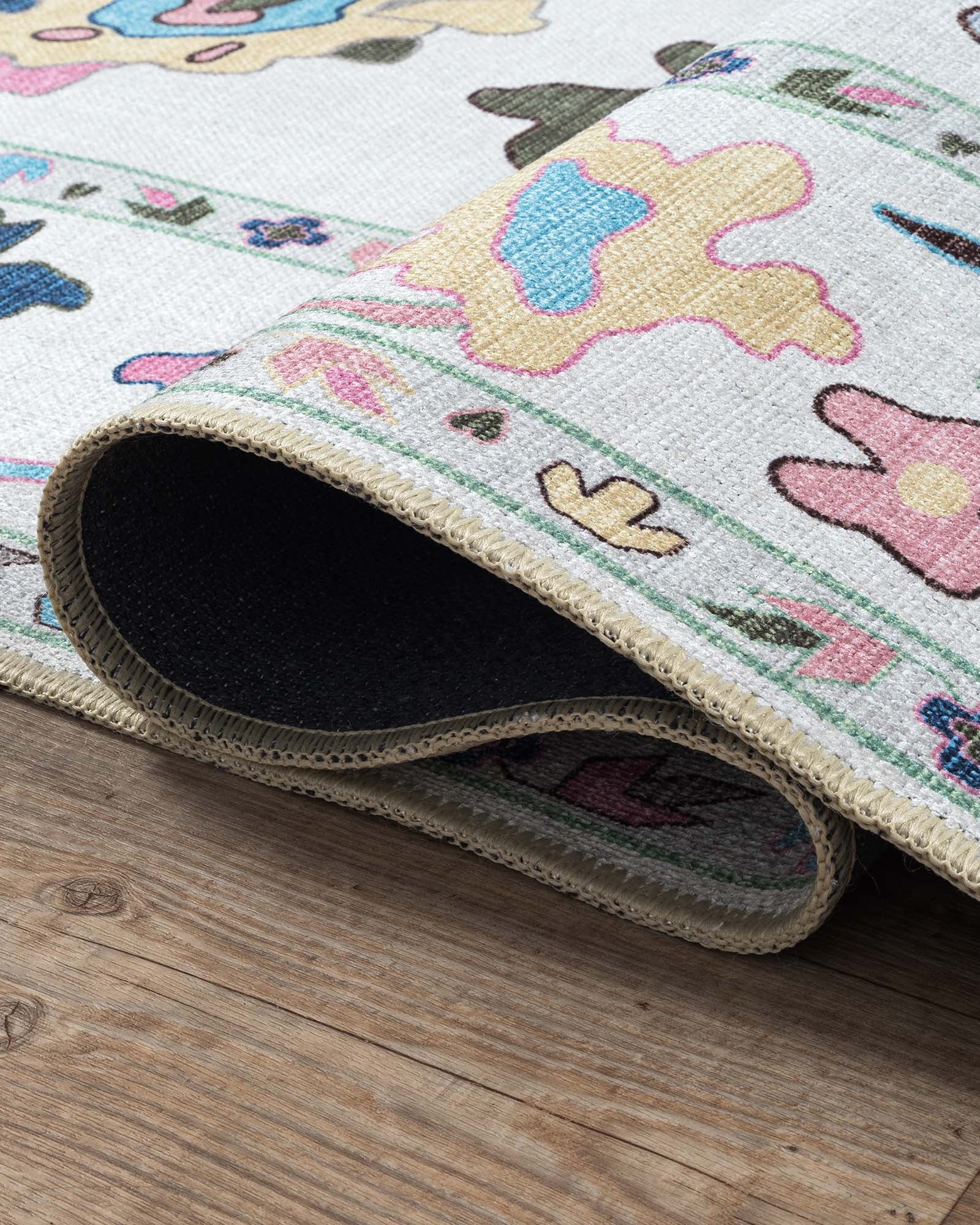
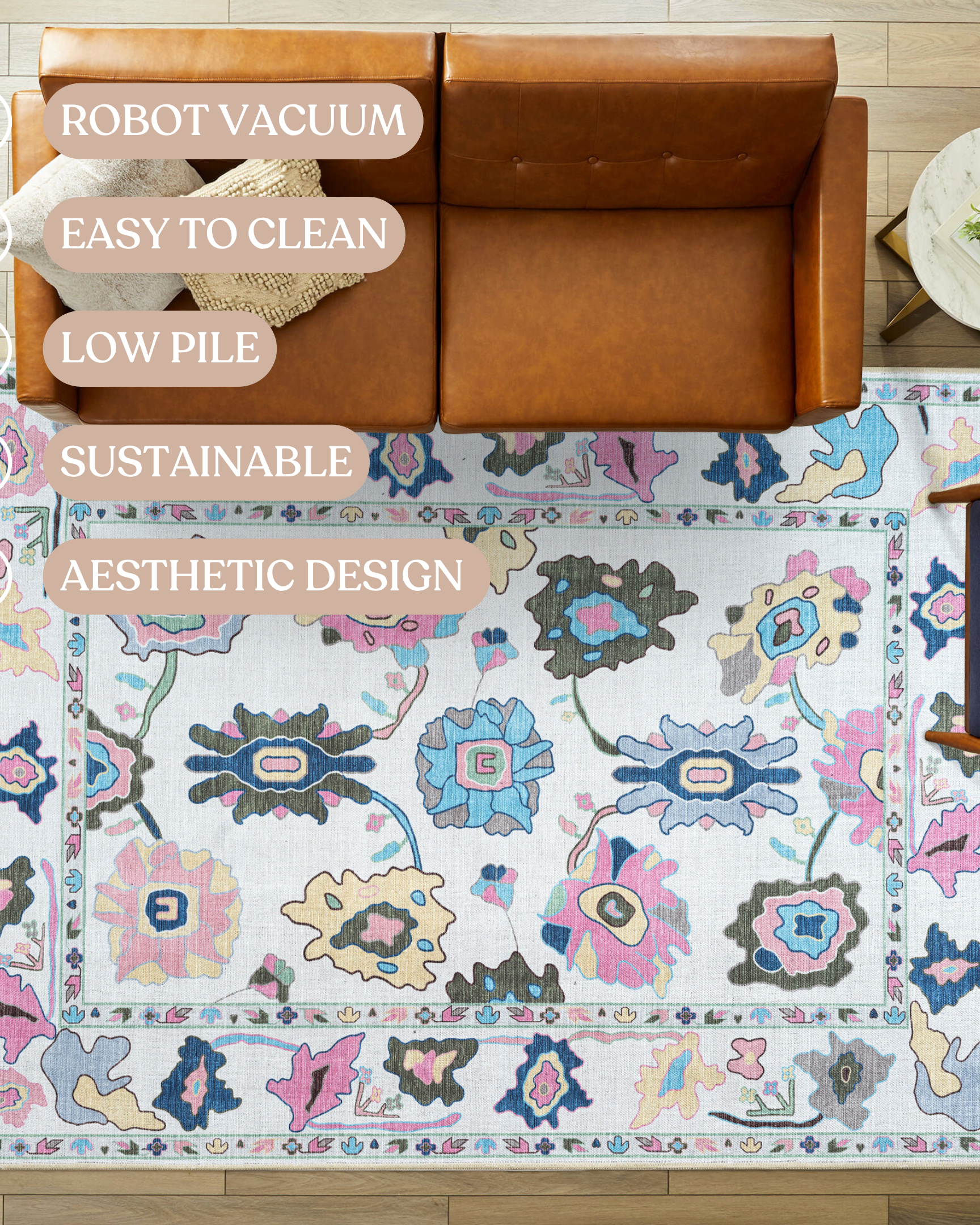
The rugs in this collection got their look from time rather than treatment. No stripping, no re-dyeing, no artificial ageing — just decades of sunlight, footfall and washing acting on hand-spun wool and natural dye. The result is a low, soft pile and a muted, sun-bleached palette that reads as quiet rather than decorative. Every piece is an original hand-knotted rug and none of them repeats.
How Rugs Fade Naturally
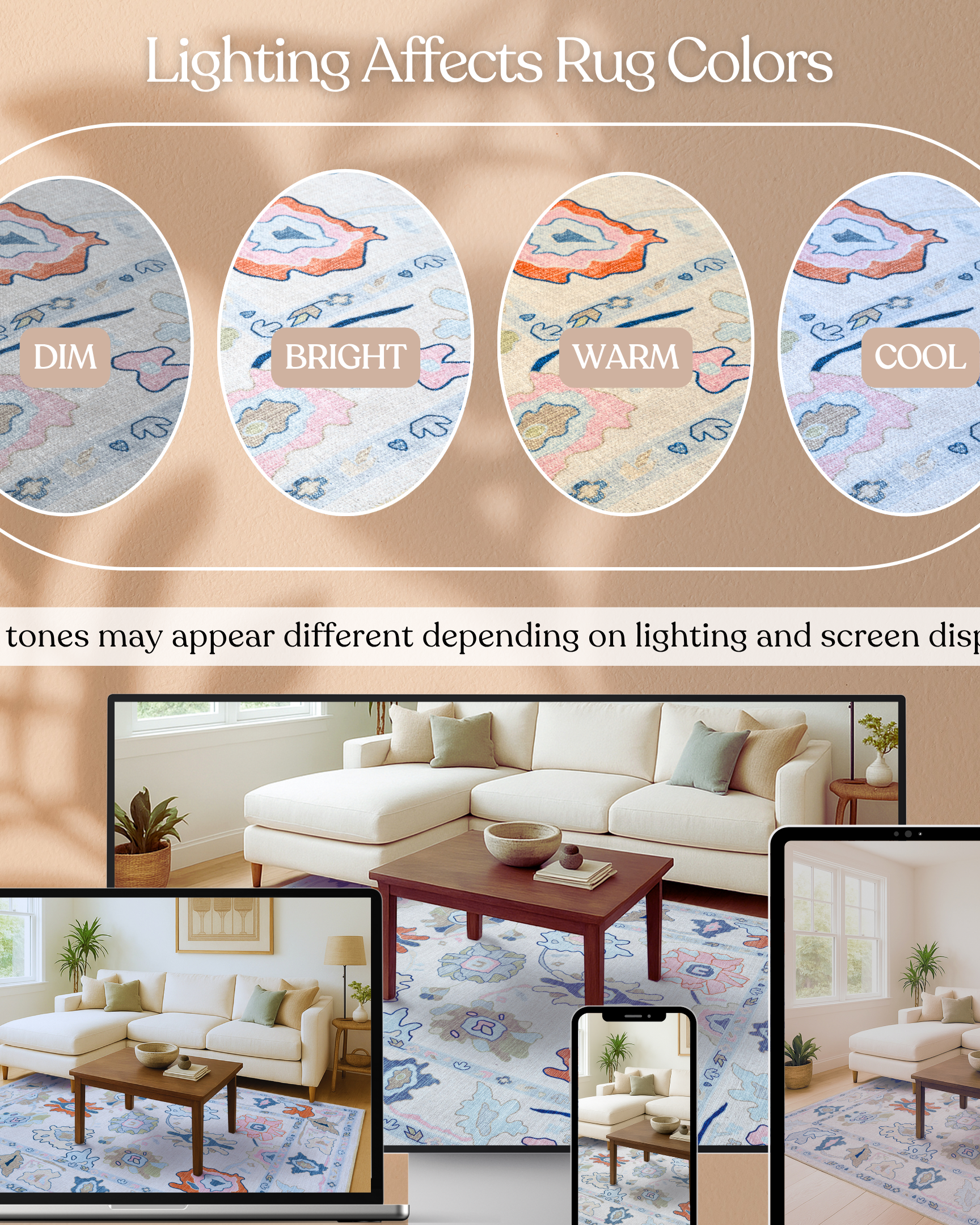
Natural dyes made from madder root, indigo, walnut husk and larkspur break down under ultraviolet light at different rates. Reds soften toward terracotta and rose, indigos drift toward dusty grey-blue, yellows retreat first and almost disappear, and undyed ivories warm to cream. Because a rug is never lit evenly across its whole life, this happens unevenly — the half that sat near a window fades faster than the half under a sofa, and a gradient develops across the field. That gradient is one of the clearest markers of genuine natural fading.
Fading Versus Overdyeing
The distinction matters when you are choosing. An overdyed rug has been chemically stripped and re-dyed in a single strong colour by a workshop — the effect is deliberate, graphic and uniform in intent. A naturally faded rug has been through nothing at all. Its colours are the original dyes, simply reduced, so the full original palette remains legible, just quieter. Faded pieces sit softer and more traditional; overdyed pieces read bolder and more contemporary.
What "Distressed" Means Here
Distressed describes structural wear rather than colour: pile worn low across the field, areas thinned toward the foundation, softened selvages, rounded ends, trimmed or missing fringe. On a well-made rug this is often even and stable — a piece that has been used properly for fifty years rather than damaged. Every instance is photographed as it is and described on the product page.
Why Low Pile Is an Advantage
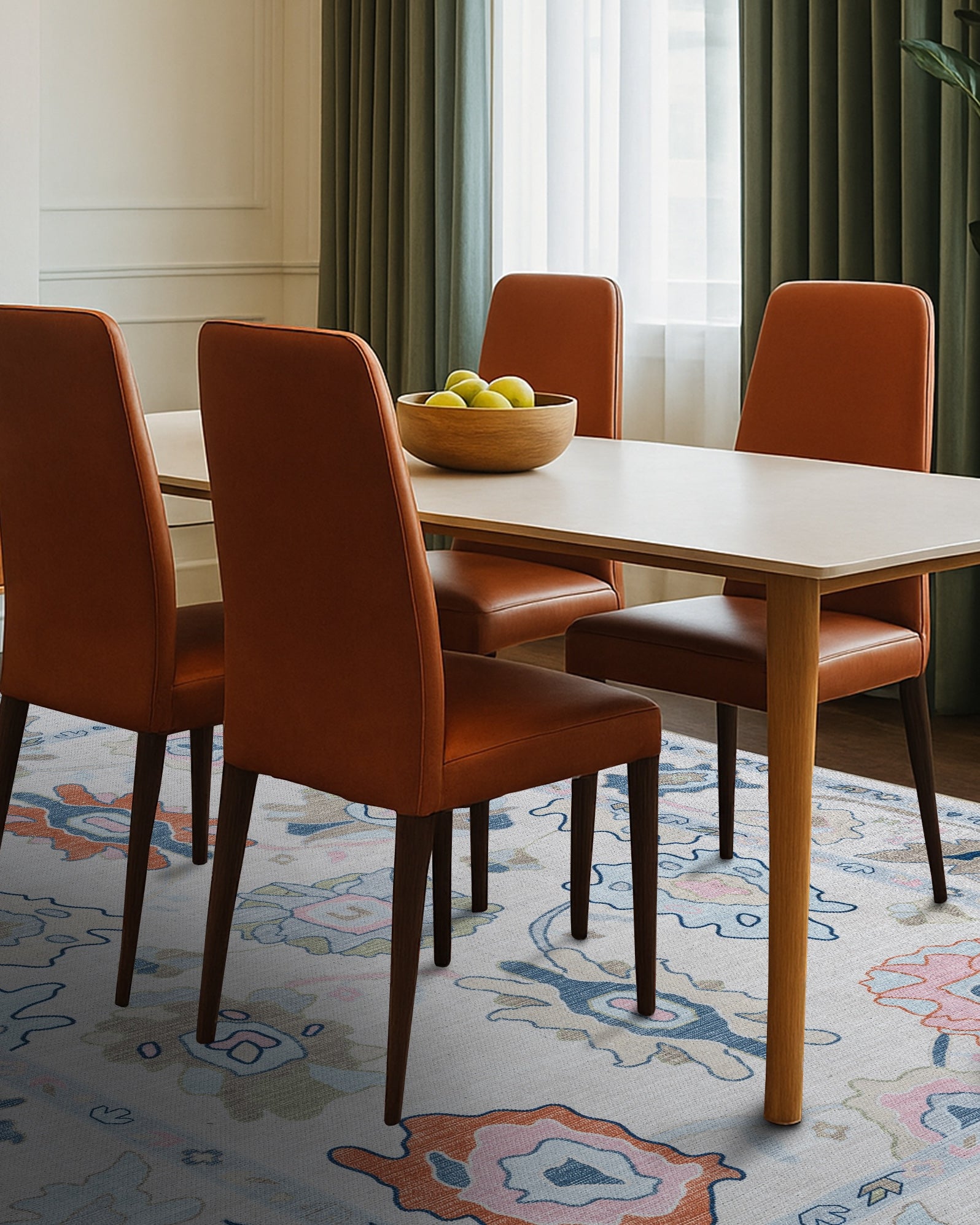
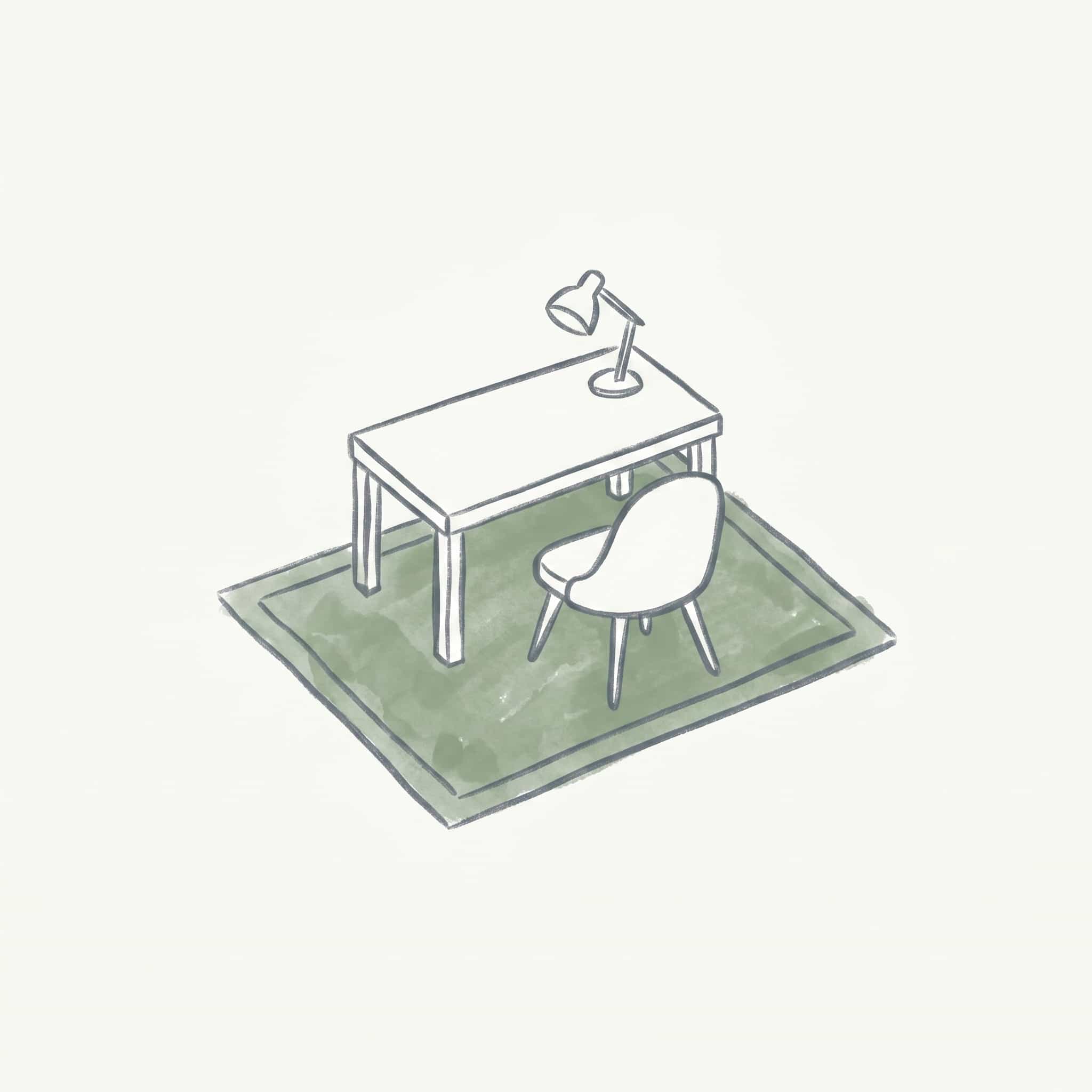
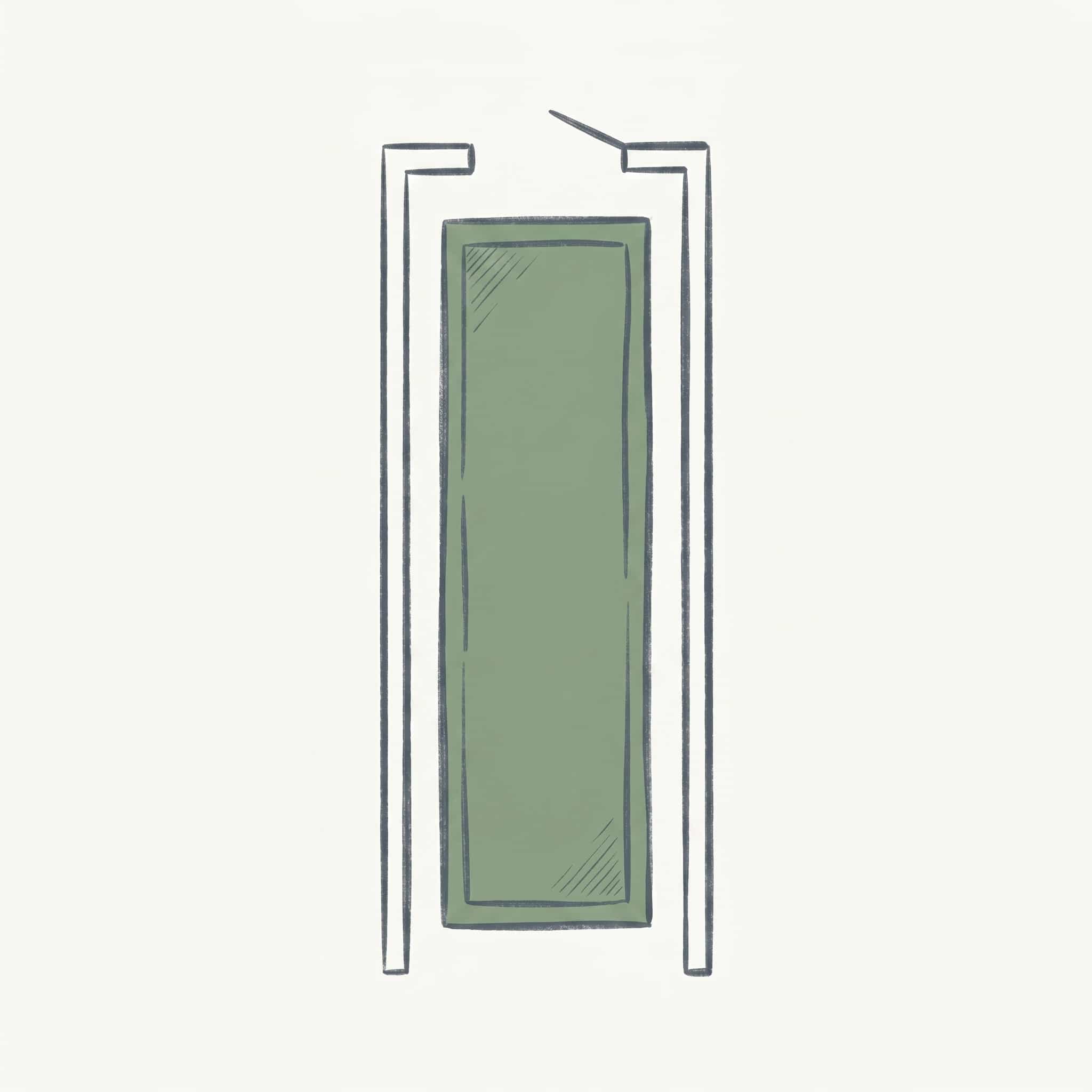
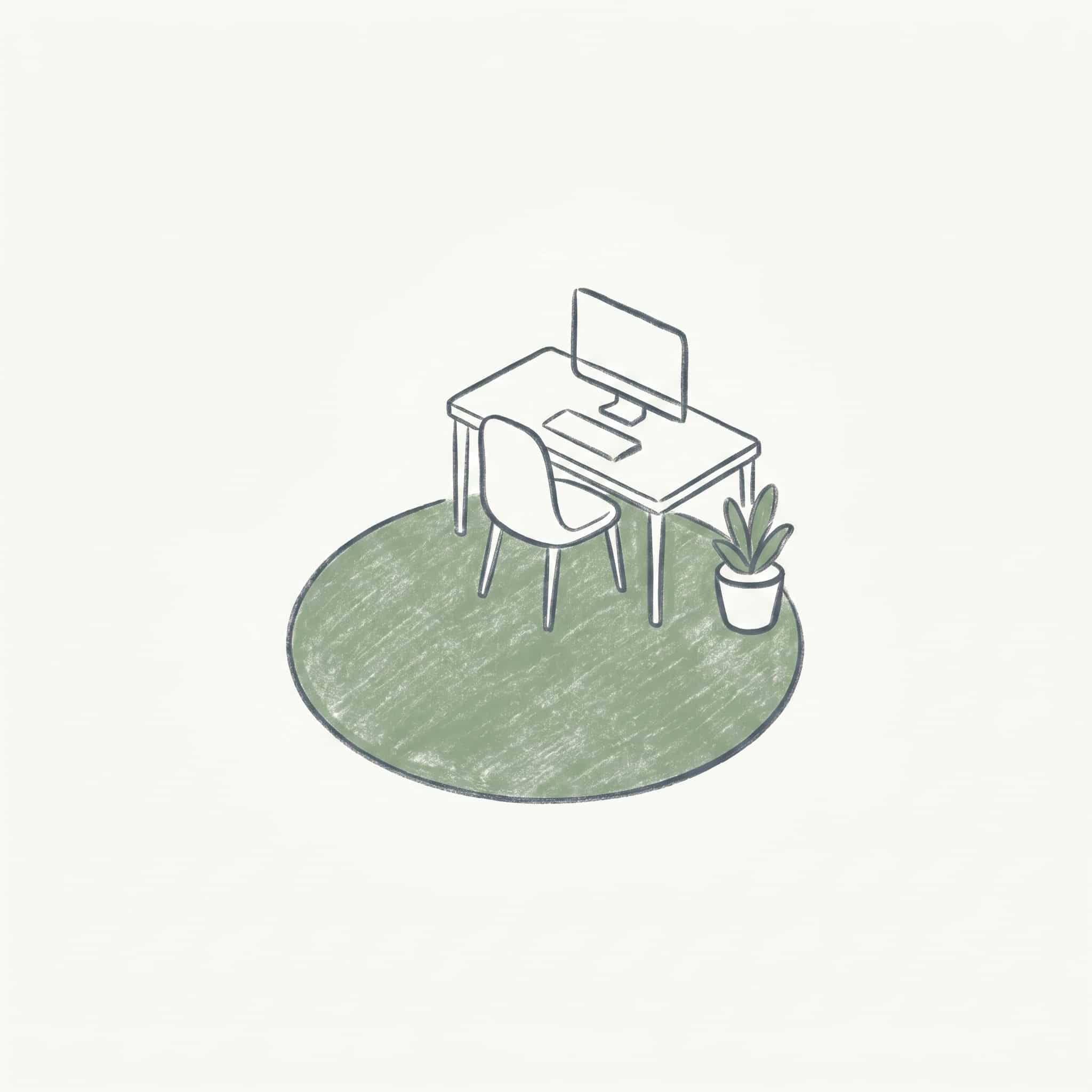
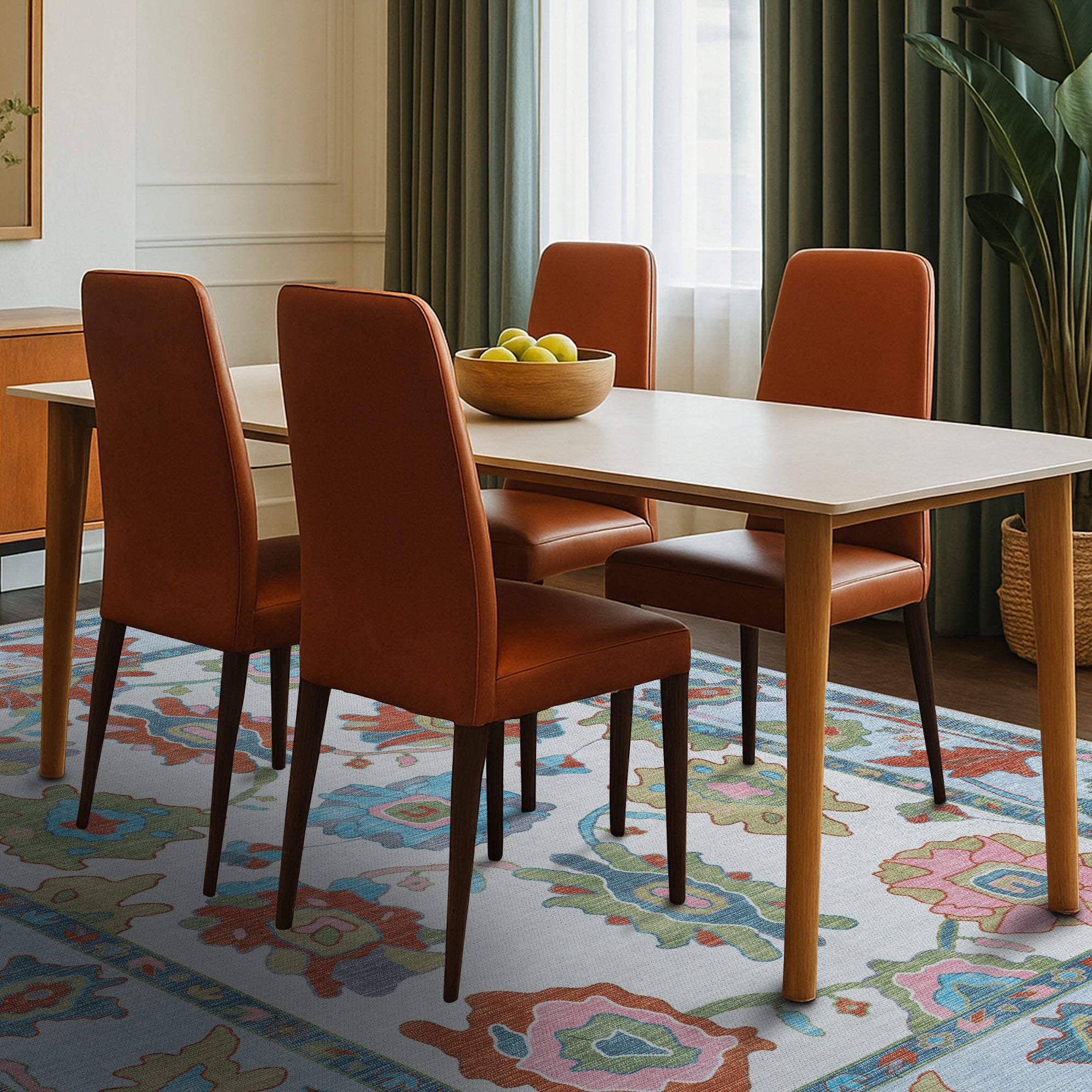
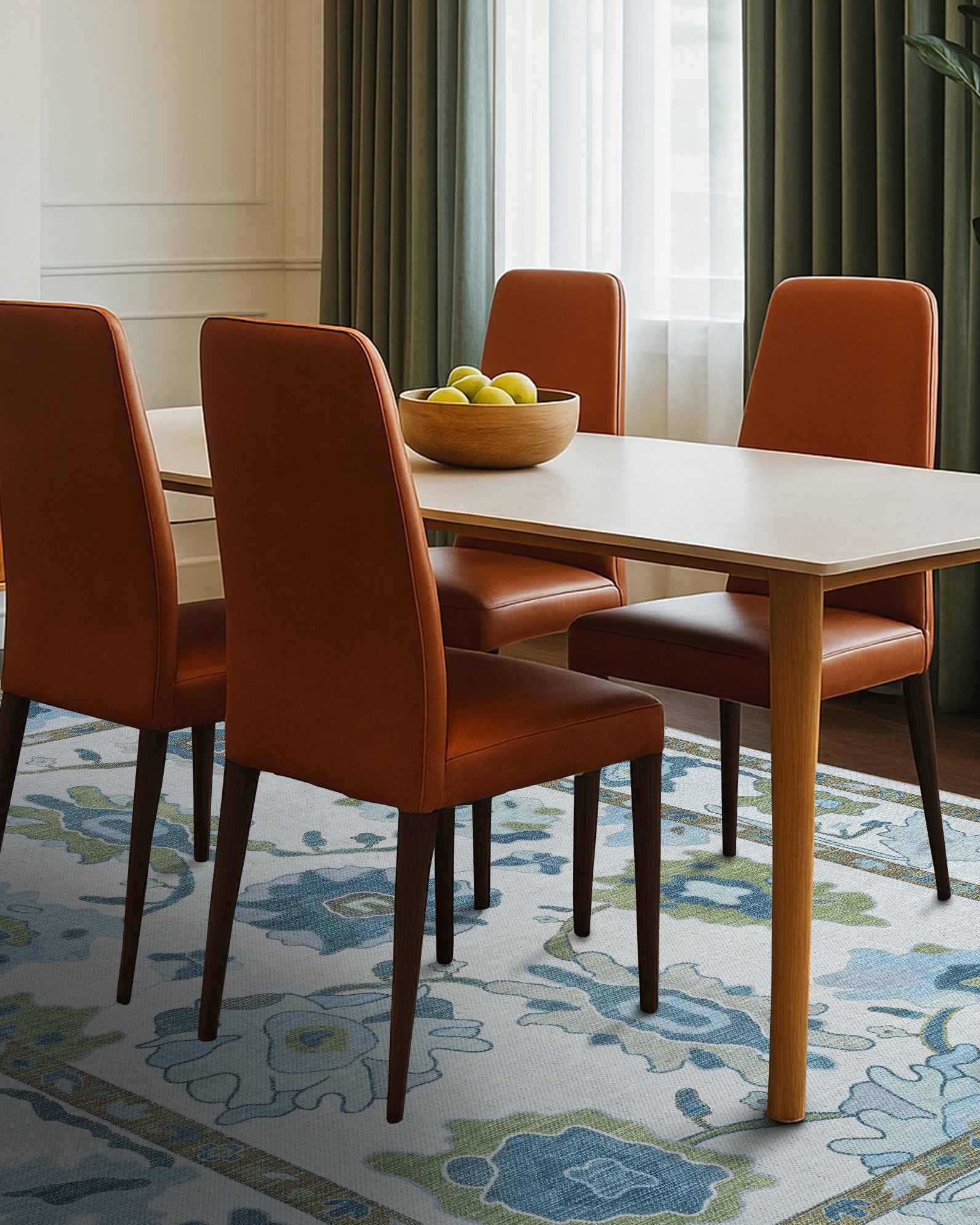
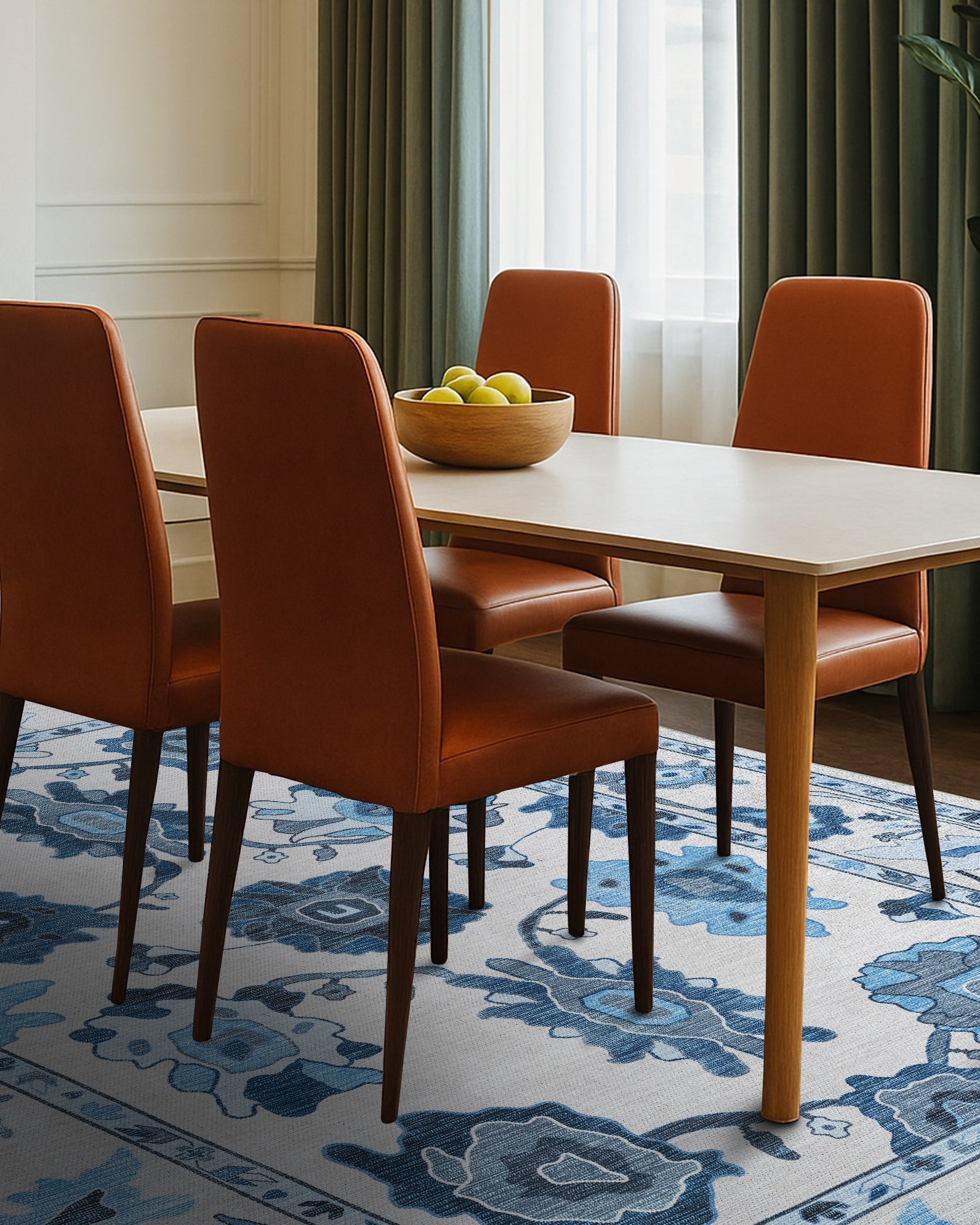
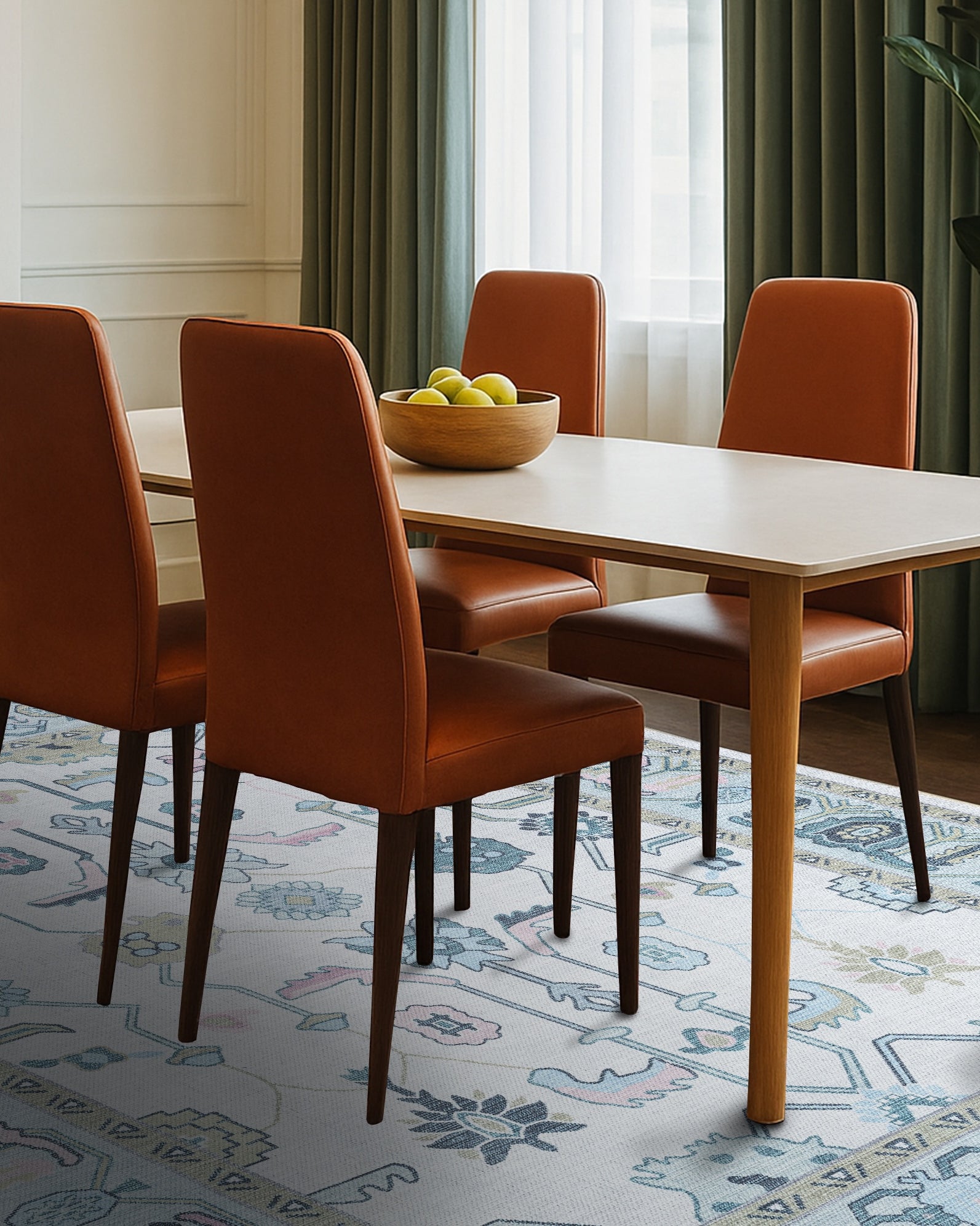
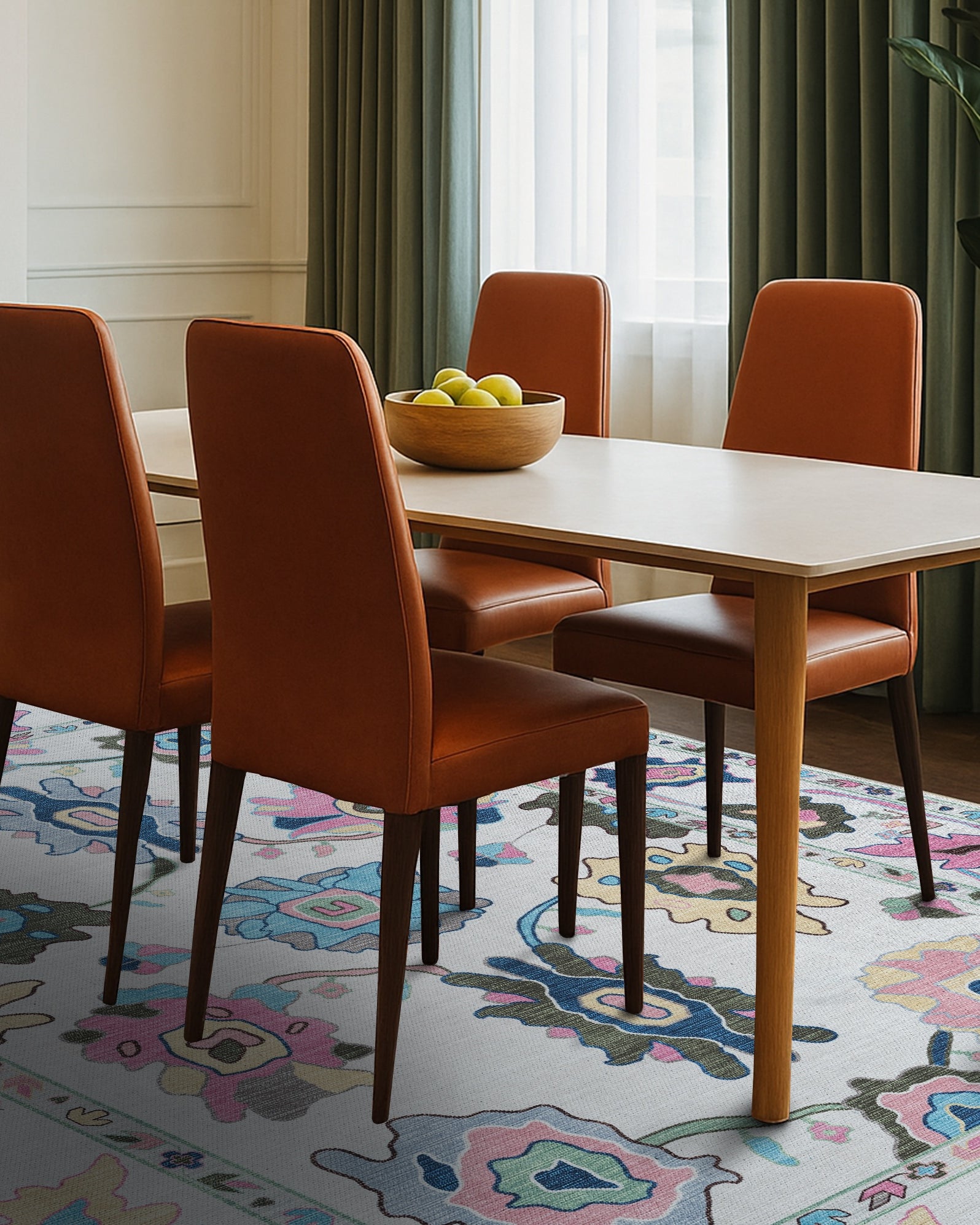
A worn-down rug has already lost the fibre that sheds, crushes and holds soil, which makes these pieces unusually practical. They lie flat, sit flush under doors and low-clearance furniture, do not show vacuum tracks or footprints, and hide everyday dirt far better than a full-pile rug. Chairs slide over them easily, which makes them one of the few vintage options that genuinely work under a dining table or a desk.
The trade-off is cushioning. There is little pile left to walk on, so a good felt-and-rubber pad matters more here than in any other collection — it restores the underfoot comfort the rug has lost and protects the remaining foundation from grinding against the floor.
Designing With a Faded Rug
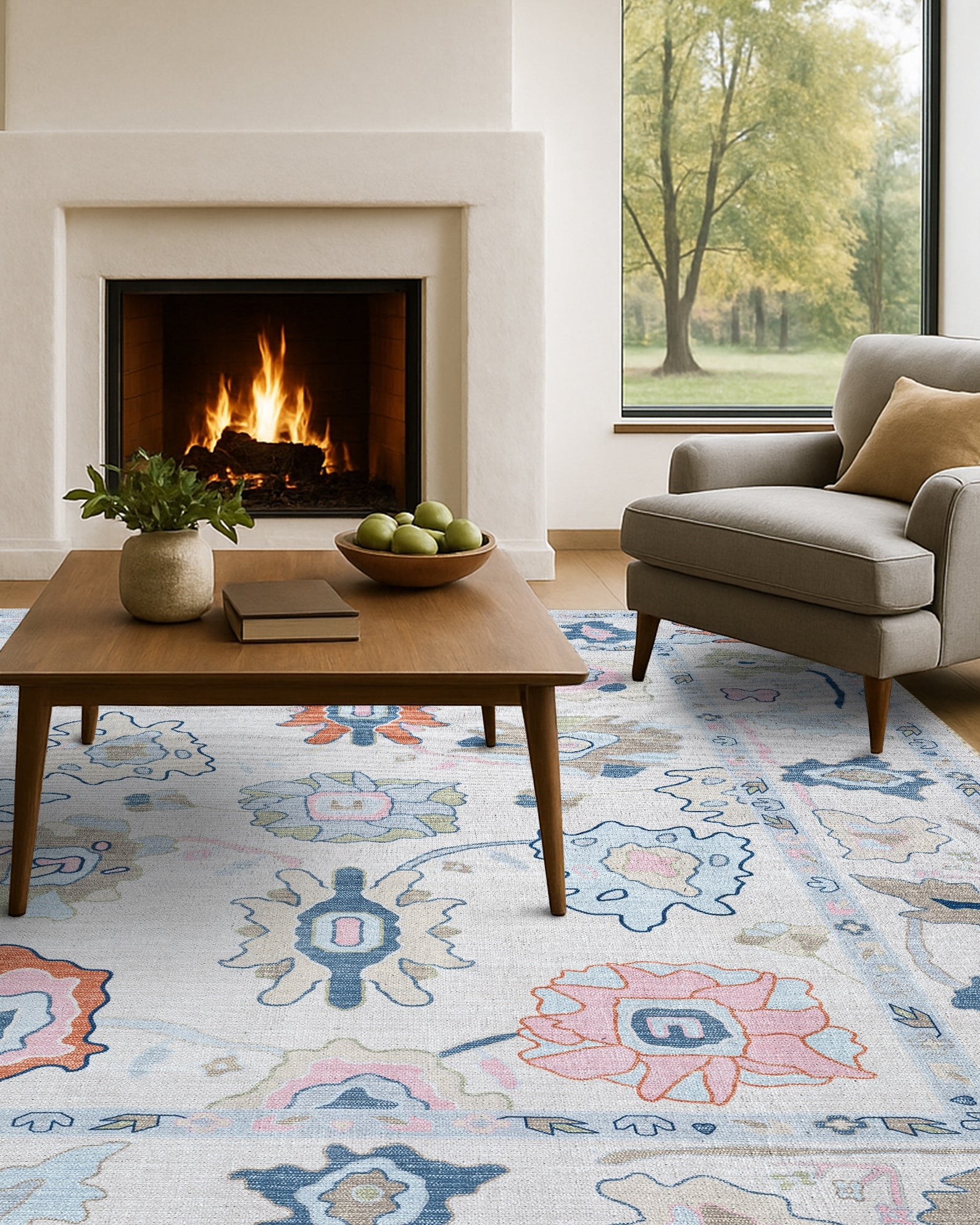
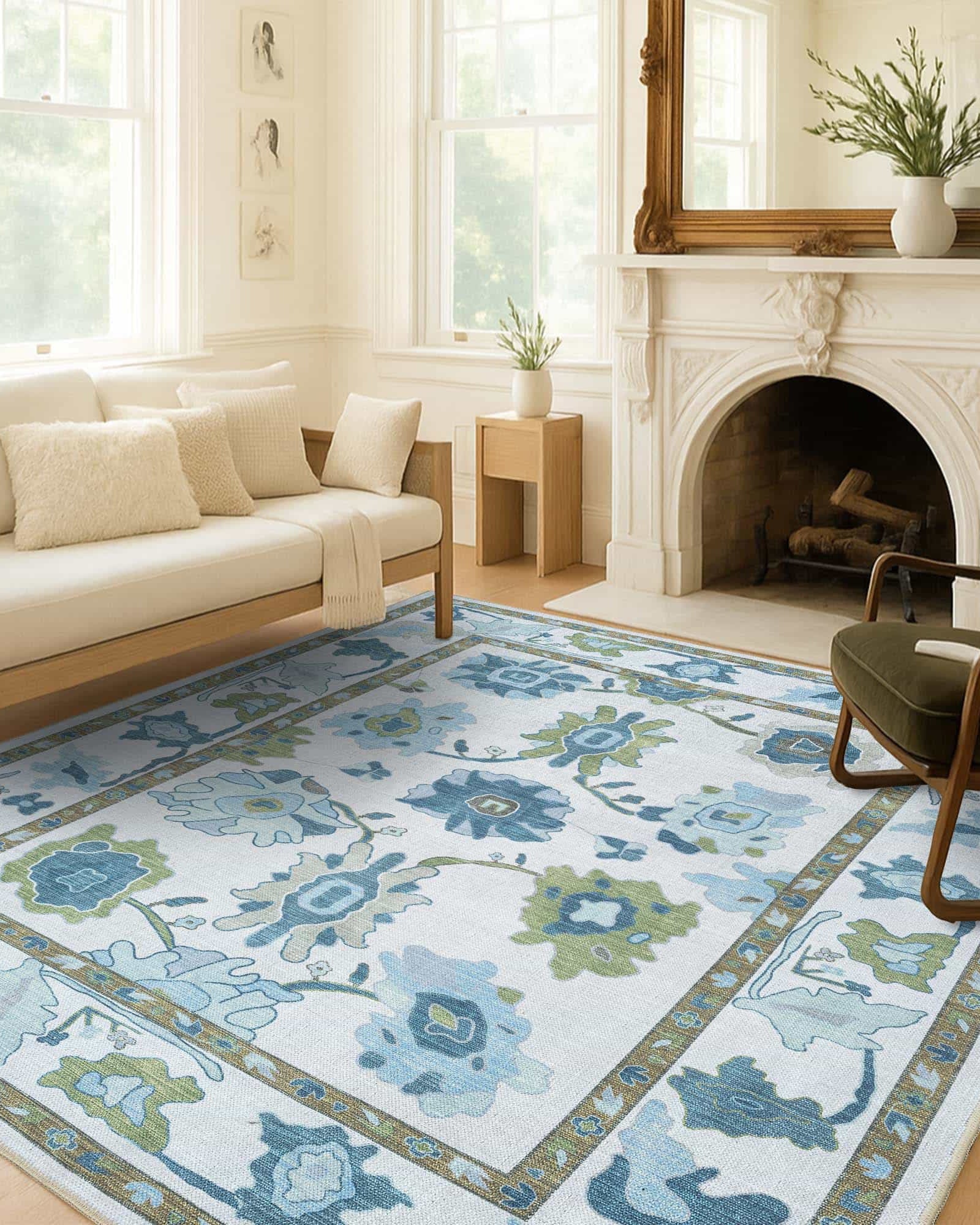
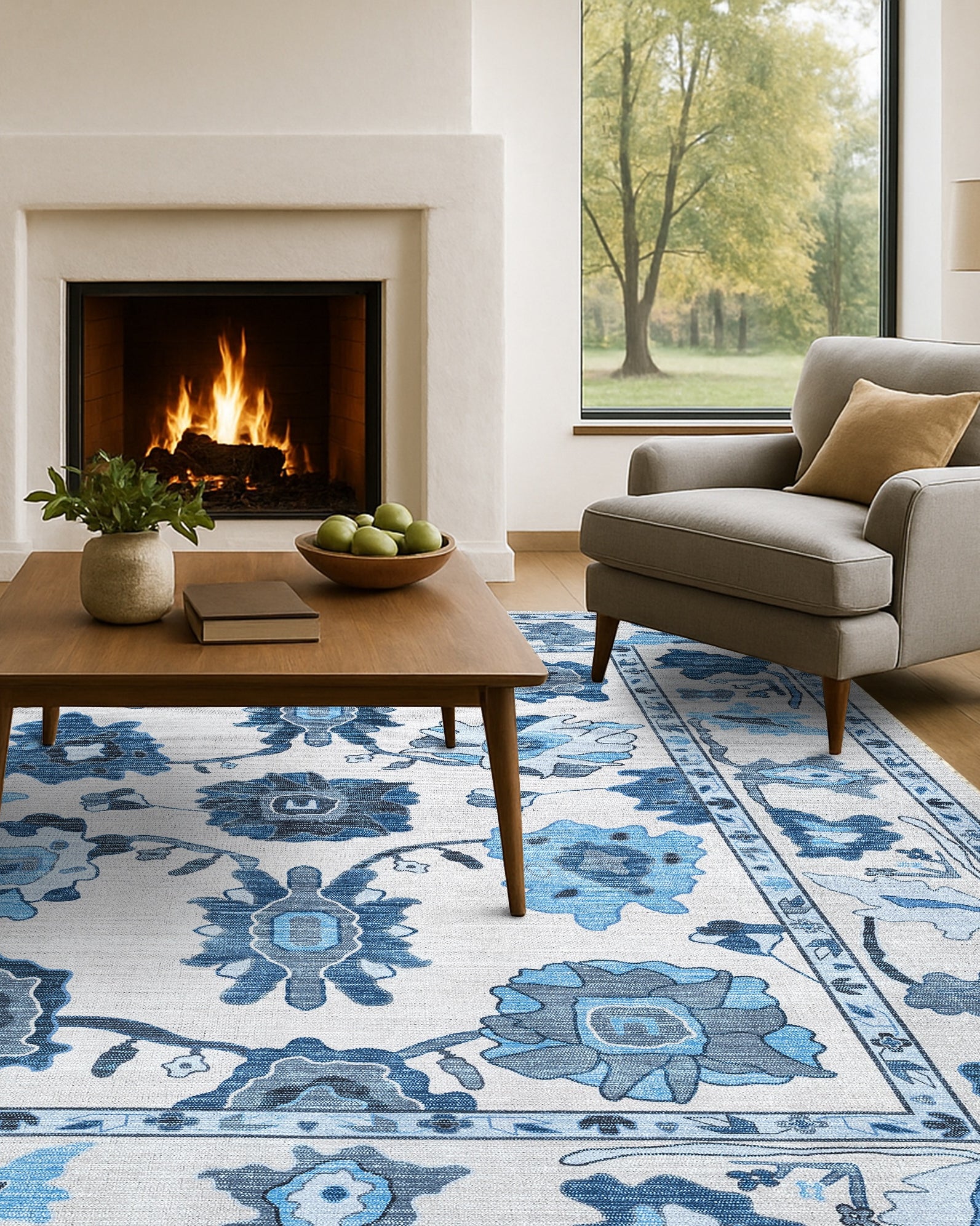
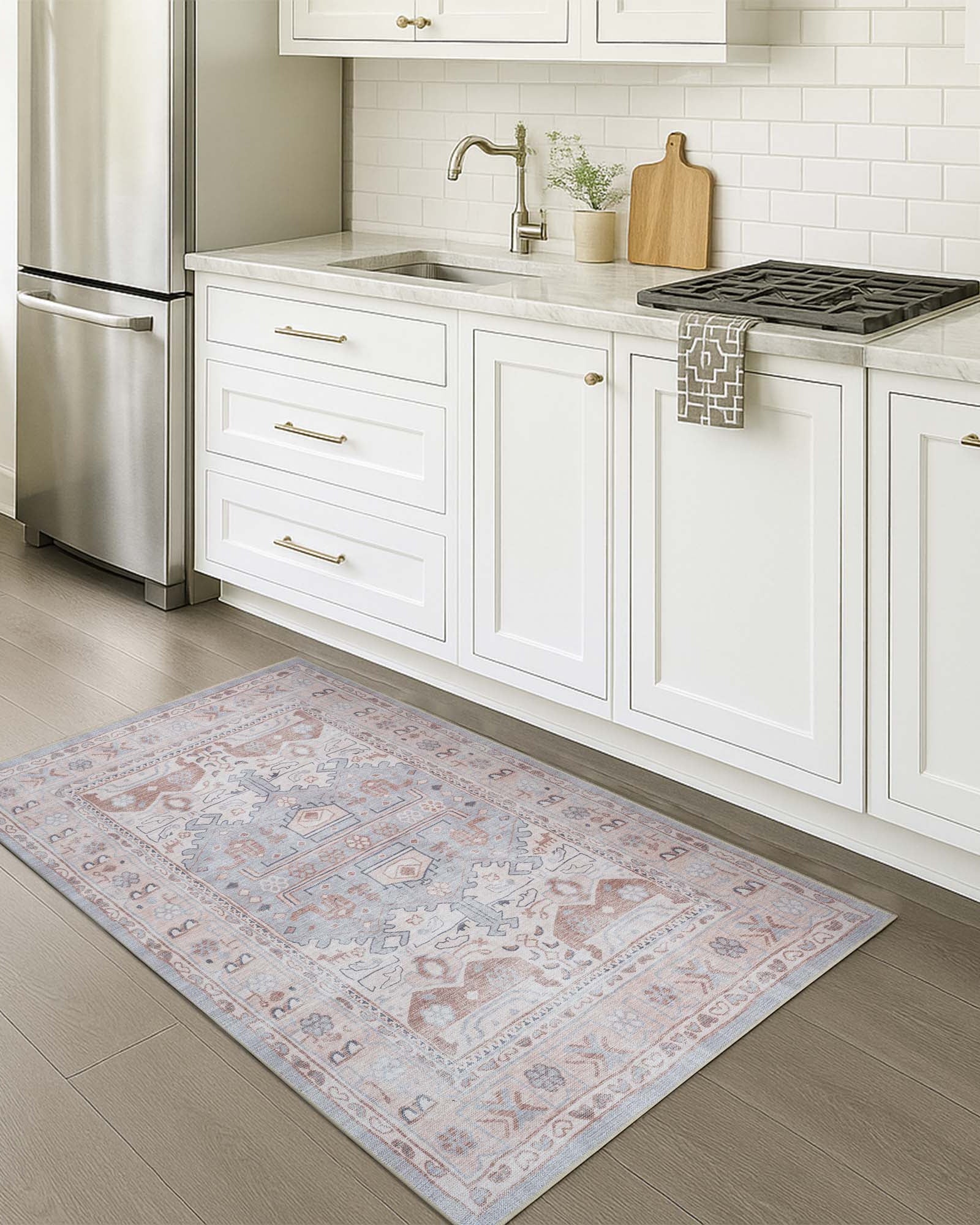
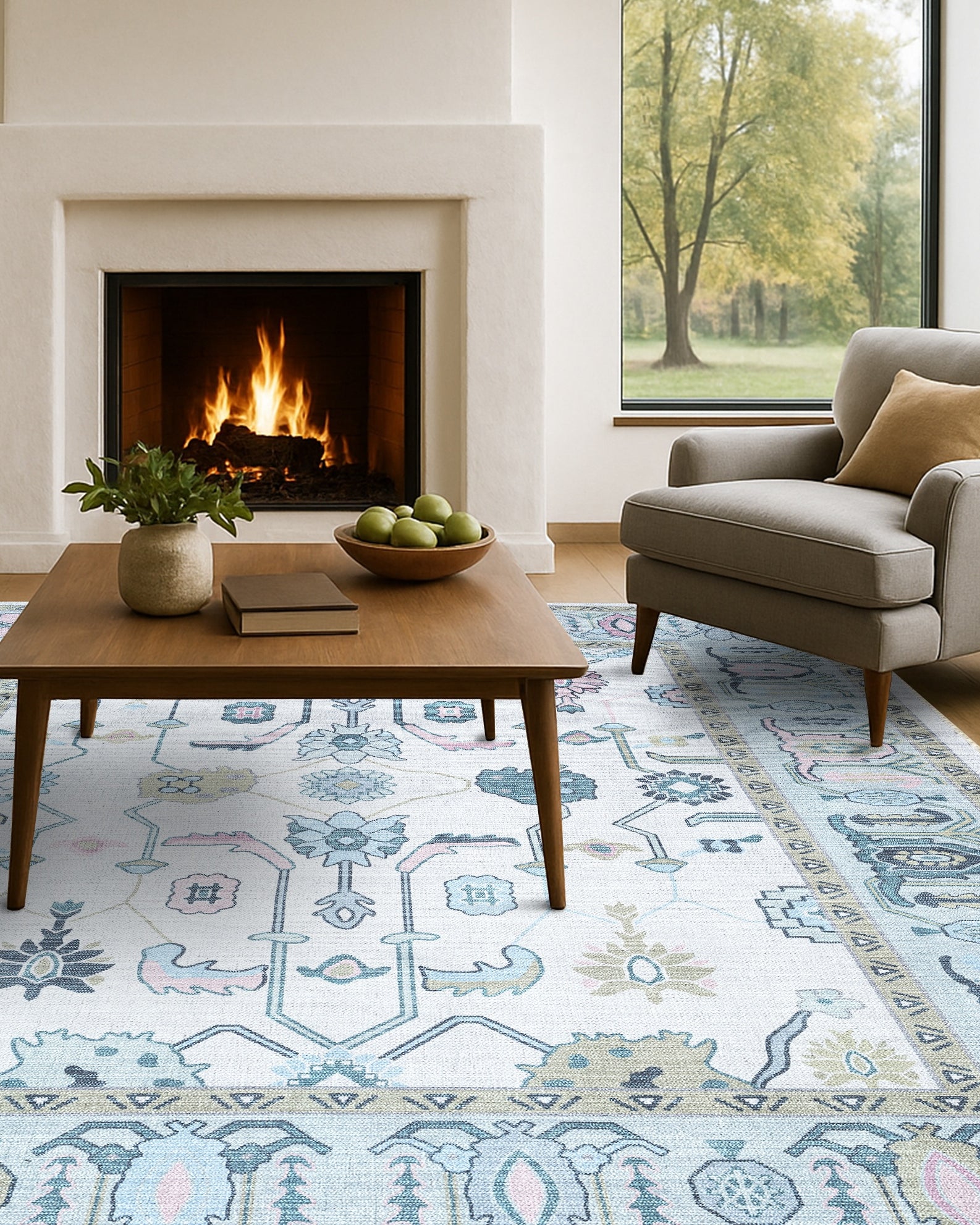
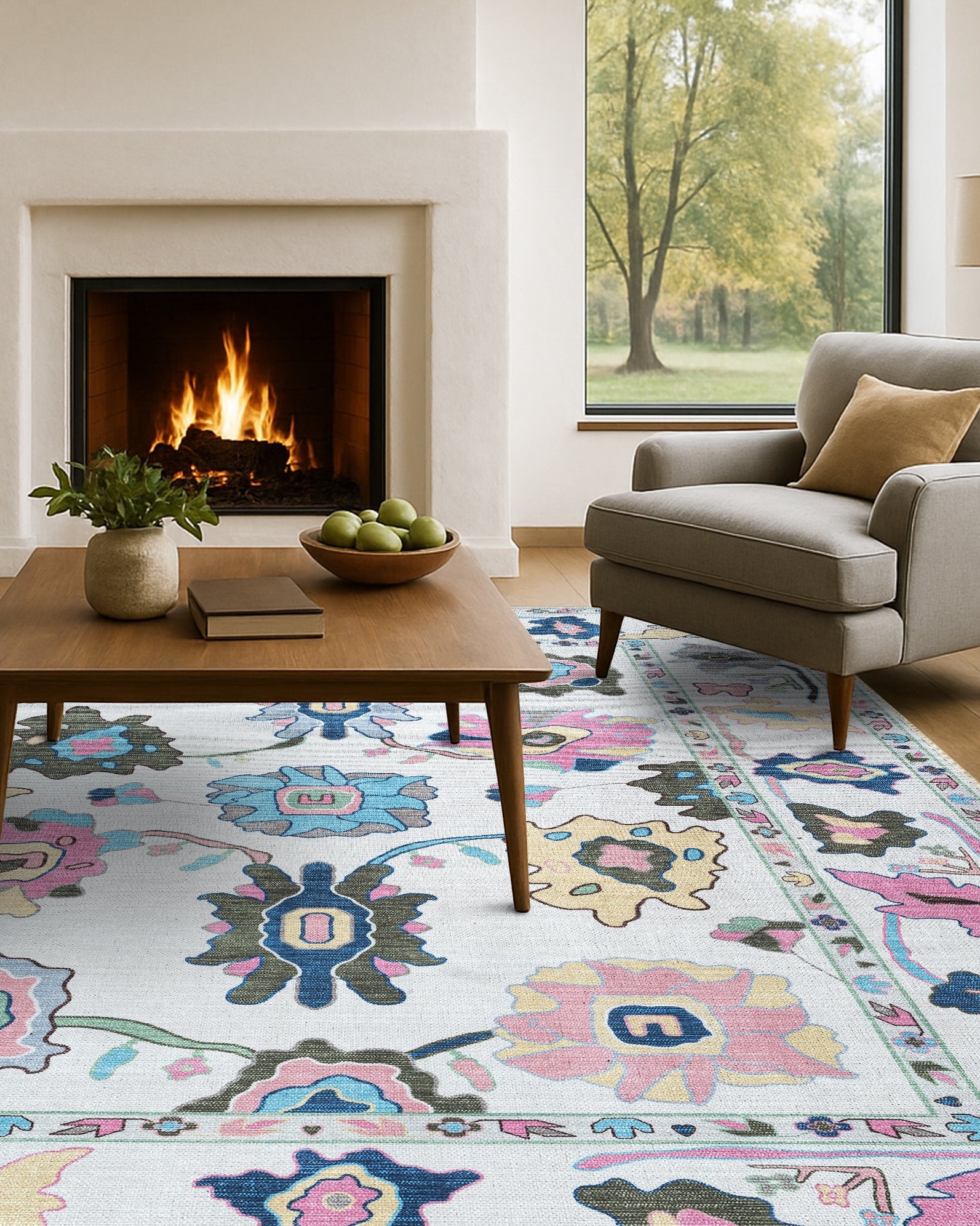
Muted rugs behave almost like a textured neutral. They anchor a room without asserting a colour scheme, which makes them the easiest vintage pieces to place in an interior that is already busy — patterned upholstery, layered textiles, strong art, or an open-plan space where a saturated rug would dominate. They also read as older and more settled than a bright rug of the same age, which suits rooms furnished with a mix of periods.
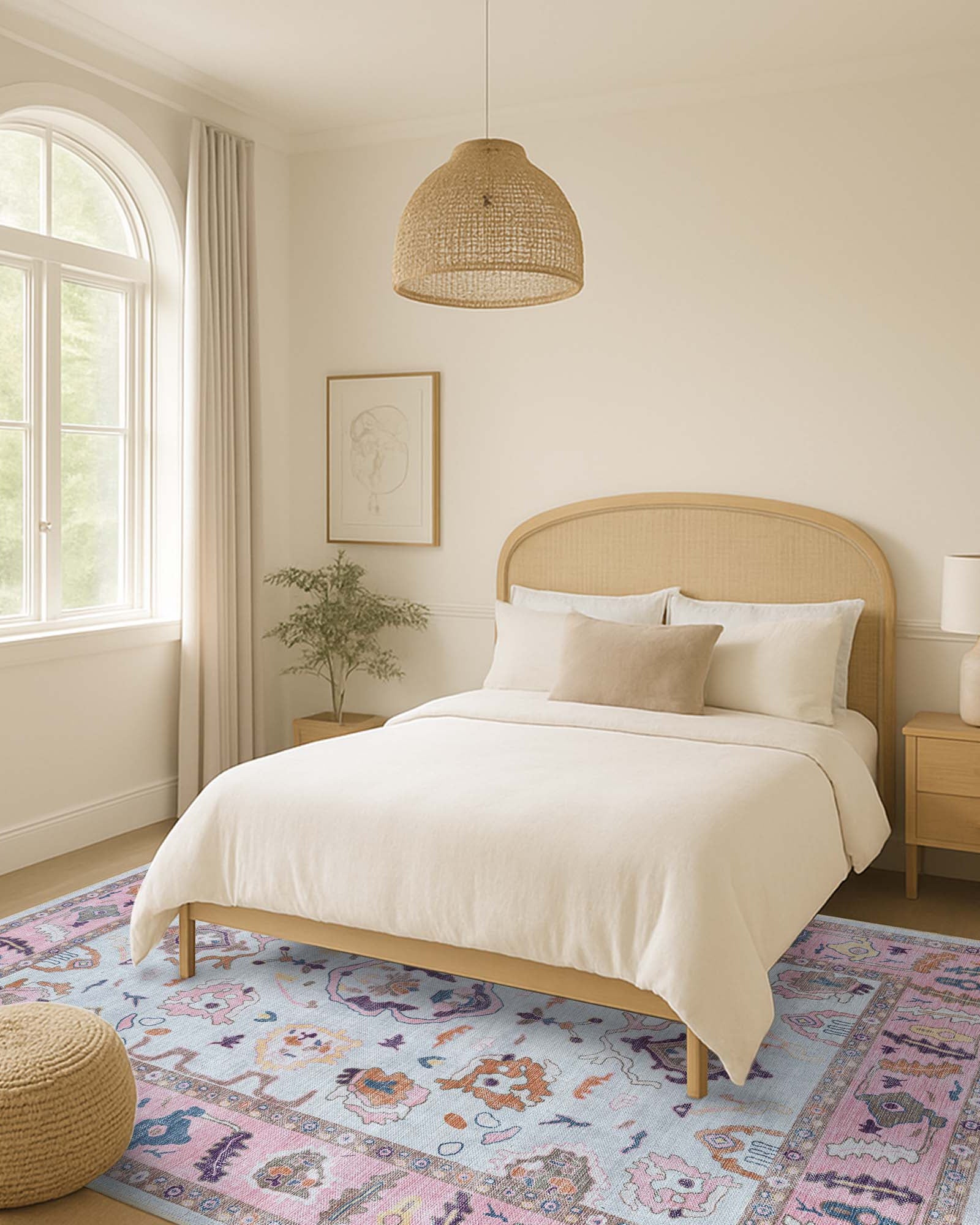
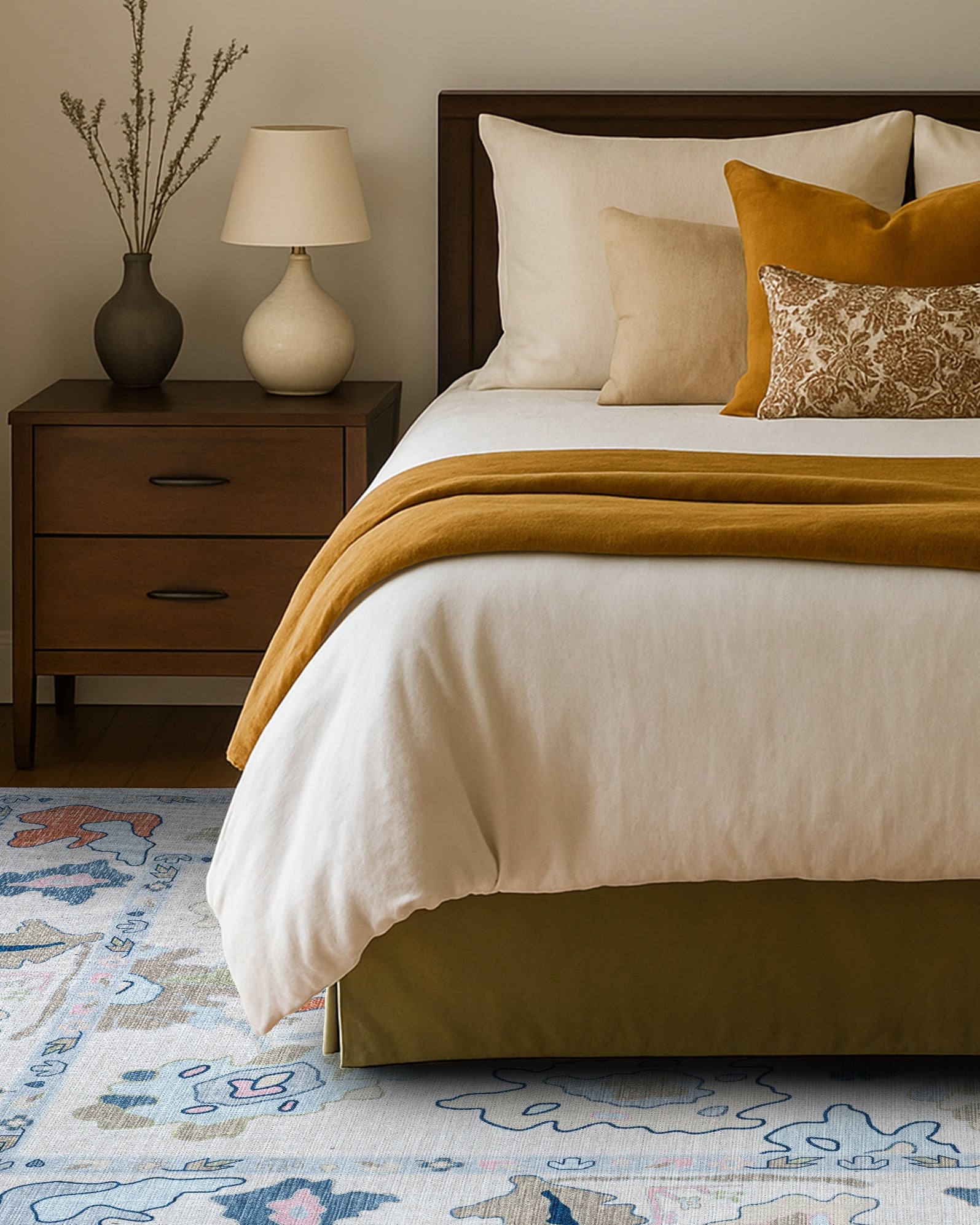
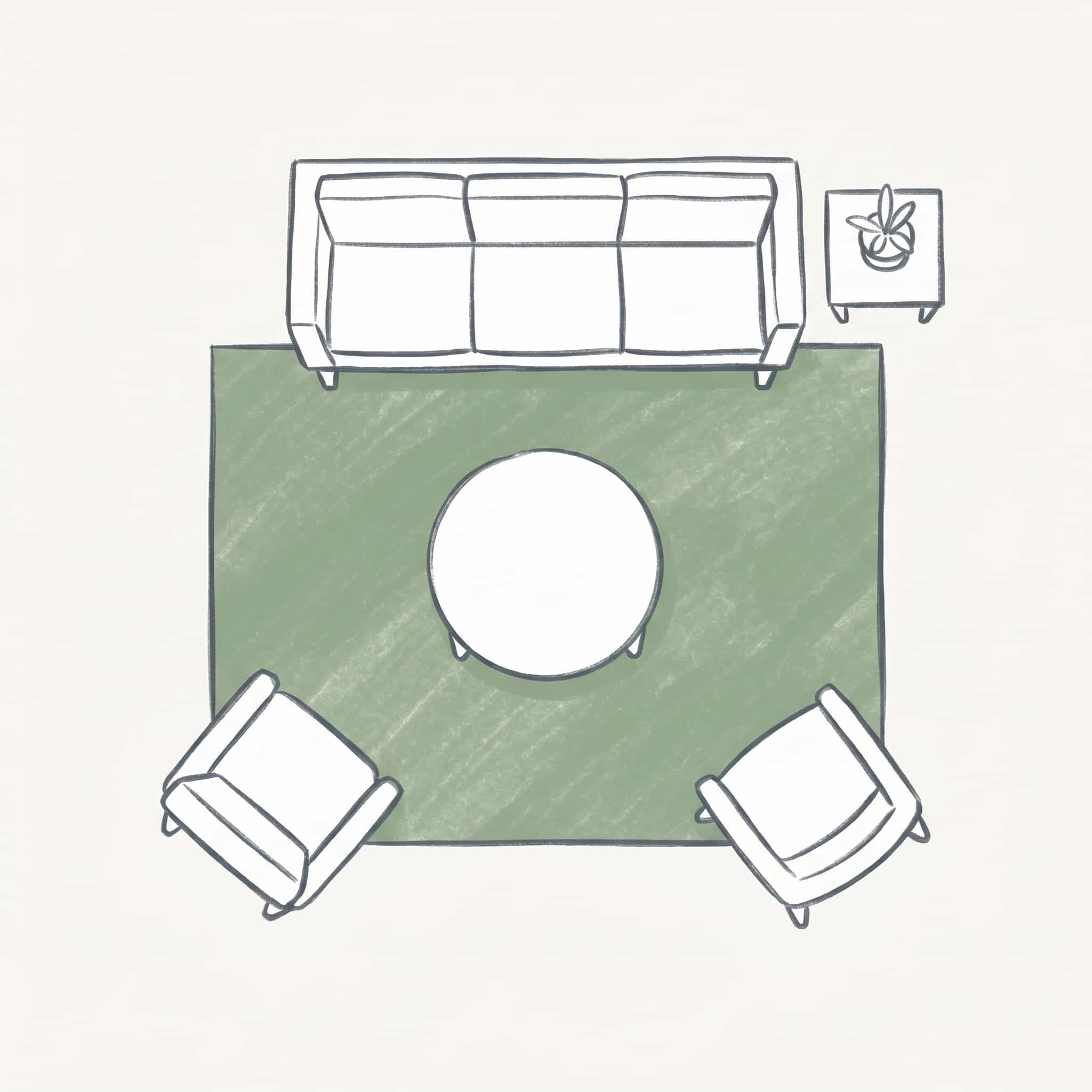
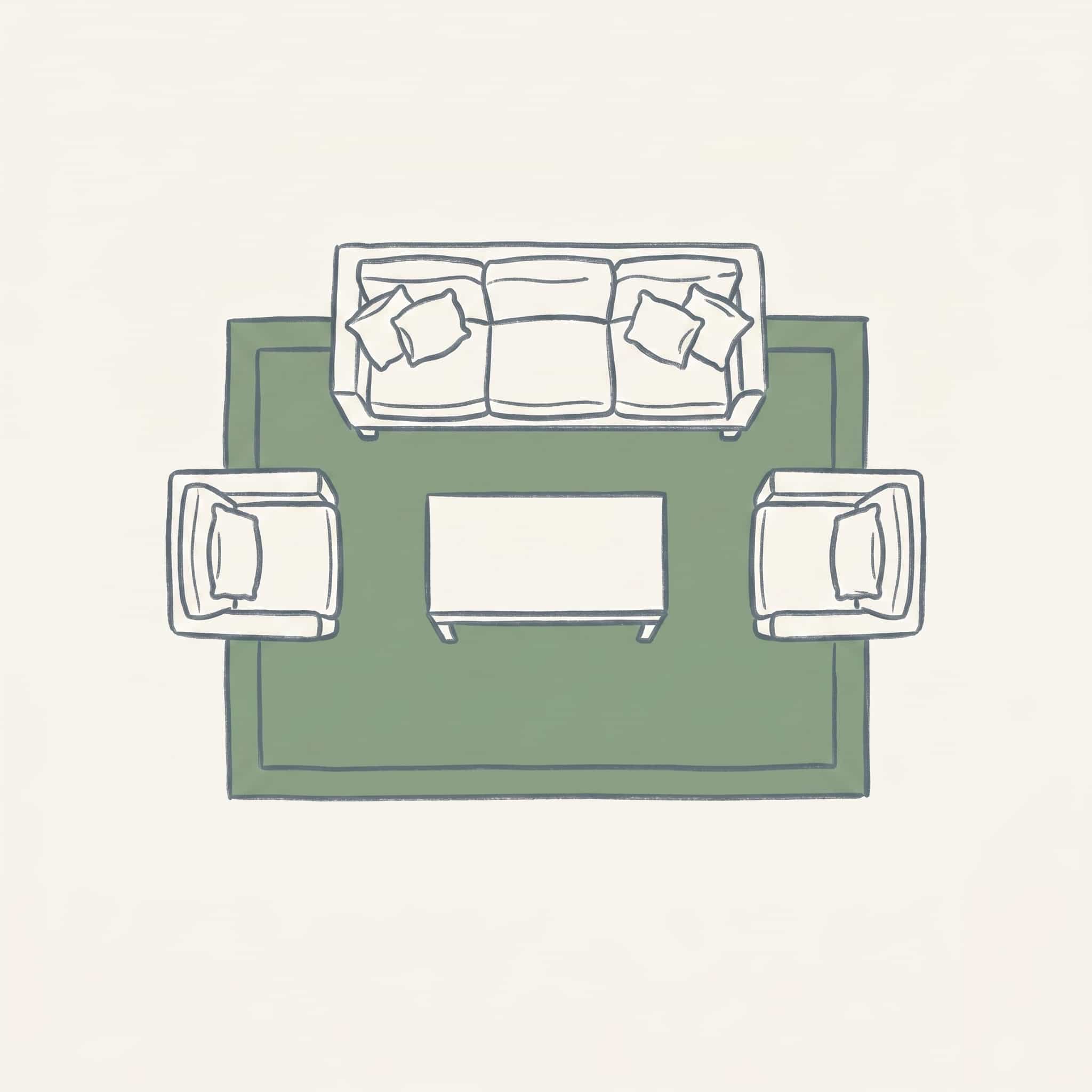
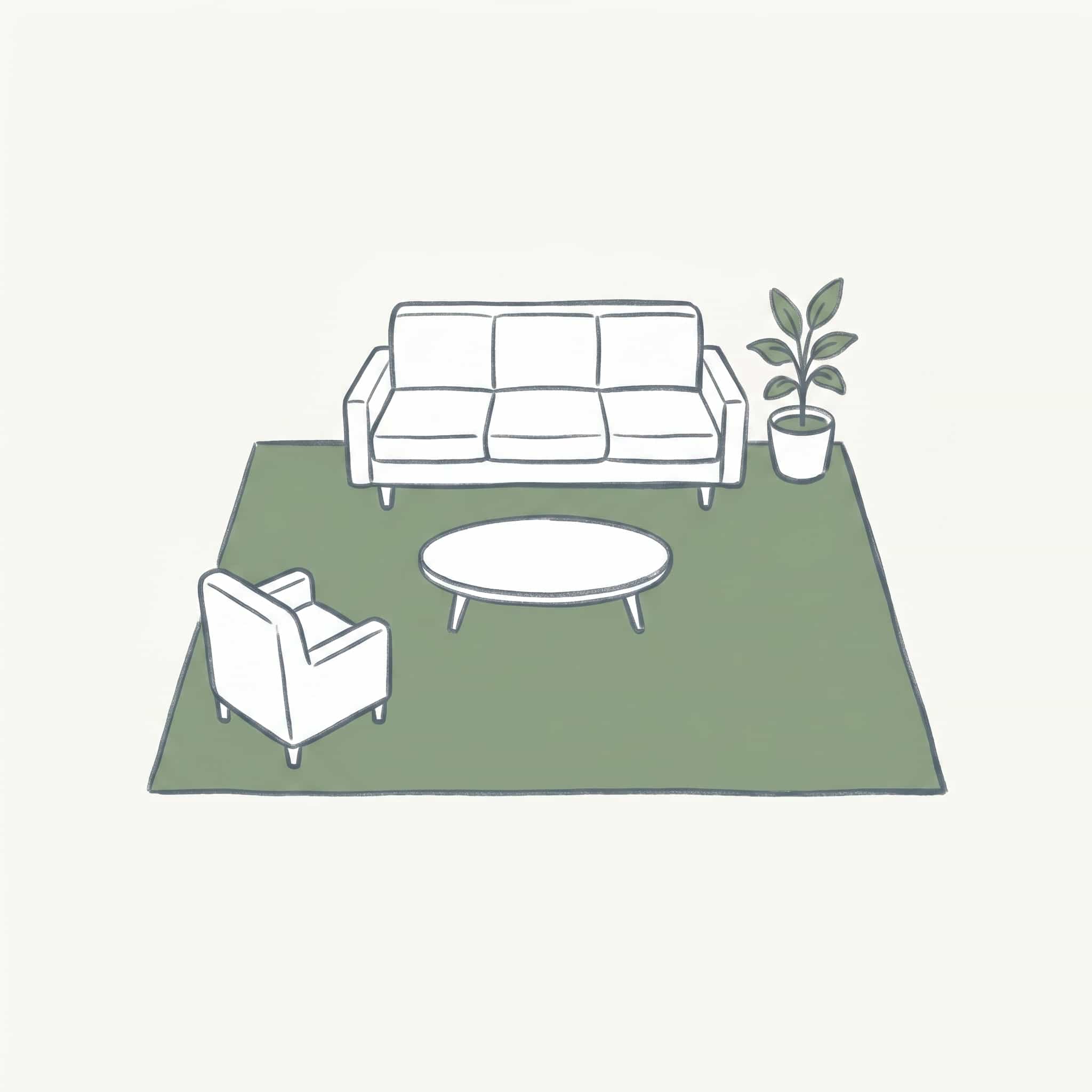
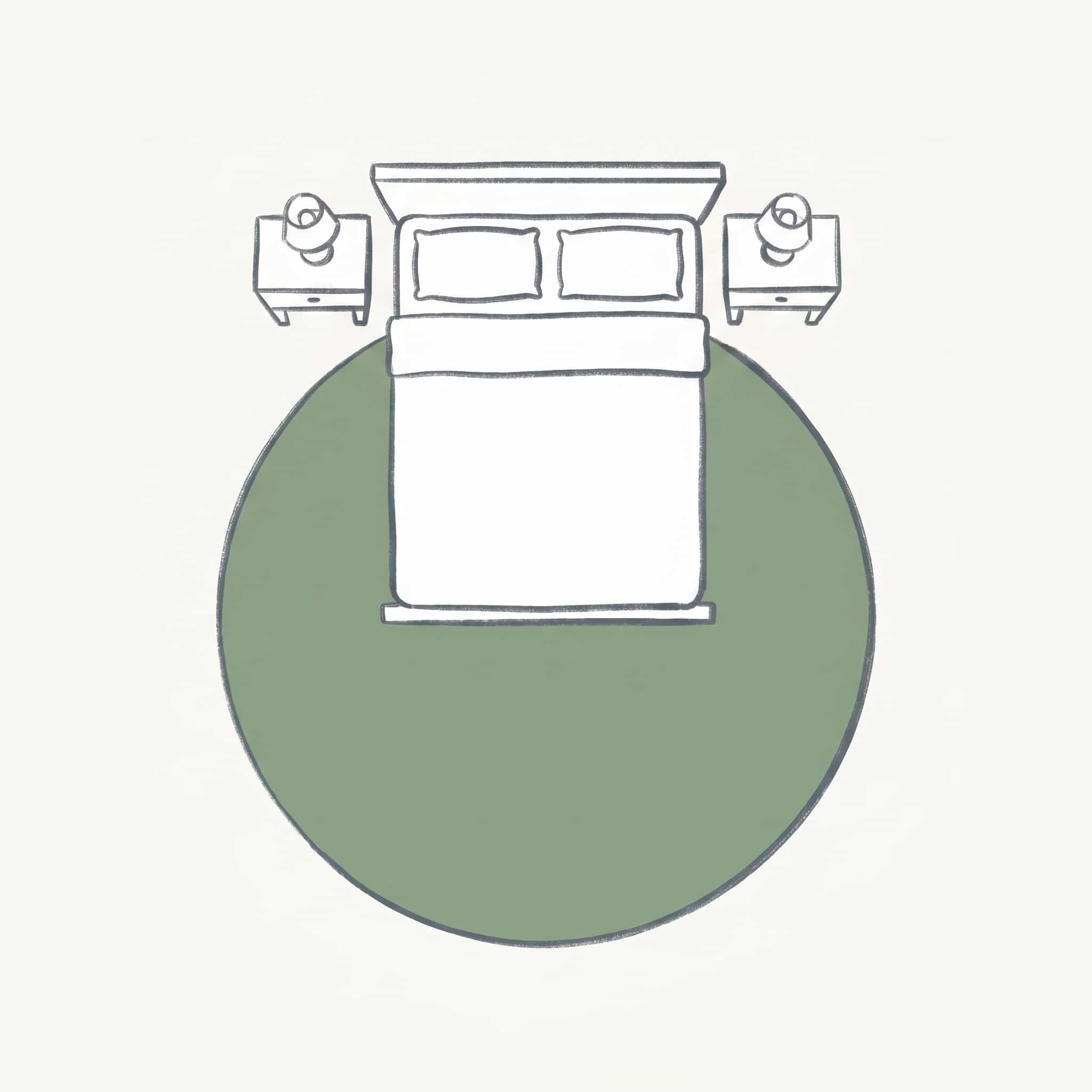
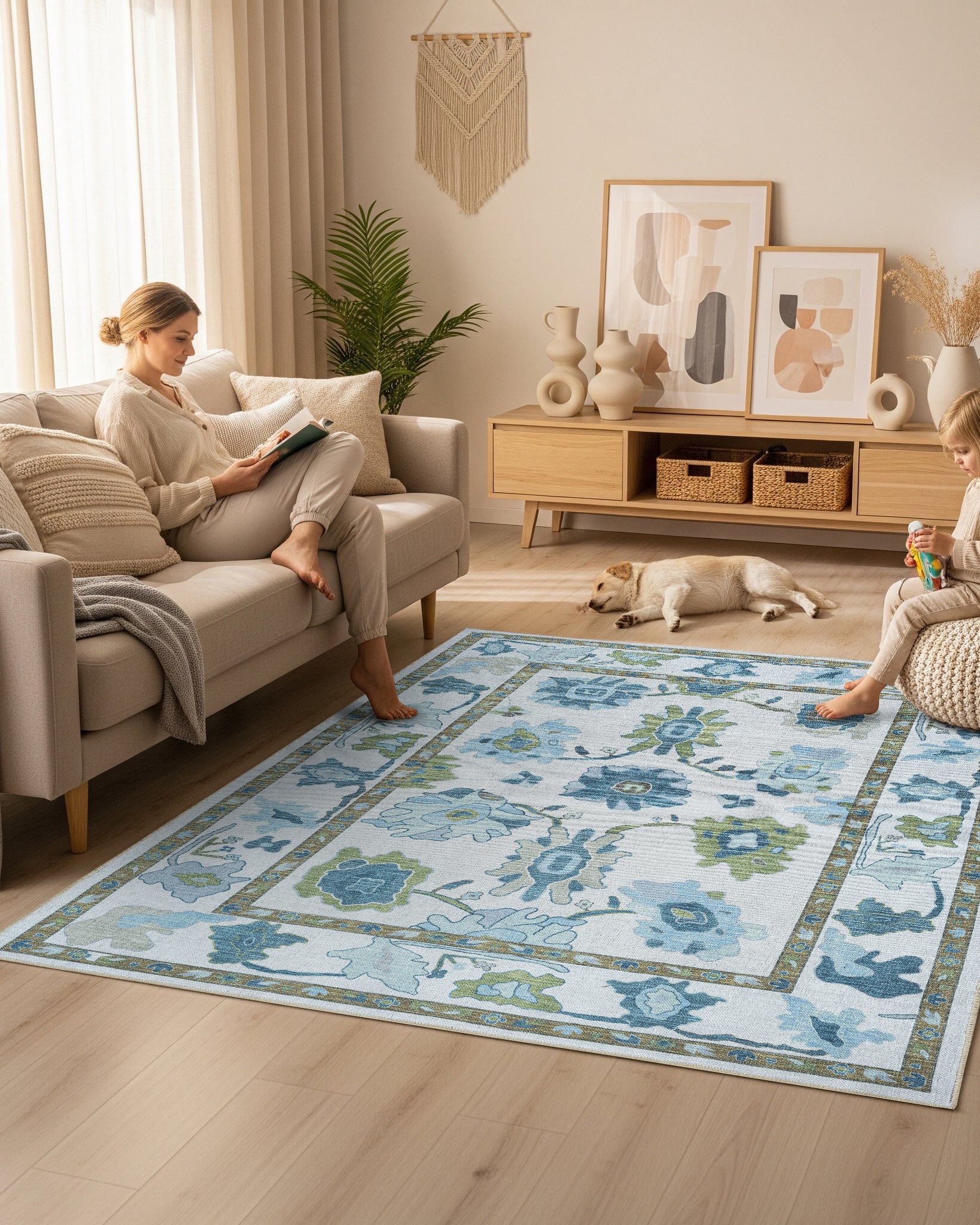
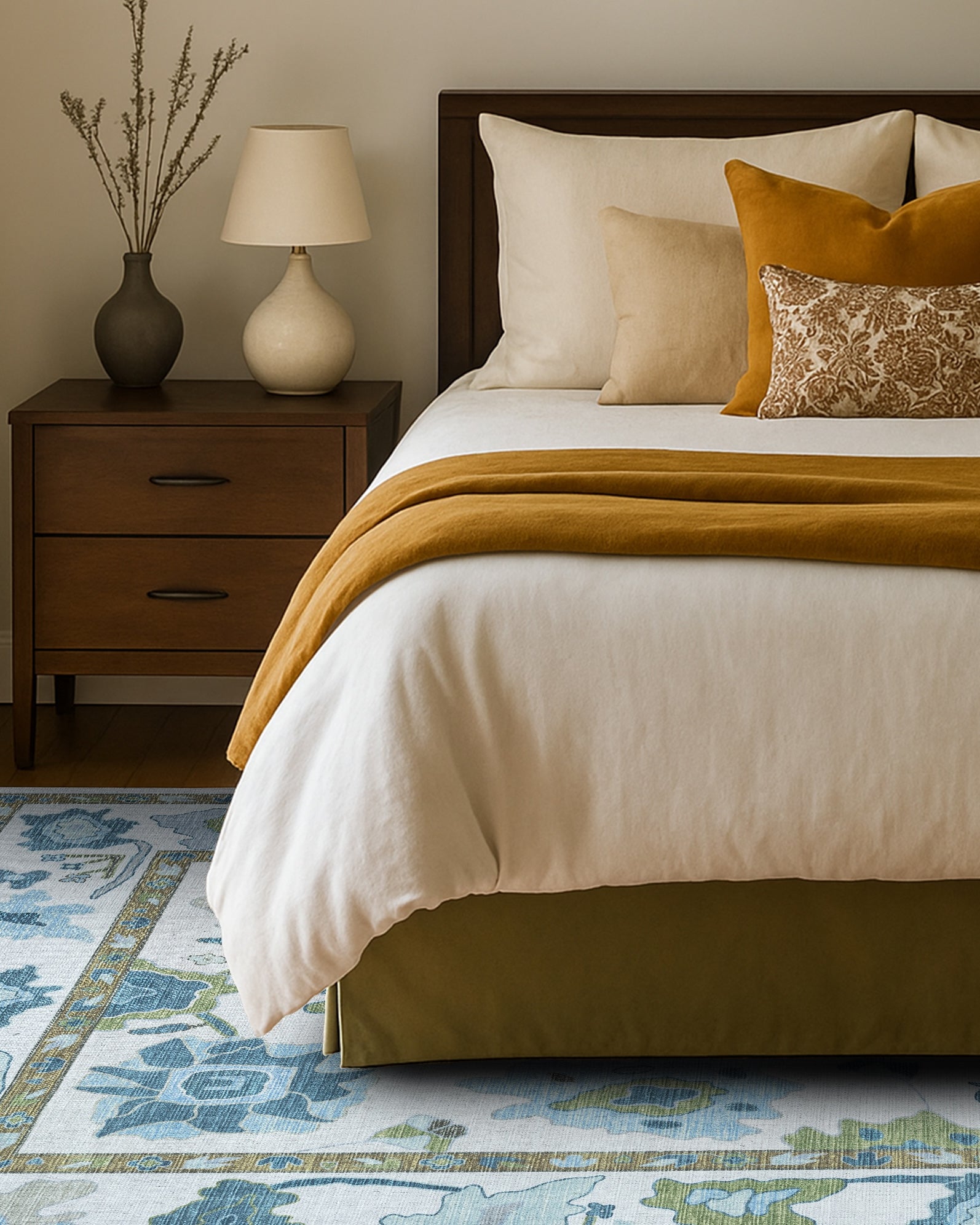
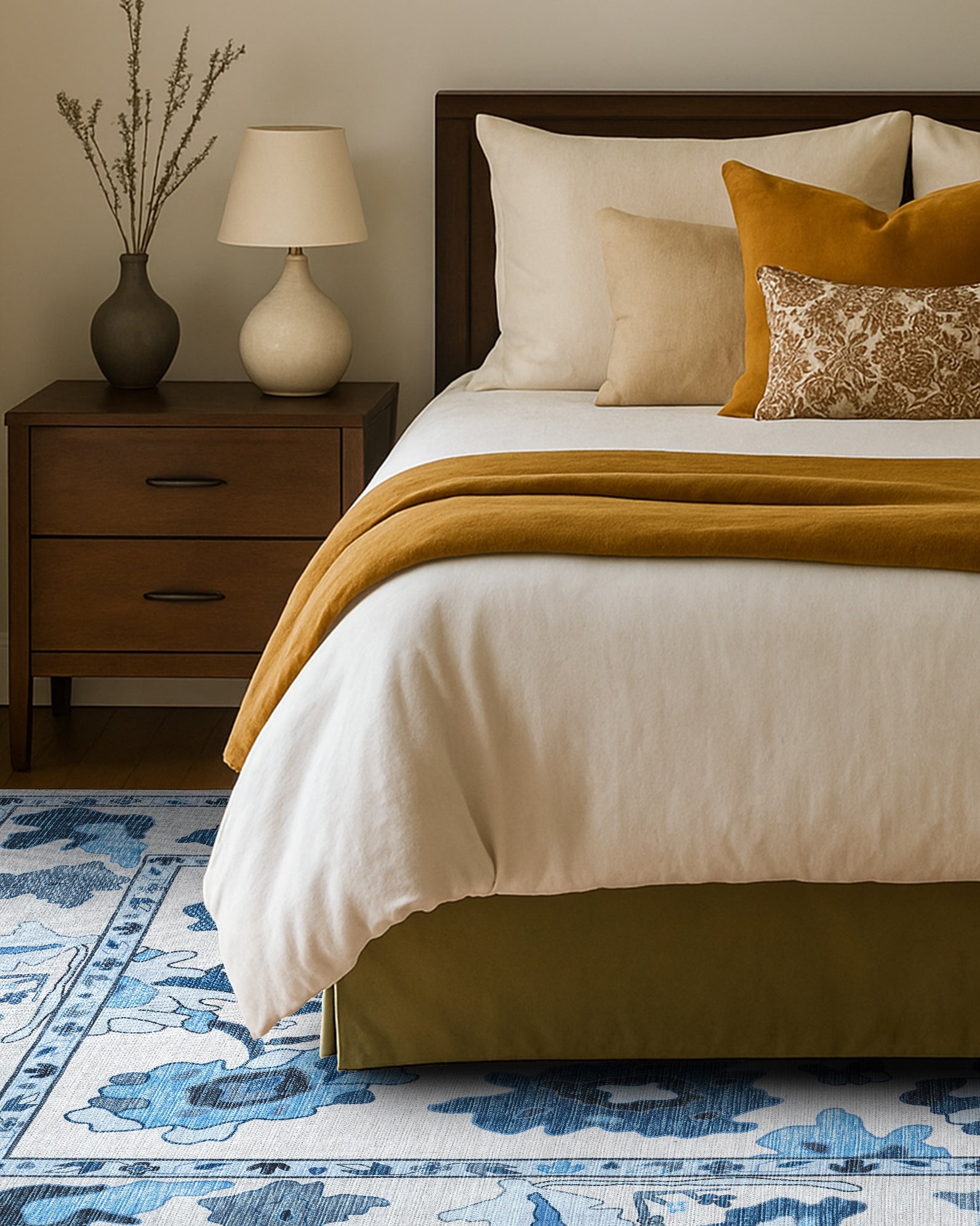
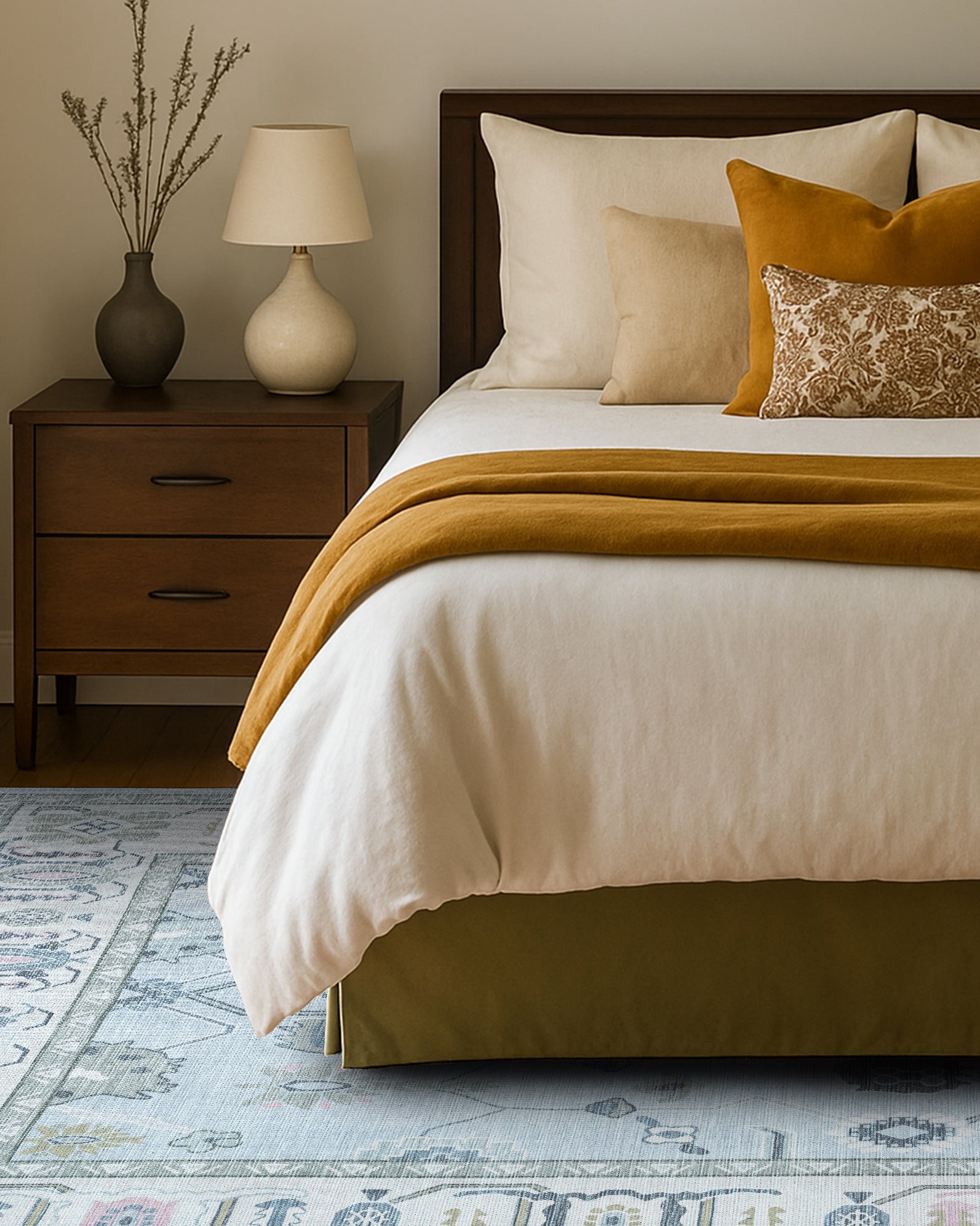
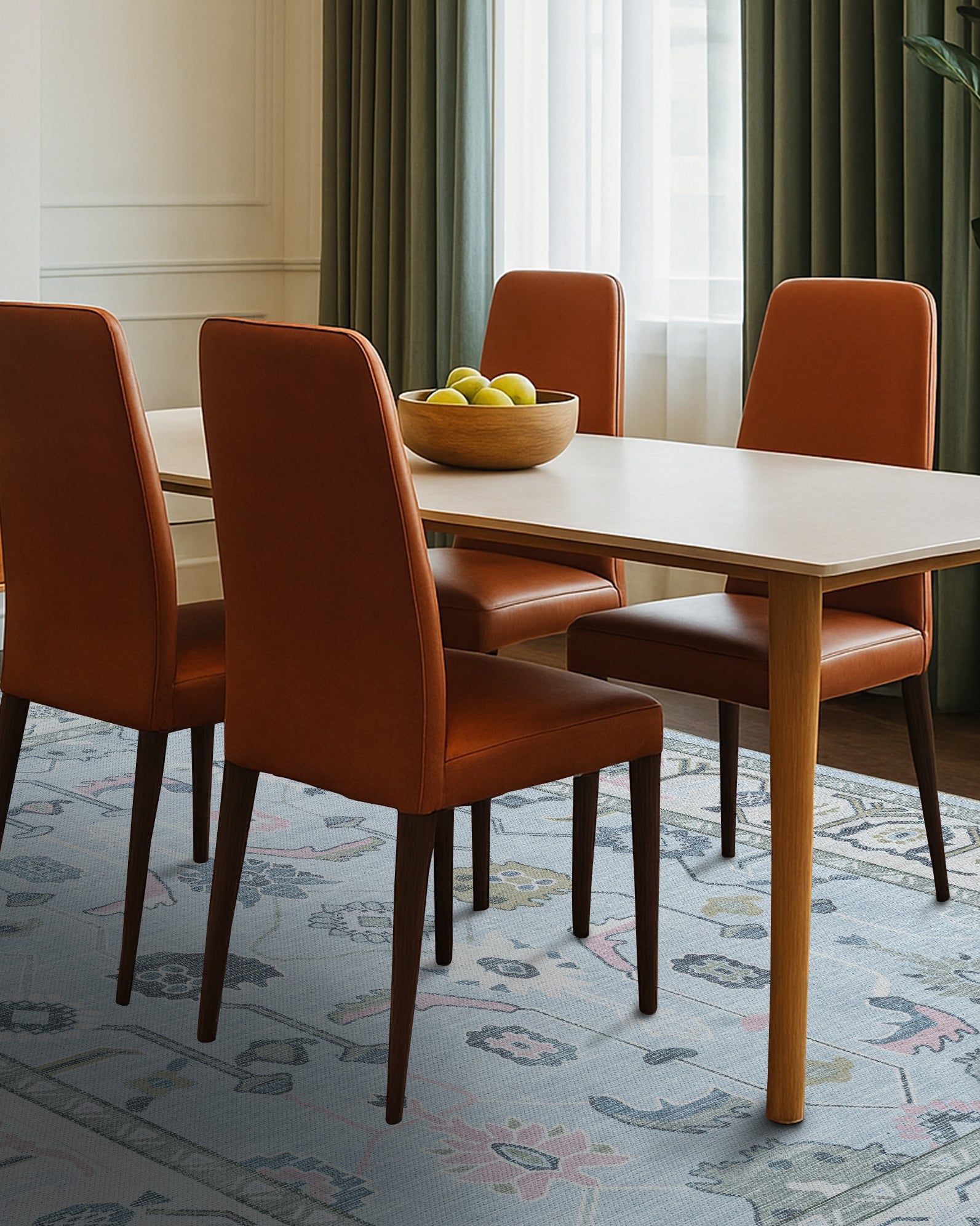
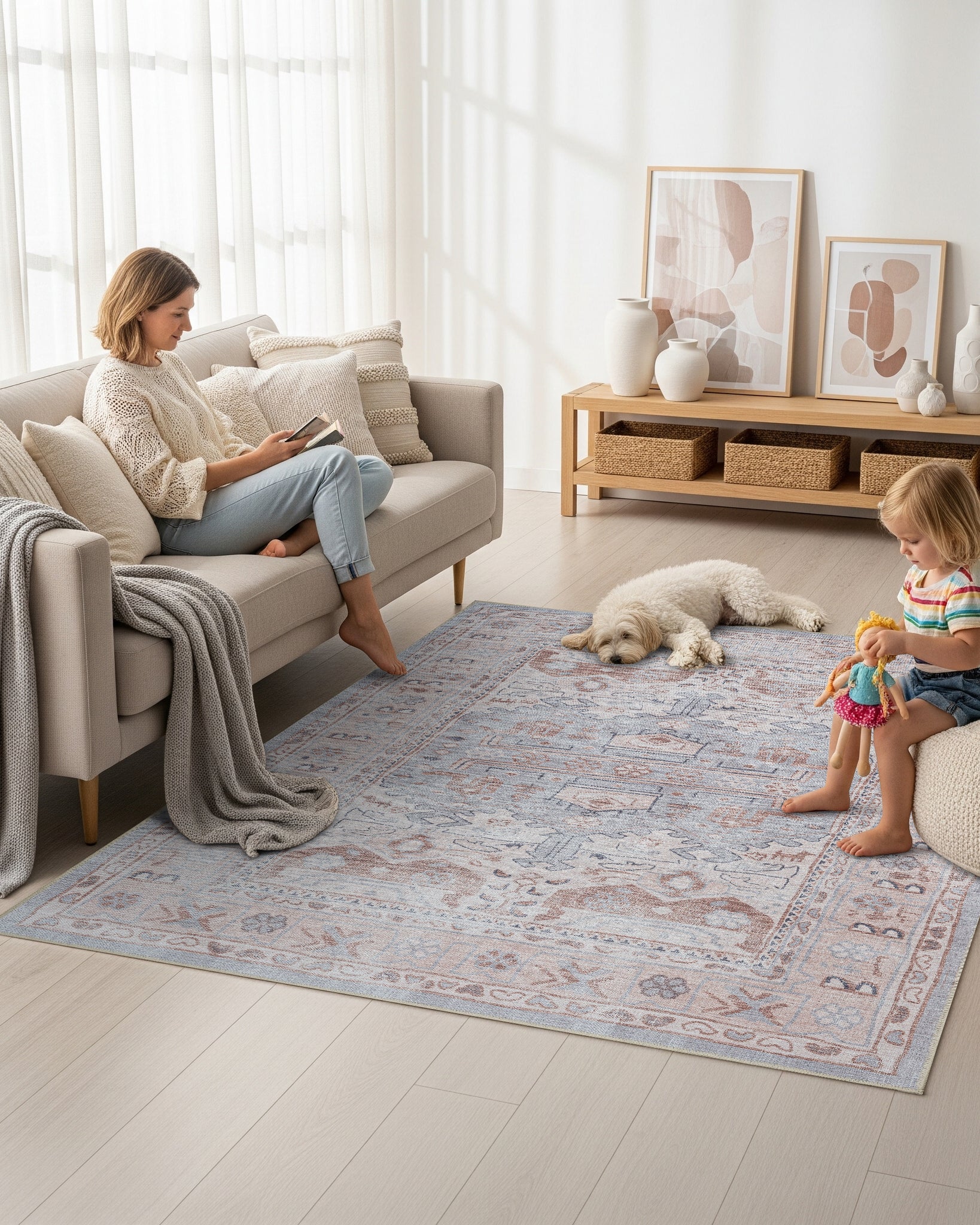
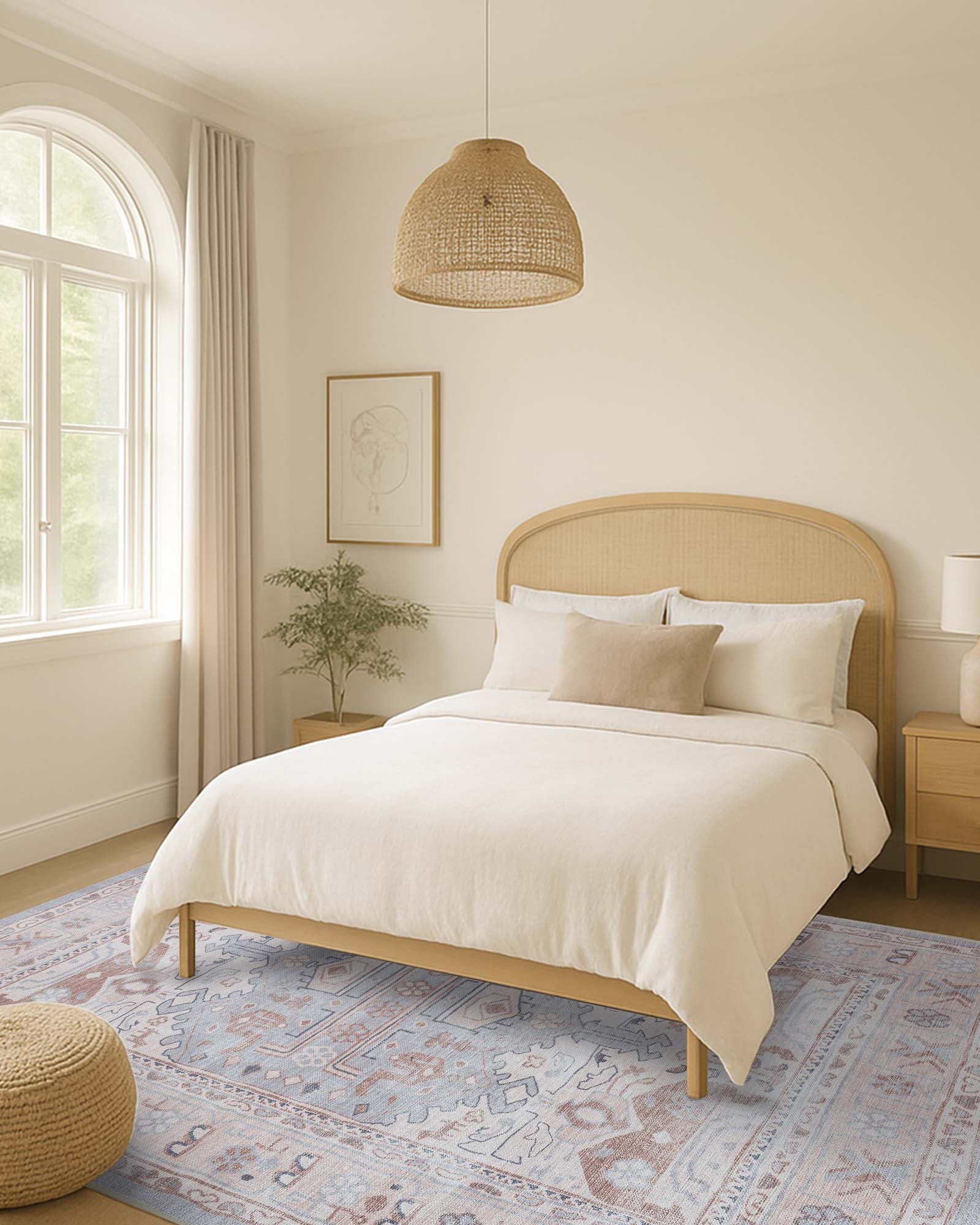
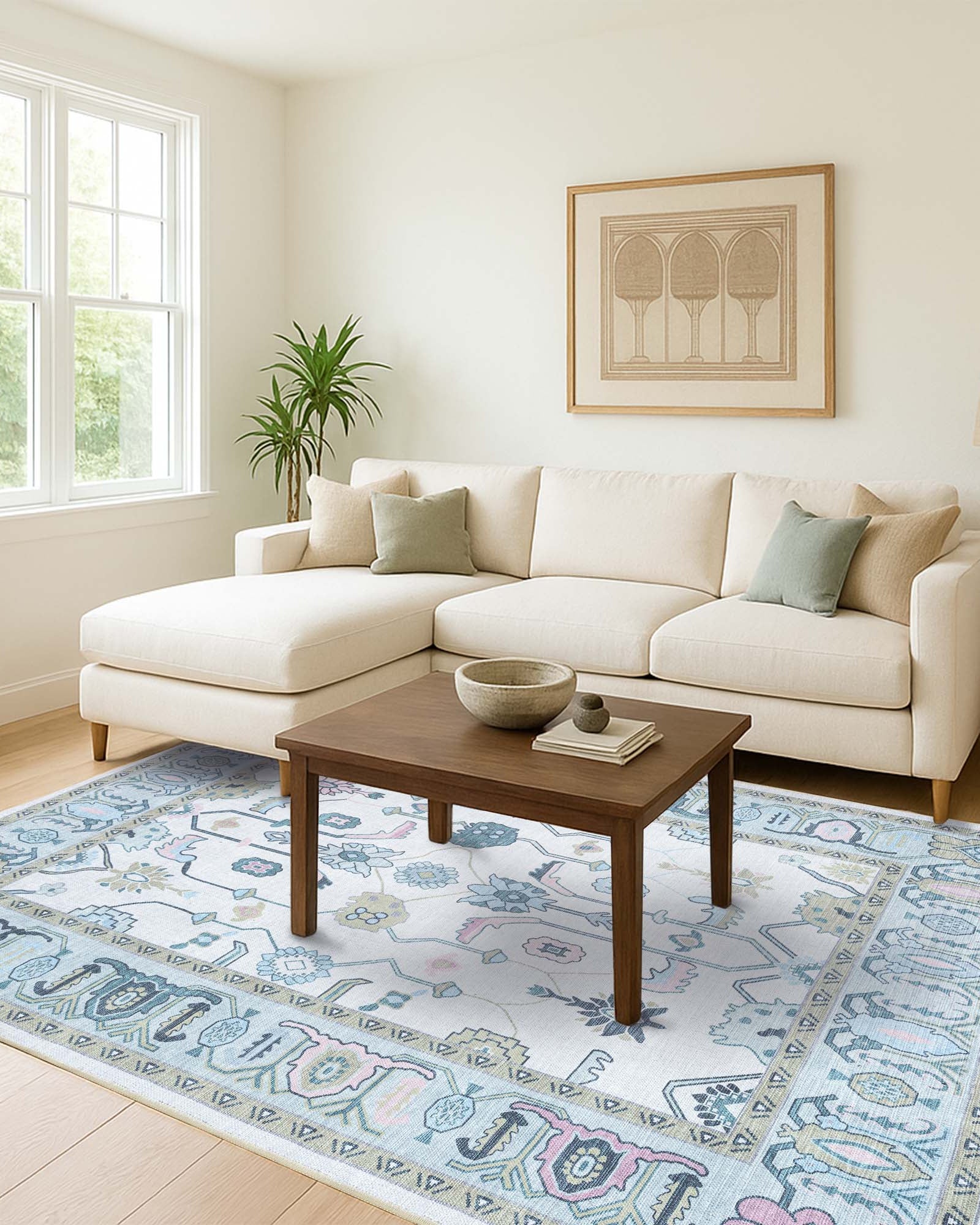
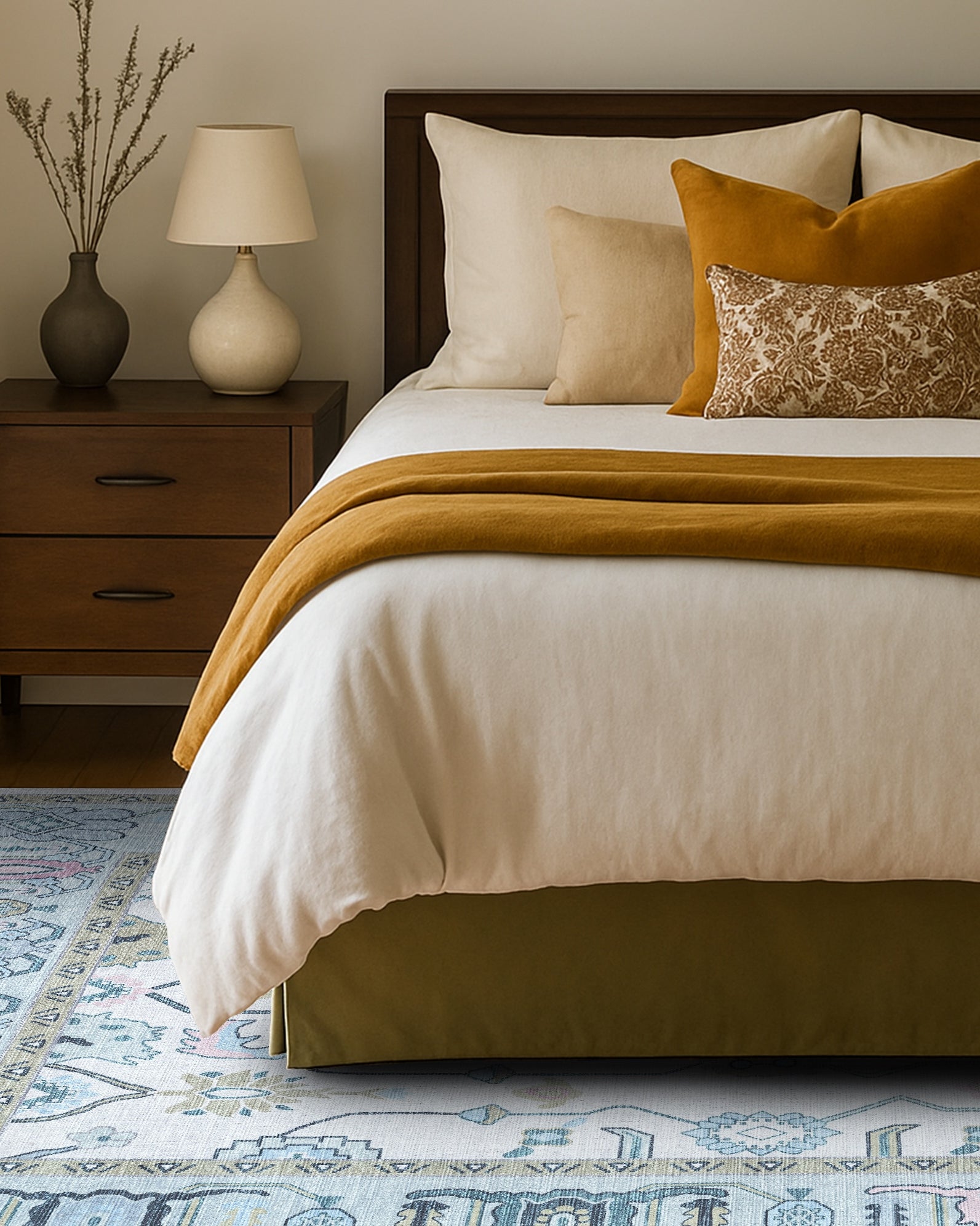
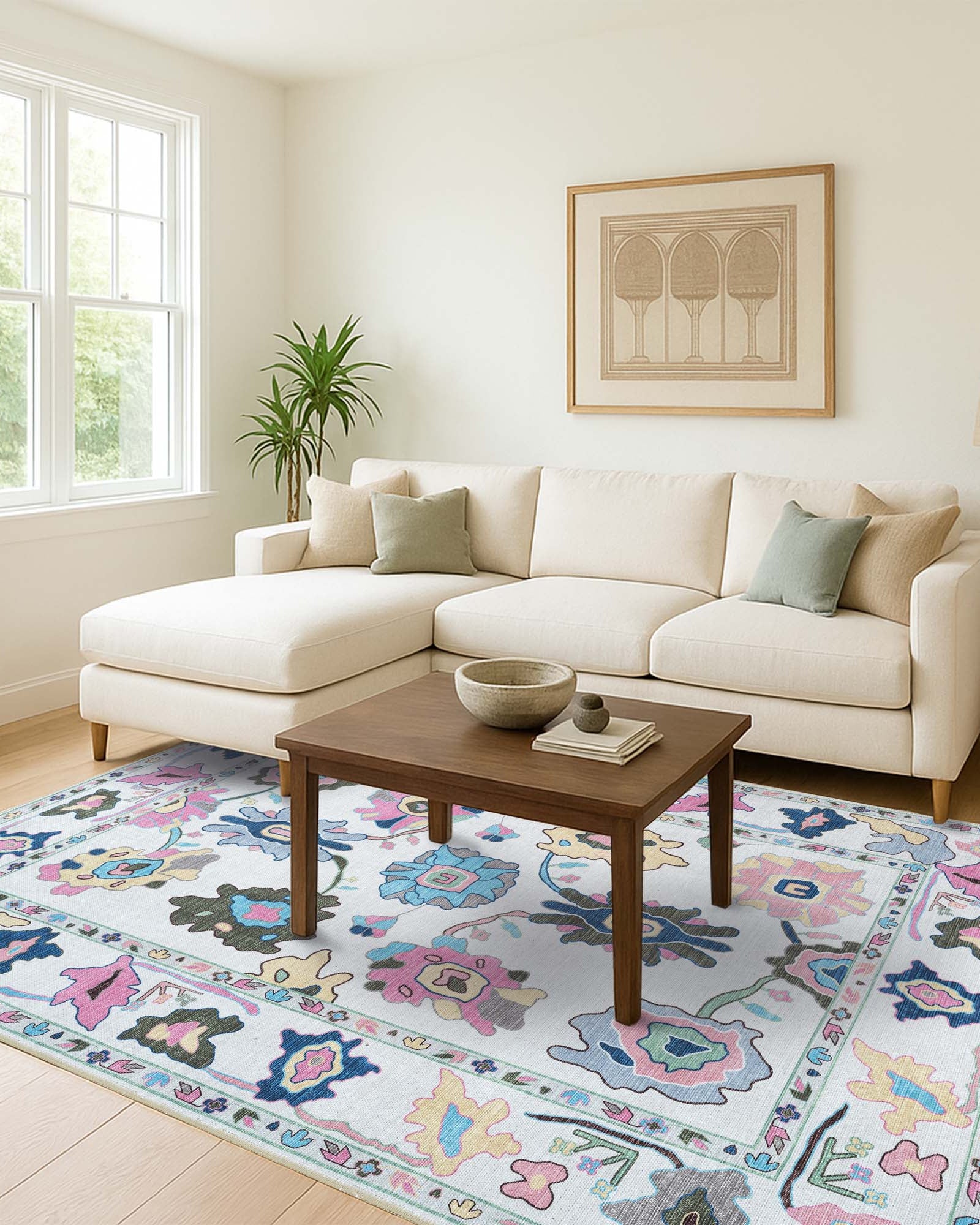
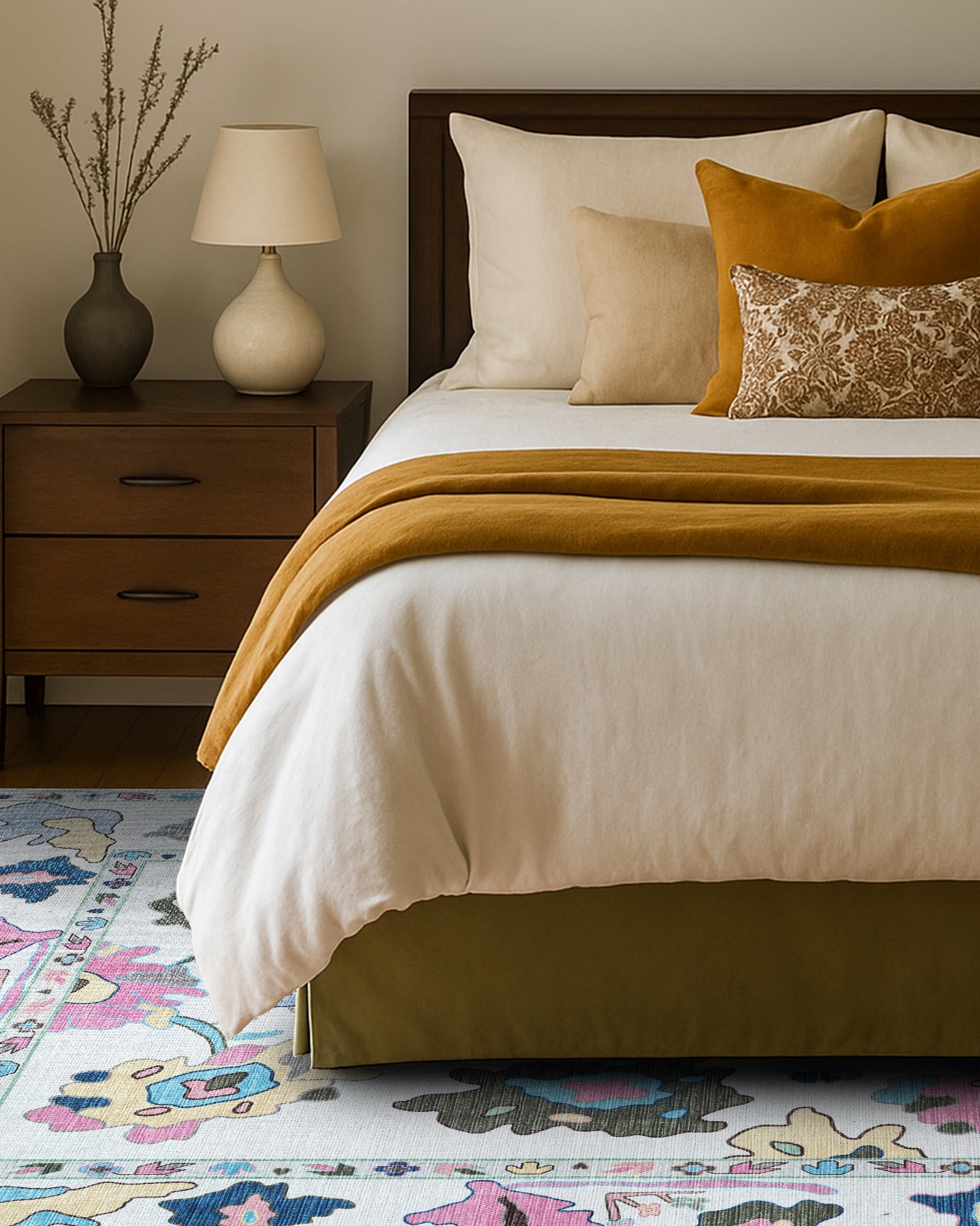
In a living room, keep at least the front legs of every seating piece on the rug. In a dining room, allow 24 inches past the table on all sides. In a bedroom, run the rug 18 to 24 inches past each side of the bed. Because the palette is quiet, these pieces layer well over jute or sisal when the rug you love is smaller than the room needs.
Condition, Age and Measurement
Pieces are grouped as antique at over eighty years, vintage at roughly forty to eighty, and semi-vintage below that. Each product page carries the estimated decade, the origin where identifiable, exact measured dimensions and a plain condition note. Because this collection is defined by wear, read that note carefully: evenly low pile across the whole rug is stable and fine for daily use, while localised holes, brittle spots or a weakened foundation mean the piece belongs somewhere protected — a low-traffic room, under furniture, layered, or on a wall. Sizes are never standard and opposite edges commonly differ by an inch or more.
Care
Use a rug pad on every hard floor; on a low-pile piece this is protective rather than optional. Vacuum with the beater bar off or raised — an aggressive brush accelerates fibre loss on thin pile — and keep it off the fringe entirely. Rotate the rug 180 degrees twice a year so remaining pile and colour wear evenly, and keep it out of prolonged direct sun unless further fading is what you want. Blot spills immediately with a white cloth and plain water, working inward from the outside. Avoid home carpet-cleaning machines, steam cleaners and commercial spot treatments, all of which can bleed aged natural dyes and saturate a thin foundation. Send anything set-in to a professional hand-knotted rug washer.