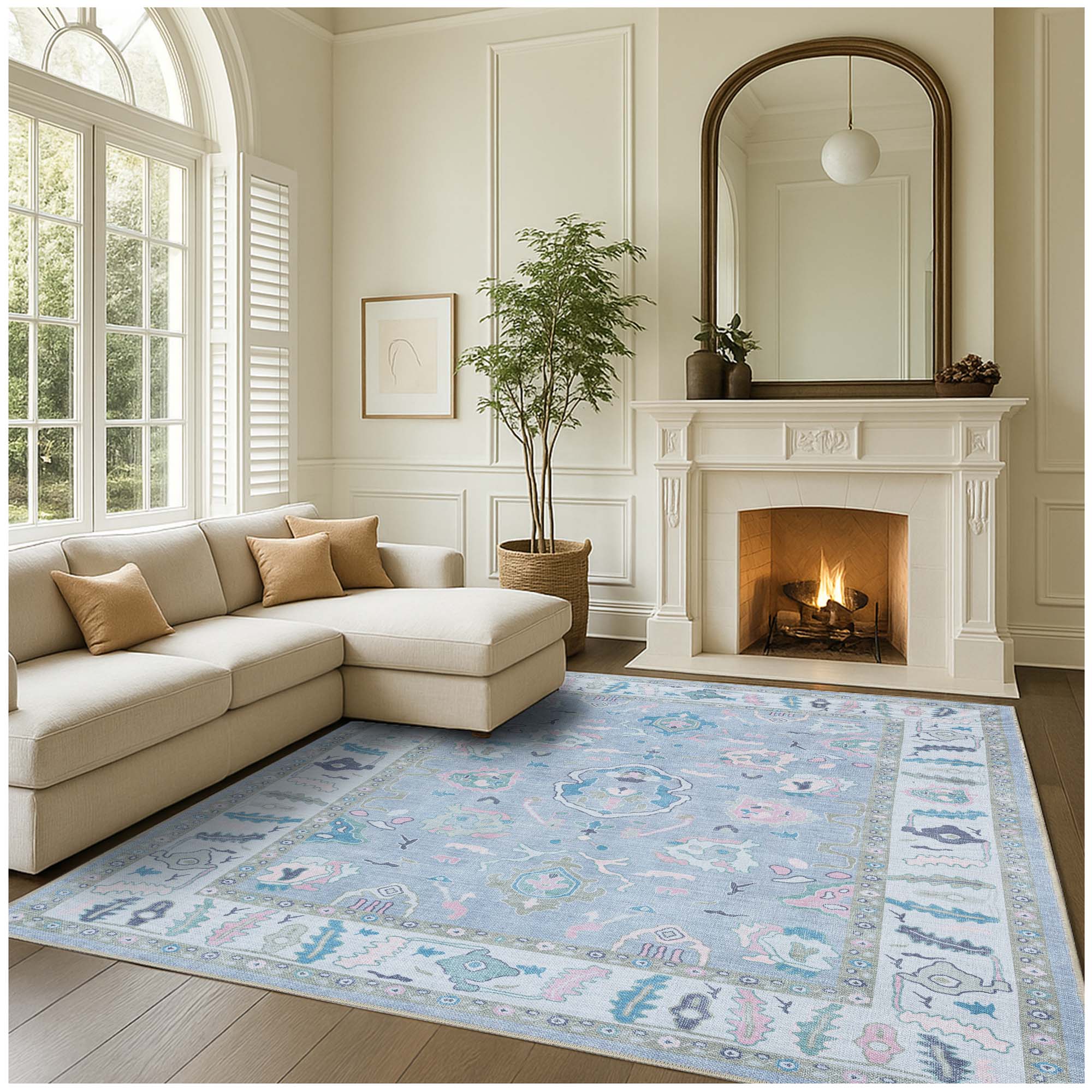
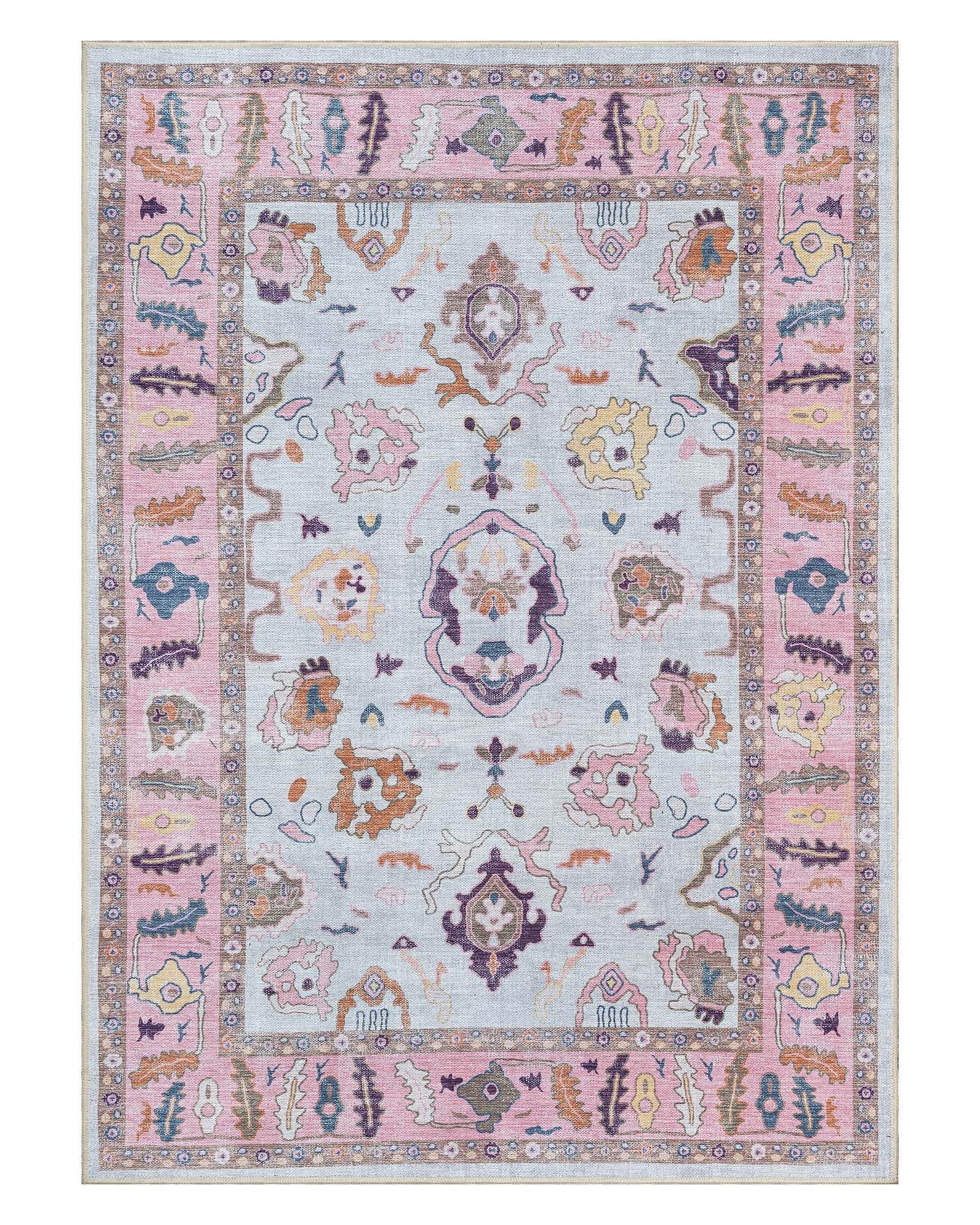
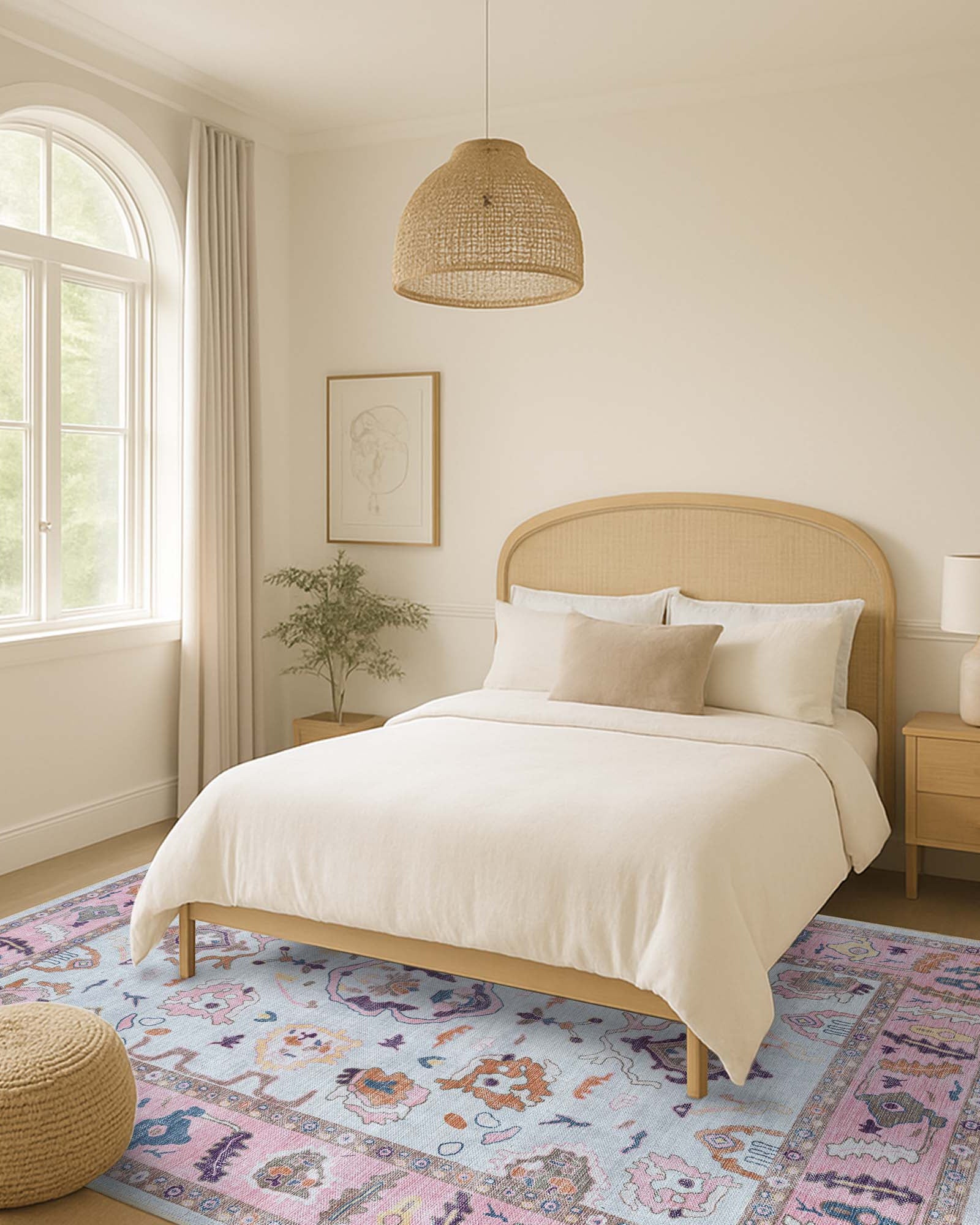
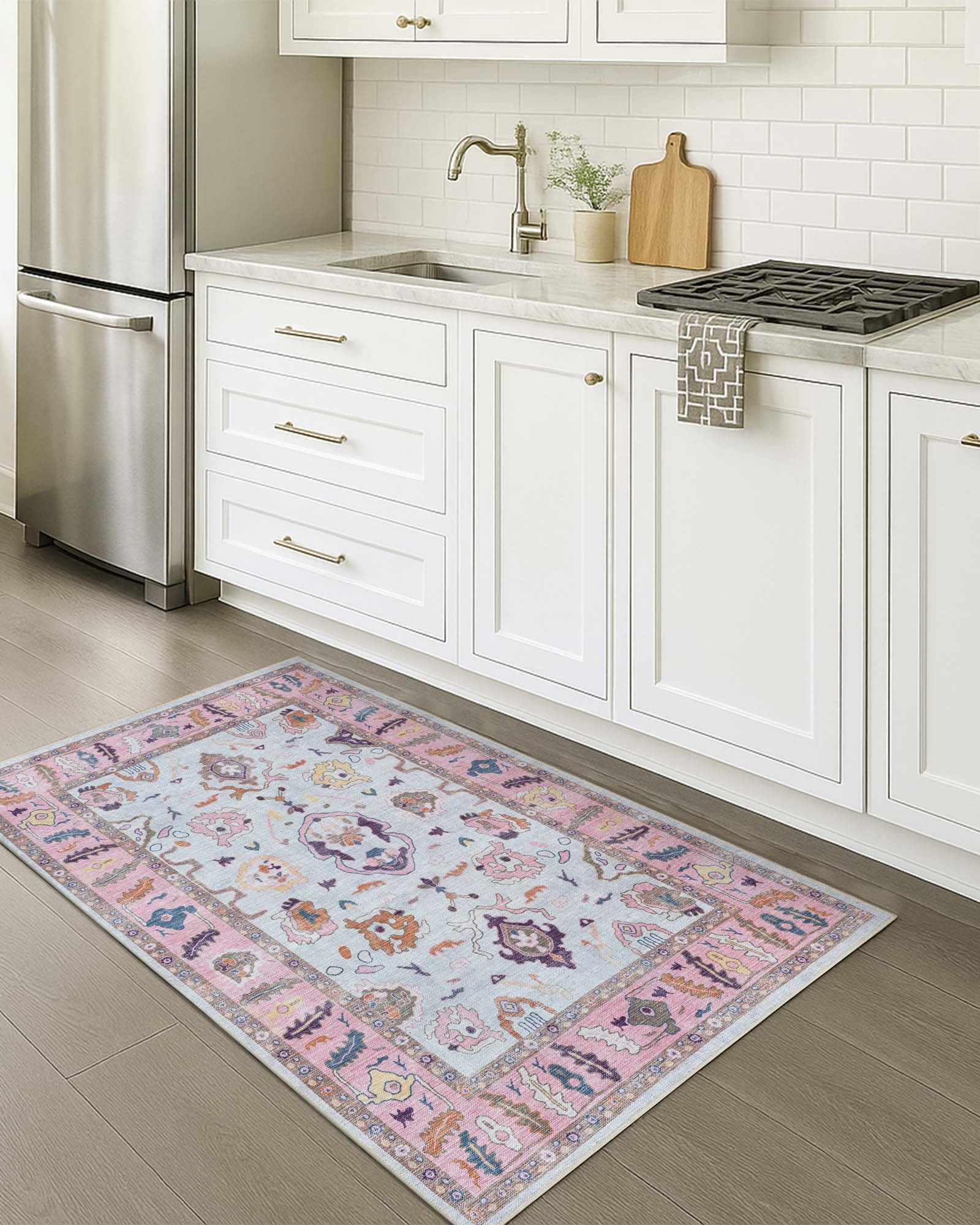
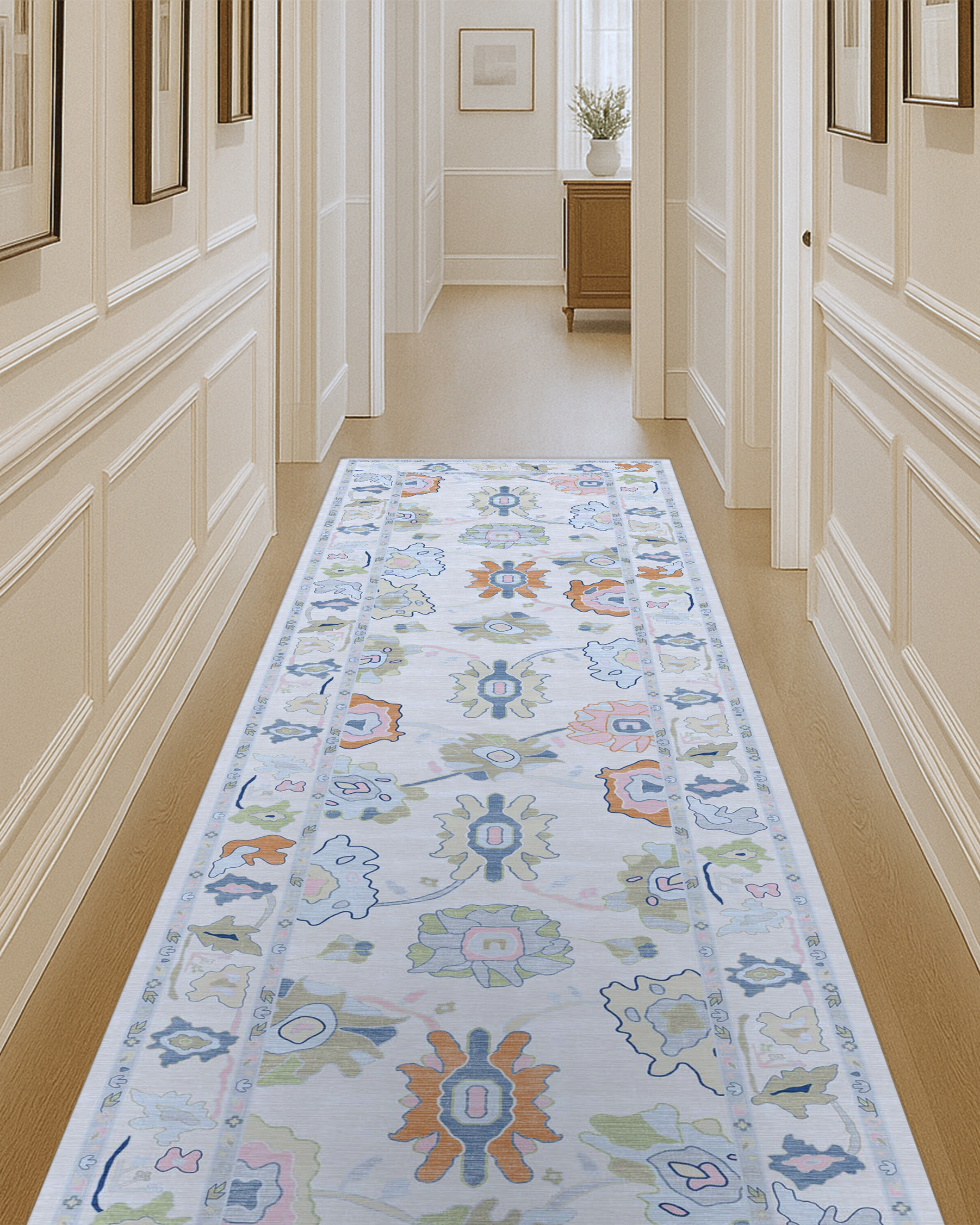
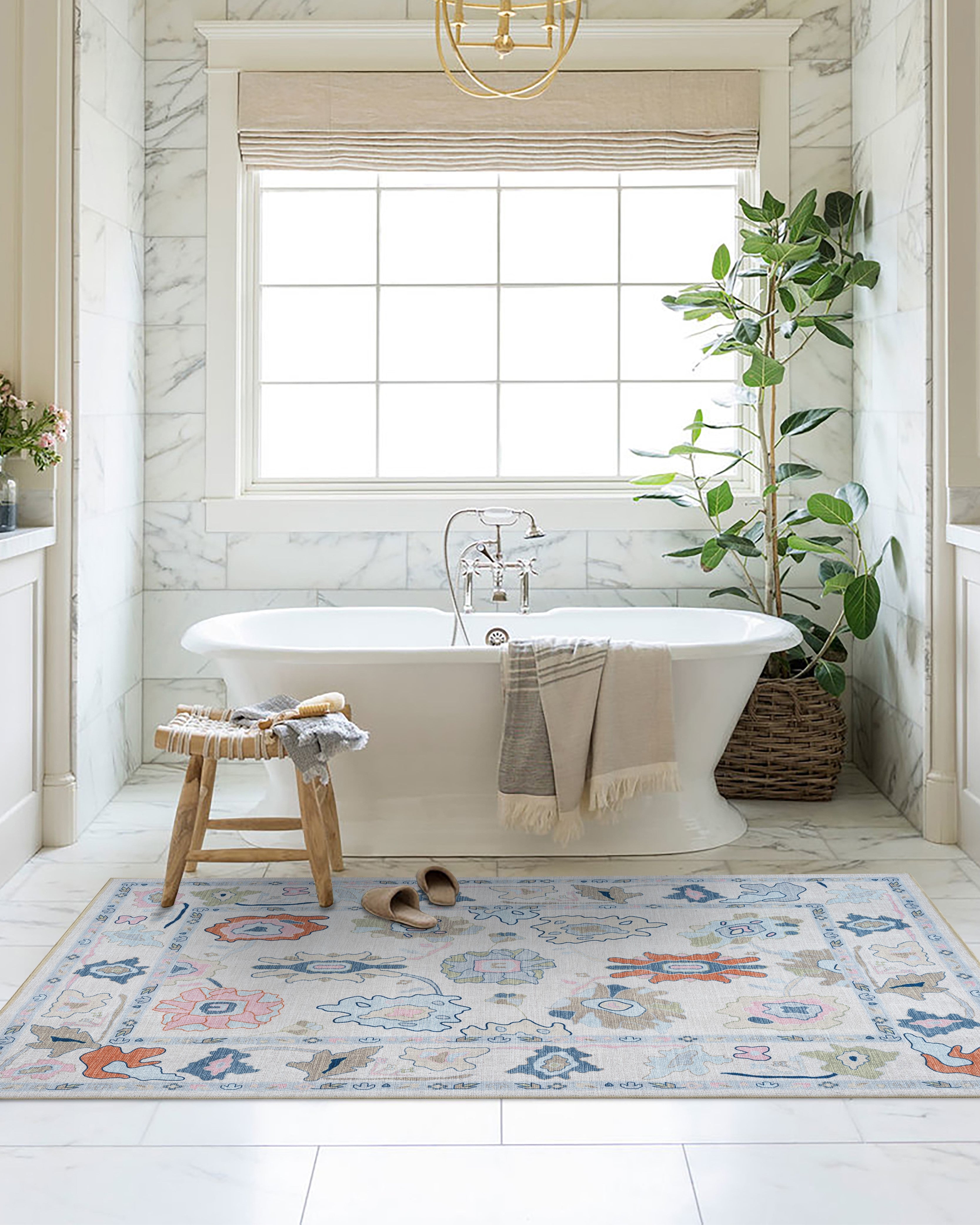
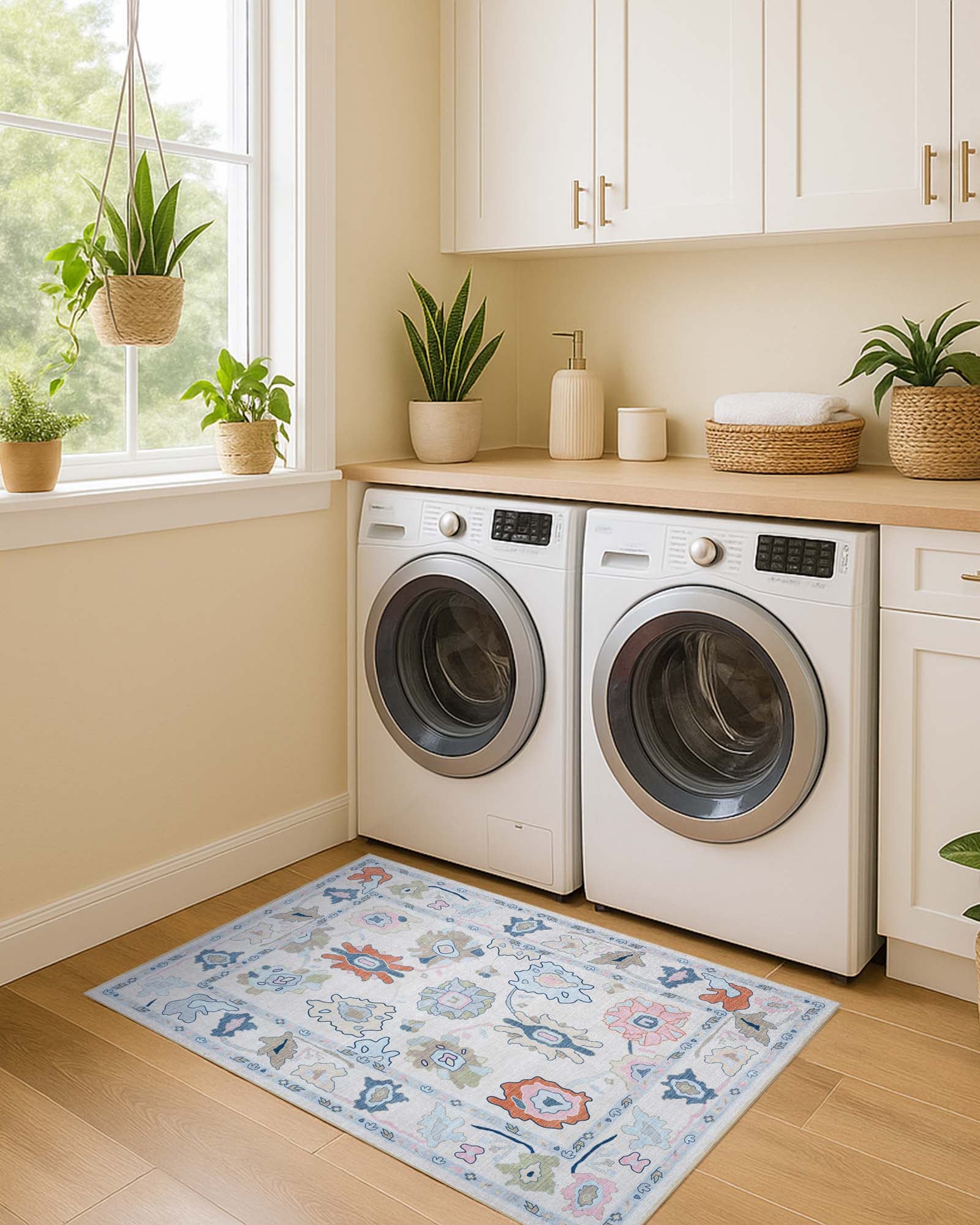
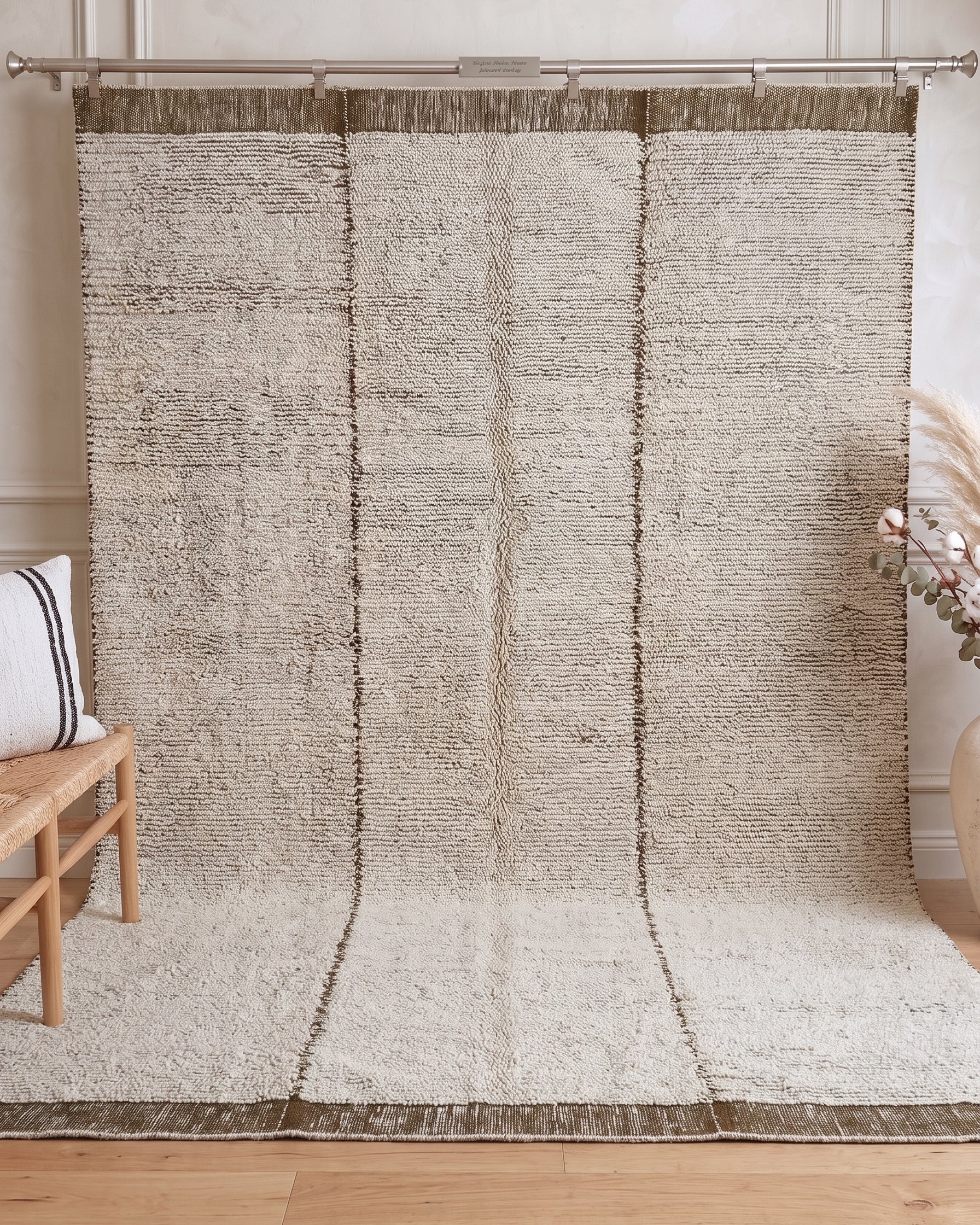
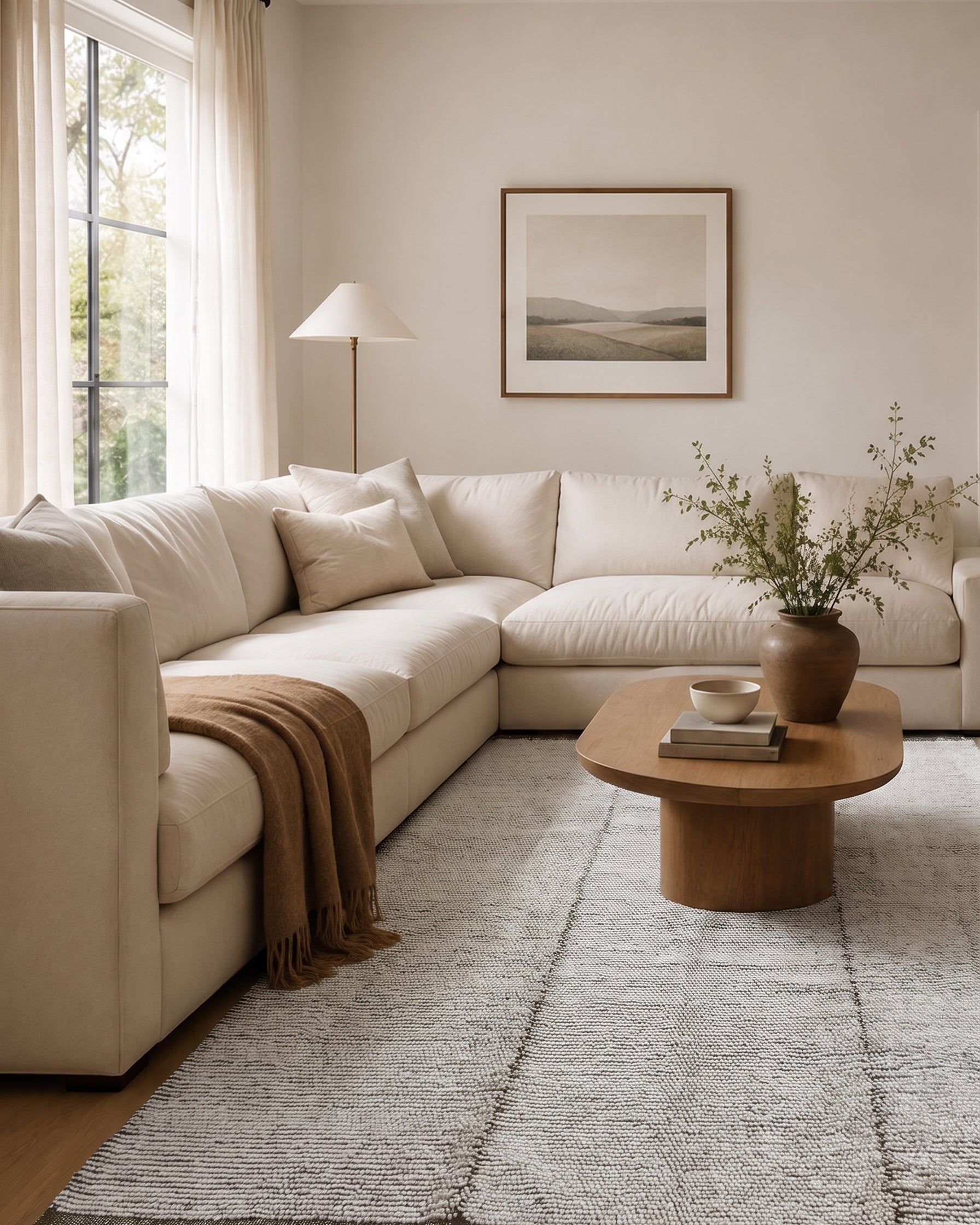
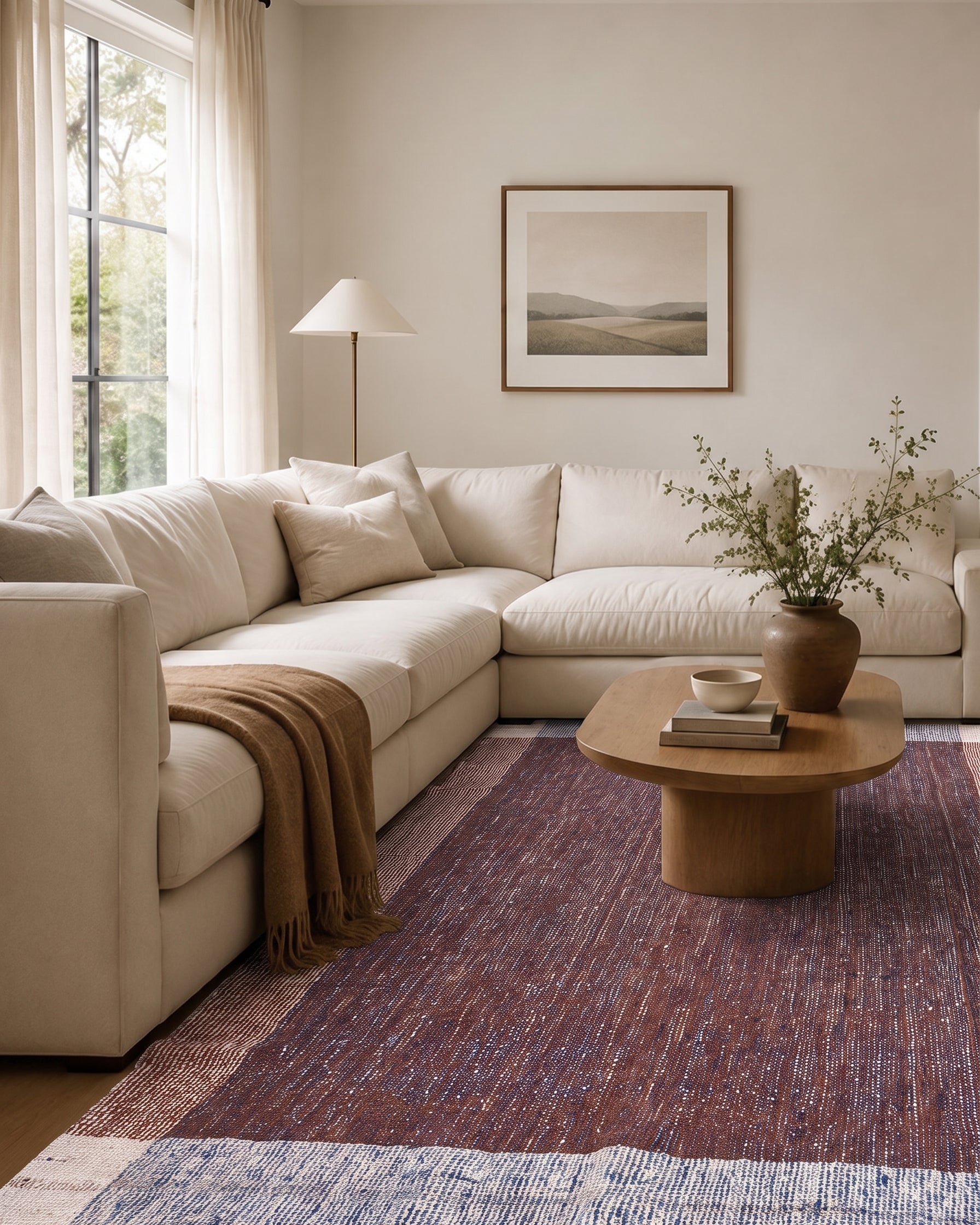
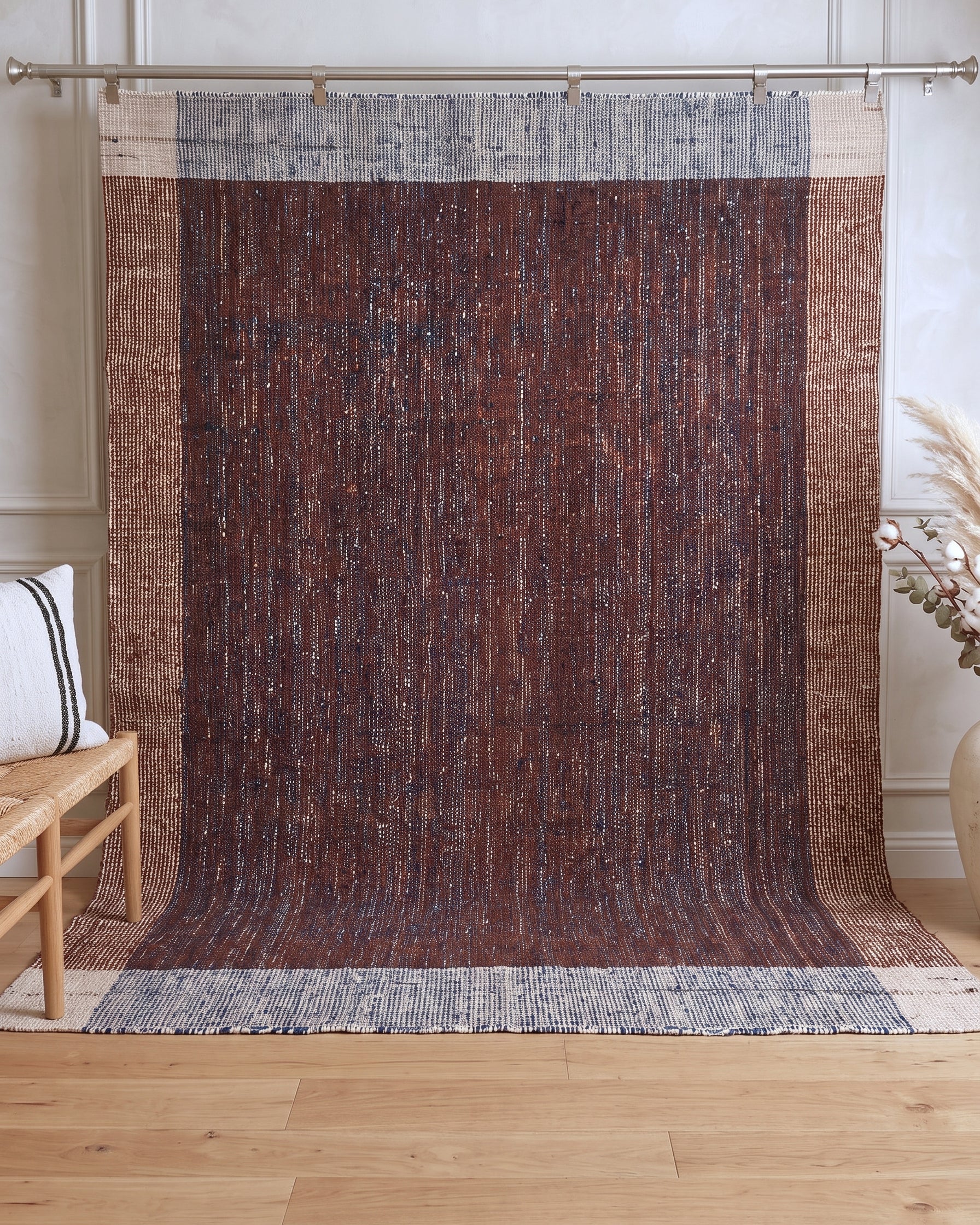
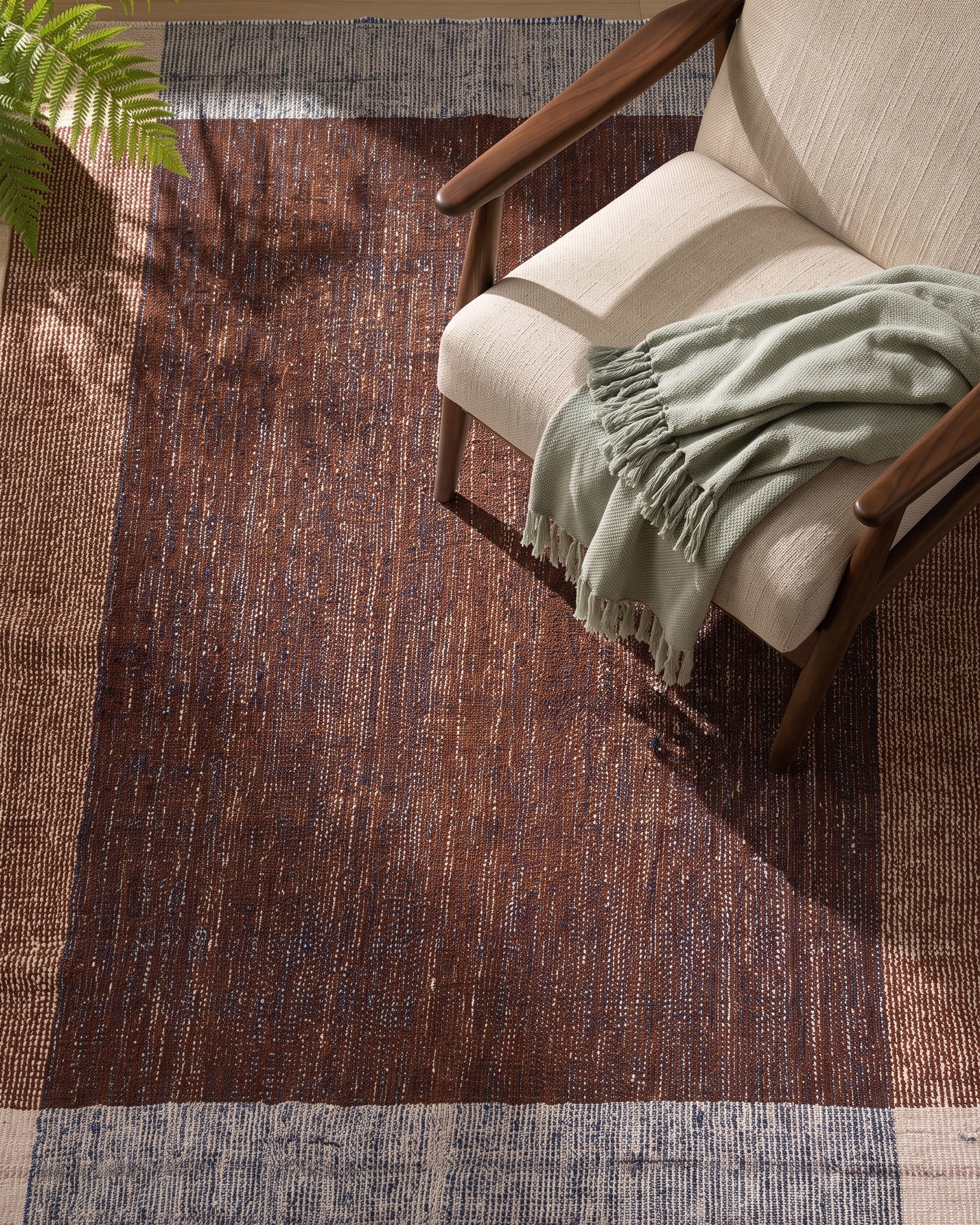
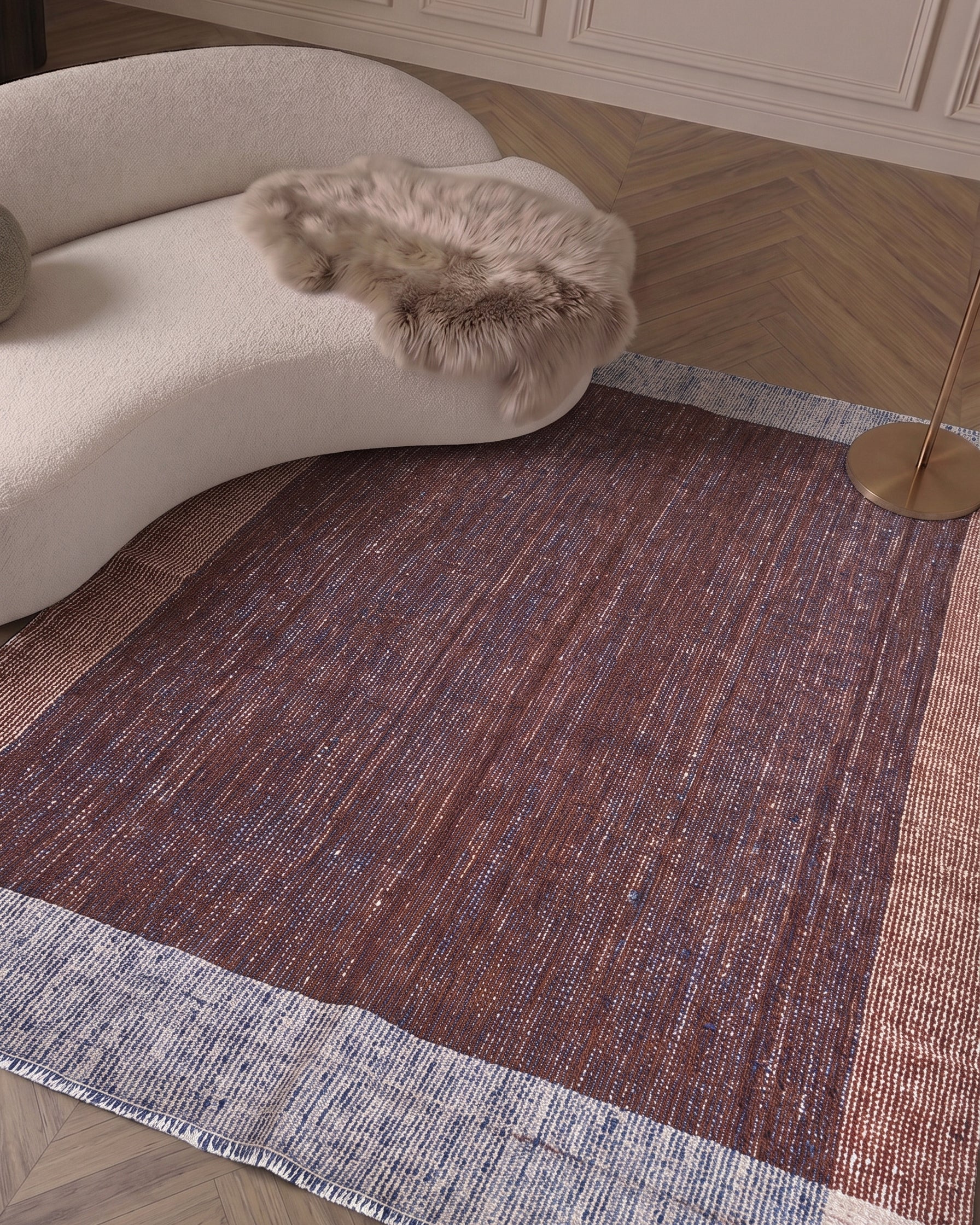
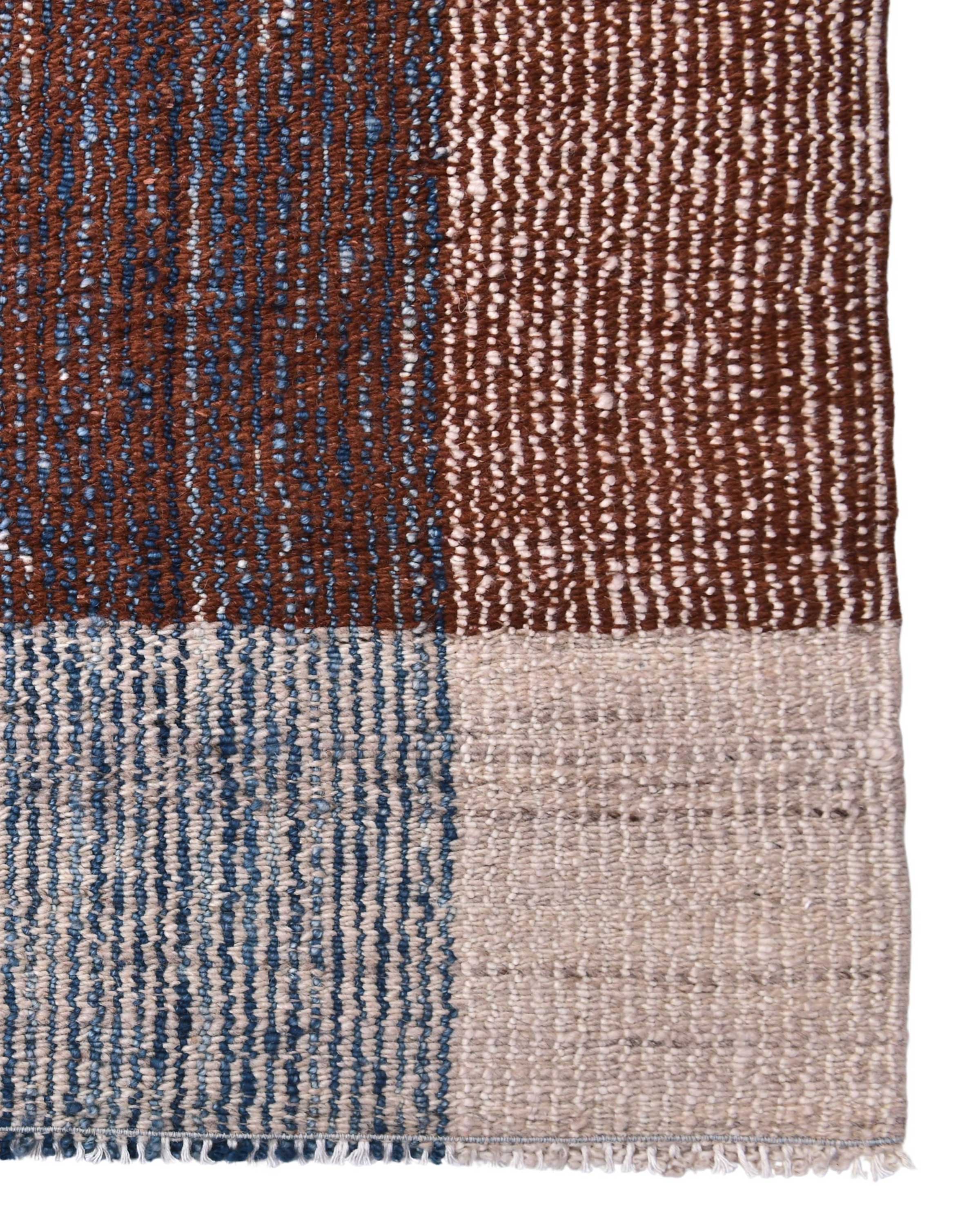
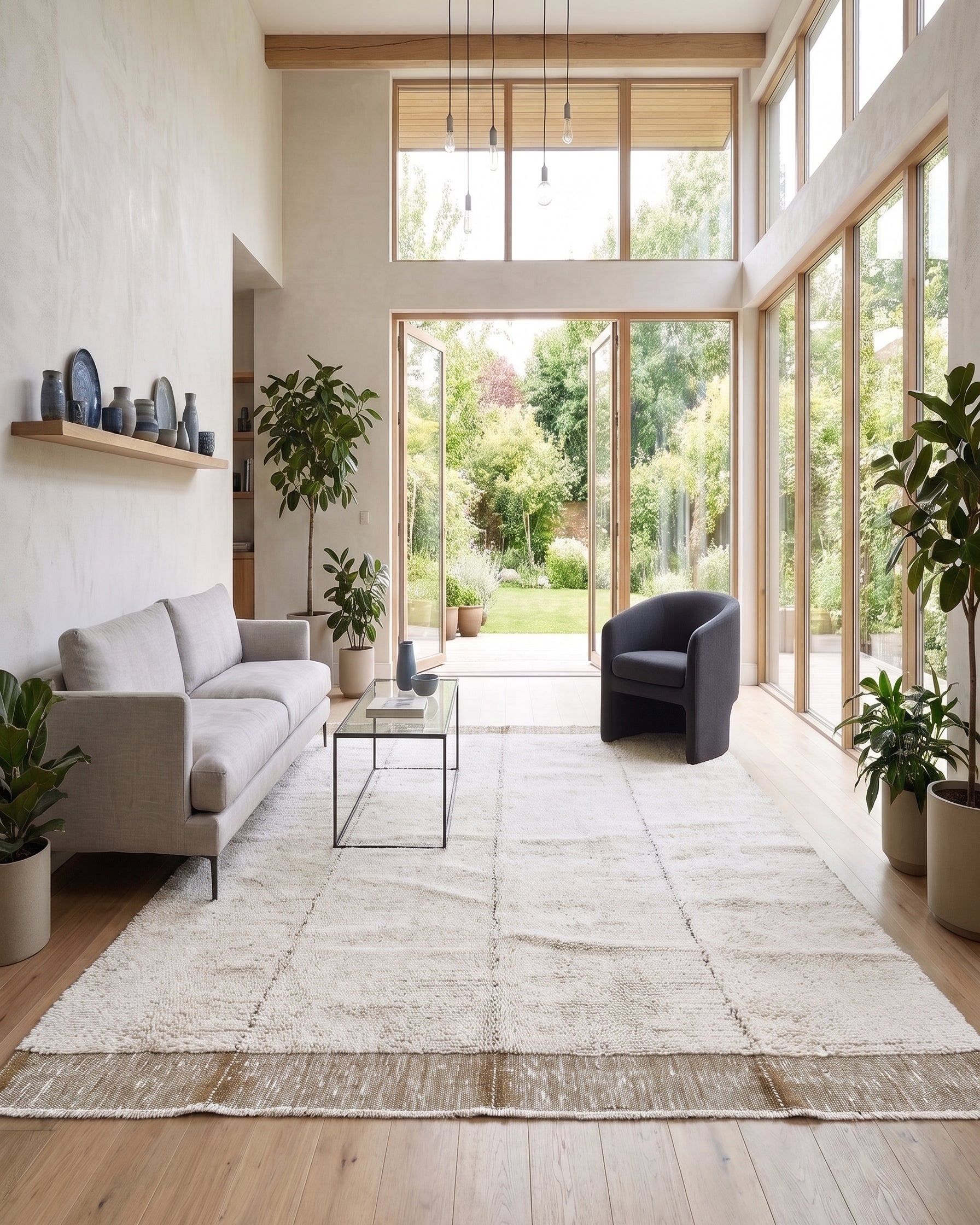
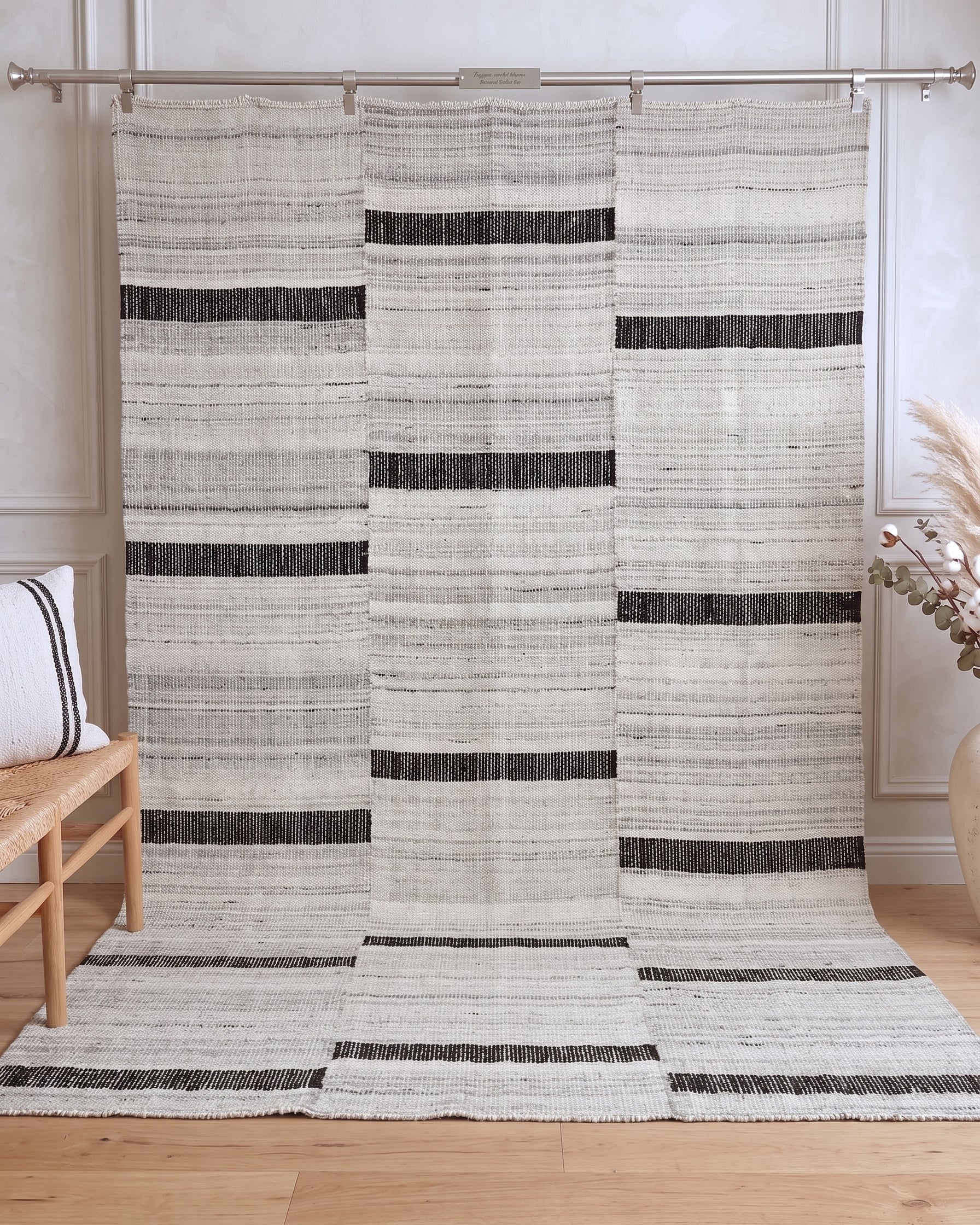
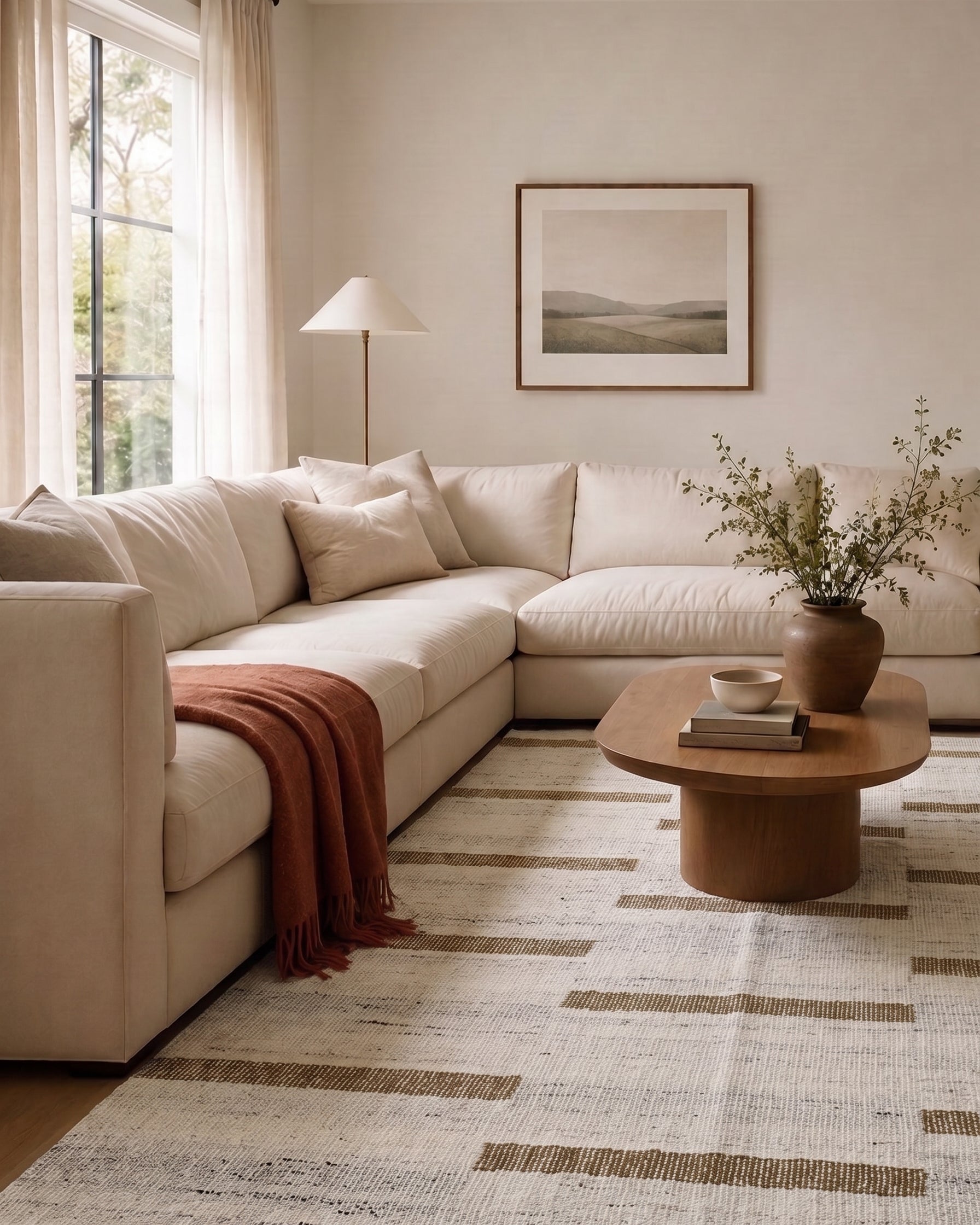
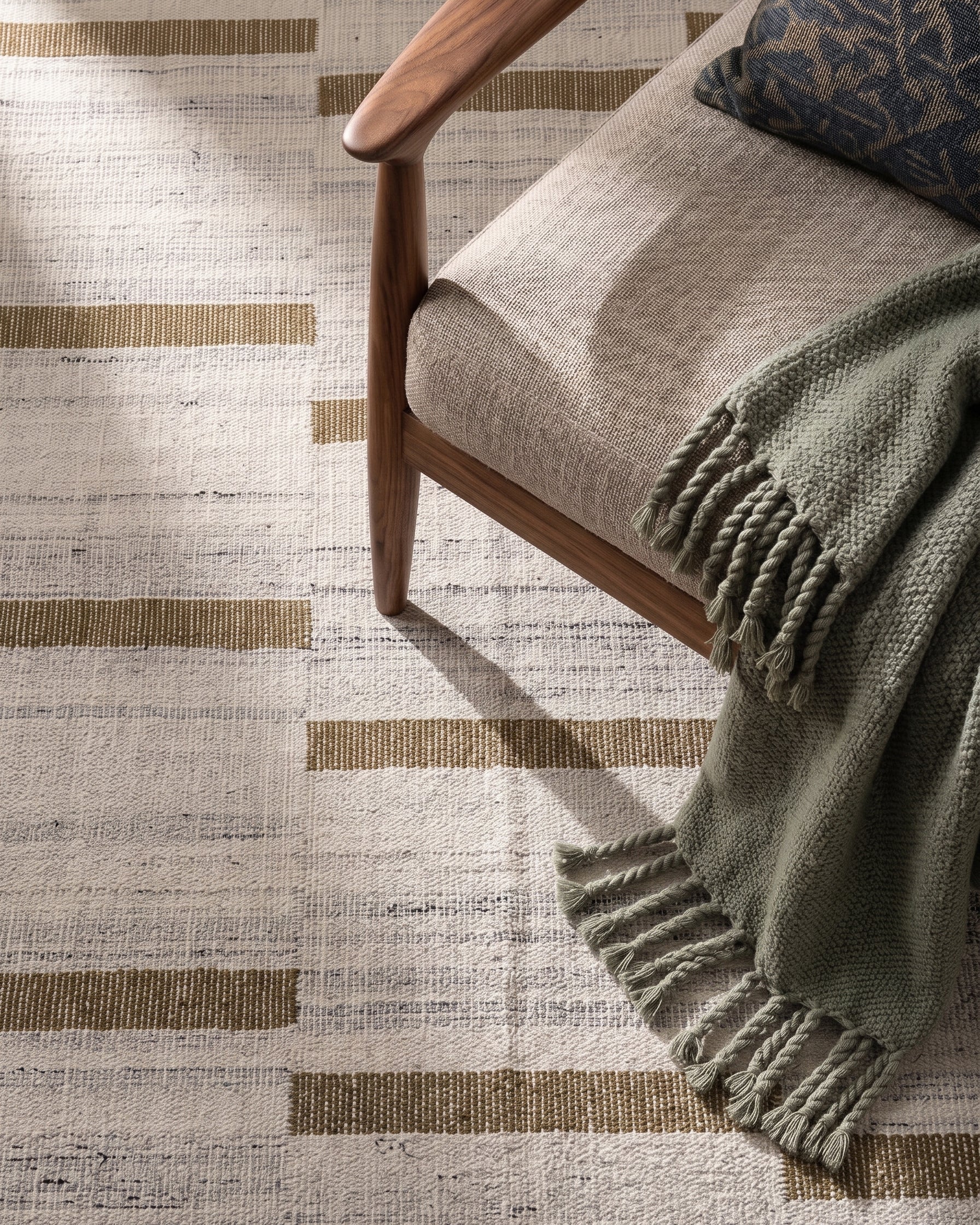
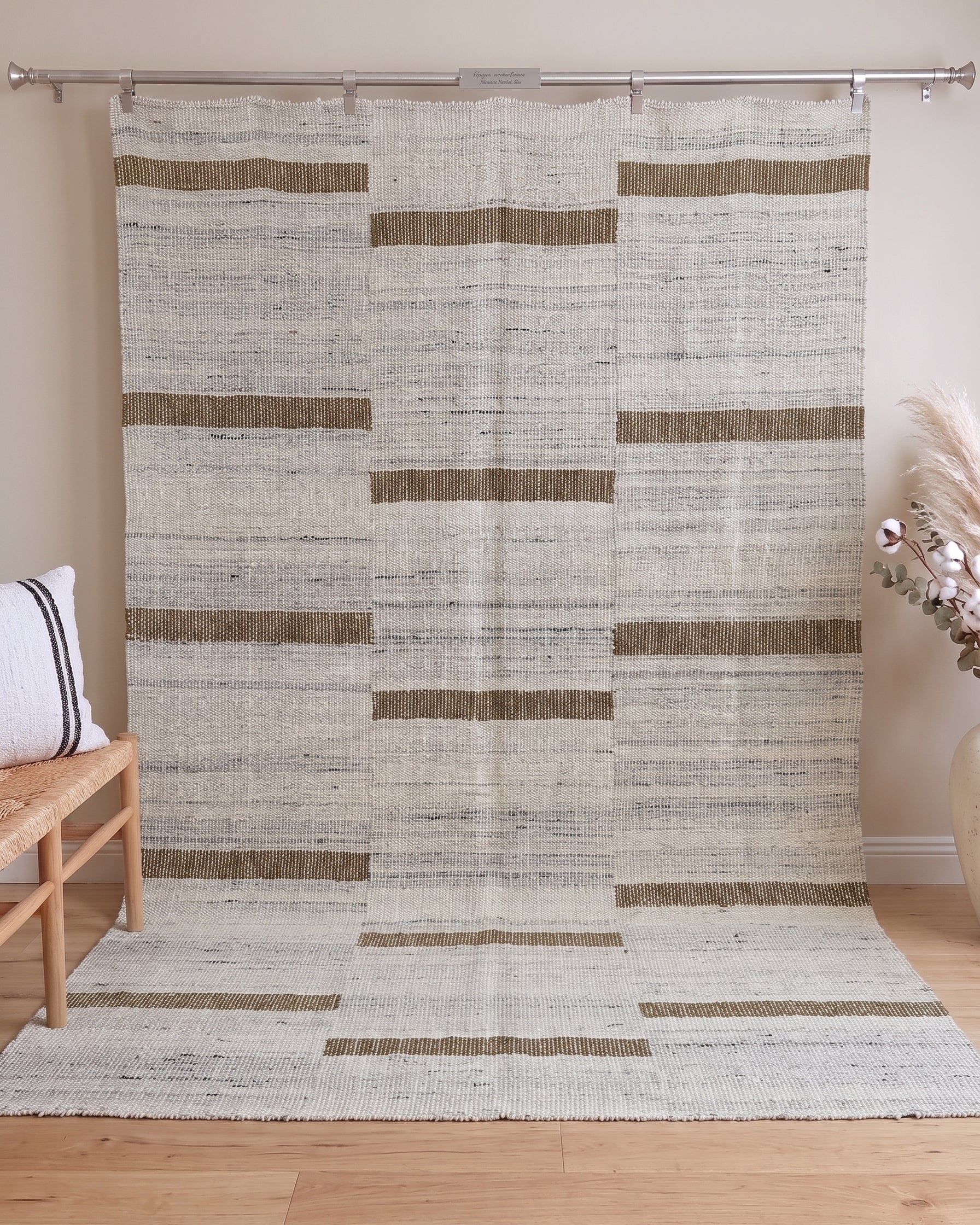
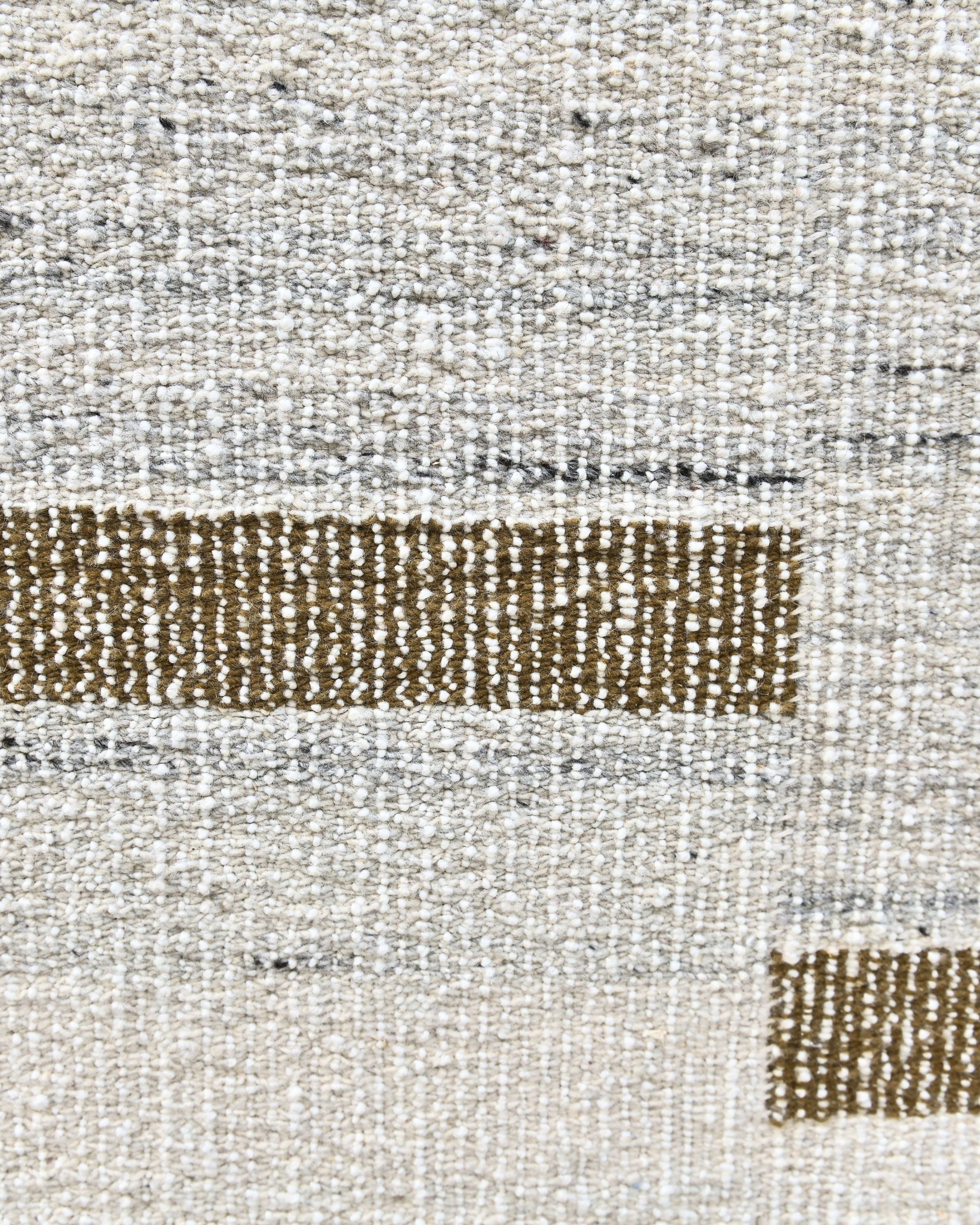
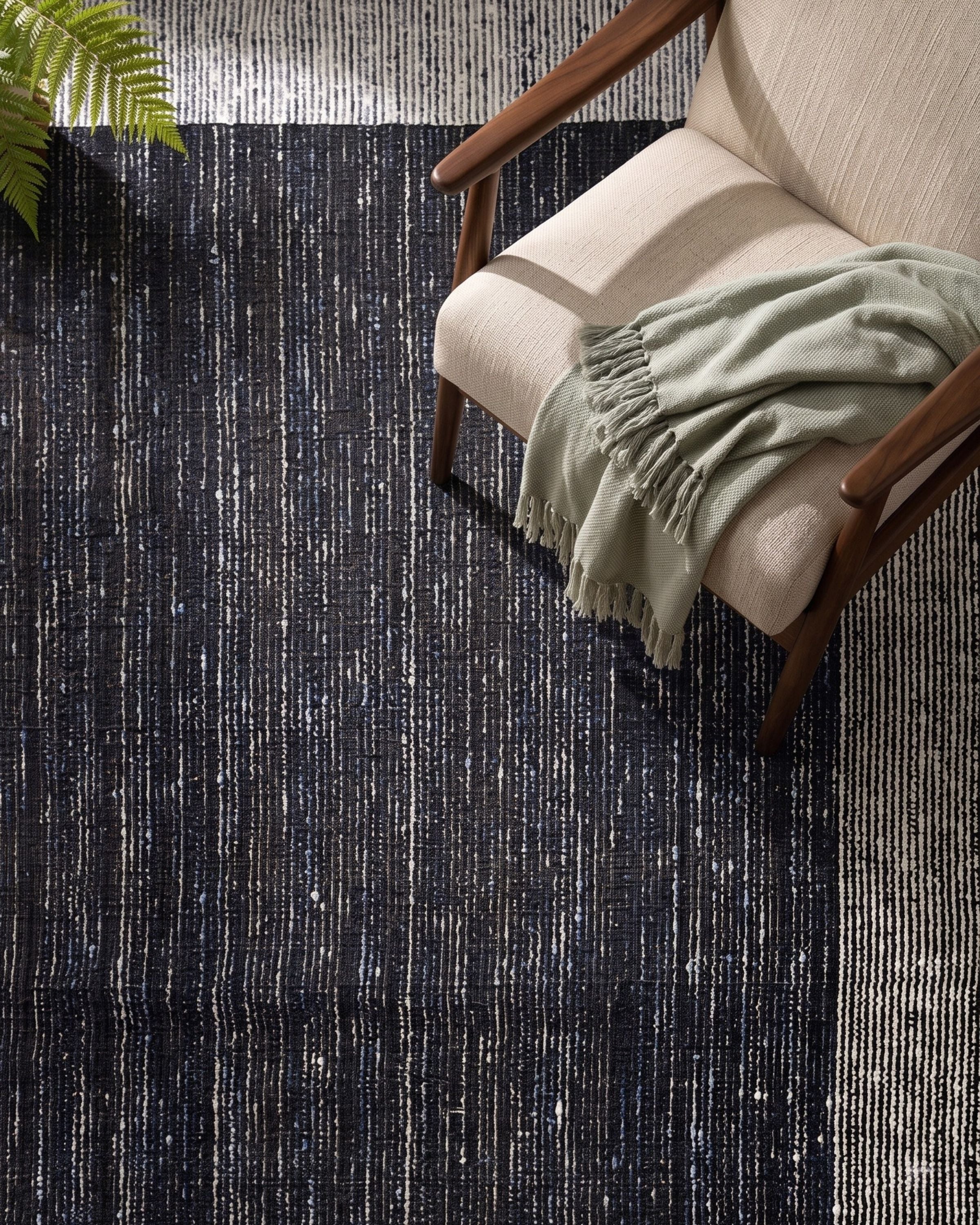
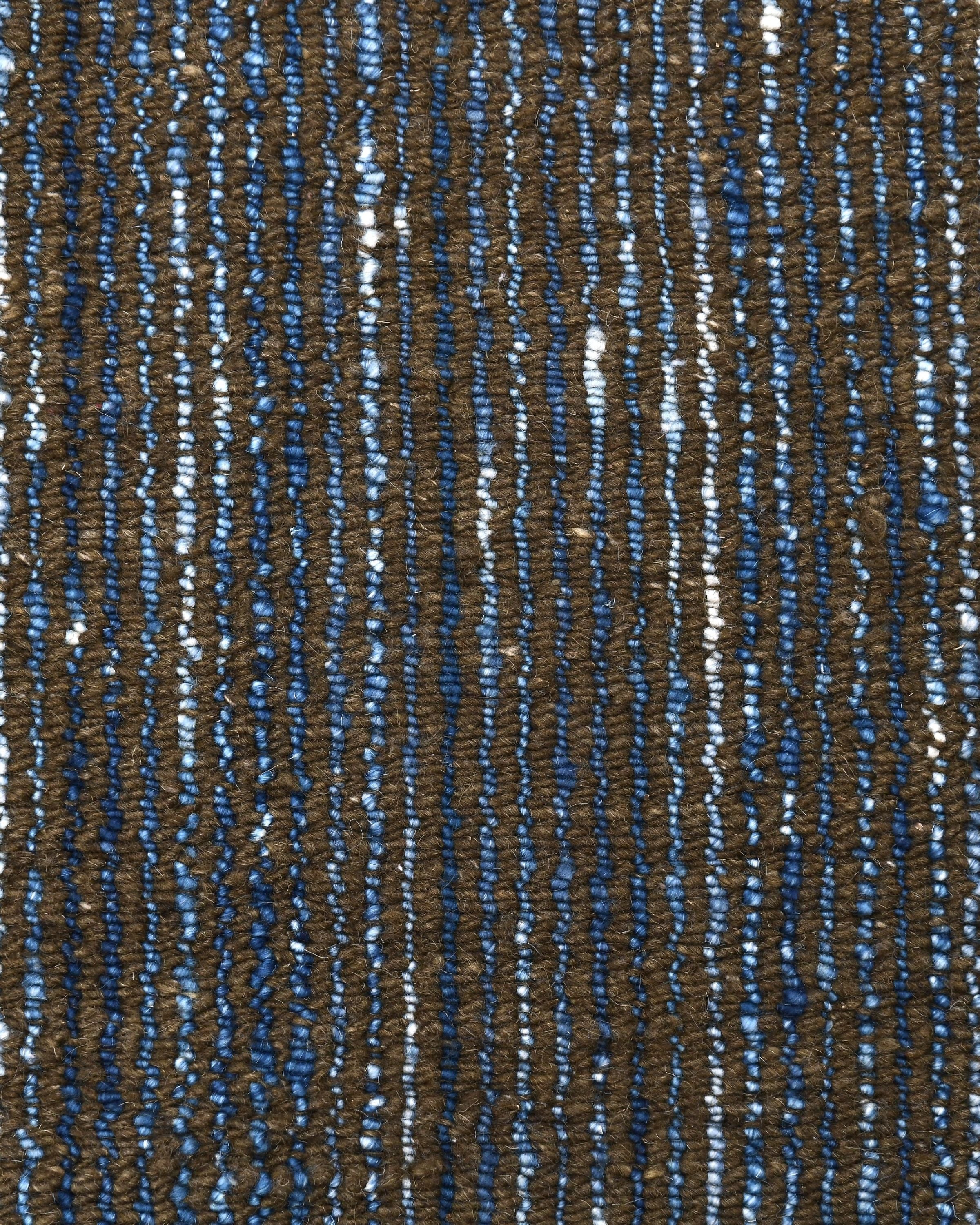
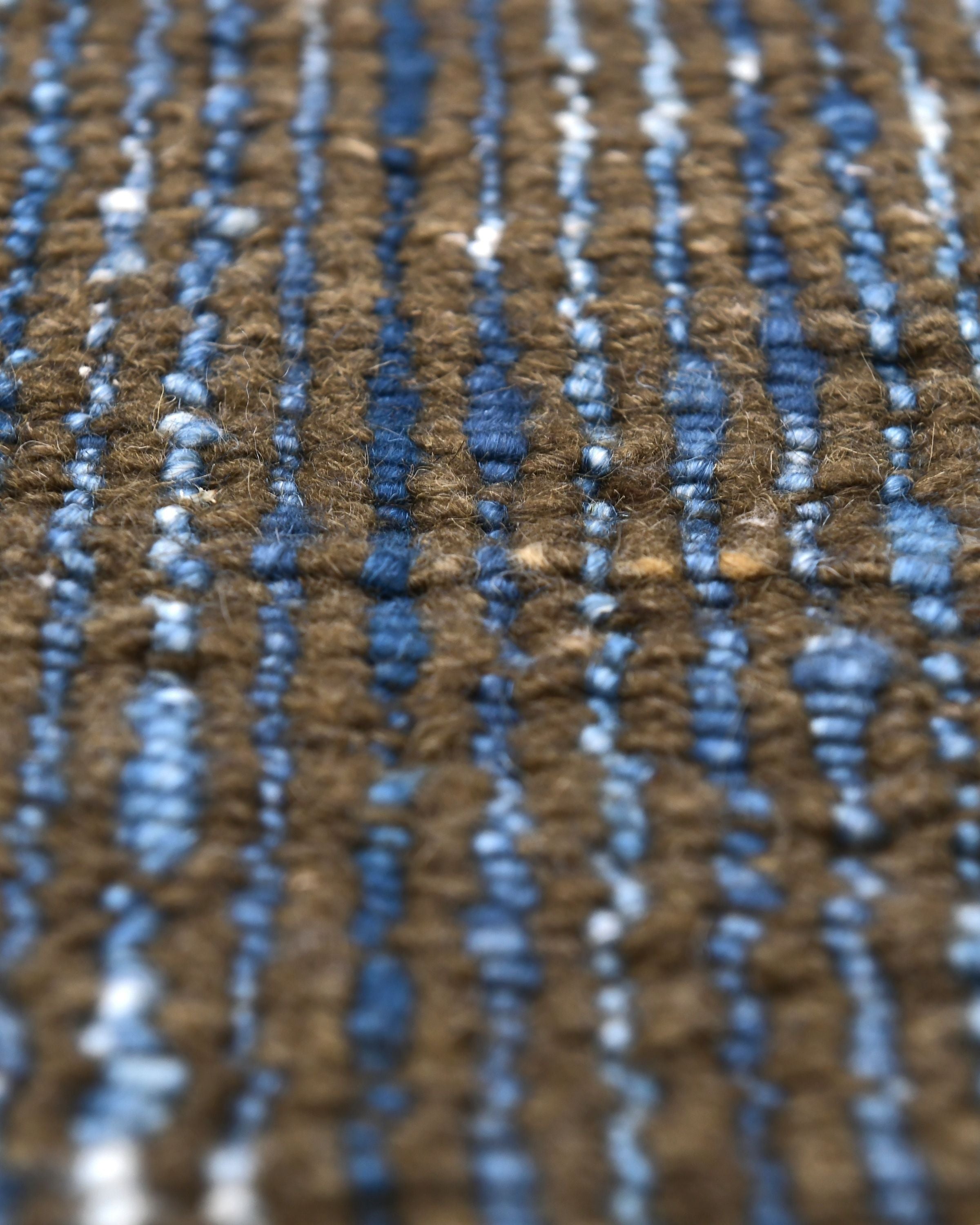
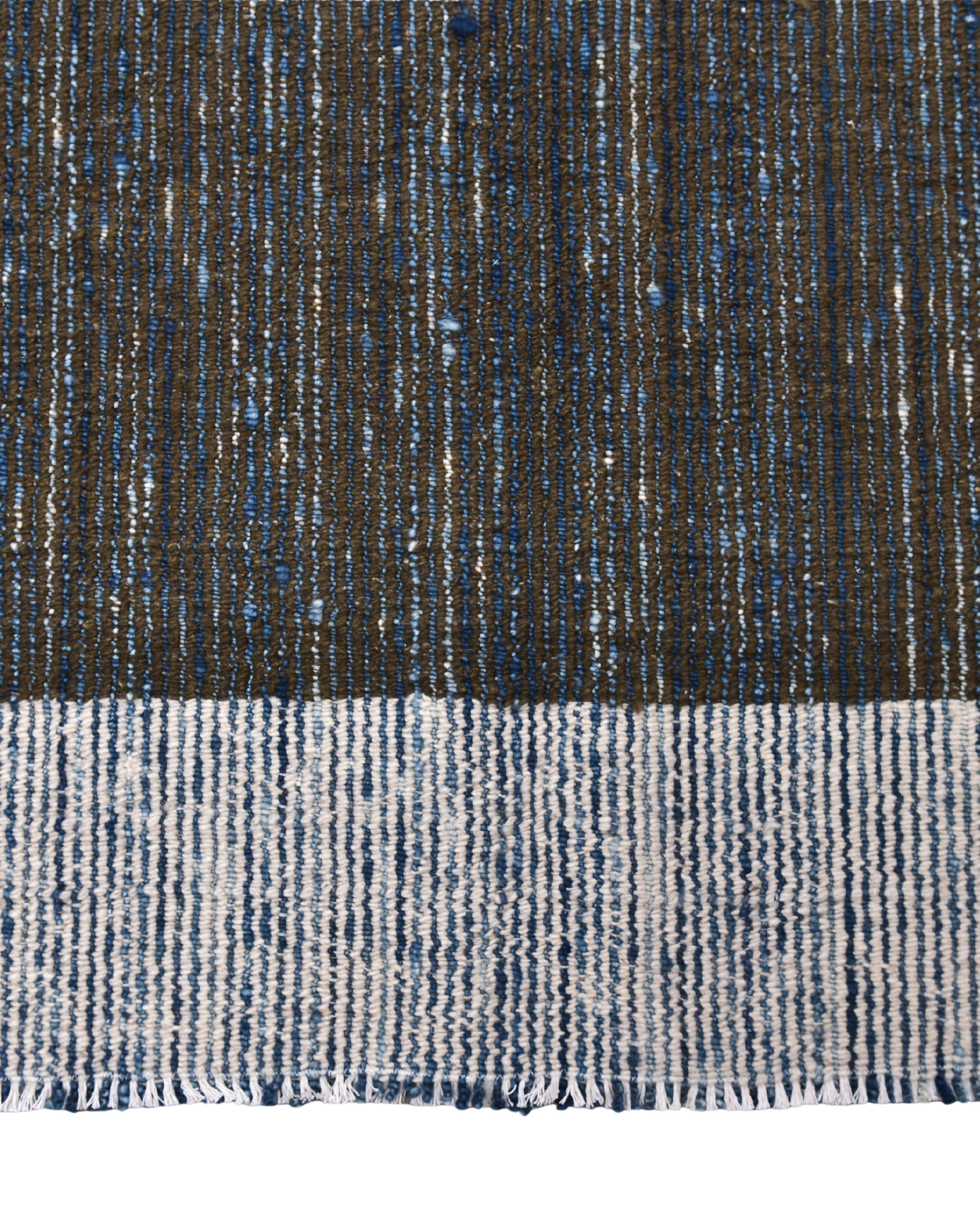
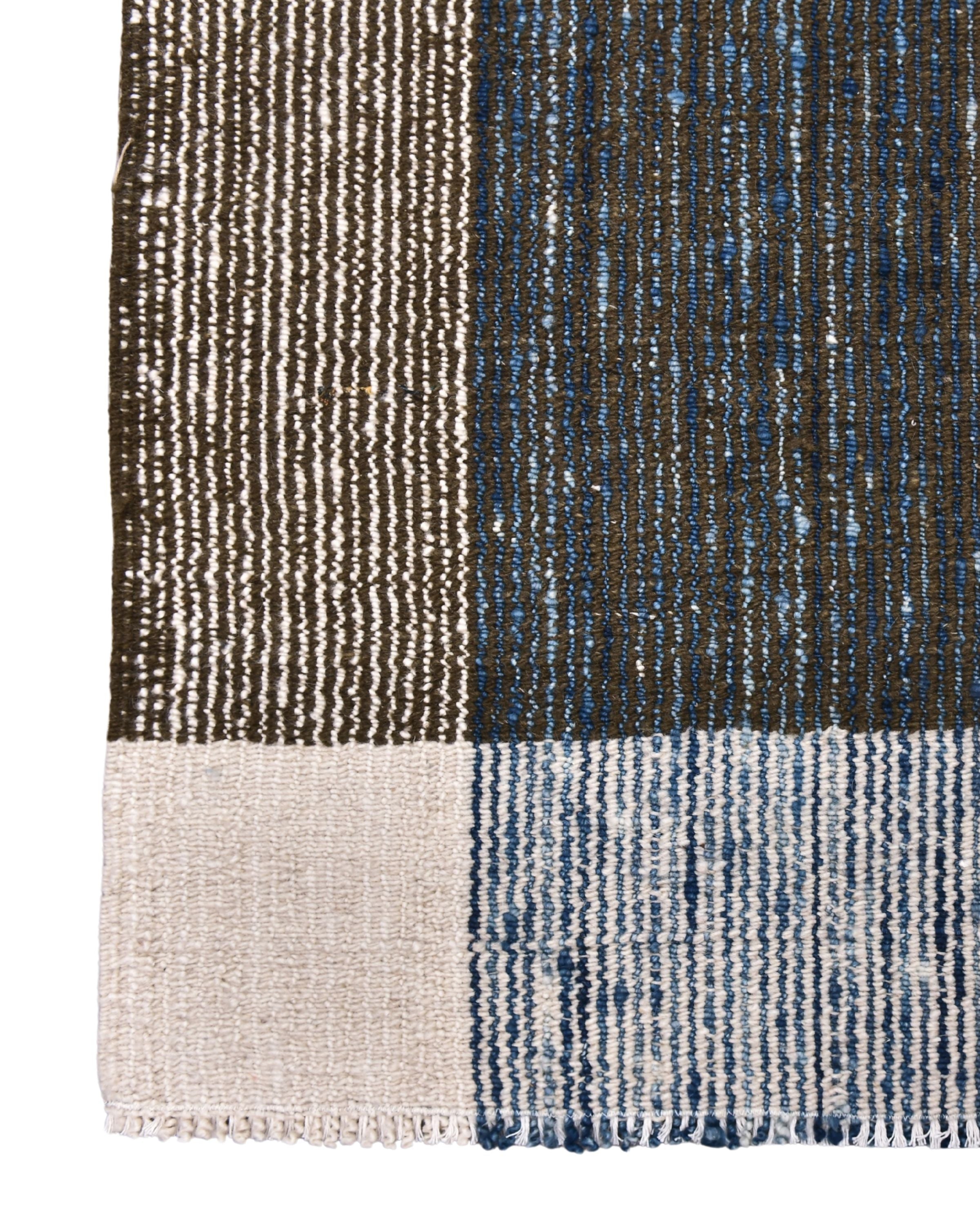
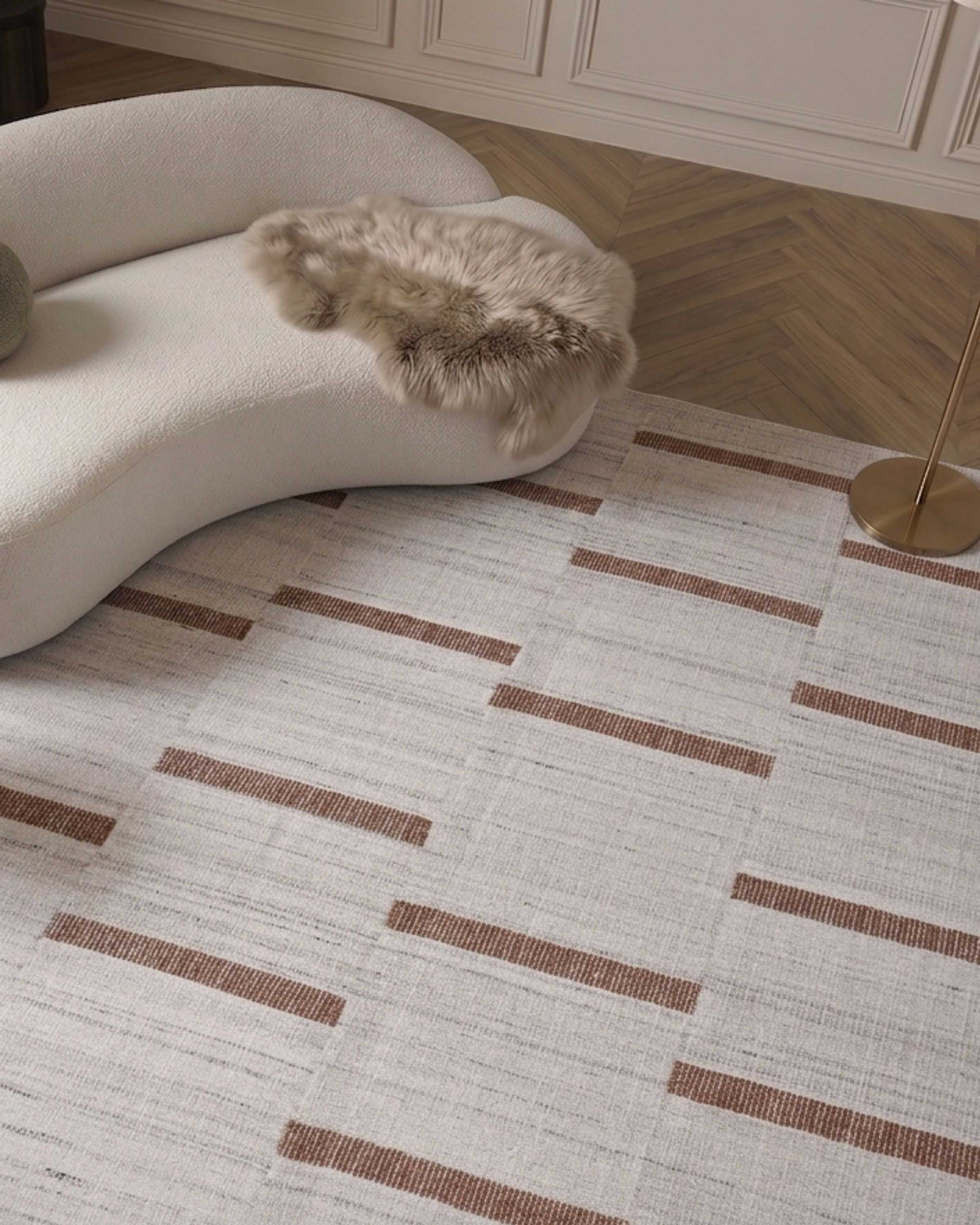
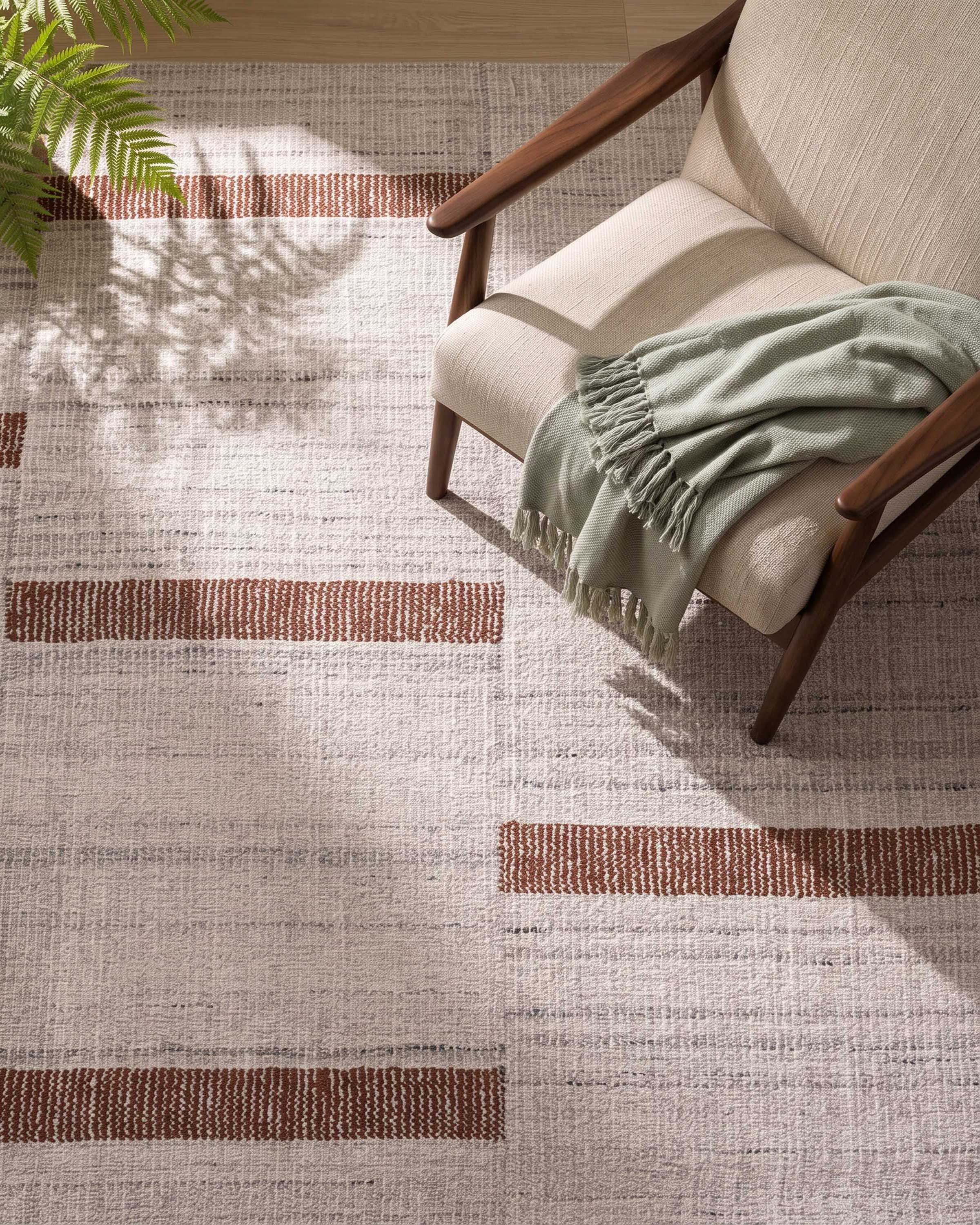
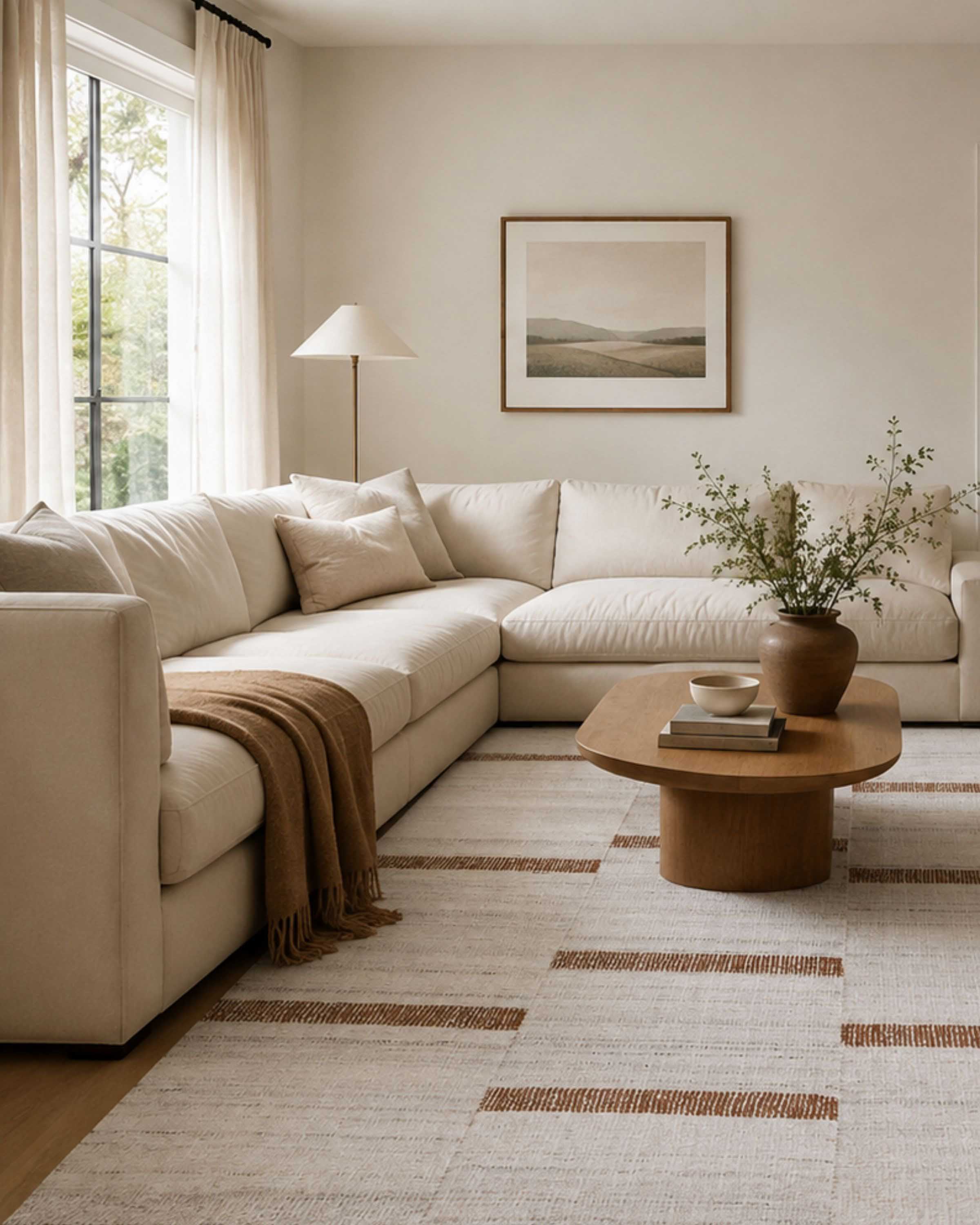
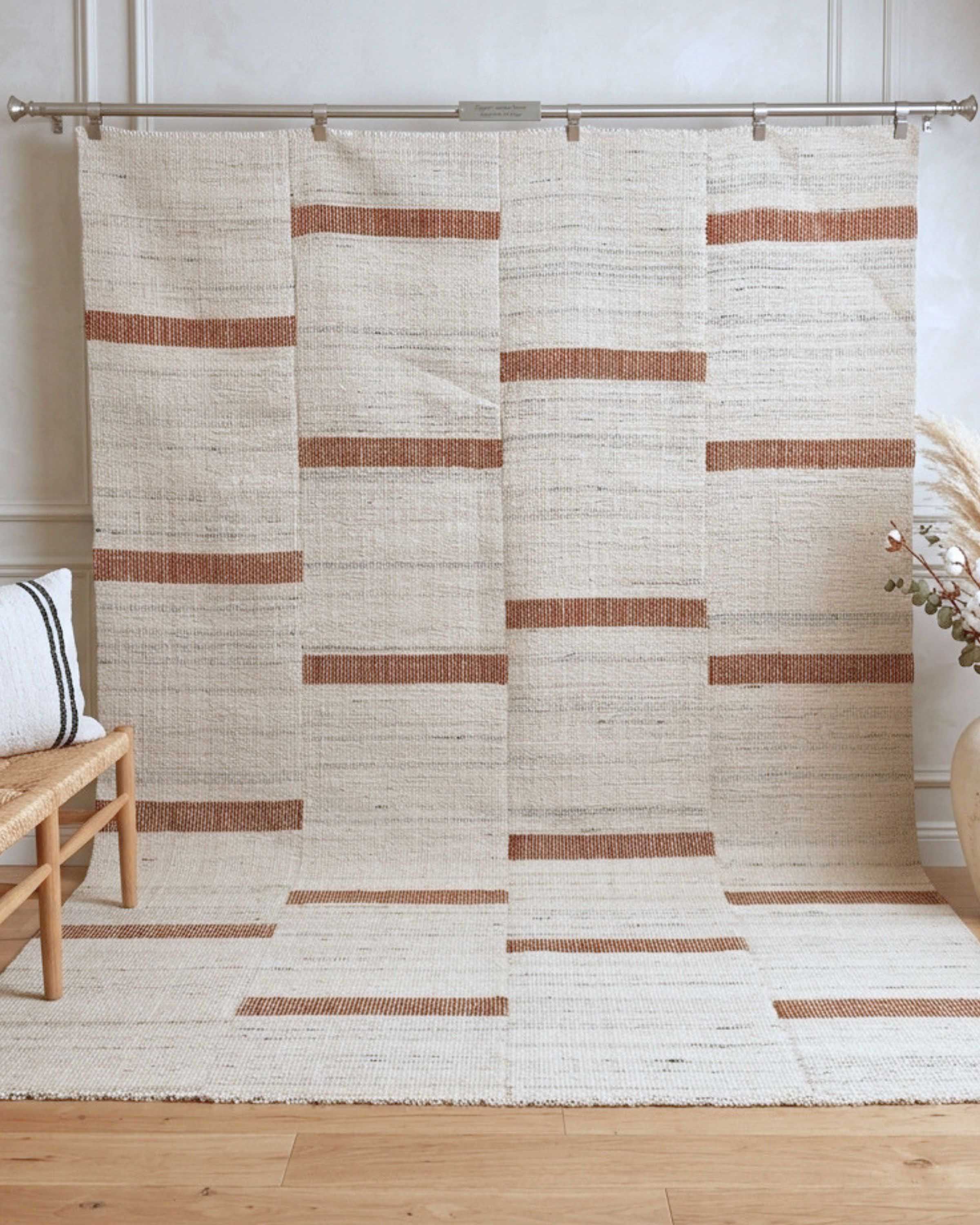
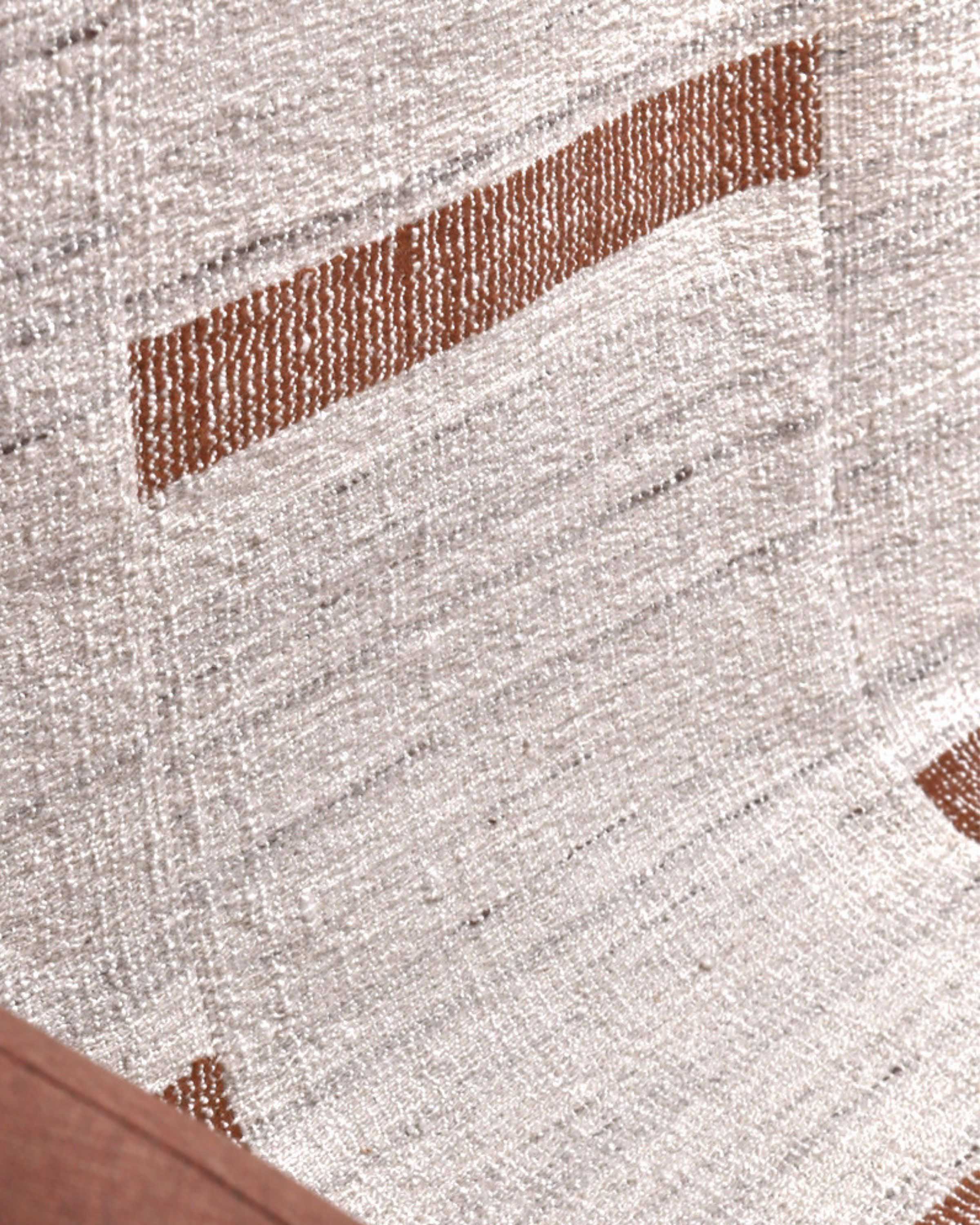
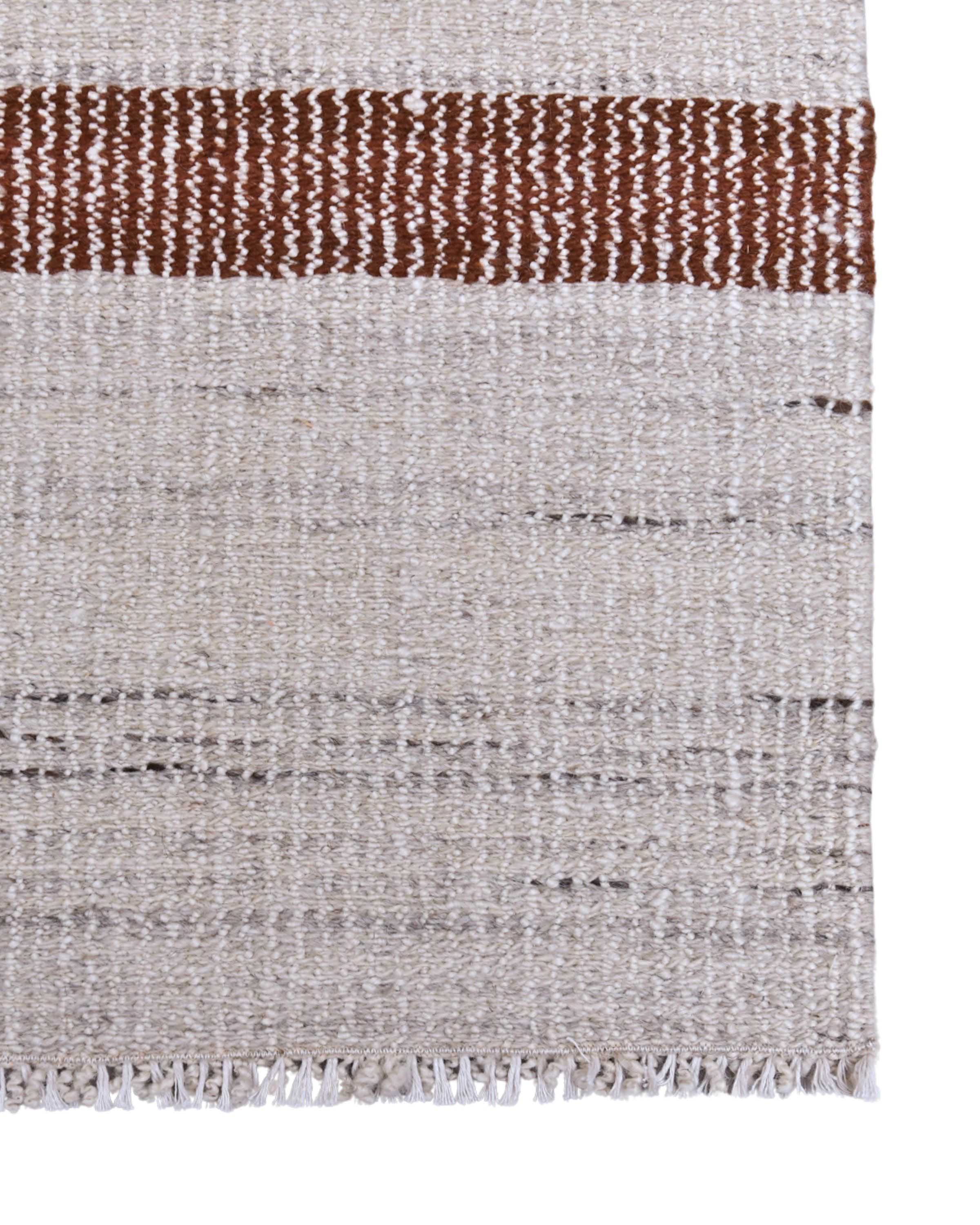
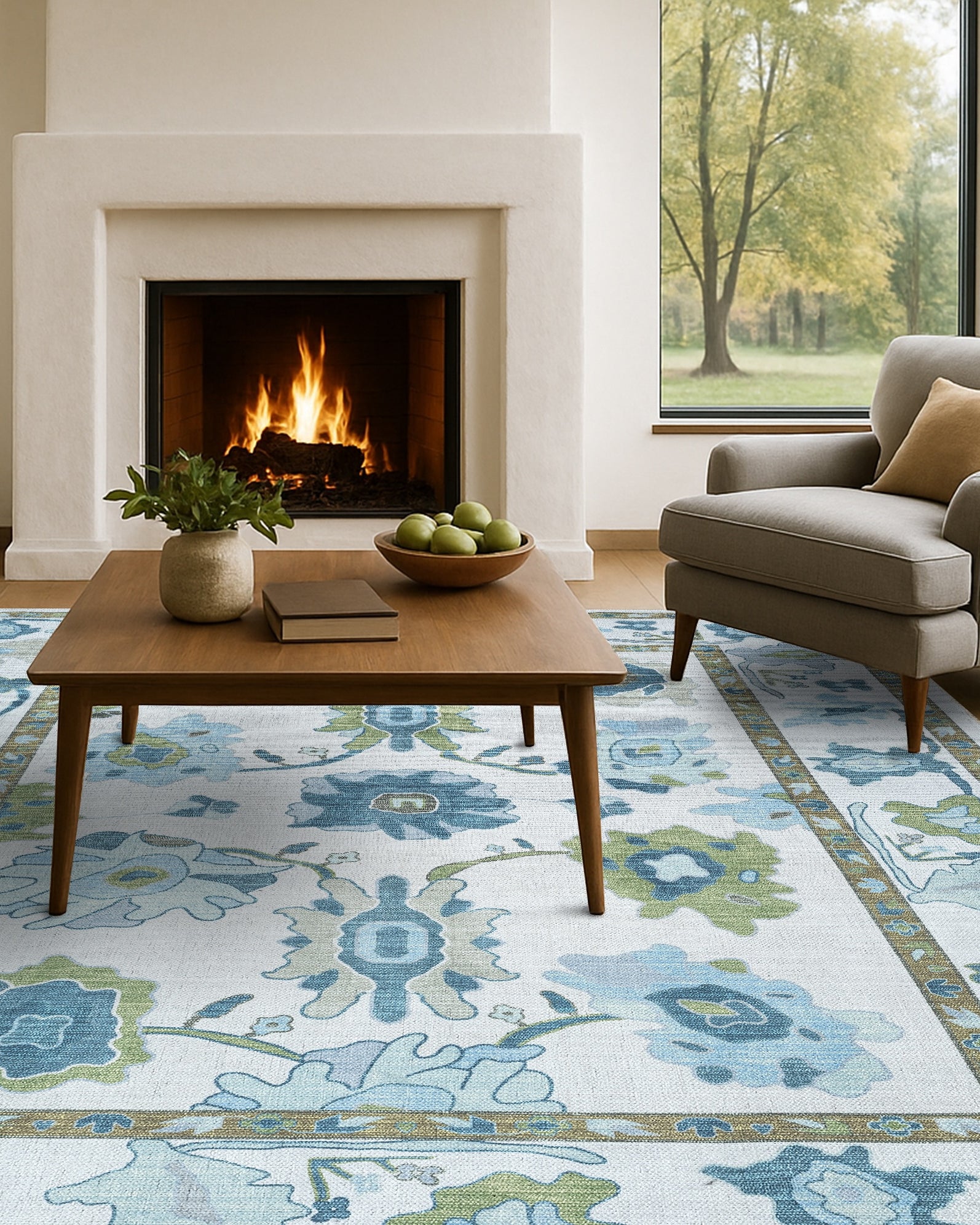
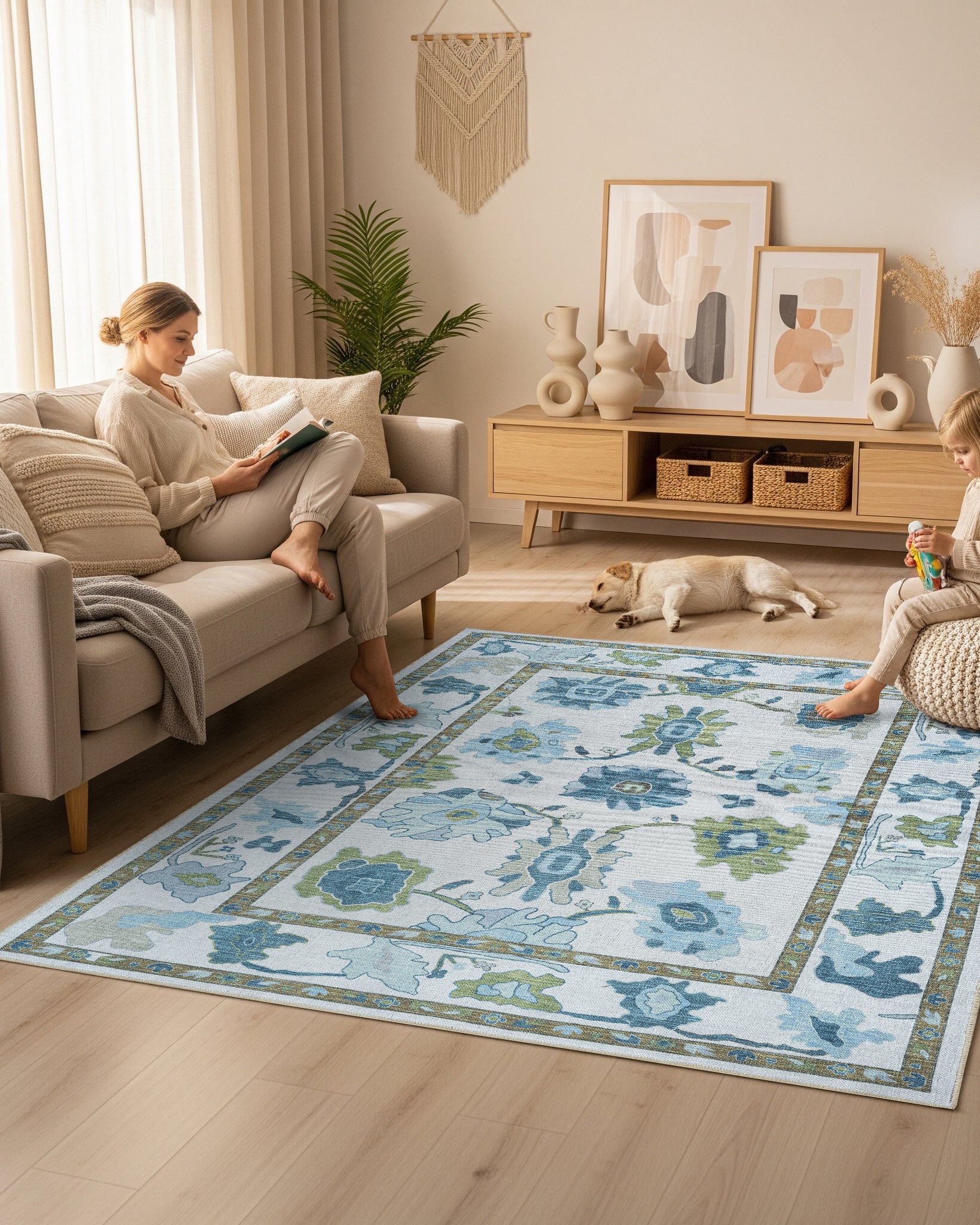
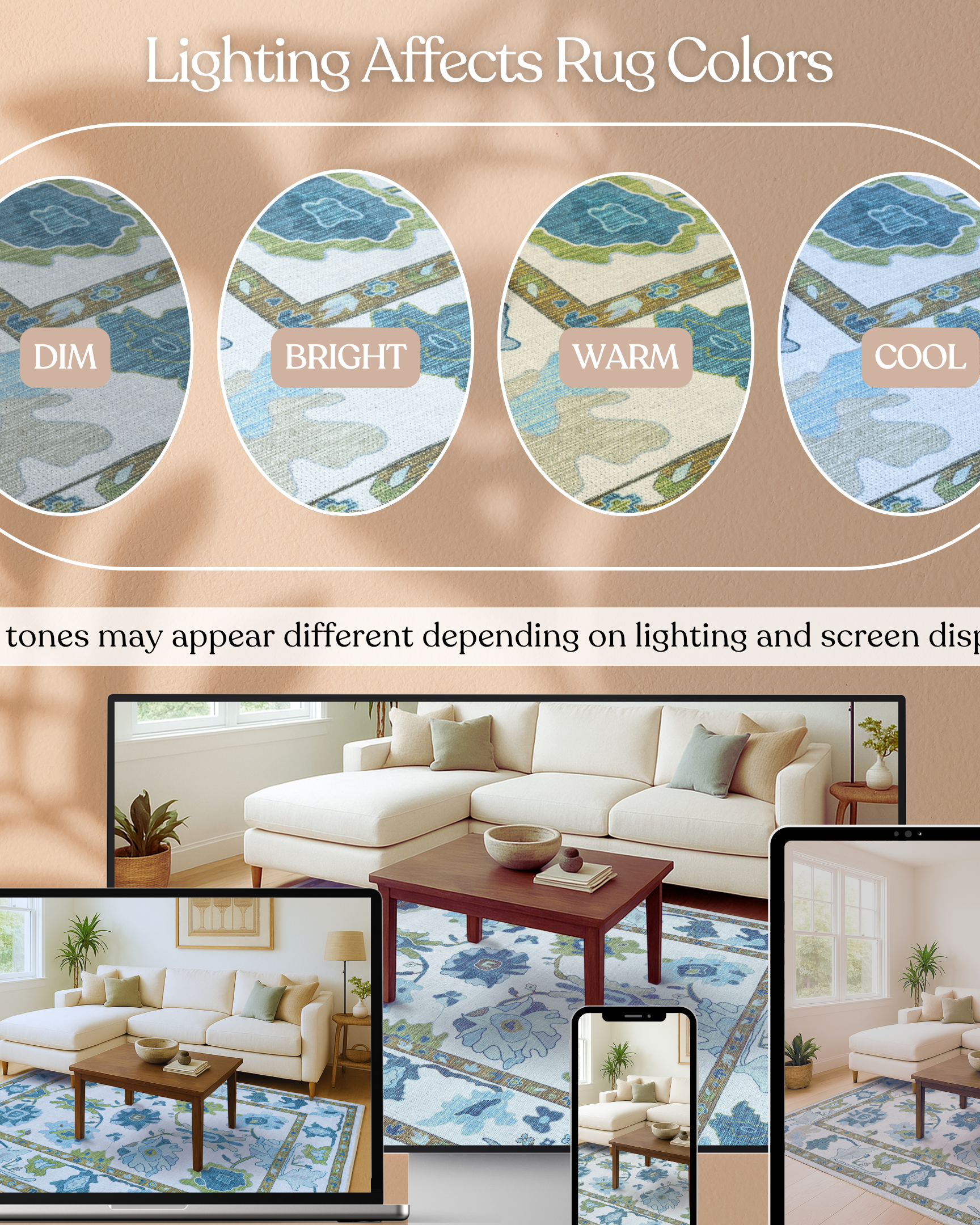
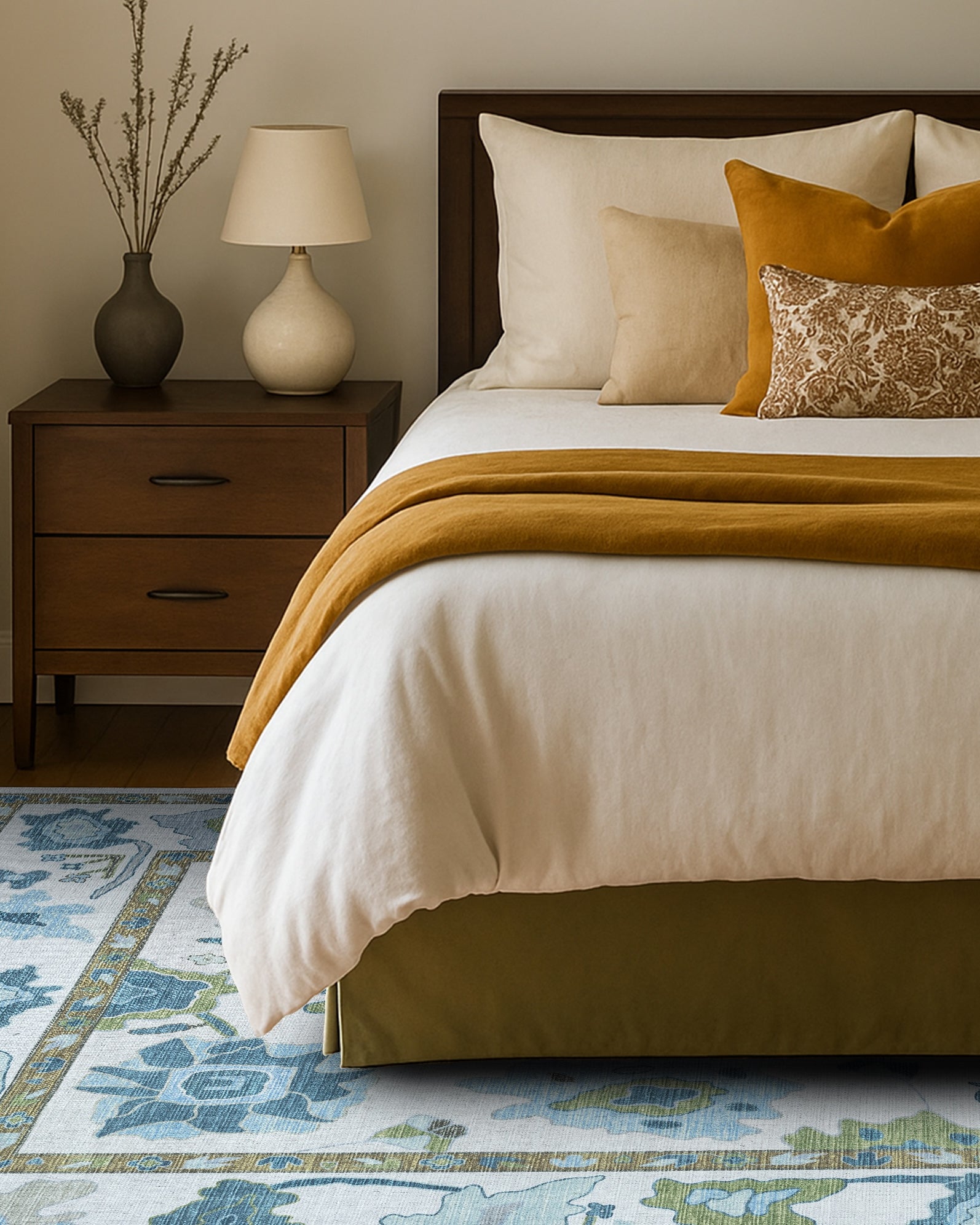
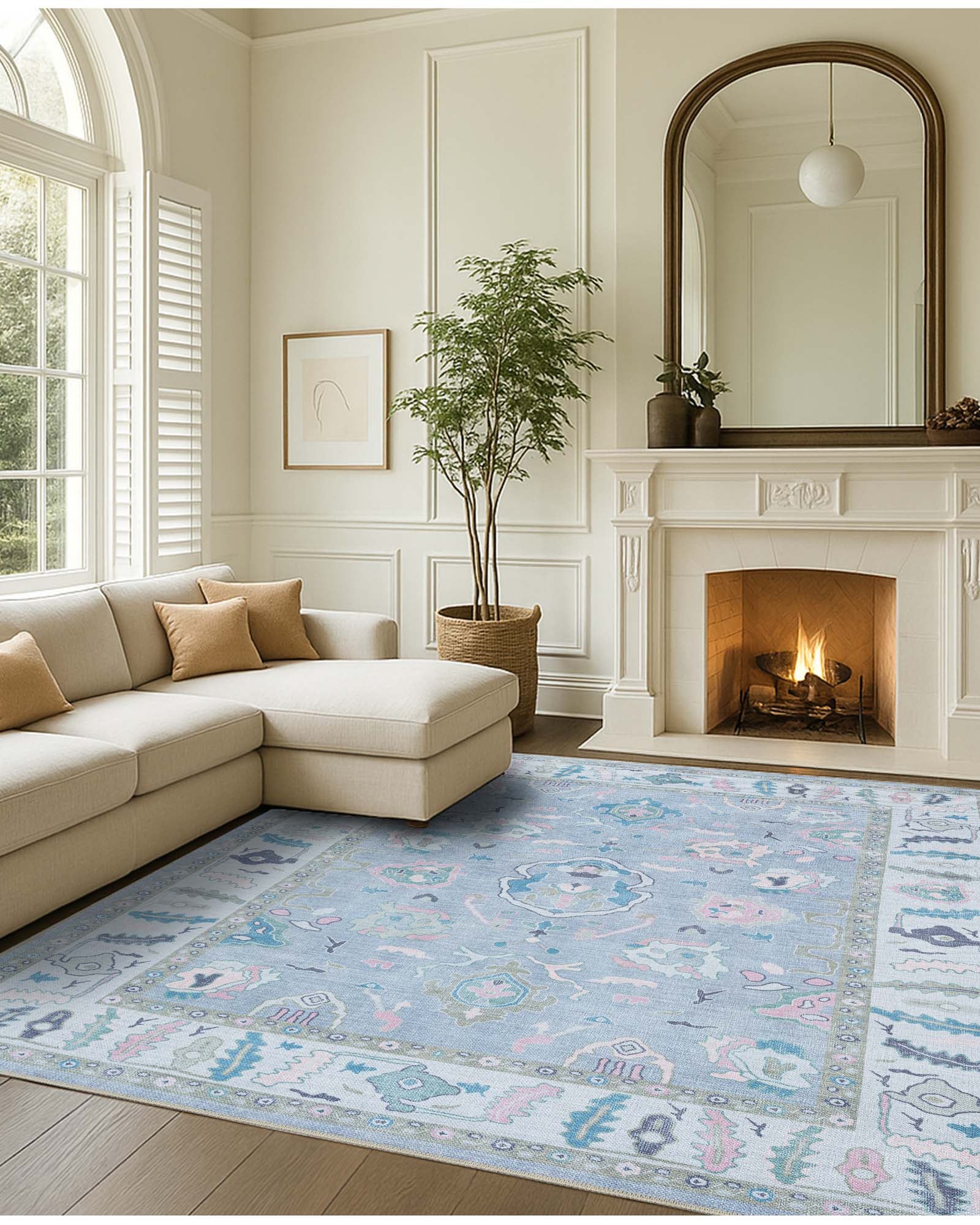
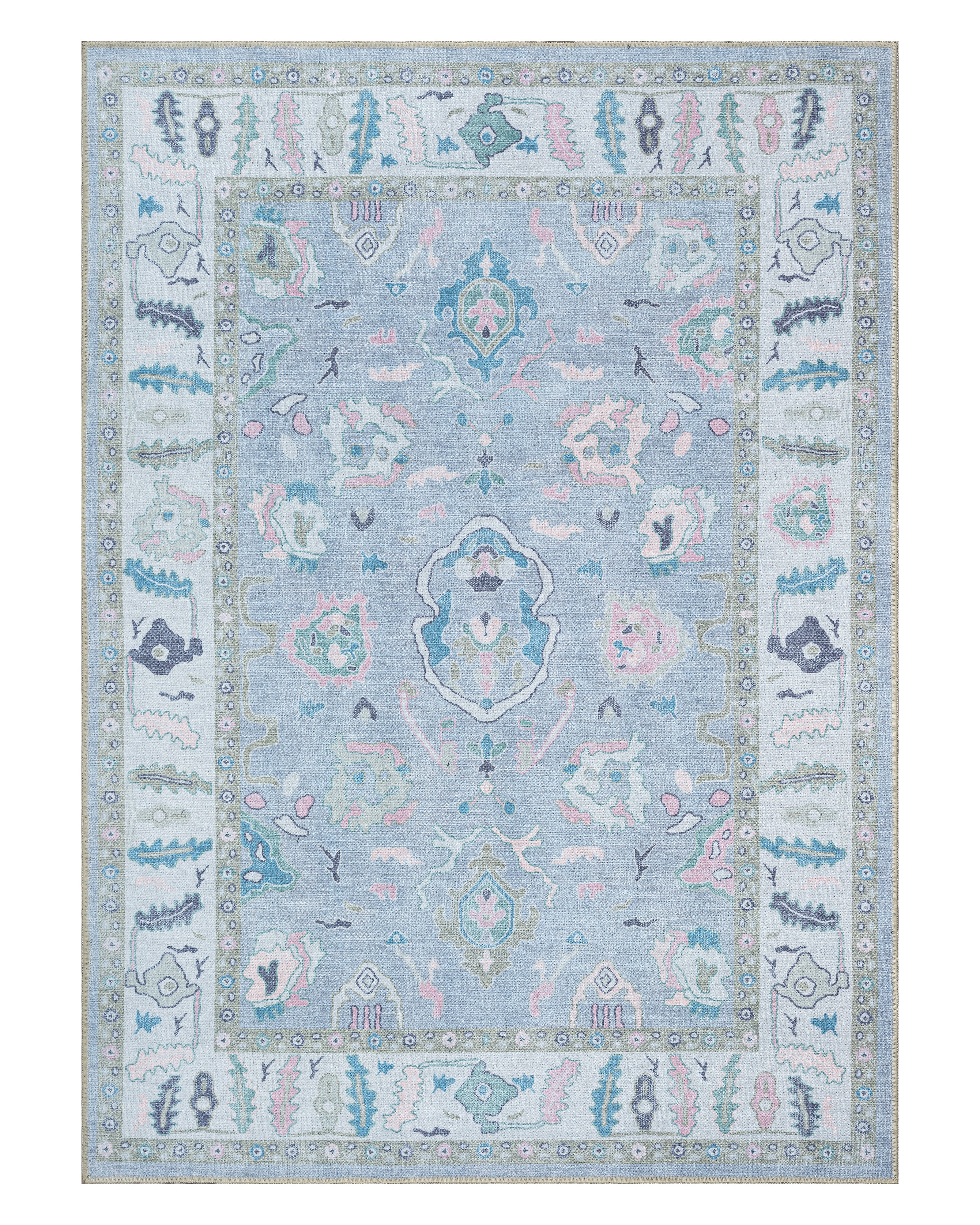
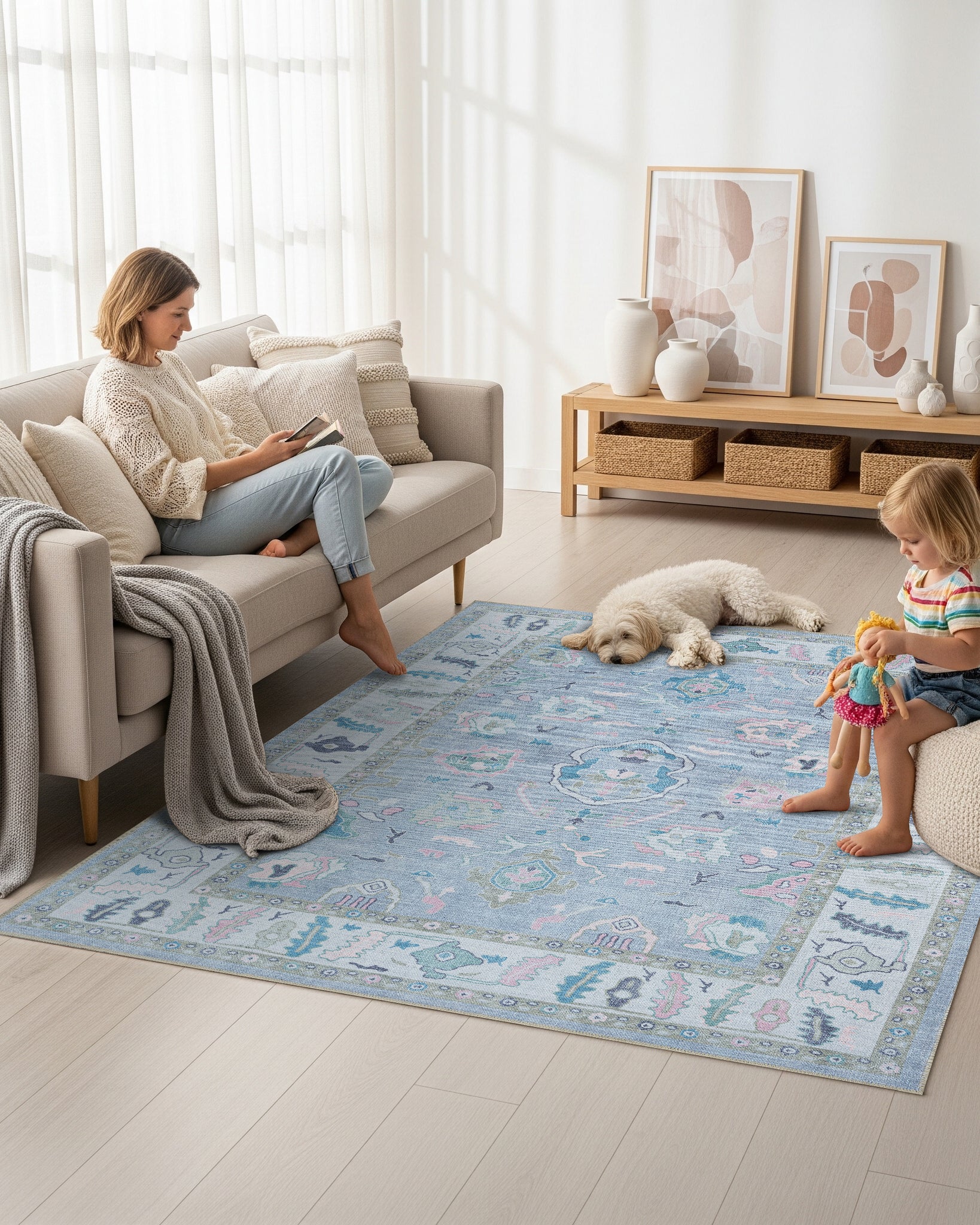
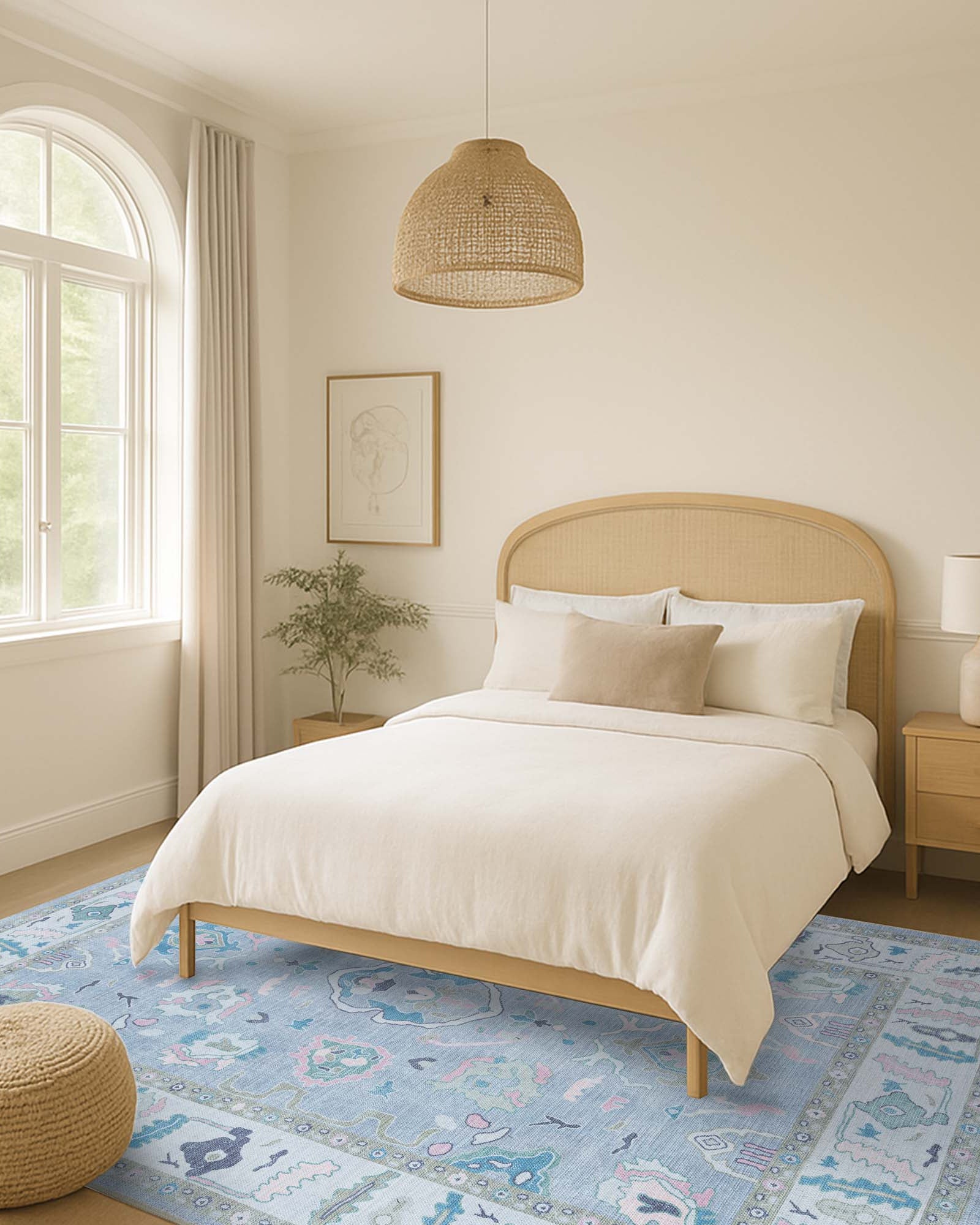
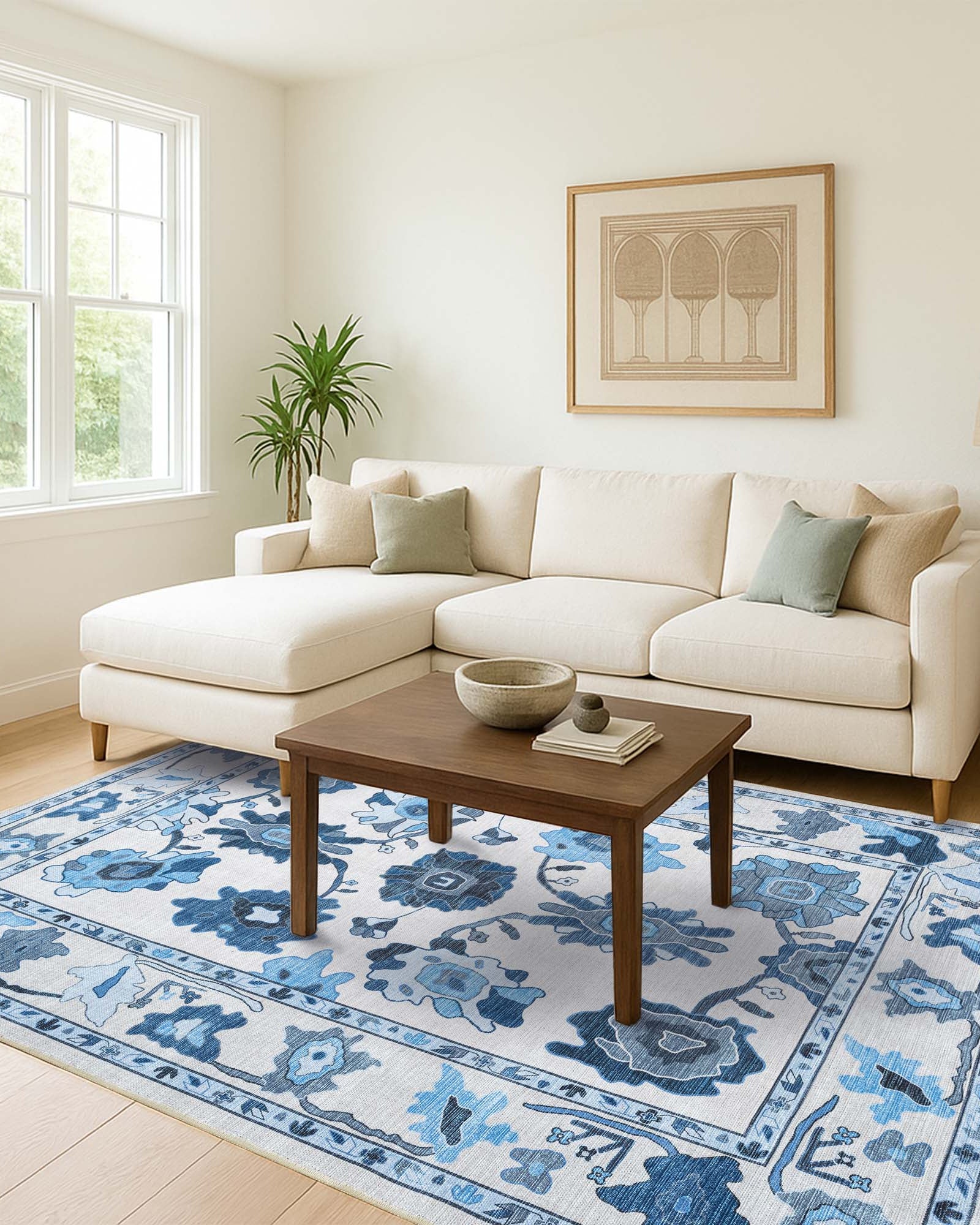
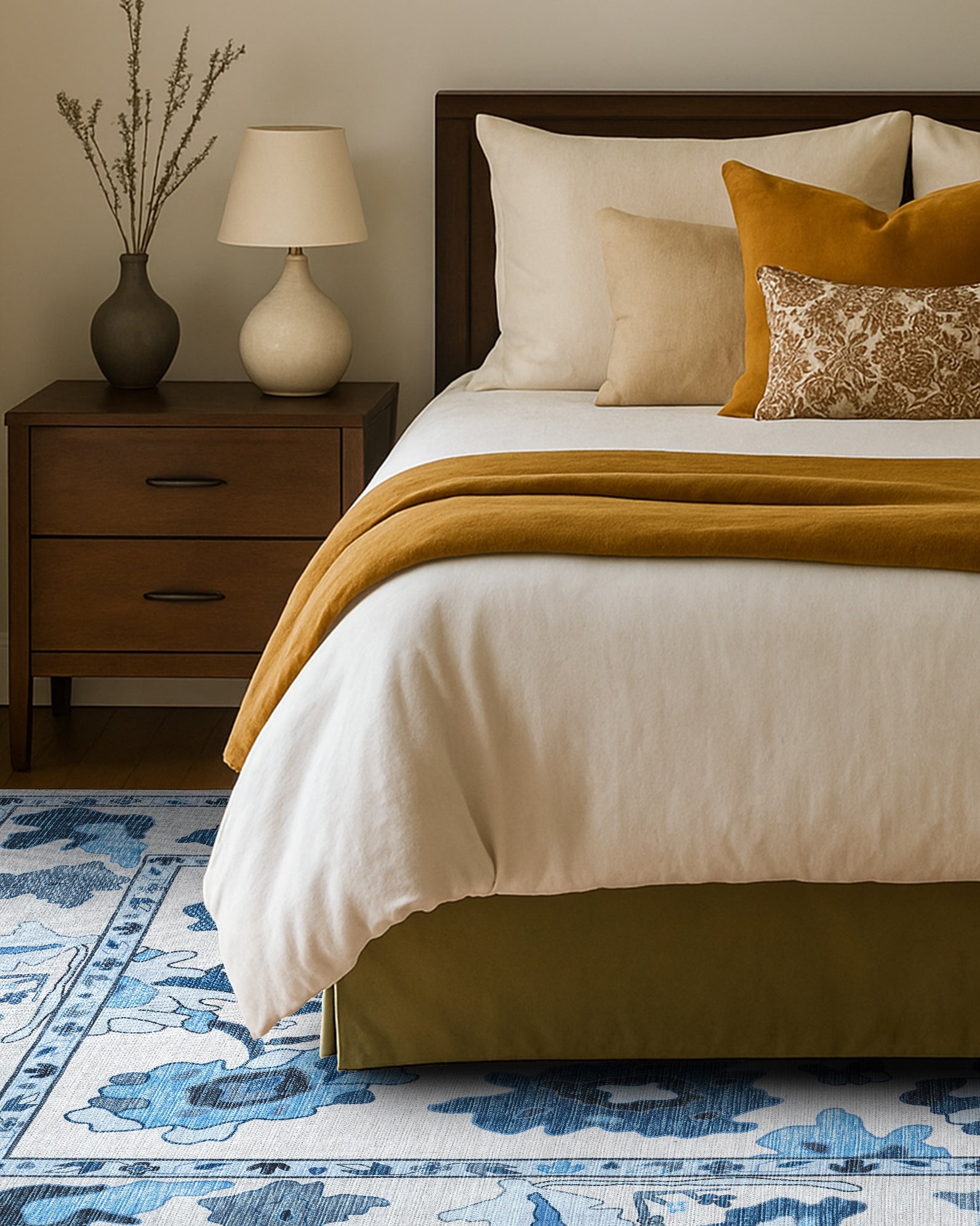
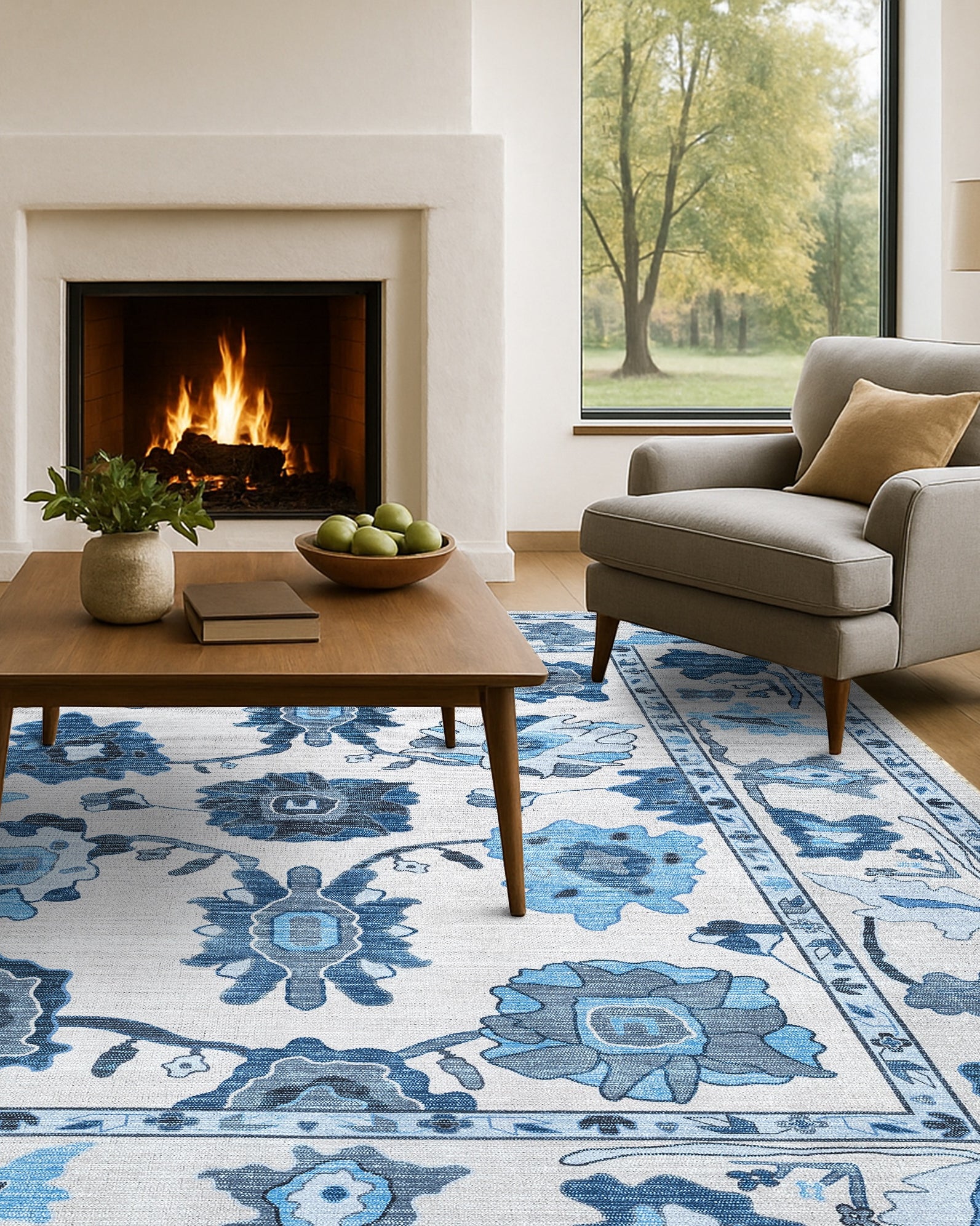
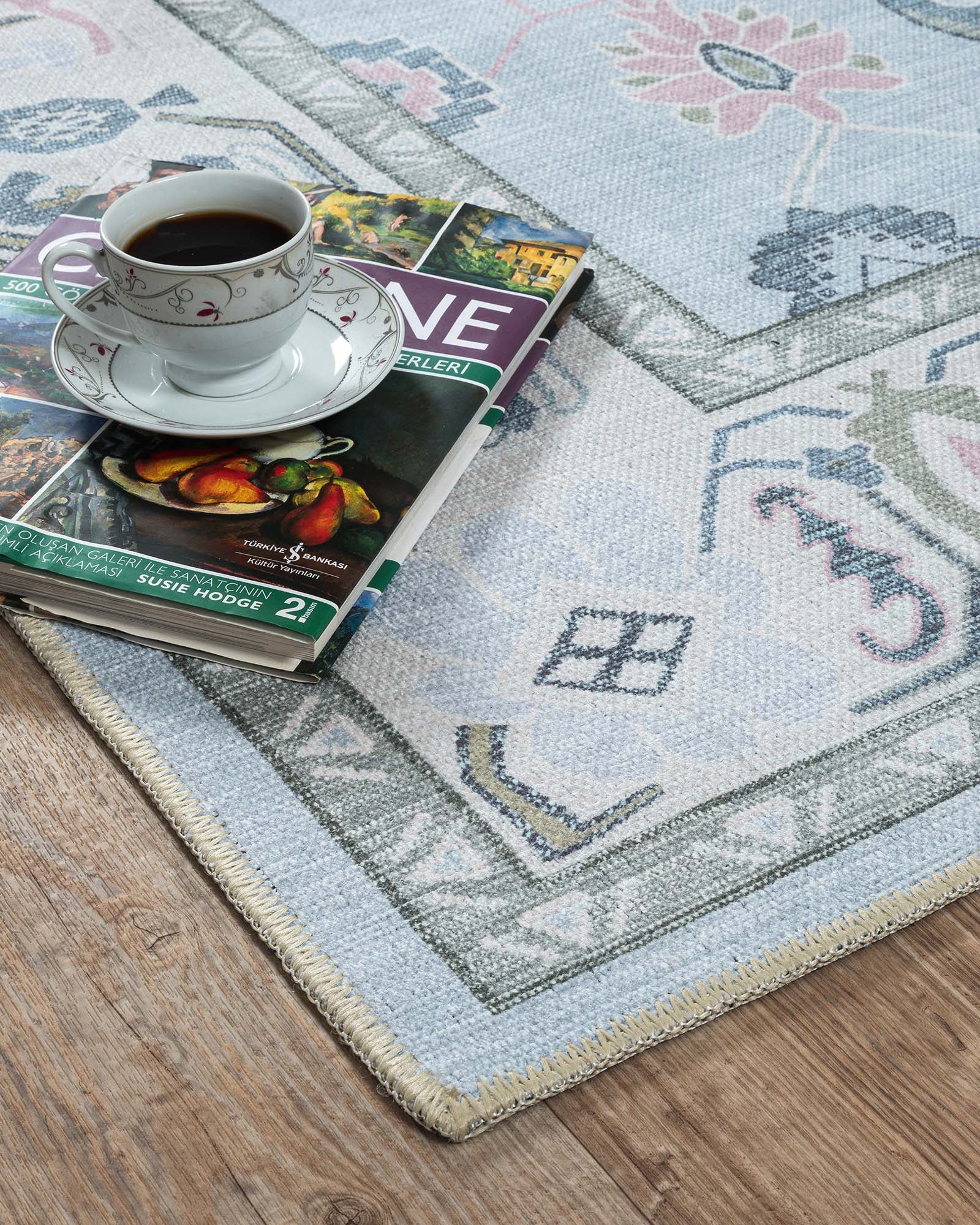
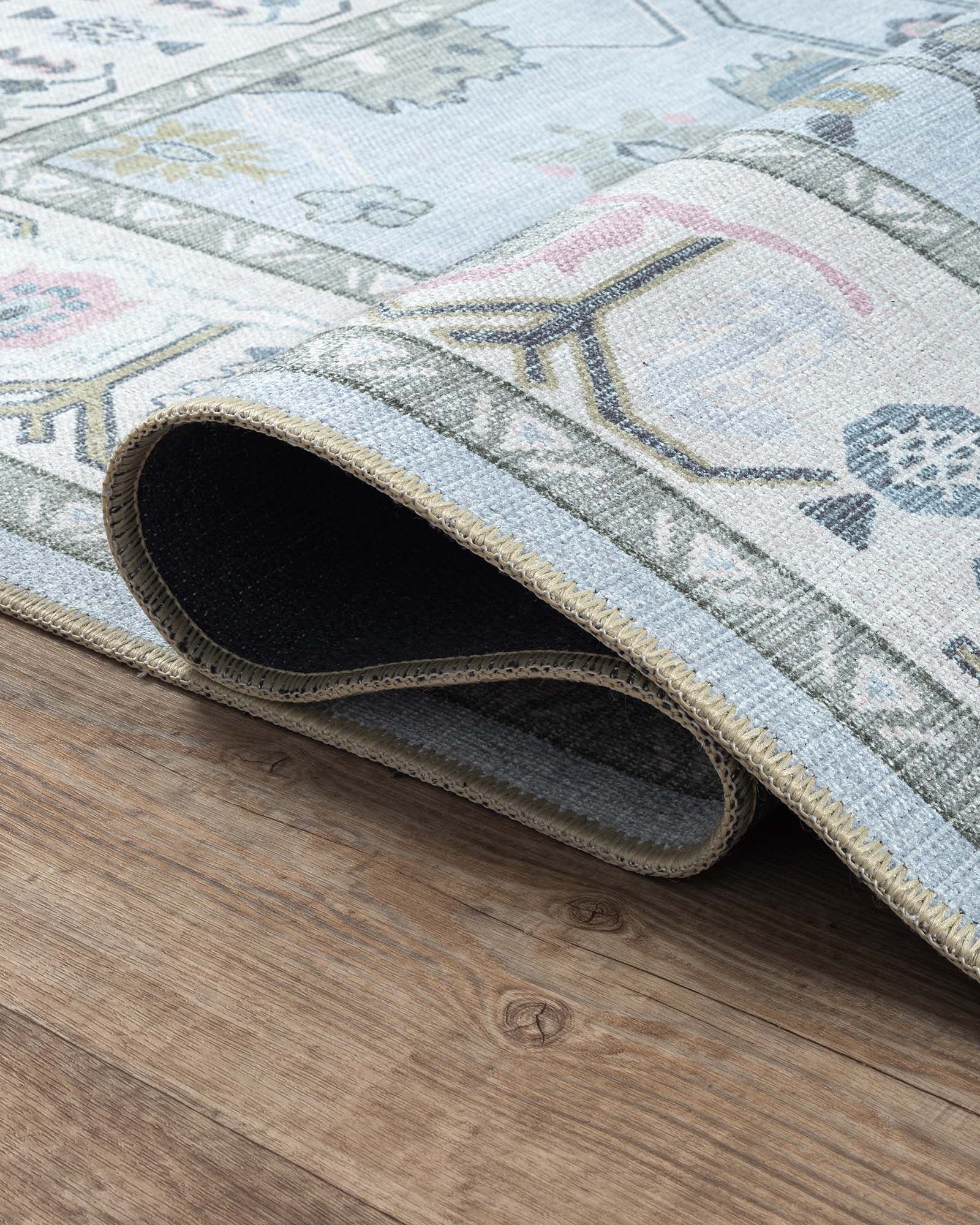
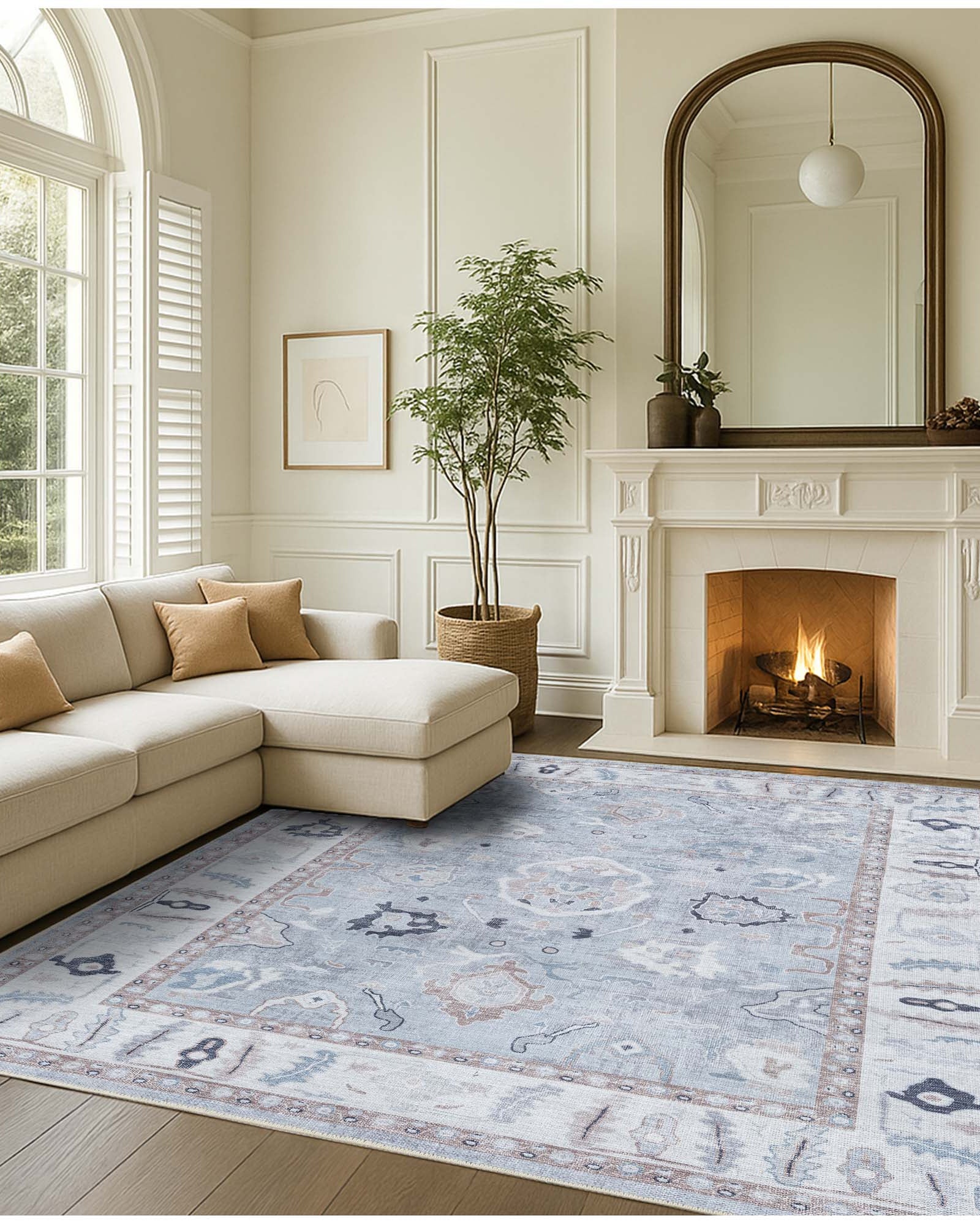
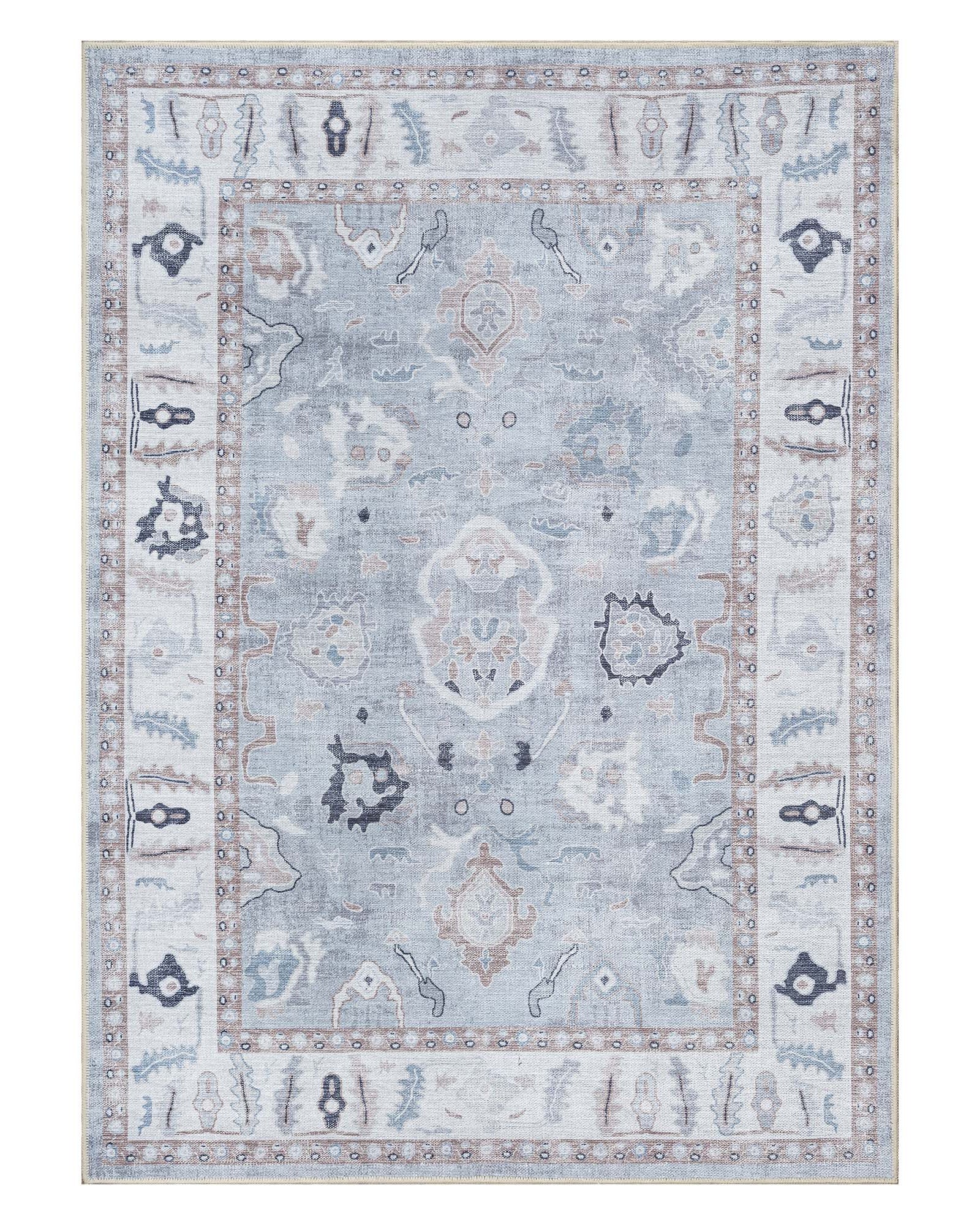
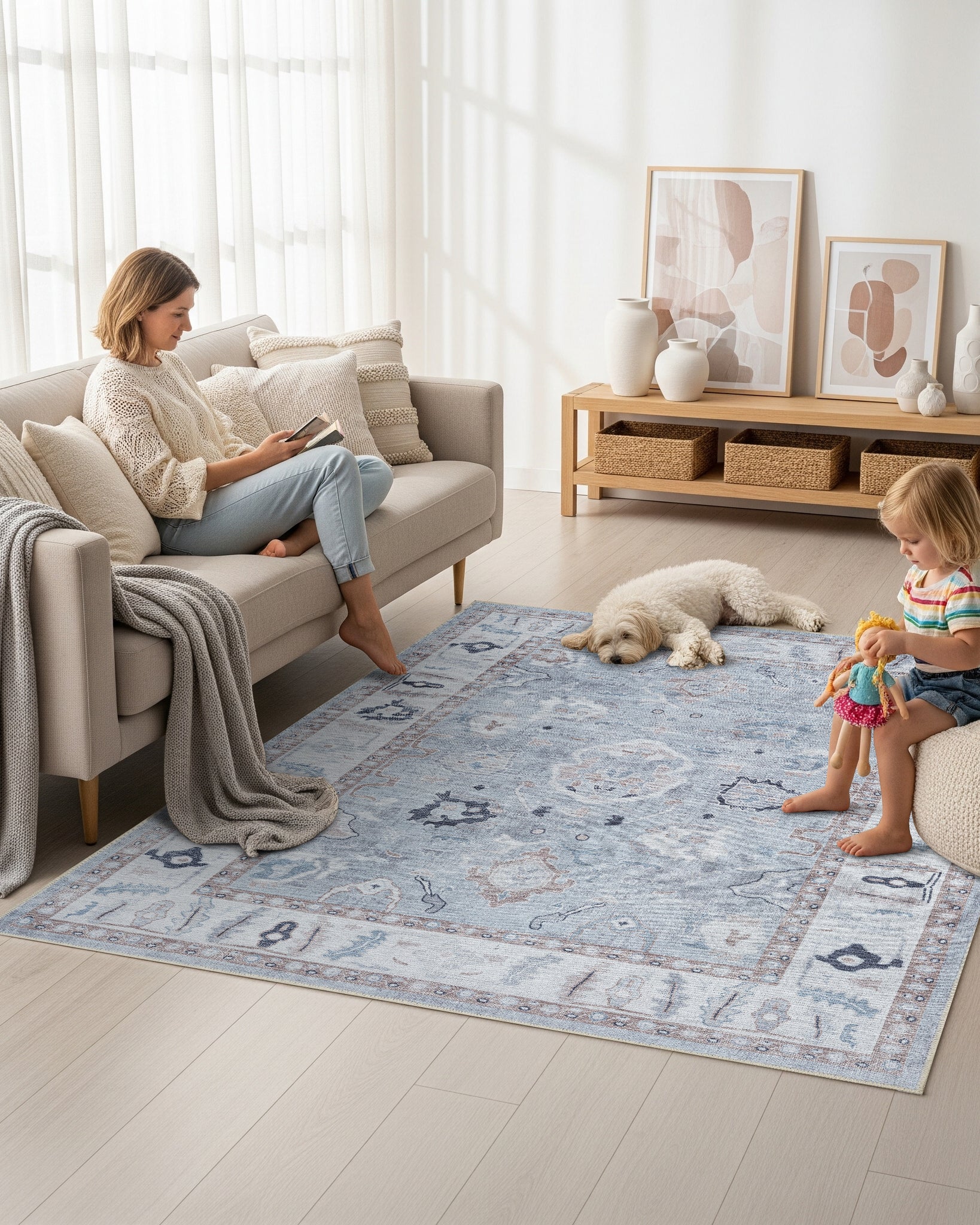
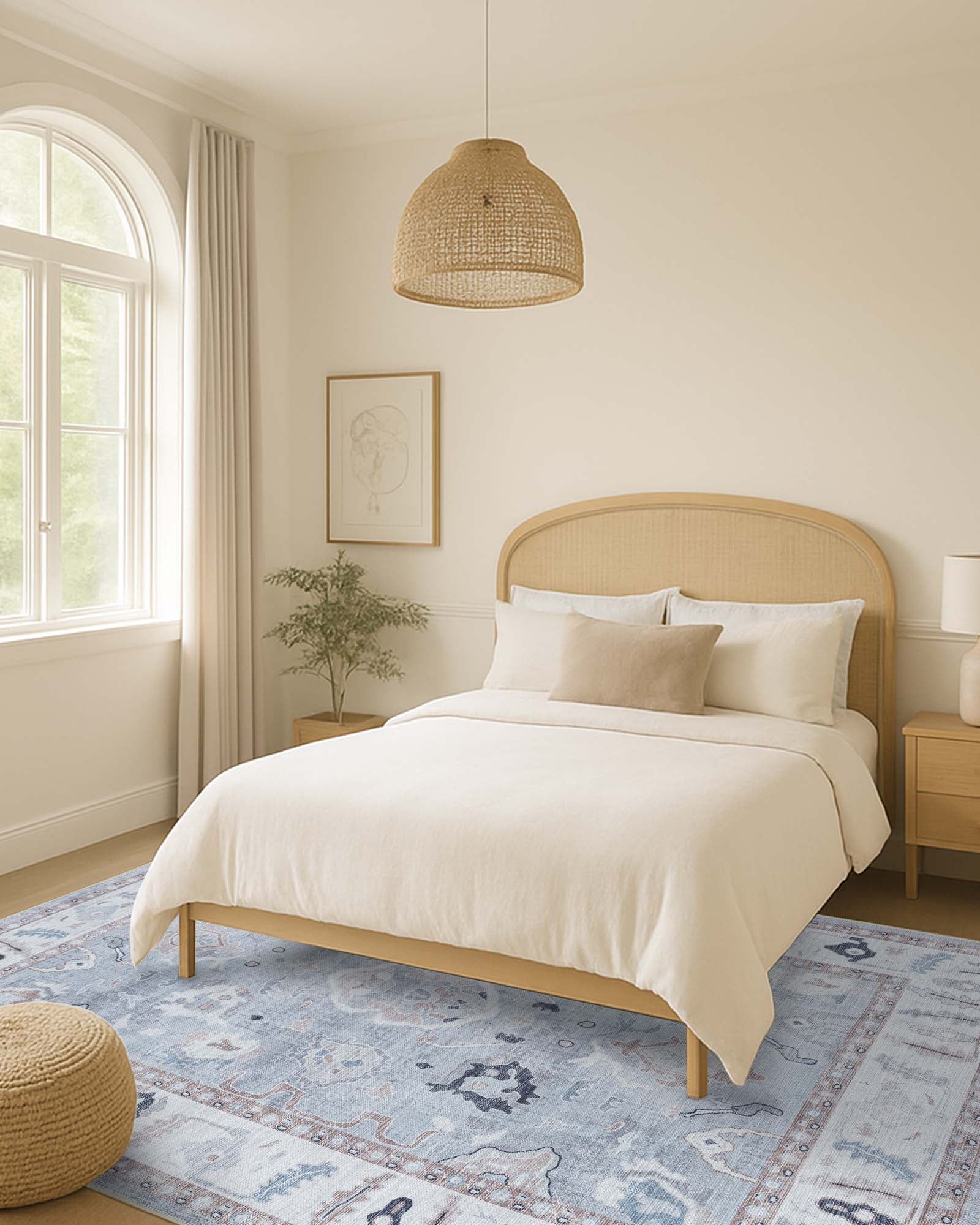
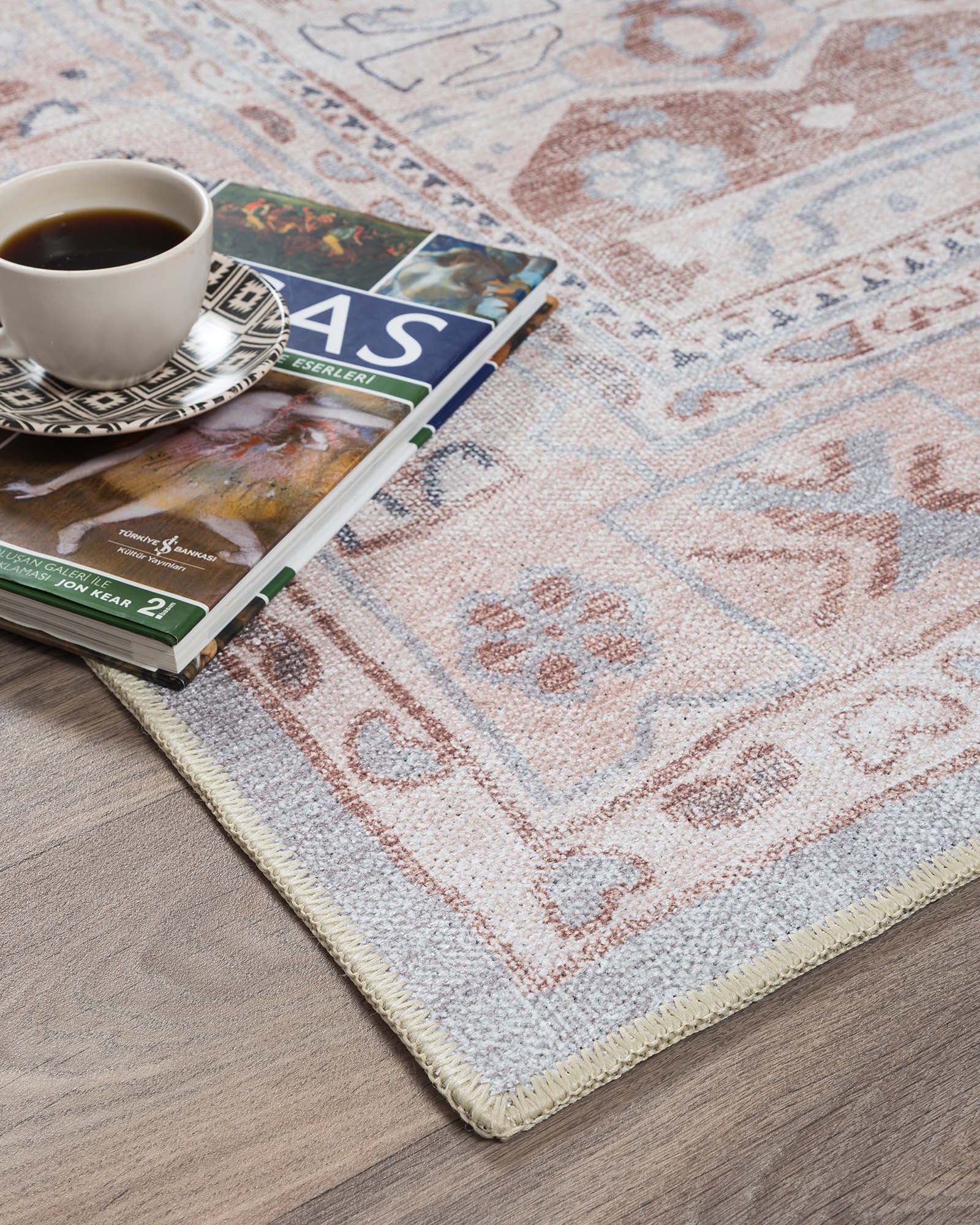
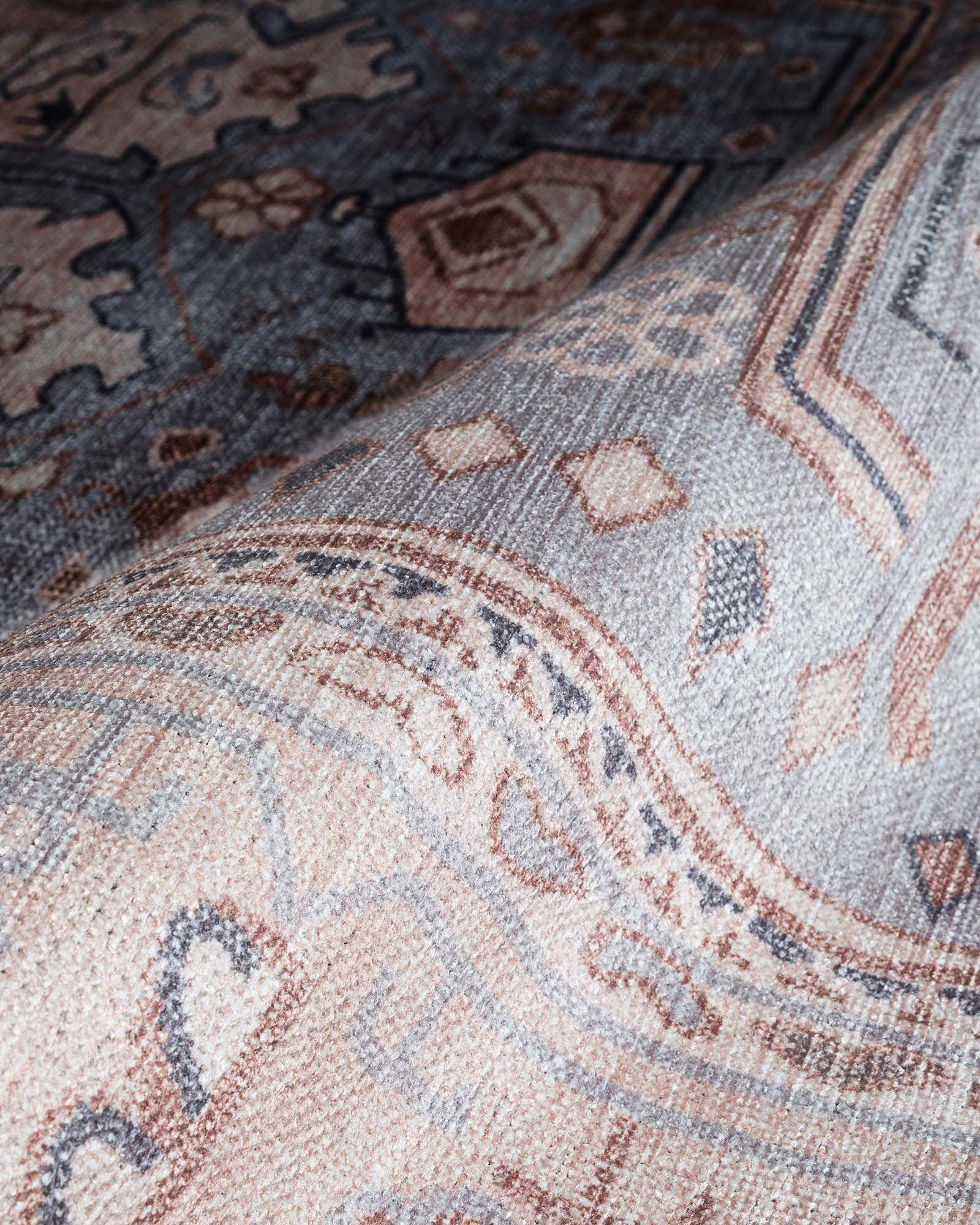
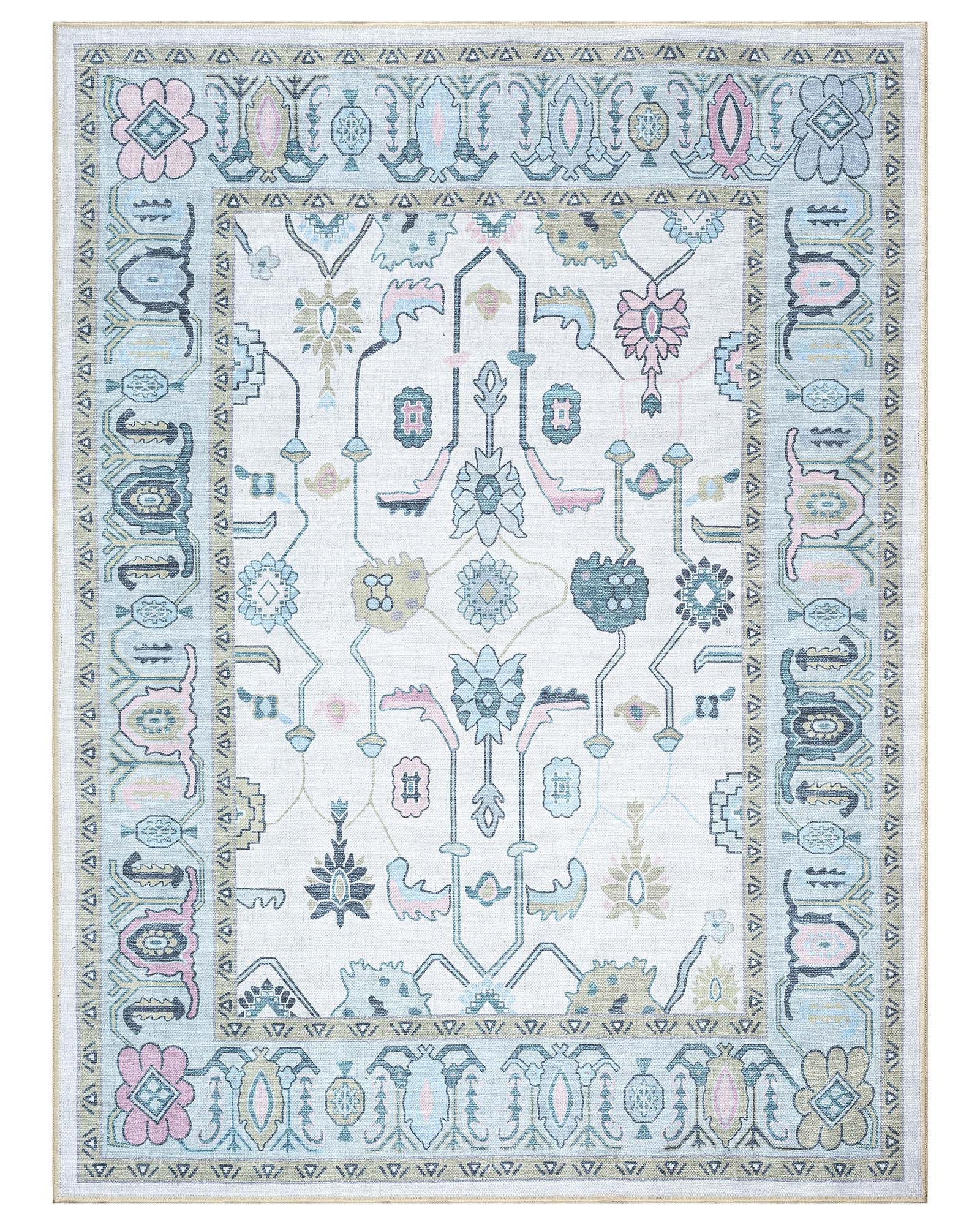
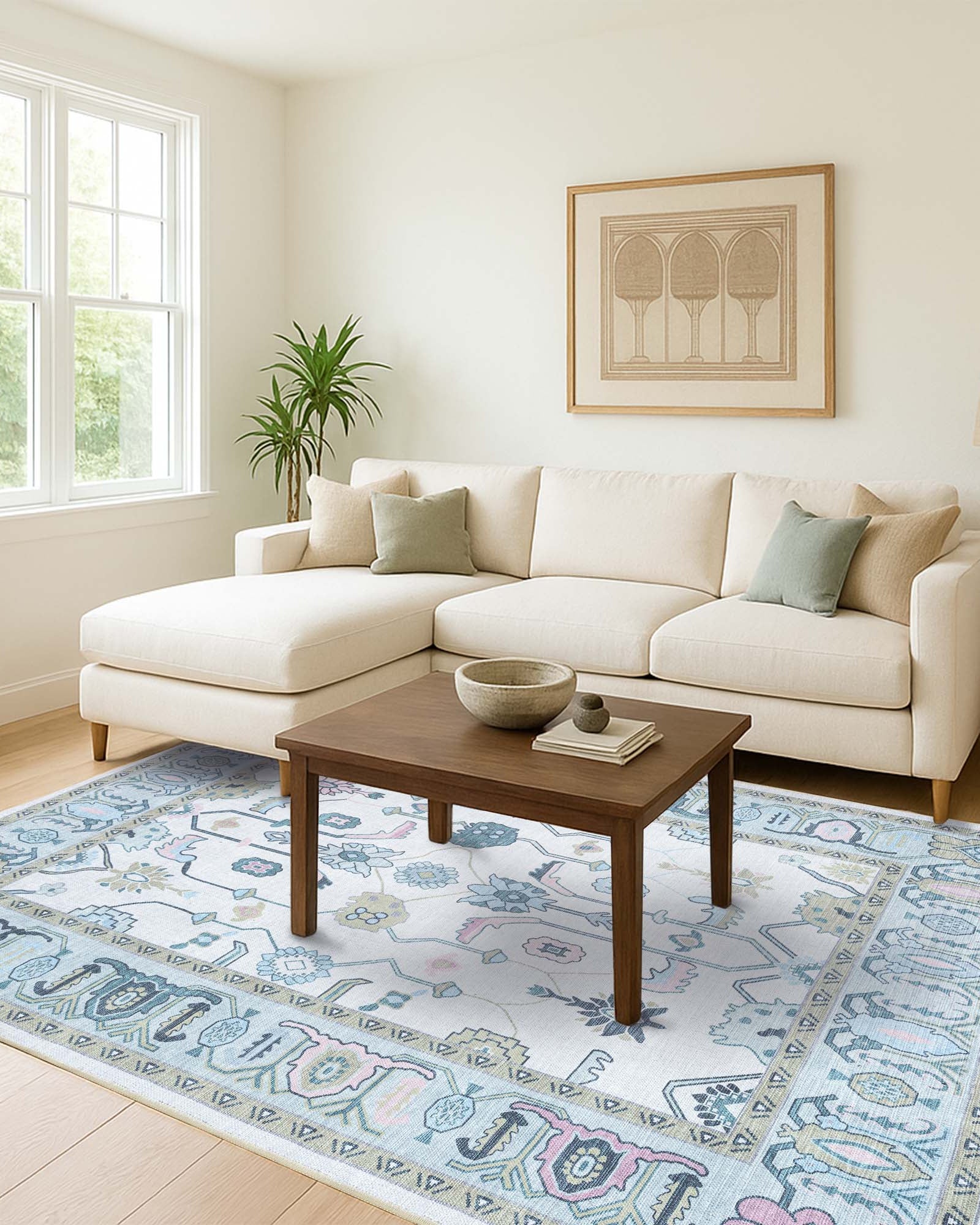
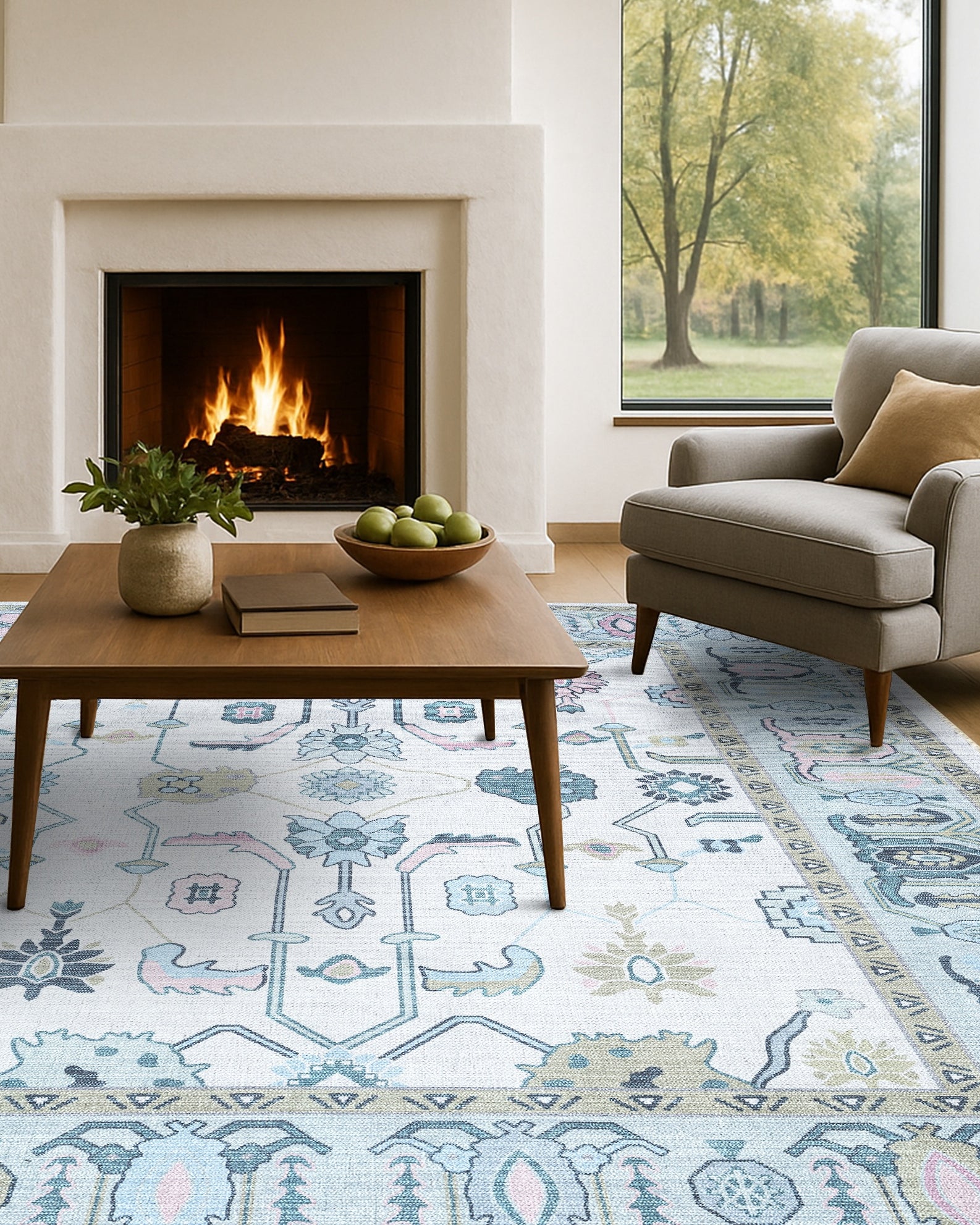
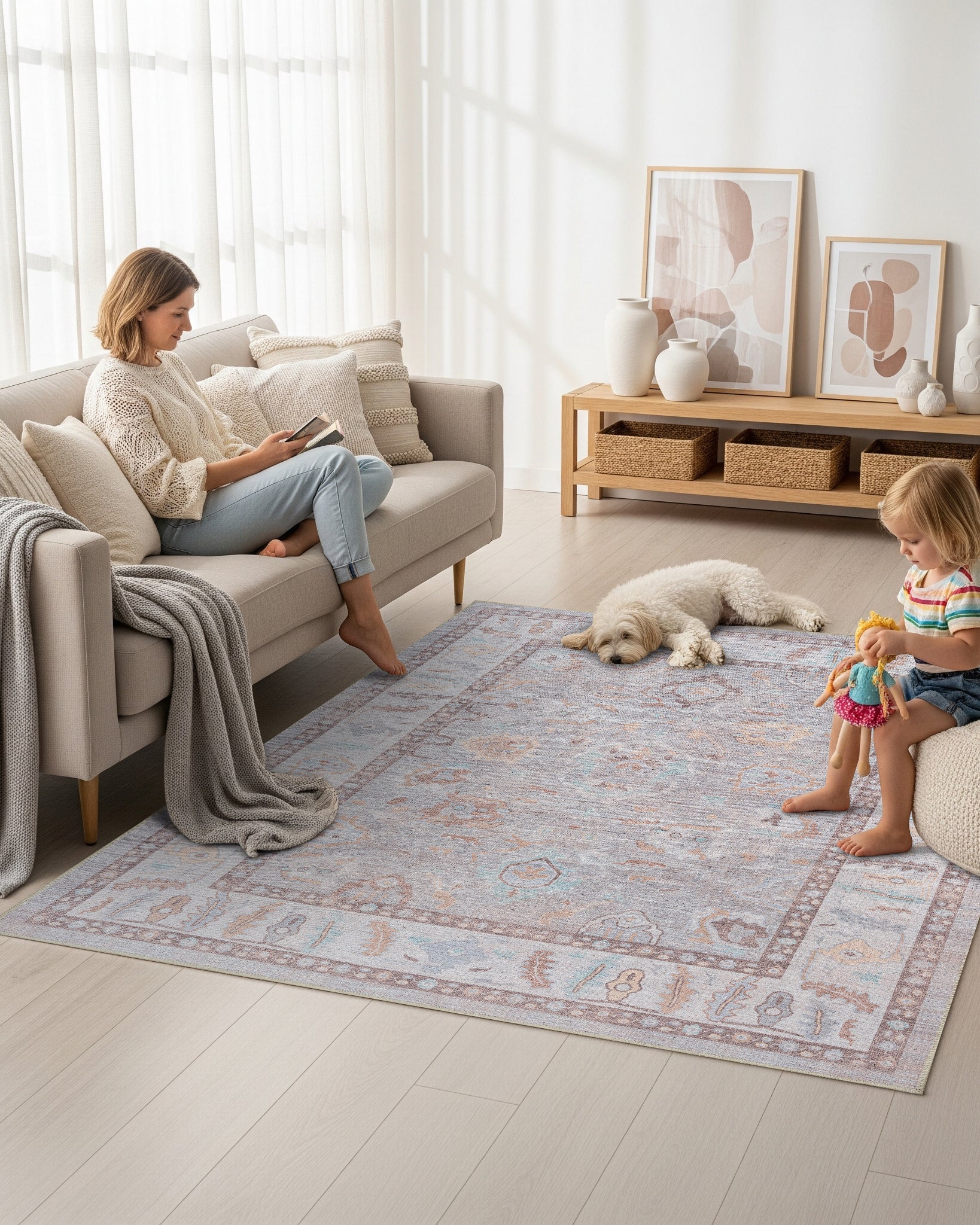
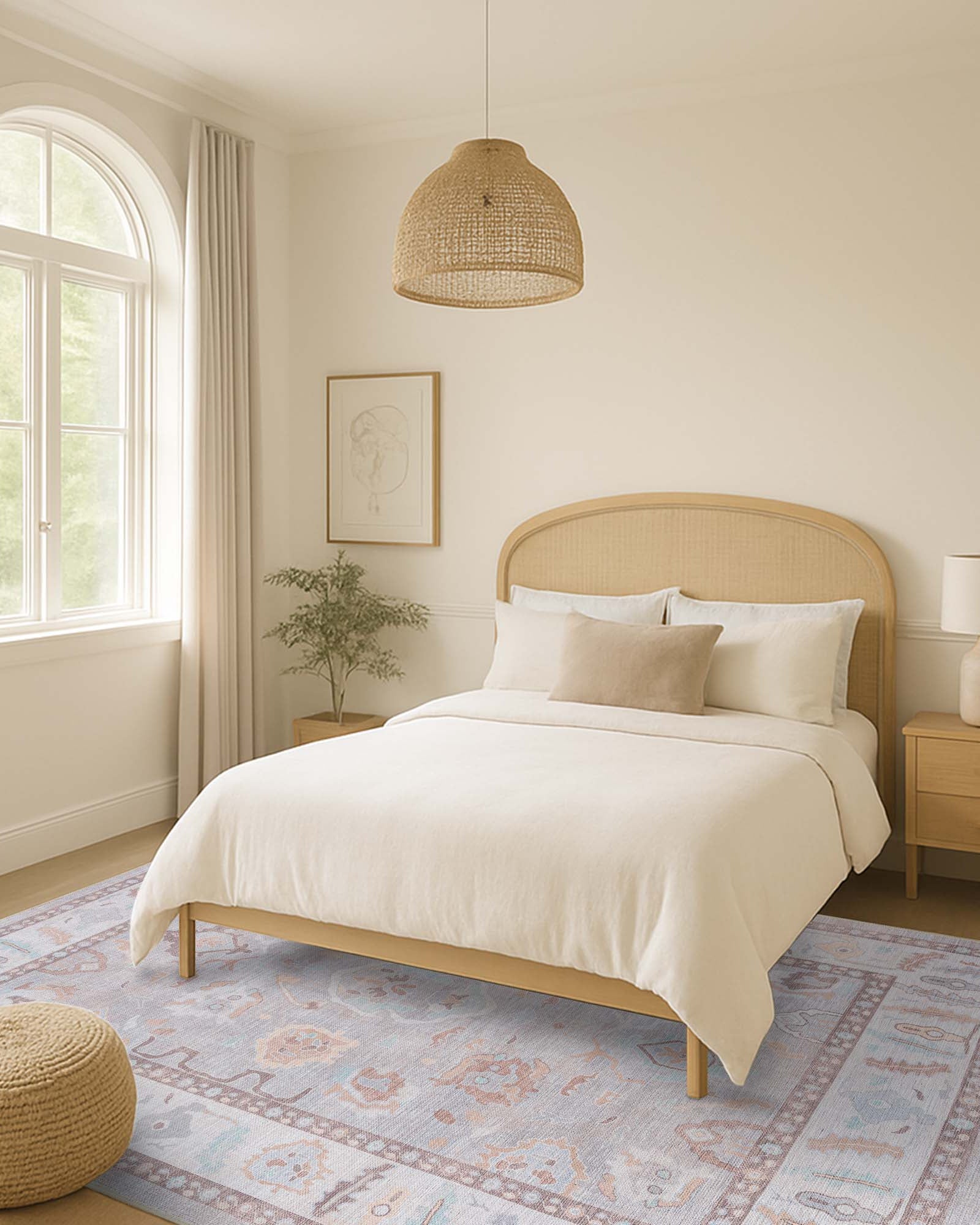
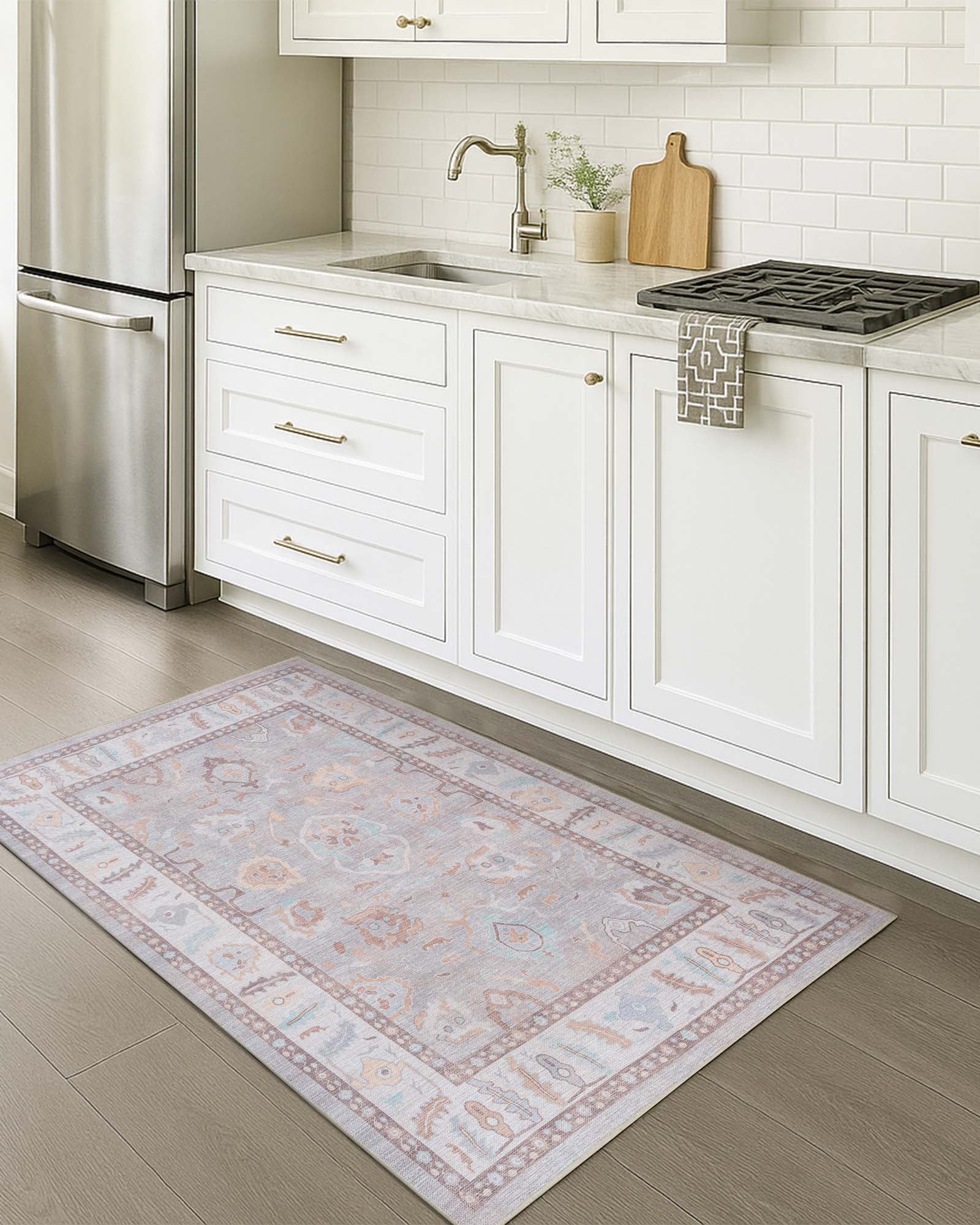
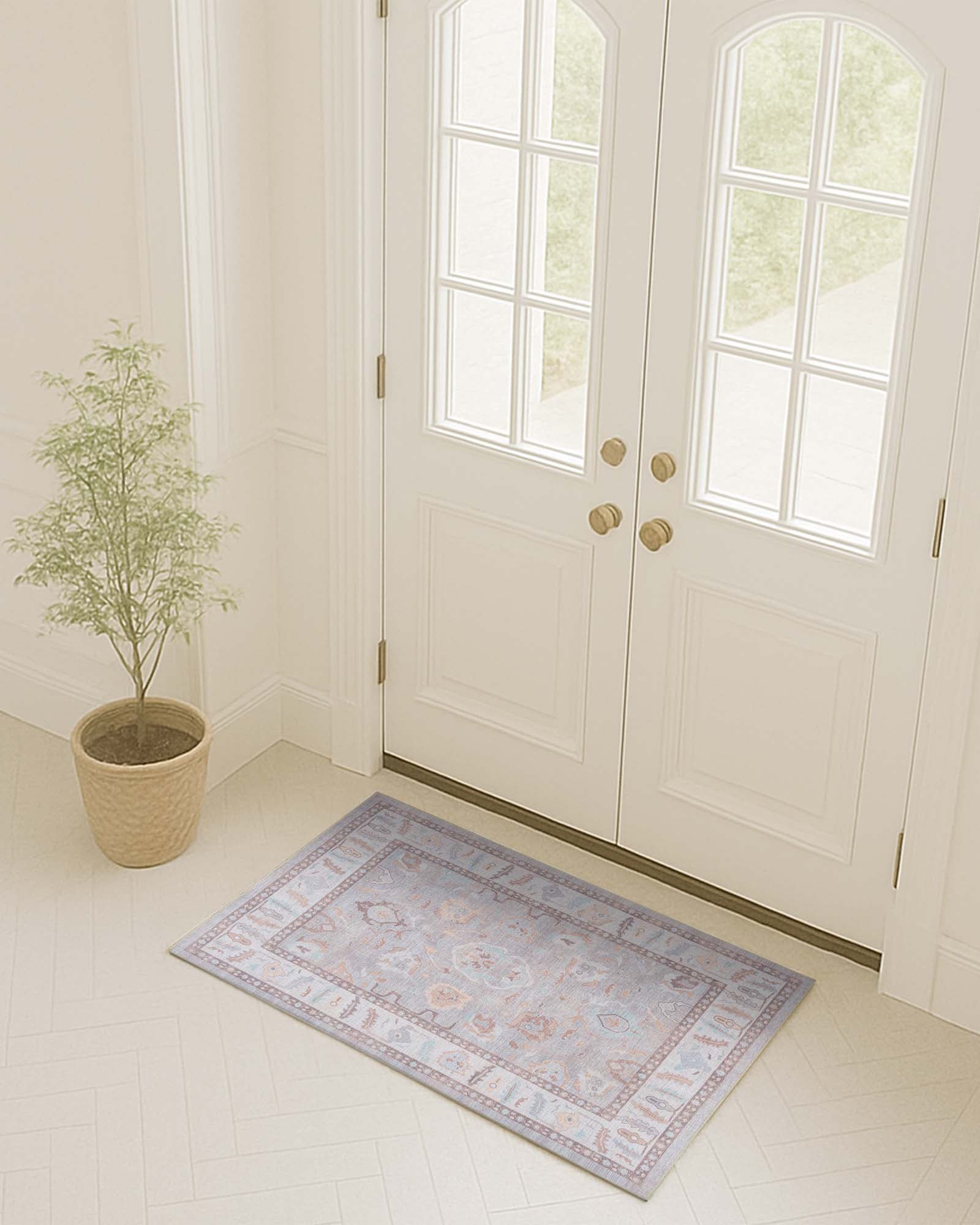
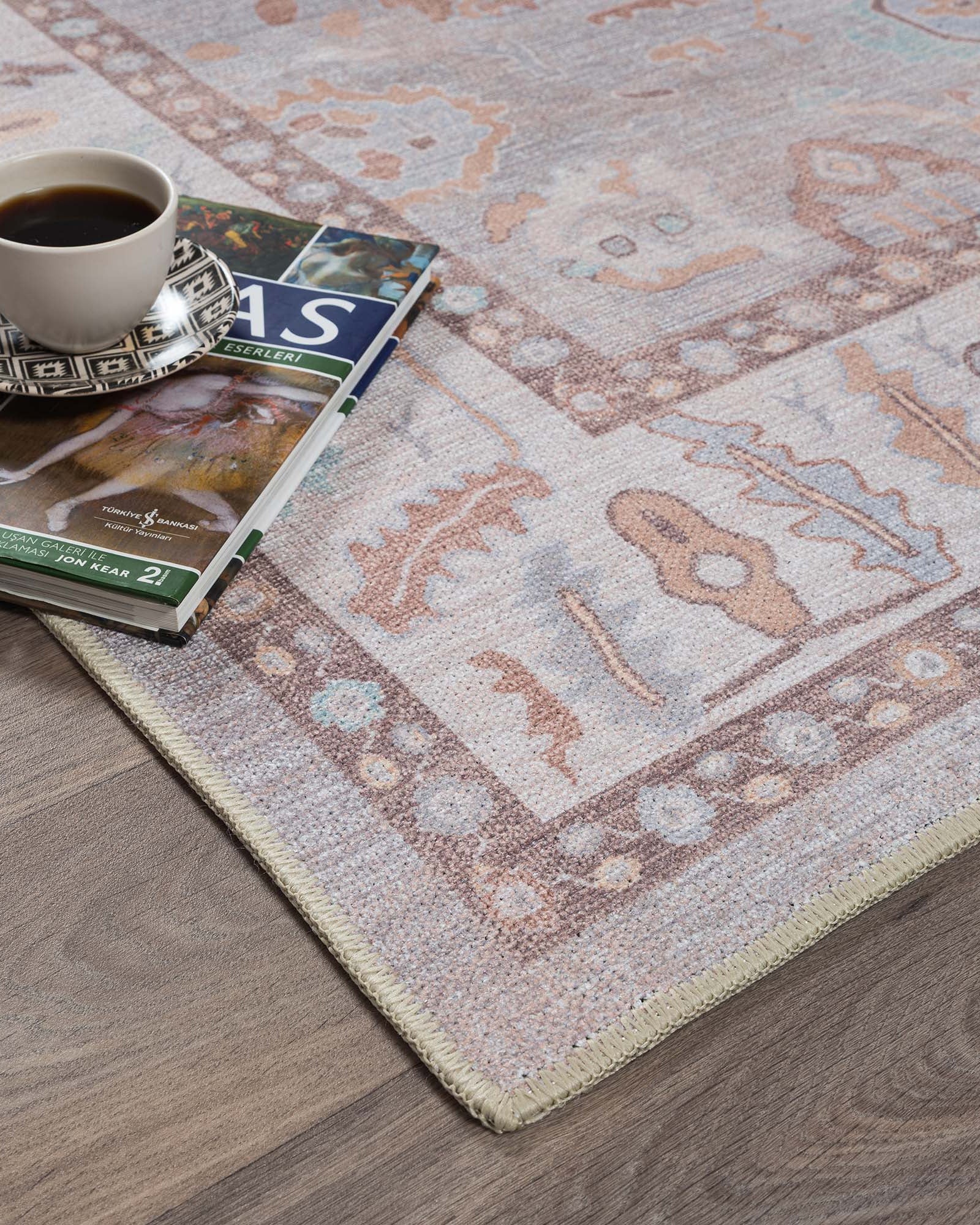
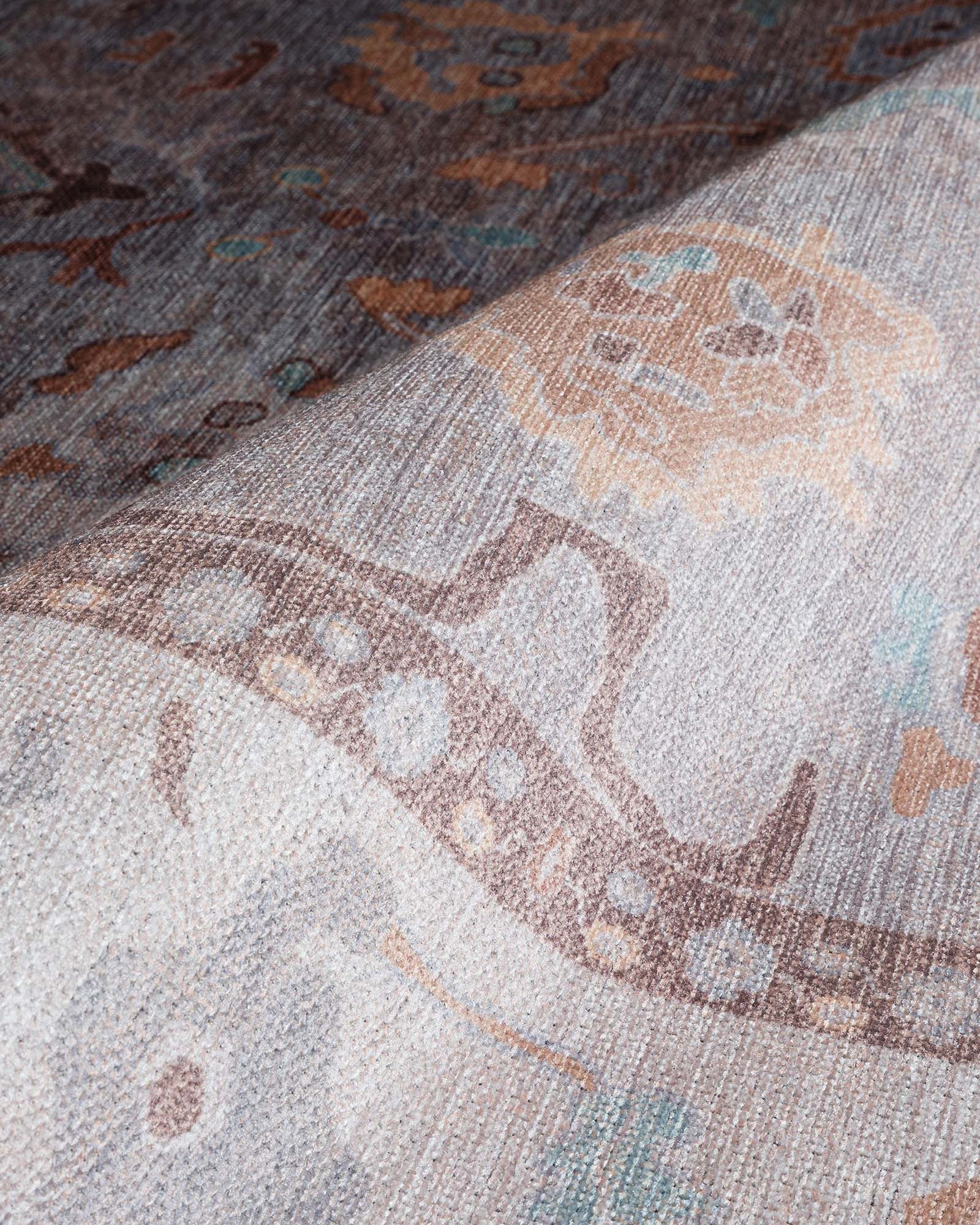
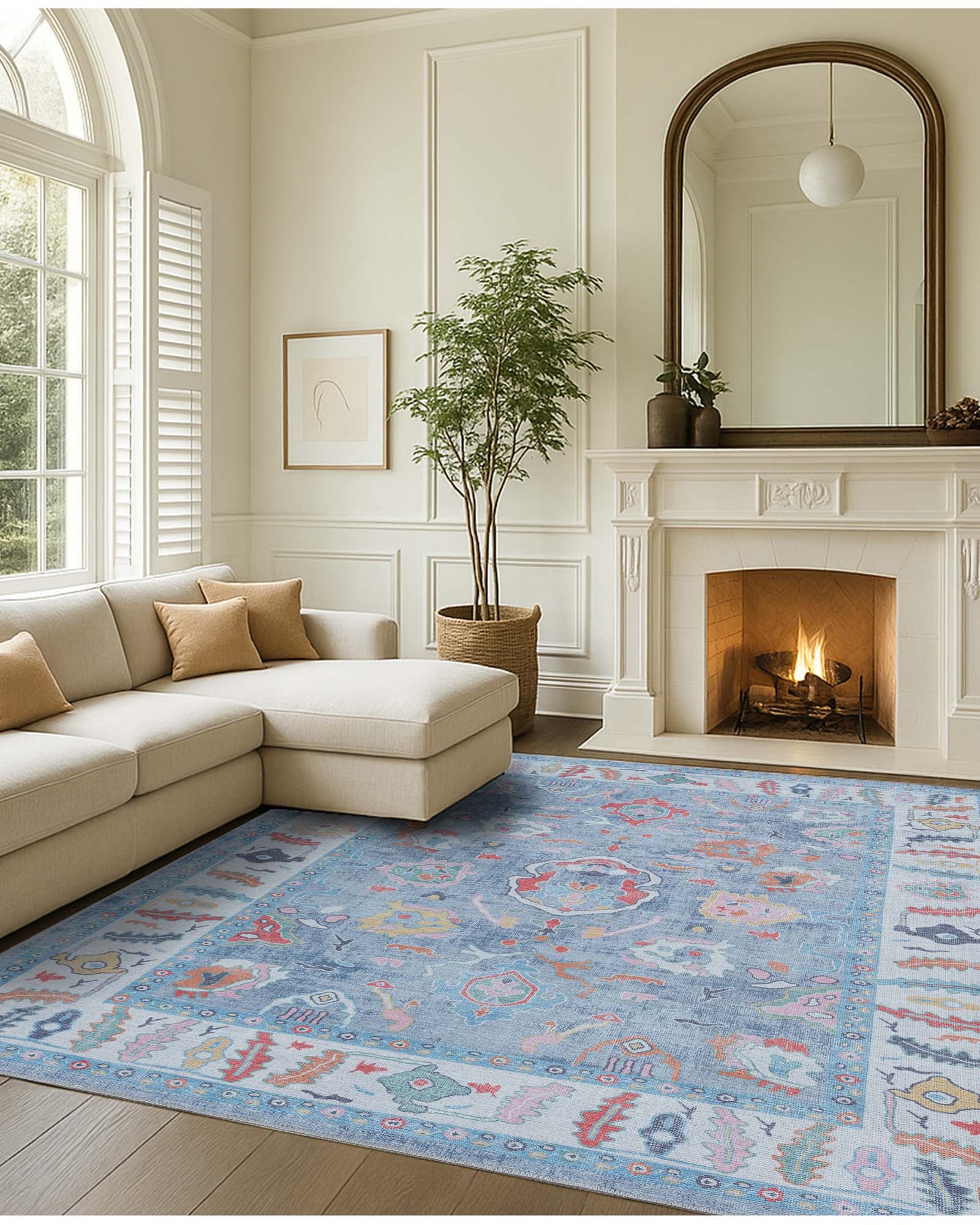
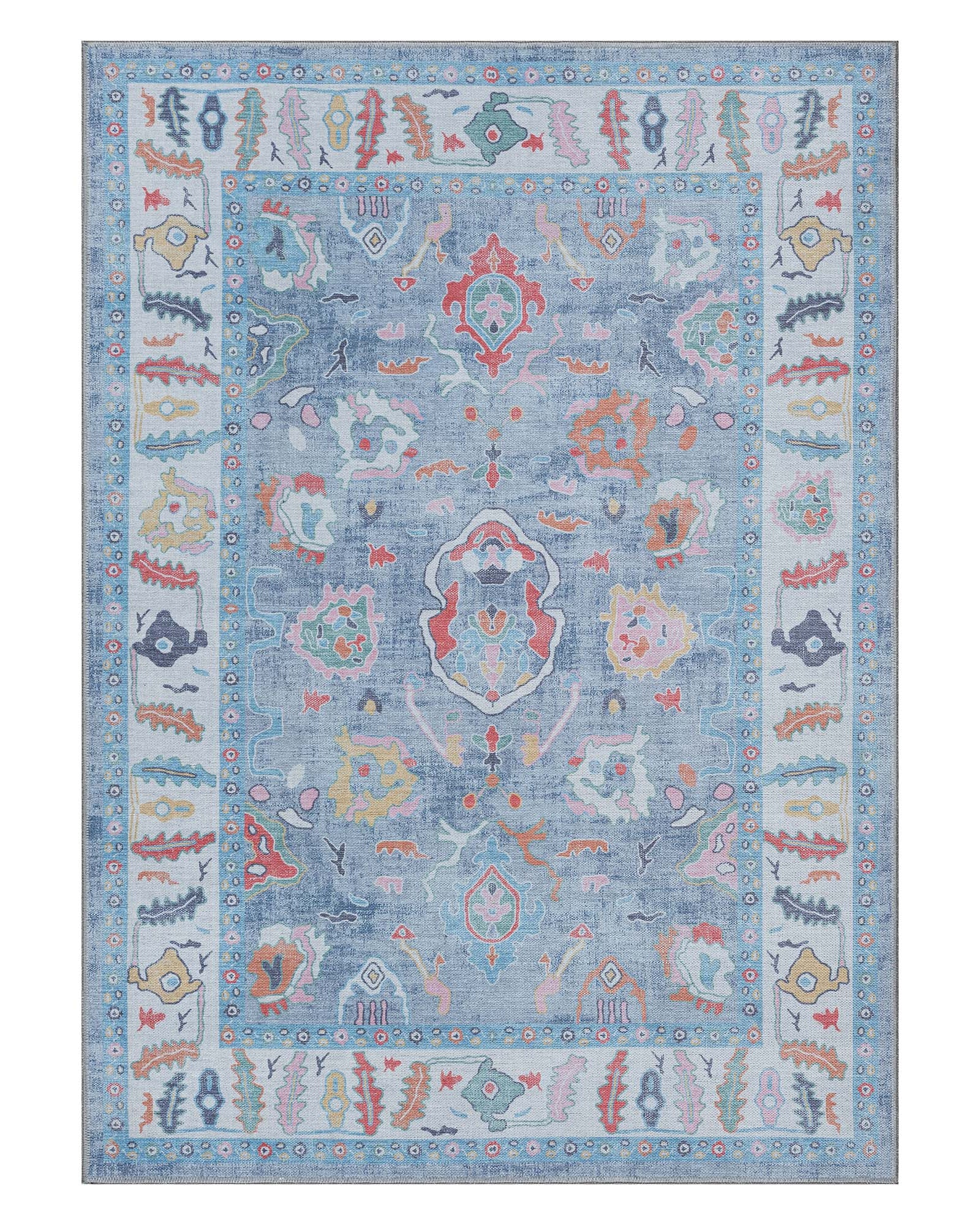
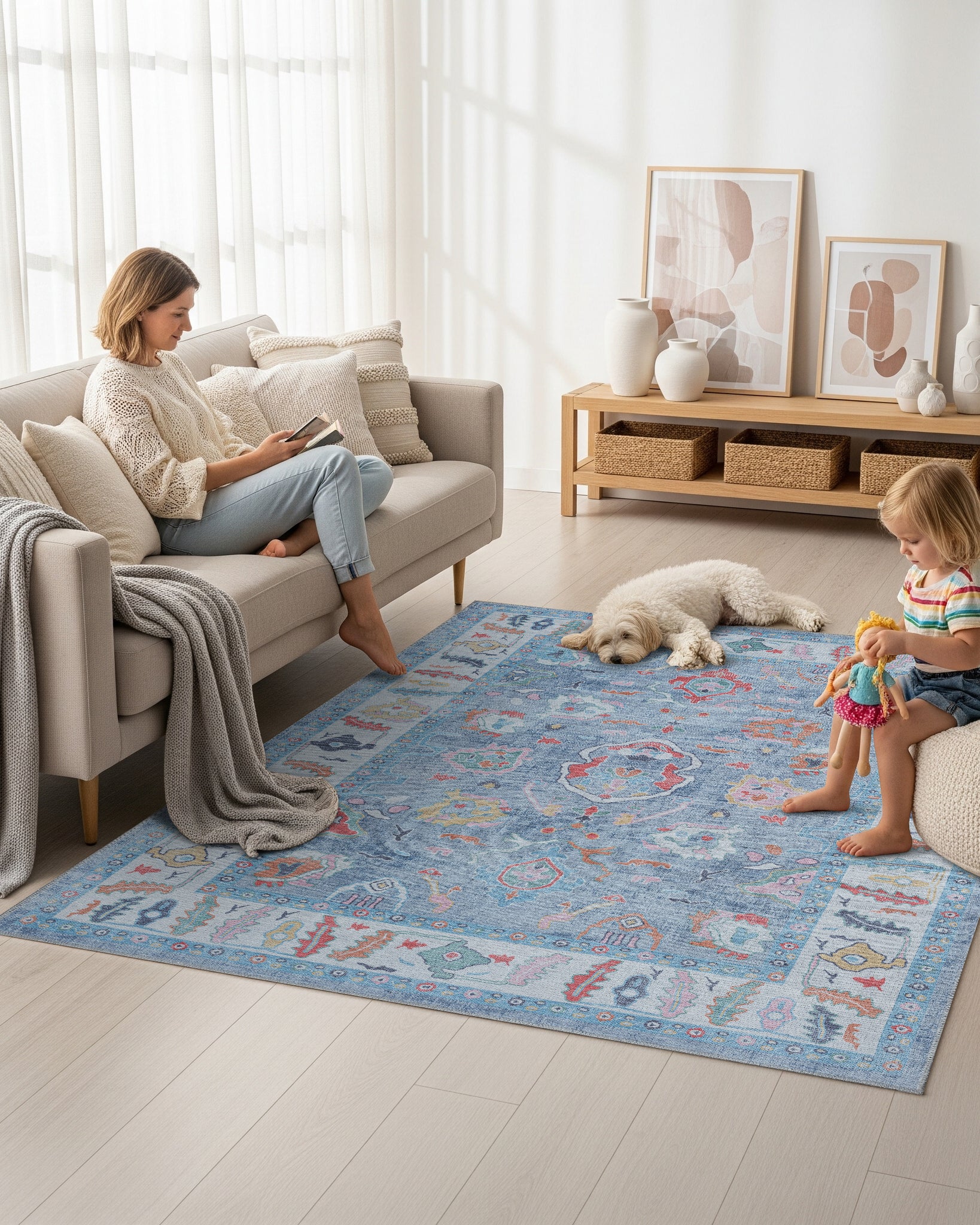
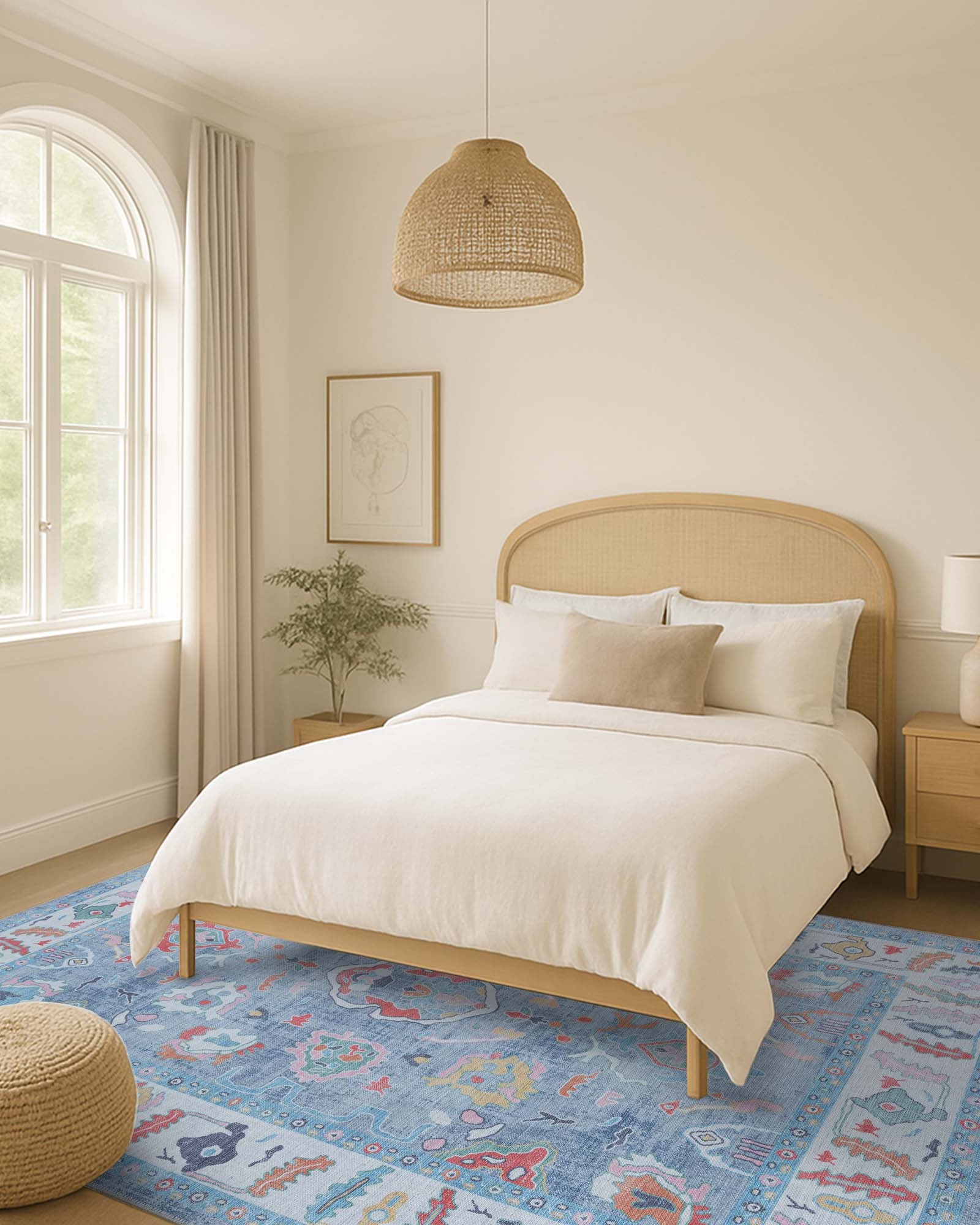
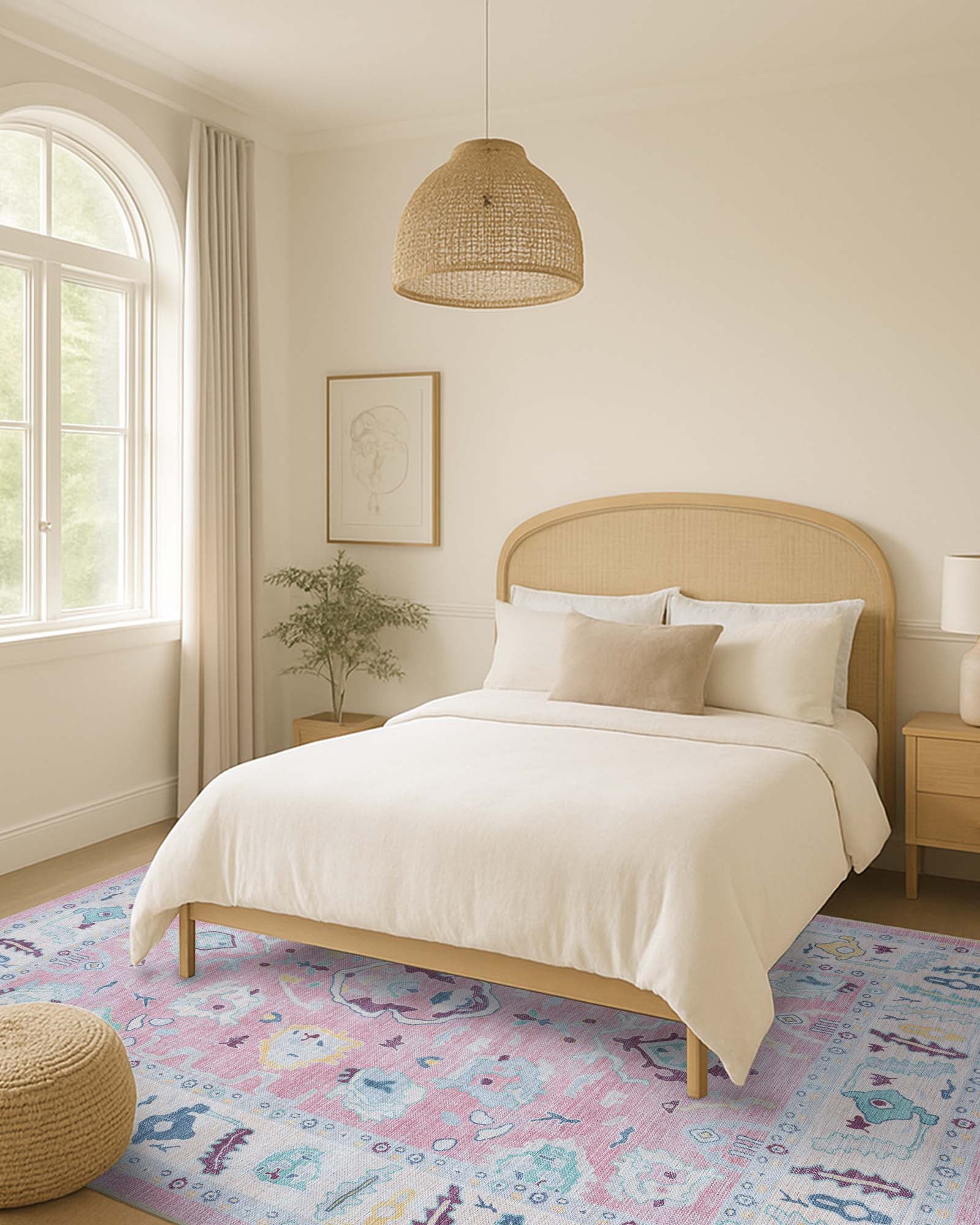
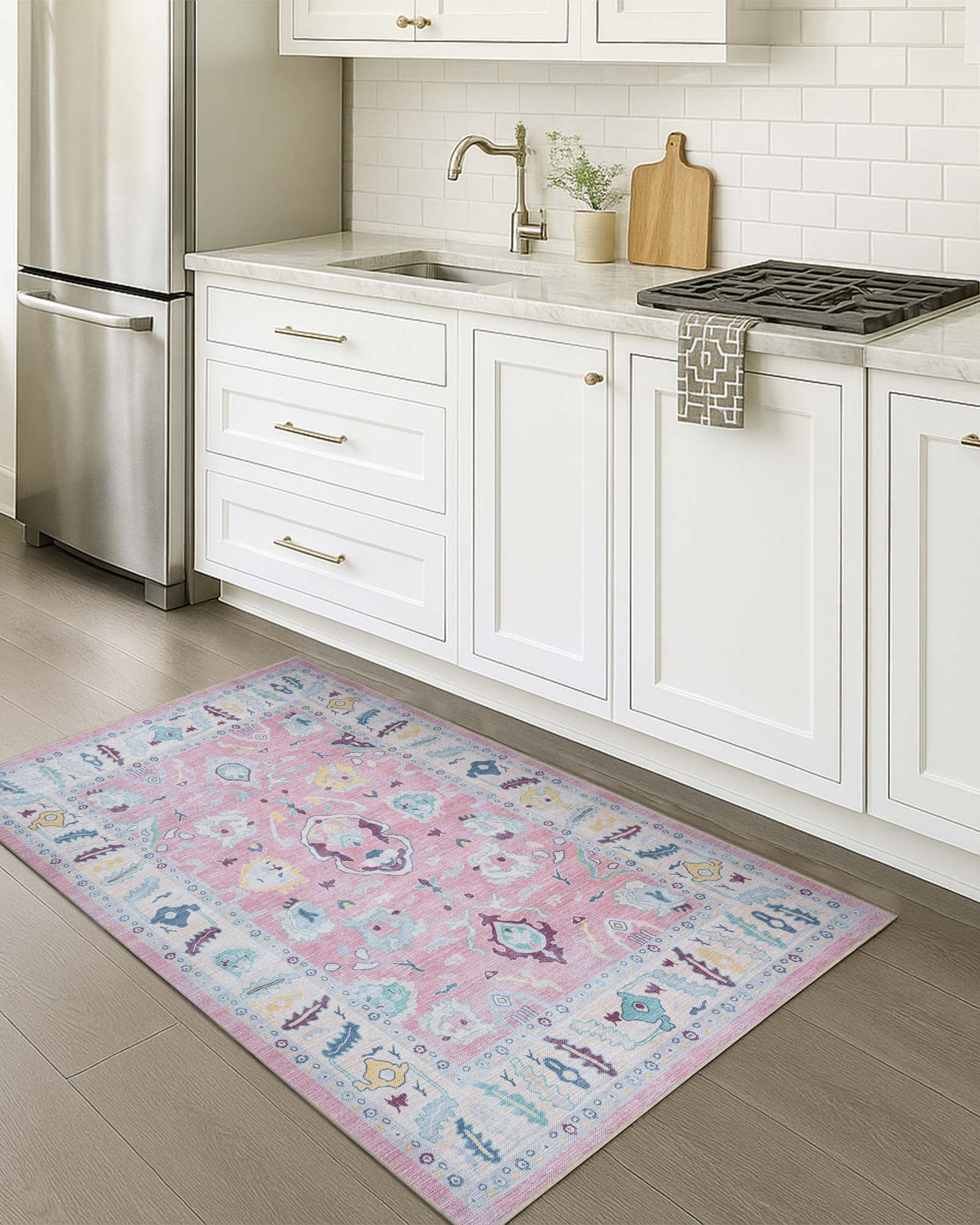
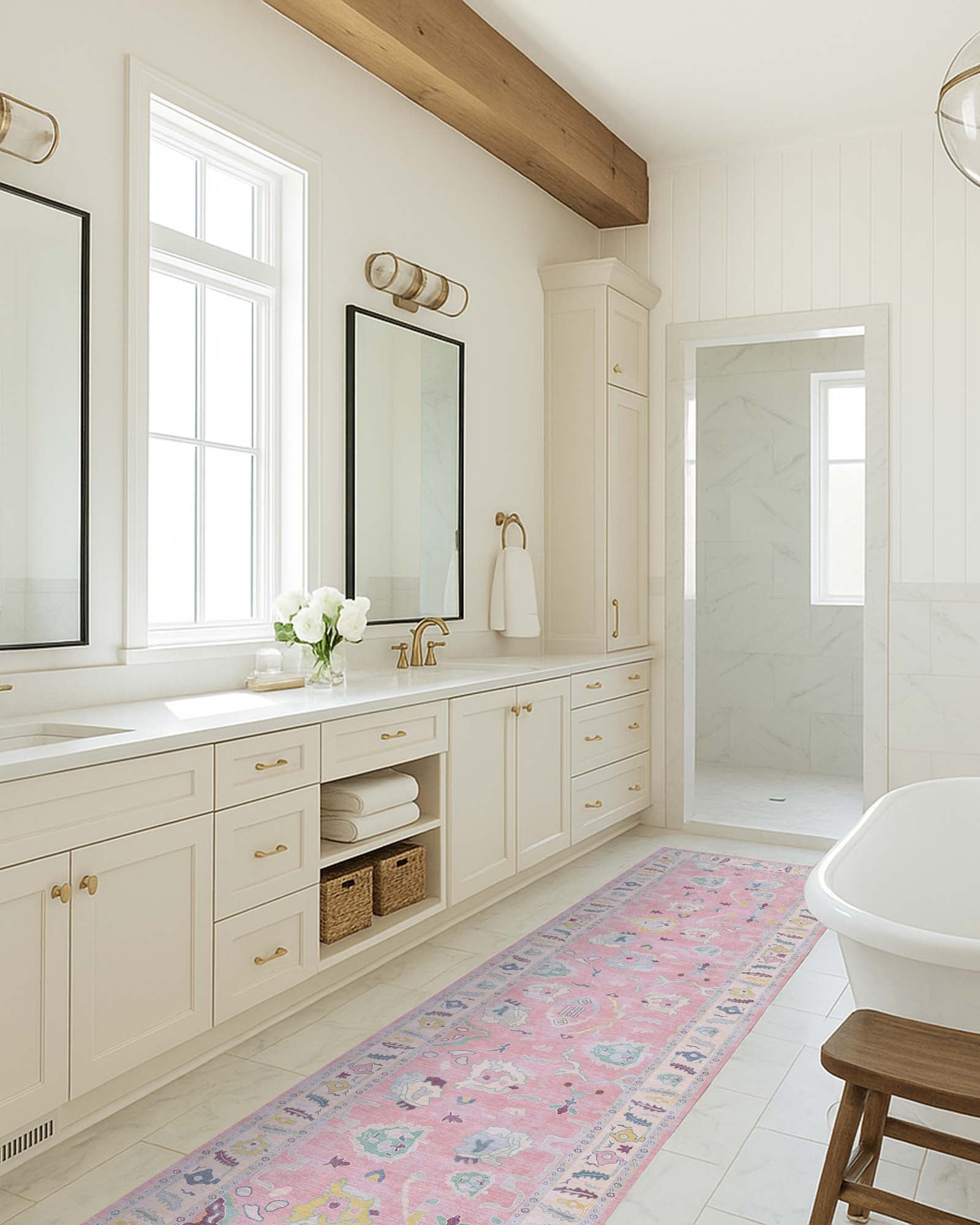
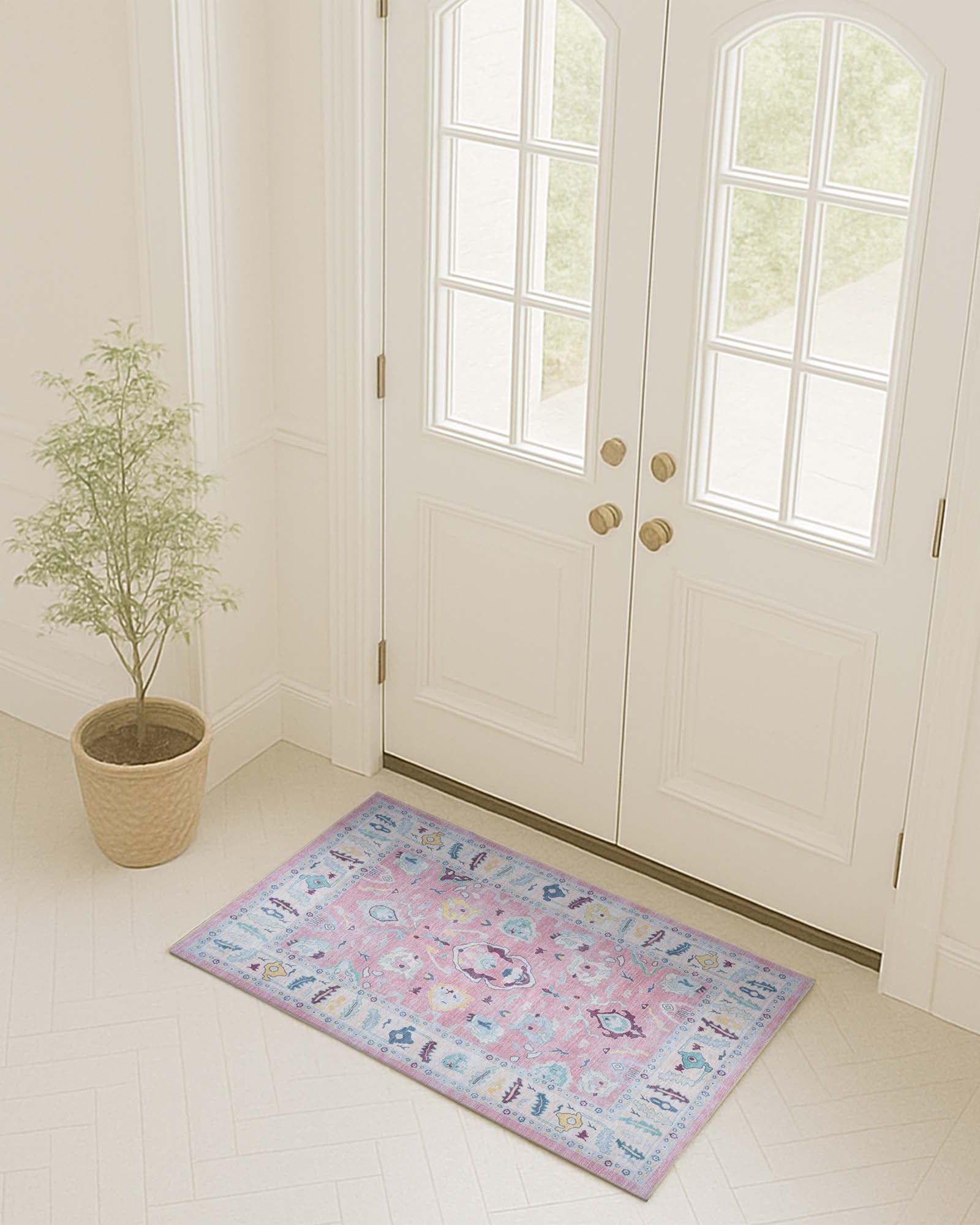
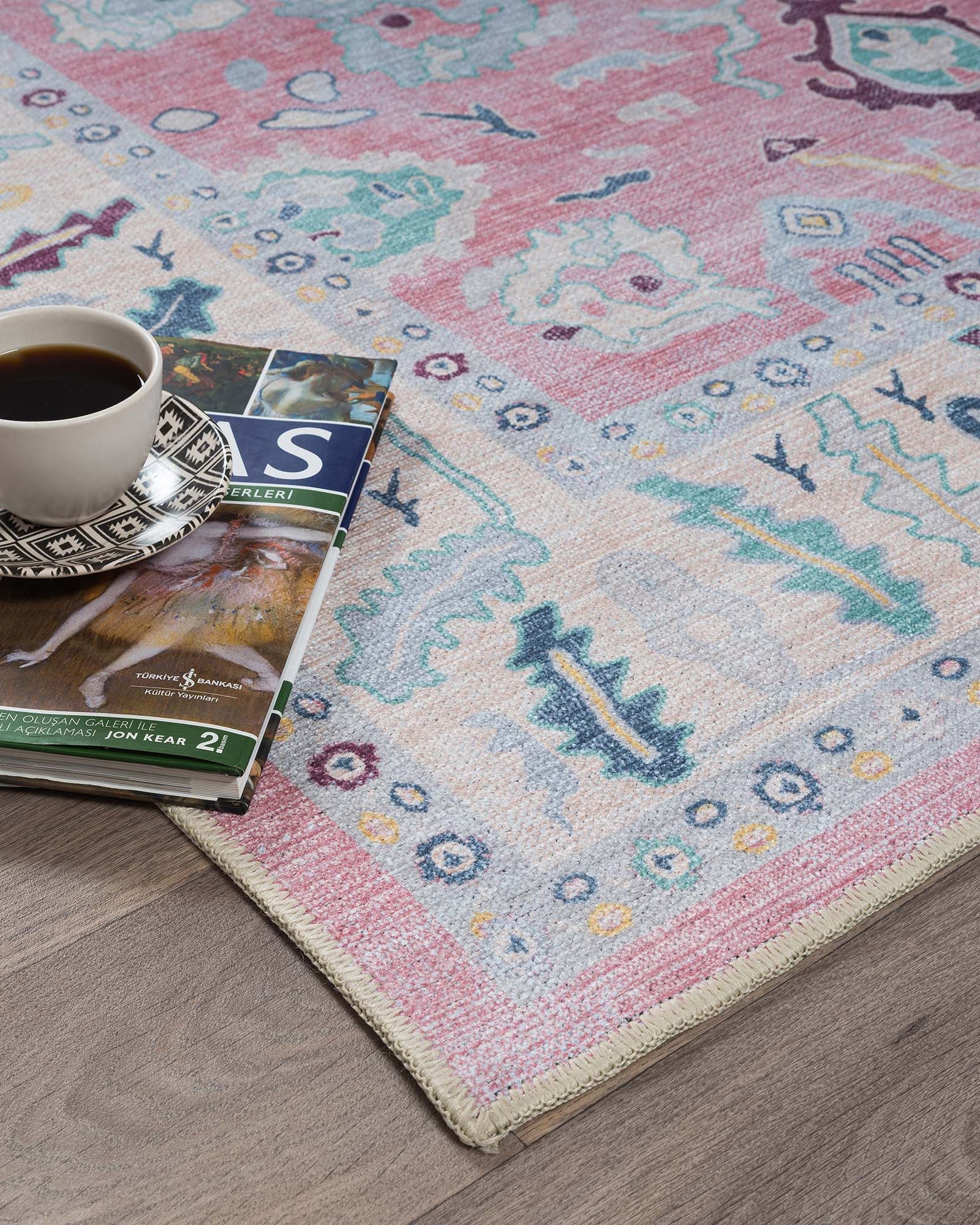
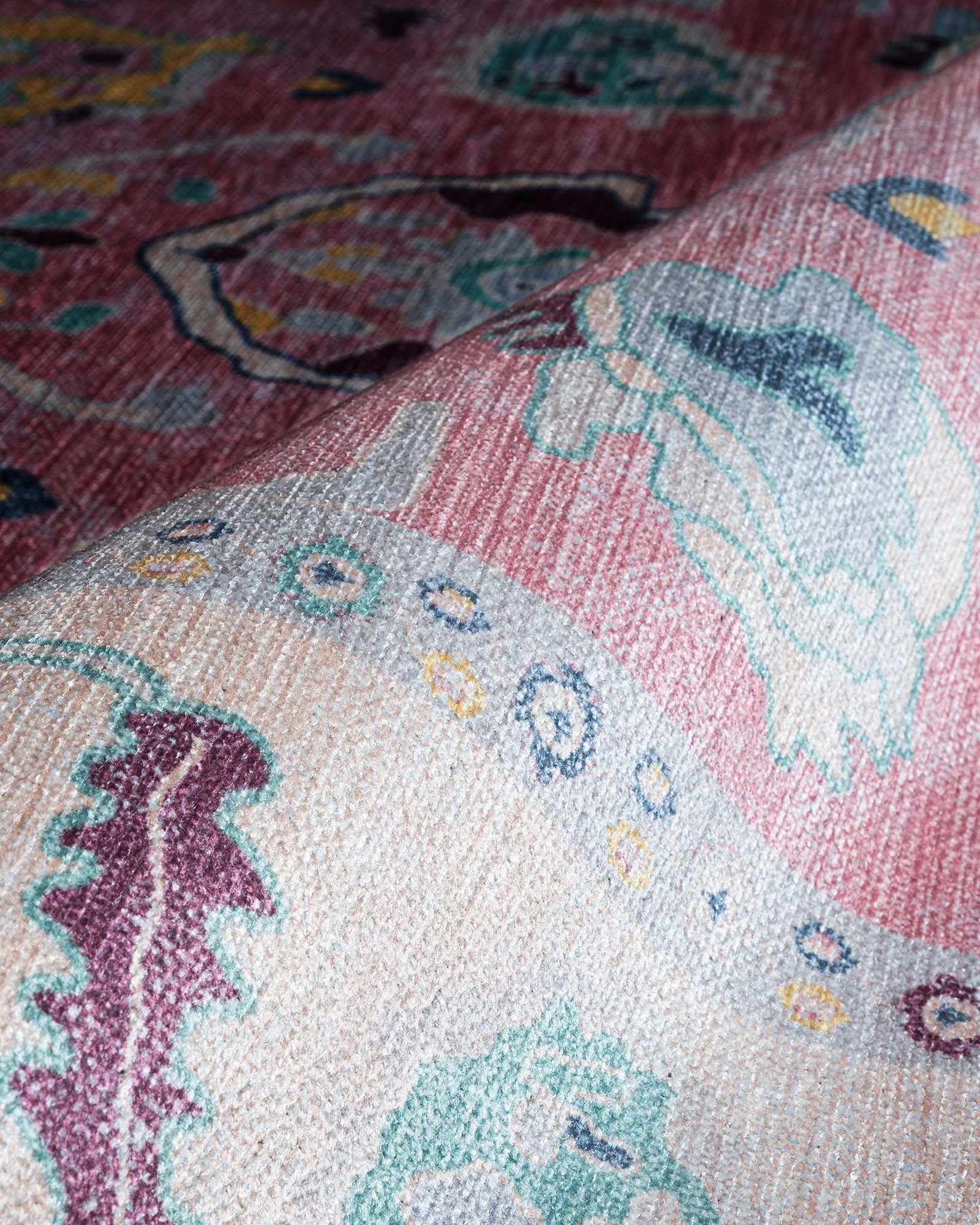
Everything in this collection was made by a person at a loom, with no machinery involved at any stage. Wool was sheared, washed, spun, dyed and then knotted or woven by hand over a period measured in months rather than minutes. That is the whole definition, and it is why no two pieces here are the same and why none of them can be reordered.
What Handmade Covers
Handmade is an umbrella over several distinct construction methods, and knowing which one you are looking at tells you how the rug will feel and behave.
Knotted Pile
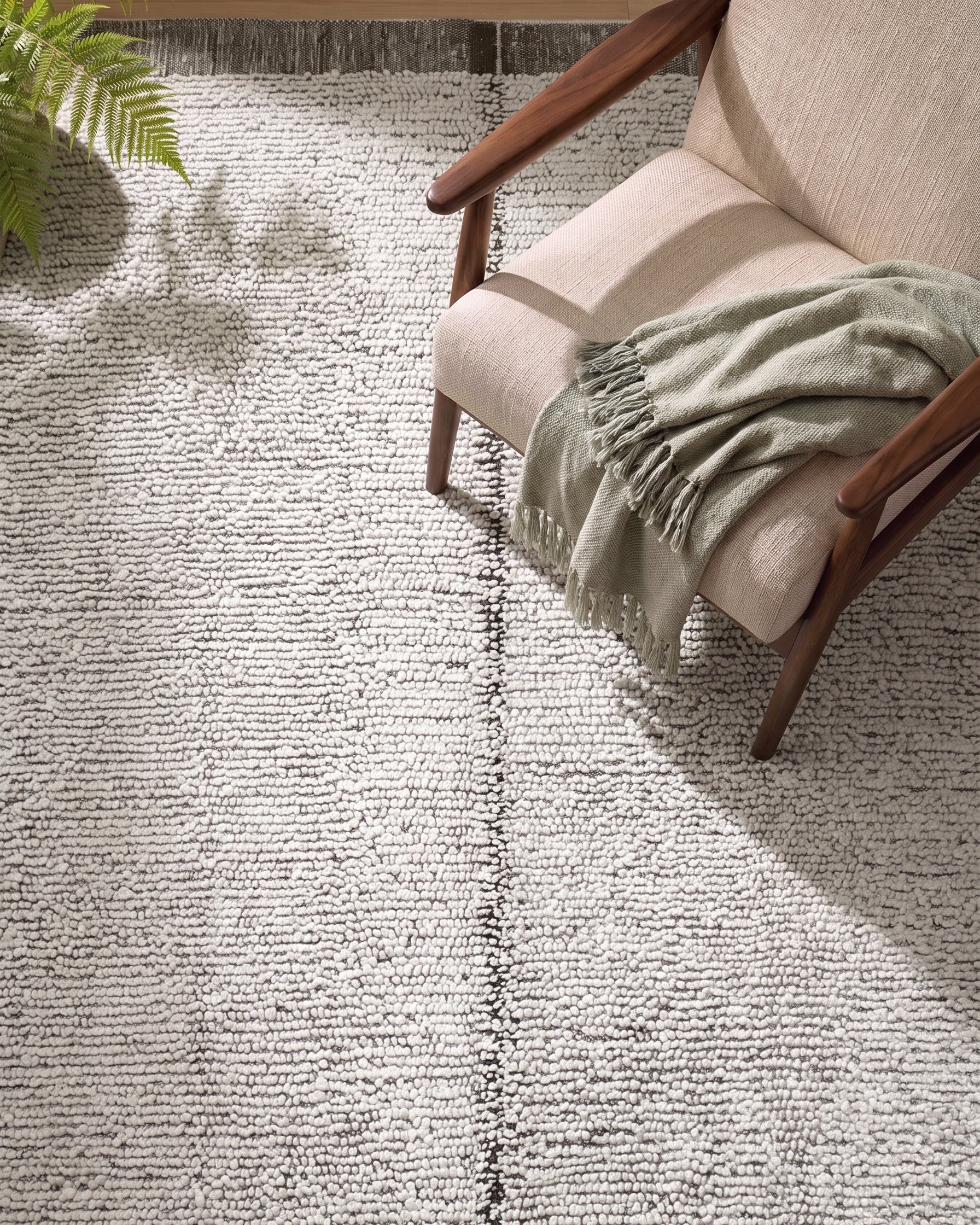
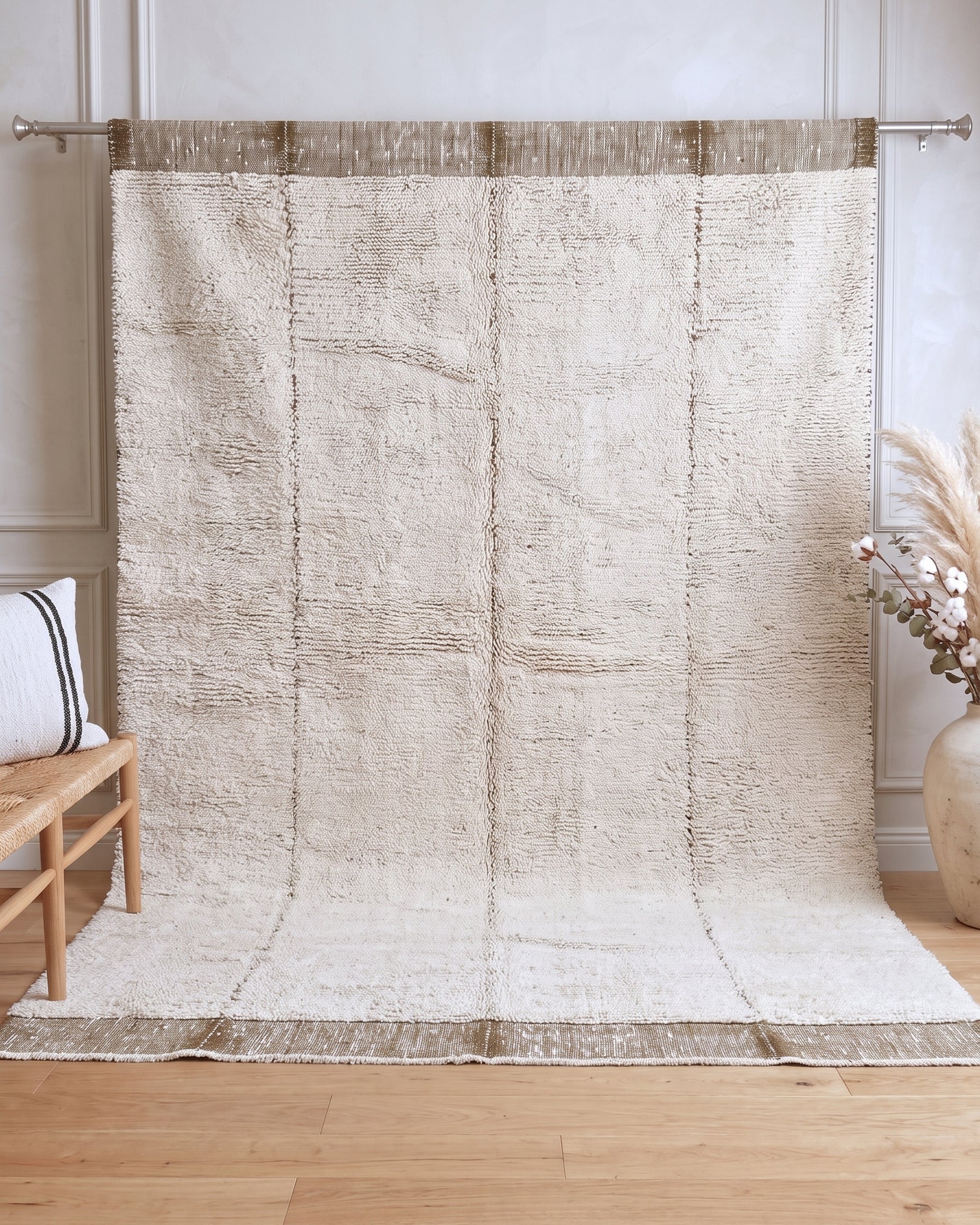
The majority of this collection. Wool is tied knot by knot around the loom's warp threads, with weft rows beaten down between them to lock each row in place. The result is a thick pile you feel underfoot, and a rug that can carry hundreds of thousands of individual knots. This is the most labour-intensive method and the most durable. These pieces are grouped in hand-knotted rugs.
Flatweave
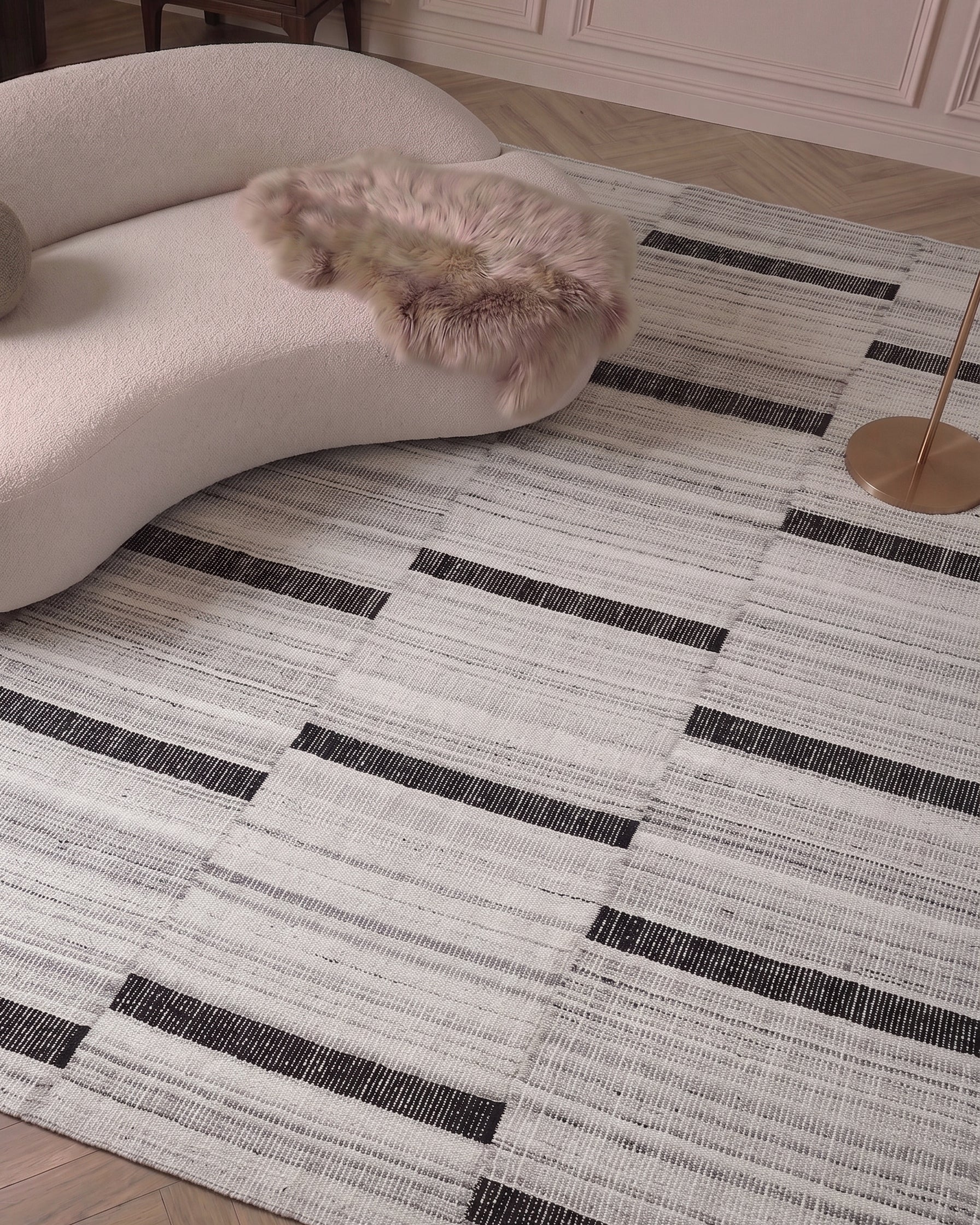
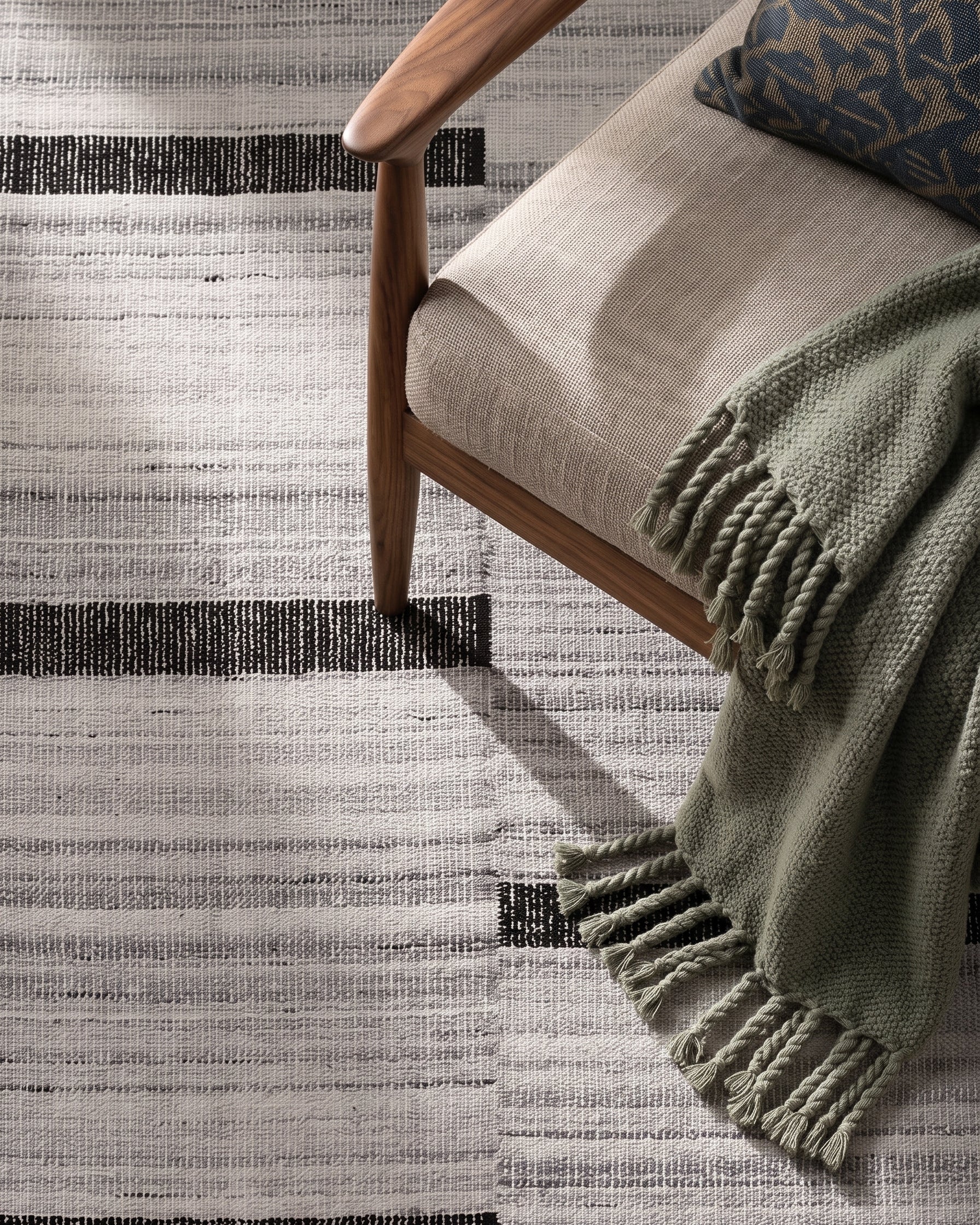
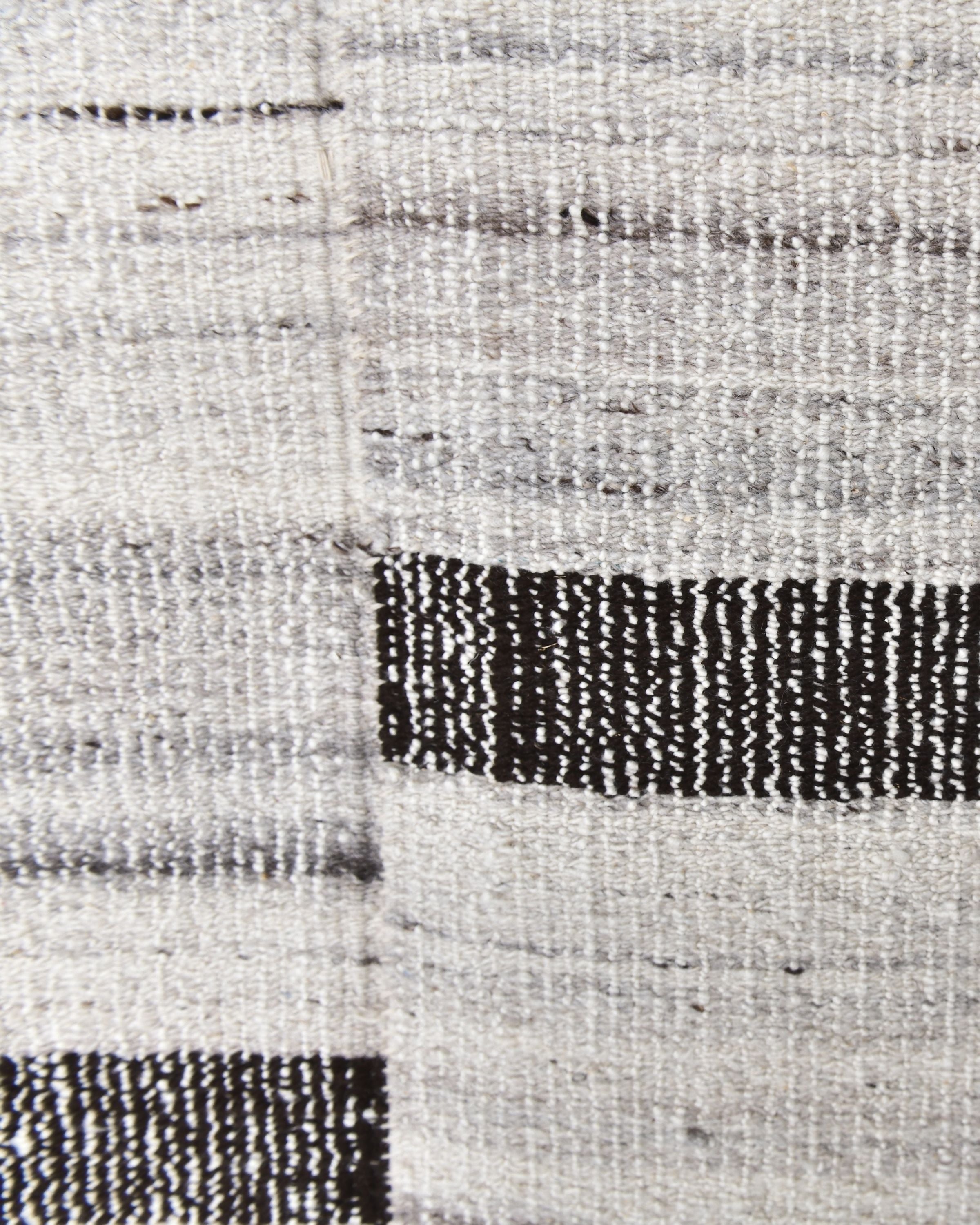
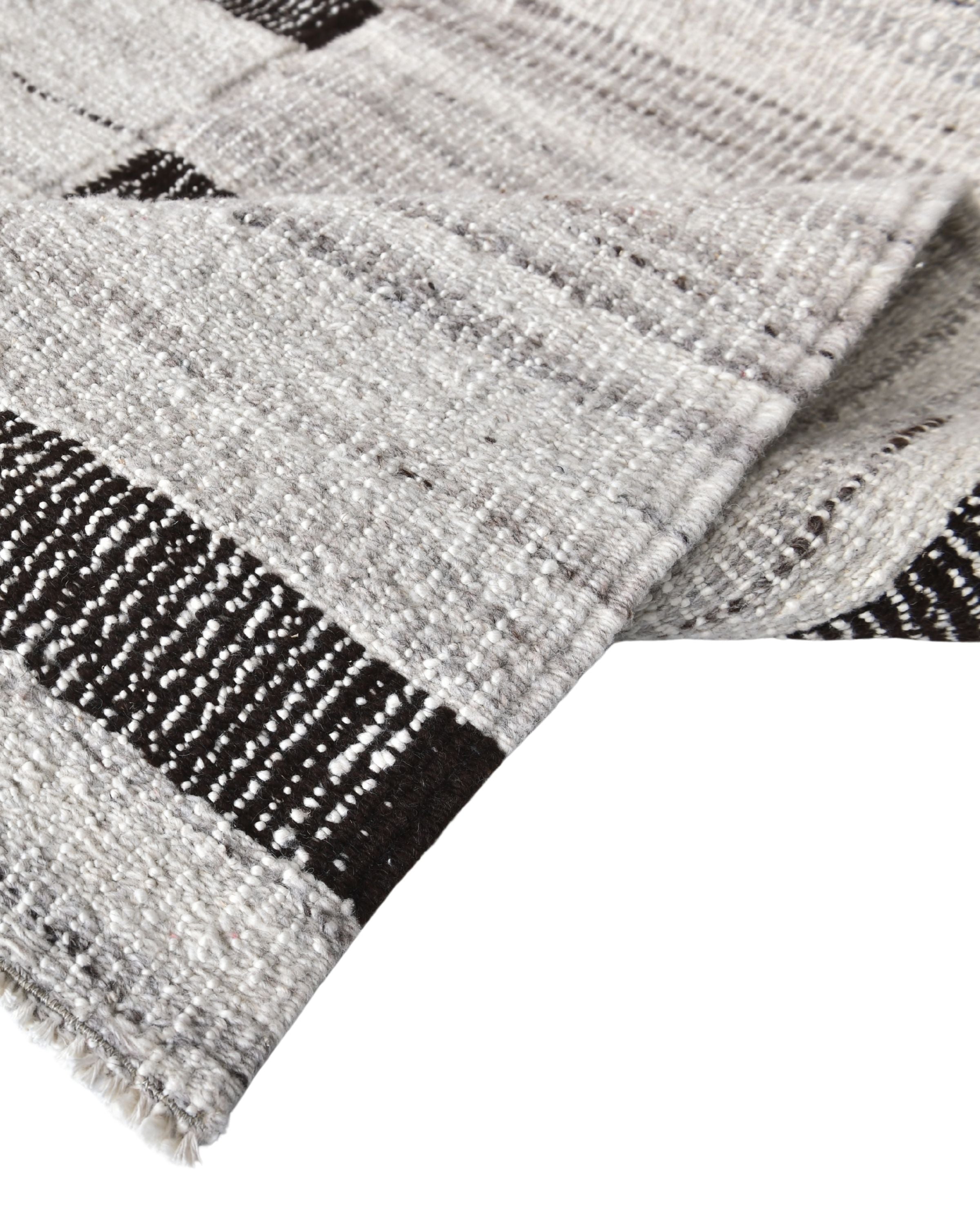
No knots at all. The pattern is formed by the coloured weft threads that make up the fabric itself, producing a thin, lightweight textile that is identical on both sides. Kilims are the best-known example. They are quicker to weave than knotted rugs but no less handmade, and they behave completely differently in a room — light, reversible and easy to layer. These sit in kilim and flatweave rugs.
Supplementary Weft Techniques
Soumak, cicim and zili sit between the two. Extra threads are wrapped or laid over a flatwoven ground, giving a raised, almost embroidered surface with more texture than a plain kilim but no true pile. These are less common and are identified individually on the product page.
What Handmade Is Not
The word gets applied loosely, so it is worth being specific about what is excluded here.
Hand-tufted rugs are made by punching wool through a stretched fabric backing with a compressed-air gun, then sealing the back with latex adhesive and gluing on a secondary cloth. A person operates the gun, so the rugs are marketed as handmade, but the construction depends entirely on adhesive. When that latex degrades — usually within ten to fifteen years — the rug sheds heavily and cannot be repaired. Nothing in this collection is tufted.
Machine-made rugs are produced on automated equipment at a rate of hundreds of square metres a day, in identical repeatable runs. They serve a real purpose: exact standard sizes, consistent colour, reorderable, and far more affordable. They are simply a different category of object, and Fame Rugs sells them separately from this collection.
How to Verify a Rug Is Handmade
Four checks, none of which require expertise.
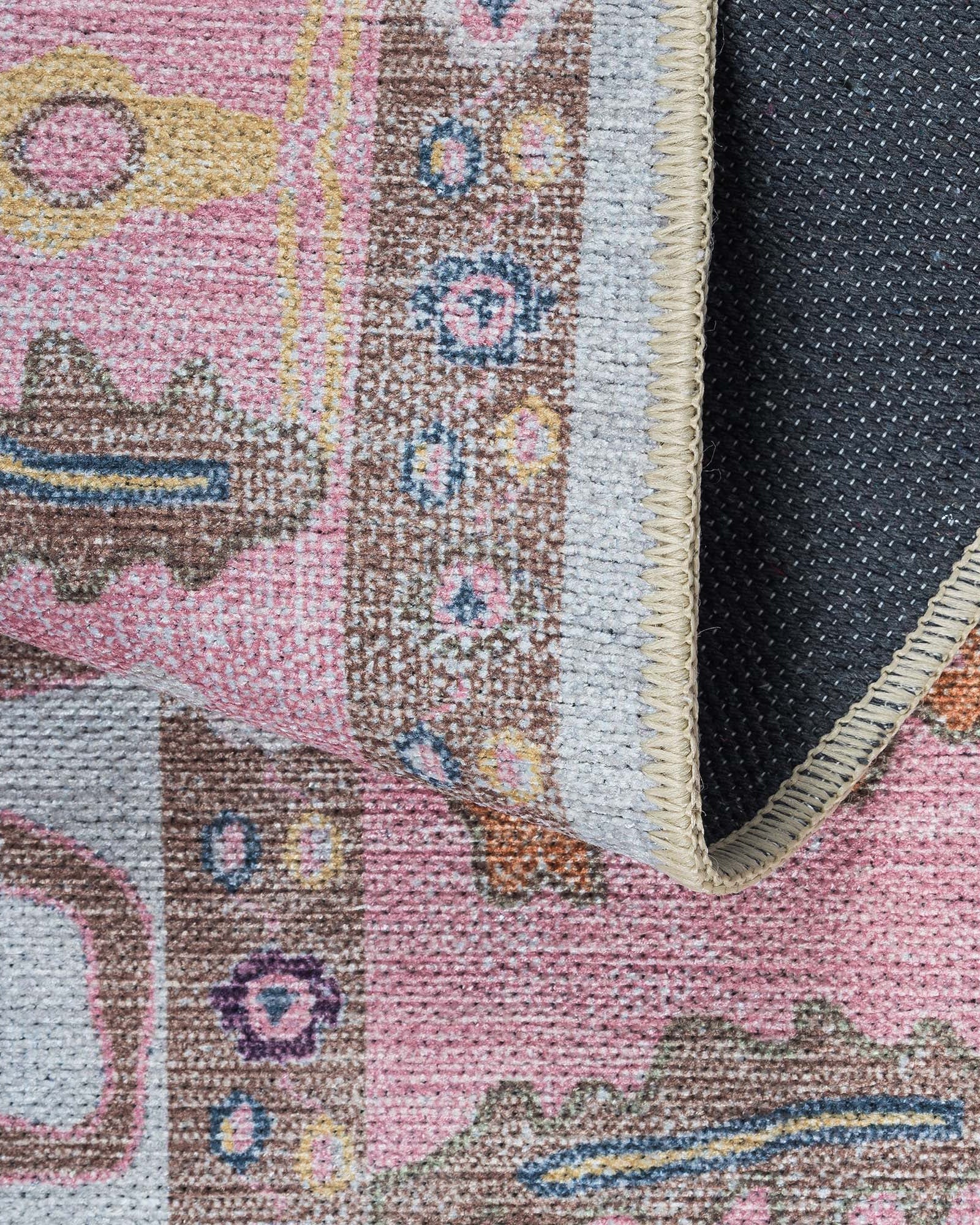
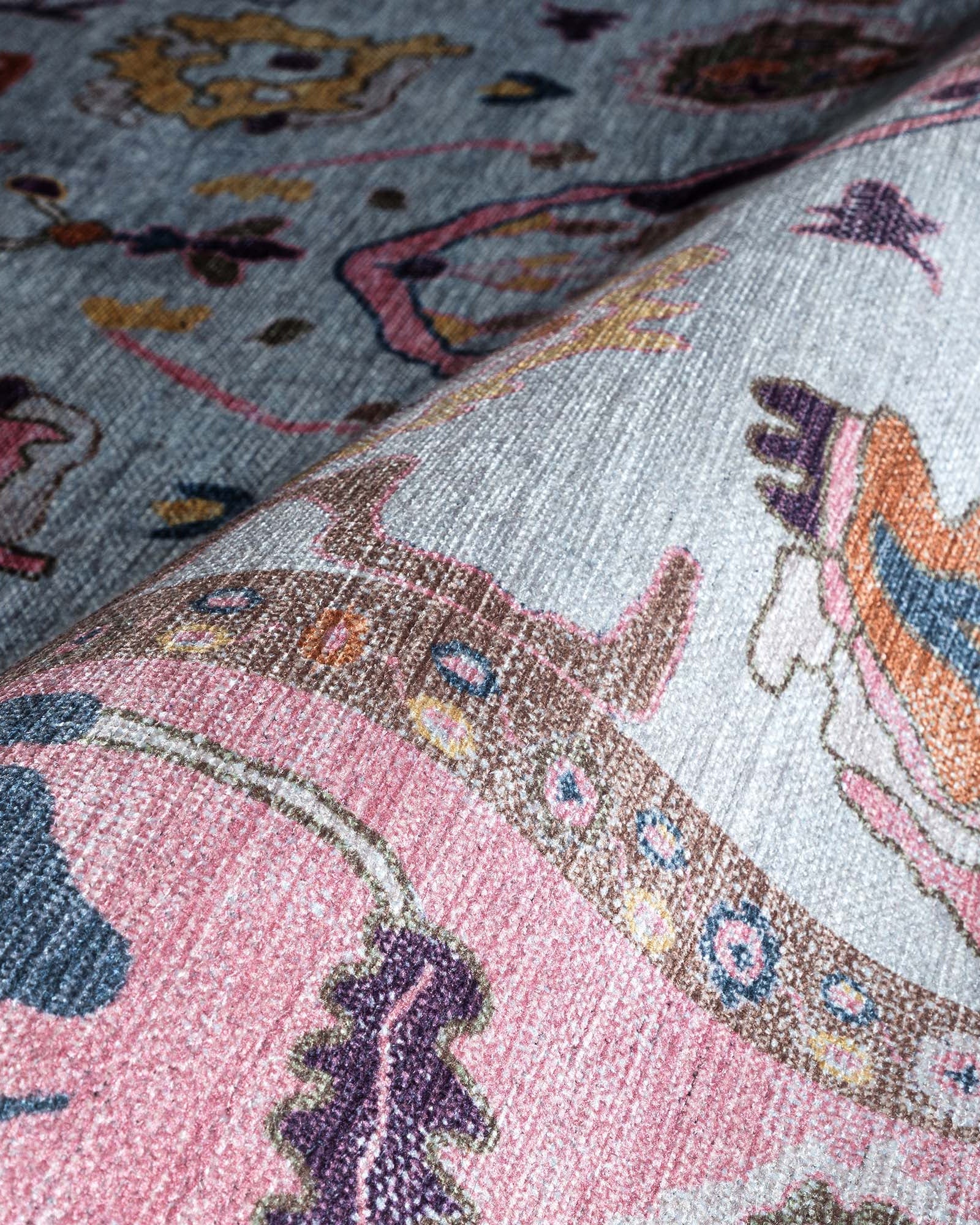
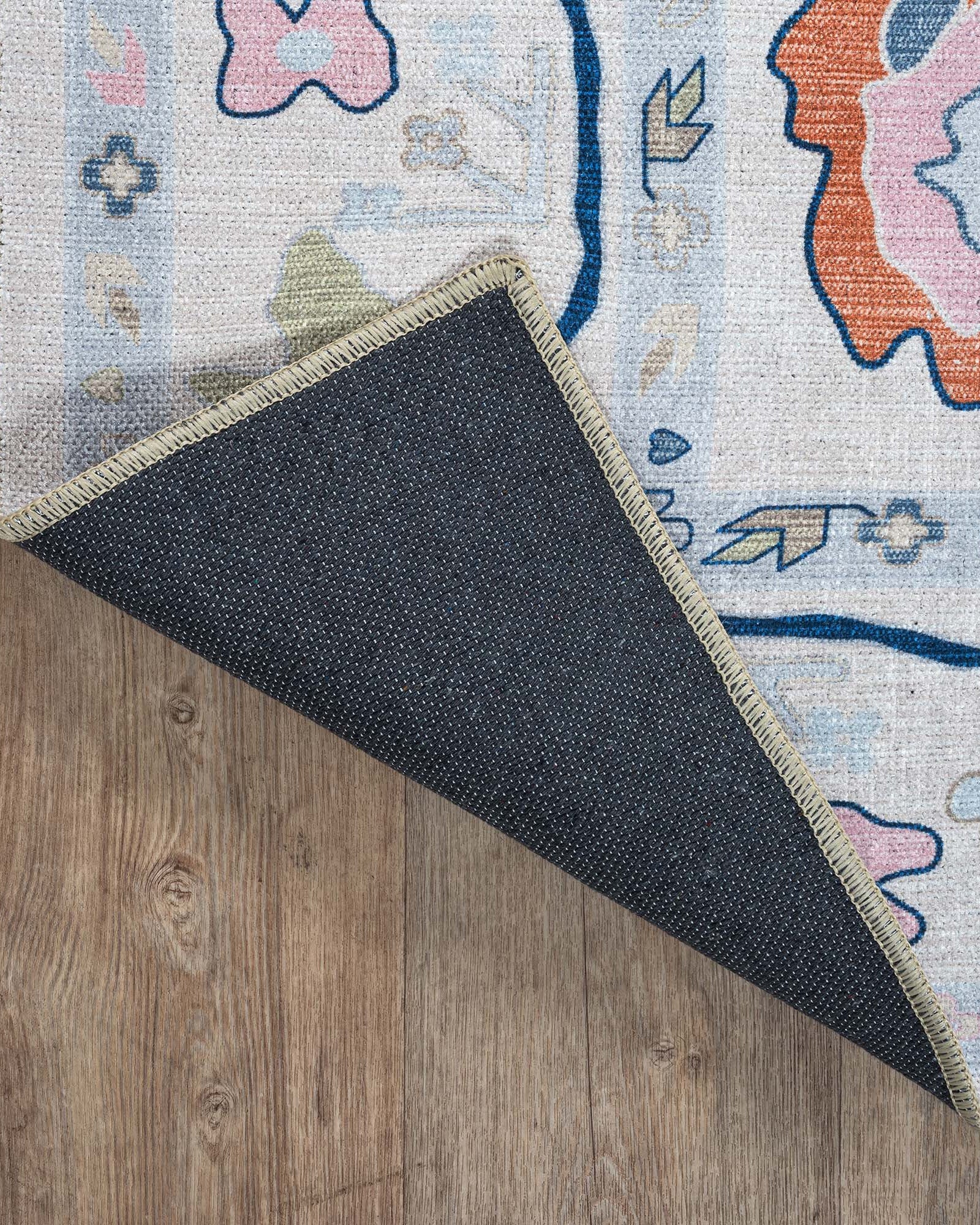
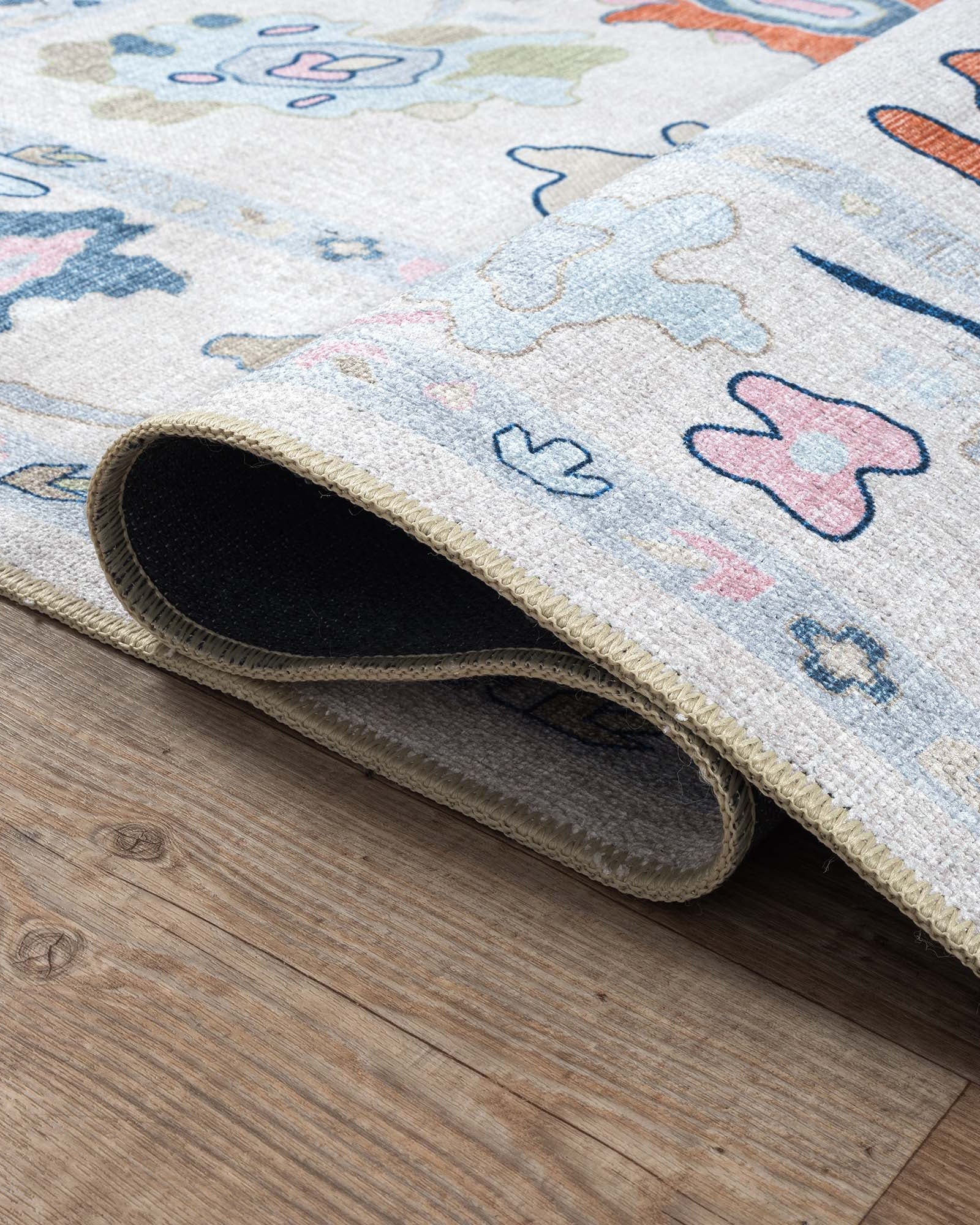
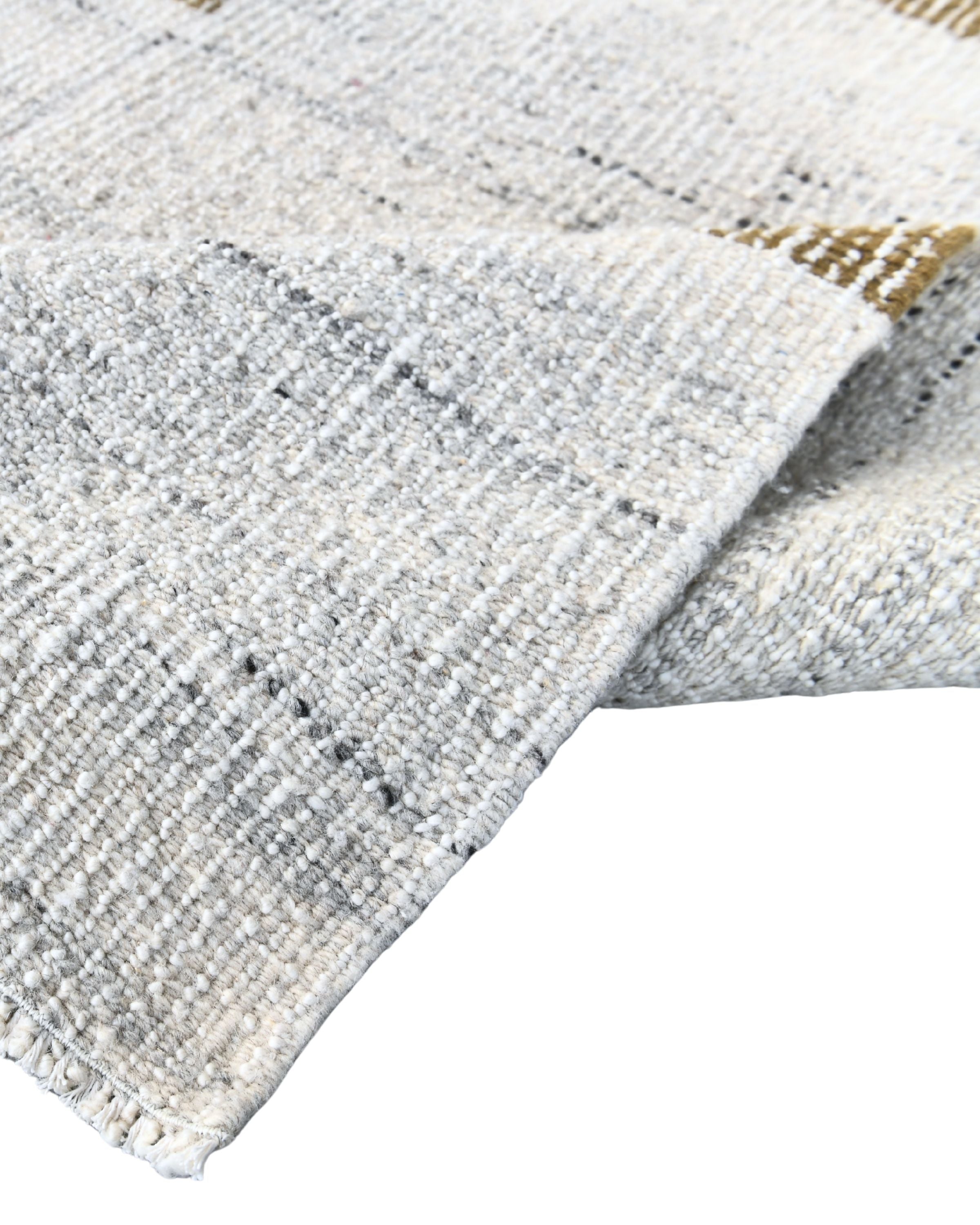
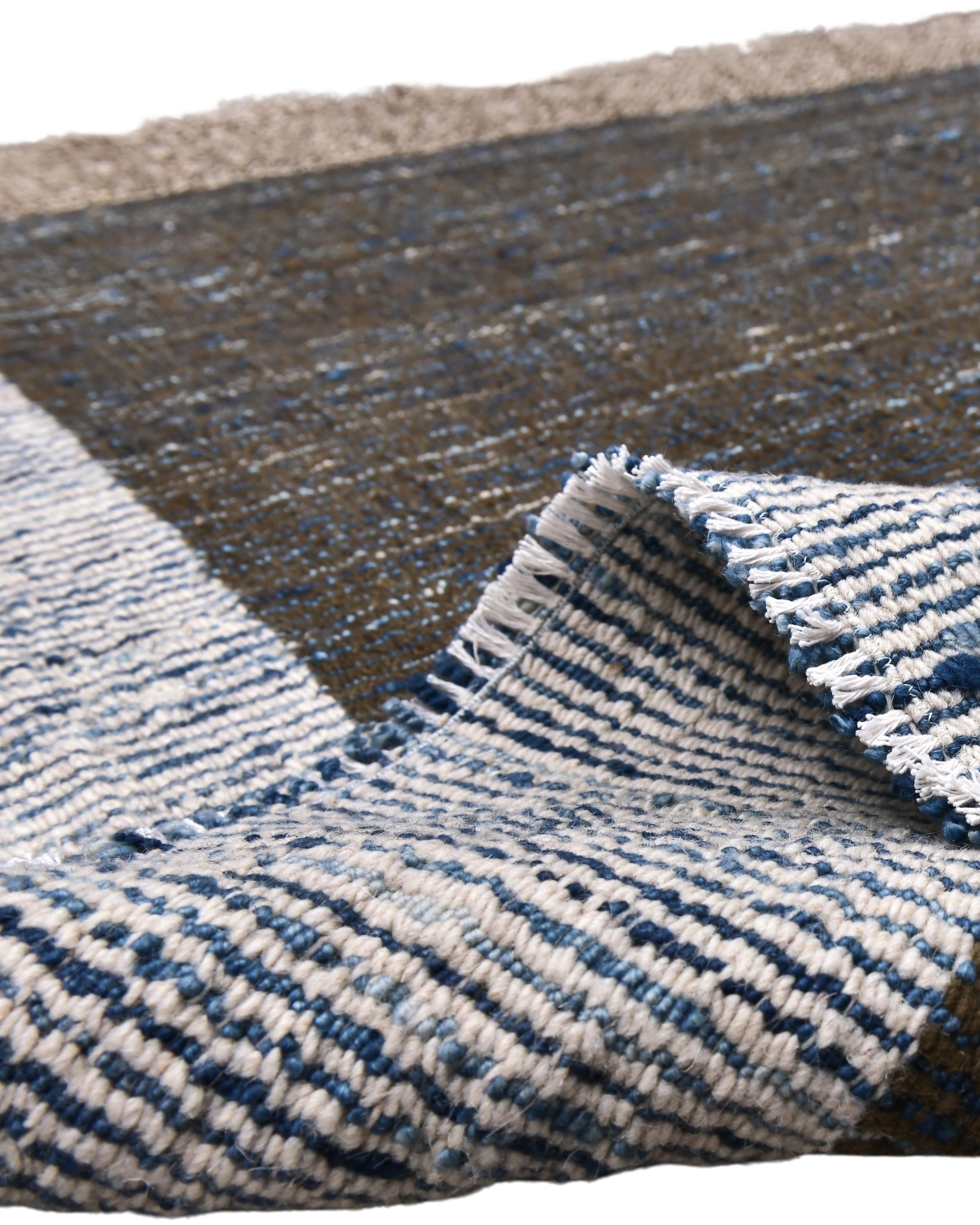
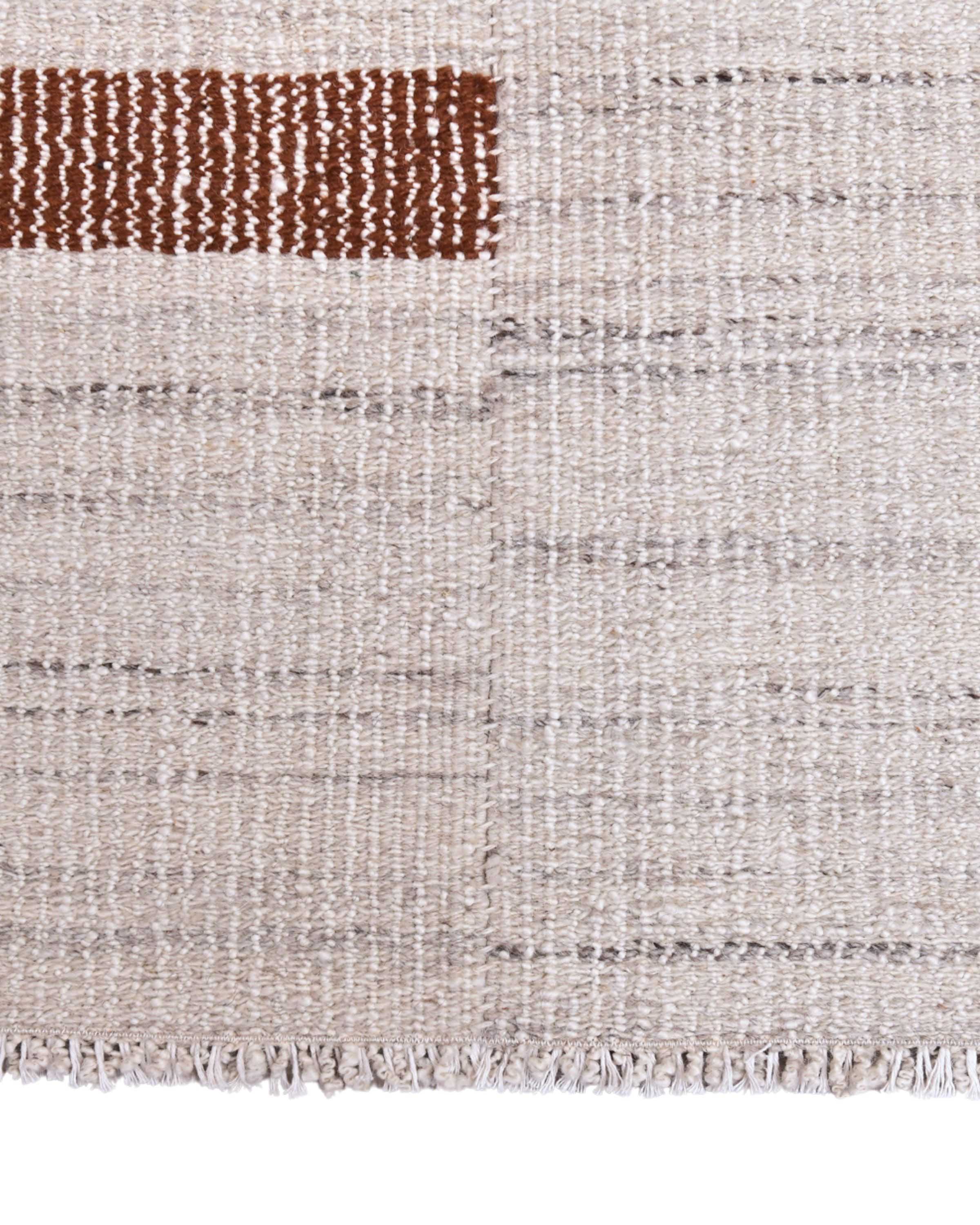
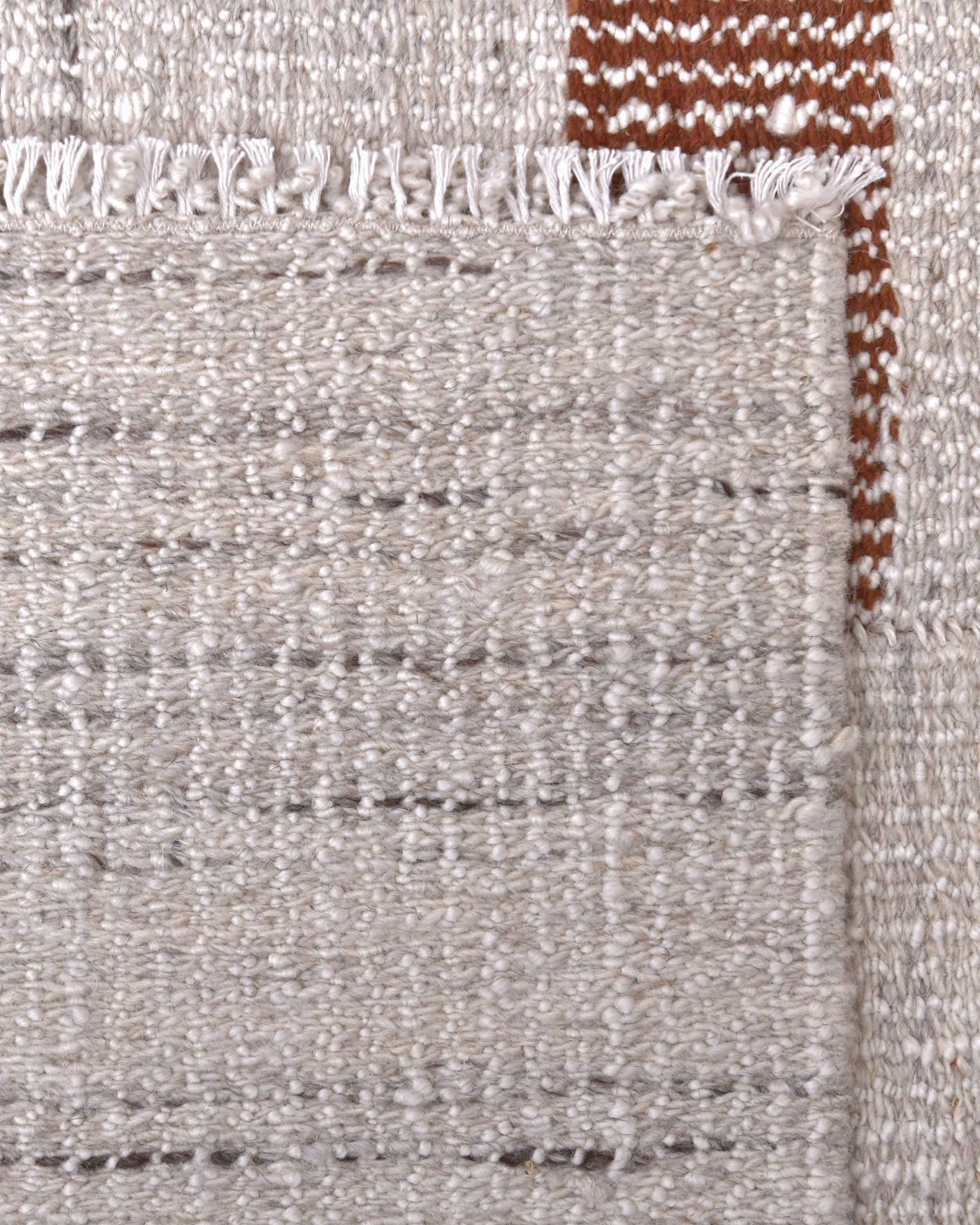
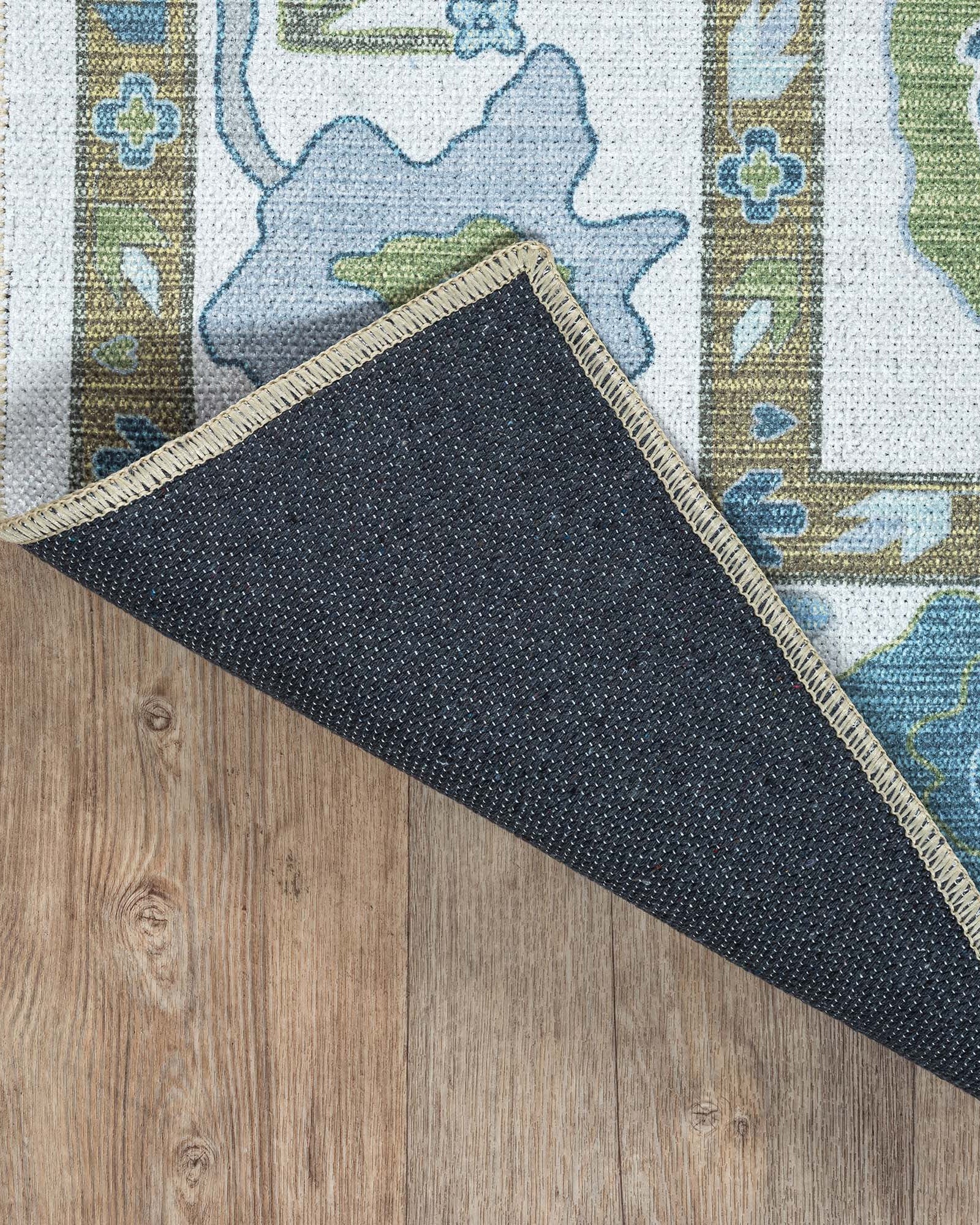
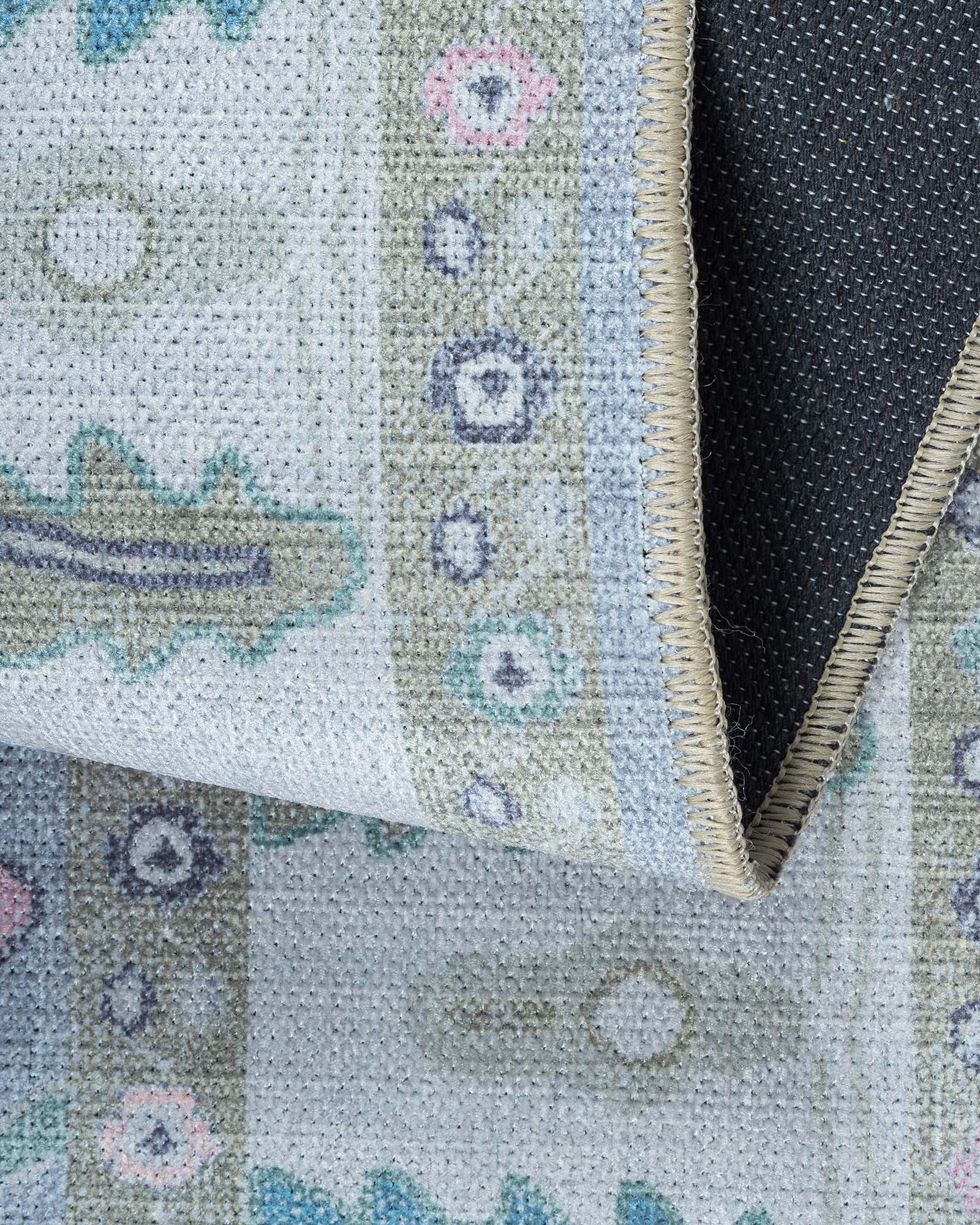
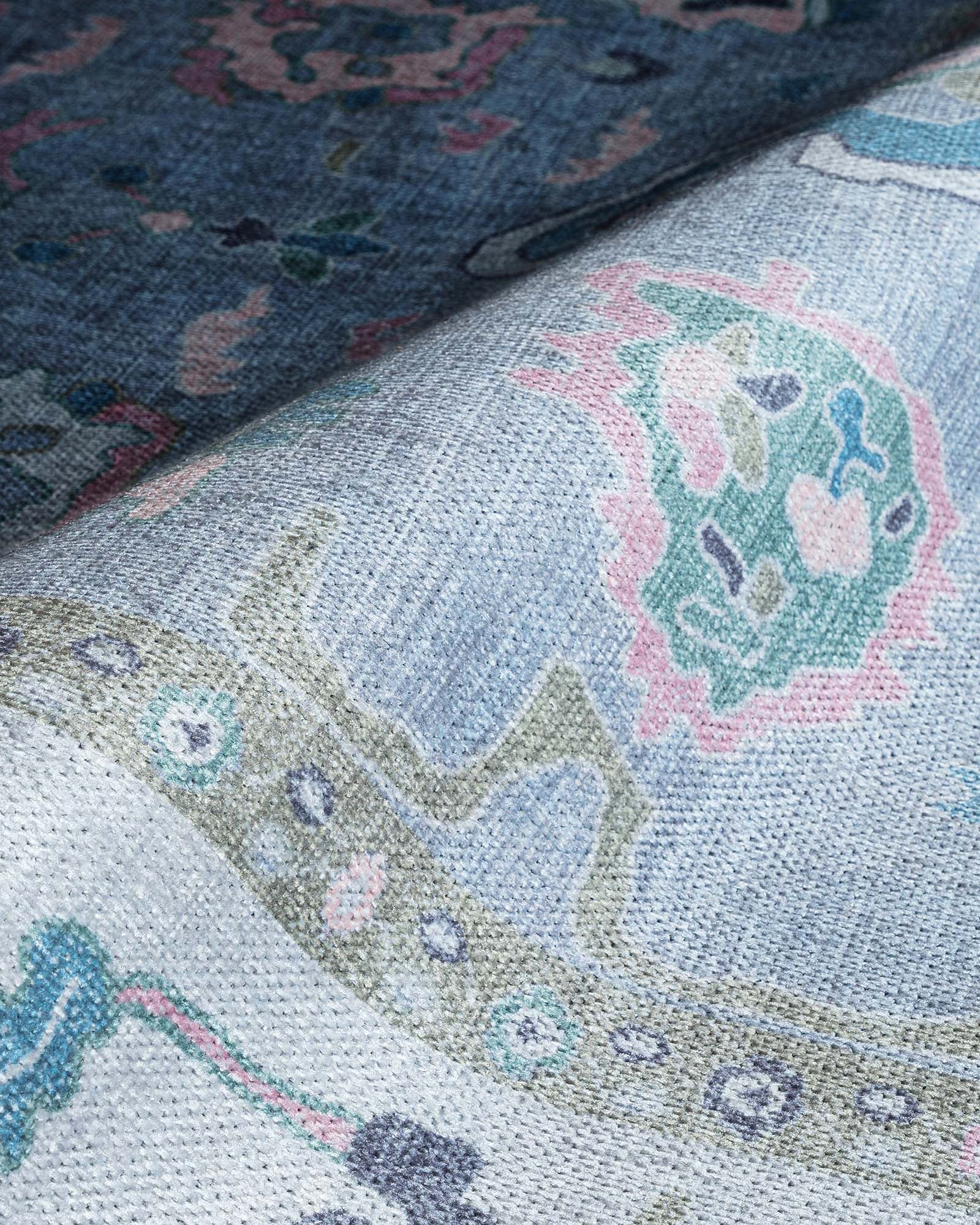
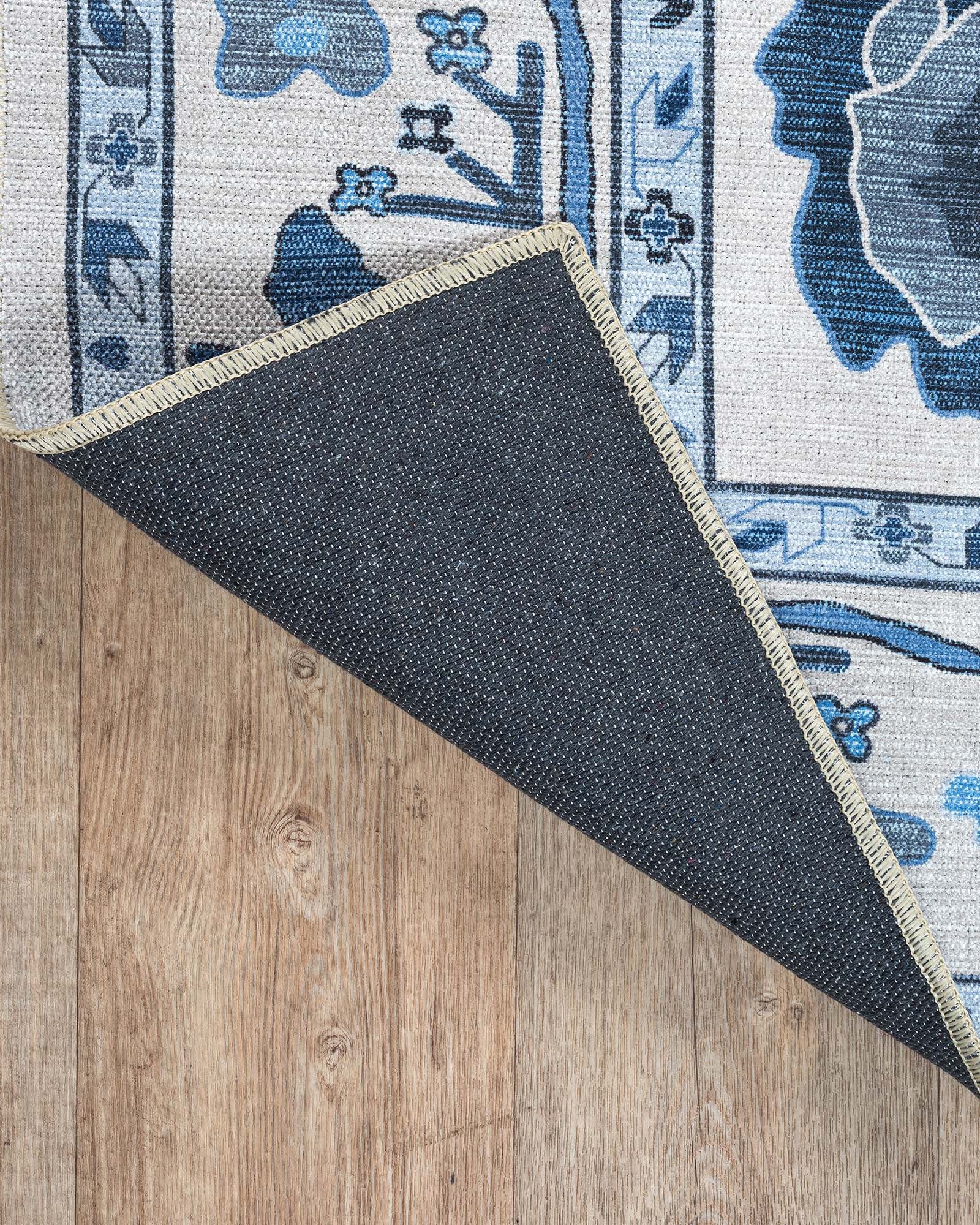
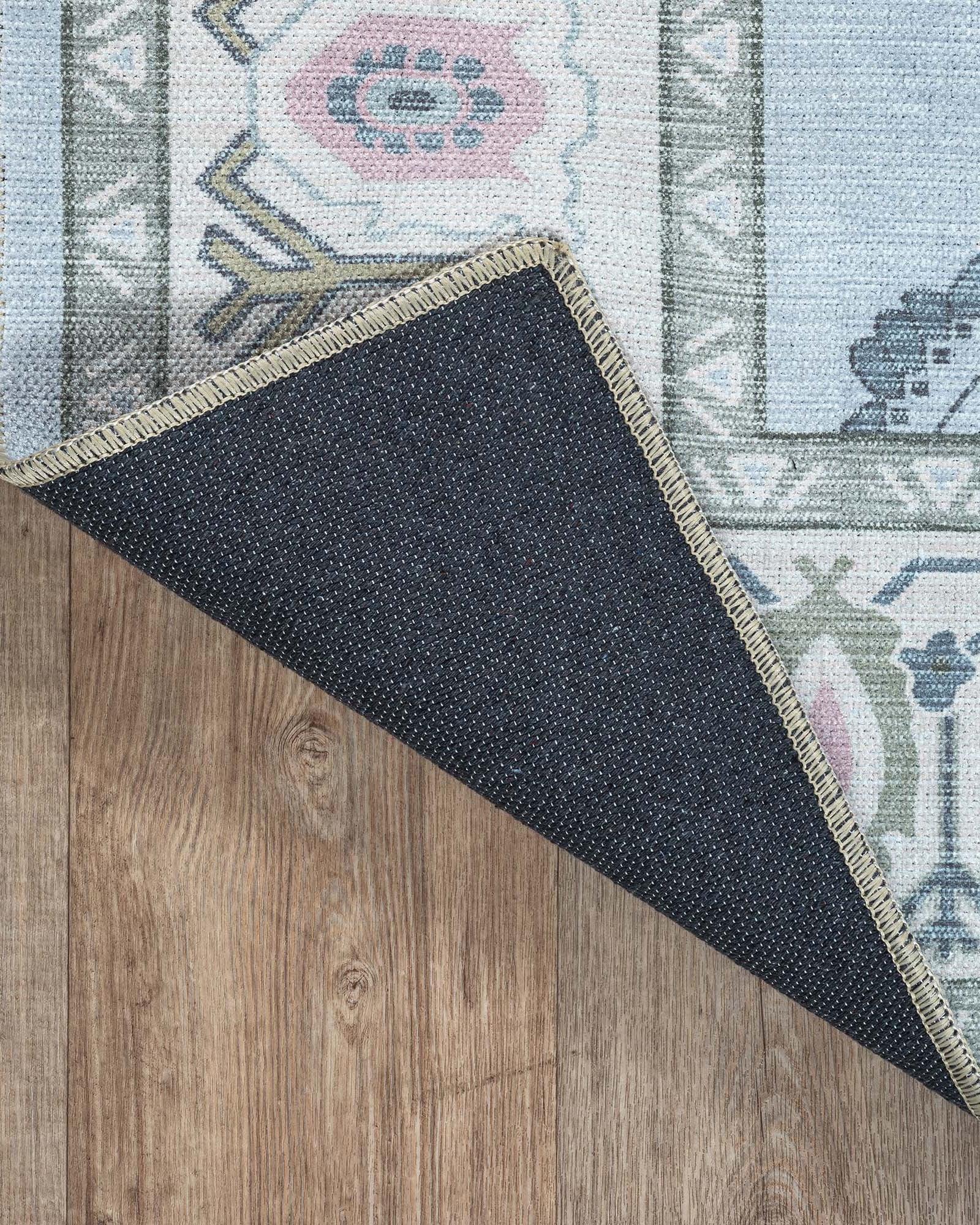
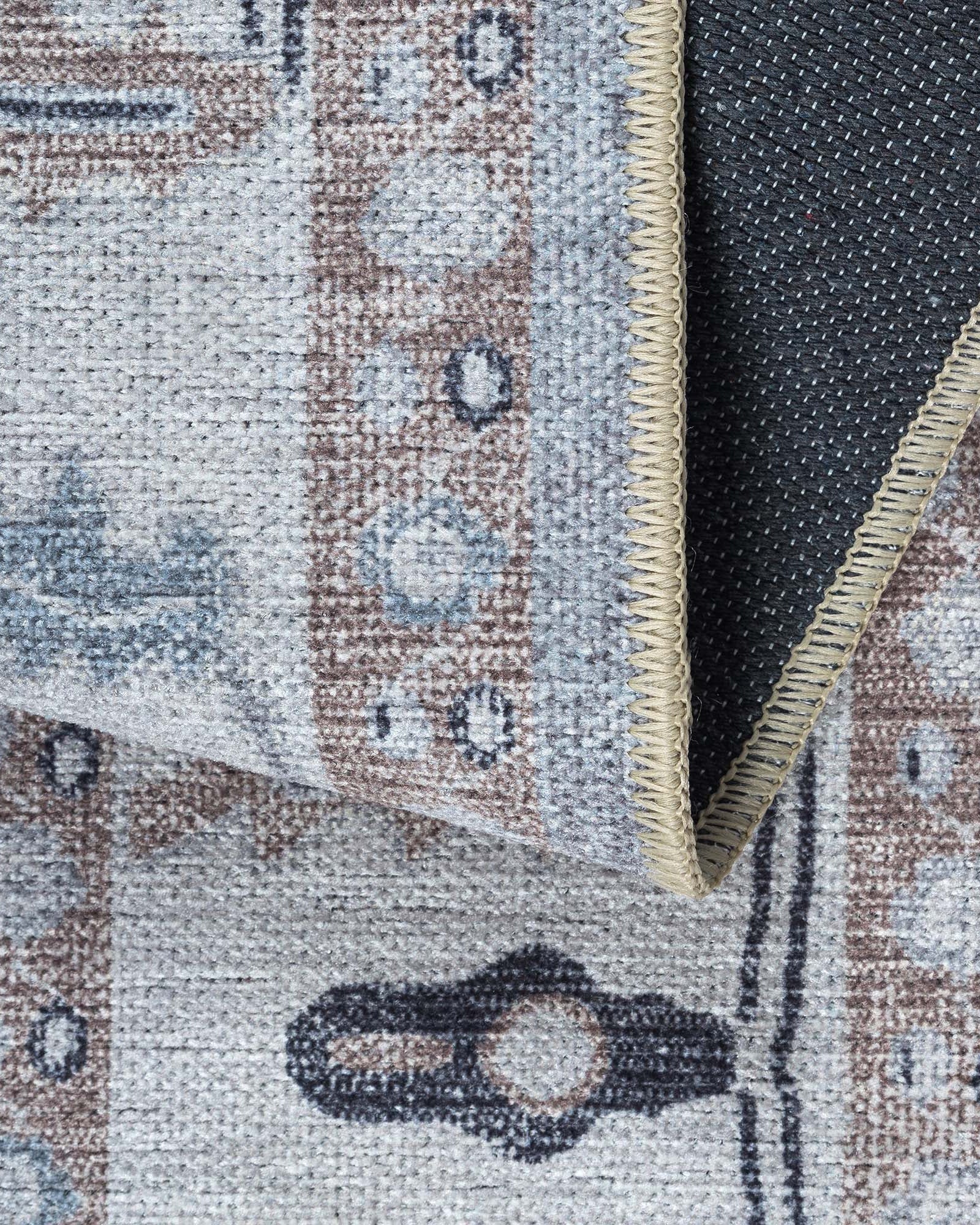
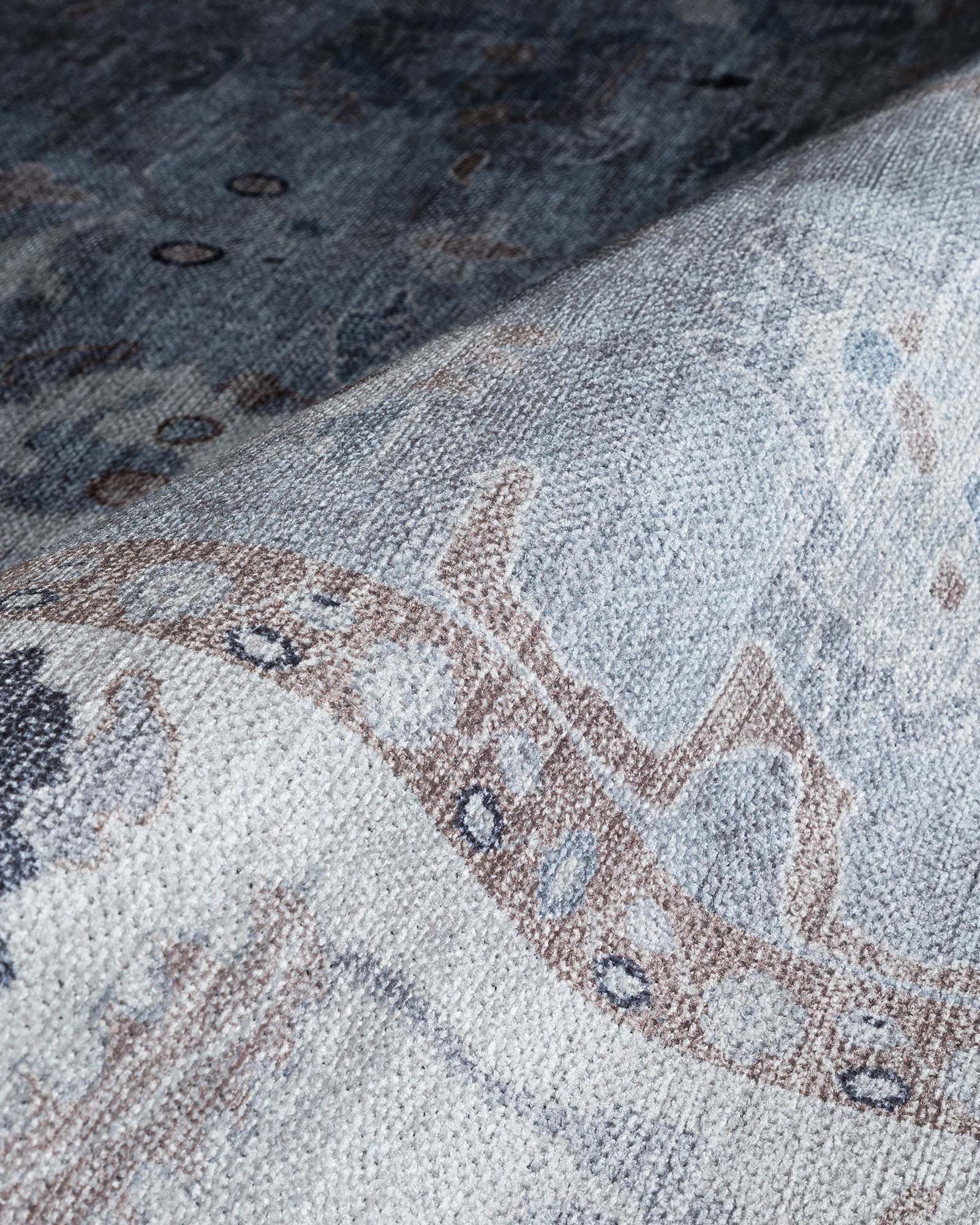
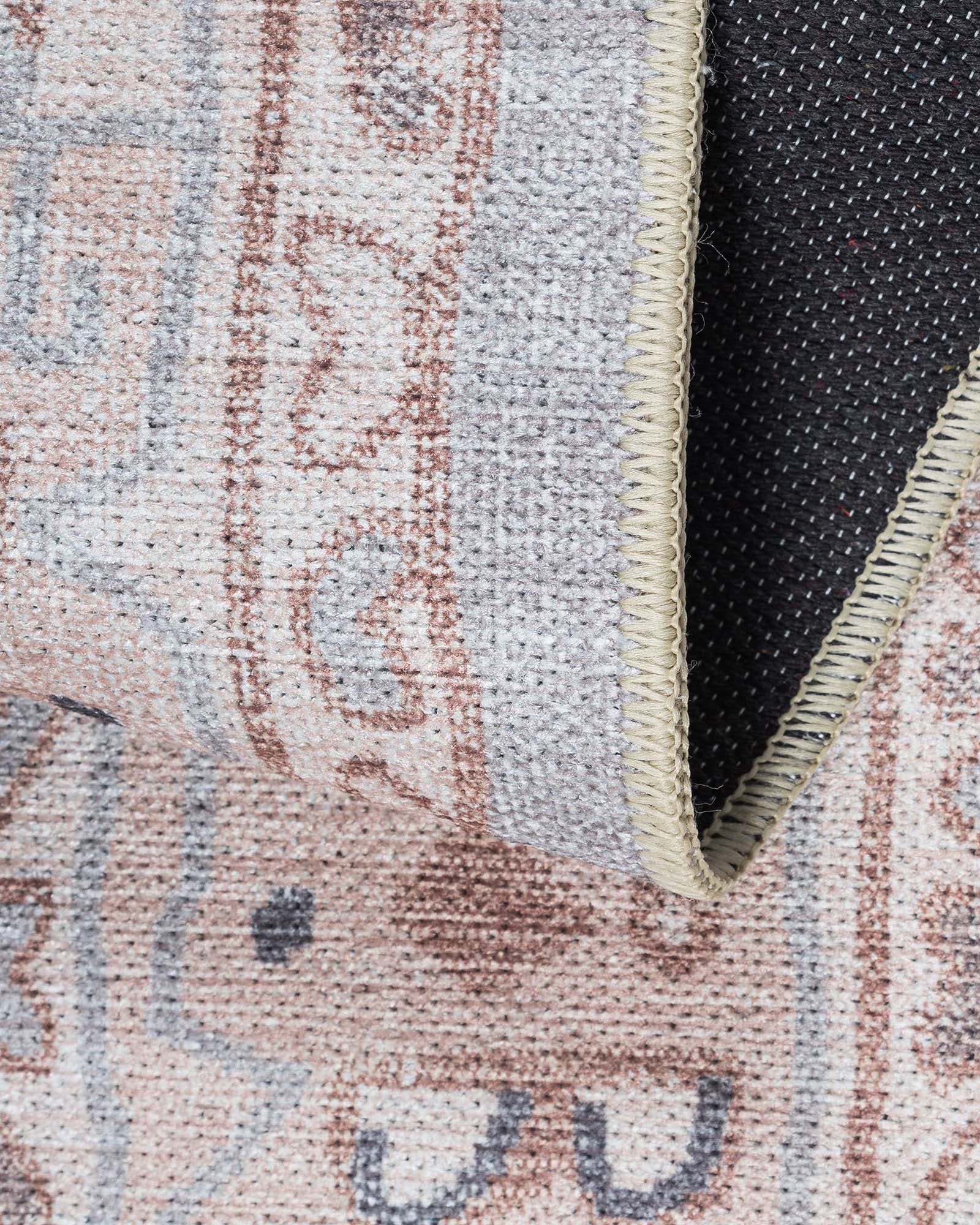
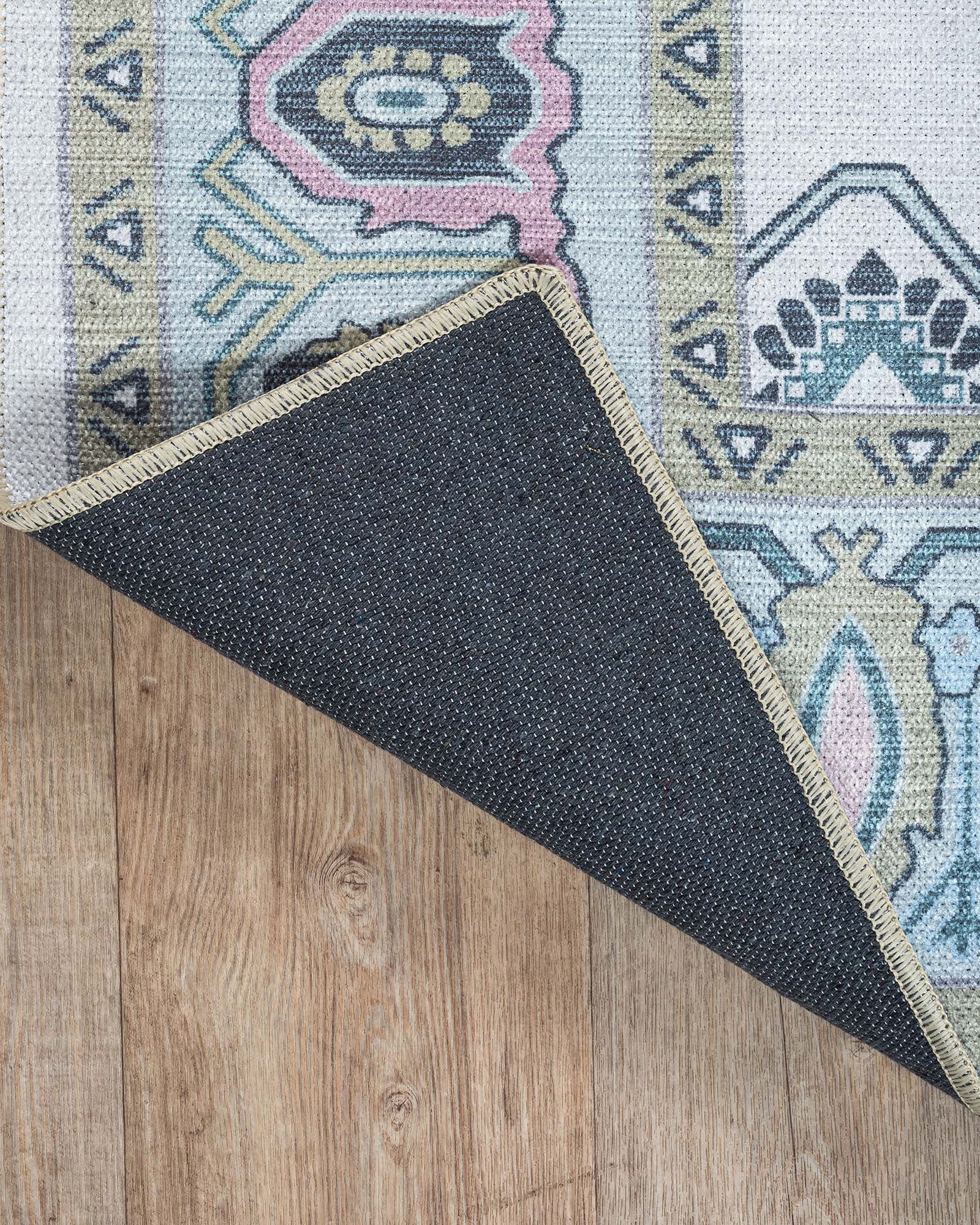
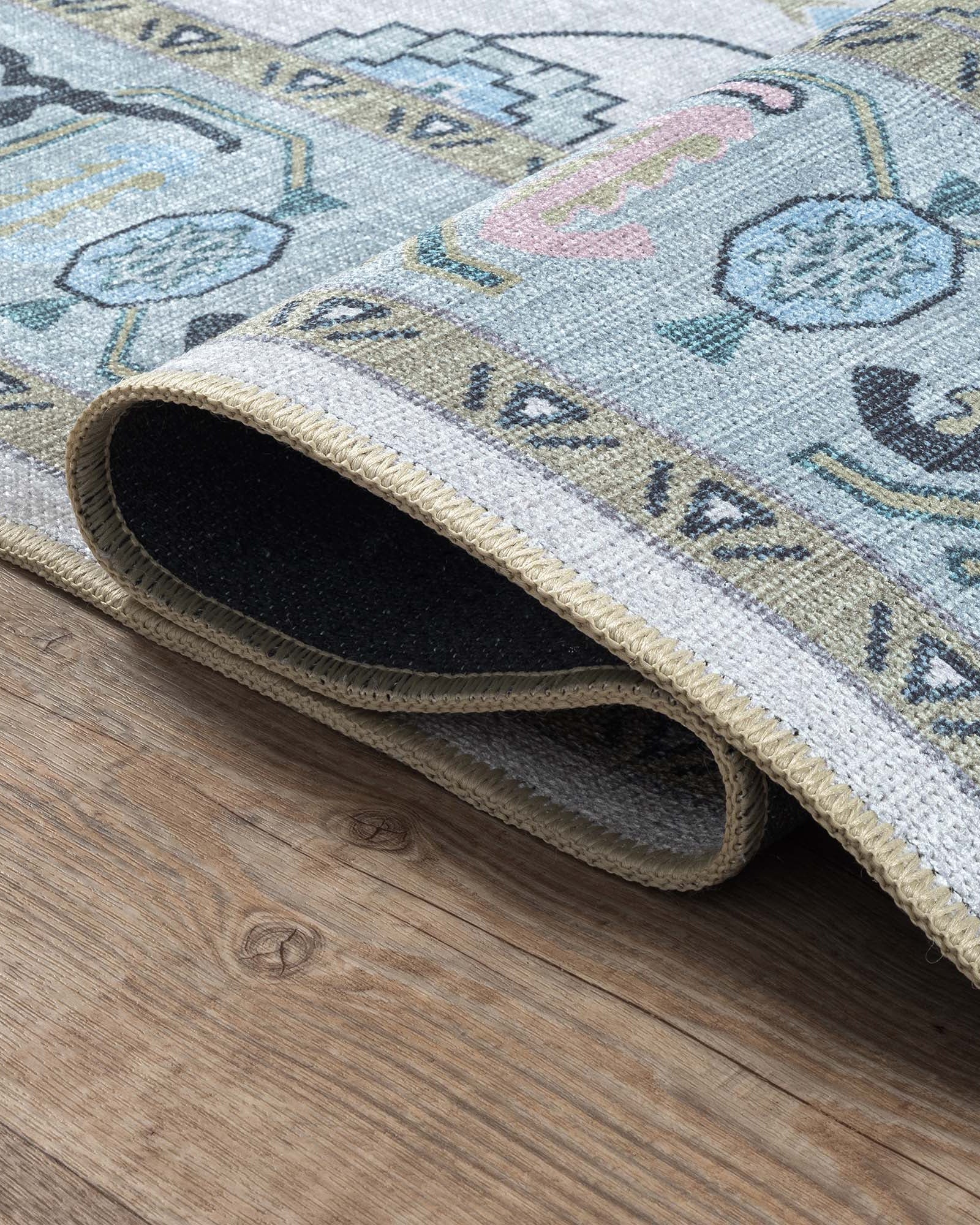
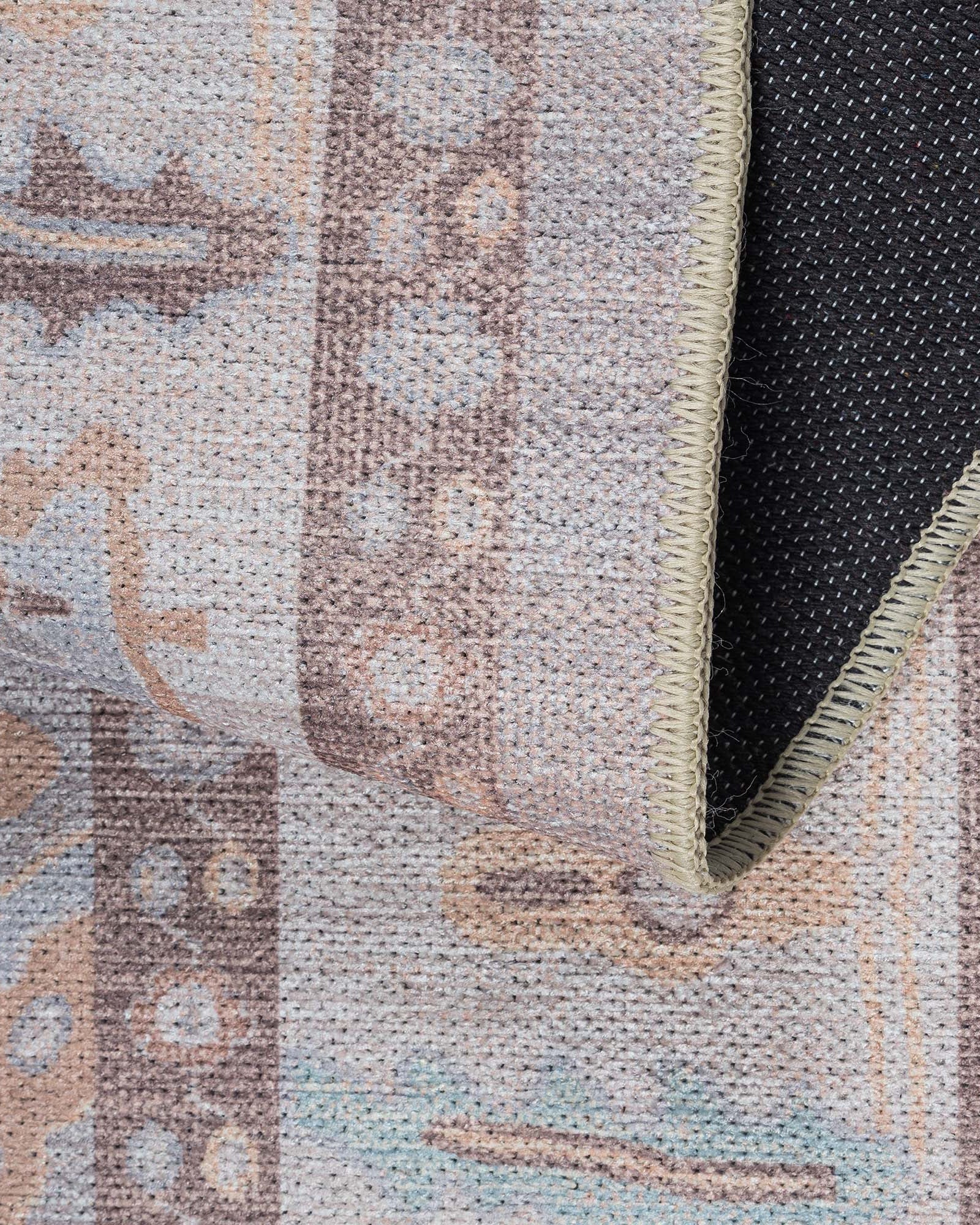
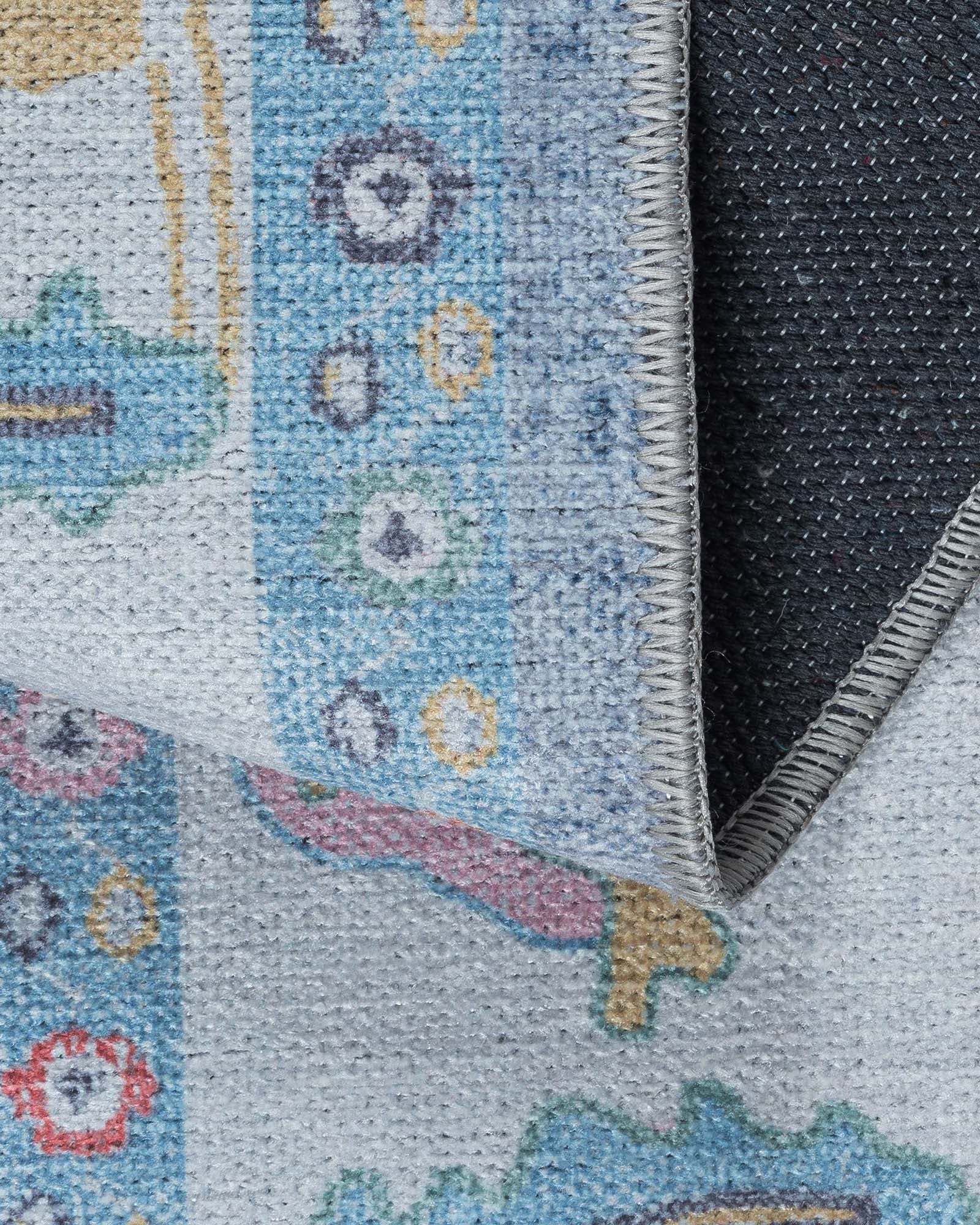
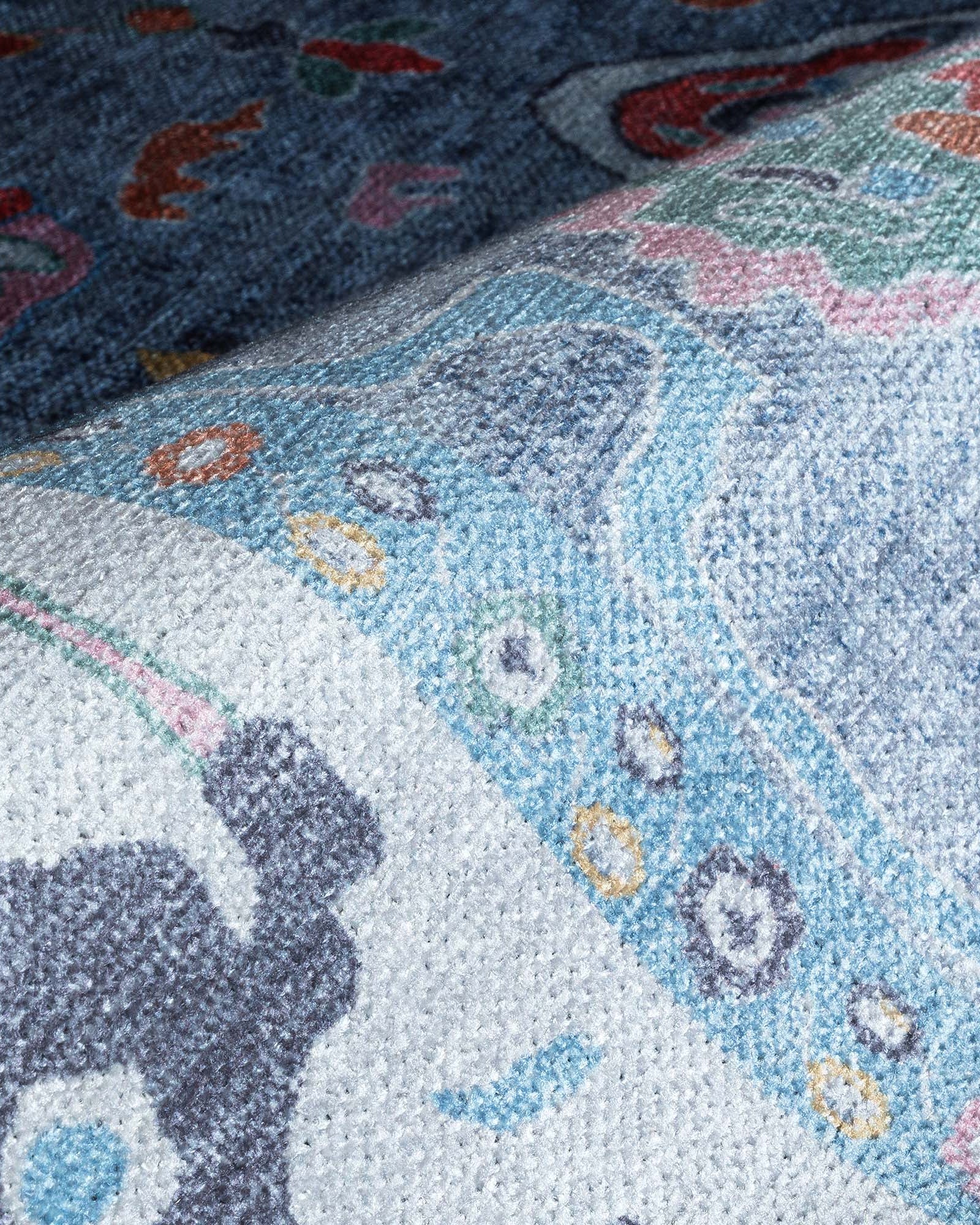
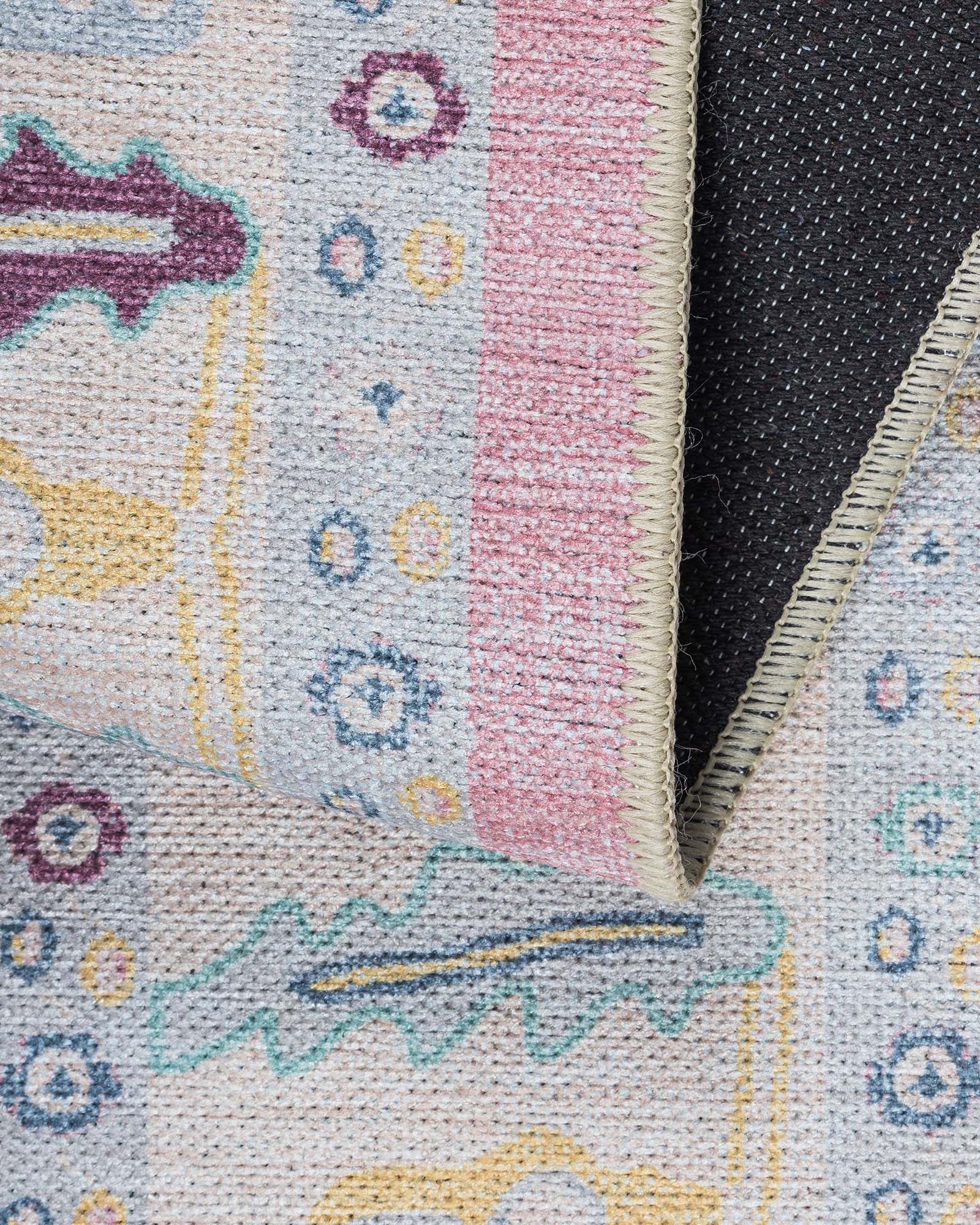
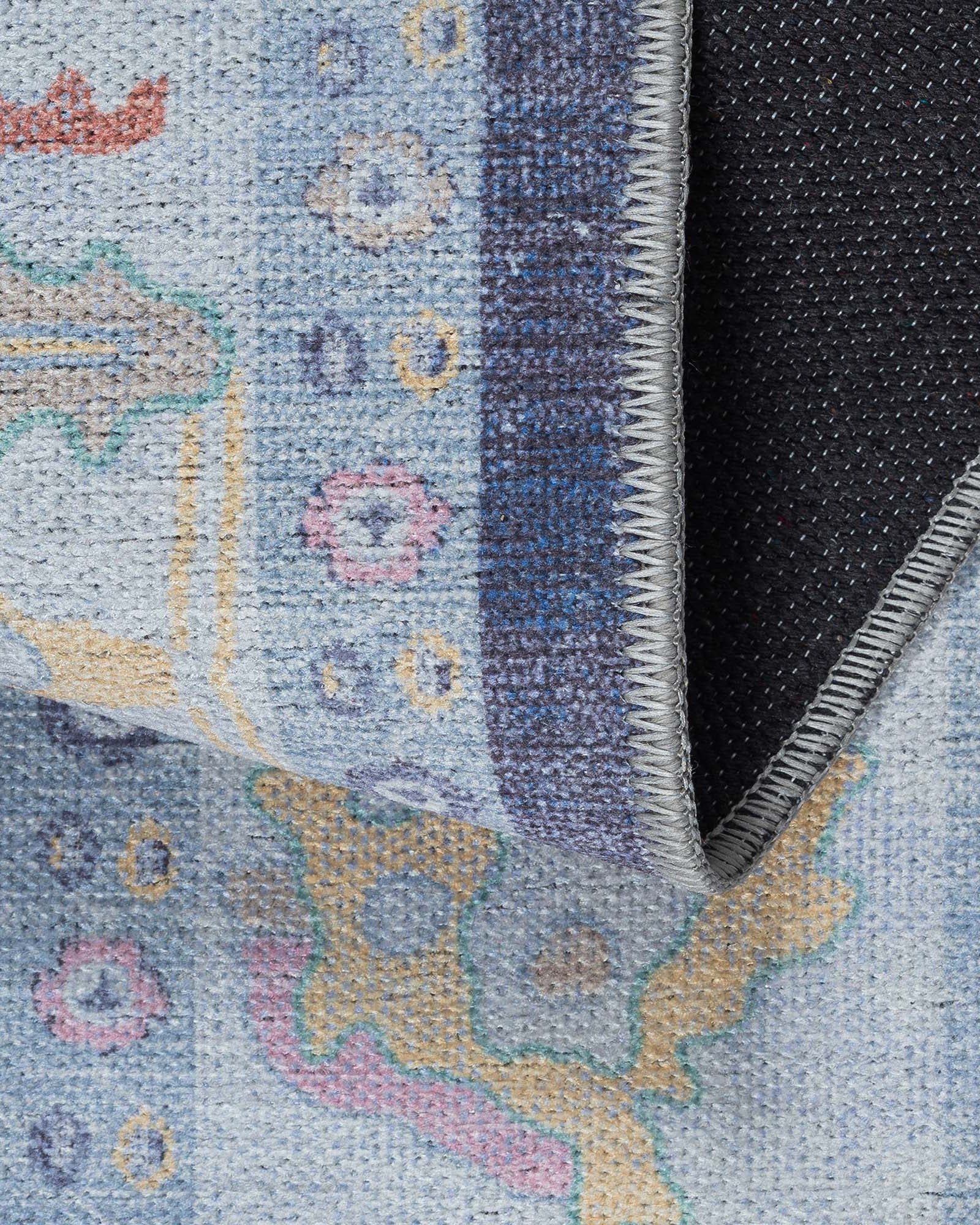
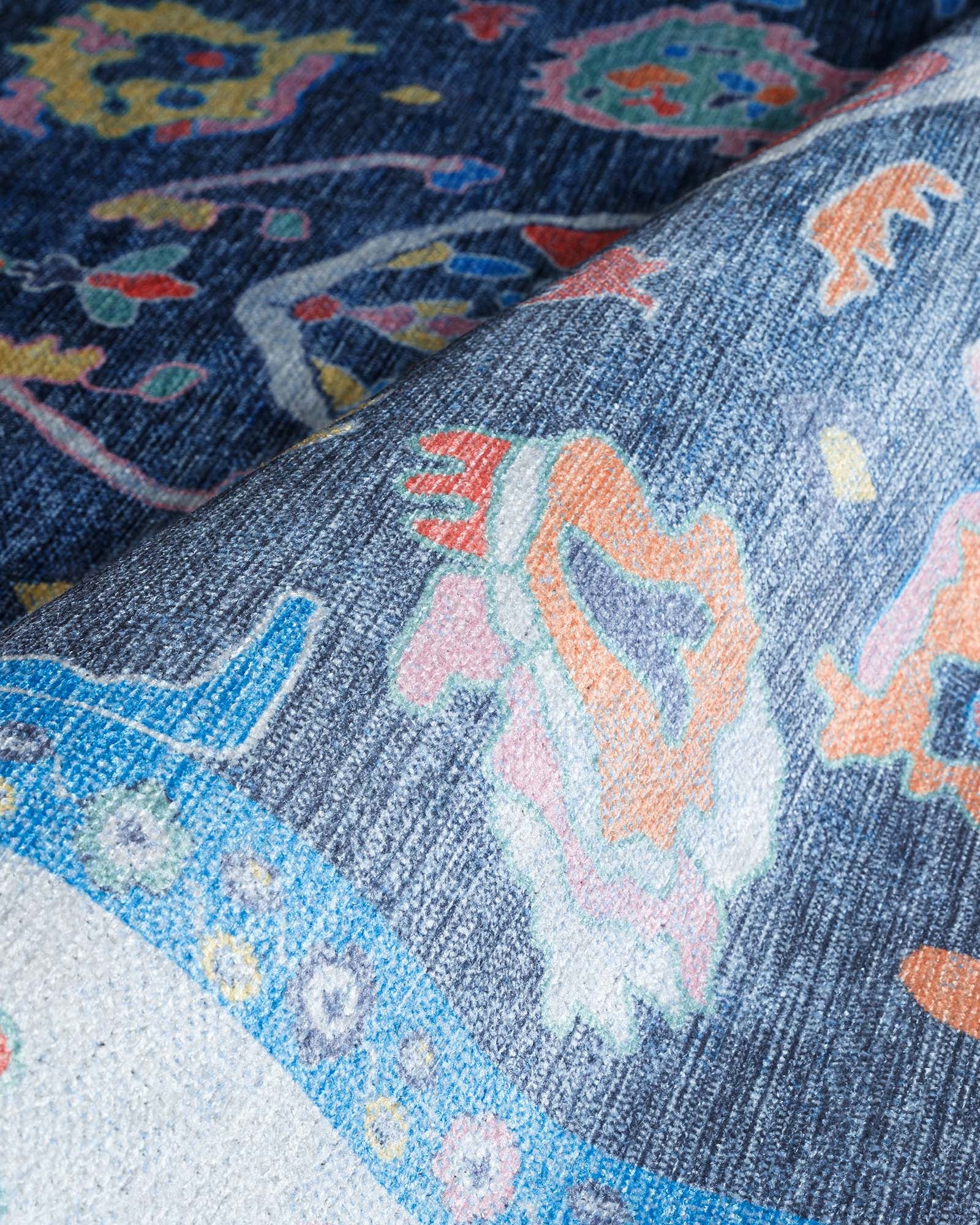
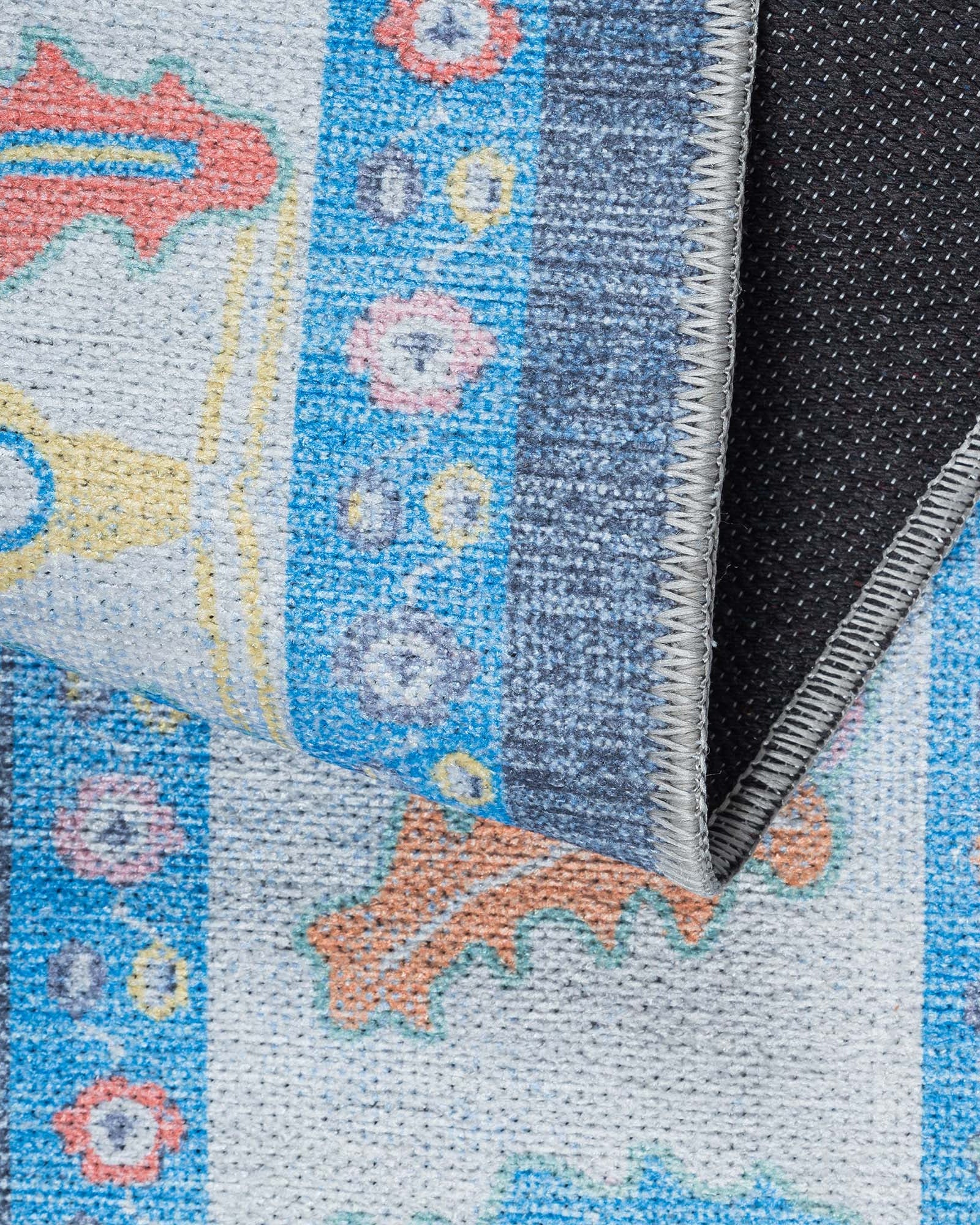
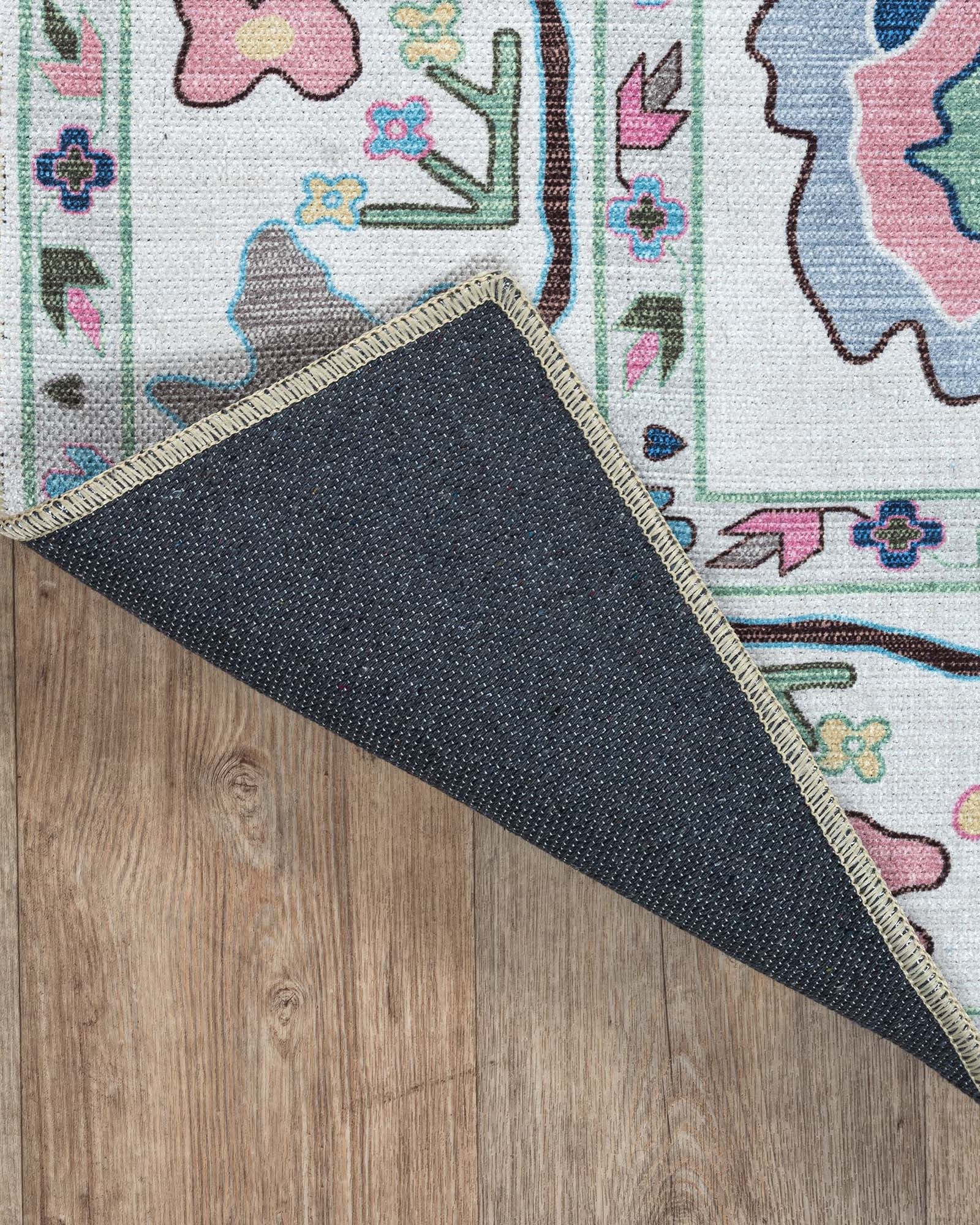
Look at the back. A handmade rug shows its pattern on the reverse with the same clarity as the front, because the structure and the design are the same thing. A machine-made rug shows a uniform grid backing; a tufted rug shows a glued cloth covering everything.
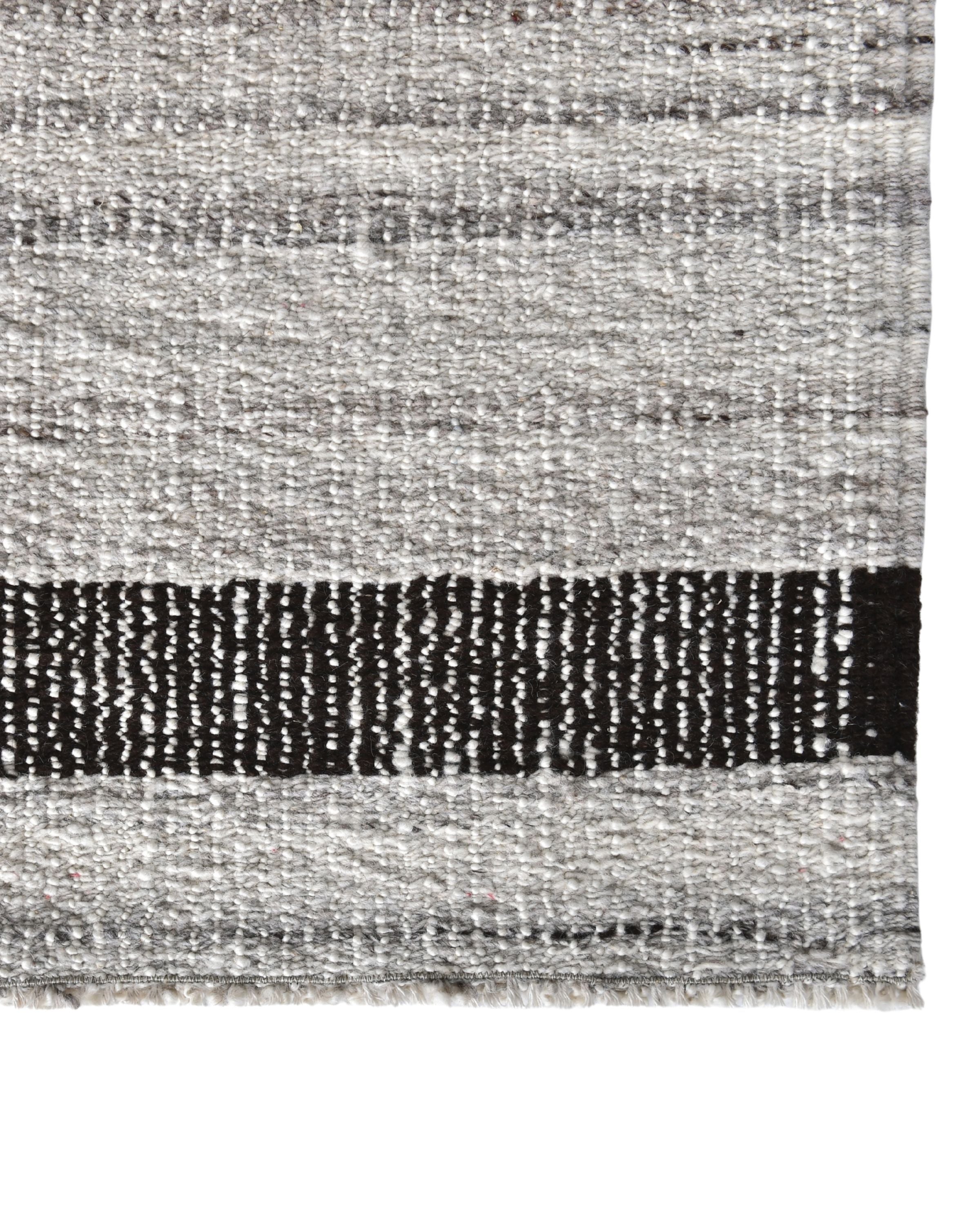
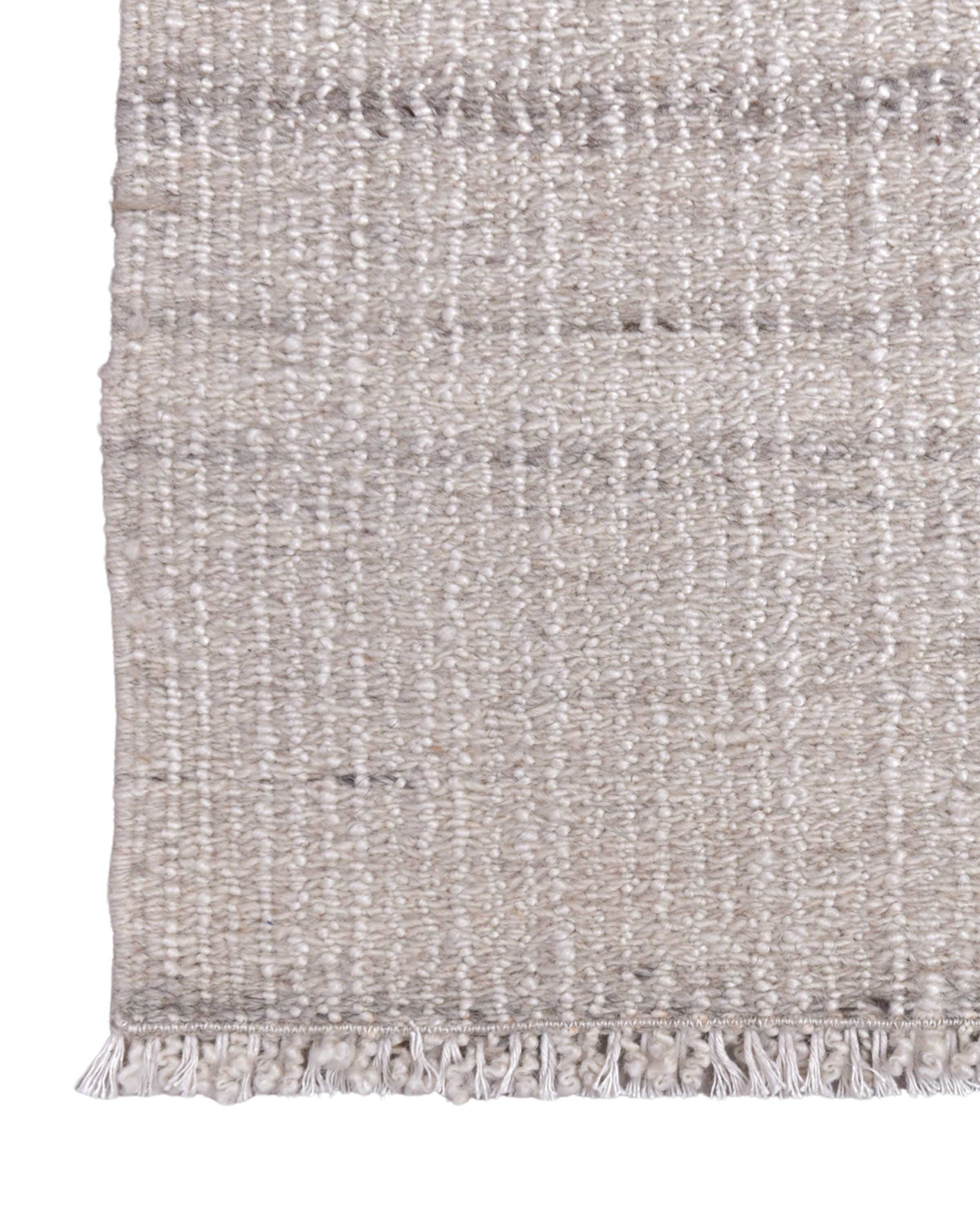
Check the fringe. On a handmade knotted rug the fringe is the warp thread itself continuing out of the weaving — pull it and you are pulling the rug's structure. On tufted and machine-made pieces it is a separate strip sewn on after production.
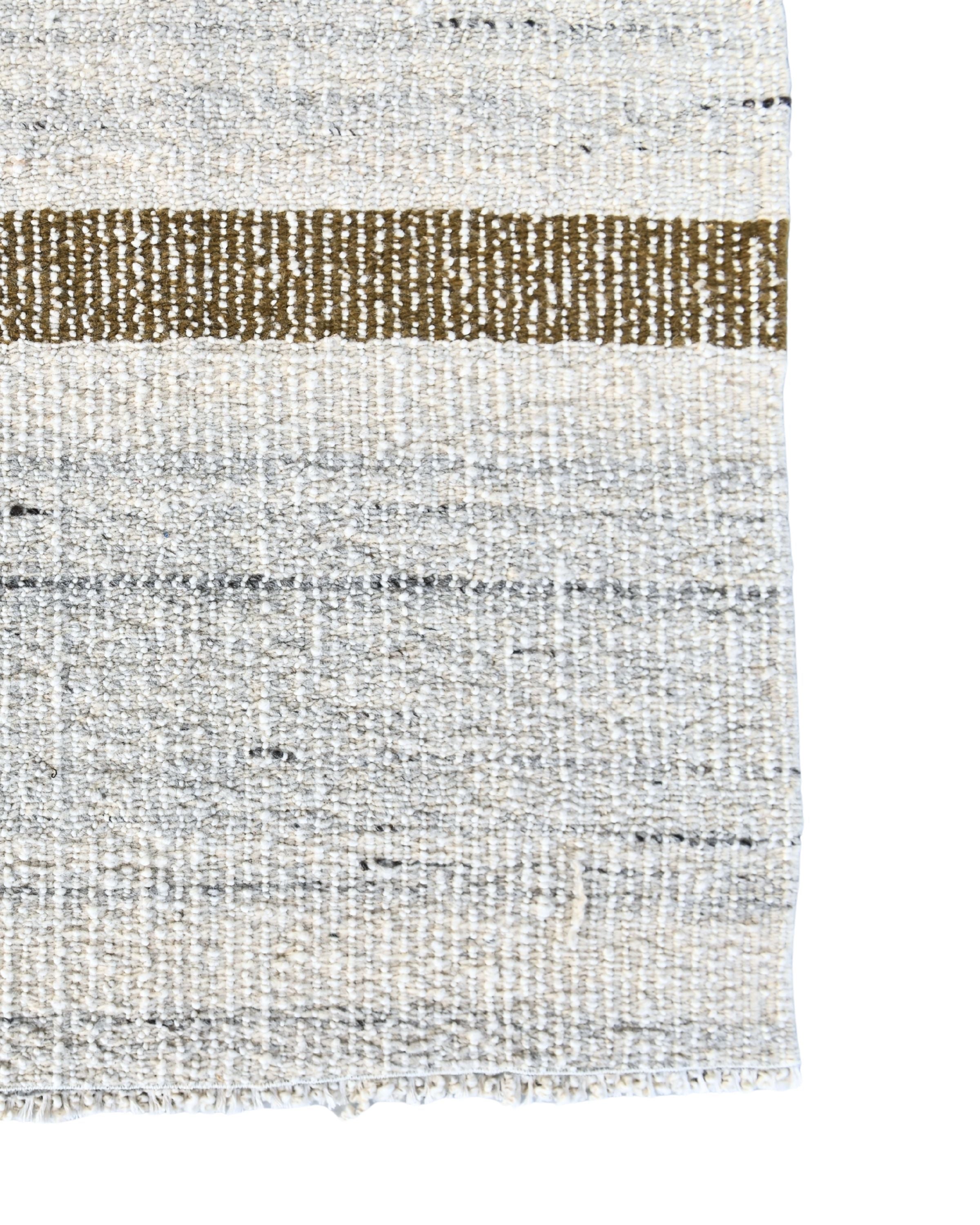
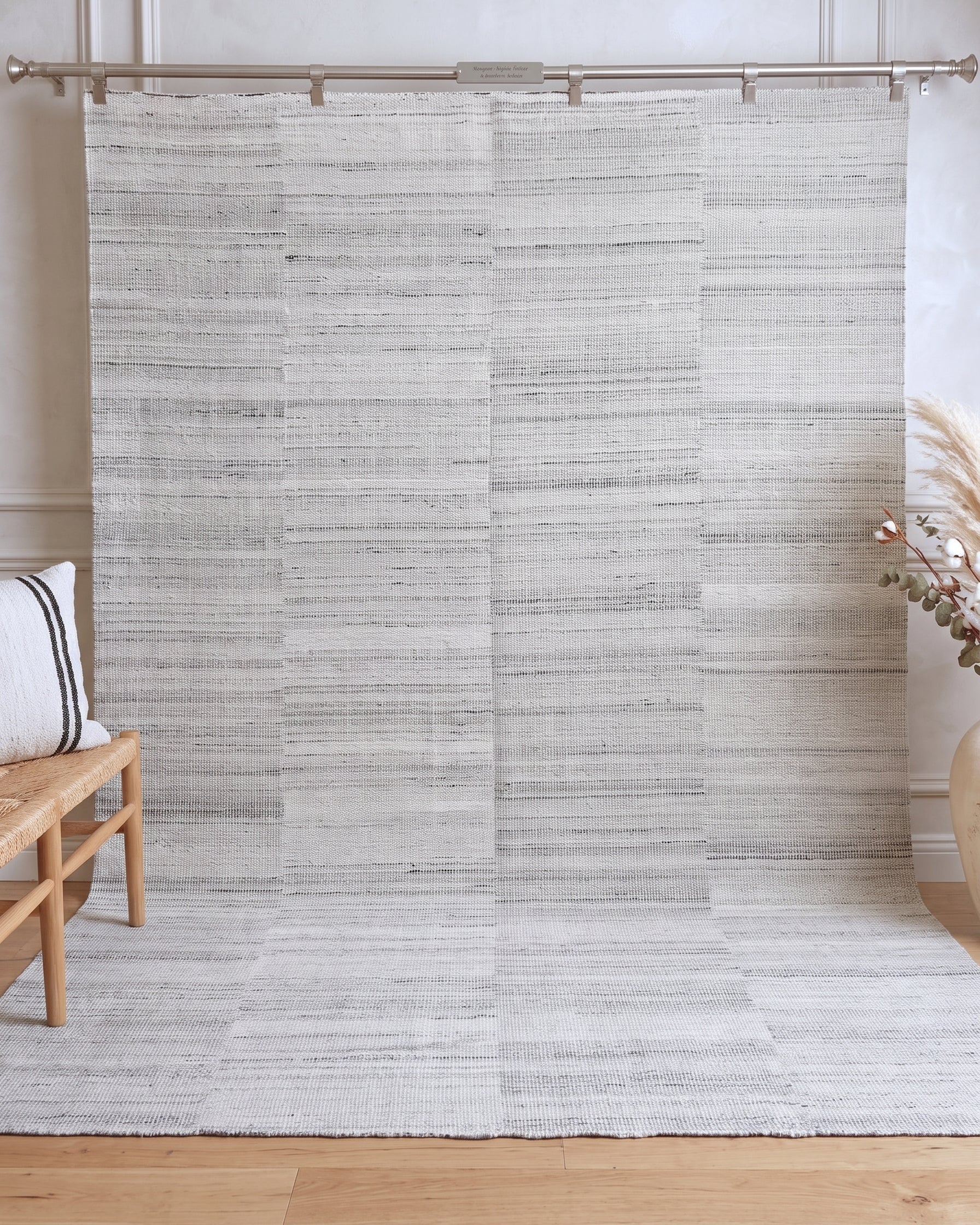
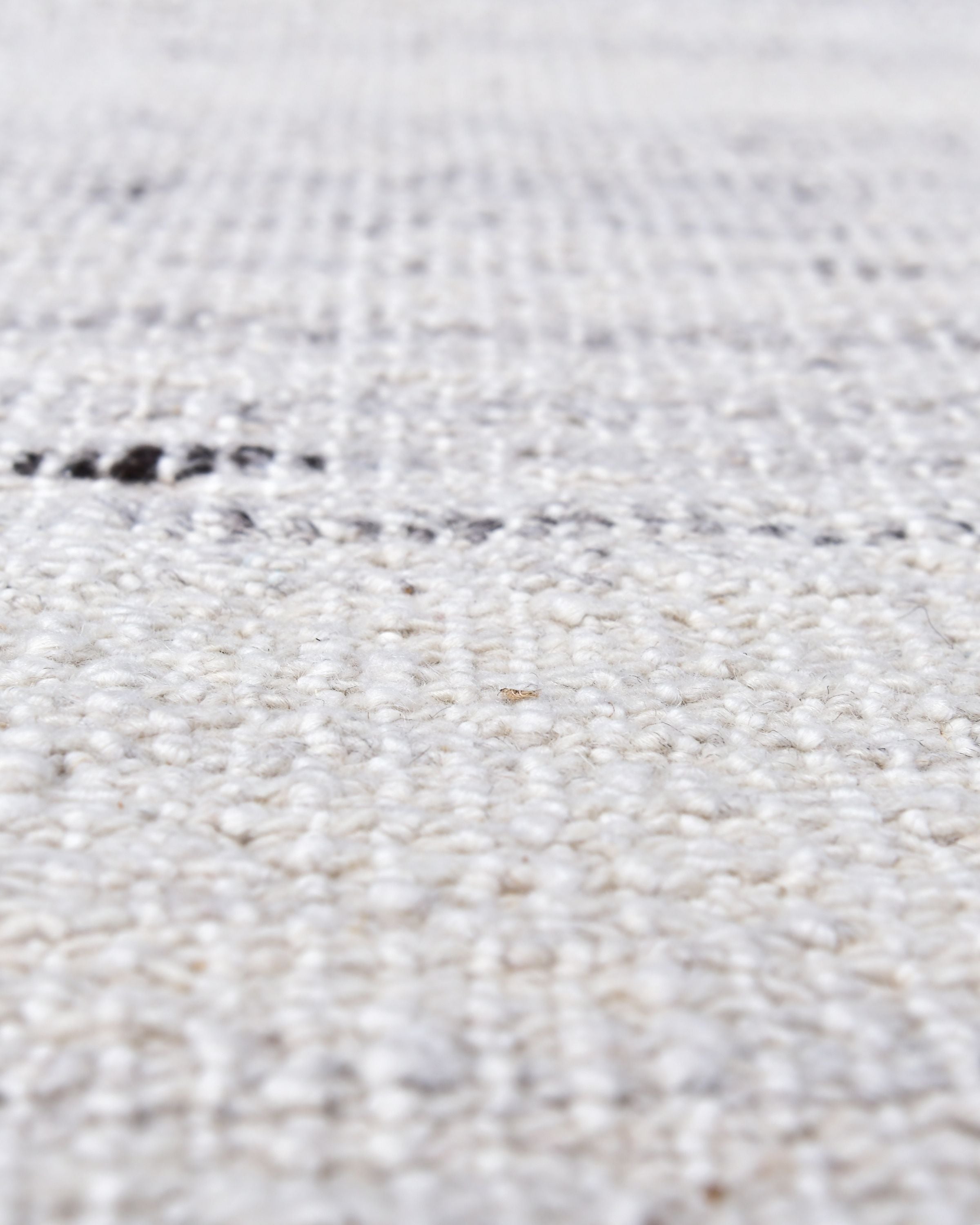
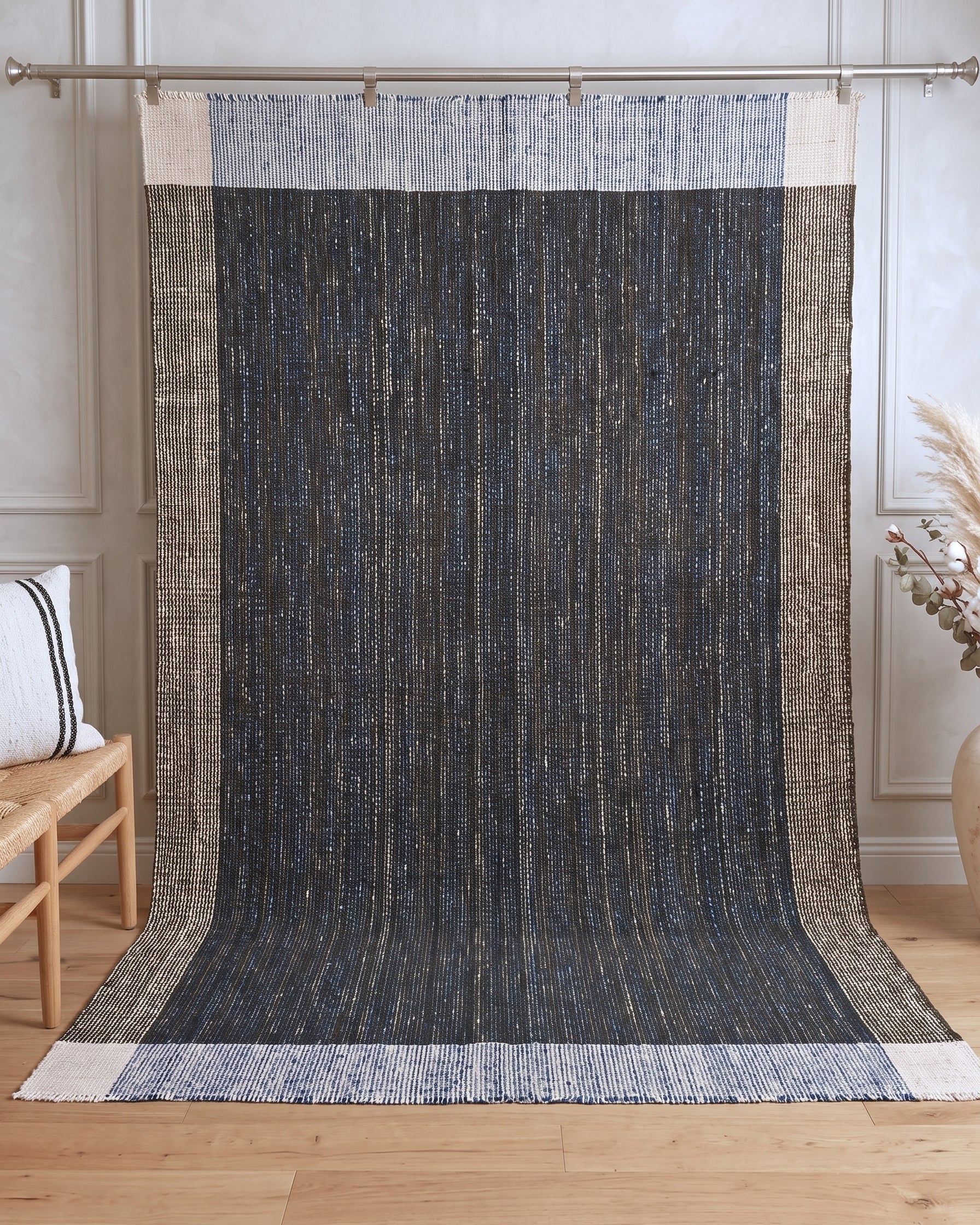
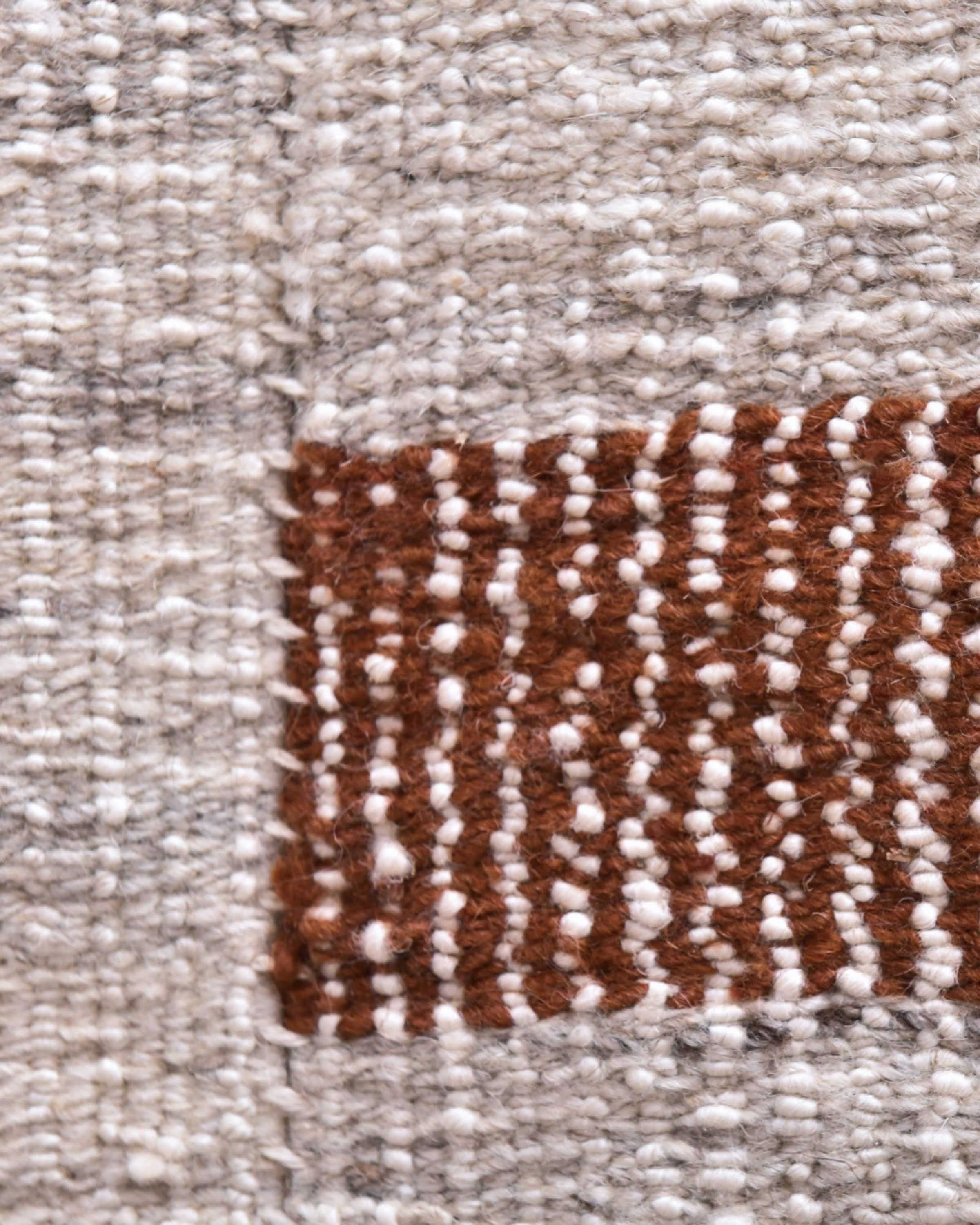
Look for irregularity. Handmade rugs are never perfectly square. Opposite edges differ, rows sit at slightly varying heights, borders do not always resolve exactly at the corners, and horizontal tonal bands appear where the weaver changed wool batches. Machine production has none of this.
Part the pile. On a knotted rug you can see individual knots at the base of the wool. On a tufted rug you see the fabric backing.
What You Are Actually Buying
A 6' x 9' hand-knotted rug at a modest density contains somewhere around half a million knots. At a realistic working pace that is several months of one person's labour, on top of the shearing, washing, spinning and dyeing that came before. The price of a handmade rug is mostly that time.
What it buys you is a rug built from independent mechanical units. Each knot stands alone, so there is no backing to delaminate, no adhesive to fail and no continuous loop to unravel. Damage stays local and can be repaired knot by knot. This is why handmade rugs from the 1940s are still in daily use and why they can be washed, restored and passed on rather than replaced.
The Trade-Offs, Plainly
Sizes are never standard — a piece listed at approximately 6' x 10' may measure 5'11" x 10'2", and opposite edges commonly differ by an inch or more. Colour varies across the field. You cannot order a second one, in another size or another colourway. Every piece has age and wear, documented rather than retouched. If you need two matching rugs, an exact standard size, or a specific colour you can reorder, machine-made is the honest answer.
Age, Condition and Measurement
Pieces are grouped as antique at over eighty years, vintage at roughly forty to eighty, and semi-vintage below that. Every product page carries the estimated decade, origin where identifiable, construction method, foundation type, exact measured dimensions and a plain condition note. Expect the marks of use: lower pile in walkways, softened selvages, shortened or missing fringe, old repairs. All of it is photographed as it is. Order against the listed measurements rather than the rounded size label.
Care
Vacuum regularly with the beater bar off or raised, and keep it off the fringe — removing dry grit before it works into the foundation is the most useful thing you can do, because loose sand abrades wool from below. Use a rug pad on every hard floor to prevent slipping and reduce friction wear. Rotate the rug 180 degrees once or twice a year so sunlight and footfall distribute evenly. Blot spills immediately with a white cloth and plain water, pressing rather than rubbing so the surface does not felt. Never use a home carpet-cleaning machine or a steam cleaner: heat and saturation felt wool permanently and can bleed aged natural dyes. For deep cleaning or repair, use a professional rug washer who hand-washes handmade wool rugs.