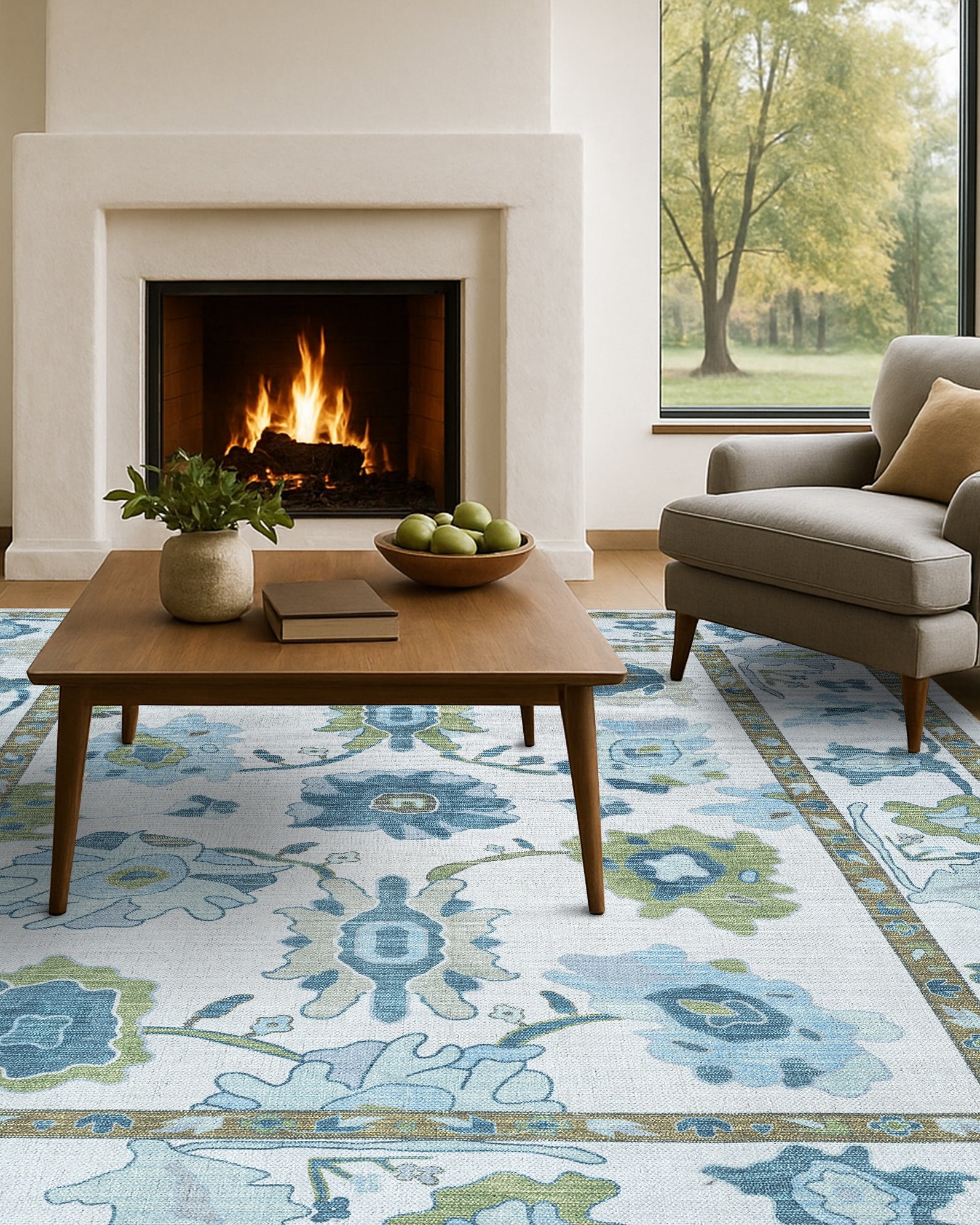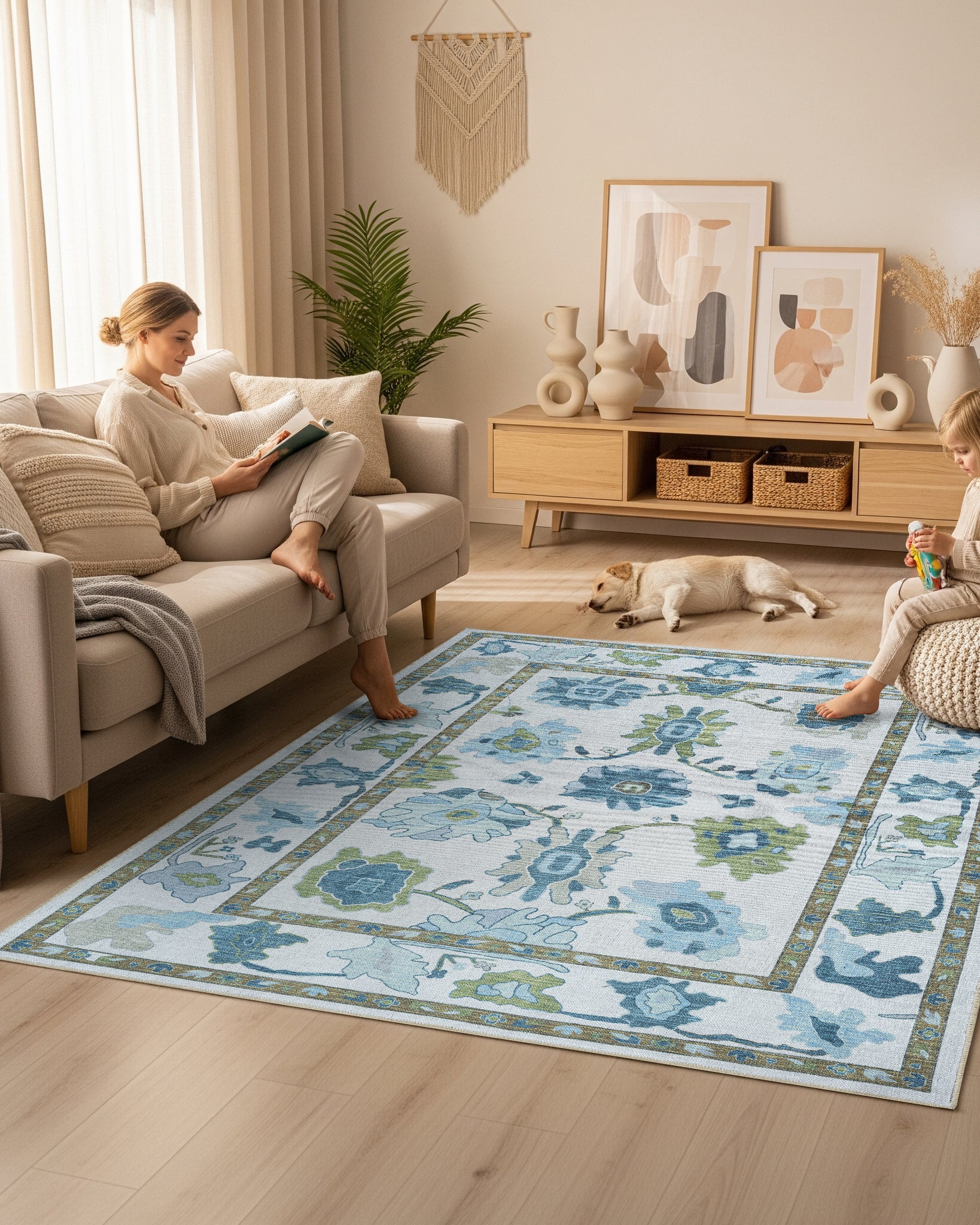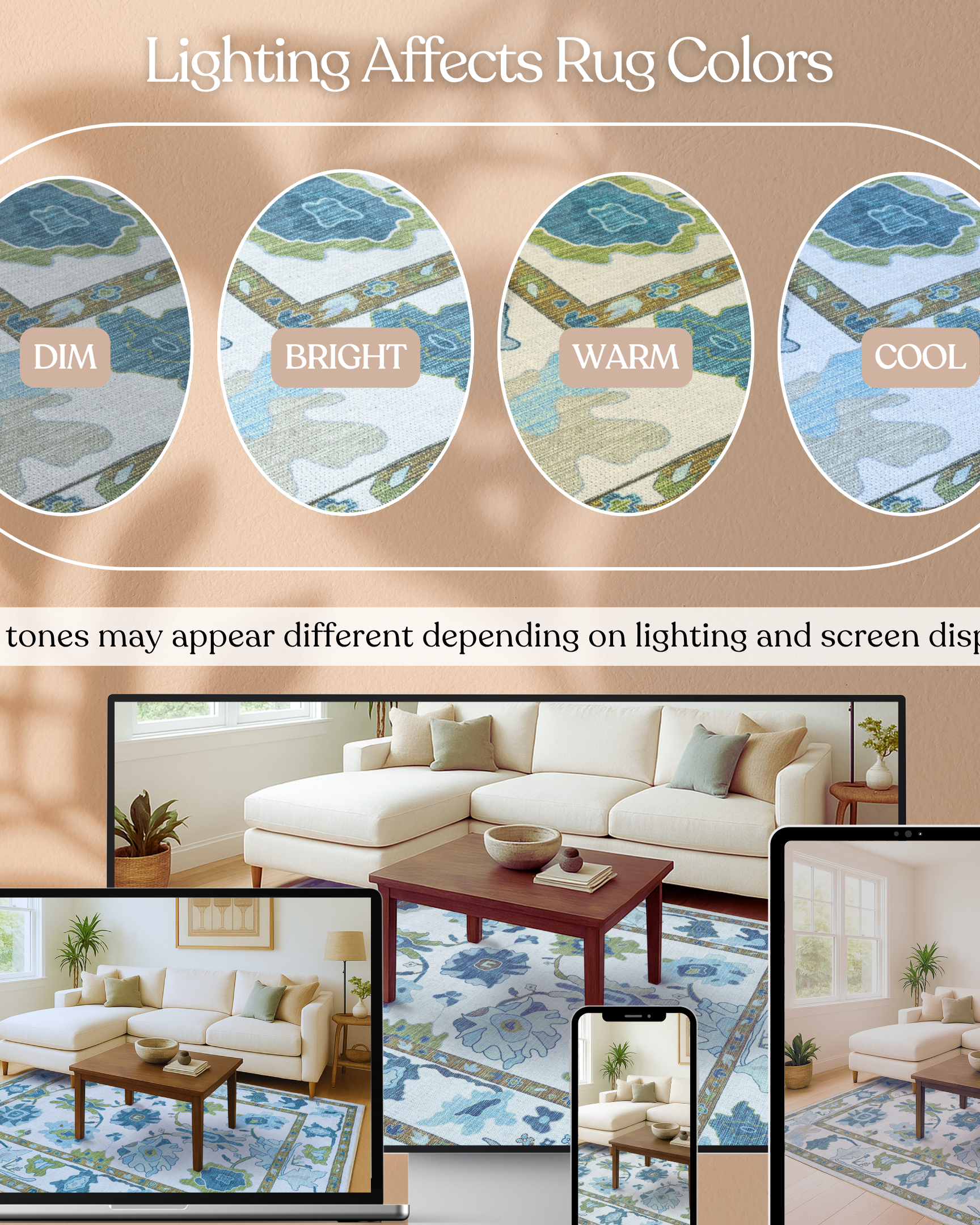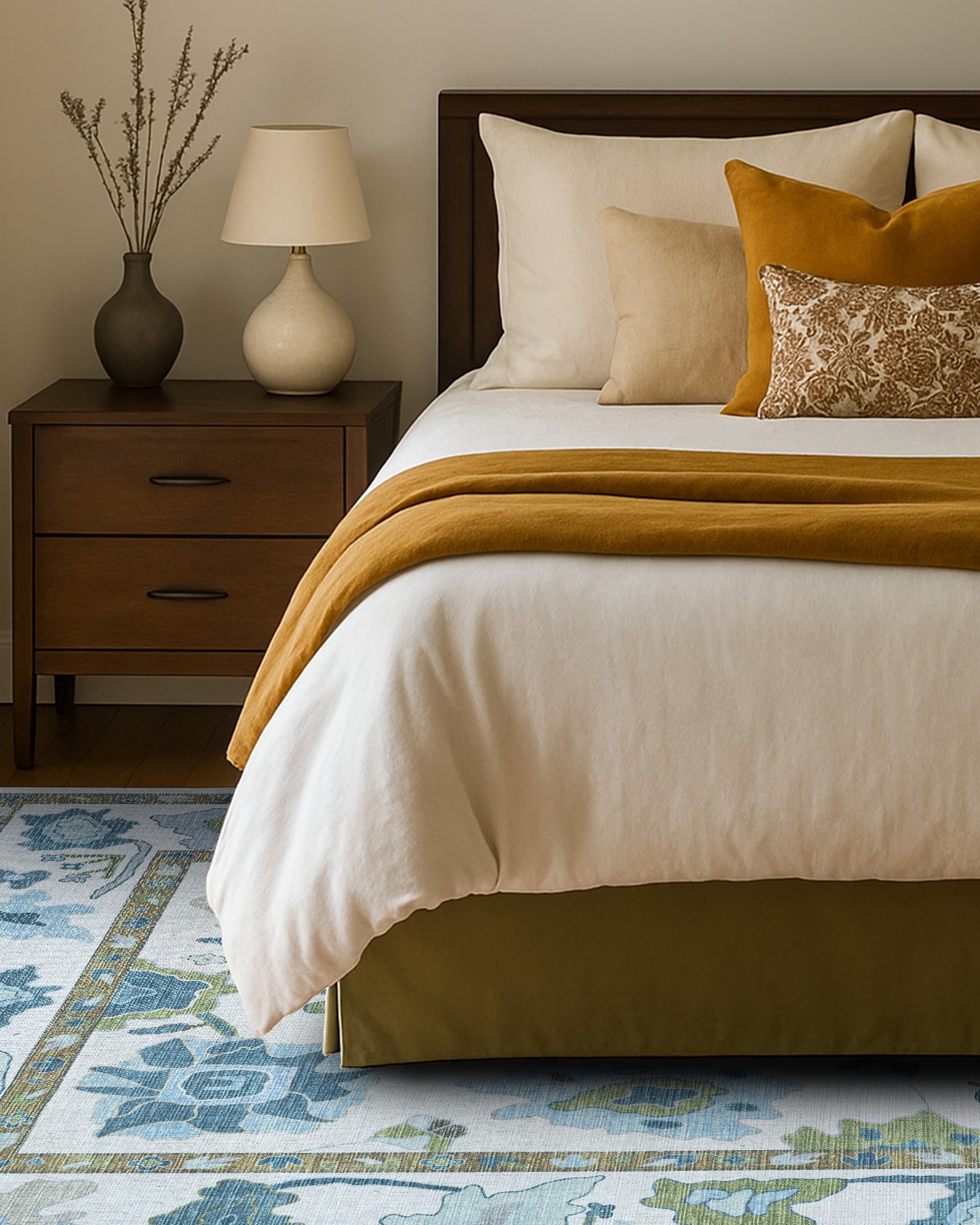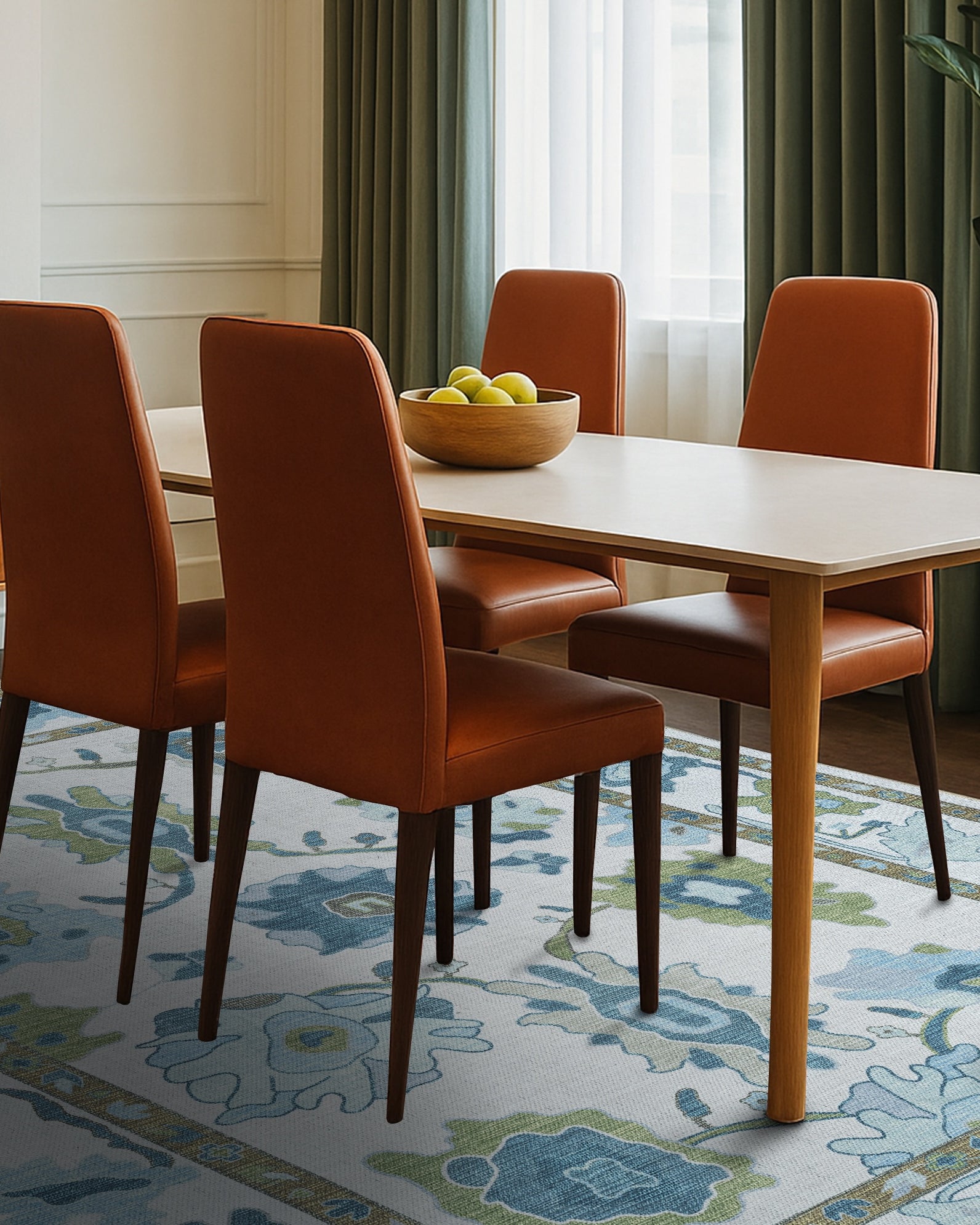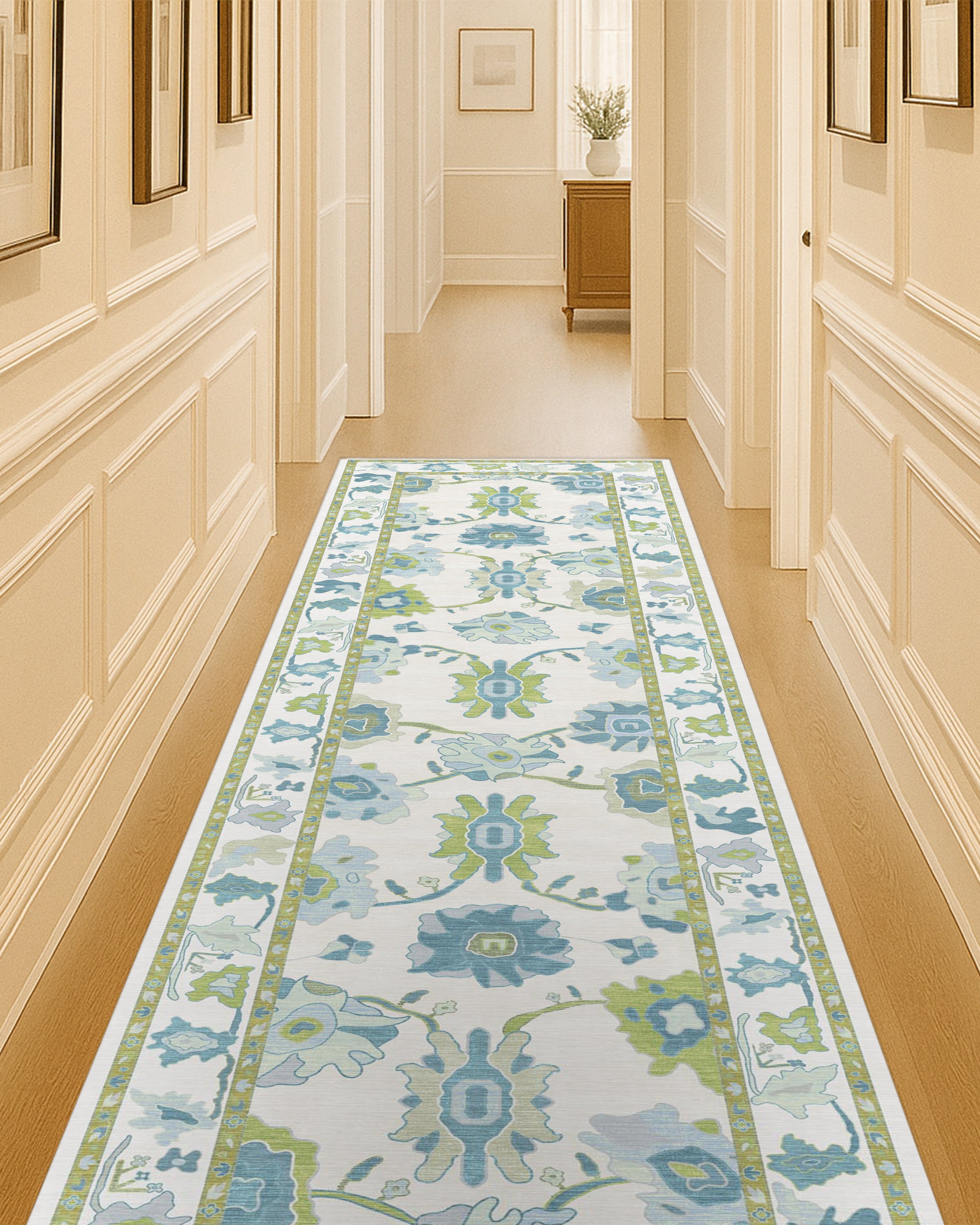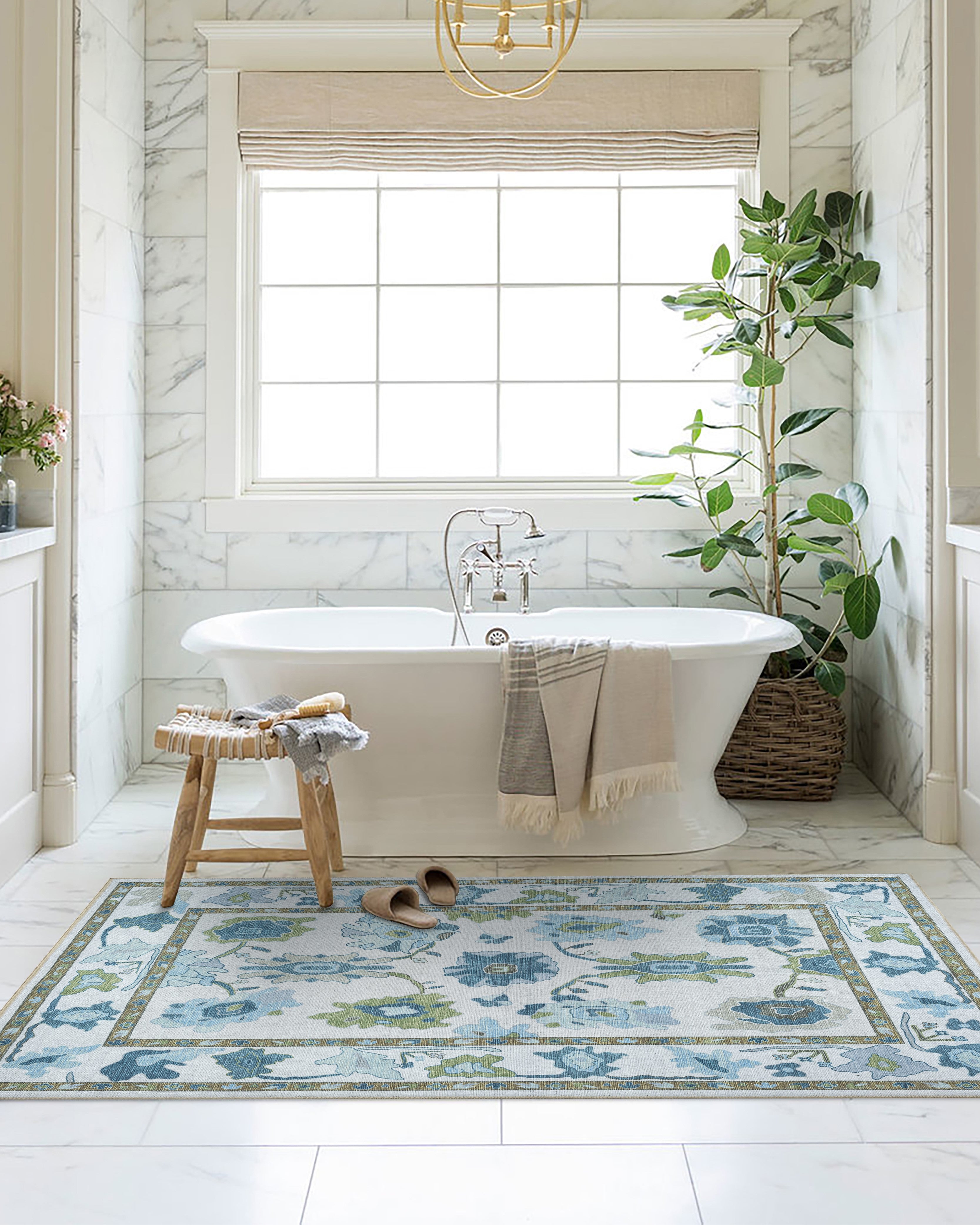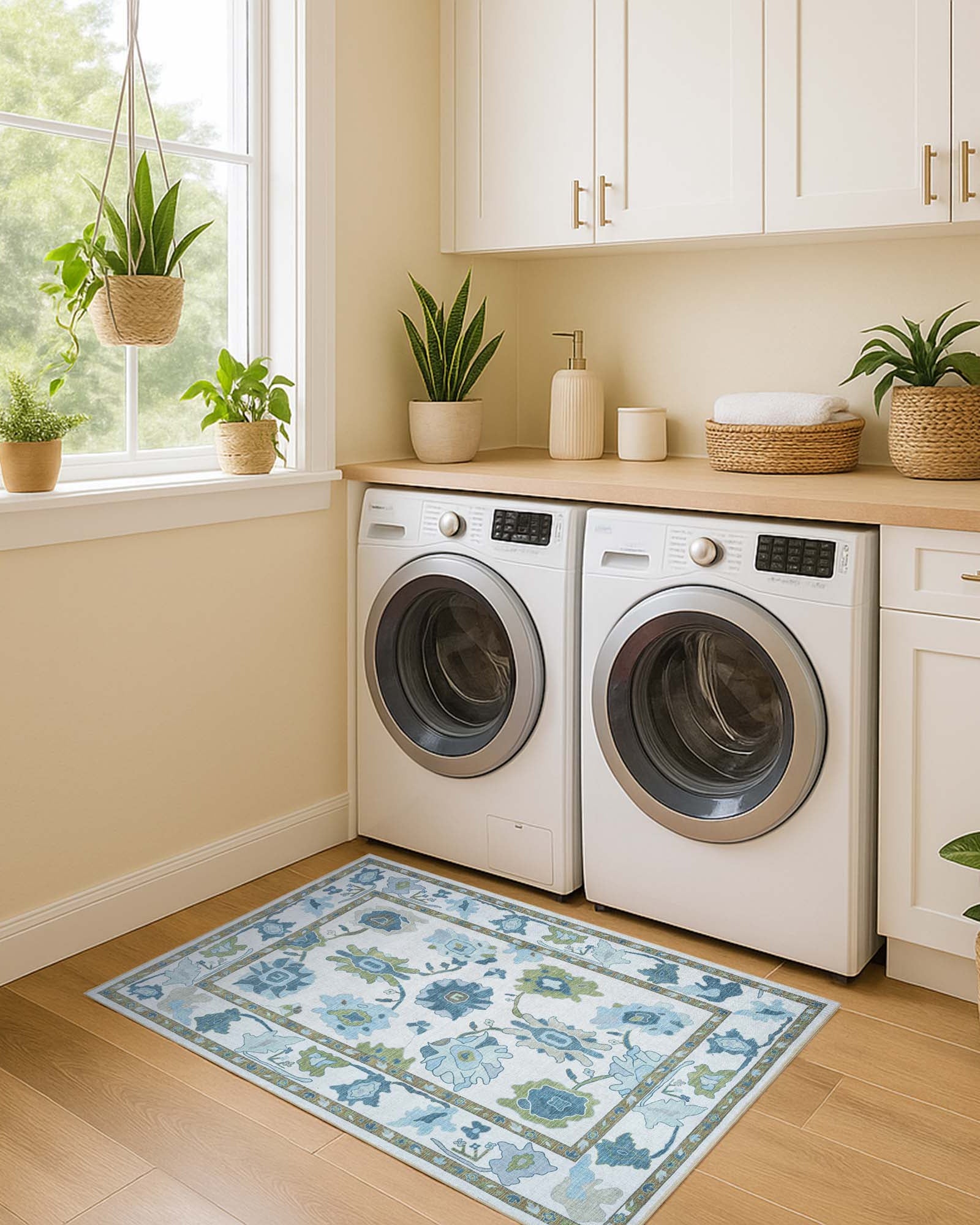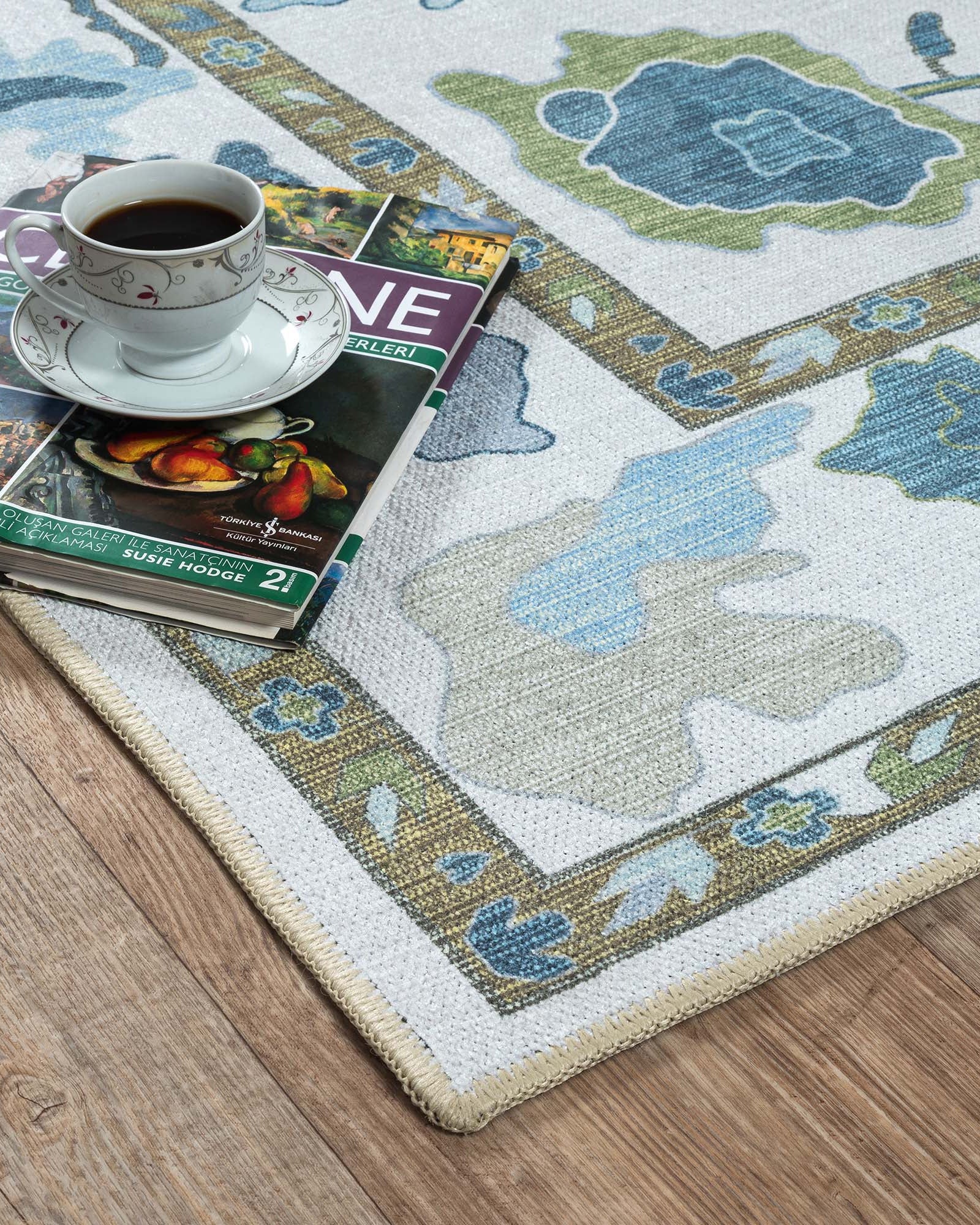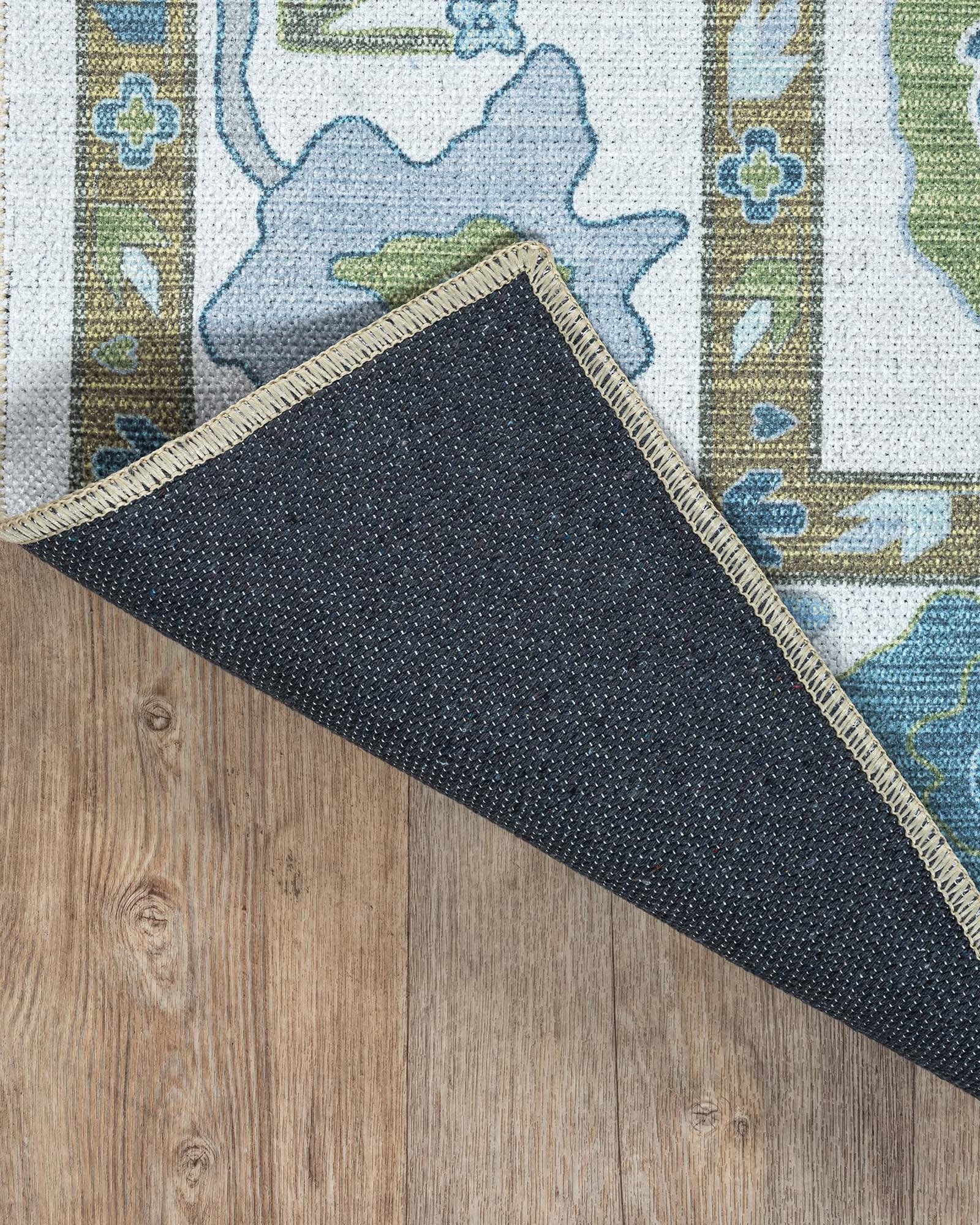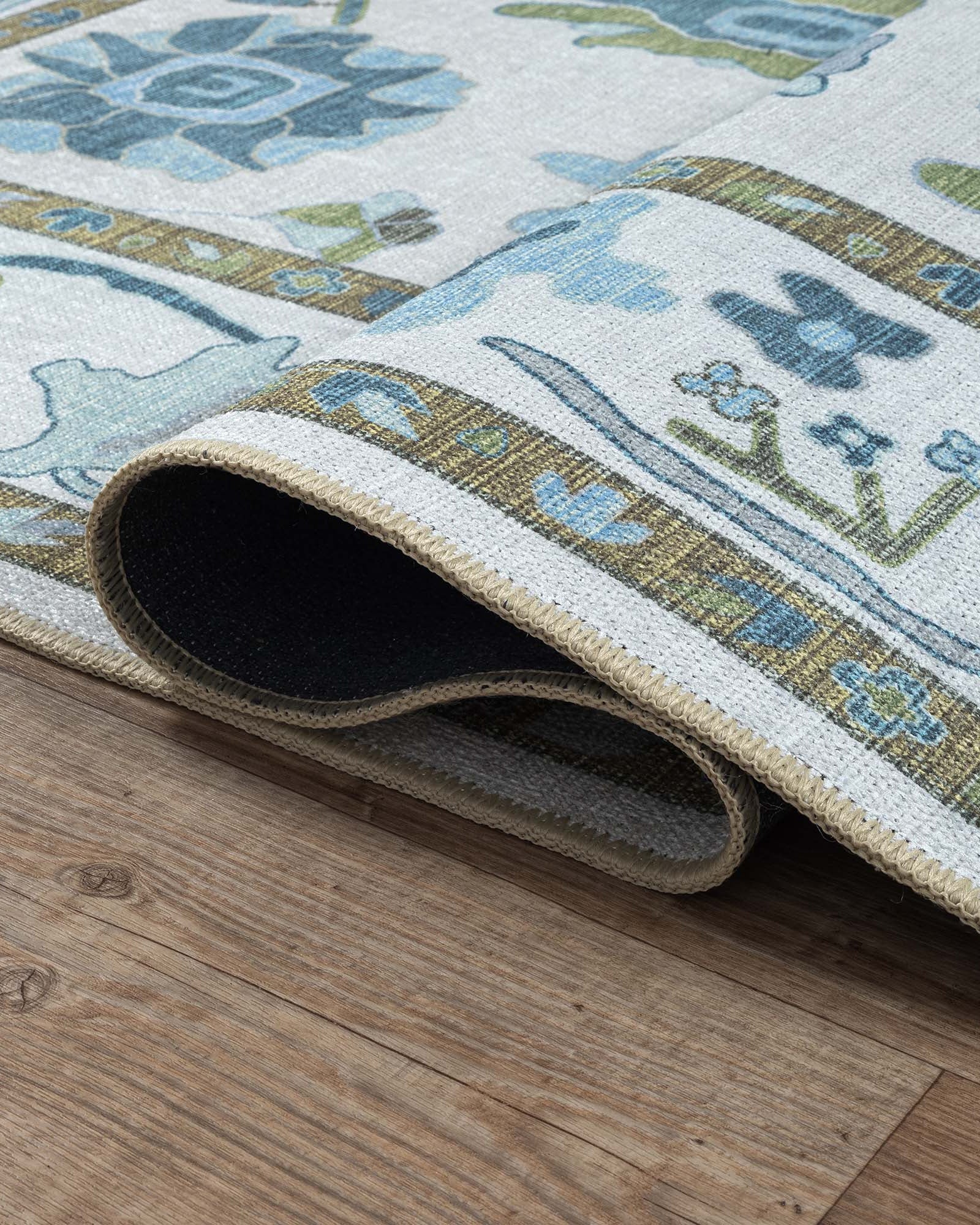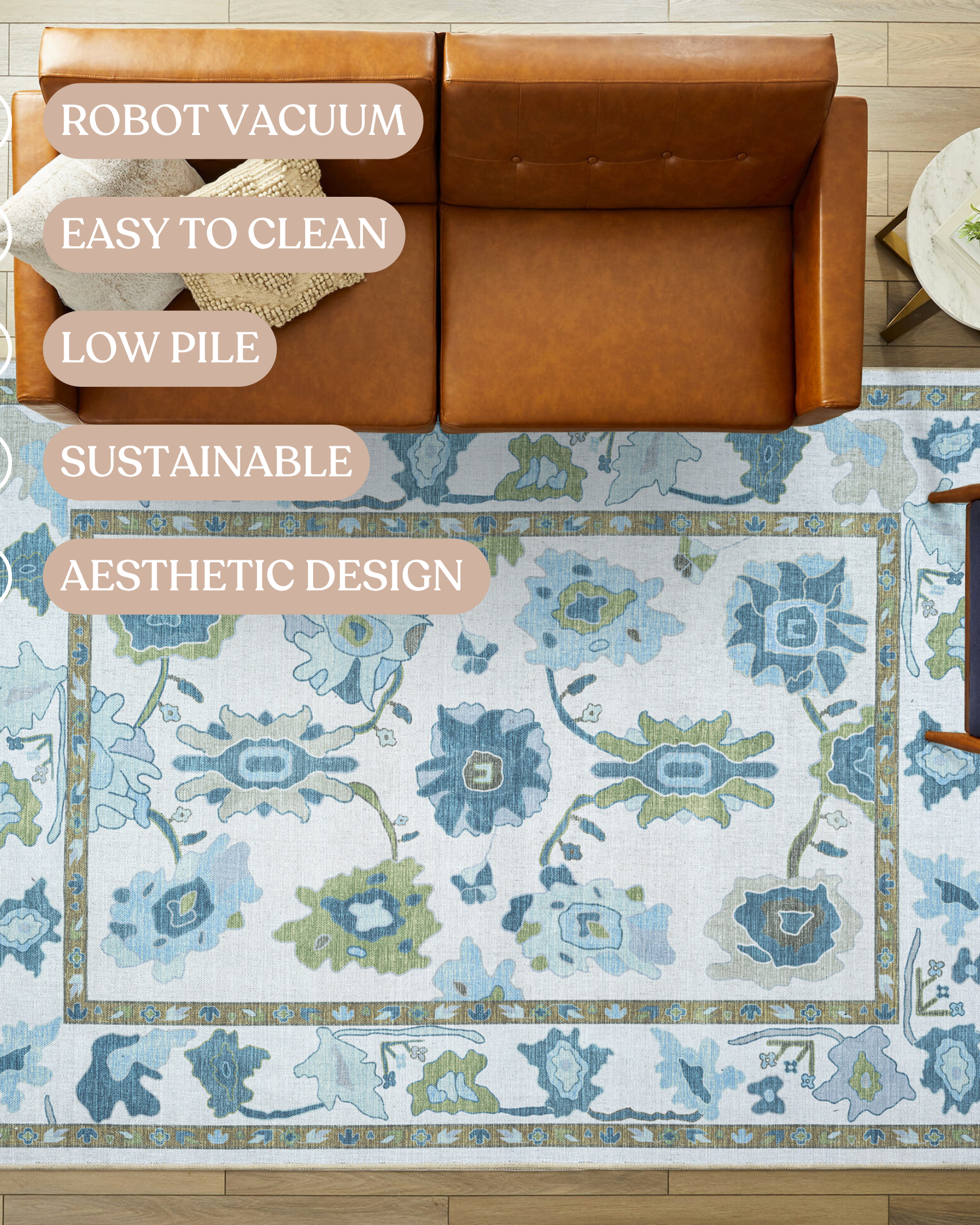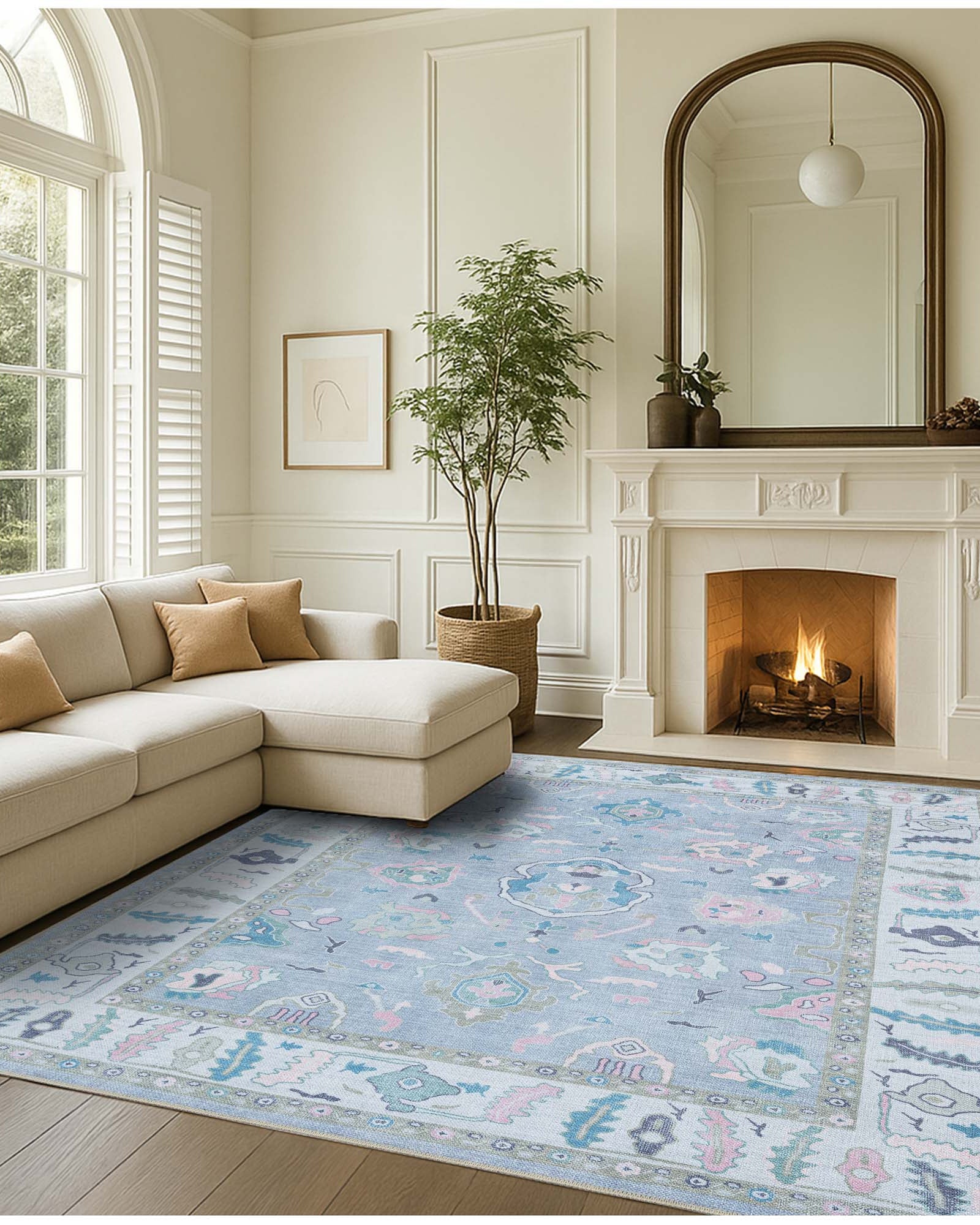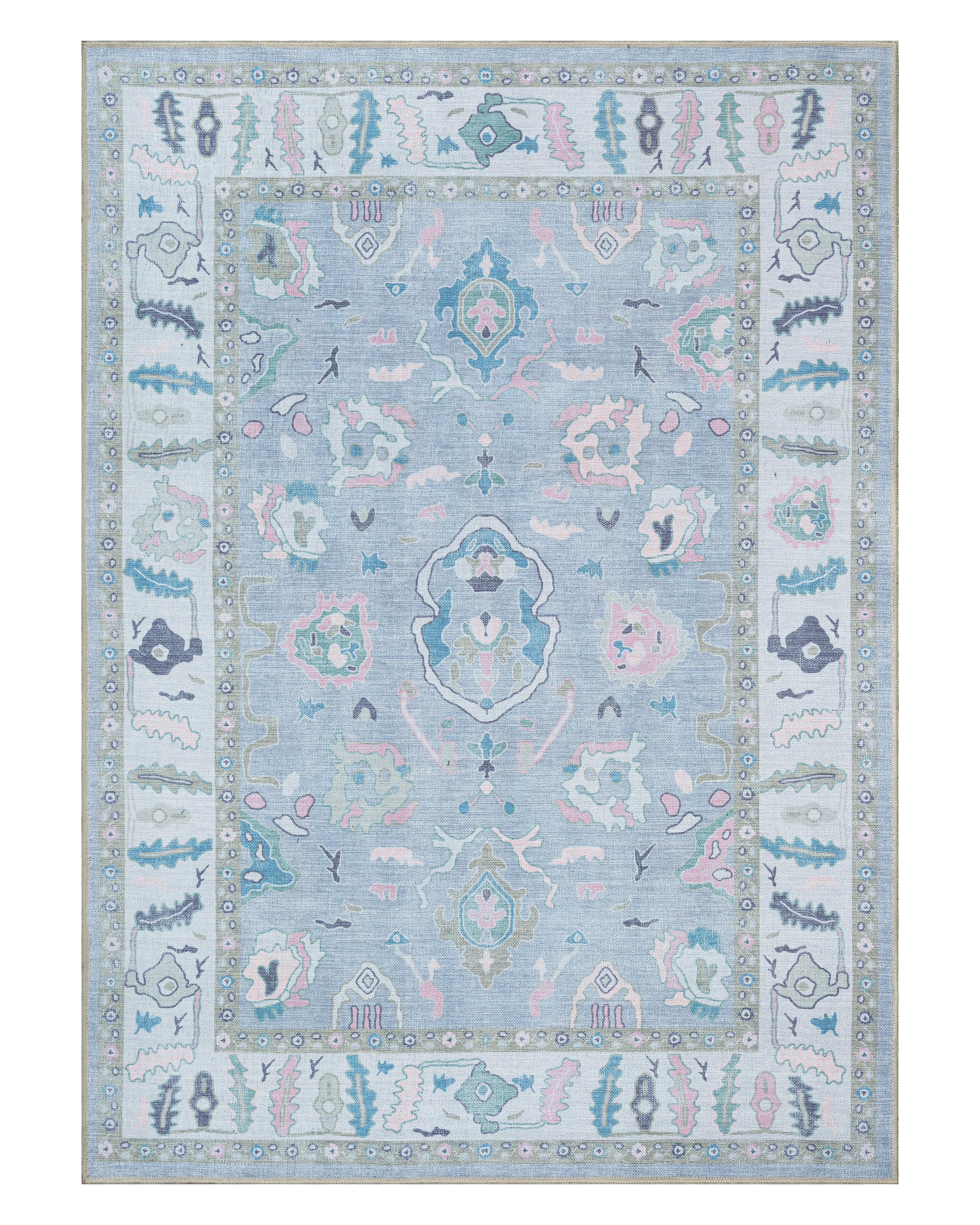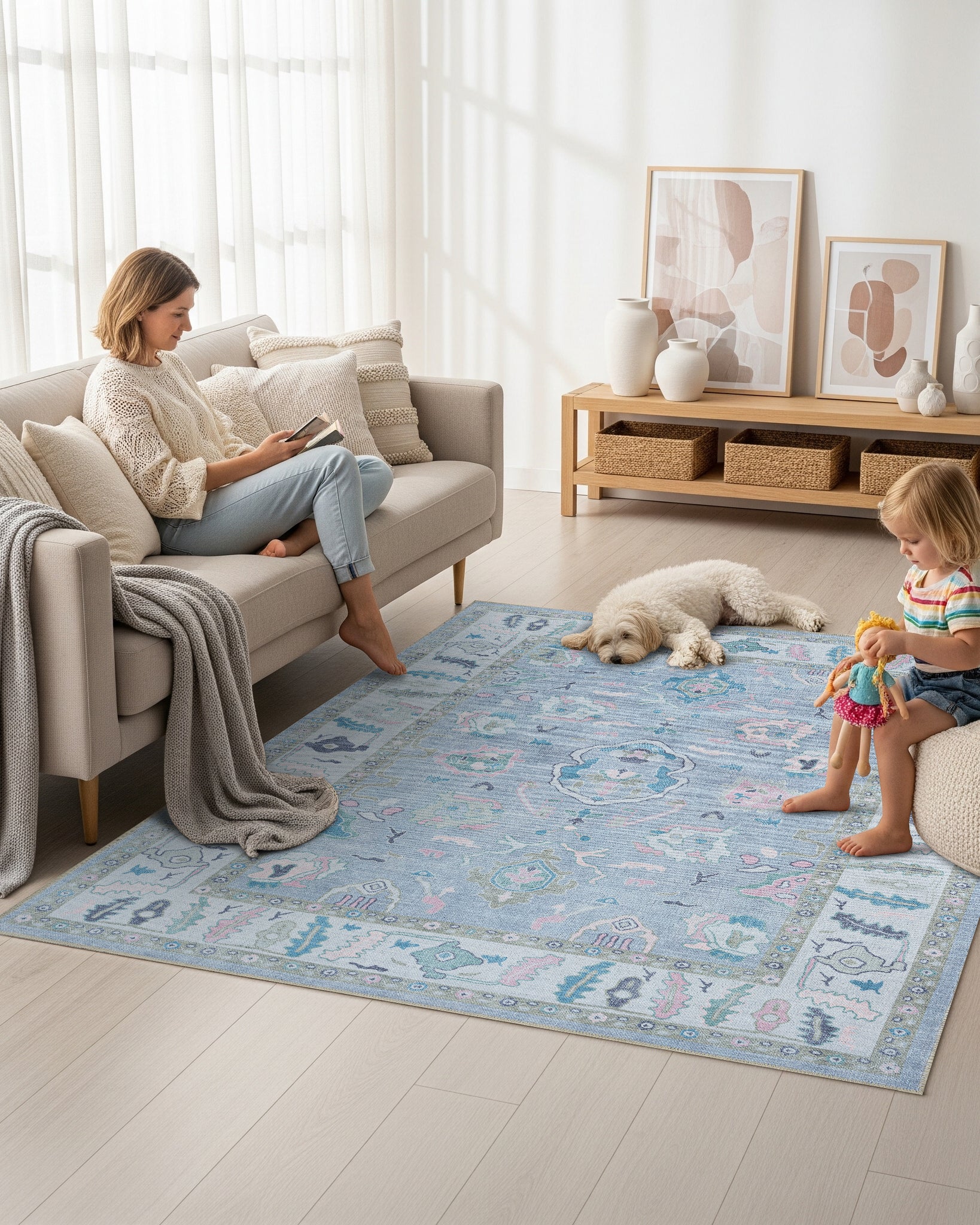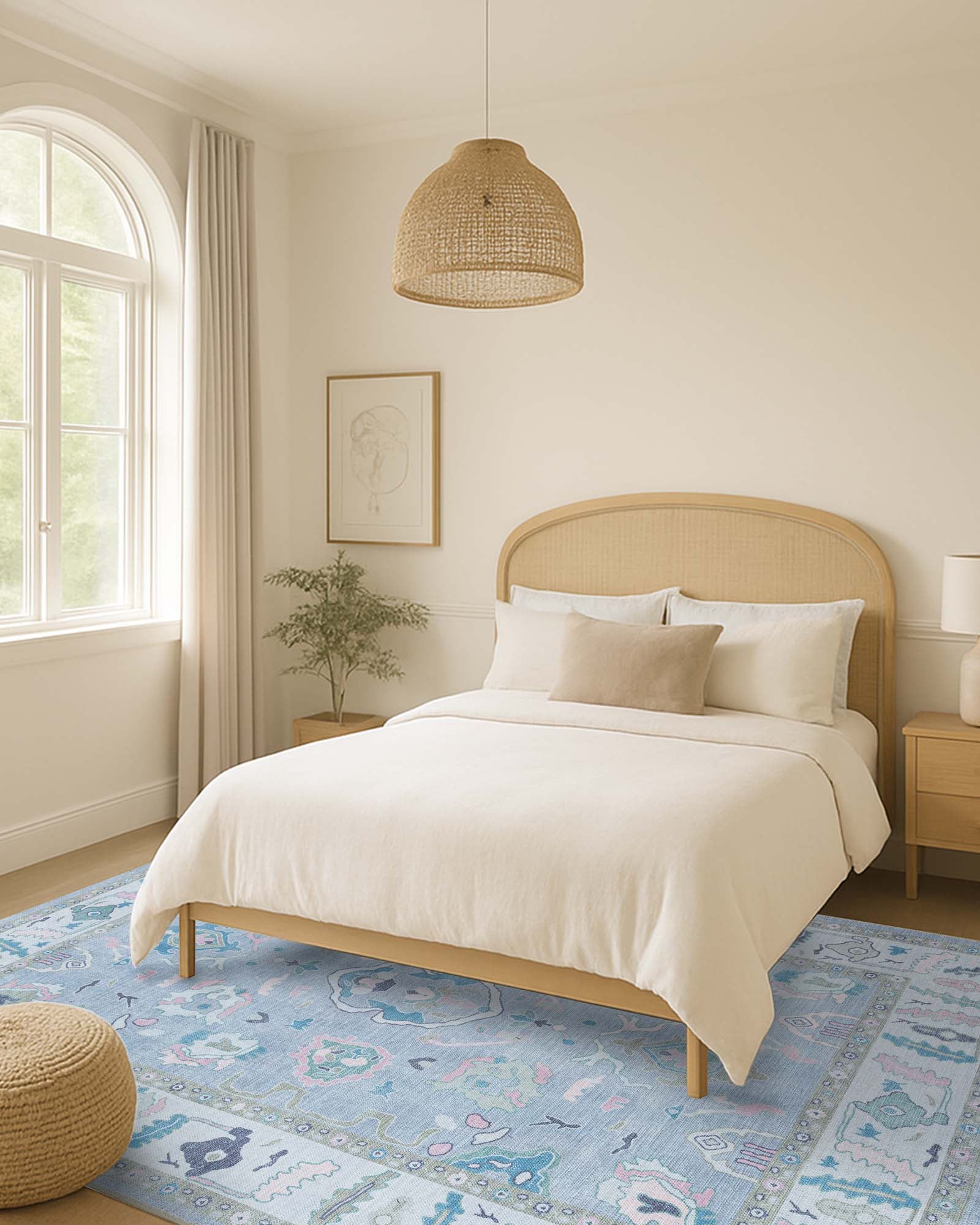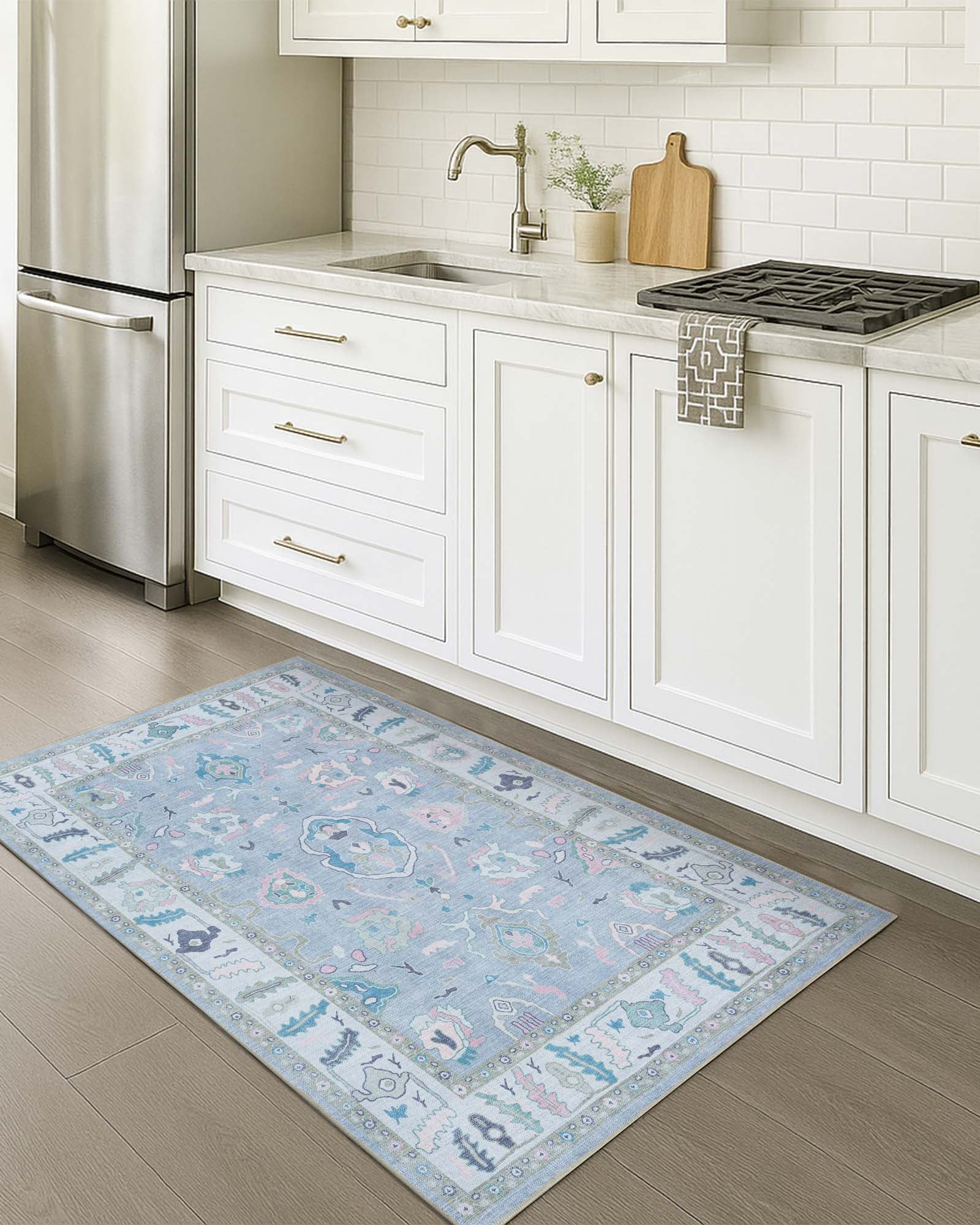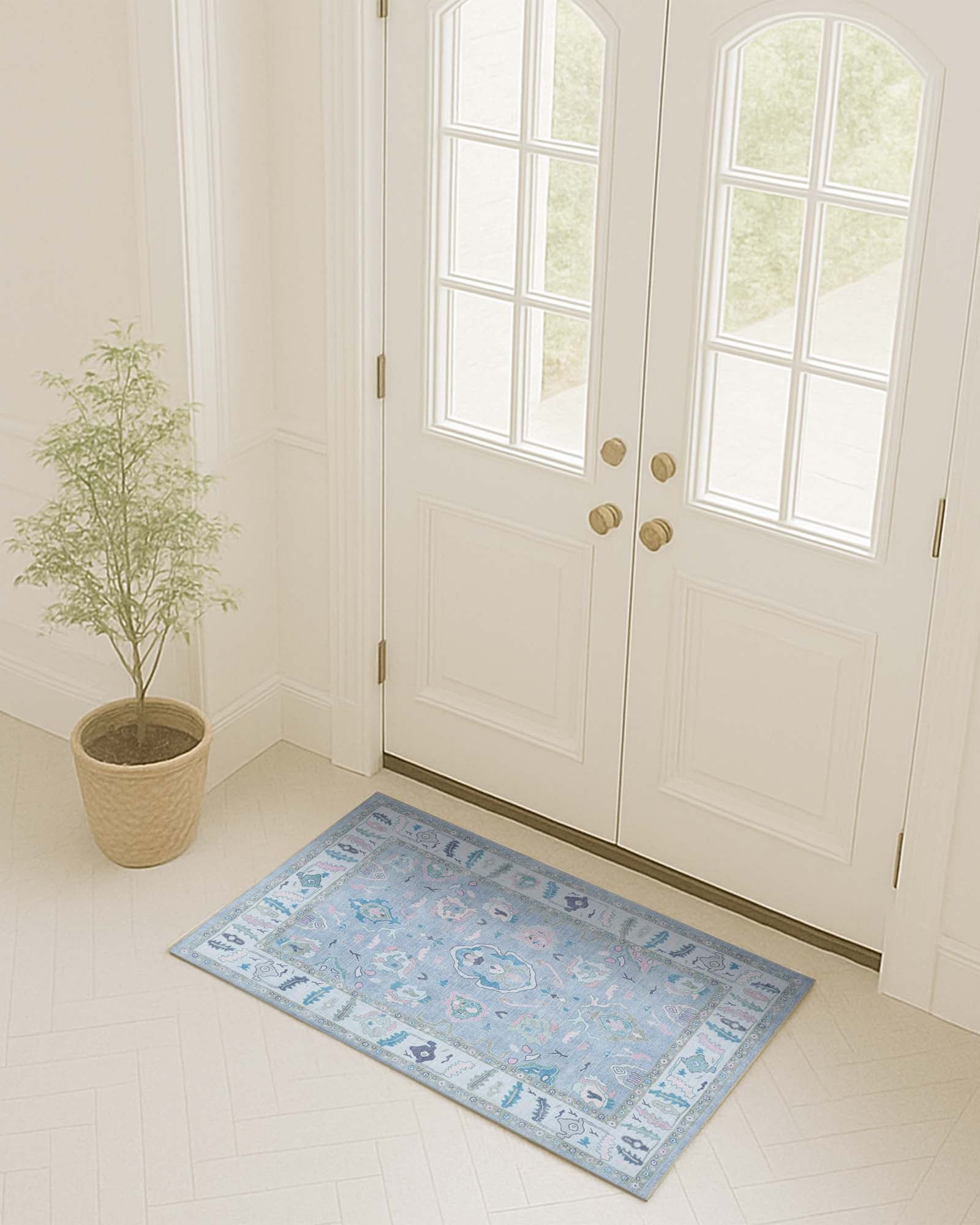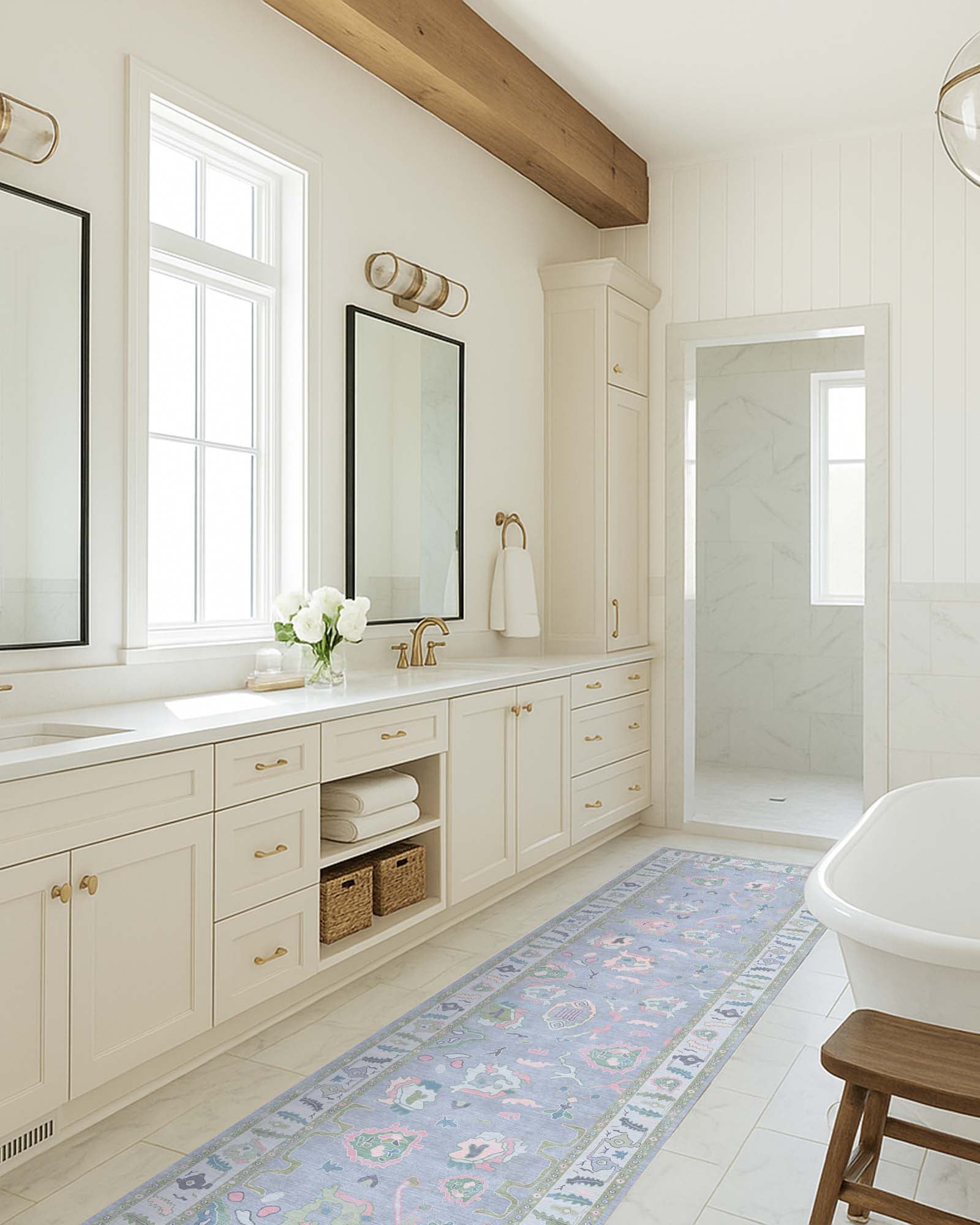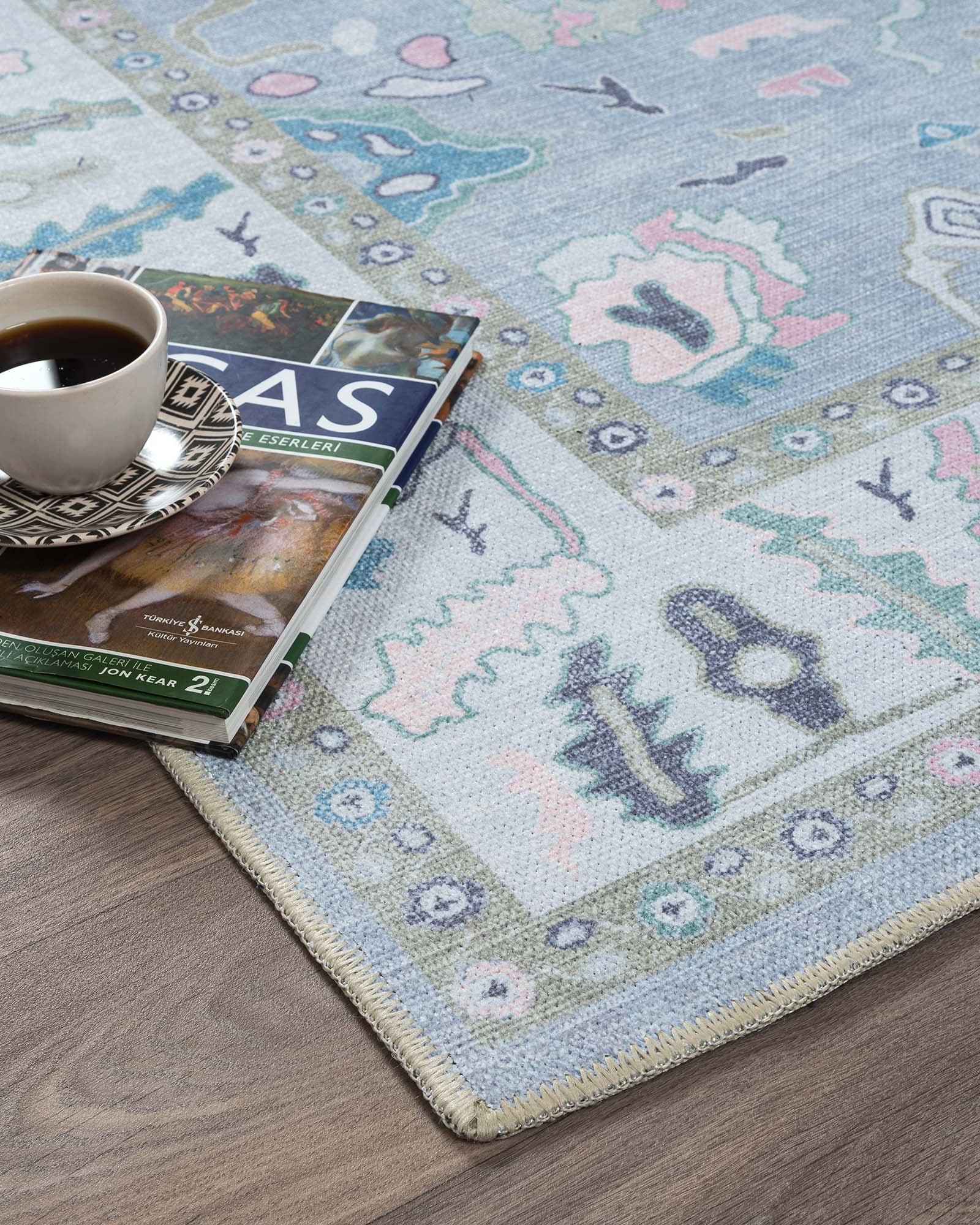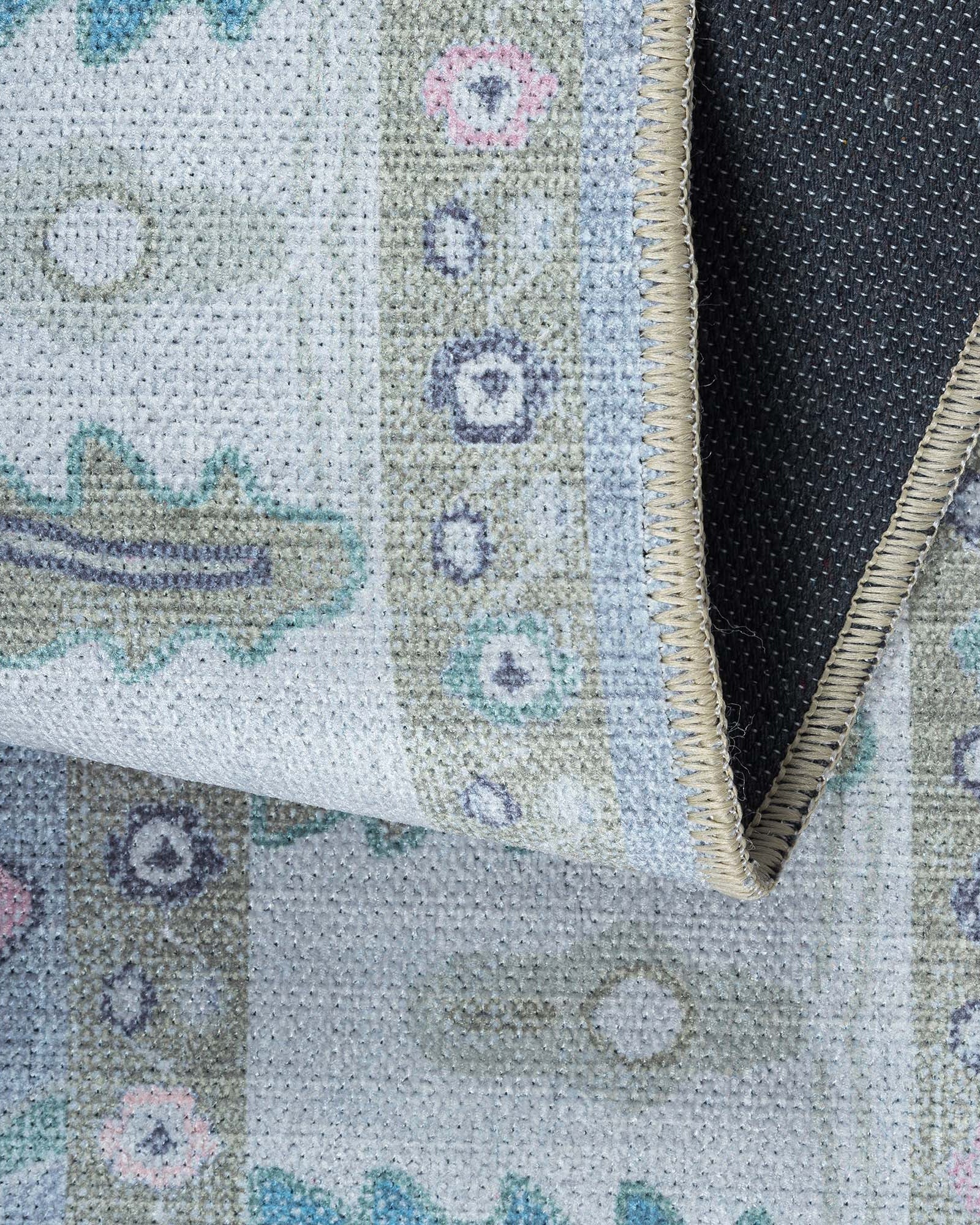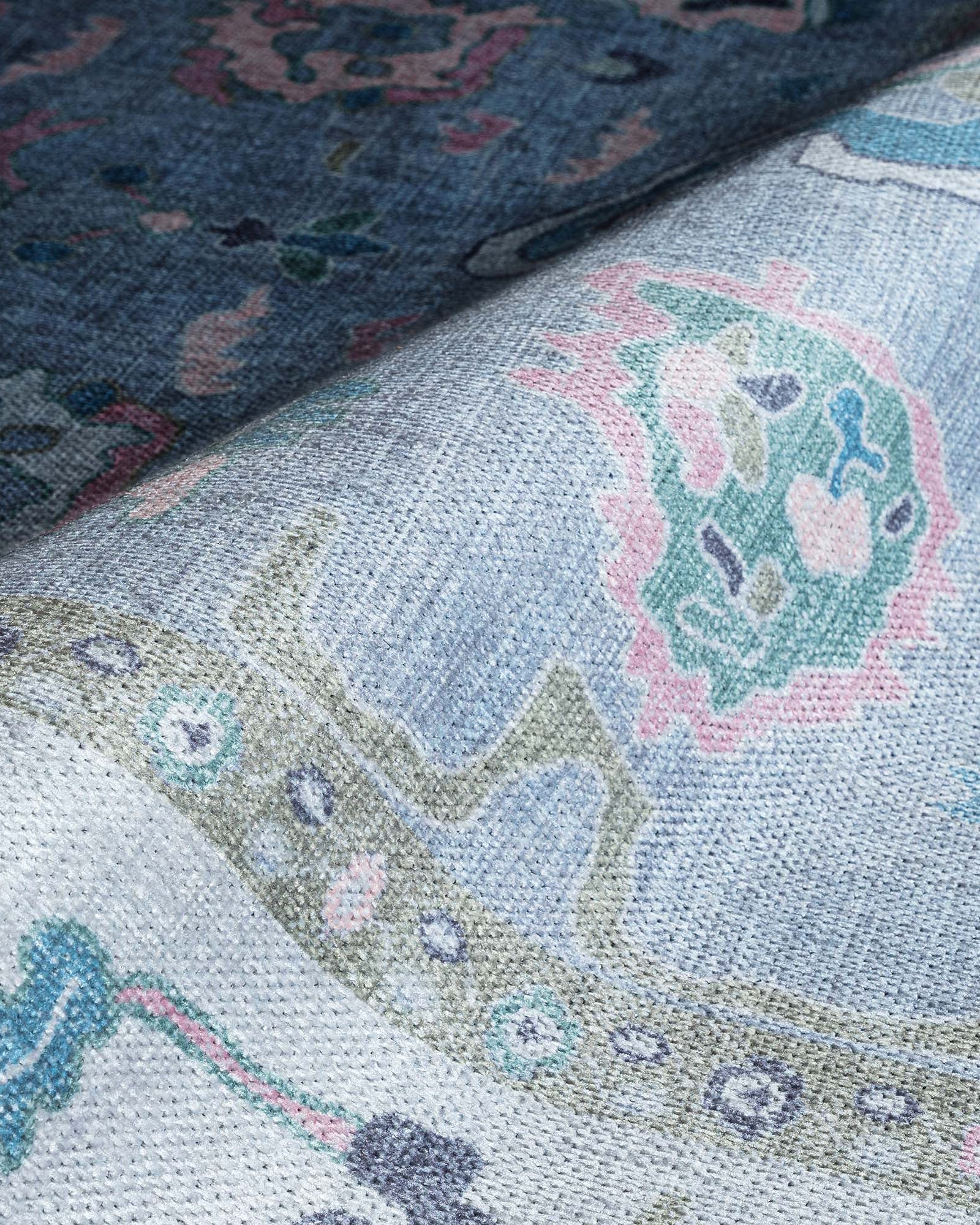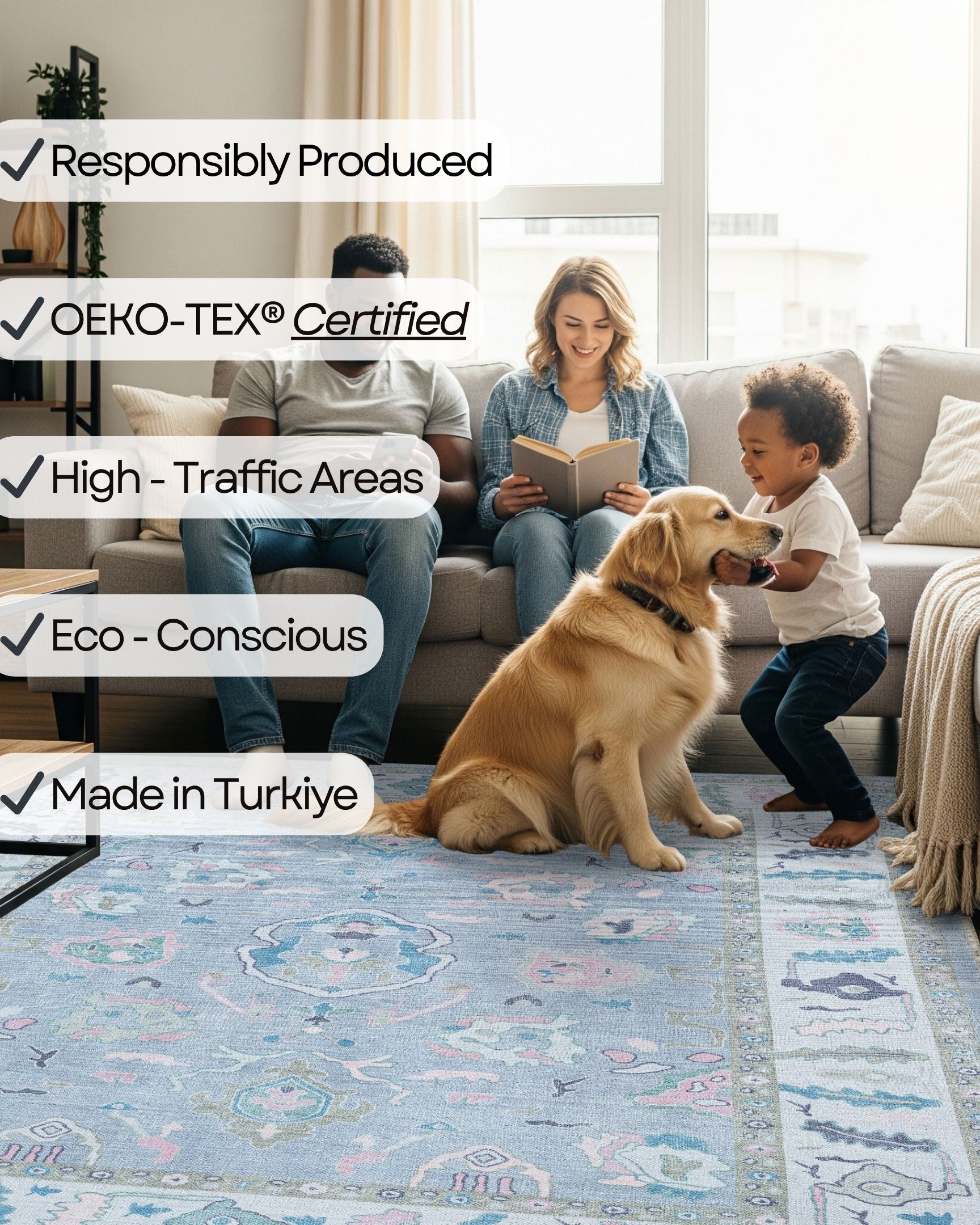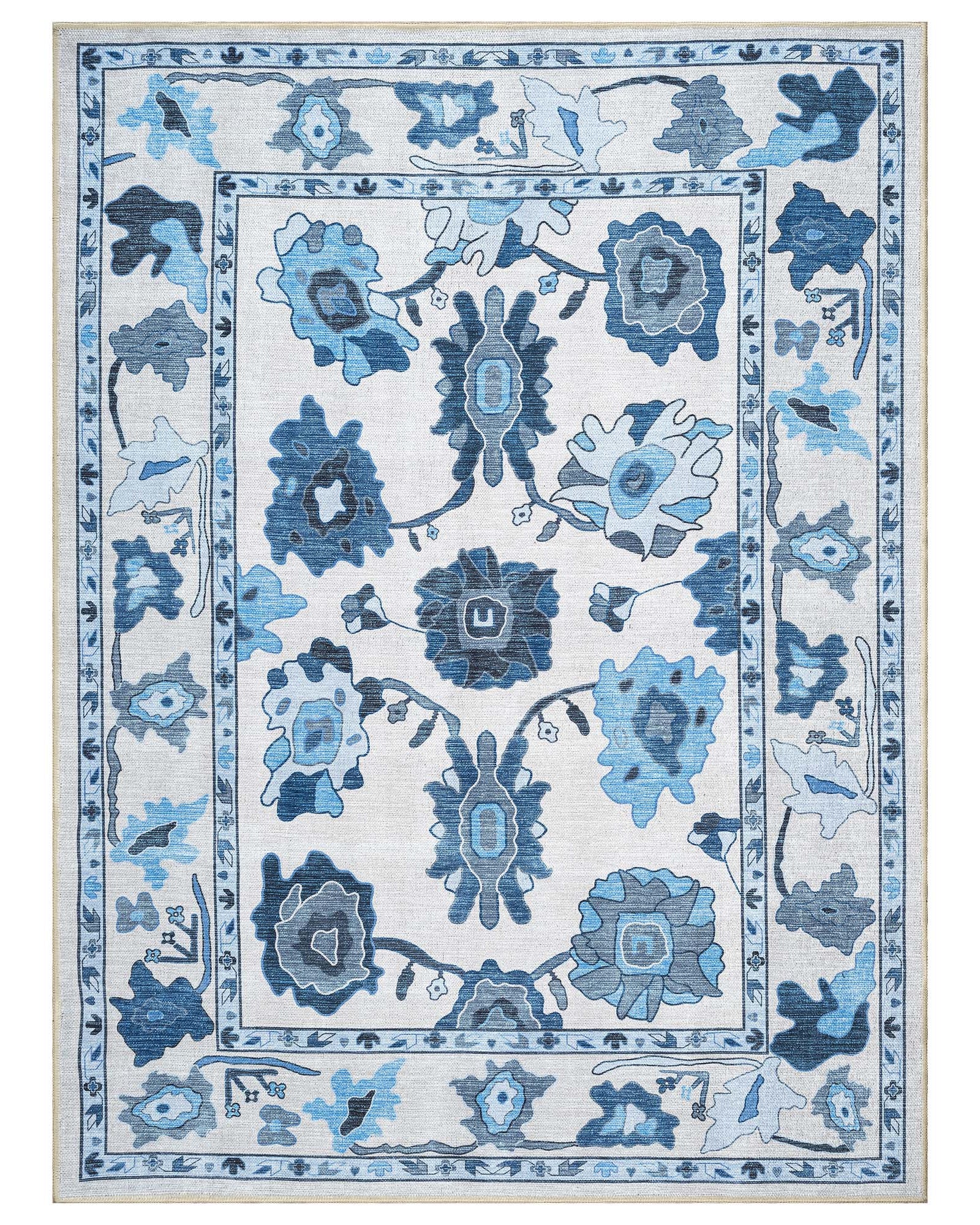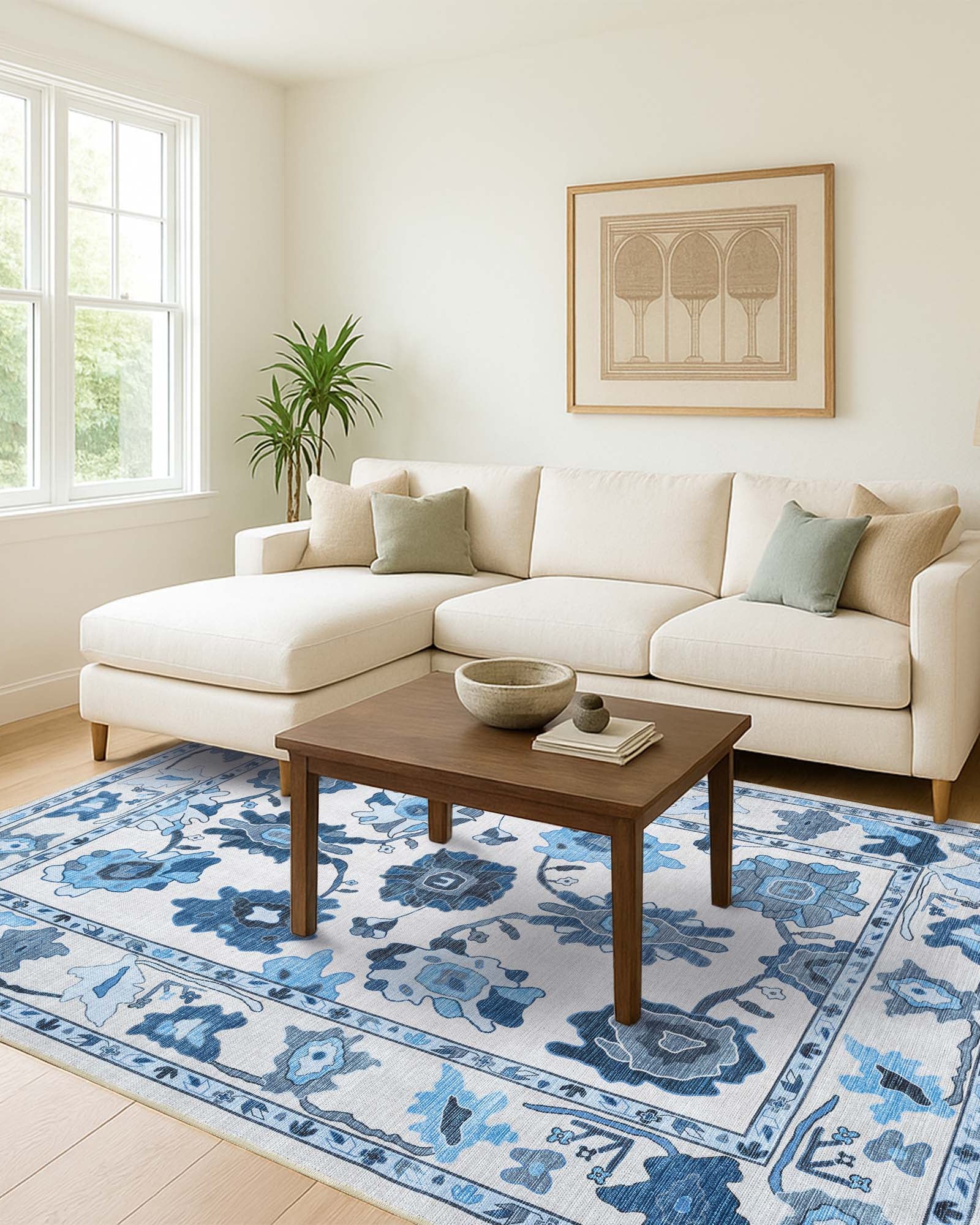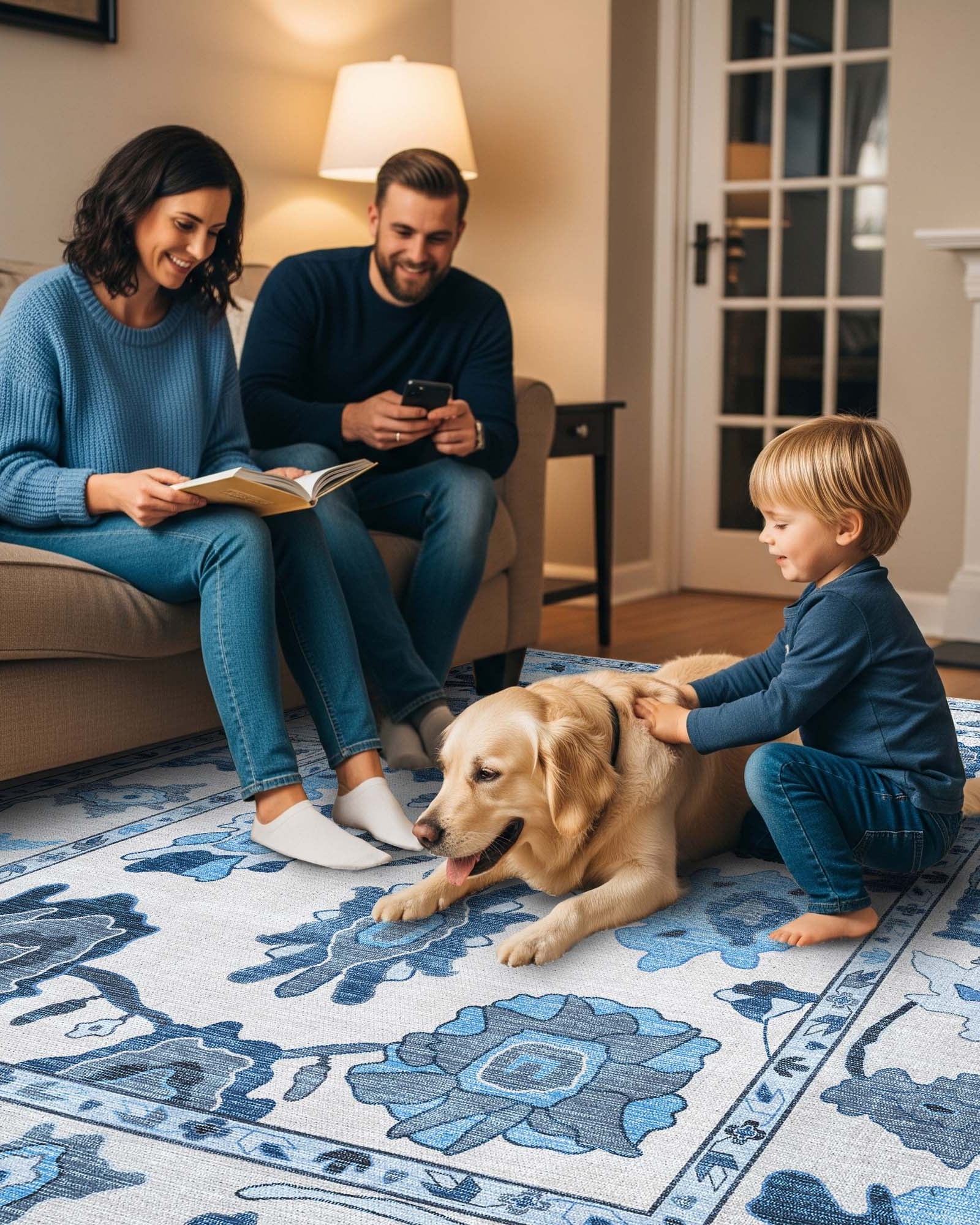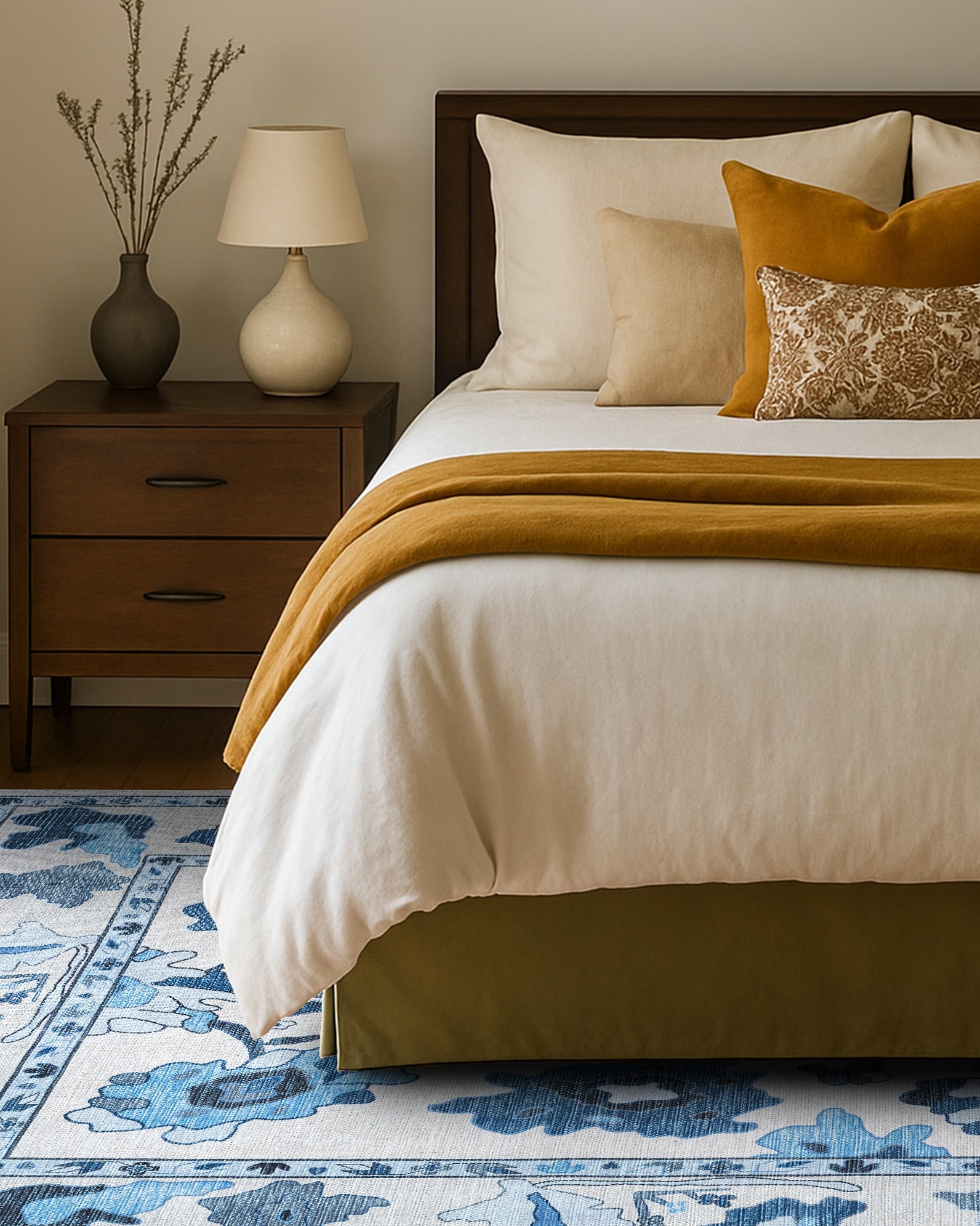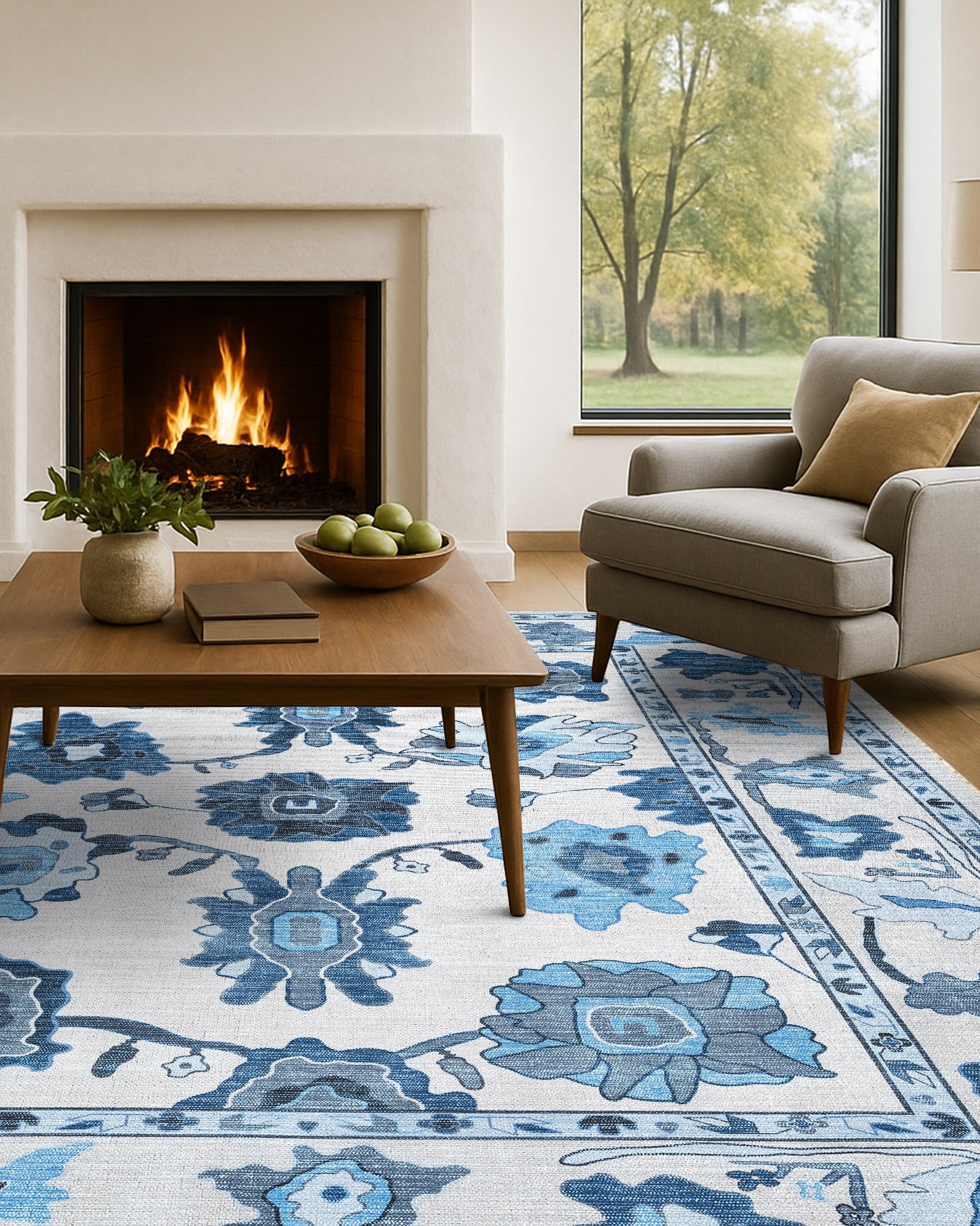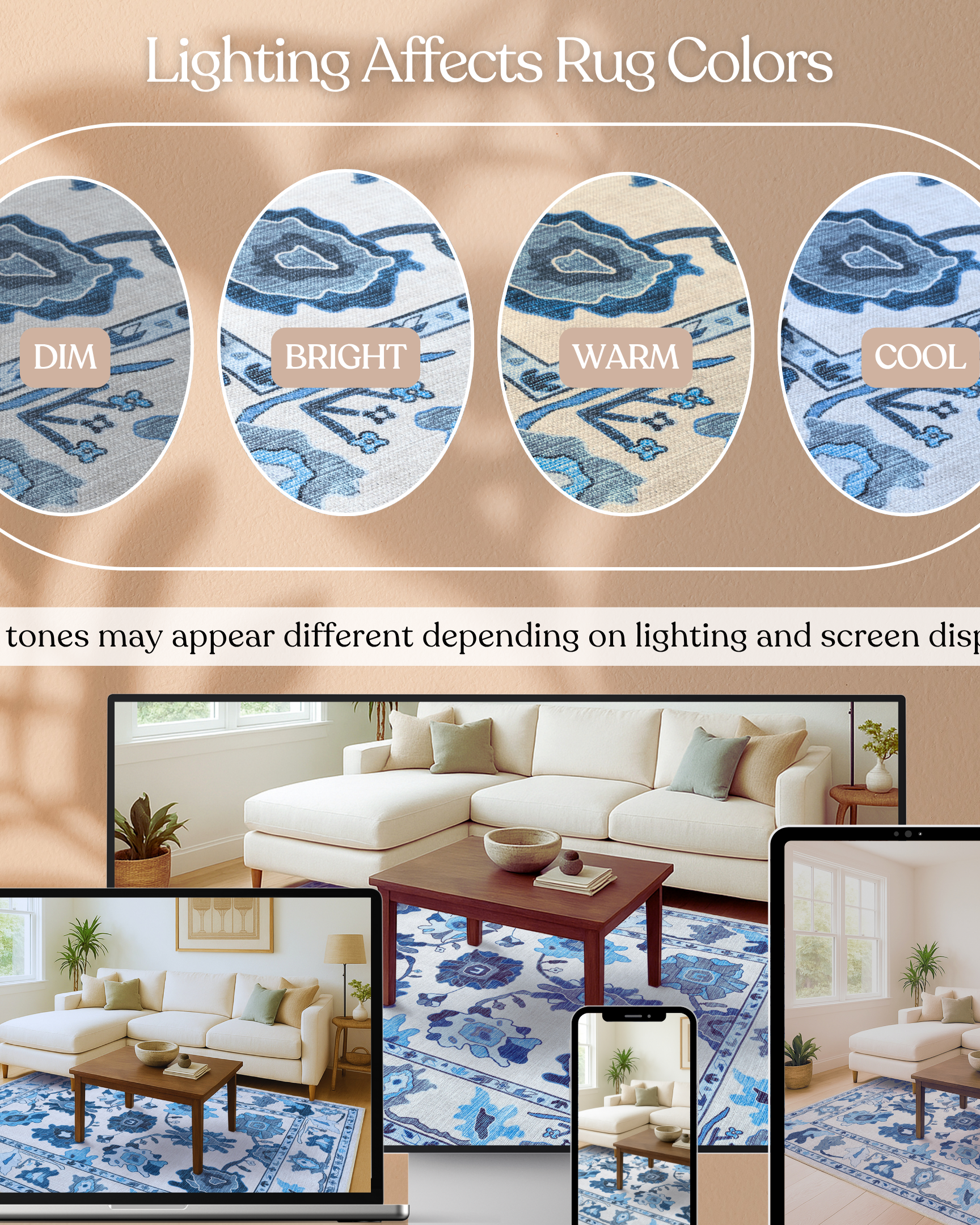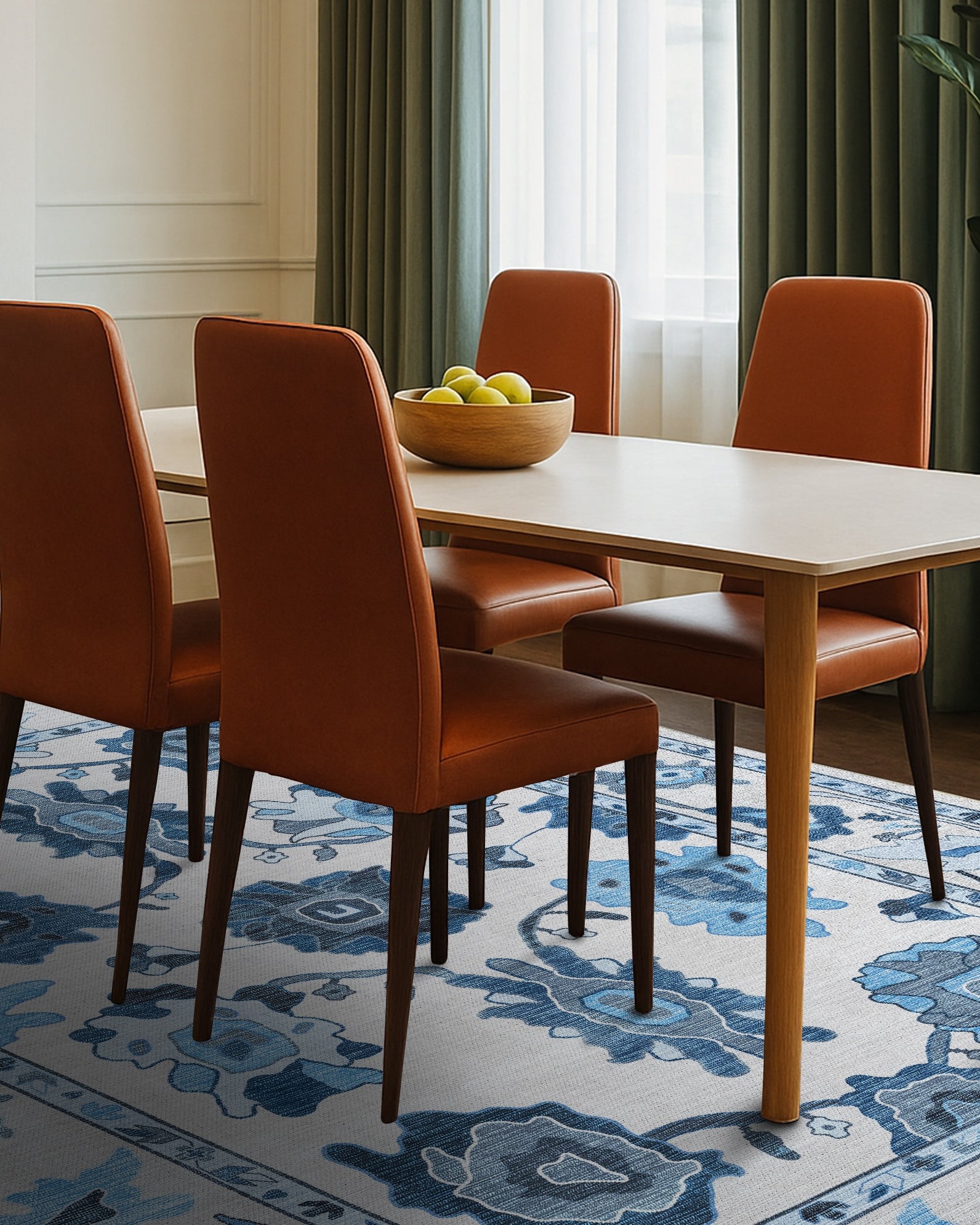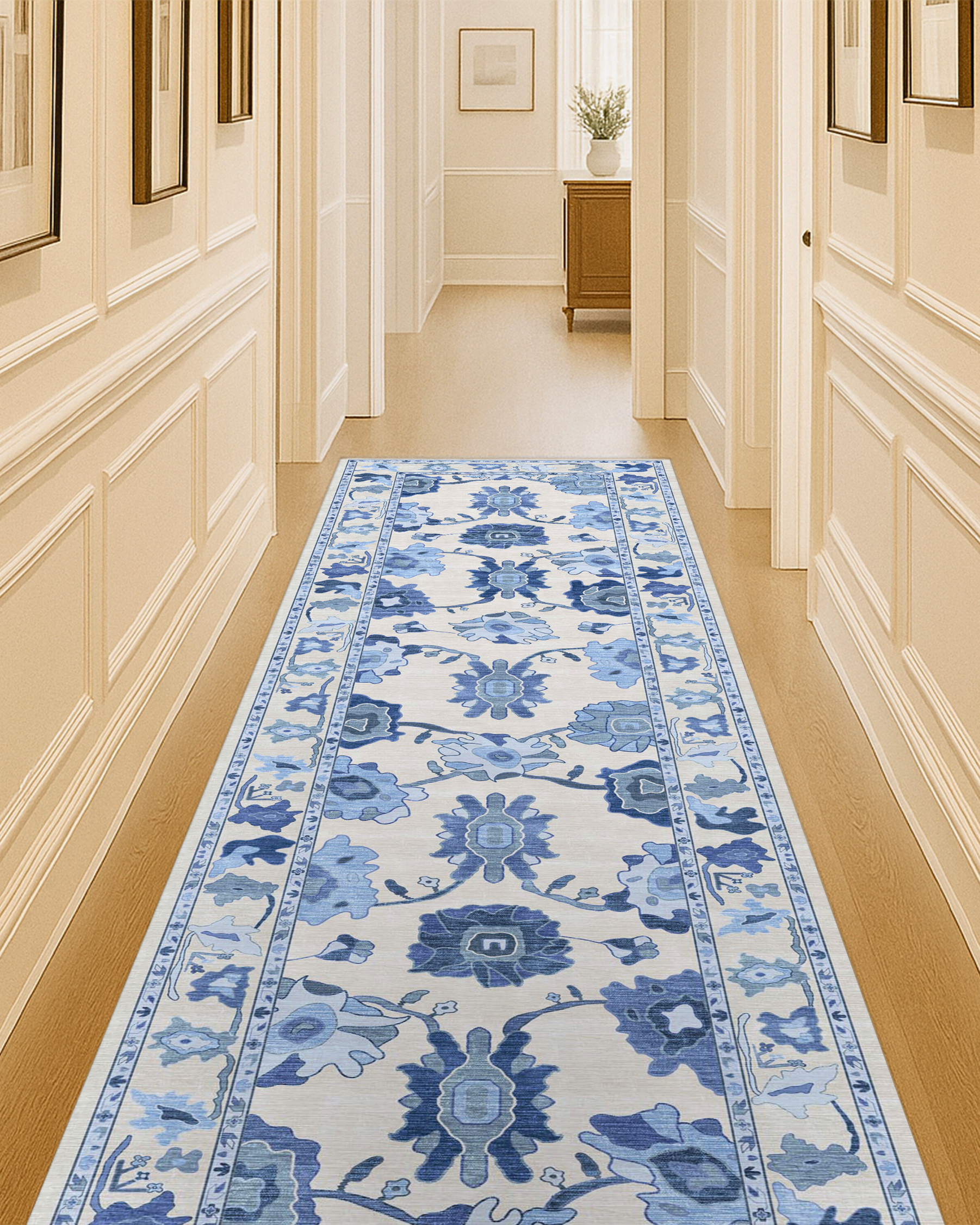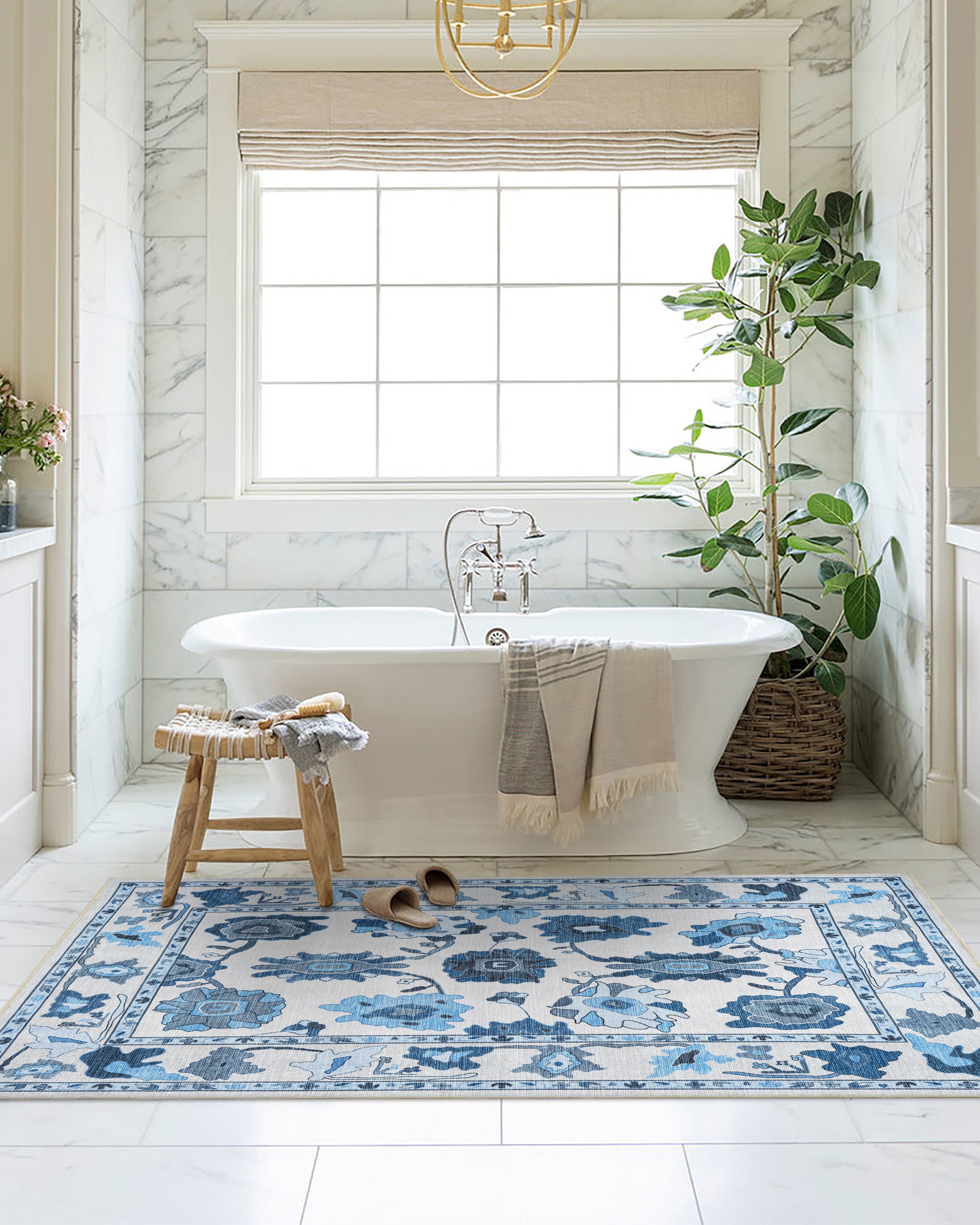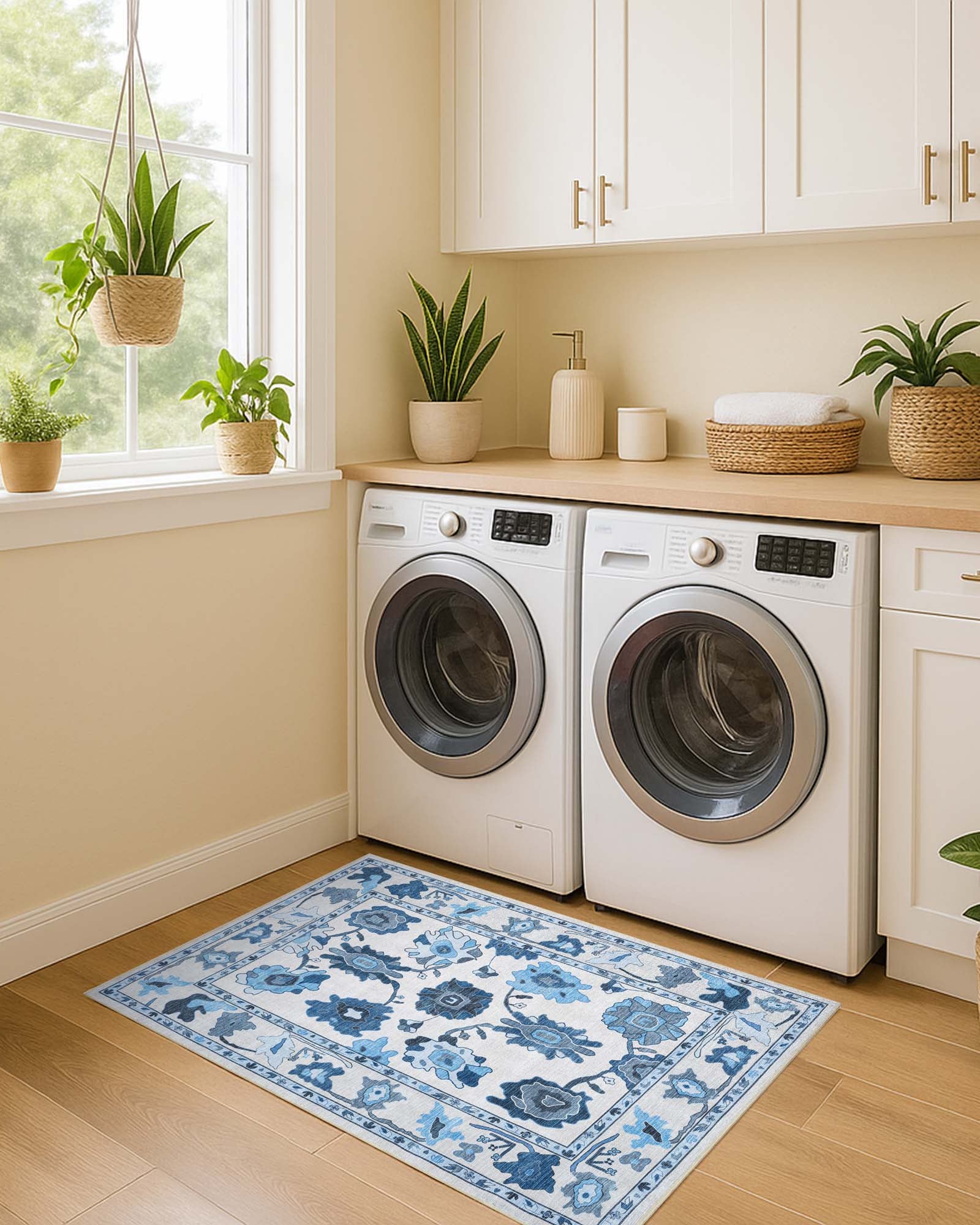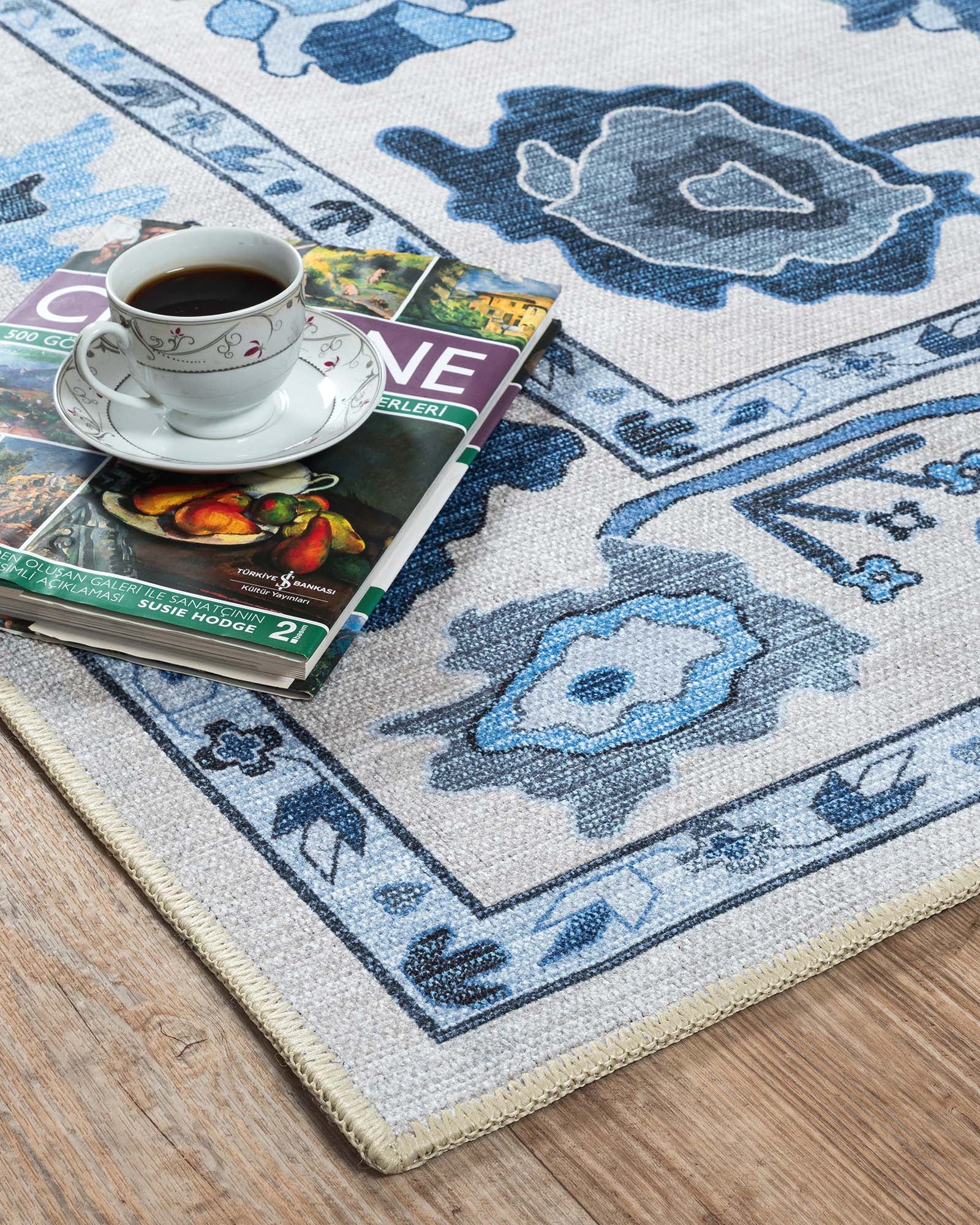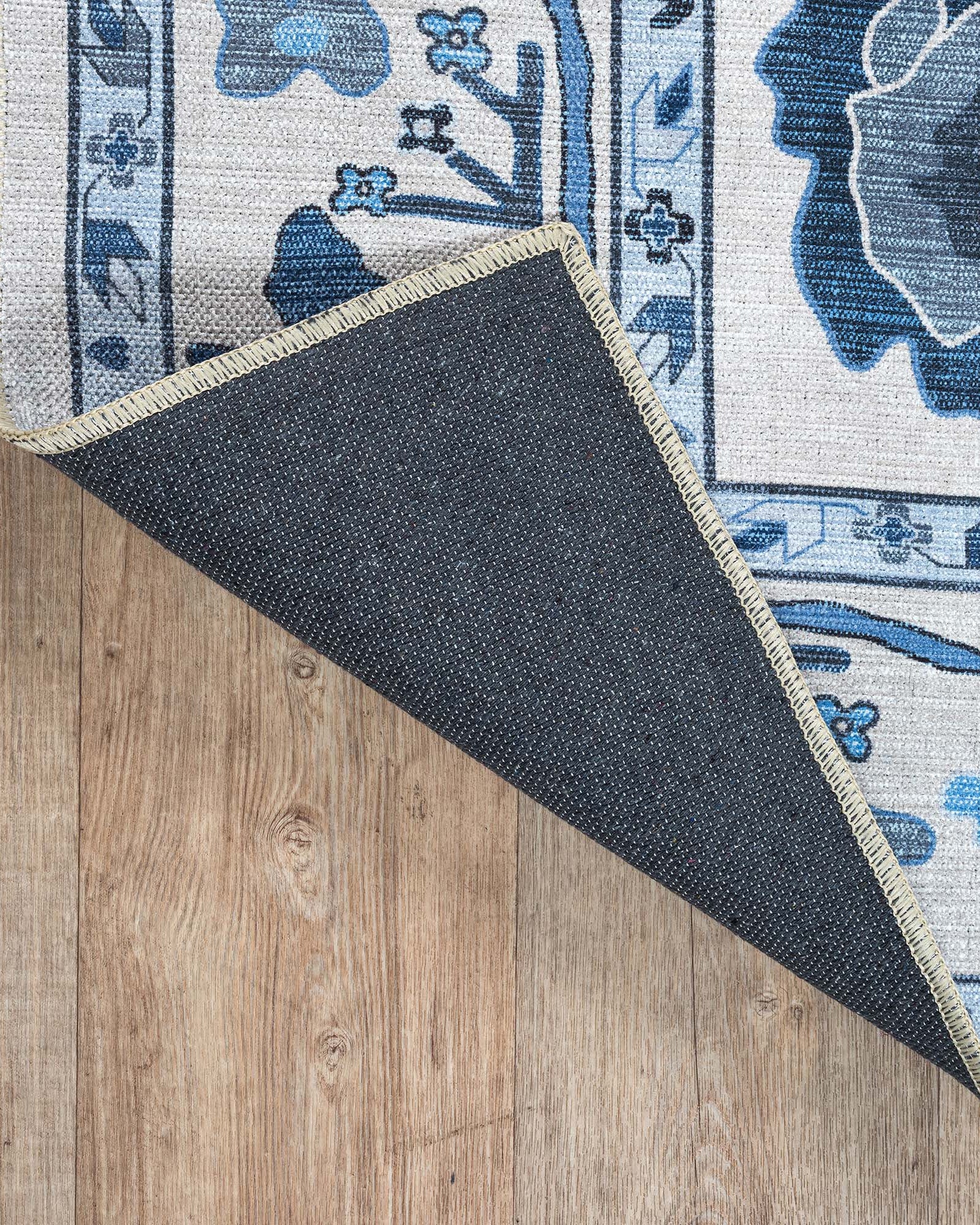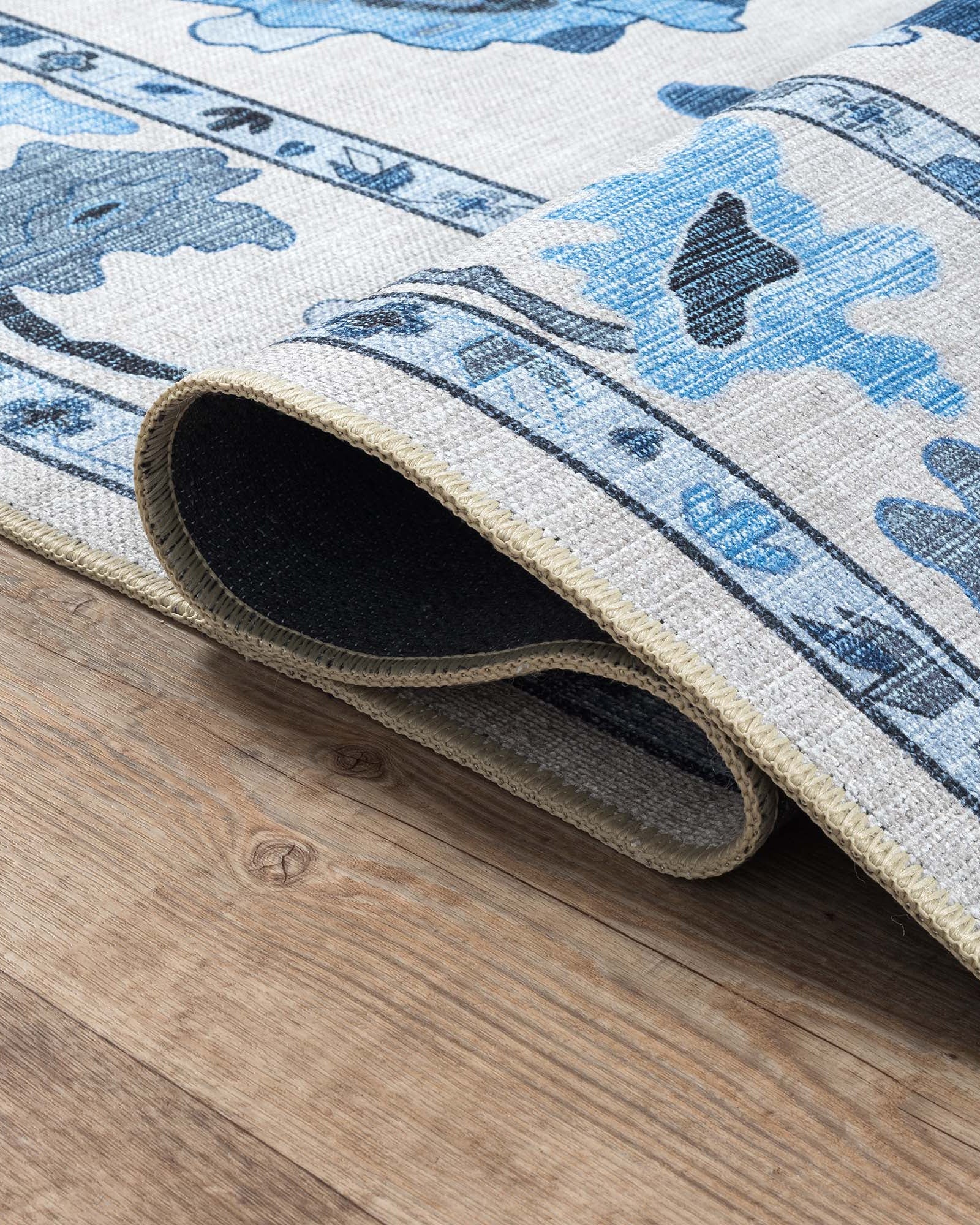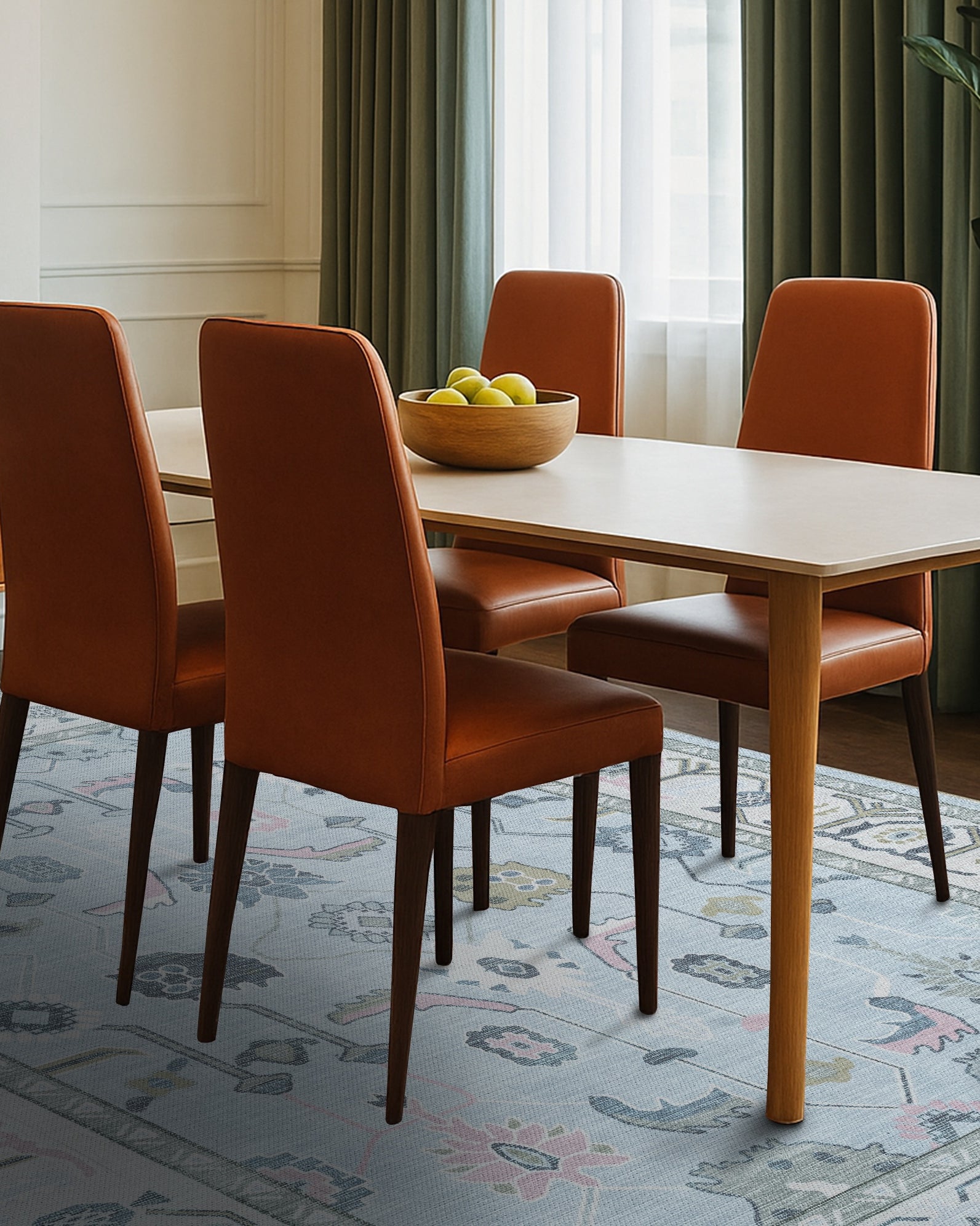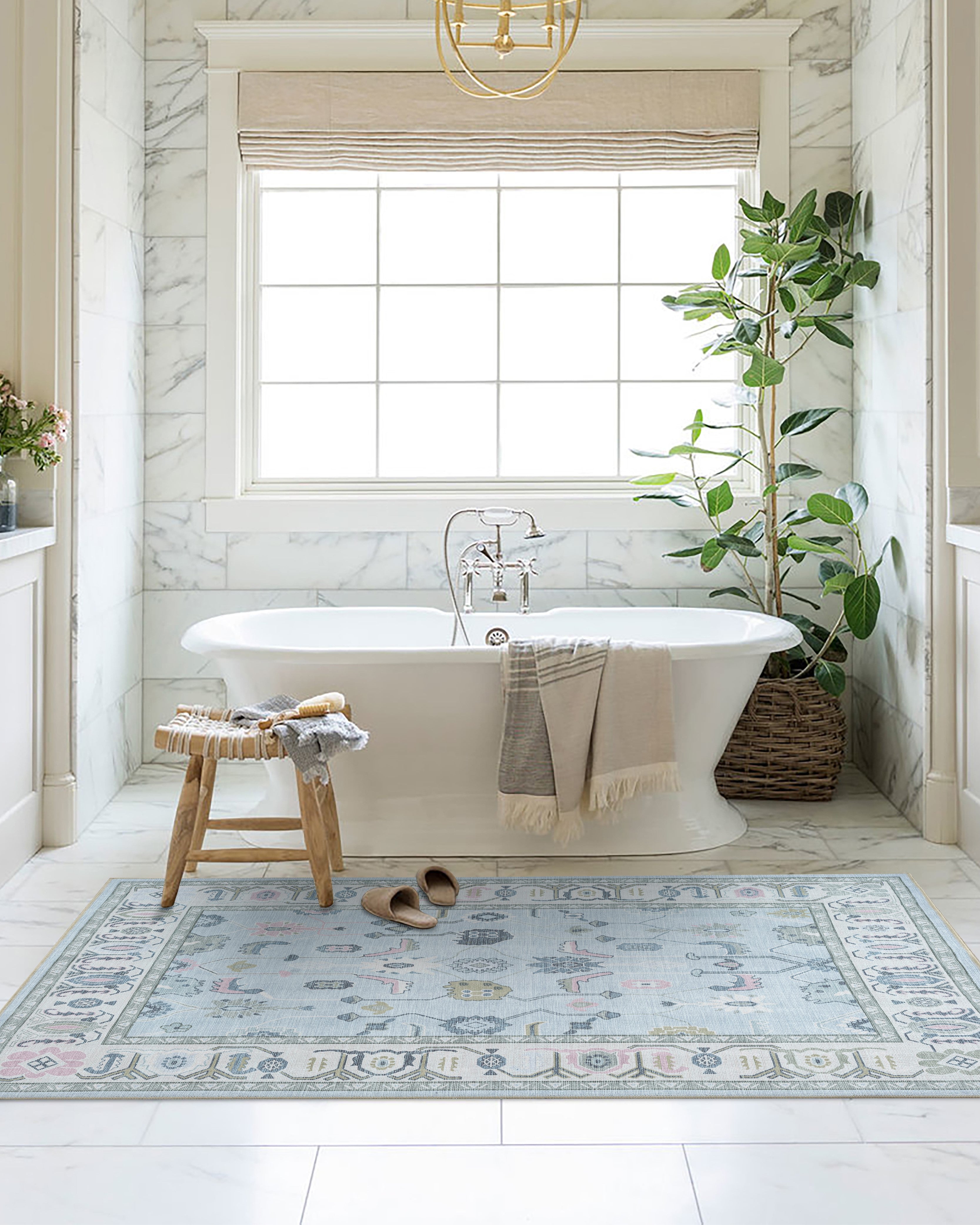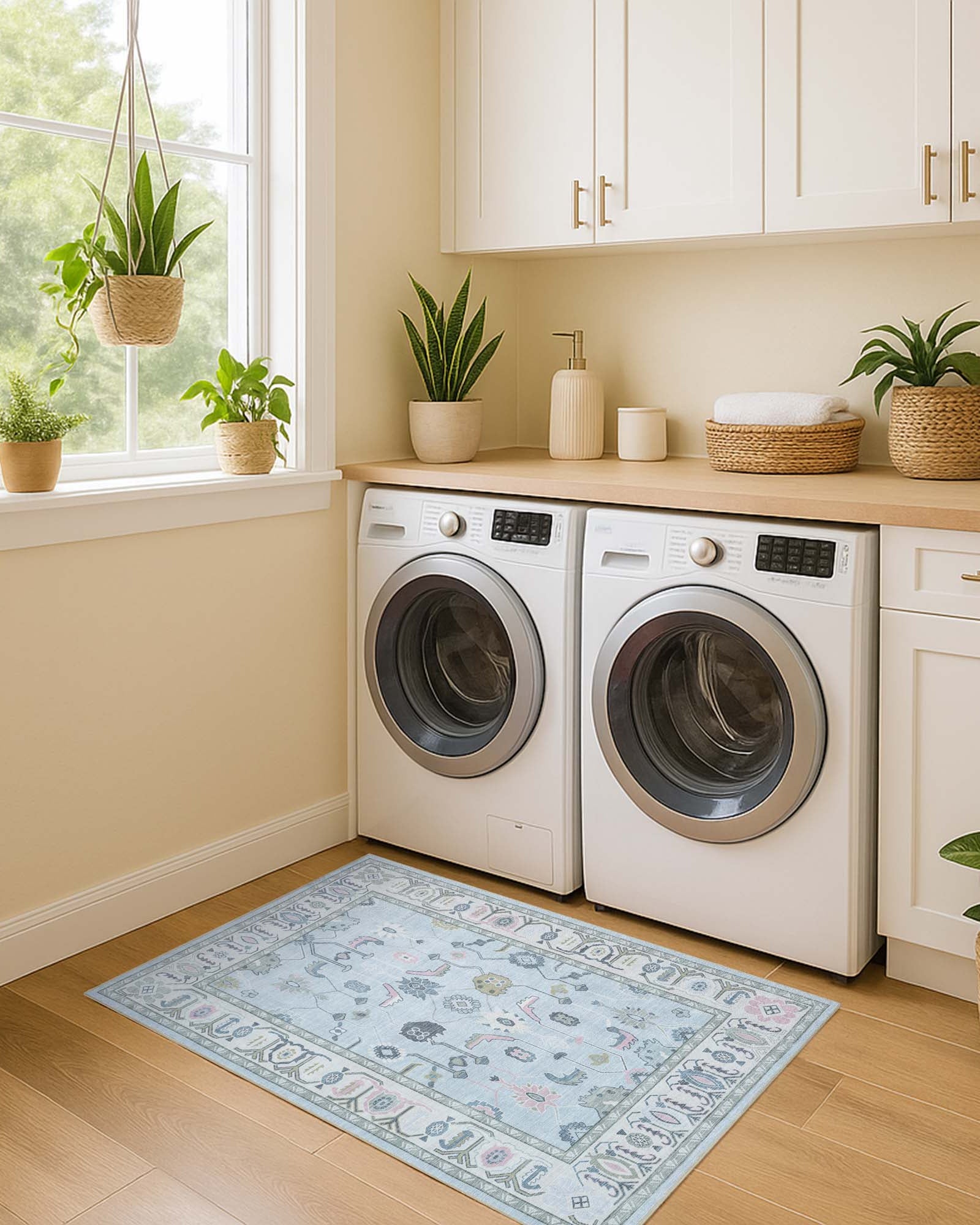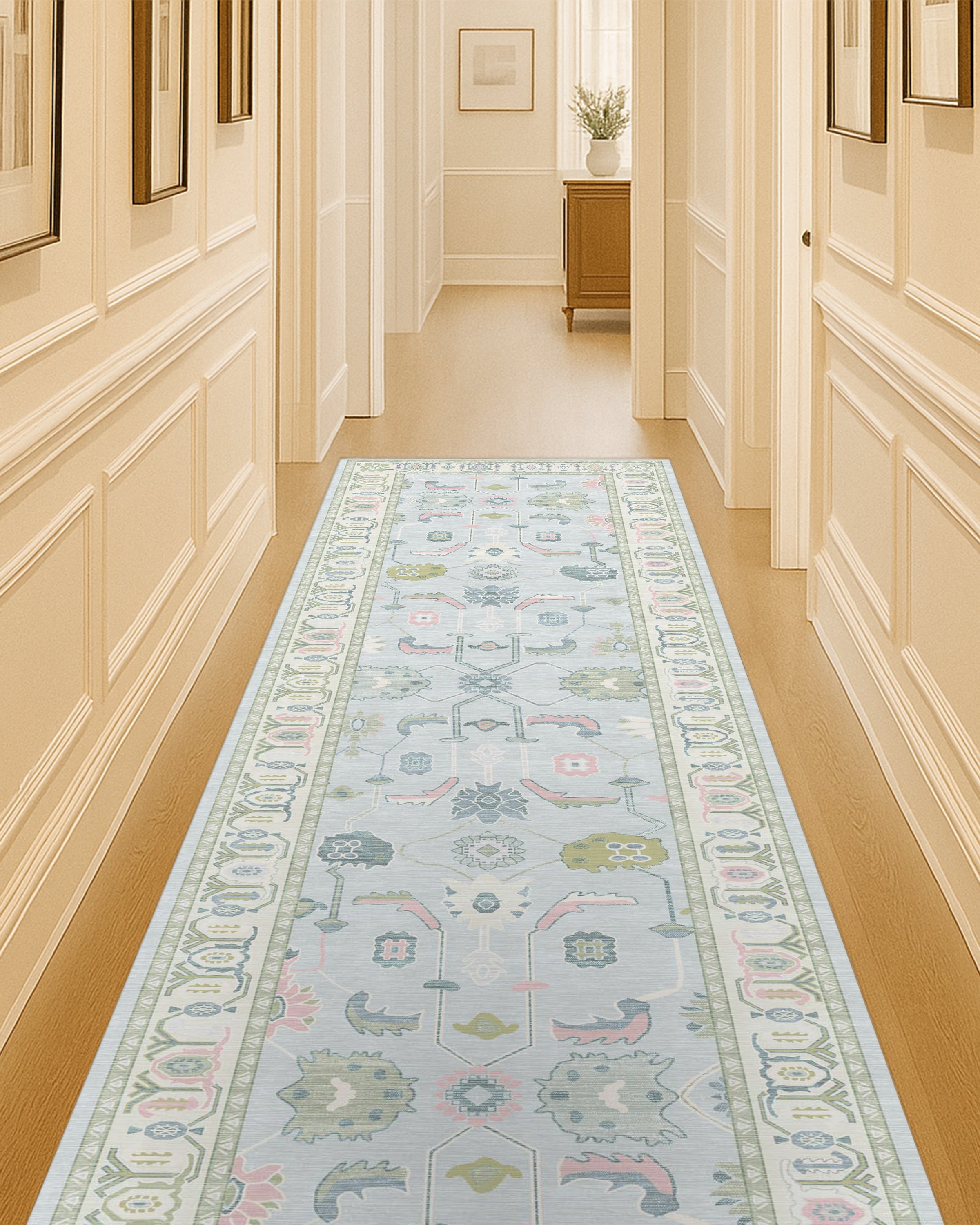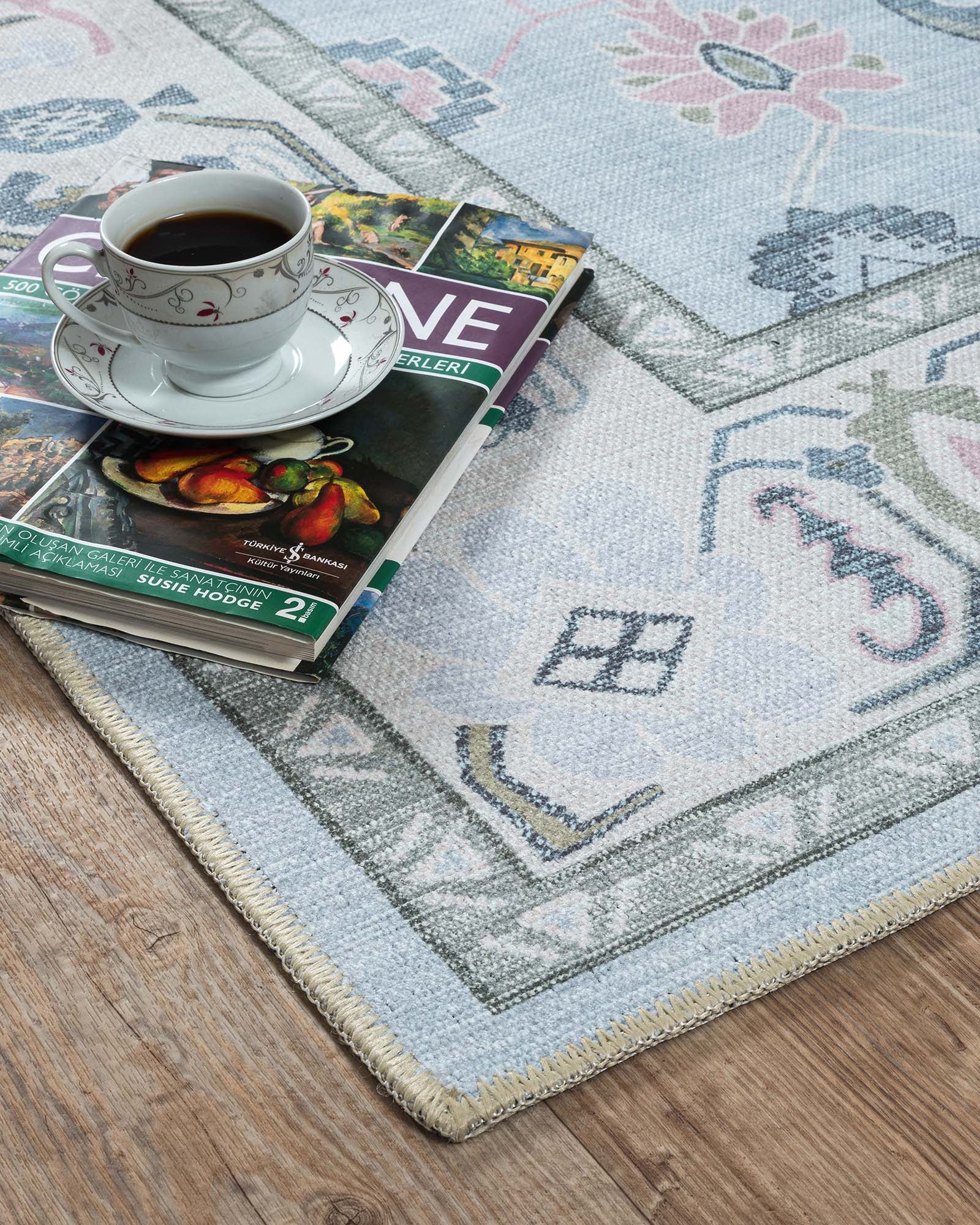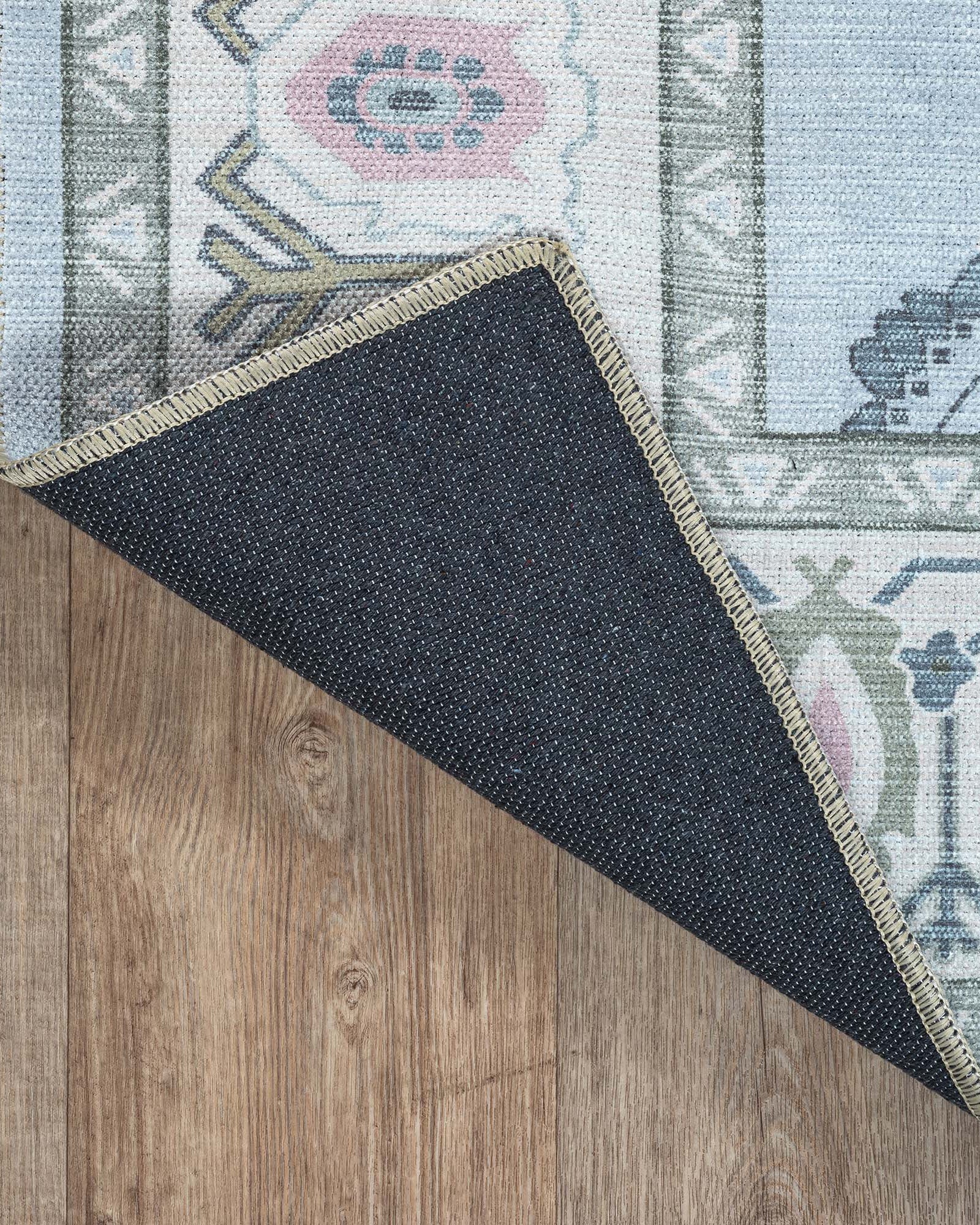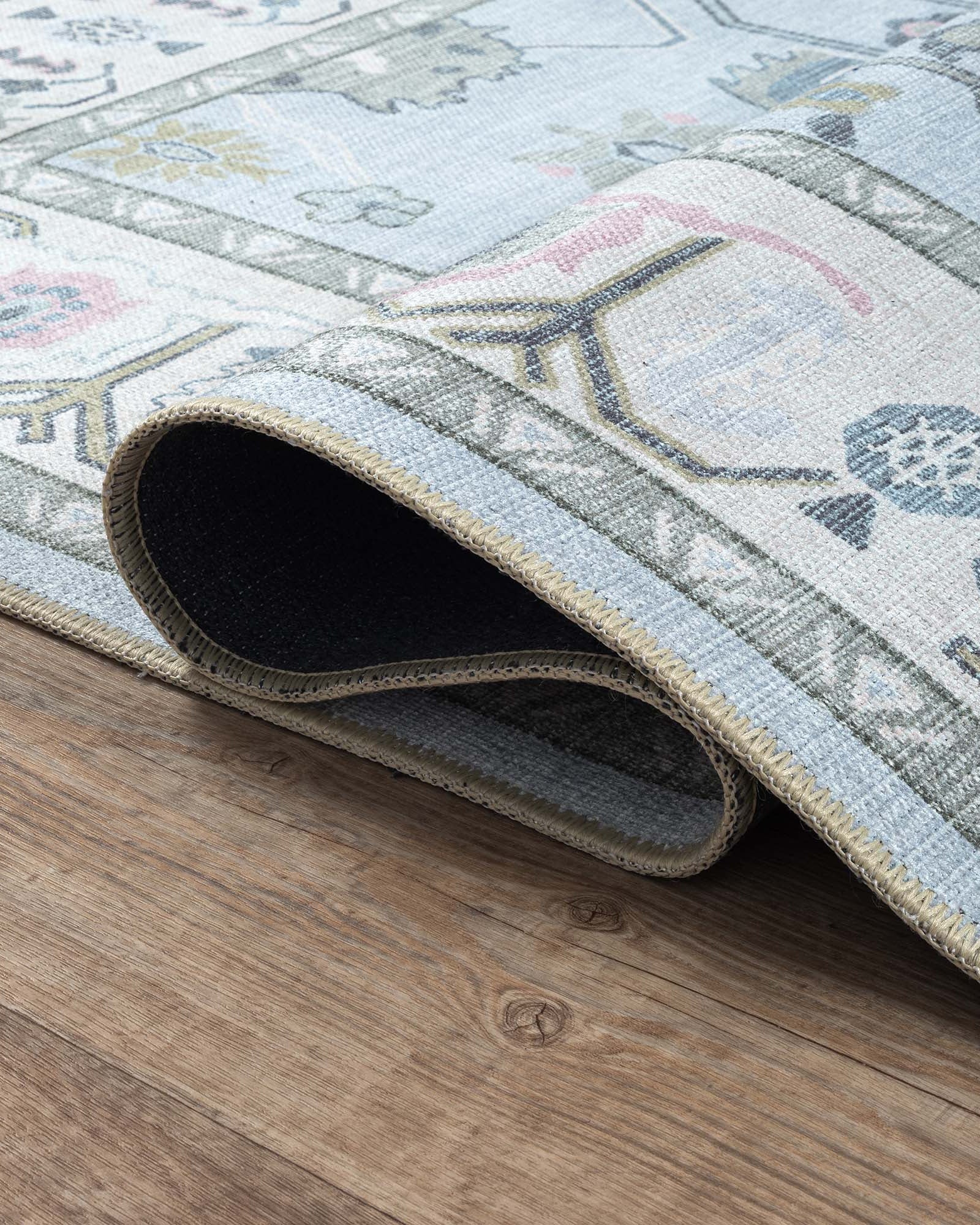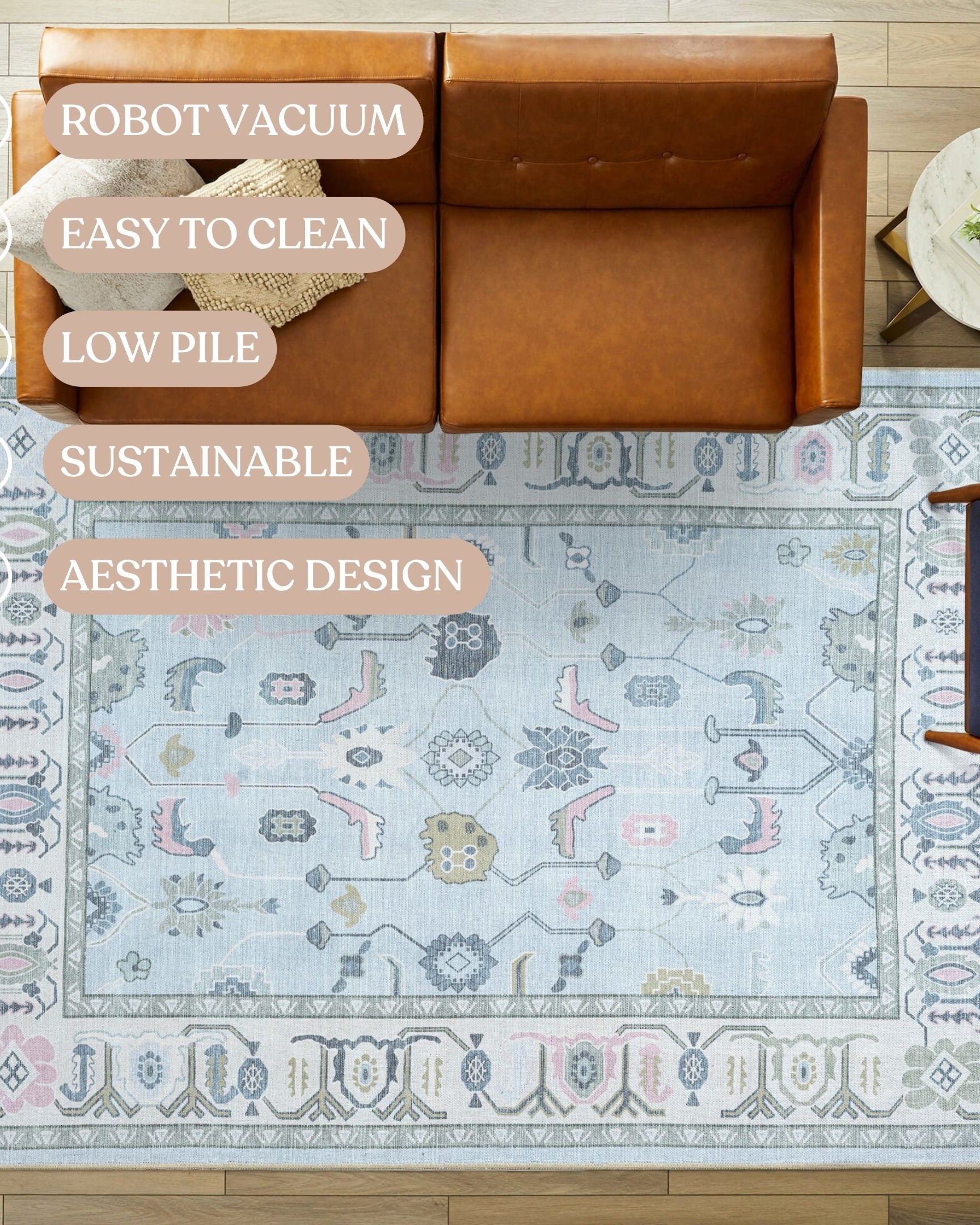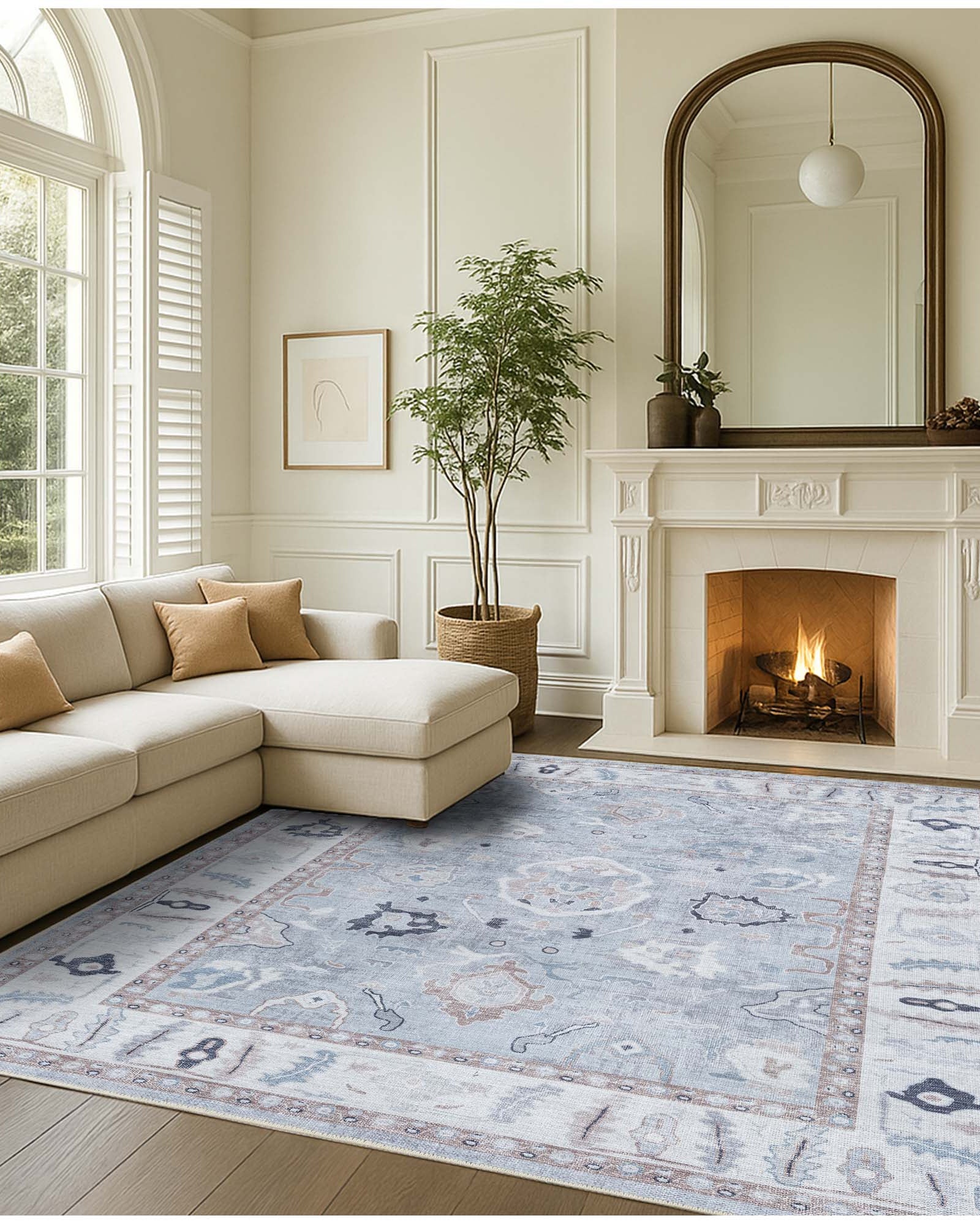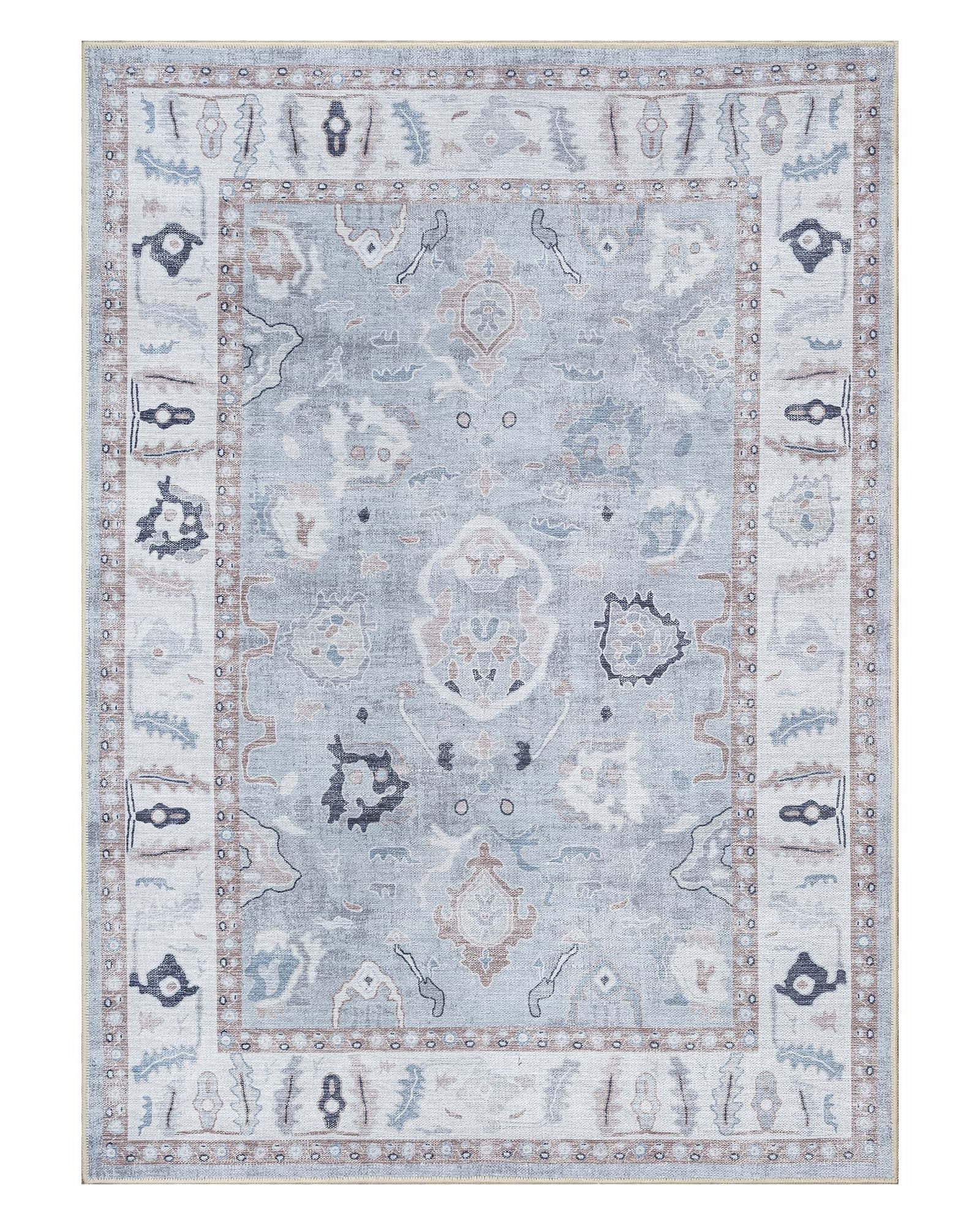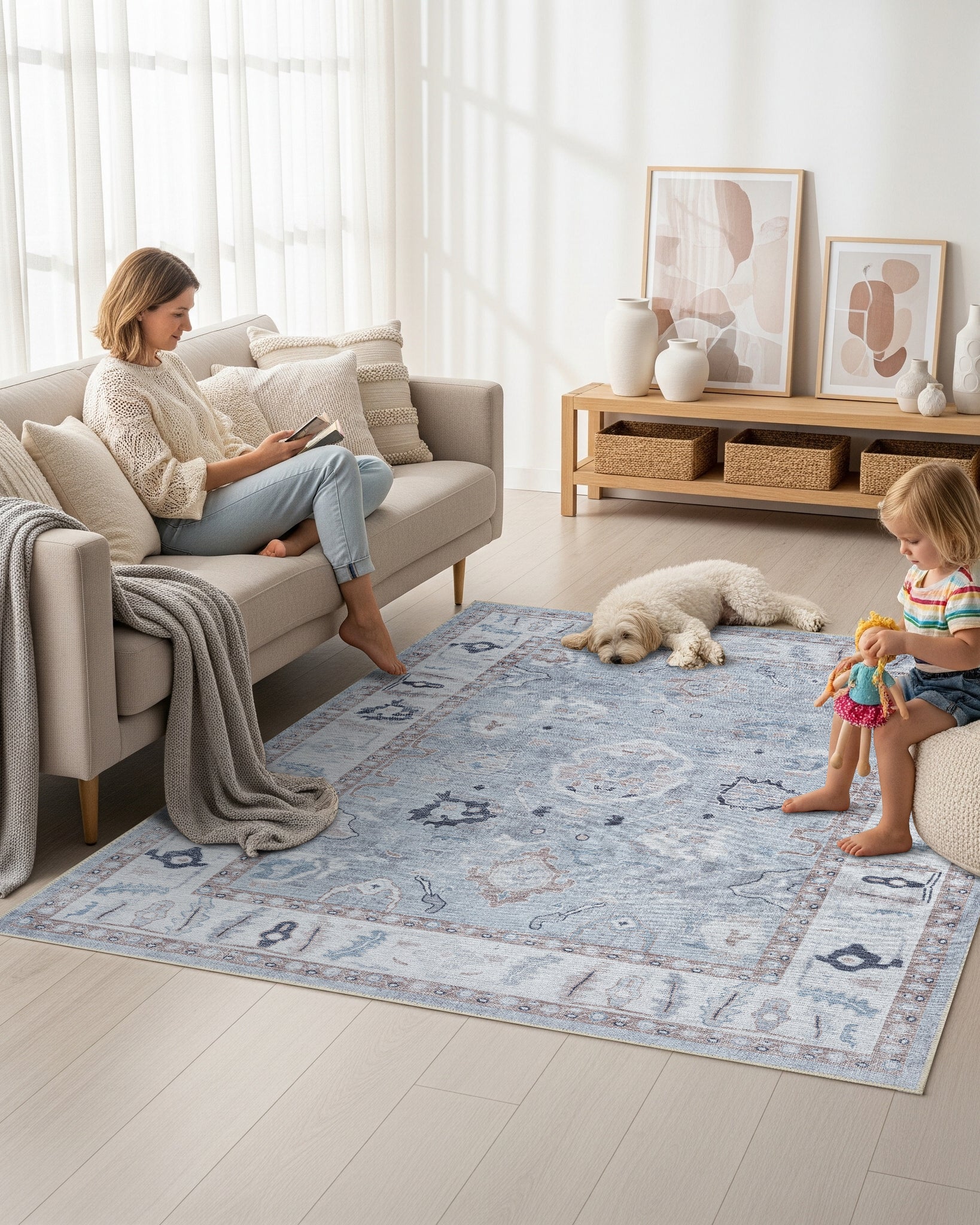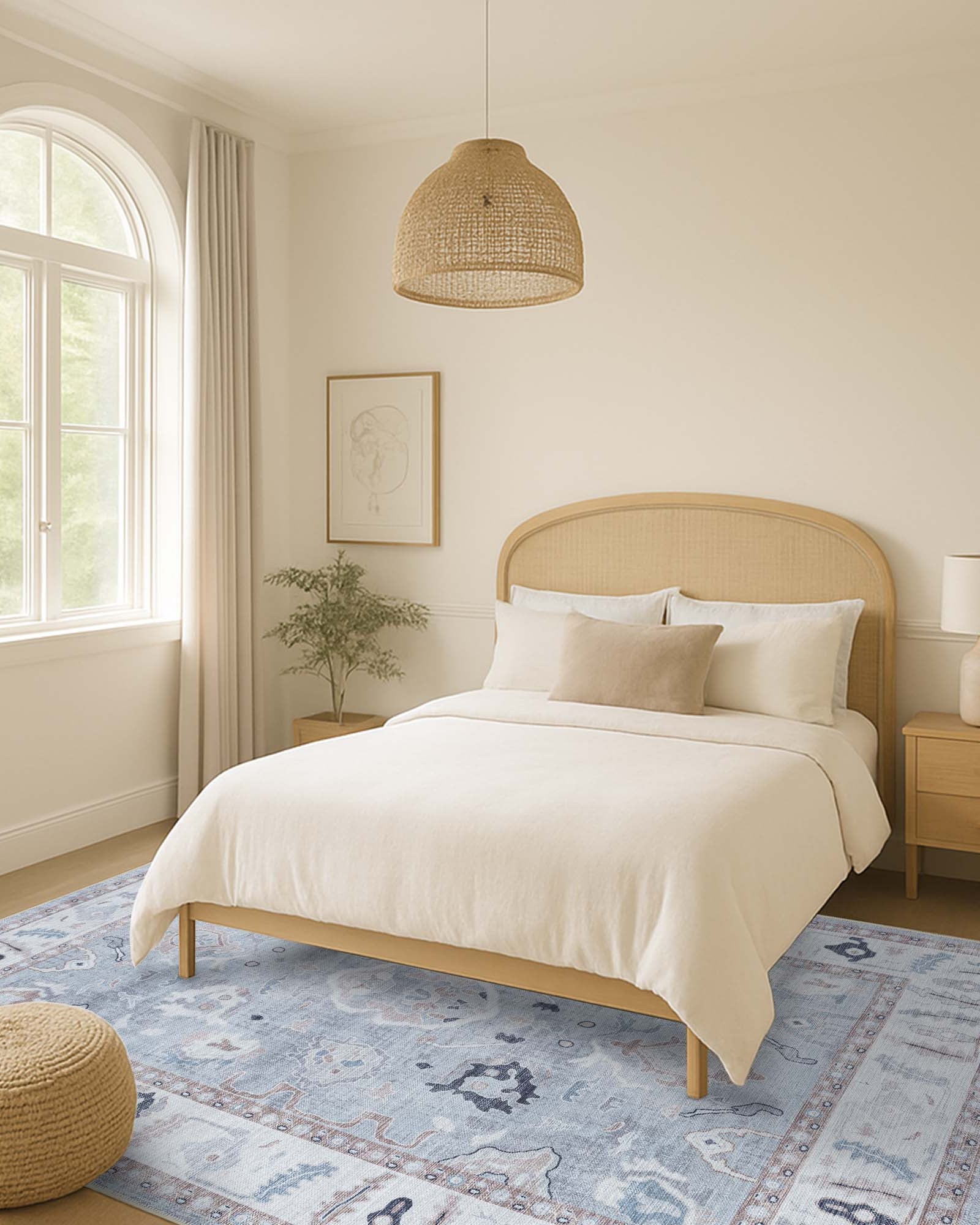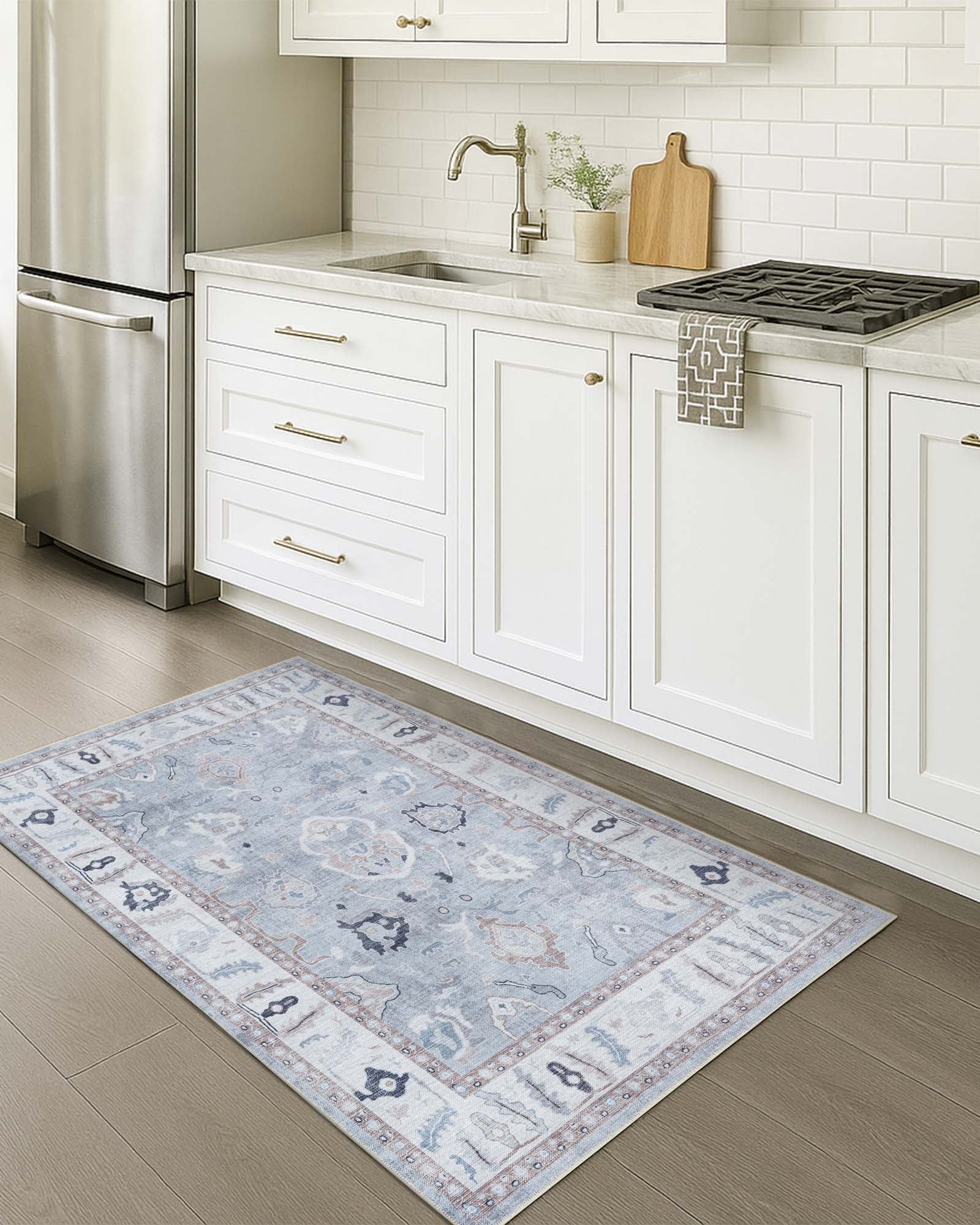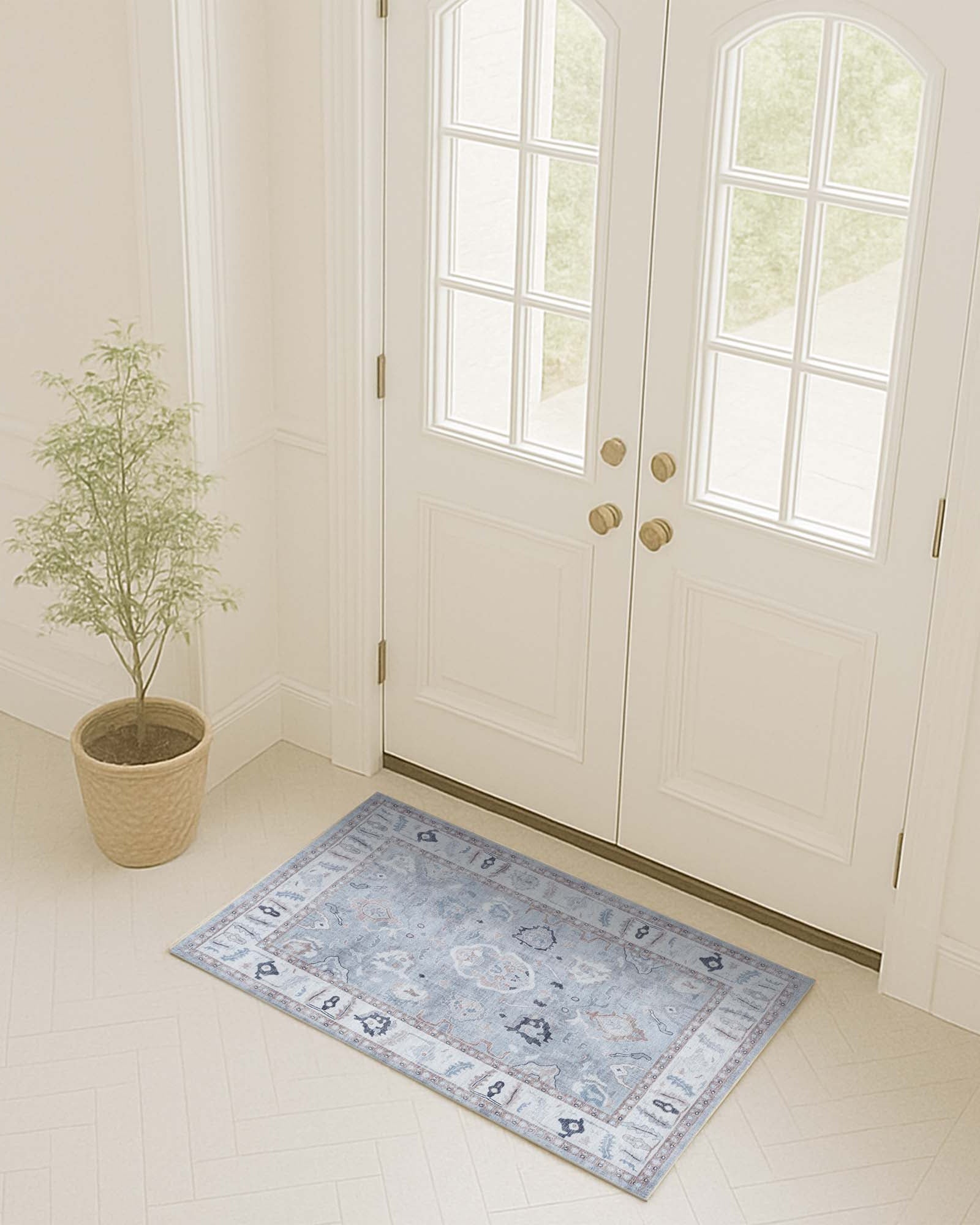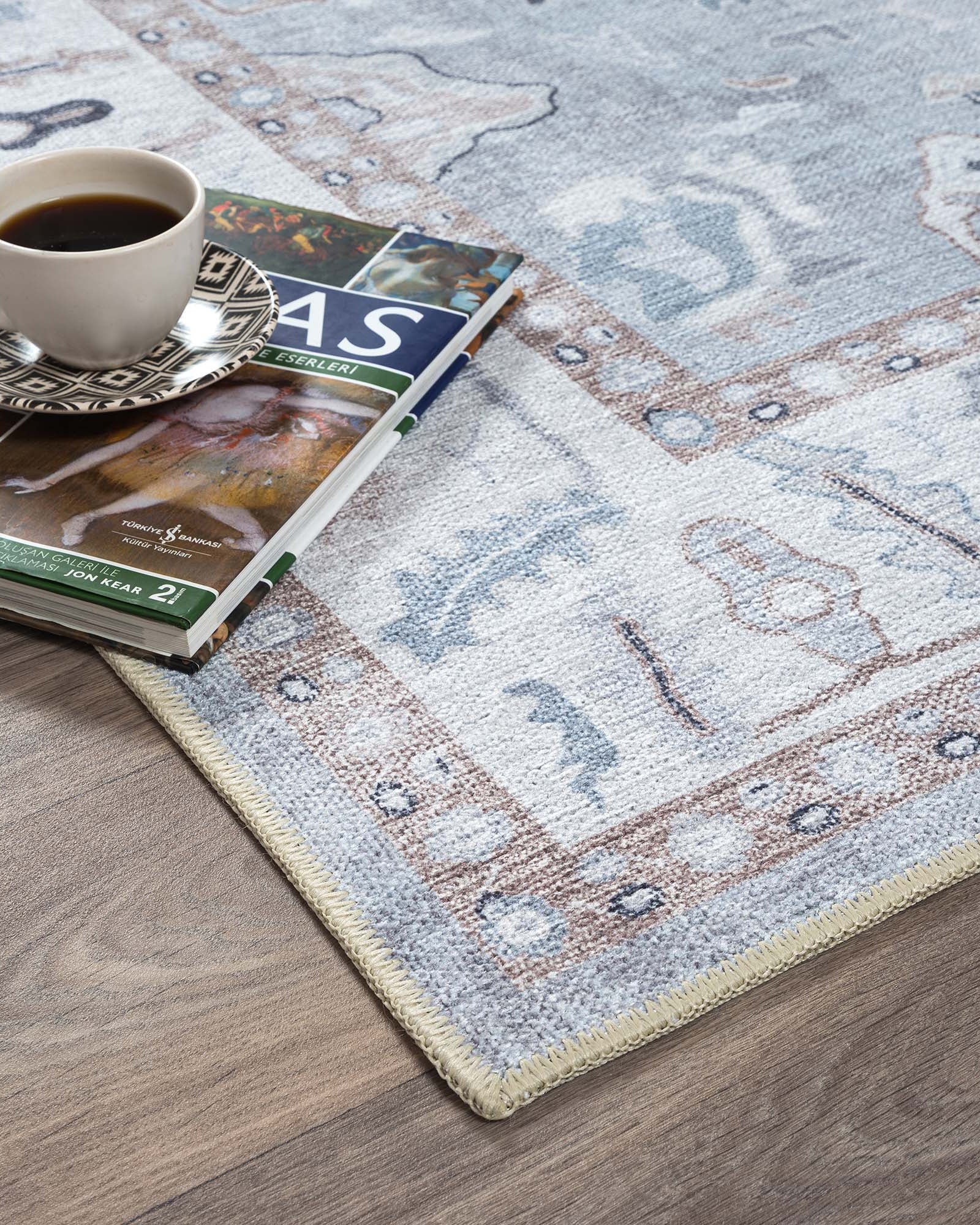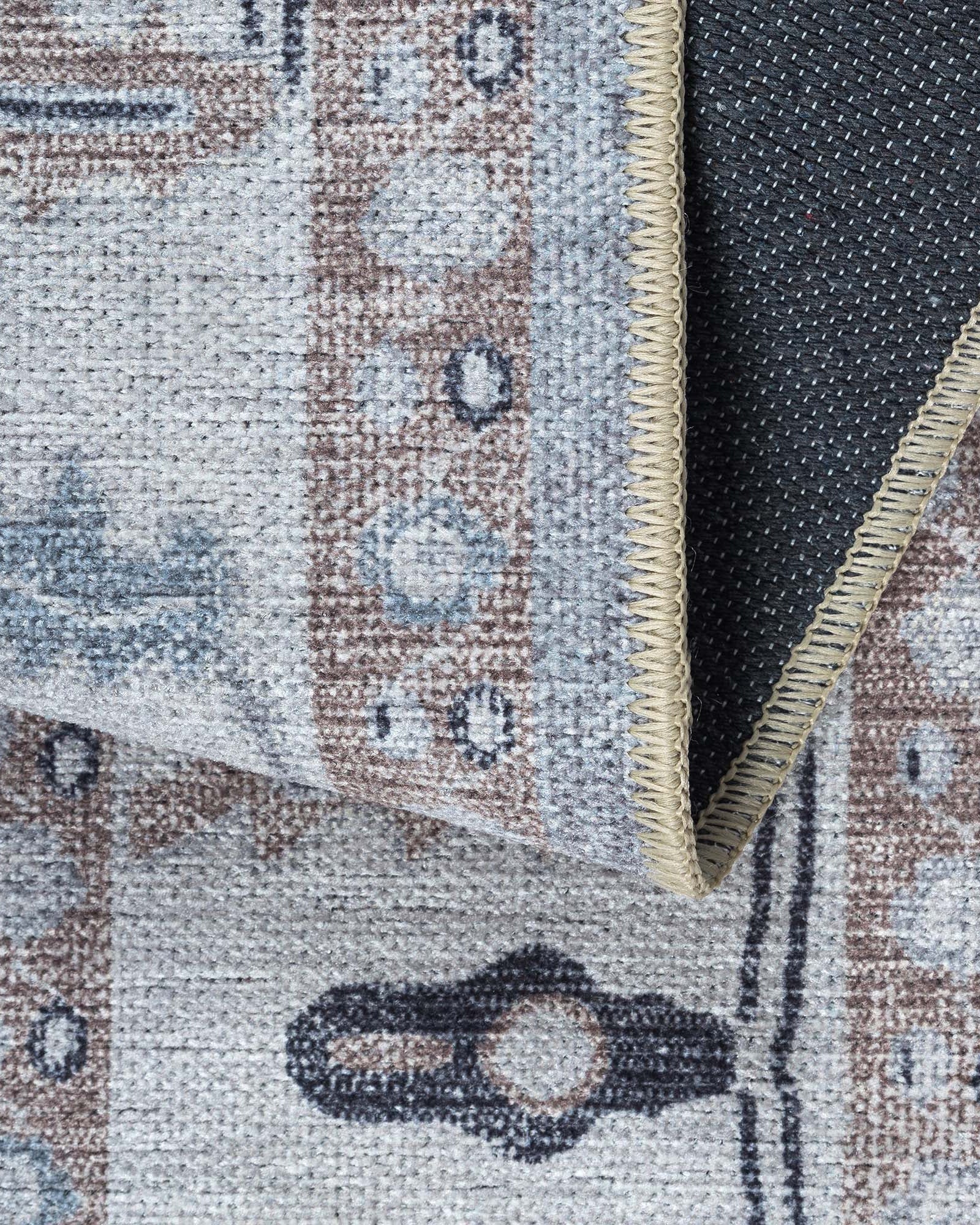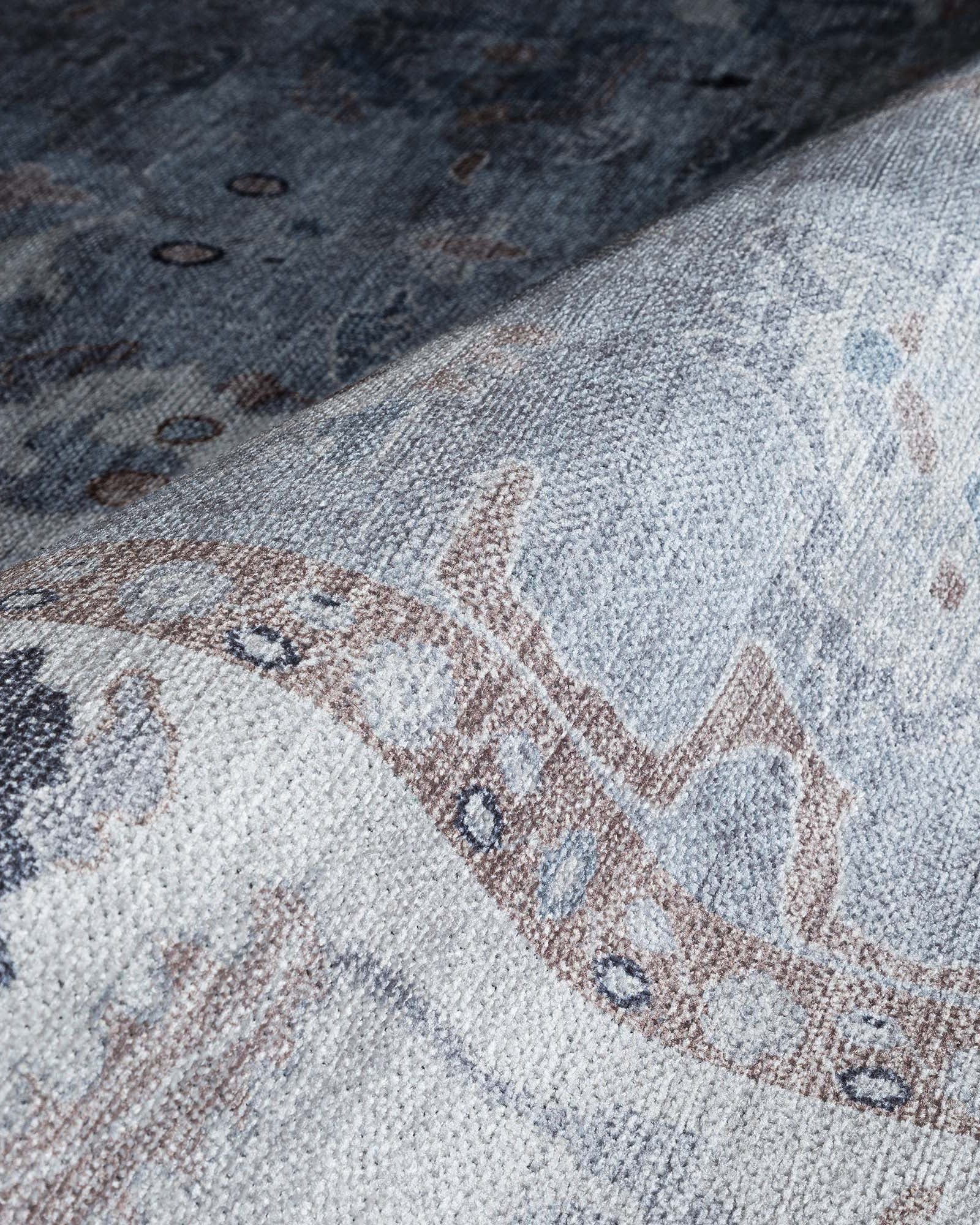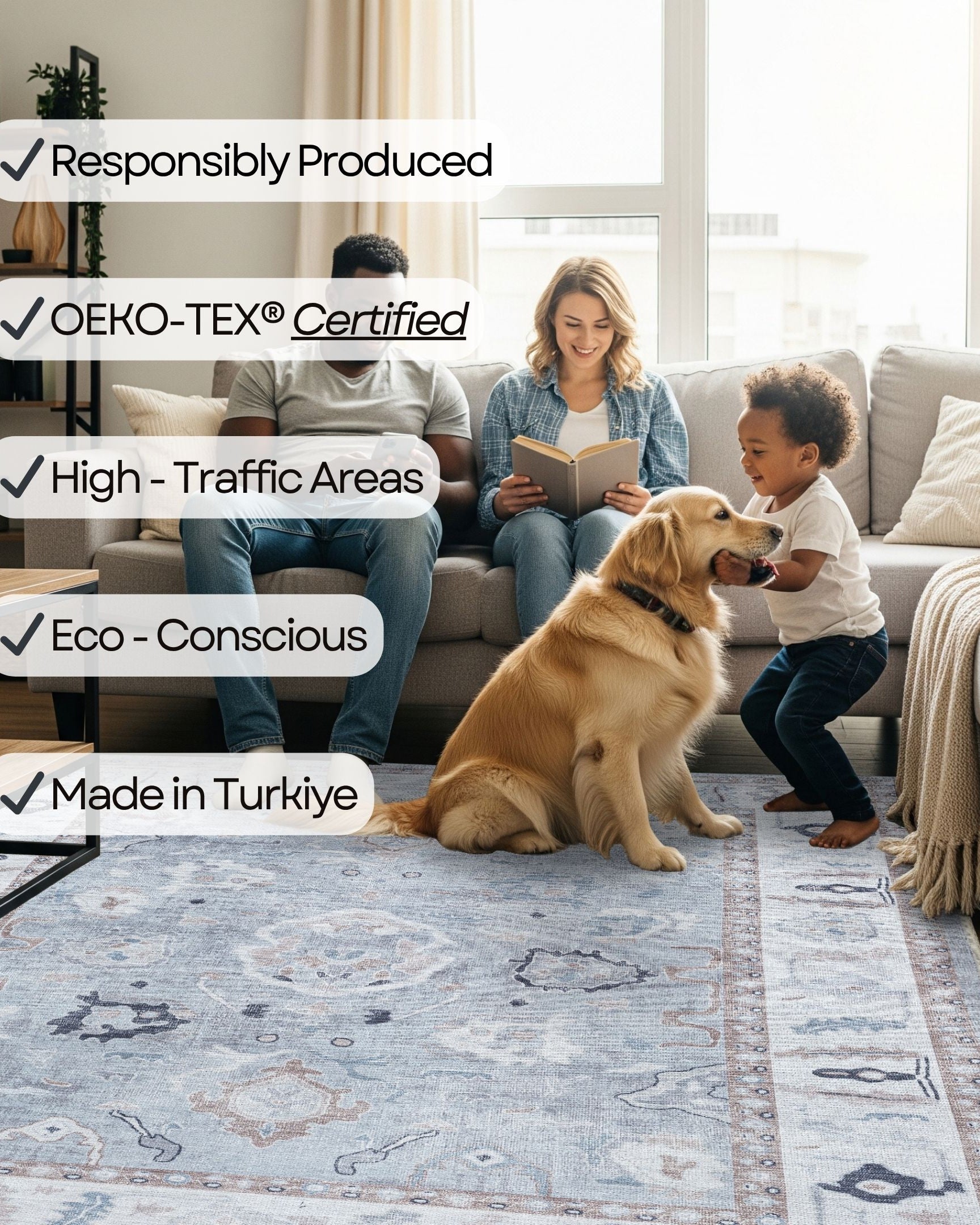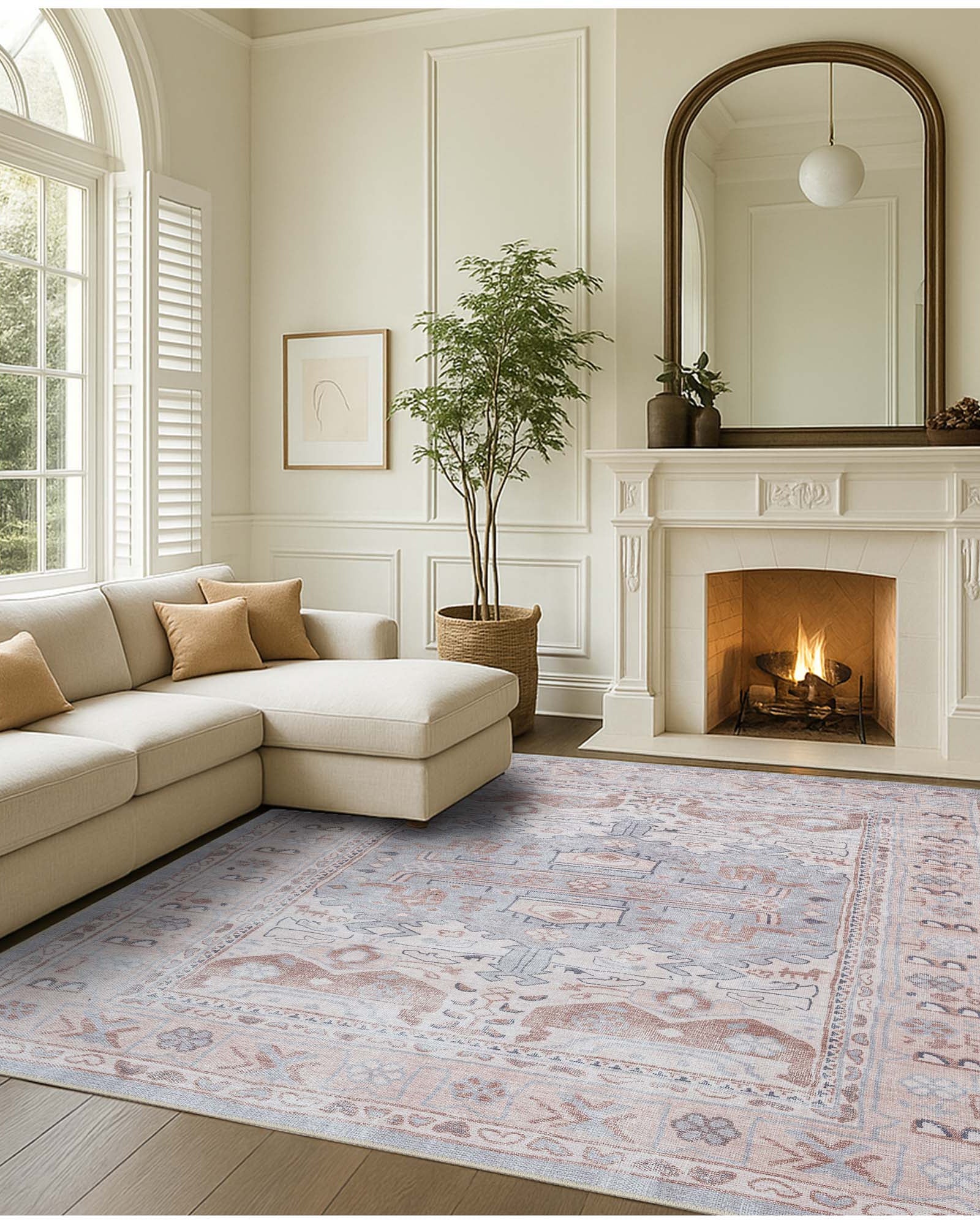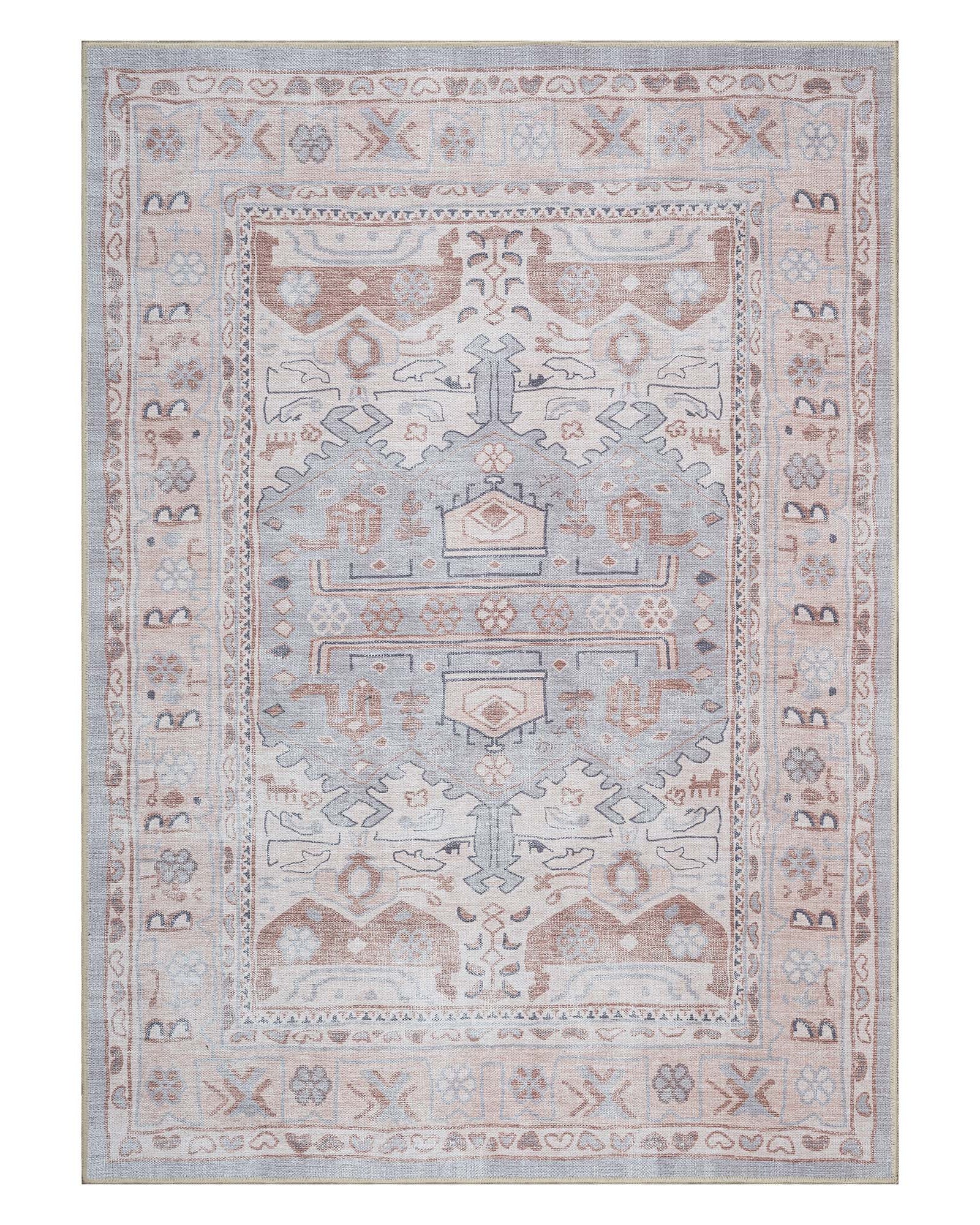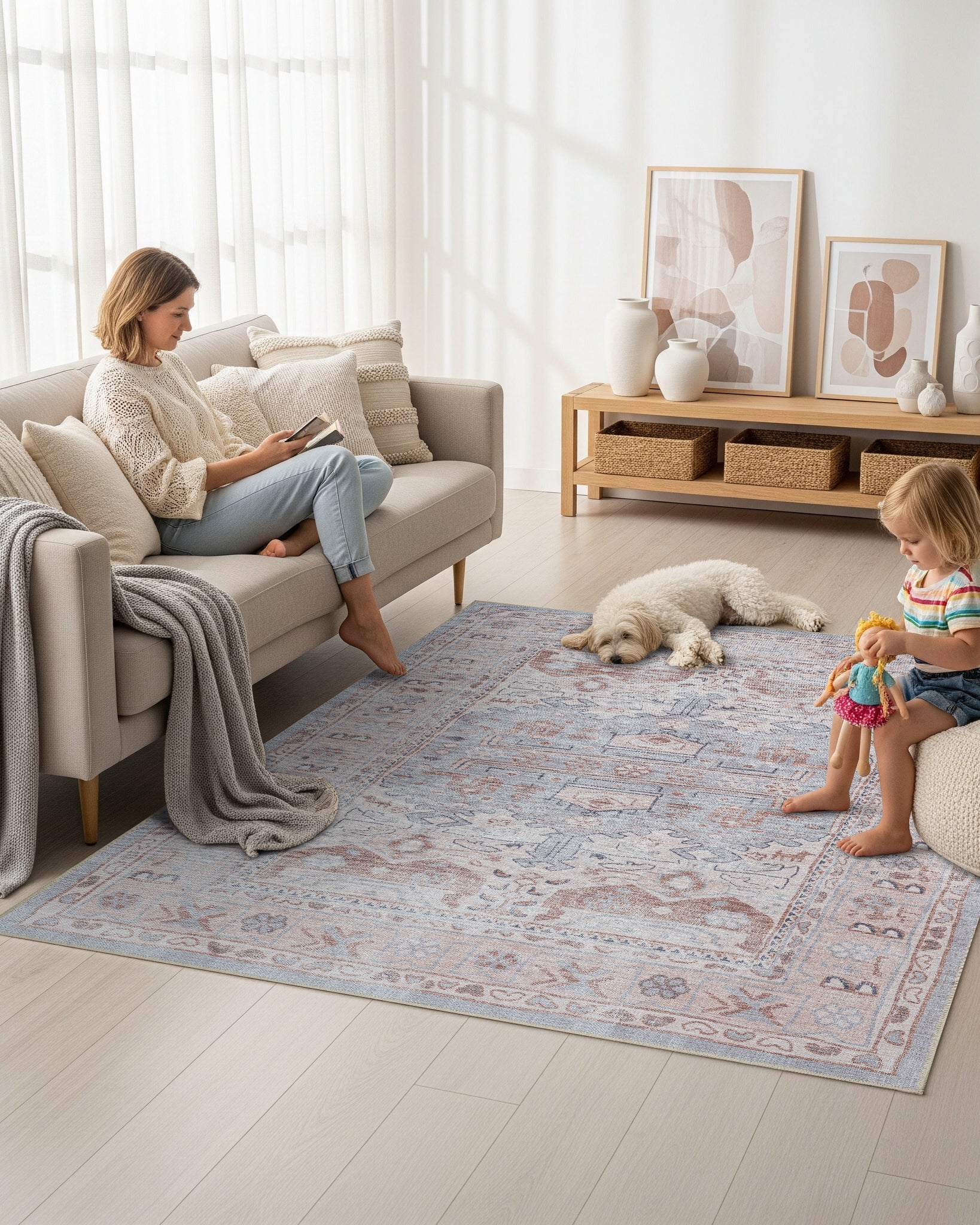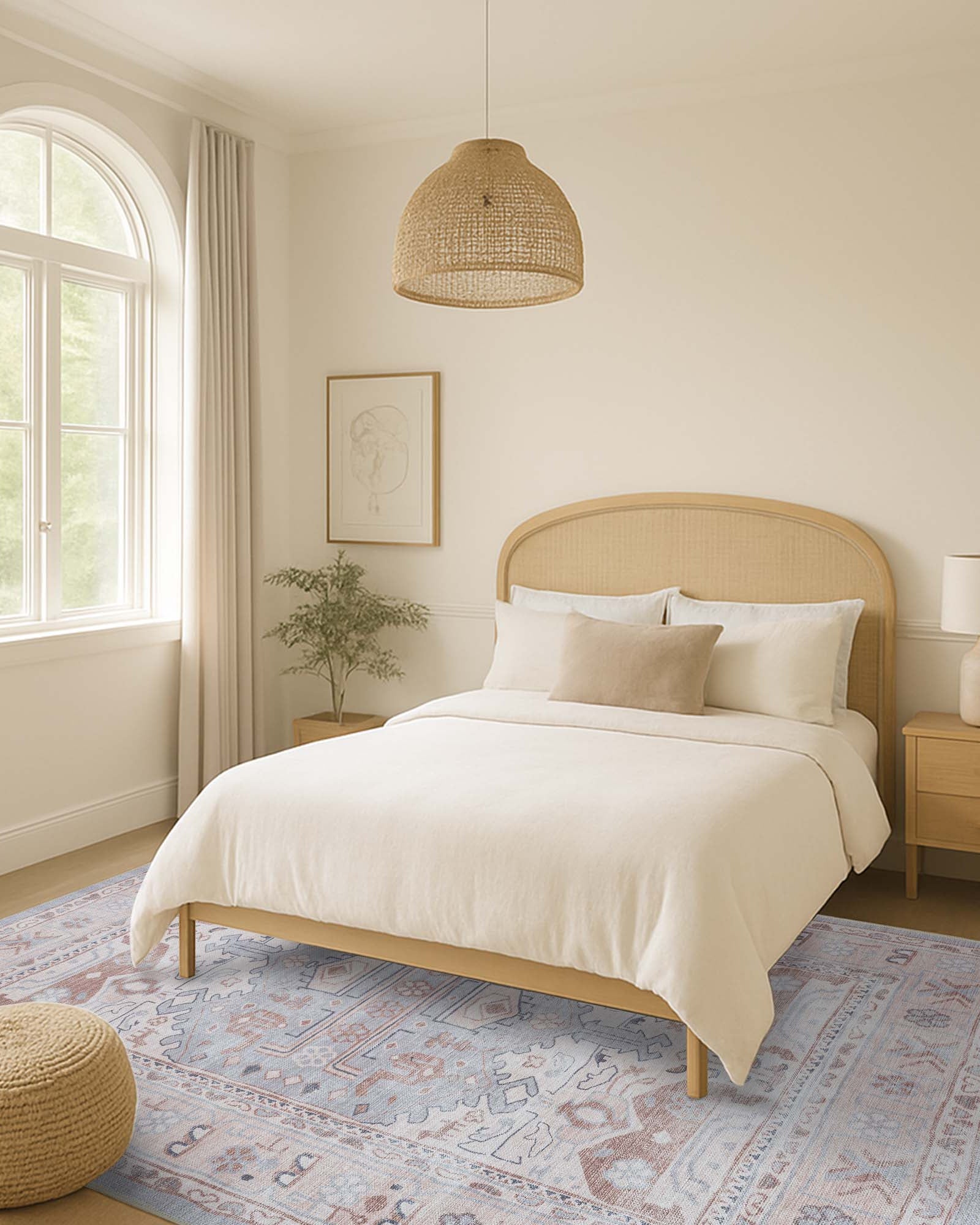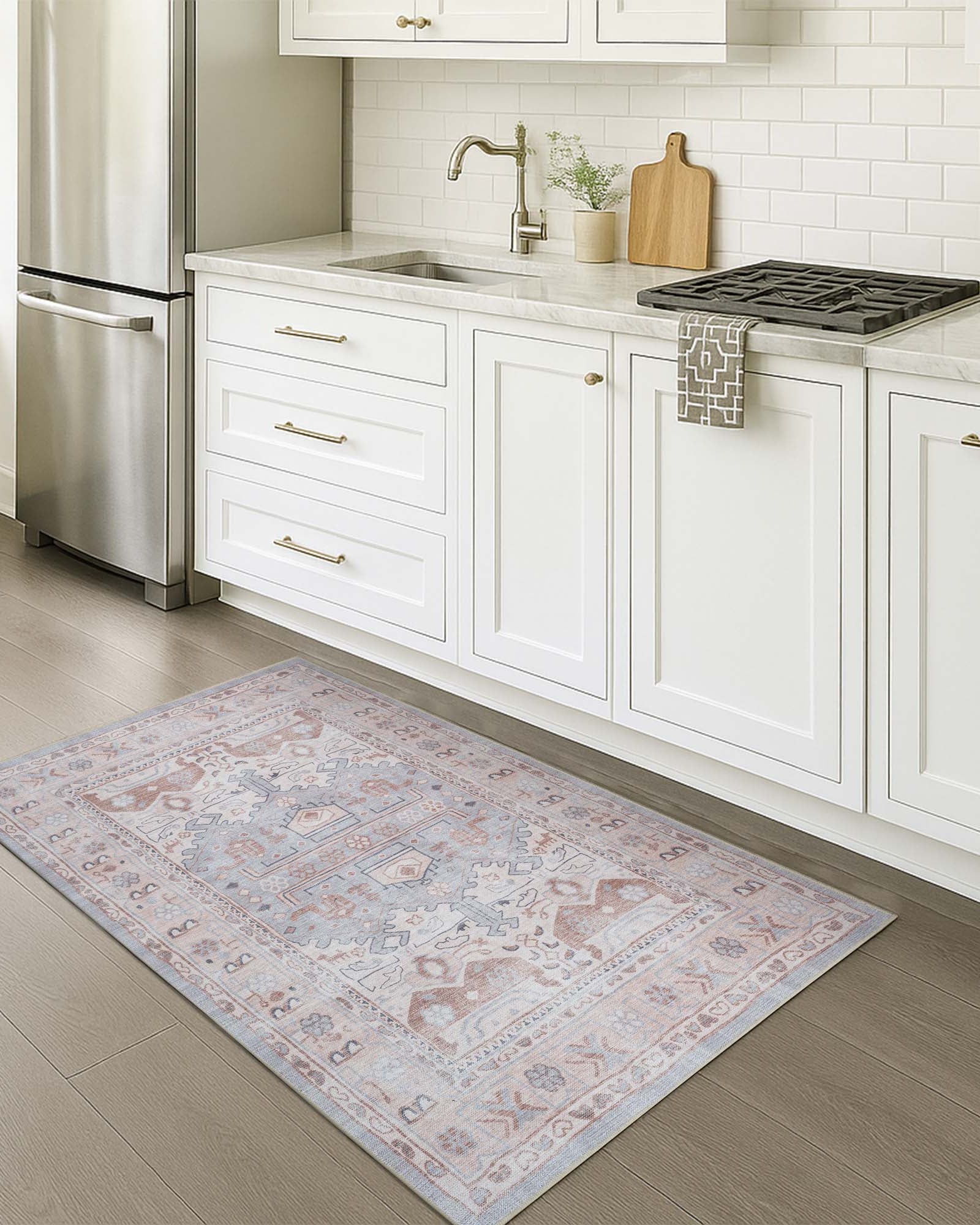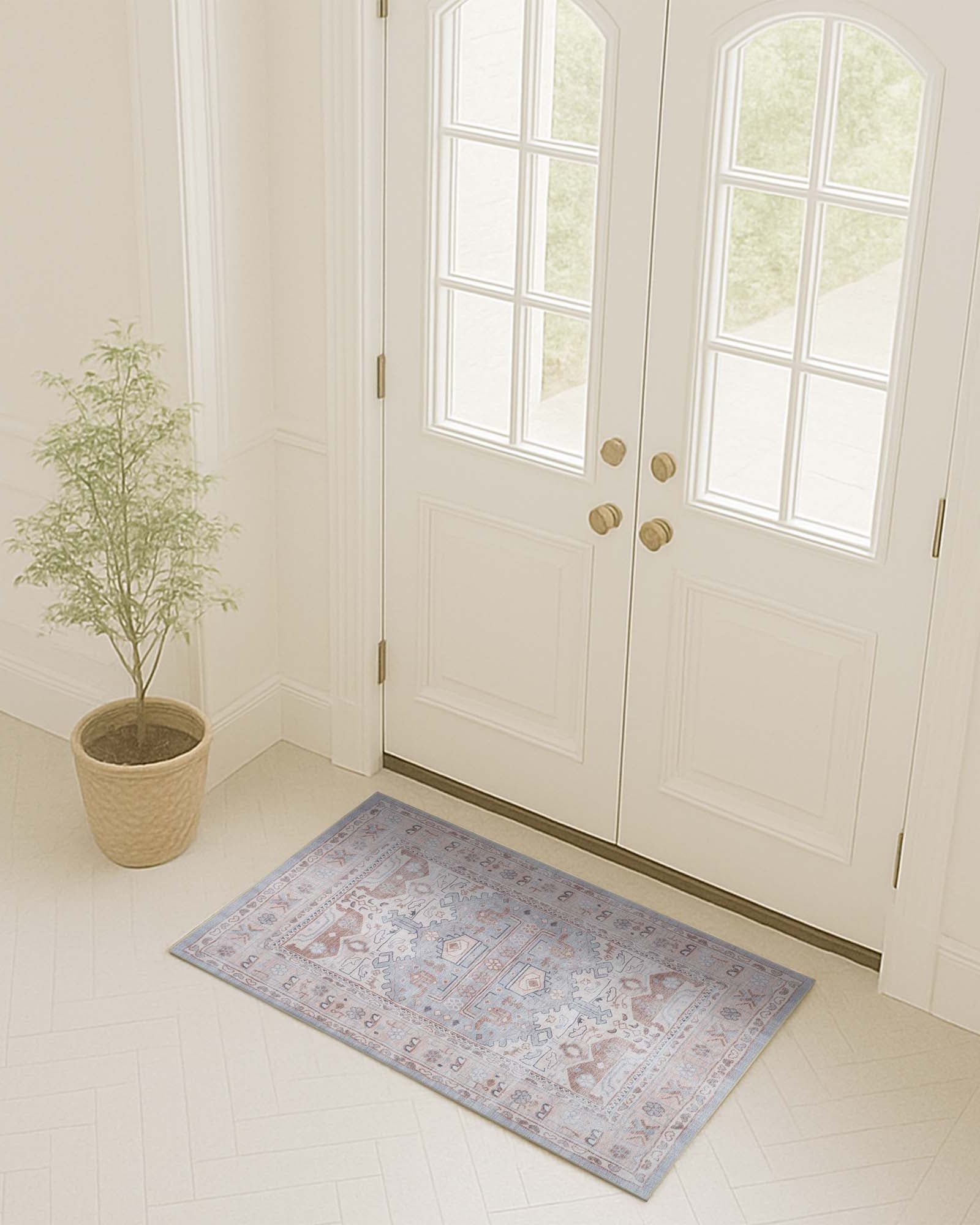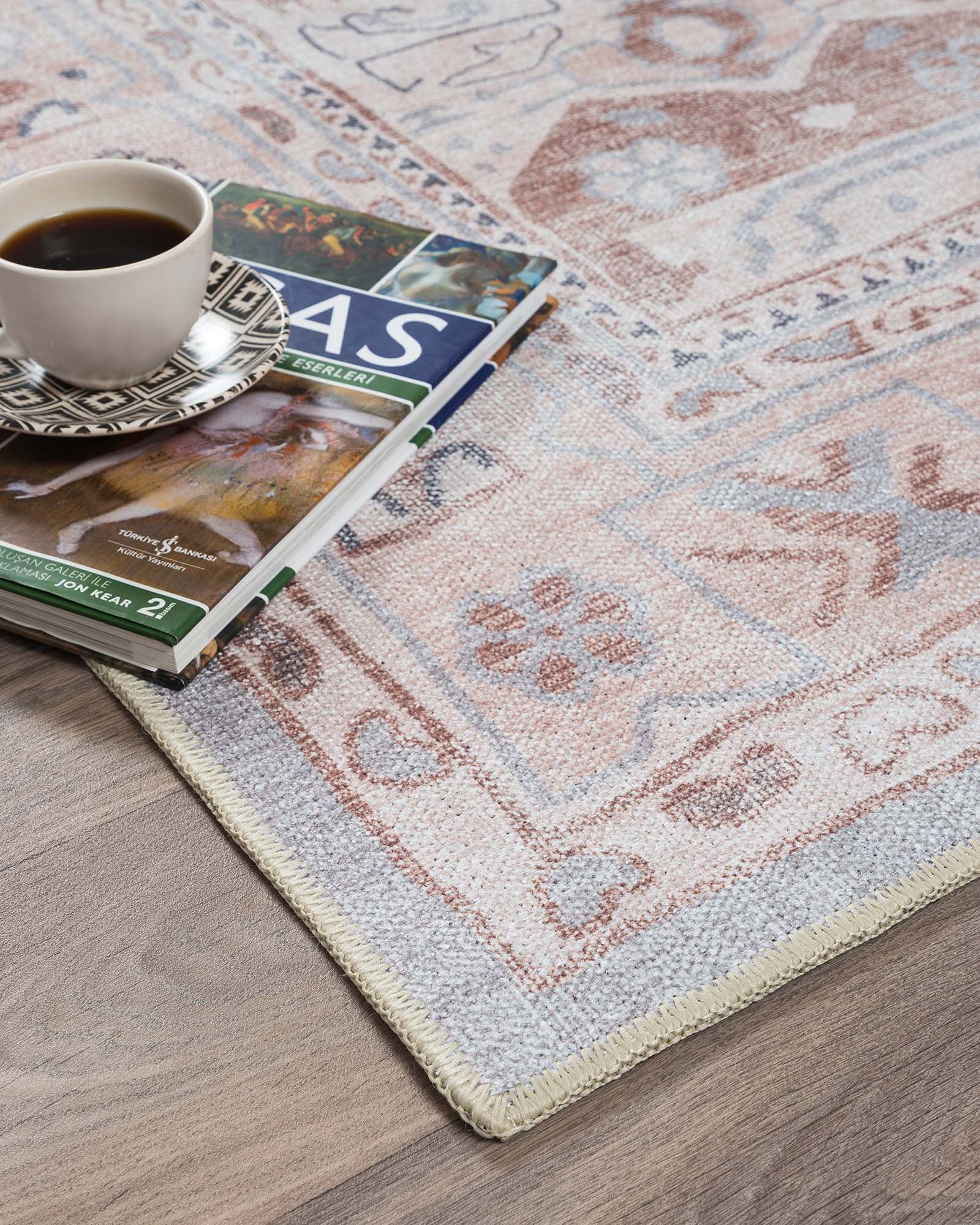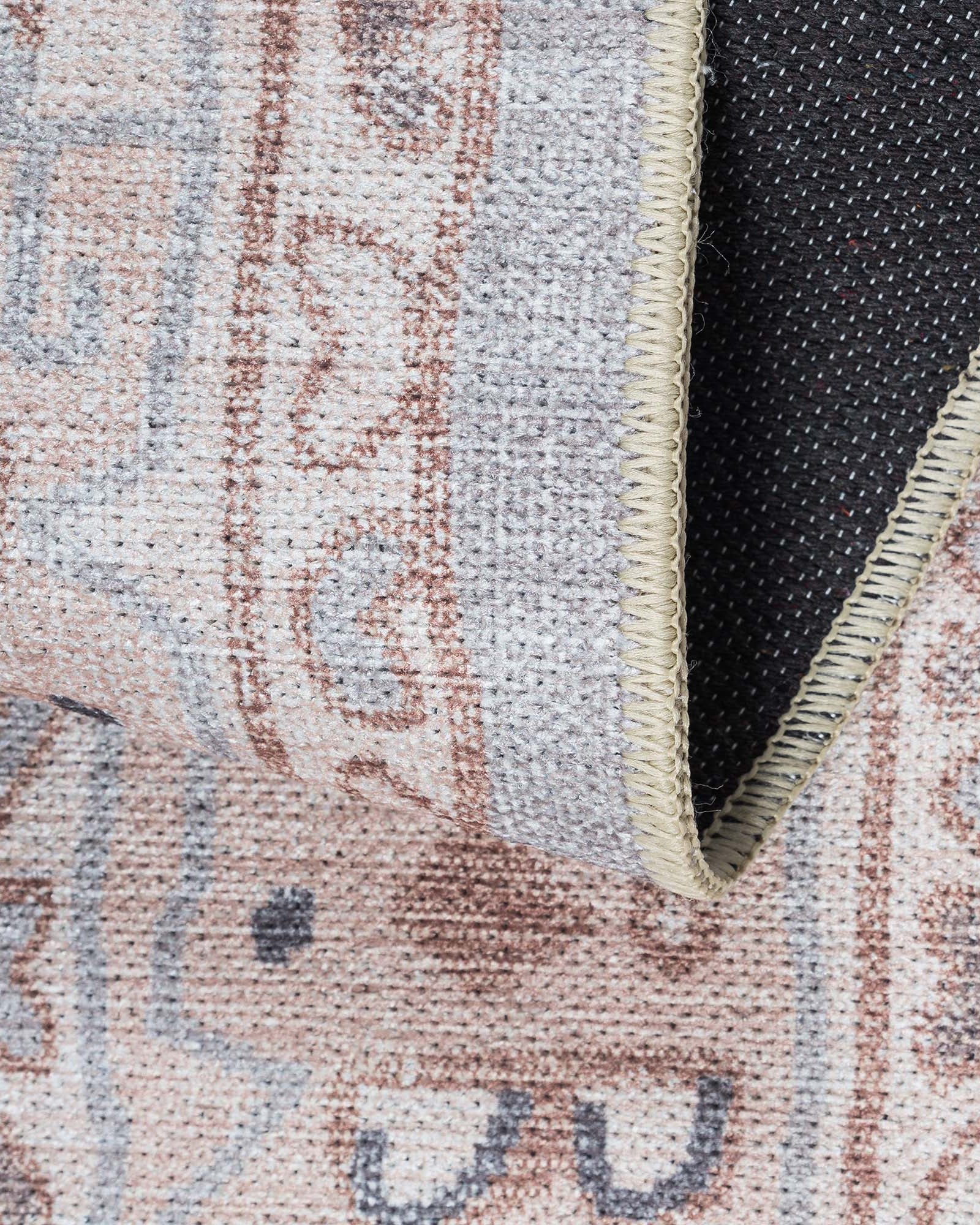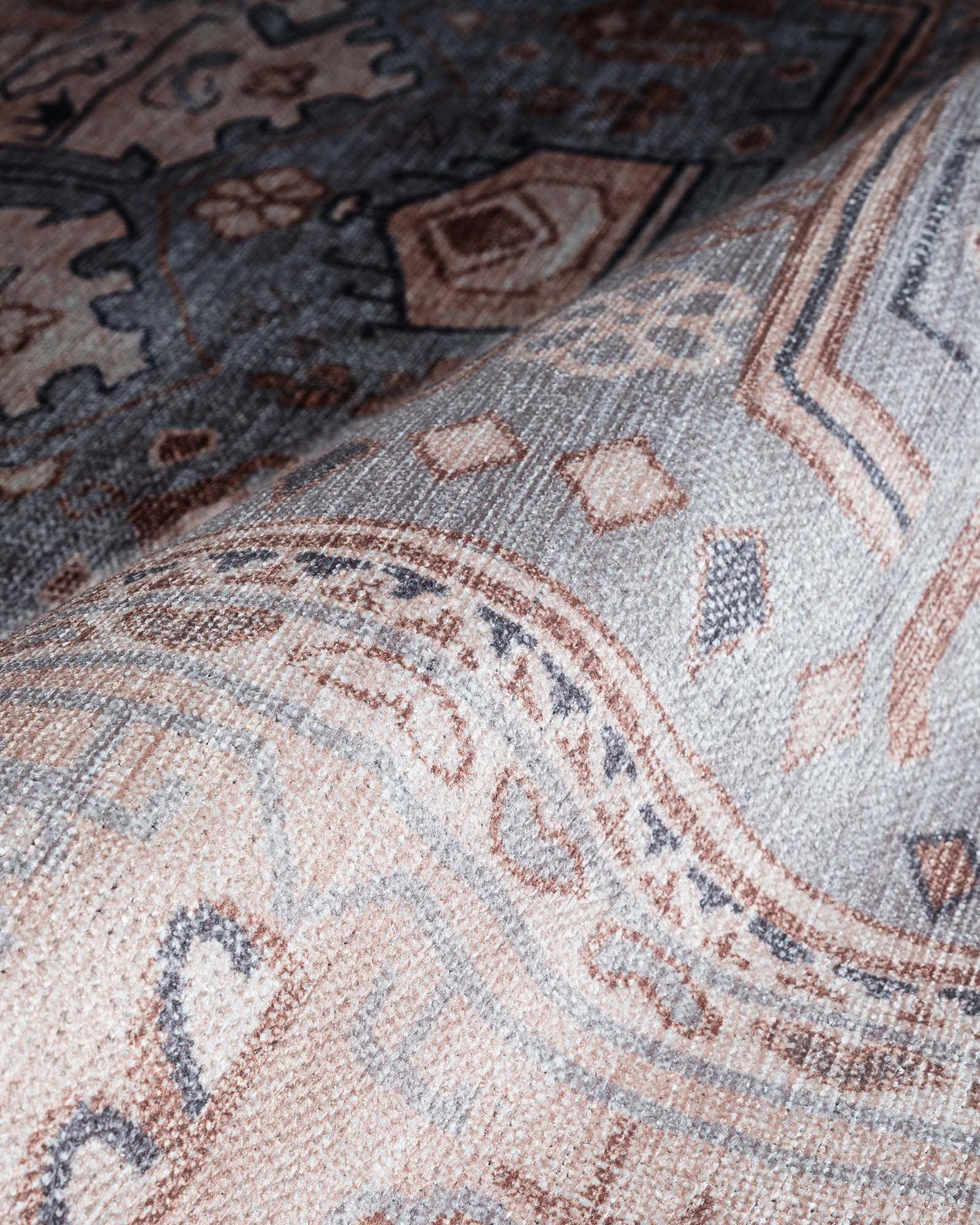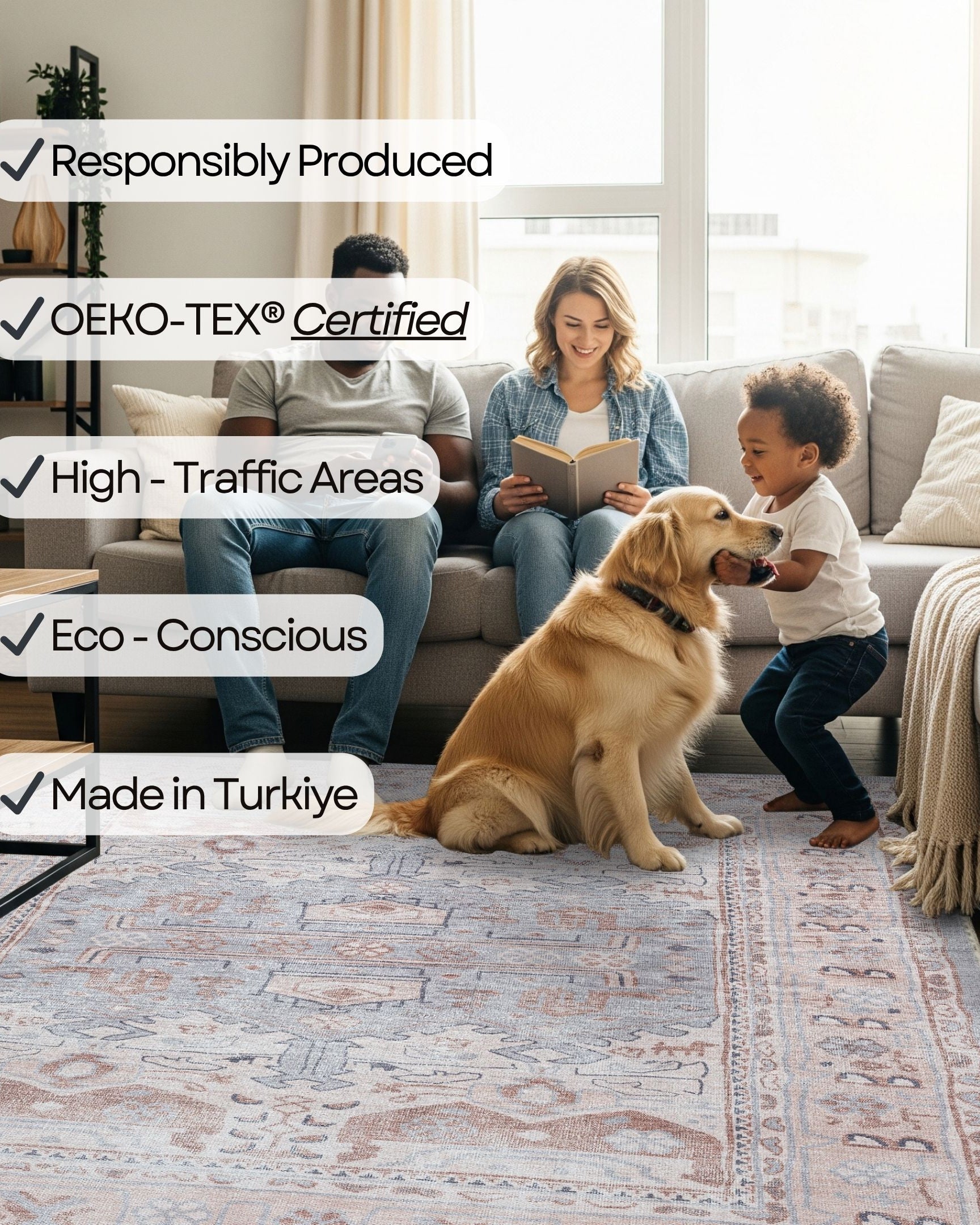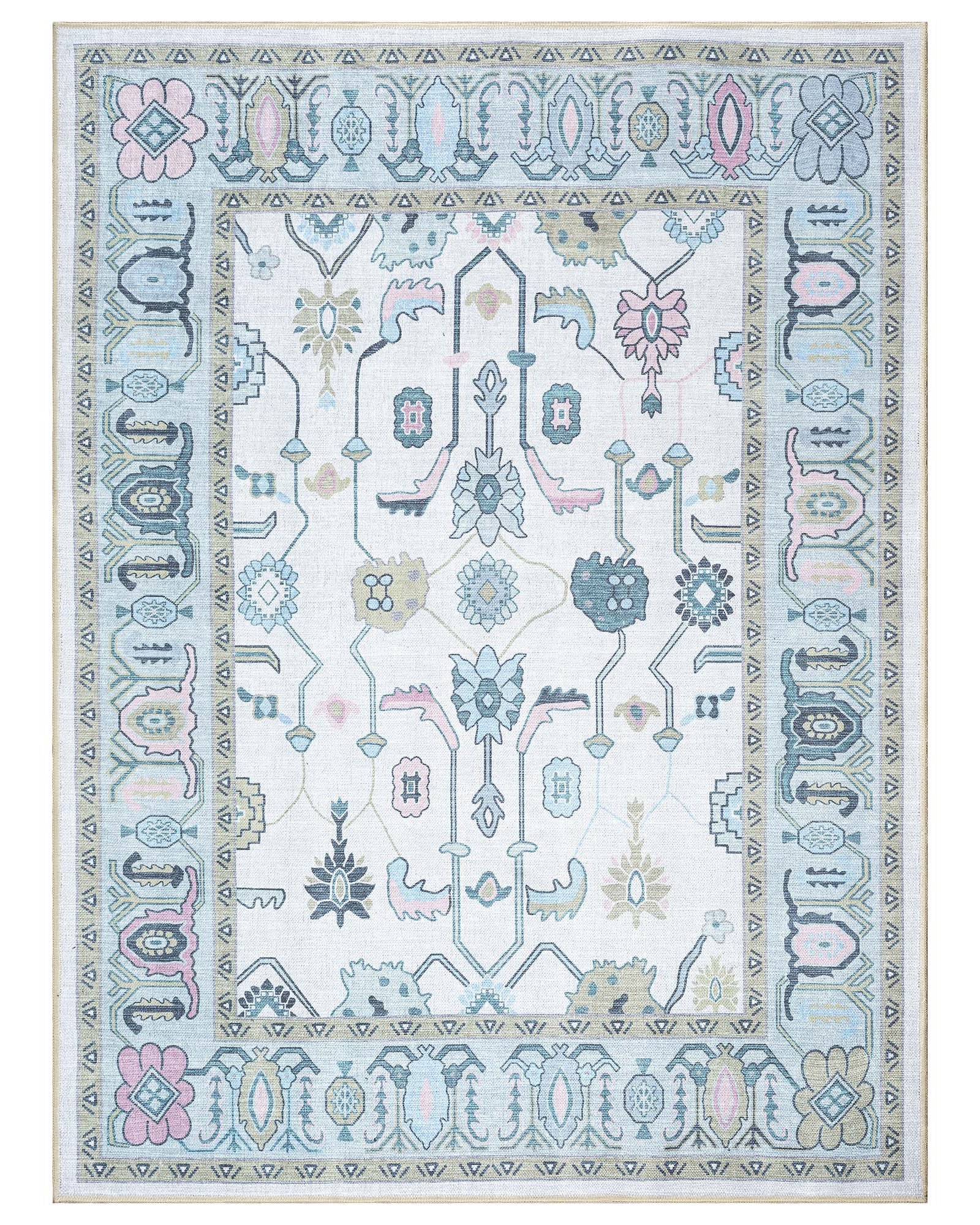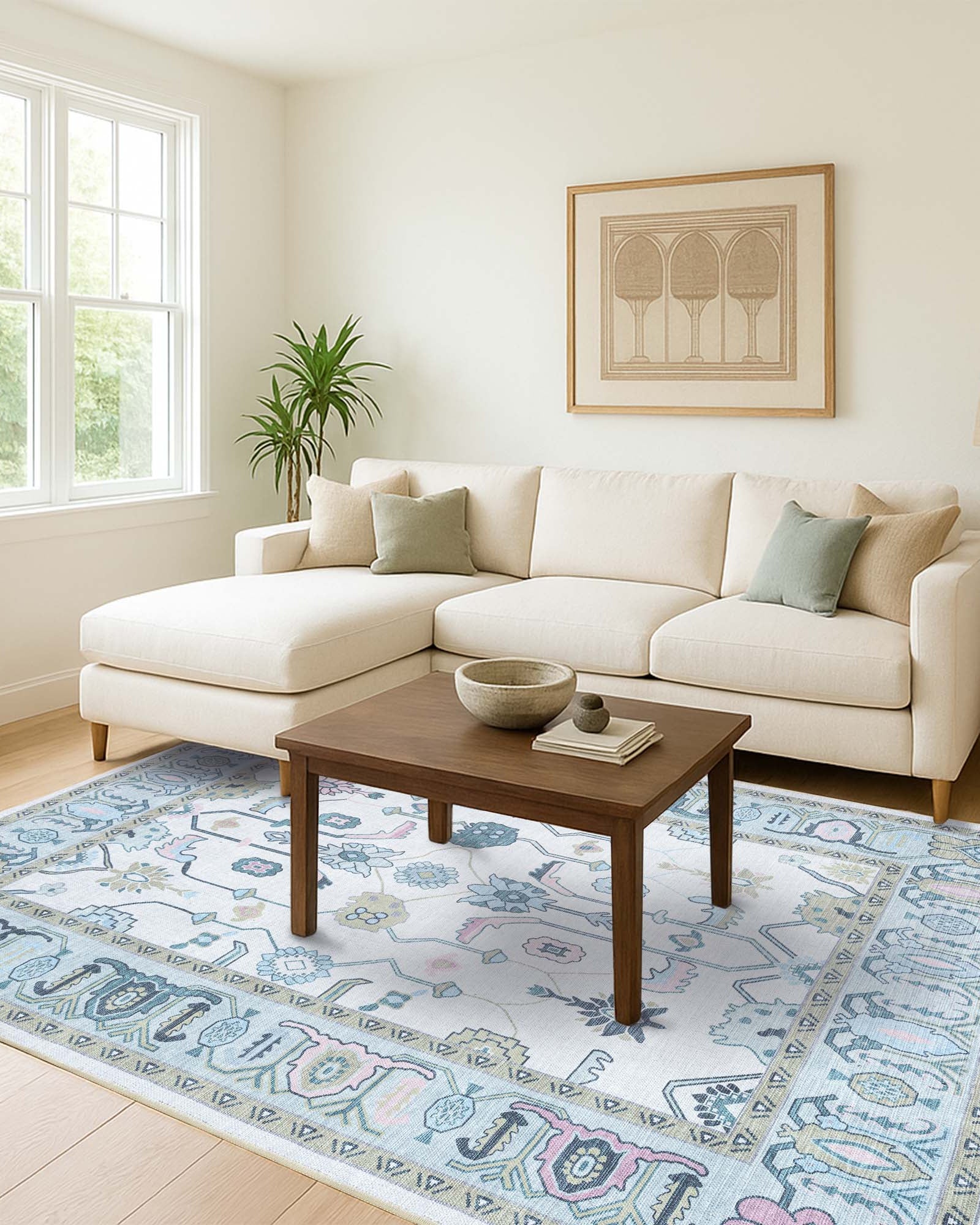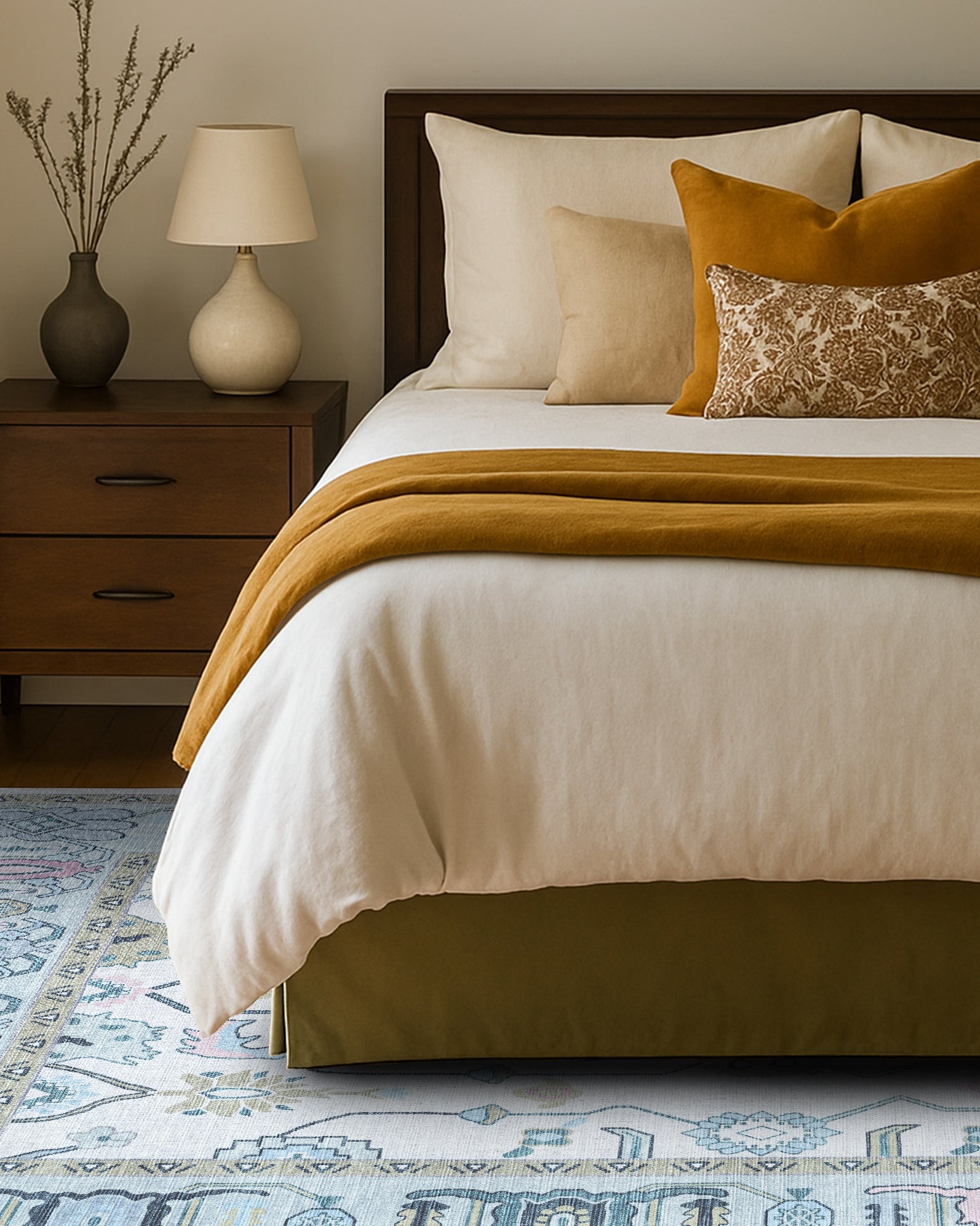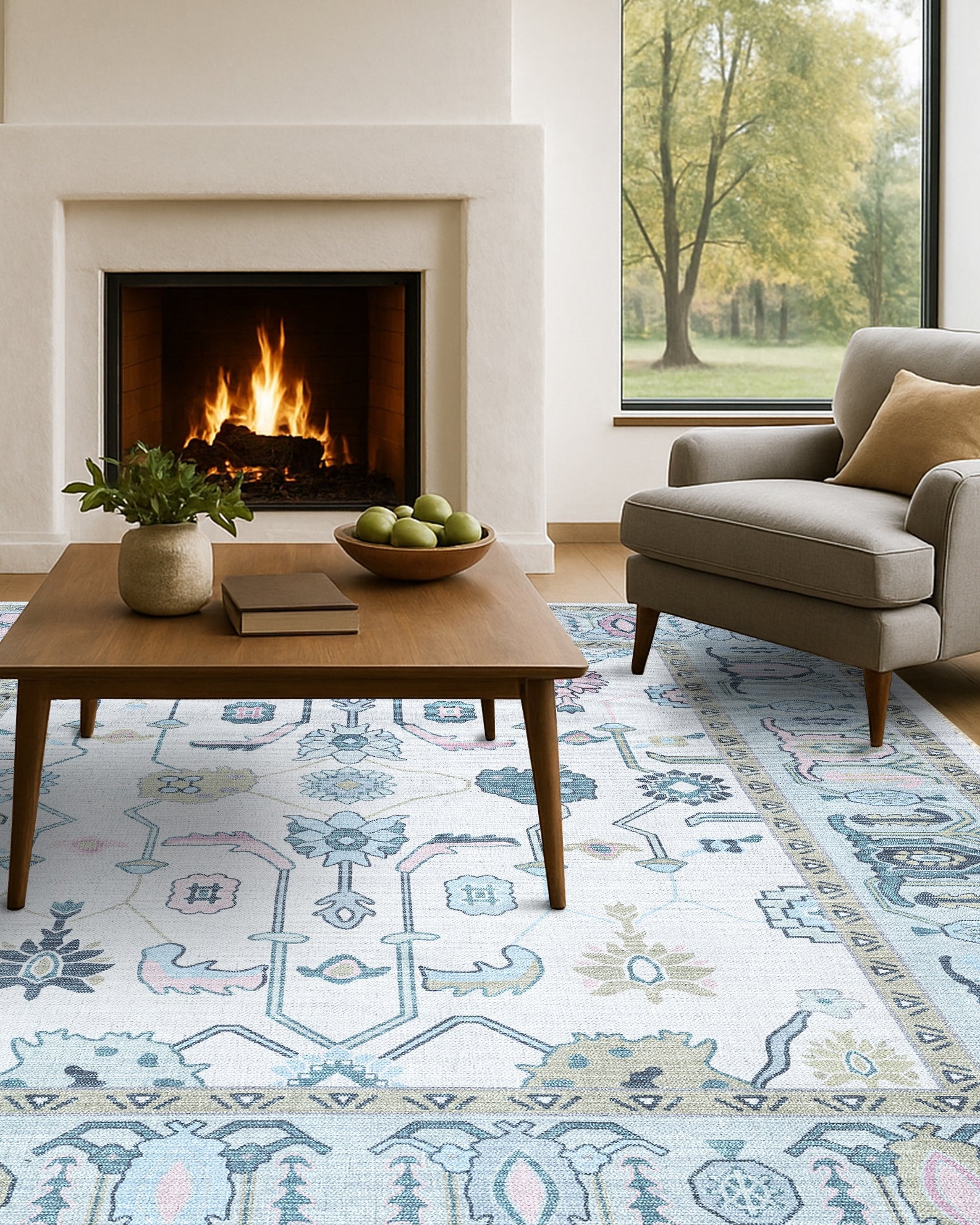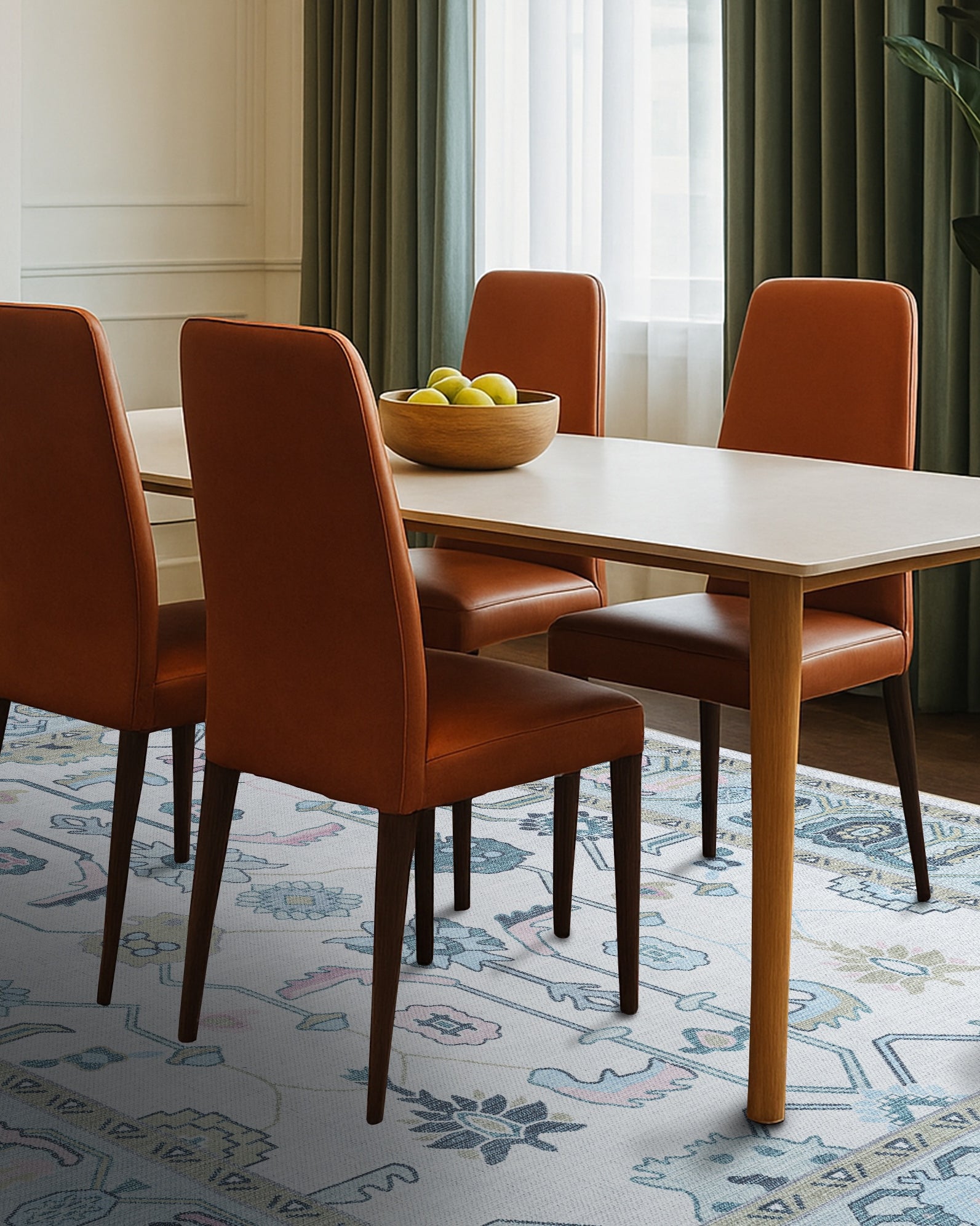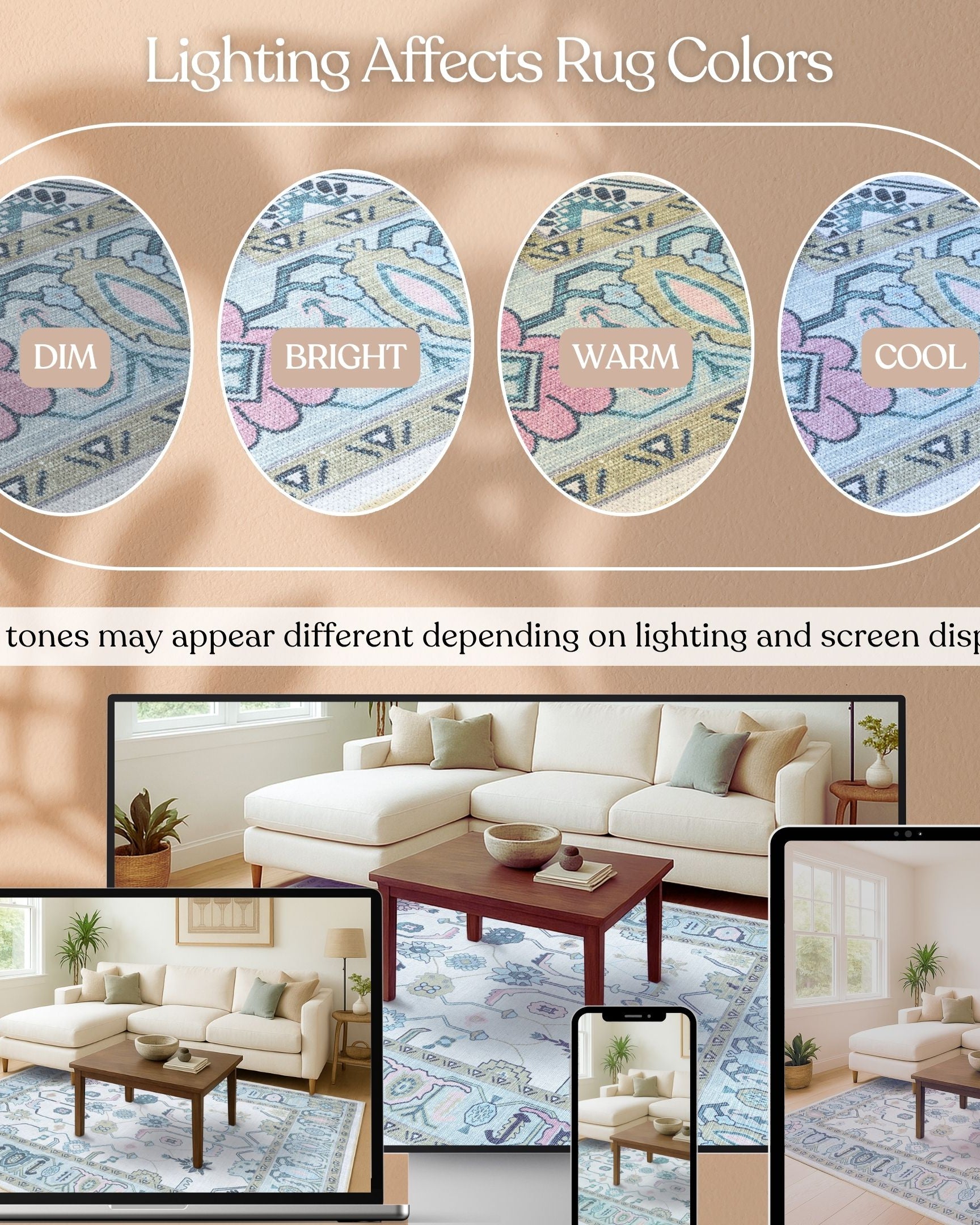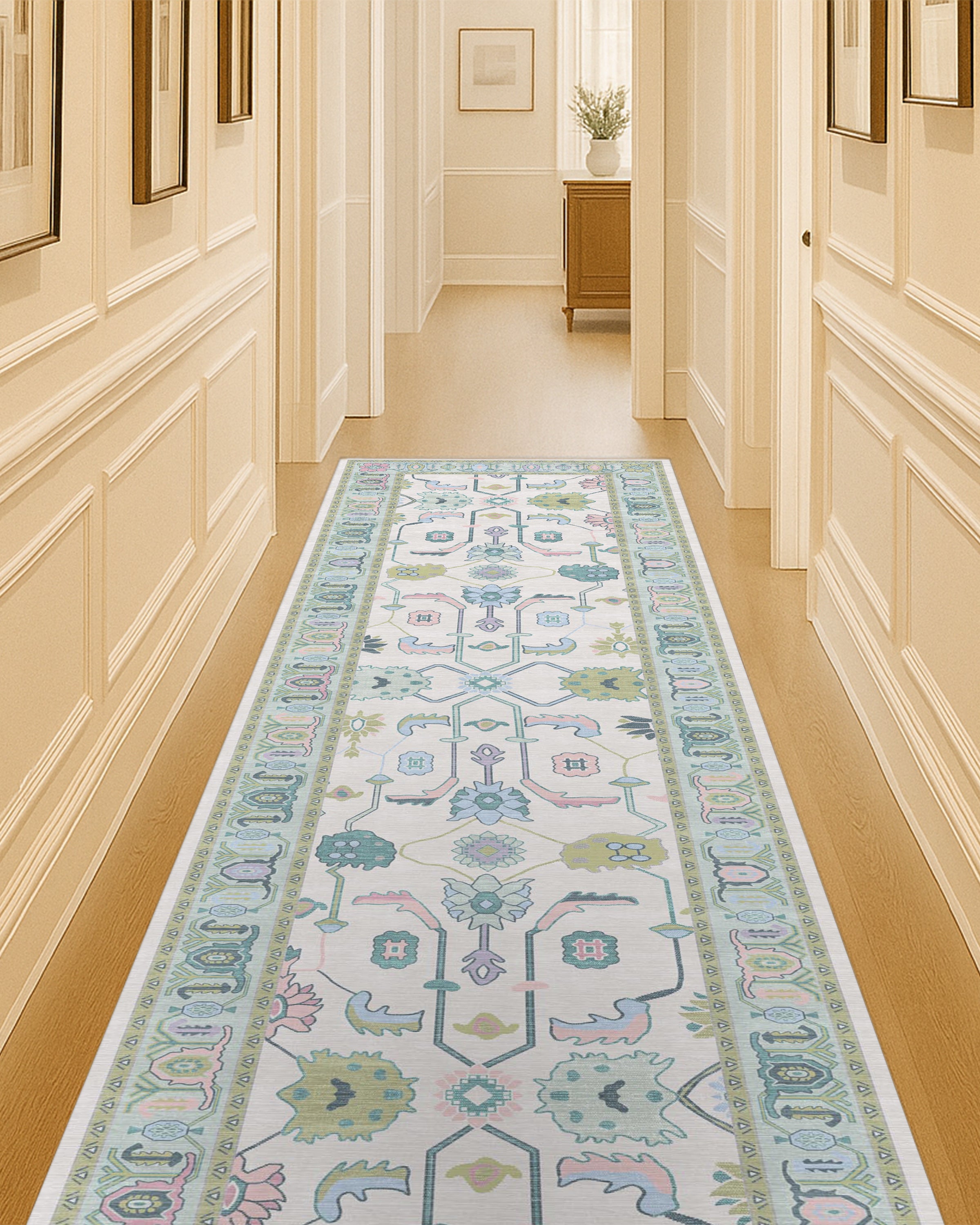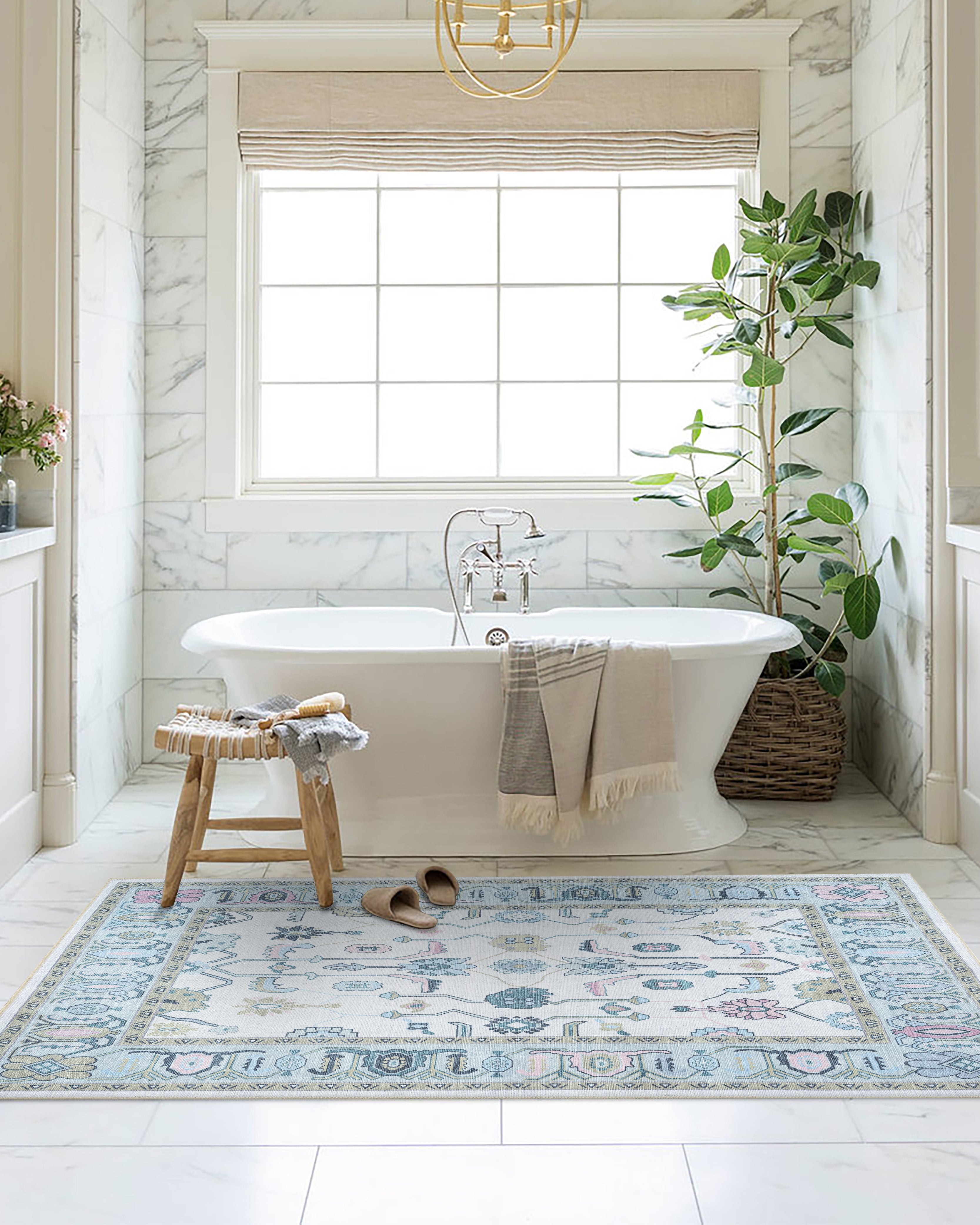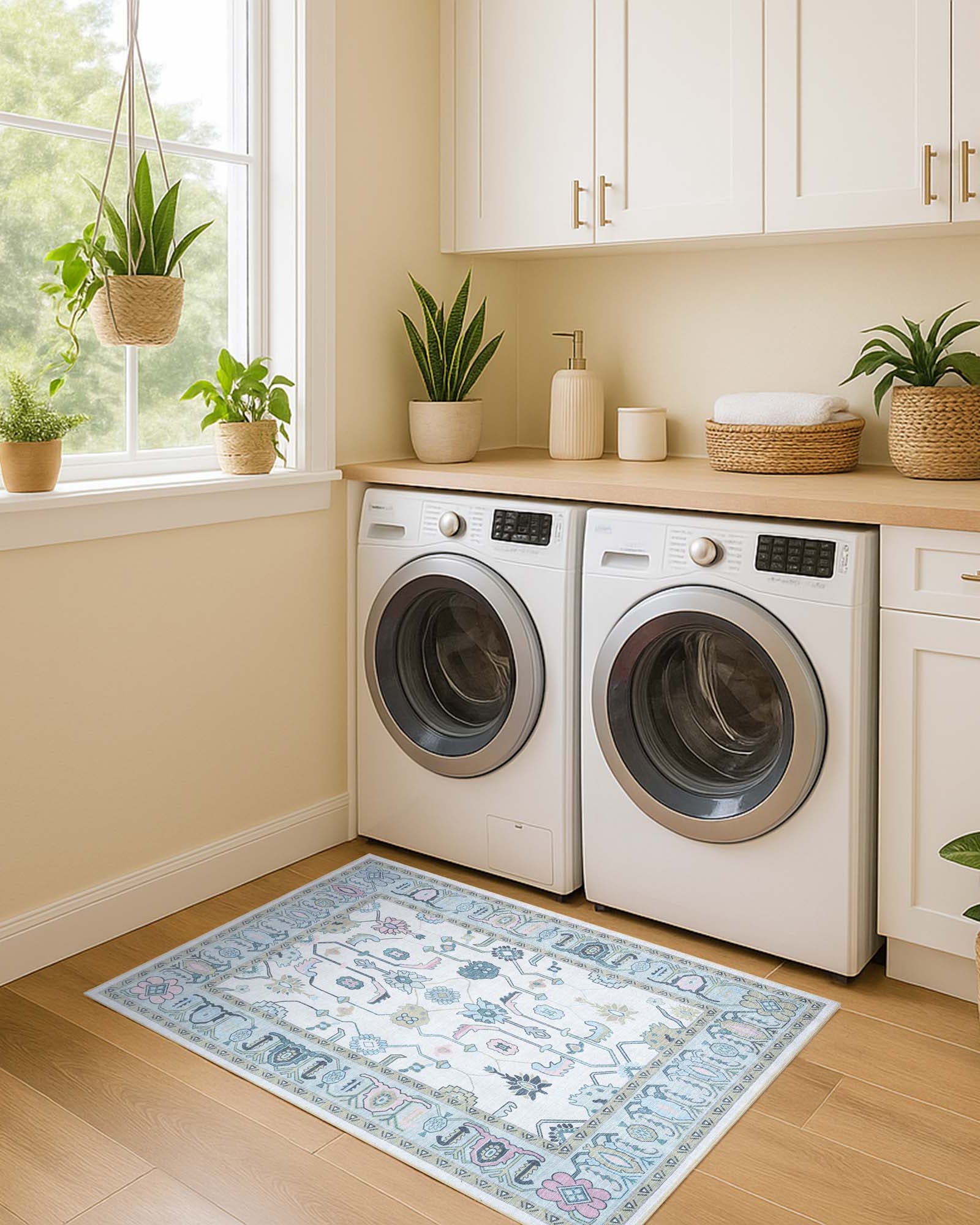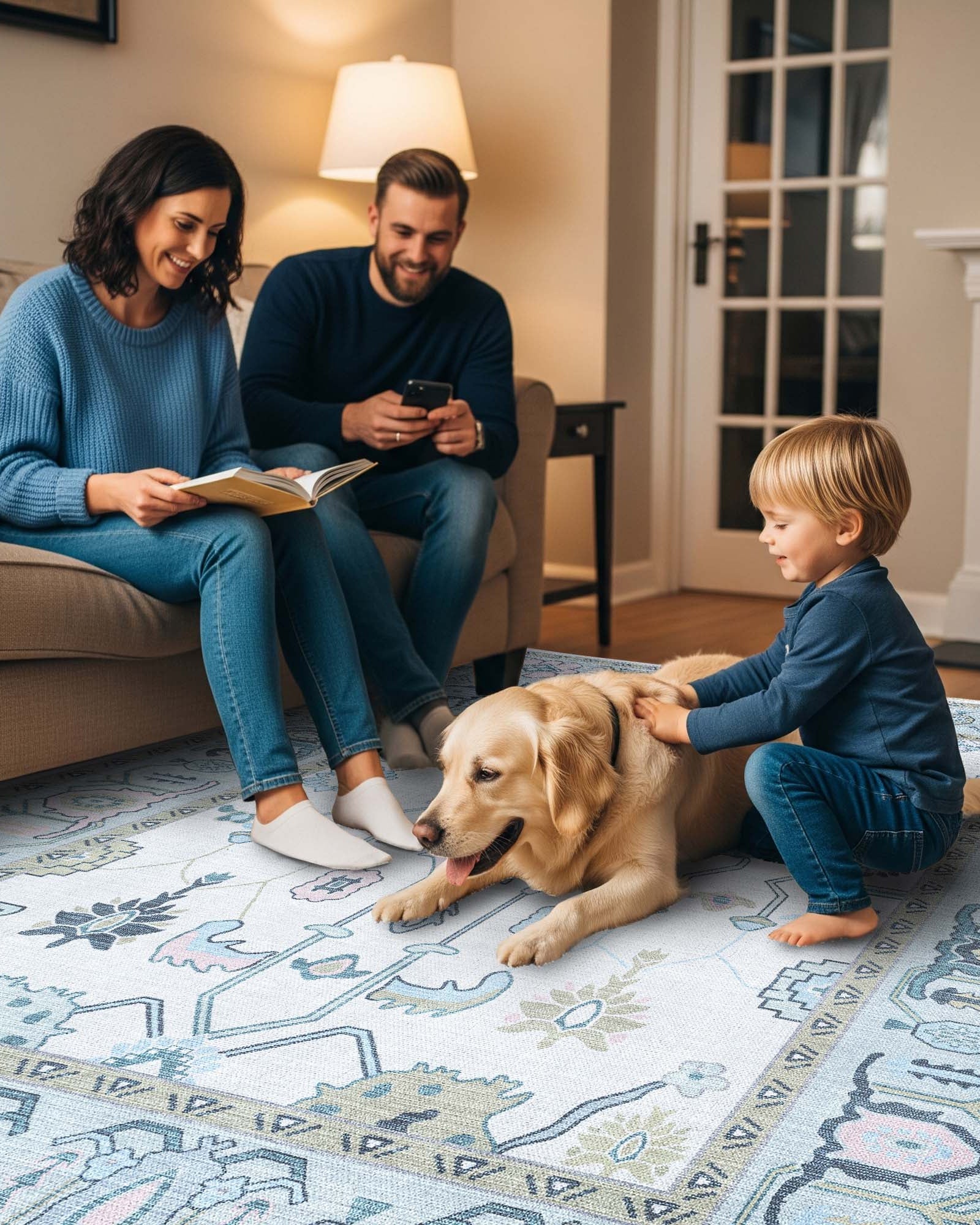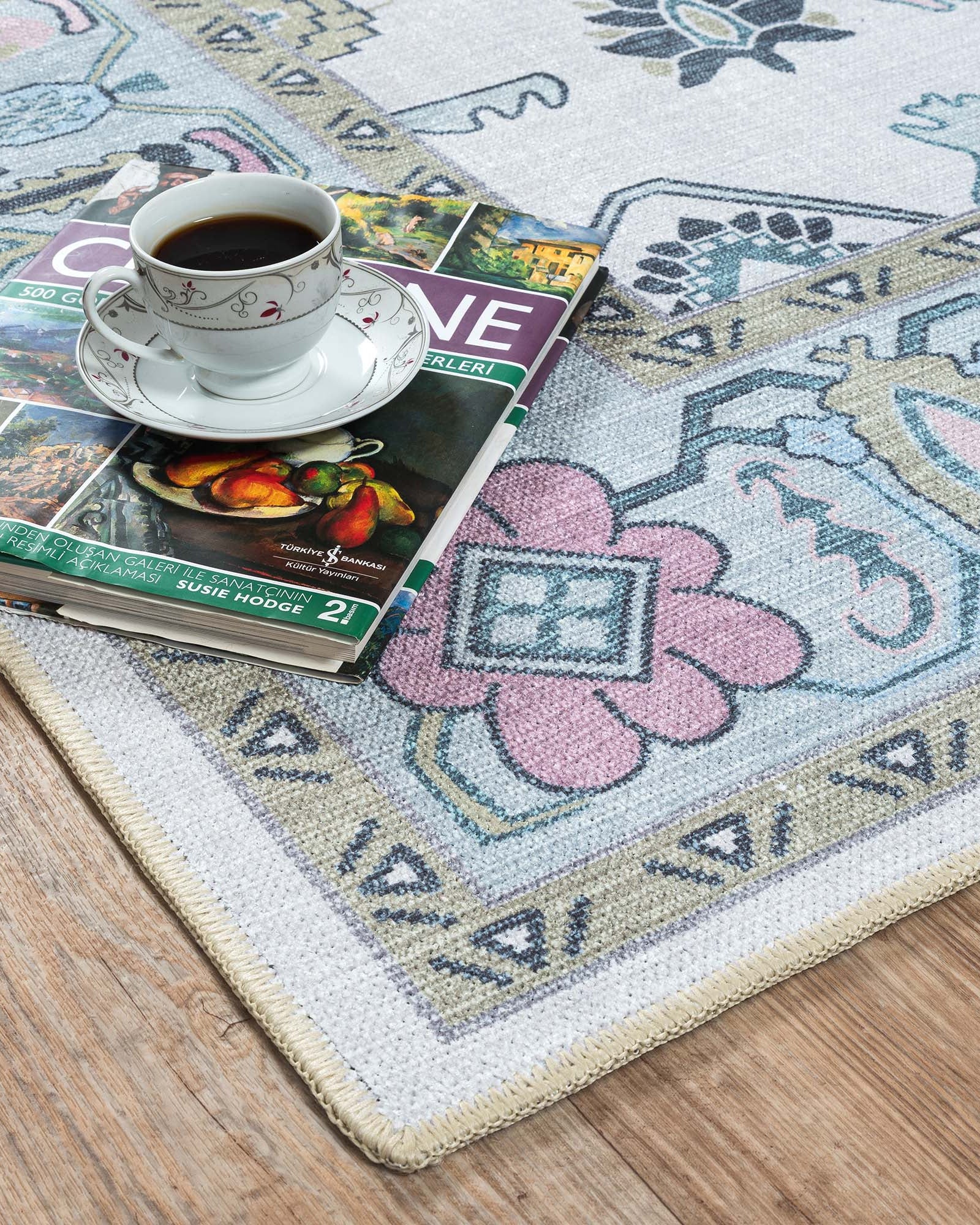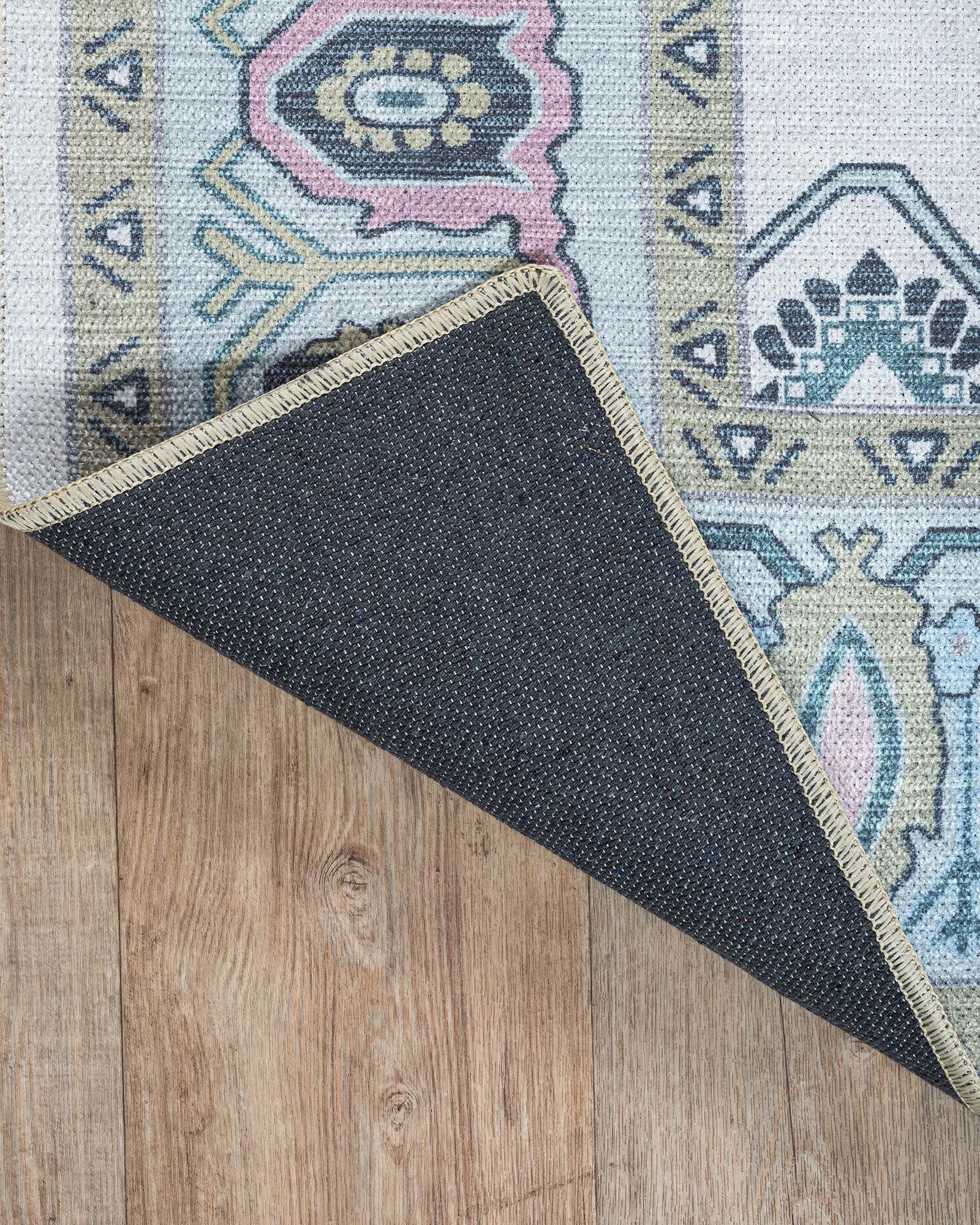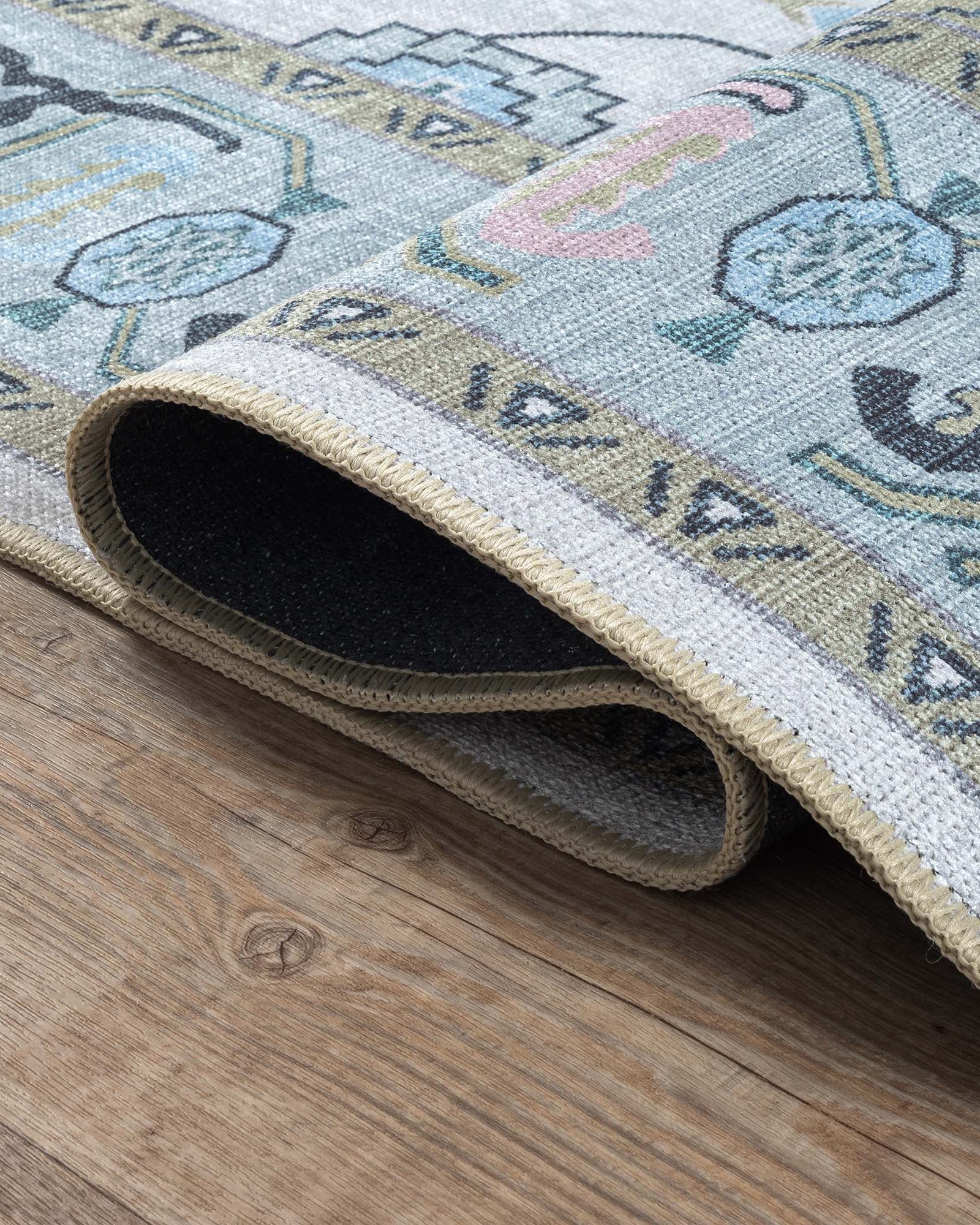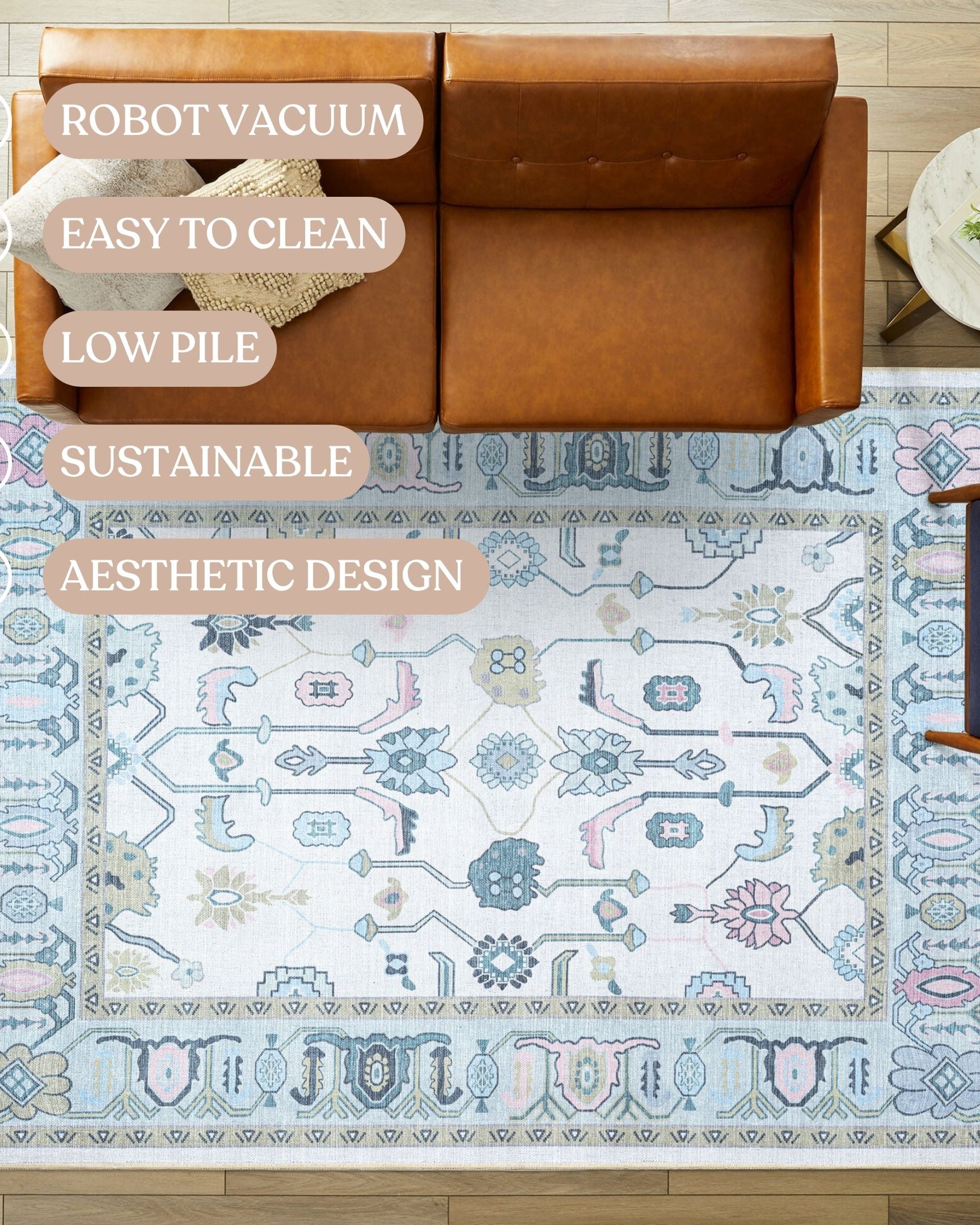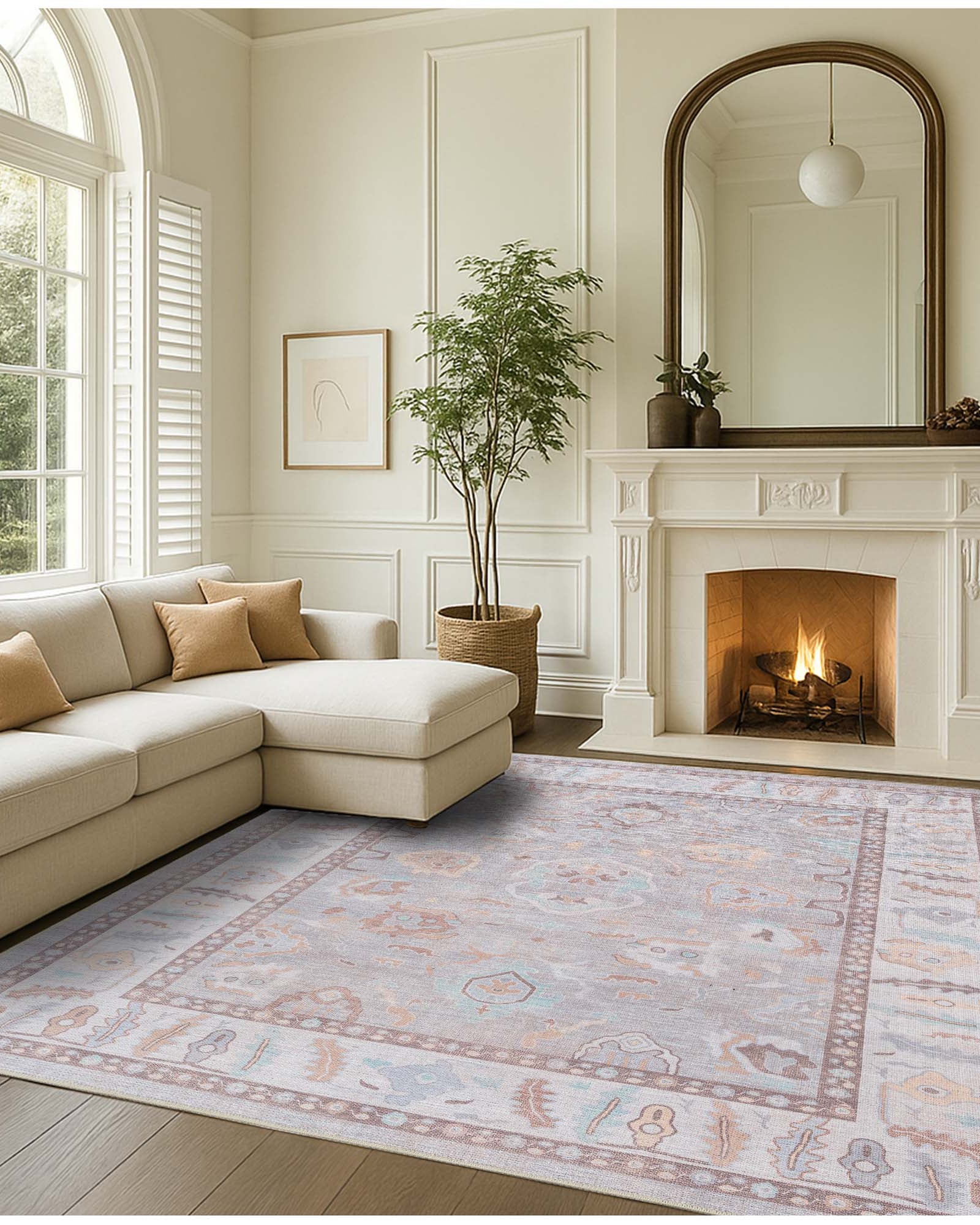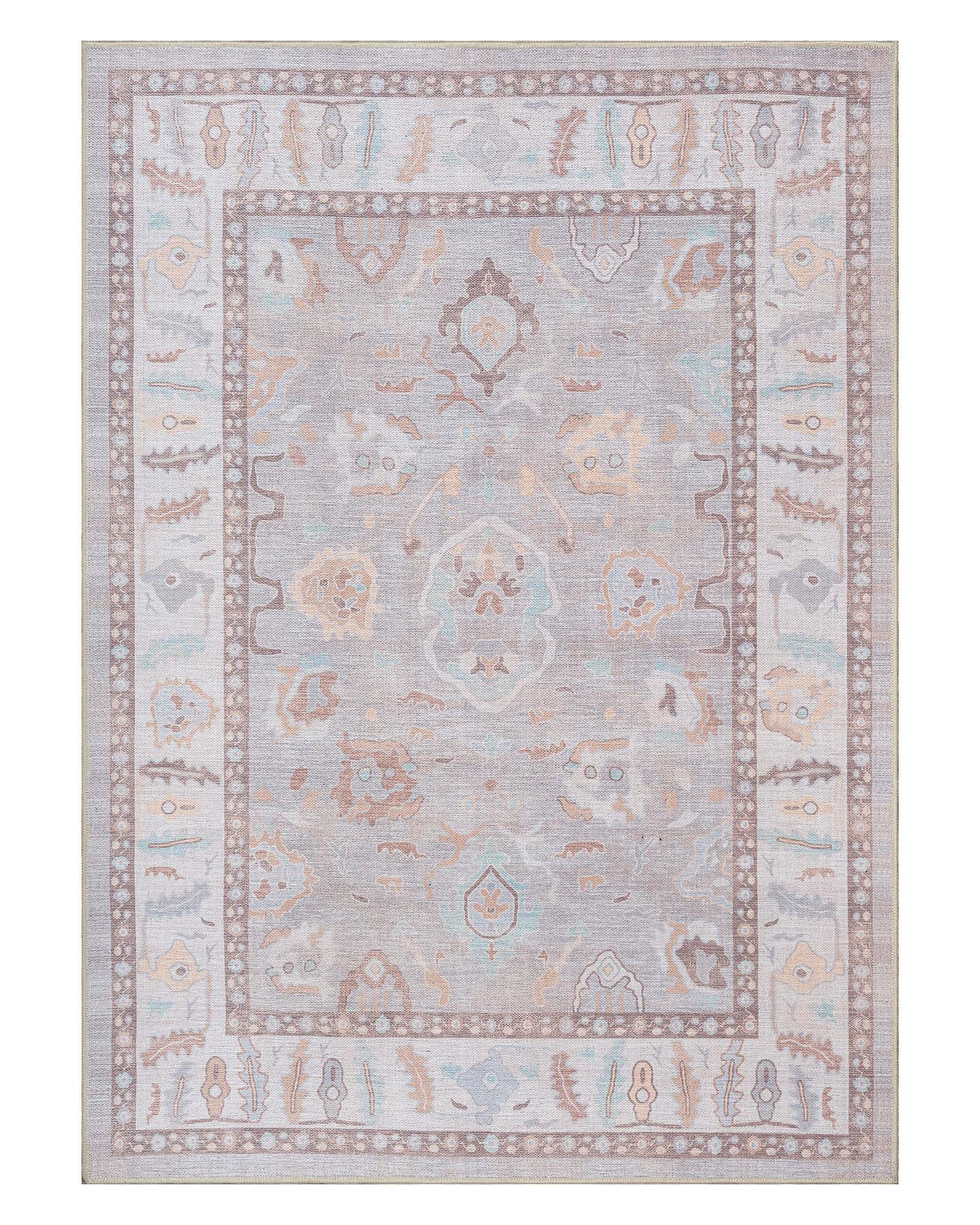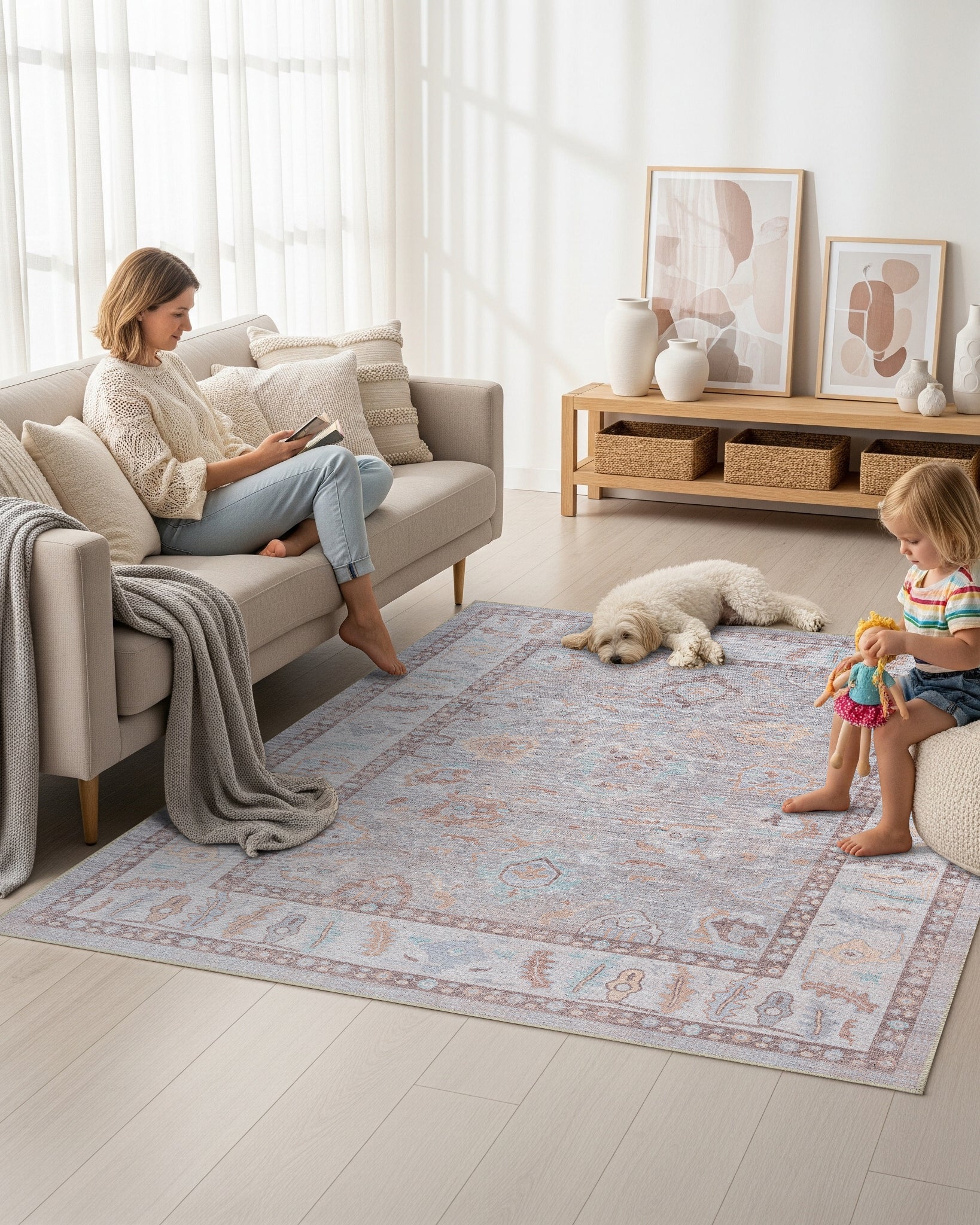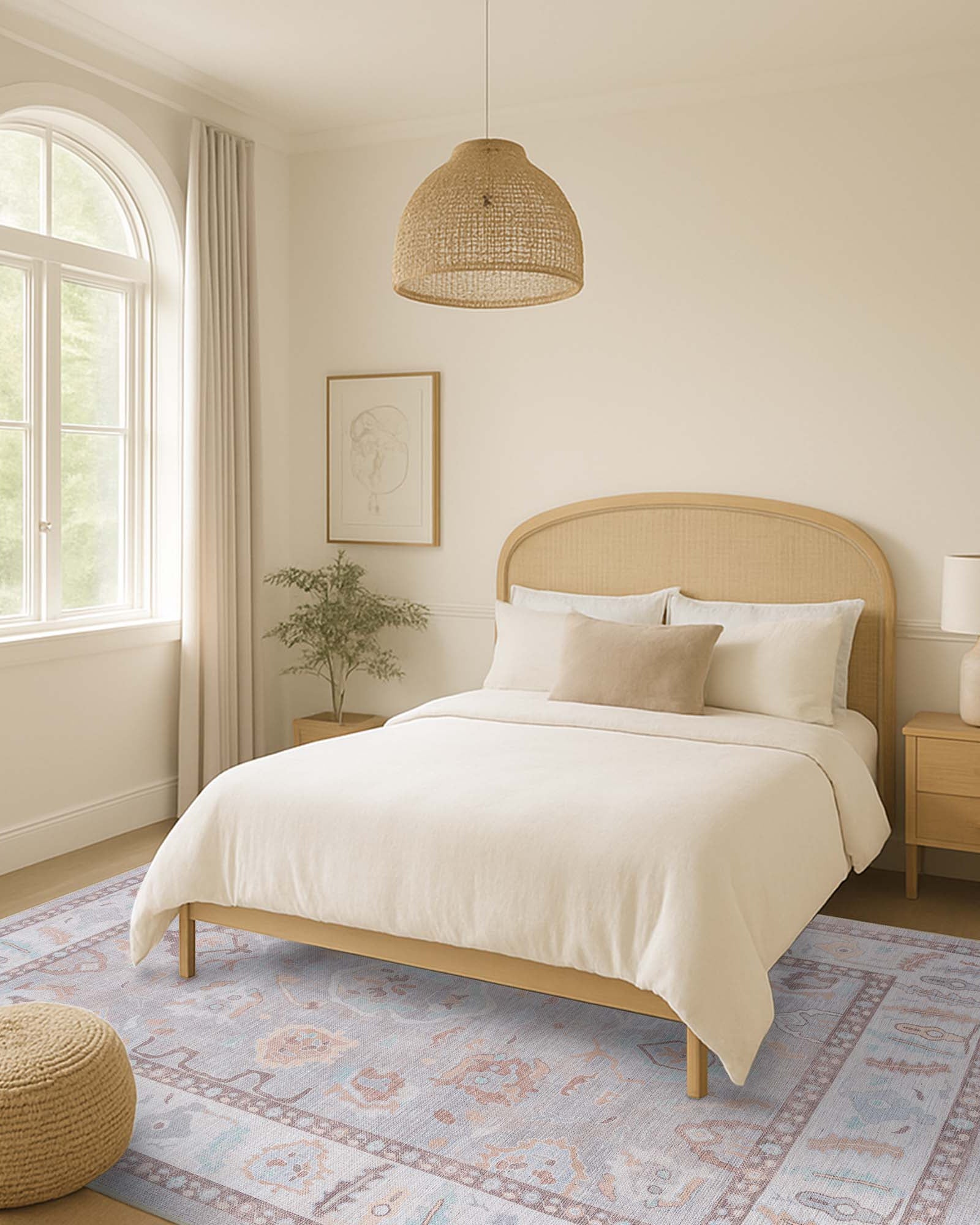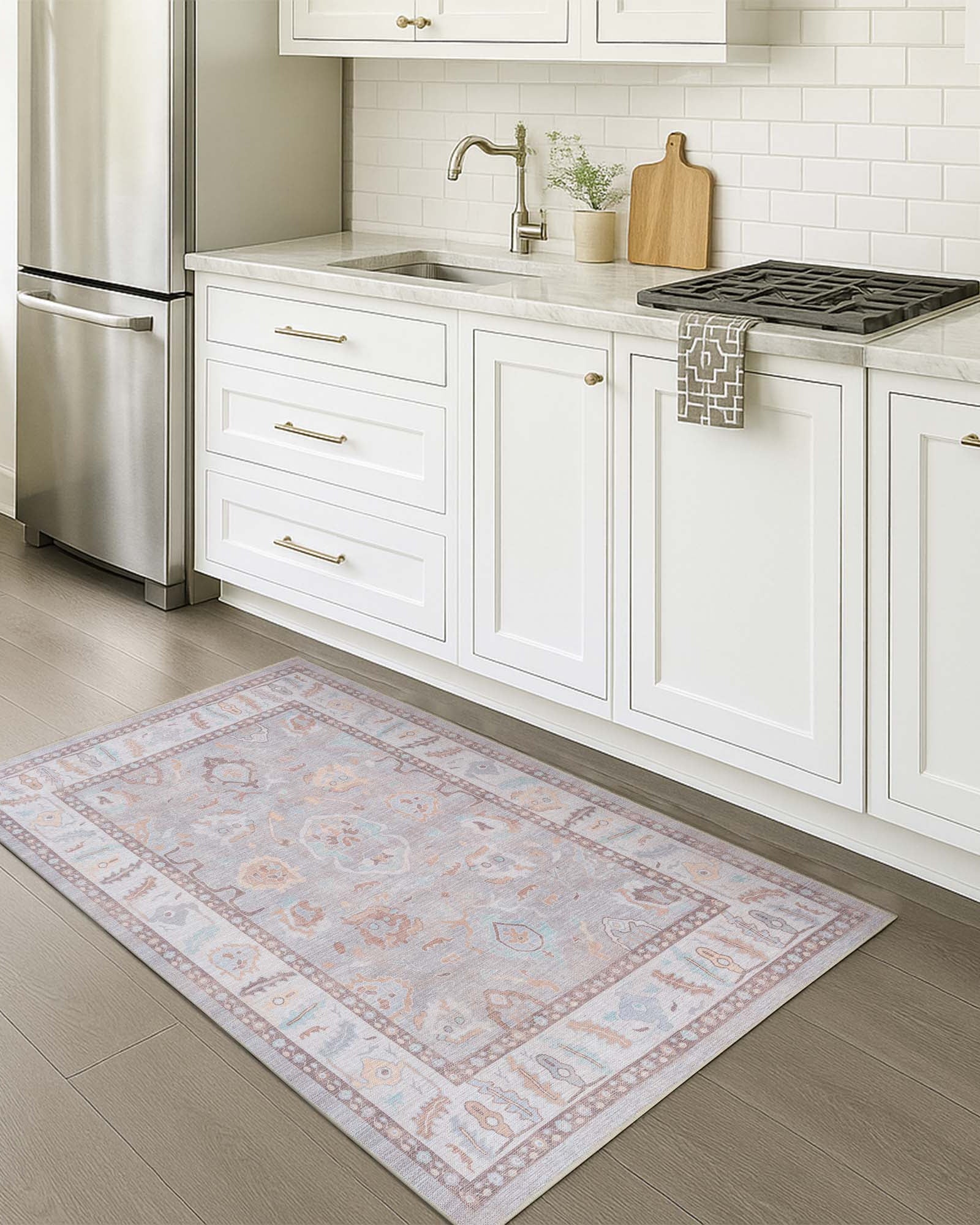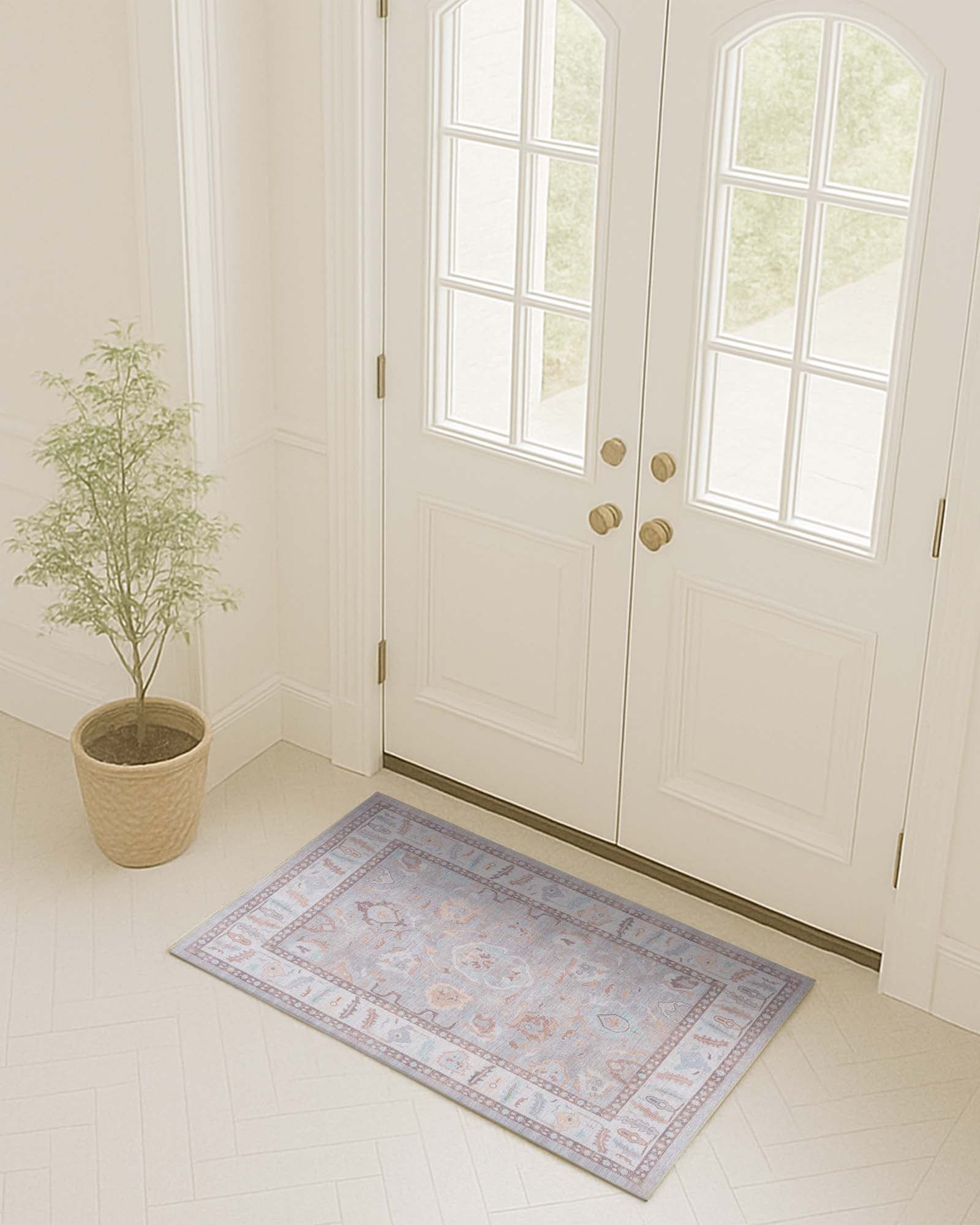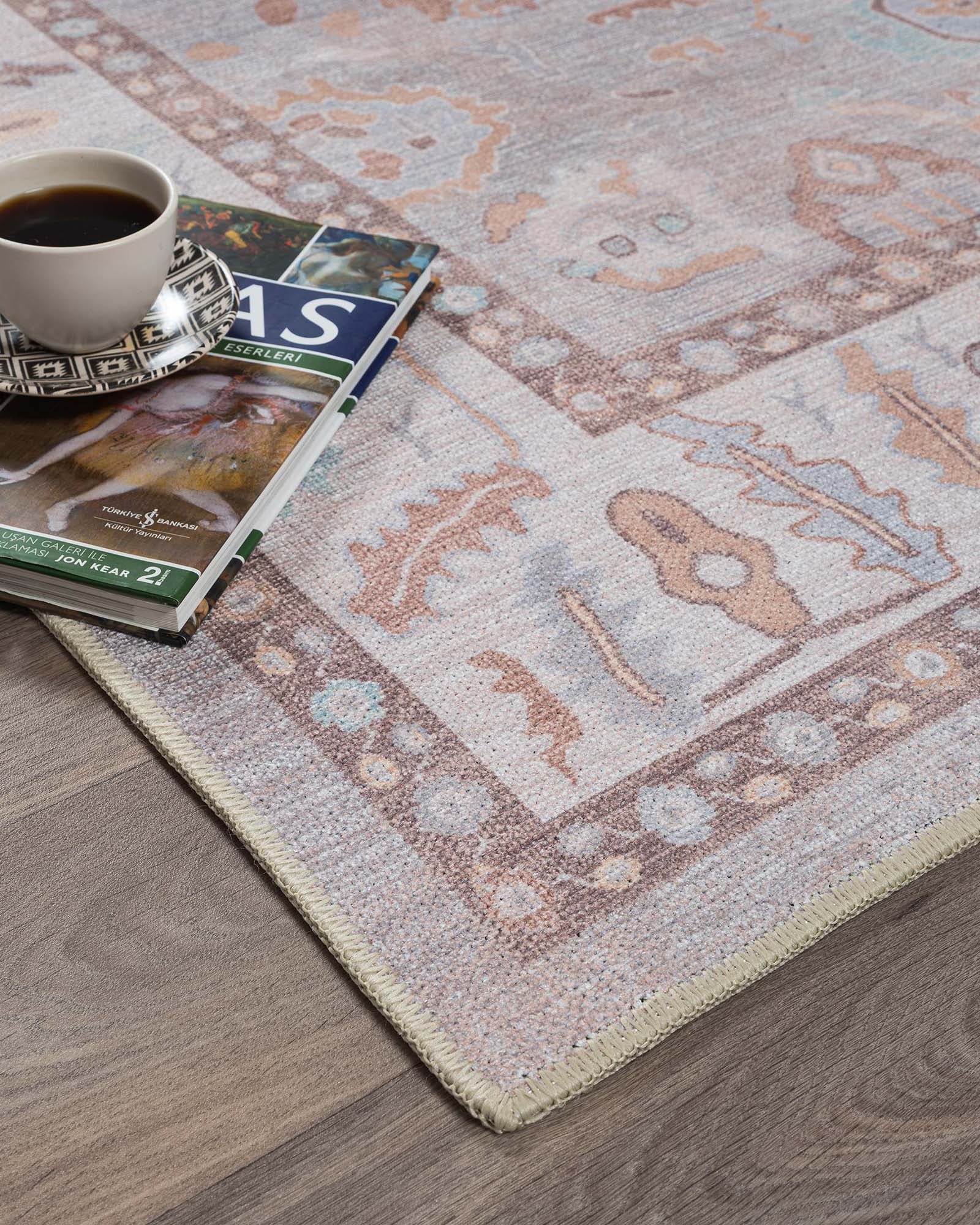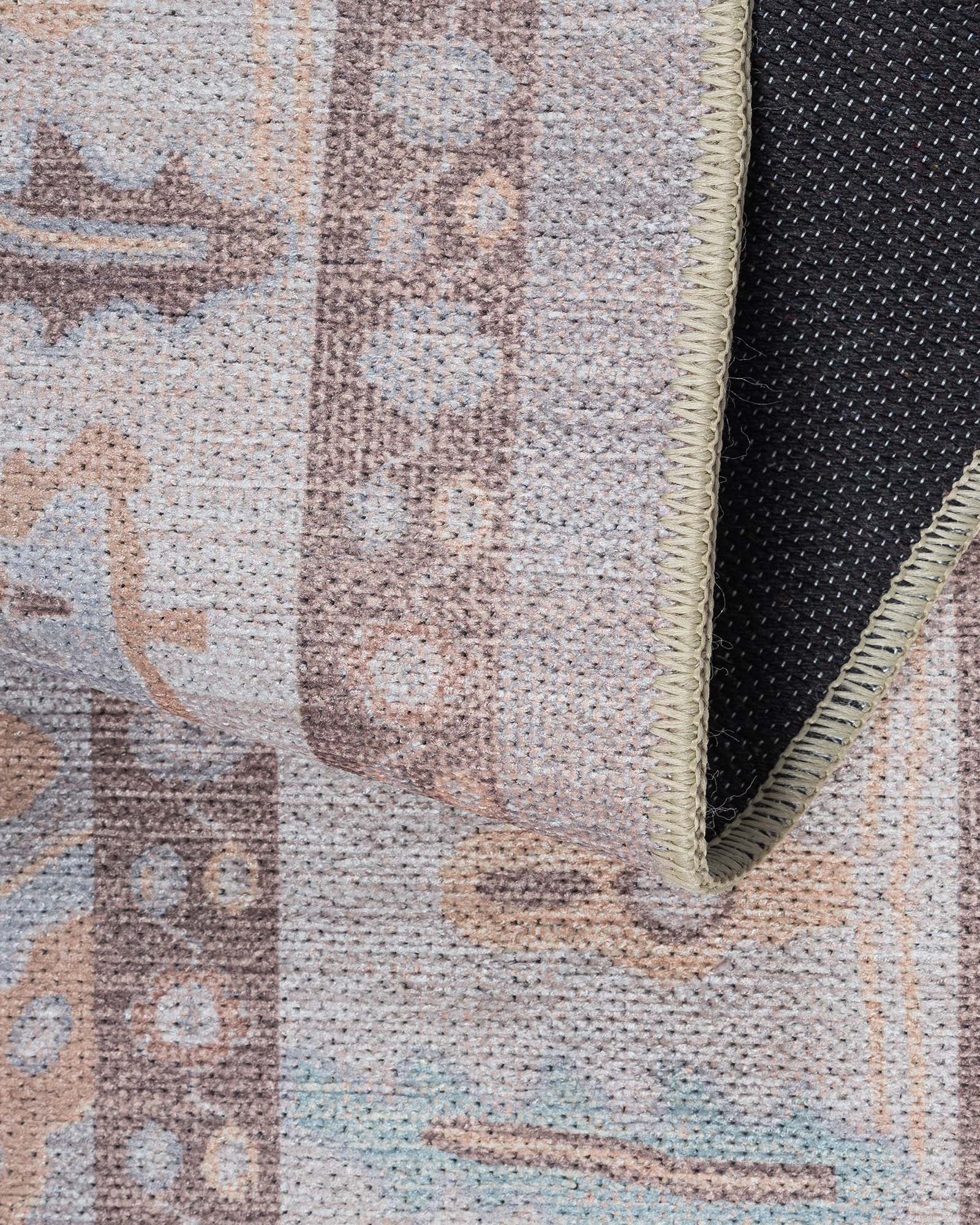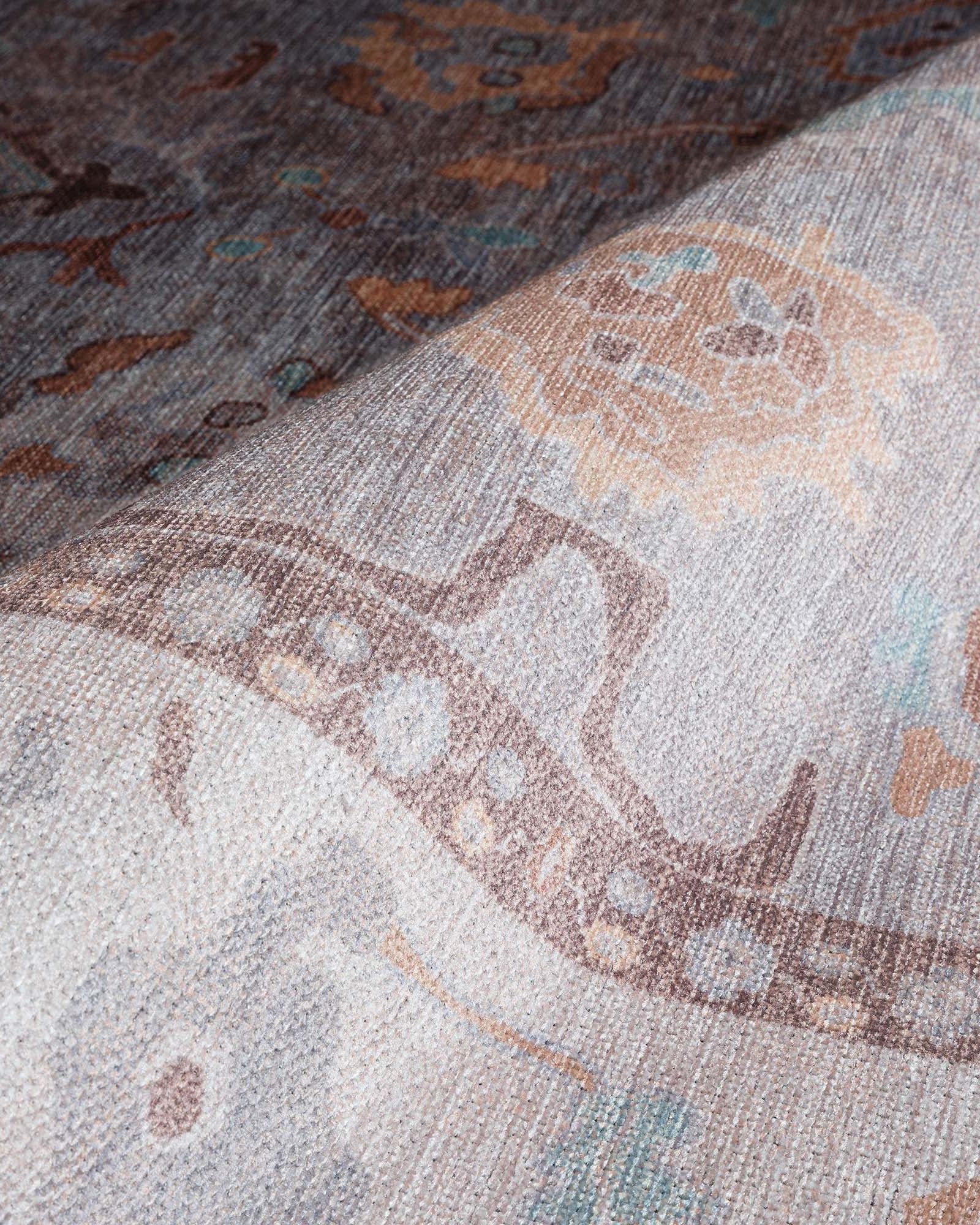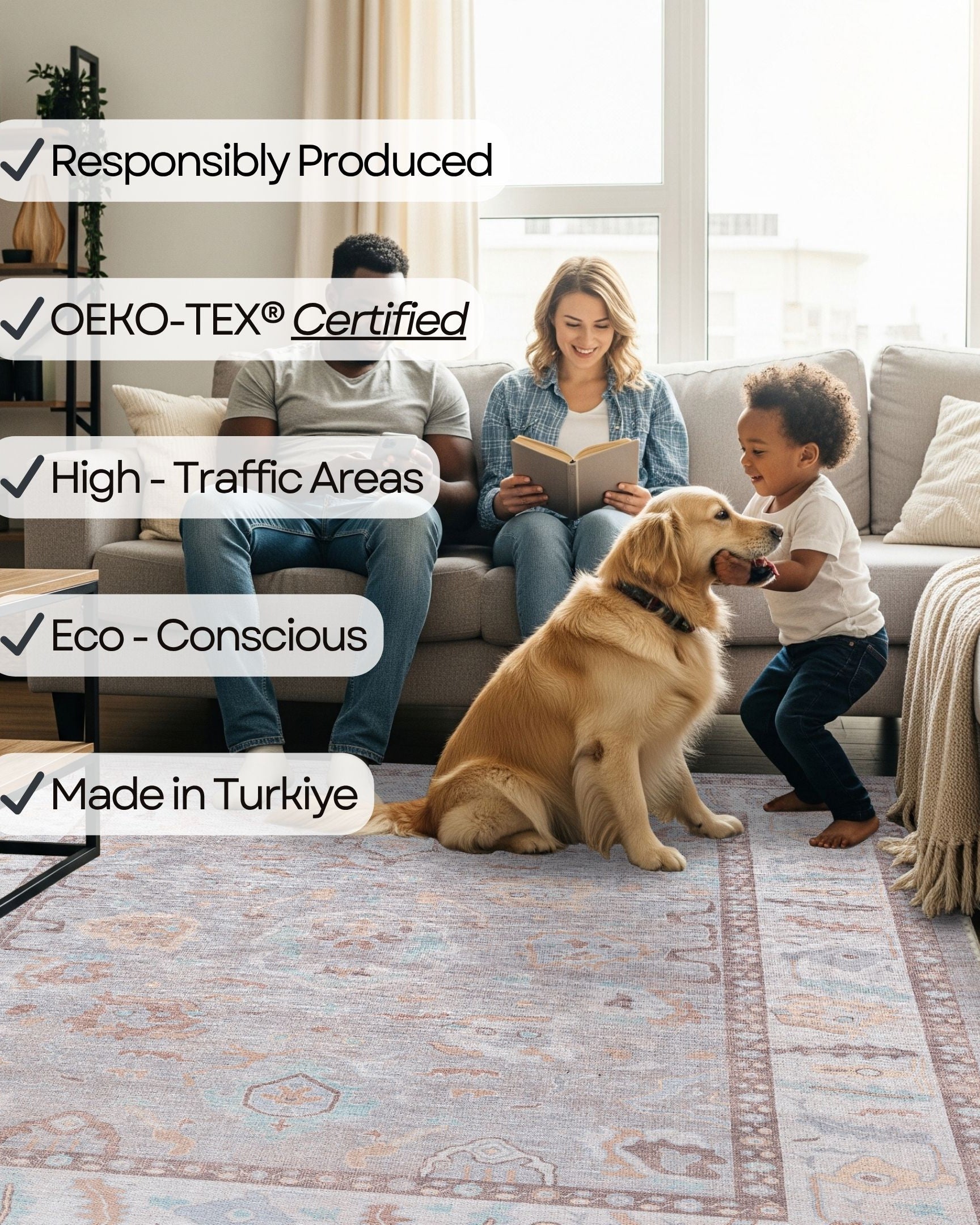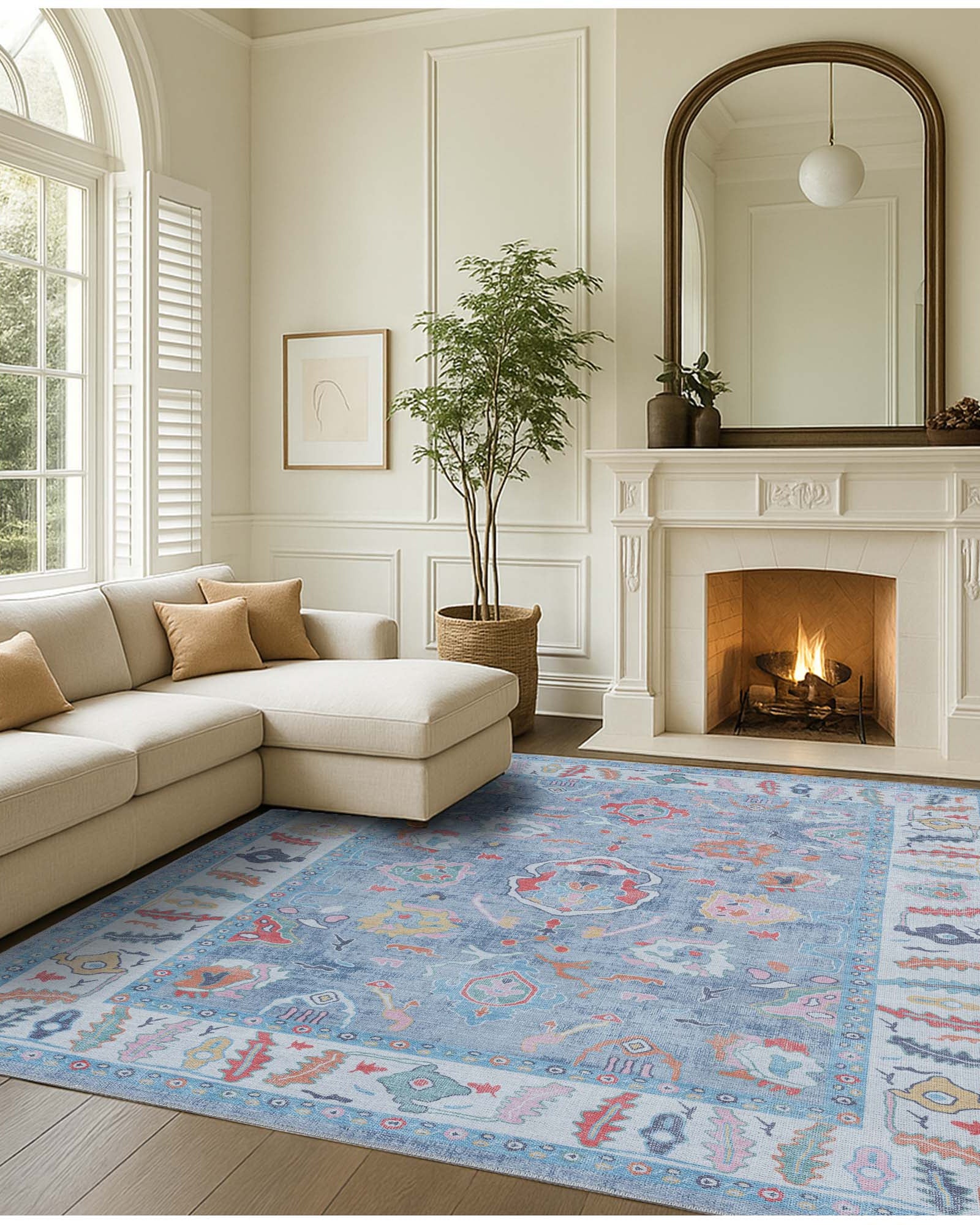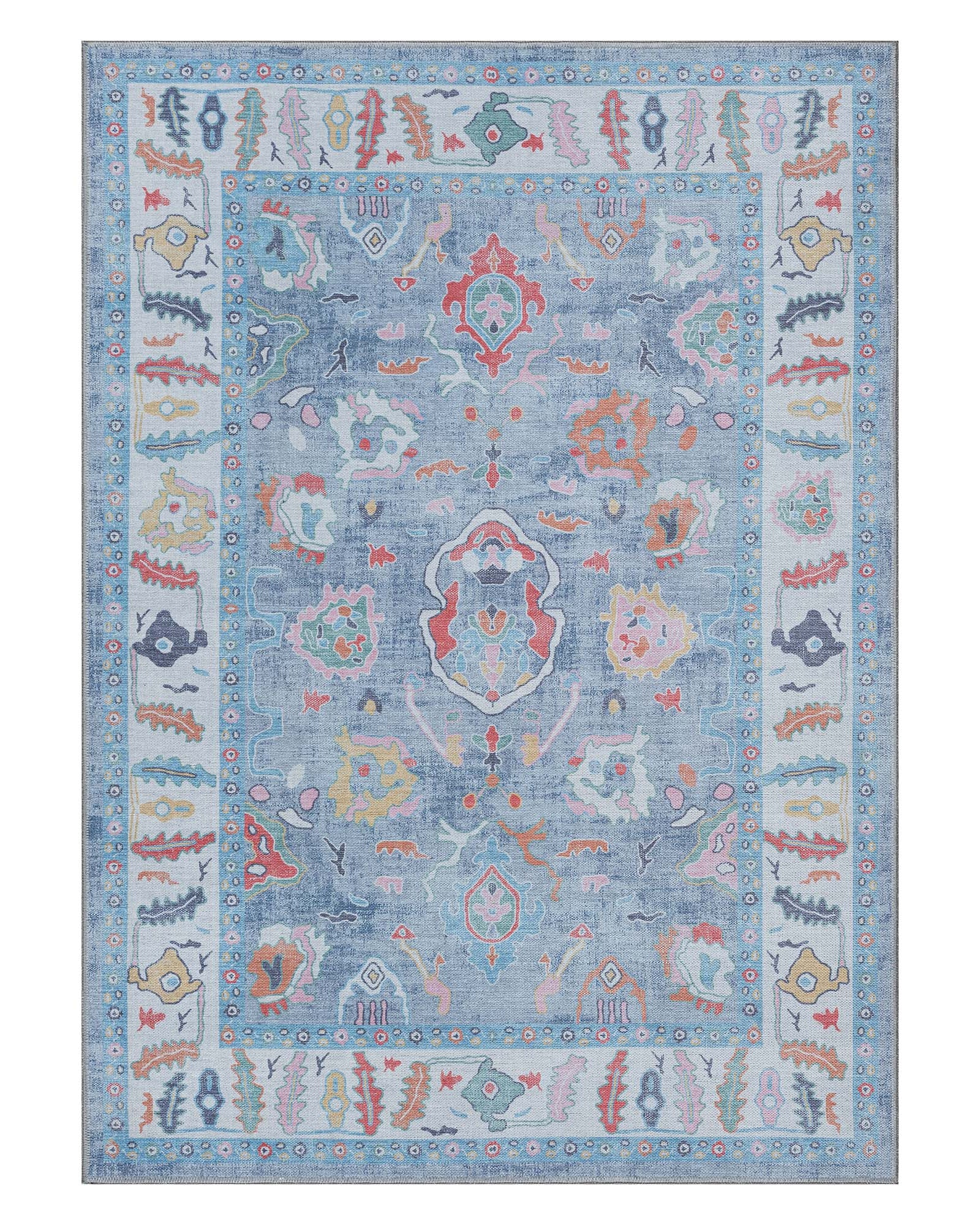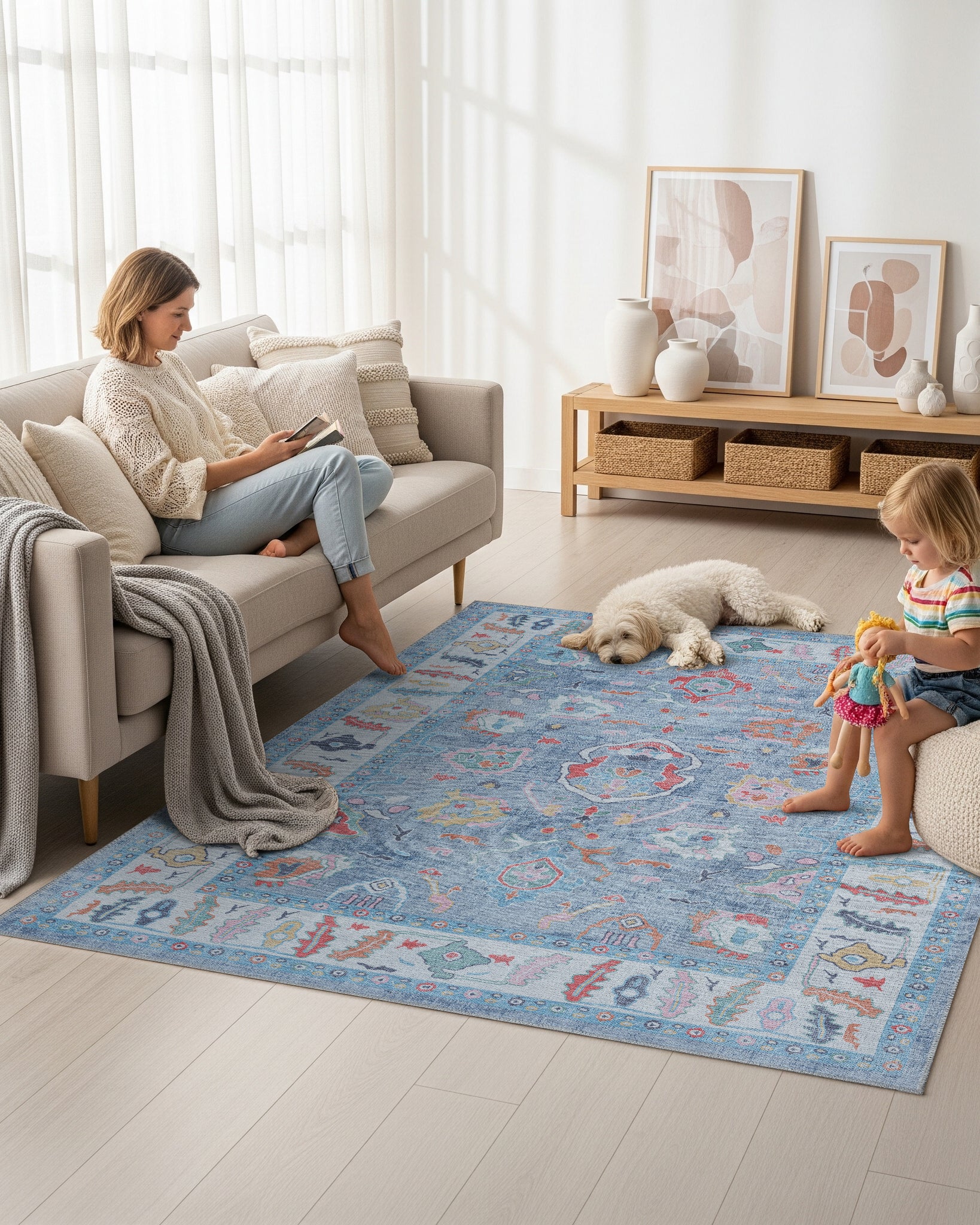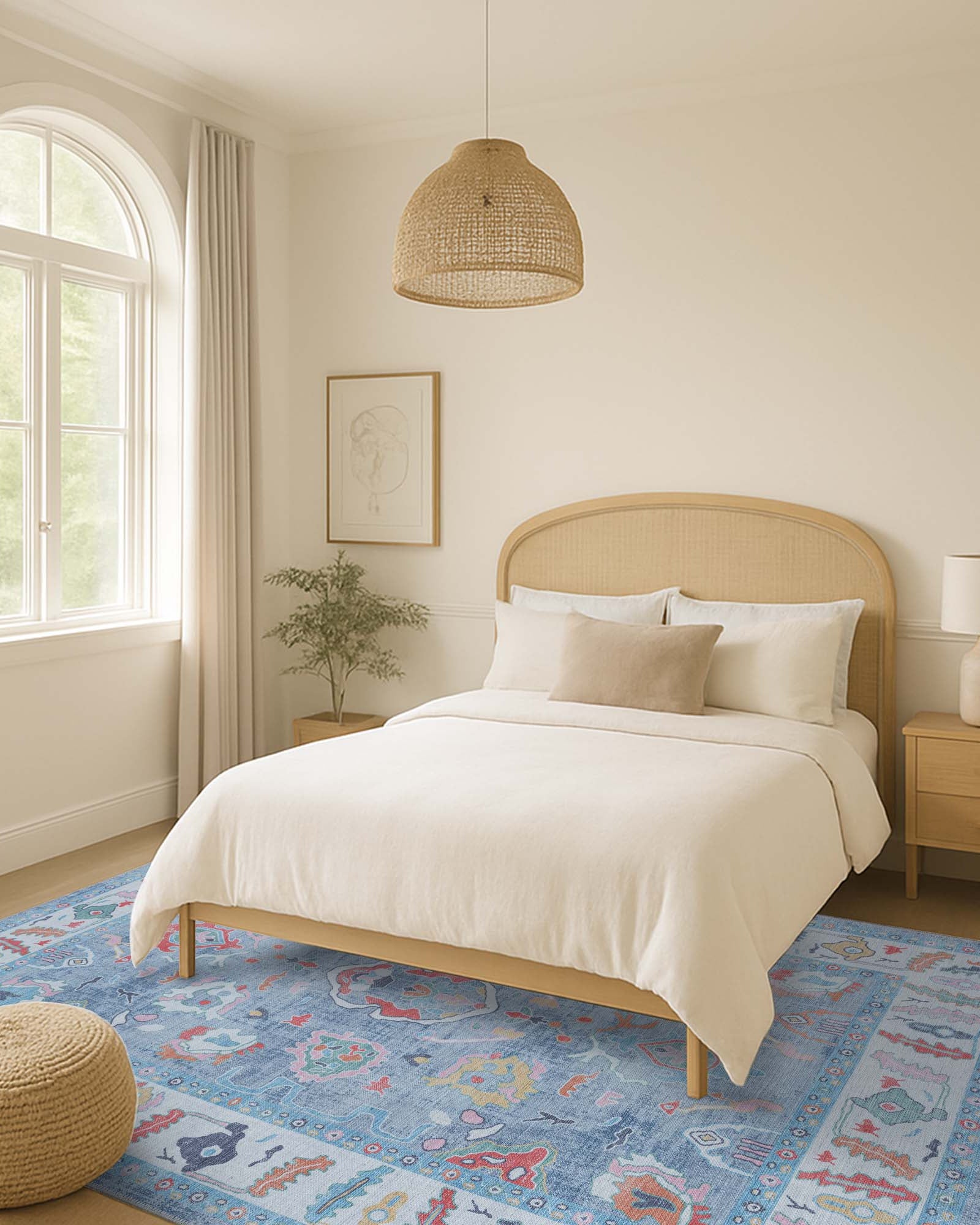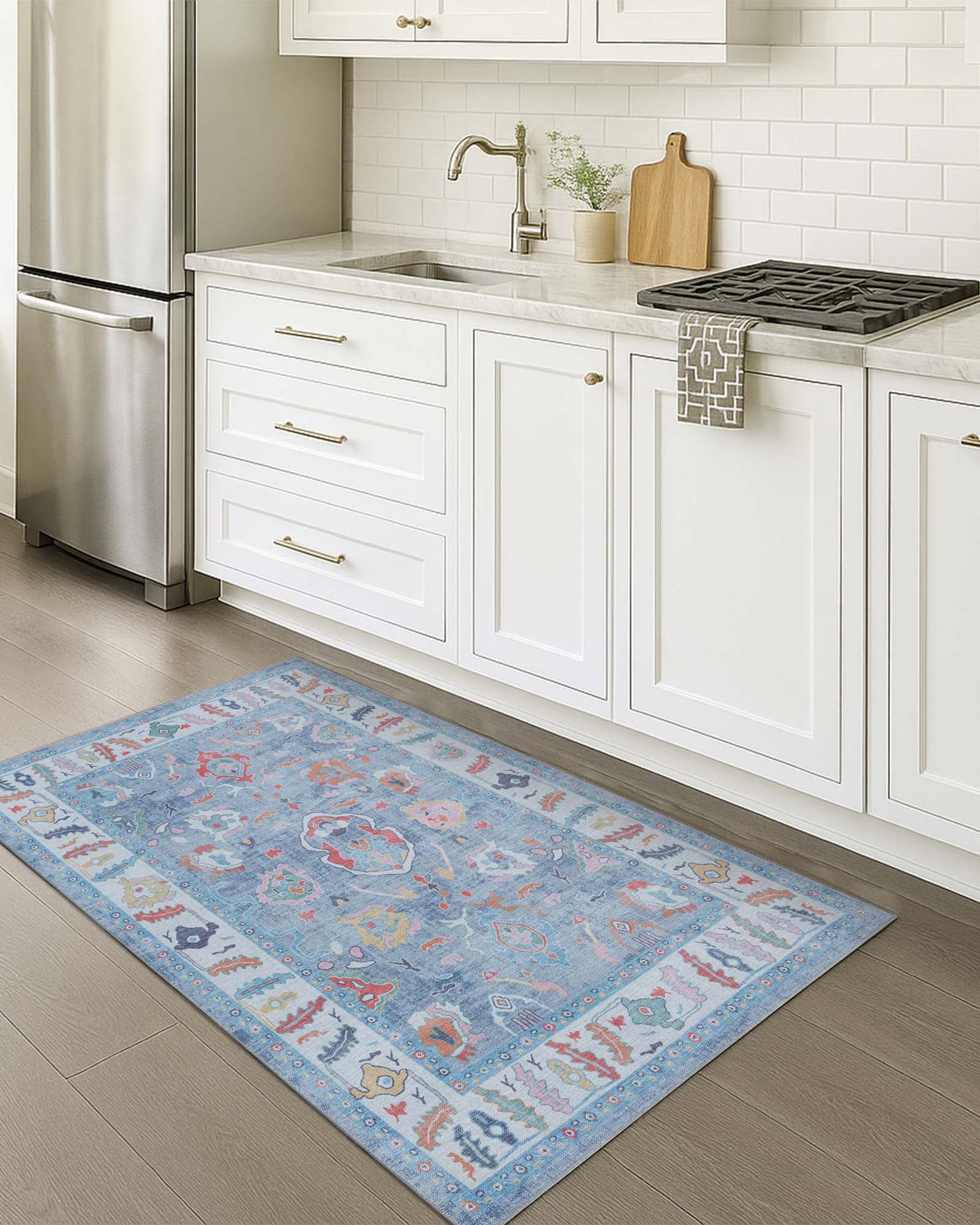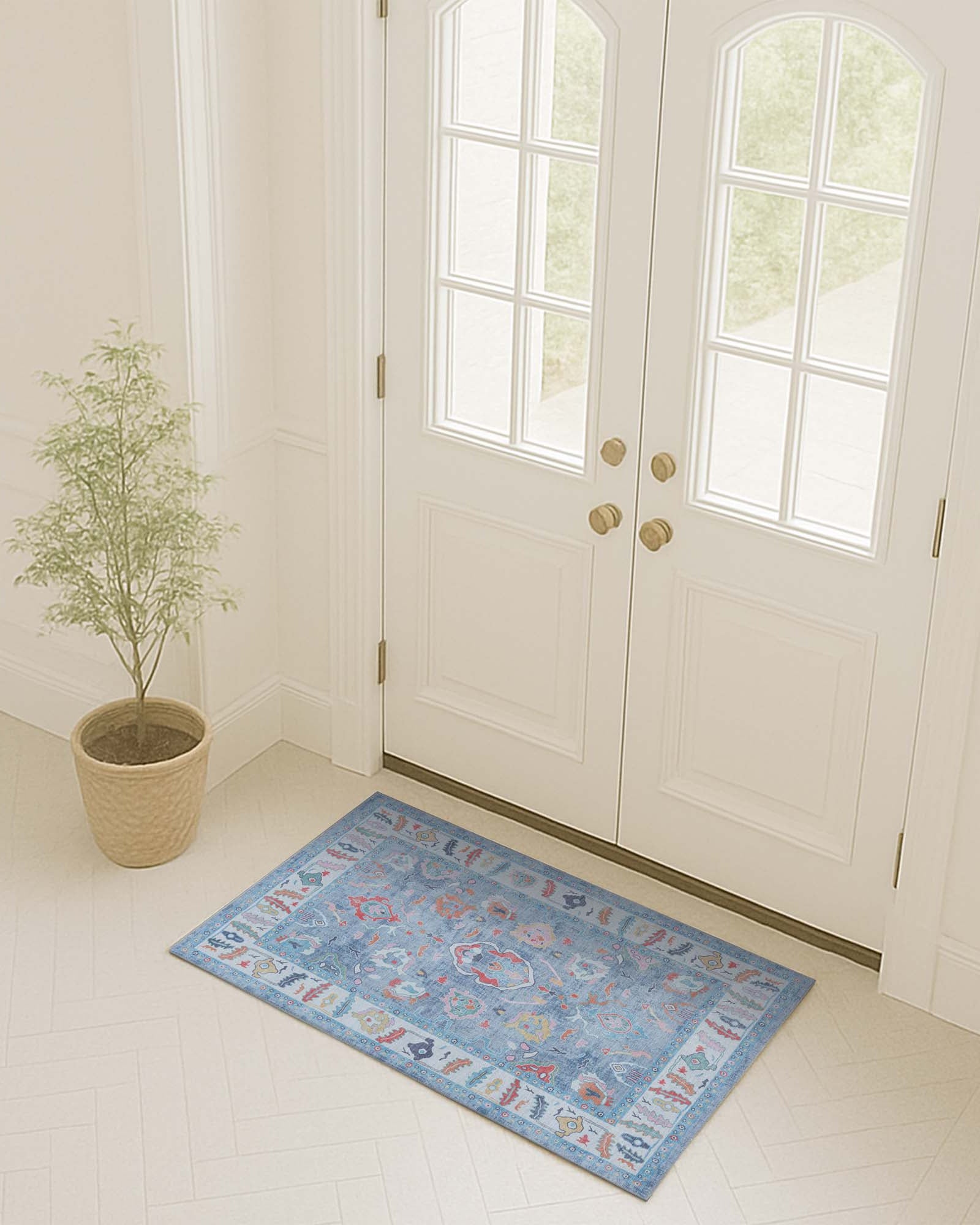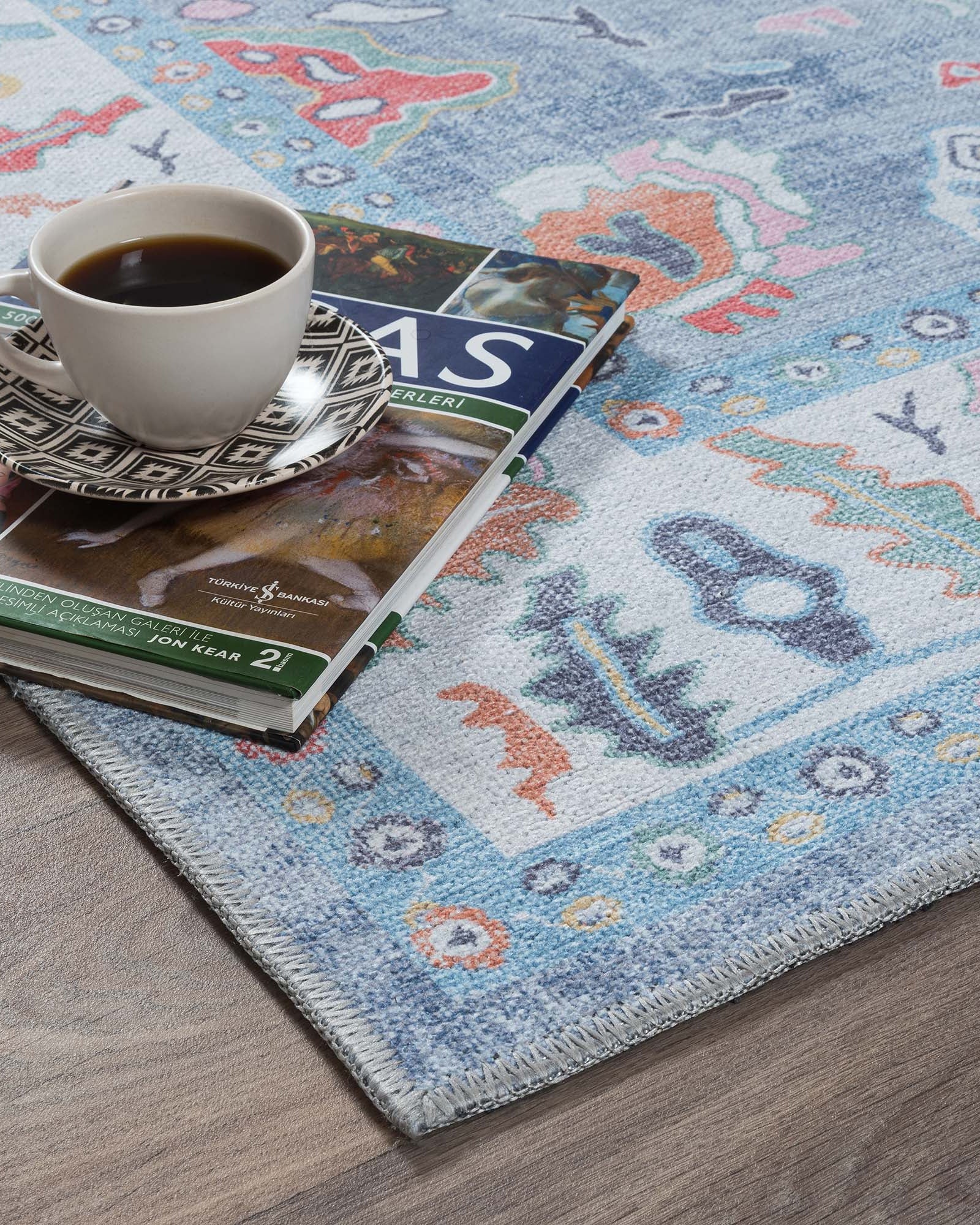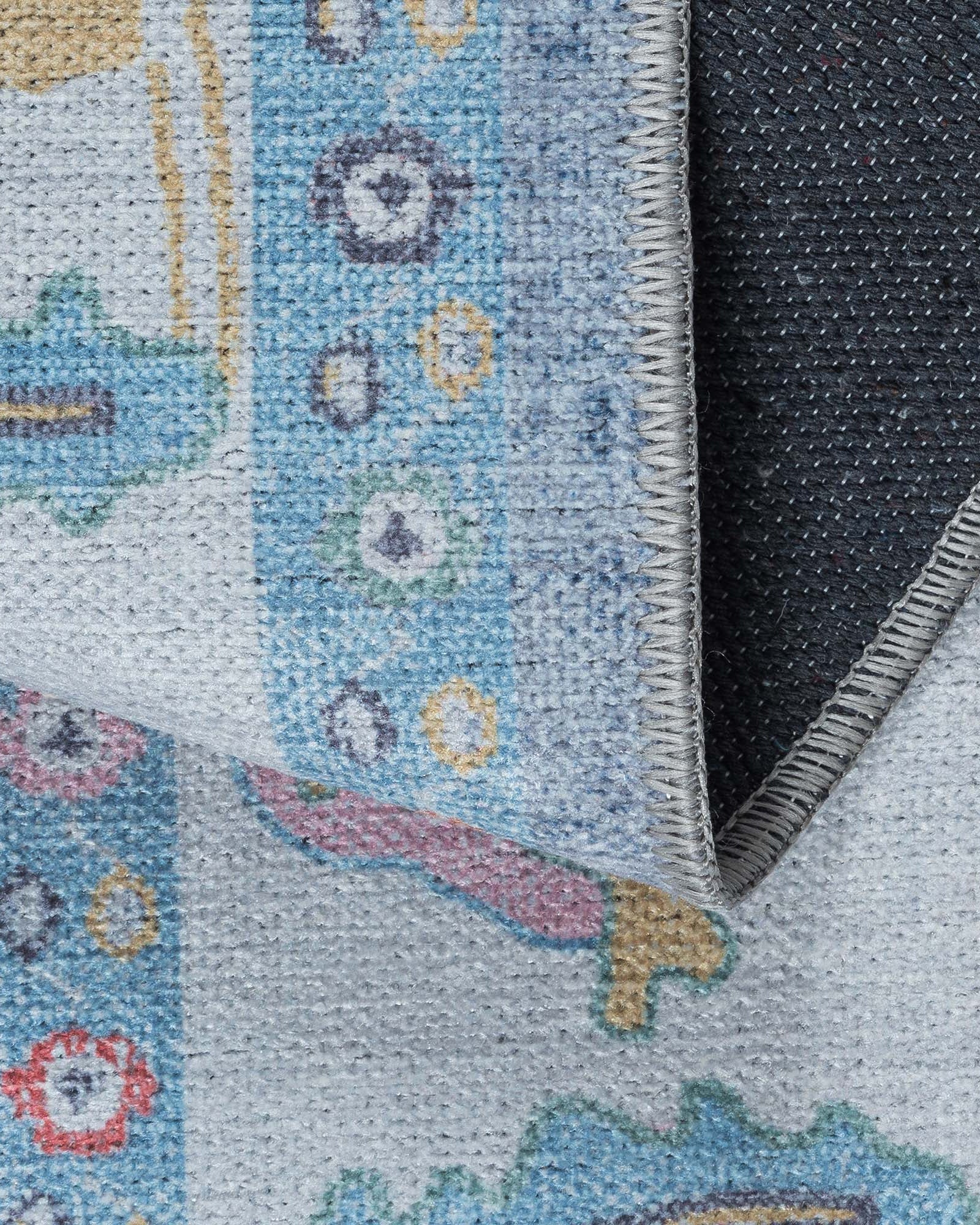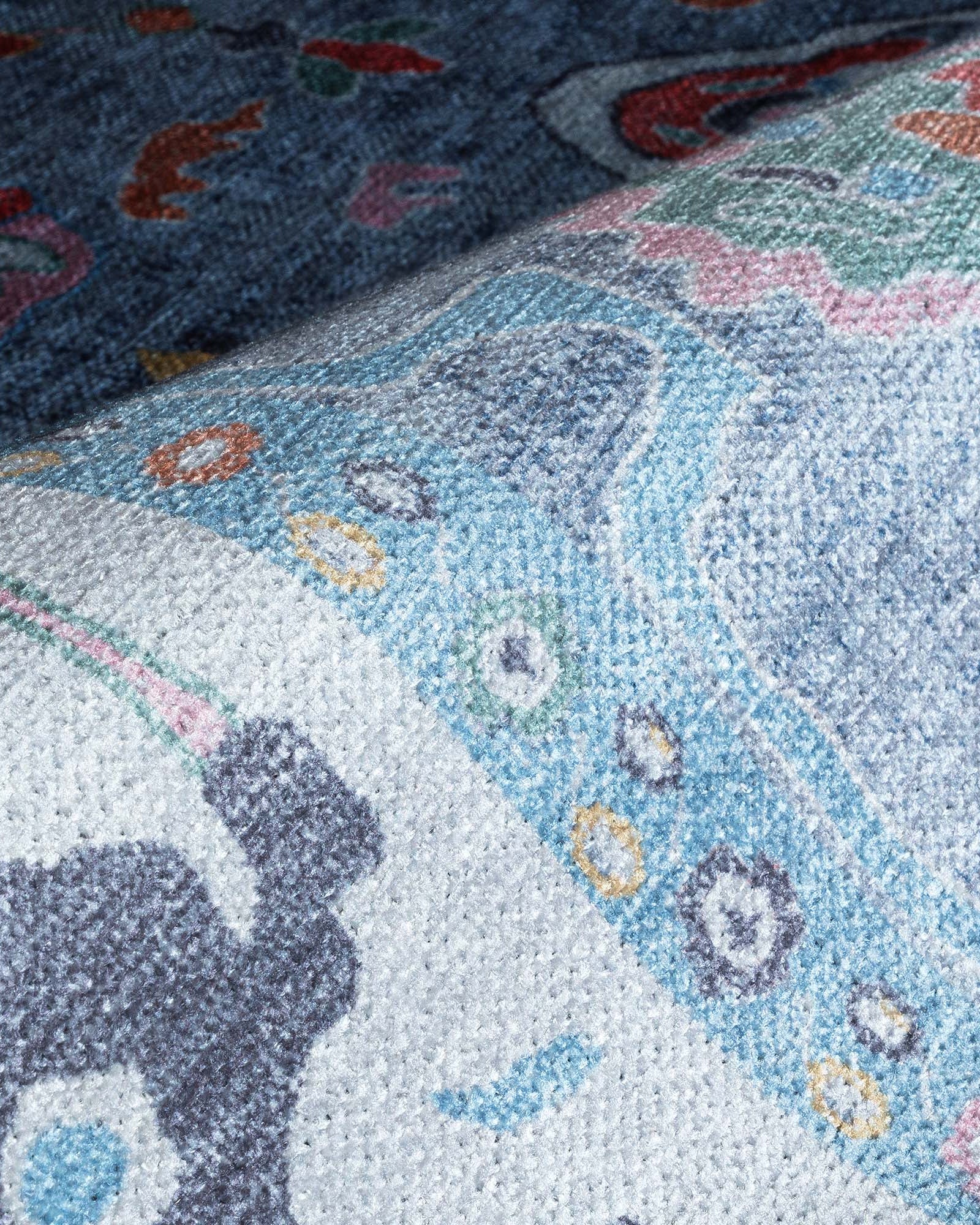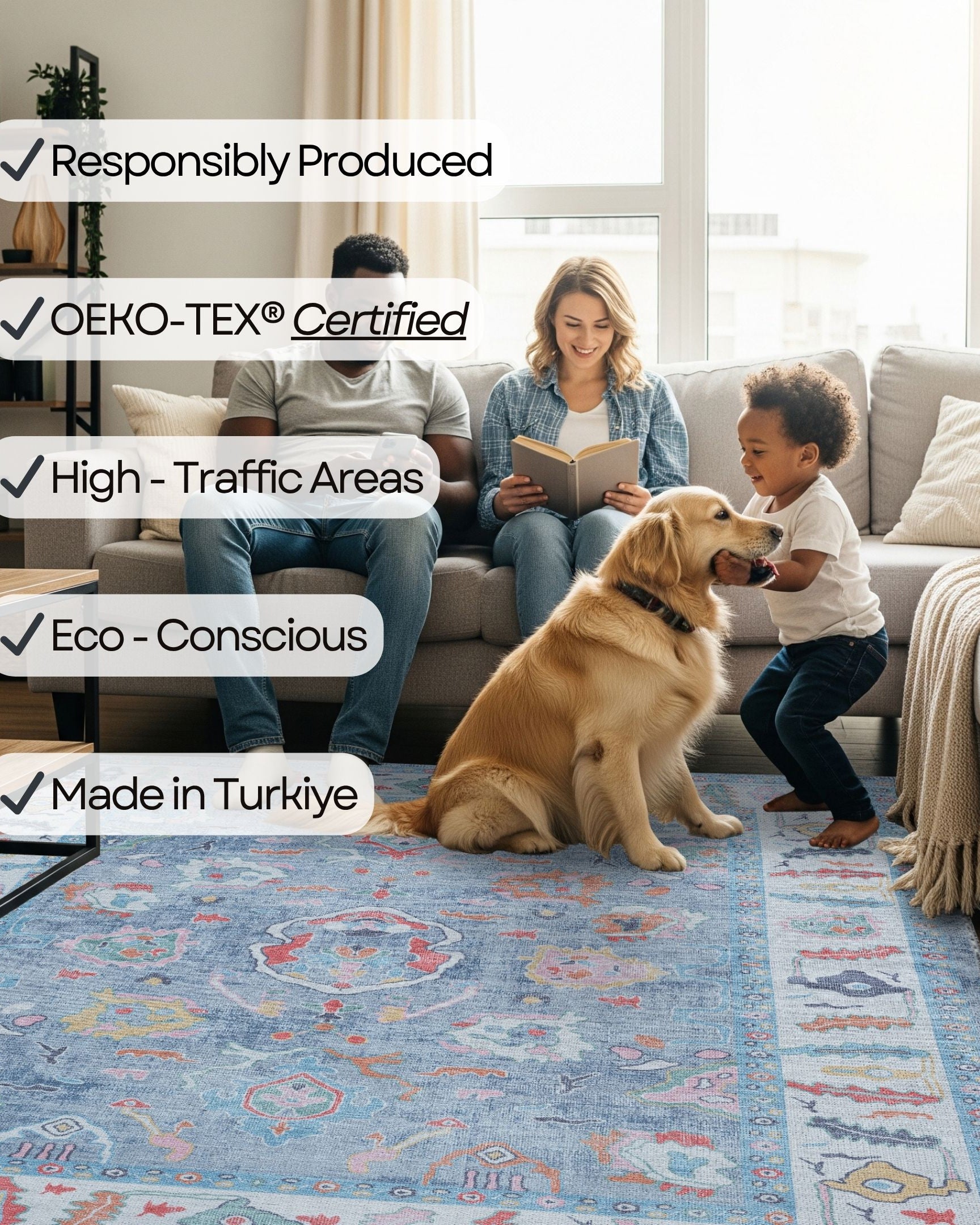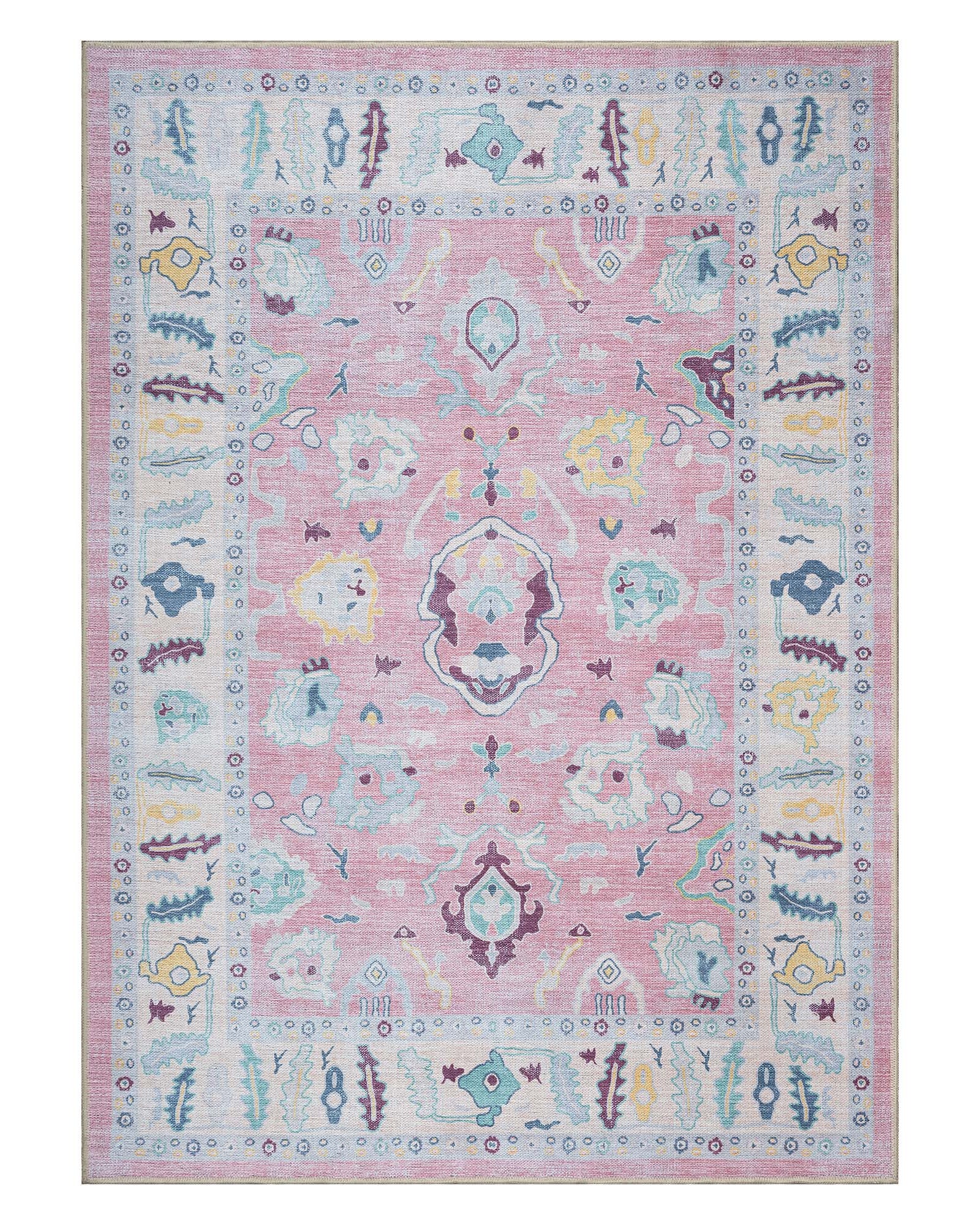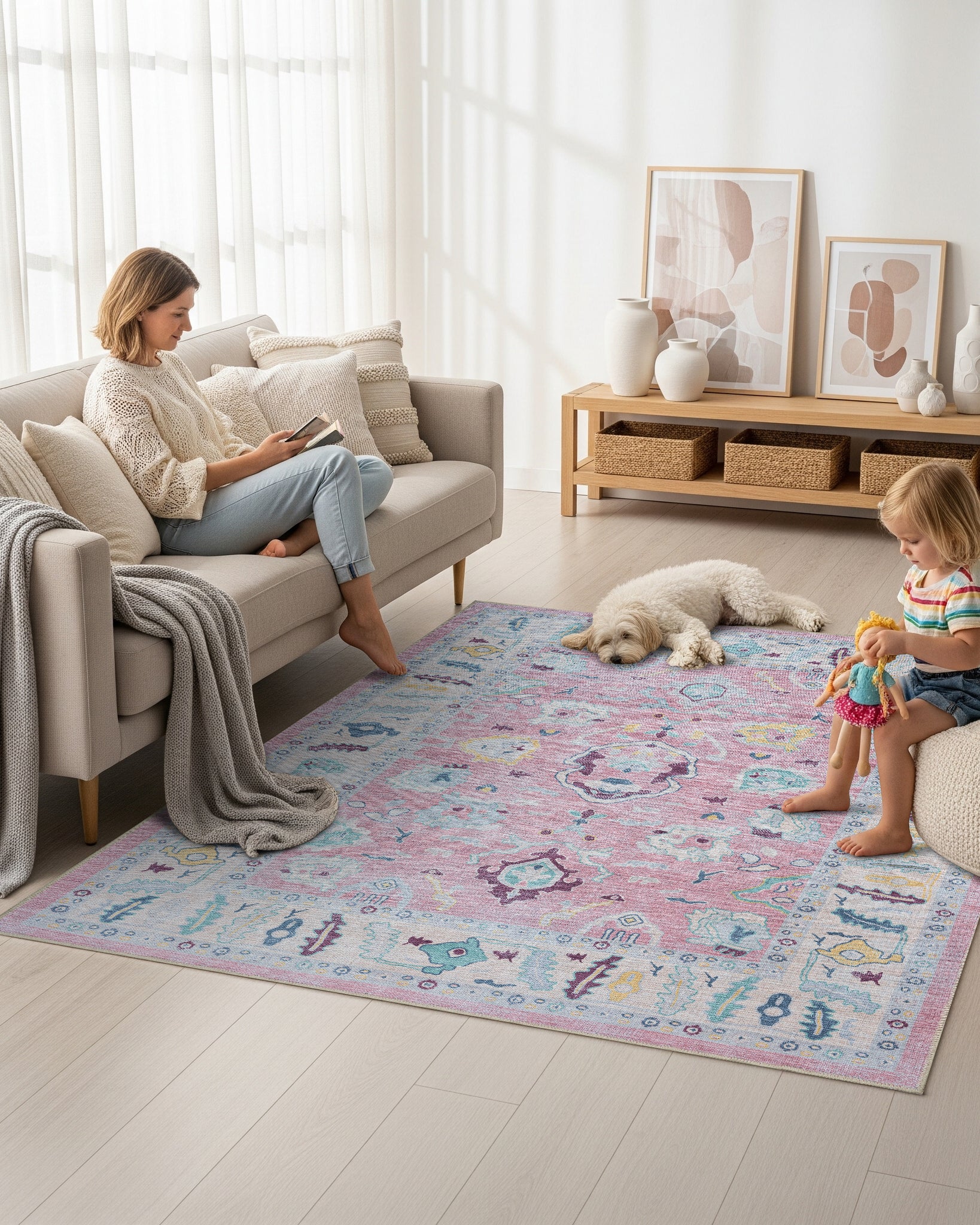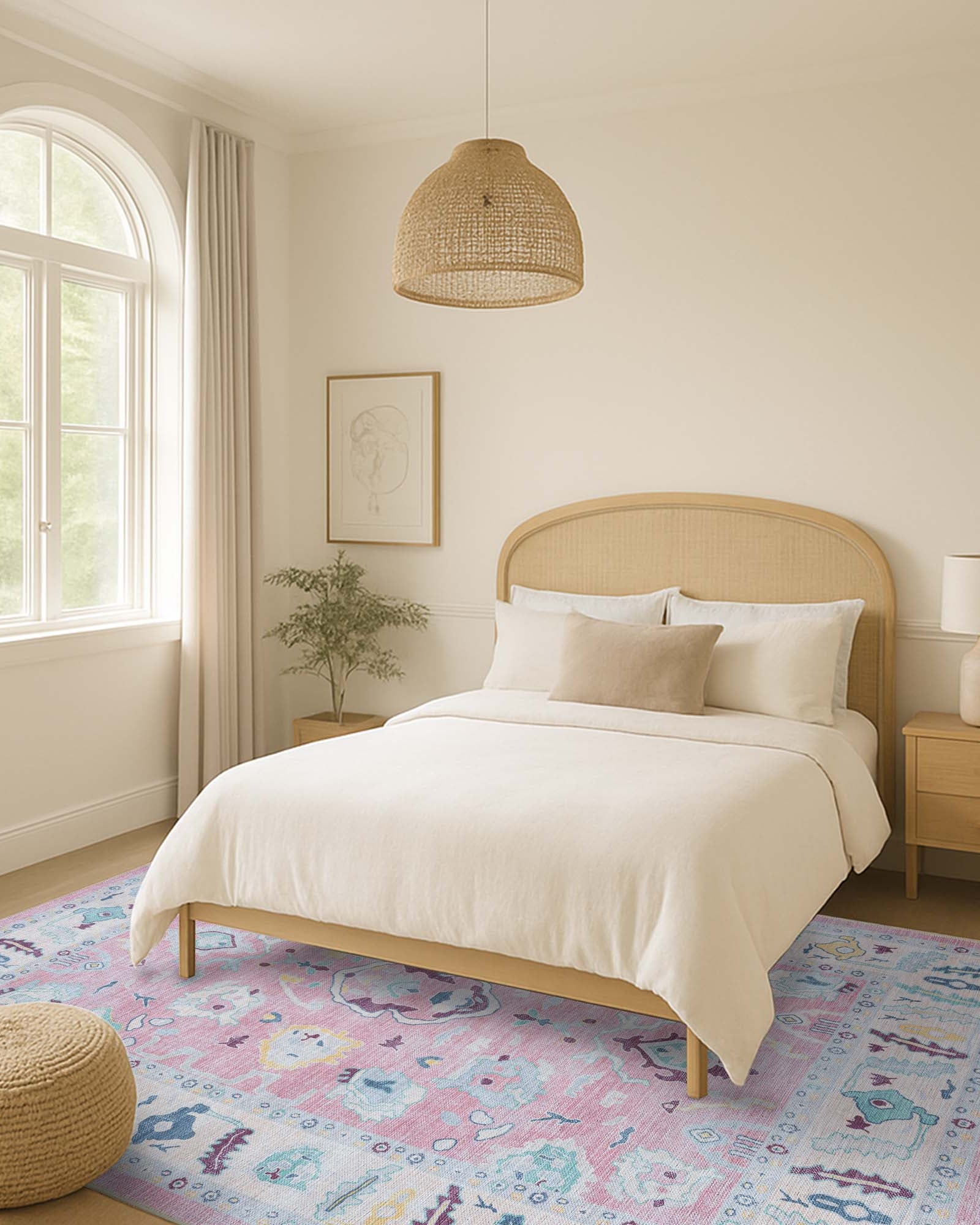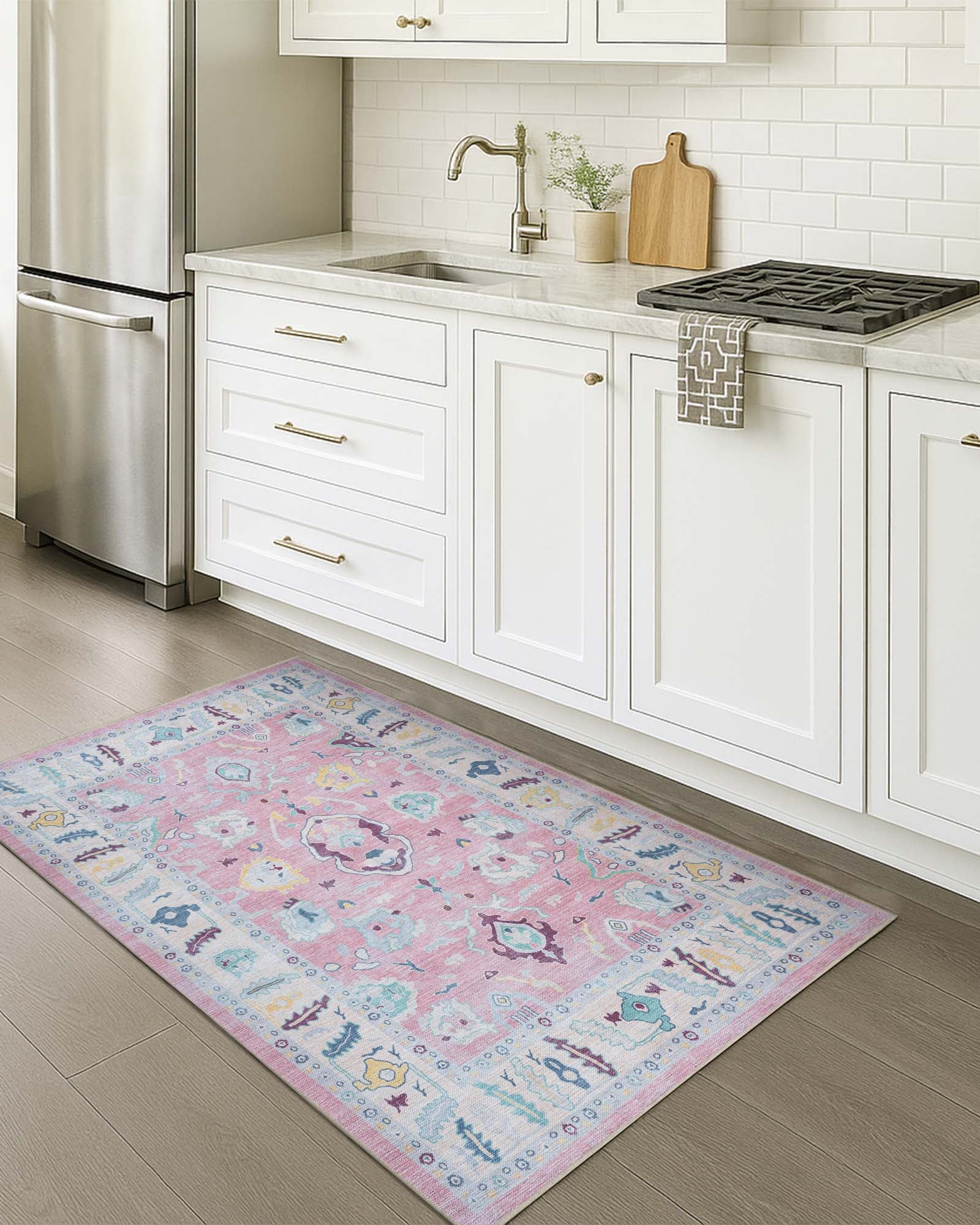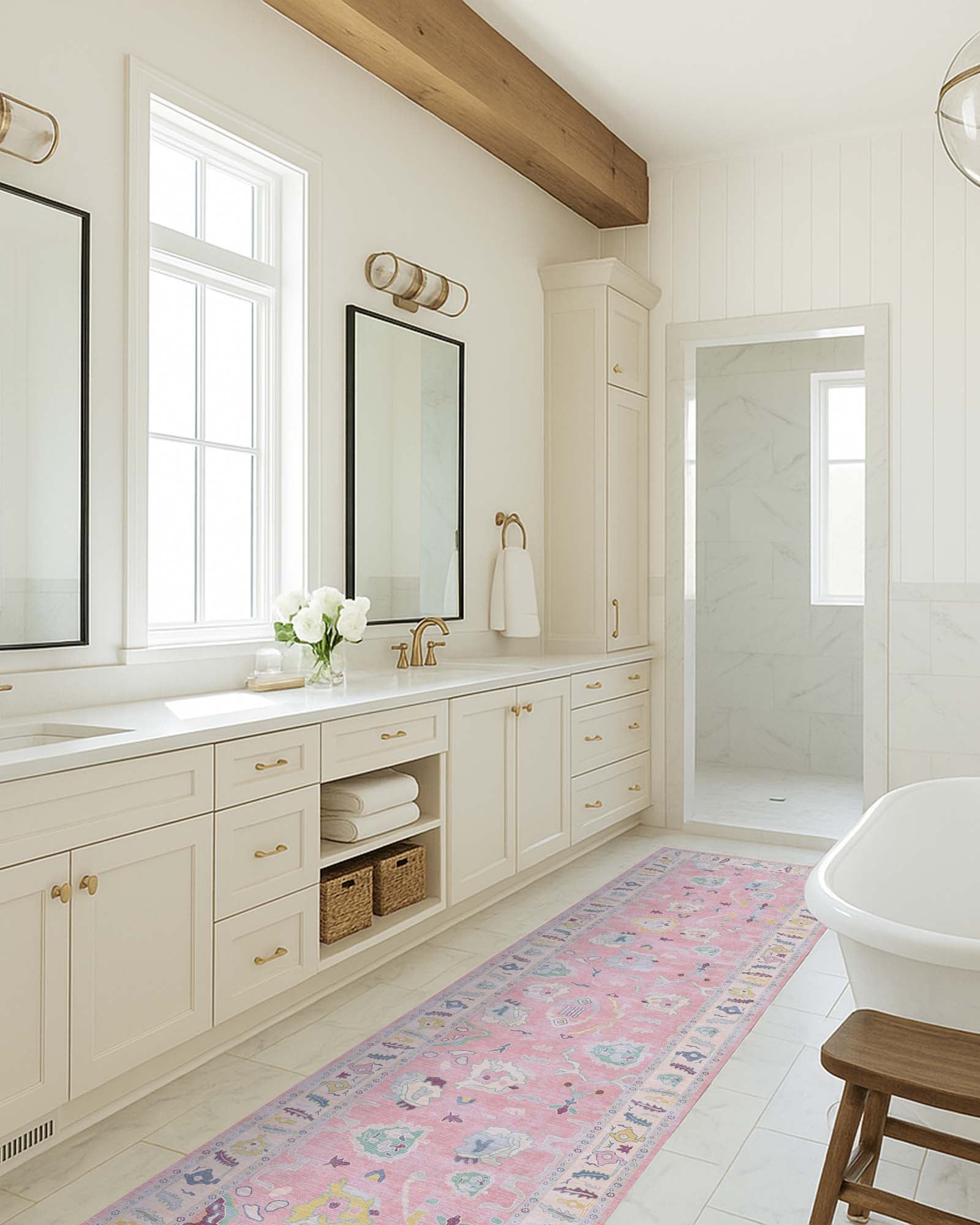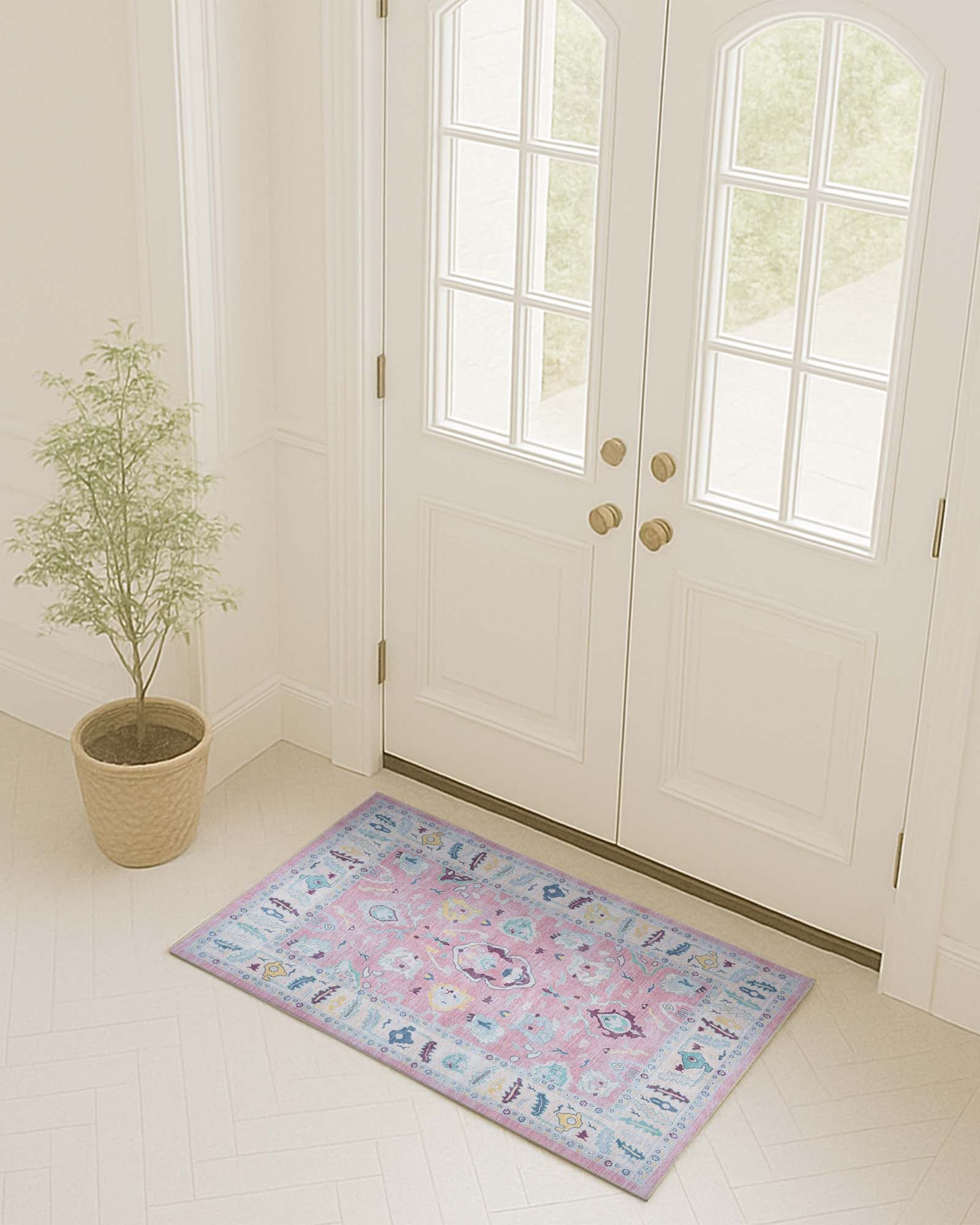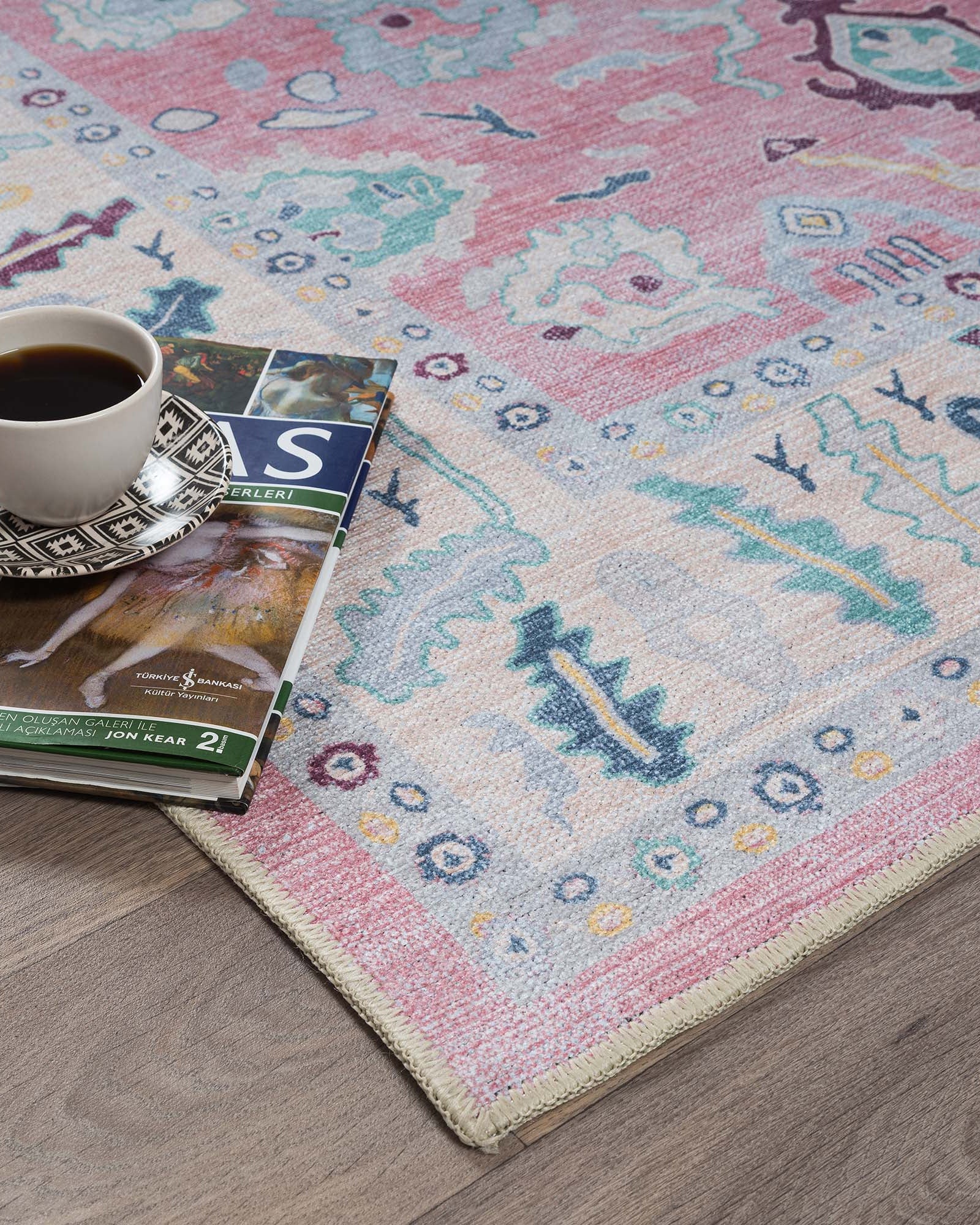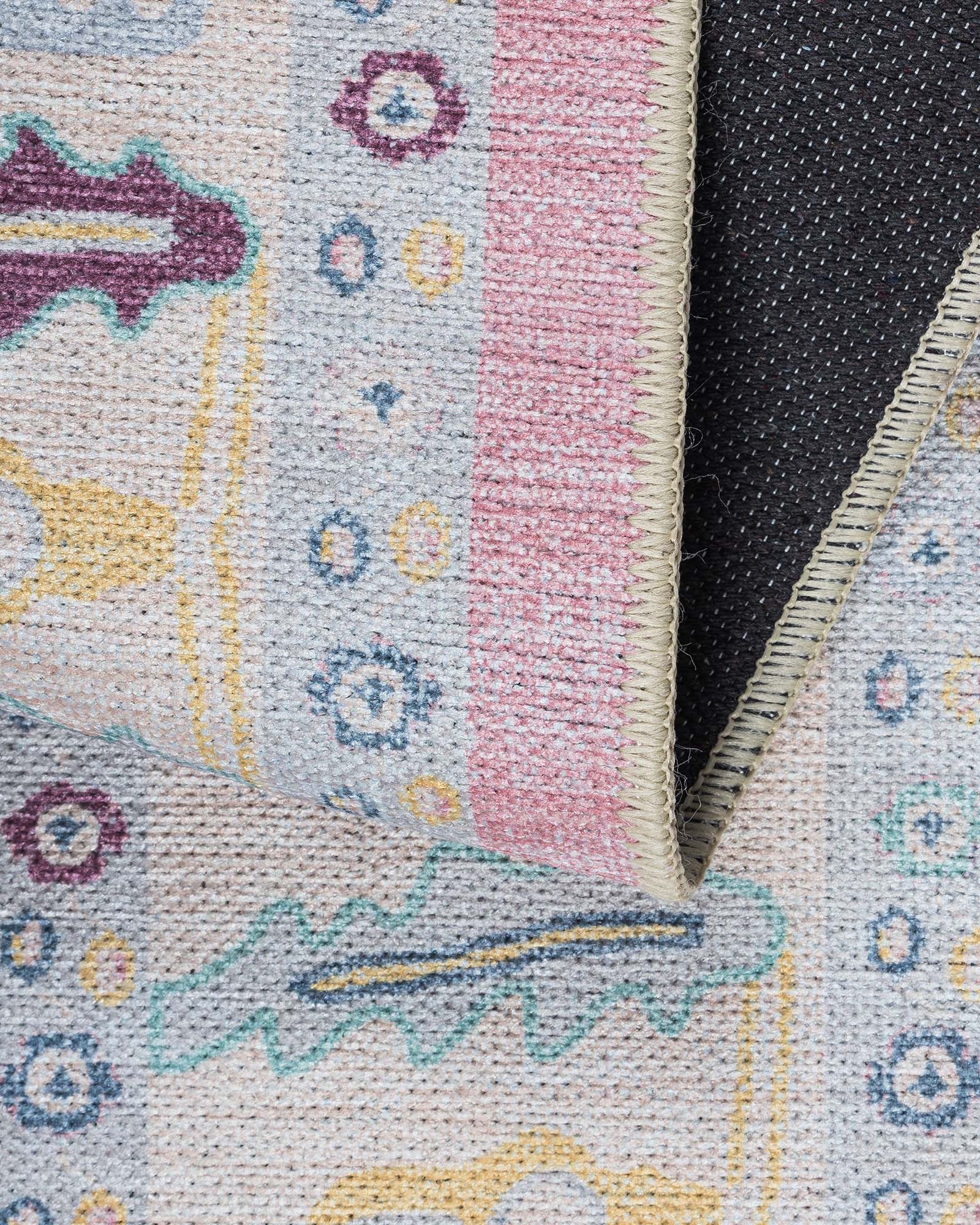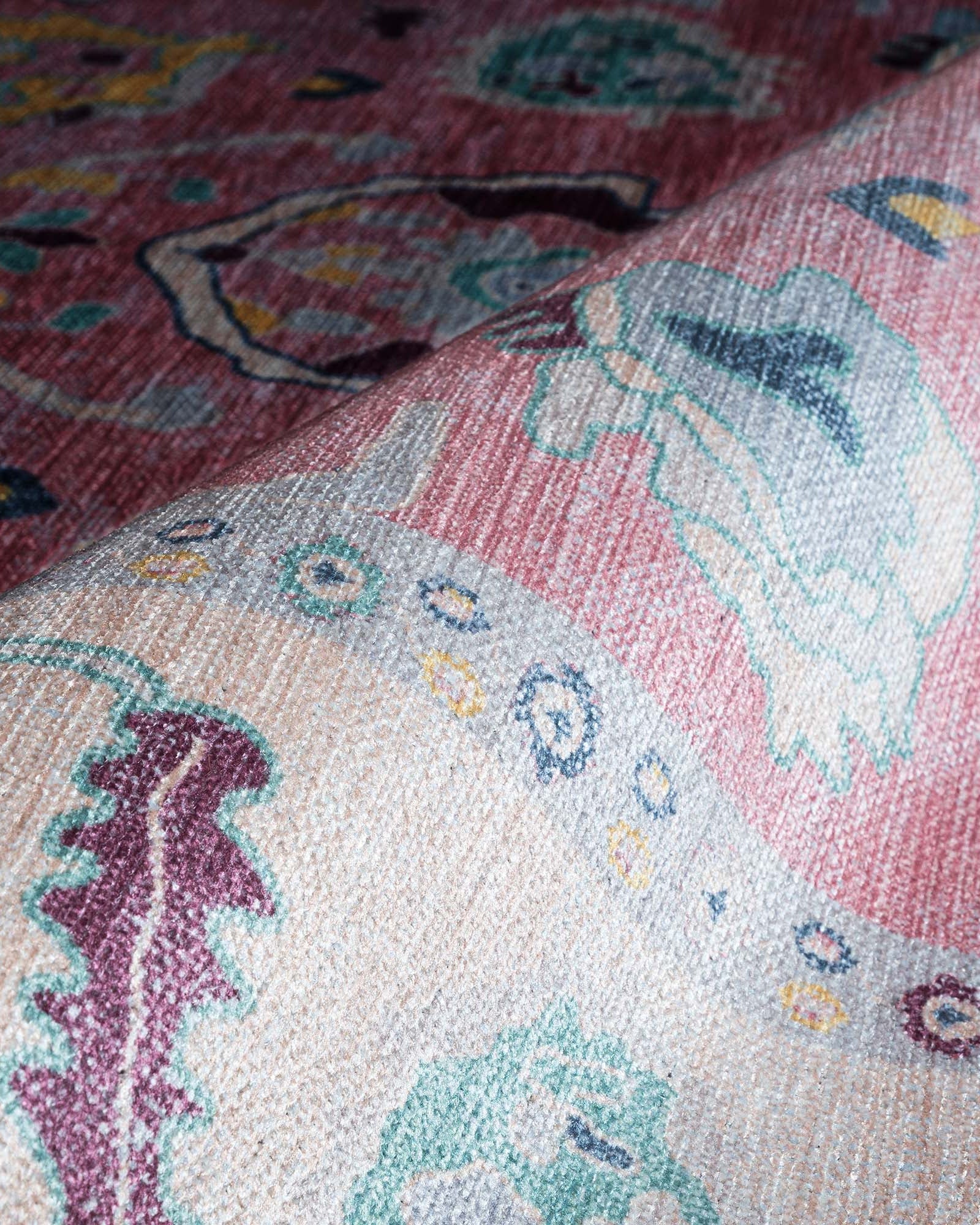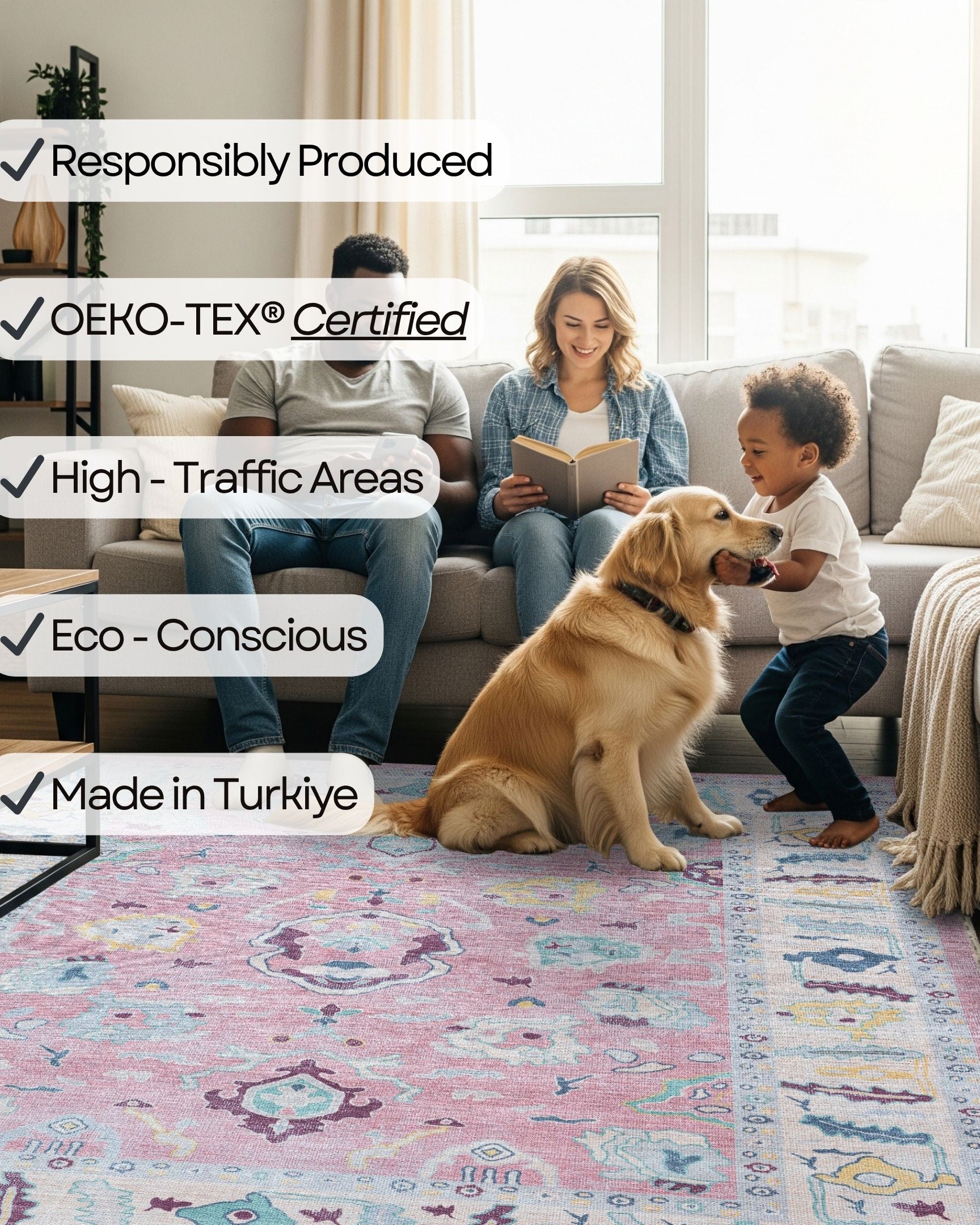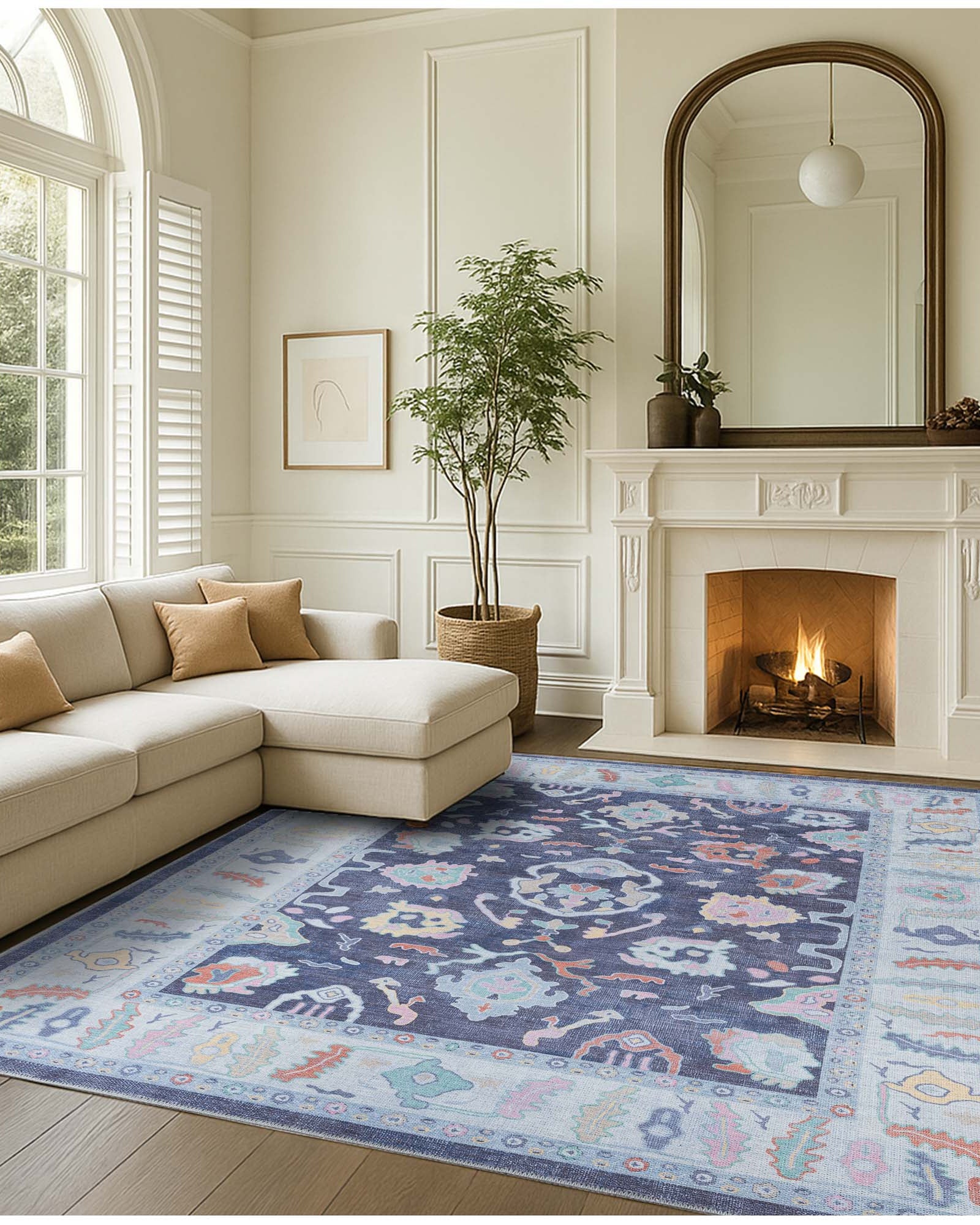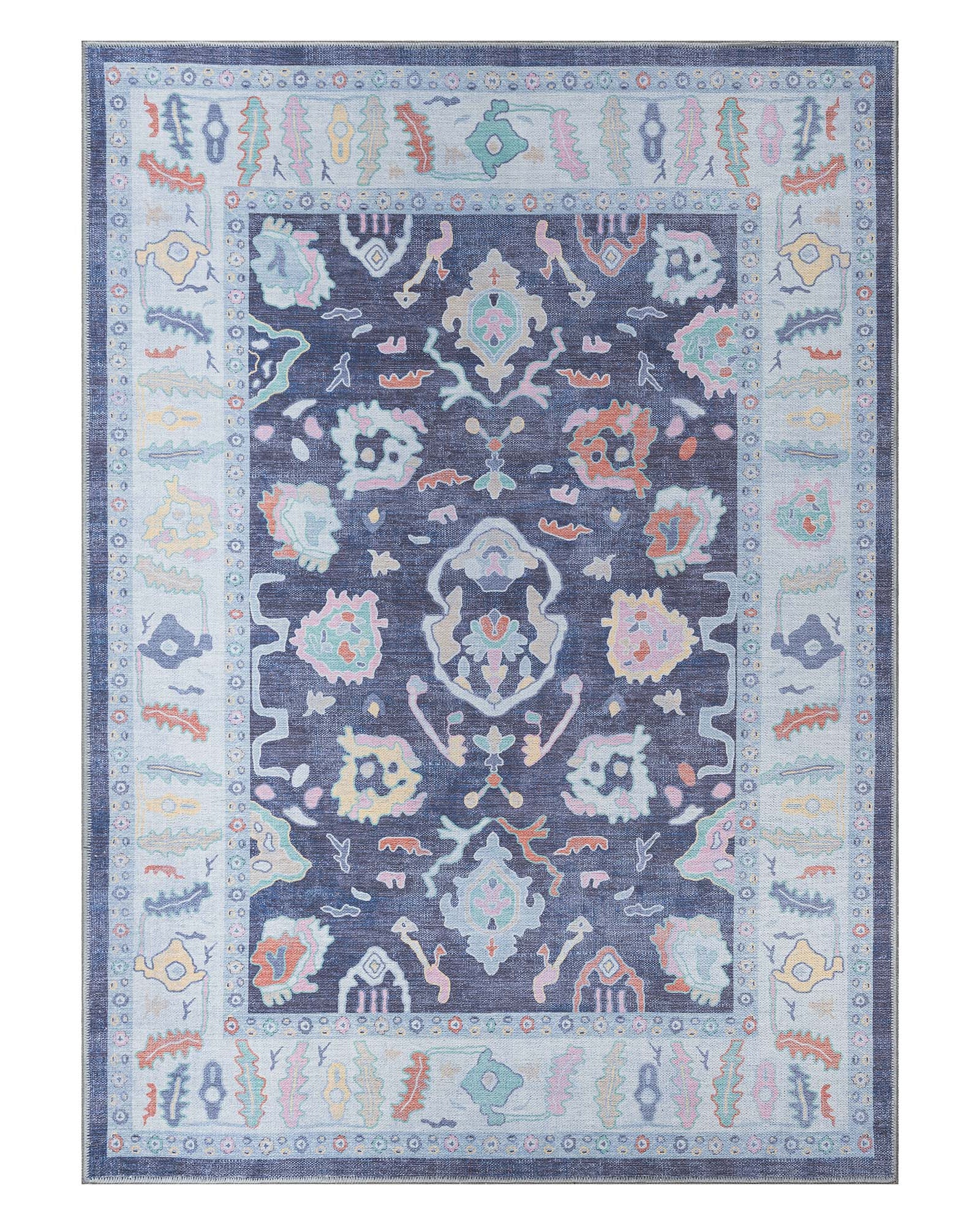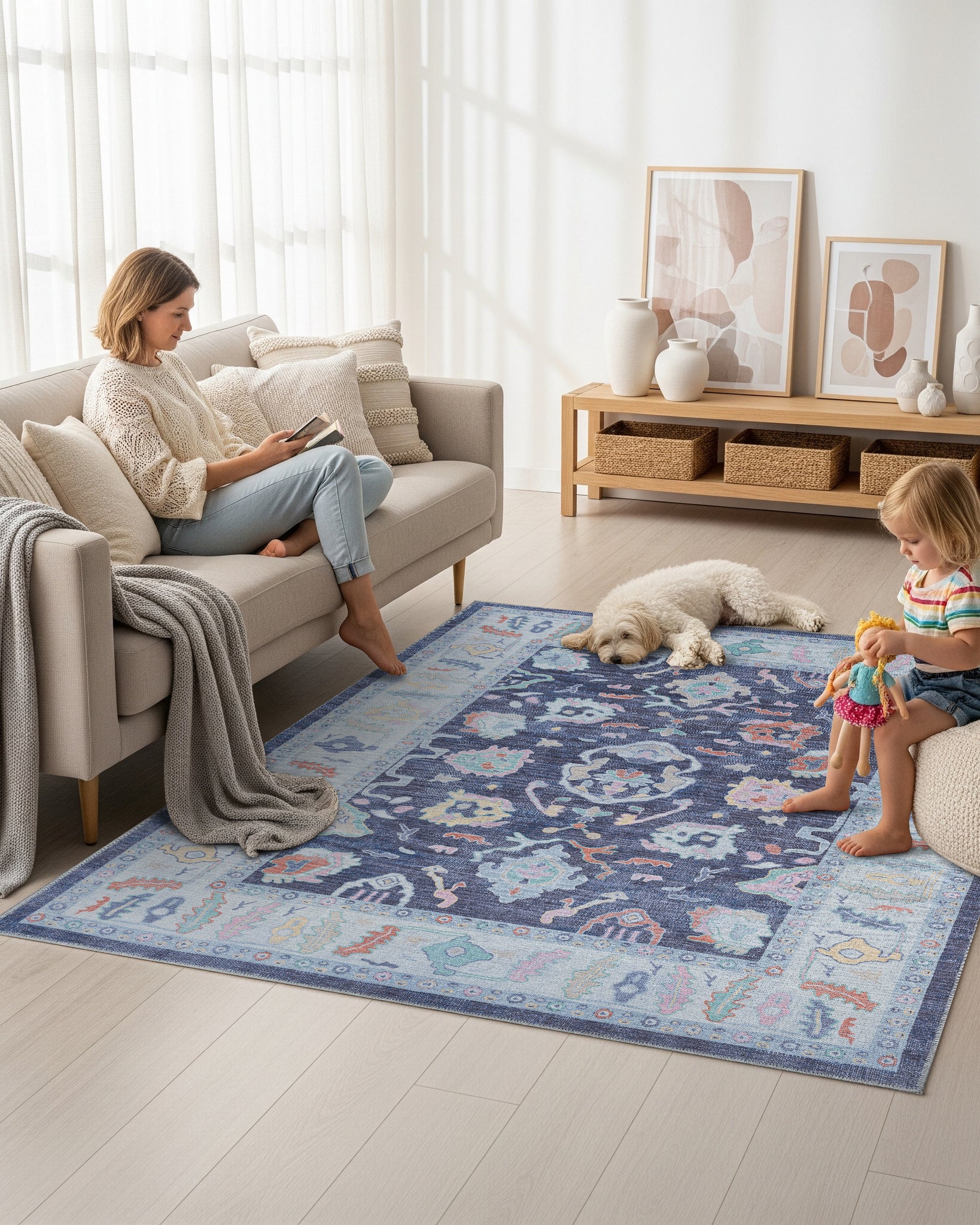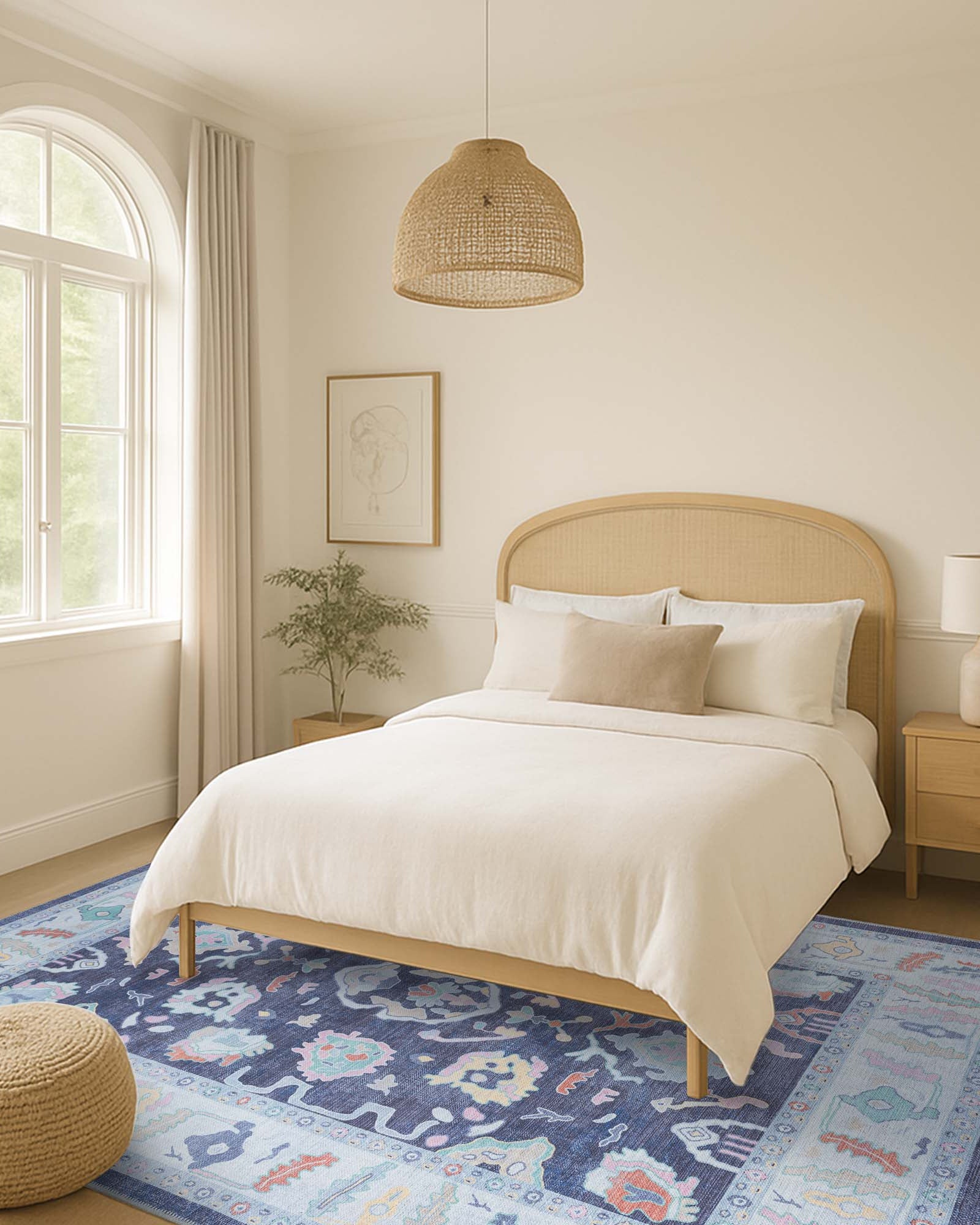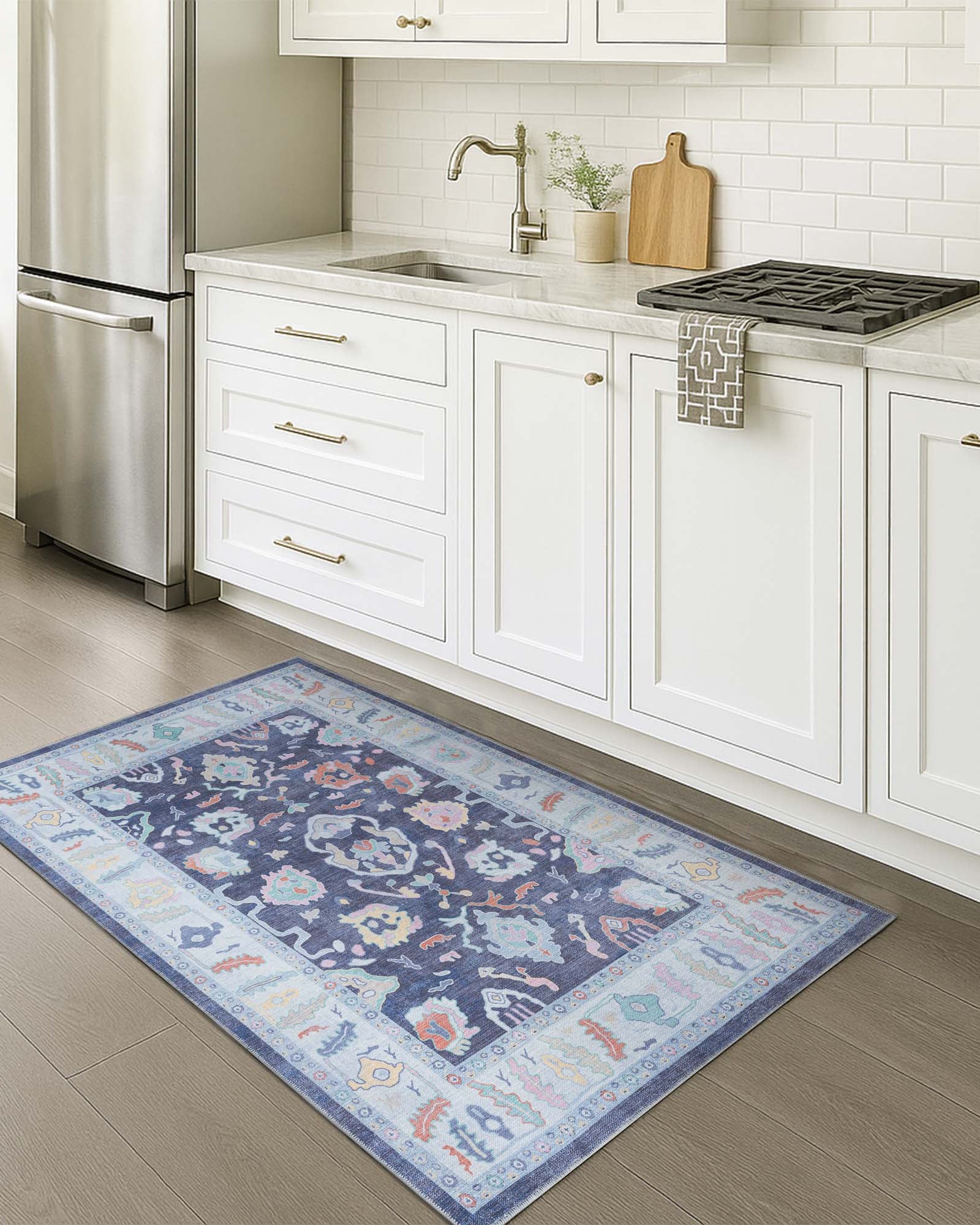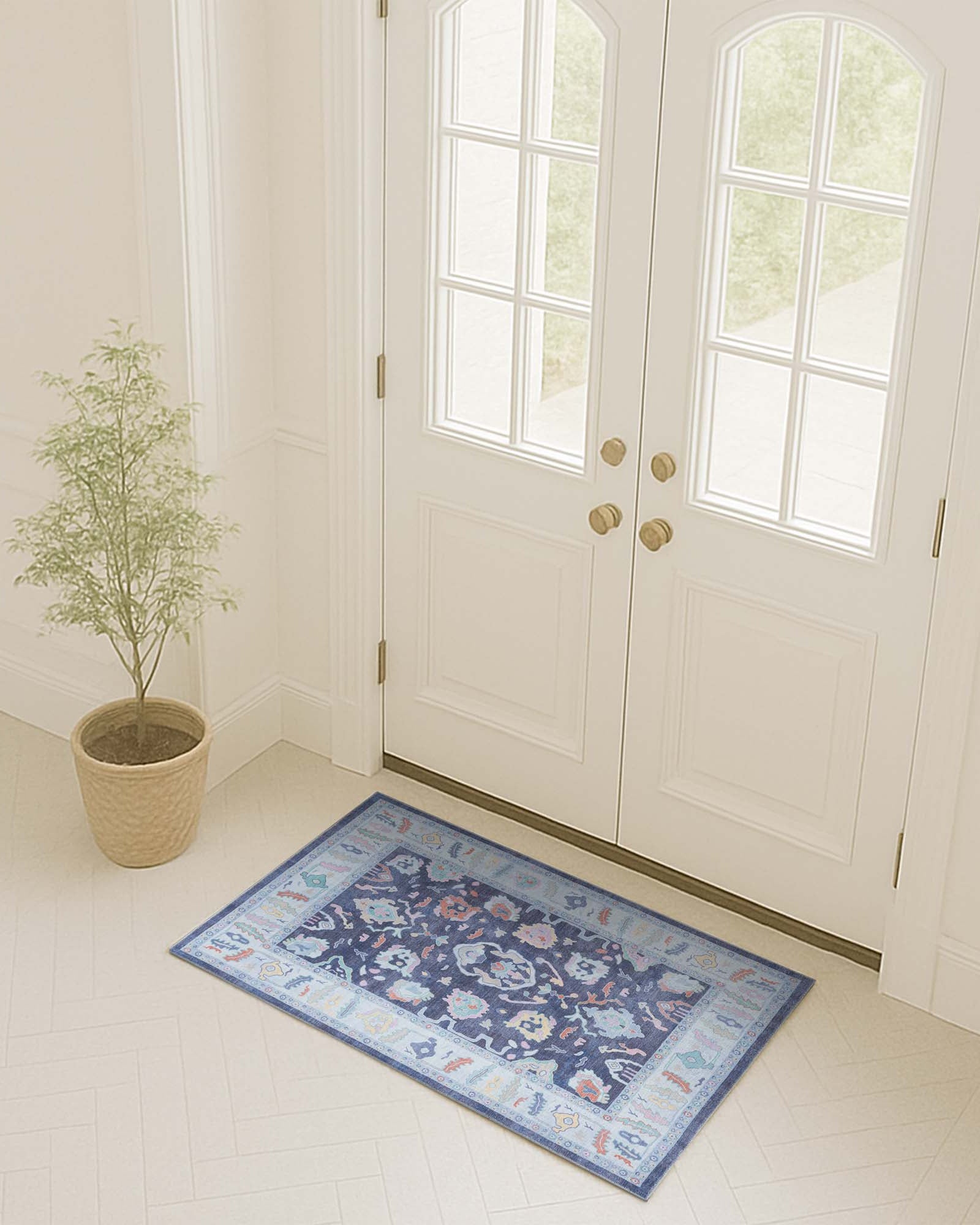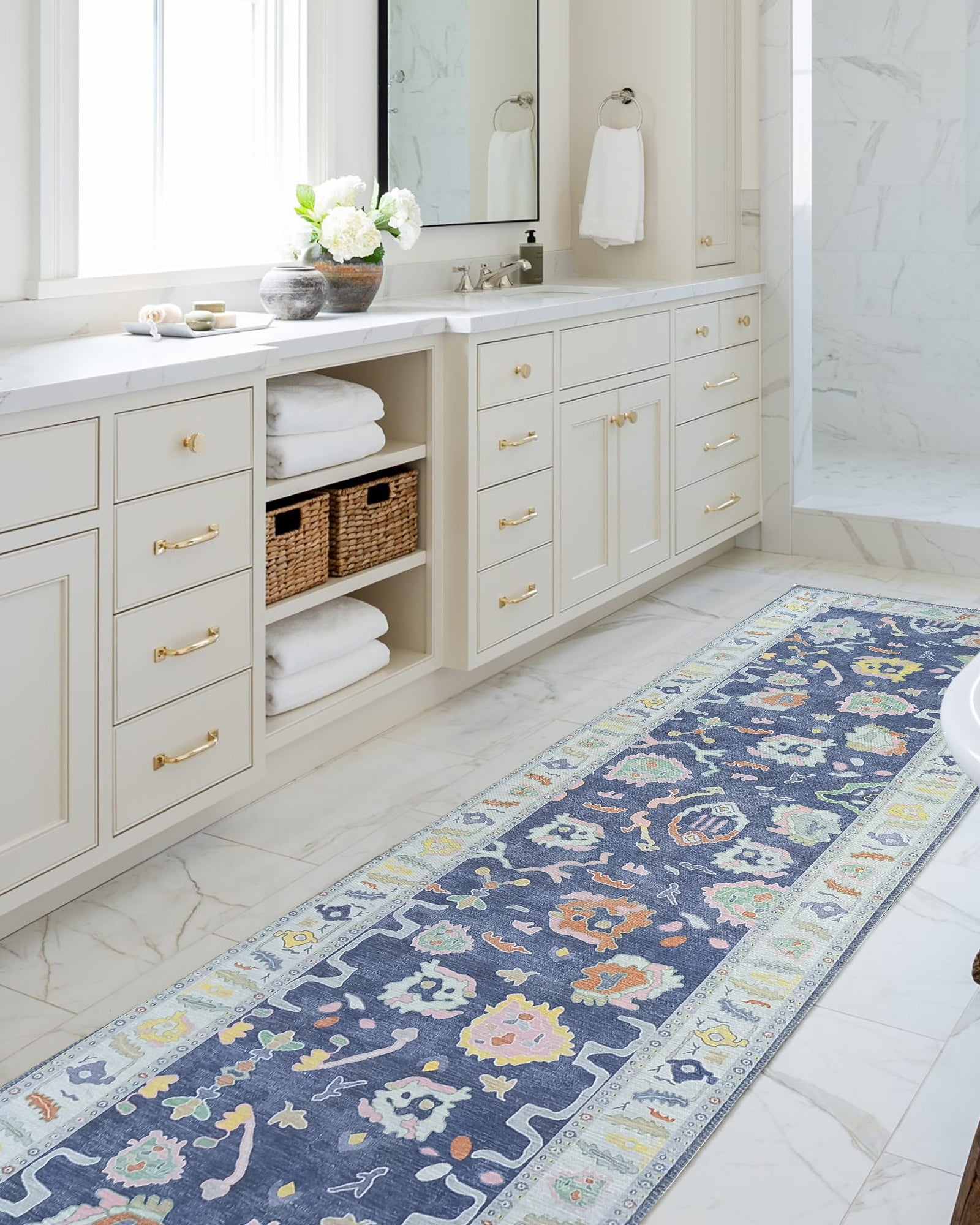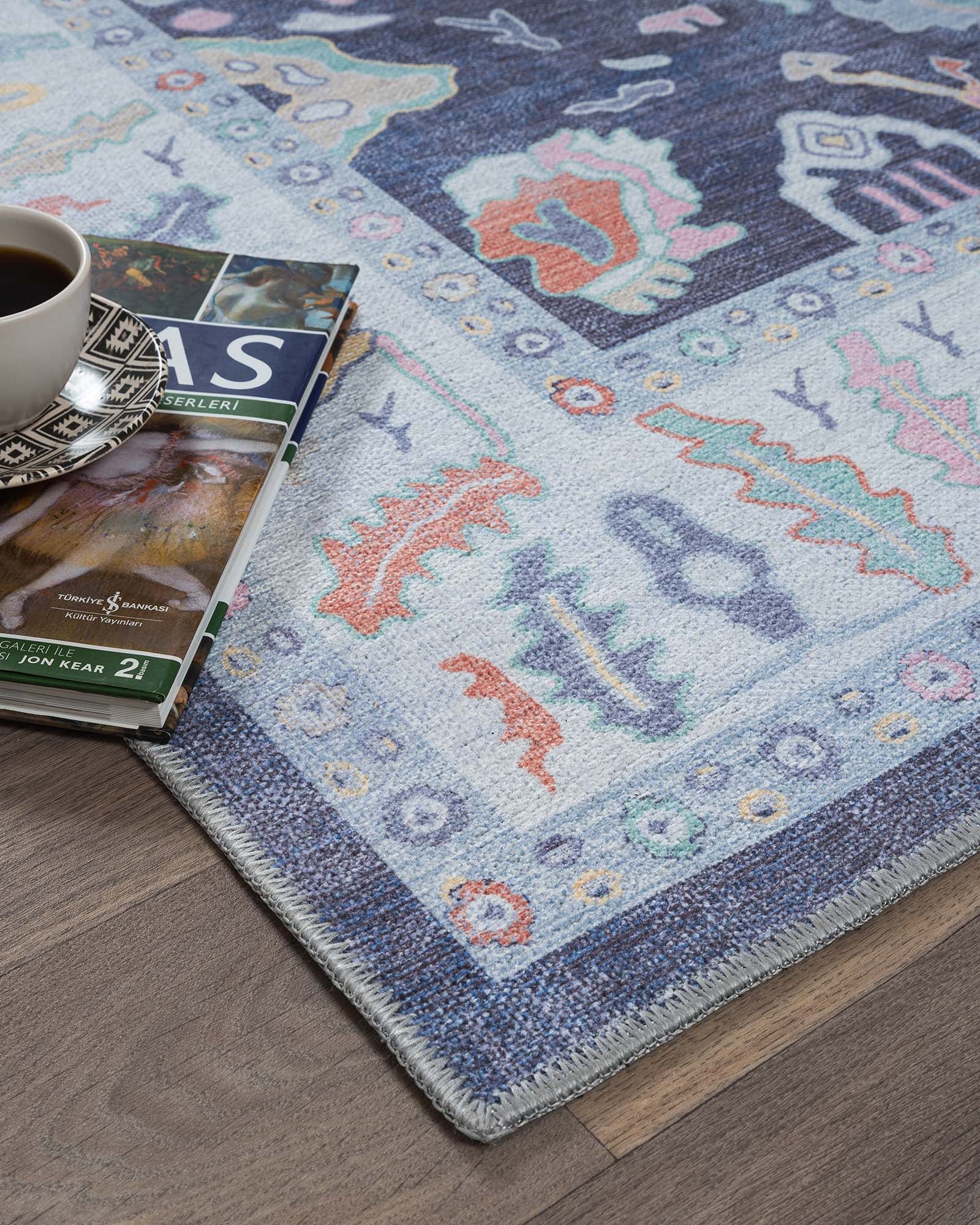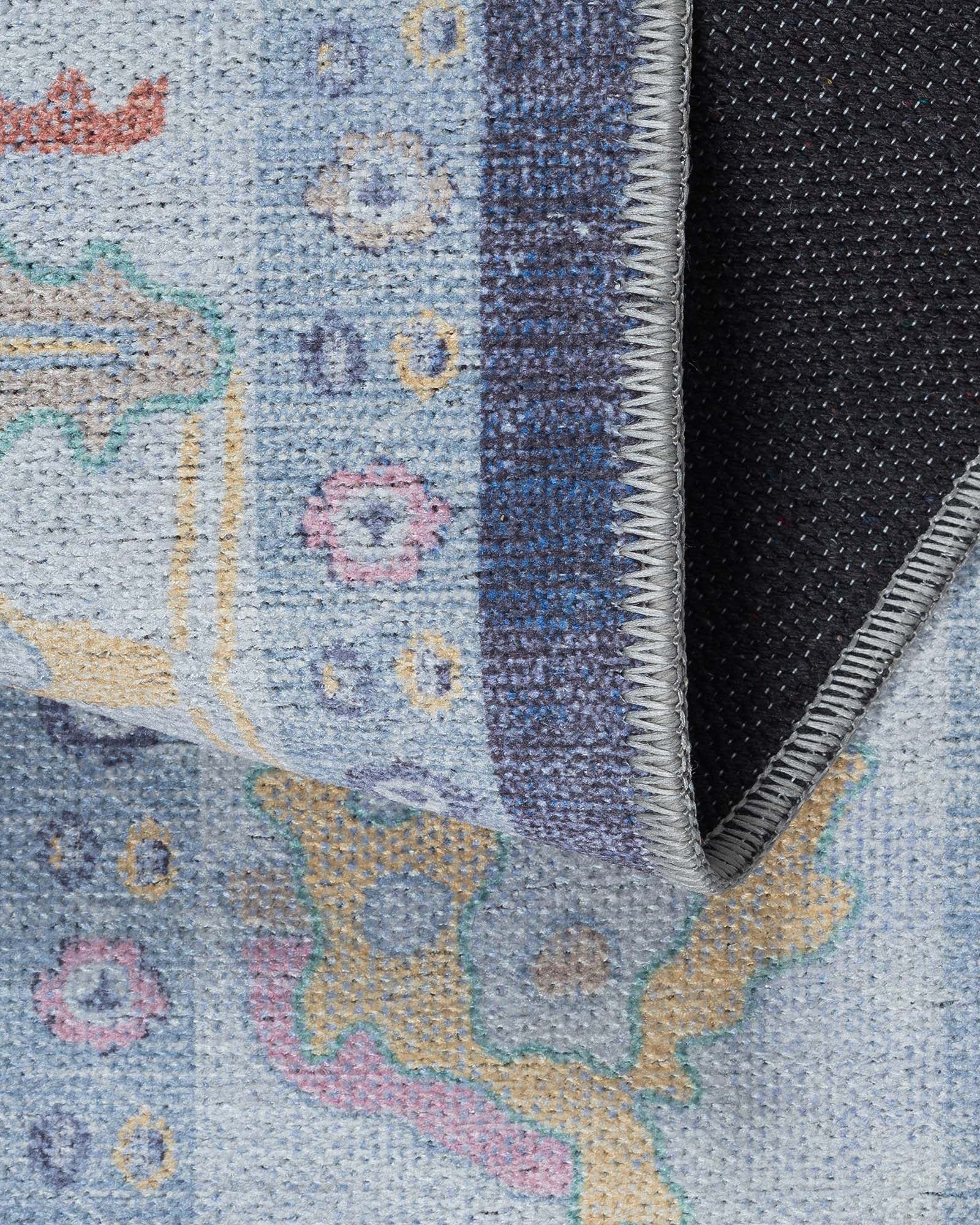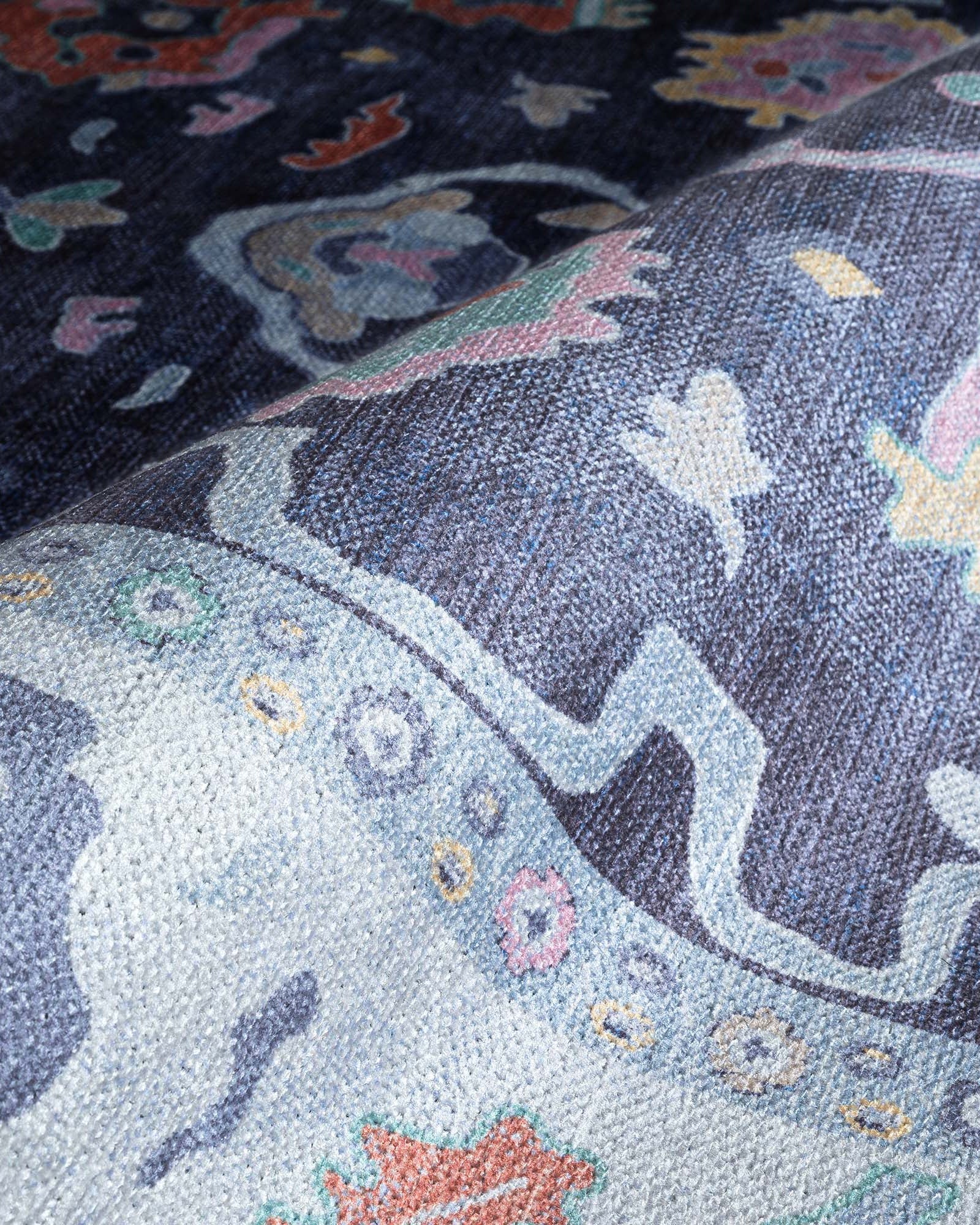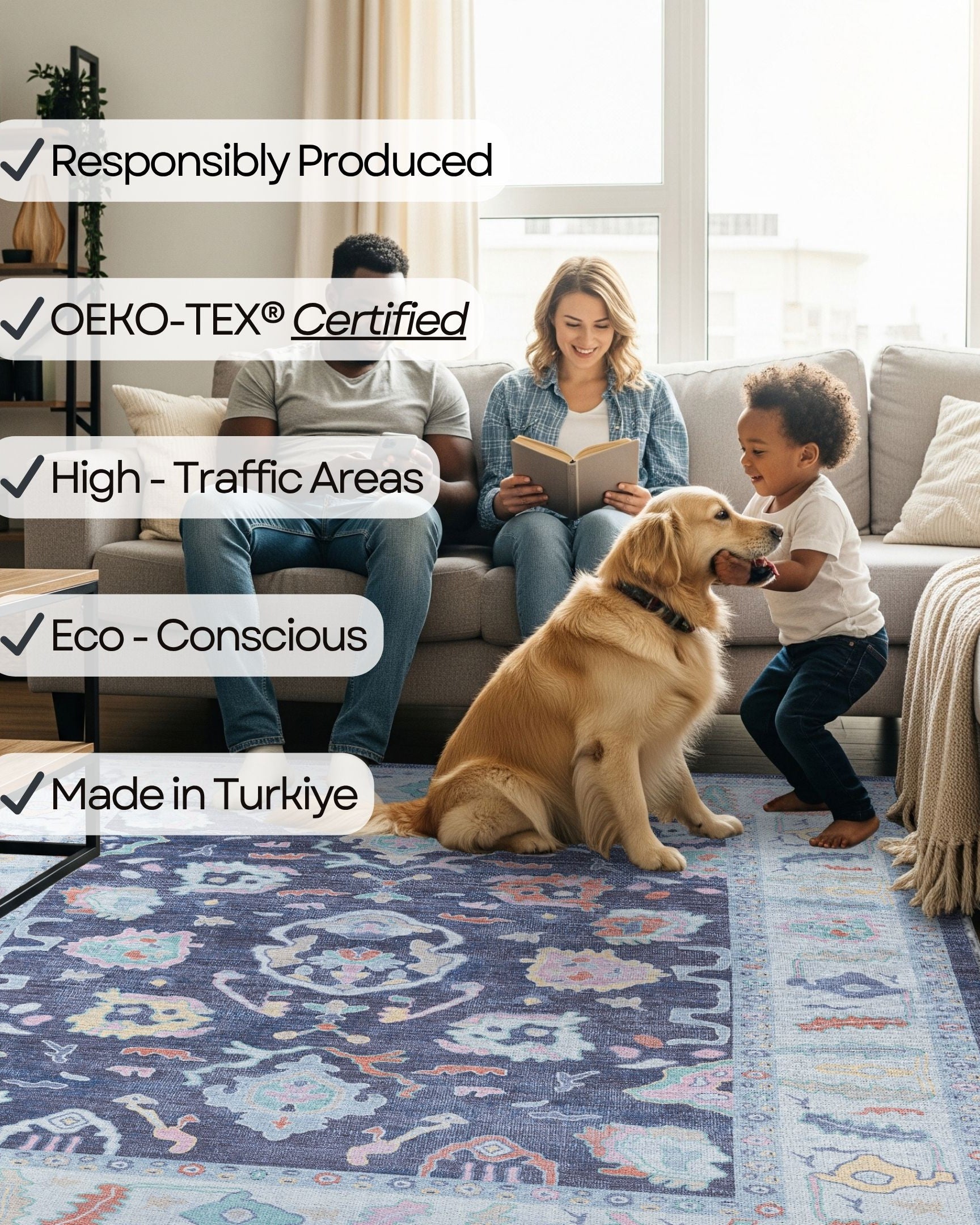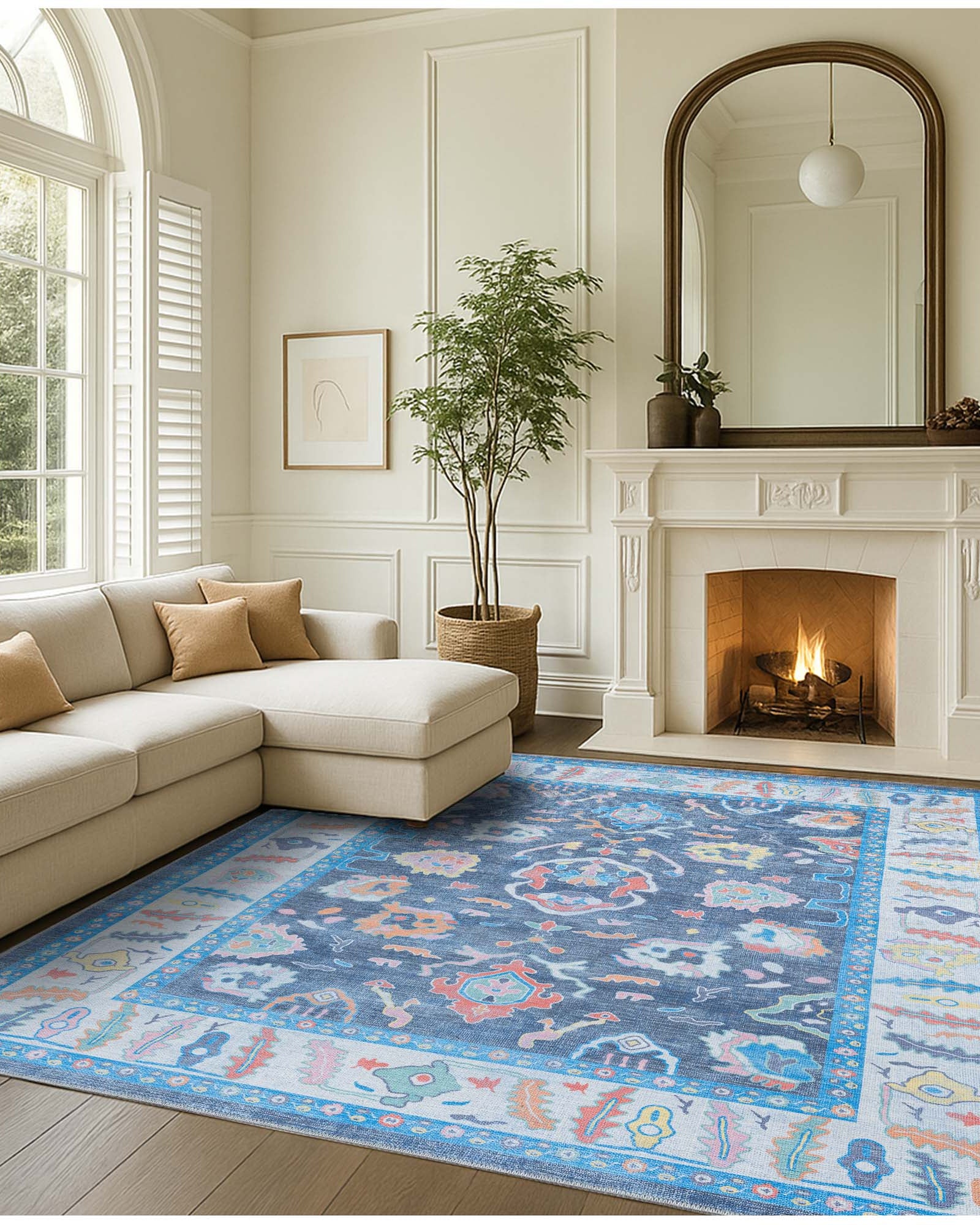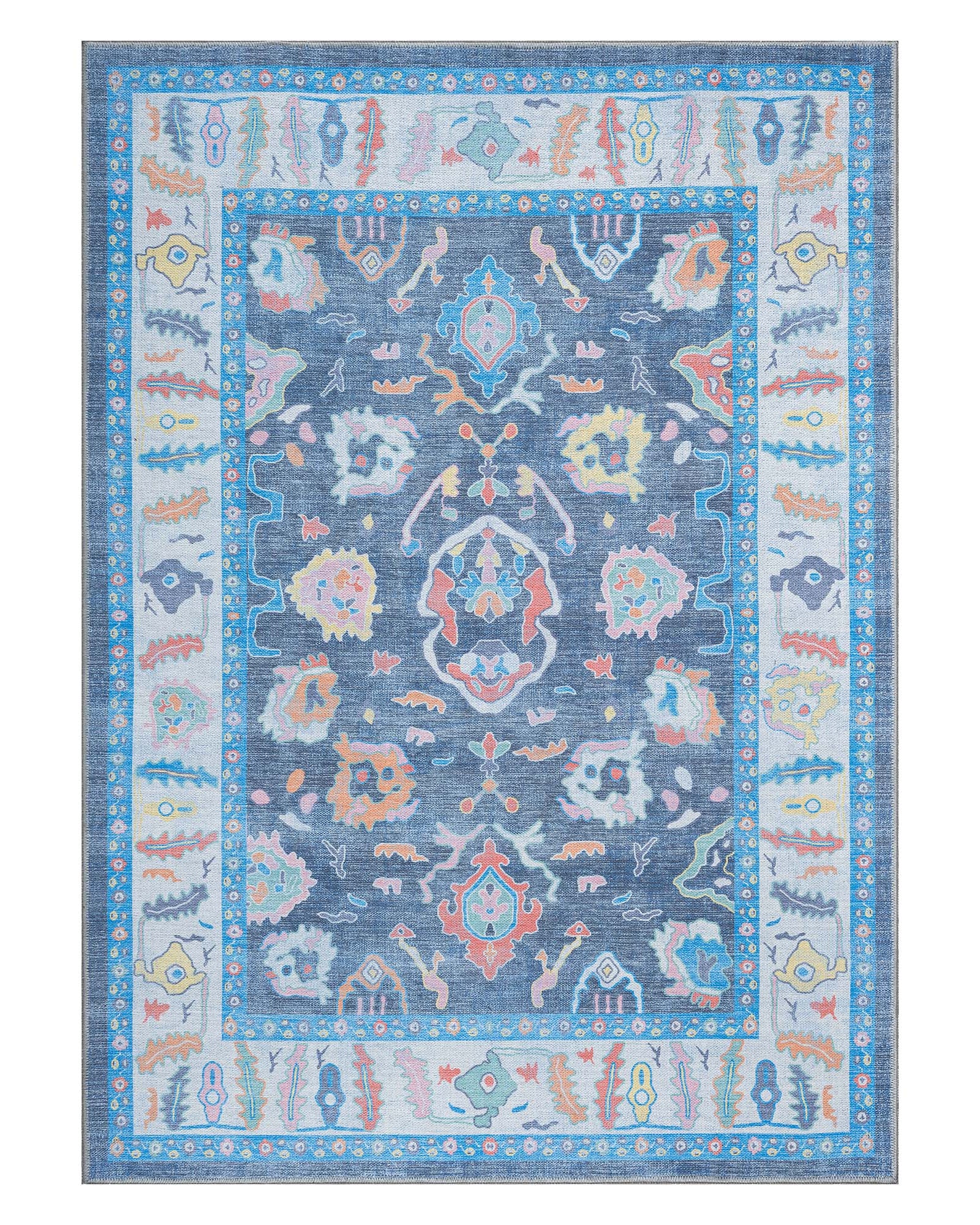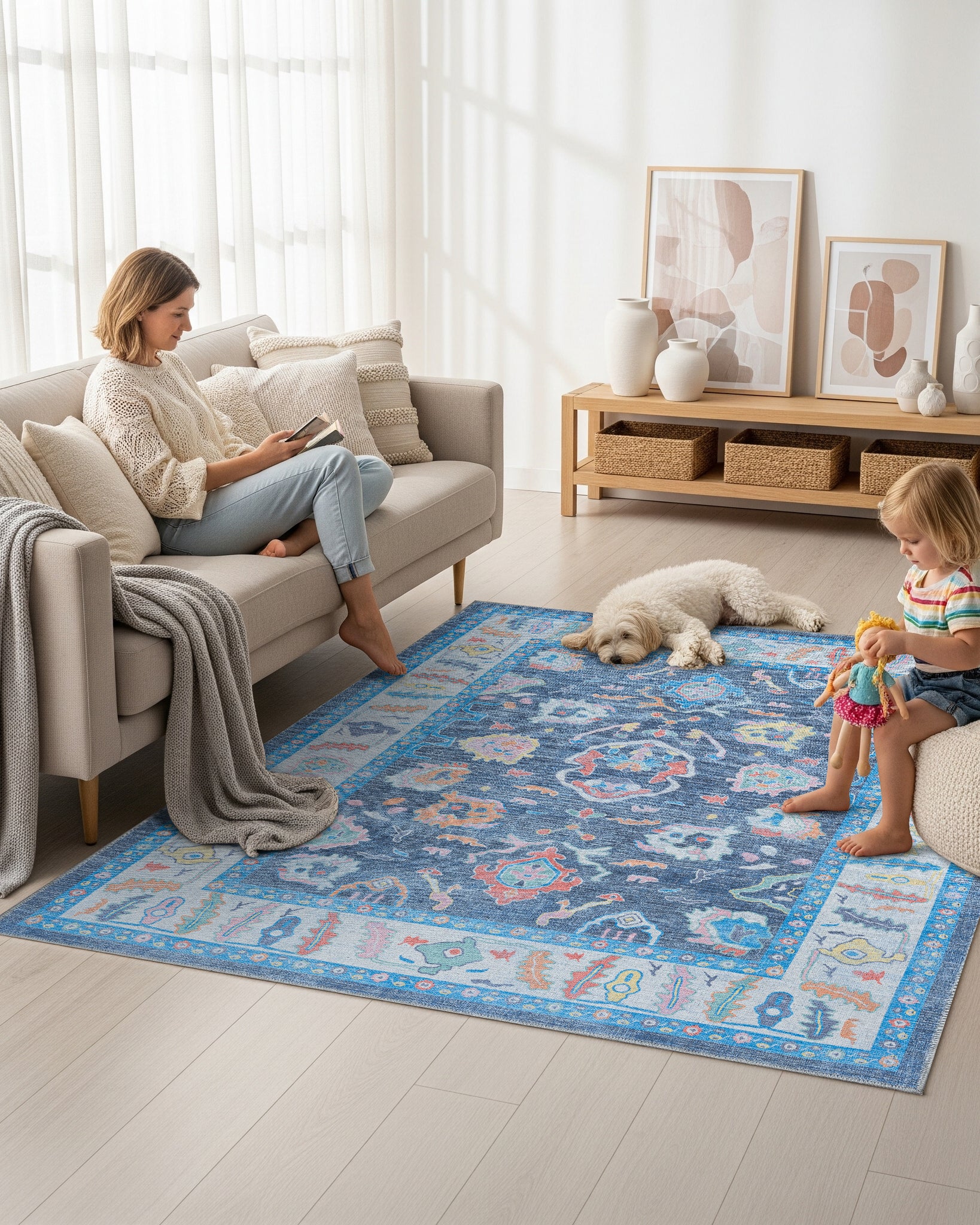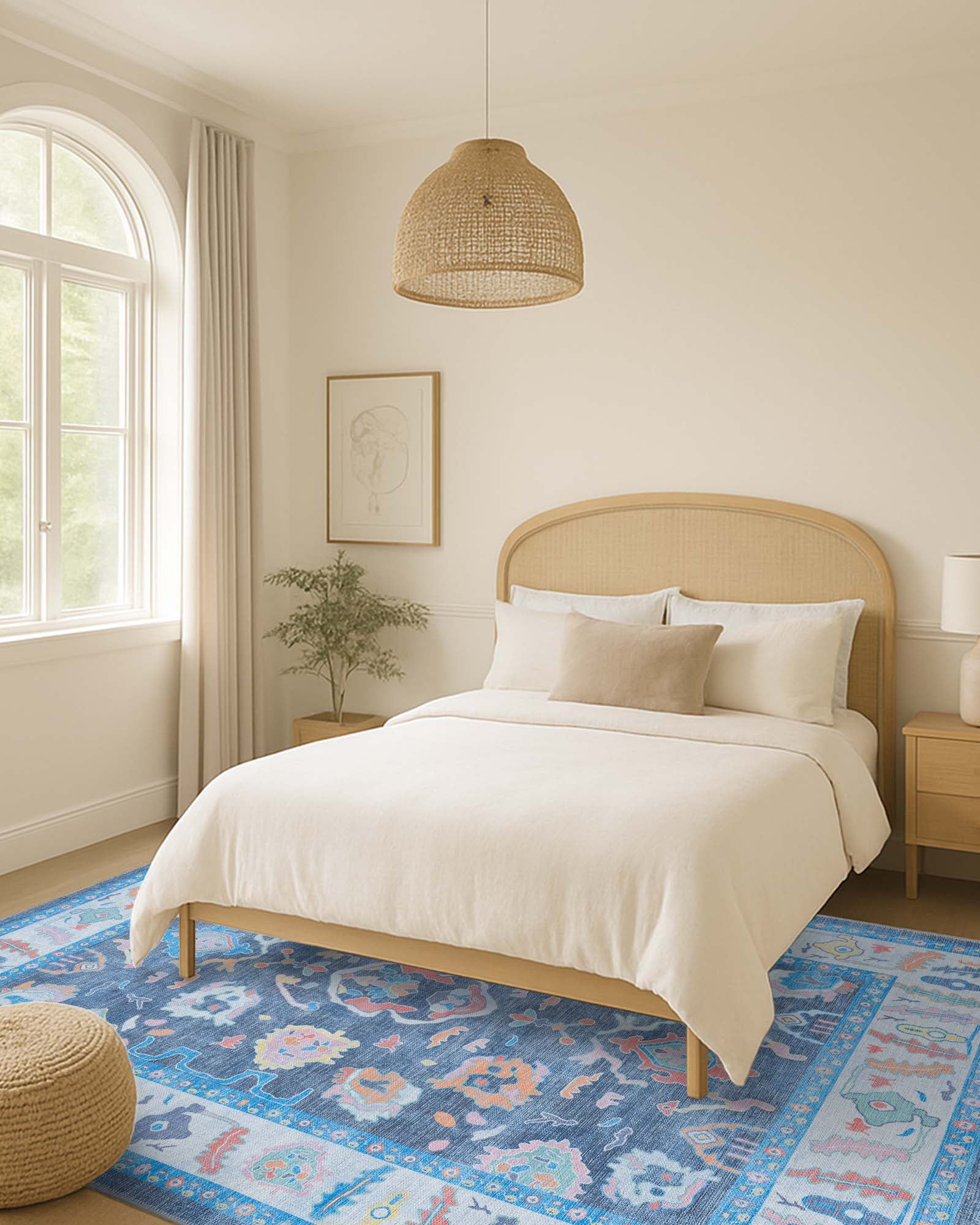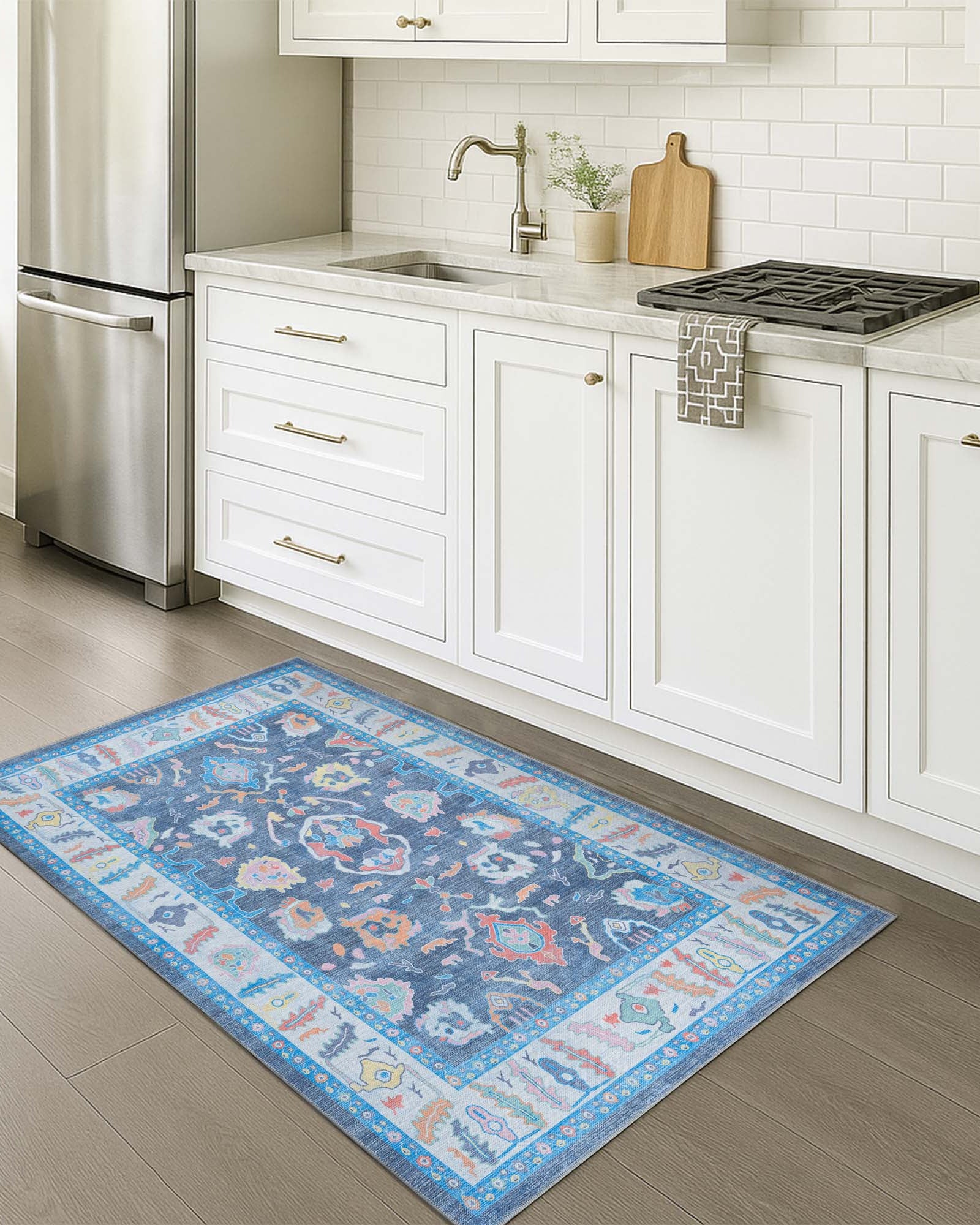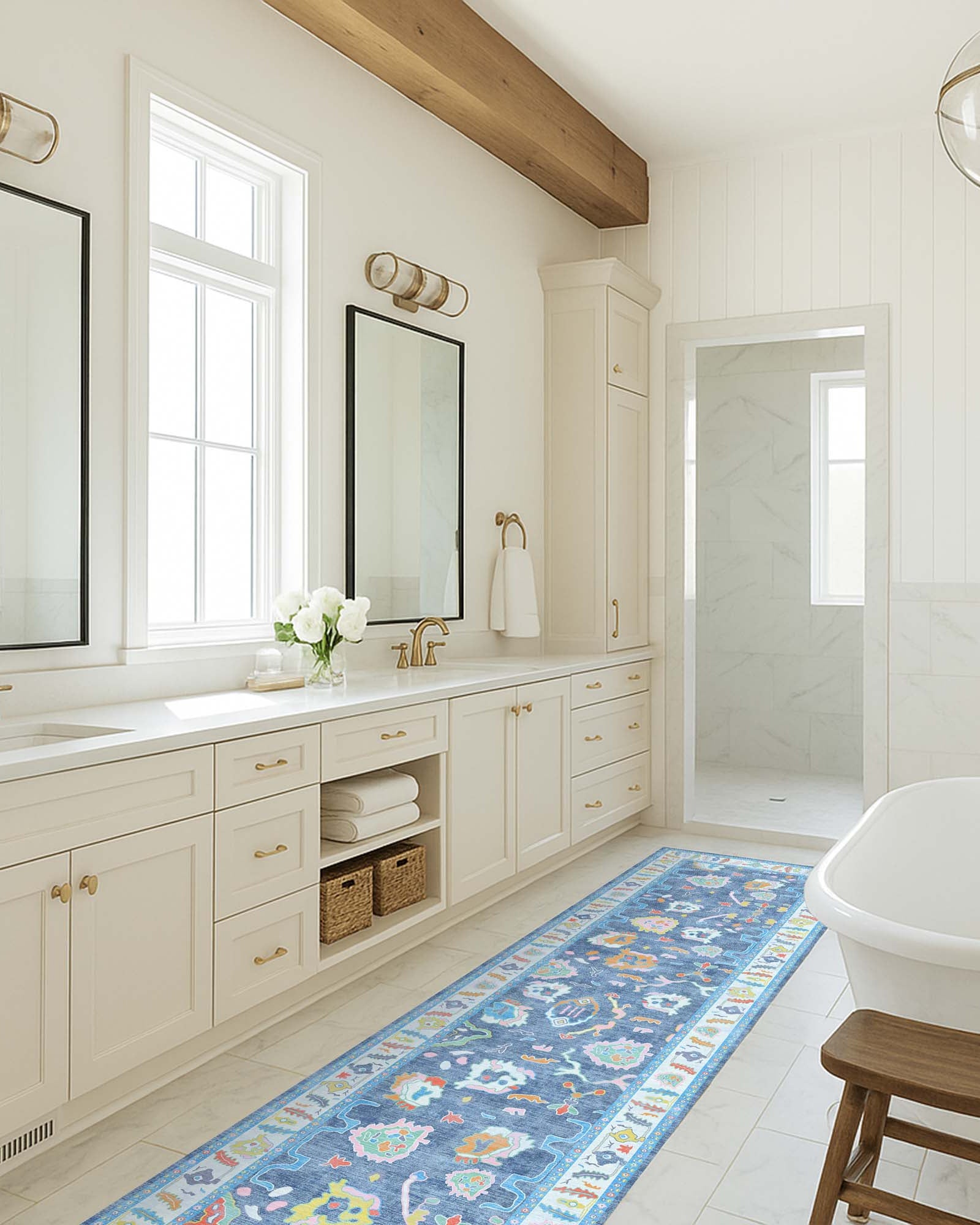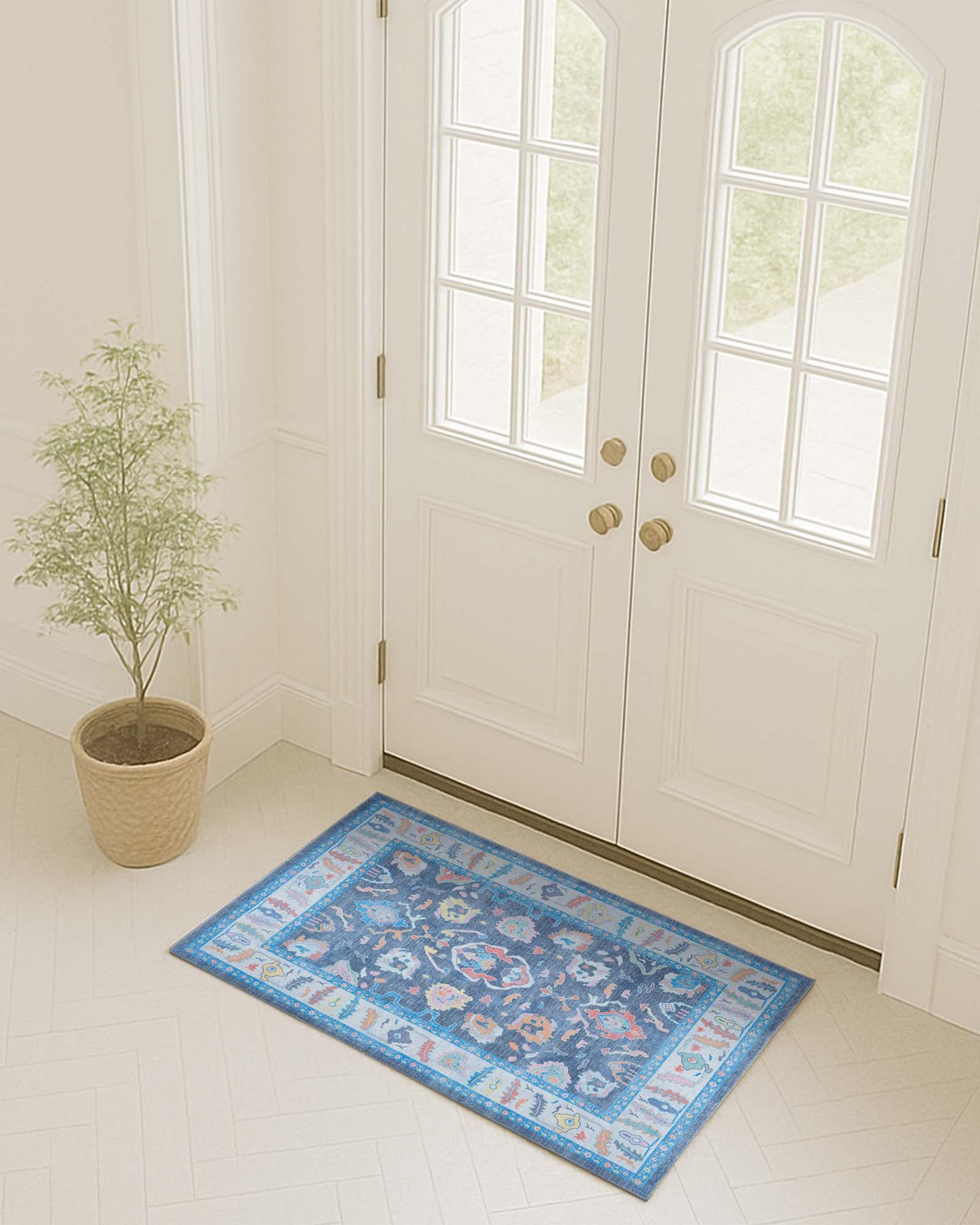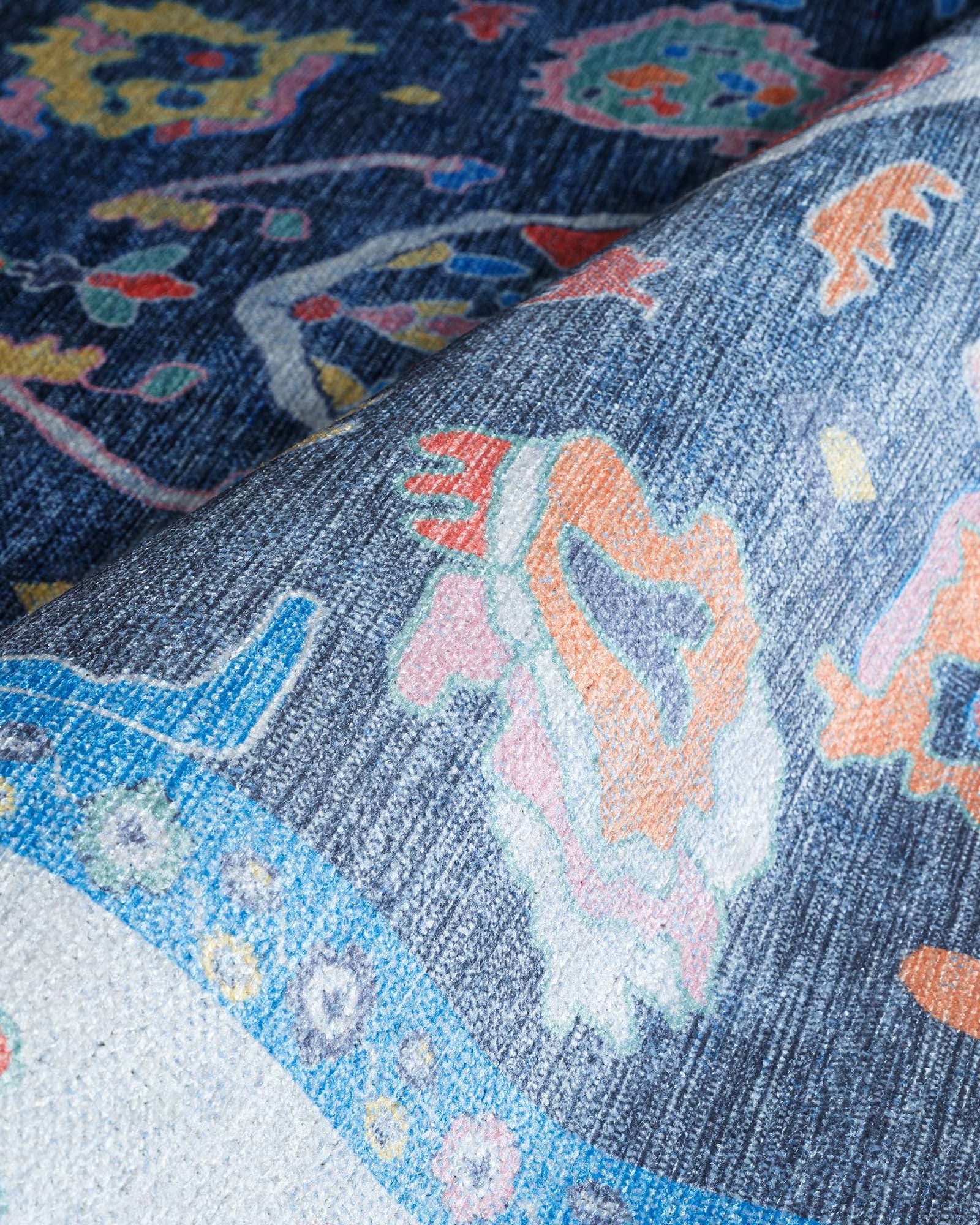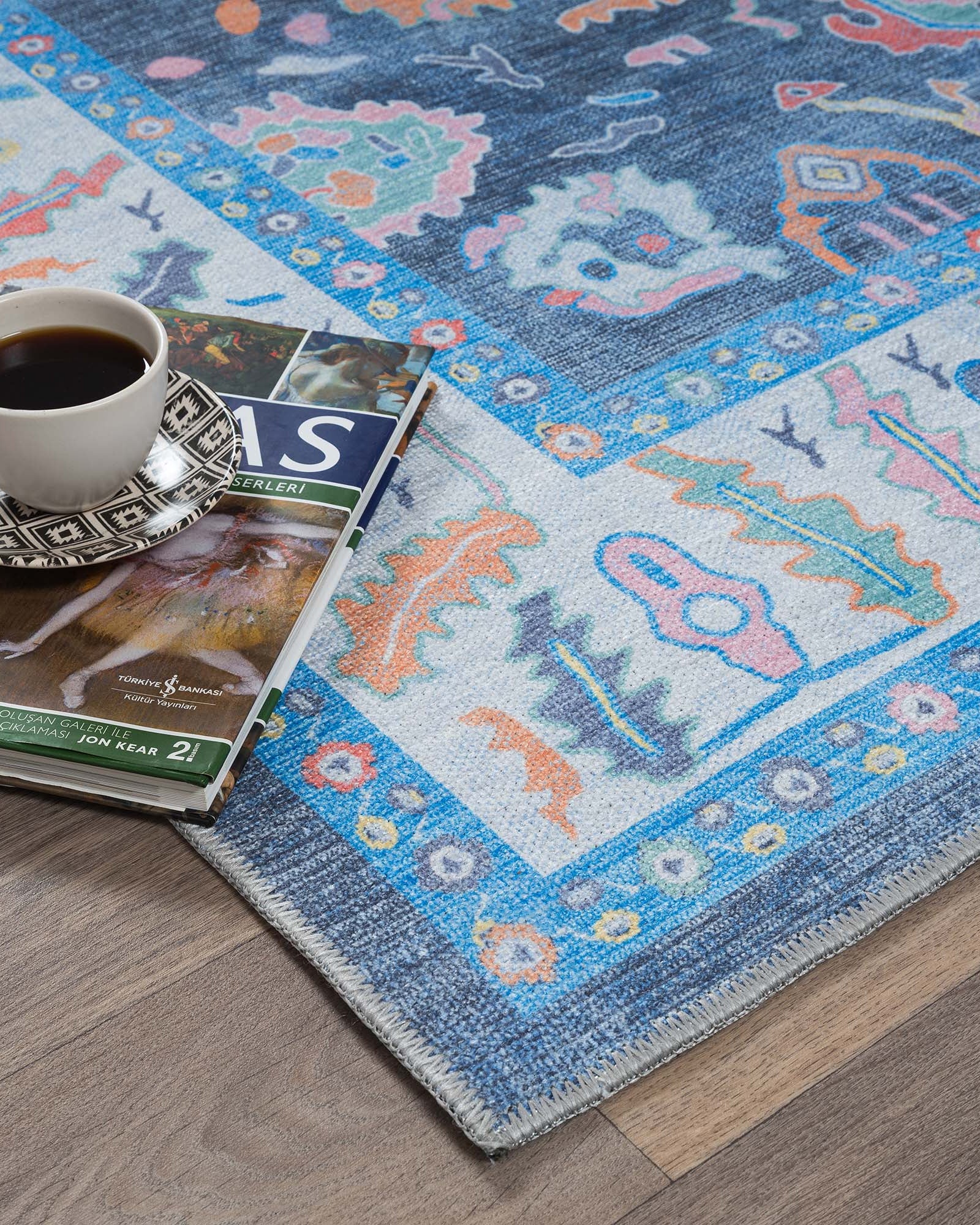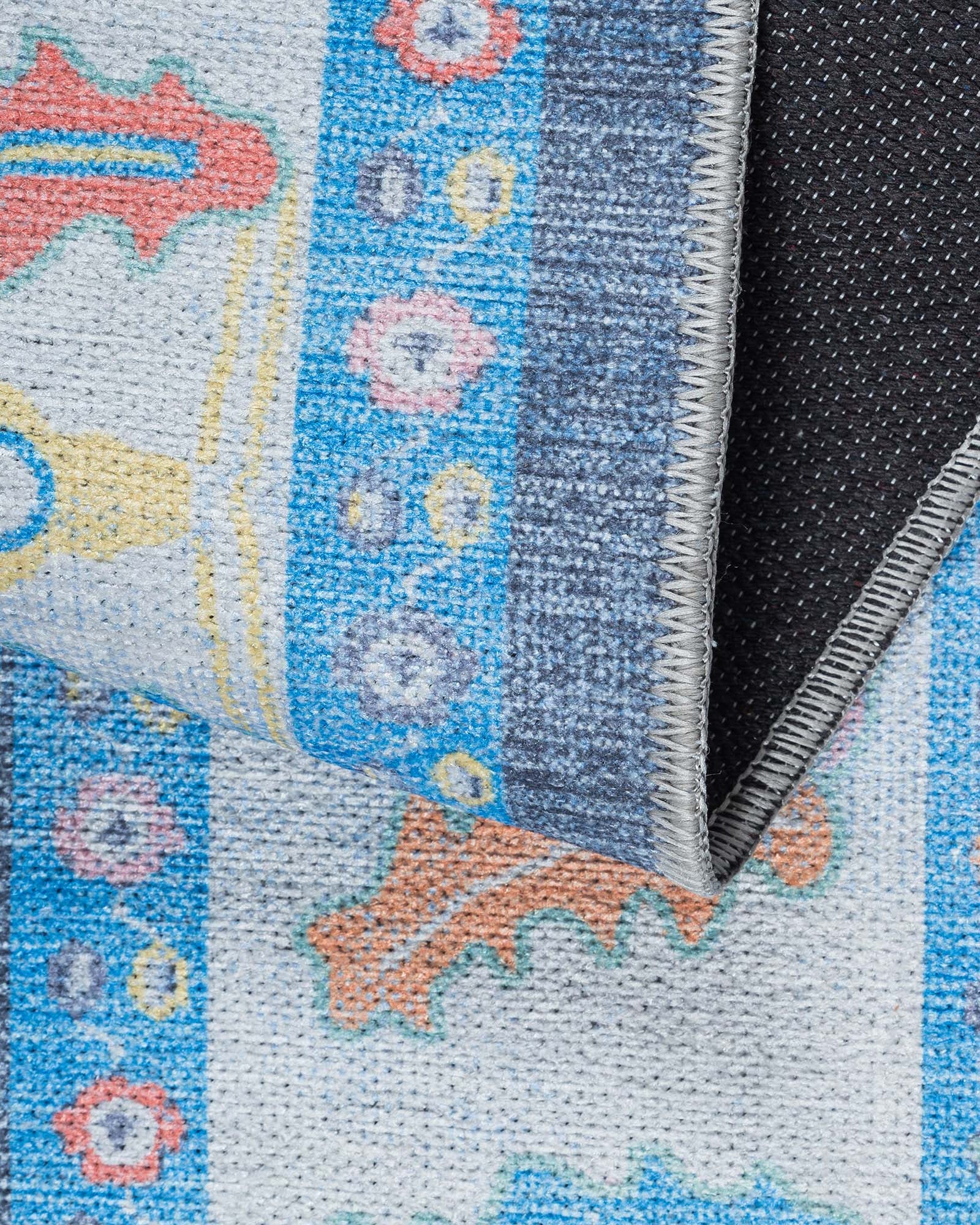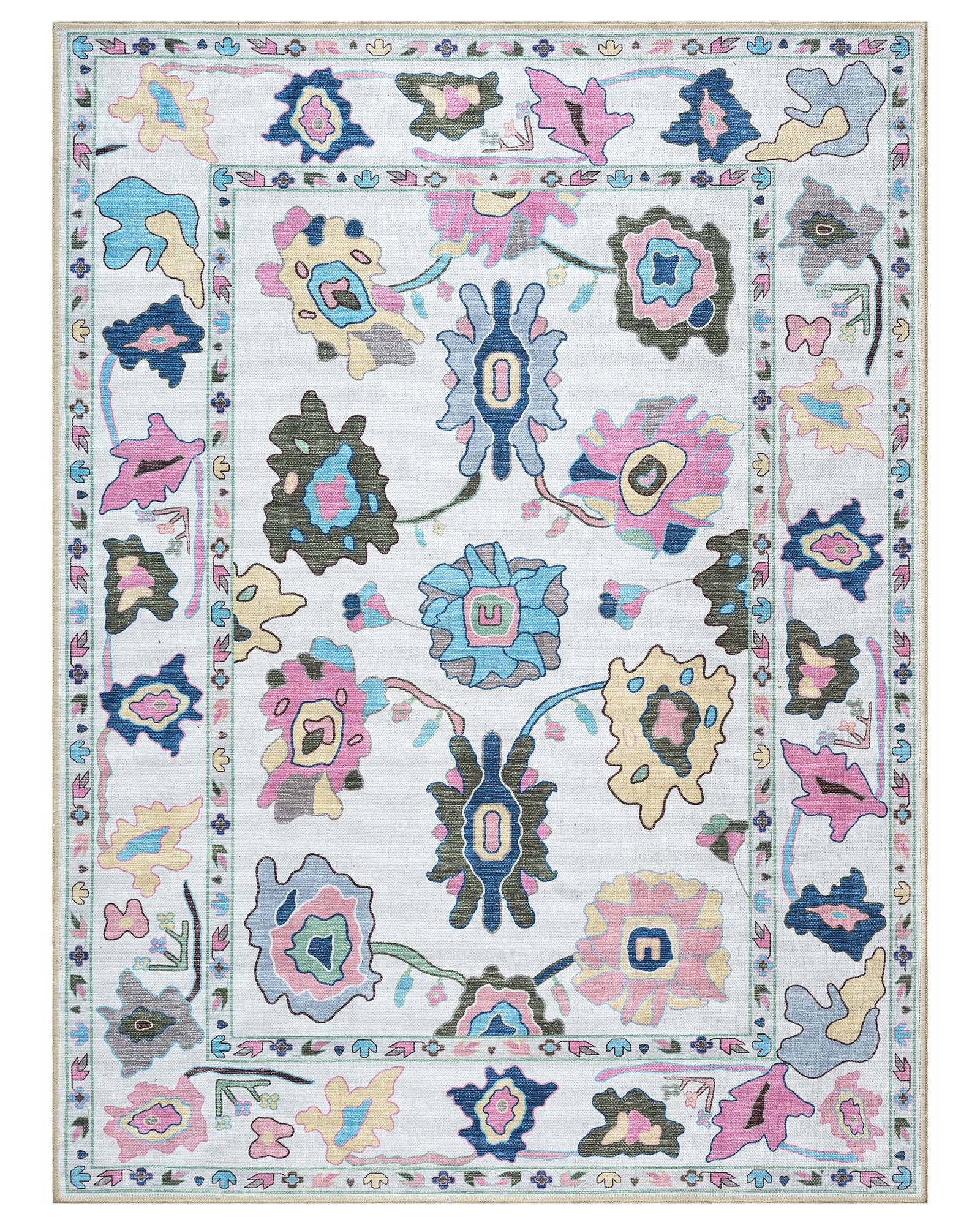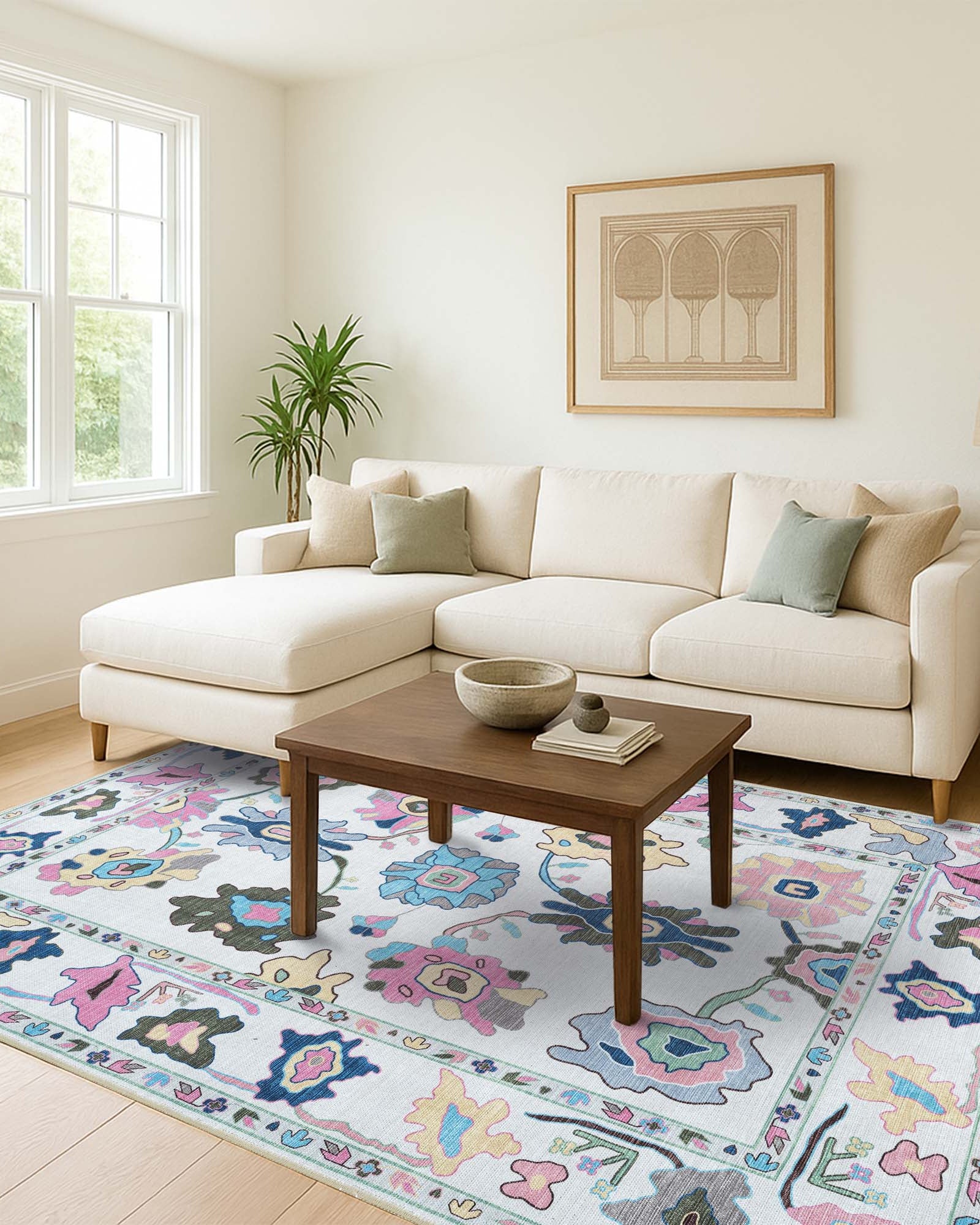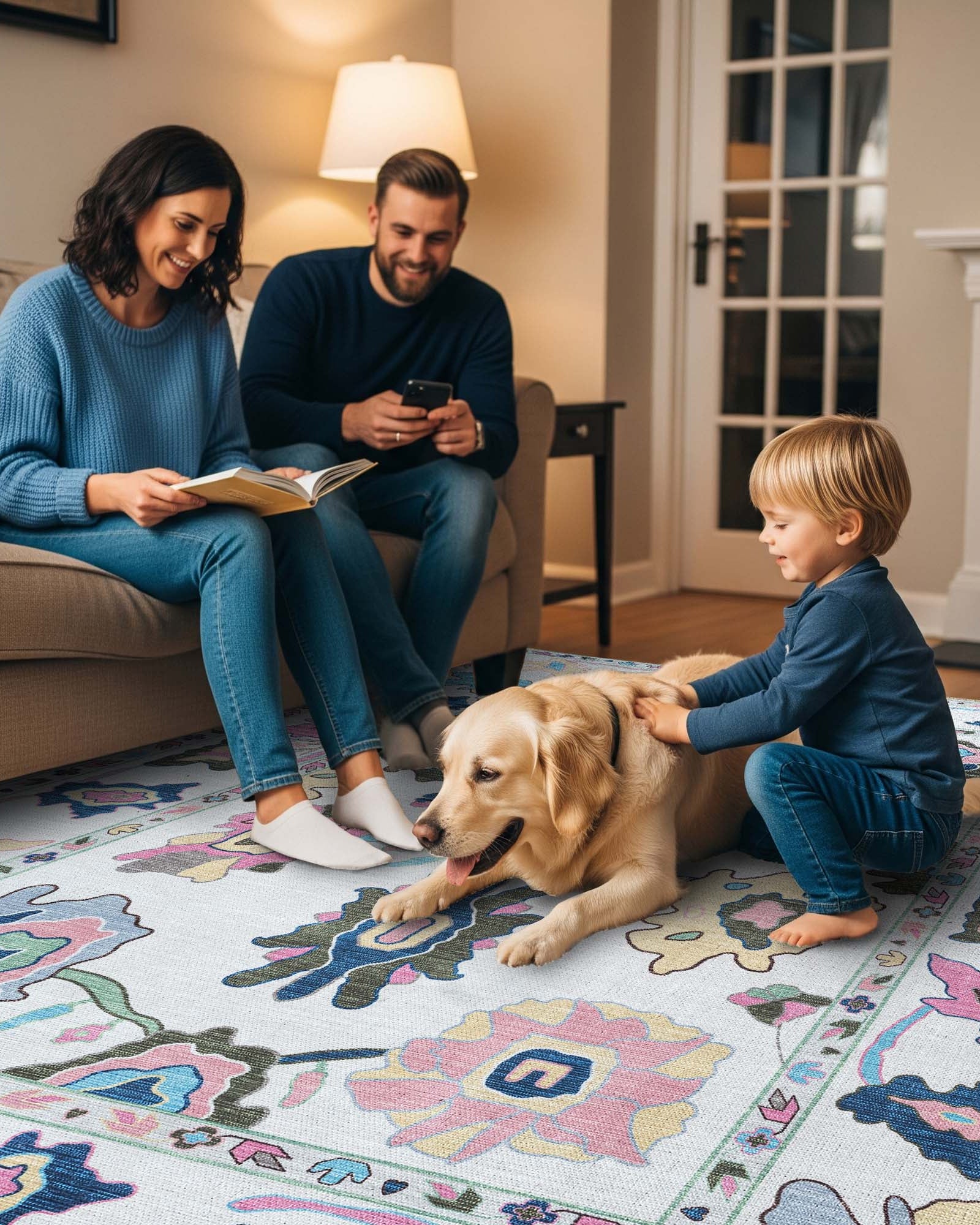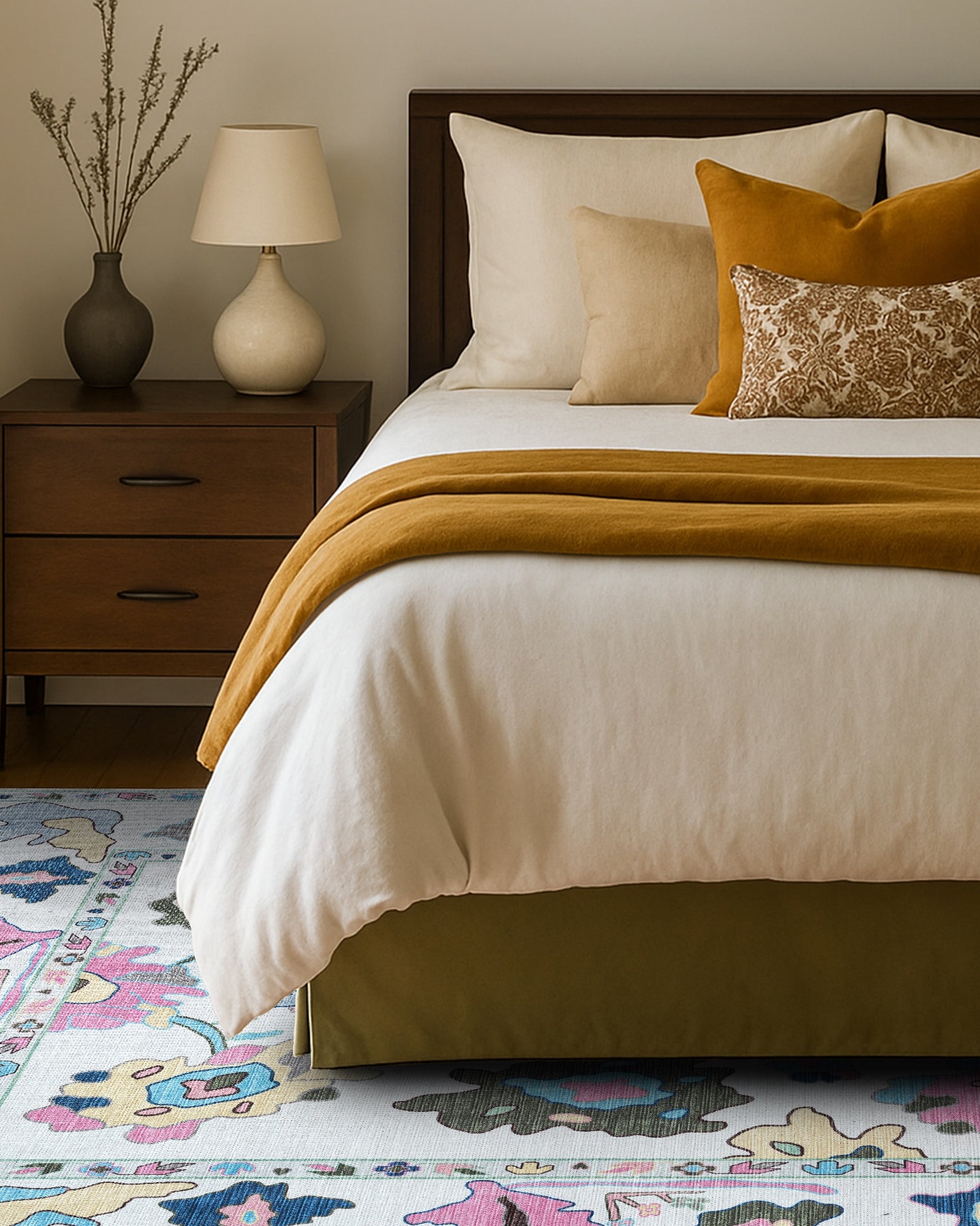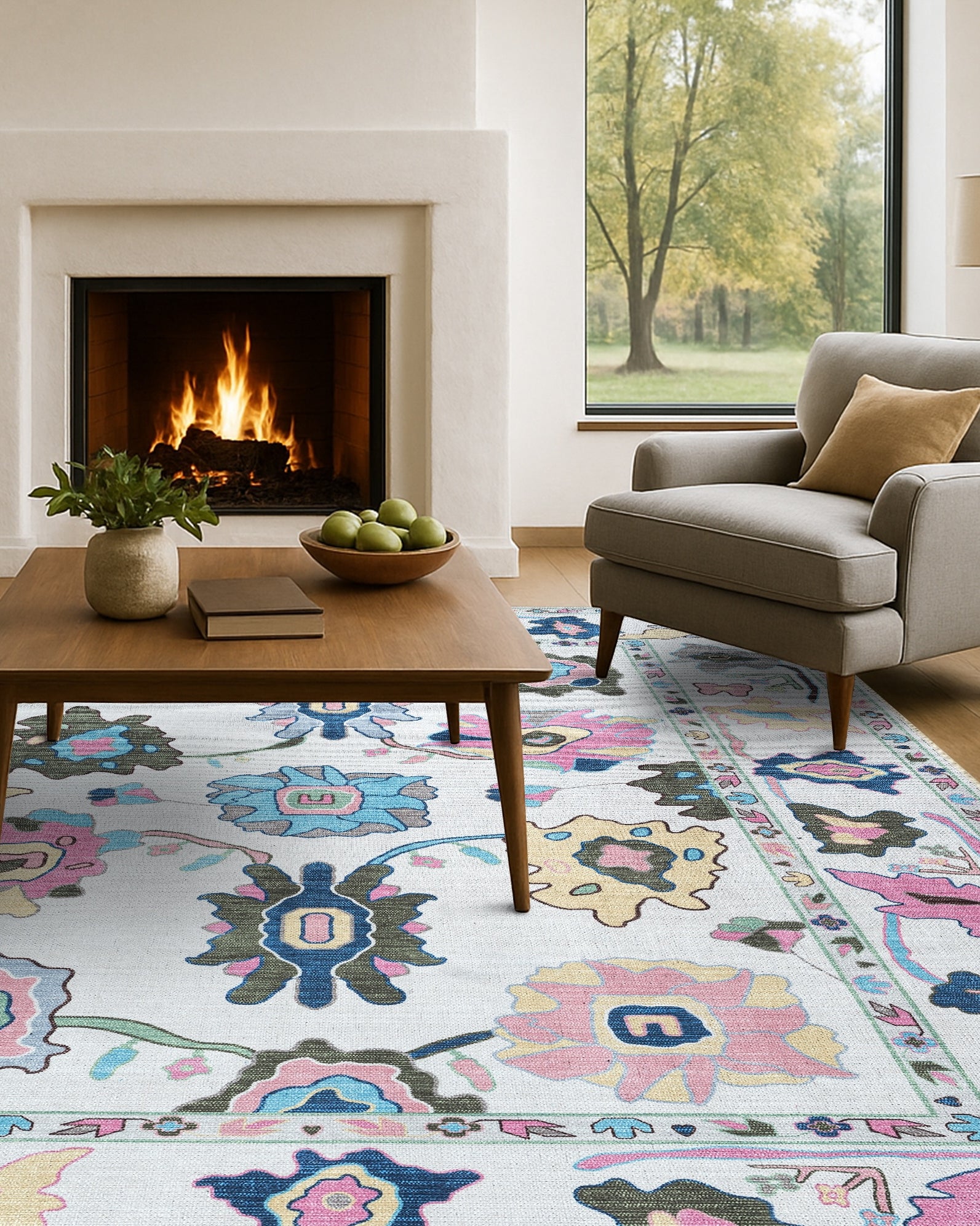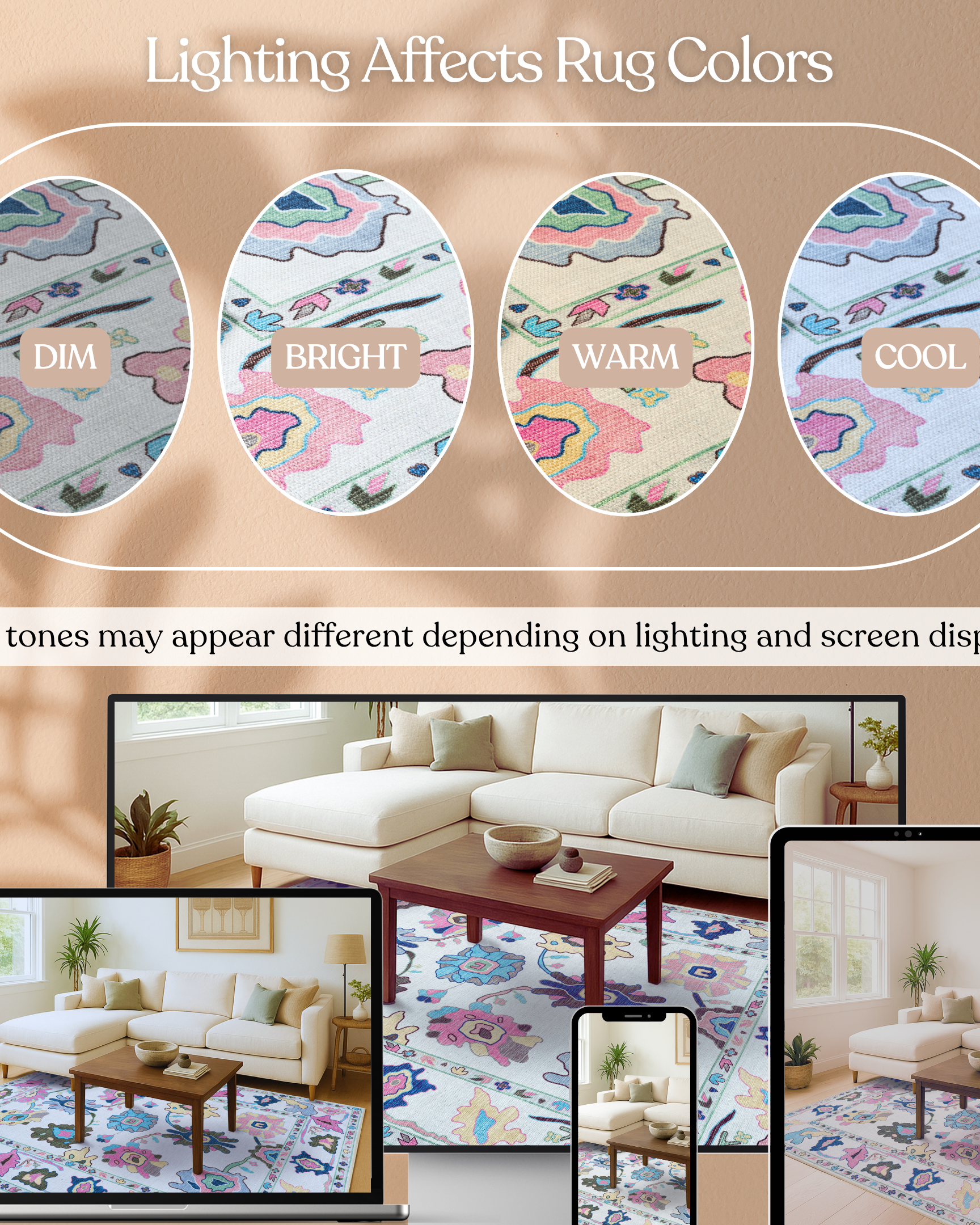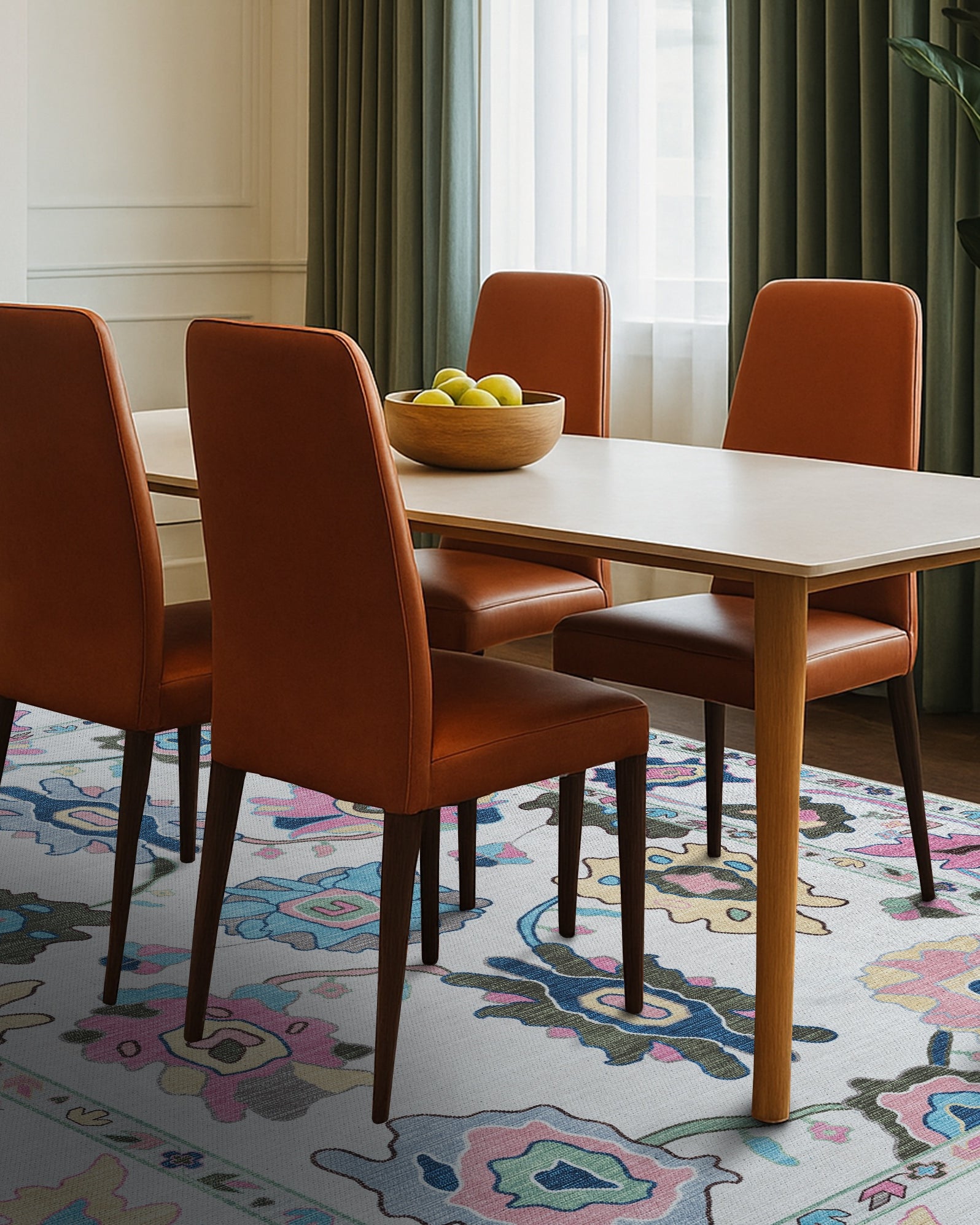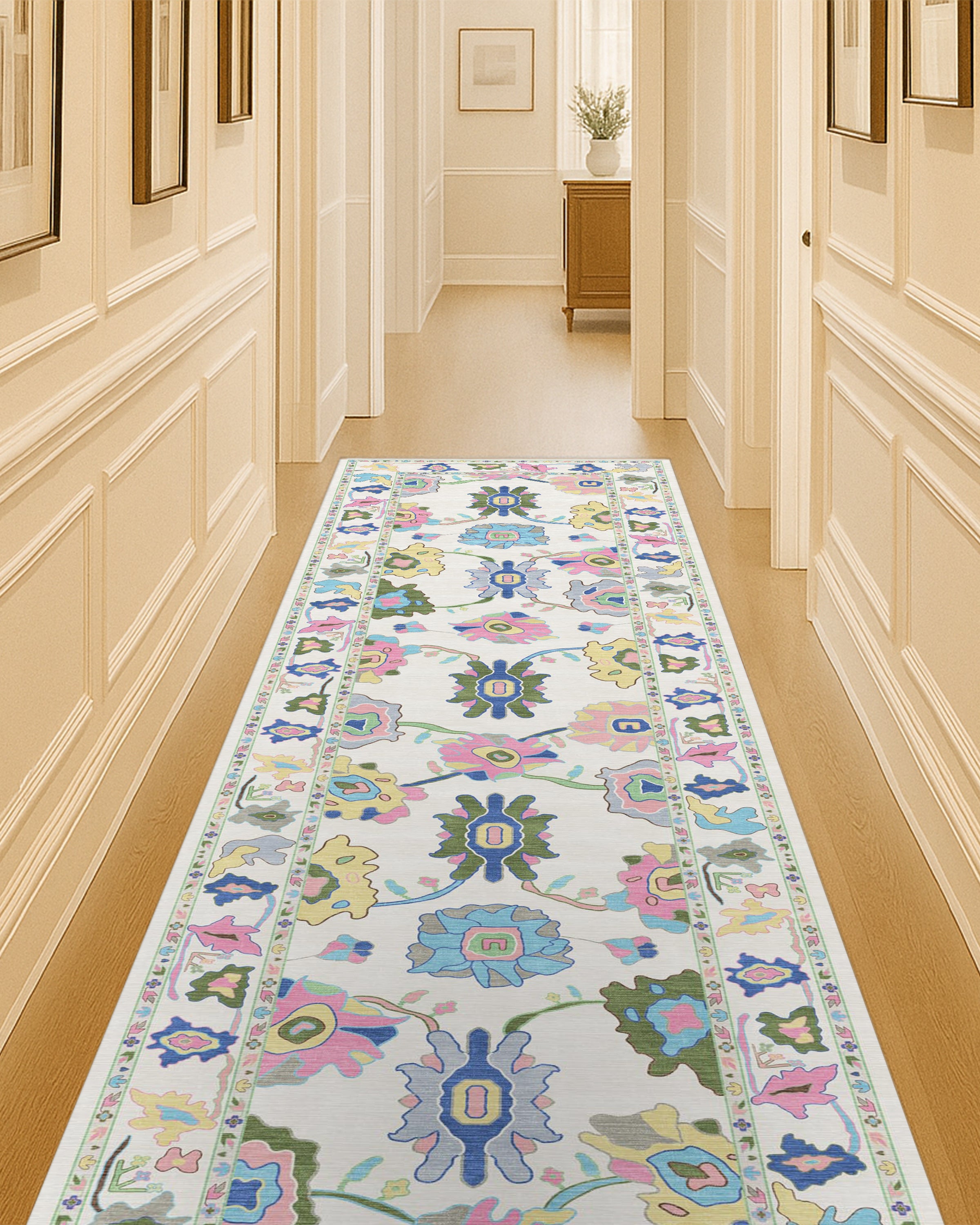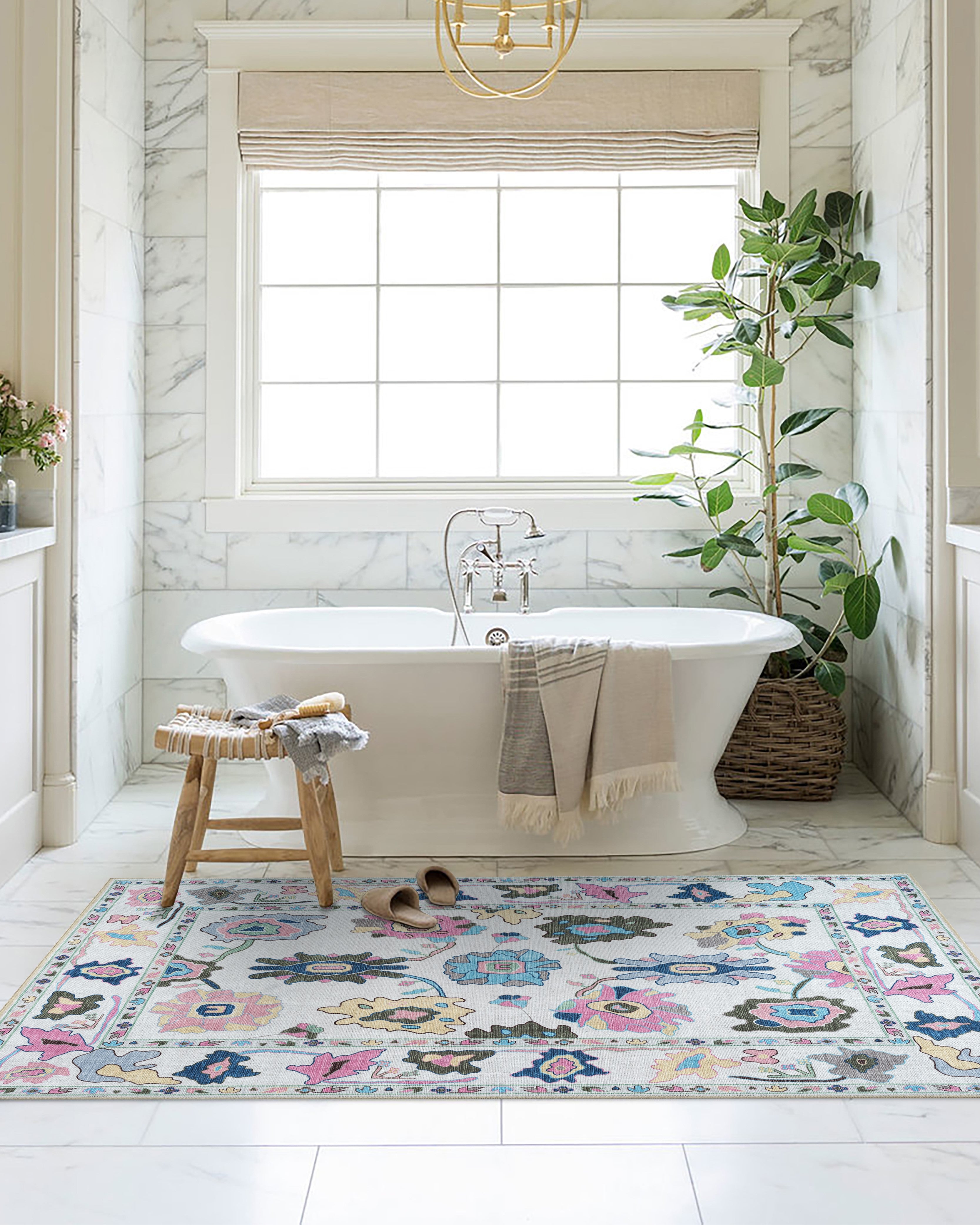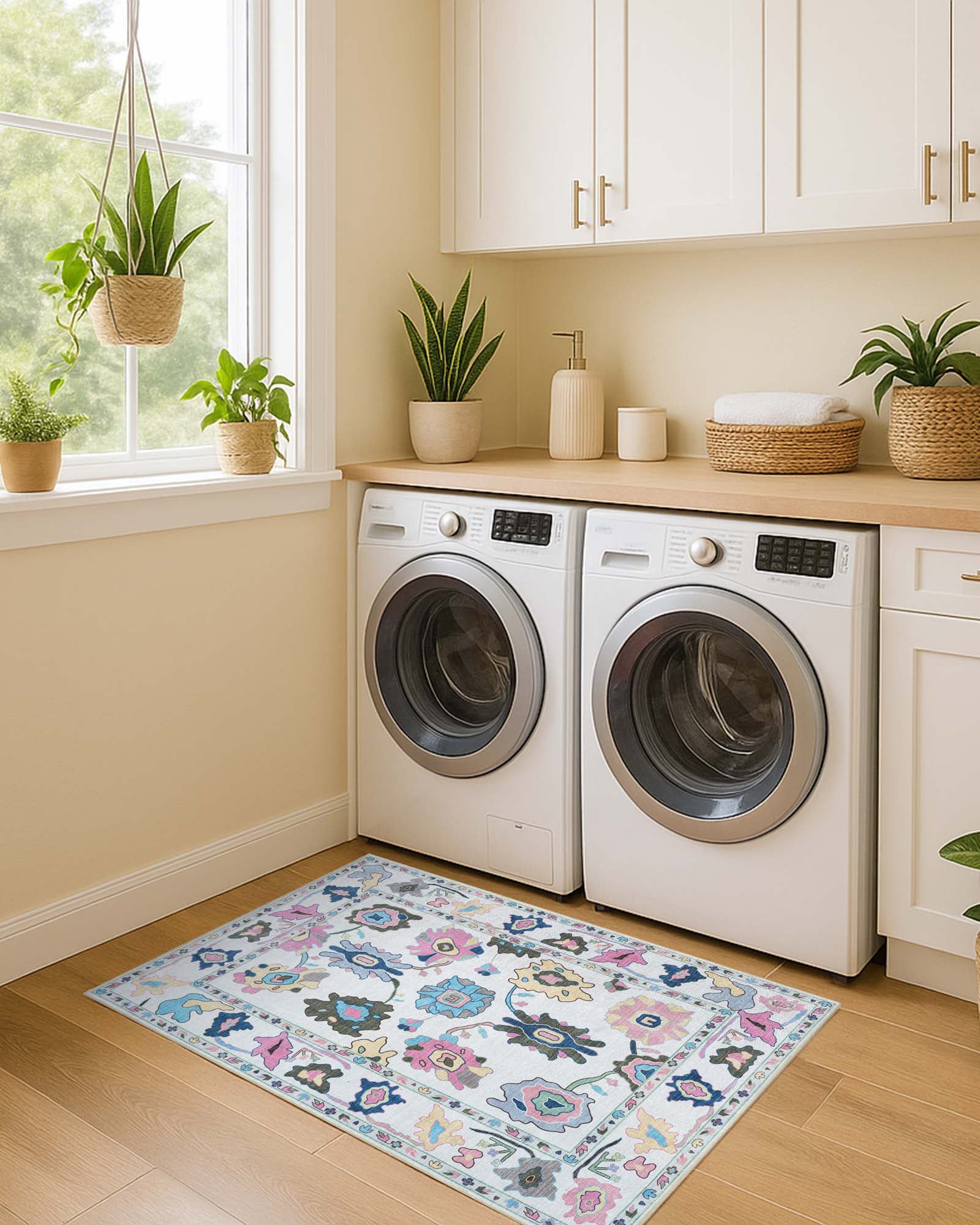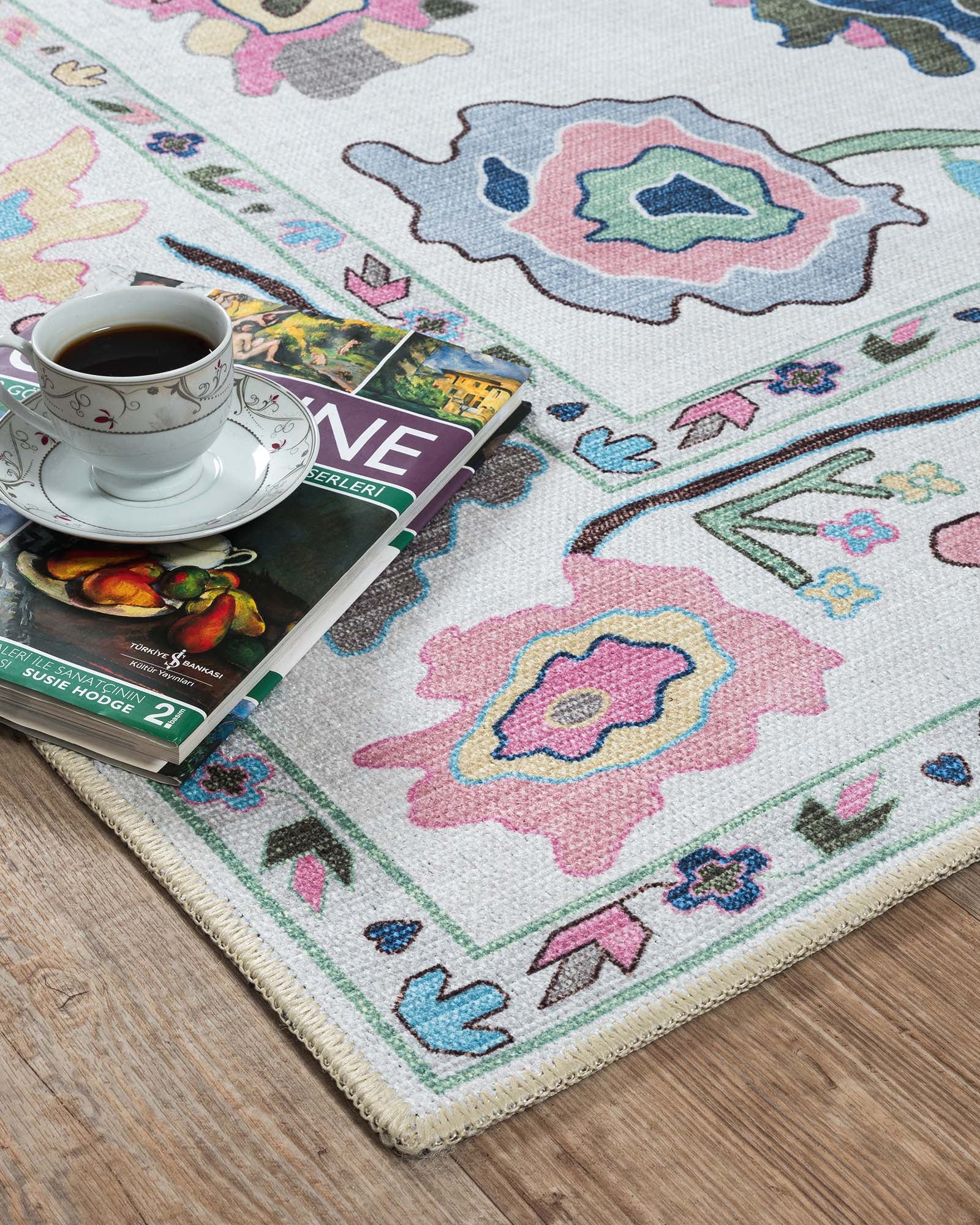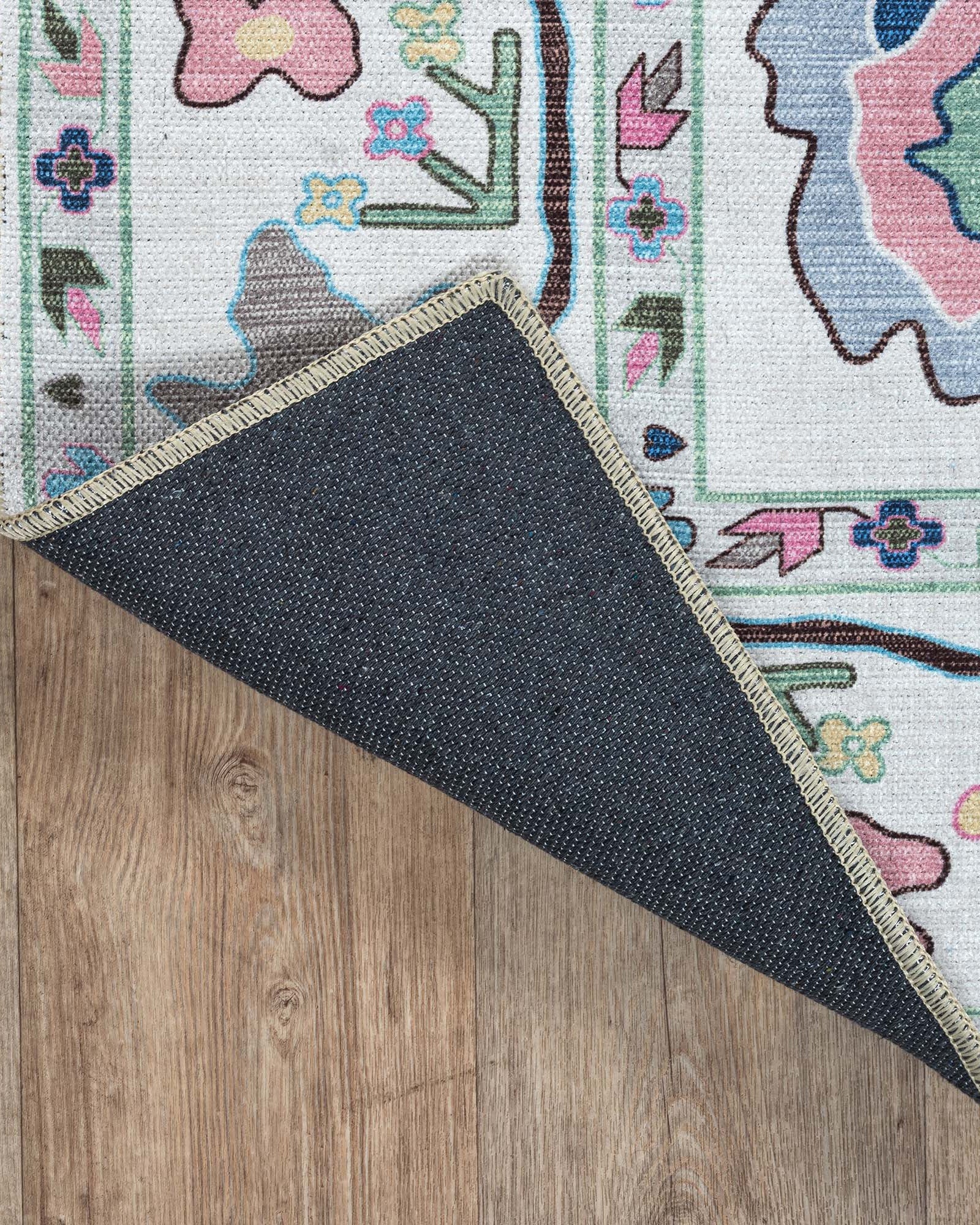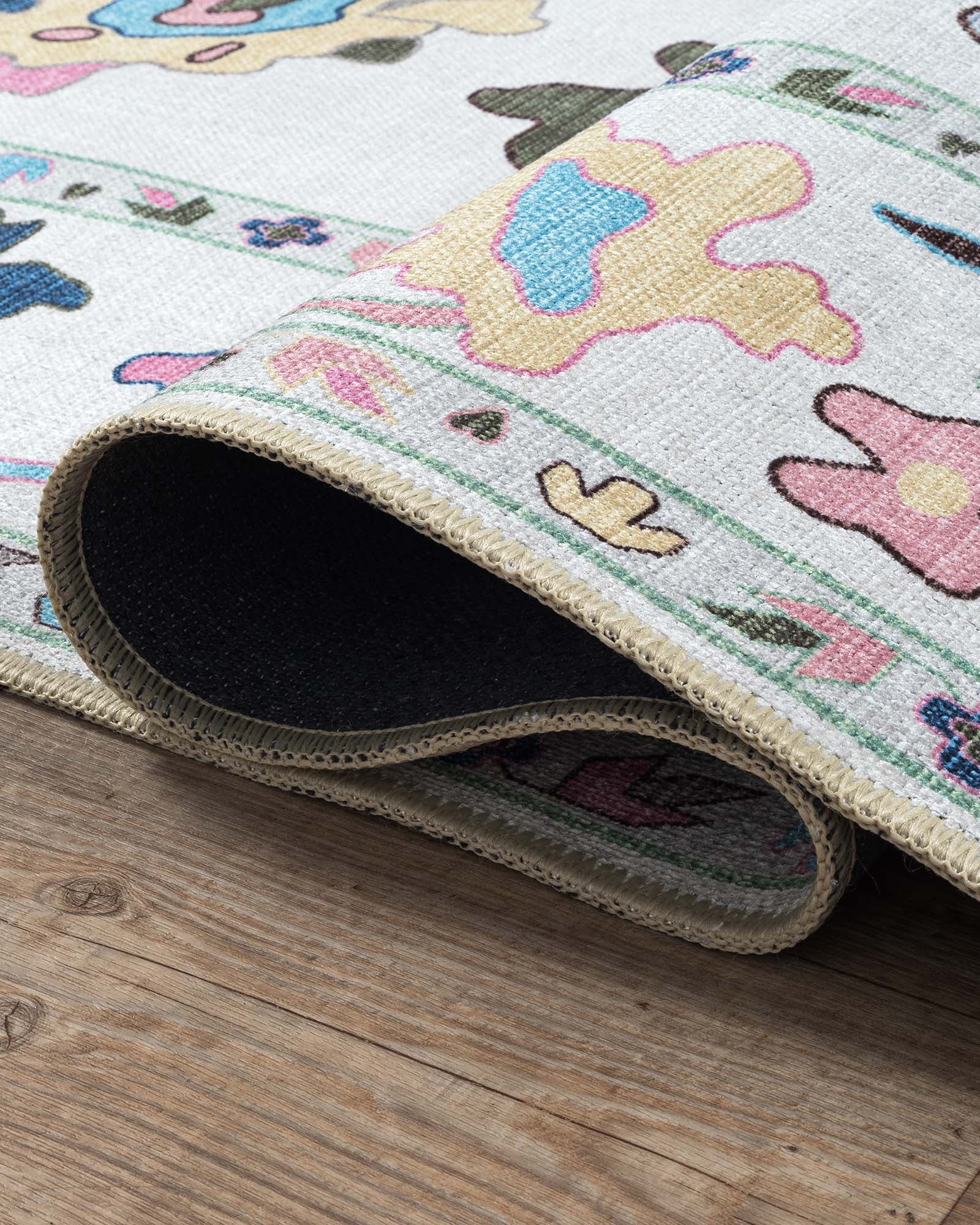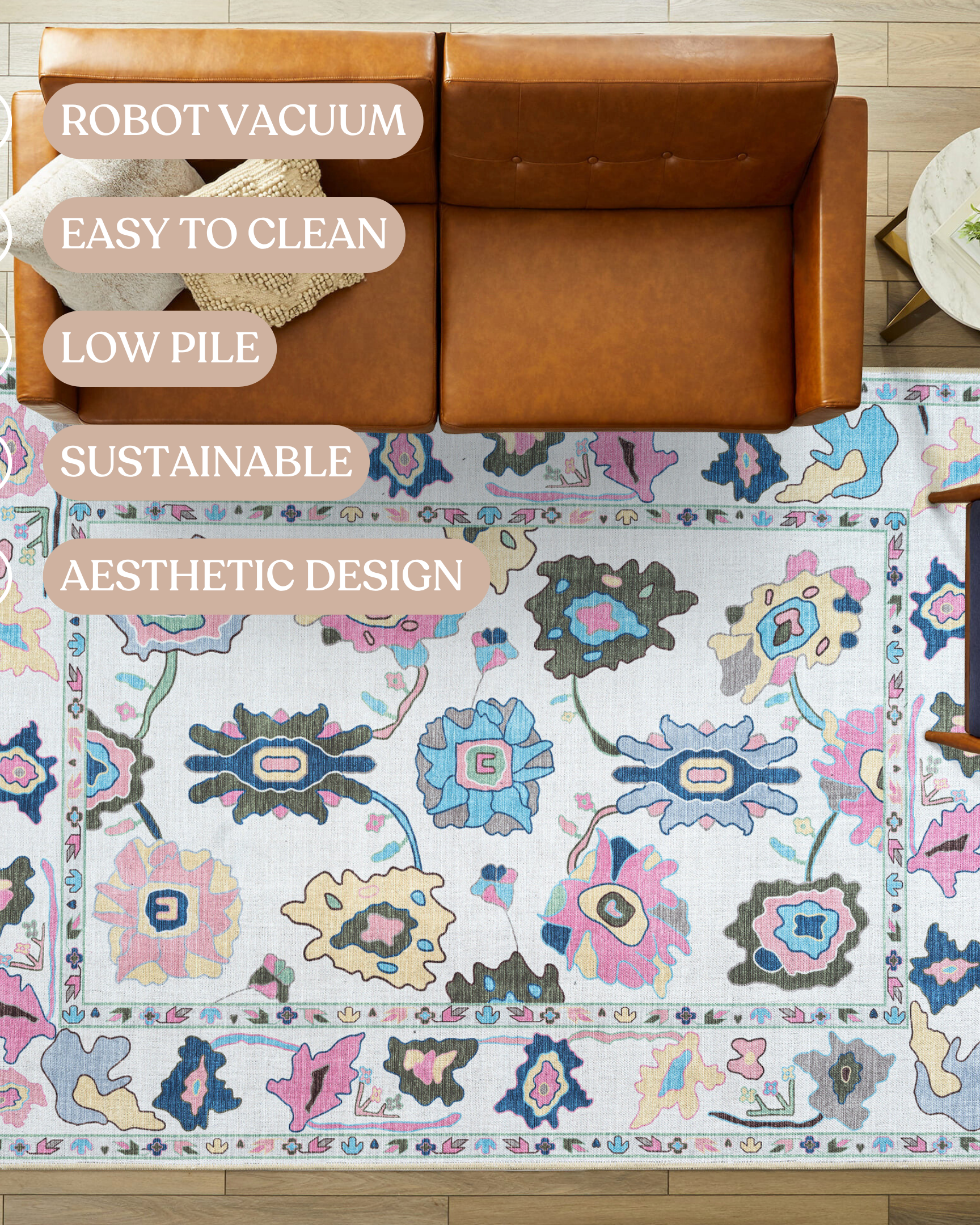
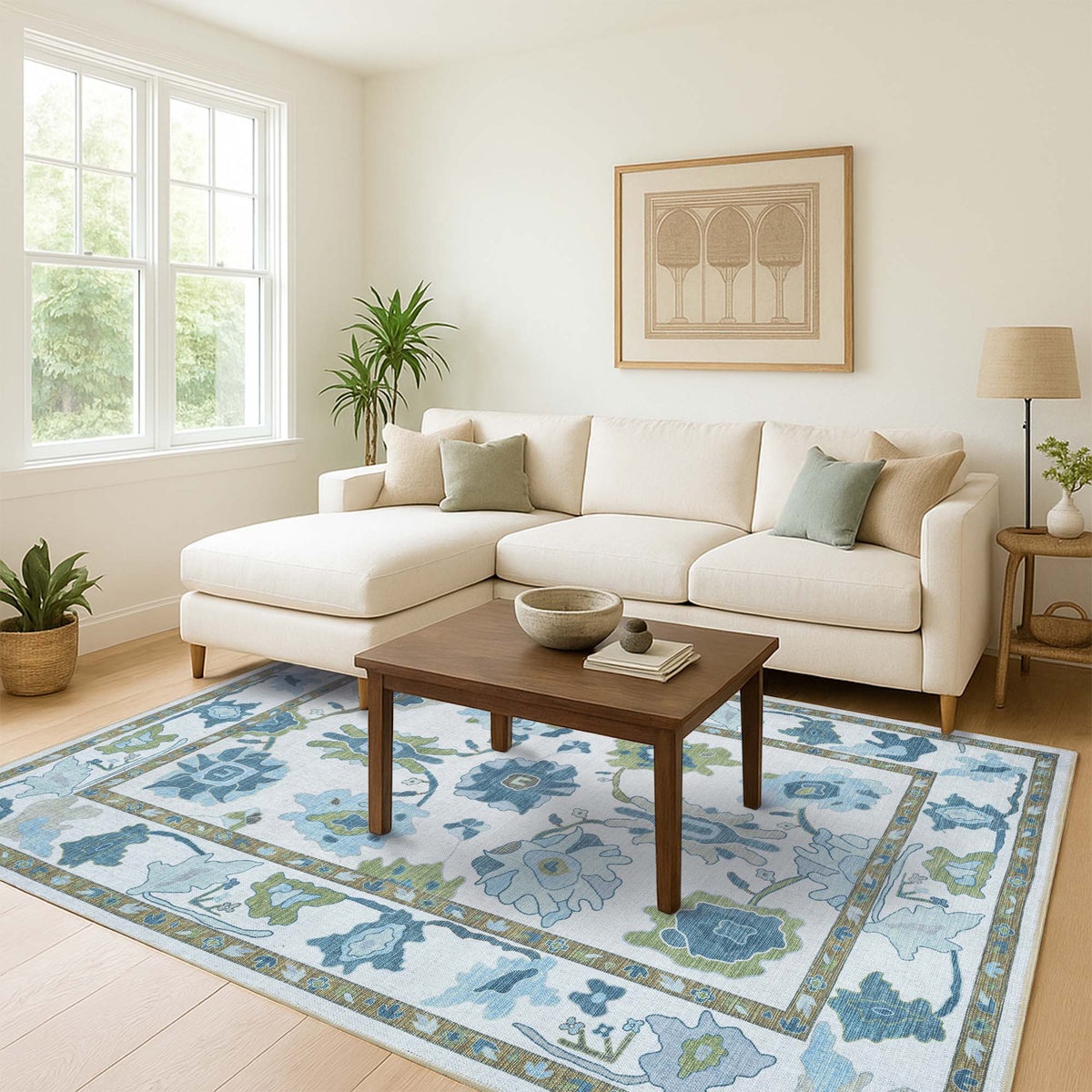
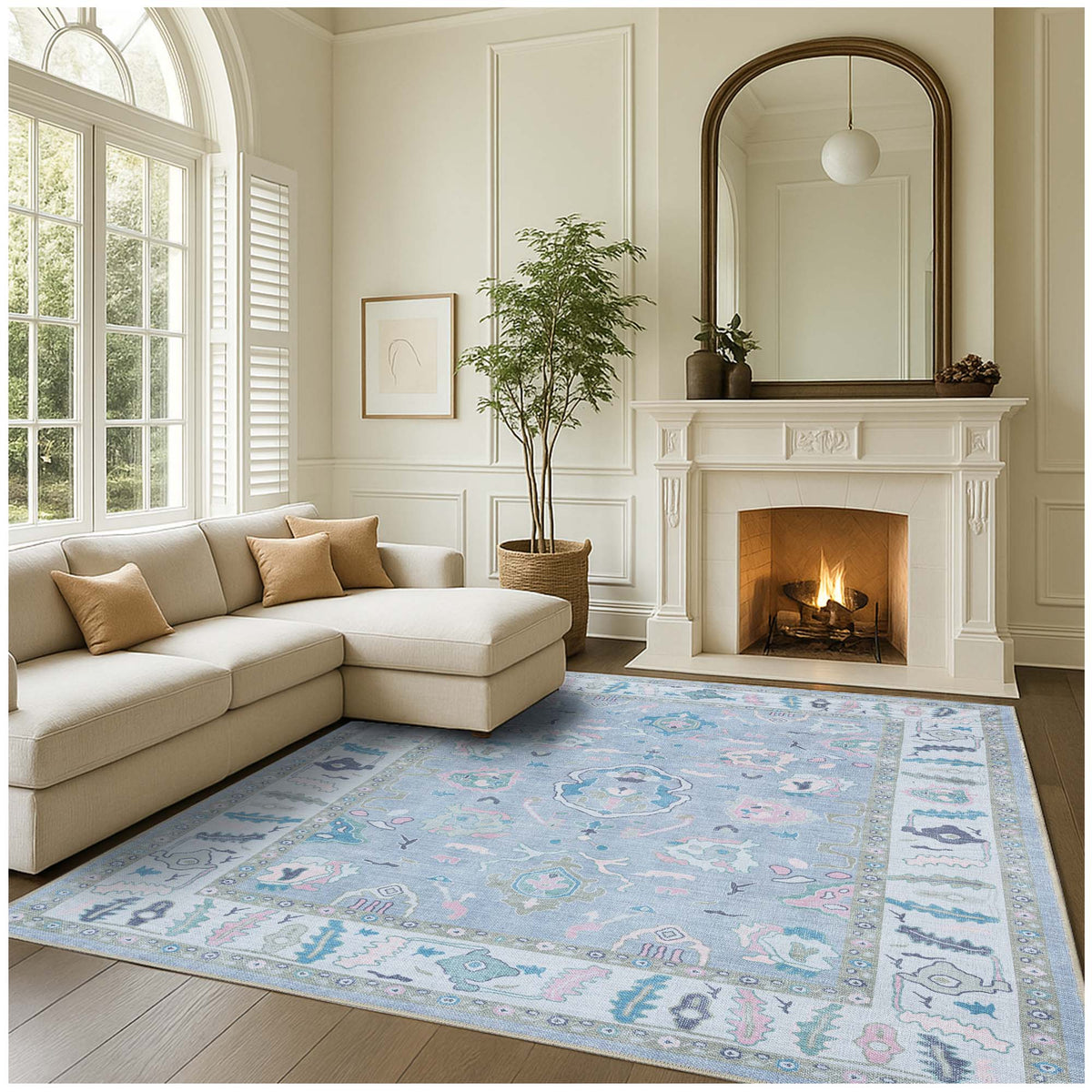

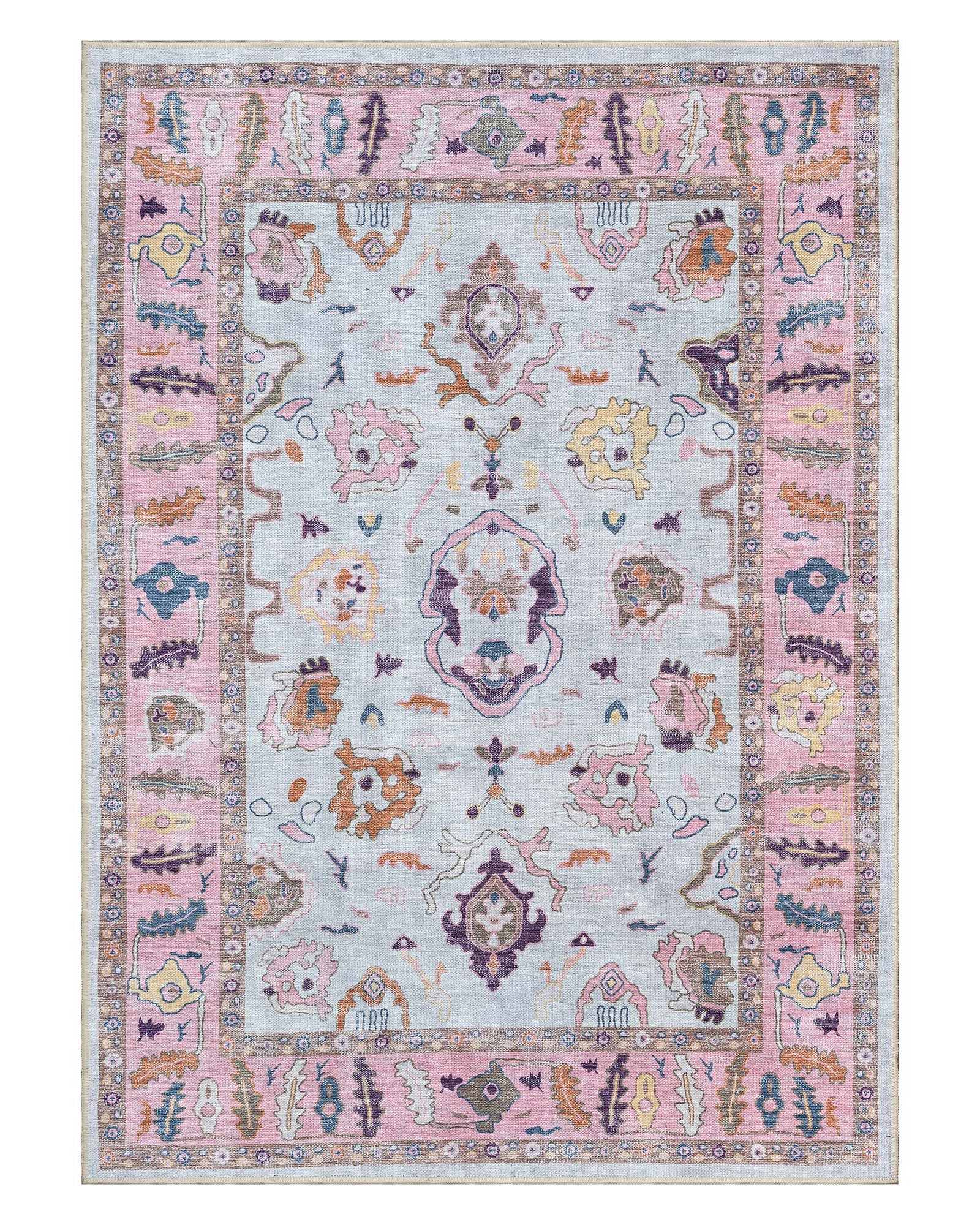


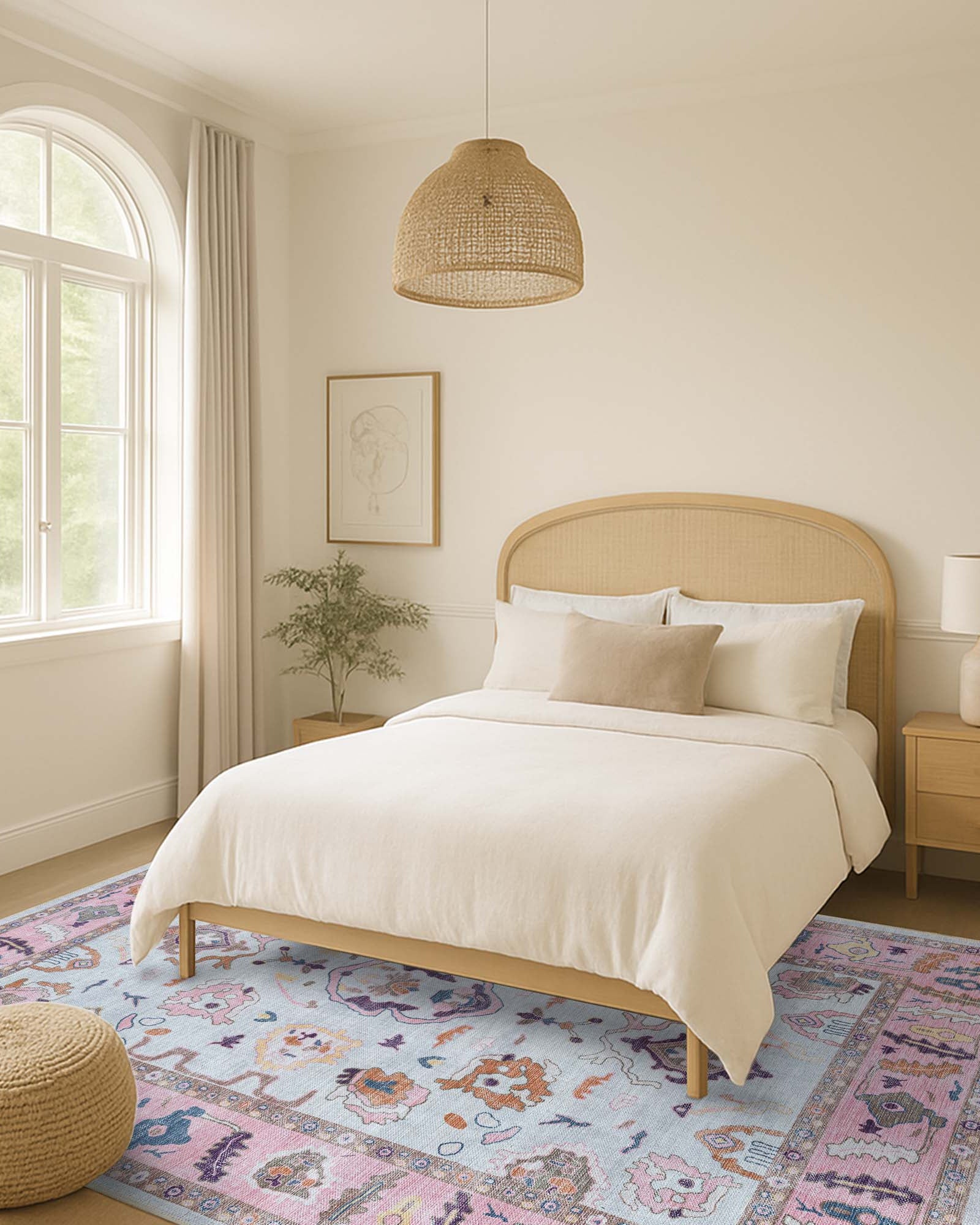
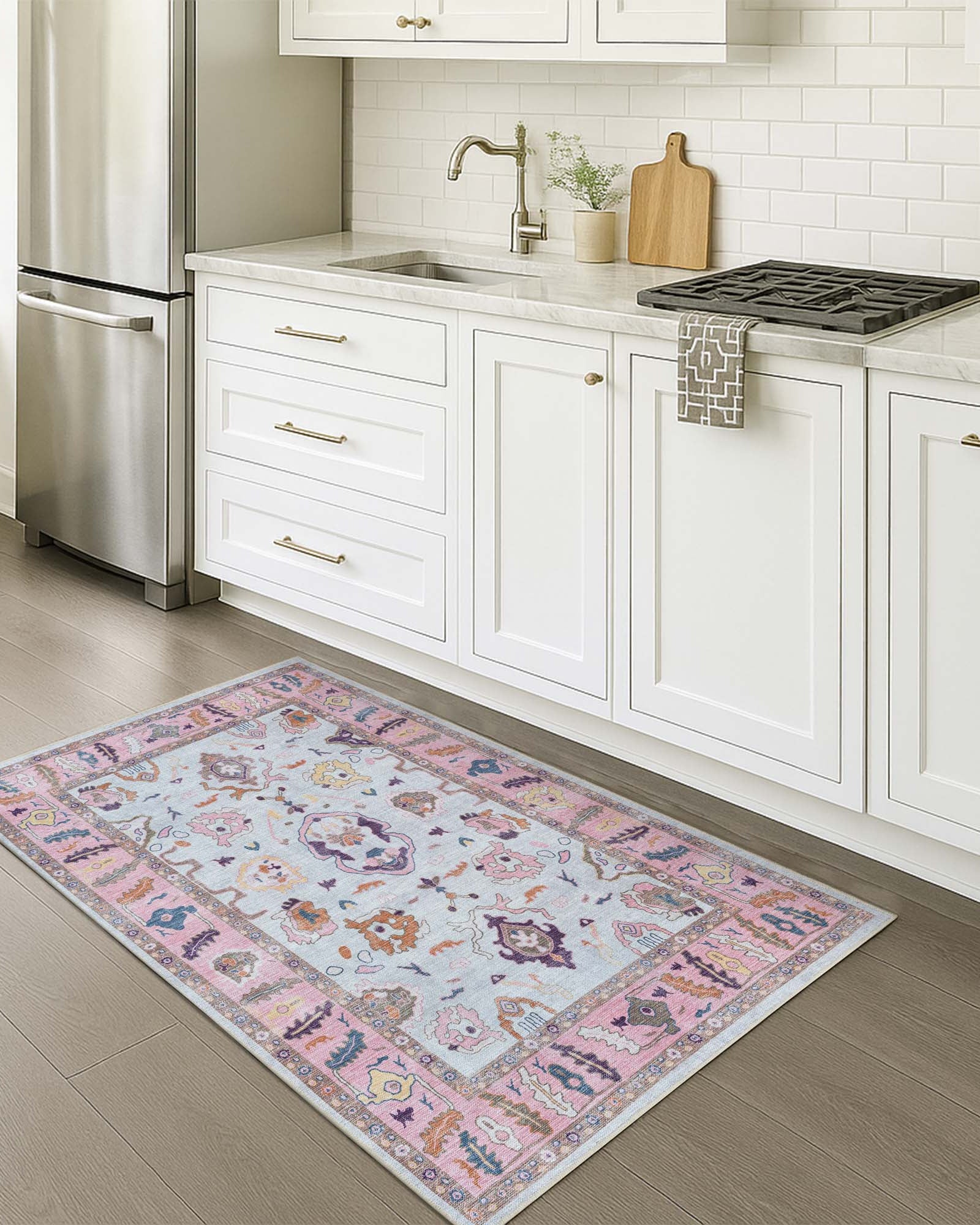
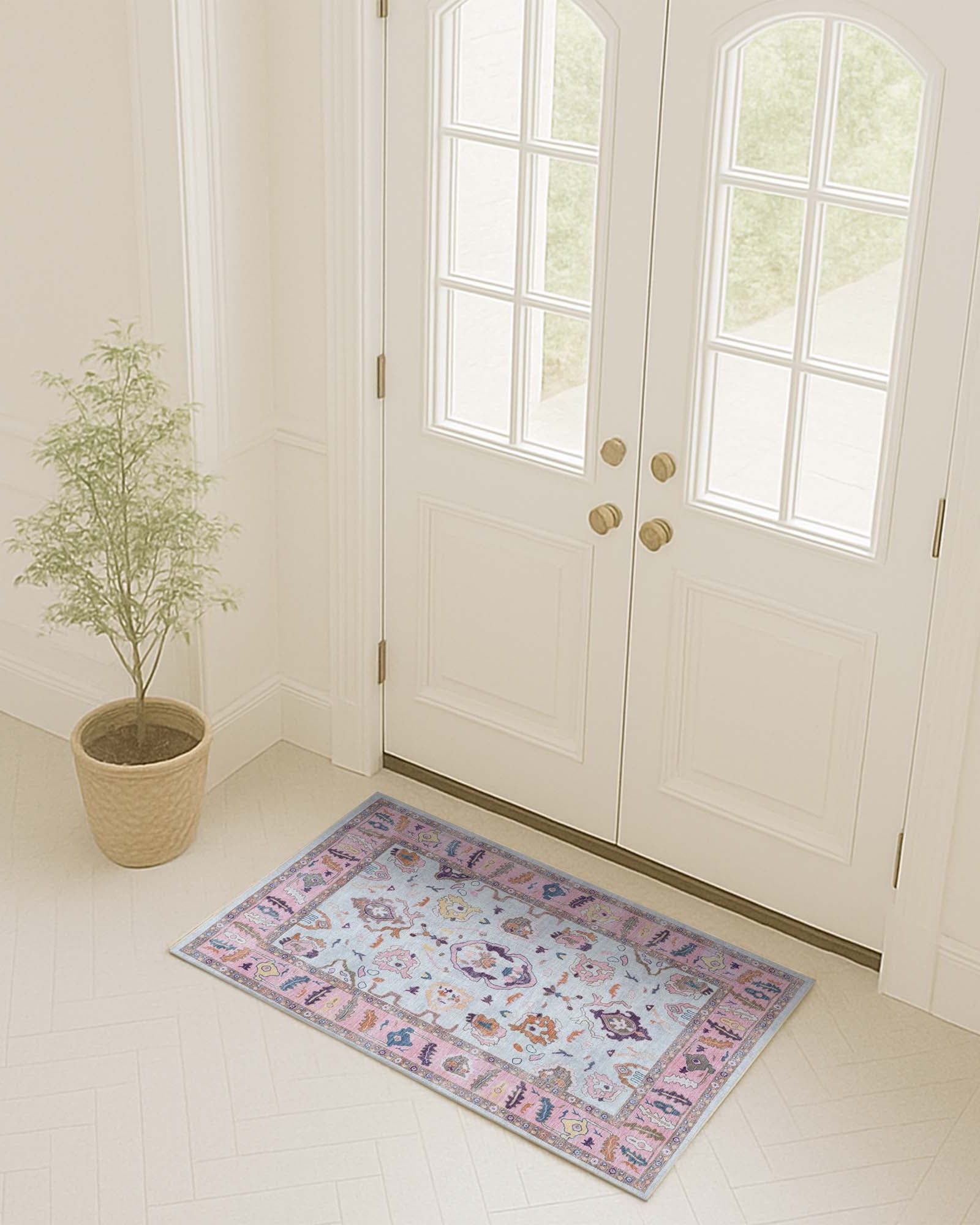
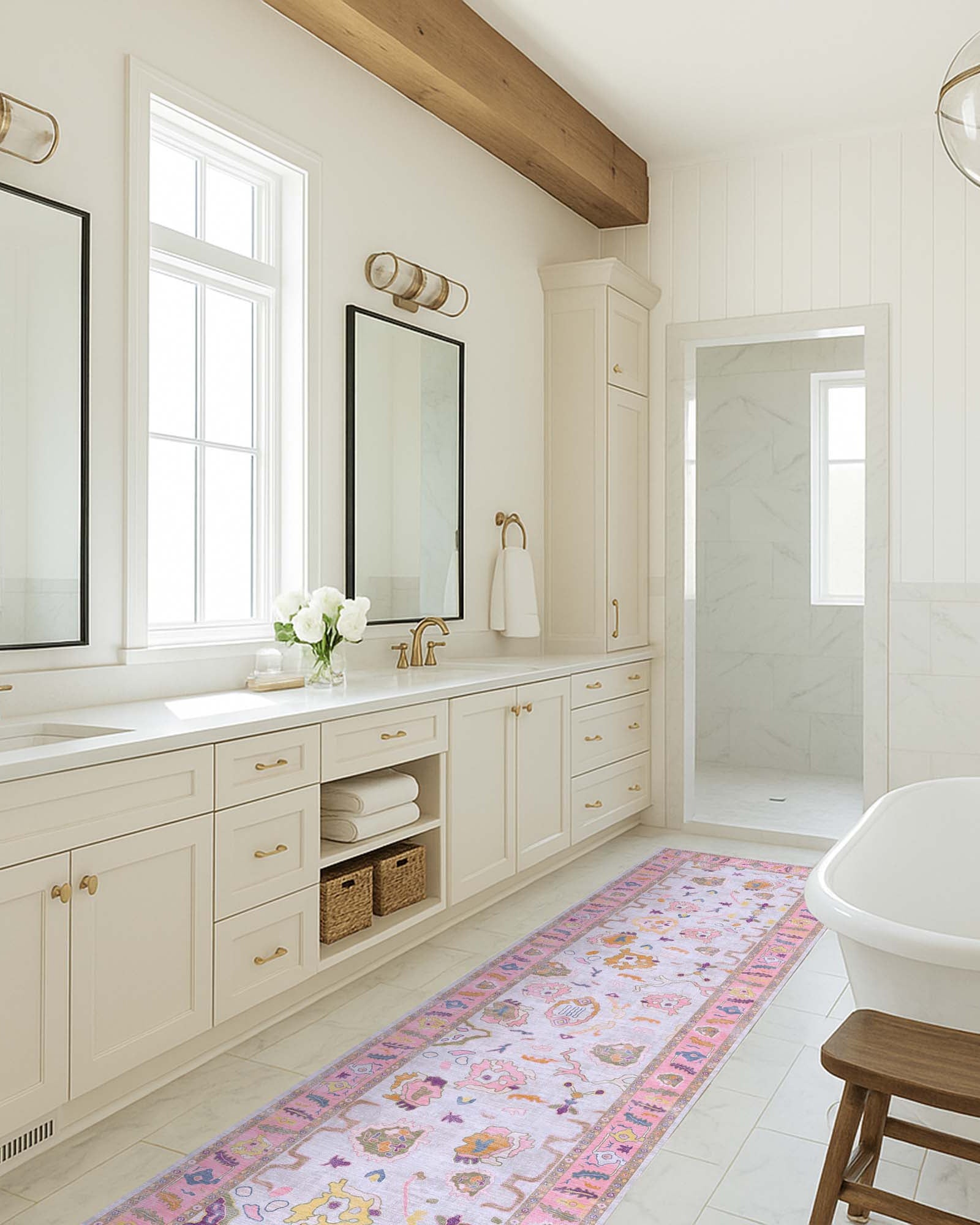
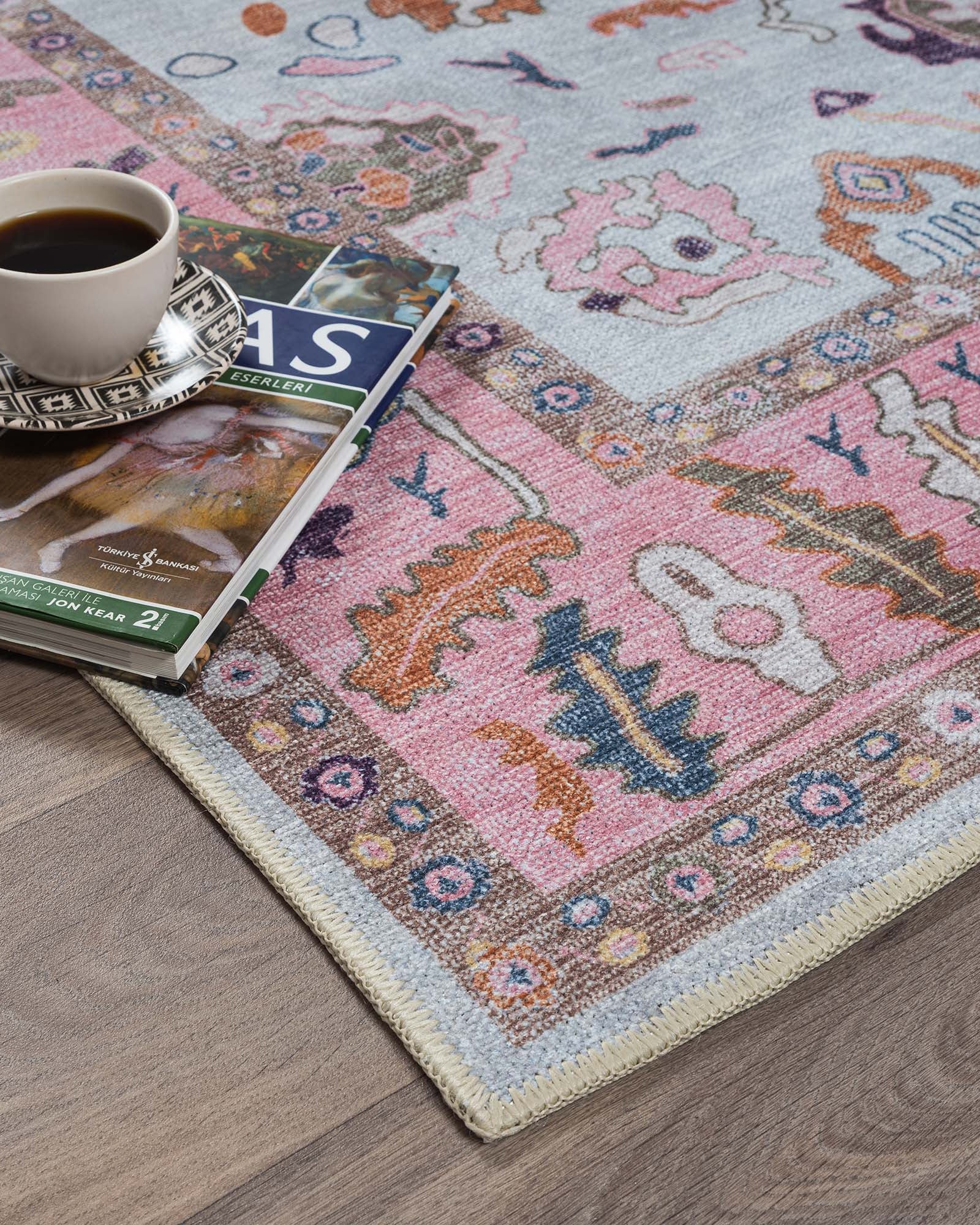
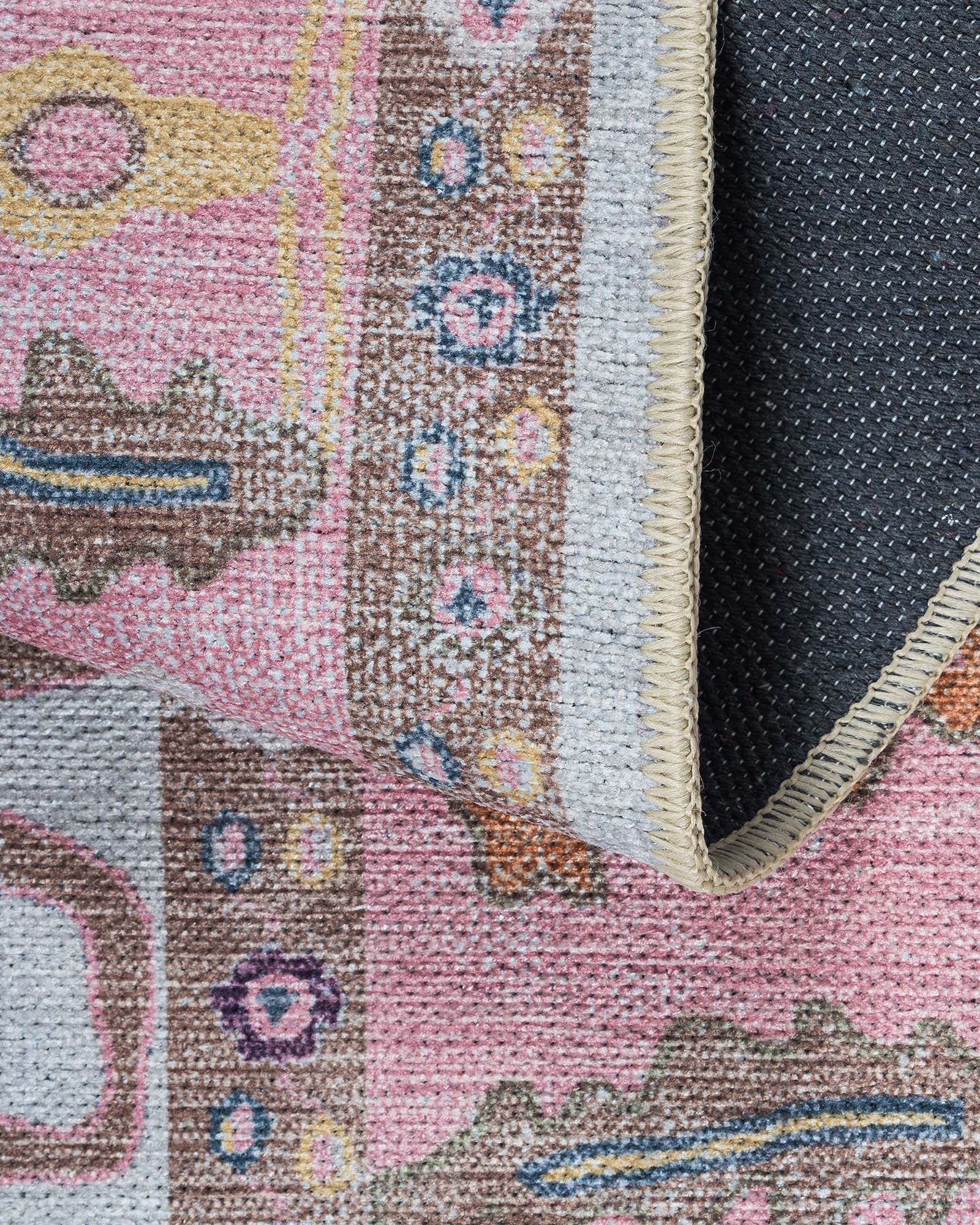
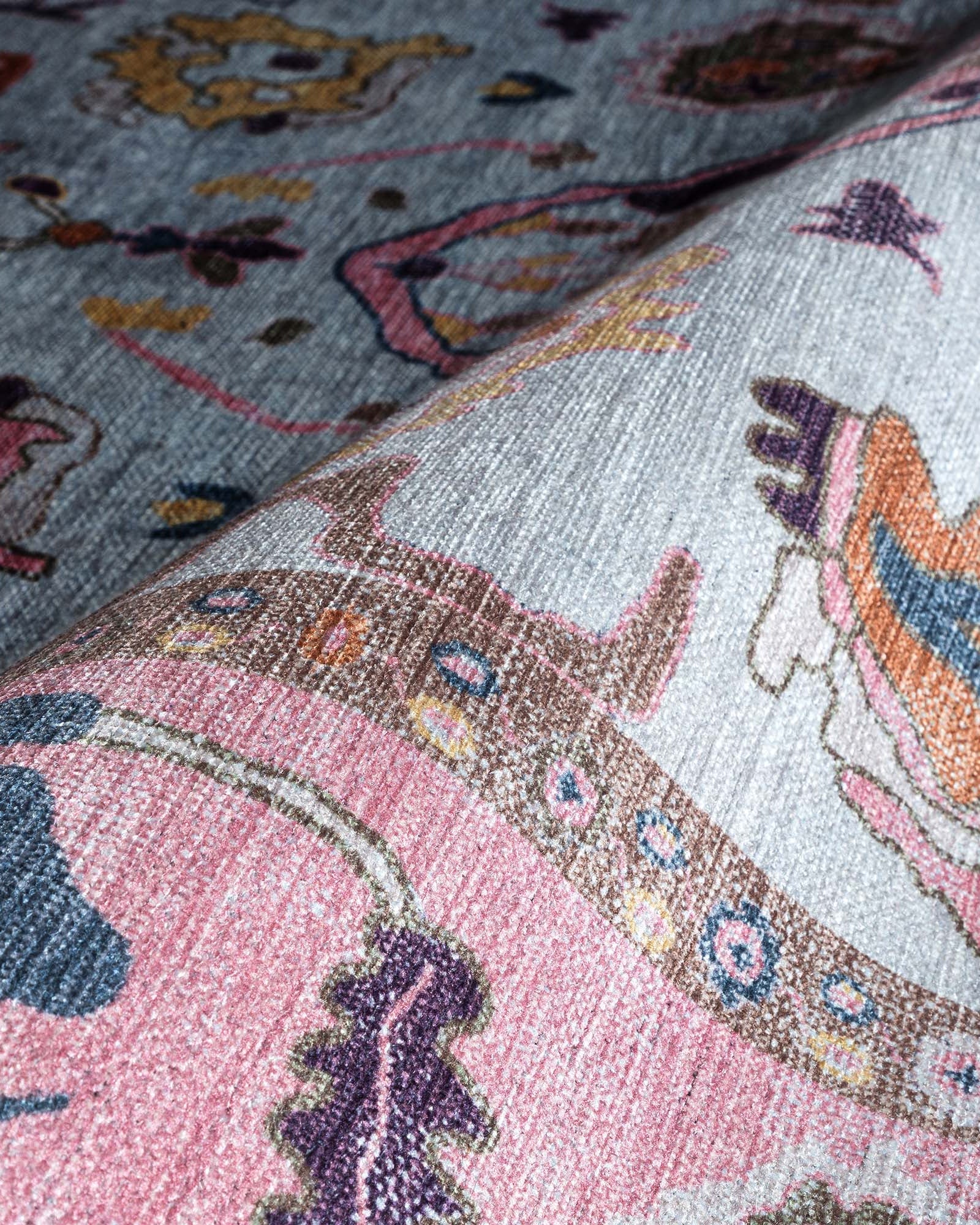


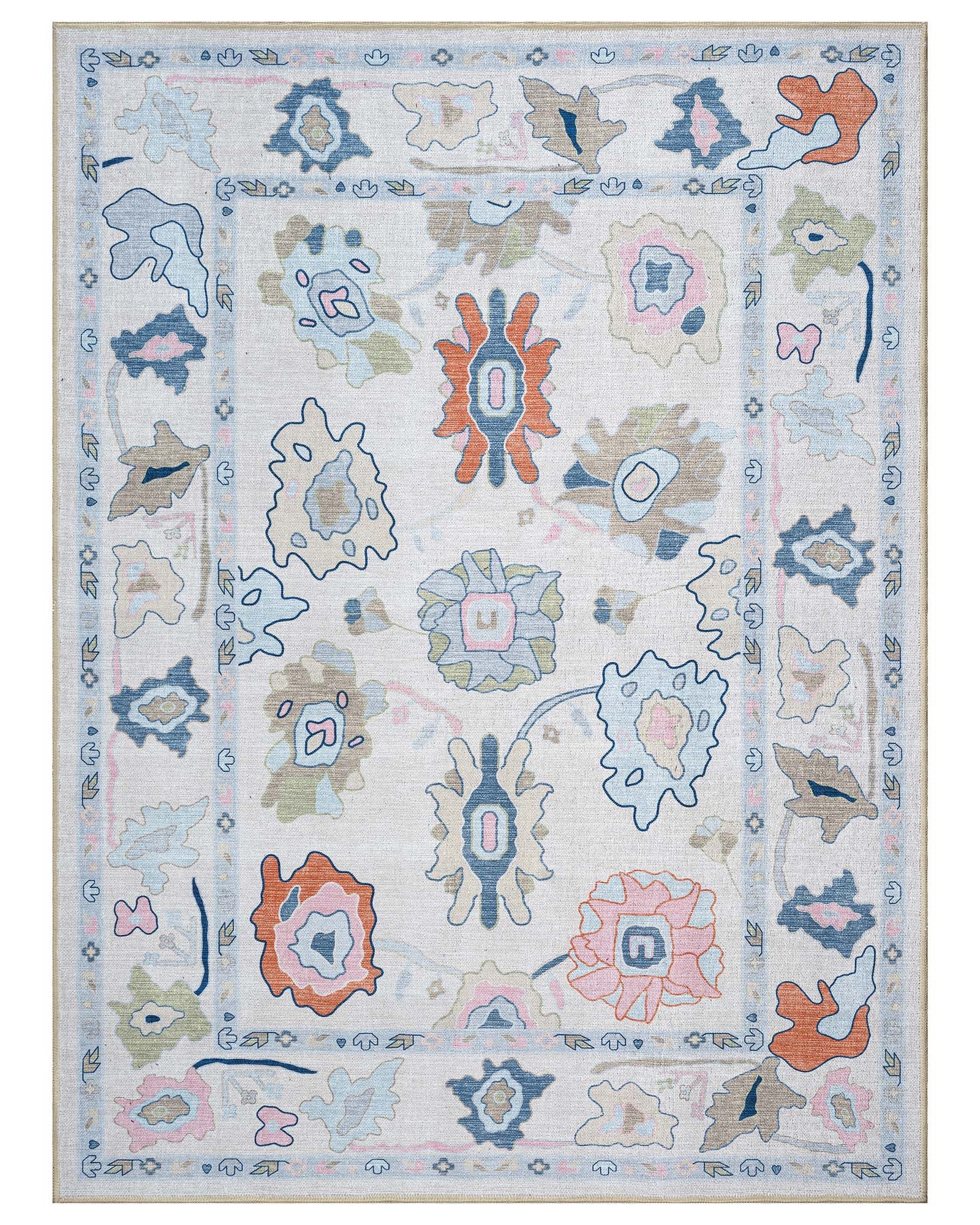
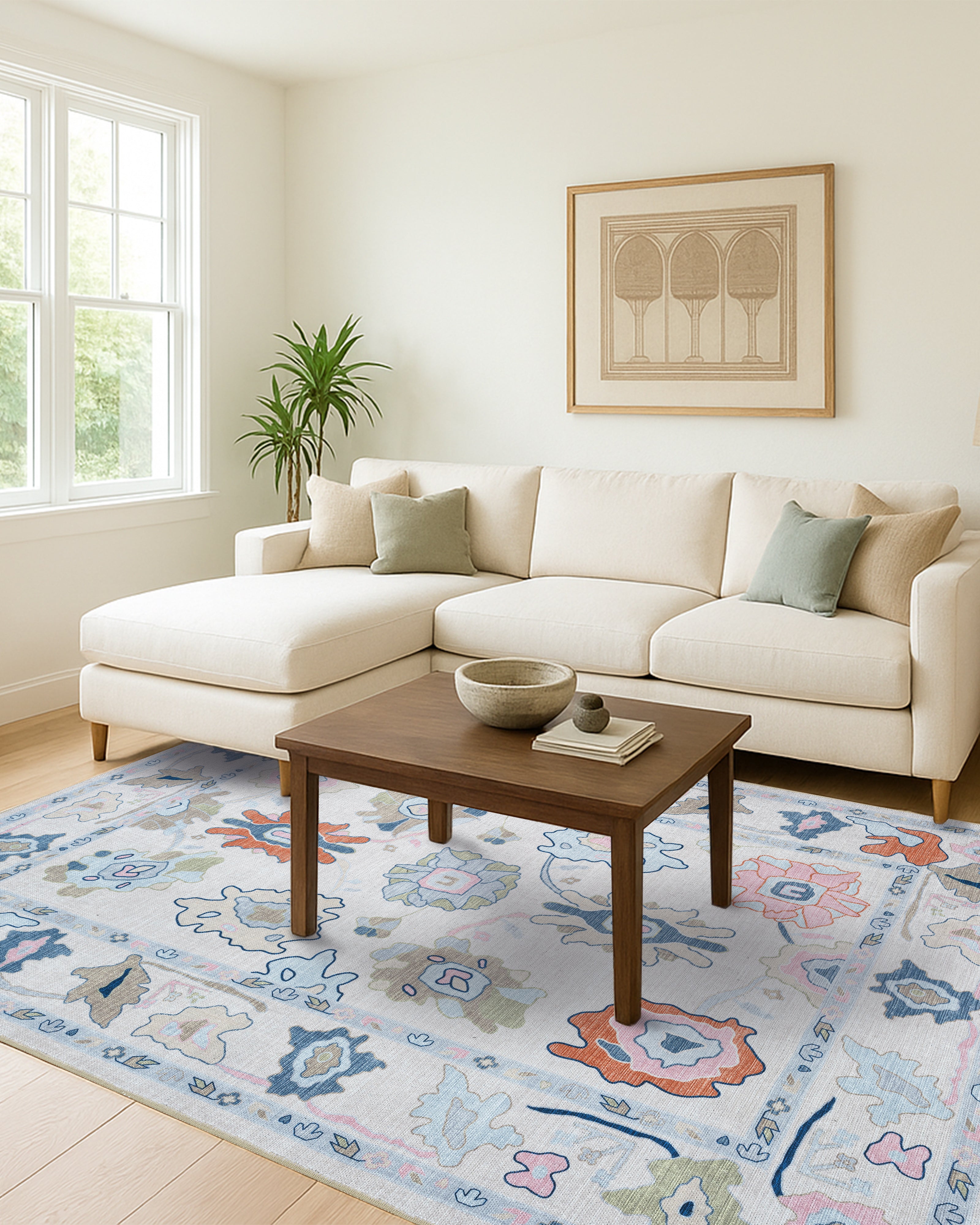
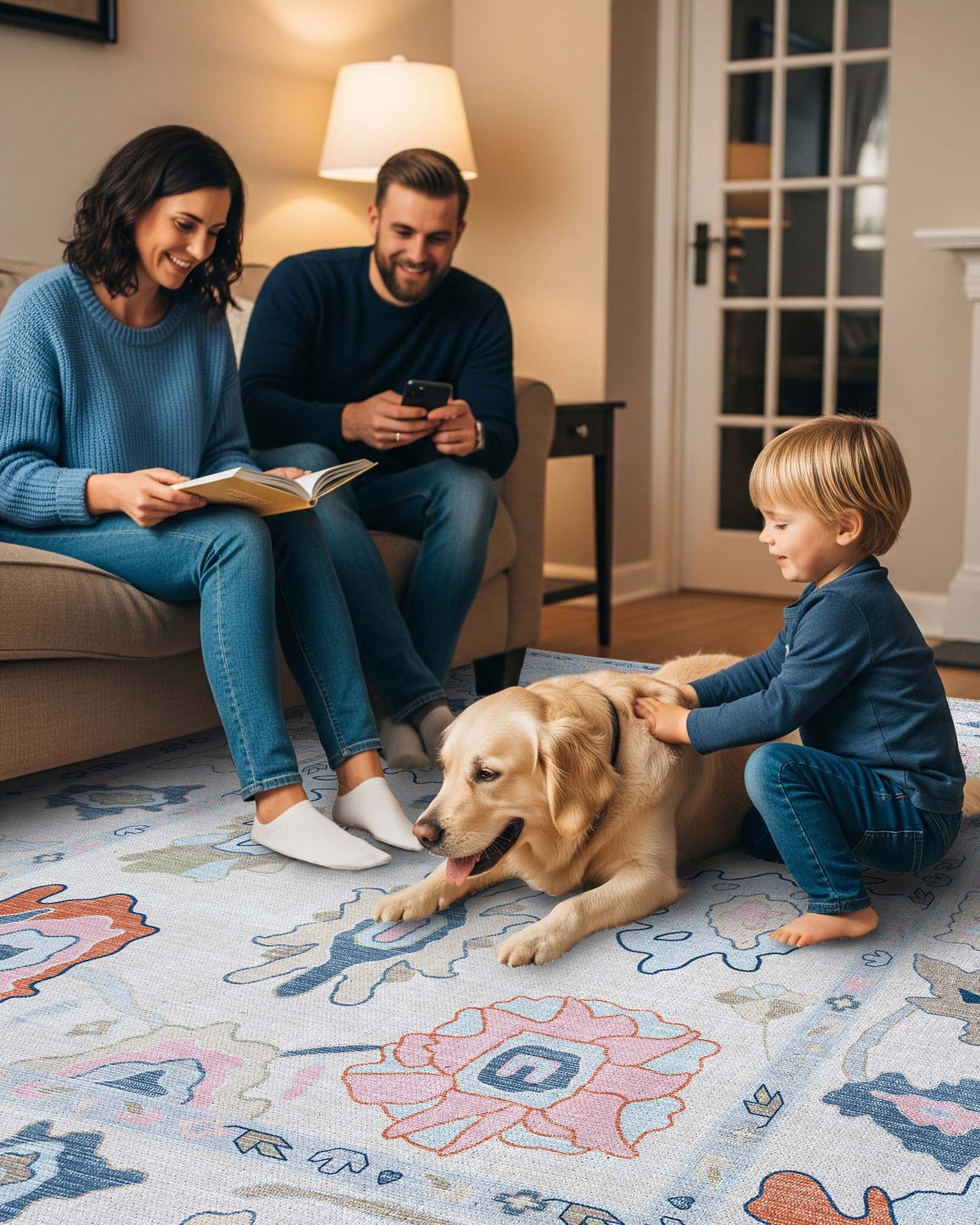
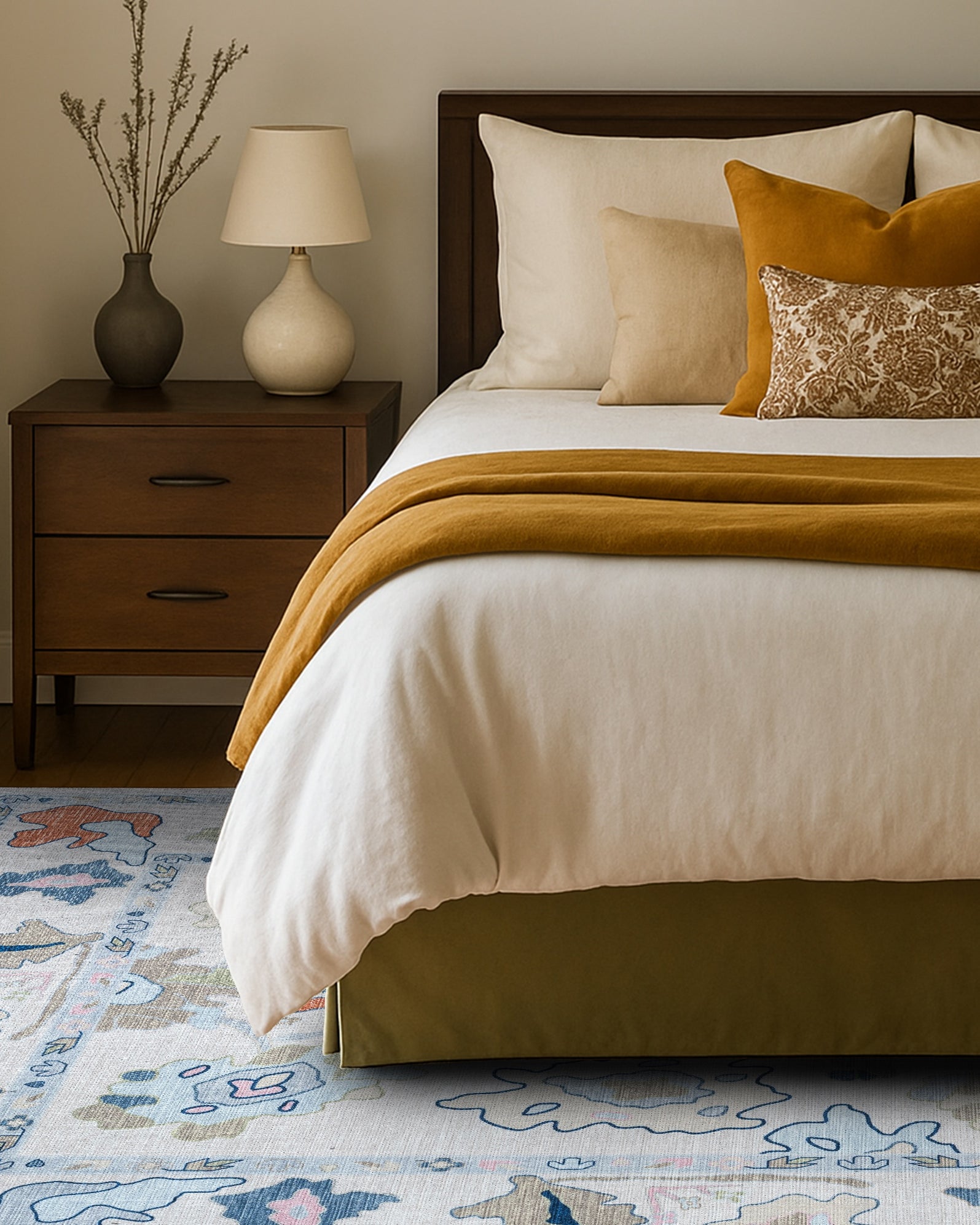
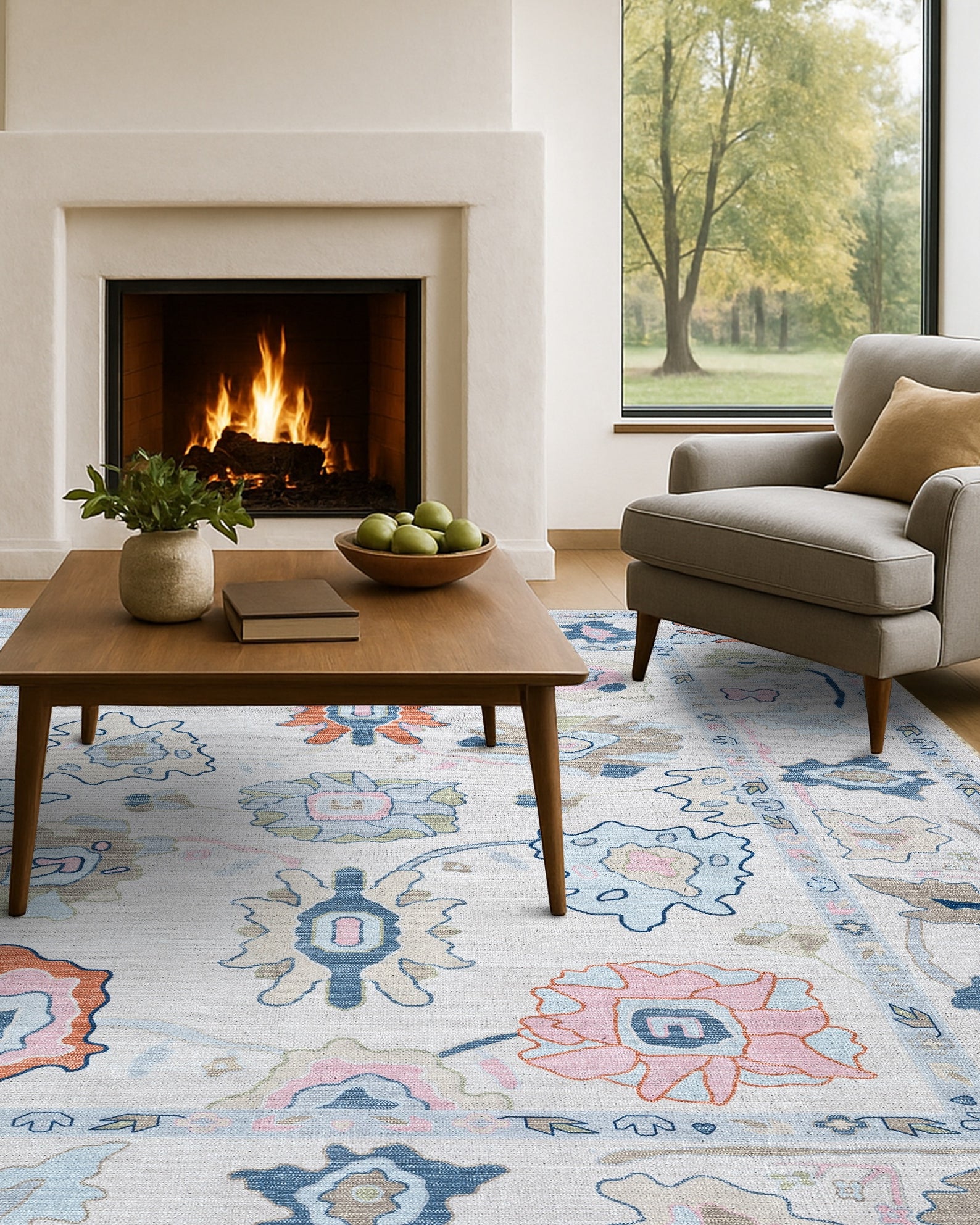
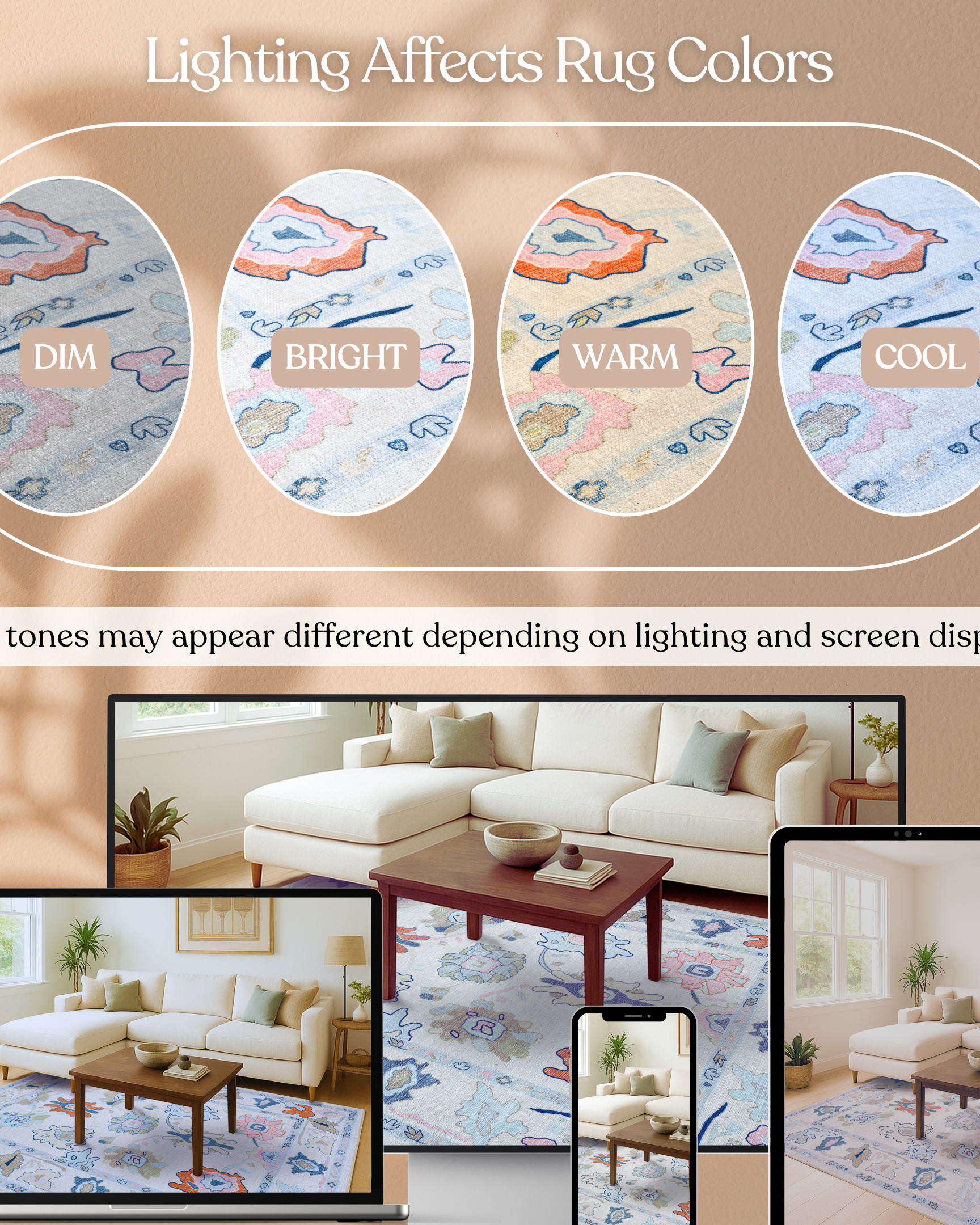
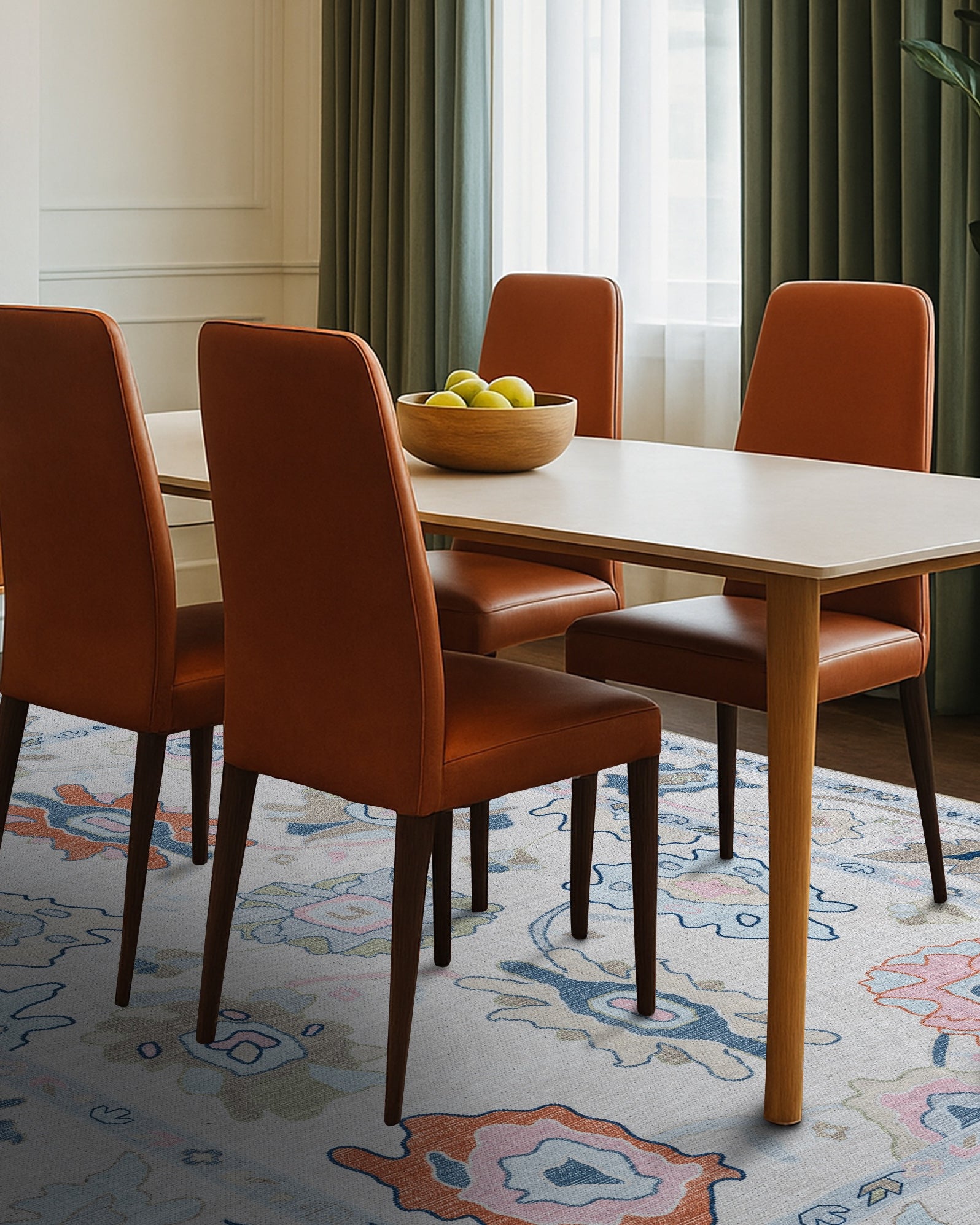
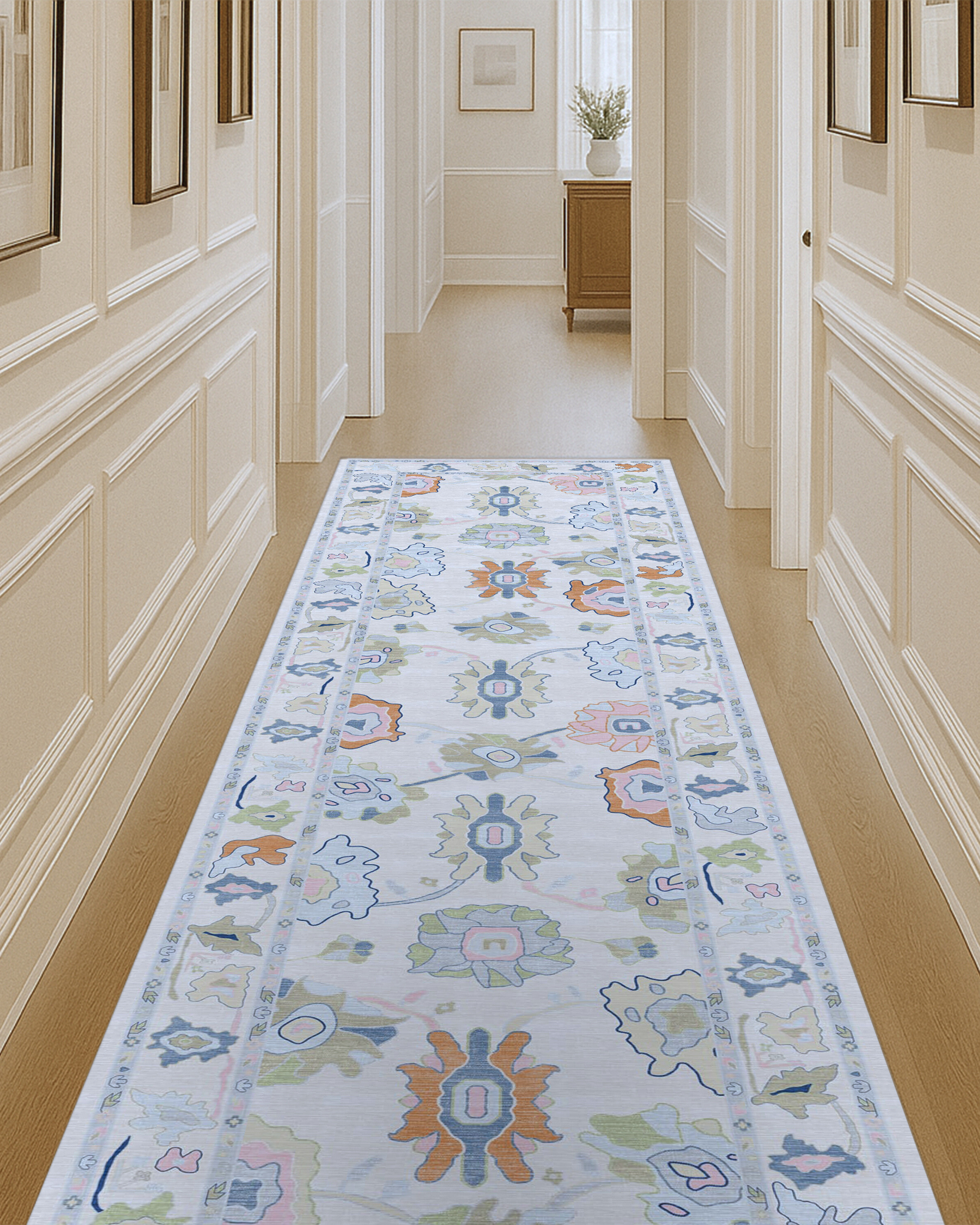
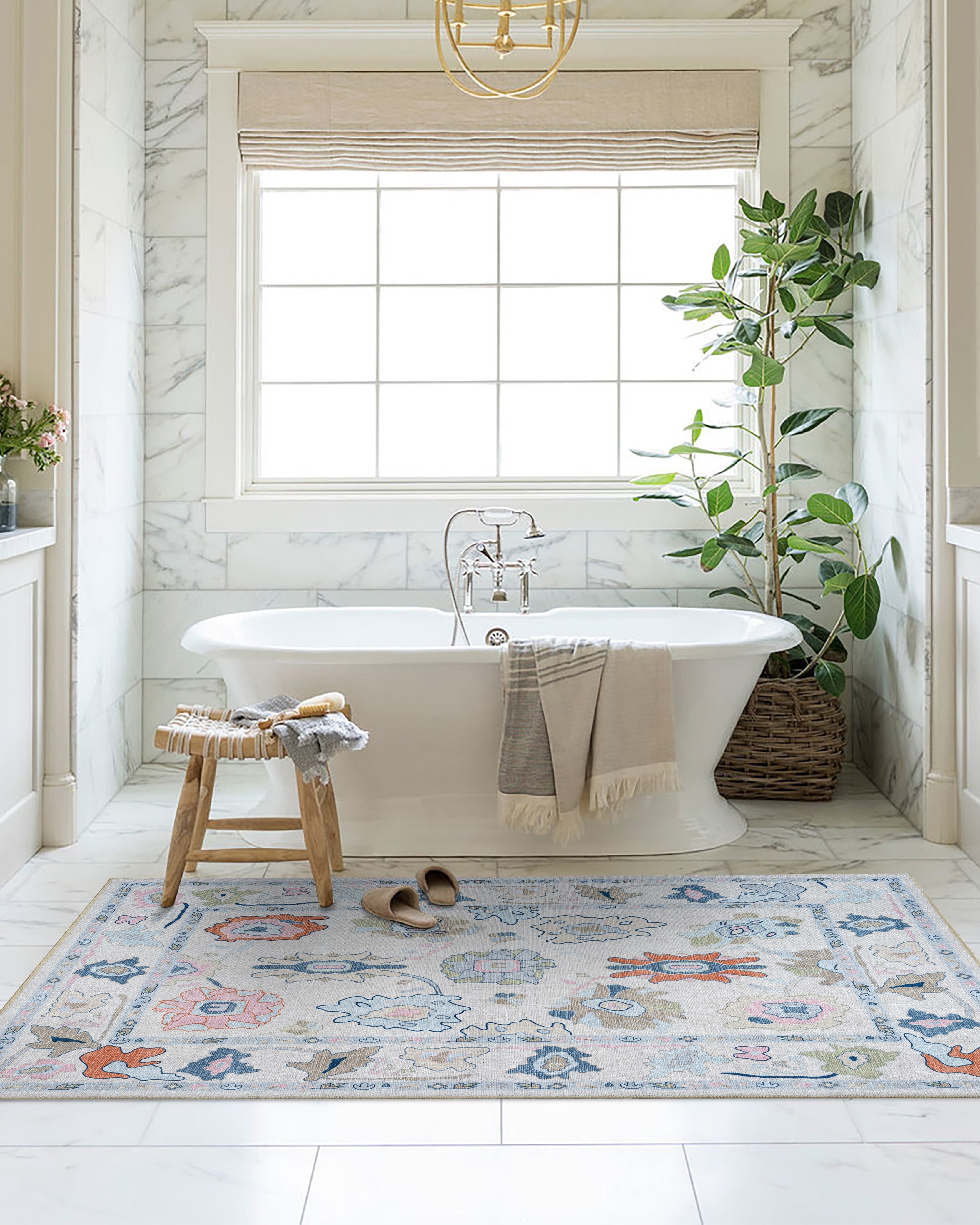
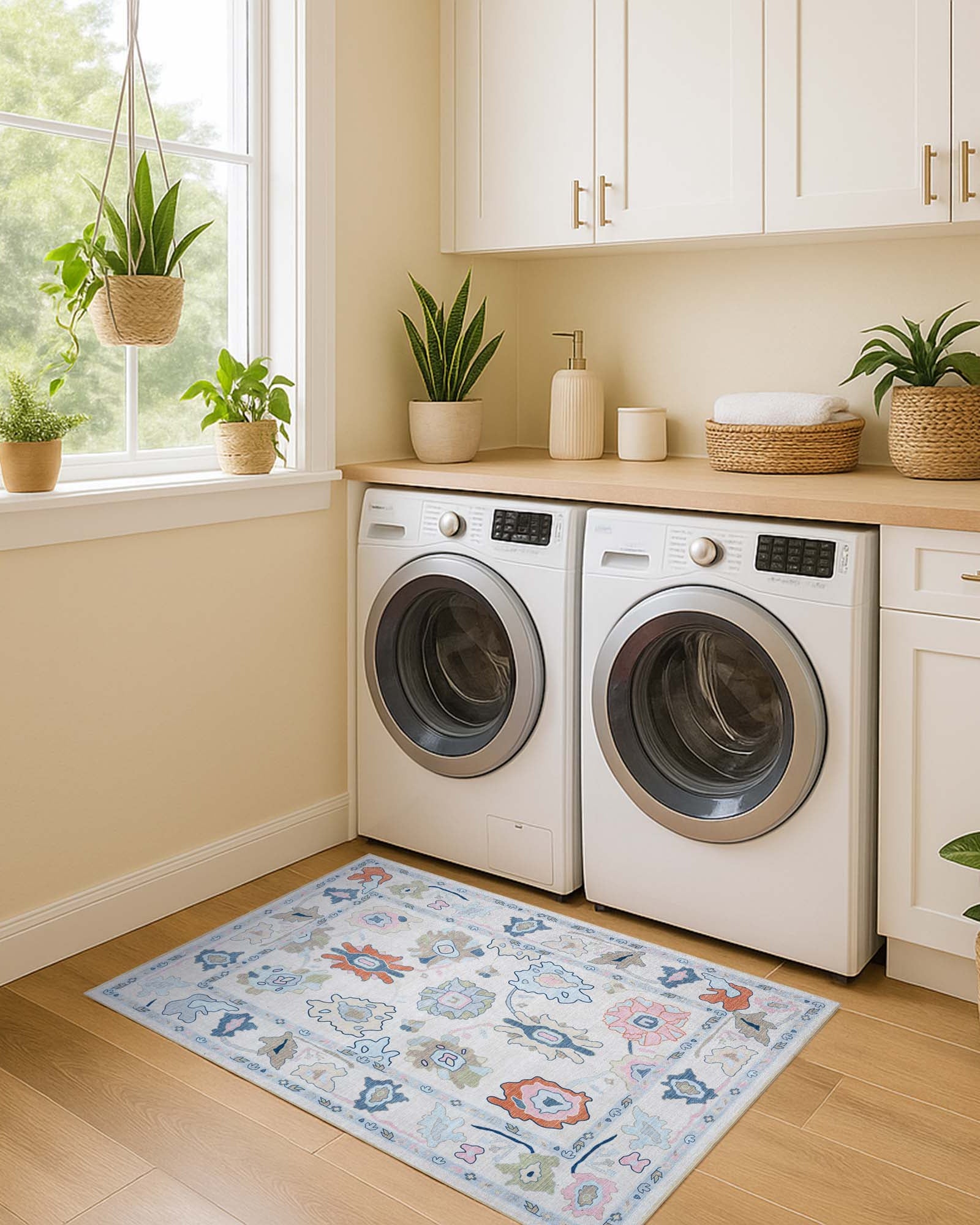
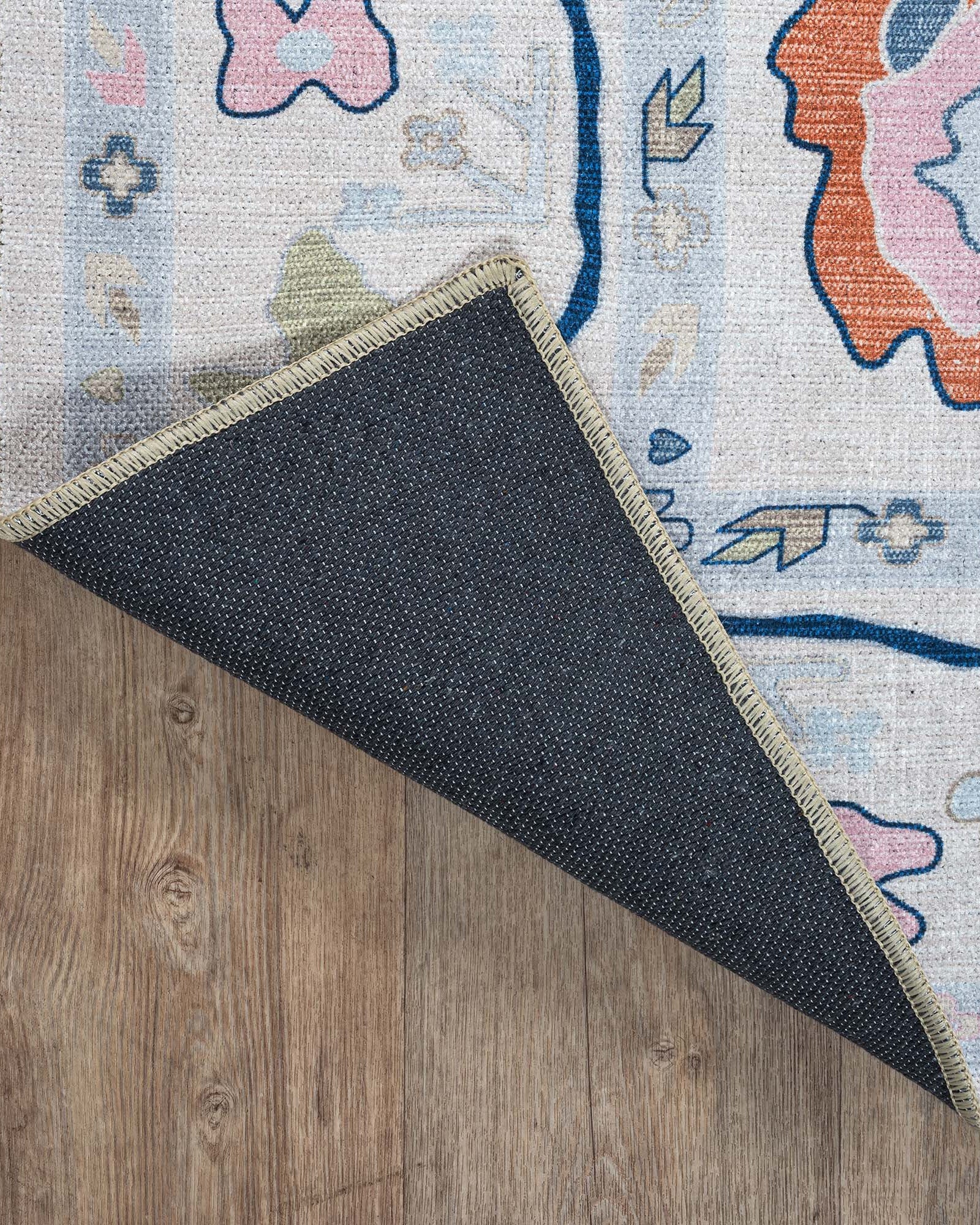
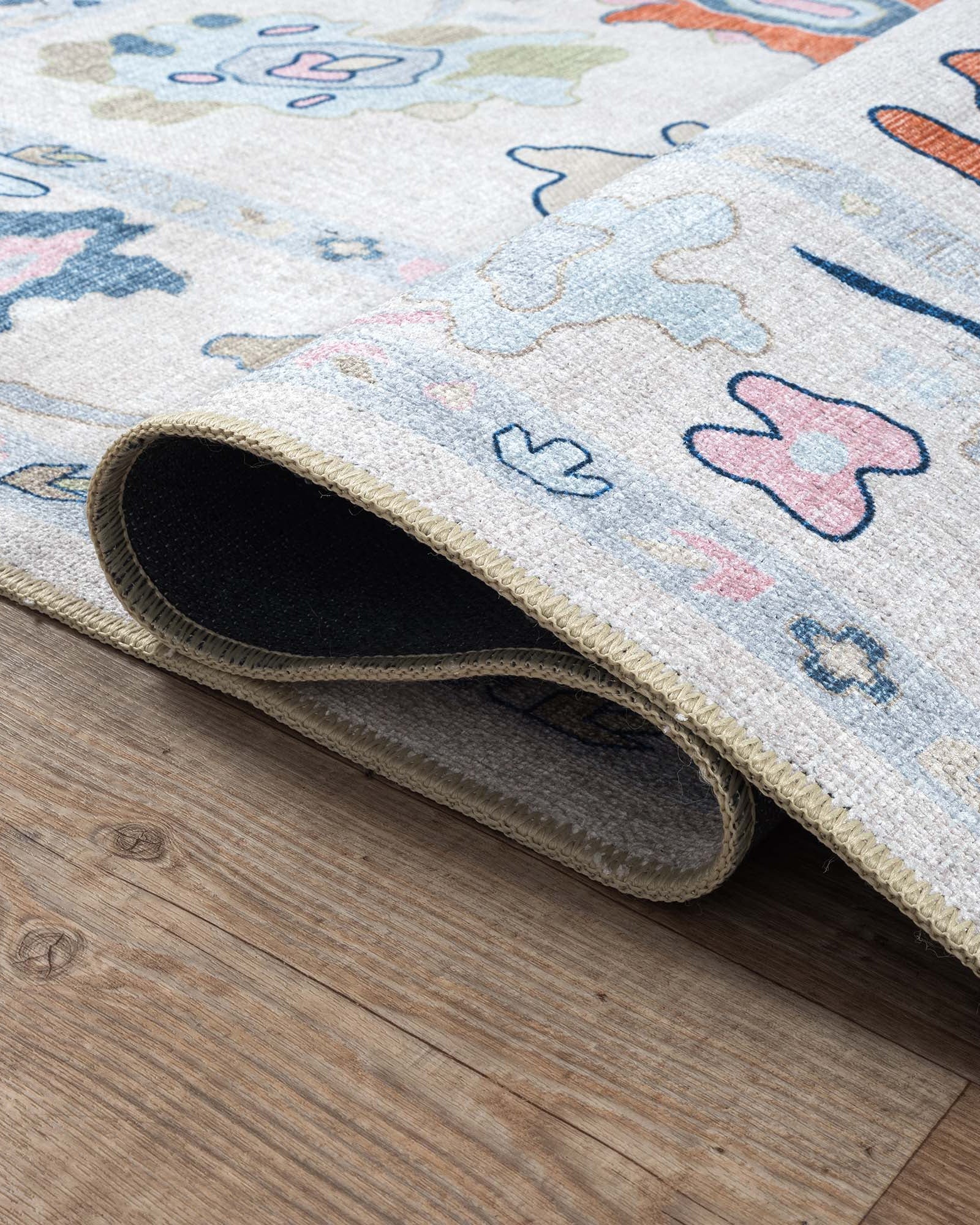
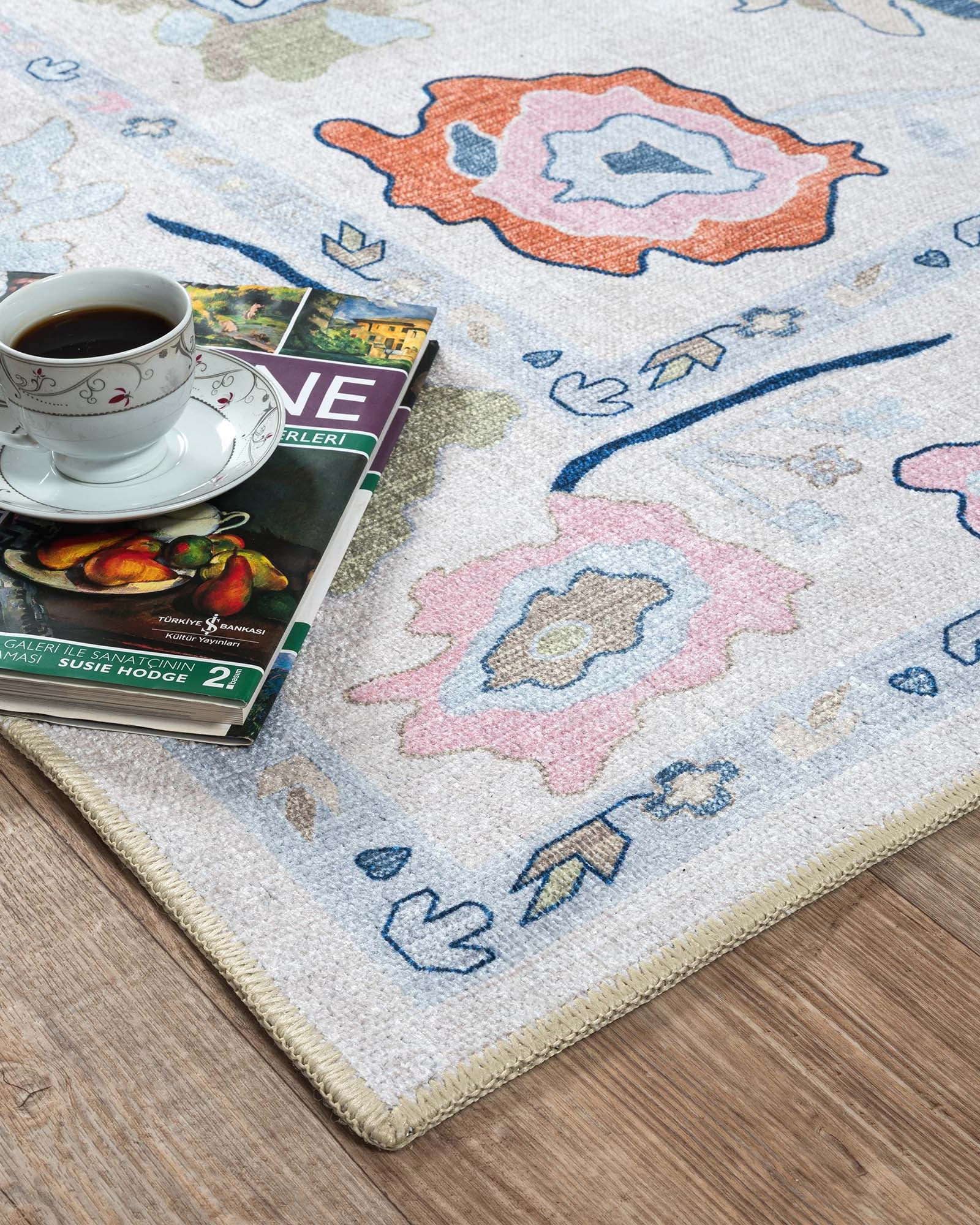
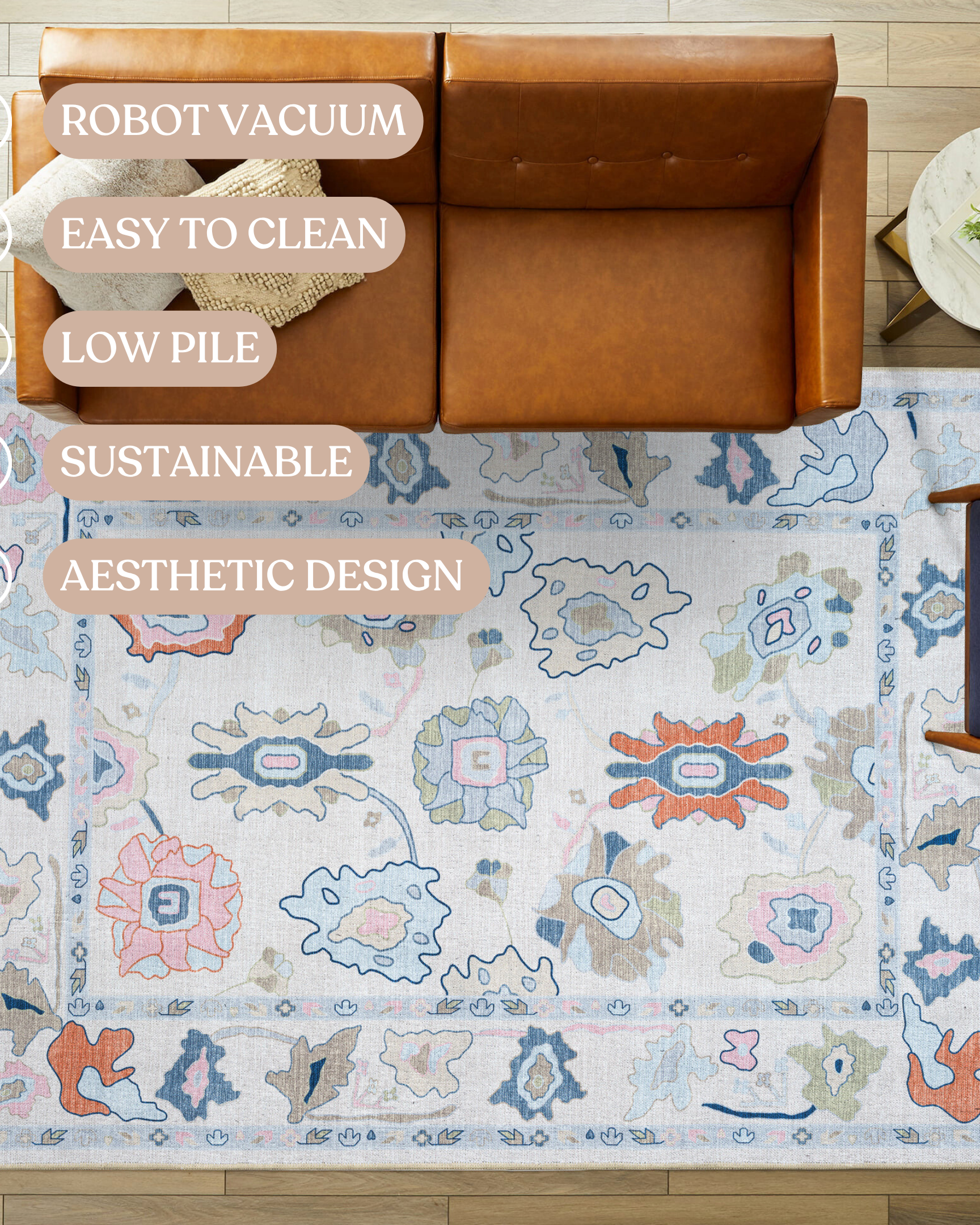


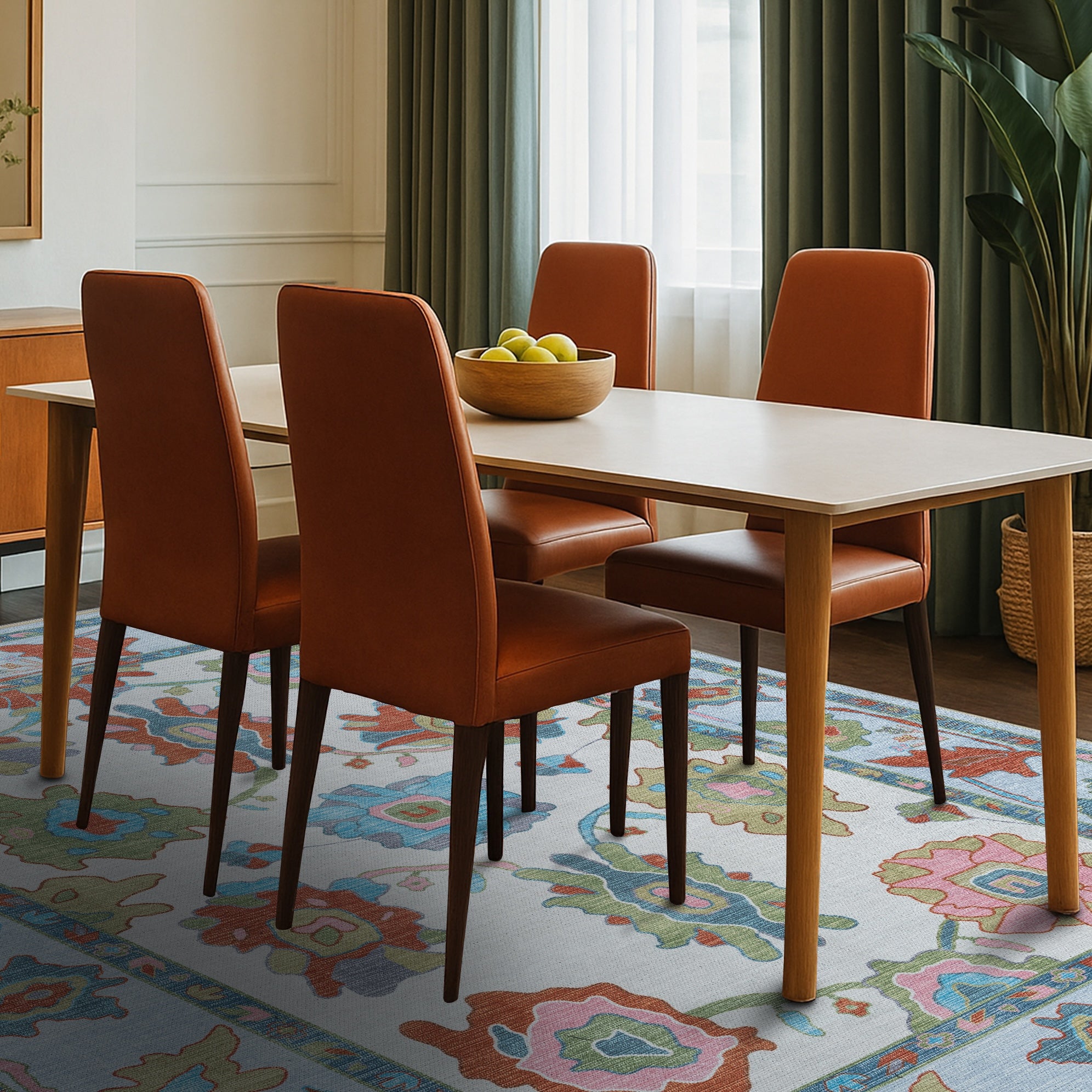


Choose Dala Vintage Pink Navy Blue Rug for a colorful living-room foundation, Paulina Pale Pink & Midnight Blue Persian Vintage Rug for softer blush, or Nayeli Red Terracotta Blue Vintage Persian 2x3 Rug for a compact accent. These machine-washable designs bring faded pattern into rooms that need everyday practicality. Choose the coverage you need before comparing colors.
- Dala supplies multicolor geometry for a living-room anchor.
- Paulina pairs blush and midnight blue in a softer printed design.
- Nayeli serves a compact terracotta-and-blue accent spot.
- Fame Rugs vintage-style washable rugs offer different decorating roles.
Why this matters
A room-size rug gathers furniture; a small accent highlights a single spot. Start with washable vintage-style rugs and decide the rug’s job. Fame Rugs suits living-room shoppers who want vintage-inspired pattern with machine-washable care.
What to look for
- Enough coverage for the furniture group.
- A dominant color connected to existing pieces.
- Visible pattern around tables and chairs.
- Clear doors and walking routes.
- A practical cleaning and drying plan.
Picks at a glance
| Rug | Best for | Palette | Buying consideration |
|---|---|---|---|
| Dala Vintage Pink Navy Blue Rug | Colorful seating | Pink, navy, terracotta, and blush | Multicolor rather than a quiet neutral |
| Paulina Pale Pink & Midnight Blue Persian Vintage Rug | Softer blush rooms | Pale pink with midnight blue | Pink is a substantial part of the design |
| Nayeli Red Terracotta Blue Vintage Persian 2x3 Rug | Compact accents | Terracotta, faded red, and blue | Small localized coverage |
1. Dala: best for a colorful foundation
Dala’s Heriz-inspired geometry connects several warm and cool accents. Plain seating gives its faded design room to stand out.
Pros: Related colors connect mixed furnishings; a 0.2-inch pile gives a slim surface; machine washability is specified.
Cons: Multiple colors require selective accessories; strong geometry competes with similar upholstery prints.
Best for: A living room that needs the floor to lead. Verdict: Buy Dala for colorful coordination.
2. Paulina: best for softer blush
Paulina combines a blush field with midnight-blue detail in a digitally printed faded pattern. Repeat navy in a lamp or cushion rather than adding another large print.
Pros: Blush and navy create light-dark contrast; low pile suits a slim floor layer; machine-washable care includes flat air drying.
Cons: Pink is a clear room-level commitment; pale flooring benefits from a contrasting border or darker furniture.
Best for: Cream seating and deliberate blush accents. Verdict: Buy Paulina for a softer pink-and-blue room.
3. Nayeli: best for a compact accent
Nayeli is a polyester 2x3 rug with terracotta, faded red, and blue motifs. Its 0.2-inch pile and machine-washable care suit a focused indoor decorating task.
Pros: Small footprint adds color selectively; blue balances warmer tones; printed detail gives a plain corner character.
Cons: Limited coverage suits one spot; multiple accent colors need quieter surroundings.
Best for: Beside a chair or a small indoor doorway. Verdict: Buy Nayeli as an accent, not the main seating foundation.


Plan the footprint and care
Mark the actual dimensions around the furniture. Compare an 8-by-10-foot and 9-by-12-foot planning outline for seating coverage; a 2-by-3-foot accent serves a separate small zone.
Follow the exact product’s washing and drying instructions and your appliance guidance. Blot spills promptly and use a compatible pad as directed.
The University of Delaware’s rug-care guide explains textile maintenance. The EPA’s moisture guidance explains prompt drying of damp carpet and backing.
How the picks were ranked
Fame Rugs choices separate a multicolor anchor, a softer blush palette, and a compact accent. Furniture fit leads the final decision.
Which should you choose?
Choose Dala for a colorful foundation or Paulina for blush-and-navy softness. Use Nayeli where a small accent is the right format.
Distressed medallions and washable living-room proportions
Compare accent coverage with a room anchor
A 2-by-3-foot planning rectangle is 24 by 36 inches, covering 6 square feet. An 8-by-10-foot outline covers 80 square feet, while a 9-by-12-foot outline covers 108 square feet. Use these templates to decide whether the rug should highlight a chair-side spot or connect a complete conversation zone, then choose actual product dimensions.
Let the faded border guide the accessories
A distressed medallion, ornamental field, or vintage-inspired geometric pattern can work with modern upholstery. Connect blush, navy, and terracotta through selected accents, keep larger textiles plain, and check the design remaining around the coffee table. Plan furniture placement and access to the washing area as part of the same easy-care layout.
Distressed-pattern coverage at a glance
The room-size templates help keep a faded border visible around the coffee table, while the small outline suits an accent chair. Connect the seating through a shared muted palette rather than scattering unrelated patterned islands.
FAQ
Which washable vintage-style rug works with cream seating?
Dala adds several accent colors, while Paulina creates a softer blush-and-navy relationship.
Can a small rug work beside a chair?
Yes. Nayeli is a focused 2x3 accent for a measured spot beside a chair or doorway.
How do I choose a seating-area size?
Measure the sofa and chairs together and mark the actual rug outline. Check the walking route before ordering.
Should I repeat every rug color?
Choose one or two colors to repeat selectively. Leave room for plain textiles.
How do I plan washing?
Check the chosen size’s instructions against your appliance guidance and prepare the required drying area.
Which pattern should lead the room?
Let the rug lead when seating is plain. If upholstery is detailed, simplify surrounding curtains and cushions.
One last thing
Compare the exposed edges after imagining furniture over the center. Those edges become the pattern you see most often.