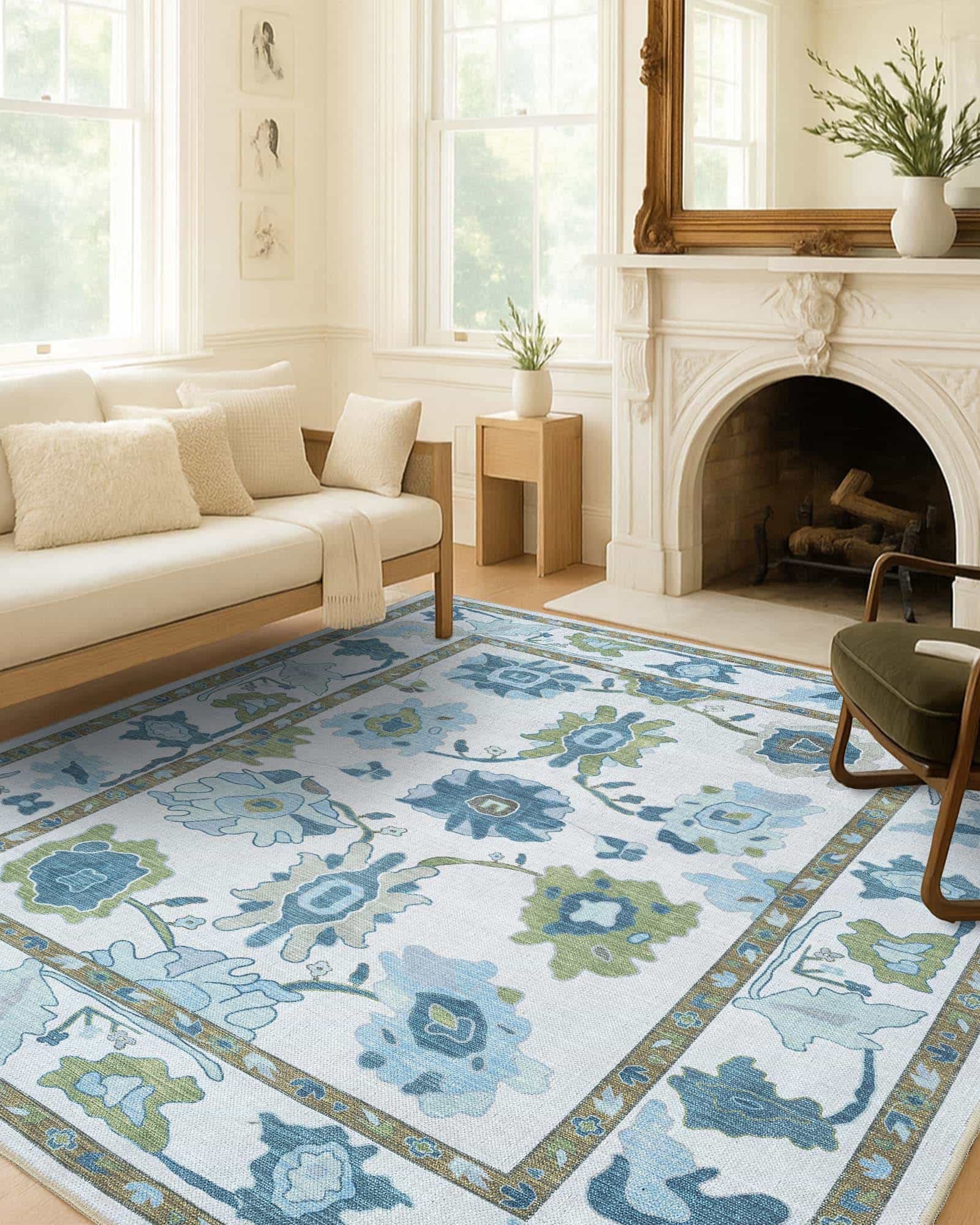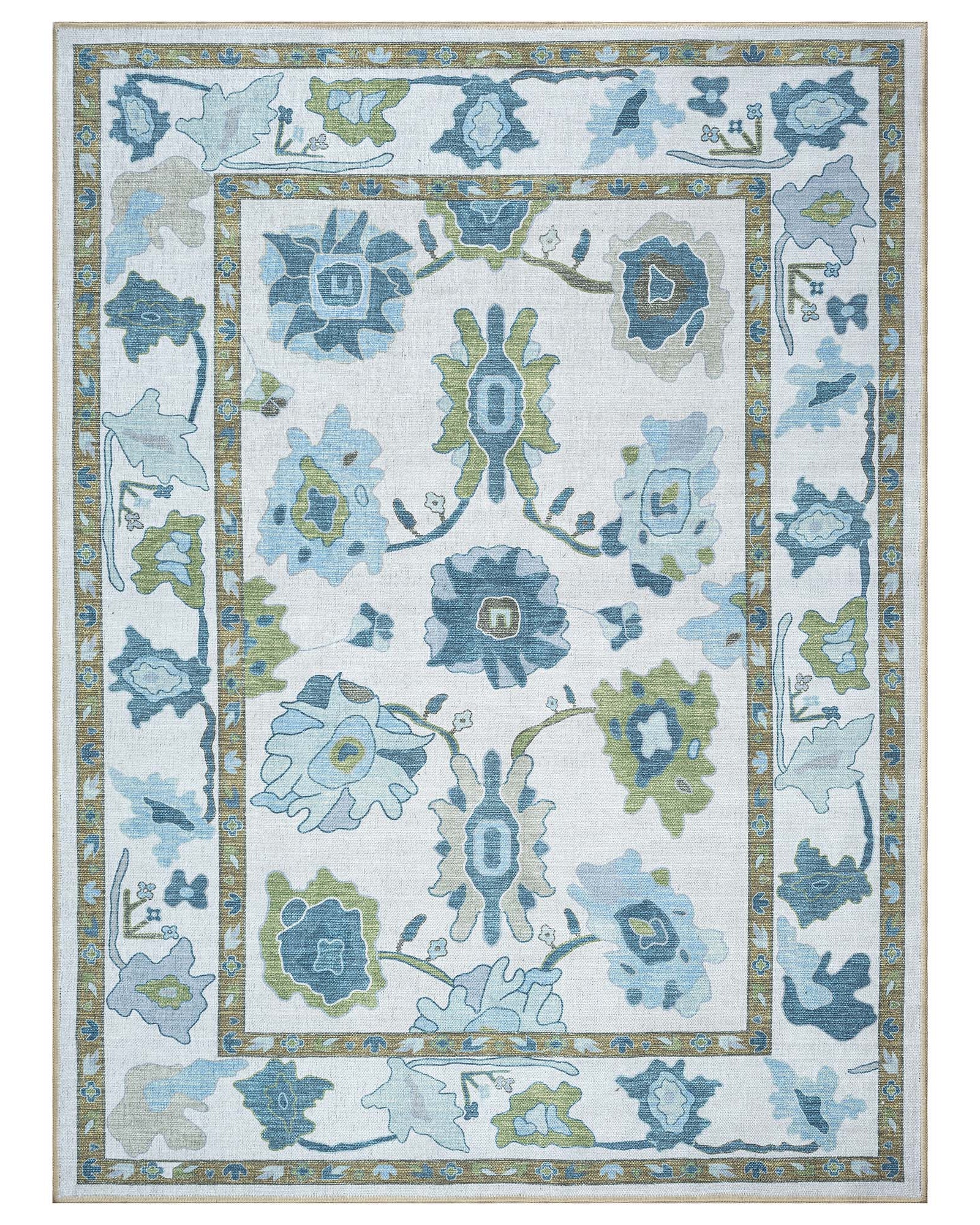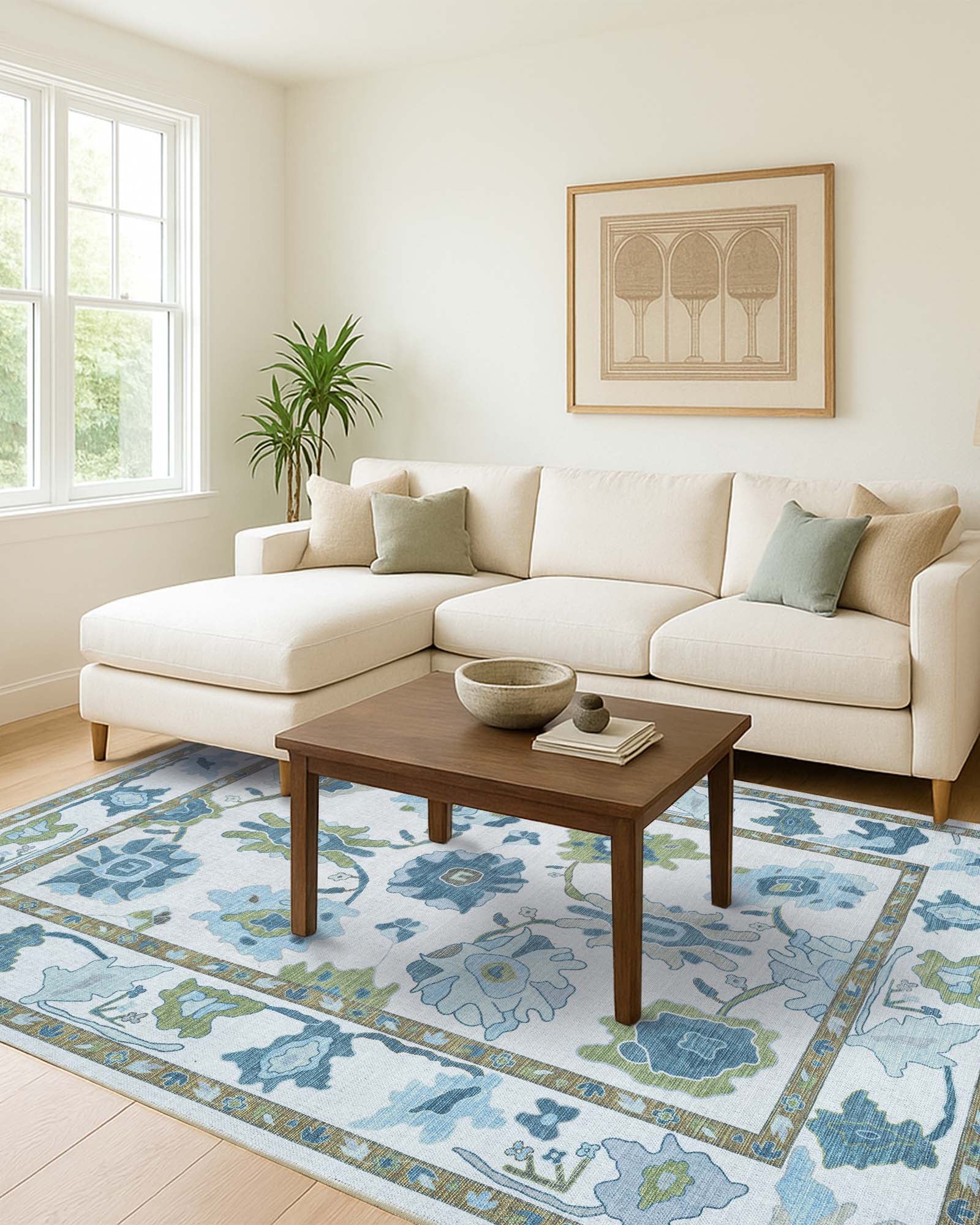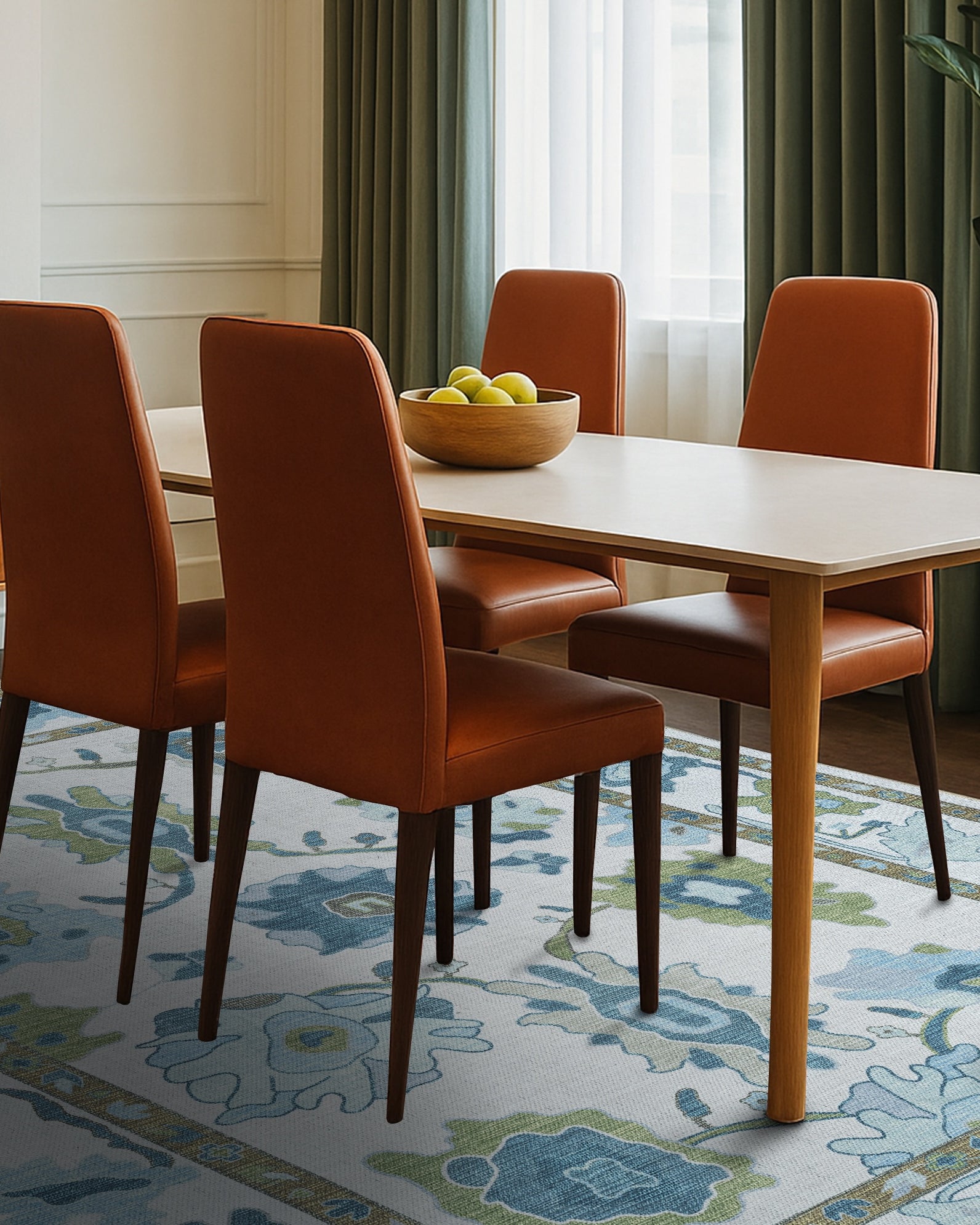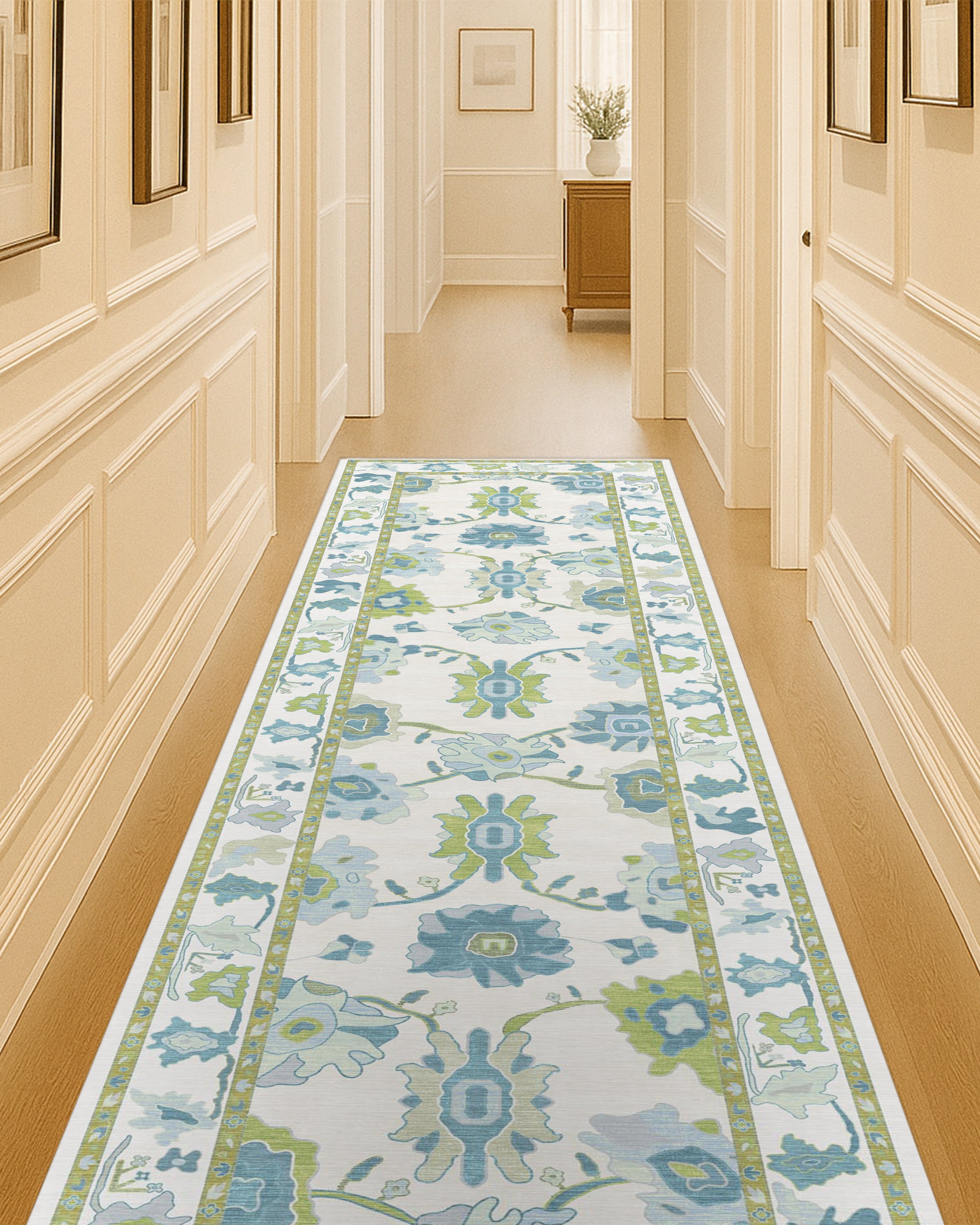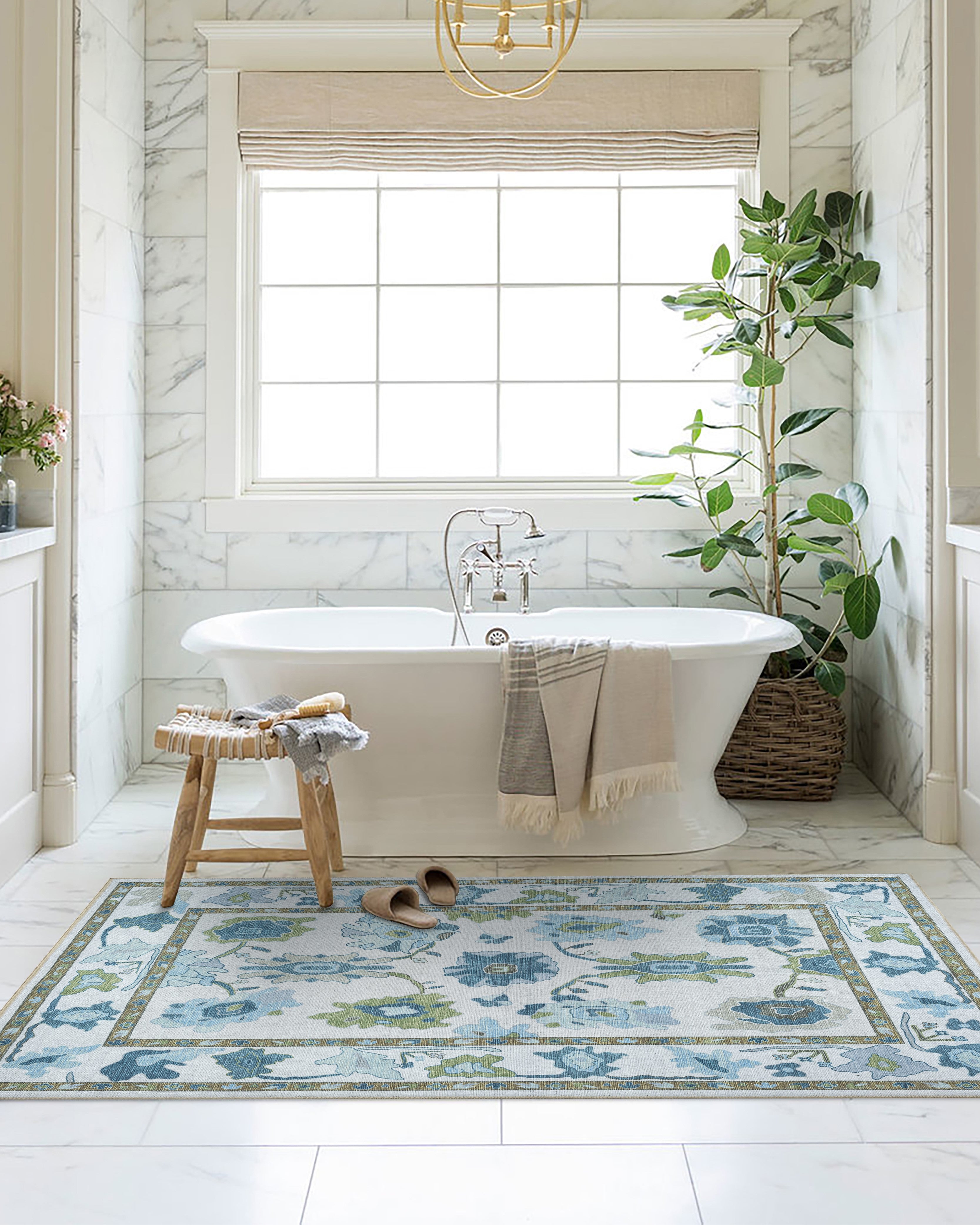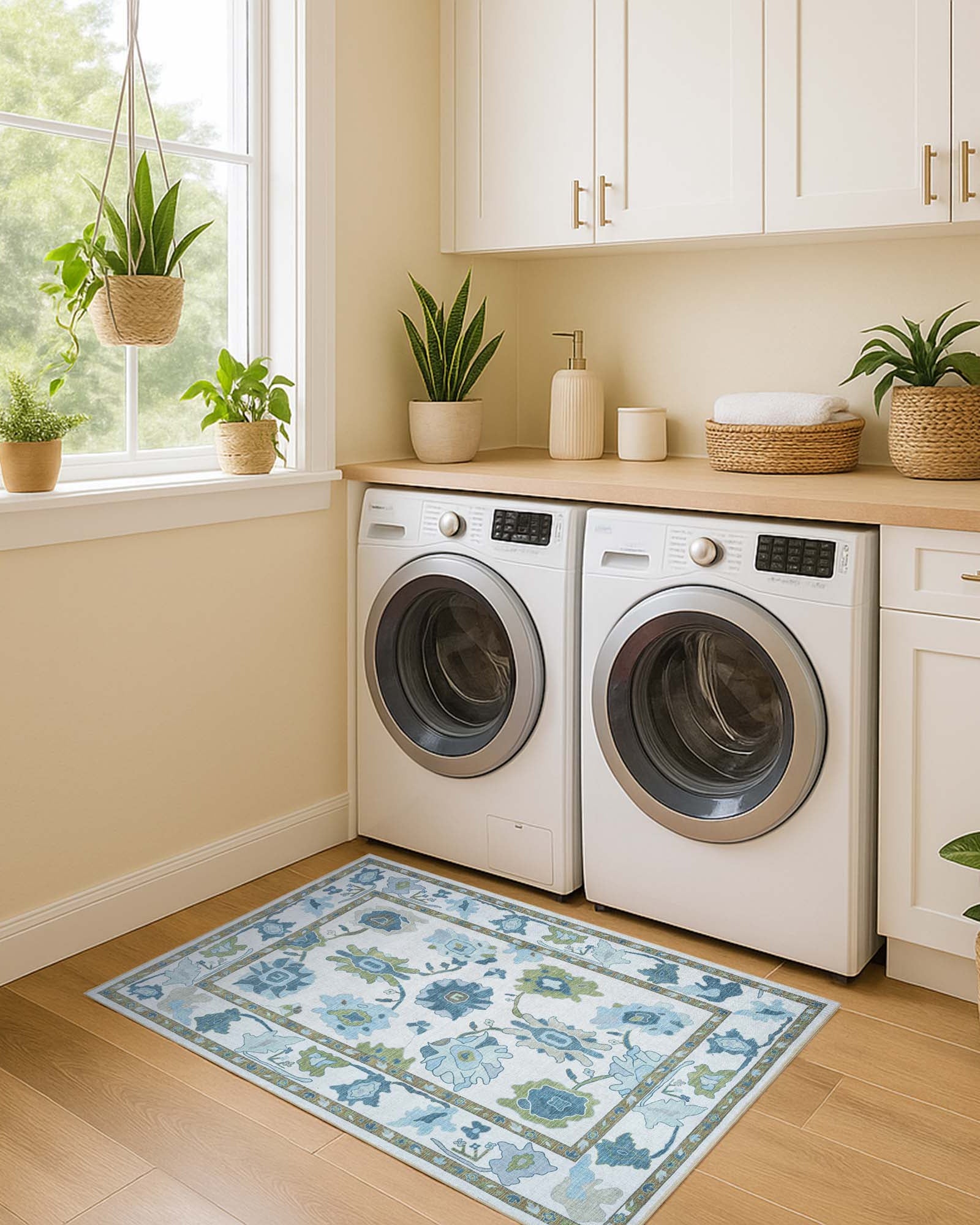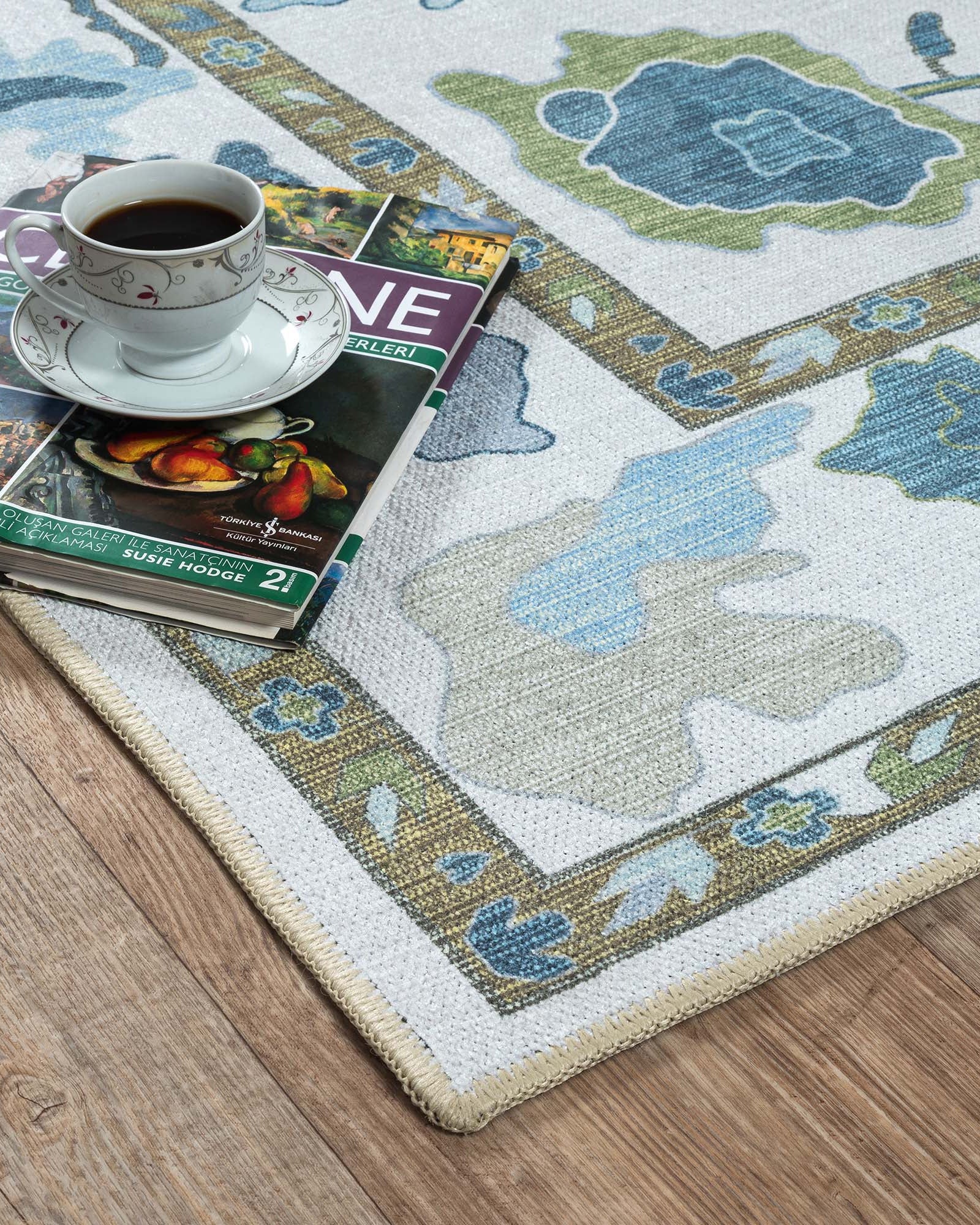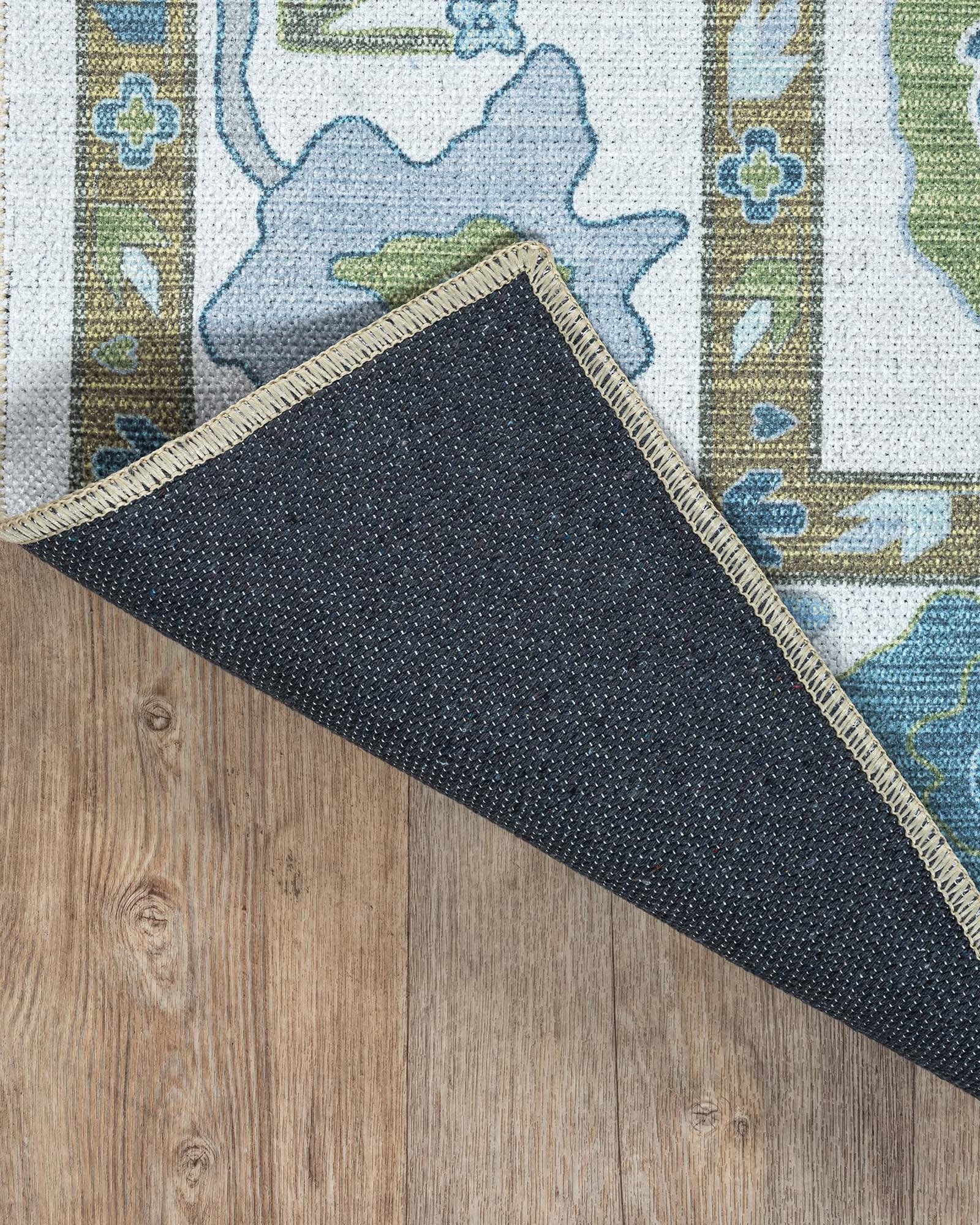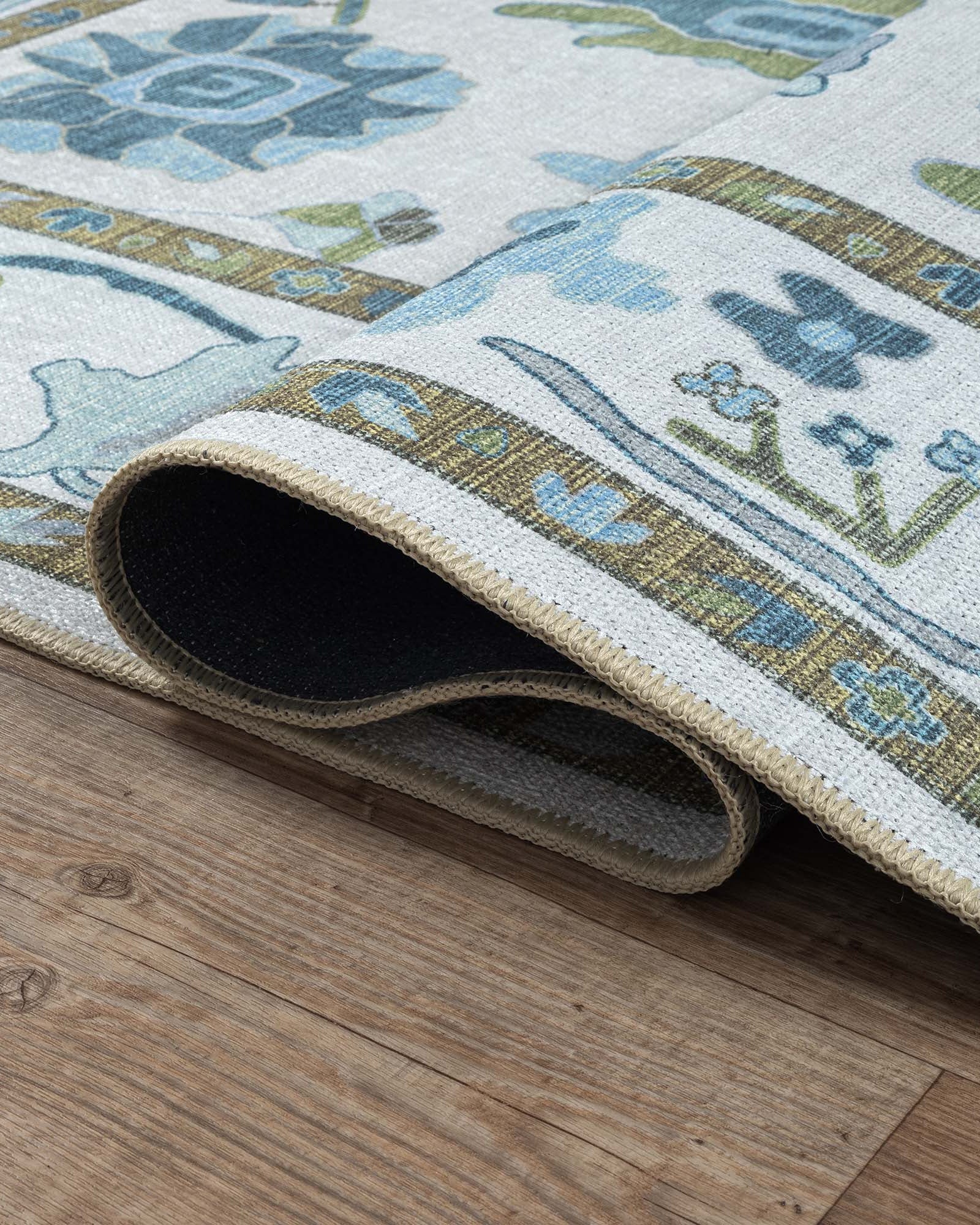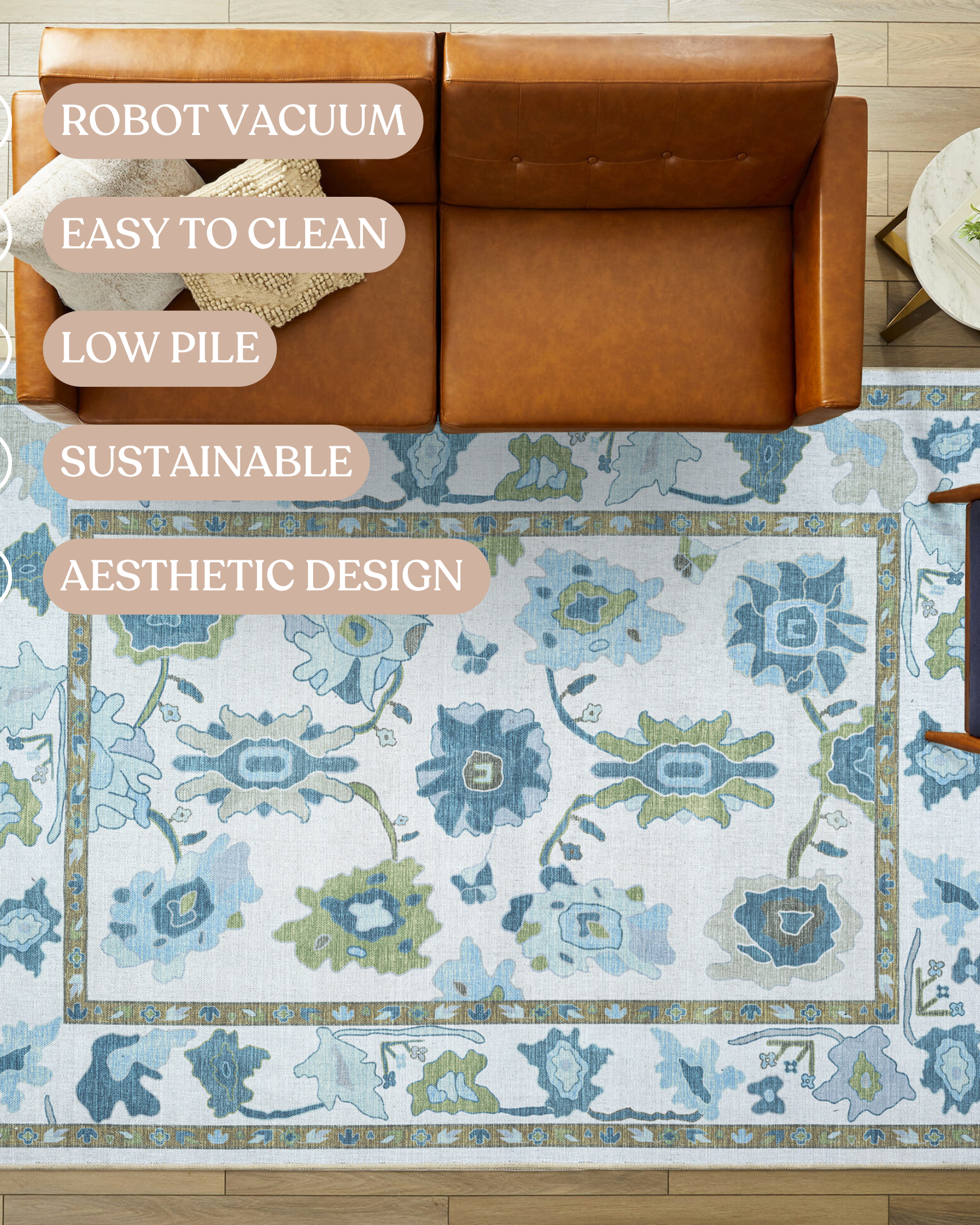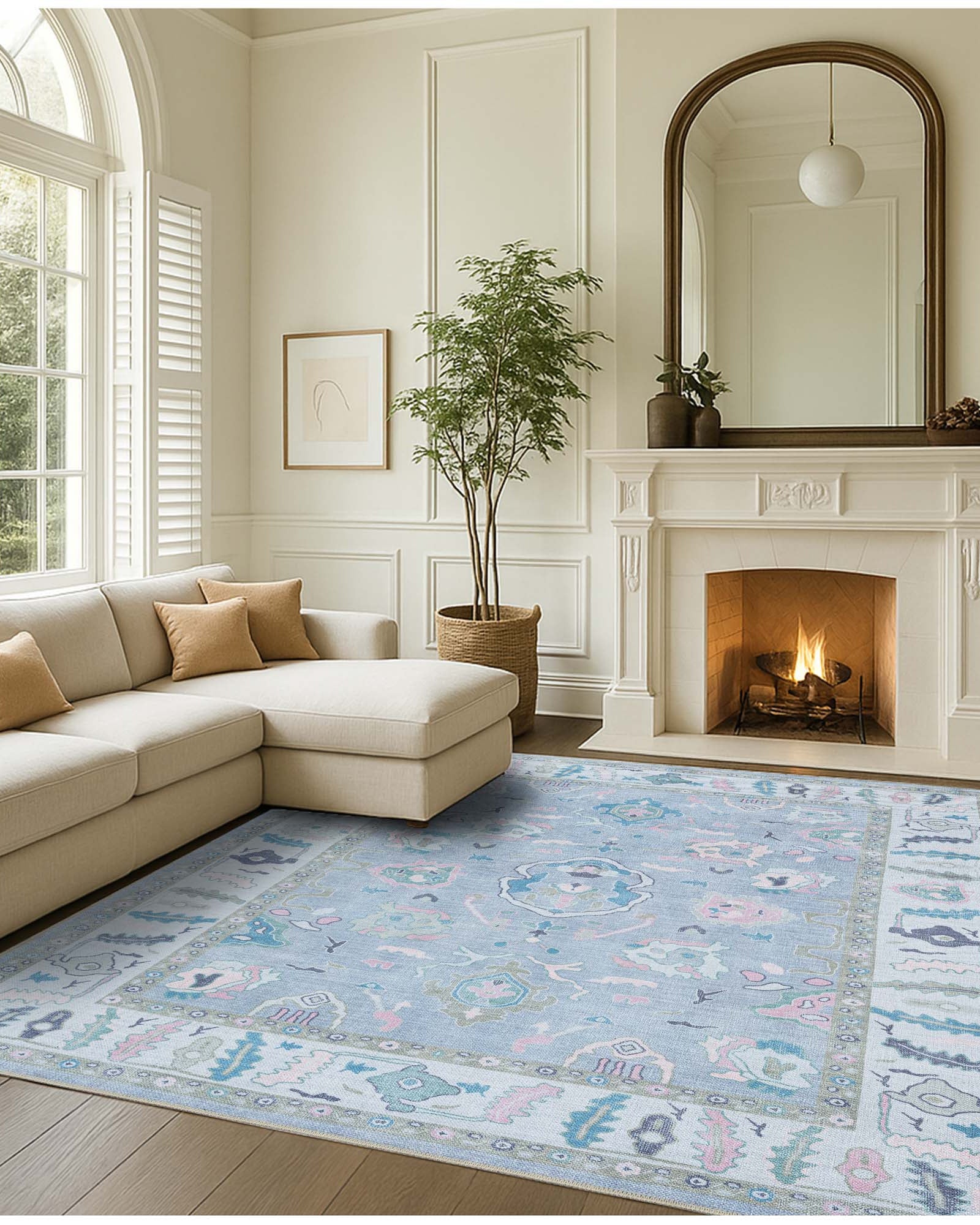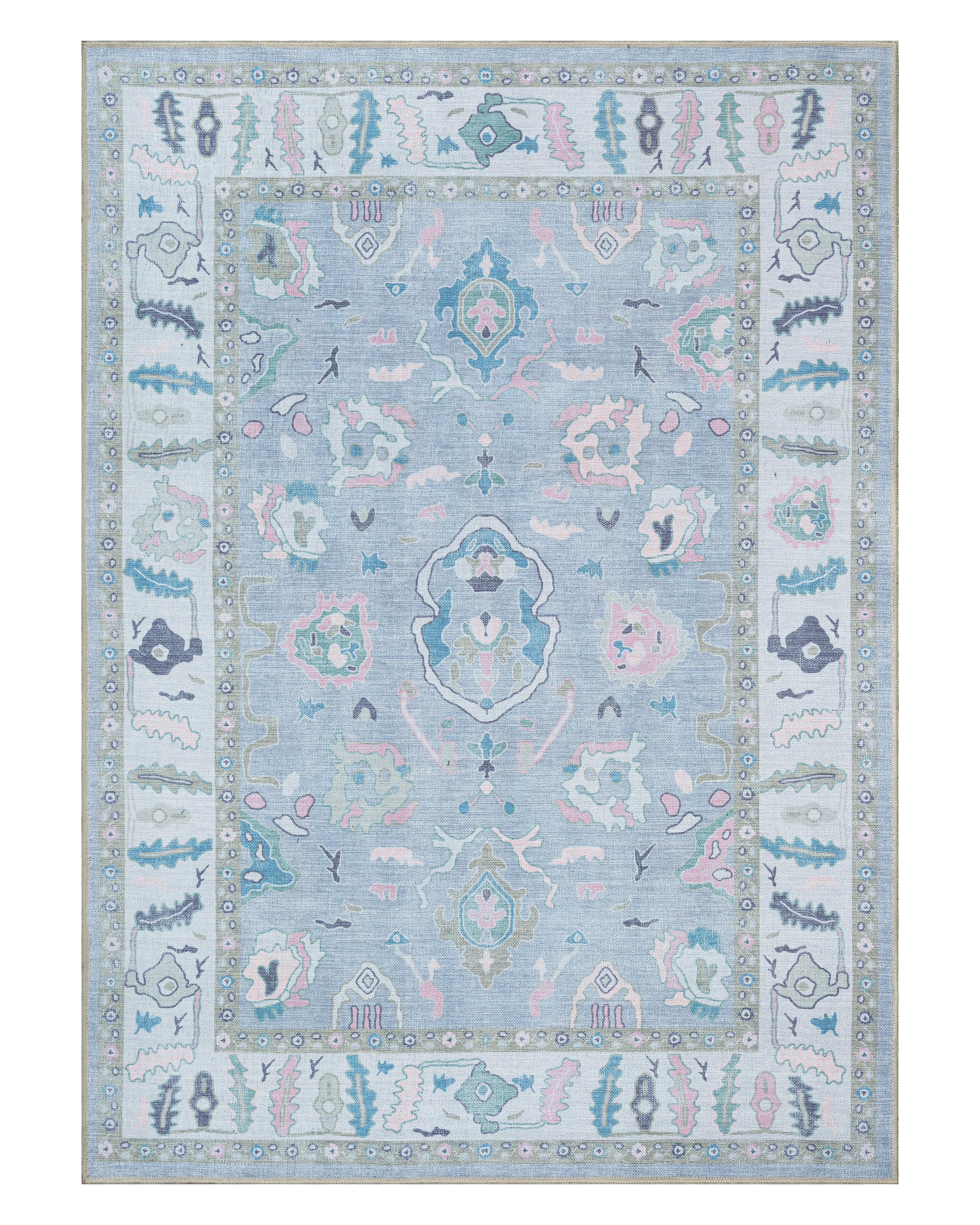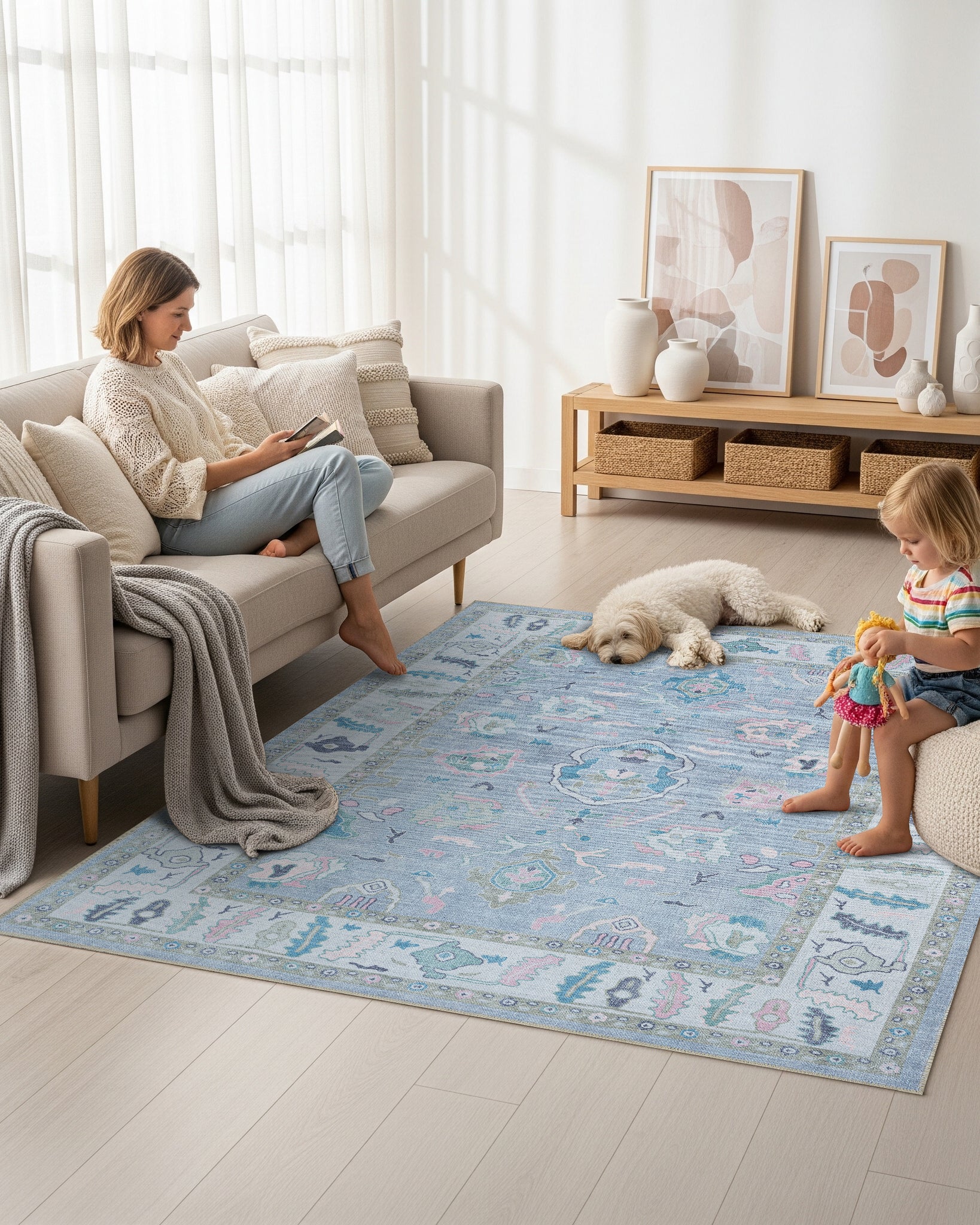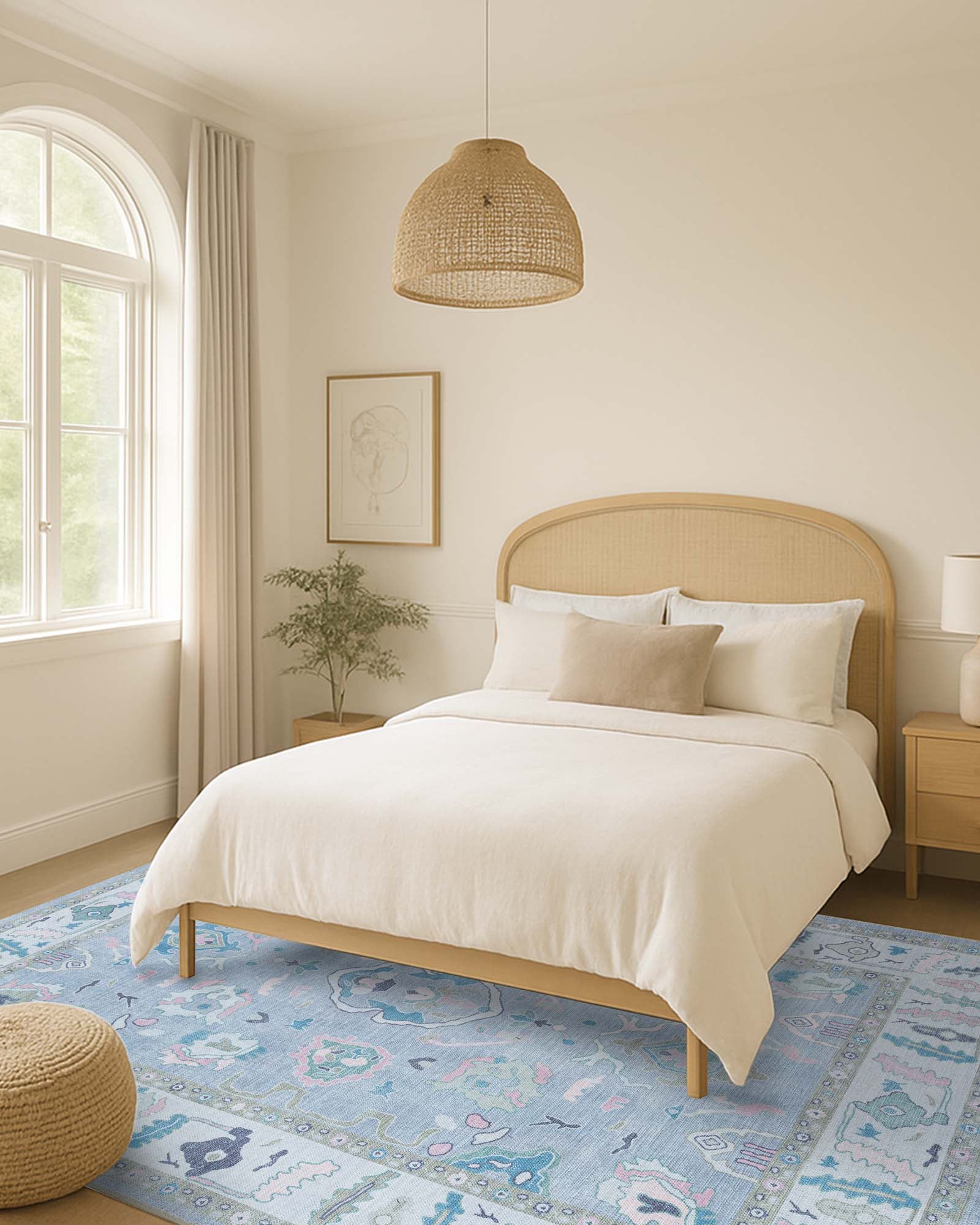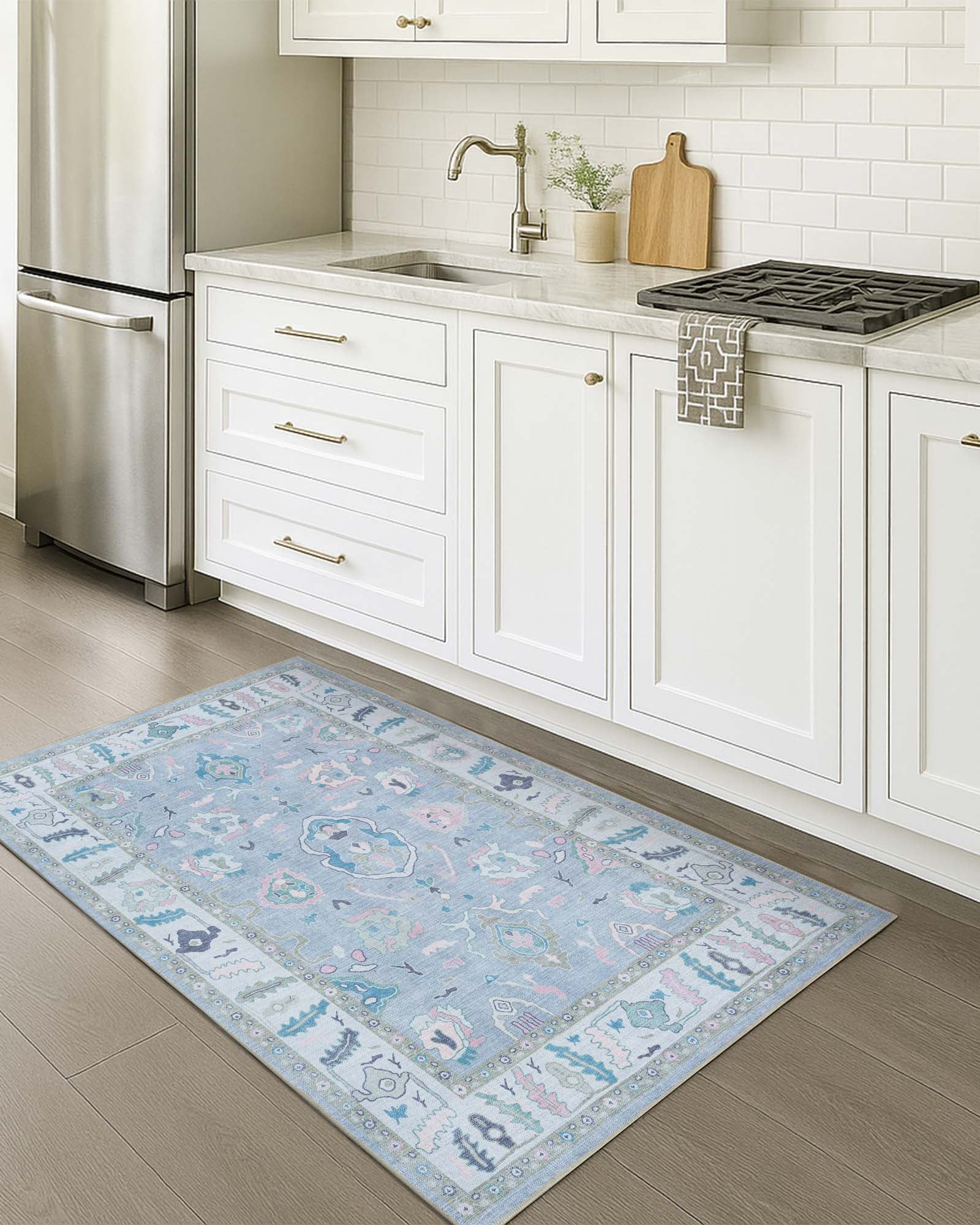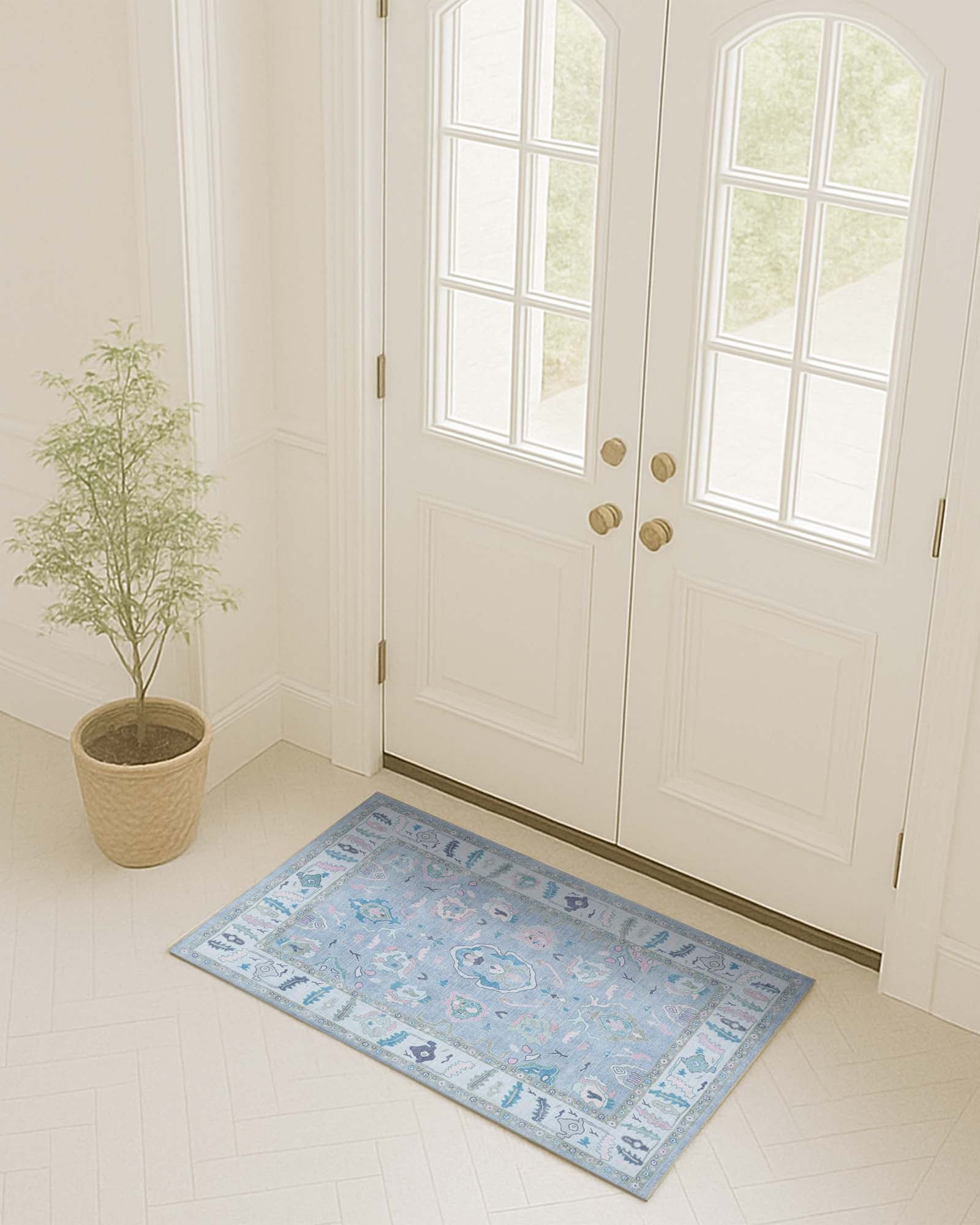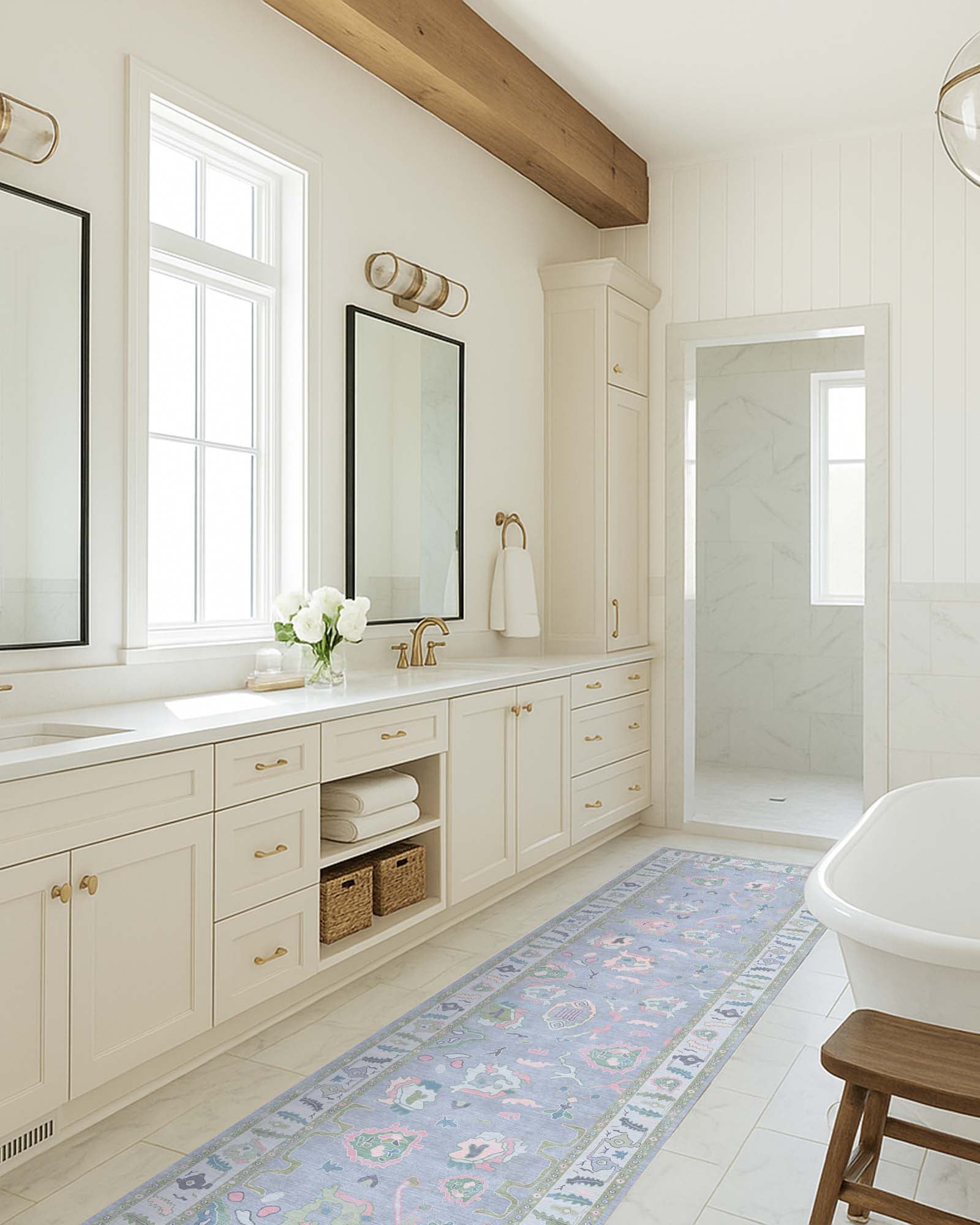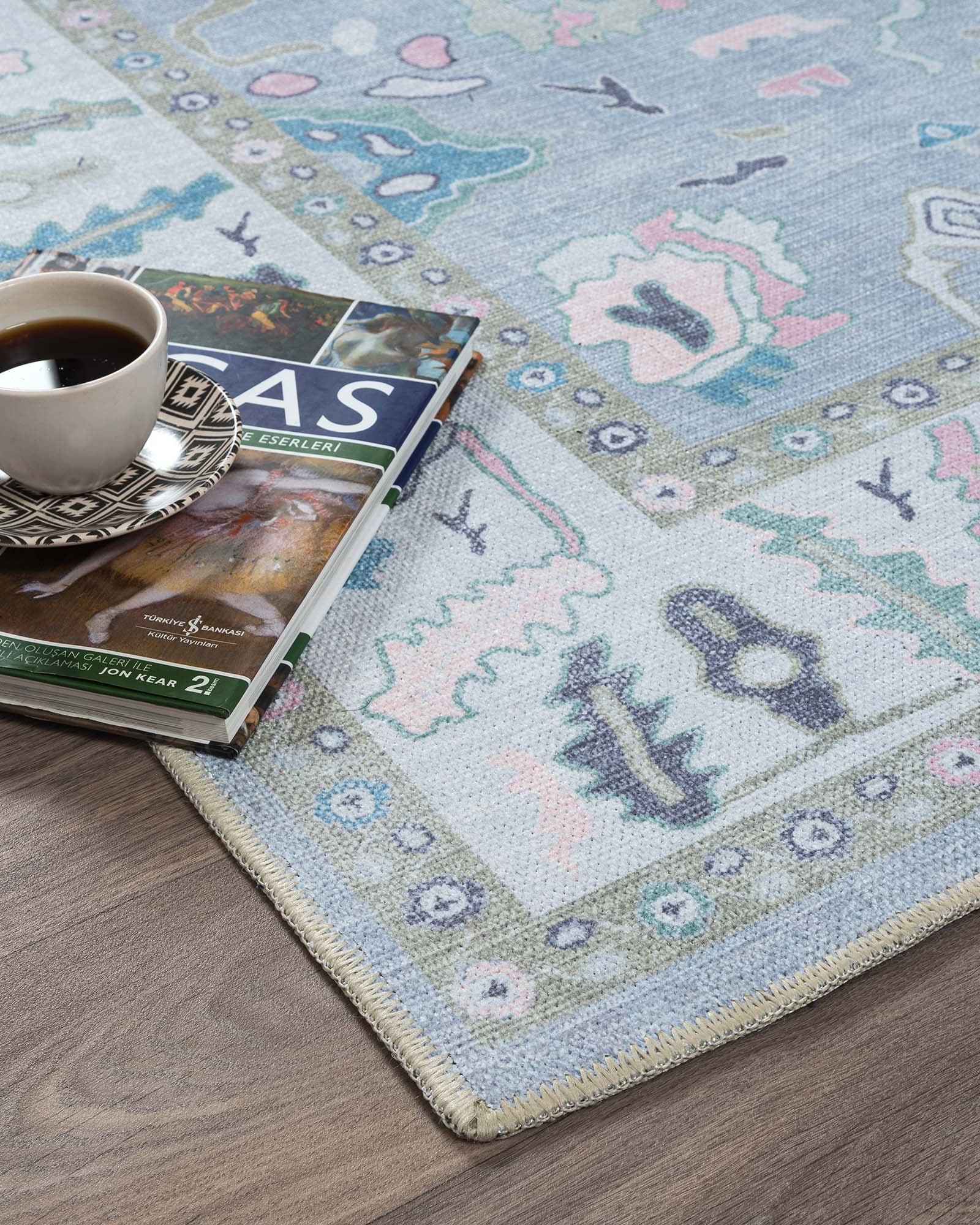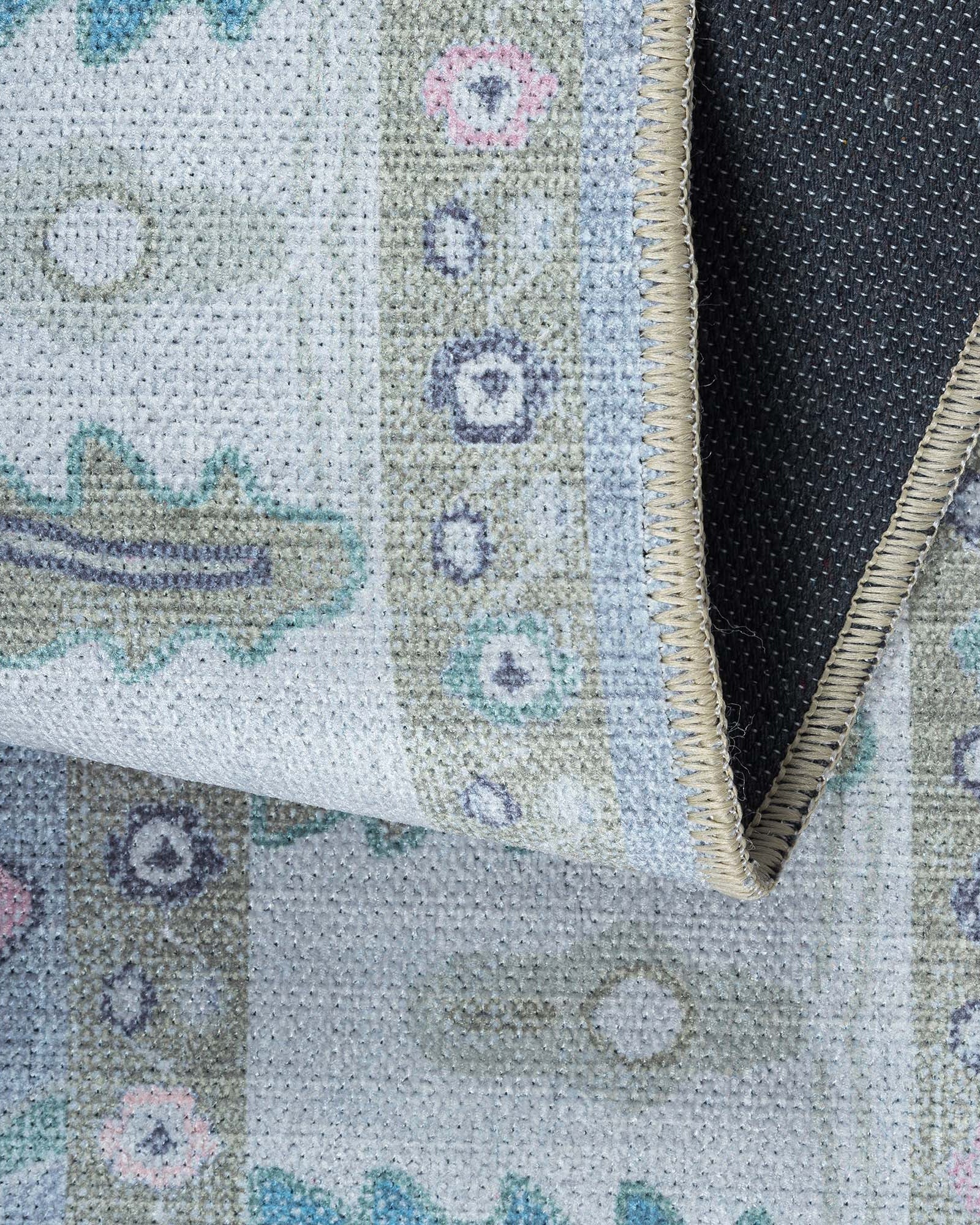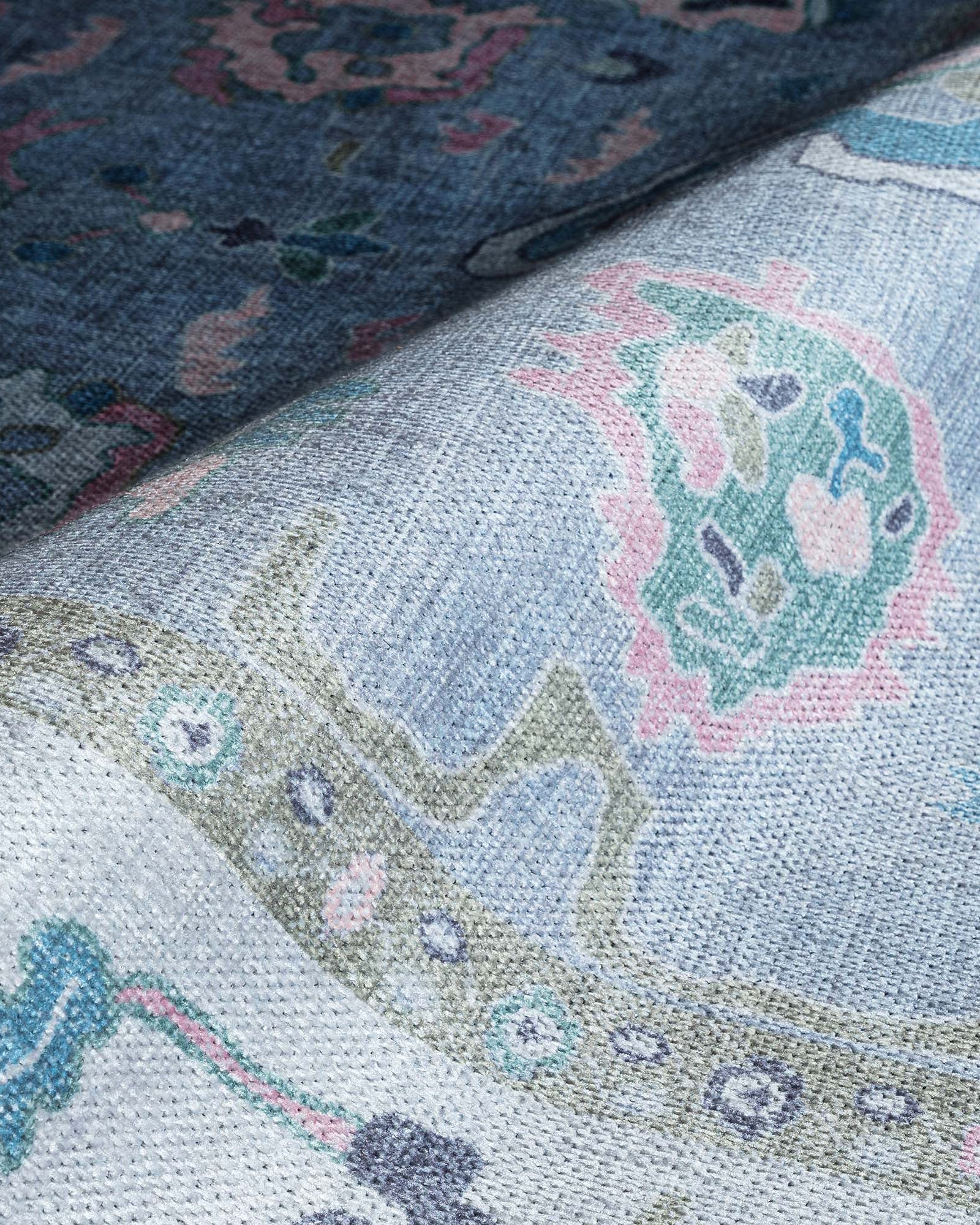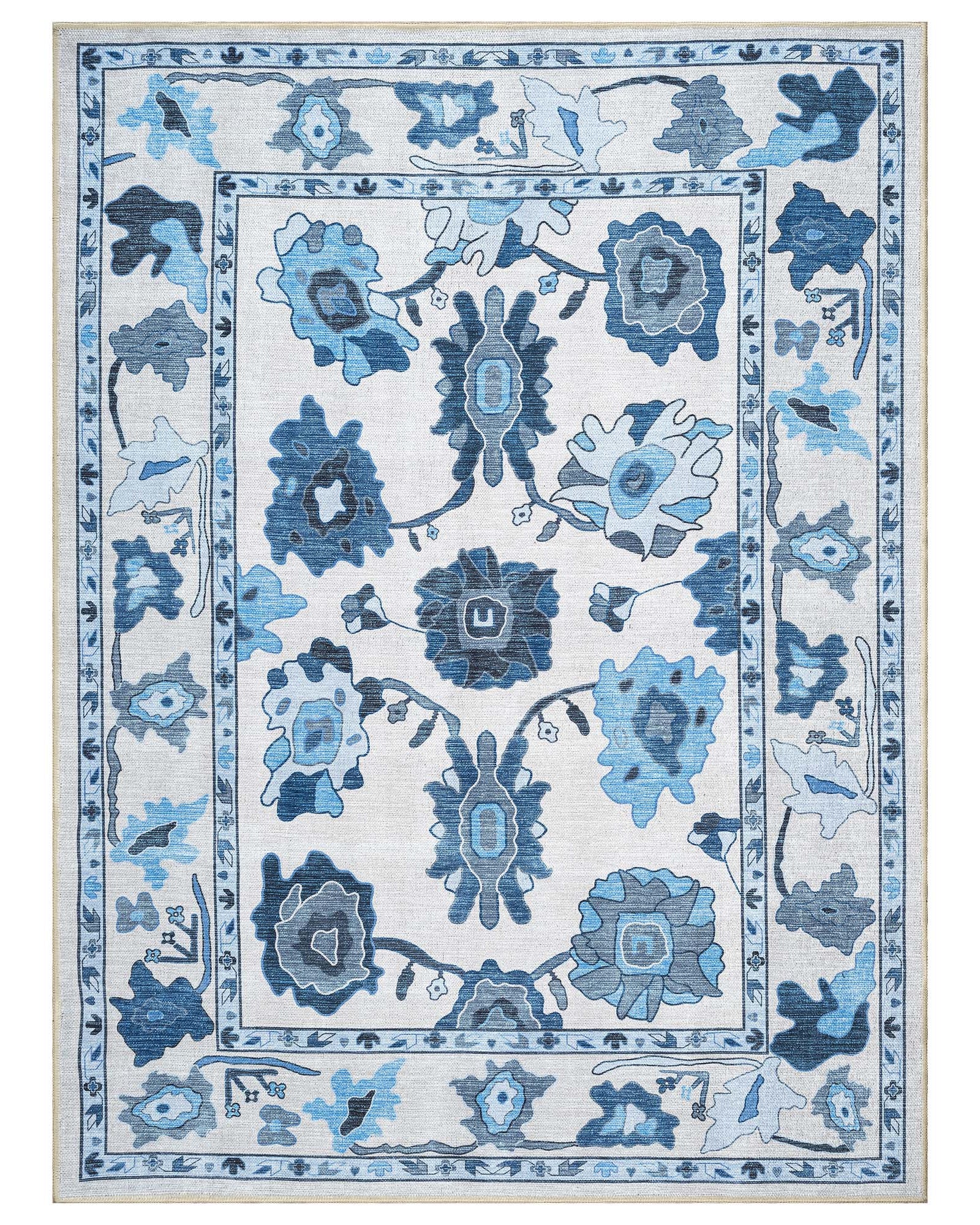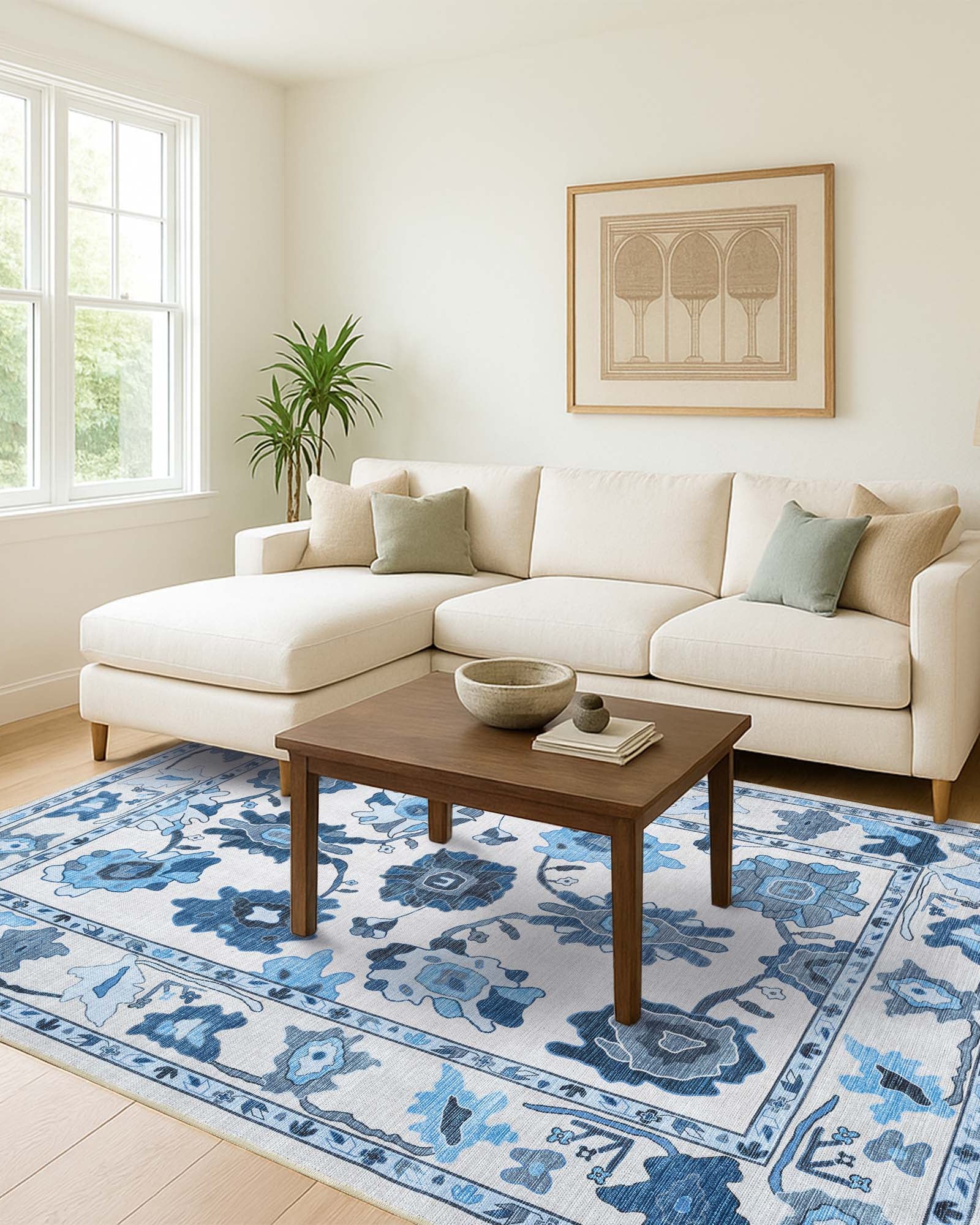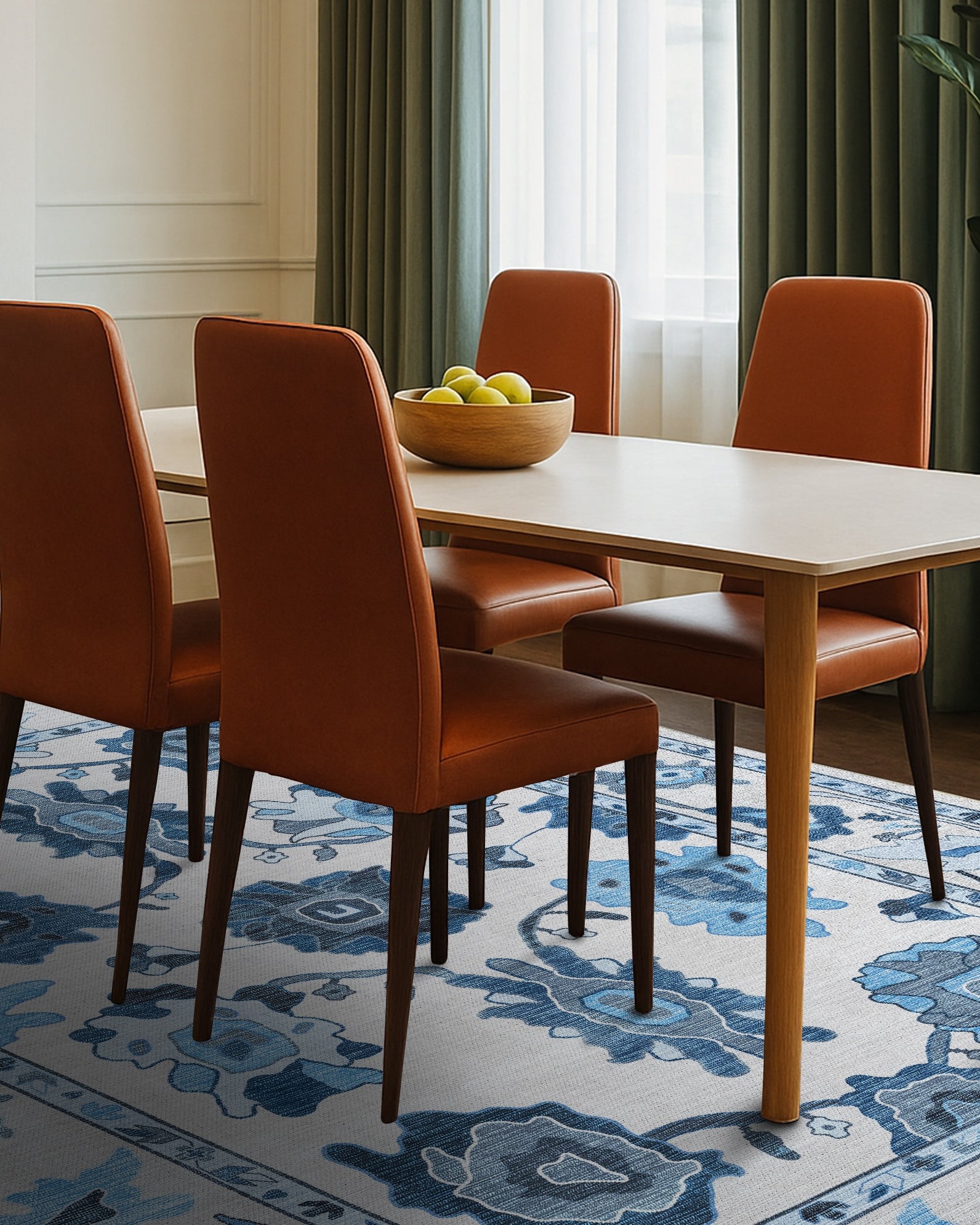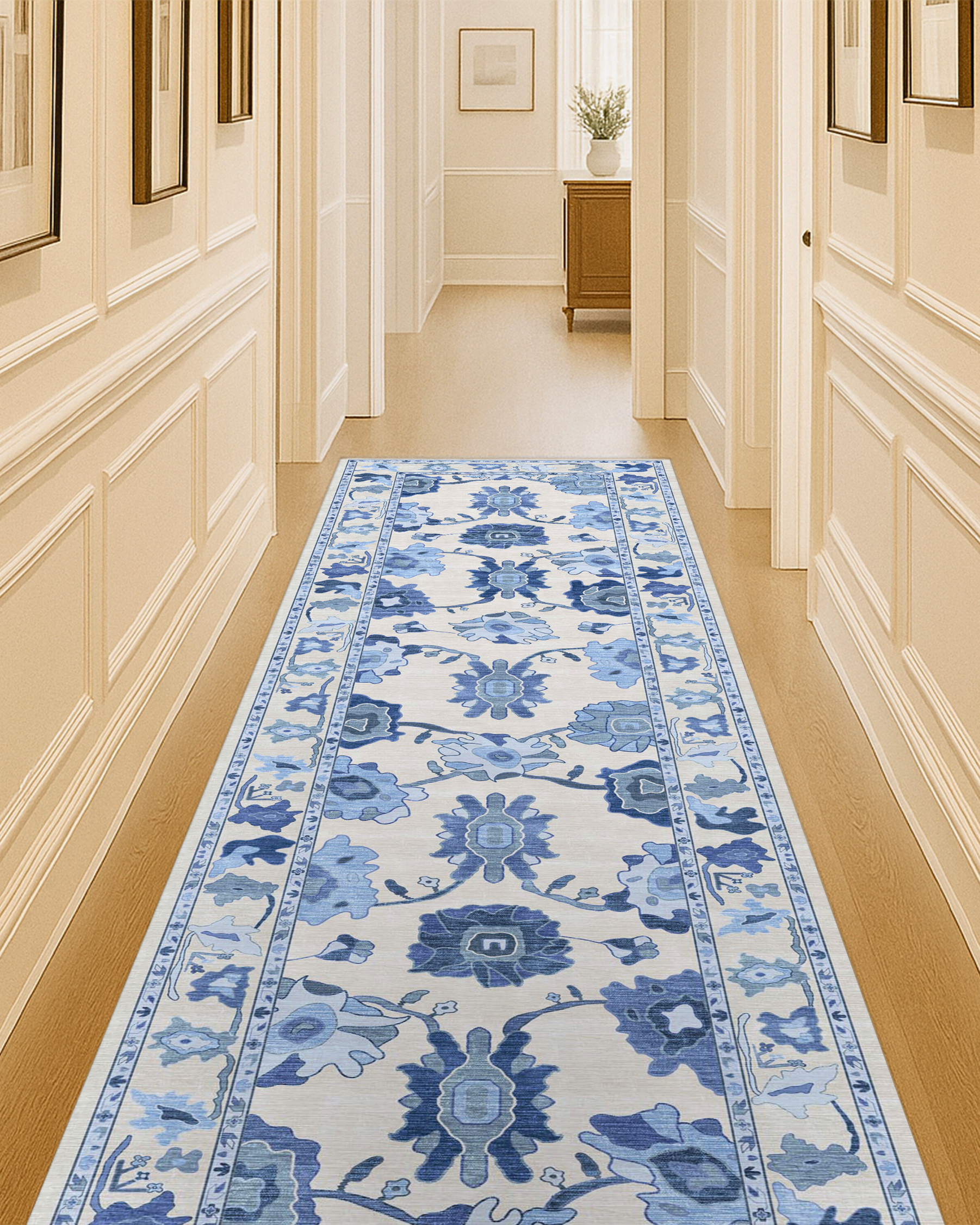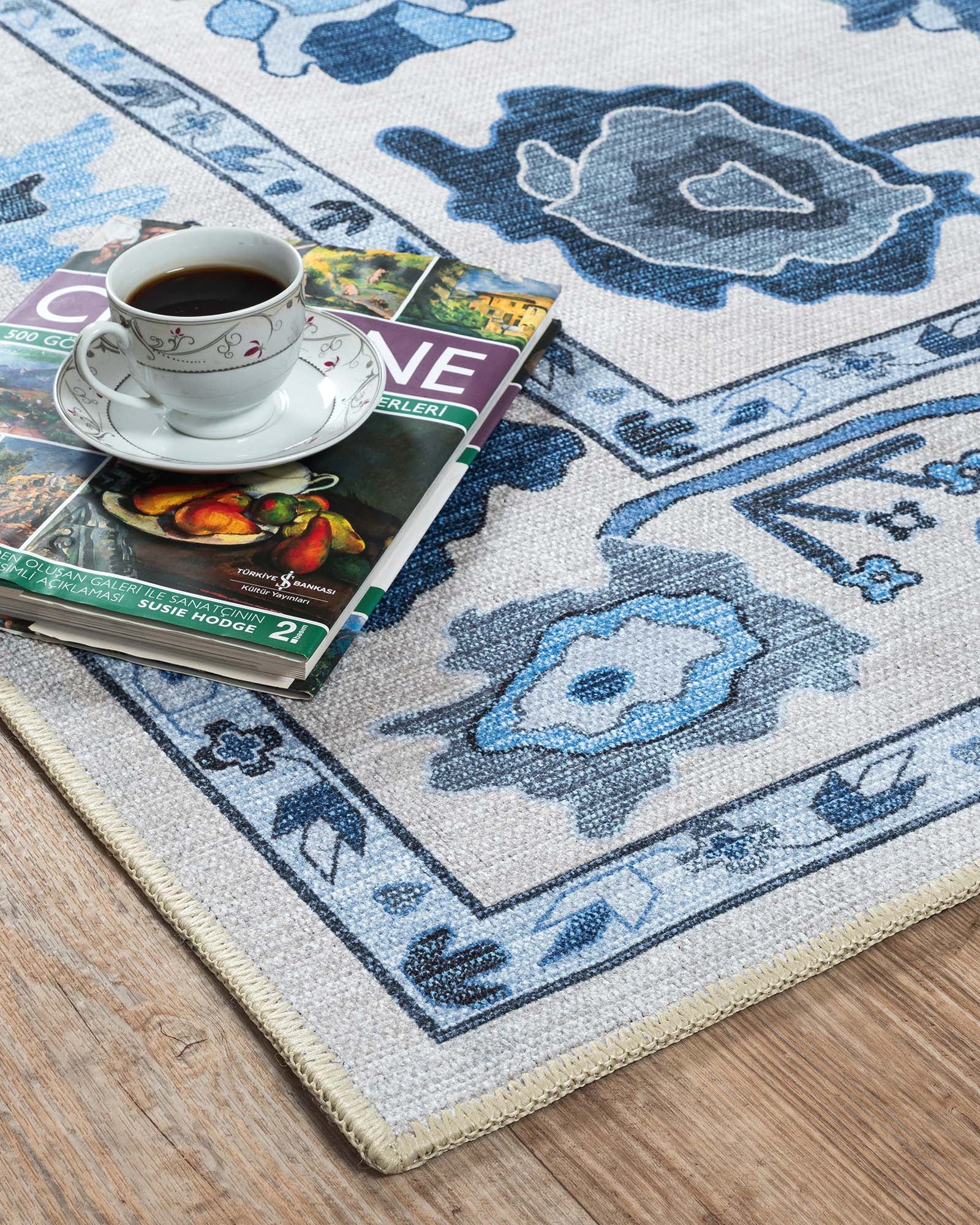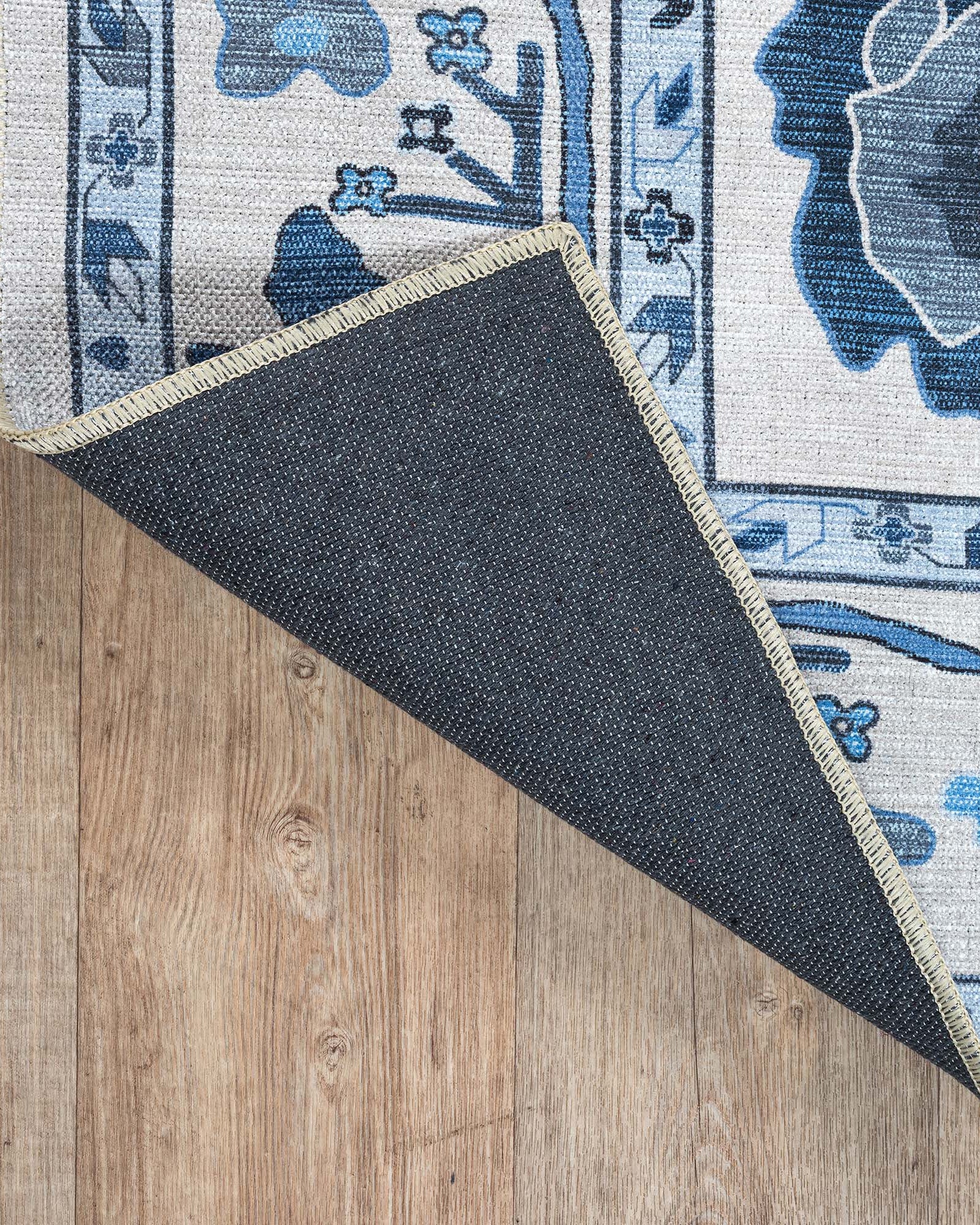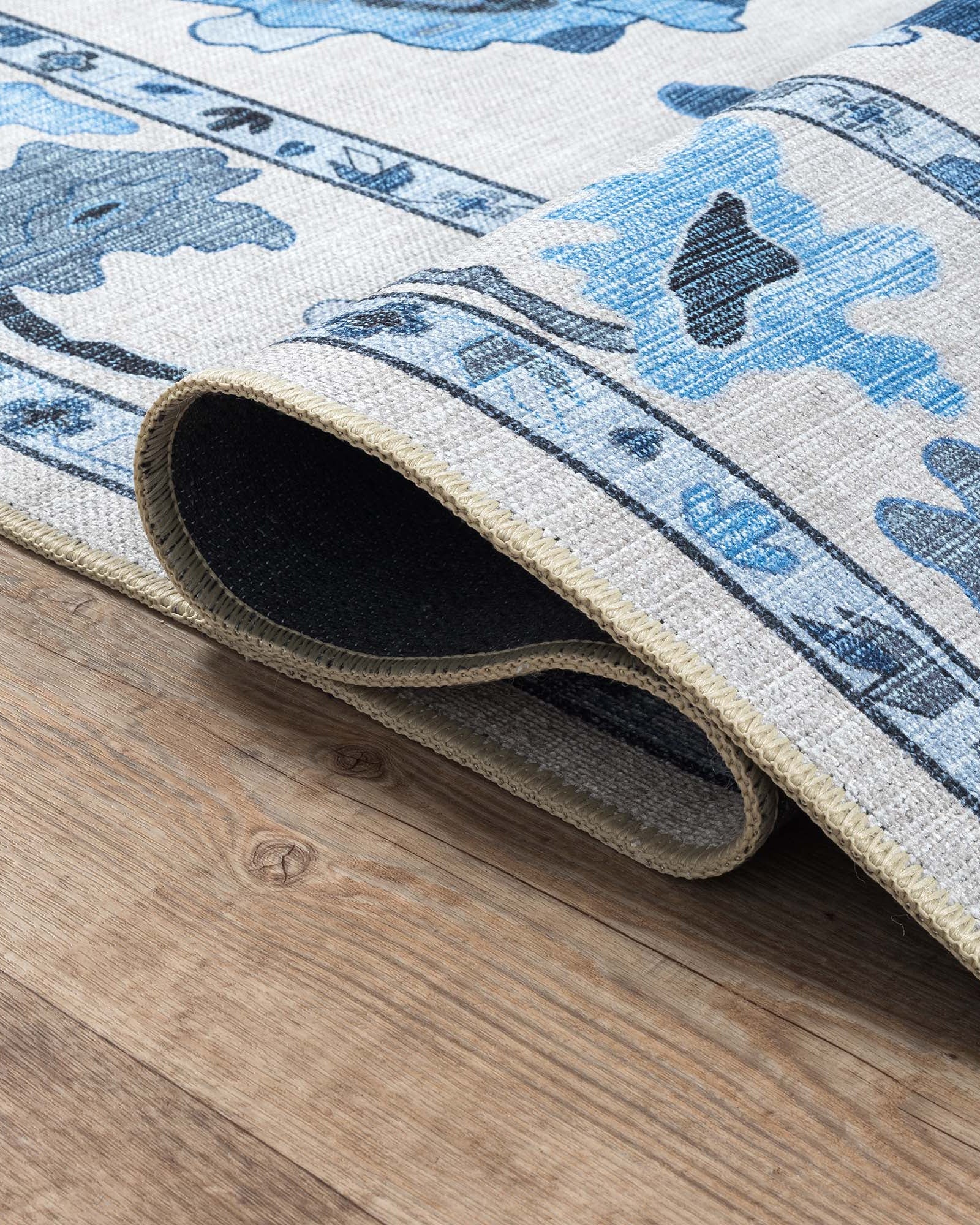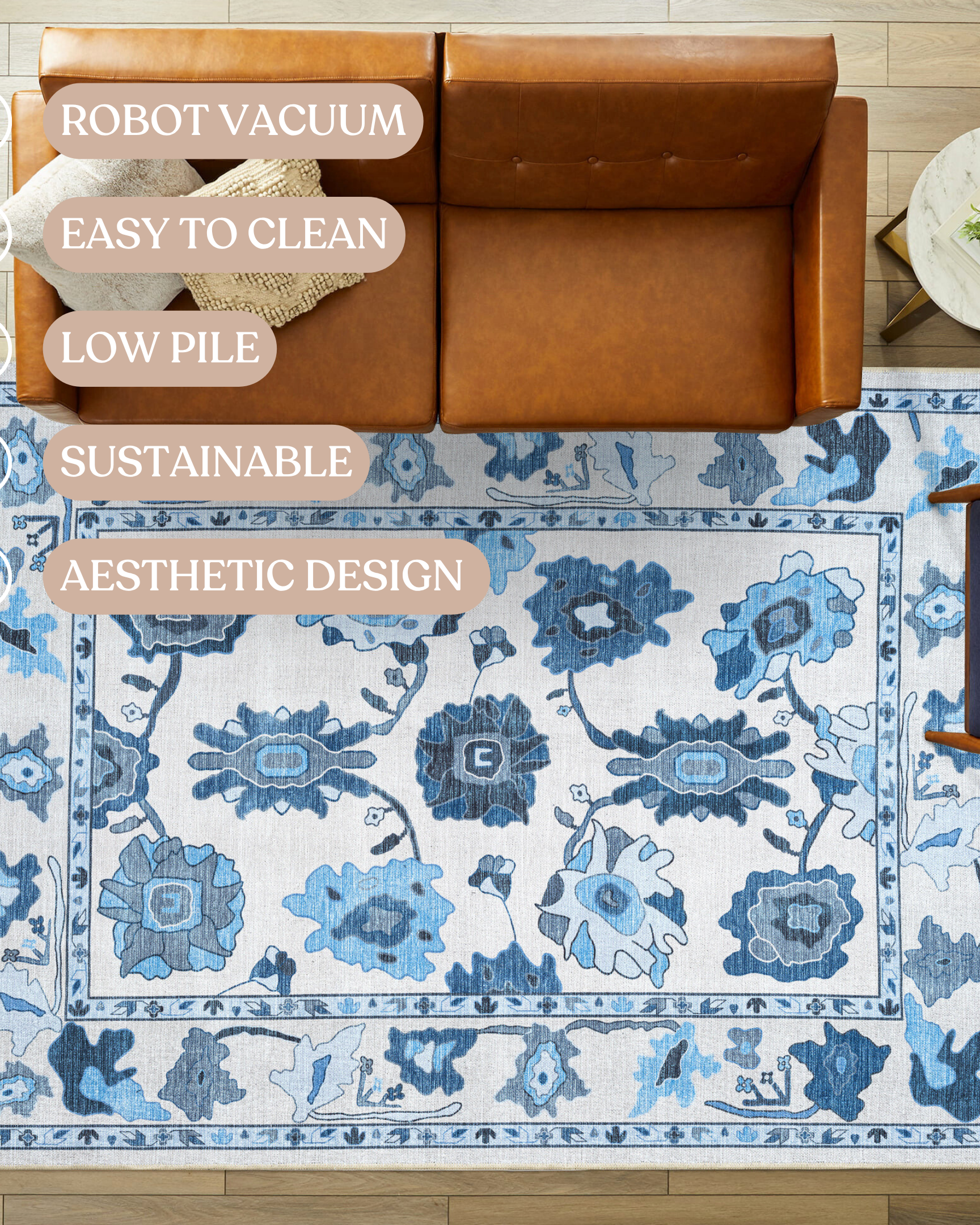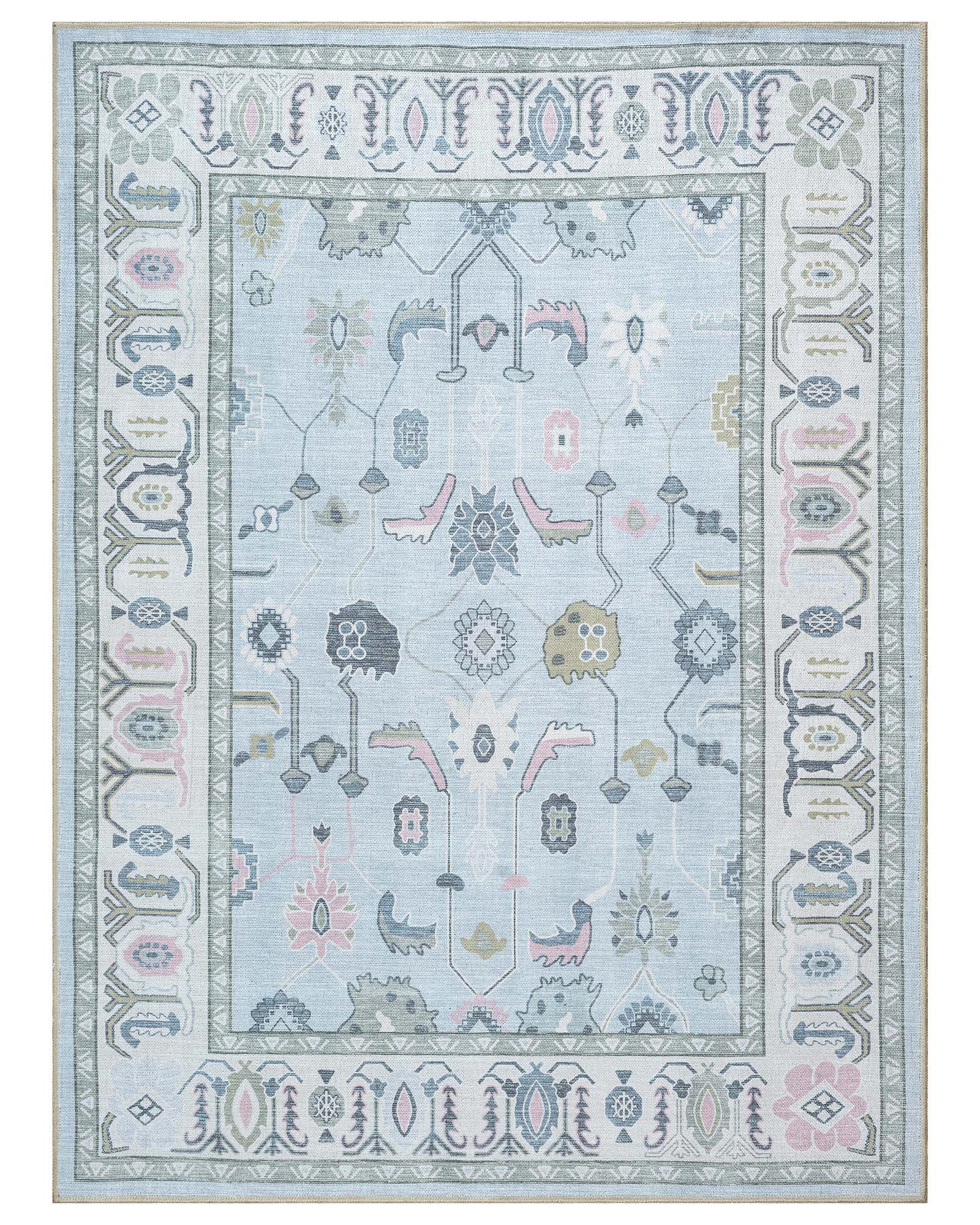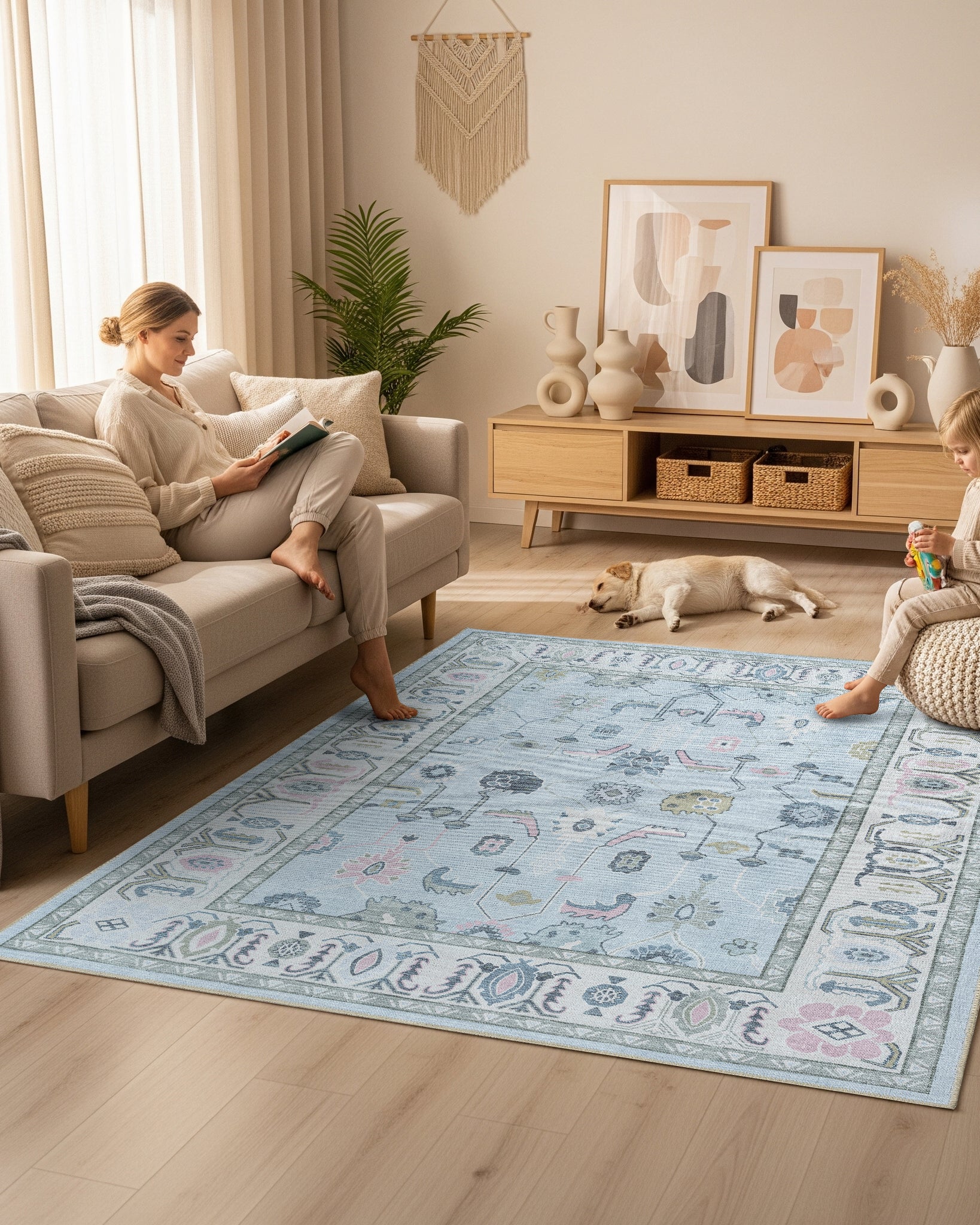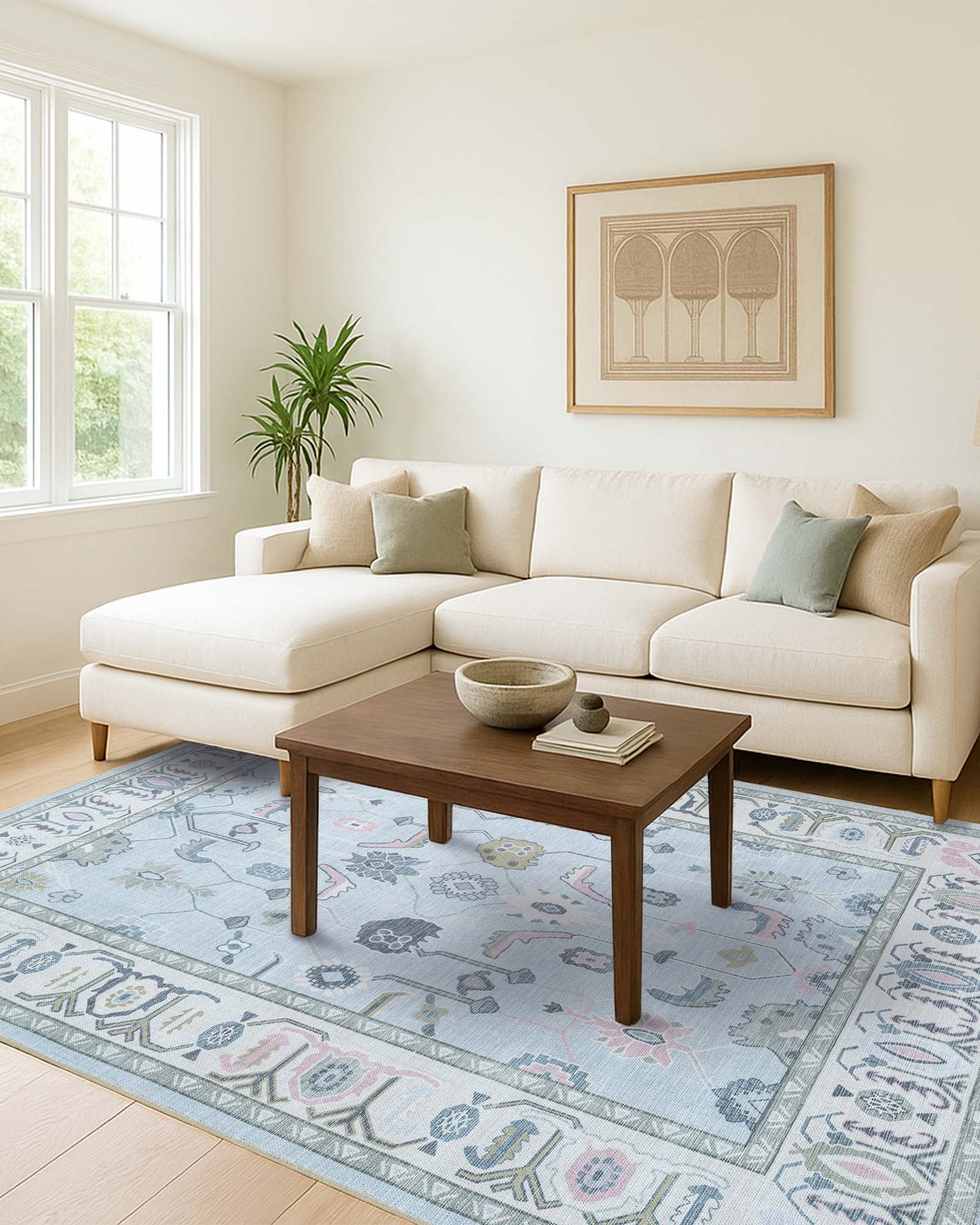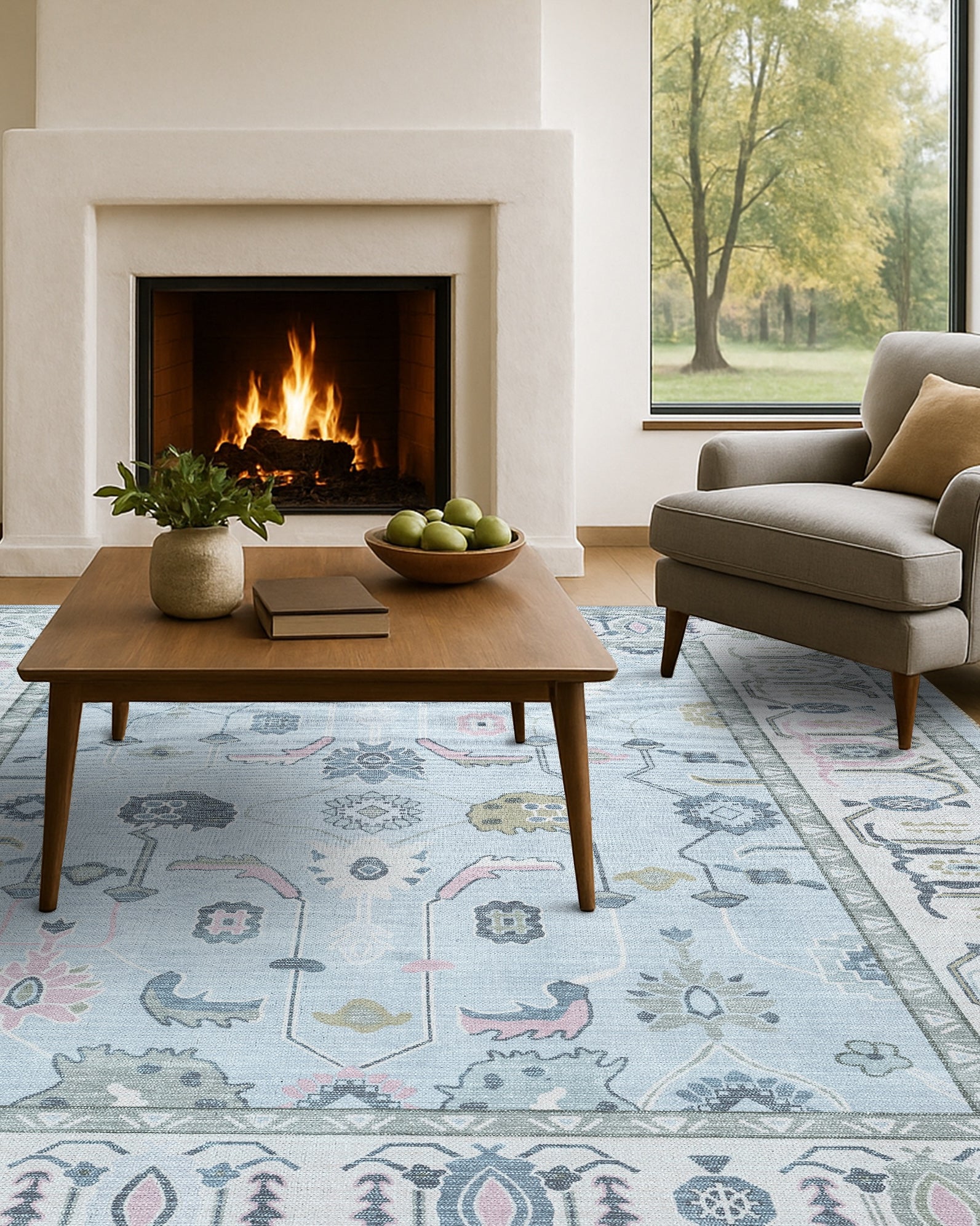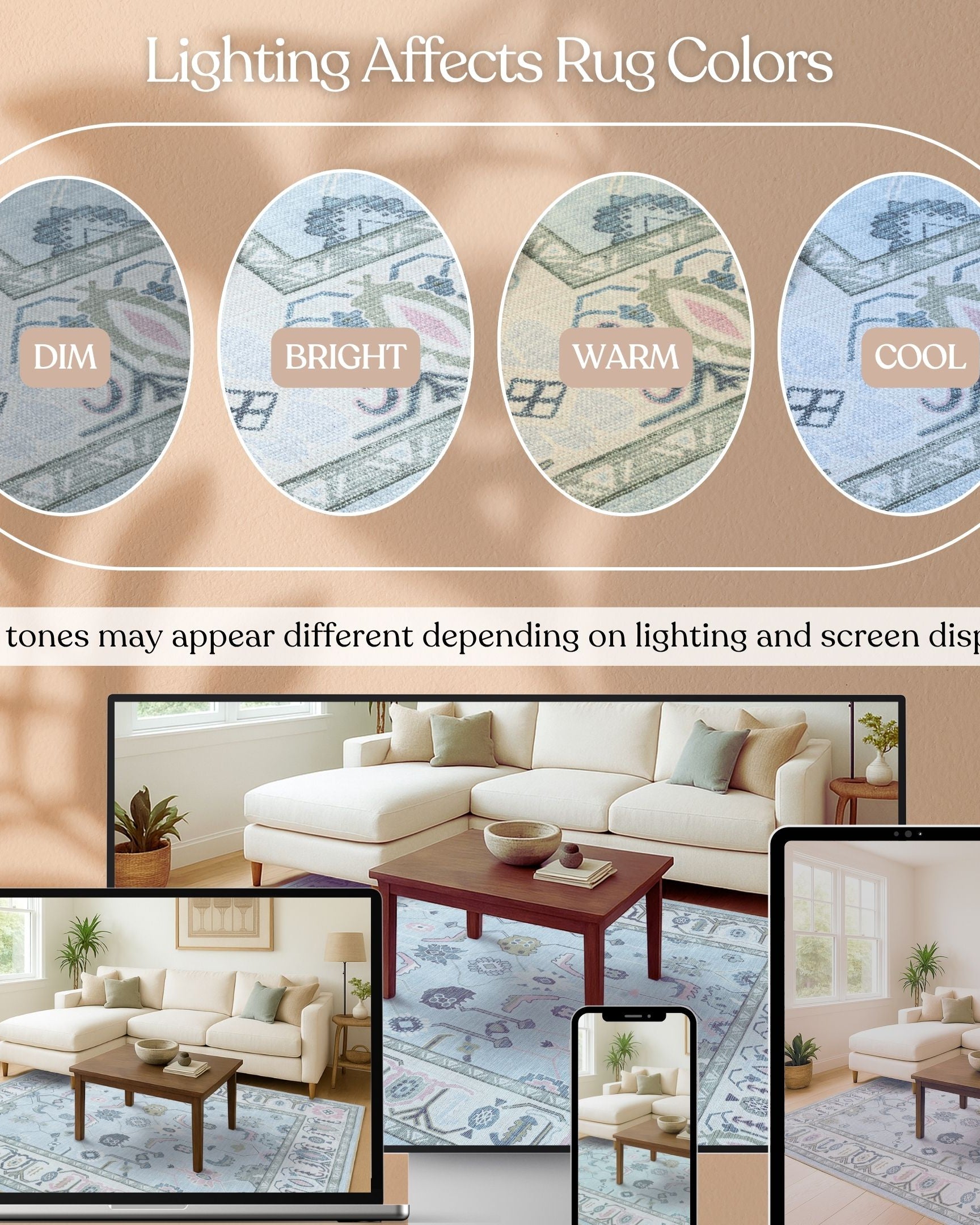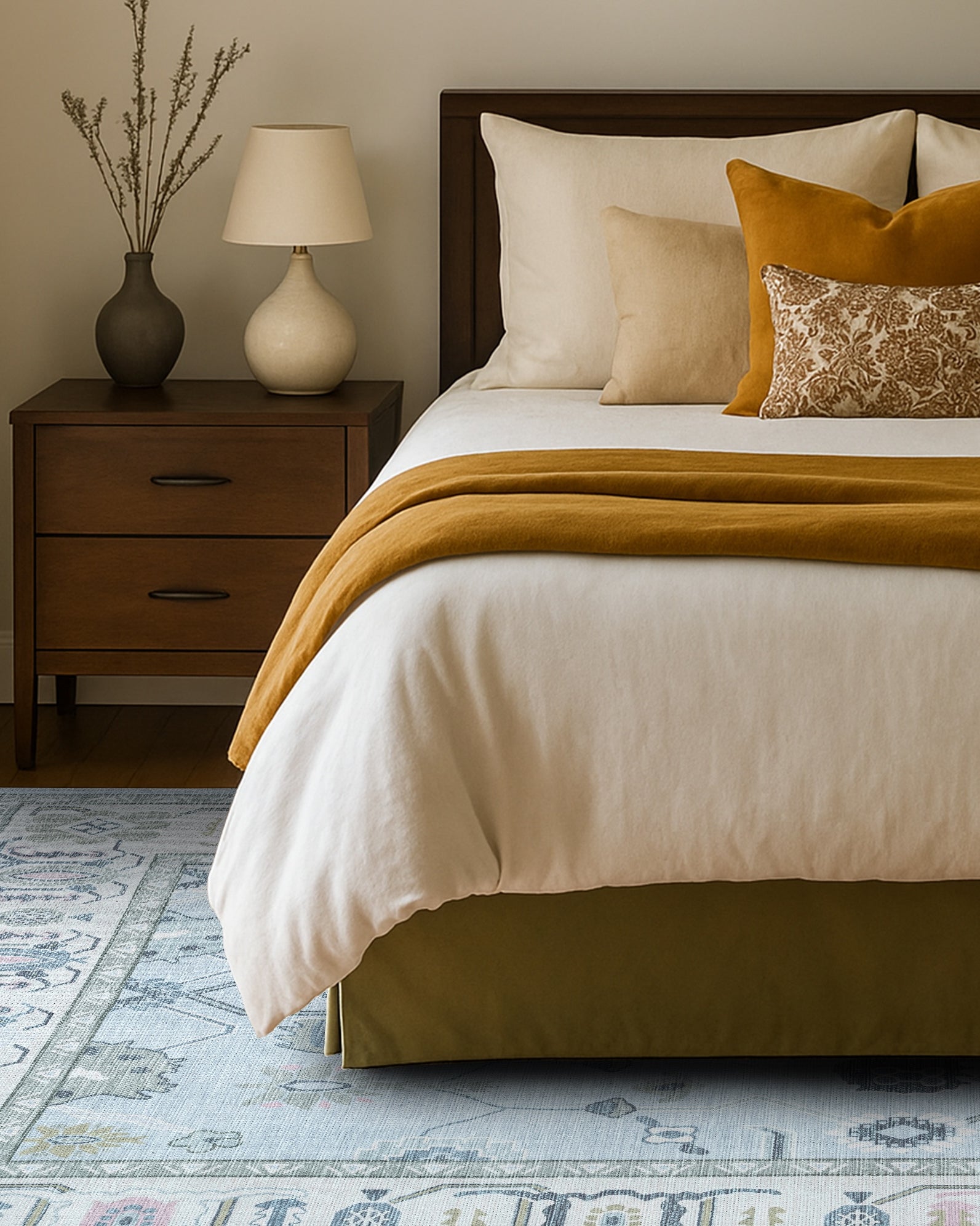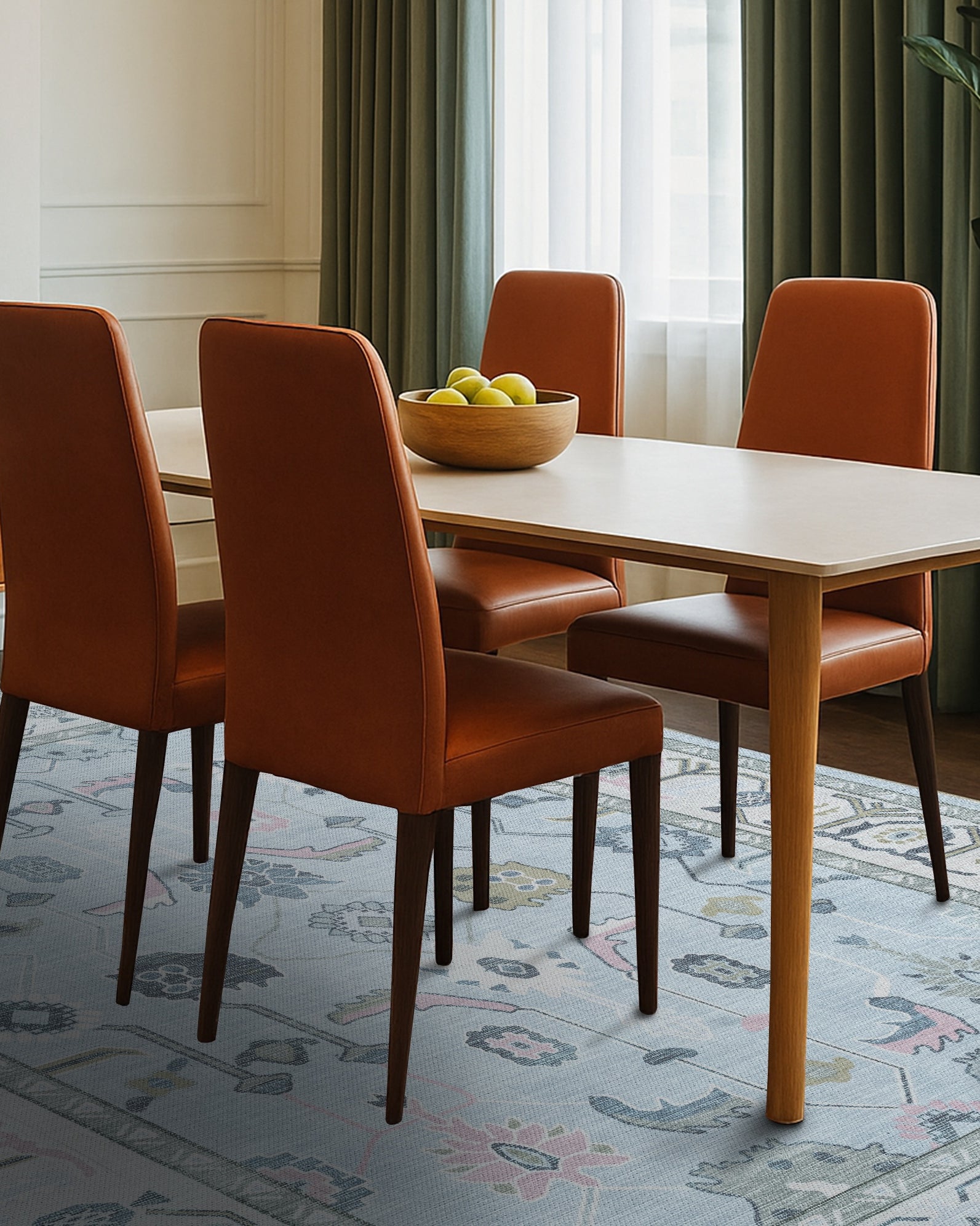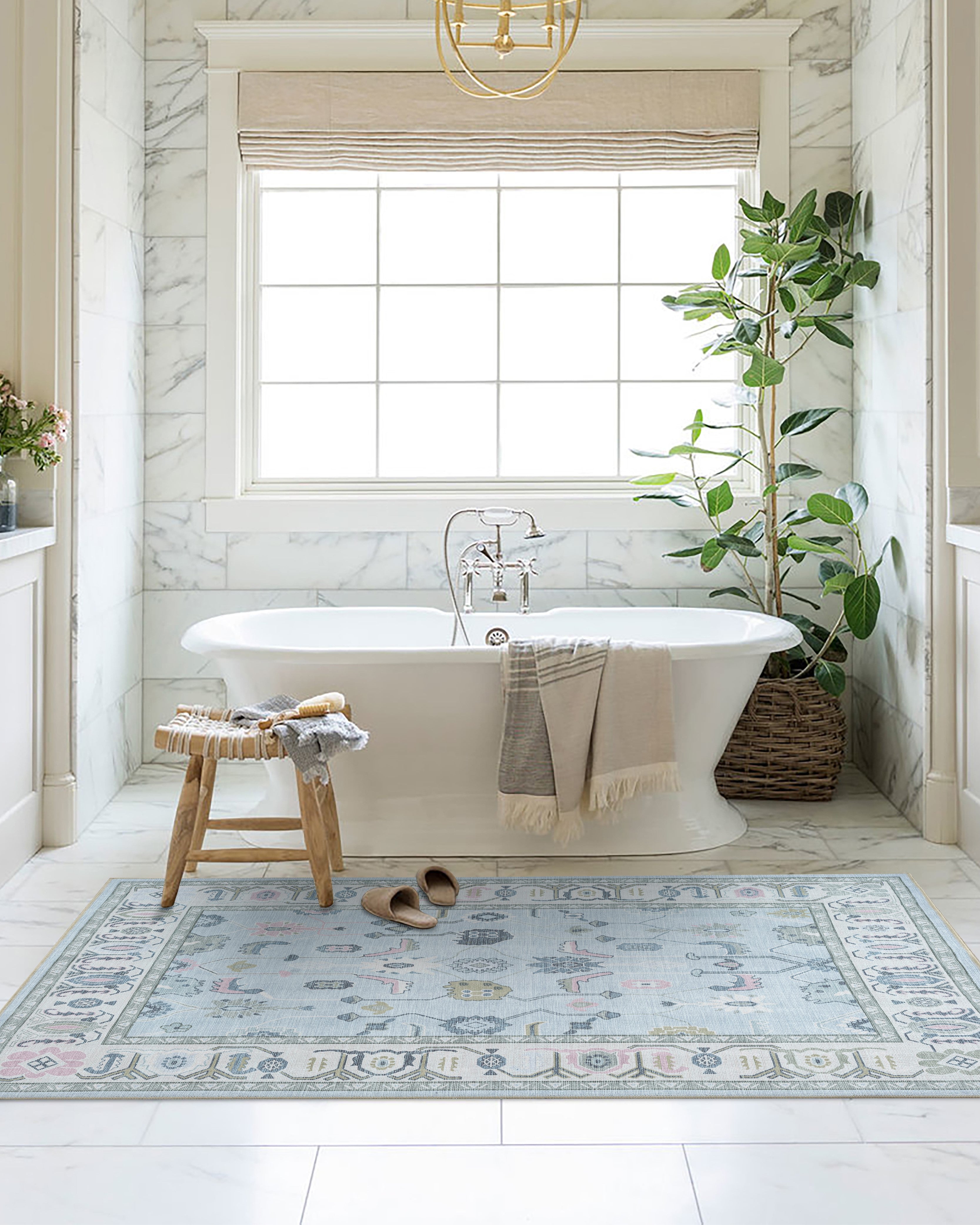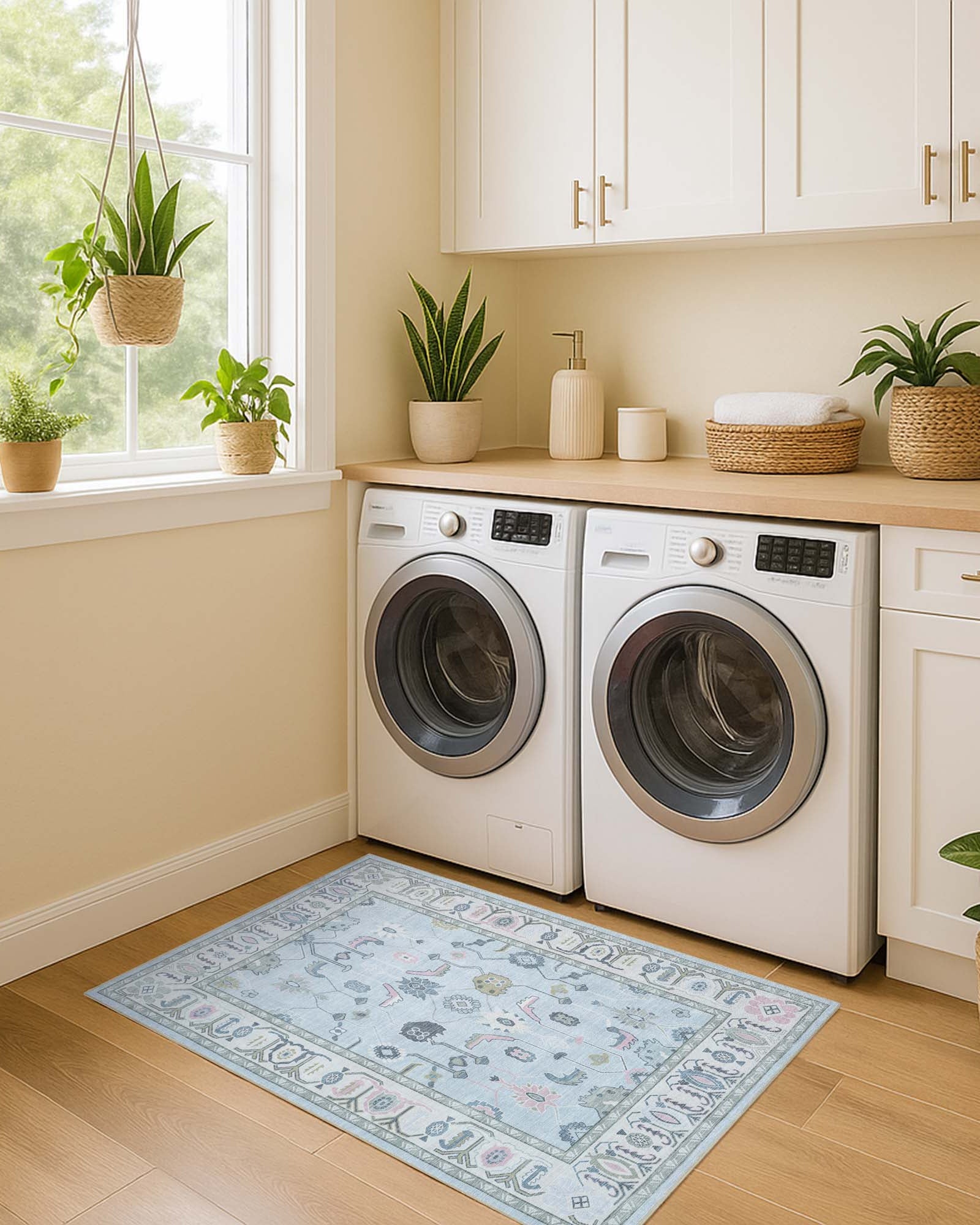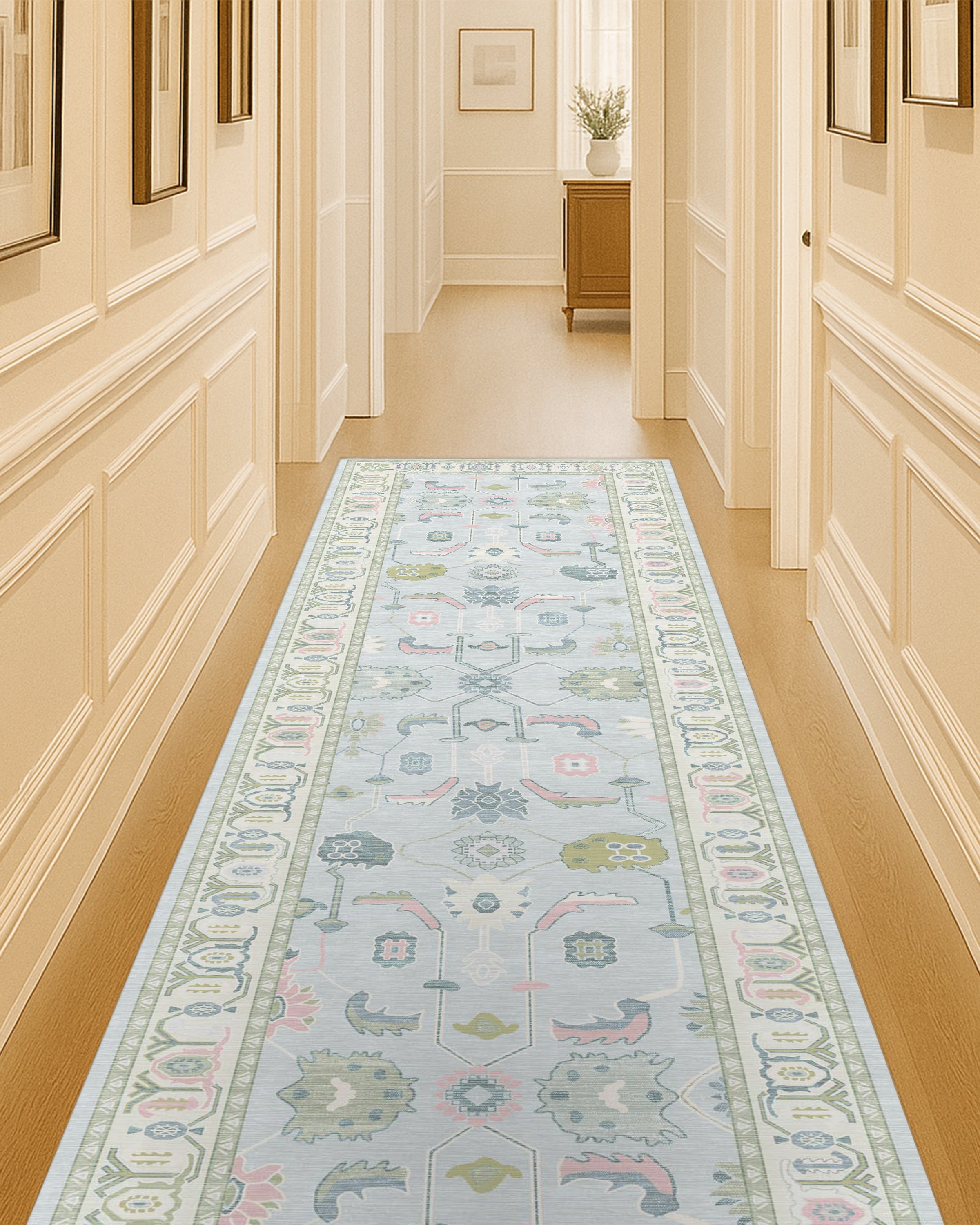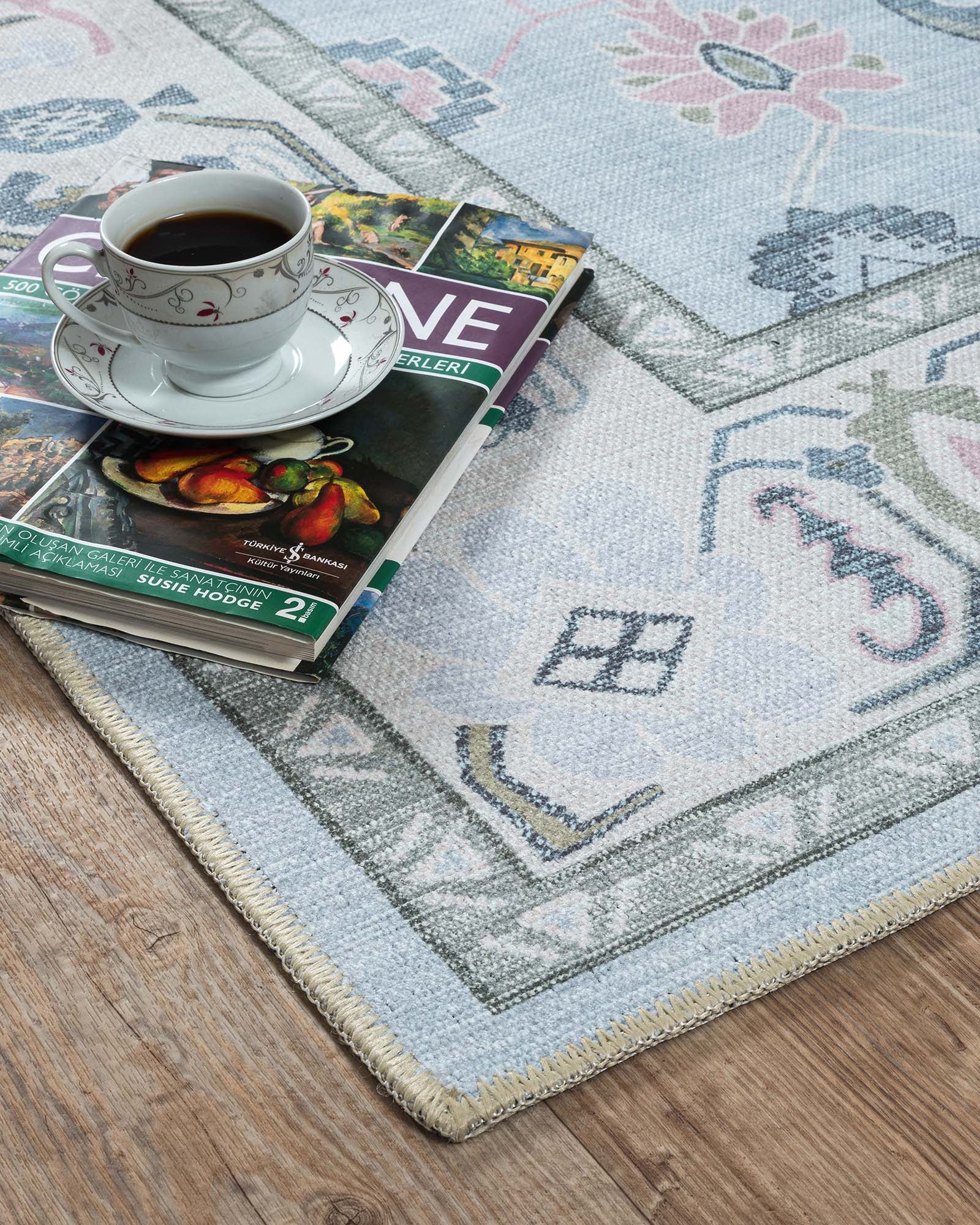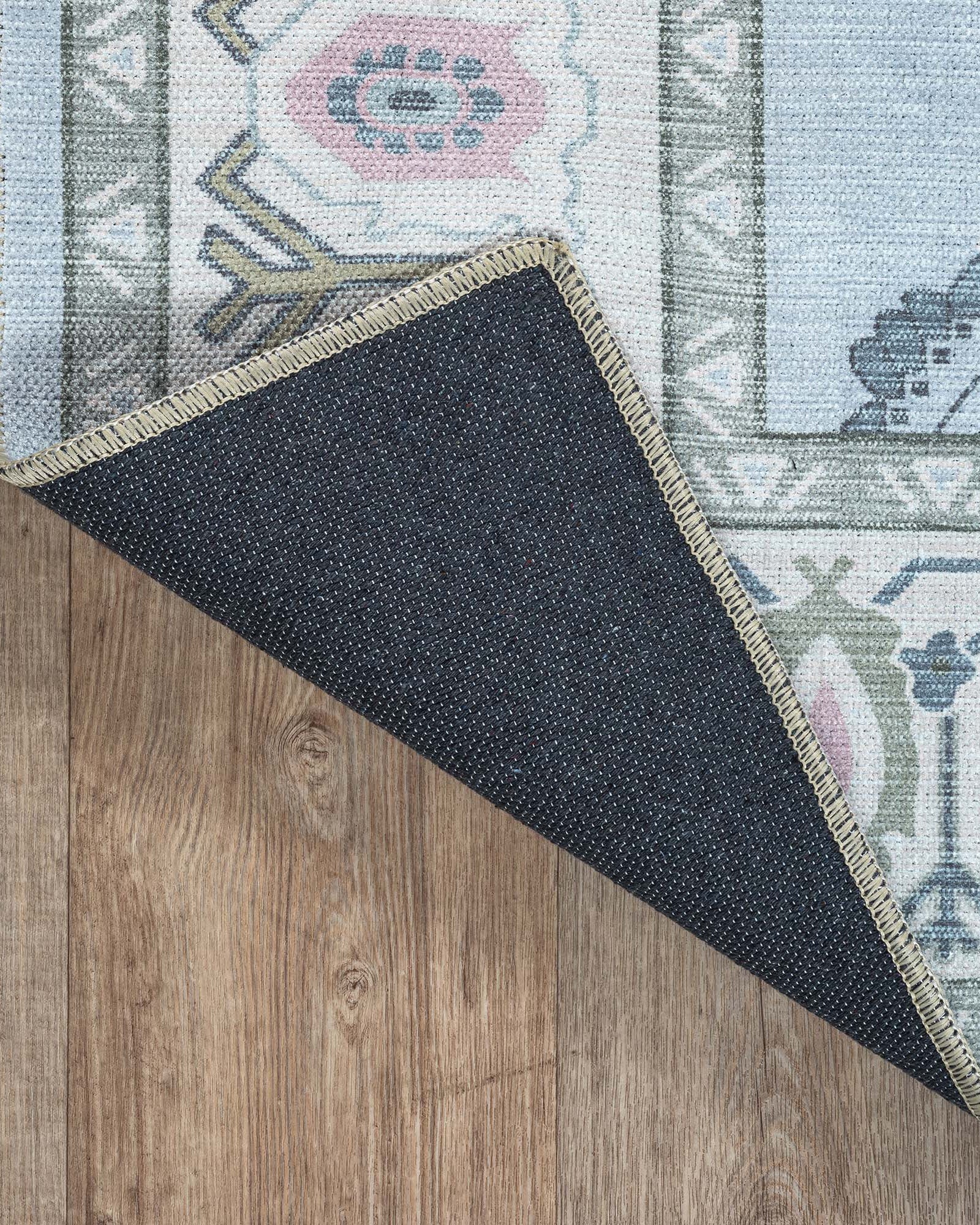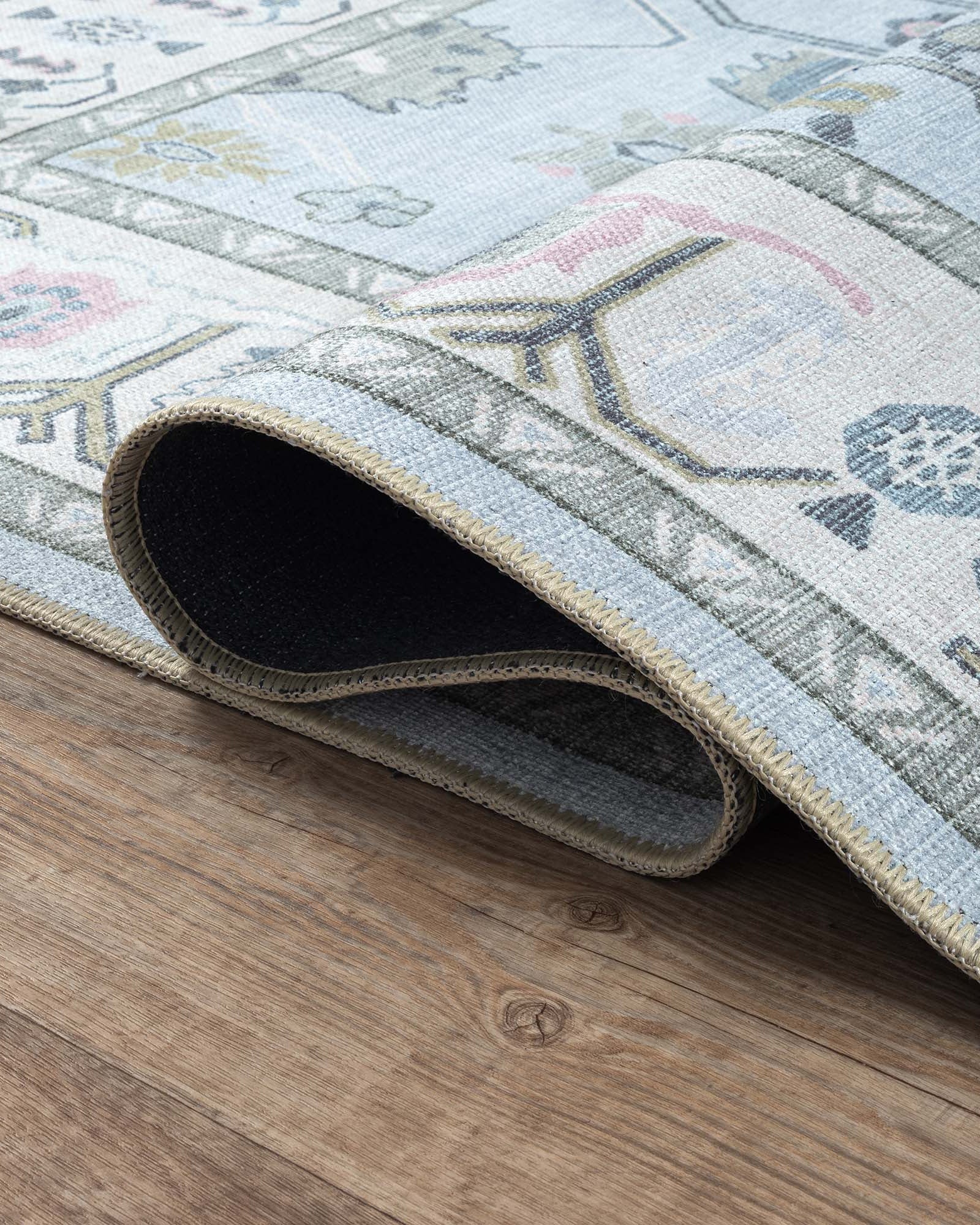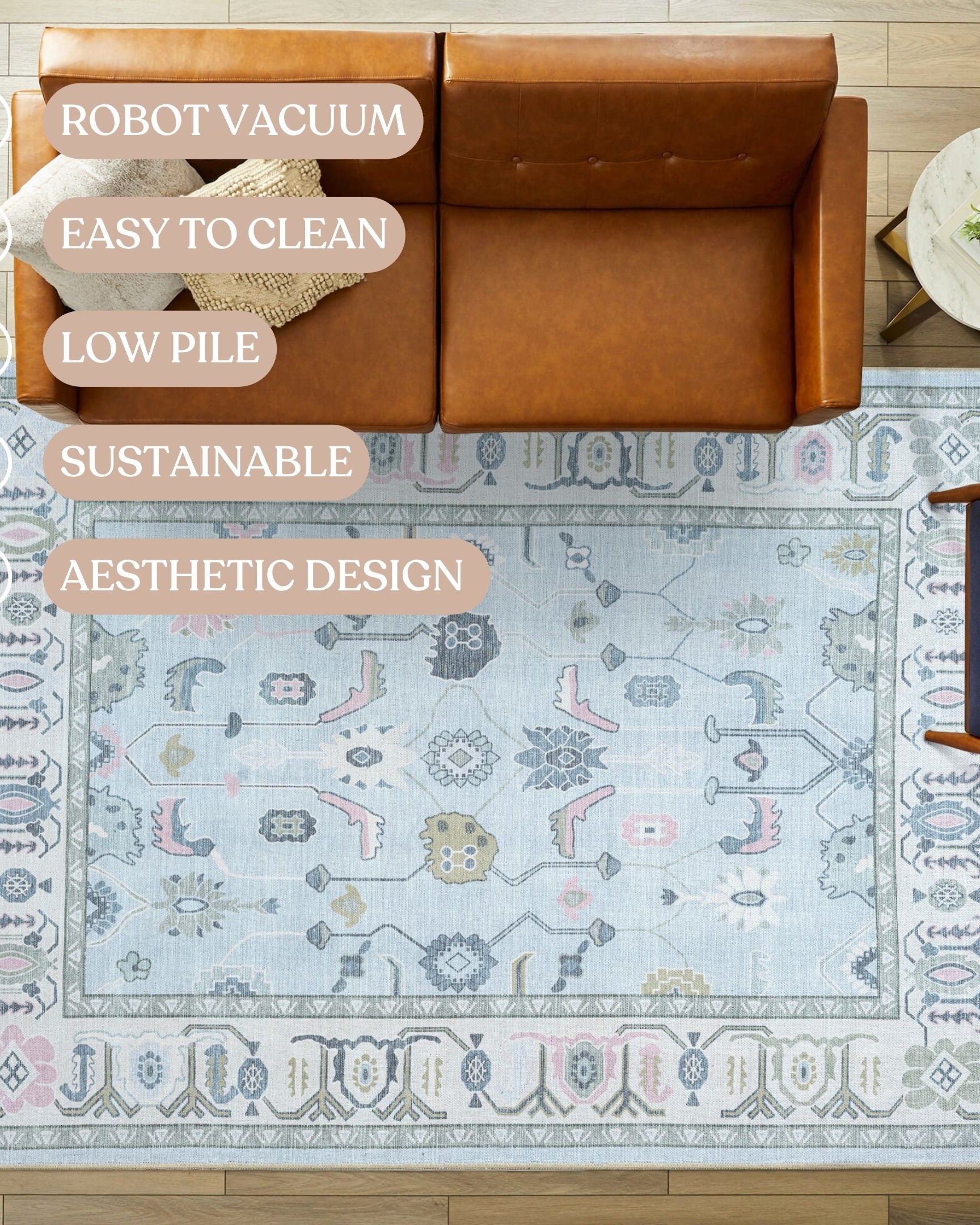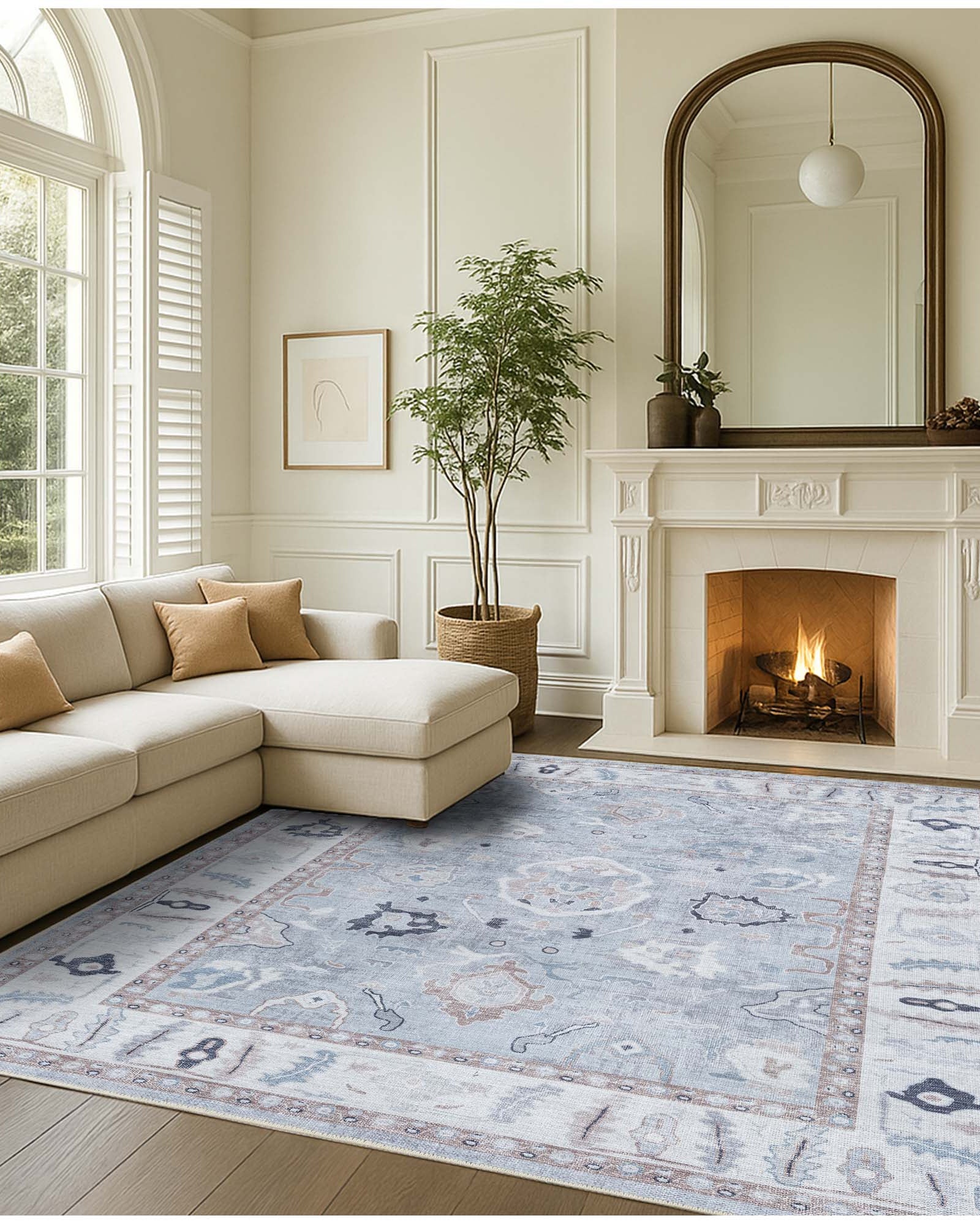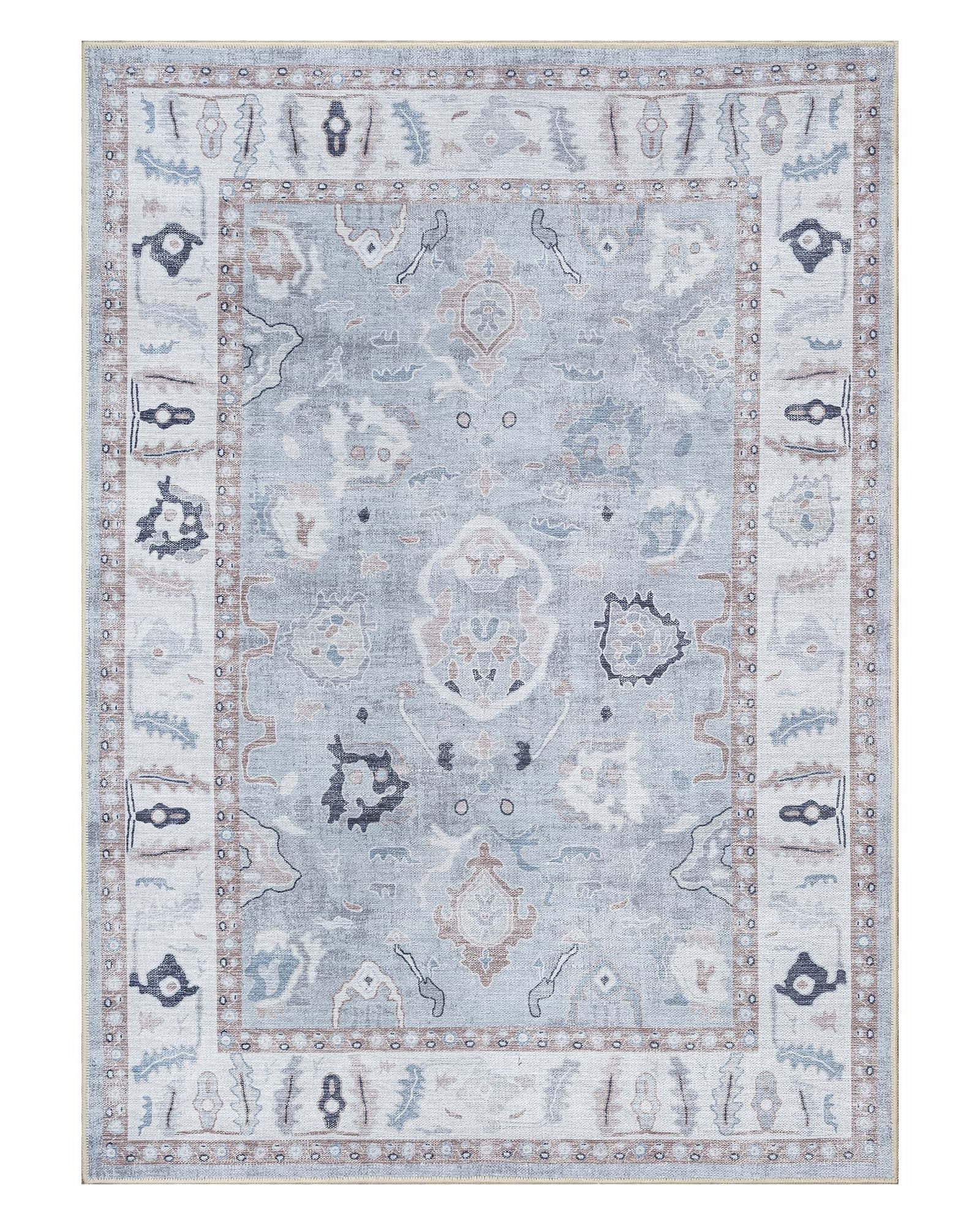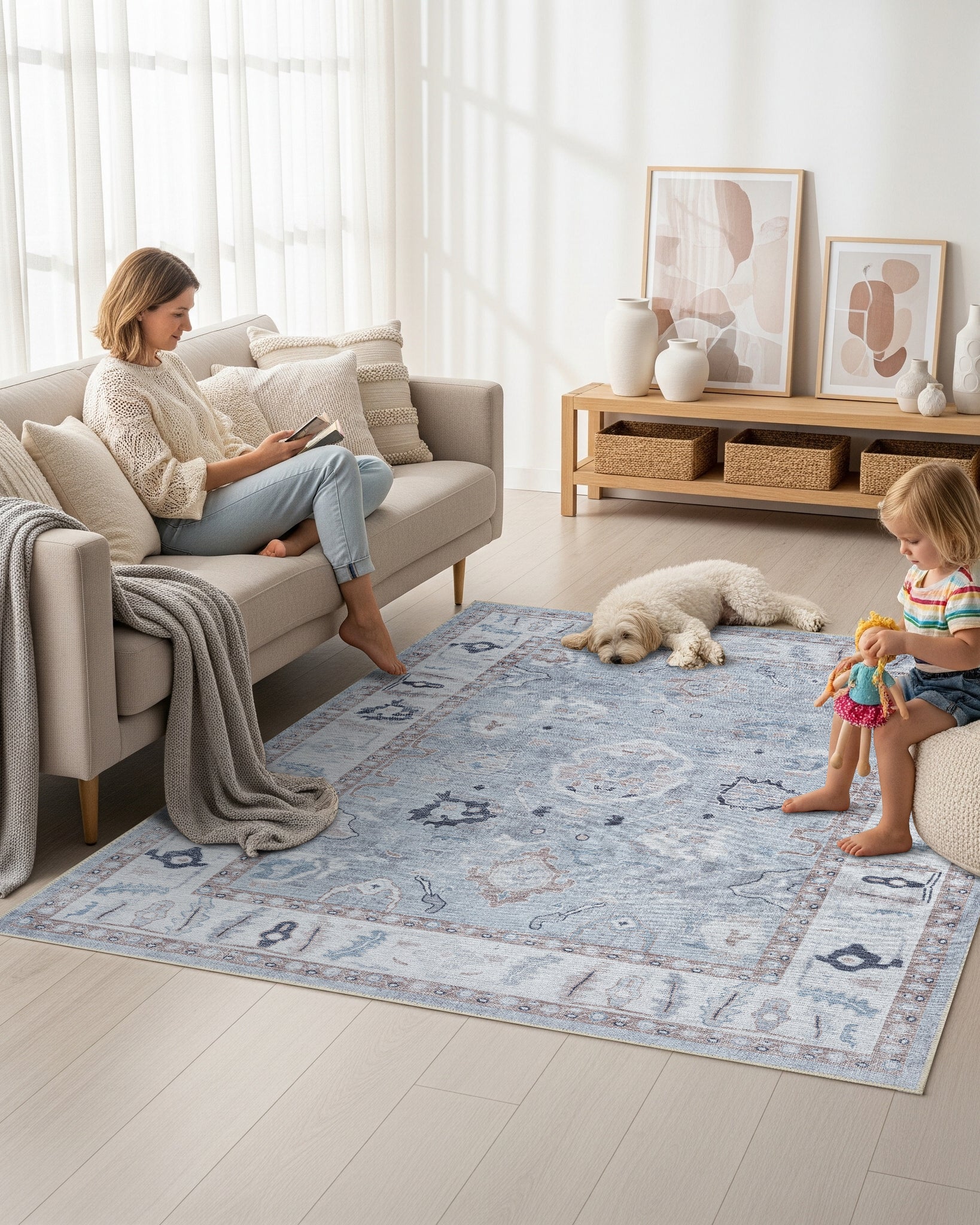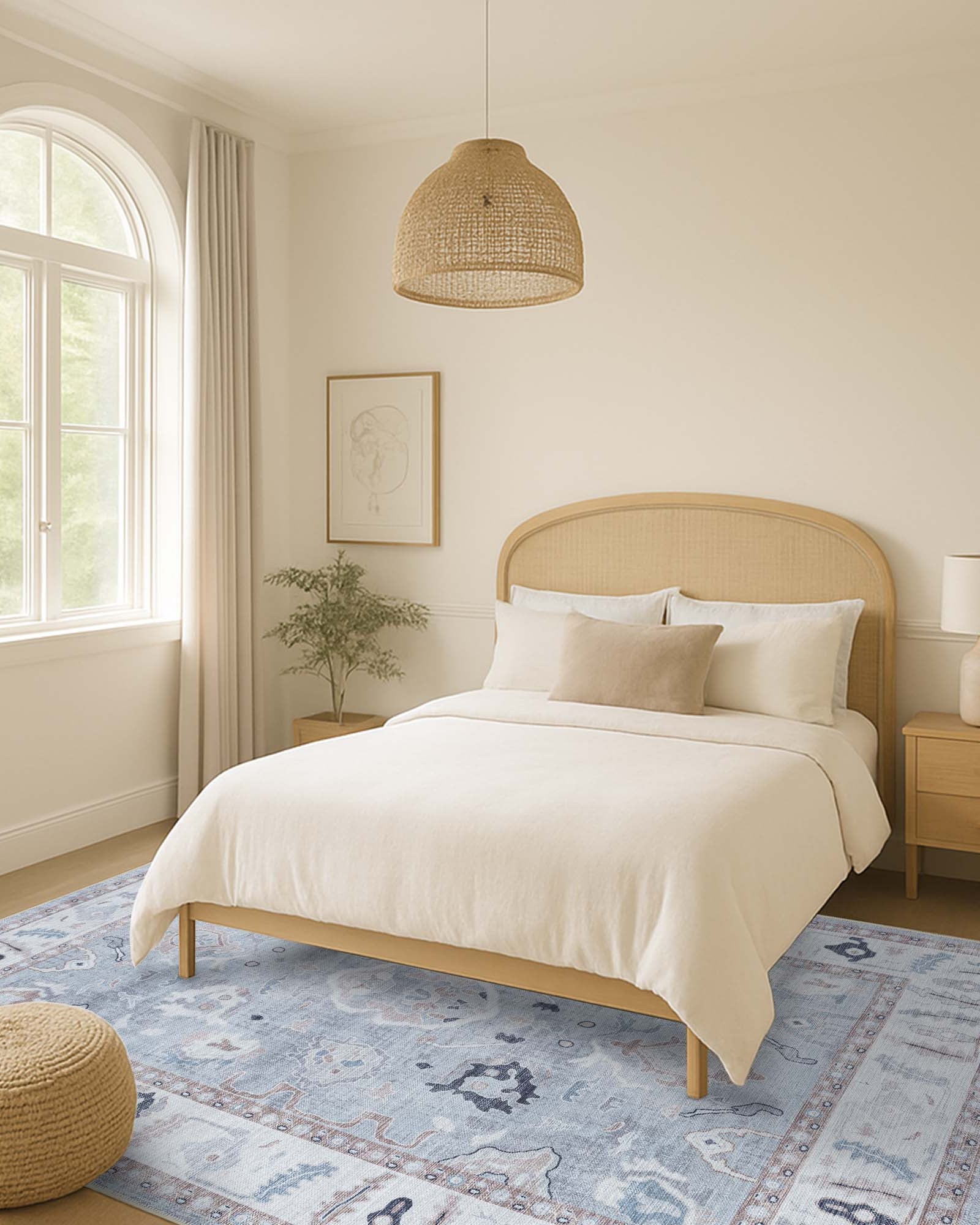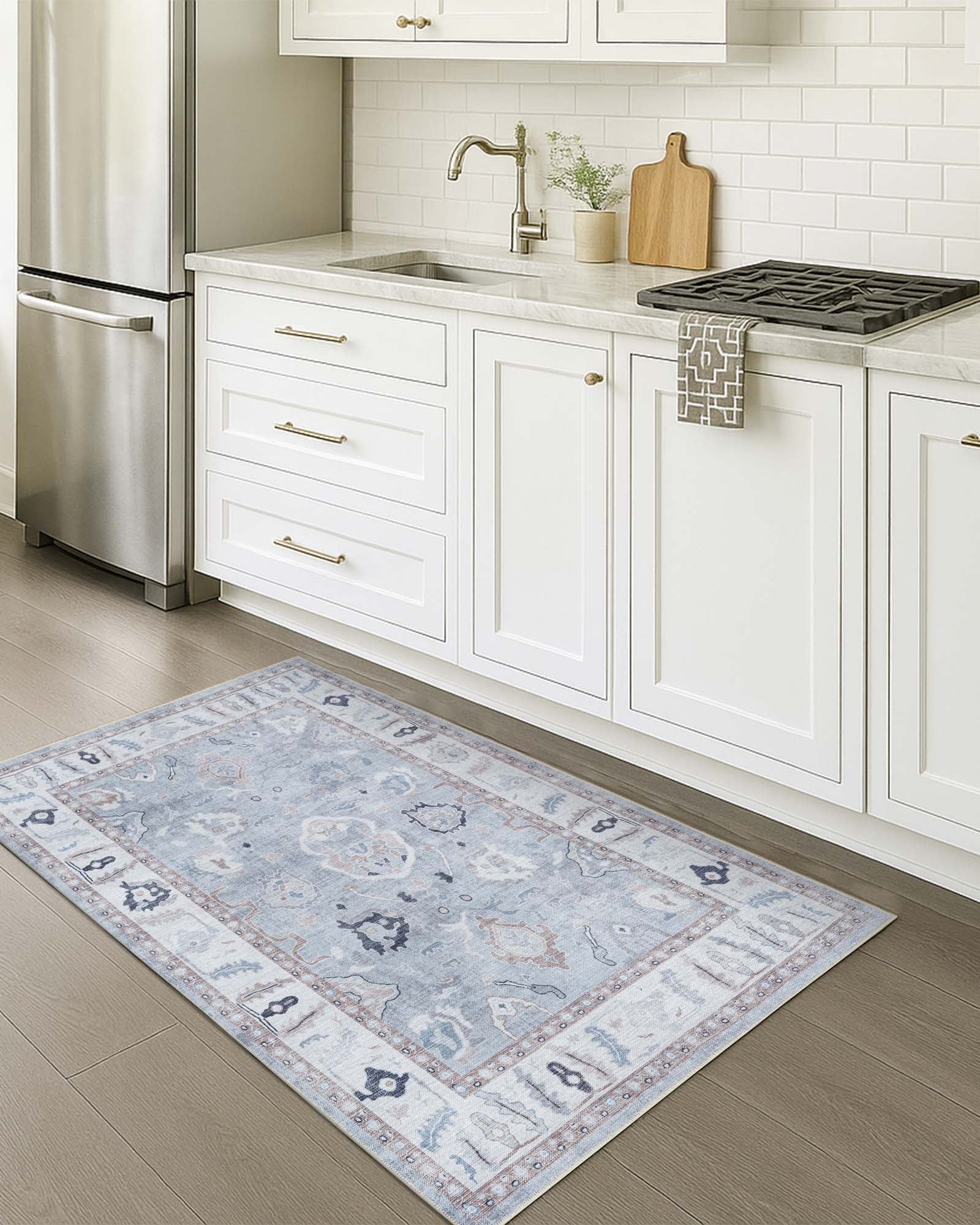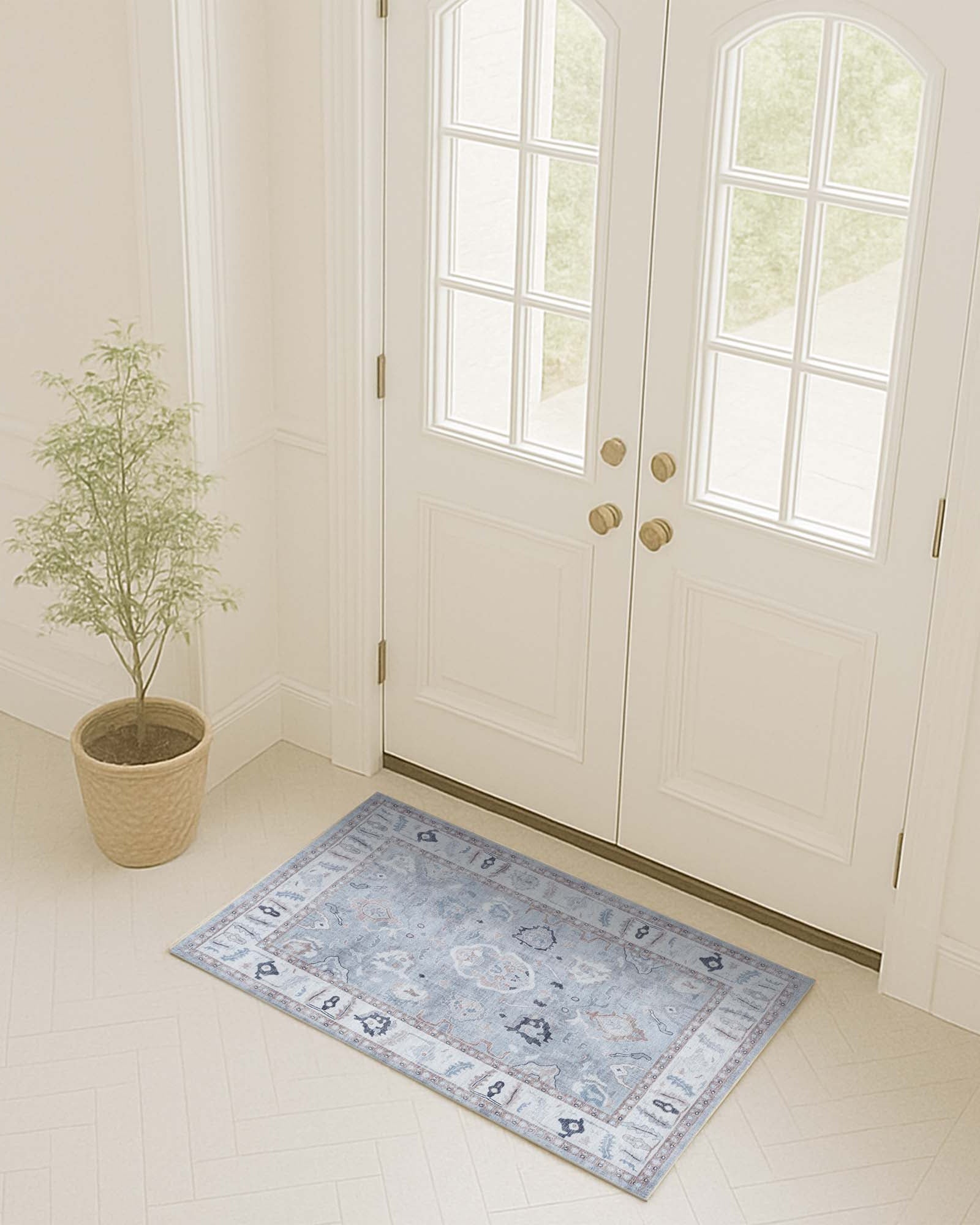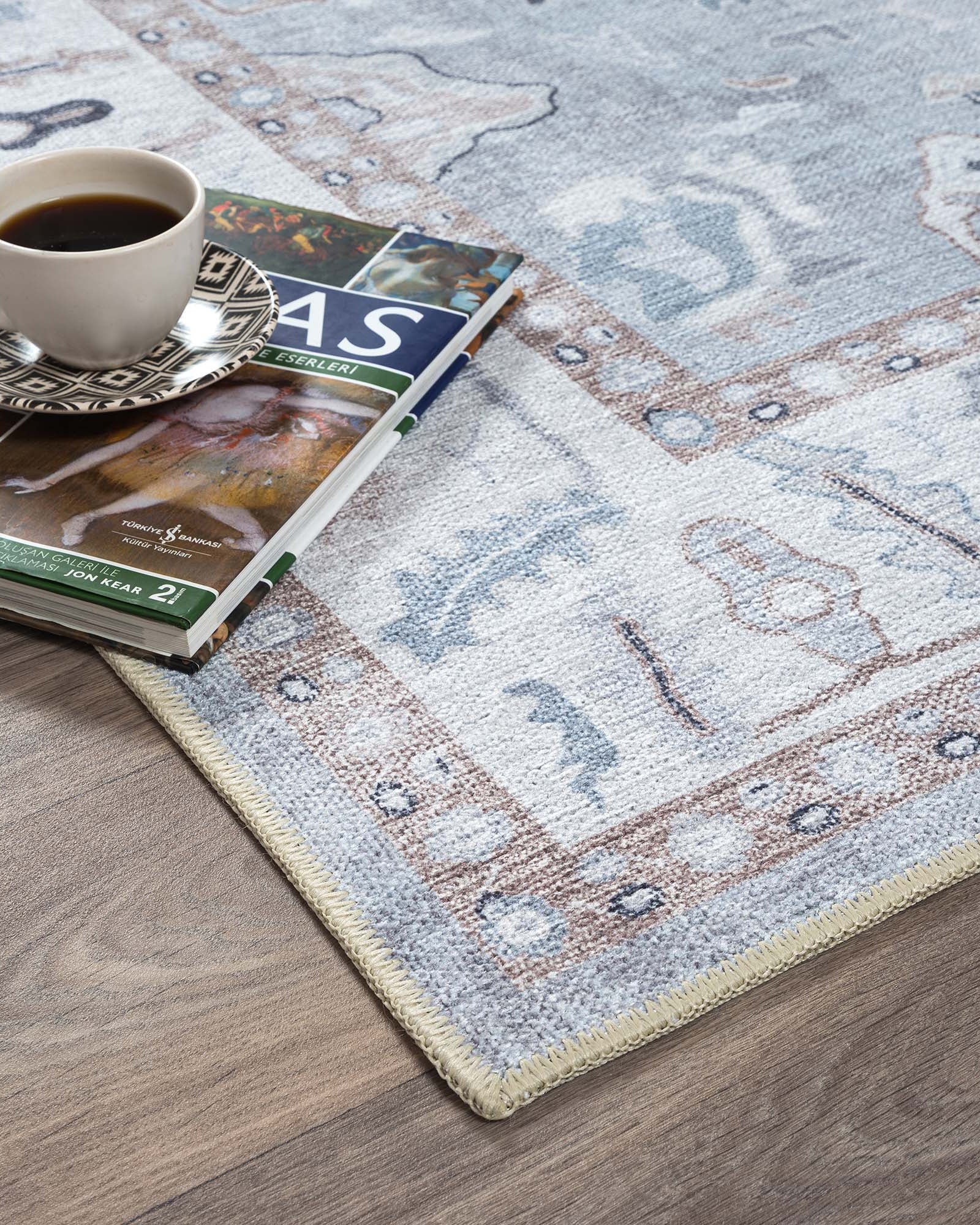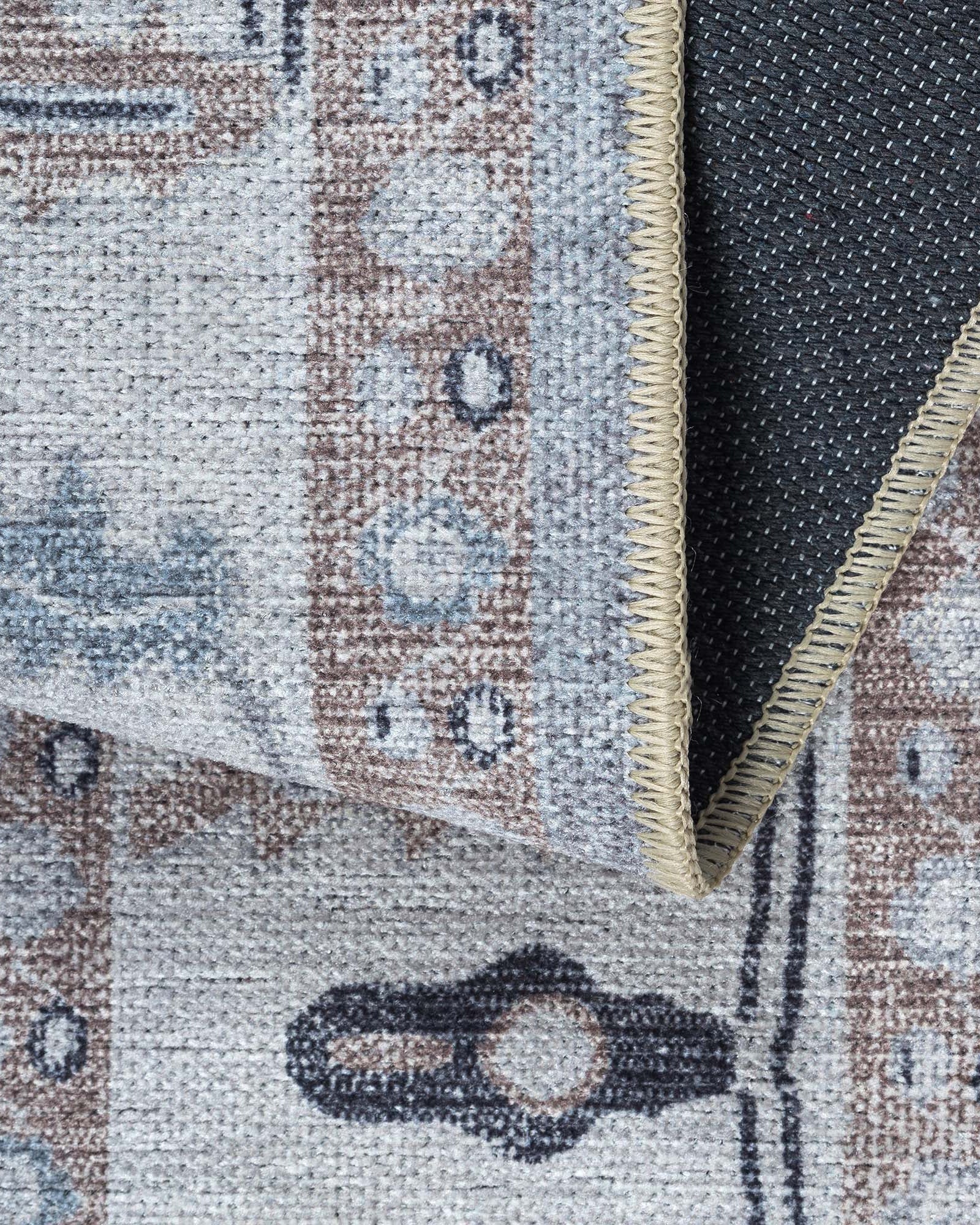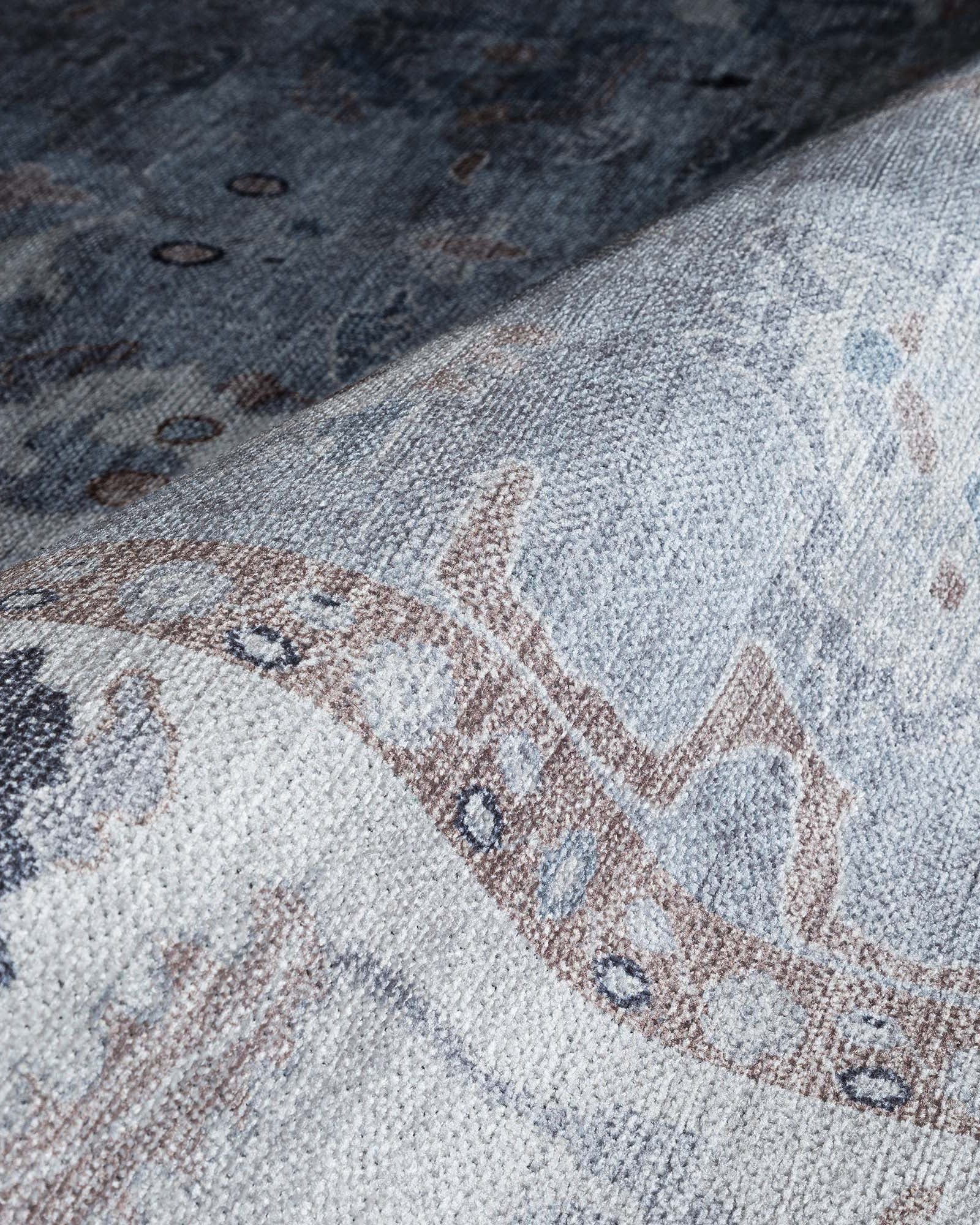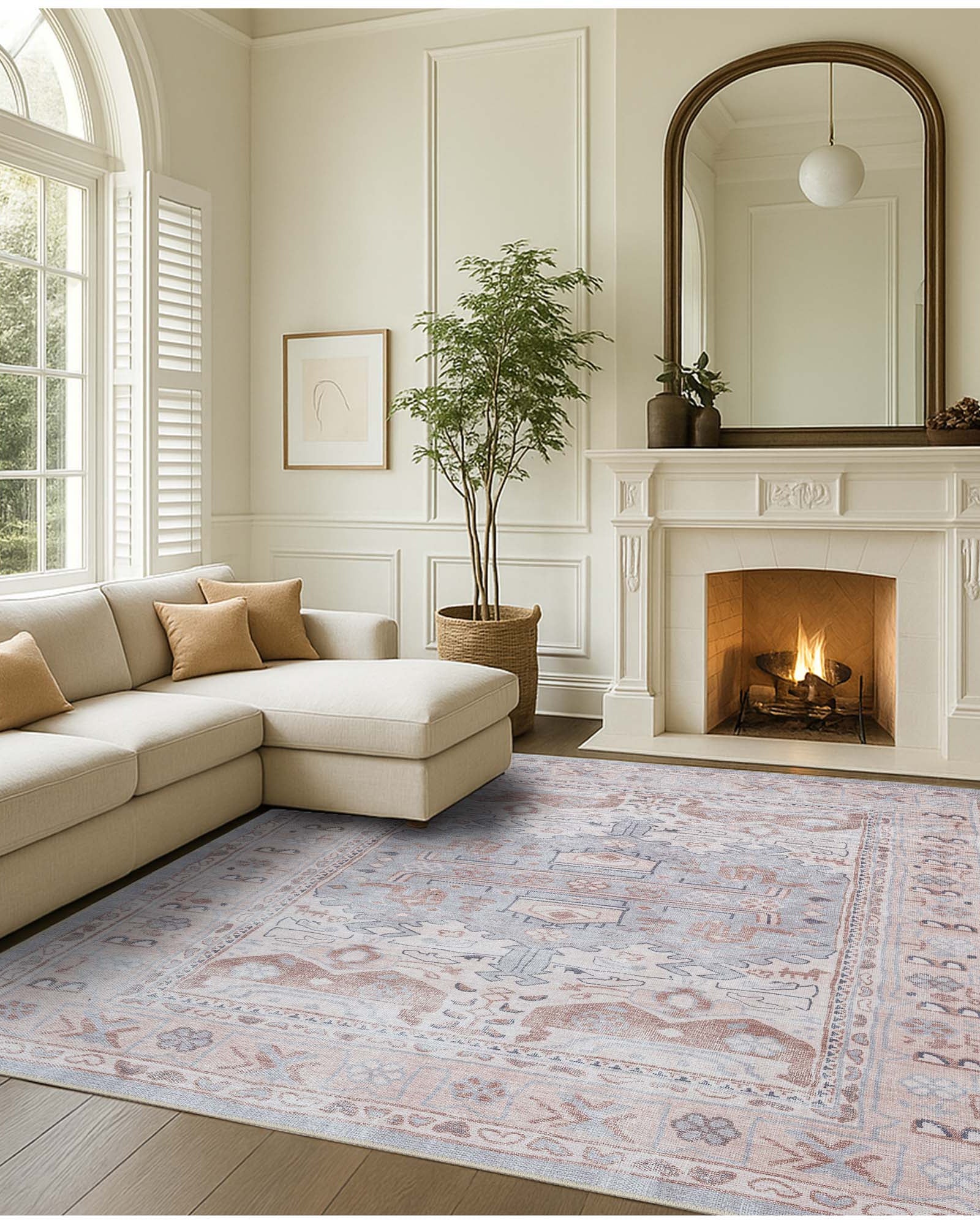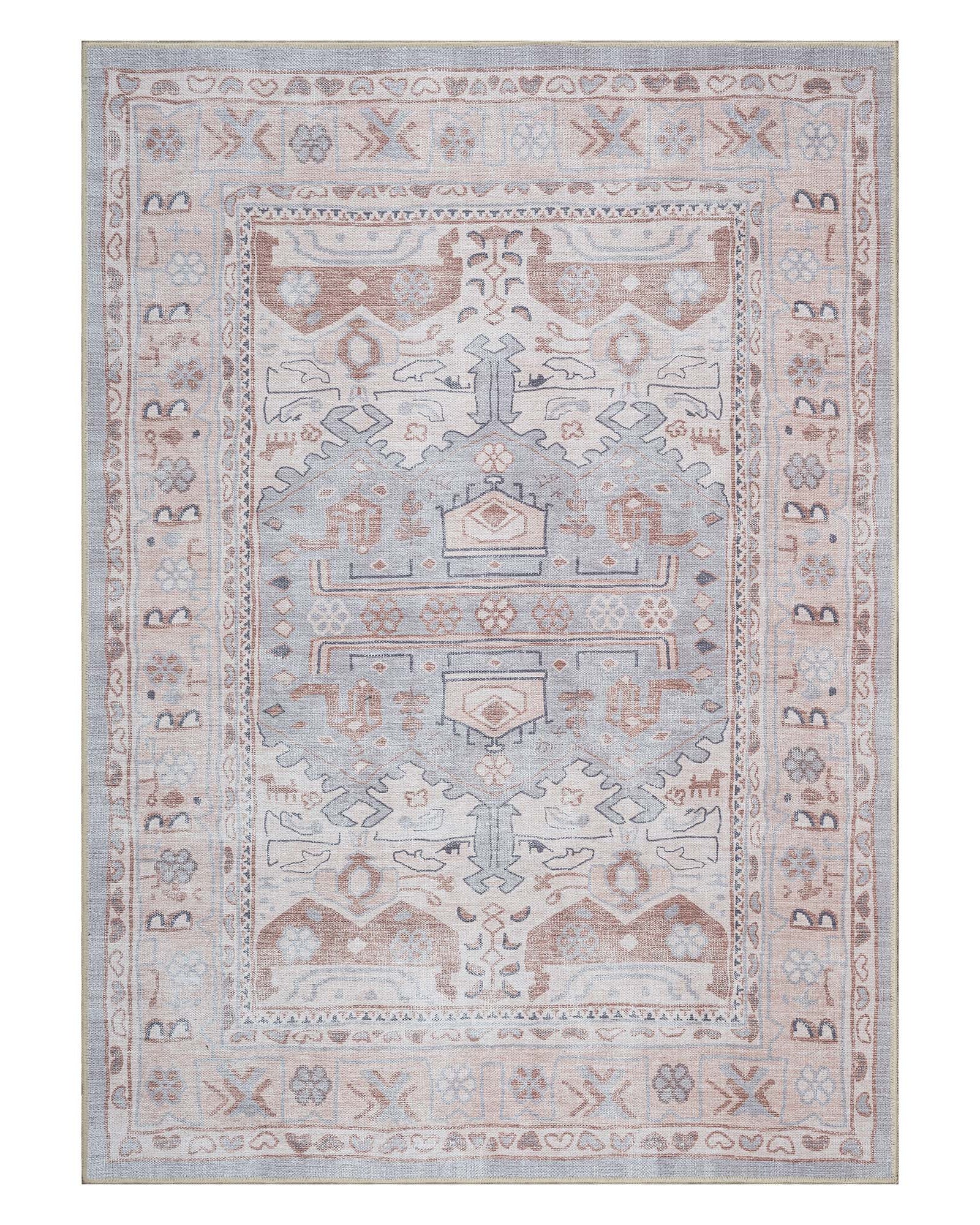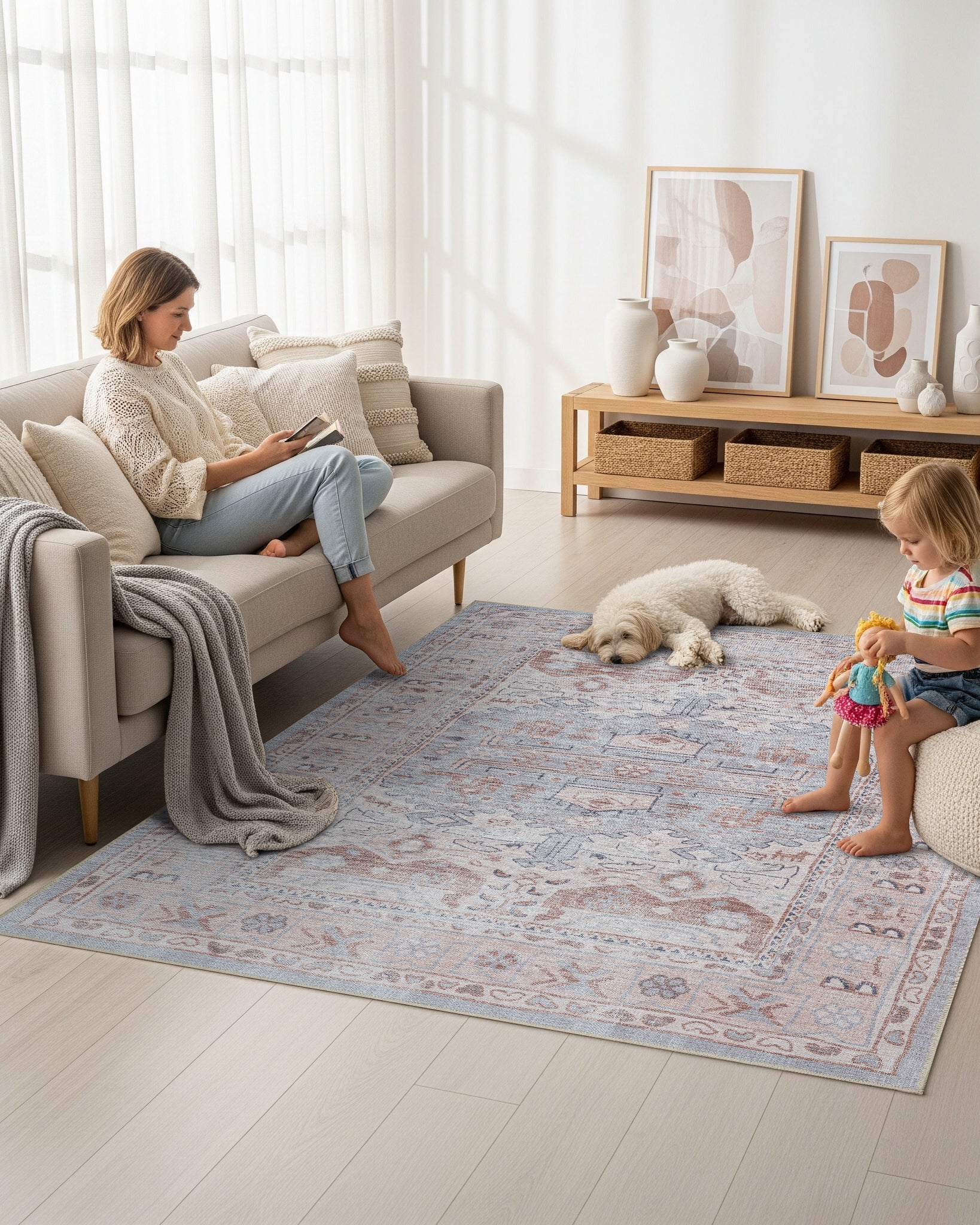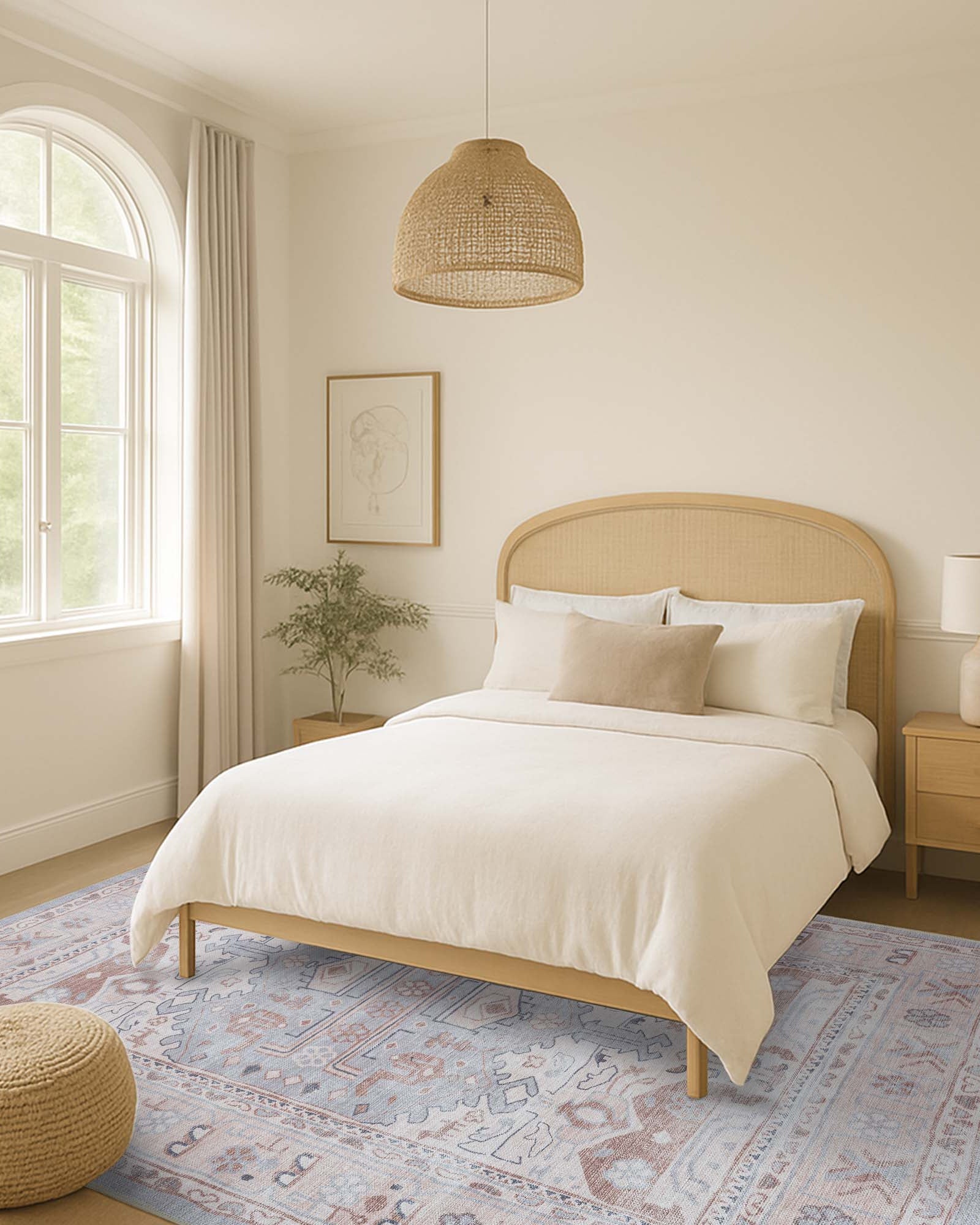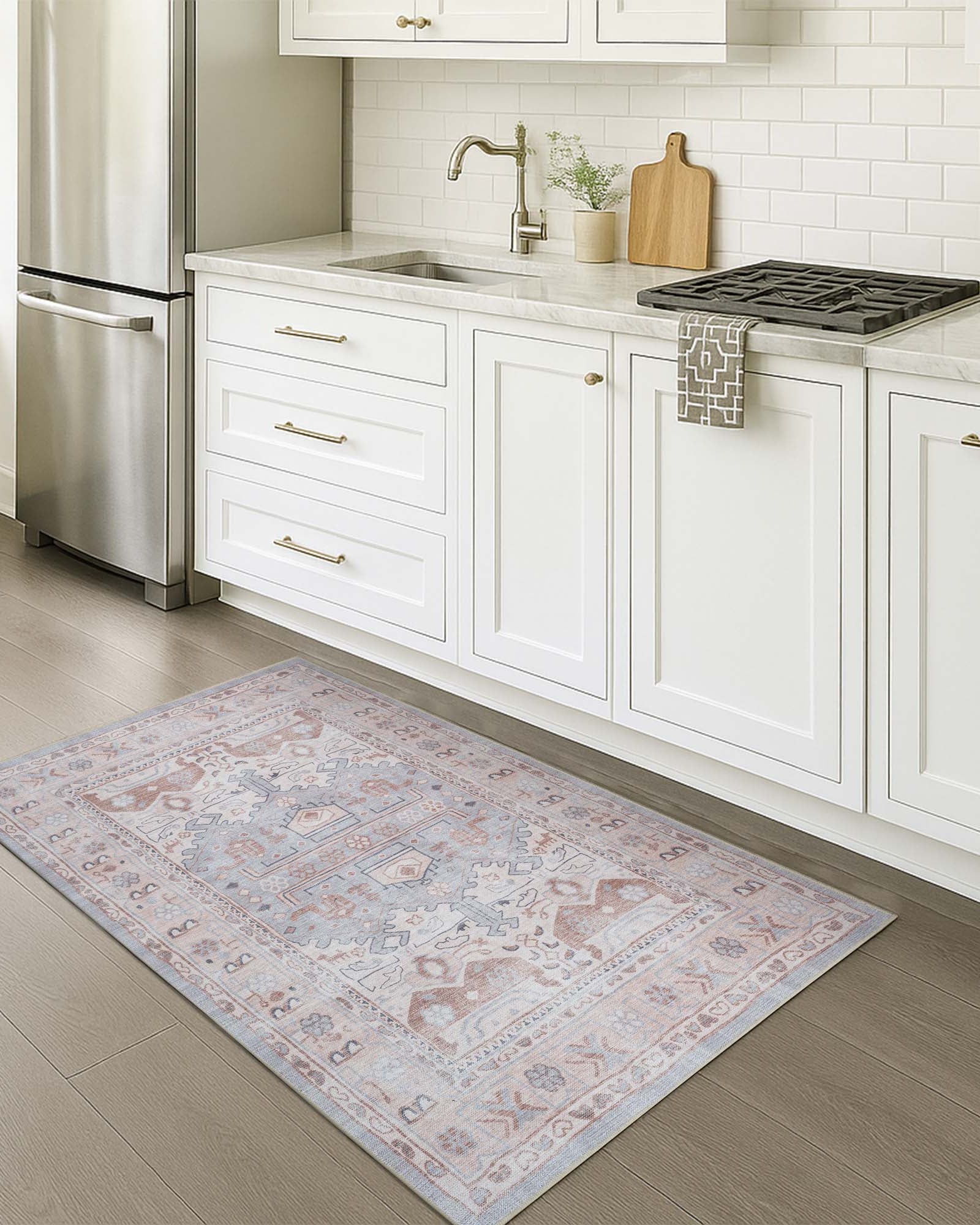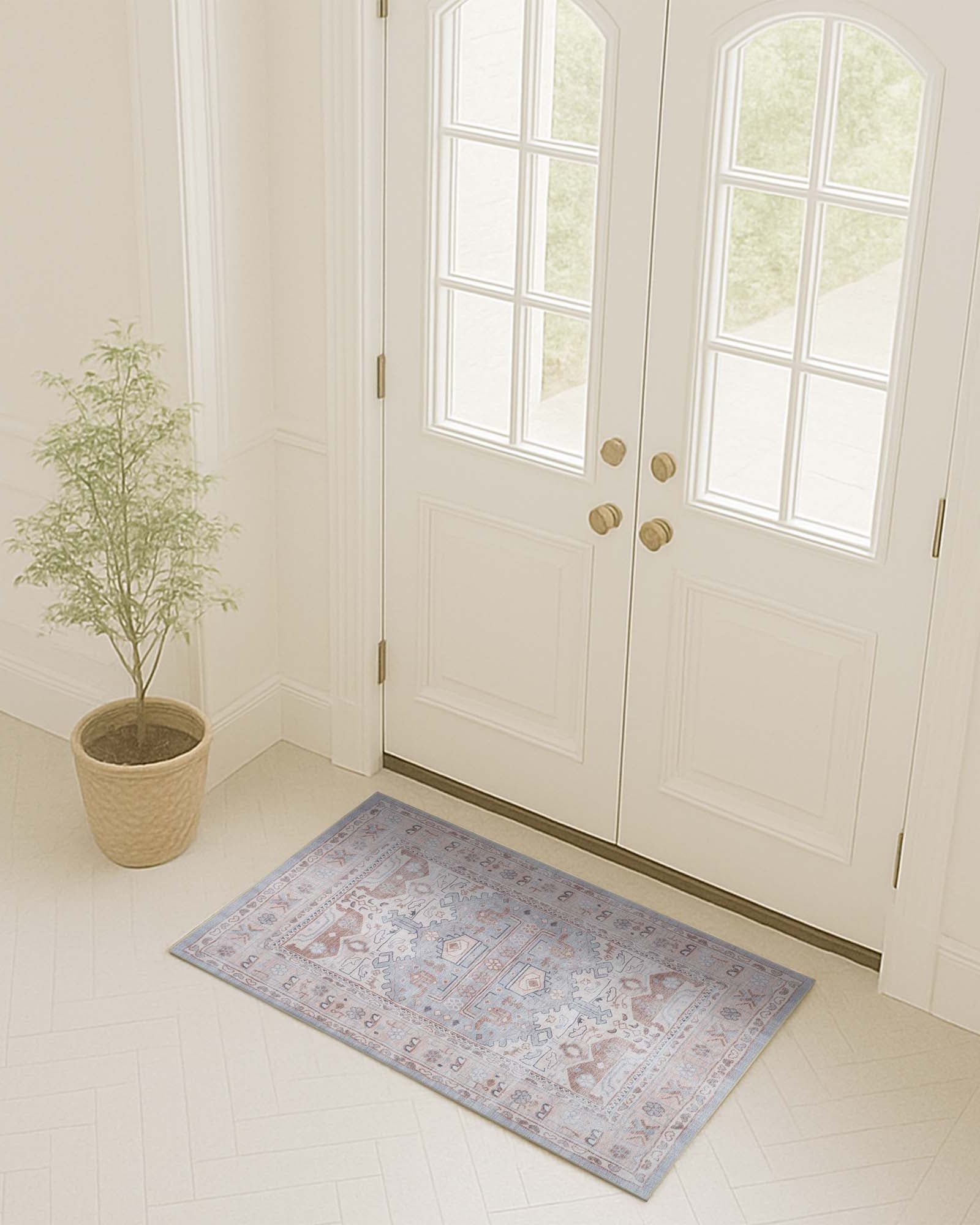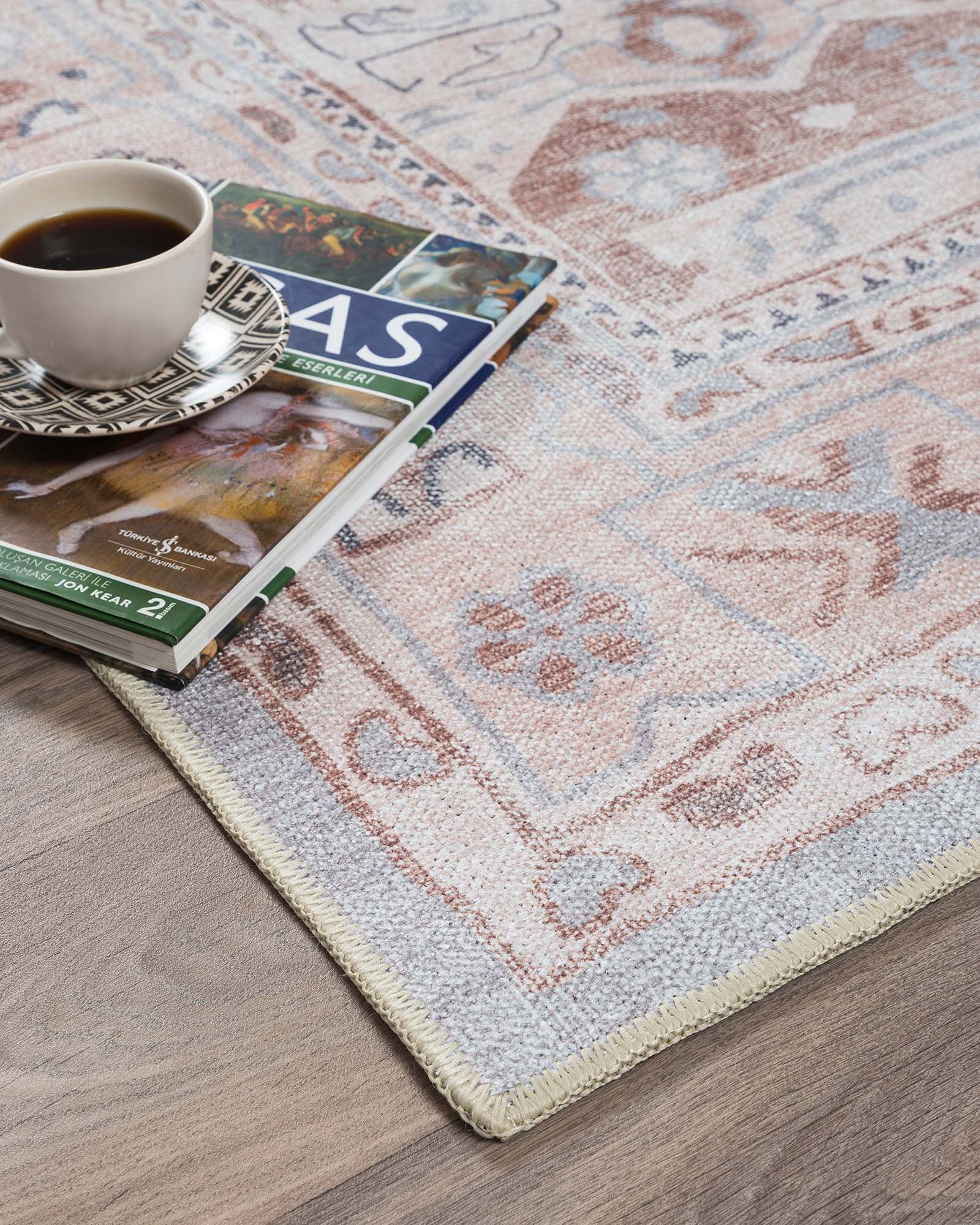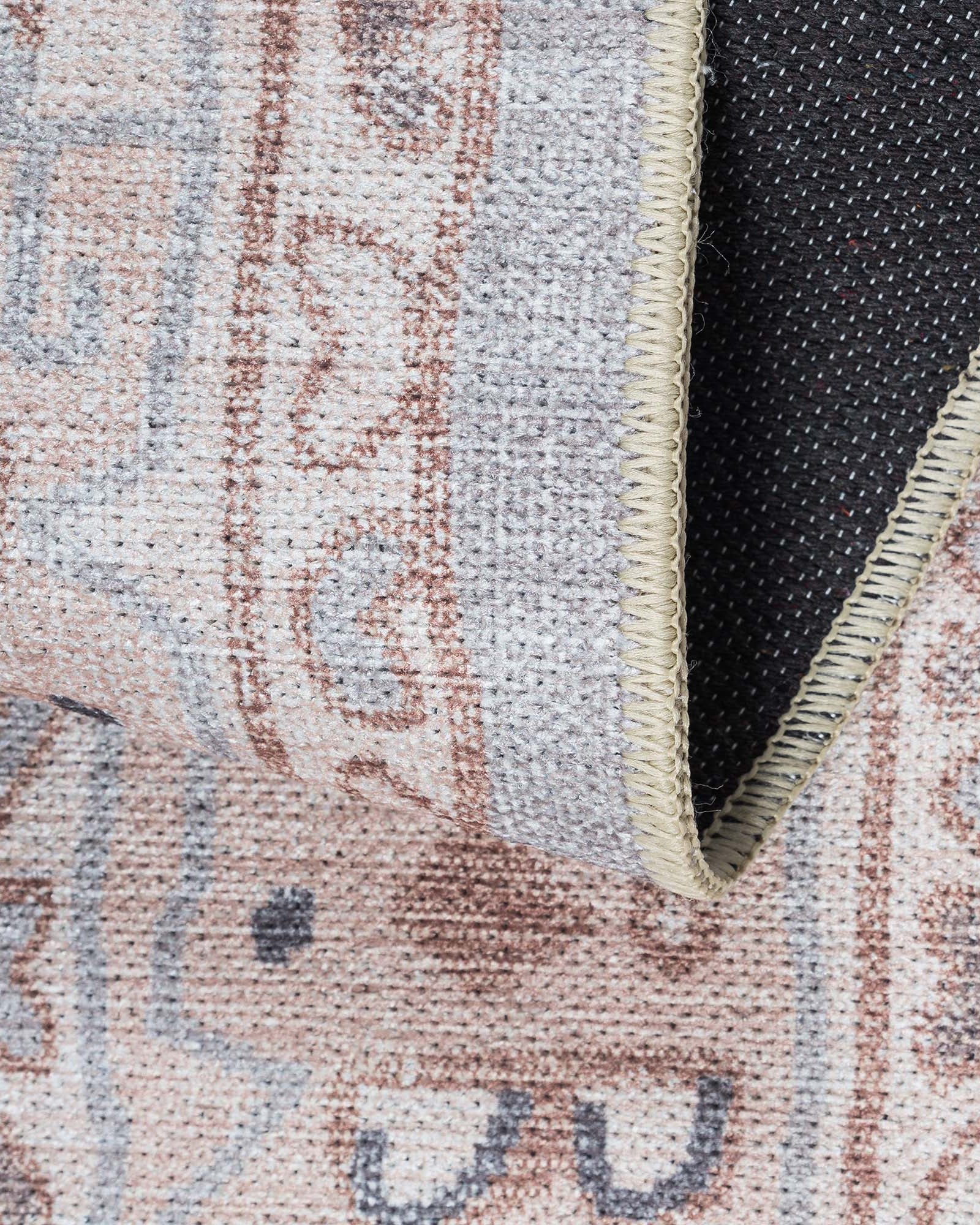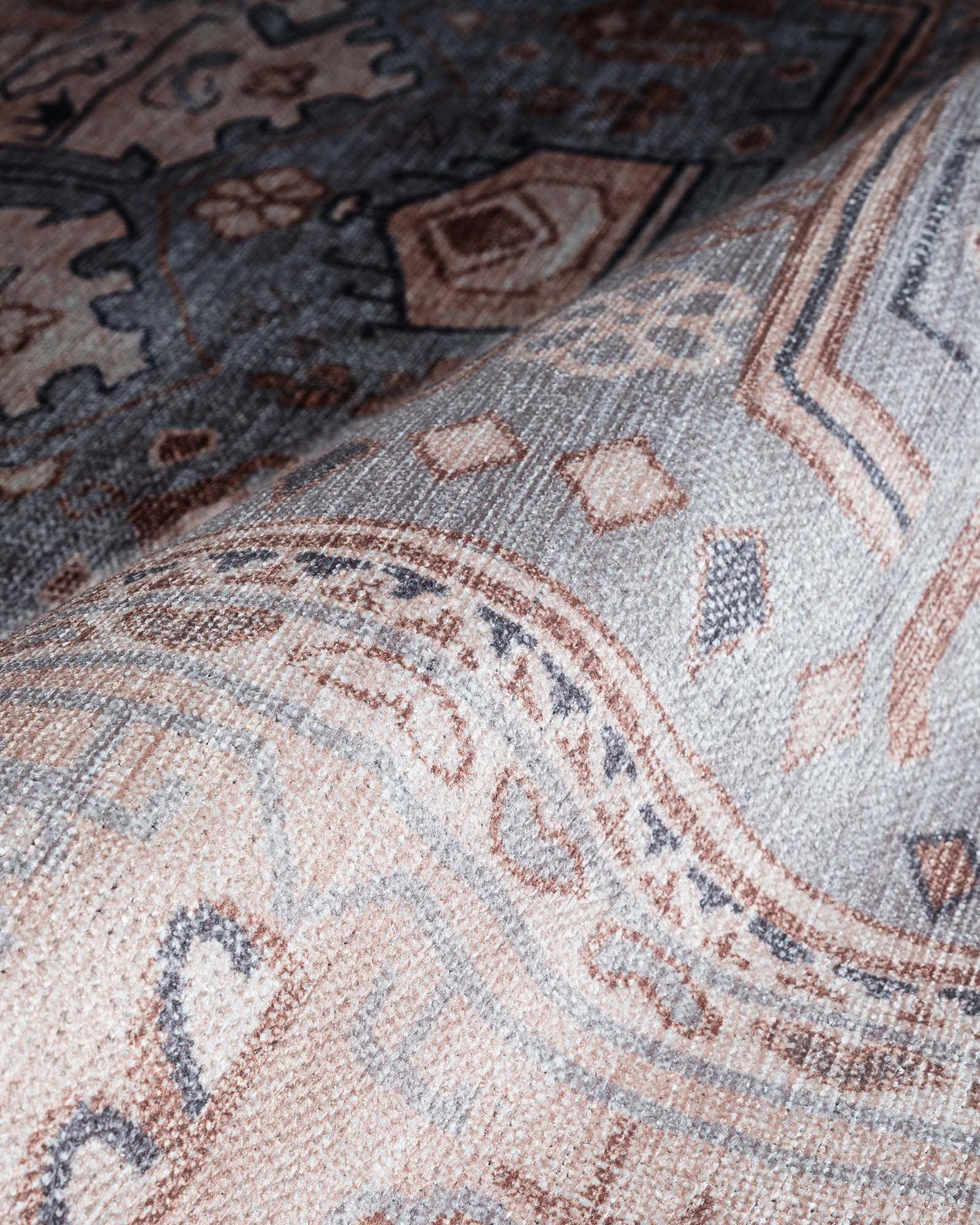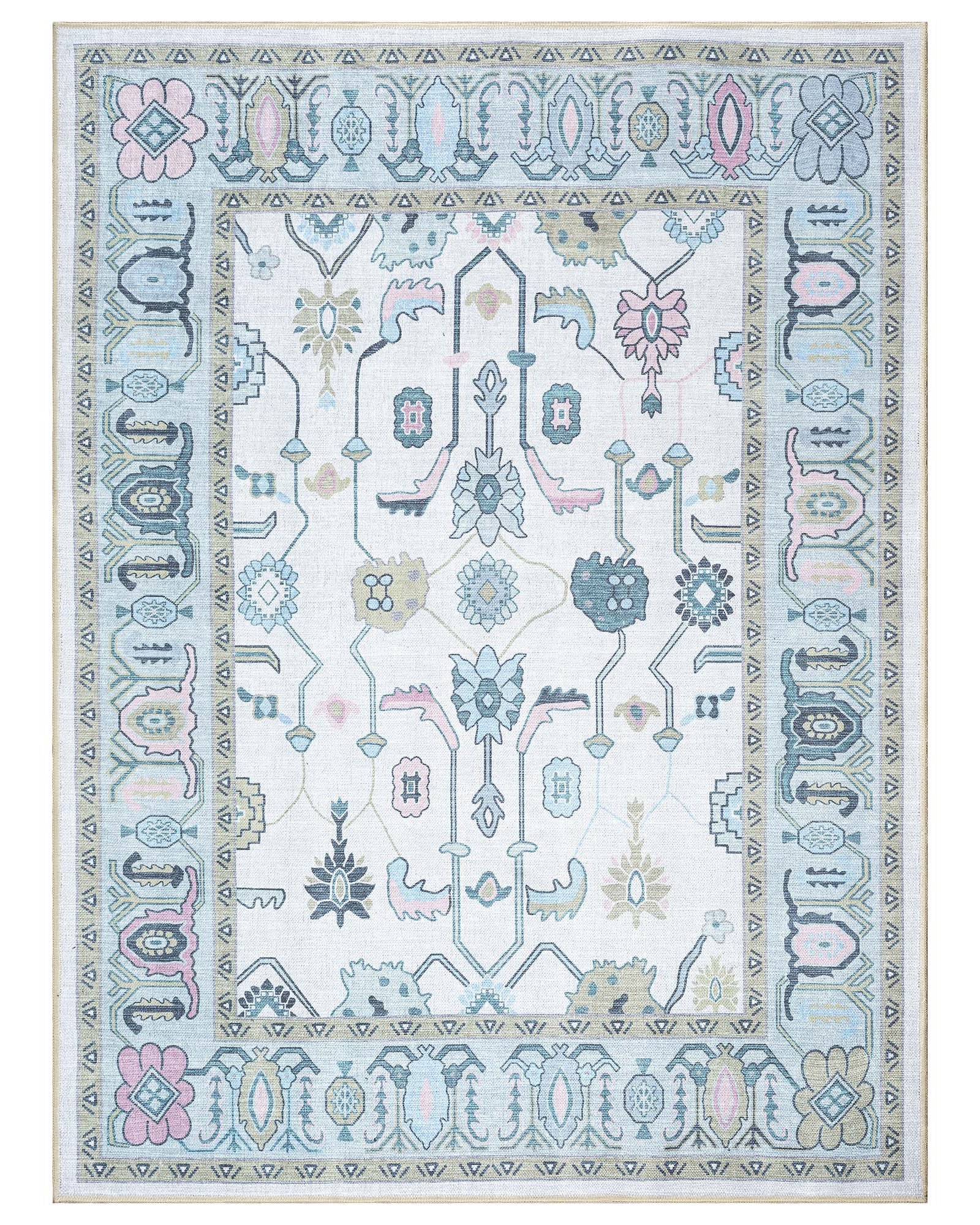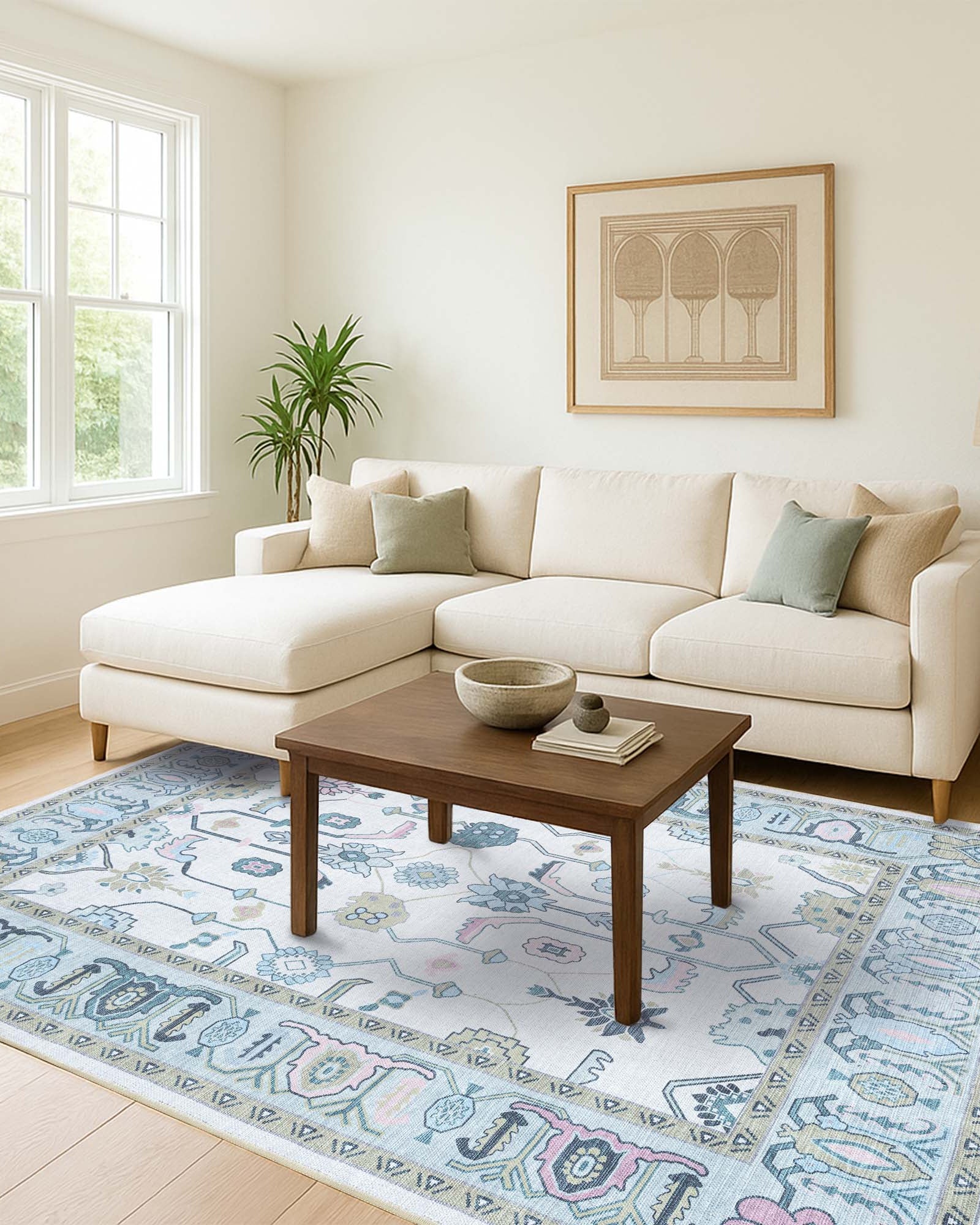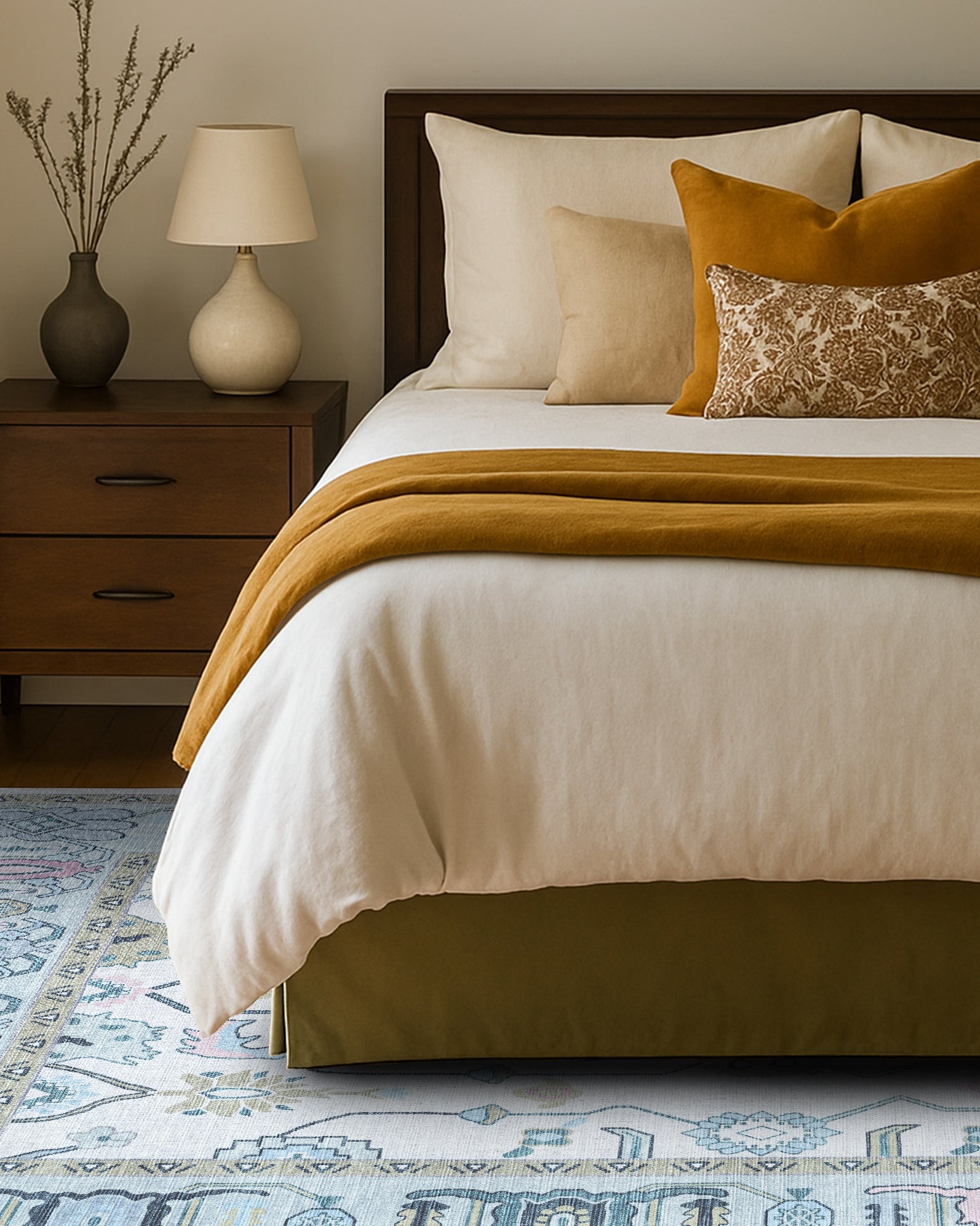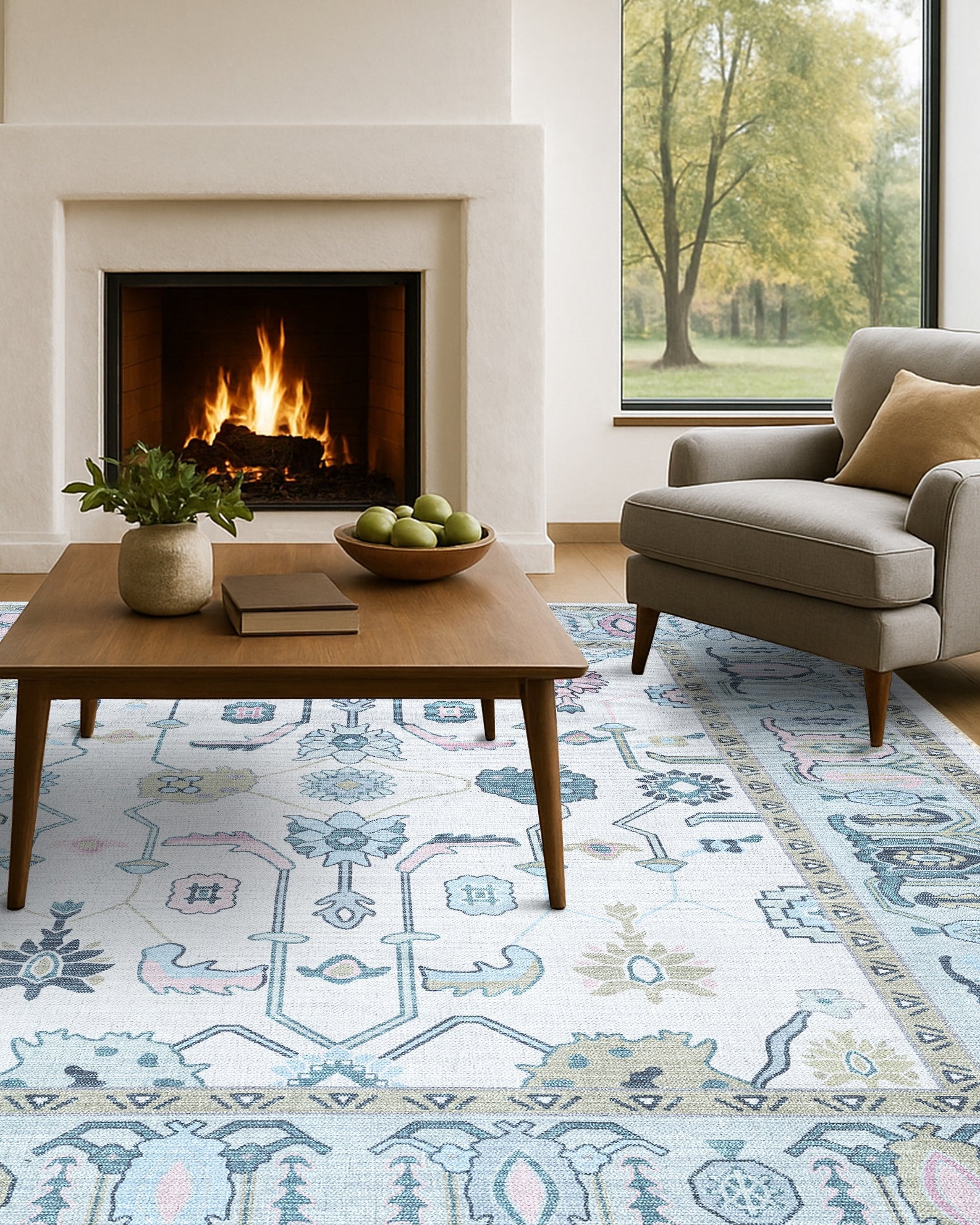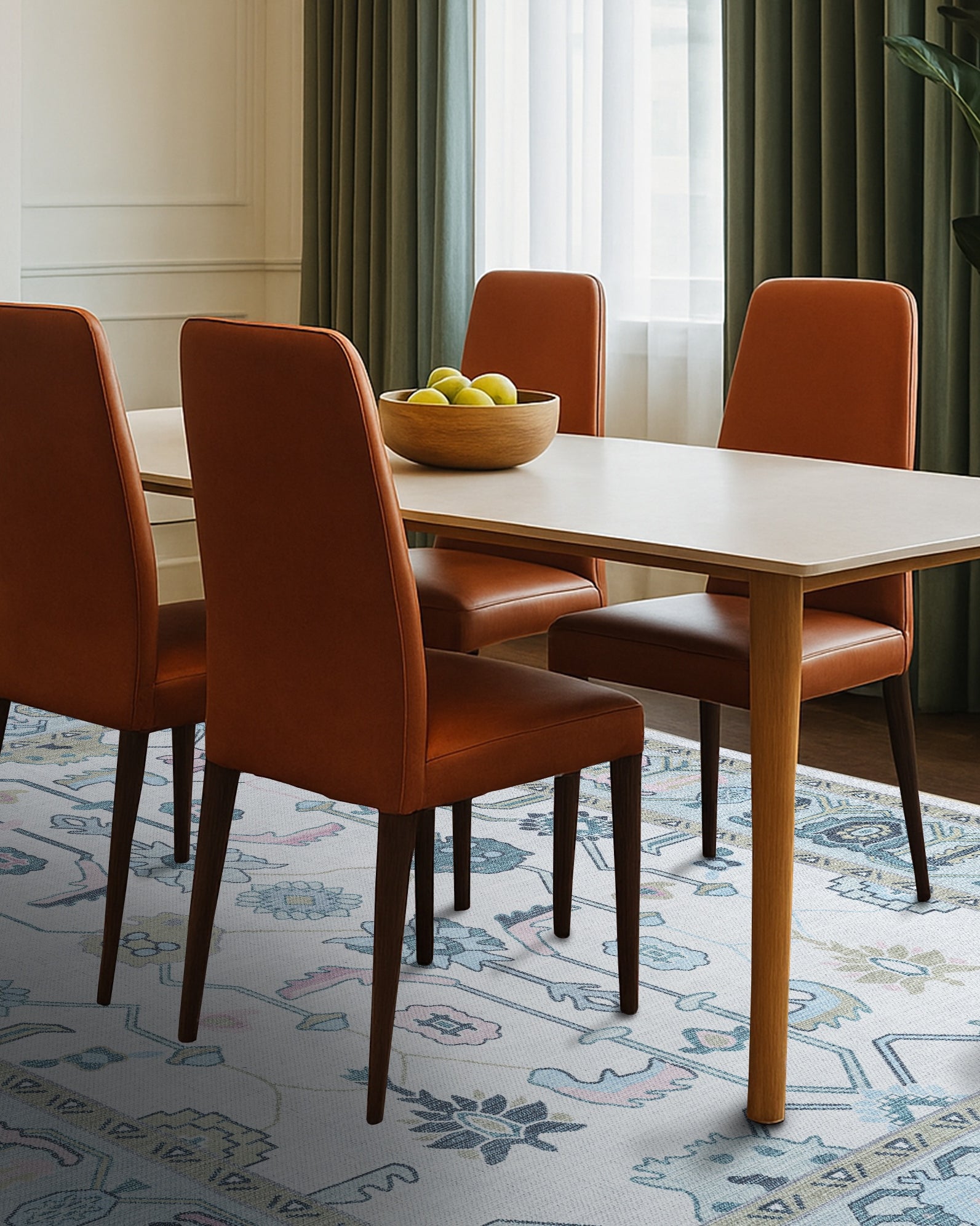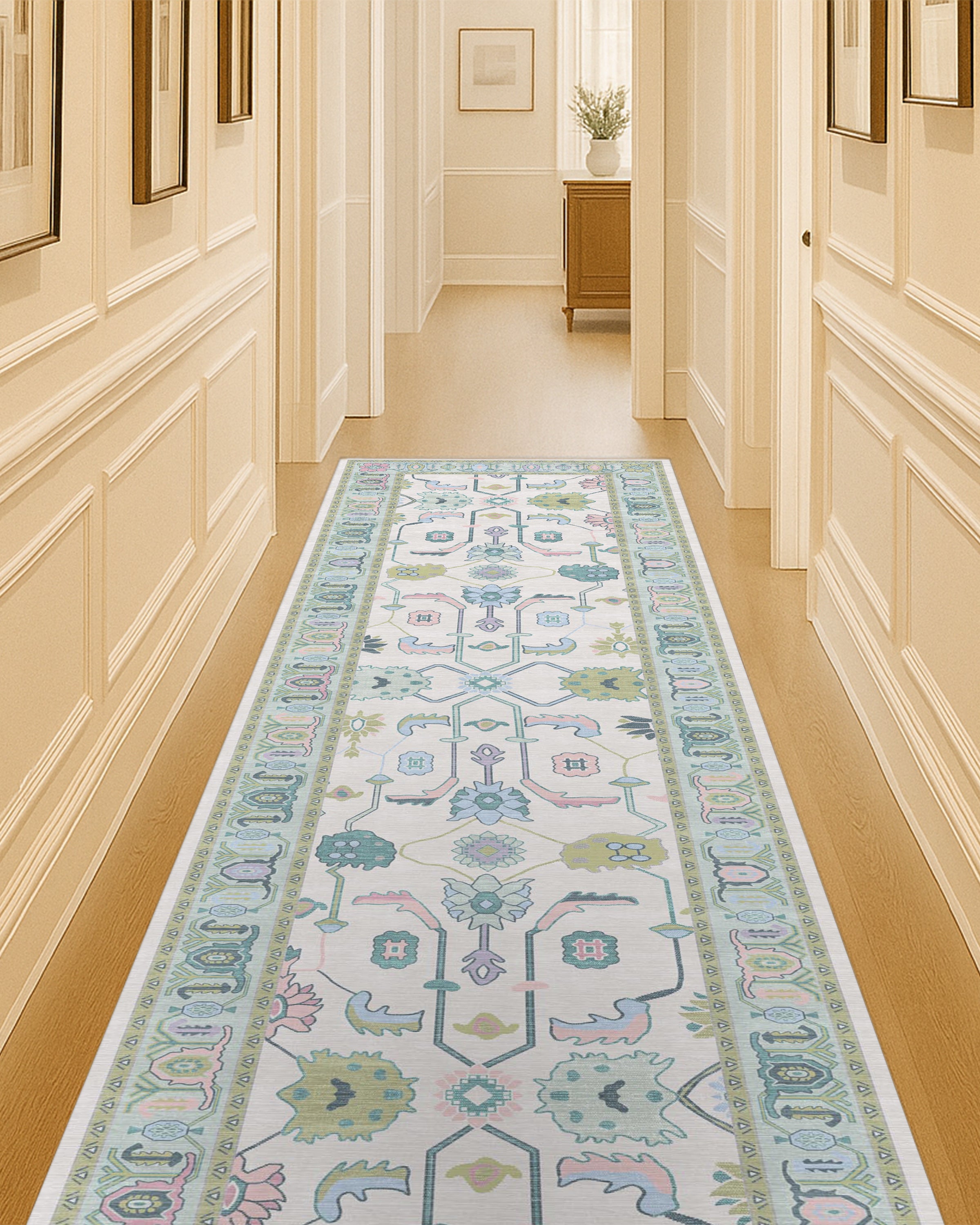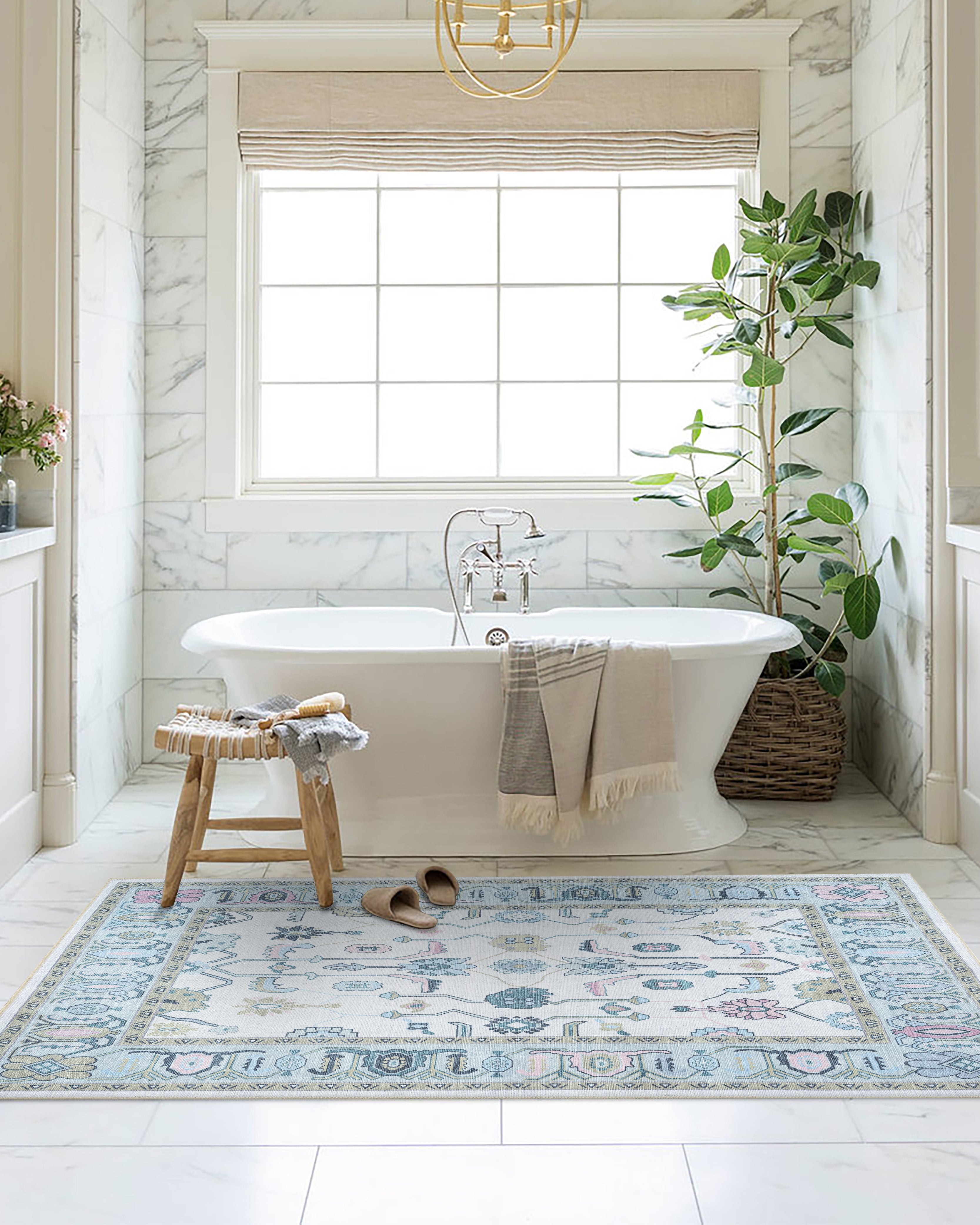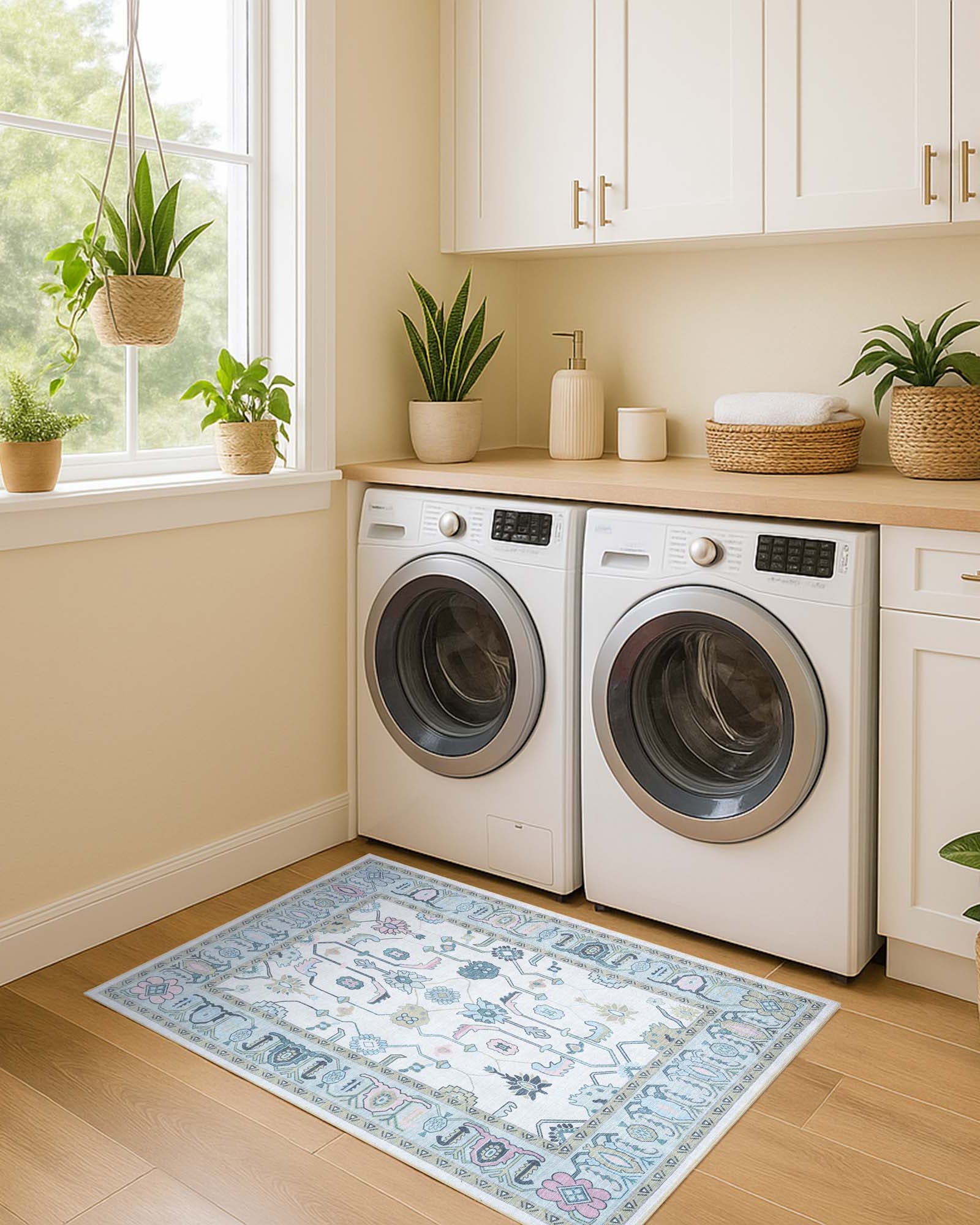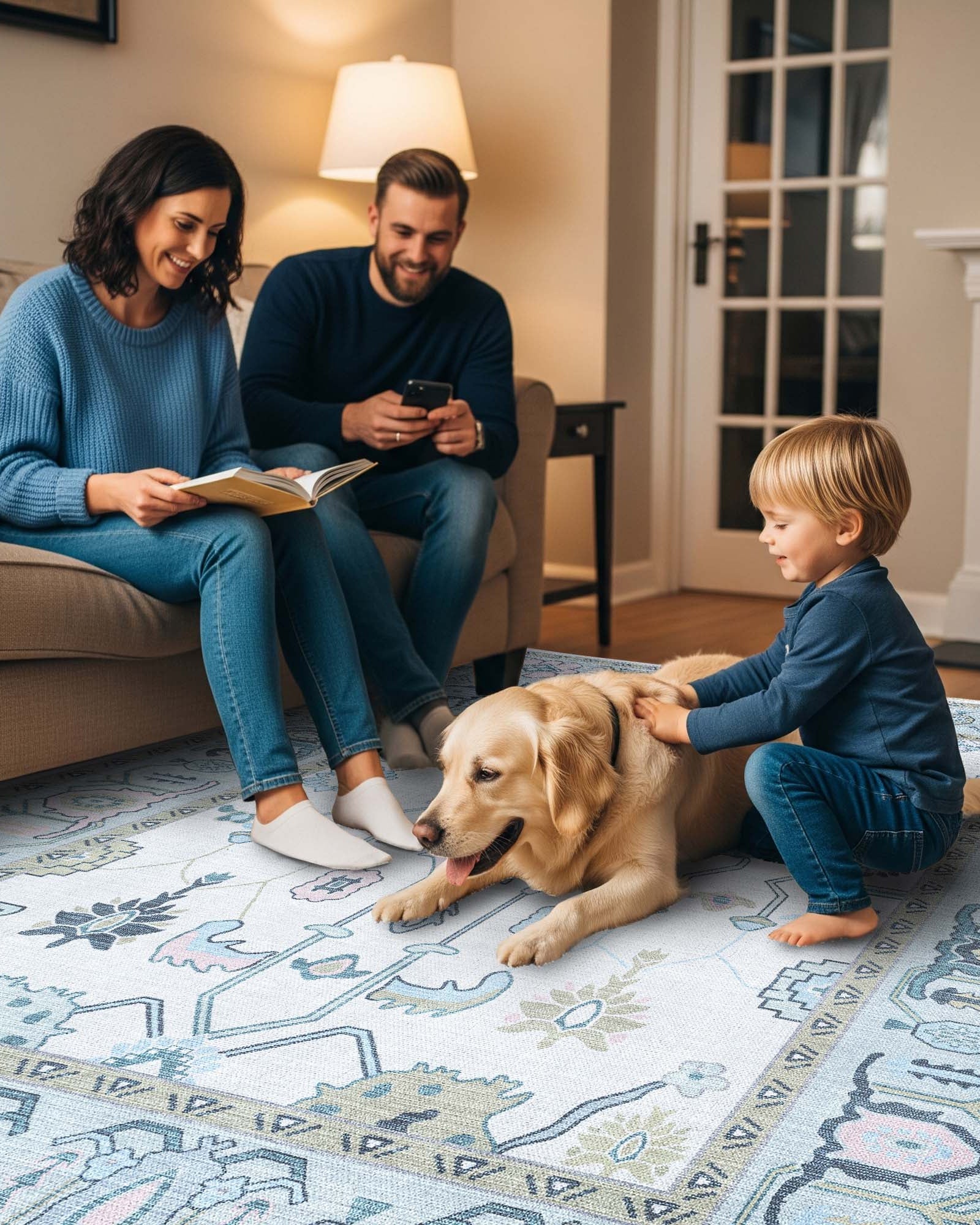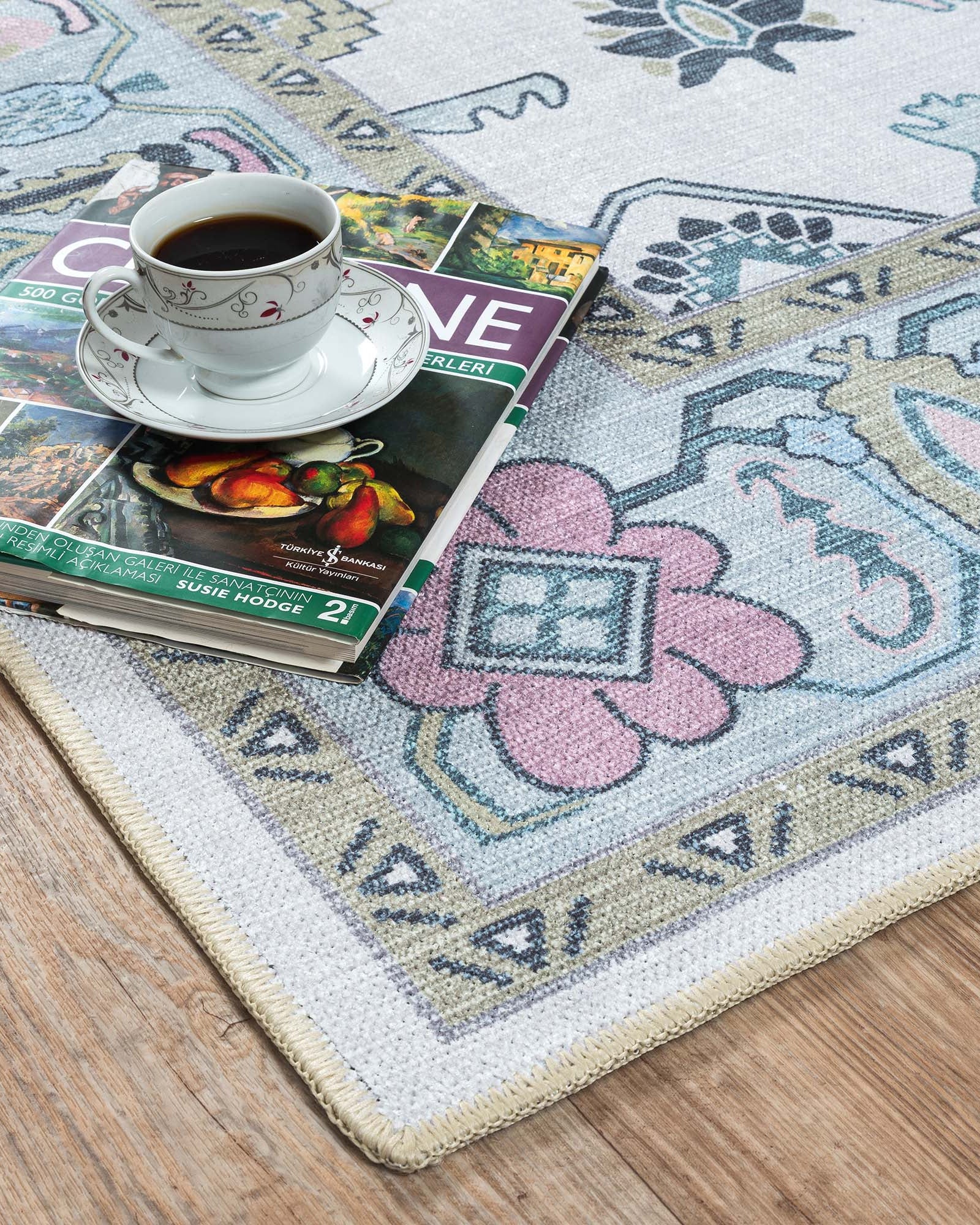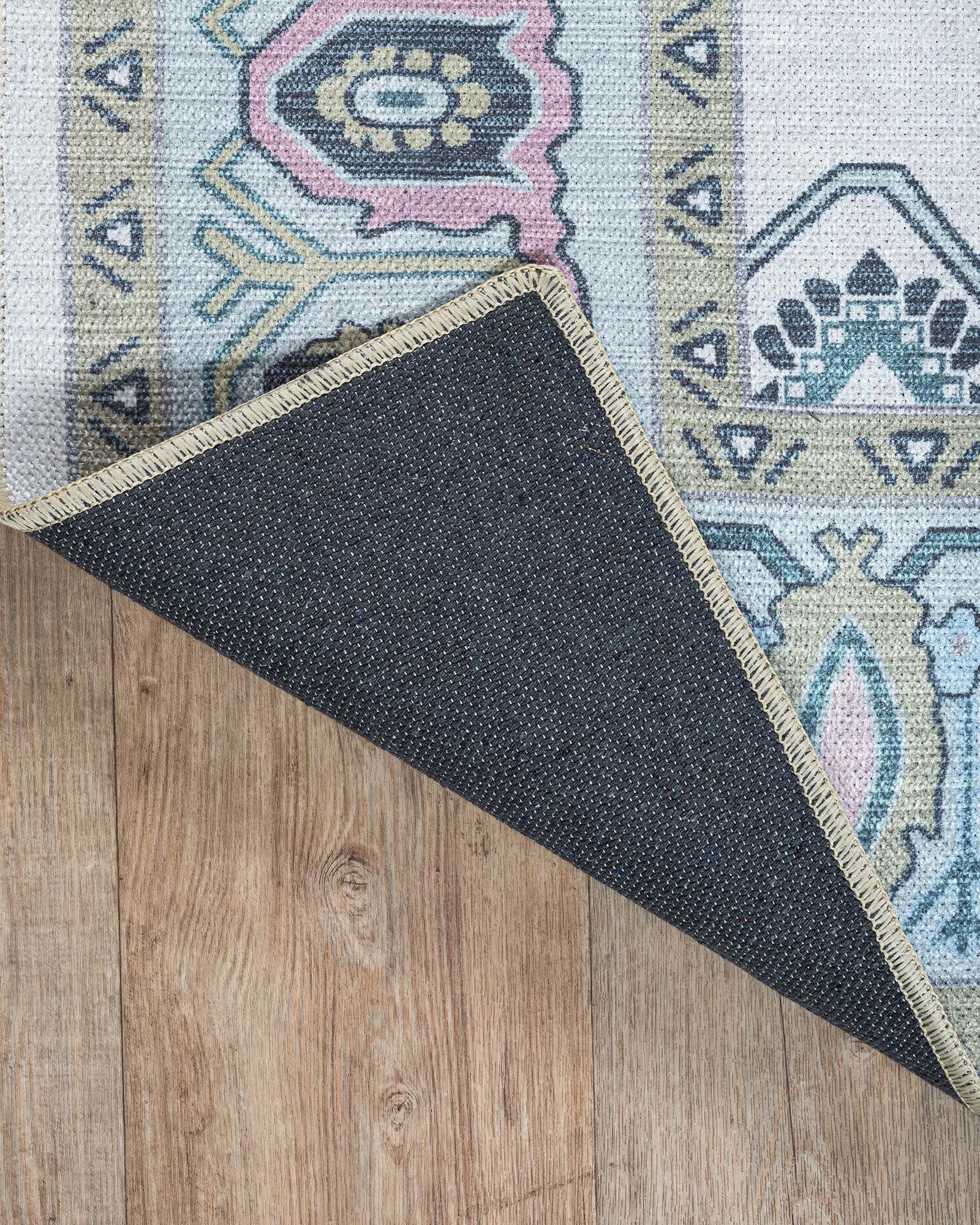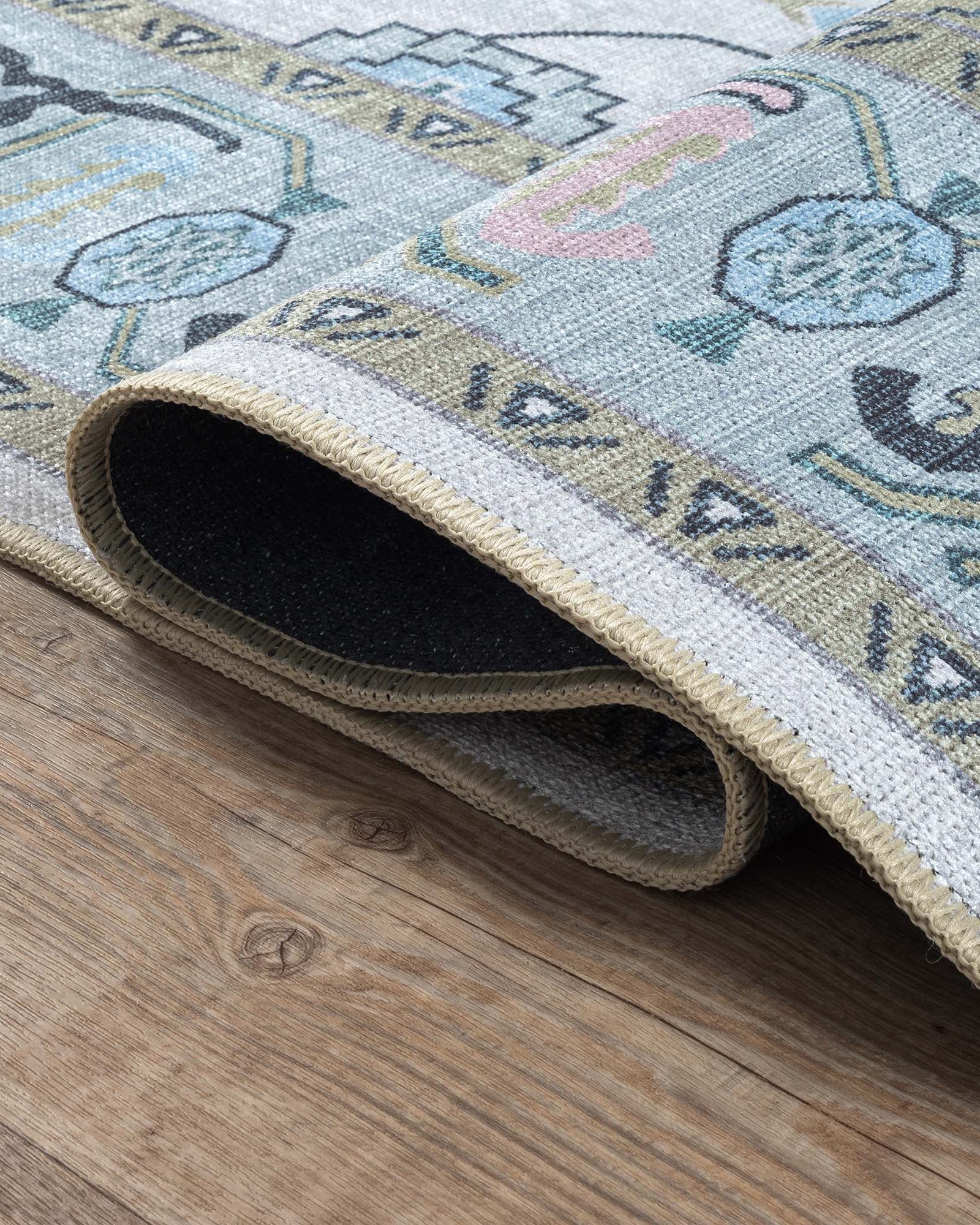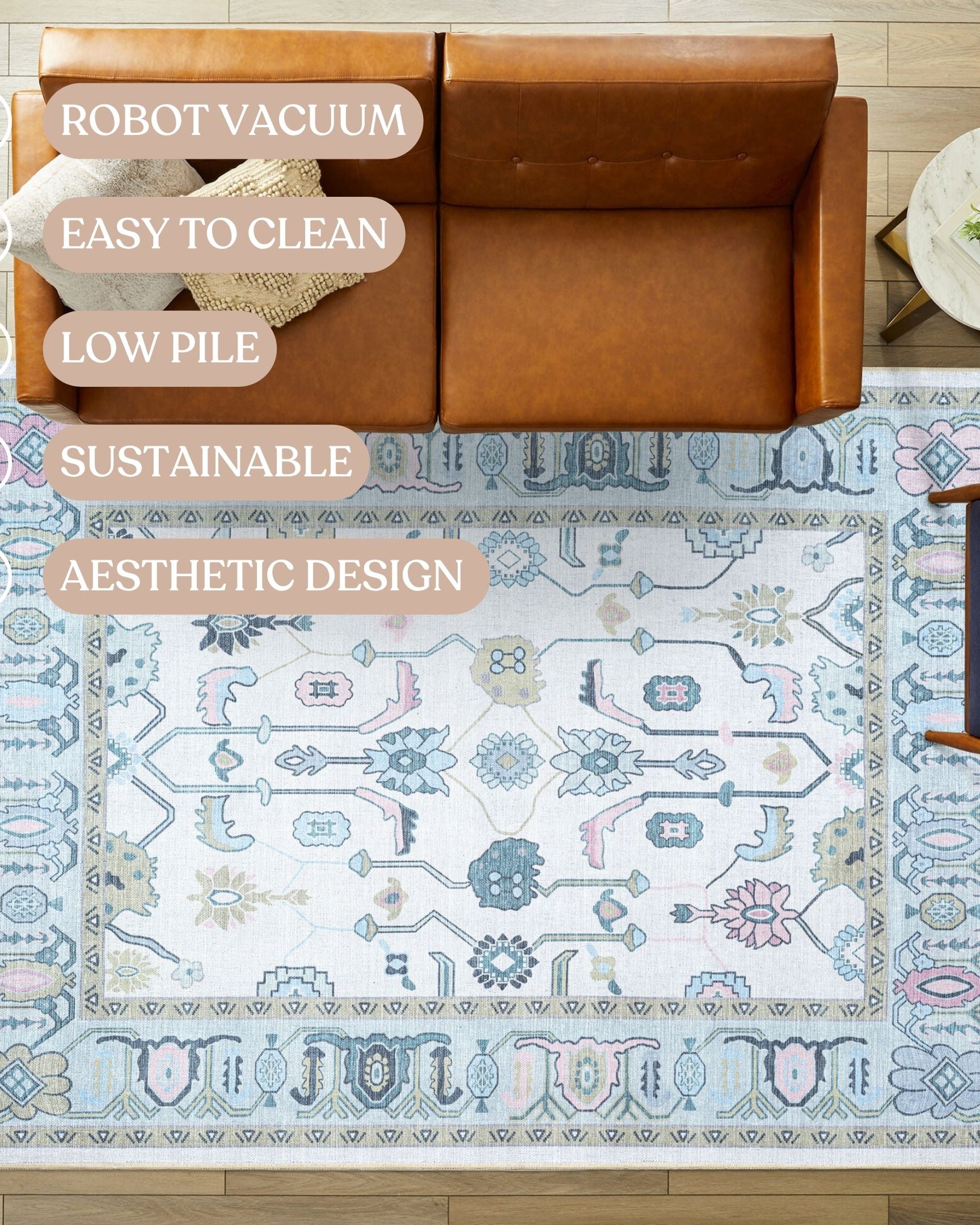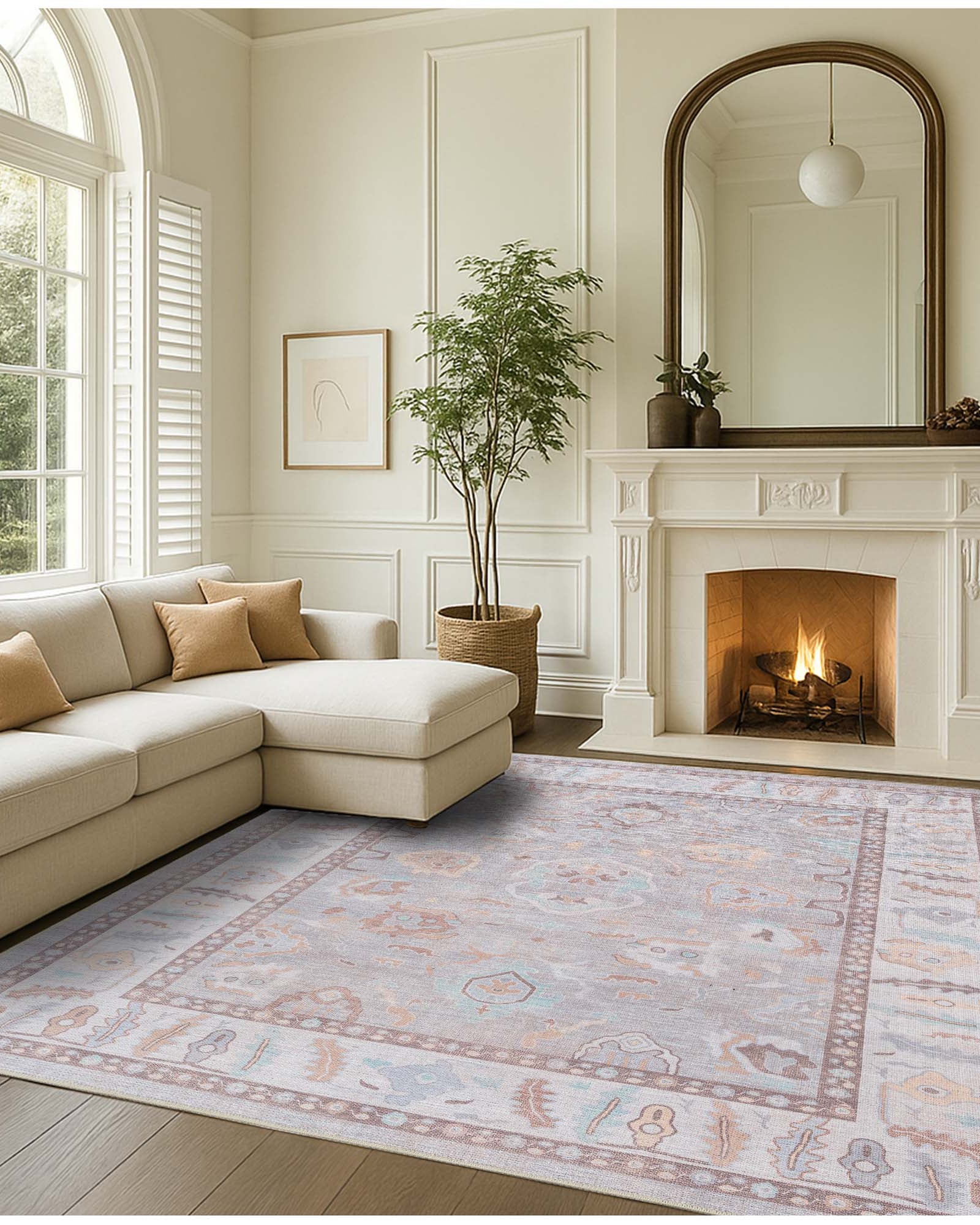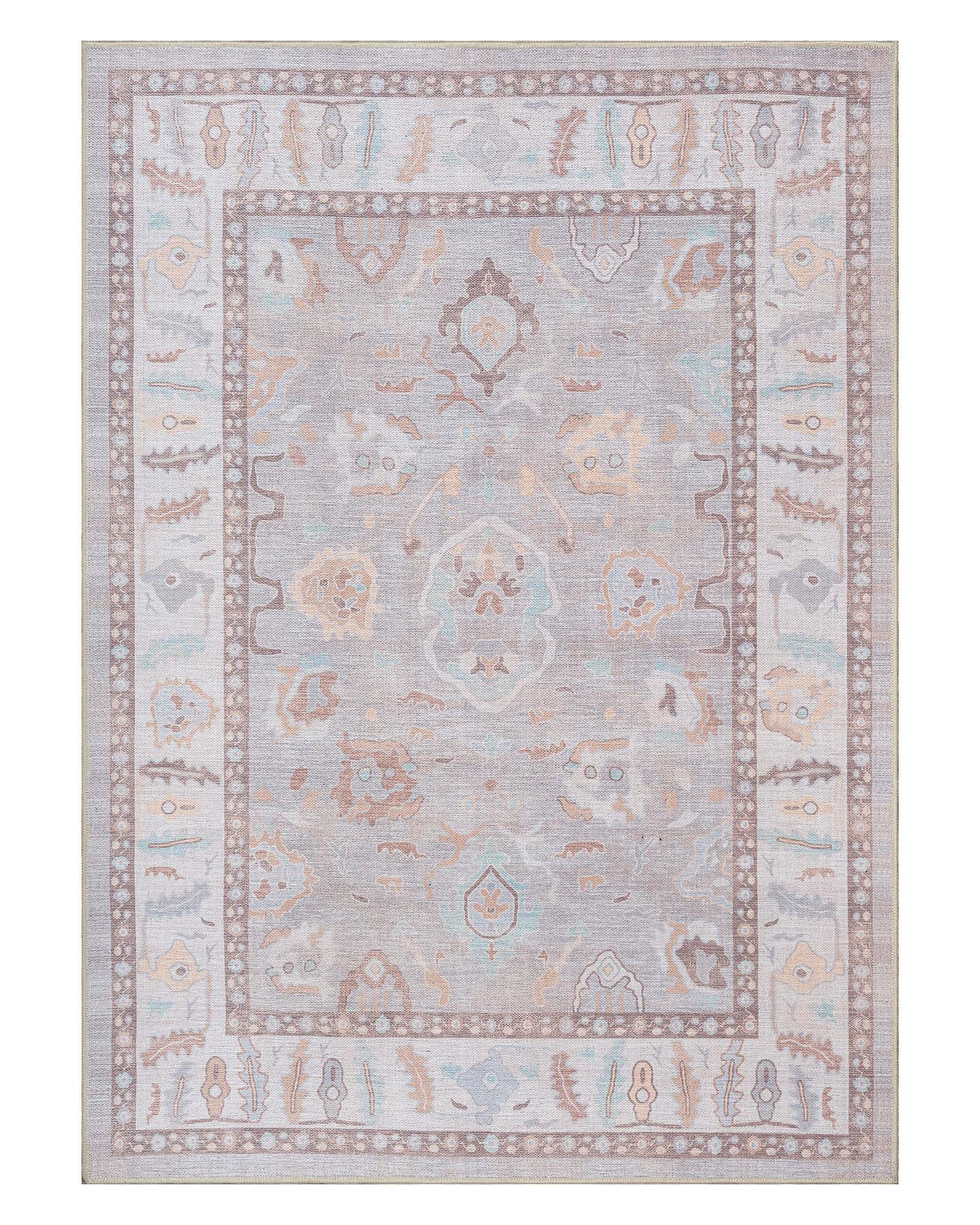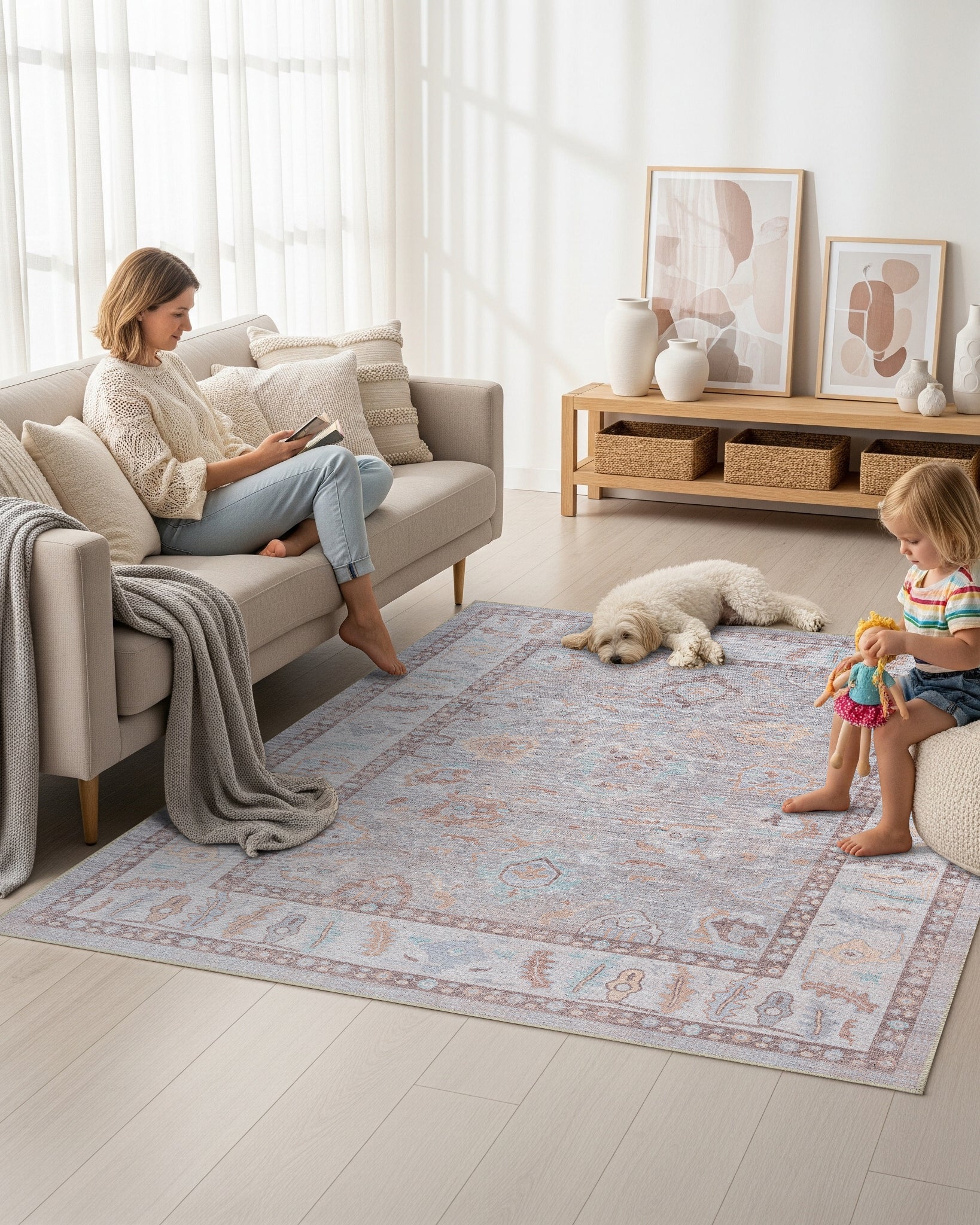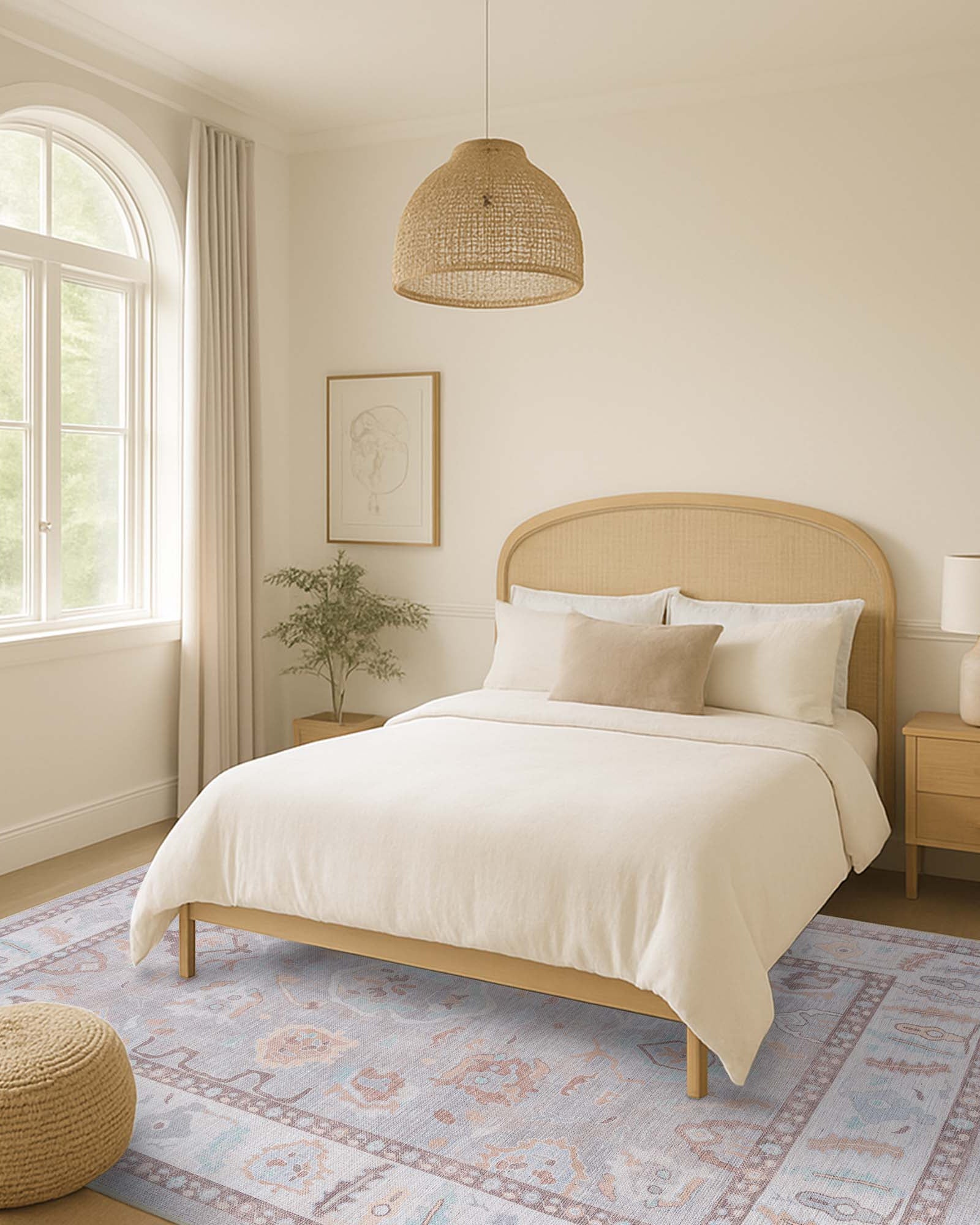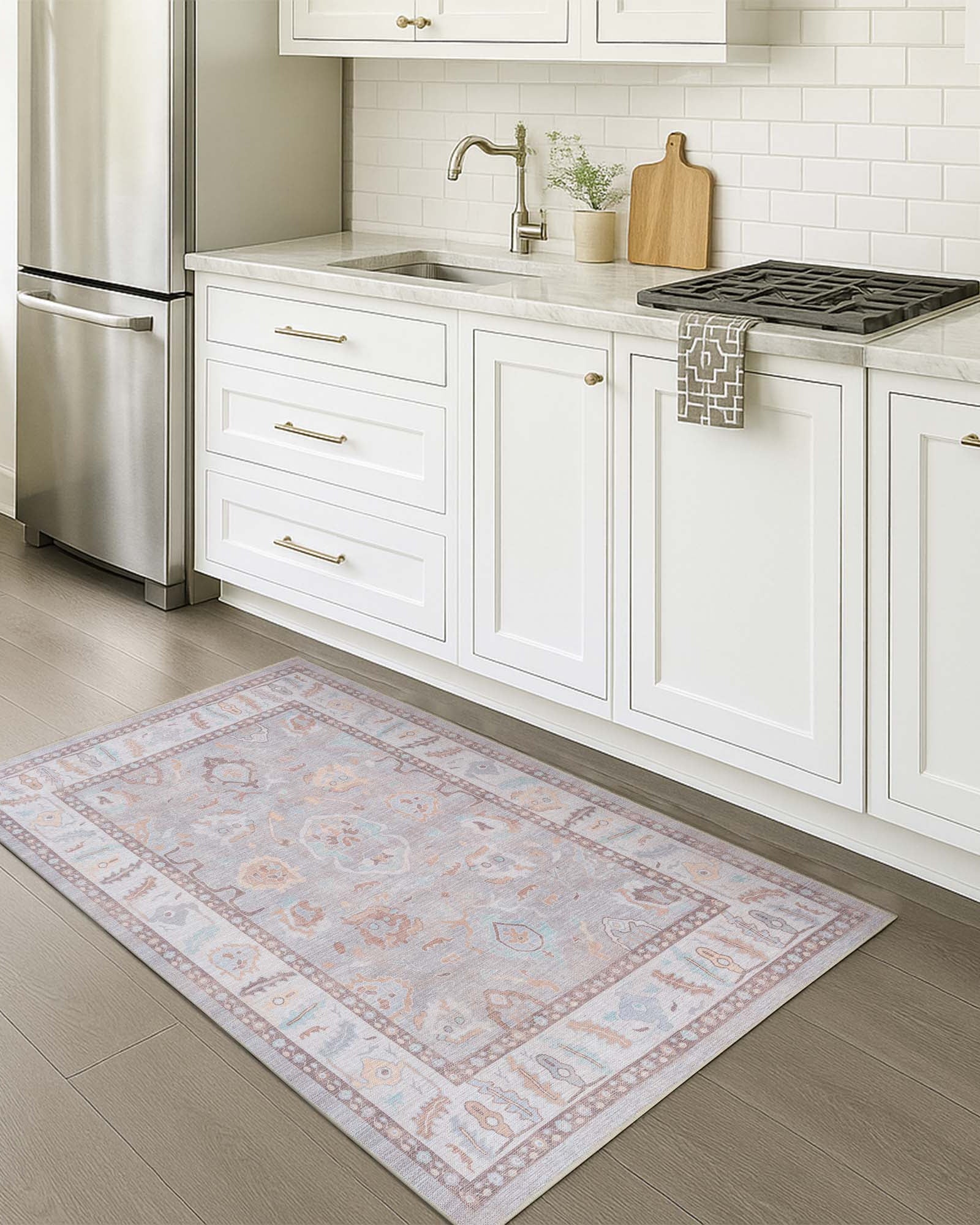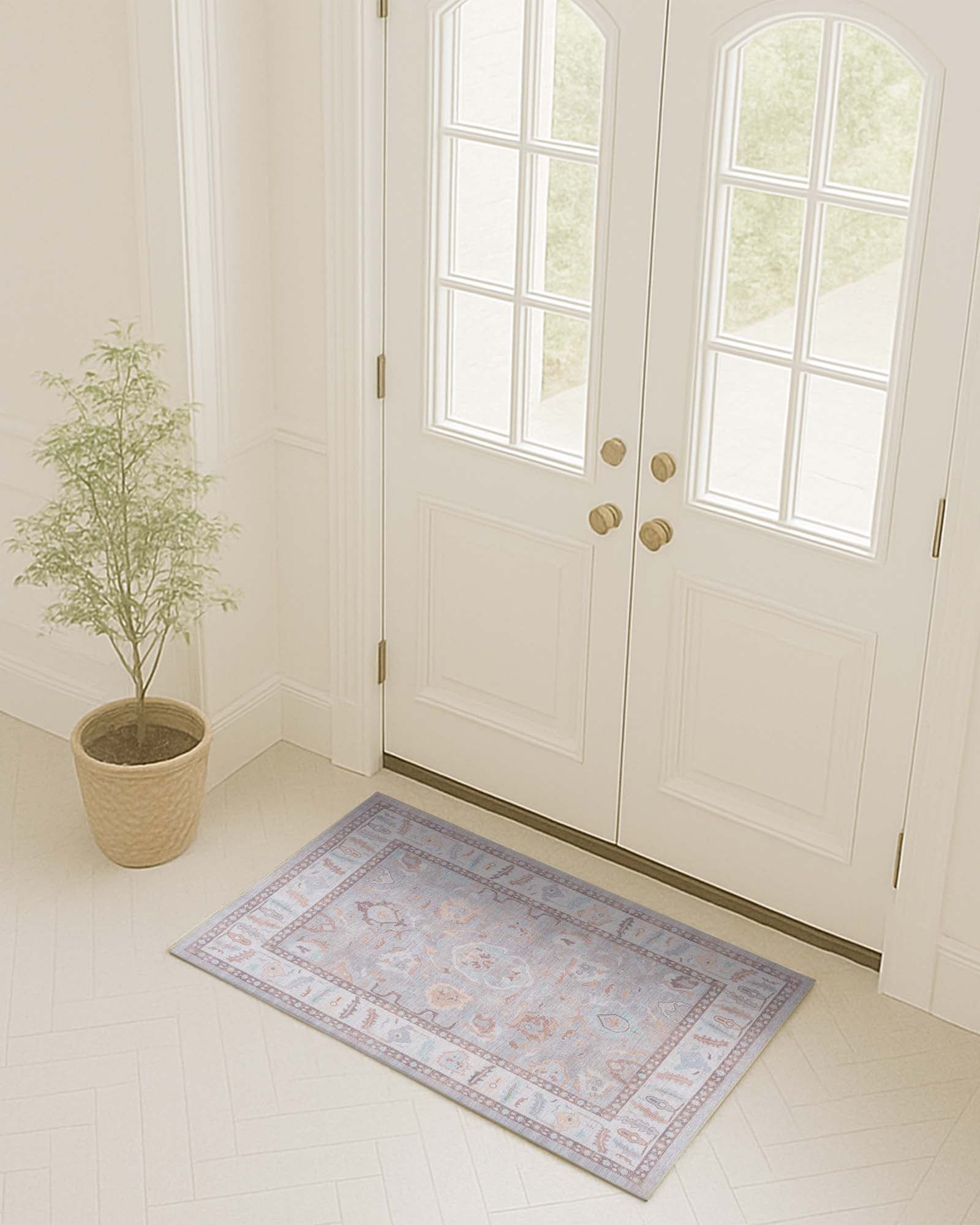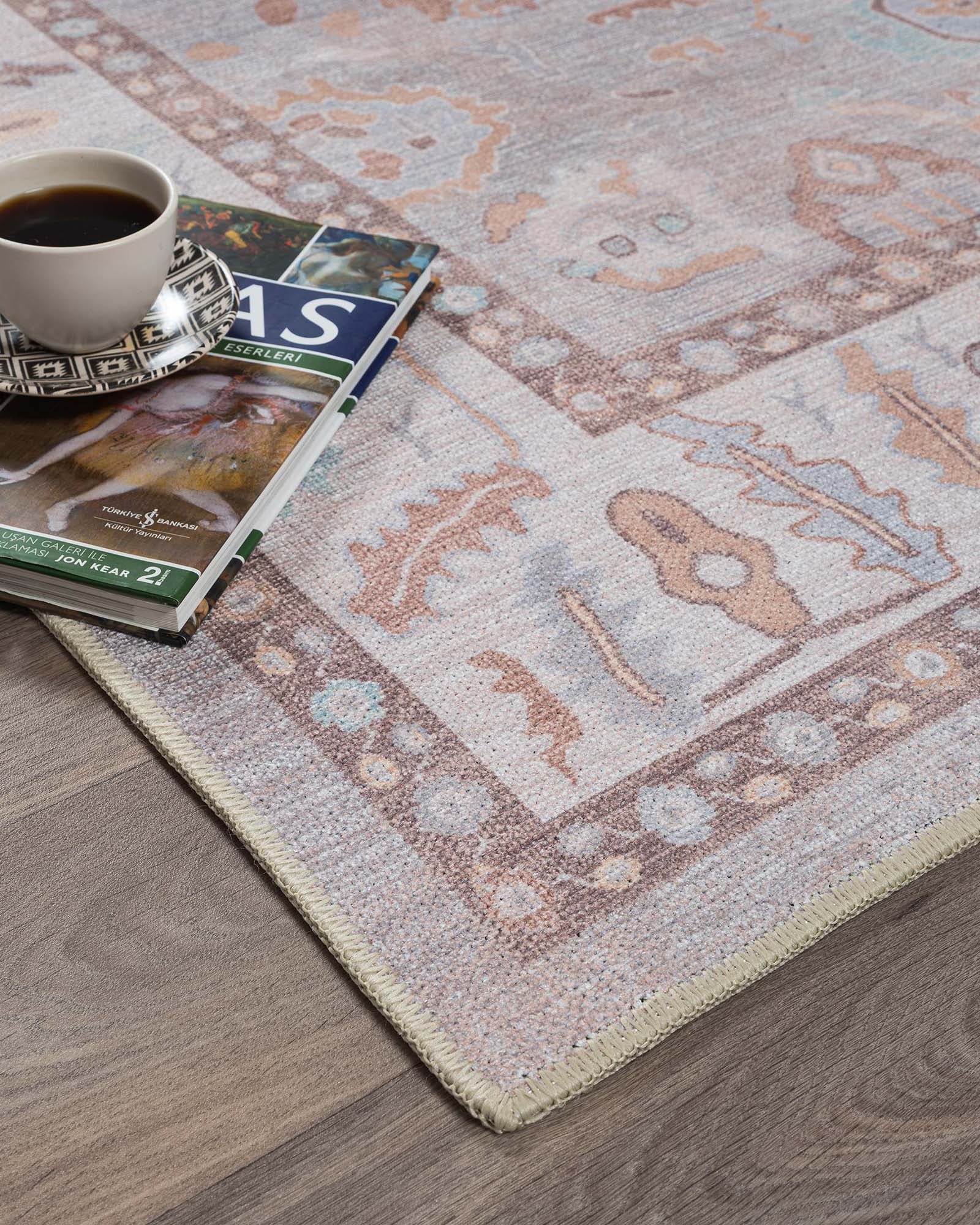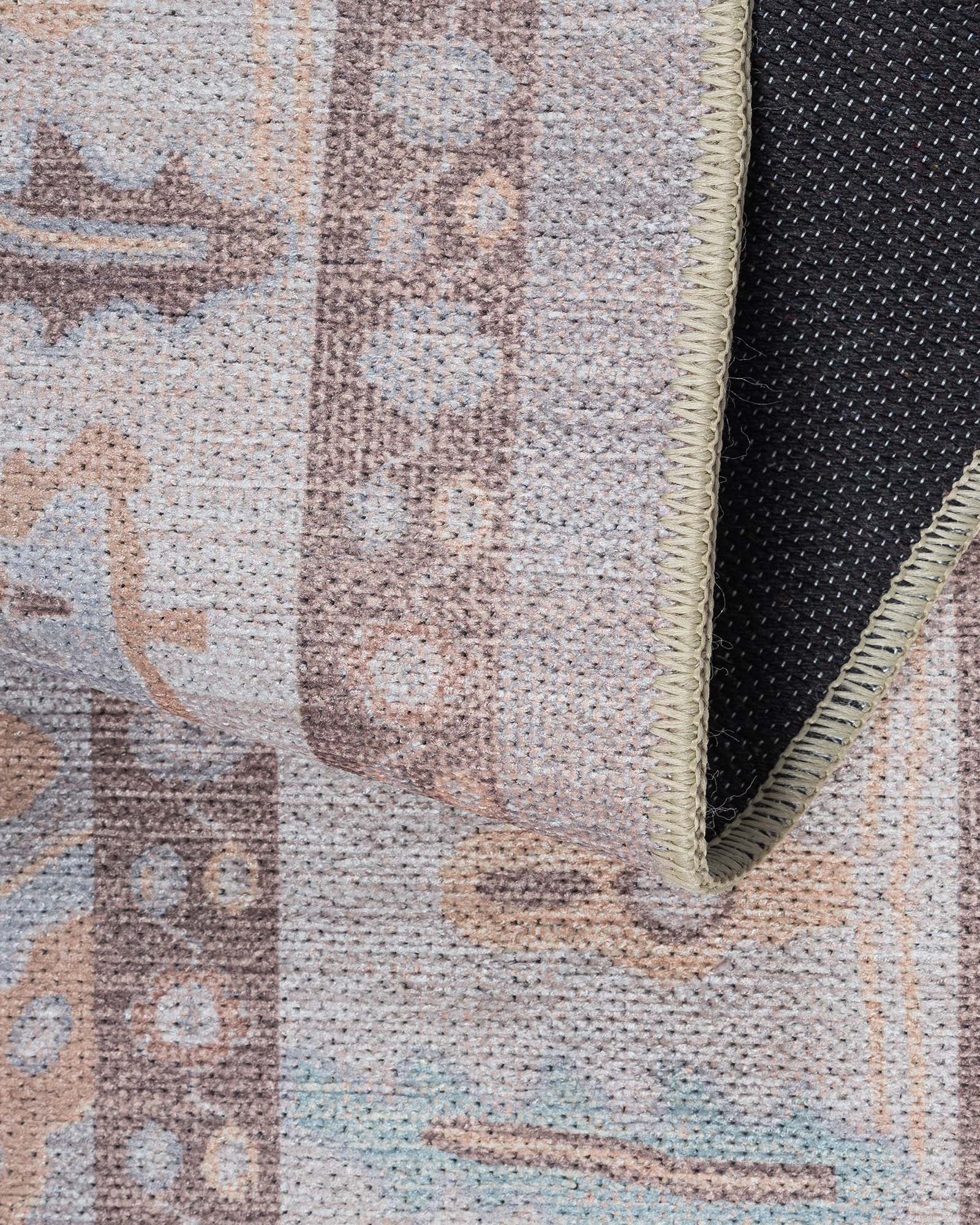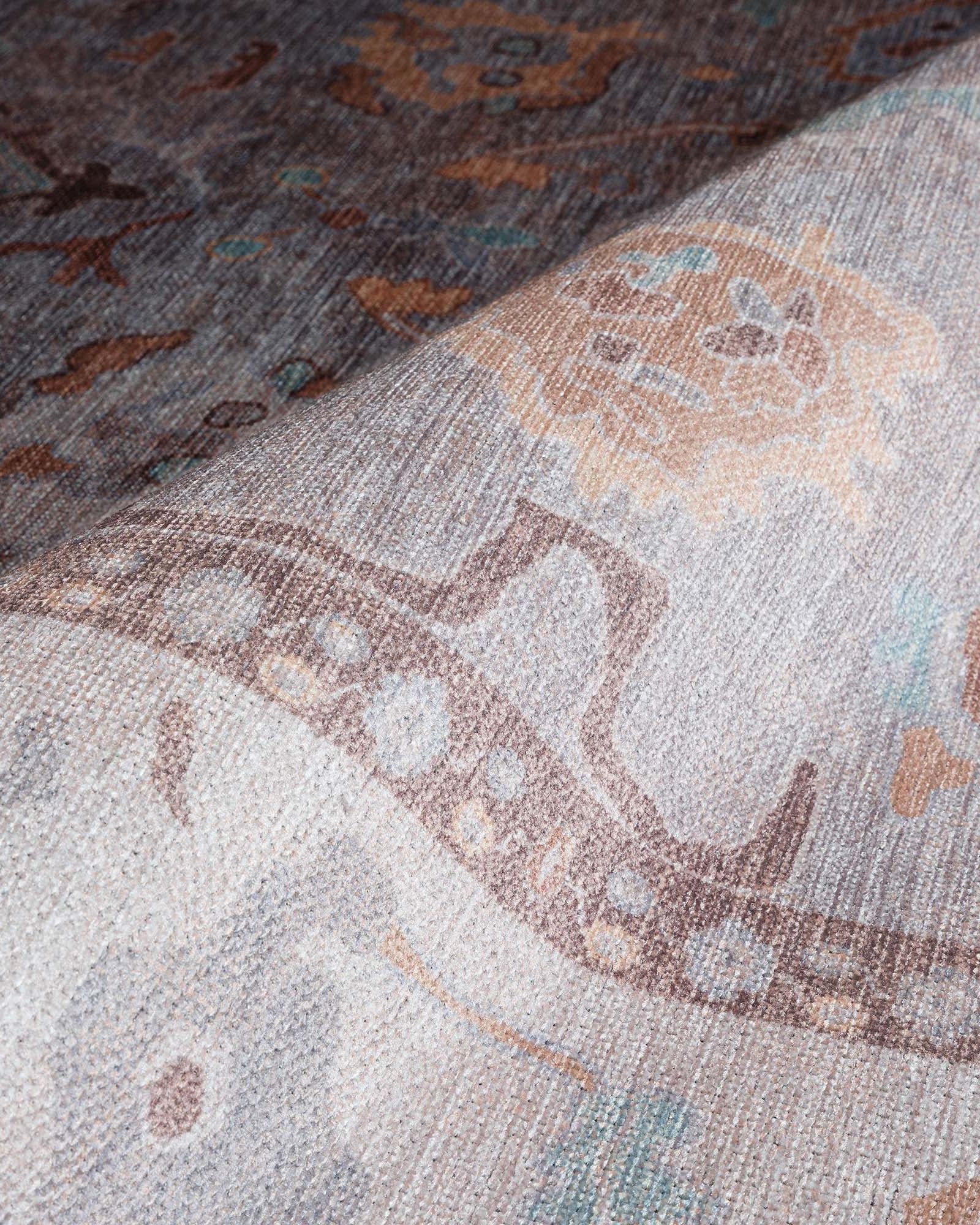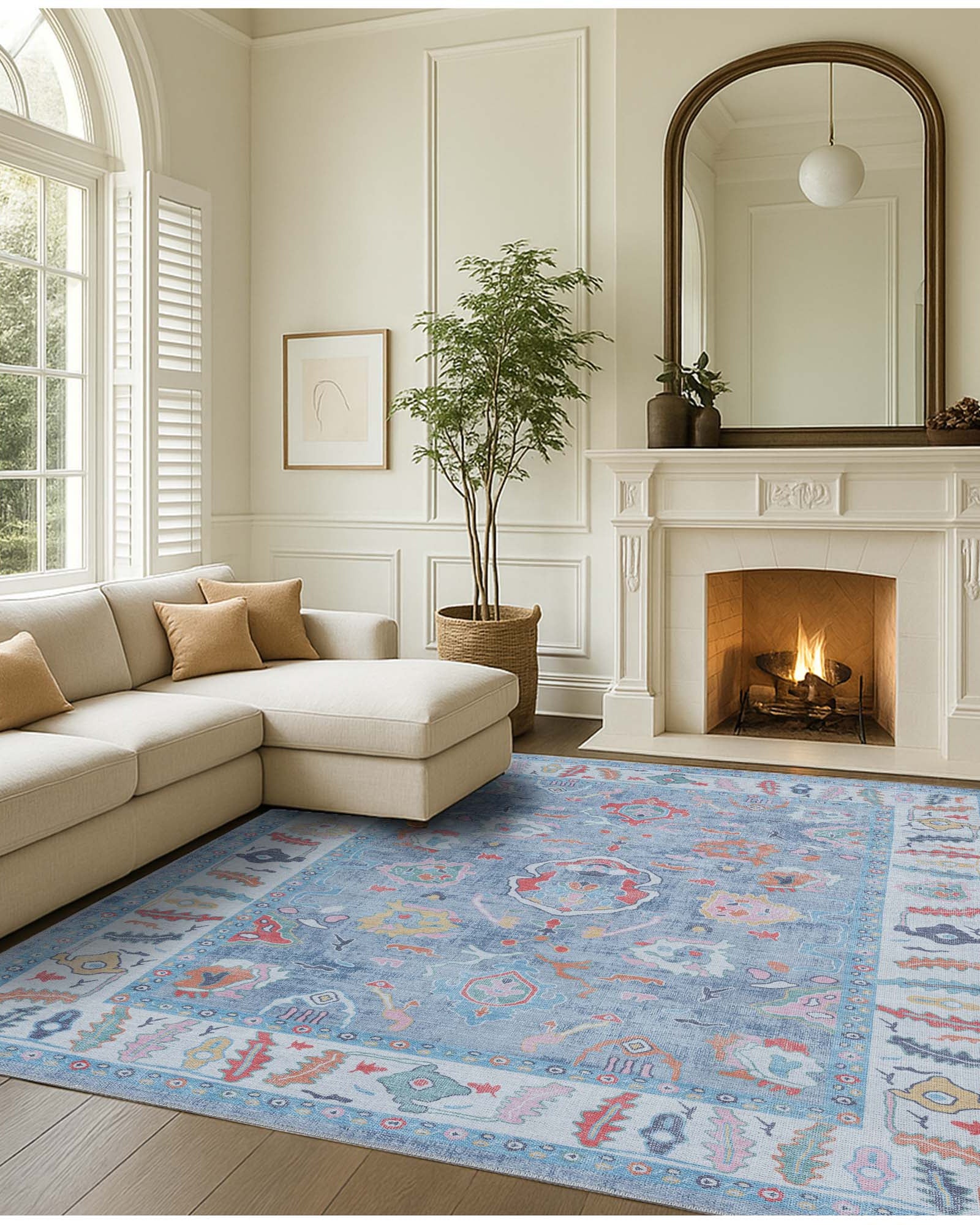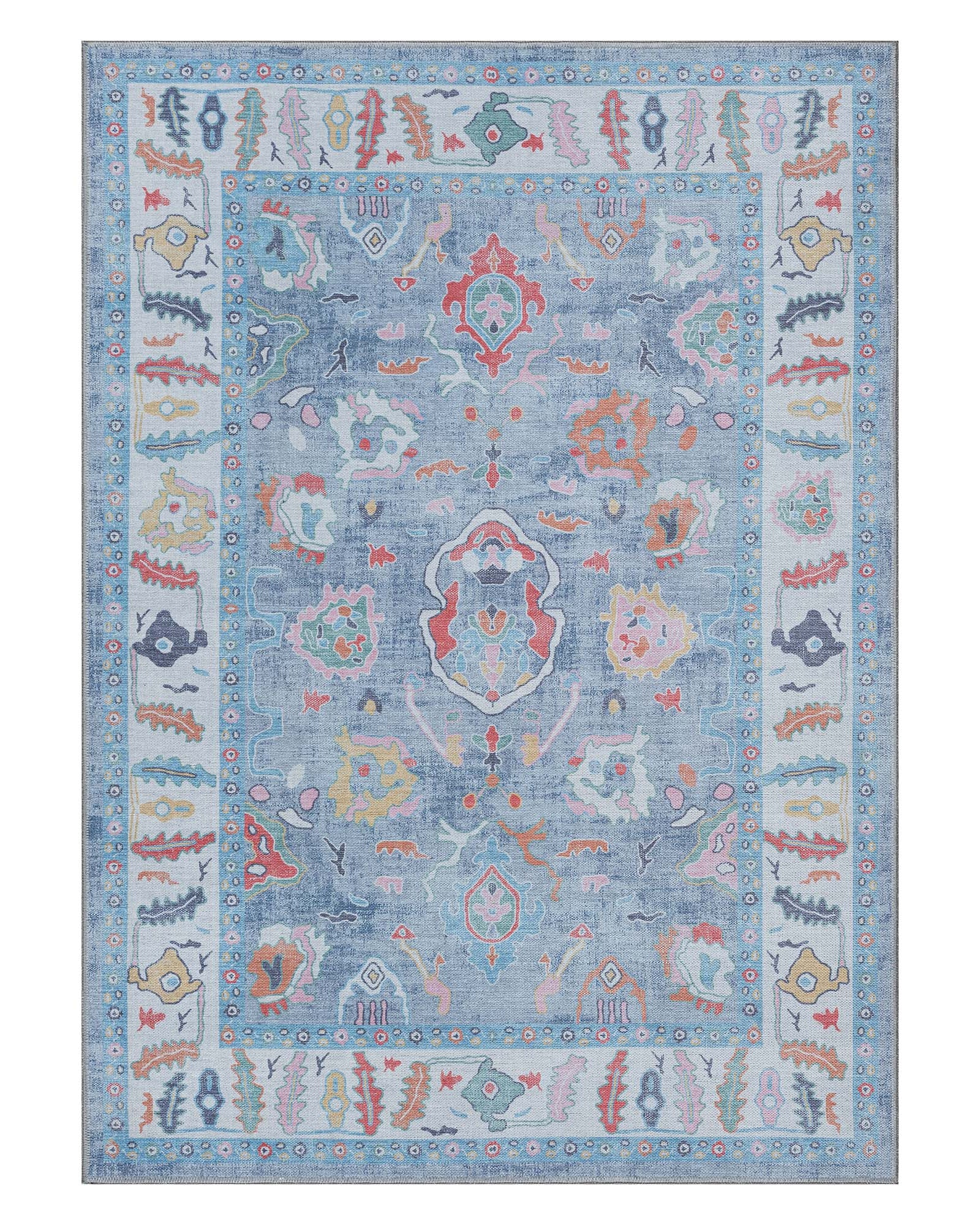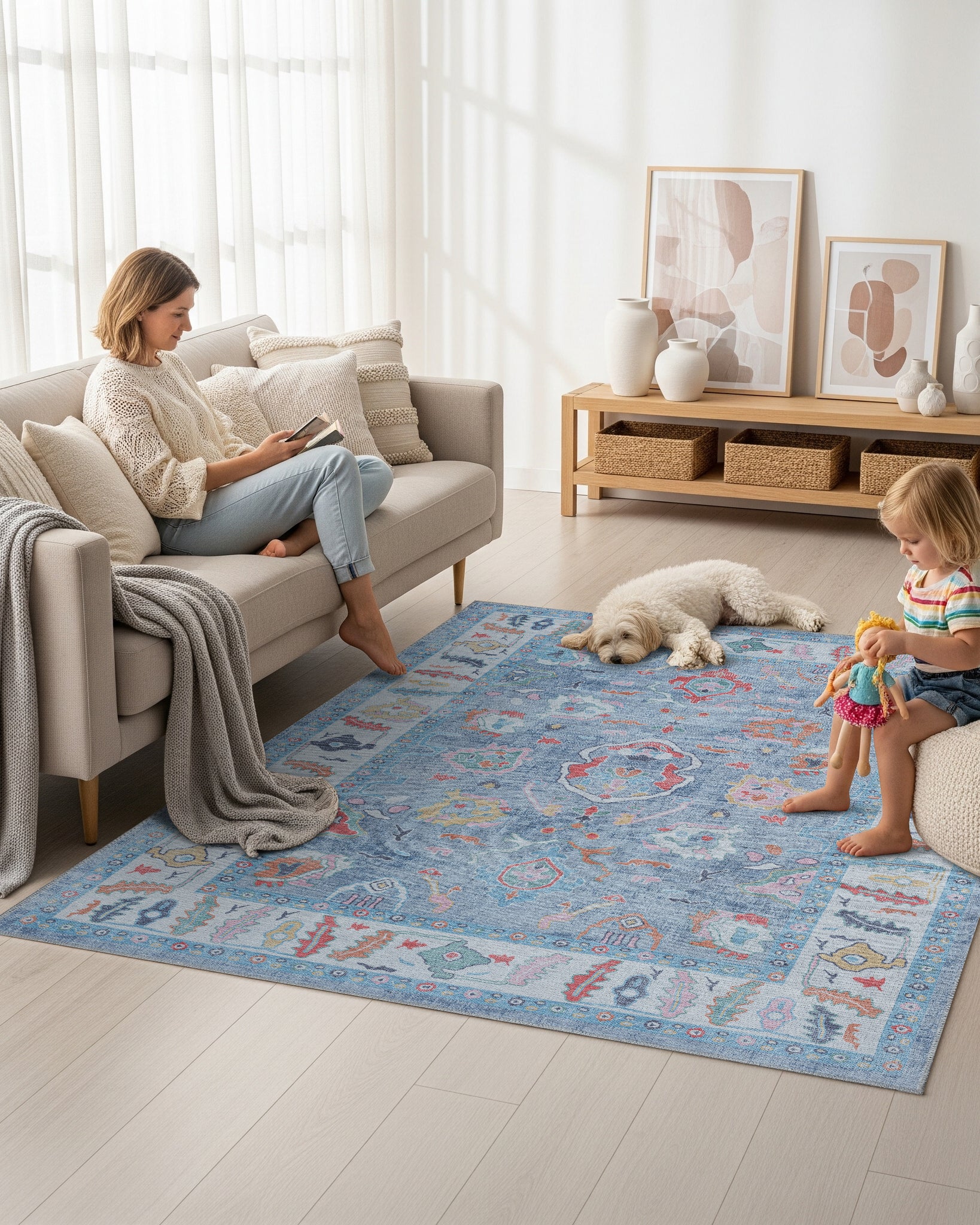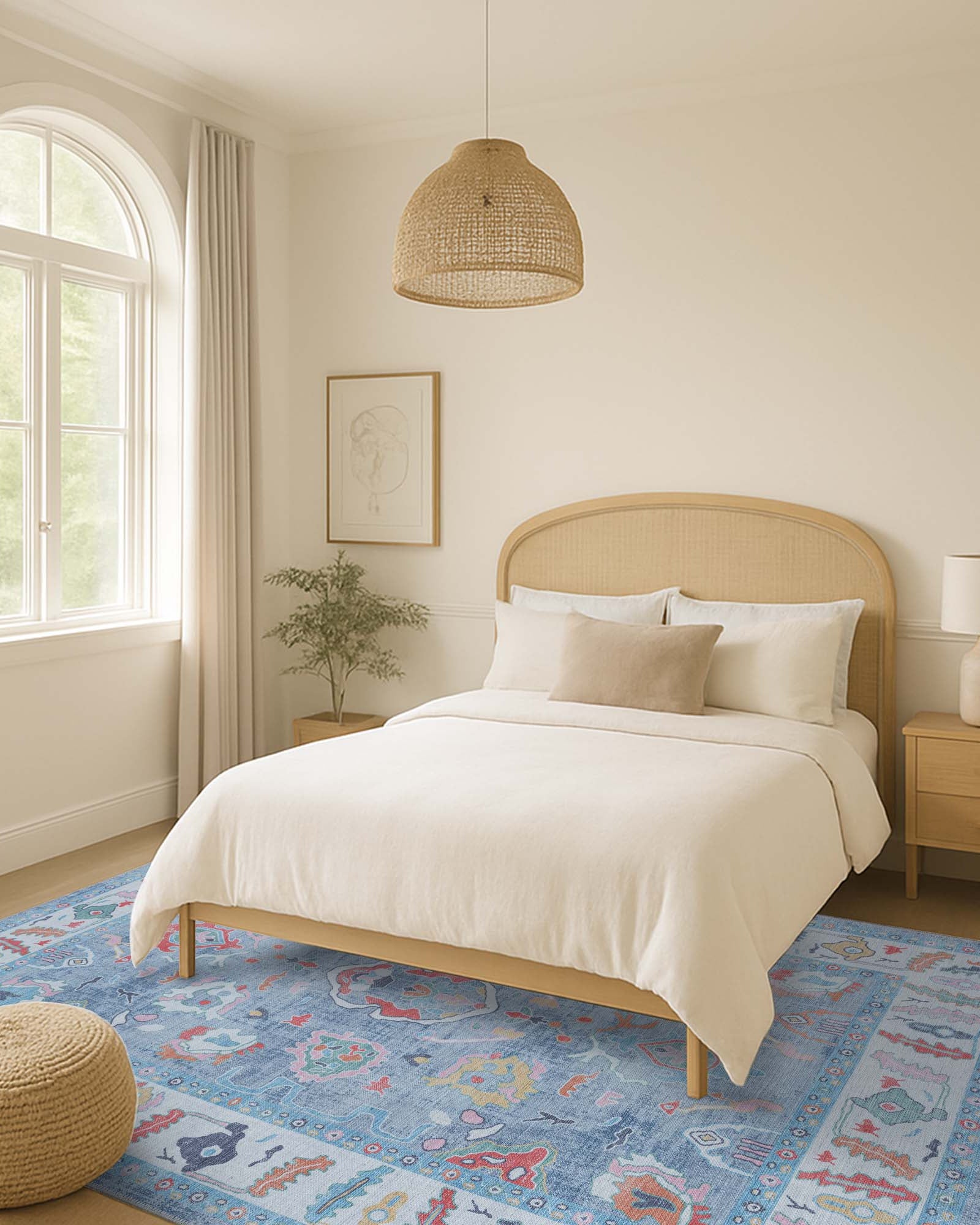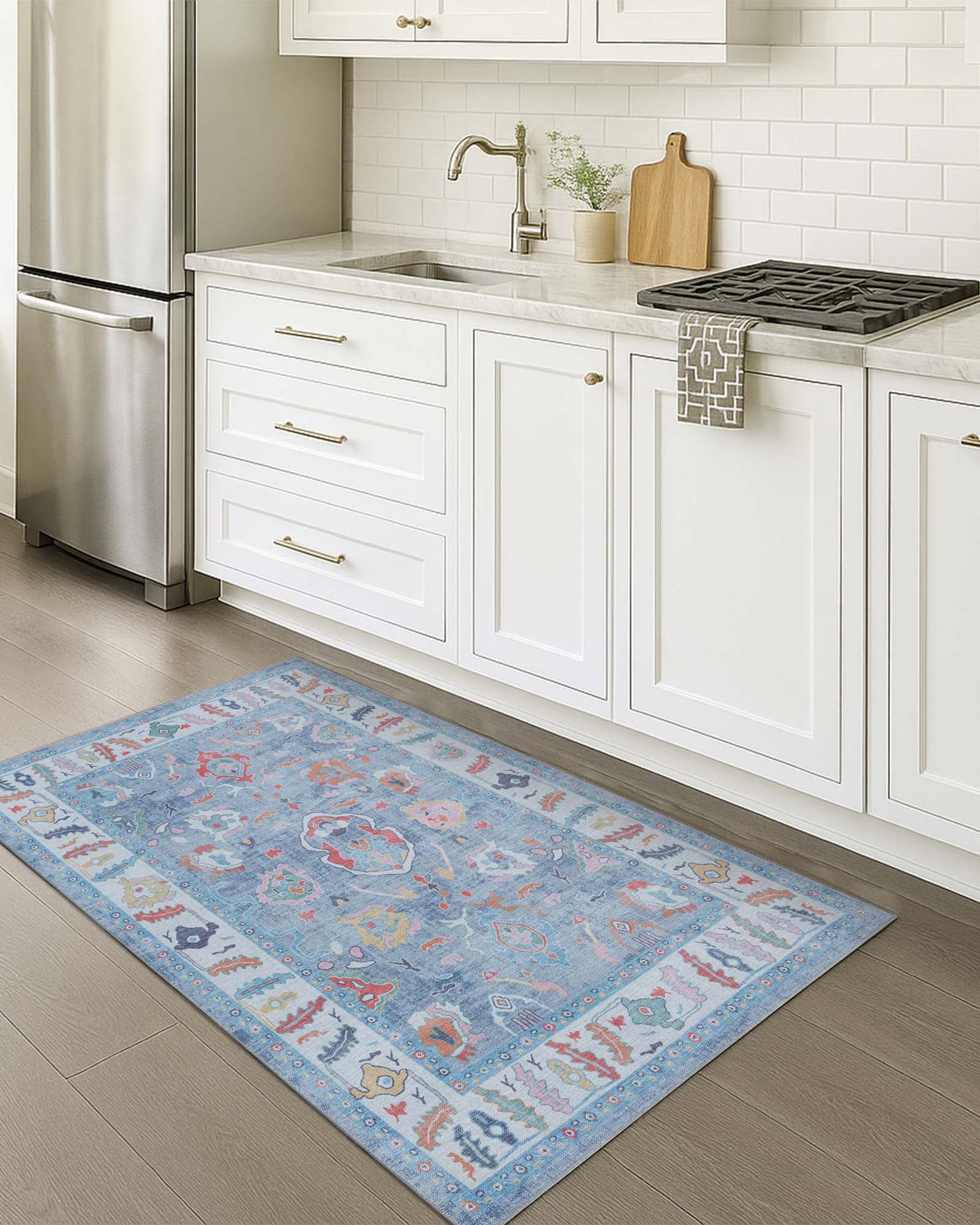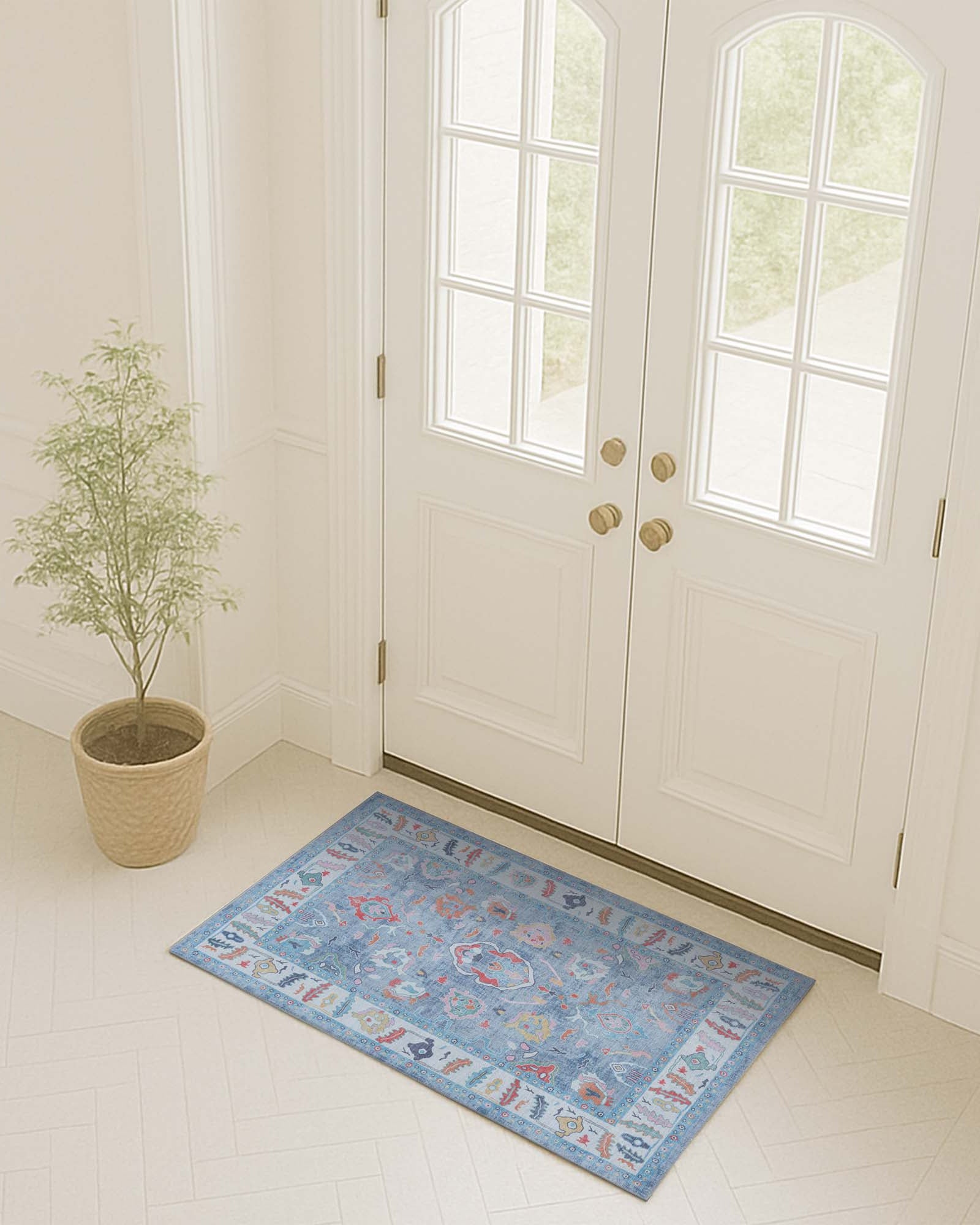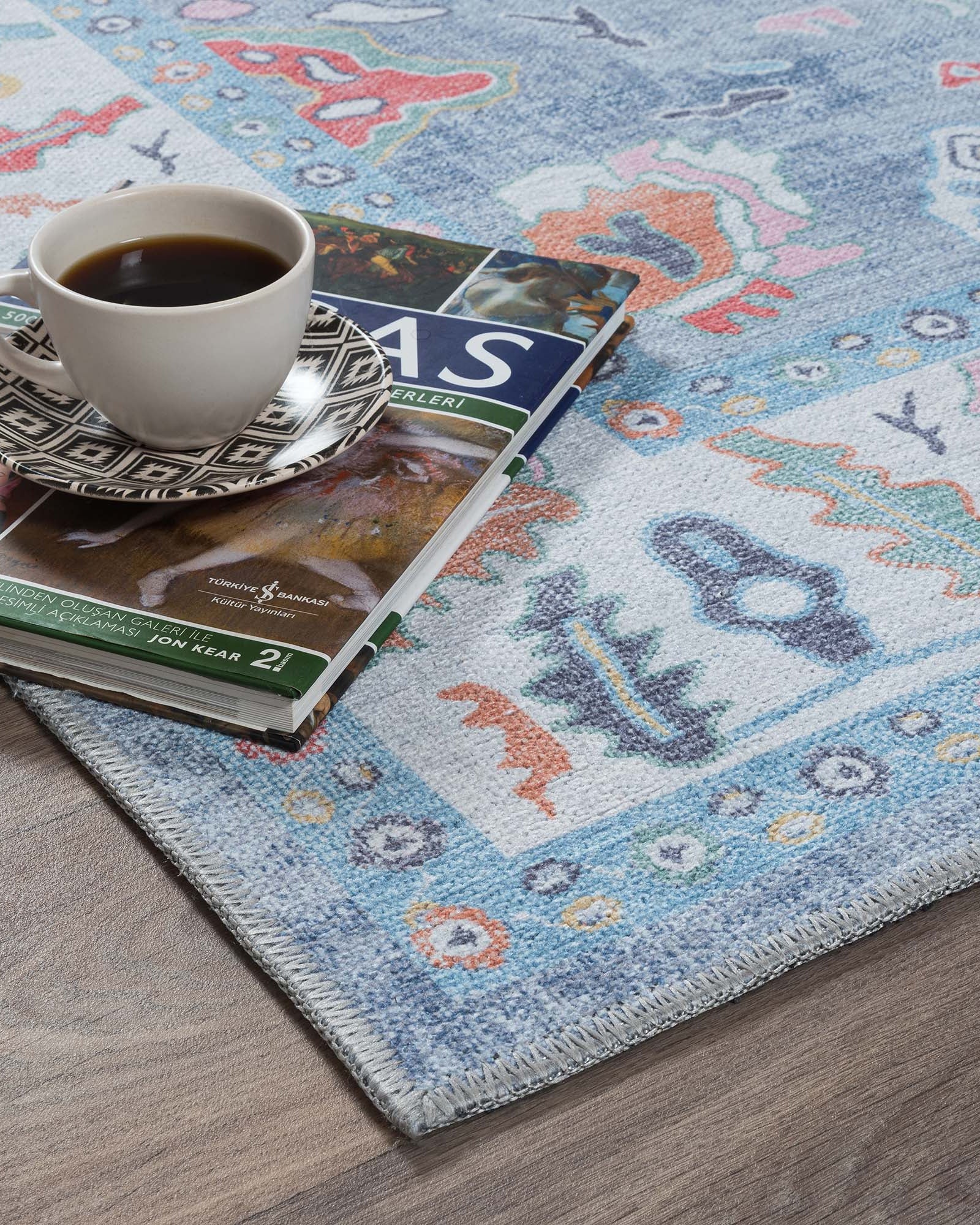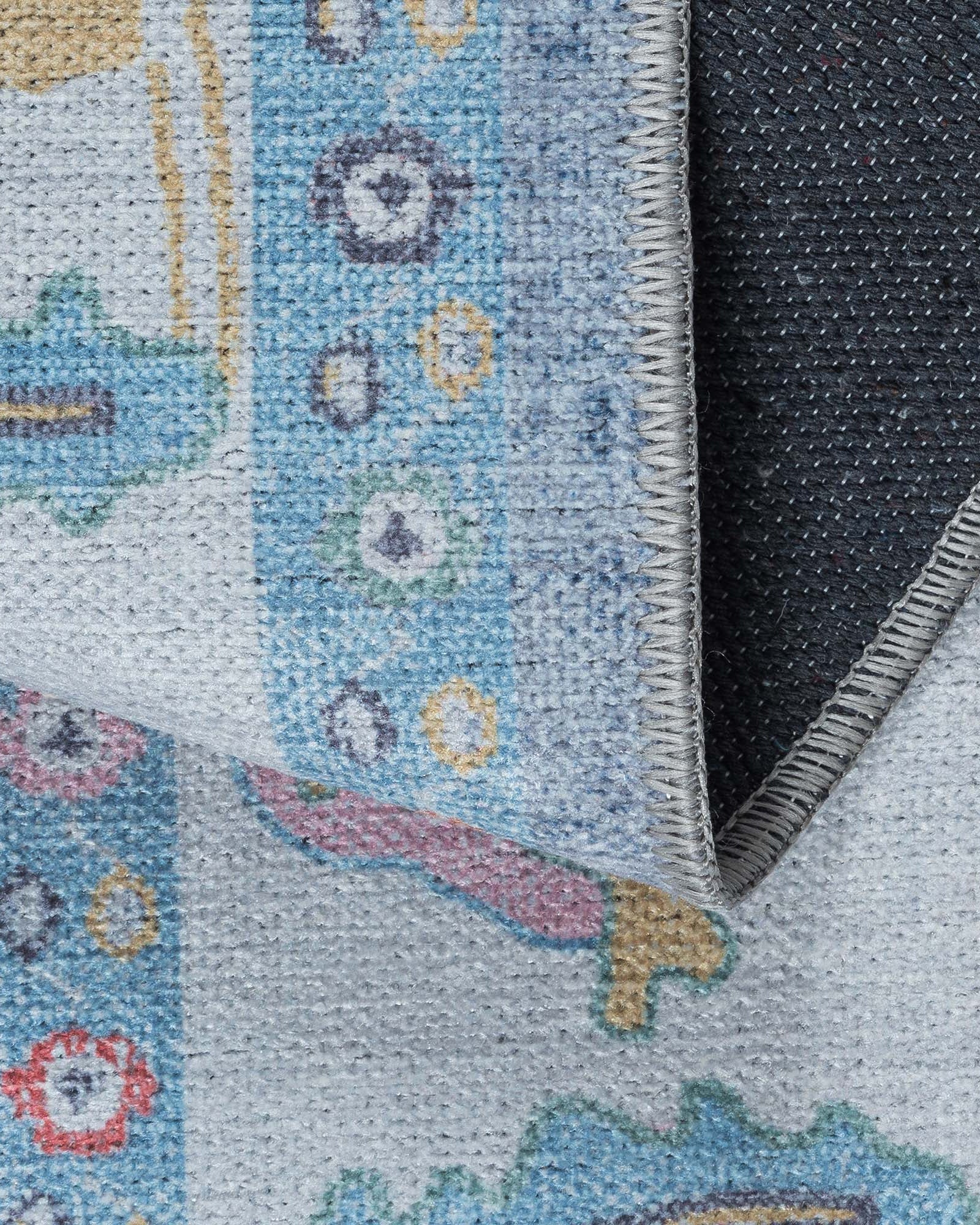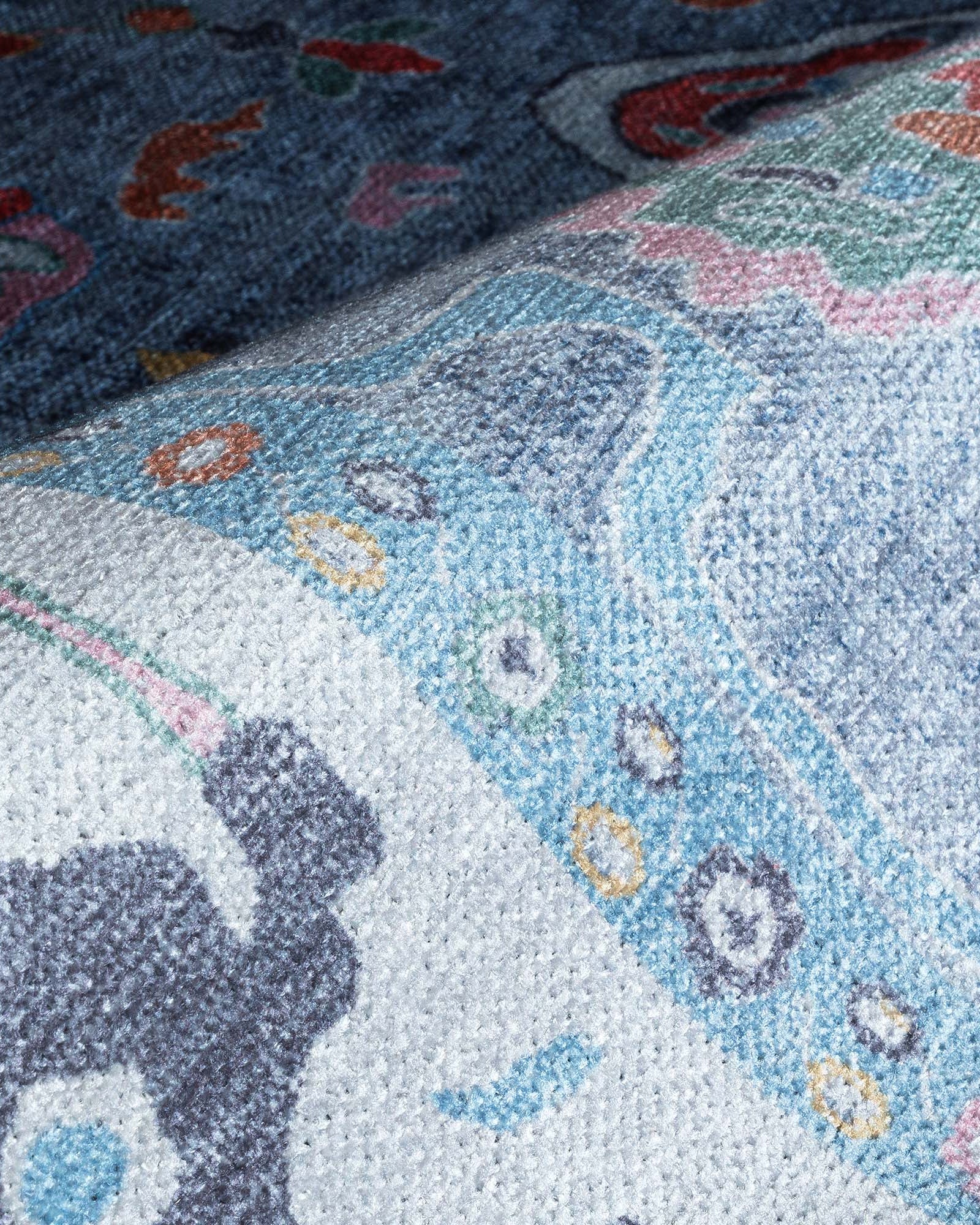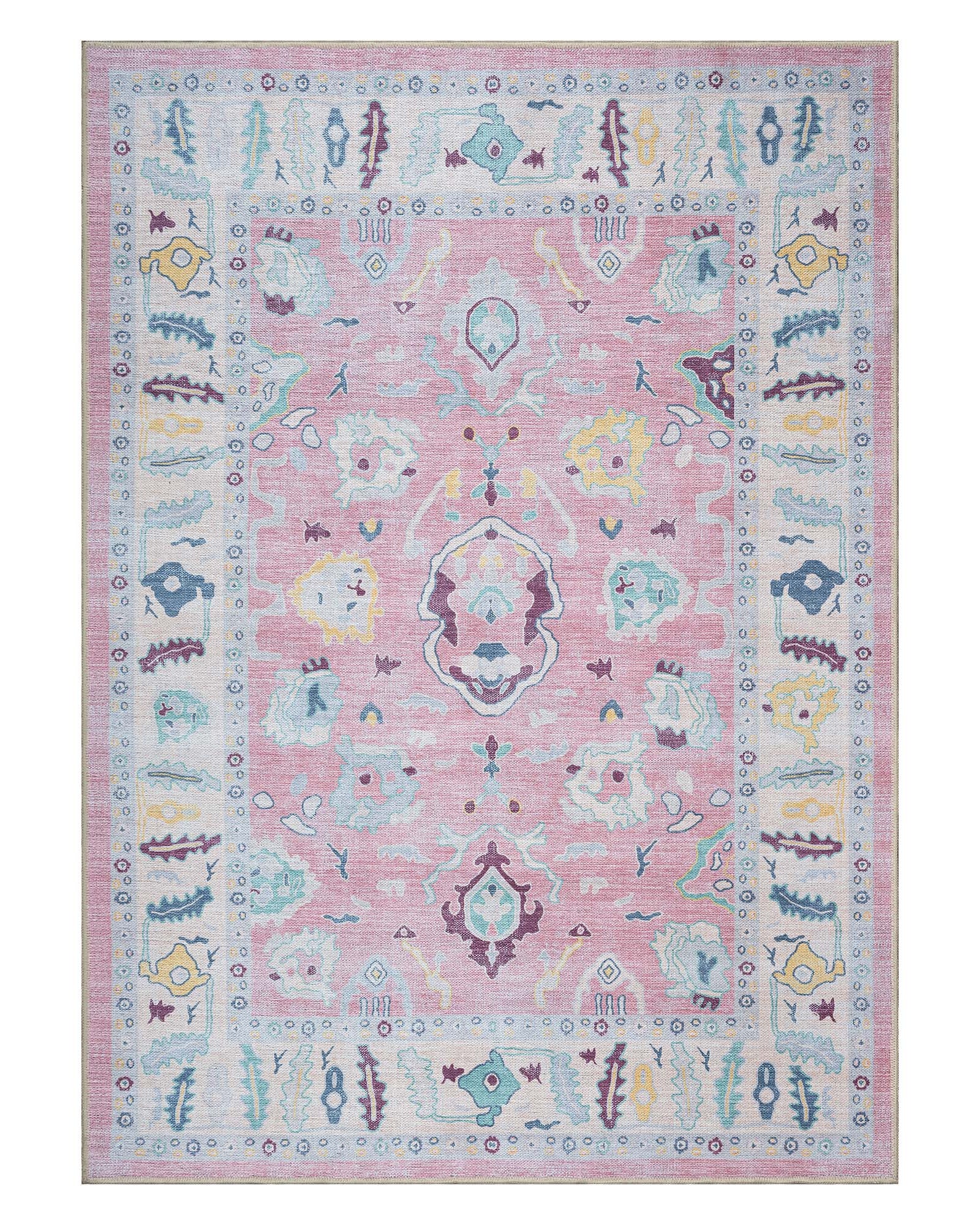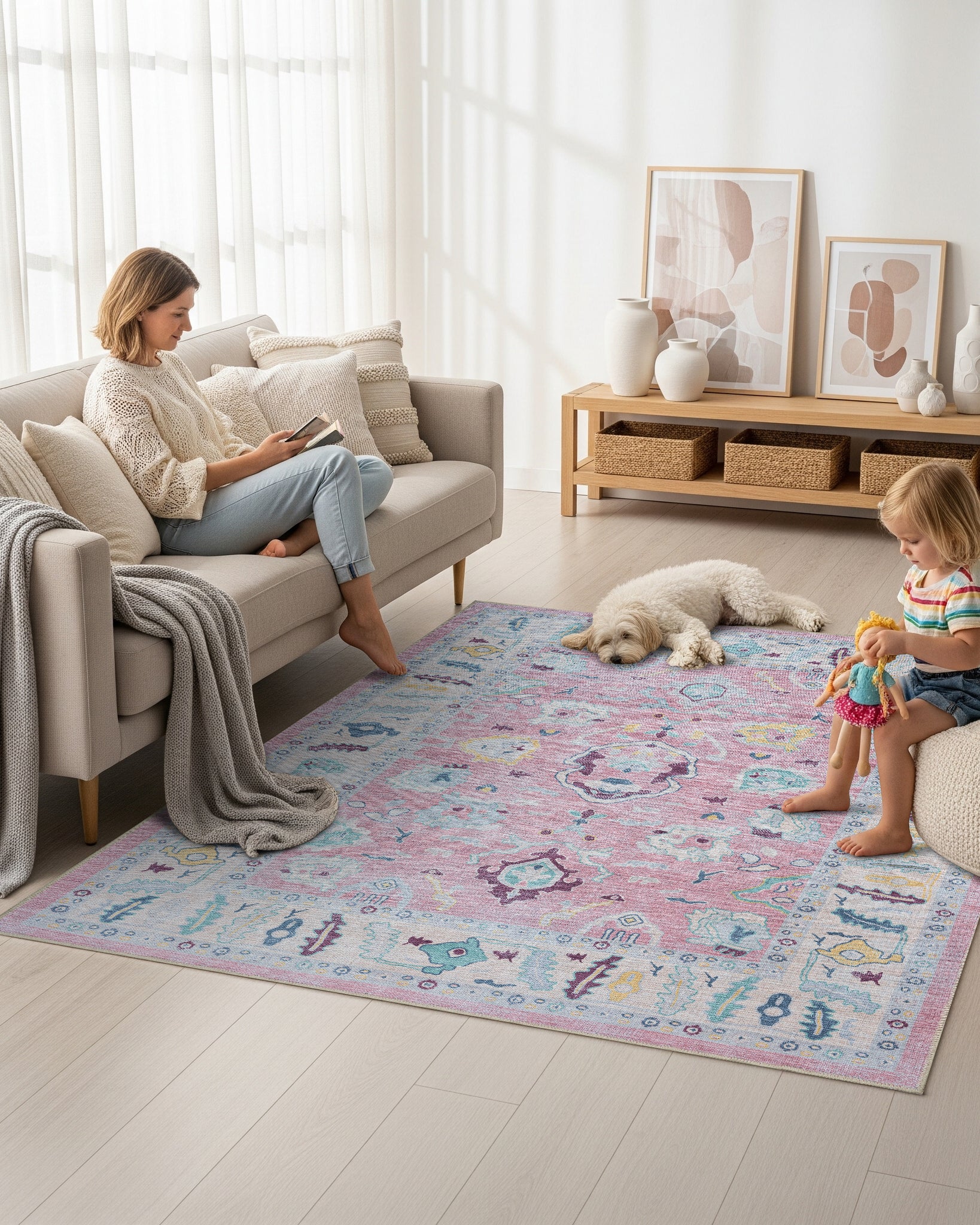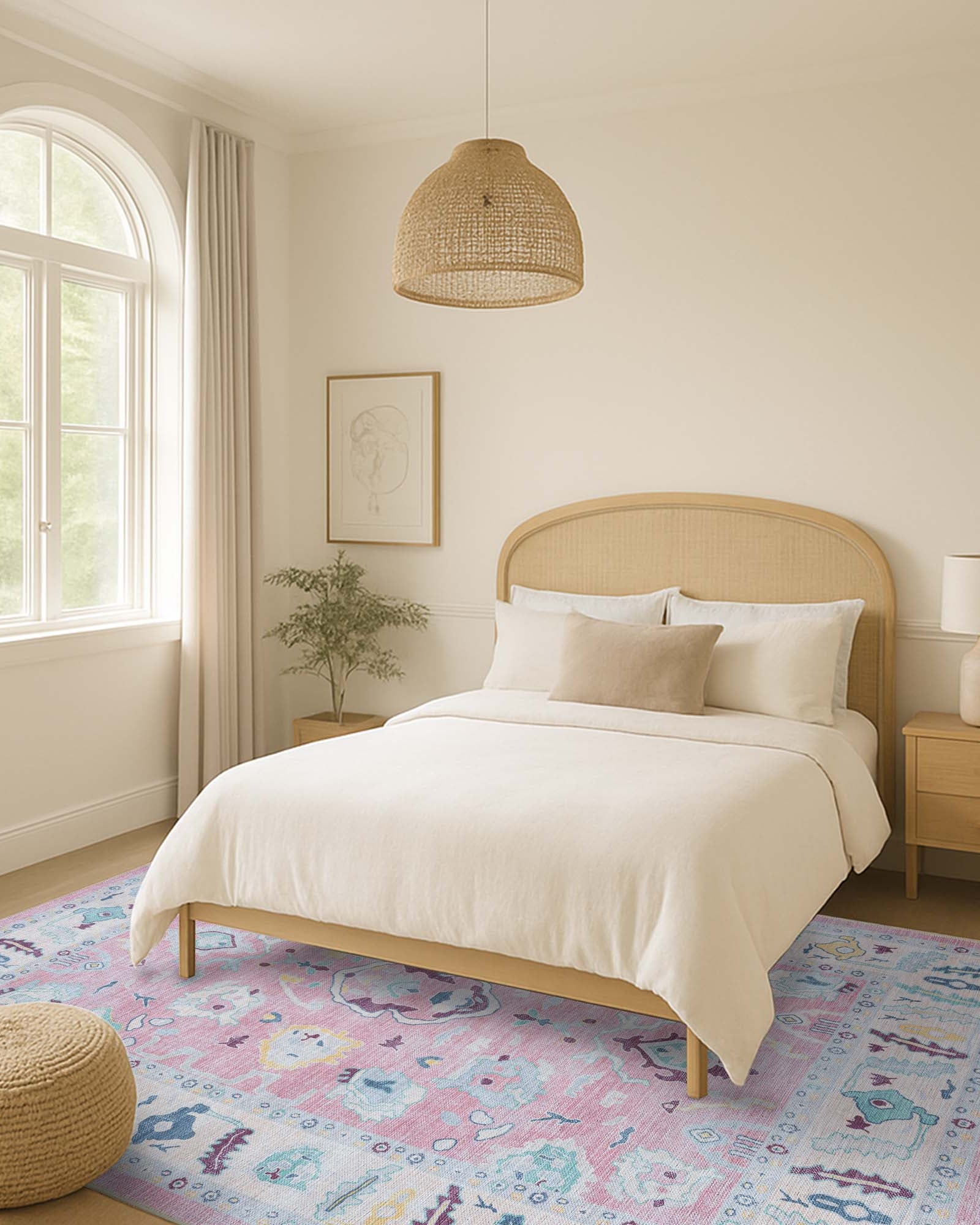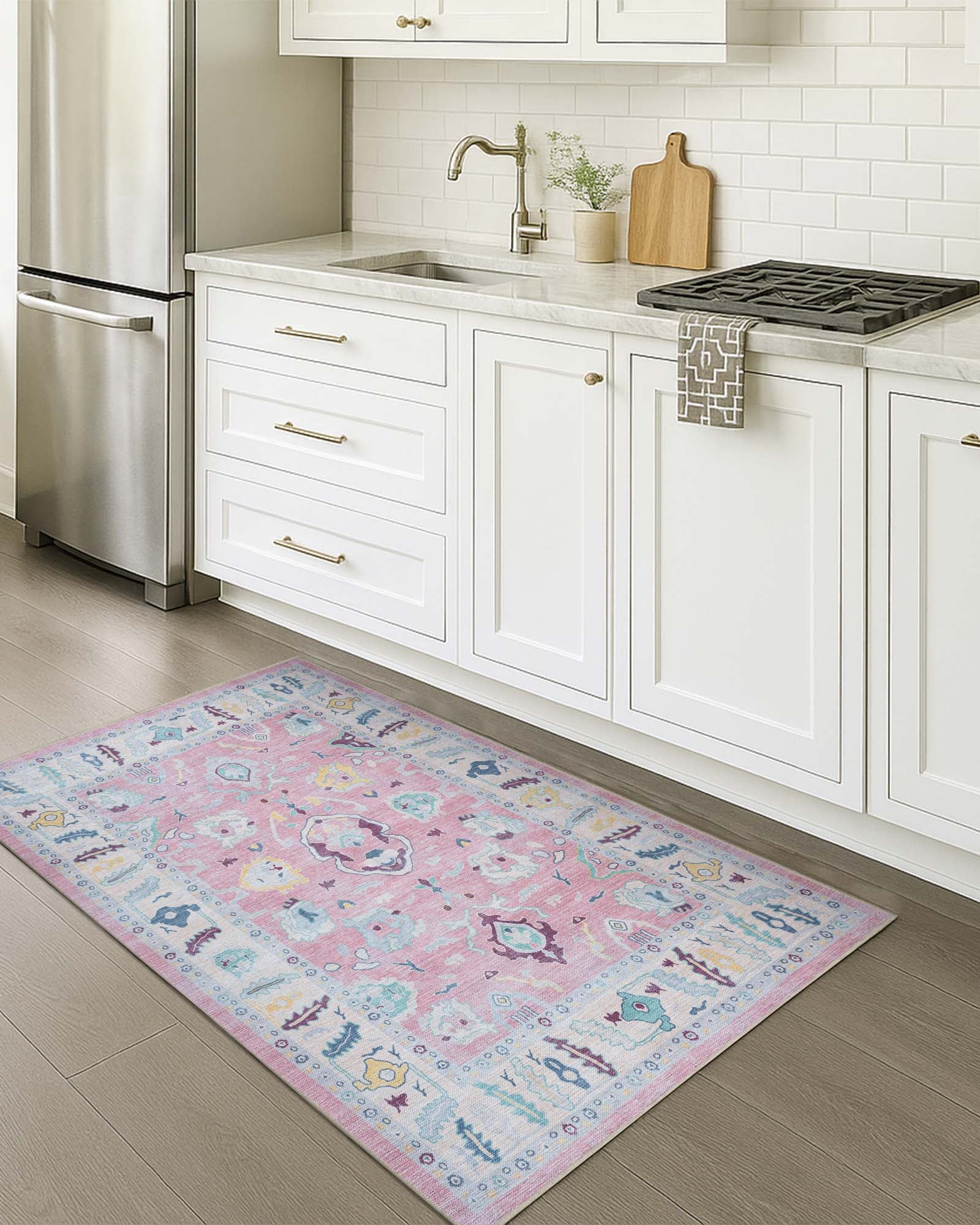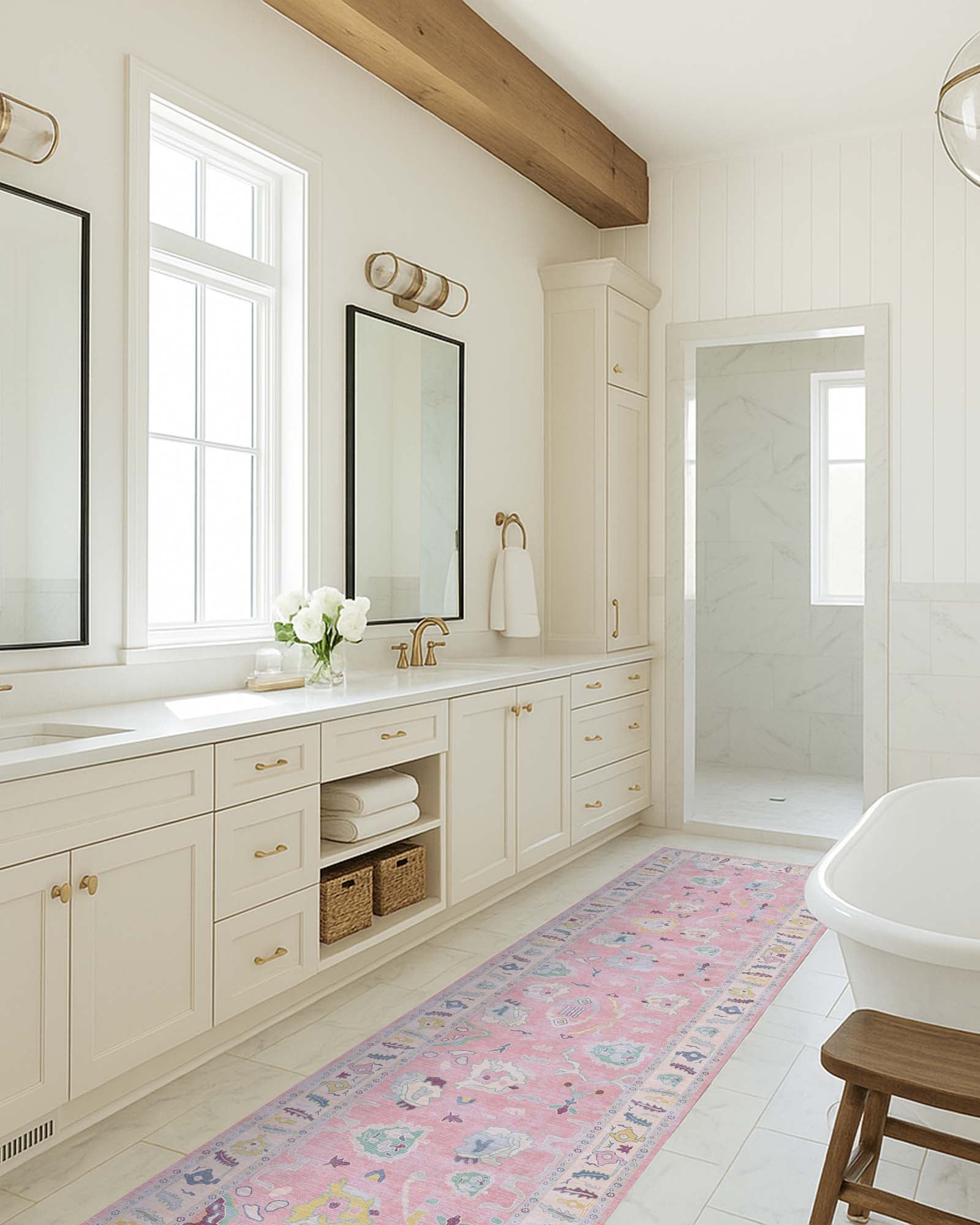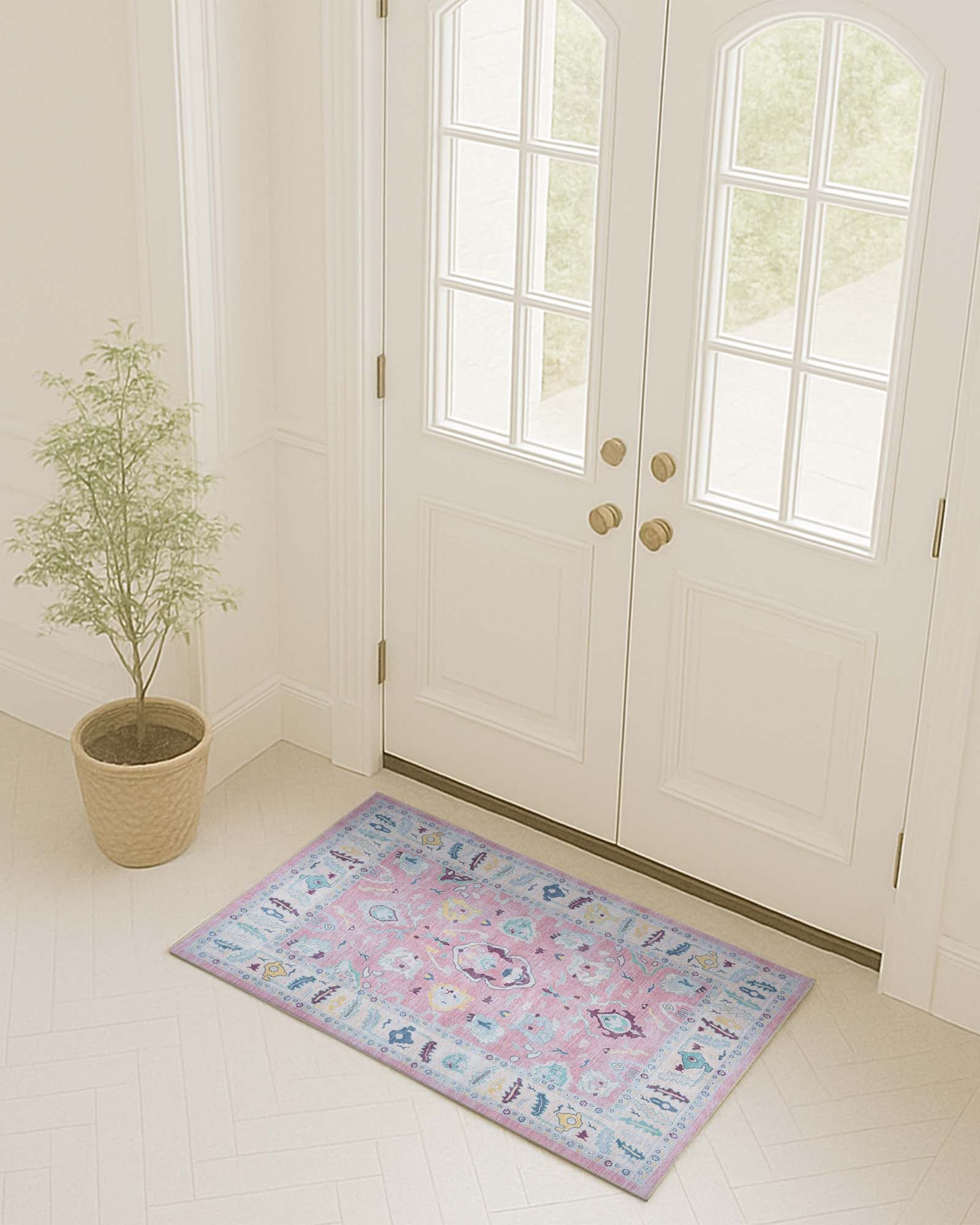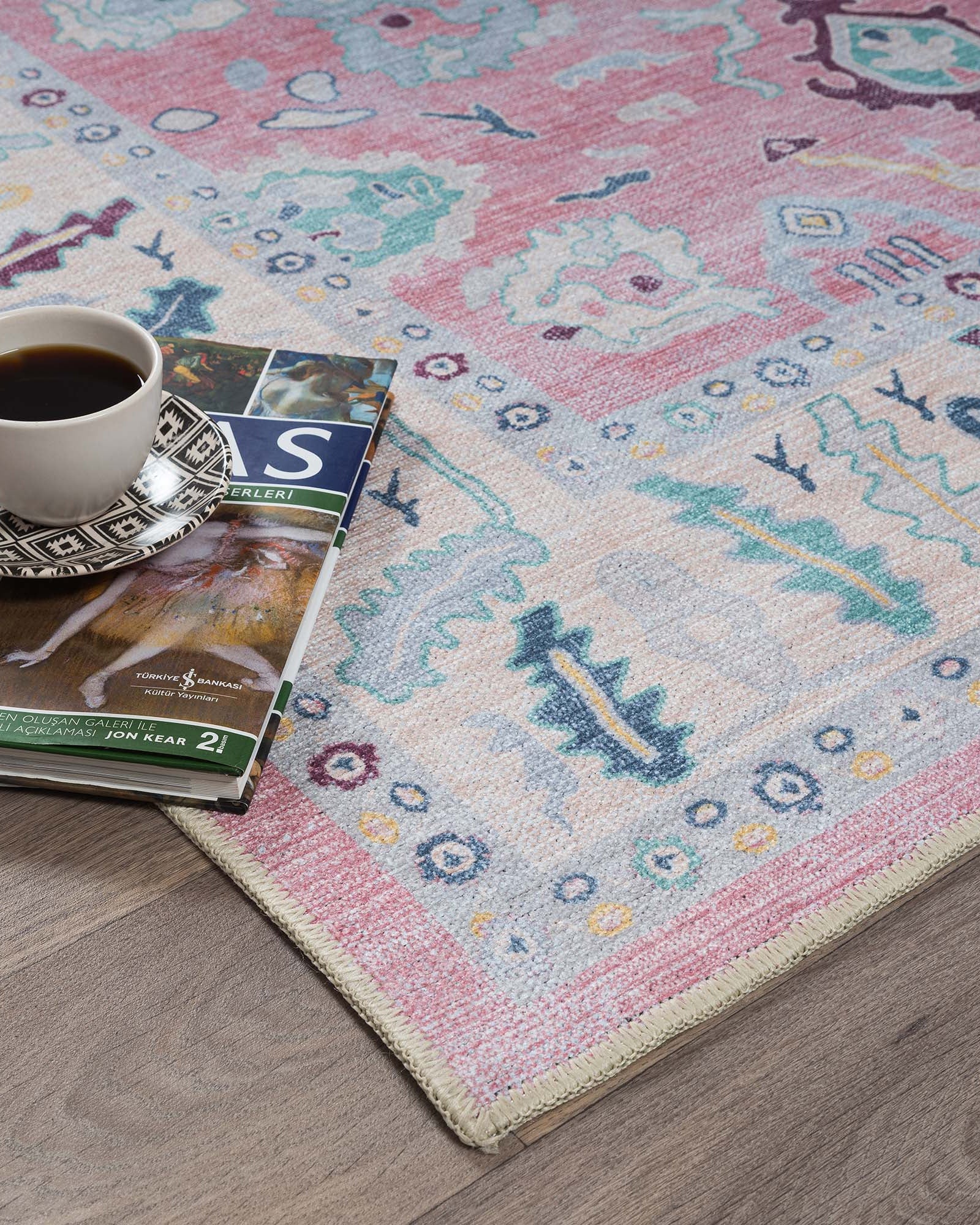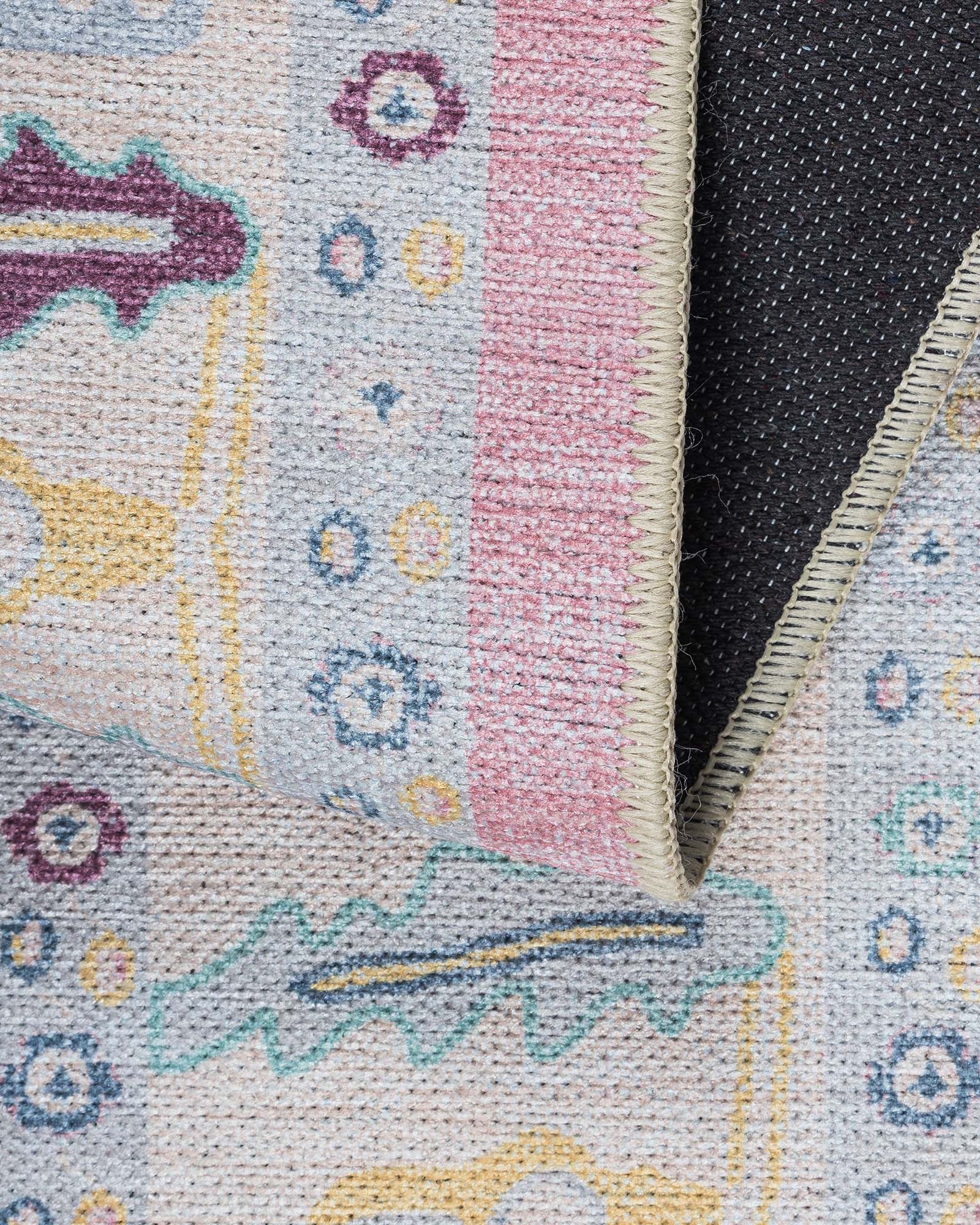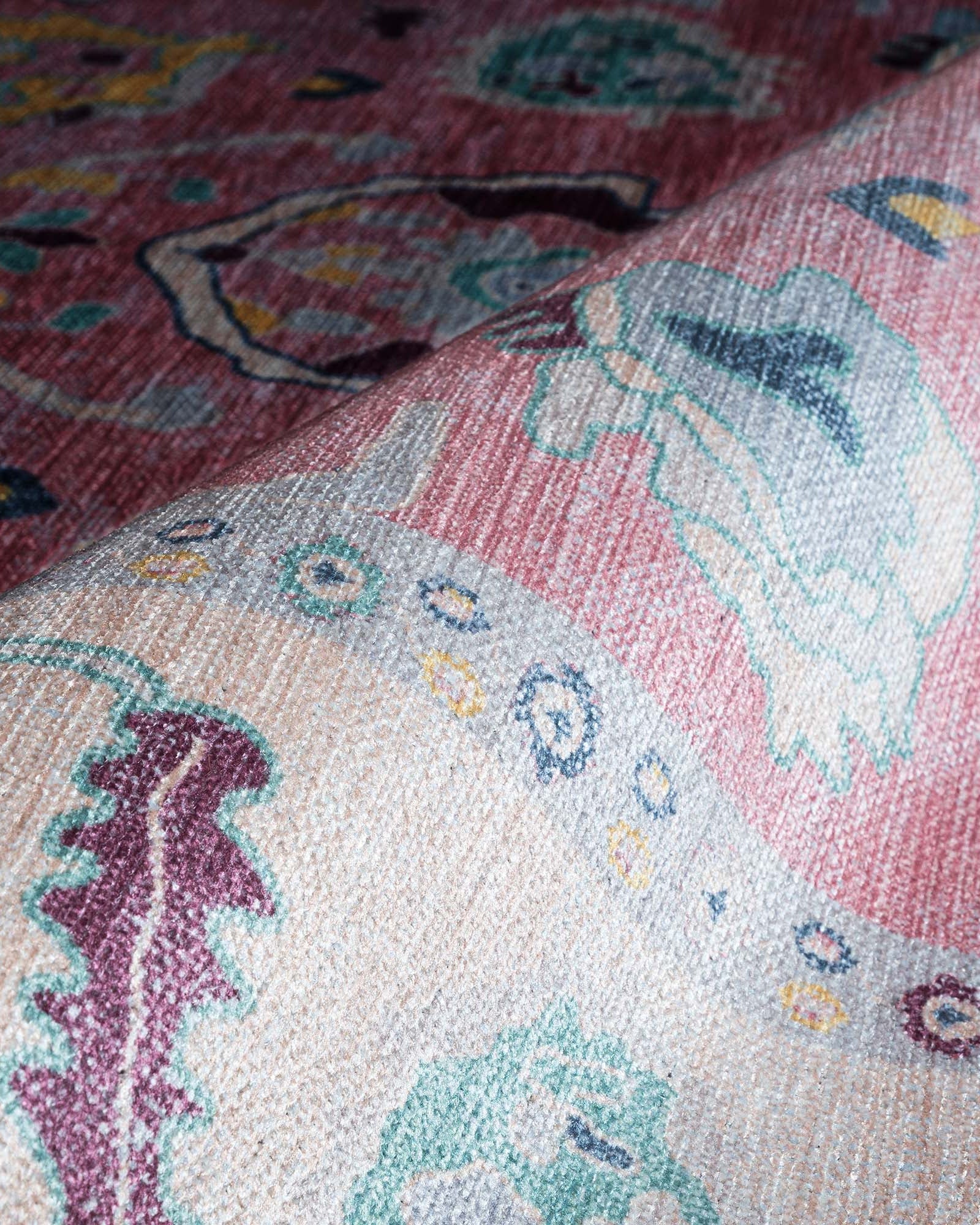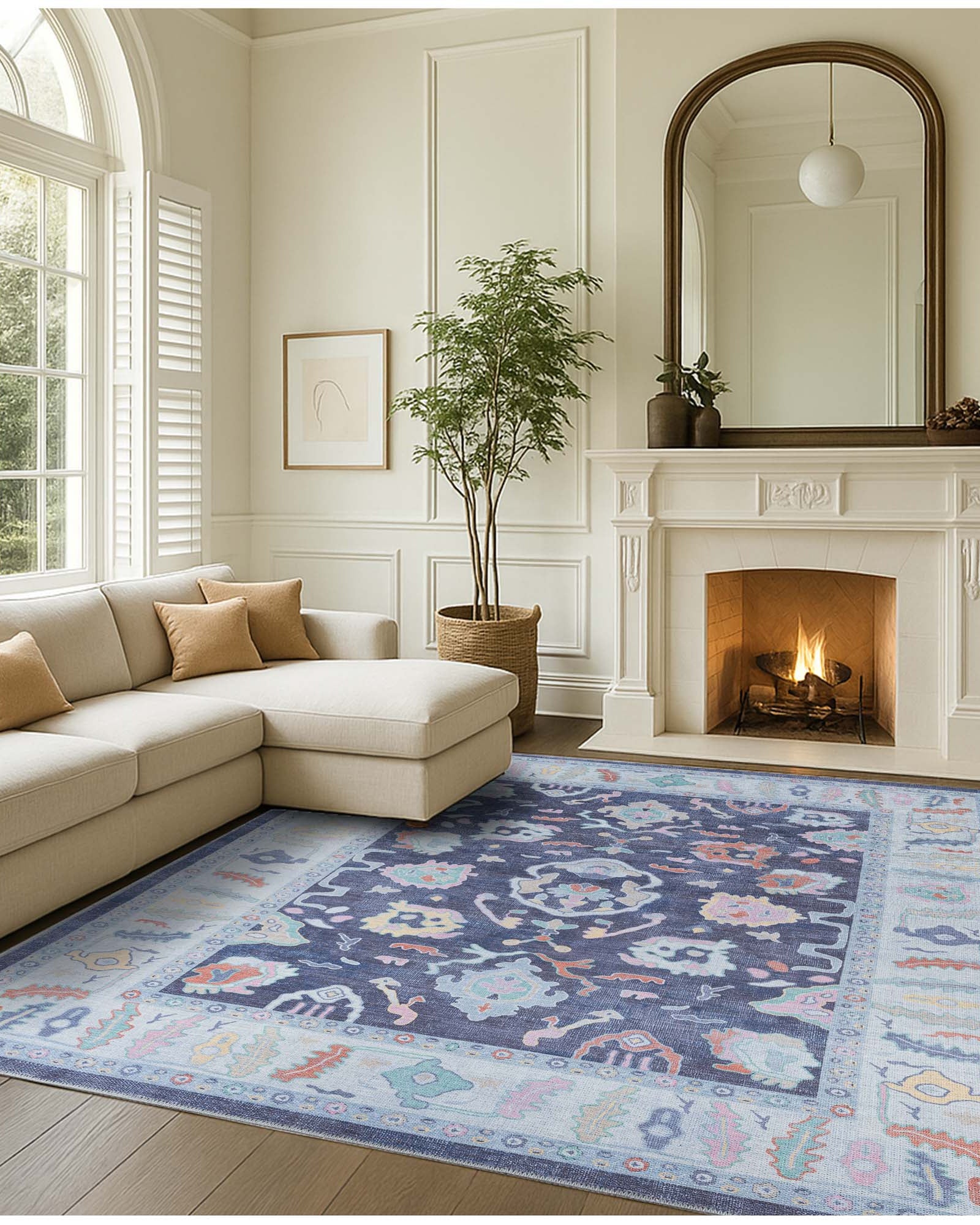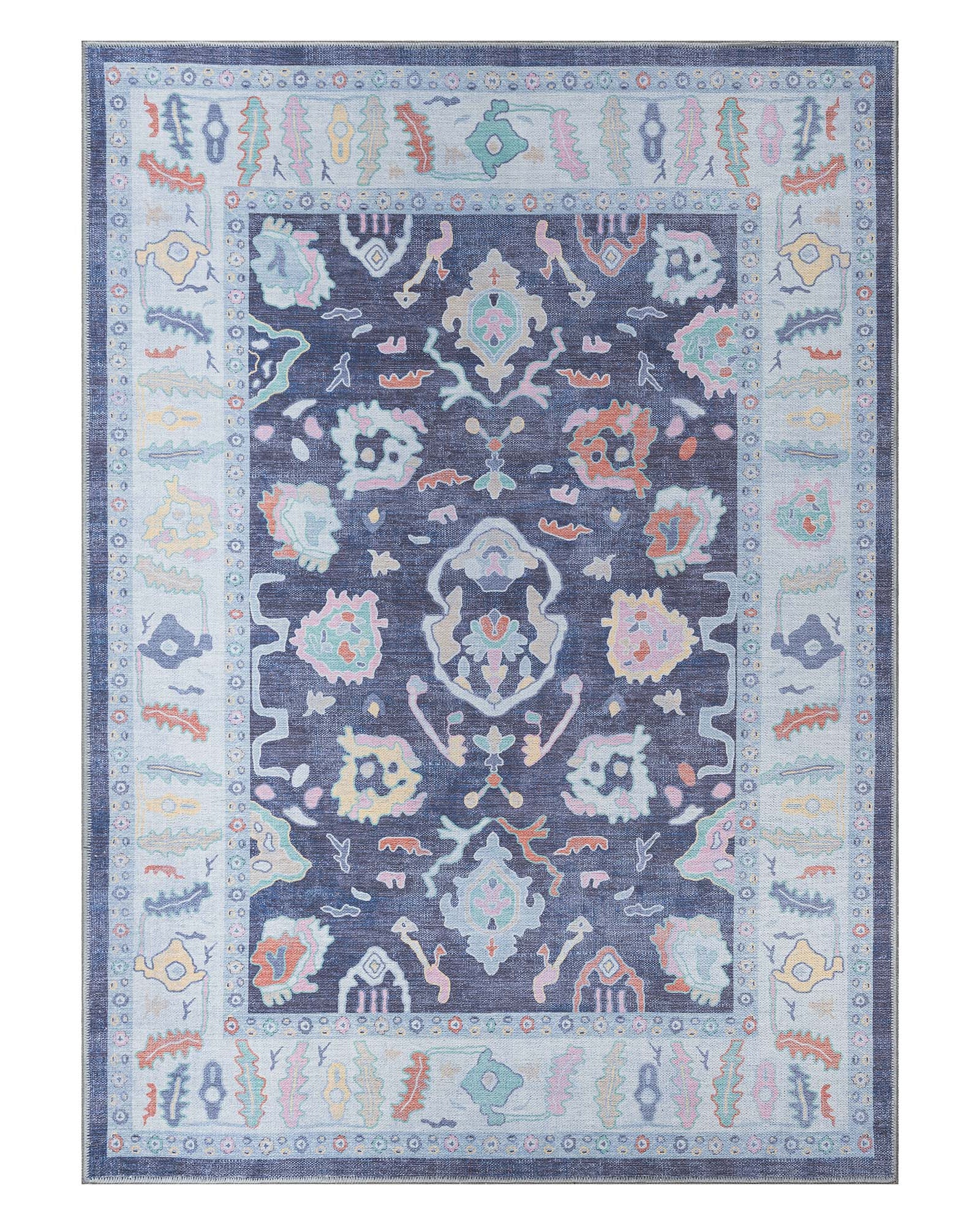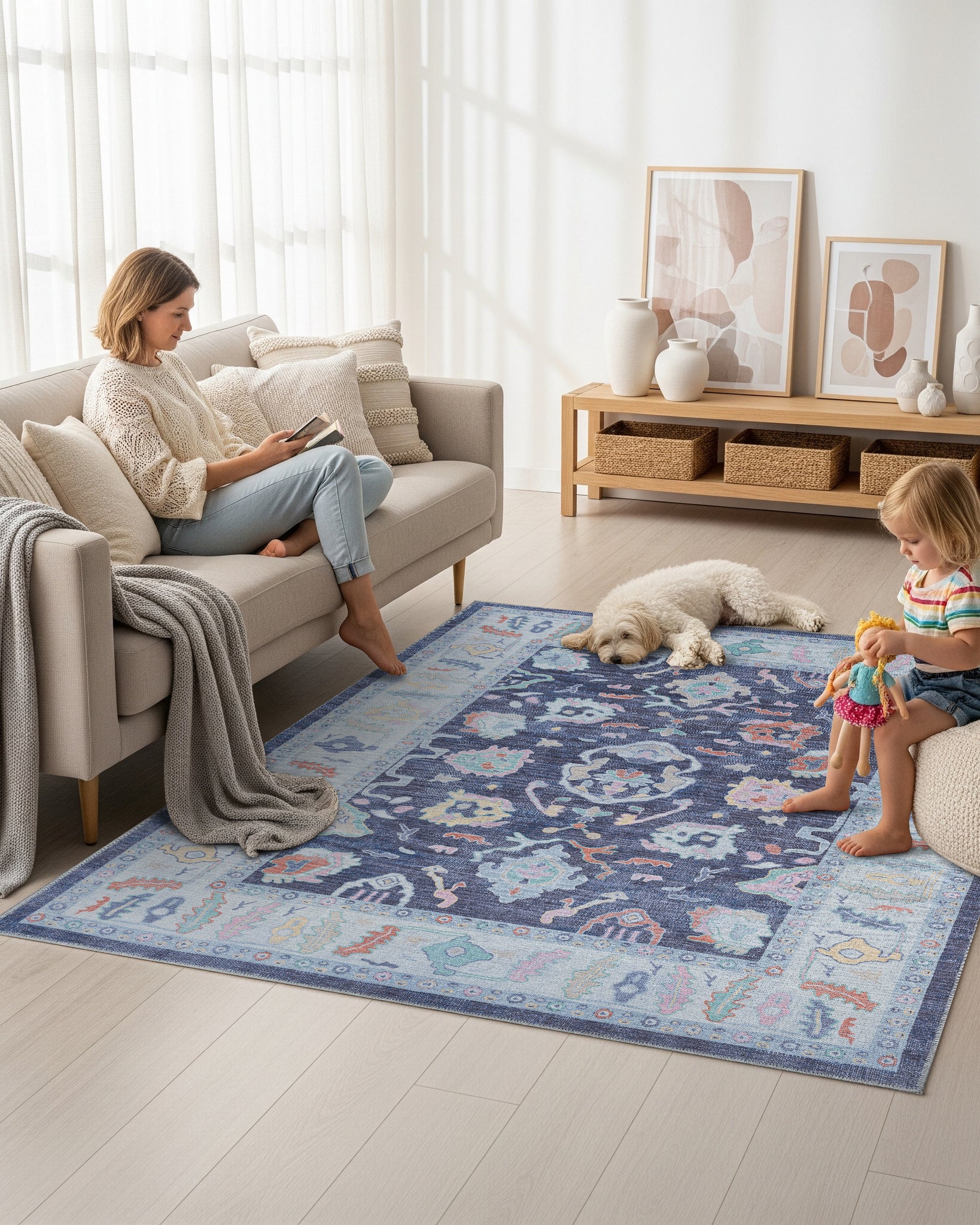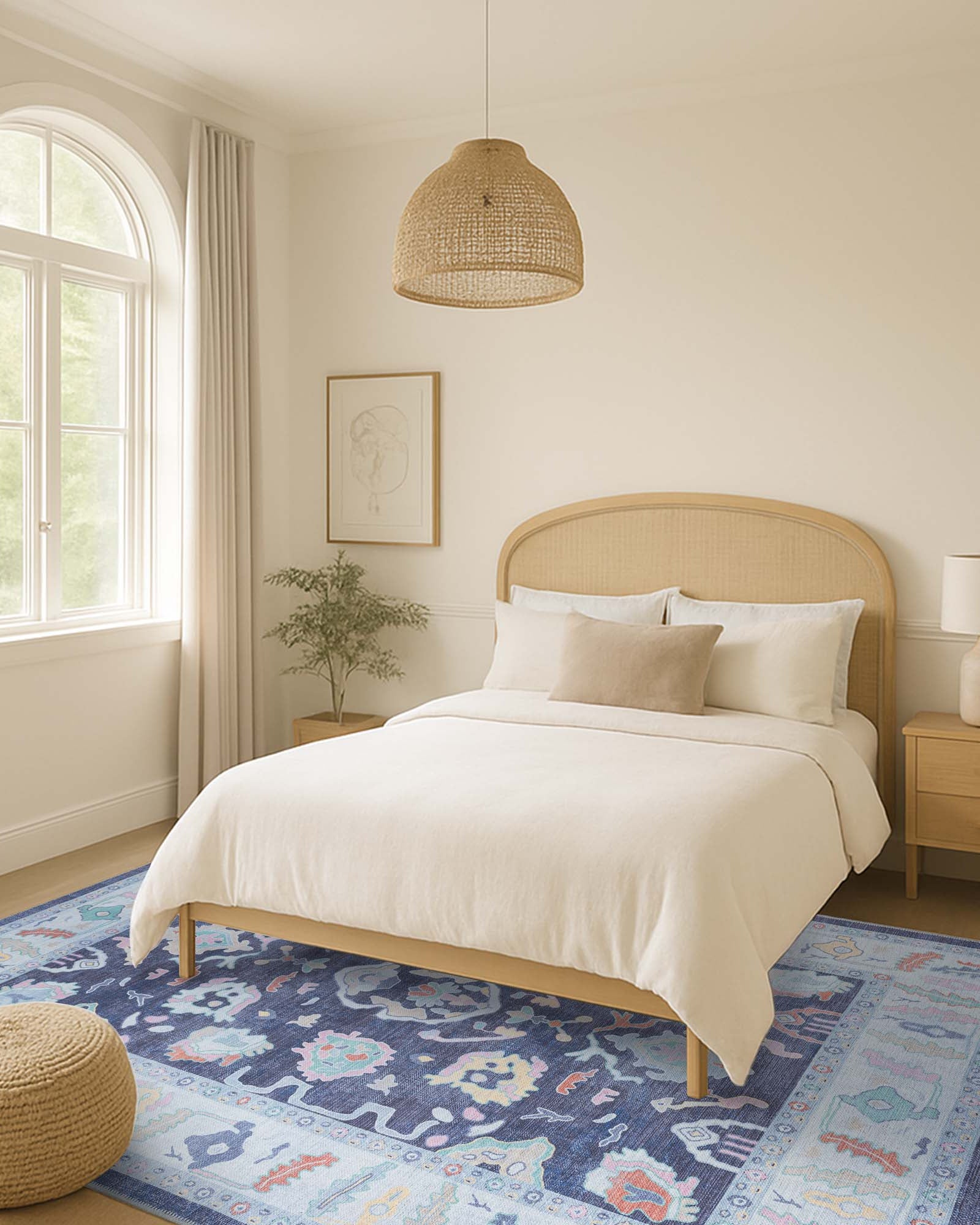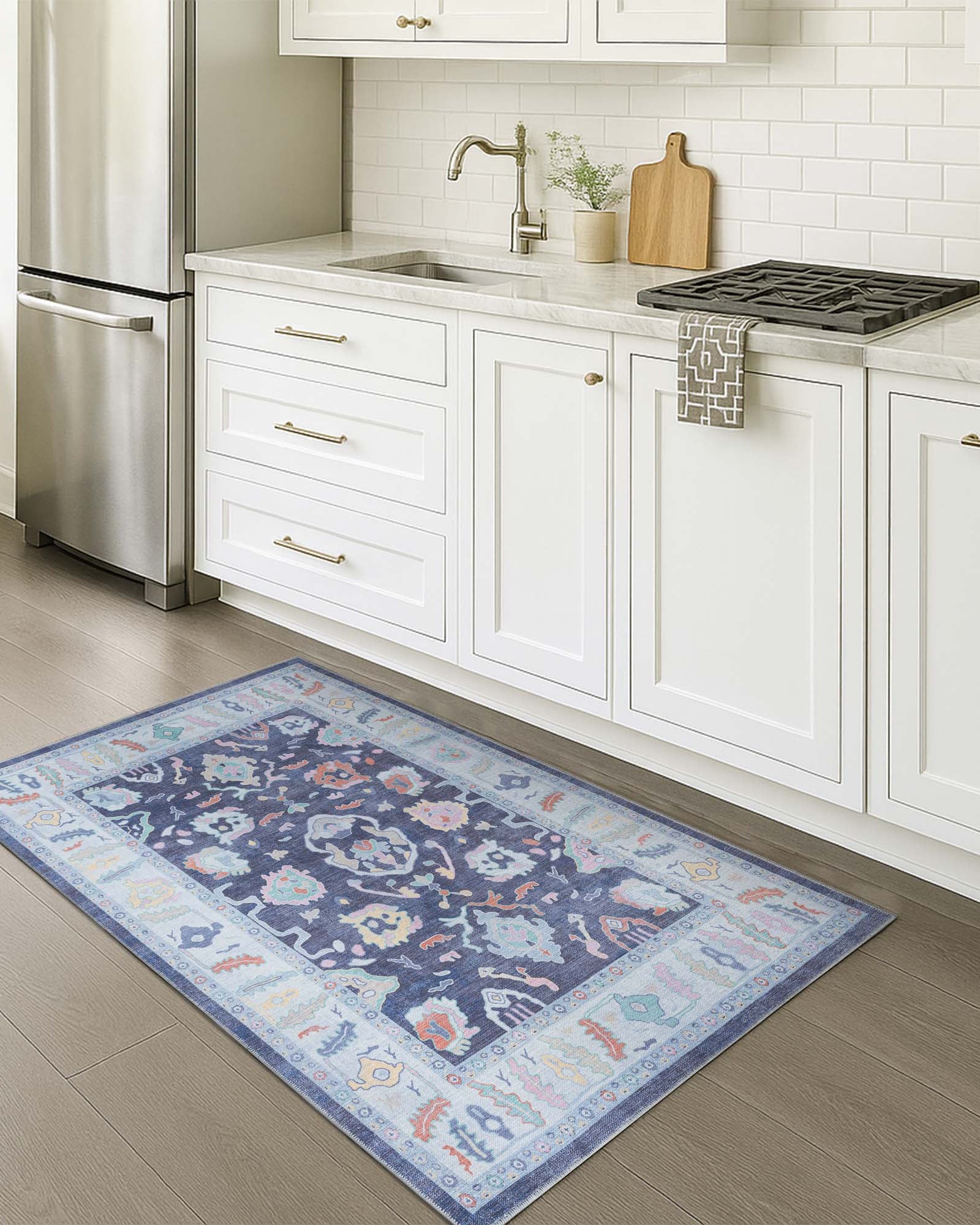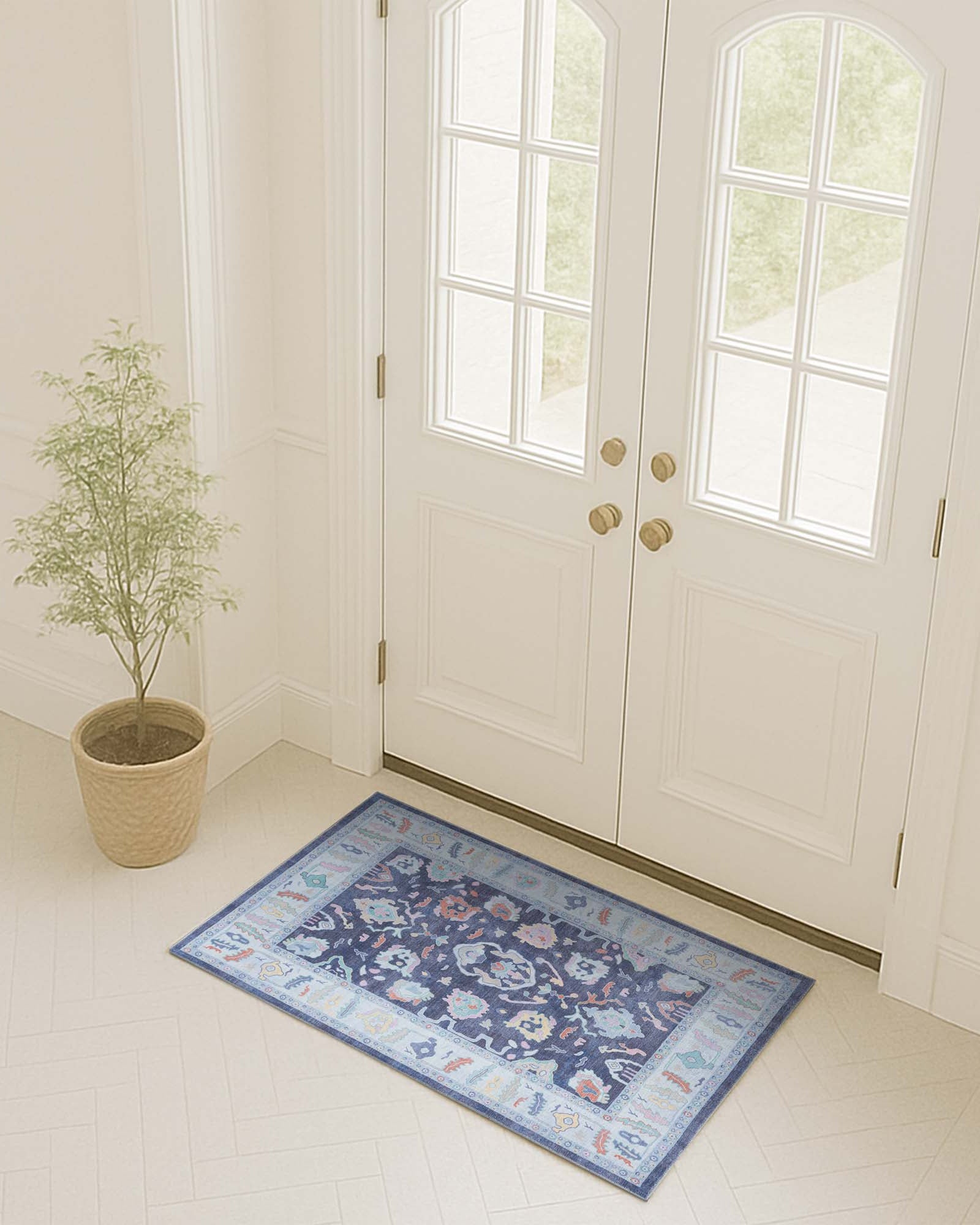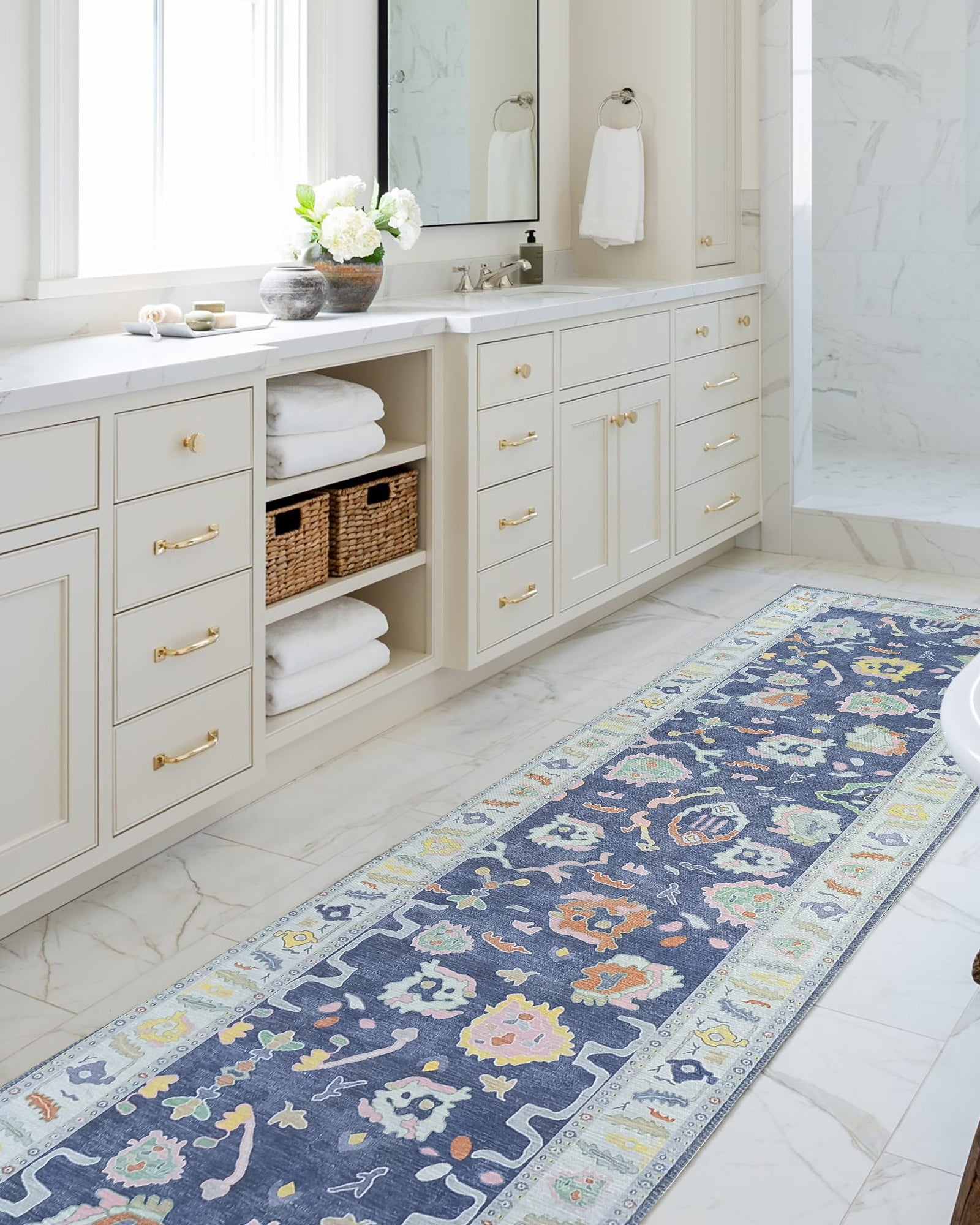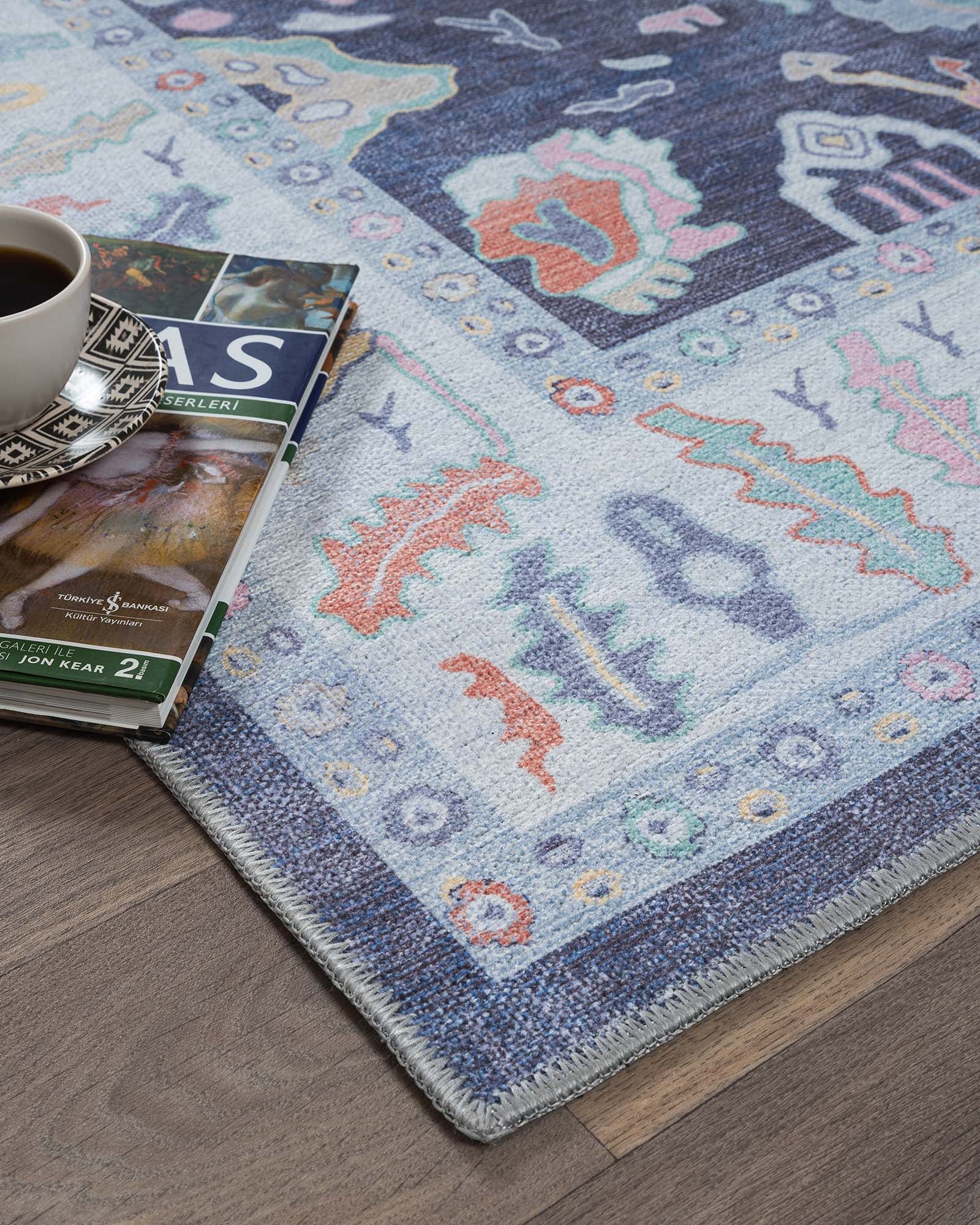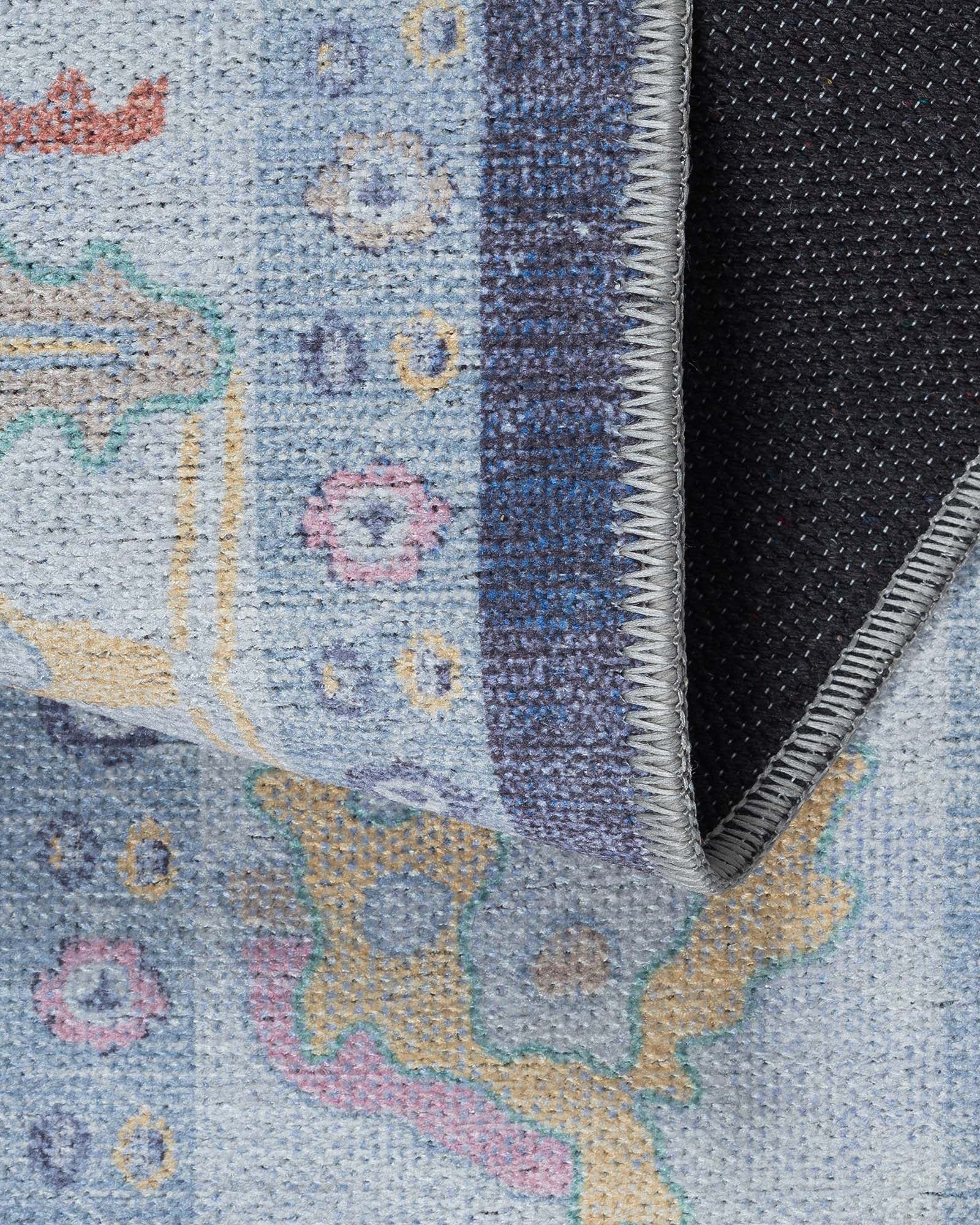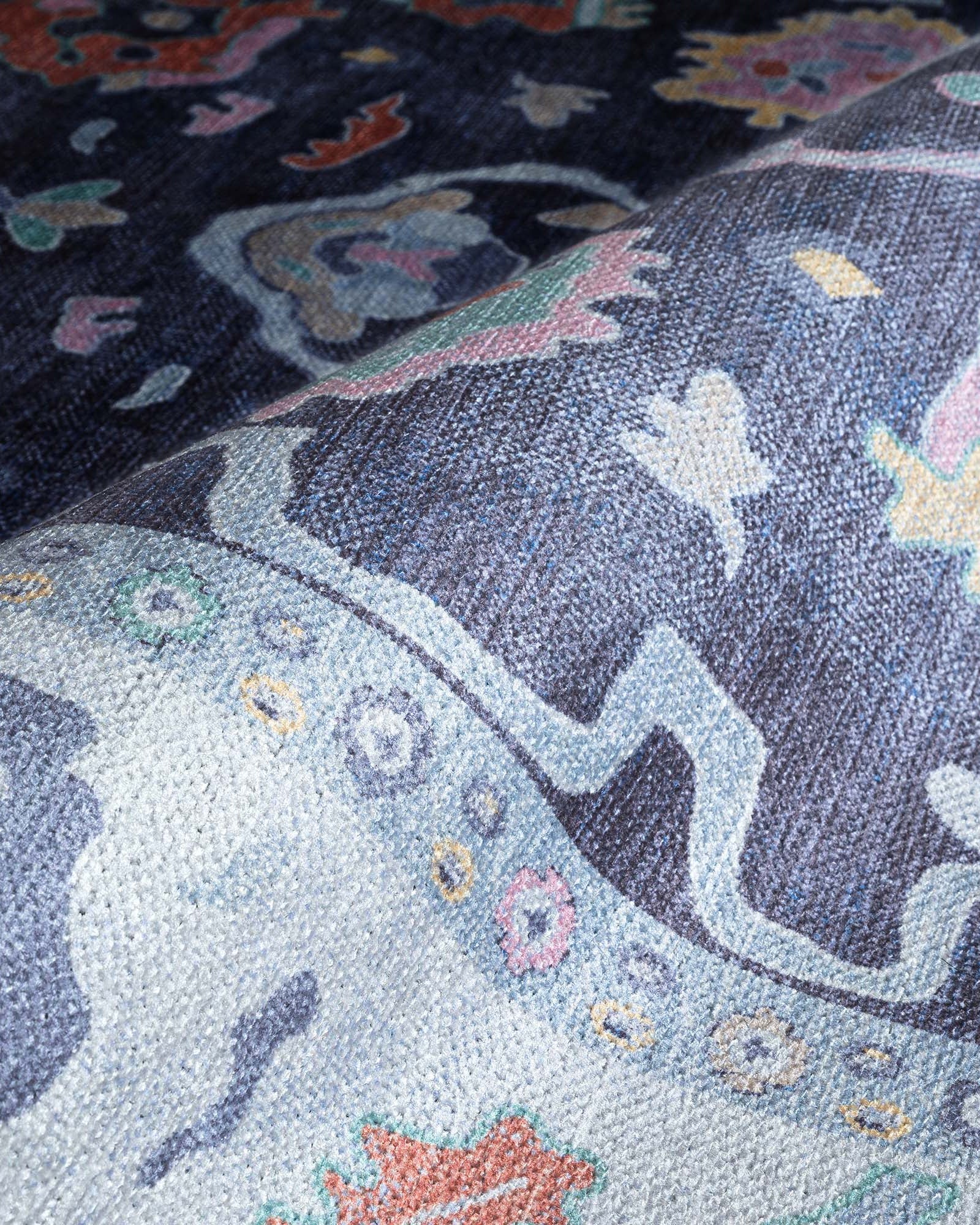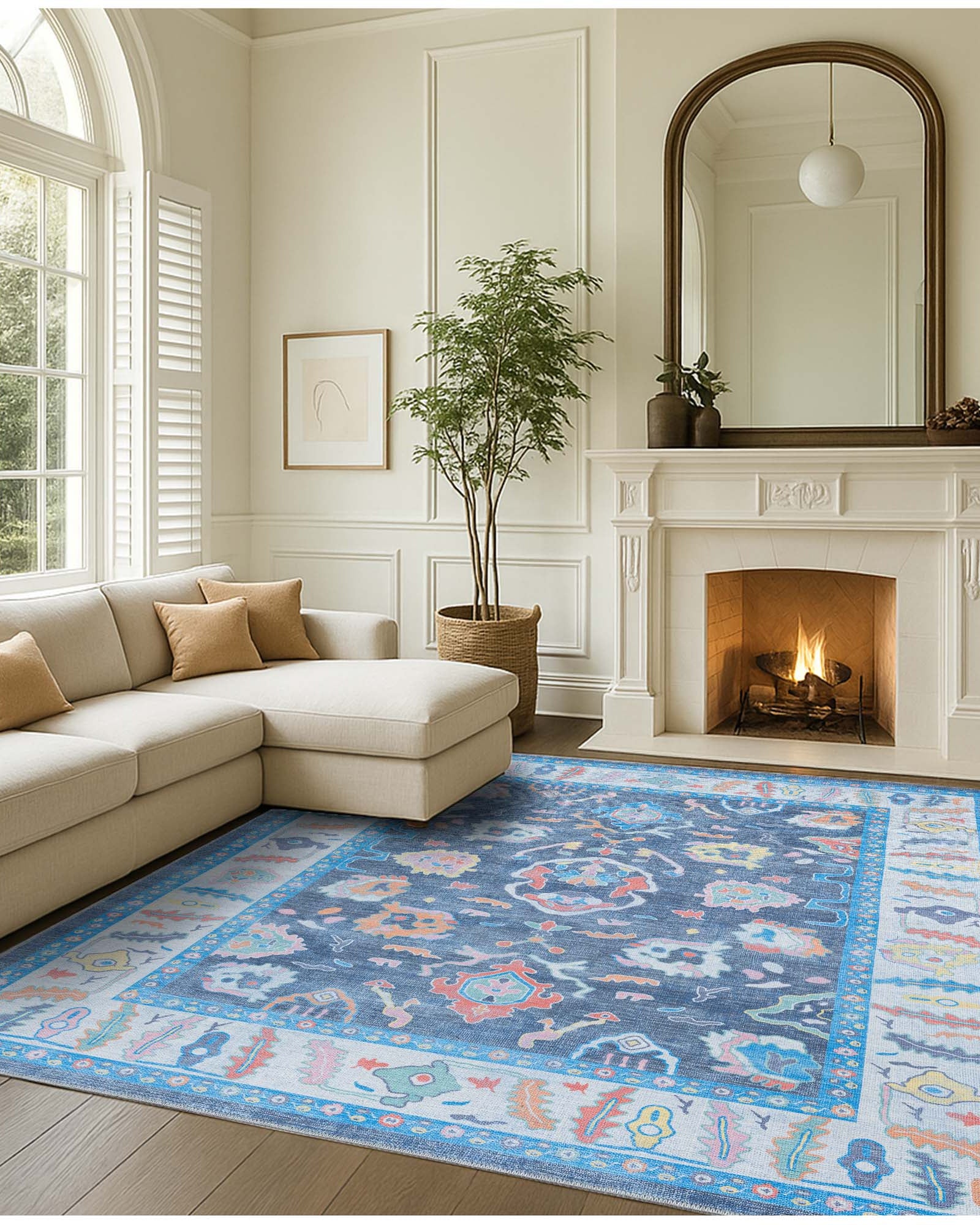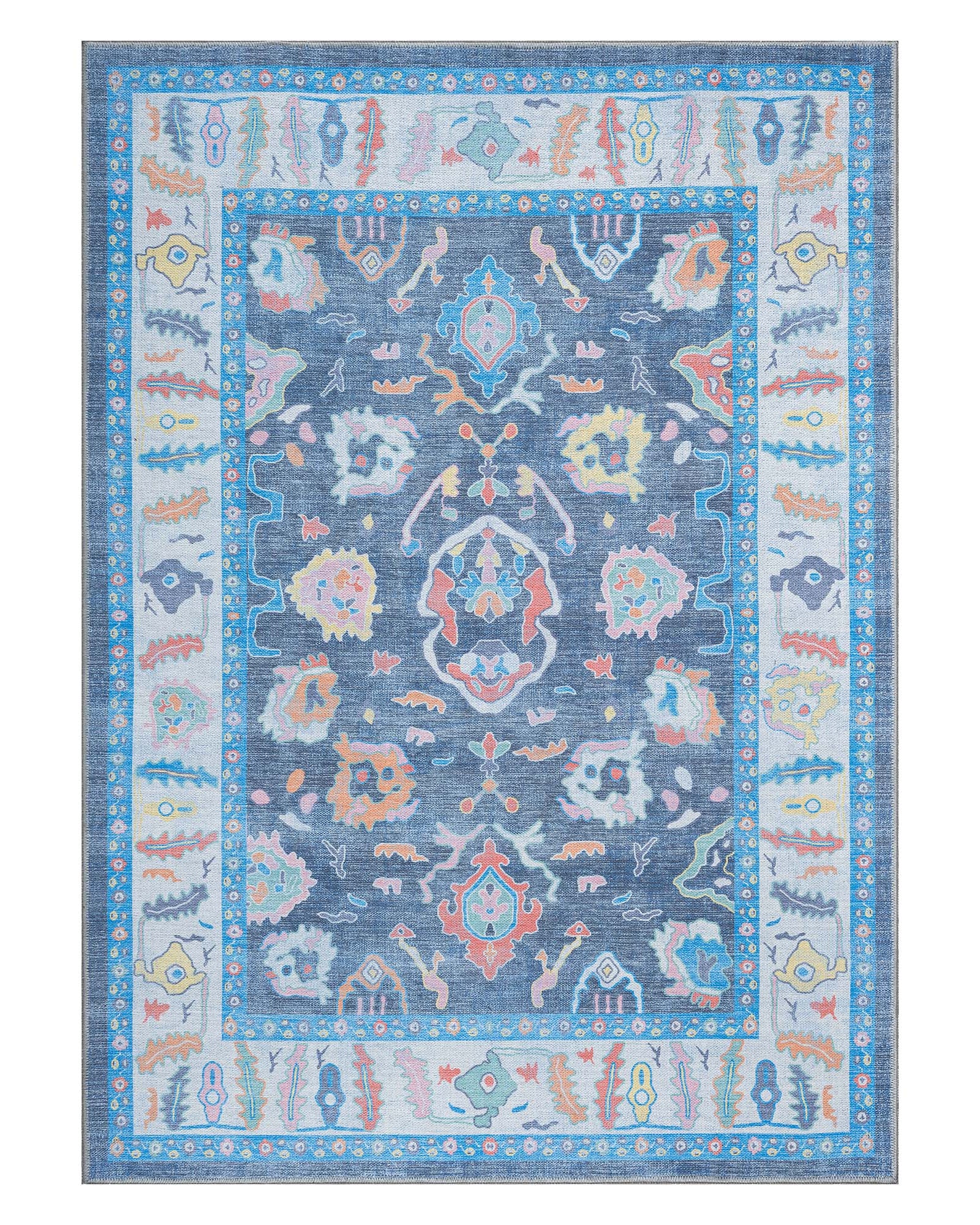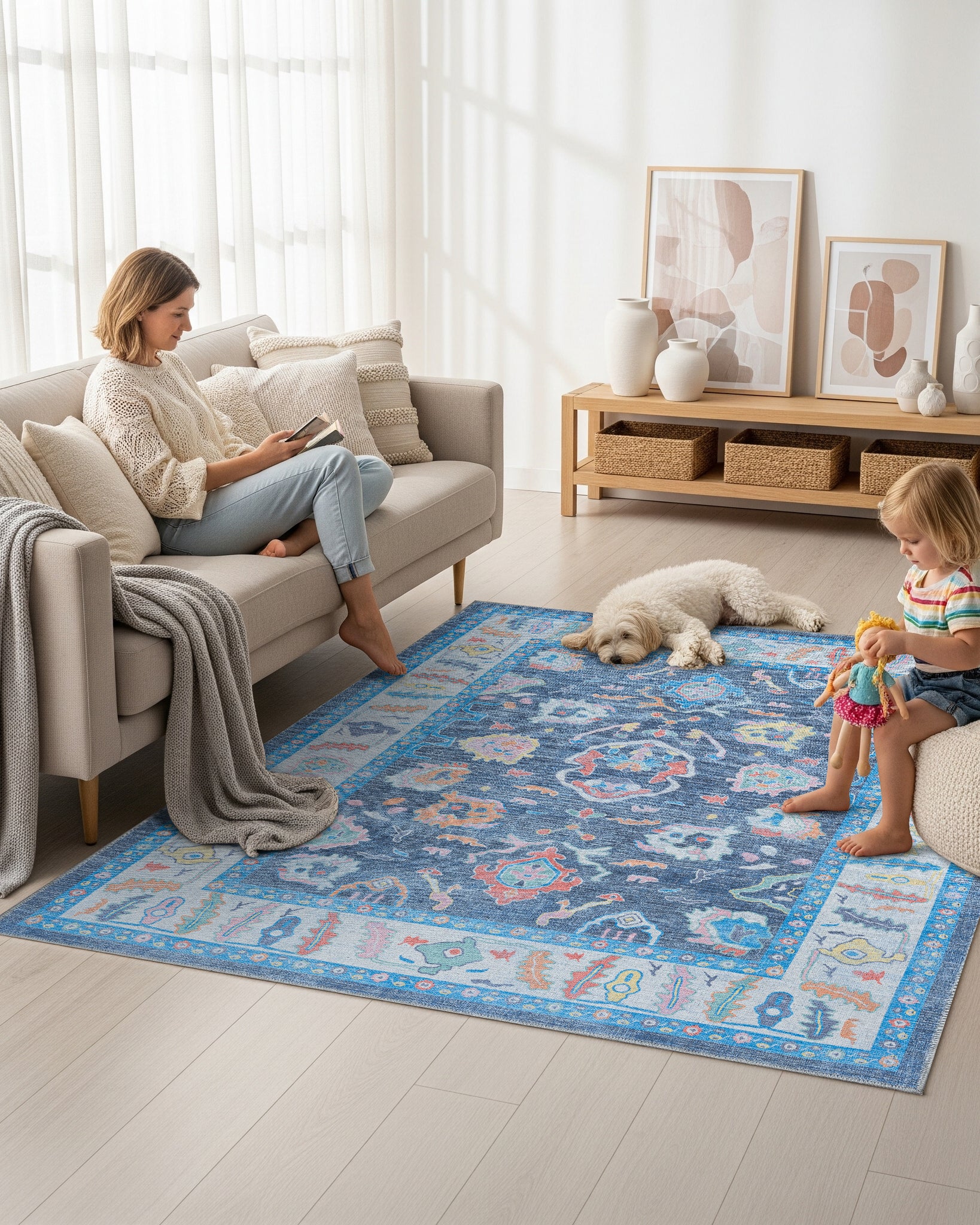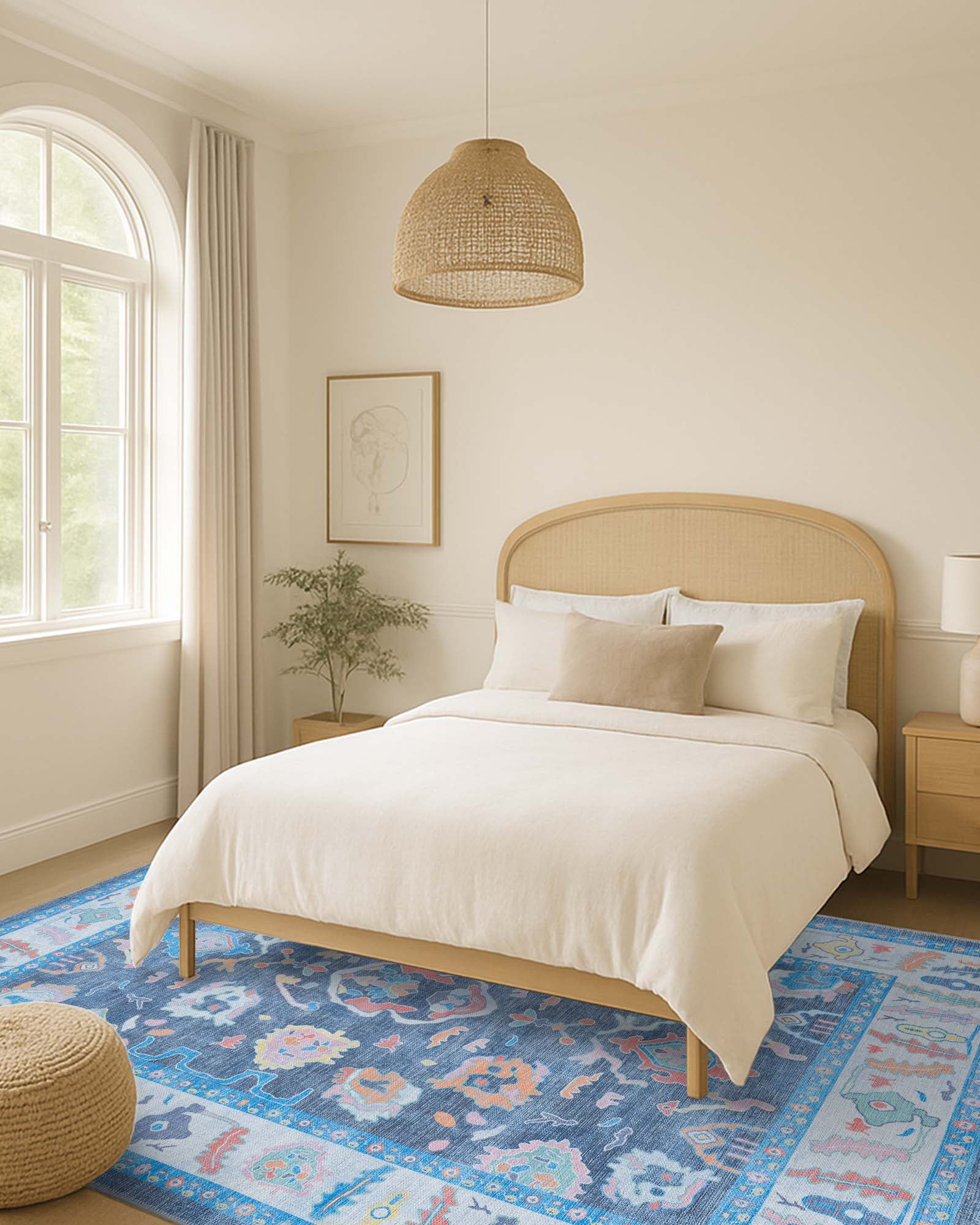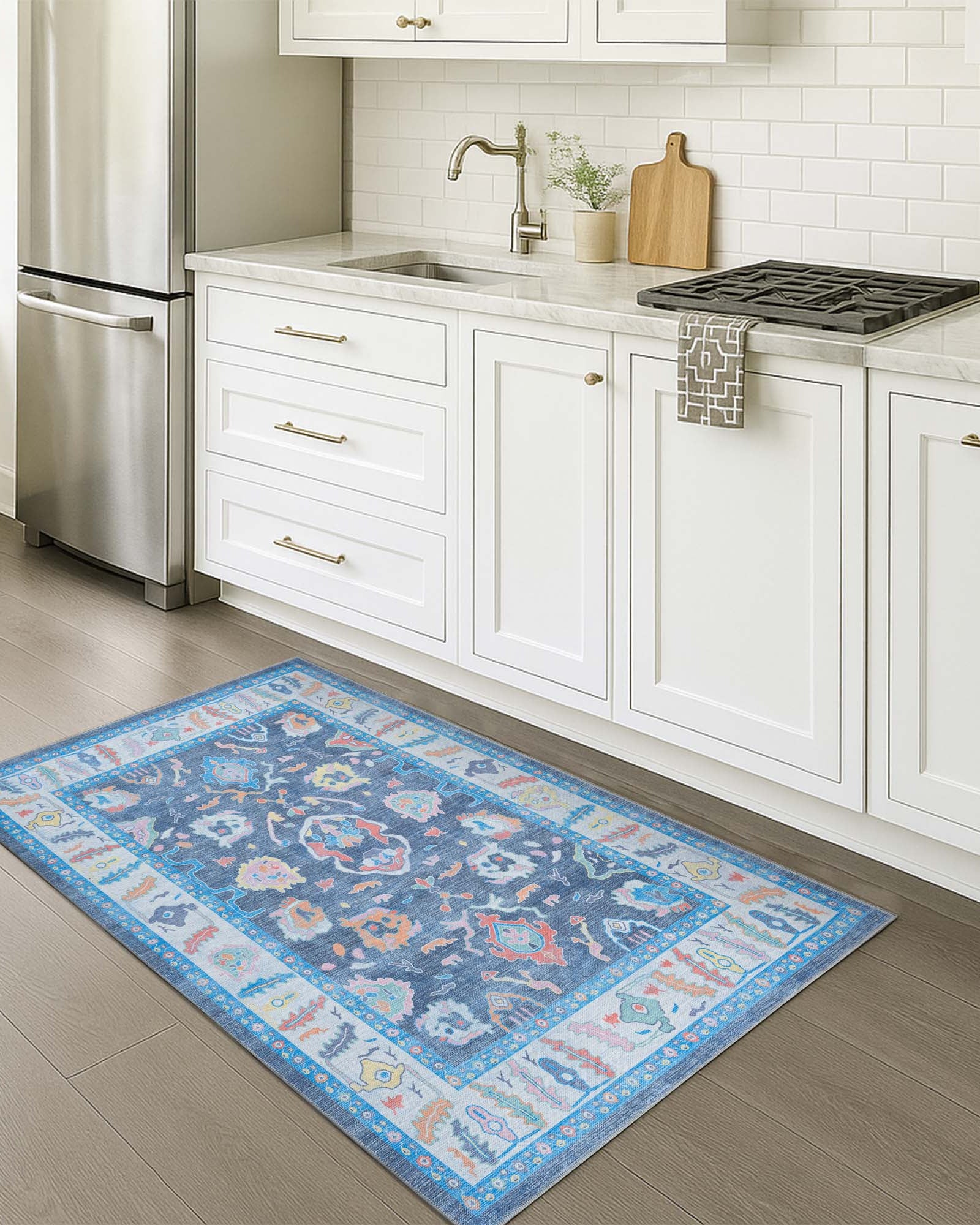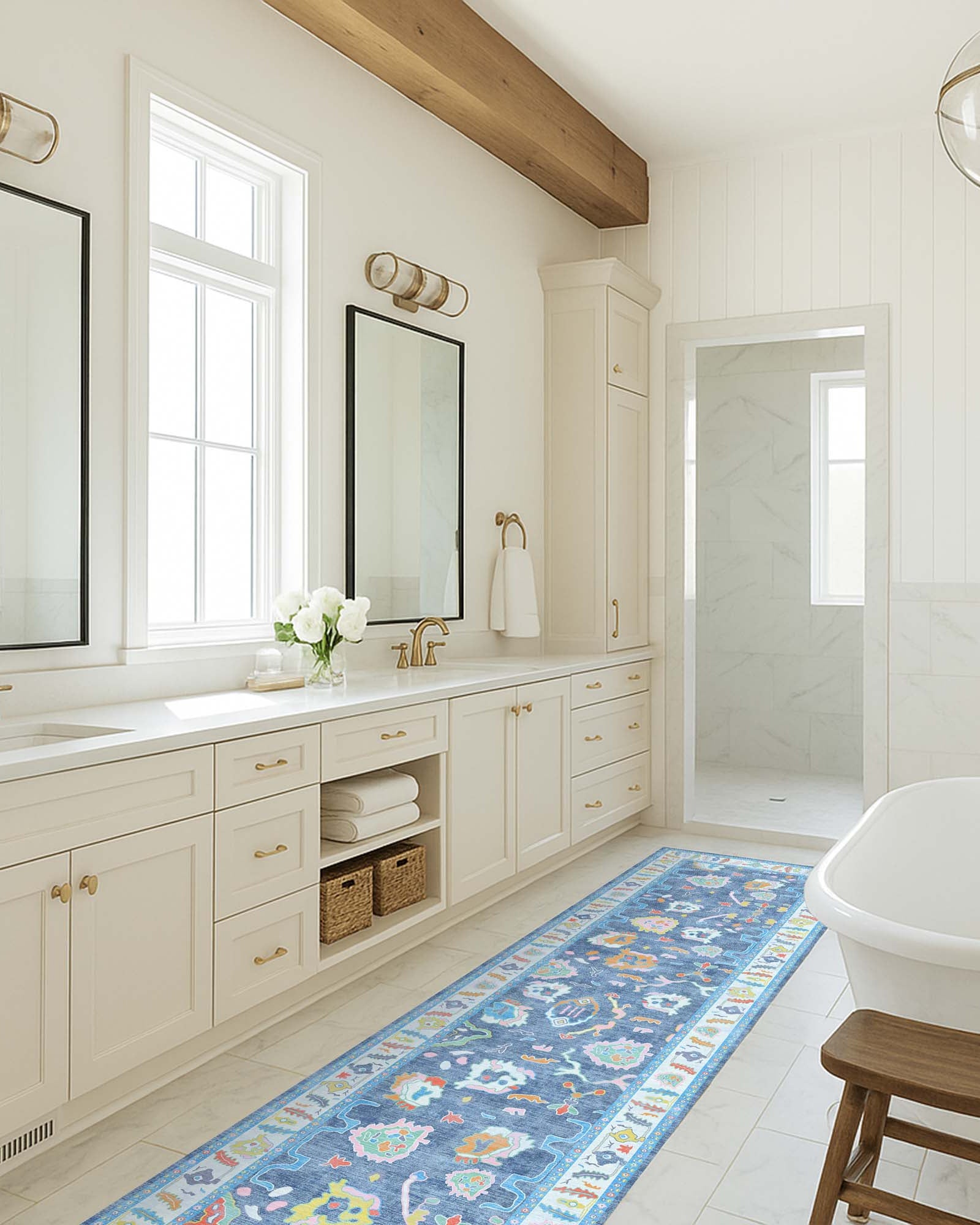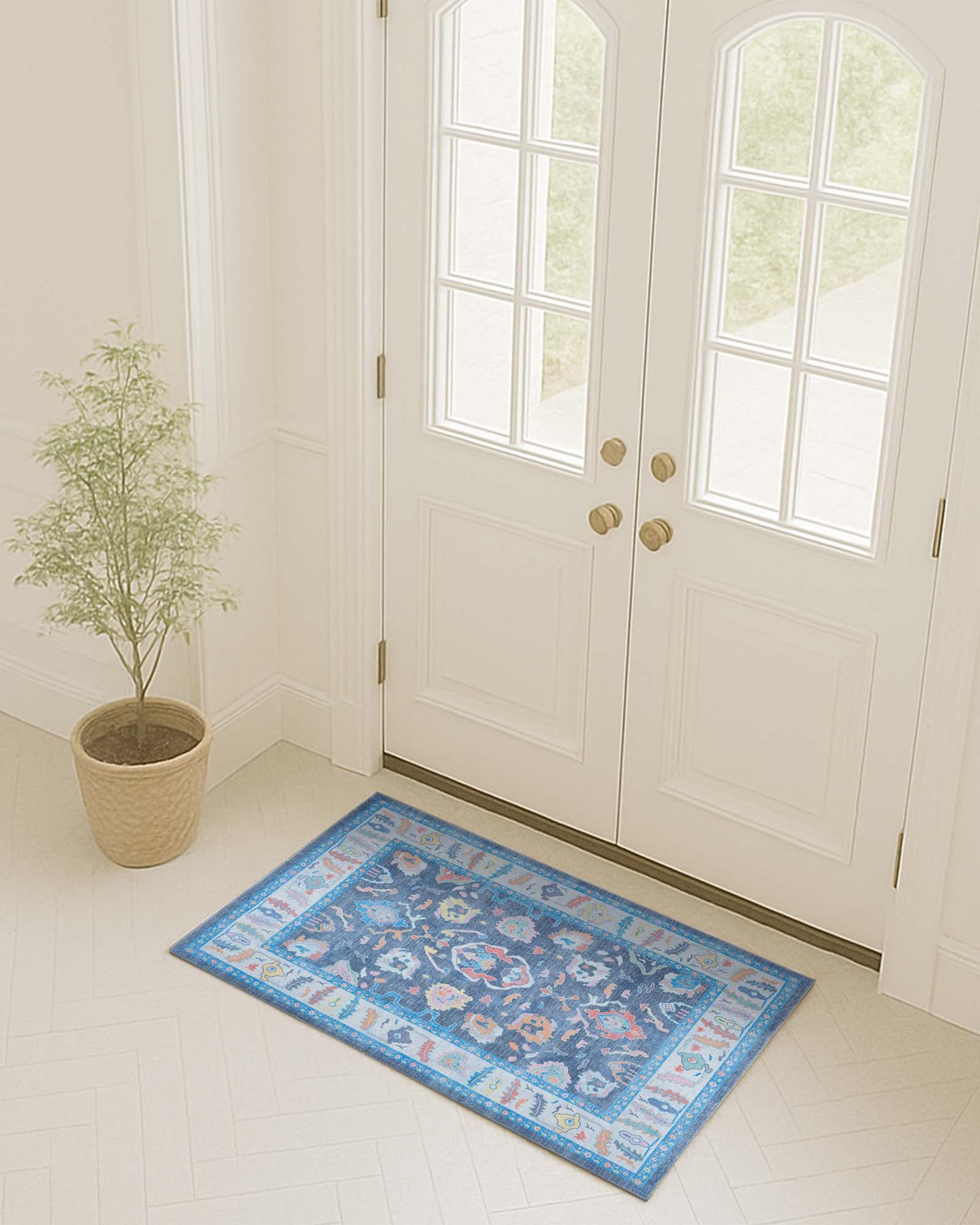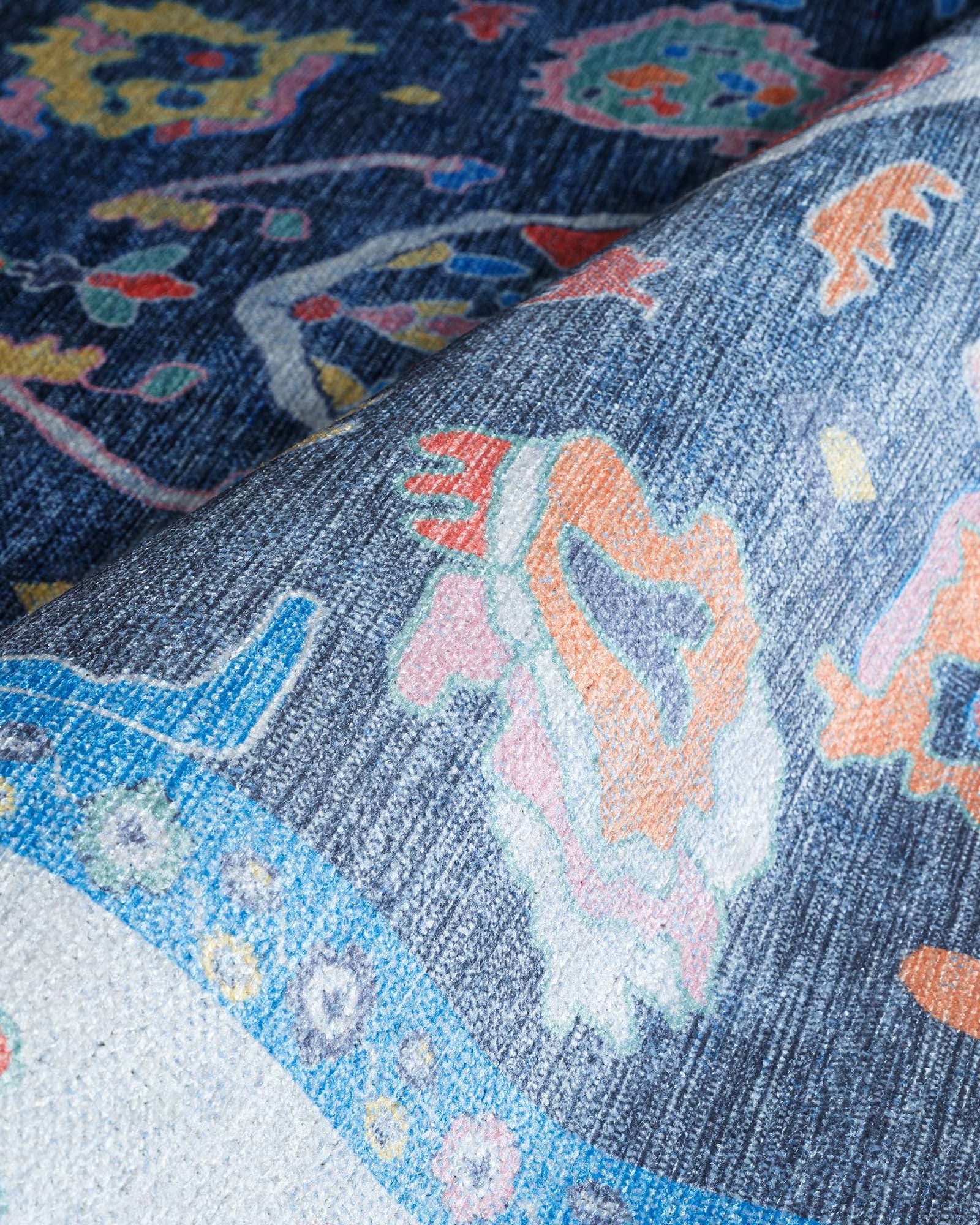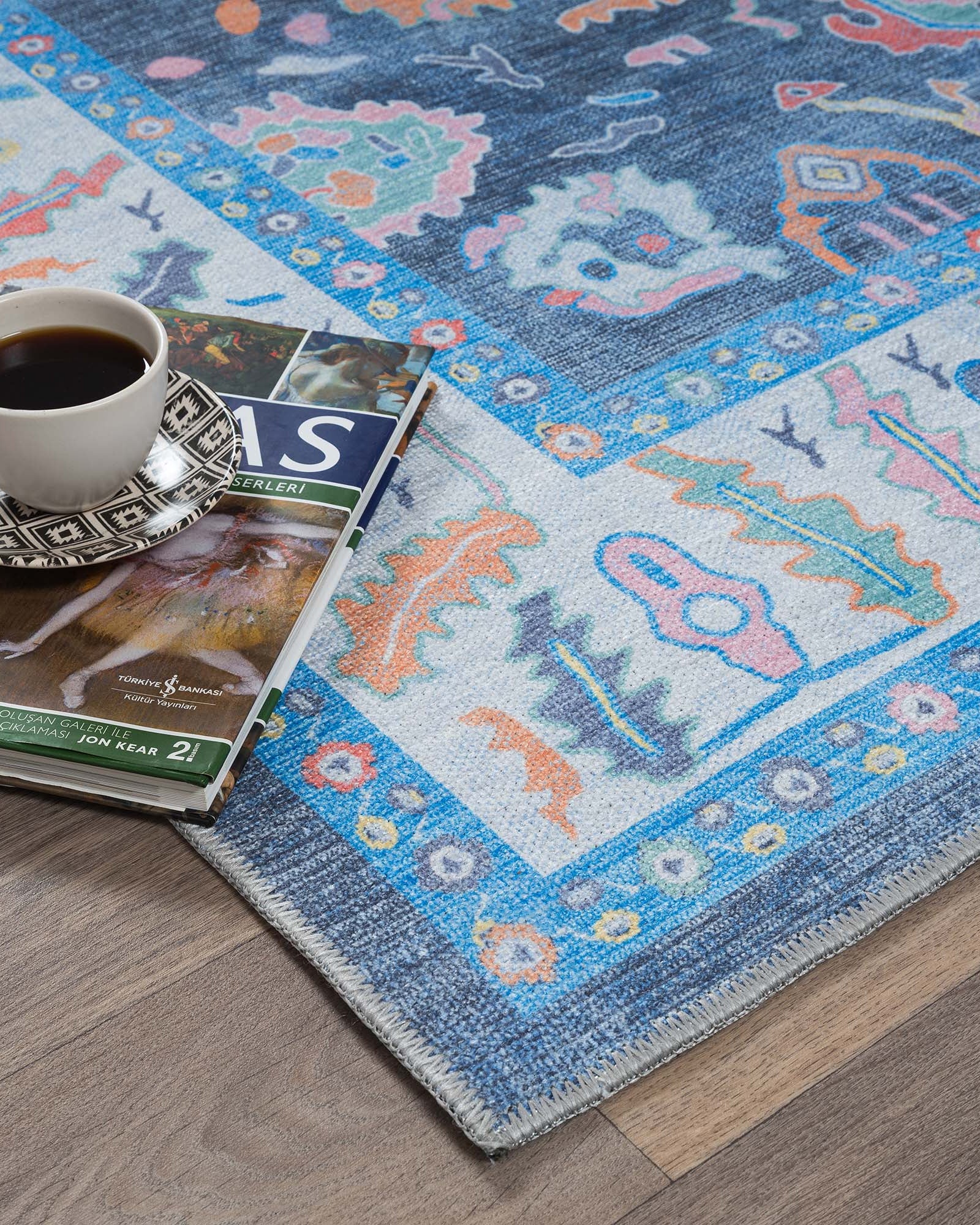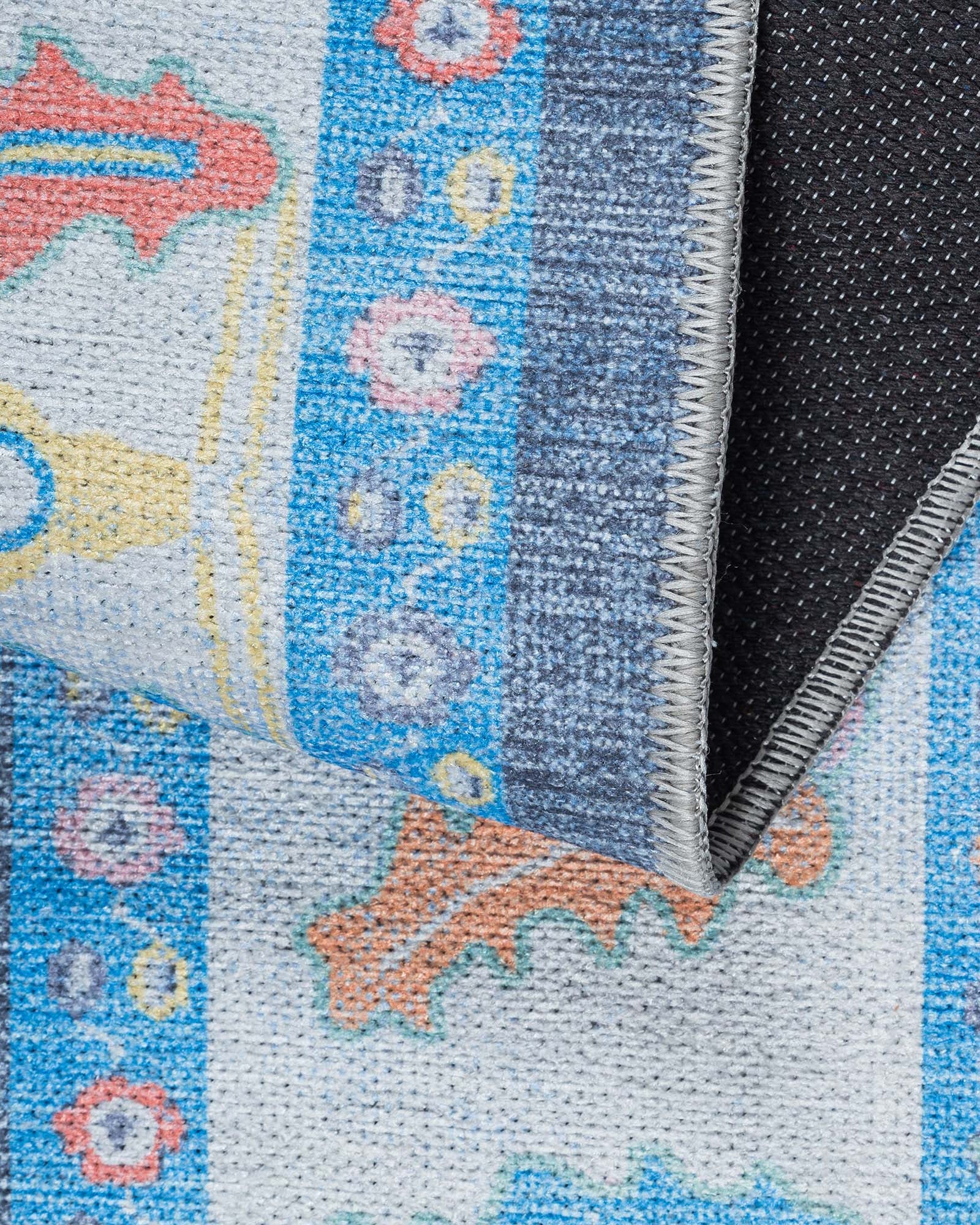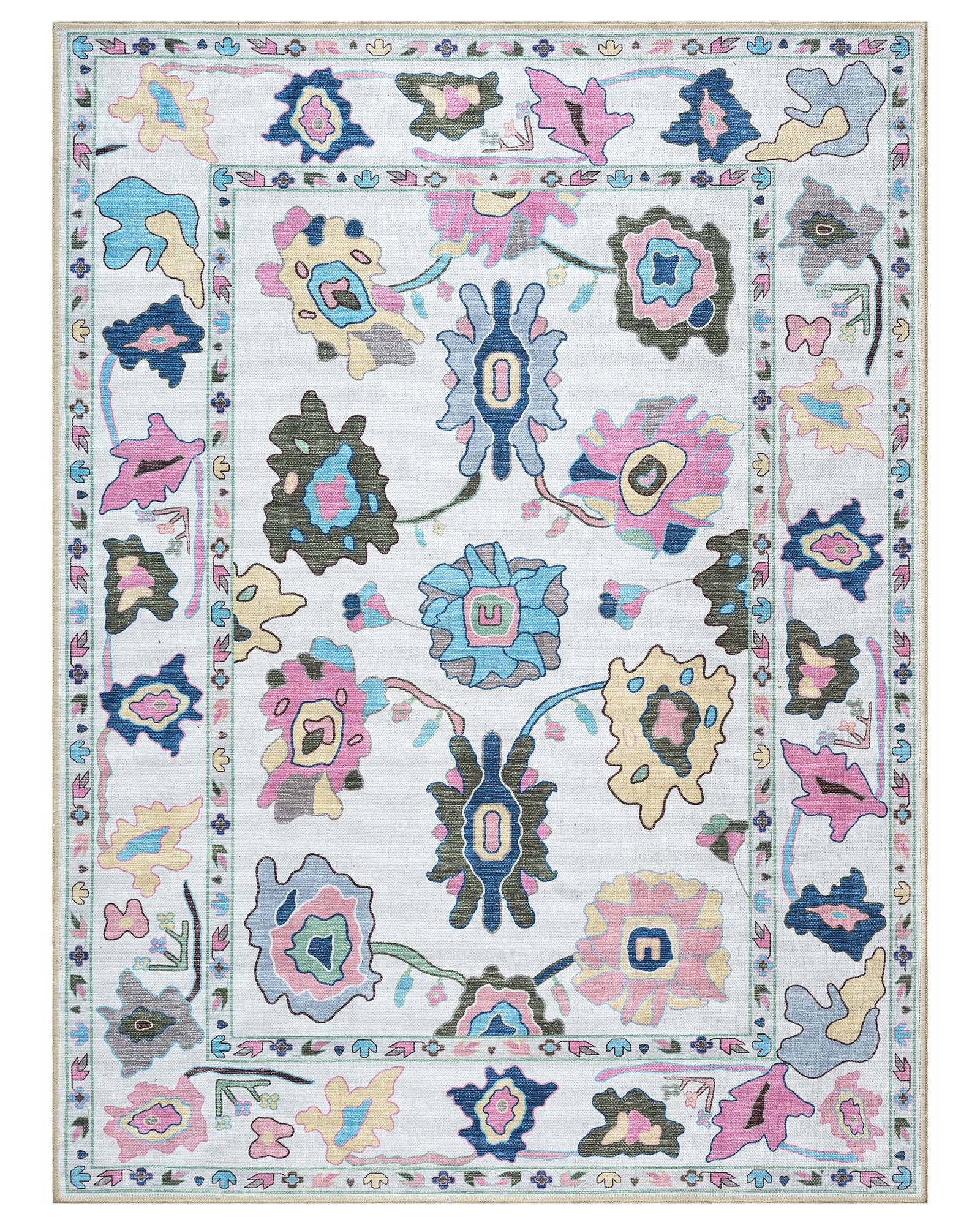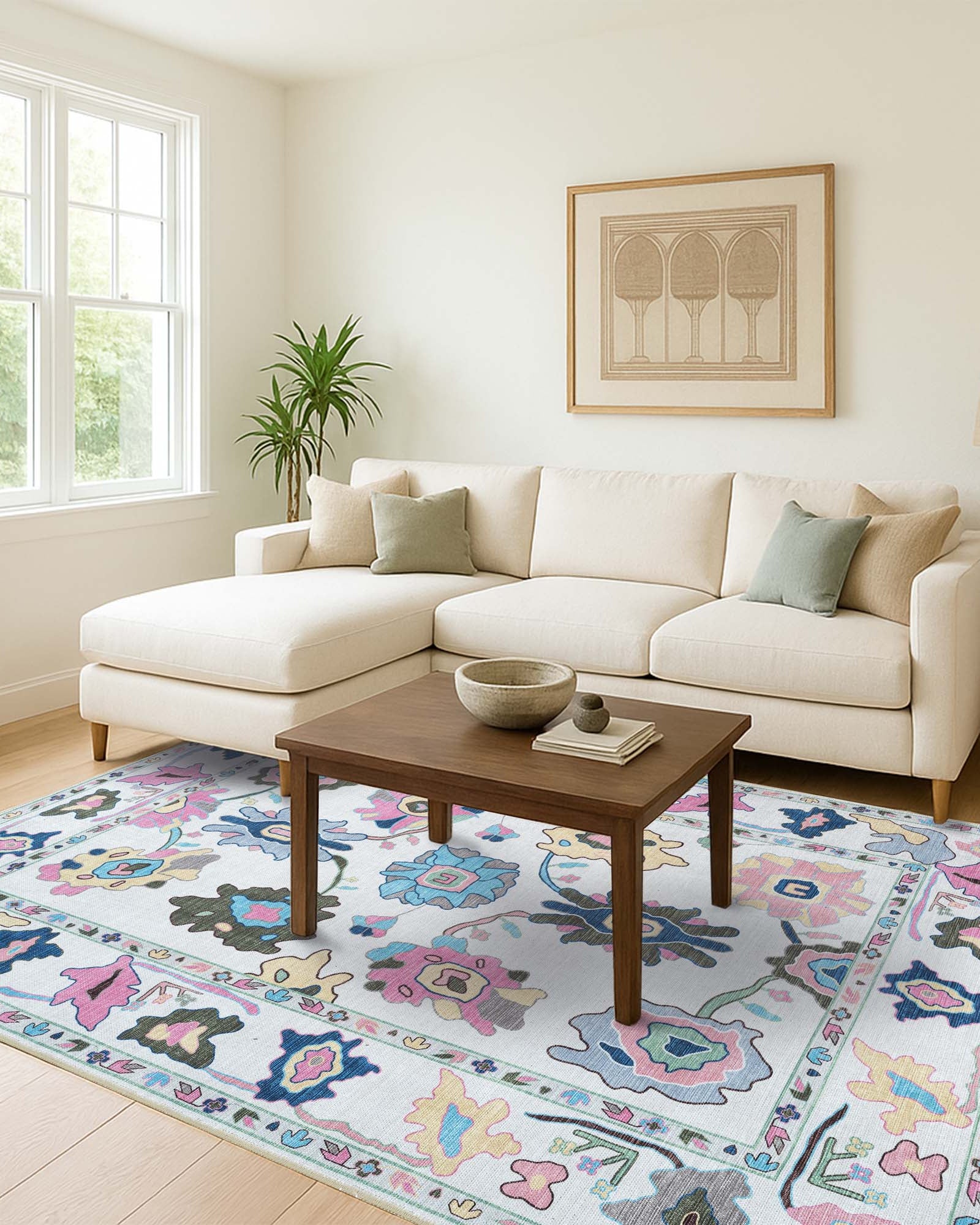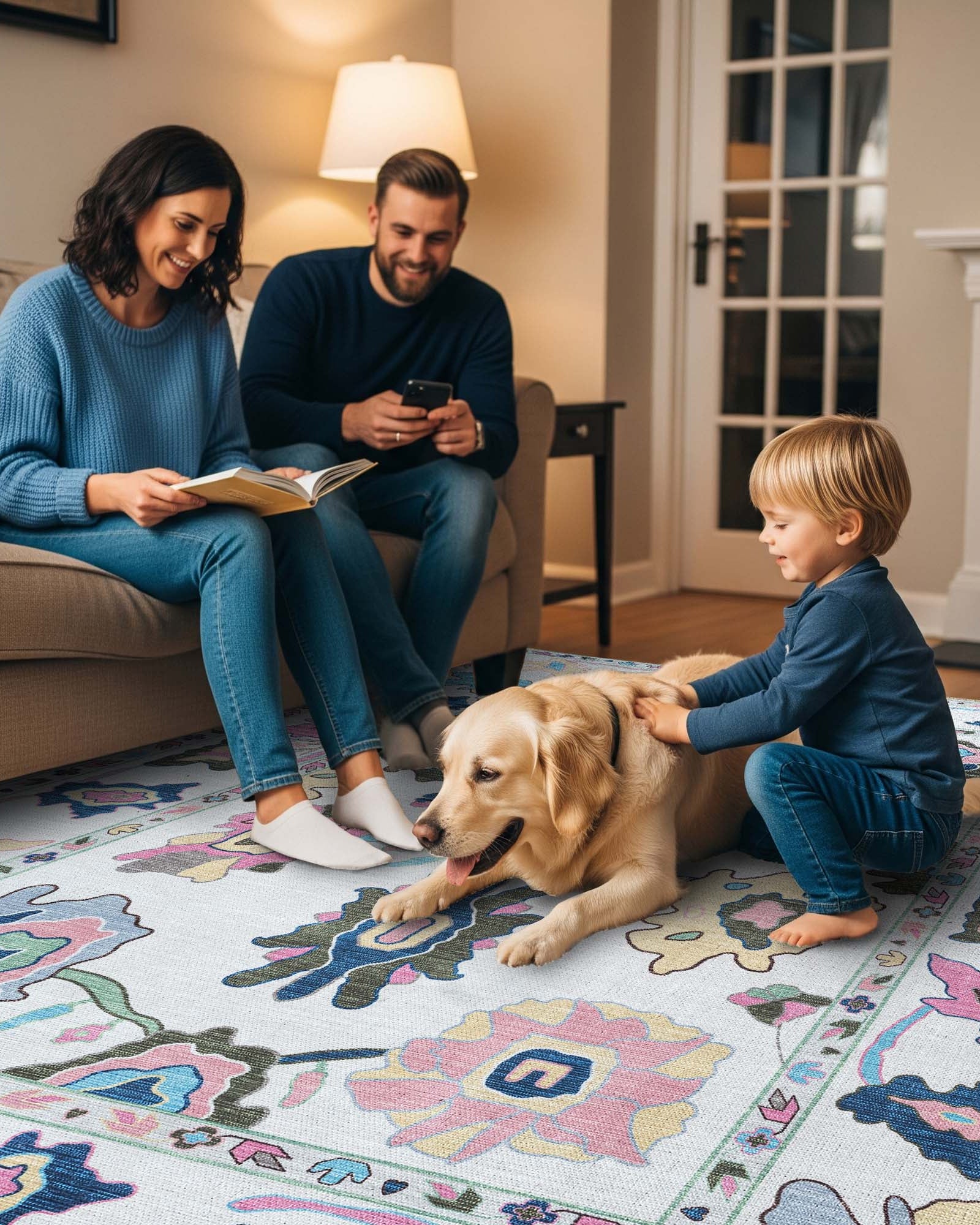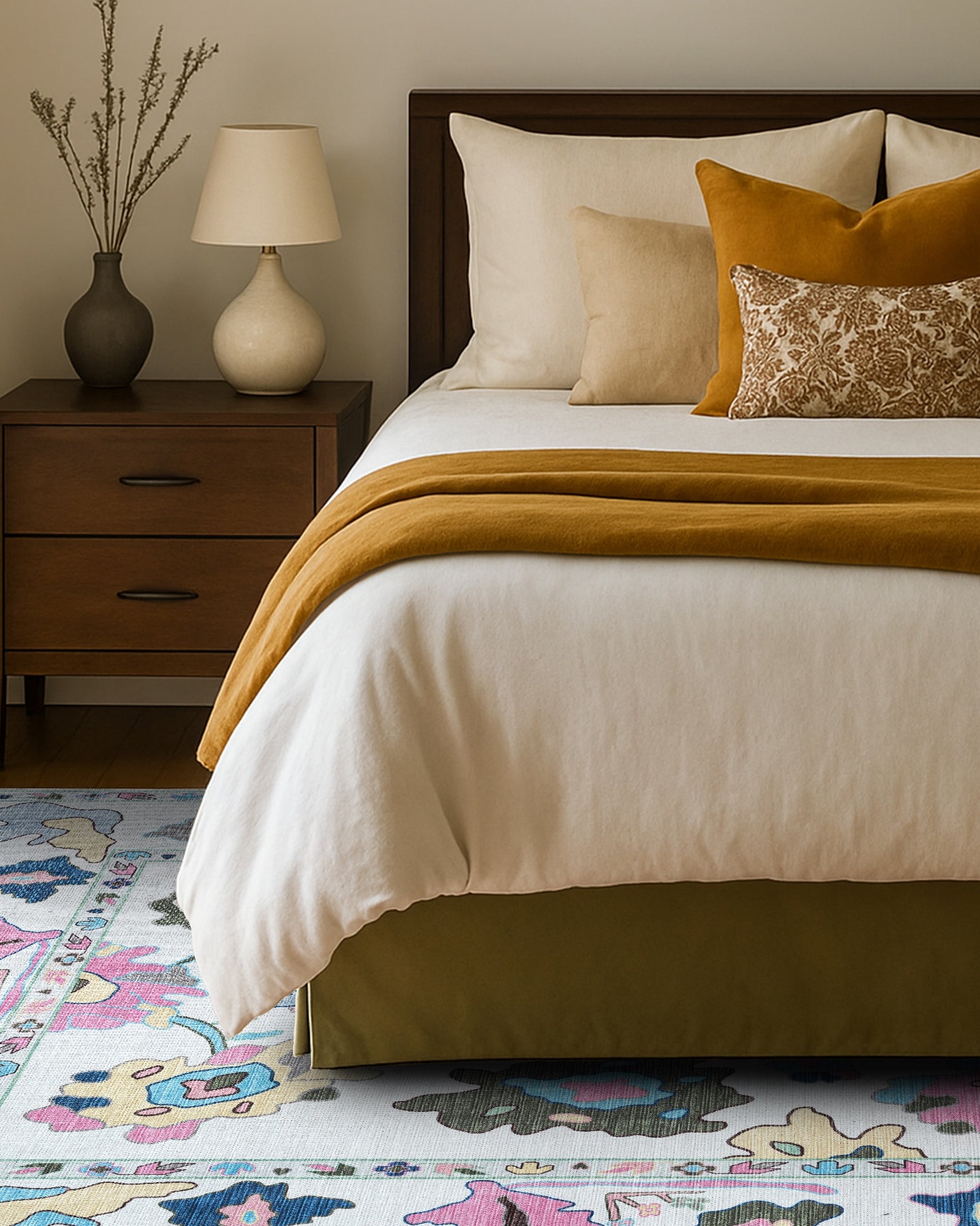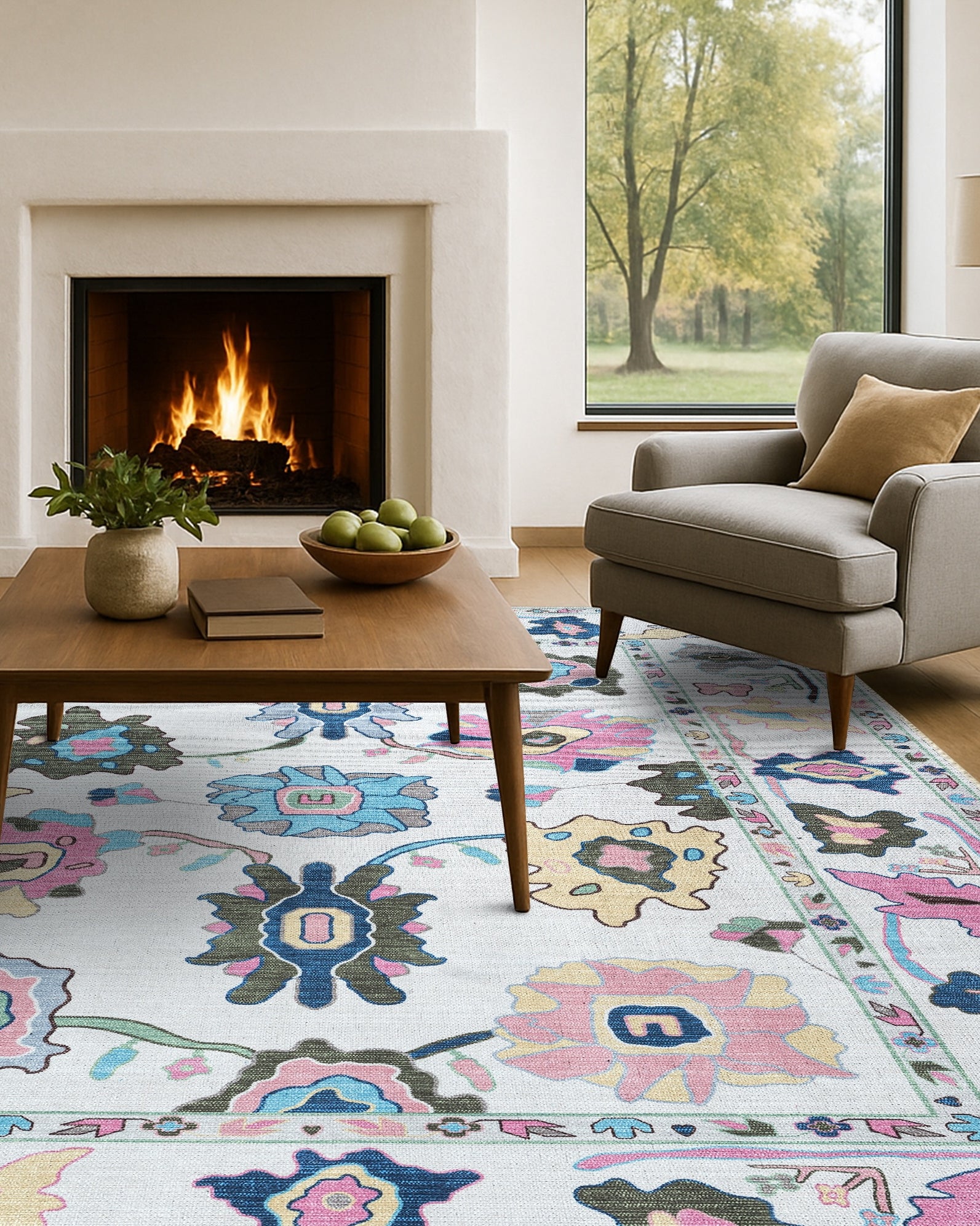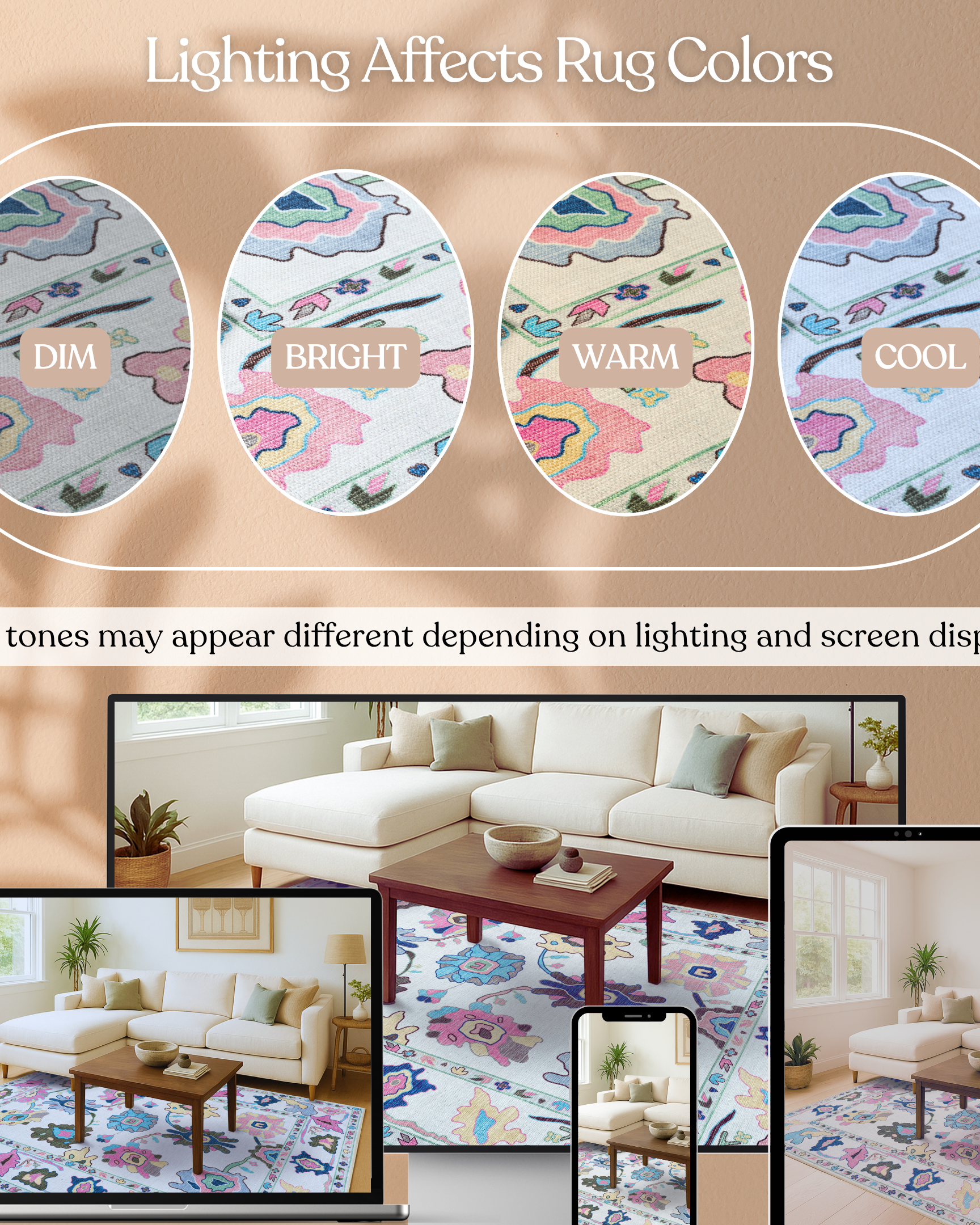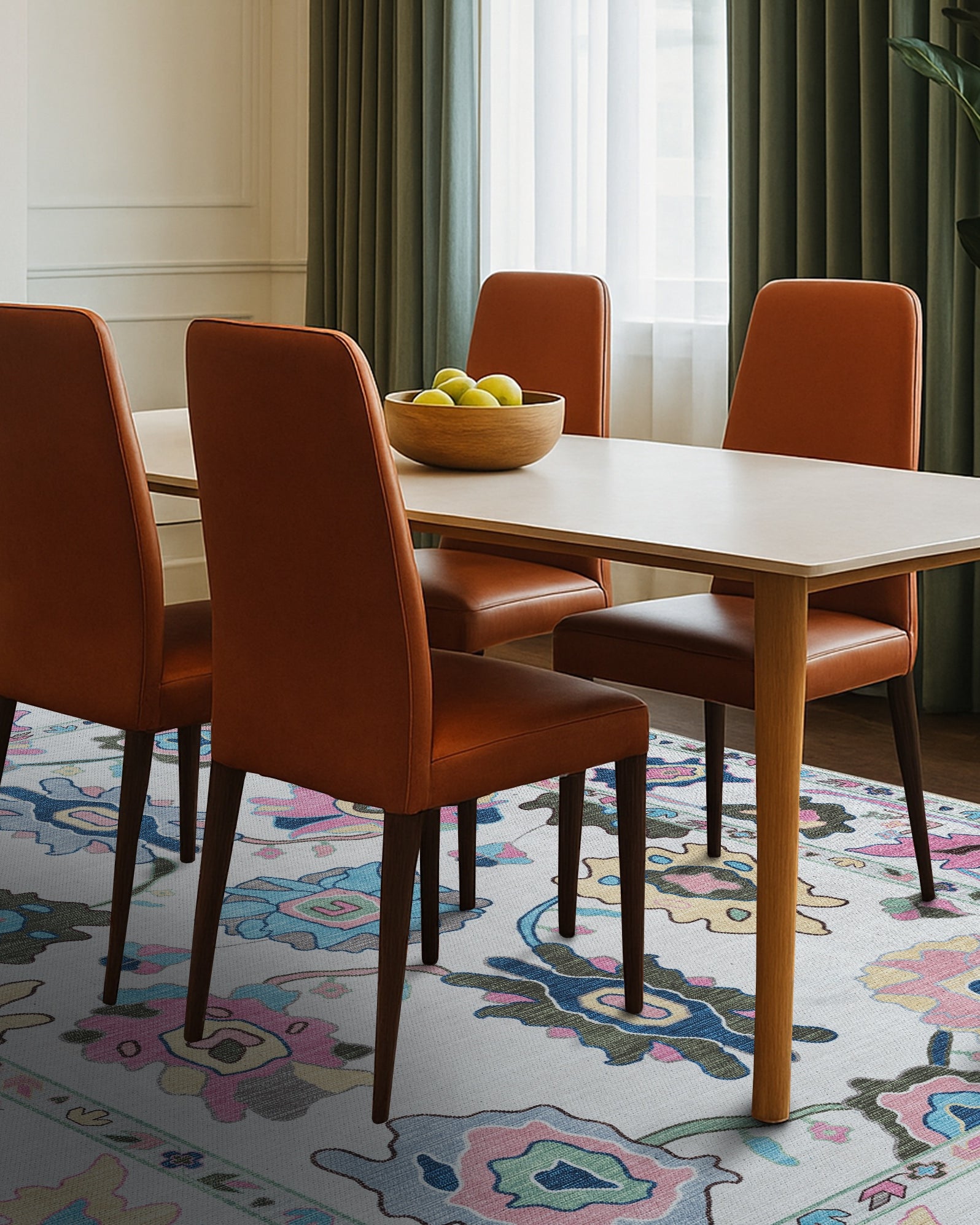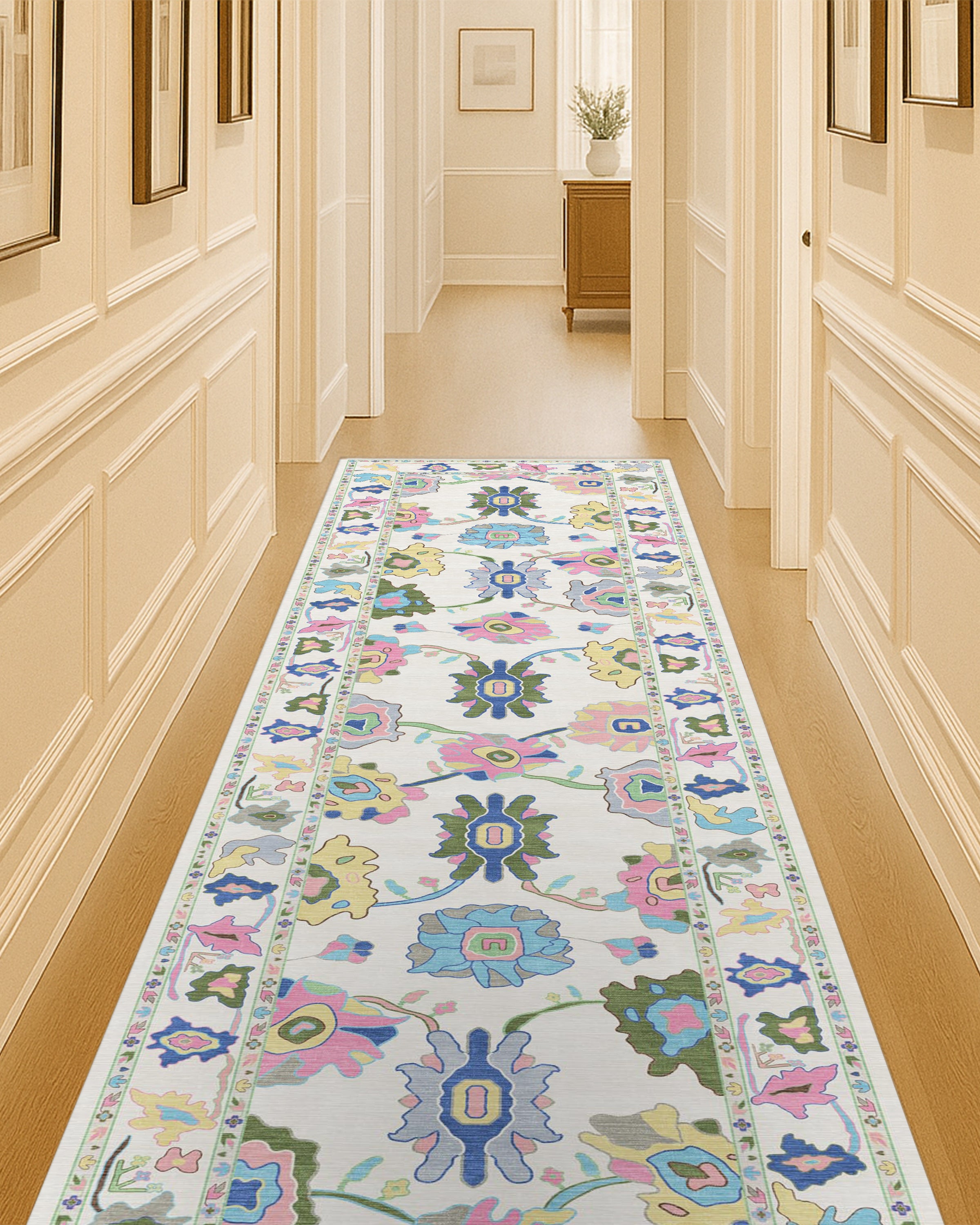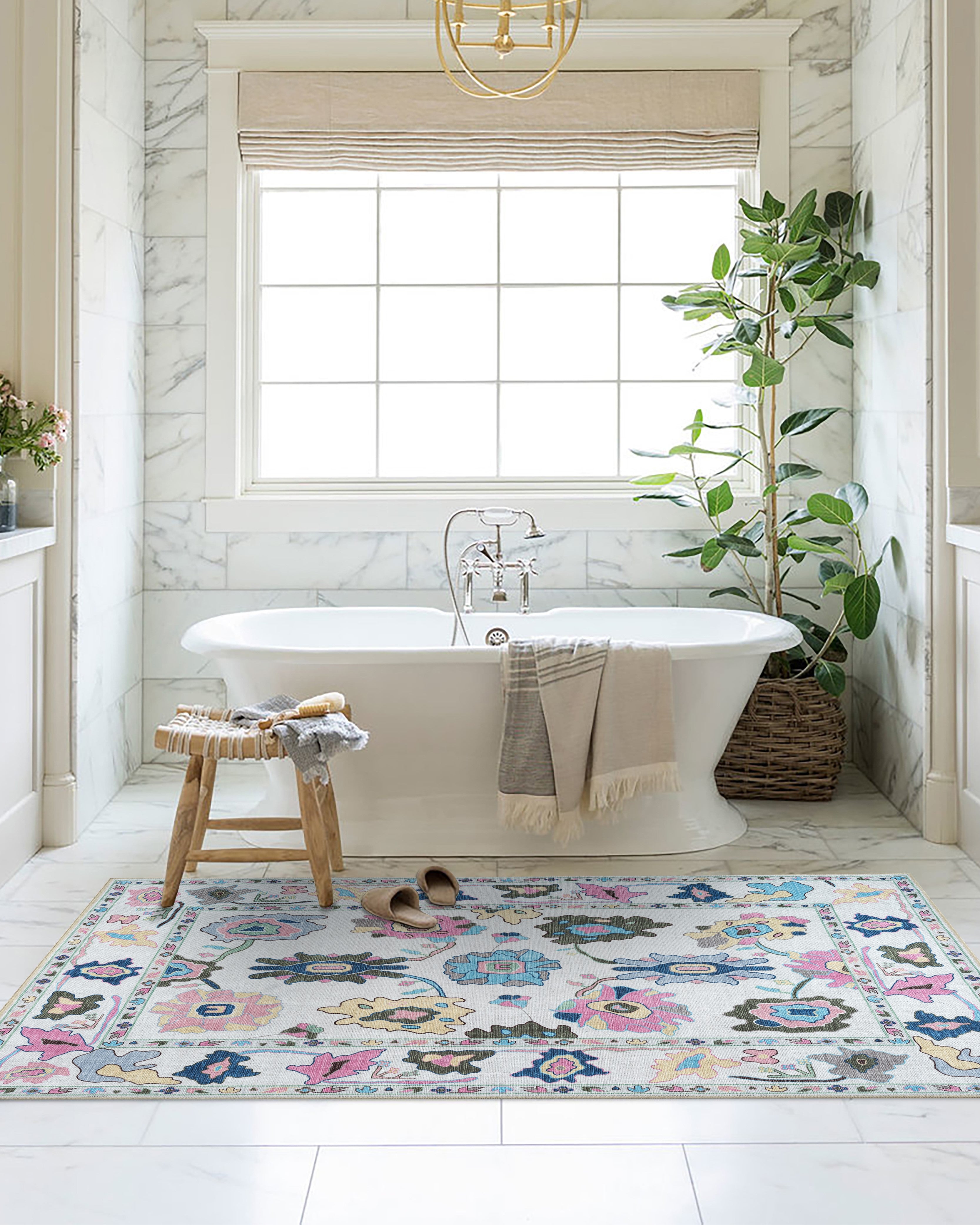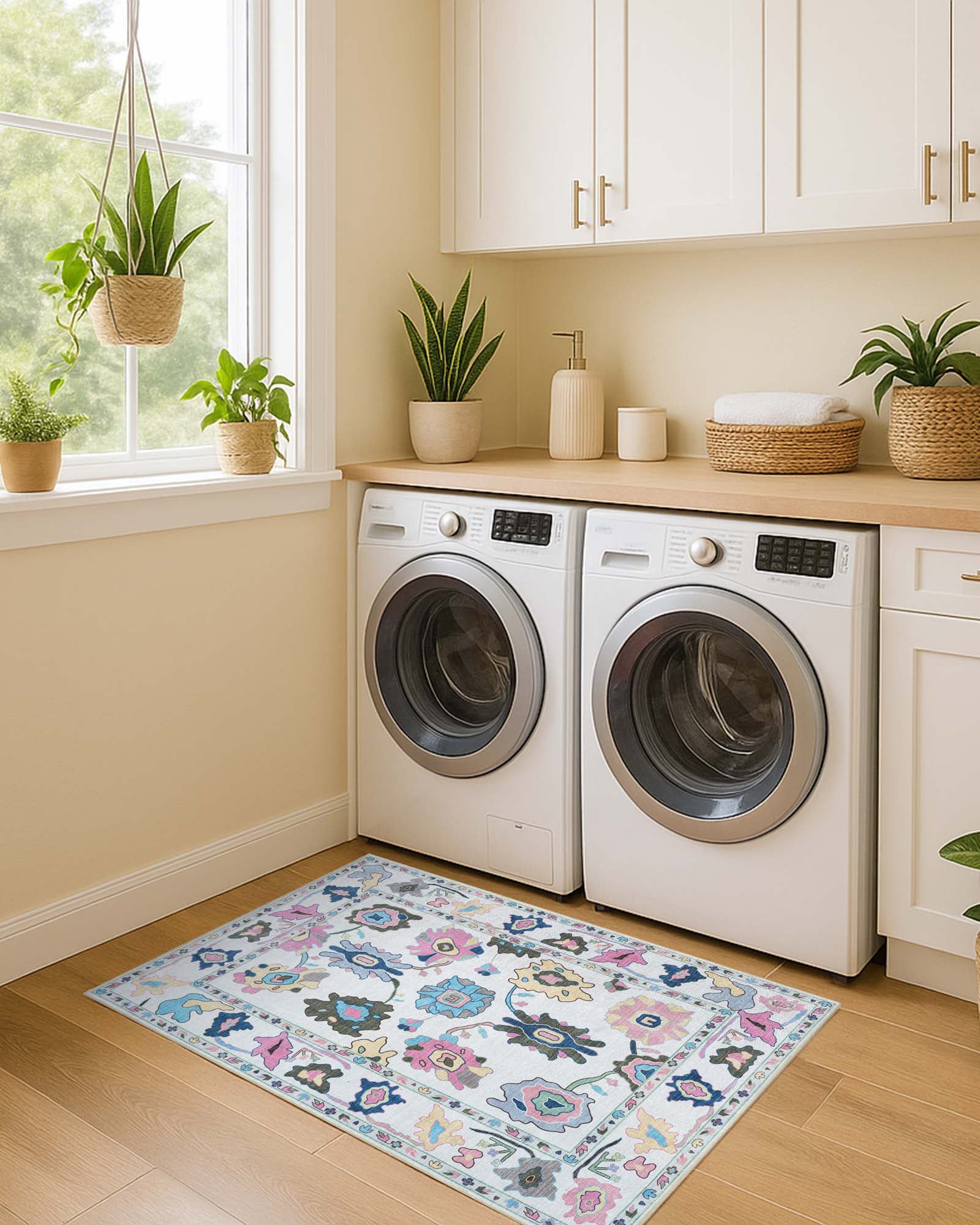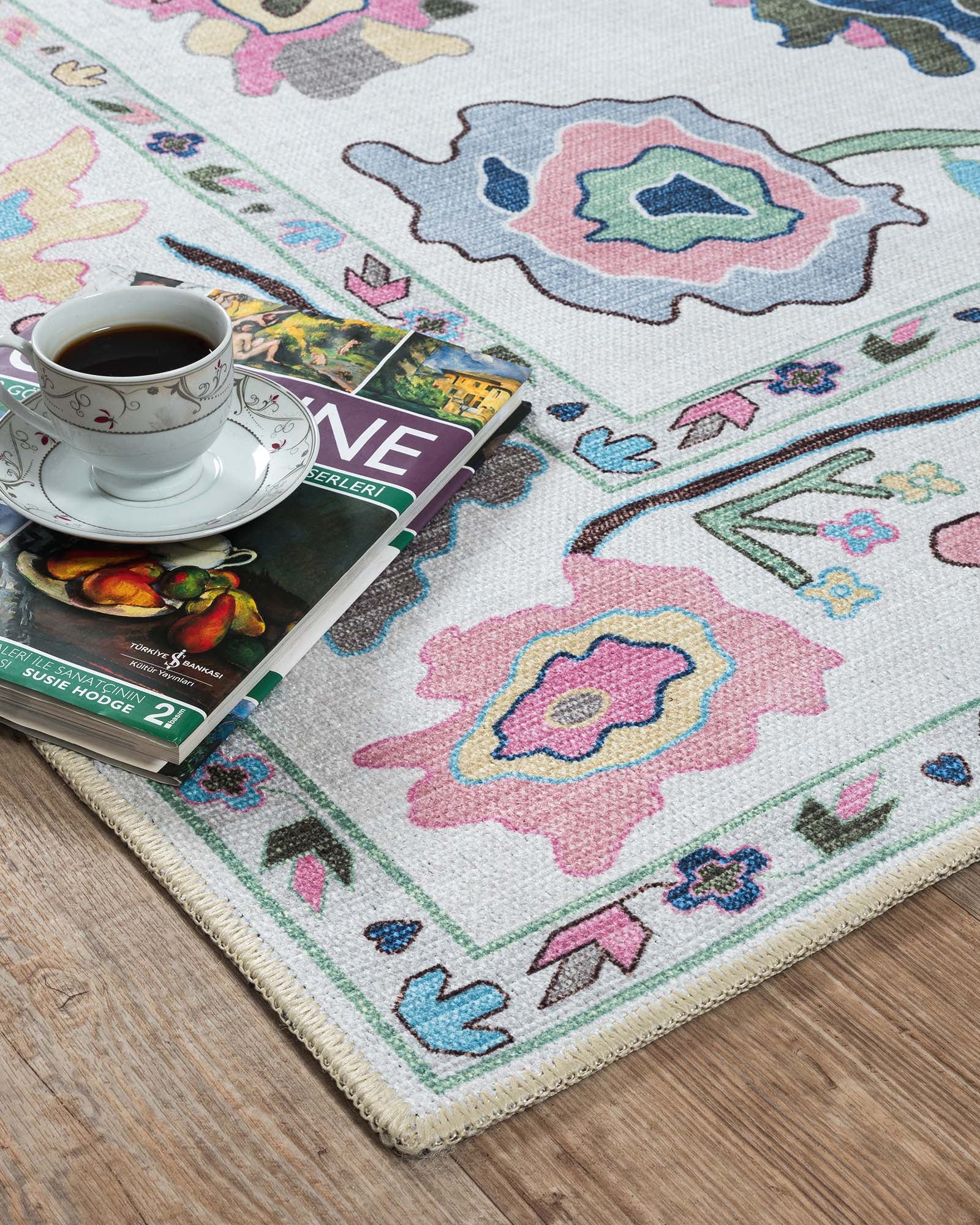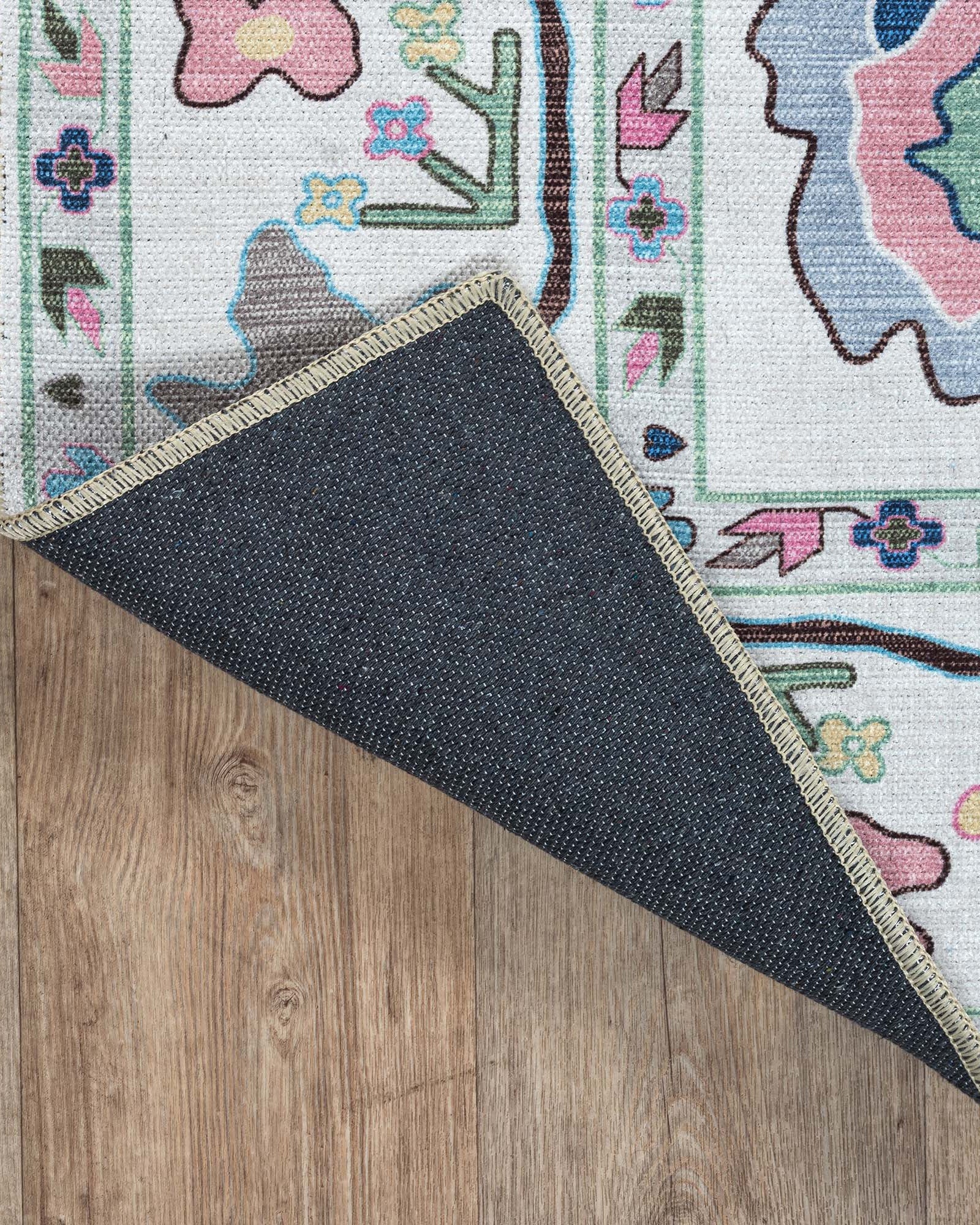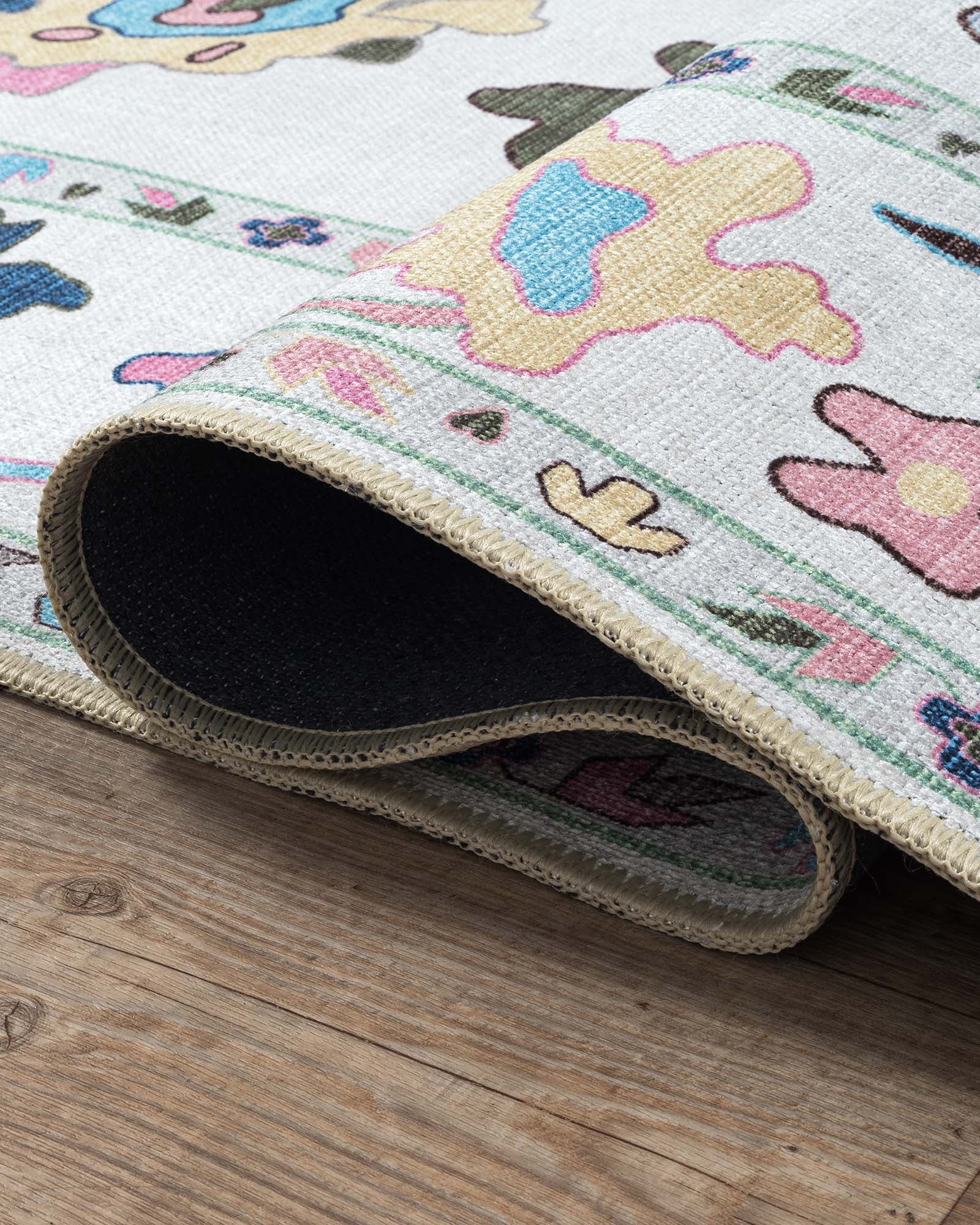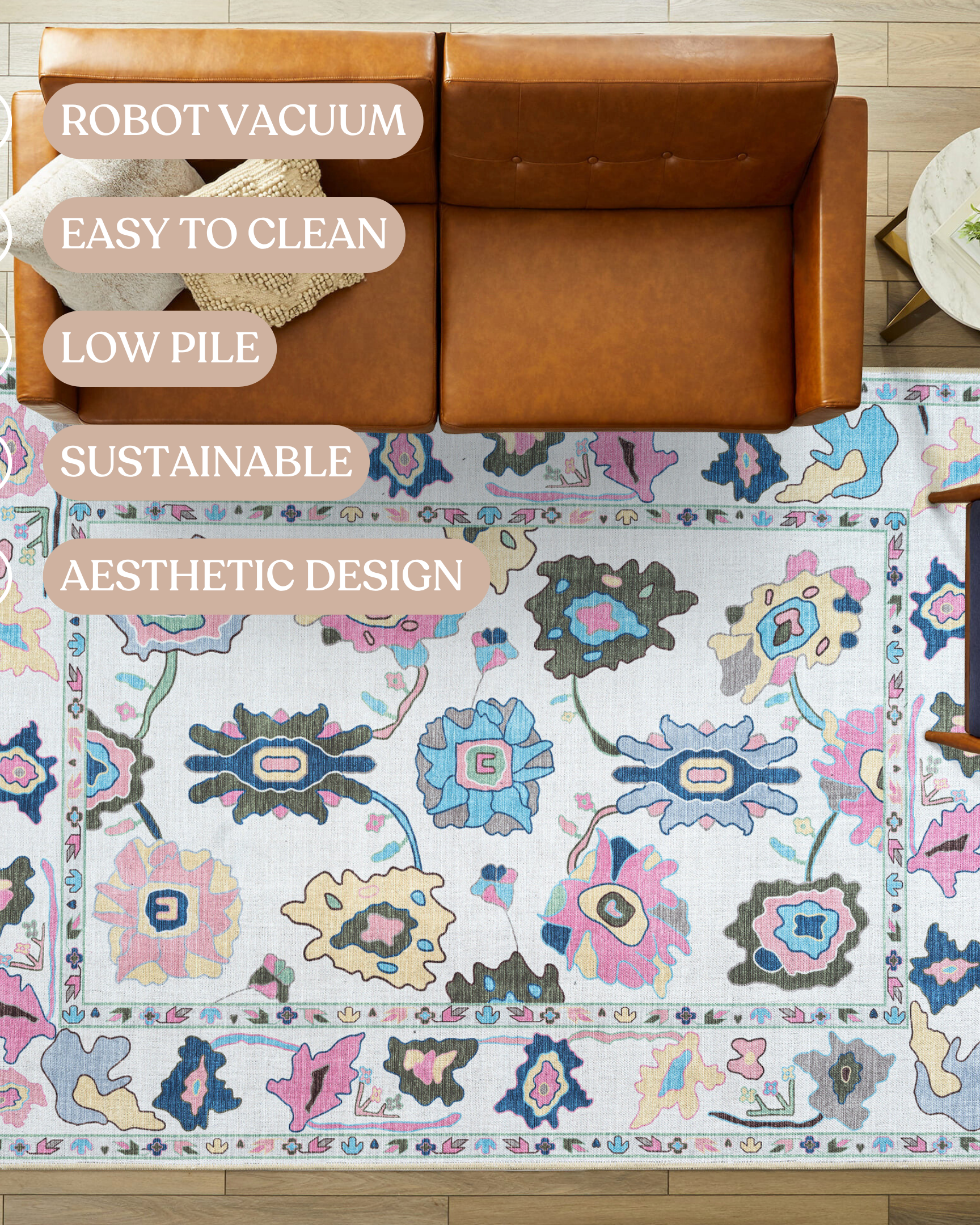
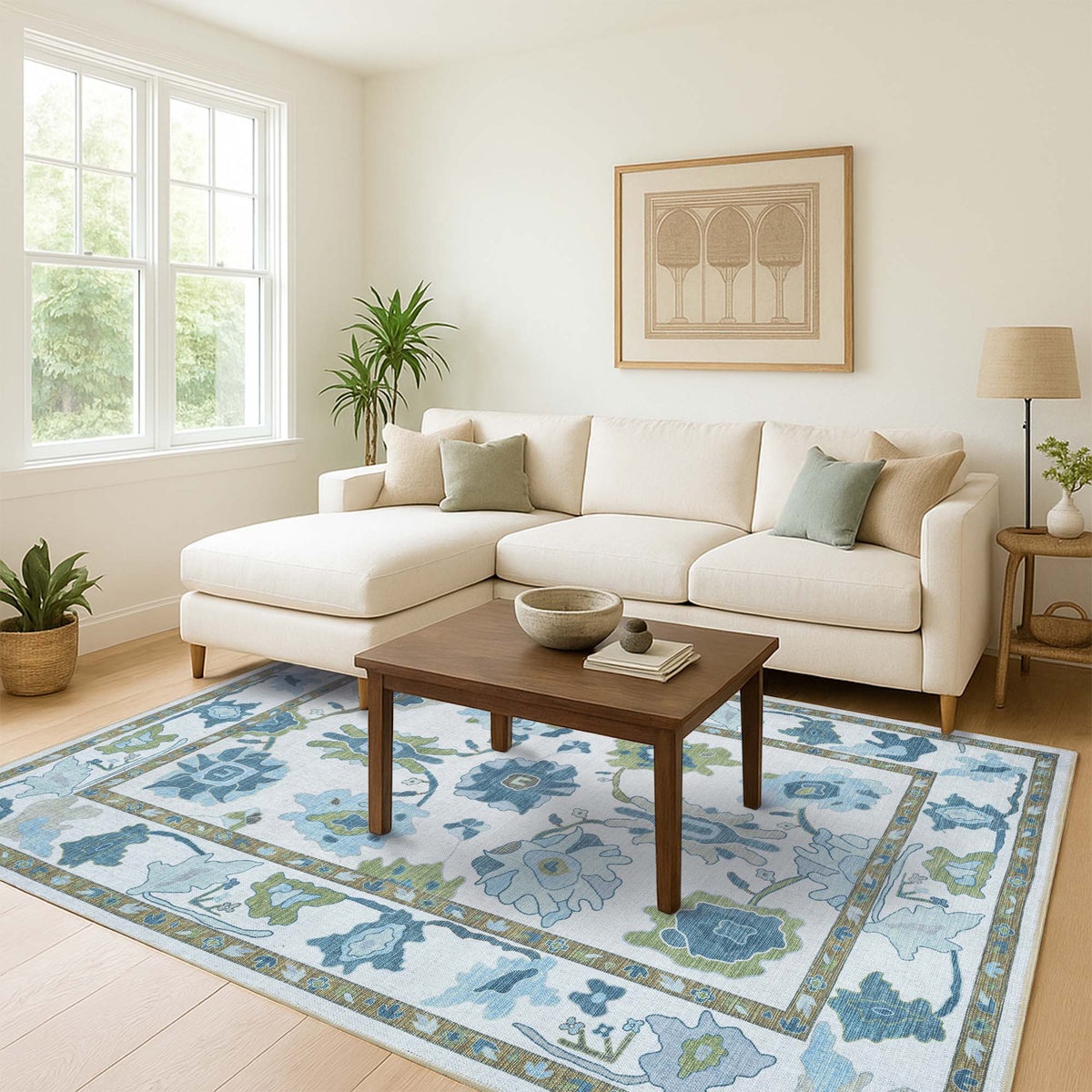
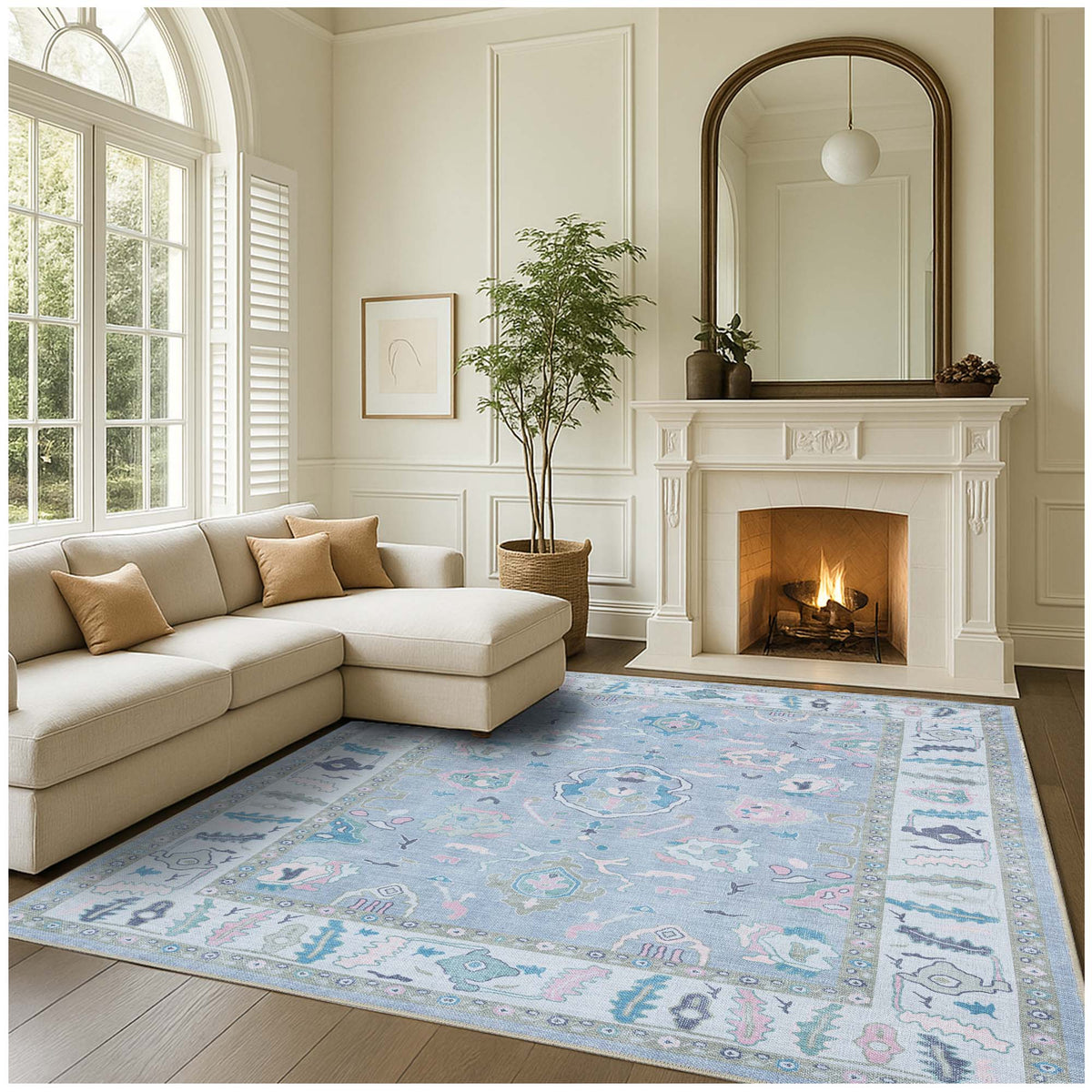

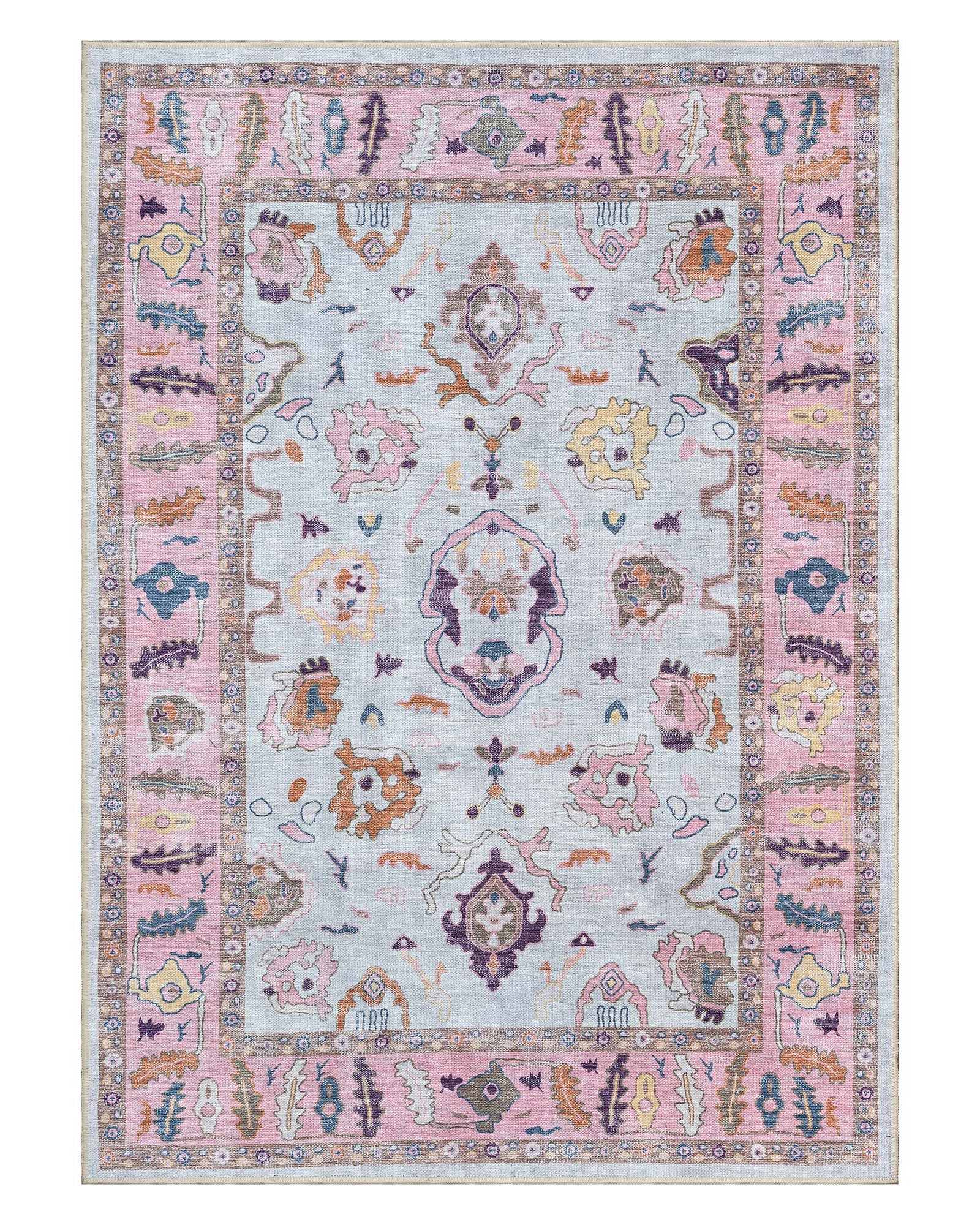


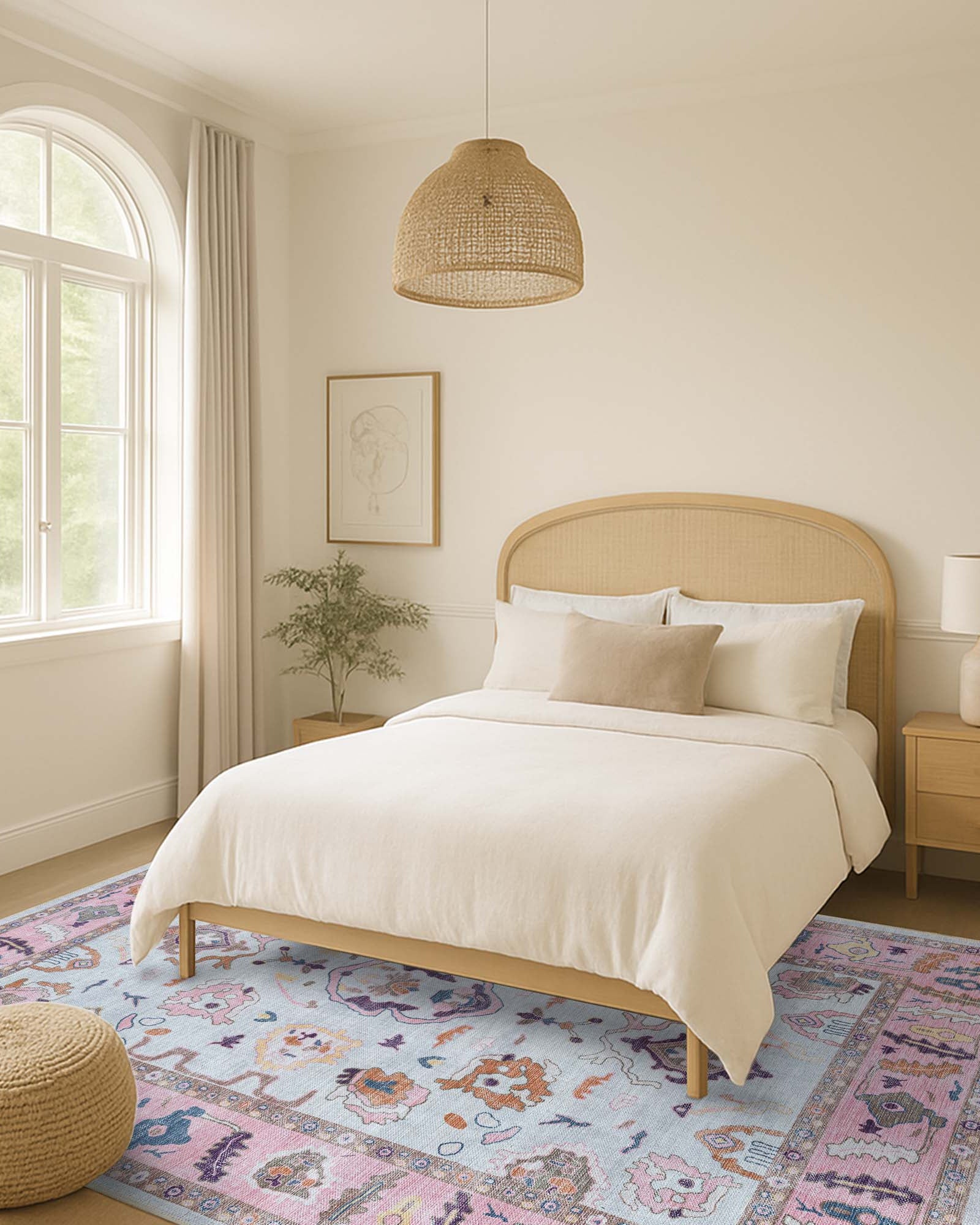
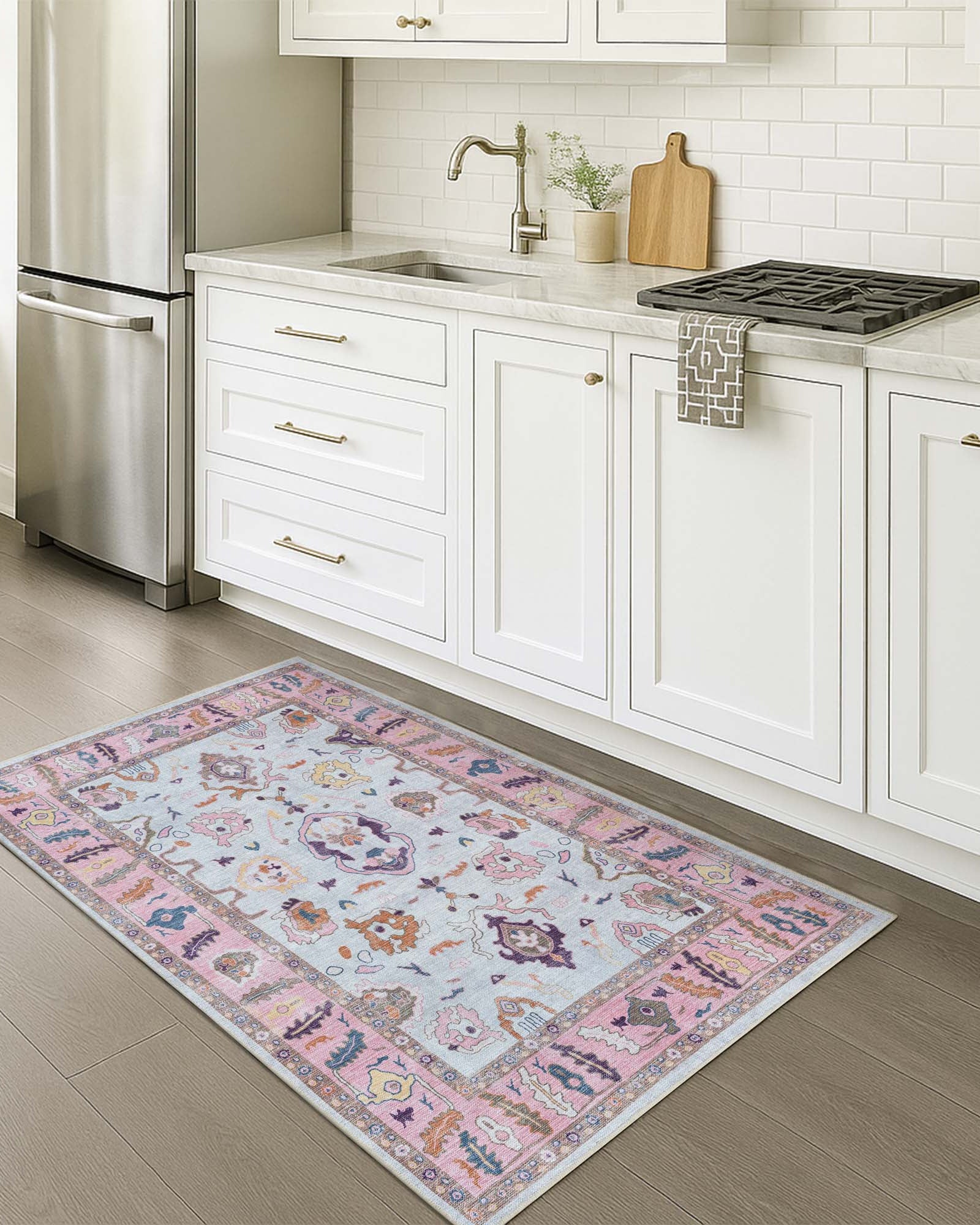
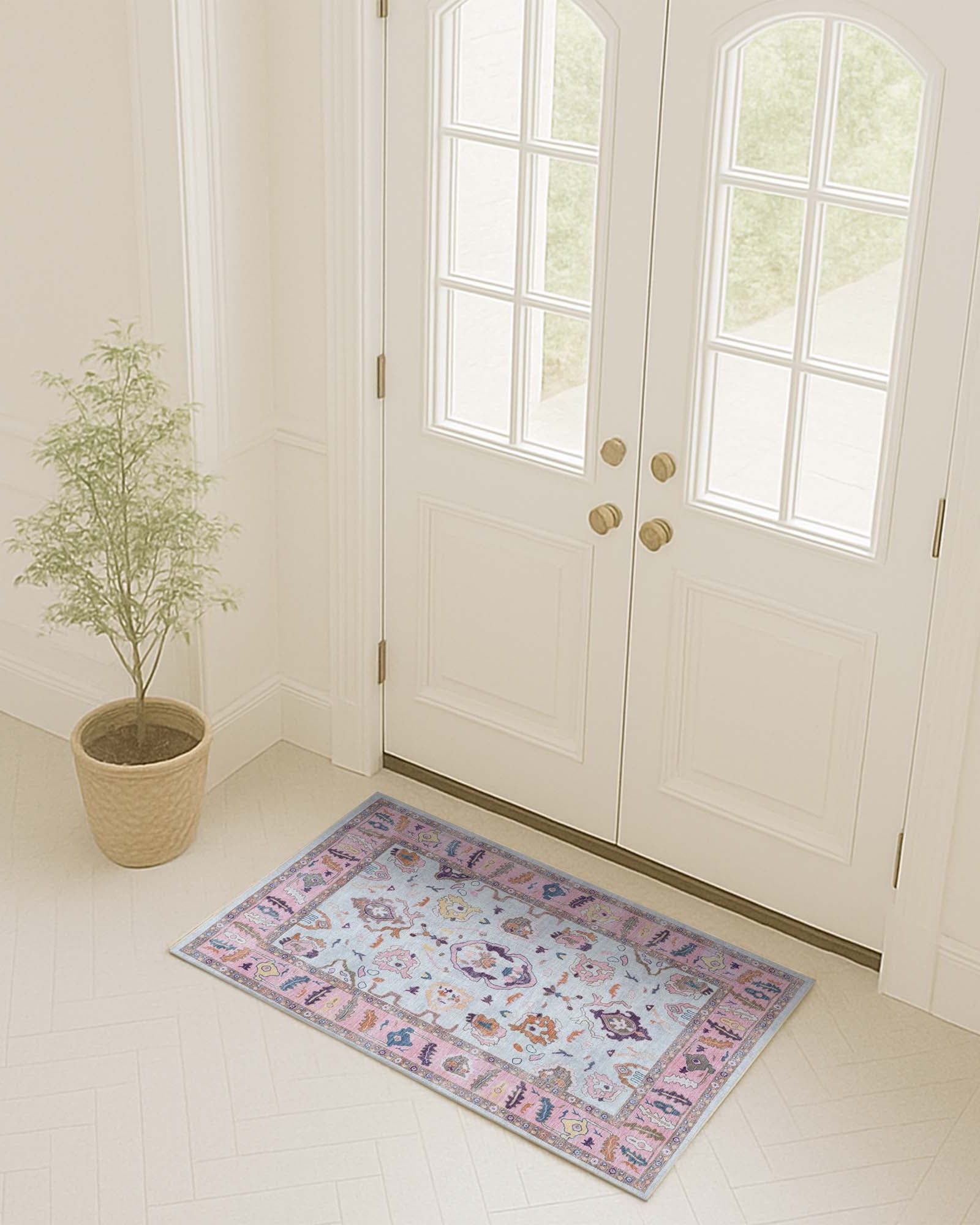
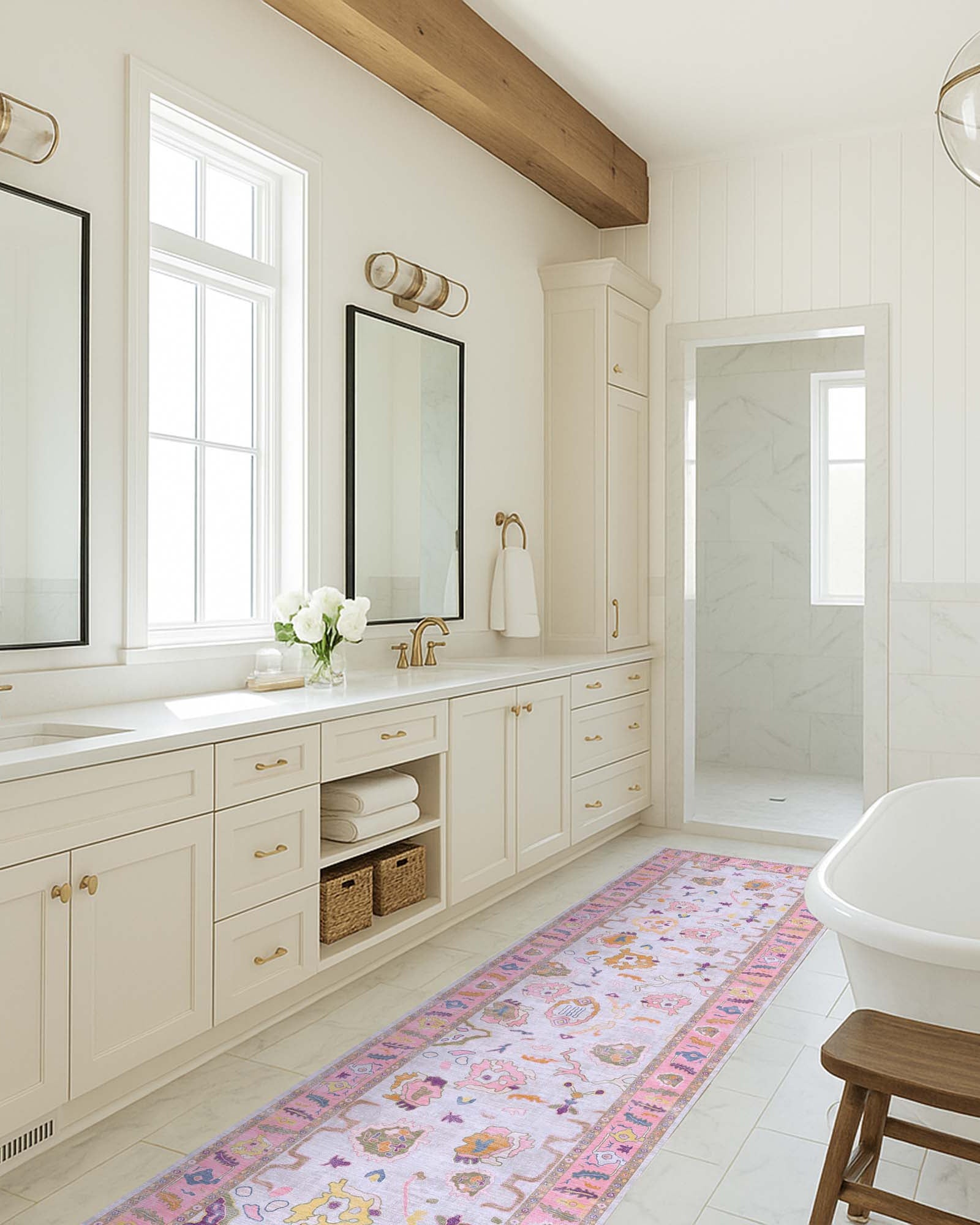
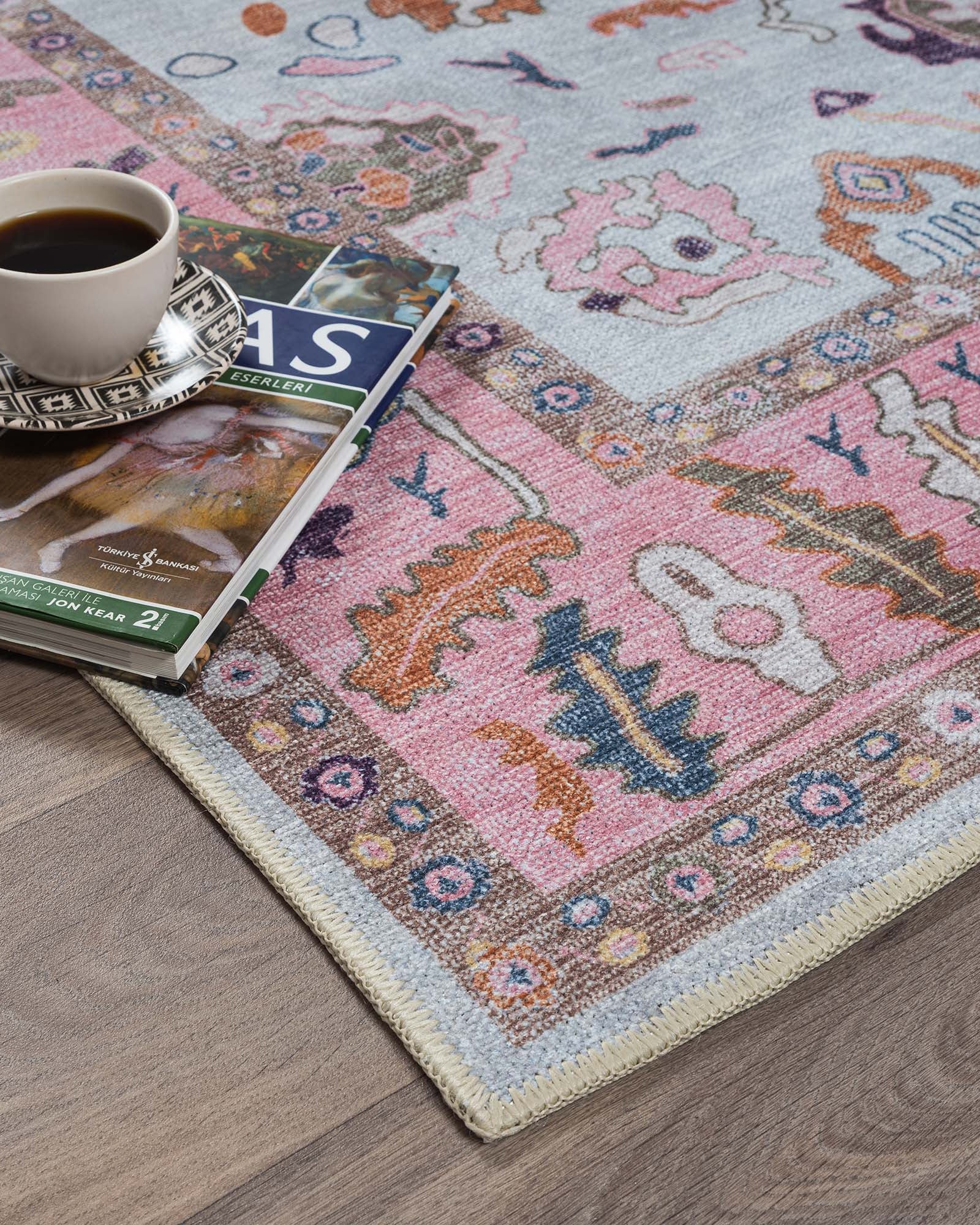
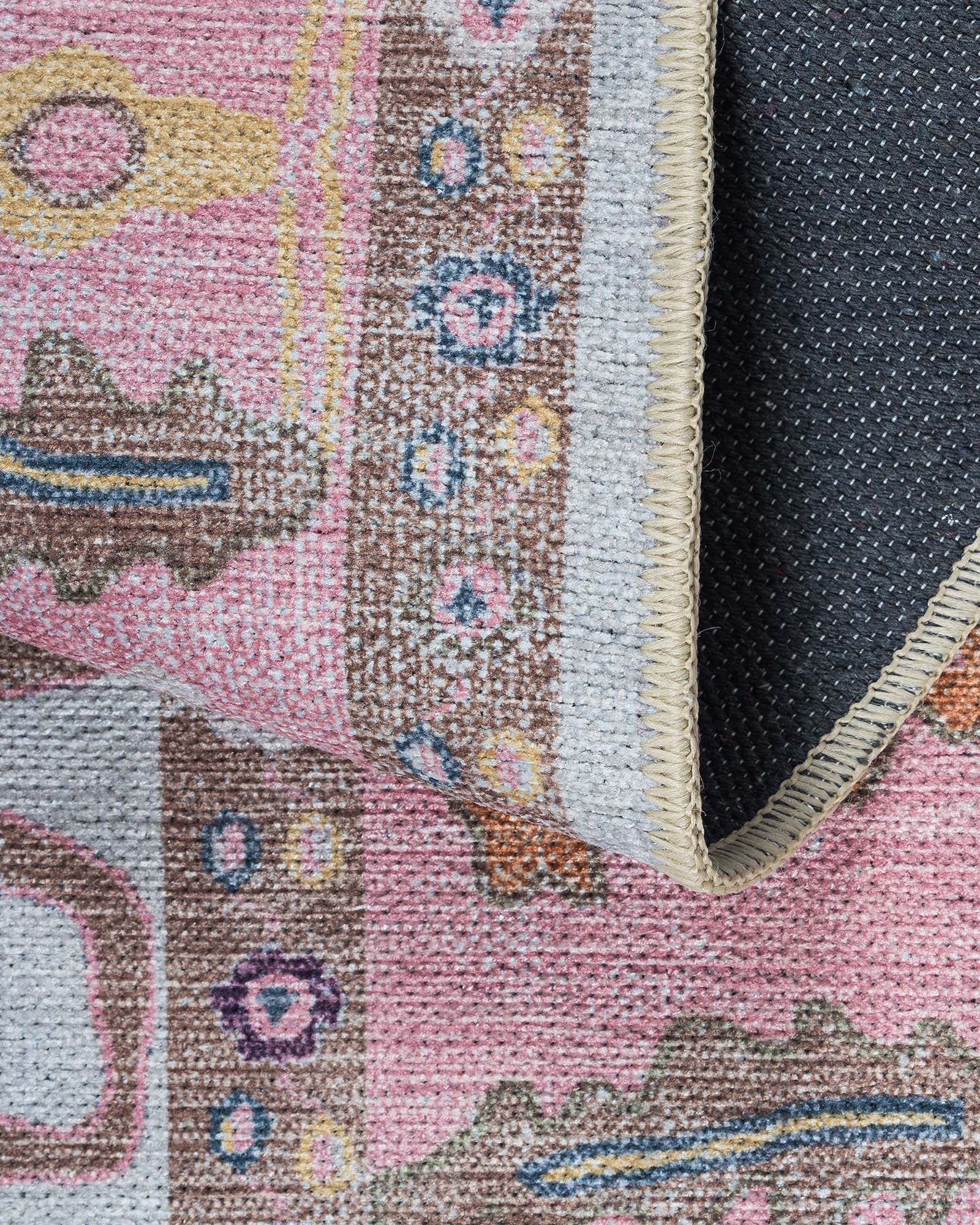
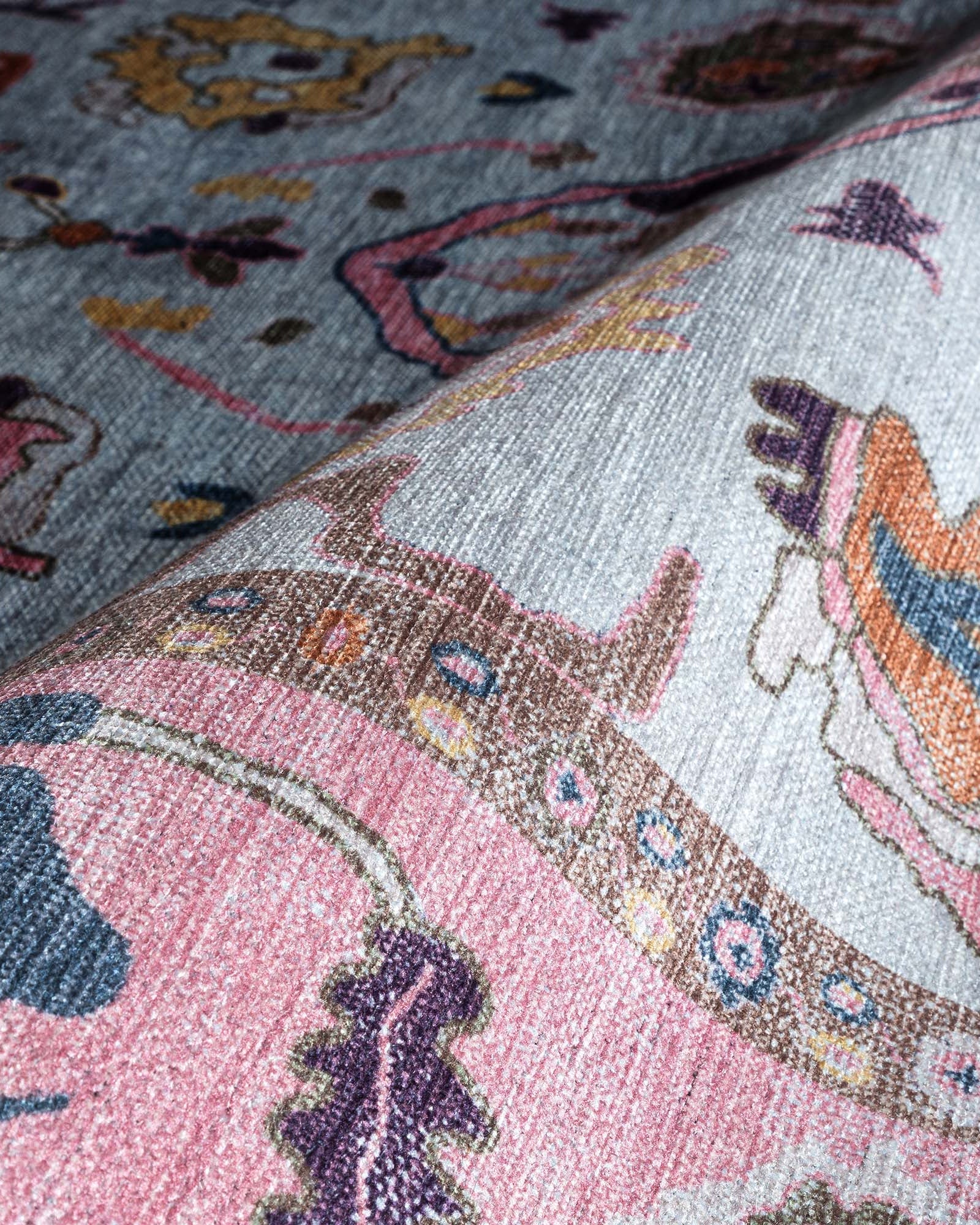


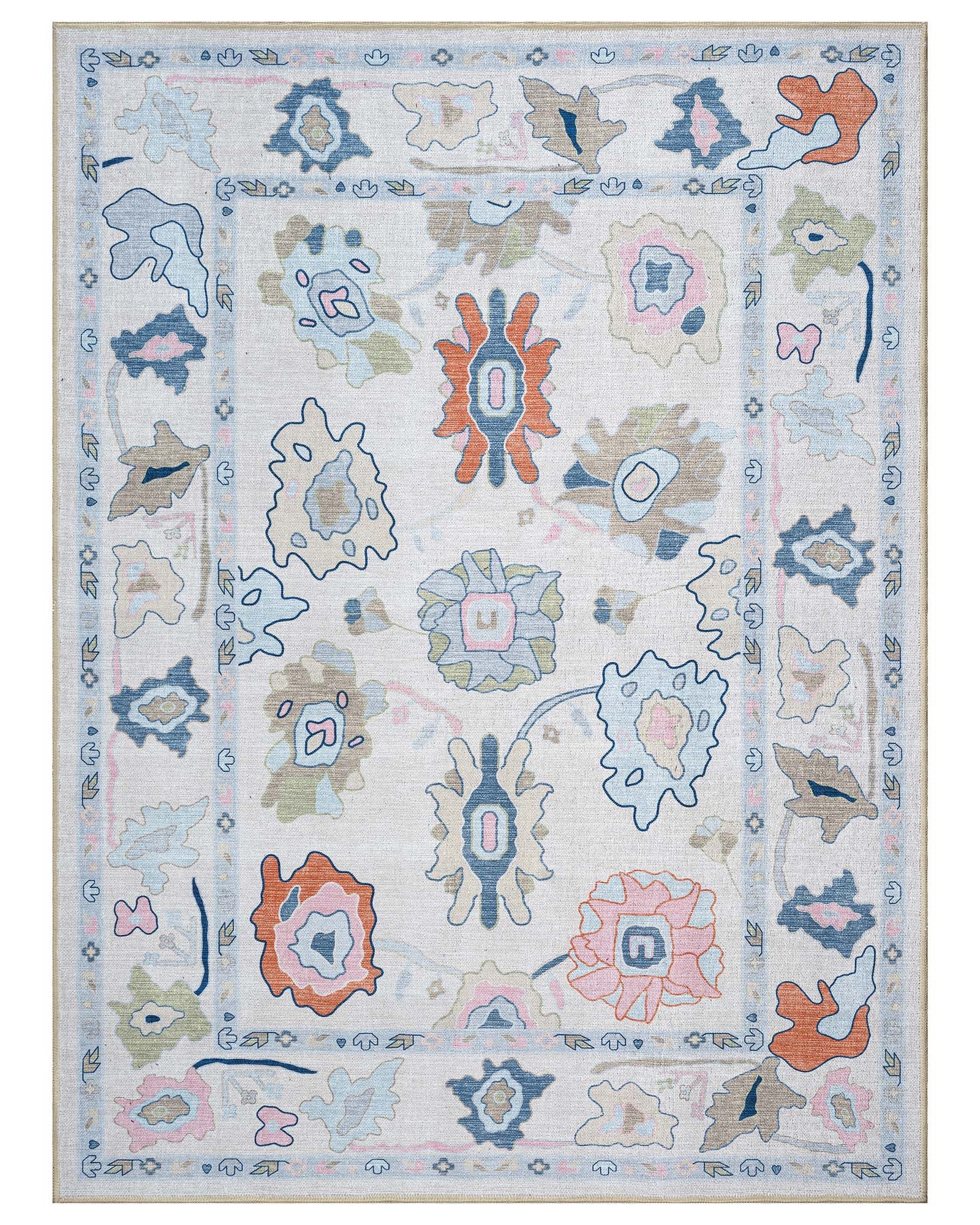
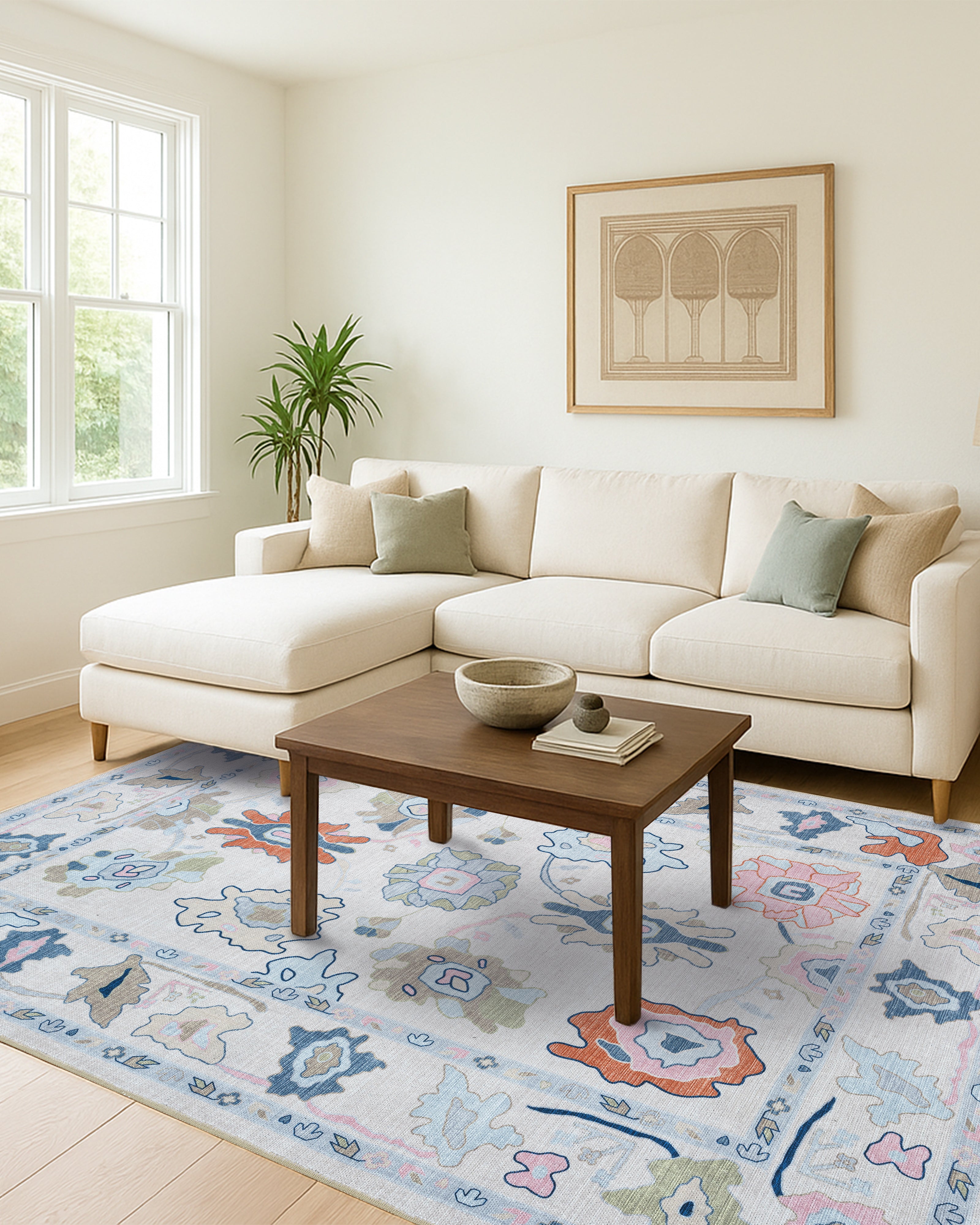
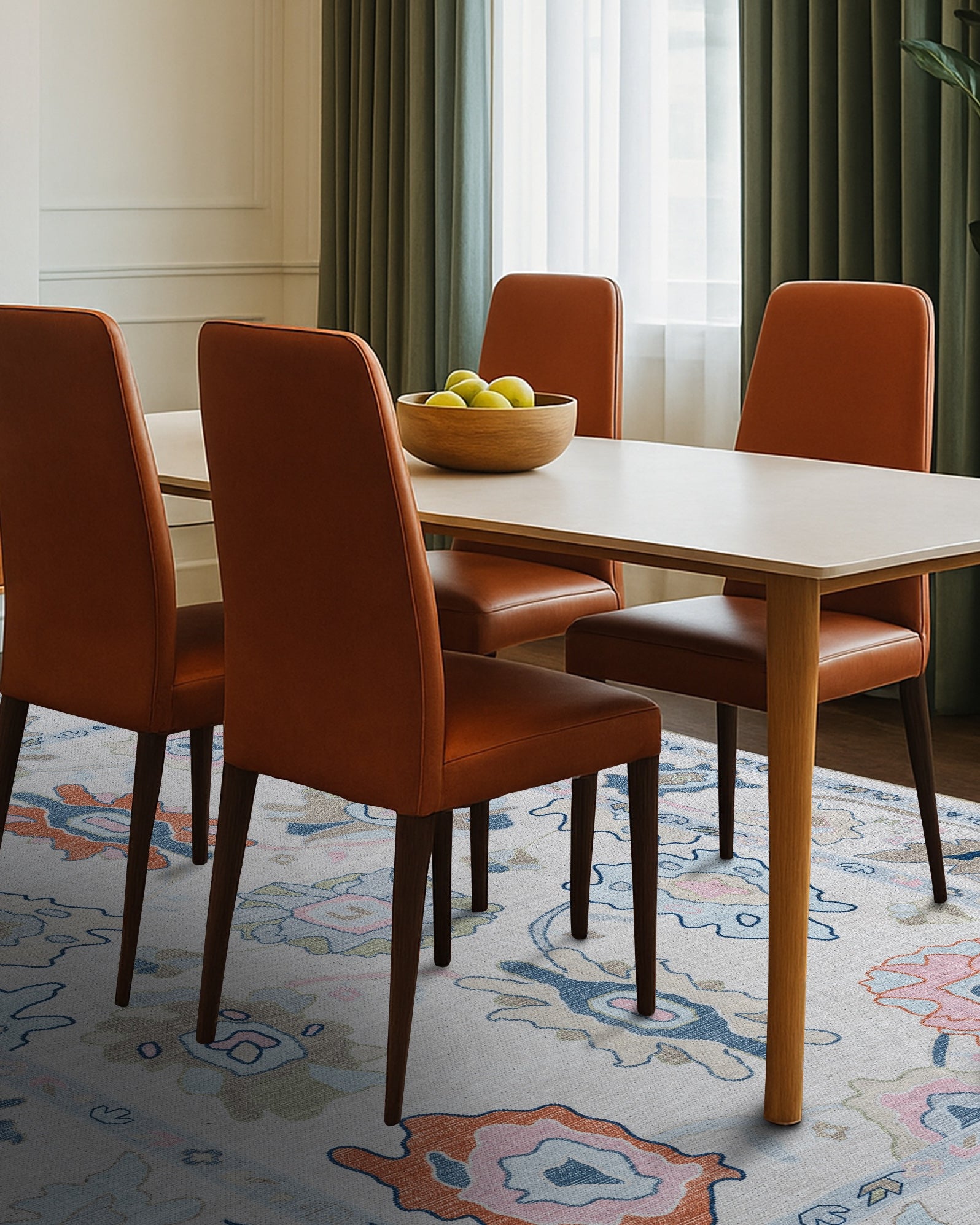
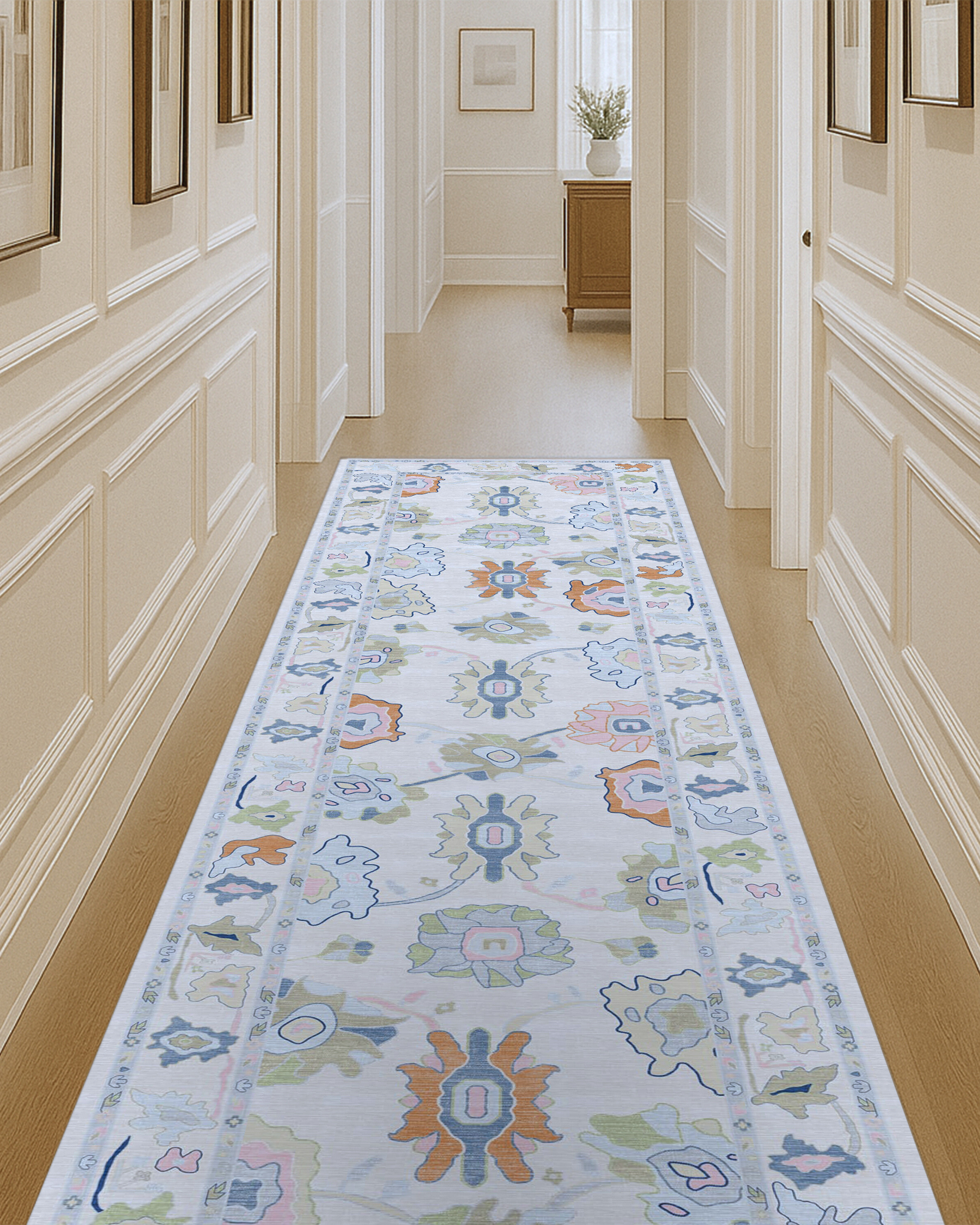
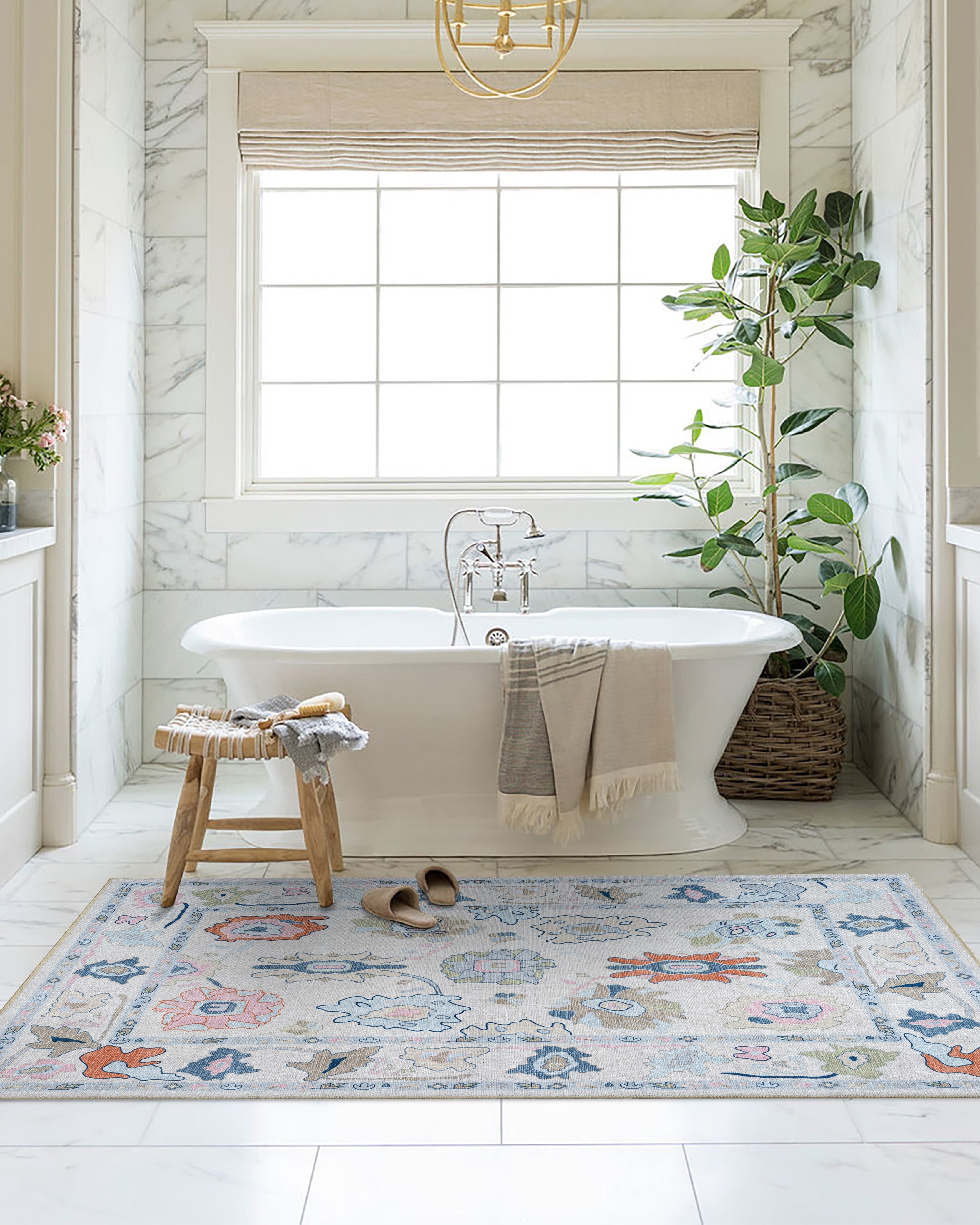
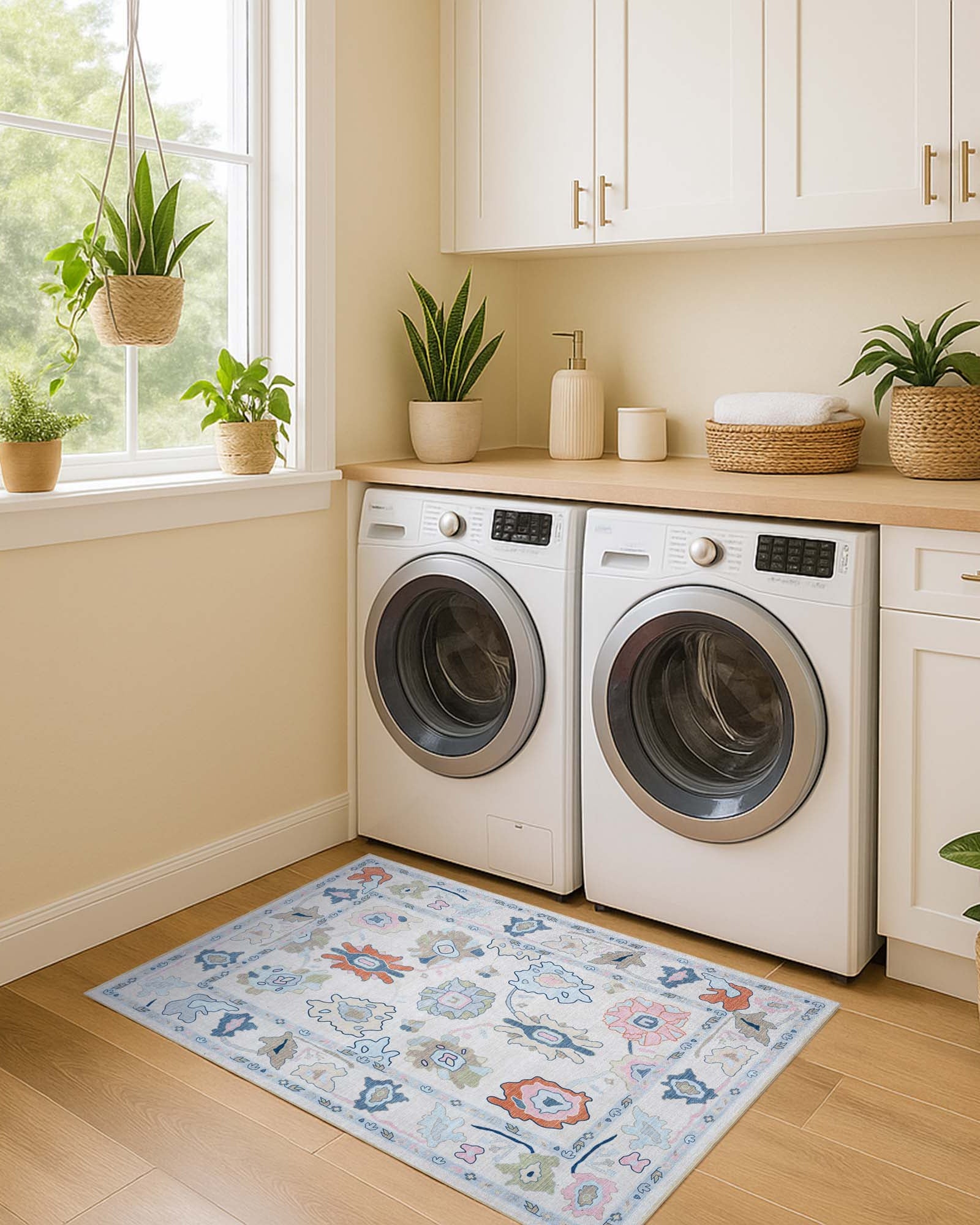
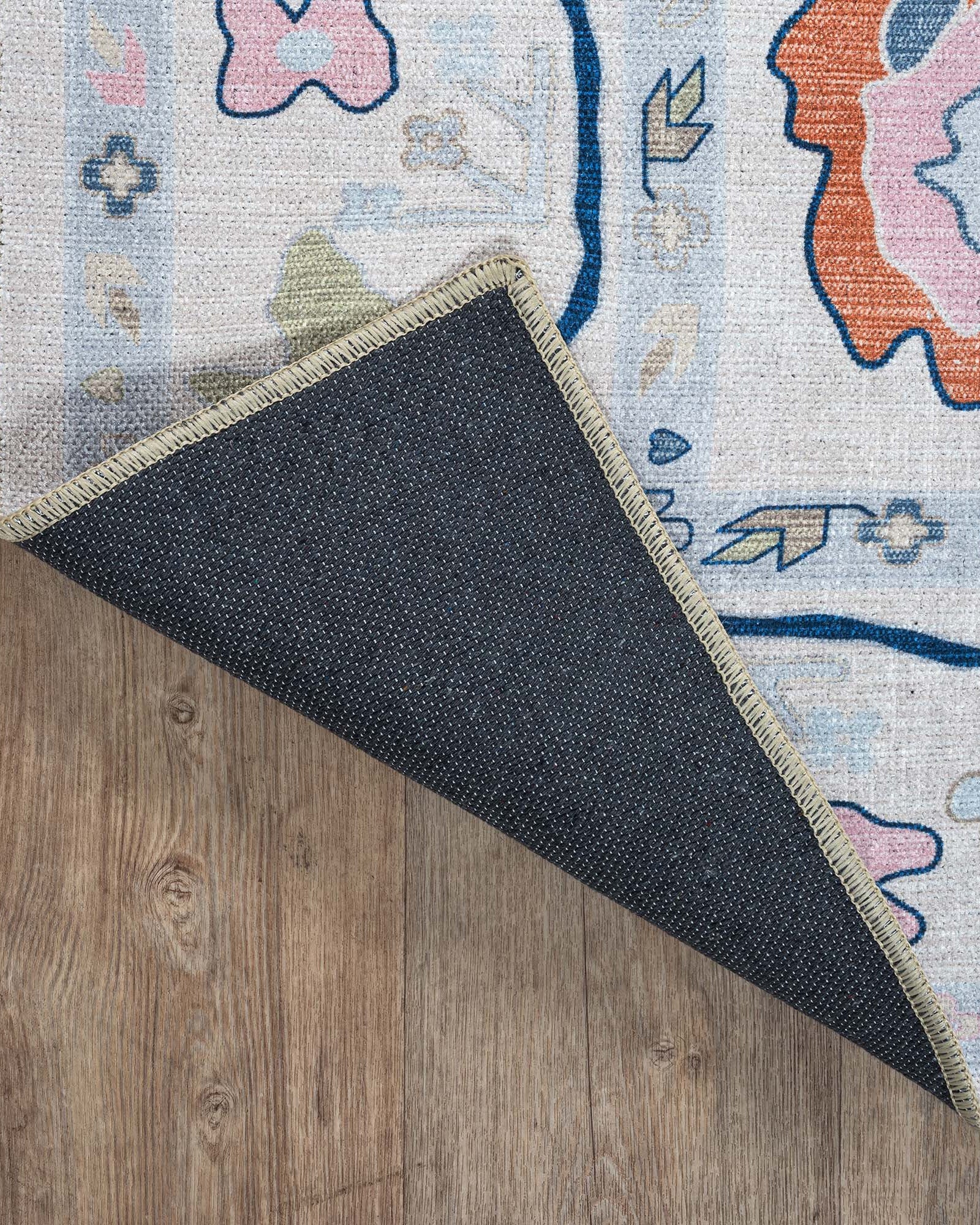
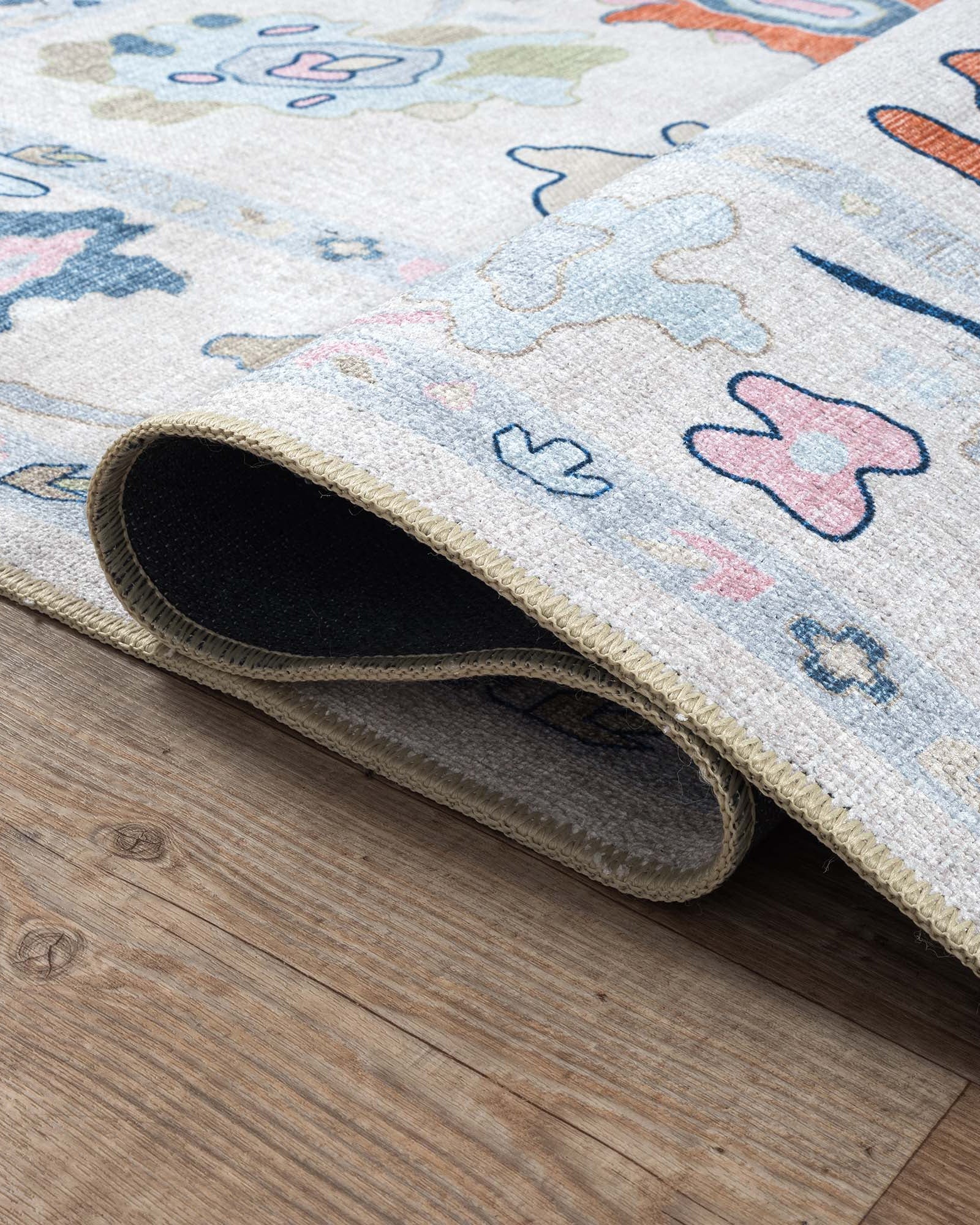
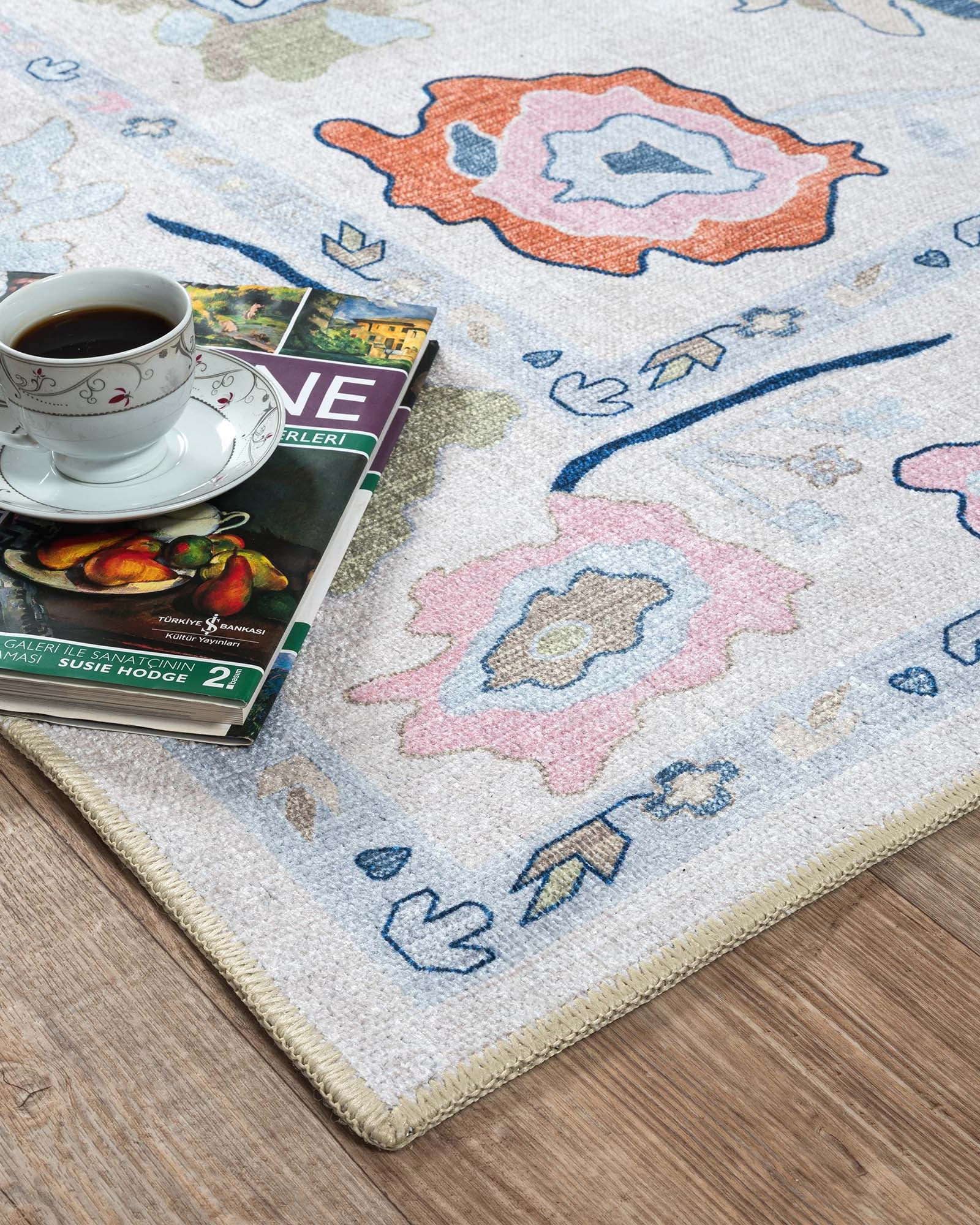
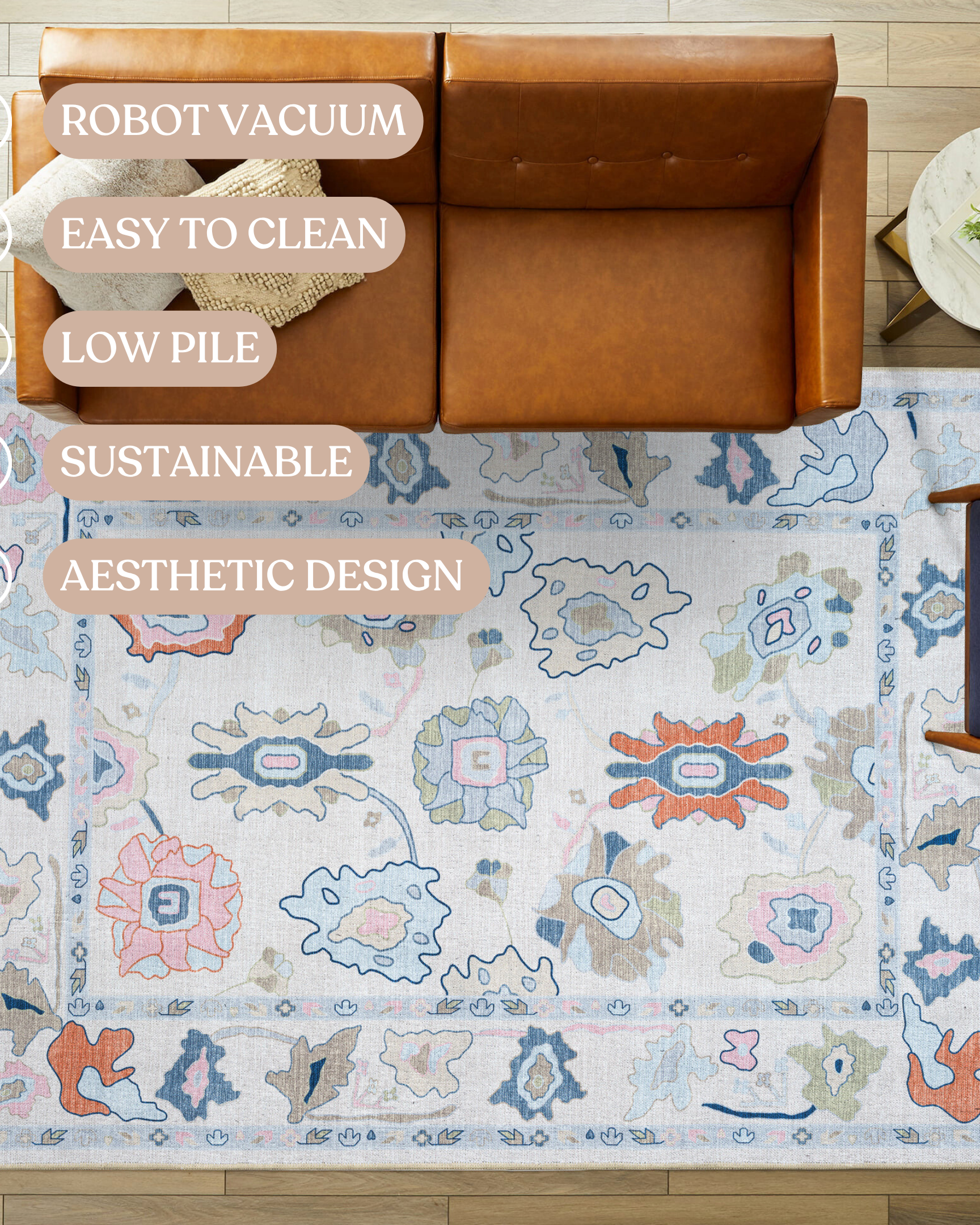


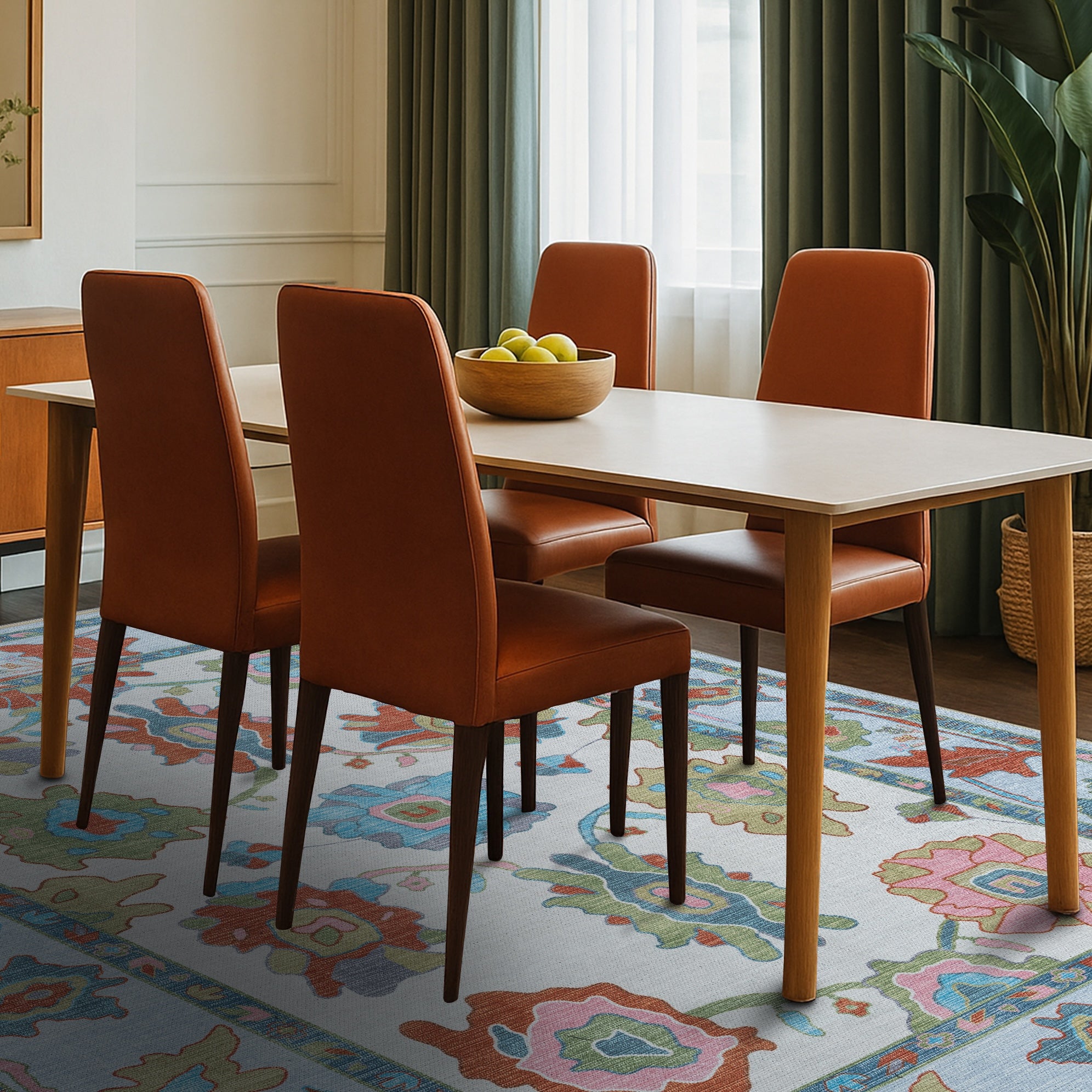


Choose a low-pile wool rug for natural warmth, a handwoven wool kilim for a flatweave dining area, or a washable rug for easier everyday cleanup. The right dining room rug should extend approximately 24–30 inches beyond your dining table, allowing chairs to move comfortably without catching on the edges. Before Thanksgiving, compare rug dimensions, construction, colors, and patterns to find a design that works for both holiday gatherings and everyday dining.
TL;DR
-
Extend your rug approximately 24–30 inches beyond each side of the dining table.
-
Choose a rug size based on your table dimensions and the space needed for pulled-out chairs.
-
Low-pile and flatweave rugs are practical options for dining areas.
-
Wool offers natural warmth and resilience; washable rugs can simplify routine cleaning.
-
Terracotta, rust, beige, brown, and muted green create a welcoming Thanksgiving palette.
-
Choose a timeless pattern that complements your dining furniture beyond the holiday season.
Why this matters
A dining room rug does more than decorate the floor. It defines the dining area, connects furniture visually, and creates a comfortable foundation for family gatherings.
Thanksgiving makes these details especially important. More guests mean more chairs moving, more foot traffic, and a greater chance of food and drink spills.
Choosing the right rug involves balancing three considerations: enough space for comfortable seating, a construction that suits everyday use, and a design that complements your existing interior.
What makes a good dining room rug?
Before choosing a design, consider these five factors:
-
Size: Allow enough room for dining chairs to remain on the rug when pulled out.
-
Pile height: Low-pile and flatweave designs generally make chair movement easier.
-
Material: Consider wool for natural resilience or washable options for convenient care.
-
Pattern: Detailed and vintage-inspired designs can help make minor everyday marks less noticeable.
-
Color: Choose shades that complement your dining table, flooring, and seasonal decorations.
Dining room rug sizes at a glance
The correct rug size depends on your dining table dimensions, chair placement, and available floor space.
| Dining table | Recommended rug size | Best for |
|---|---|---|
| 4-person (36"–48") | 6' x 9' | Small dining areas |
| 6-person (60"–72") | 8' x 10' | Medium dining rooms |
| 8-person (72"–84") | 9' x 12' | Larger family dining areas |
| 10-person (96"–108") | 10' x 14' | Spacious dining rooms |
These are general planning recommendations, not fixed requirements. Measure your actual table and chairs before ordering.
The 24–30-inch rule: Aim for approximately 24–30 inches of extra rug space on every side of the table. This allows guests to pull their chairs out without the back legs slipping off the rug.
1. Choose a rug that fits your dining table
The shape of your rug should complement your dining table while leaving enough room for comfortable seating.
Rectangular dining tables
Rectangular rugs are the most straightforward match for rectangular dining tables. They create a balanced layout and work well in both traditional and contemporary interiors.
Round dining tables
Round rugs create a harmonious arrangement beneath round dining tables. Square rugs can also work when you want a more structured appearance.
Square dining tables
Square rugs naturally complement square tables and help maintain visual balance. Make sure the rug extends far enough to accommodate chairs when pulled out.
Buying consideration: Don't measure only the tabletop. Position your chairs as if guests were seated, then measure the full footprint.
2. Compare dining room rug materials
The dining room is a high-use space, so construction and maintenance matter just as much as appearance.
| Rug type | Main advantages | Buying considerations |
|---|---|---|
| Wool rug | Natural fiber, resilient, comfortable | Requires appropriate spill care |
| Flatweave wool kilim | Low-profile, often reversible, practical for chair movement | Less cushioned underfoot |
| Washable rug | Convenient cleaning options | Check washing instructions and size limitations |
| High-pile rug | Soft and plush texture | Chairs may be harder to move; crumbs can be harder to remove |
Wool rugs: natural warmth and resilience
Wool is a popular choice for homeowners who want a natural fiber with a comfortable texture. Its natural elasticity helps it recover from everyday compression, making it suitable for many living and dining spaces.
Wool rugs also introduce warmth and texture beneath wooden dining tables and neutral furniture.
Pros:
-
Natural fiber with a comfortable feel.
-
Resilient construction.
-
Available in traditional and contemporary designs.
-
Adds warmth and character to dining interiors.
Considerations: Wool requires appropriate care when spills happen. Blot accidents promptly and follow the manufacturer's cleaning instructions.
Best for: Dining rooms where natural materials, warmth, and timeless design are priorities.
Flatweave and kilim rugs: practical low-profile designs
Handwoven wool kilims are particularly worth considering beneath dining tables. Their flat construction creates a smooth, low-profile surface that makes moving chairs easier than on many thick-pile rugs.
Traditional kilims also offer detailed geometric patterns, natural textures, and versatile designs.
Pros:
-
Flat construction supports easier chair movement.
-
Less bulky than thick-pile rugs.
-
Often reversible, depending on construction.
-
Traditional patterns add character to dining spaces.
Considerations: Their firm surface offers less cushioning than plush rugs, and woven fibers still require appropriate cleaning.
Best for: Busy dining areas where practical construction and traditional design are equally important.
Washable rugs: convenient everyday care
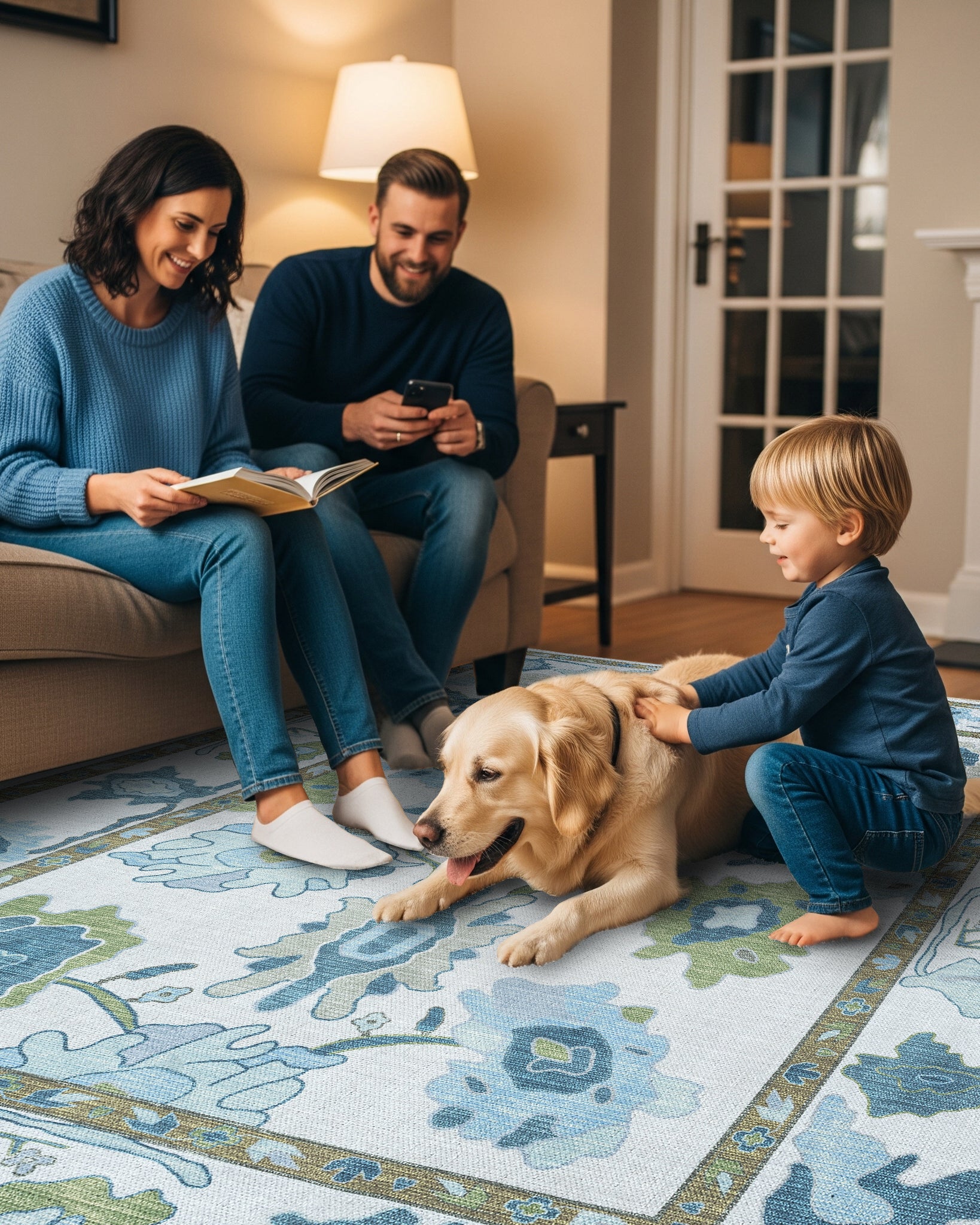
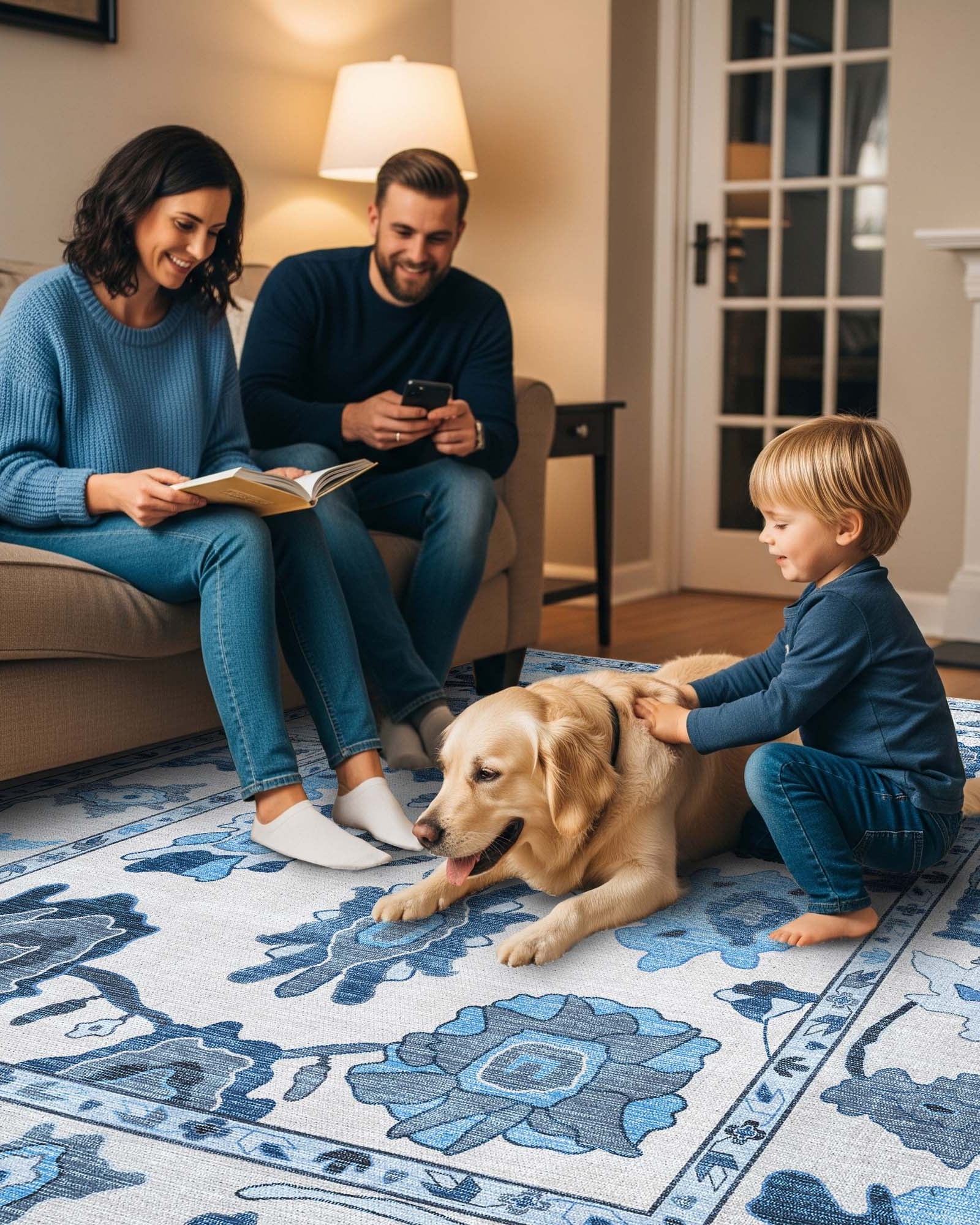
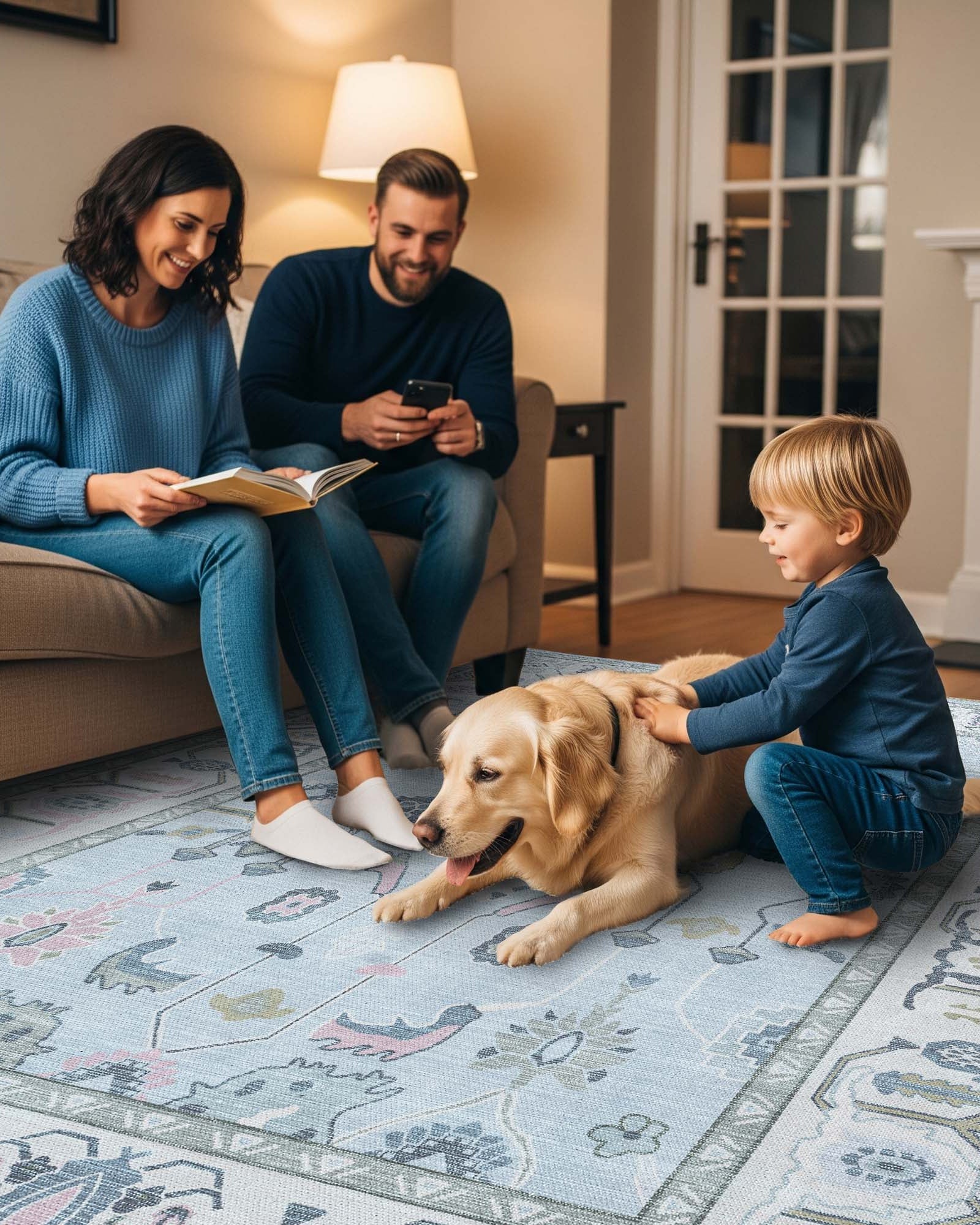
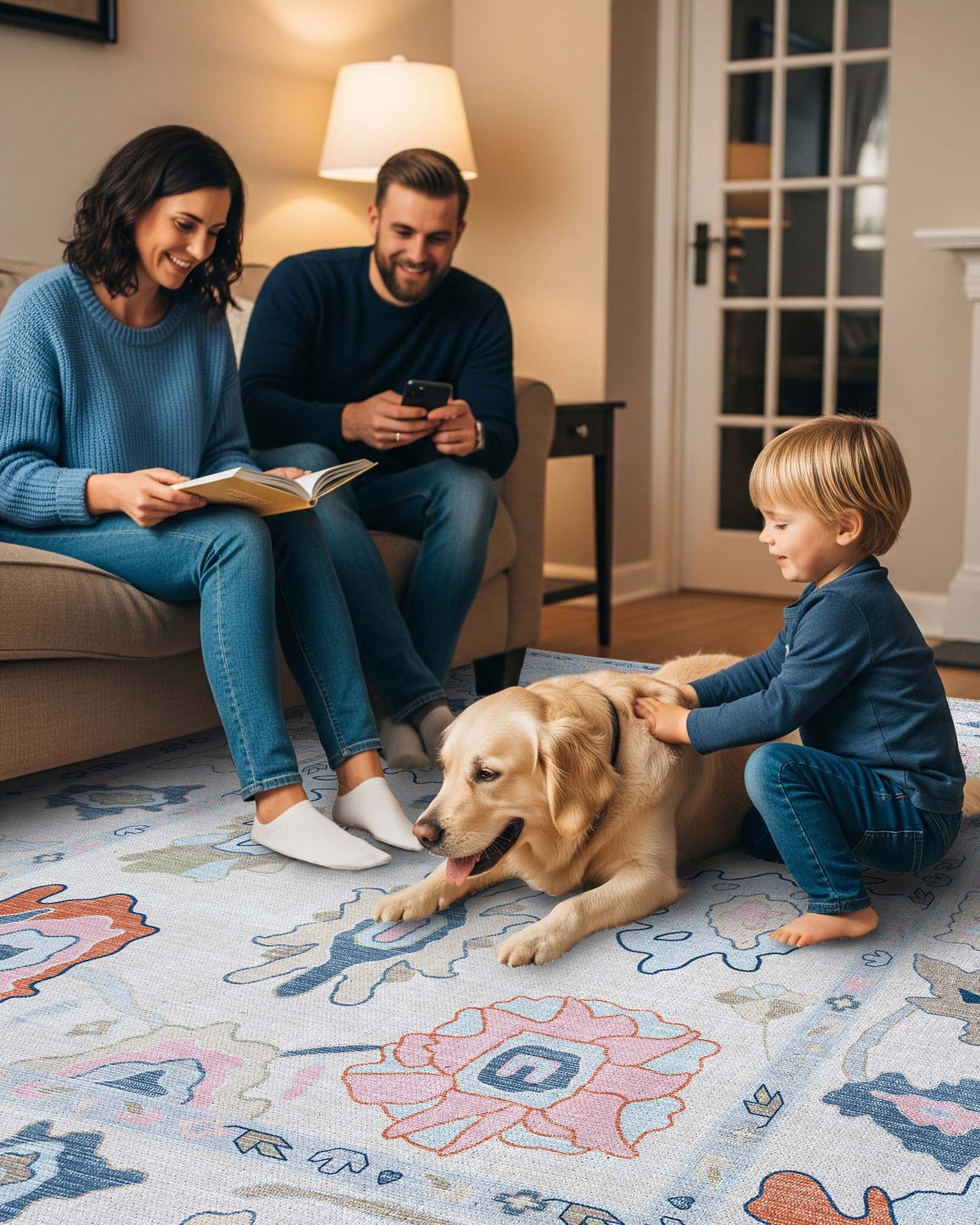
Washable rugs can be a useful option for households with children, pets, or frequent gatherings.
Pros:
-
Convenient cleaning options.
-
Suitable for households with regular spills and messes.
-
Available in a variety of patterns and colors.
Considerations: Not every washable rug can fit in a standard washing machine. Always check the manufacturer's washing instructions and appliance capacity.
Best for: Households that prioritize convenient maintenance.
3. Choose Thanksgiving colors that work all year
Thanksgiving decorating naturally brings warm, earthy shades into the home. Instead of buying a rug specifically for one holiday, choose a color palette that complements your interior throughout the year.
| Rug color | Decorating effect | Works well with |
|---|---|---|
| Terracotta | Warm and autumn-inspired | Wooden furniture, cream textiles |
| Burnt orange | Rich and festive | Beige, brown, and natural wood |
| Beige and ivory | Soft and understated | Neutral furniture, light flooring |
| Brown | Earthy and grounding | Wooden tables, cream upholstery |
| Olive green | Natural and calming | Warm neutrals, greenery |
| Burgundy | Rich and traditional | Dark wood, gold accents |
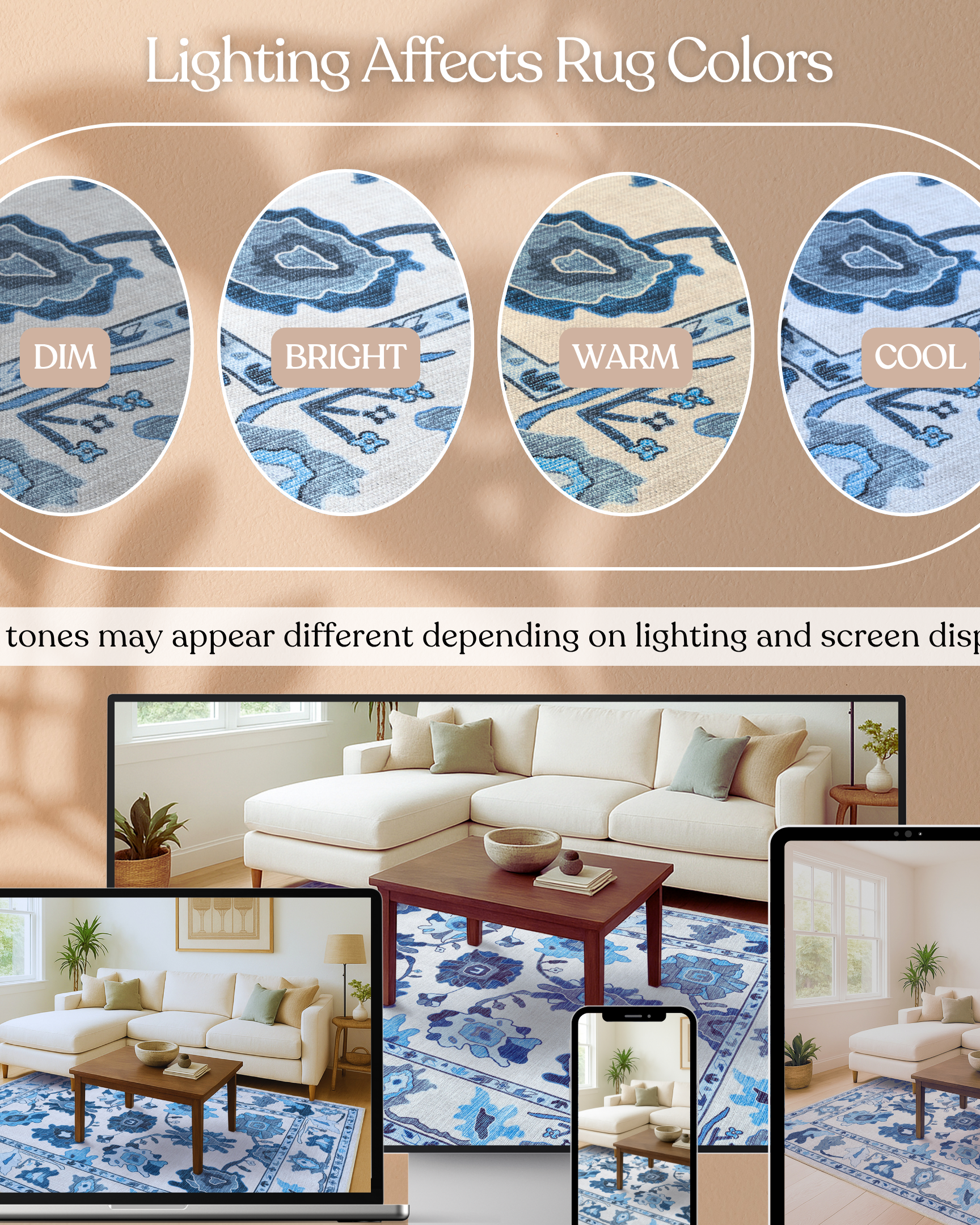
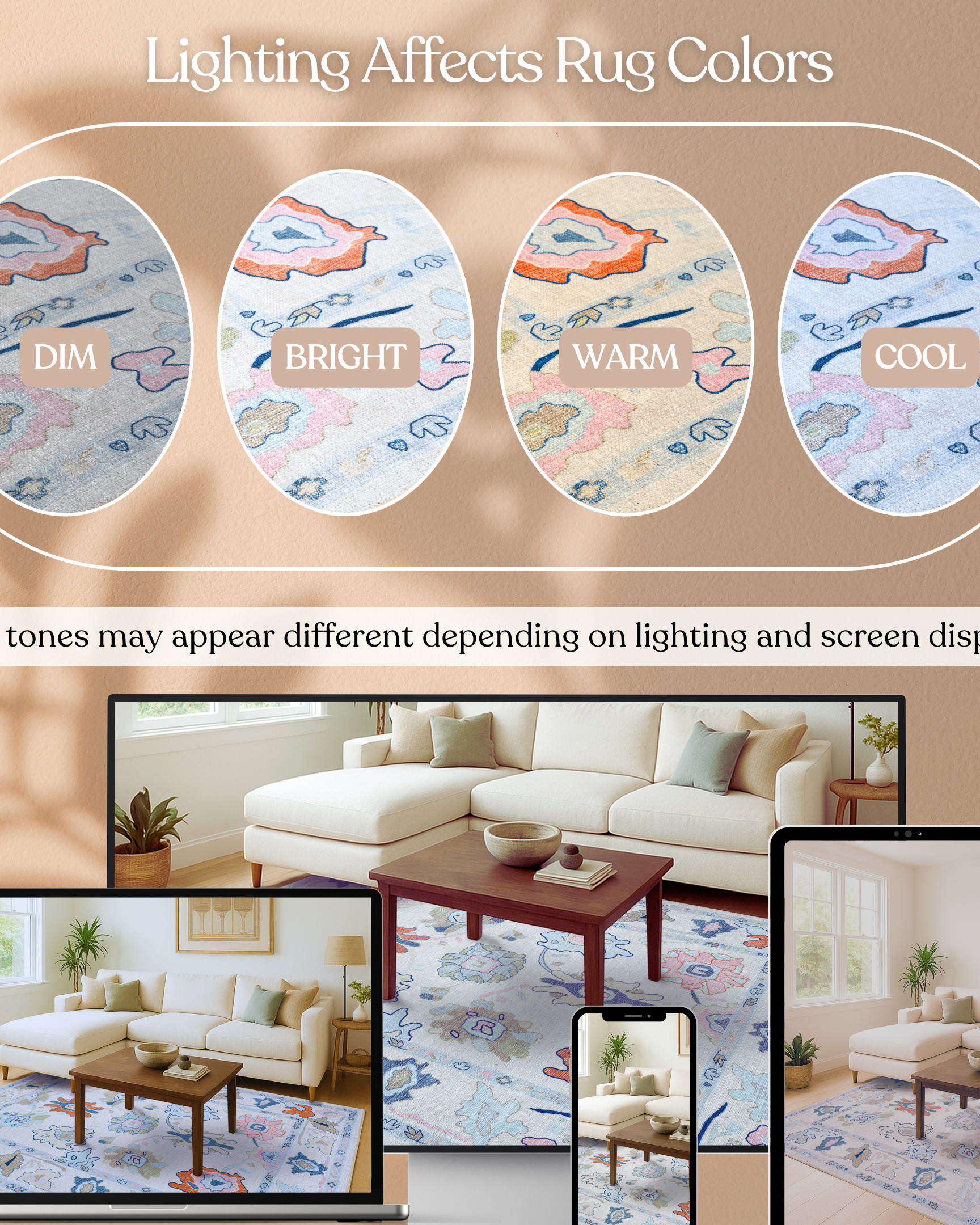
Buying tip: Consider your flooring and dining furniture together when choosing a rug. A beige rug on a similarly pale floor may blend into the background, while a darker patterned design can create more visual definition.
4. Match rug patterns and textures to your dining room
A patterned rug can become the focal point of your dining area, particularly when your dining table and chairs have simple finishes.
Here are a few styles to consider:
Vintage-inspired rugs
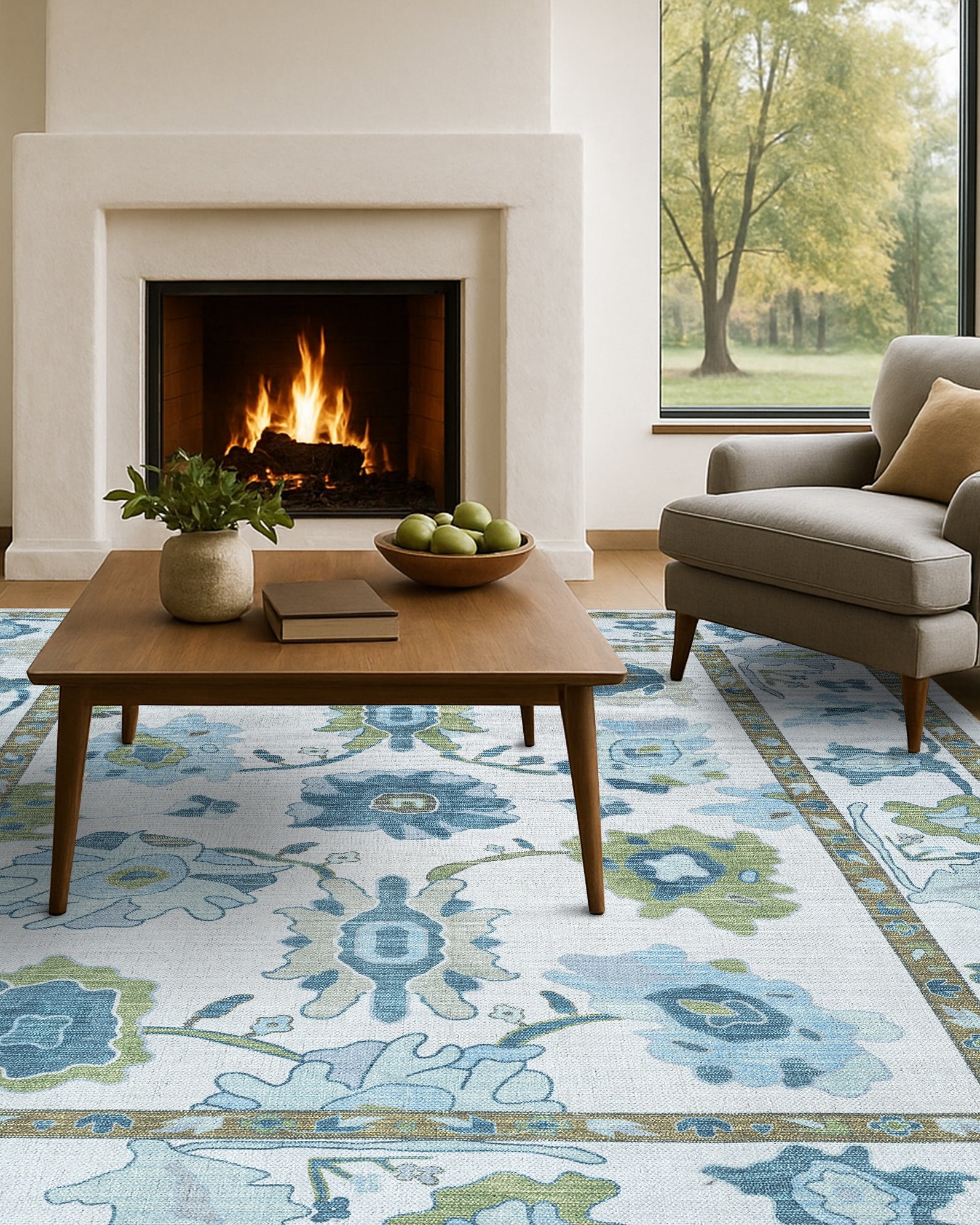
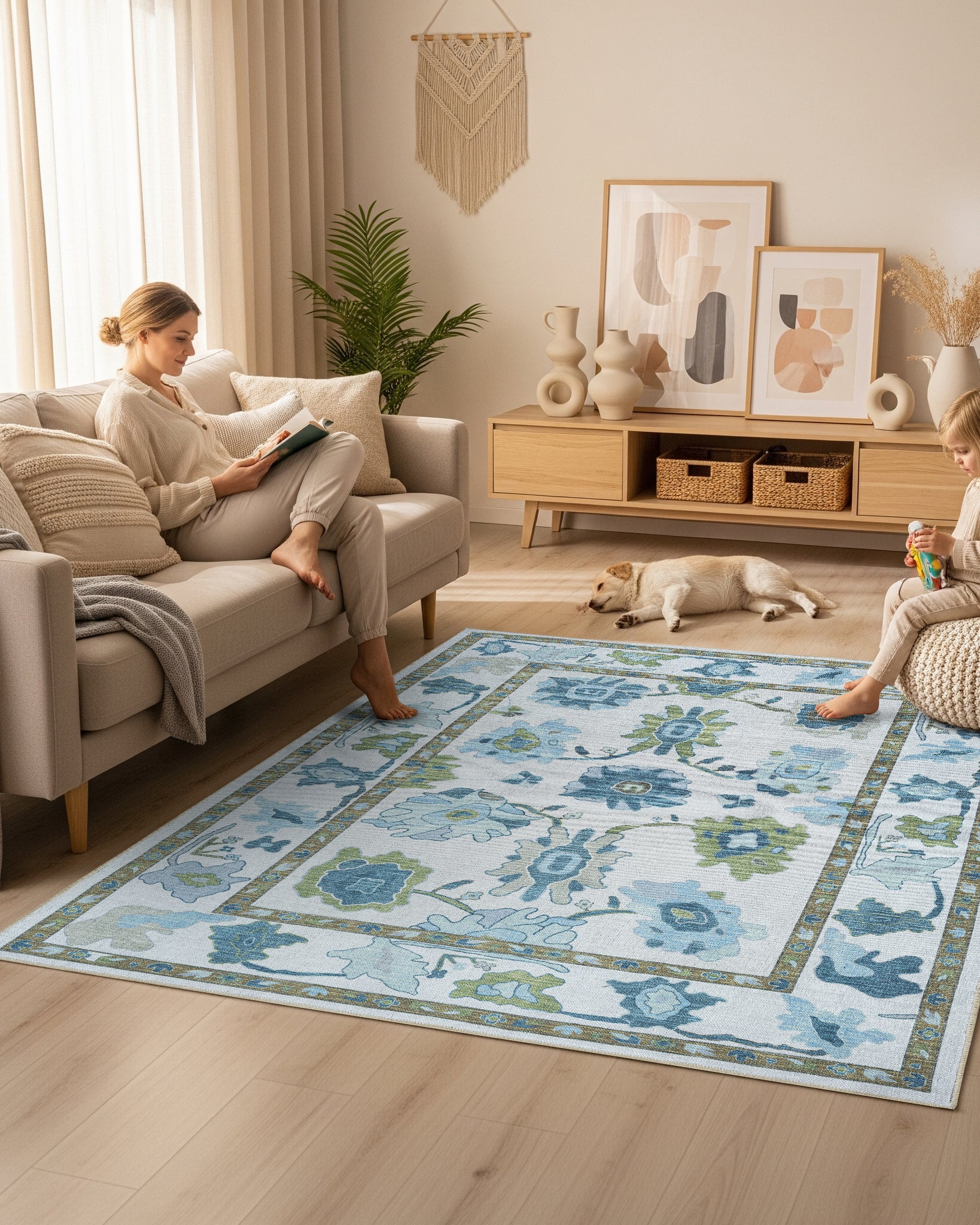
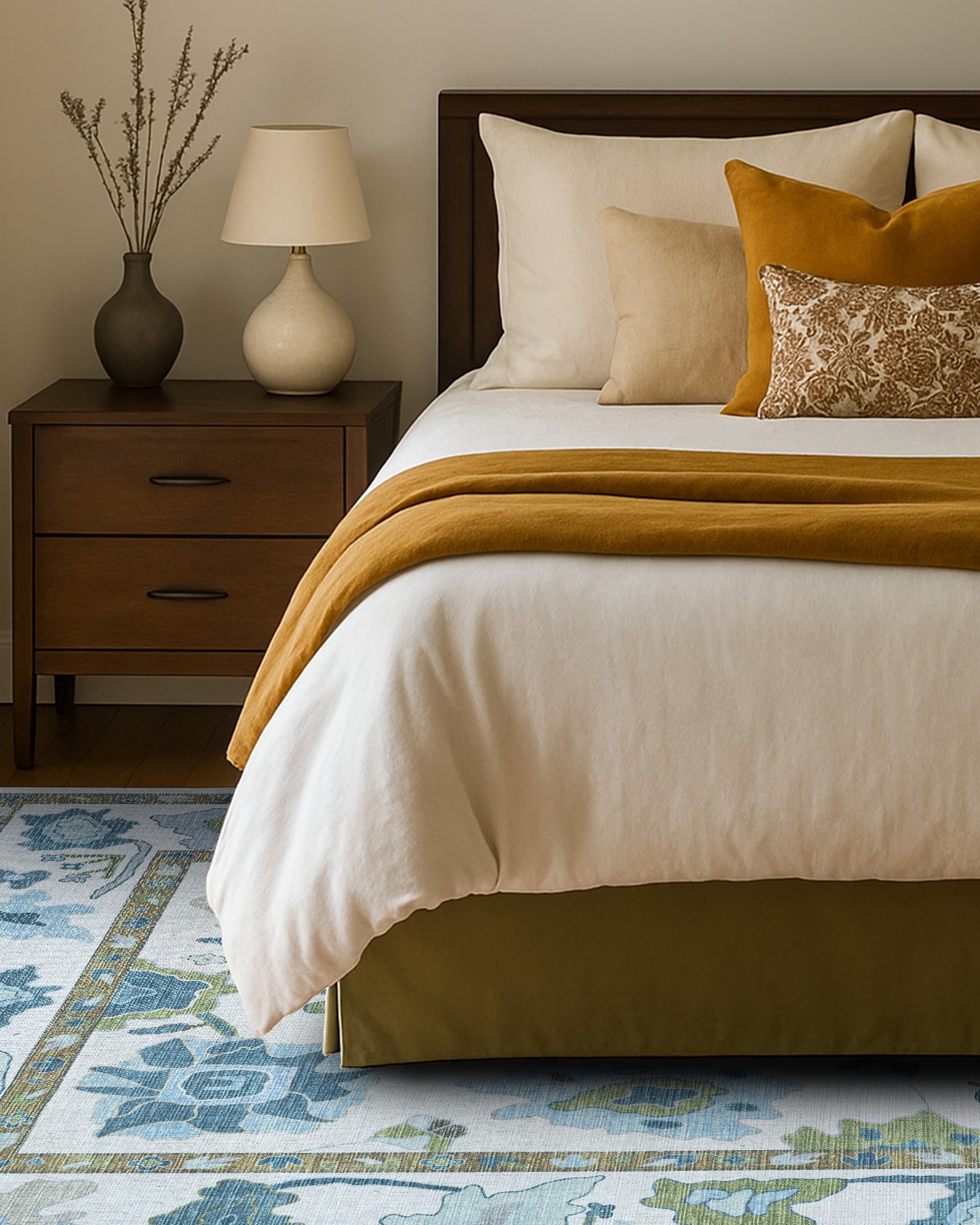
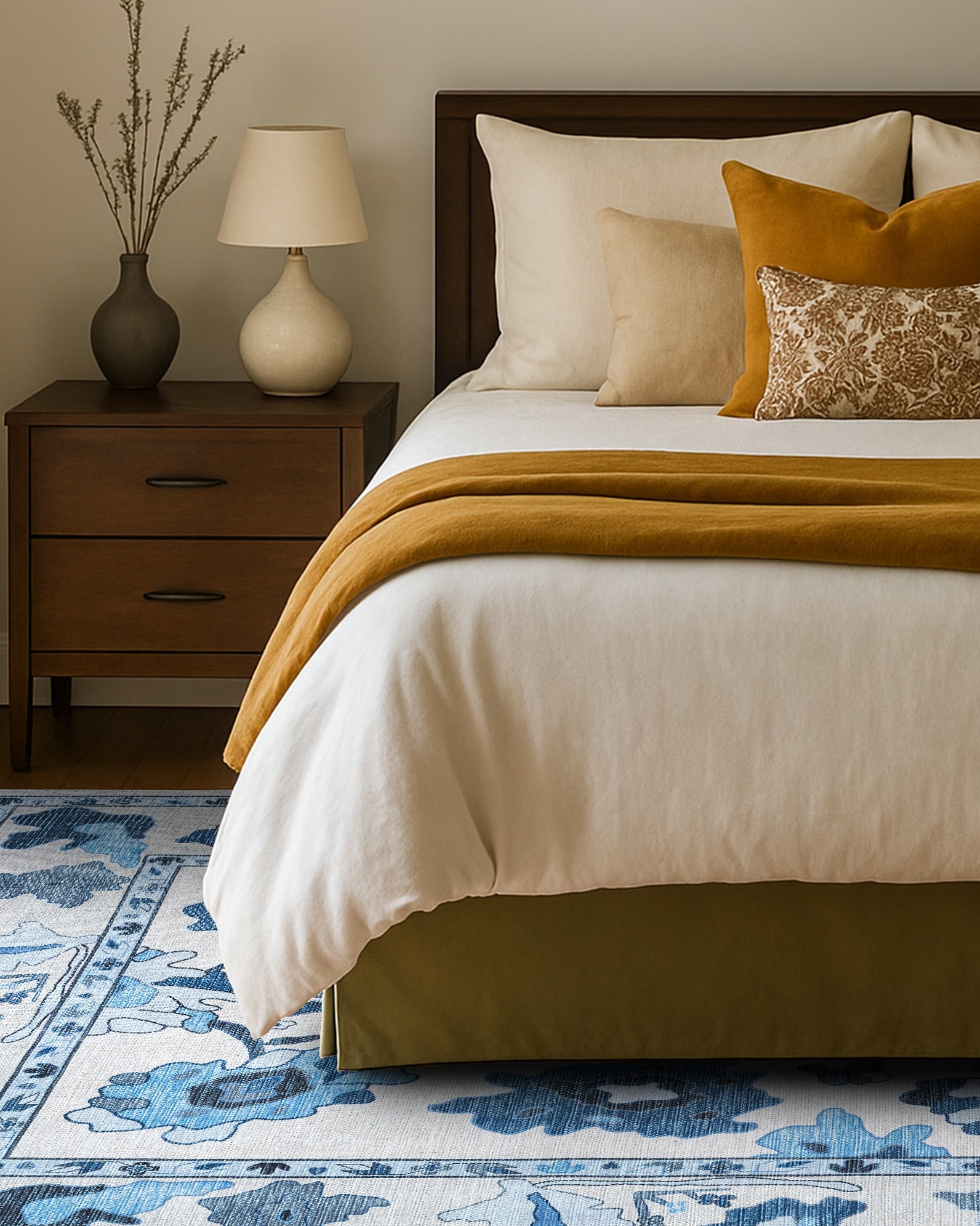
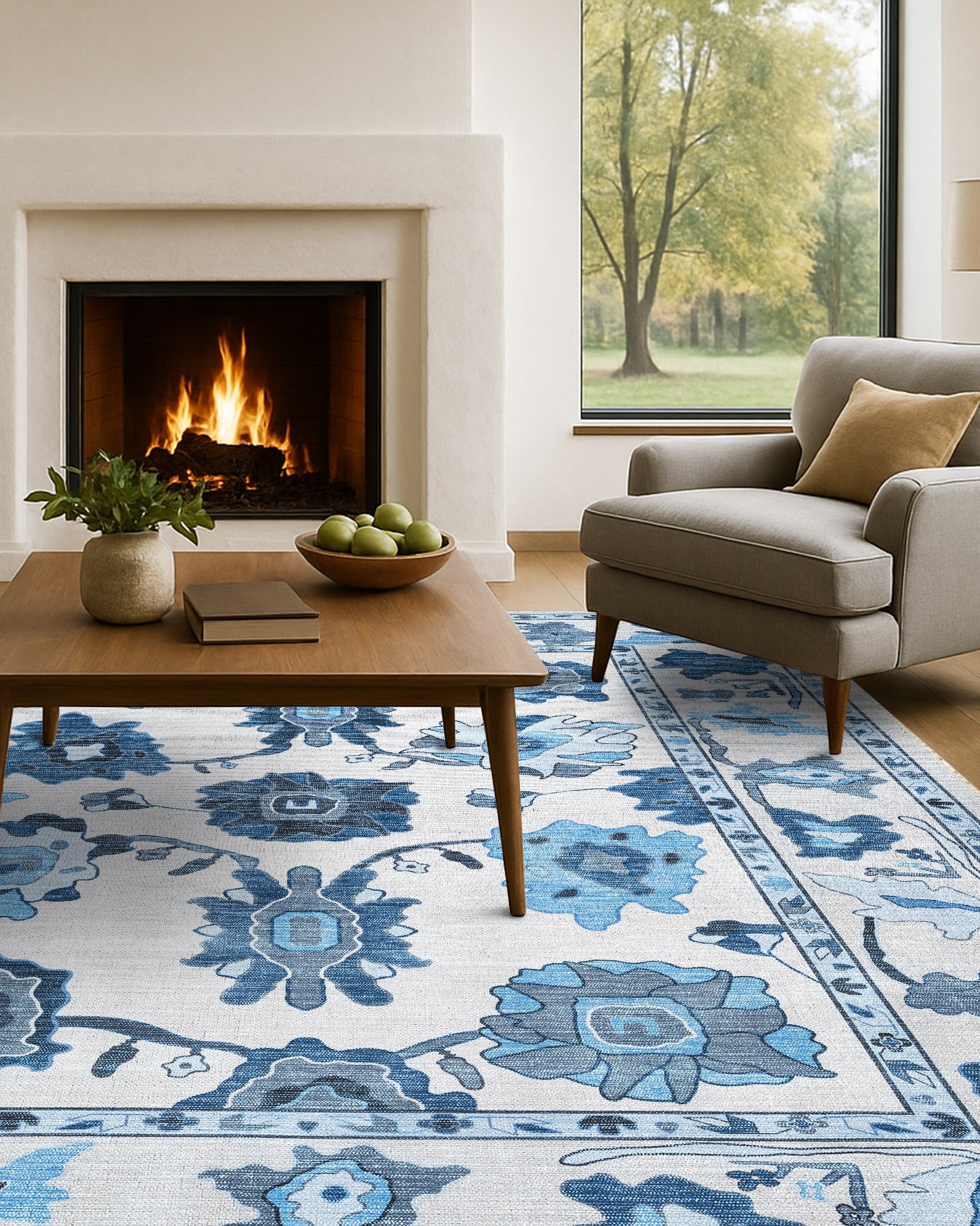
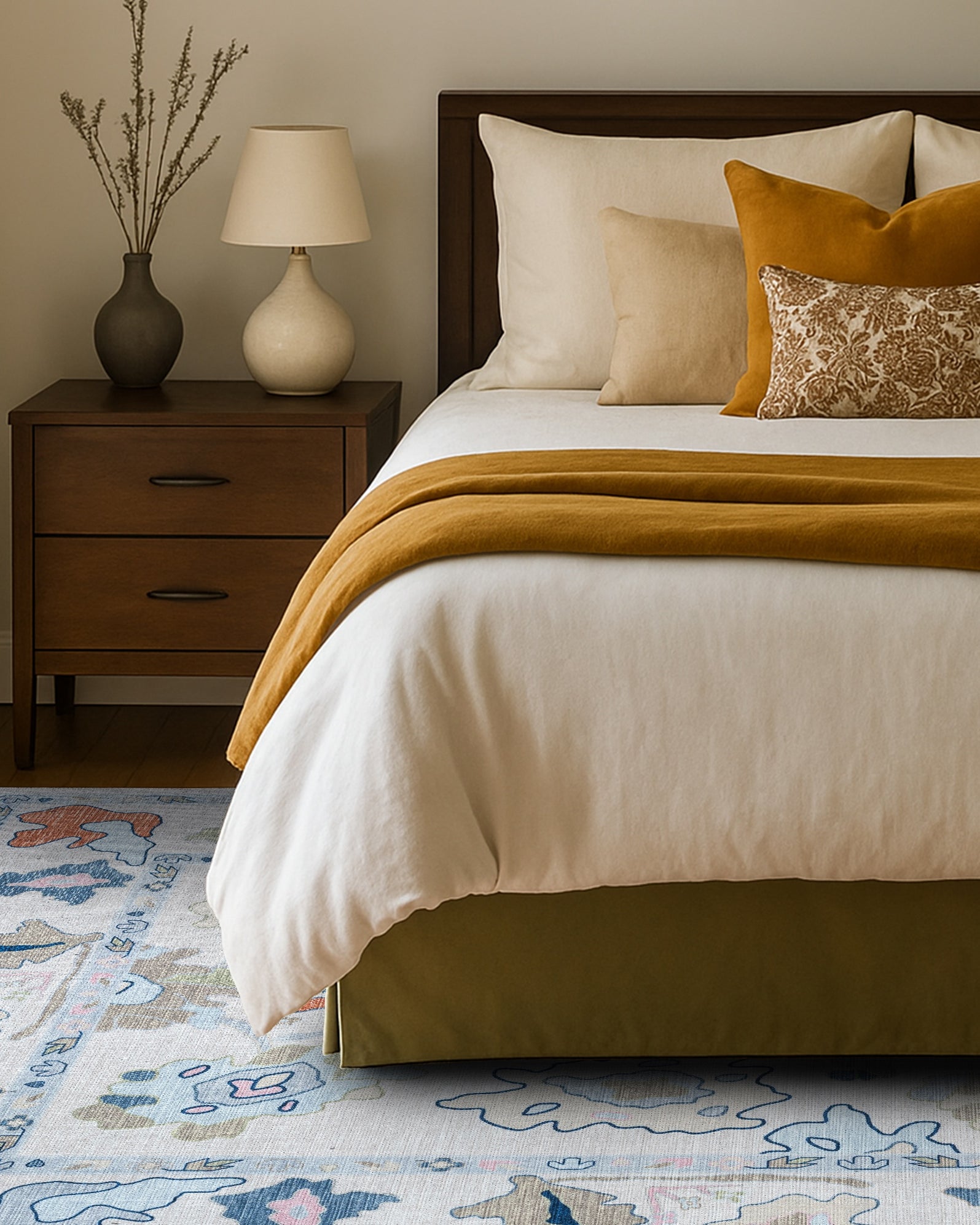
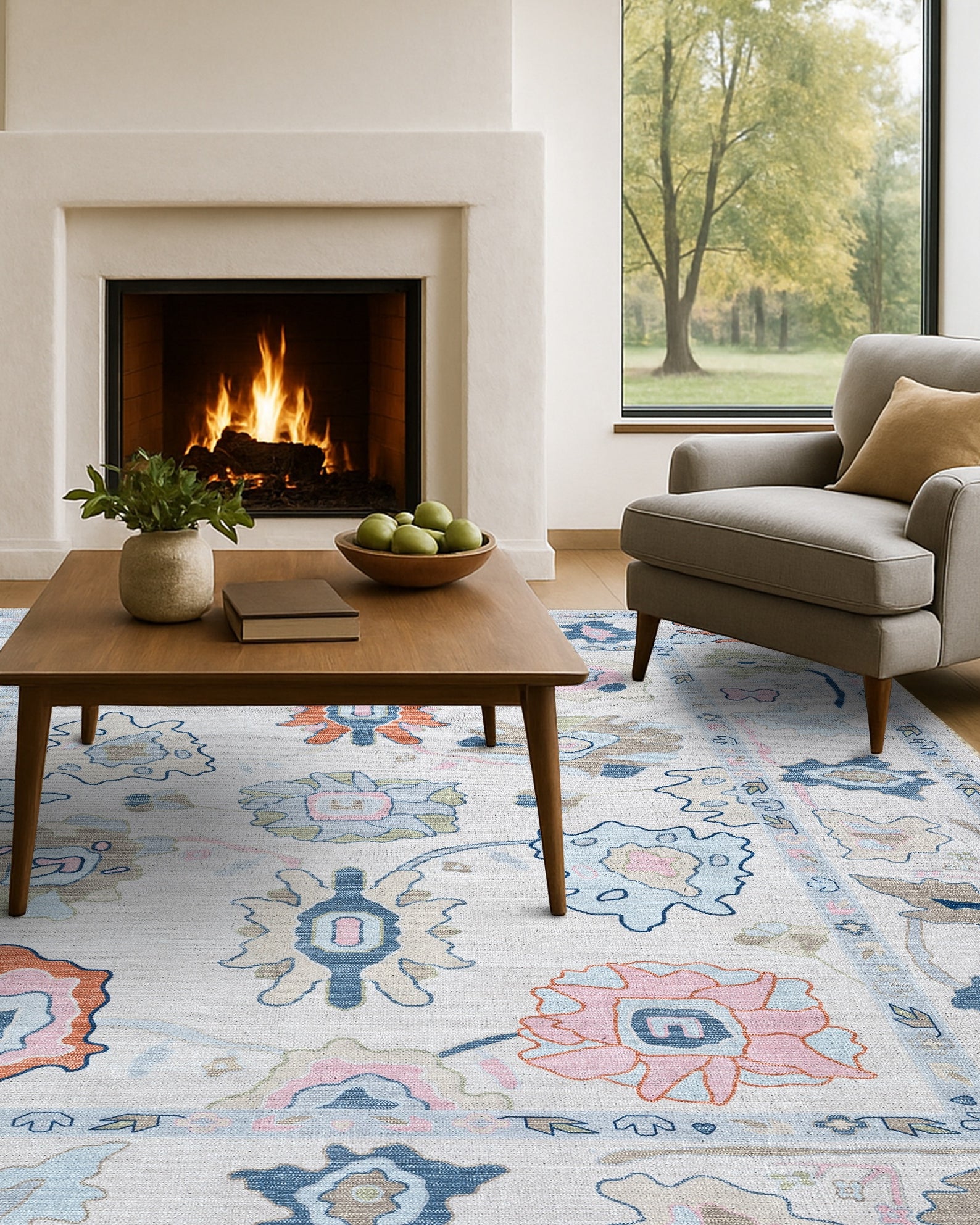
Faded floral motifs and Oushak-style patterns bring character and timeless appeal. They work particularly well with wooden furniture, neutral upholstery, and traditional interiors.
Geometric rugs
Geometric designs introduce structure and contrast. They are a natural fit for contemporary dining rooms and minimalist furniture.
Floral rugs
Floral patterns soften the overall appearance of a dining space and complement traditional, rustic, and cottage-inspired interiors.
Neutral patterned rugs
Beige, cream, and muted brown designs create a relaxed foundation without competing with decorative table settings.
Pattern consideration: If your dining chairs have detailed upholstery or your curtains already feature a bold print, choose a simpler rug. When the furniture is minimalist, a more decorative rug can provide the missing visual interest.
5. Match your rug to your dining table
Your rug doesn't have to match your dining furniture exactly. A complementary color relationship is often more effective.
| Dining table | Suggested rug palette | Decorating direction |
|---|---|---|
| Natural wood | Terracotta, beige, brown | Warm and rustic |
| Black | Ivory, cream, muted patterns | Modern contrast |
| White | Rust, olive, vintage beige | Soft and welcoming |
| Glass | Geometric, floral, darker patterns | Visual definition |
Choose one or two colors from your rug and repeat them in your napkins, cushions, table runner, or centerpiece.
6. Plan chair movement and rug placement
A beautiful dining room rug should also work comfortably in everyday use.
Before purchasing, consider these practical details:
-
Pull out all dining chairs and check that their legs remain on the rug.
-
Leave enough space between the rug and surrounding walls.
-
Make sure the rug doesn't interfere with doors or walkways.
-
Choose a low-pile or flatweave design for easier chair movement.
-
Use a suitable rug pad to help prevent slipping.
Sizing tip: Tape the proposed rug dimensions onto your floor before purchasing. Place your dining table and chairs within the outline to see how much floor coverage you actually need.
7. Complete your Thanksgiving dining room decor
Once you've selected your rug, use its colors and patterns as the foundation for the rest of your holiday decorations.
-
Natural centerpieces: Add pumpkins, autumn branches, and seasonal flowers.
-
Linen table runners: Introduce softness without competing with the rug.
-
Warm lighting: Use candles and warm-toned candleholders for an inviting atmosphere.
-
Wooden accessories: Serving boards and natural finishes complement earthy rug palettes.
-
Coordinated textiles: Repeat one or two rug colors in your napkins and table accessories.
A neutral rug allows colorful decorations to stand out, while a patterned rug can provide enough visual interest to keep the rest of your styling simple.
How to choose the right dining room rug
Your final choice depends on the balance of practicality and appearance you want.
| Your priority | Consider |
|---|---|
| Natural warmth | Wool rug |
| Easier chair movement | Flatweave or low-pile rug |
| Traditional craftsmanship | Handwoven wool kilim |
| Convenient cleaning | Washable rug |
| Timeless autumn styling | Vintage-inspired patterns |
| Modern dining room | Geometric designs |
How we recommend choosing
Start with your dining table dimensions and the space needed for pulled-out chairs. Next, decide whether you prefer a natural wool surface, a flatweave construction, or a washable design.
Finally, select a palette that complements your furniture. A timeless rug in terracotta, beige, brown, or muted green can make your dining room feel festive for Thanksgiving without becoming seasonal-only decor.
FAQ
What size rug should go under a dining table?
A rug should generally extend 24–30 inches beyond each side of the table. An 8' x 10' rug is a common starting point for a six-person dining setup, but always measure your chairs and table.
Are wool rugs good for dining rooms?
Yes. Wool offers natural resilience, comfort, and durability. However, spills should be addressed promptly using appropriate cleaning methods.
Are flatweave rugs better under dining tables?
Flatweave rugs are often practical because their low-profile construction allows chairs to move more easily and makes everyday vacuuming more manageable.
What color rug is best for a Thanksgiving dining room?
Terracotta, rust, beige, brown, olive green, and burgundy are all beautiful choices. Select a shade that complements your existing furniture and flooring.
Should a dining room rug go under the chairs?
Yes. The rug should accommodate the chairs even when they are pulled out, rather than covering only the area directly beneath the table.
Are patterned rugs good for dining areas?
Yes. Vintage-inspired, floral, and geometric patterns can add character and help make minor everyday marks less noticeable.
How do I keep my dining room rug clean during Thanksgiving?
Vacuum regularly, blot spills immediately, and use cleaning products suitable for the rug's material. Consider a low-pile or washable design if convenient maintenance is a priority.
One last thing
Before ordering, check your rug measurements against the actual dining setup. A rug that looks generous beneath an empty table may feel much smaller once all the chairs are pulled out.
Choose a size that connects the entire seating arrangement, complements your furniture, and leaves enough room for everyone to enjoy Thanksgiving dinner comfortably.
Related guides
-
Explore Fame Rugs for dining room inspiration and area rug styles.
-
Discover wool kilim and flatweave rugs for traditional patterns and low-profile designs.