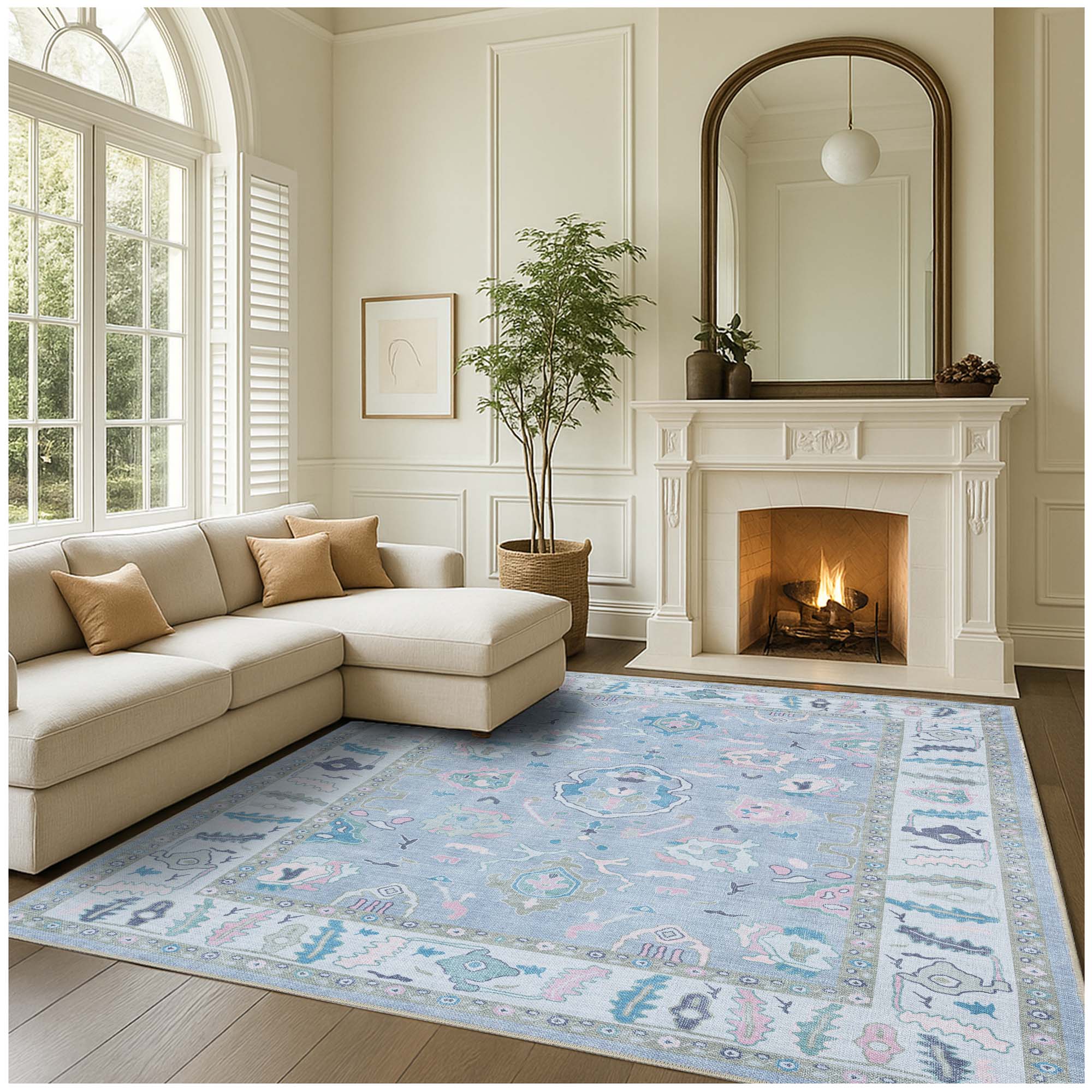
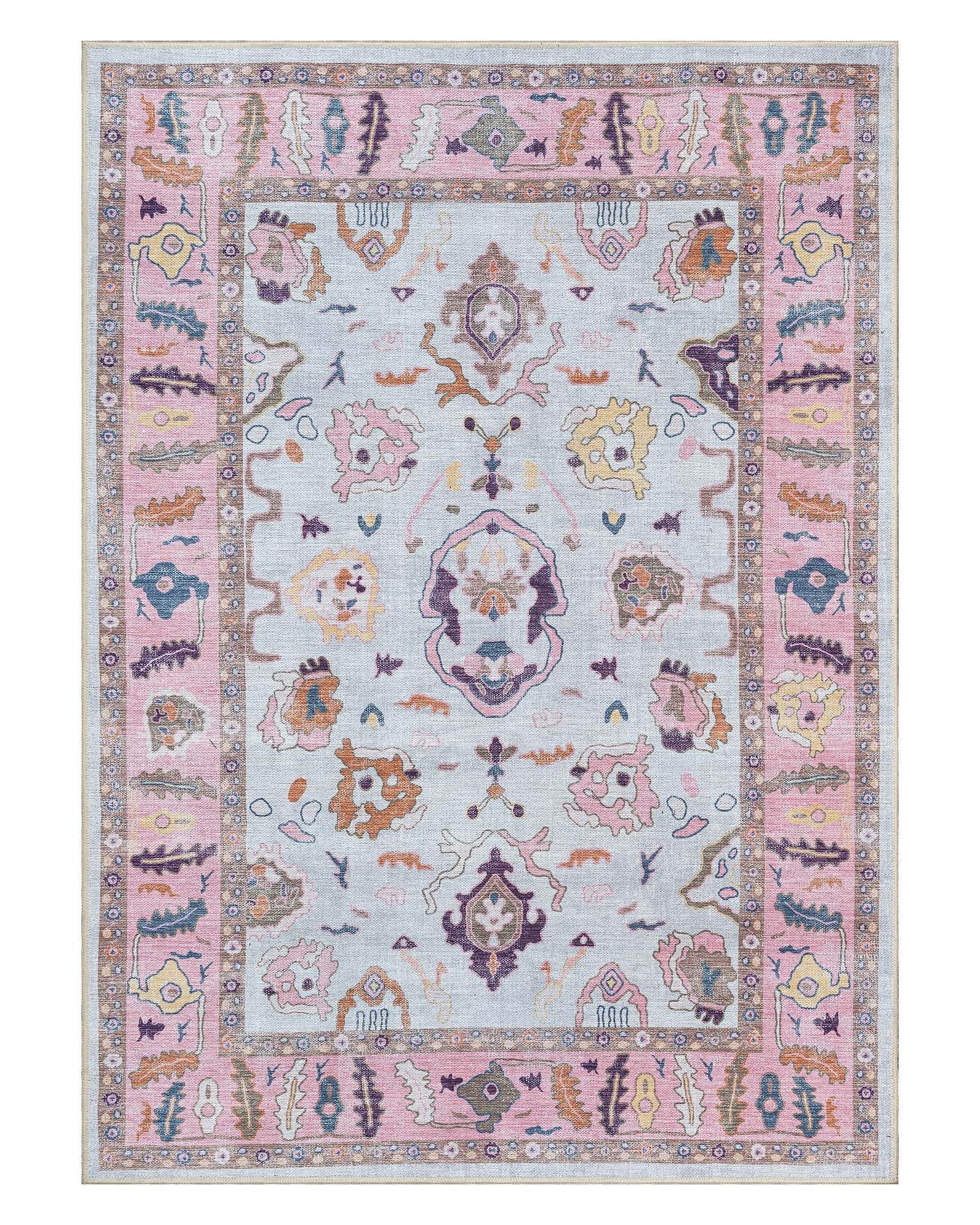
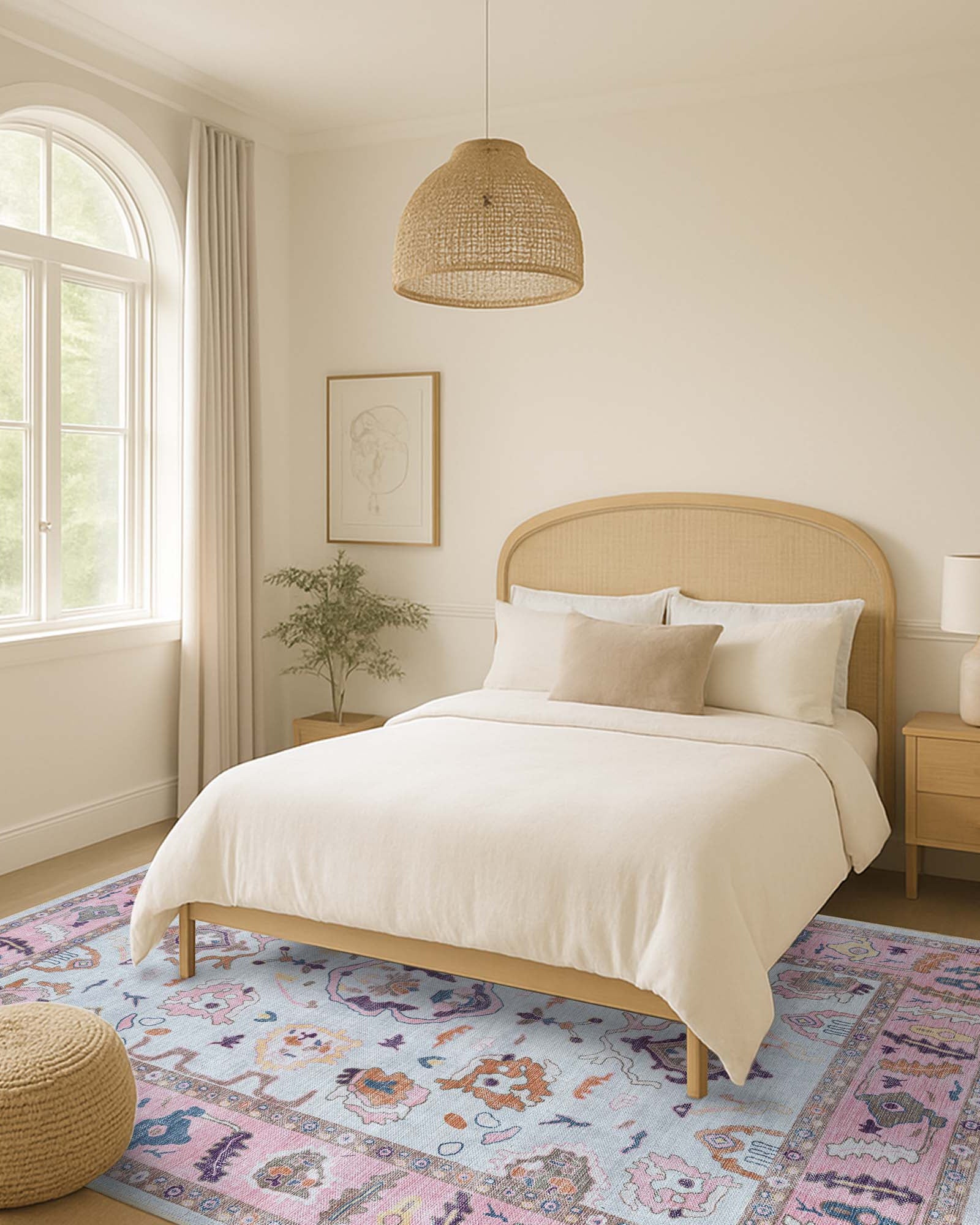
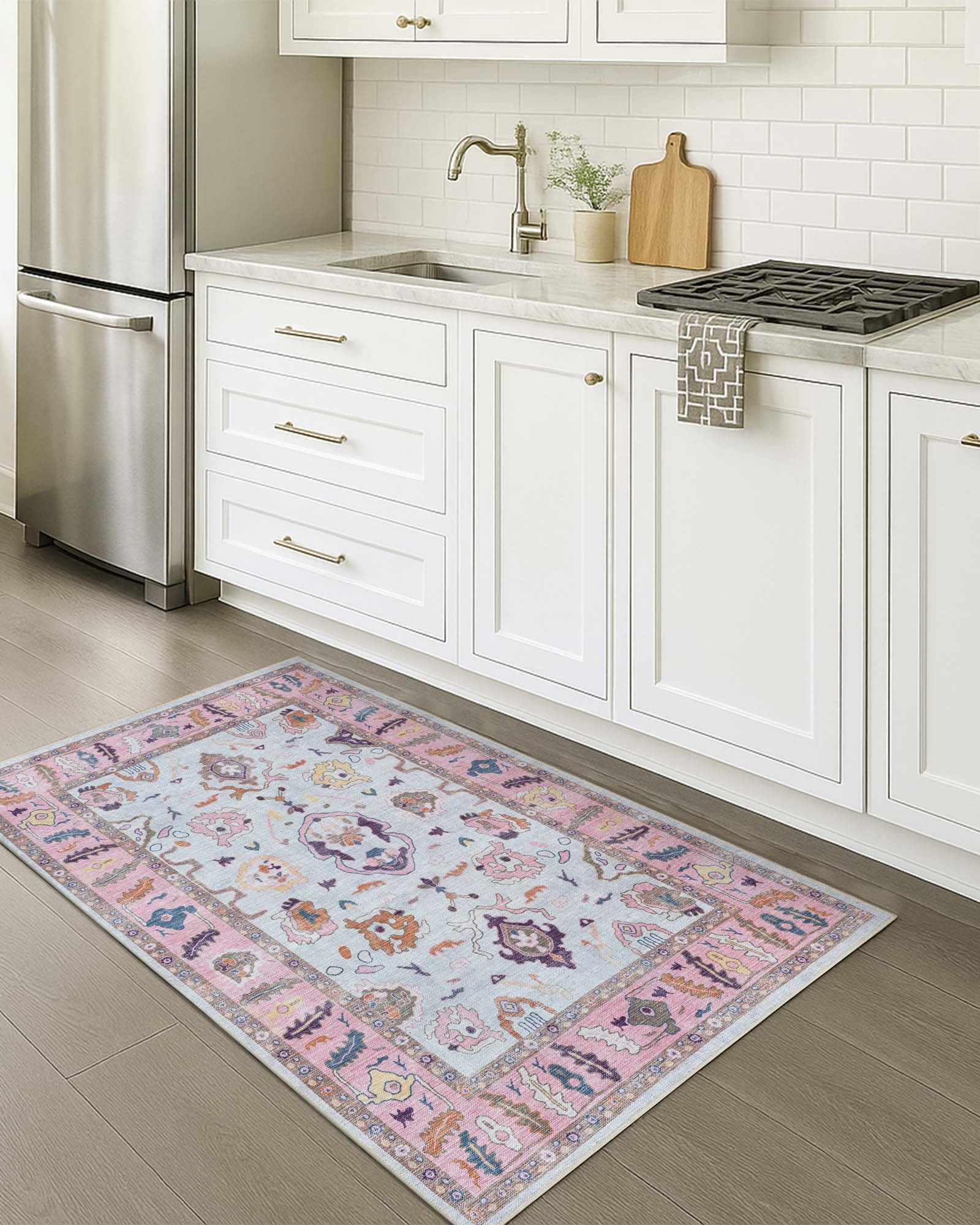
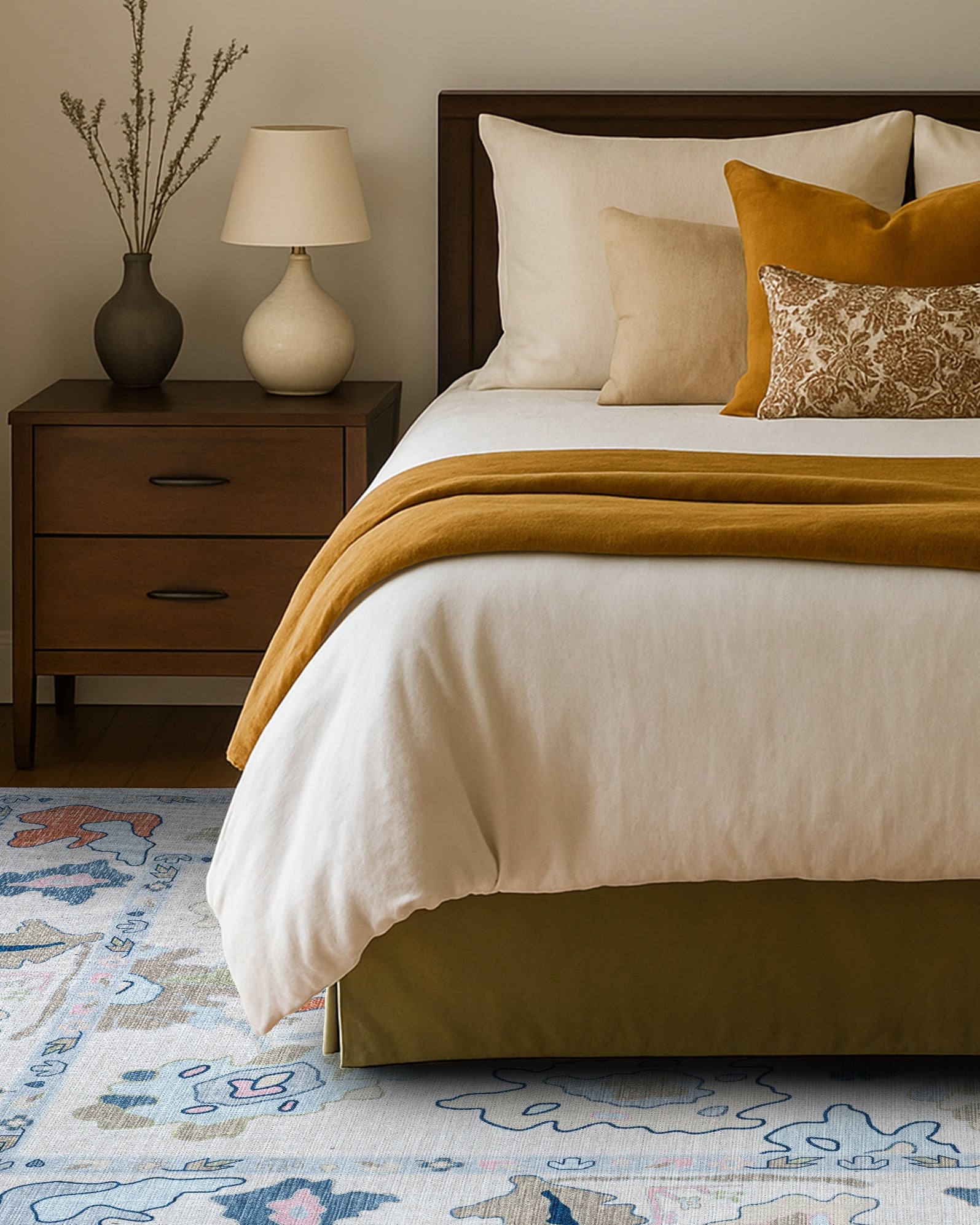
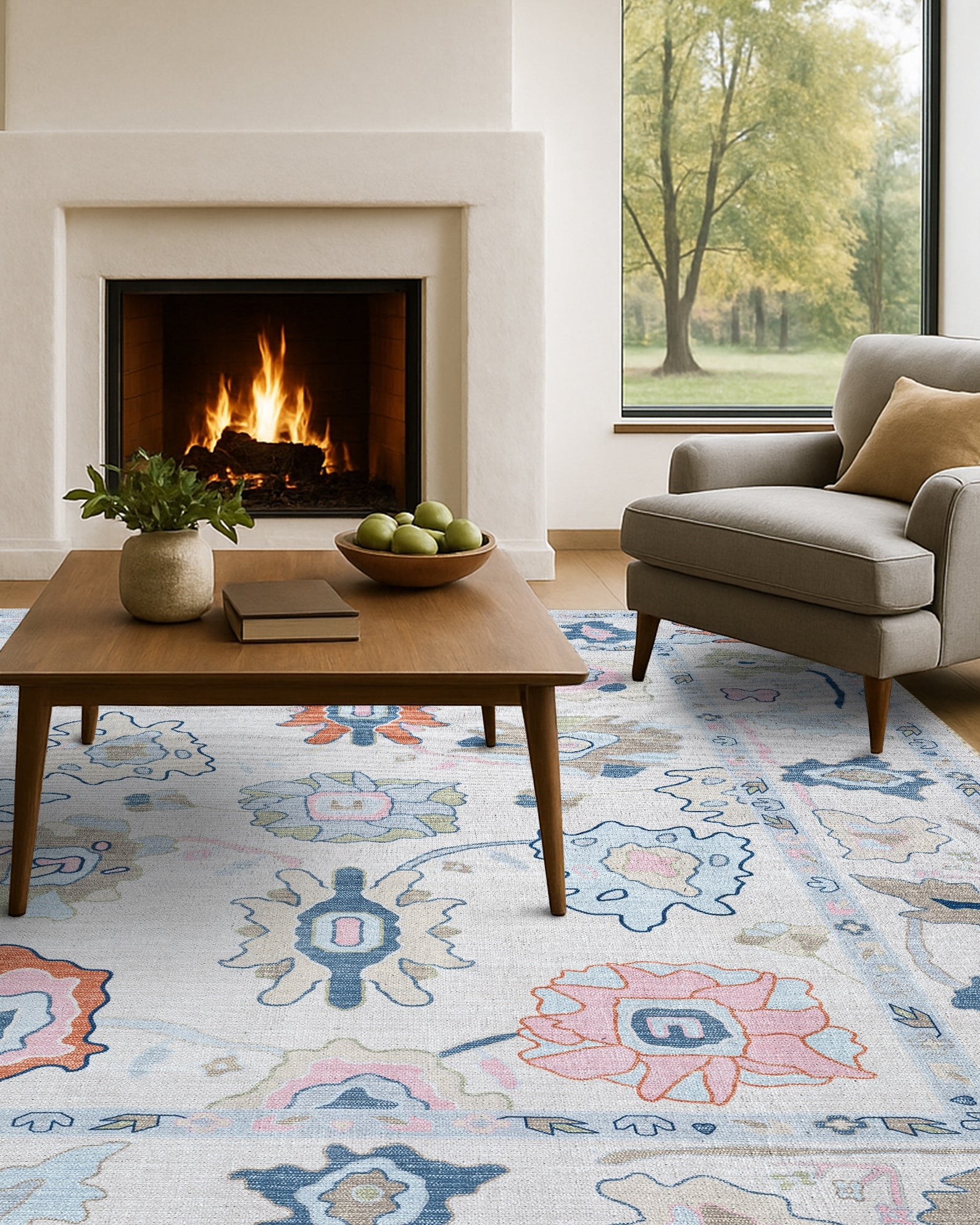
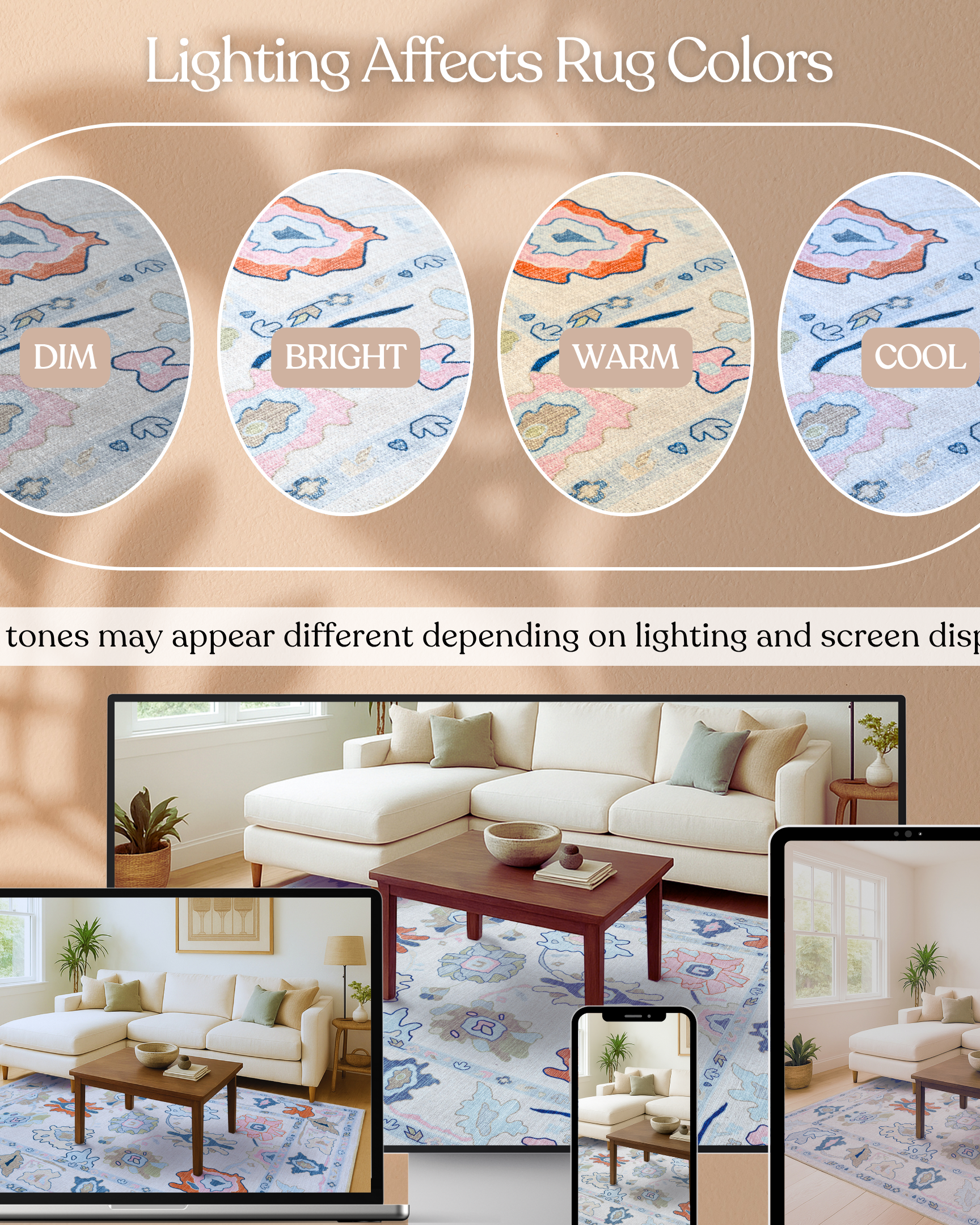
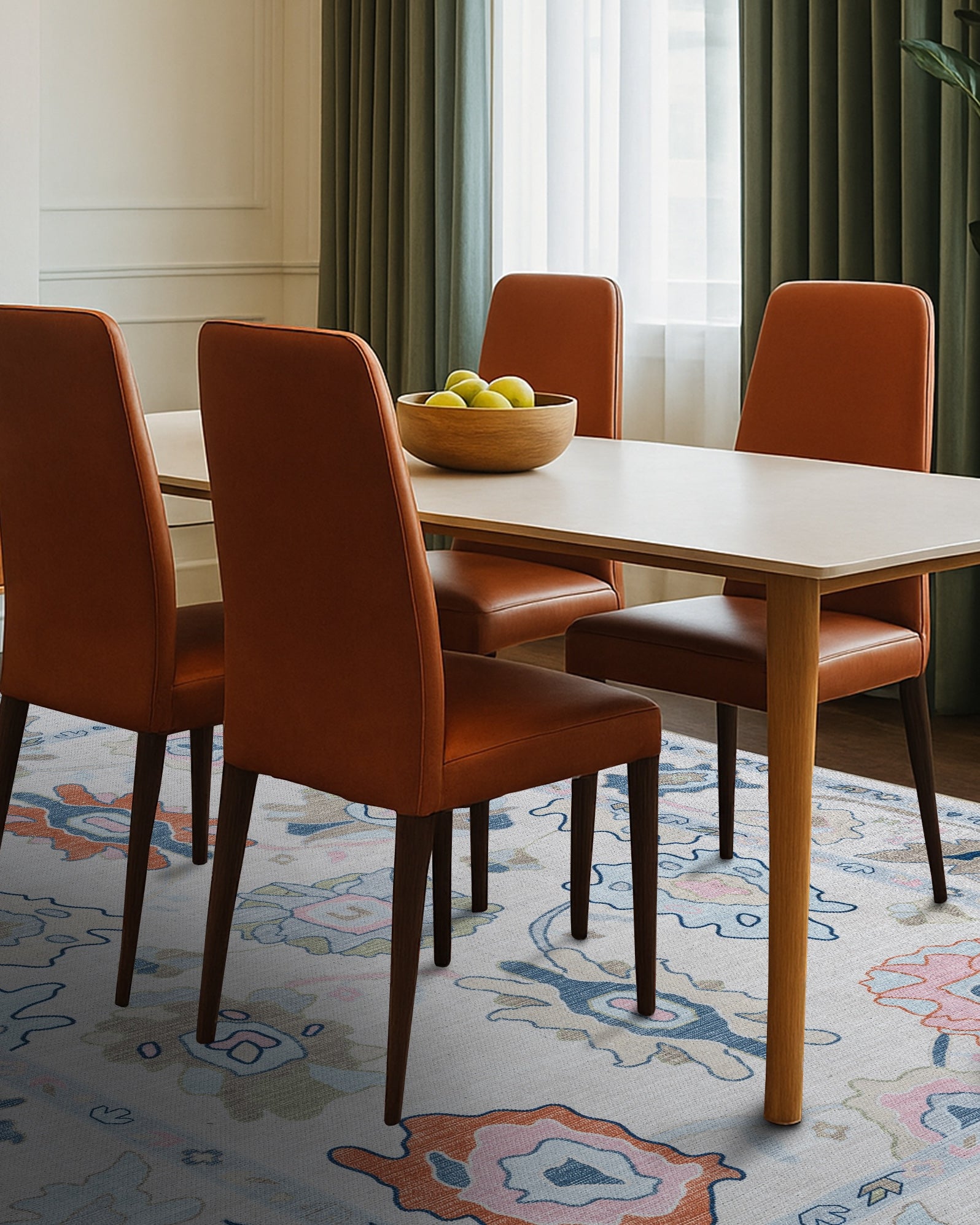
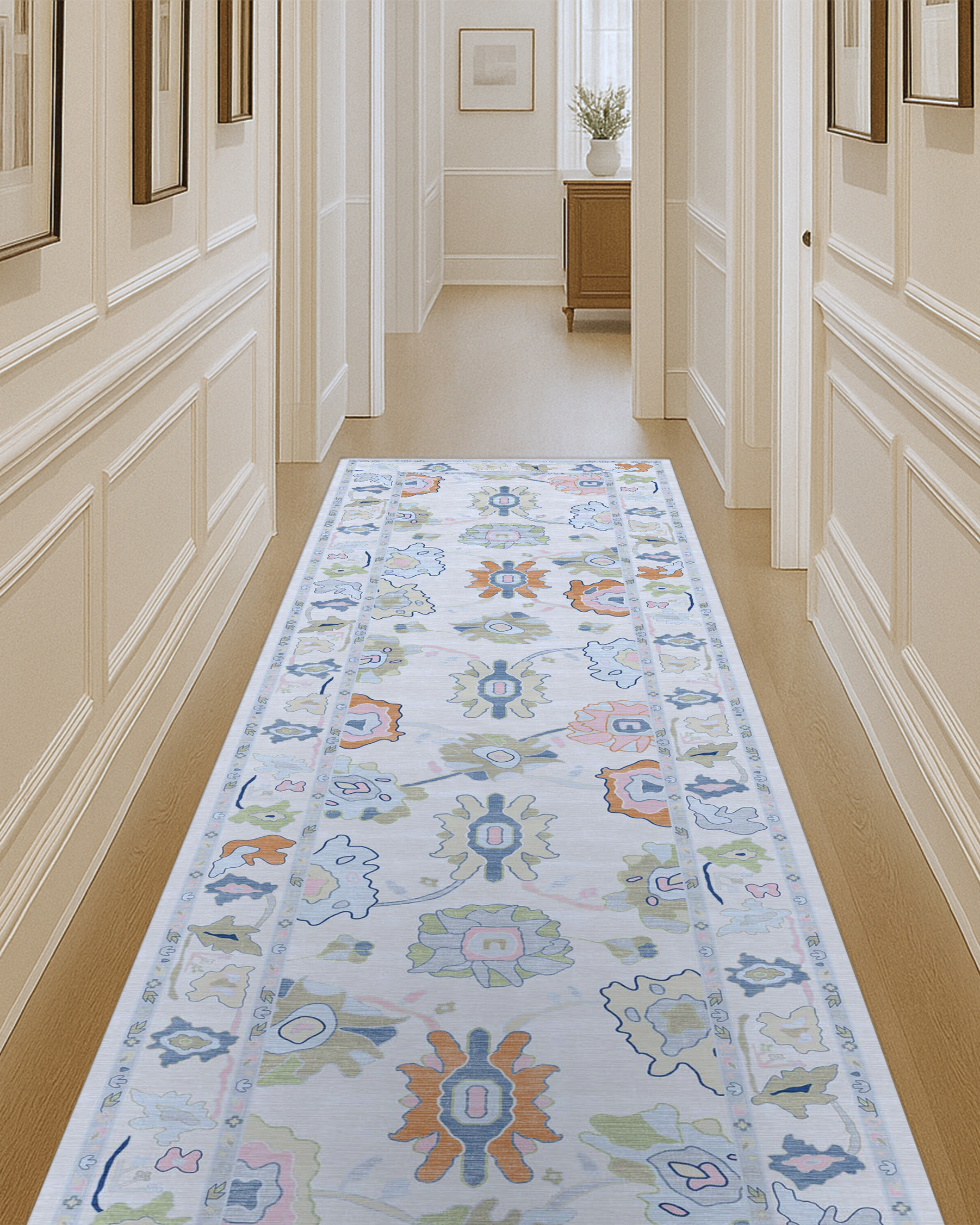
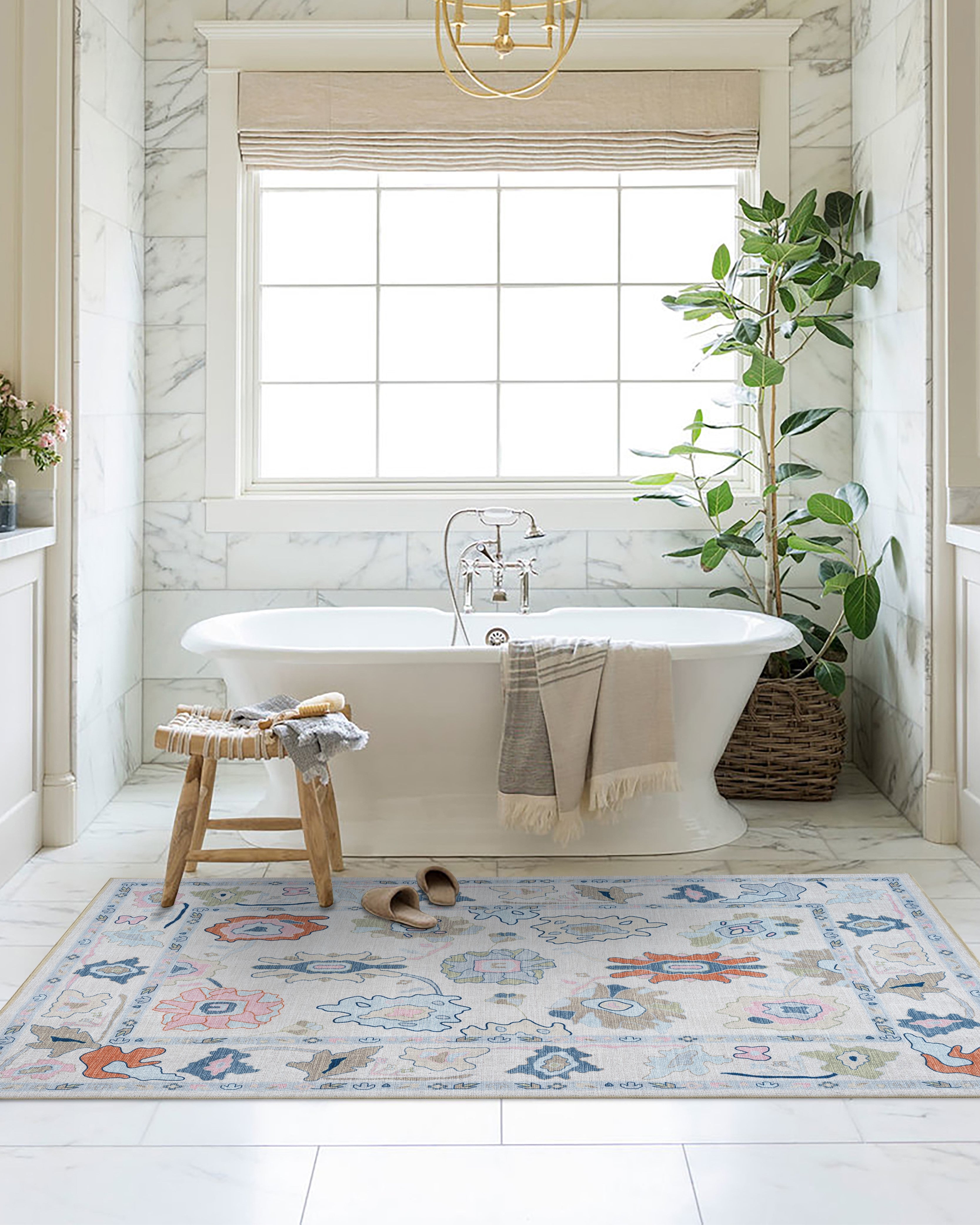
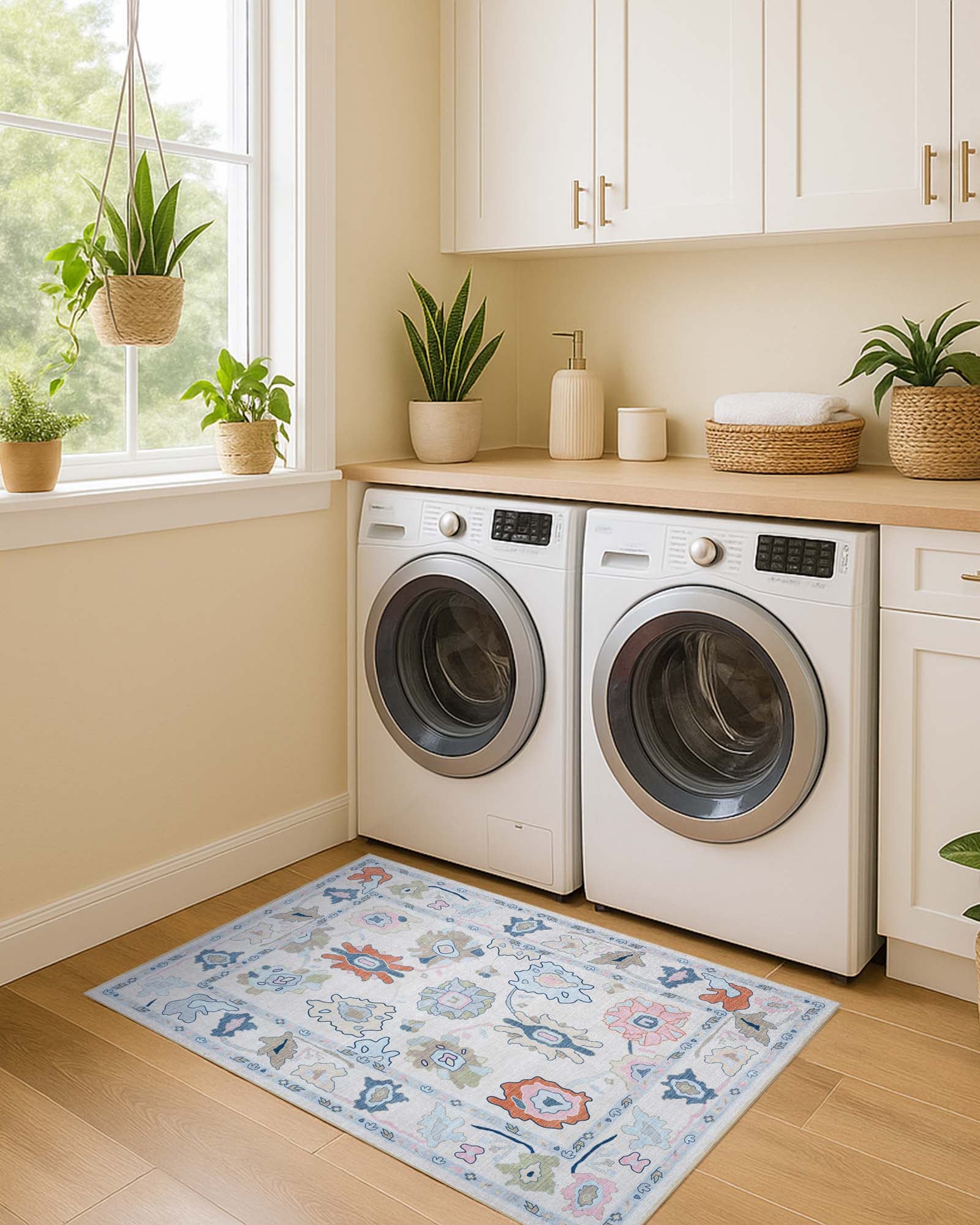
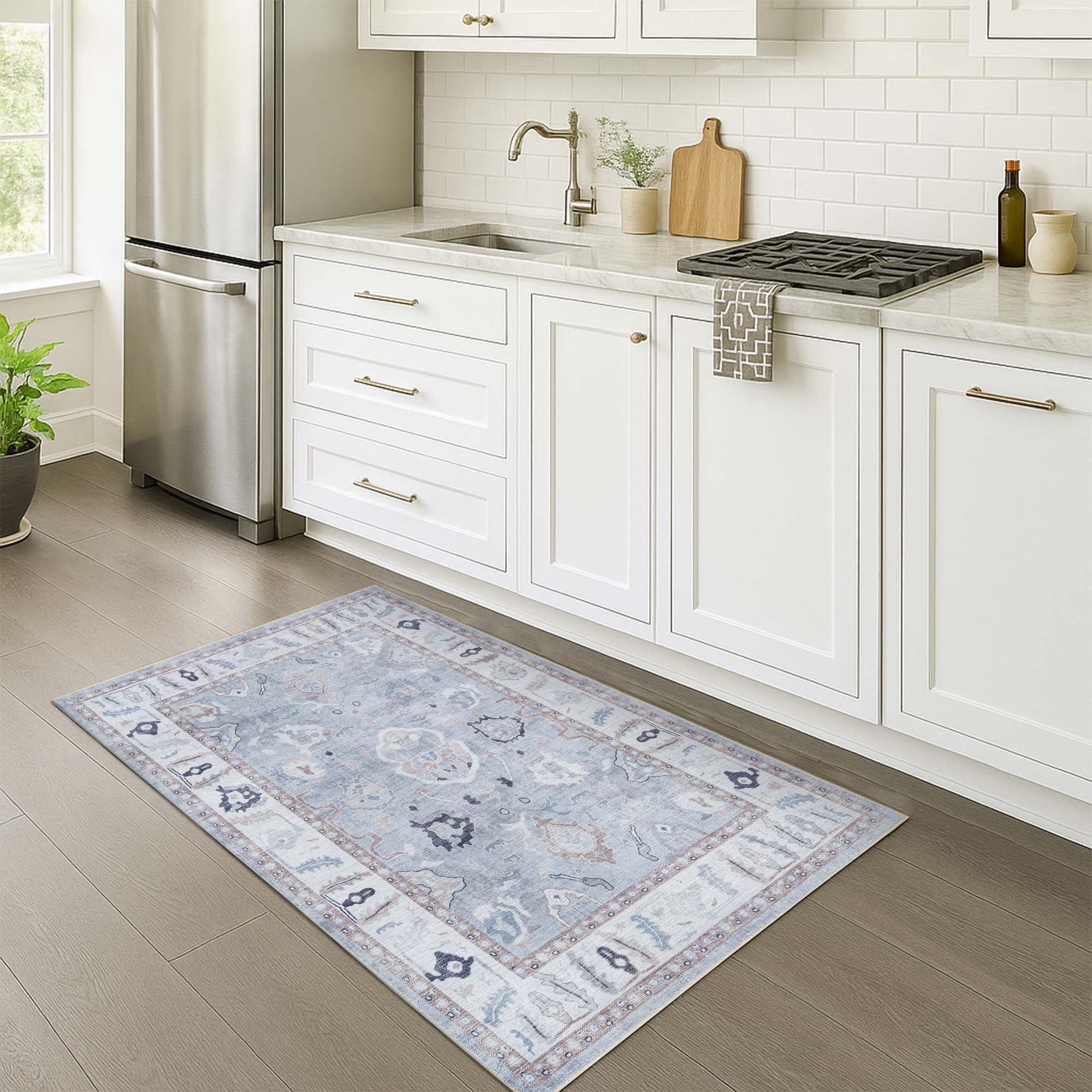
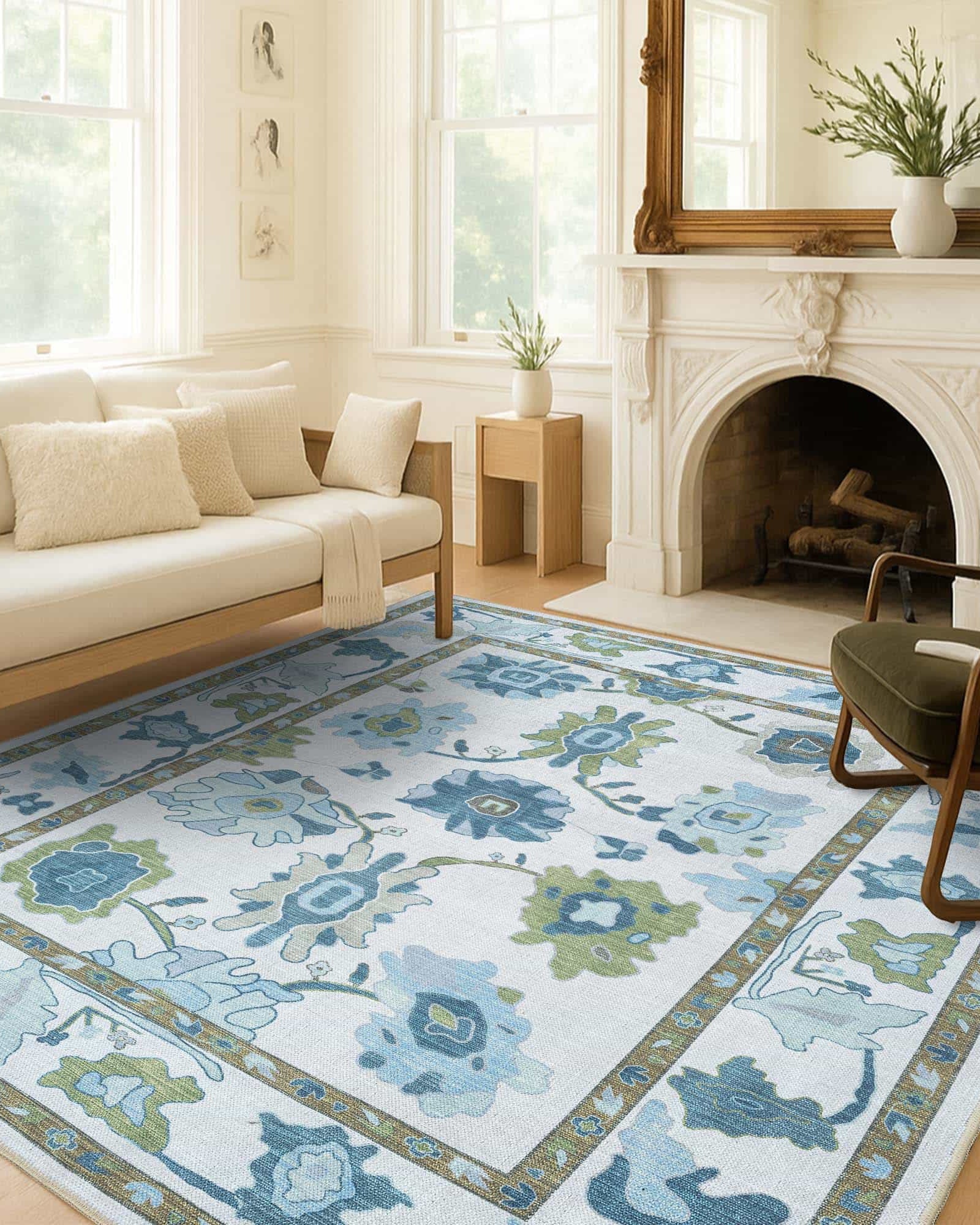
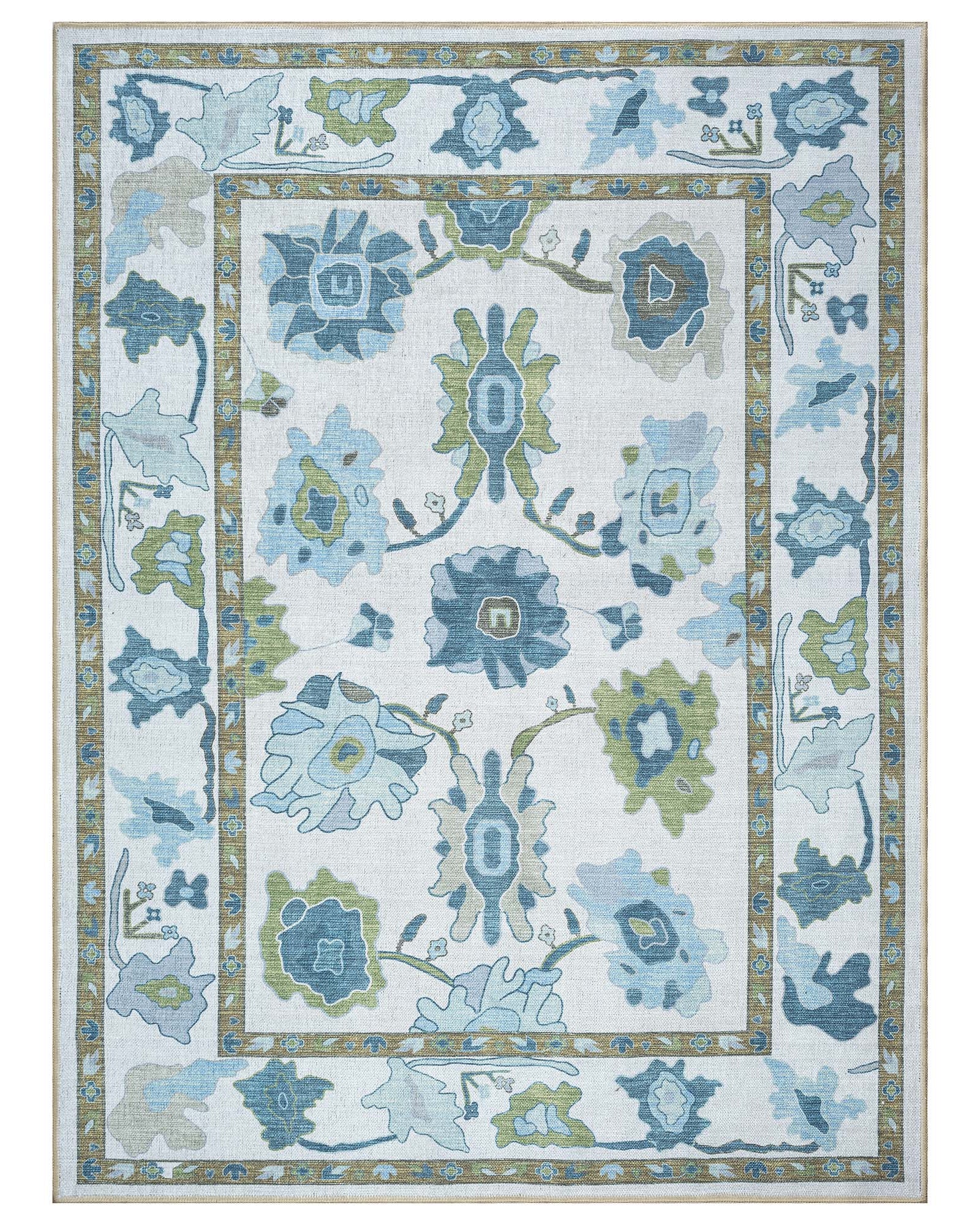
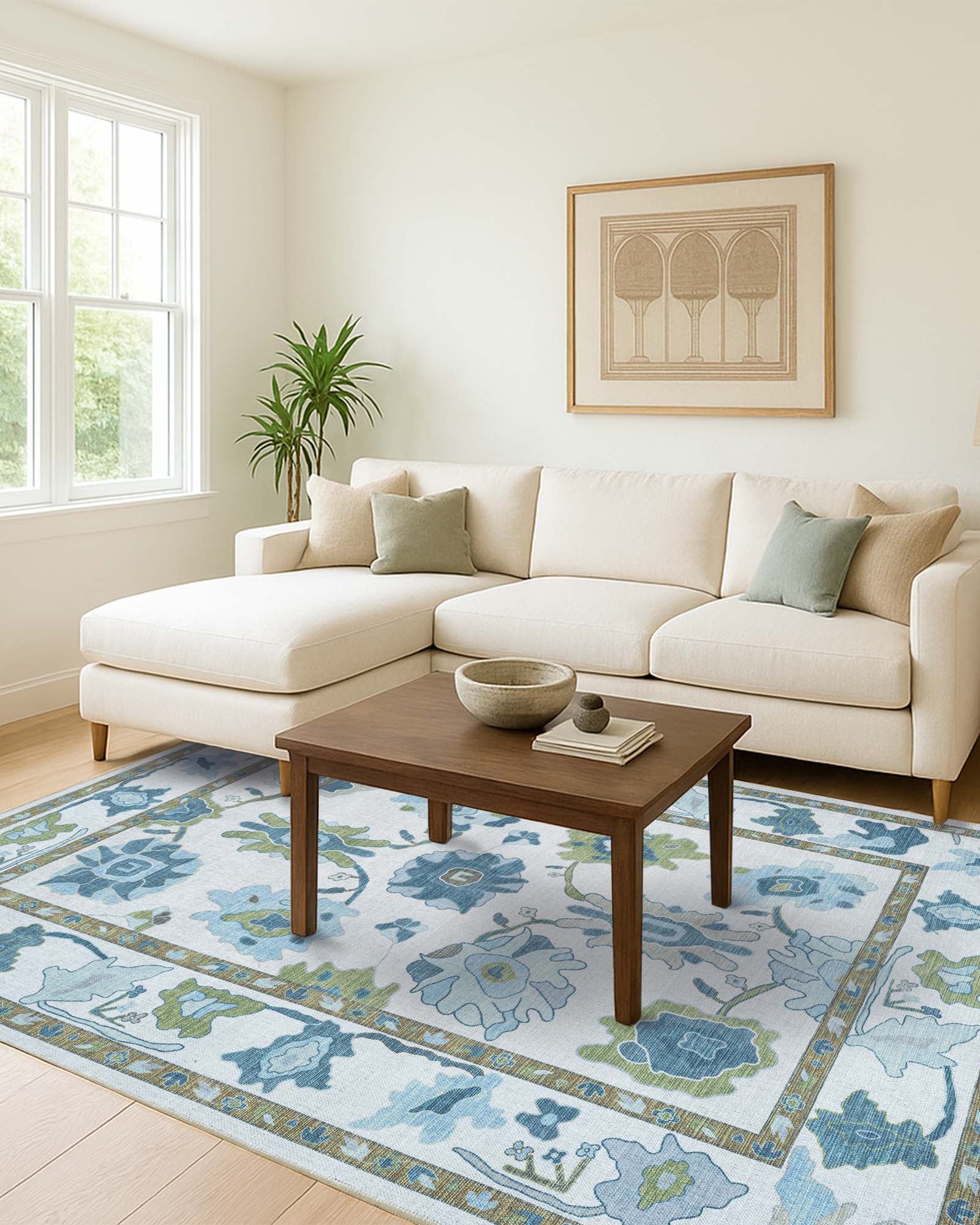
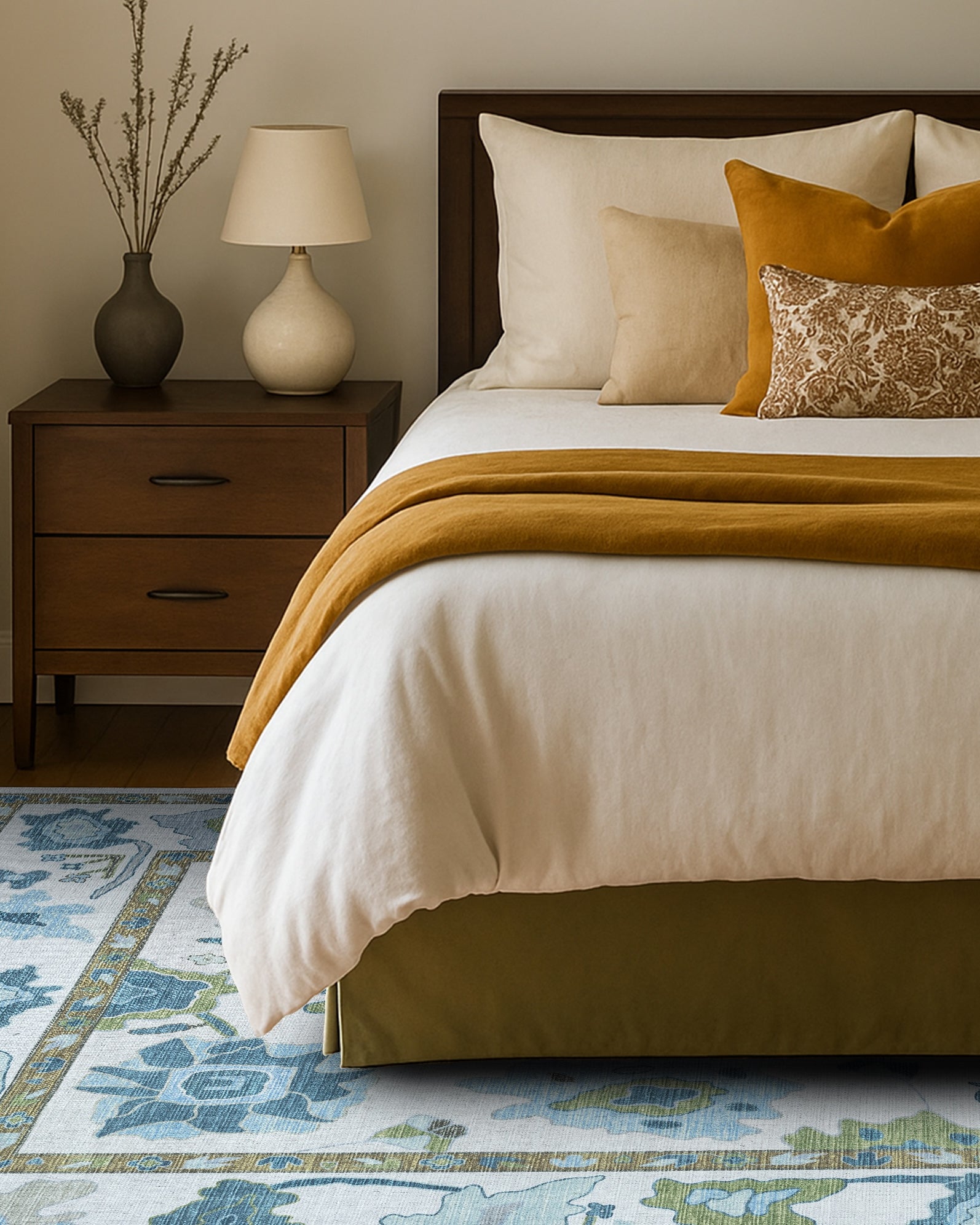
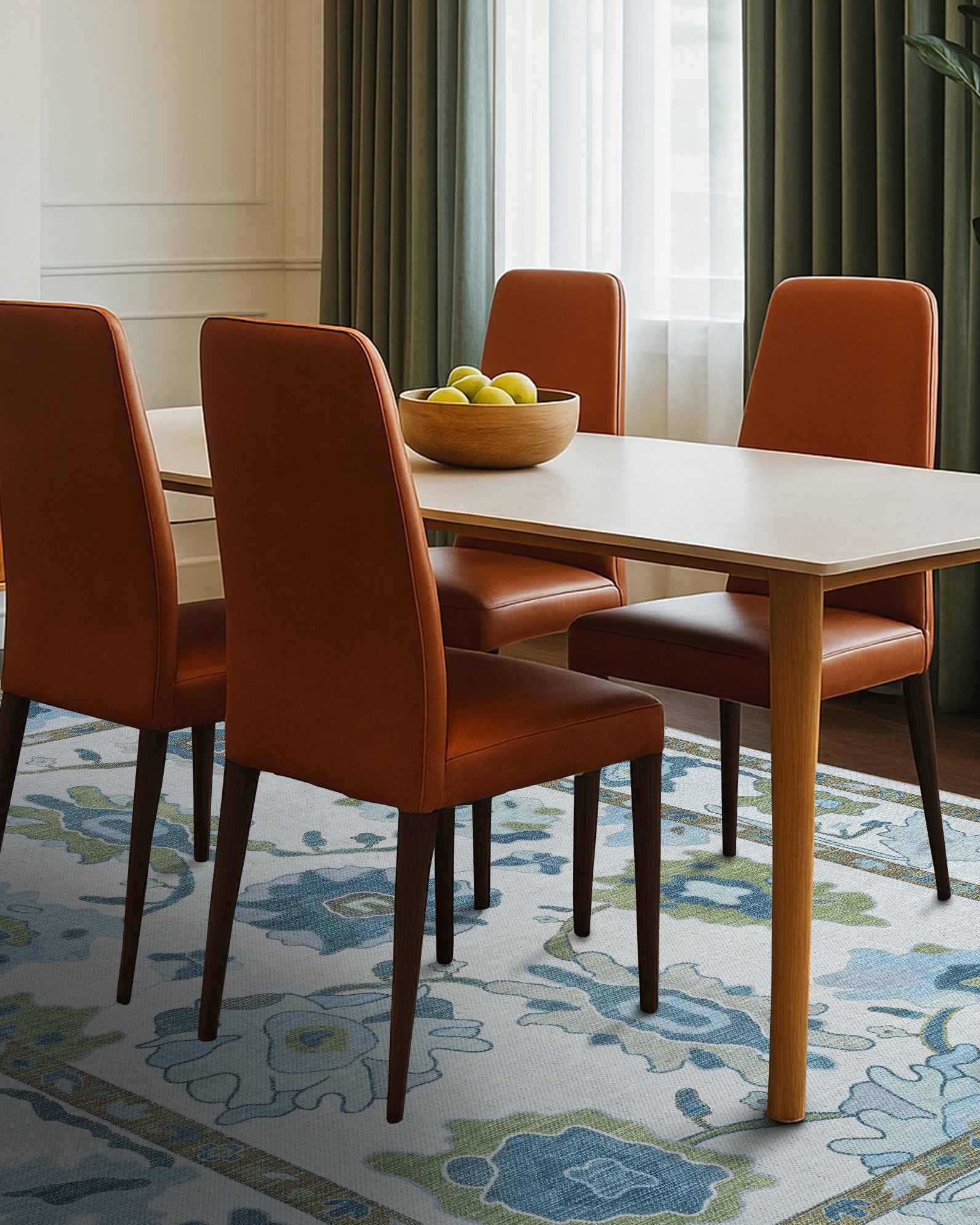
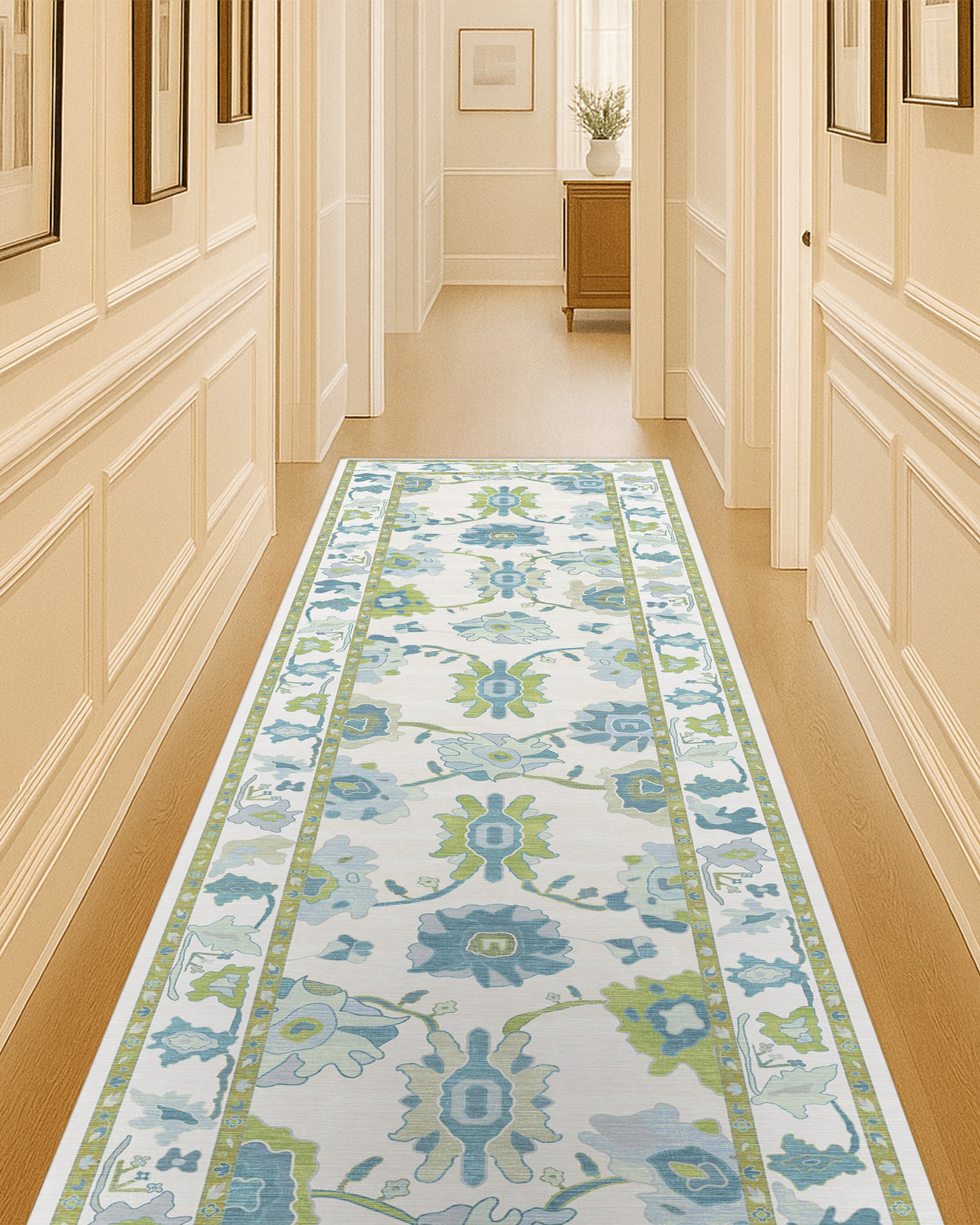
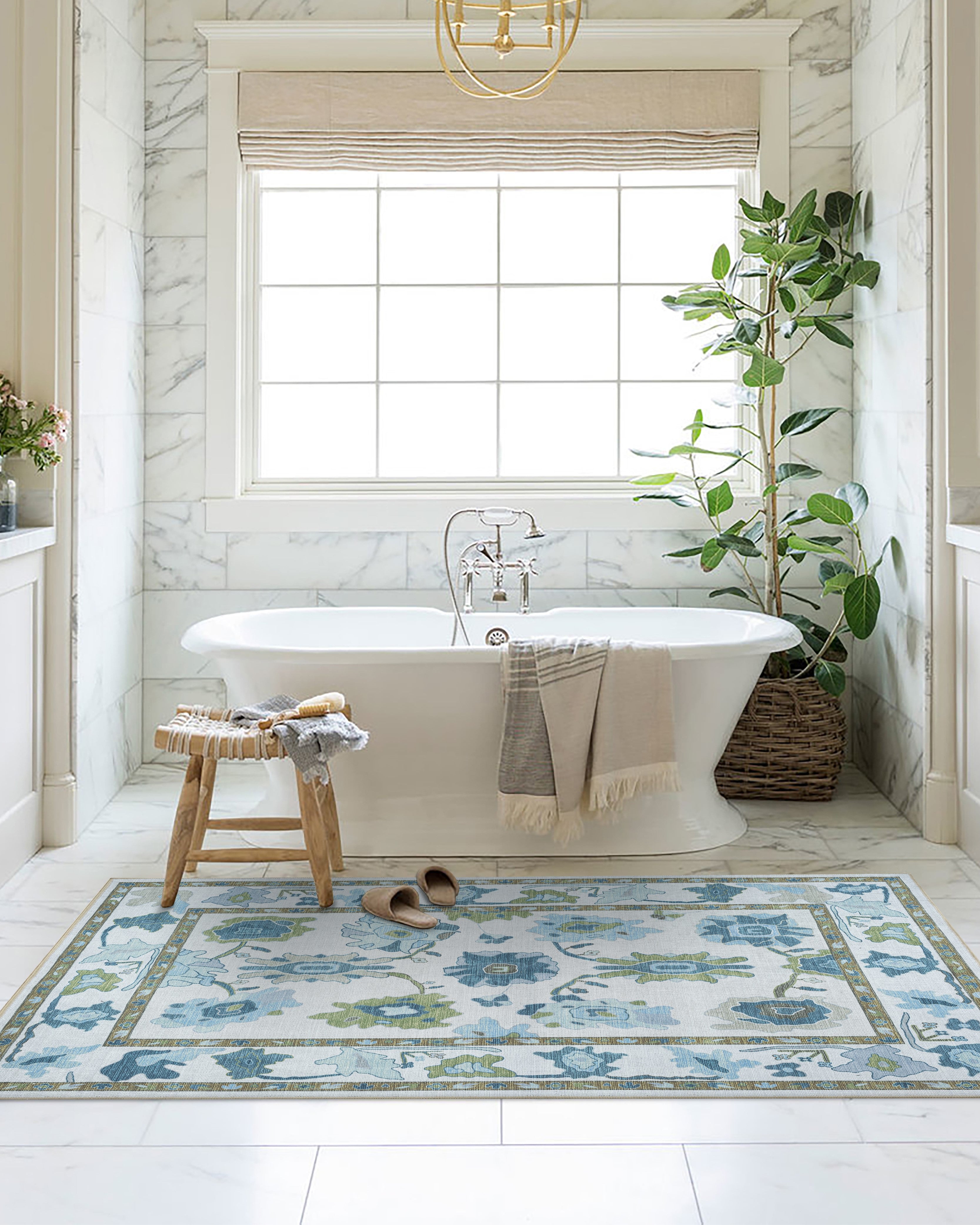
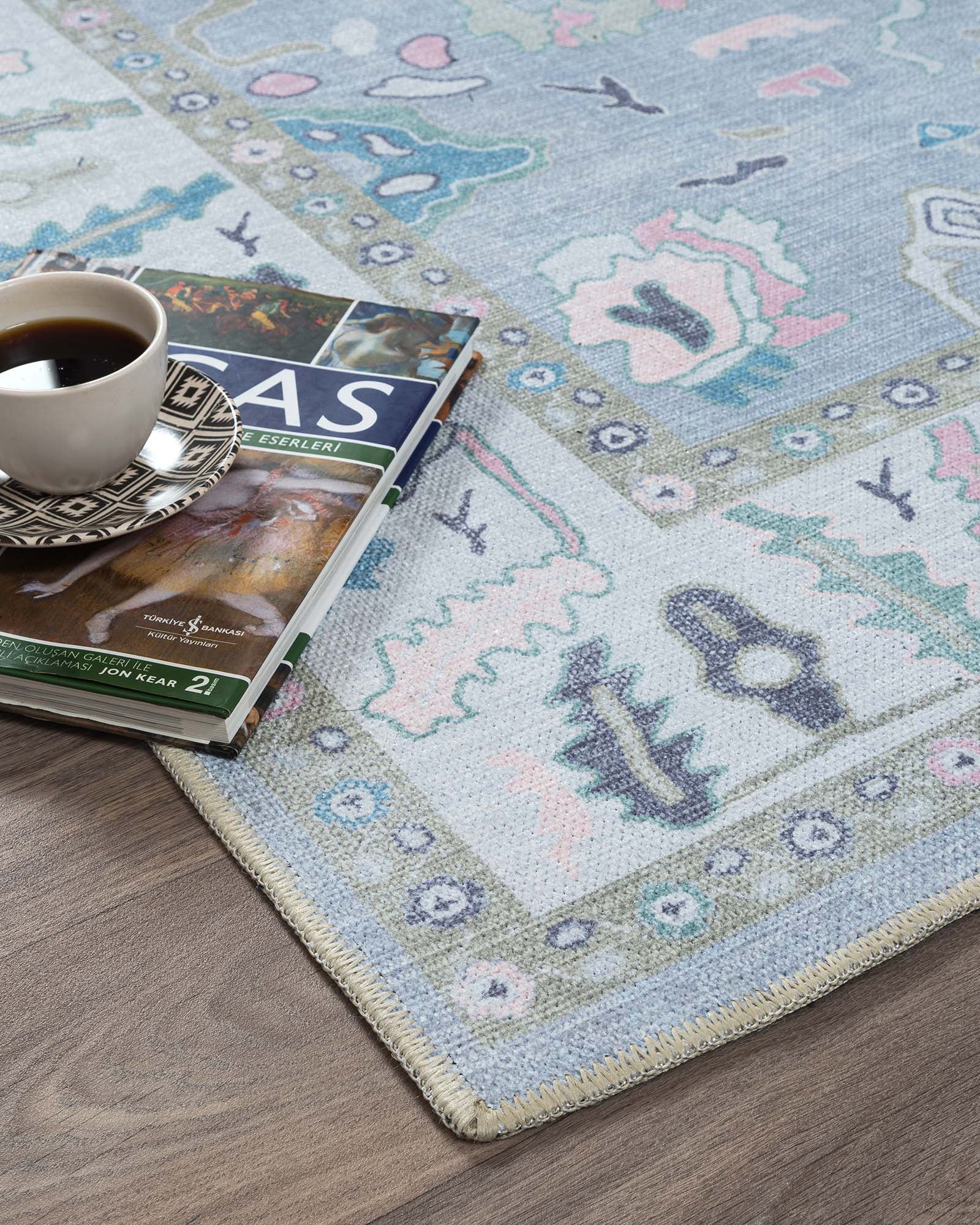
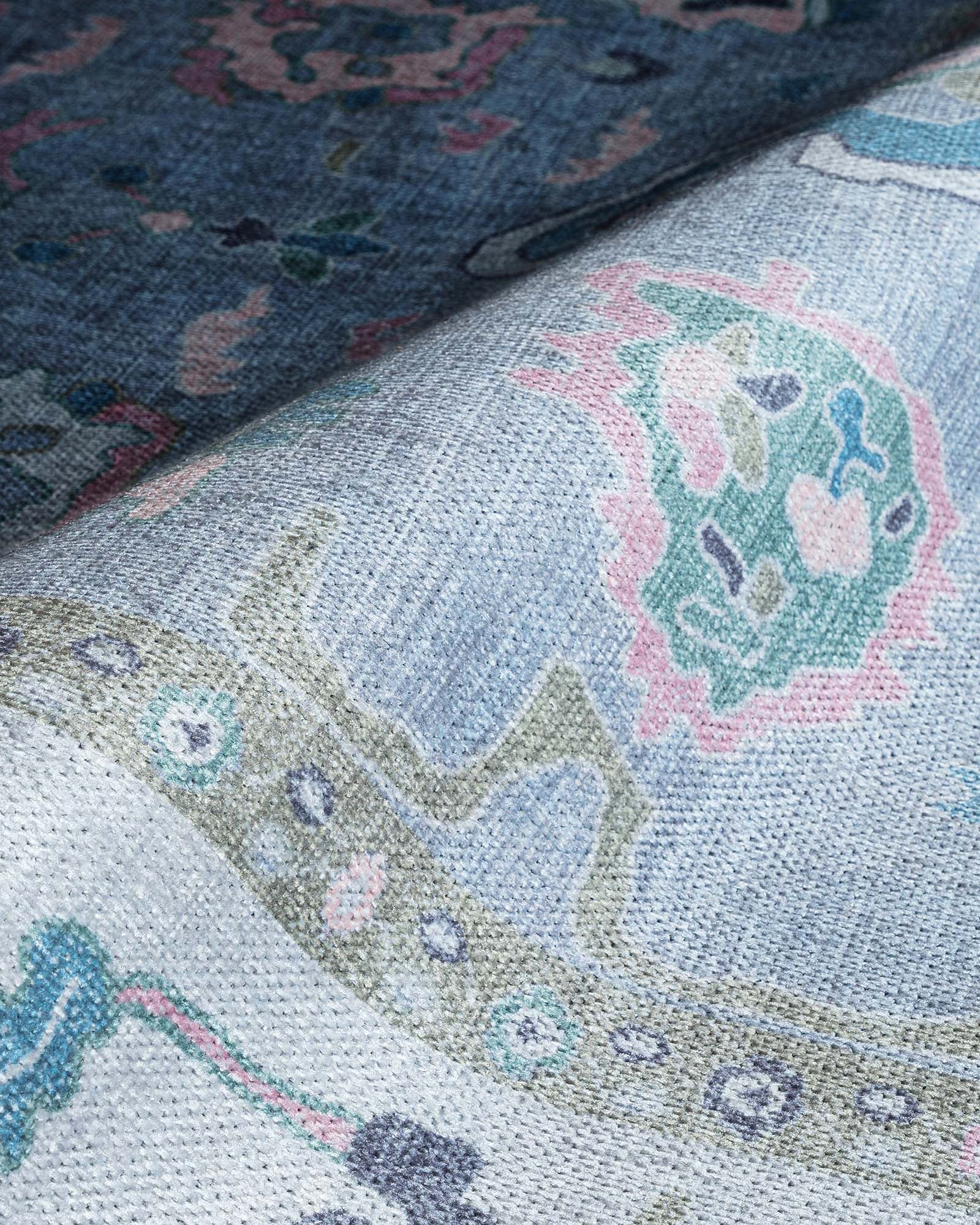
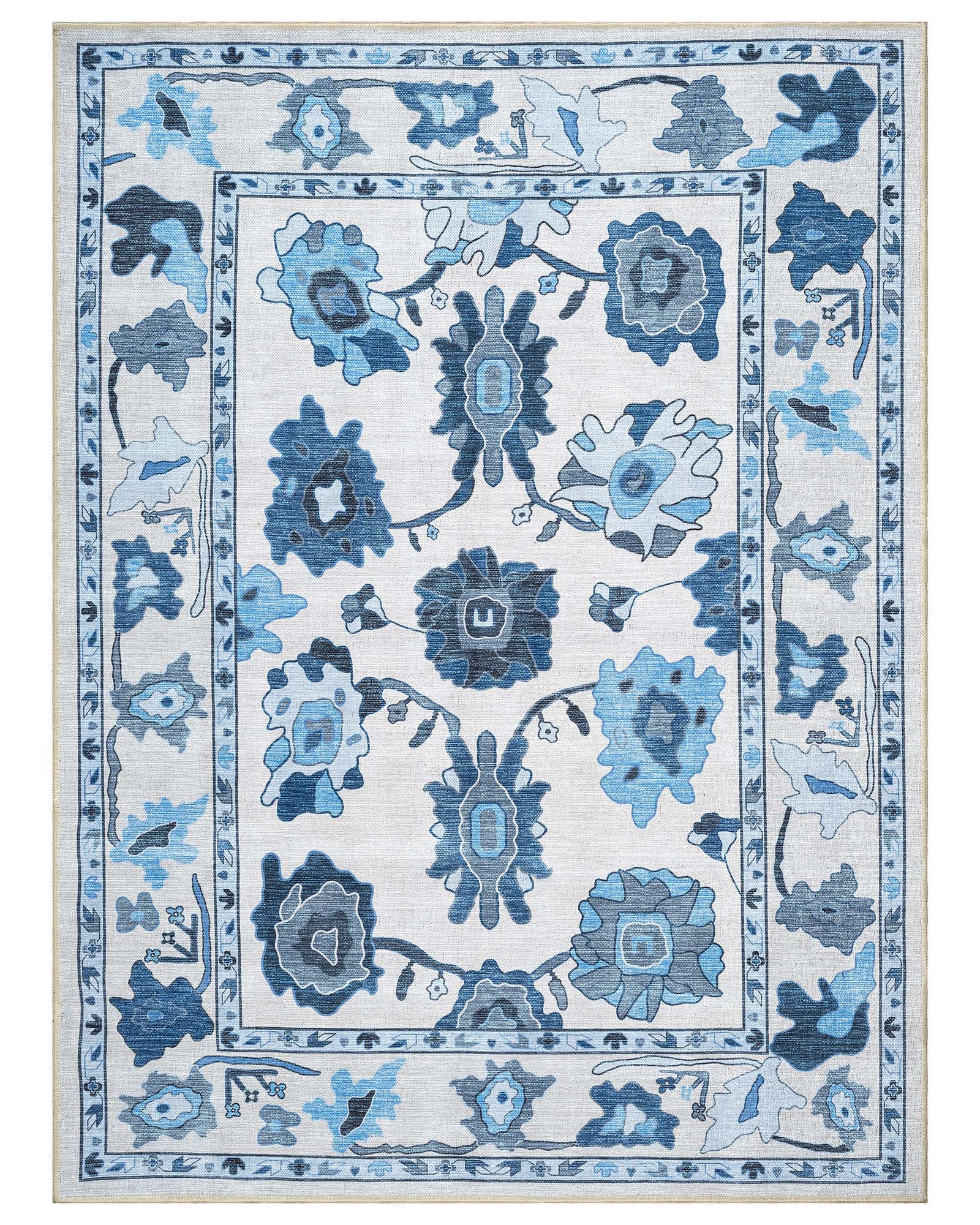
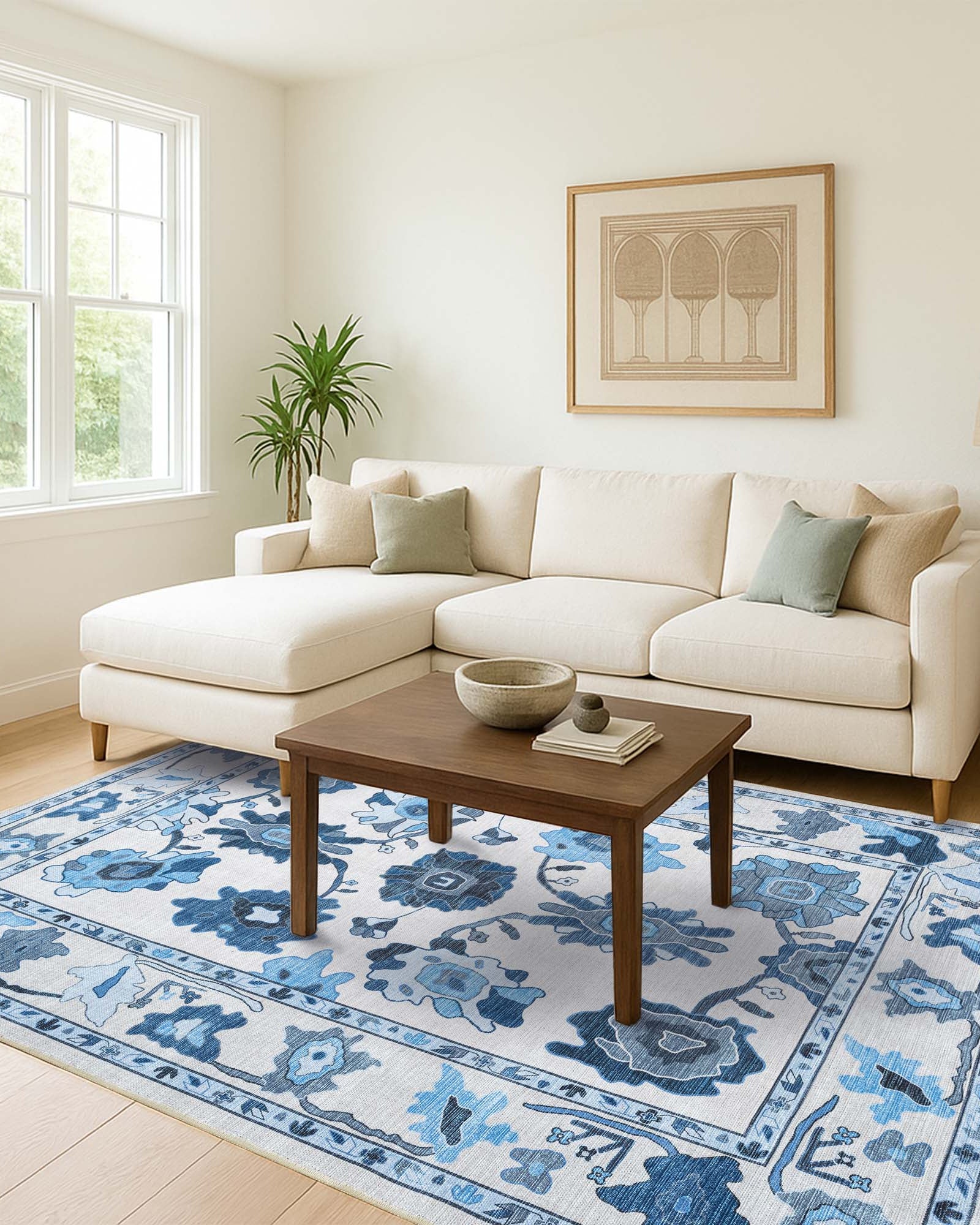
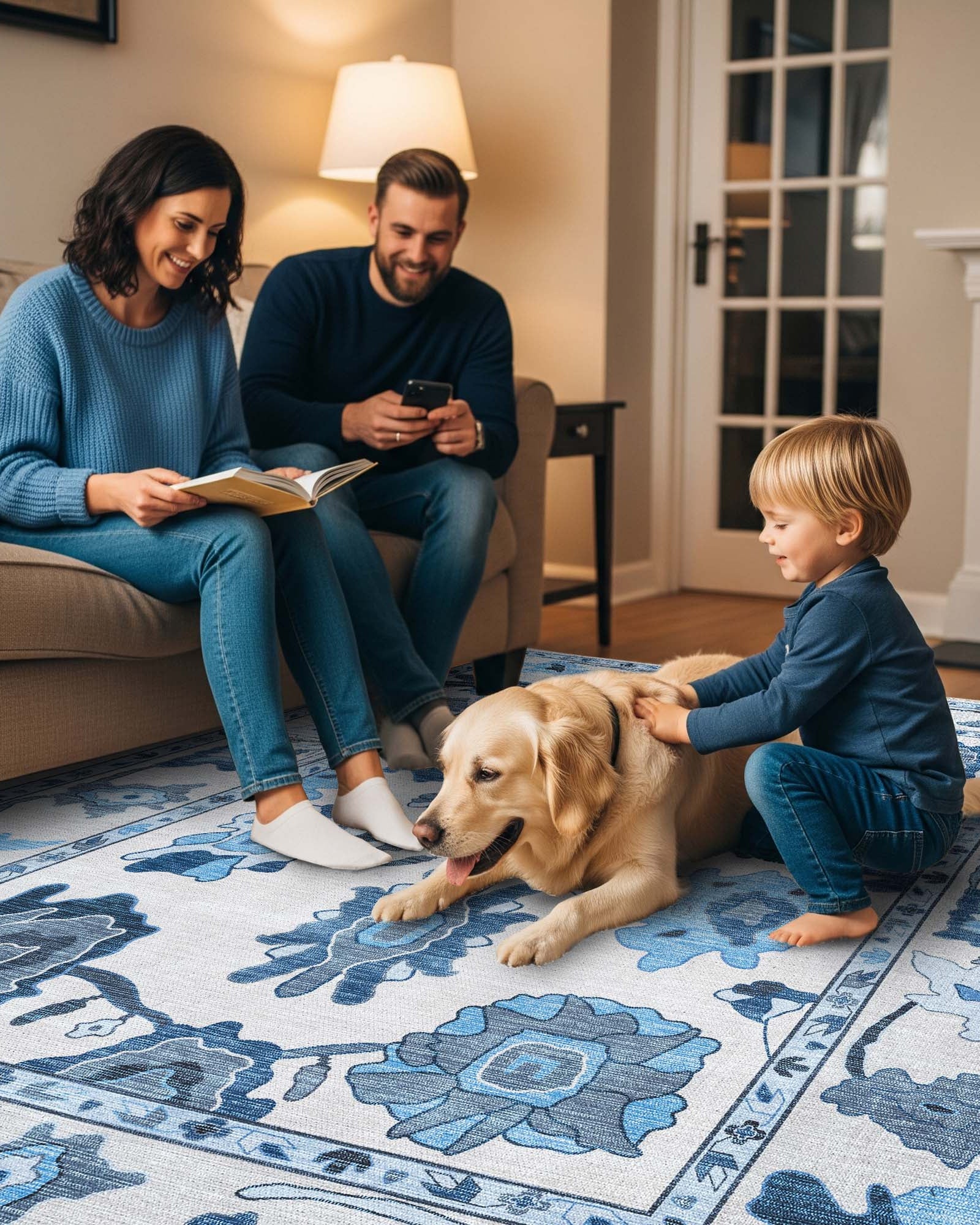
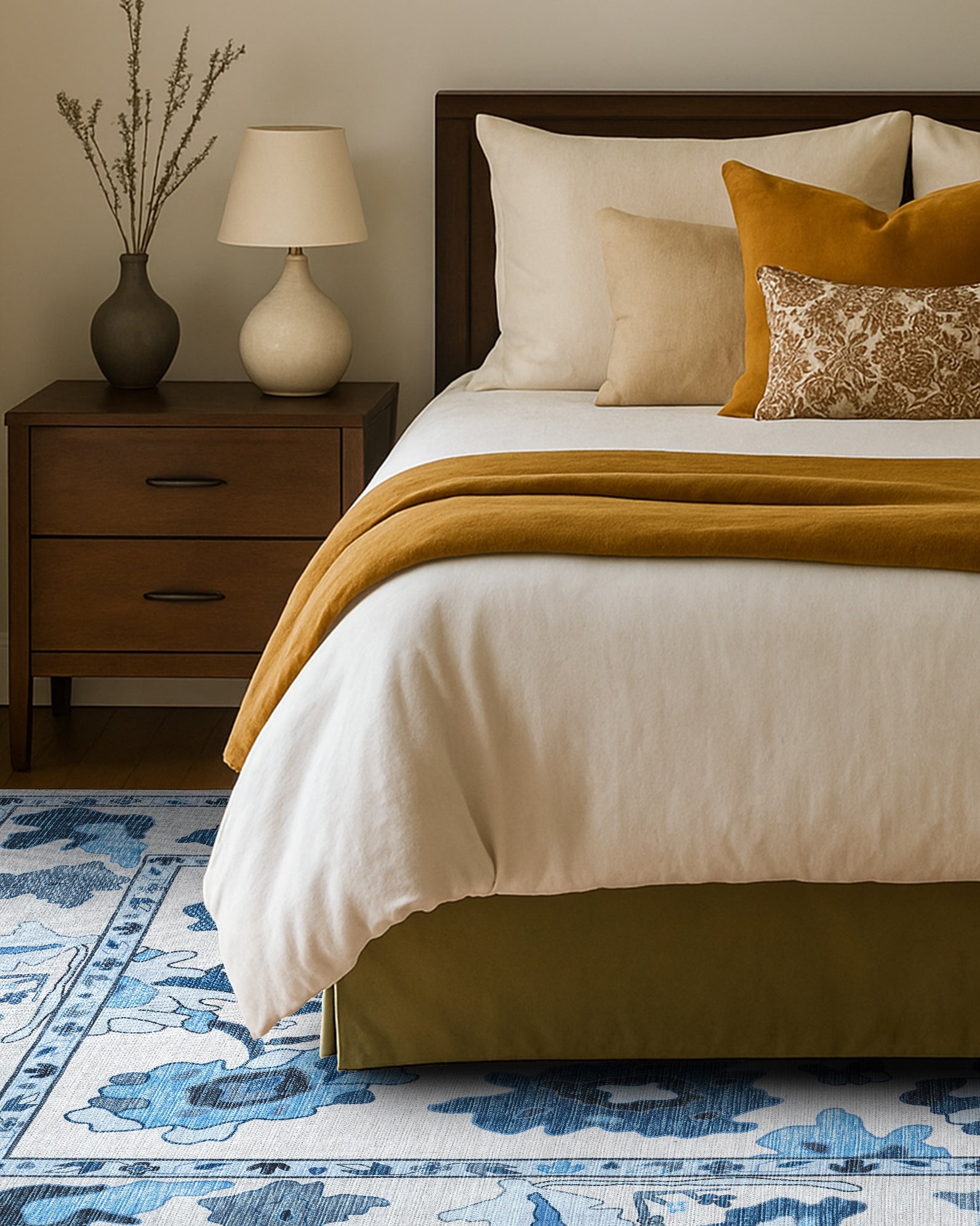
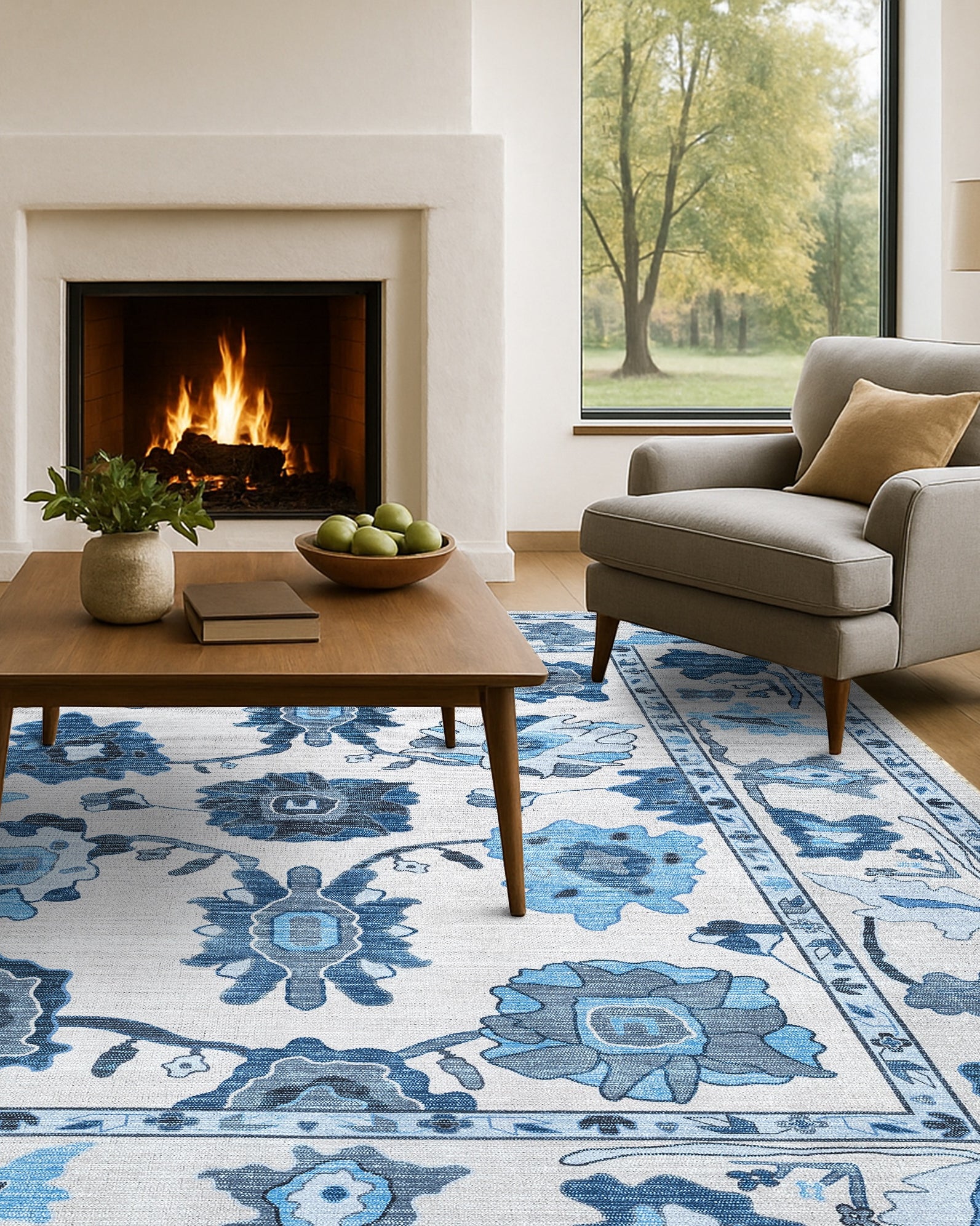
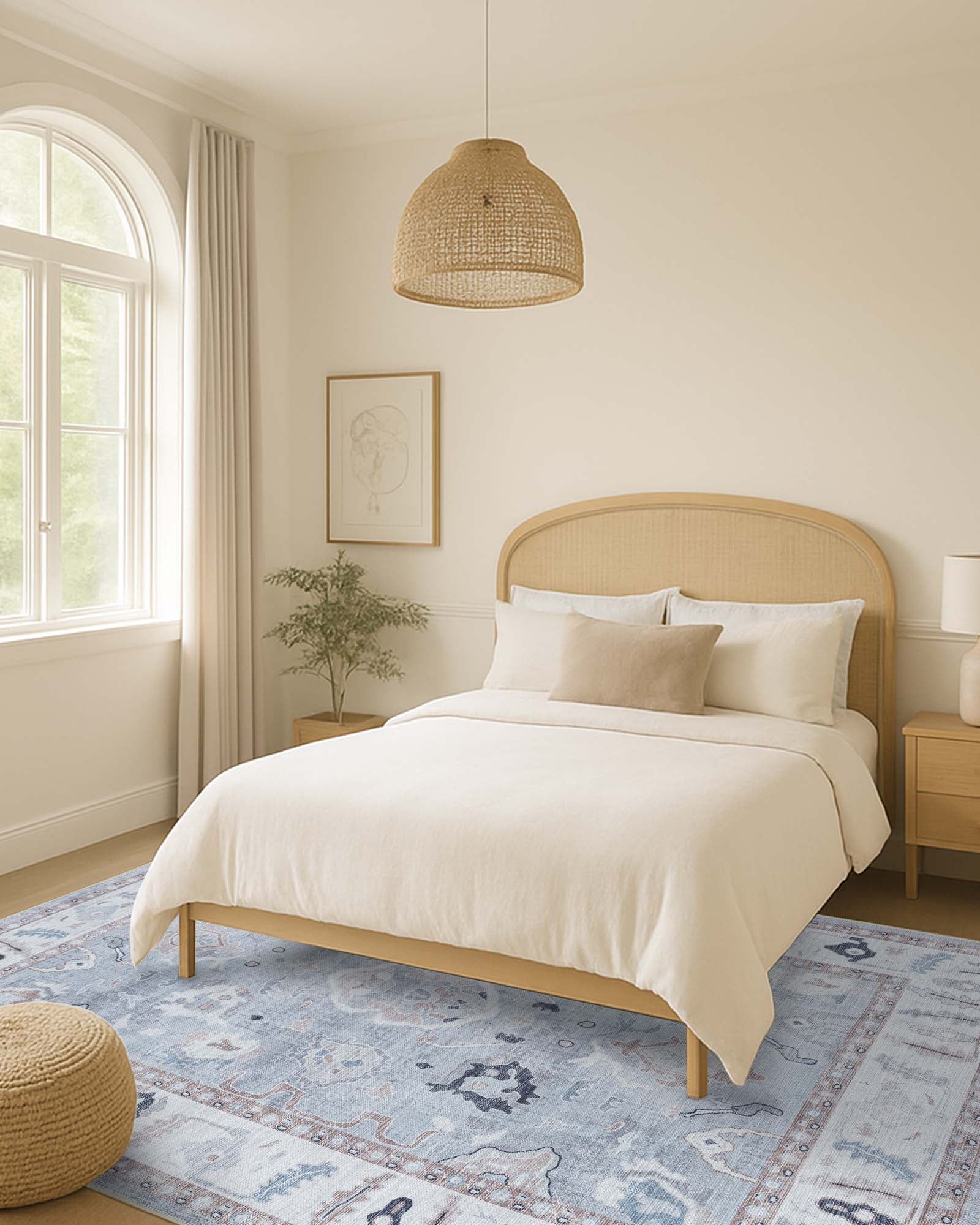
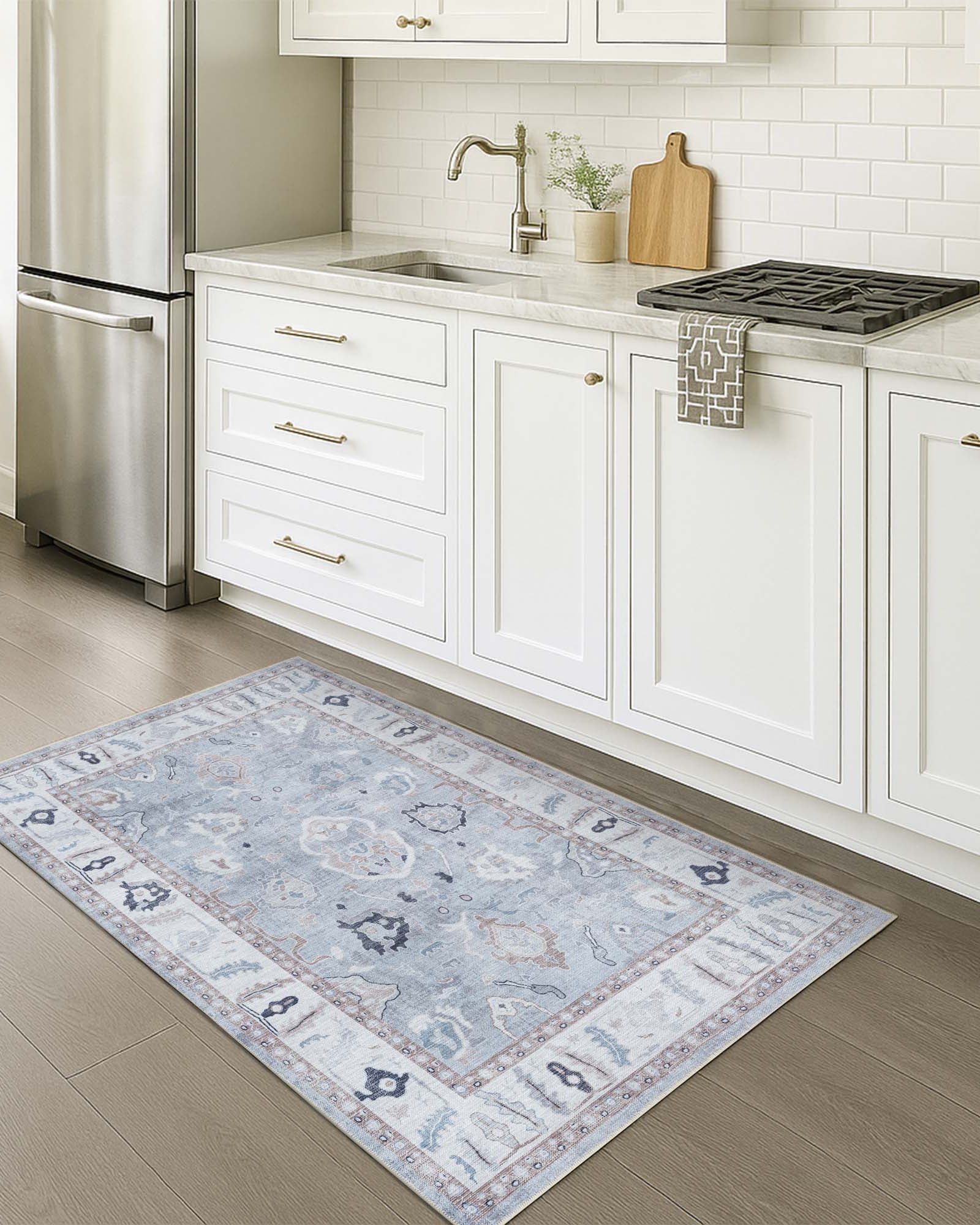
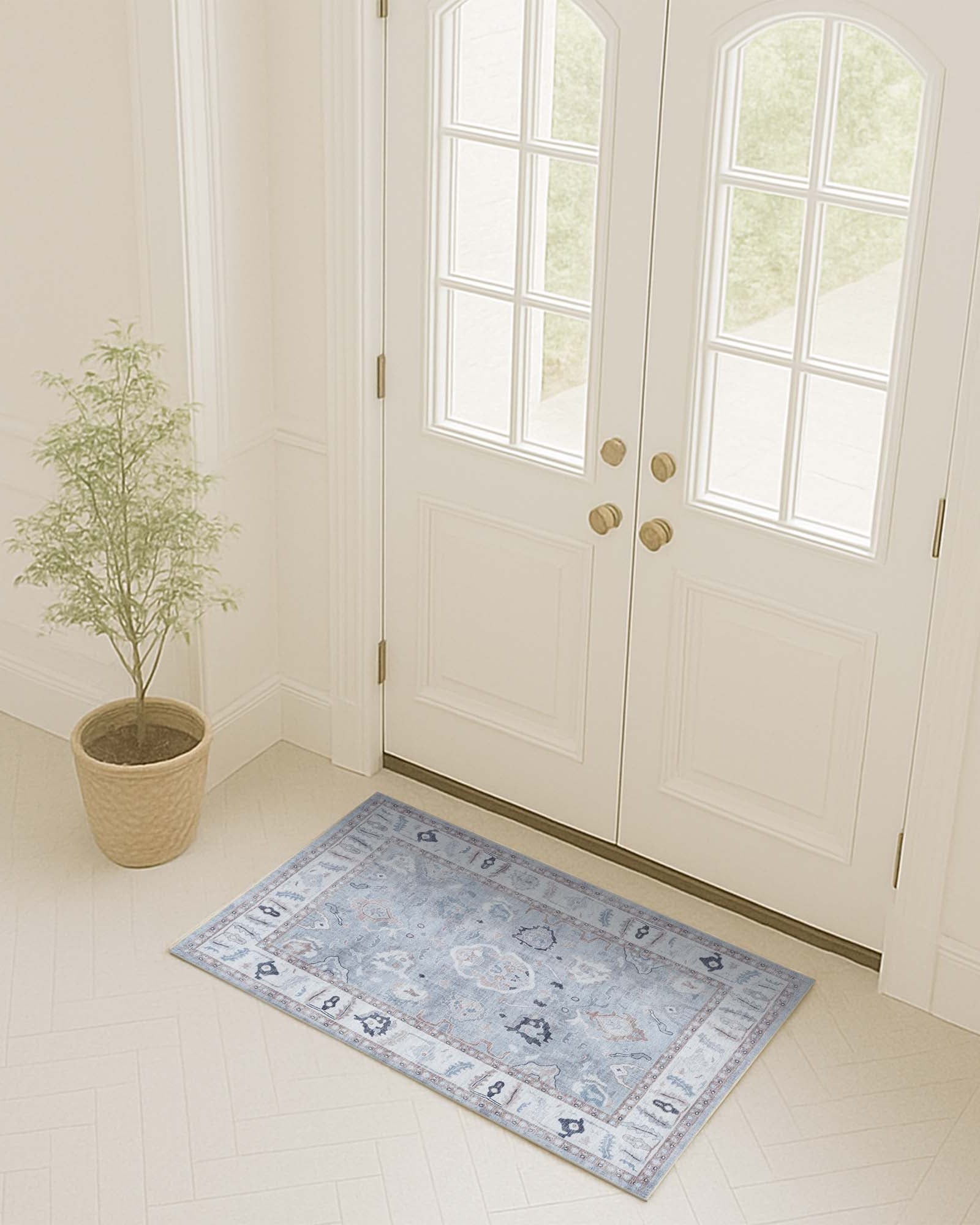
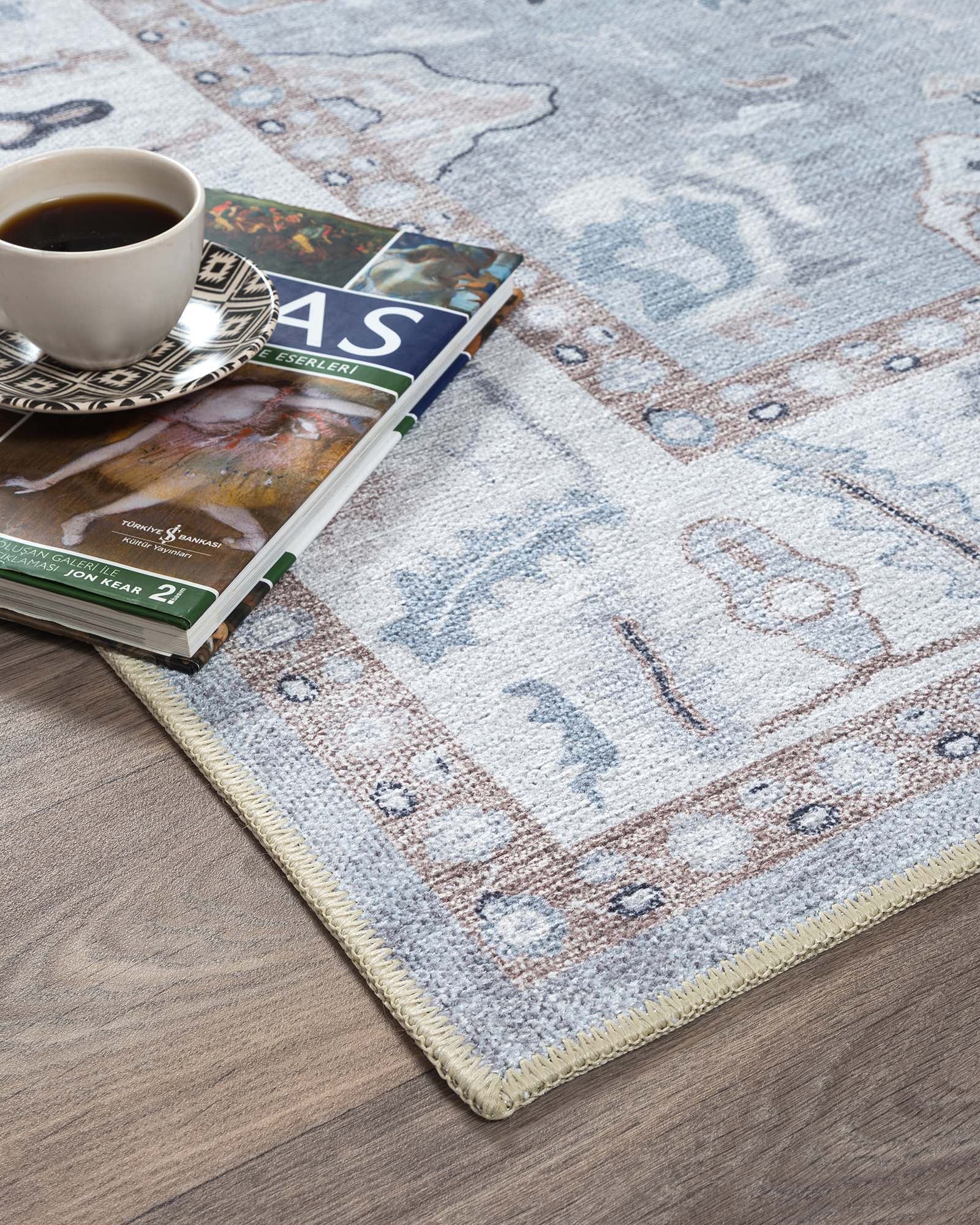
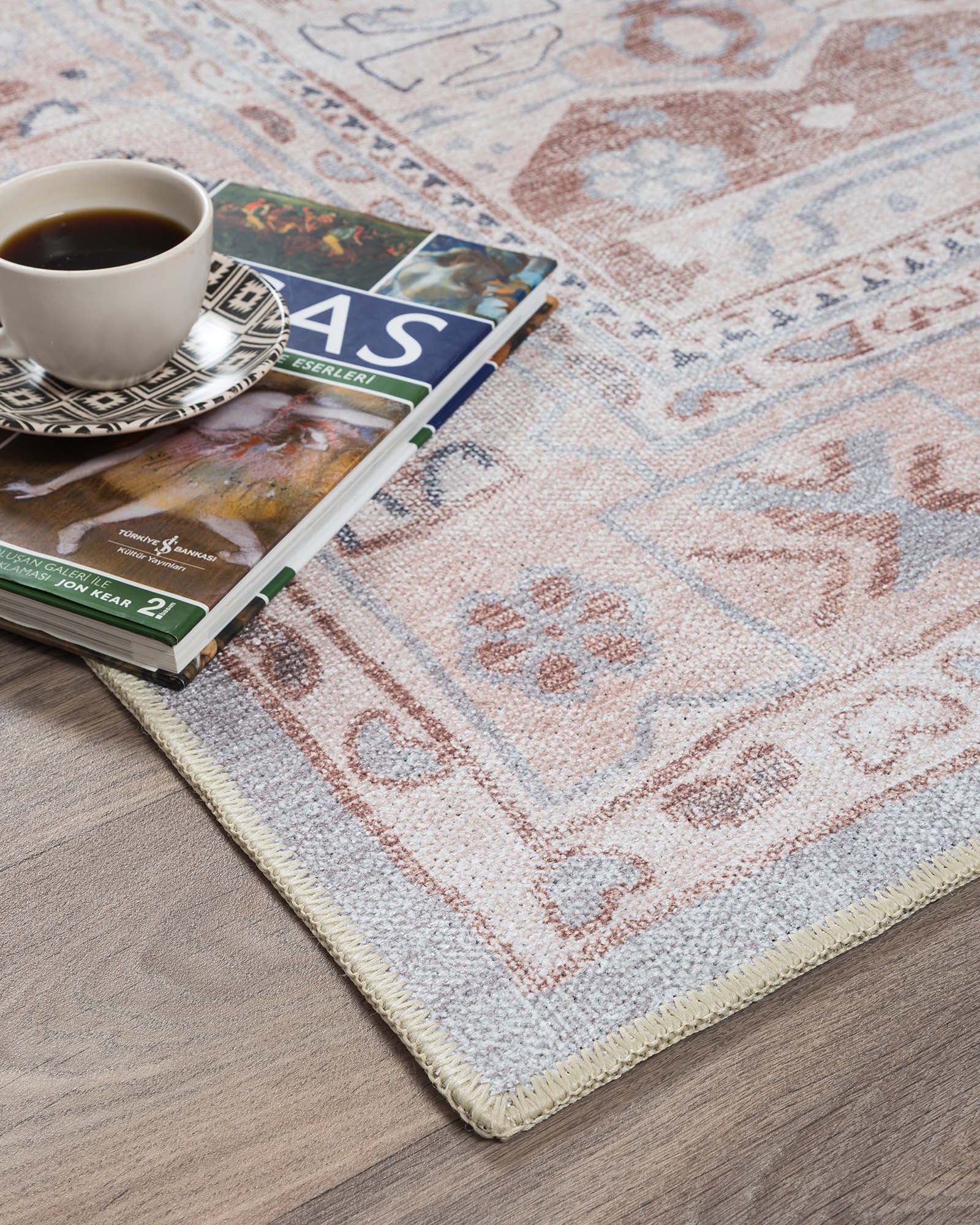
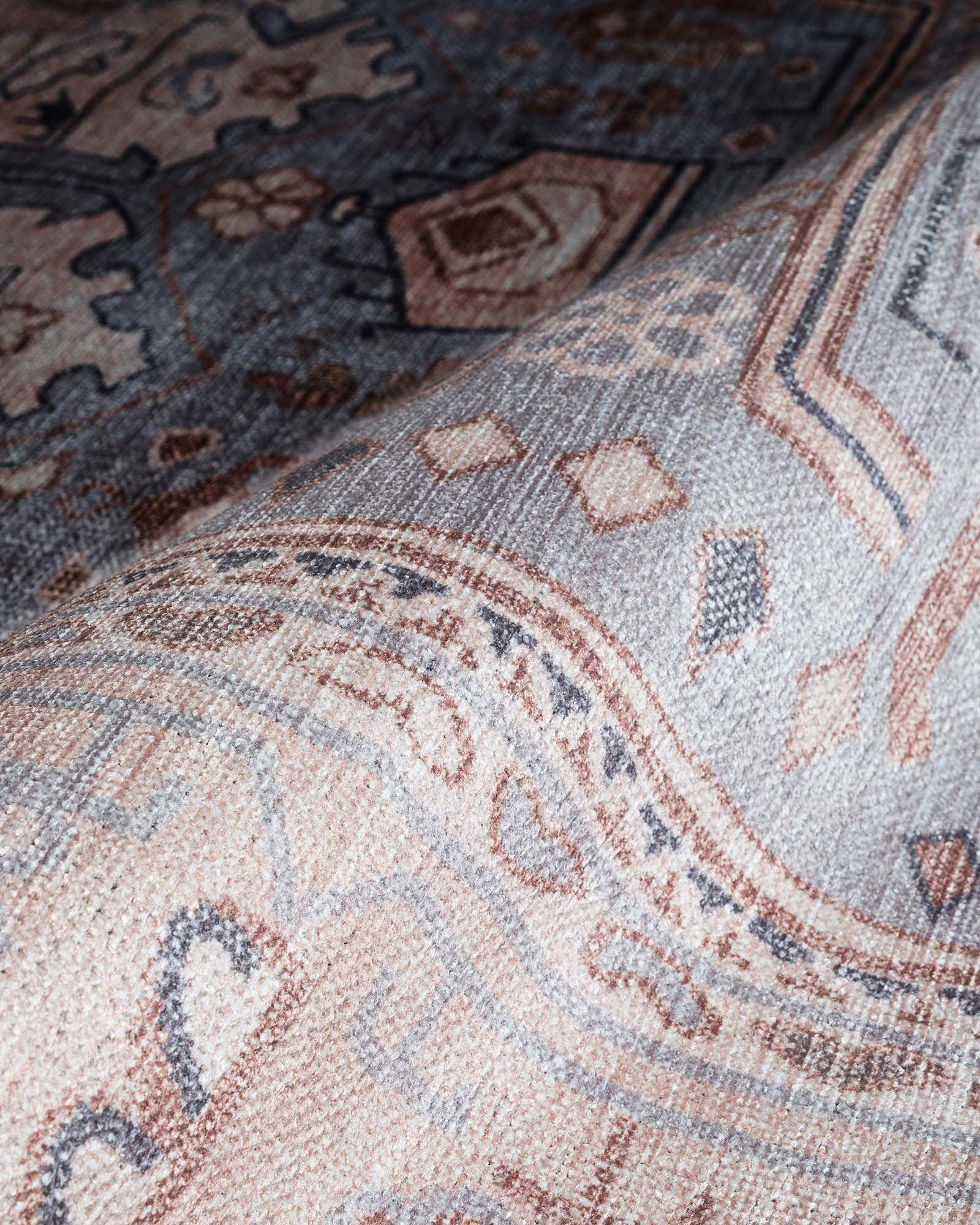
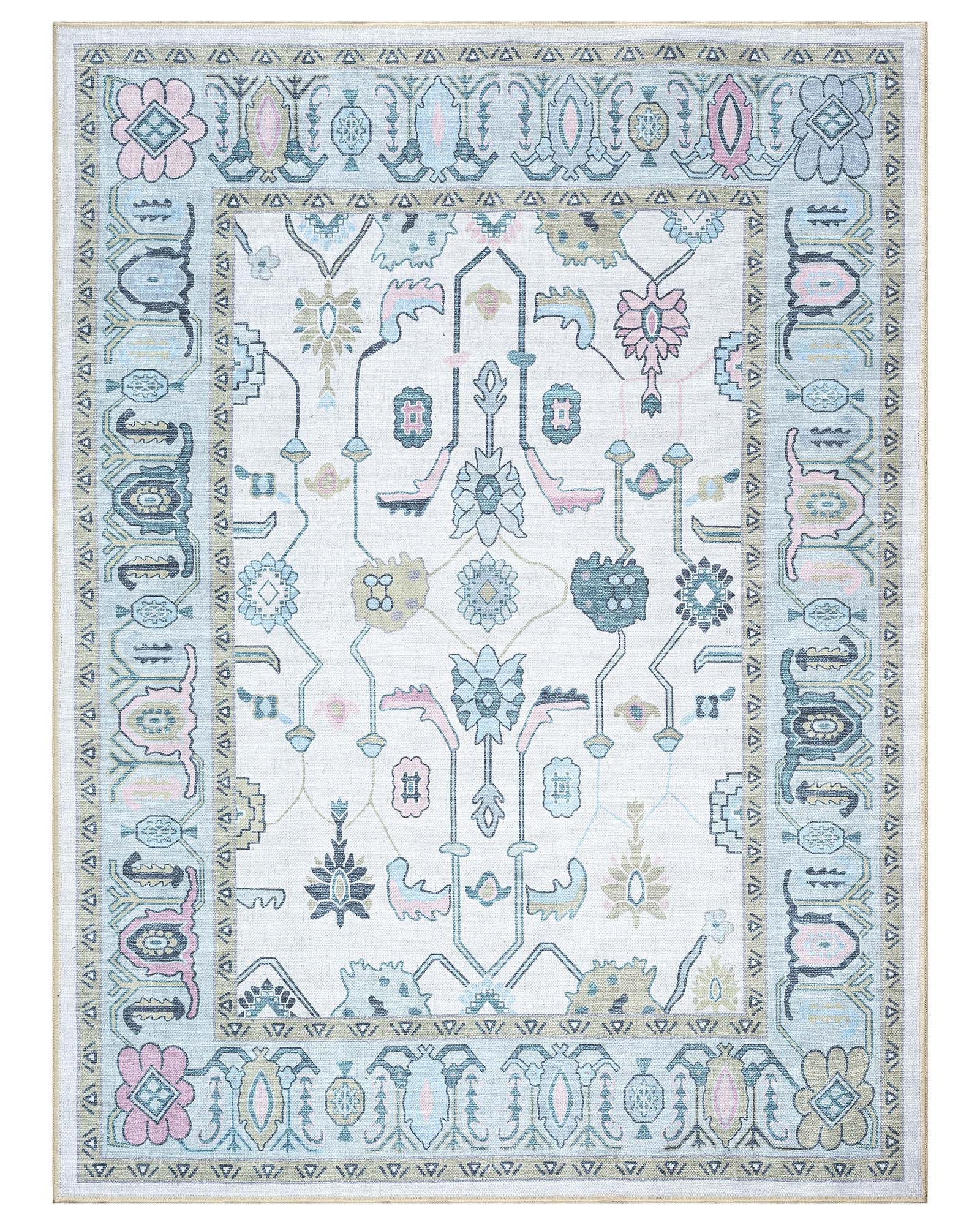
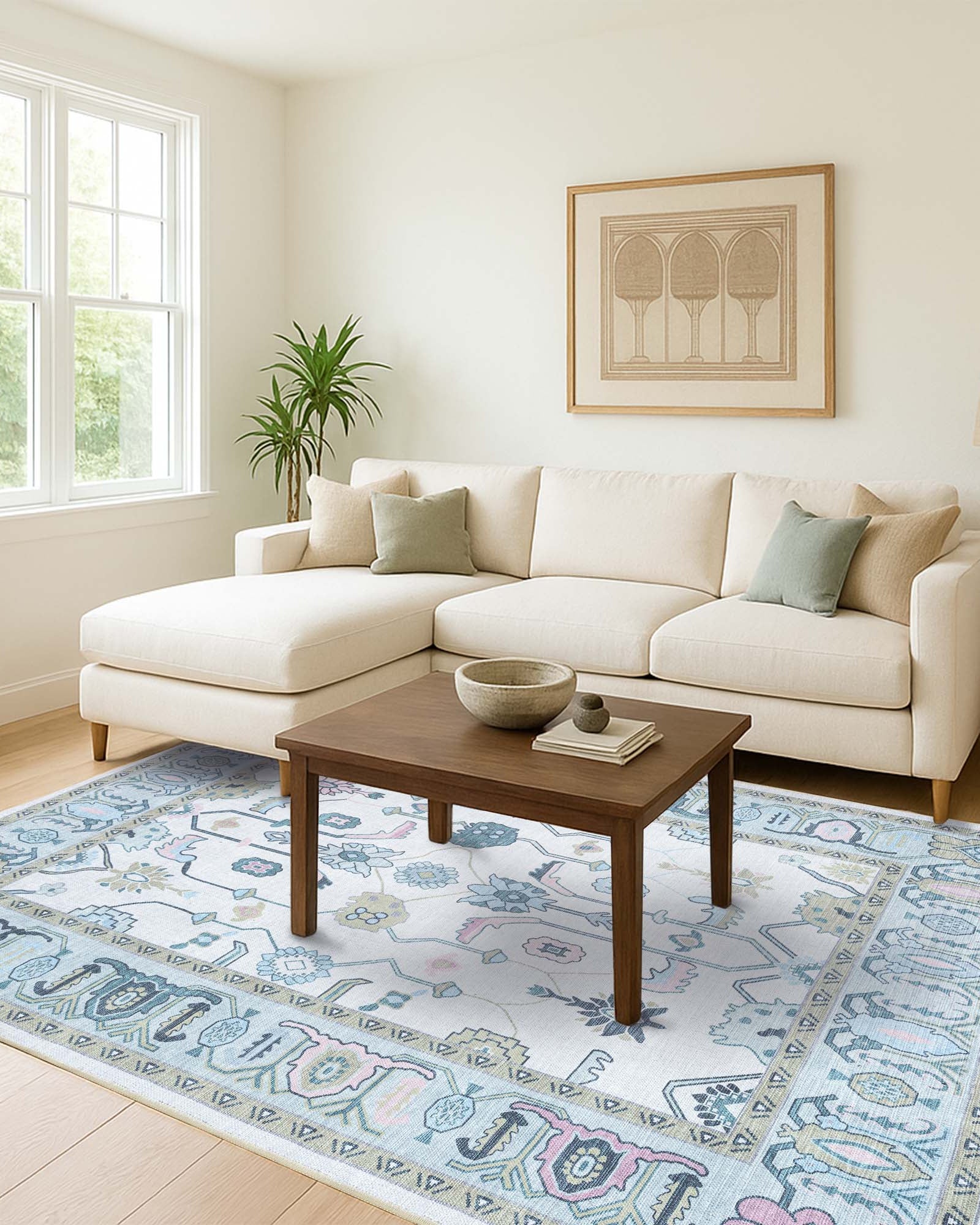
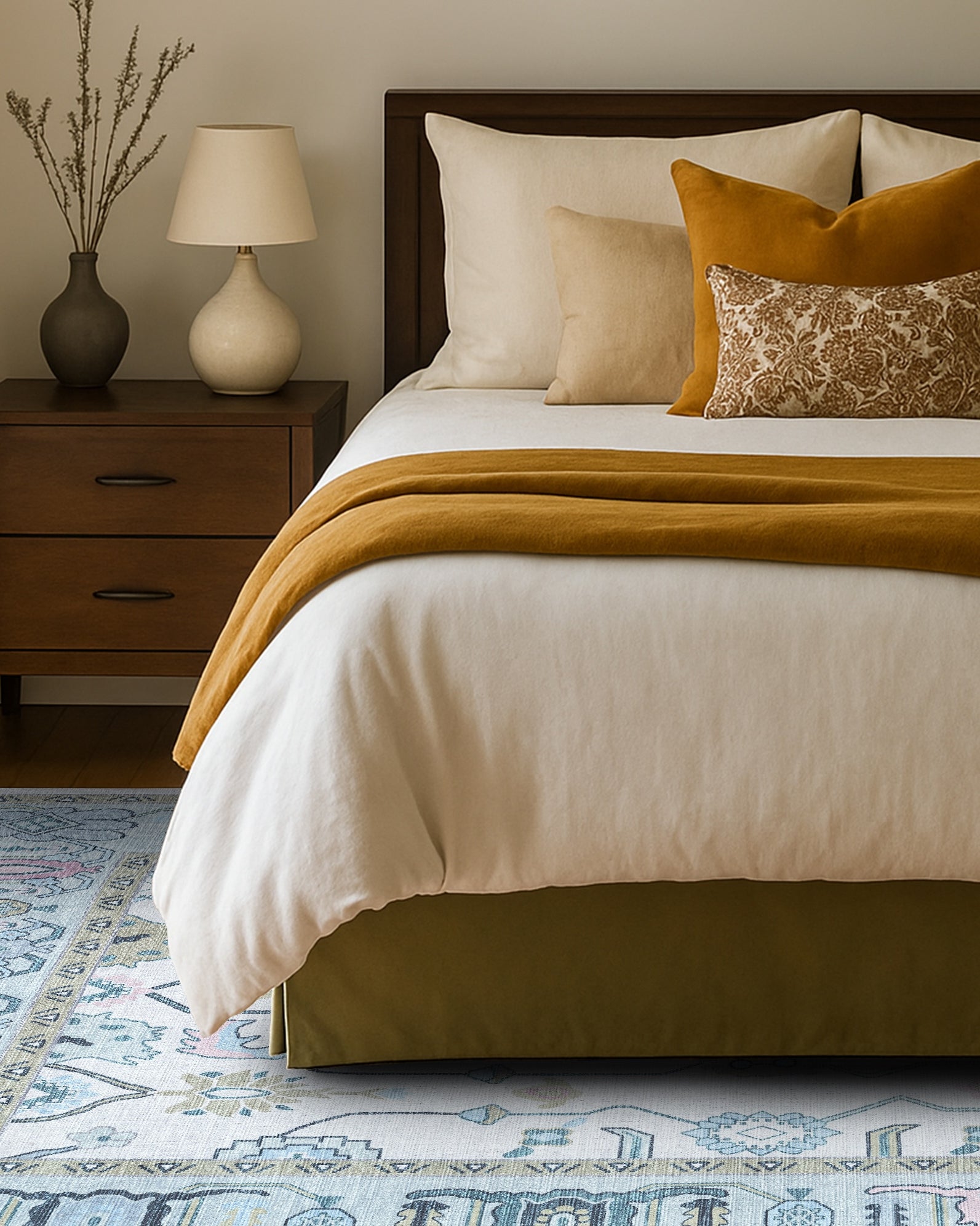
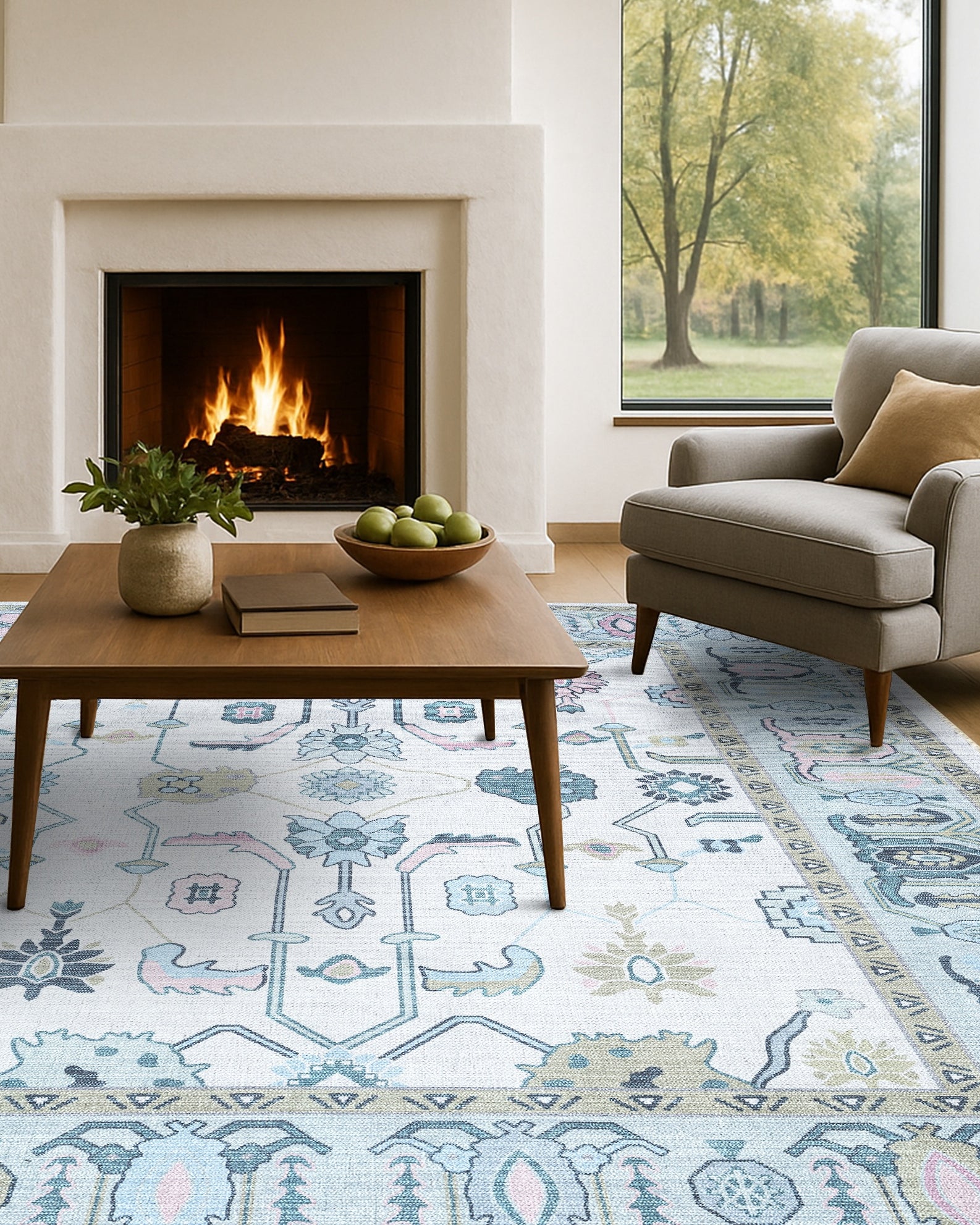
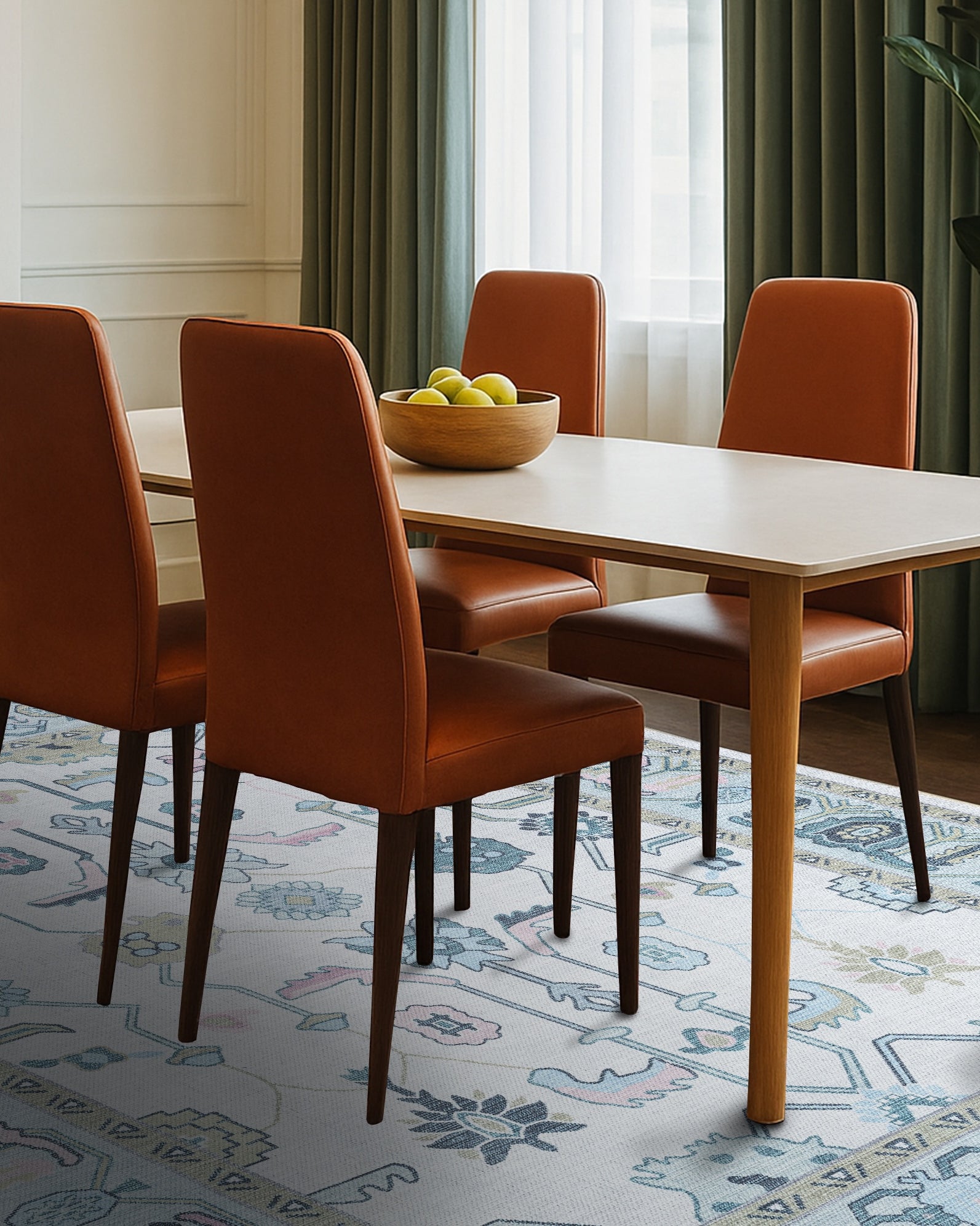
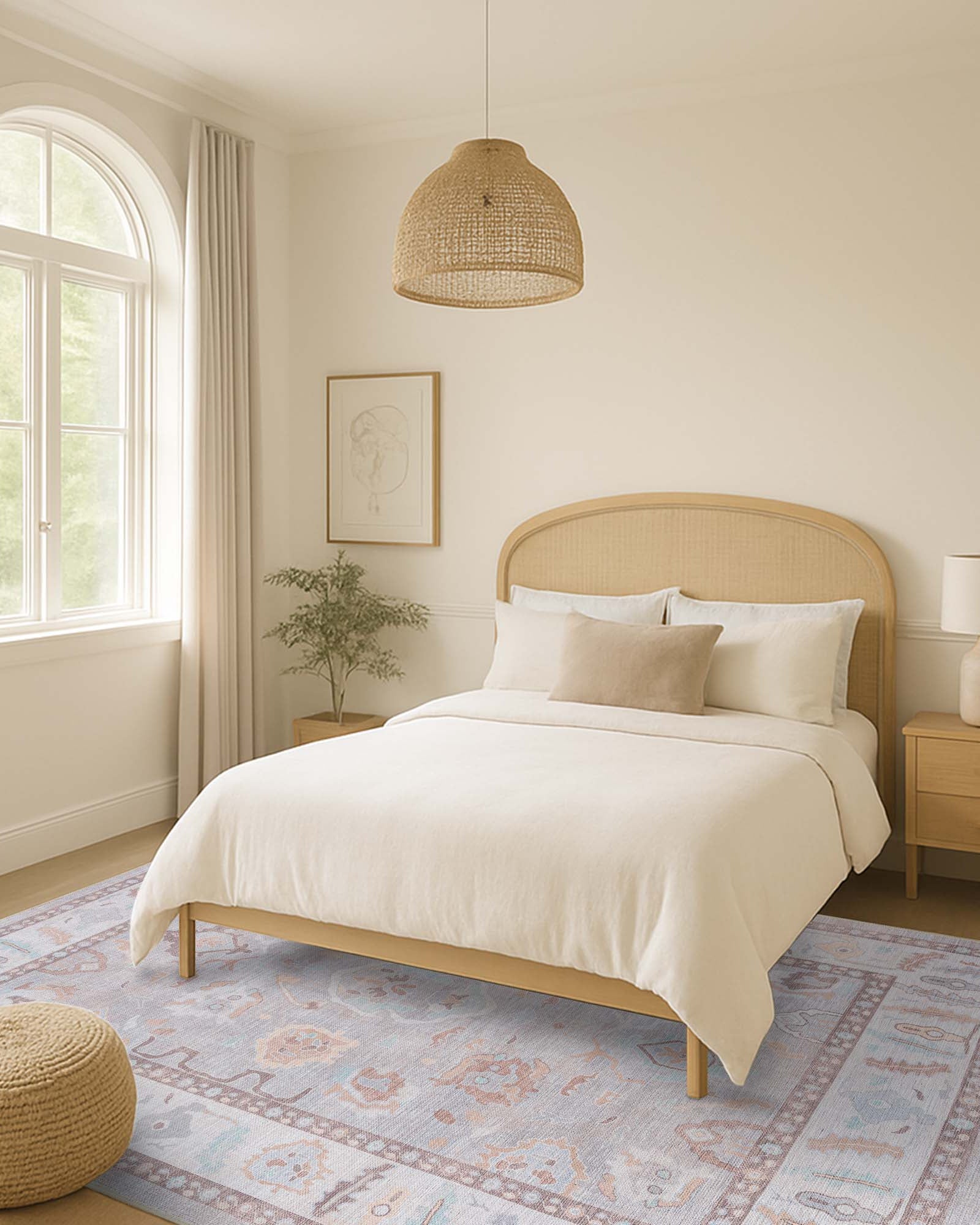
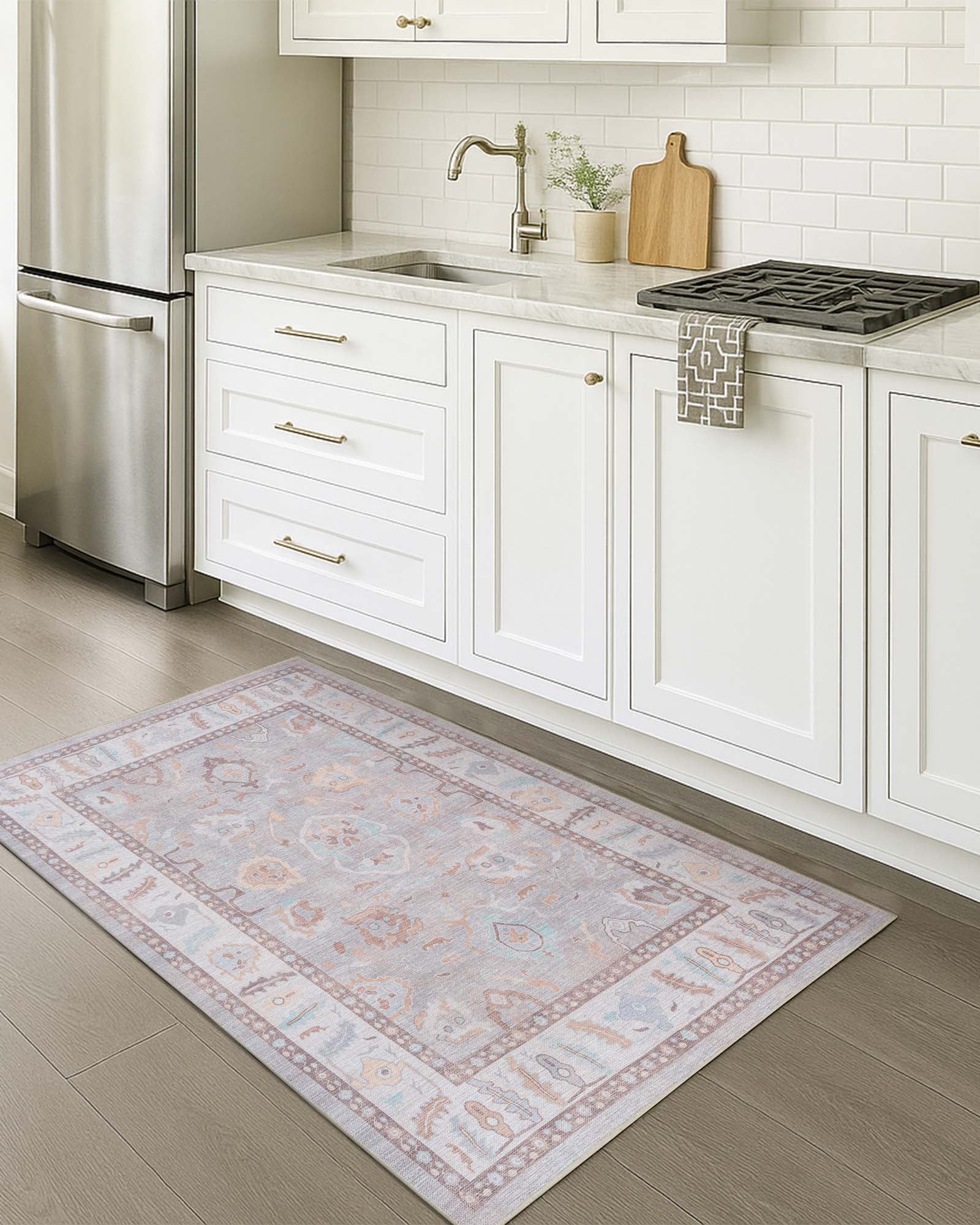
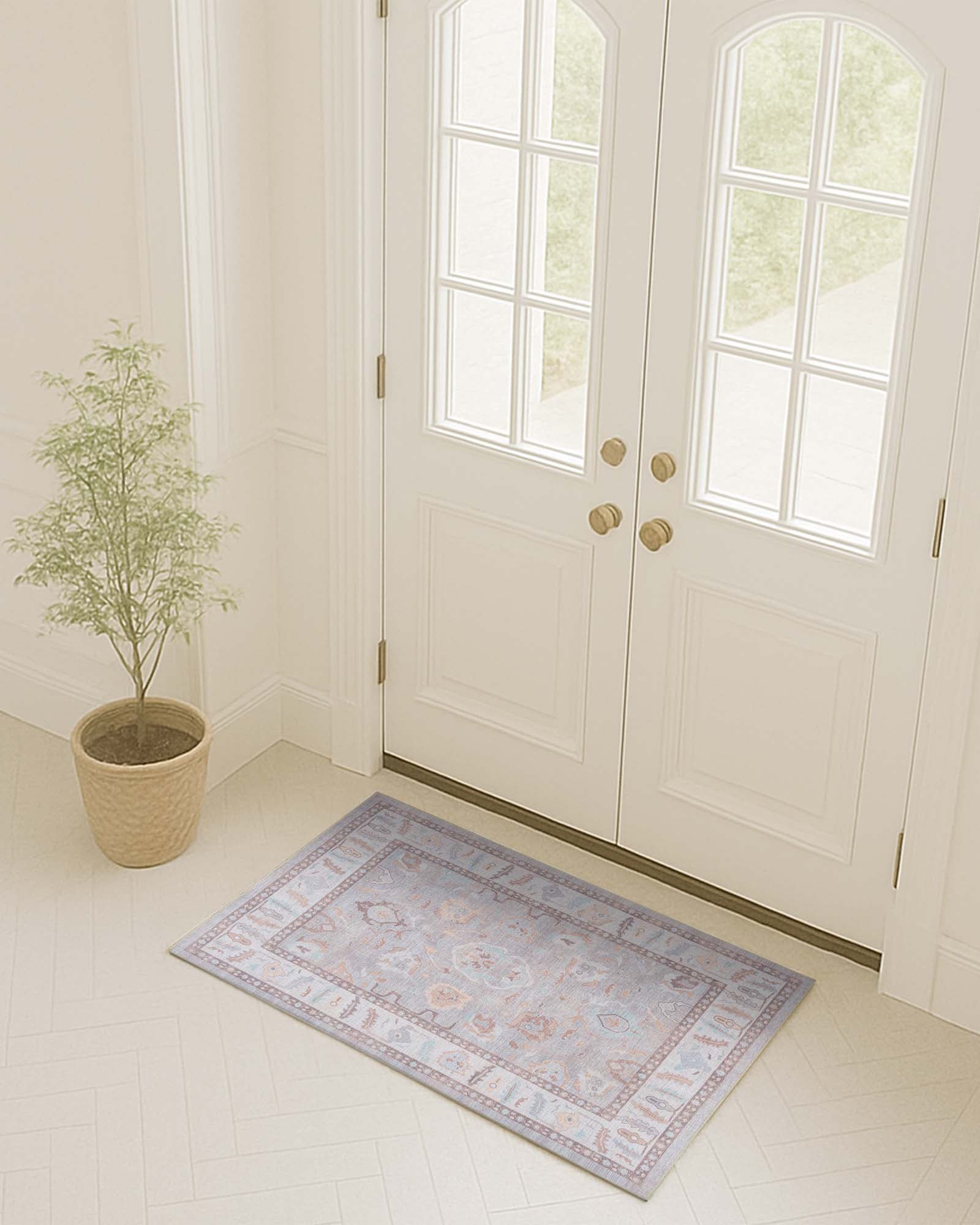
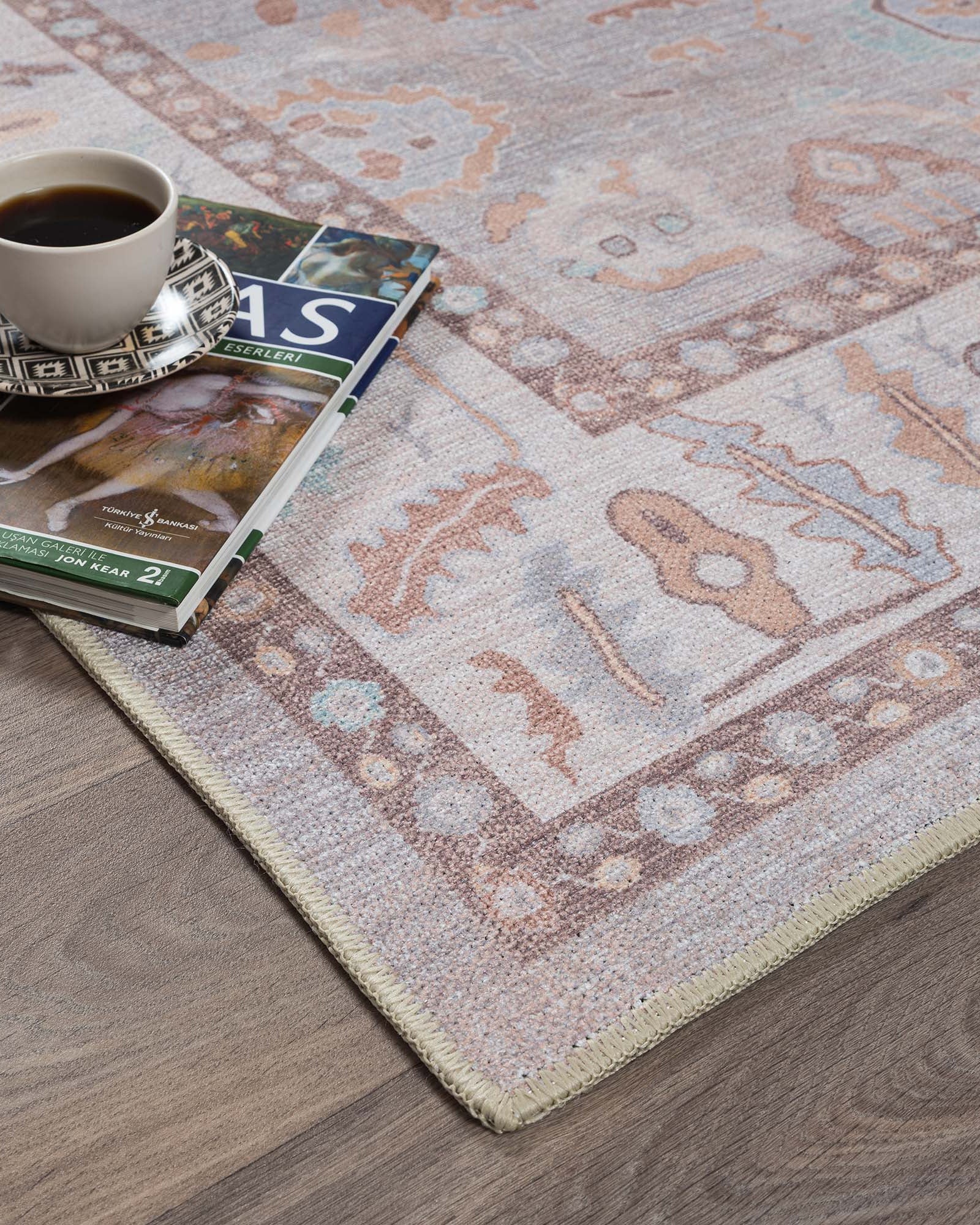
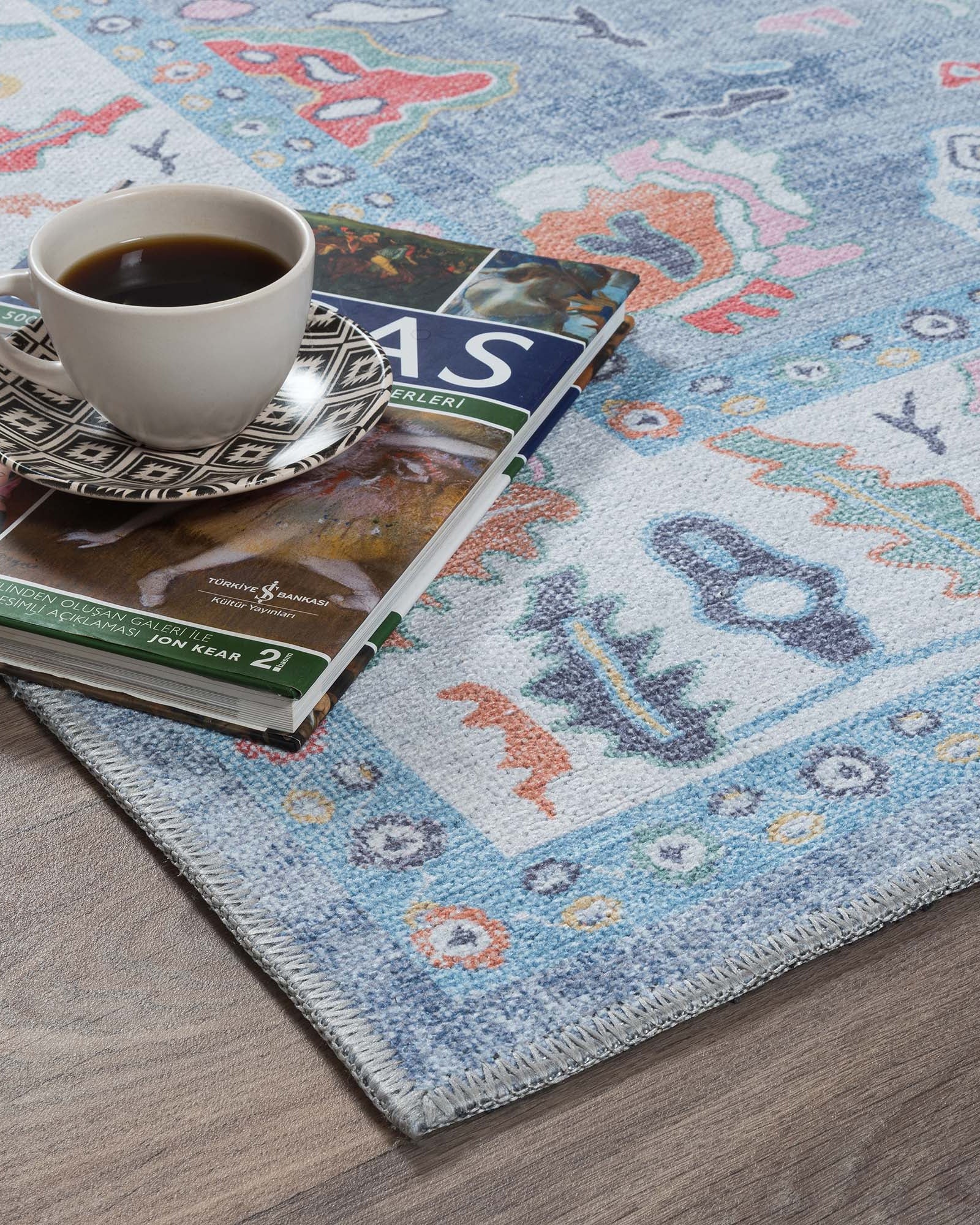
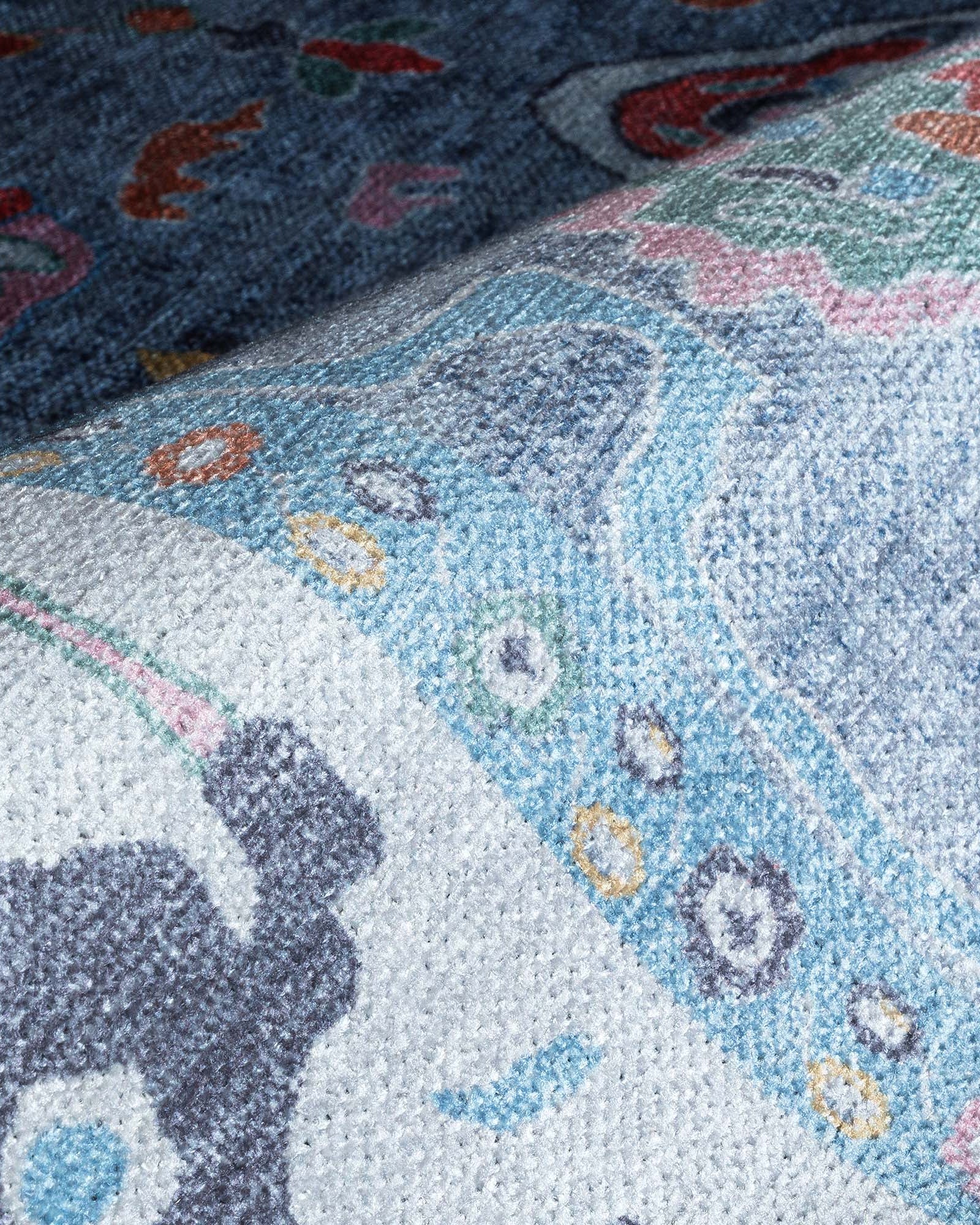
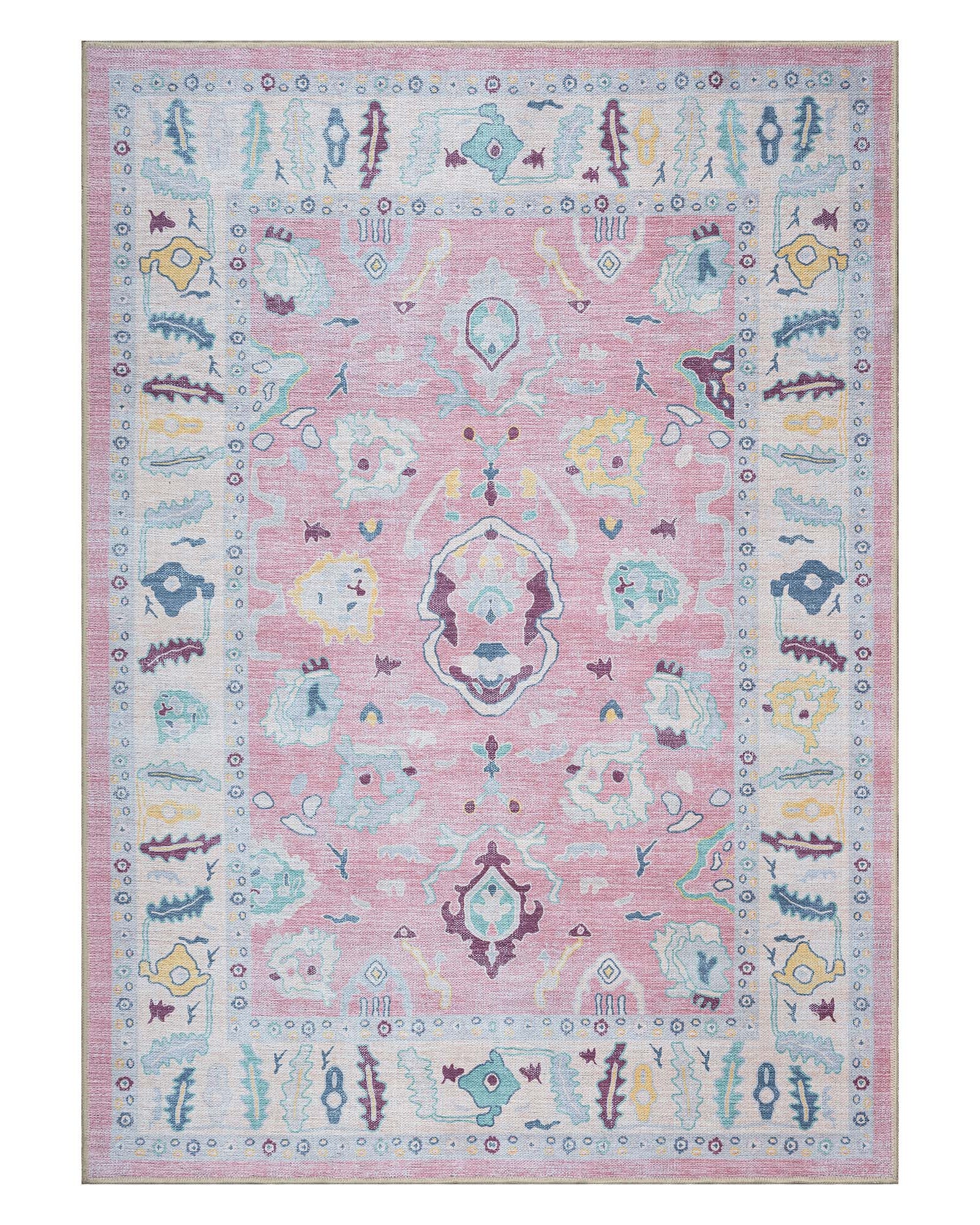
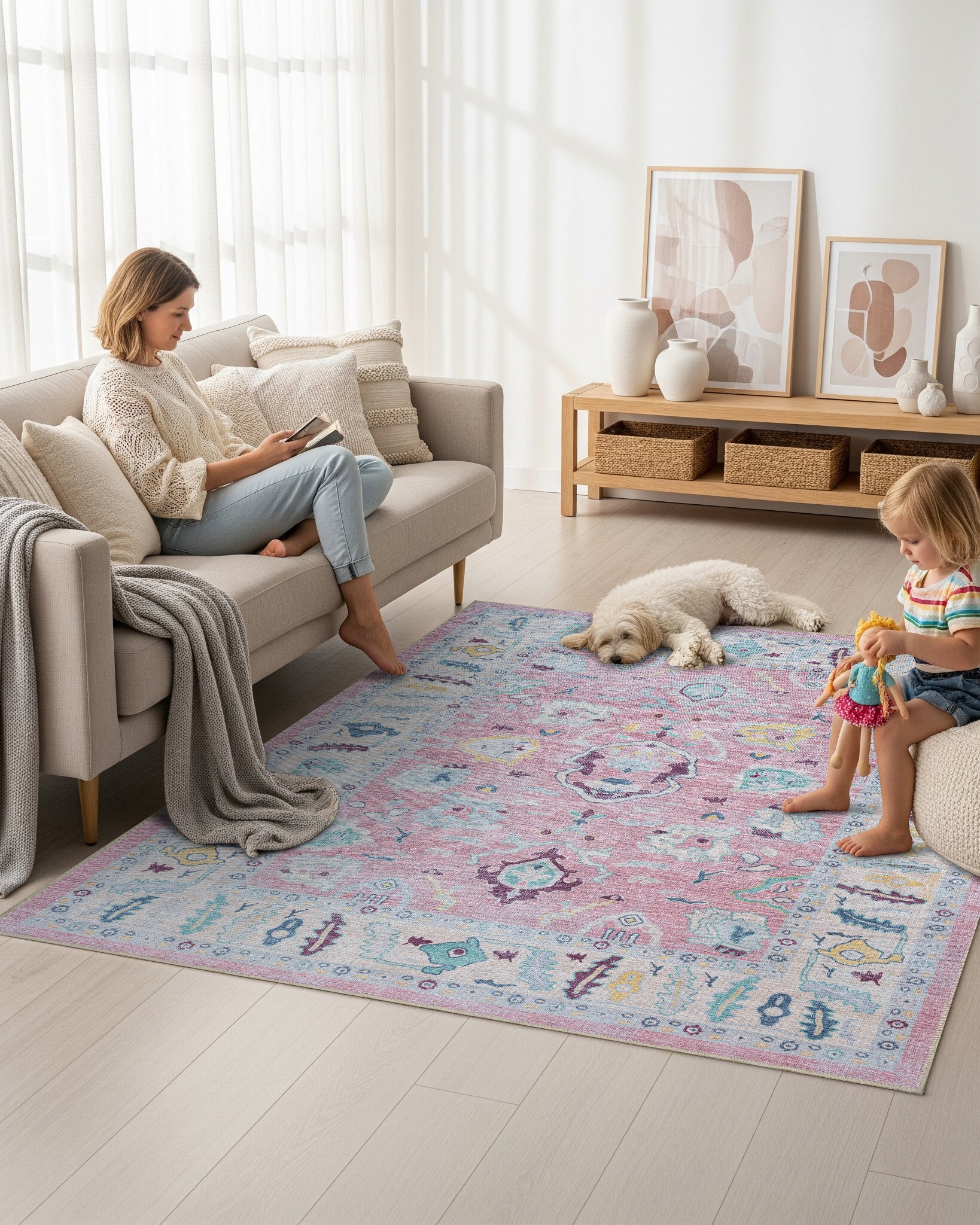
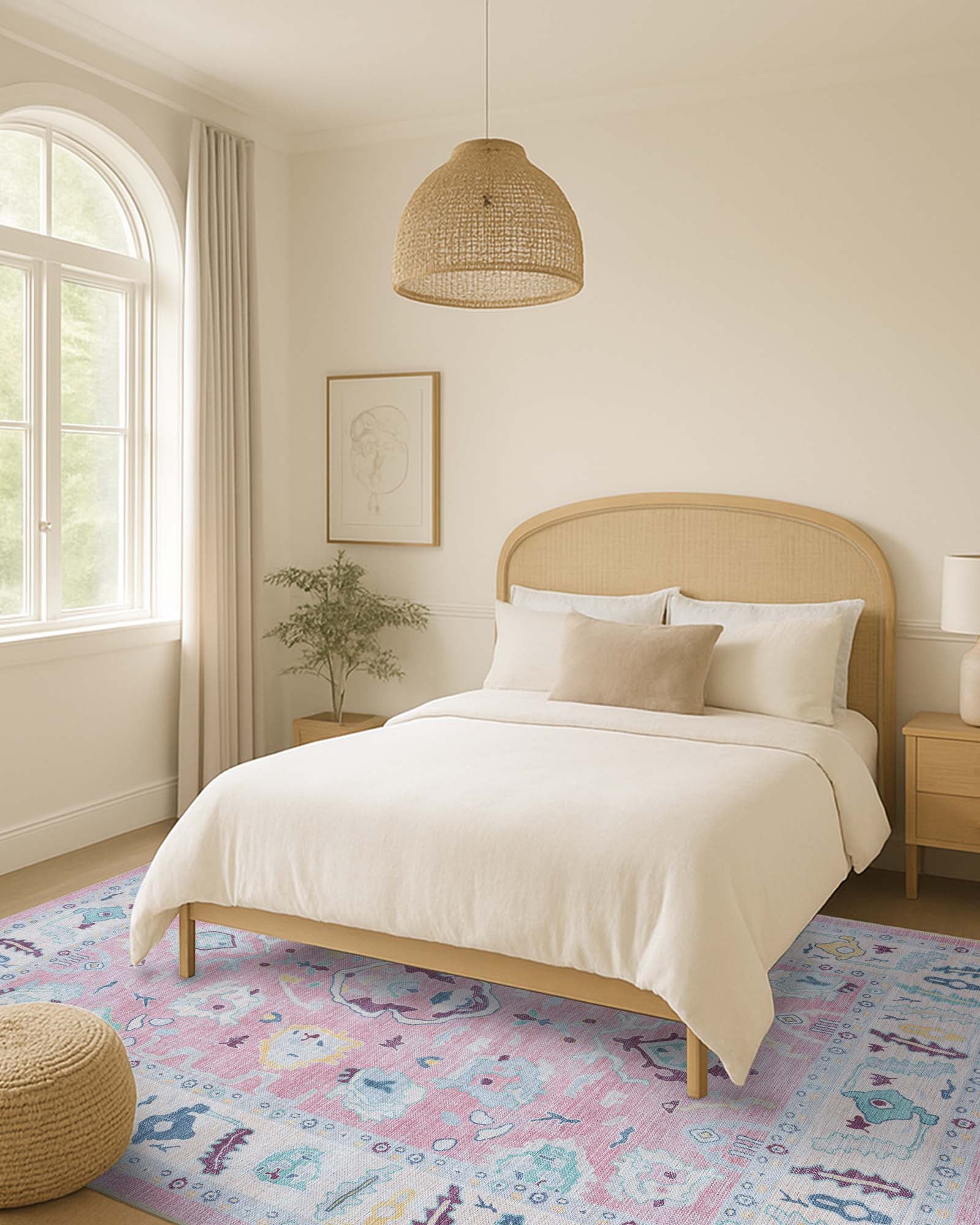
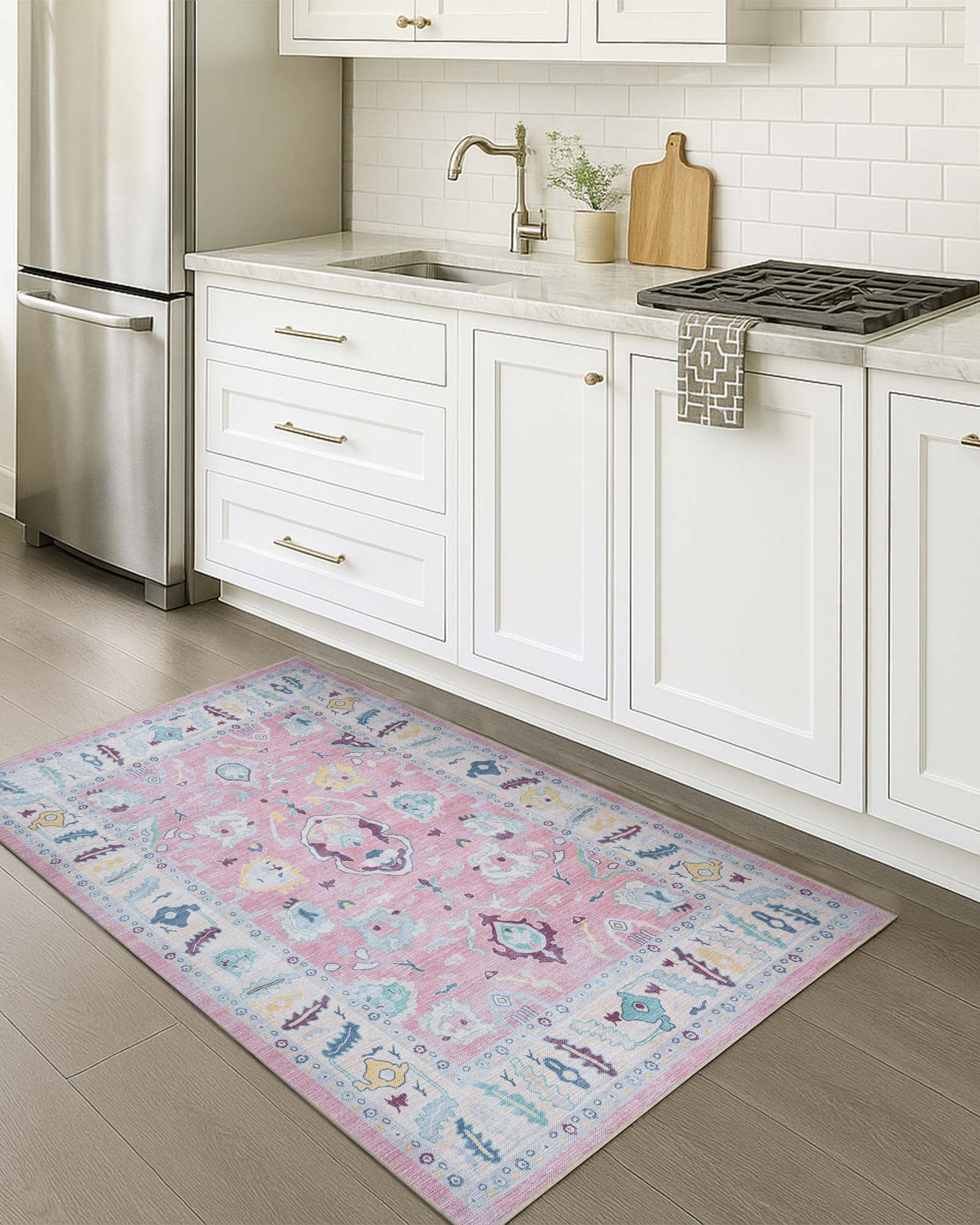
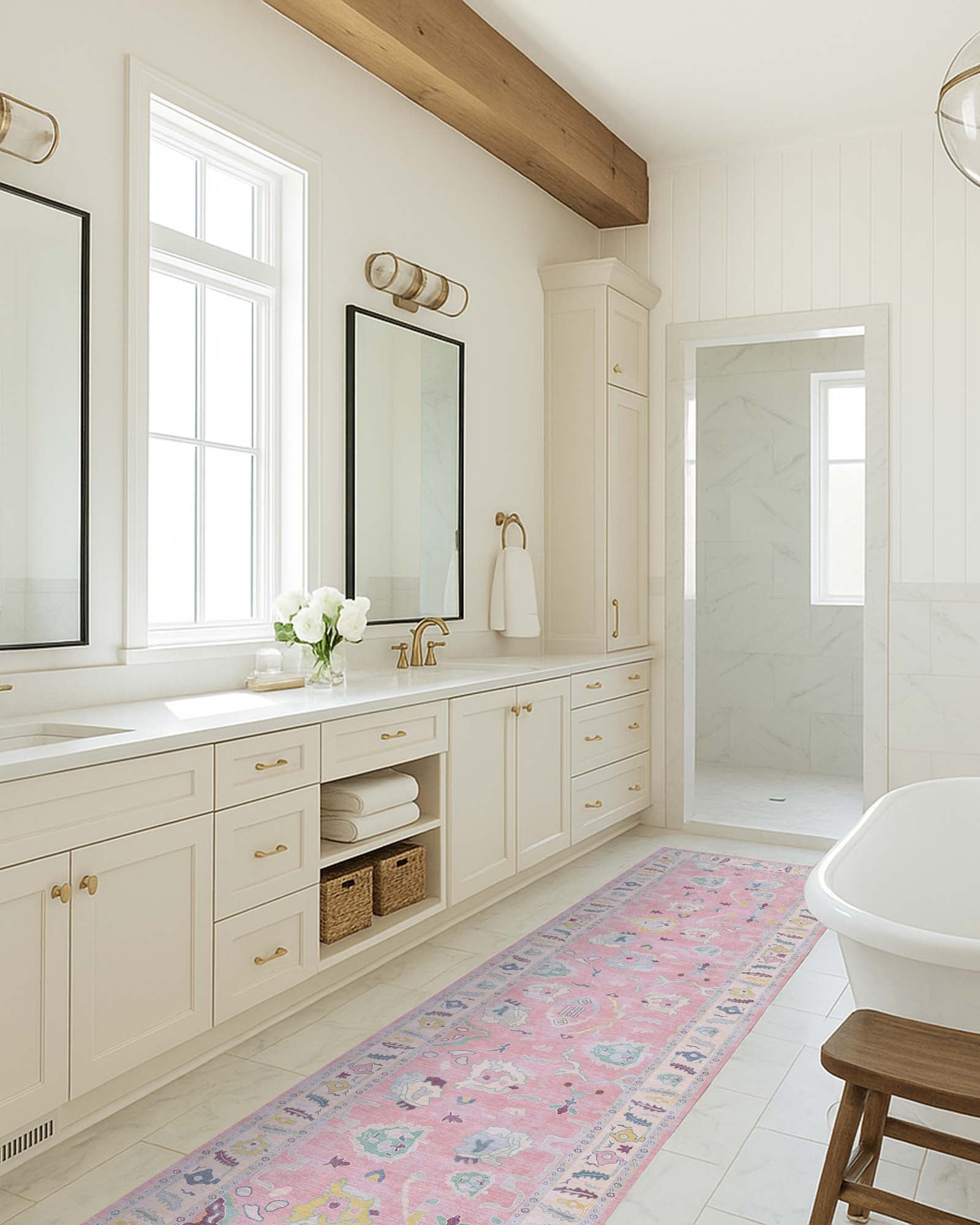
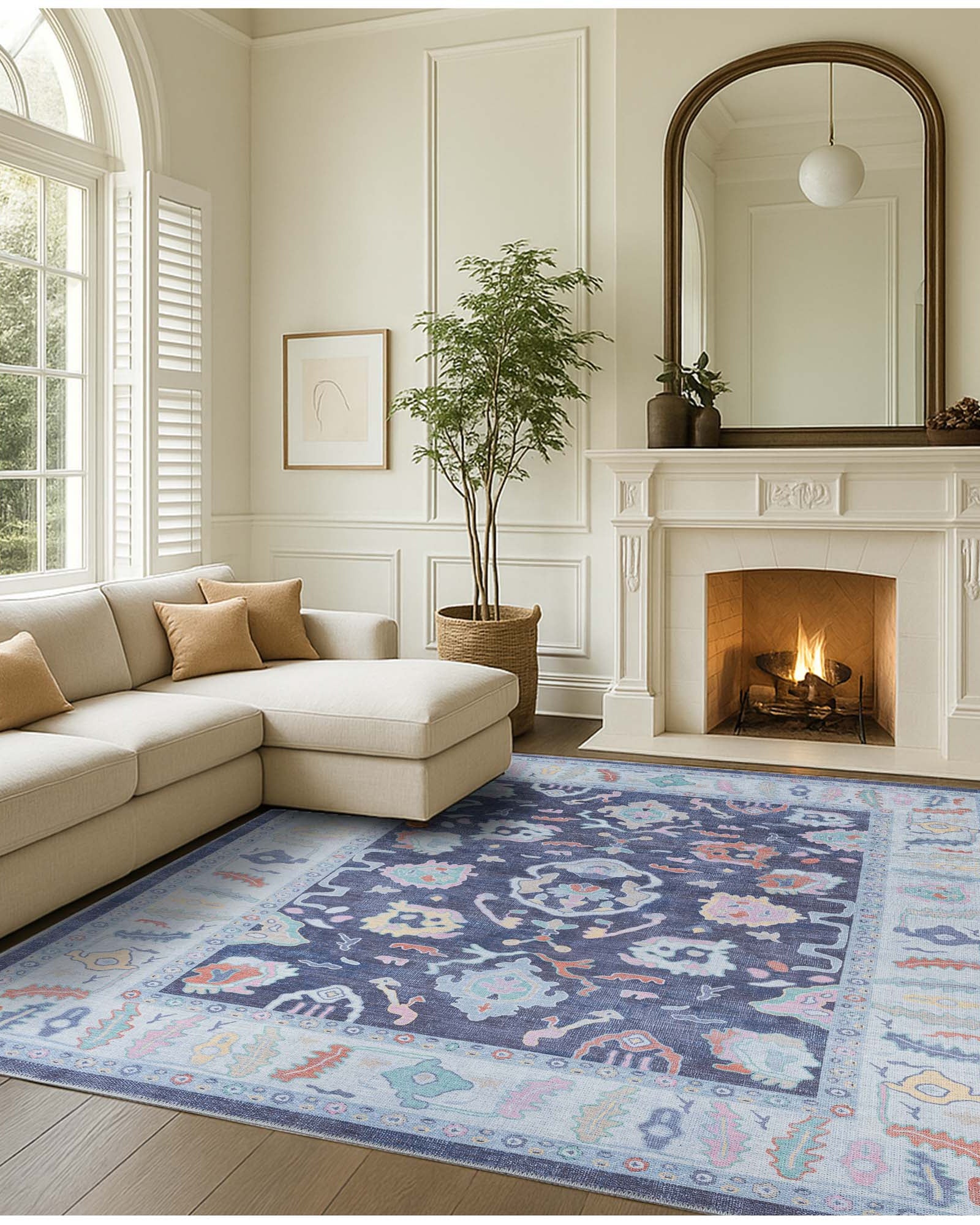
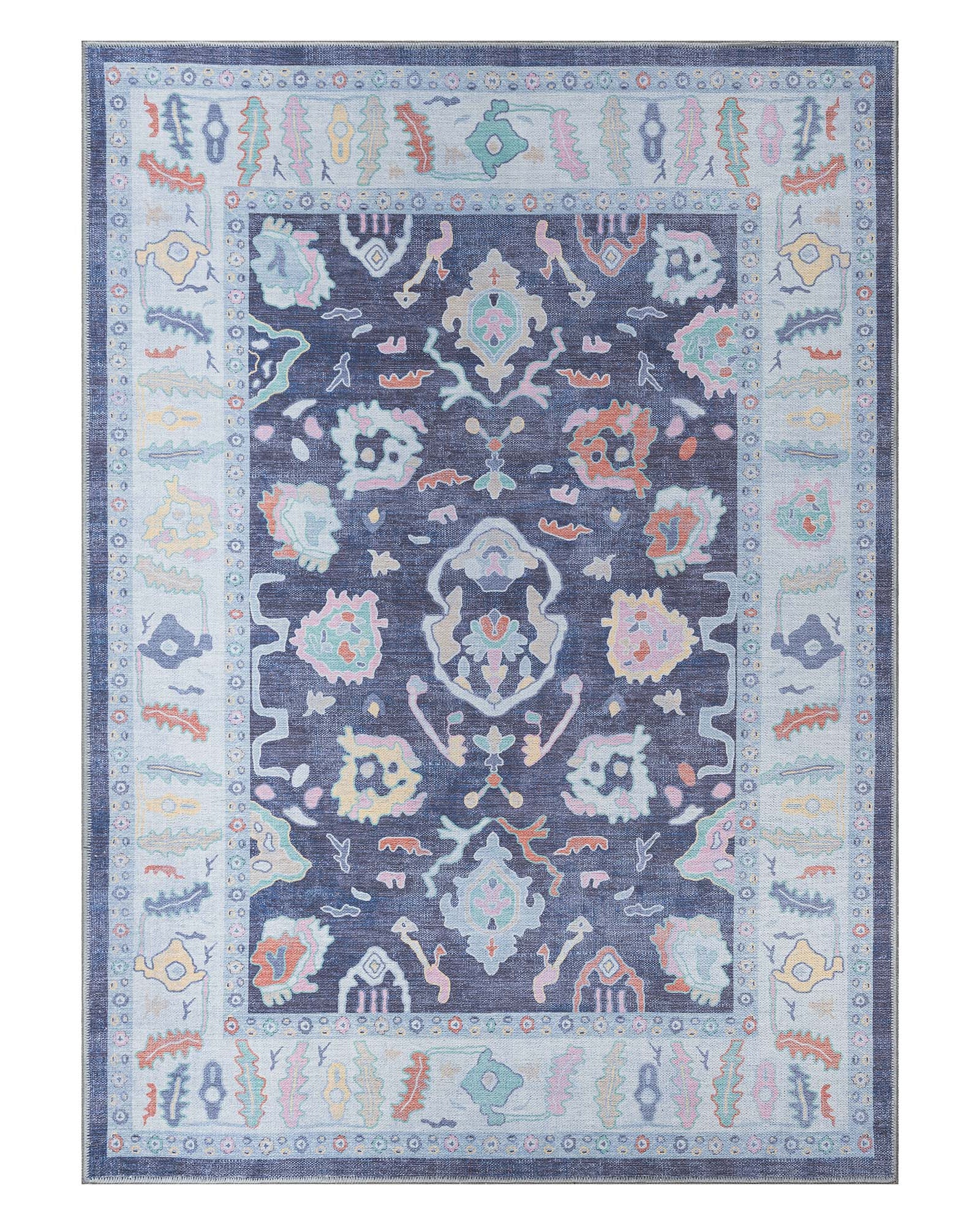
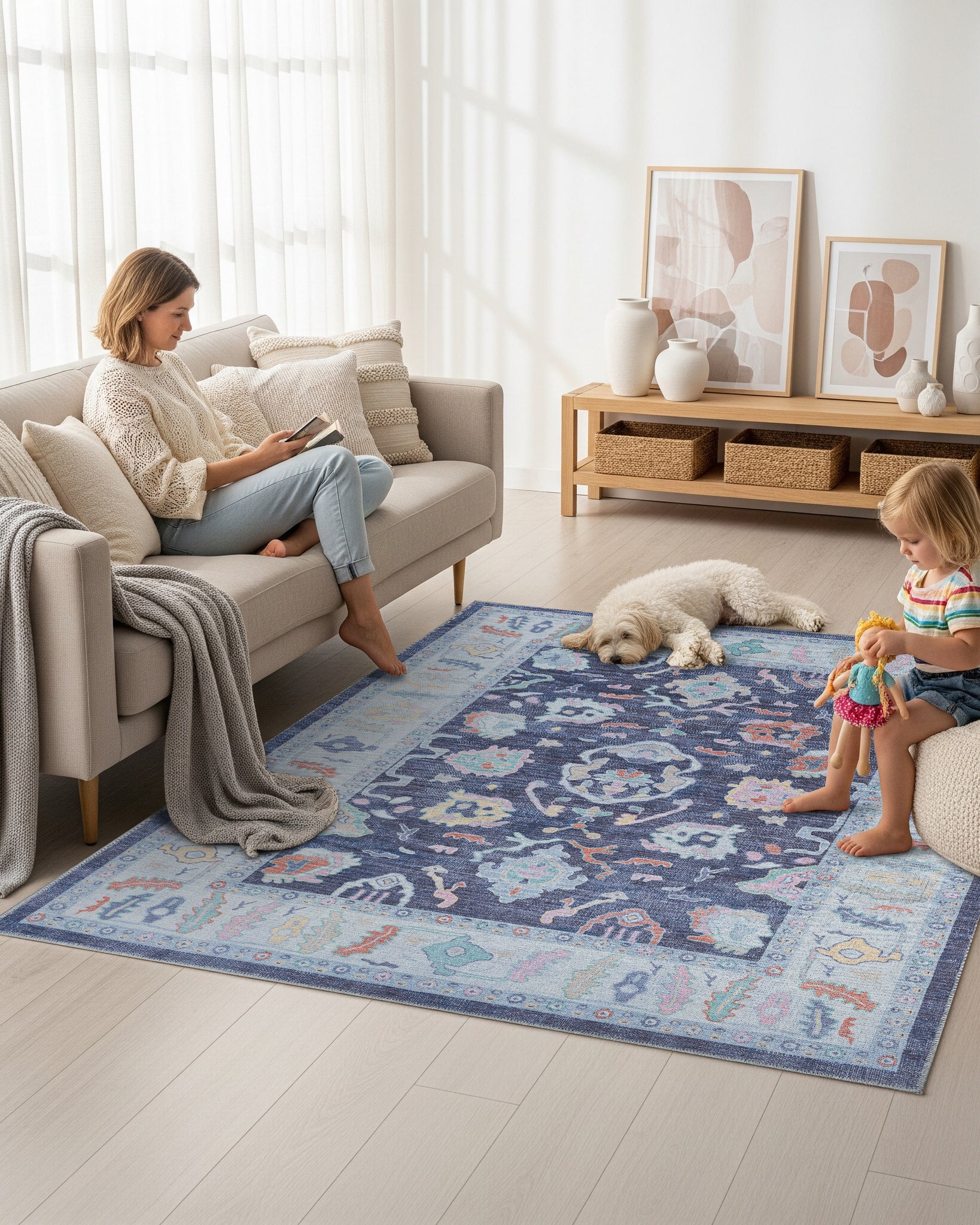
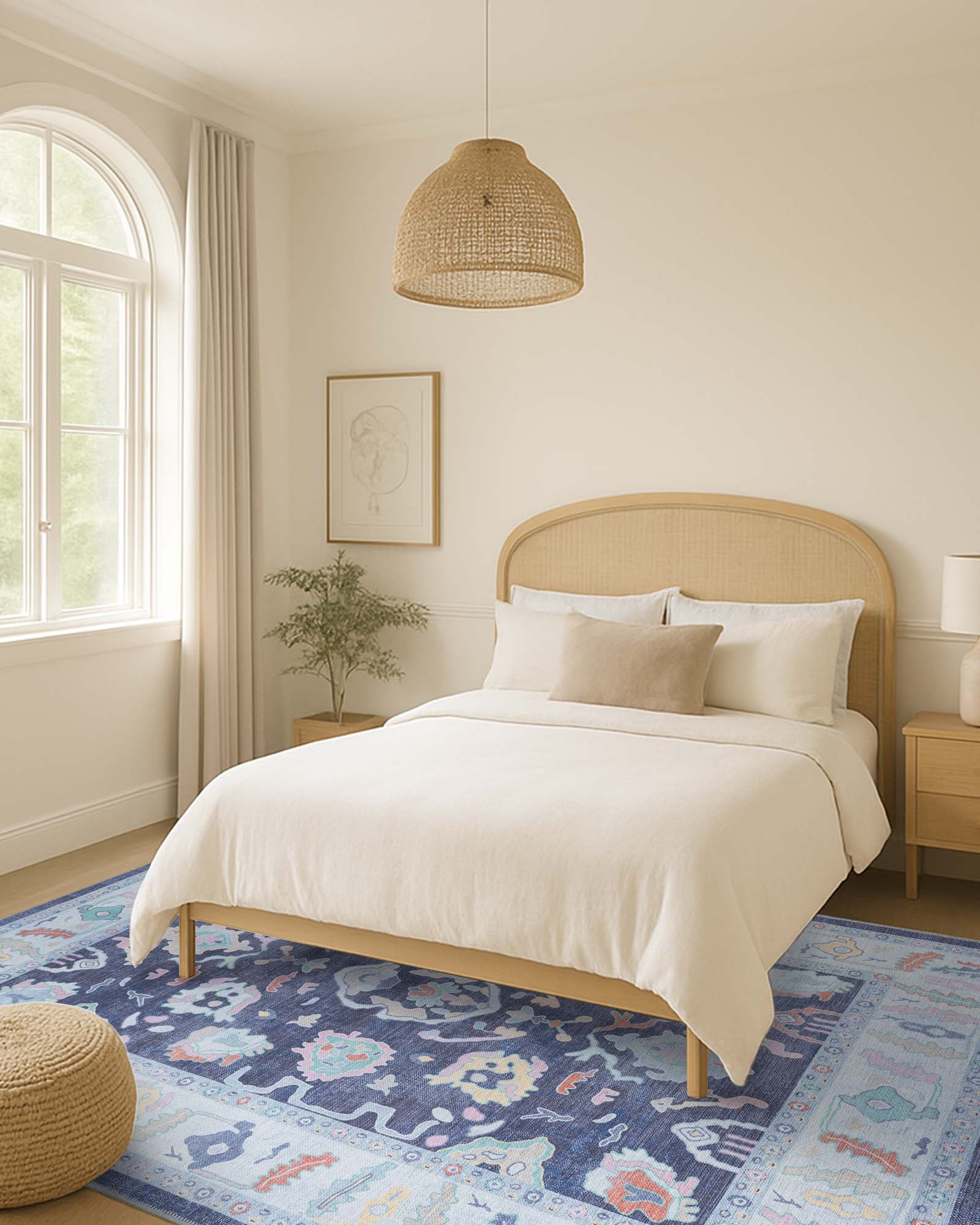
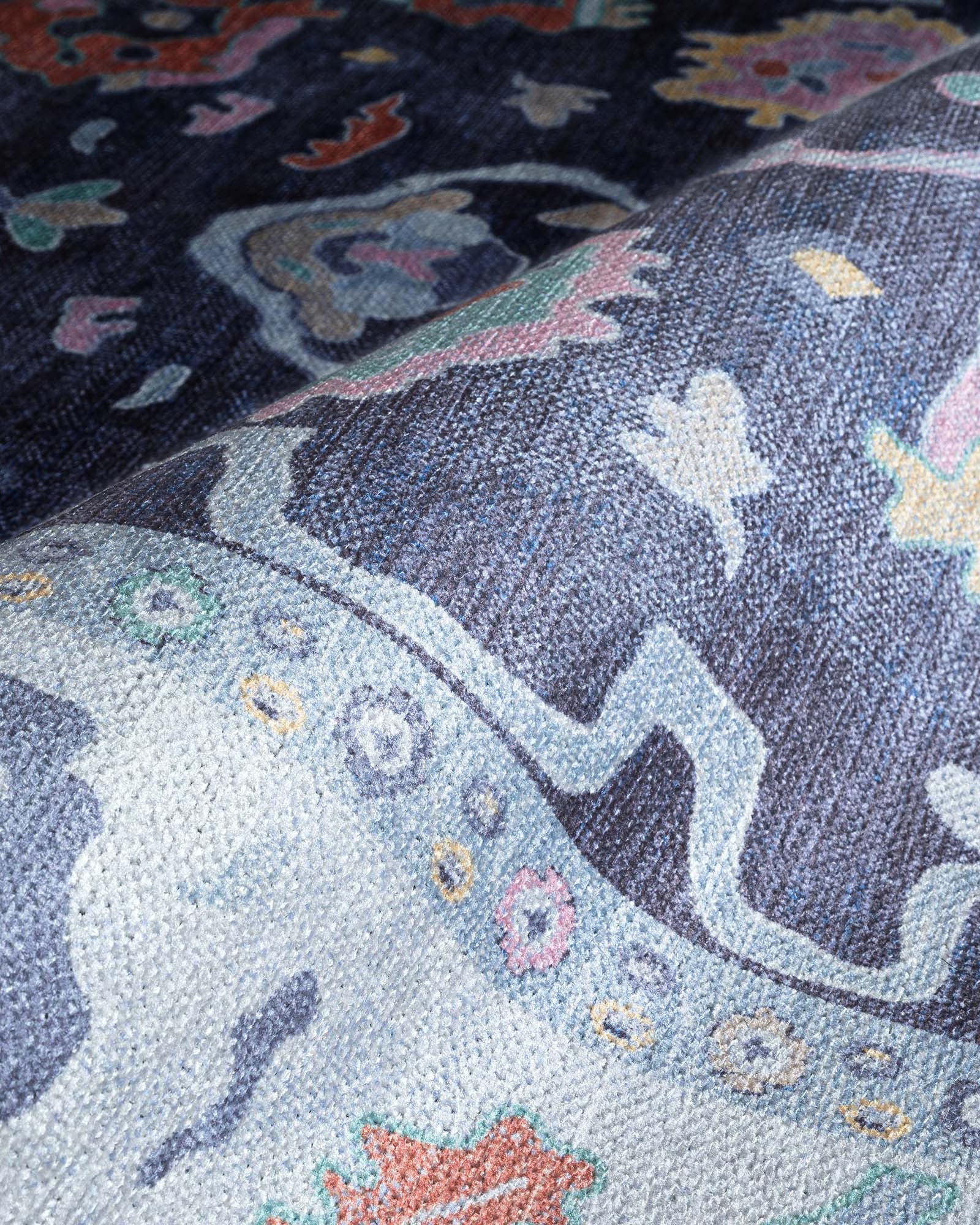
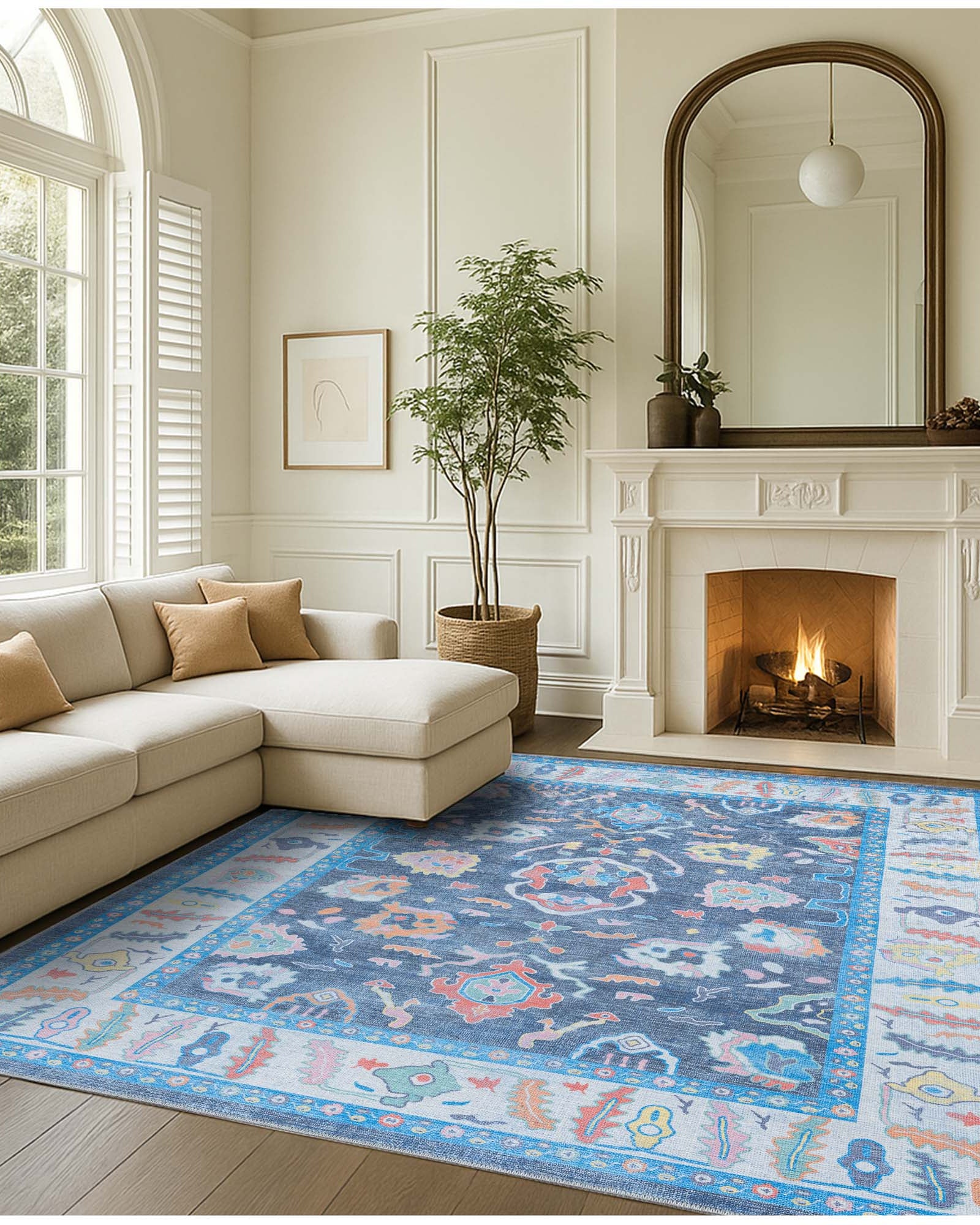
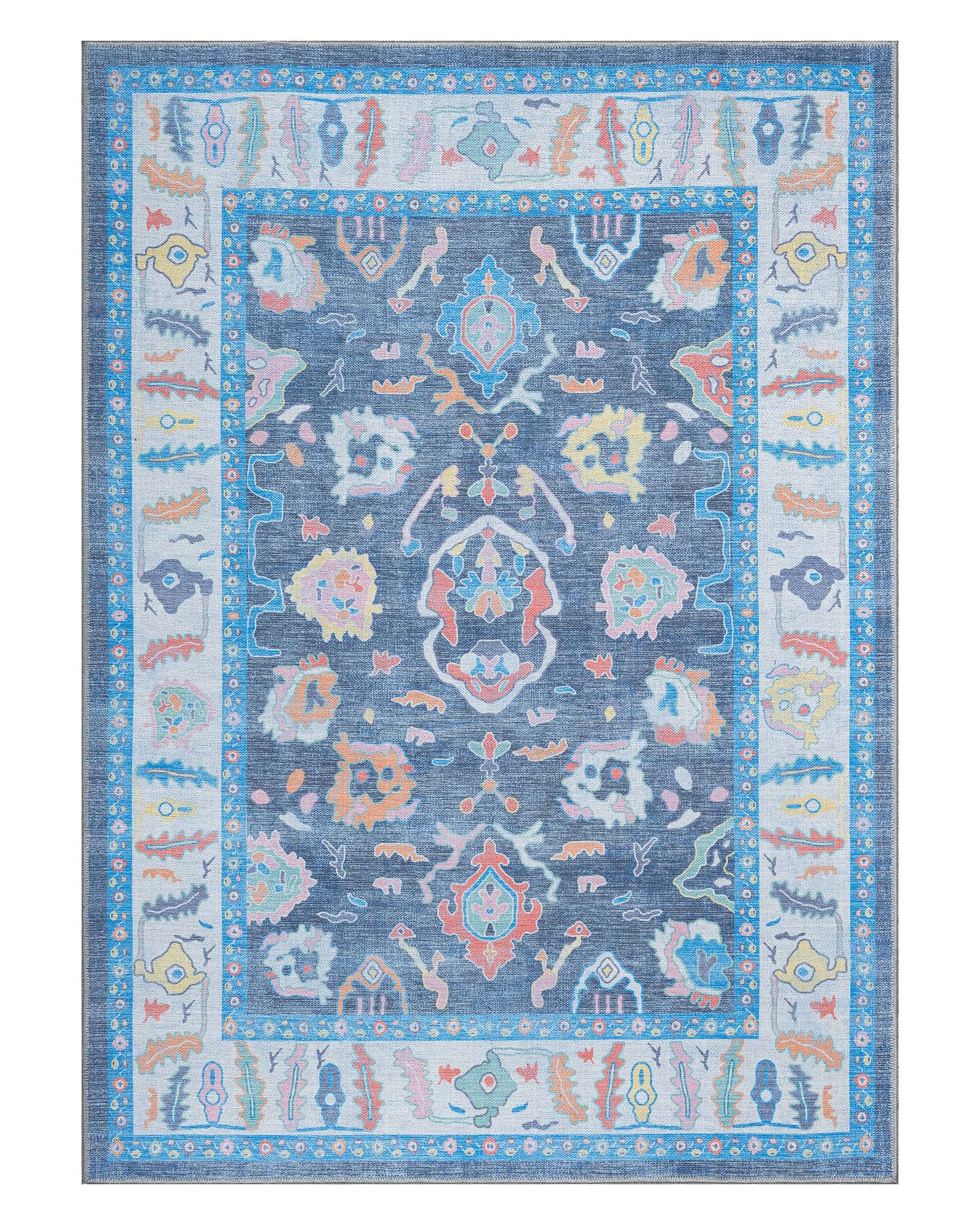
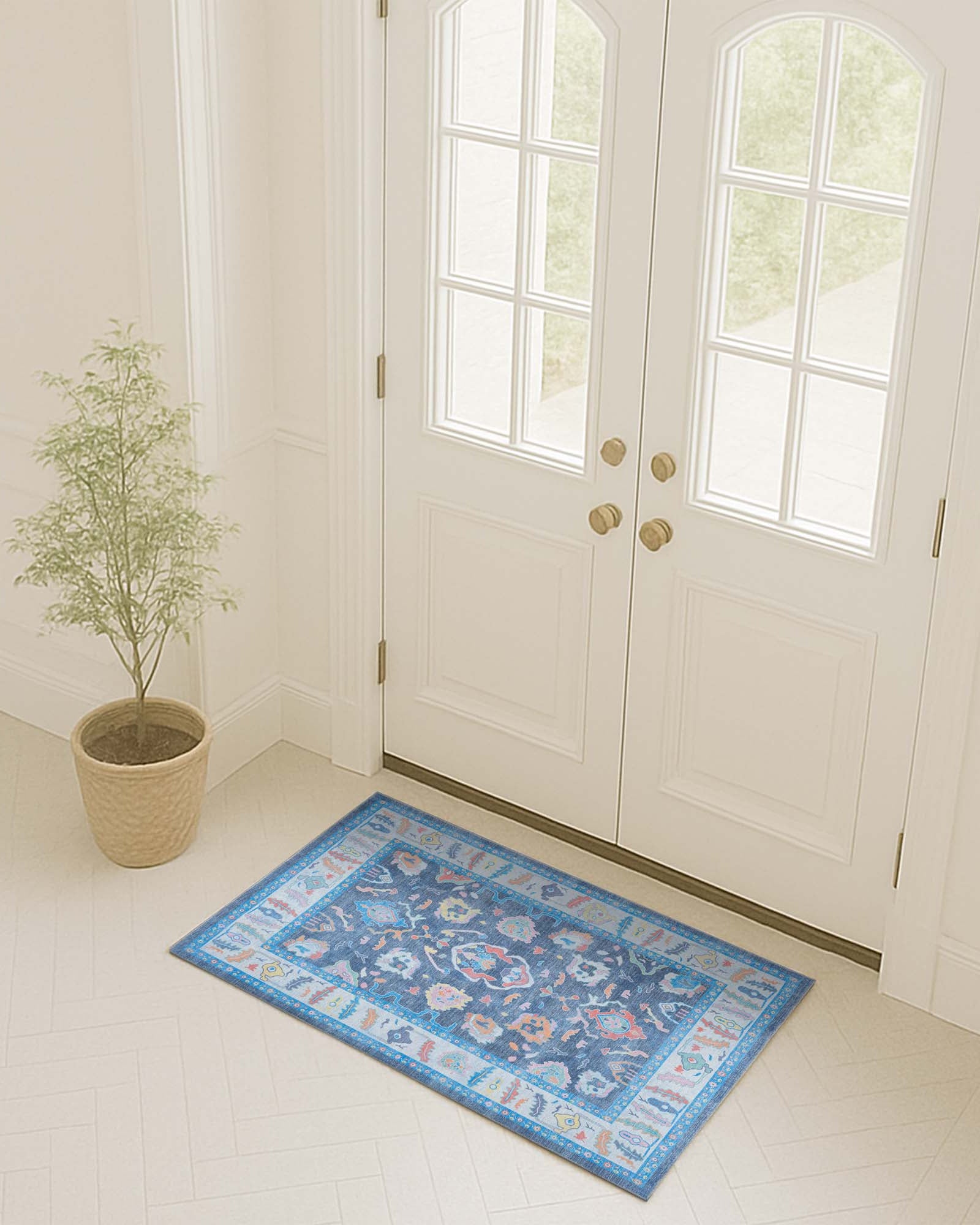
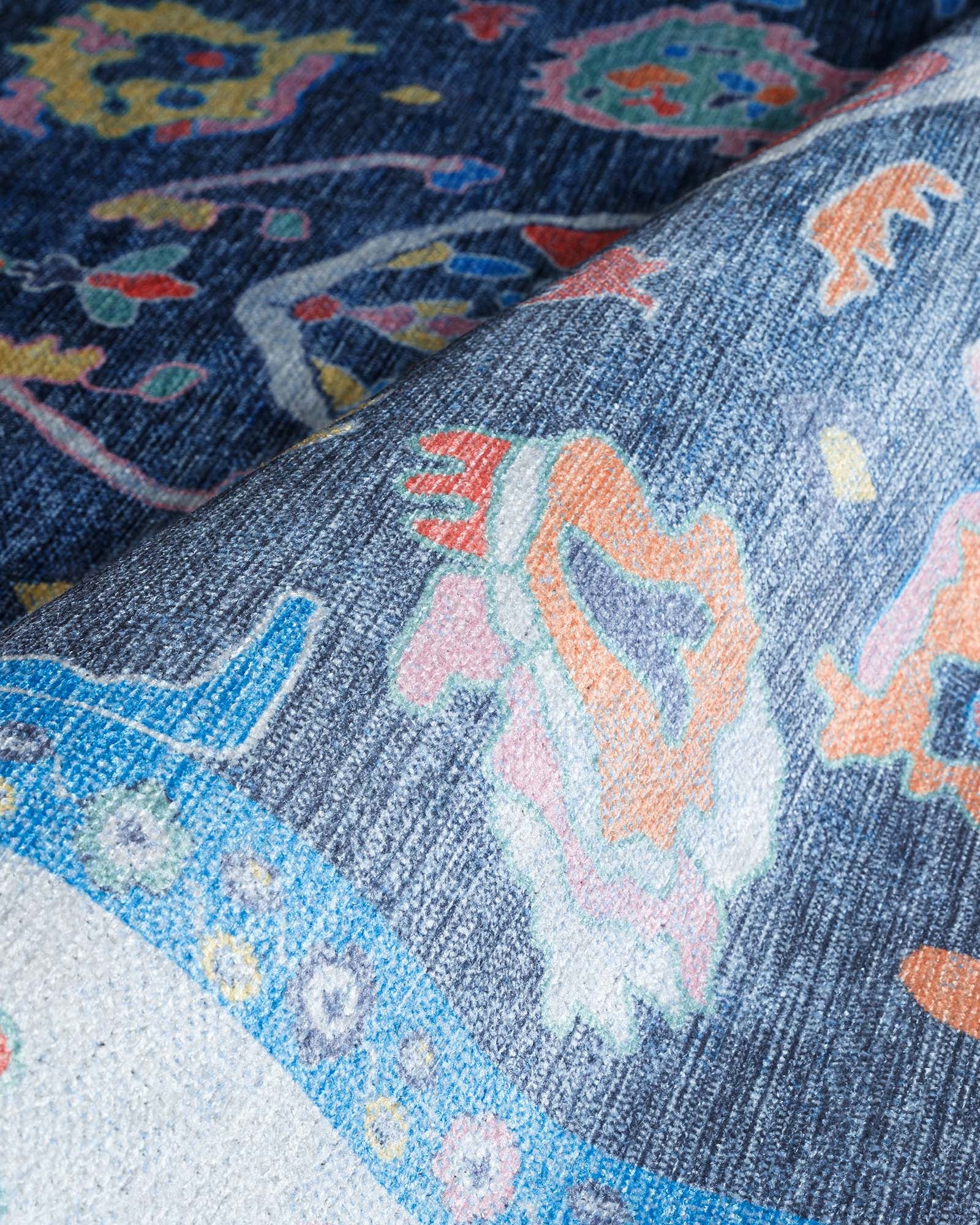
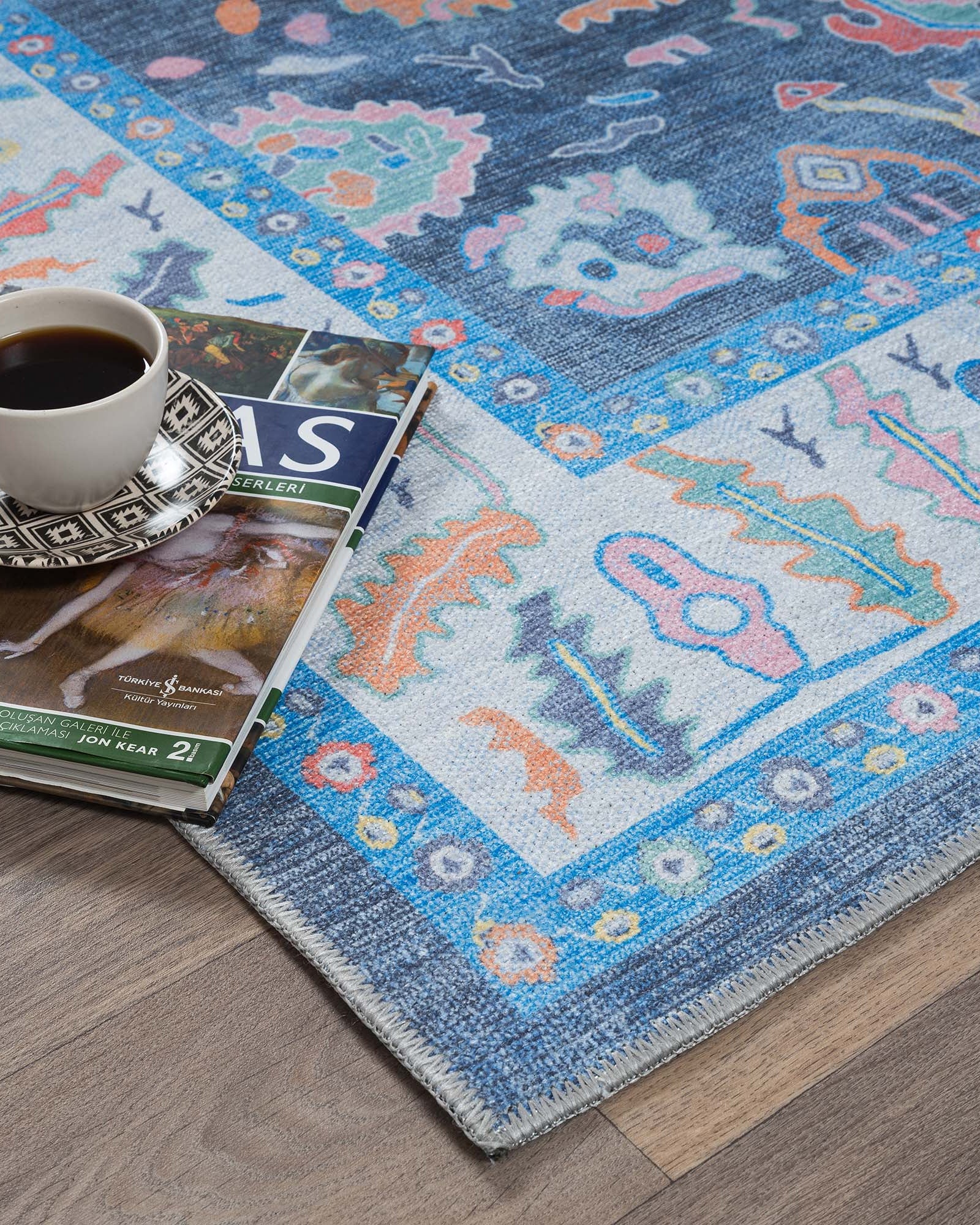
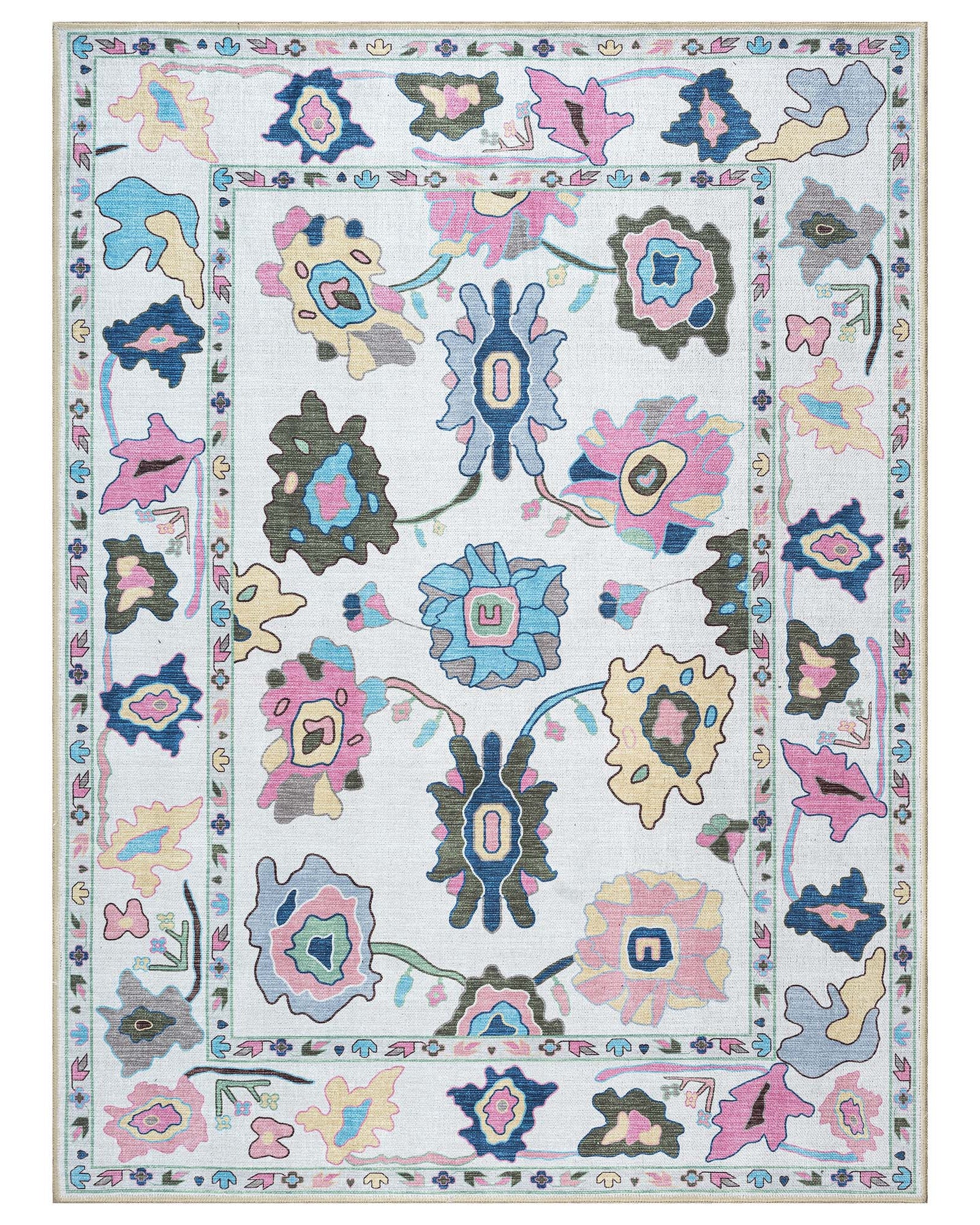
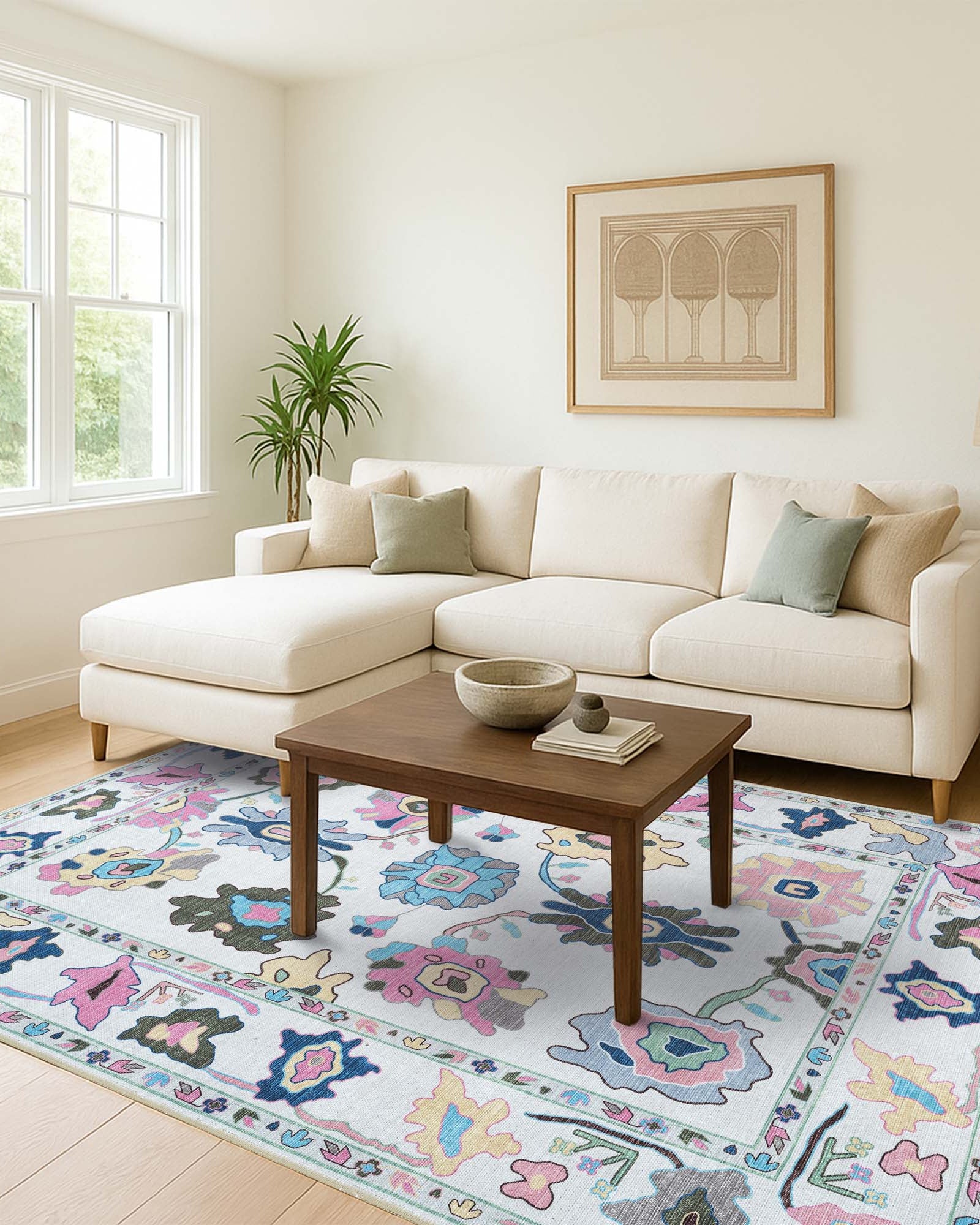
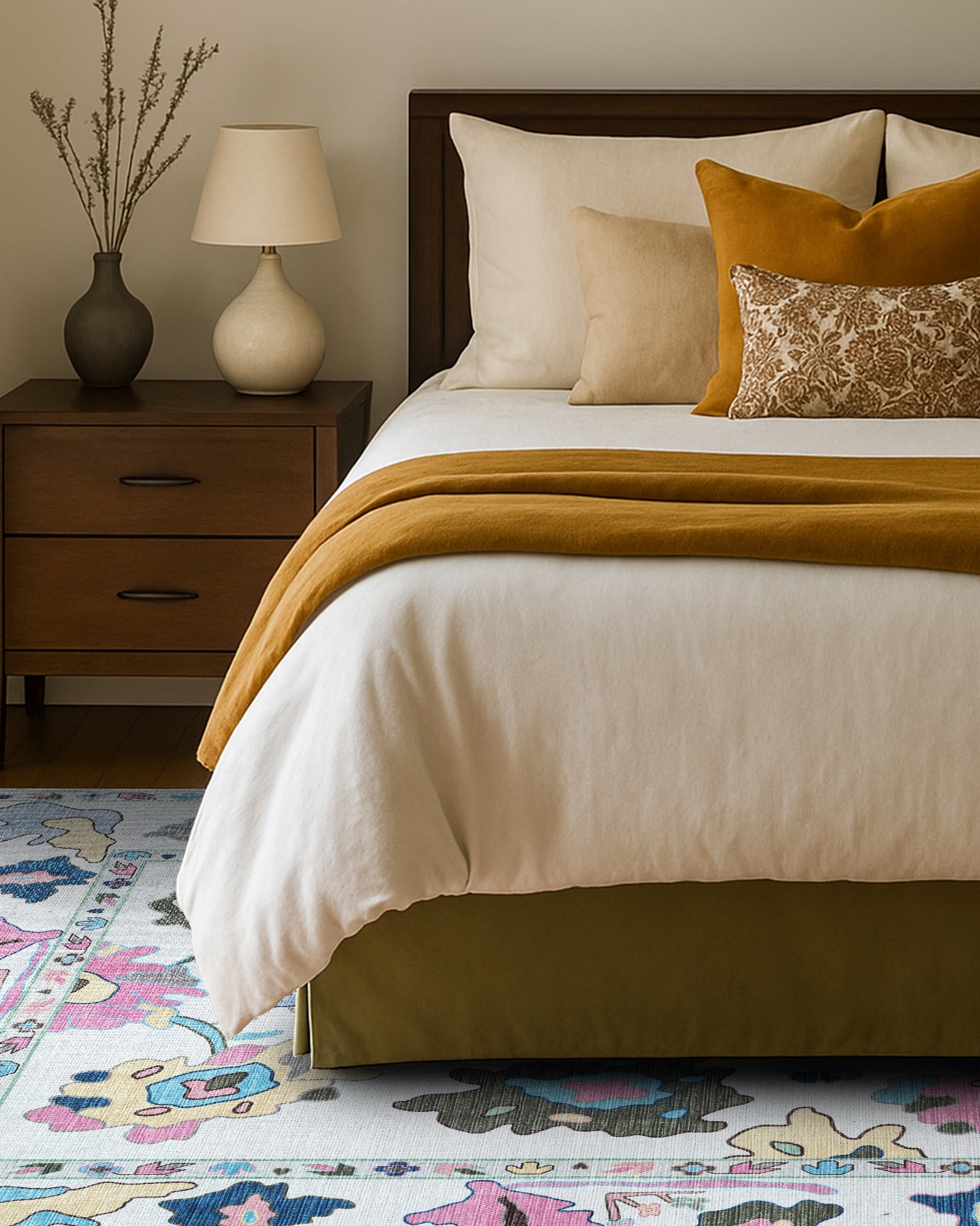
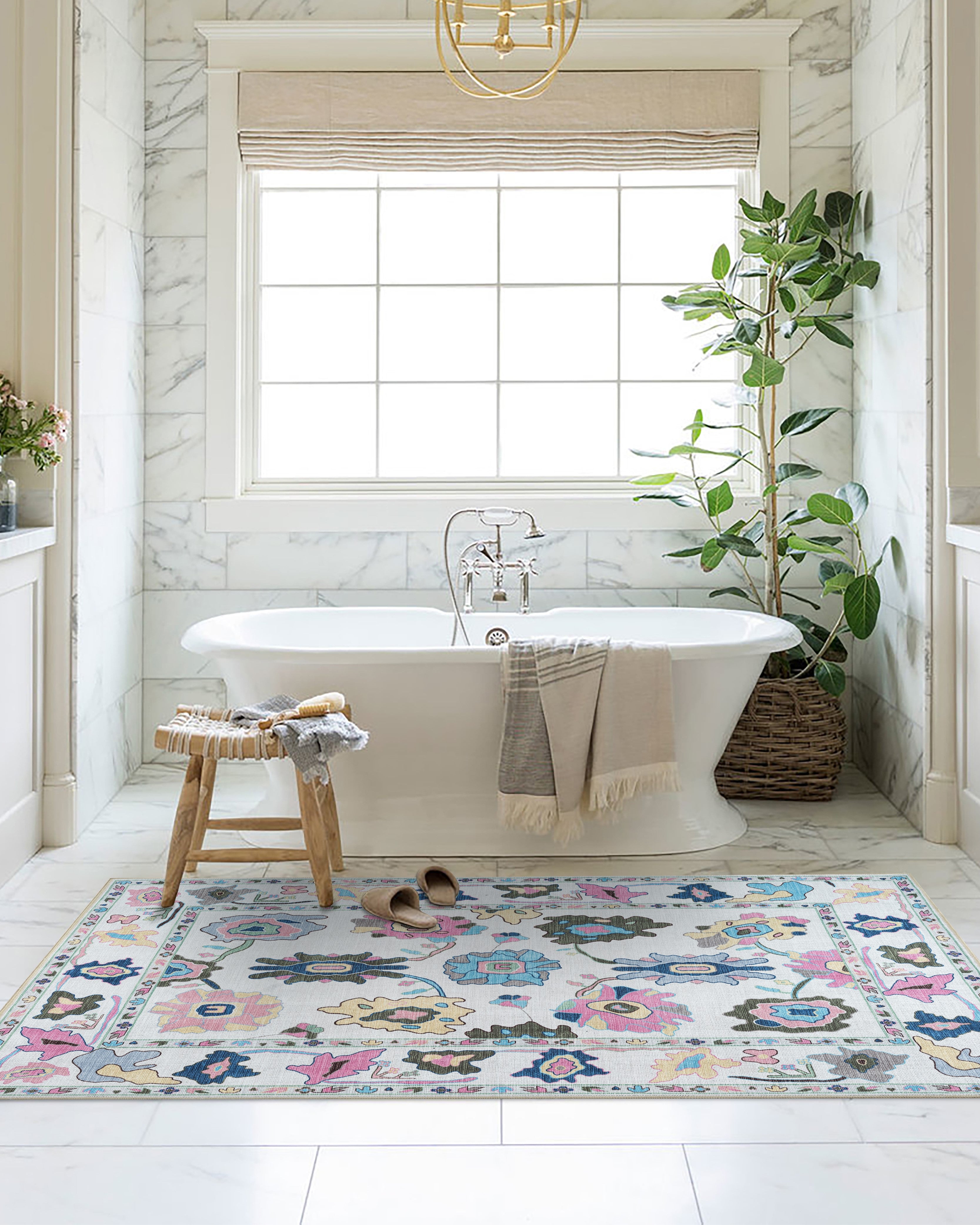
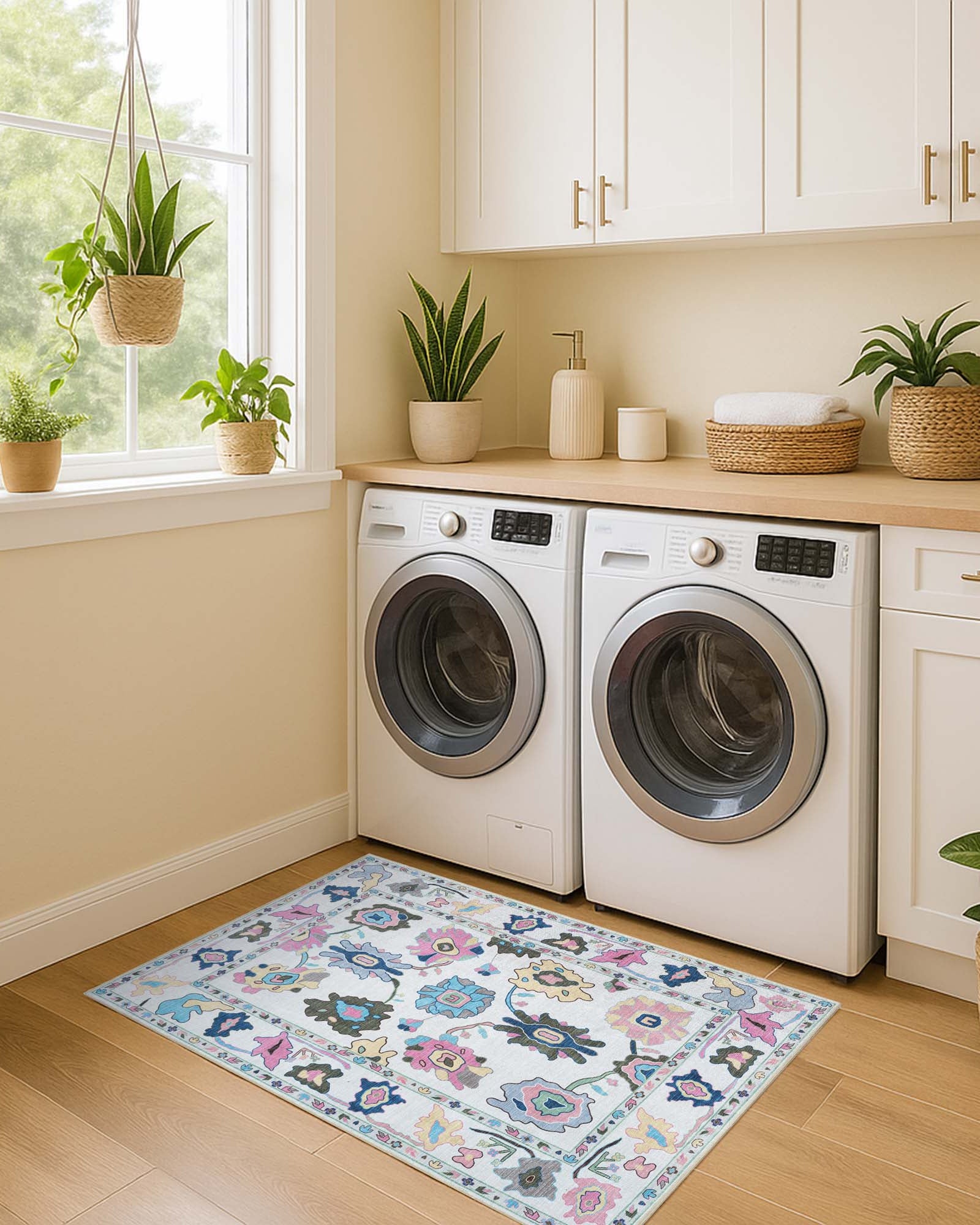
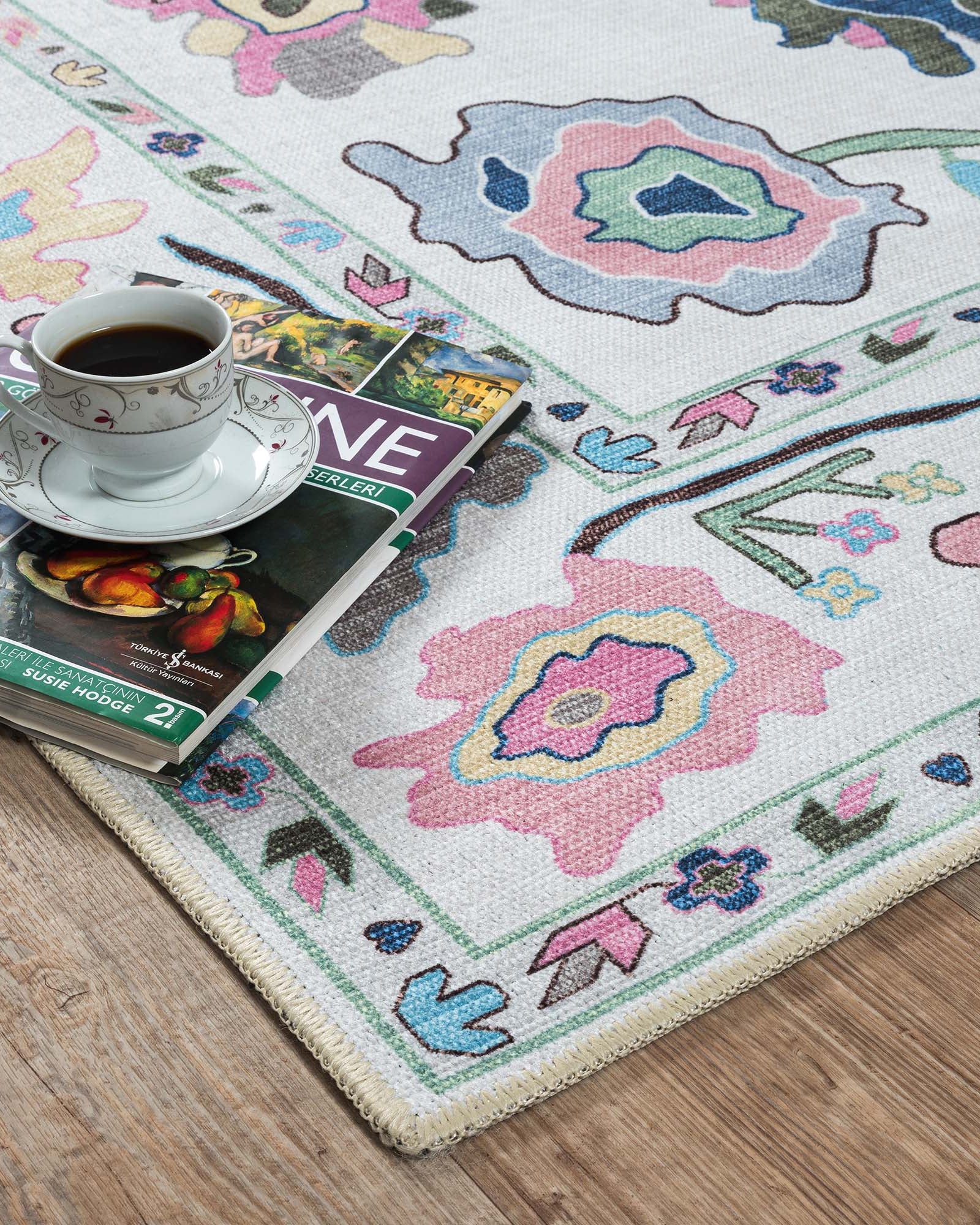
A hand-knotted rug is really two materials working together: wool for the pile you see and feel, and a separate foundation holding it all in place. In this collection that foundation is cotton — strung as the warp and weft the wool is knotted onto — which is the construction behind most fine workshop rugs and the reason they lie flatter, hold their shape better, and support finer detail than a wool-foundation rug of the same size.
What the Foundation Actually Does
The foundation is invisible once a rug is finished, but it decides almost everything about how the rug behaves structurally. Warp threads run the length of the rug under tension on the loom; weft threads pass across between rows of knots, locking each row in place. The wool pile sits entirely on top of this grid — it carries none of the structural load itself. A rug's shape, squareness and long-term stability come almost entirely from the foundation, not the pile.
Why Cotton Specifically
Cotton fibre is stronger and more dimensionally stable under tension than wool, and it does not stretch or relax the way wool does when the loom's tension shifts. Weavers who wanted a rug that would lie precisely flat, hold an exact rectangular shape, and support fine, detailed knotting moved toward cotton foundations as the material became widely available through trade in the nineteenth century.
This is a practical trade, not a matter of one material being universally better. Cotton's stability is what allows fine, dense knotting to hold its shape reliably, which is why nearly all workshop production aimed at intricate curvilinear pattern — Tabriz, Kashan, Isfahan, and comparable centres — uses a cotton foundation. The stability the cotton provides is part of what makes that level of detail achievable in the first place.
How Wool on Cotton Behaves
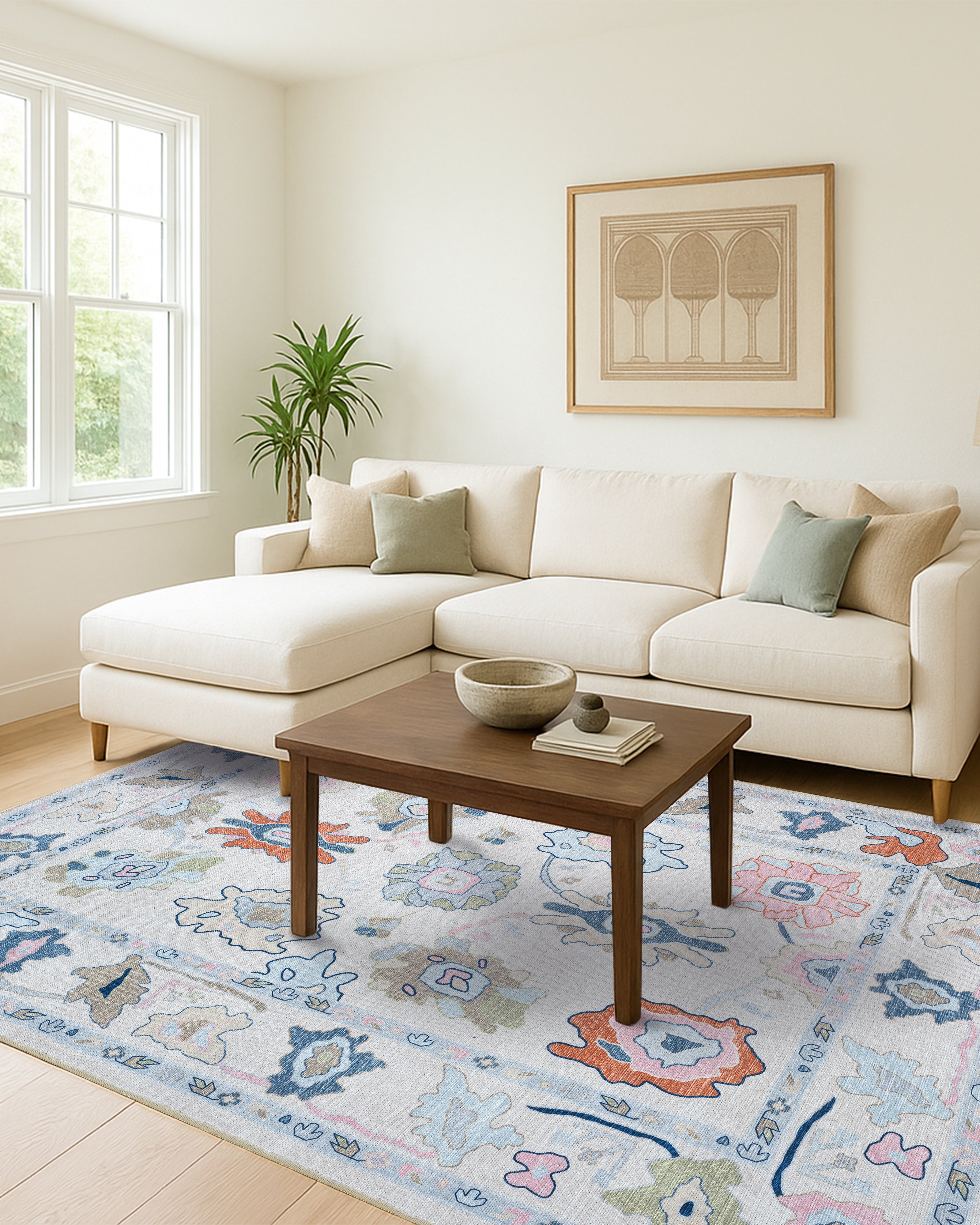
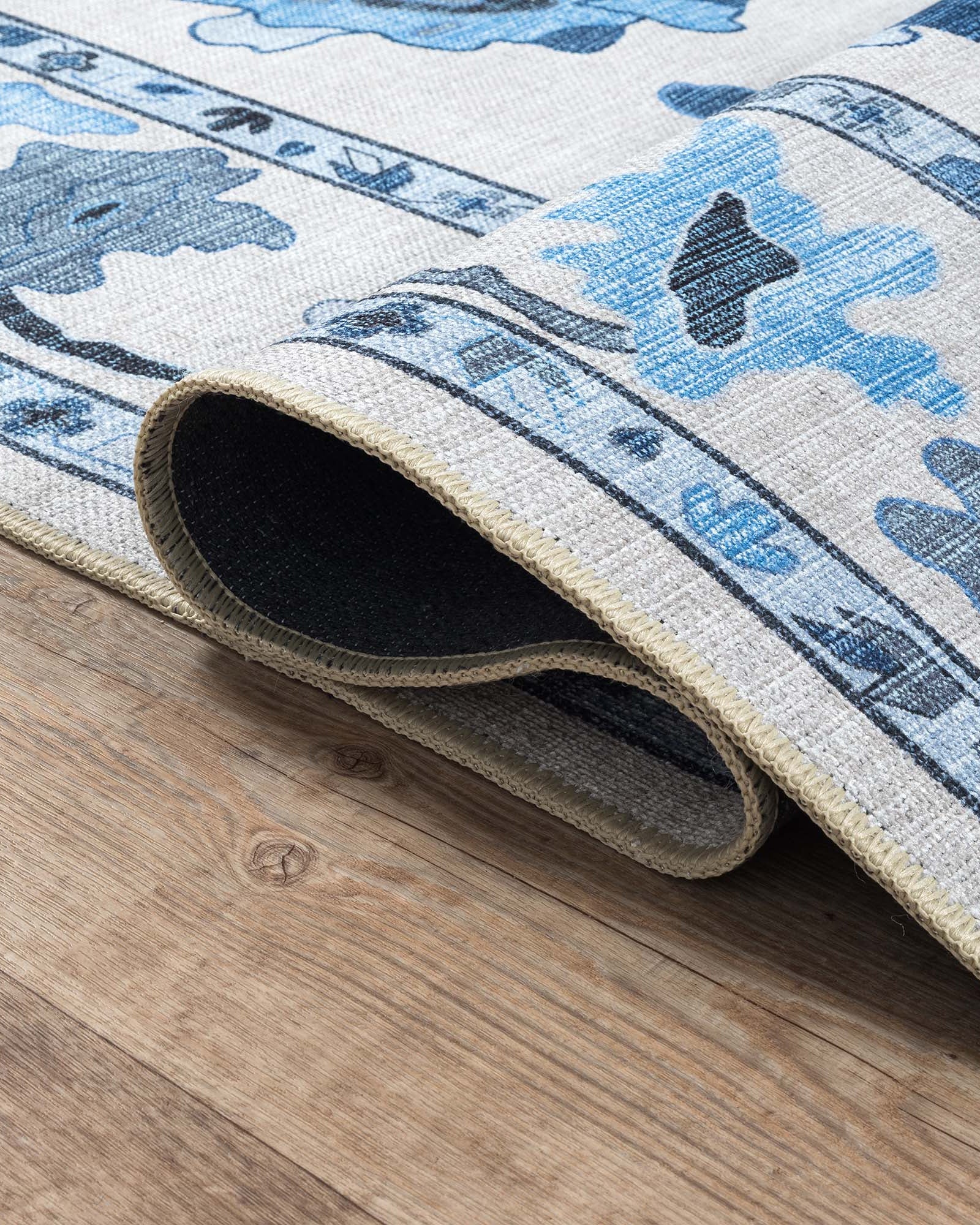
Rugs on a cotton foundation tend to lie flatter against the floor immediately, without the gentle undulation sometimes seen in wool-foundation pieces. They hold a more precisely rectangular shape, since cotton does not stretch unevenly the way wool can over time. They are also generally somewhat stiffer and less pliable than a wool-foundation rug, at least until decades of use soften the whole structure.
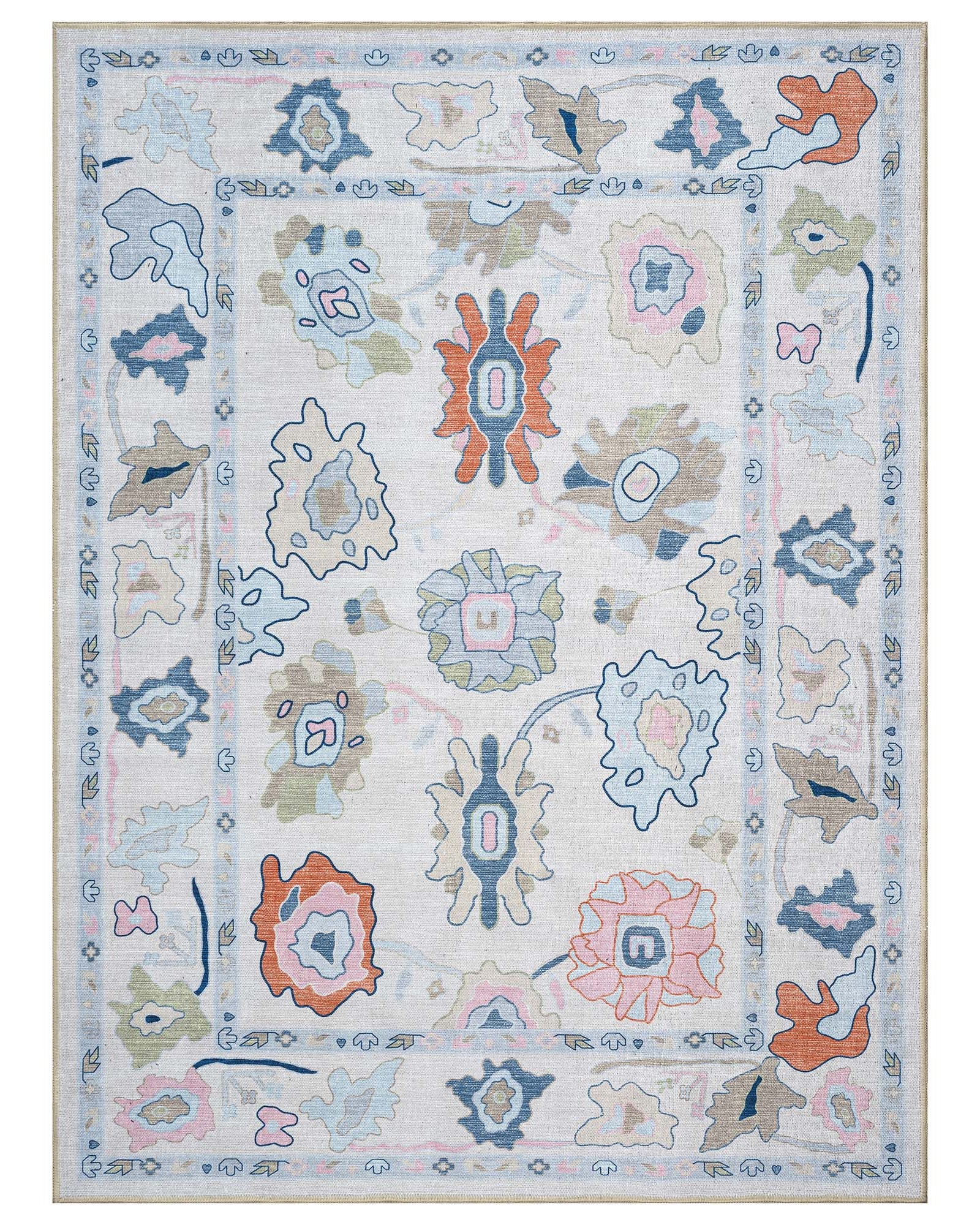
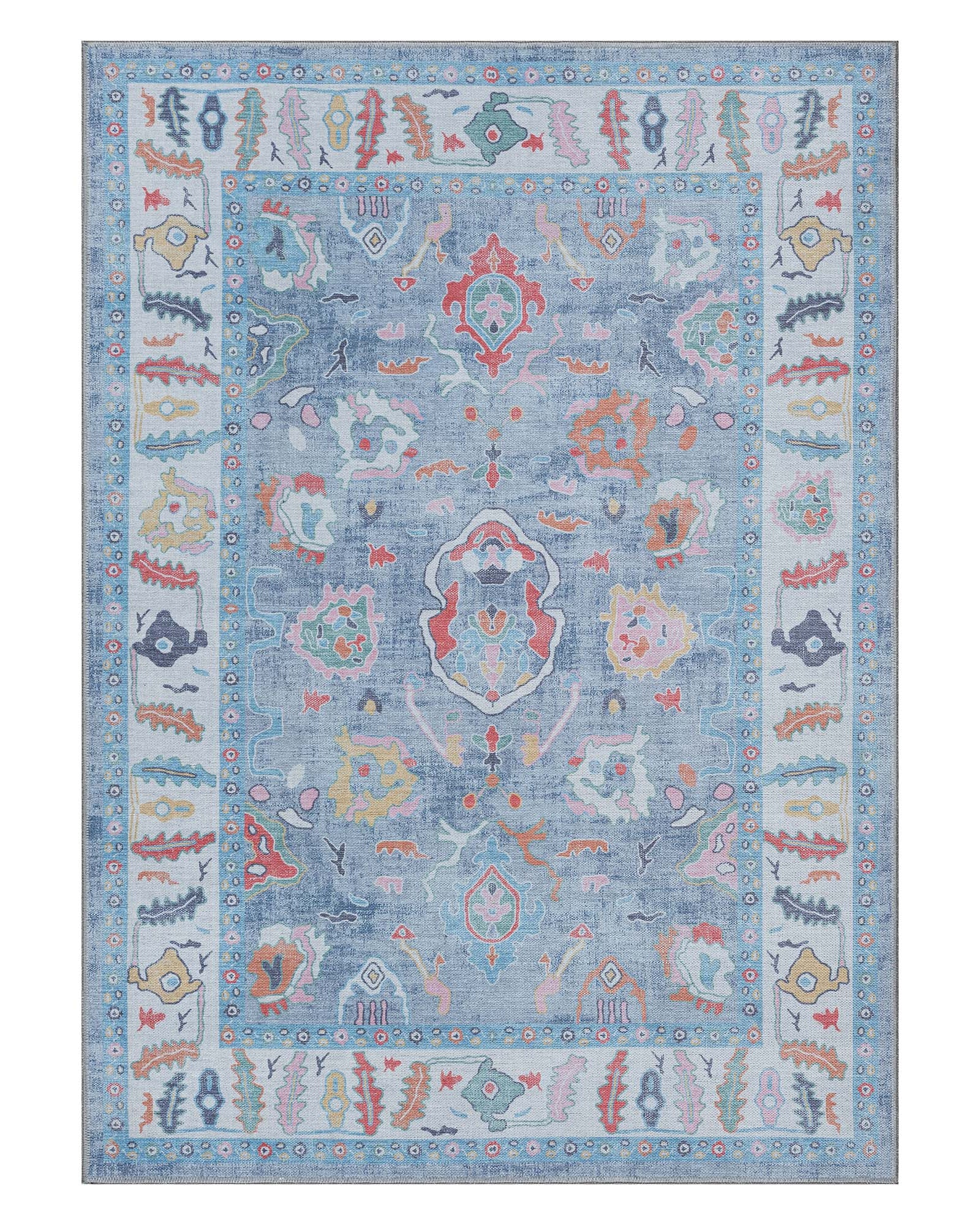
Because cotton takes and holds fine detail well, wool-on-cotton rugs are disproportionately represented among finely woven, curvilinear pieces — floral medallions, detailed borders, intricate all-over patterns. If precise, symmetrical pattern work is what you are looking for, a cotton-foundation rug is statistically more likely to deliver it than a wool-foundation piece of similar age.
One Caution: Water and Cotton
Cotton is more vulnerable to water damage than wool. It can weaken, mildew or rot if it stays wet, where wool's natural lanolin content gives it more inherent water resistance. This is the main practical reason to be careful with a wool-on-cotton rug around moisture — a spill that a wool foundation would shrug off can be more serious on cotton if it isn't dried promptly and thoroughly. It is also why professional washing matters more here than on a robust wool-foundation piece: proper drying technique protects the foundation, not just the pile.
How to Identify a Cotton Foundation
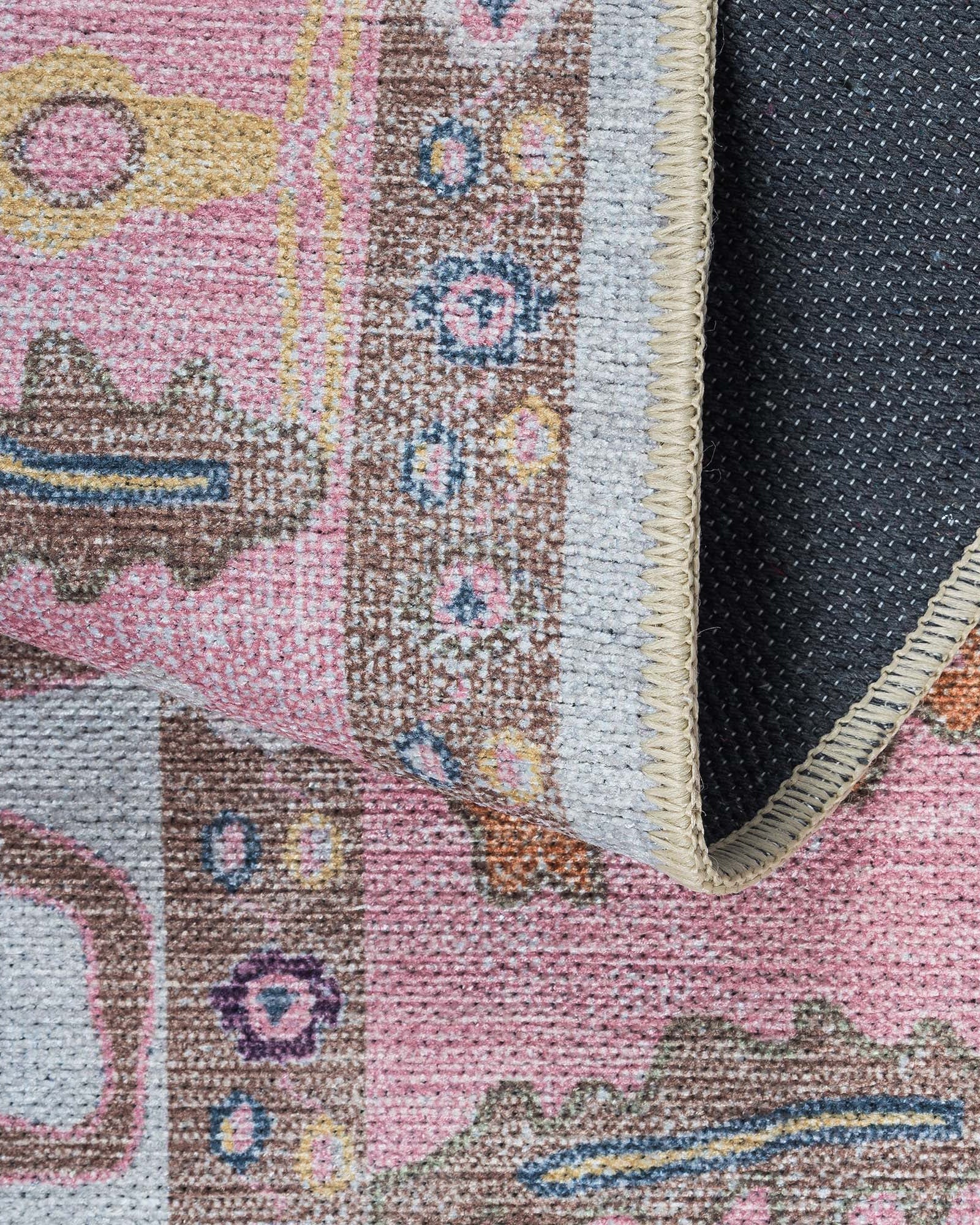
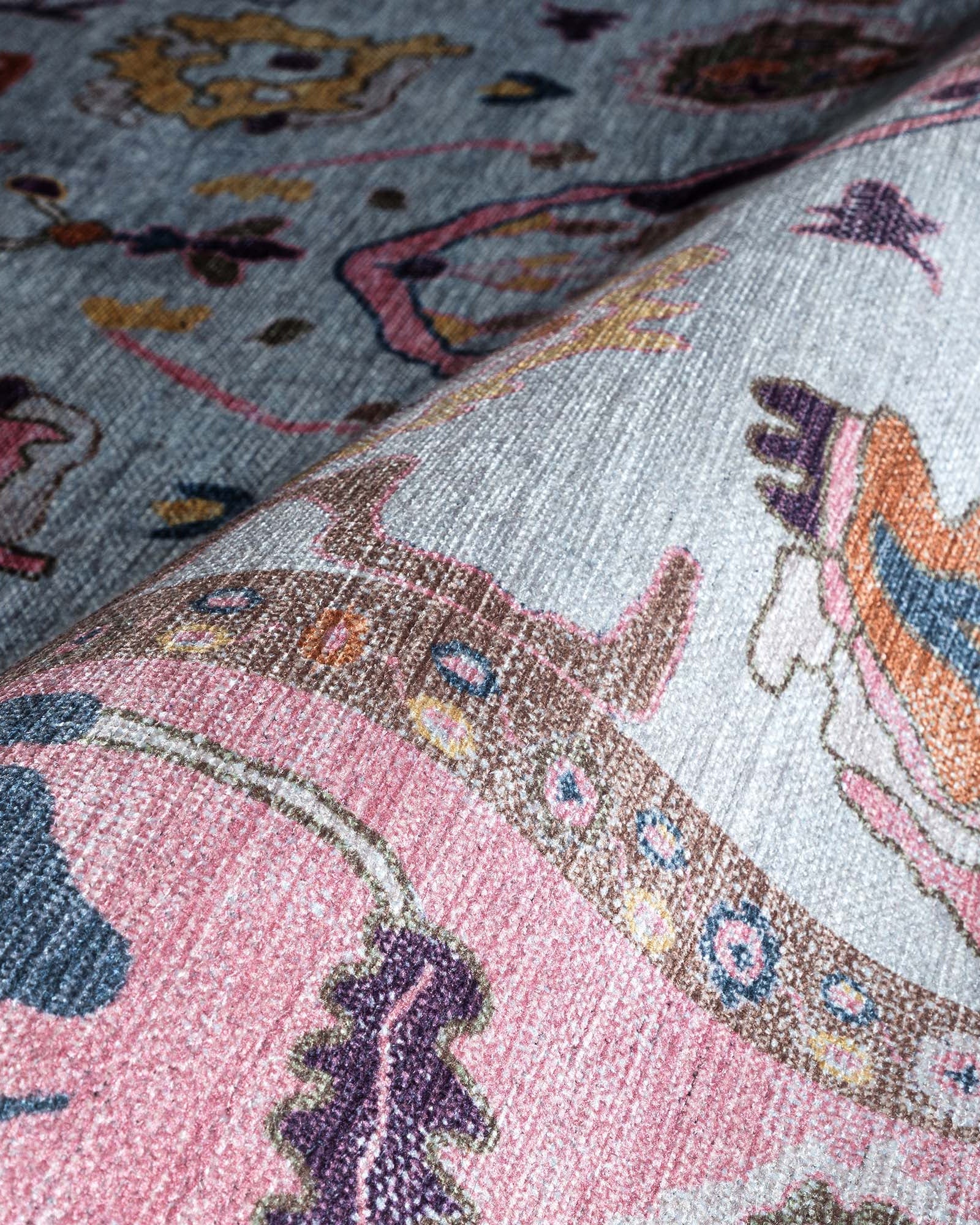
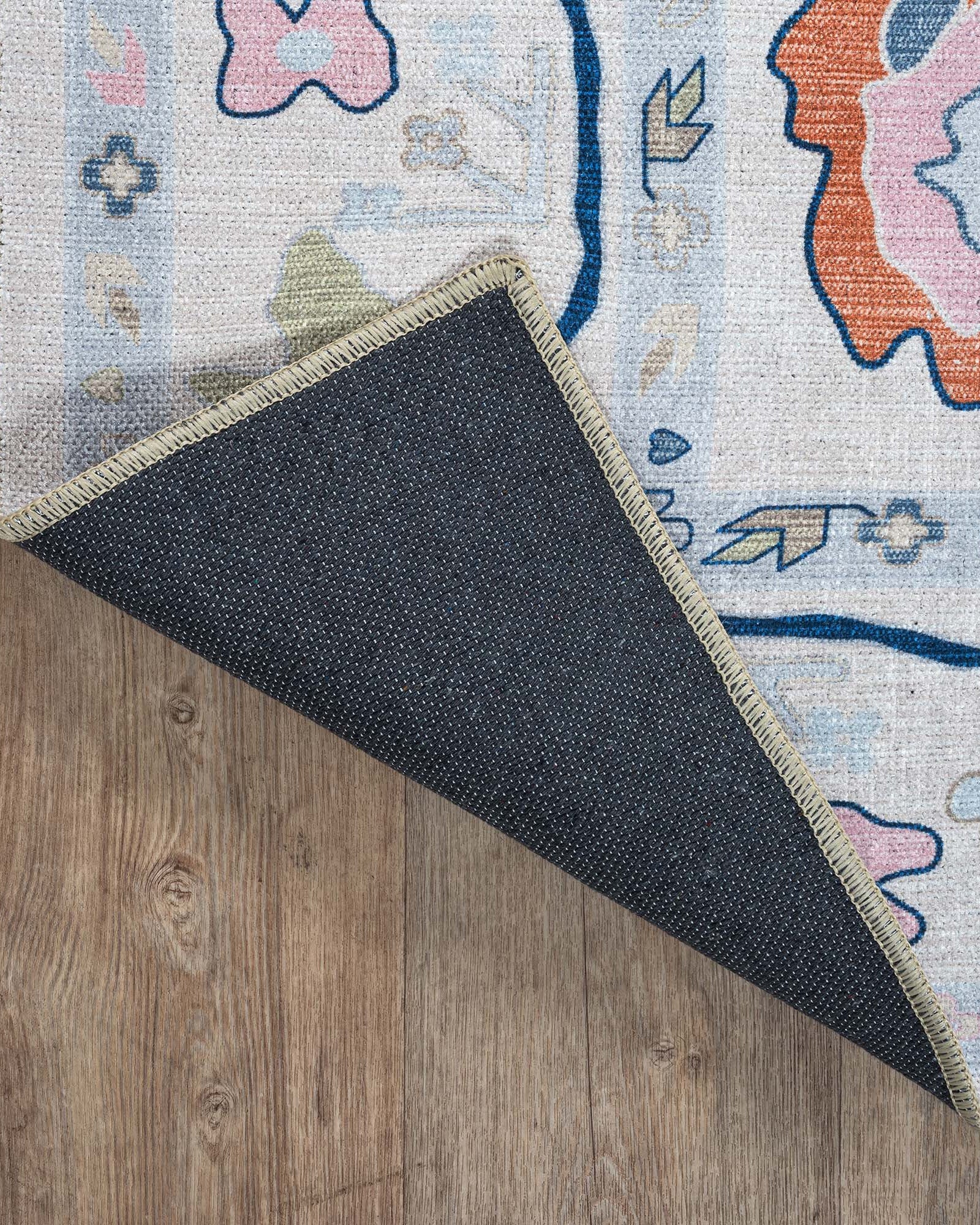
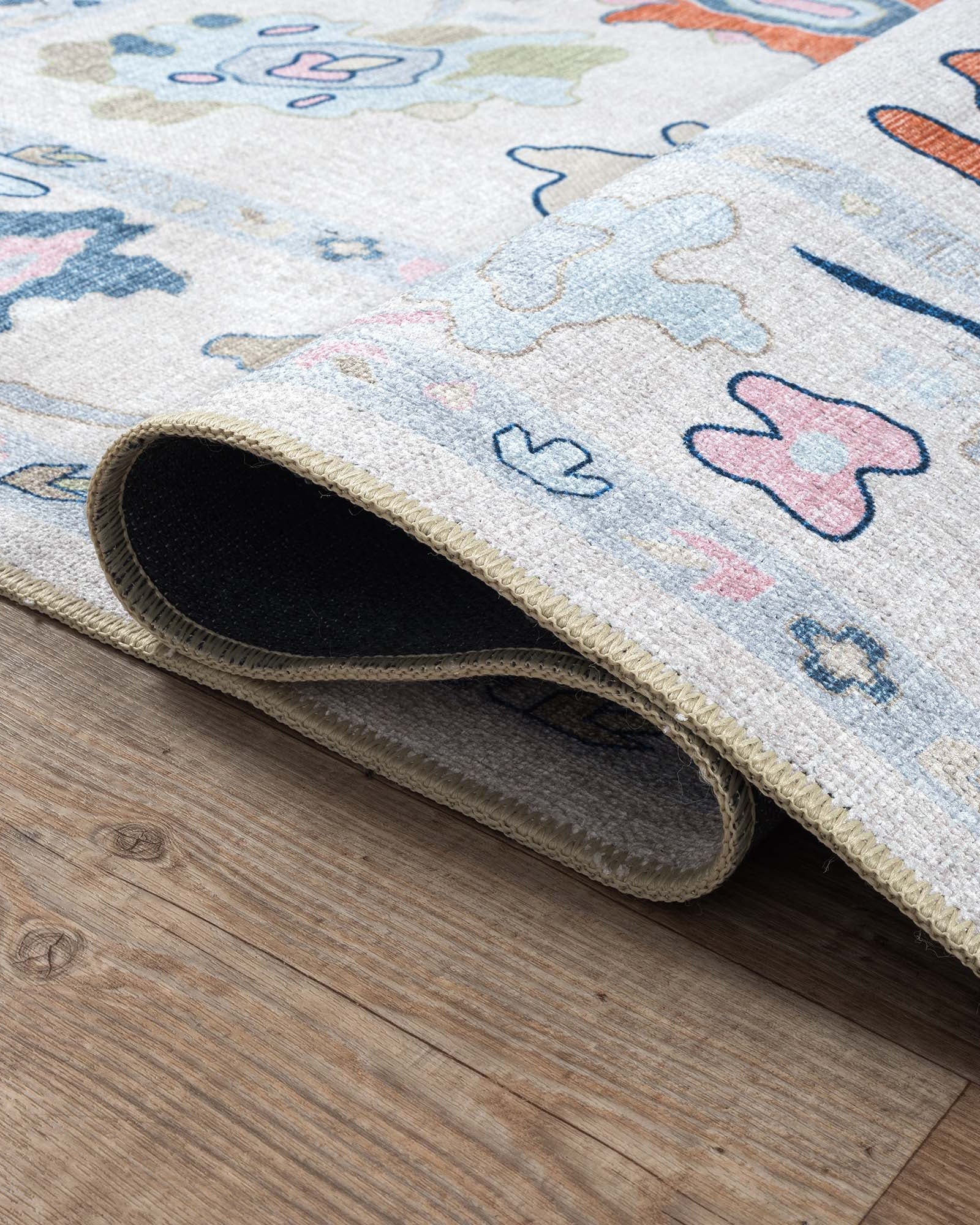
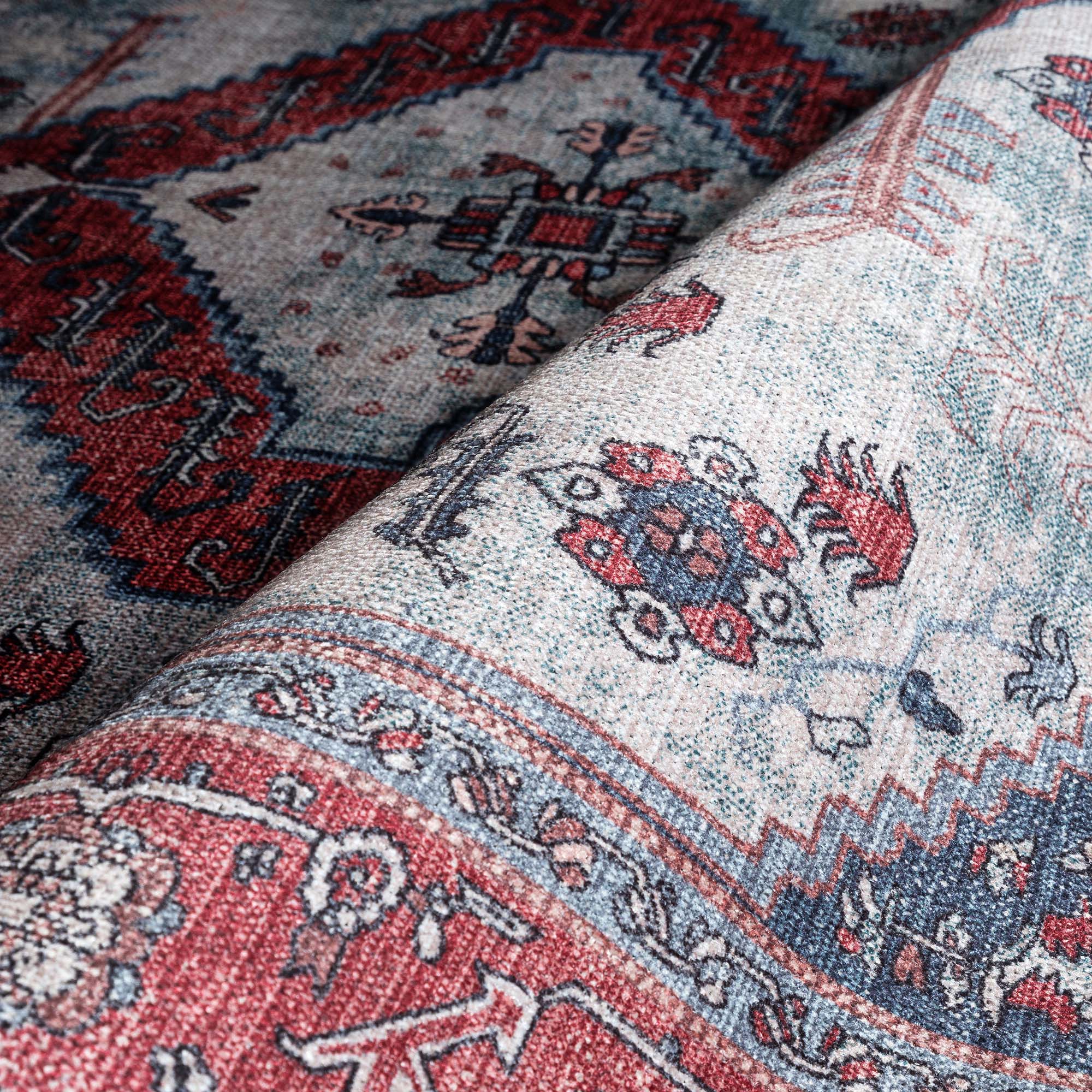
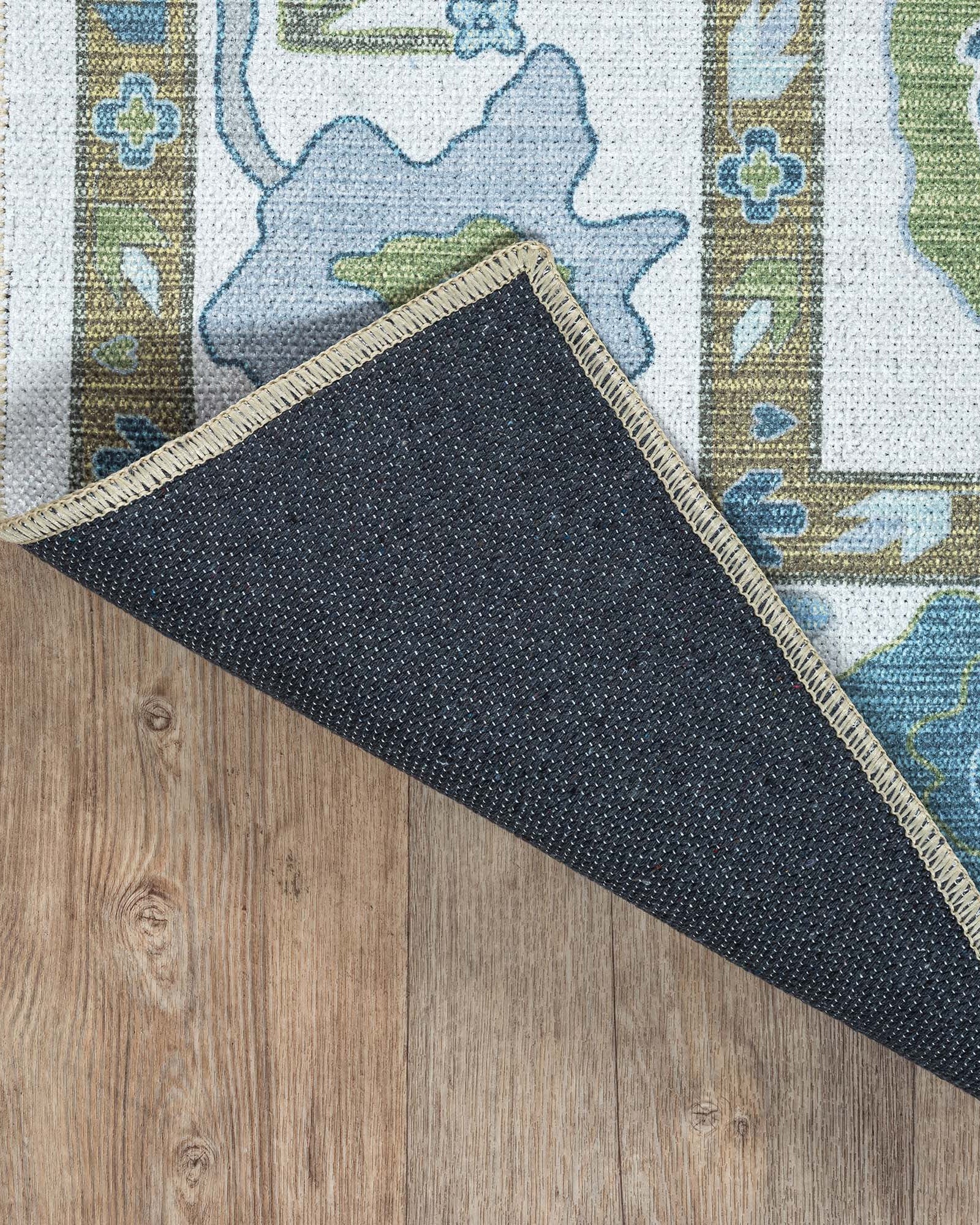
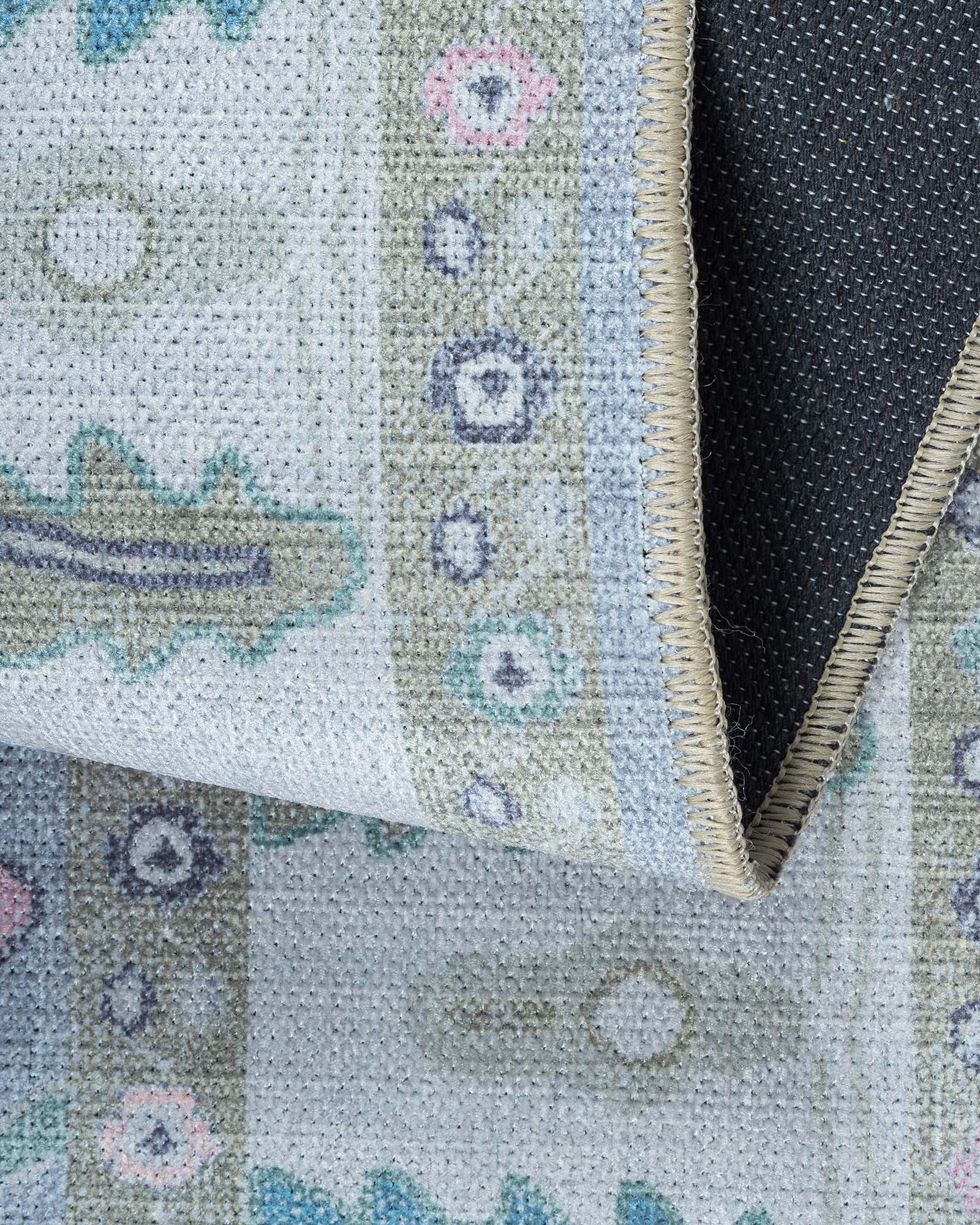
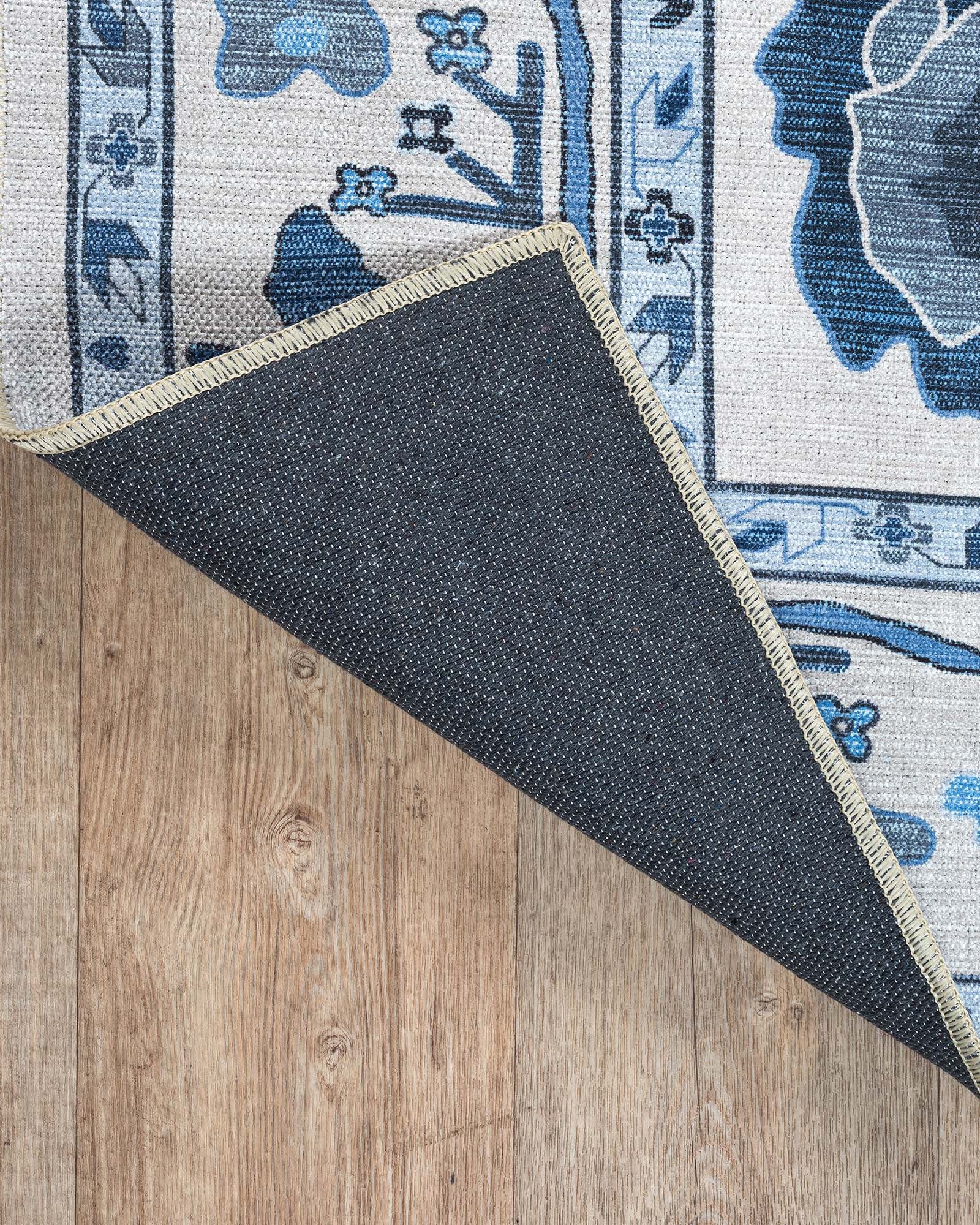
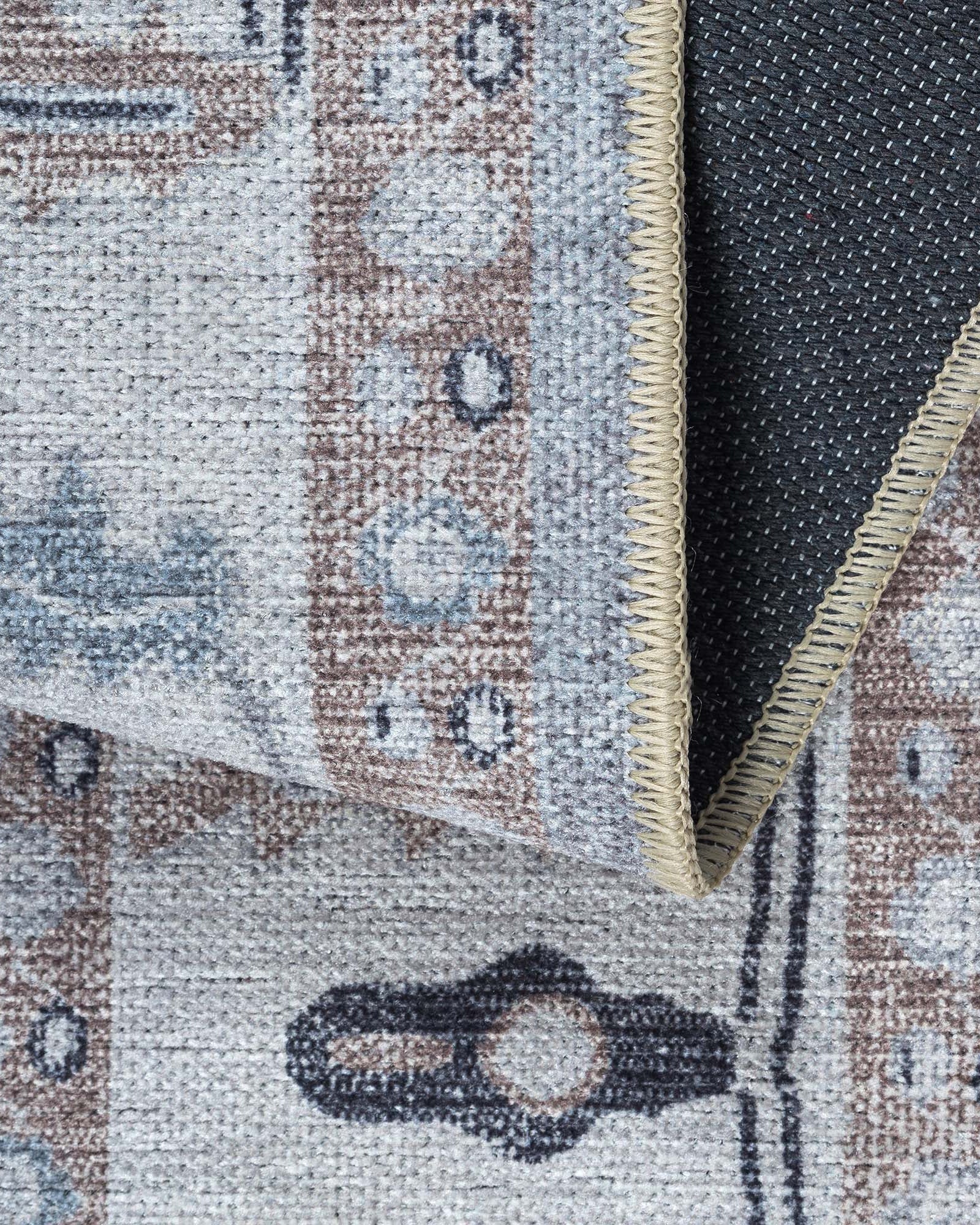
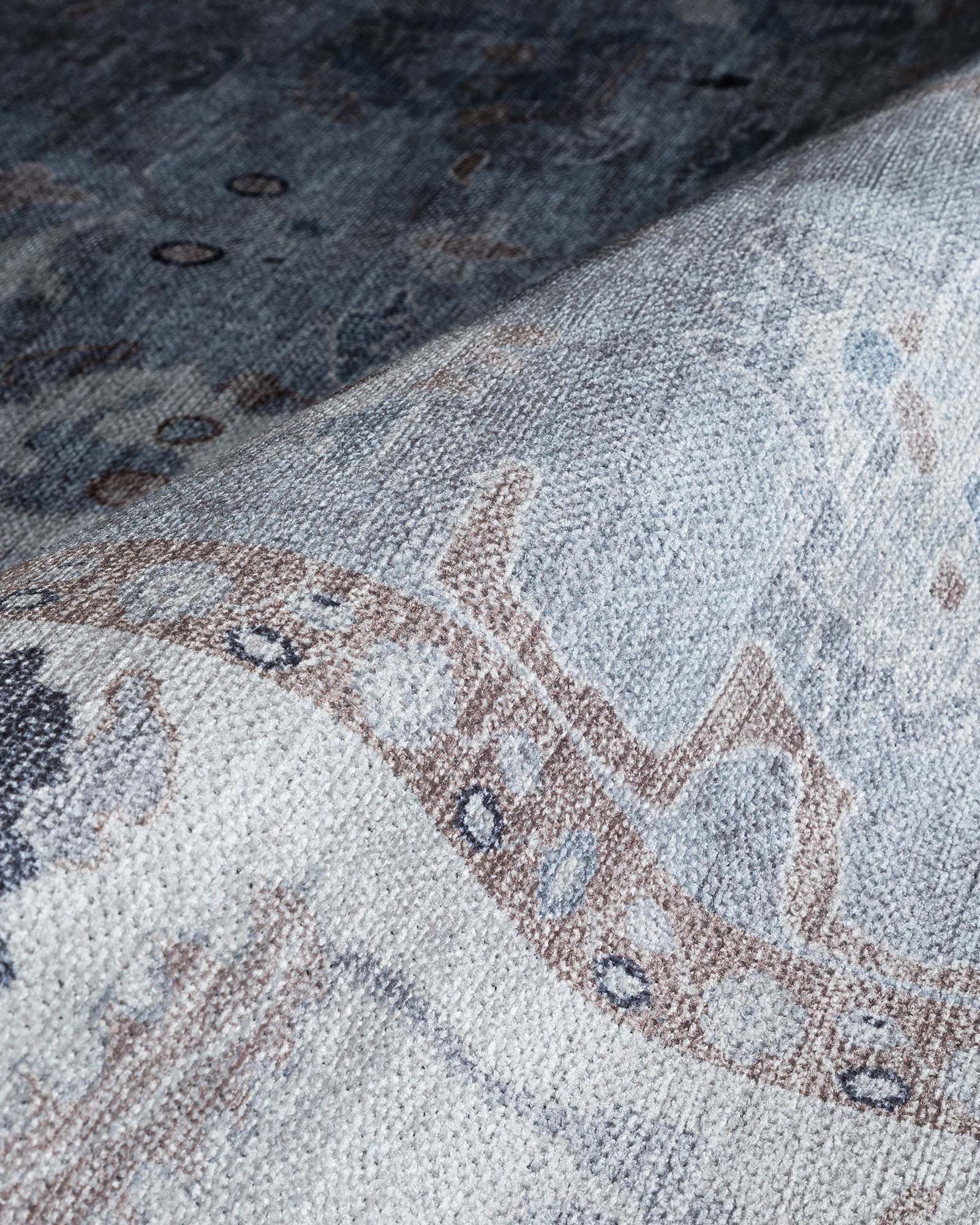
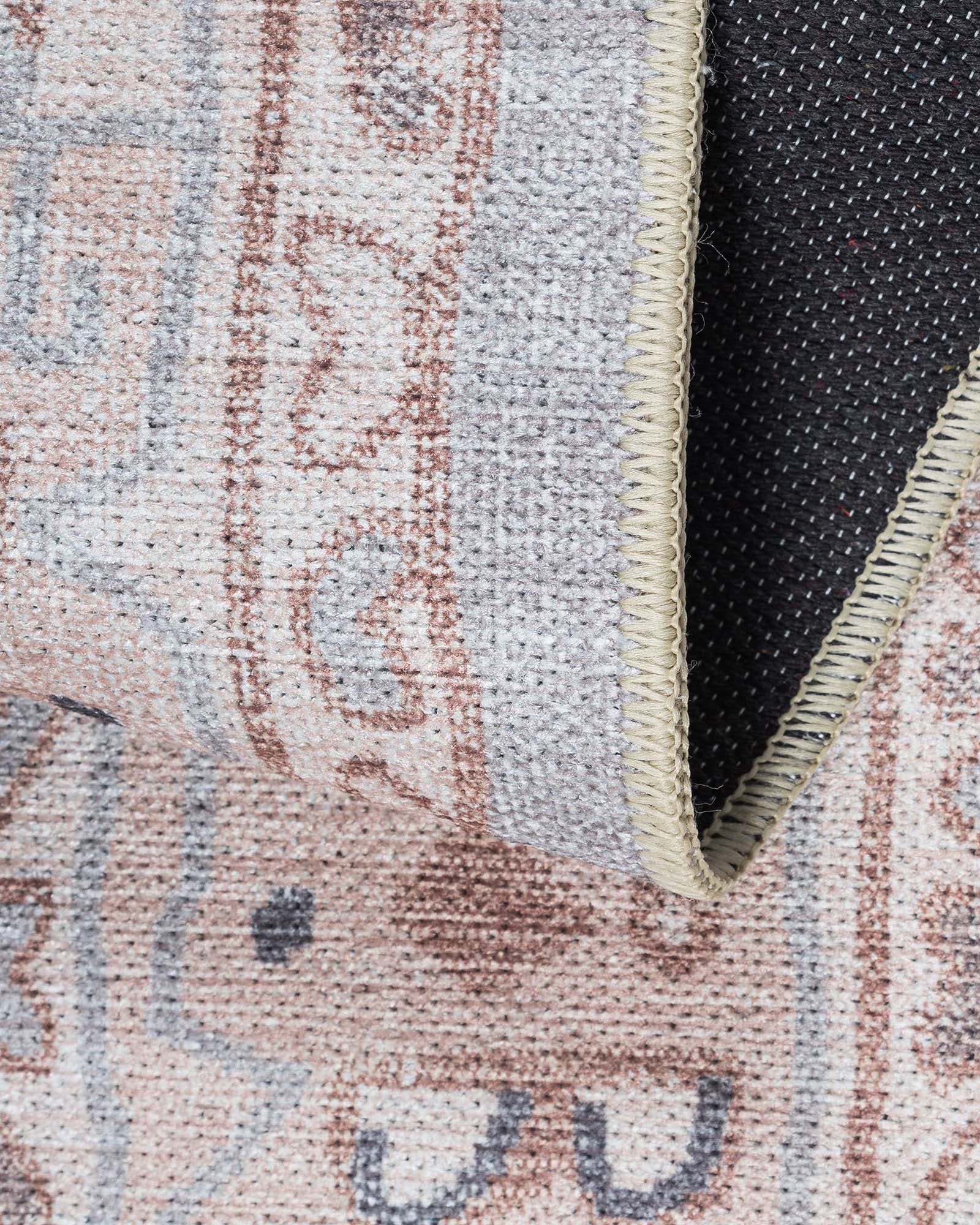
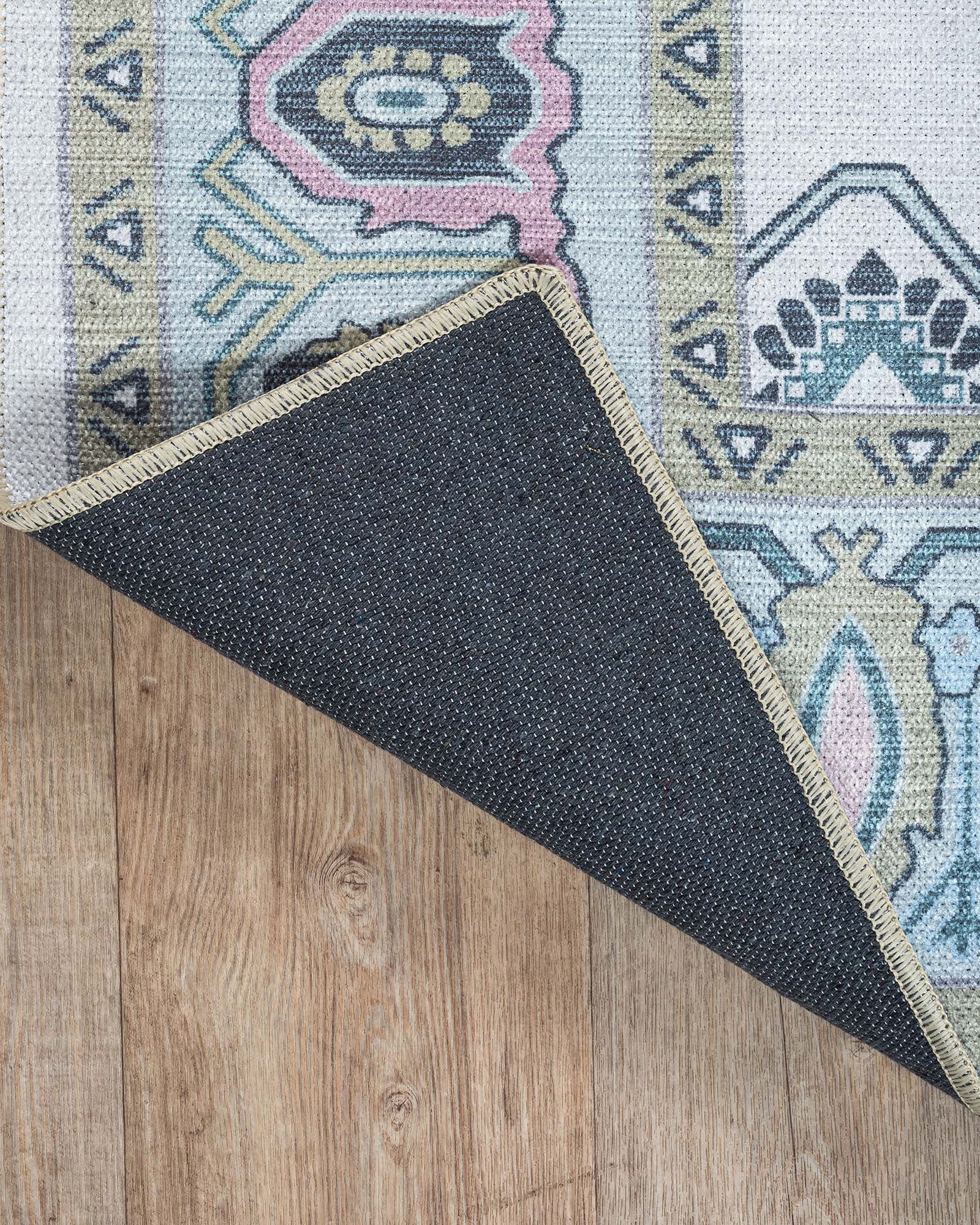
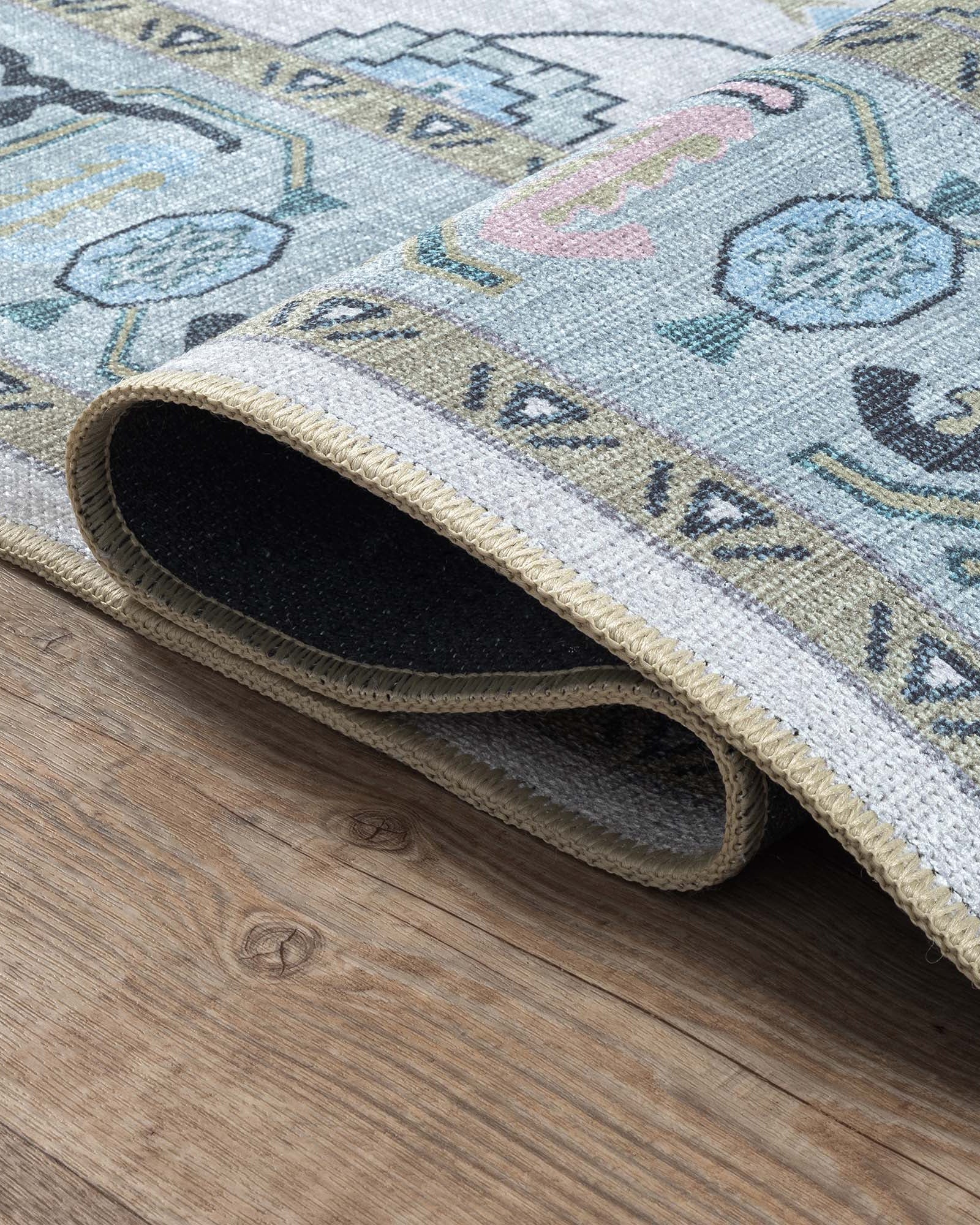
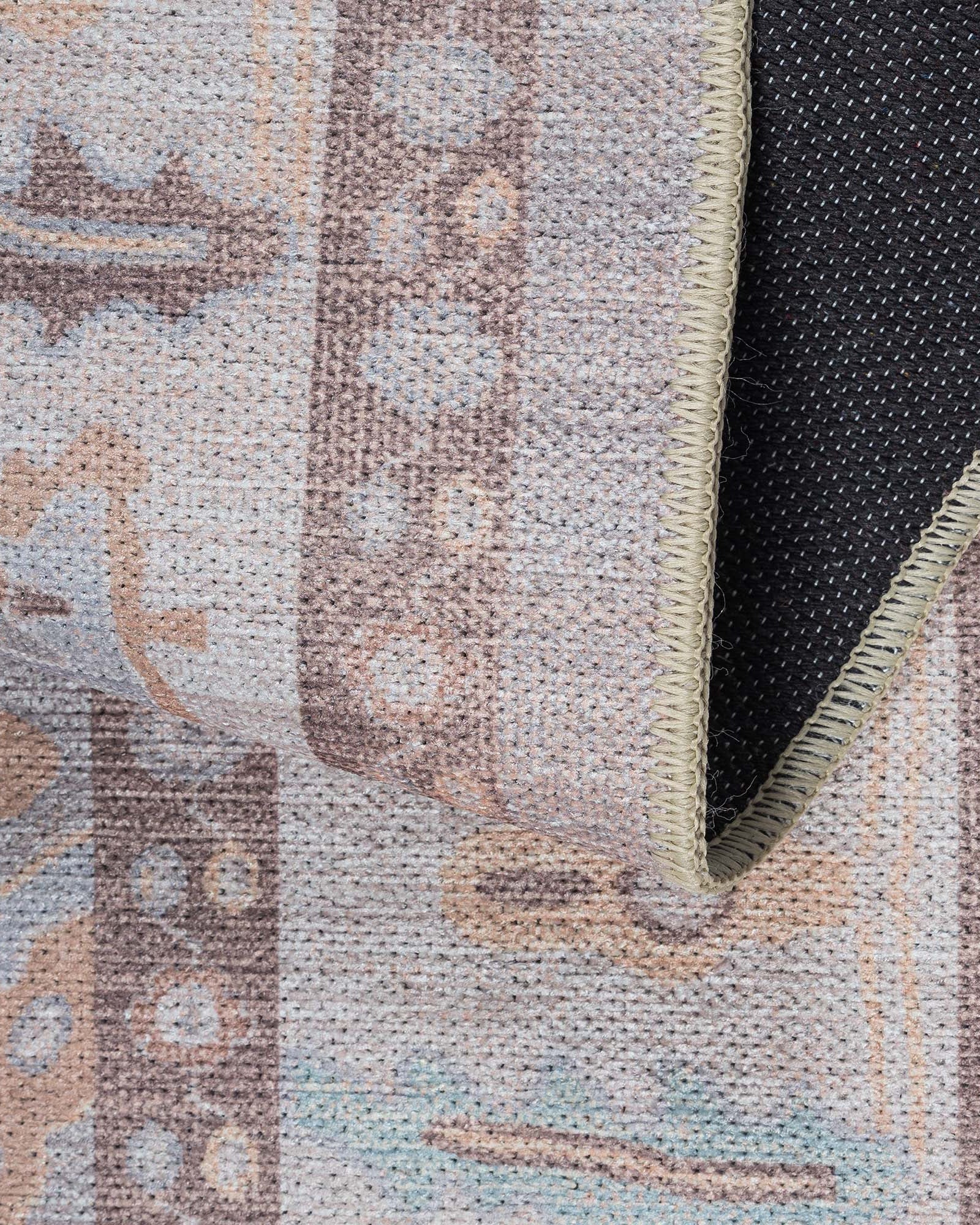
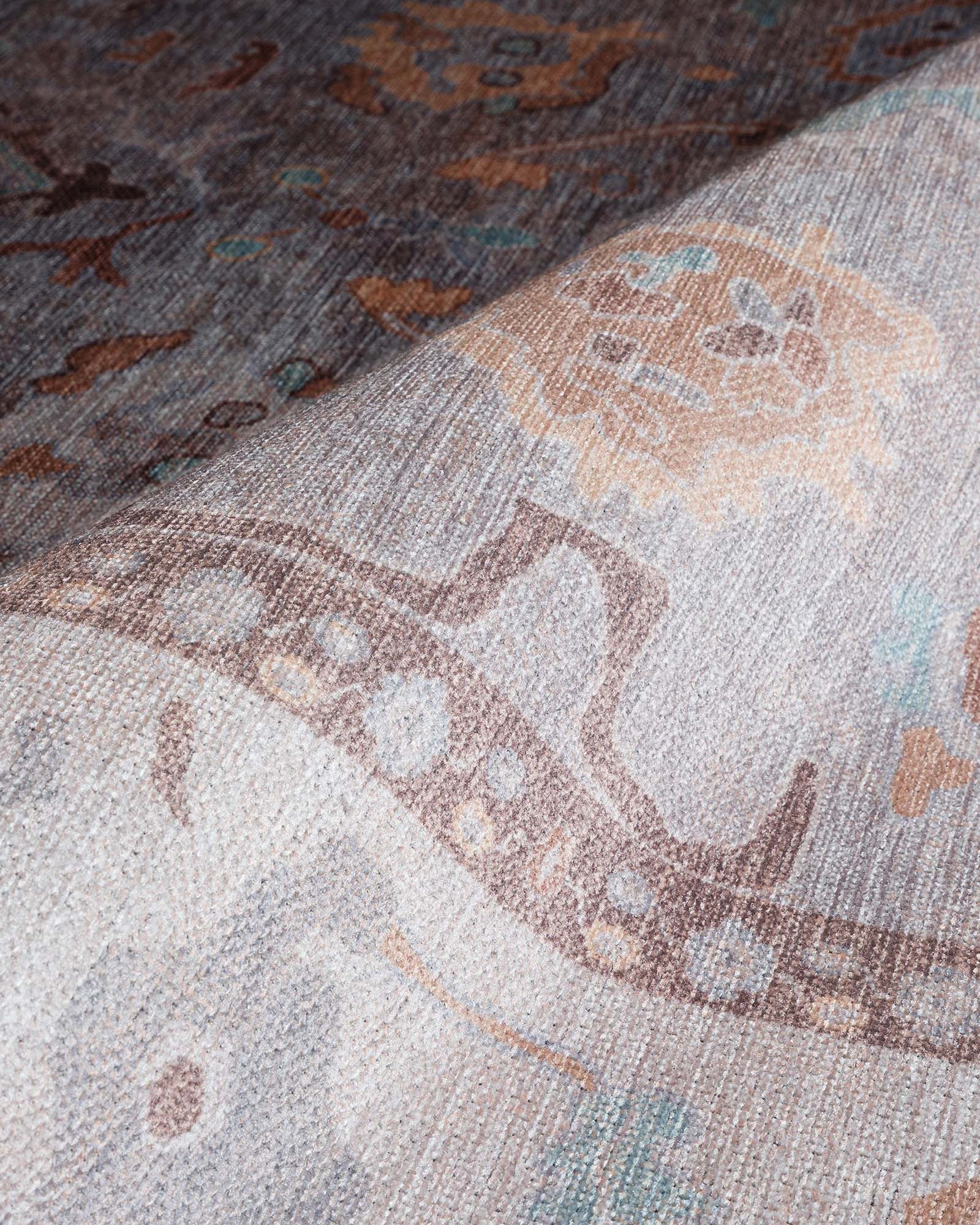
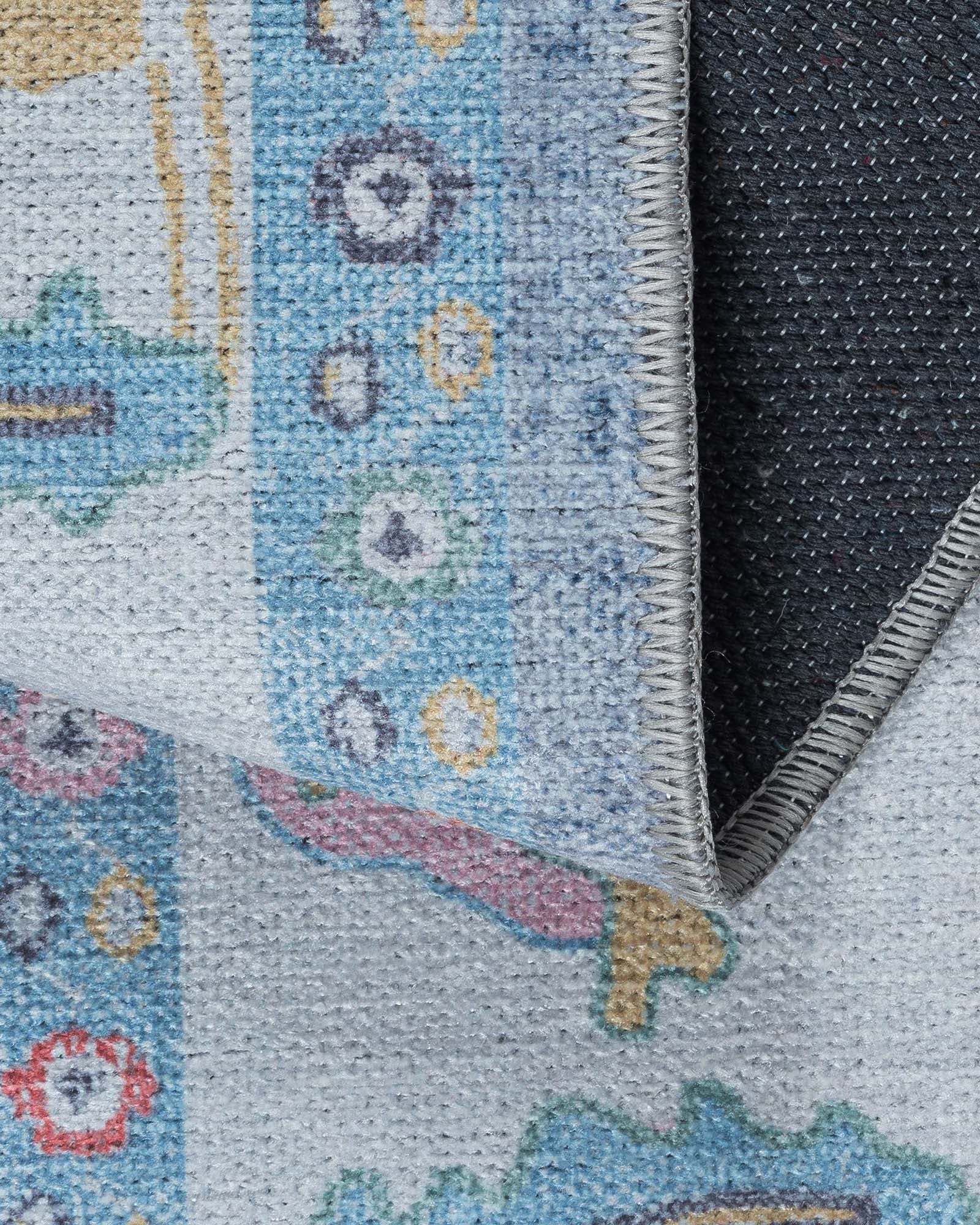
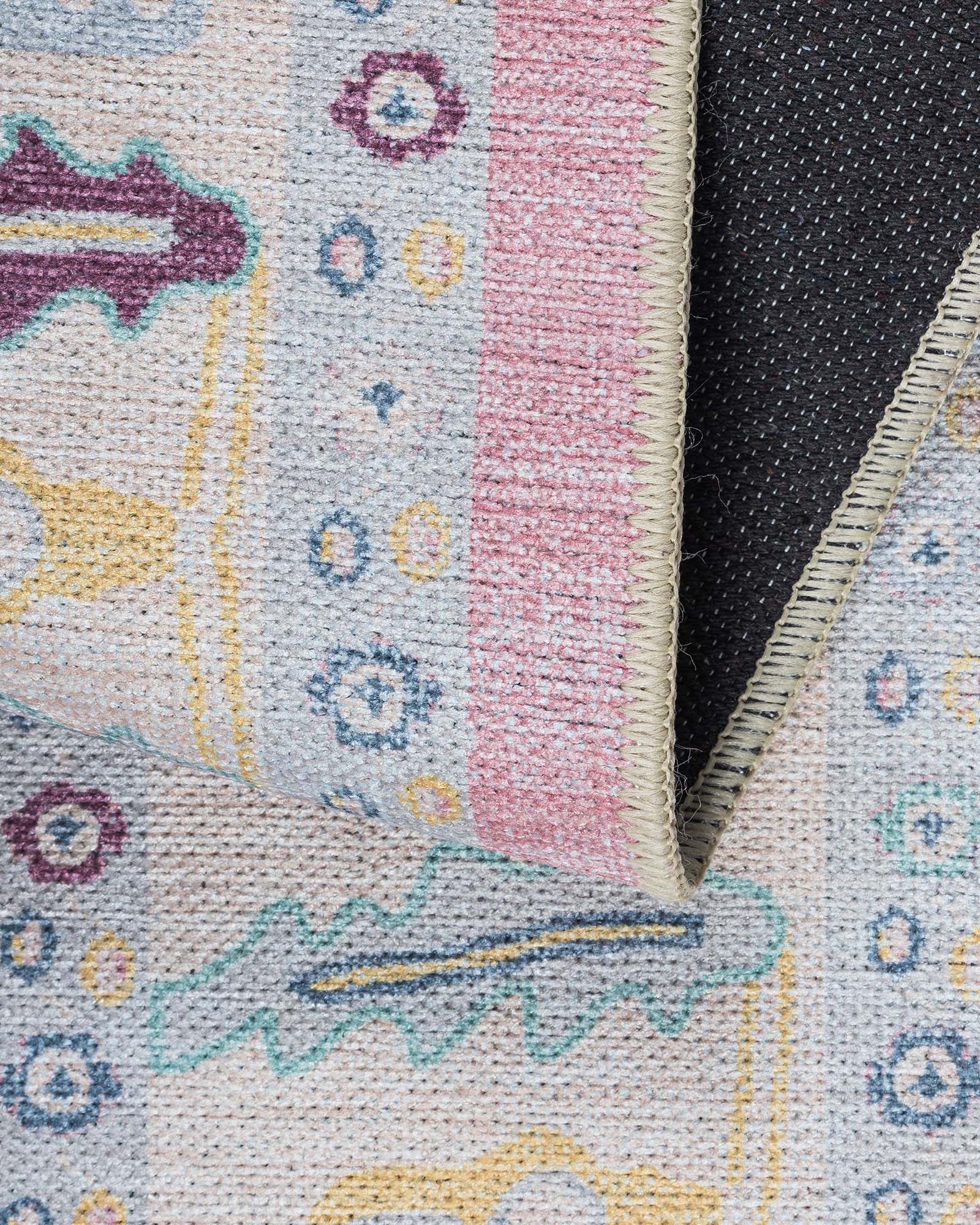
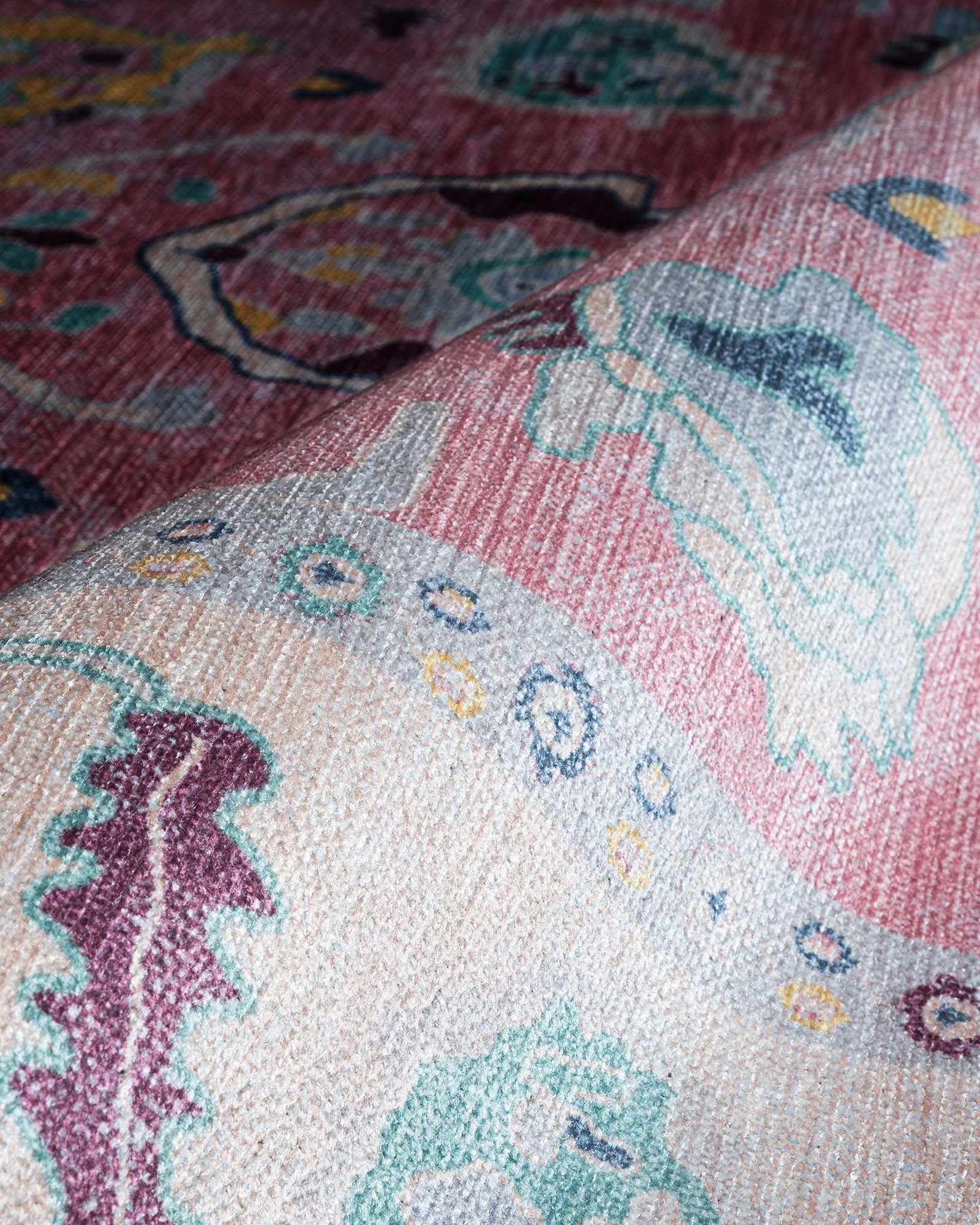
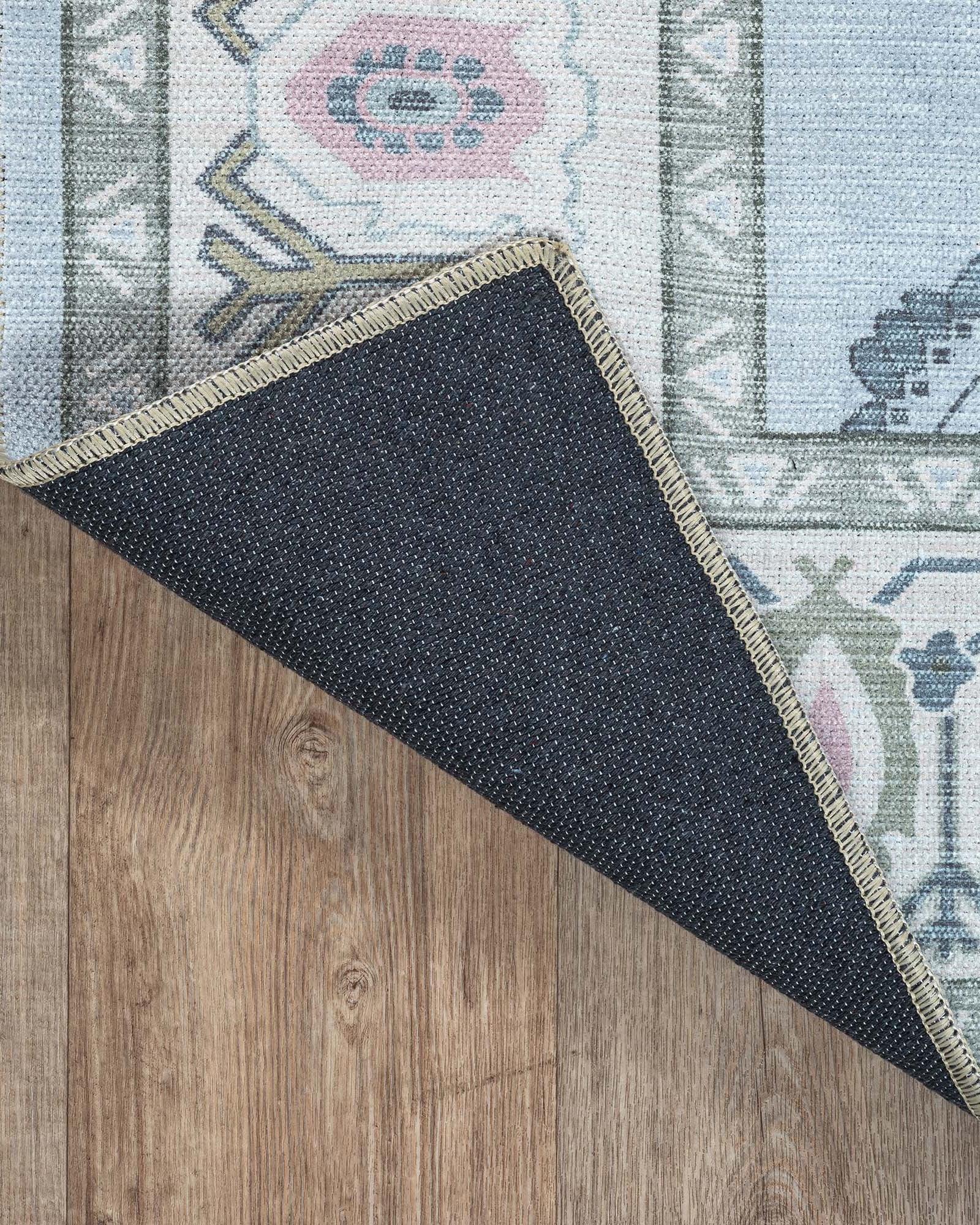
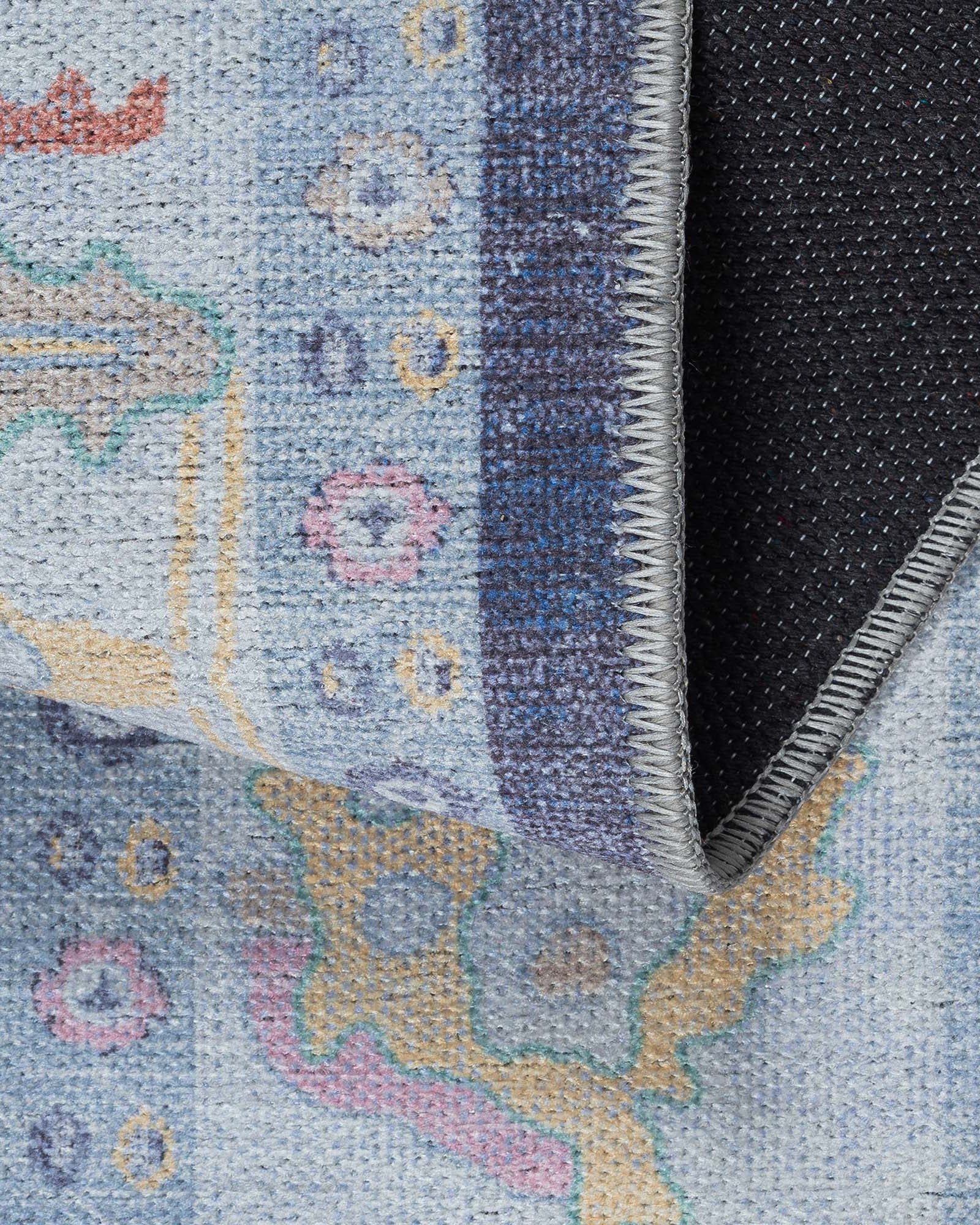
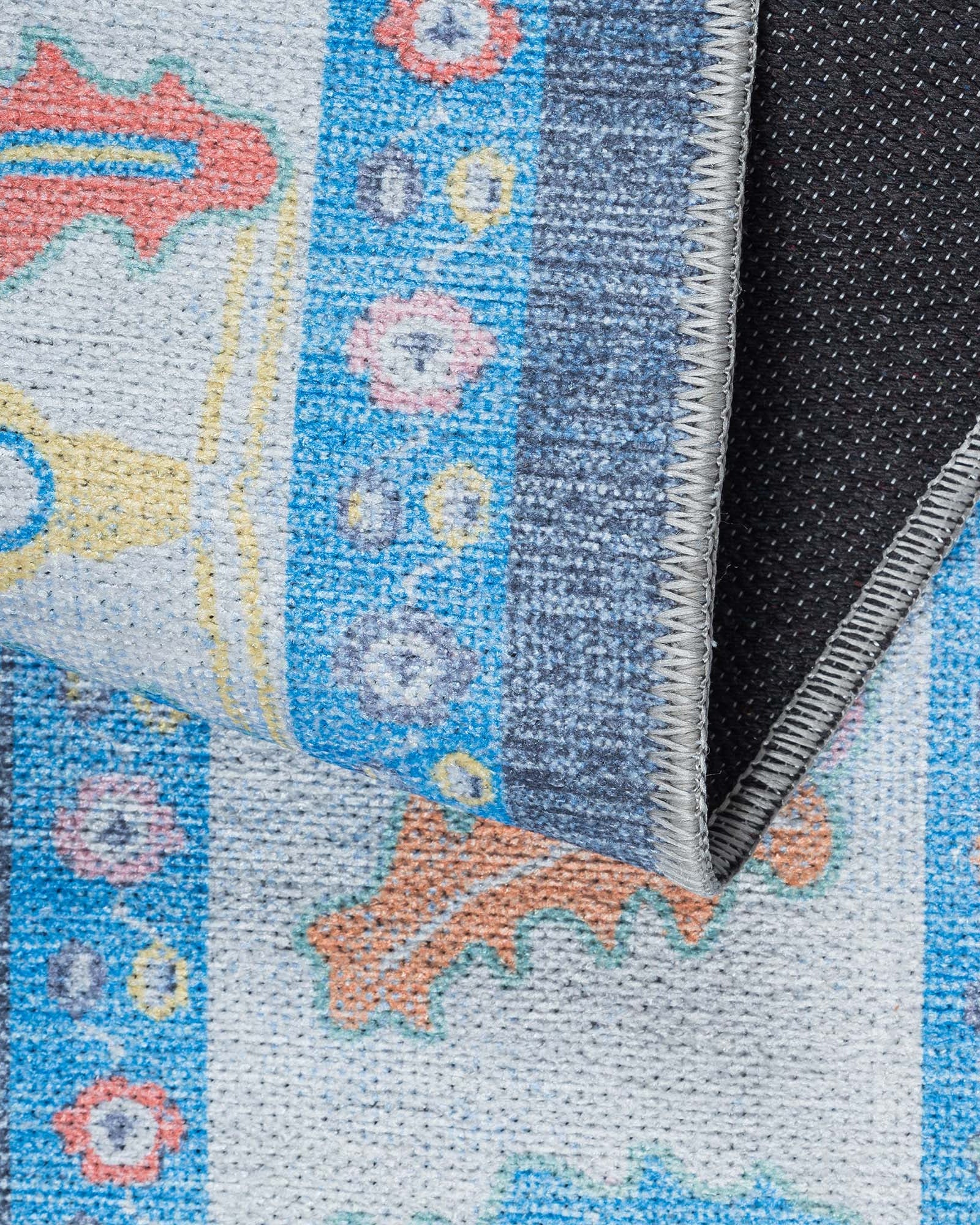
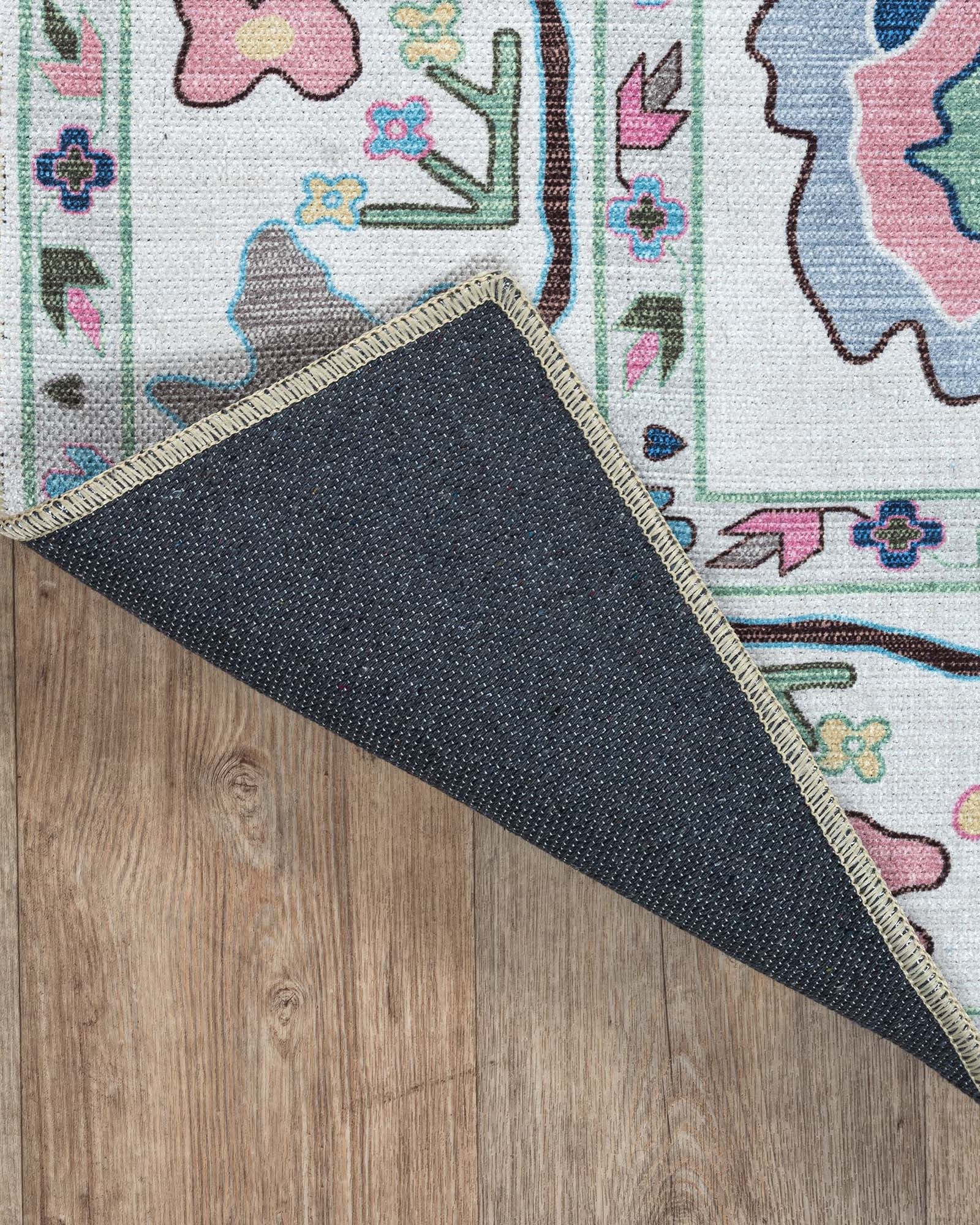
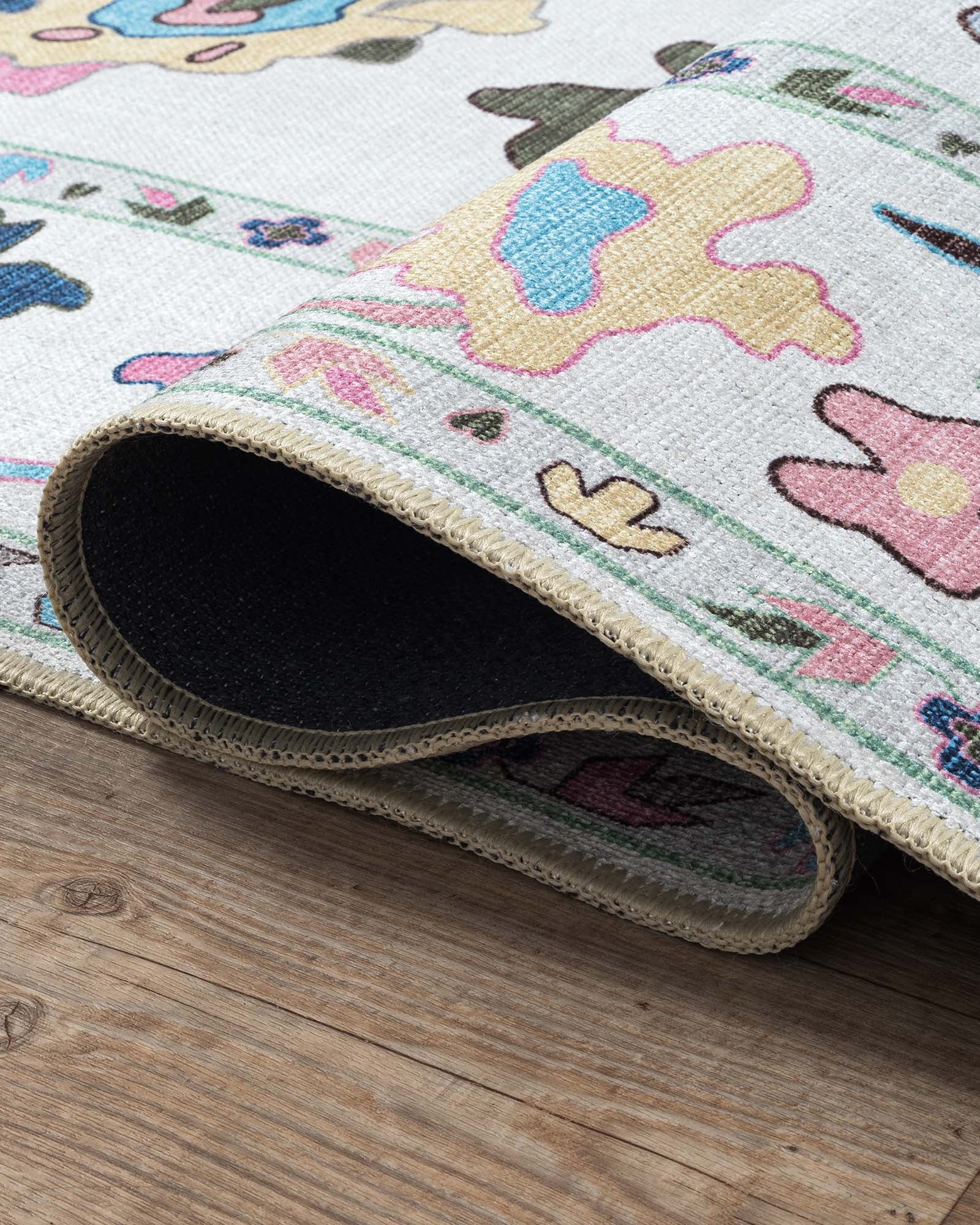
Turn the rug over and look at the fringe, since the fringe is simply the warp thread continuing past the last row of knots. Cotton warp is typically white or off-white, smoother and less fibrous in appearance than wool warp, which tends to look coarser and slightly more textured. On the back of the rug, cotton foundation generally reads as a tighter, more even grid than a wool foundation does. Where the construction is identified with confidence, the product page states it directly.
Where the Distinction Matters Most
For everyday buying decisions, foundation material matters less than knot density, wool quality or condition — a well-made rug on either foundation will serve you for decades. It becomes genuinely relevant in two situations: if you specifically want the flattest possible lie and the most precisely rectangular shape, cotton foundation is the safer choice, and if you are drawn to fine, curvilinear workshop patterns, cotton-foundation pieces are simply more common in that style.
Age, Condition and Measurement
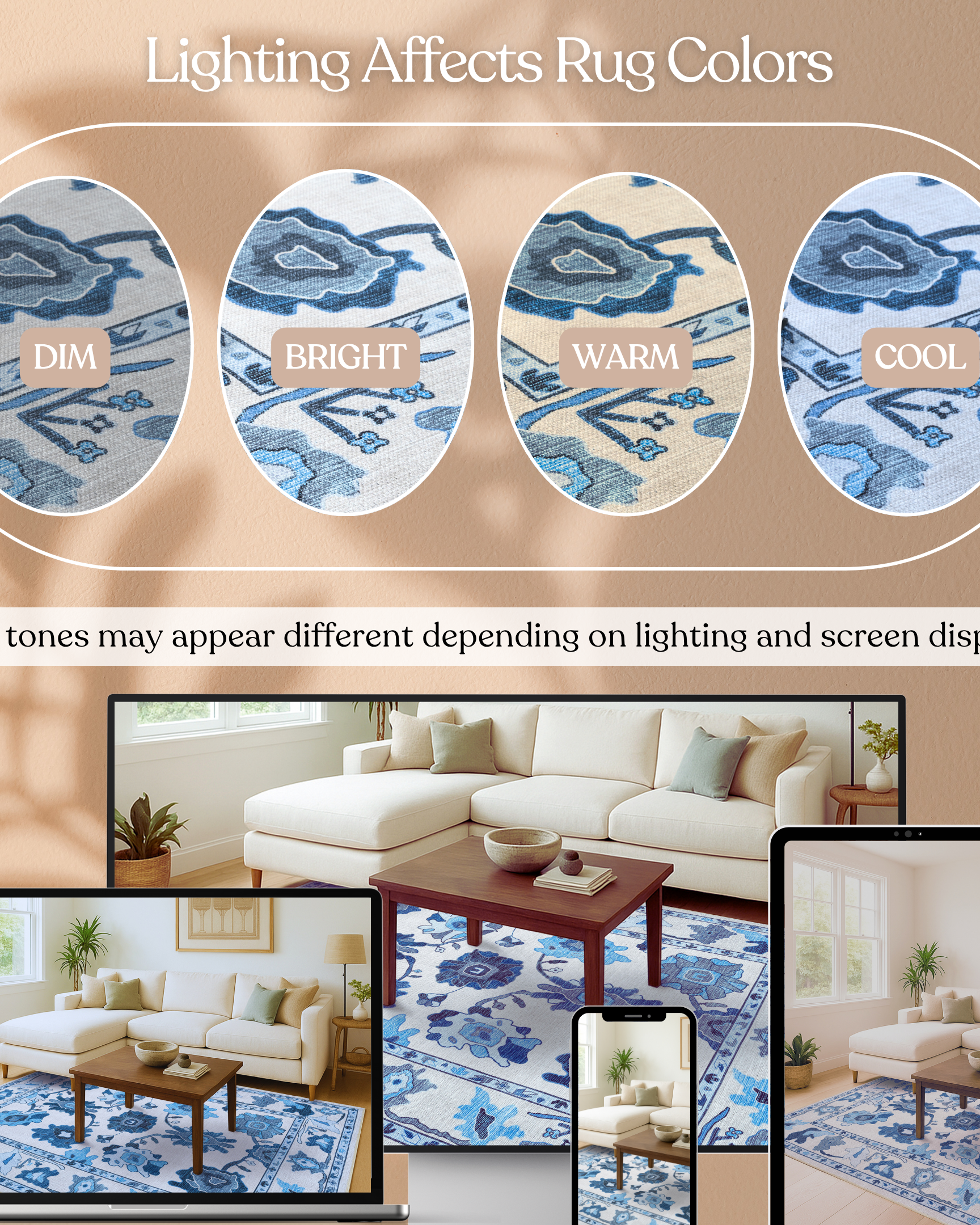
Pieces are grouped as antique at over eighty years, vintage at roughly forty to eighty, and semi-vintage below that. Every product page states the foundation material directly, along with the estimated decade, origin where identifiable, exact measured dimensions and a plain condition note. Expect the same honest wear found across handmade collections — lower pile in traffic lanes, softened selvages, occasional old repairs — all photographed as it is. Sizes are never standard; order against the measurements shown.
Care
Use a rug pad on hard floors. Vacuum with the beater bar off or raised and keep it off the fringe. Rotate the rug twice a year. Blot spills immediately with a white cloth and minimal plain water — because the cotton foundation is more moisture-sensitive than wool, avoid saturating the rug and make sure it dries fully and quickly rather than sitting damp. Never use a home carpet-cleaning machine or a steam cleaner. For deep cleaning, use a professional rug washer who understands cotton-foundation construction and can dry the rug properly.