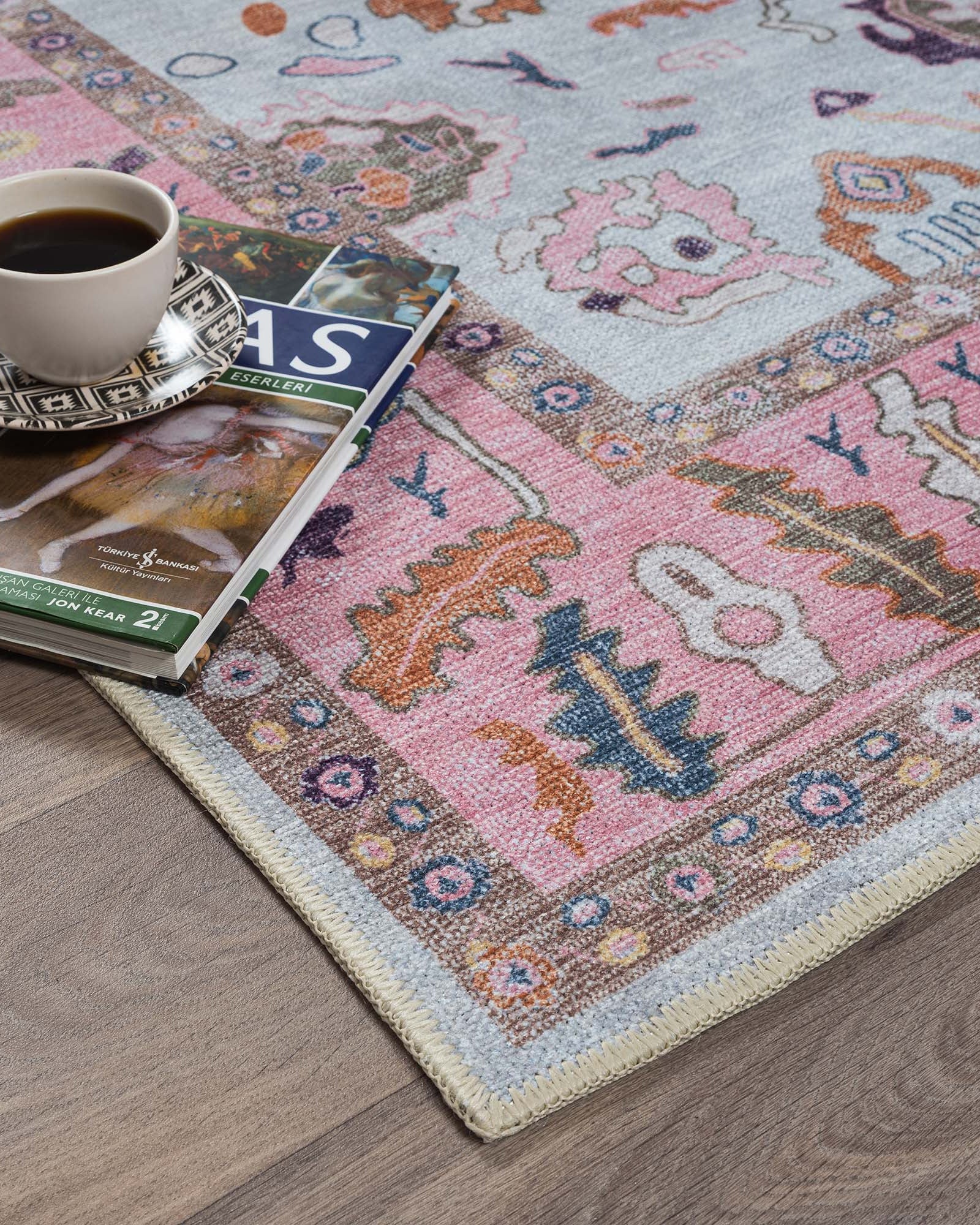
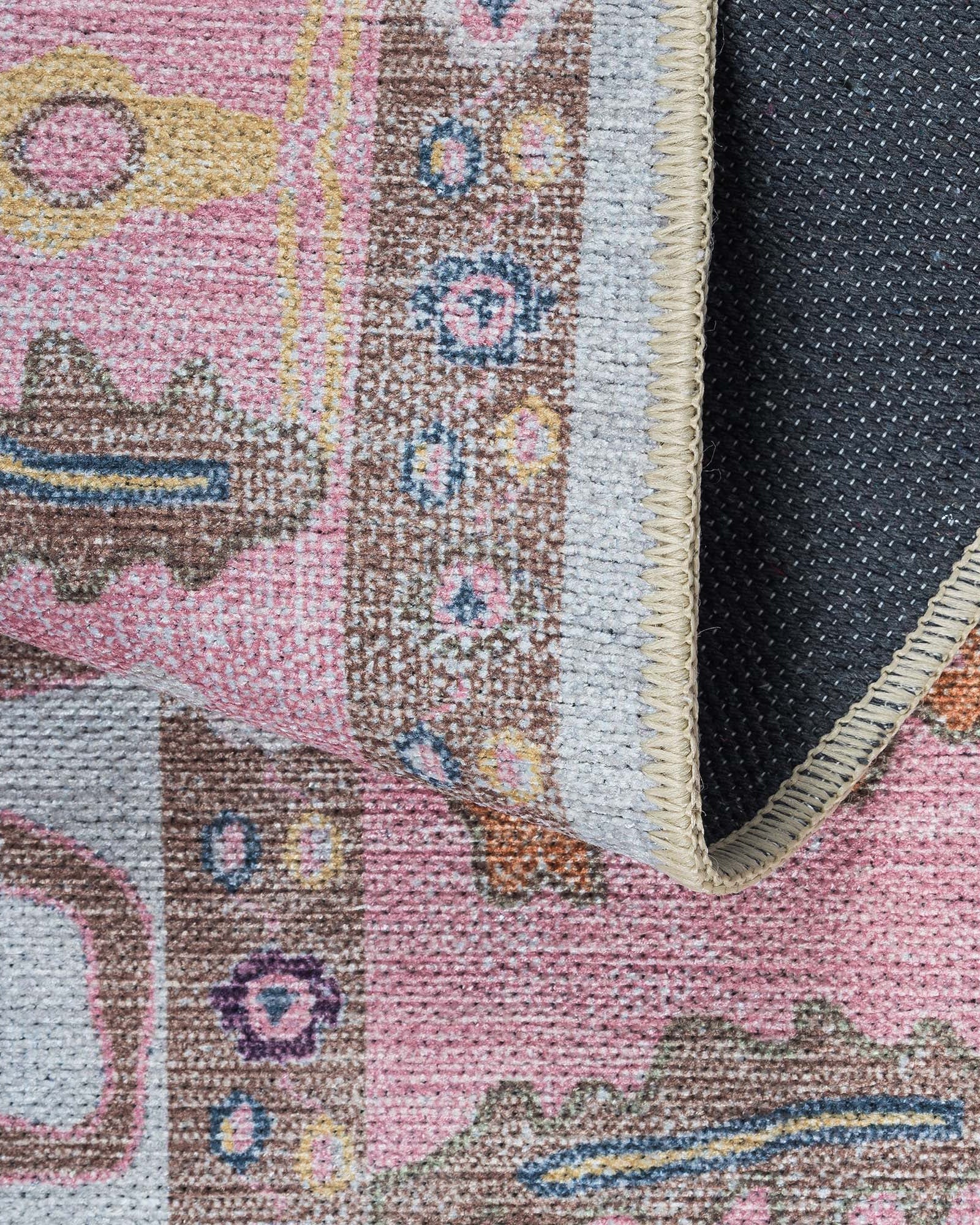
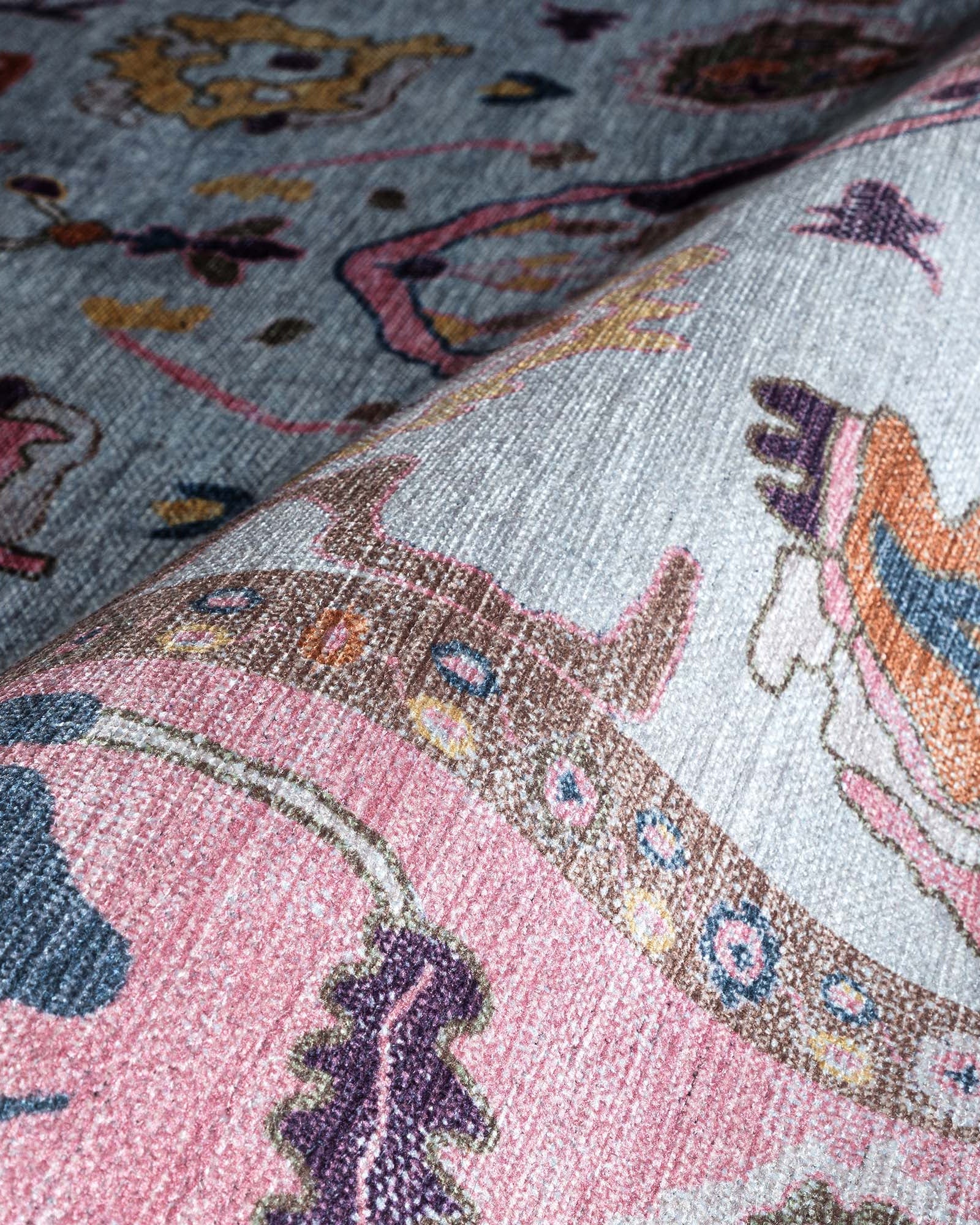
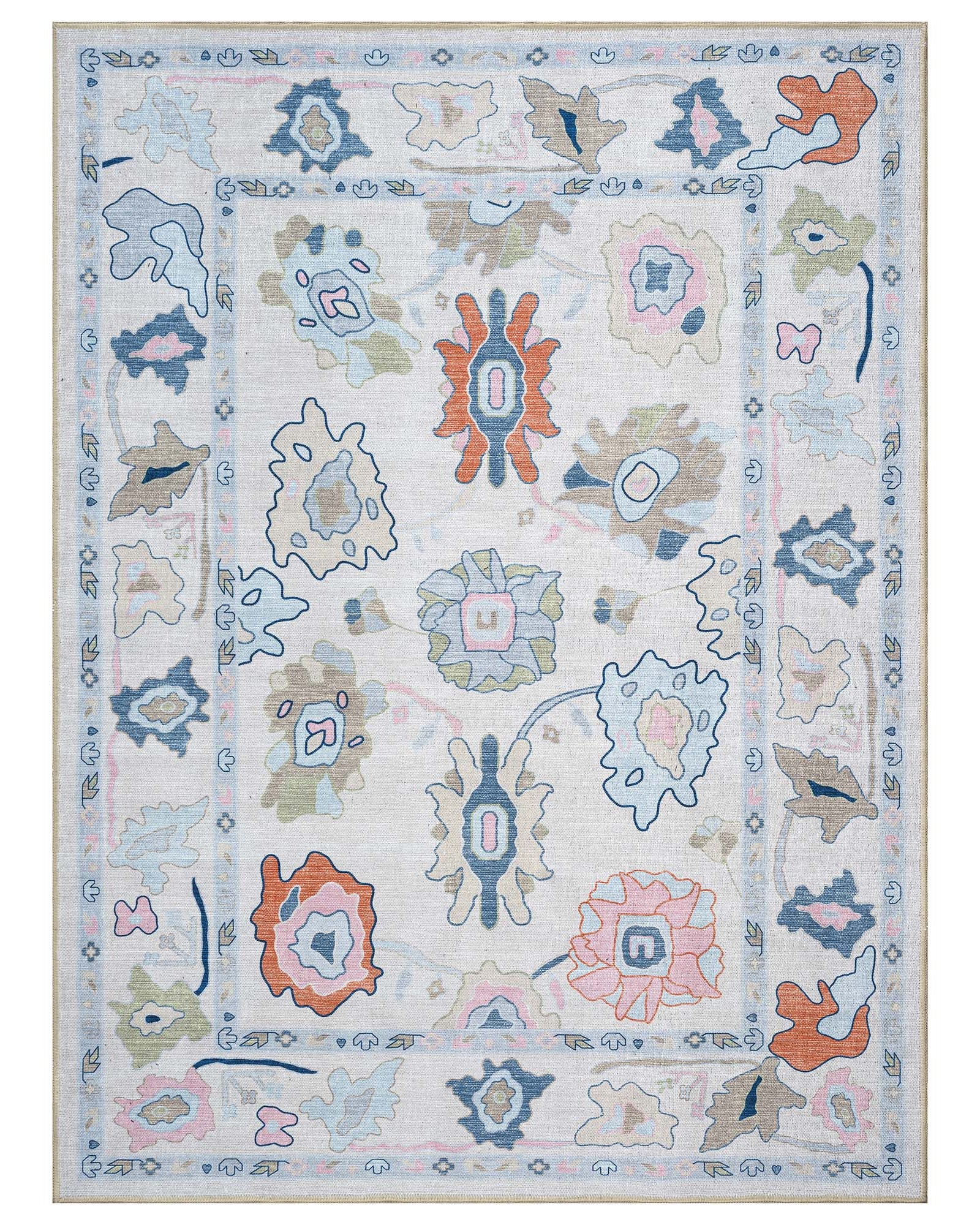
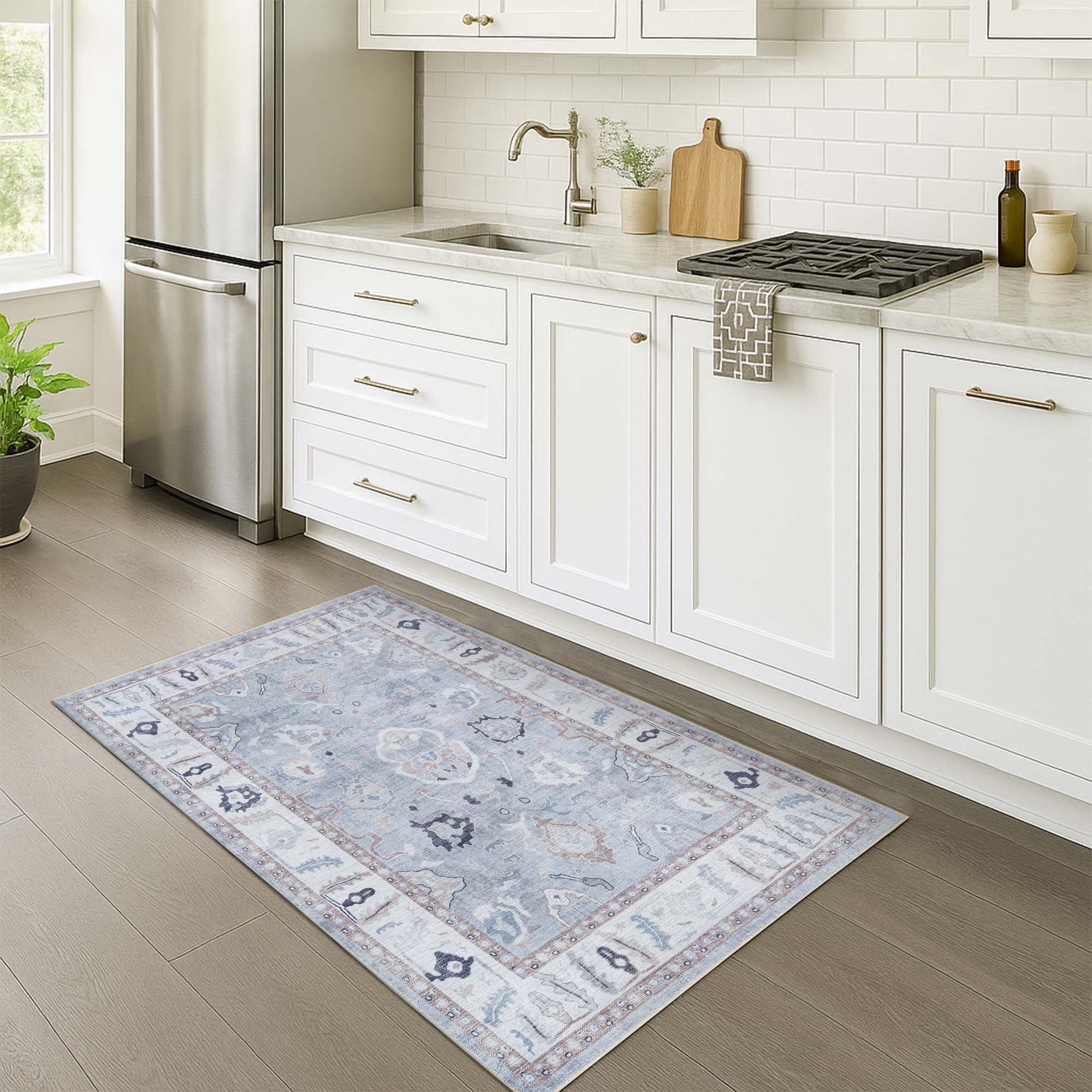
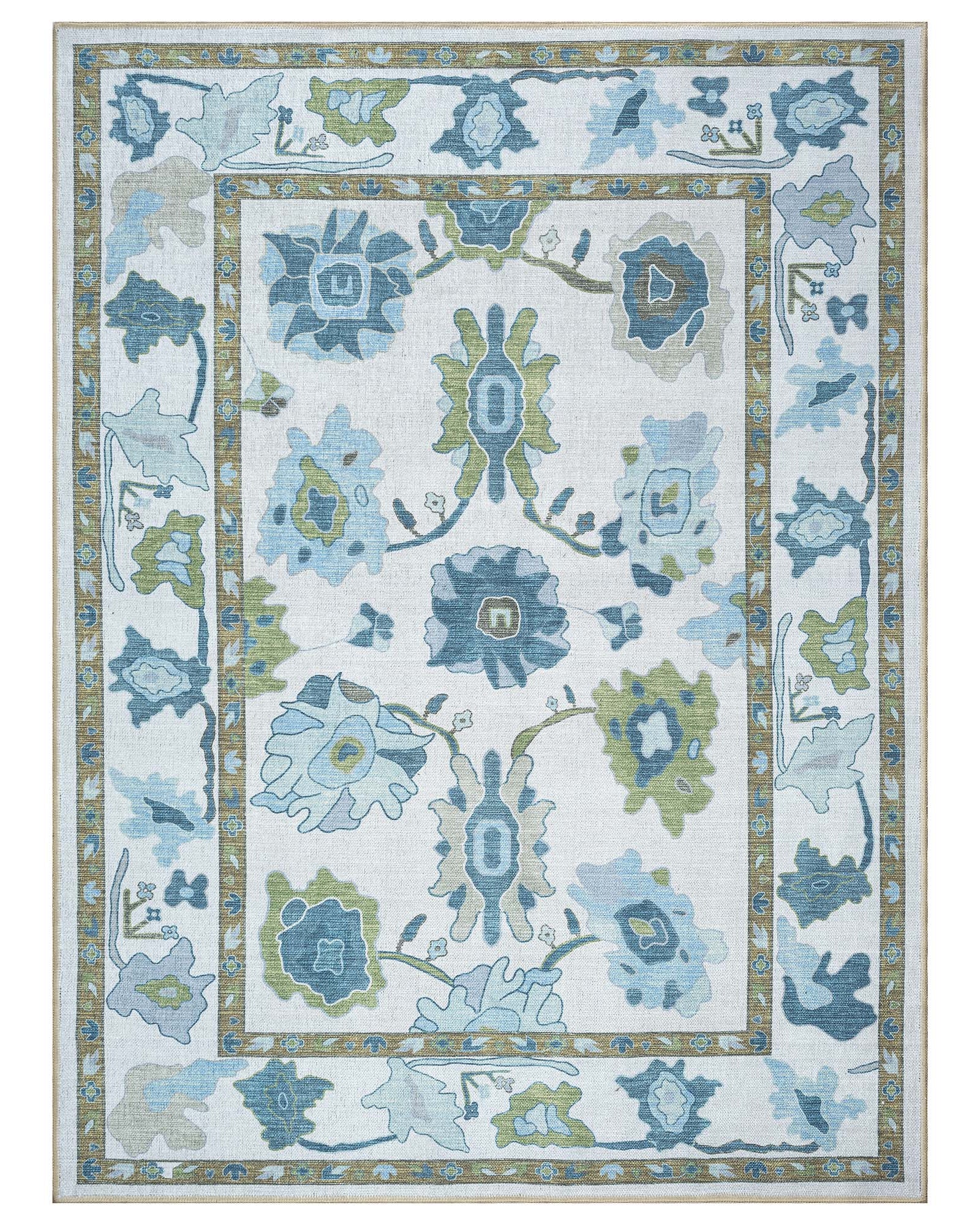
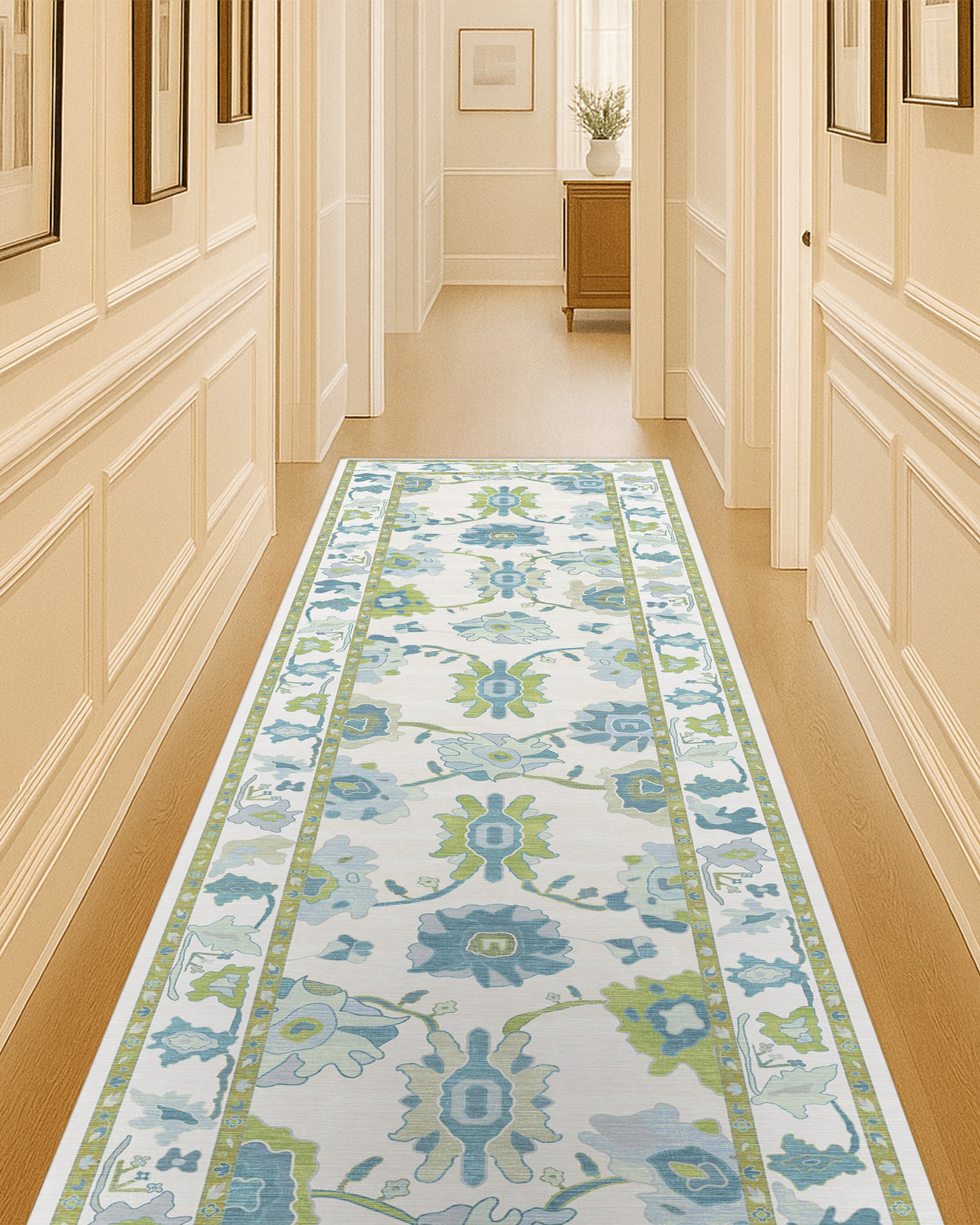
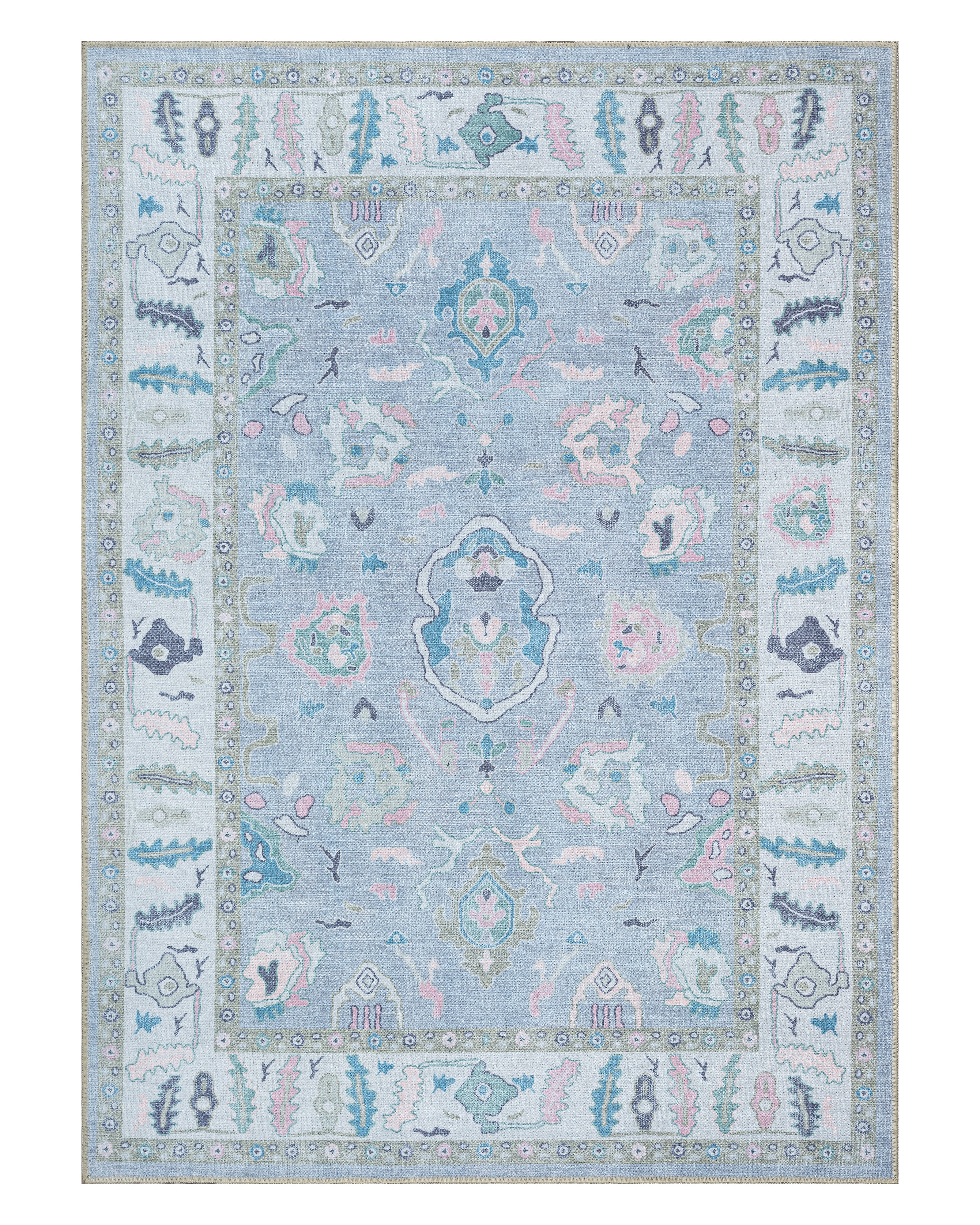
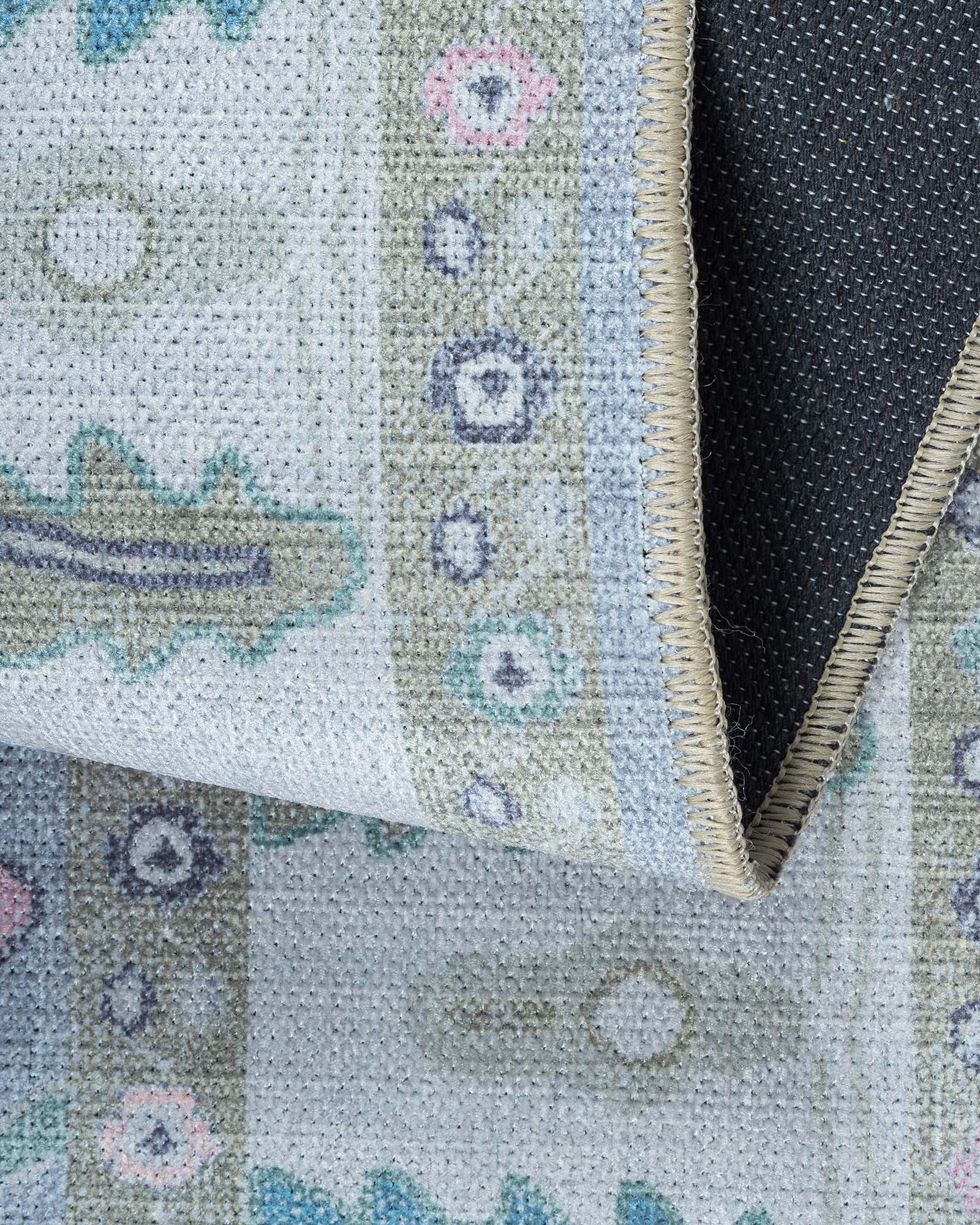
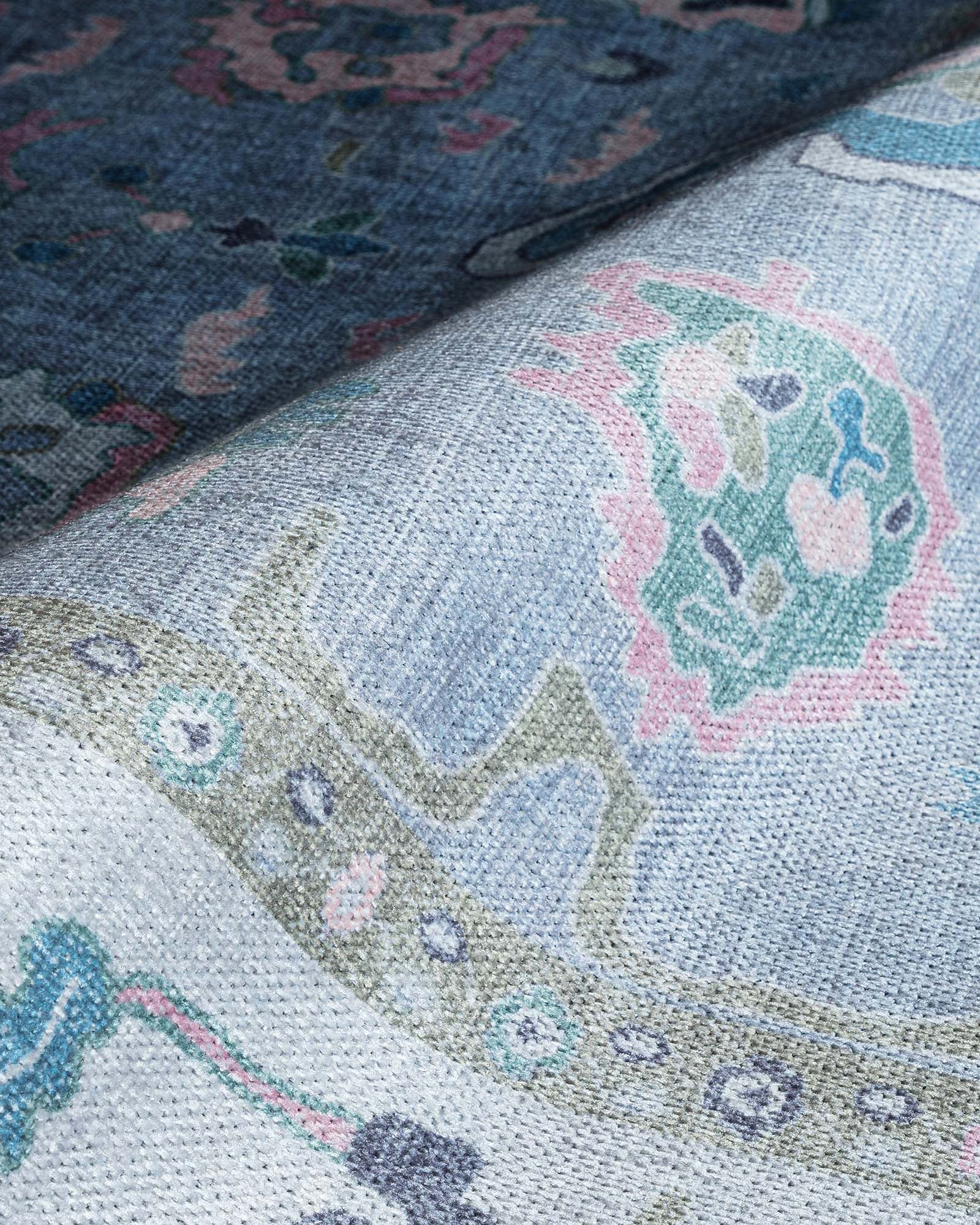
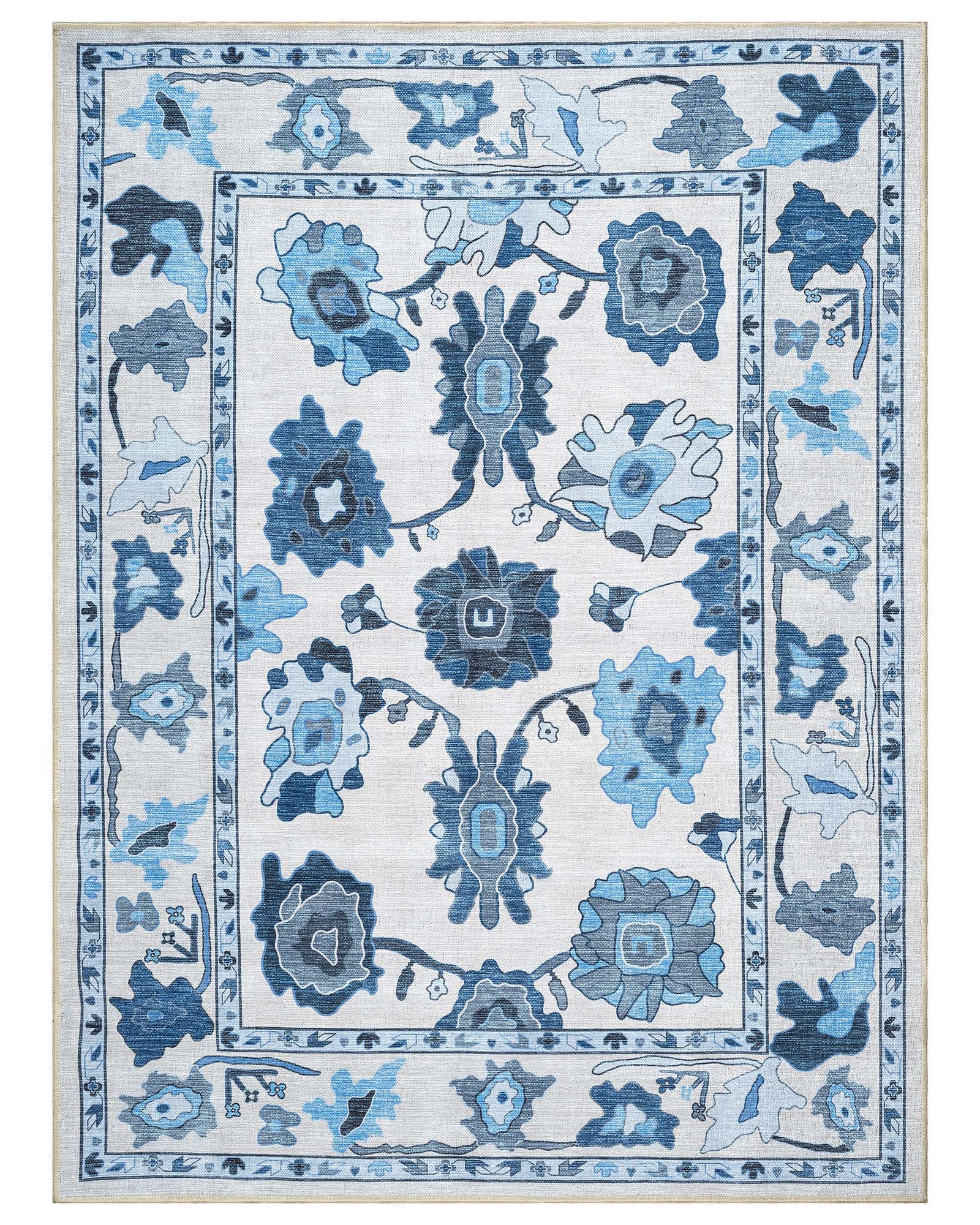
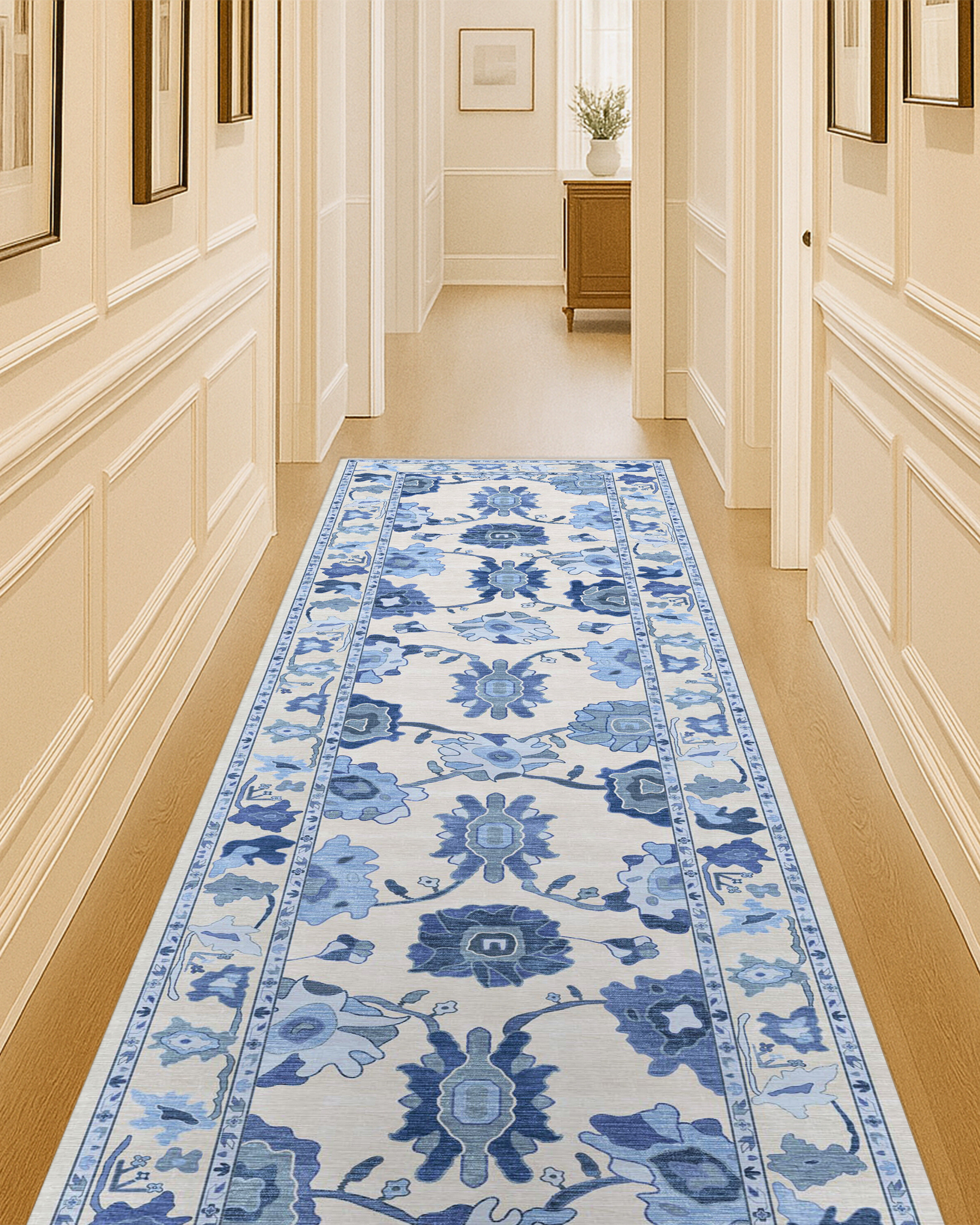
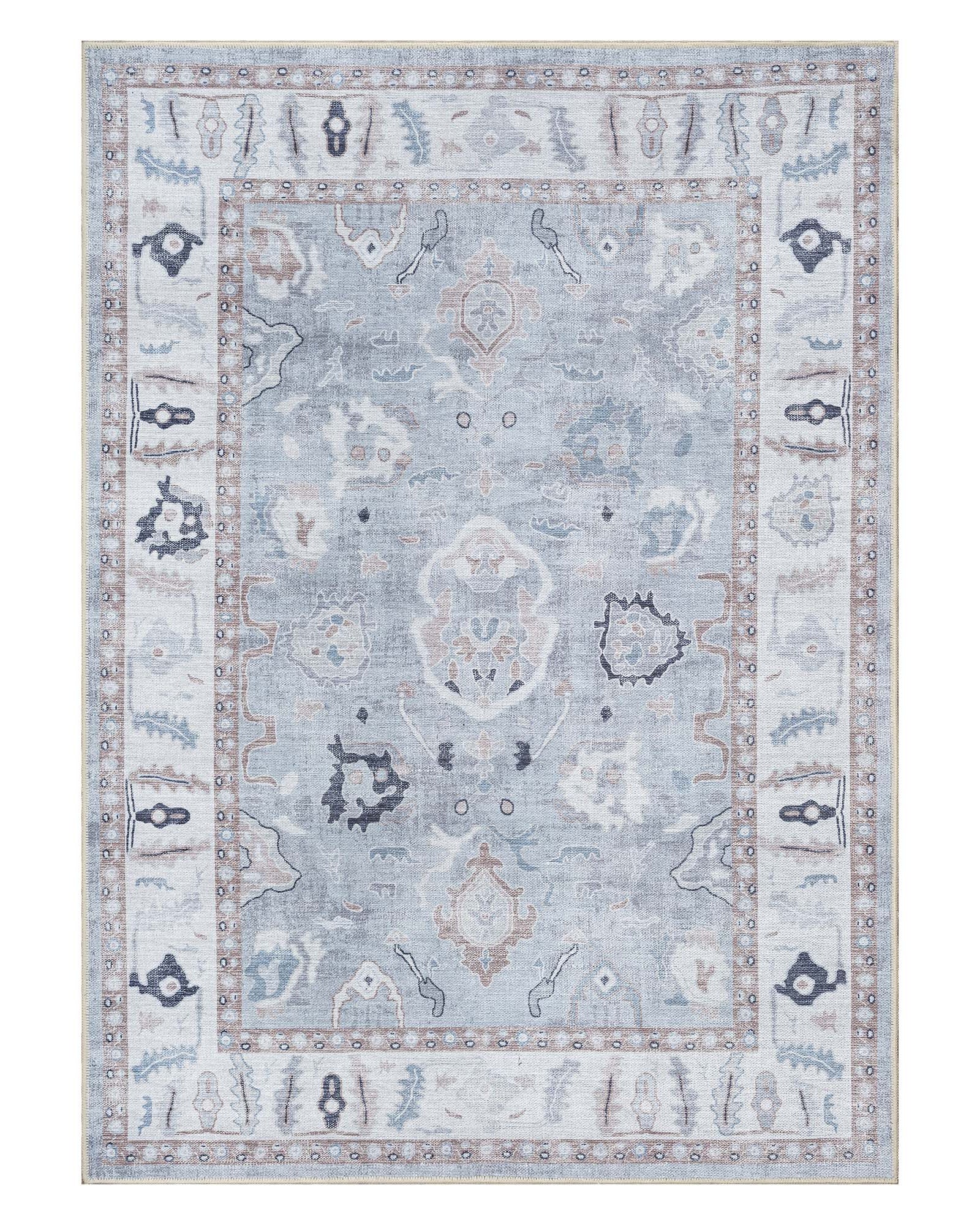
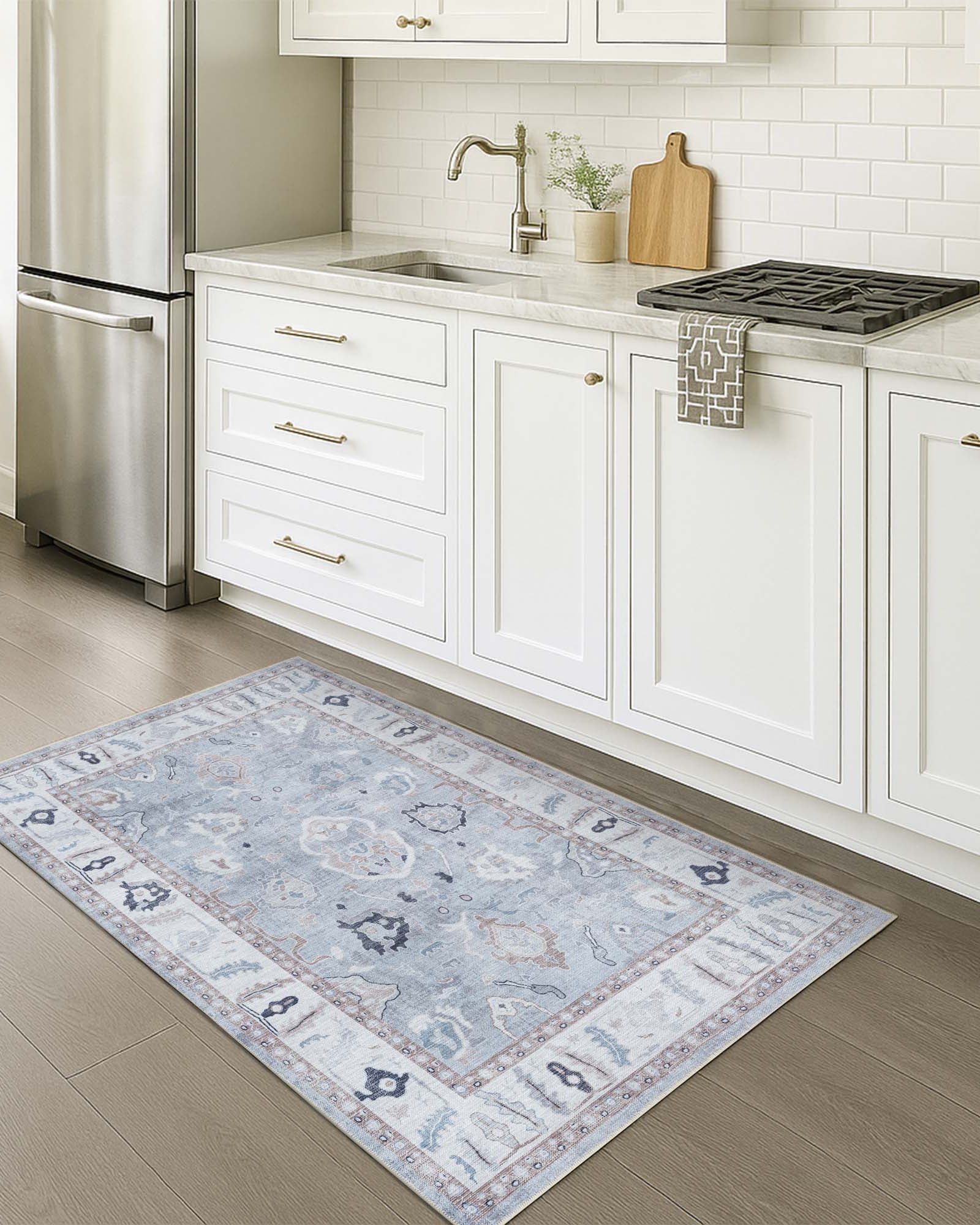
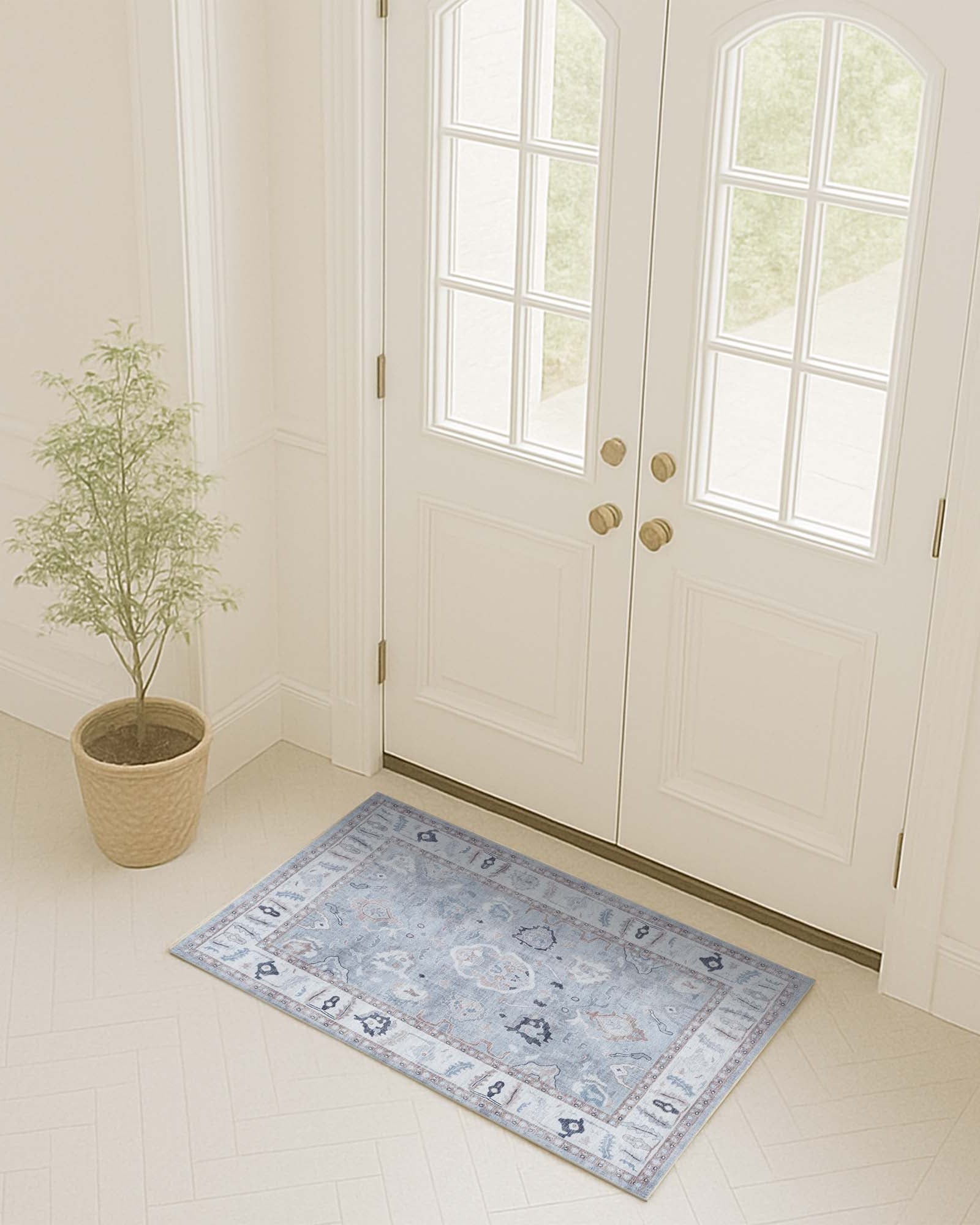
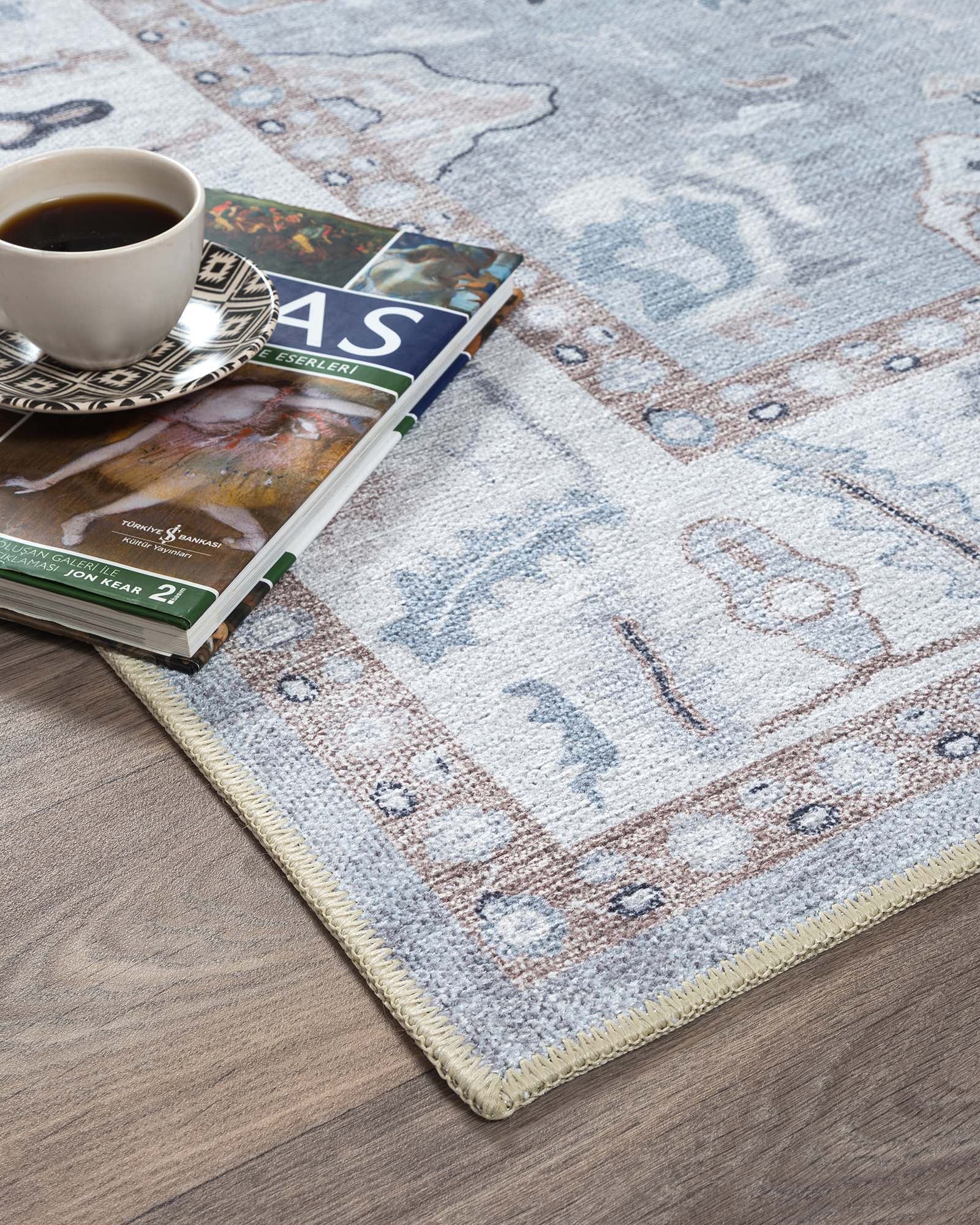
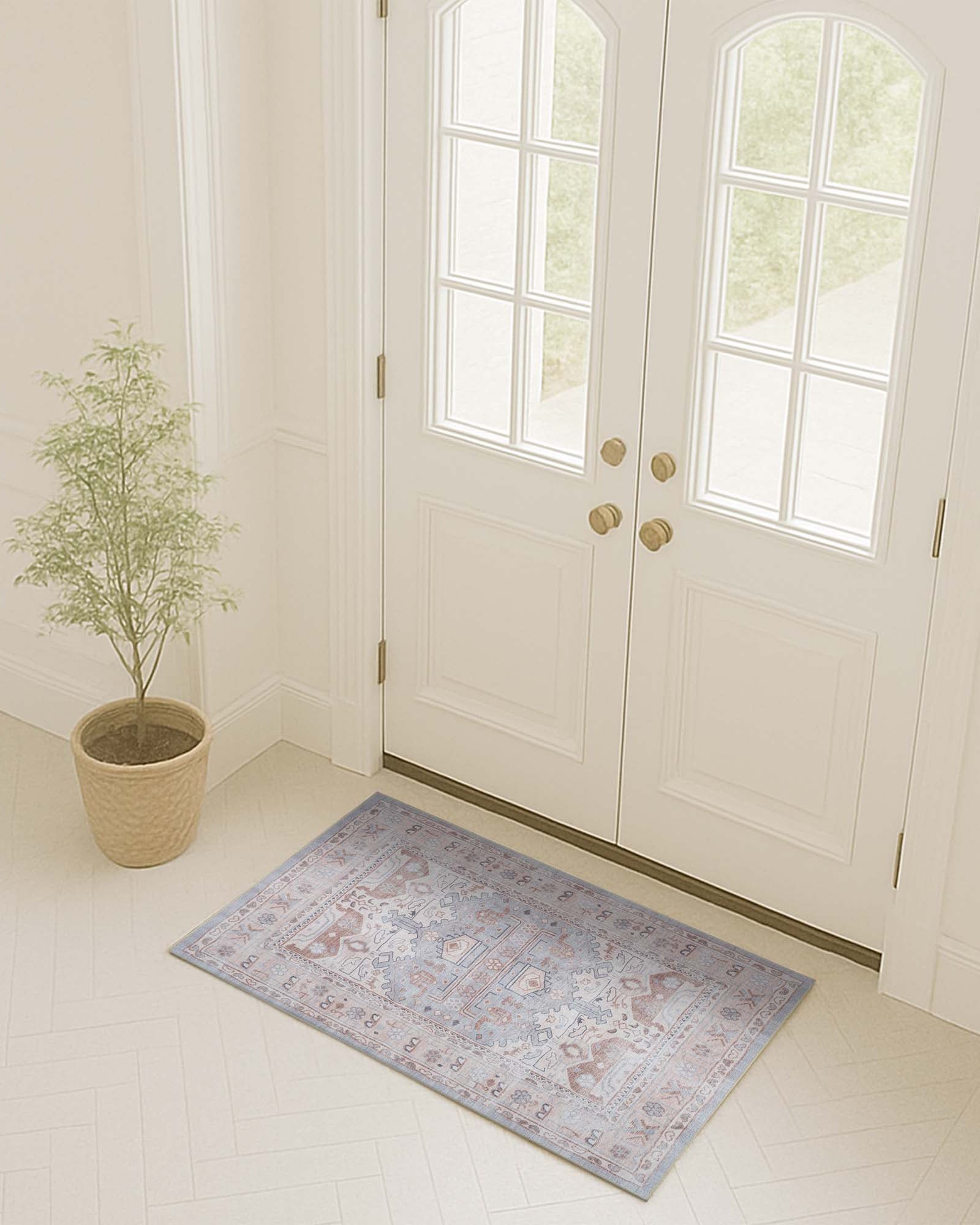
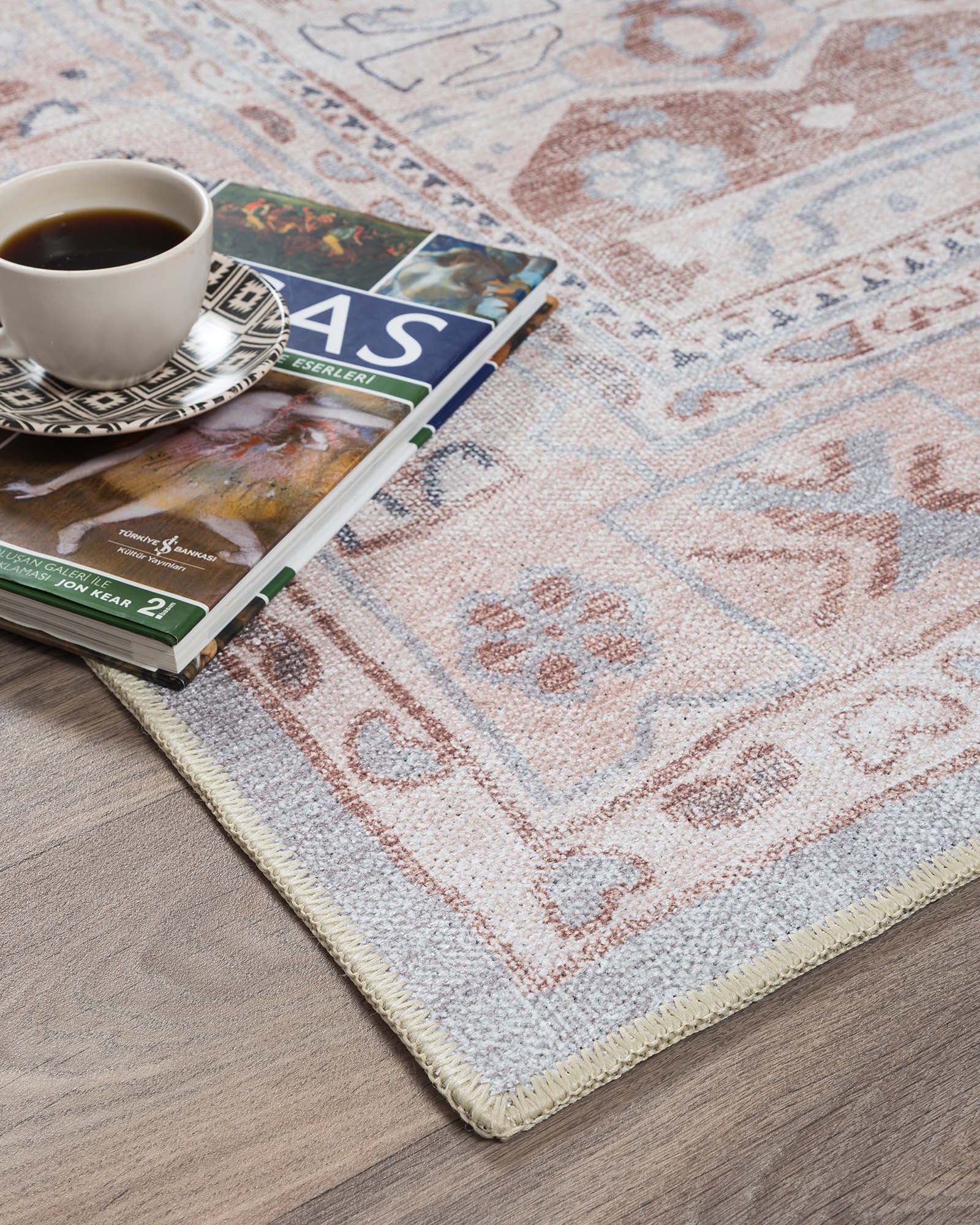
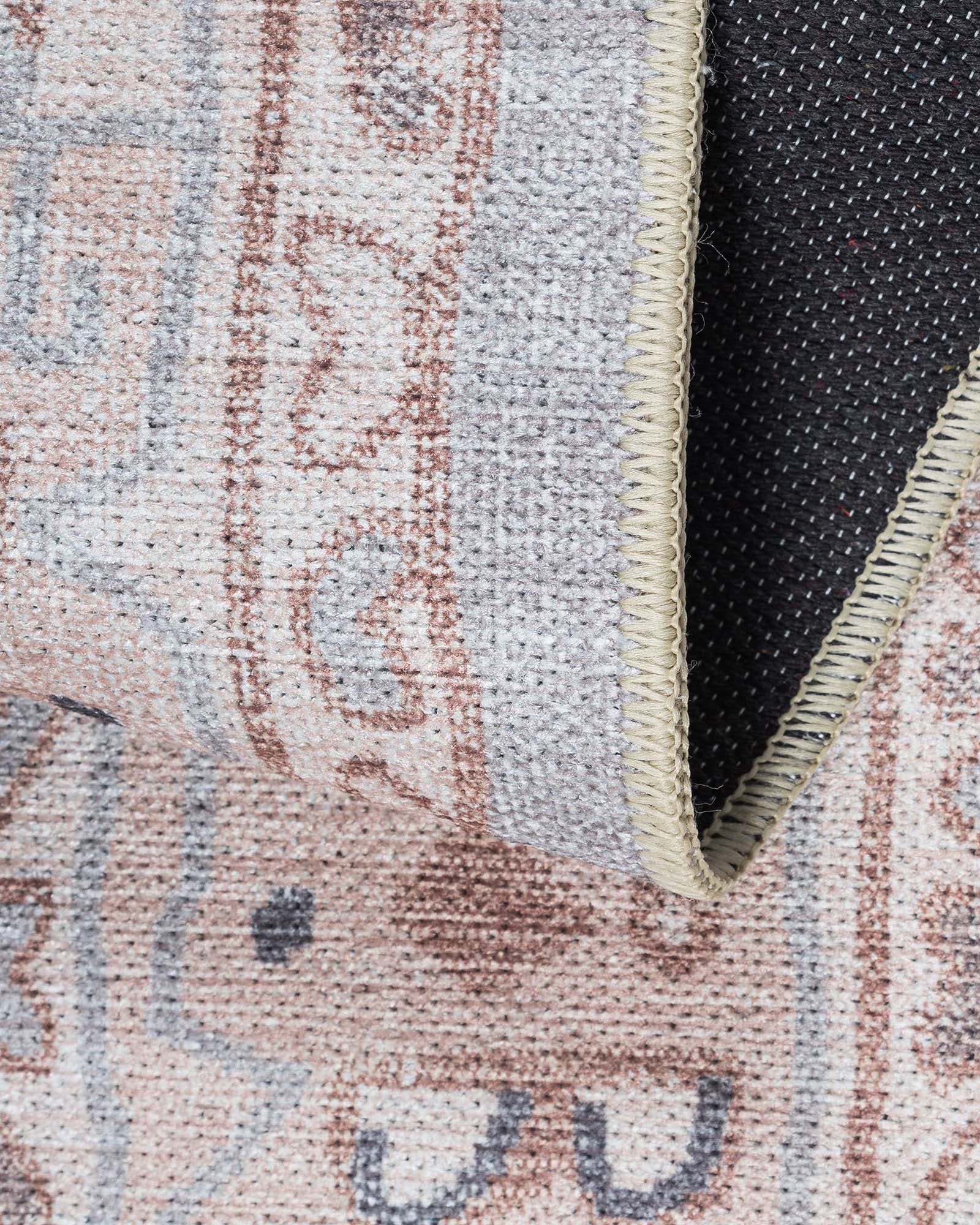
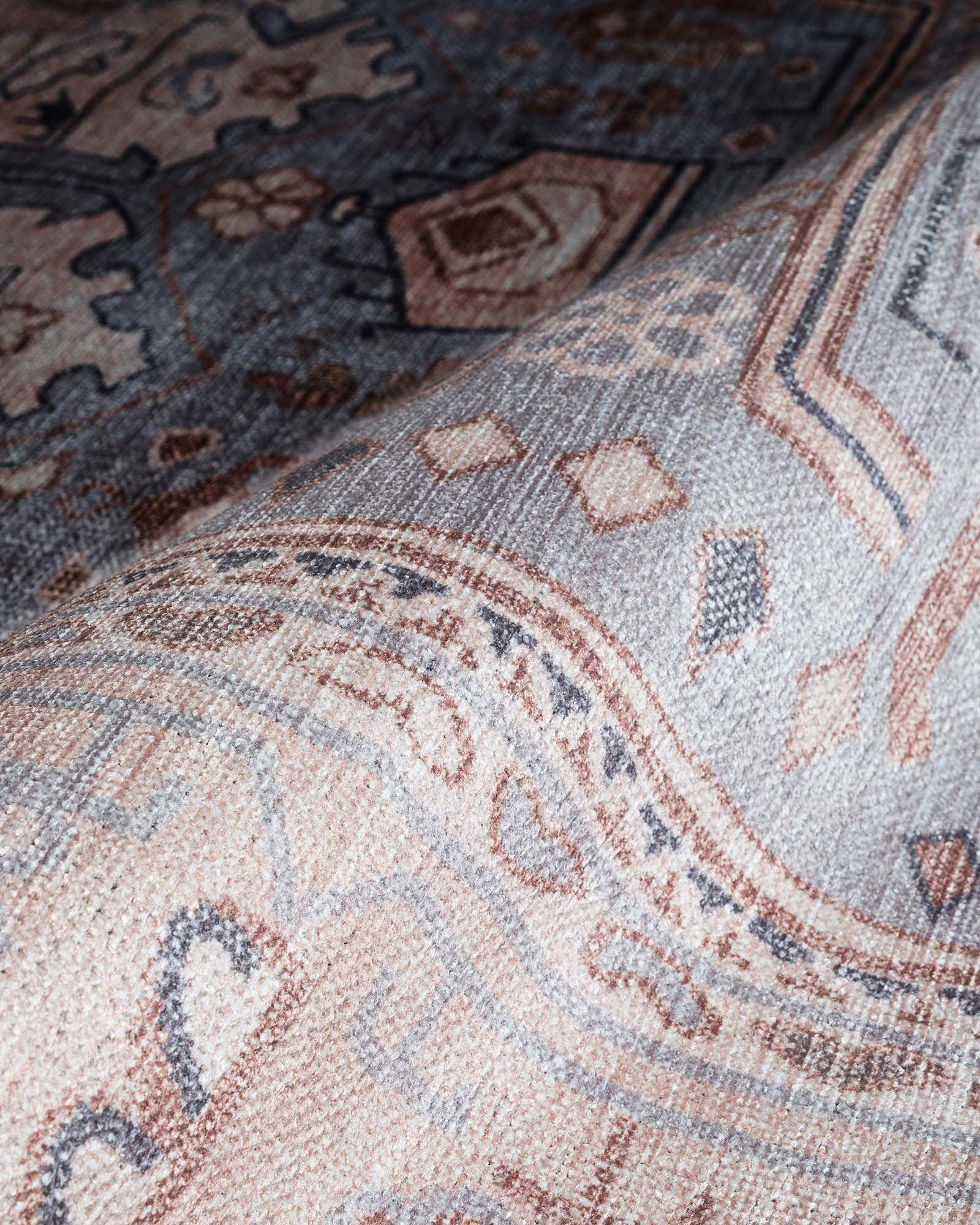
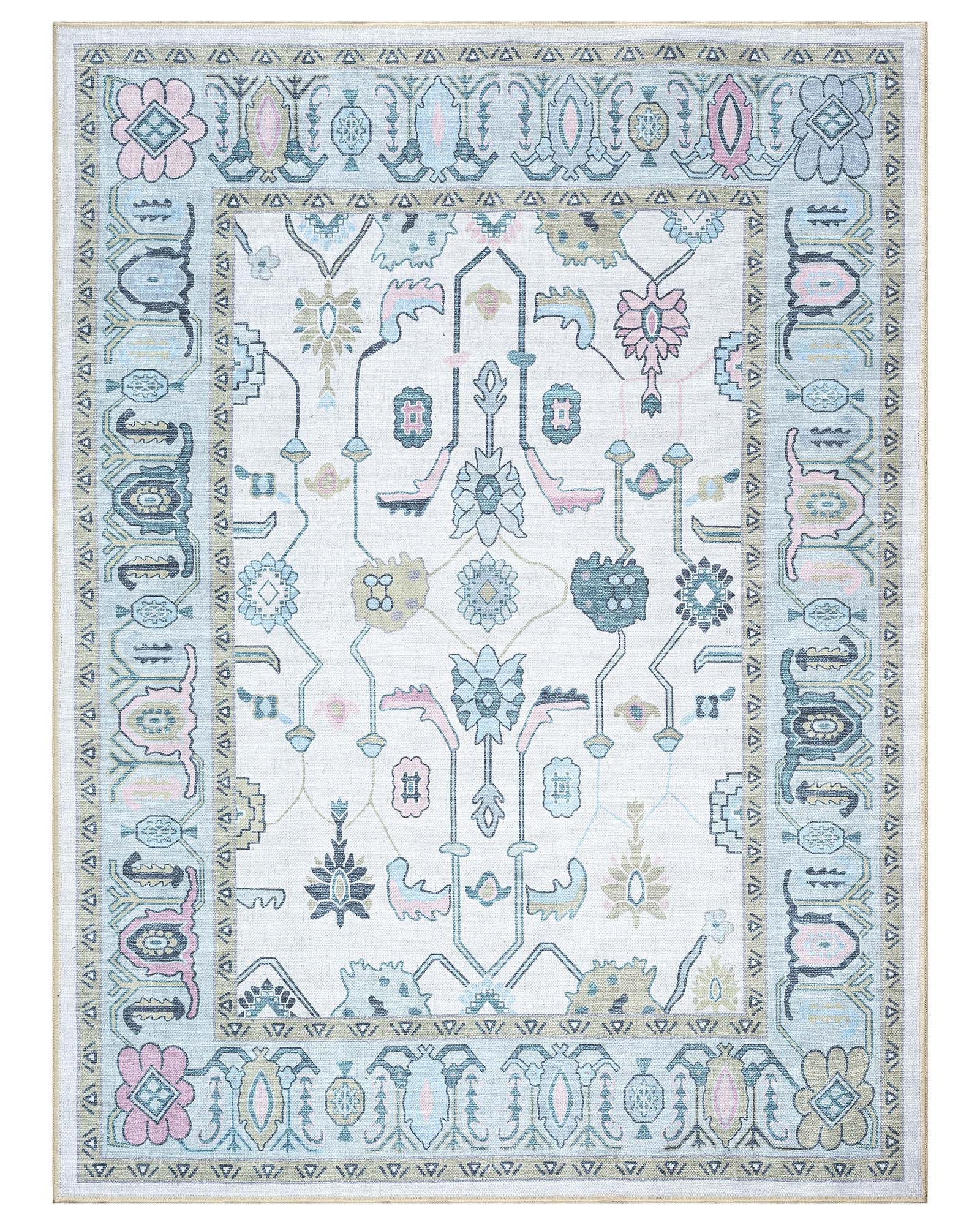
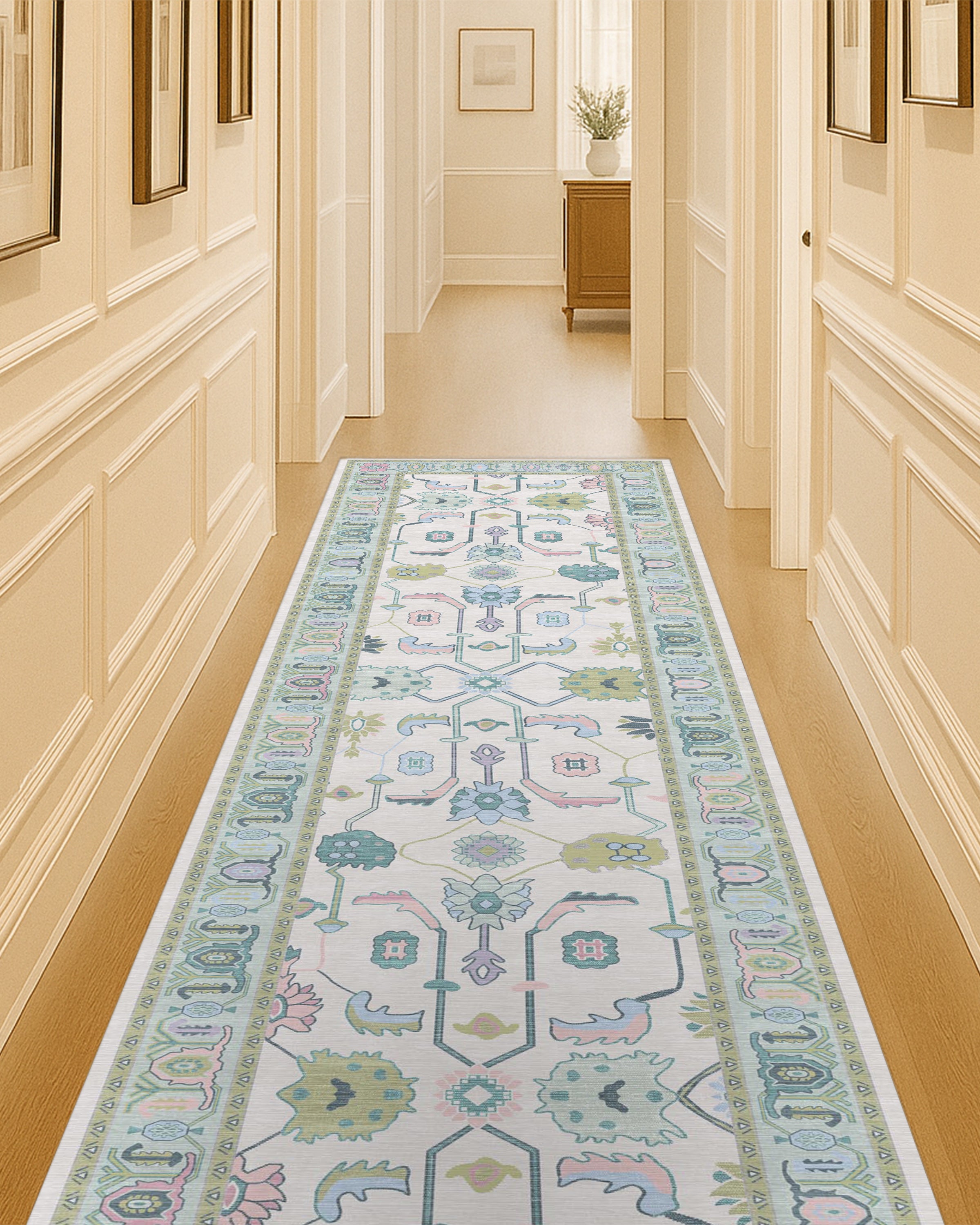
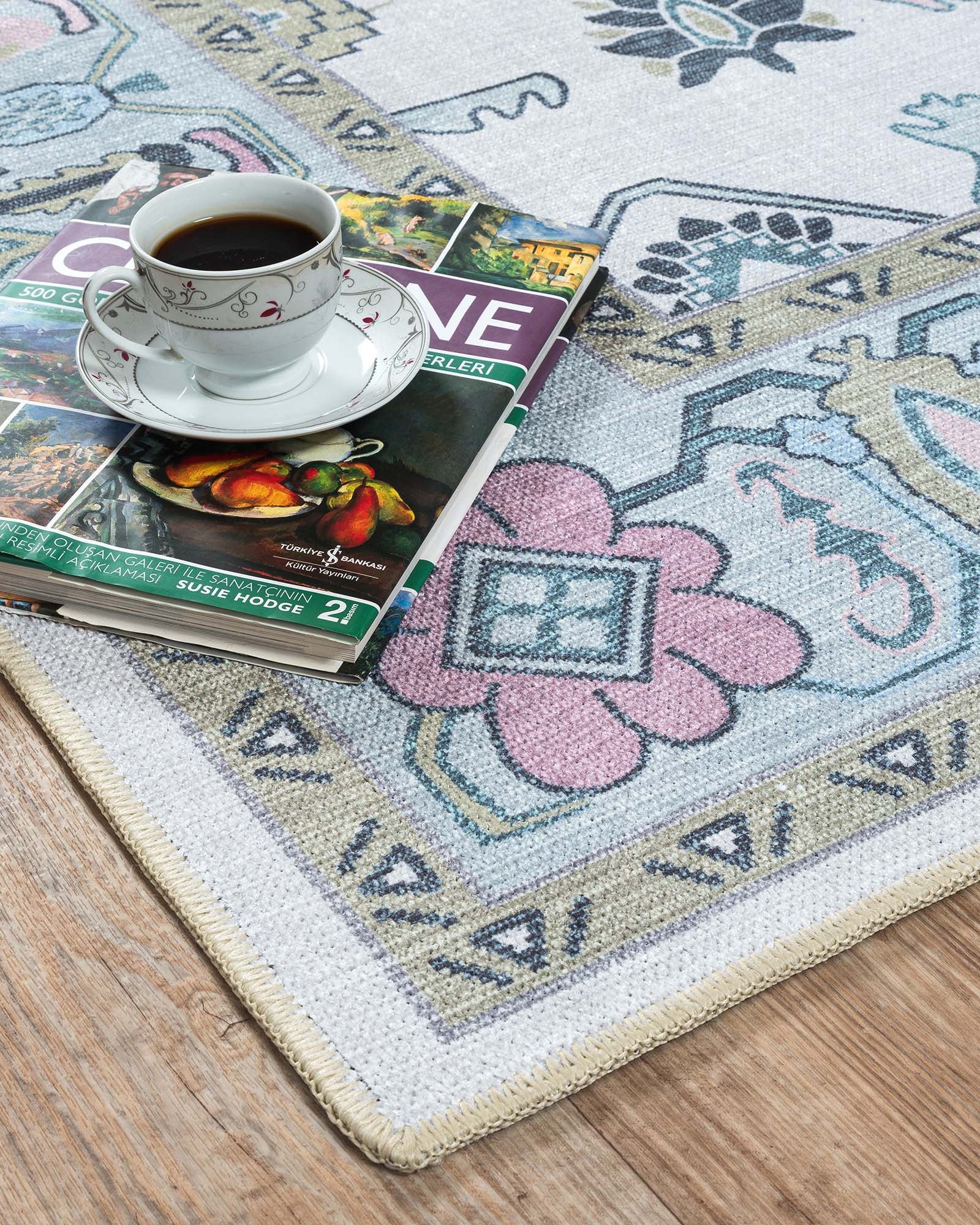
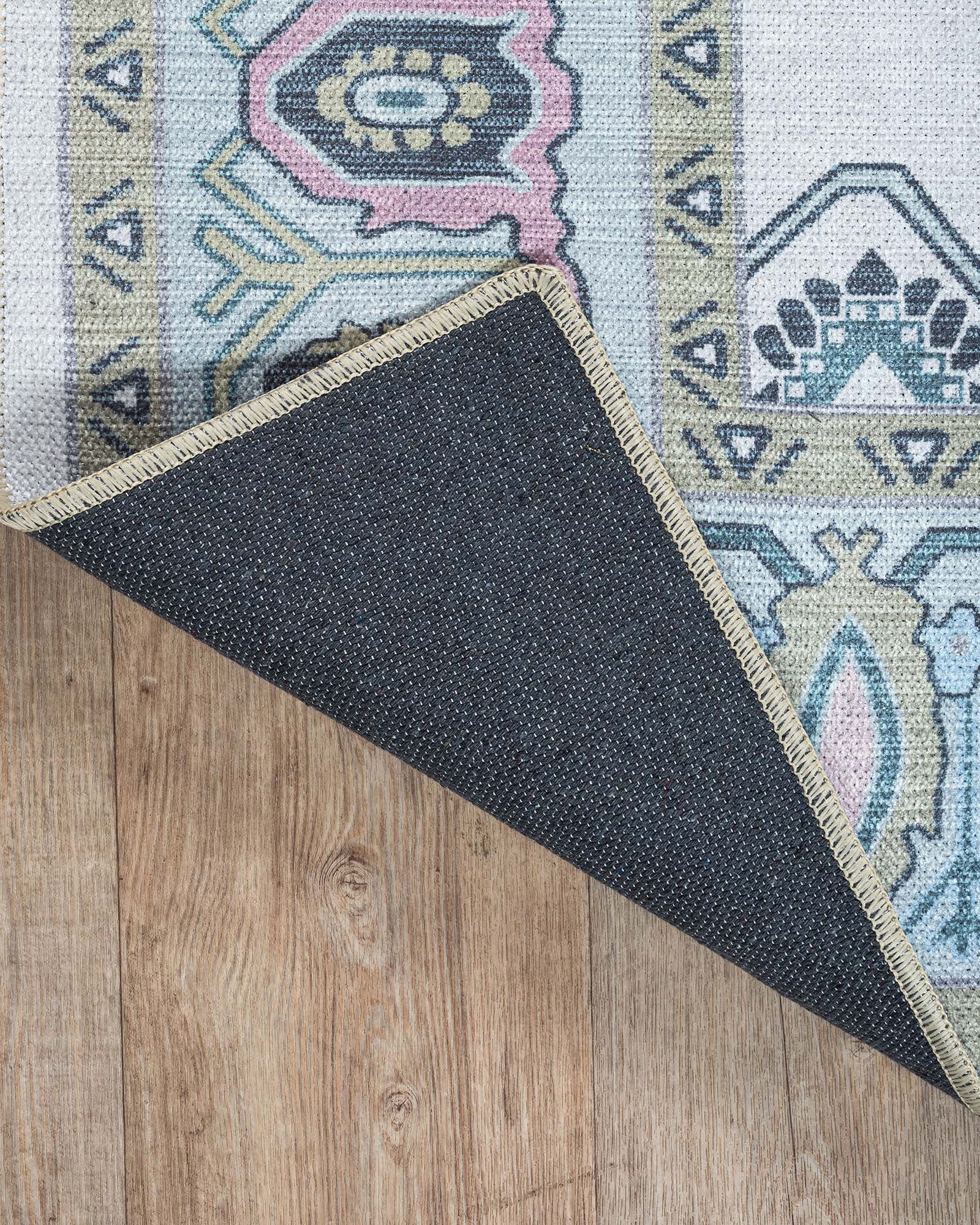
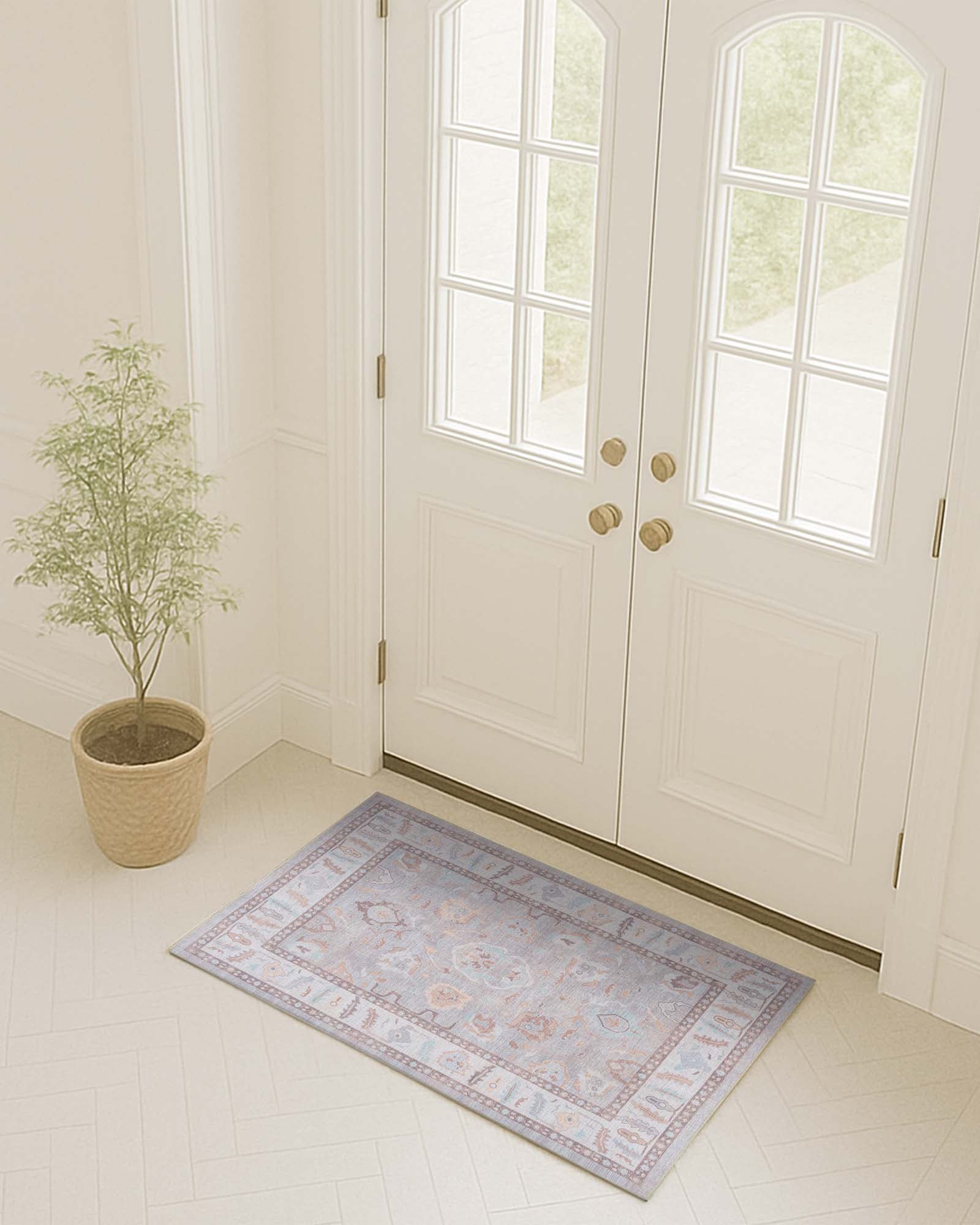
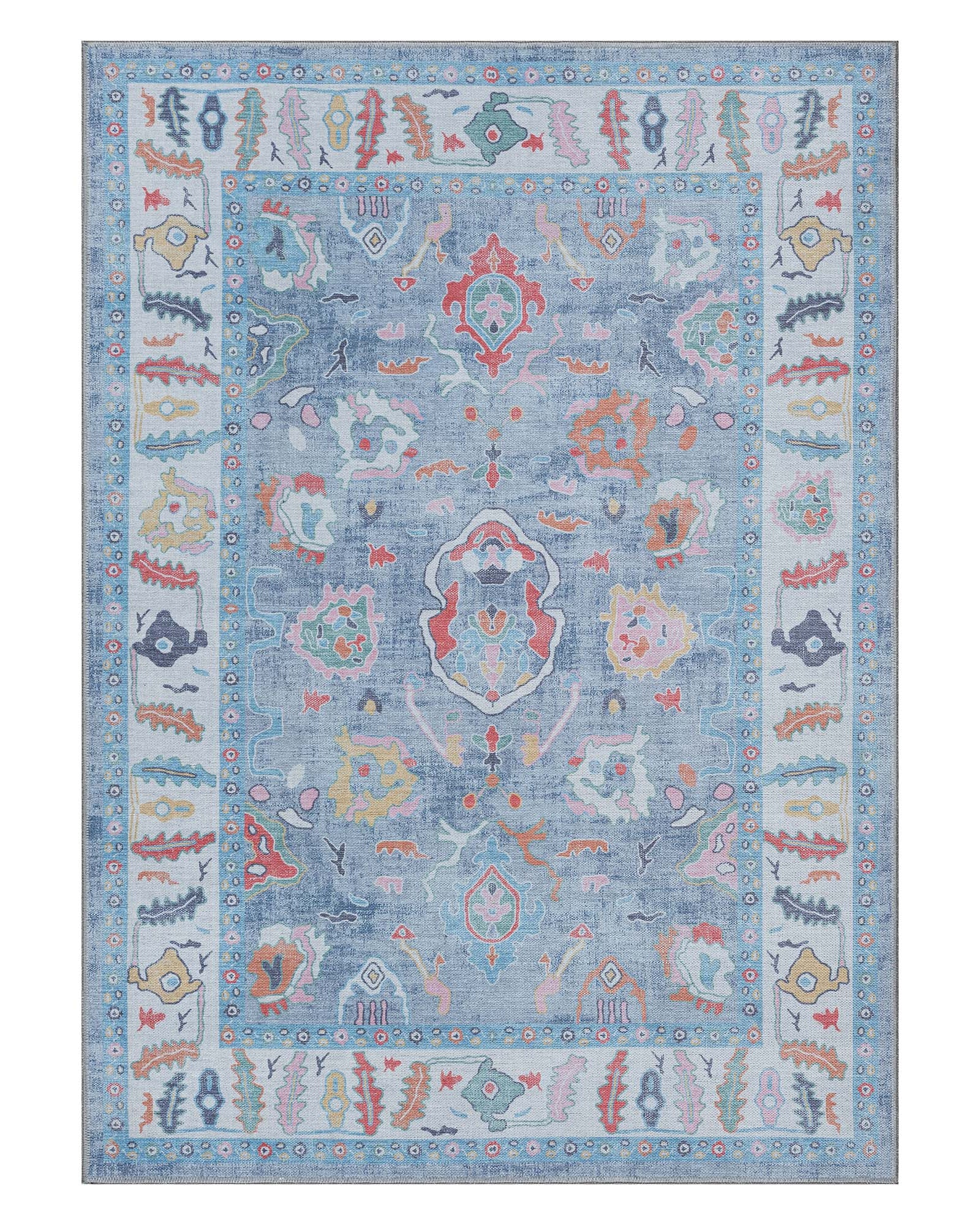
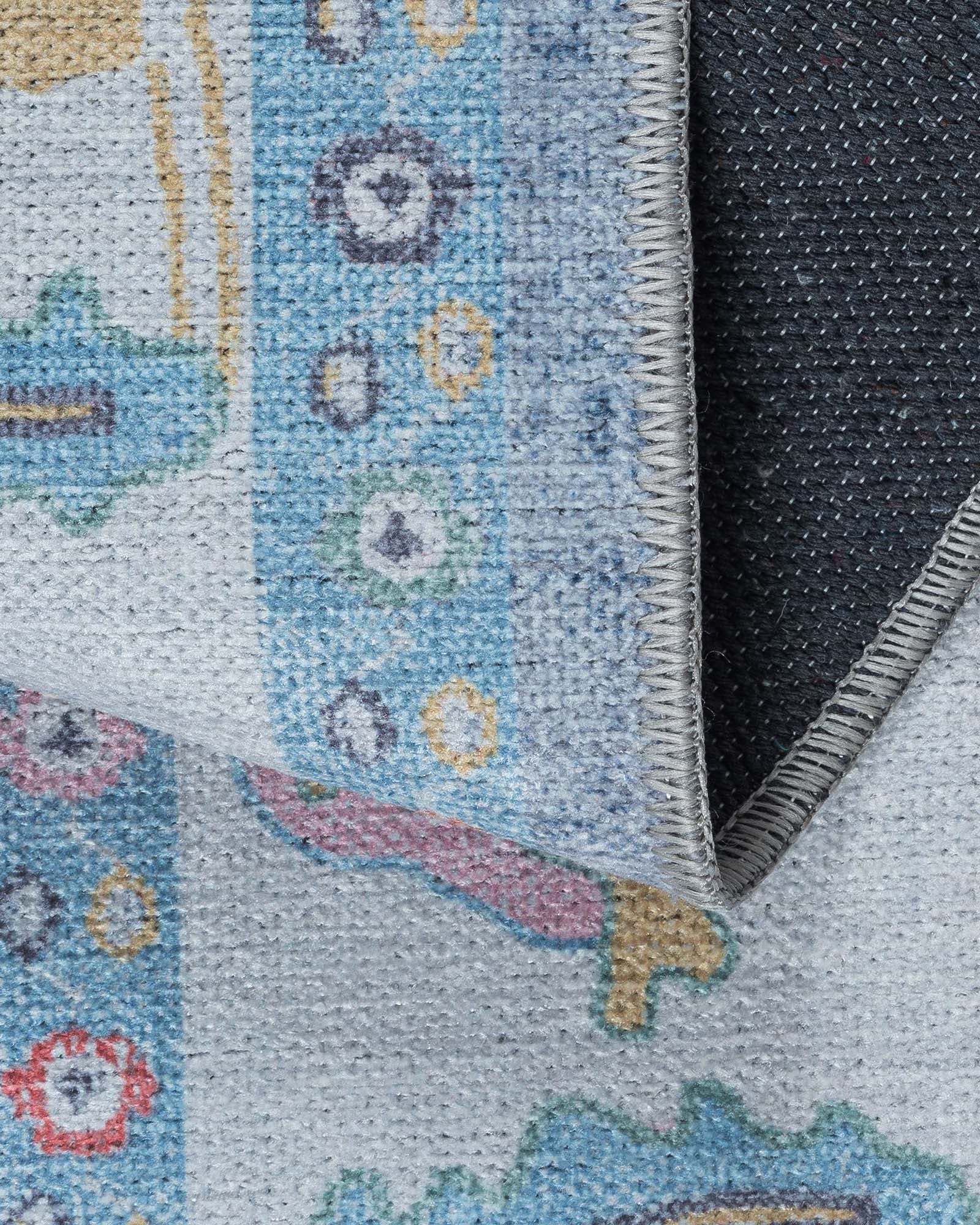
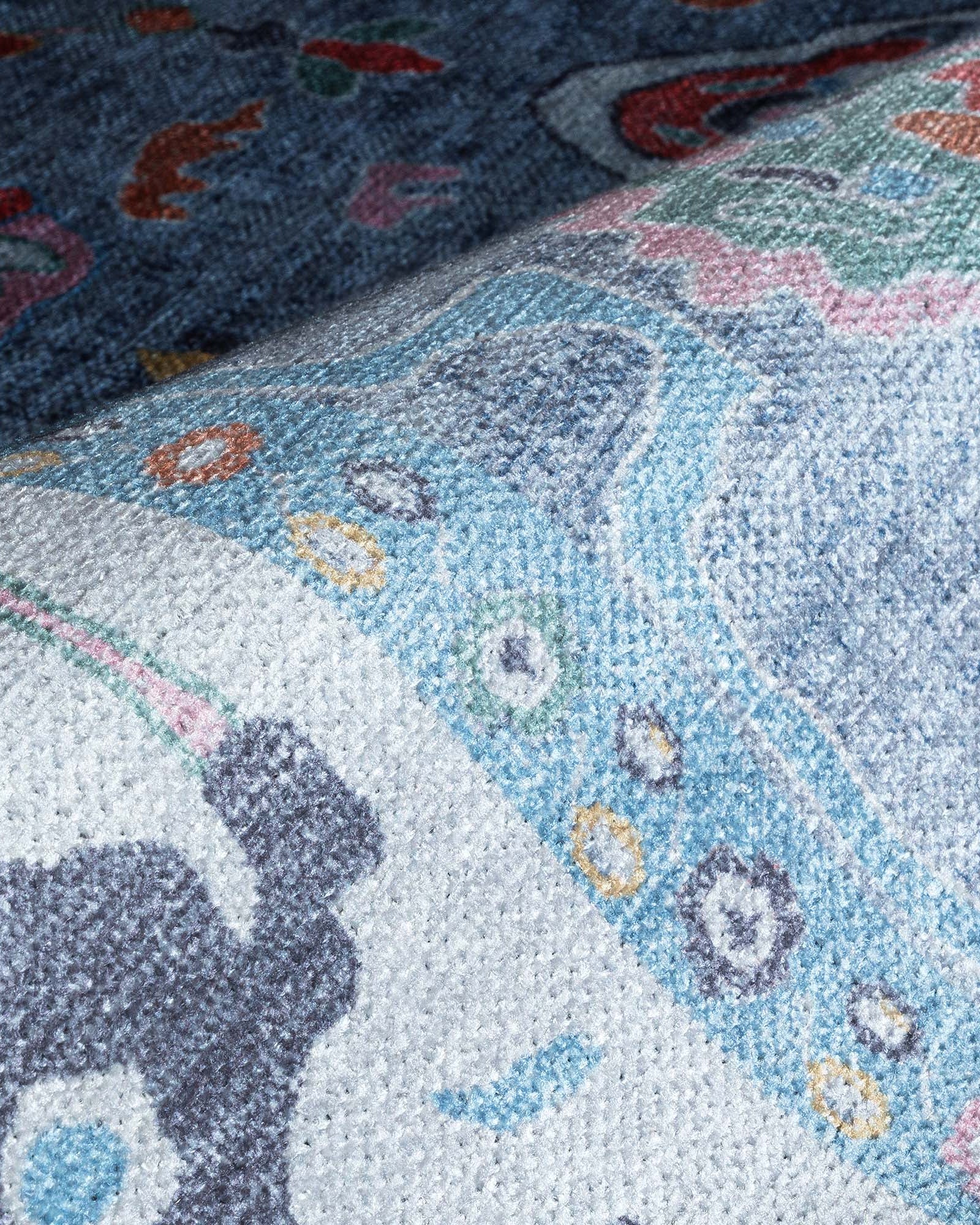
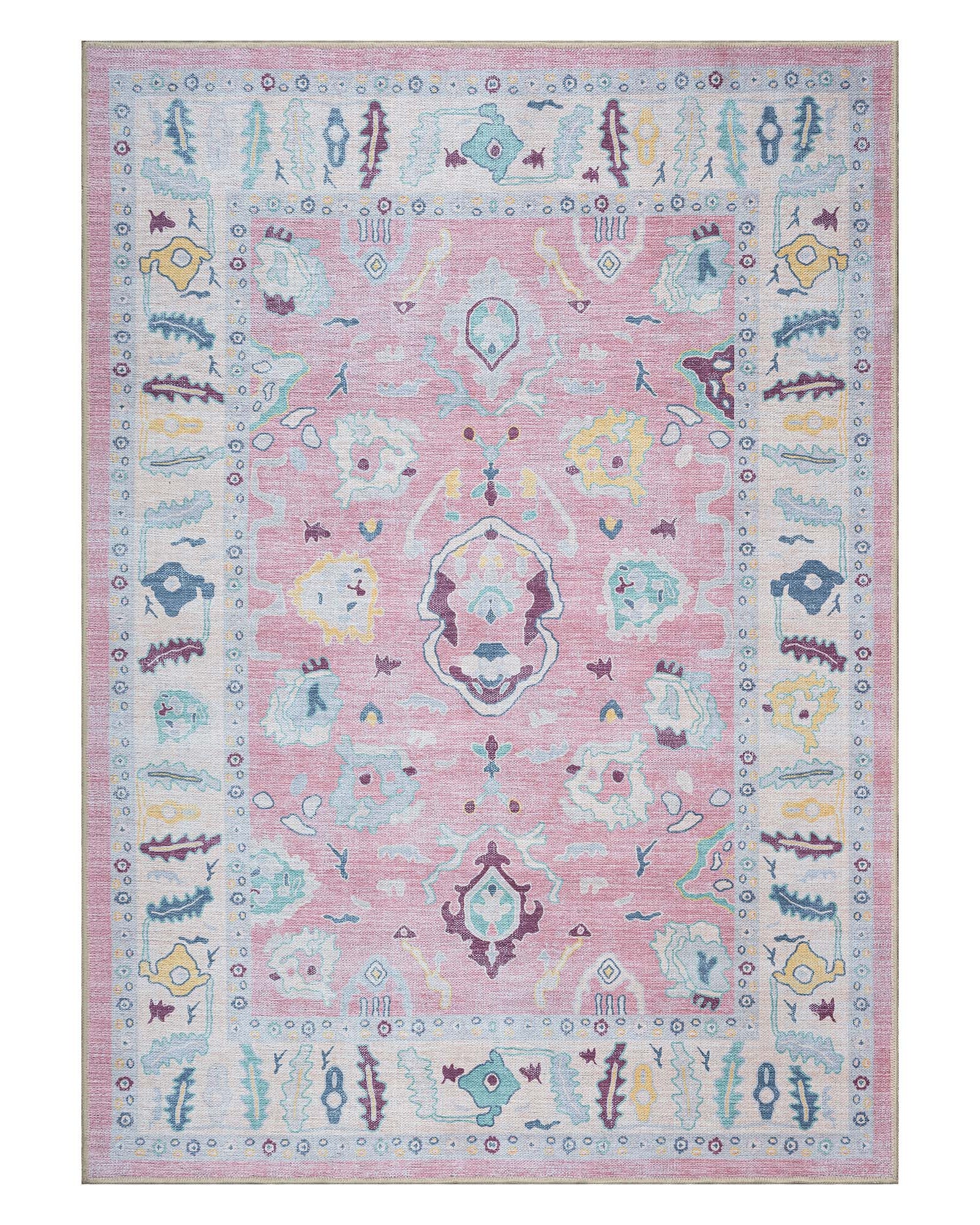
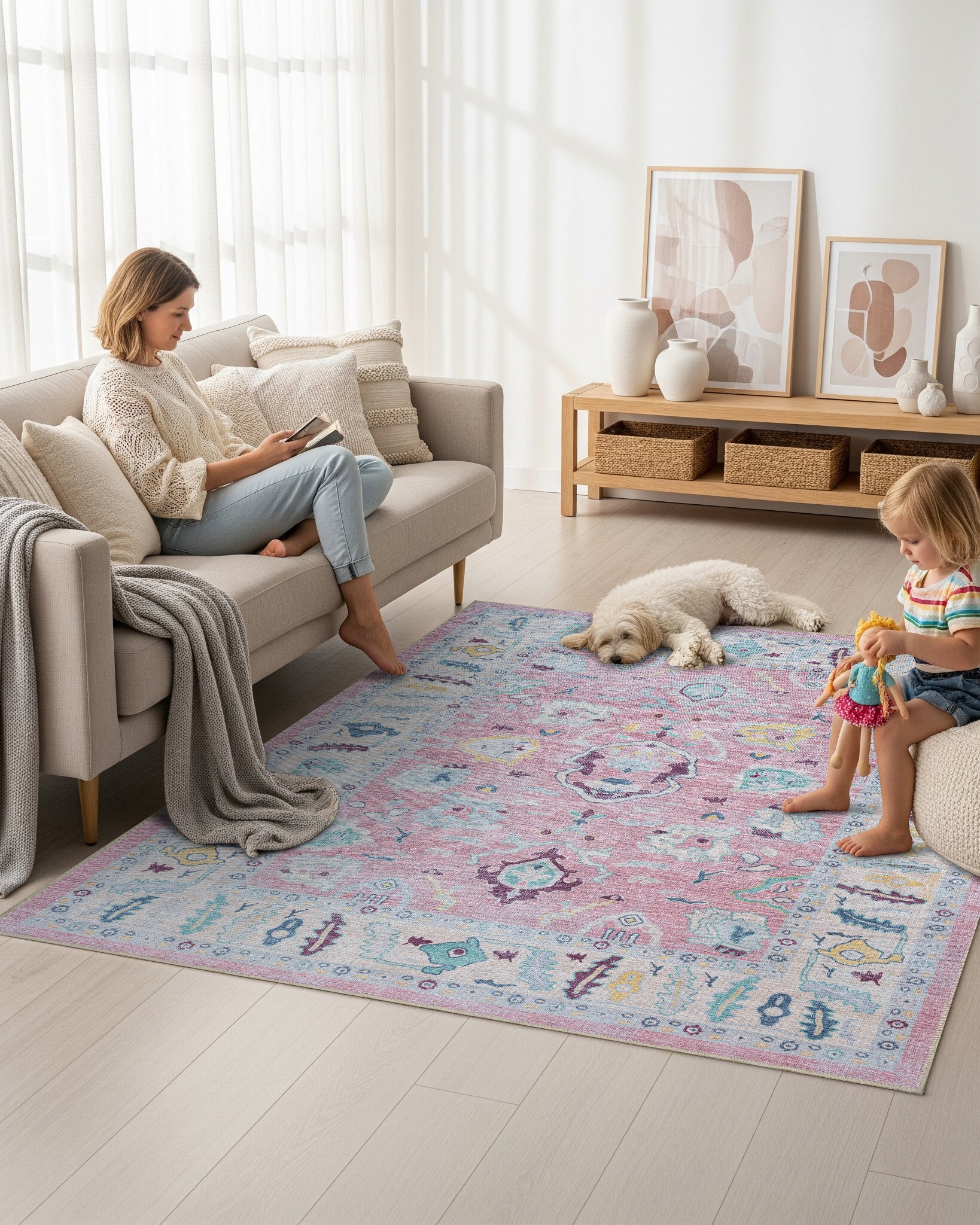
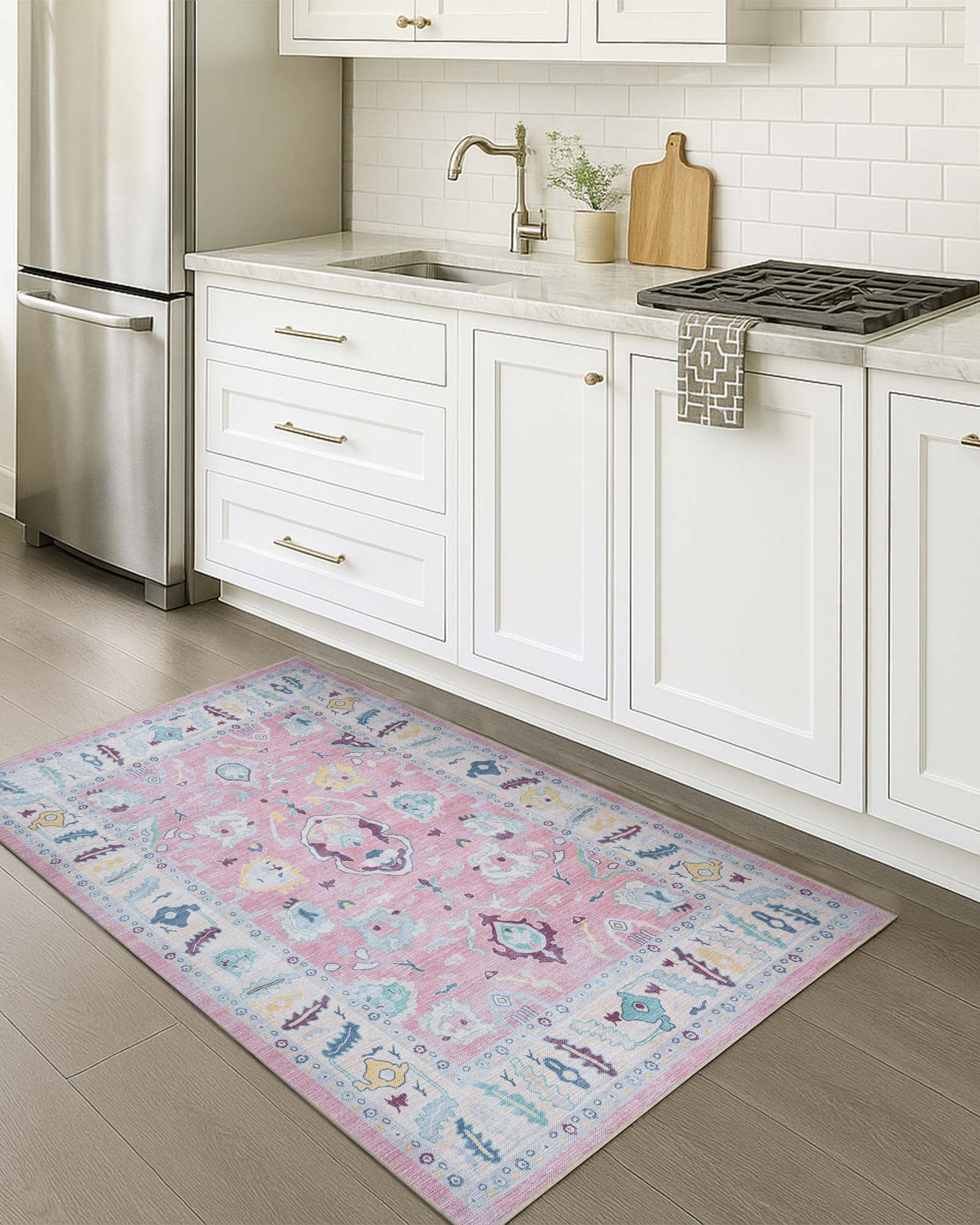
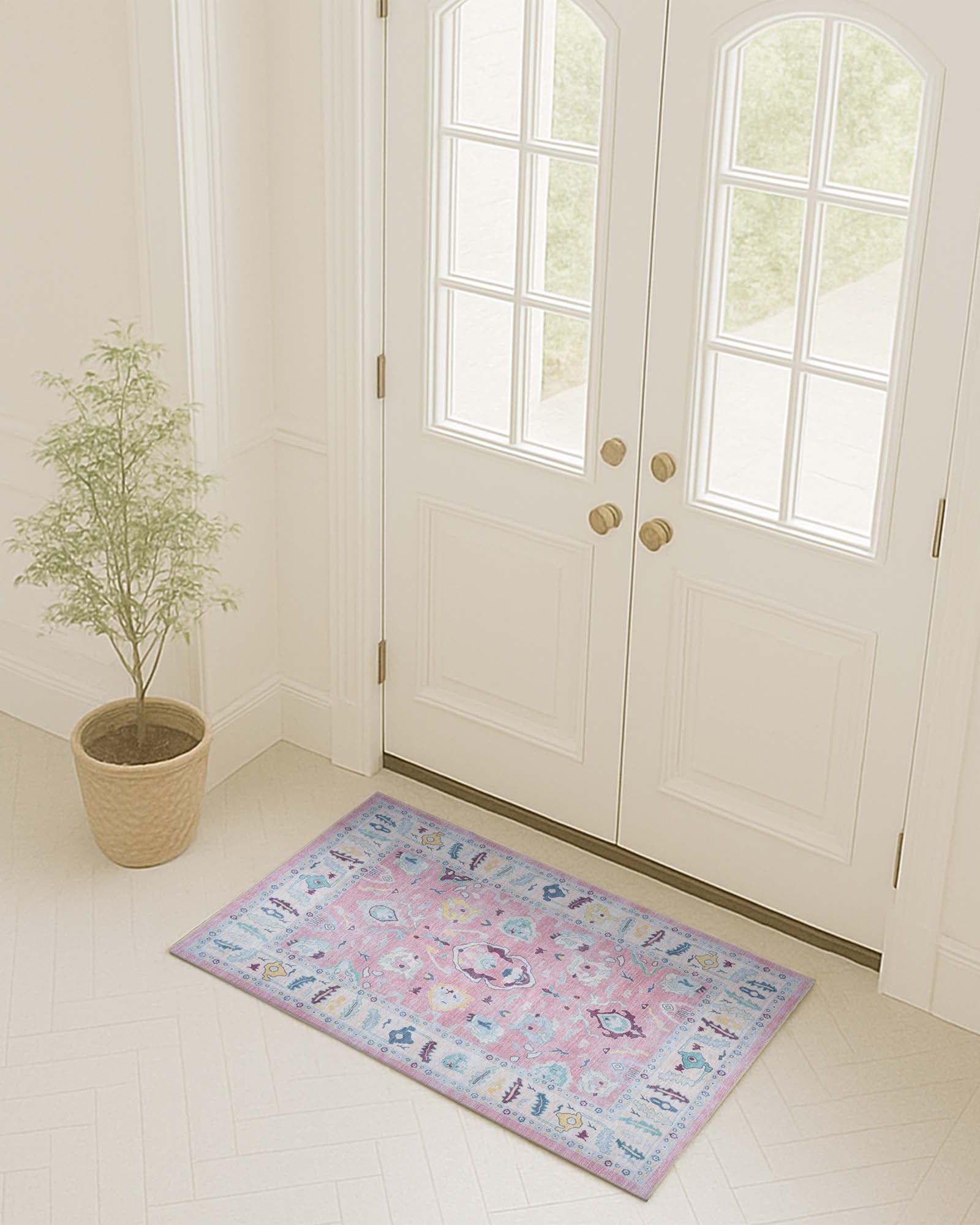
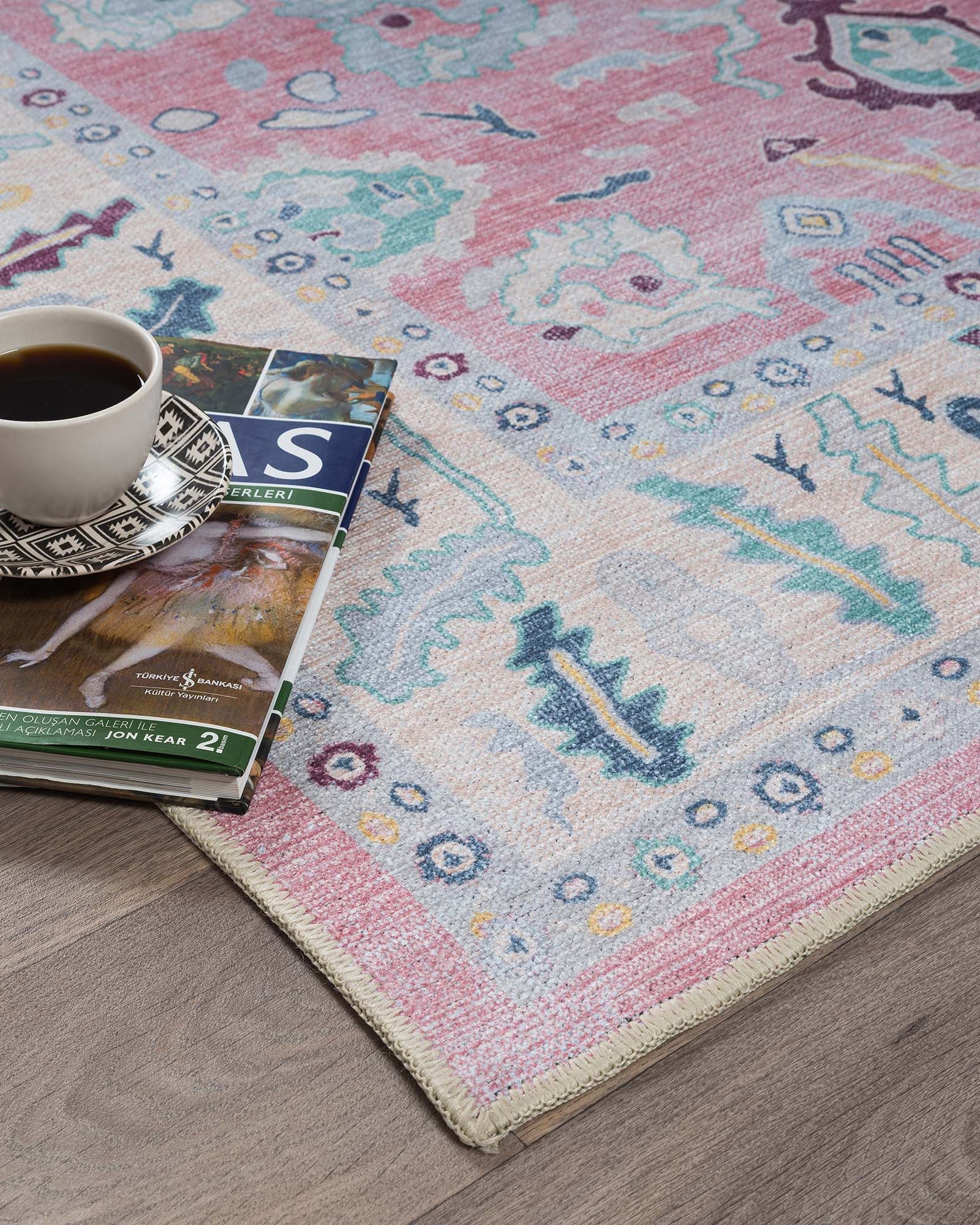
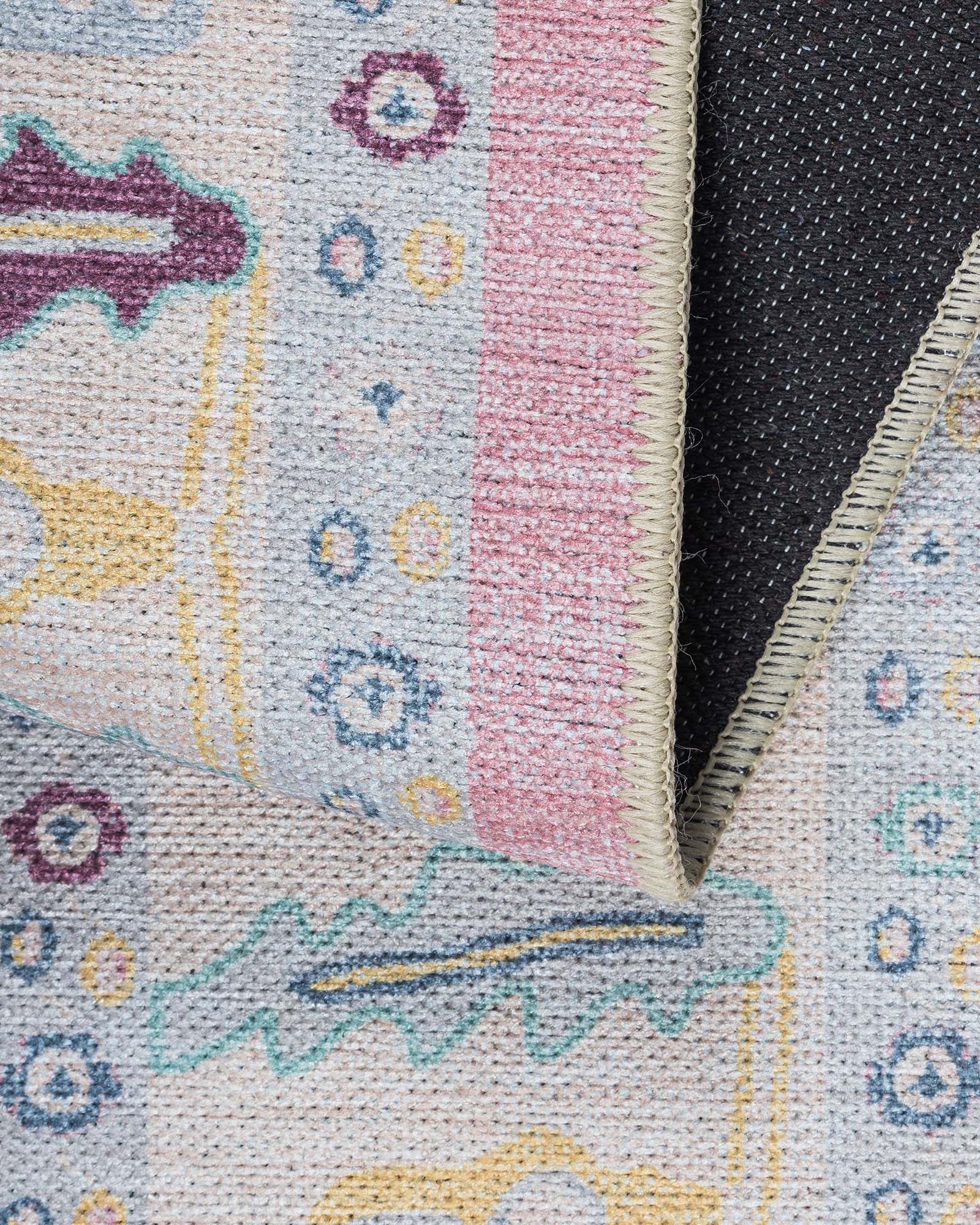
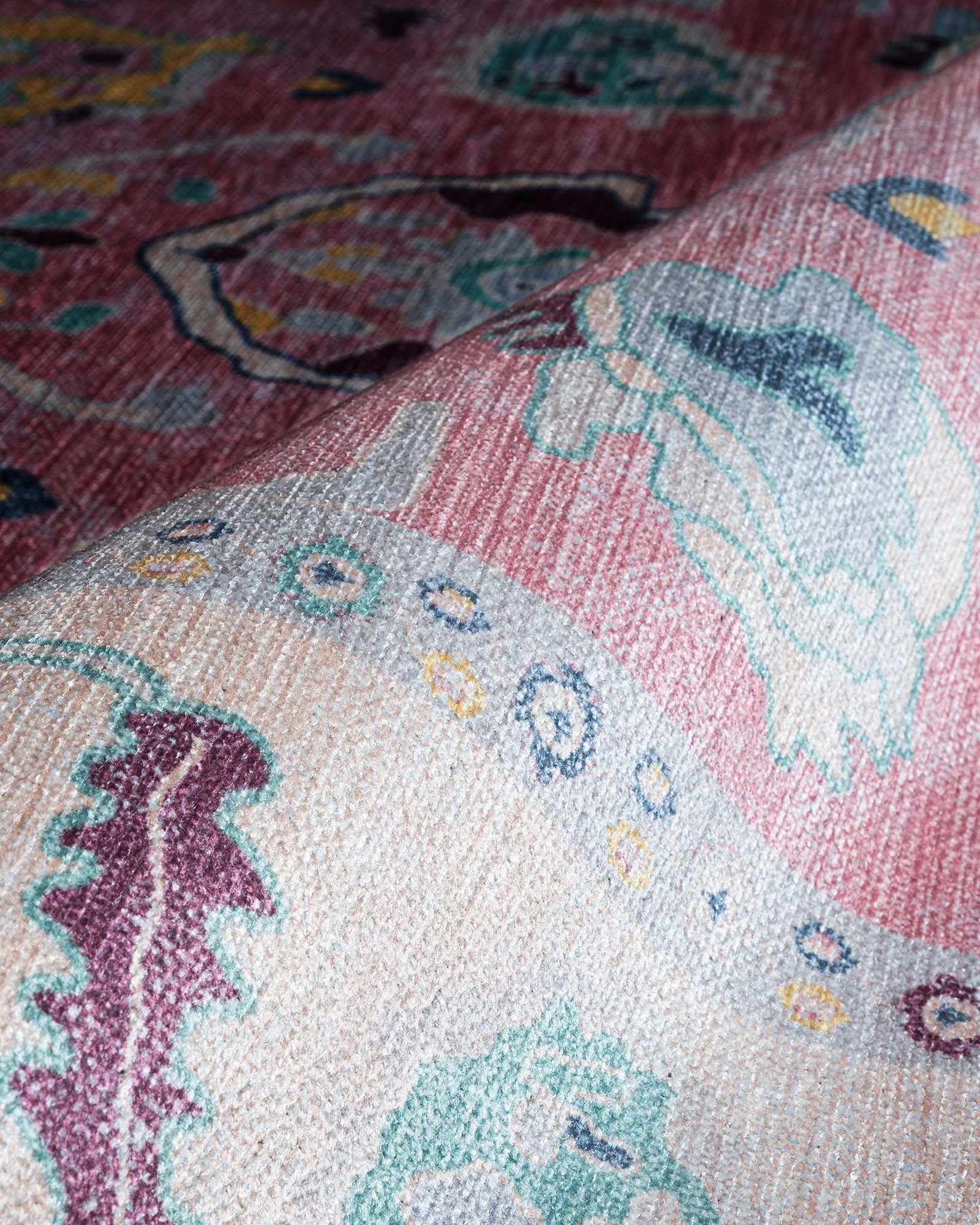
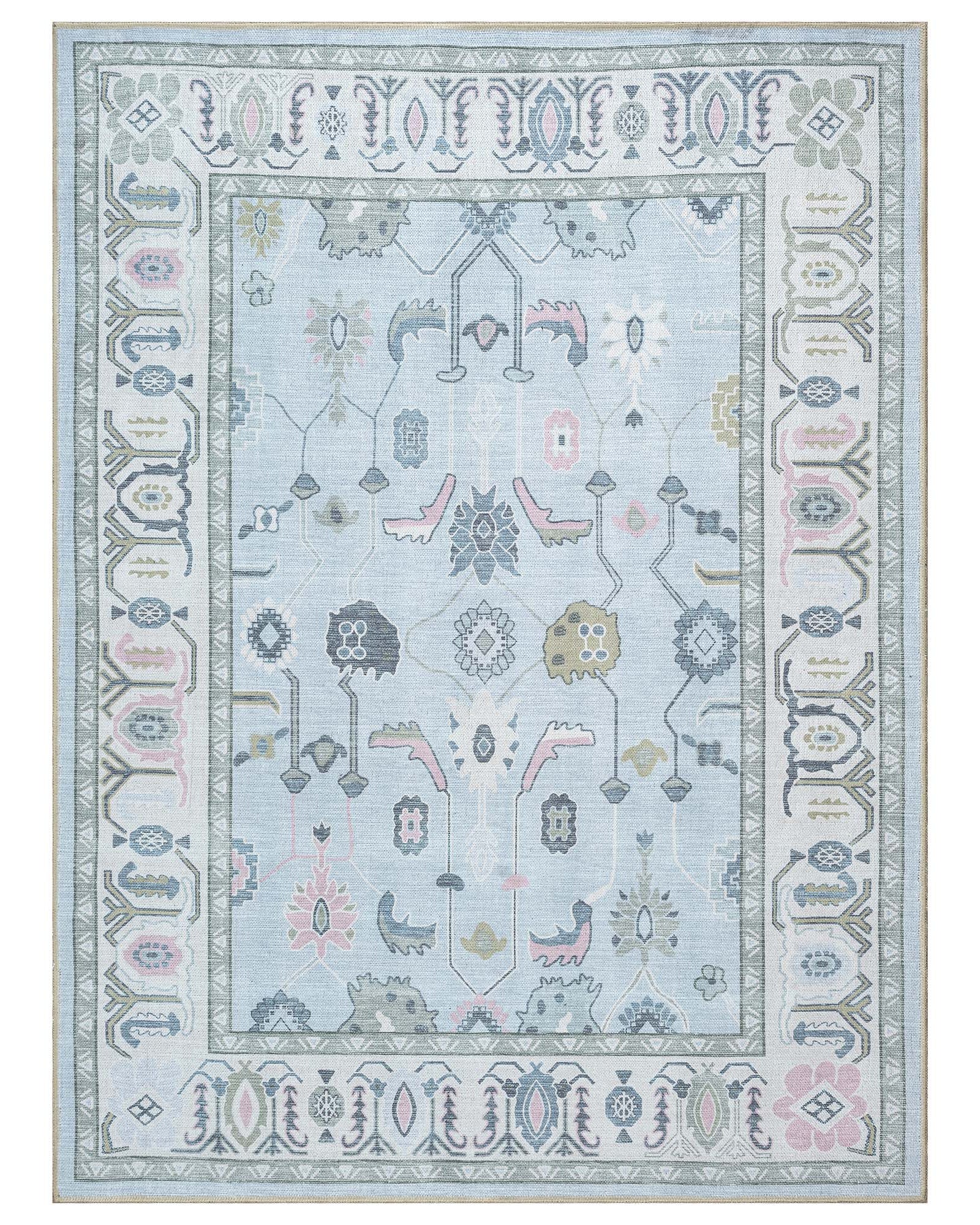
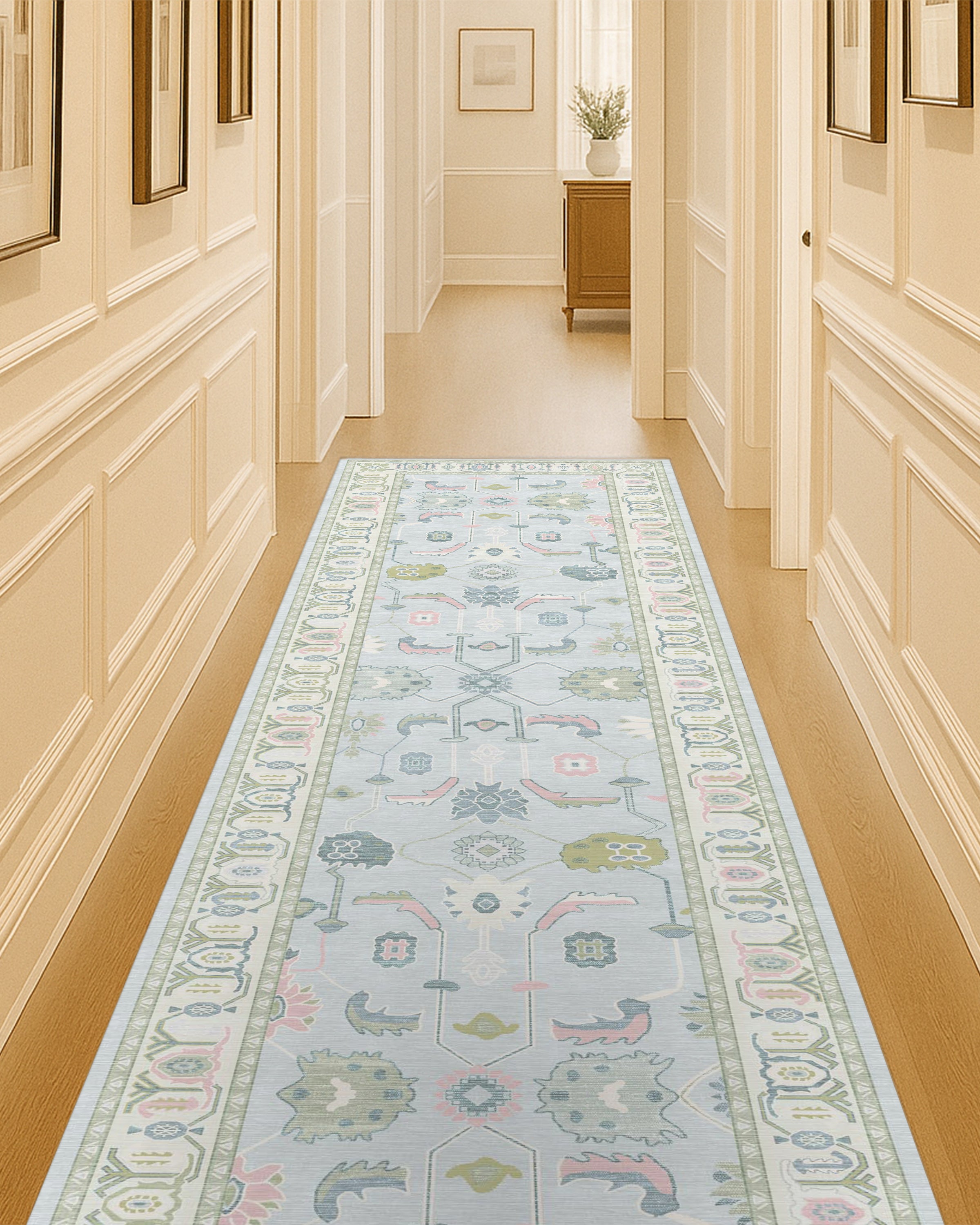
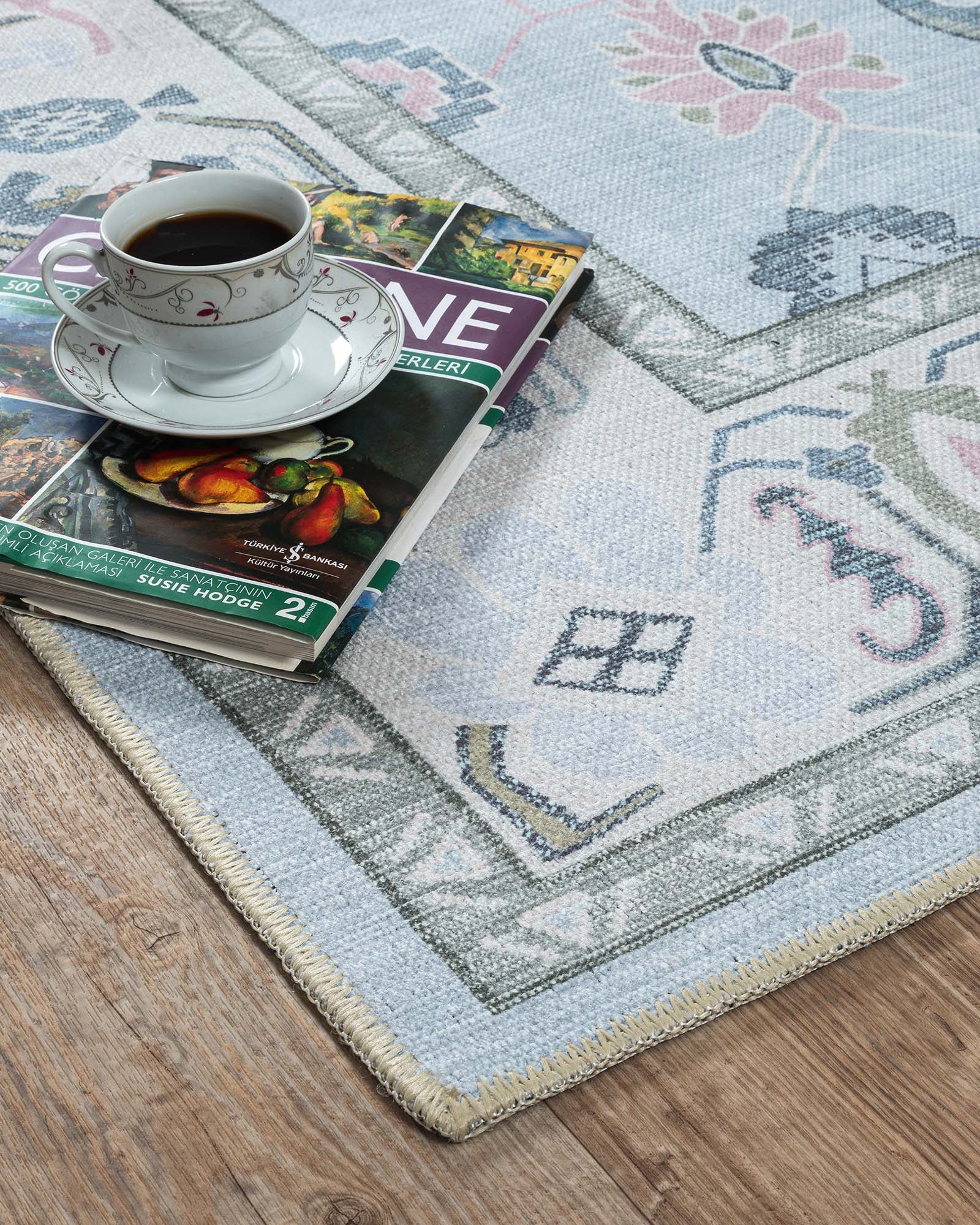
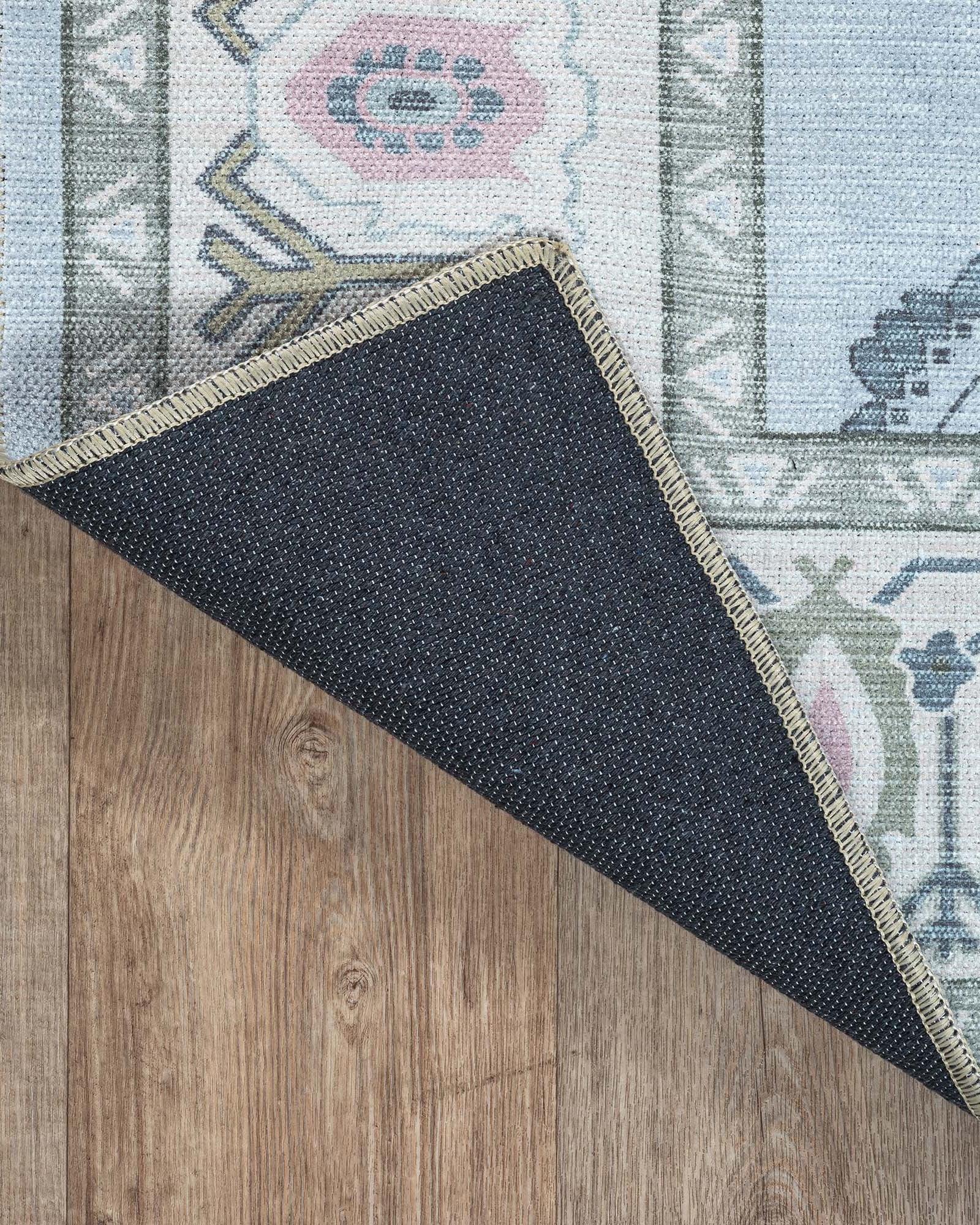
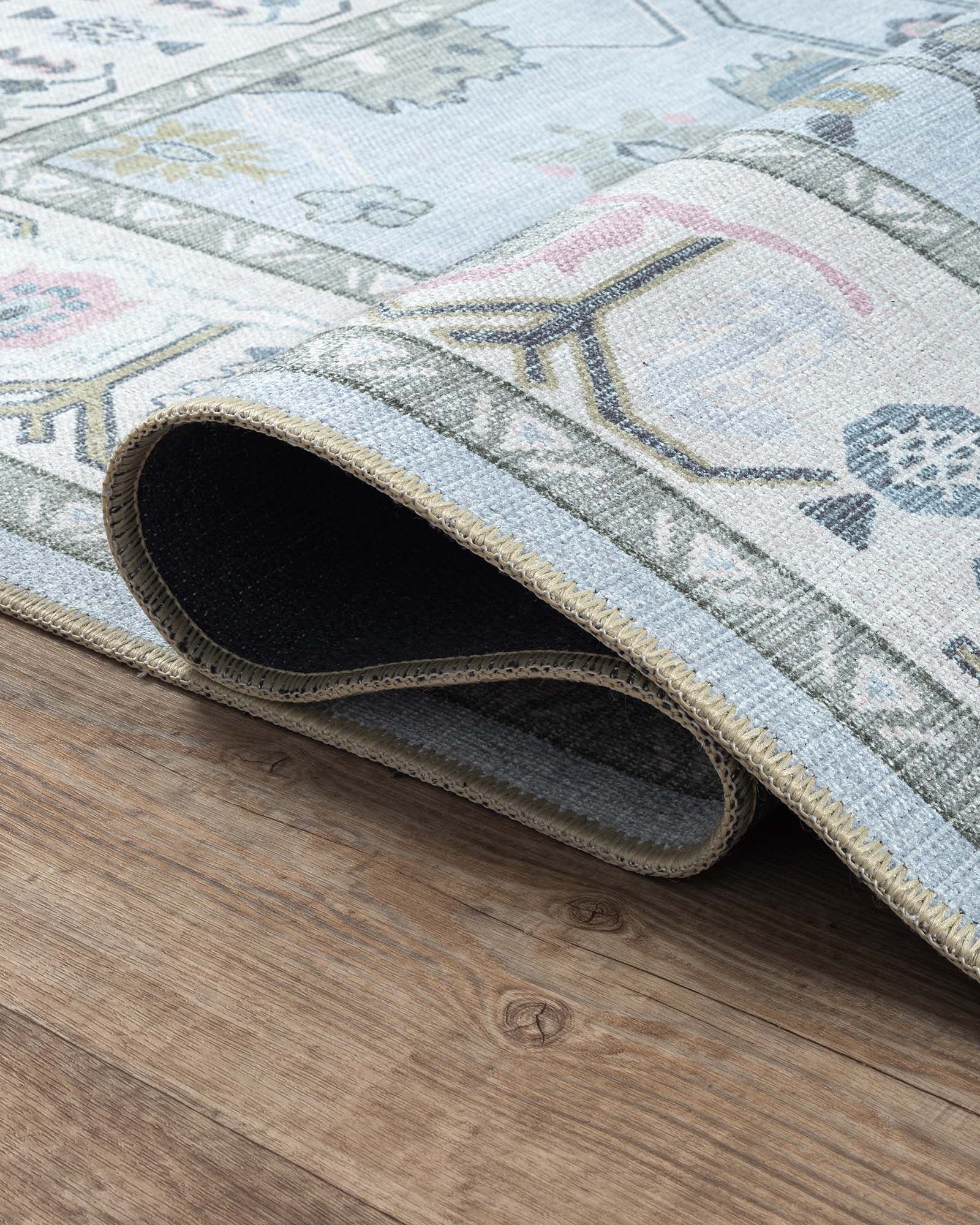
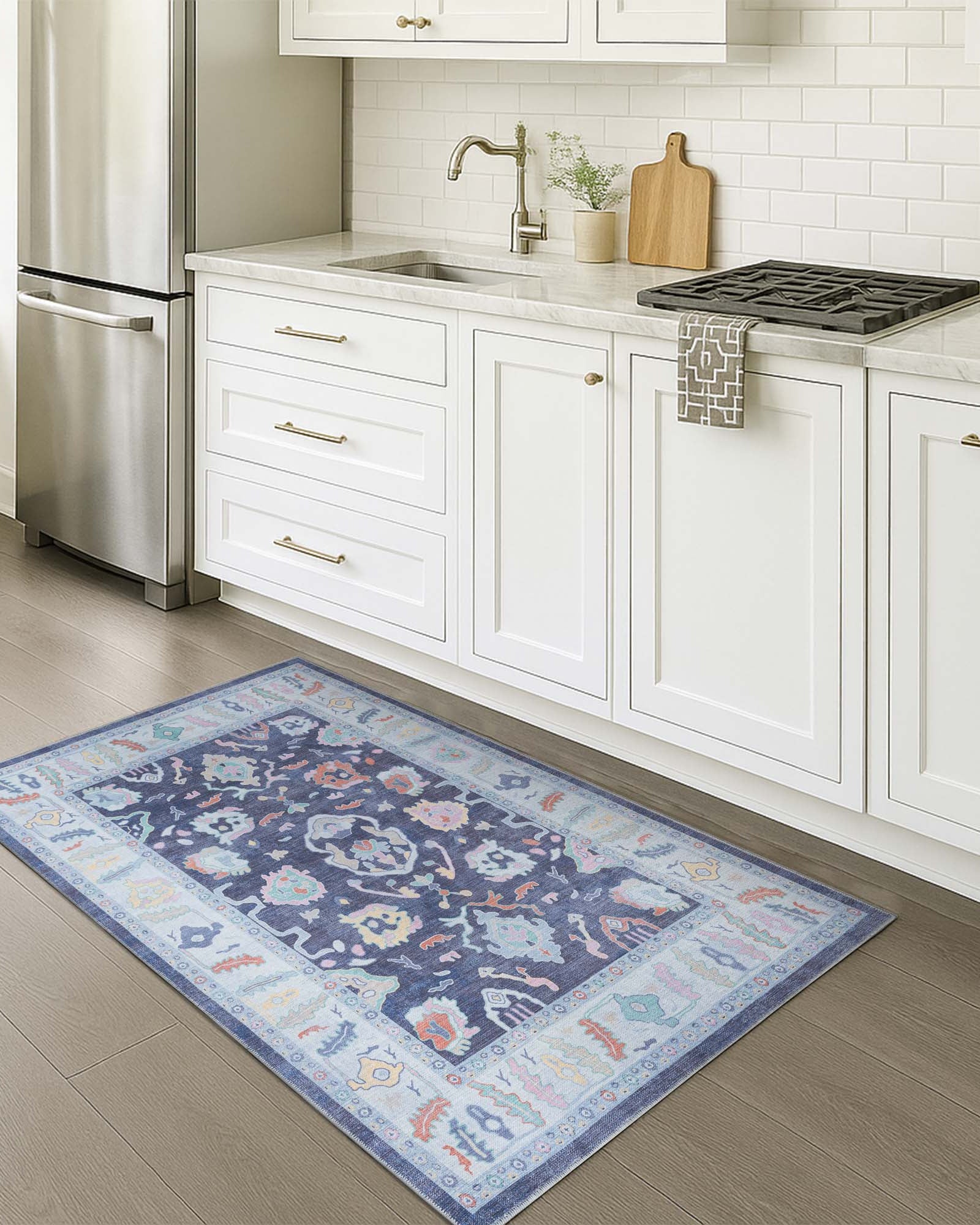
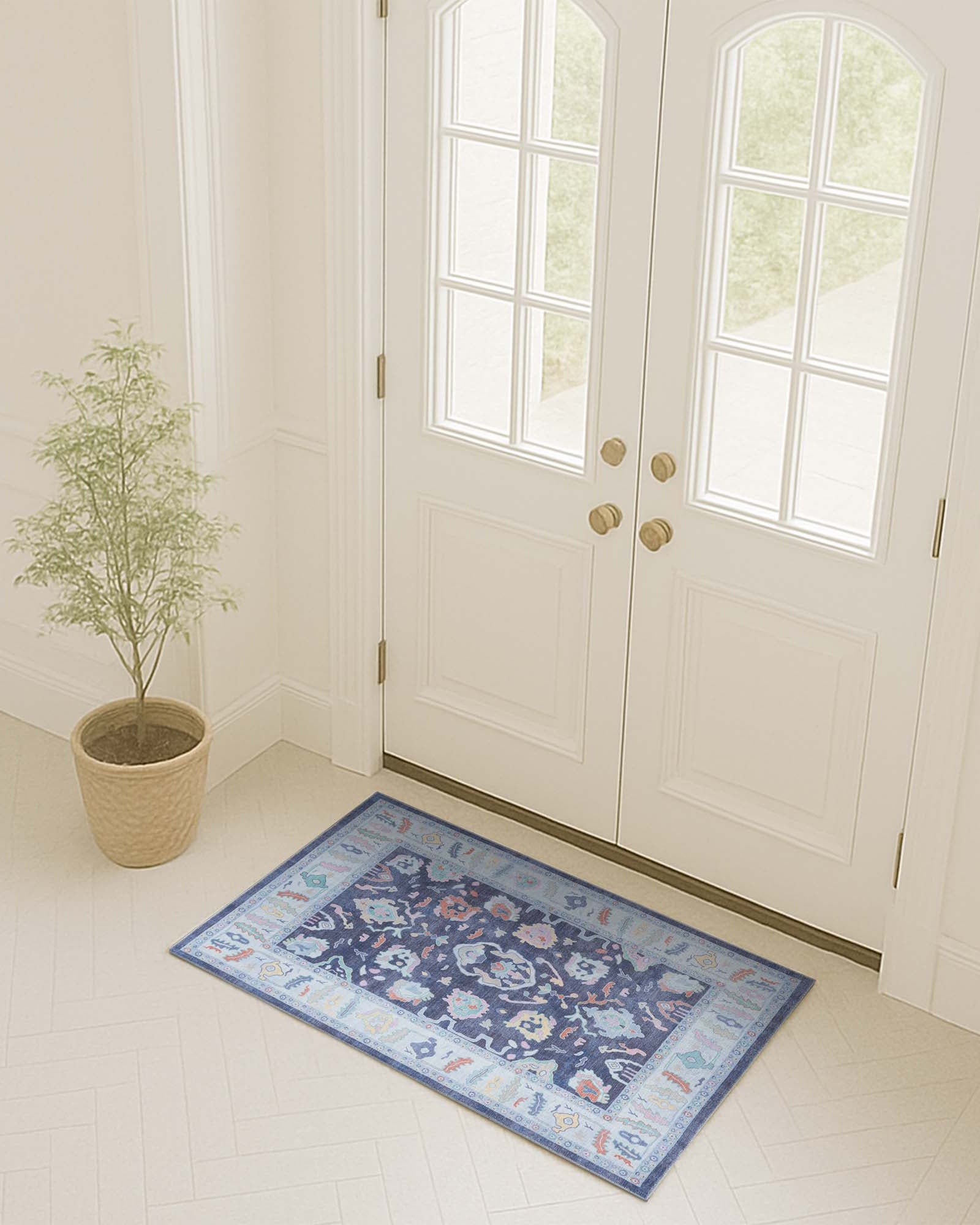
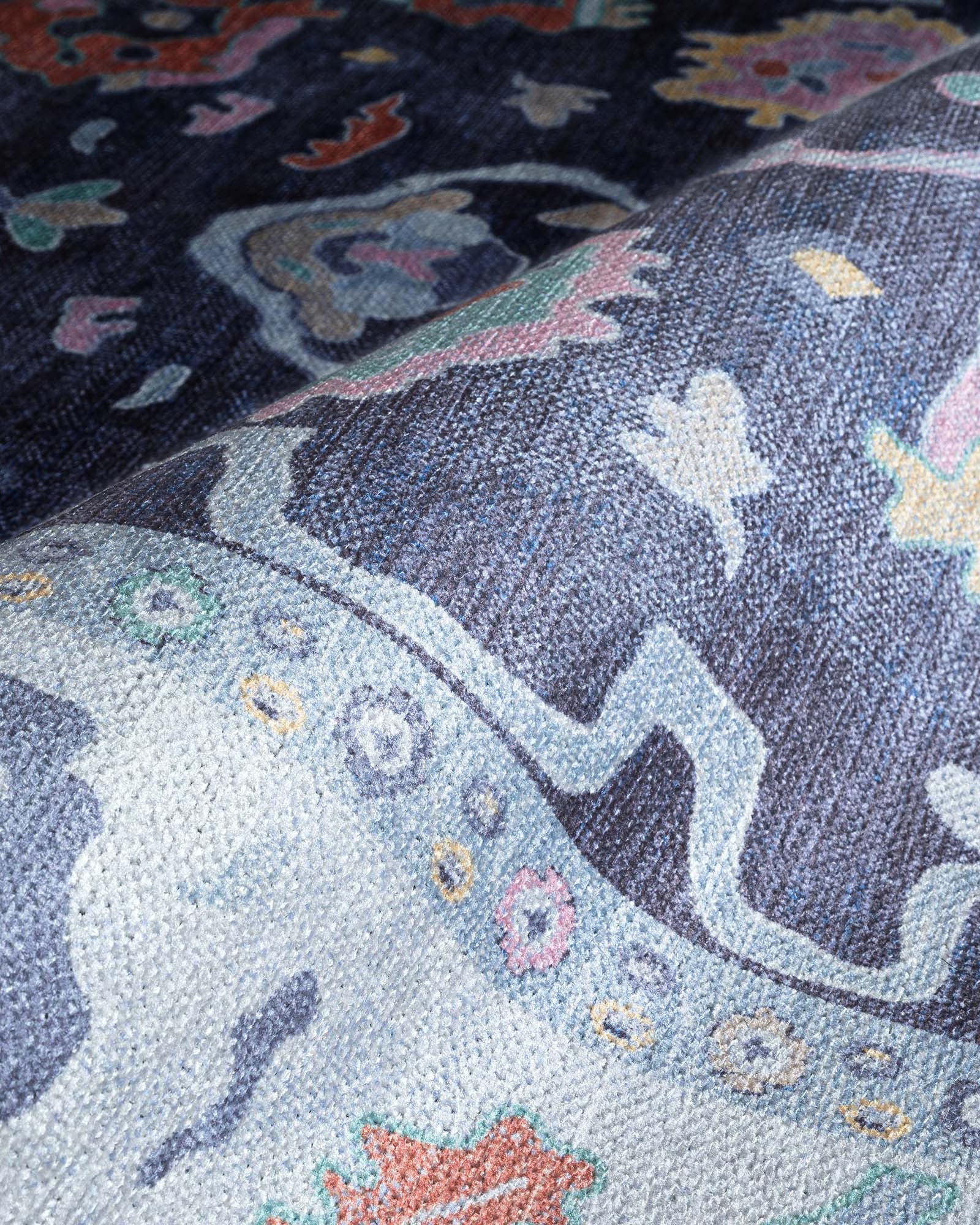
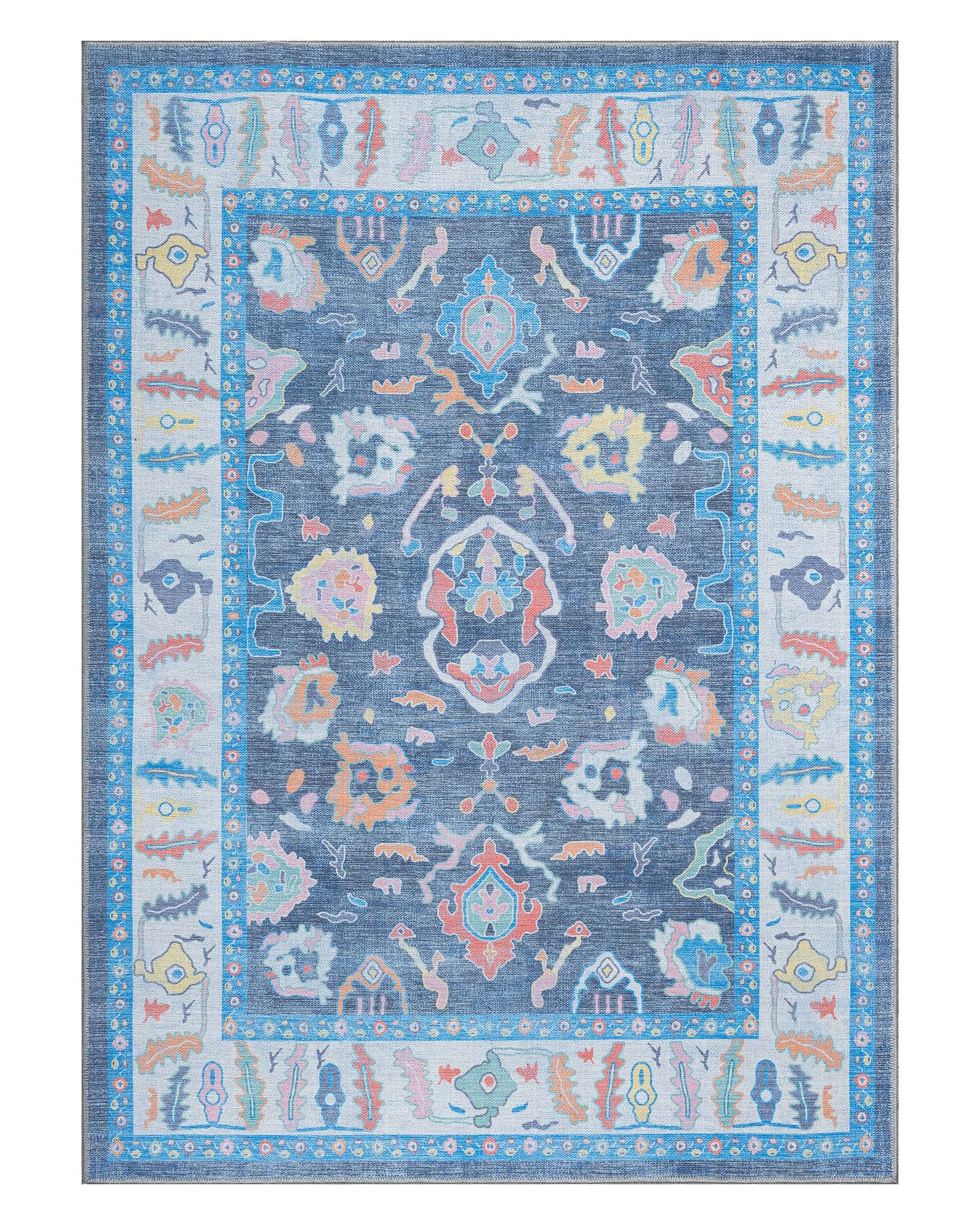
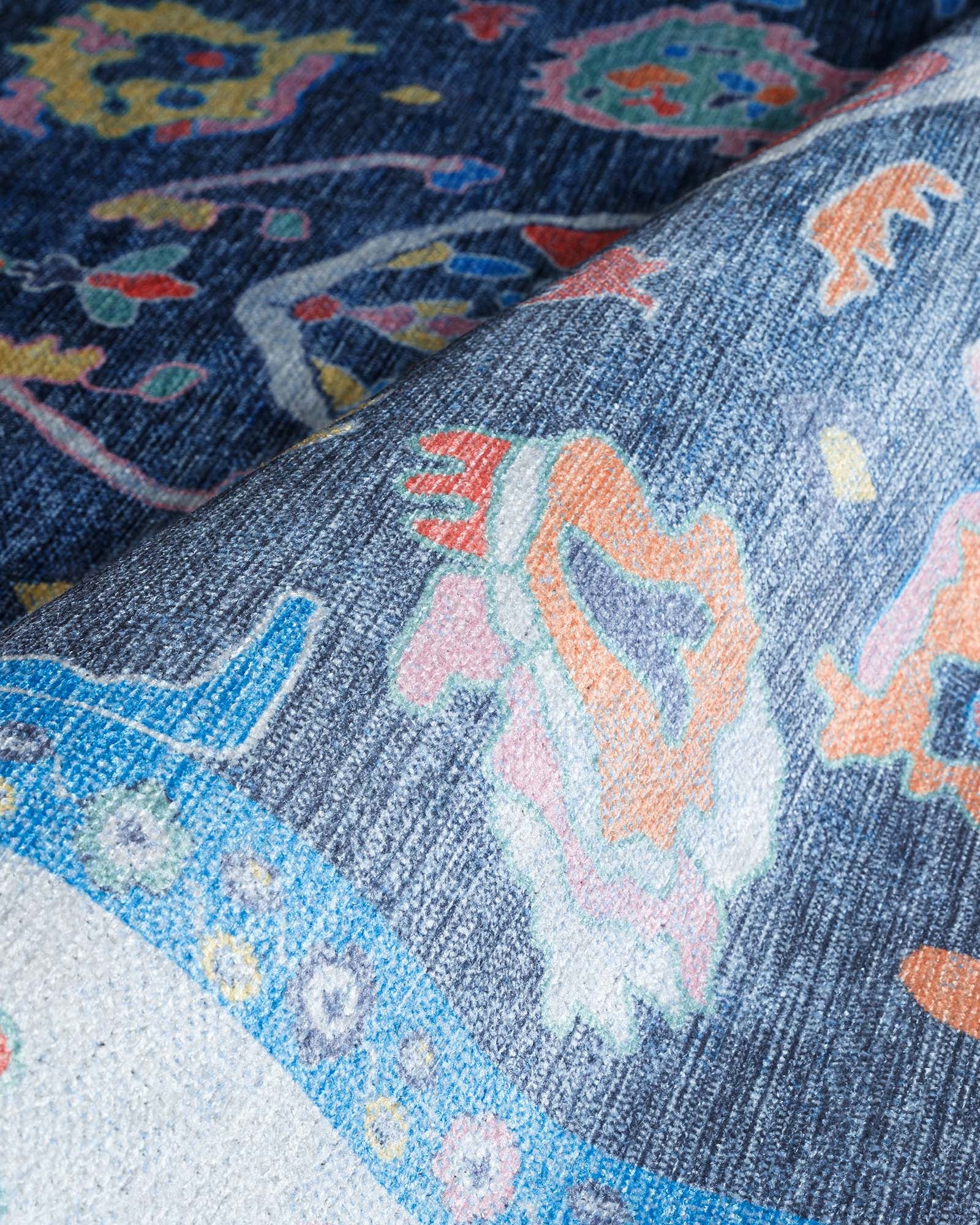
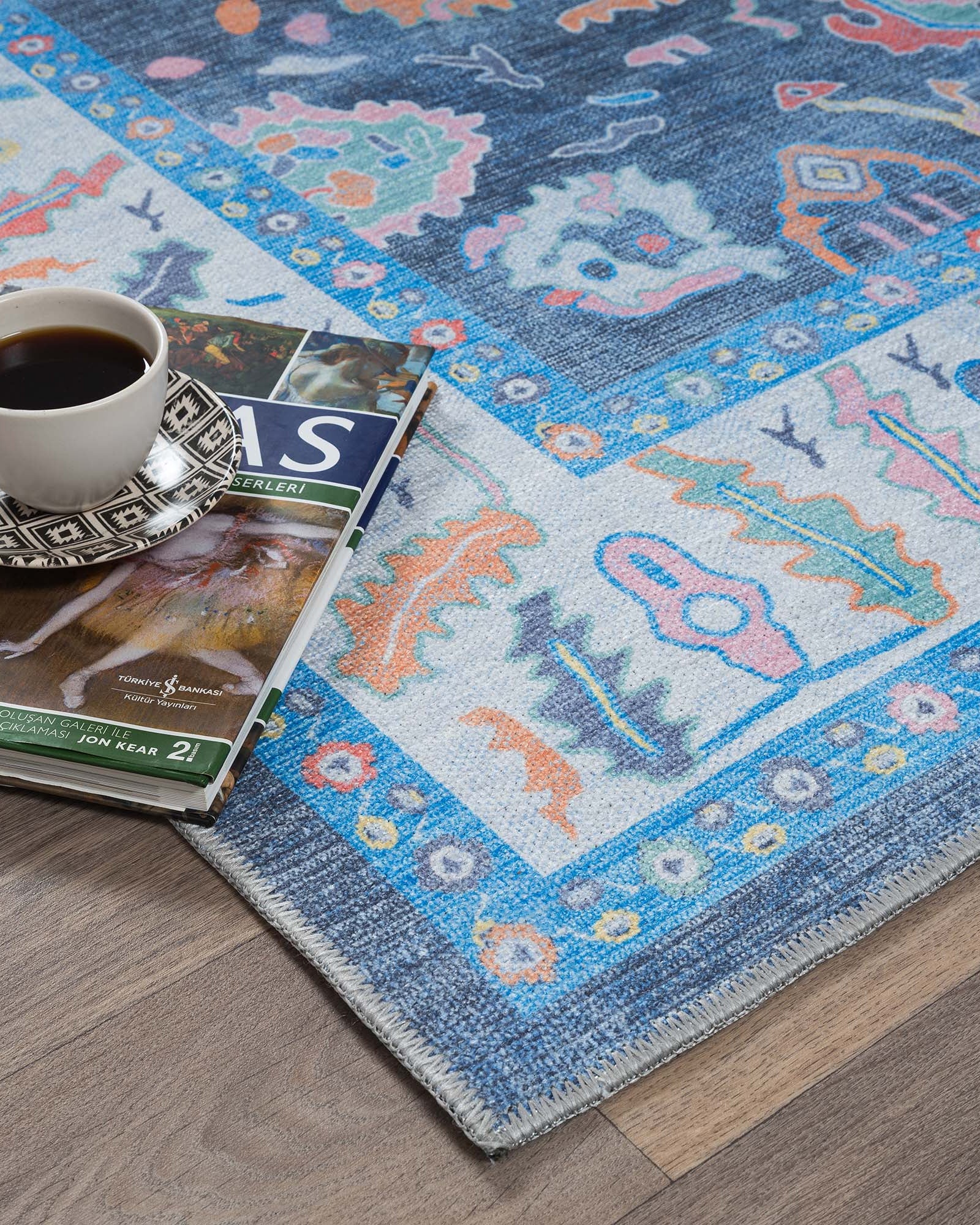
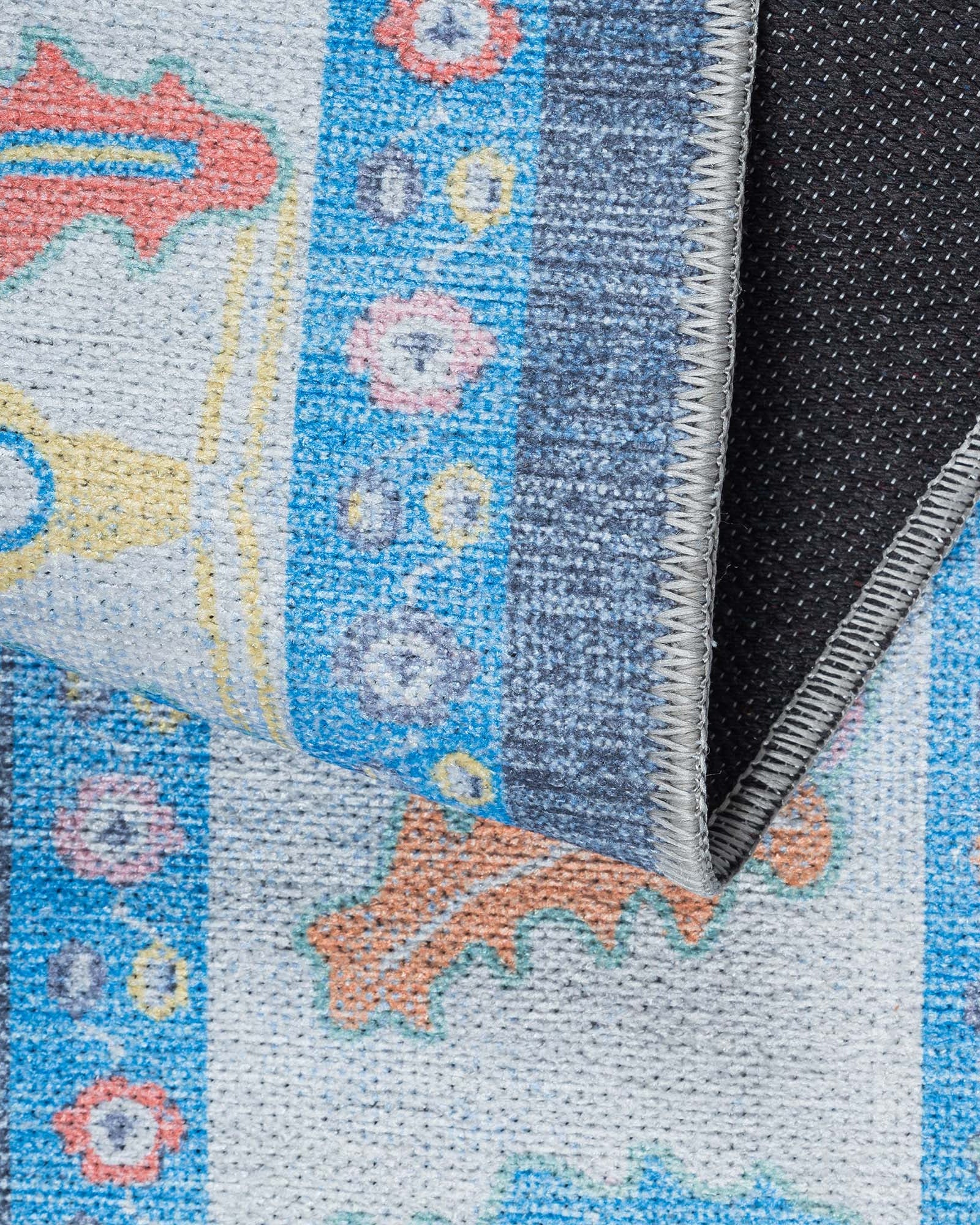
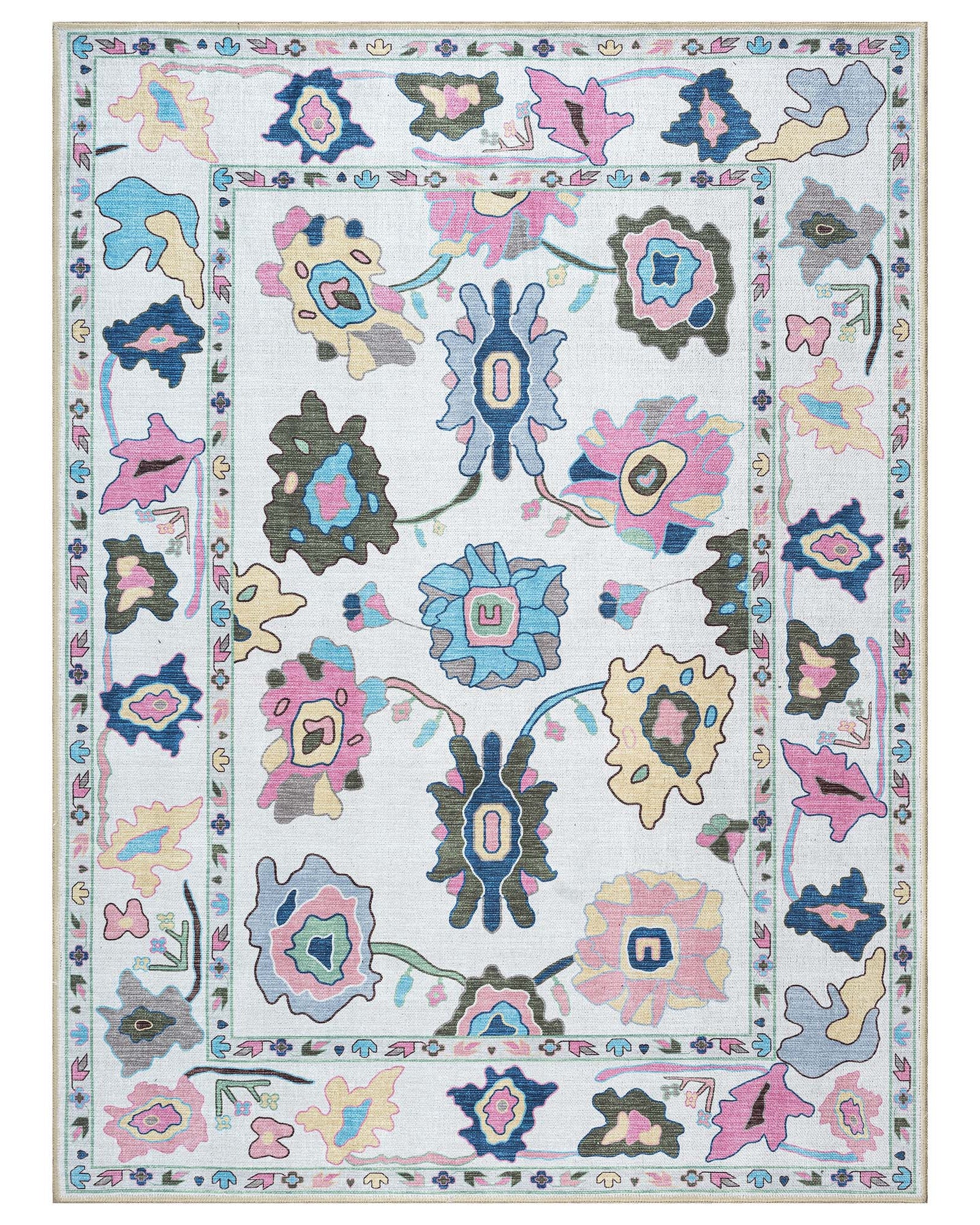
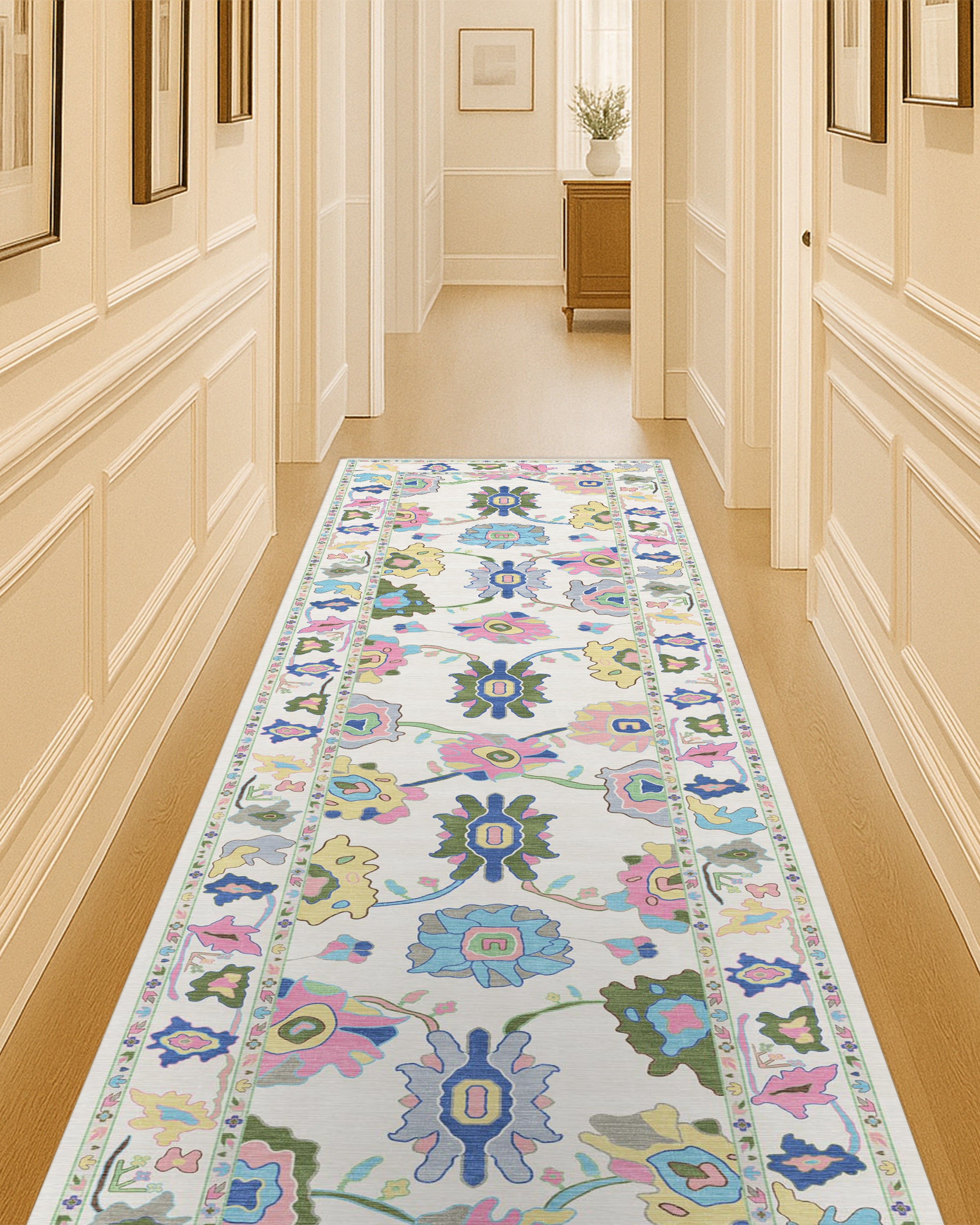
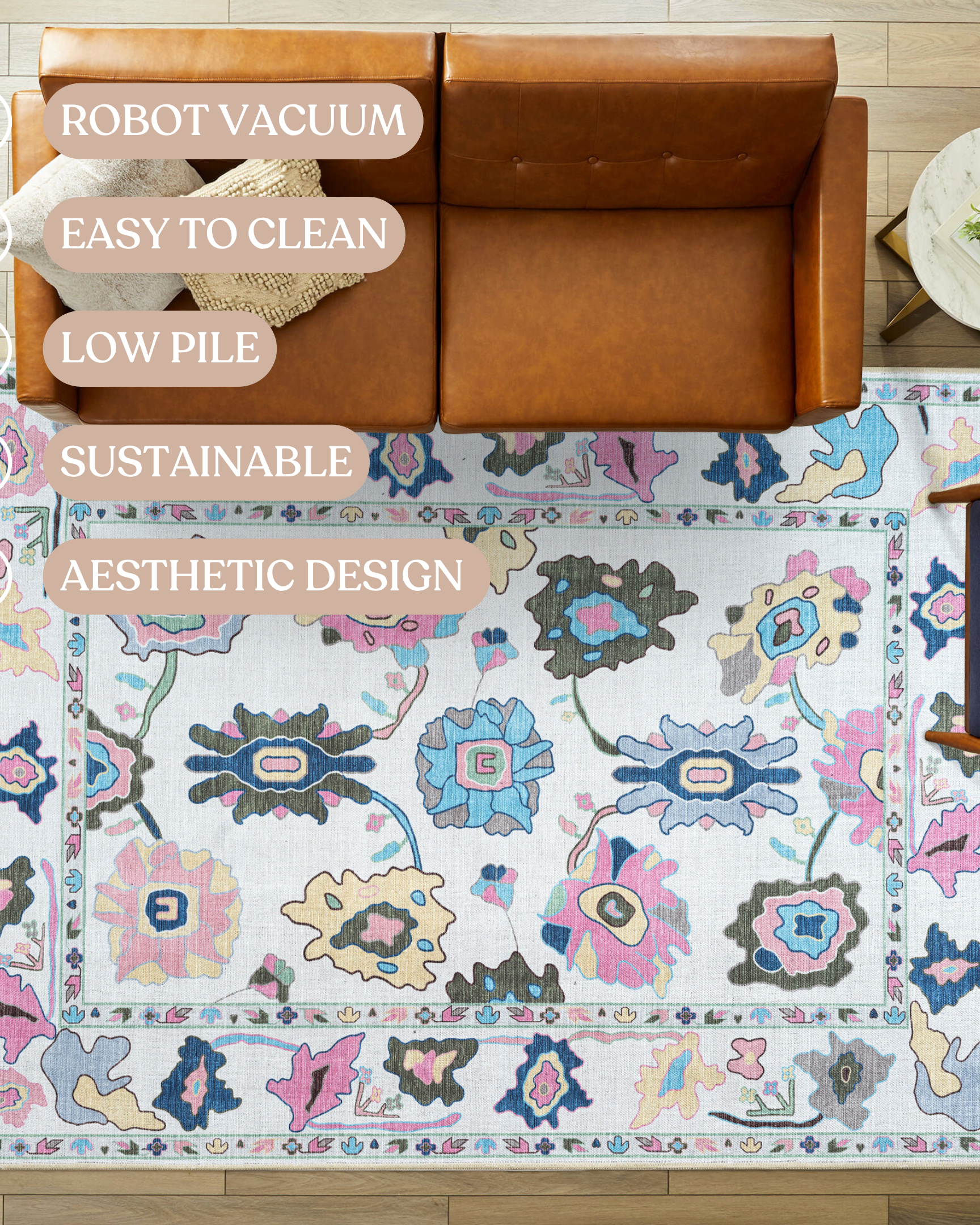
Weaving is only part of how a rug is made. Once the last row of knots is tied, a rug still has to be cut from the loom, washed, trimmed, and have its edges and ends secured — and all of that finishing work was done by hand on every piece in this collection. Finishing is where a rug's edges, fringe and final surface are decided, and it takes real skill to get wrong as much as right.
What Happens After the Loom
A rug fresh off the loom is not the rug you would recognise on a floor. It still needs several rounds of hand work before it is finished, and each stage shapes how the rug will hold up for decades afterward.
Cutting Down and Washing
The rug is cut free from the warp threads still attached to the loom, then washed to remove excess dye, loose fibre and residue from the weaving process. Traditional washing was done by hand with water and mild soap, working the rug on a flat surface and rinsing thoroughly, then drying it flat or hung under even tension so it does not distort. This stage sets the wool's final hand-feel and brings out the sheen that comes from properly cleaned lanolin.
Shearing
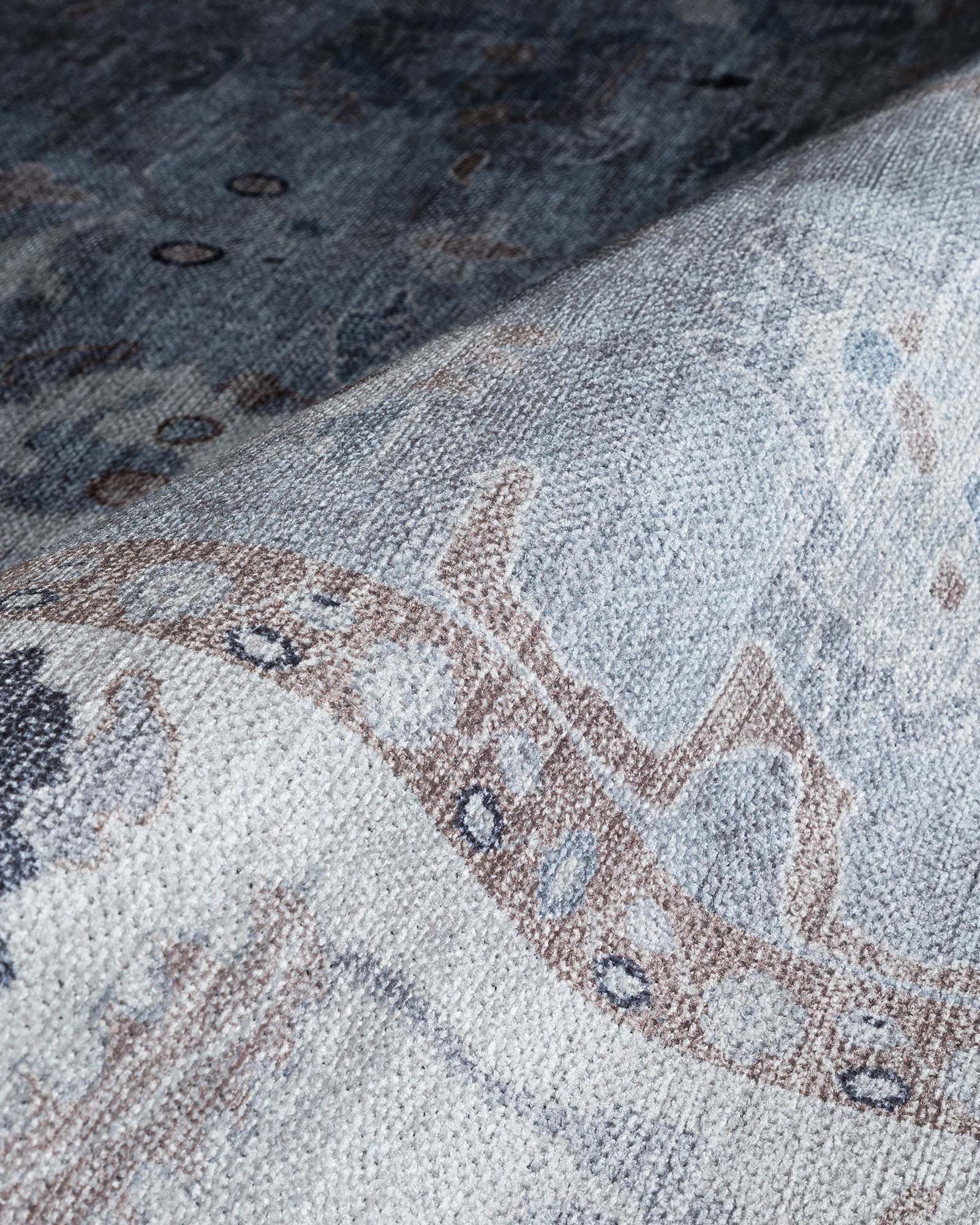
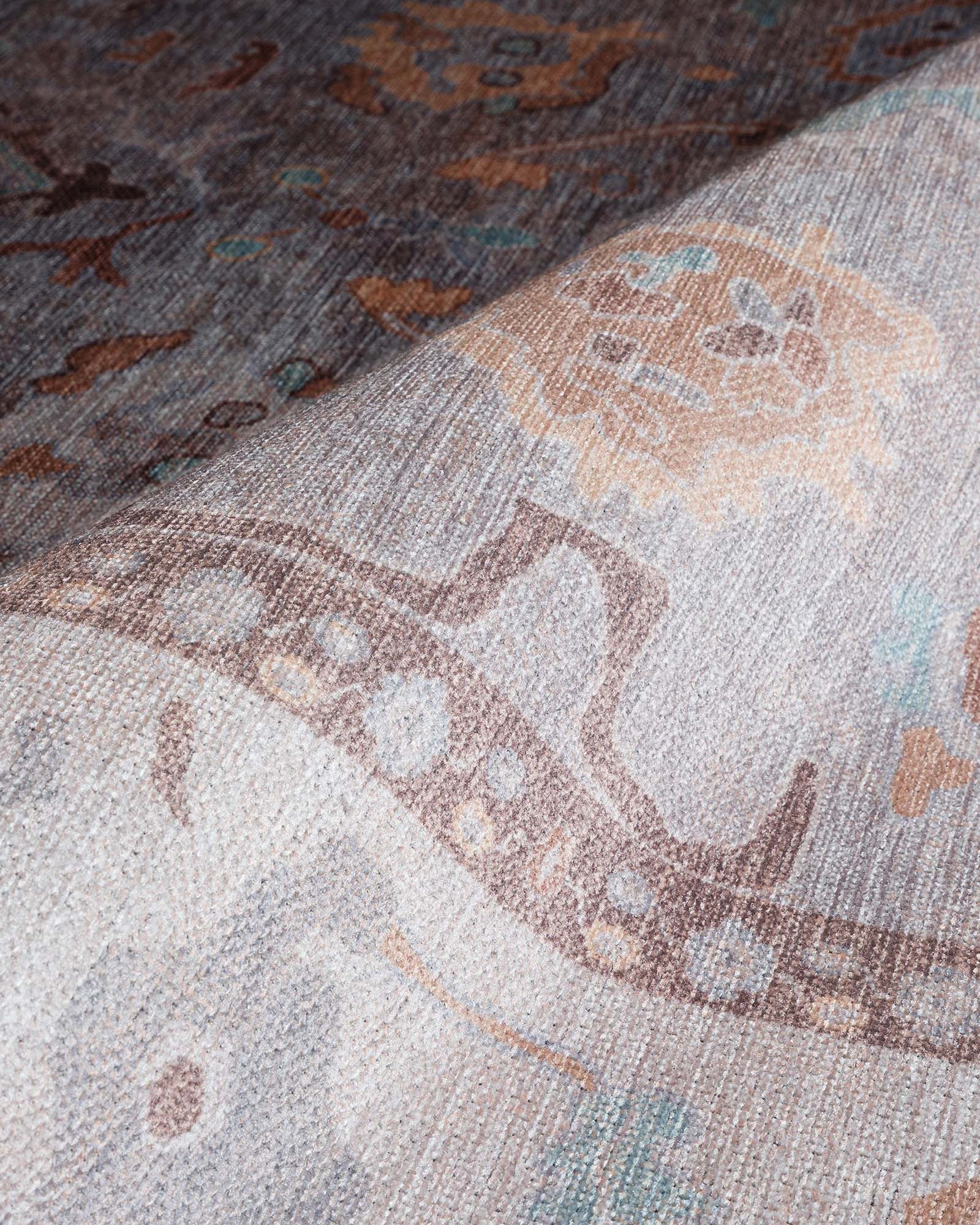
Pile height straight off the loom is often uneven, since knot tension varies slightly row to row. A finisher goes over the surface with hand shears — or in some workshops a manually guided clipper — levelling the pile to a consistent height and, on some pieces, deliberately shearing lower to sharpen pattern contrast. This is close, careful work: cut too much in one place and the pile never grows back.
Edge Wrapping and Overcasting
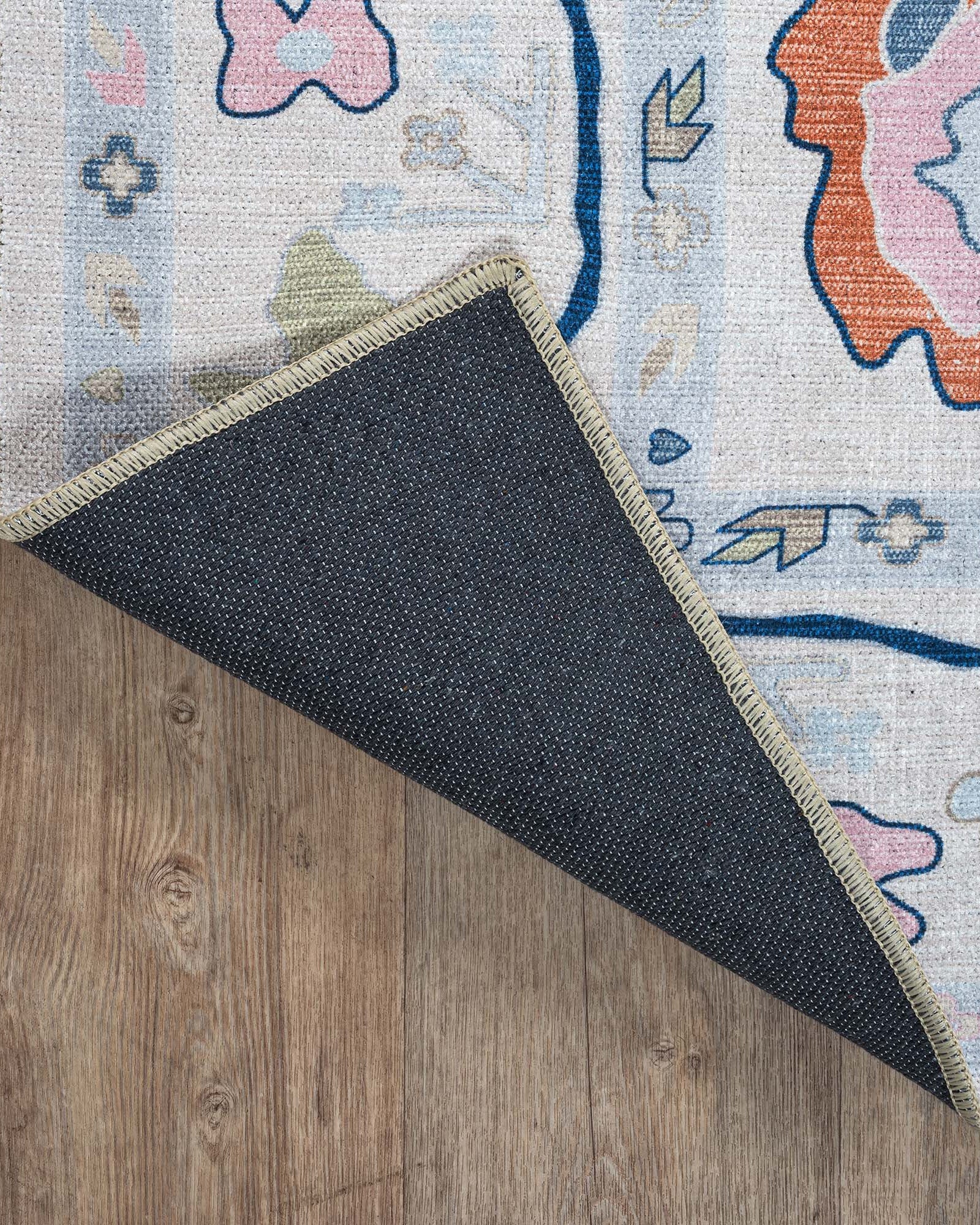
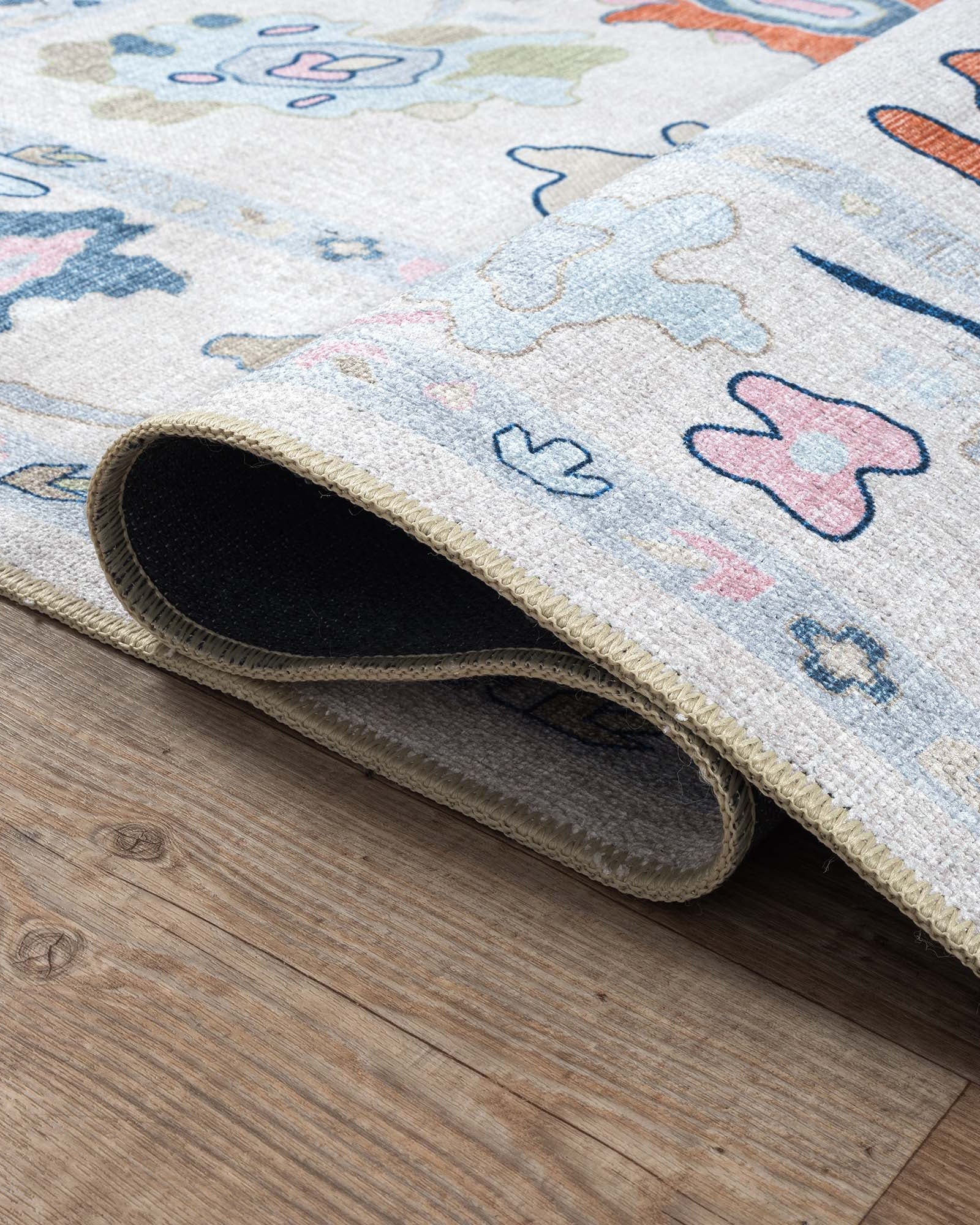
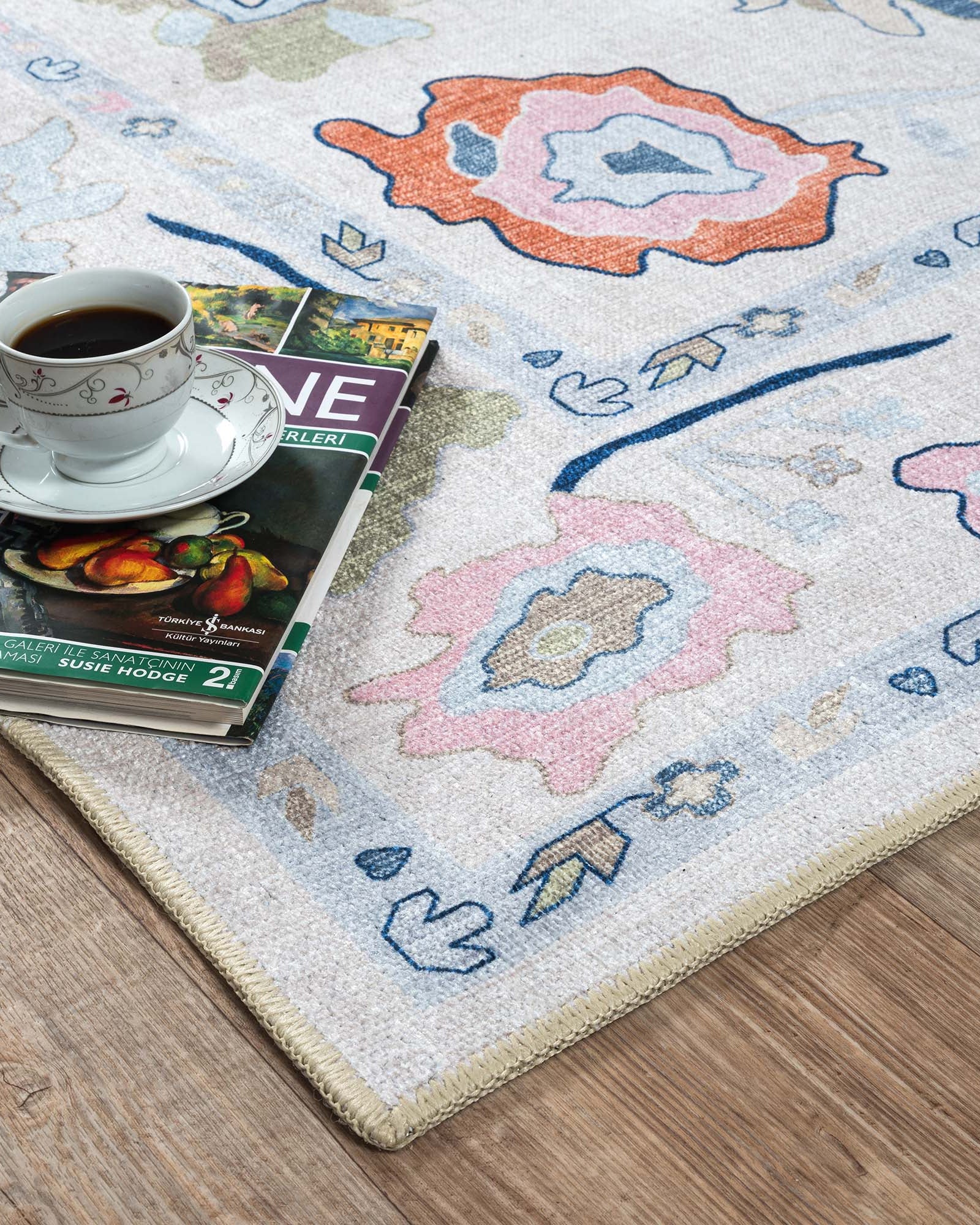
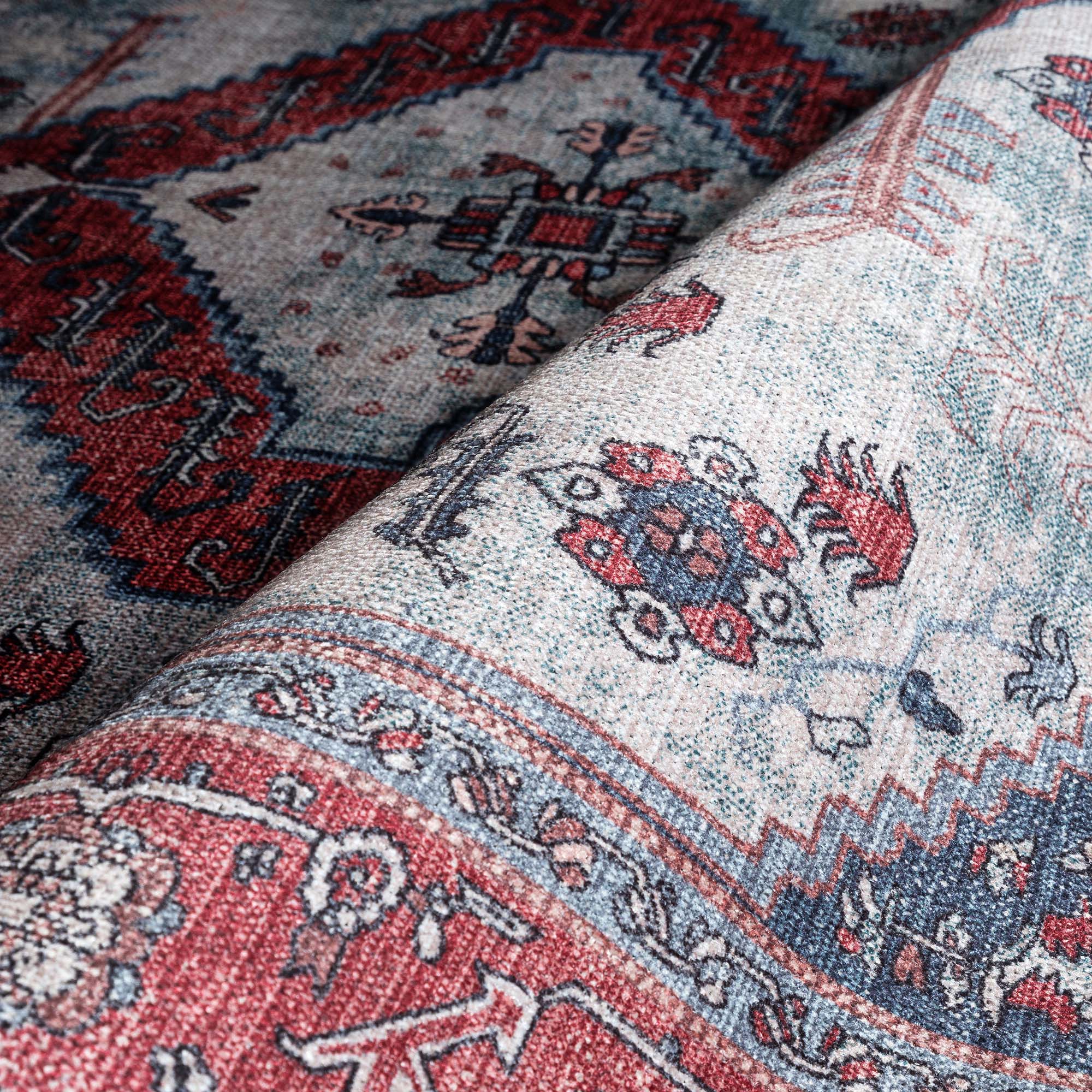
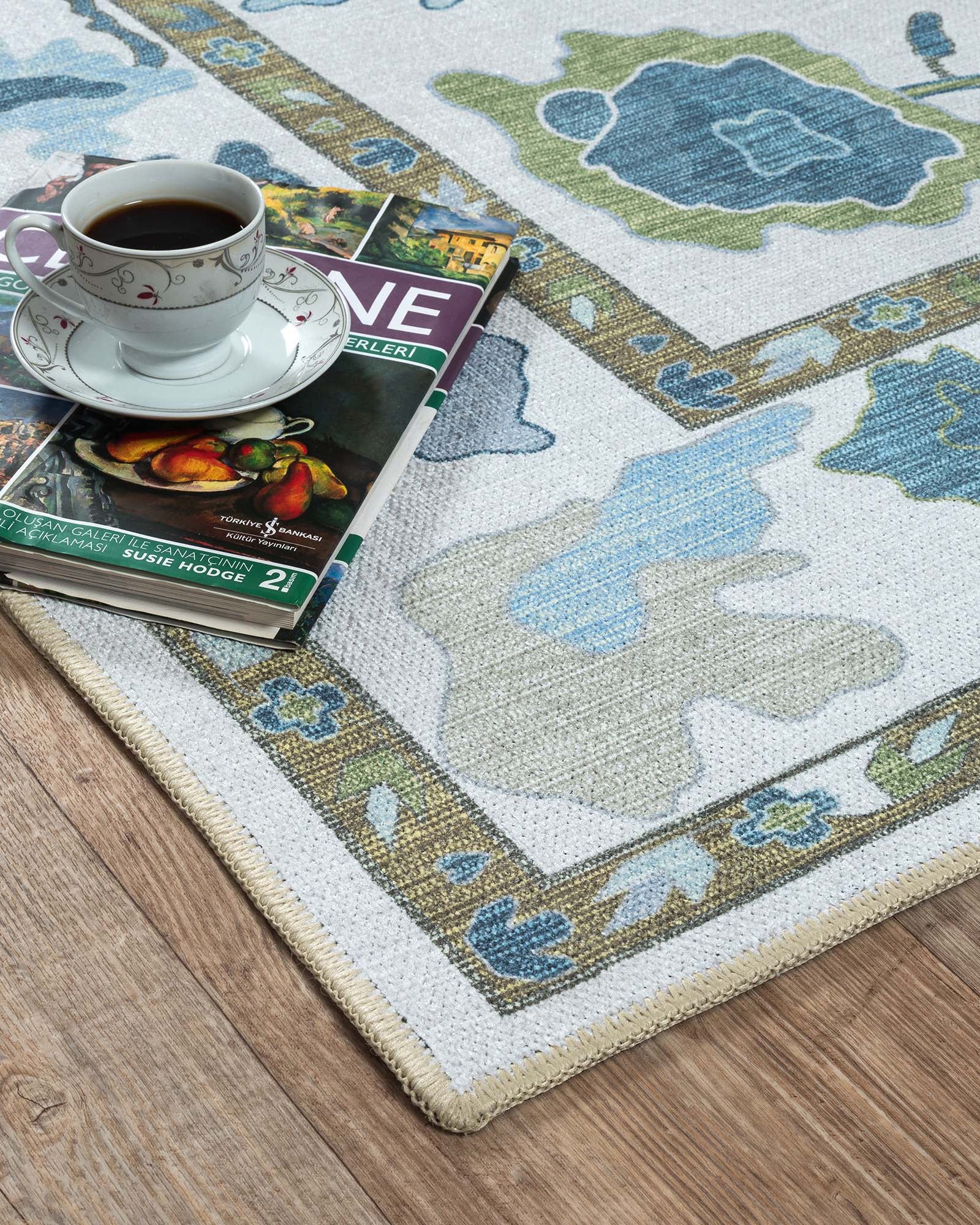
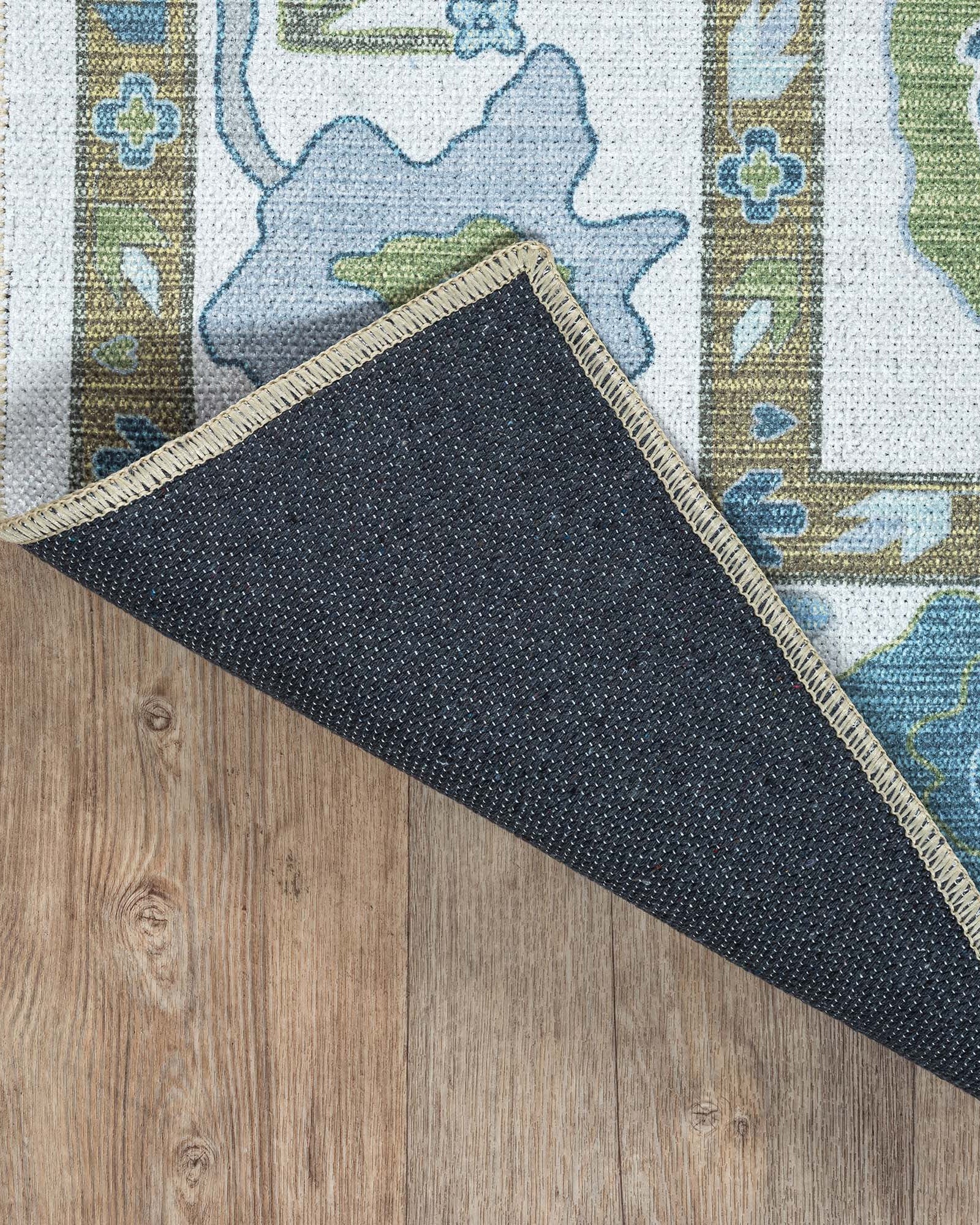
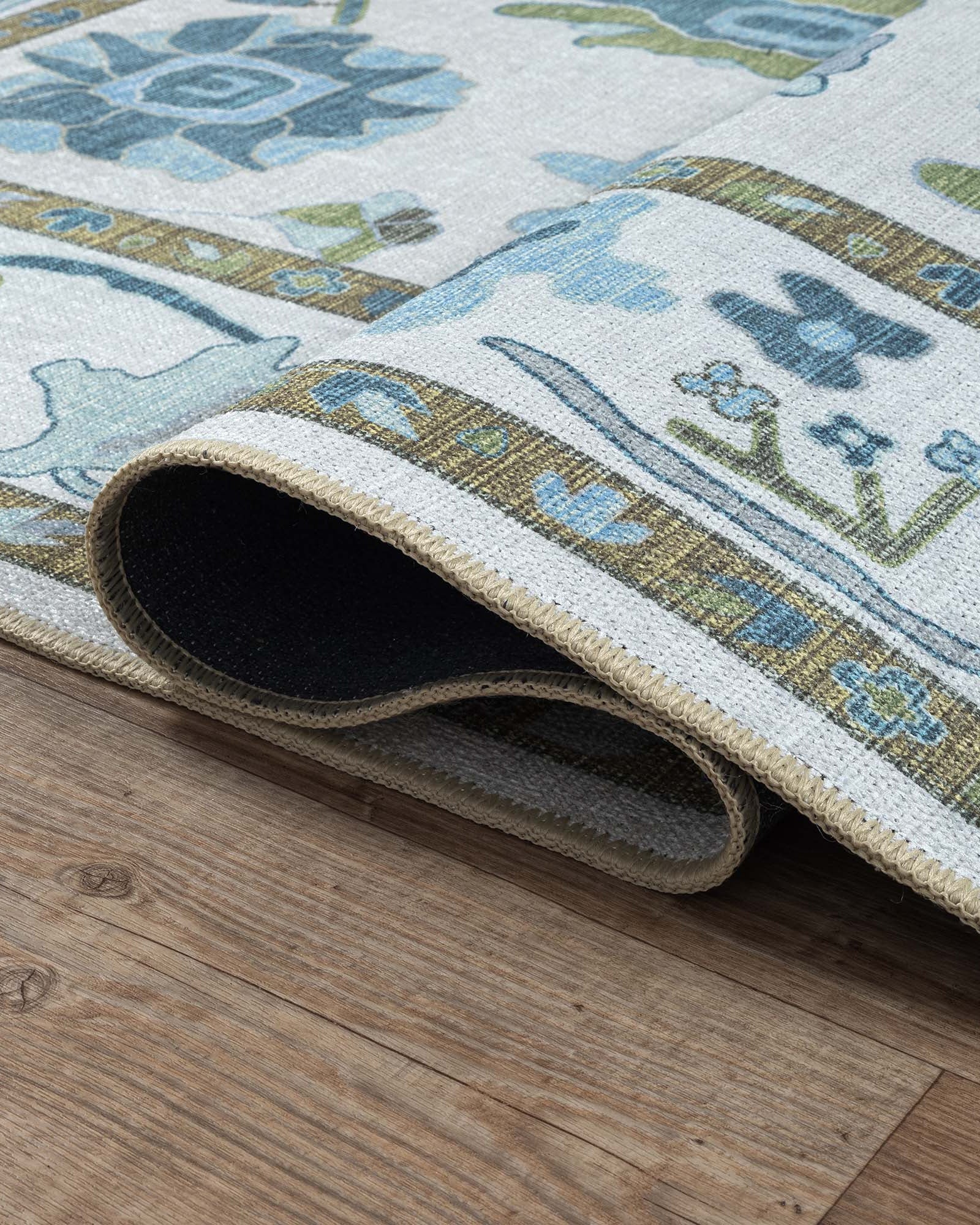
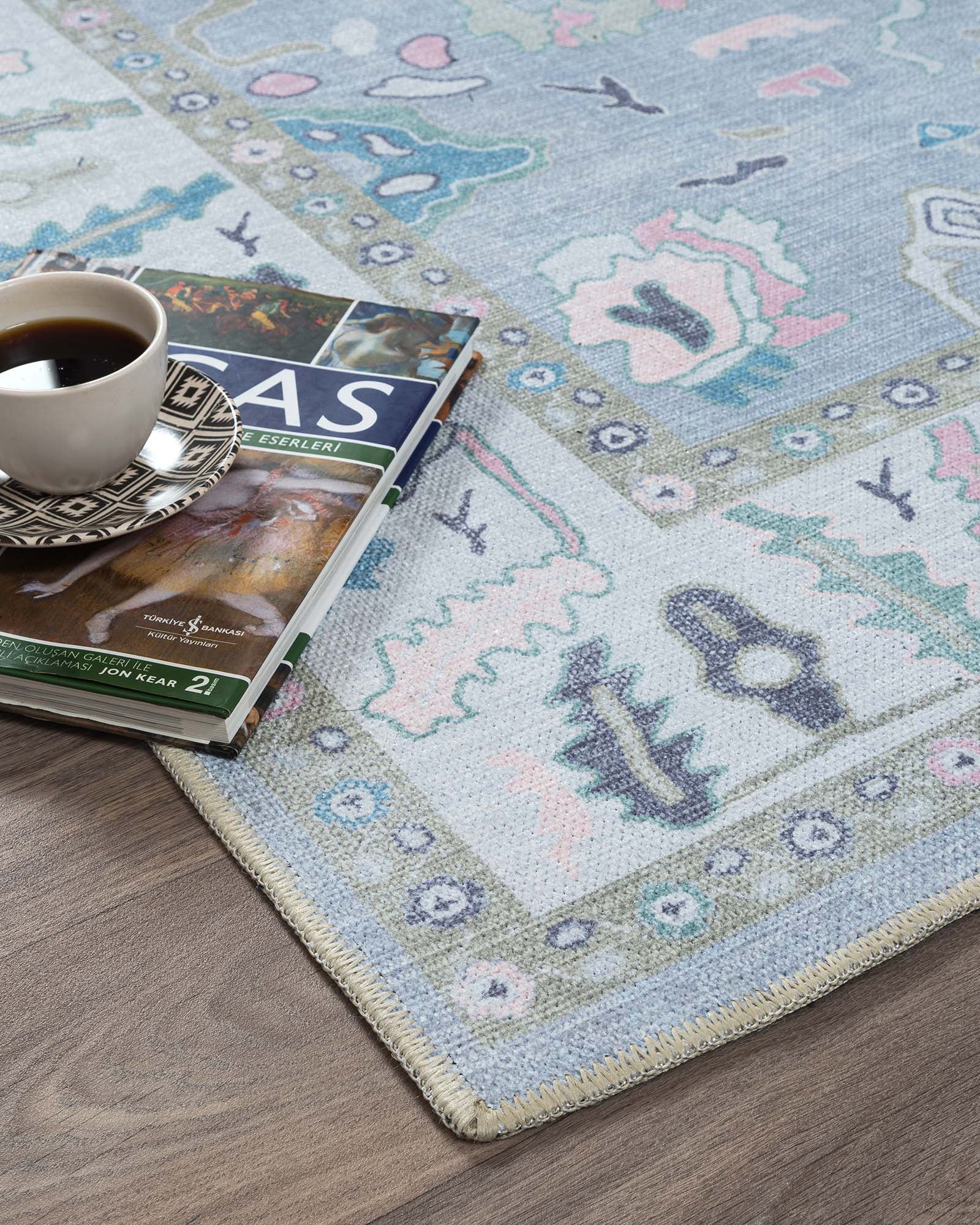
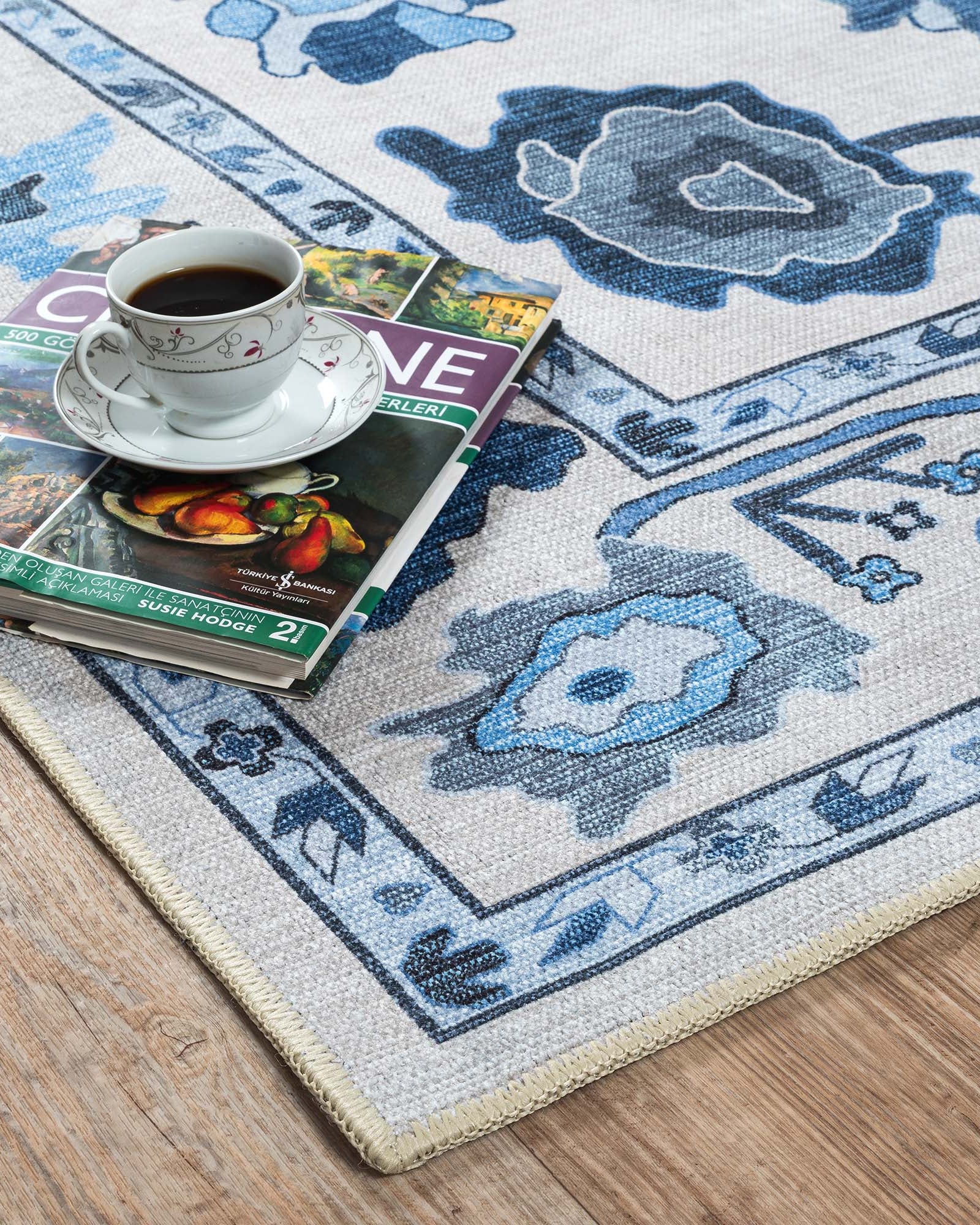
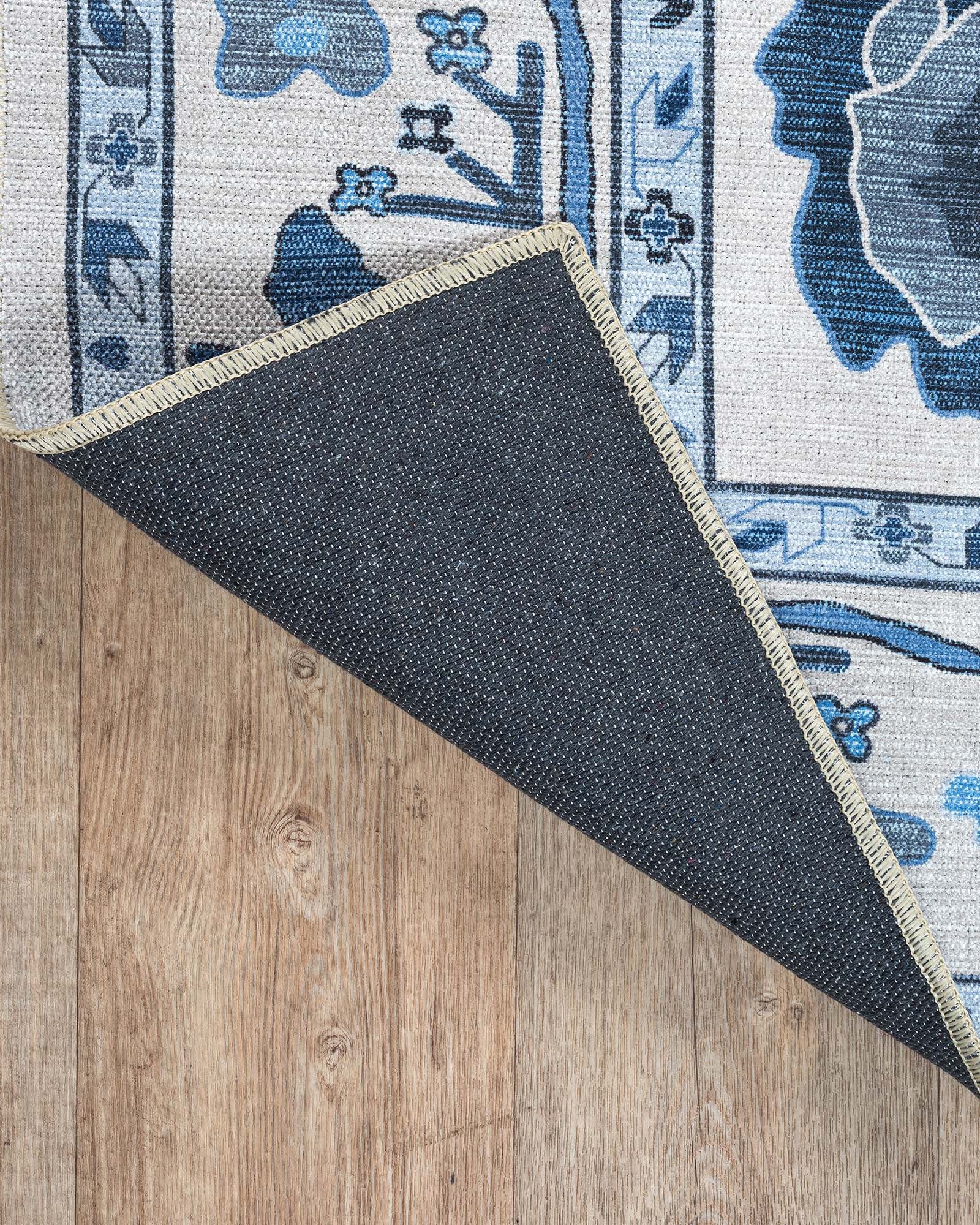
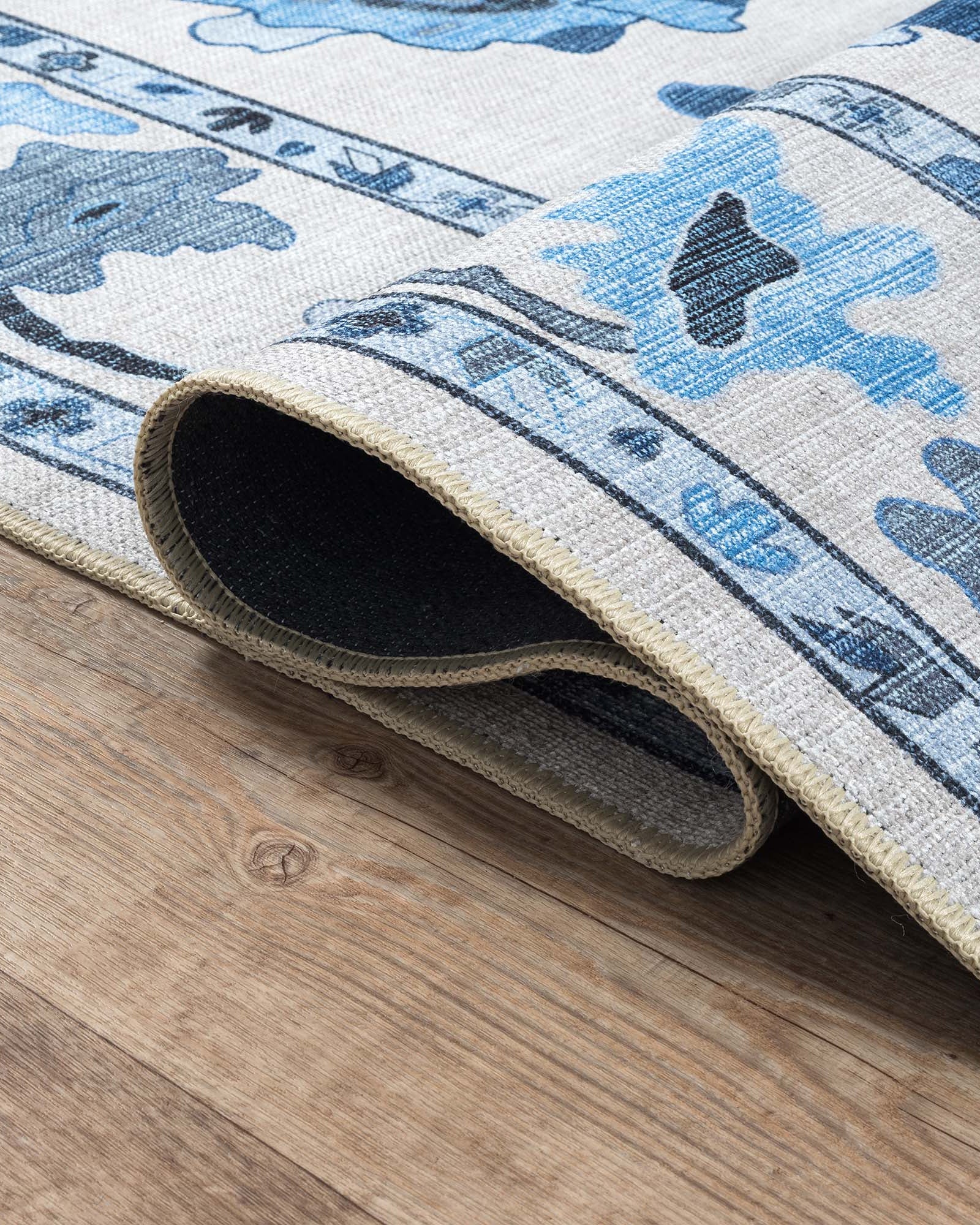
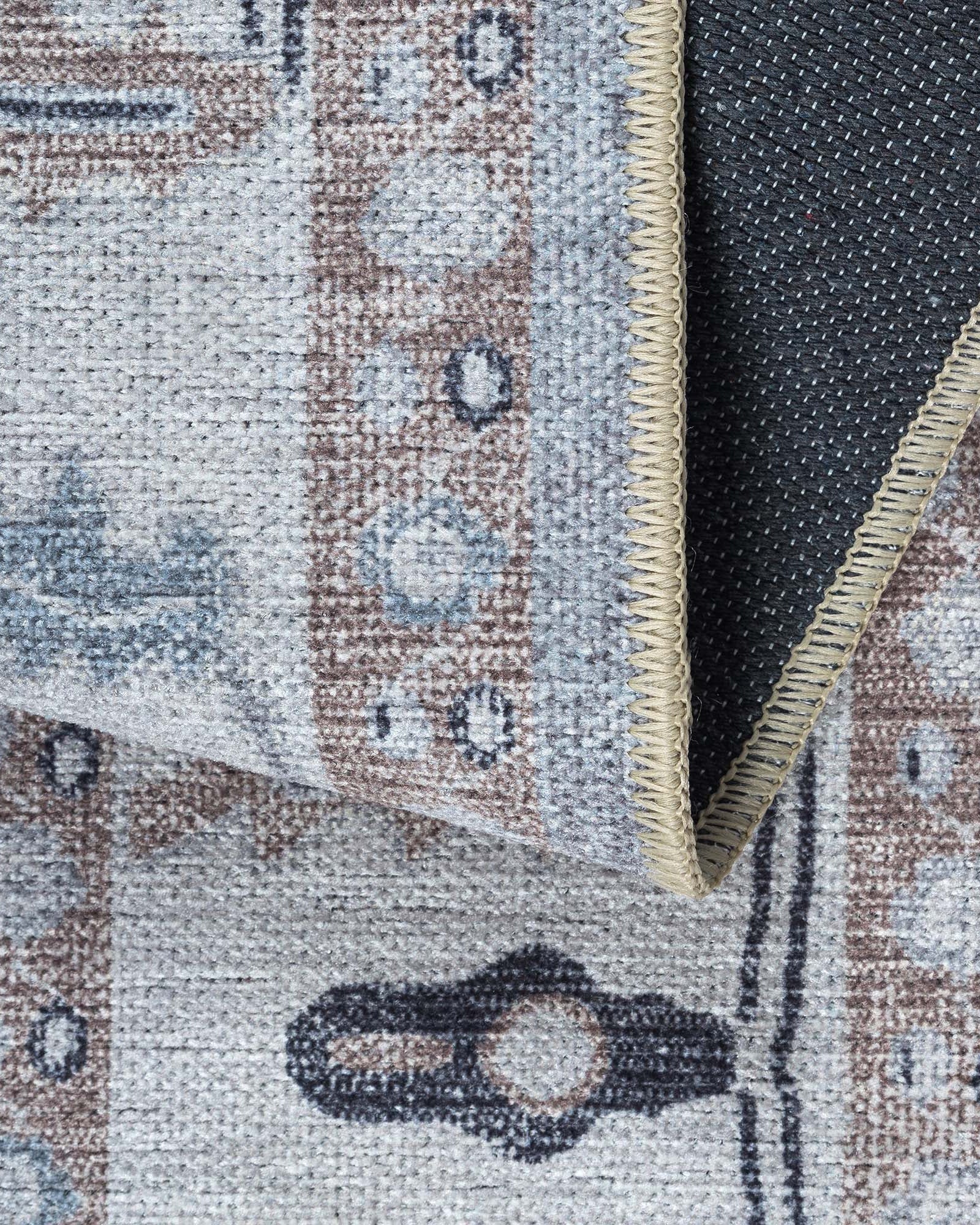
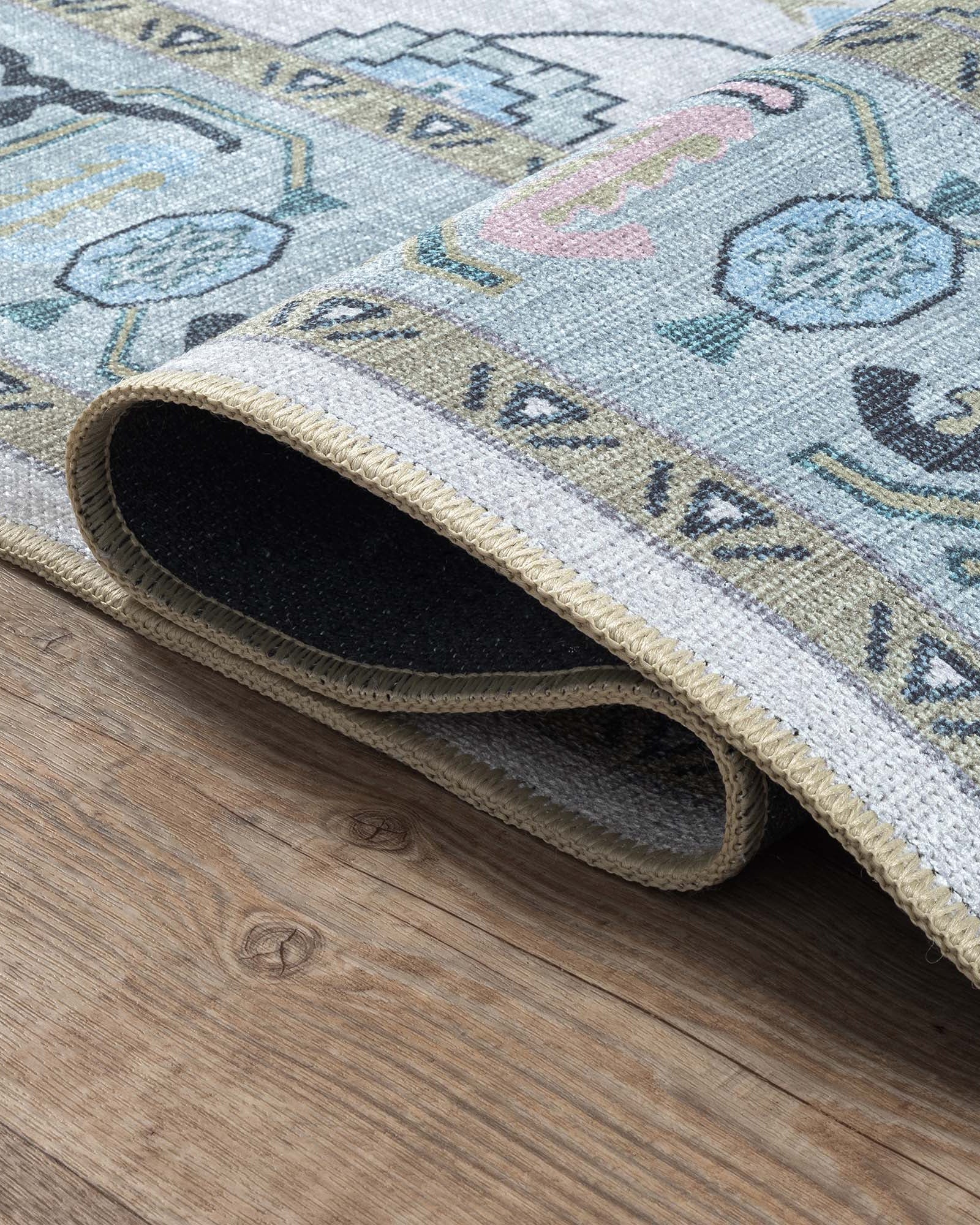
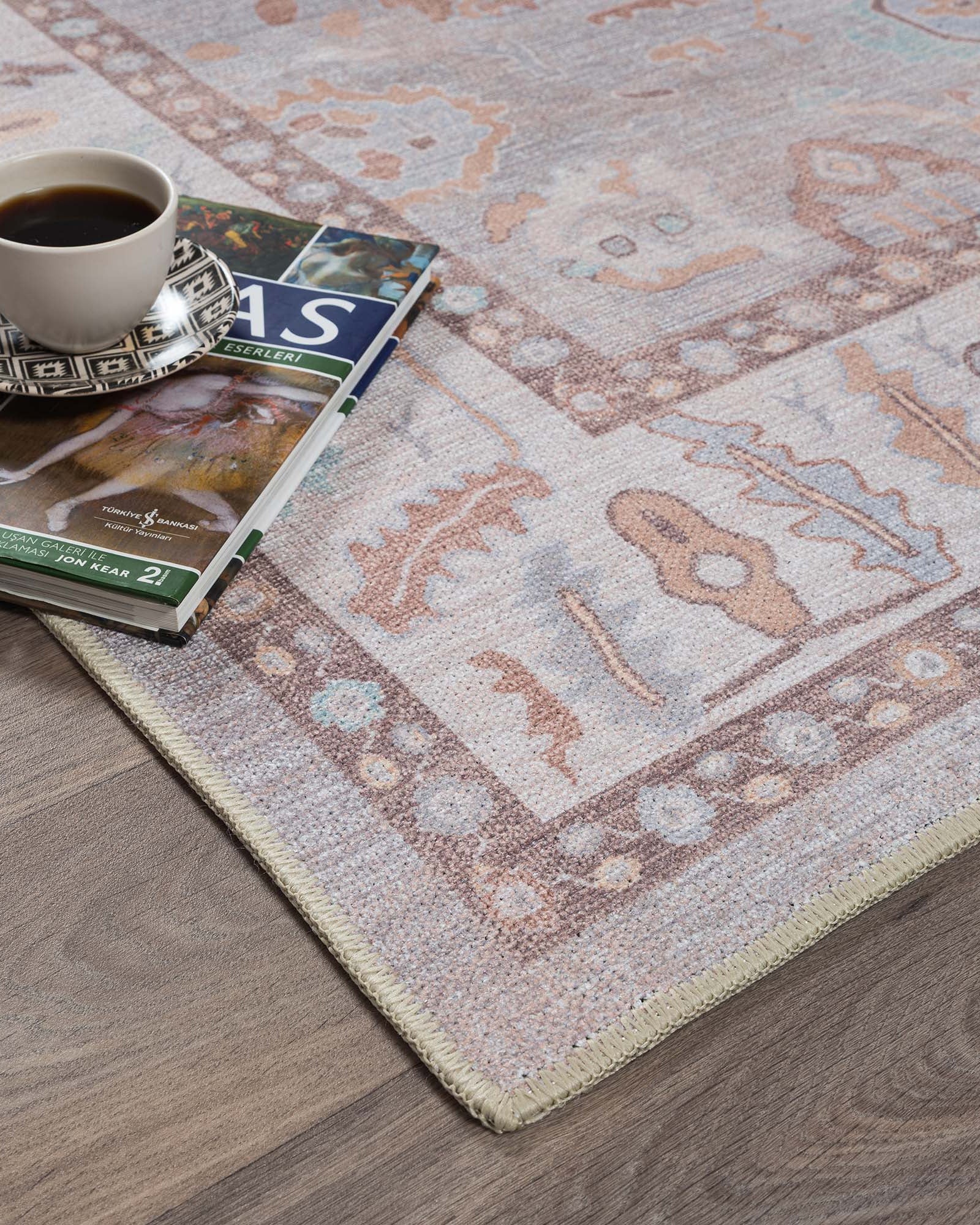
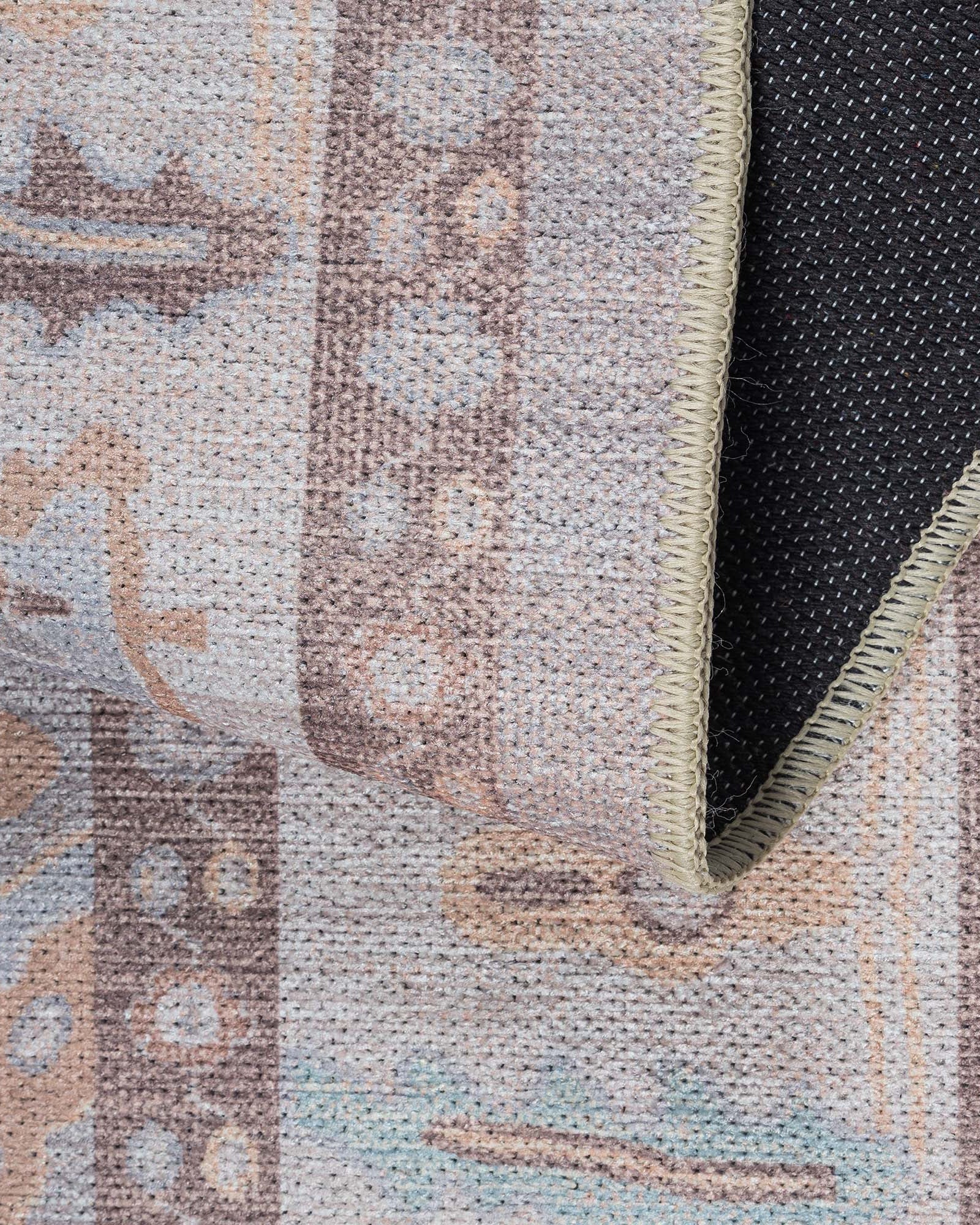
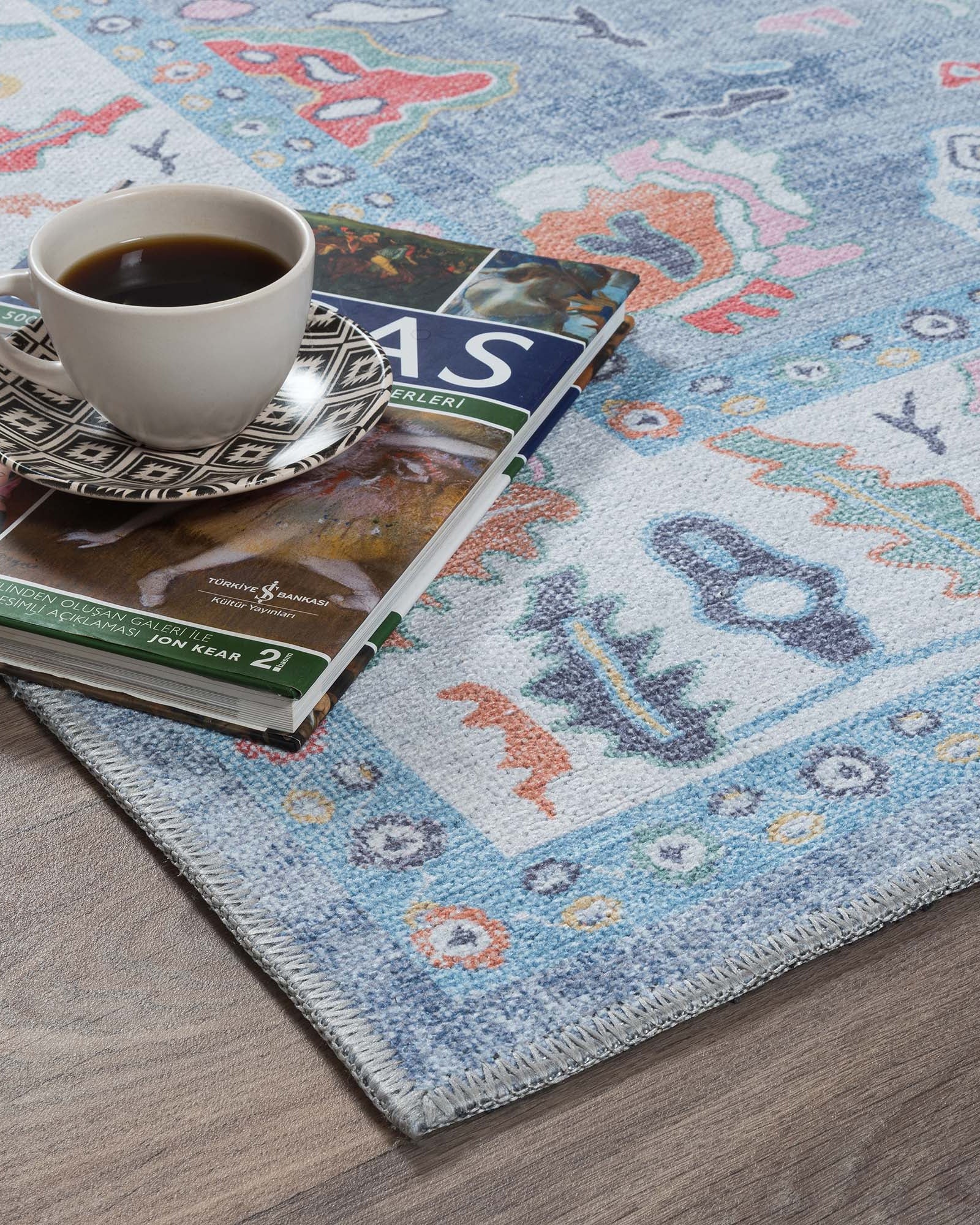
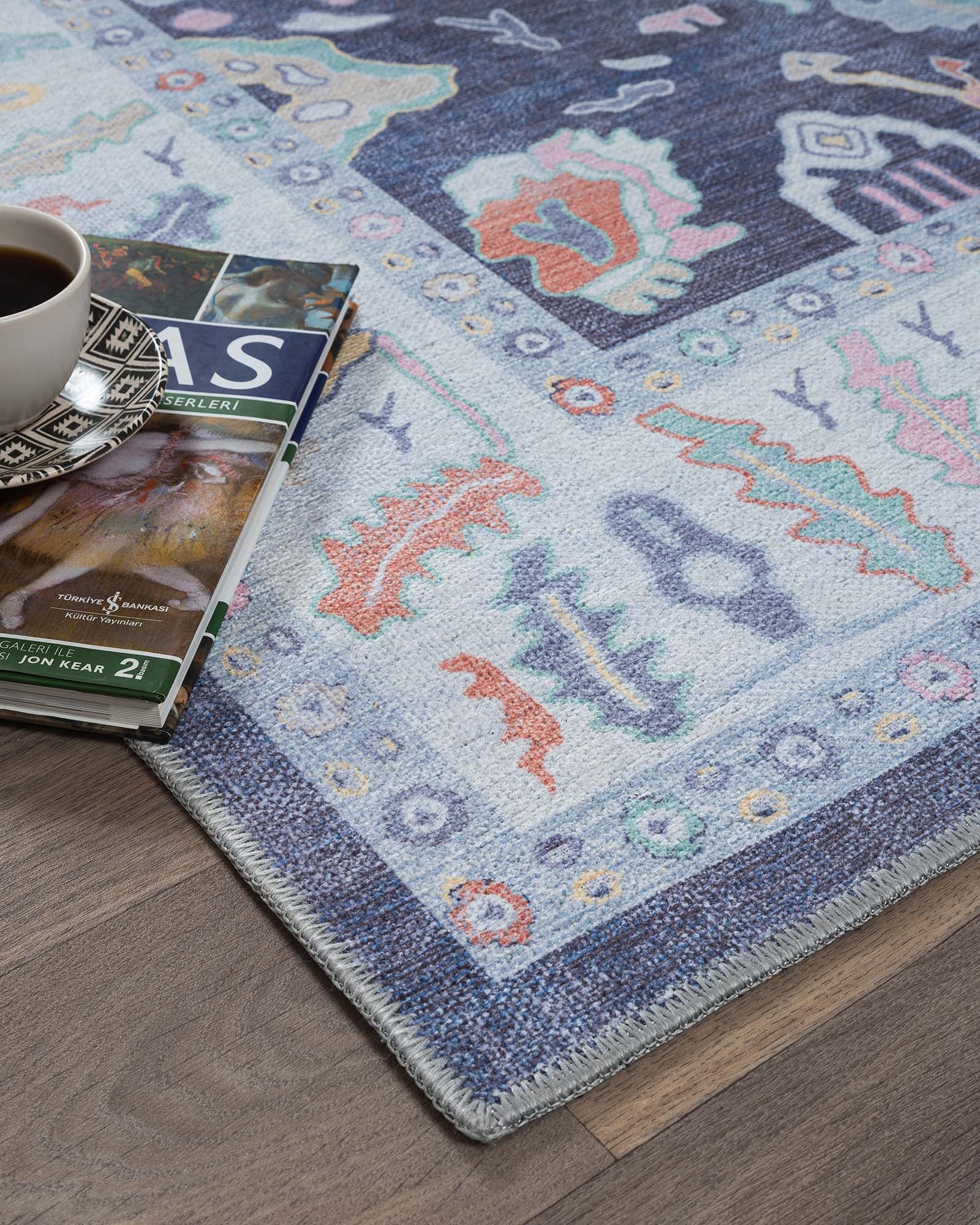
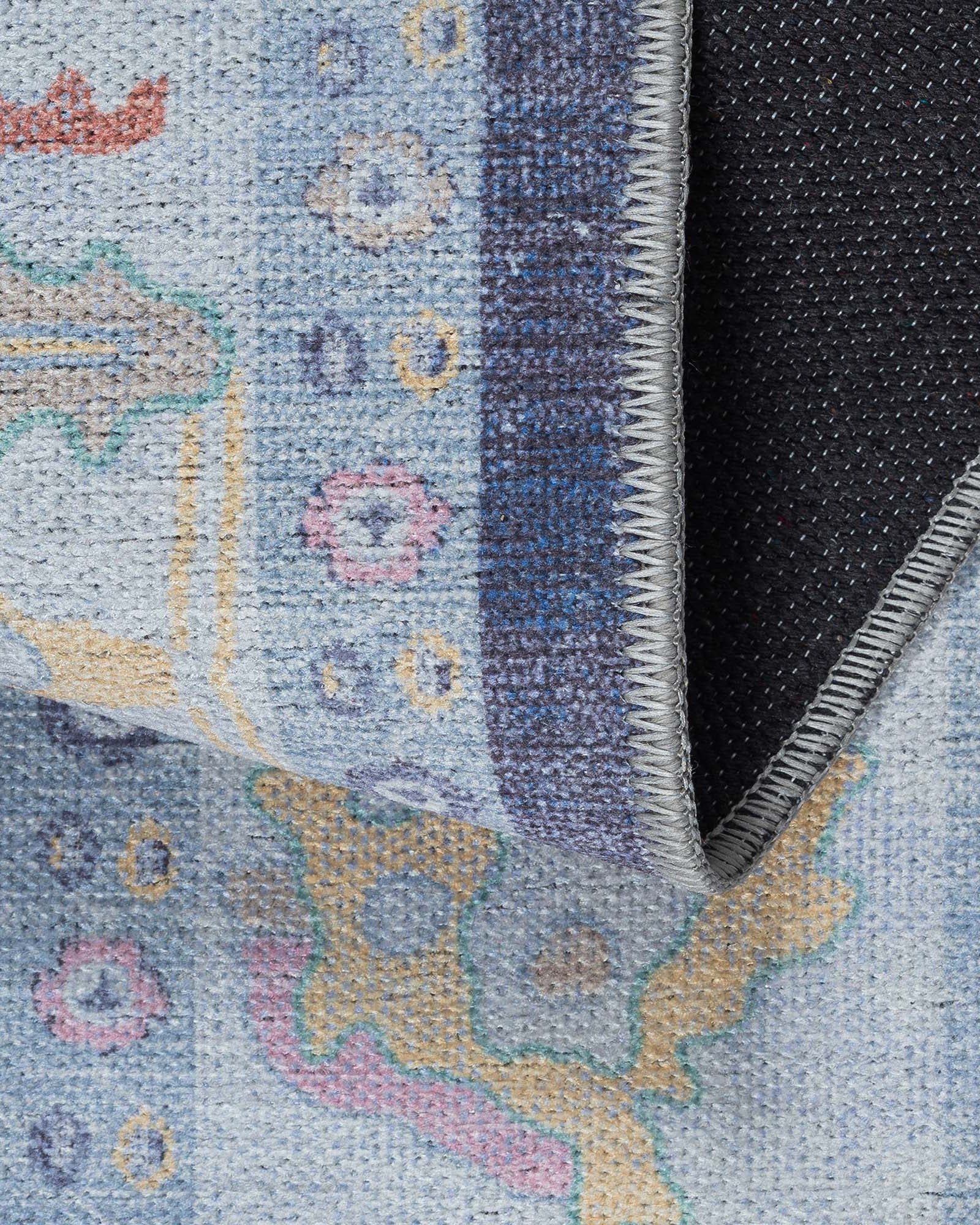
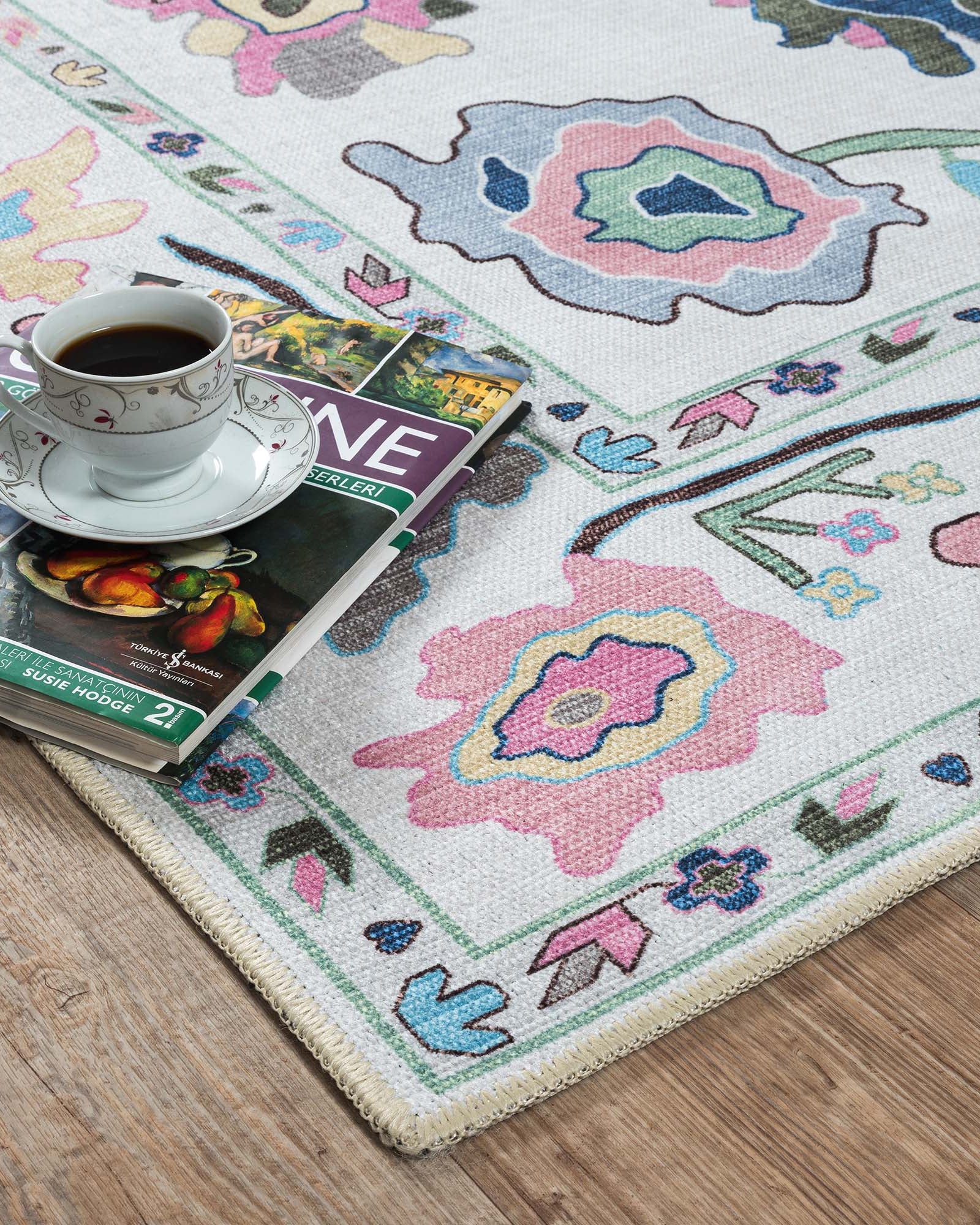
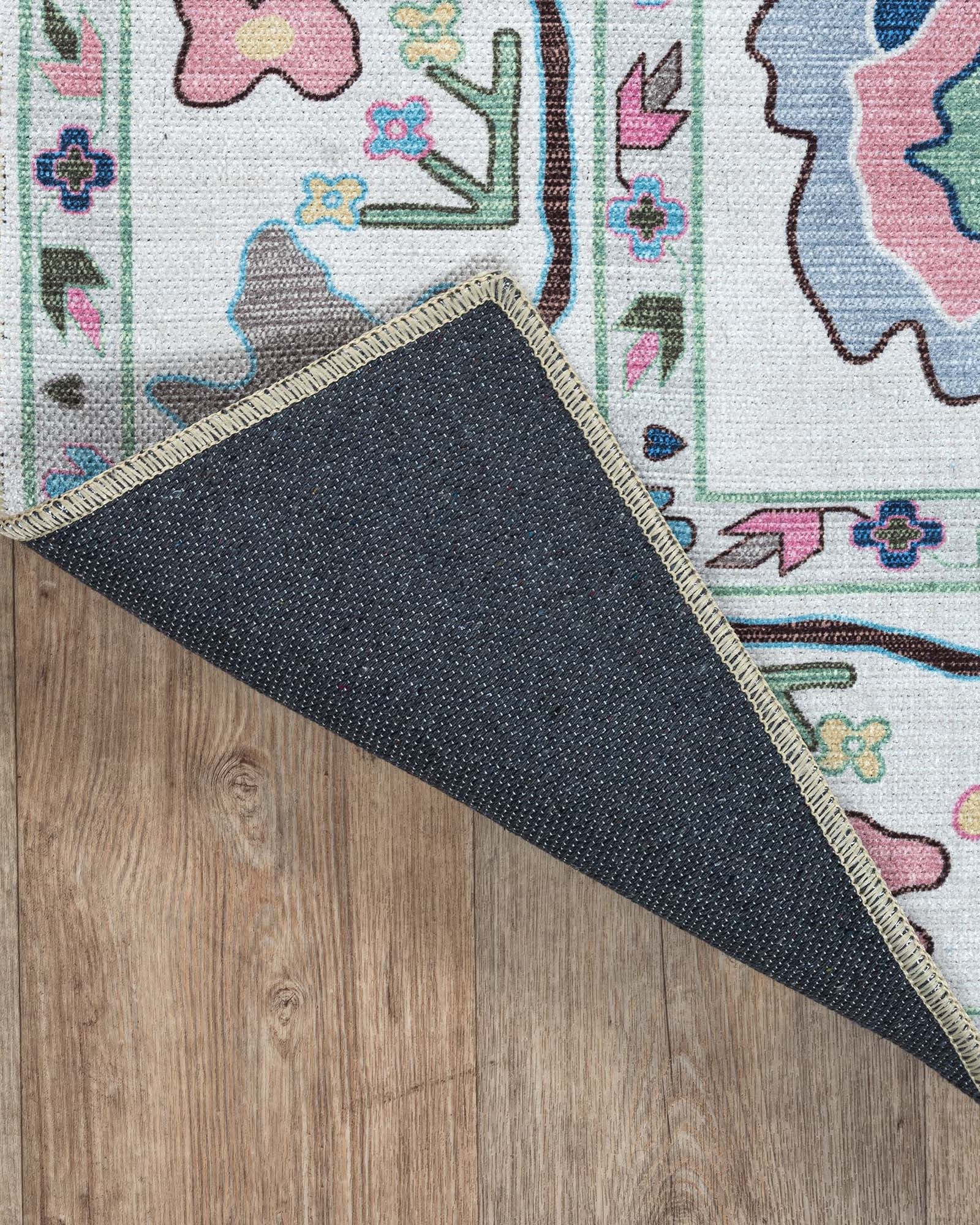
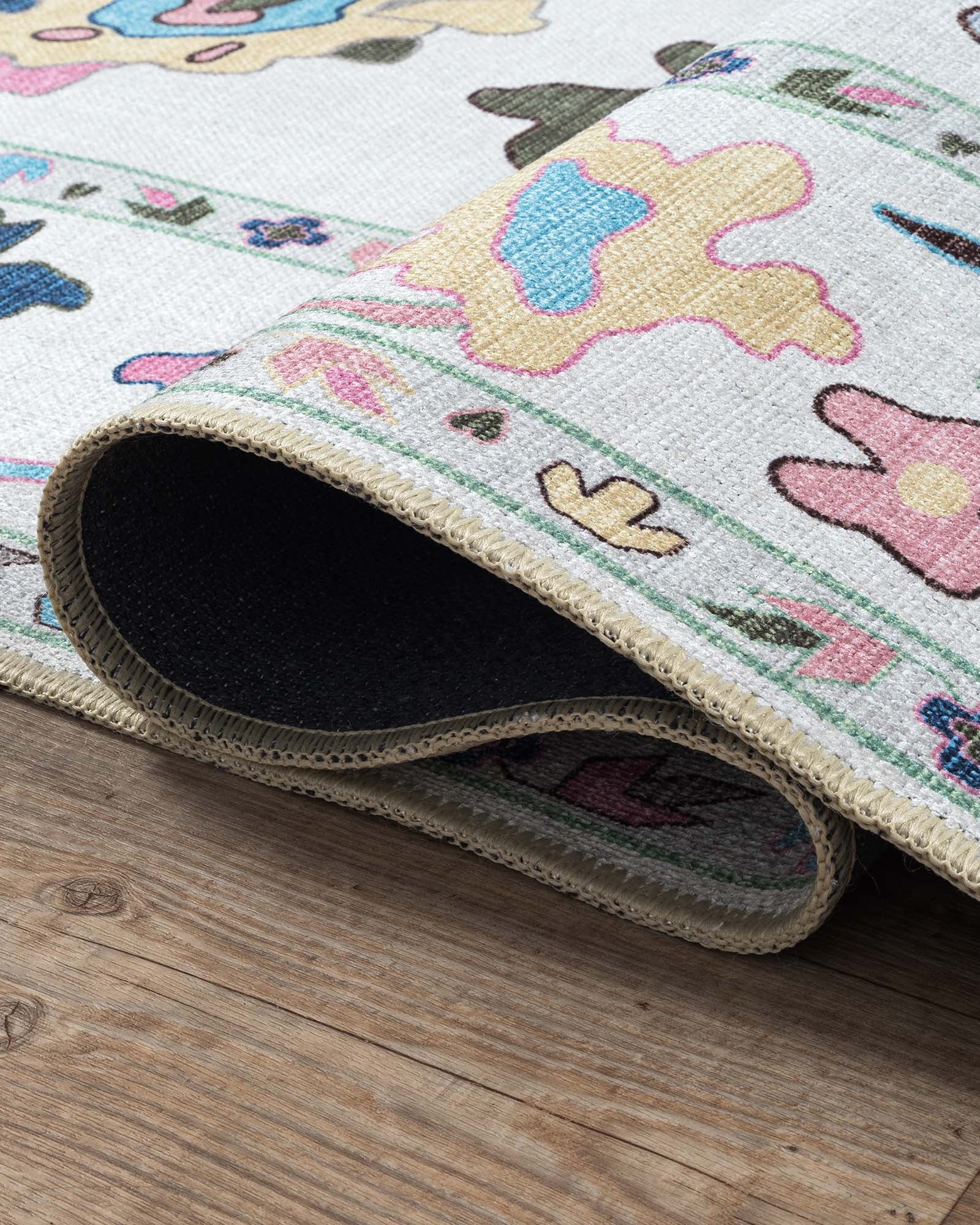
The side edges of a rug, called the selvage, take the most abuse of any part of the rug over its life — furniture legs, foot traffic and vacuum cleaners all catch on them first. Finishers wrap or overcast these edges with wool yarn, binding the outermost warp threads so they cannot unravel. A well-finished selvage is dense, even, and tight to the body of the rug; a poorly finished one loosens within a few years of use.
Fringe Work
The fringe is not a separate piece sewn on — it is the warp thread itself, left exposed at each end once the rug is cut from the loom. Finishers secure it, sometimes with a hand-knotted or braided end-stop, so the rug's structure cannot unravel from the ends inward. This is why a genuinely hand-finished fringe cannot be trimmed short or removed without compromising the rug itself, unlike a sewn-on fringe on a lower-cost construction.
Why Finishing Quality Matters More Than People Expect
A beautifully woven field can still fail early if the finishing is careless. Loose selvages unravel and let knots along the edge come free. Poorly secured fringe allows the rug to shed structure from the ends. Uneven shearing leaves a surface that looks unfinished even when the weaving underneath is excellent. Finishing is, in a real sense, what determines how long a rug's weaving actually gets to matter.
This is also where restoration comes in on older pieces. Selvages and fringe wear fastest, simply because they are exposed and handled the most, and a rug that has been re-overcast or had its fringe re-secured at some point in its life is not a lesser rug — it is one that has been properly maintained by someone who understood where the vulnerability was.
What to Look For
Run a finger along the selvage: it should feel dense and firmly bound, not loose or fraying. Check where the fringe meets the body of the rug — the transition should be secure, with no loose warp ends working free. Look at the pile height across the whole field; it should read as level from a short distance even if you can feel minor variation up close. These checks tell you as much about a rug's likely longevity as the weaving pattern does.
Age, Condition and Measurement
Pieces are grouped as antique at over eighty years, vintage at roughly forty to eighty, and semi-vintage below that. Every product page carries the estimated decade, origin where identifiable, exact measured dimensions and a plain condition note that specifically addresses selvage and fringe condition — original, re-overcast, shortened or trimmed — since this is often the first place age shows on an otherwise sound rug. Sizes are never standard; order against the measurements shown.
Care
The finishing is the part of a rug most exposed to daily wear, so protecting it matters. Keep the vacuum off the fringe and selvage entirely — a beater bar catching on either can unravel work that took real time to secure. Use a rug pad that sits slightly inside the rug's edge rather than directly under the selvage. Blot spills immediately with a white cloth and plain water. If a selvage begins to loosen or fringe starts to fray at the base, have it re-secured by a professional rug repairer before the damage spreads into the field — this is inexpensive to fix early and costly once knots along the edge start coming loose.