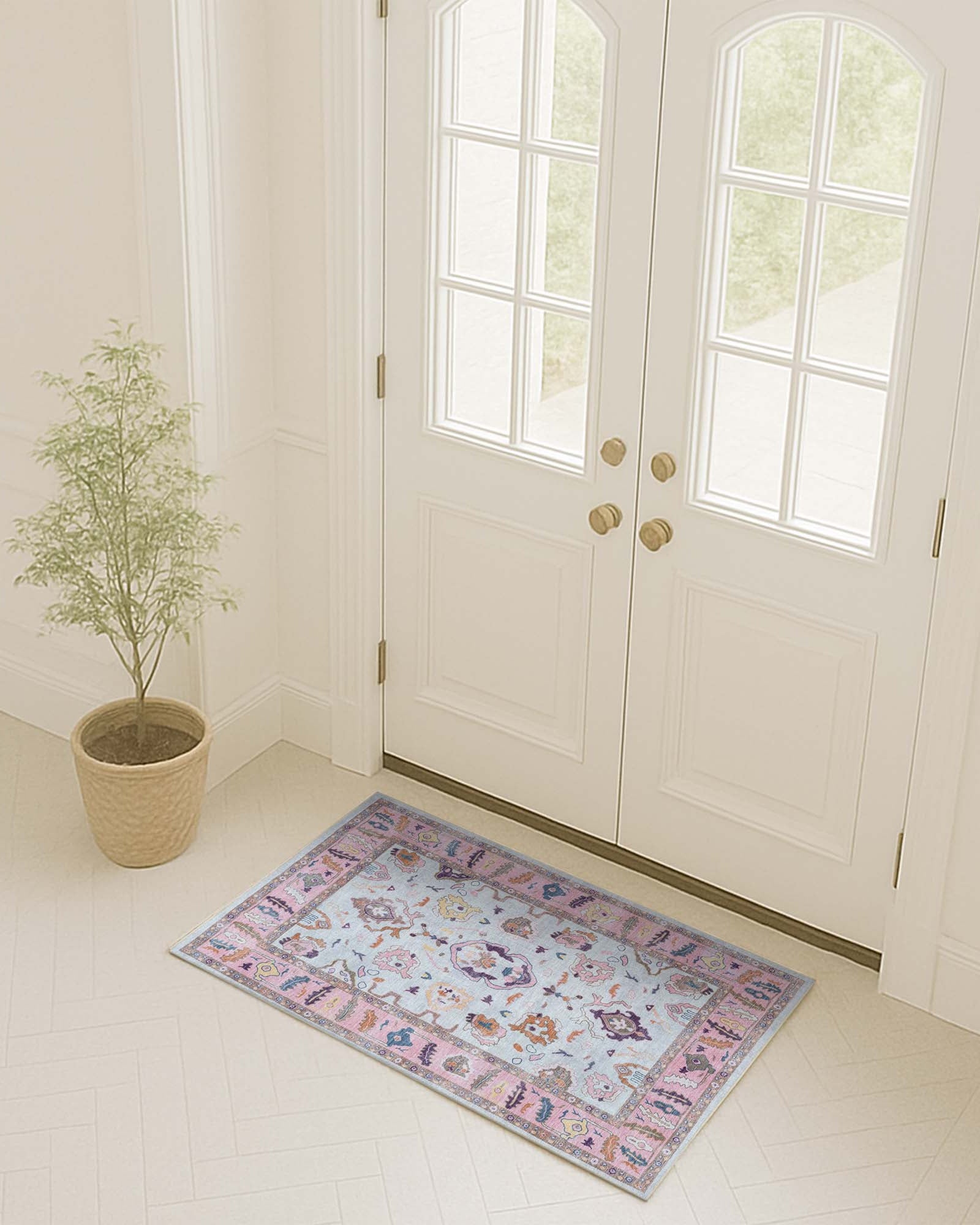
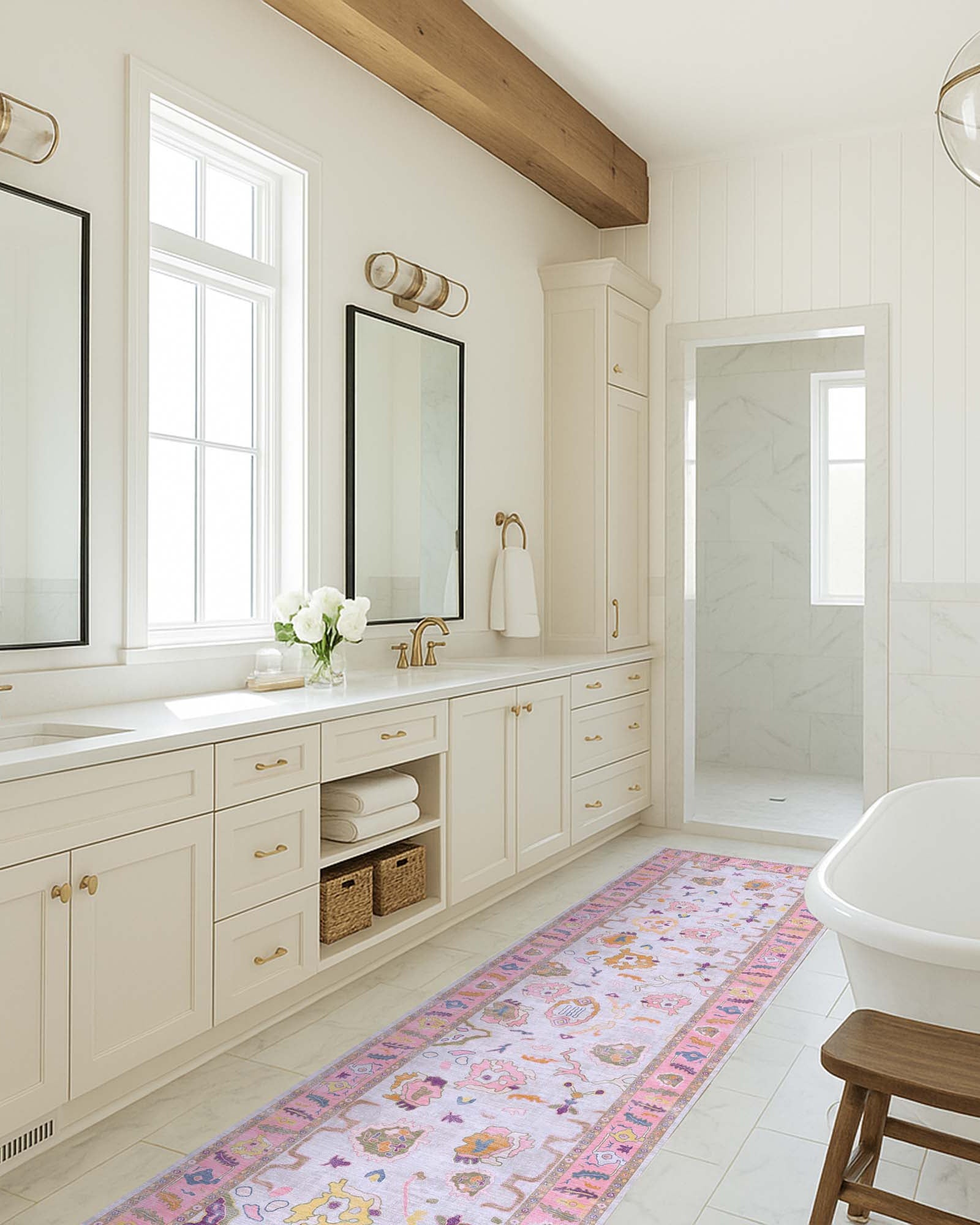
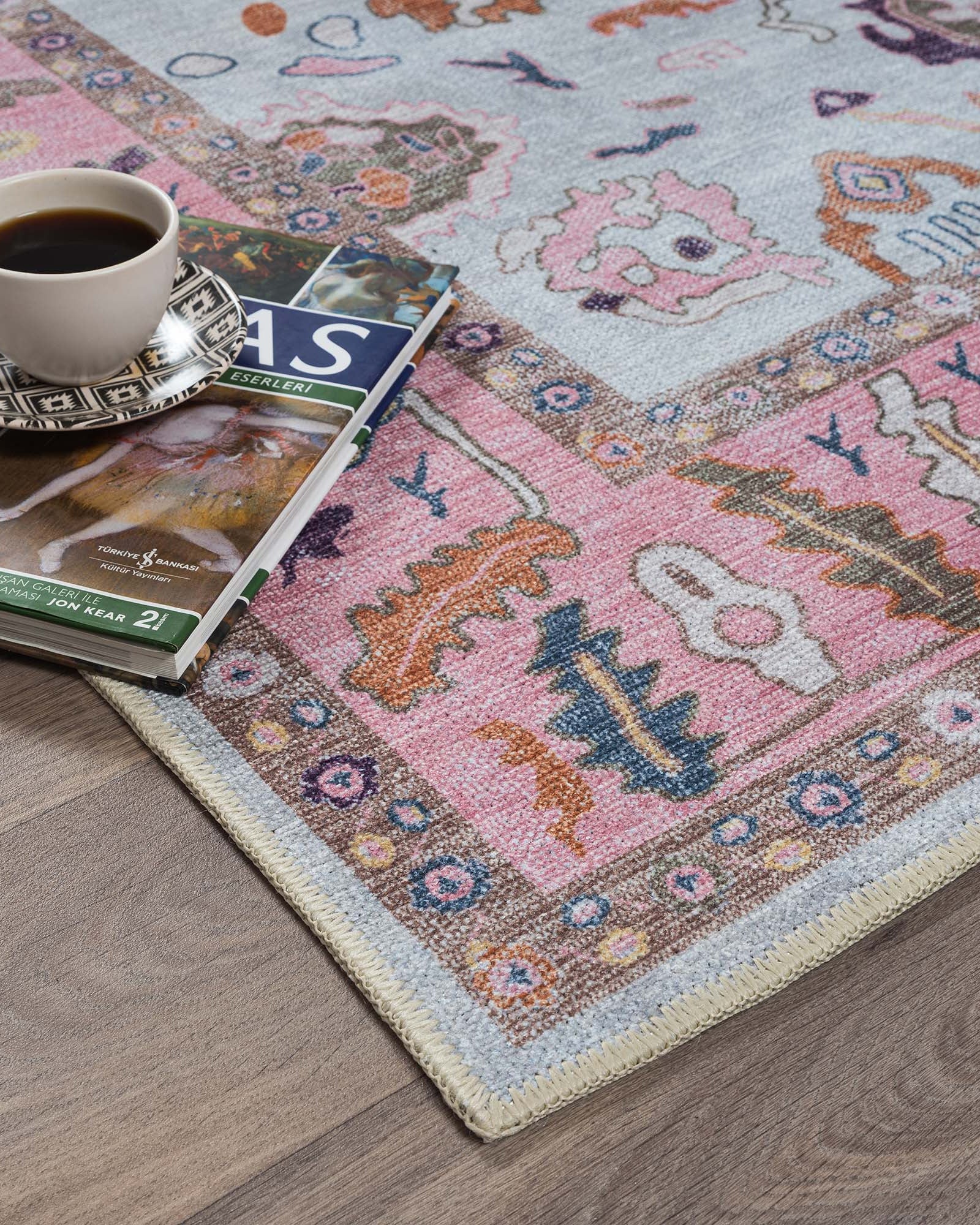
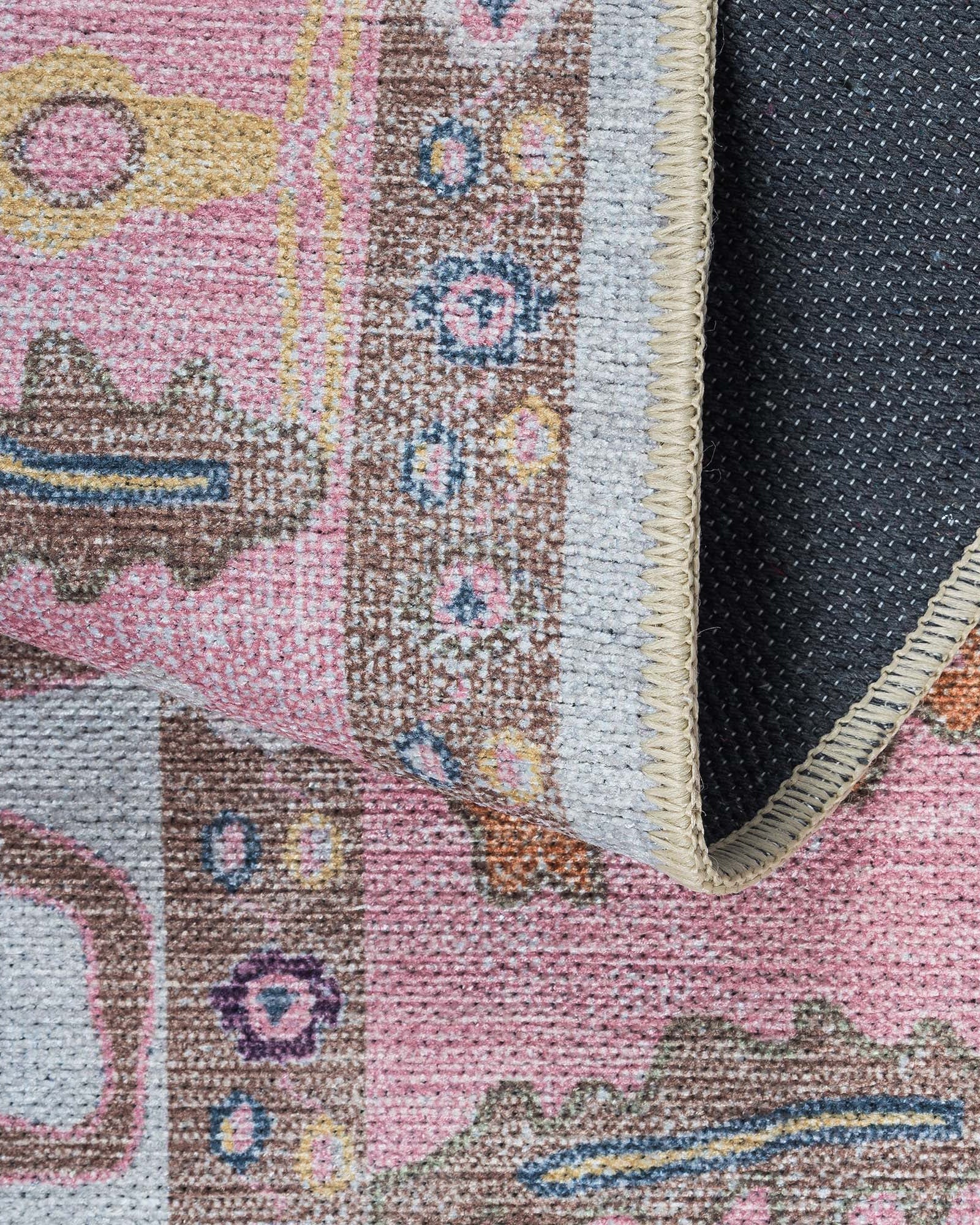
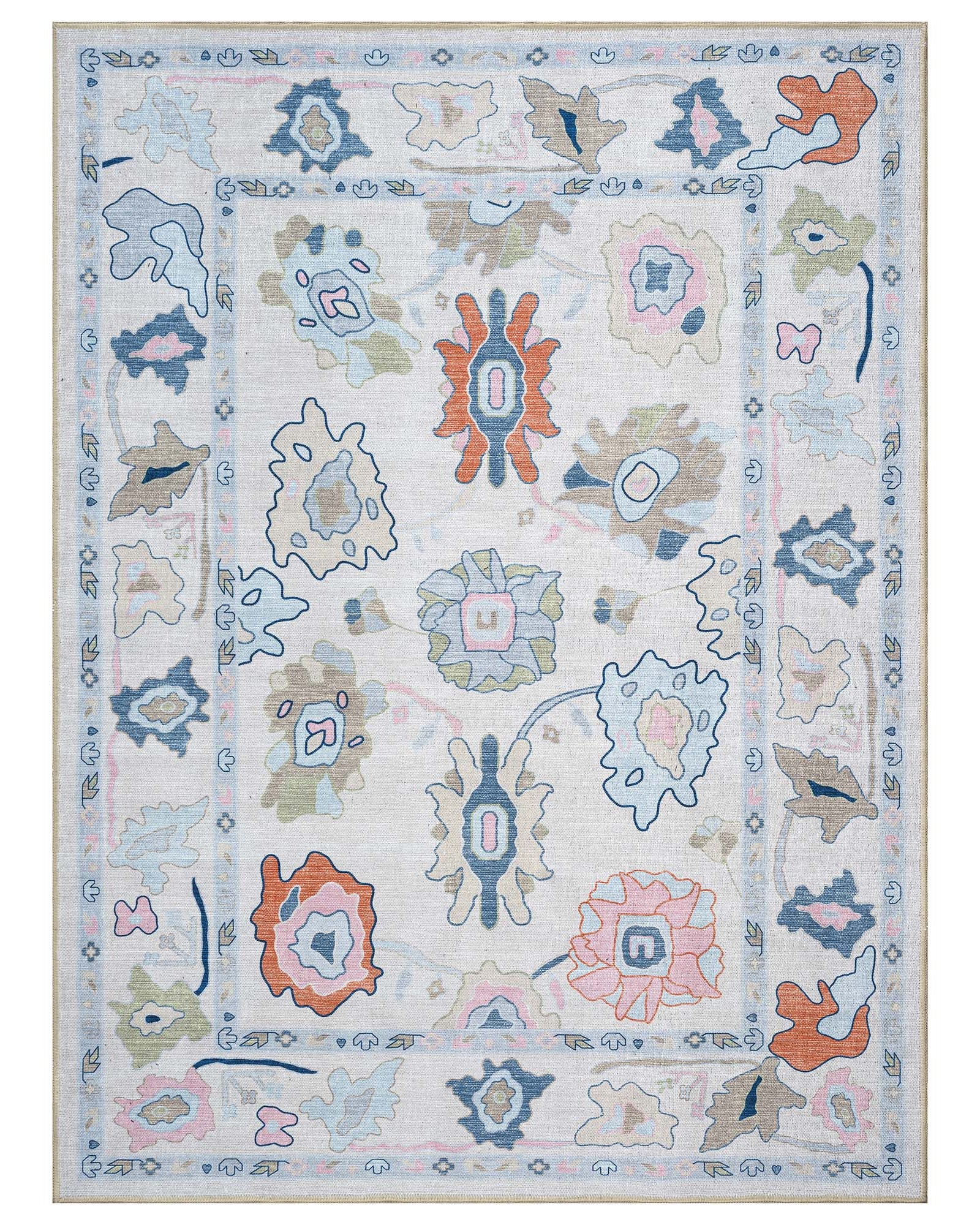
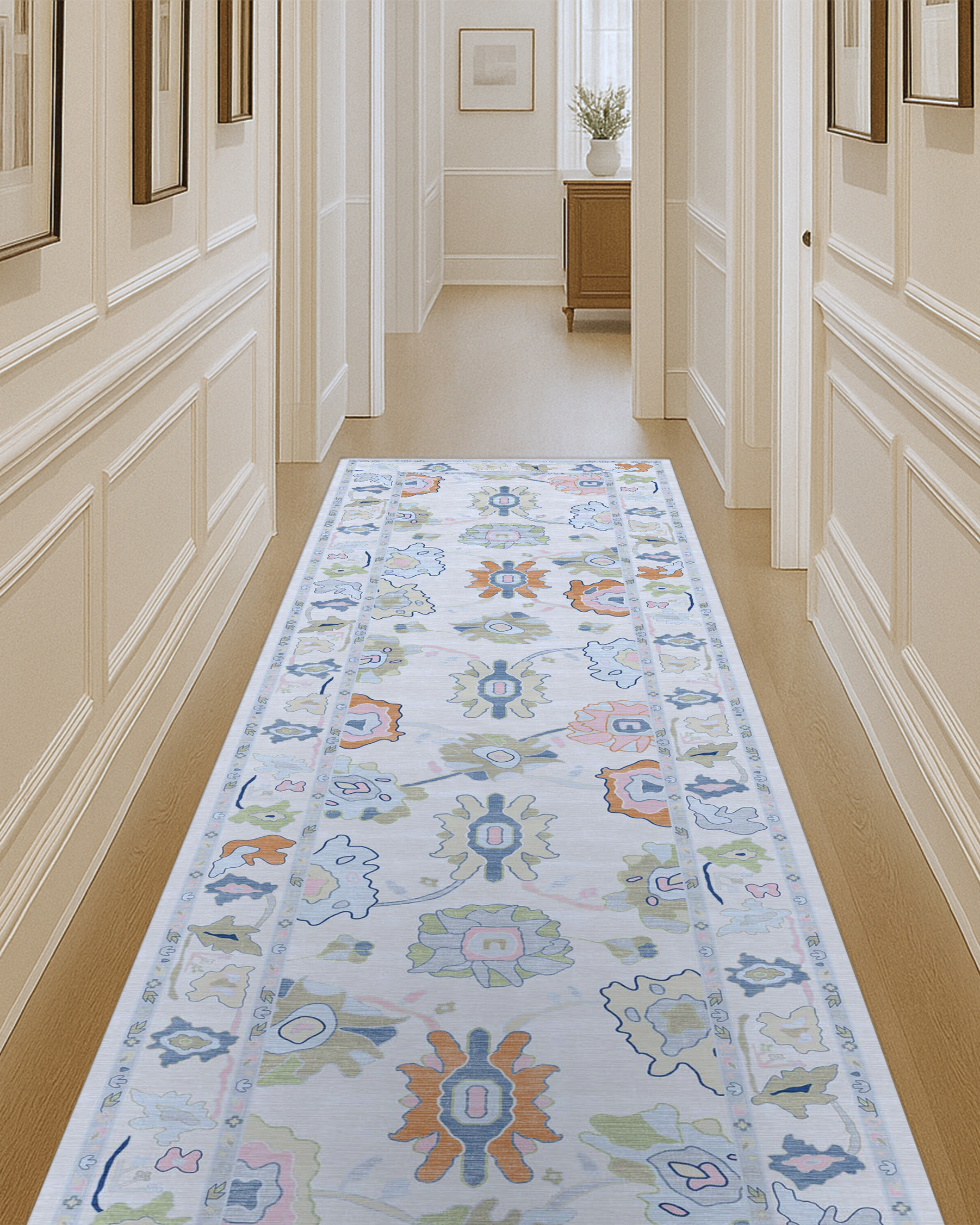
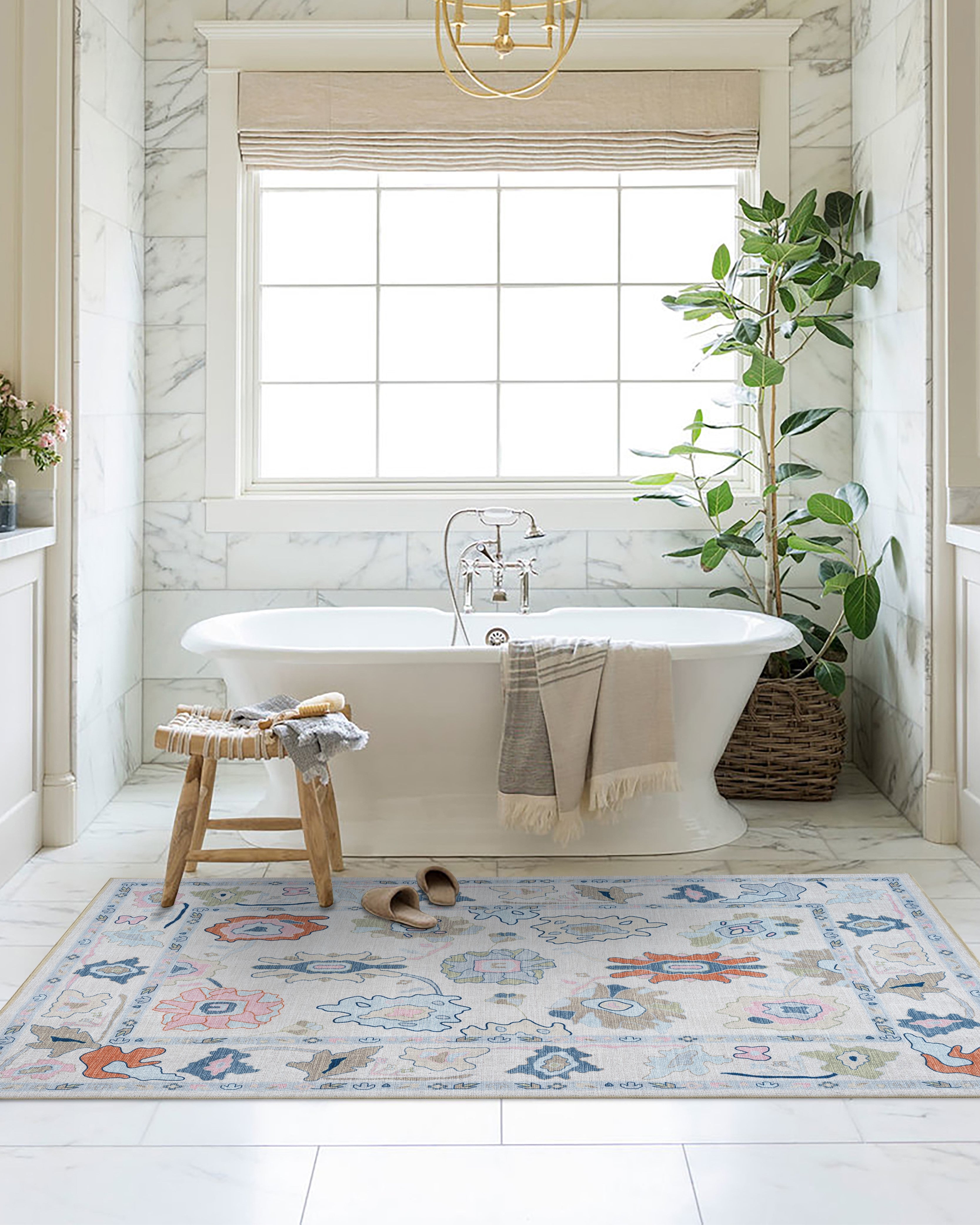
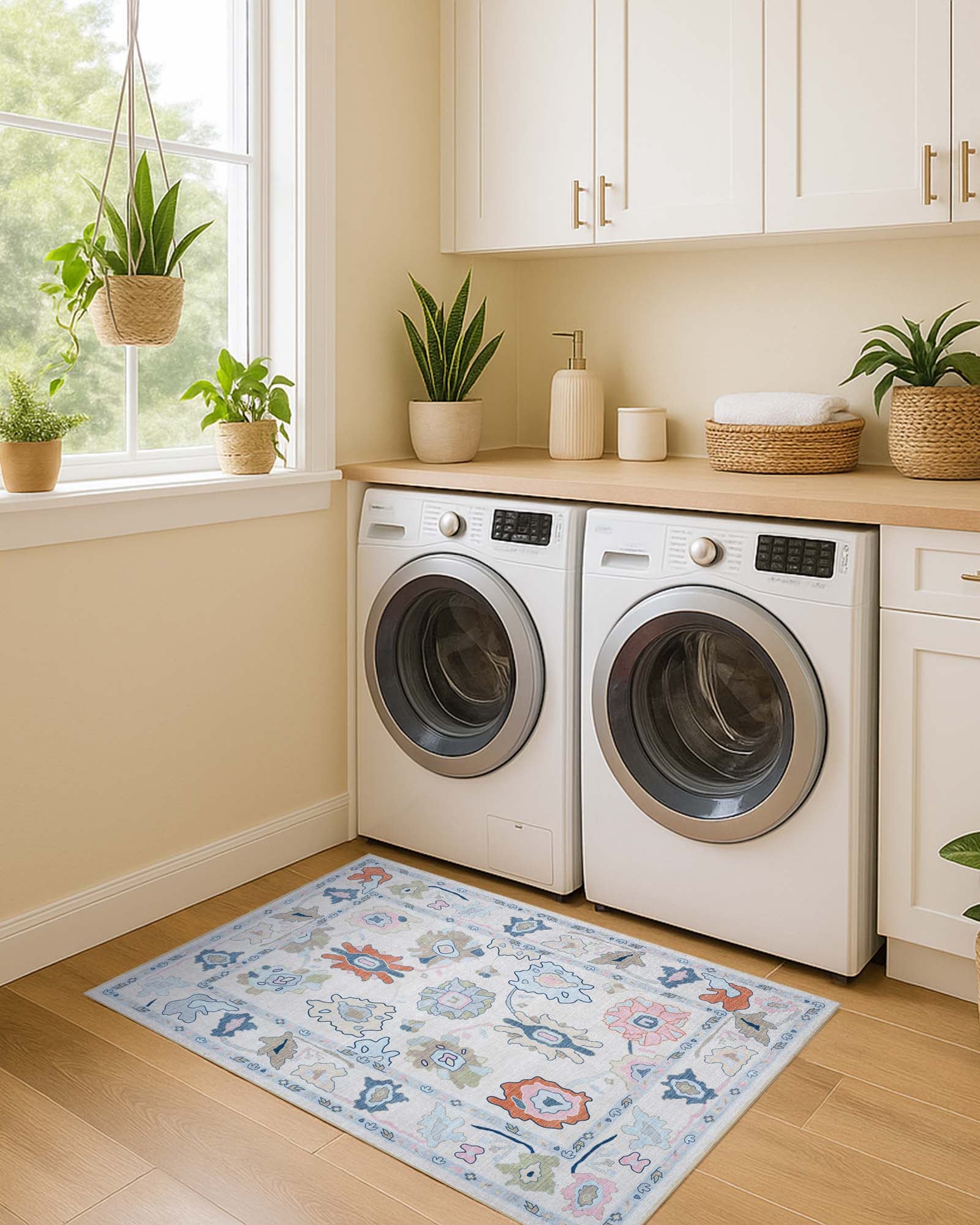
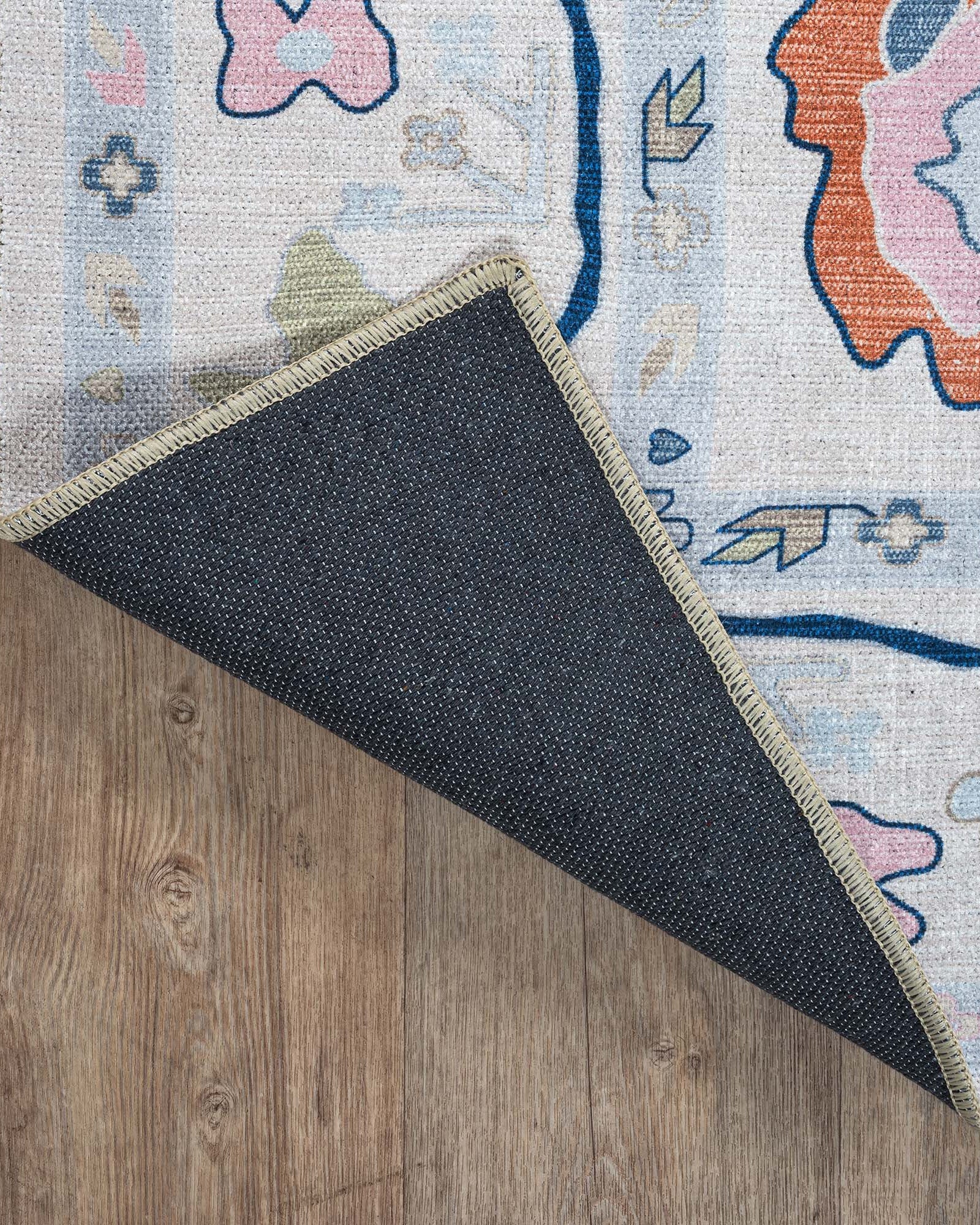
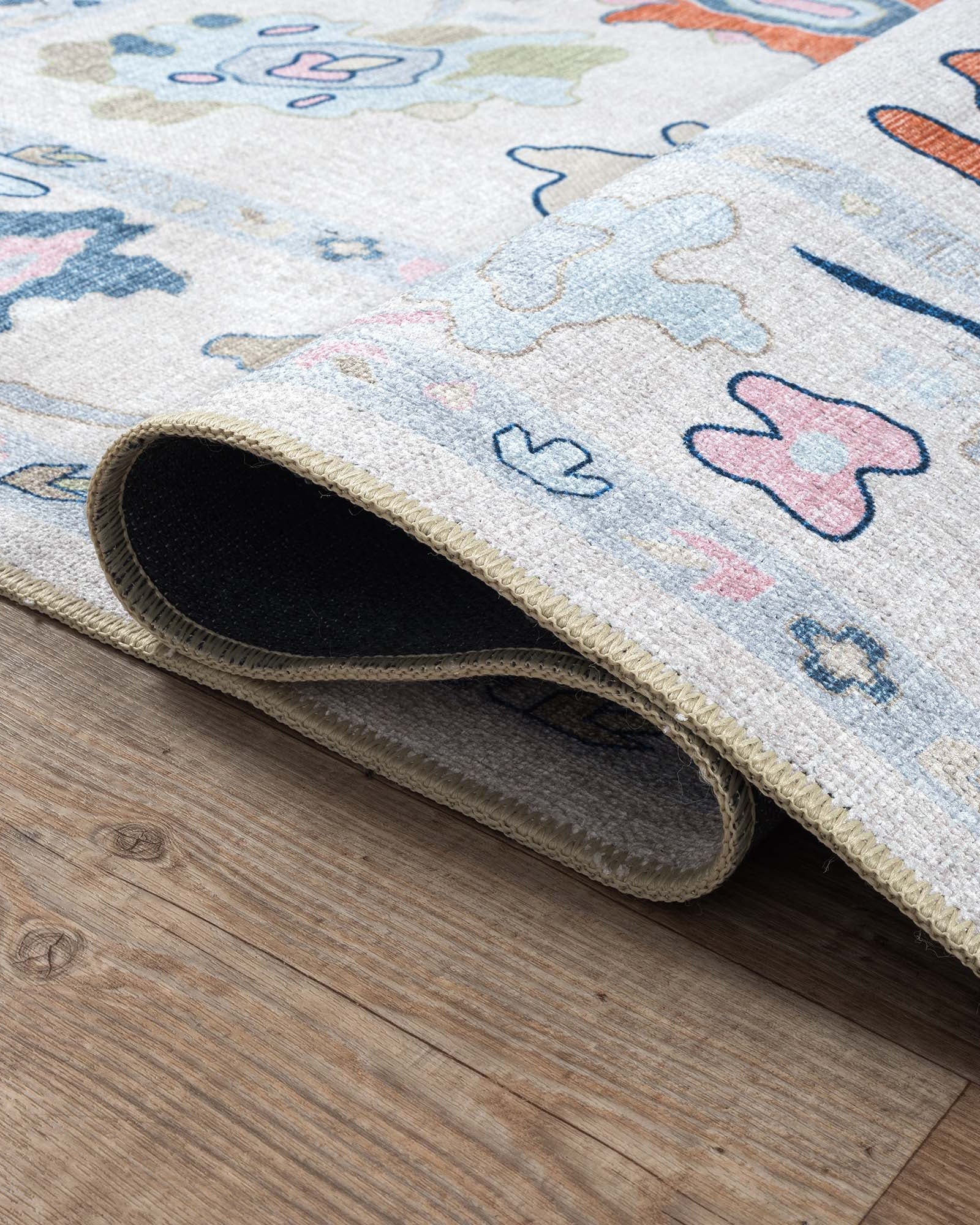
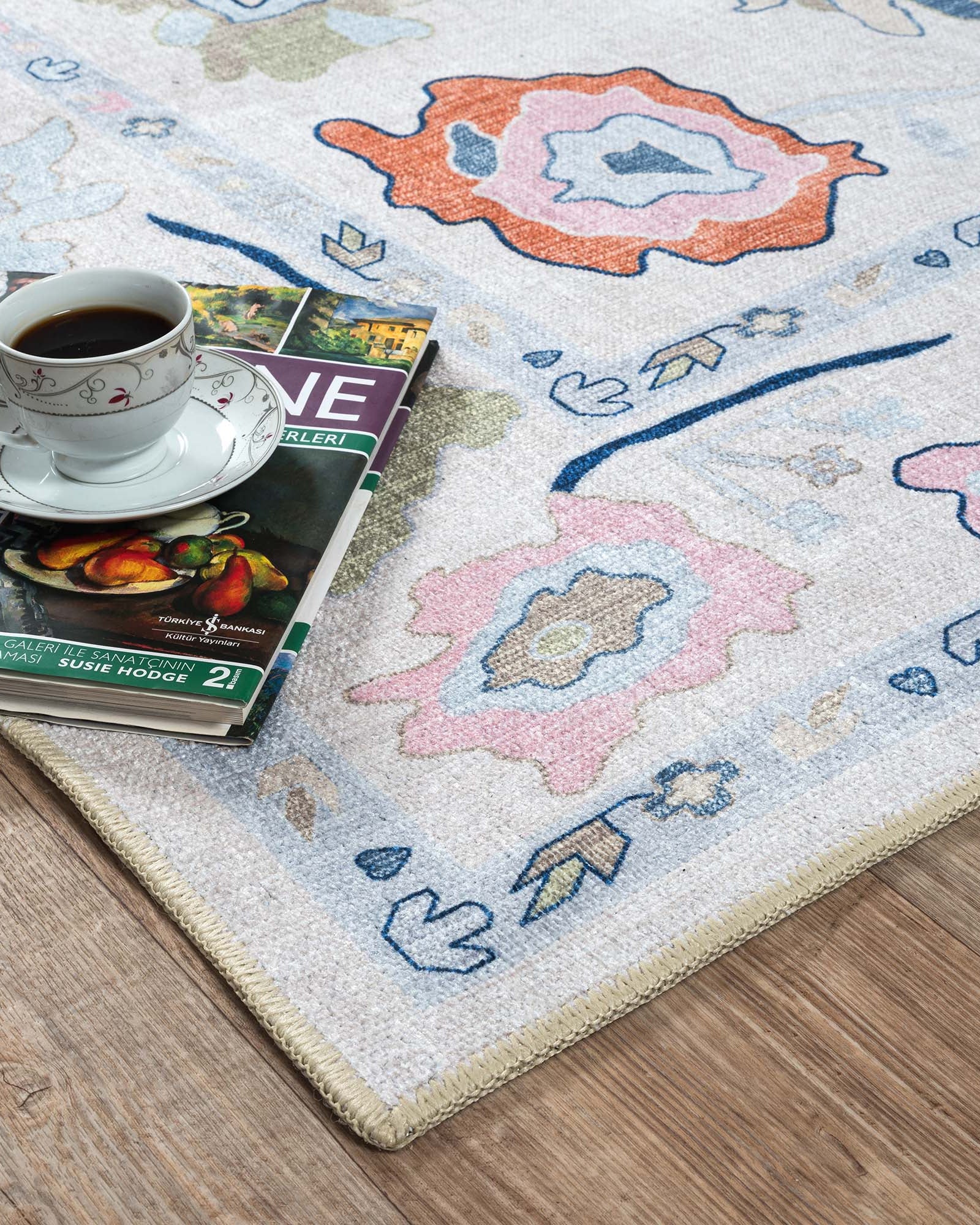
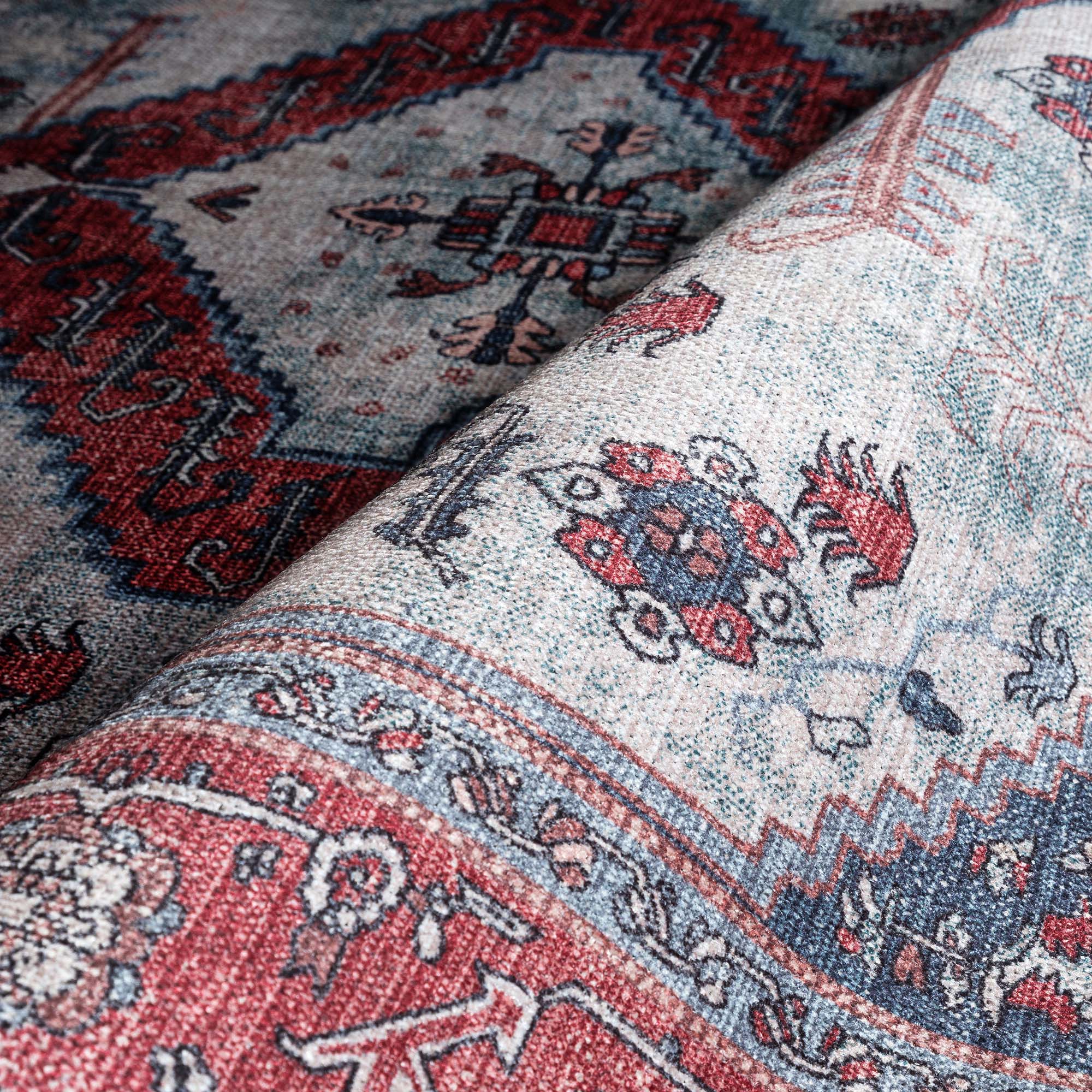
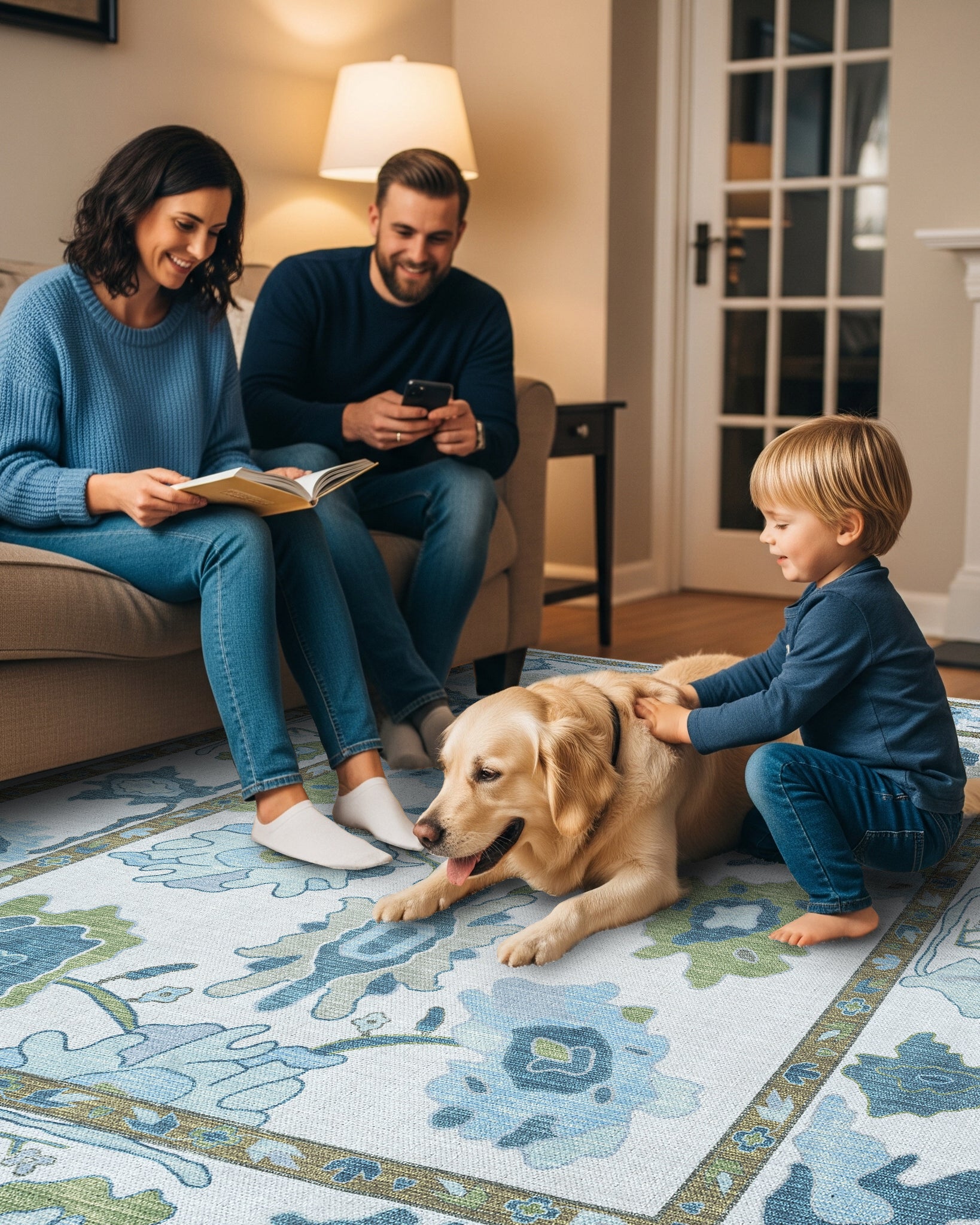
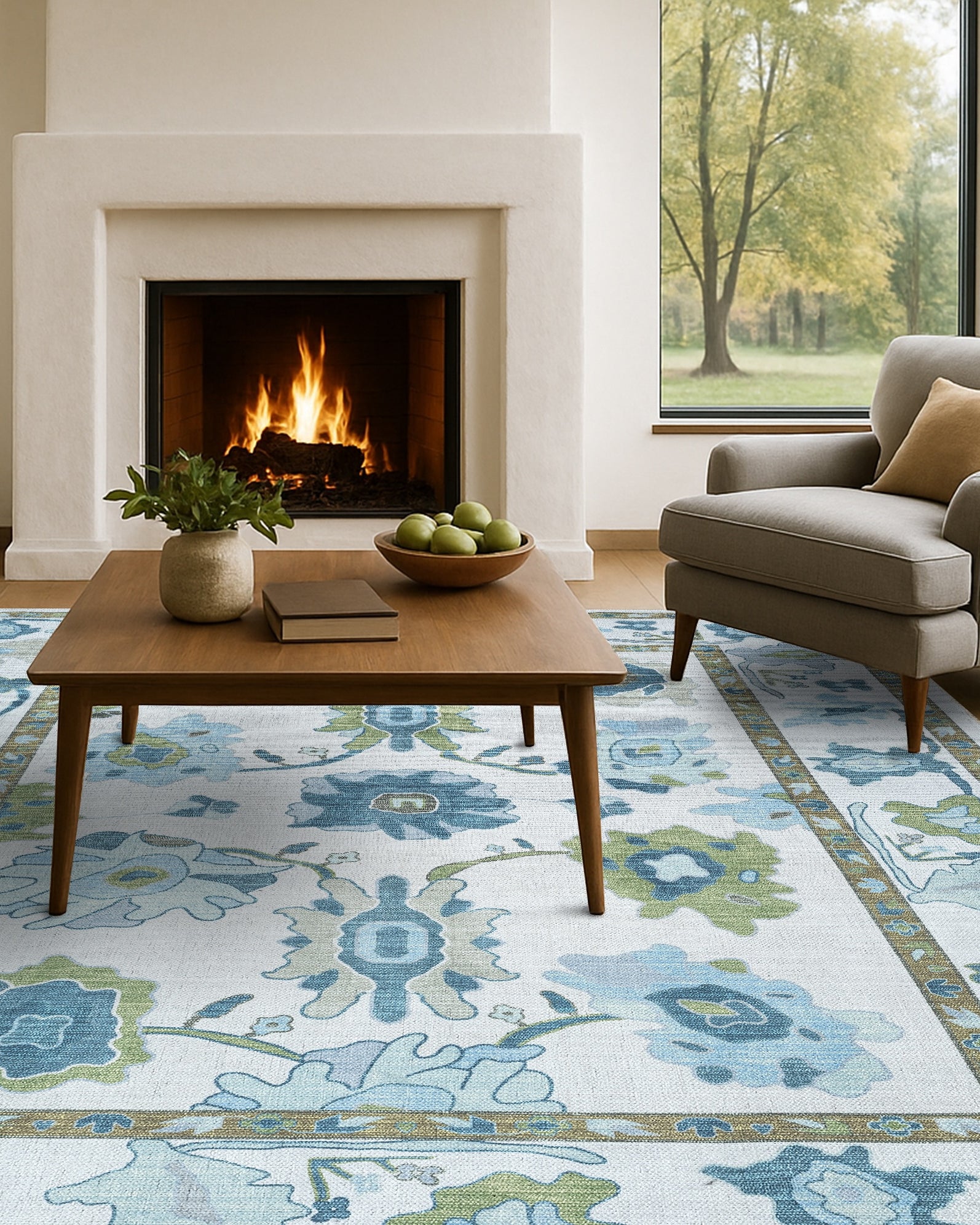
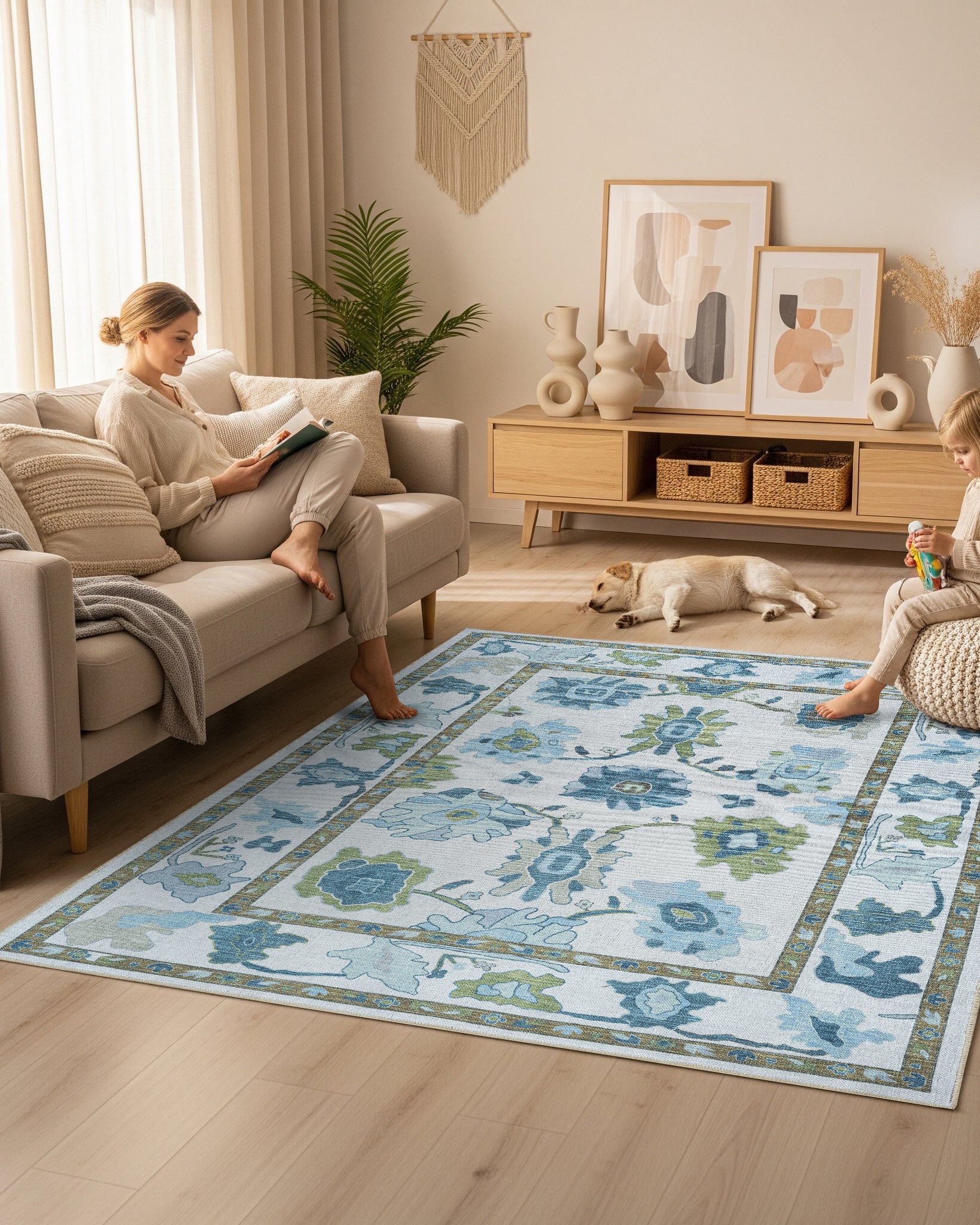
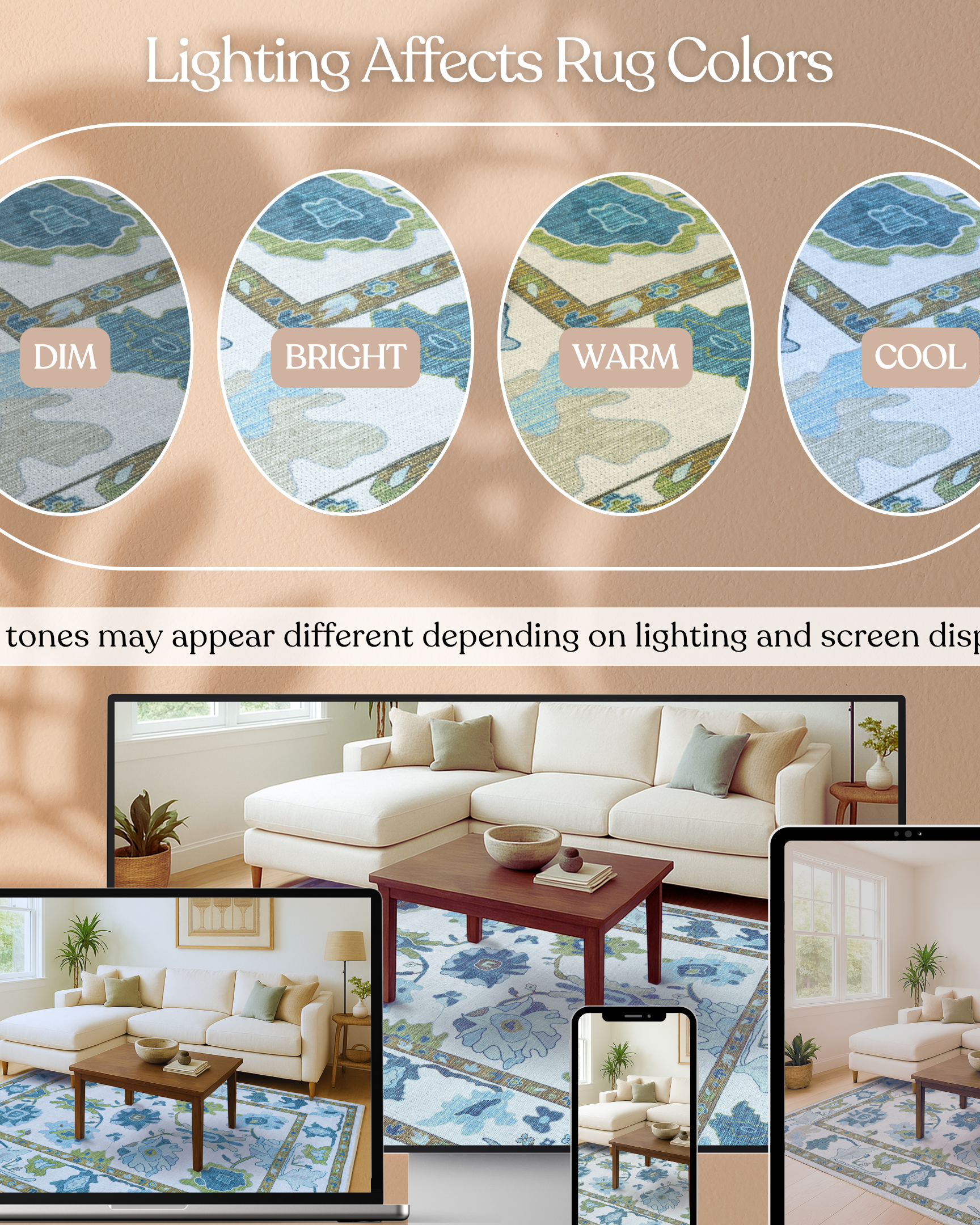
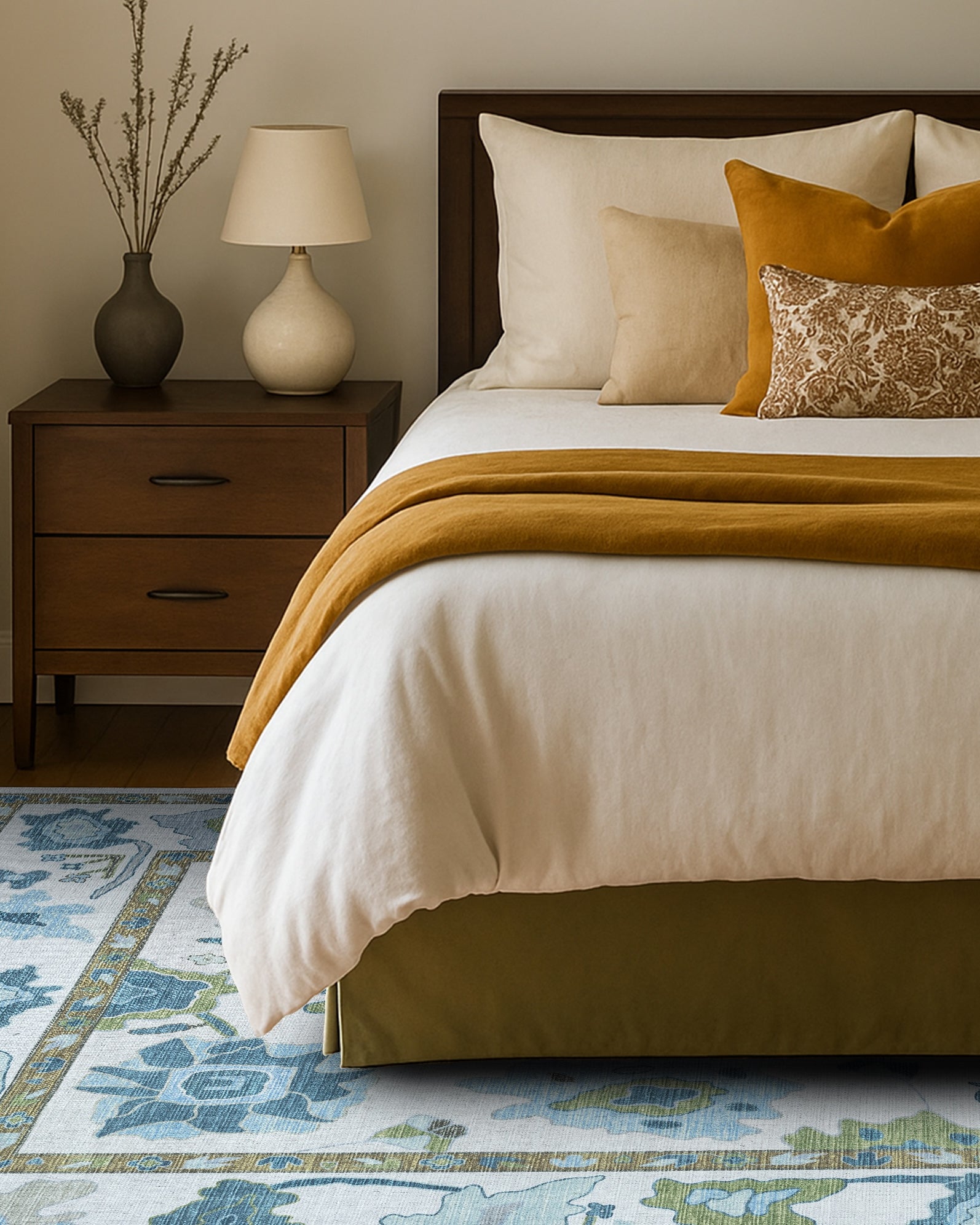
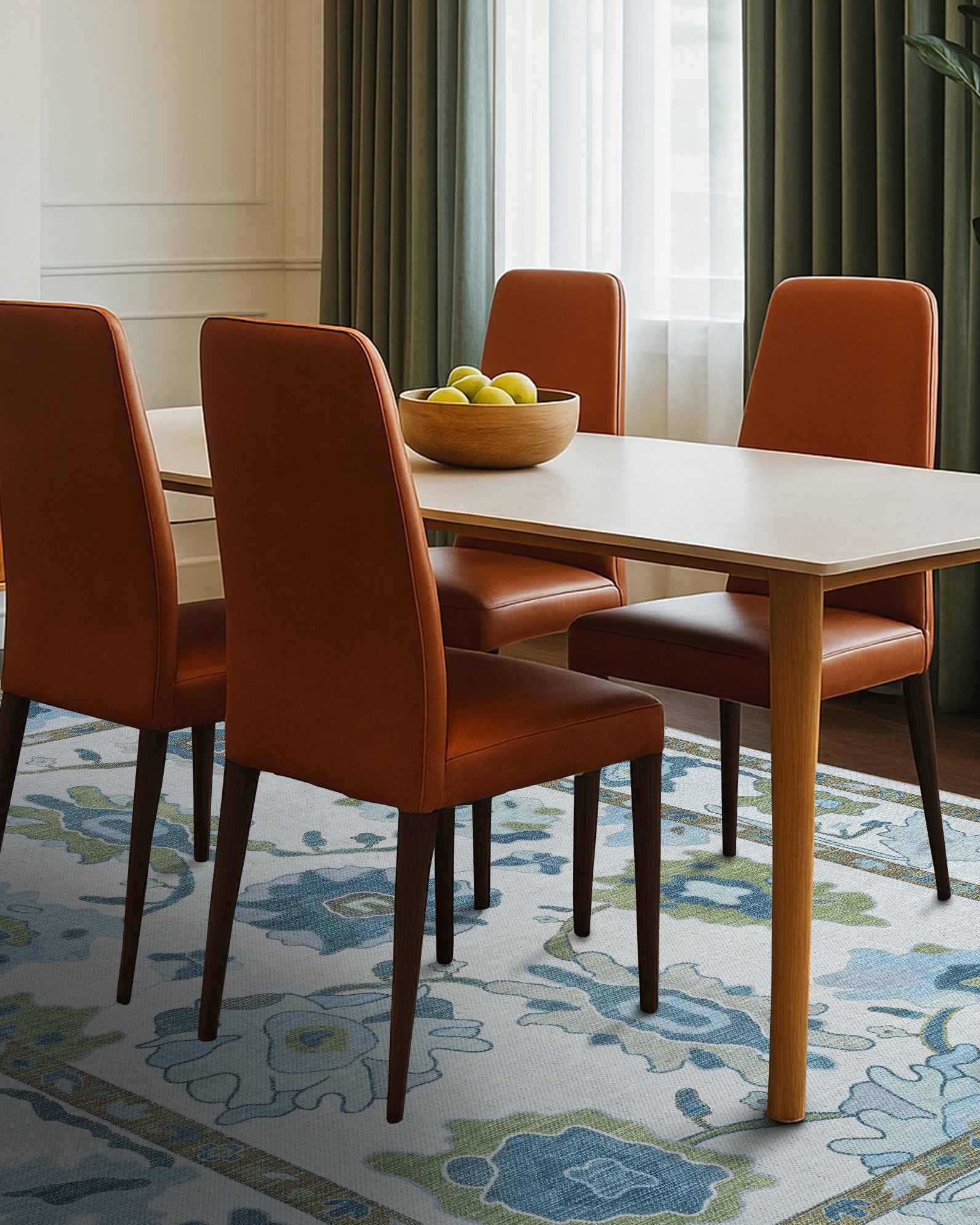
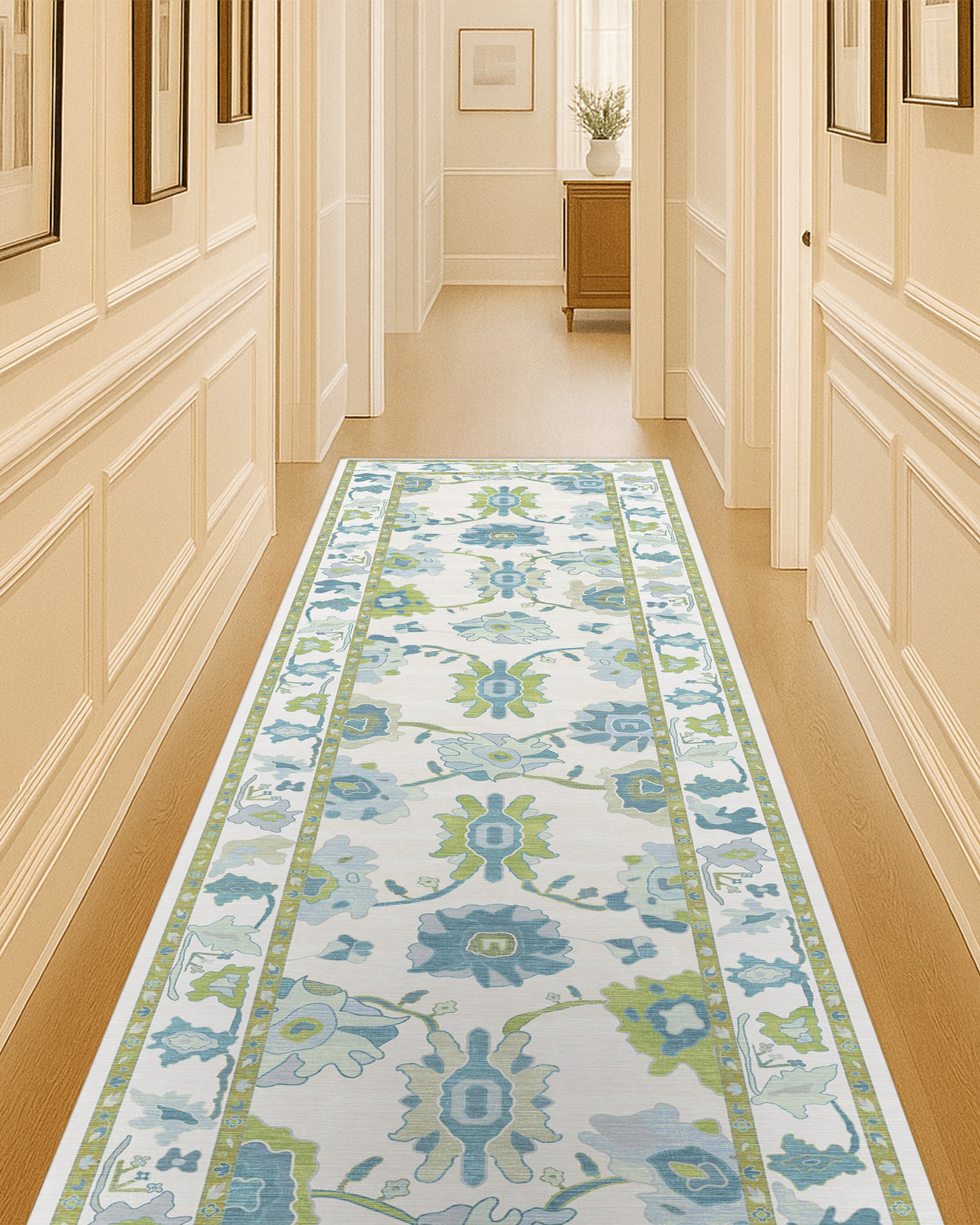
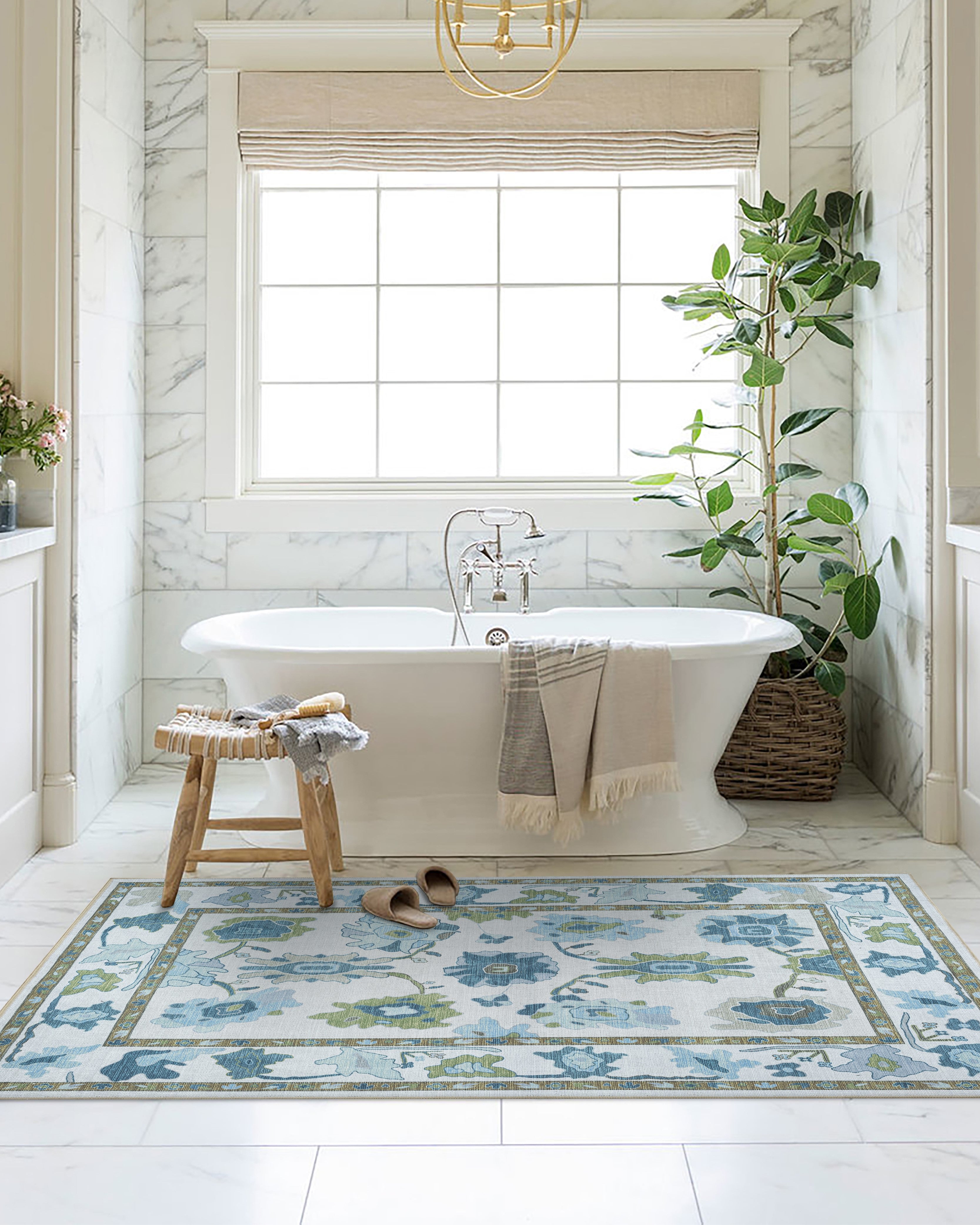
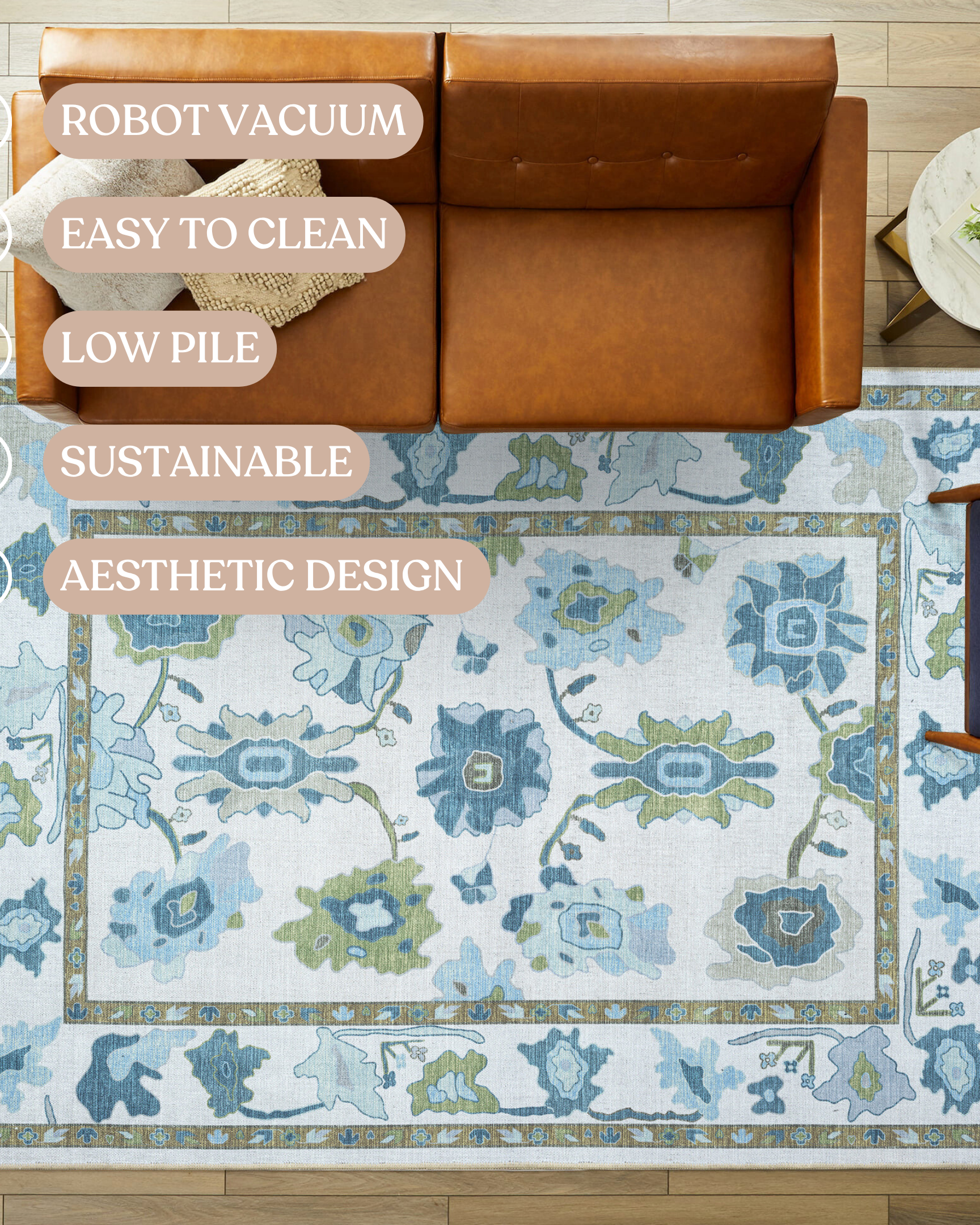
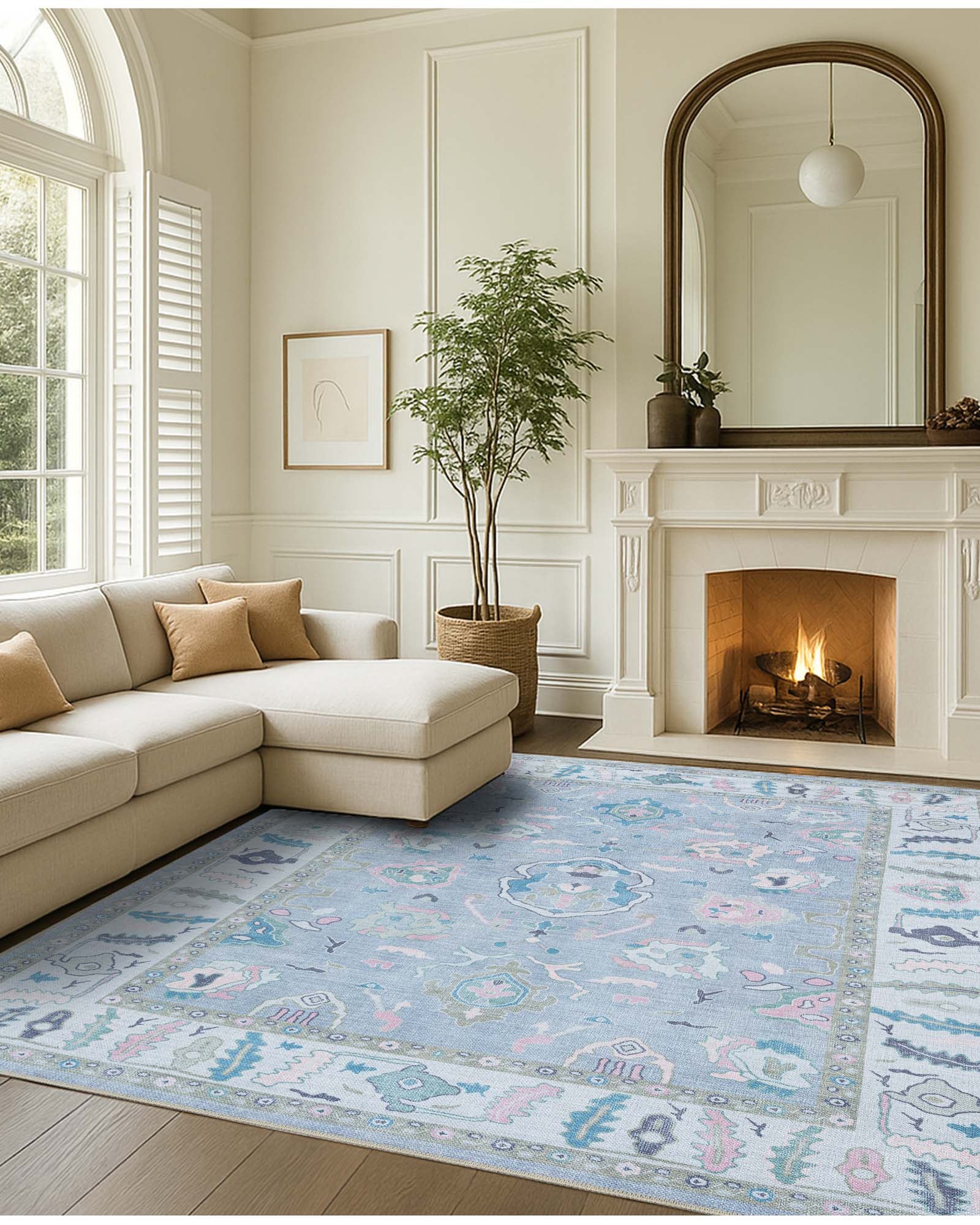
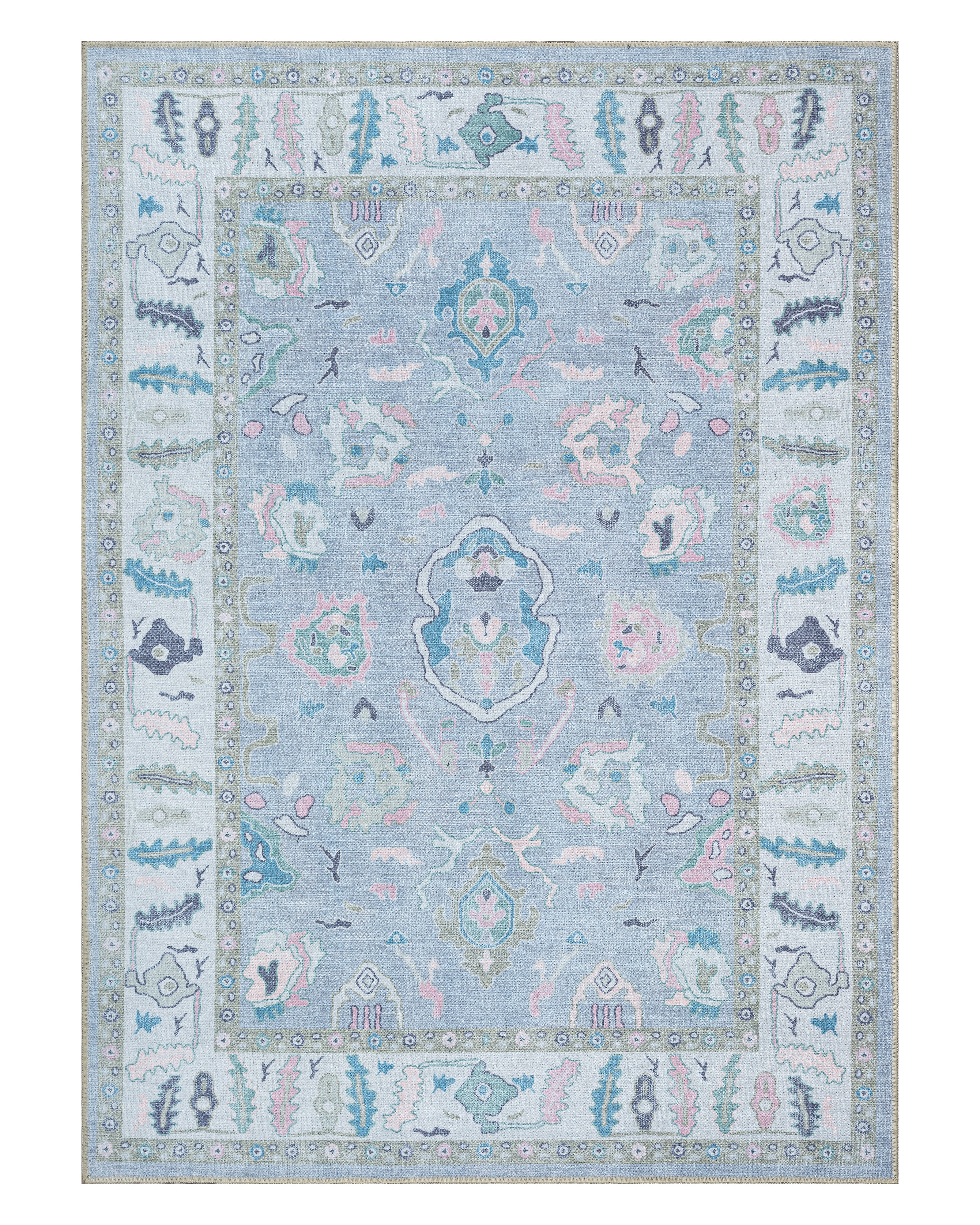
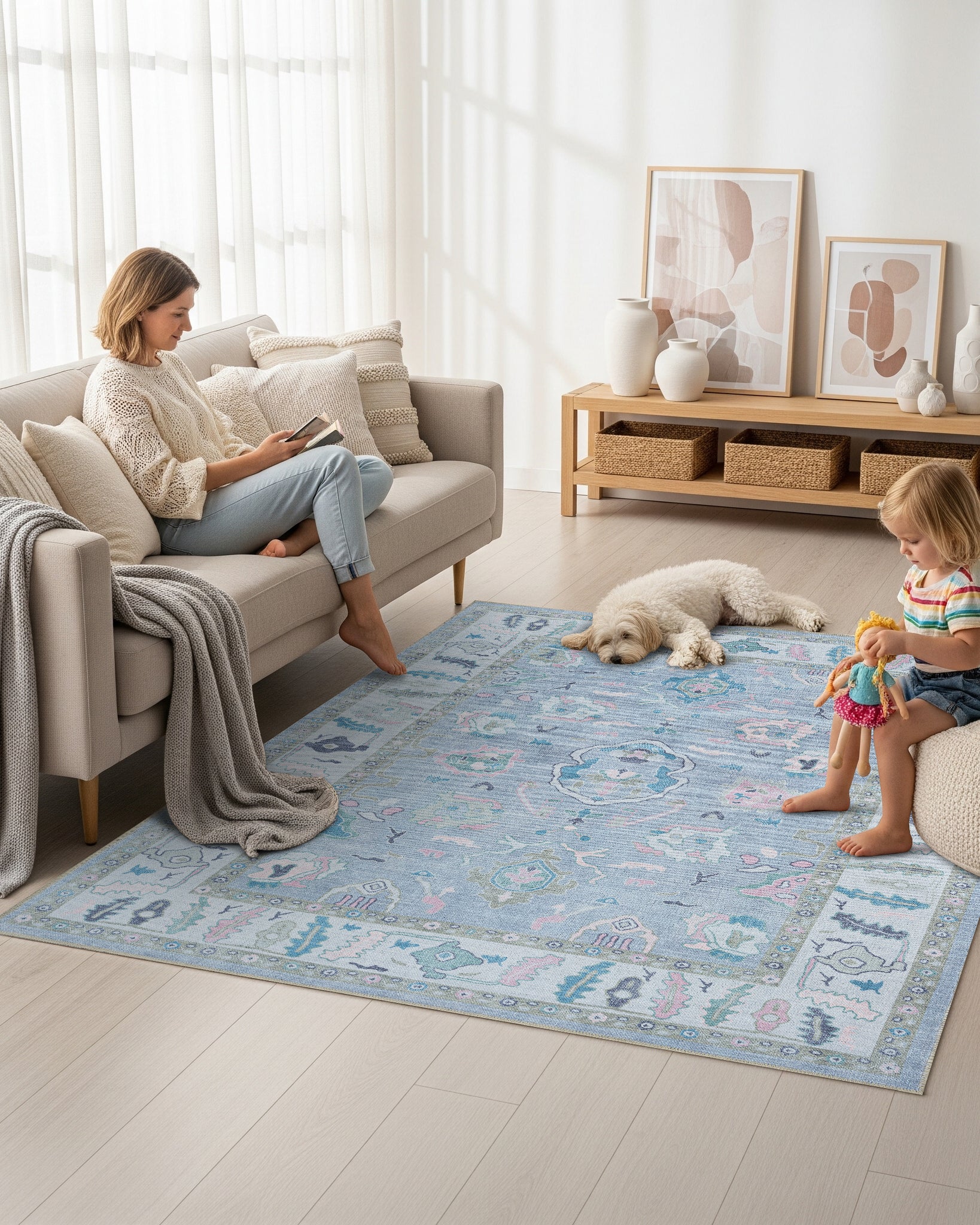
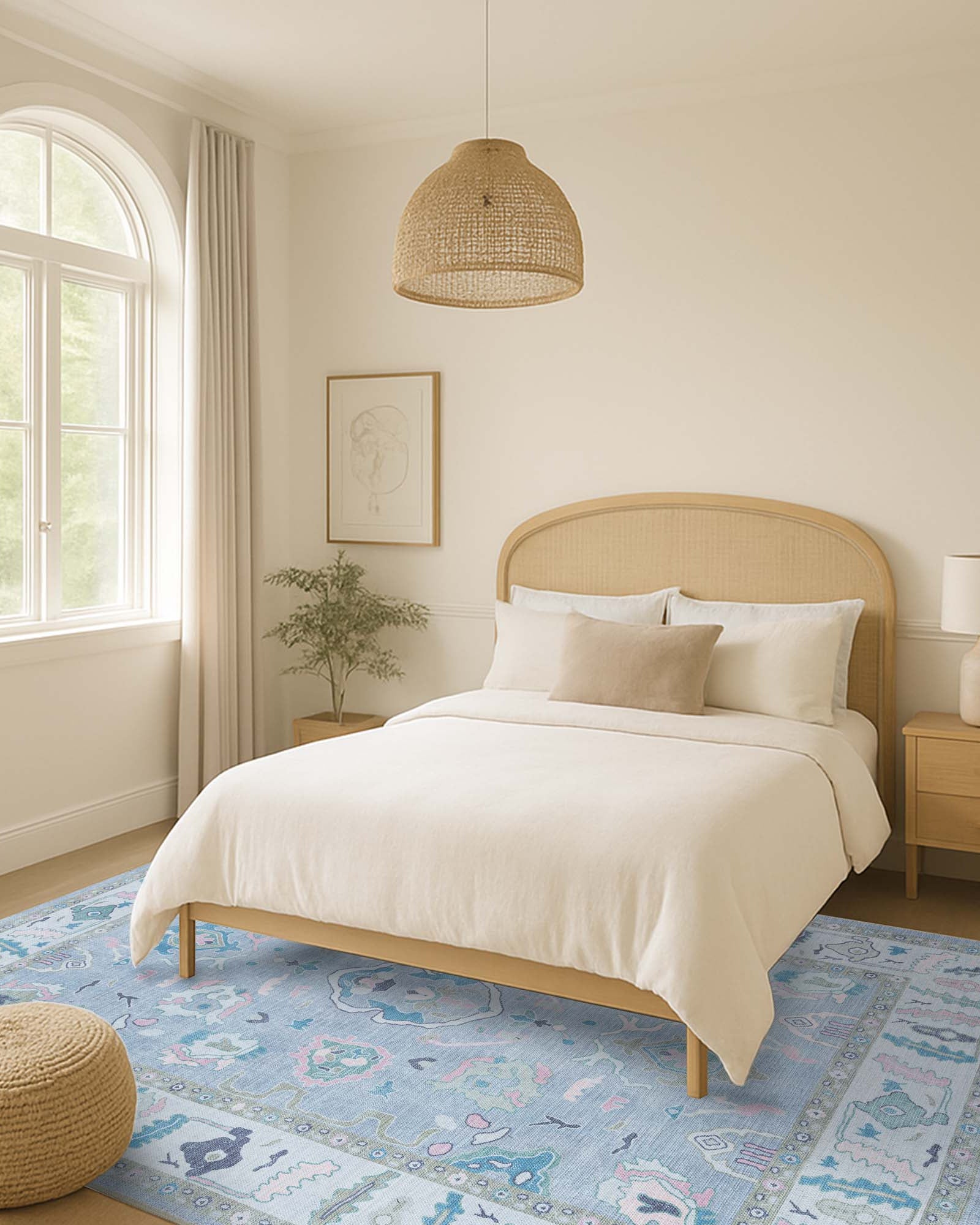
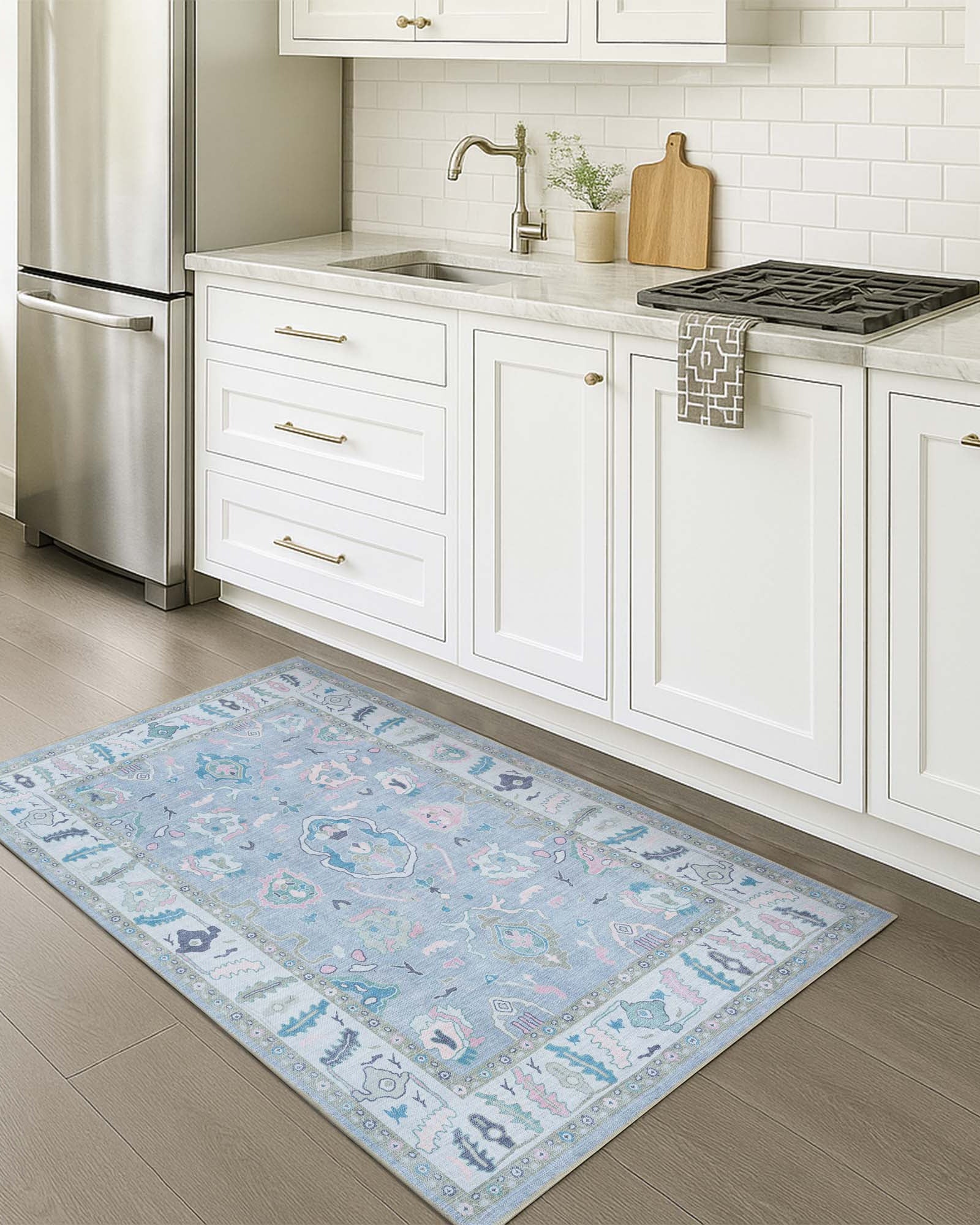
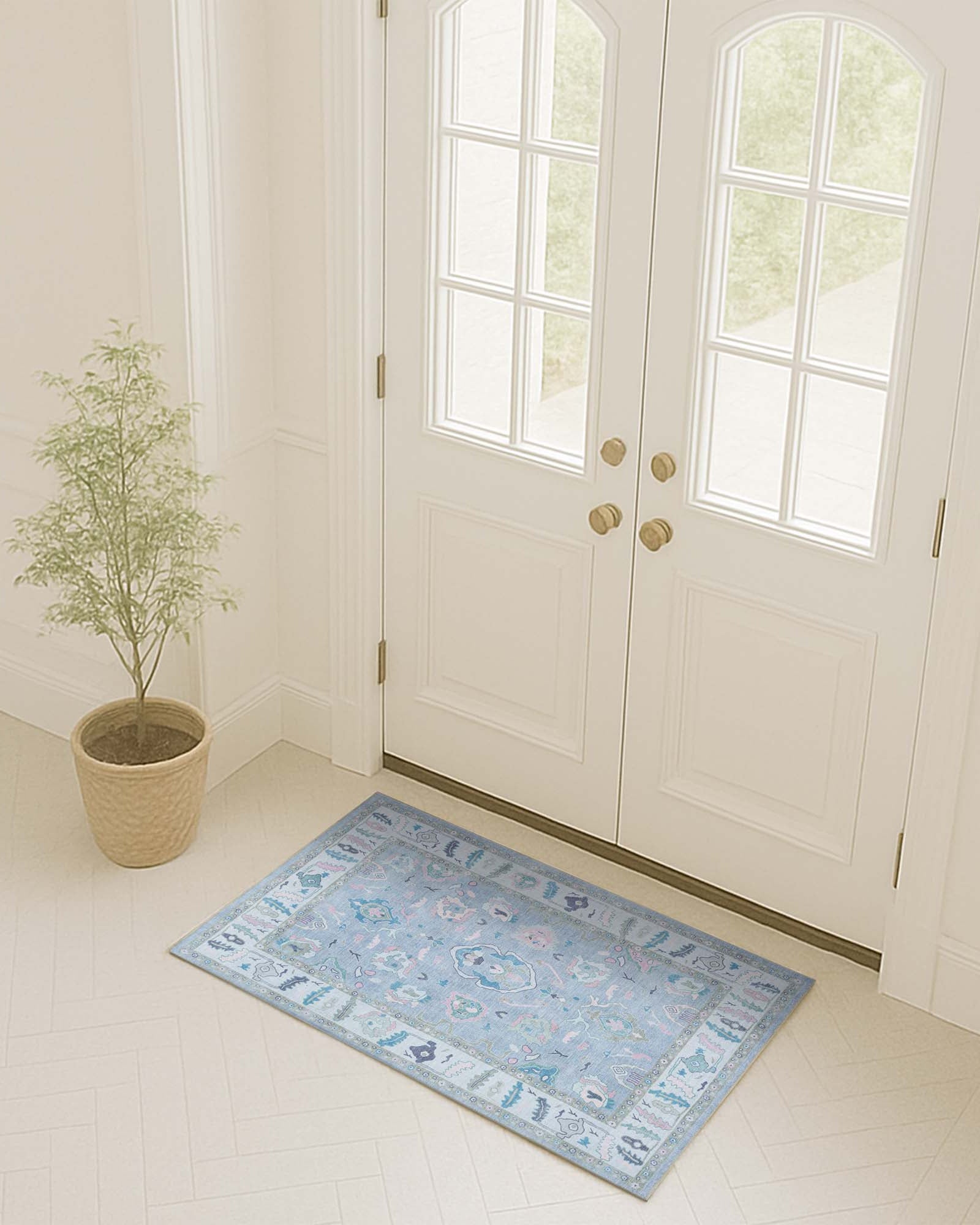
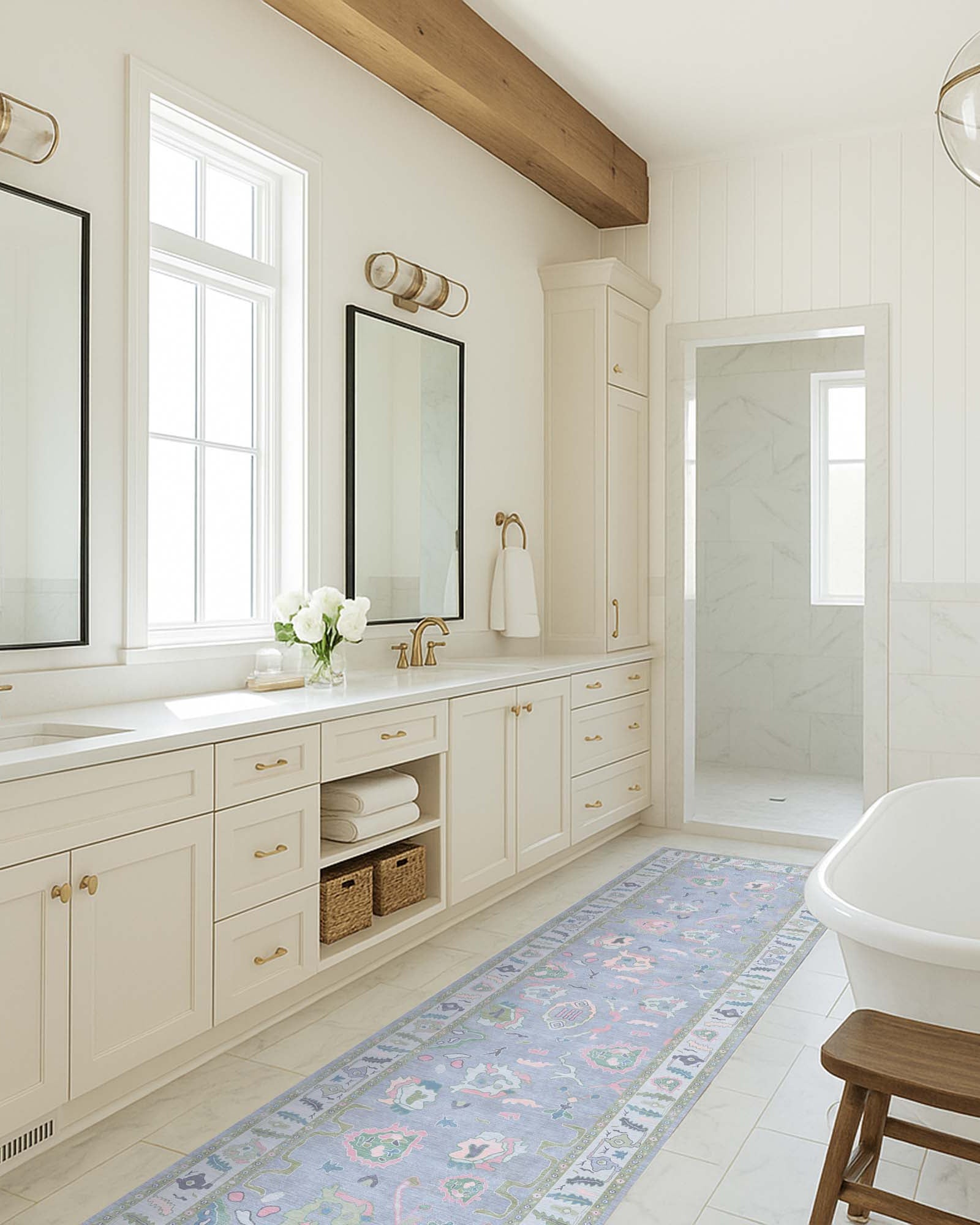
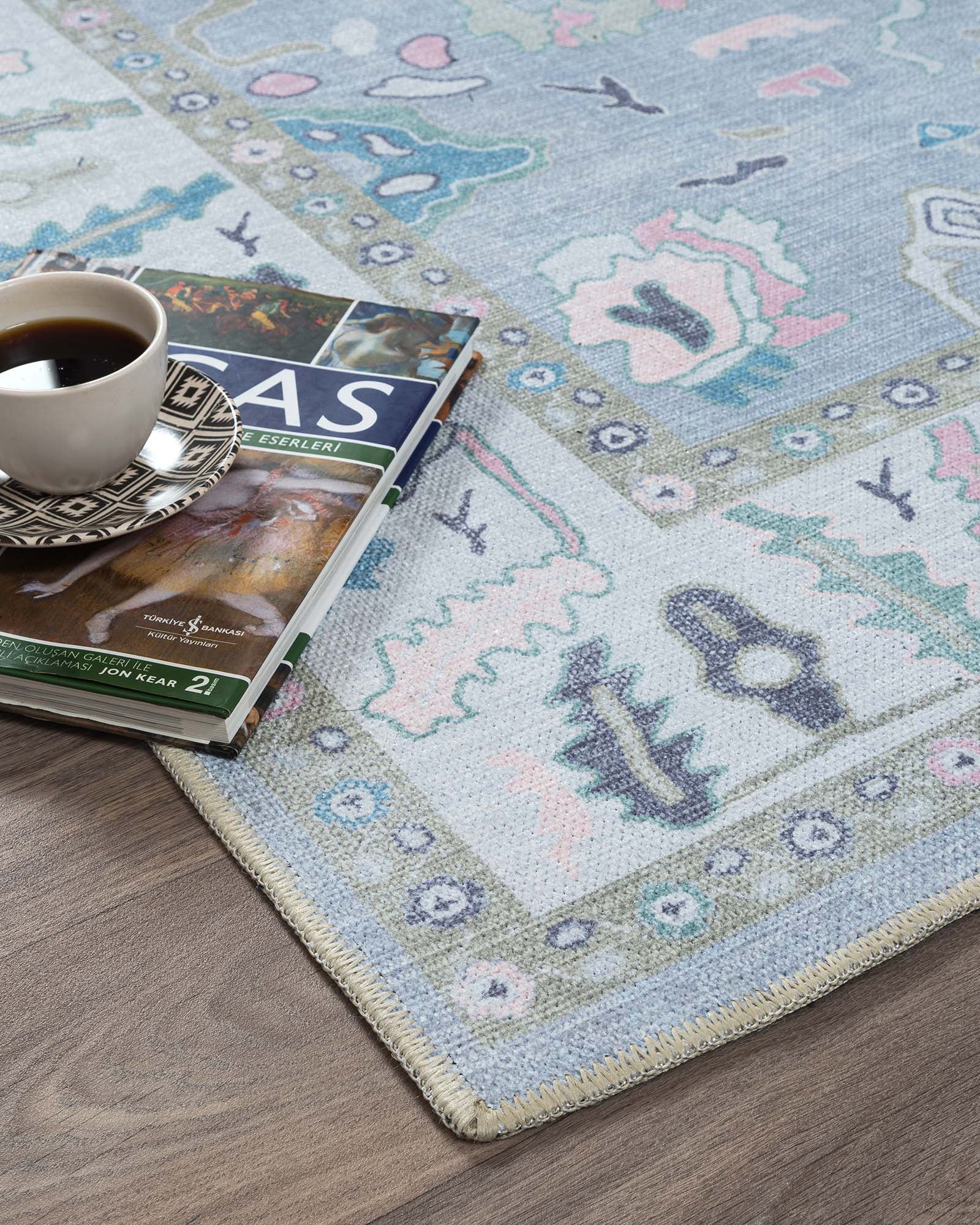
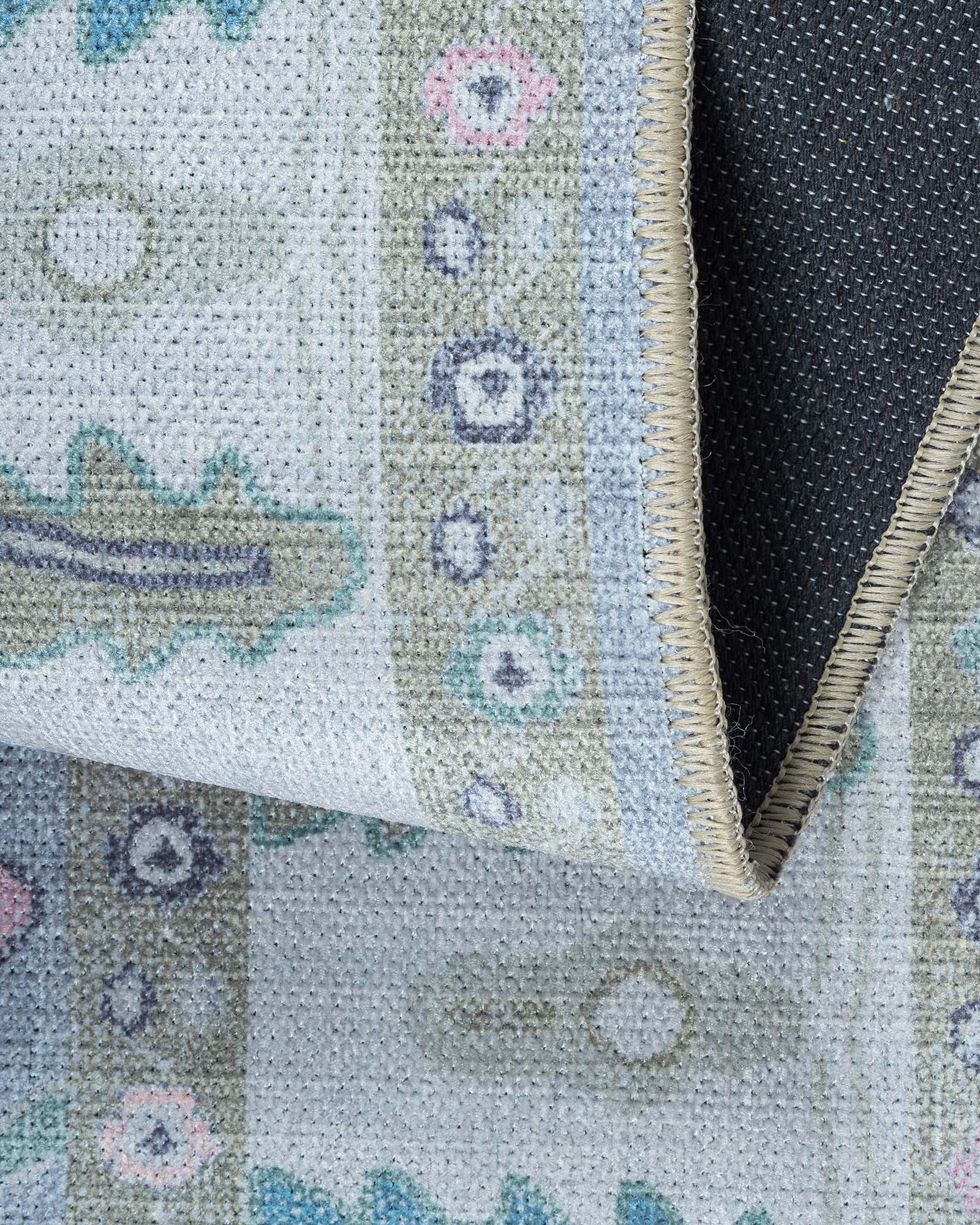
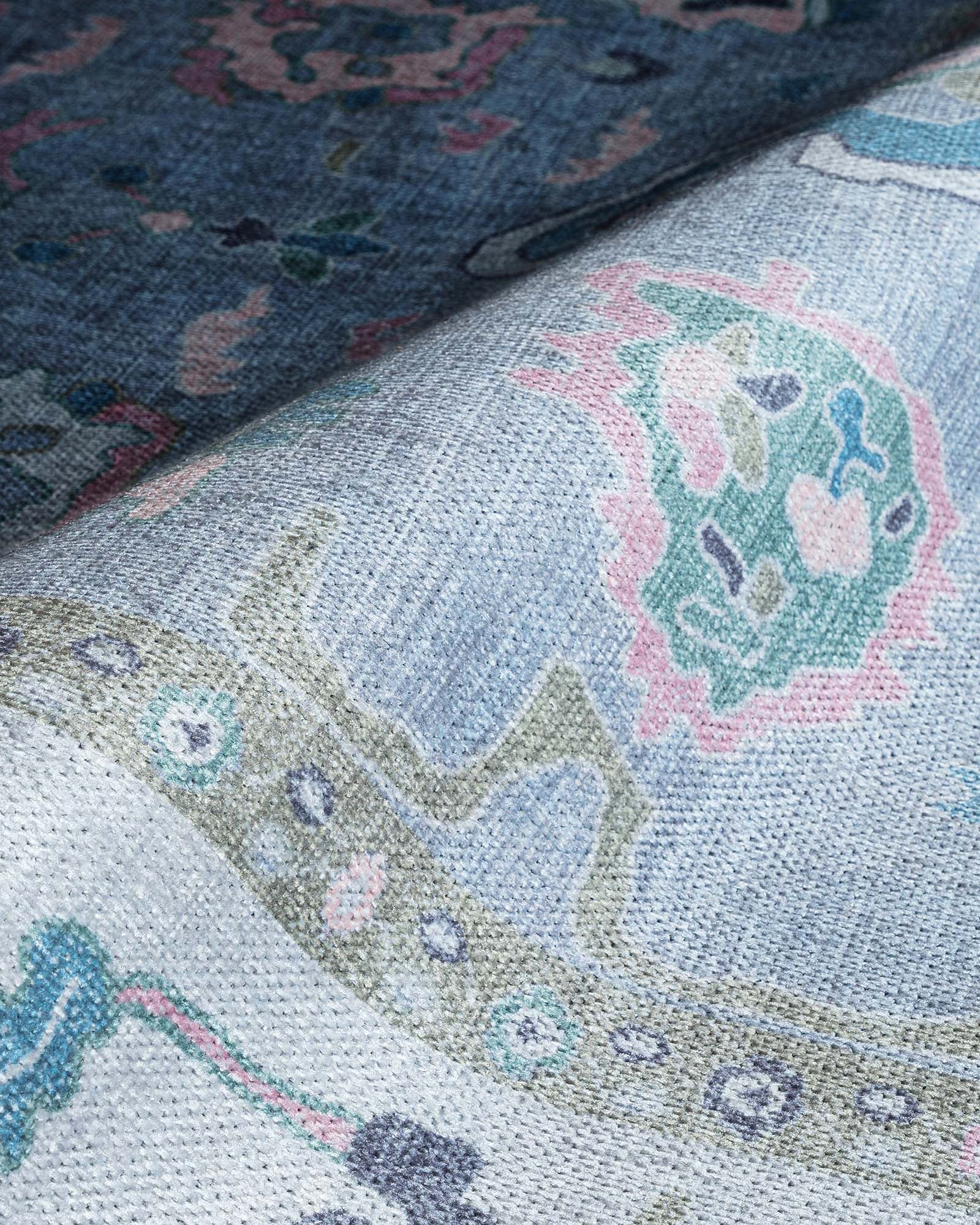
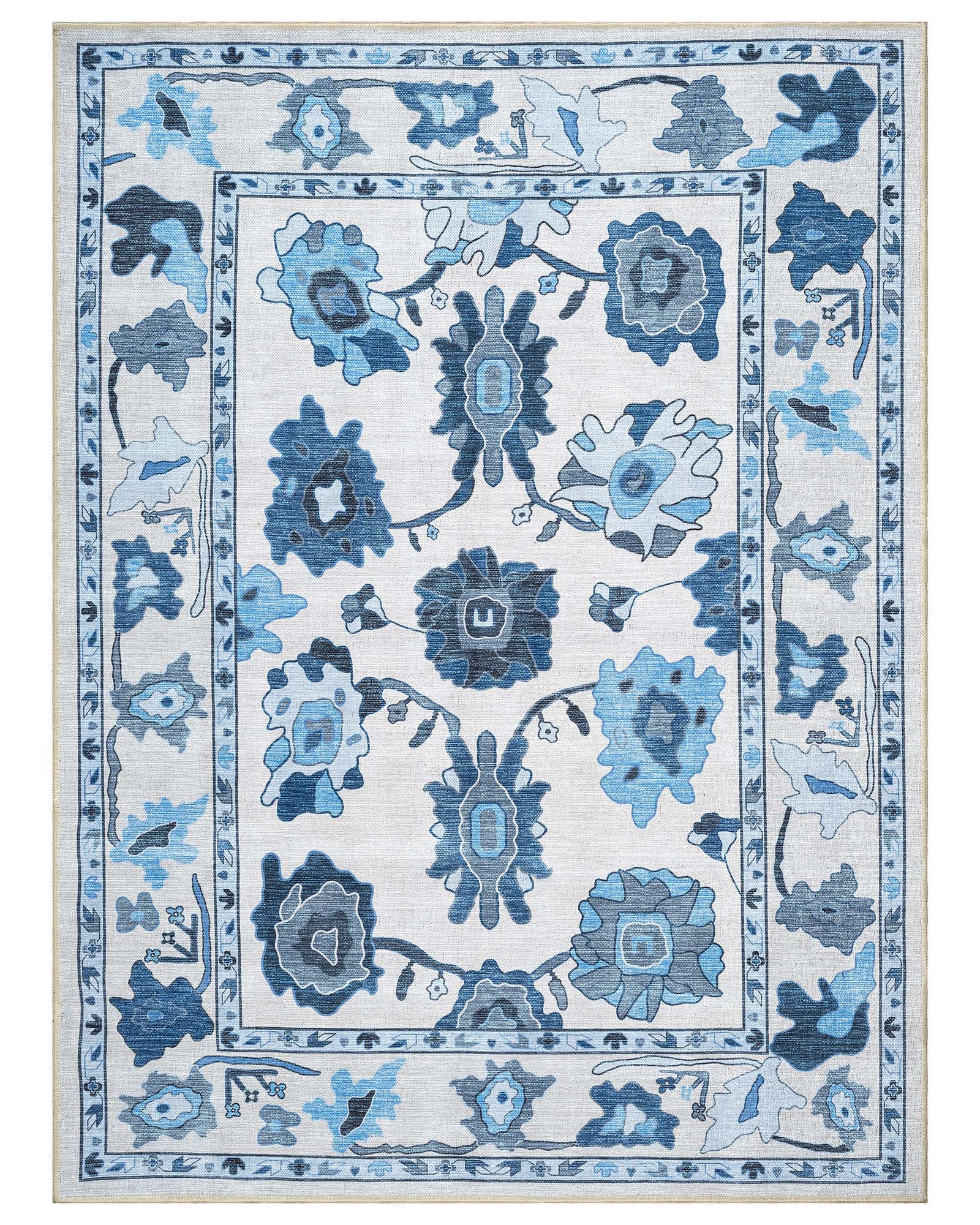
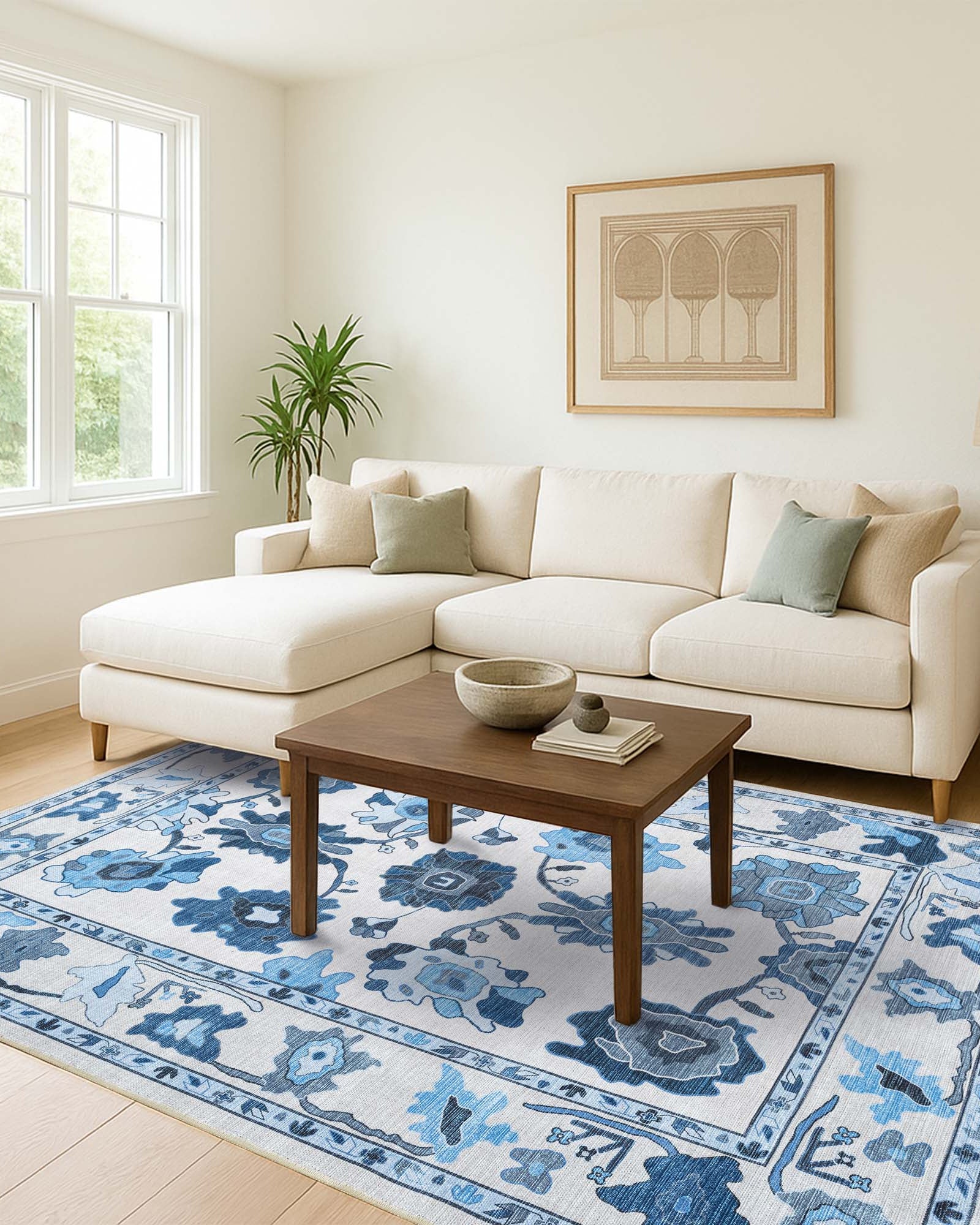
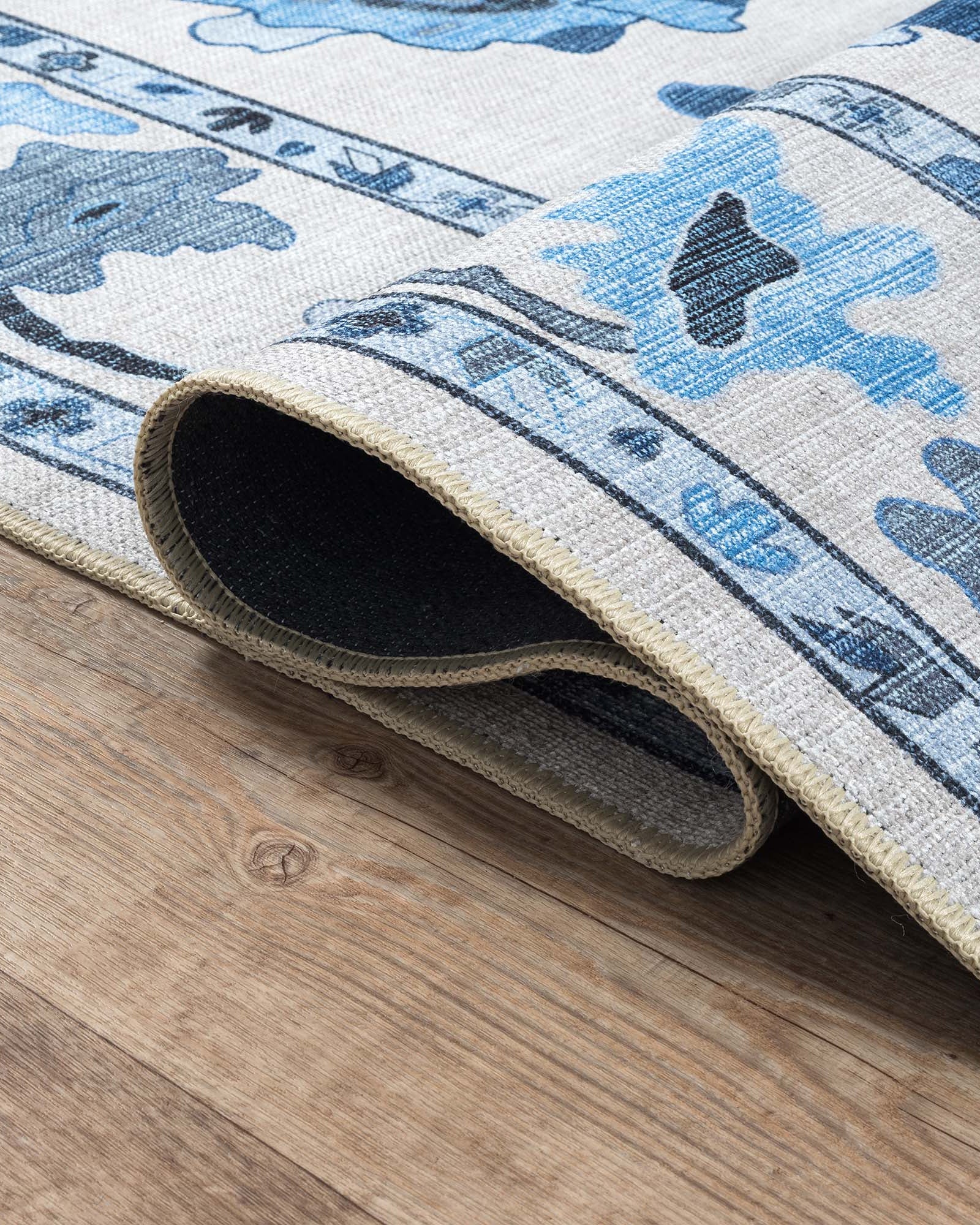
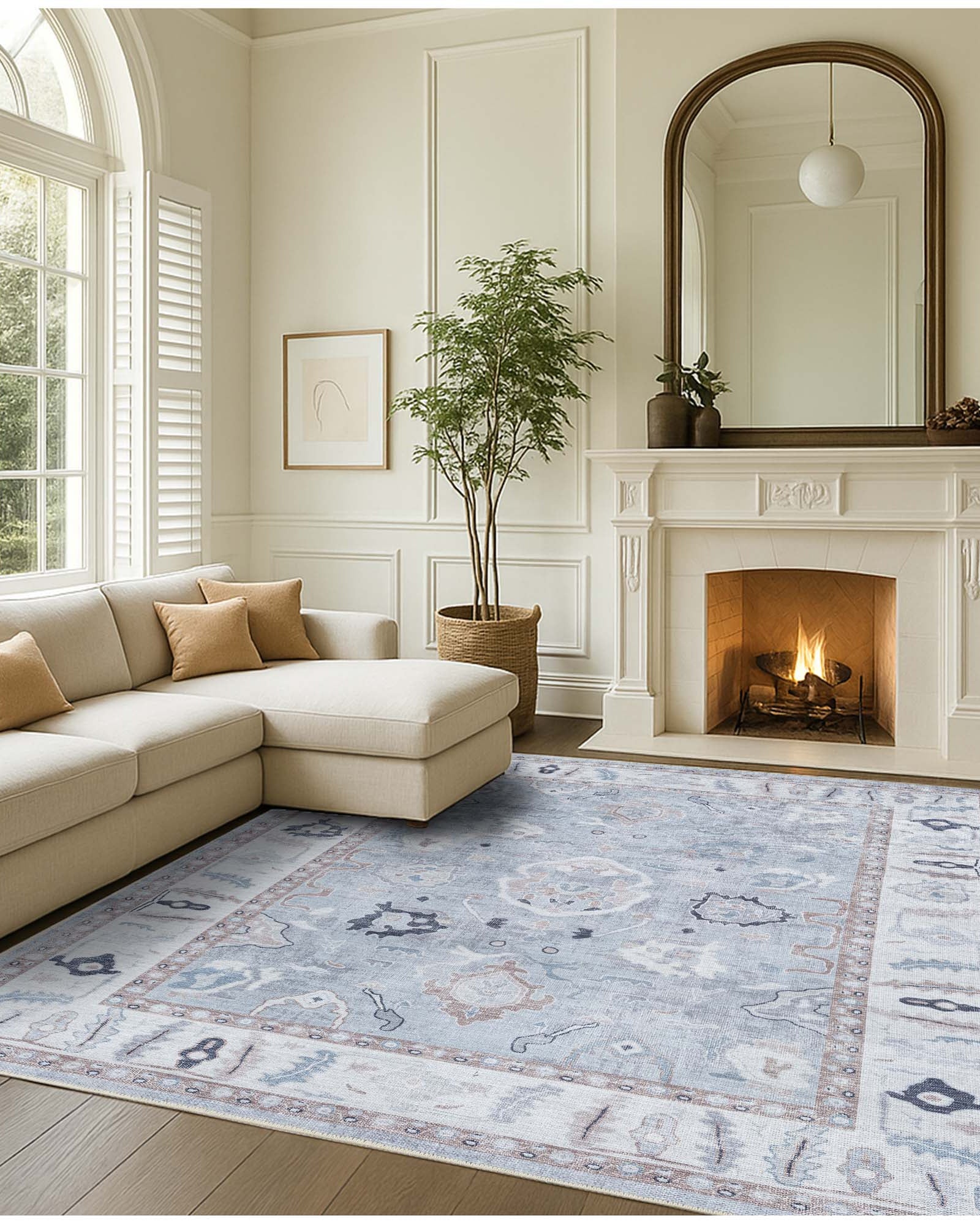
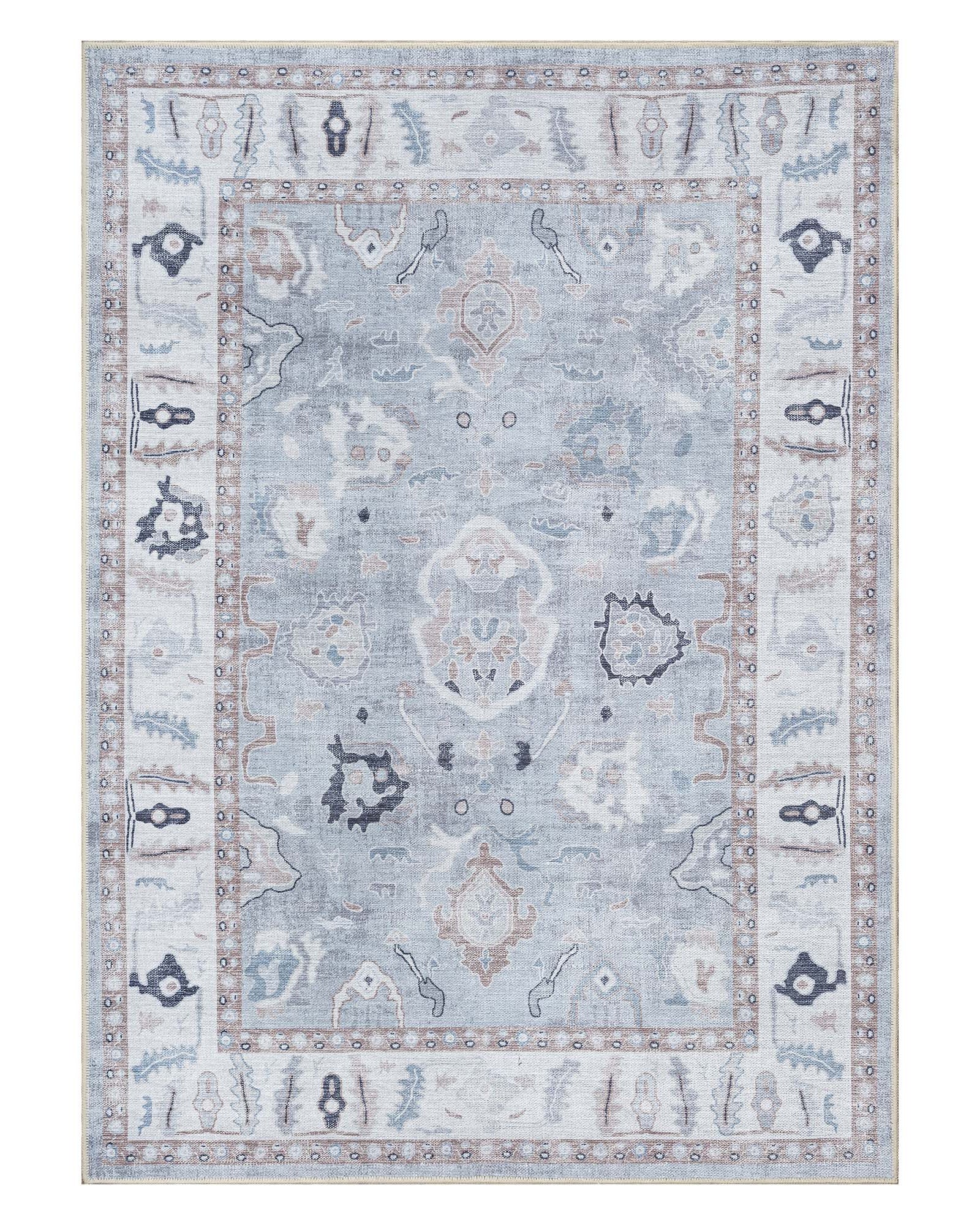
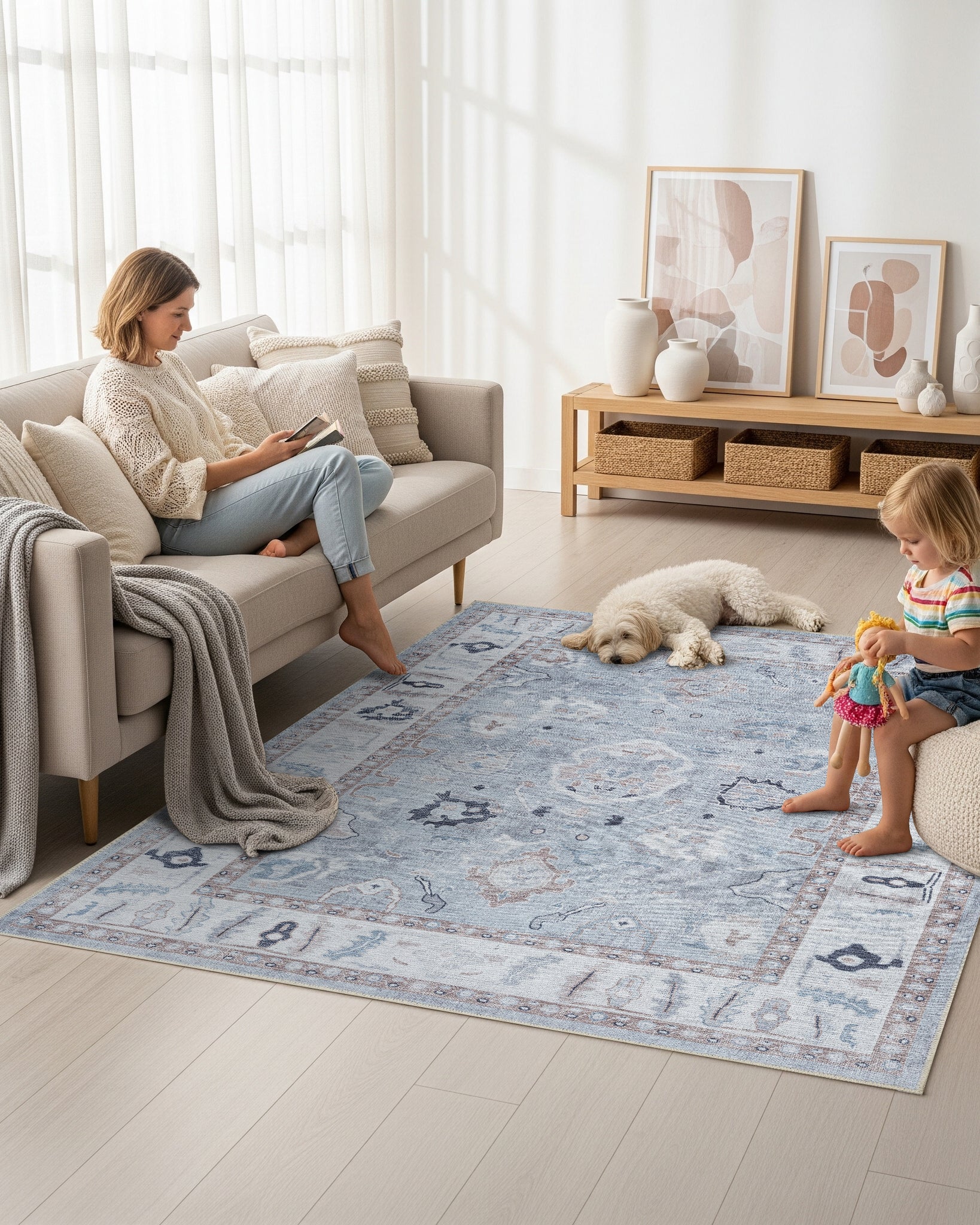
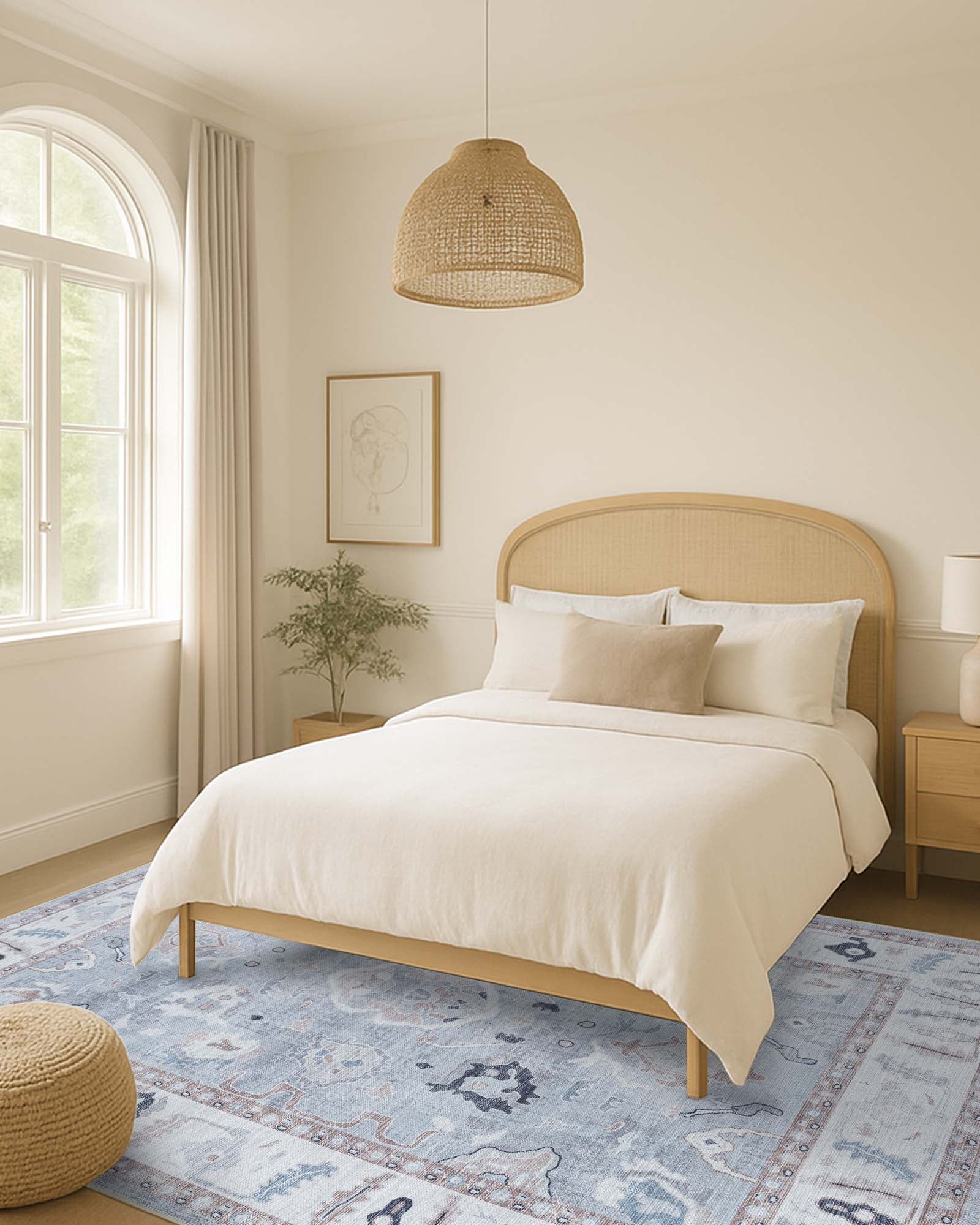
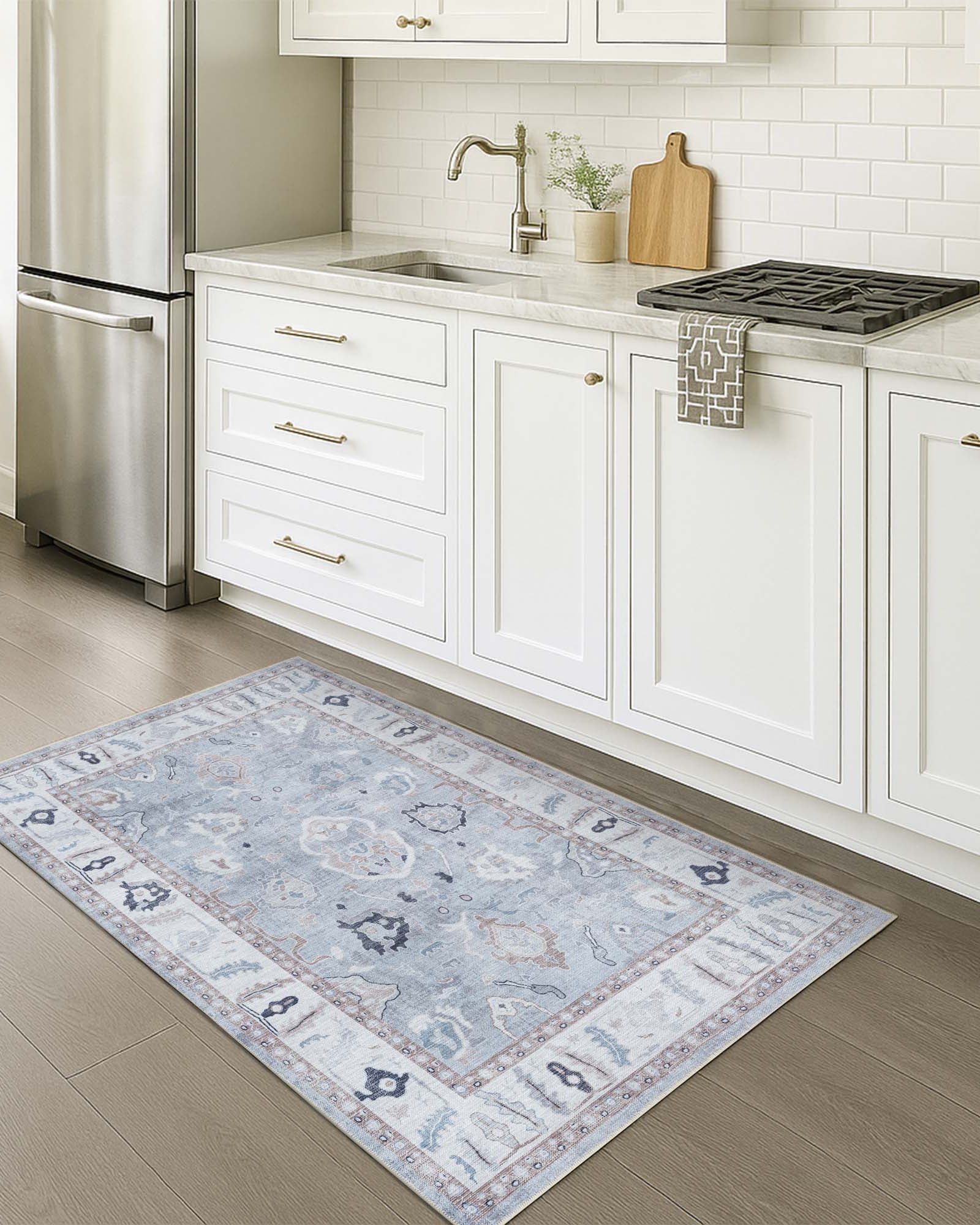
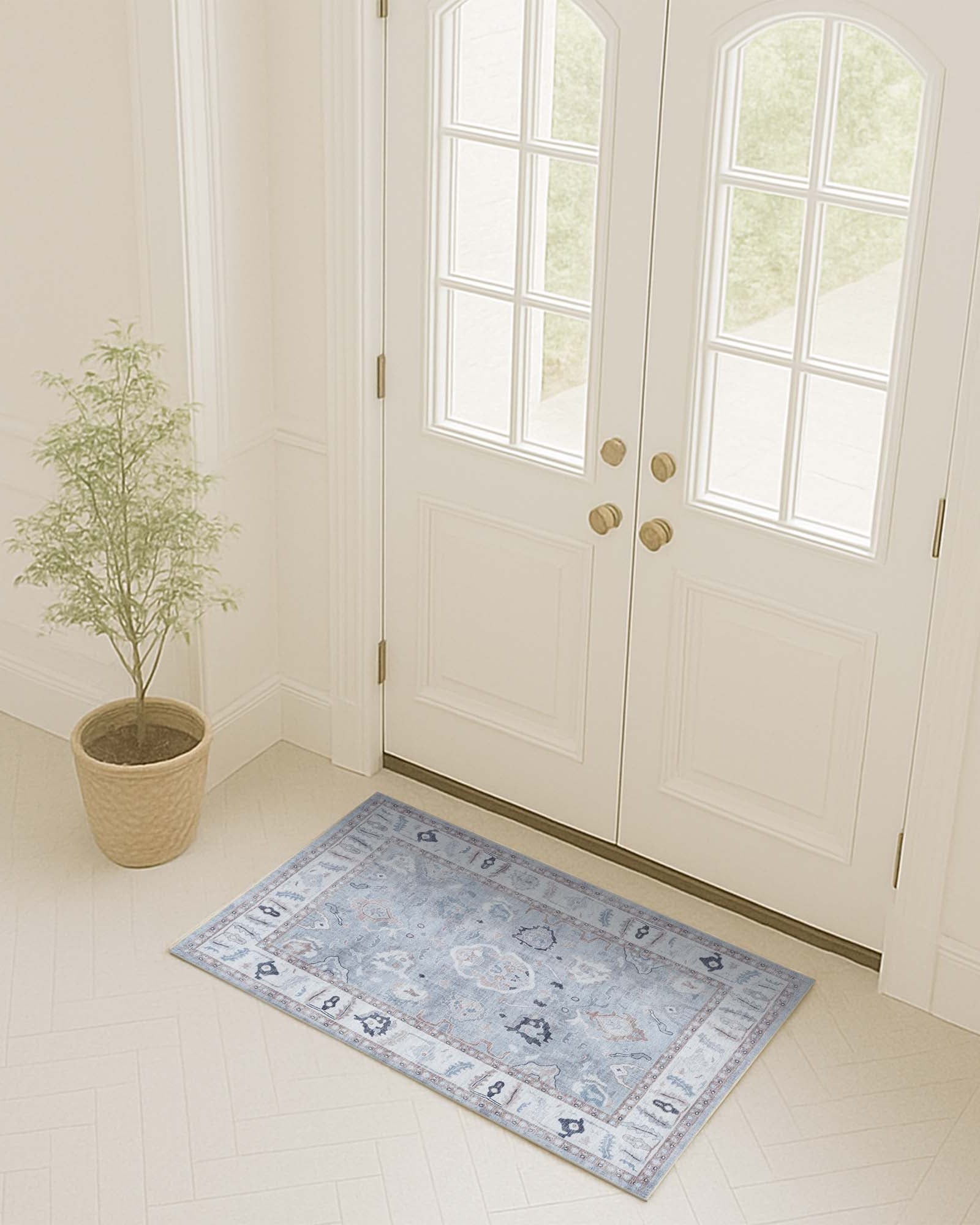
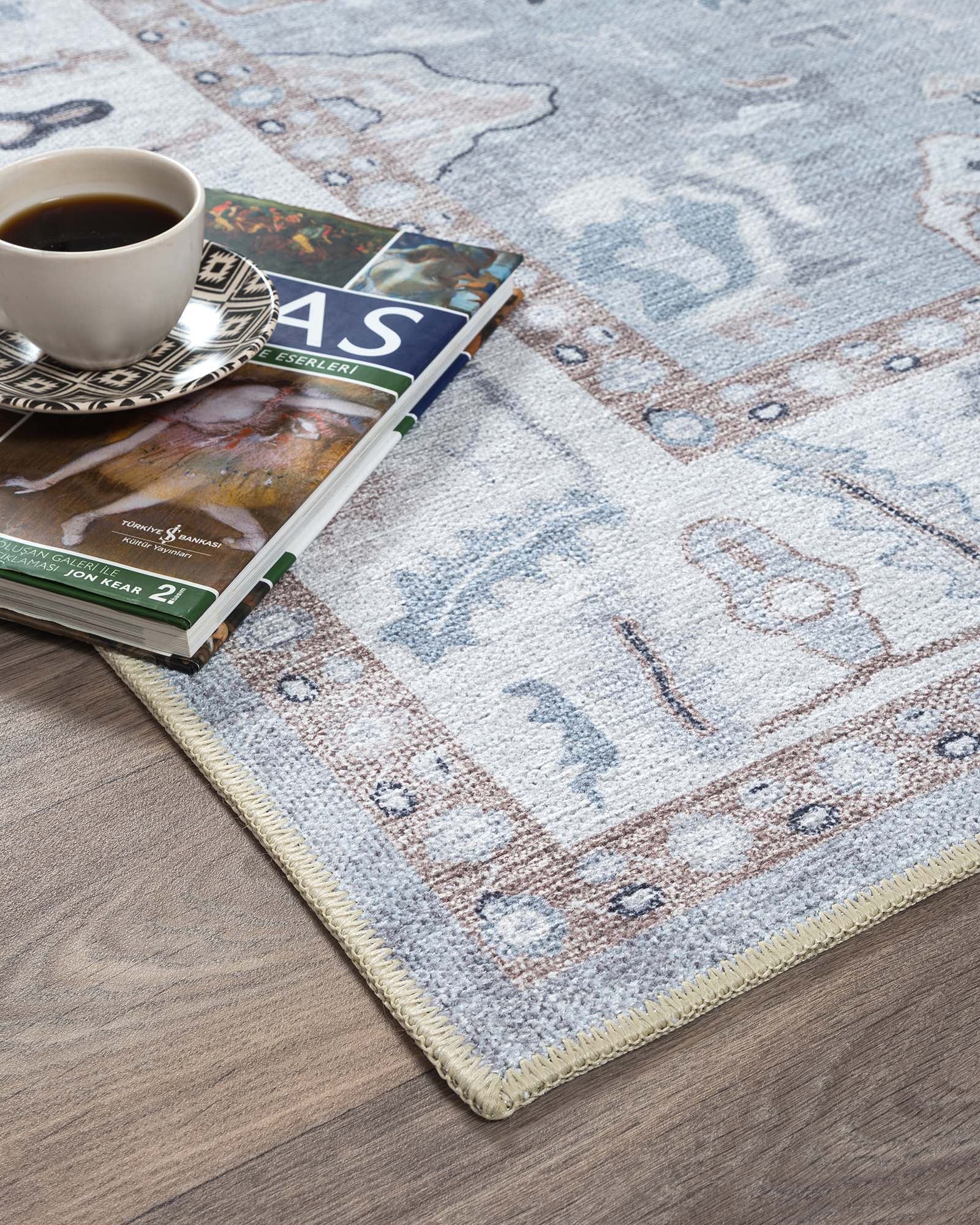
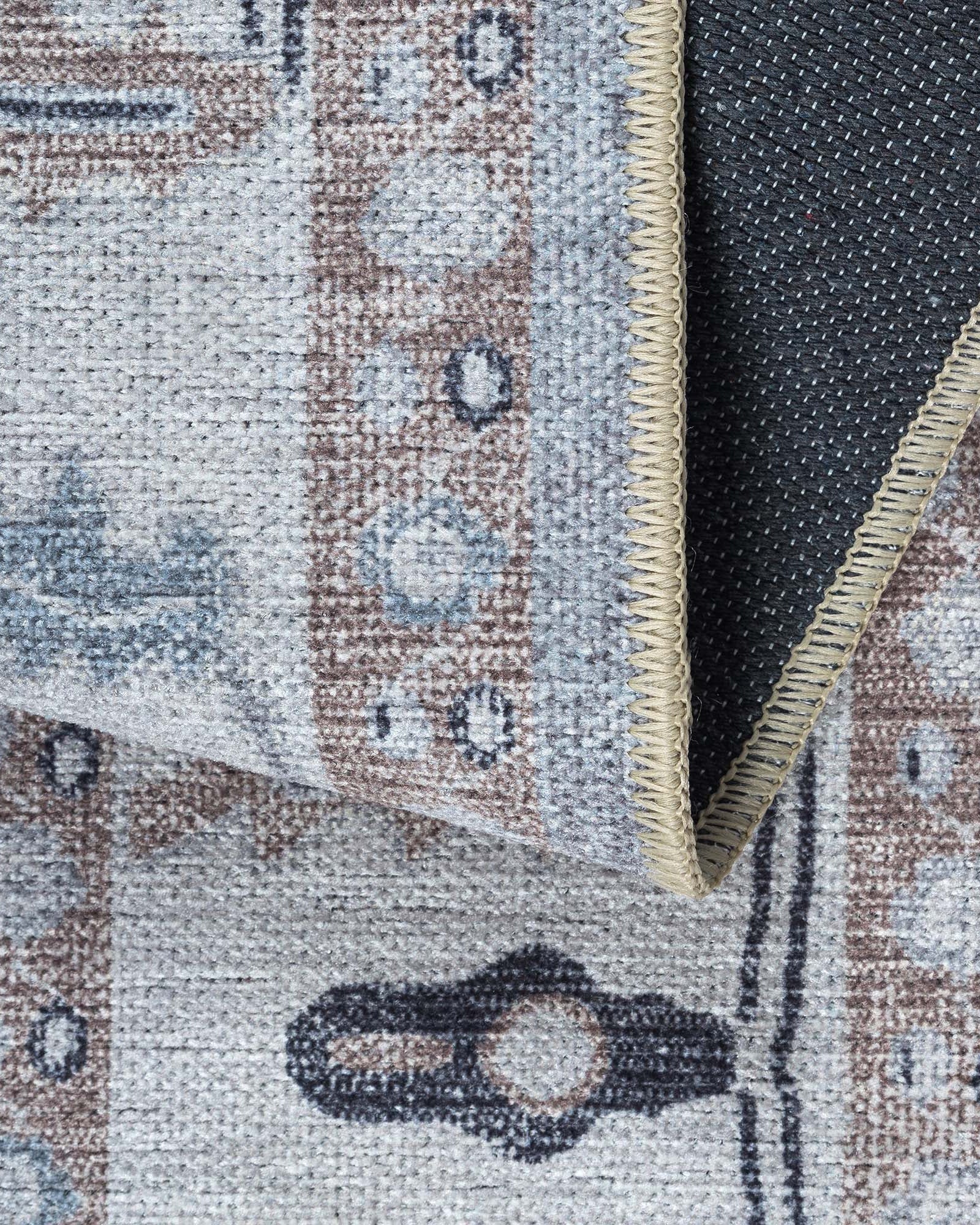
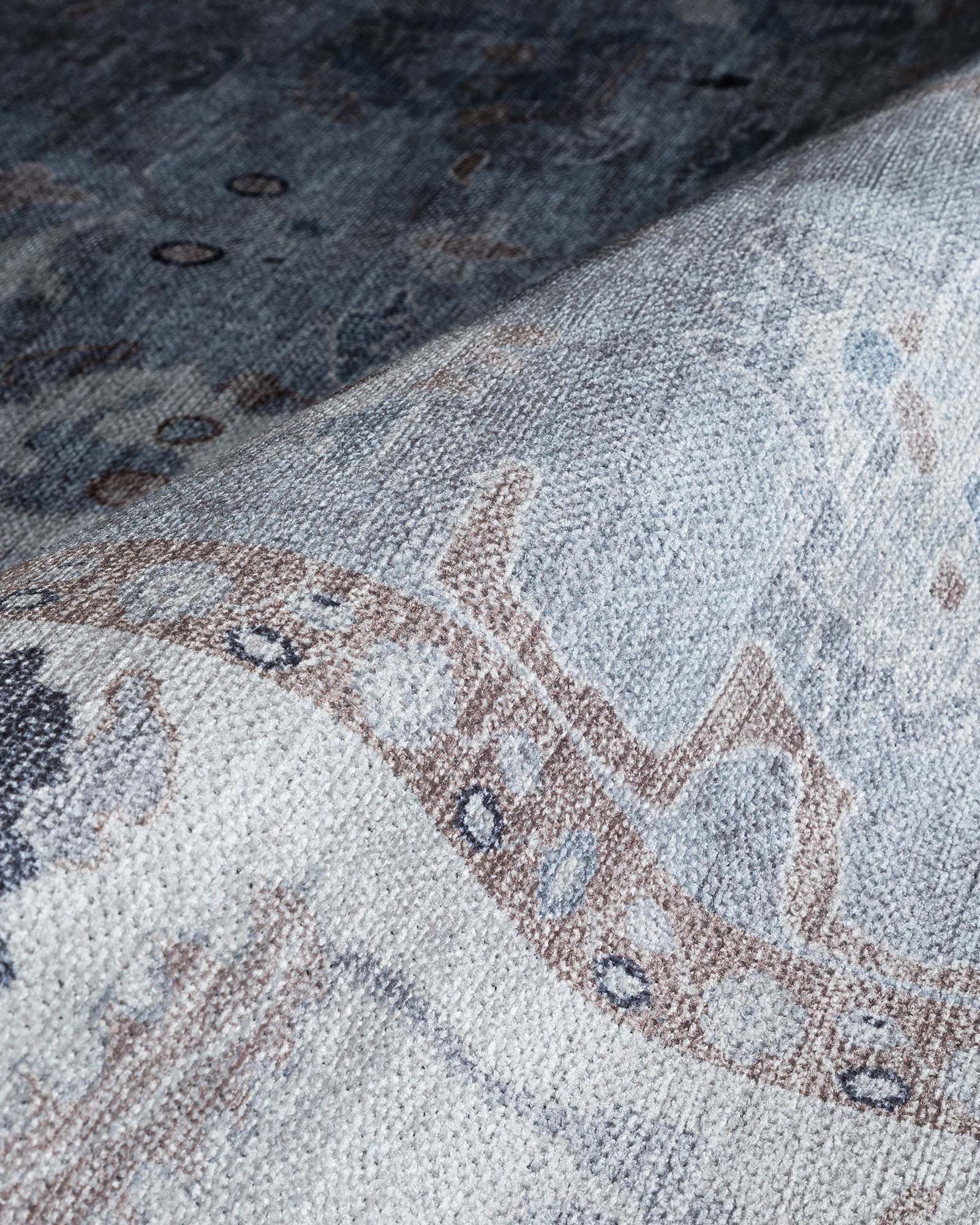
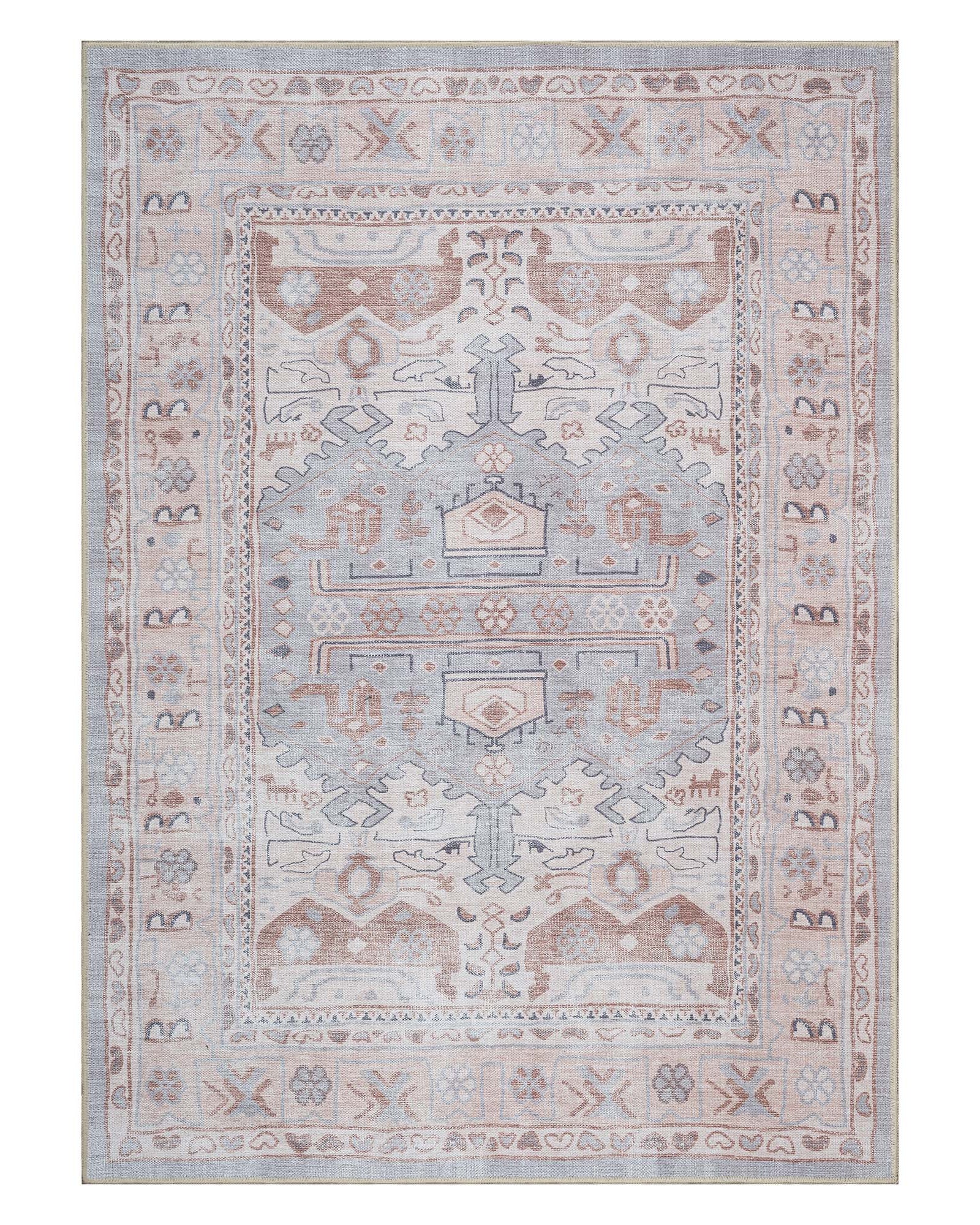
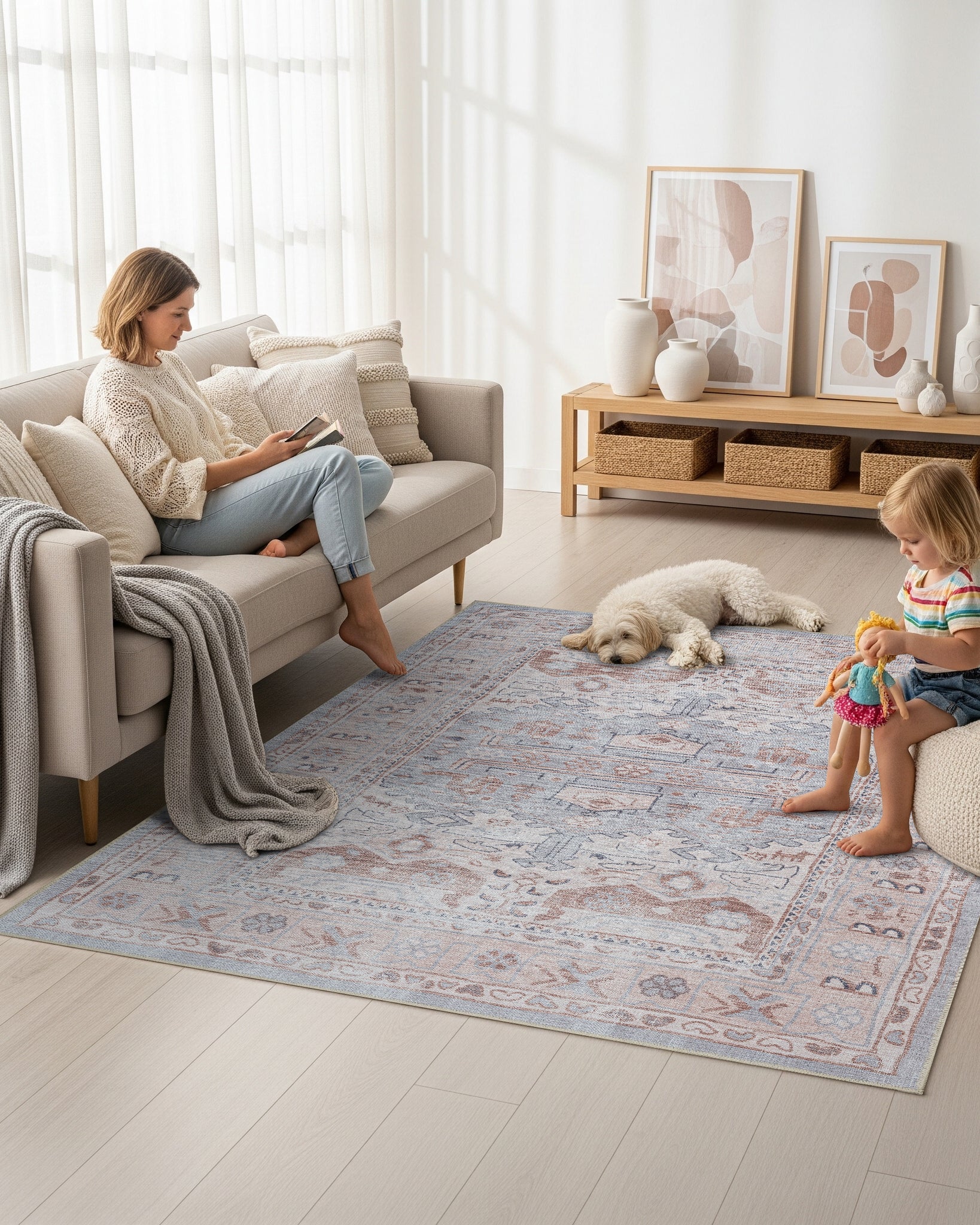
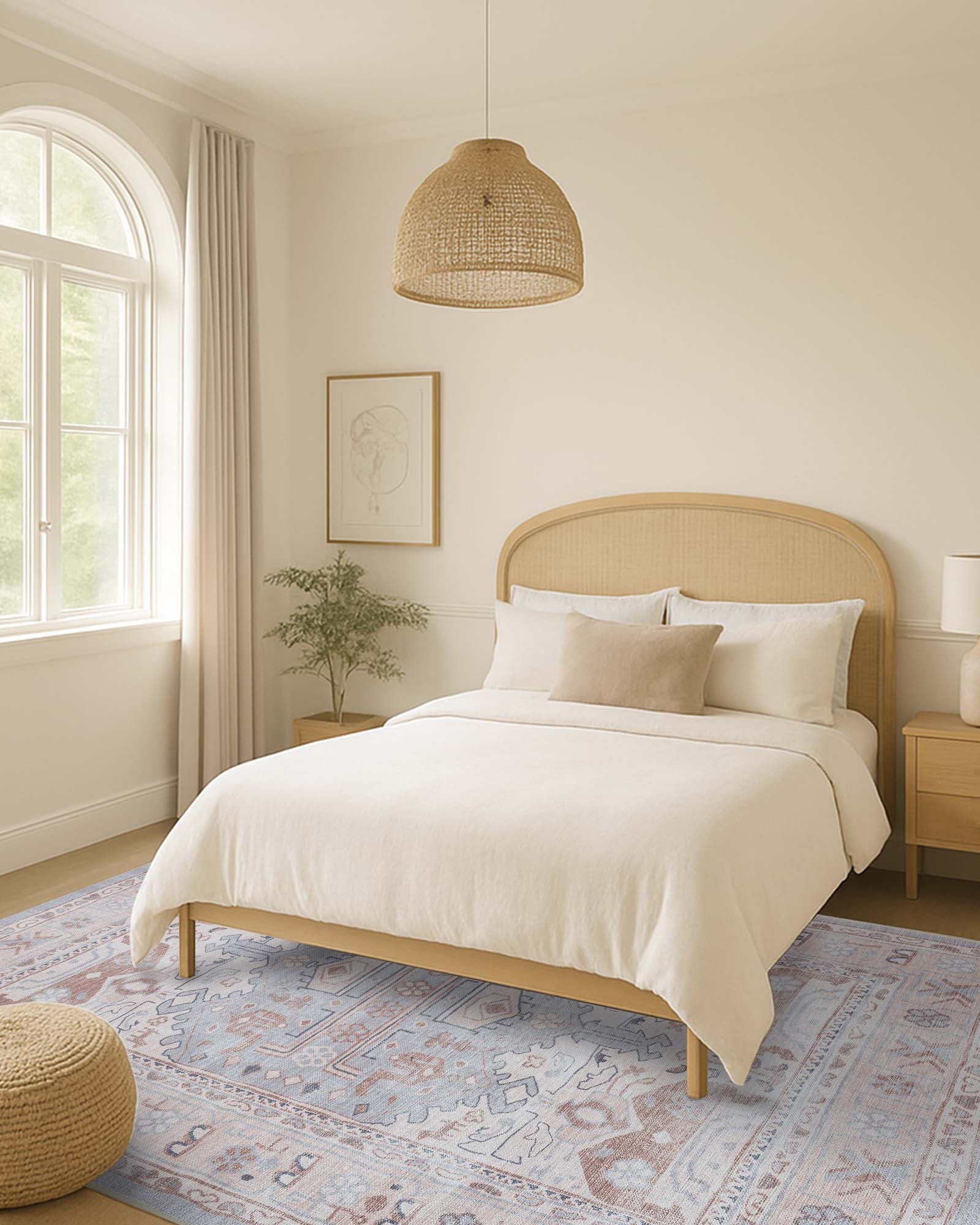
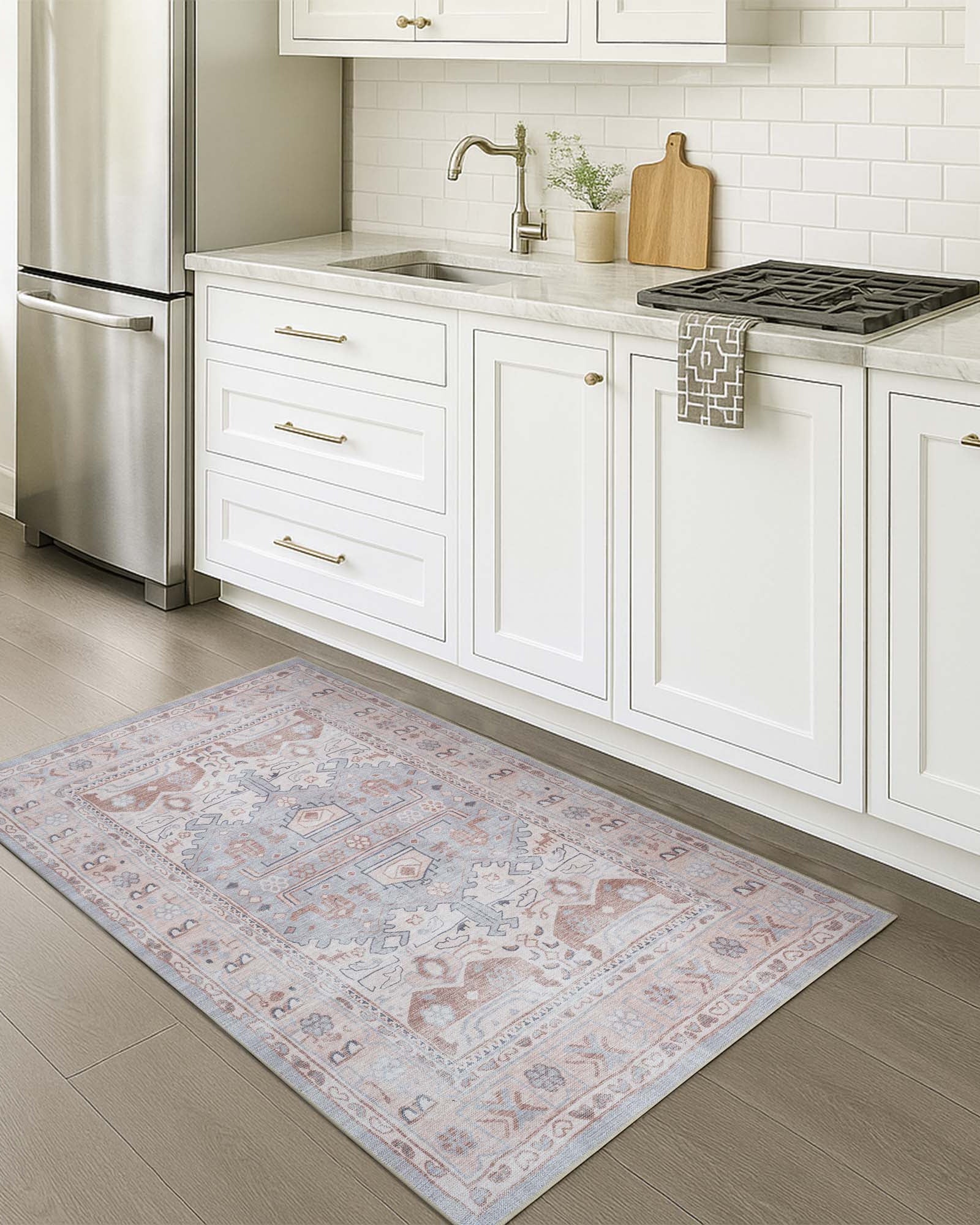
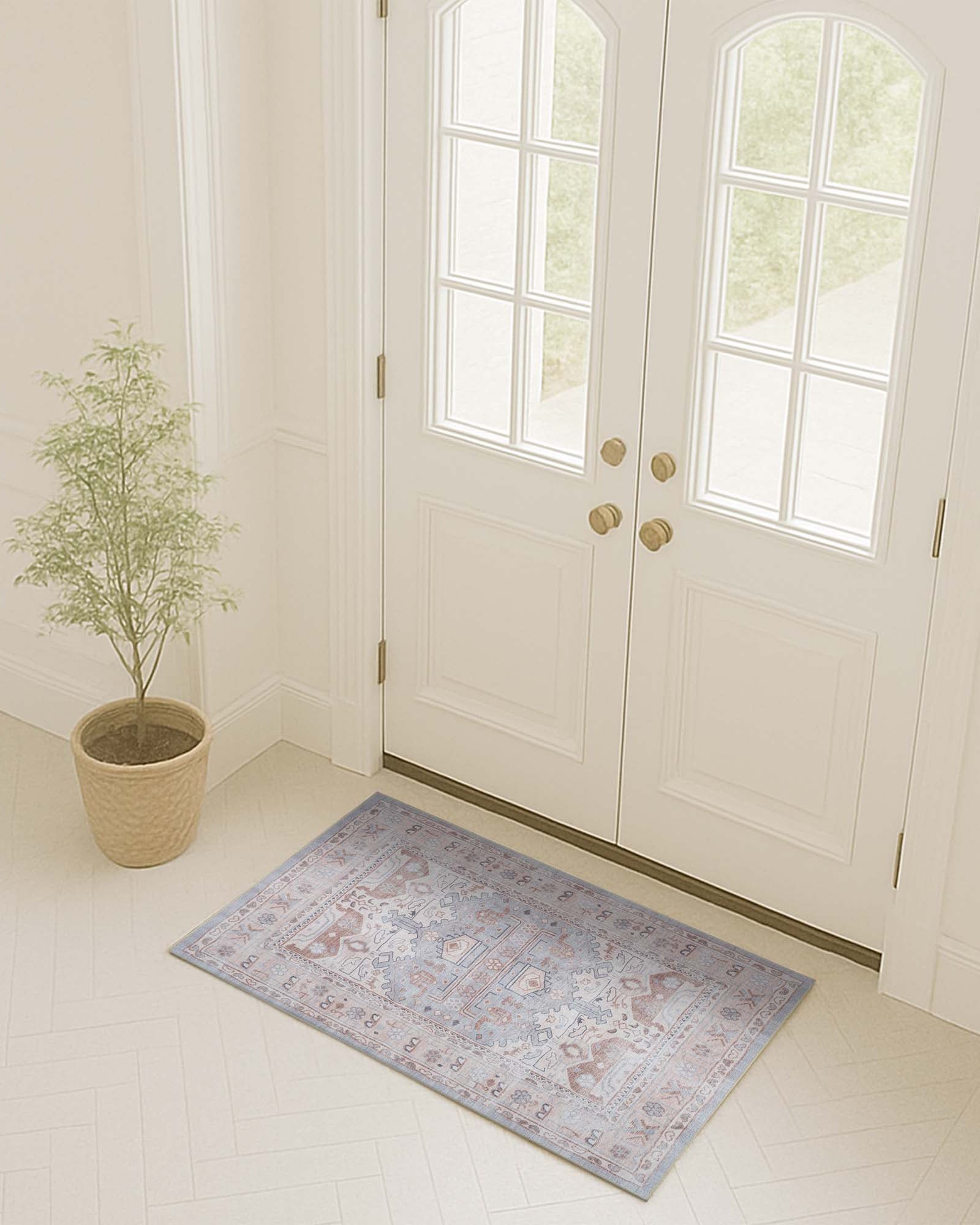
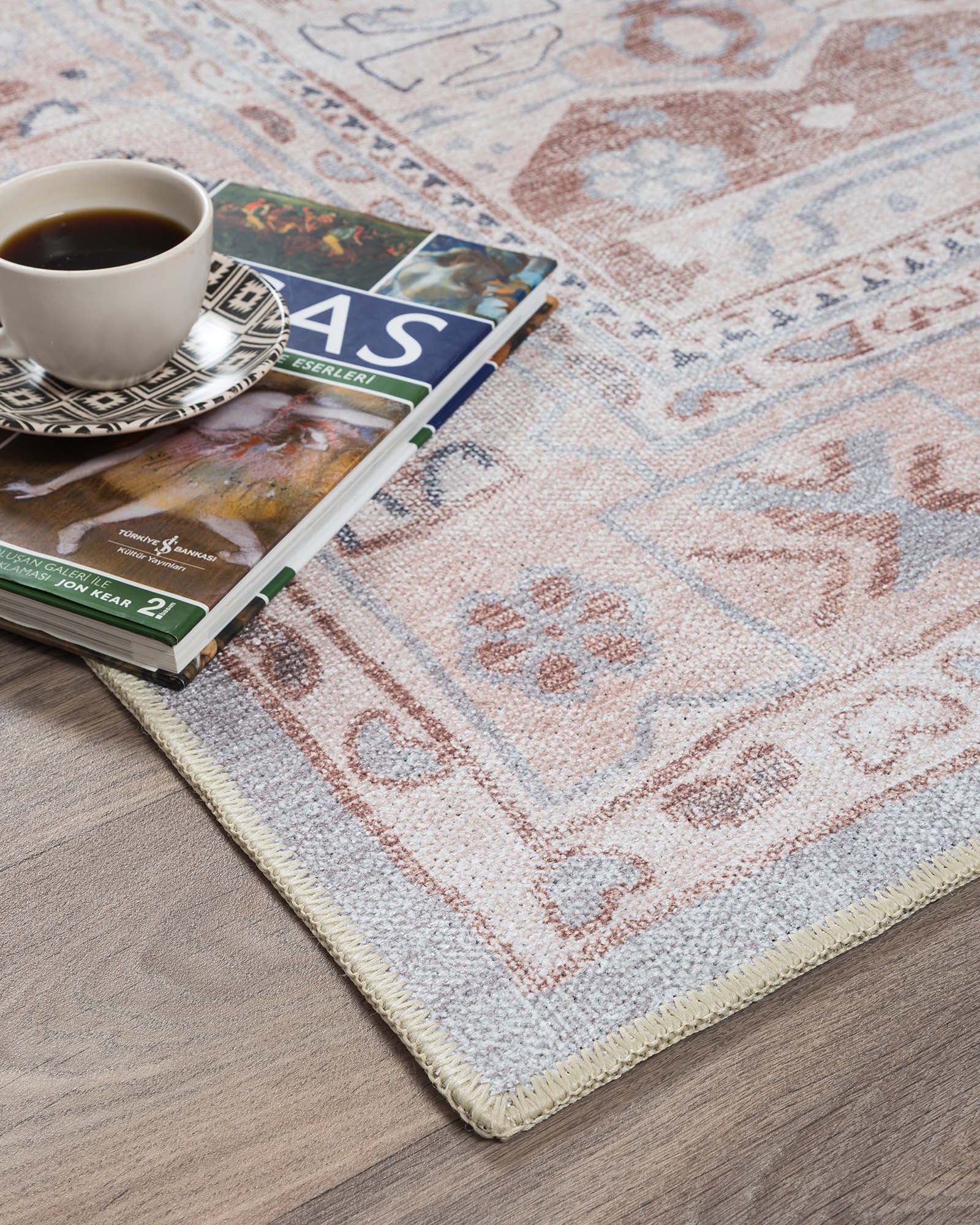
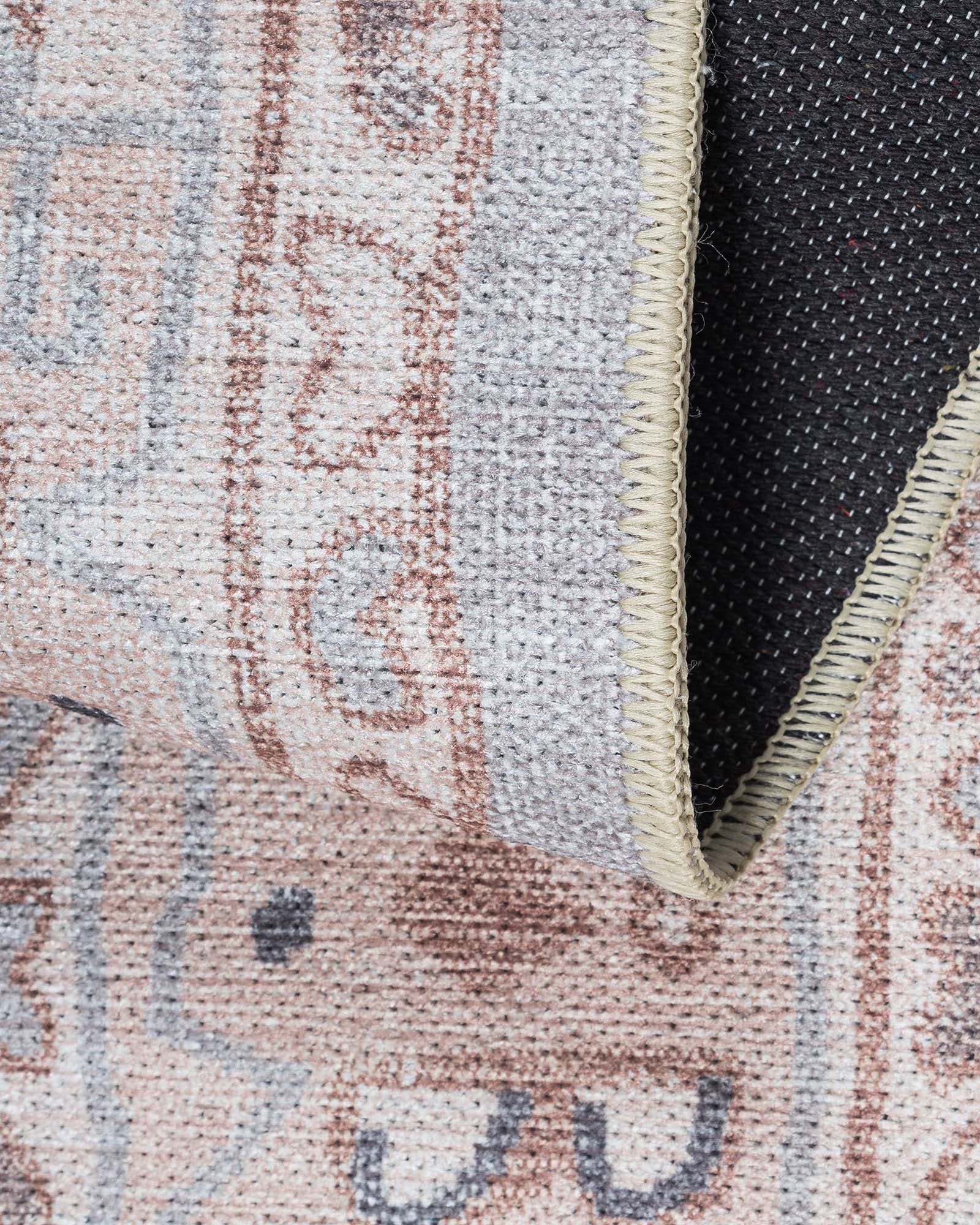
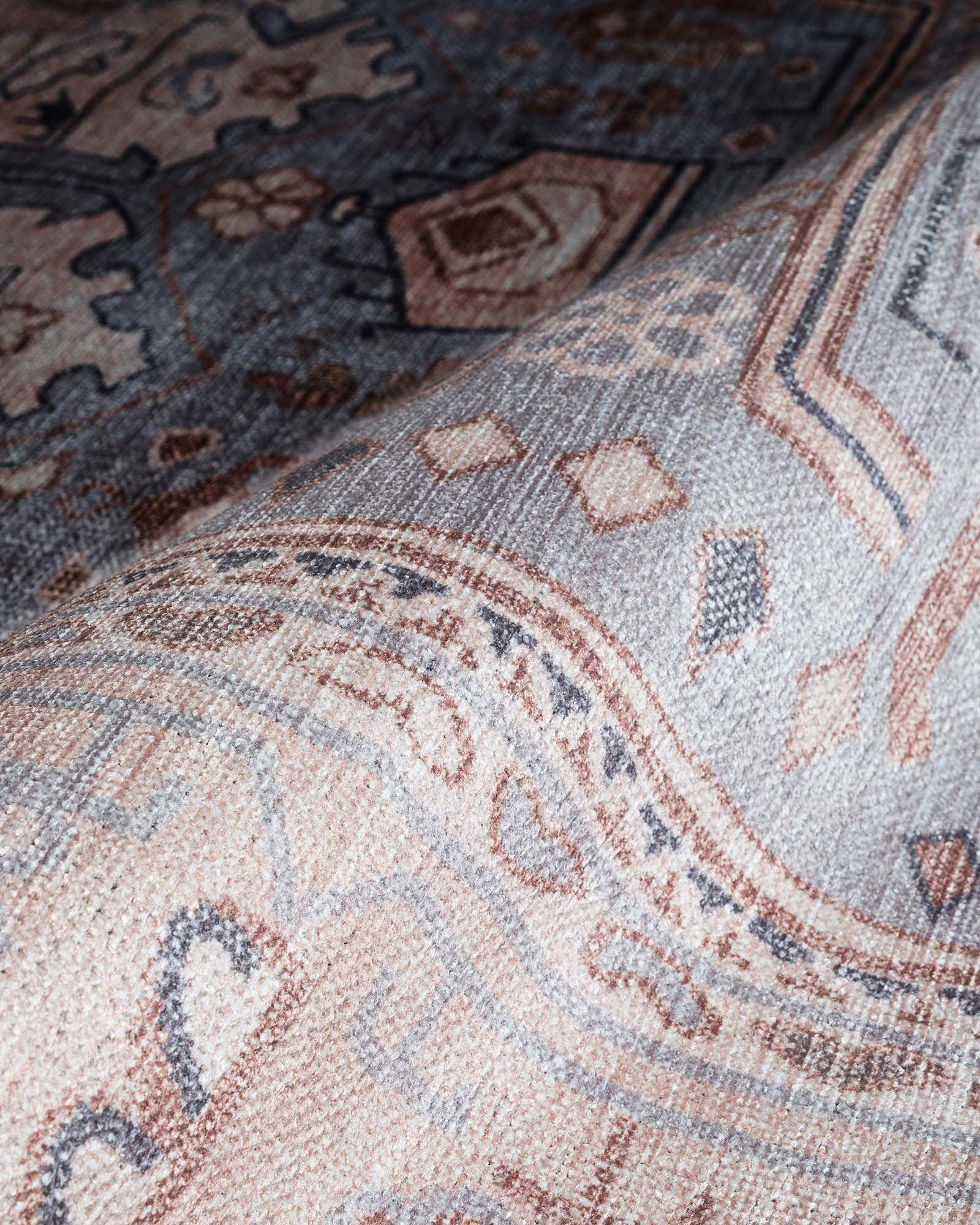
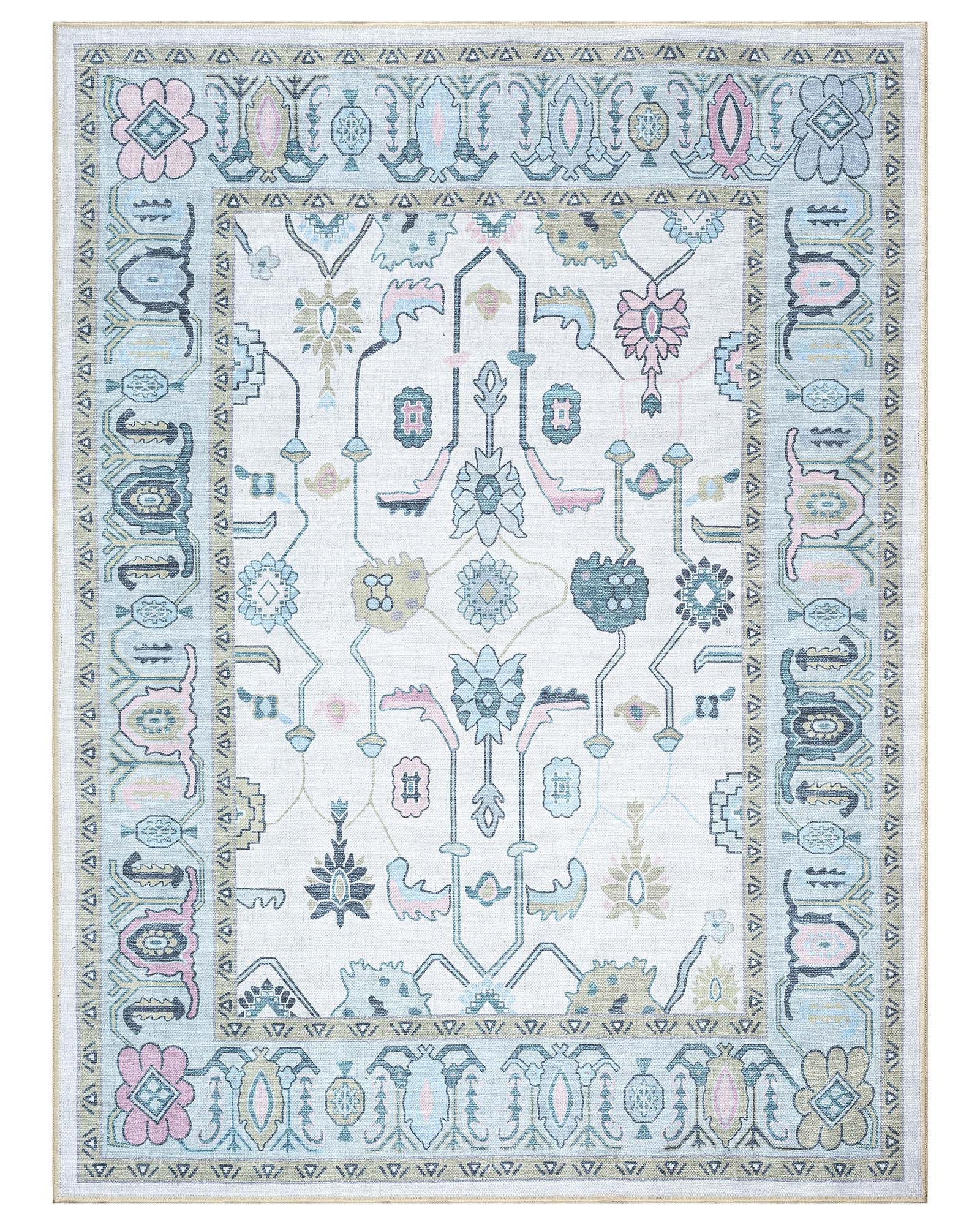
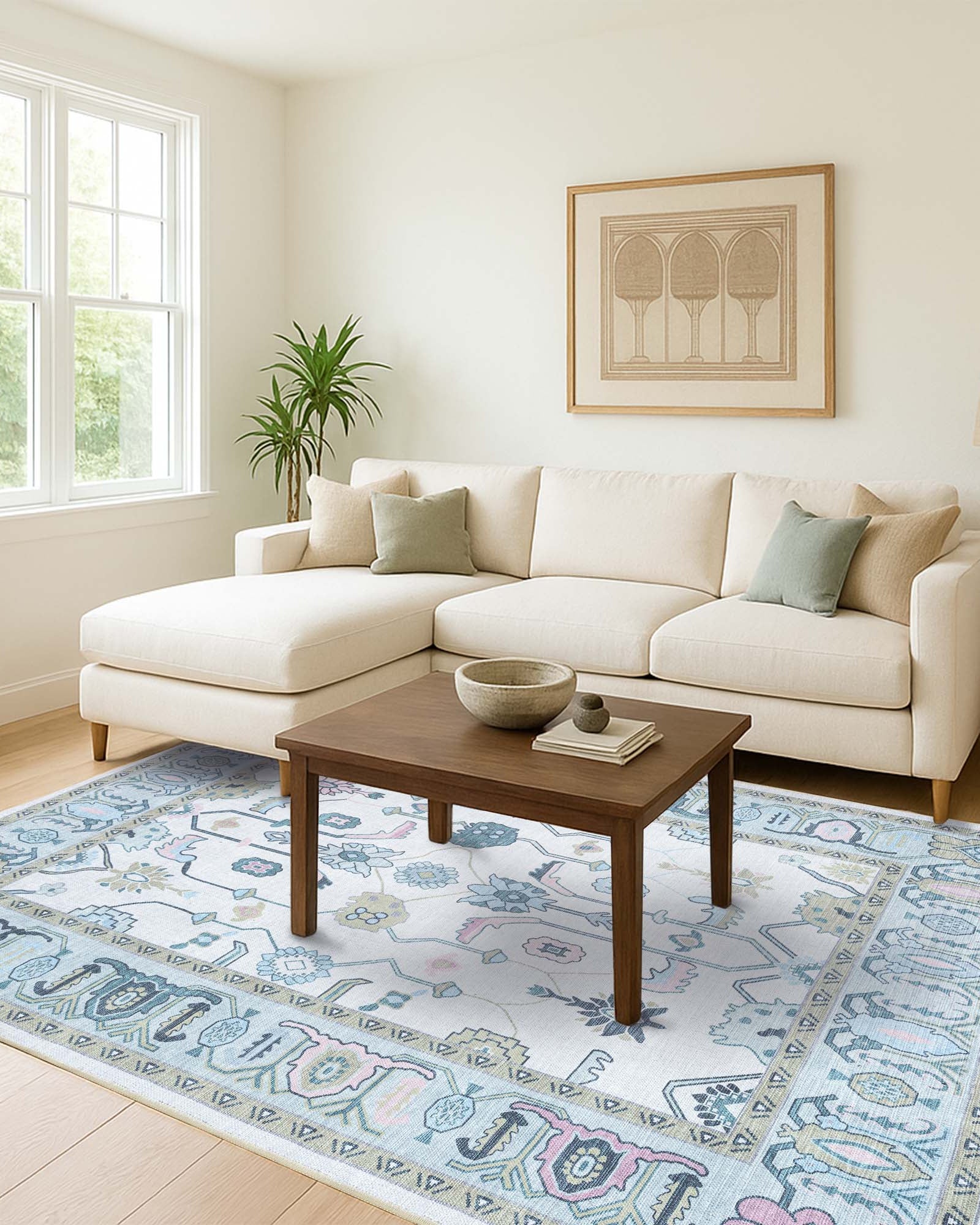
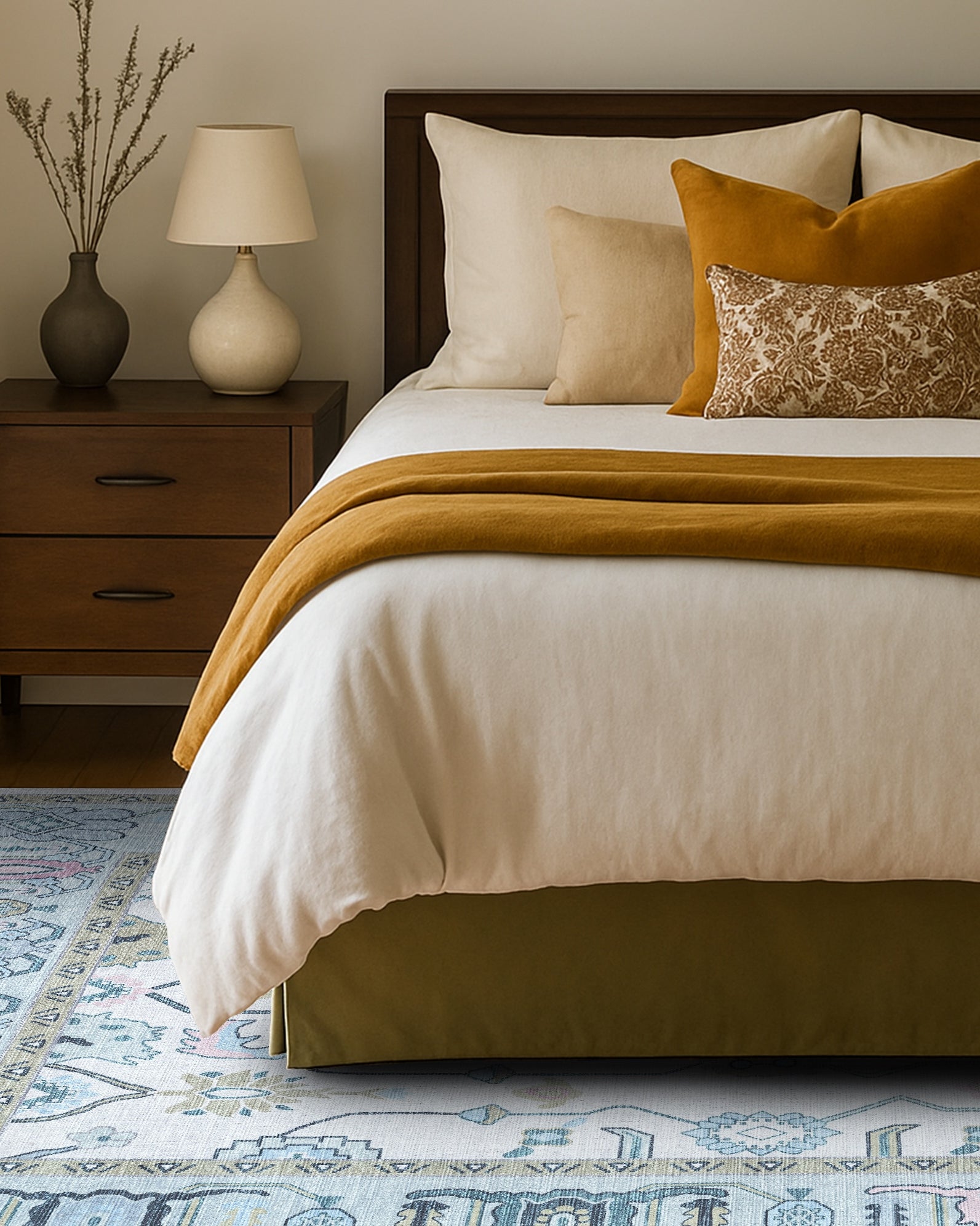
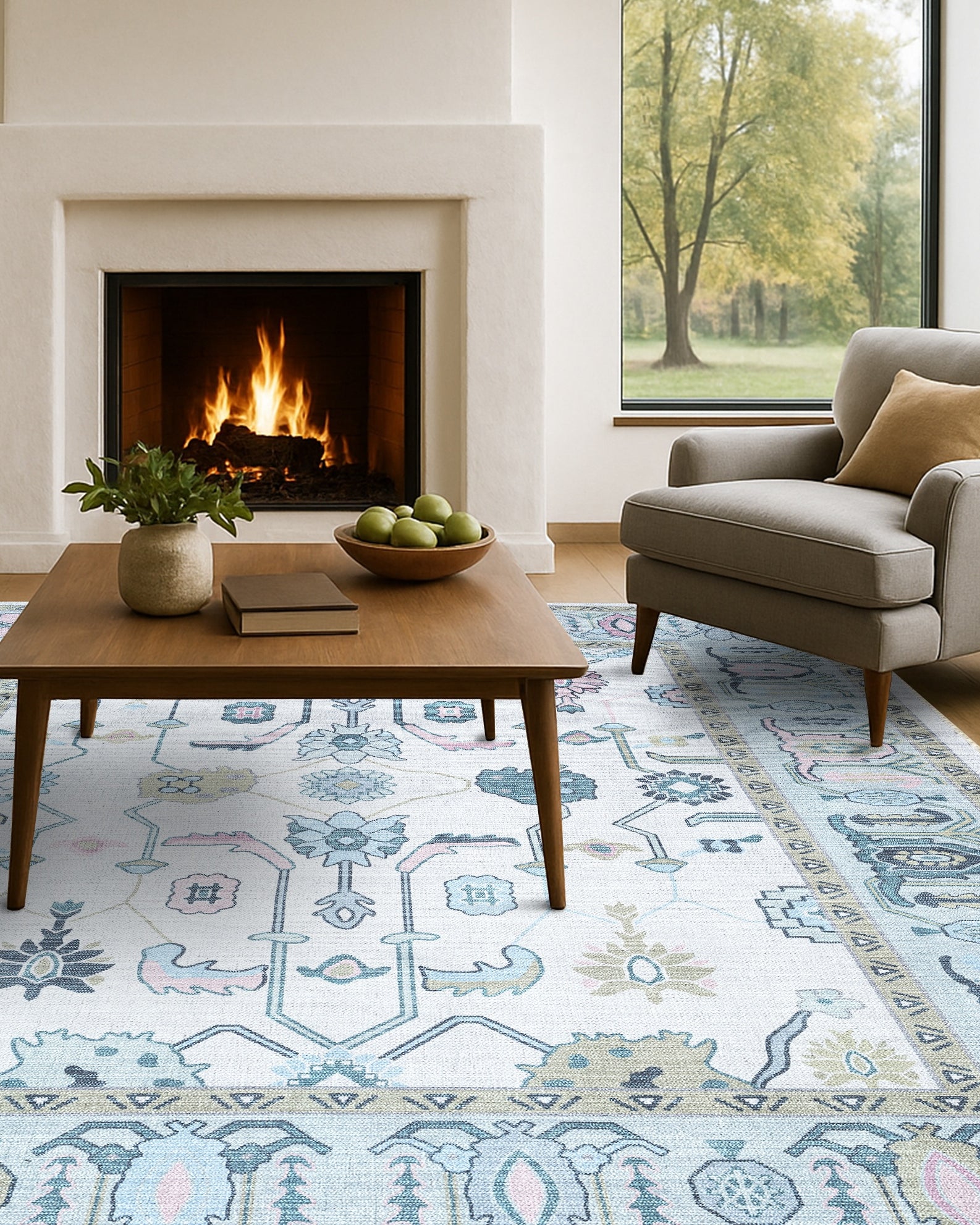
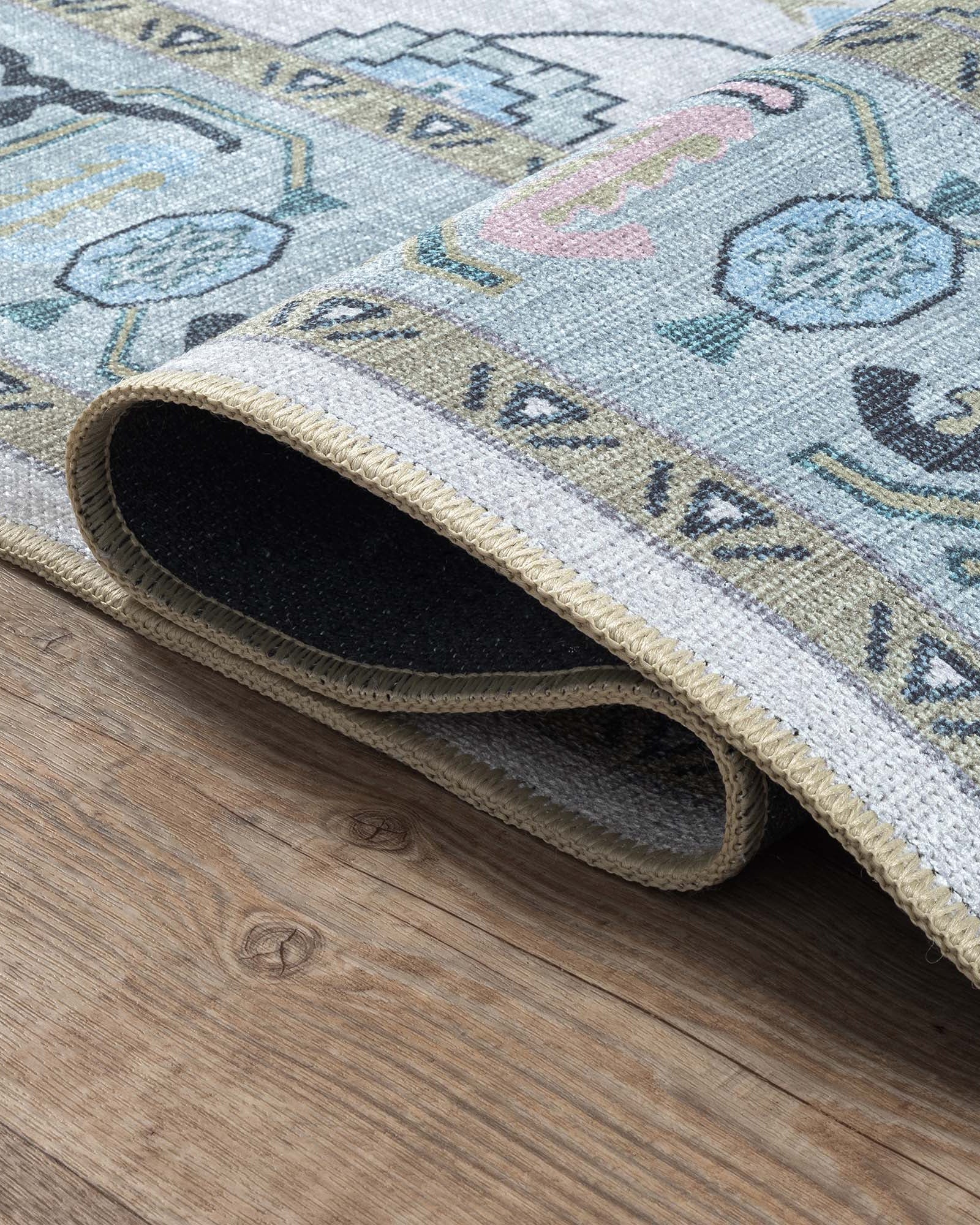
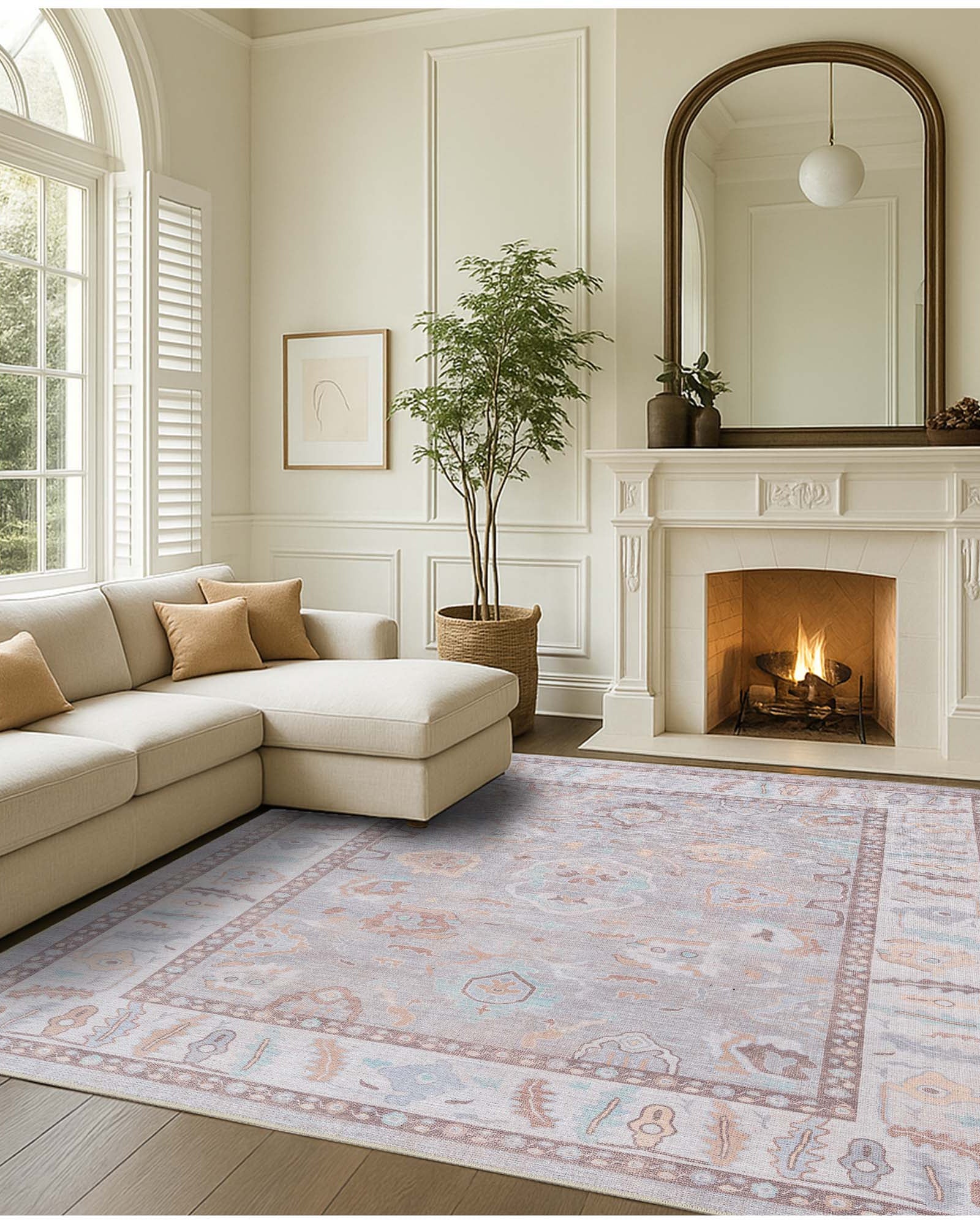
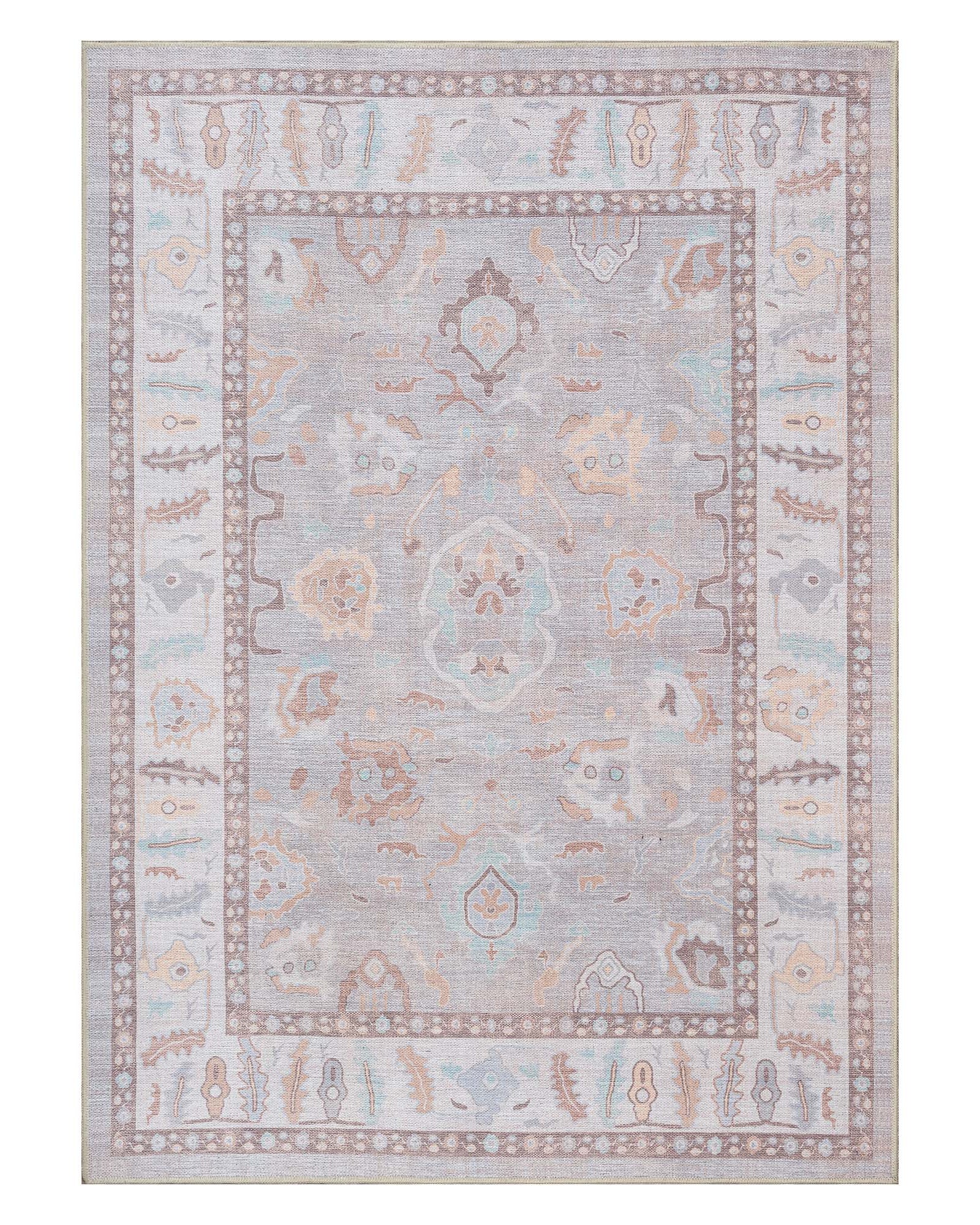
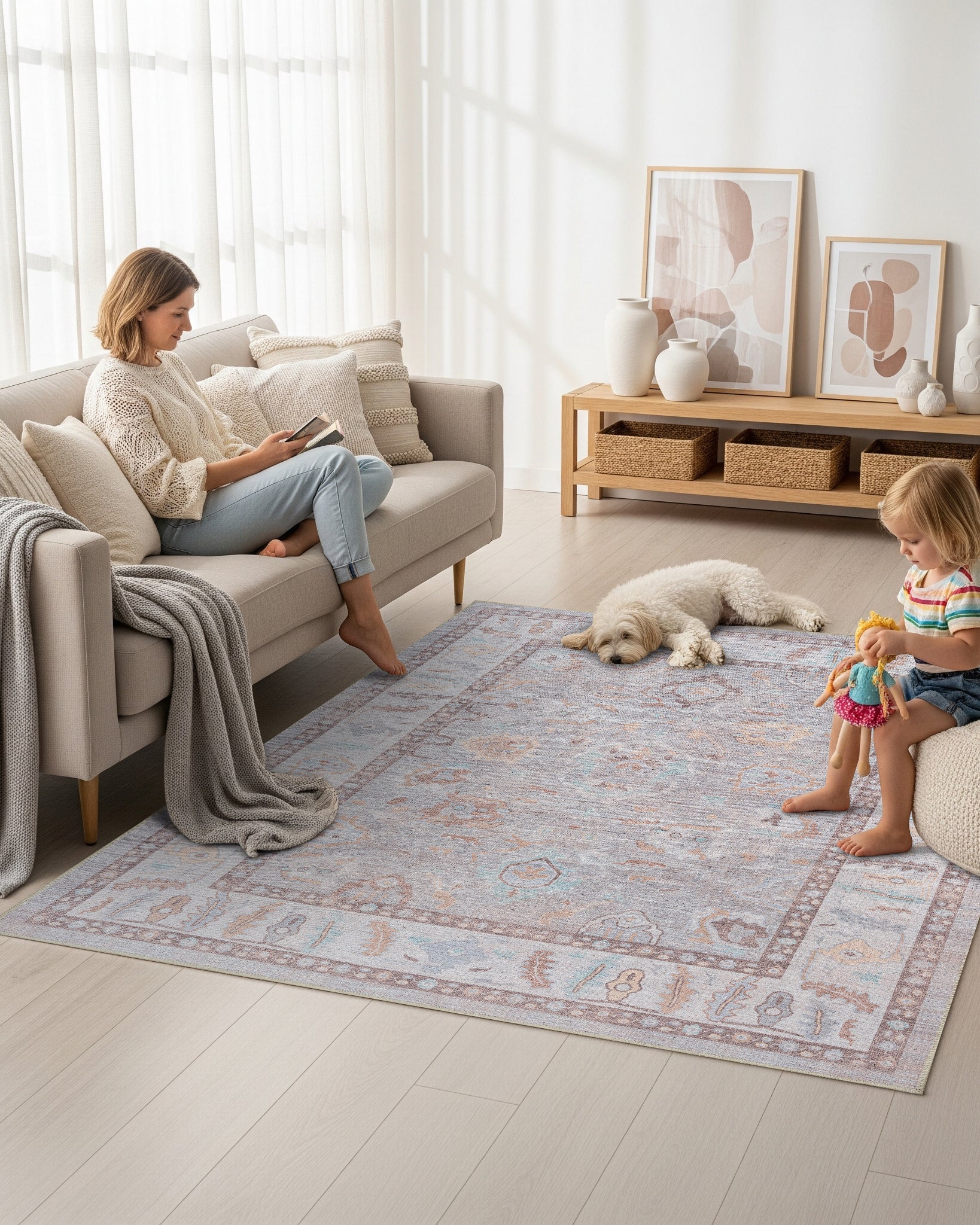
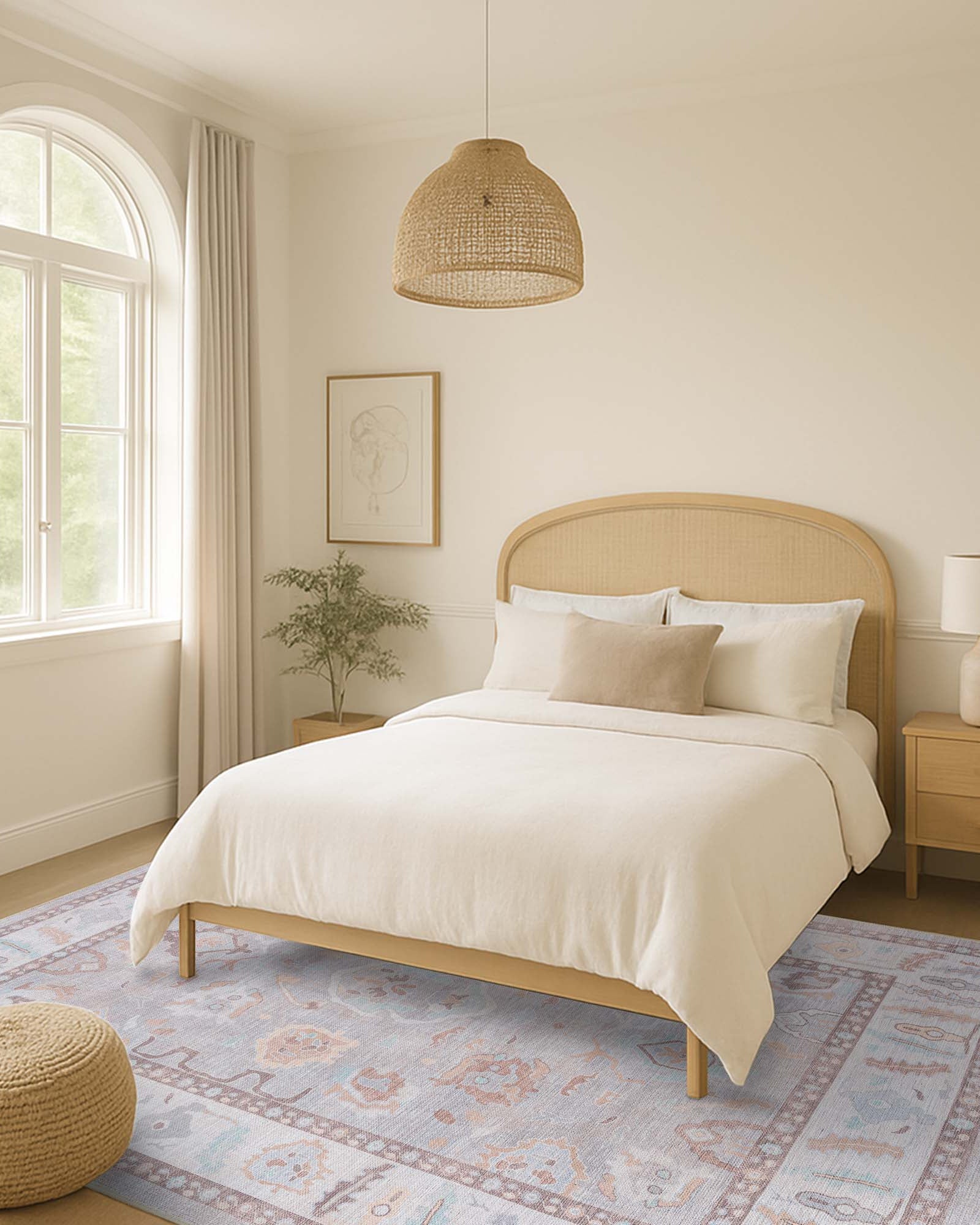
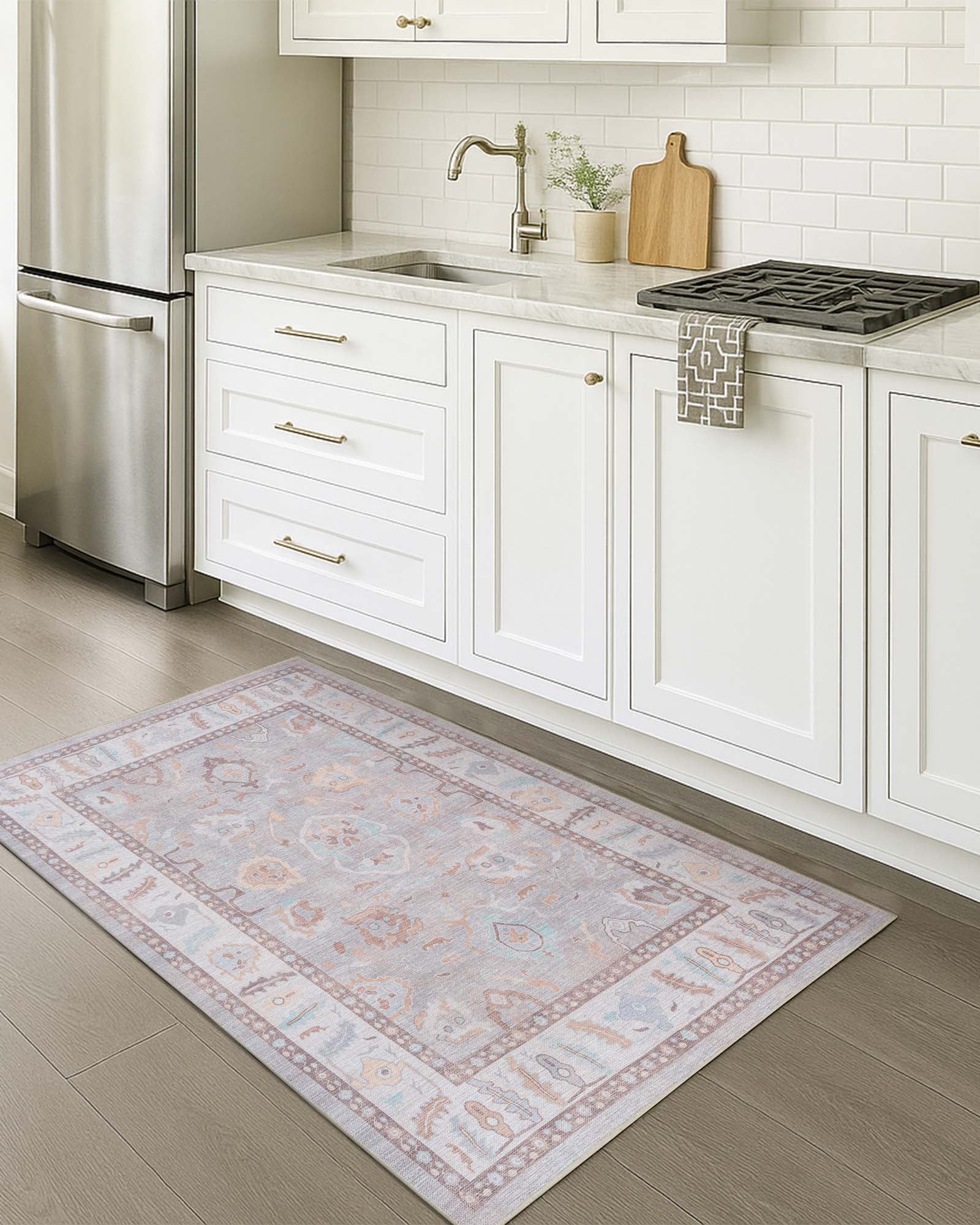
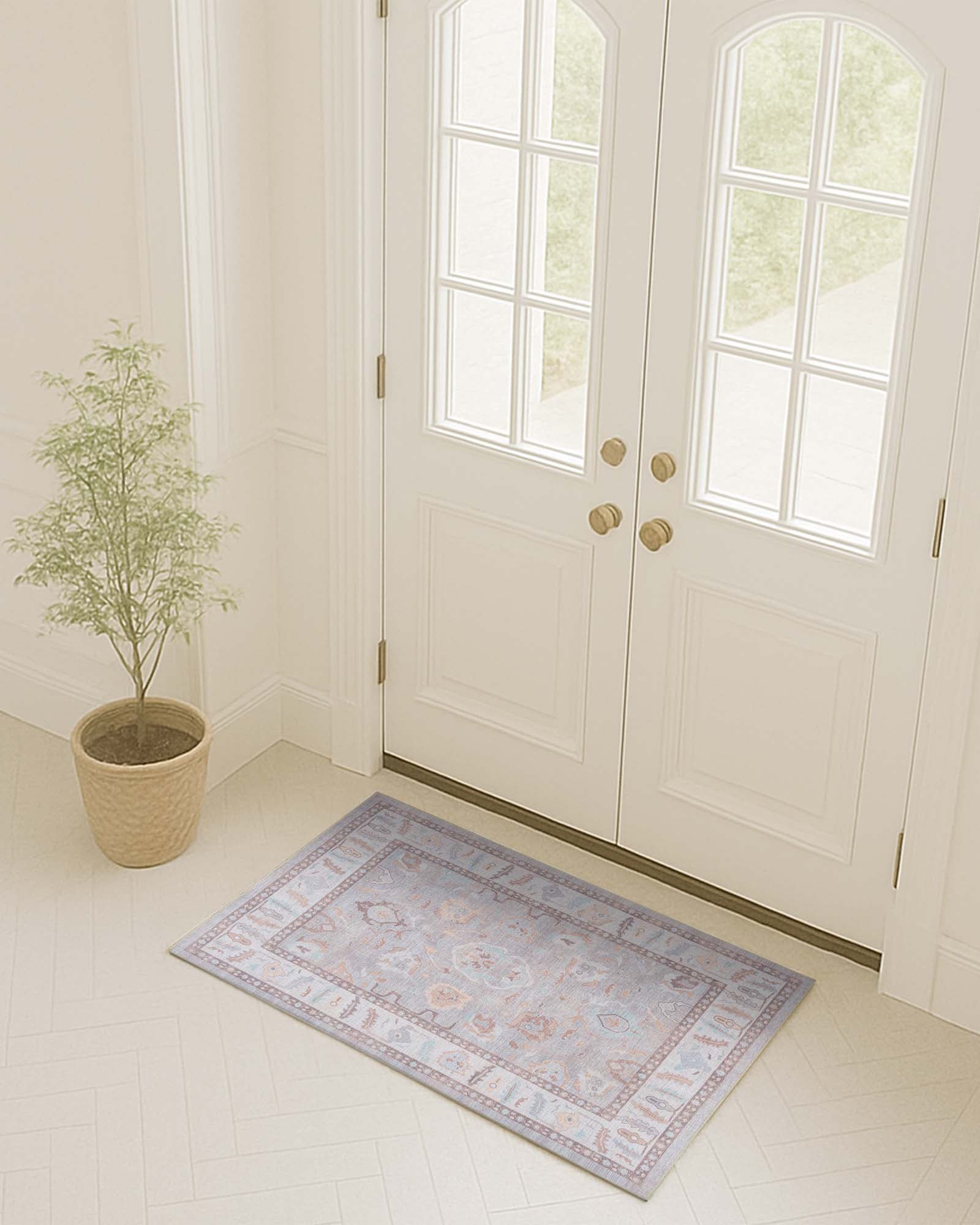
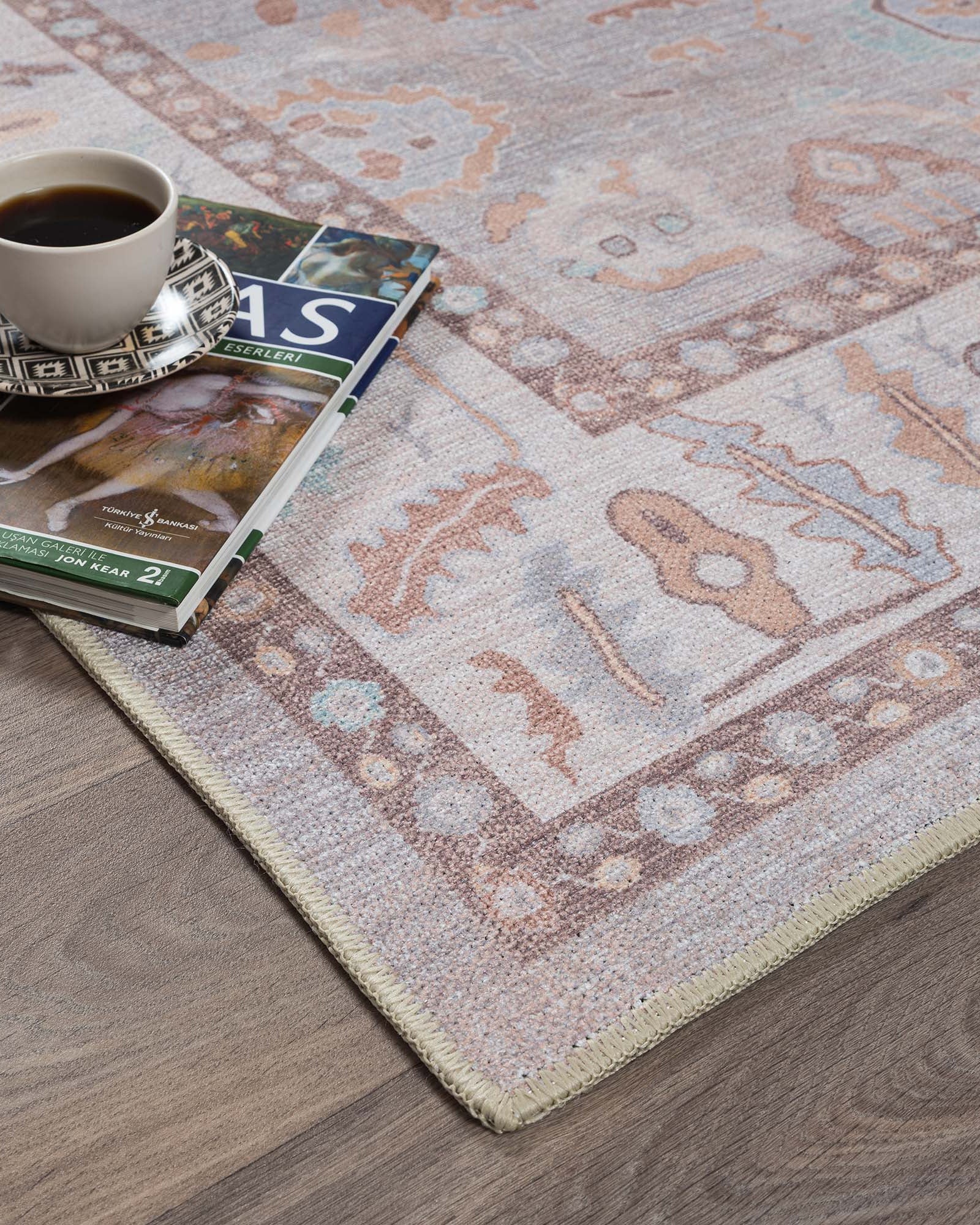
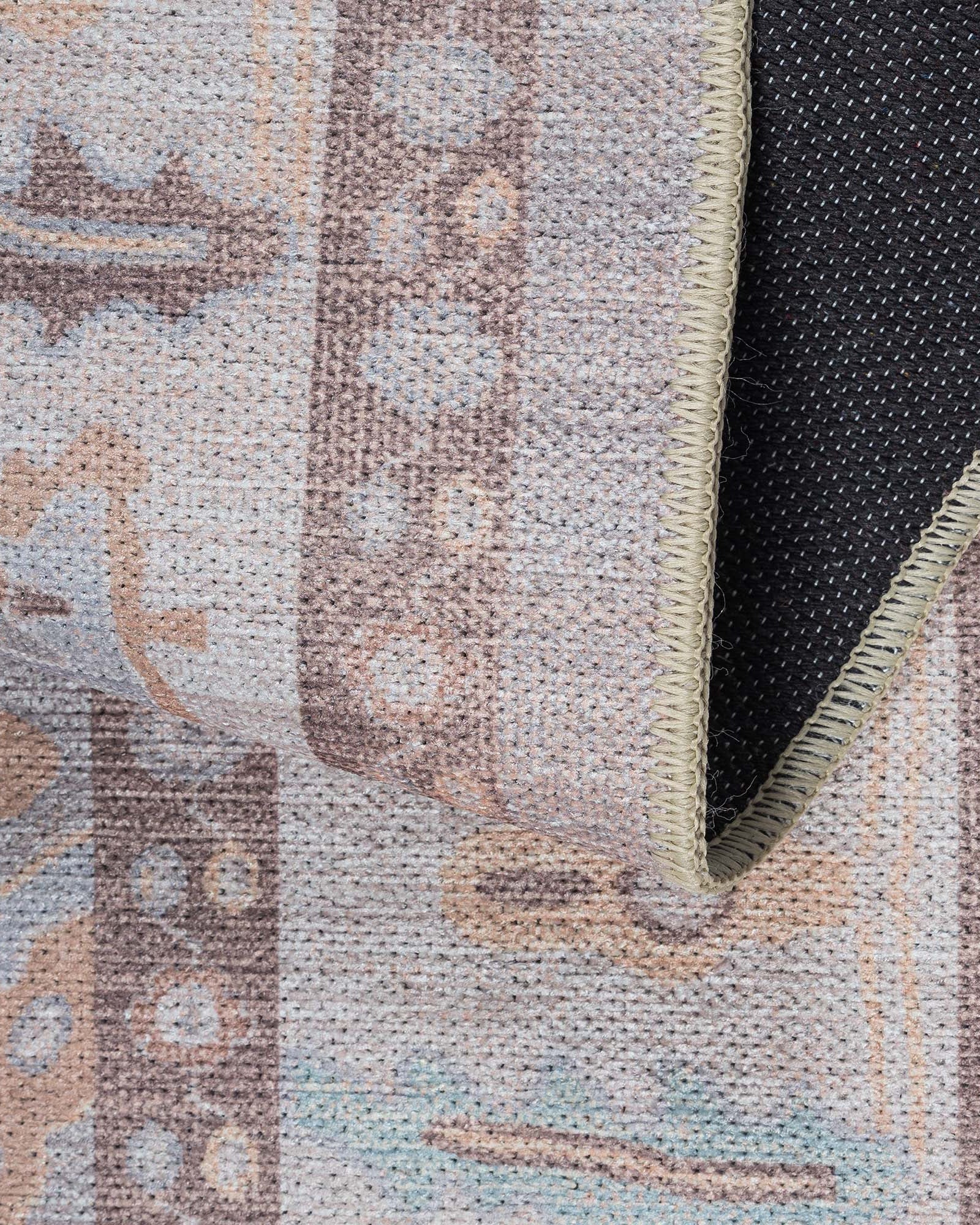
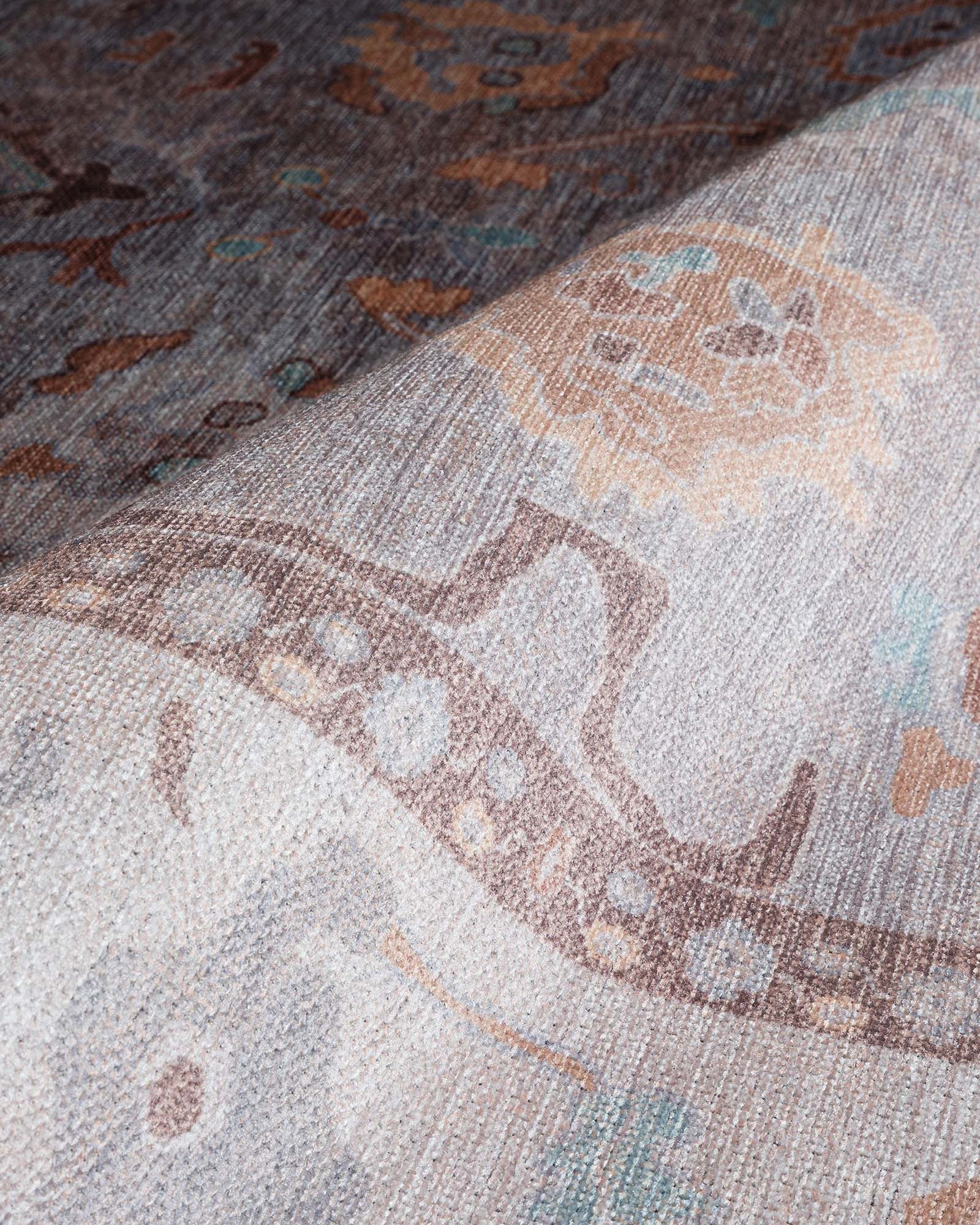
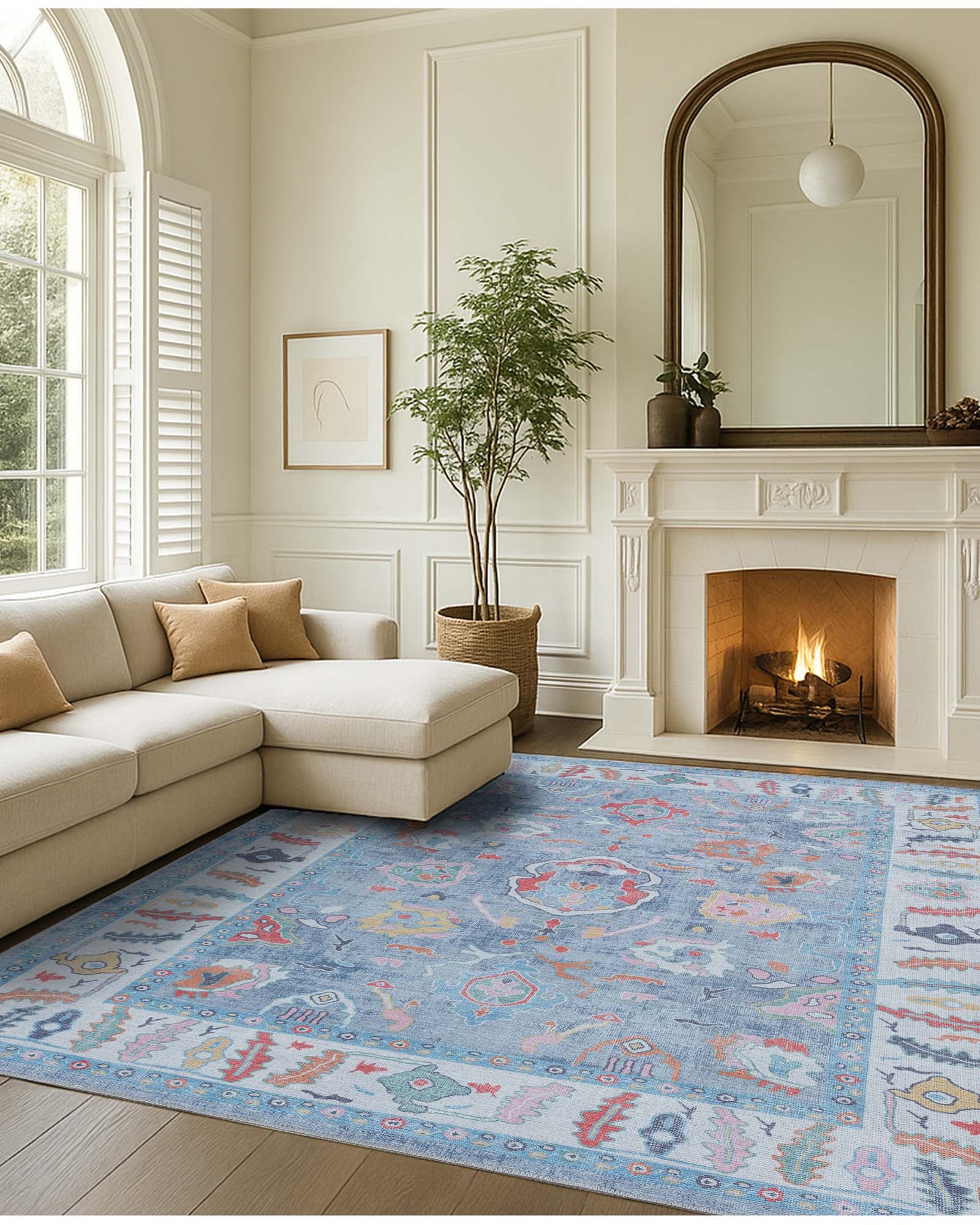
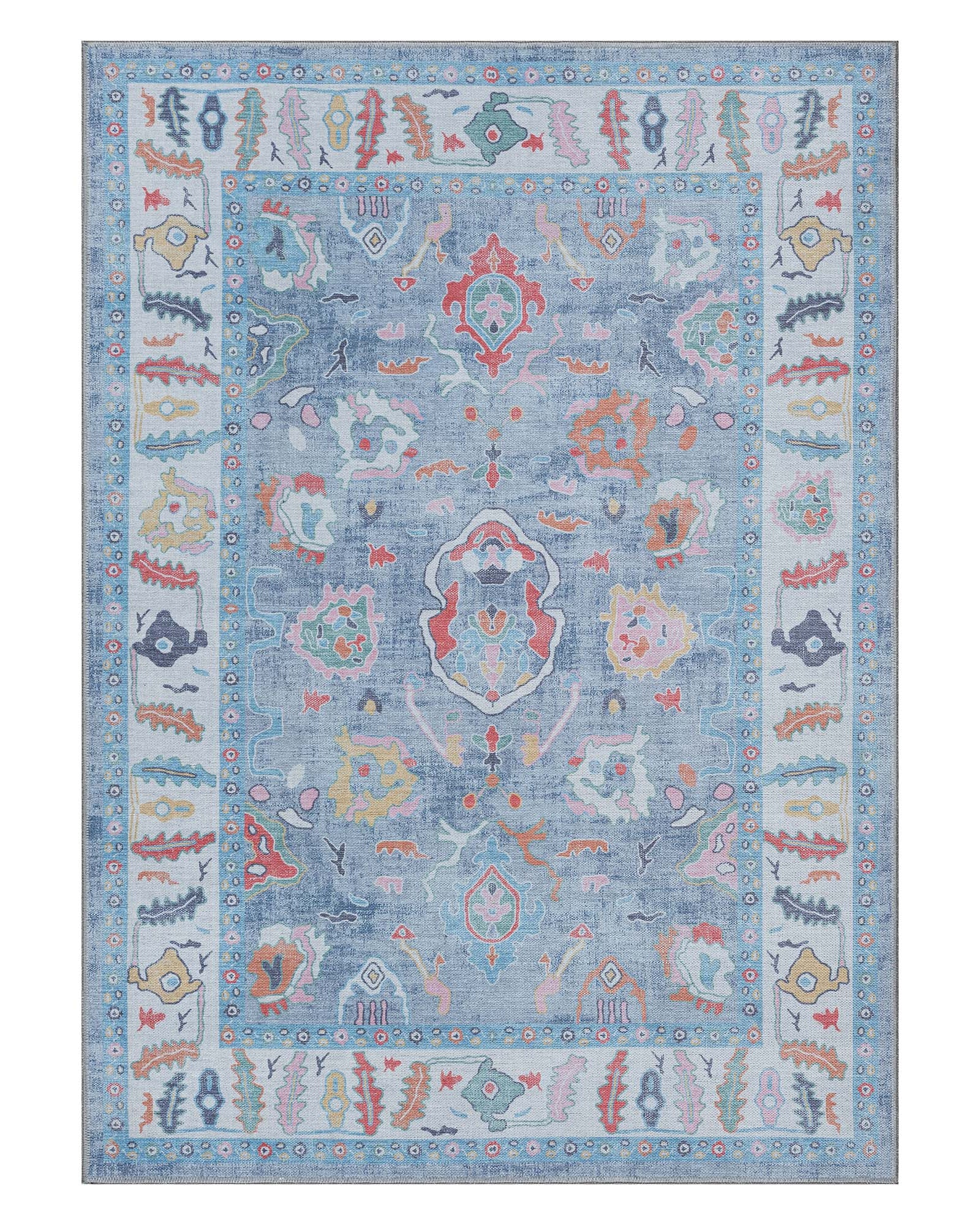
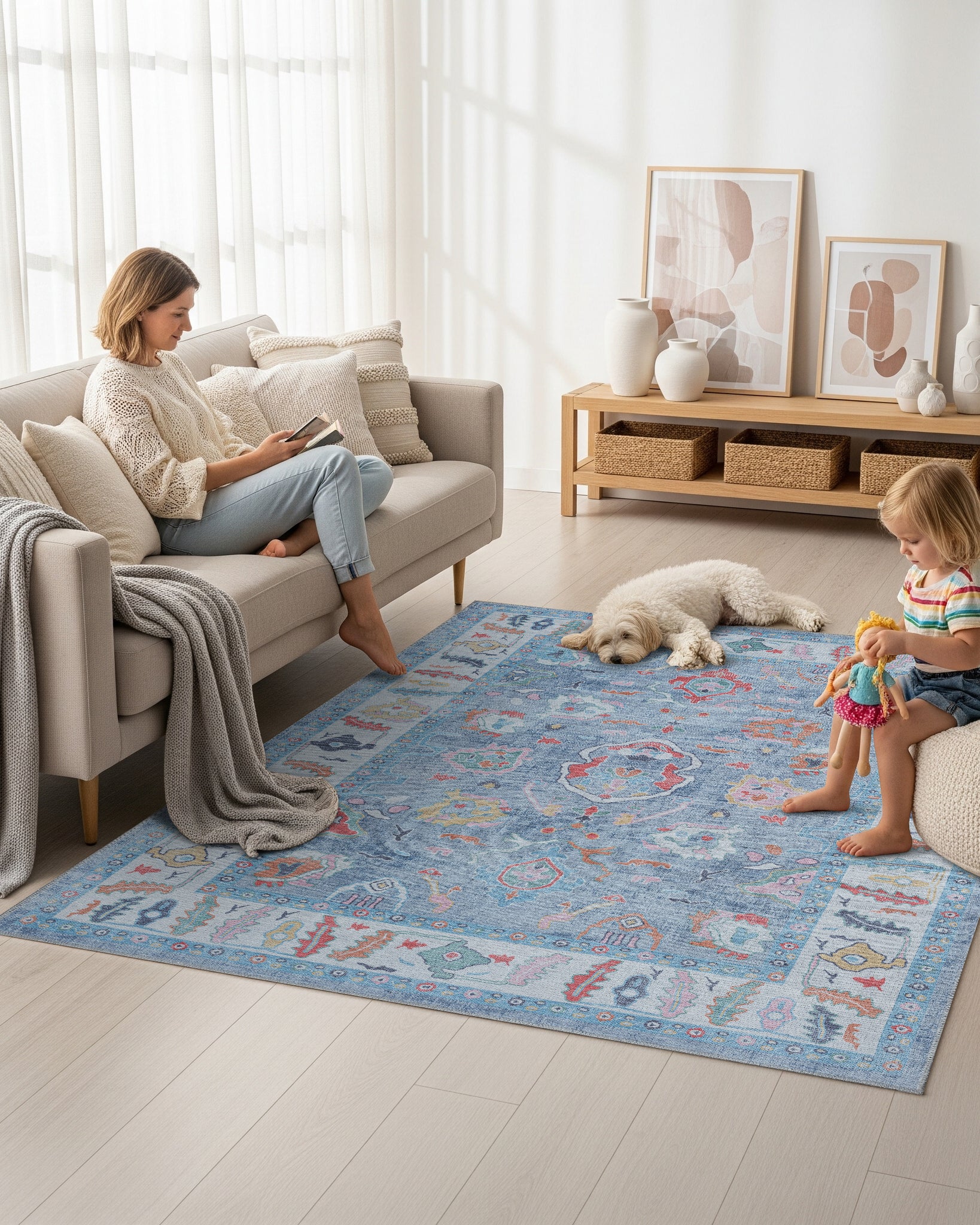
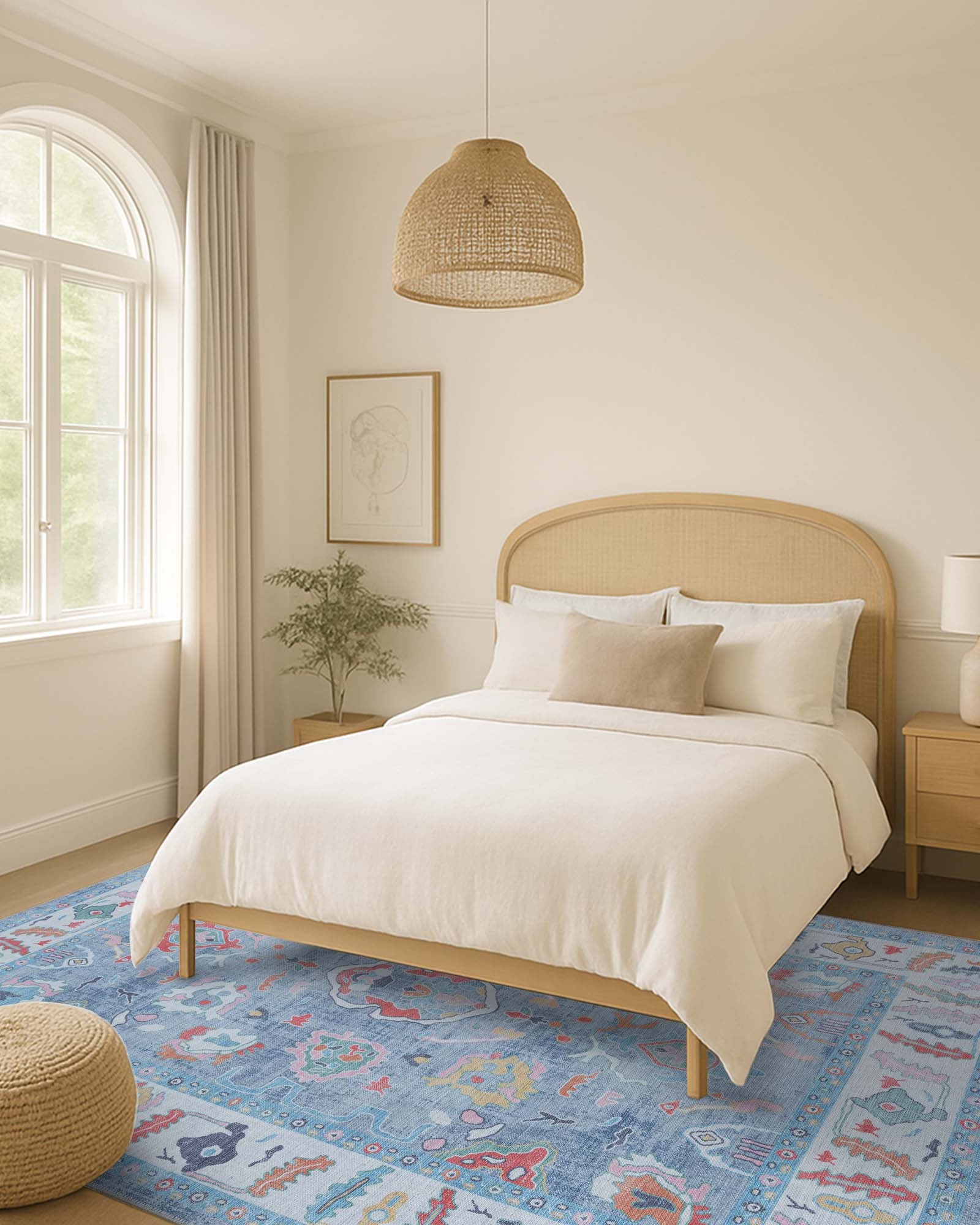
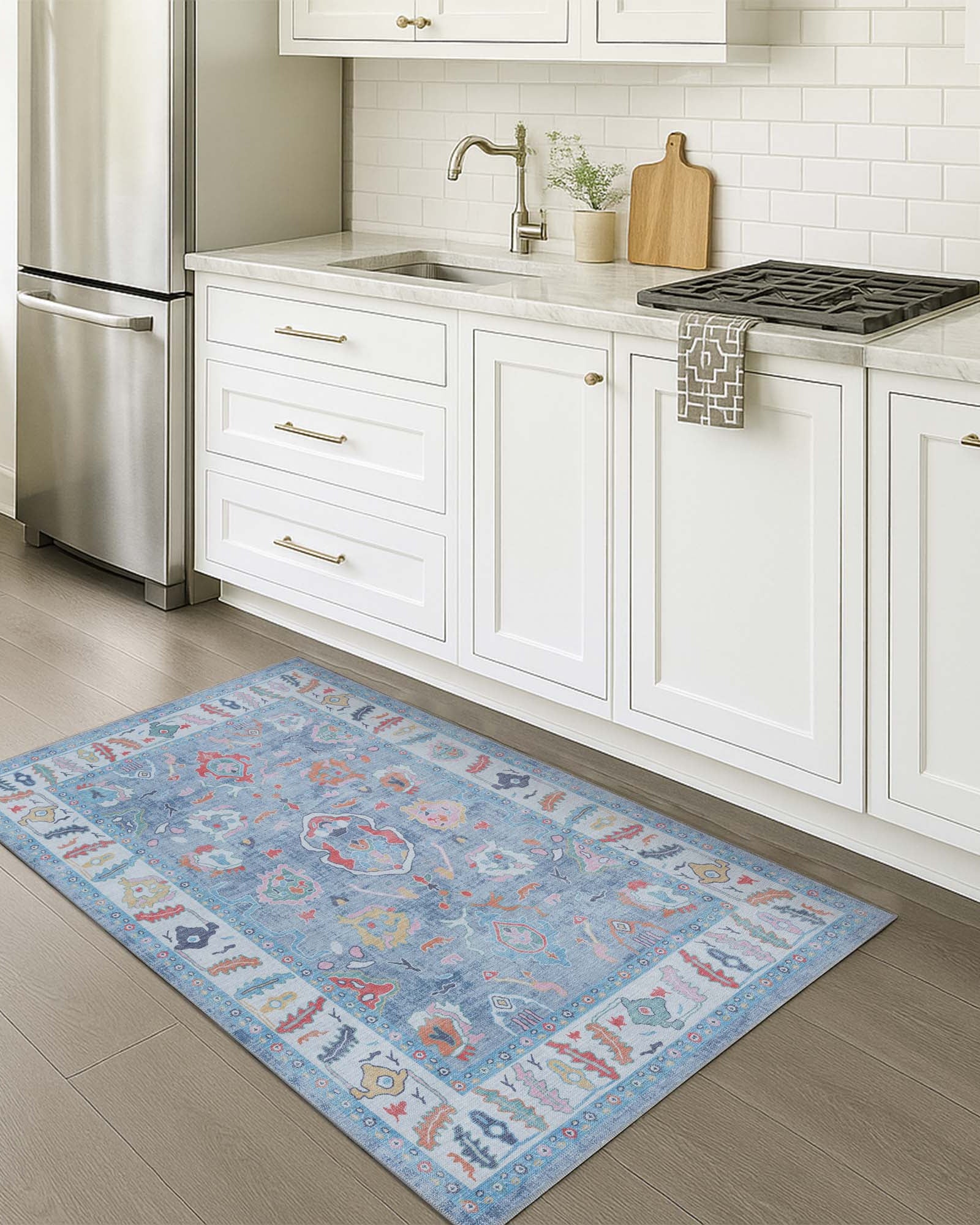
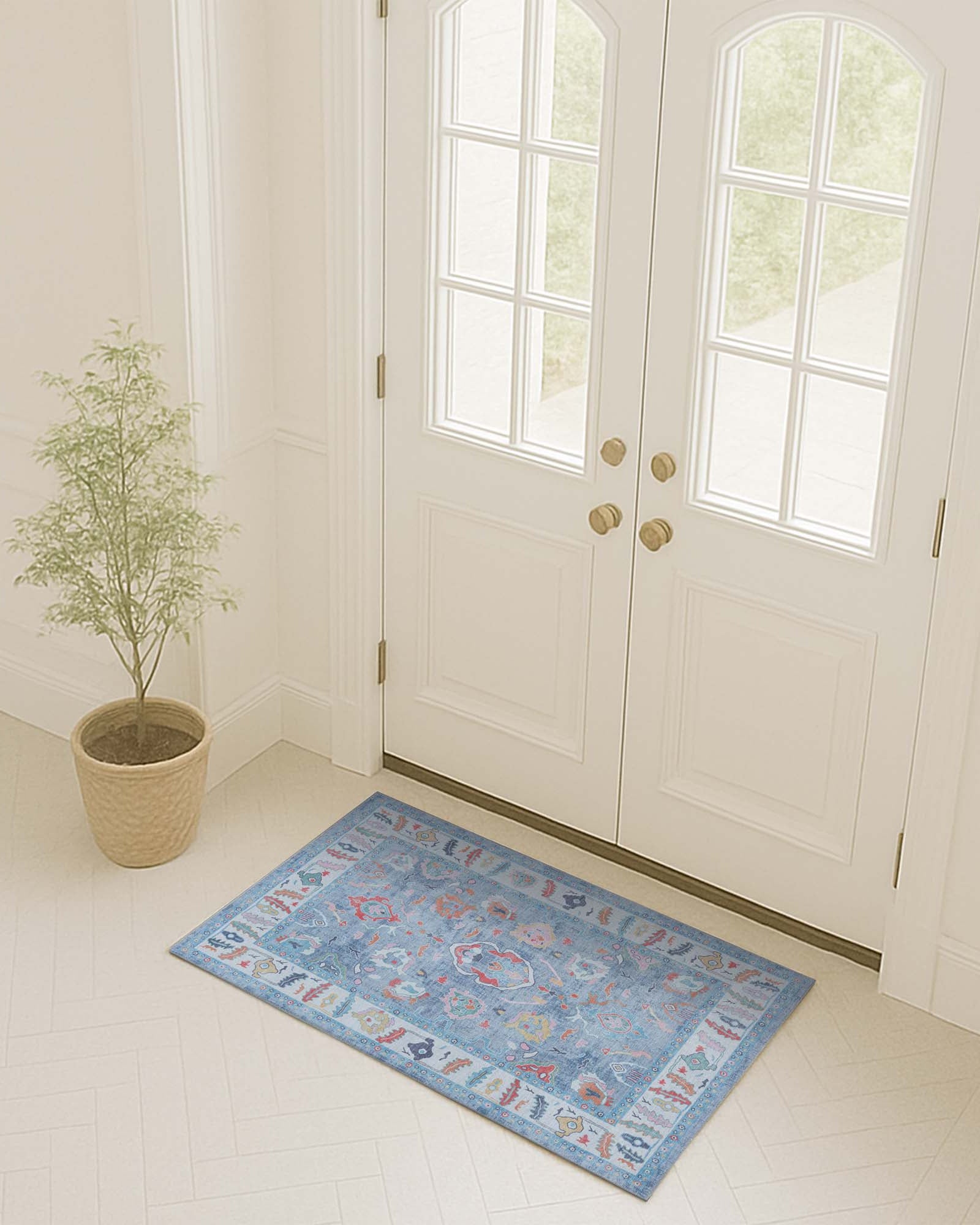
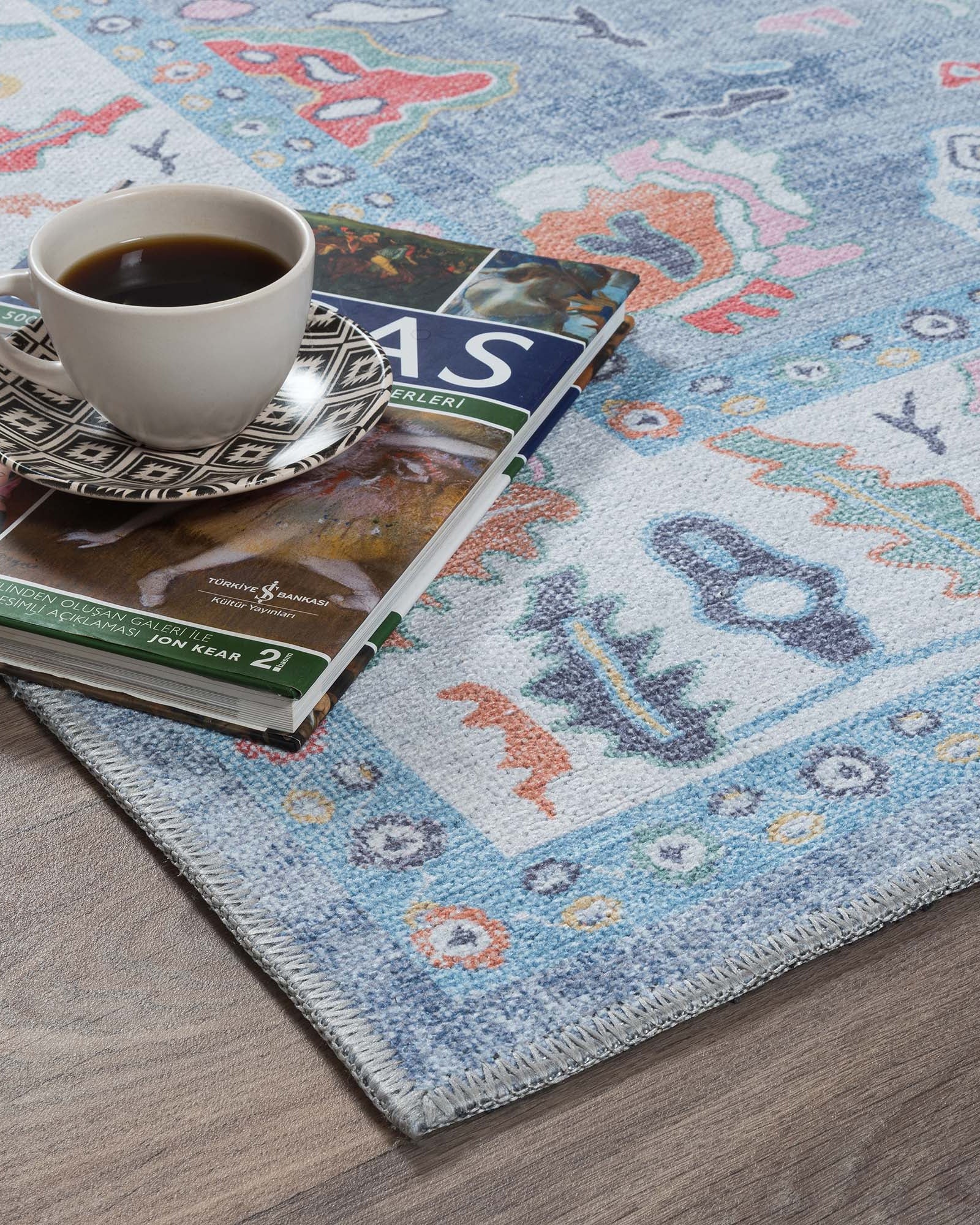
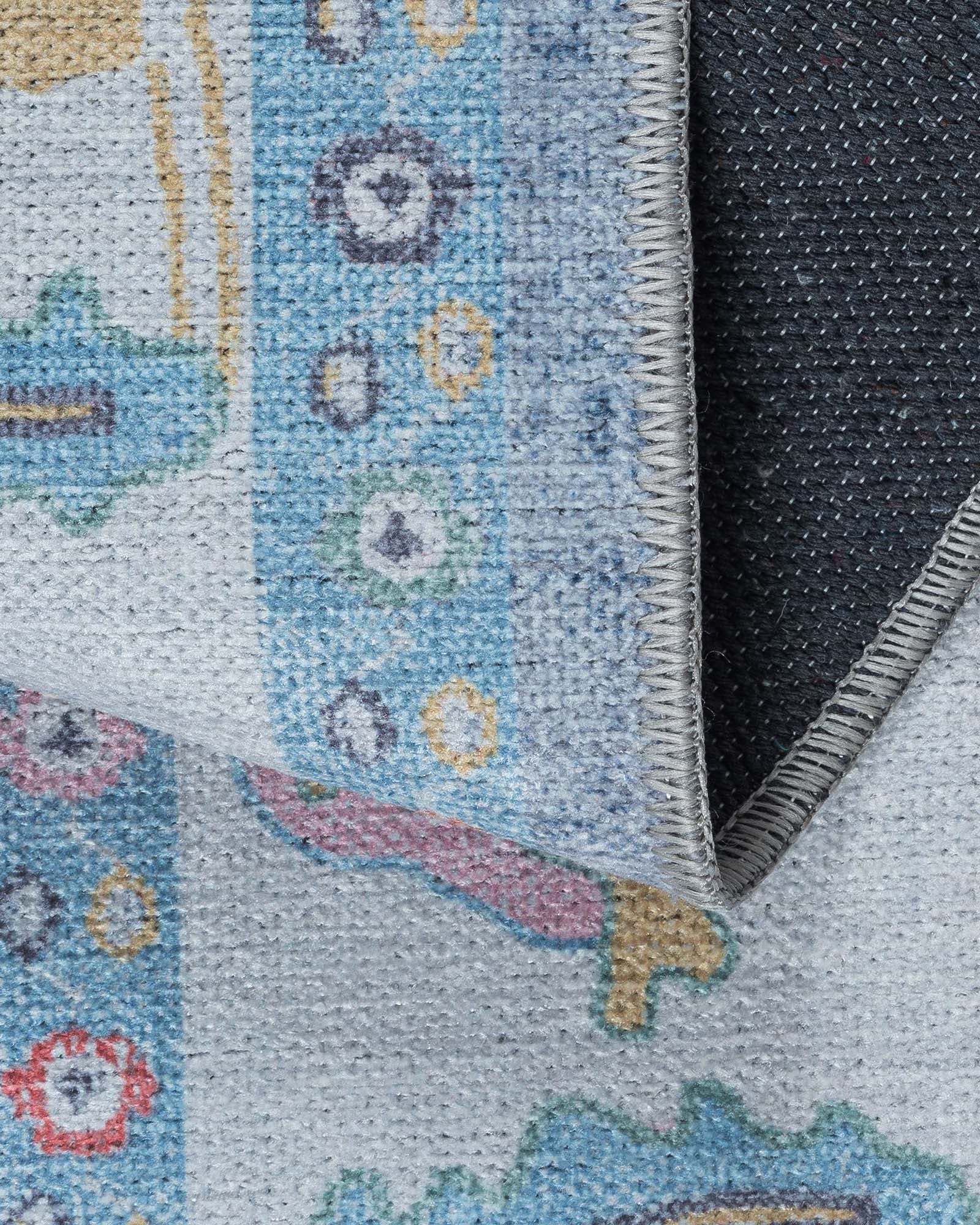
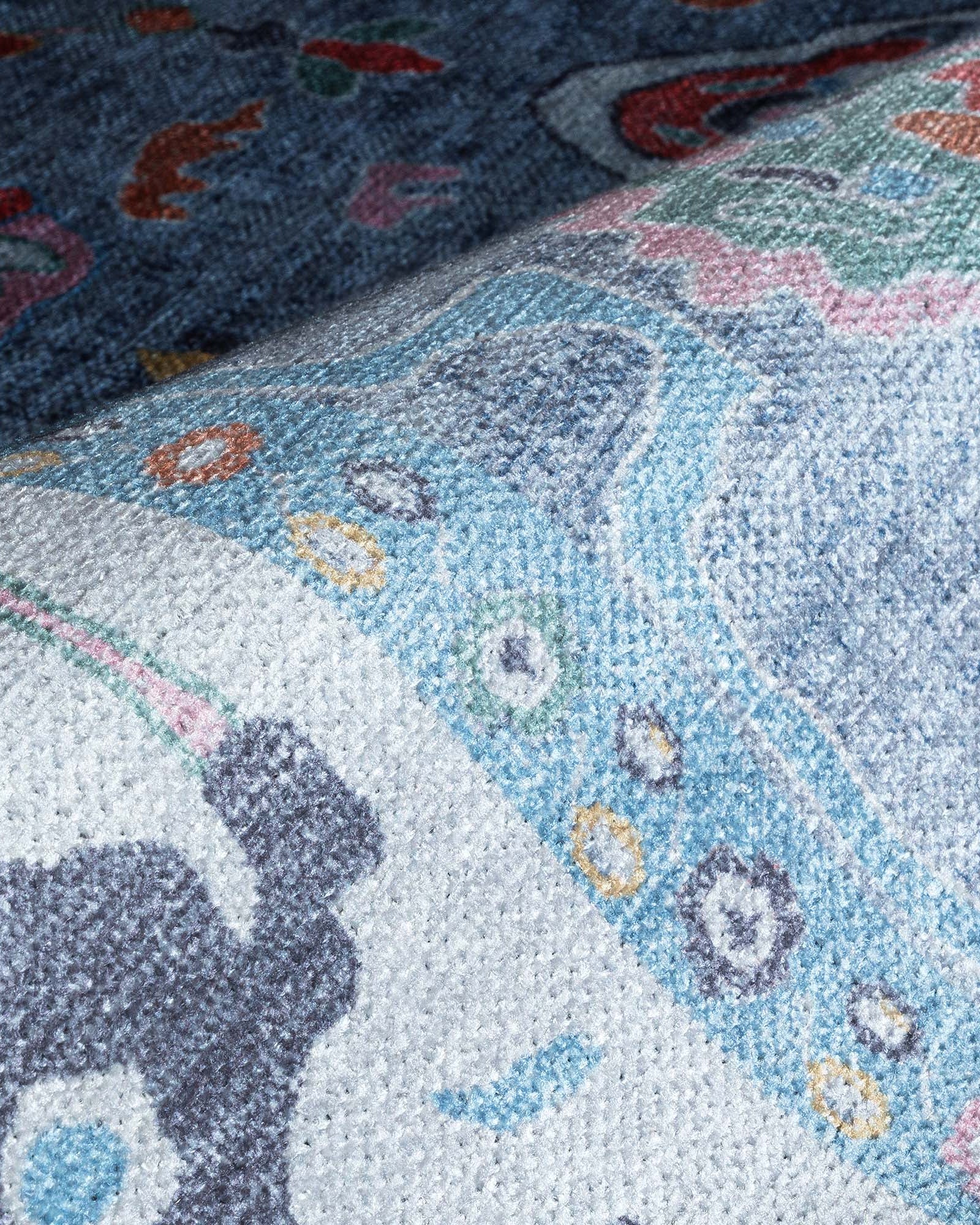
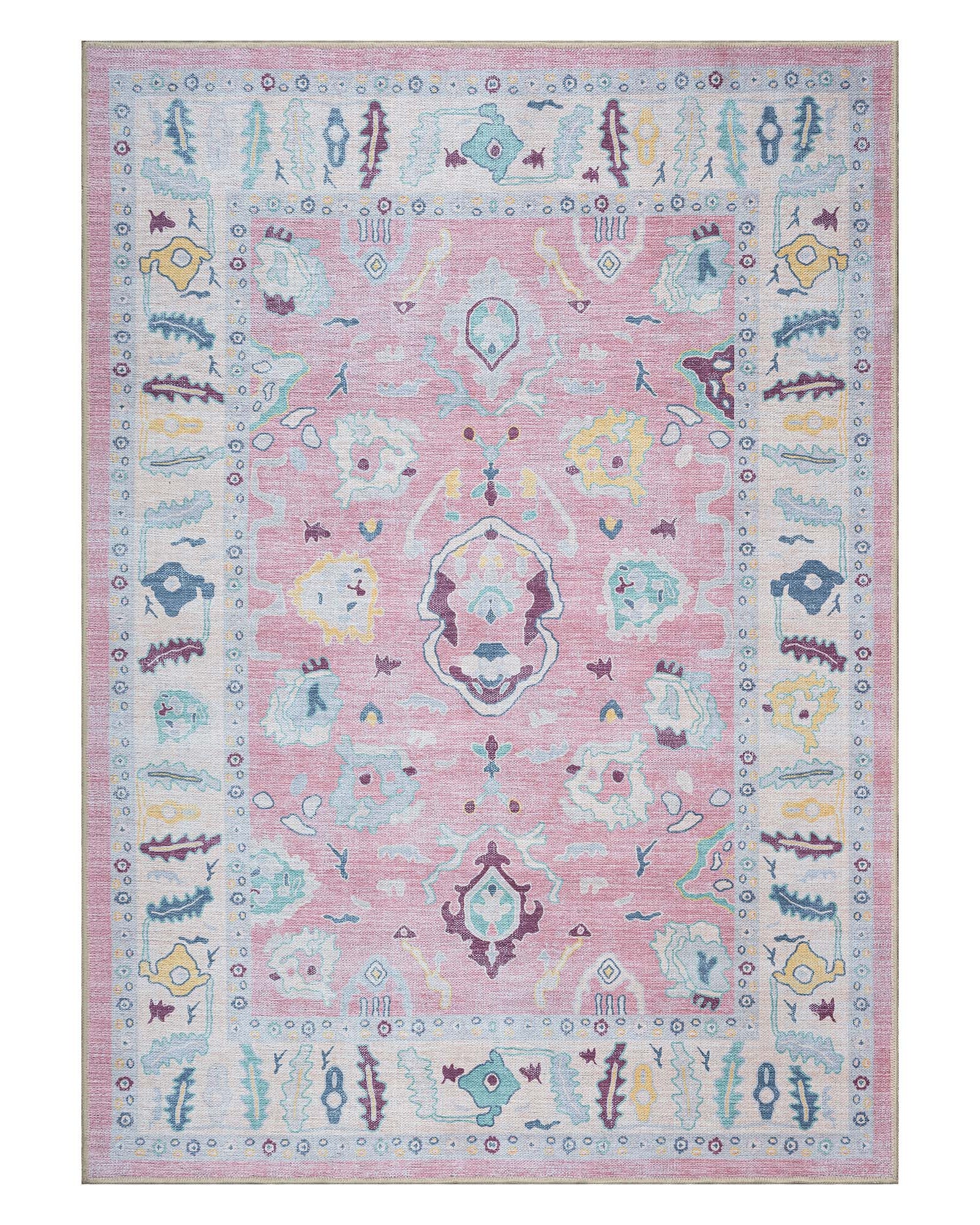
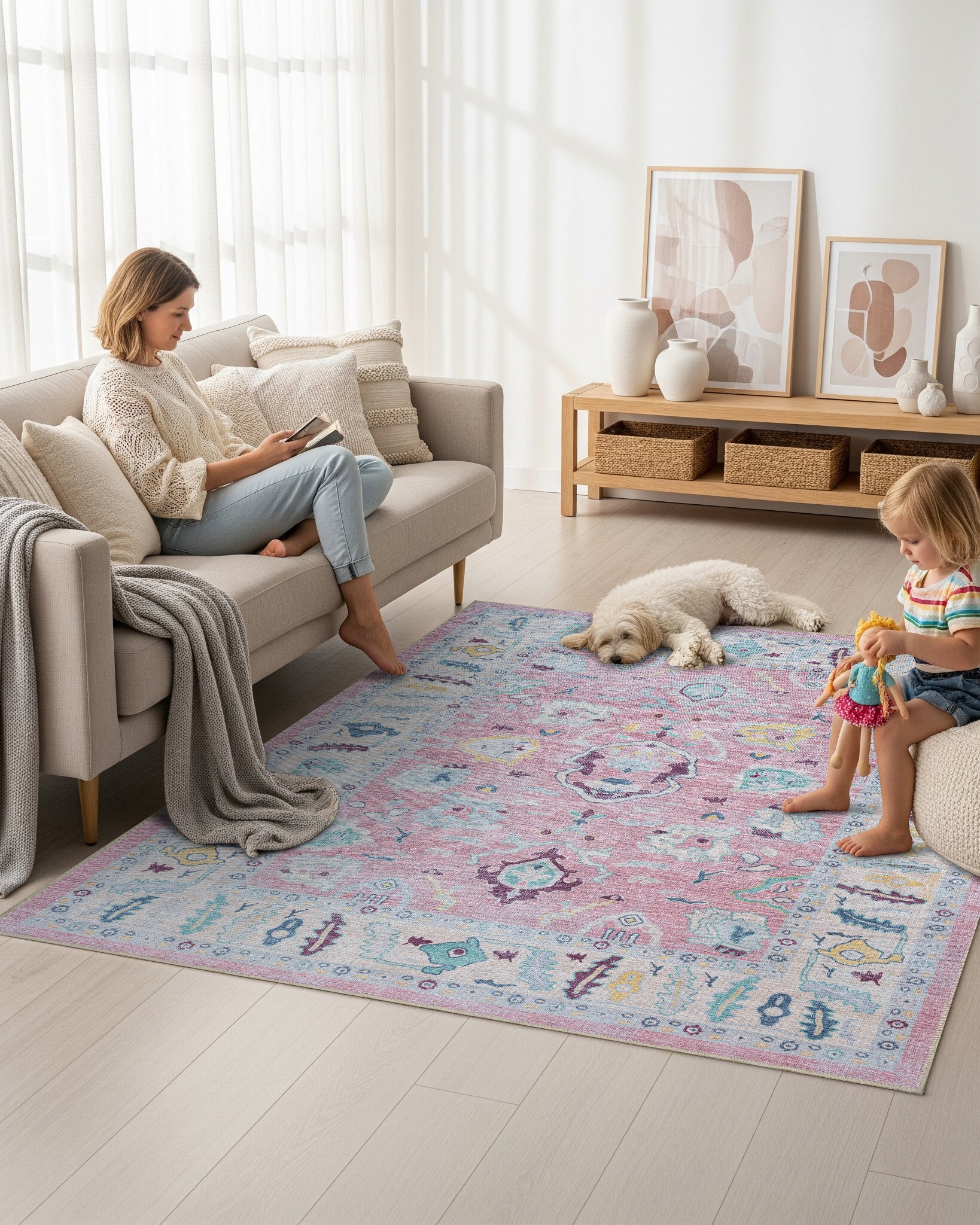
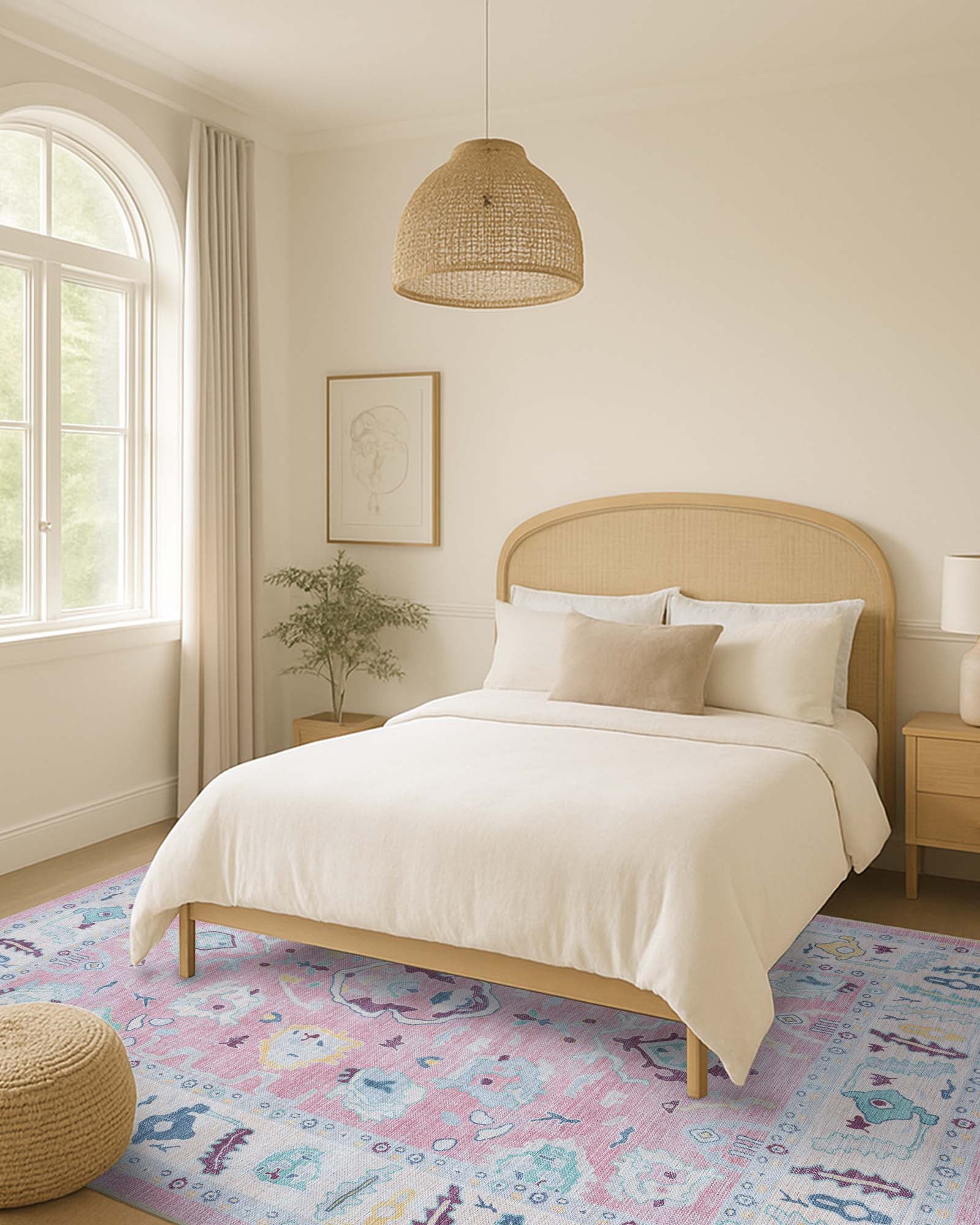
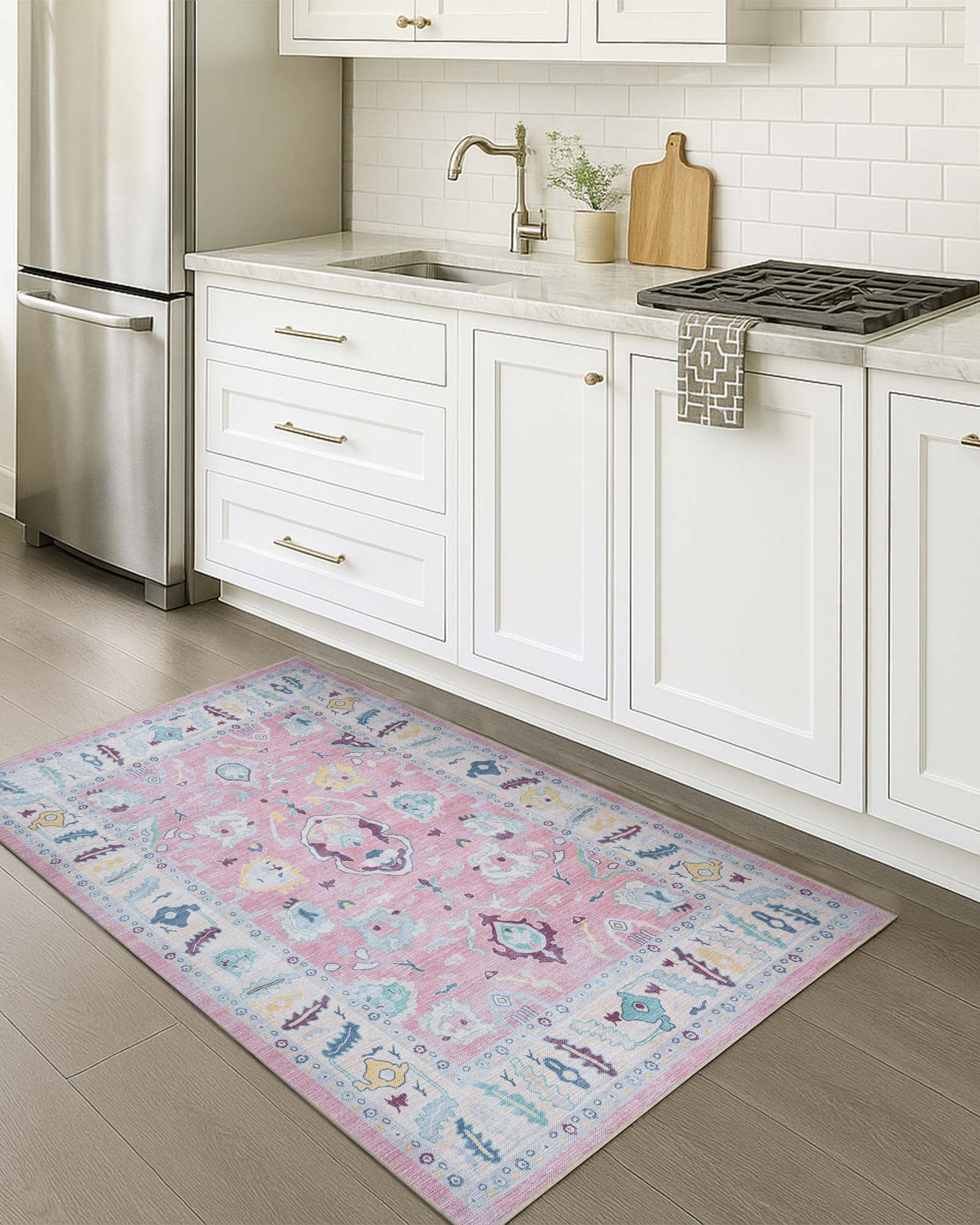
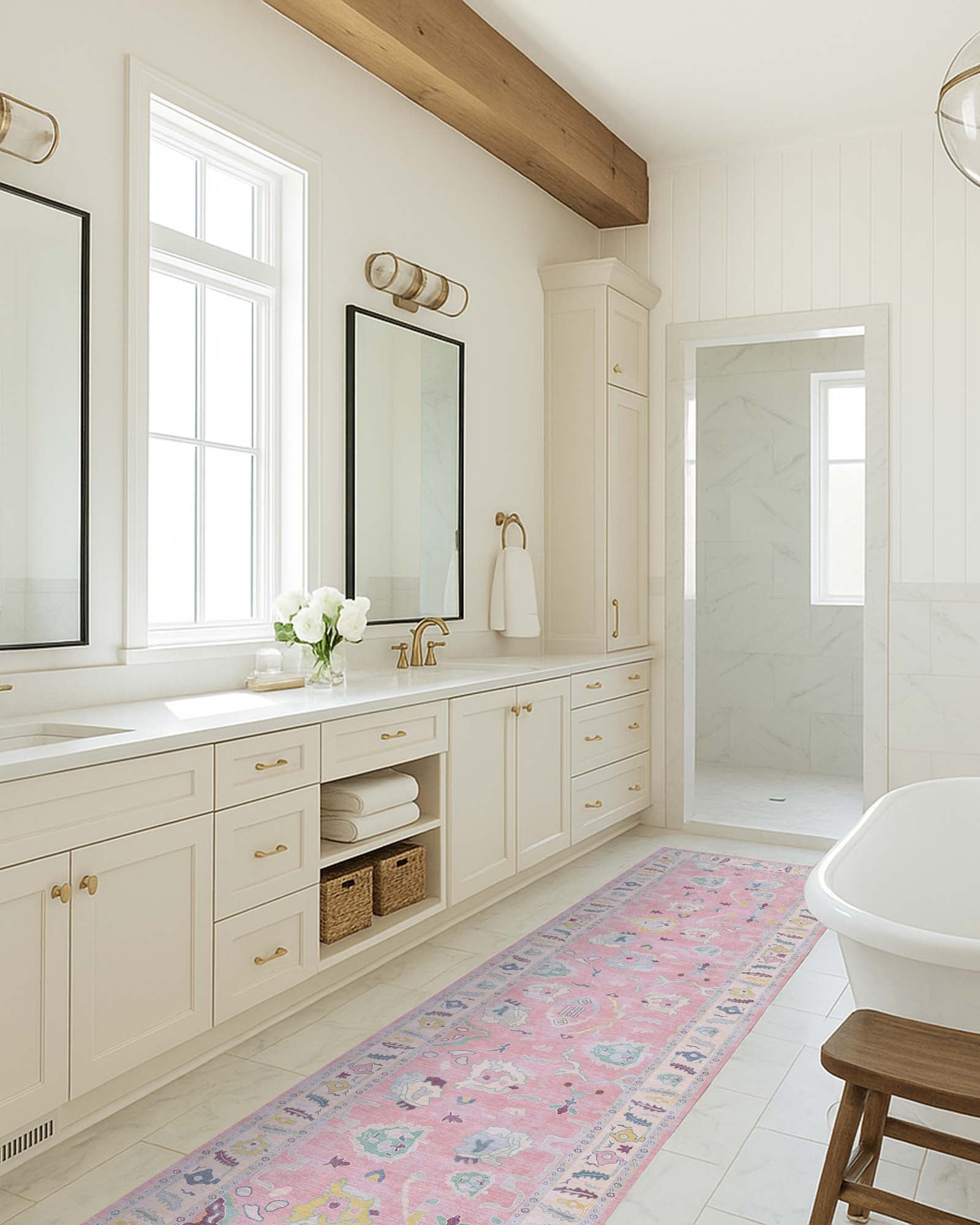
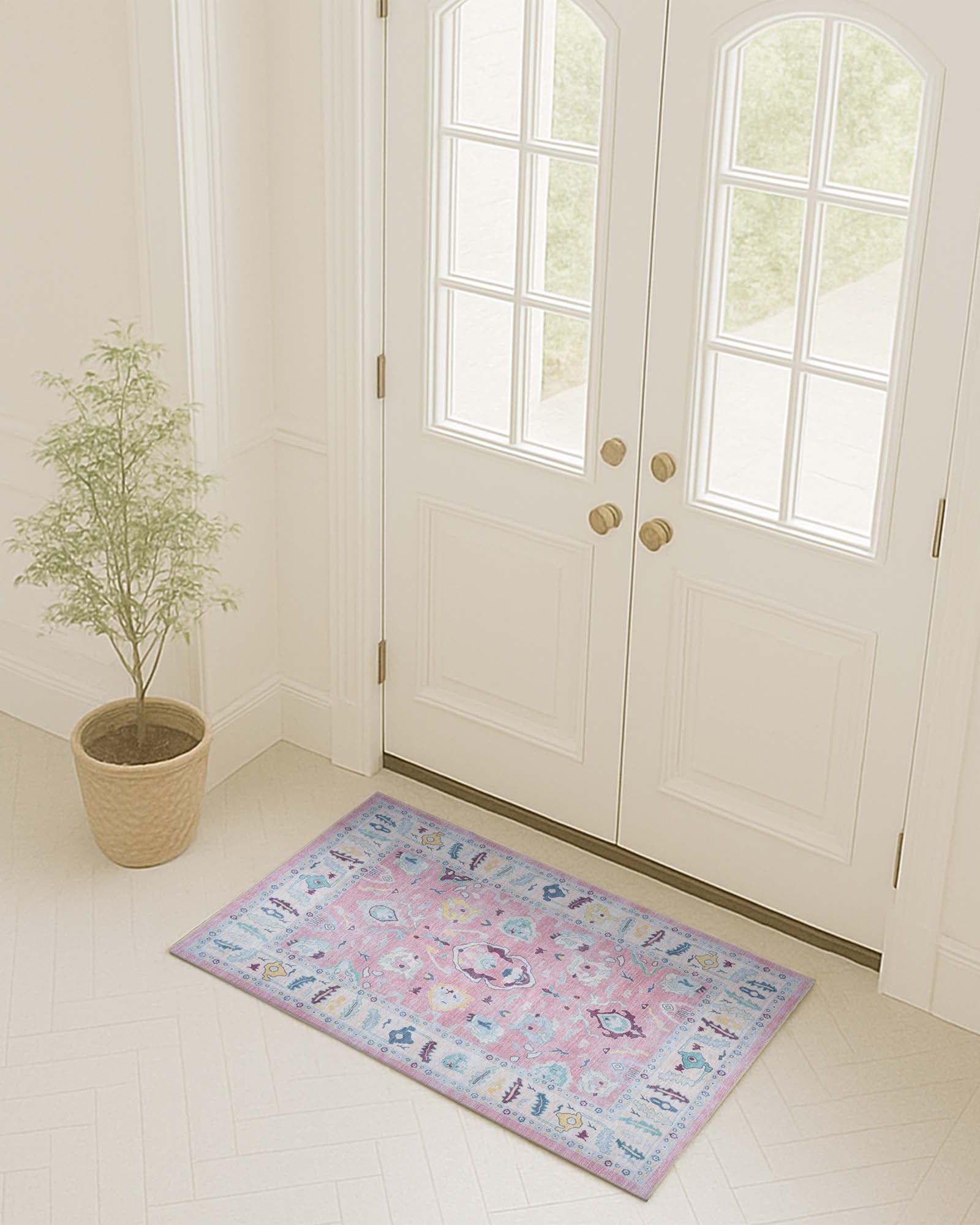
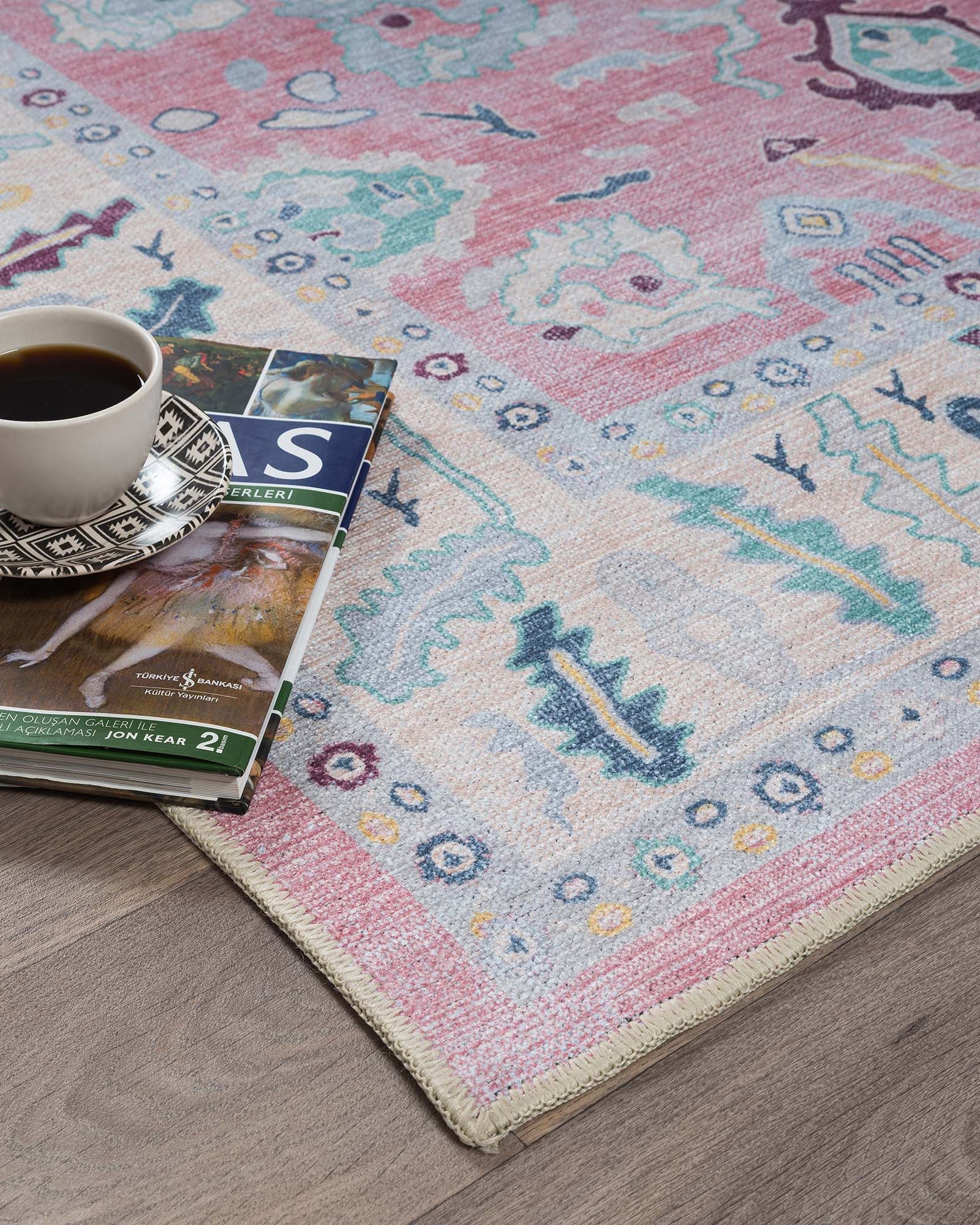
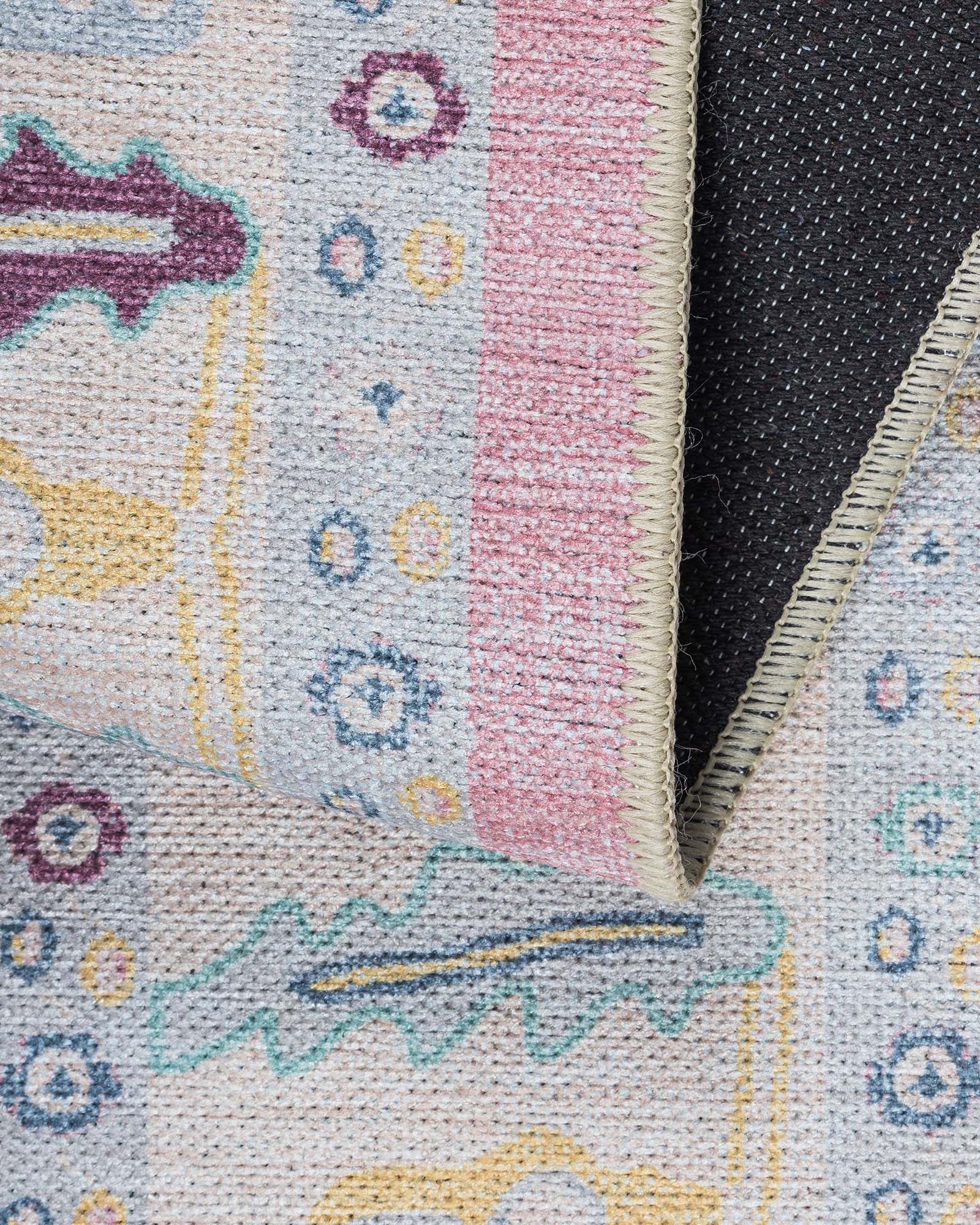
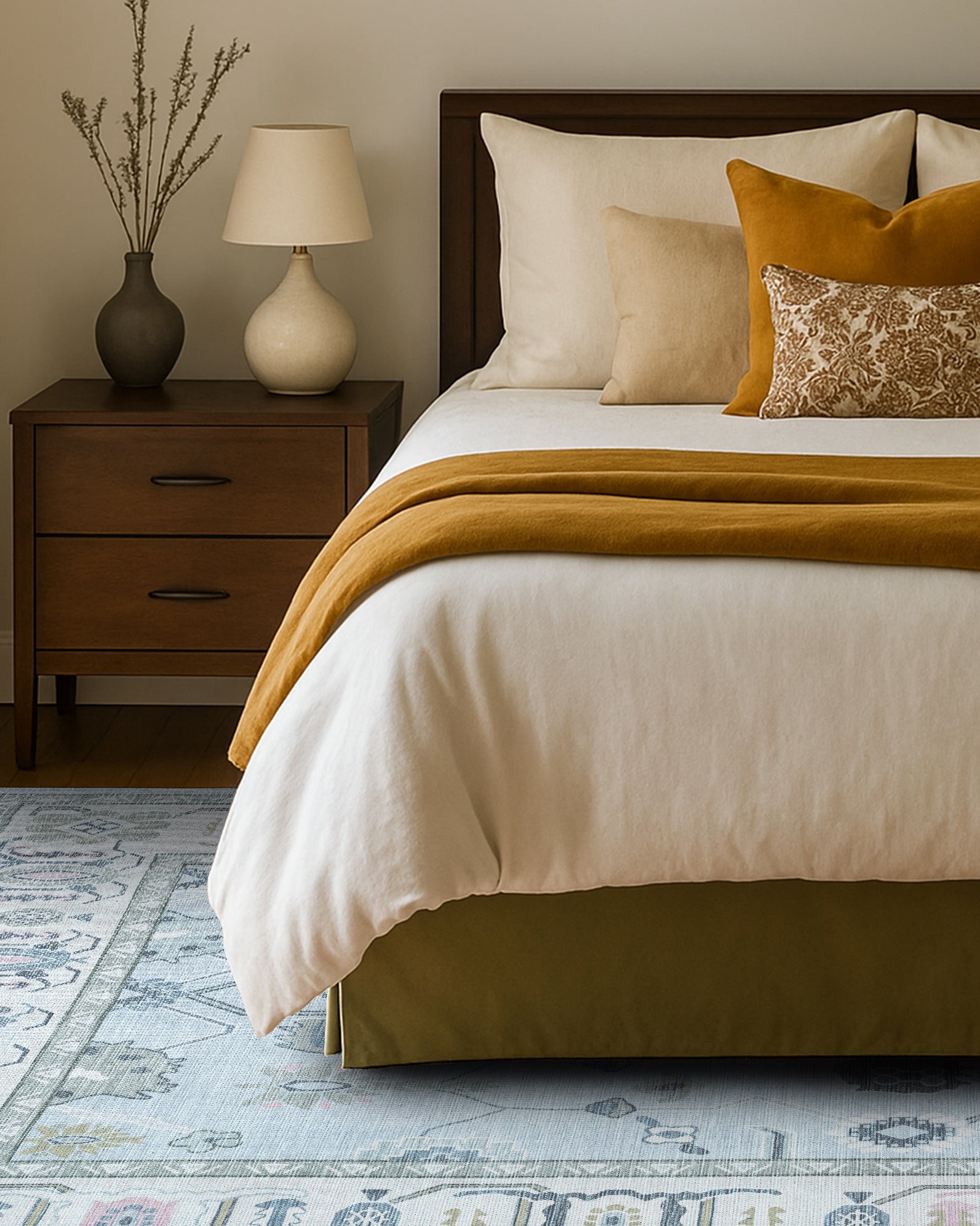
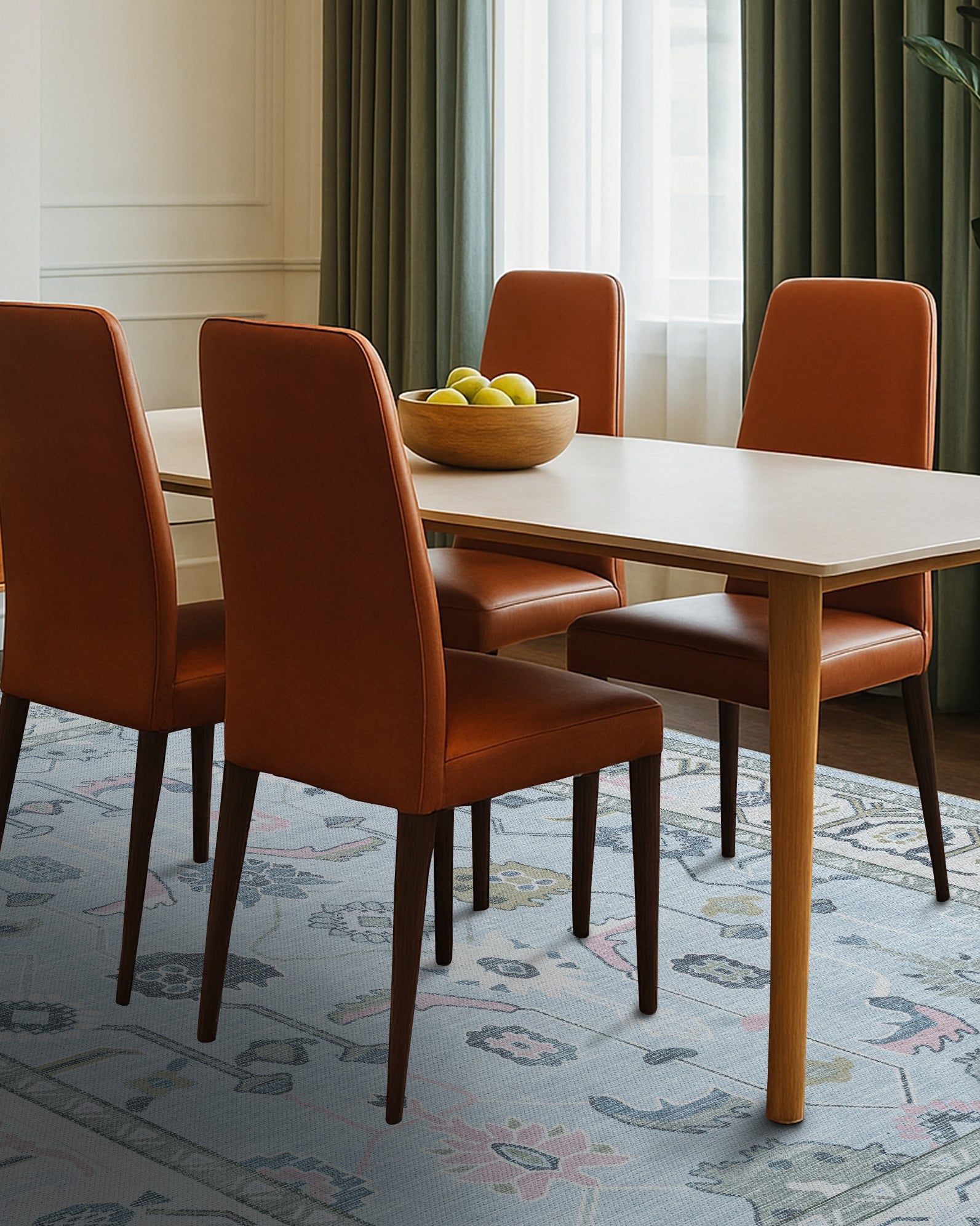
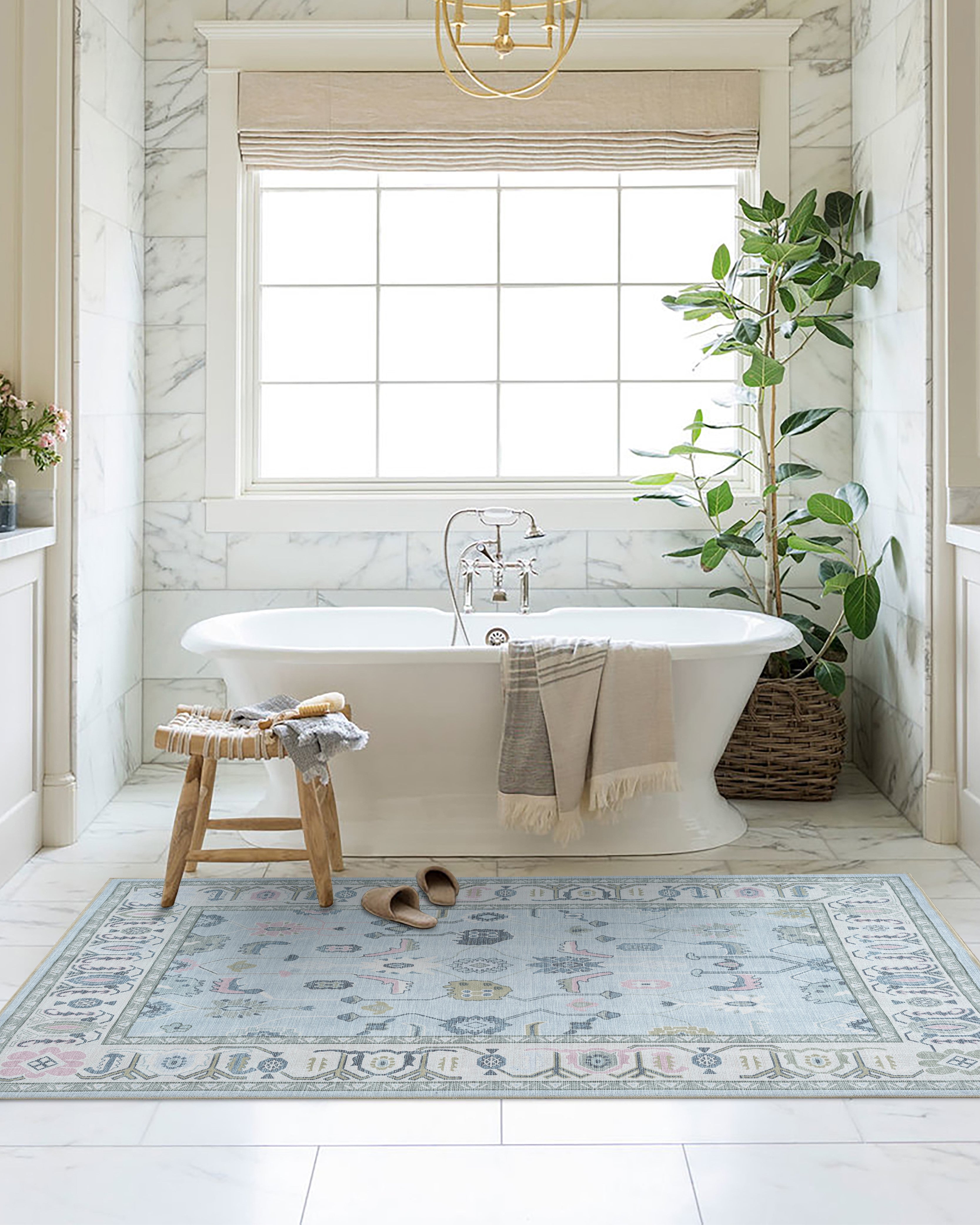
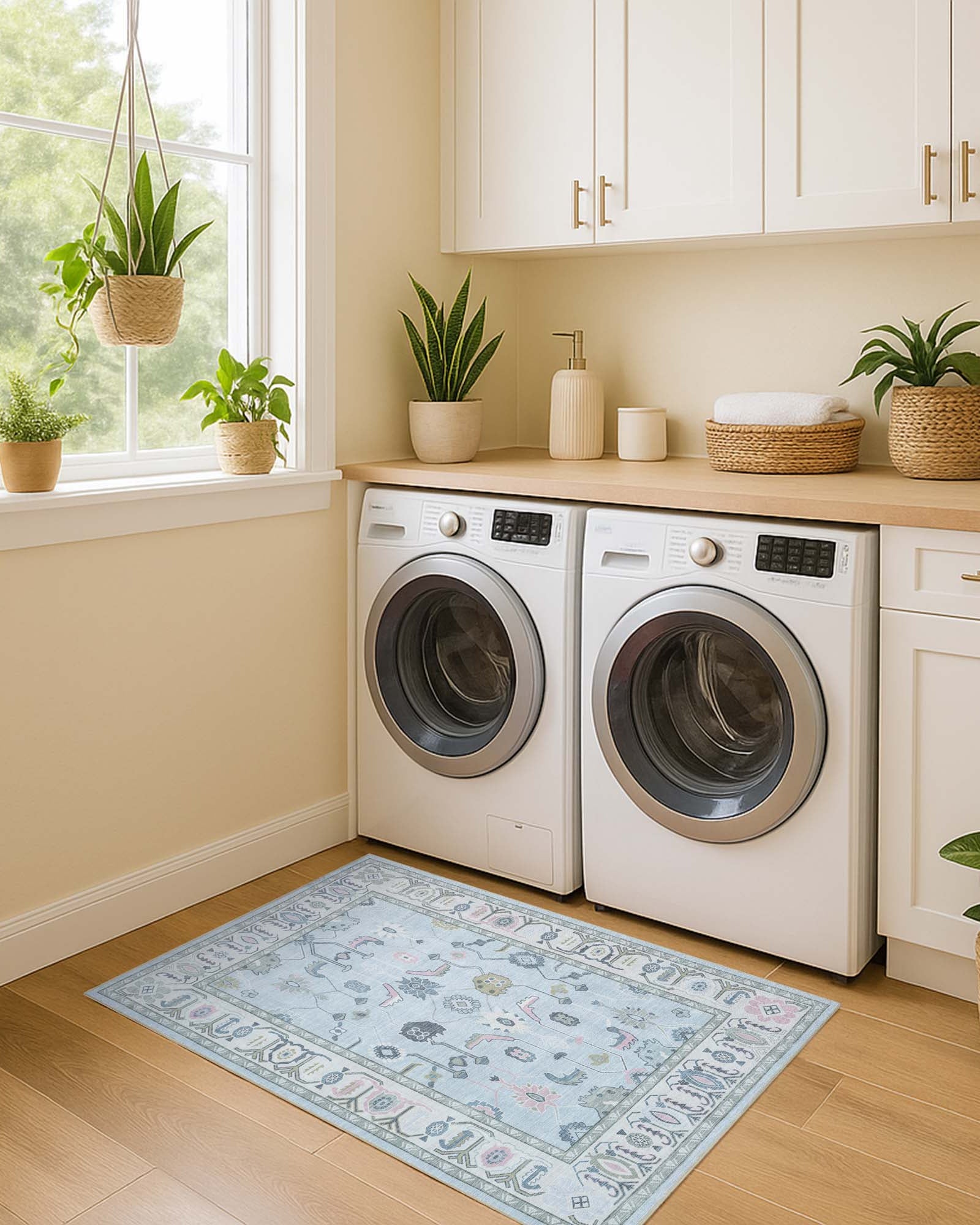
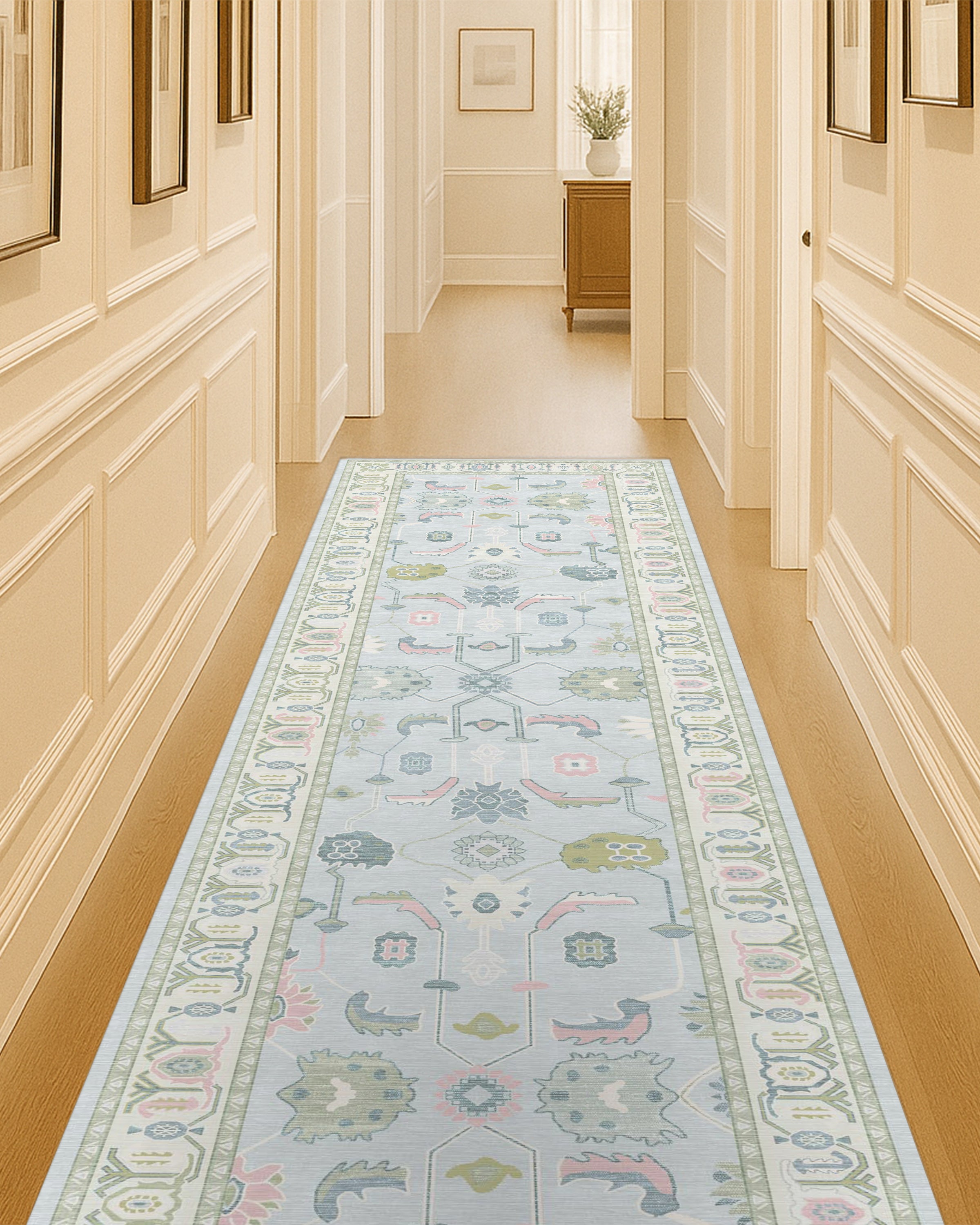
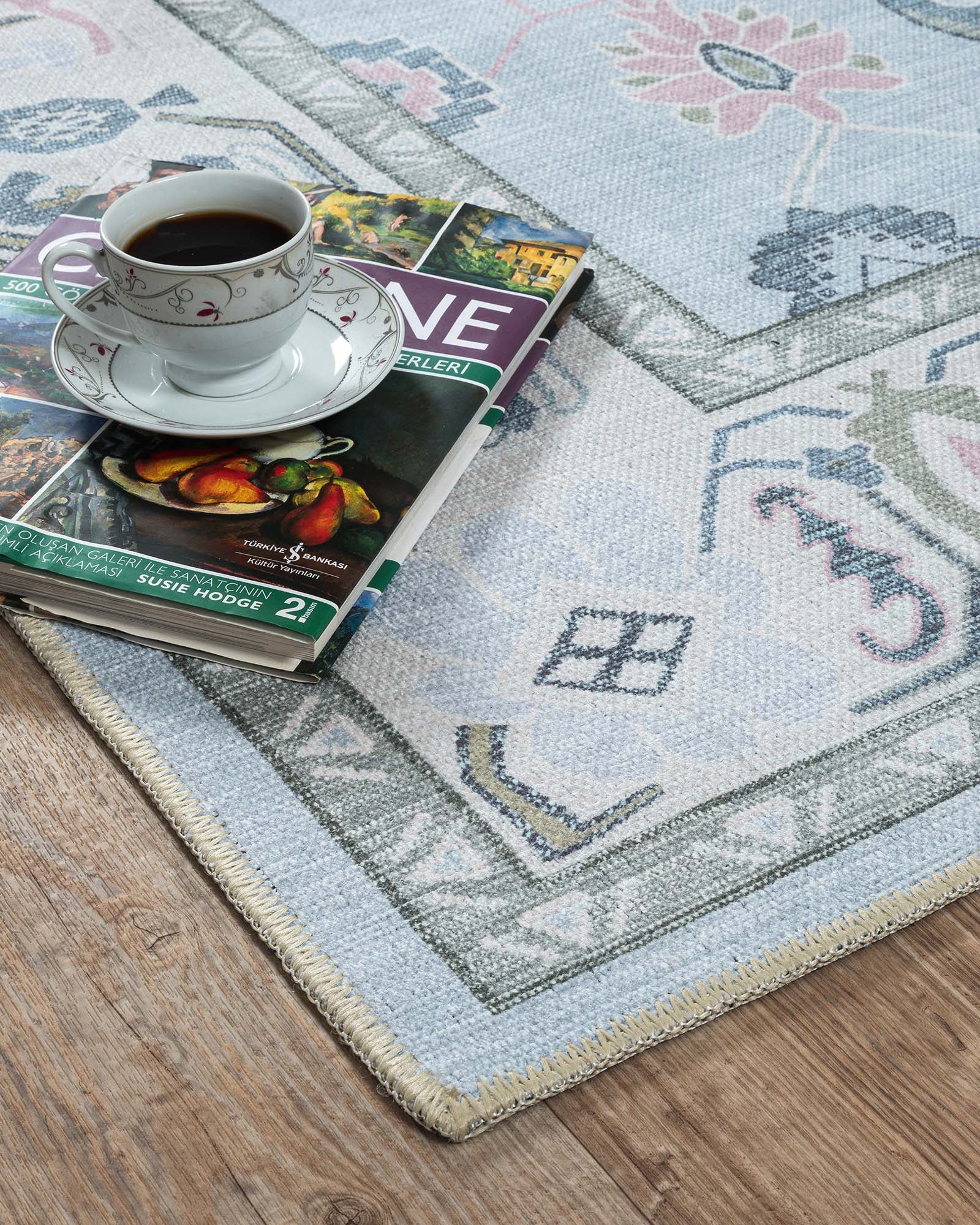
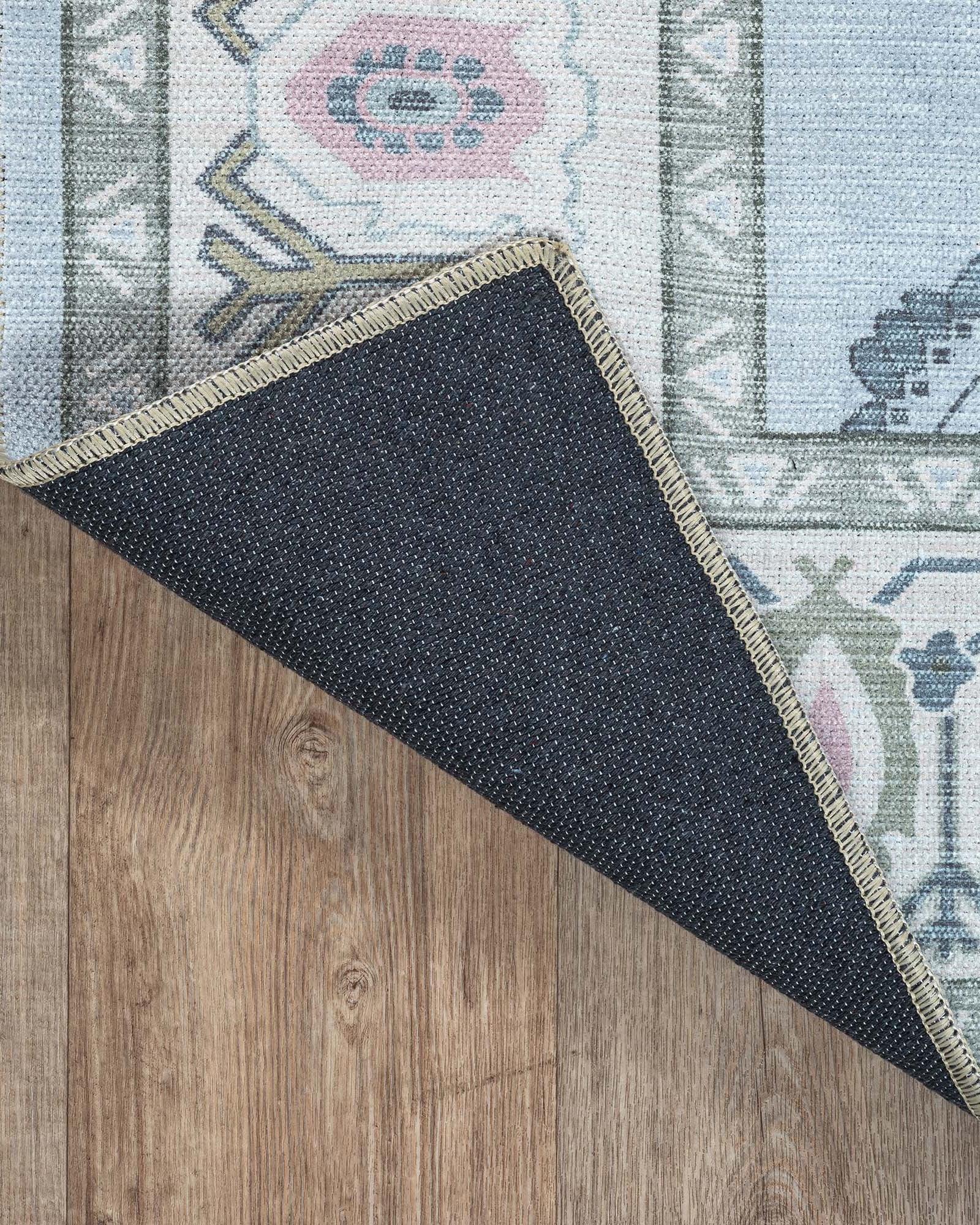
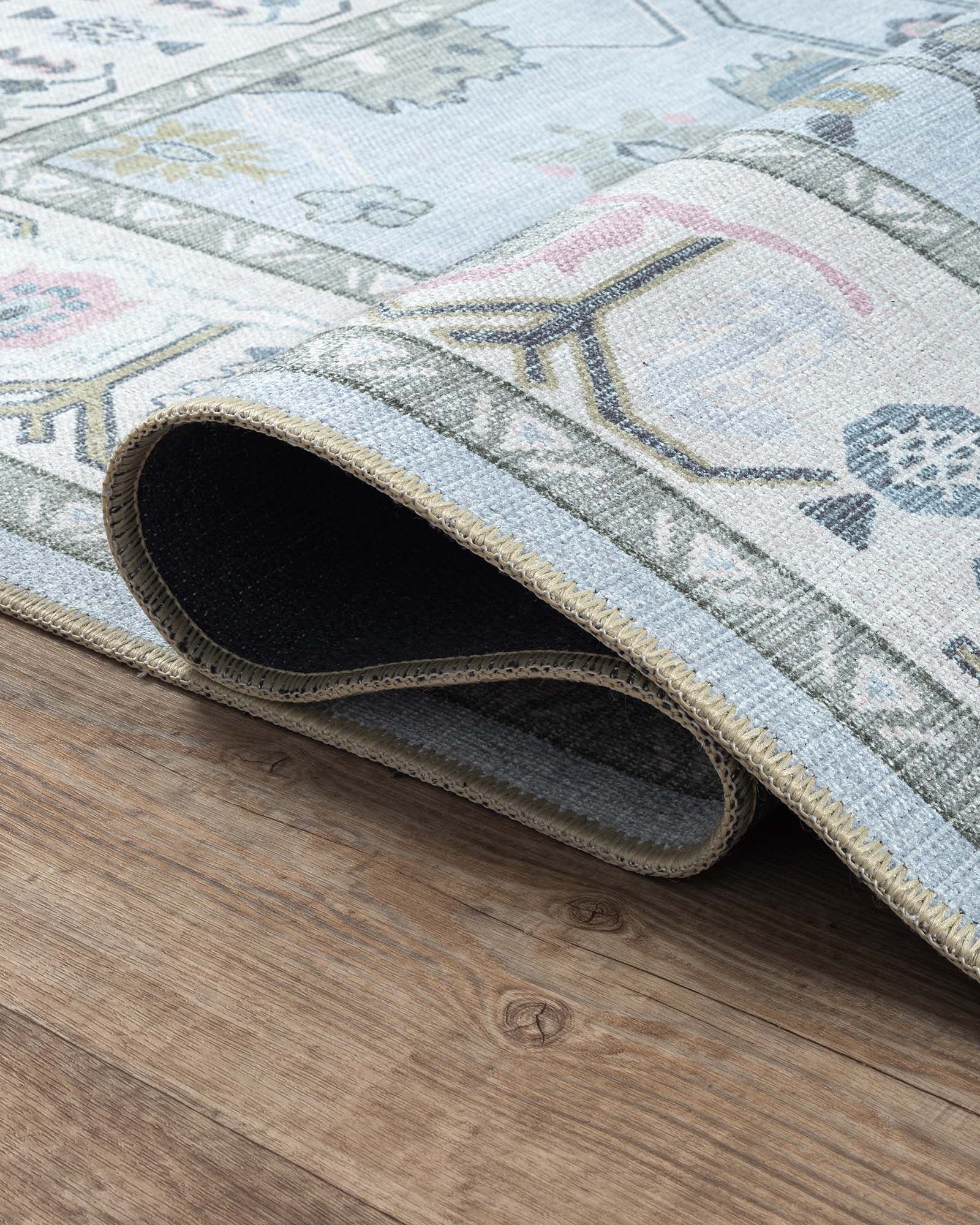
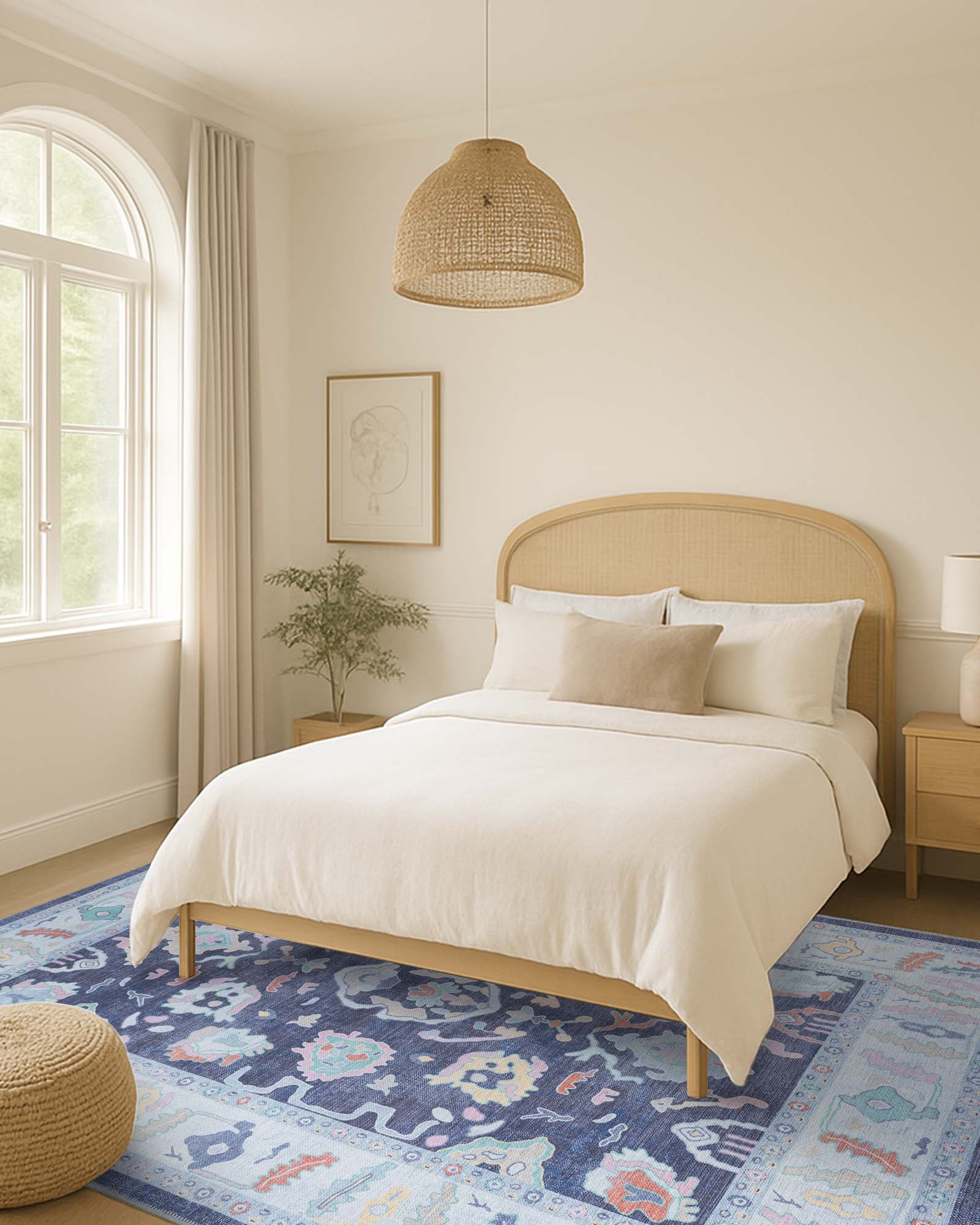
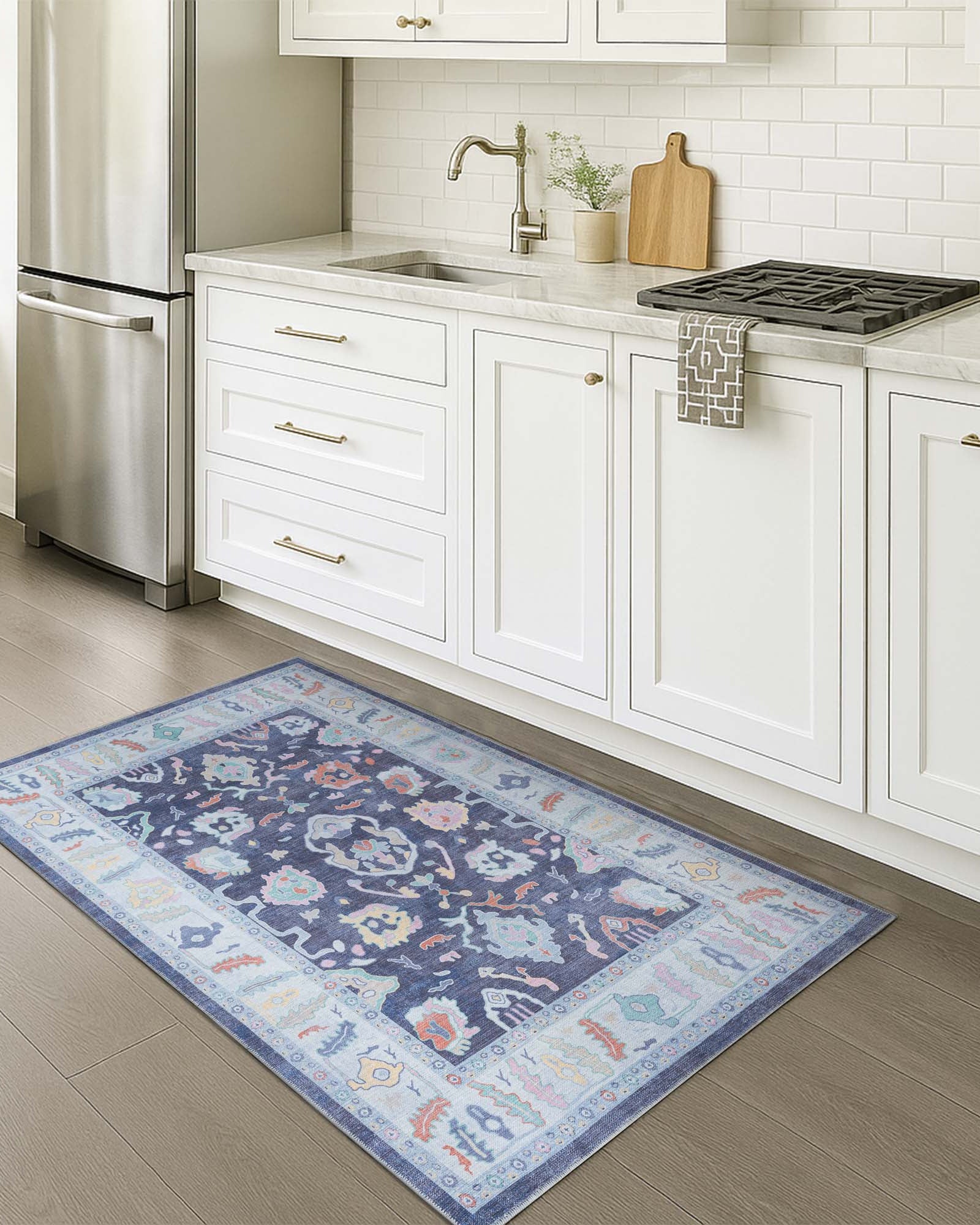
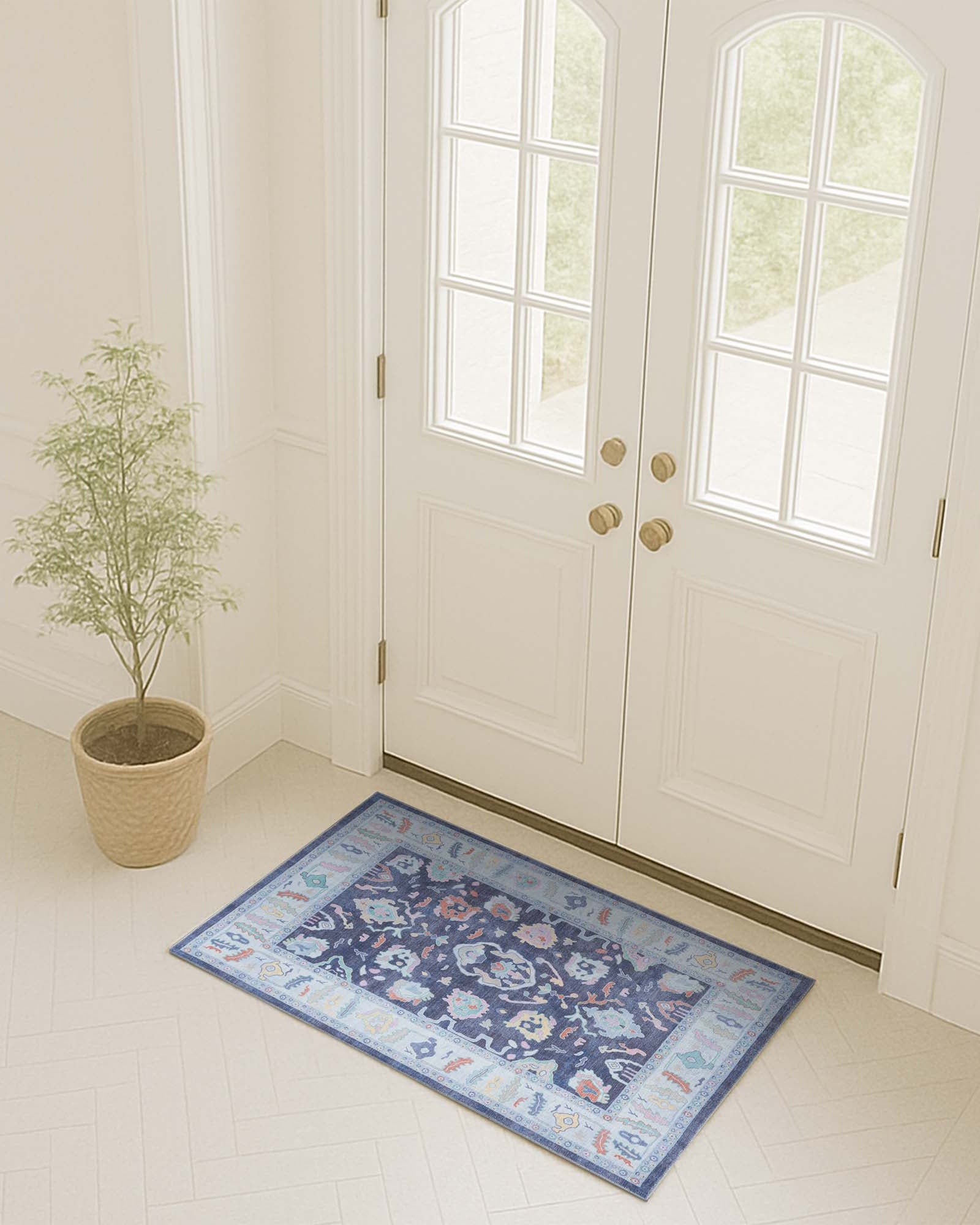
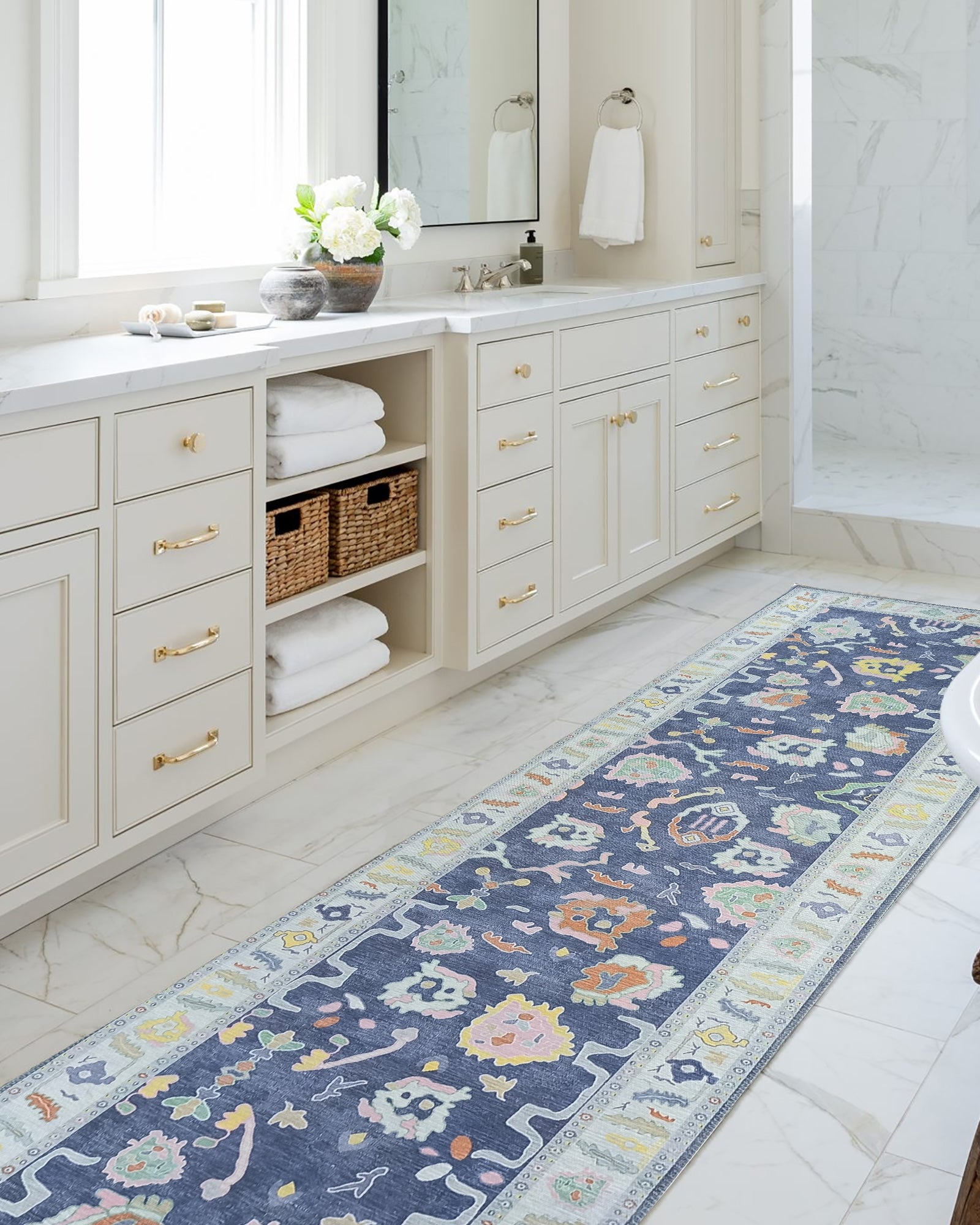
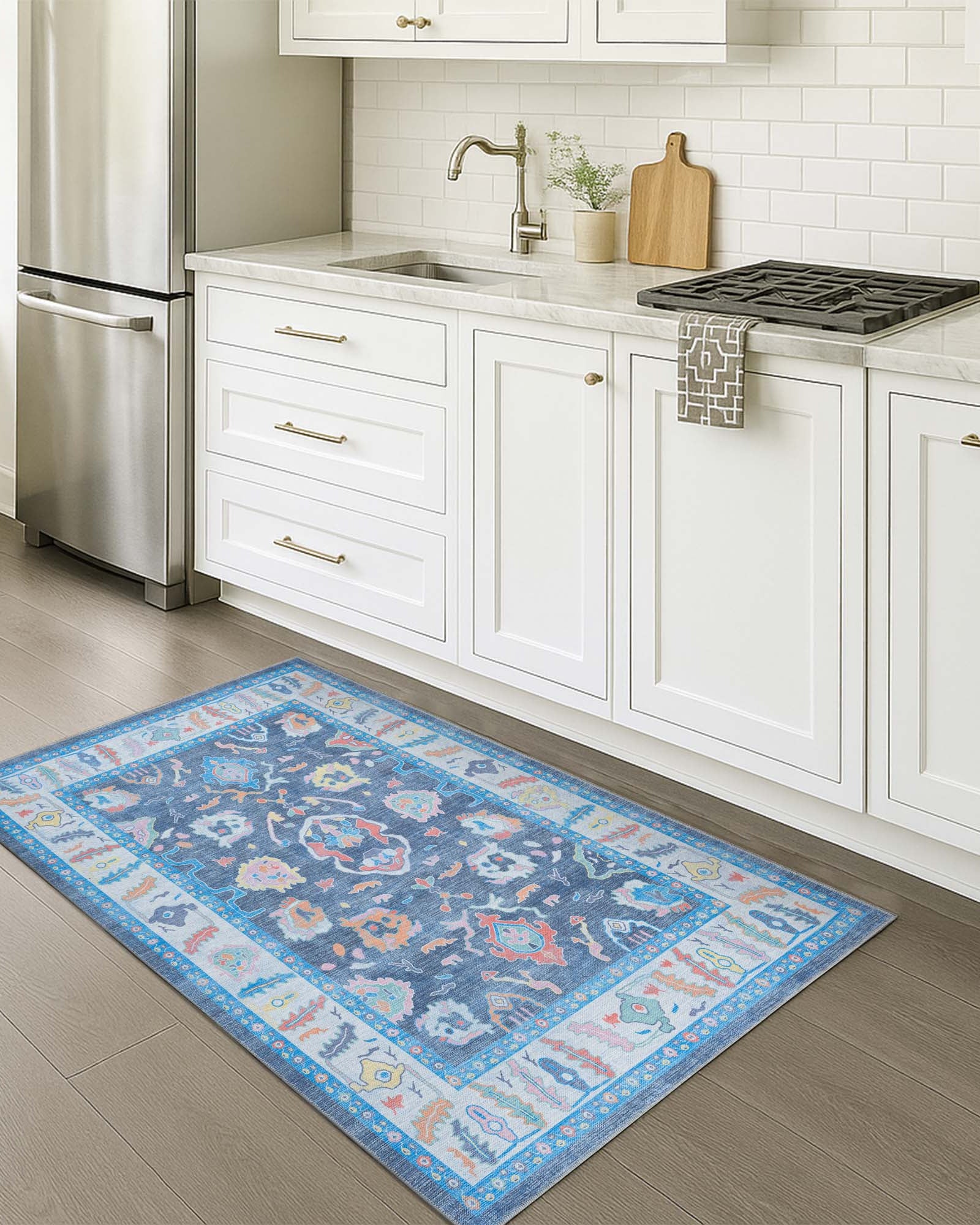
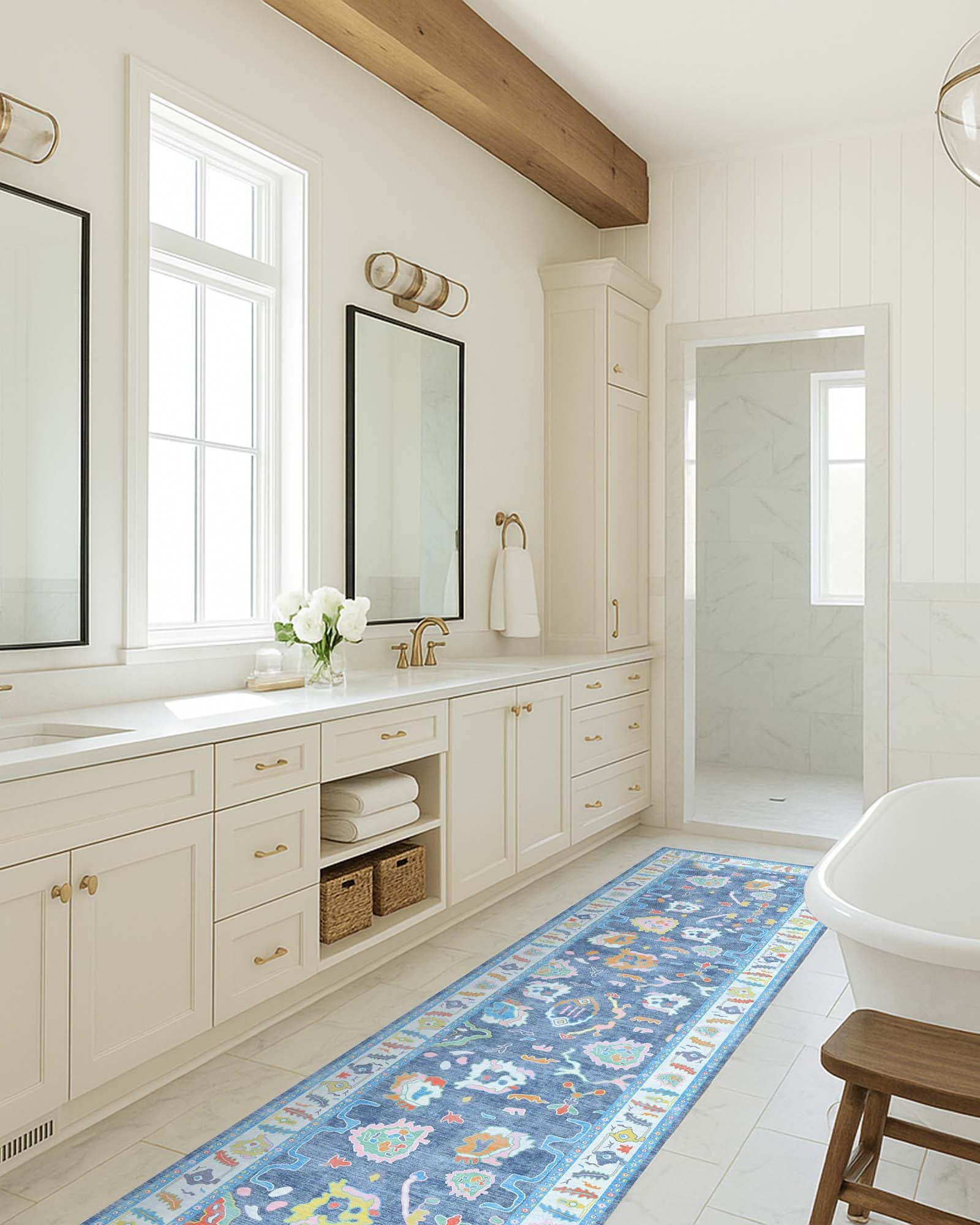
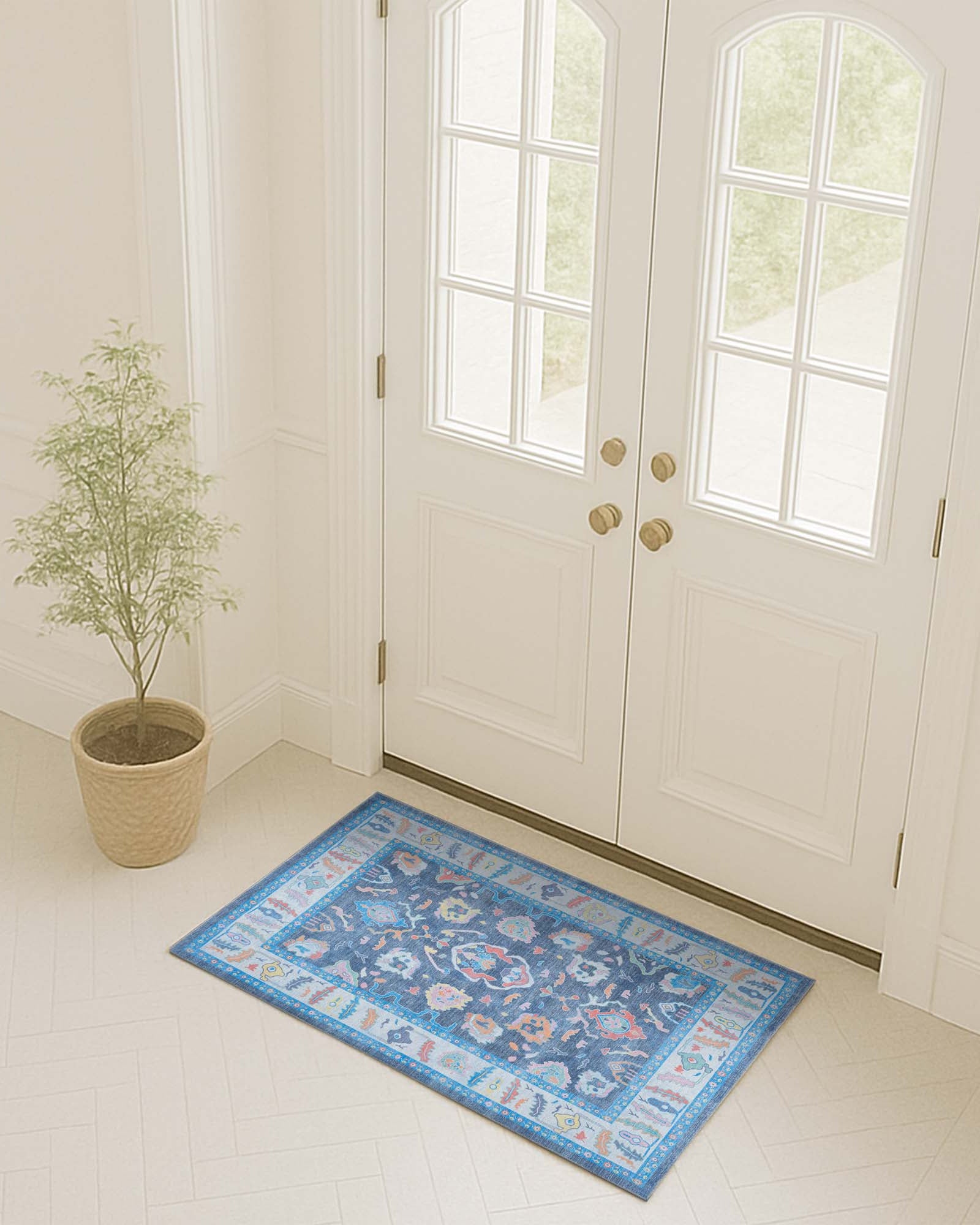
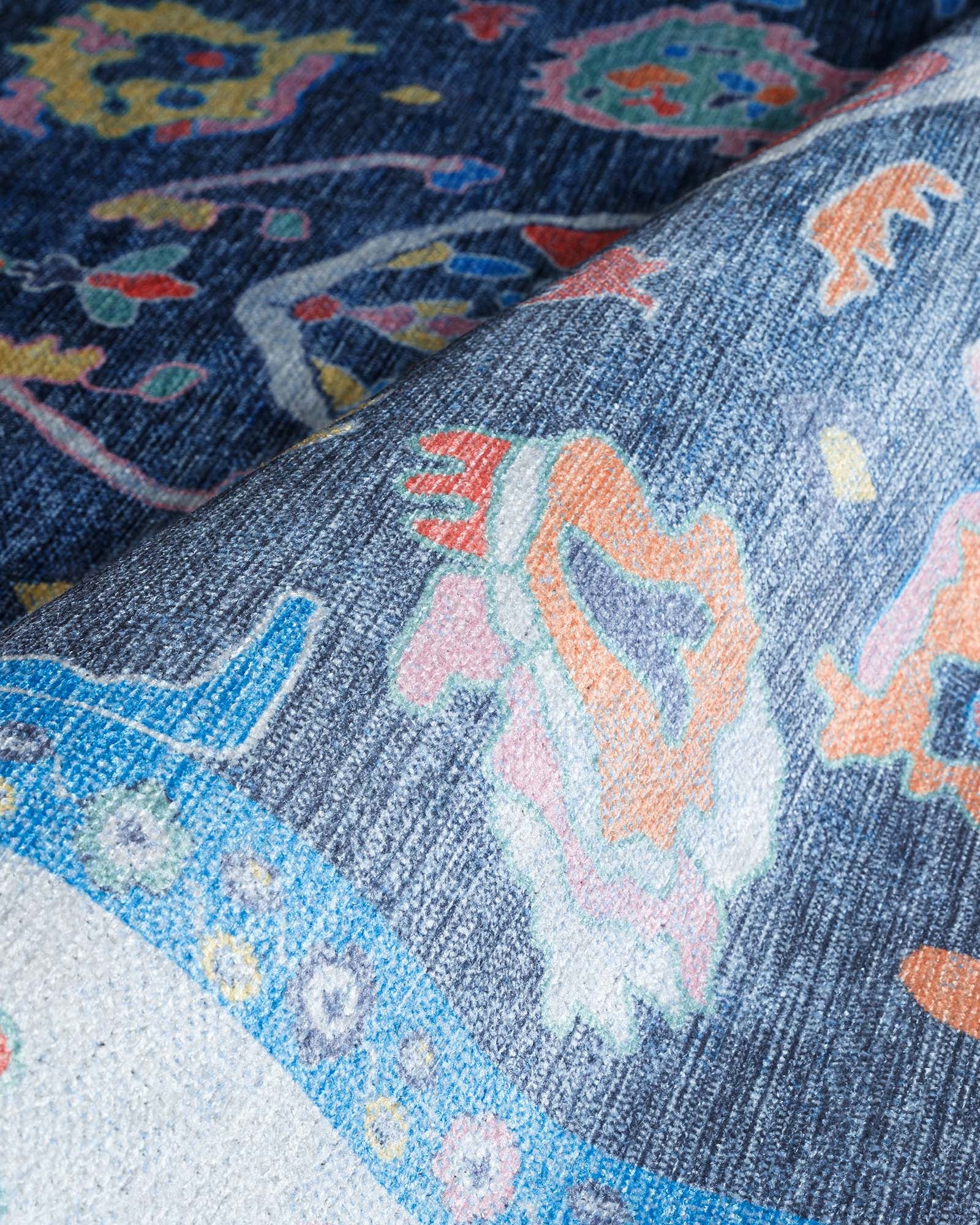
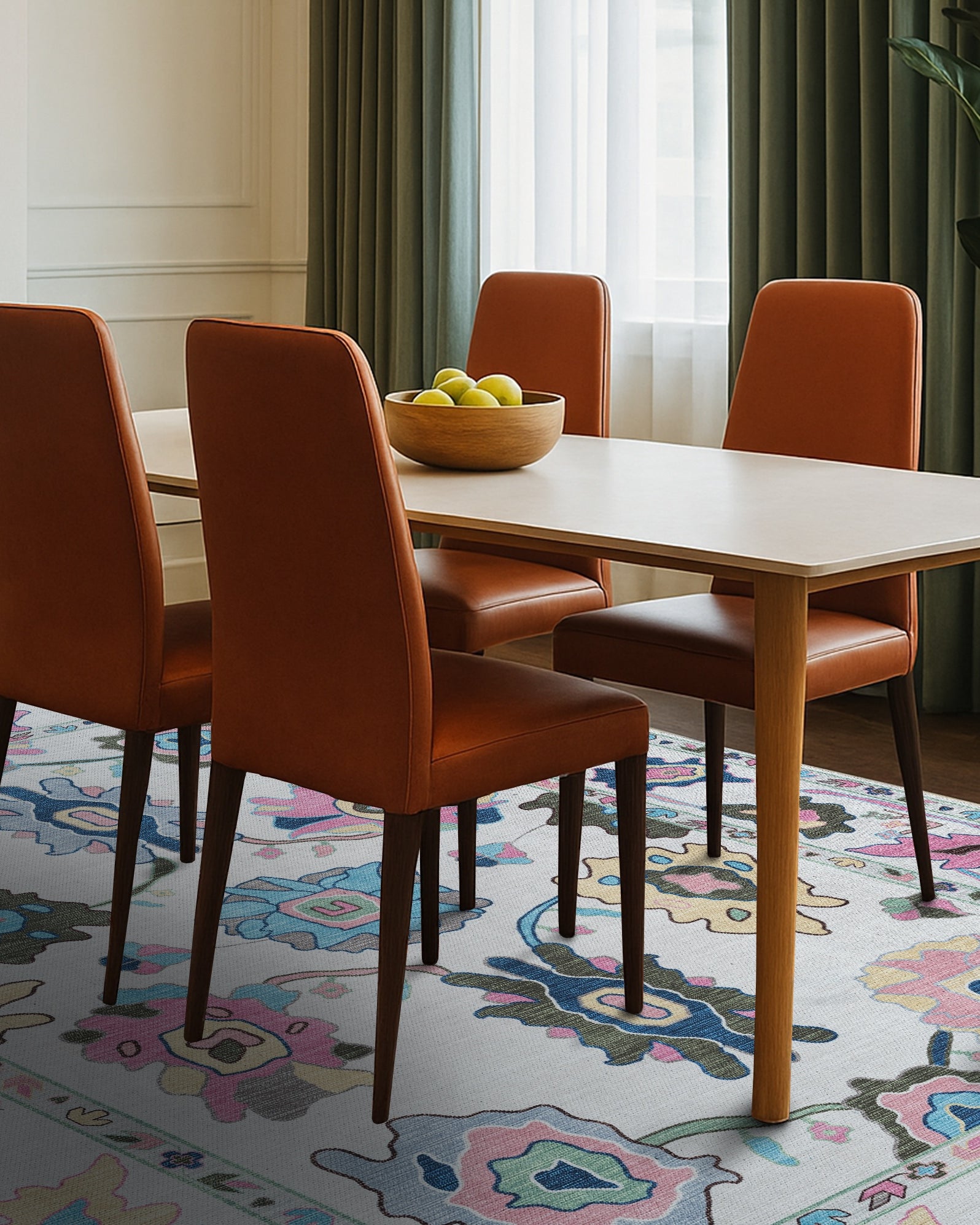
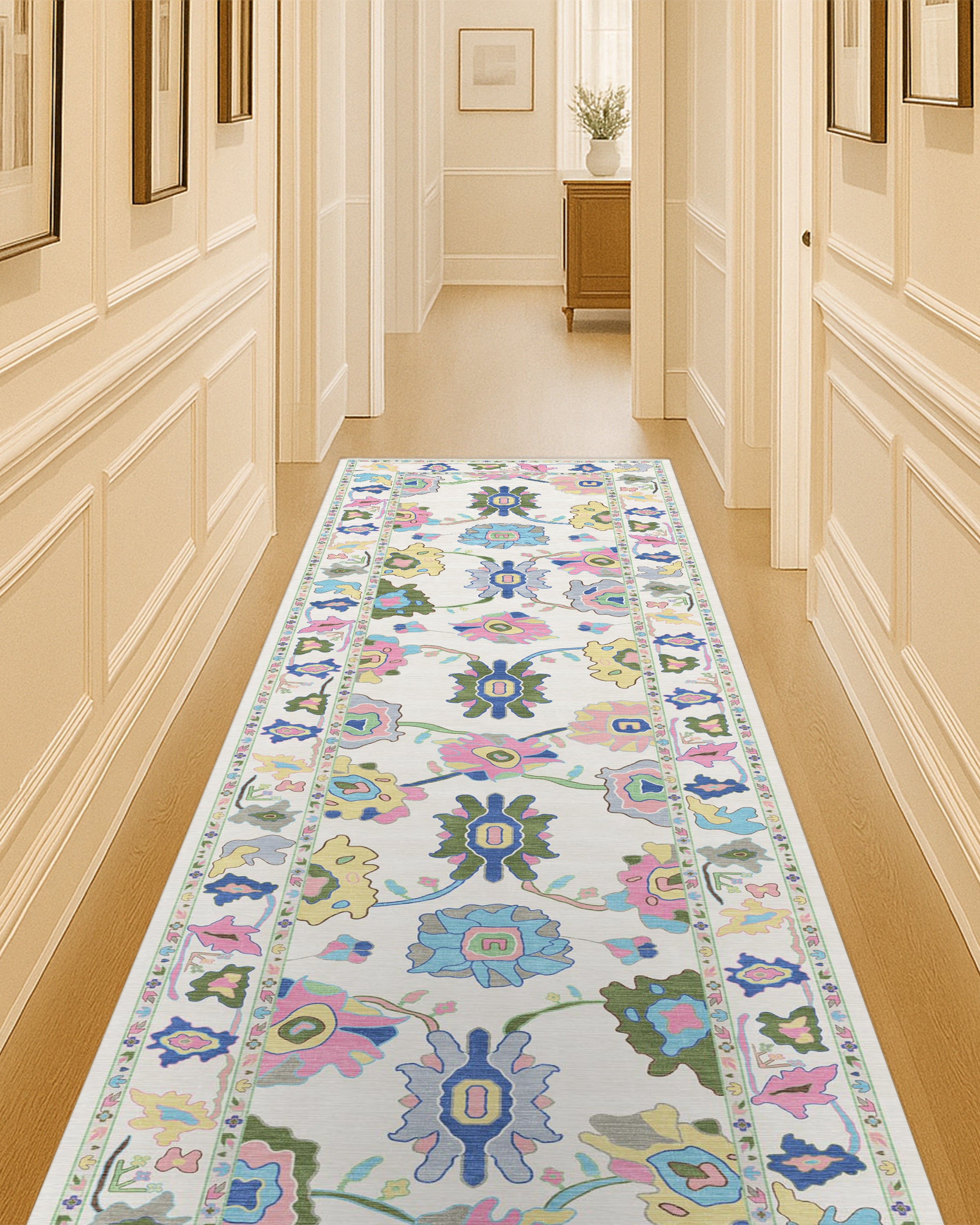
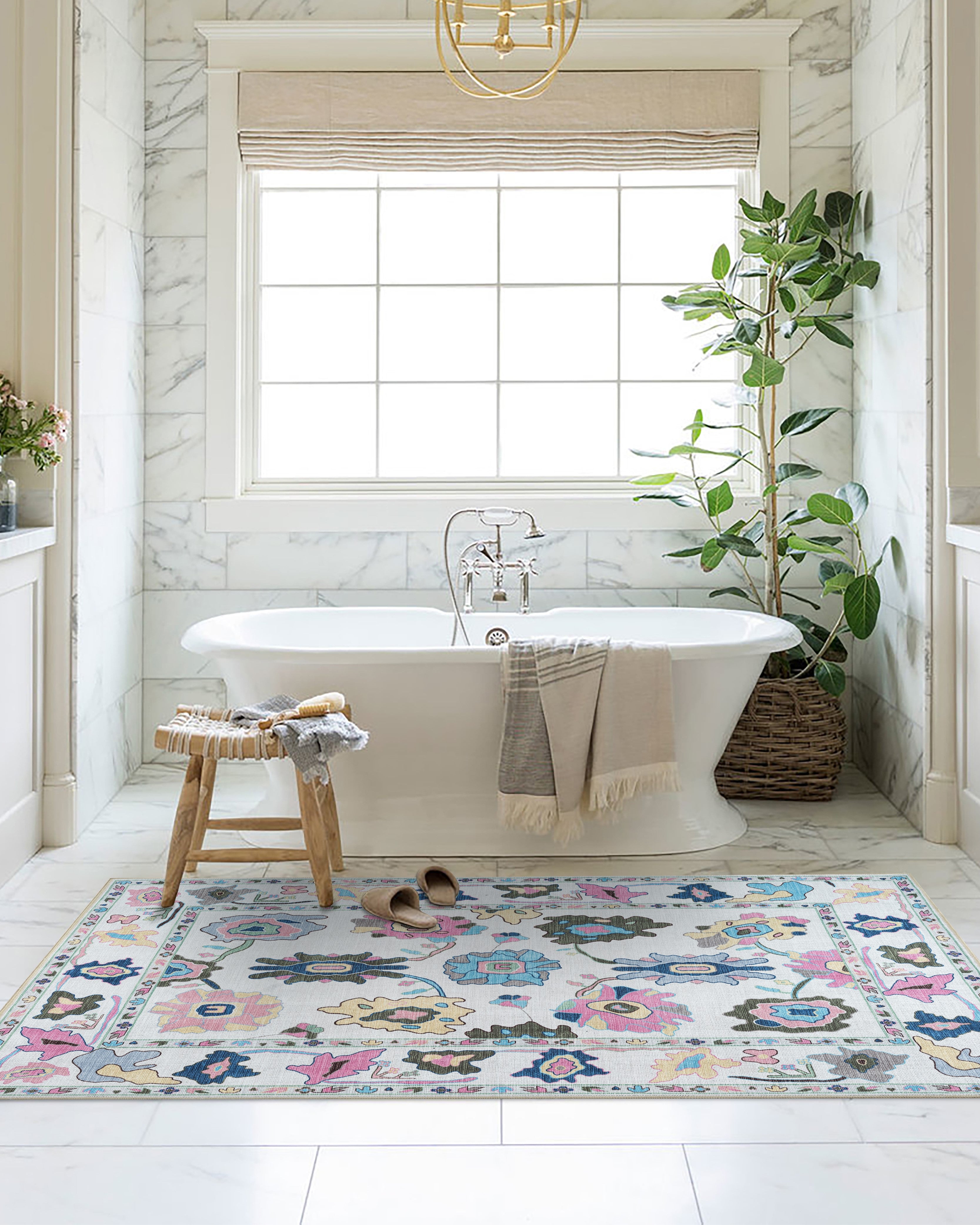
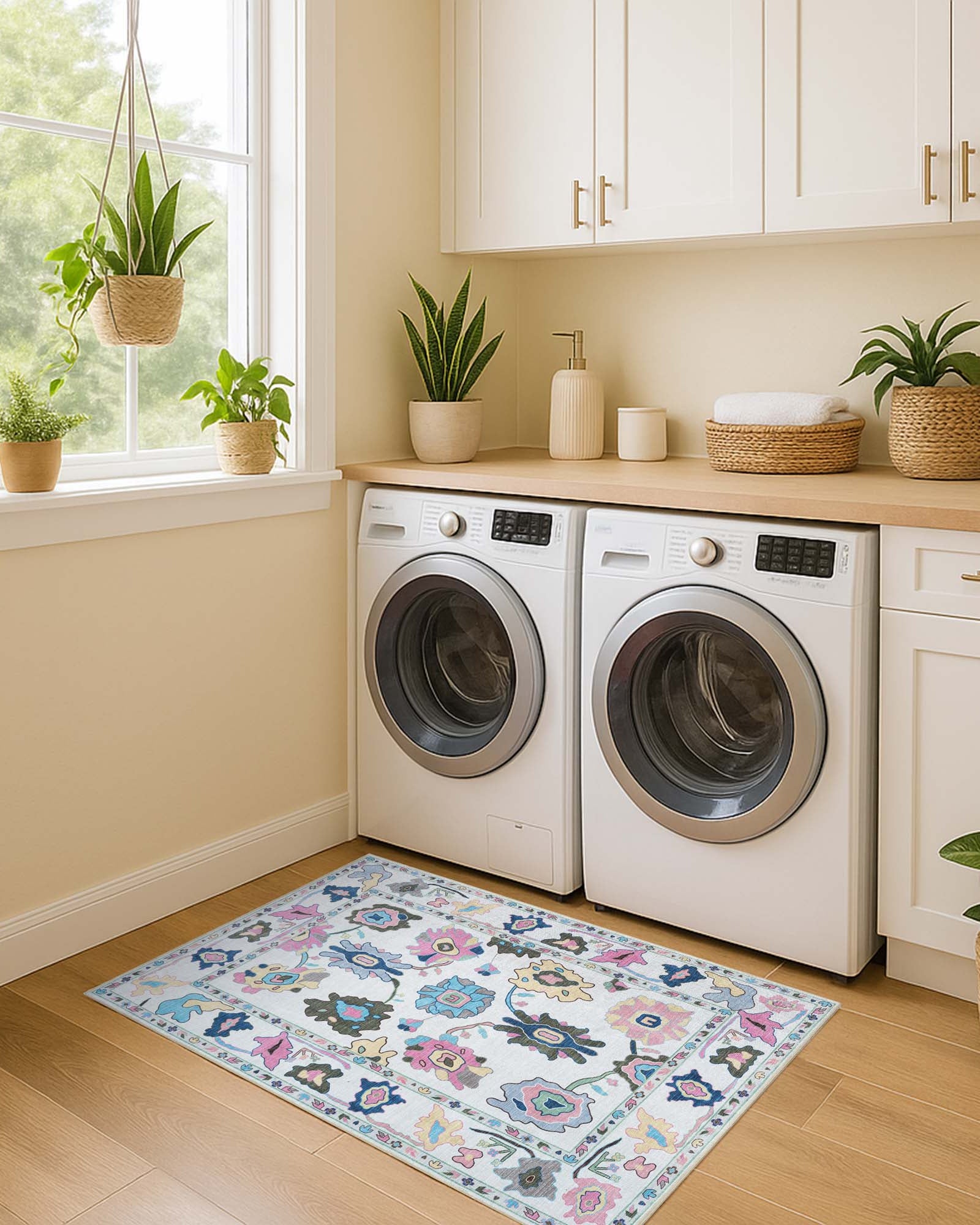
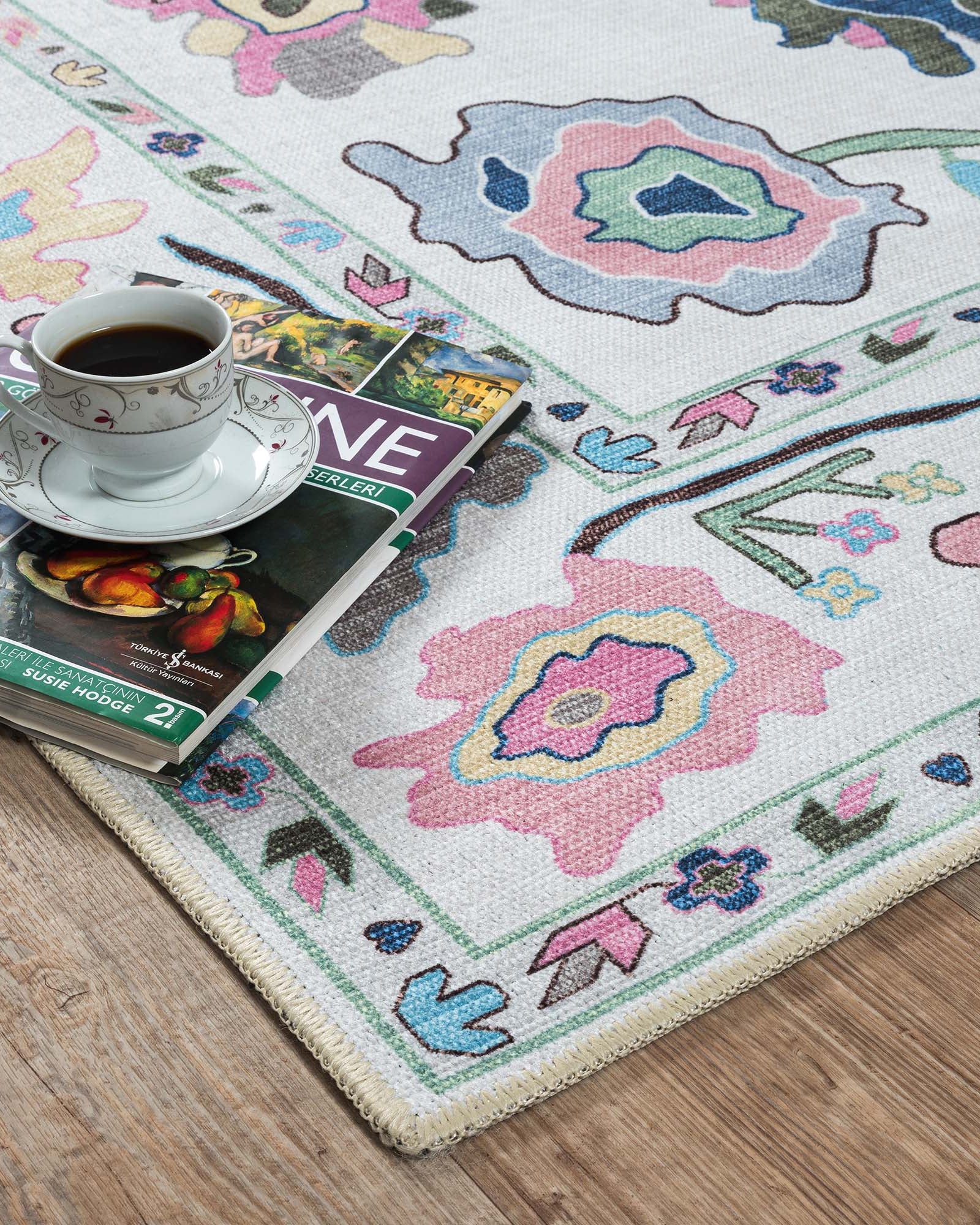
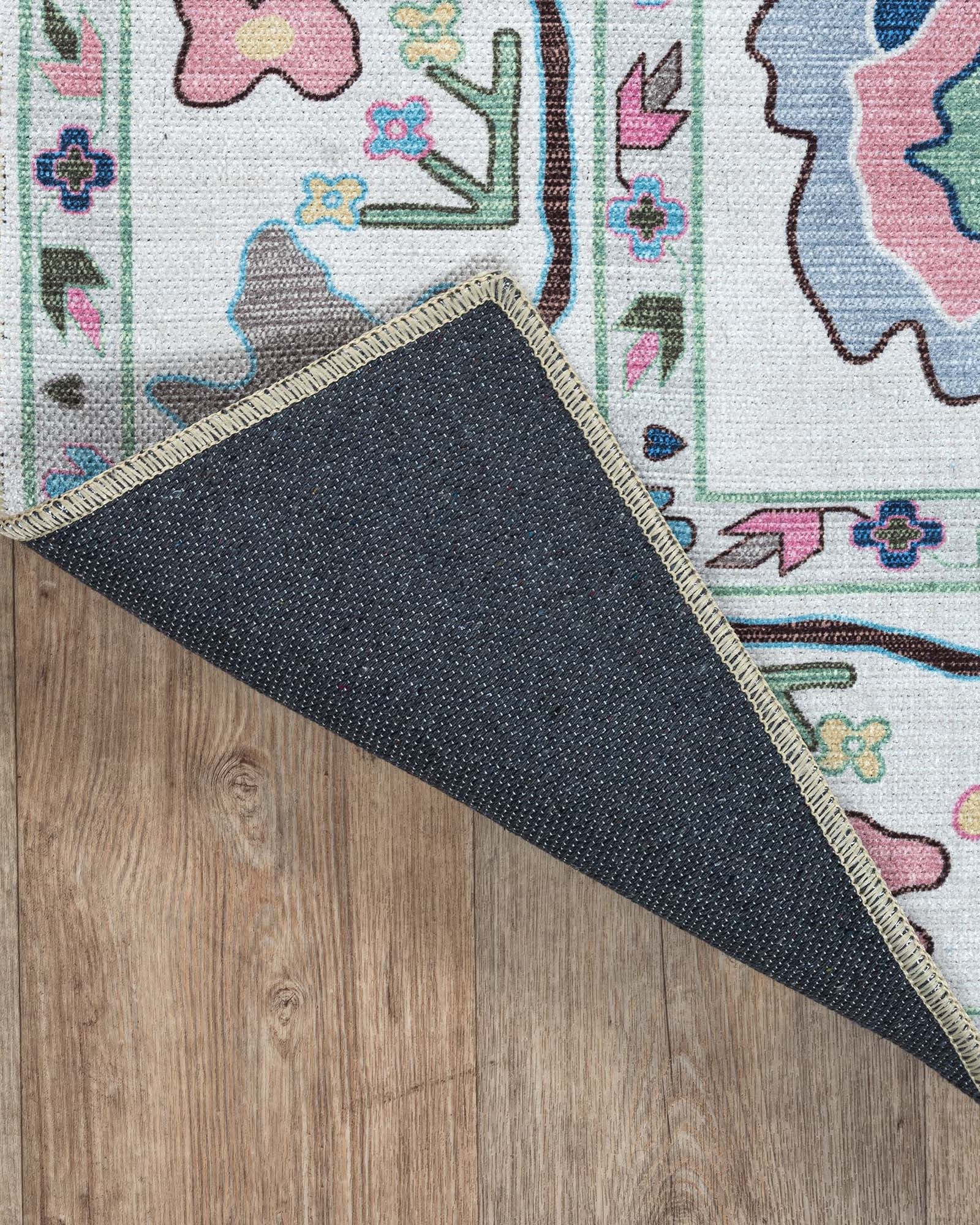
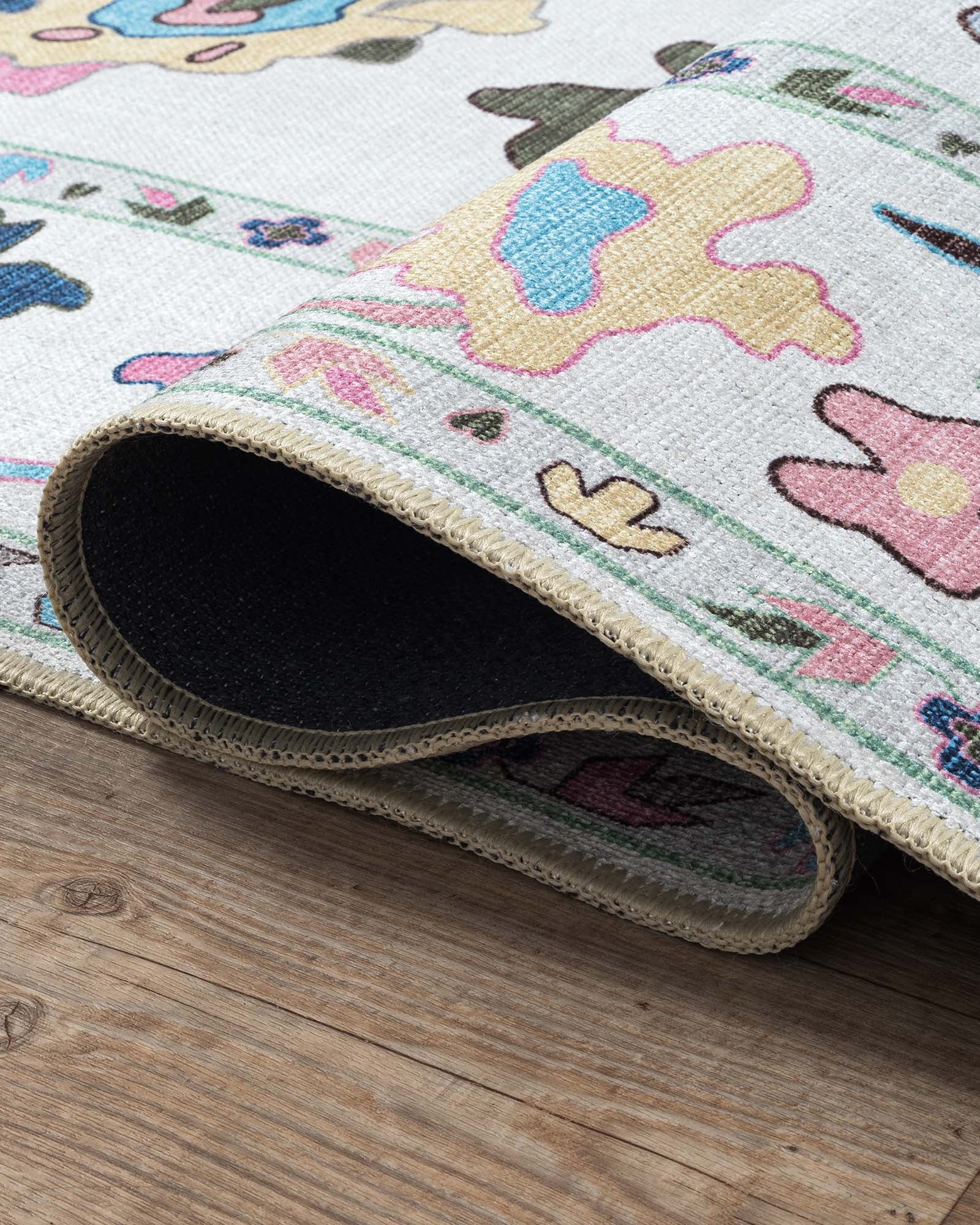
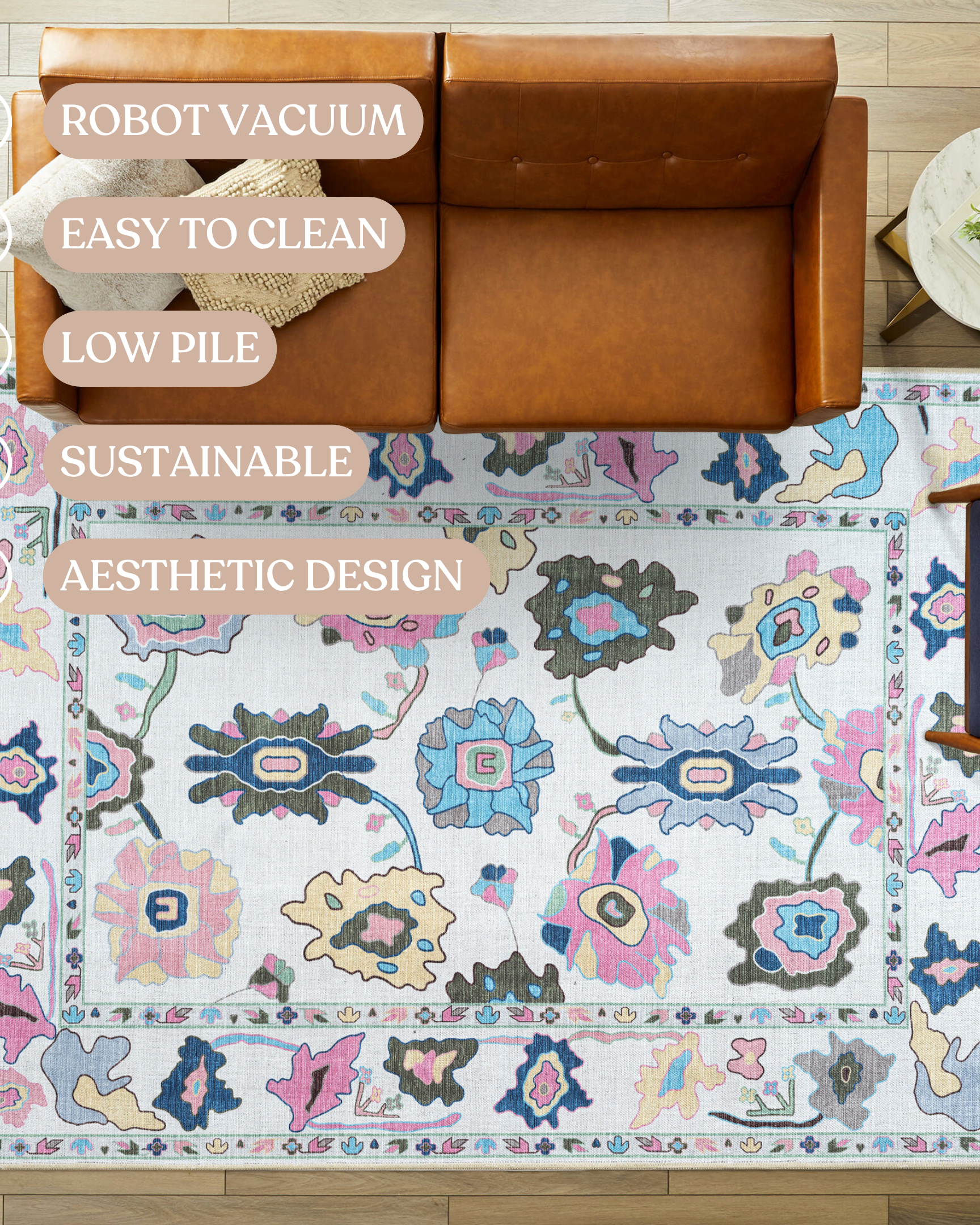
Nothing in this collection has been altered. Every rug arrived with the colour, pattern and wear it earned over decades of use, and the only thing done to it since is a careful cleaning to make it ready for a new floor. No stripping, no re-dyeing, no distressing added after the fact — what you see is what the rug became on its own, one season and one household at a time.
What "As-Is" Actually Means
Most of the rug market runs the other direction. A vintage-look rug is frequently a new rug engineered to resemble an old one, and even genuine vintage pieces are sometimes stripped and re-dyed to hit a specific colour. This collection sits at the opposite end: the rug is the record. Nothing was added to make it look older, and nothing was removed to make it look newer.
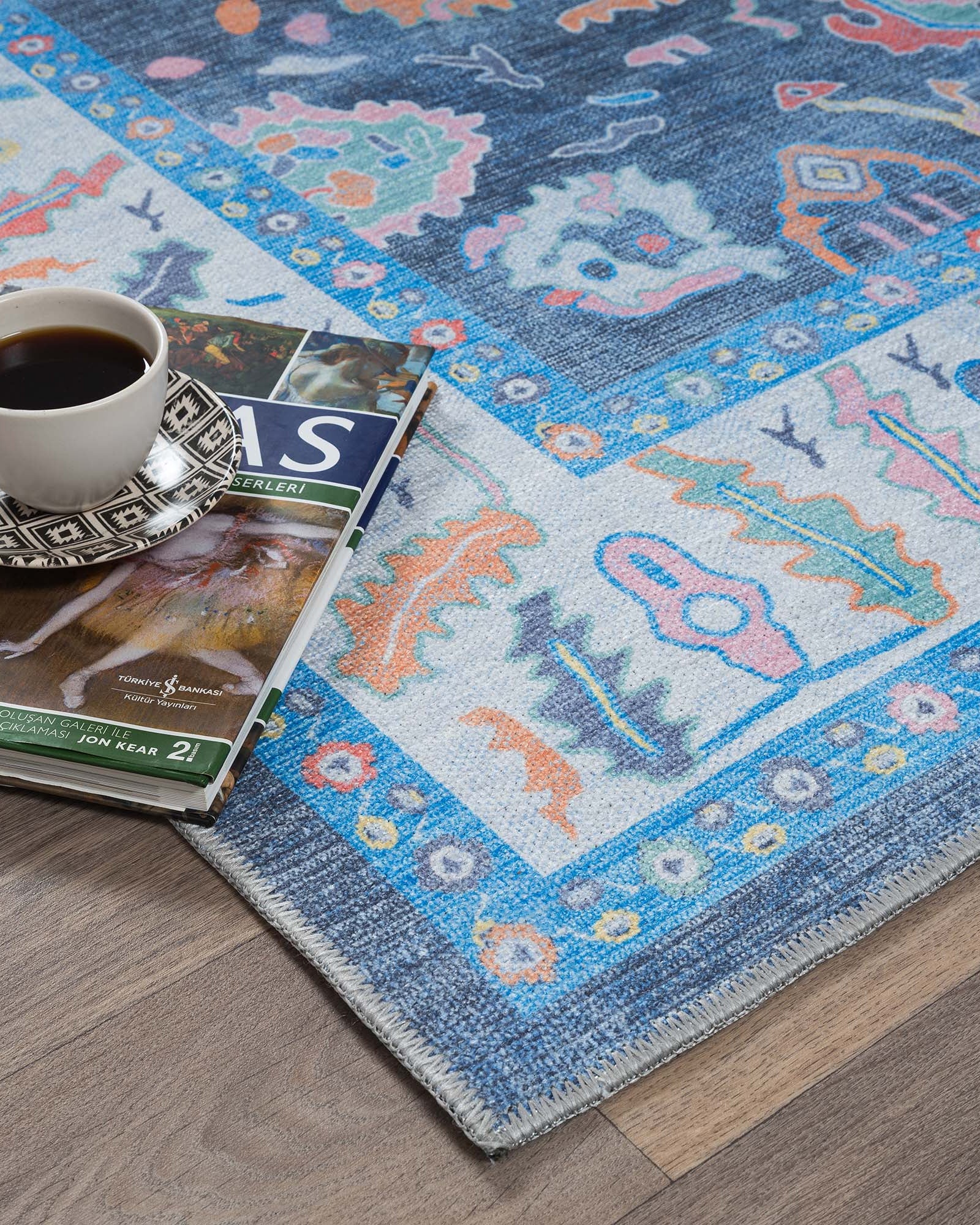
That distinction shows up in small details that are hard to fake. Colour depth that shifts unevenly across the field rather than uniformly. Wear that follows the actual traffic pattern of a room rather than a symmetrical, designed distribution. A selvage repair done decades ago by someone who needed the rug to keep working rather than to look a certain way. These are the marks of a genuine object, not a styling decision.
How Rugs Age Naturally
Age changes a hand-knotted rug in three ways, and understanding them tells you what you are actually looking at.
Colour
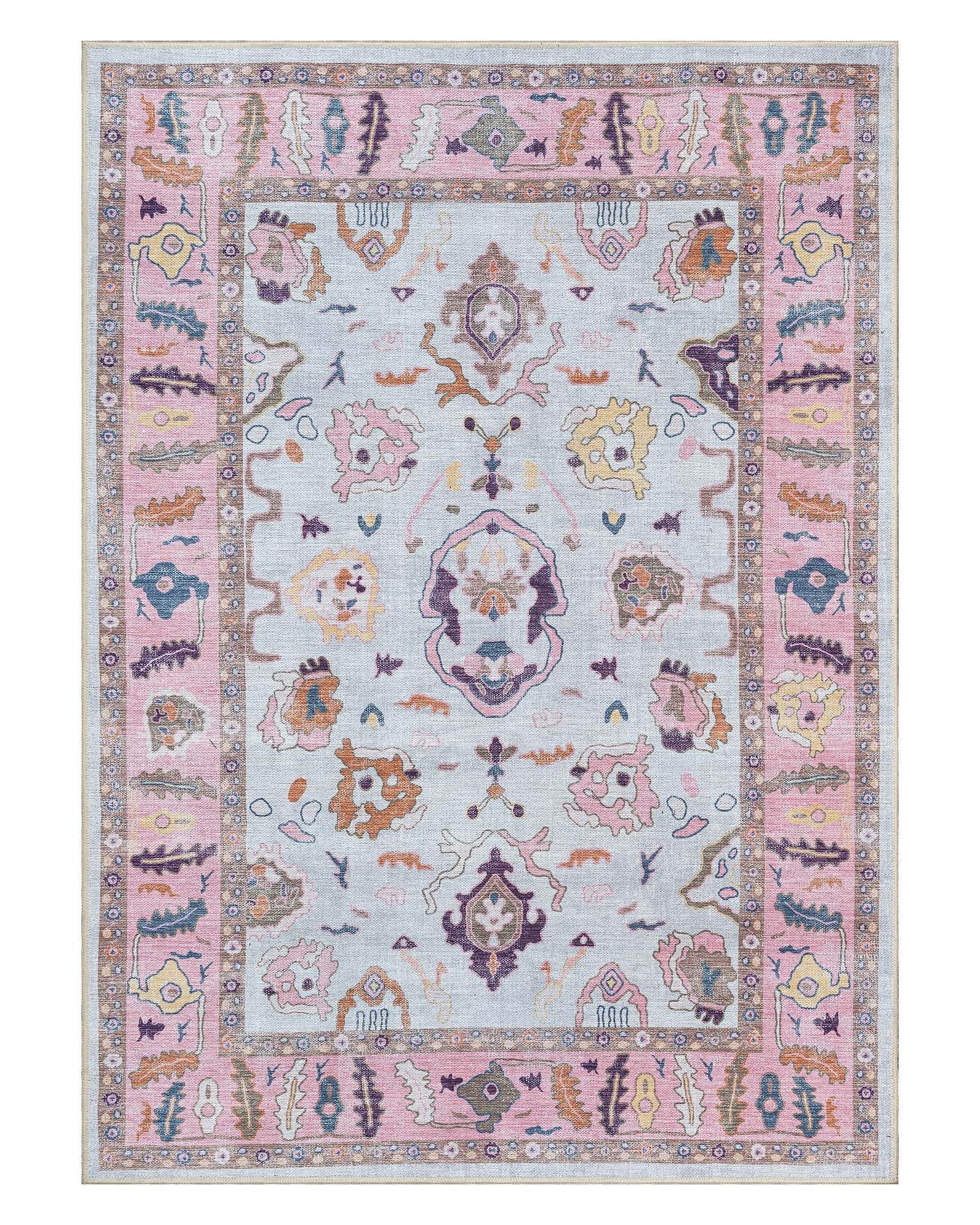
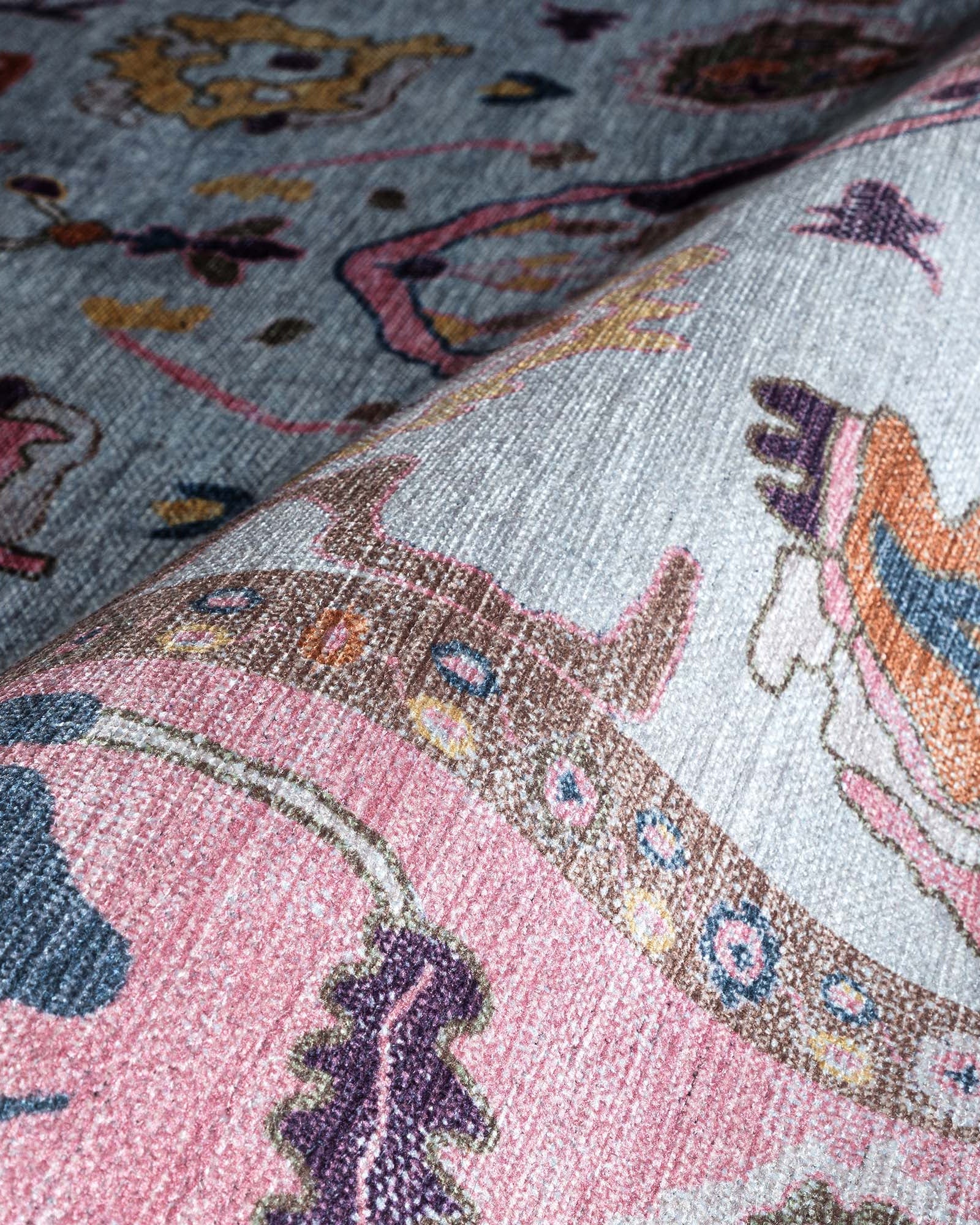
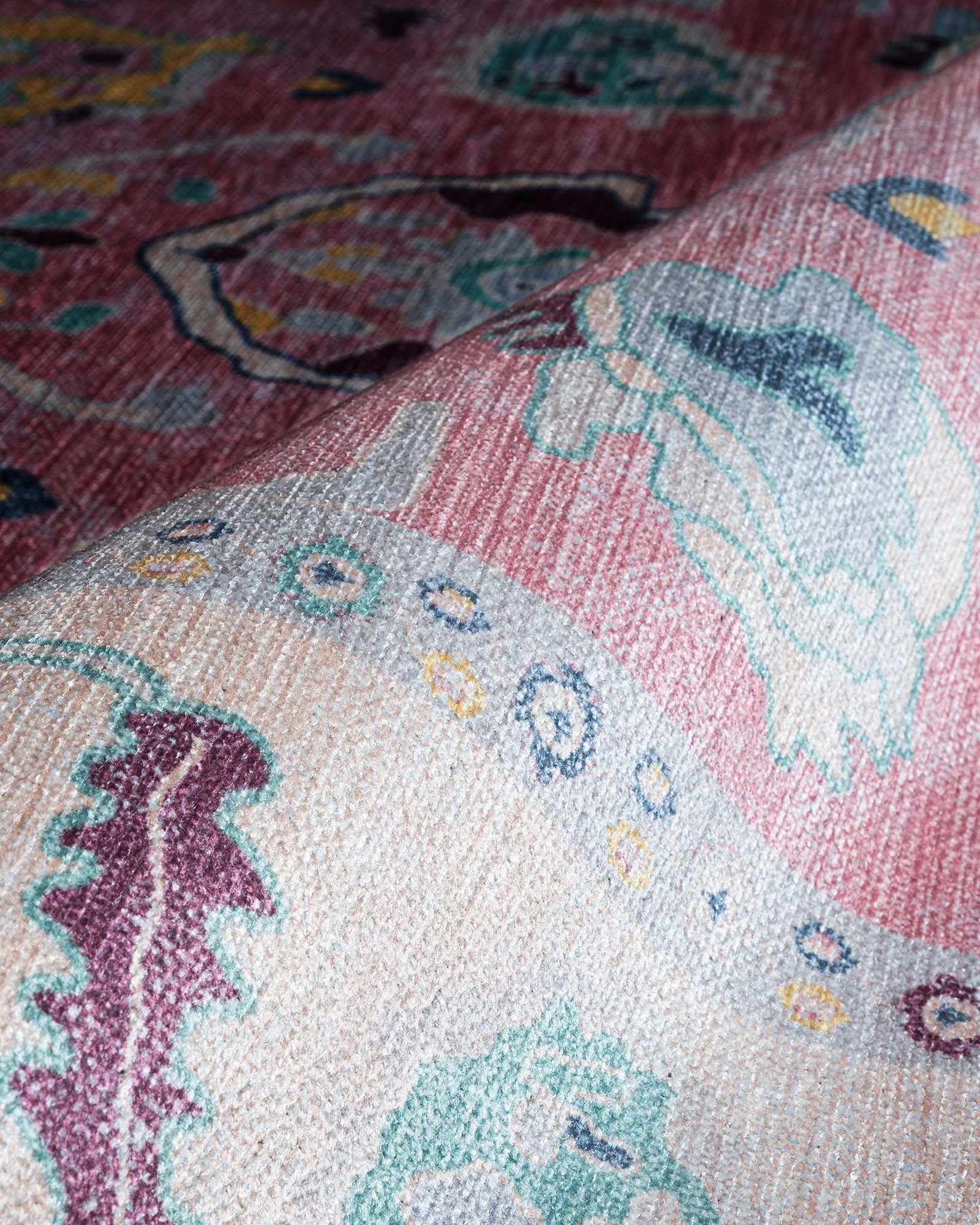
Natural dyes — madder root for red, indigo for blue, walnut husk for brown — oxidise and soften under light over decades. They do not go grey the way synthetic dyes tend to; they warm and mellow, moving from saturated to muted while keeping their underlying hue. A field that was once deep crimson becomes brick and rose. A navy ground drifts toward denim along the walkways where footfall wore the surface pigment away. This slow, uneven softening is one of the clearest signs a rug's colour was never touched after weaving.
Wool
Hand-spun highland wool carries natural lanolin, and decades of foot traffic polish that lanolin into a soft sheen rather than wearing the fibre out. The pile lowers gradually in high-traffic areas while staying fuller at the edges and under furniture, creating a visible map of how the rug was actually used. This burnished quality is something no chemical treatment reproduces — it comes only from time and use.
Structure
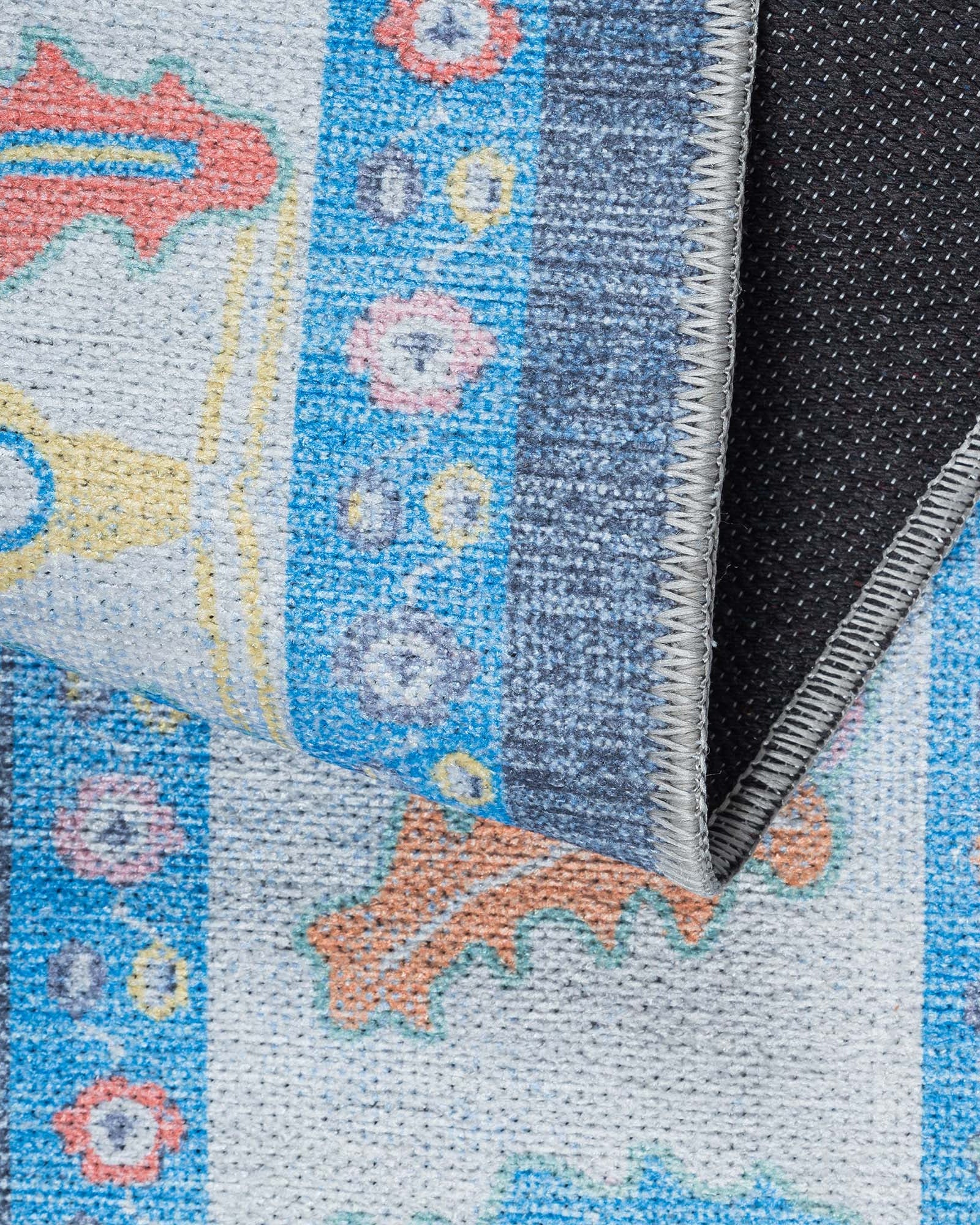
The foundation relaxes with age. A rug that once lay stiff off the loom becomes more pliable, drapes more naturally over furniture edges, and develops the flexibility that makes an old rug feel different underfoot from a new one. Selvages soften, corners round slightly, and the whole textile settles into the shape of a rug that has actually lived somewhere.
Where These Rugs Come From
The pieces in this collection are hand-knotted rugs from the weaving traditions of Anatolia and Persia, gathered from households and dealers where they had already lived a full life before reaching us. Origin, estimated decade and construction are identified individually for each piece and stated on the product page — we do not guess or round up to sound more impressive than the evidence supports.
Condition Comes First Here
Because nothing has been corrected, condition varies more in this collection than in a curated, re-worked one. Some pieces show only light, even wear and are ready for daily use in any room. Others carry more pronounced fading, old repairs, or thinner areas that suit a lower-traffic room, a layered arrangement, or a wall. Every product page states plainly which kind of piece you are looking at — we would rather tell you a rug has real limitations than let the photographs do the talking.
What we do not do is edit the images to smooth over what is there. A repaired corner, a softened fringe, a patch of deeper colour where a piece of furniture stood for years — these are photographed and described, because they are the whole reason the rug looks the way it does.
Living With a Naturally Aged Rug
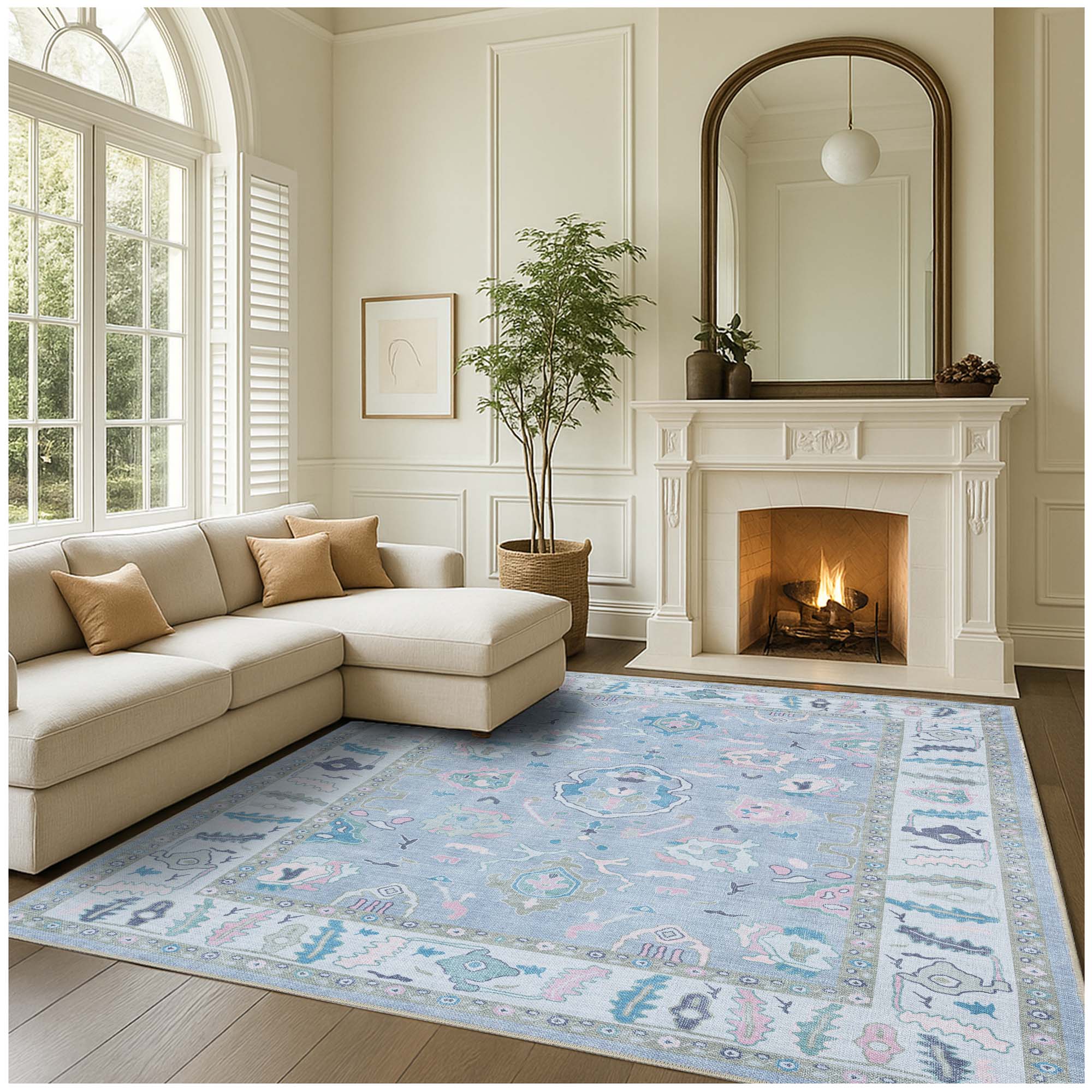
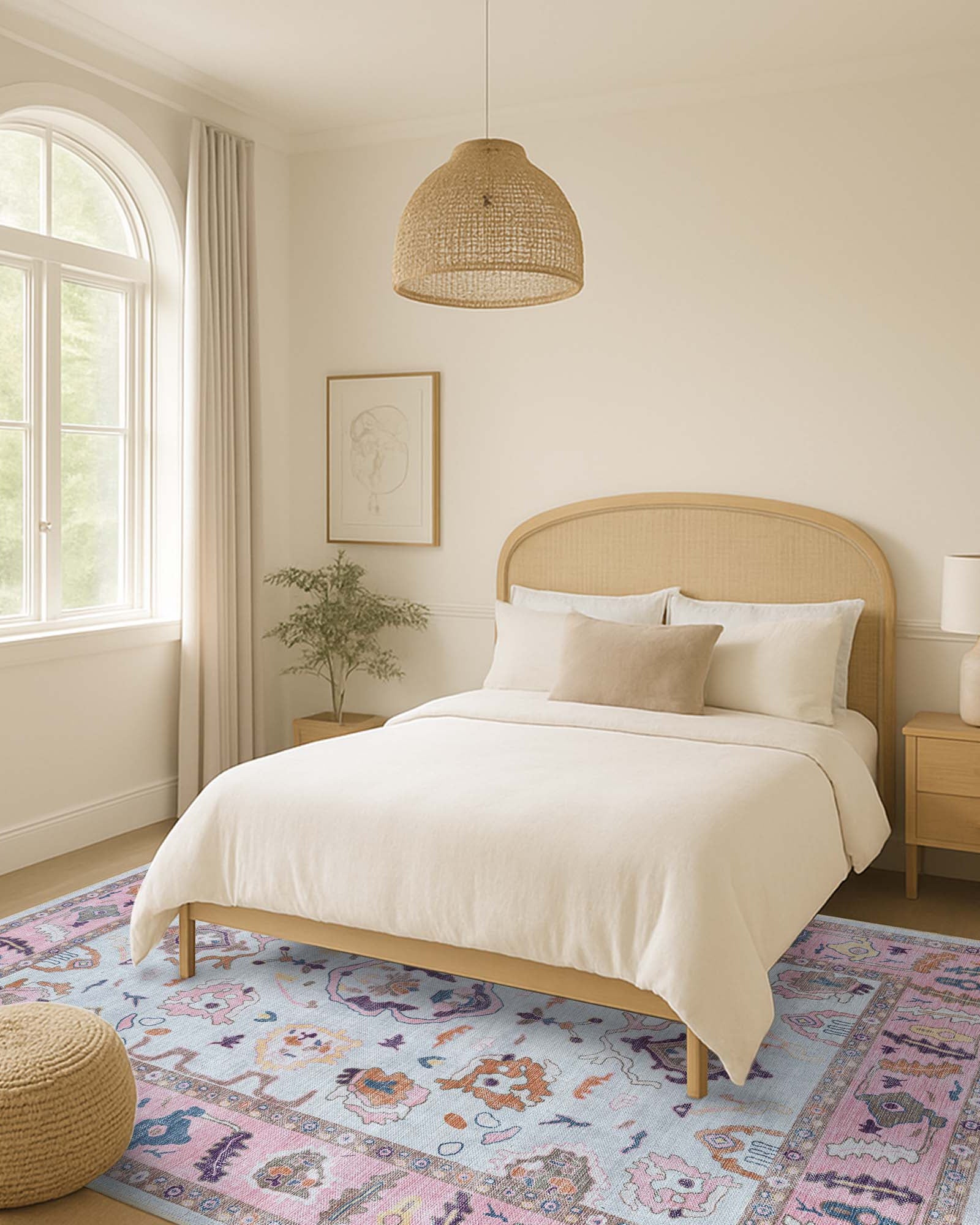
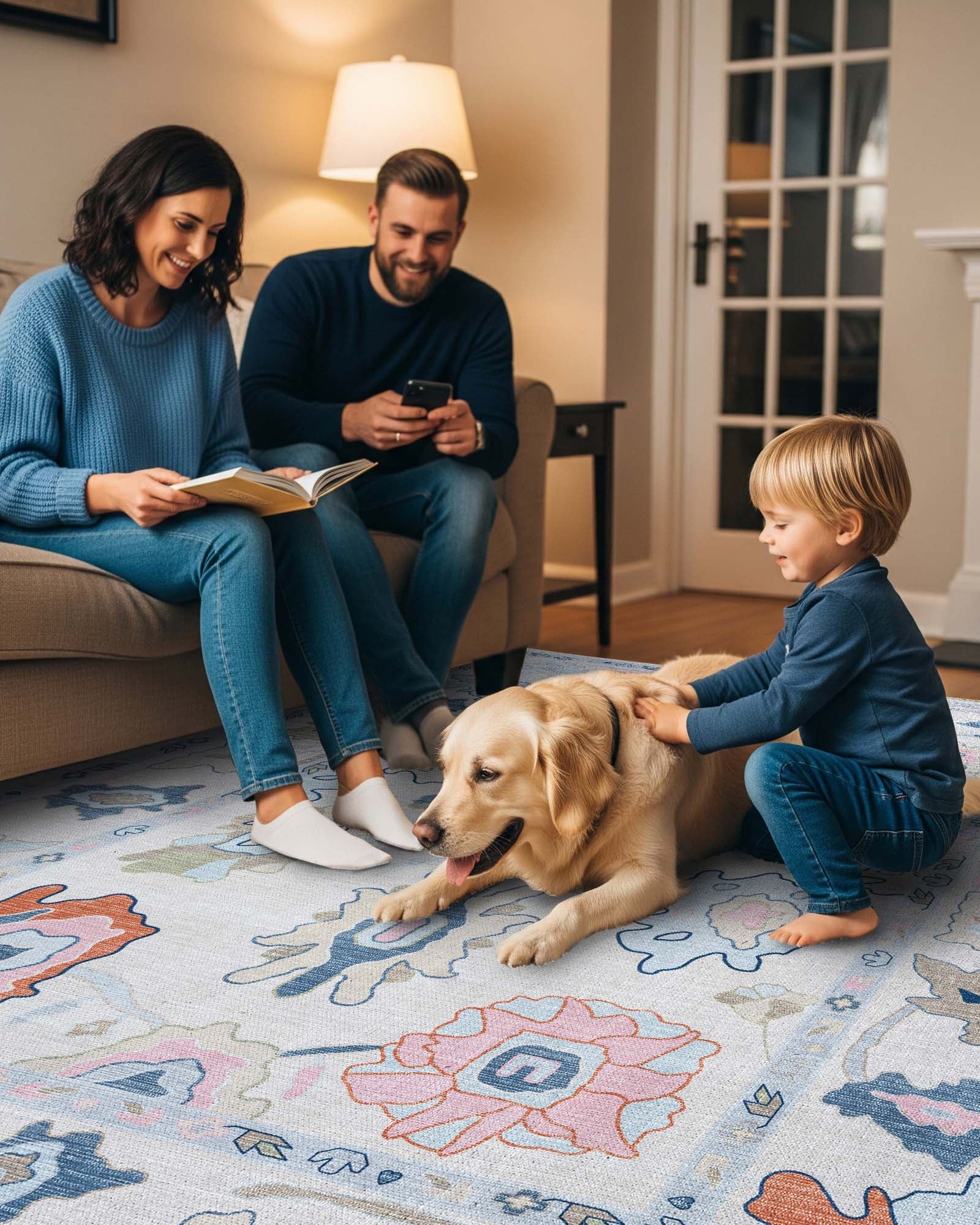
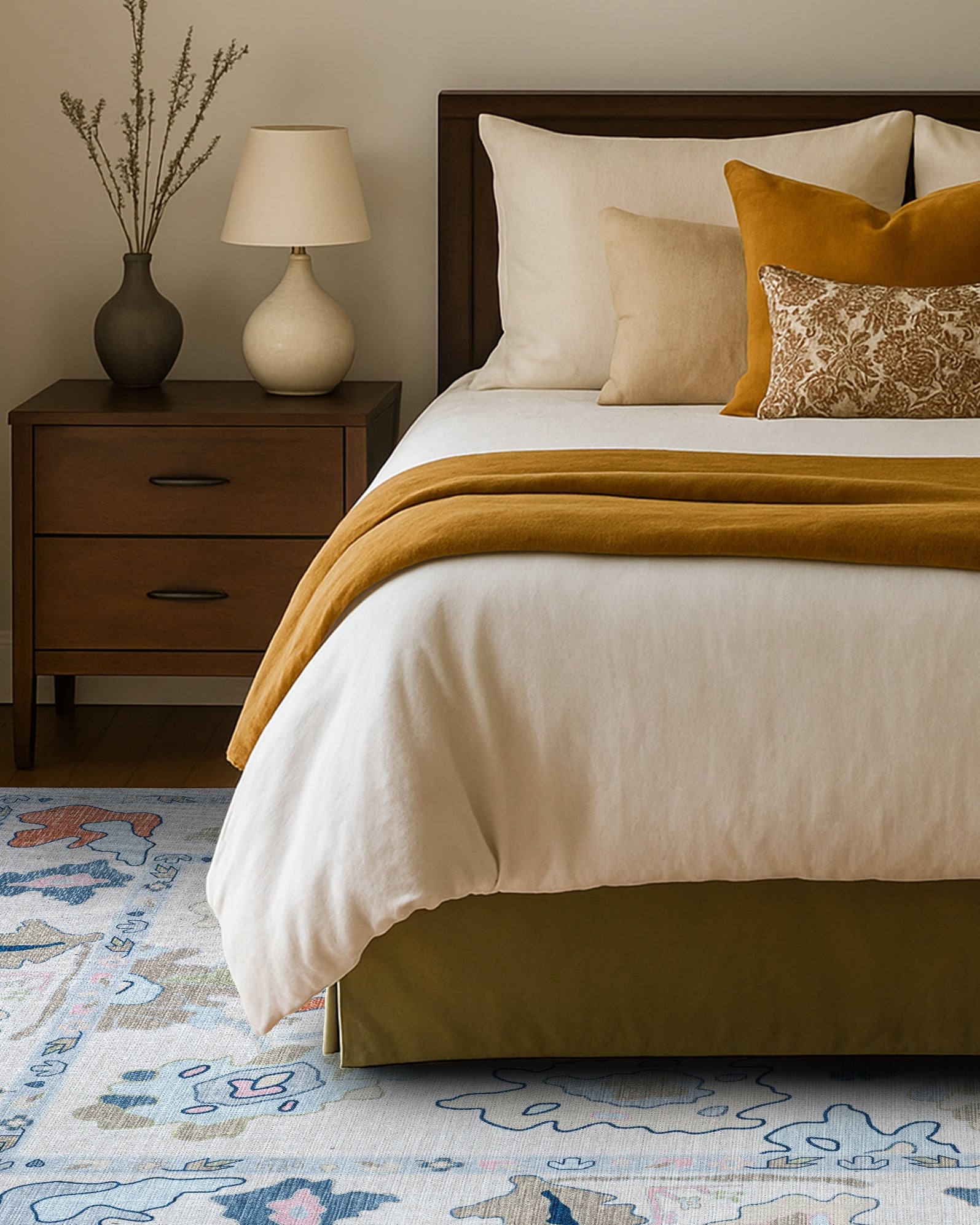
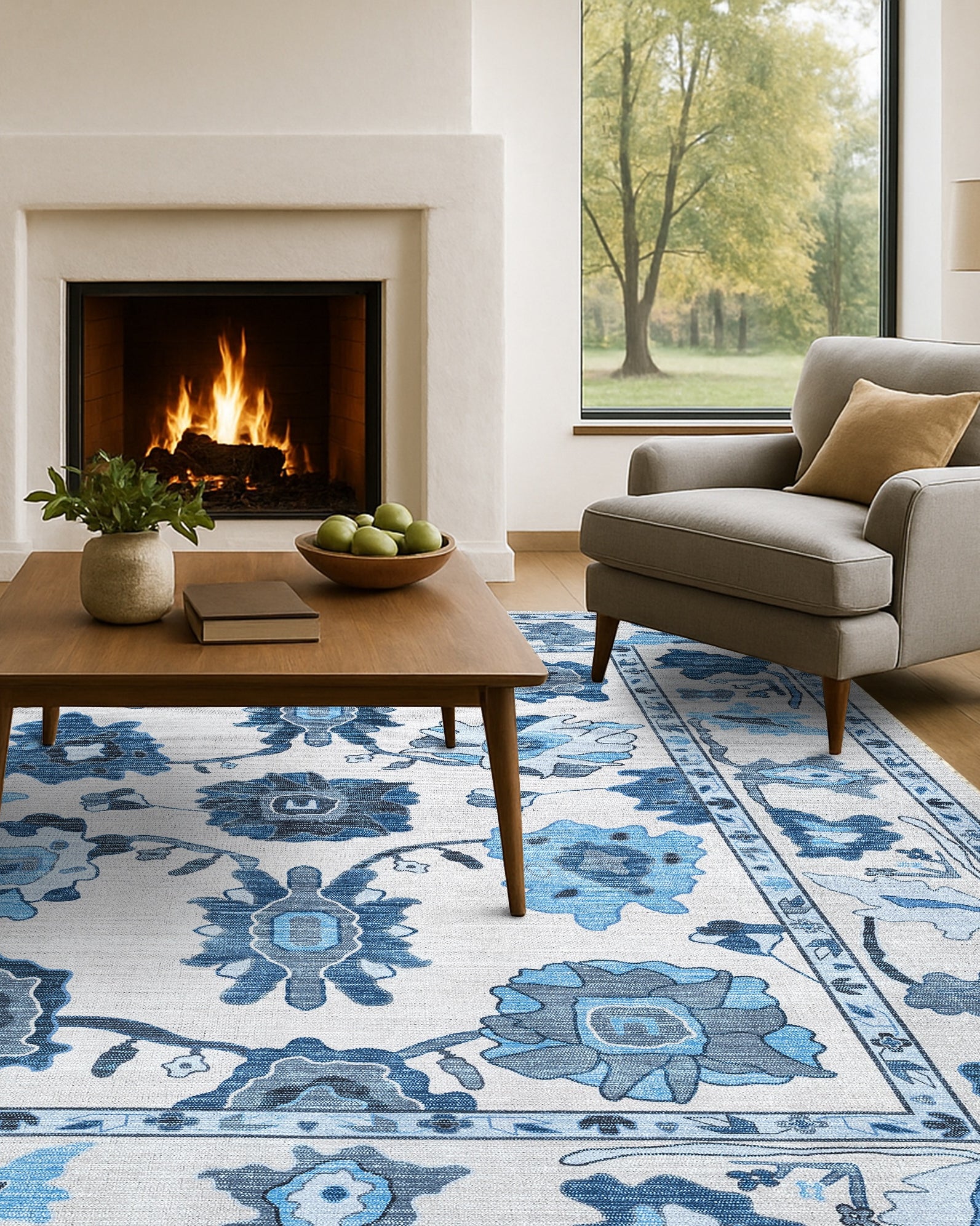
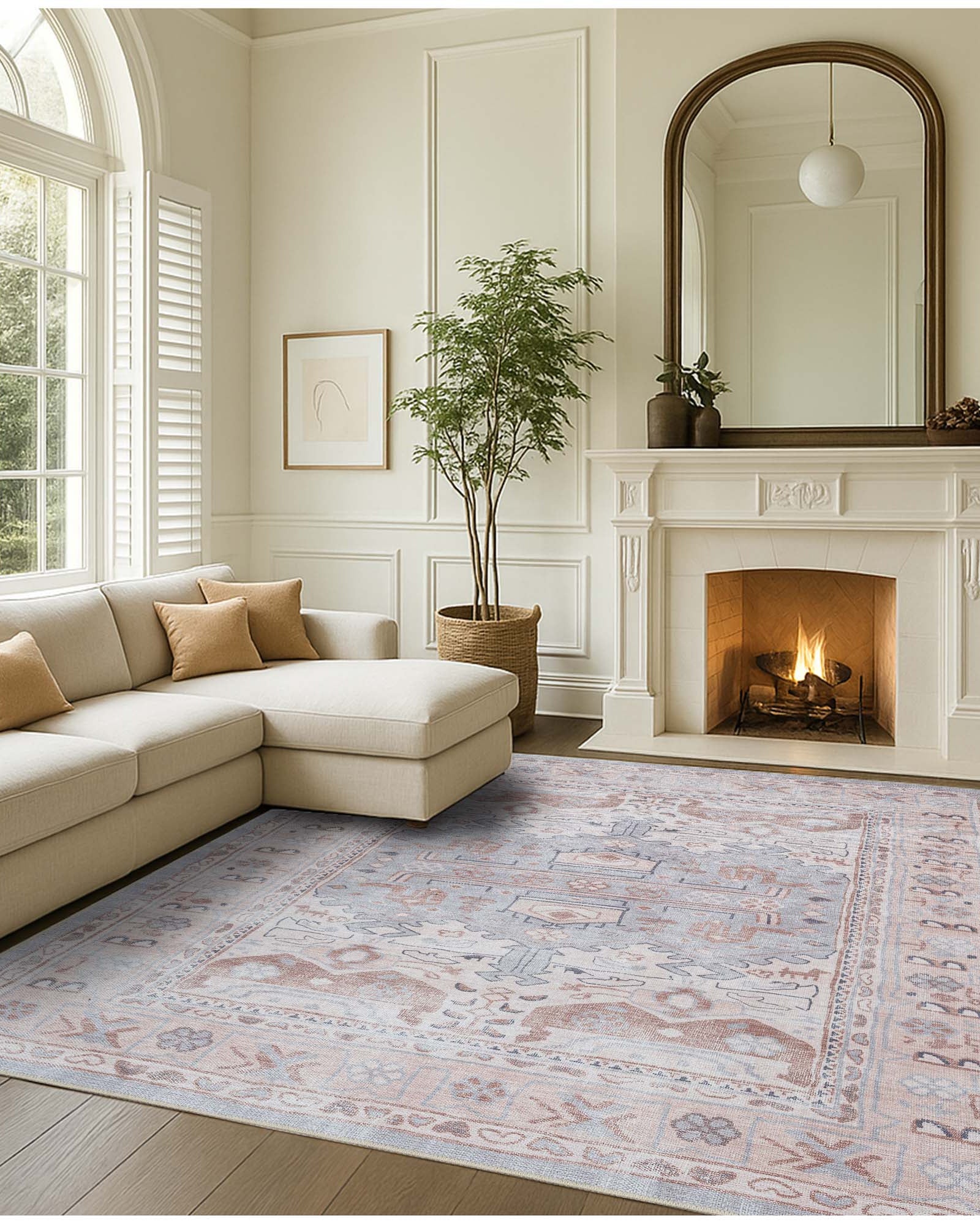
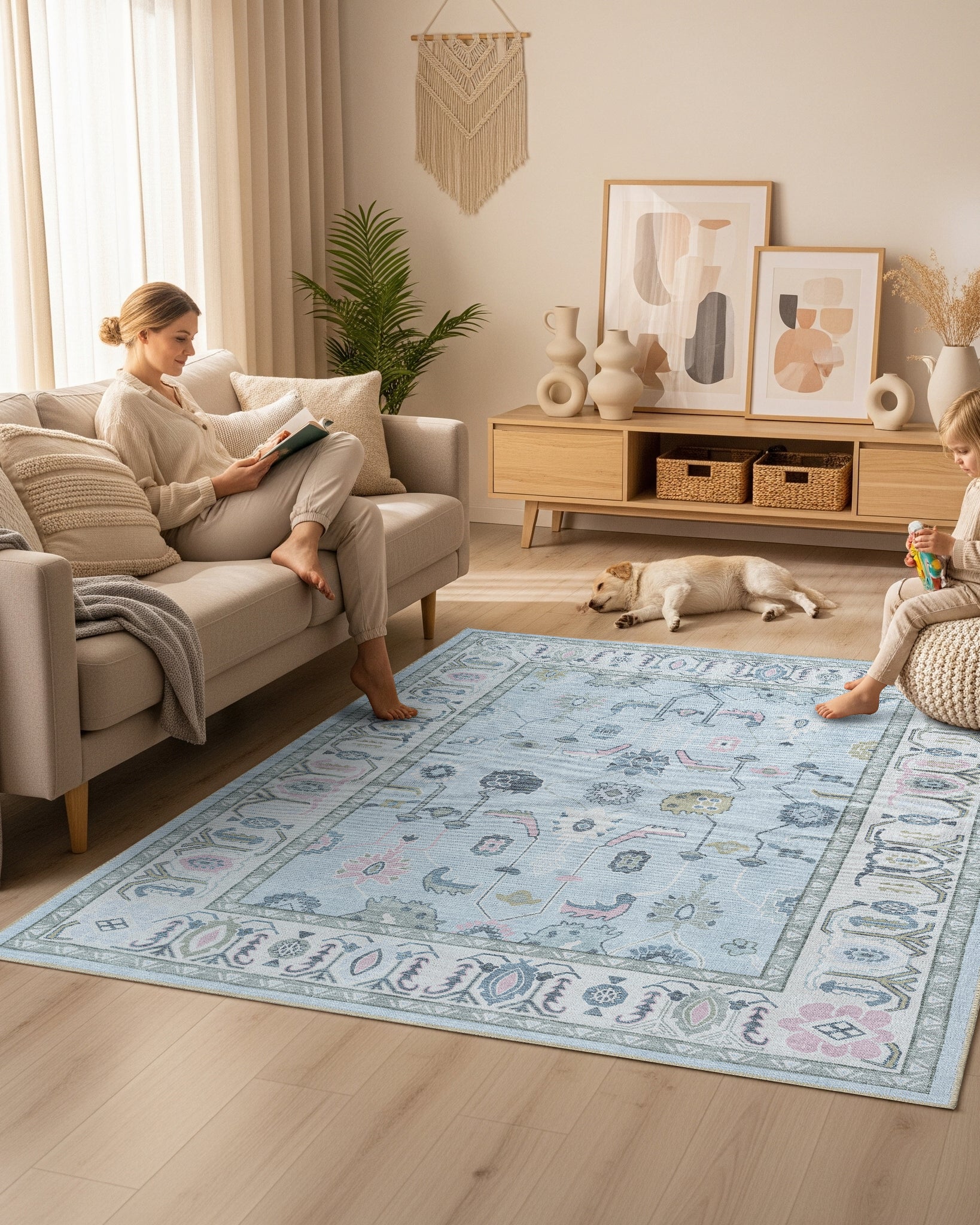
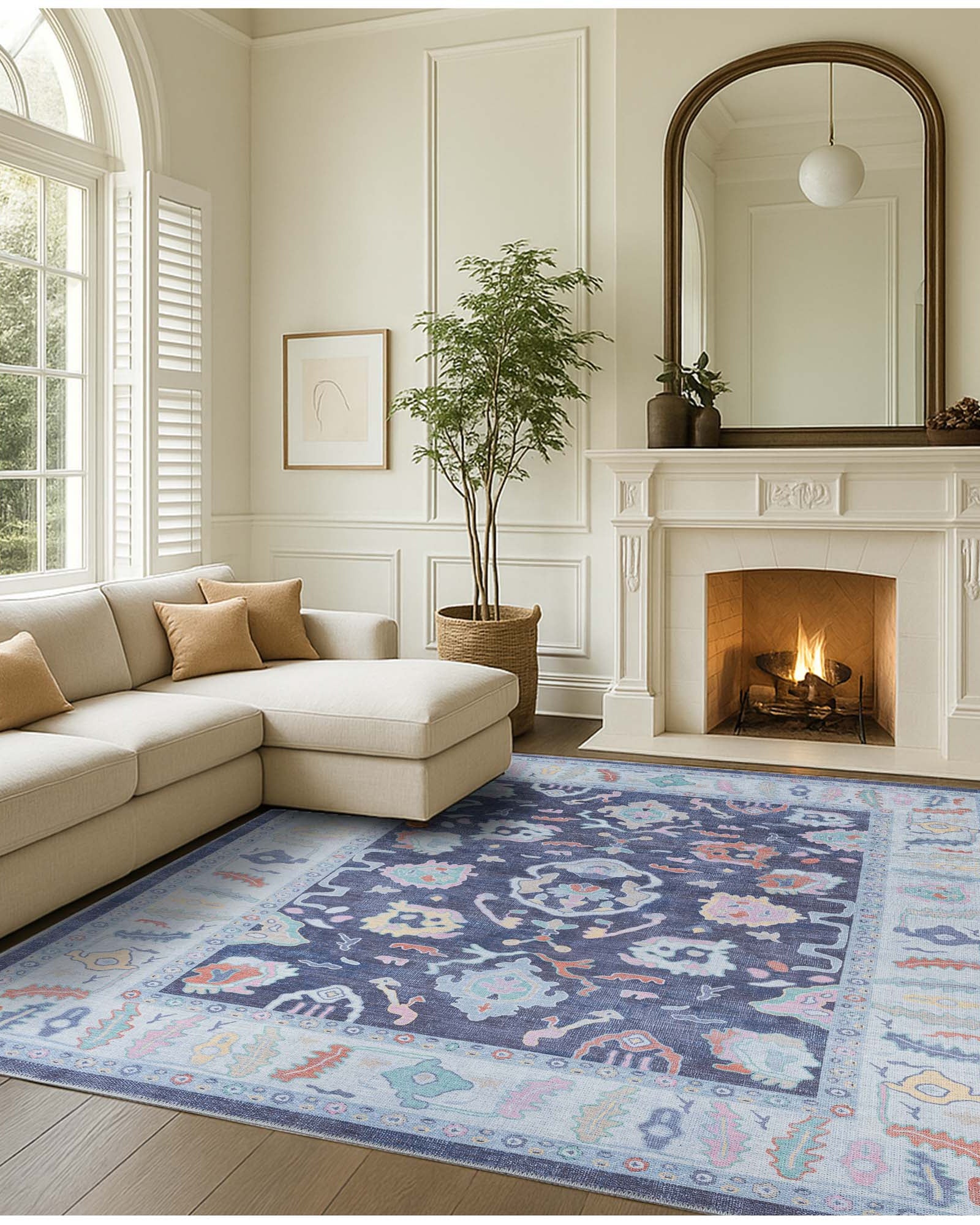
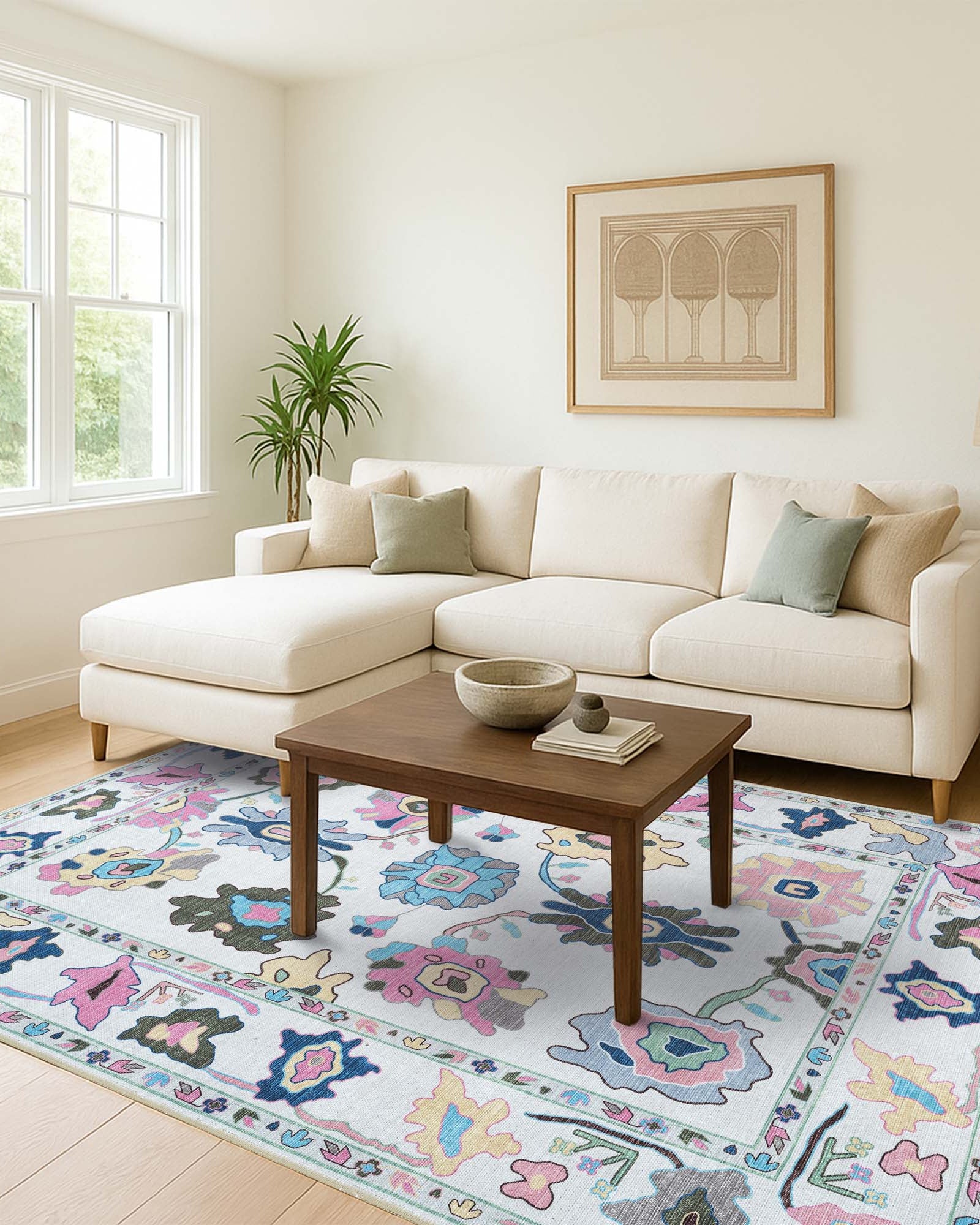
These pieces work best where their character can be seen rather than fought. A muted, sun-softened field pairs naturally with worn leather, aged brass and timber that already carries some history of its own. In a room full of new, uniform surfaces, a naturally aged rug reads as the one object that has actually lived — which is usually the point of choosing one.
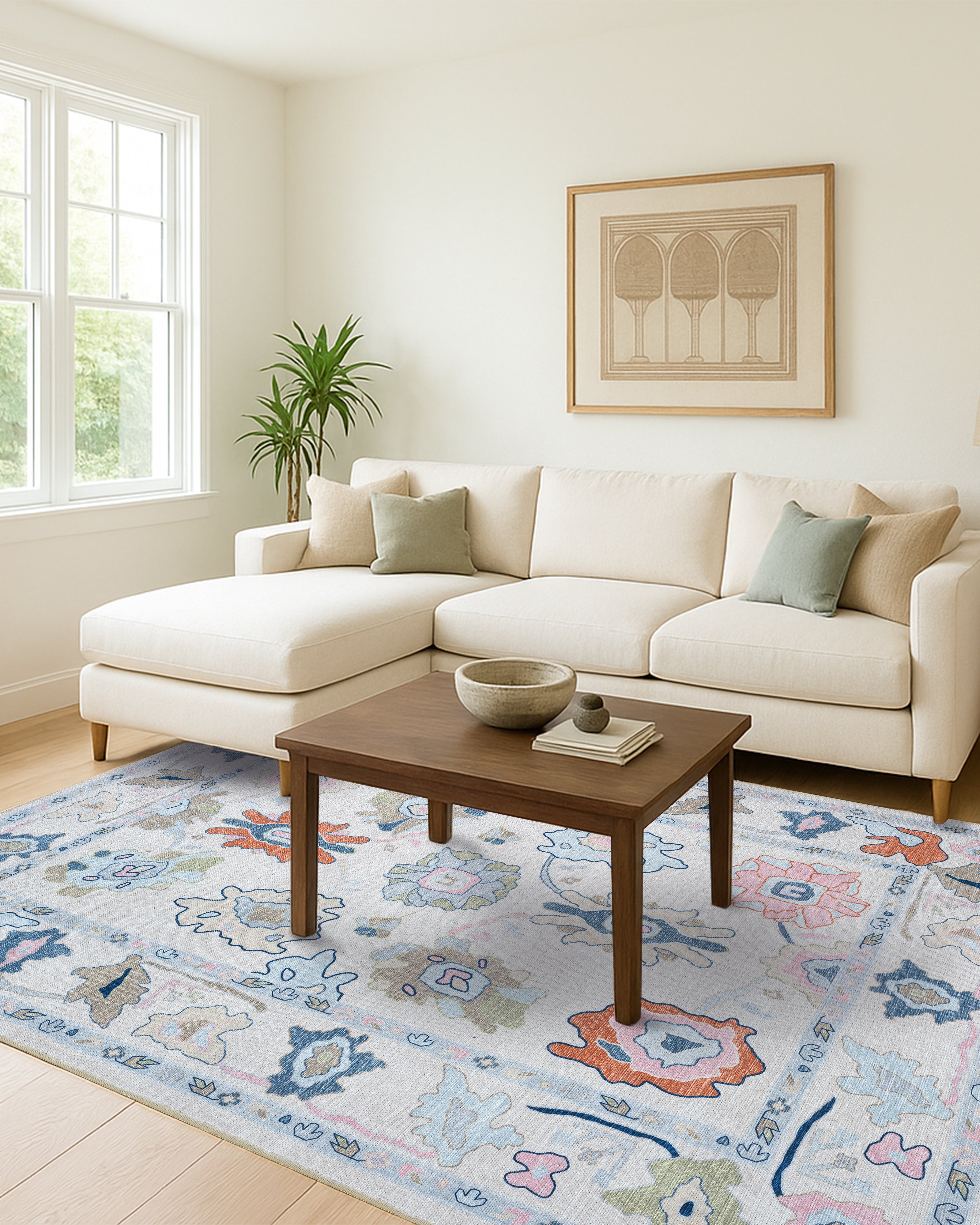
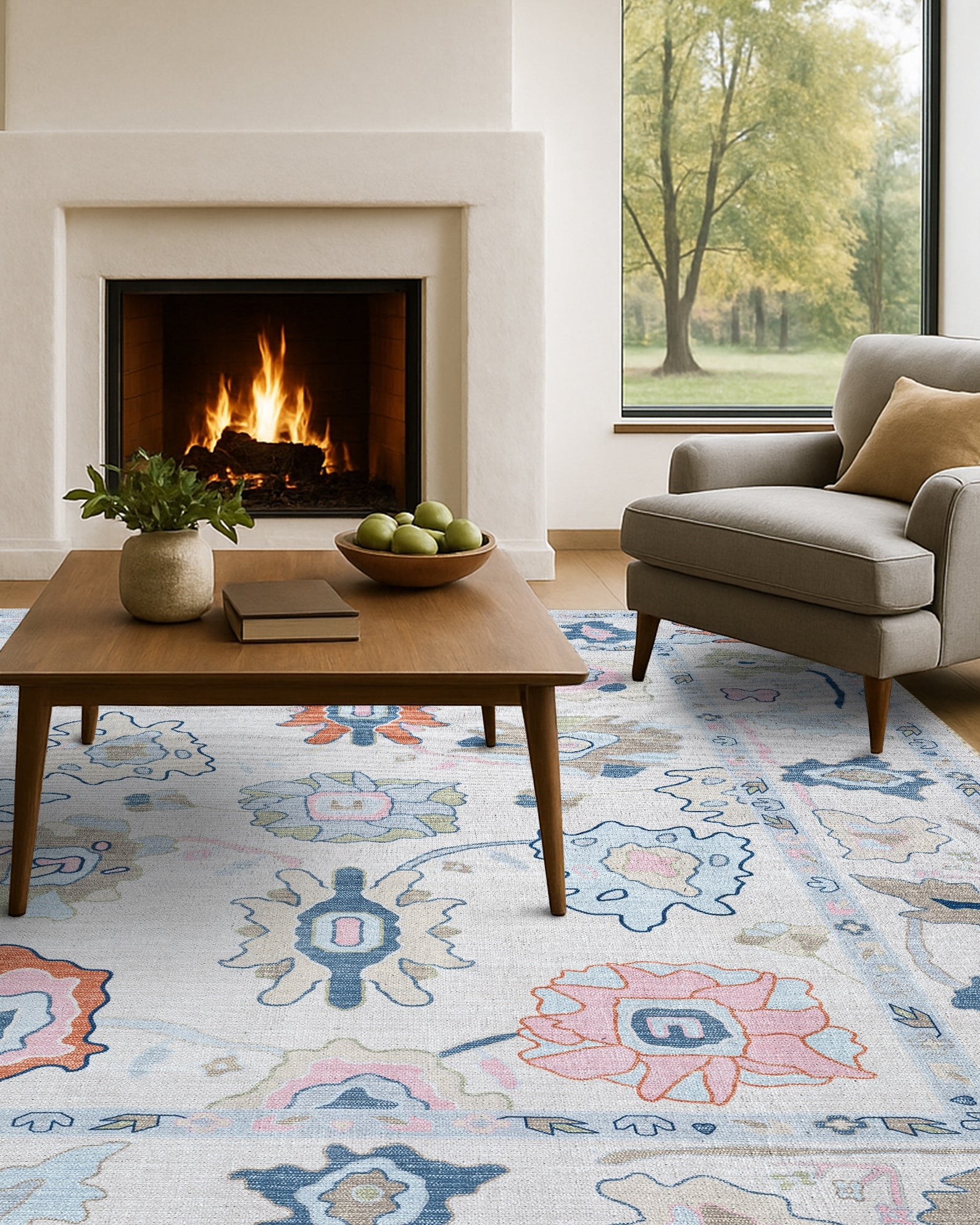
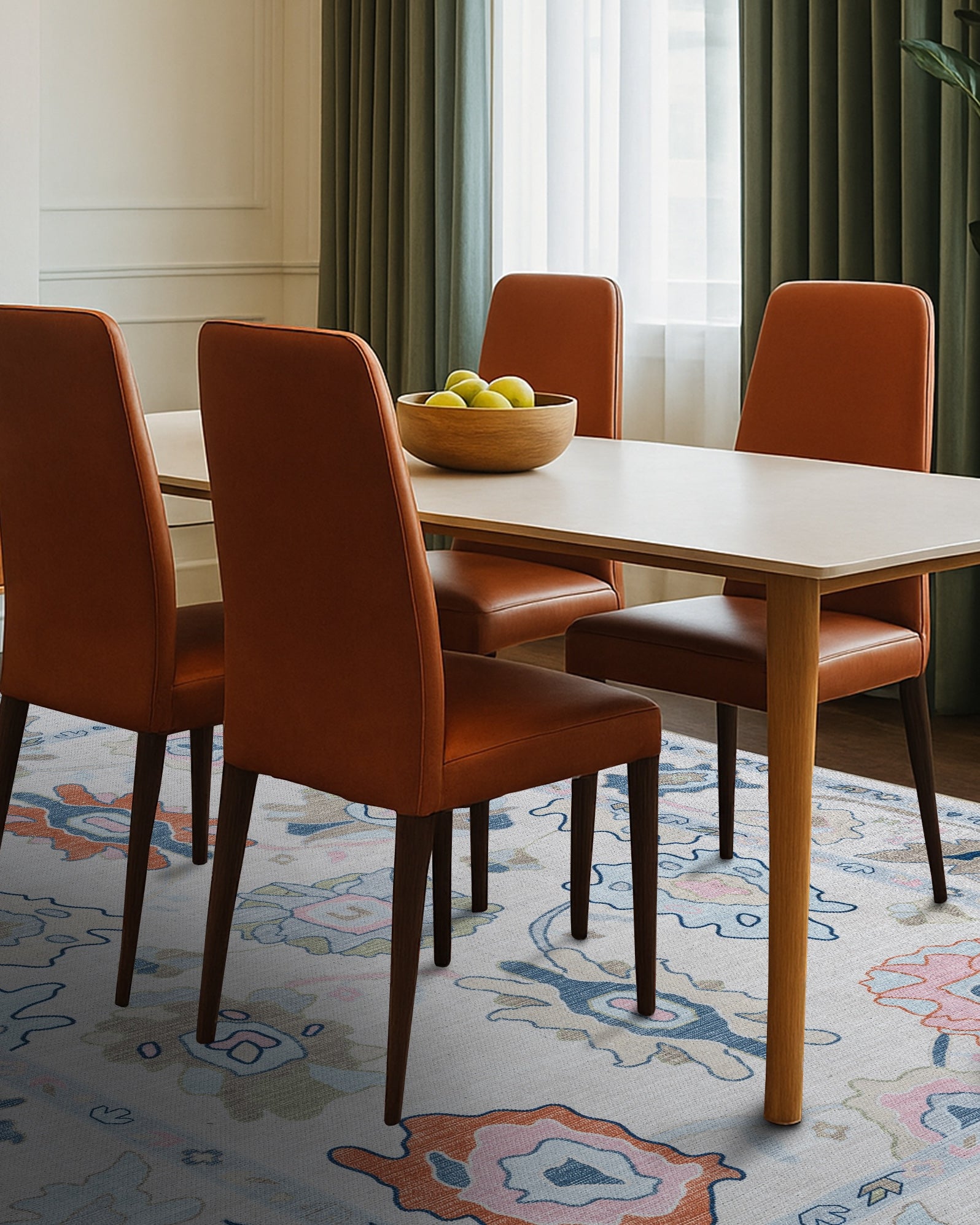
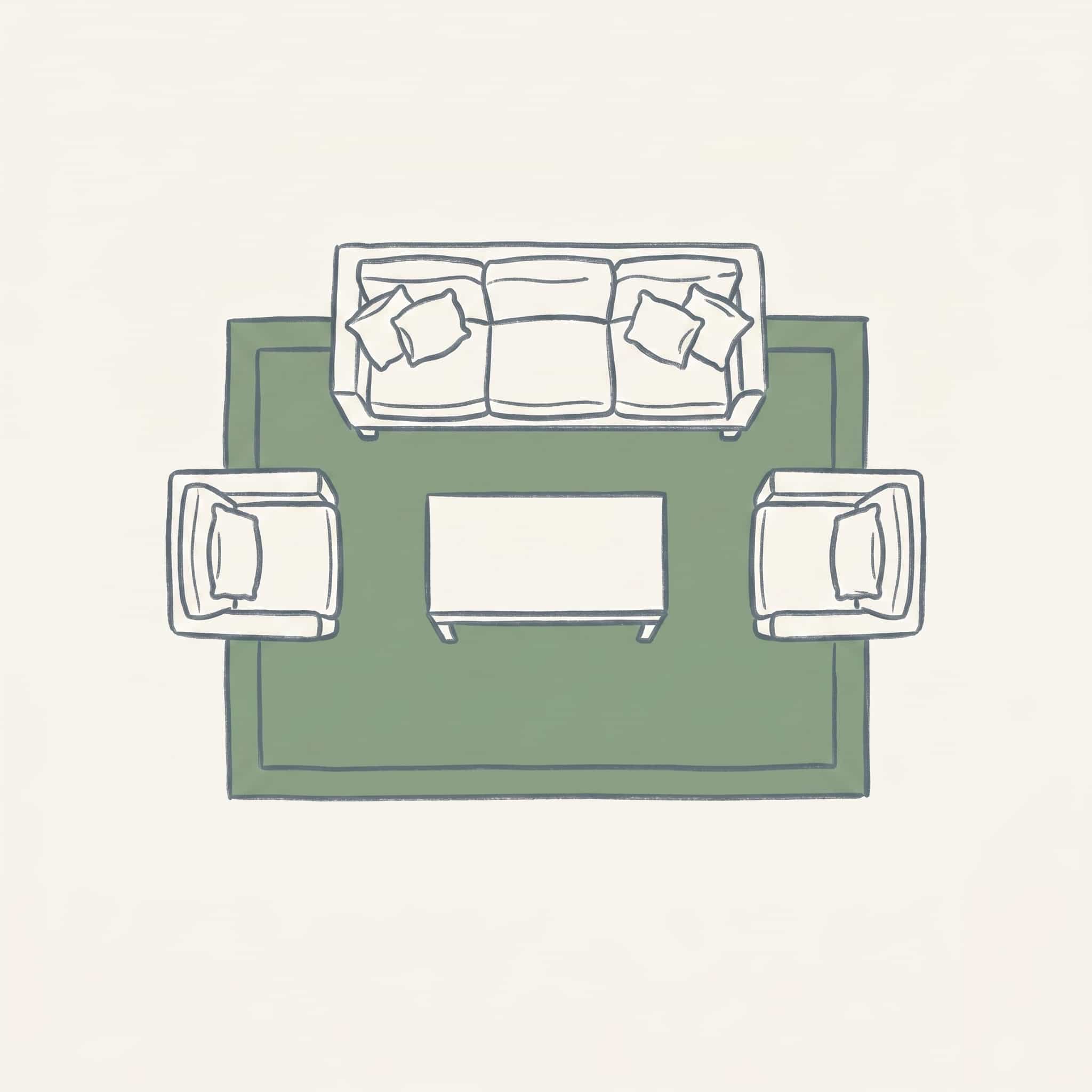
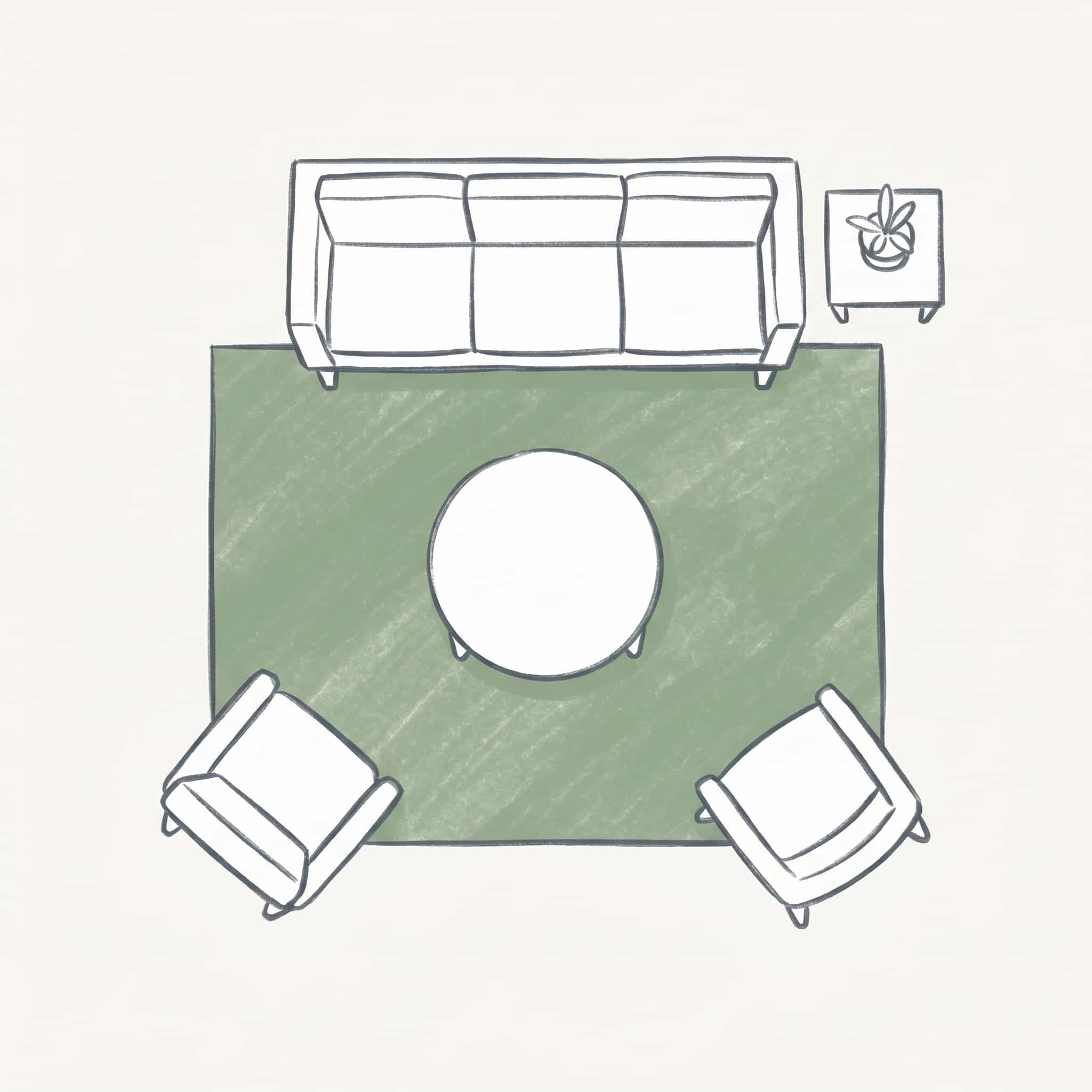
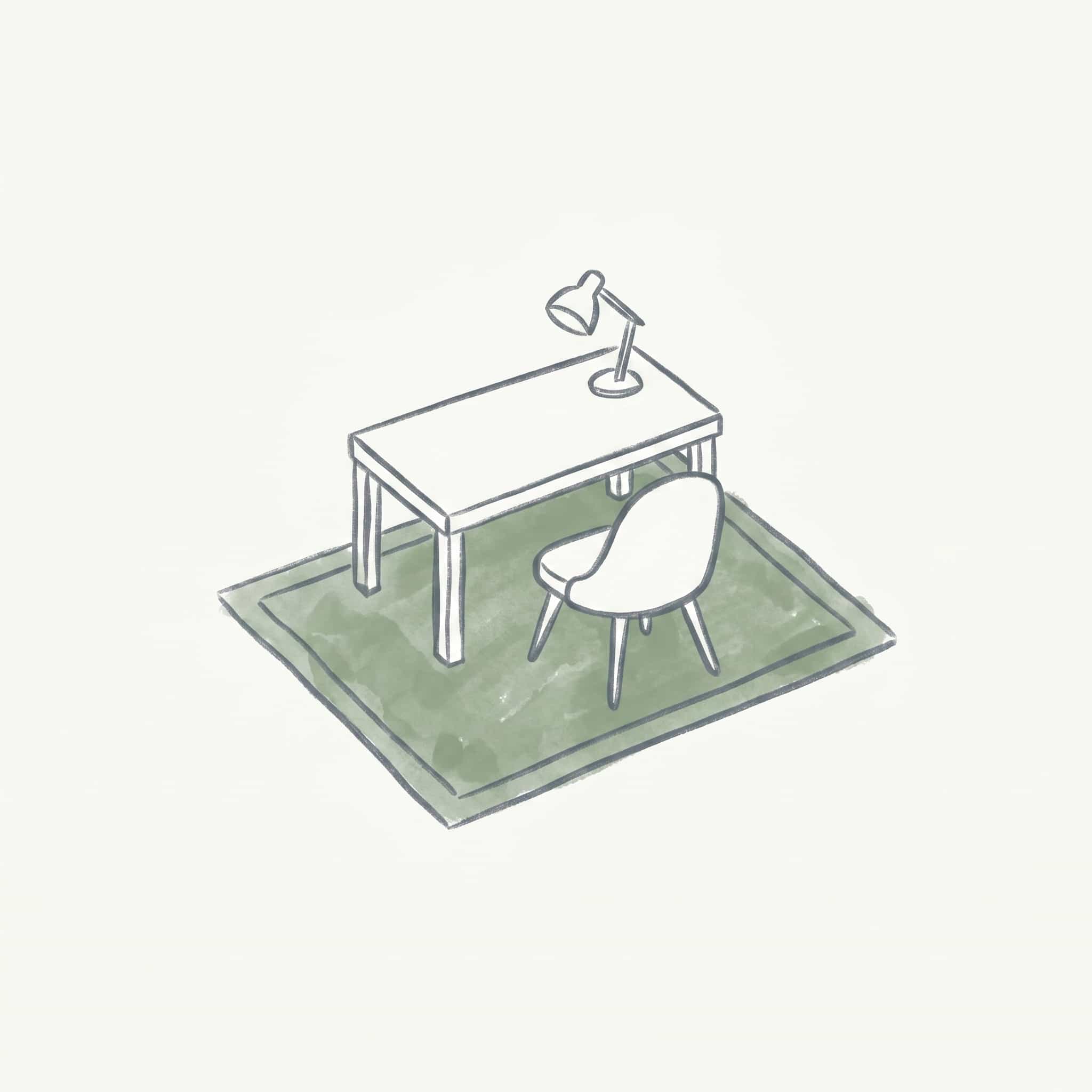
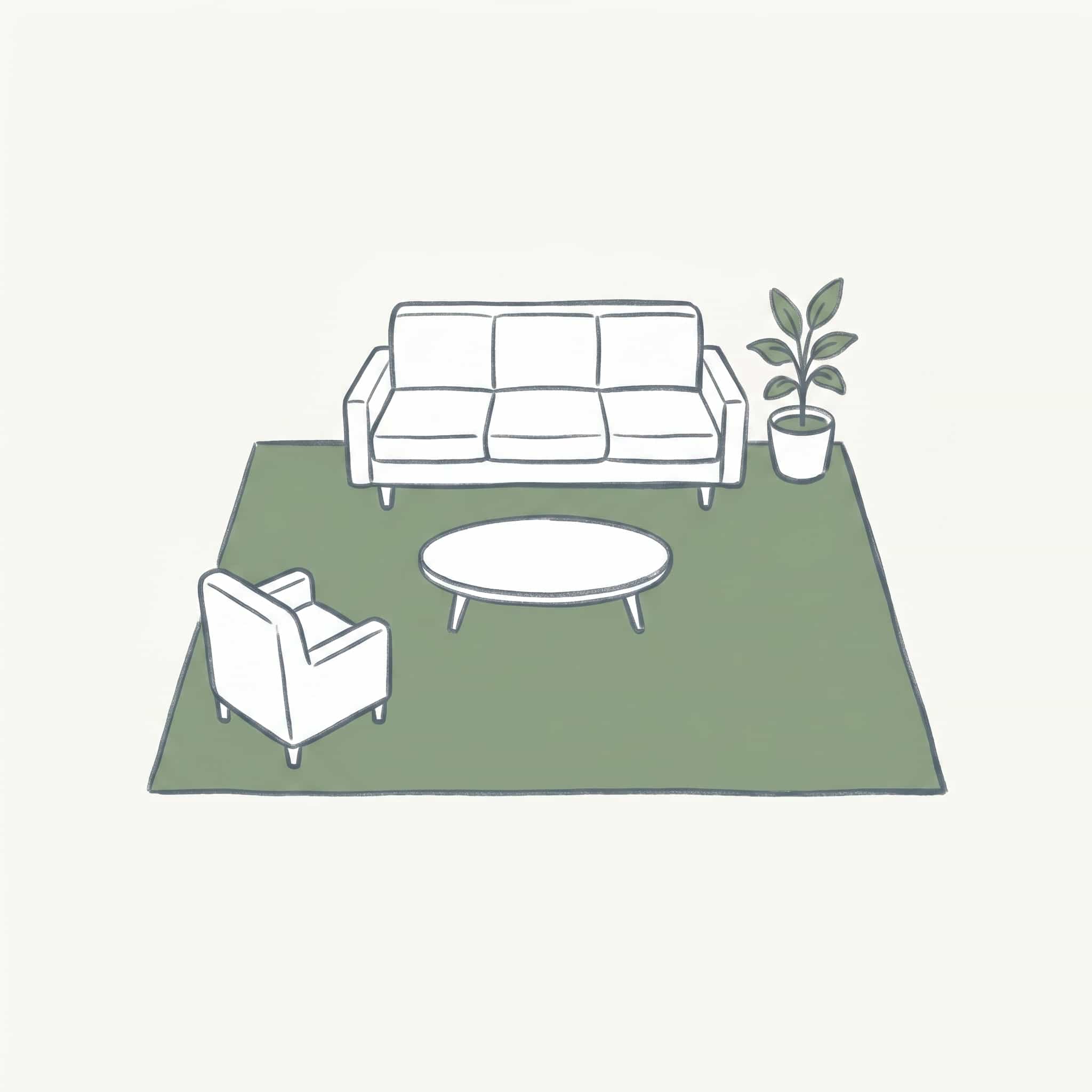
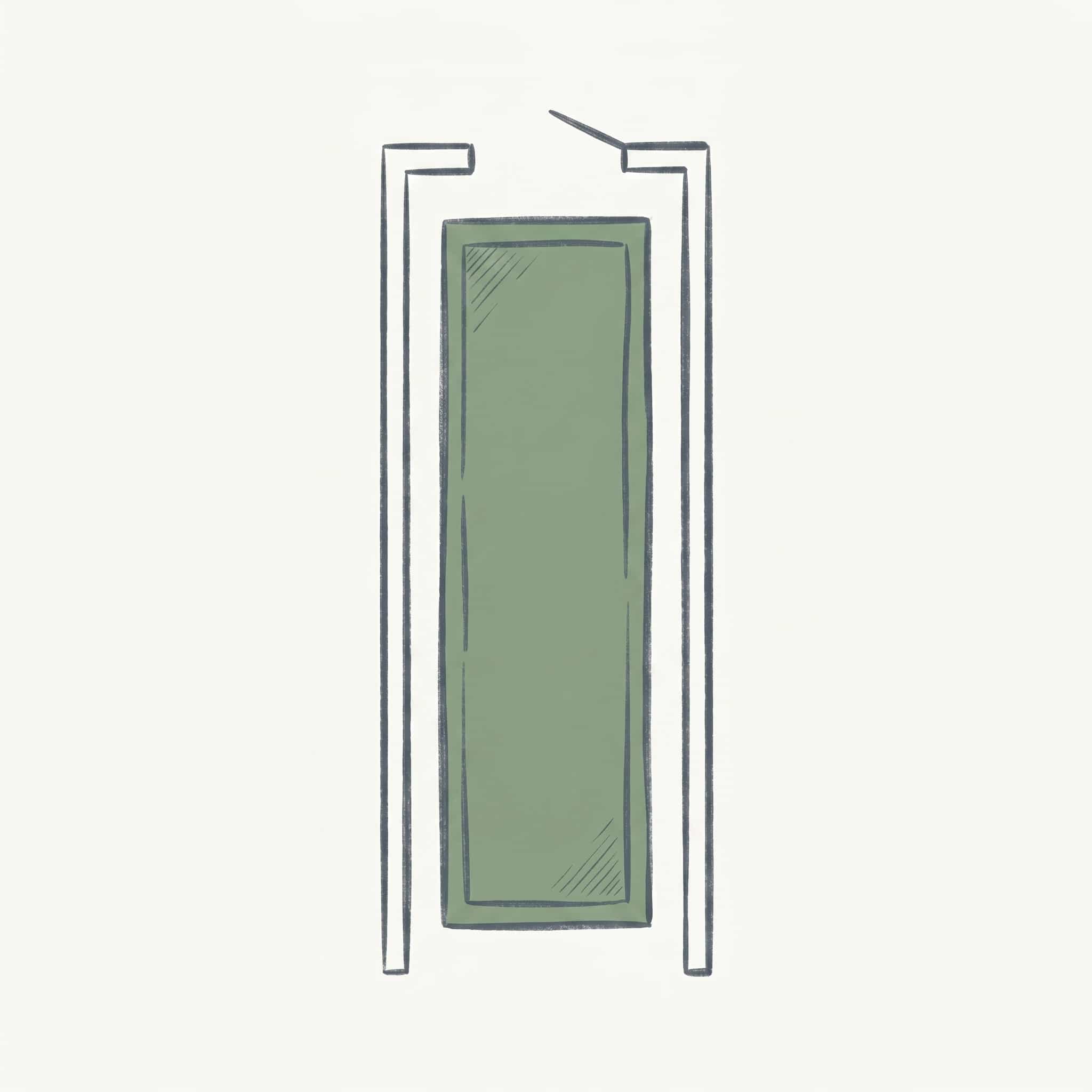
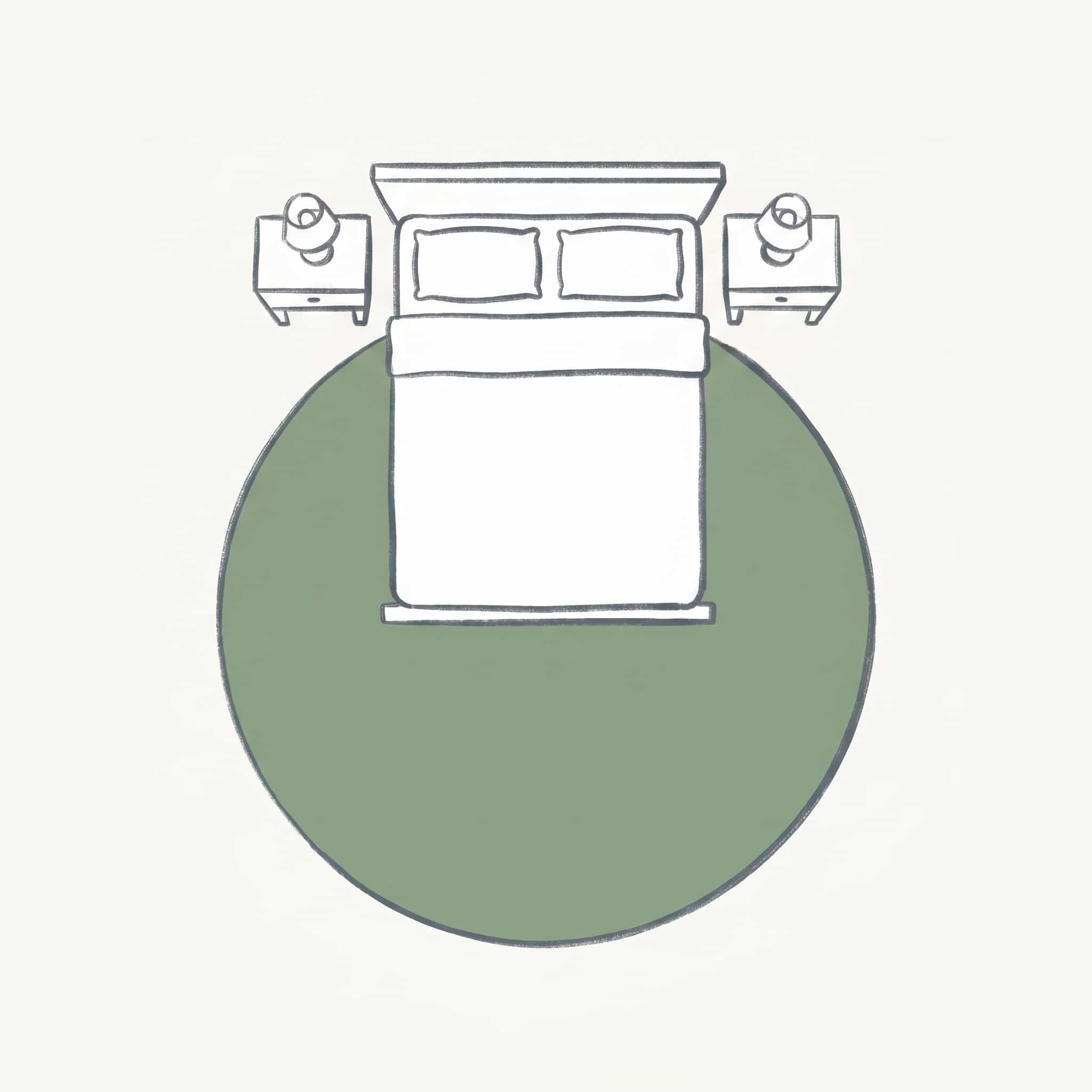
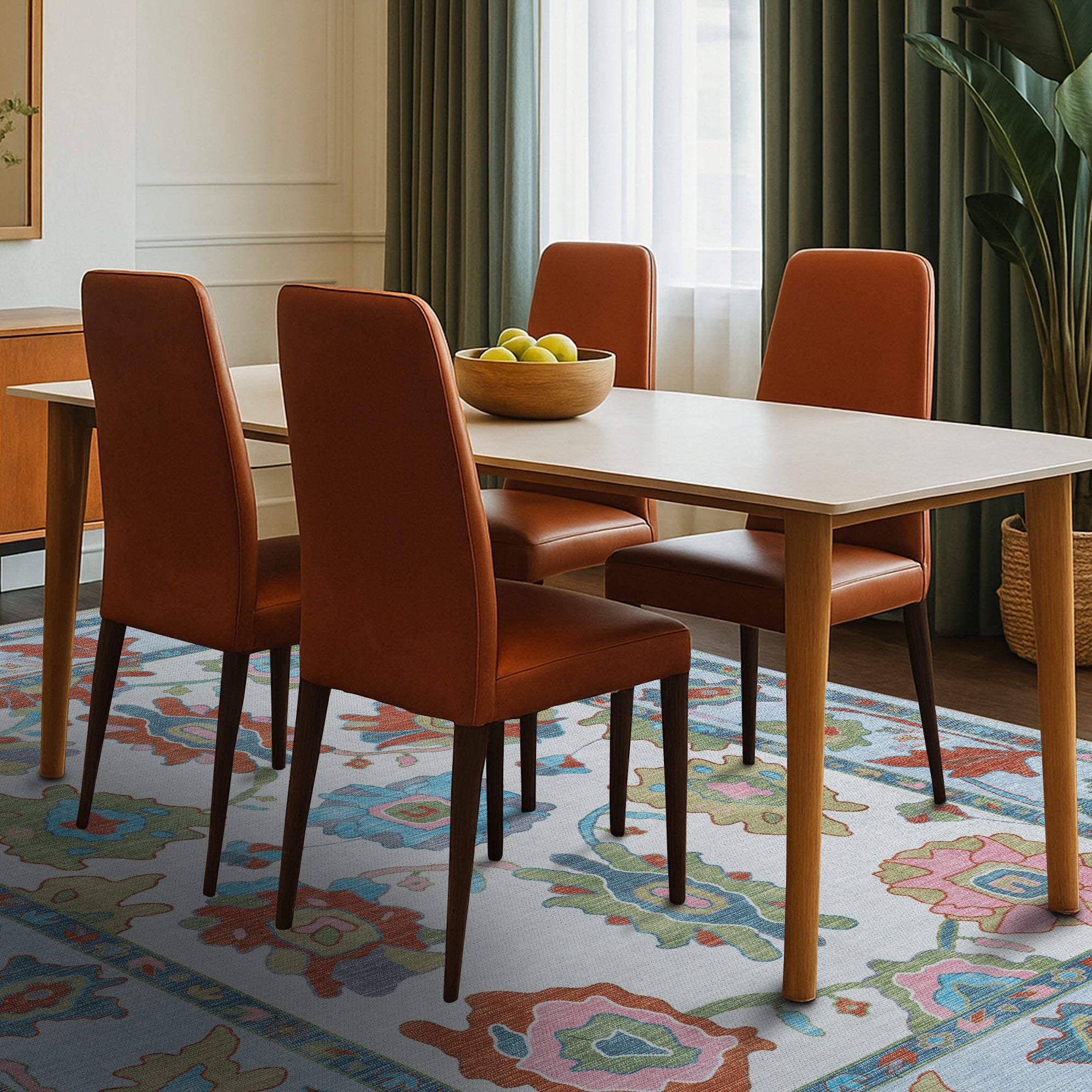
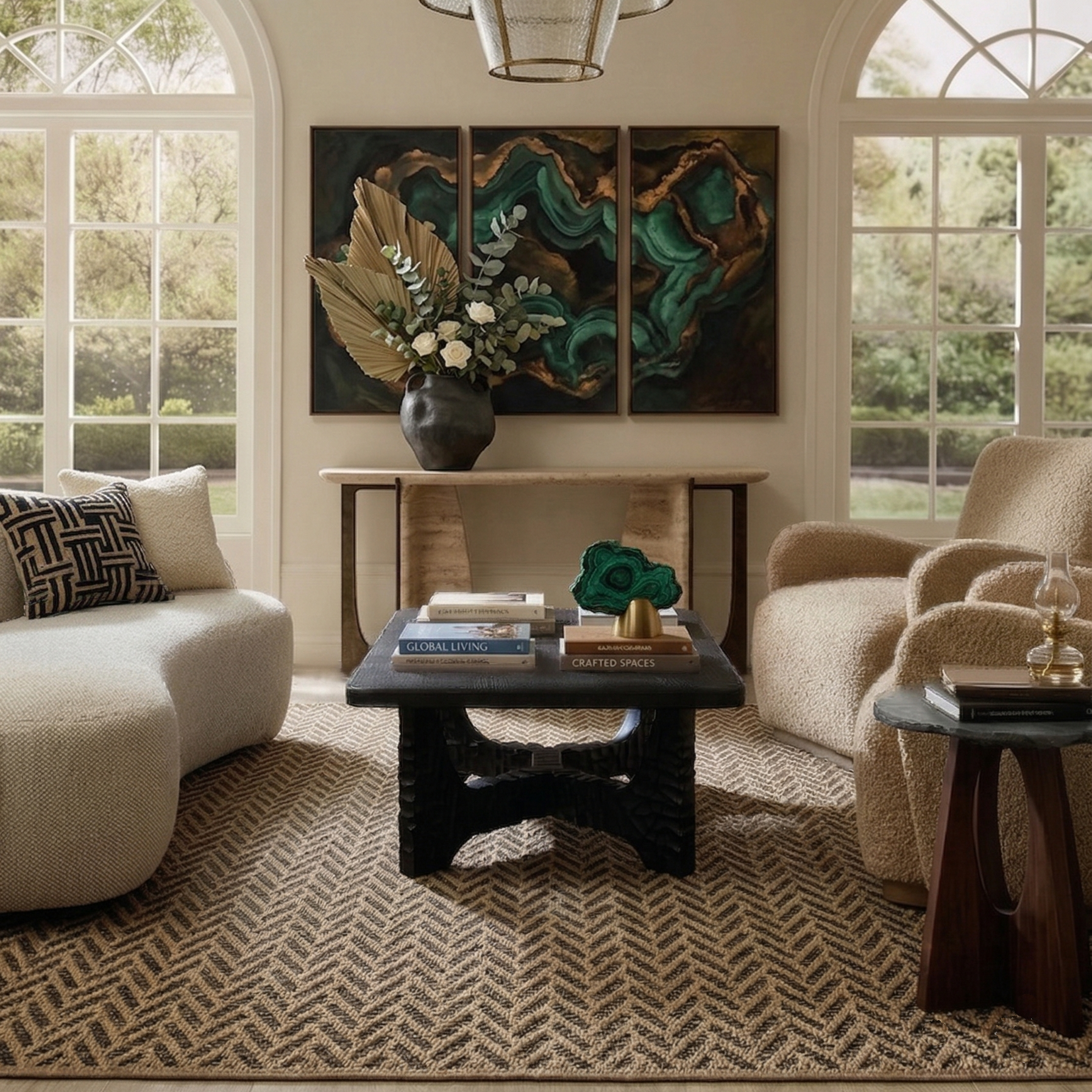
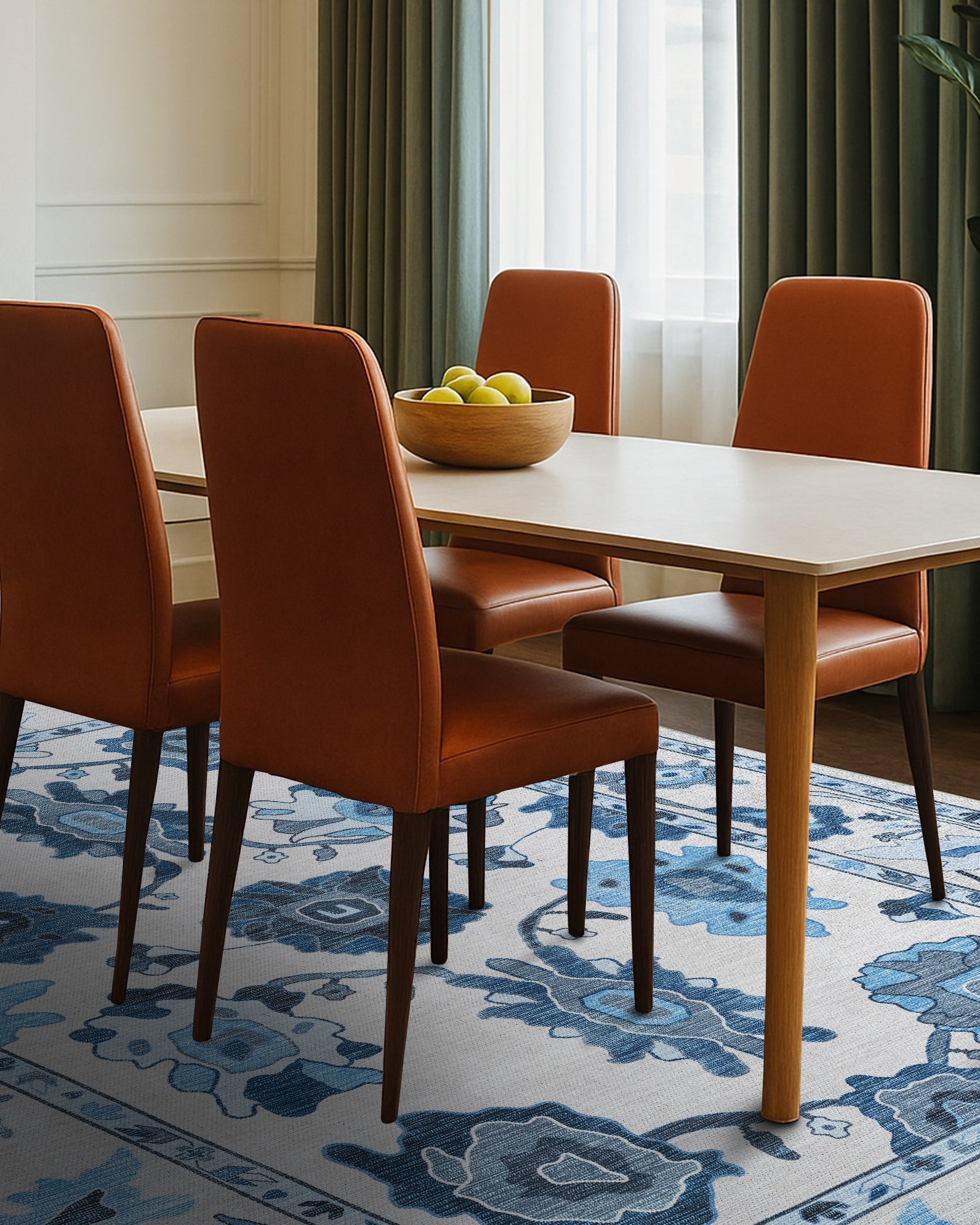
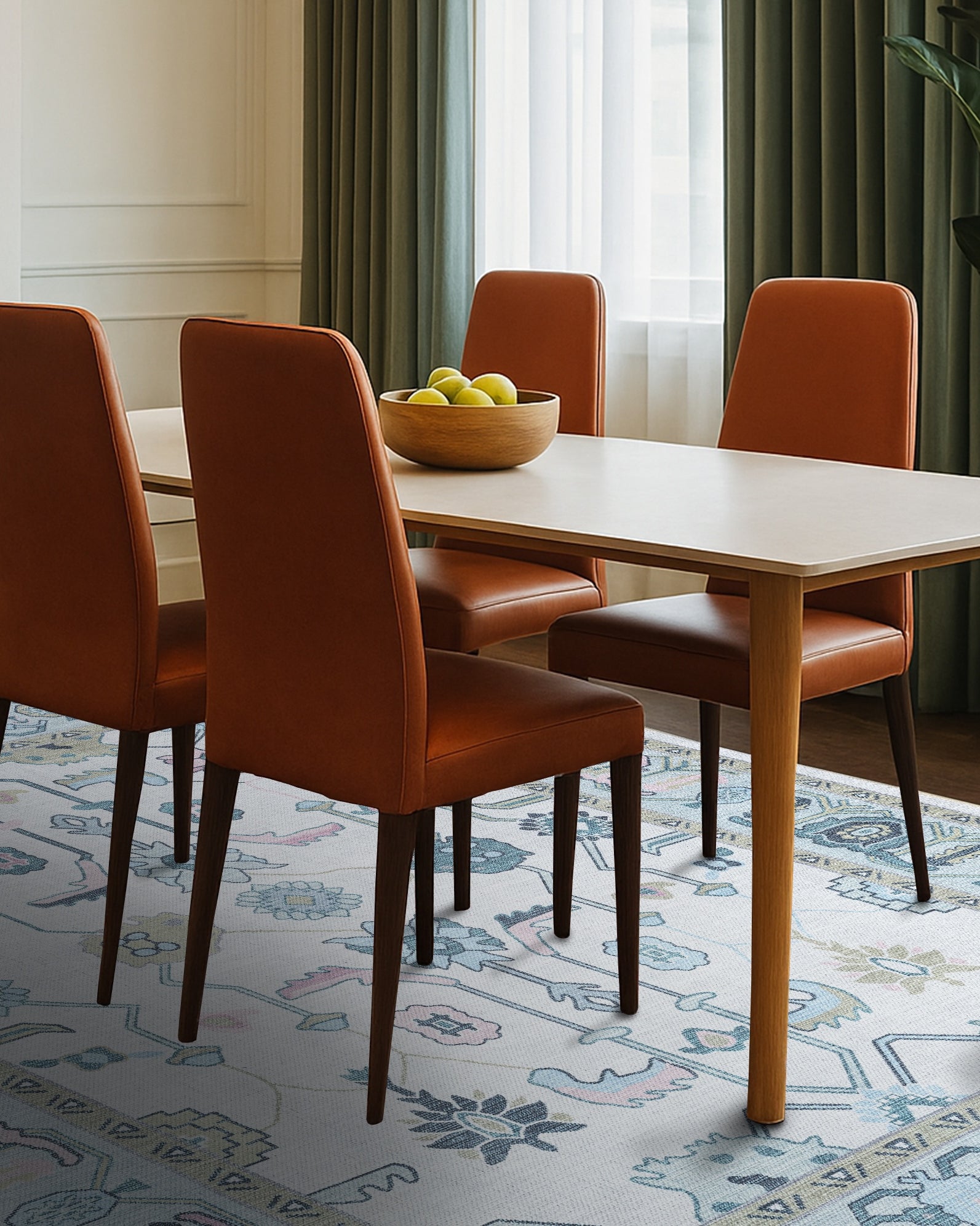
In a living room, keep at least the front legs of every seating piece on the rug. In a dining room, allow 24 inches of rug beyond the table on all sides. Sizes are never standard on handmade pieces, and that is especially true here, where the rug has had decades to settle into its current shape — always work from the exact measurements on the product page.
Care
Use a rug pad on hard floors to prevent slipping and protect the settled foundation. Vacuum with the beater bar off or raised, and keep it off the fringe. Rotate the rug 180 degrees once or twice a year so any further colour change stays even. Blot spills immediately with a white cloth and plain water — aged natural dyes are more prone to release colour than fresh synthetic ones, so avoid saturating the rug. Never use a home carpet-cleaning machine or a steam cleaner. For anything beyond a light surface clean, use a professional rug washer experienced with hand-knotted wool.