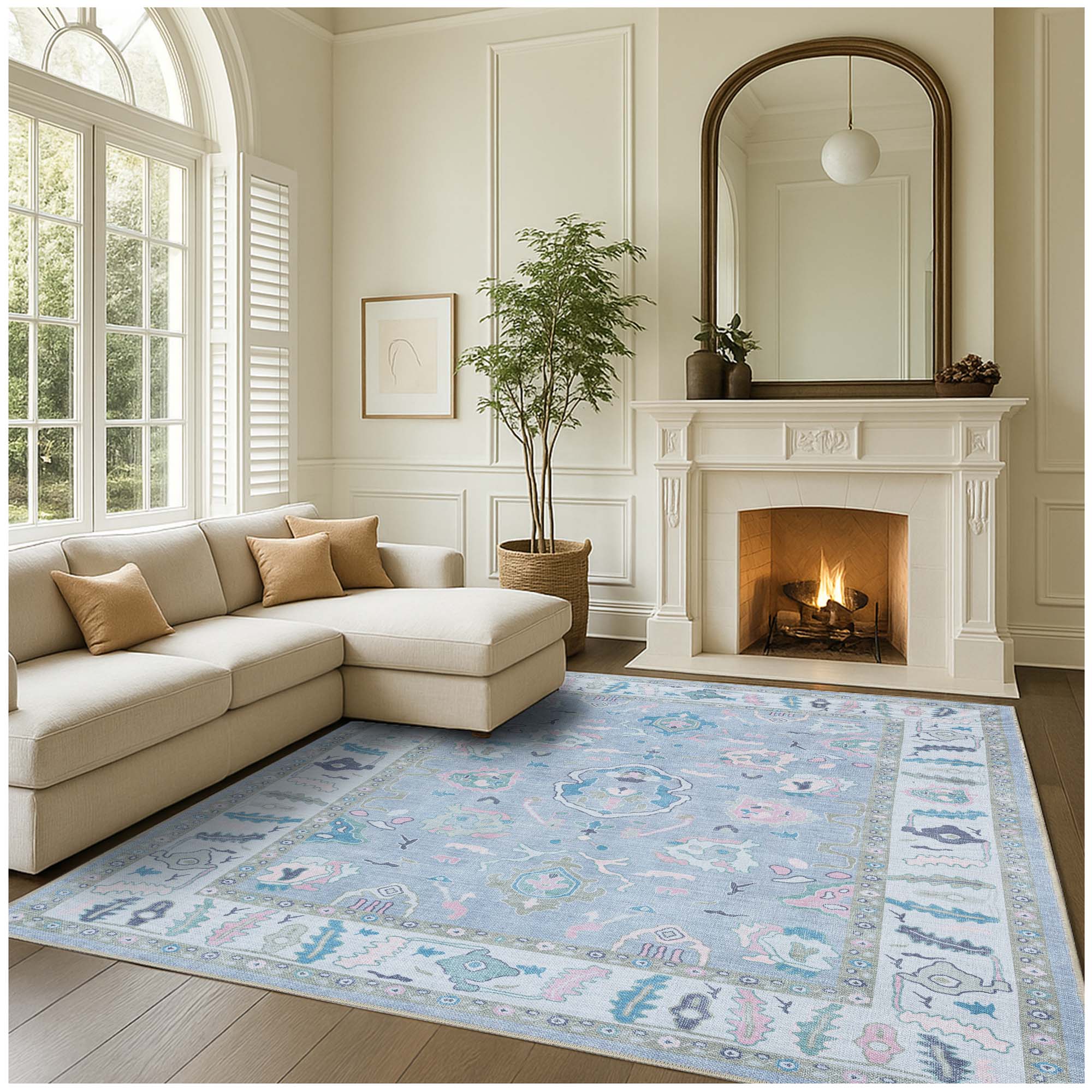
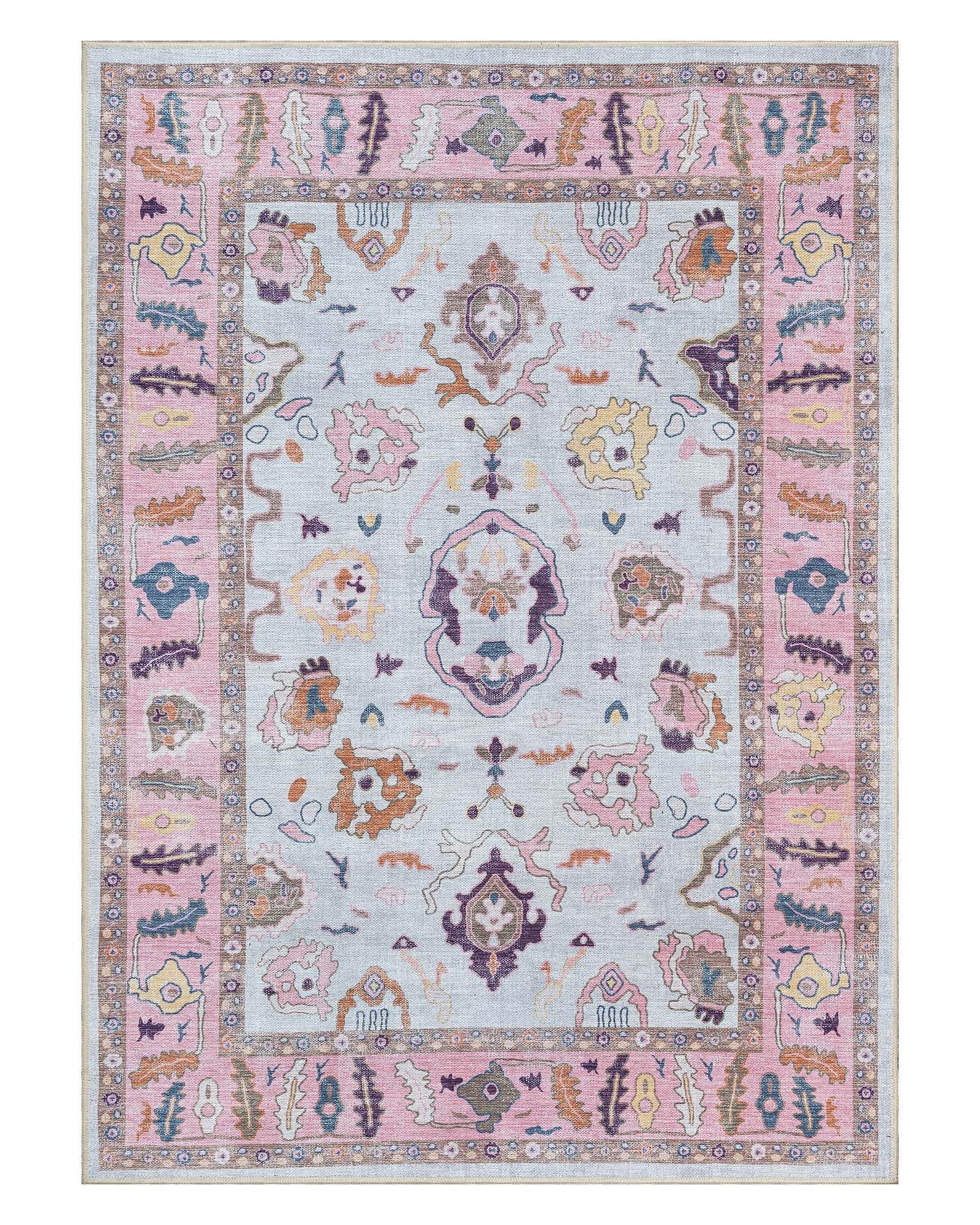
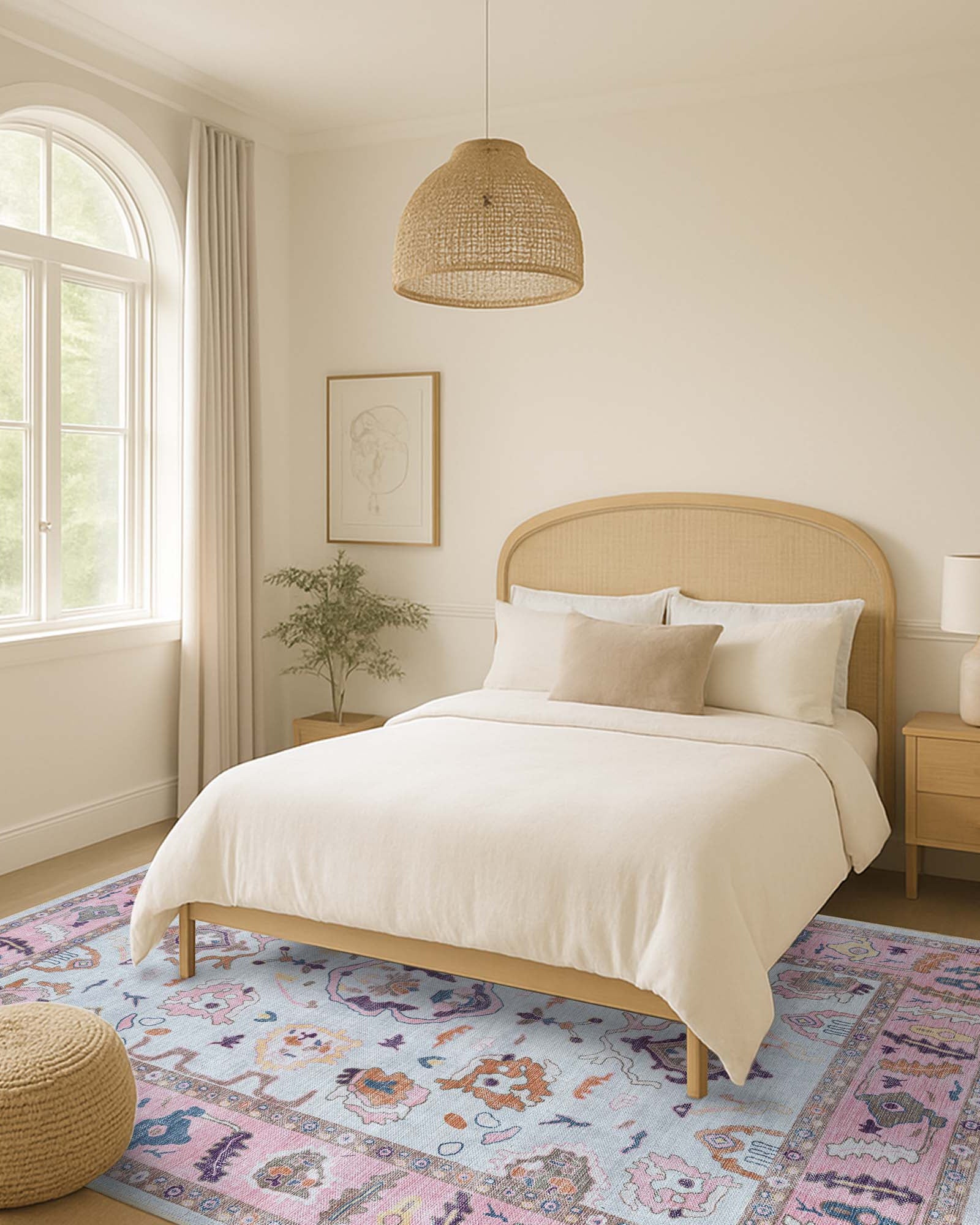
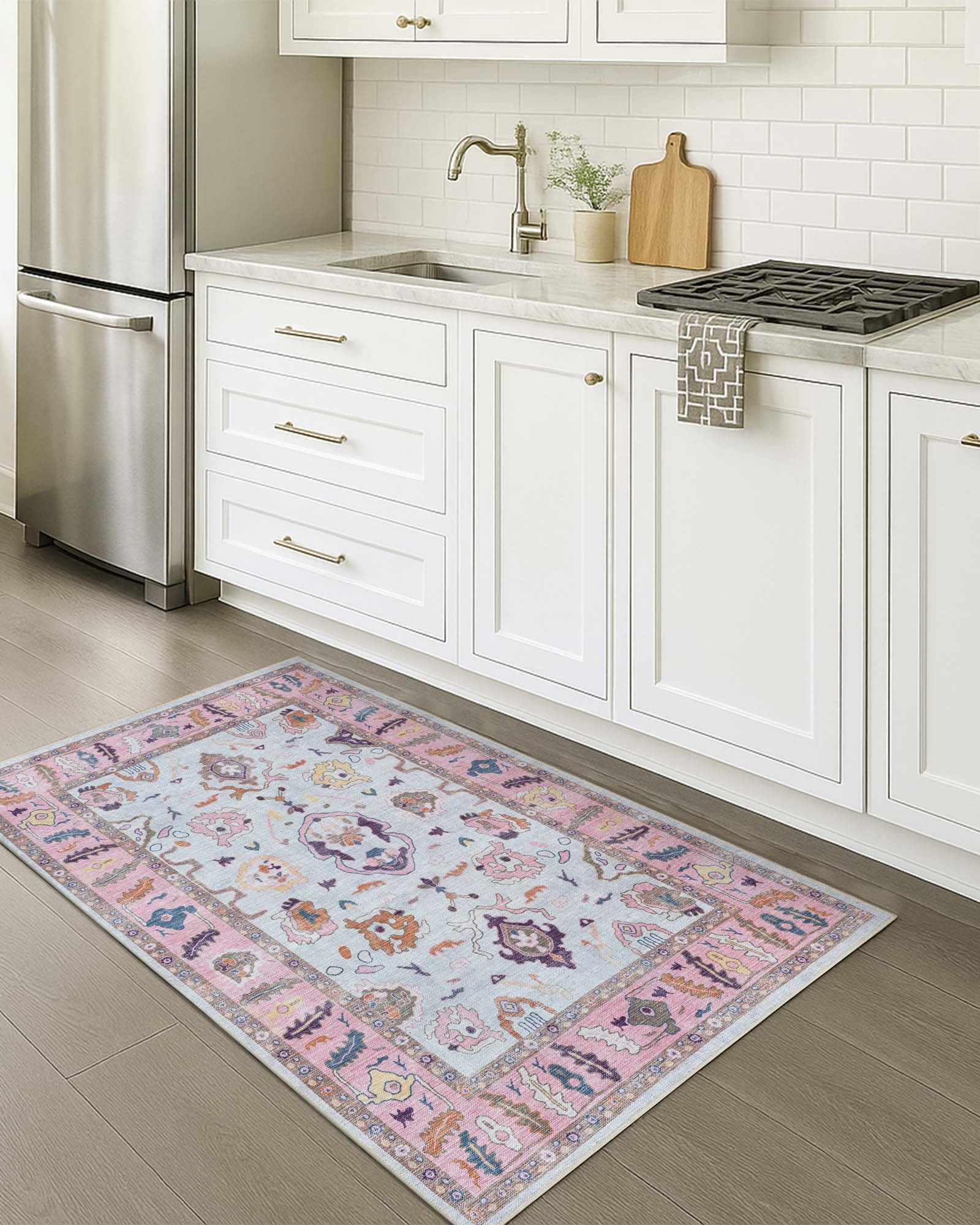
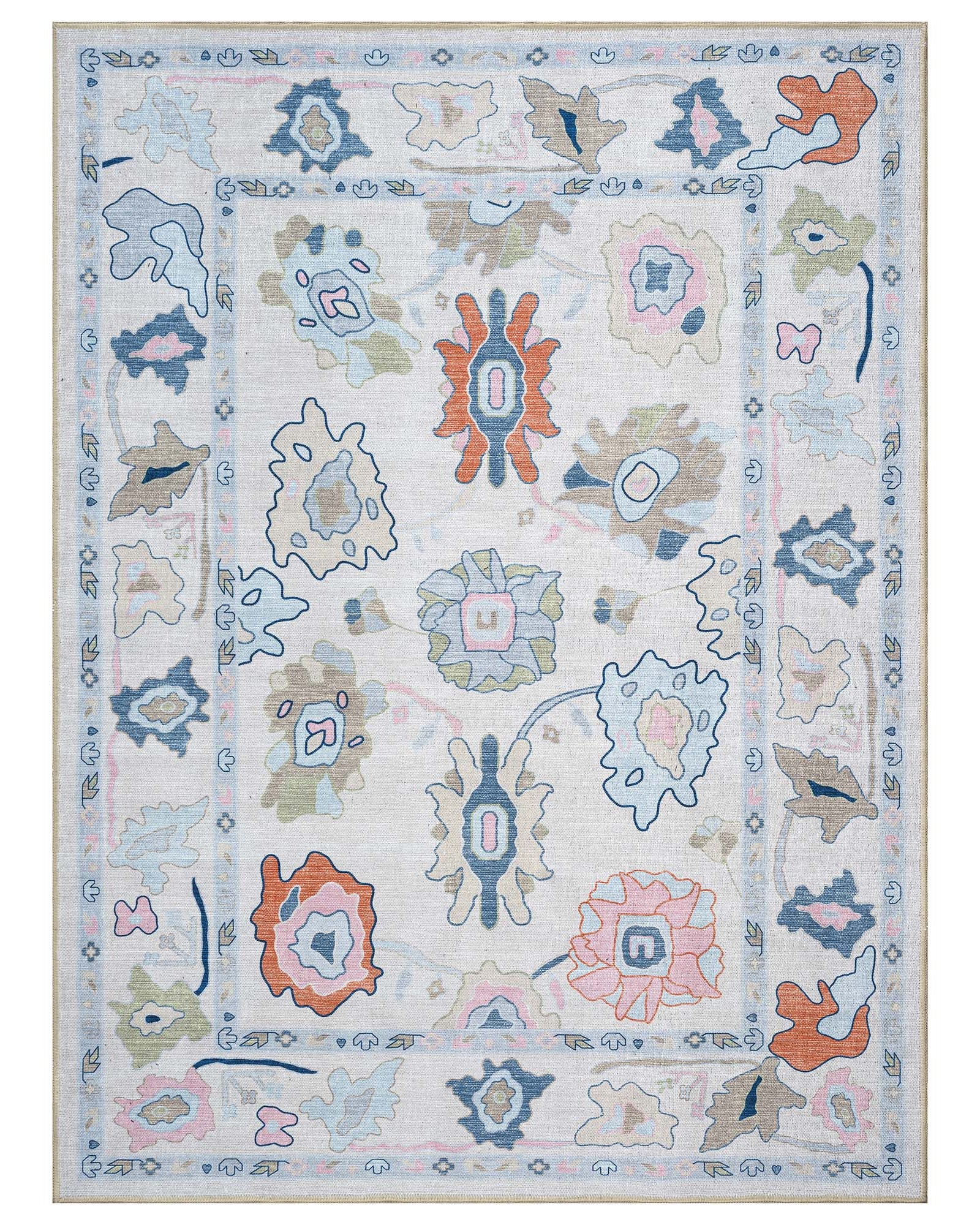
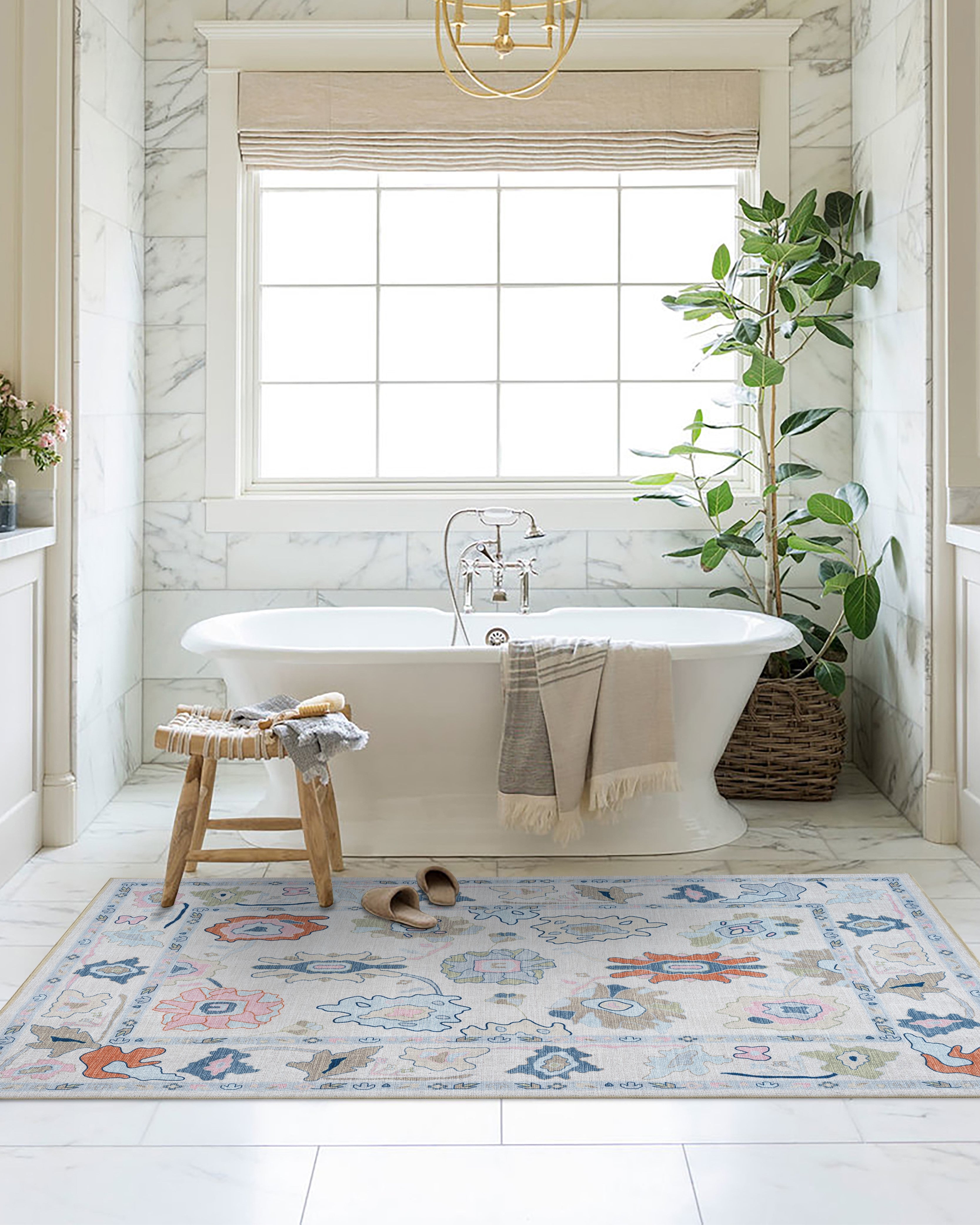
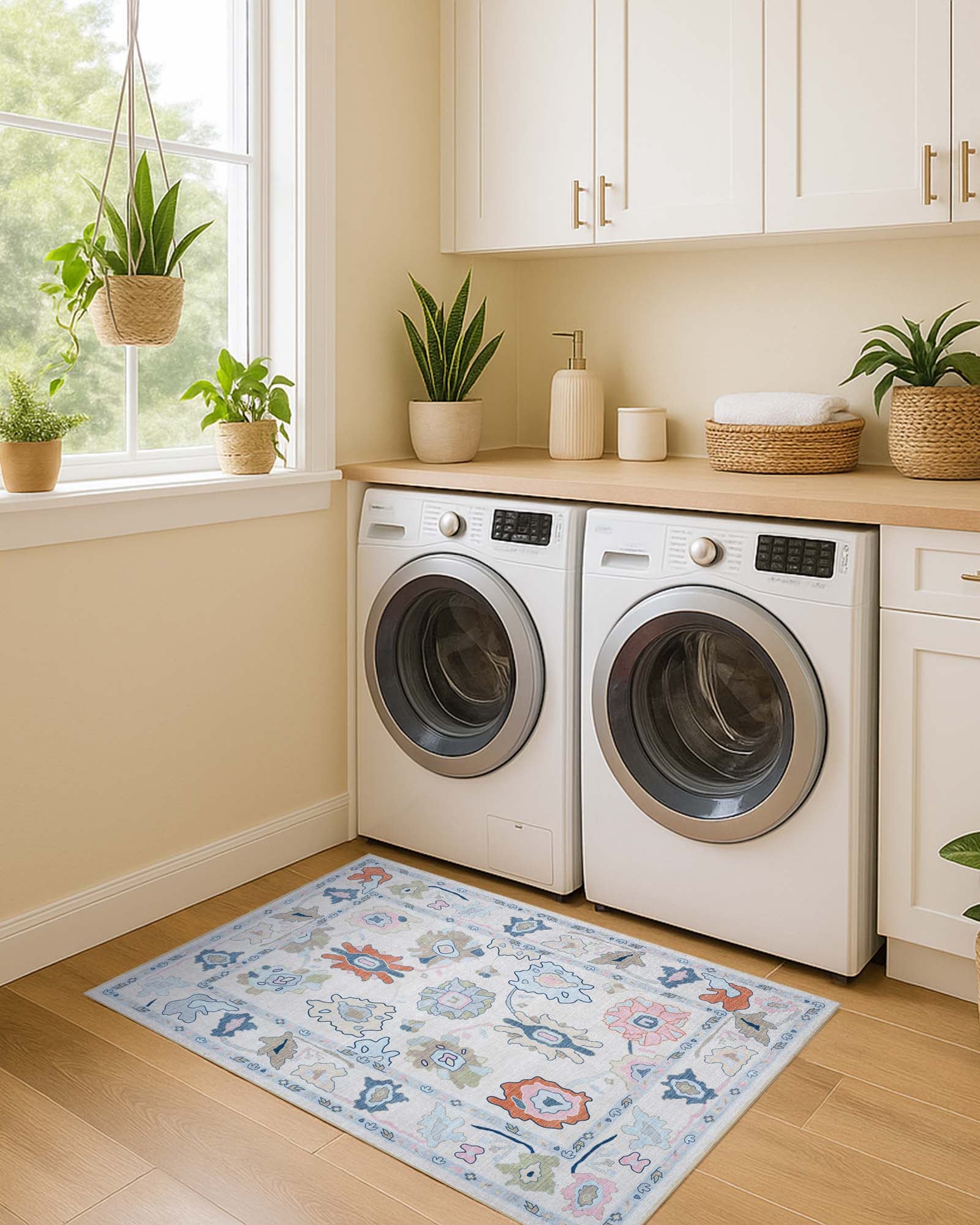
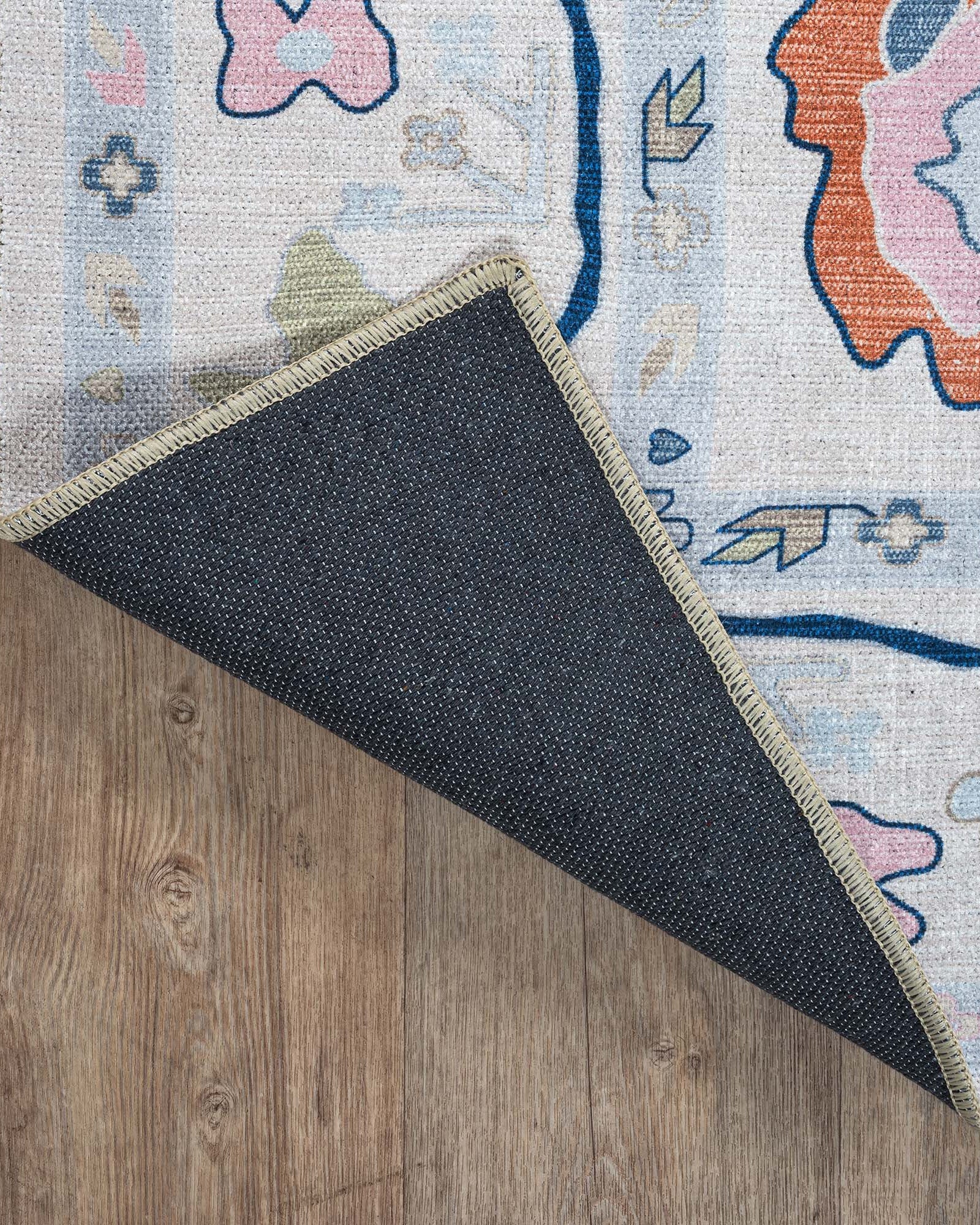
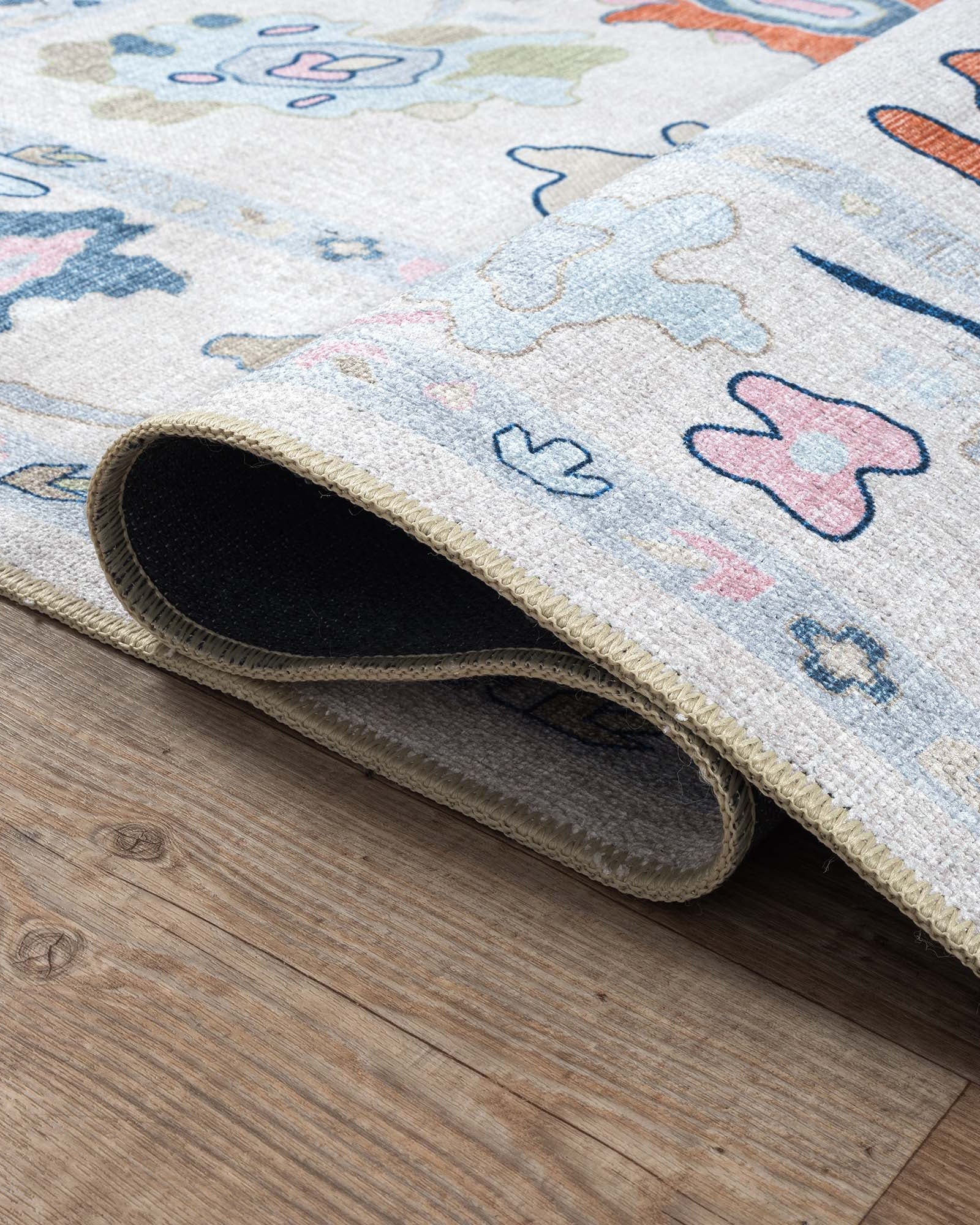
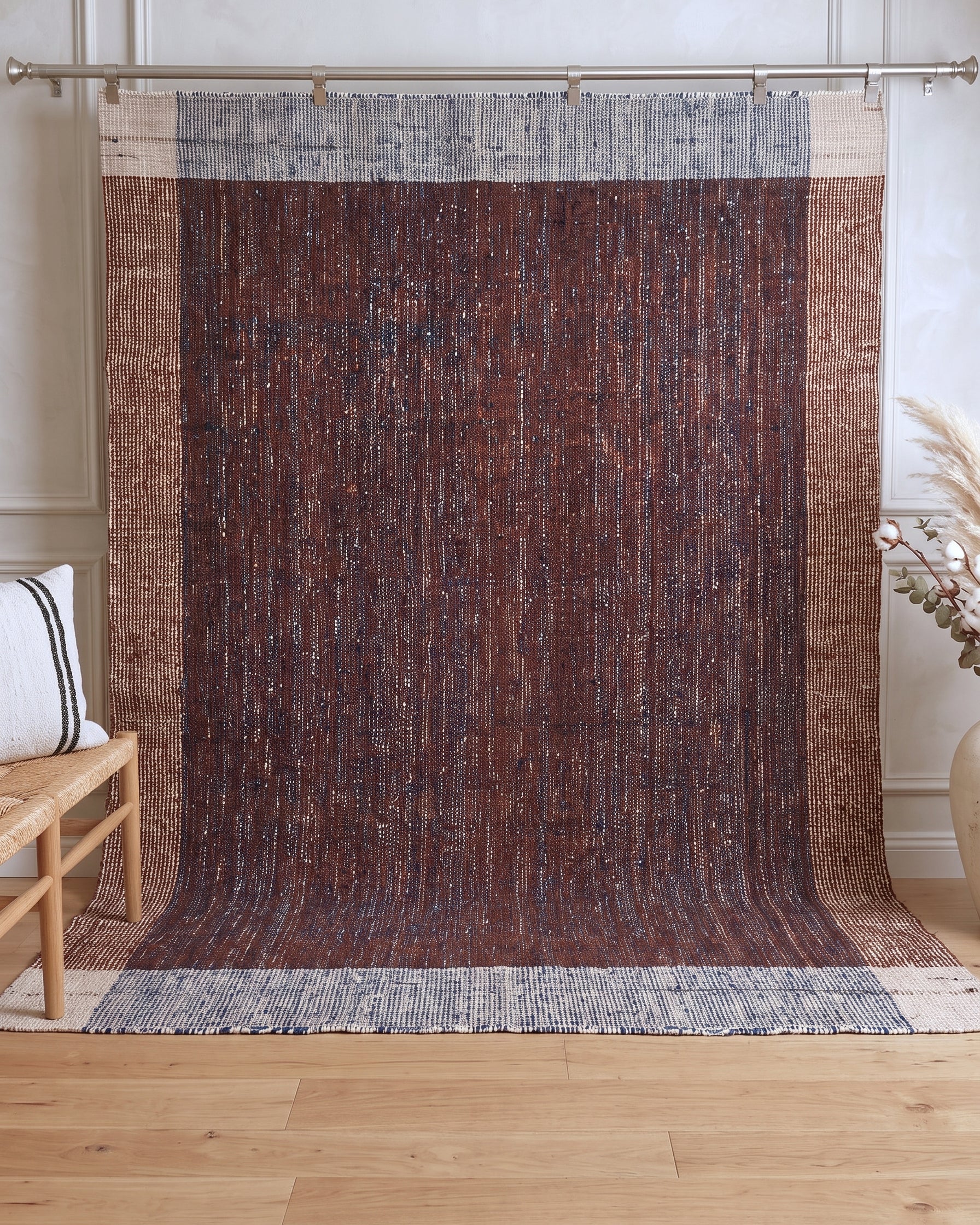
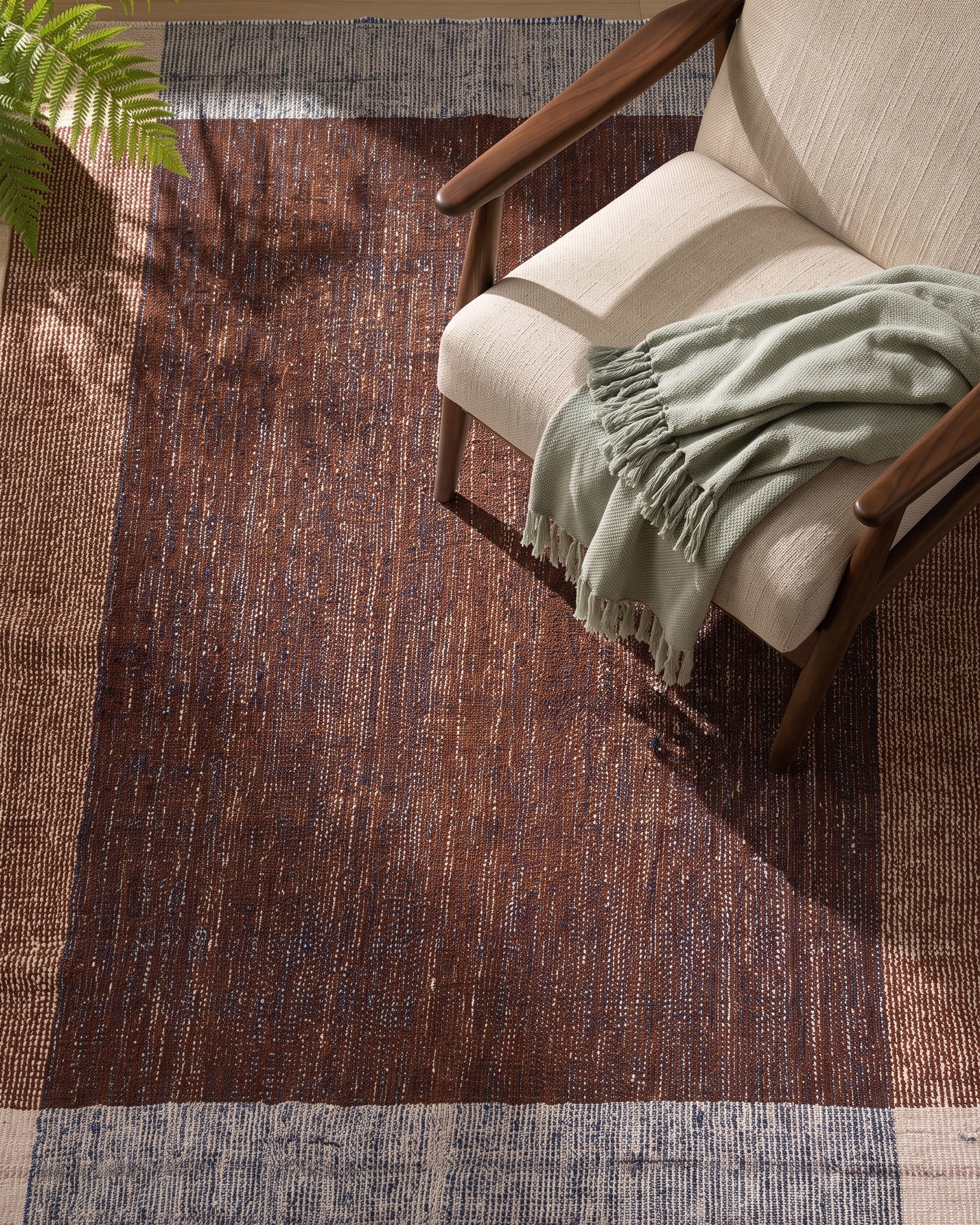
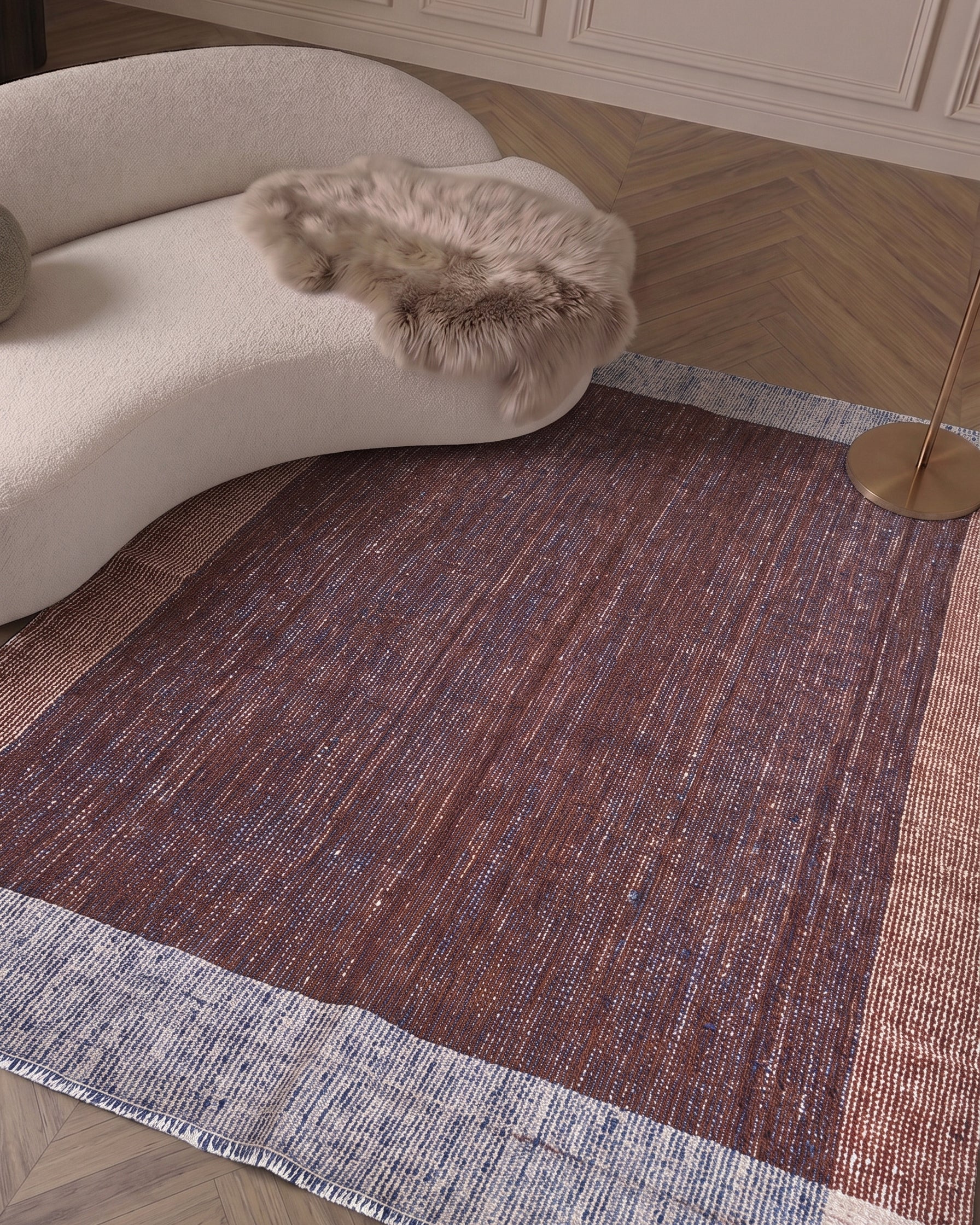
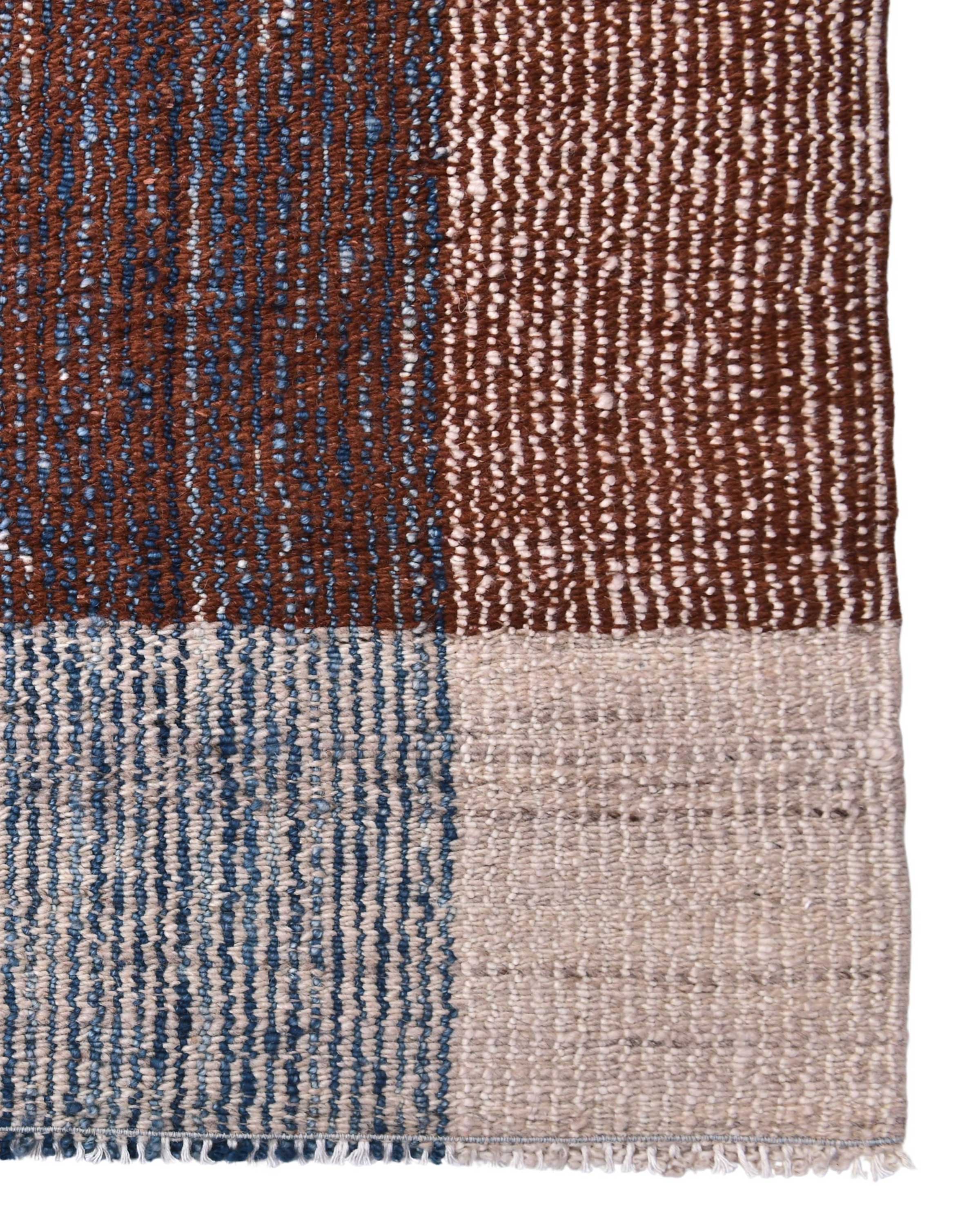
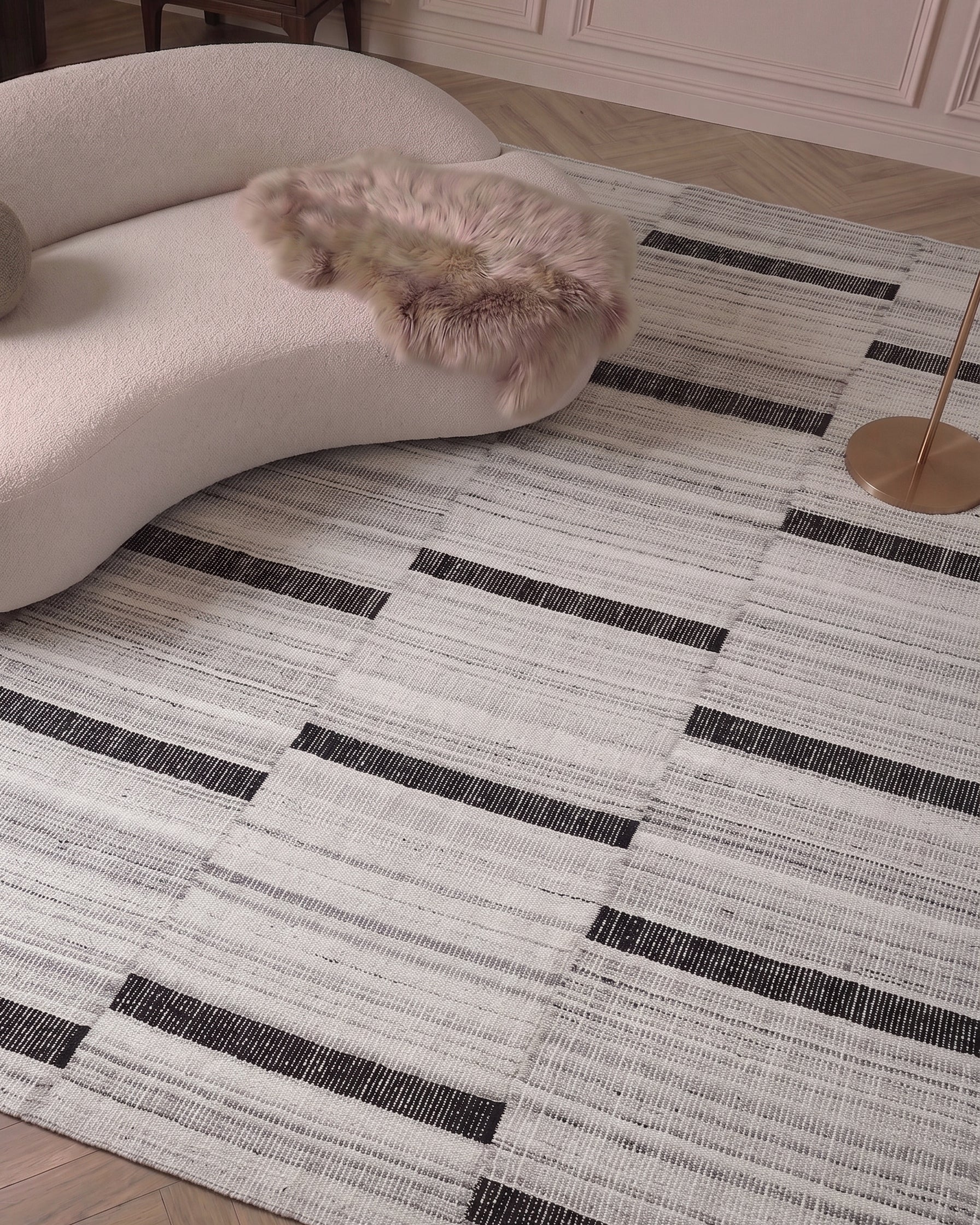
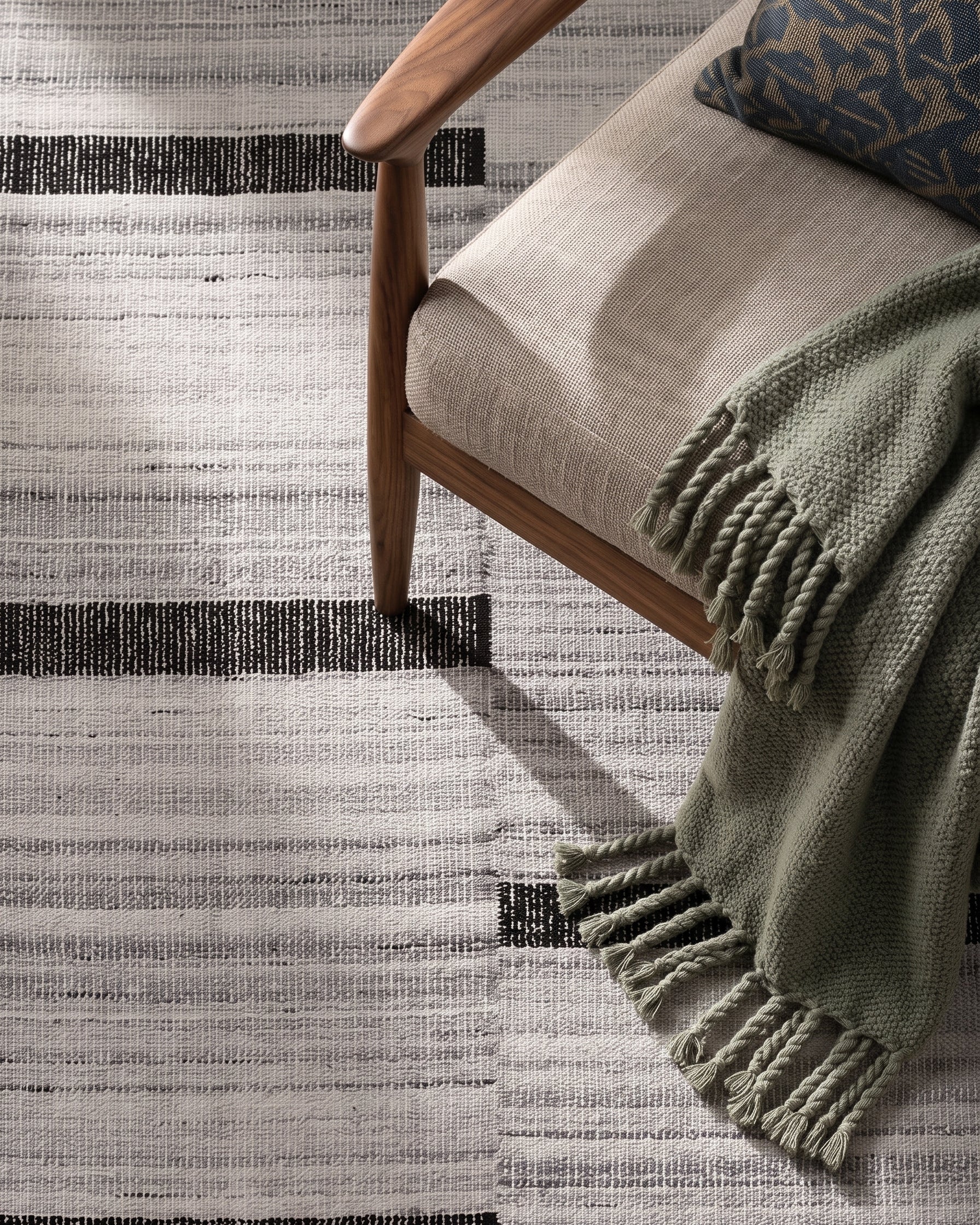
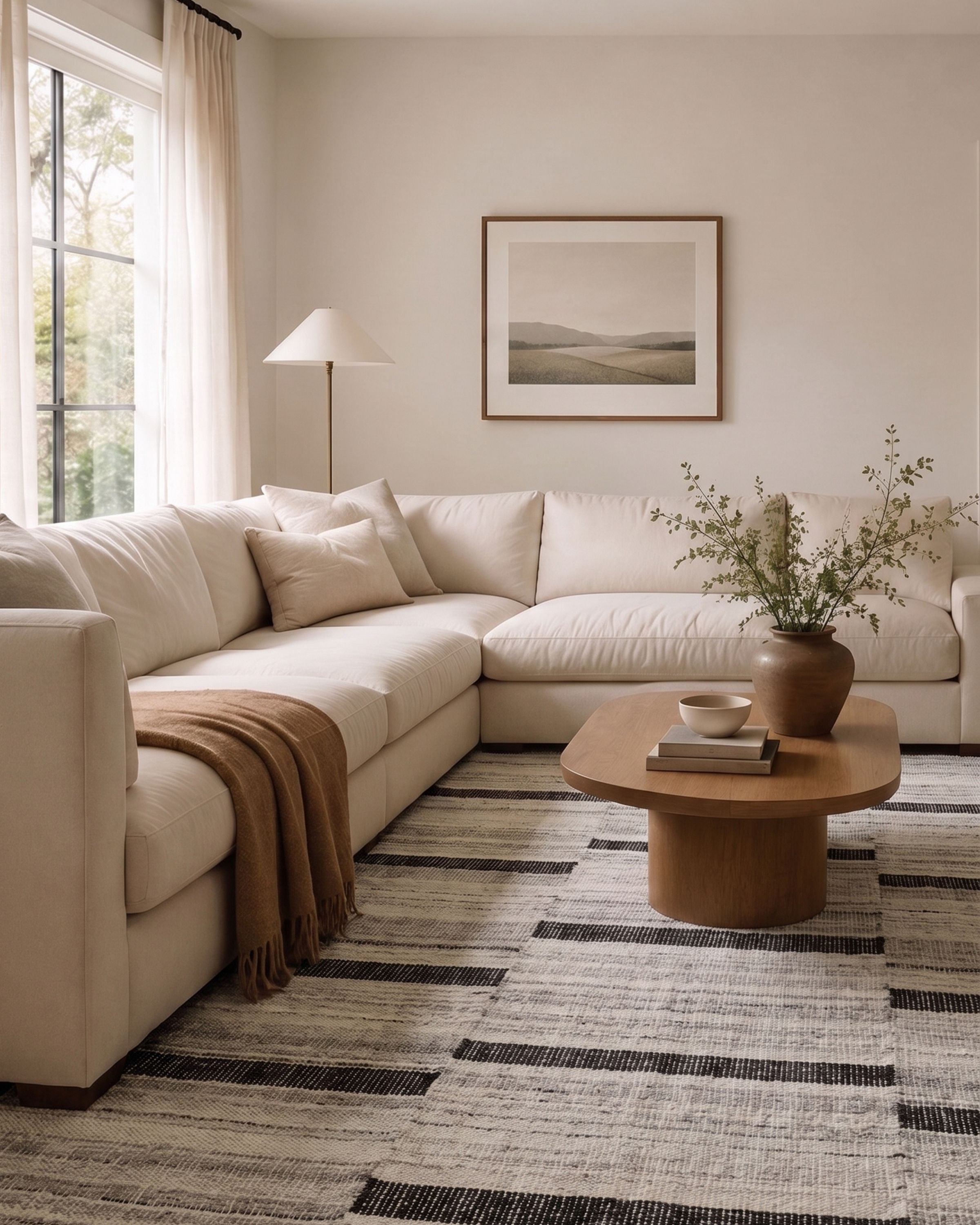
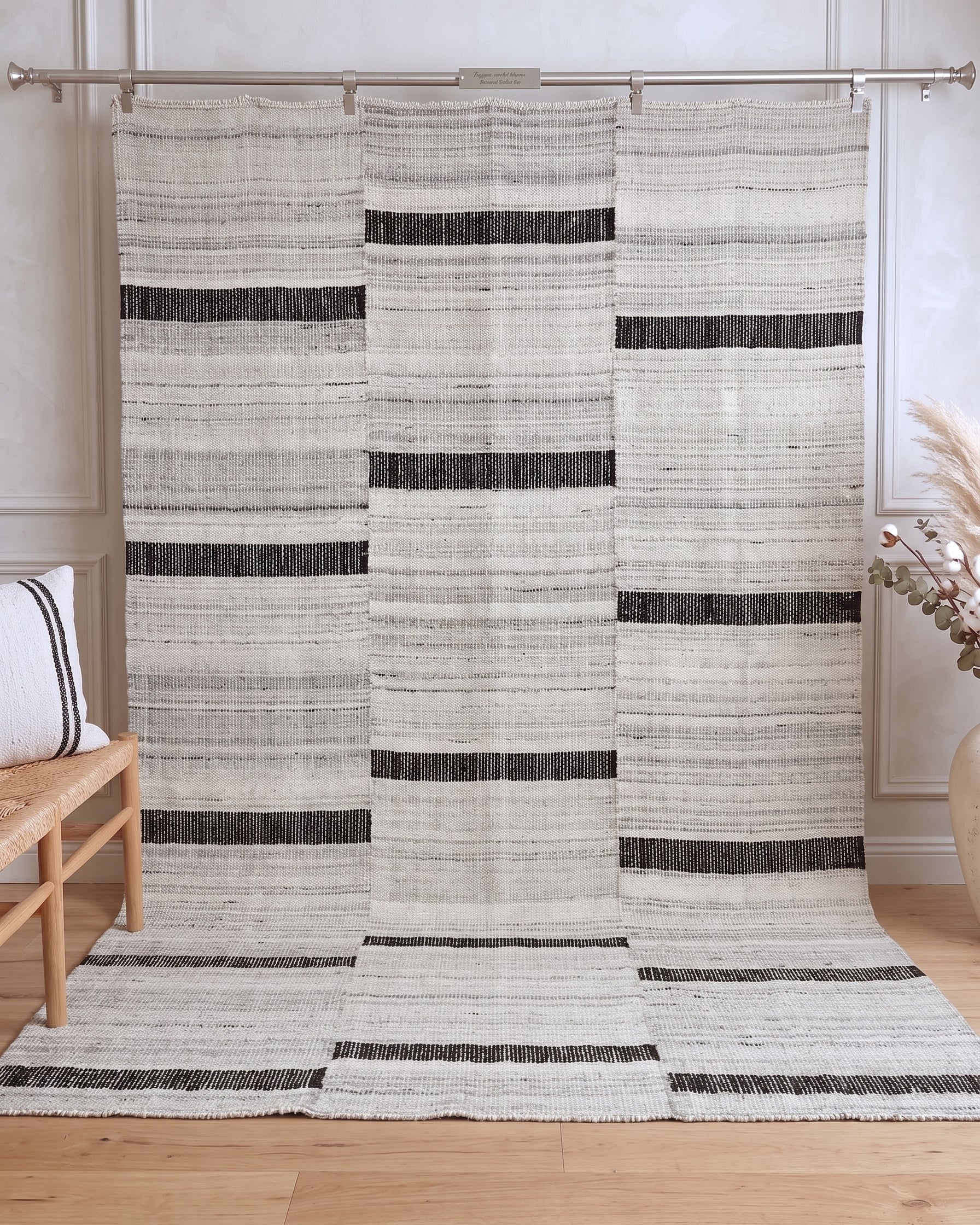
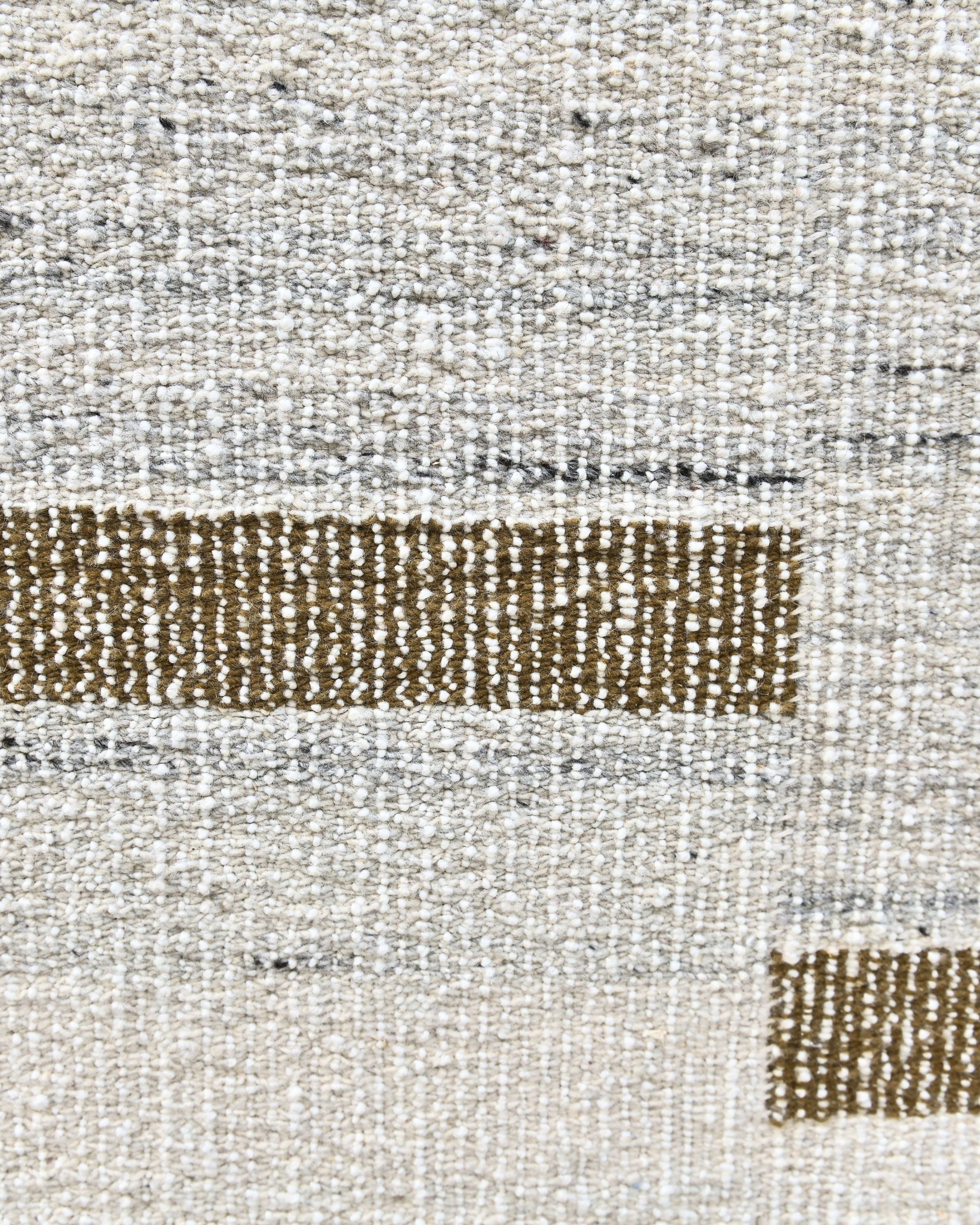
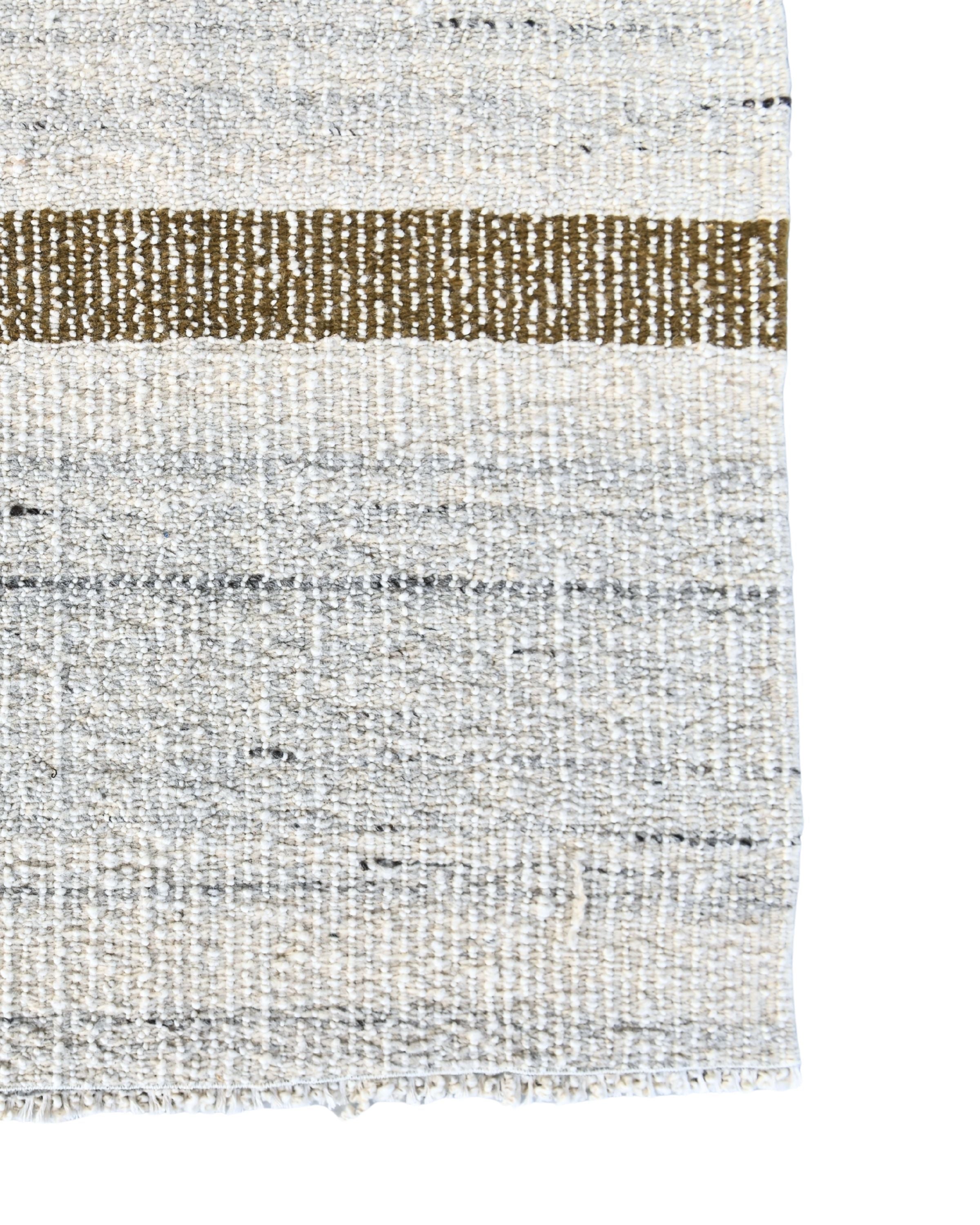
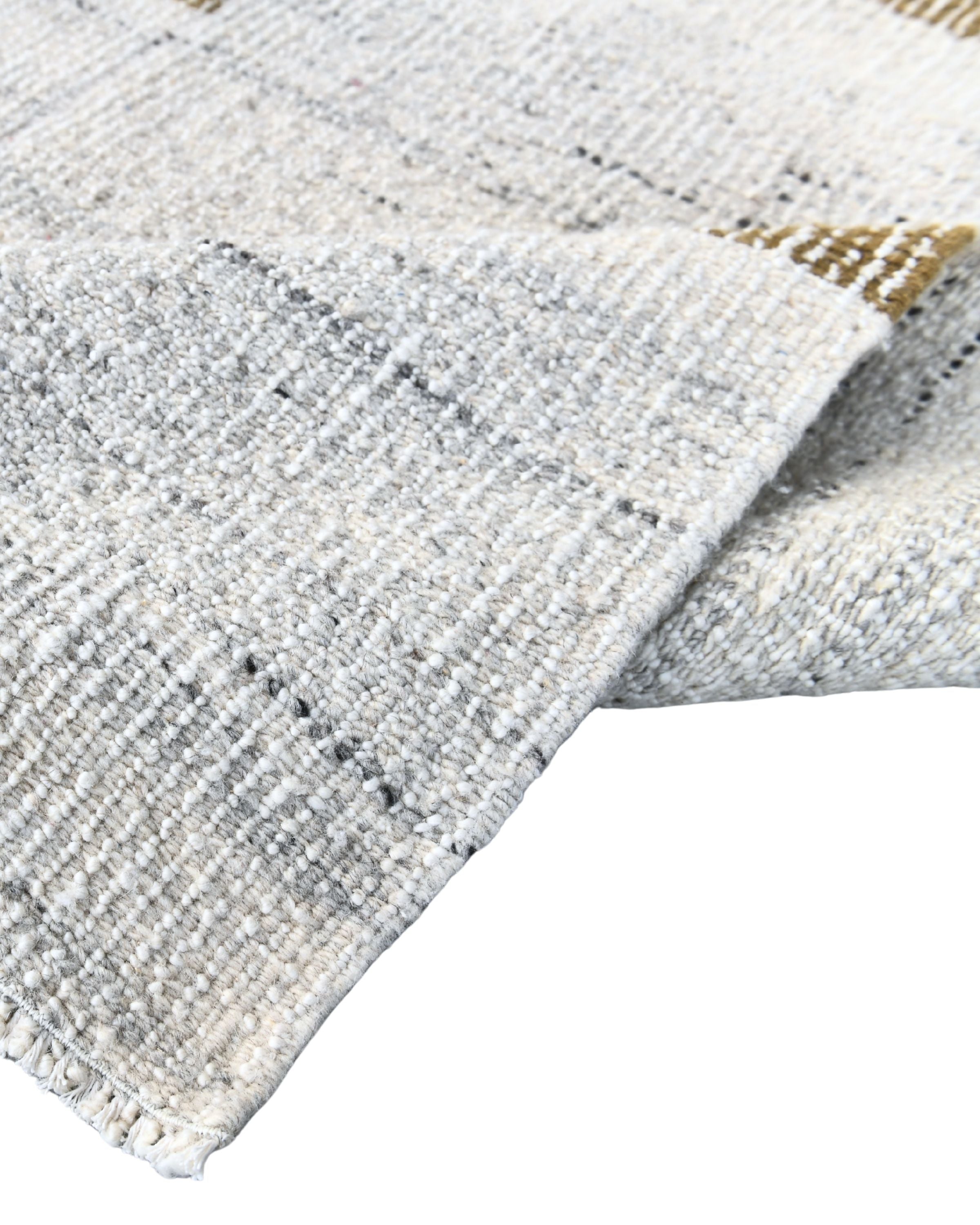
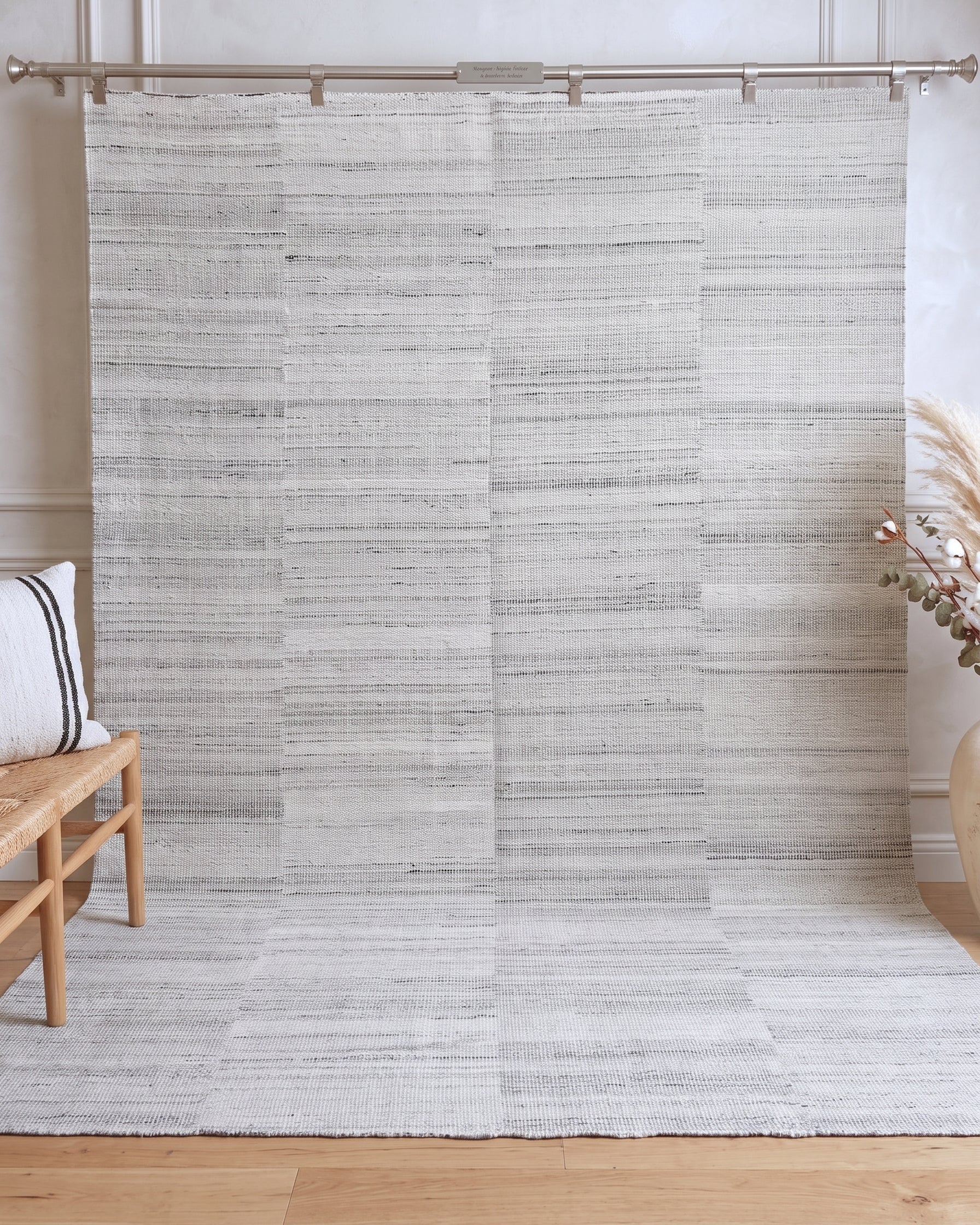
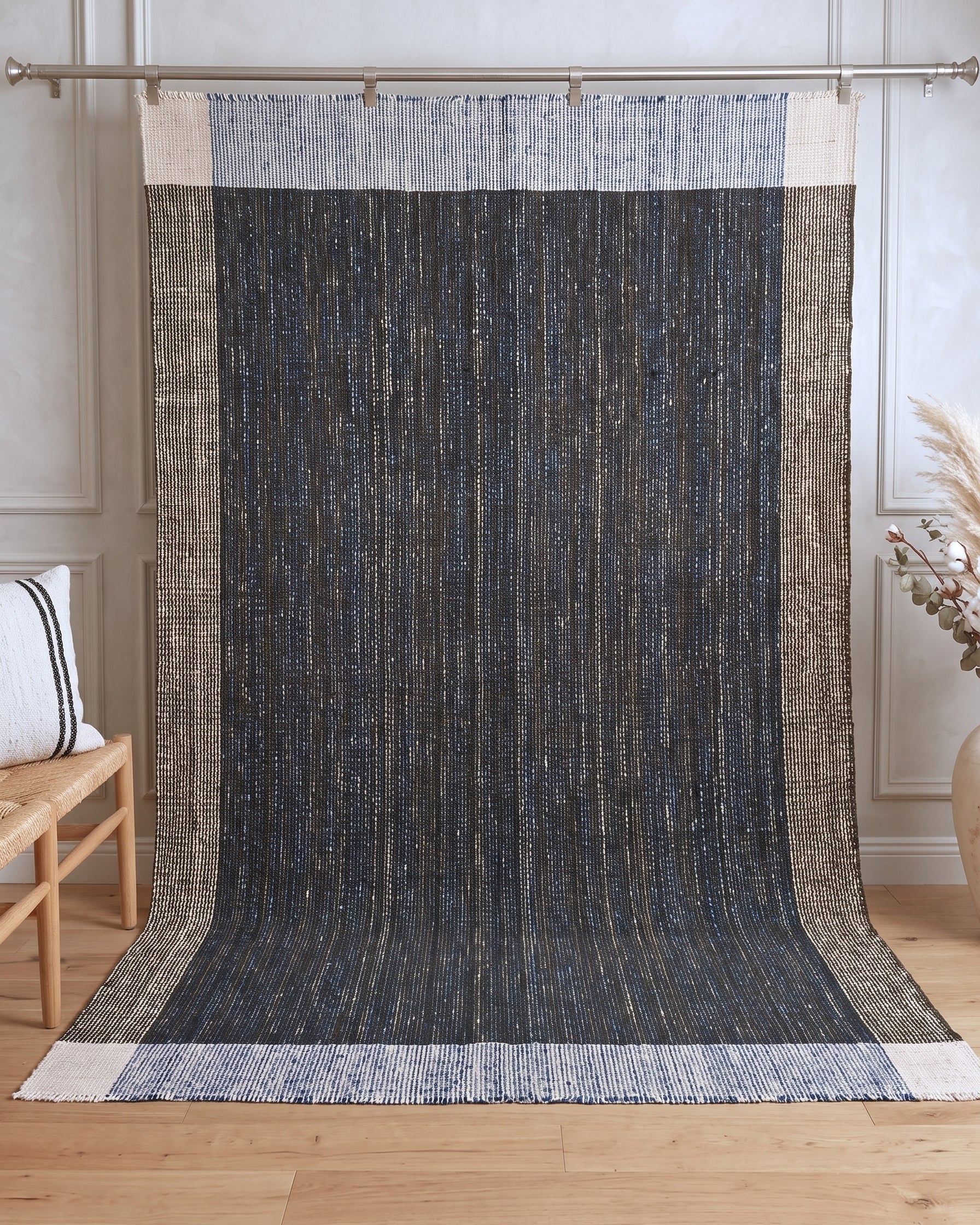
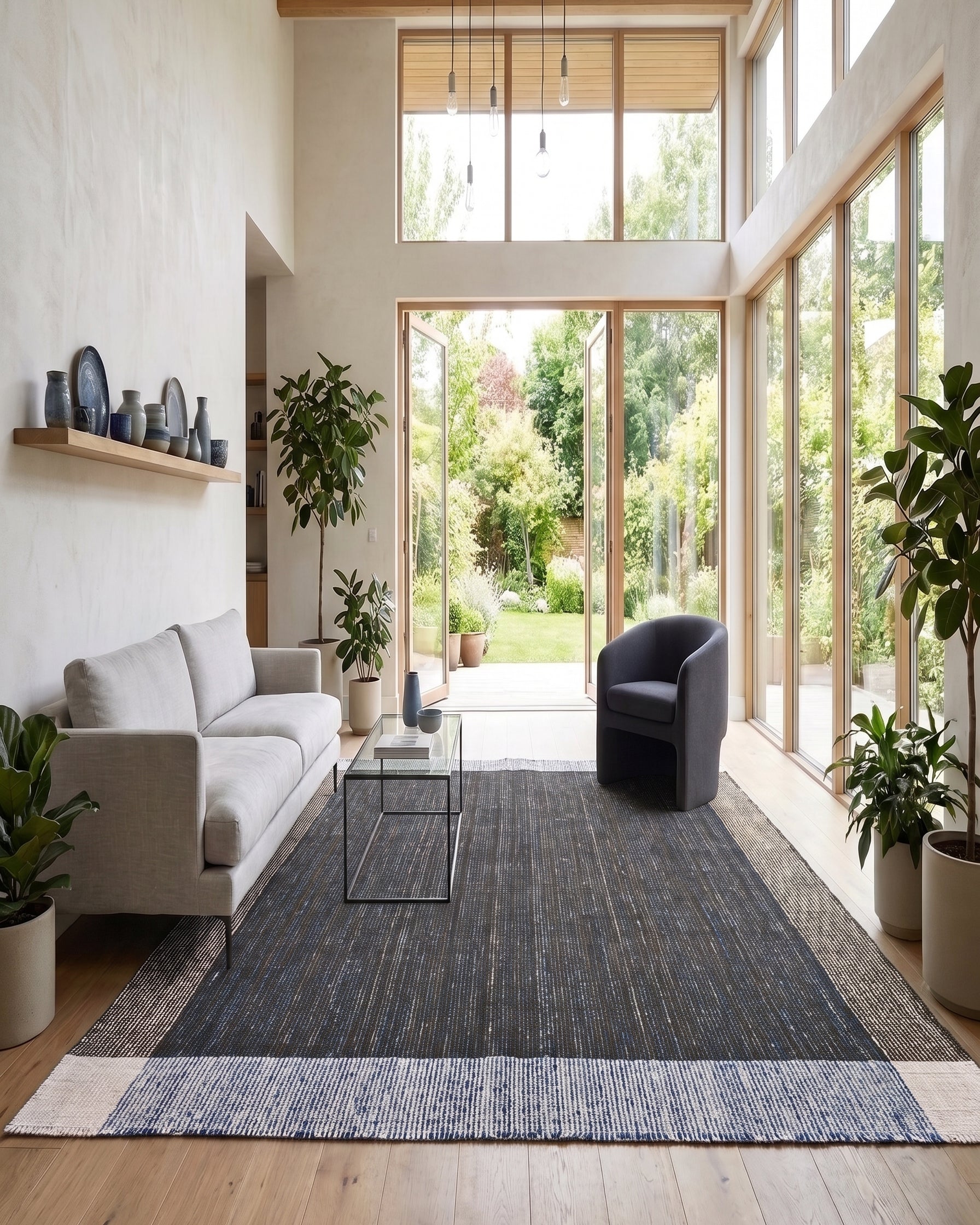
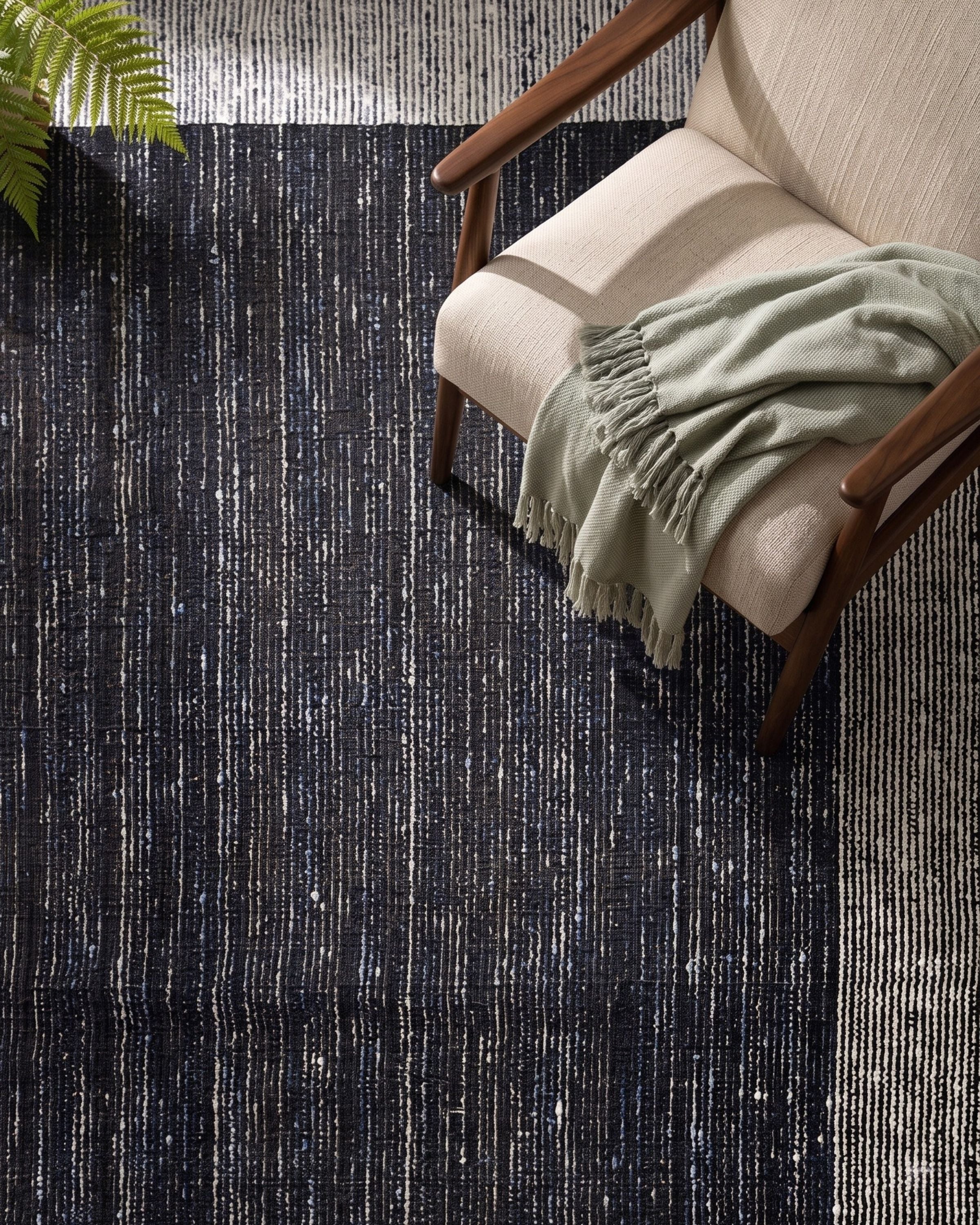
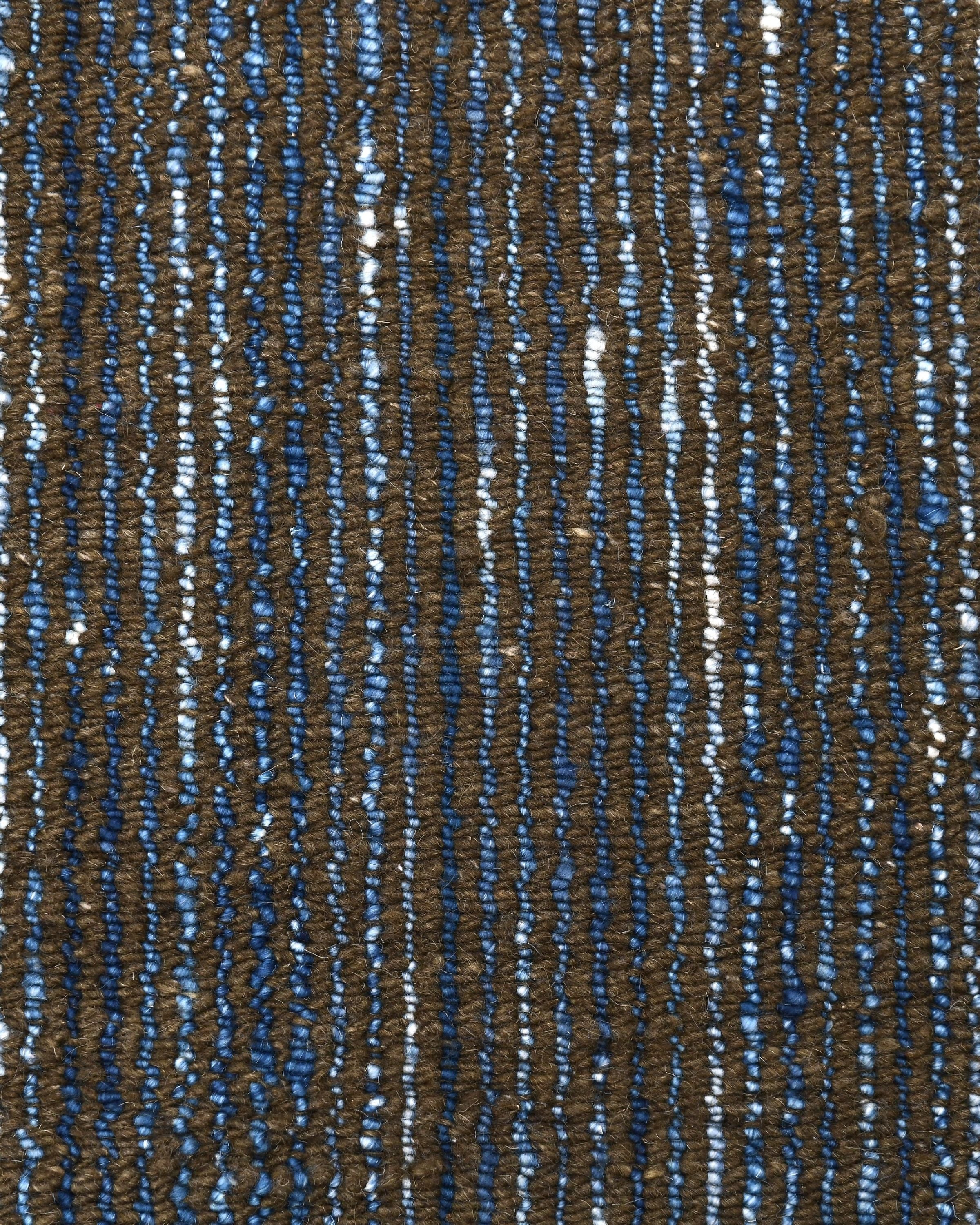
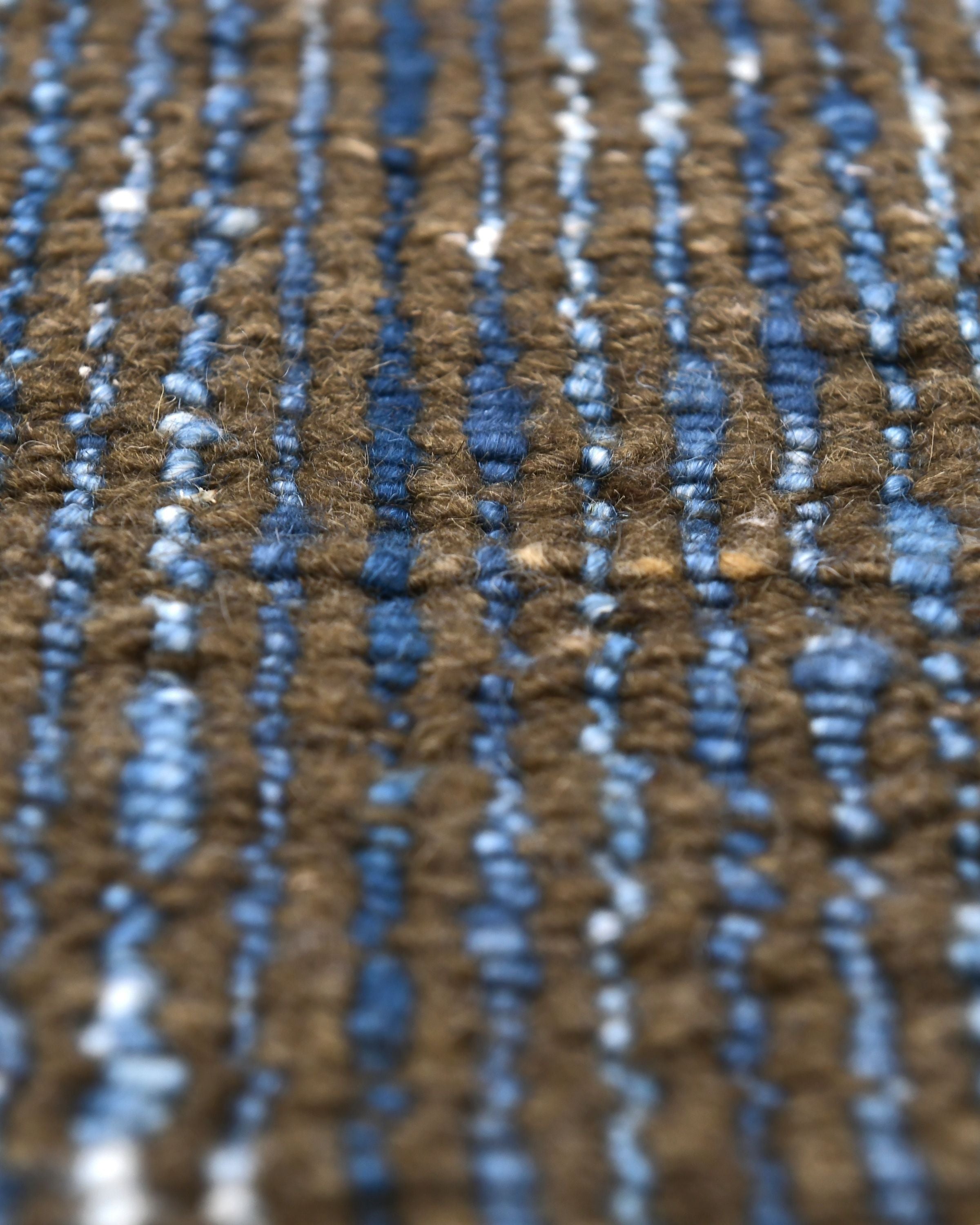
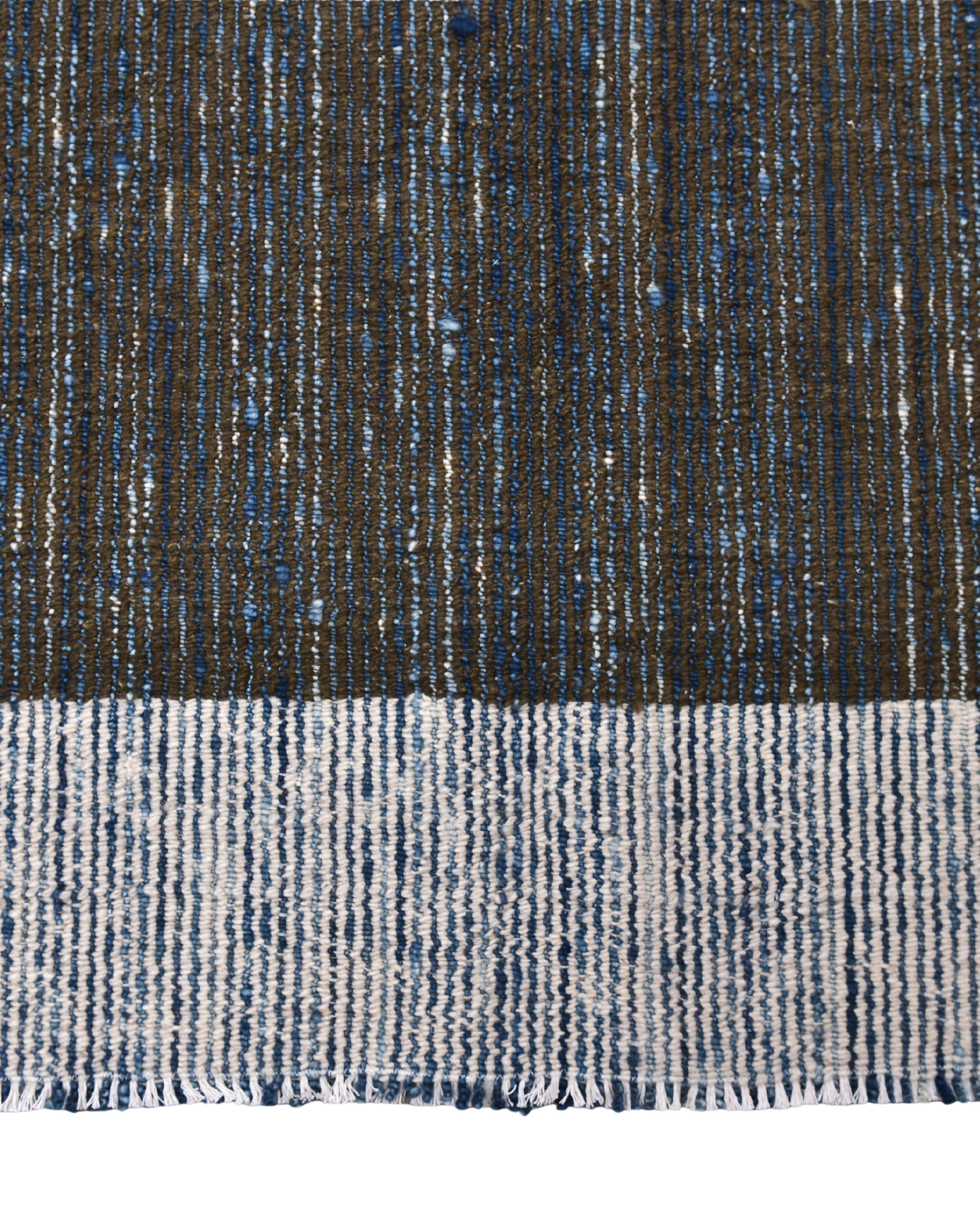
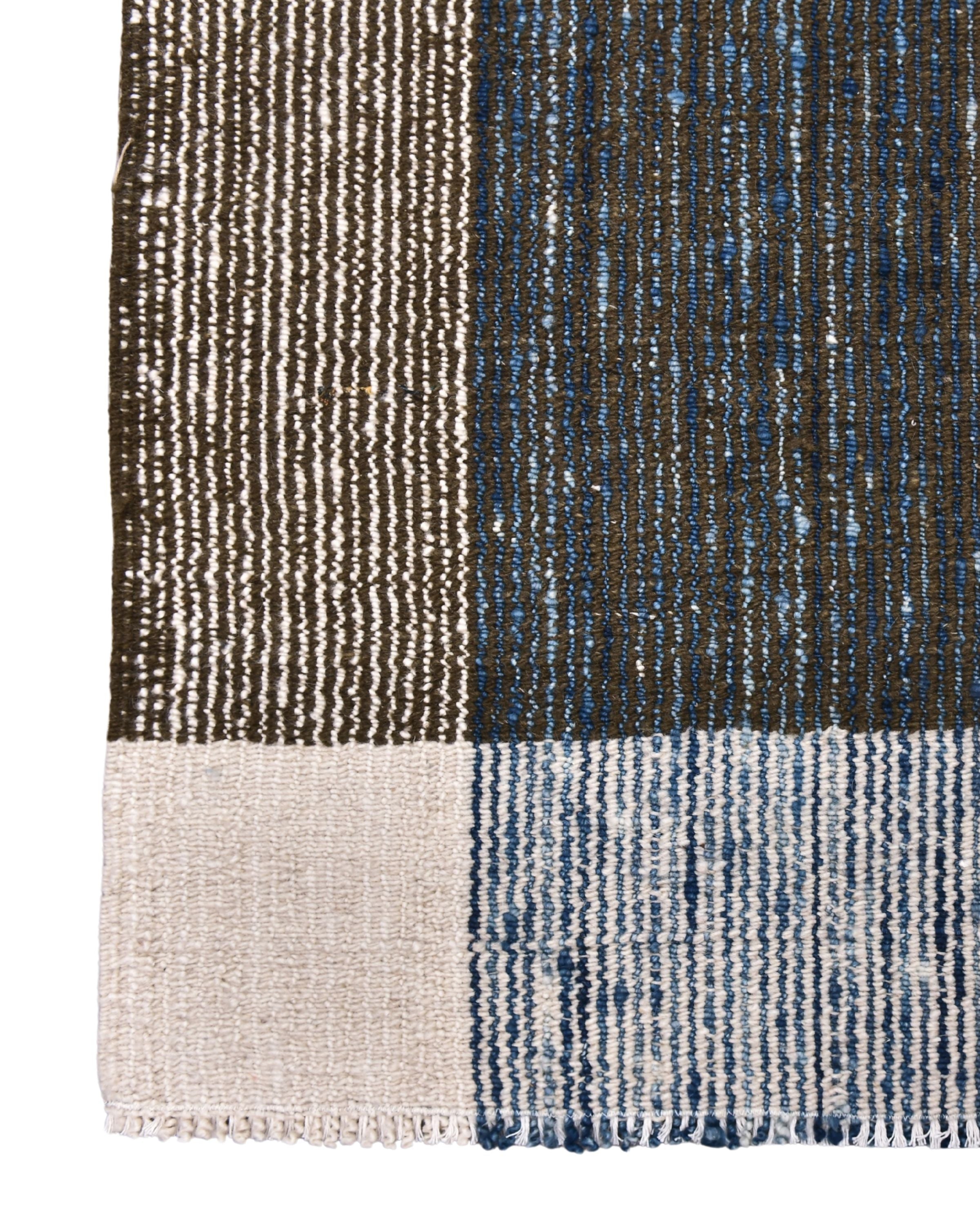
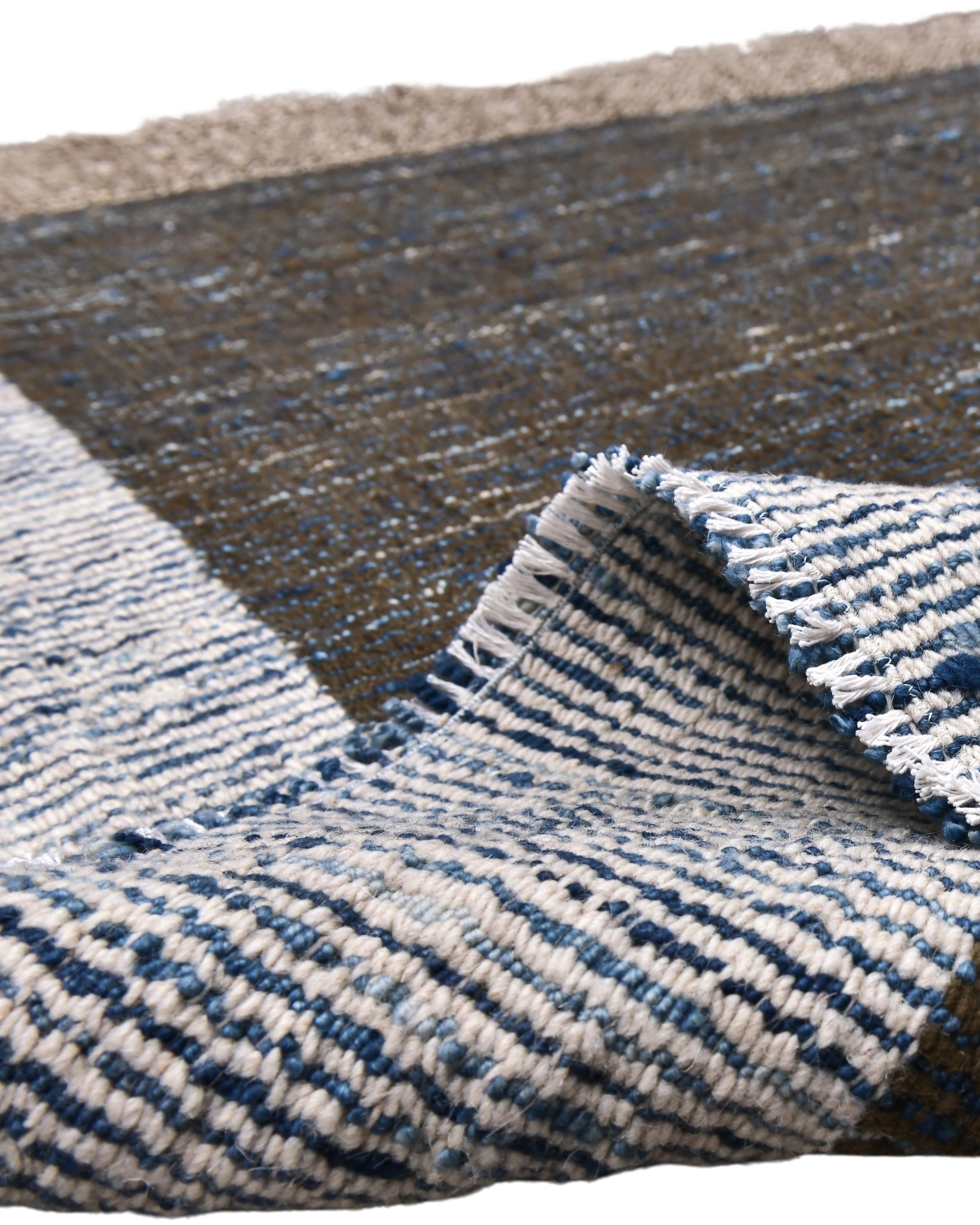
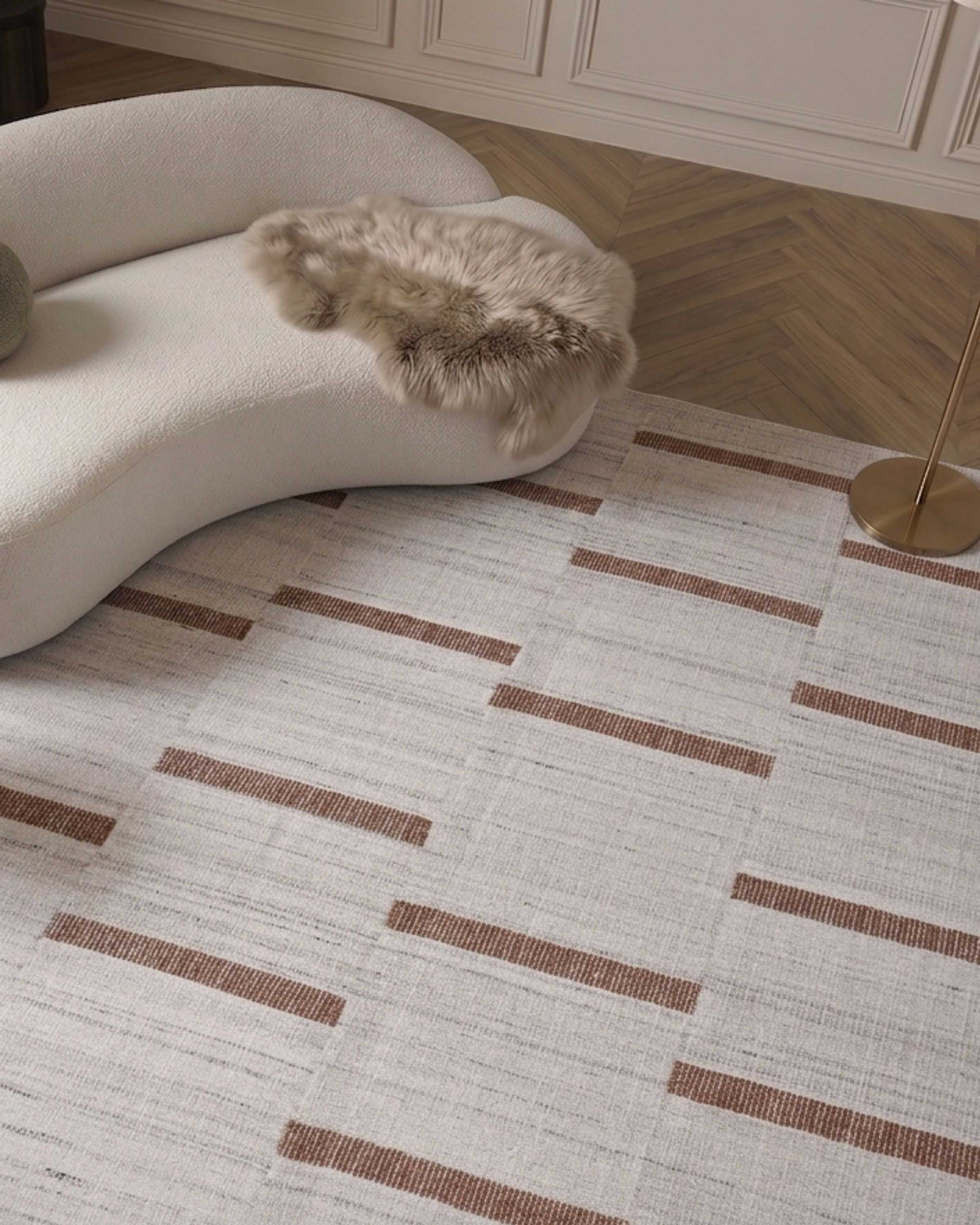
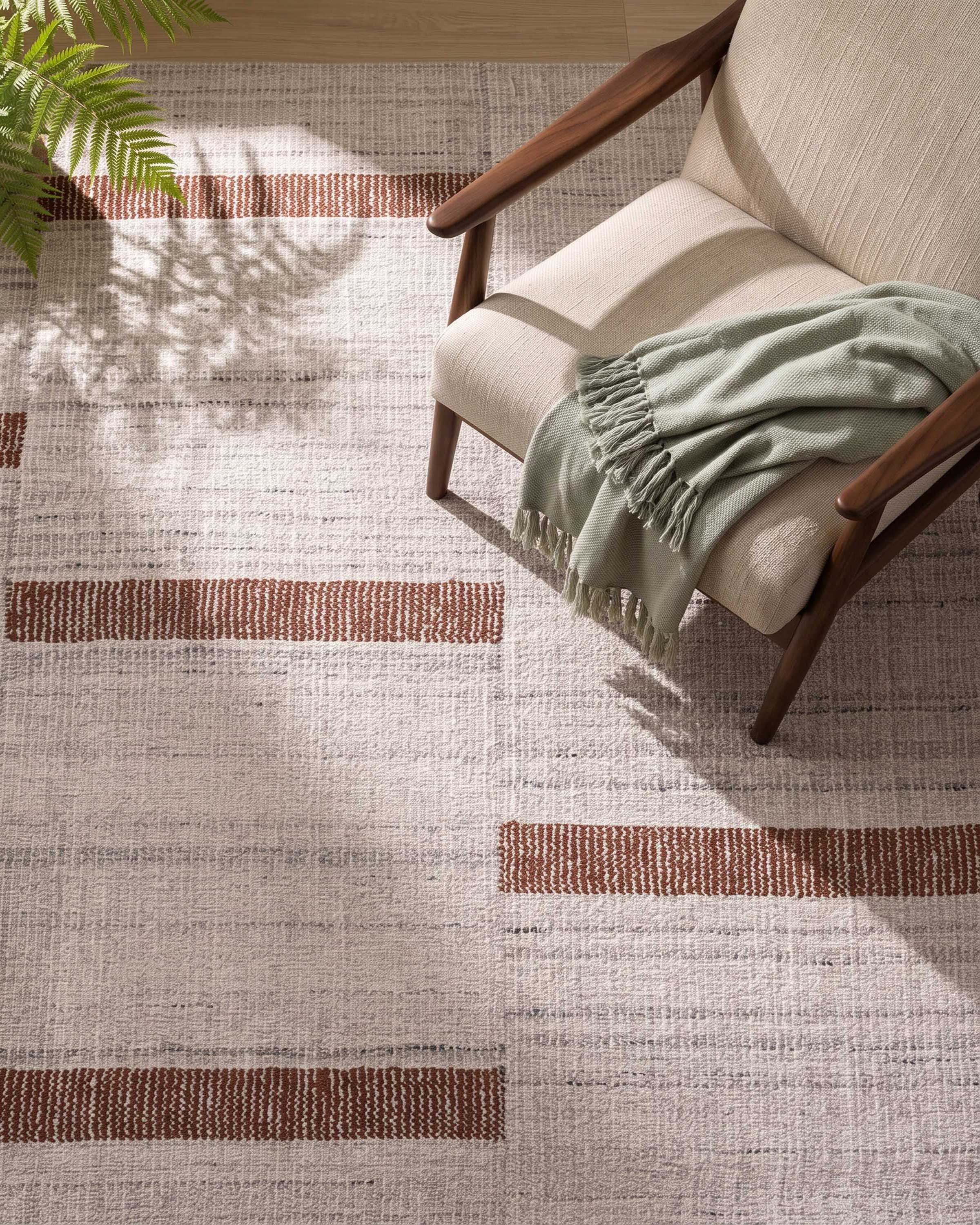
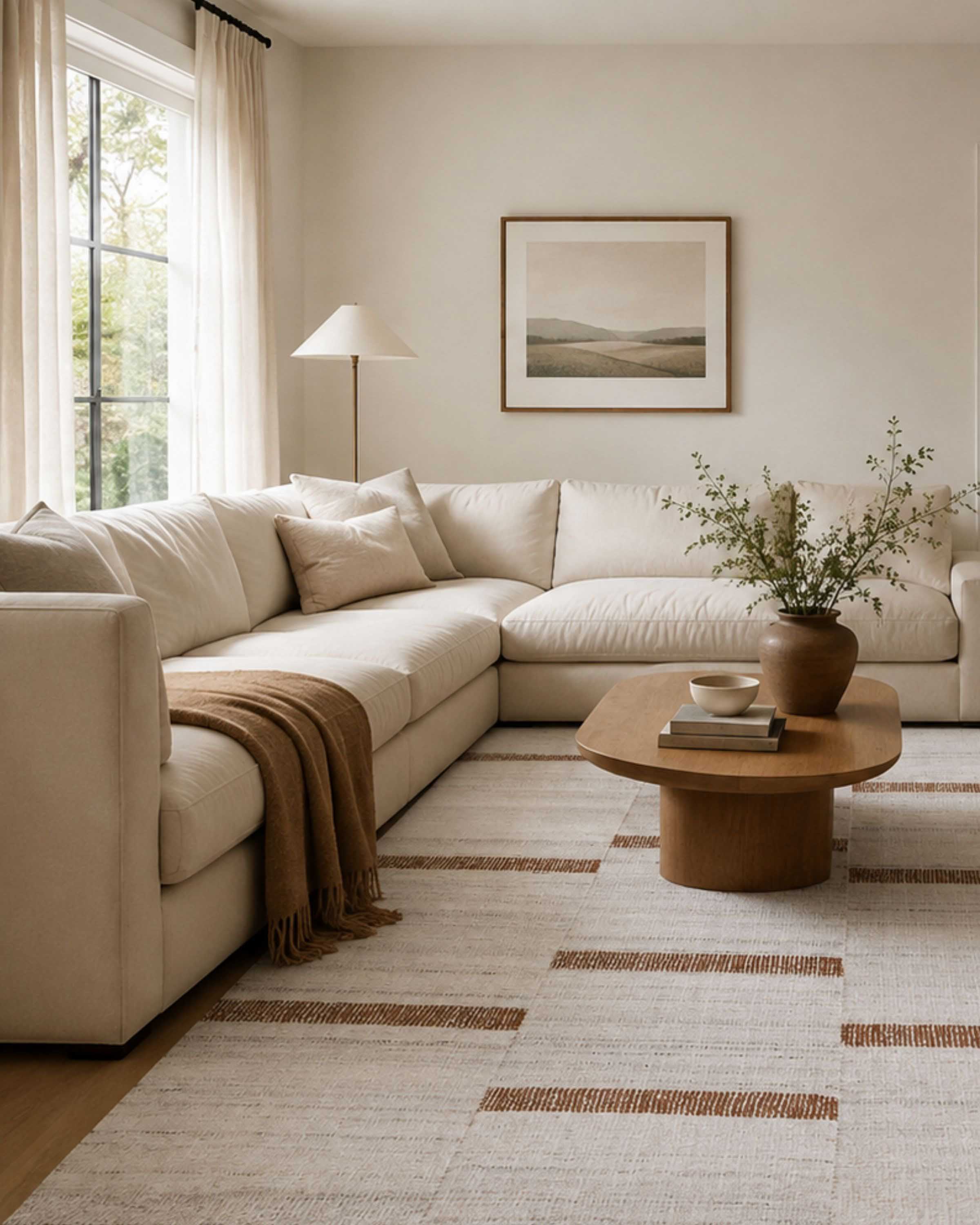
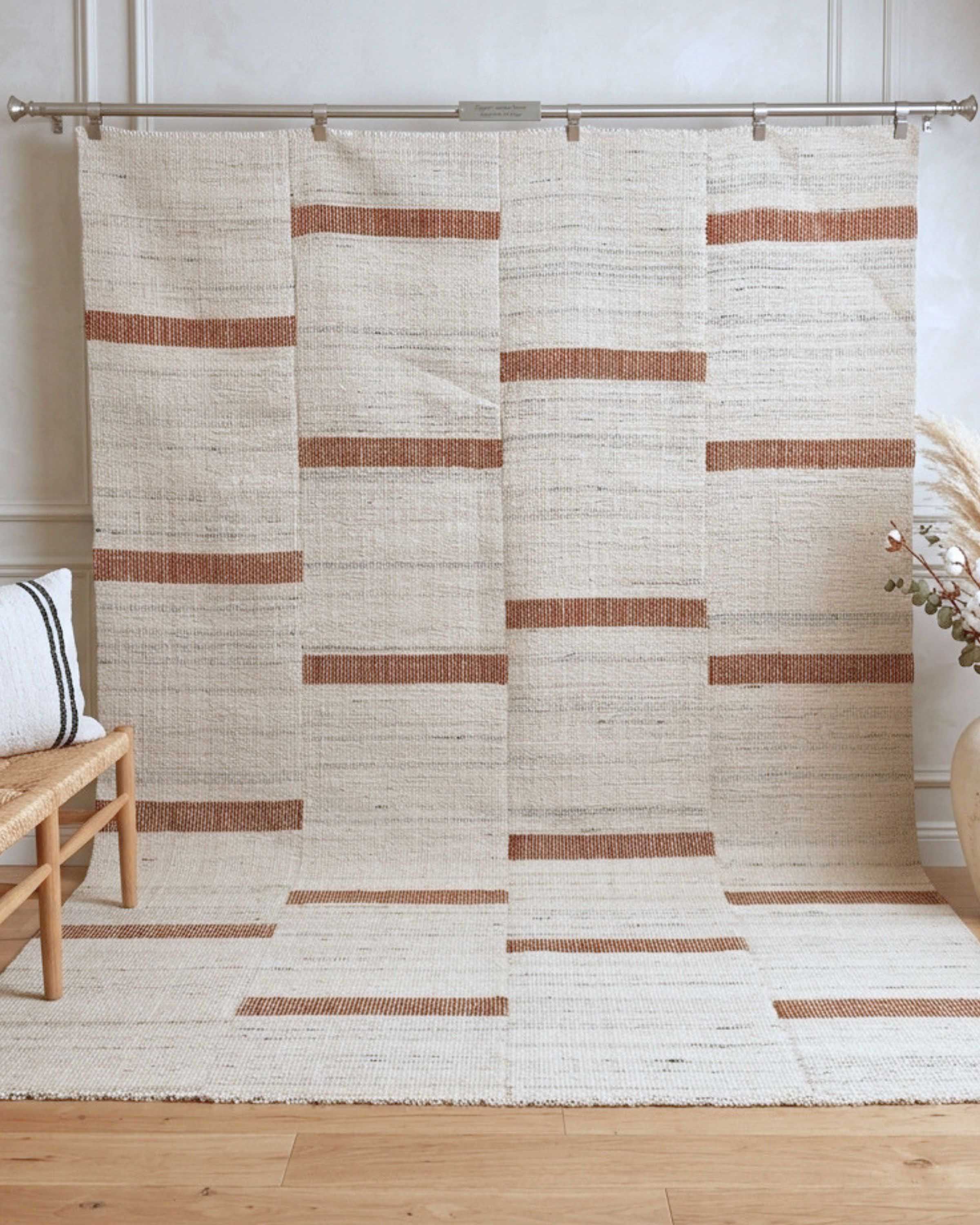
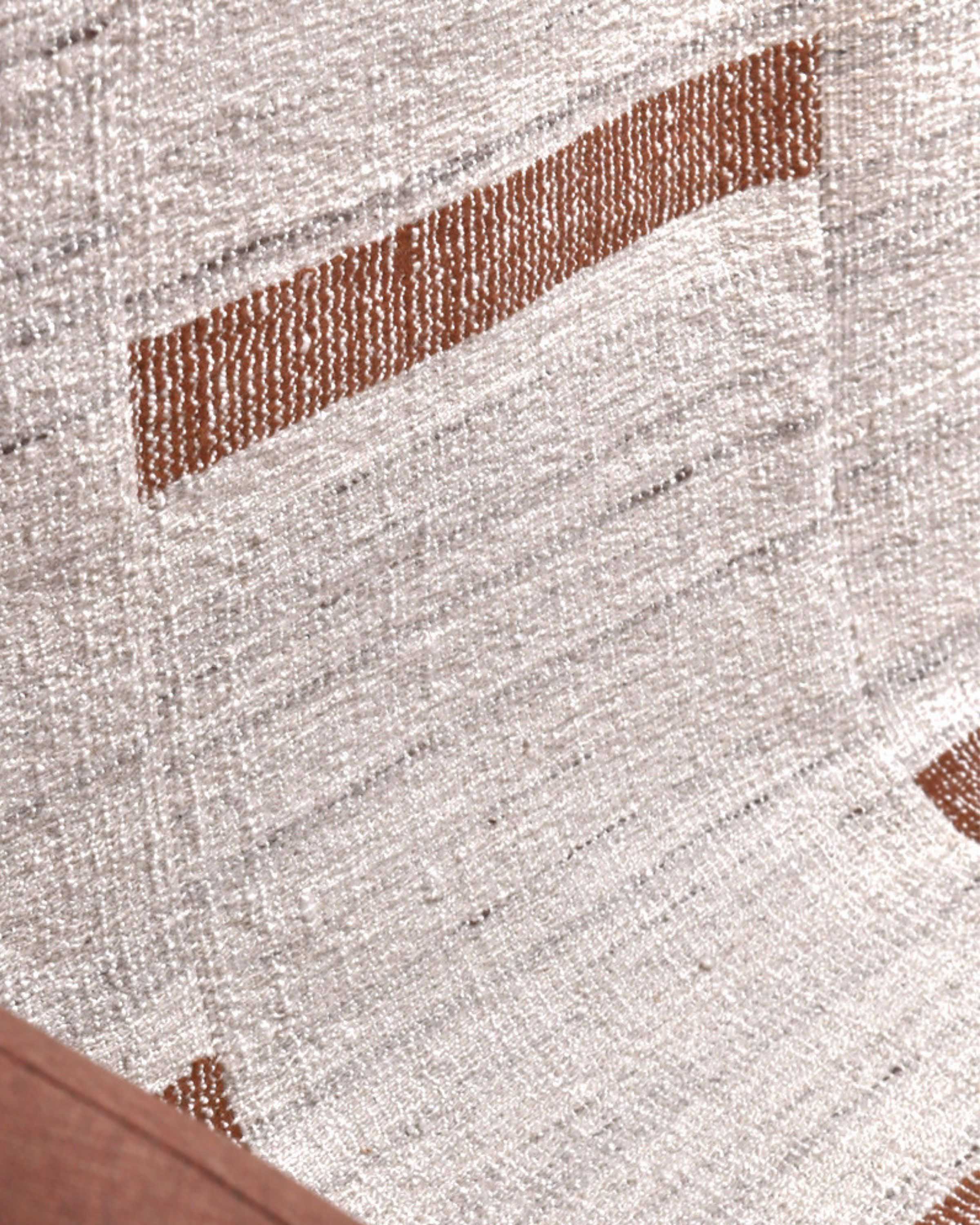
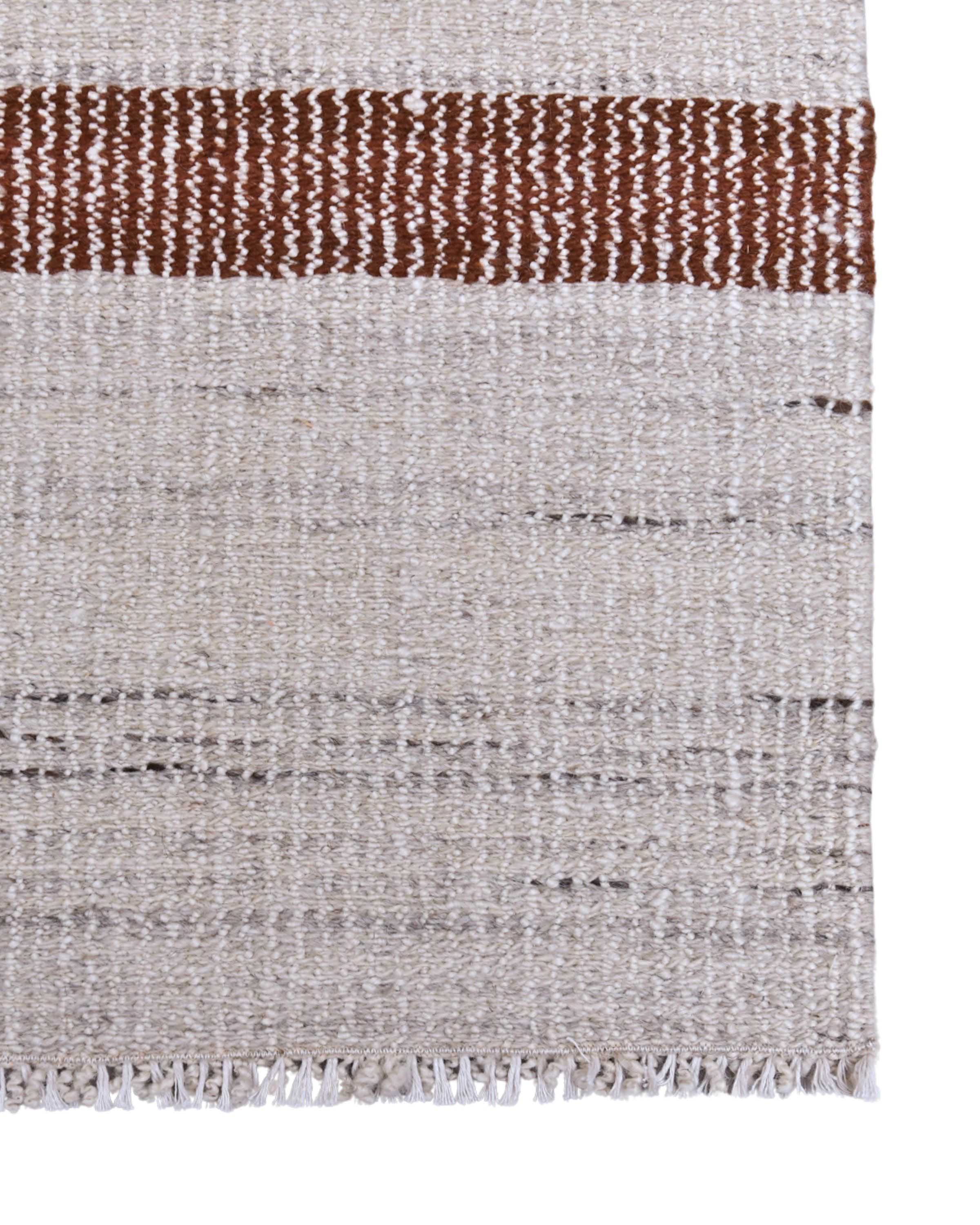
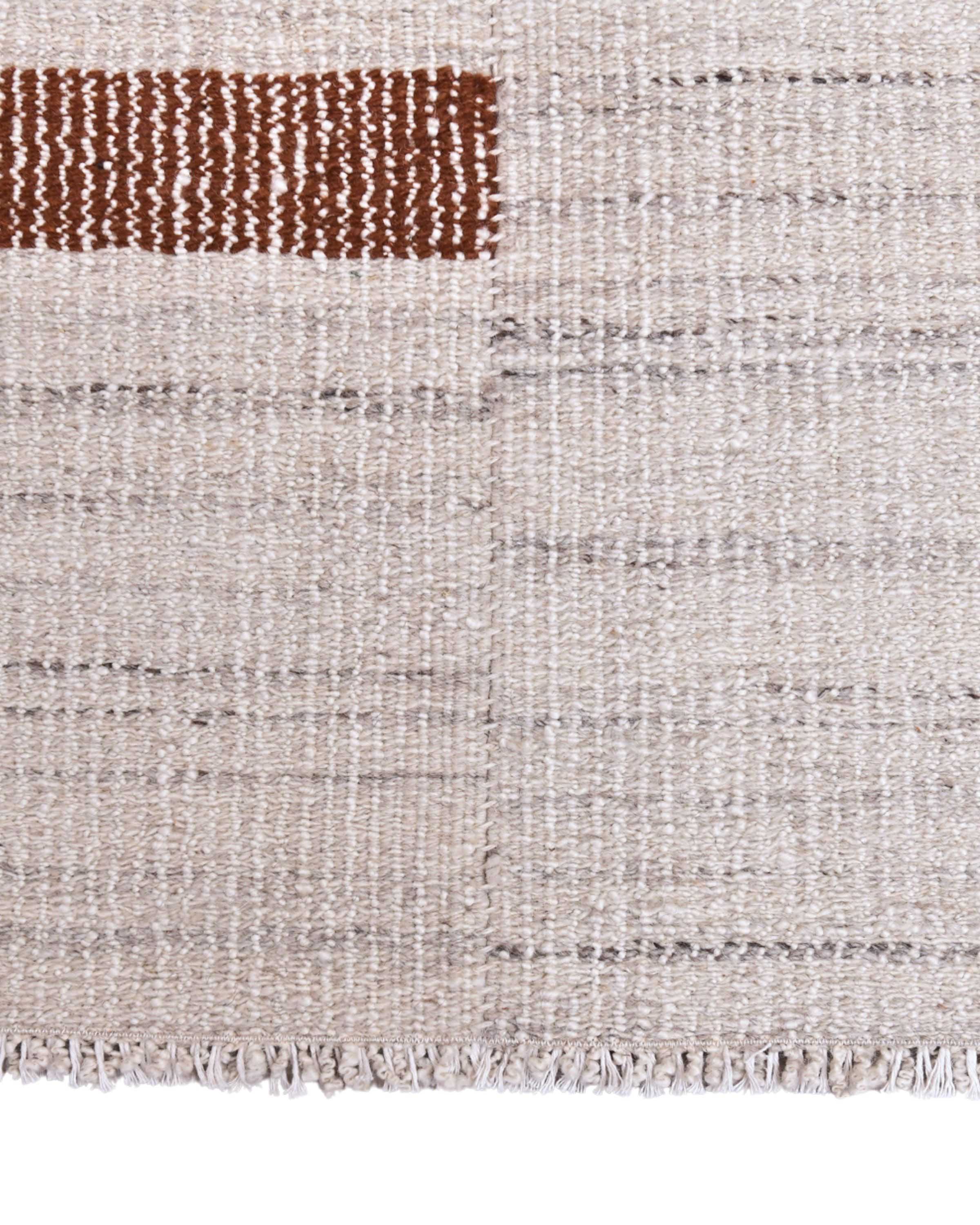
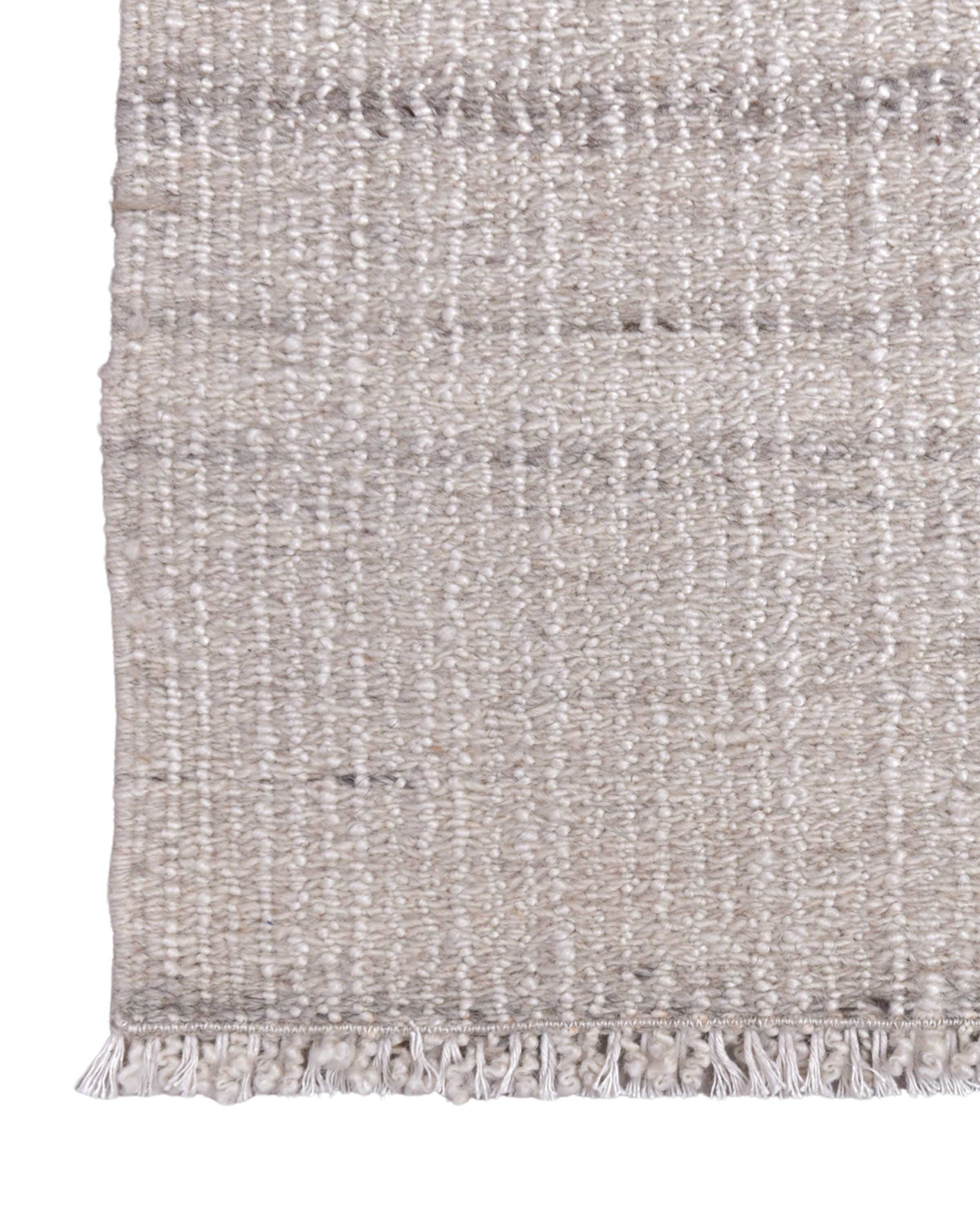
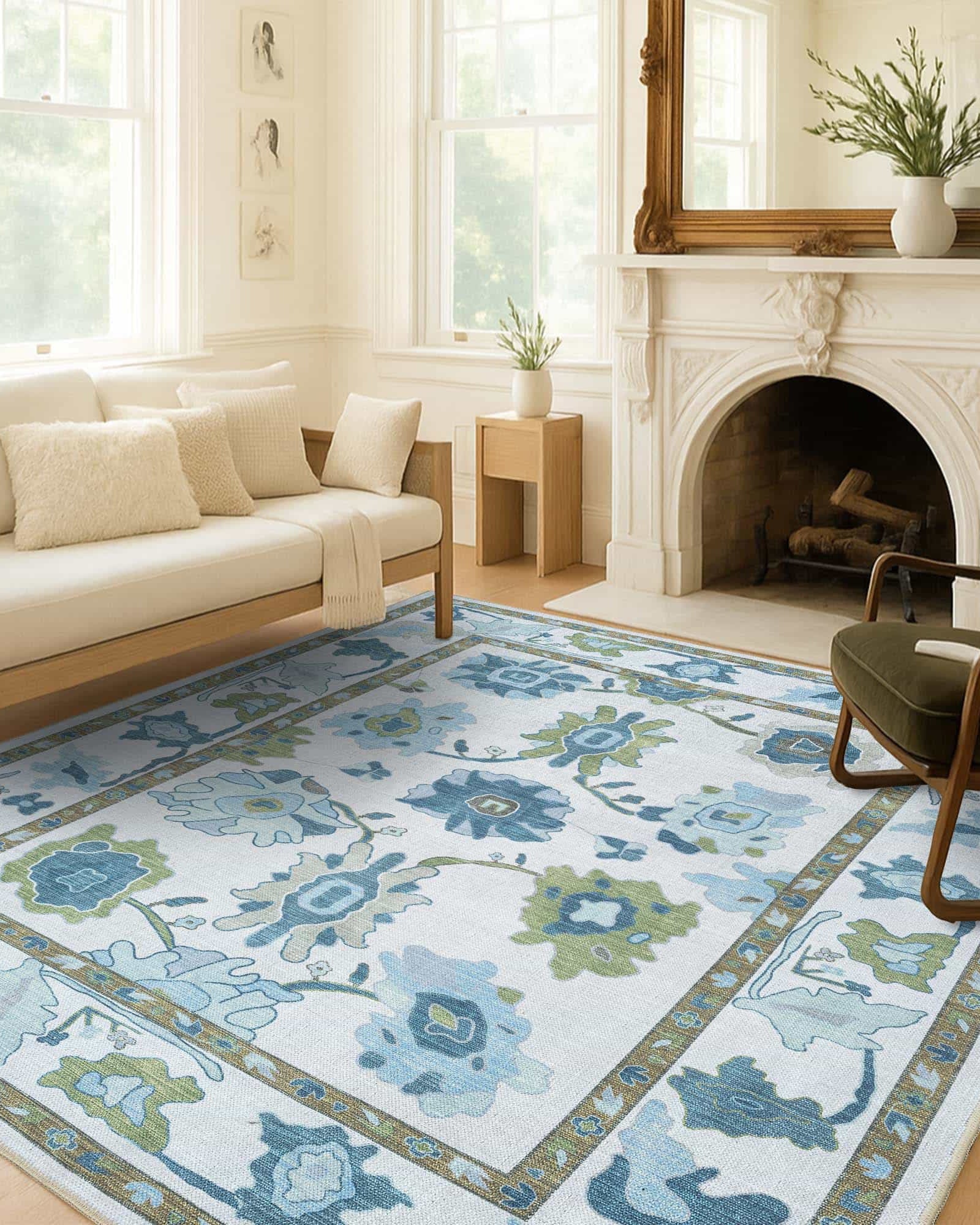
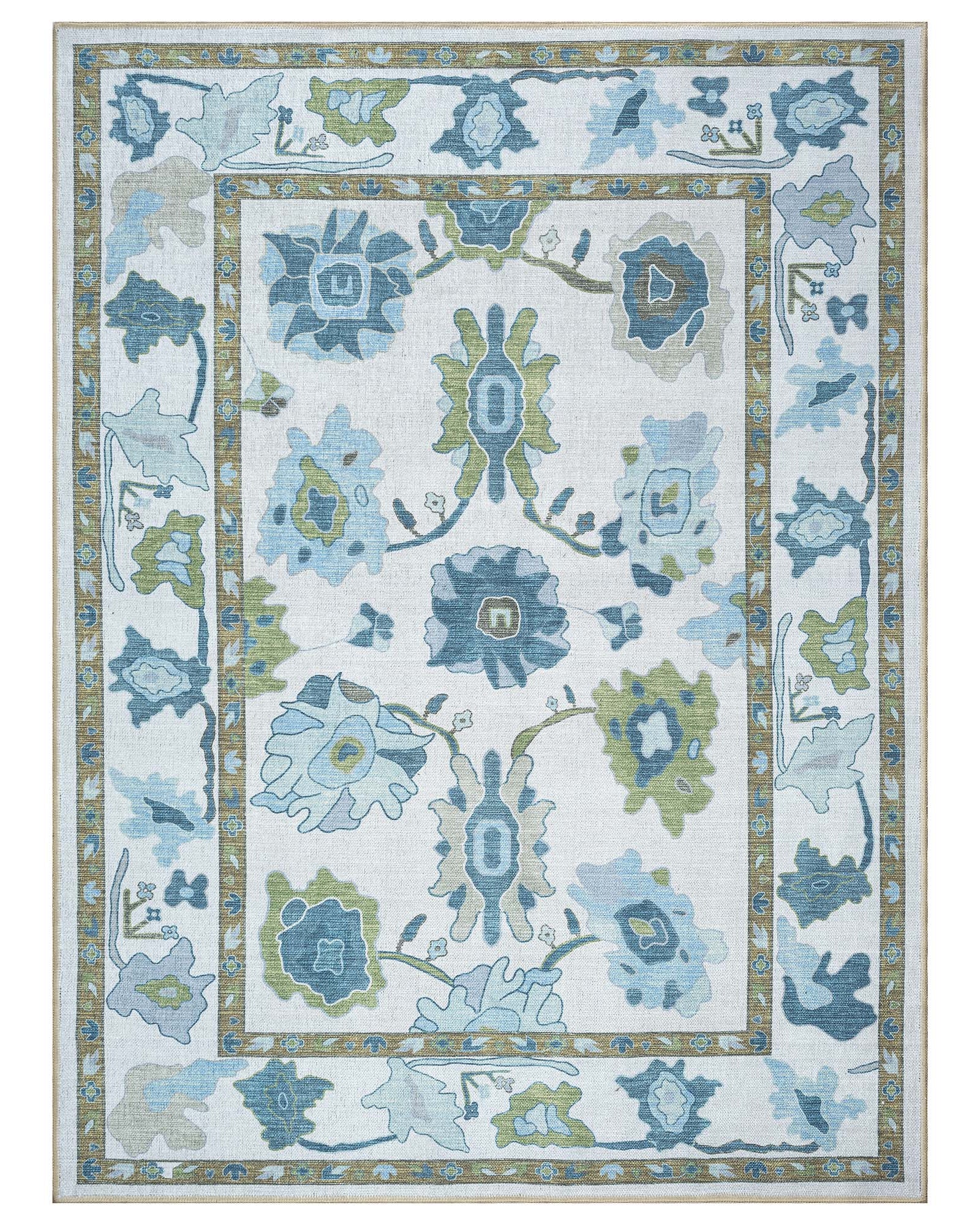
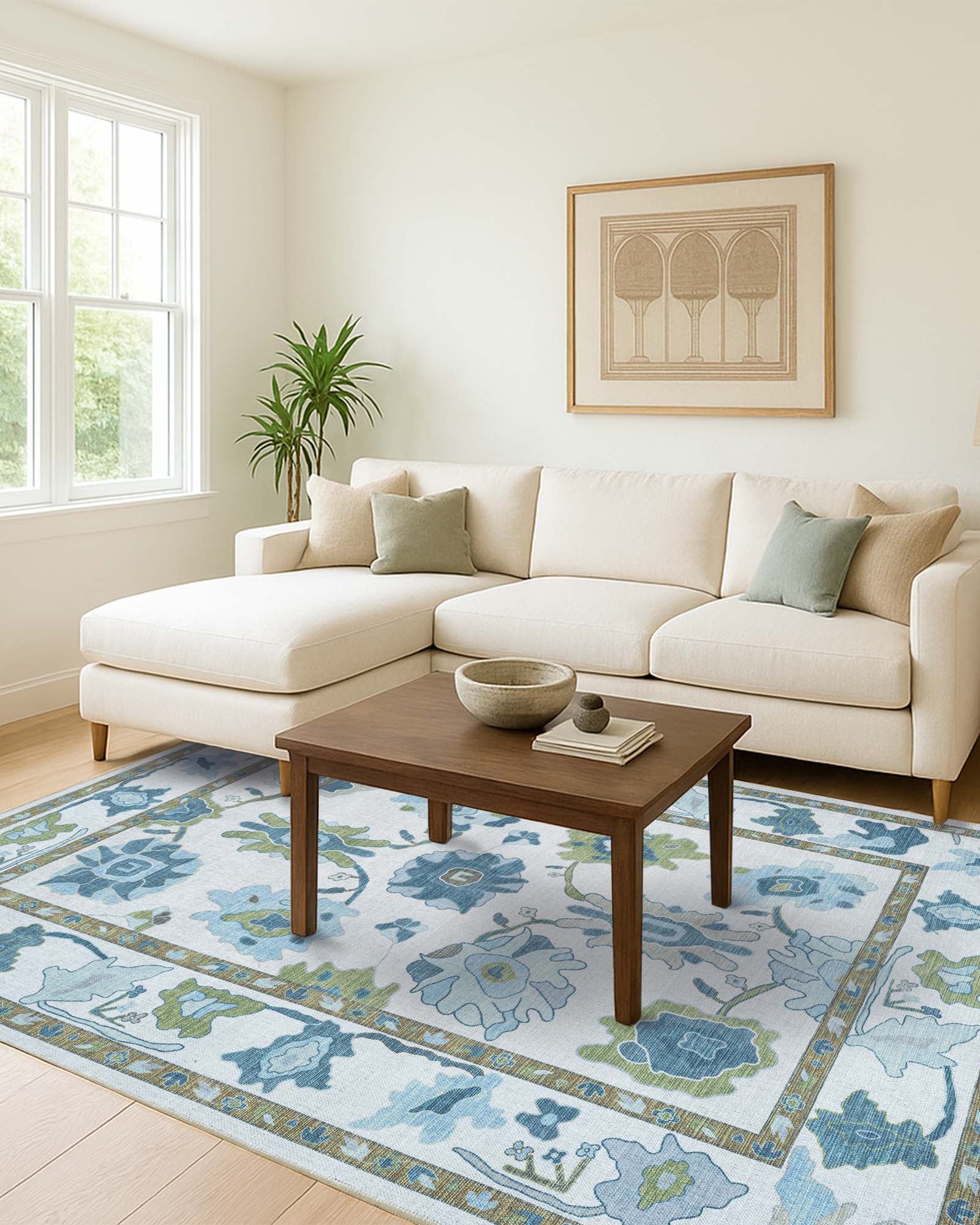
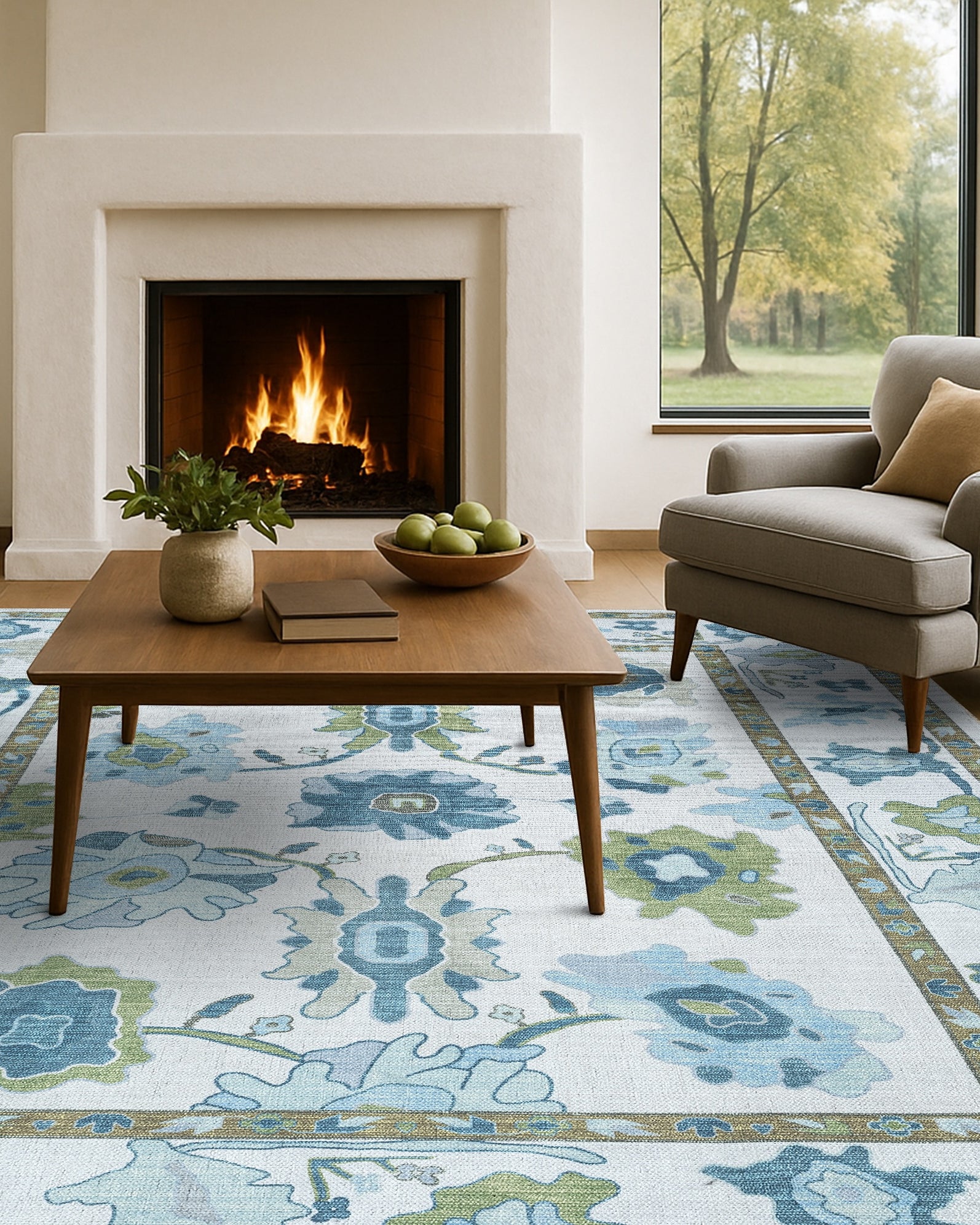
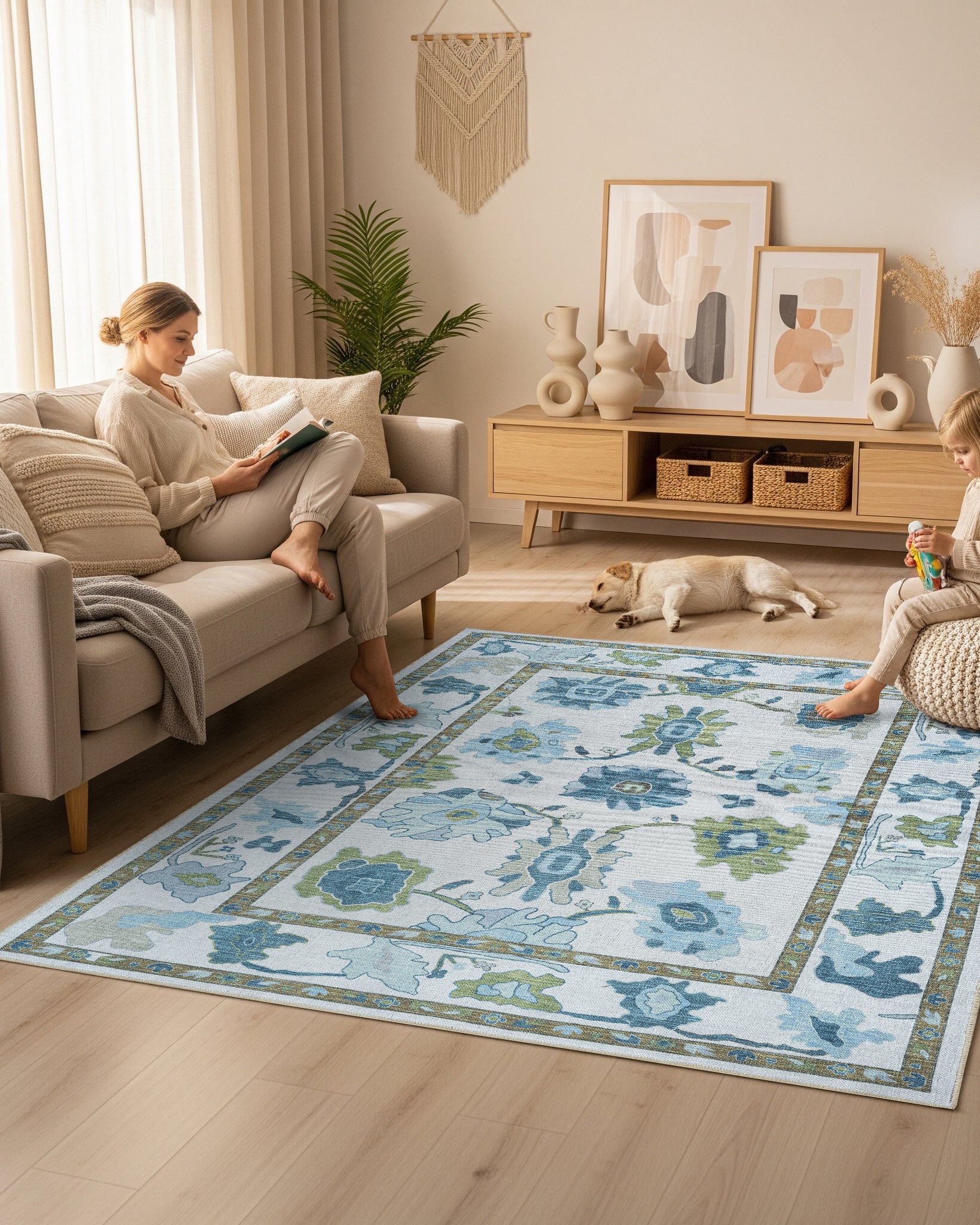
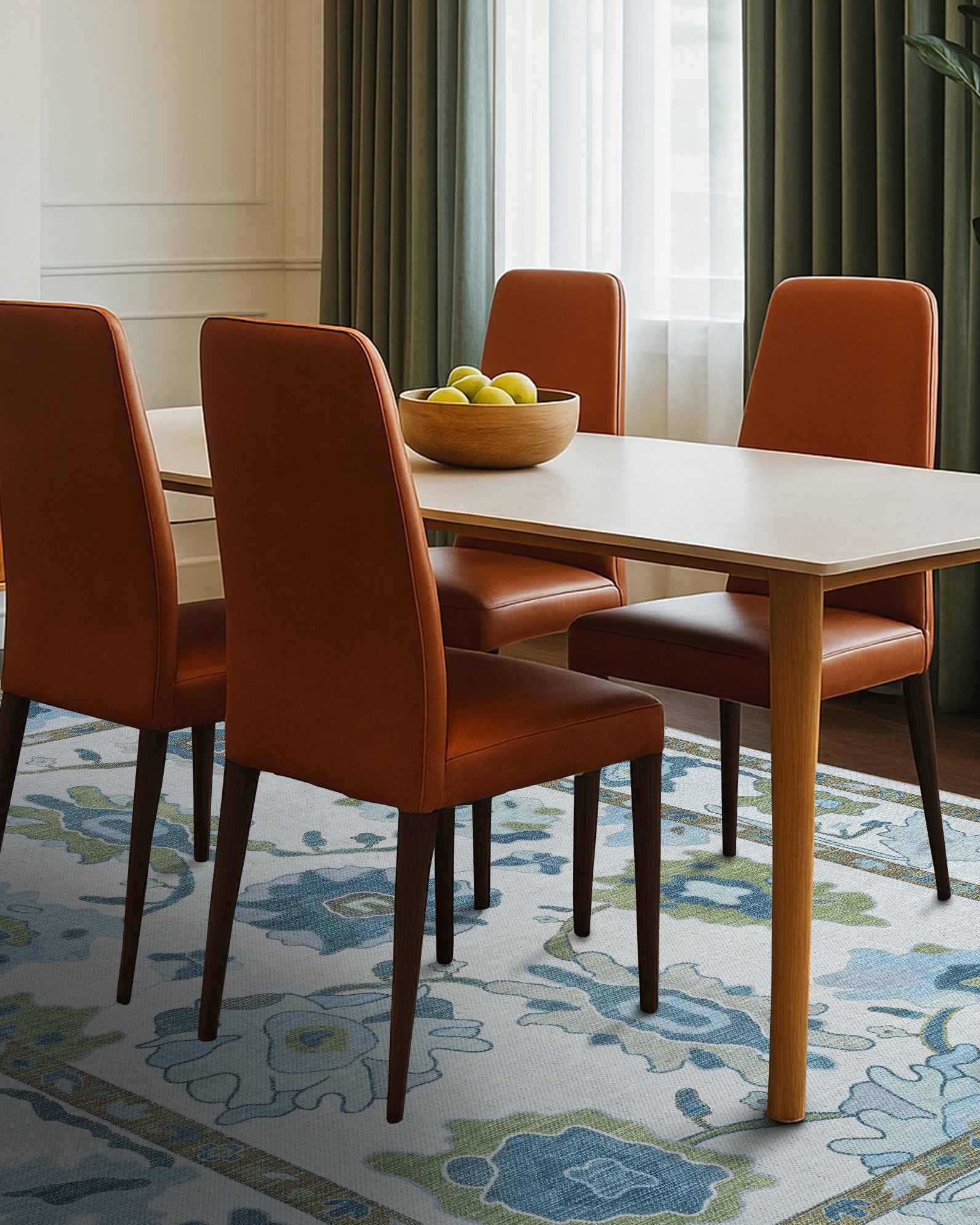
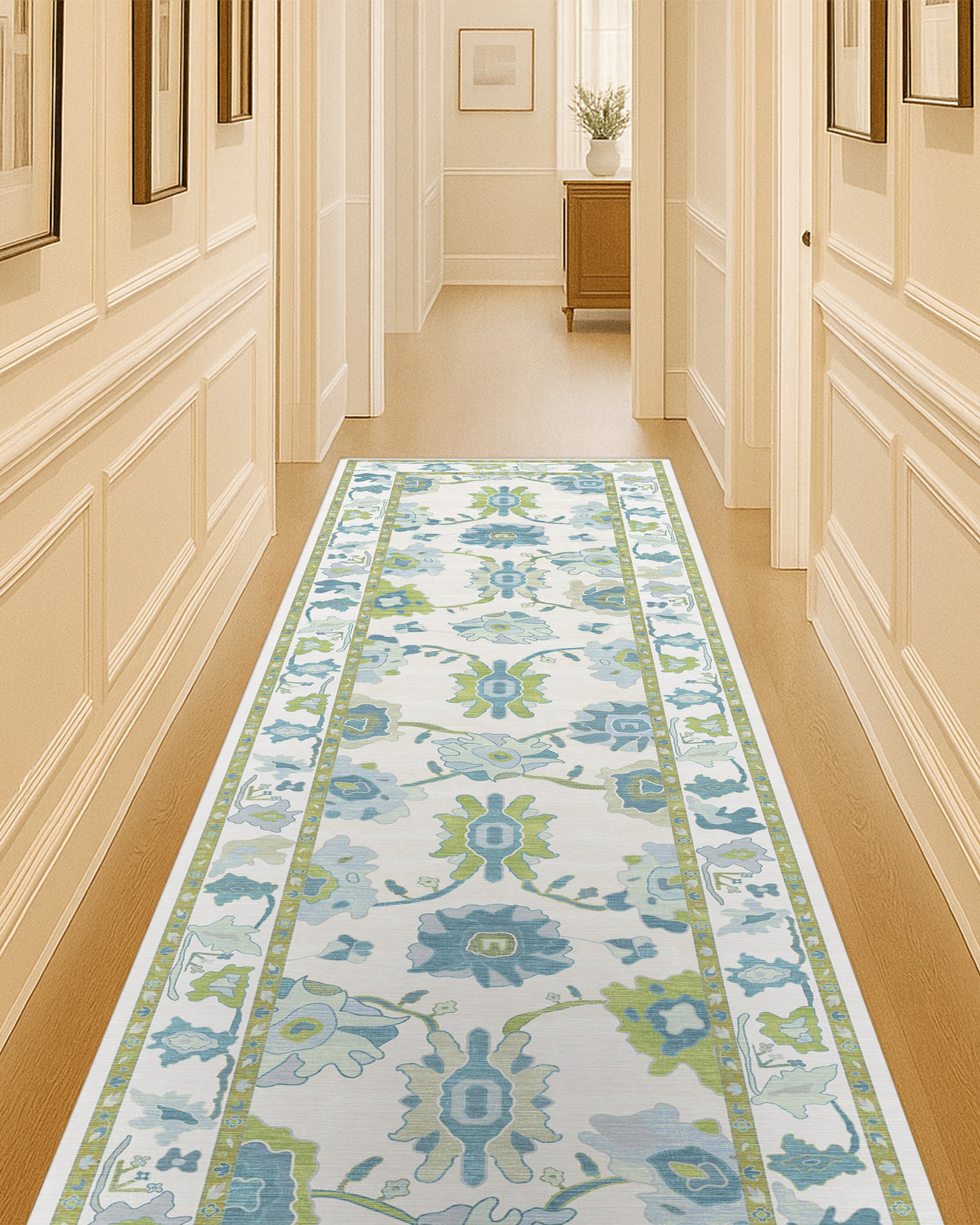
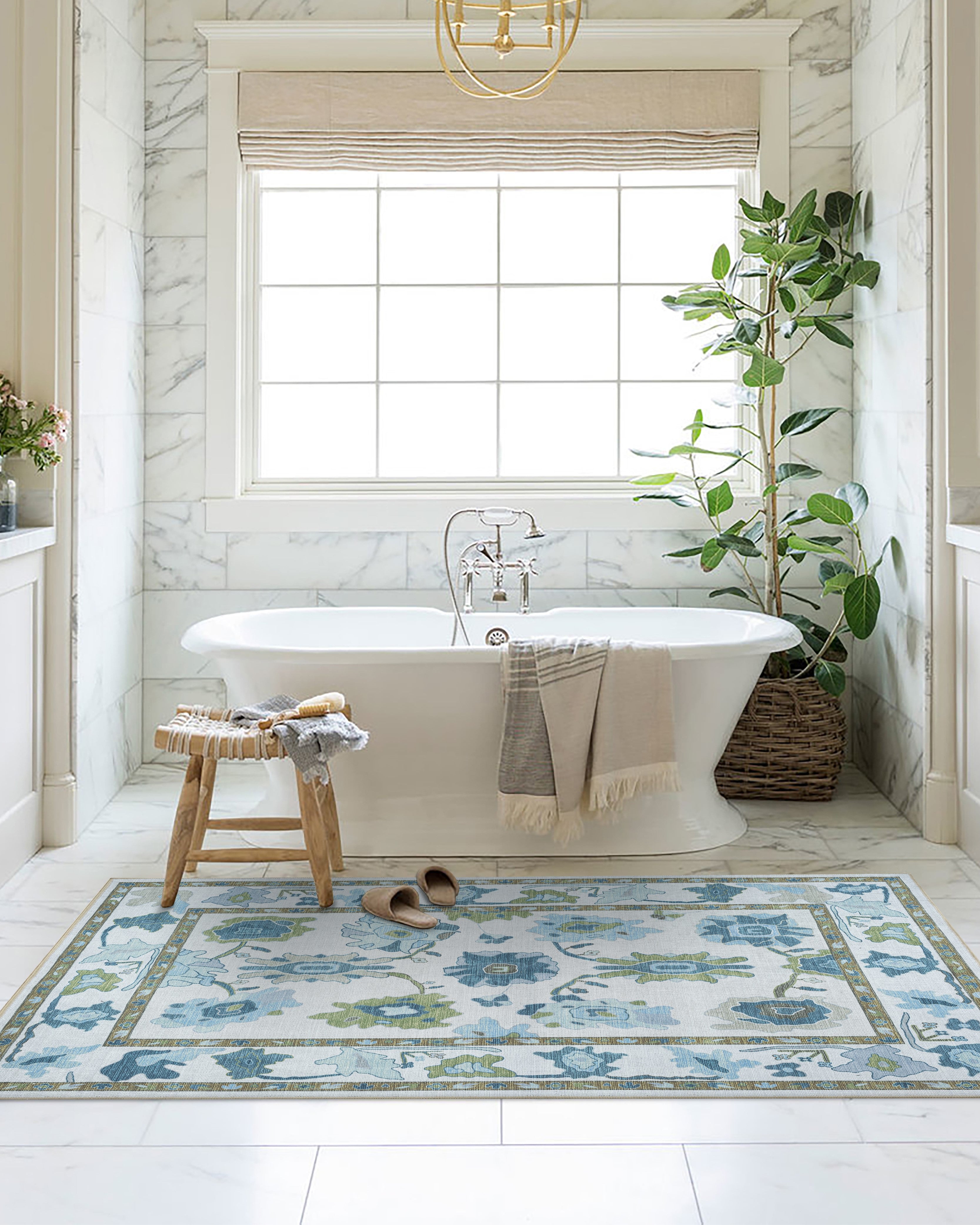
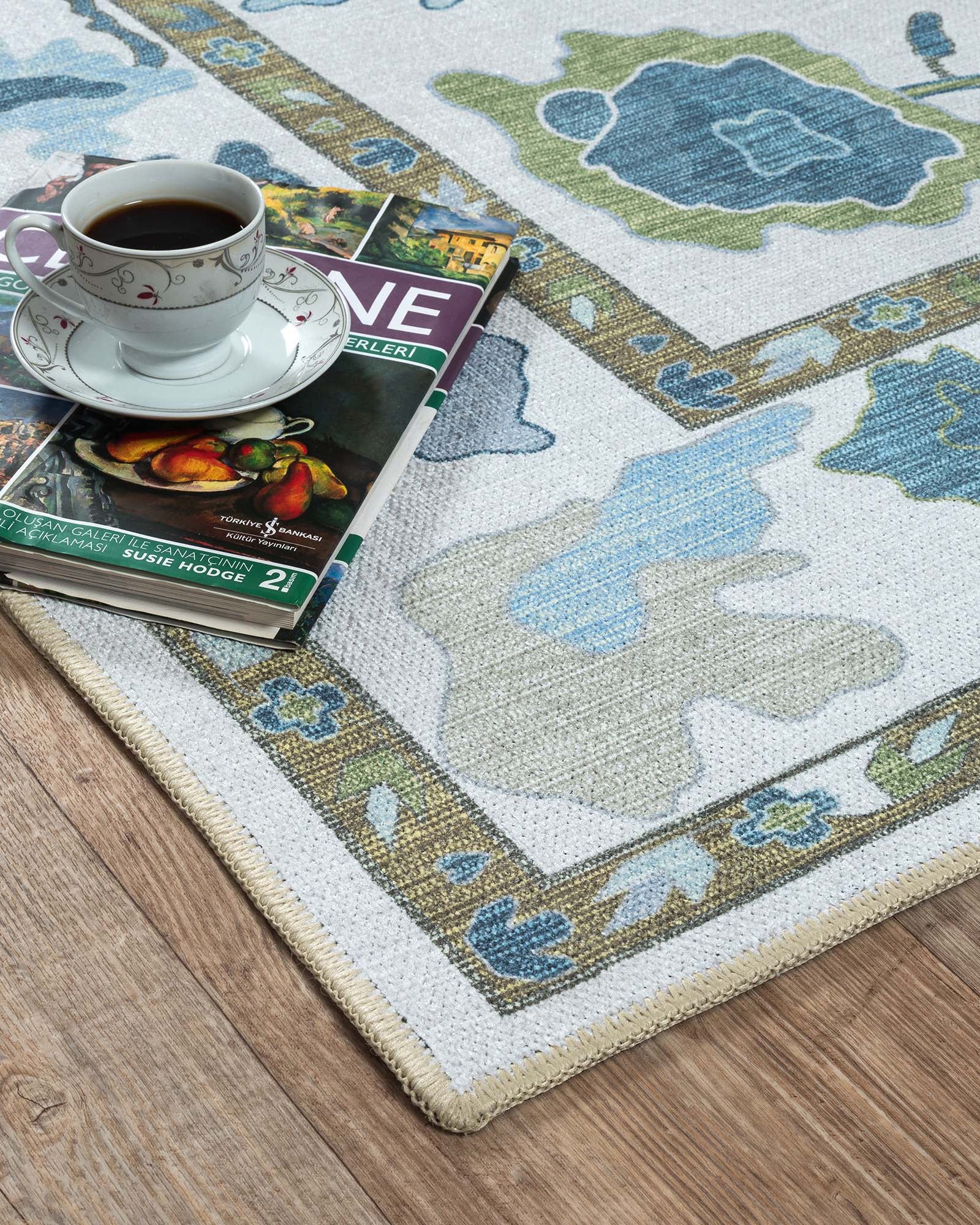
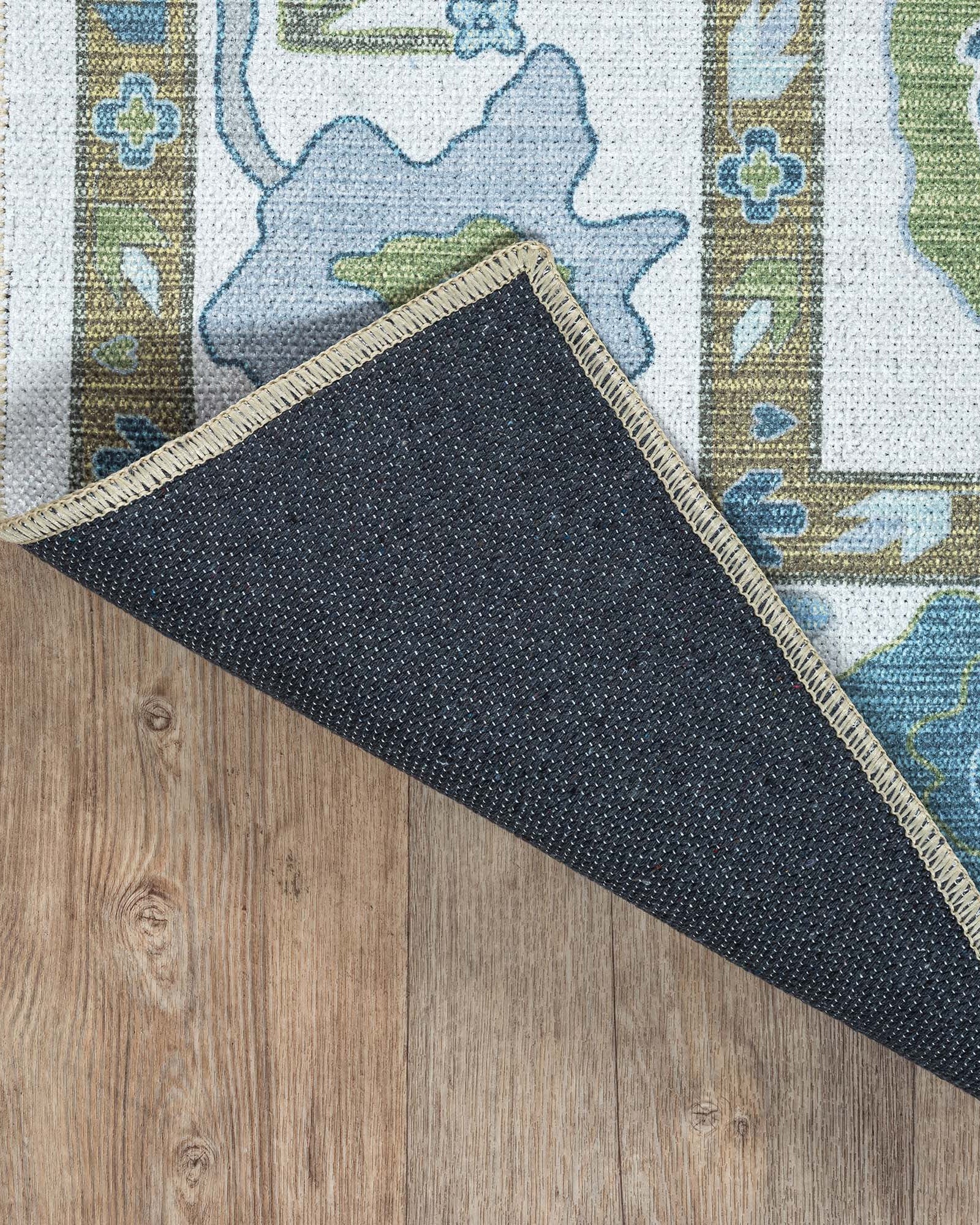
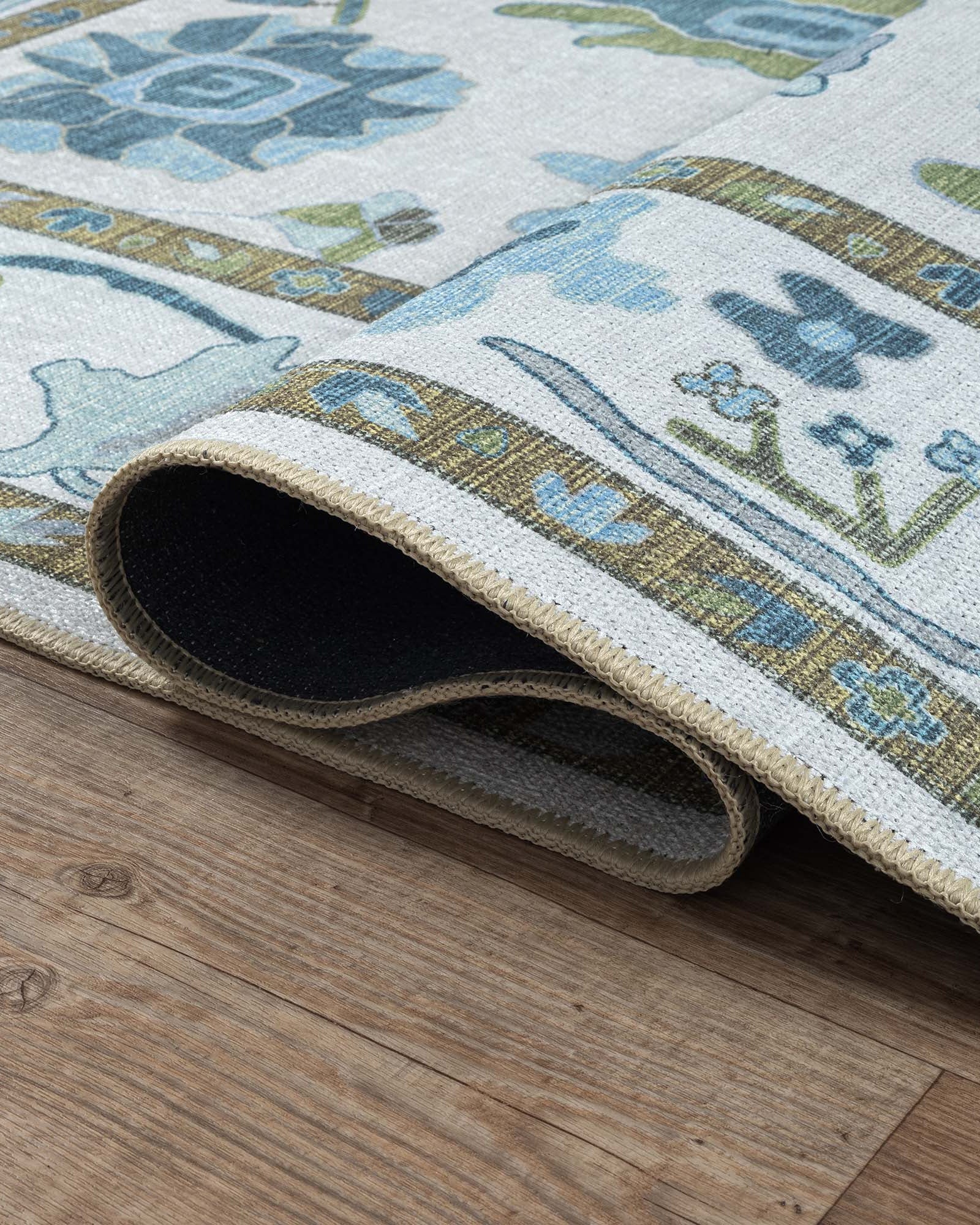
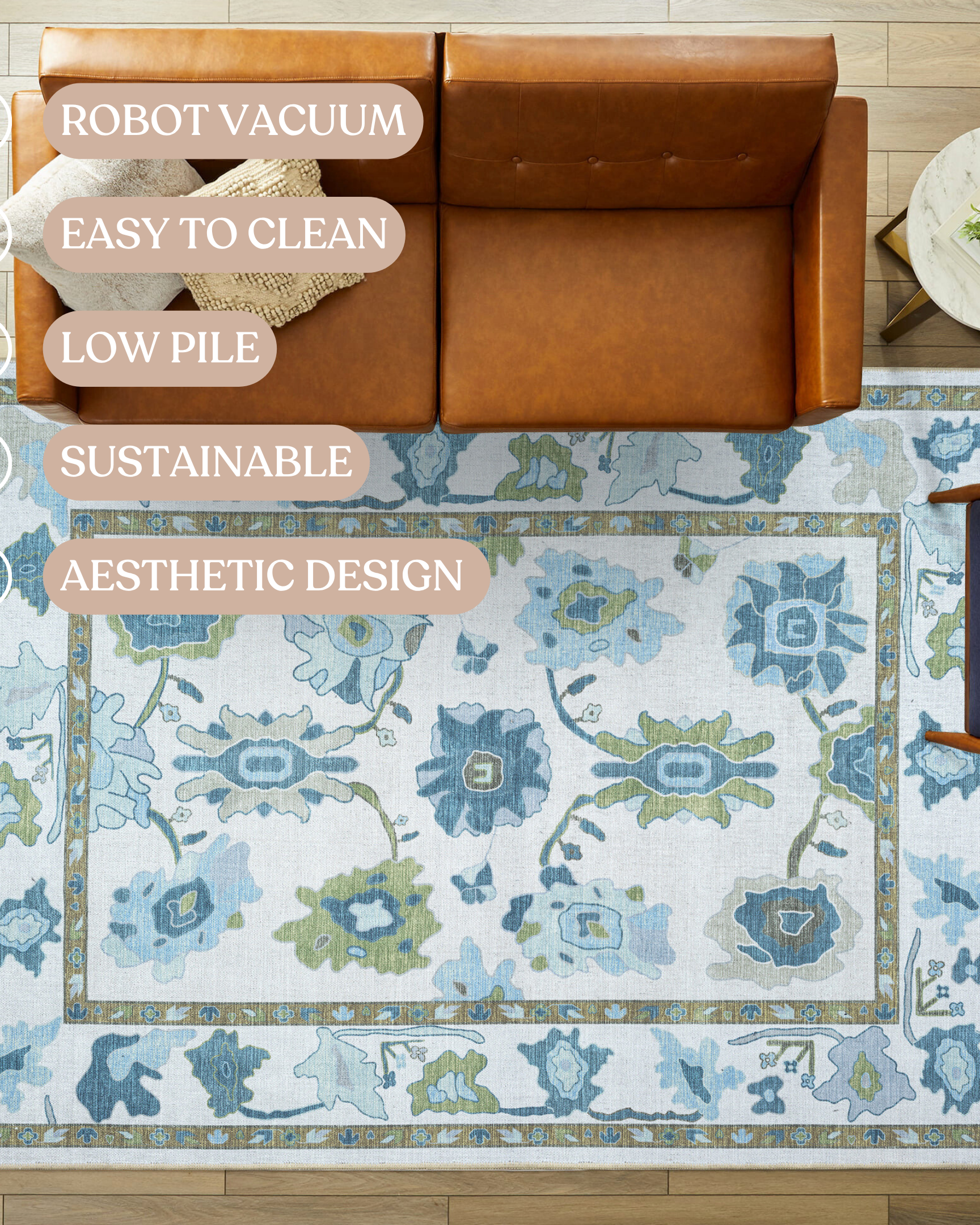
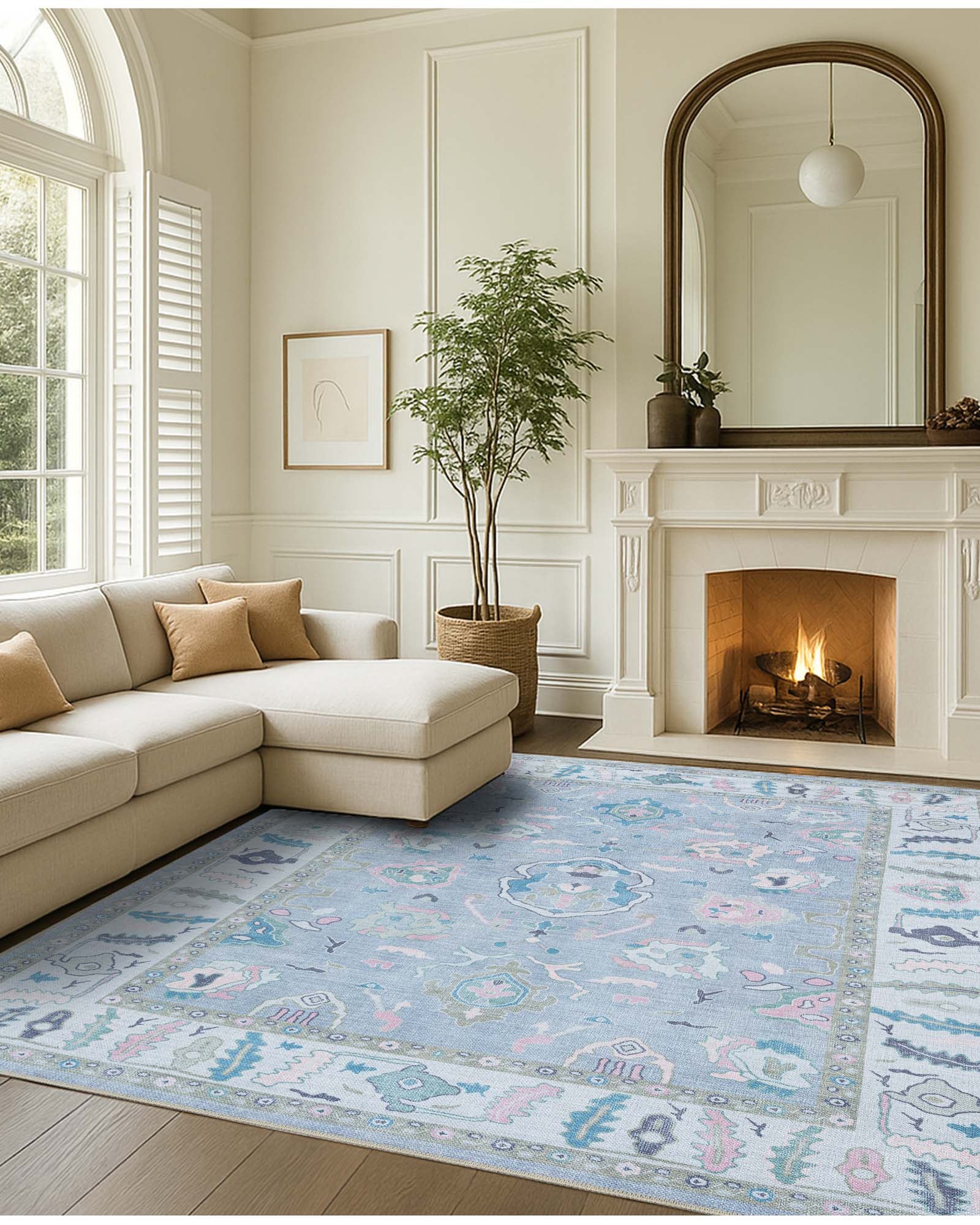
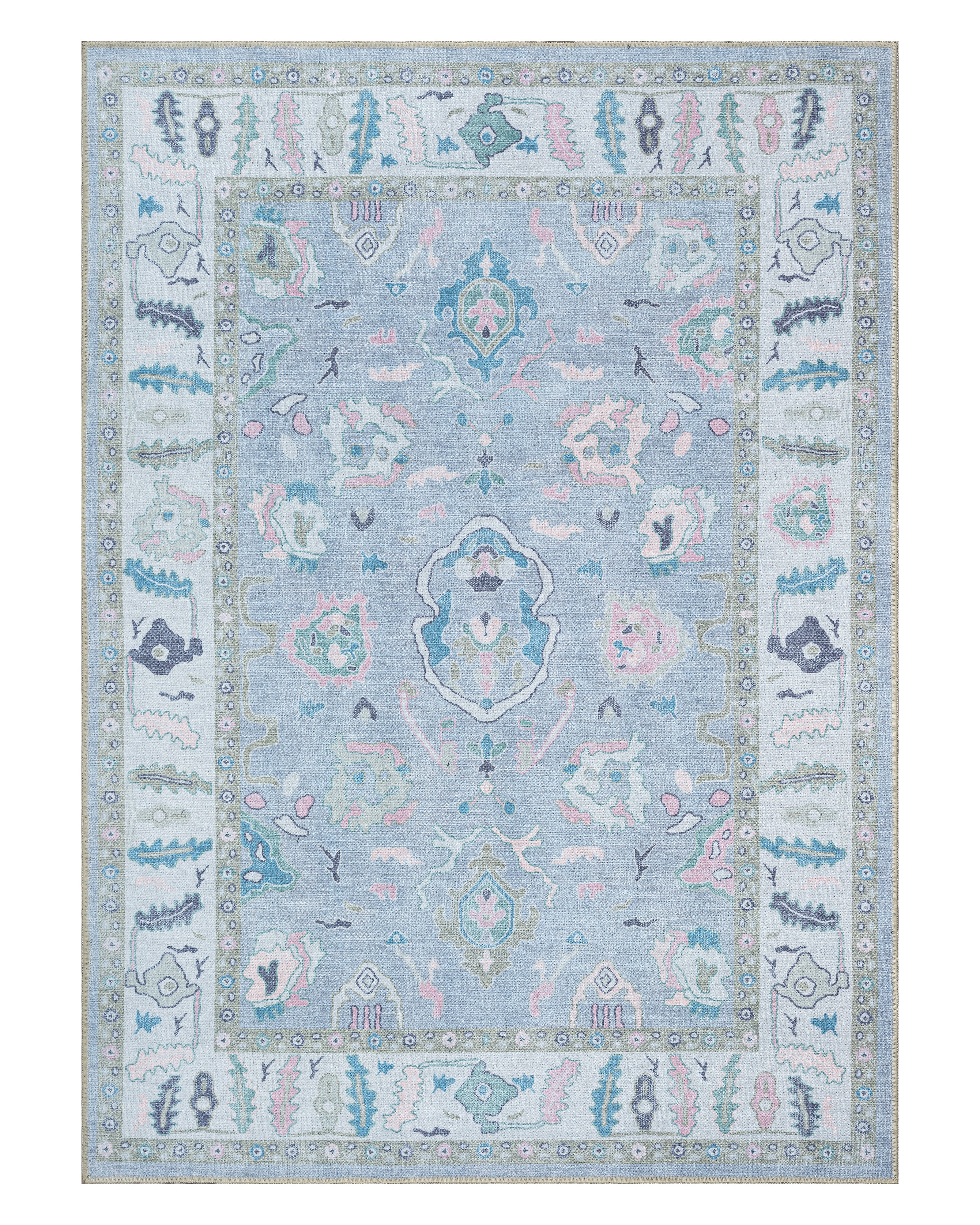
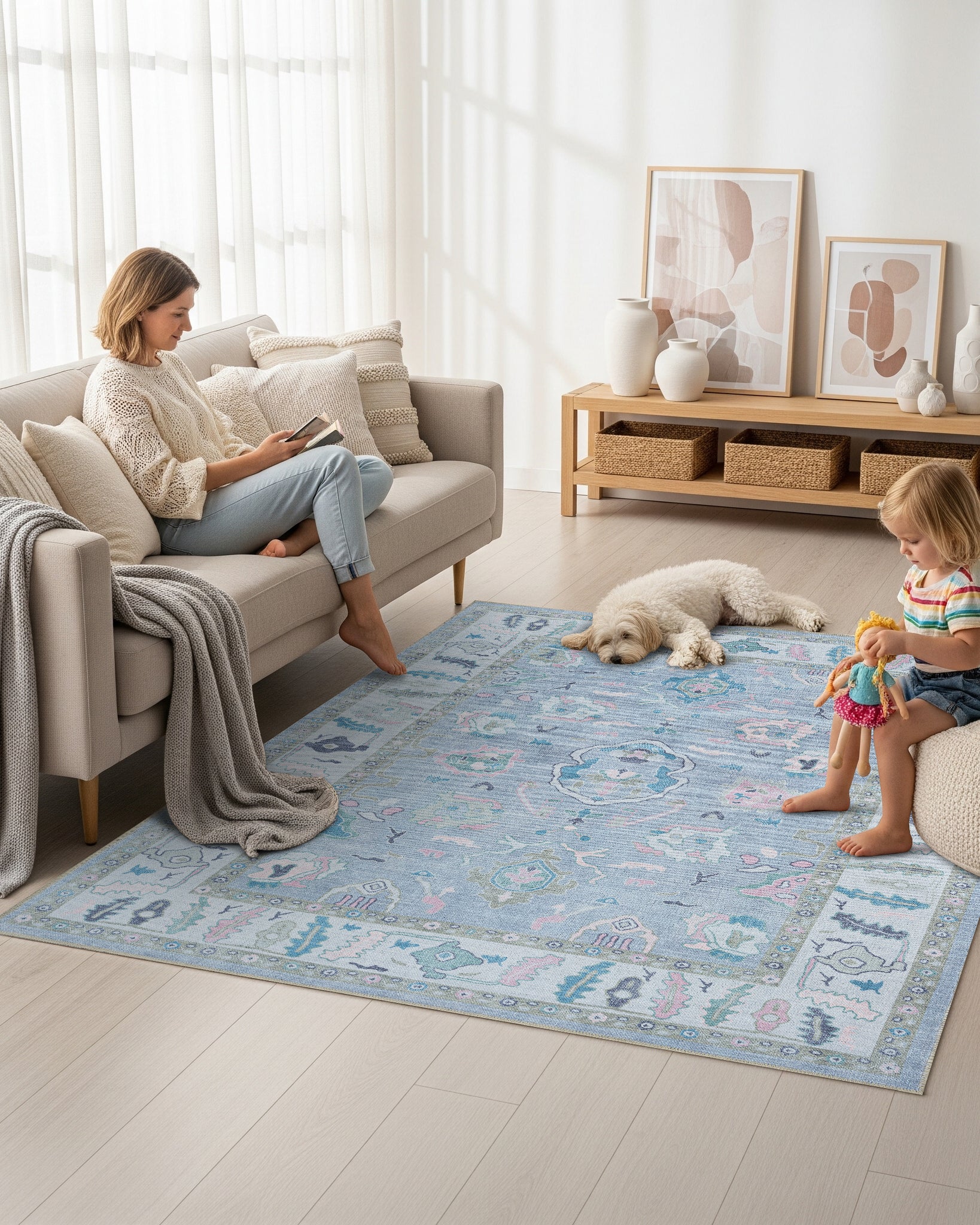
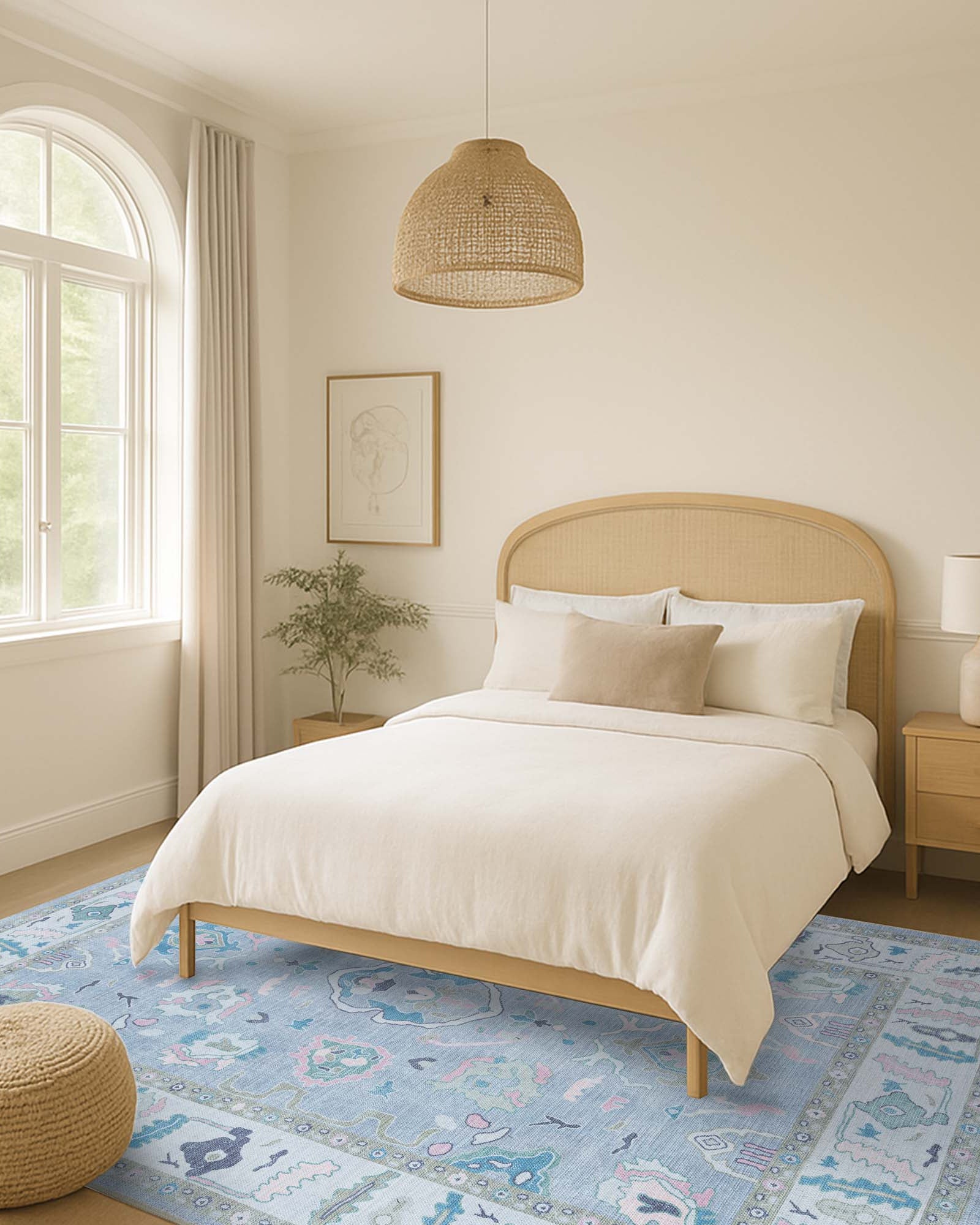
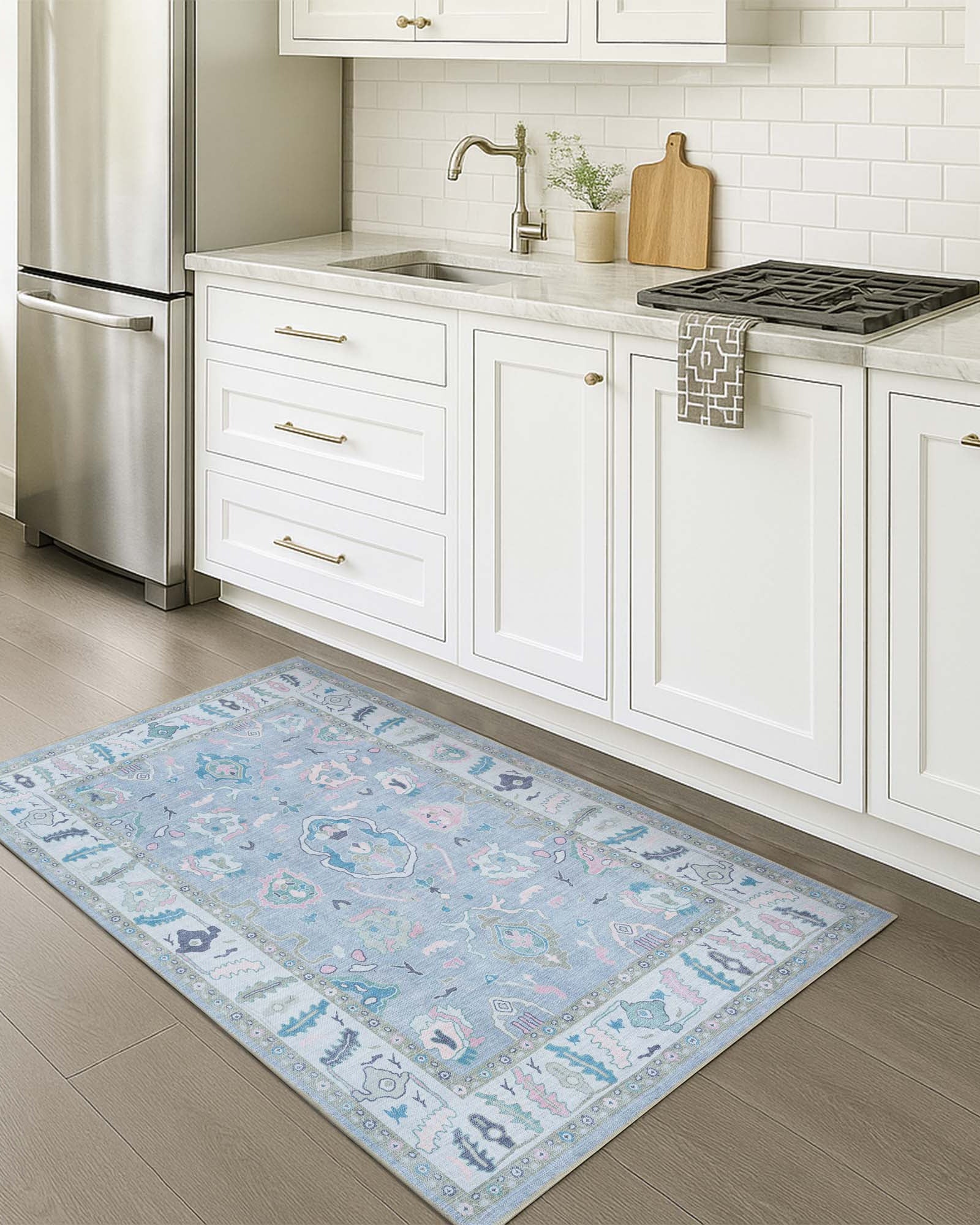
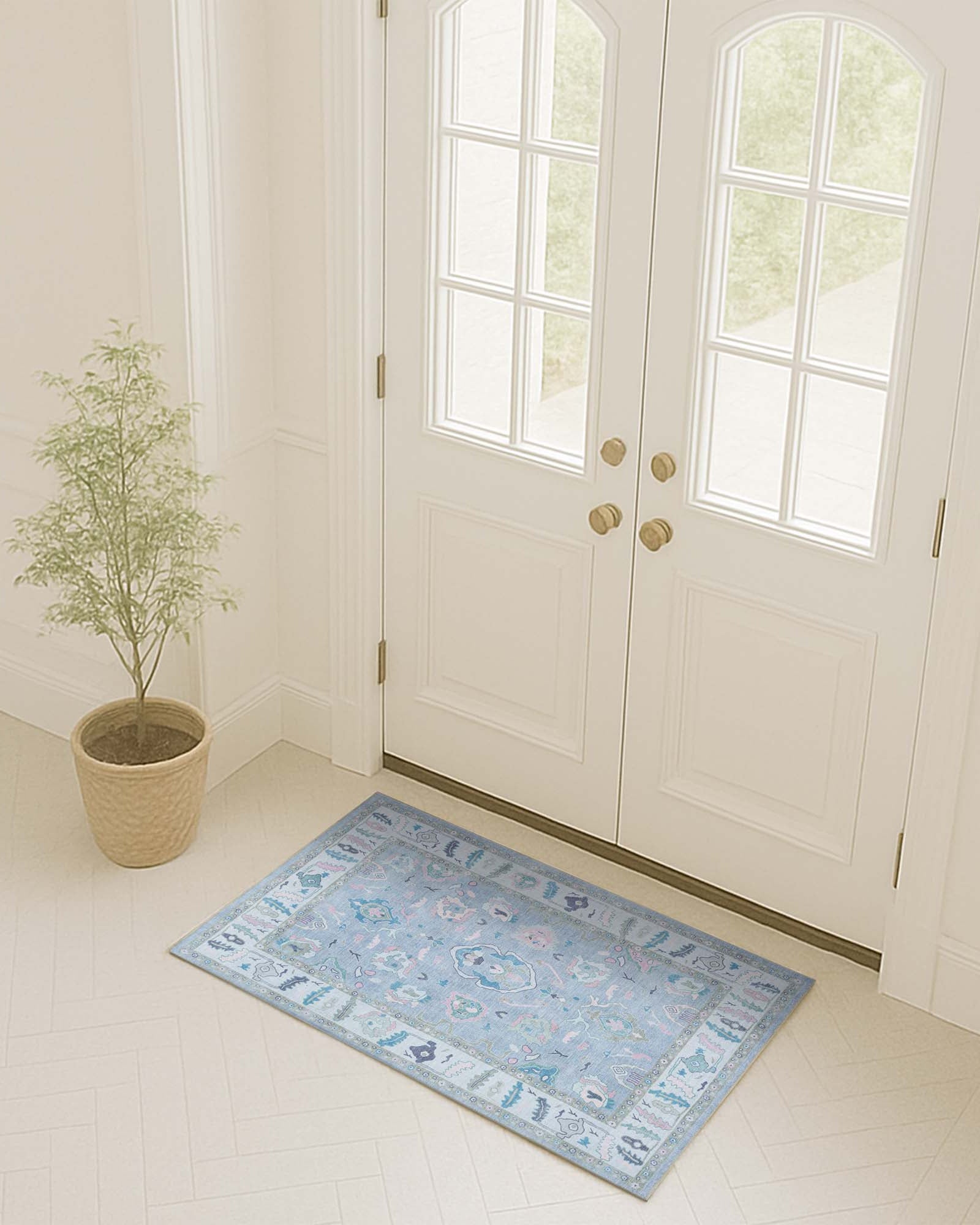
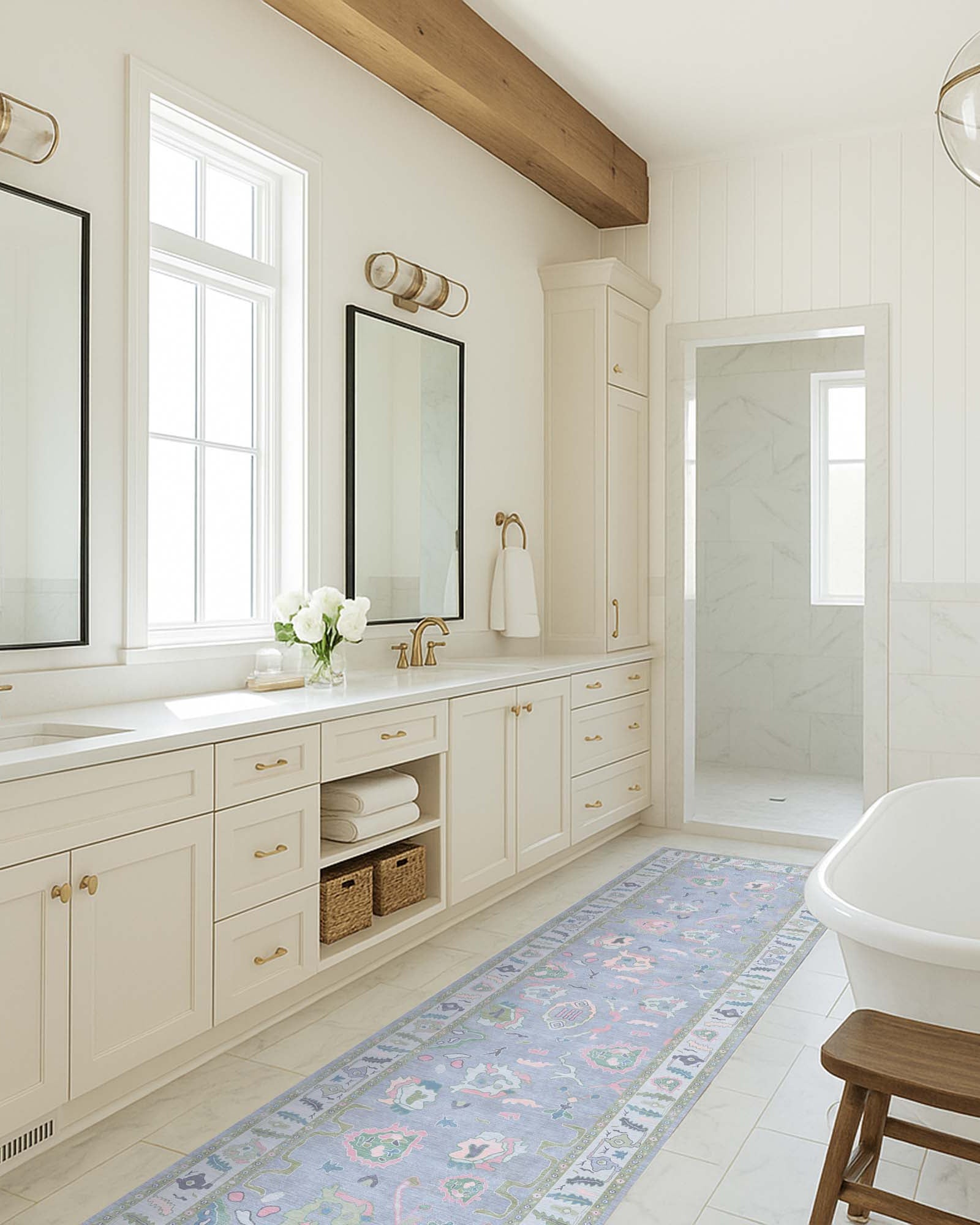
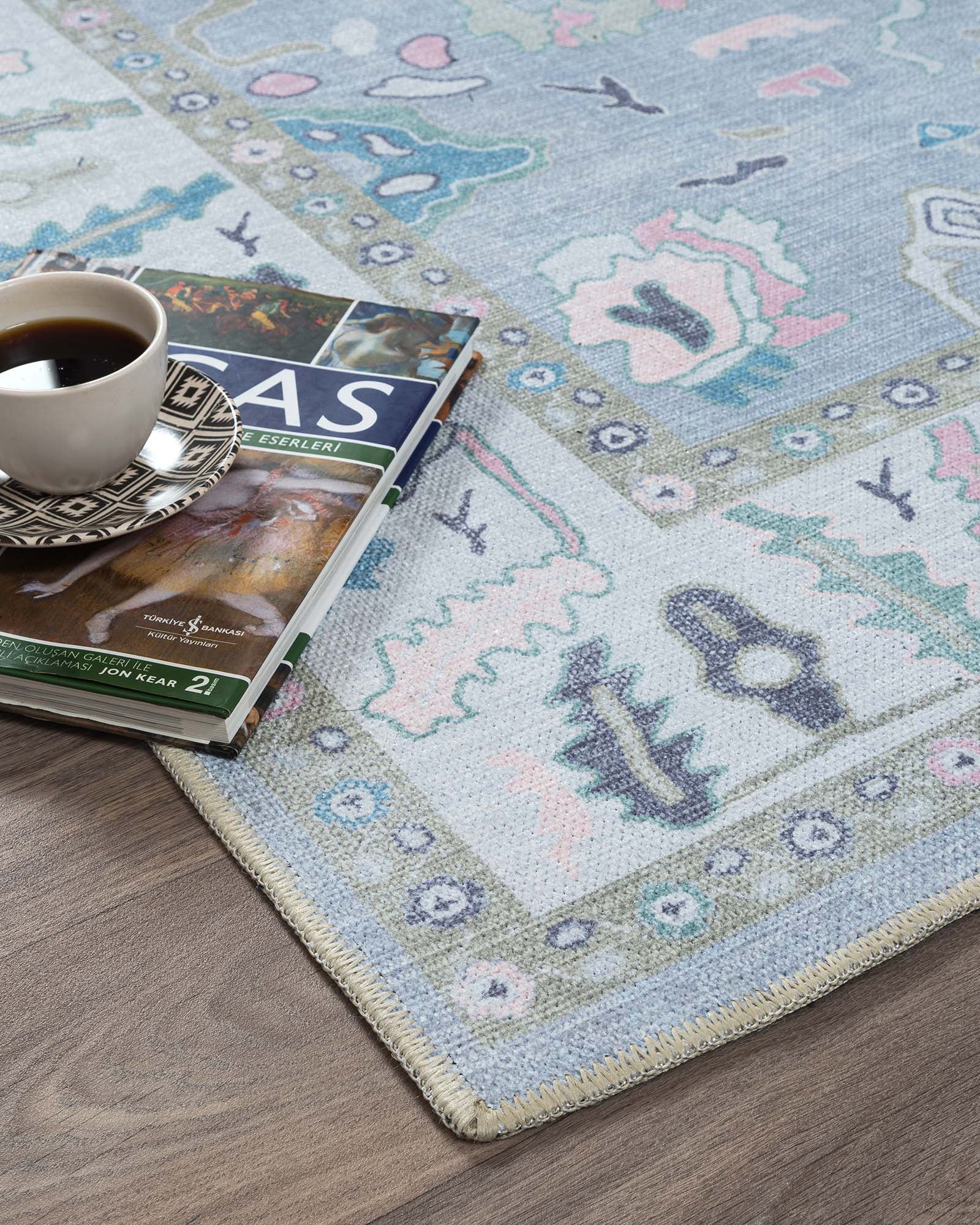
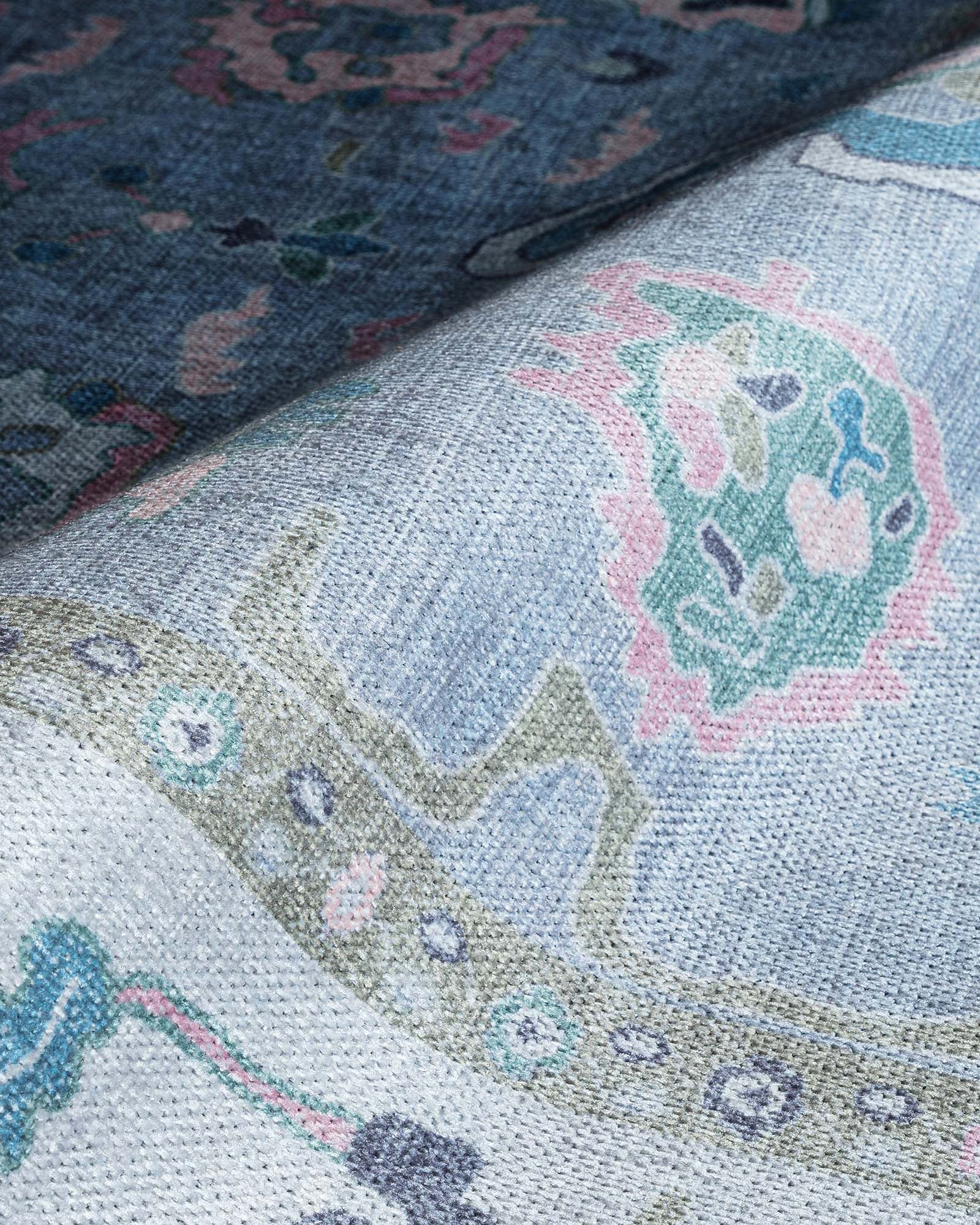
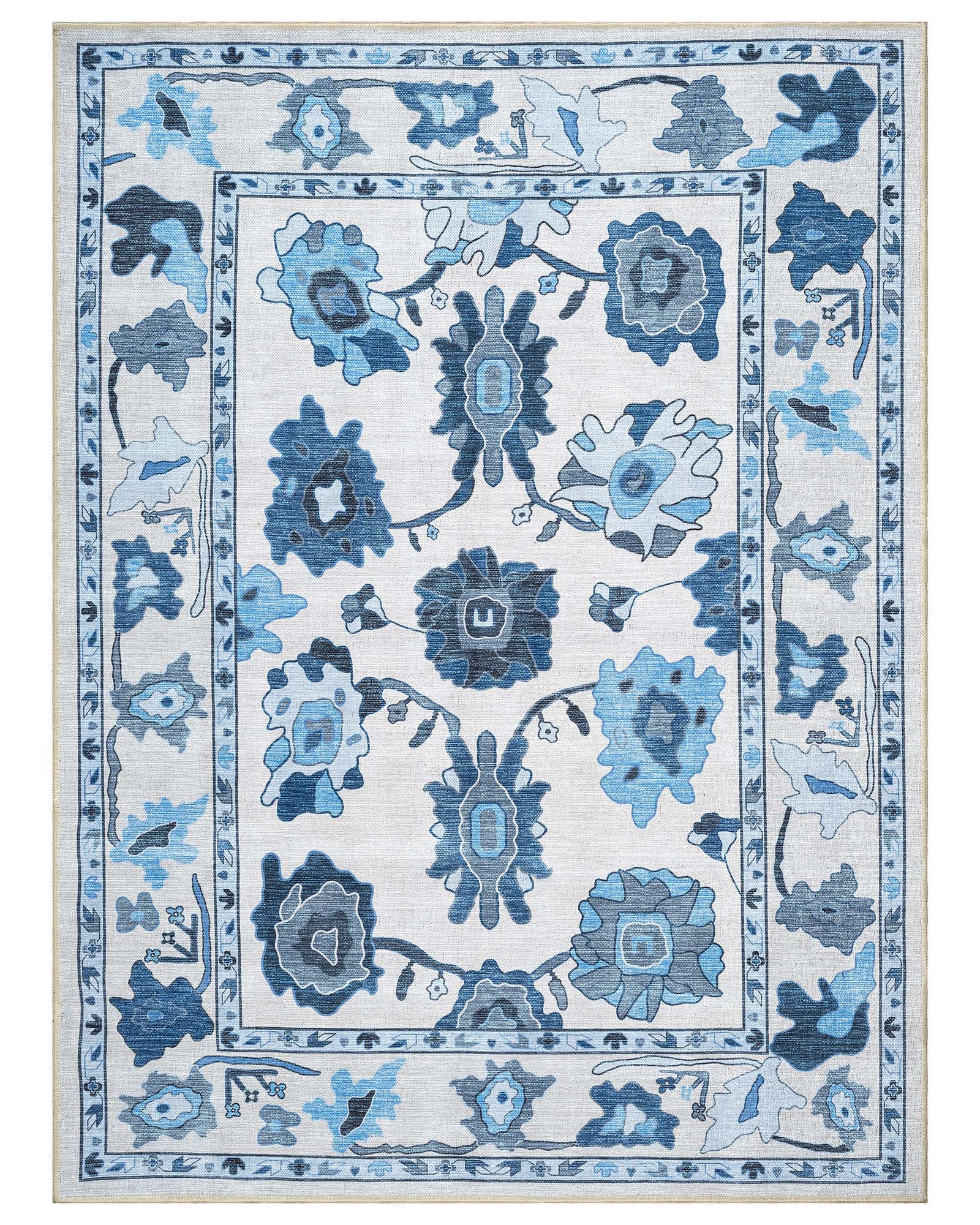
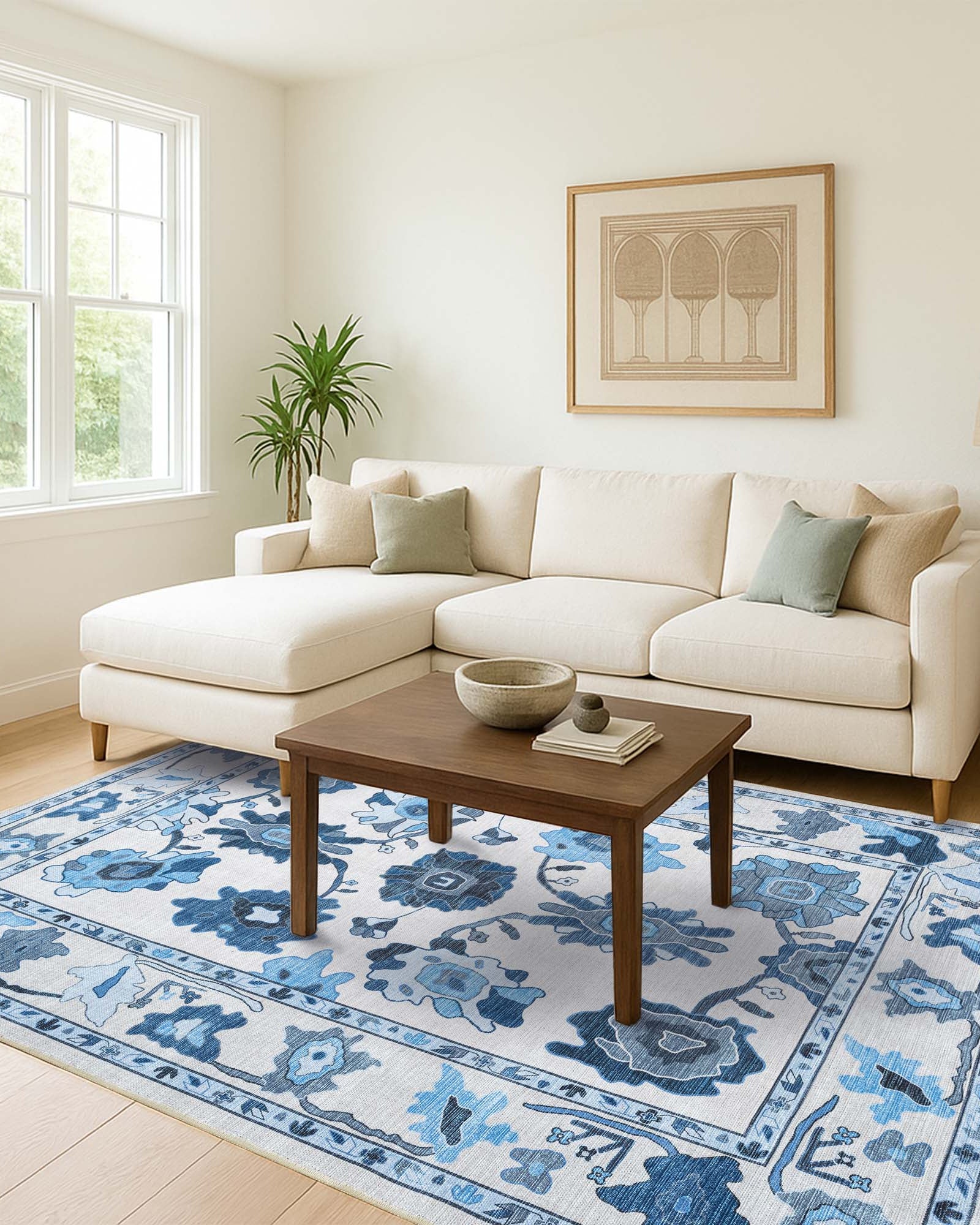
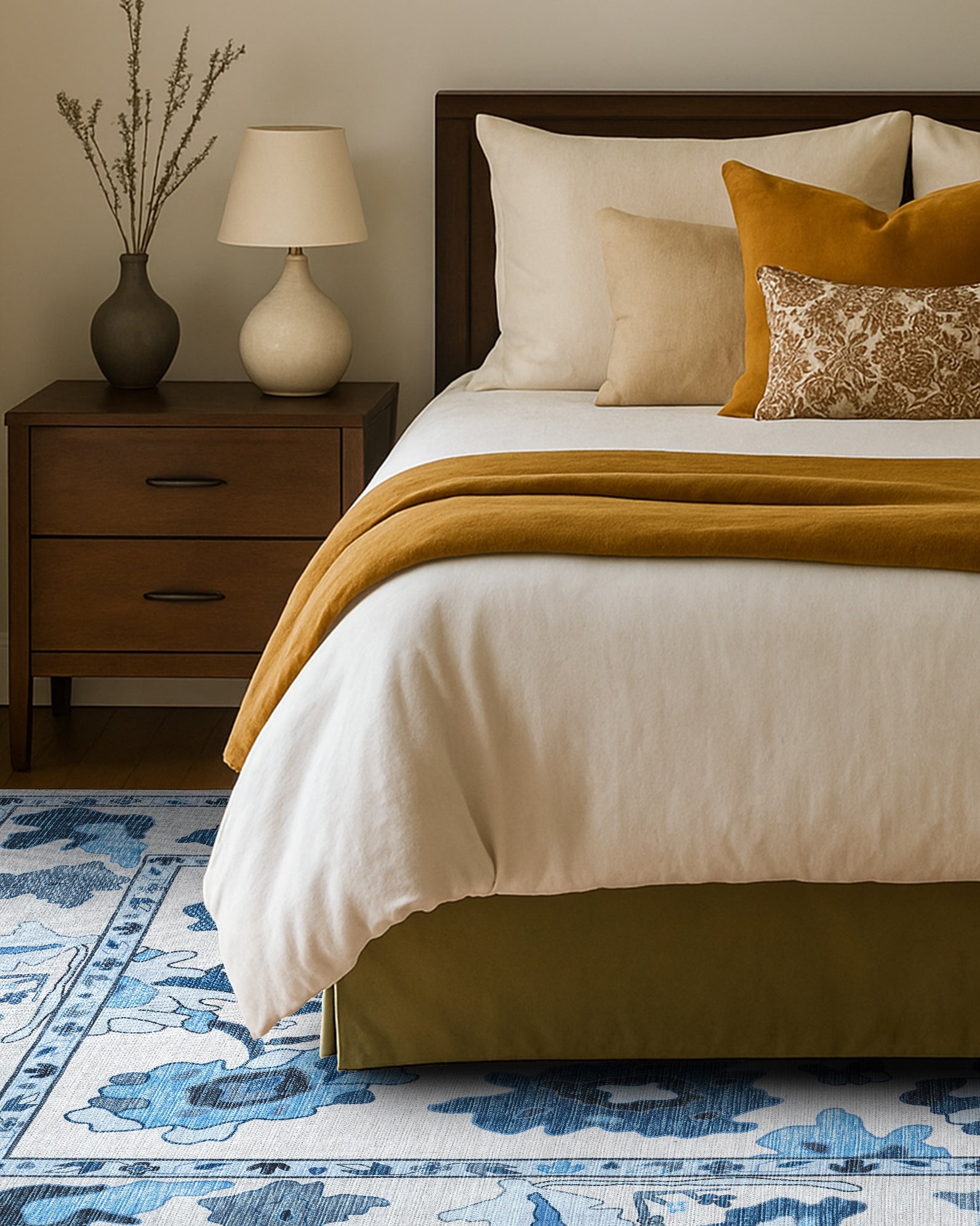
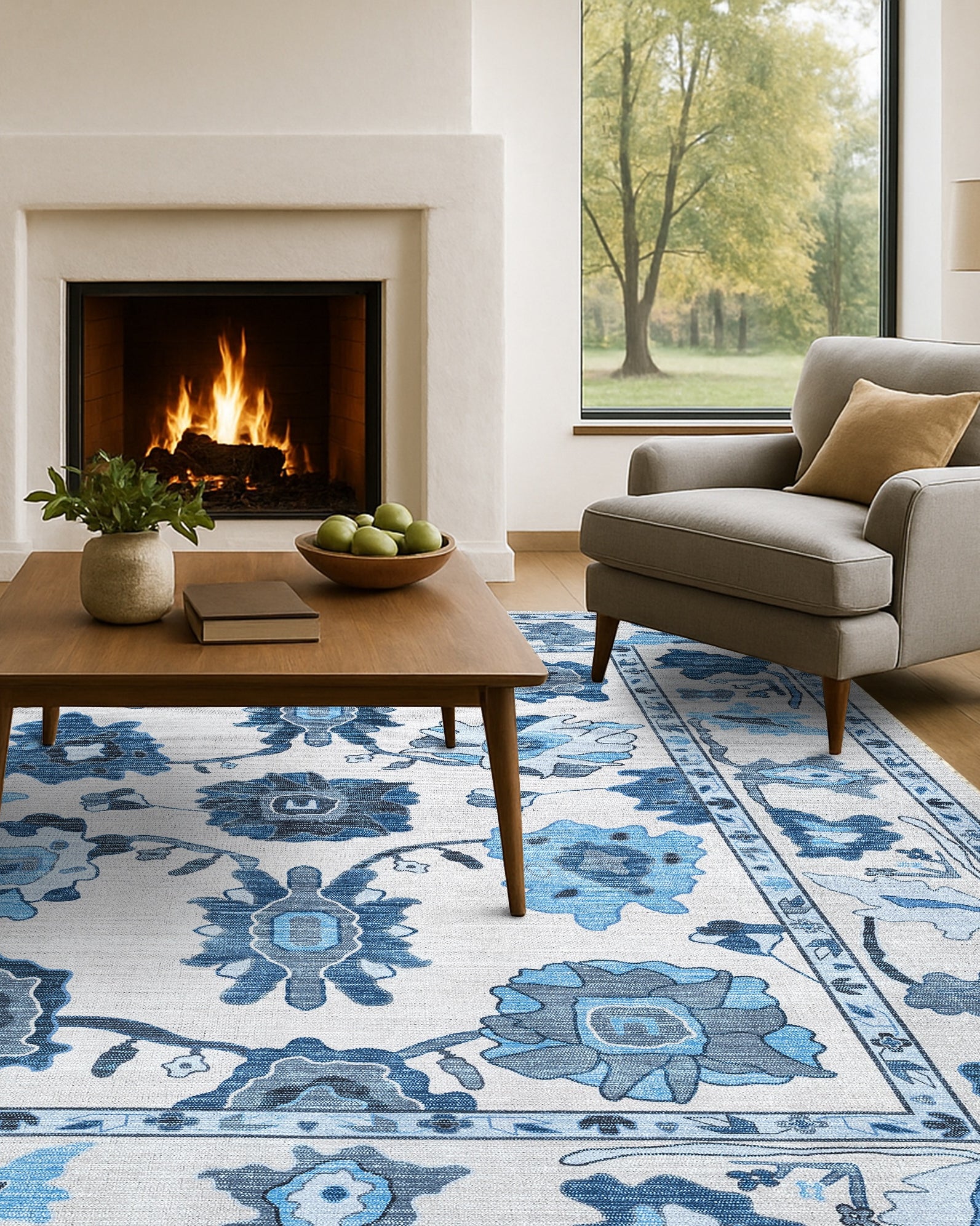
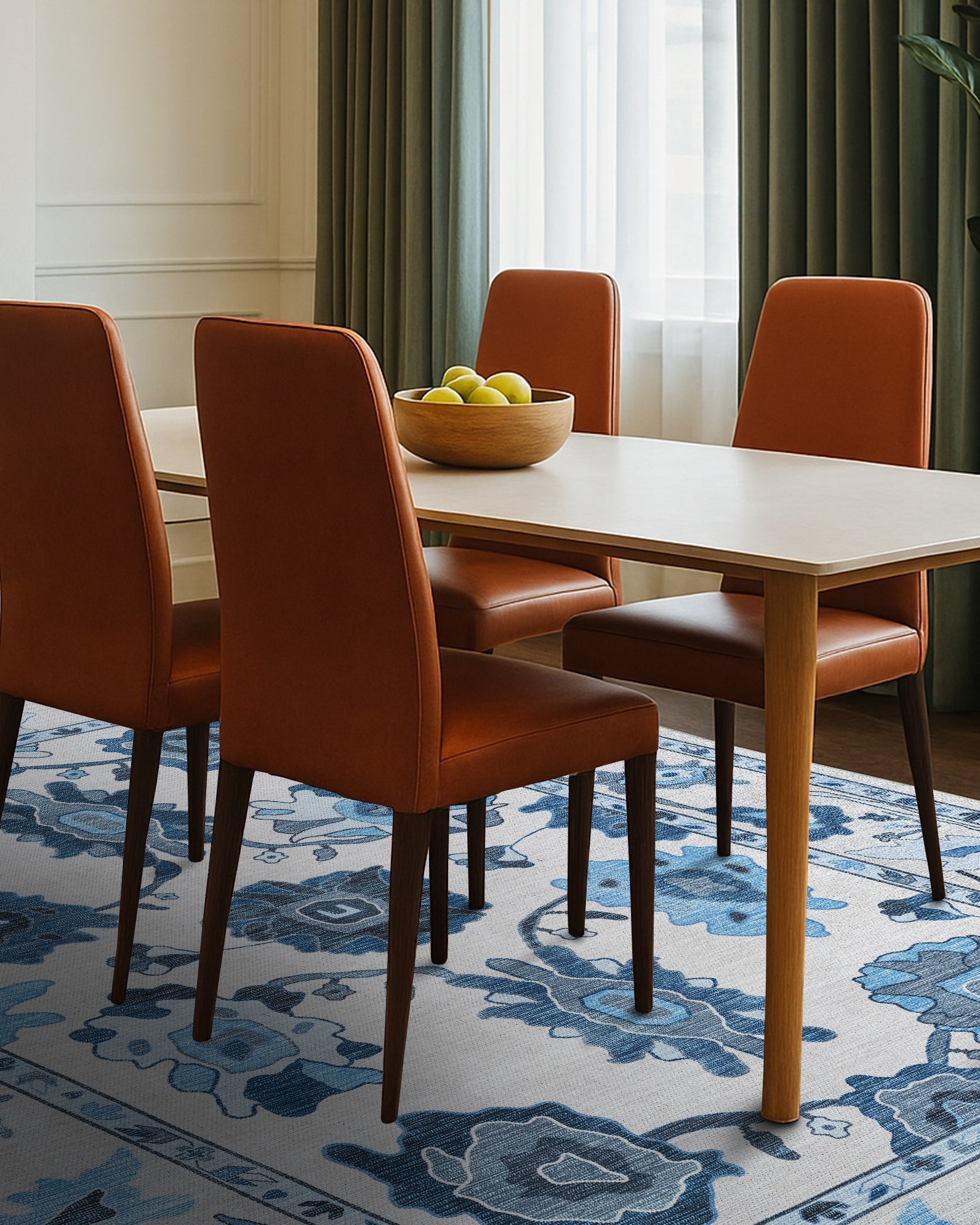
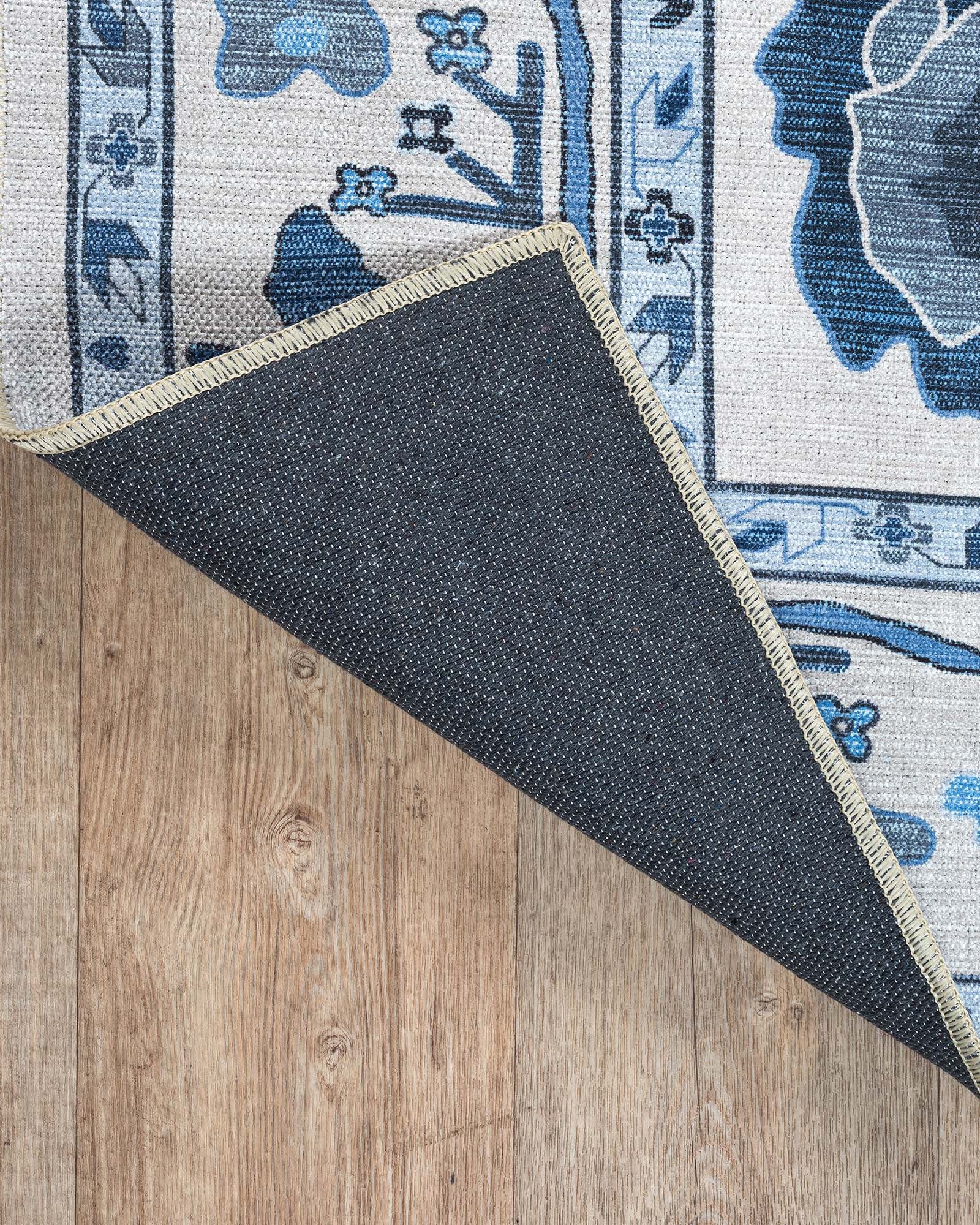
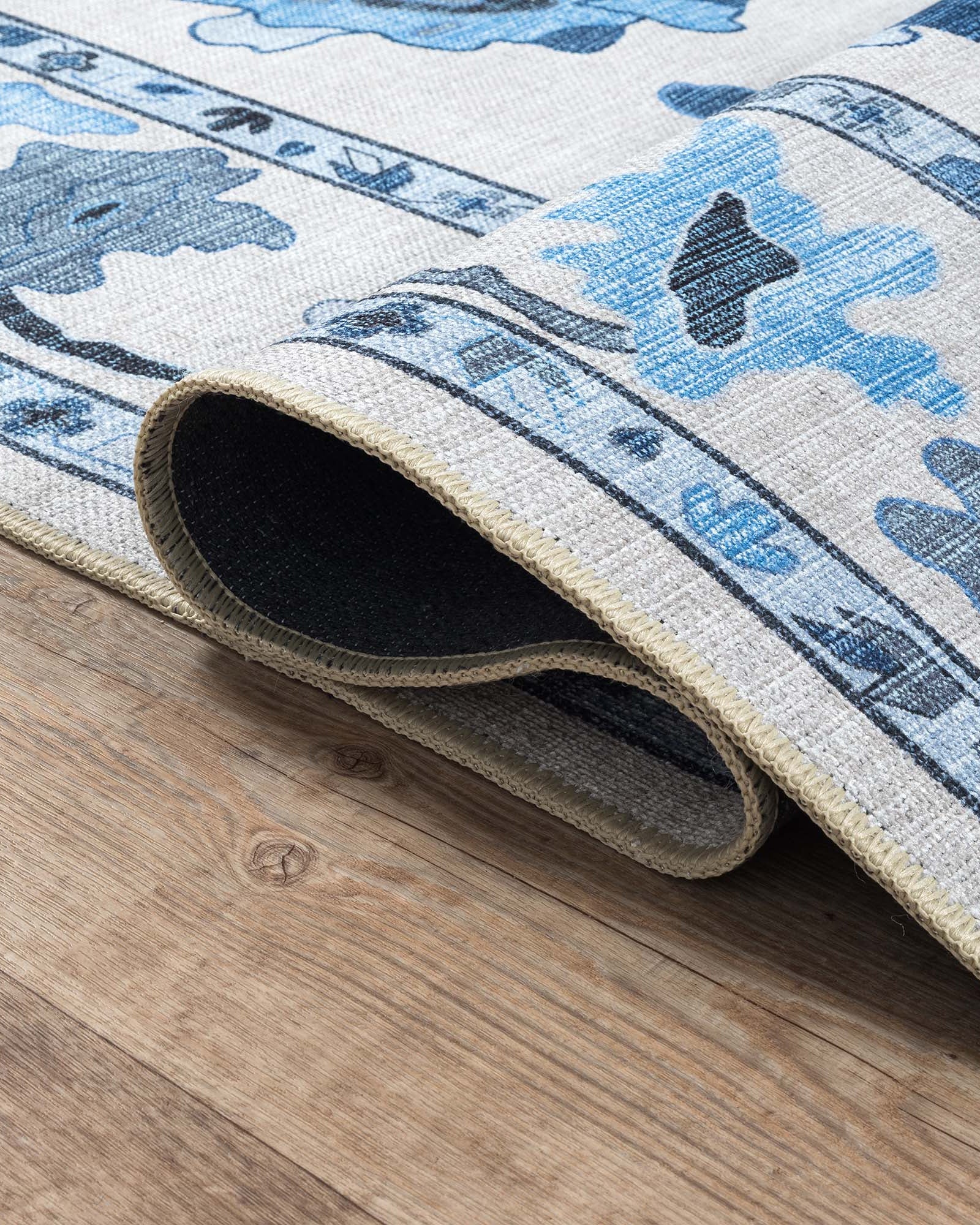
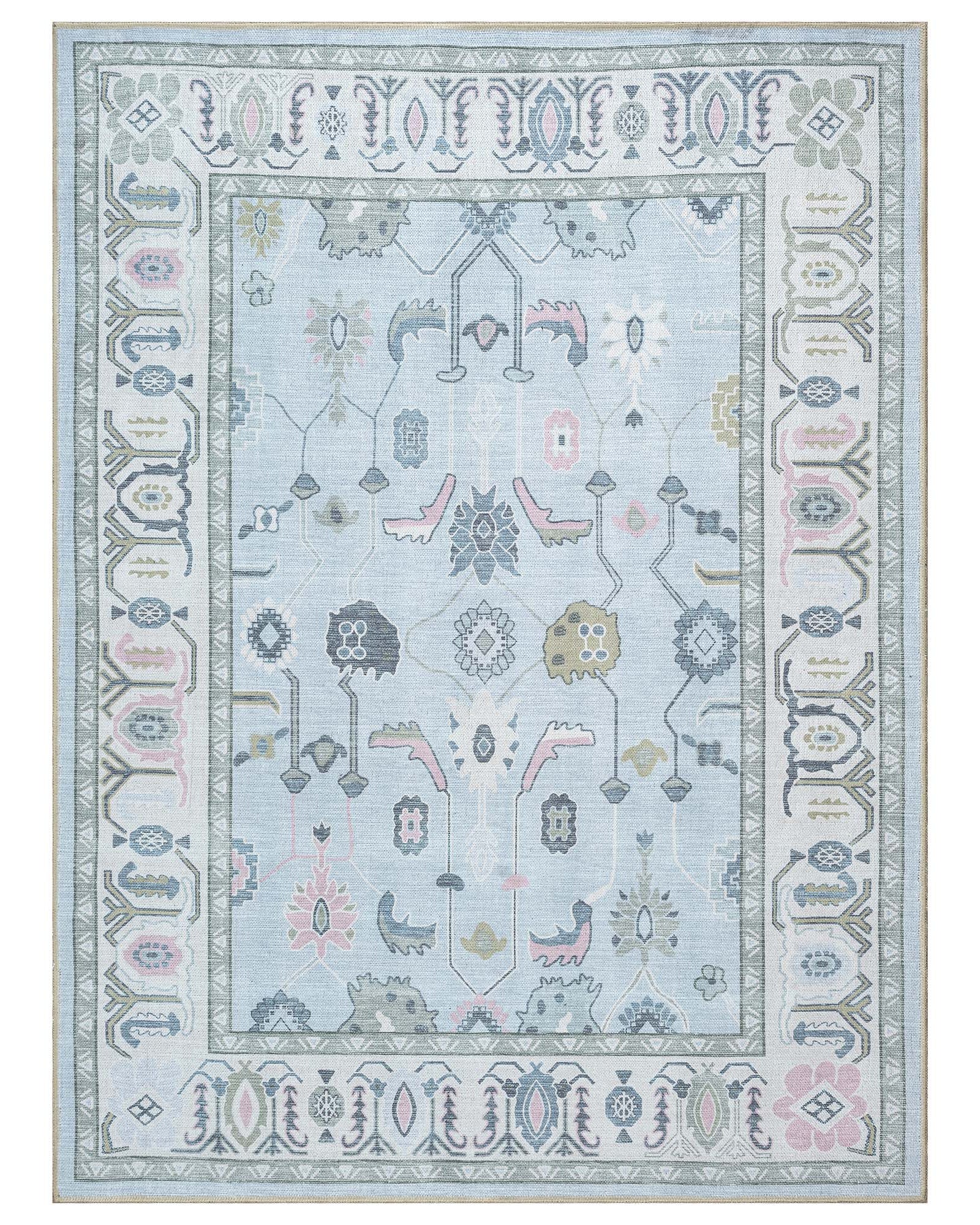
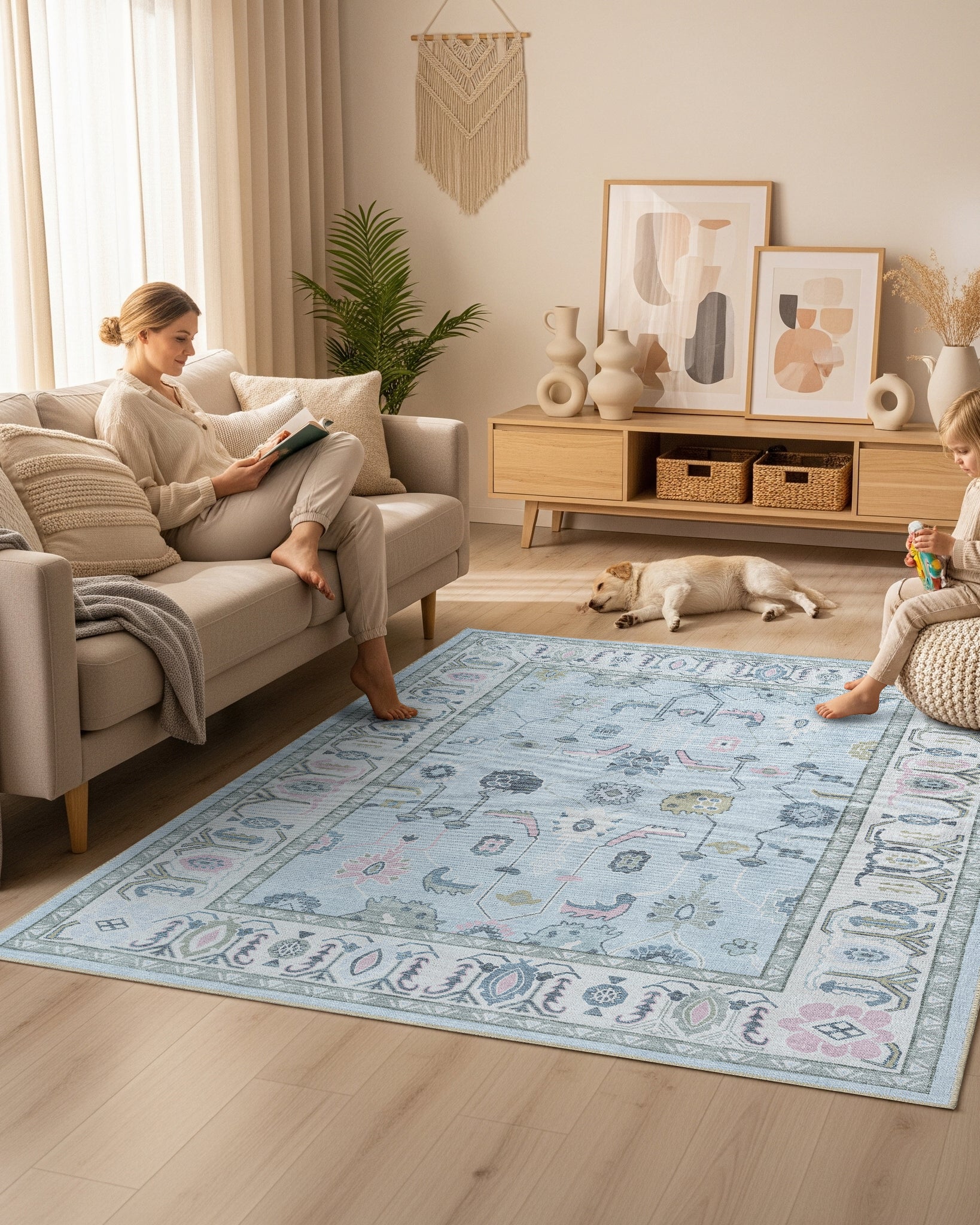
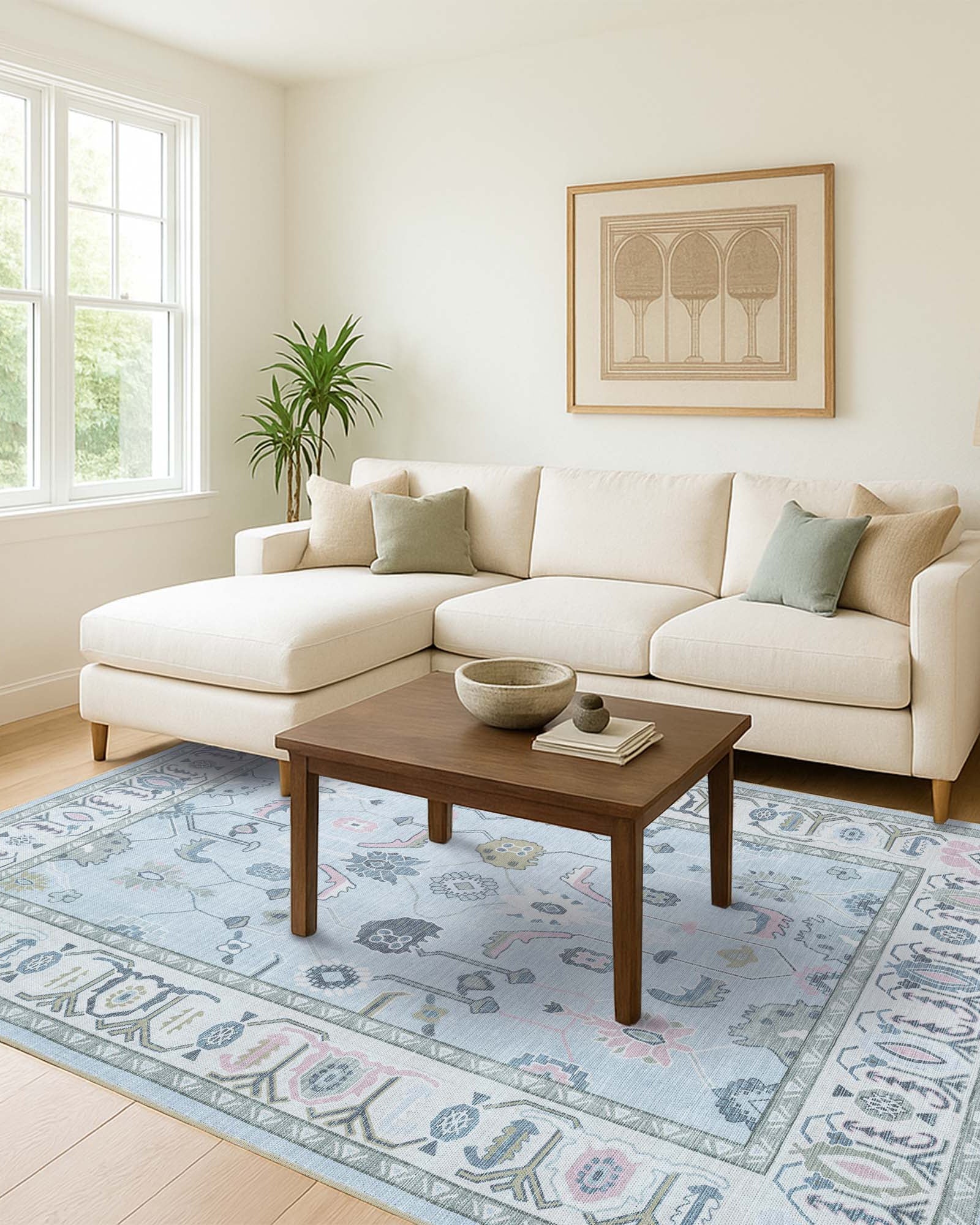
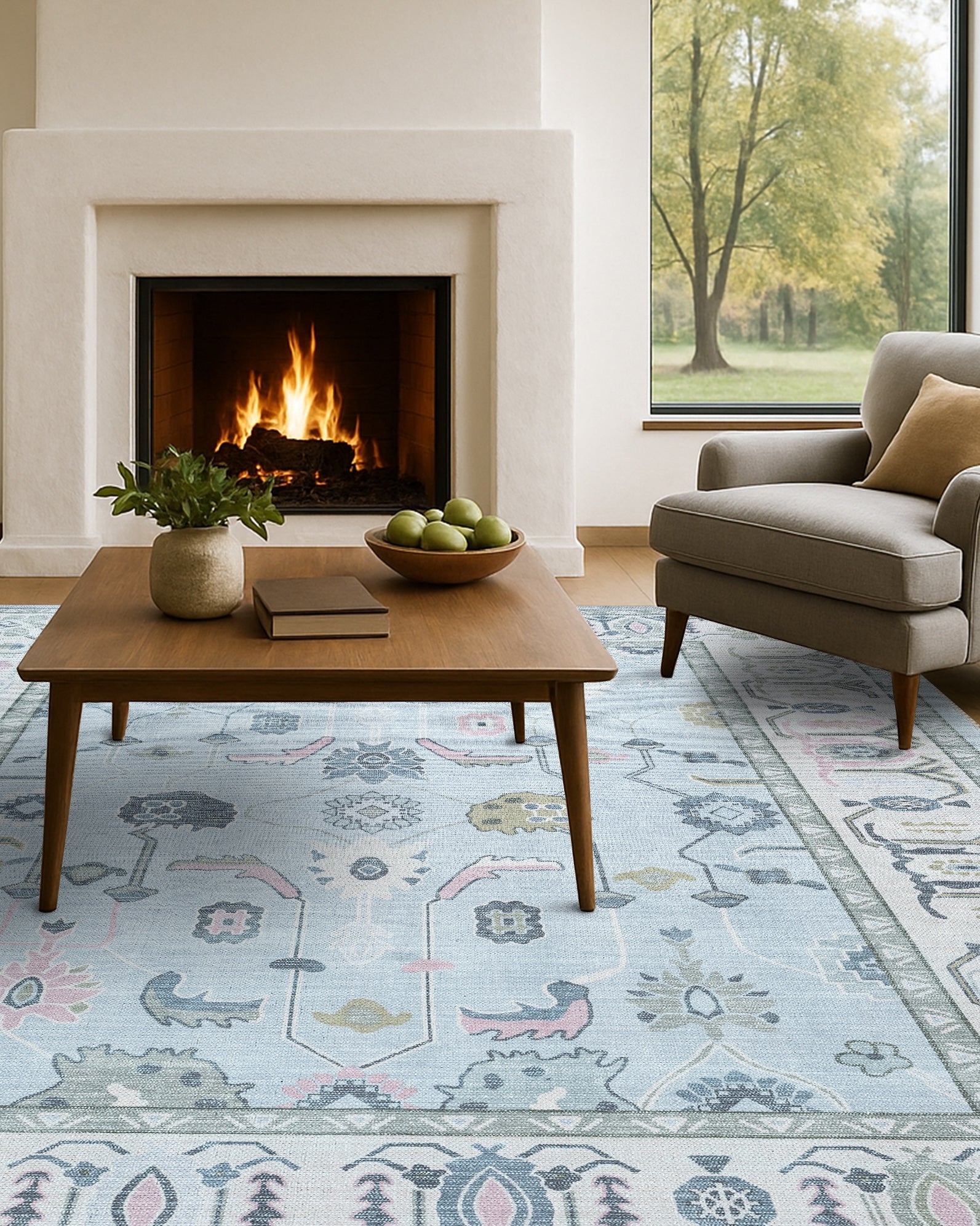
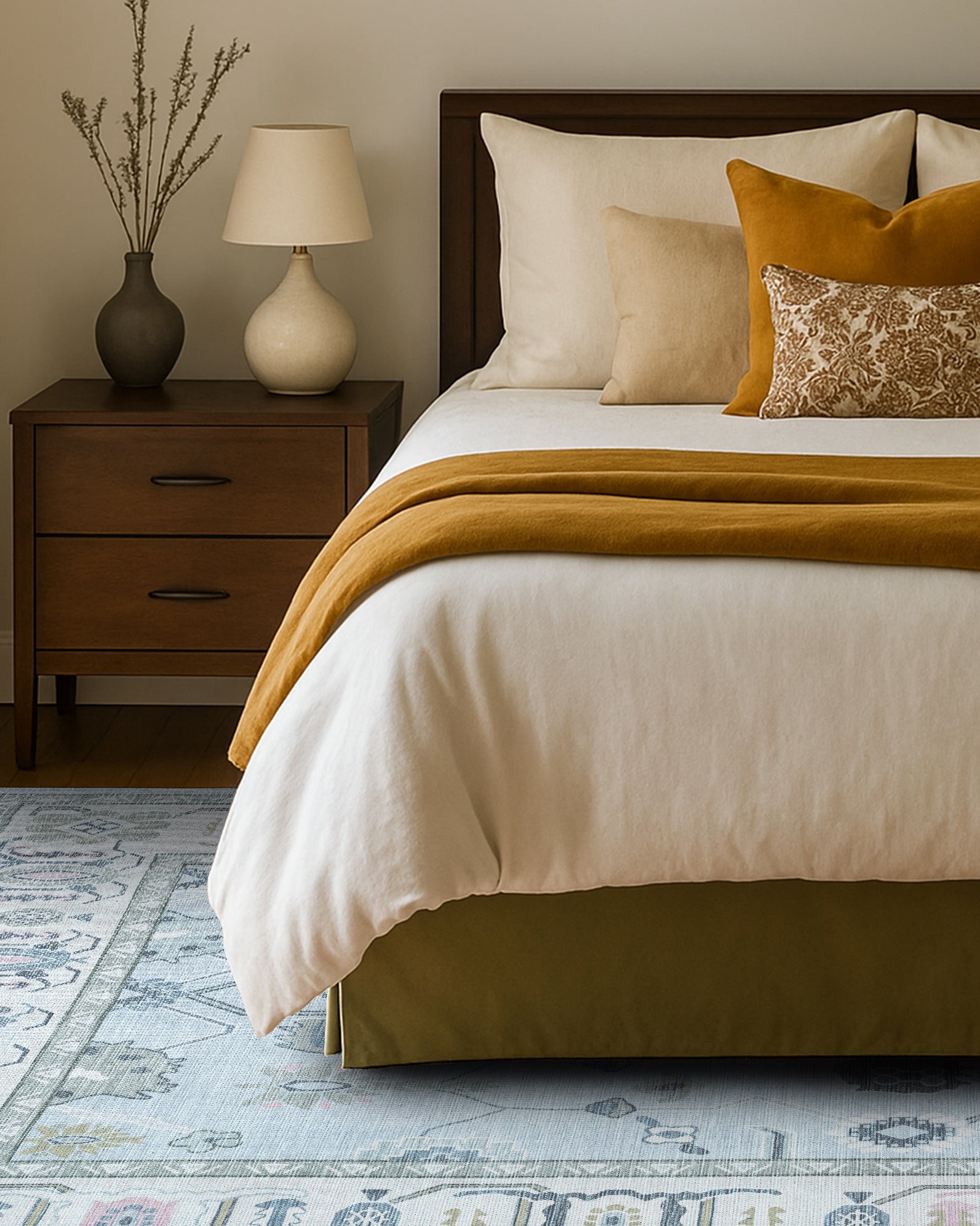
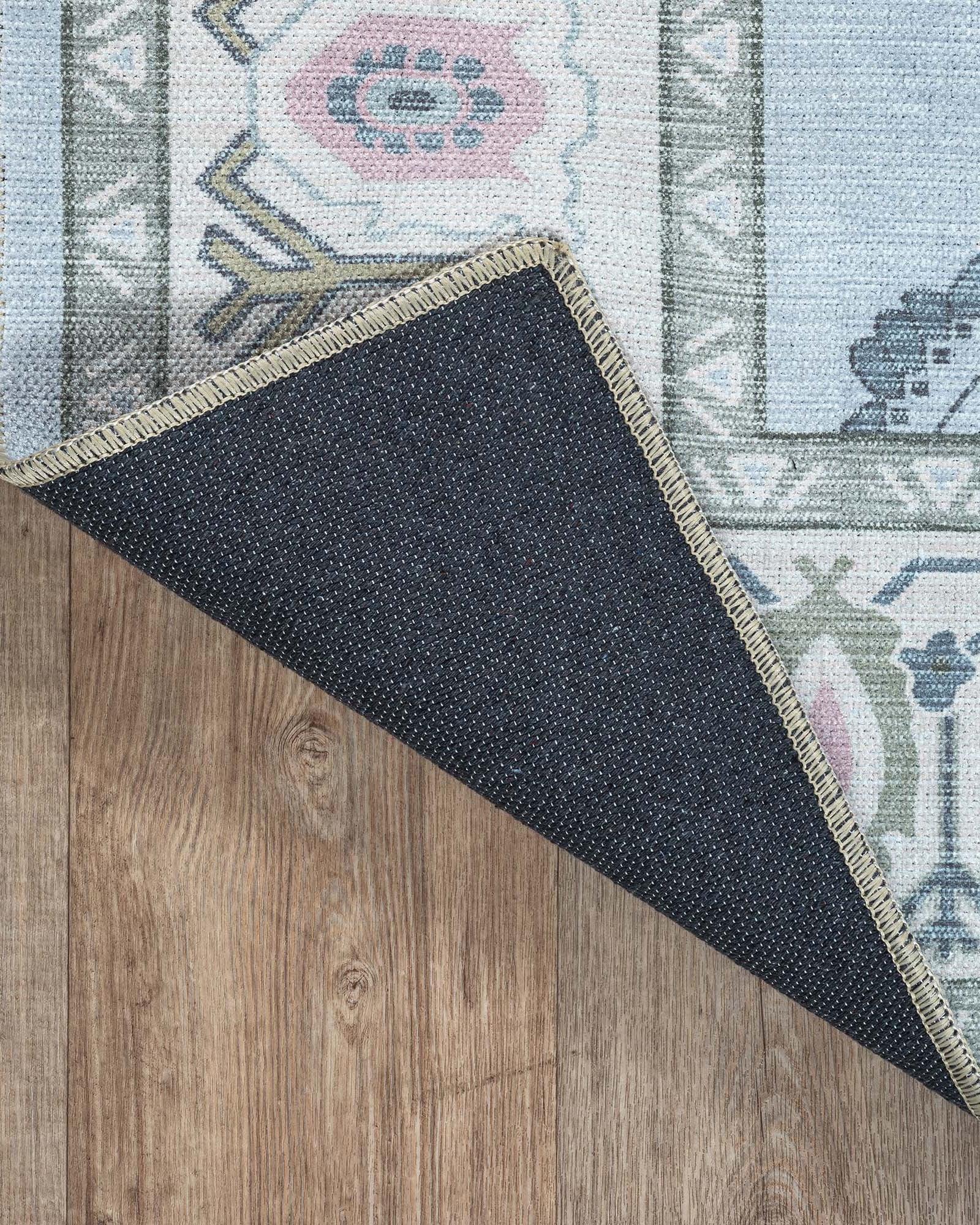
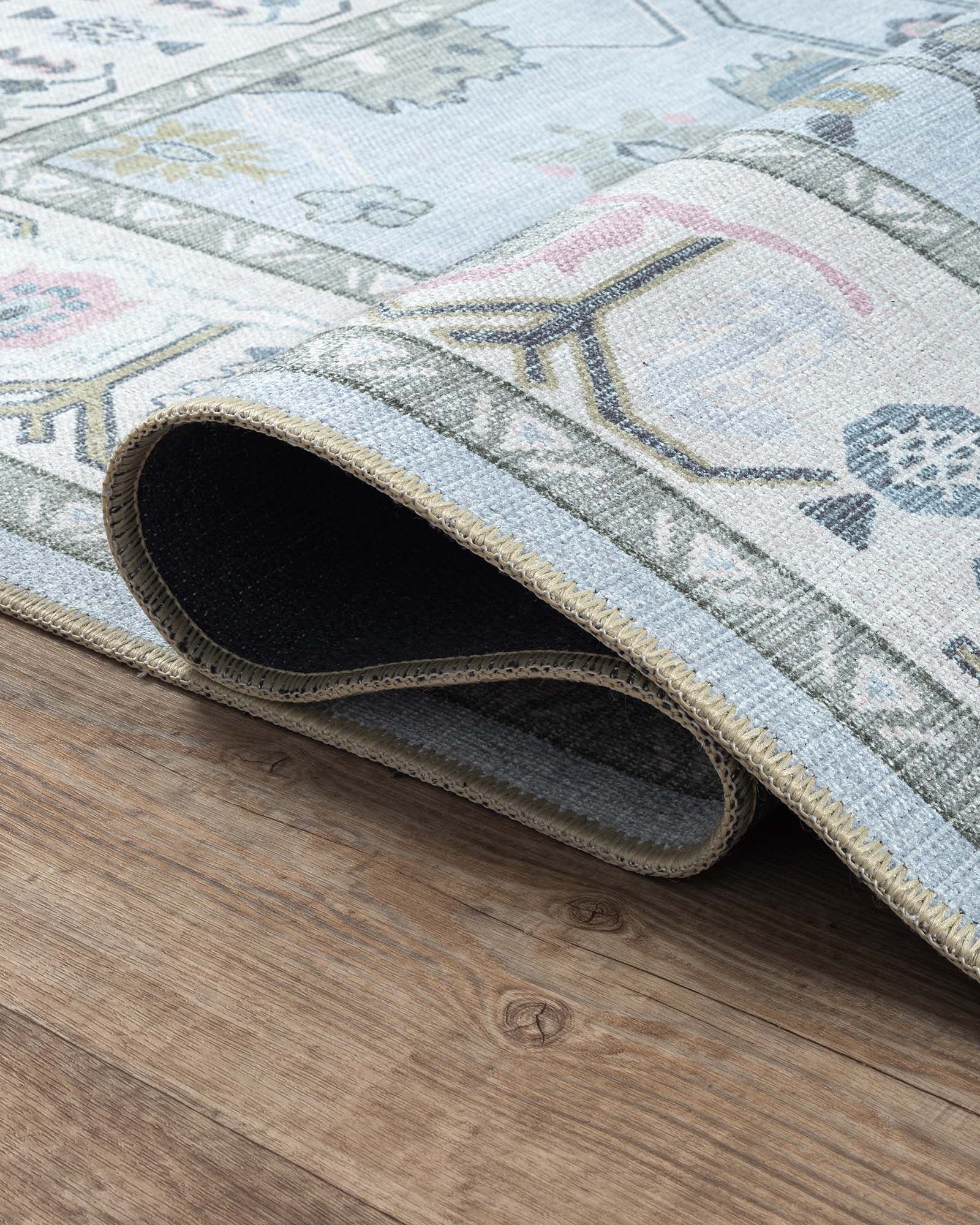
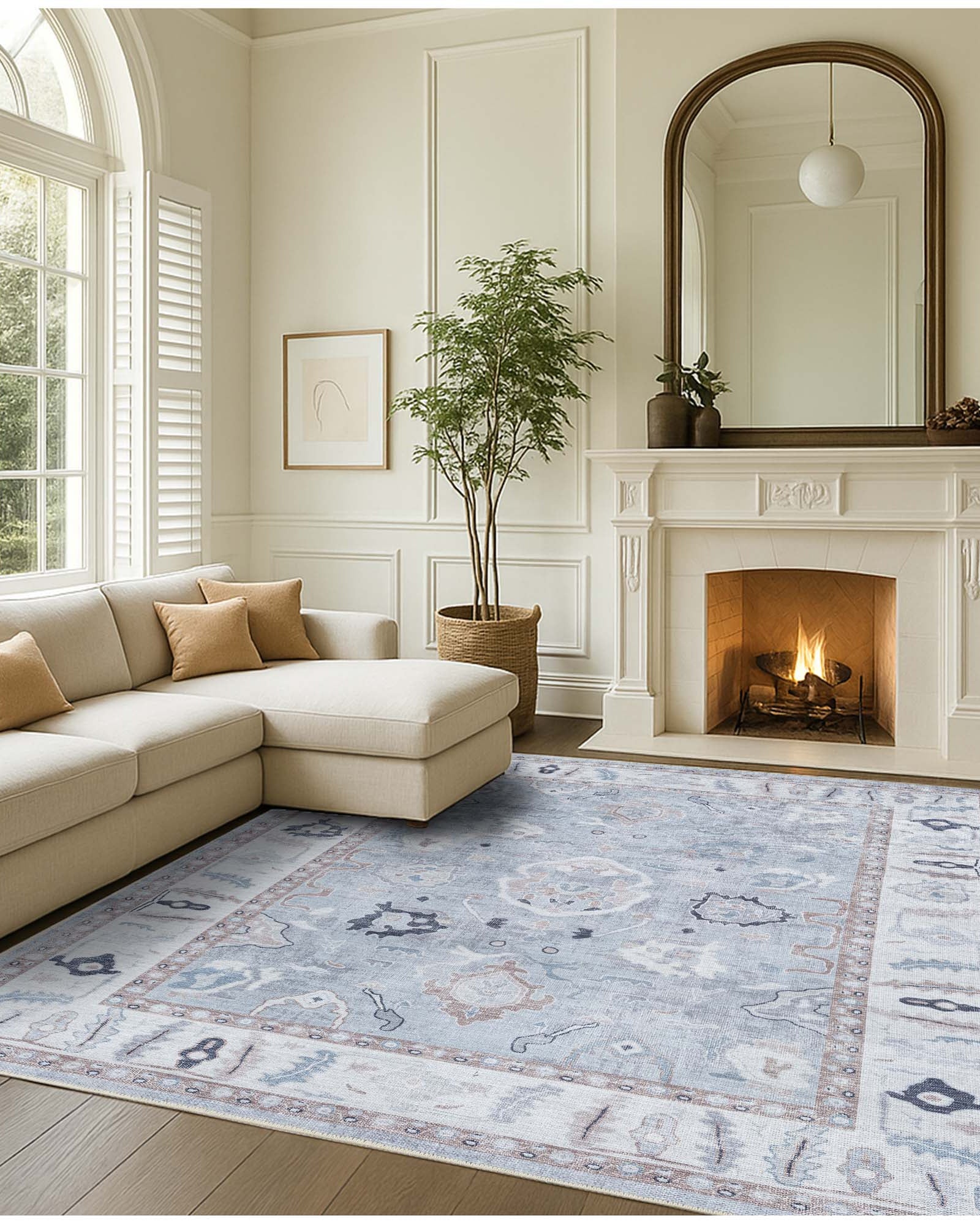
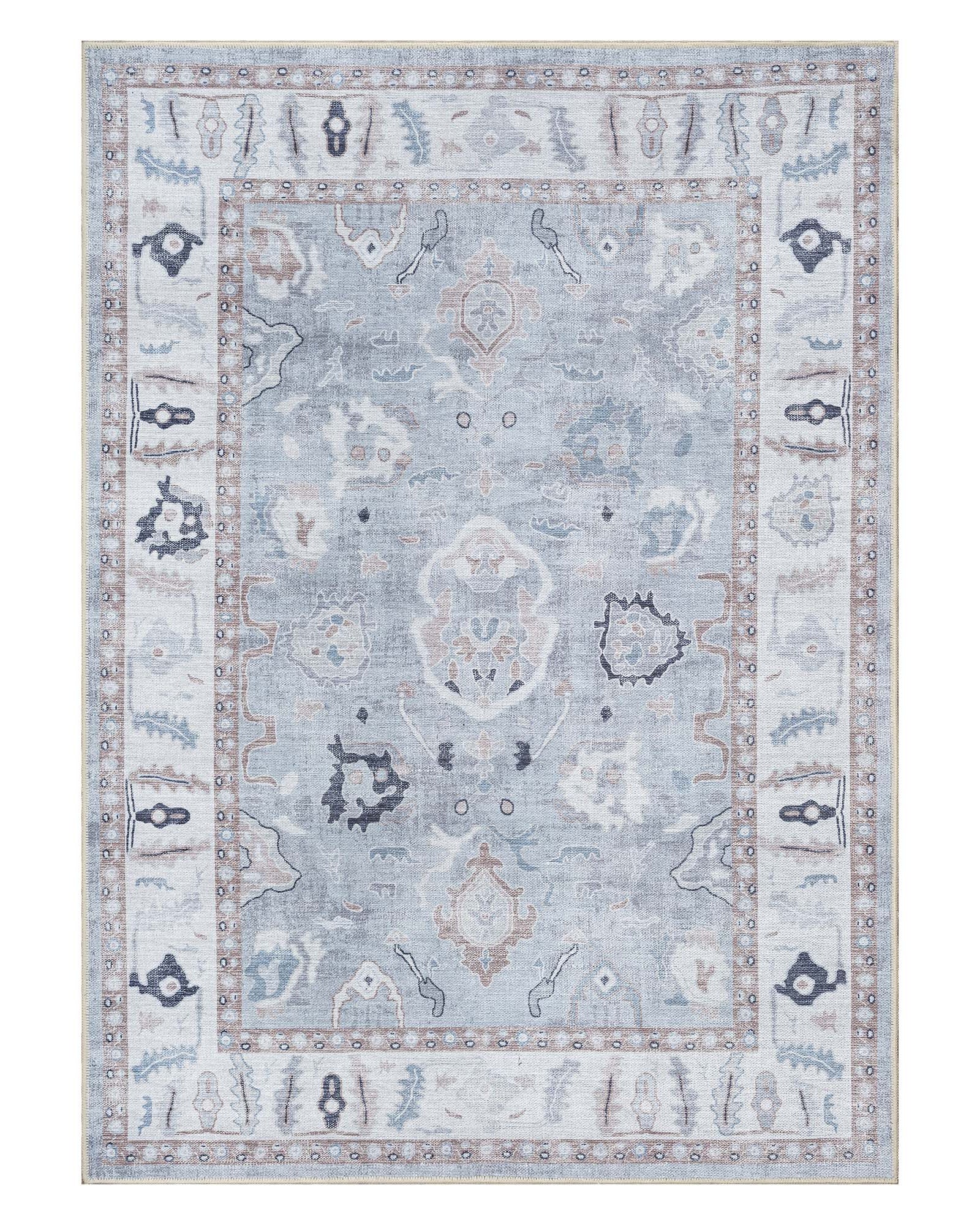
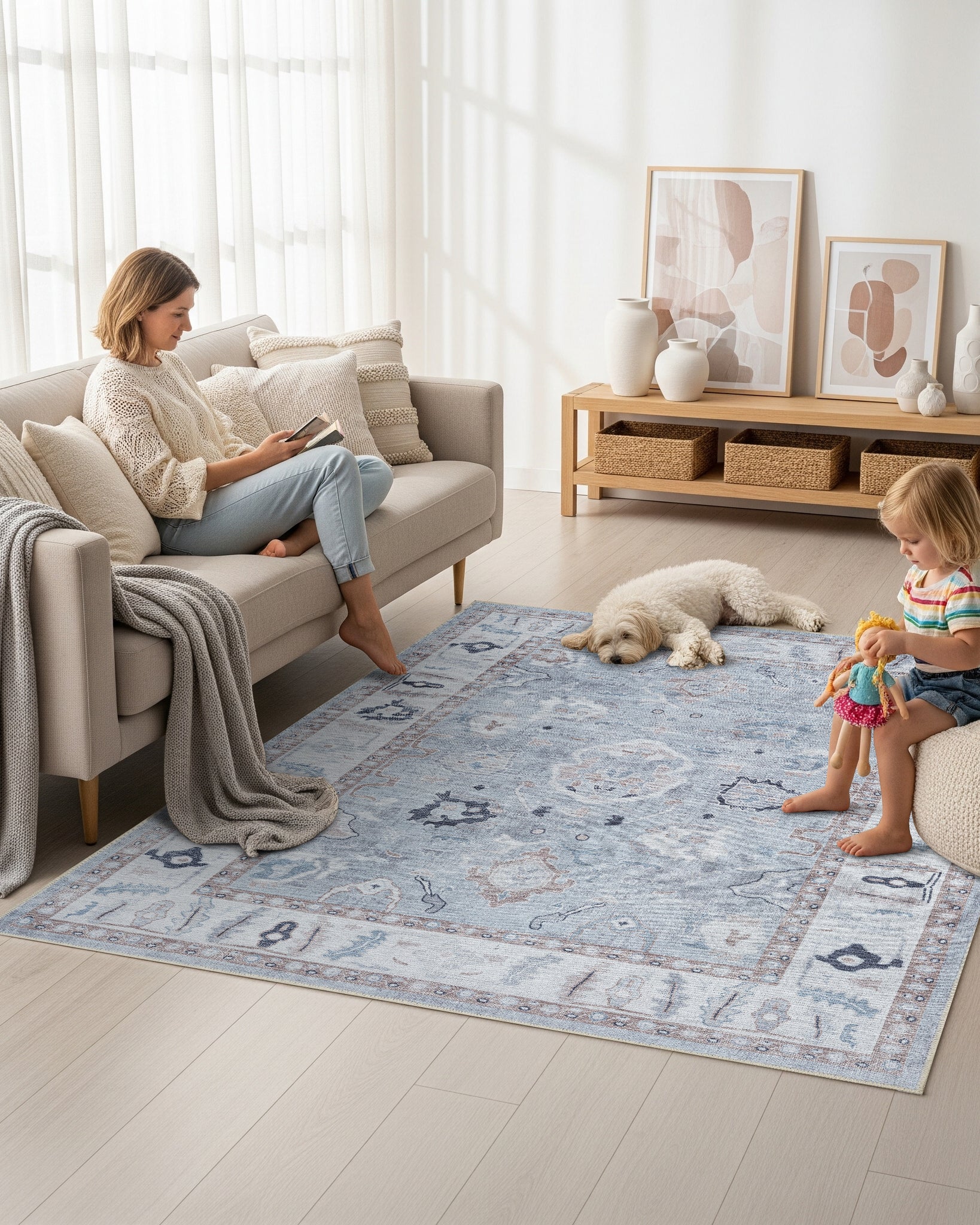
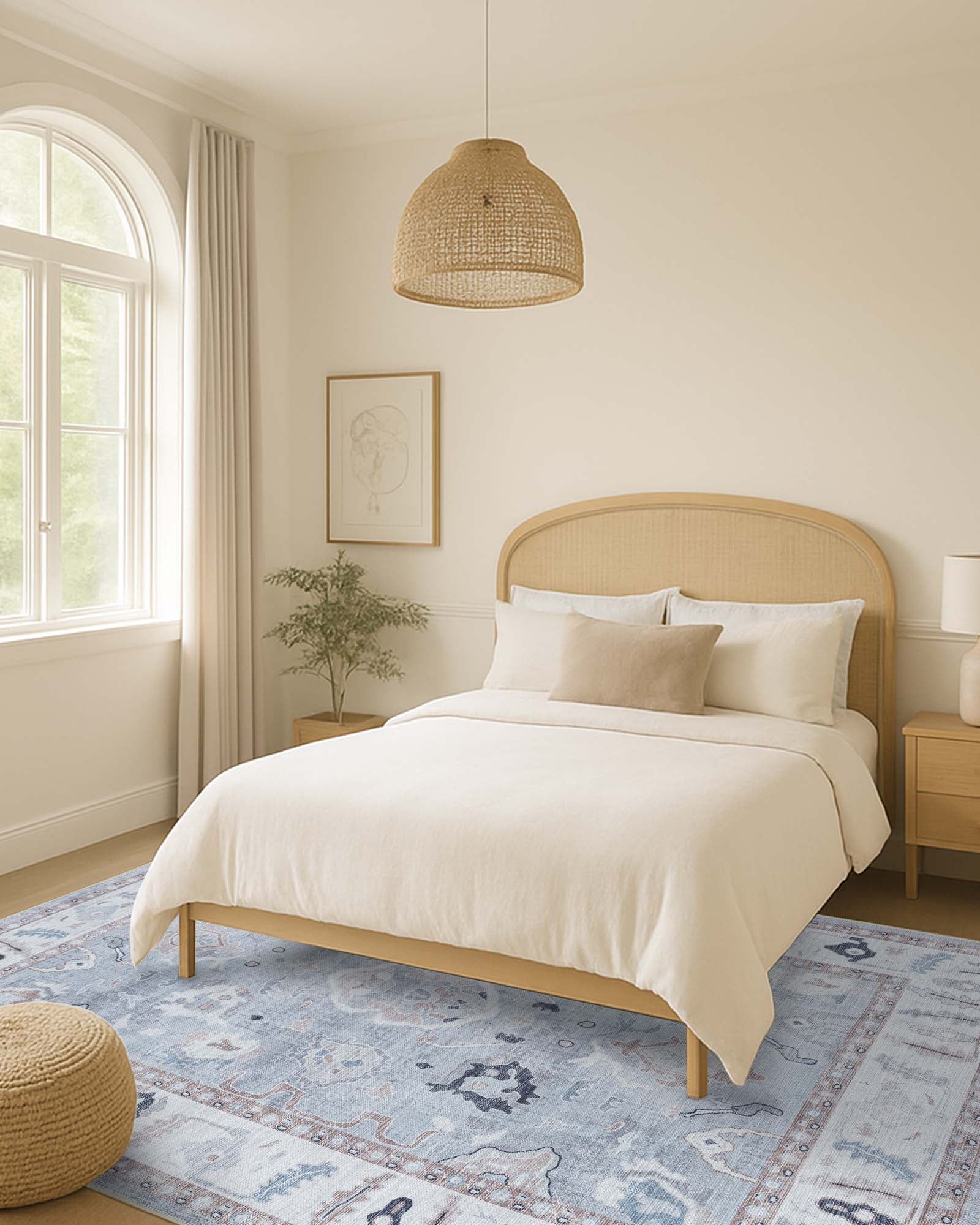
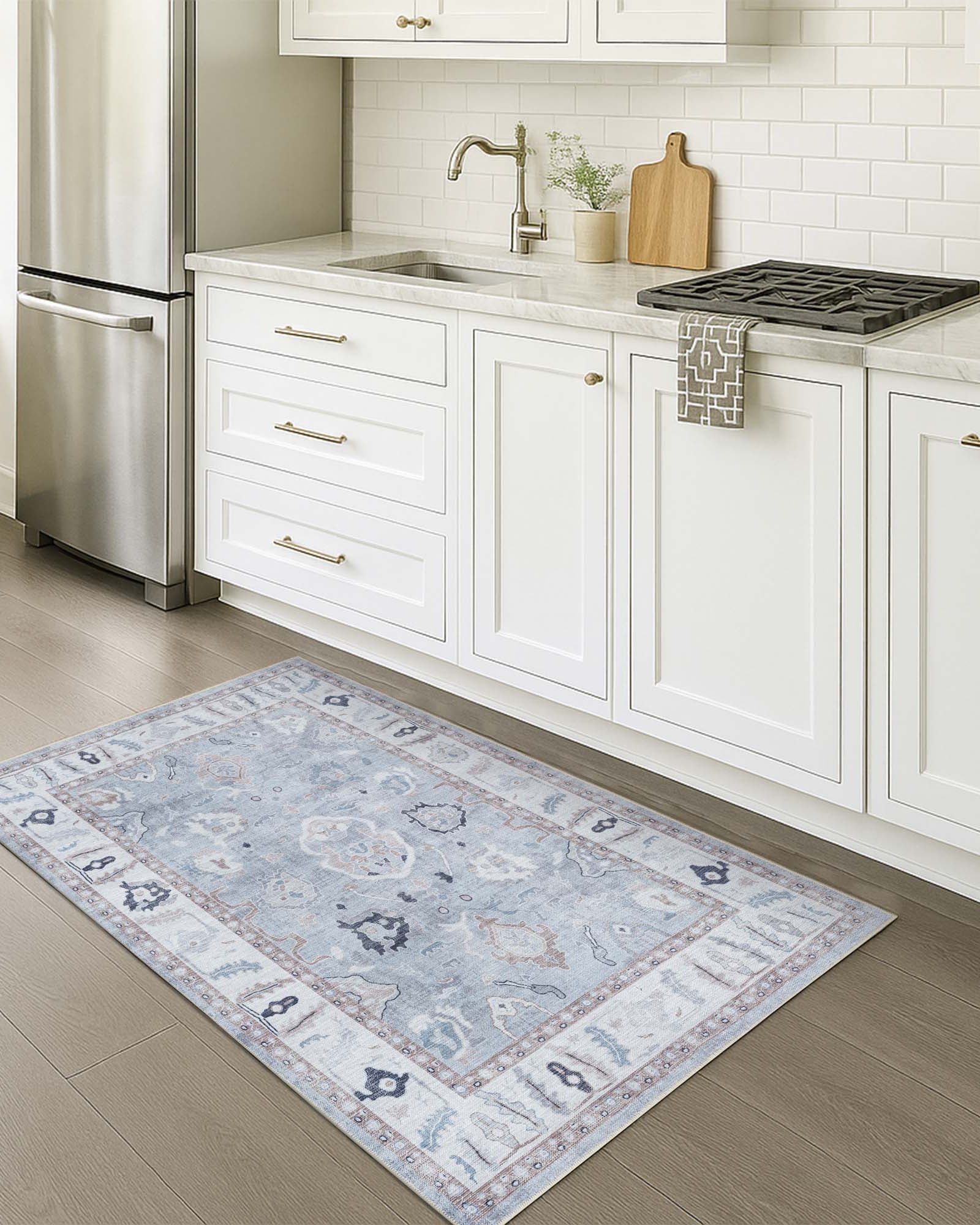
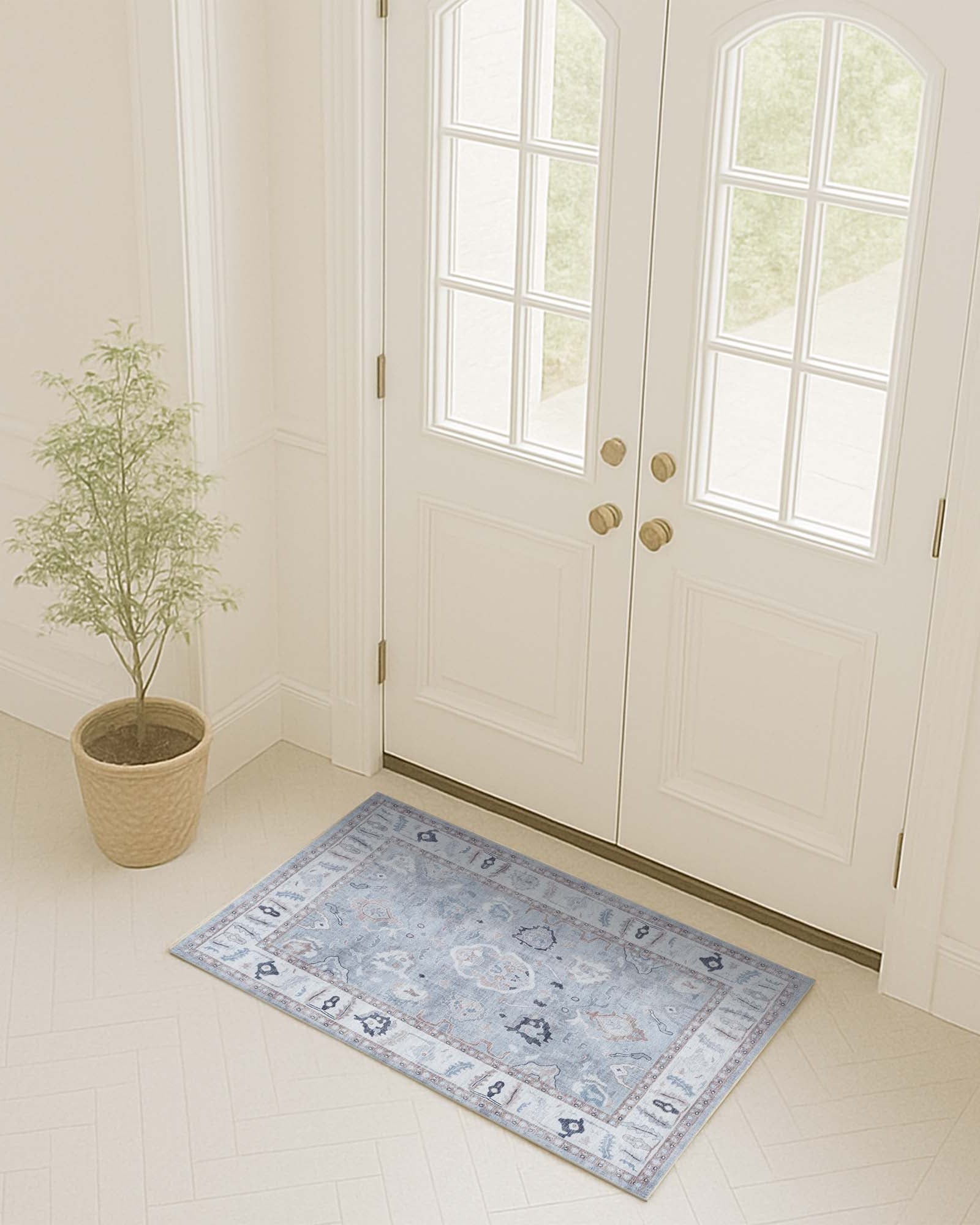
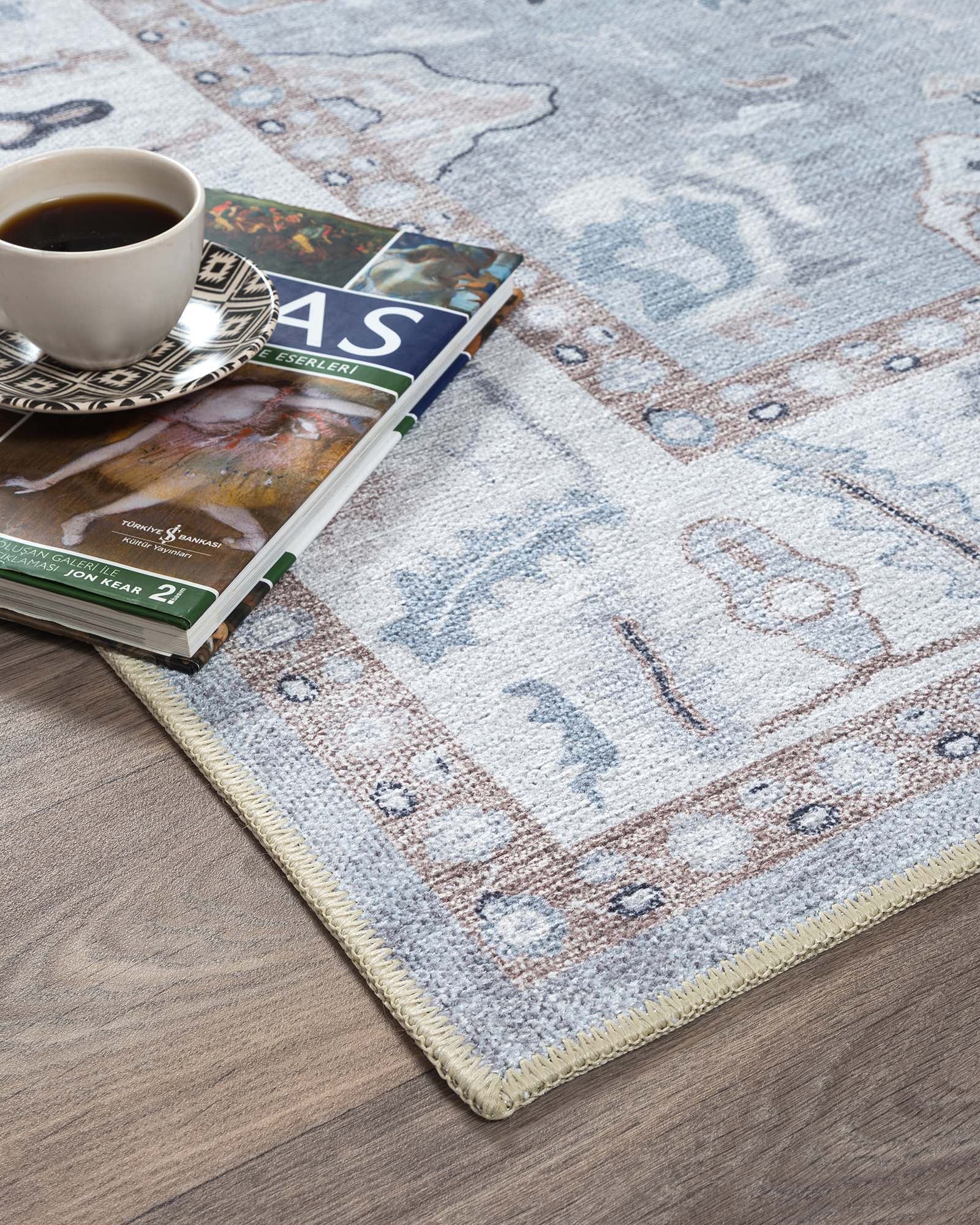
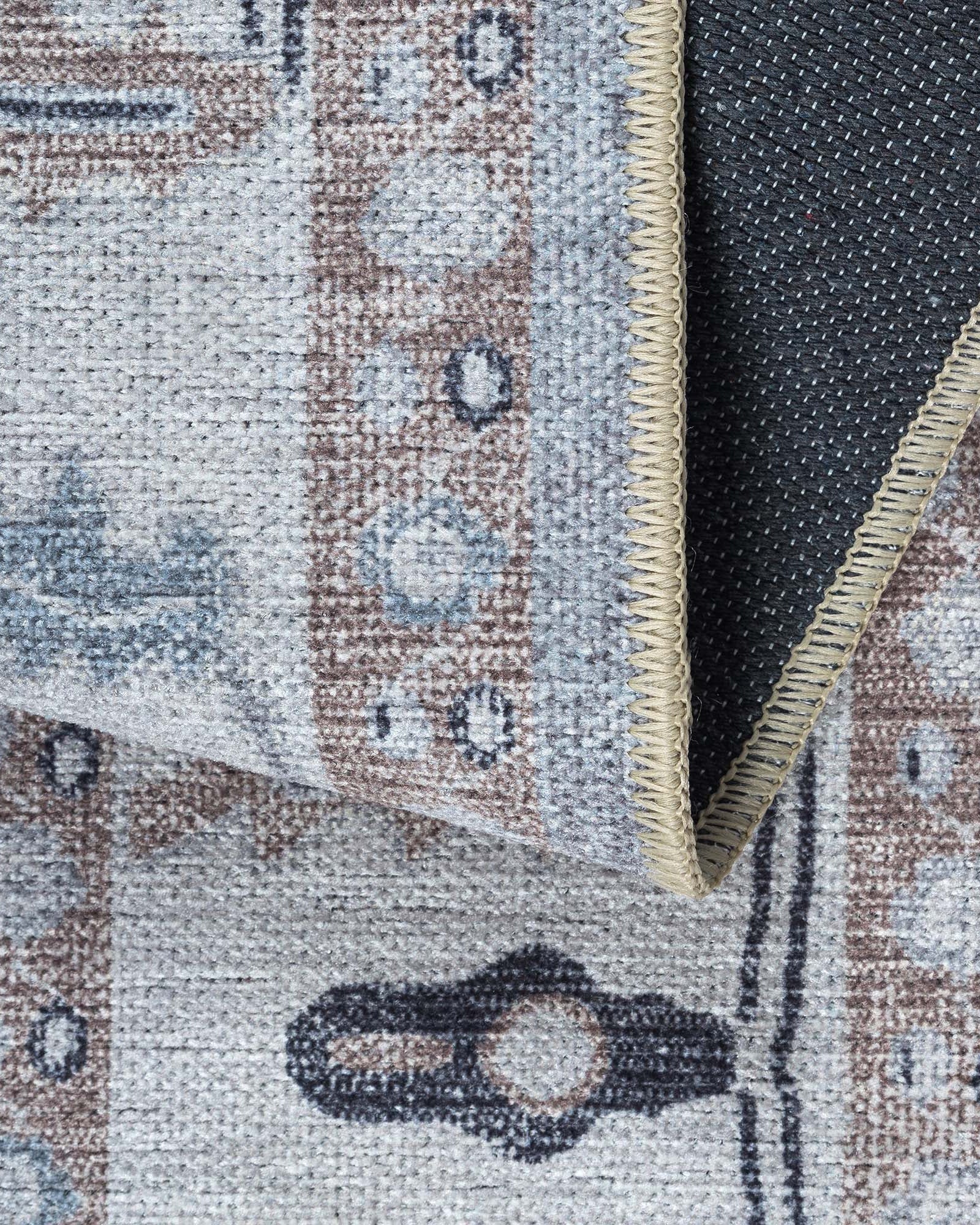
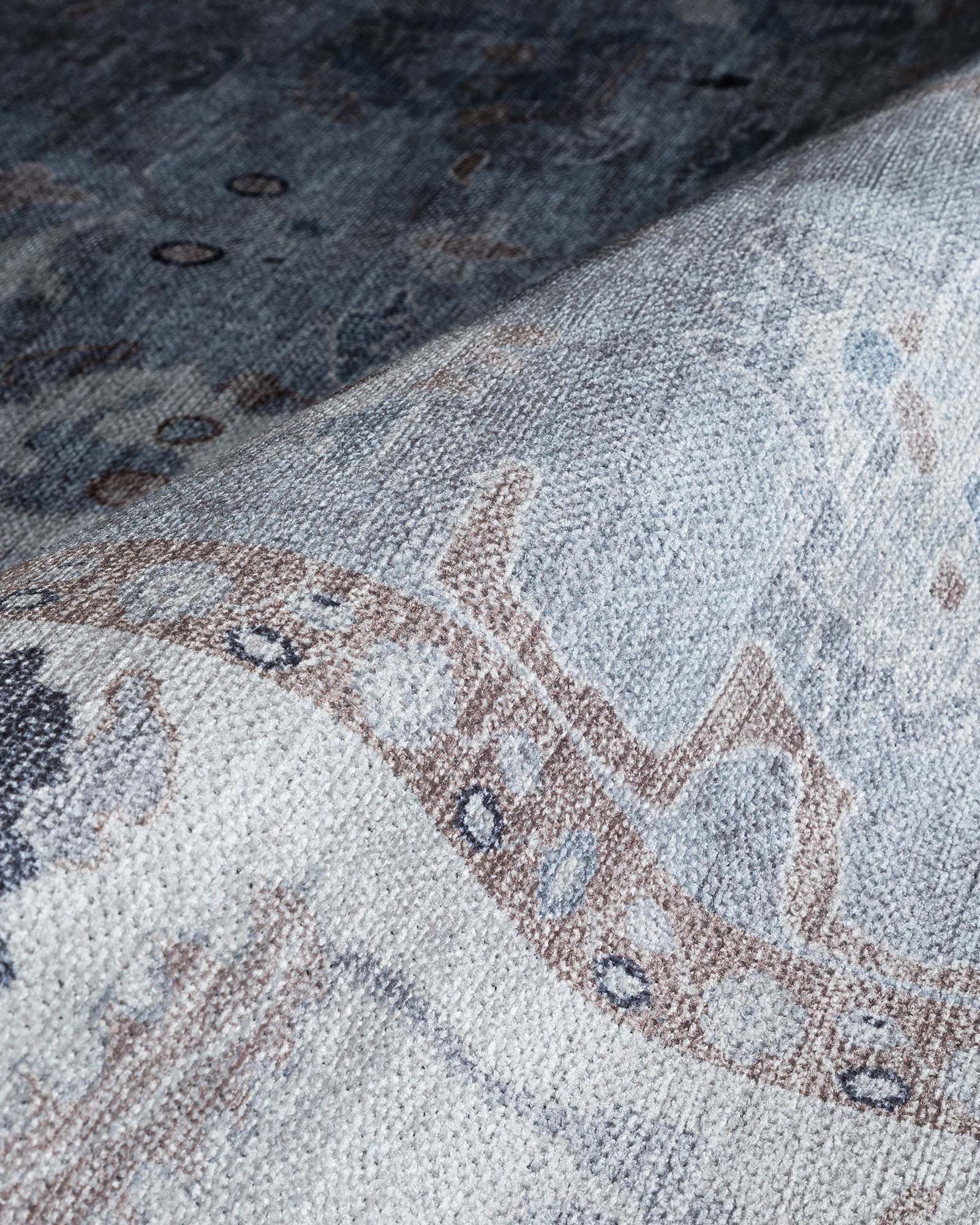
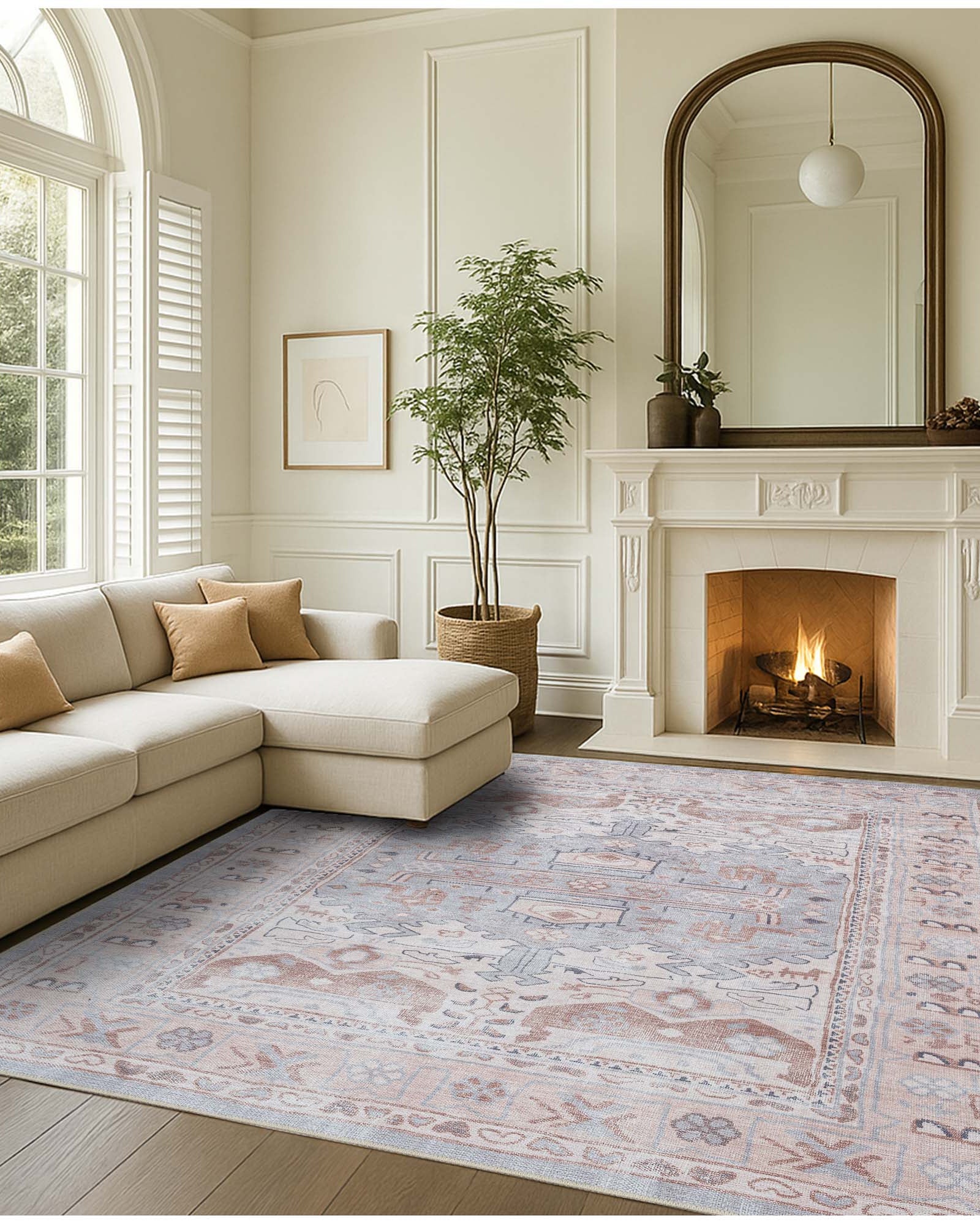
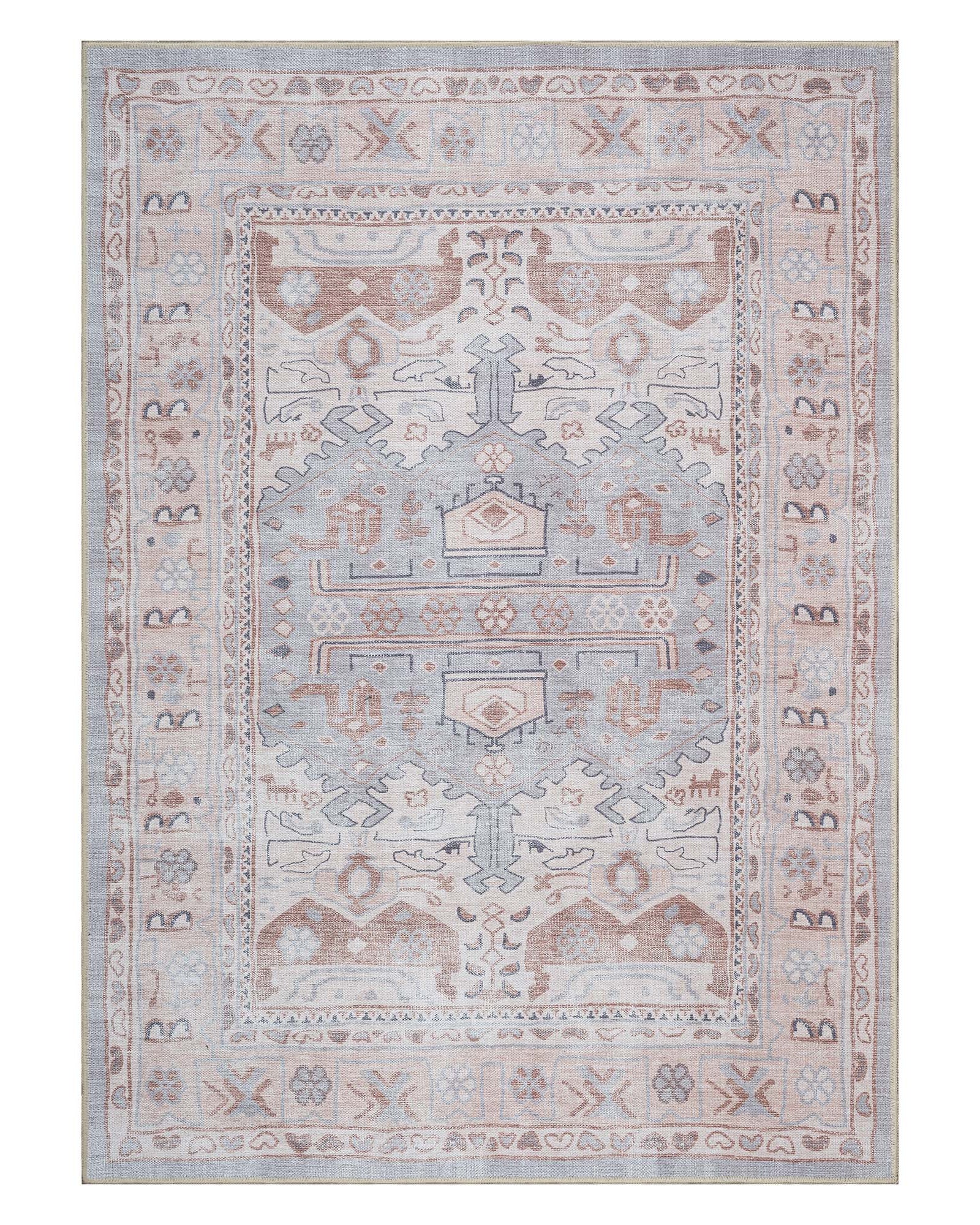
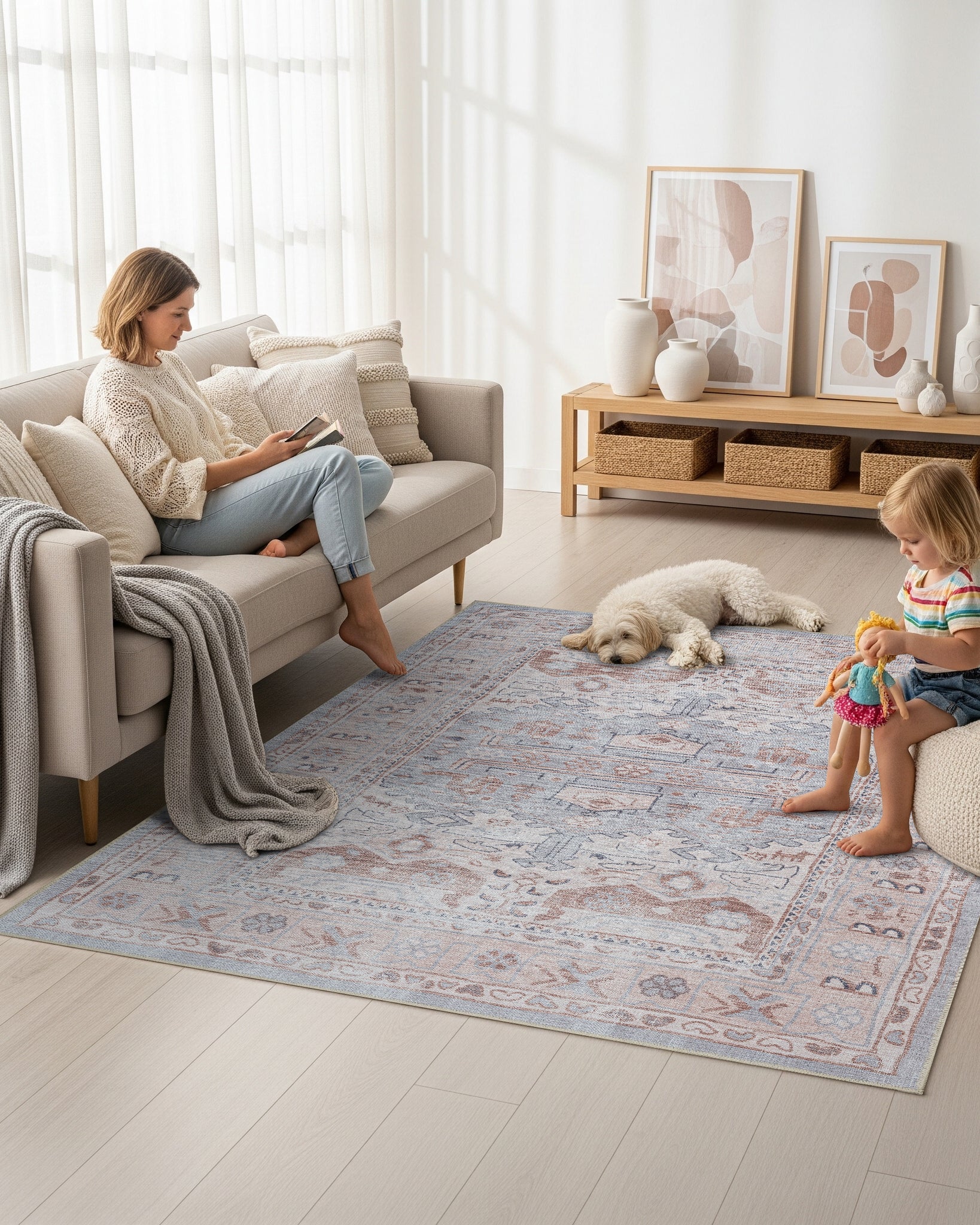
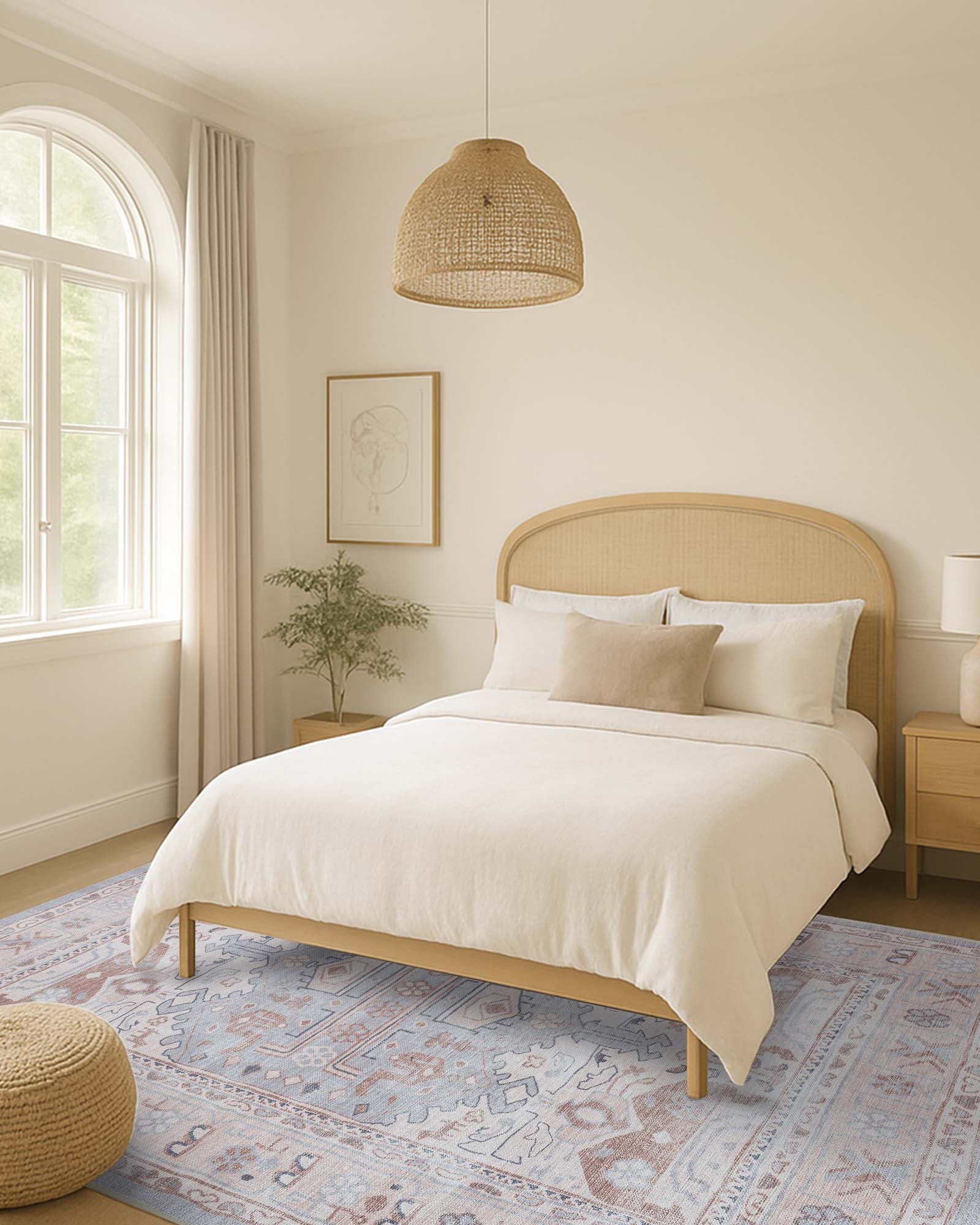
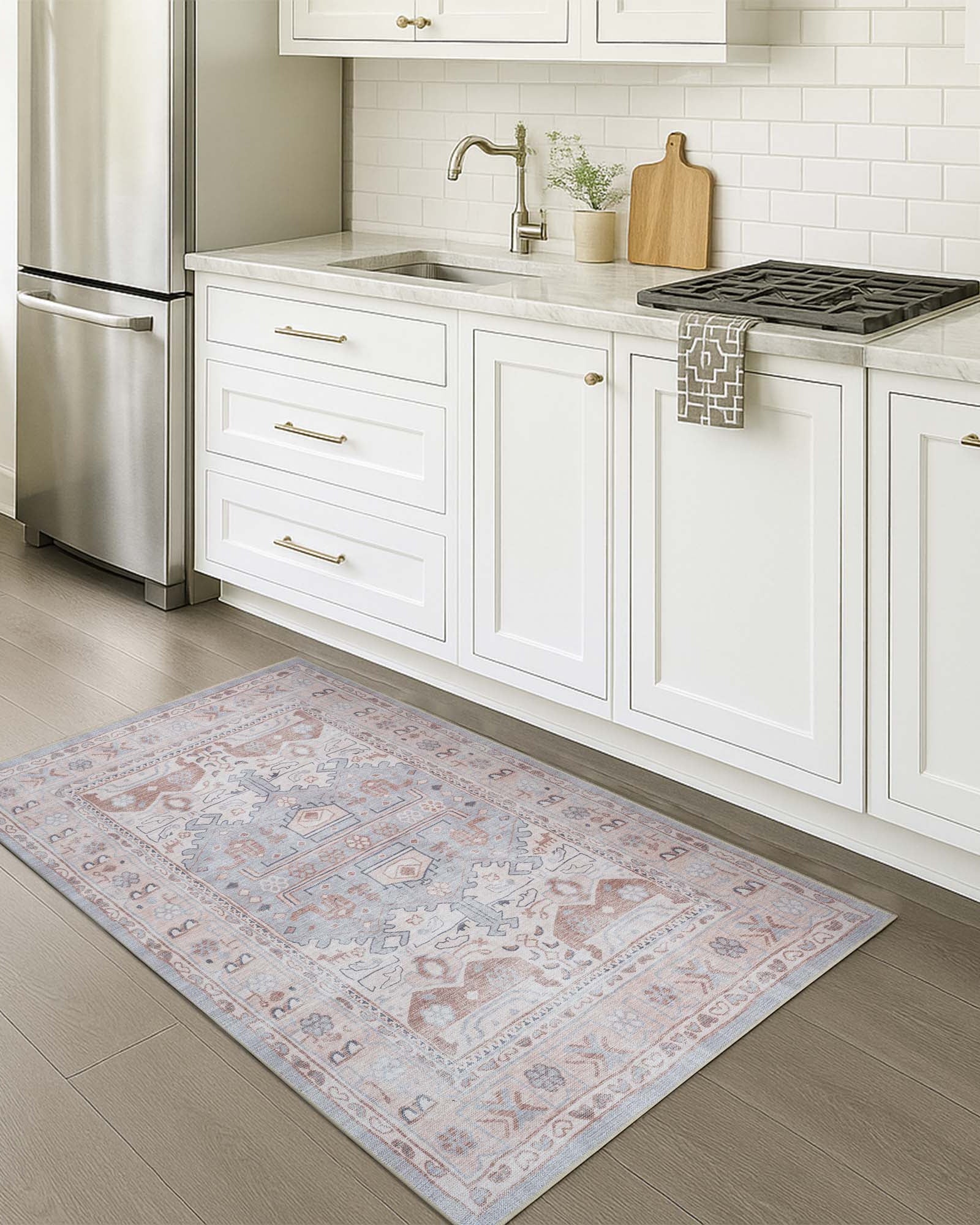
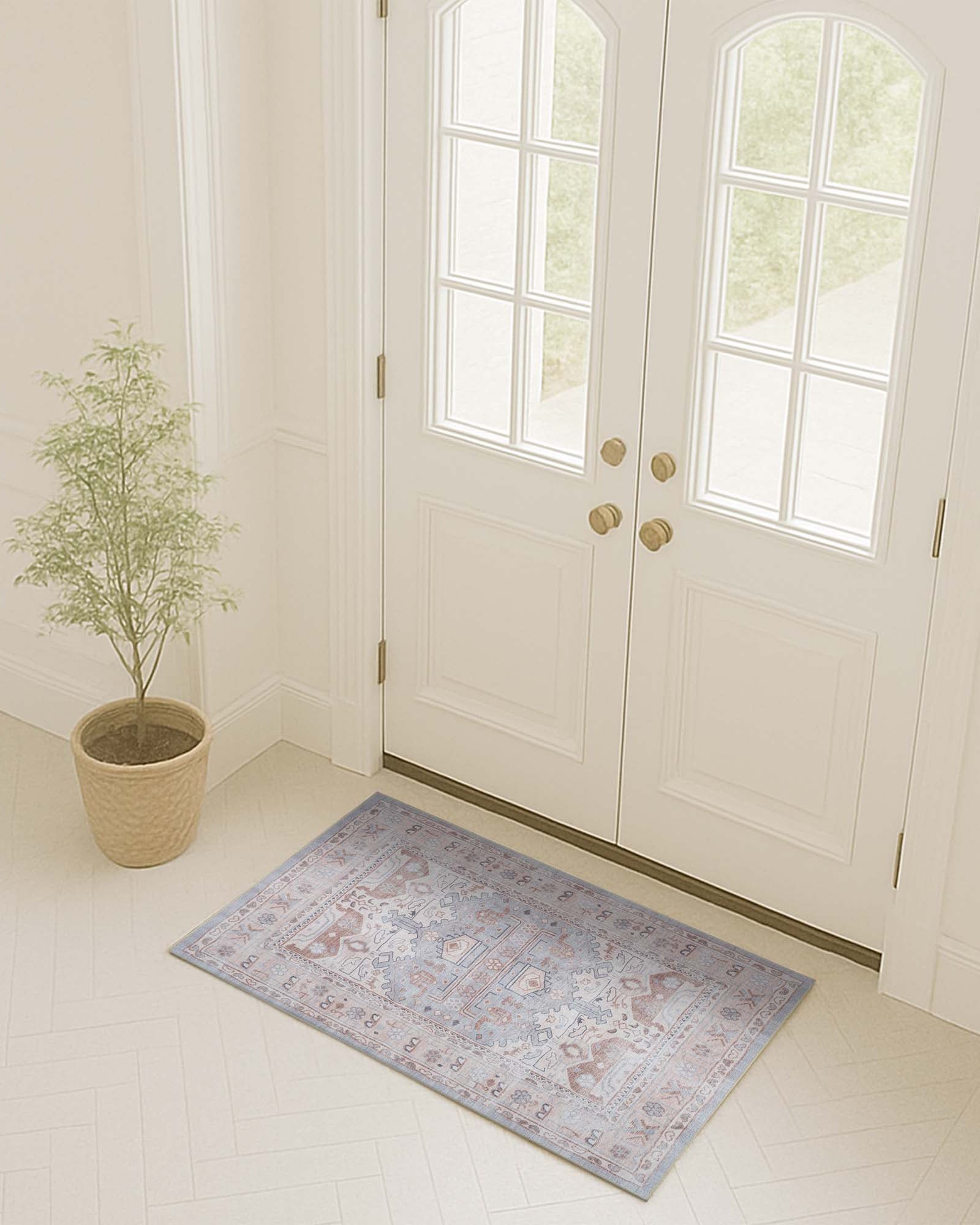
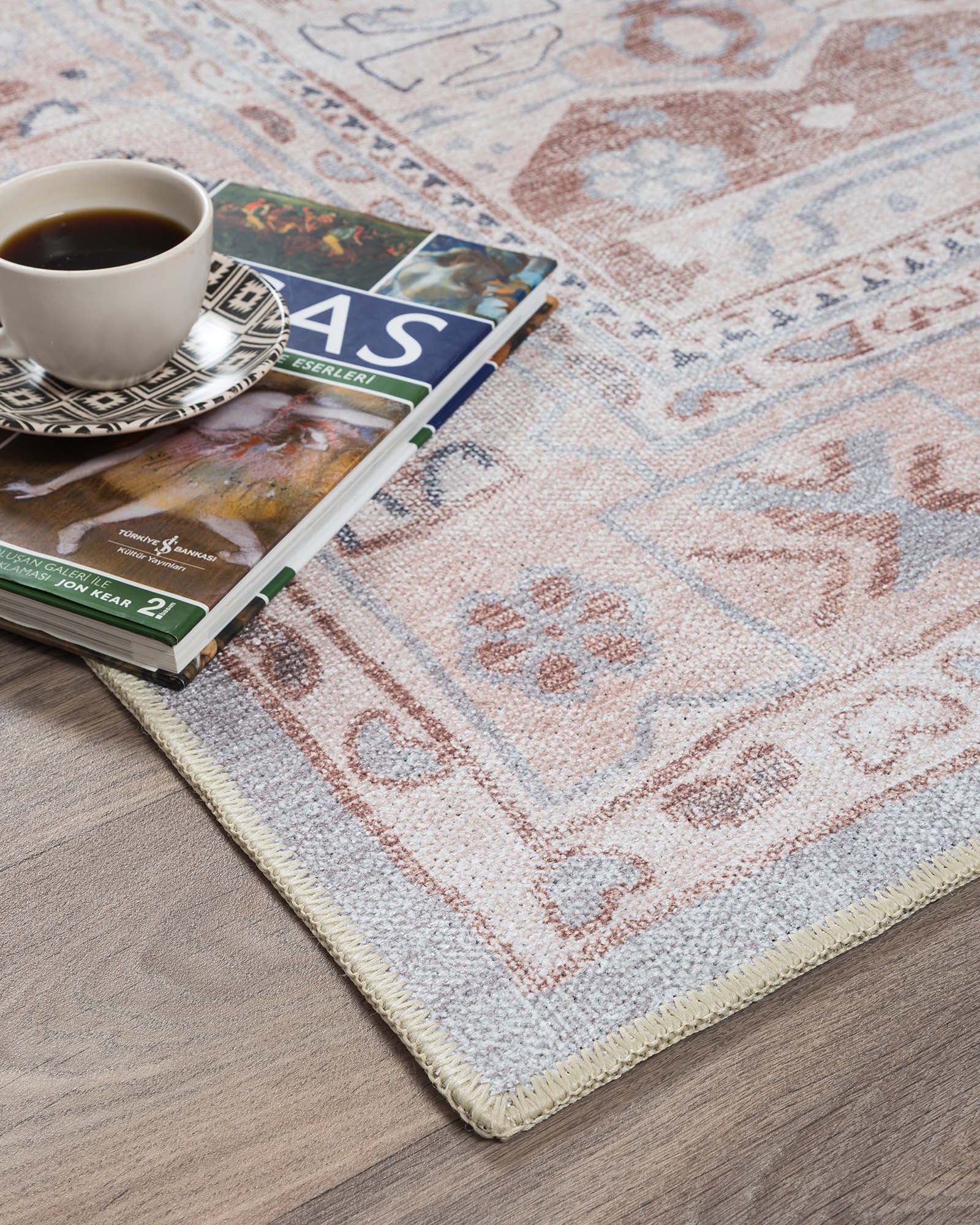
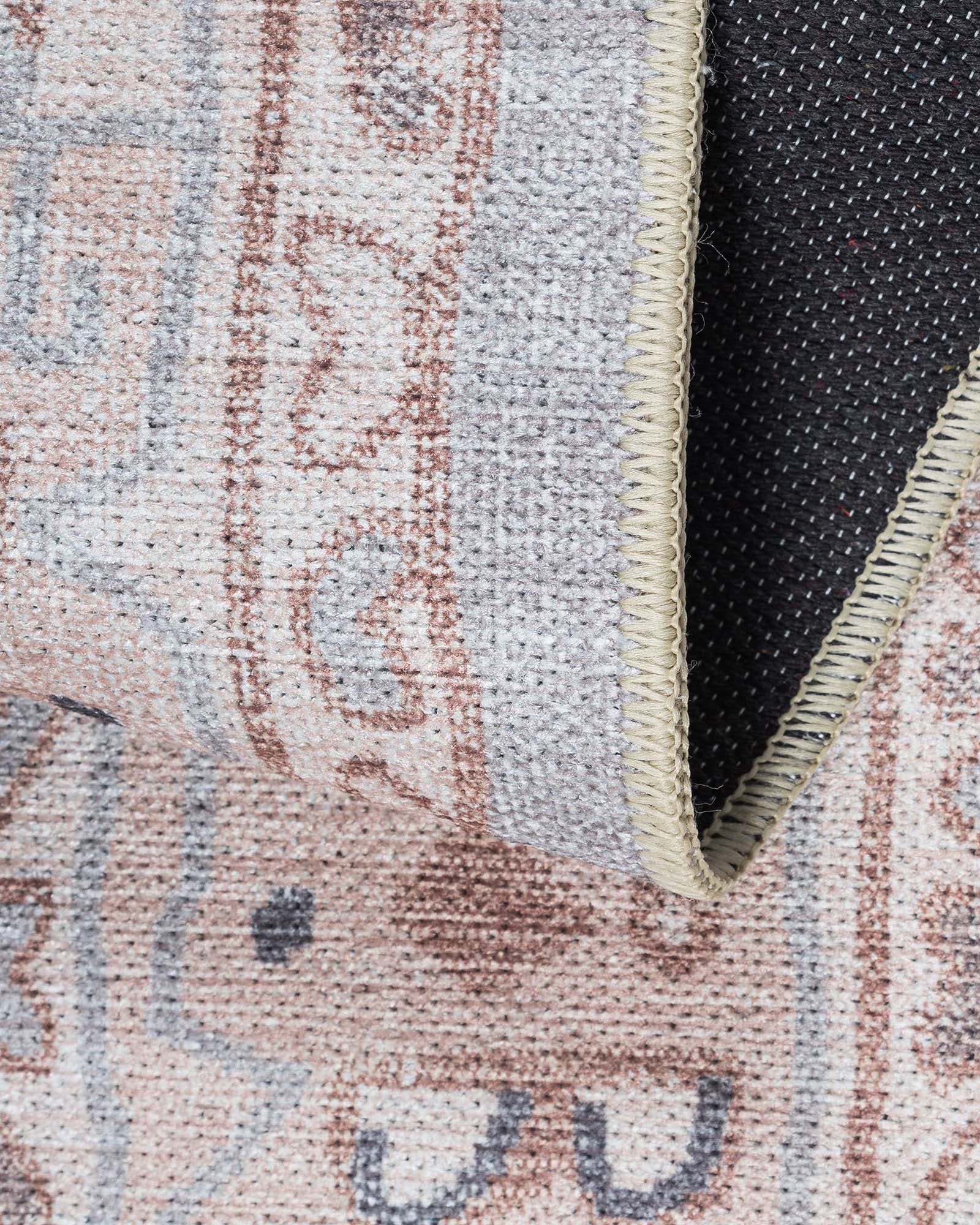
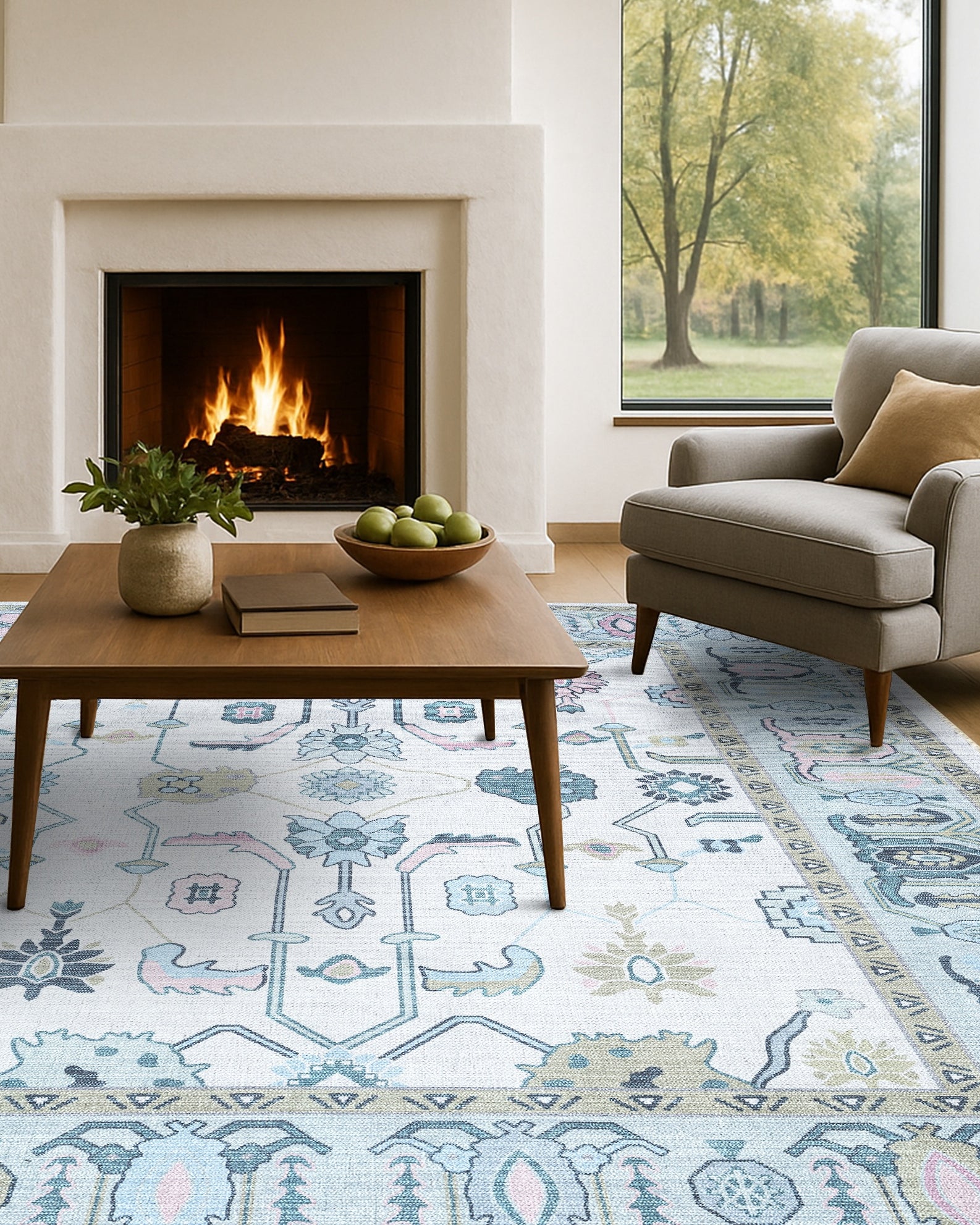
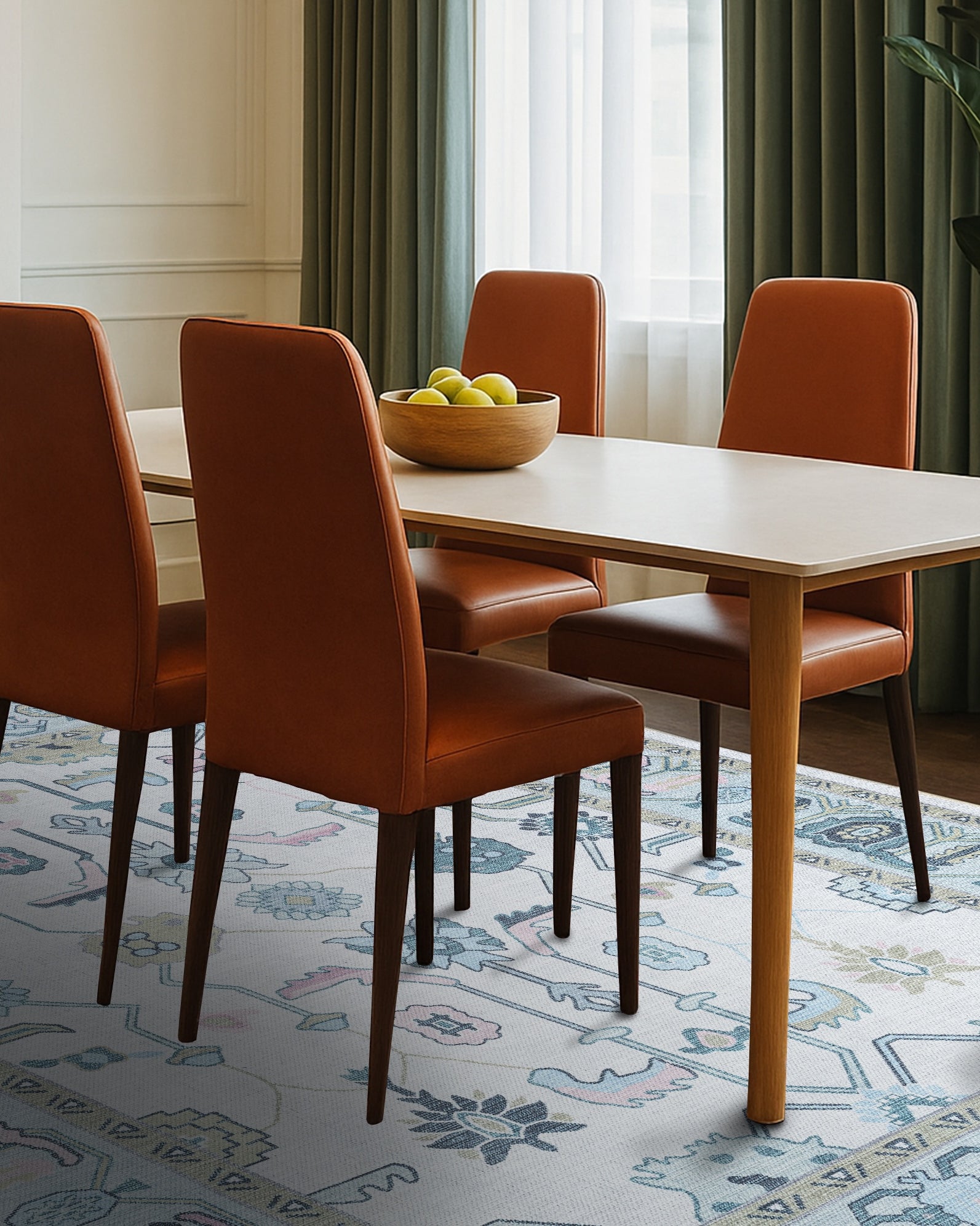
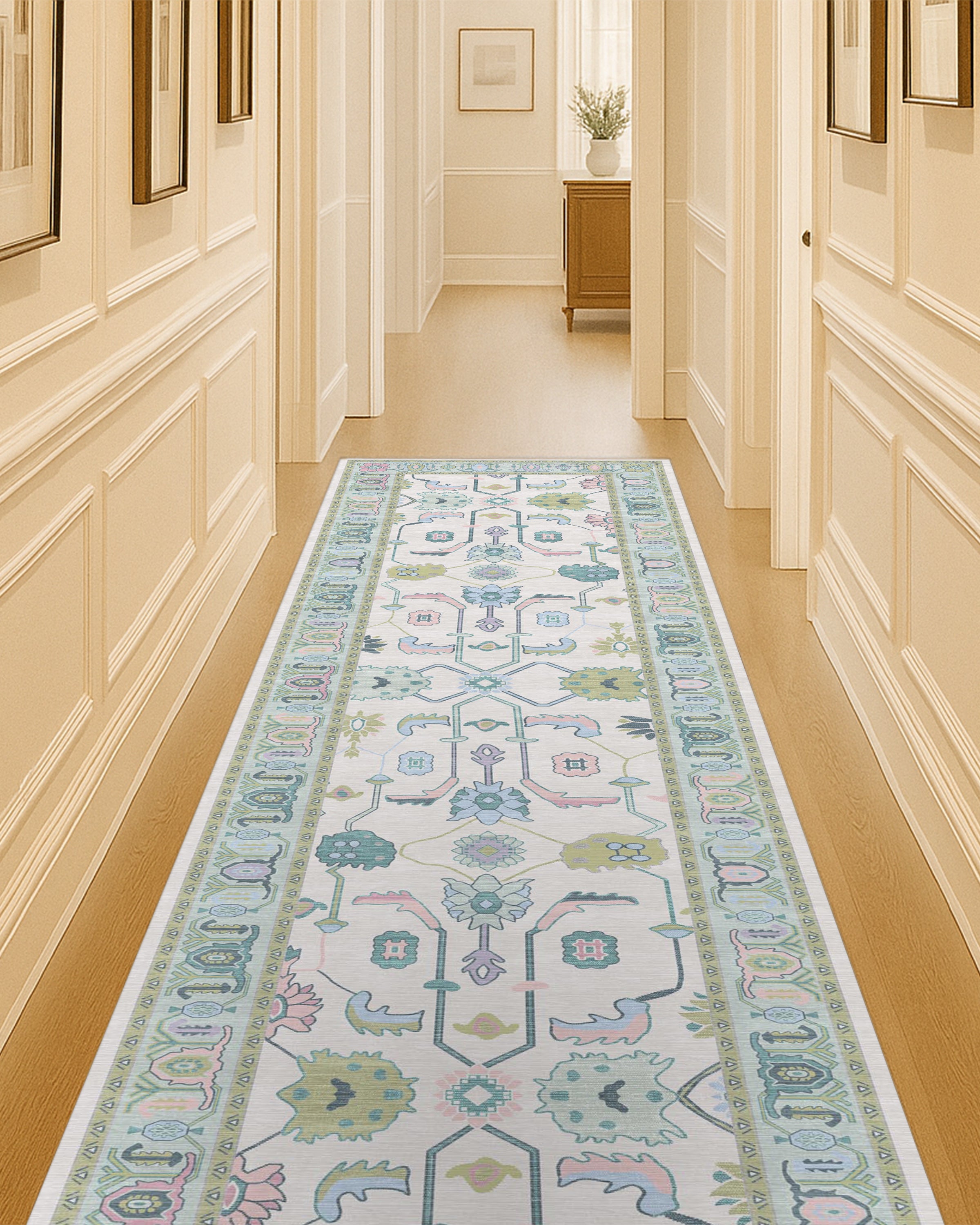
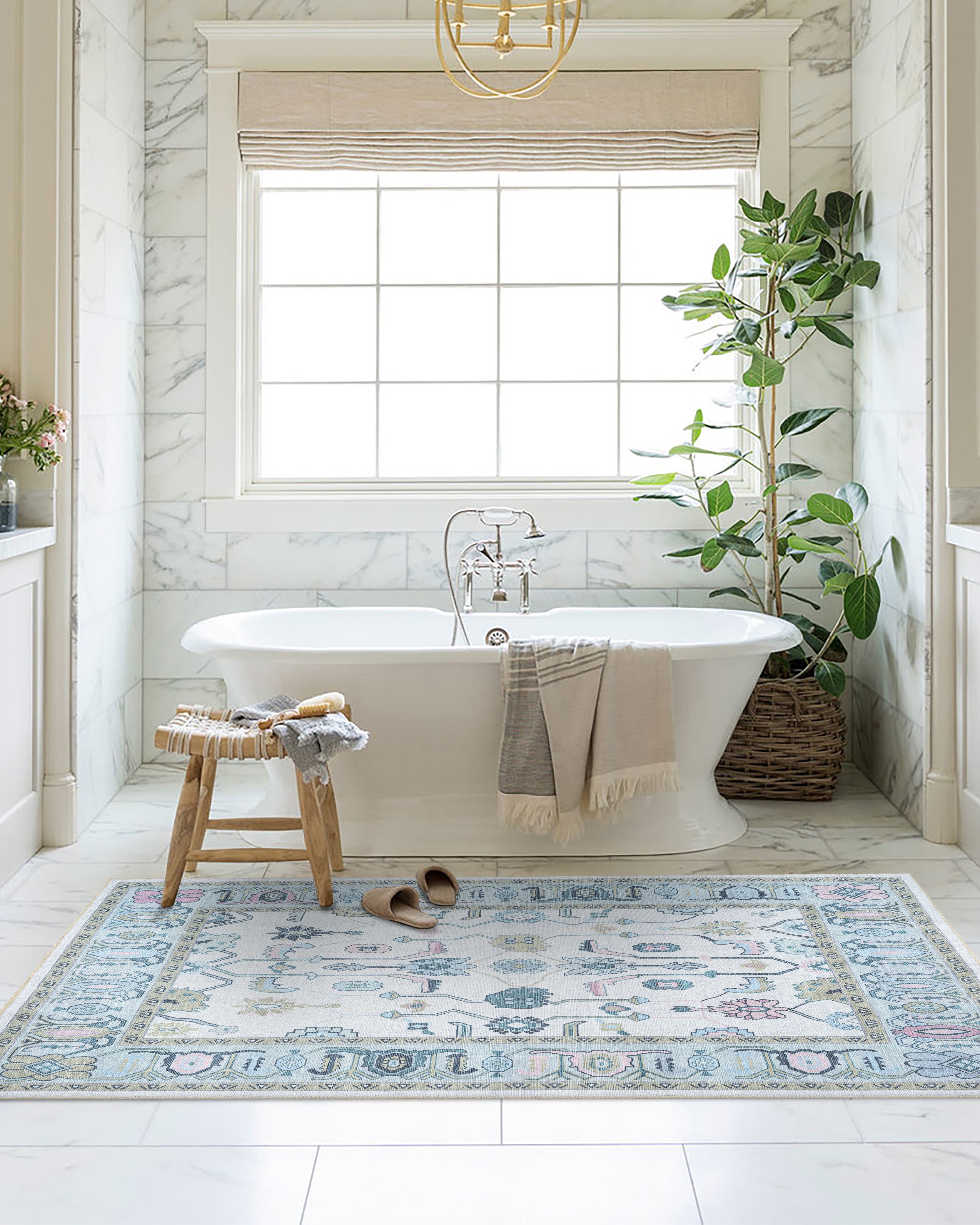
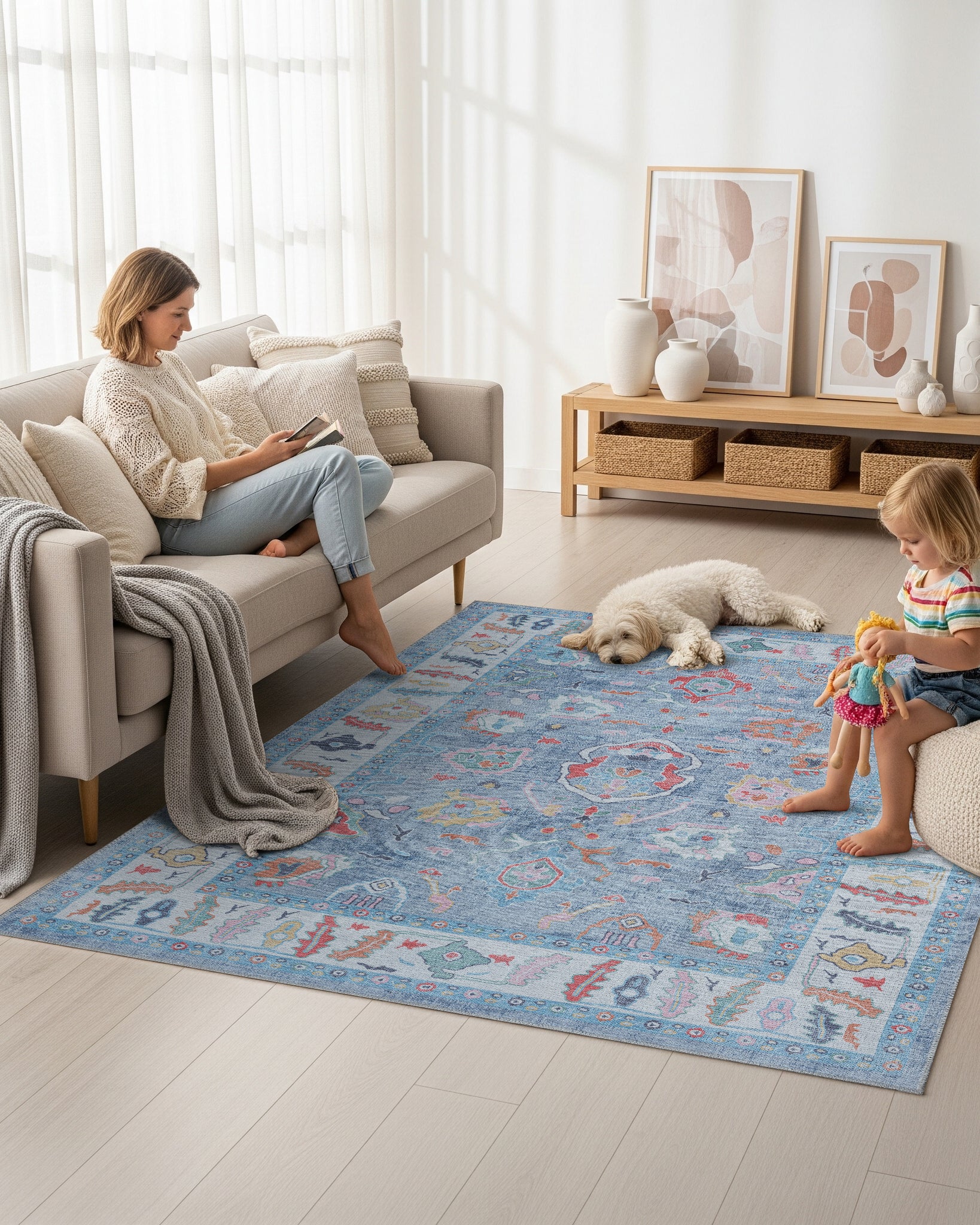
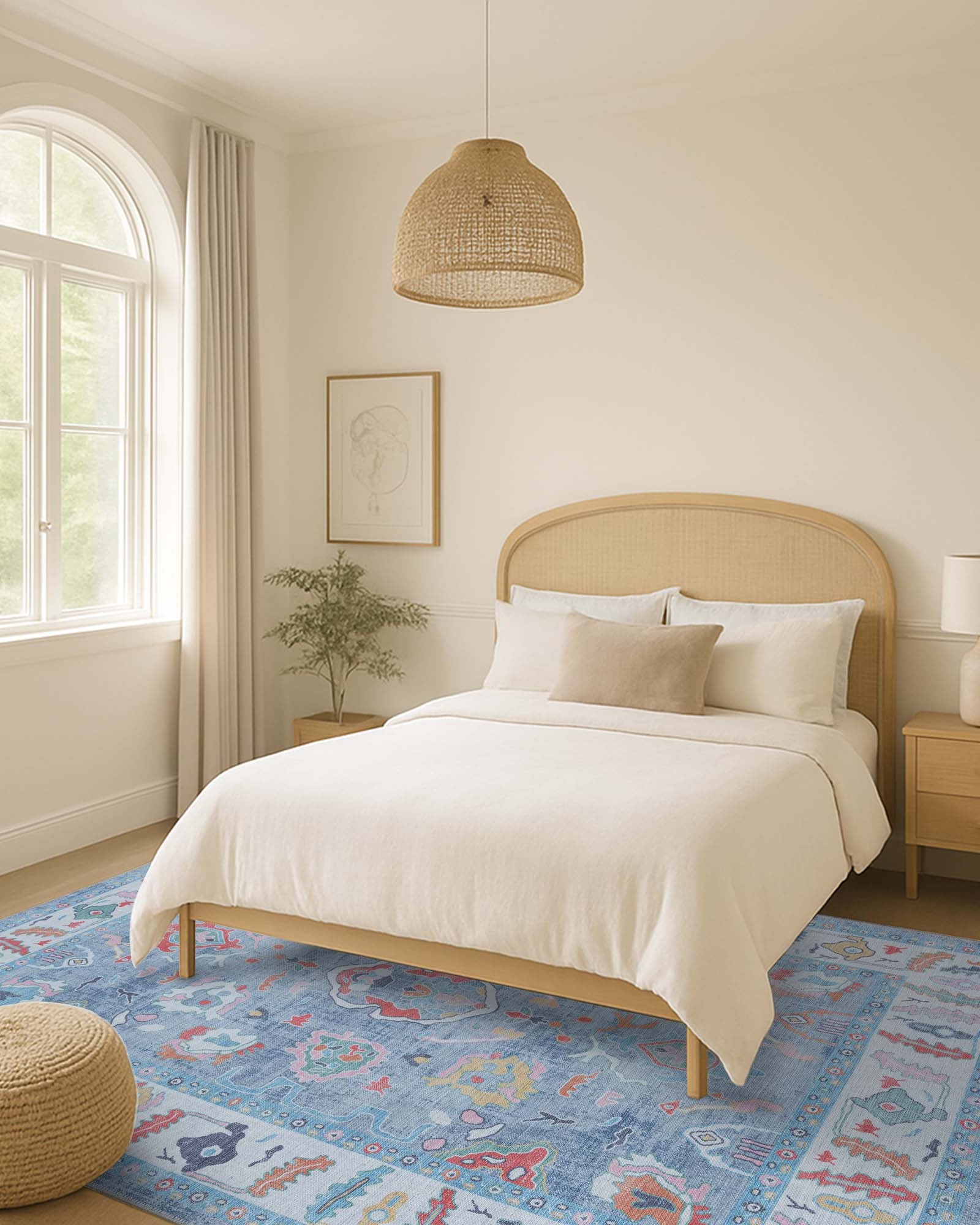
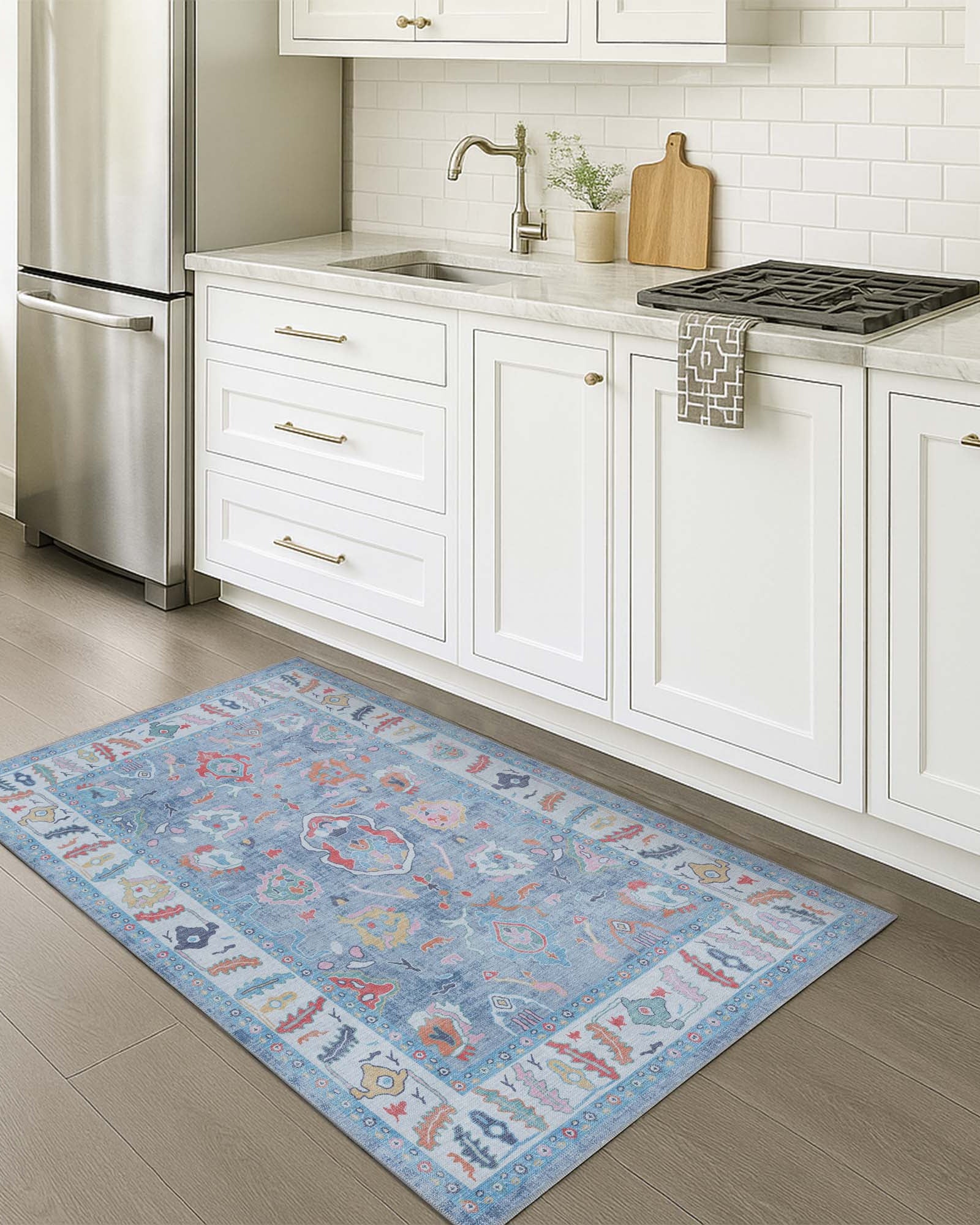
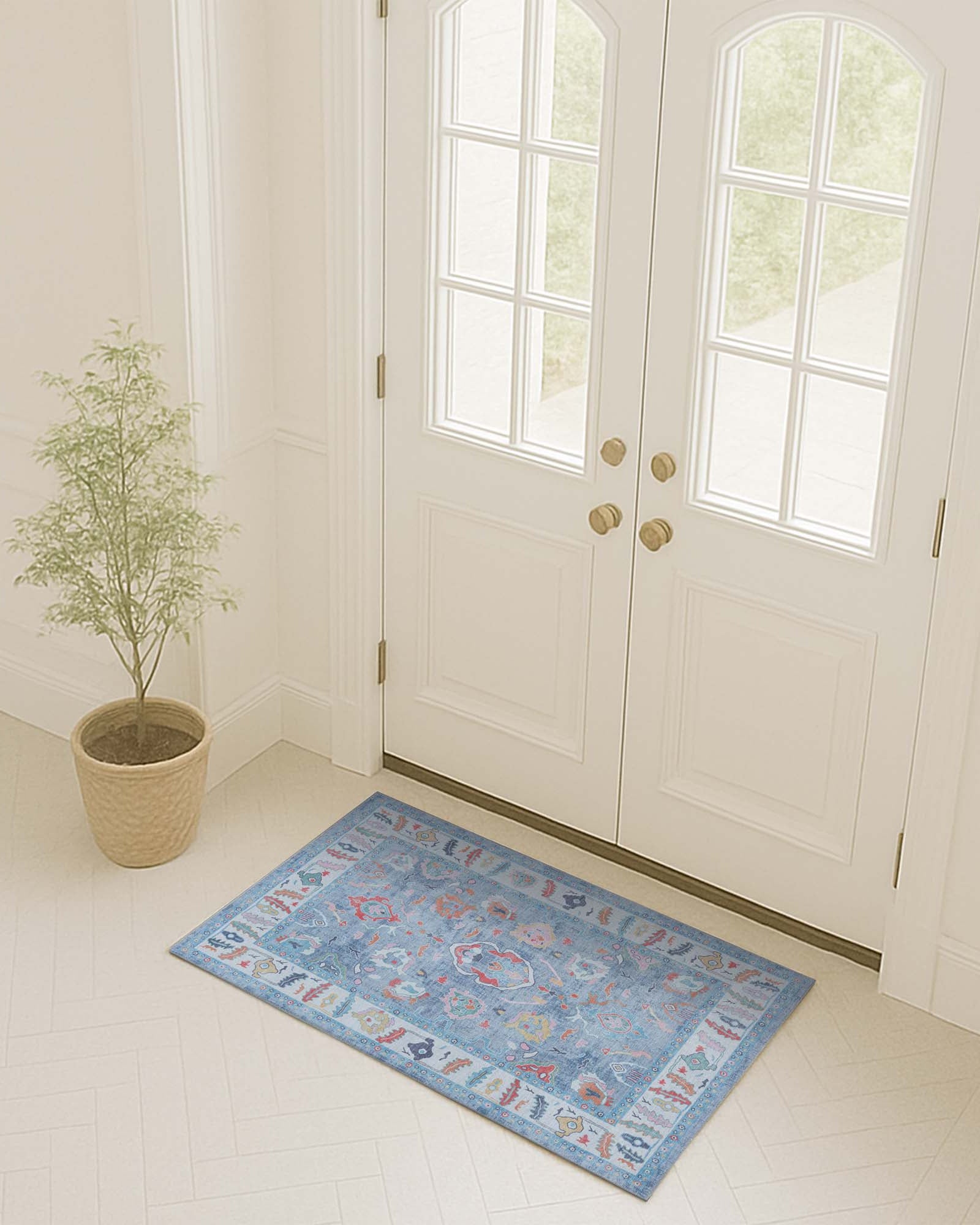
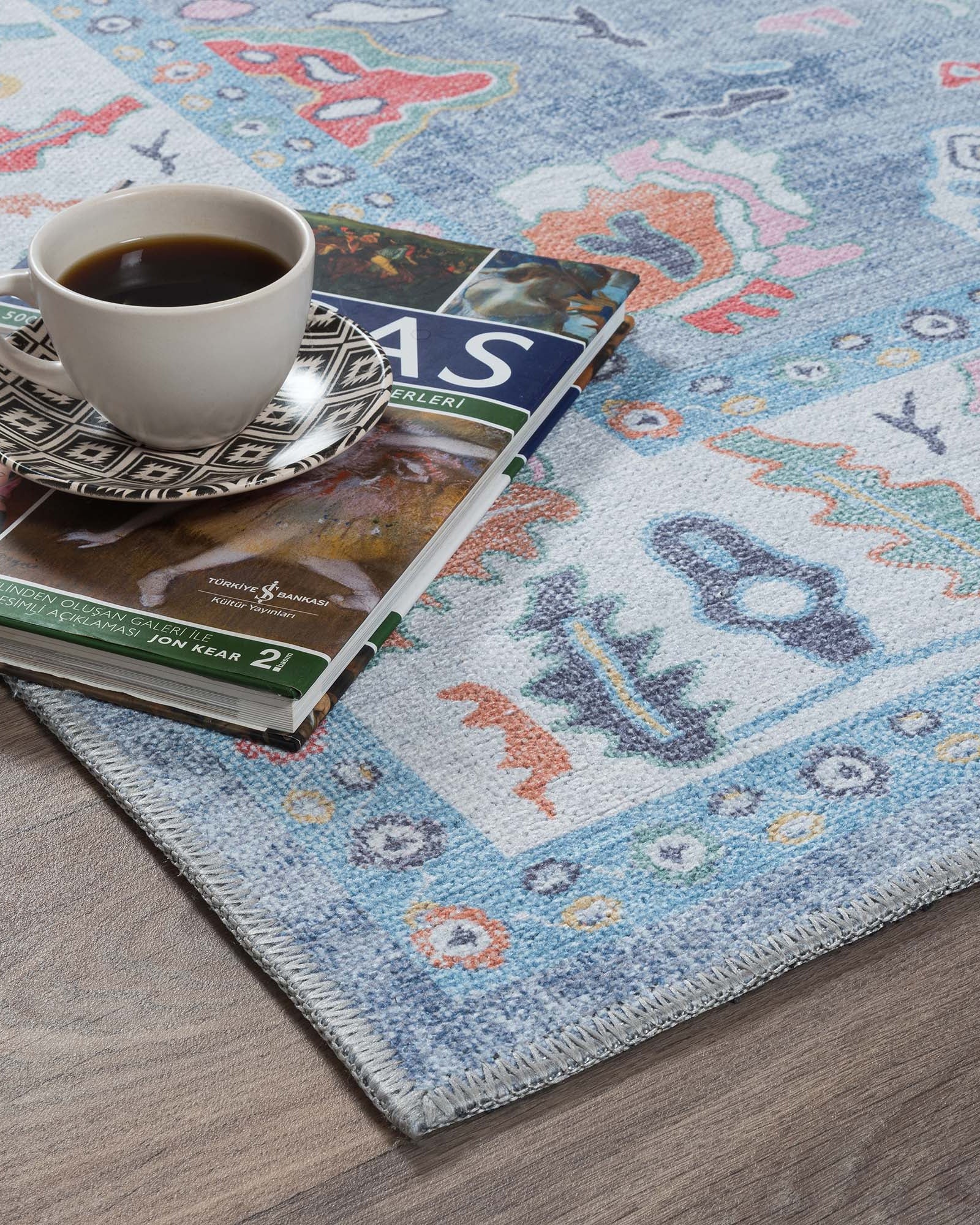
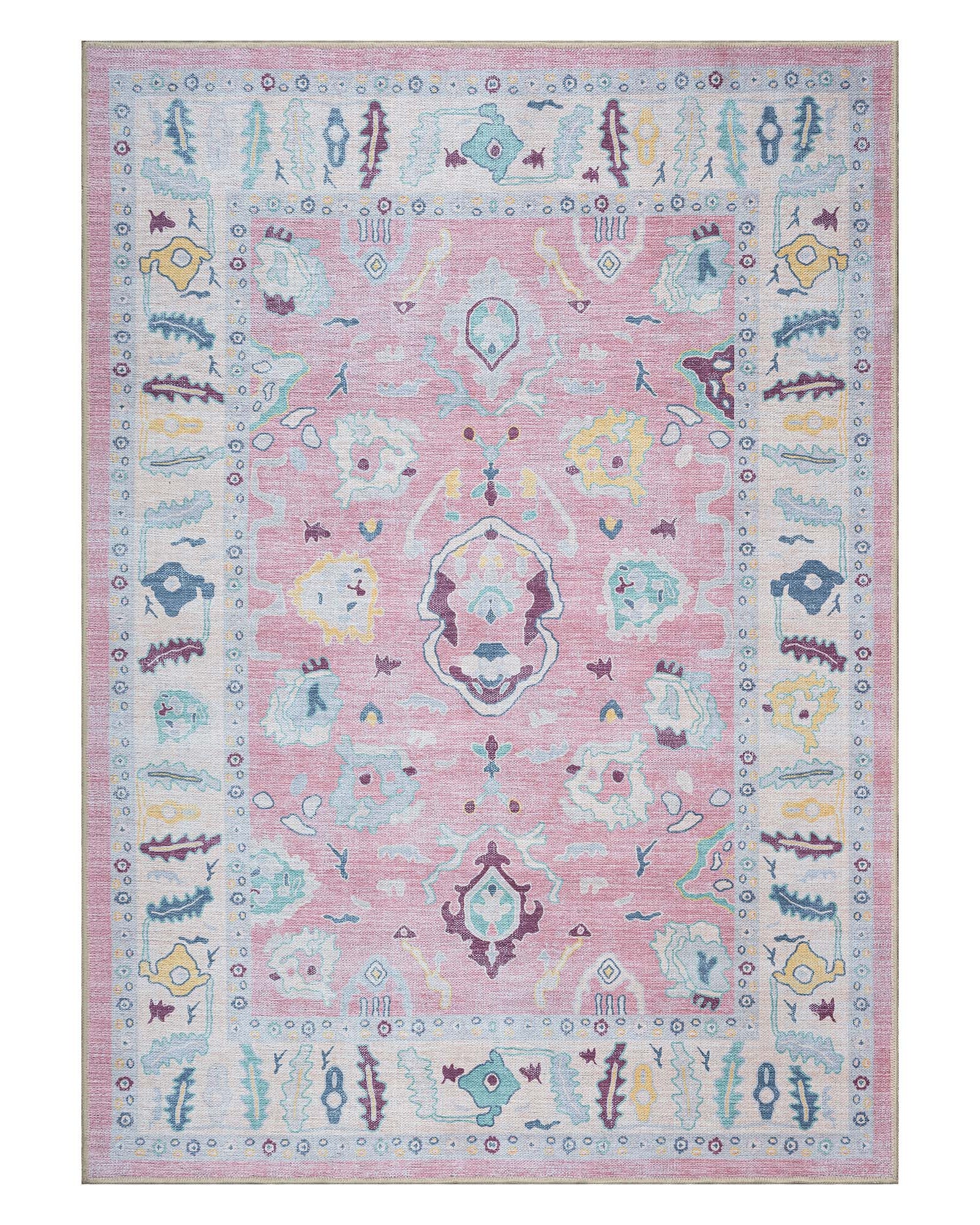
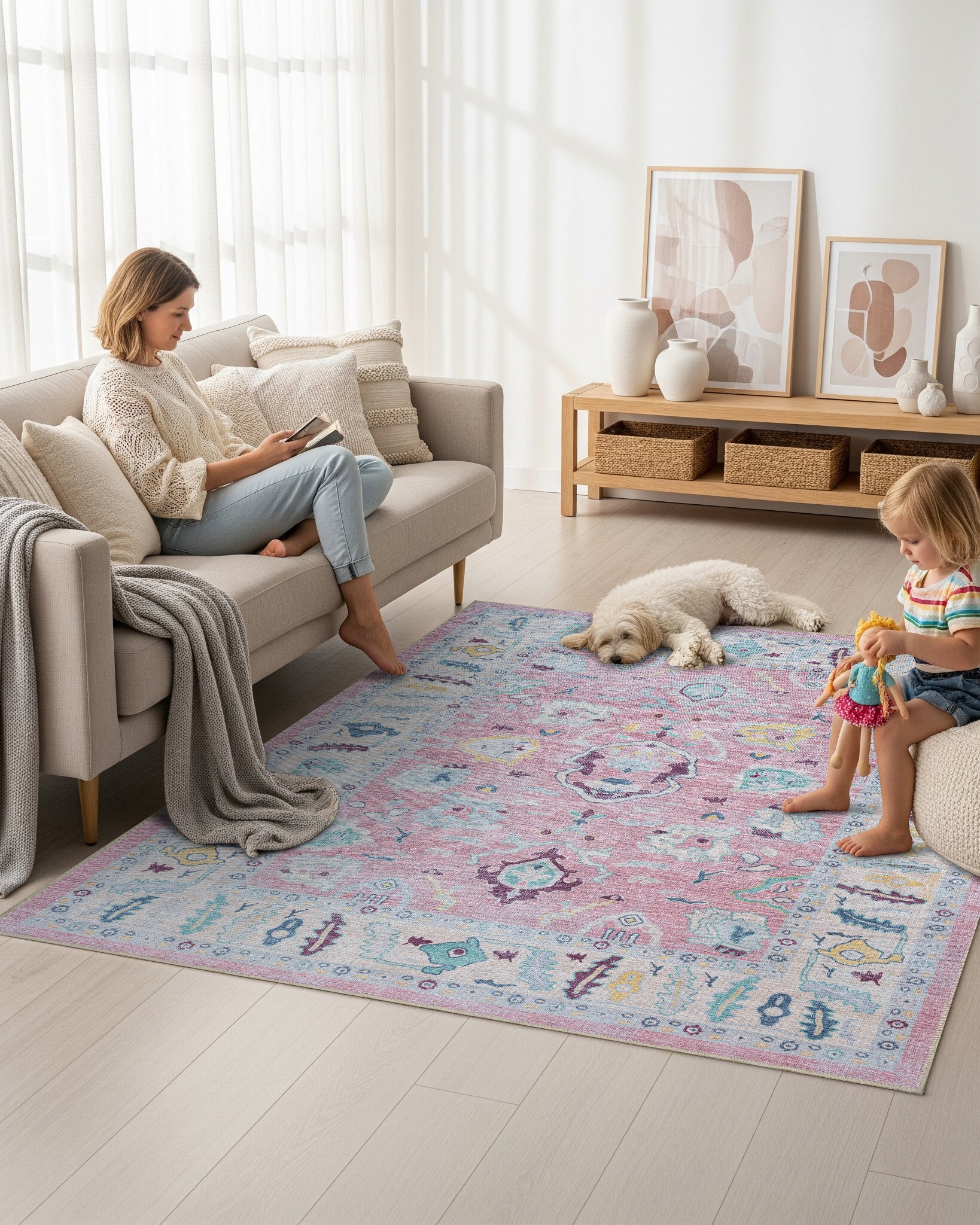
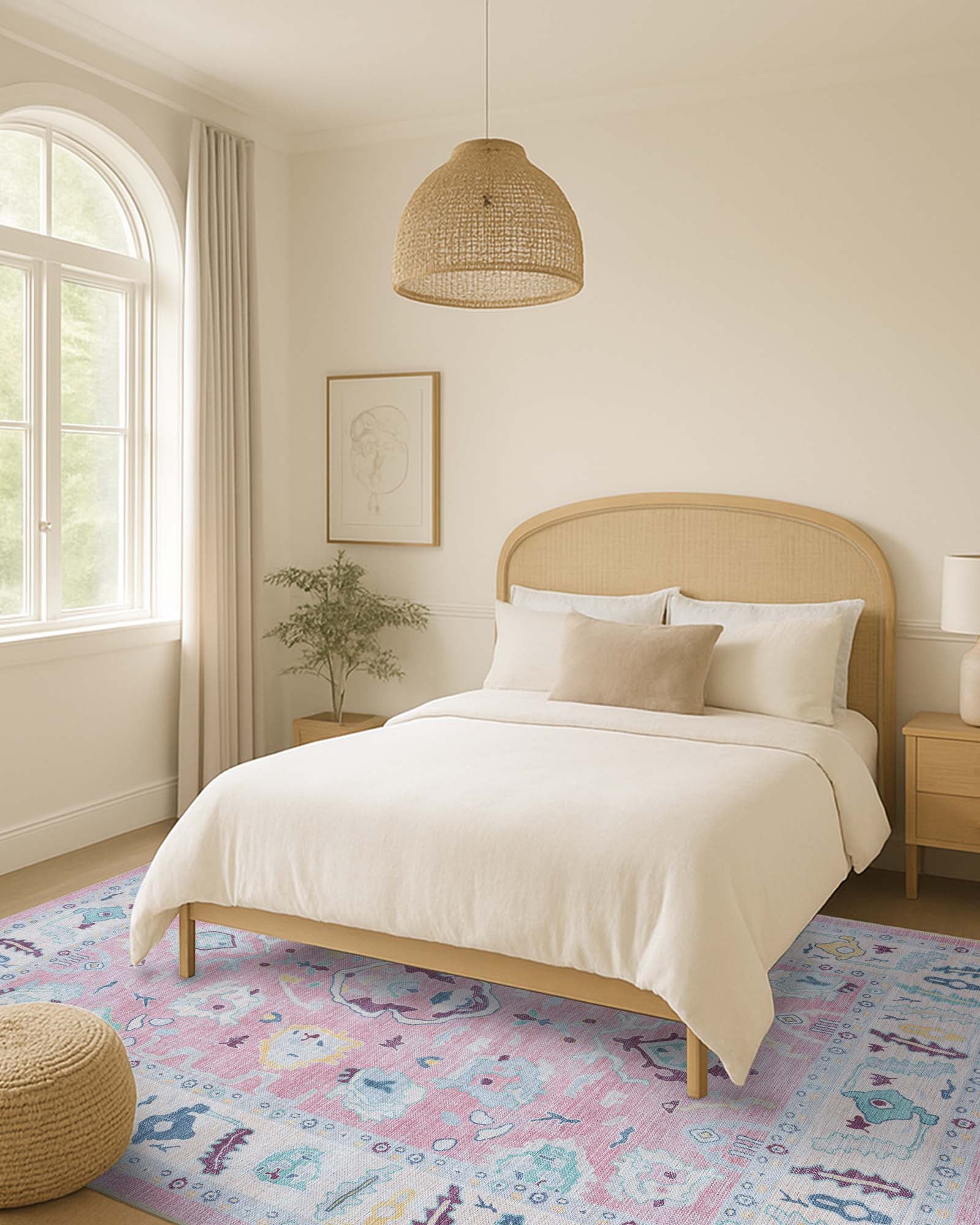
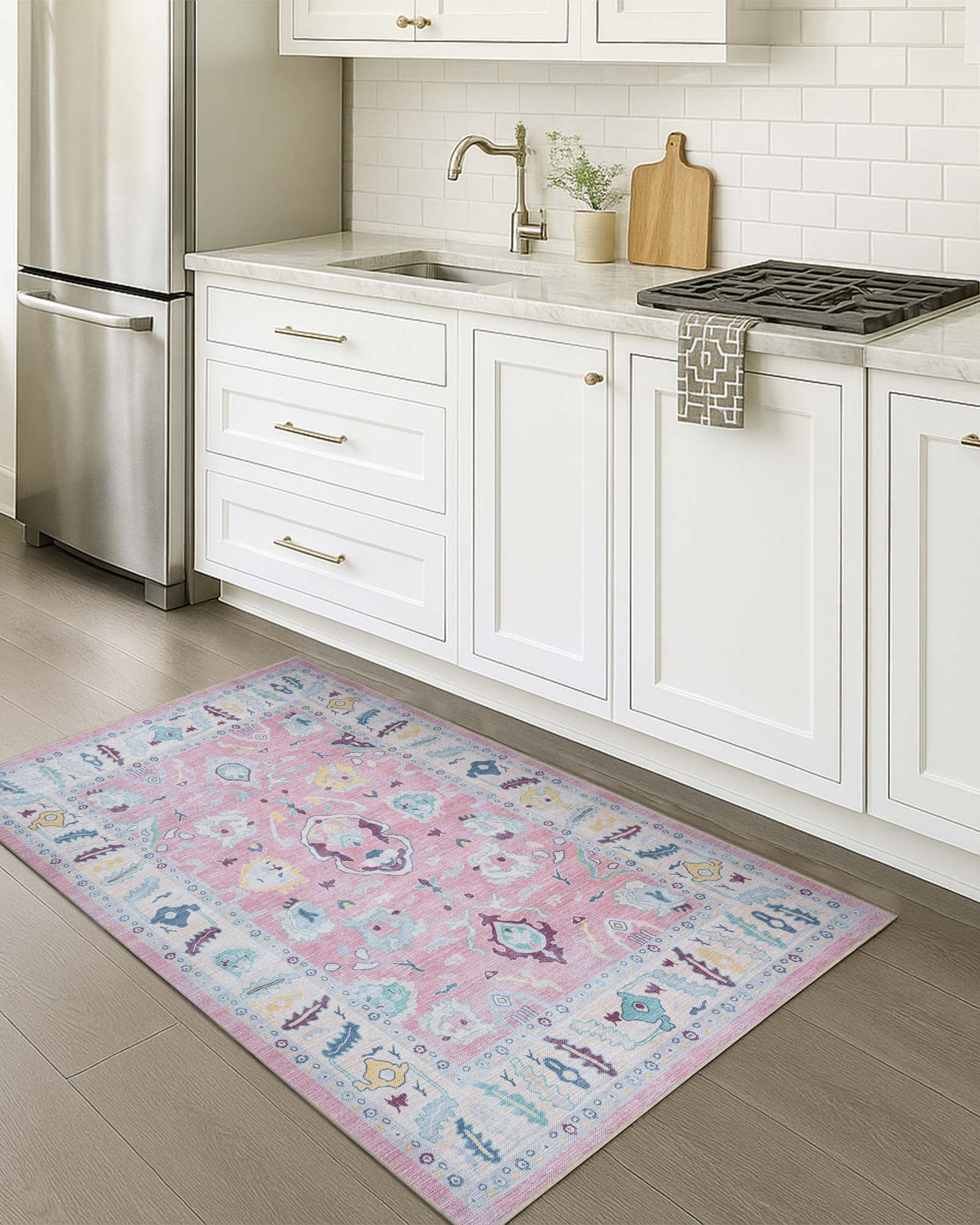
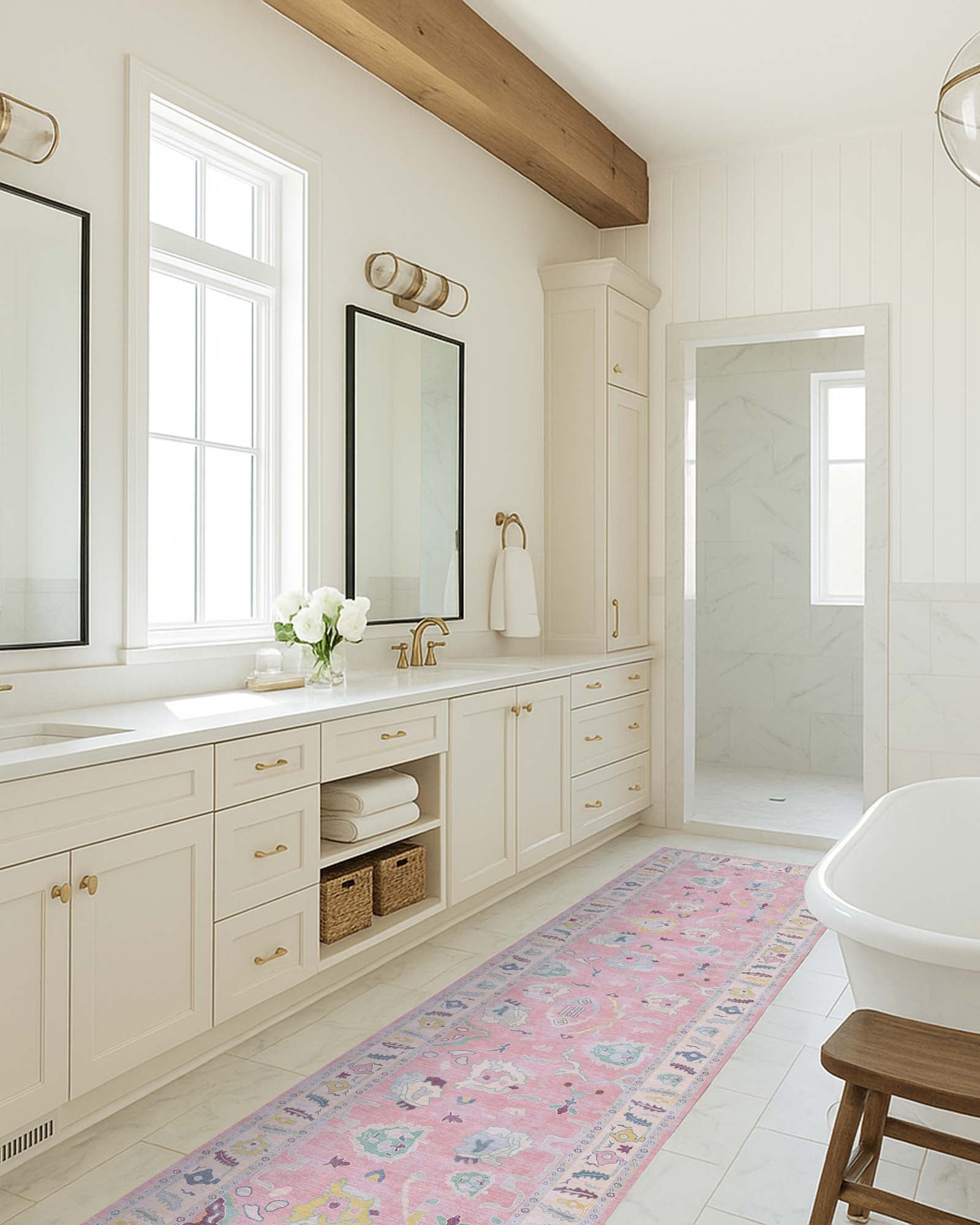
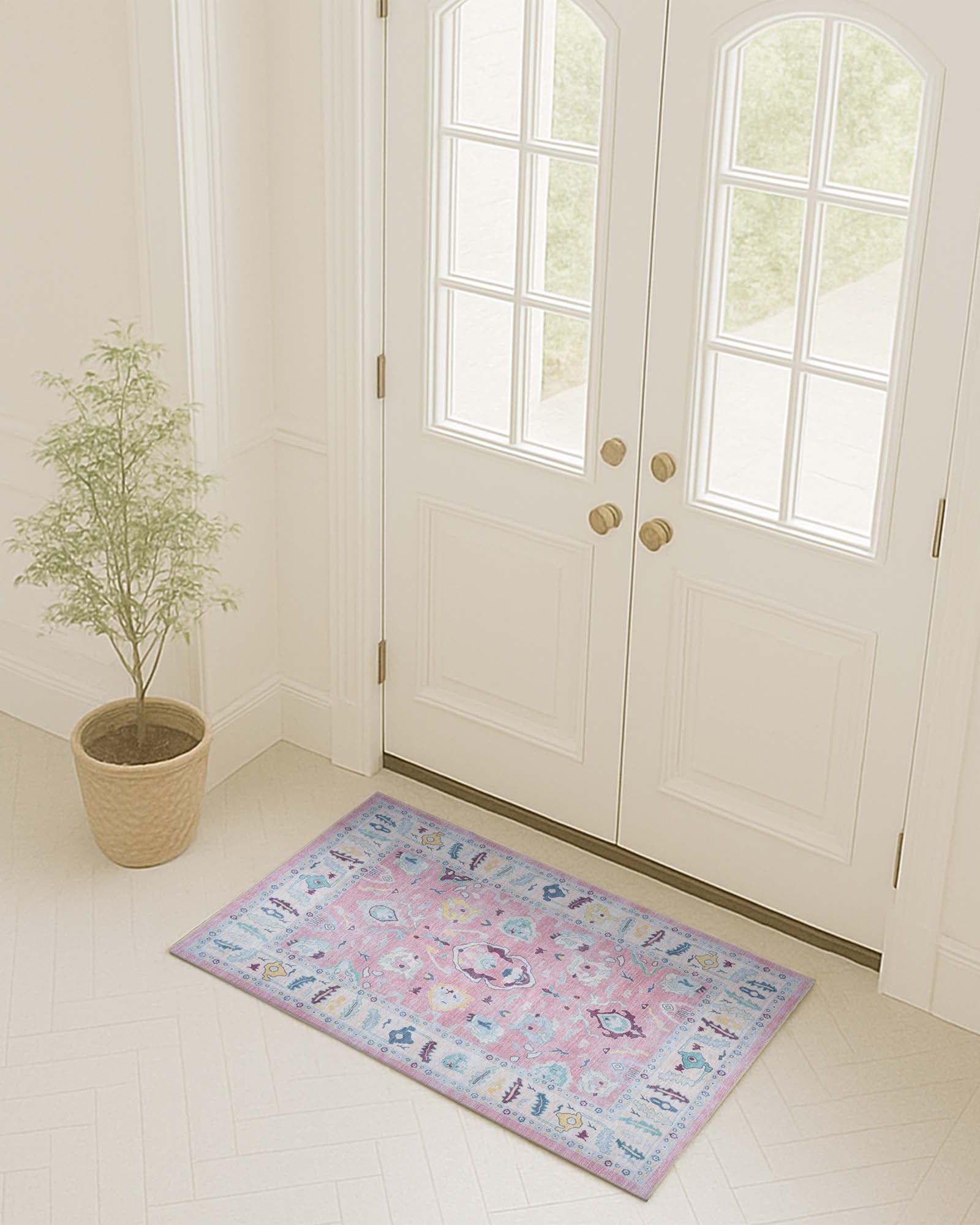
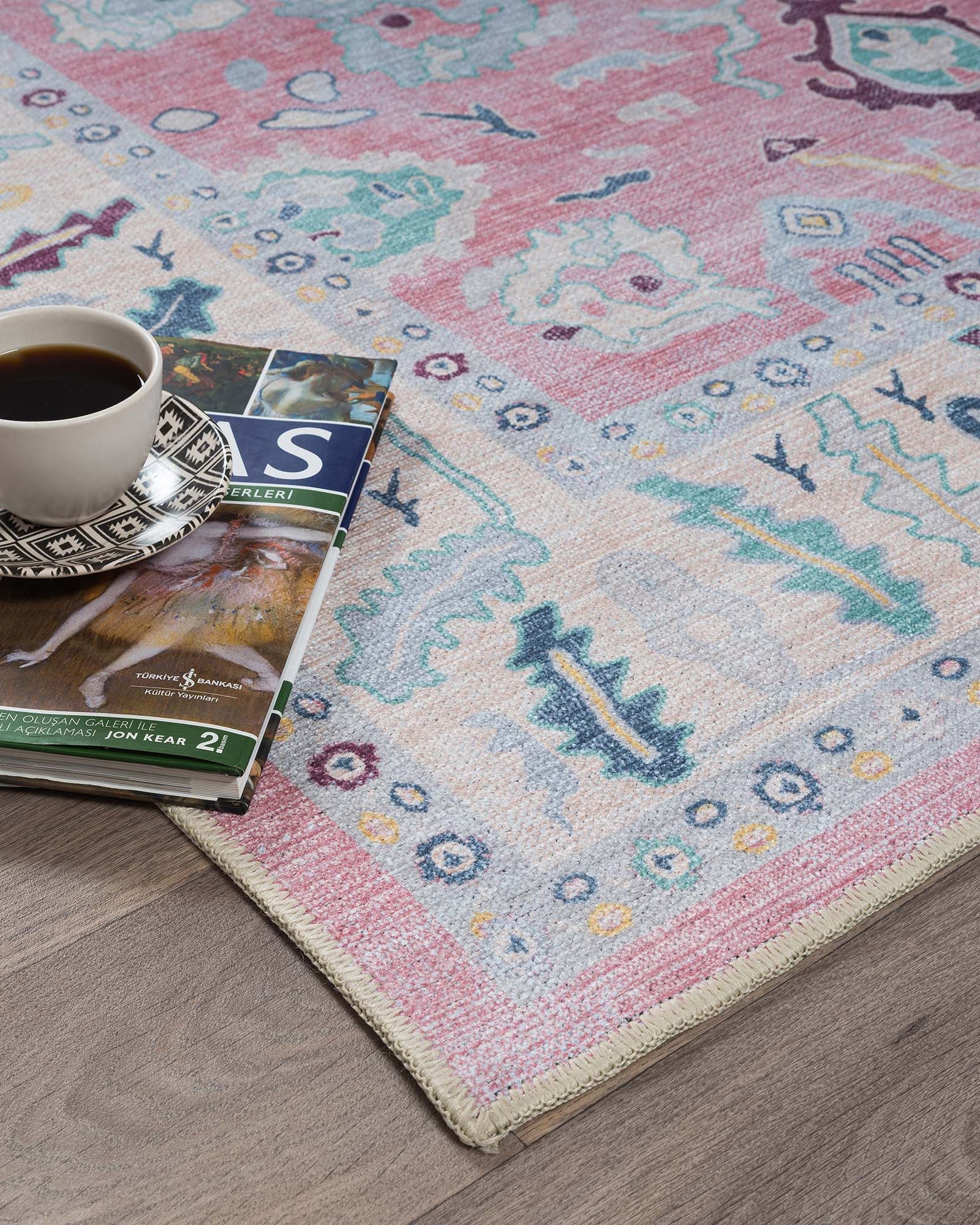
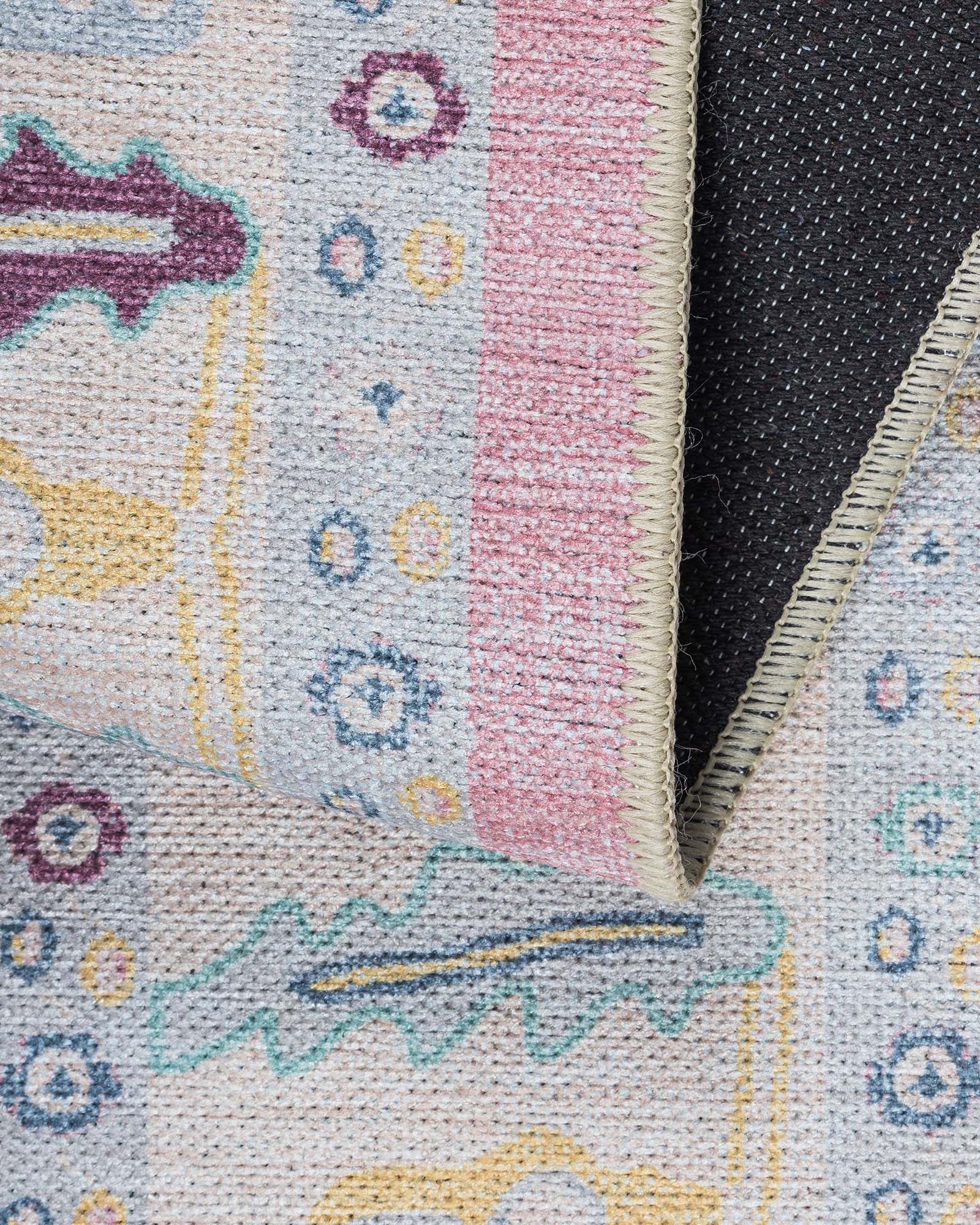
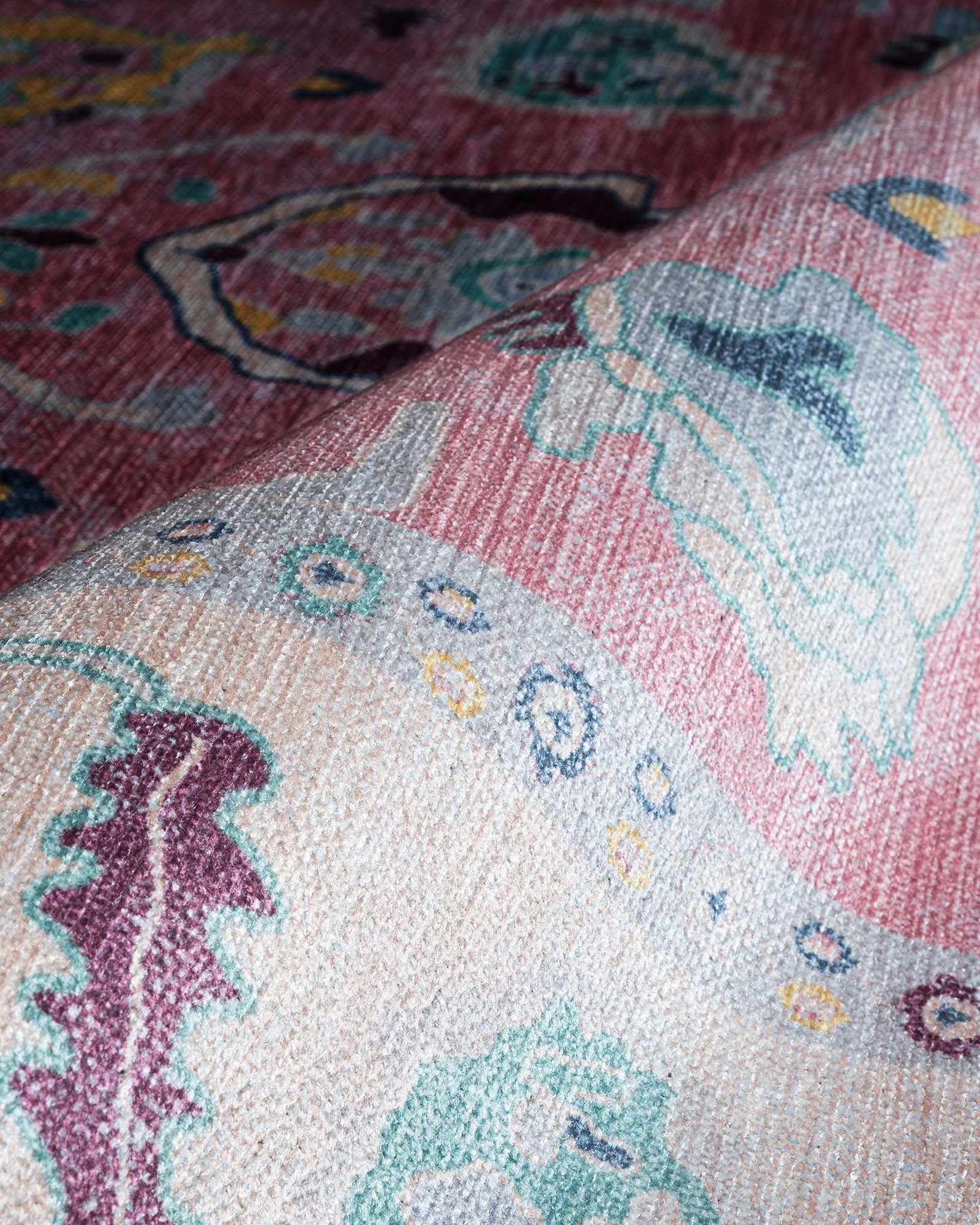
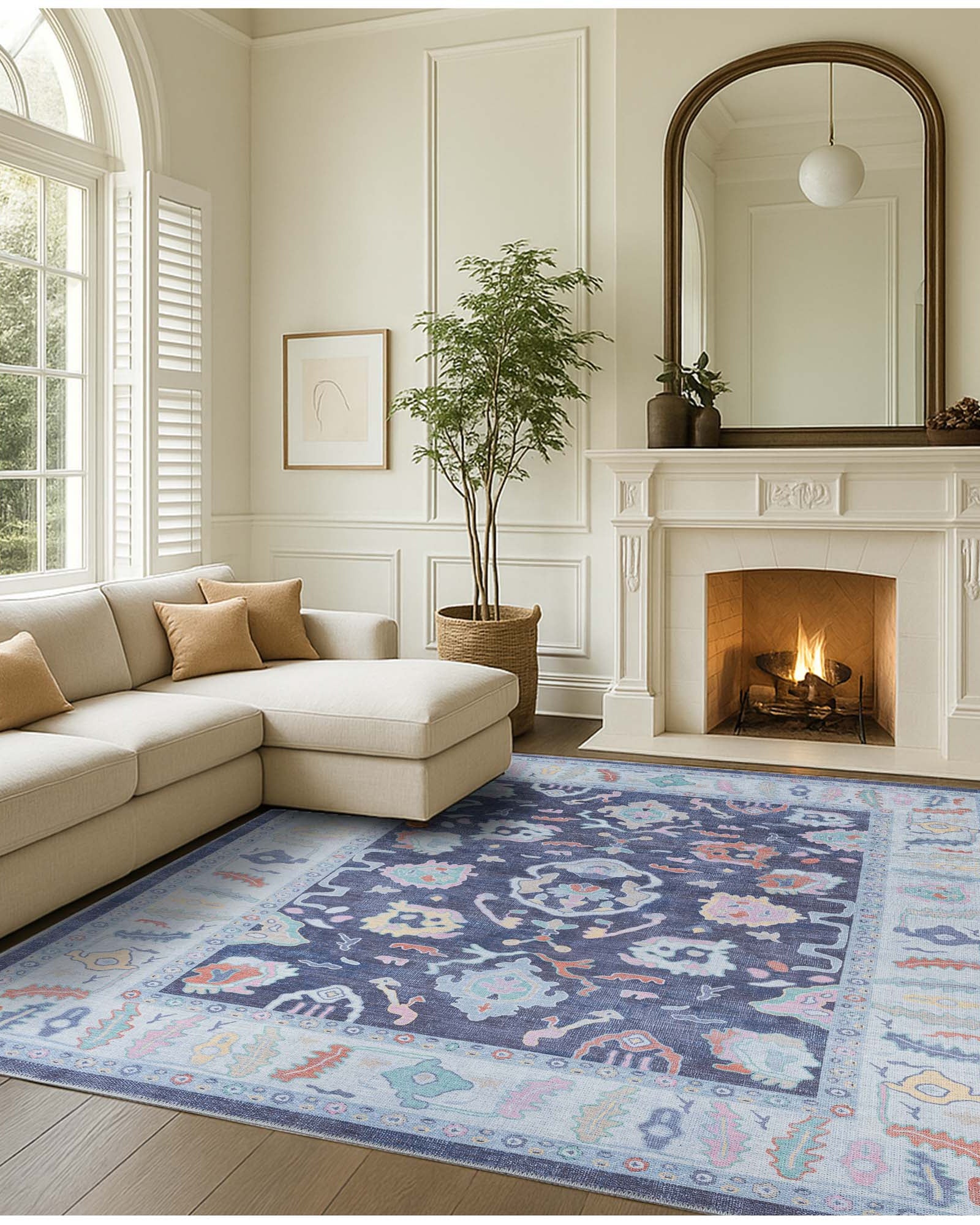
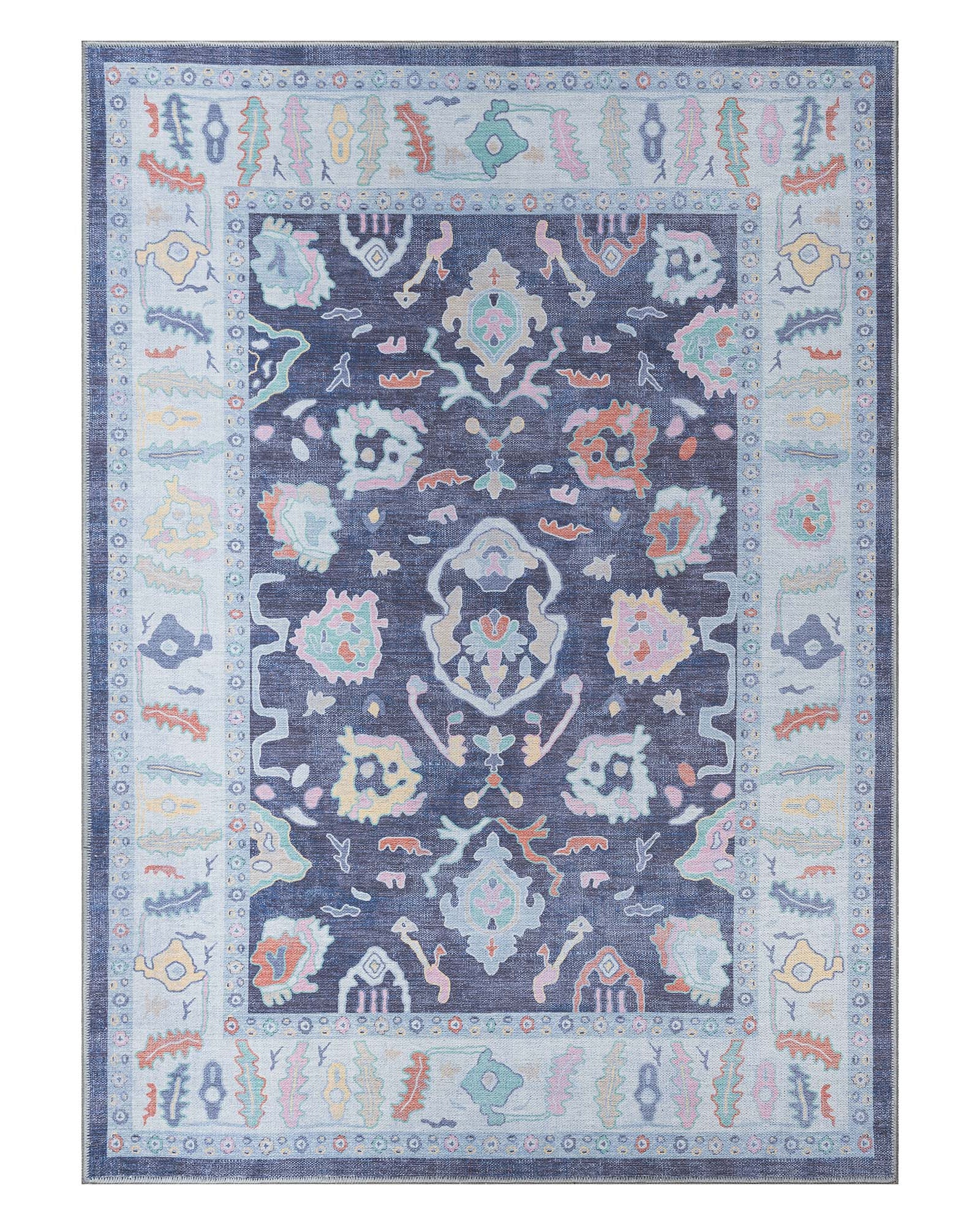
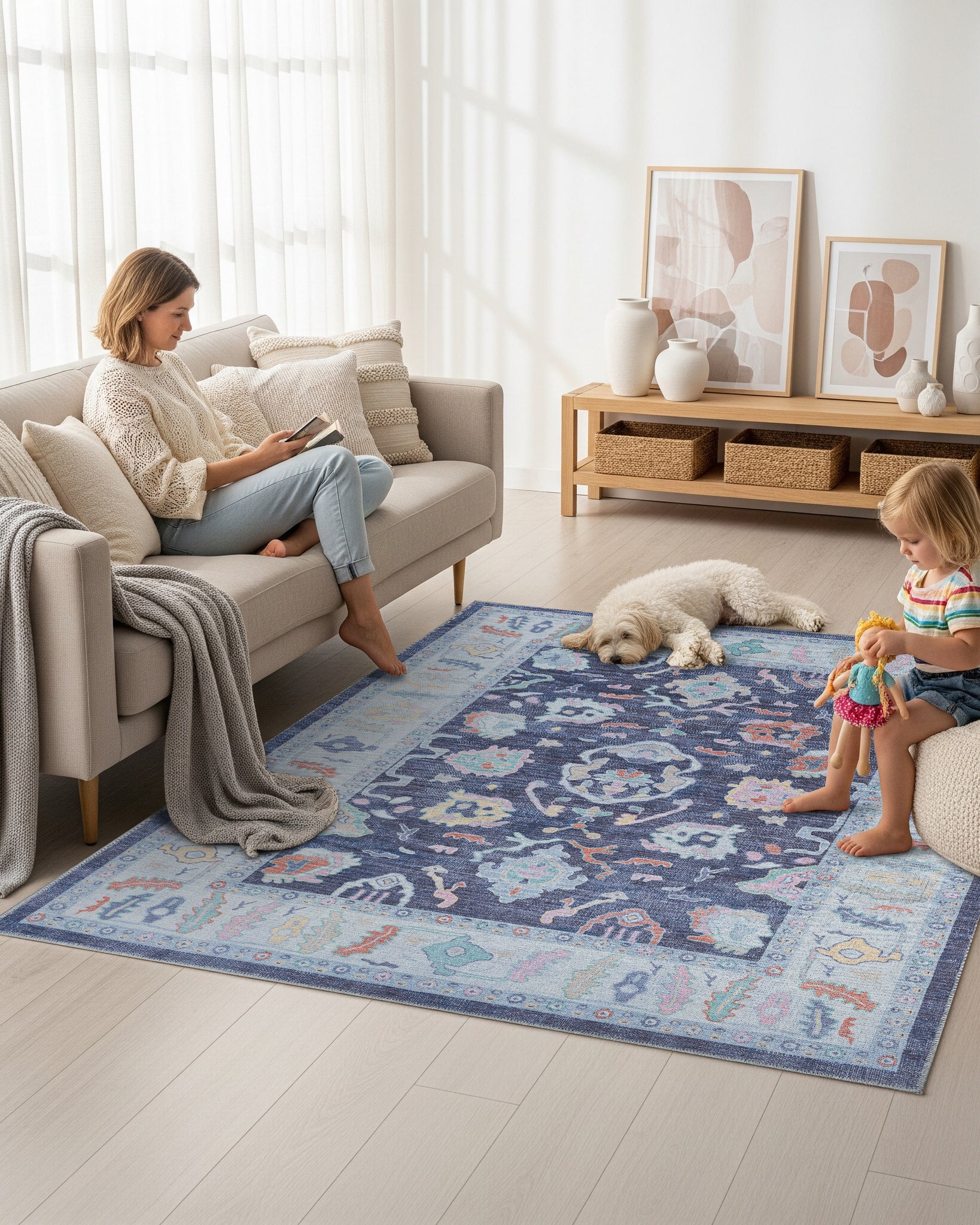
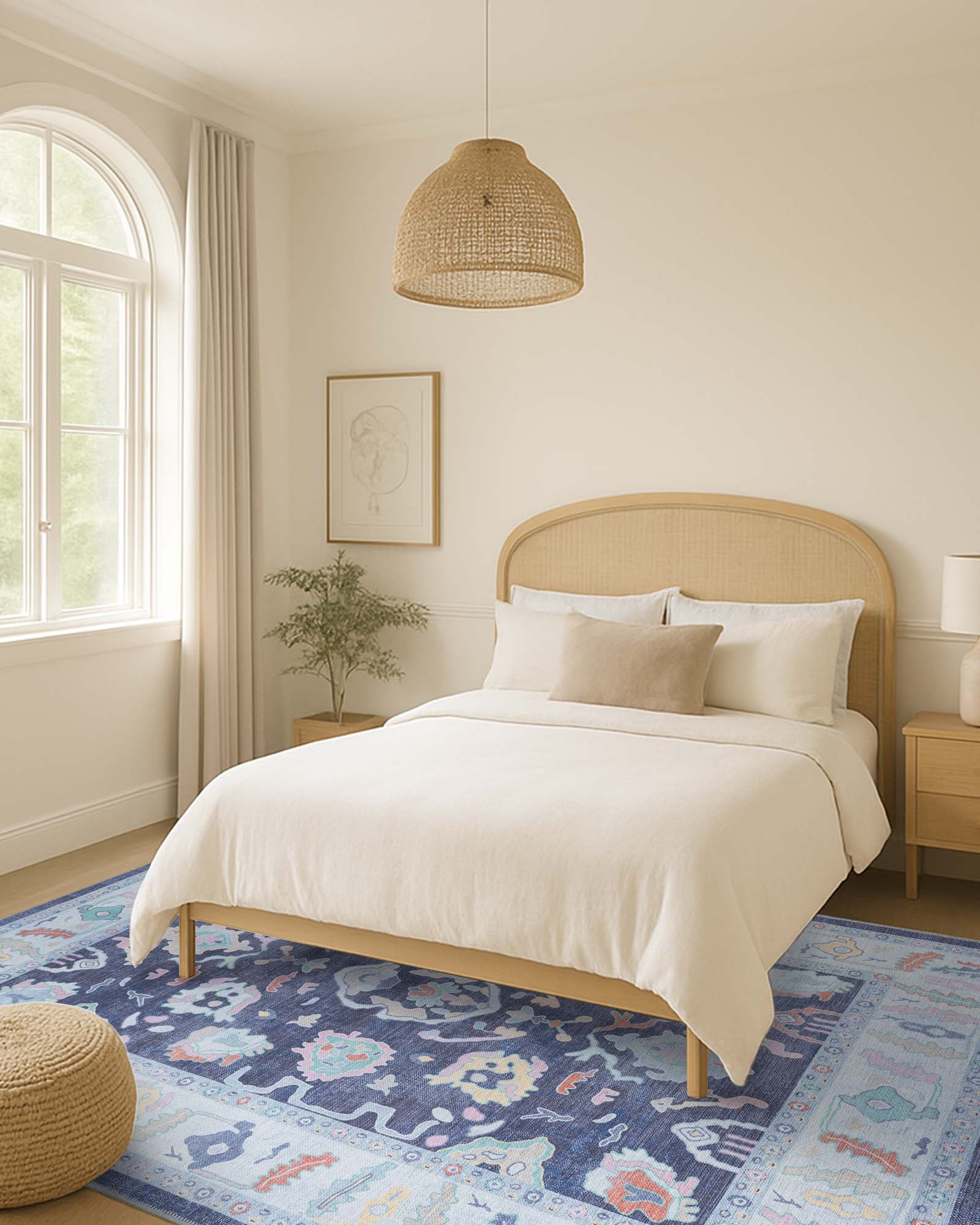
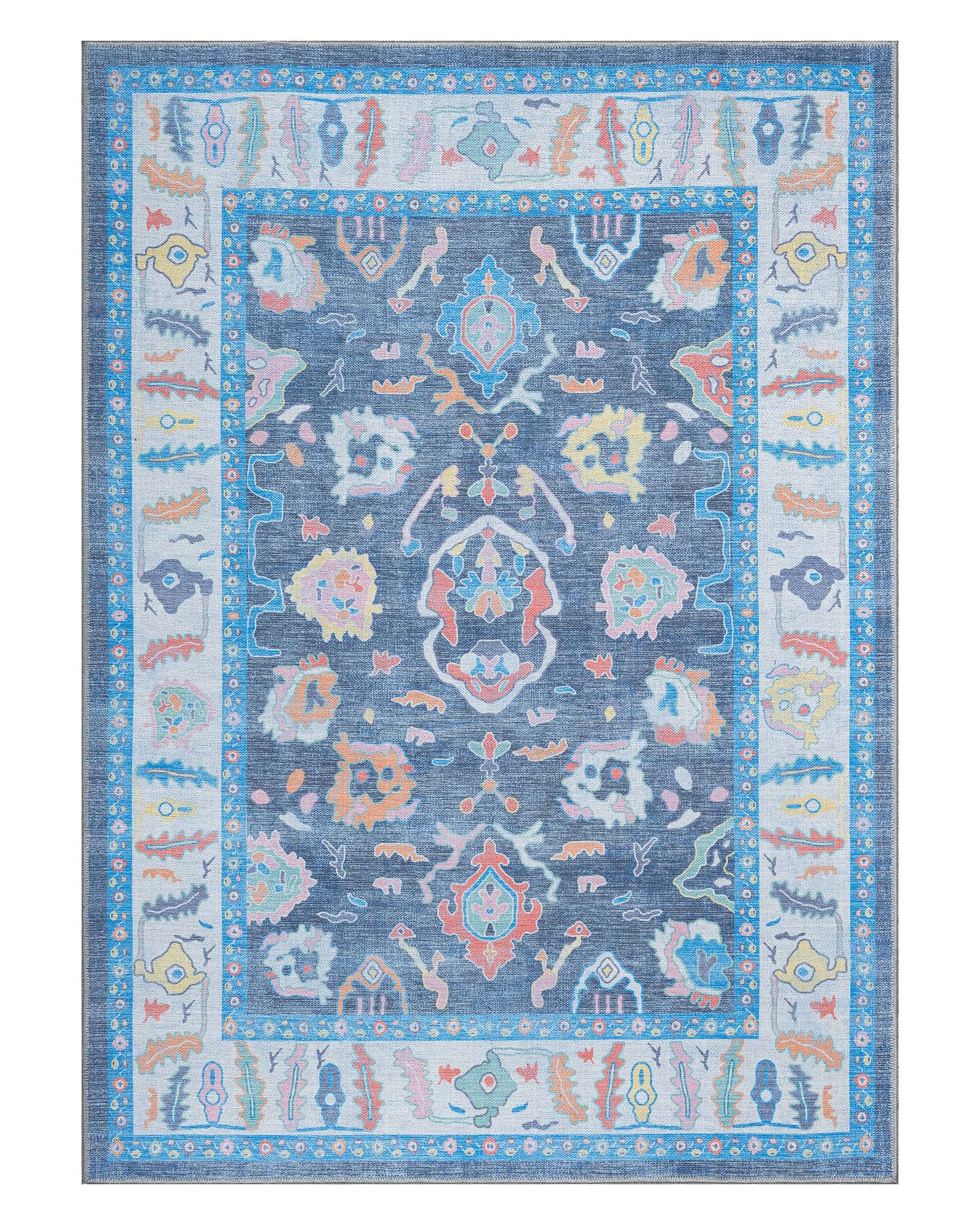
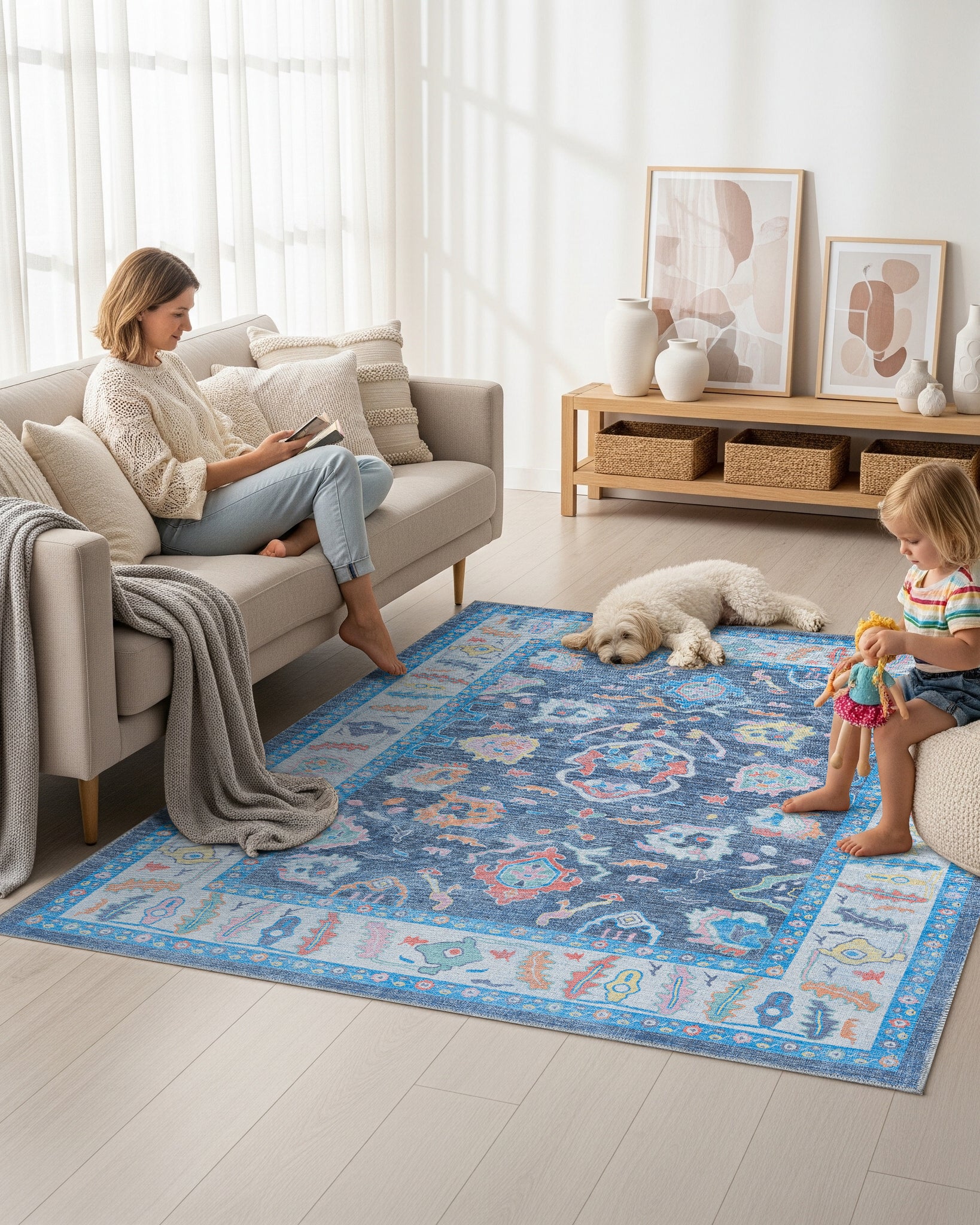
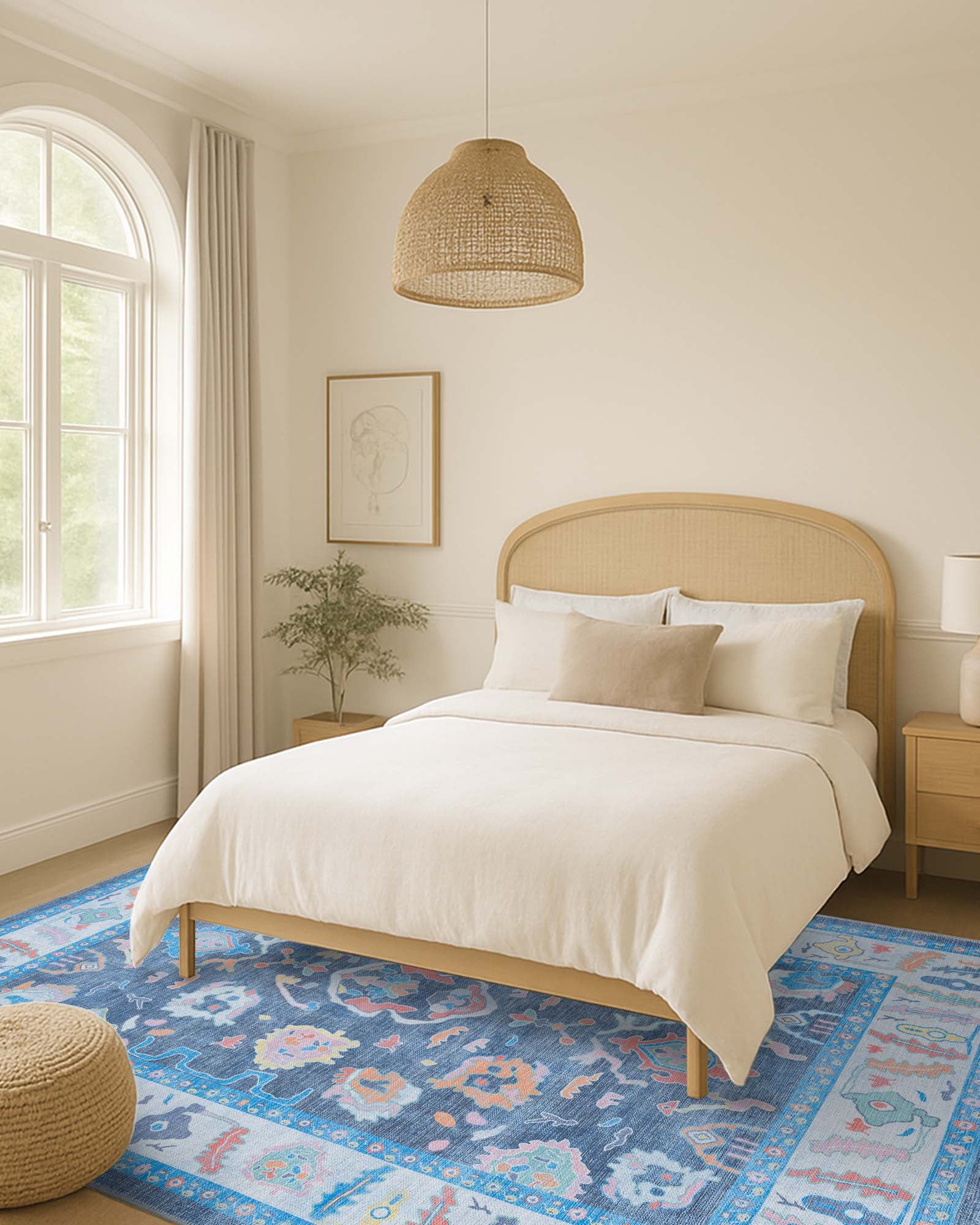
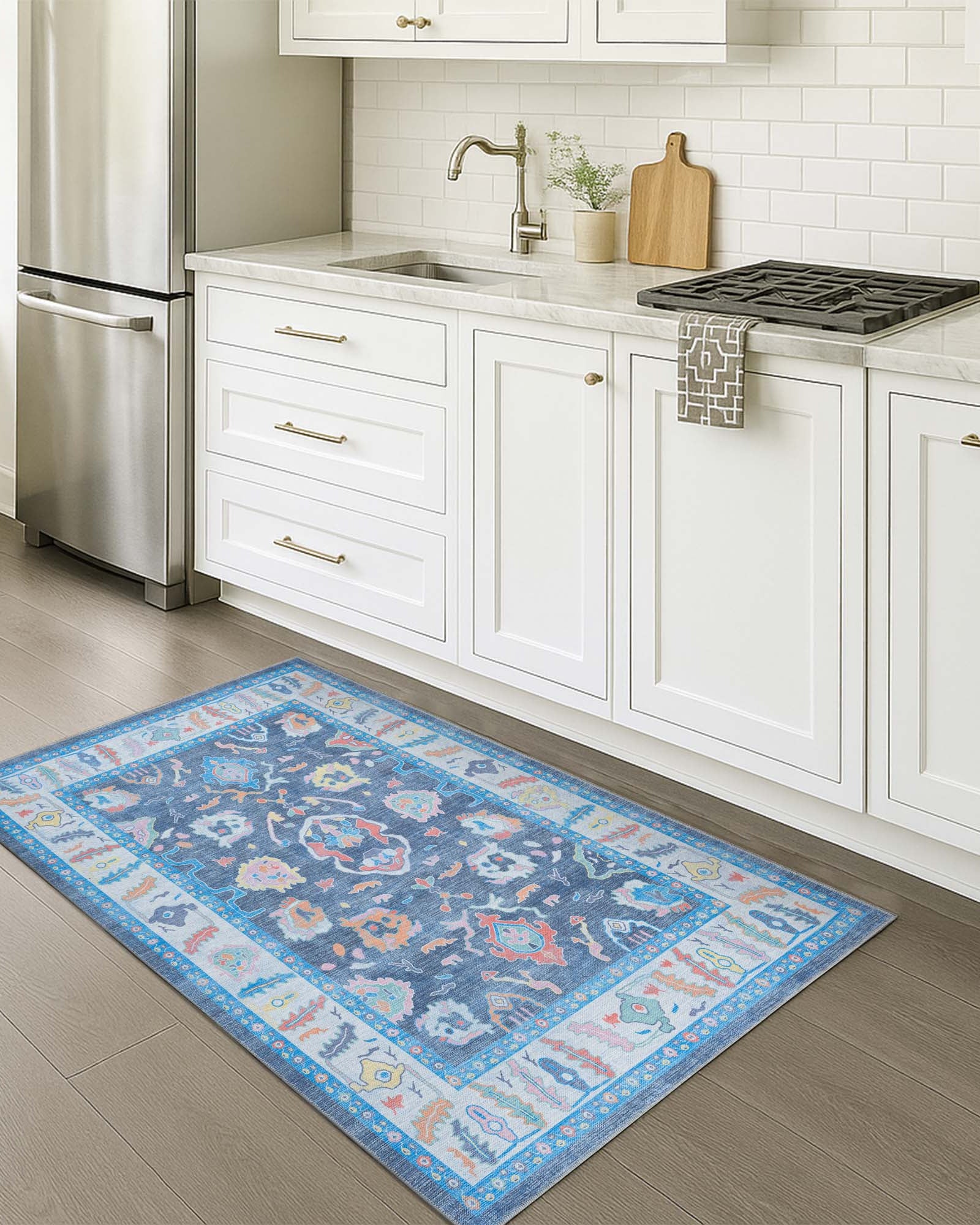
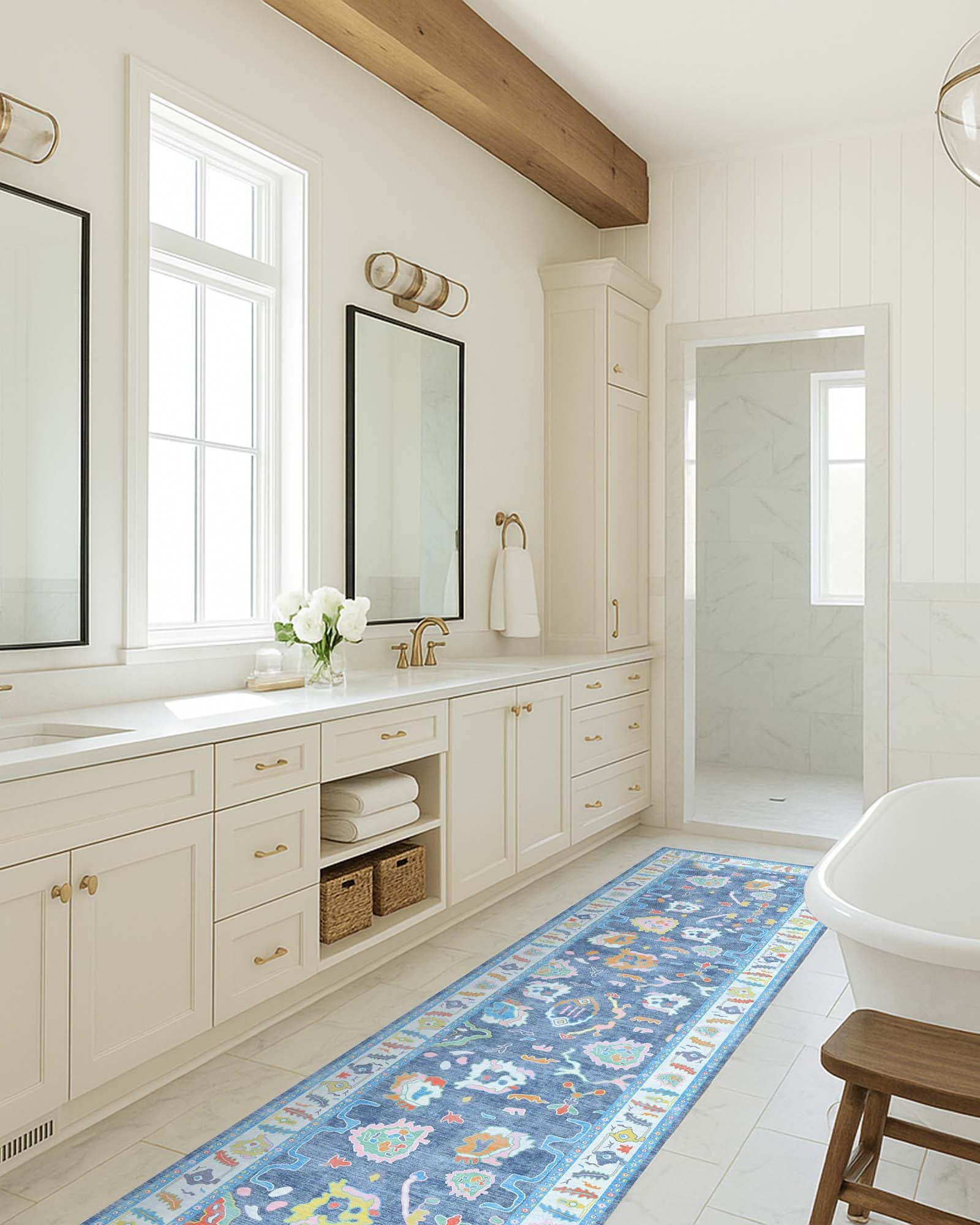
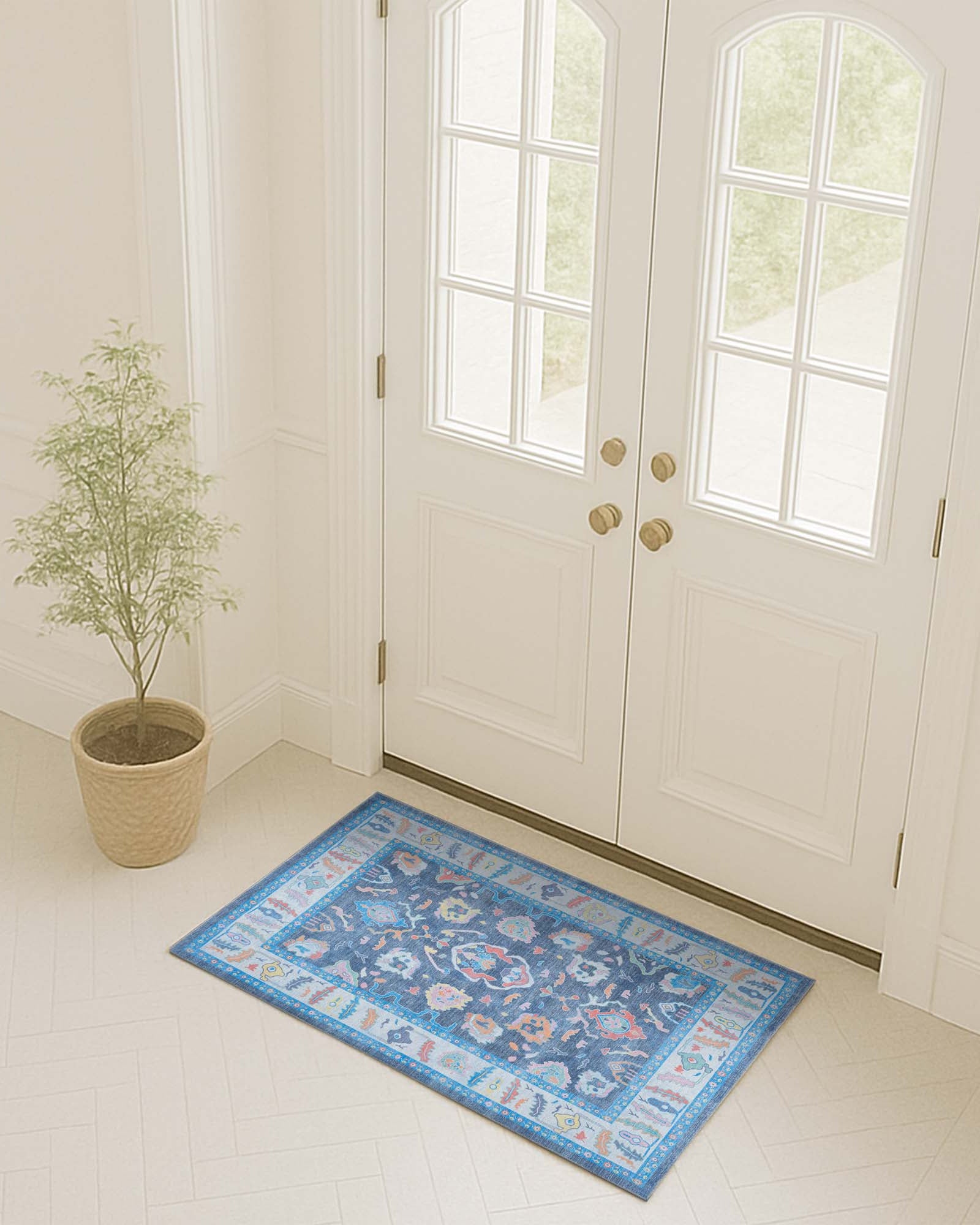
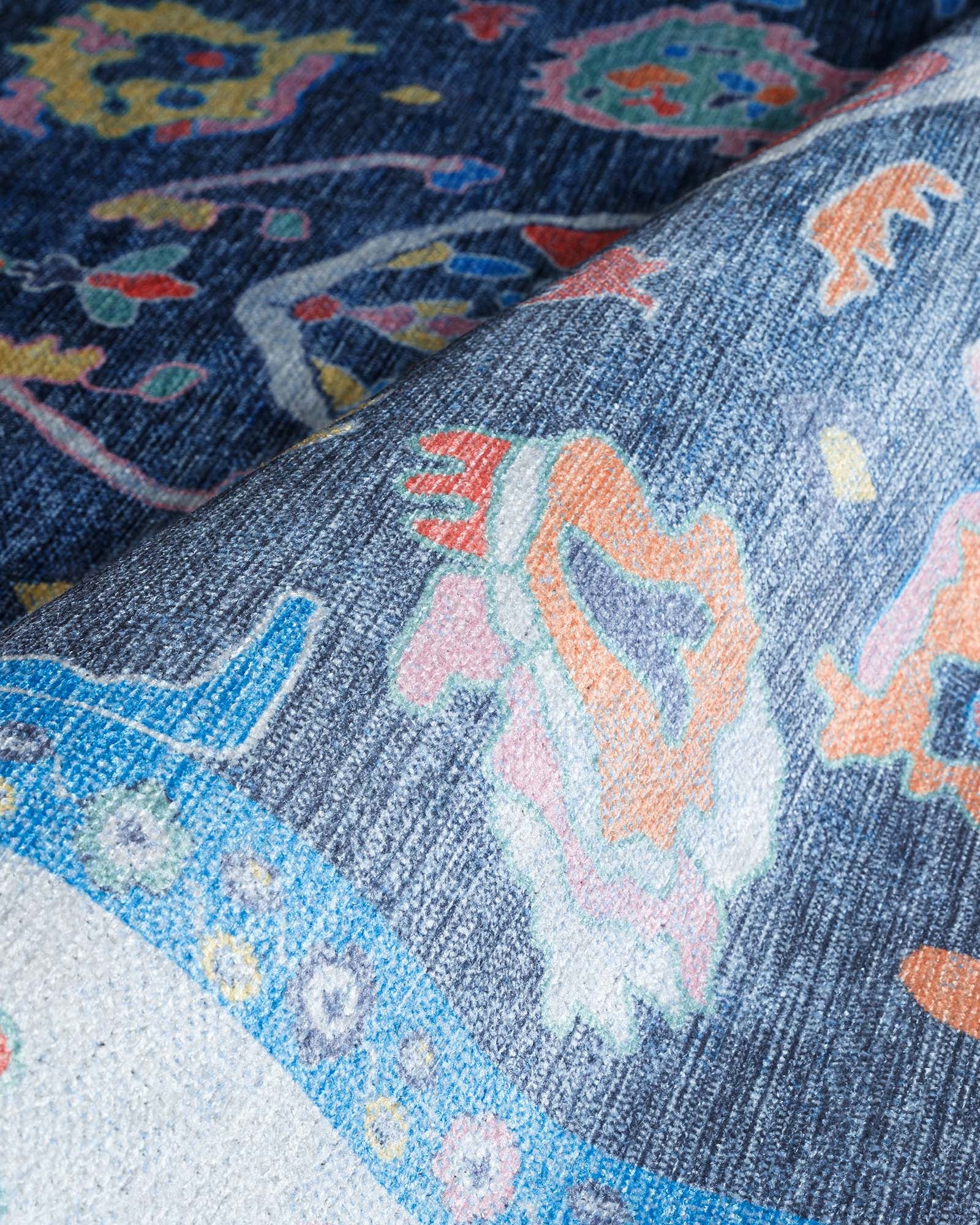
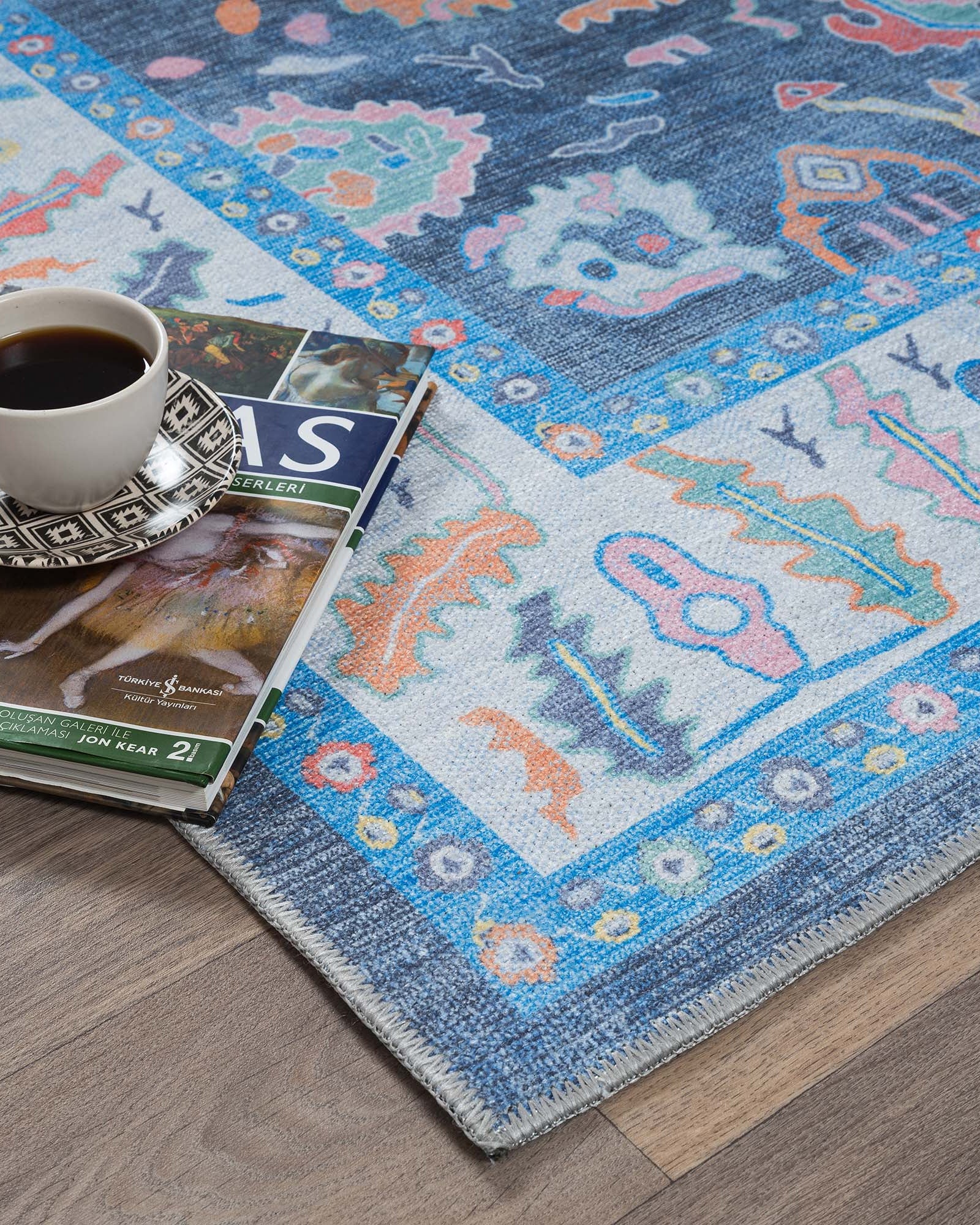
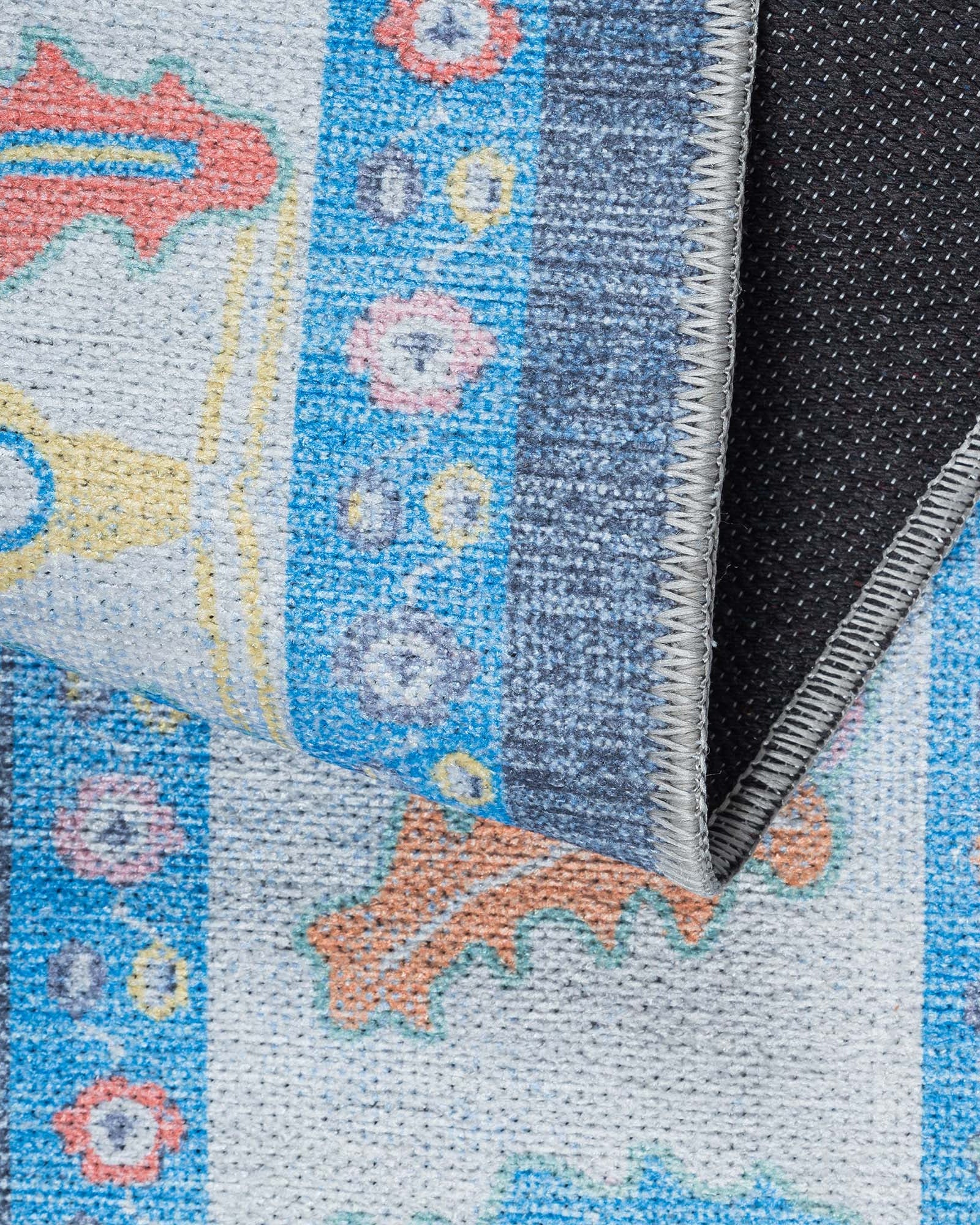
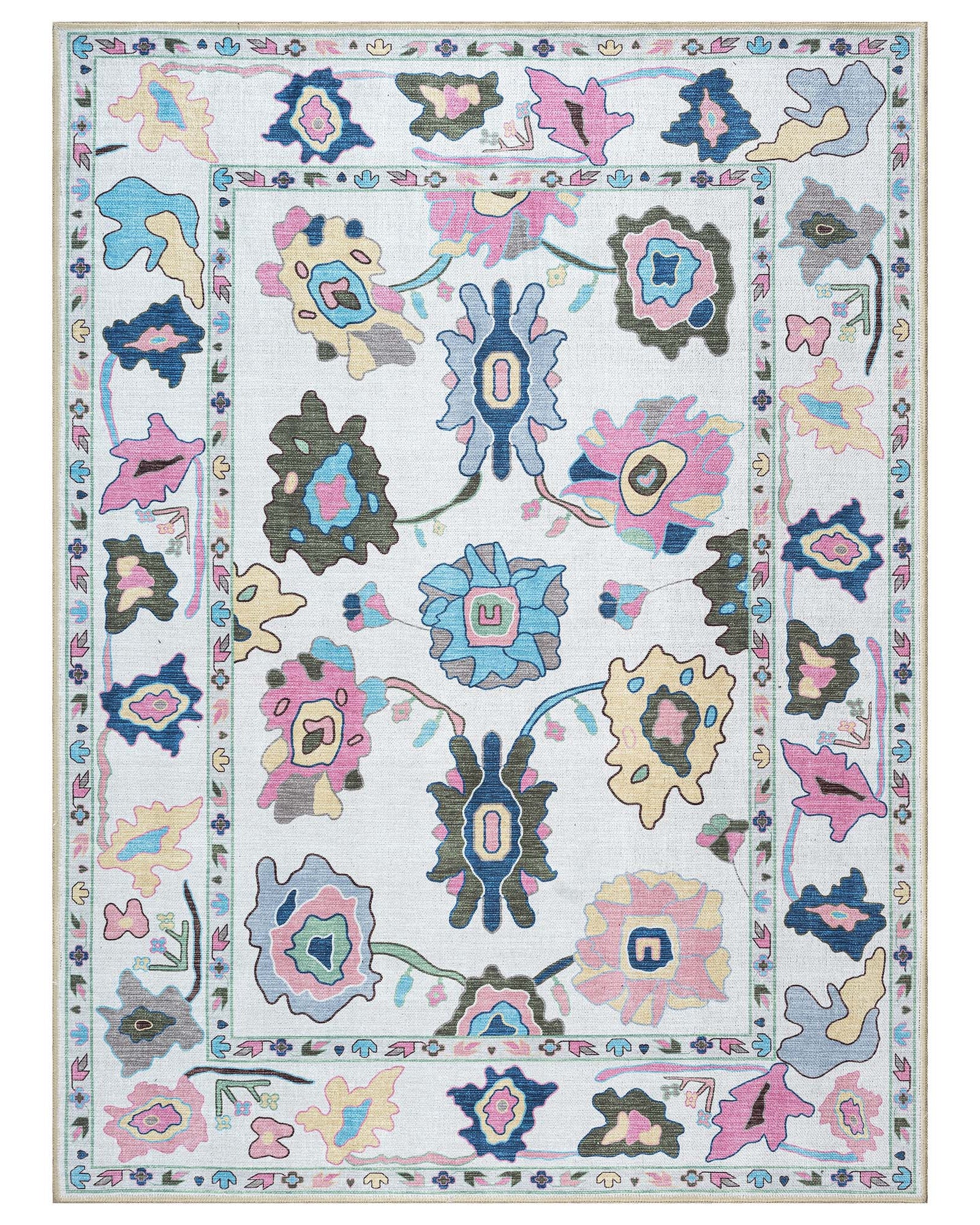
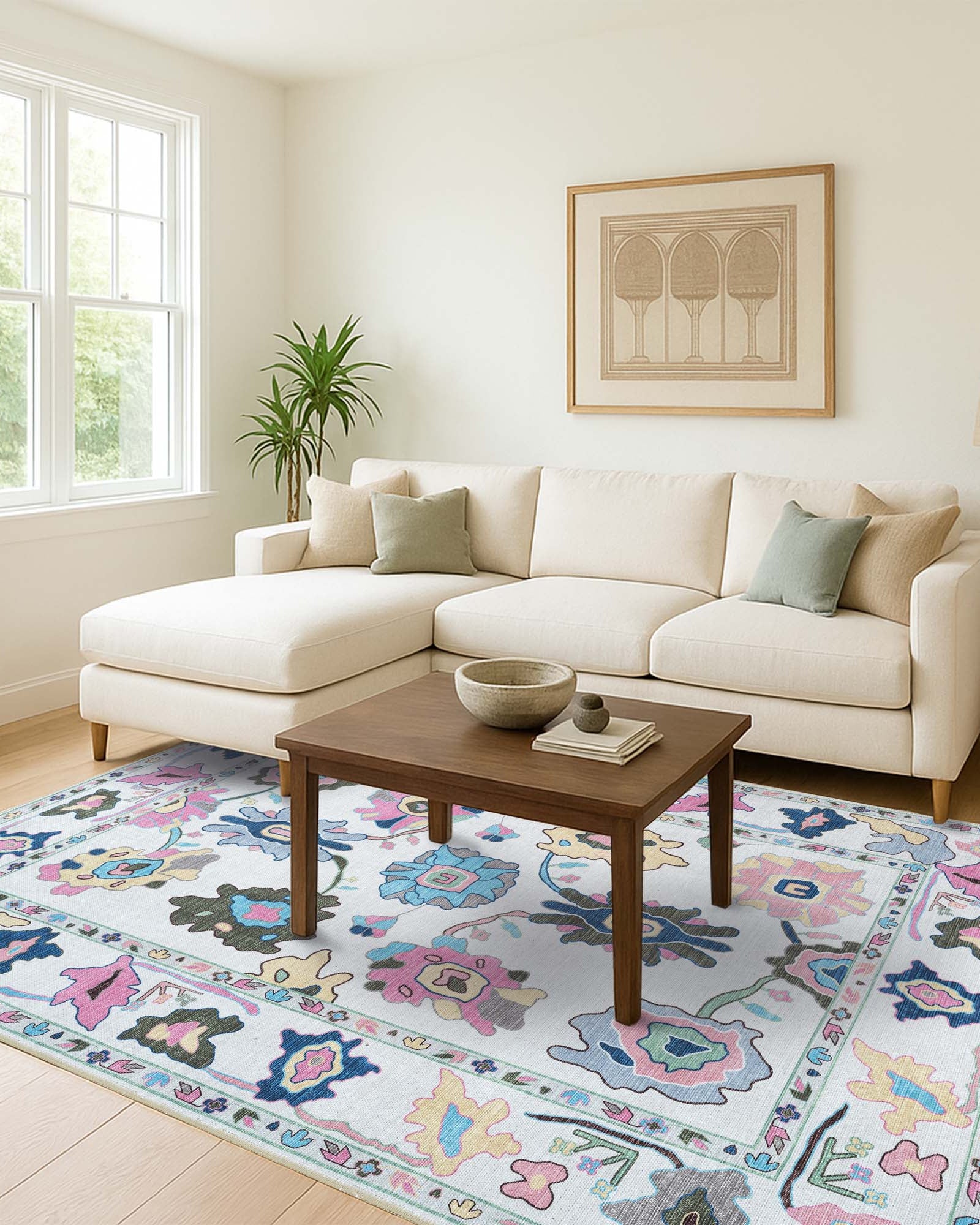
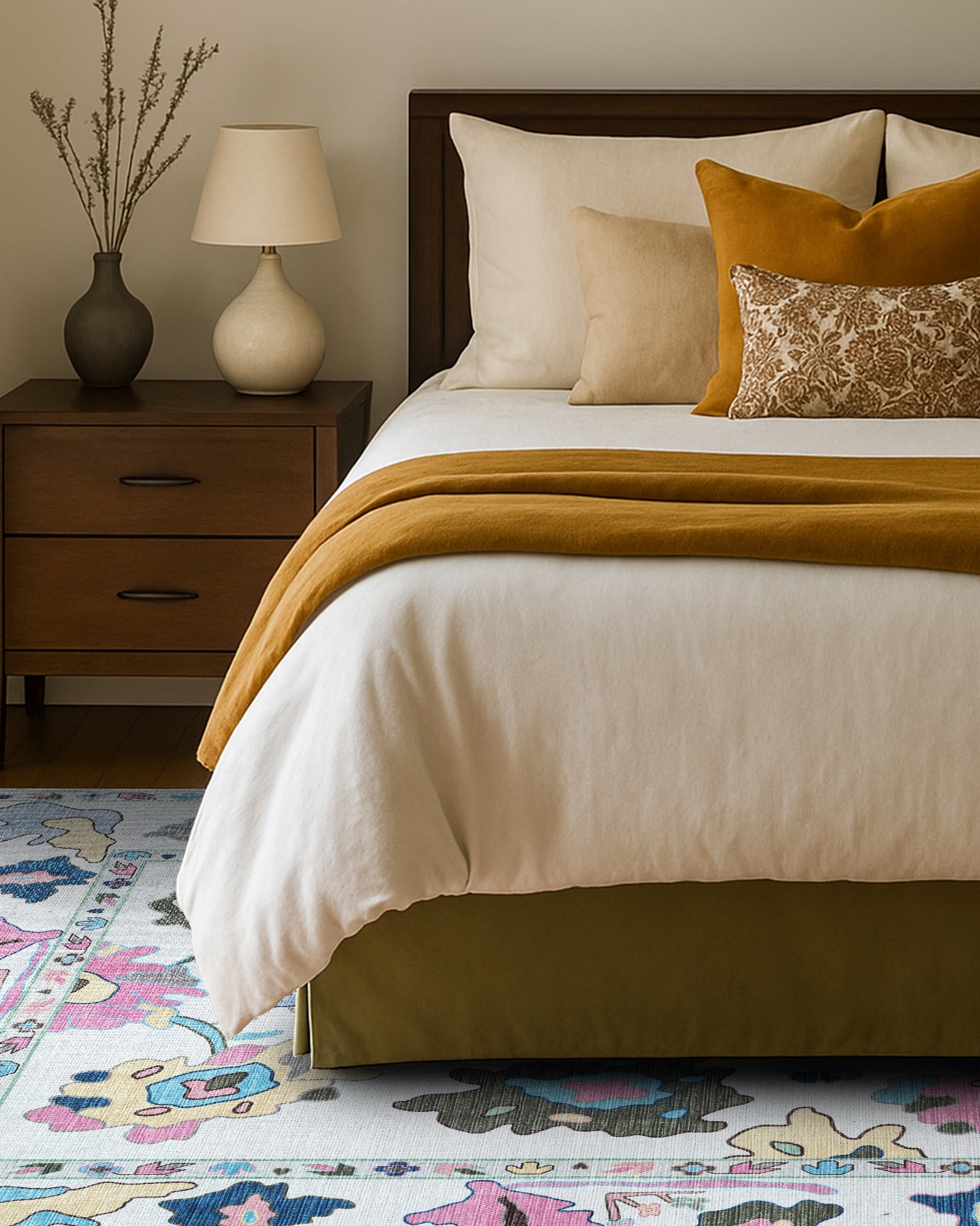
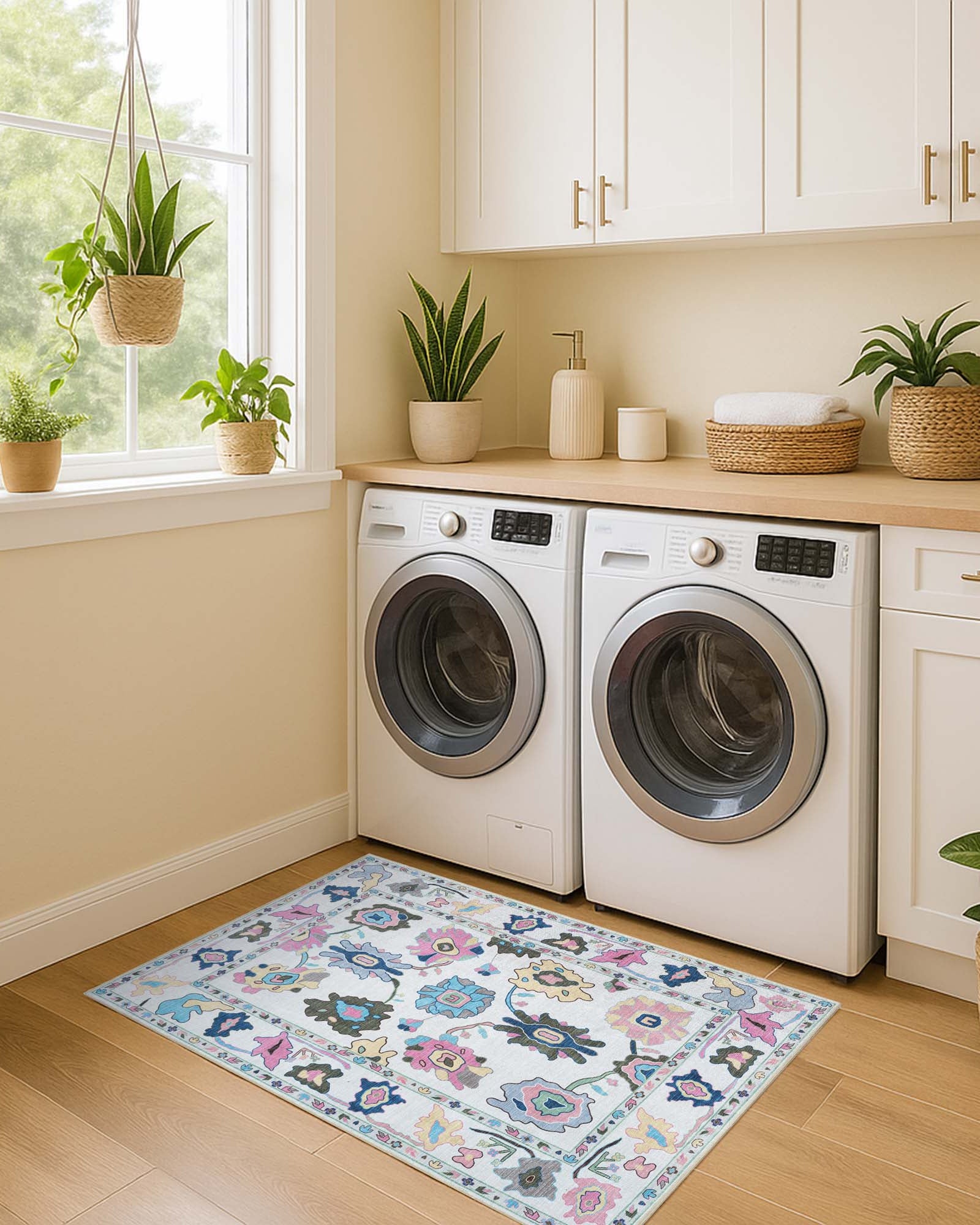
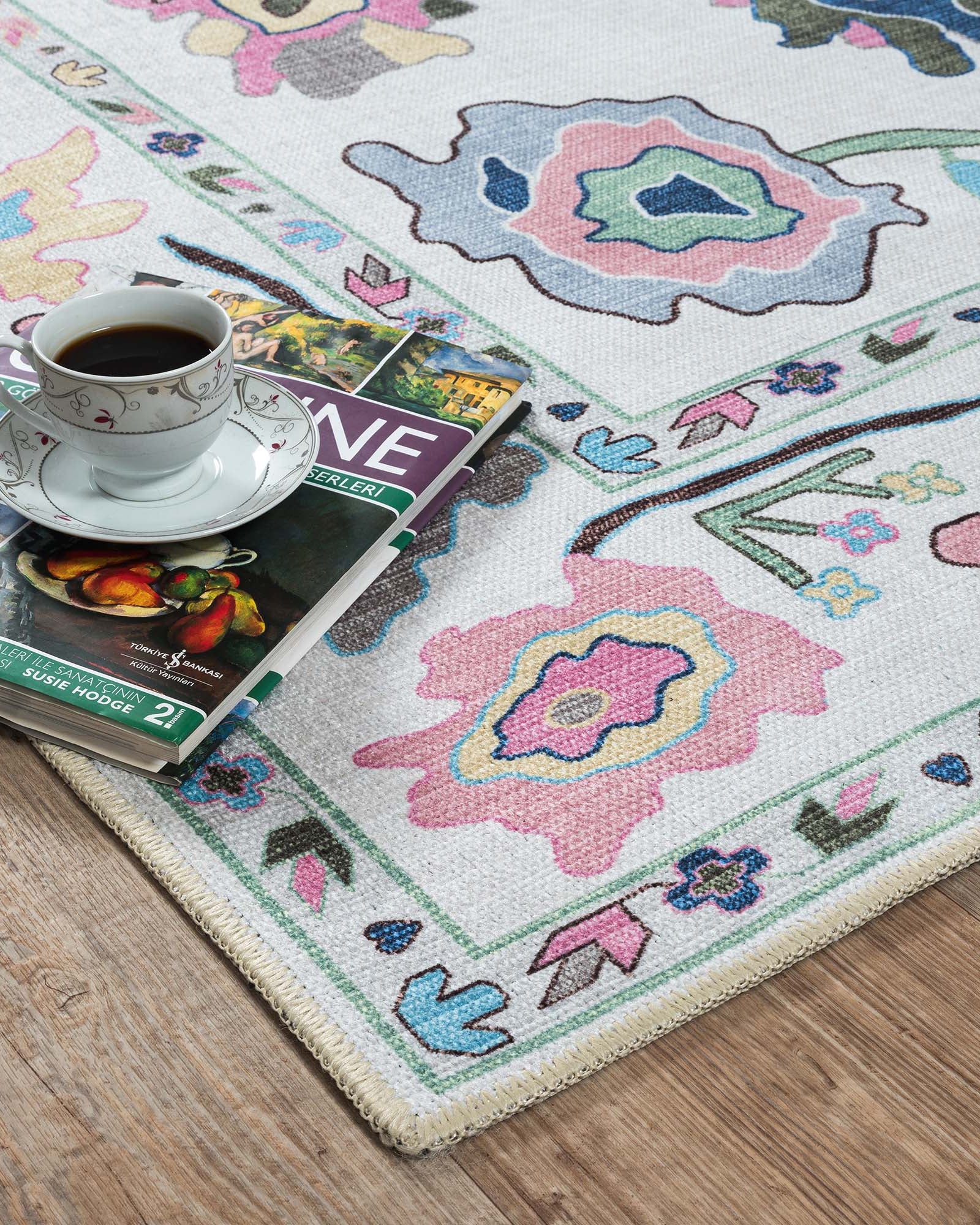
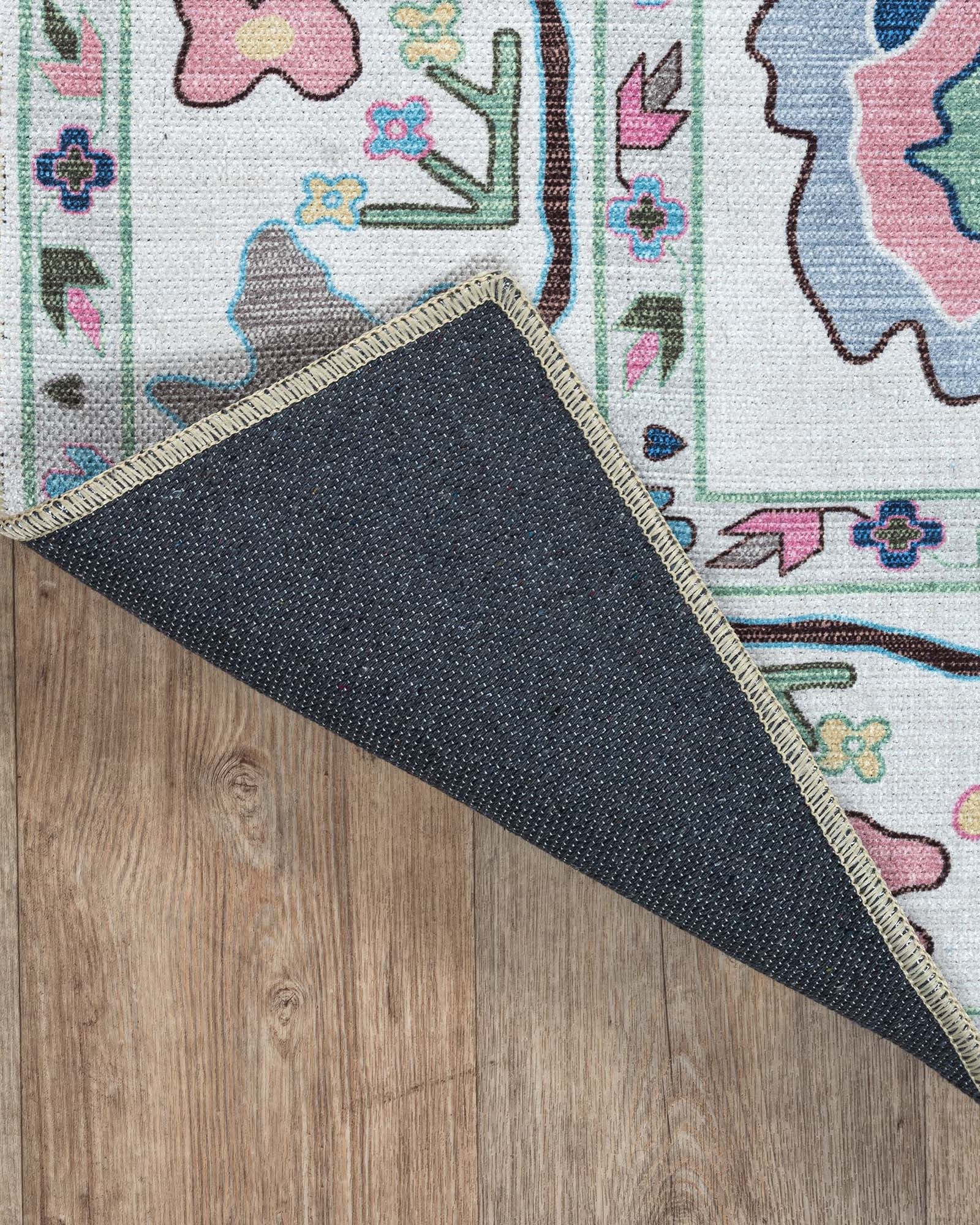
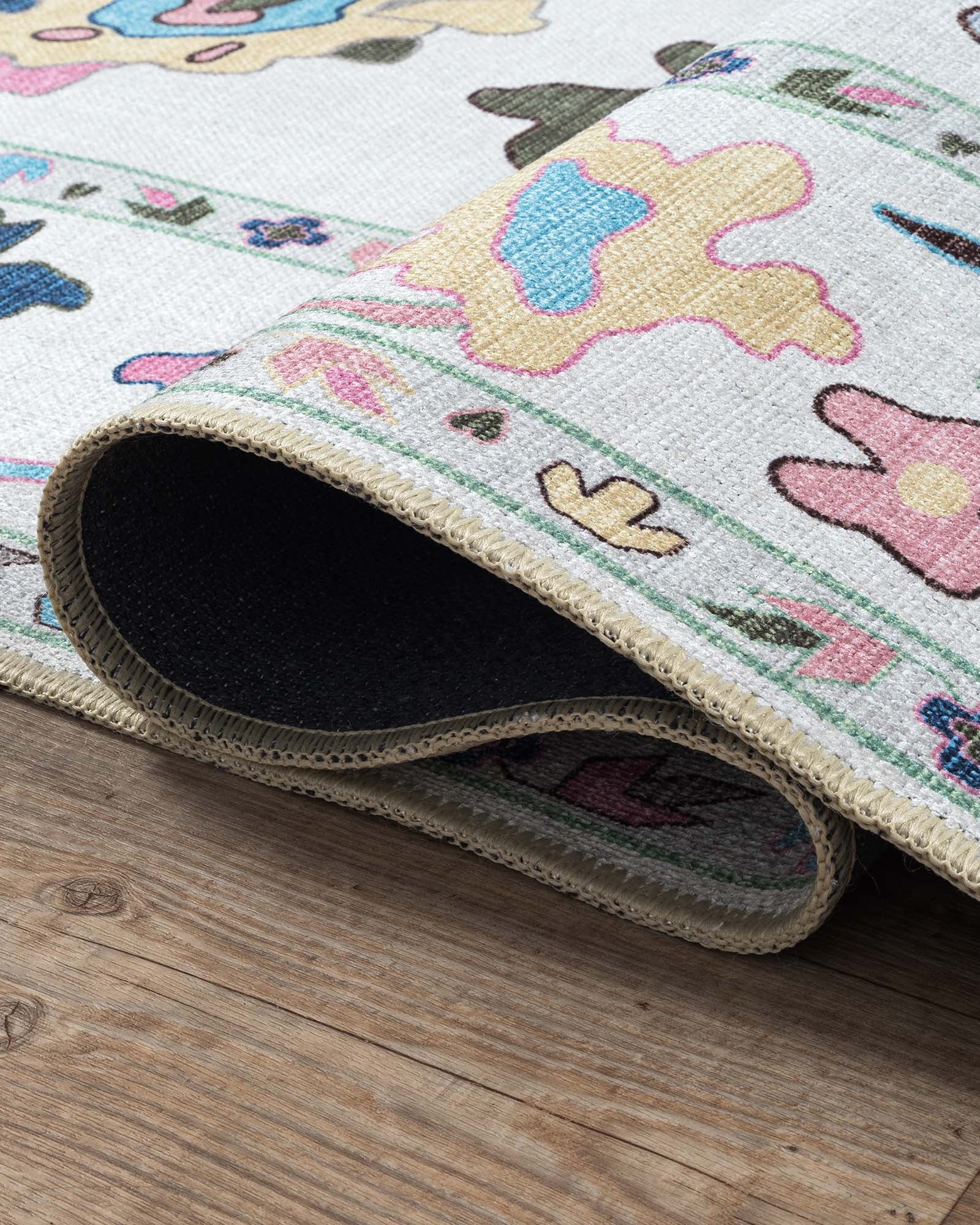
Every flatweave is lighter than a knotted rug by construction, but weight still varies across the category — from a dense, wrapped-weft soumak to a thin, open slit-weave kilim. This page gathers the lightest of the lightweight: flatweaves you can lift with one hand, fold flat for storage, and move around a home without planning for it. If portability matters as much as pattern, this is where to start.
Why Some Flatweaves Are Lighter Than Others
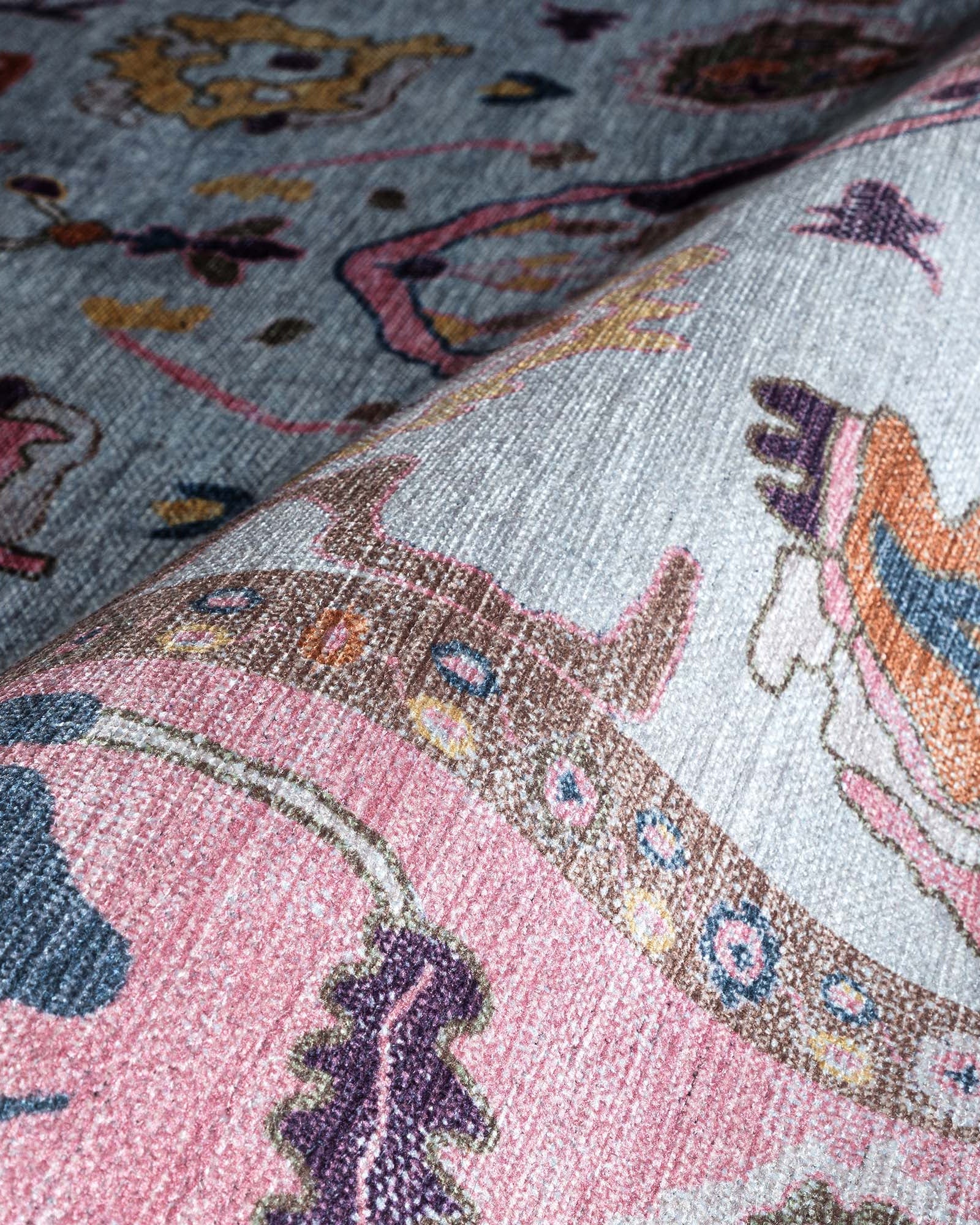
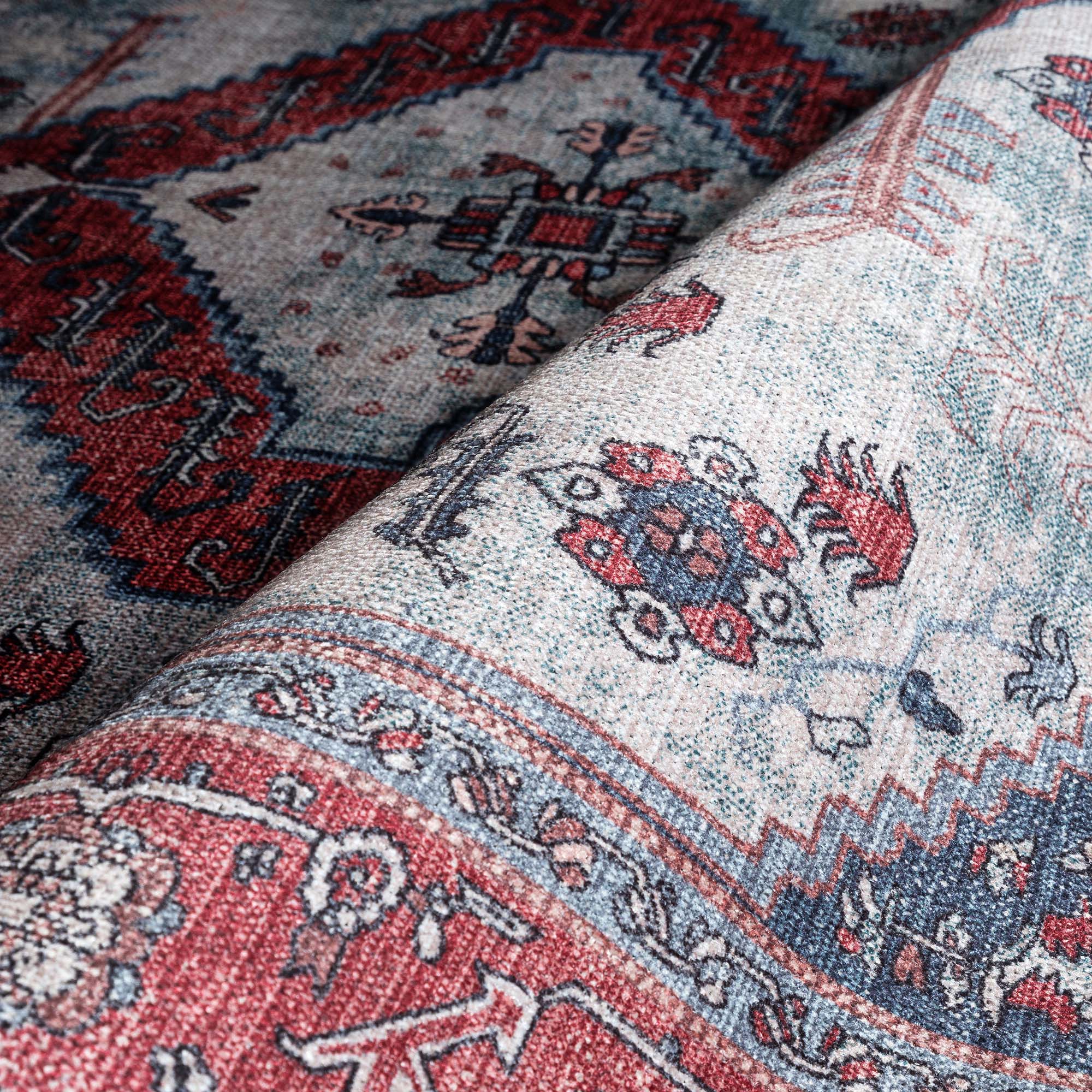
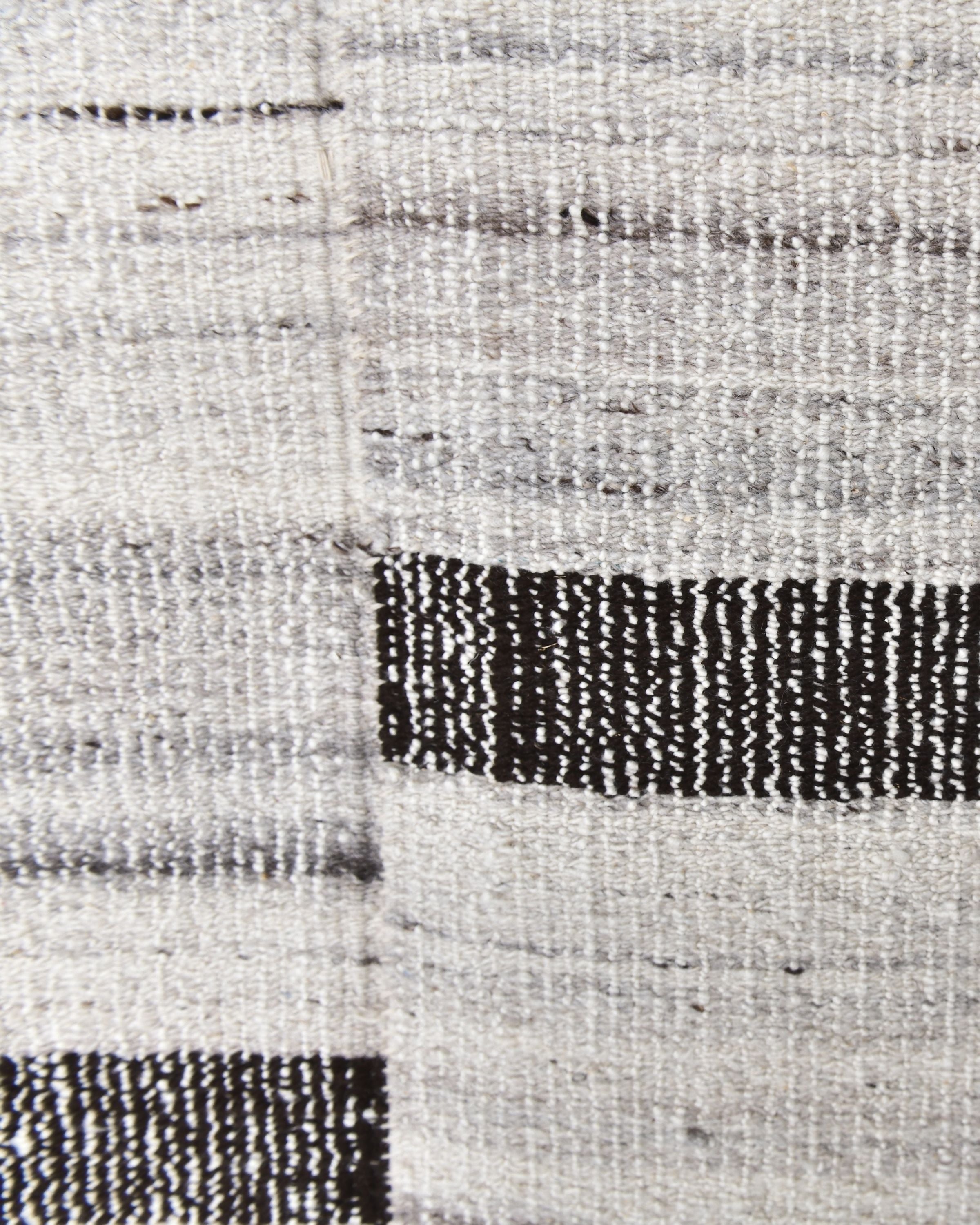
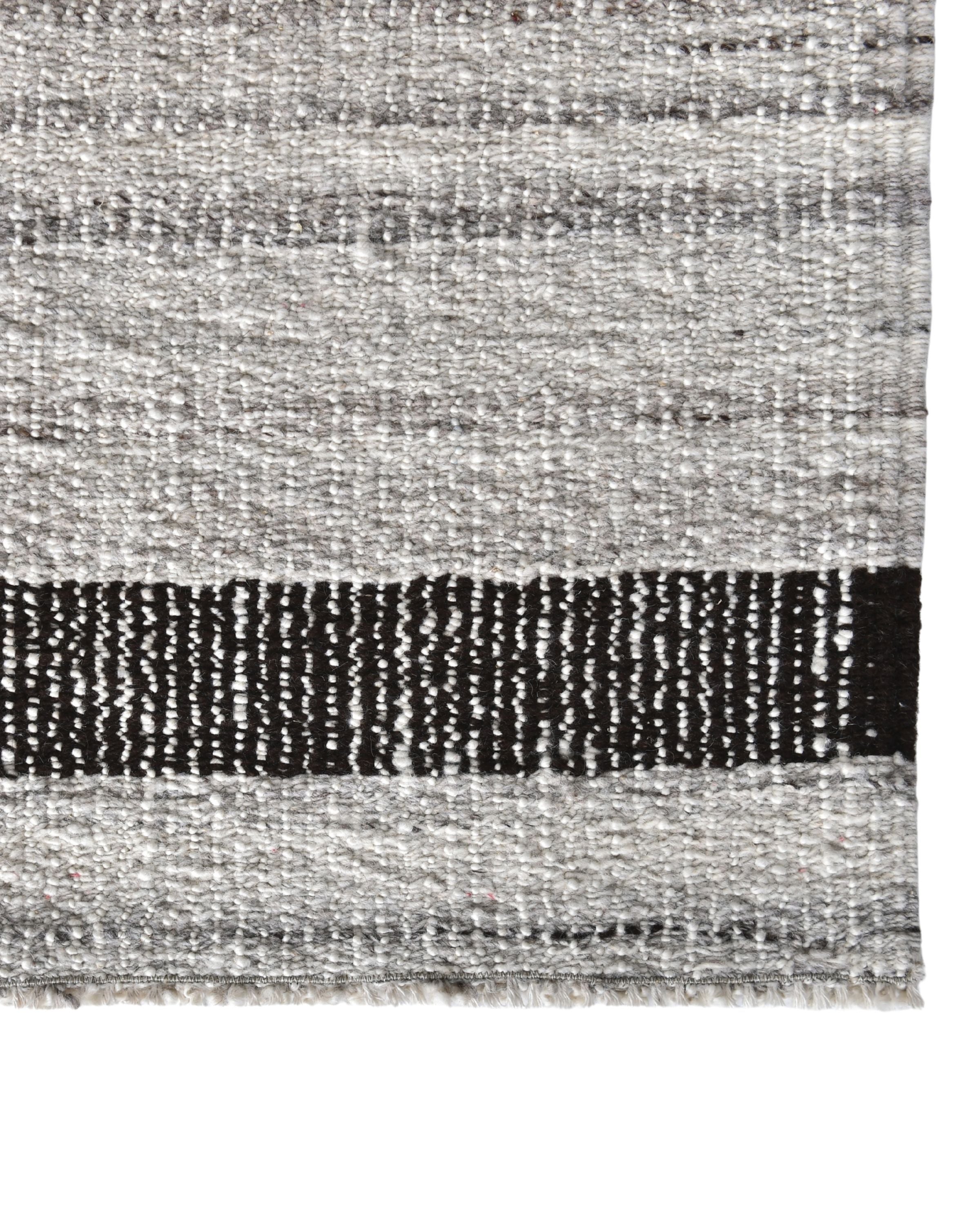
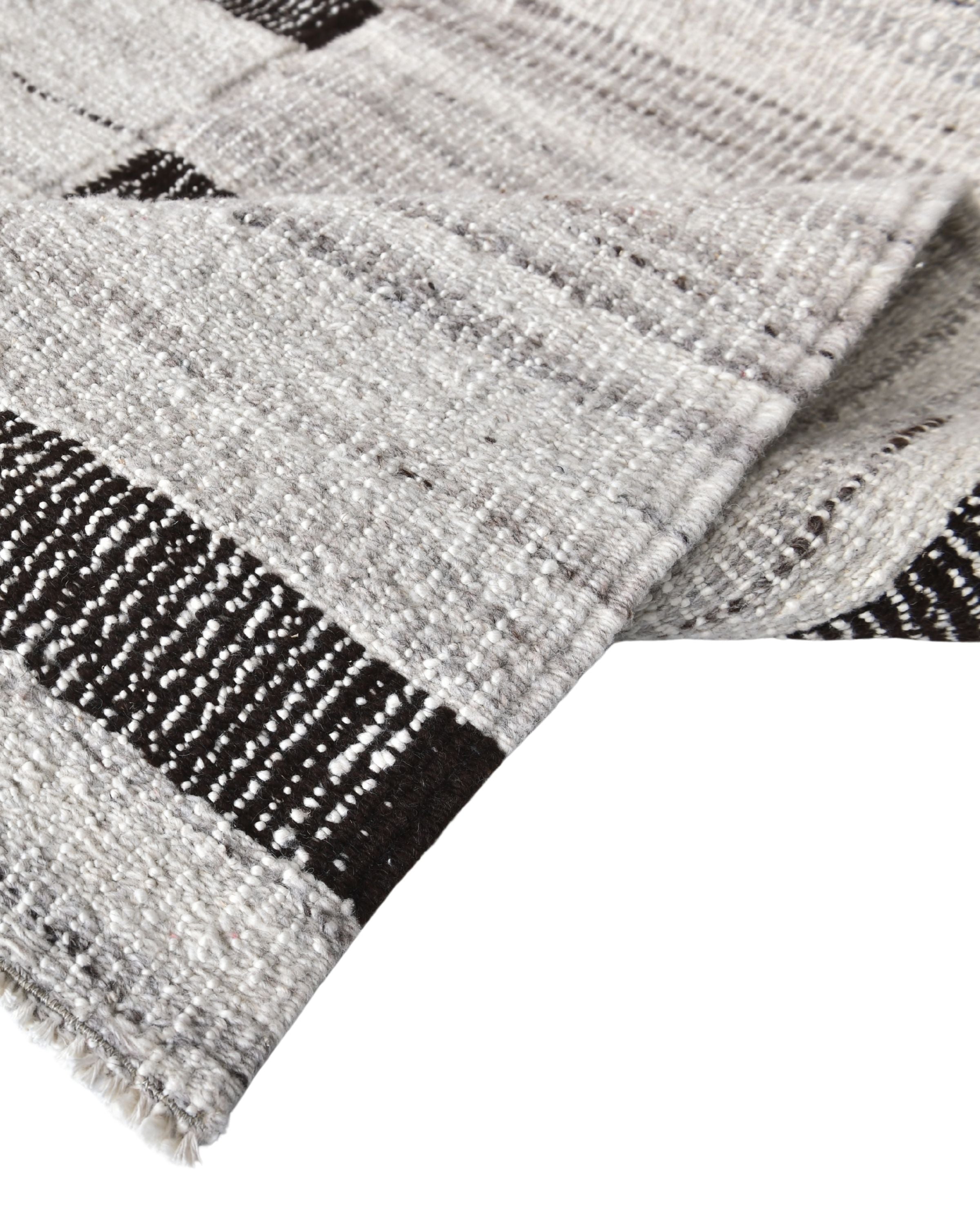
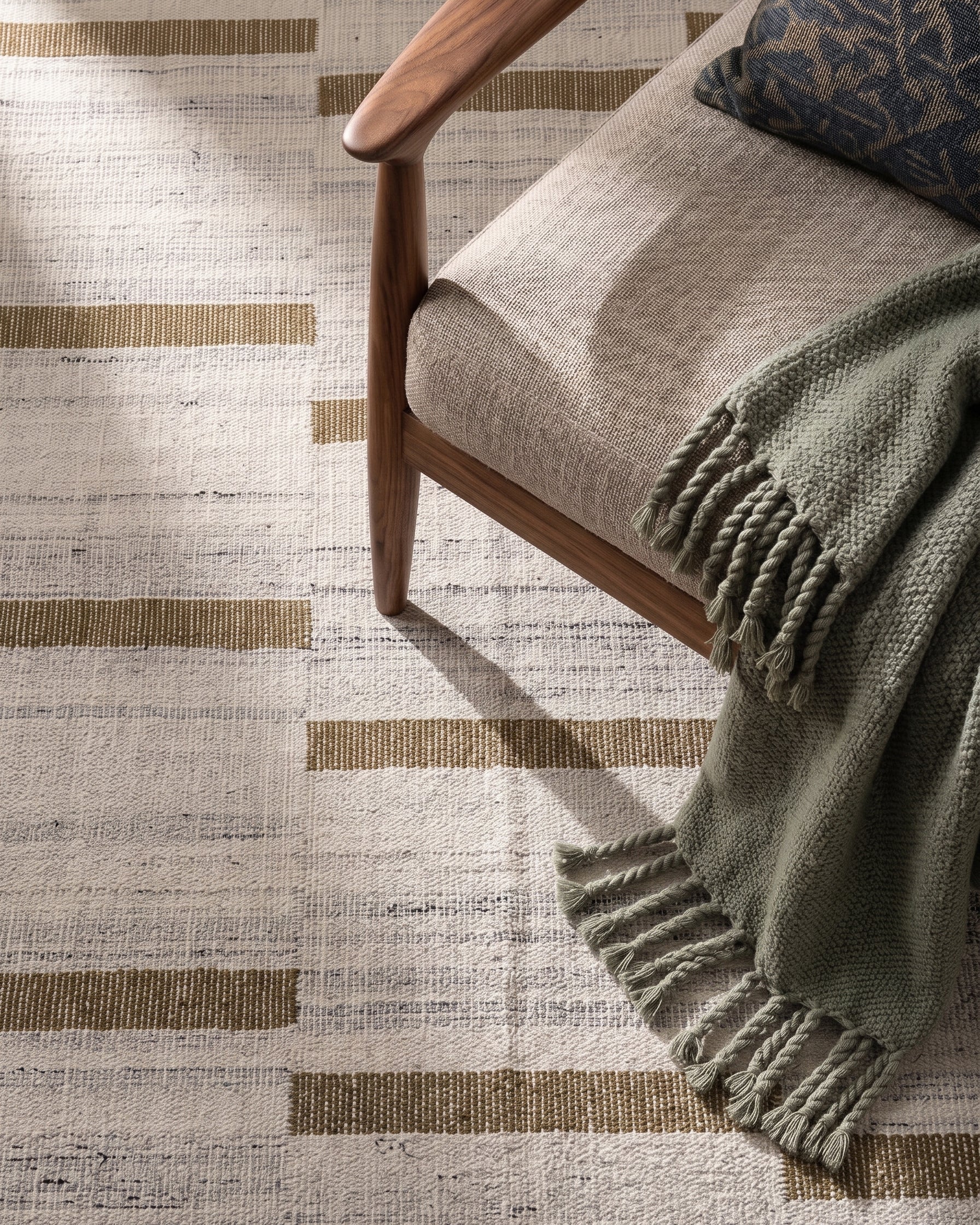
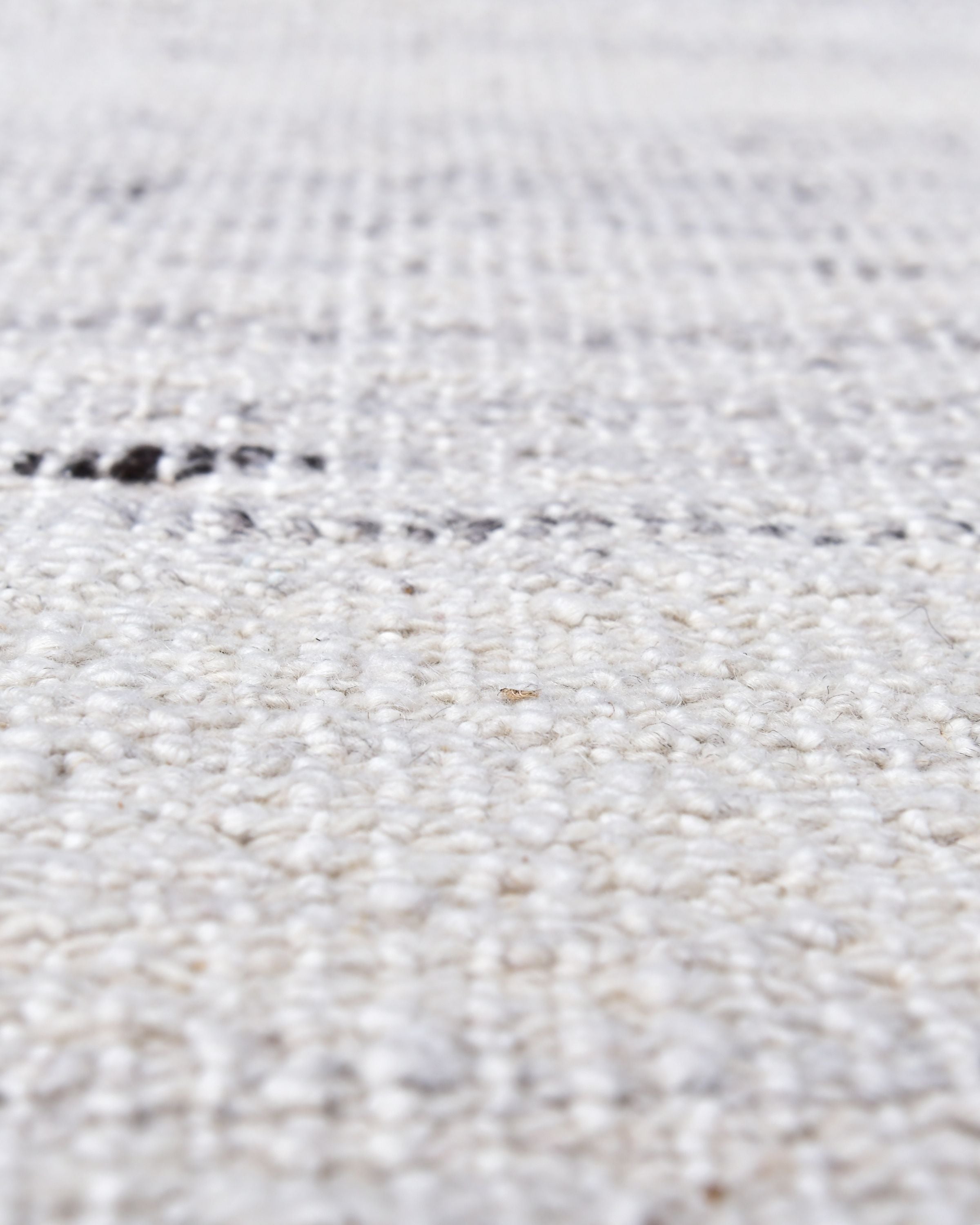
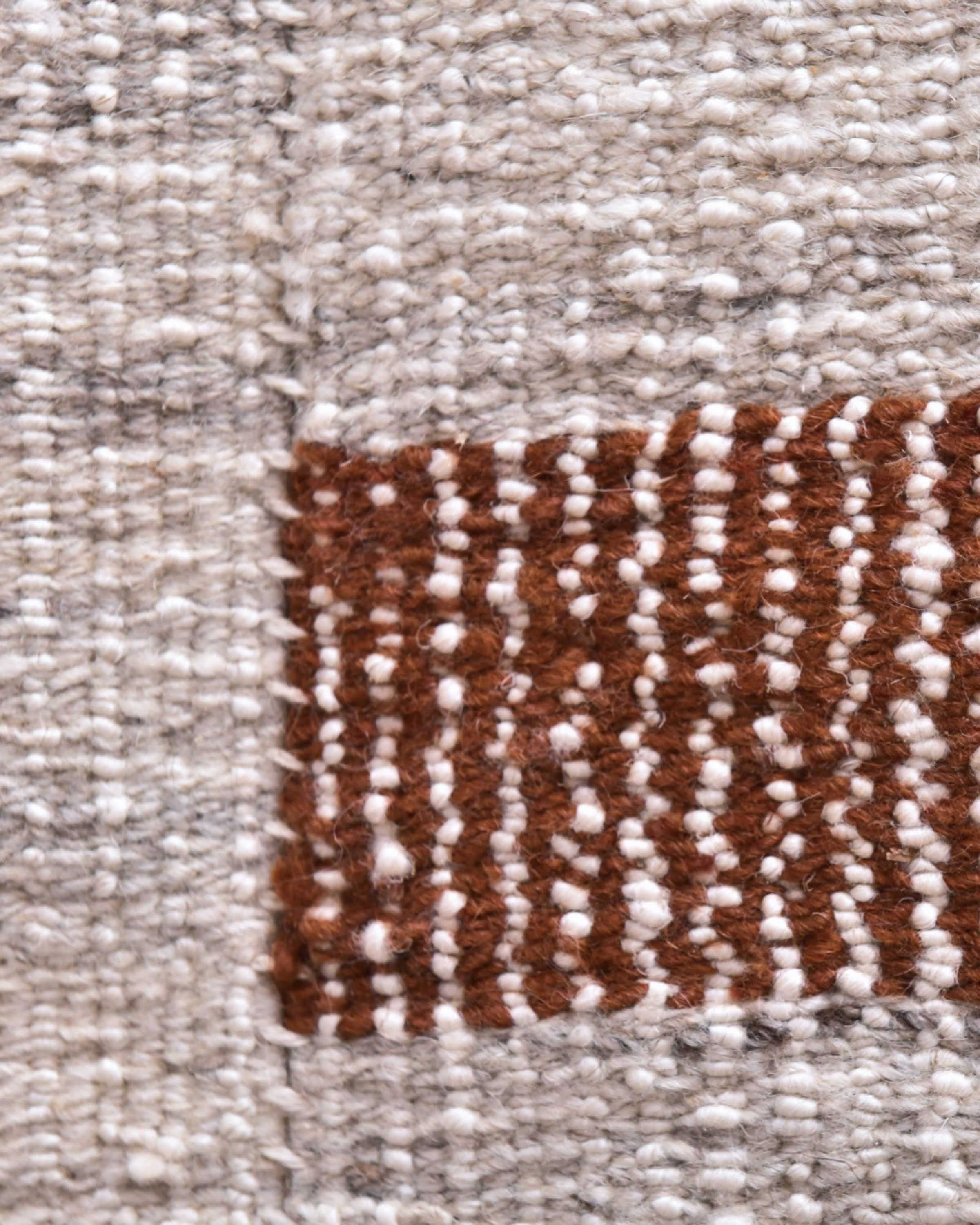
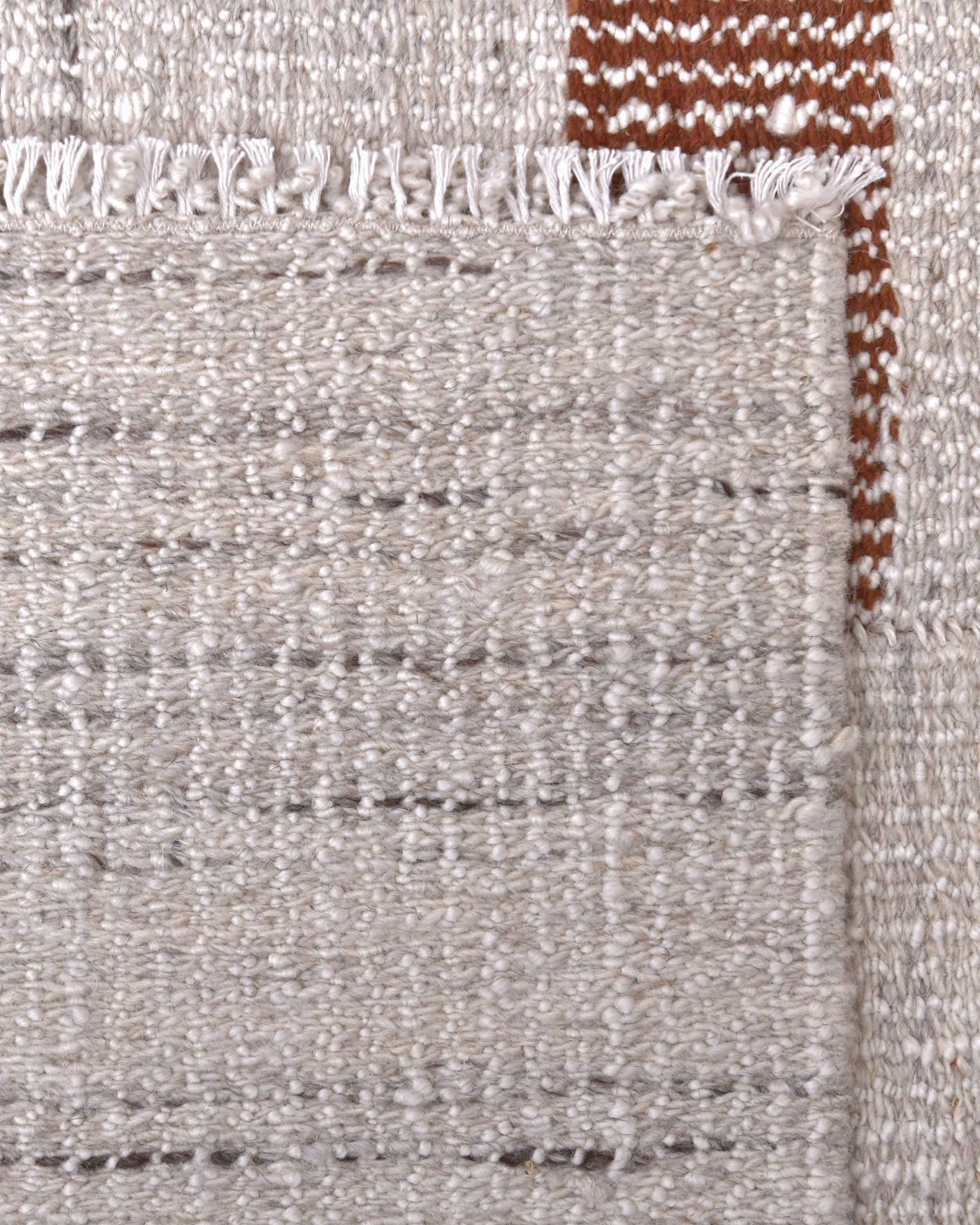
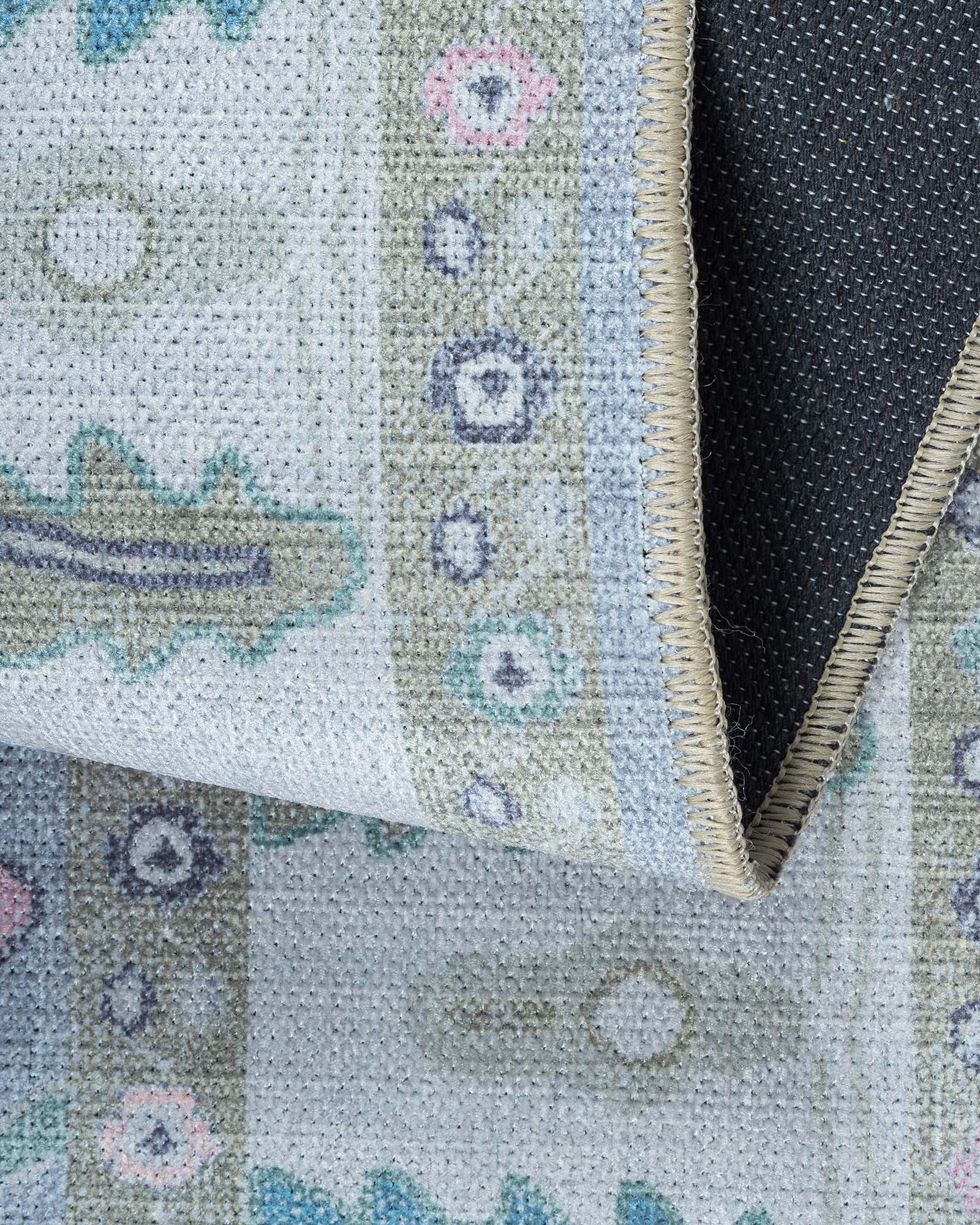
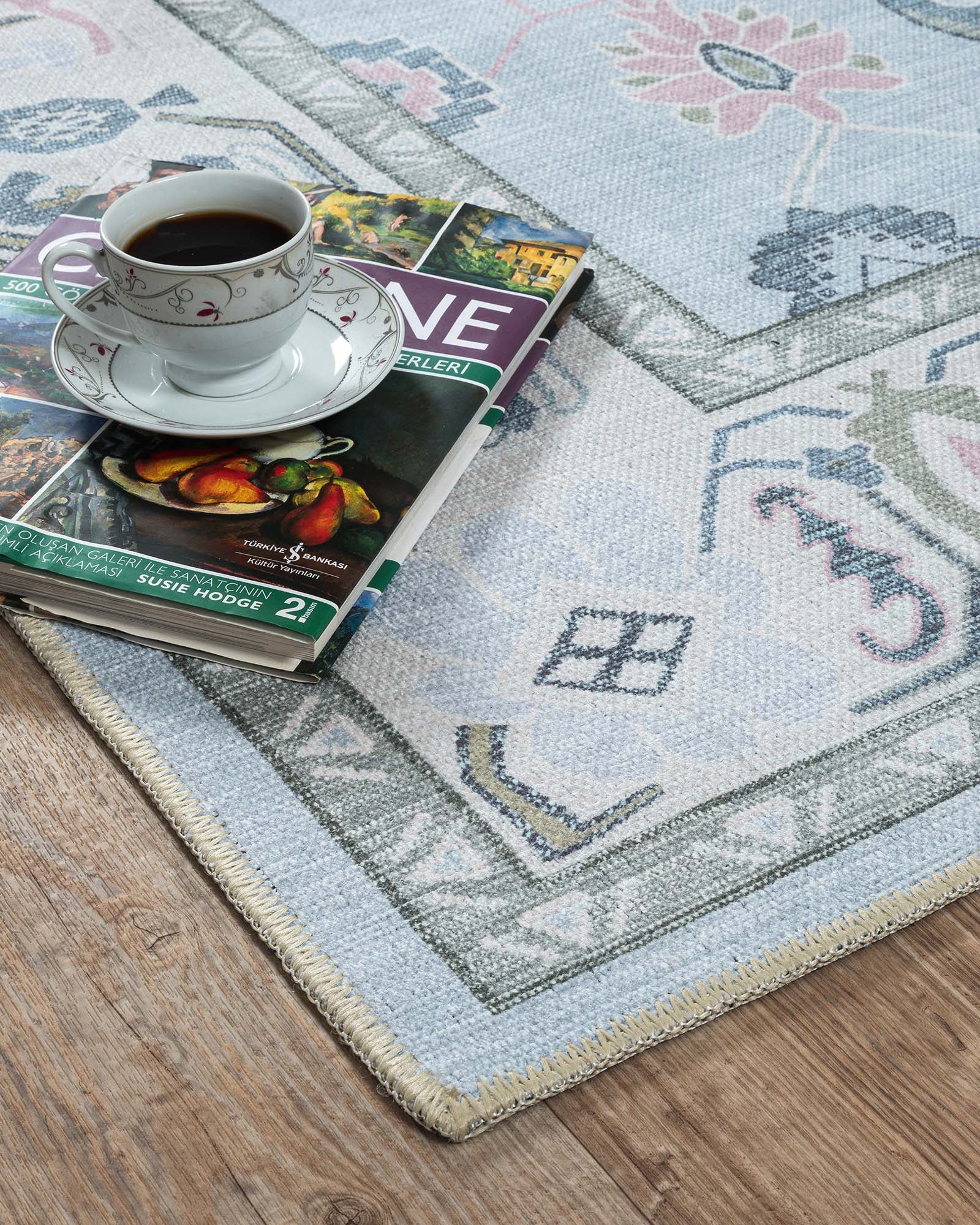
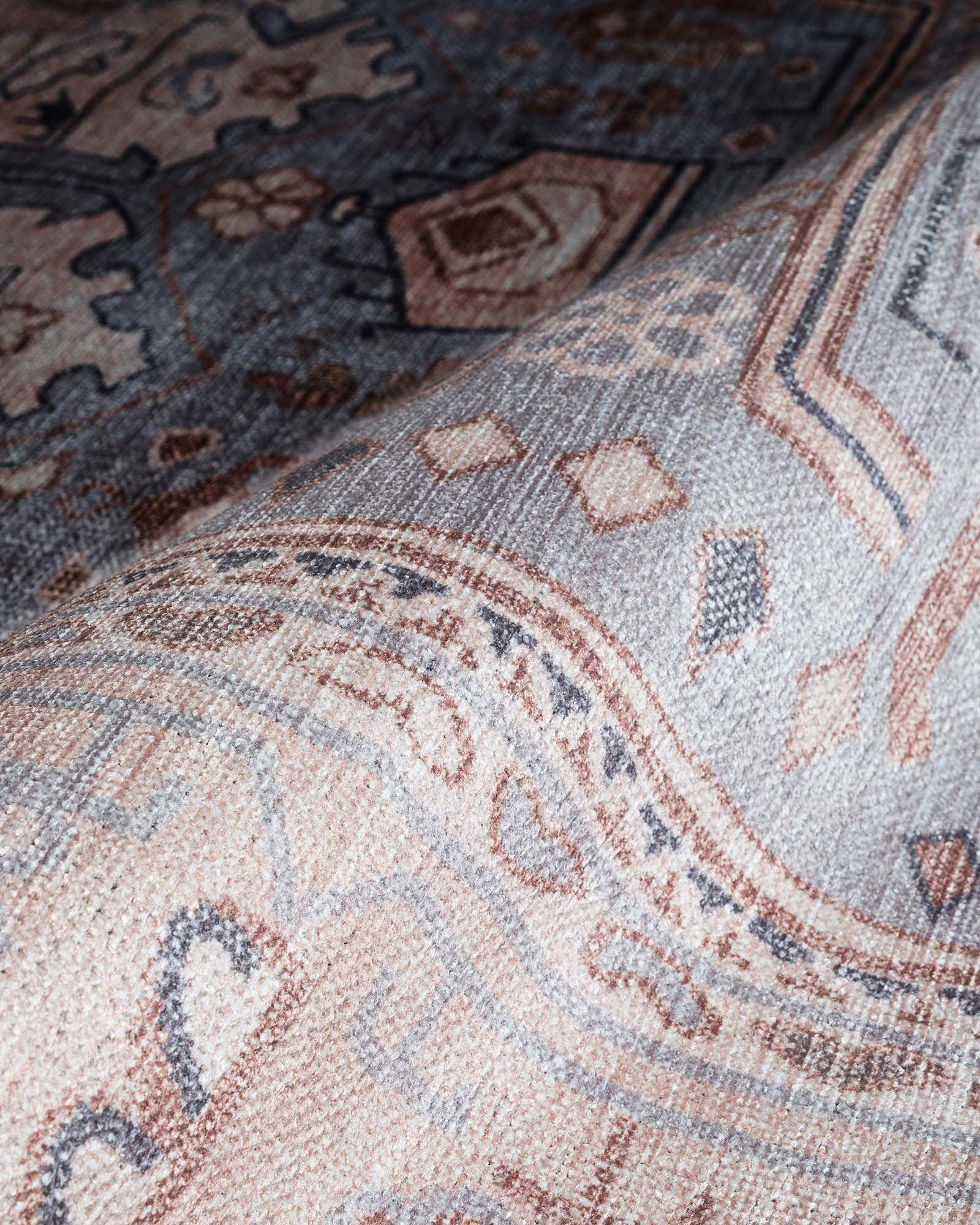
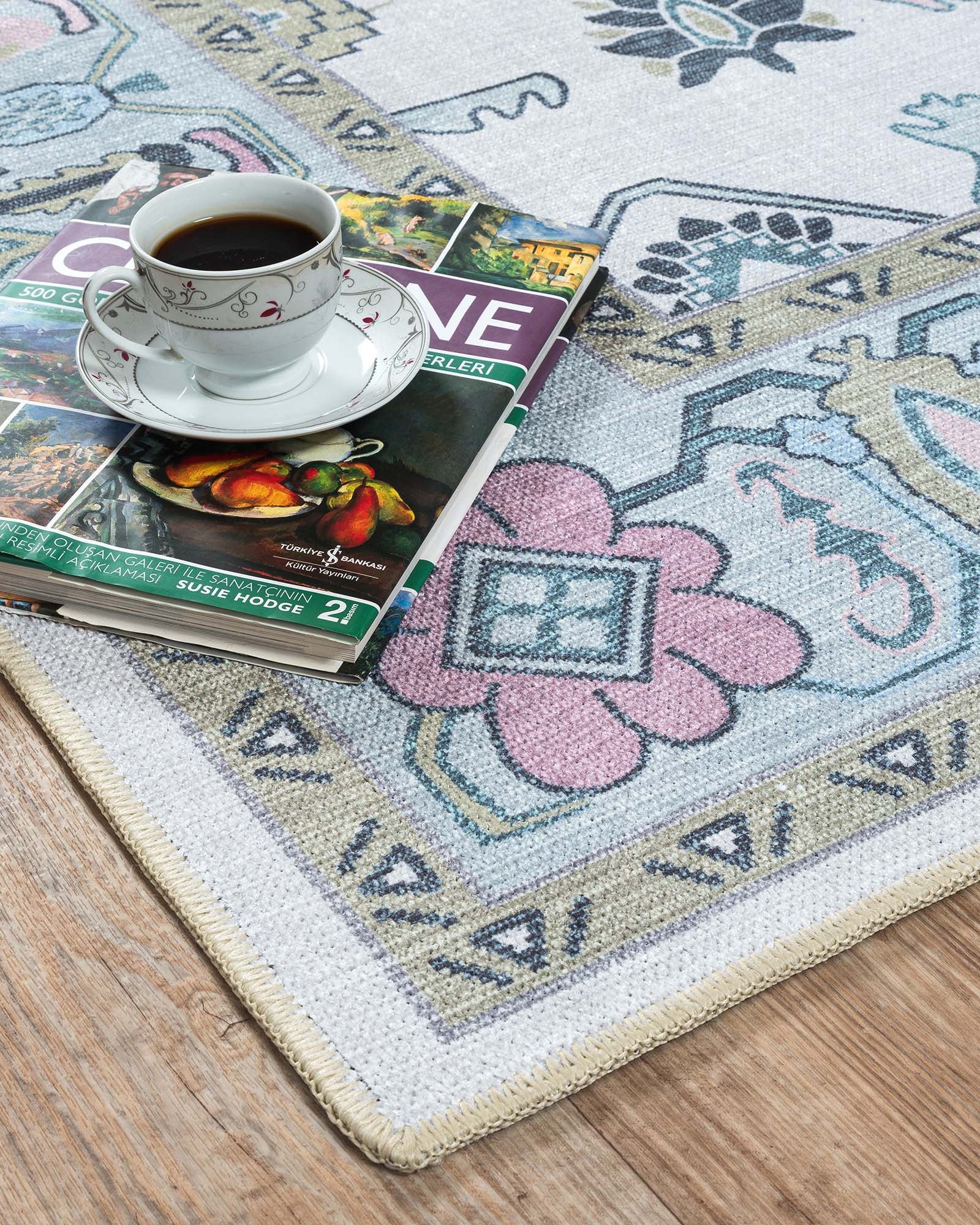
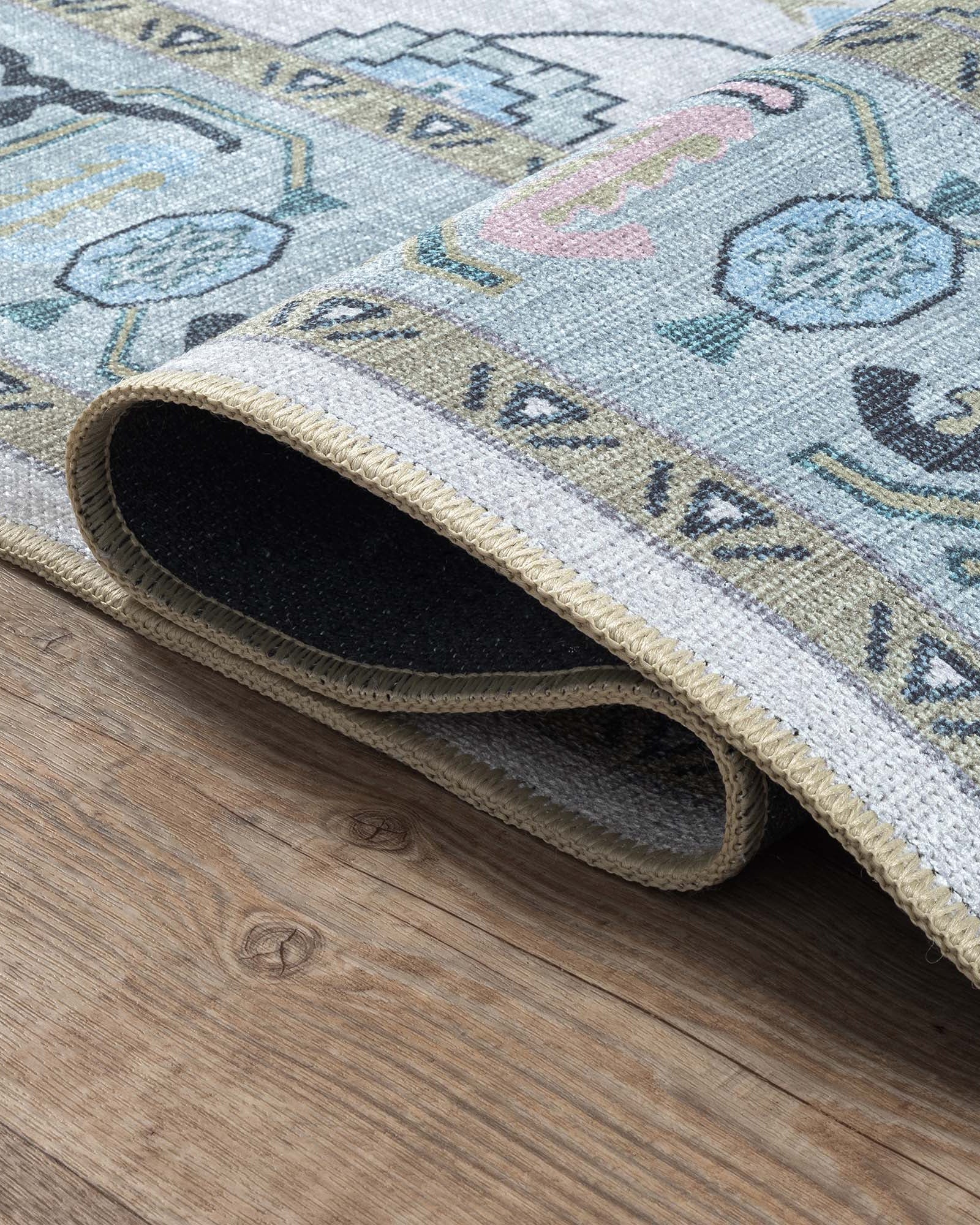
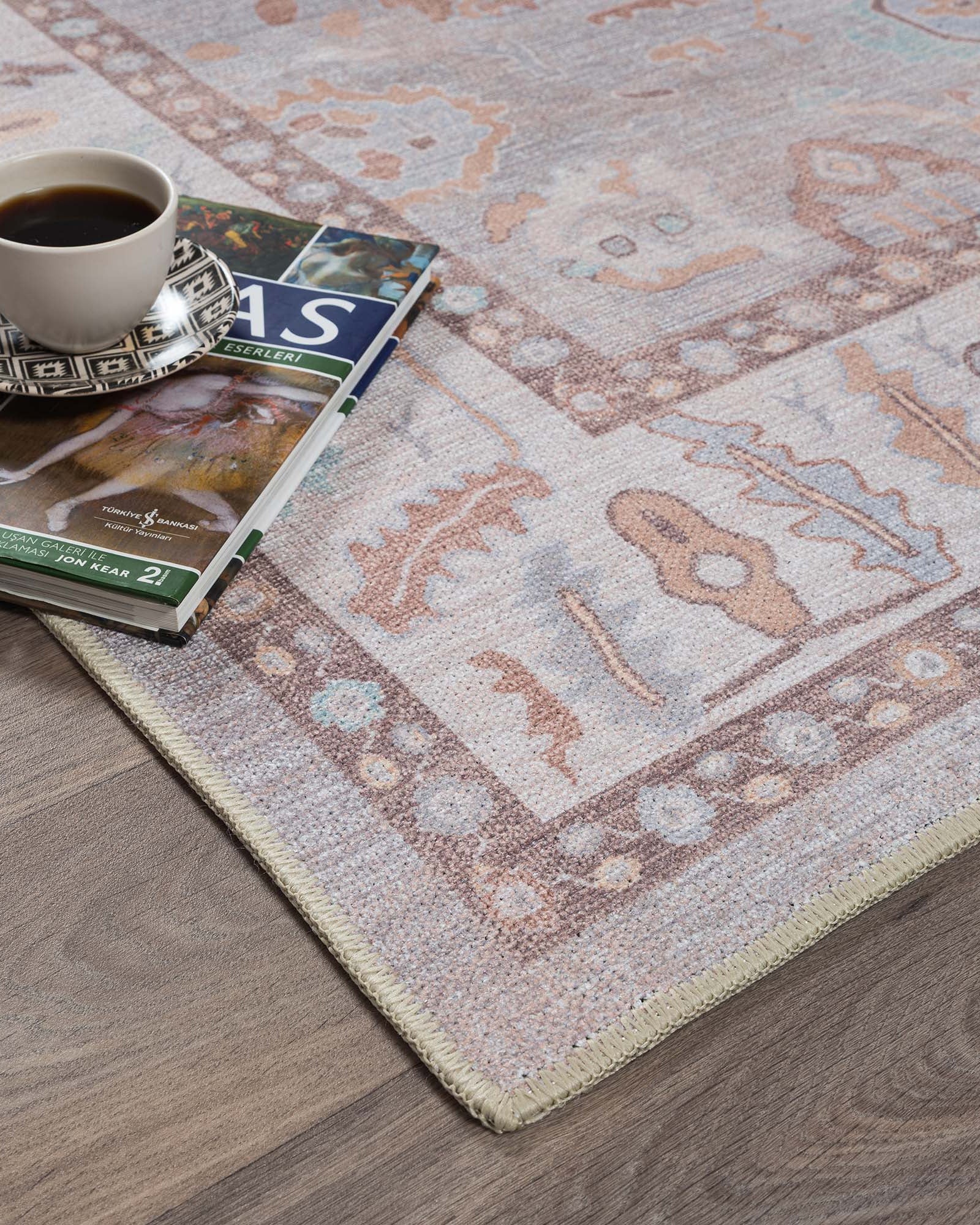
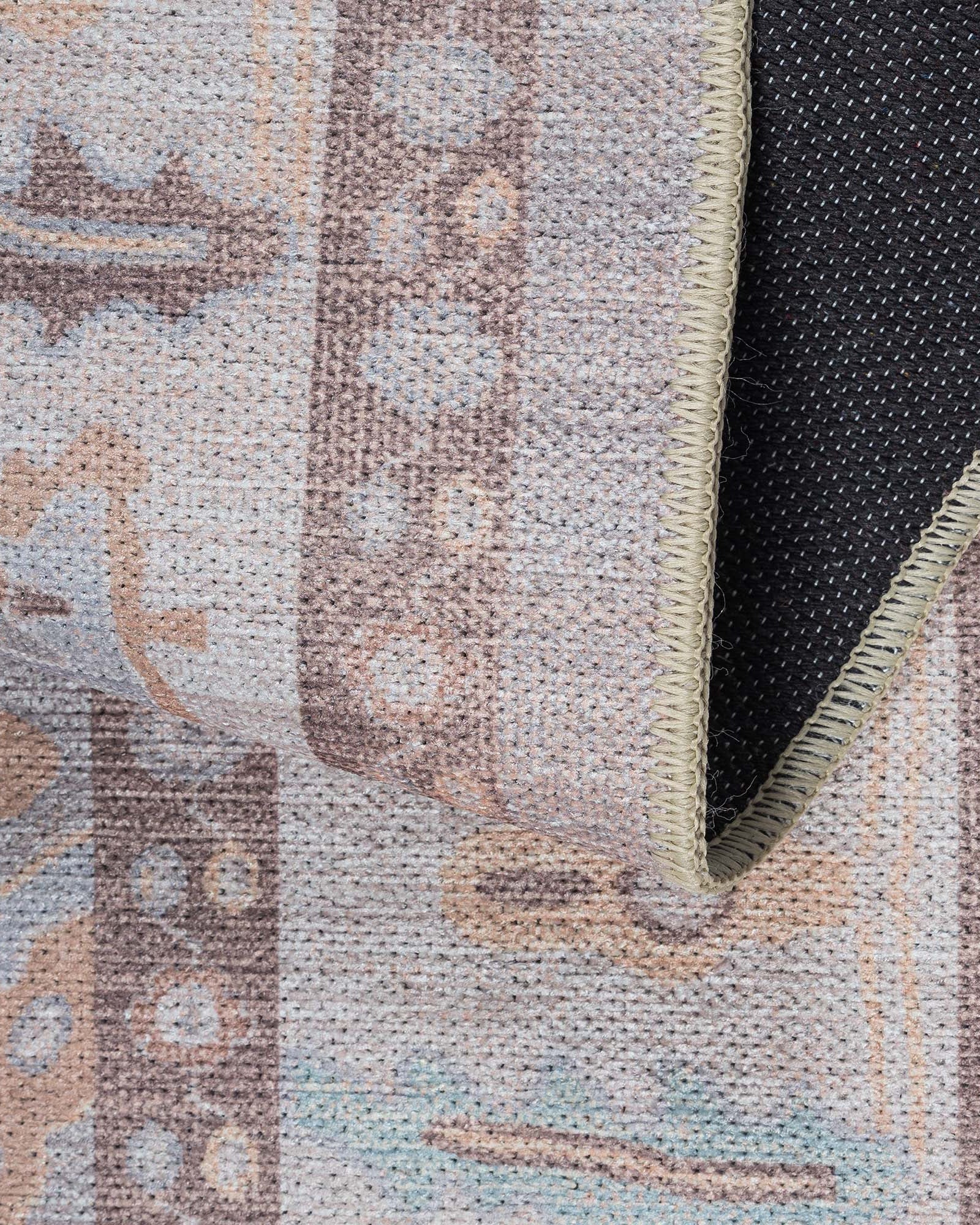
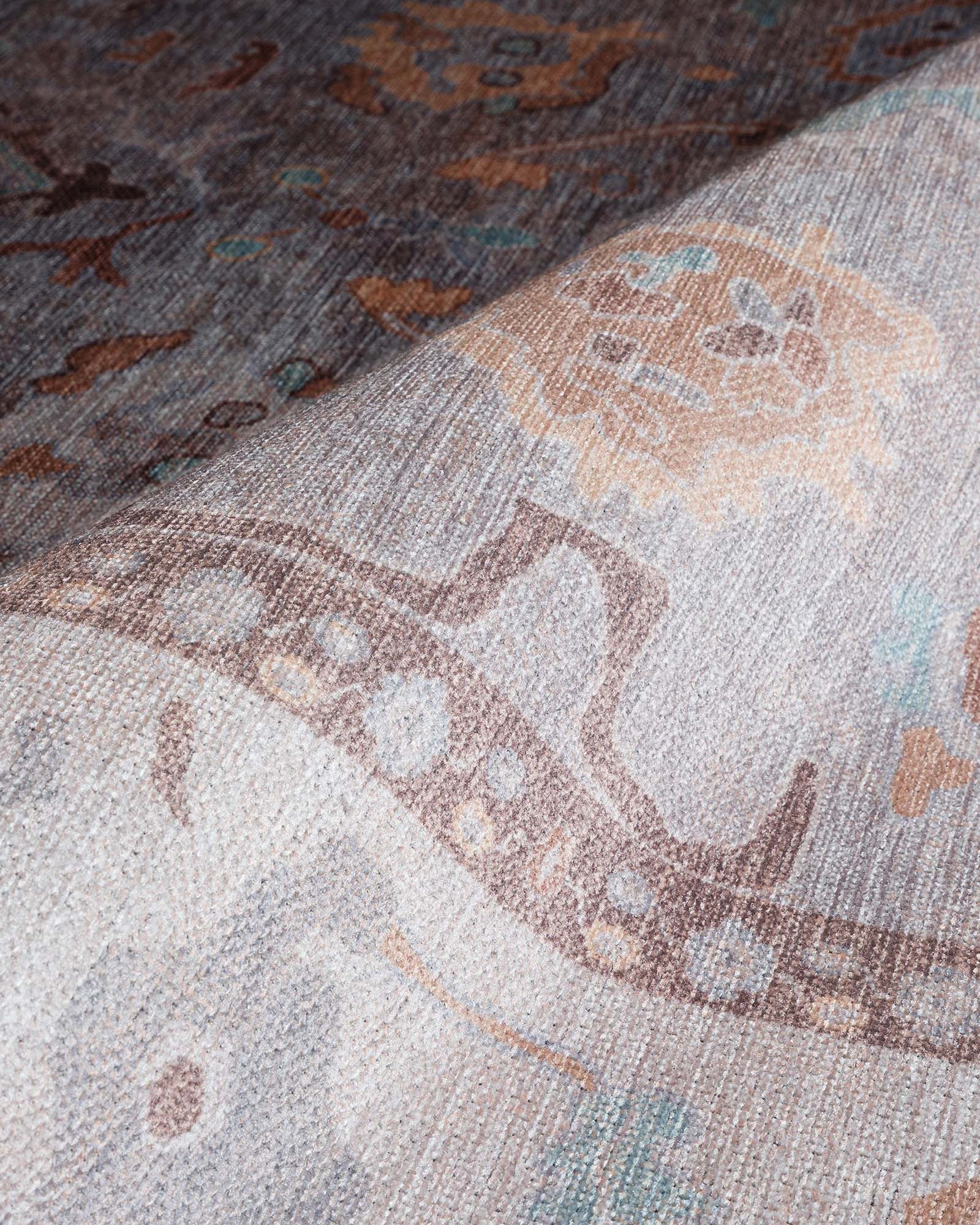
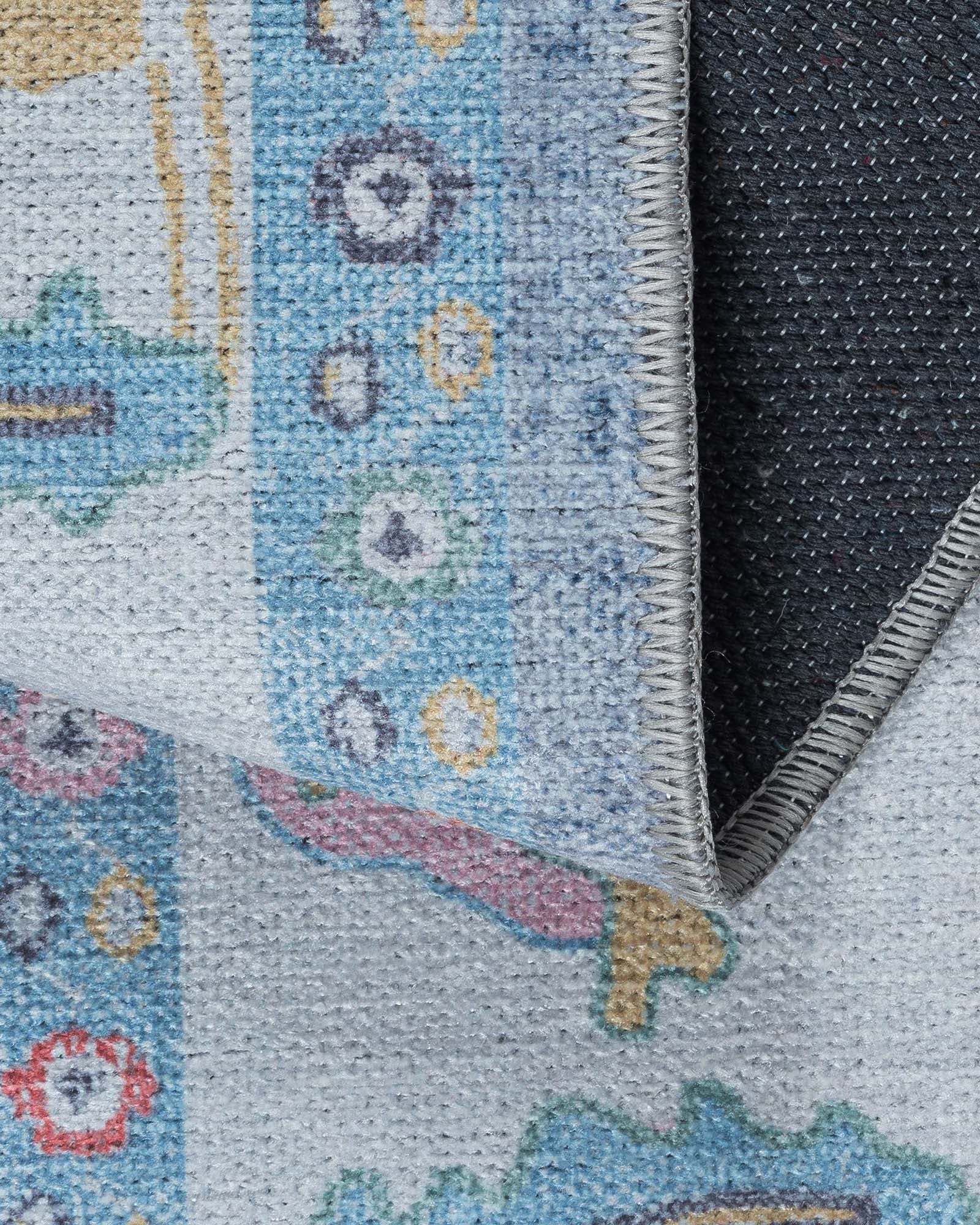
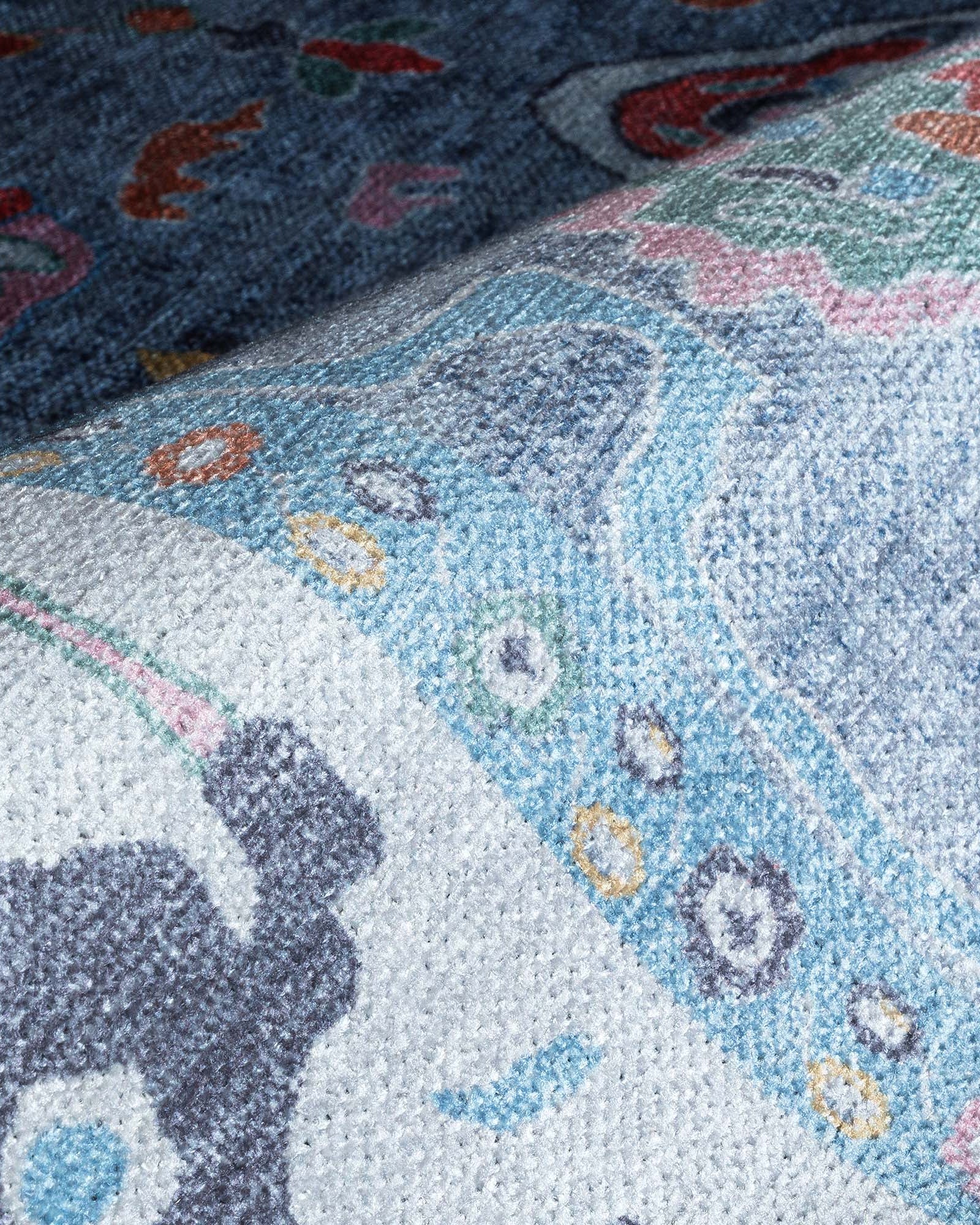
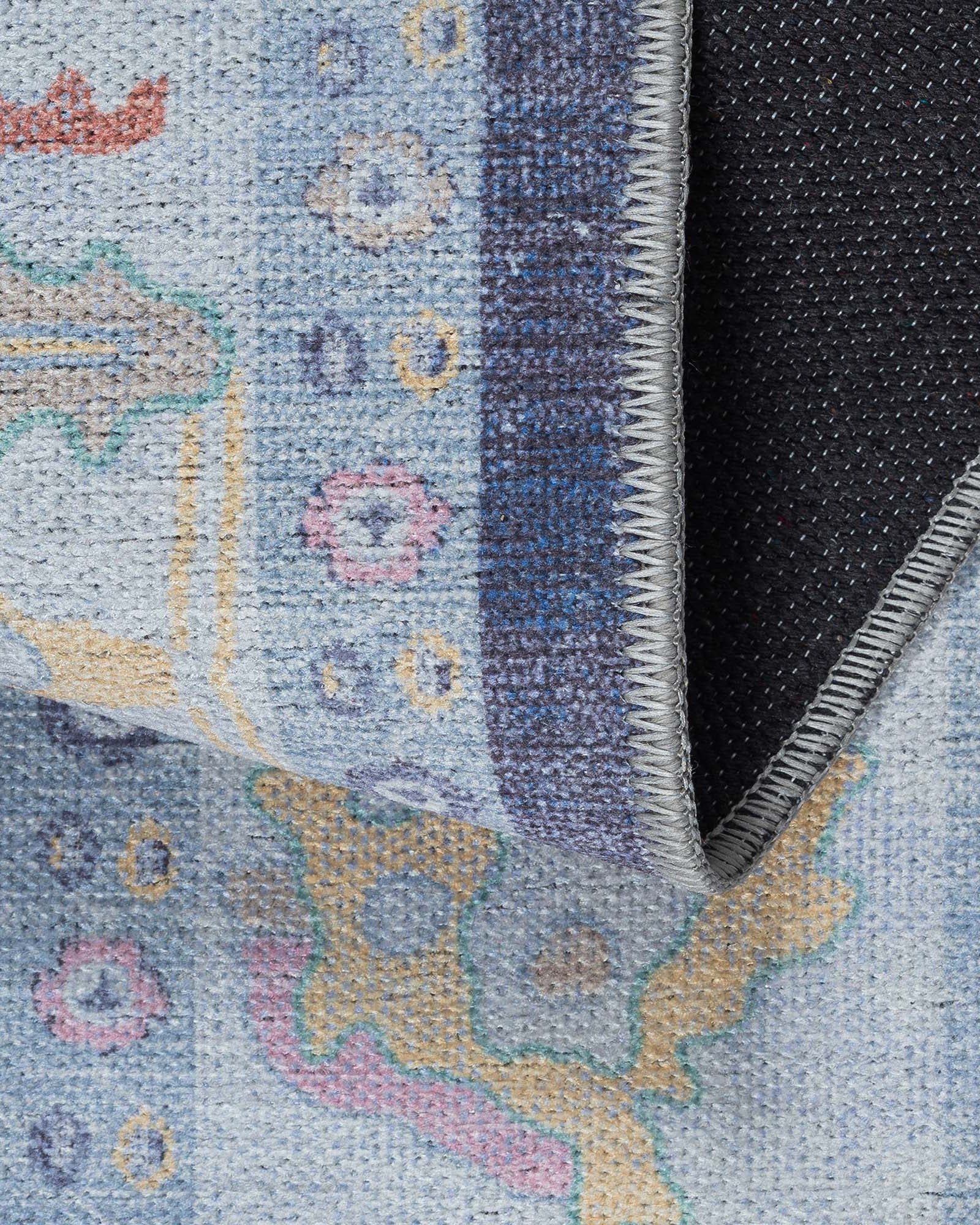
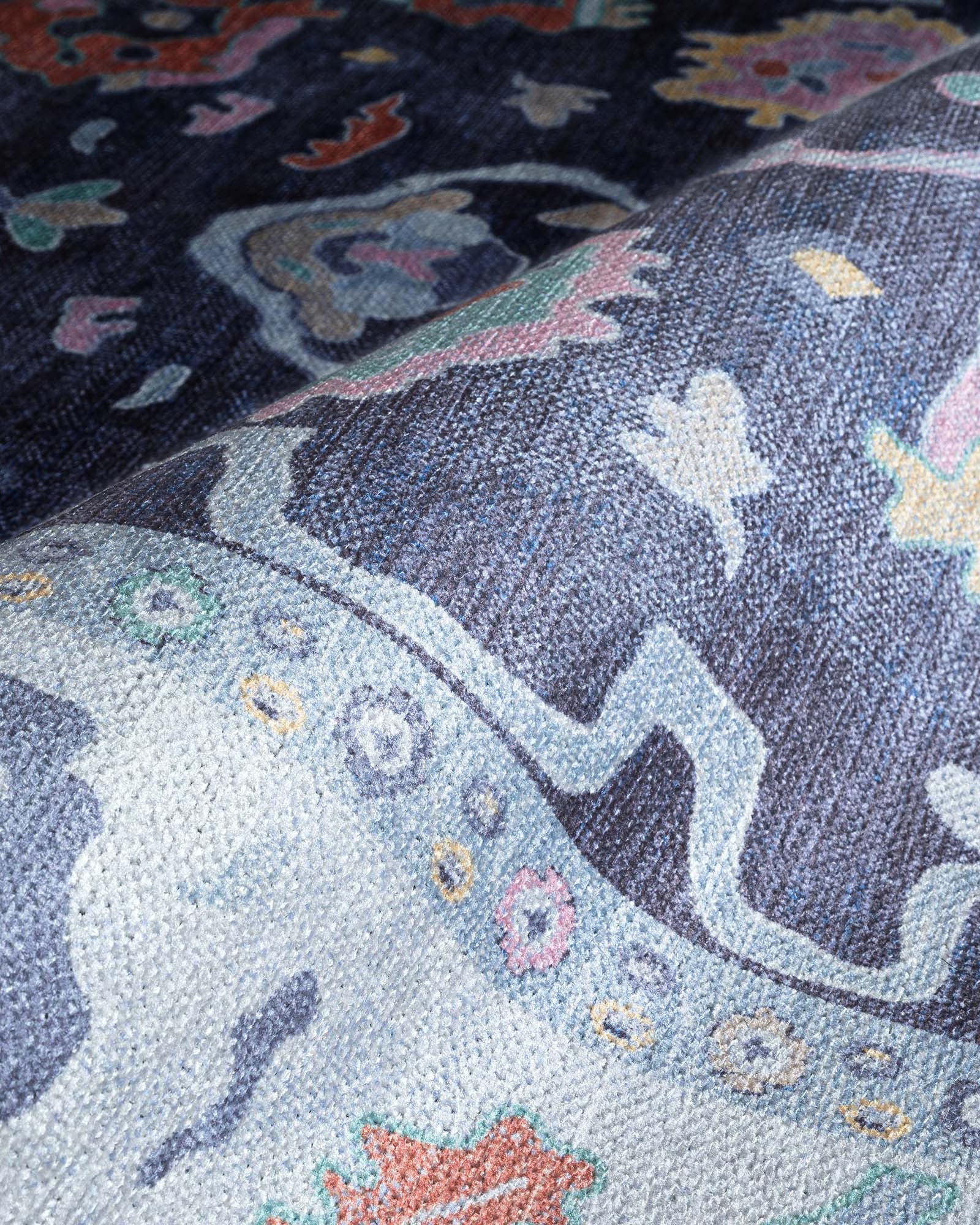
Weight in a flatweave comes down to two things: how tightly the weft is packed, and whether the technique adds extra material on top of a plain weave. A simple slit-weave kilim uses the least material of any handwoven construction — just weft threads passed through warp, with nothing knotted or wrapped on. Soumak and other supplementary-weft techniques add bulk and weight in exchange for texture and durability. The rugs on this page skew toward the plainest, most open weaves, which is exactly what keeps them light.
What Lightweight Actually Enables
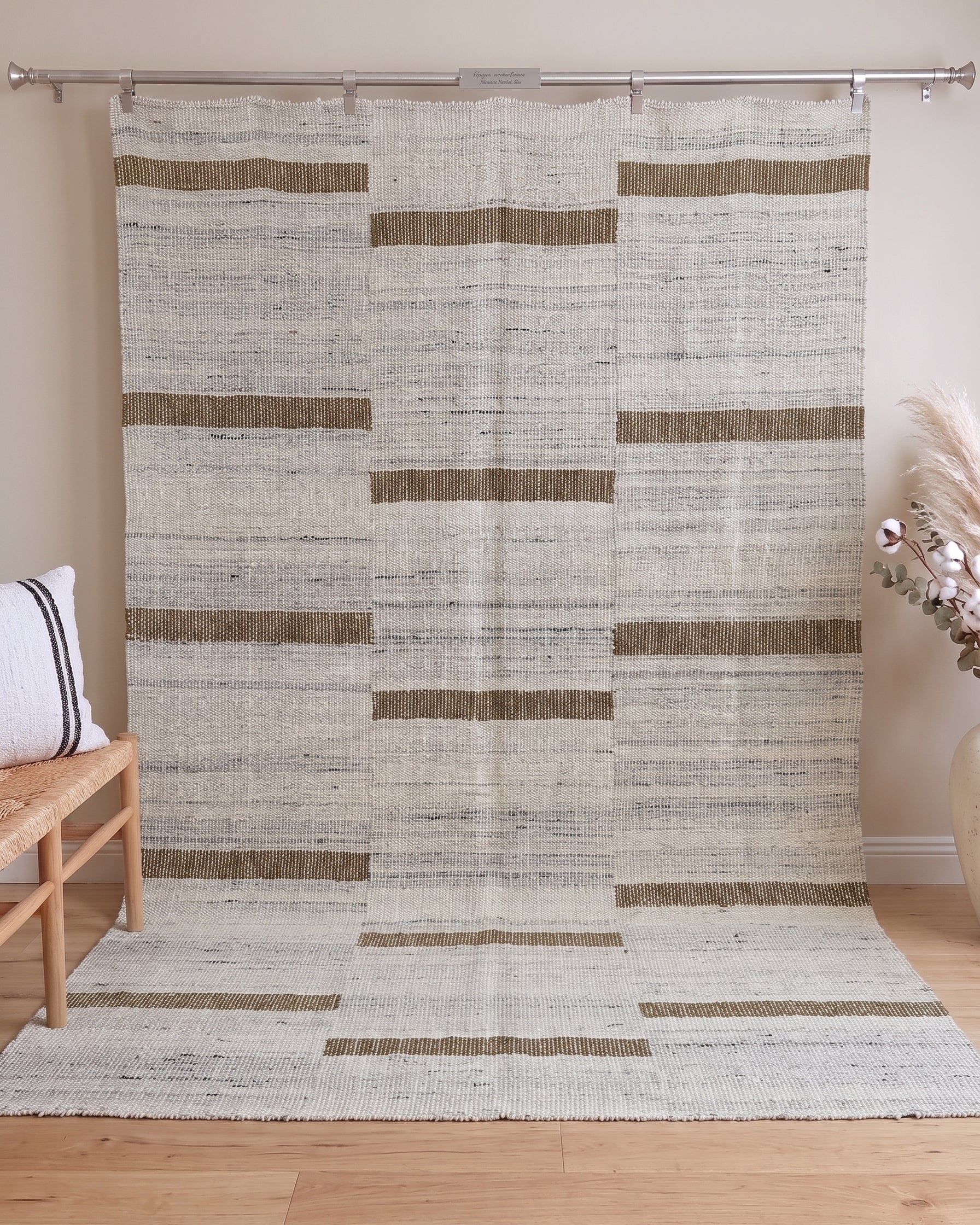
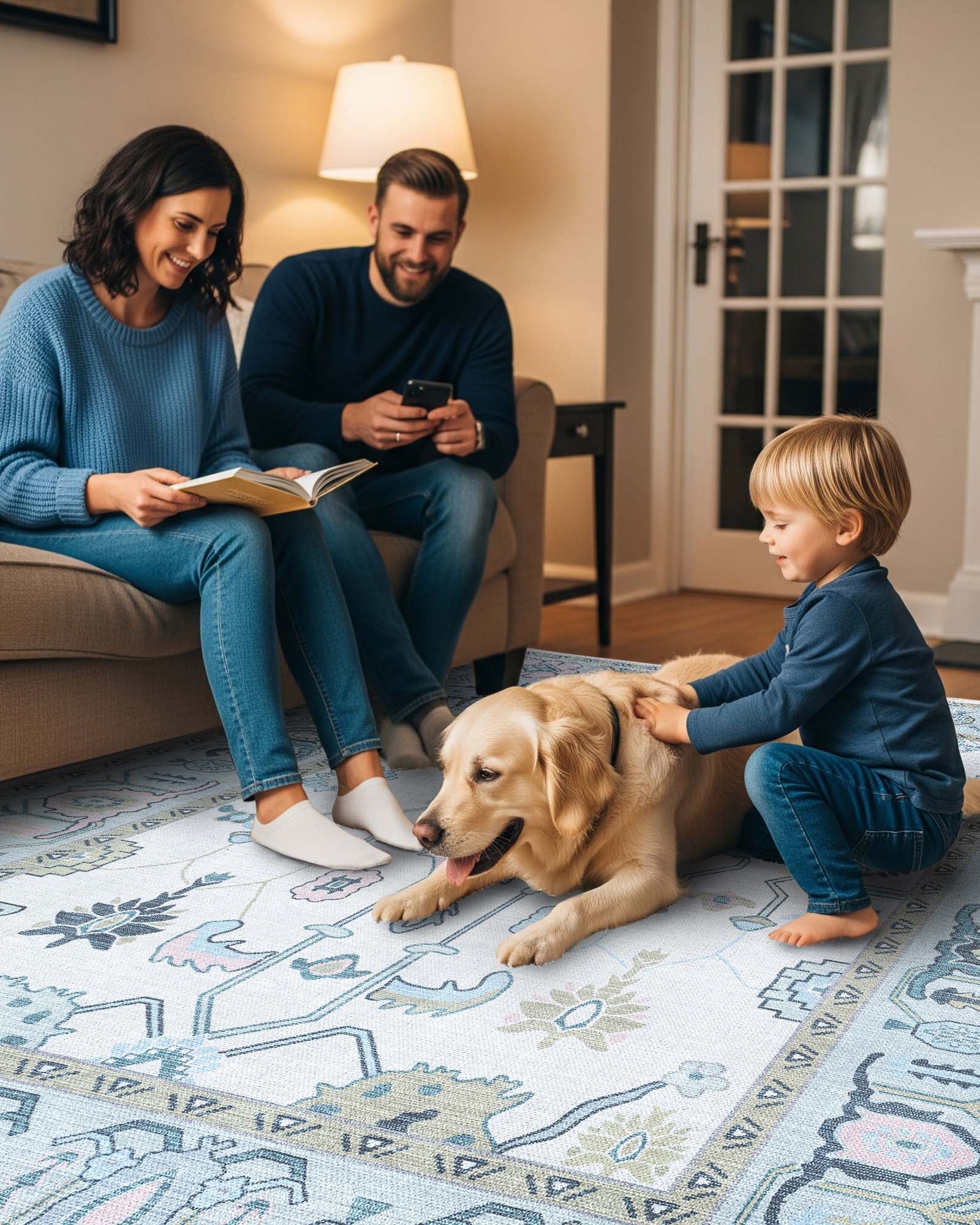
A genuinely light rug changes how you can use it day to day. It's easy to shake out over a railing instead of vacuuming every time. It can be rolled or folded flat for off-season storage without the bulk a heavy knotted rug requires. It moves between rooms without a second person, which matters if you like to rearrange seasonally or you're renting and need a rug that comes with you easily. None of this is true of a thick pile rug, no matter how beautiful it is.
Where Lightweight Flatweaves Work Best
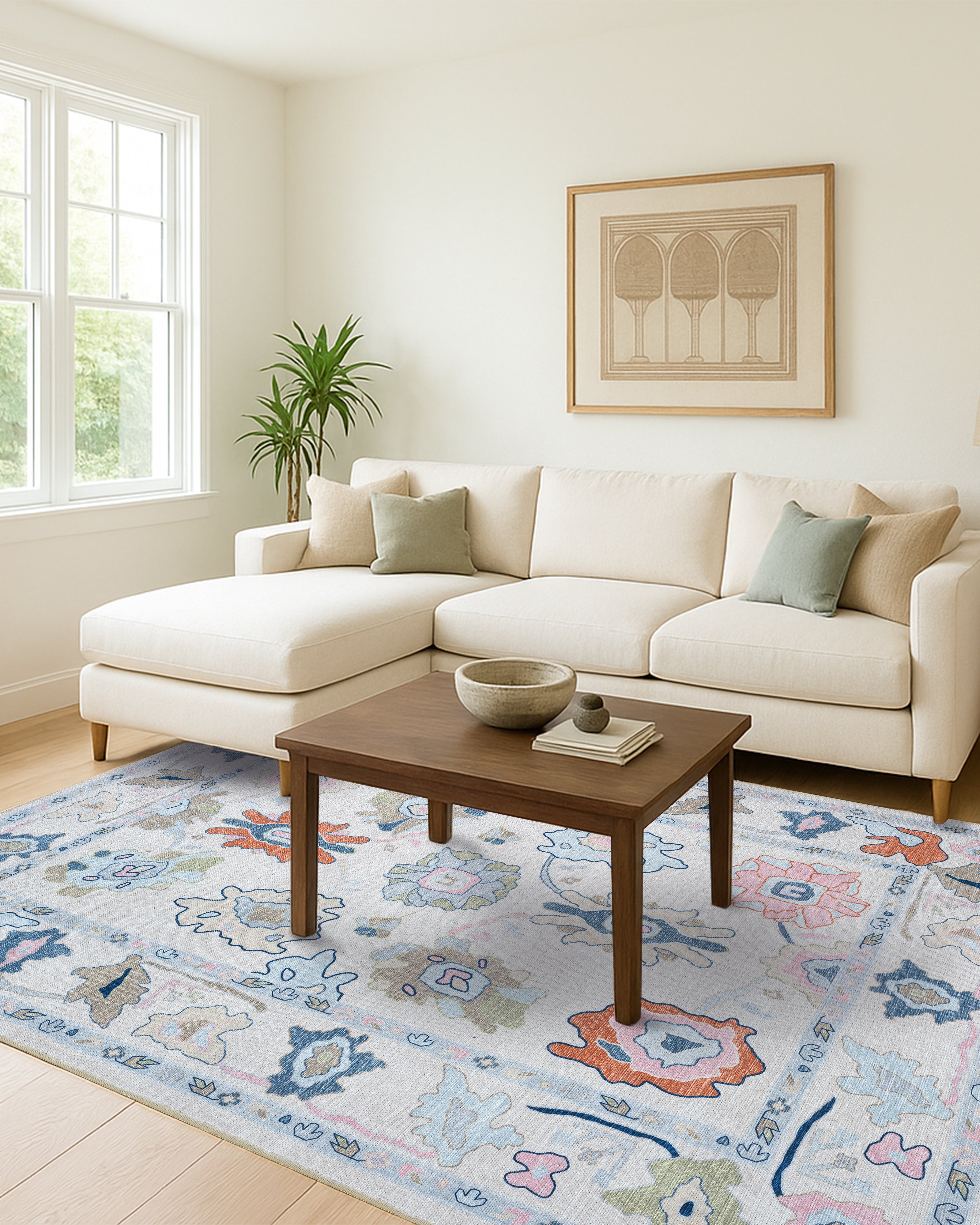
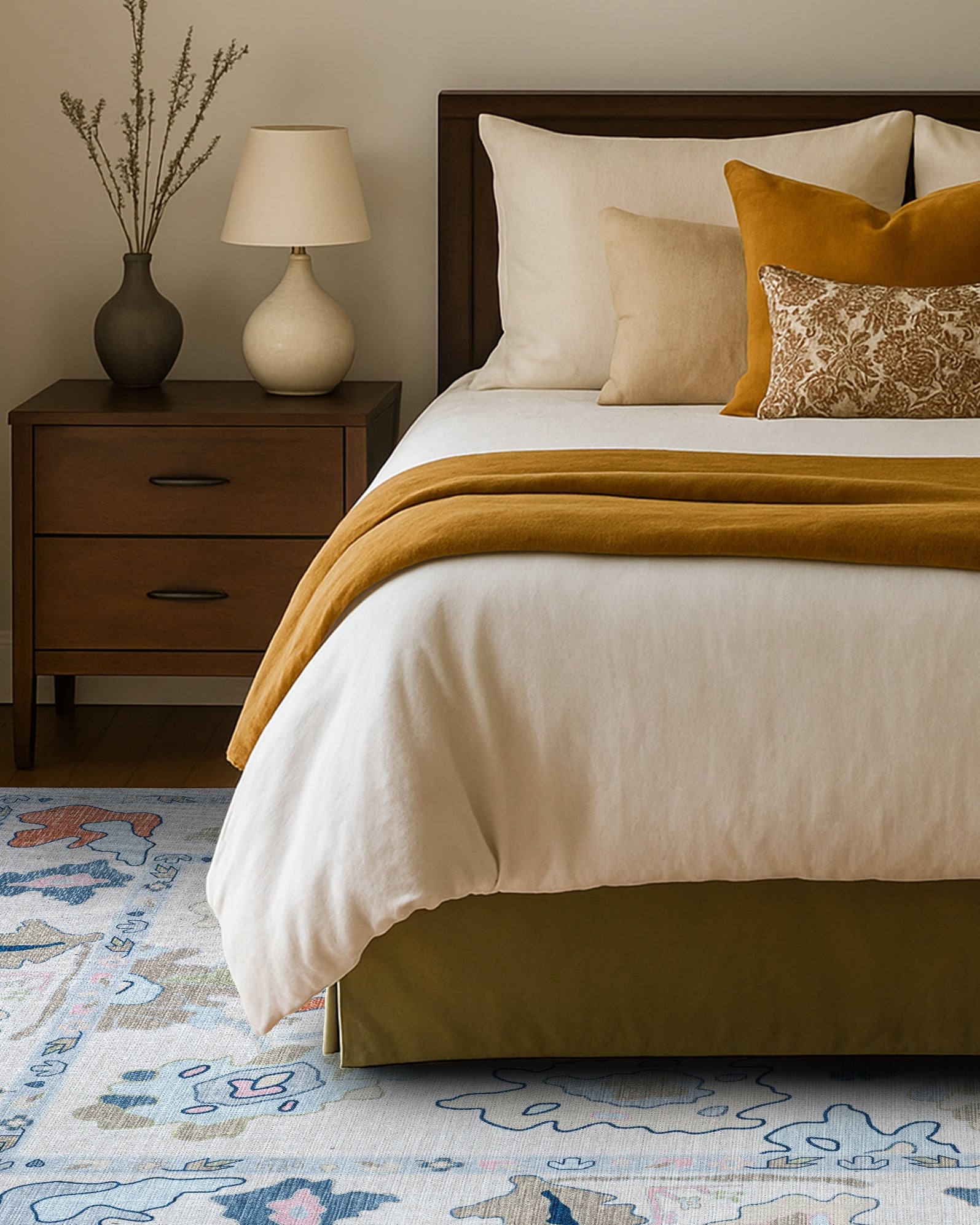
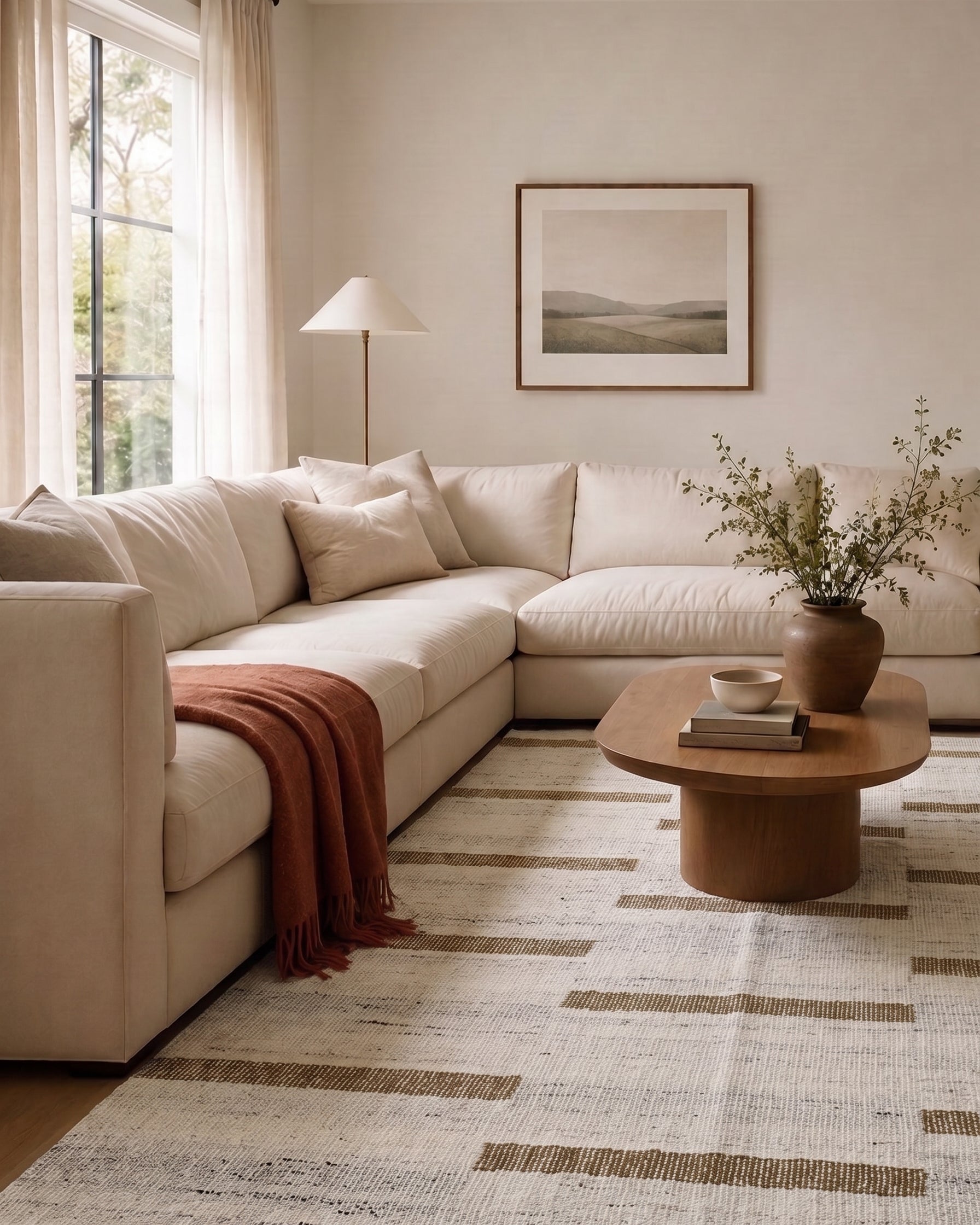
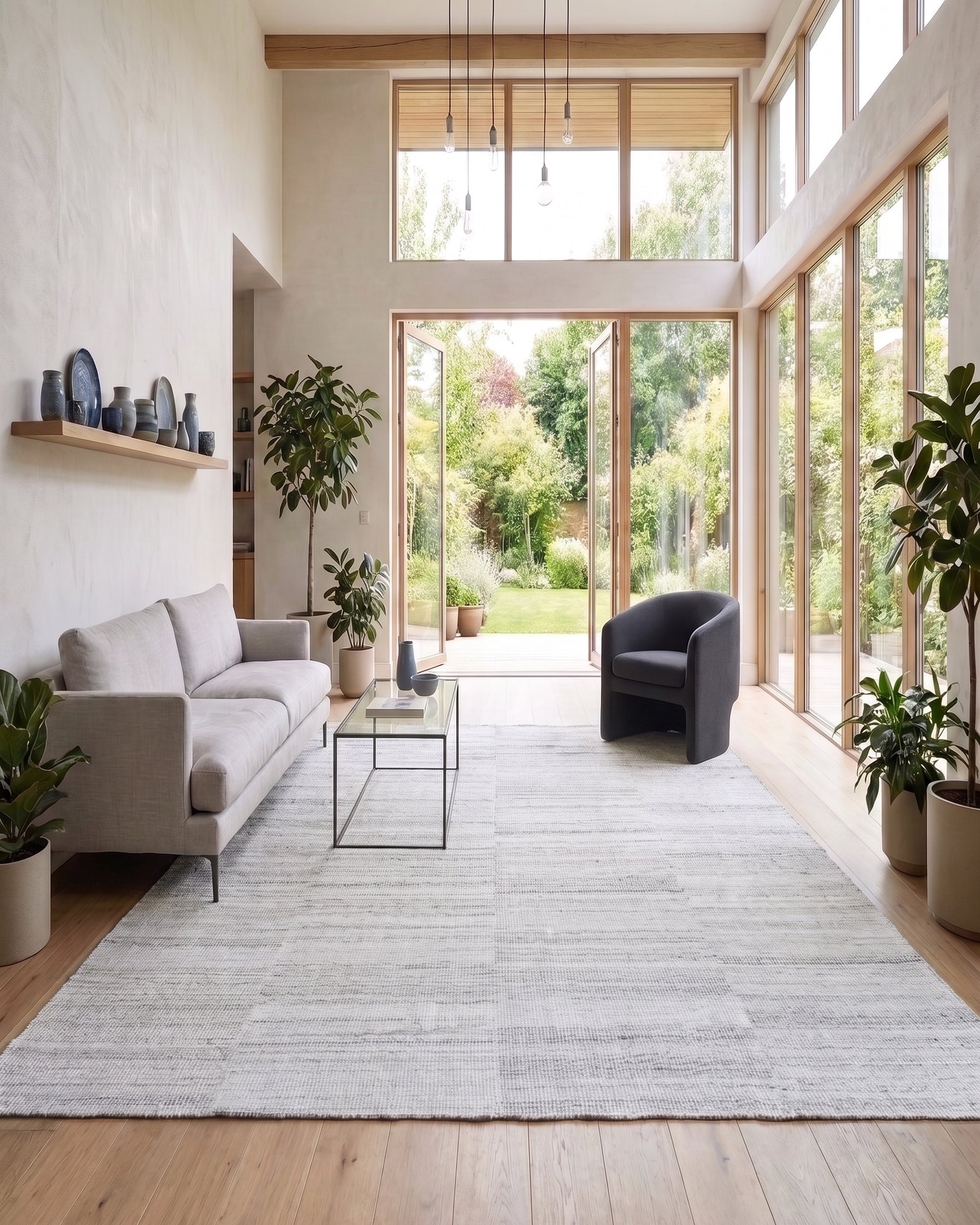
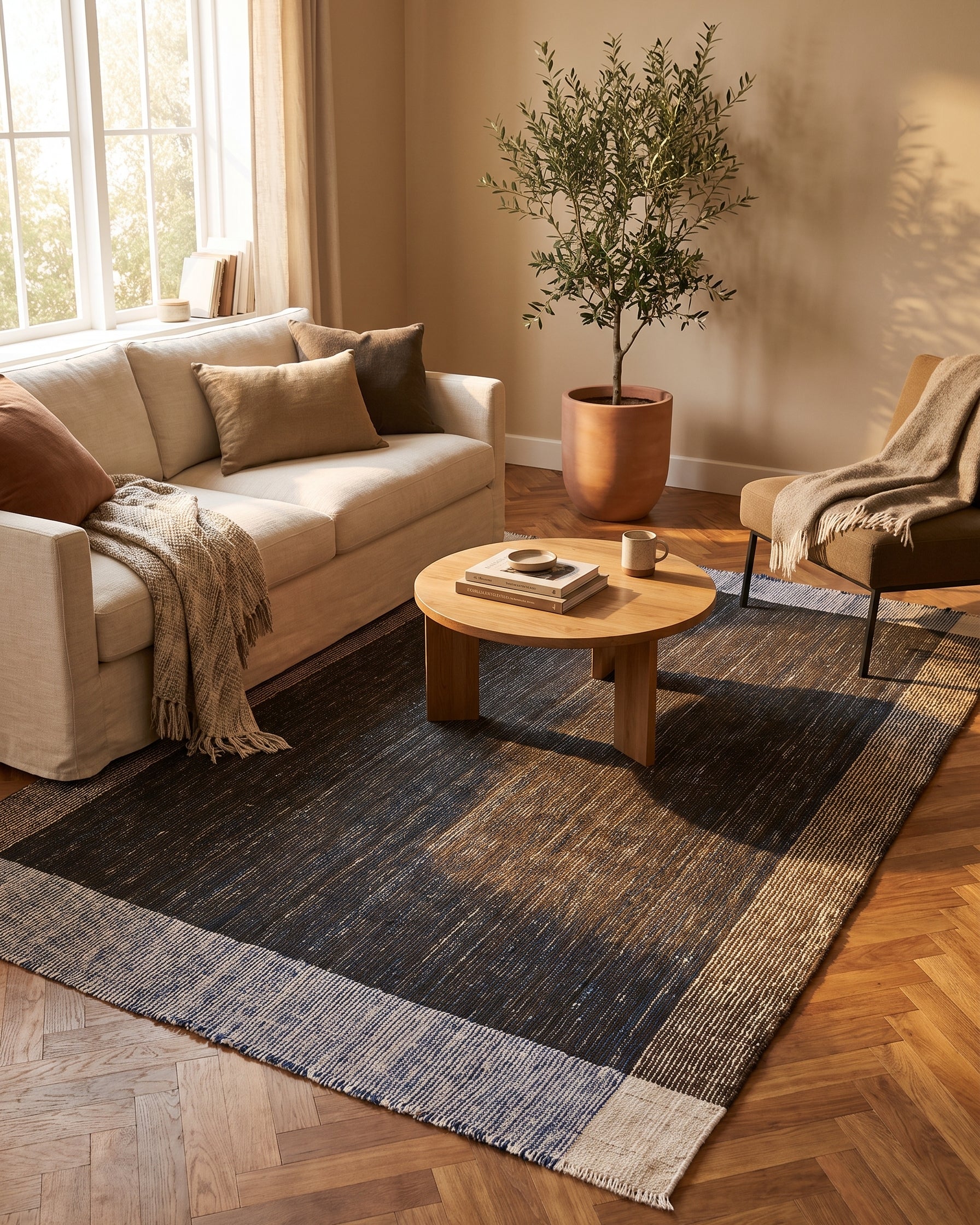
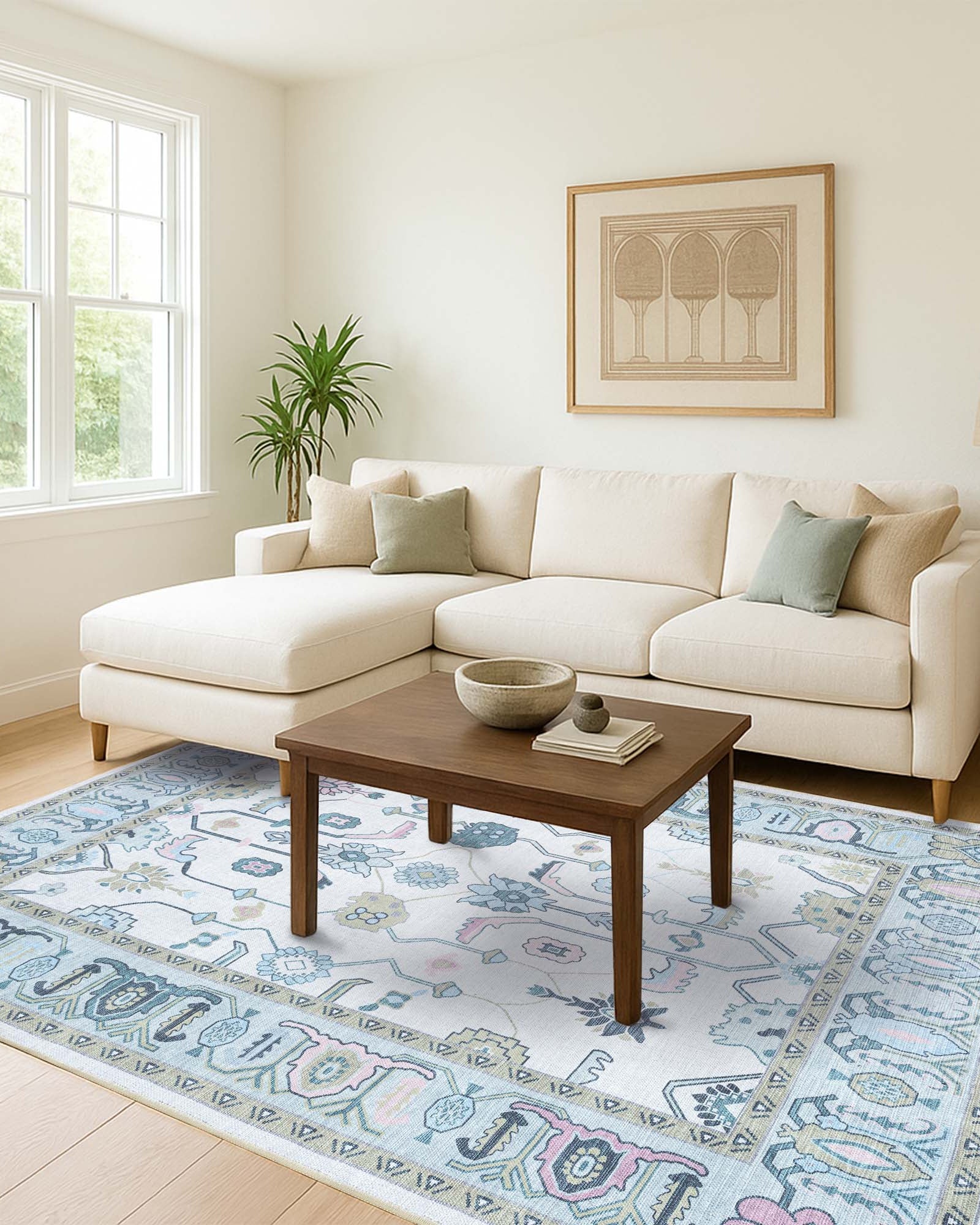
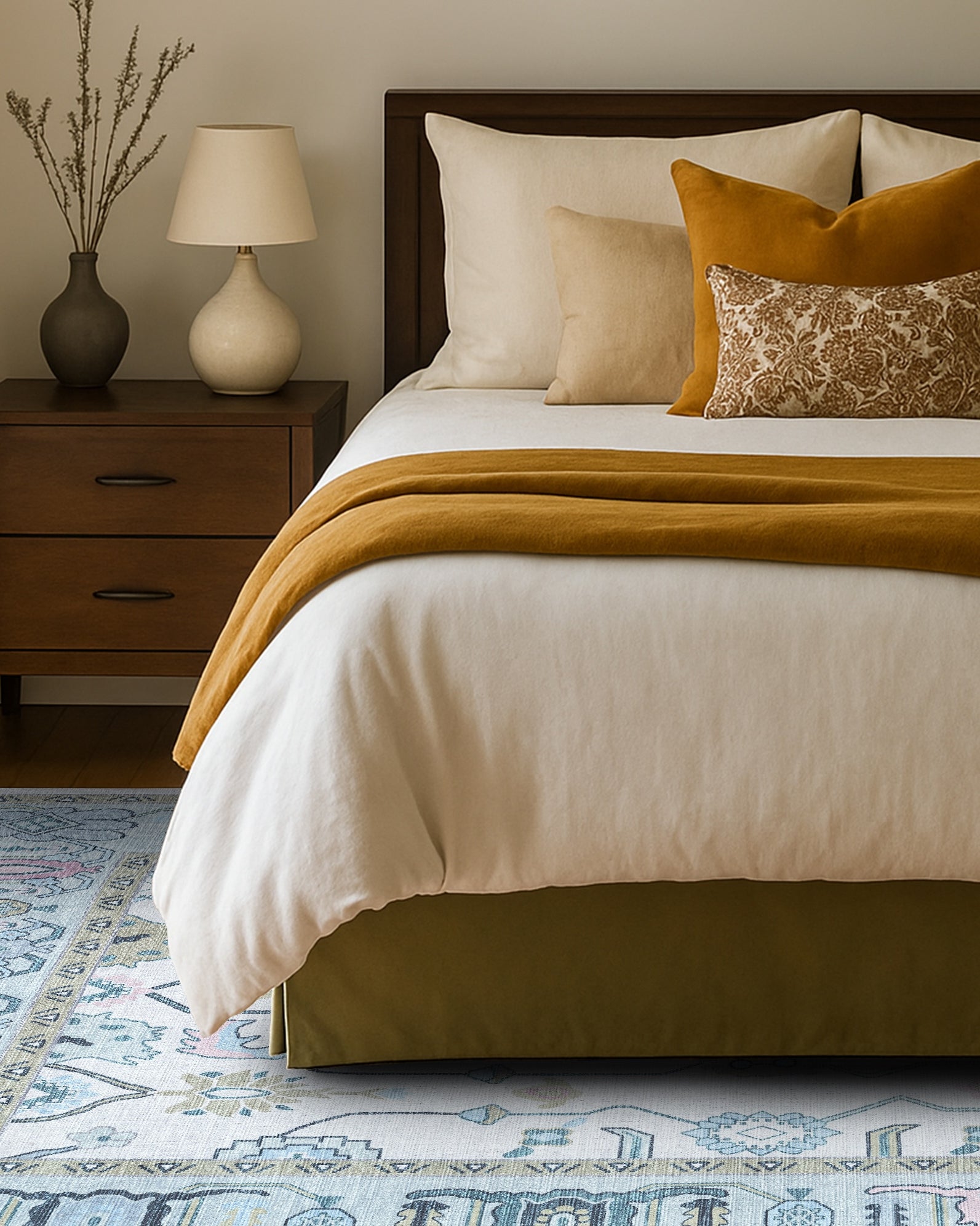
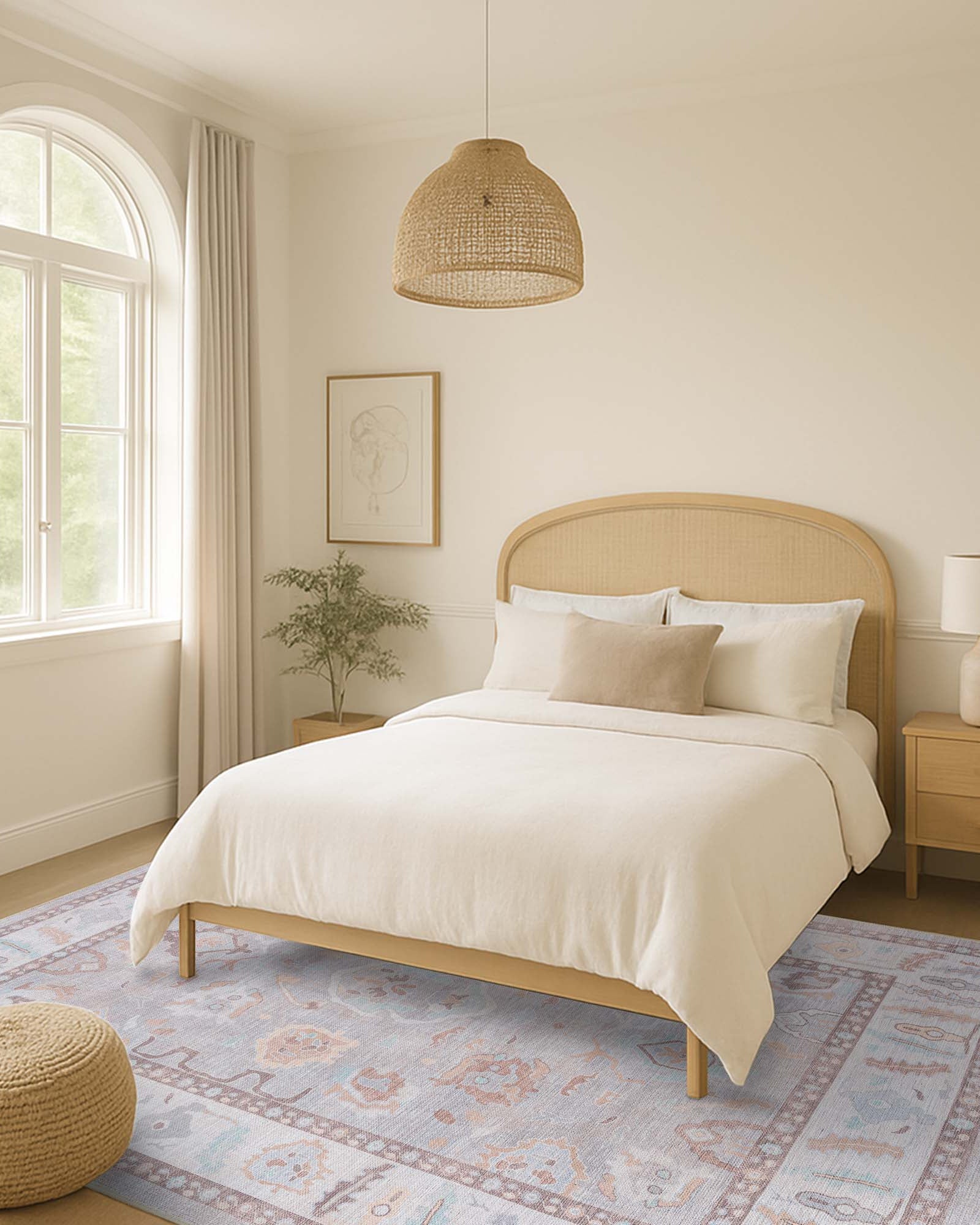
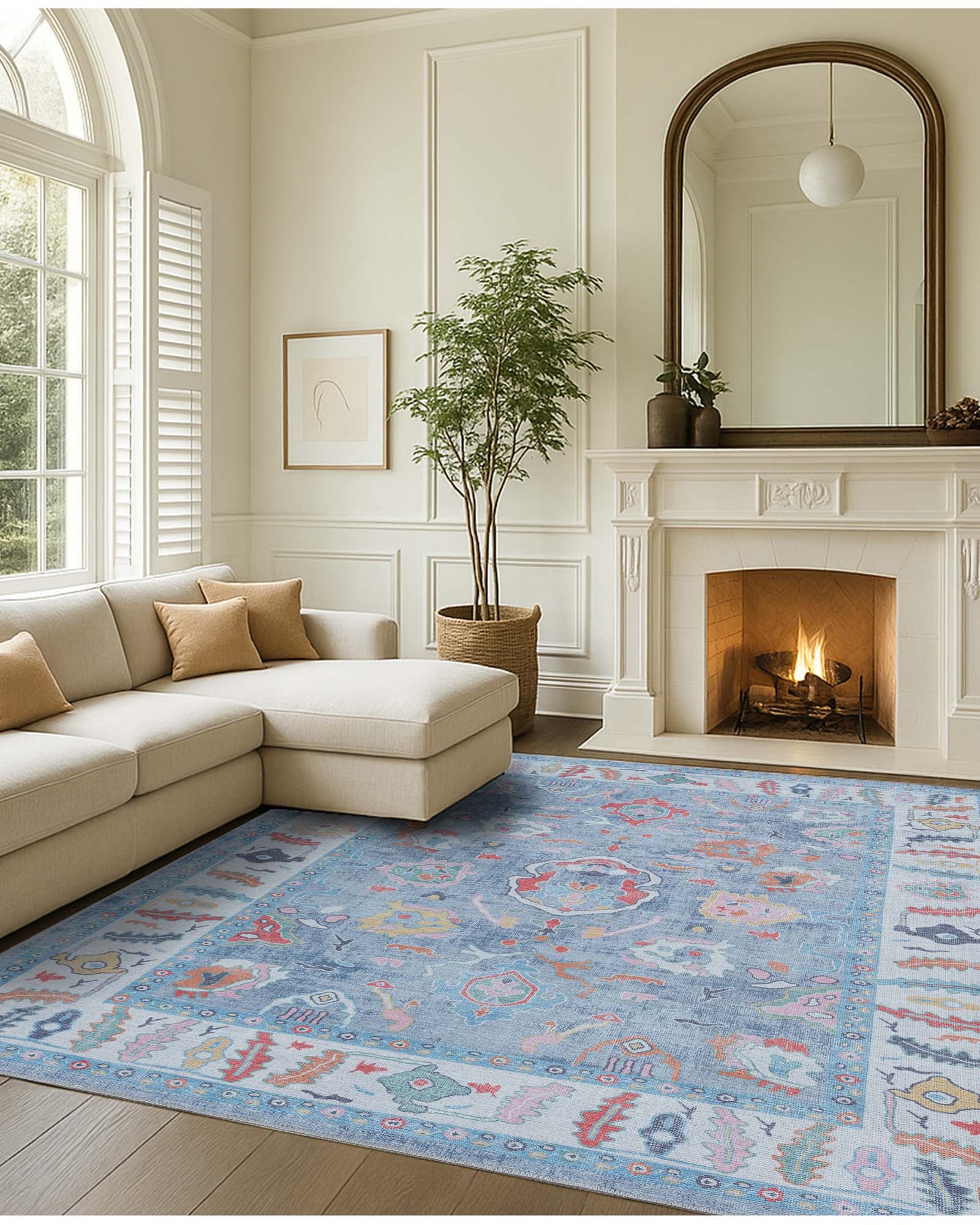
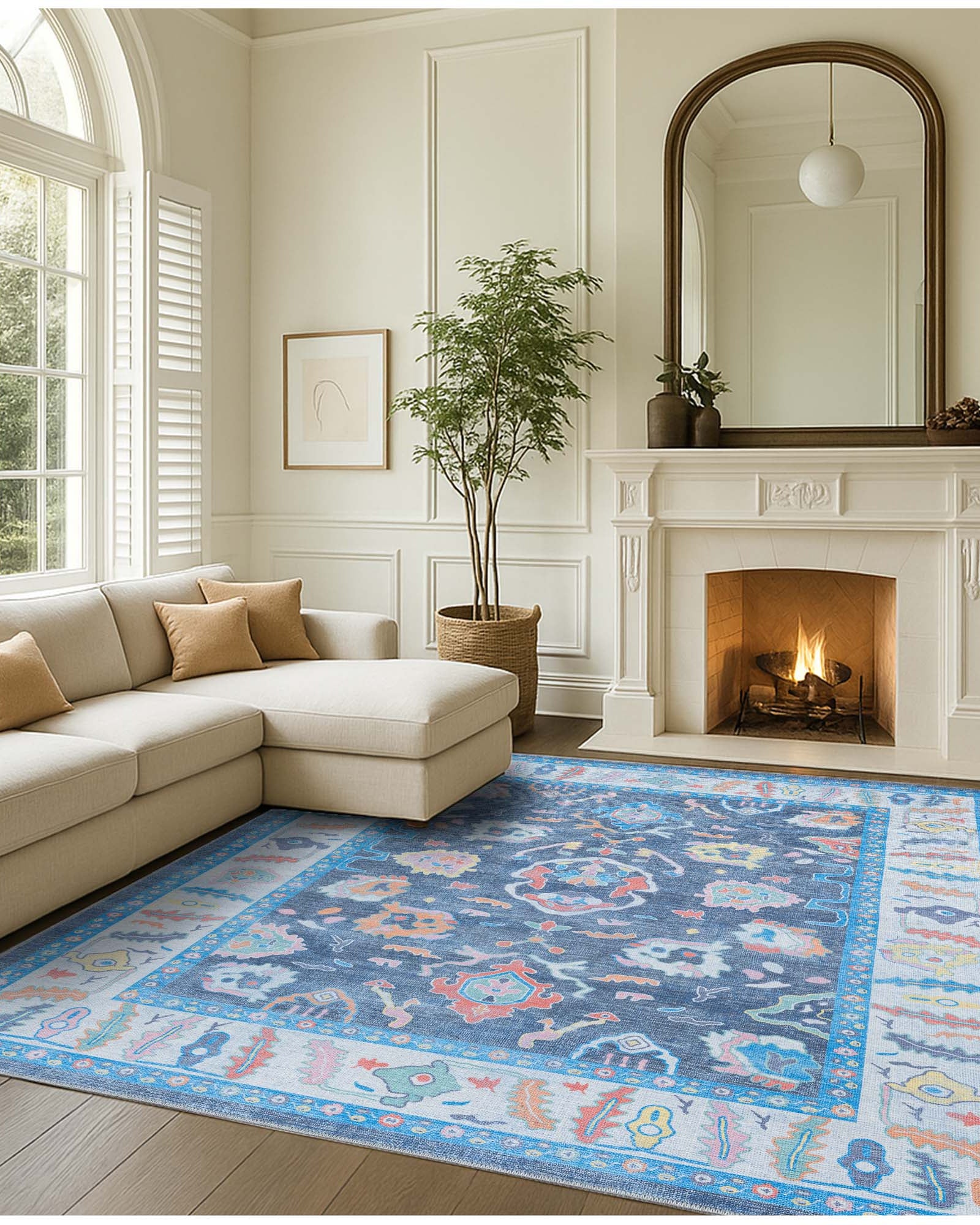
Dorm rooms, rentals, vacation homes, and anywhere a rug needs to be genuinely portable rather than a permanent fixture. They also suit layering, since a light piece sits easily on top of a larger jute or sisal base without adding noticeable bulk or shifting the larger rug underneath. For travel between a primary residence and a second home, a lightweight flatweave is one of the few genuine vintage rug options that actually makes sense to pack.
What to Expect From a Light Piece
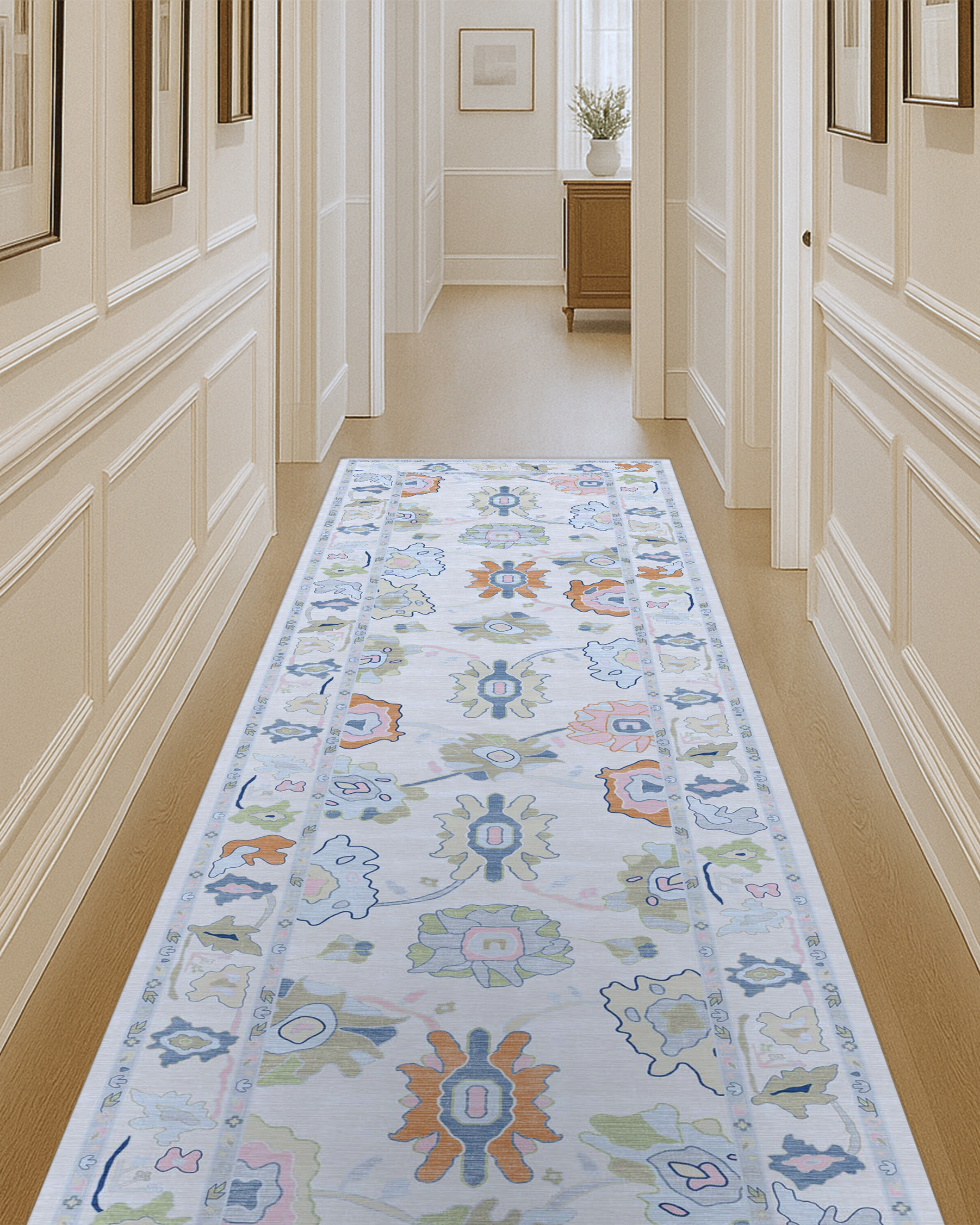
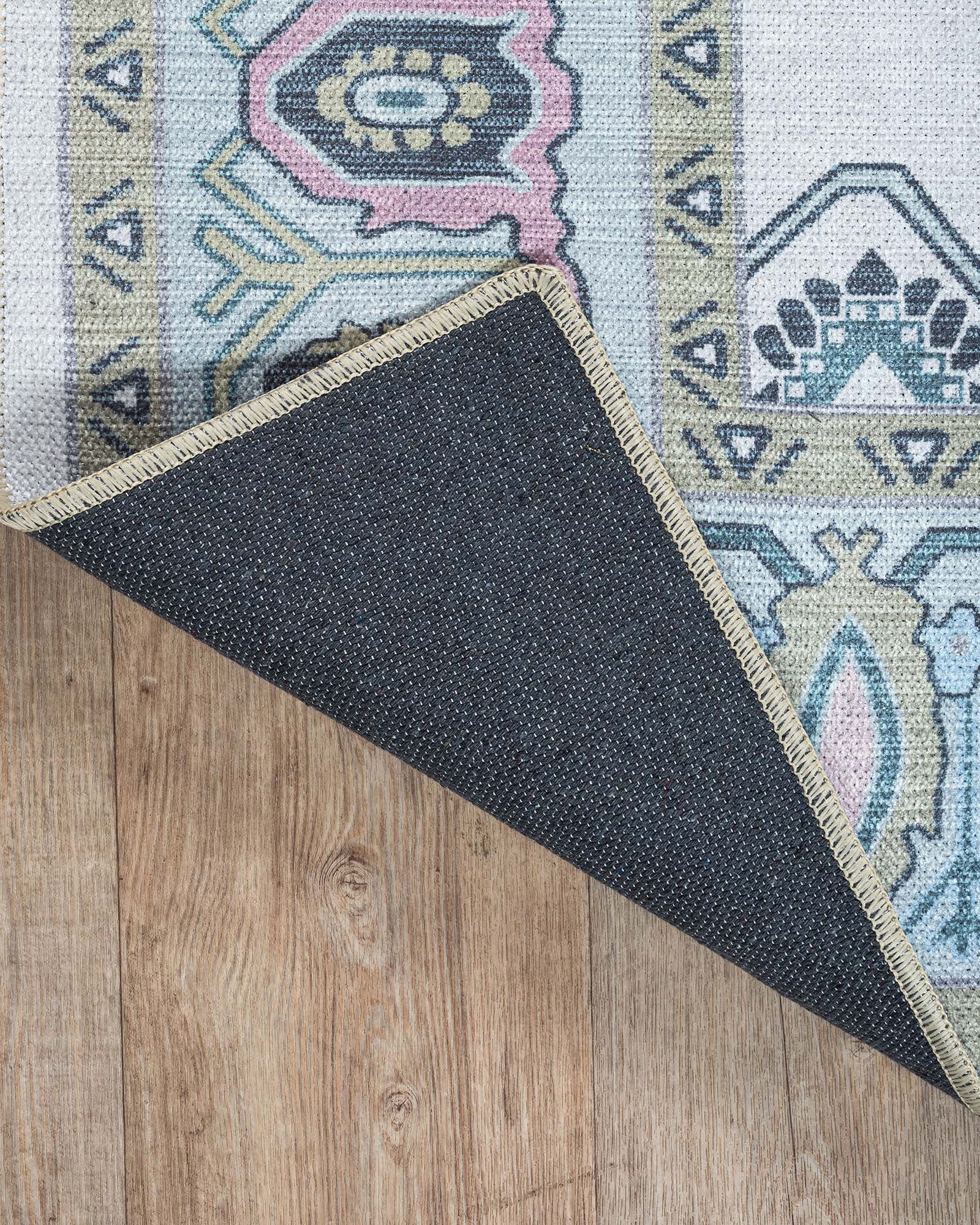
Thinness has one real trade-off: these rugs need a pad more than almost any other construction, since there's very little friction or weight of their own to keep them in place on a hard floor. They also show wear differently than a heavier weave — because there's less material to begin with, thin spots can develop sooner in high-traffic areas. For a busy hallway or entryway, a heavier soumak or a knotted rug will outlast a very light kilim; for a bedroom, a dorm room, or a spot that gets moved often, the lightness is worth that trade.
Where to Look Next
For the full range of flatweave construction and weight, browse Flatweave Rugs. If you want more body and durability without a full pile rug, see Soumak Rugs. For the thinnest hand-knotted alternative, Low Pile Rugs is worth comparing.
Frequently Asked Questions
What makes a flatweave rug lightweight?
Simple slit-weave construction with nothing knotted or wrapped on top — just weft threads passed through warp. Techniques like soumak add weight and texture, so the lightest flatweaves are typically plain kilims woven as openly as possible.
Are lightweight flatweaves durable enough for daily use?
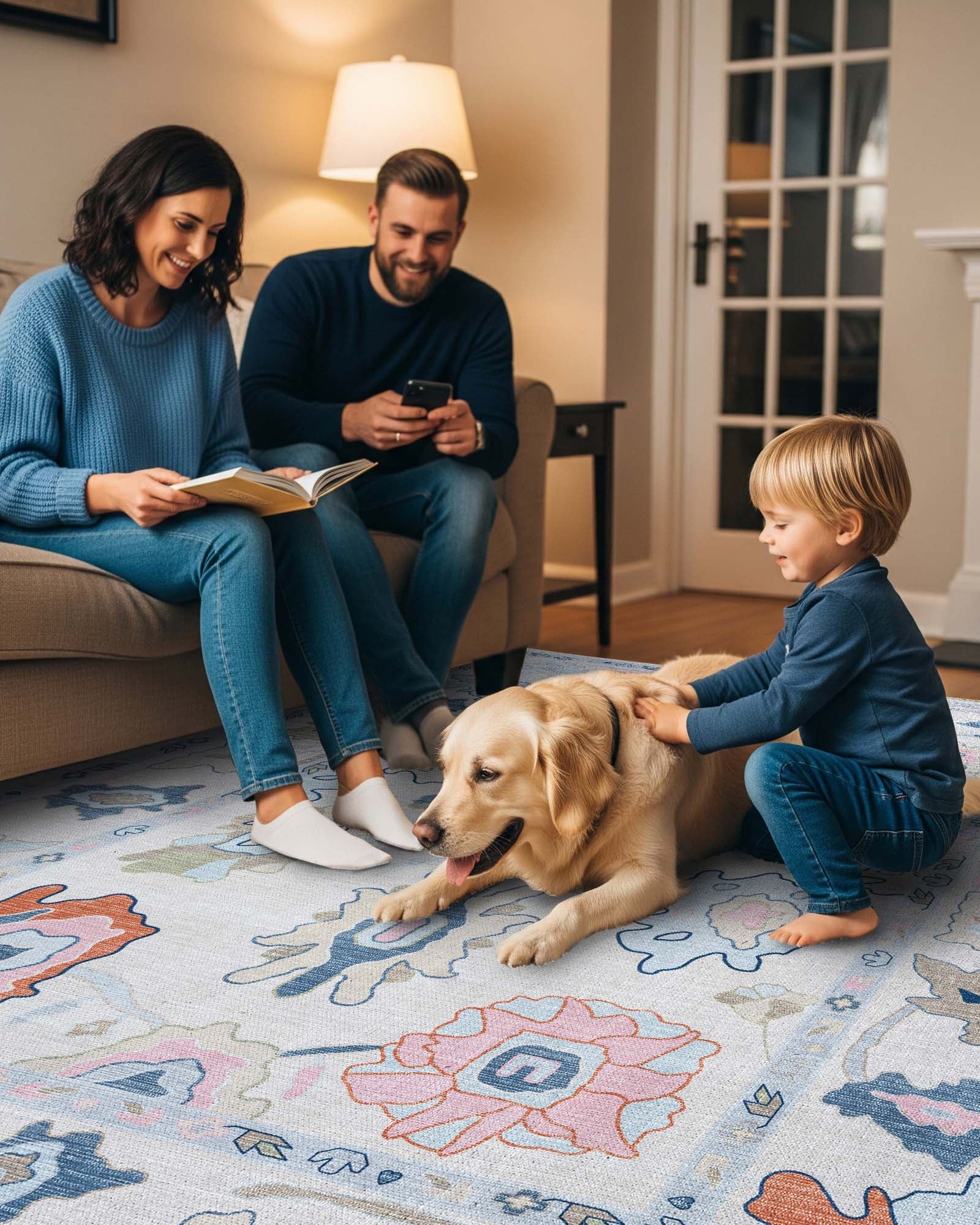
For moderate use, yes, but thinner construction means less material to wear through, so thin spots can develop sooner in high-traffic spots than on a heavier weave. They're a better fit for lower-traffic rooms or pieces you move often.
Do lightweight rugs need a rug pad?
More than almost any other construction. With little weight of their own, thin flatweaves slide easily on hard floors without a pad, and a felt-and-rubber pad also protects the thin weave from abrading against the floor beneath it.
Are these rugs good for dorm rooms or rentals?
Yes — their light weight makes them easy to move, fold, and pack, which suits temporary spaces or homes you don't plan to stay in permanently better than a heavy knotted rug would.
What's the difference between this page and the main Flatweave Rugs collection?
This page highlights the lightest, thinnest weaves specifically, chosen for portability. The full collection includes heavier techniques like soumak alongside plain kilims, without filtering for weight.