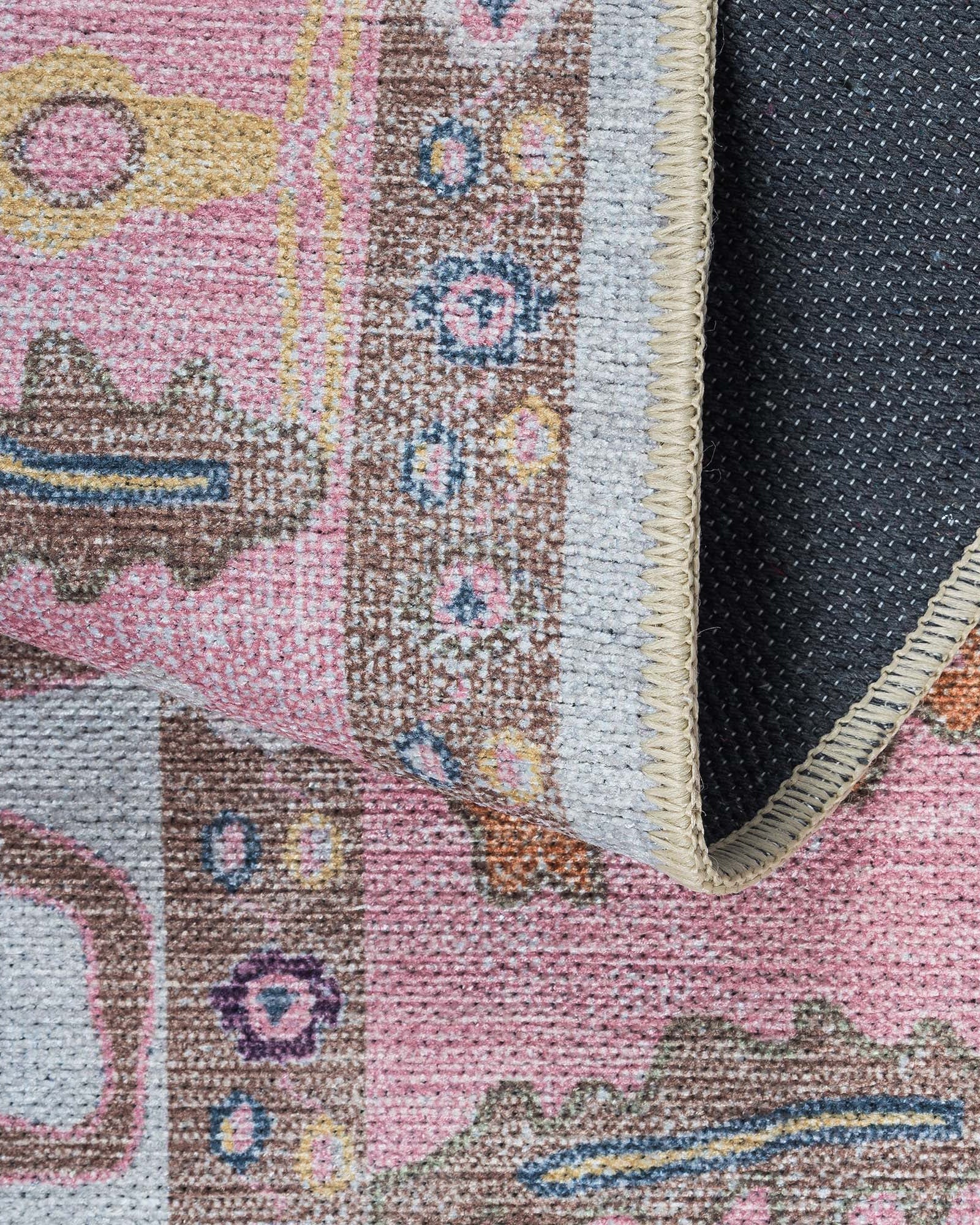
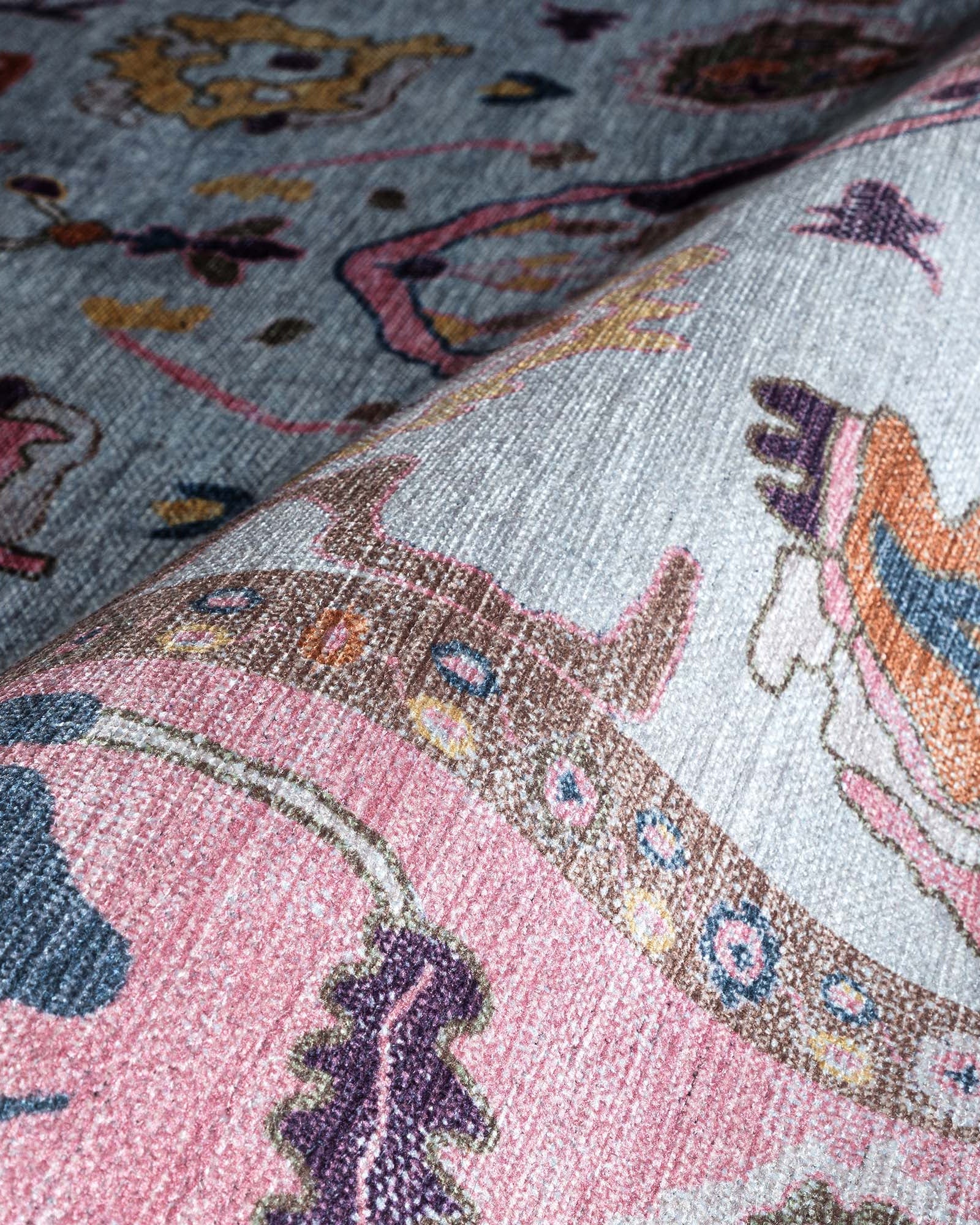
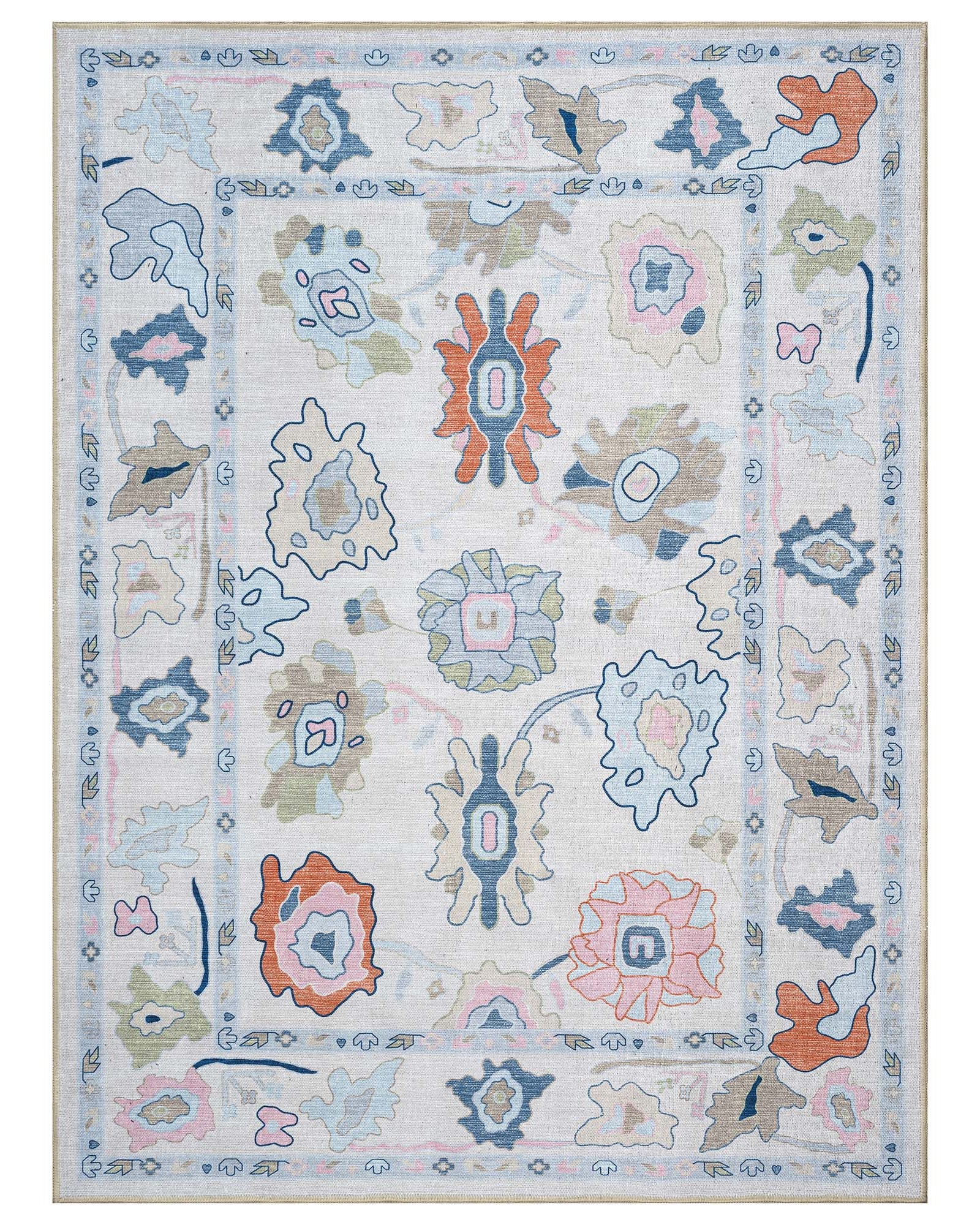
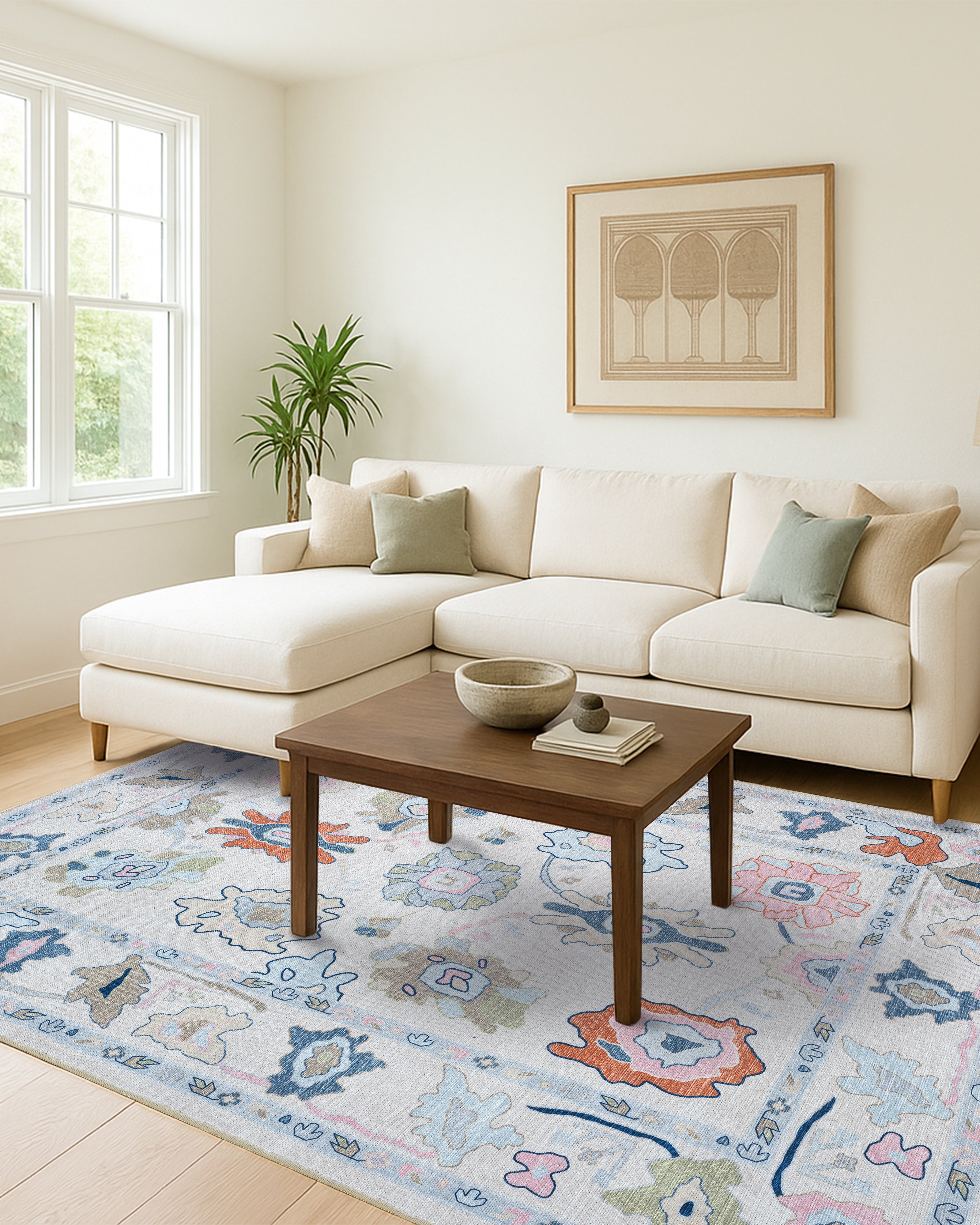
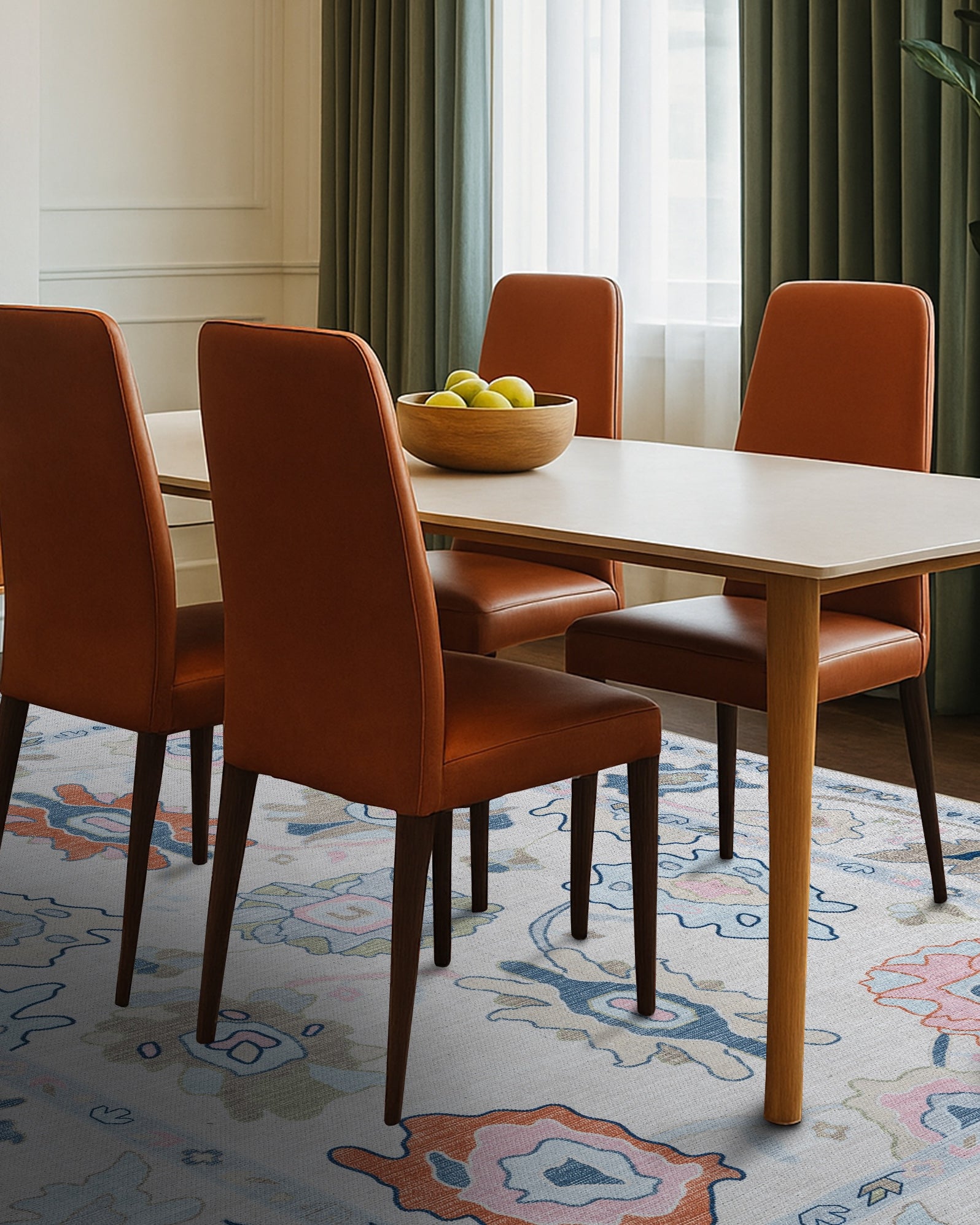
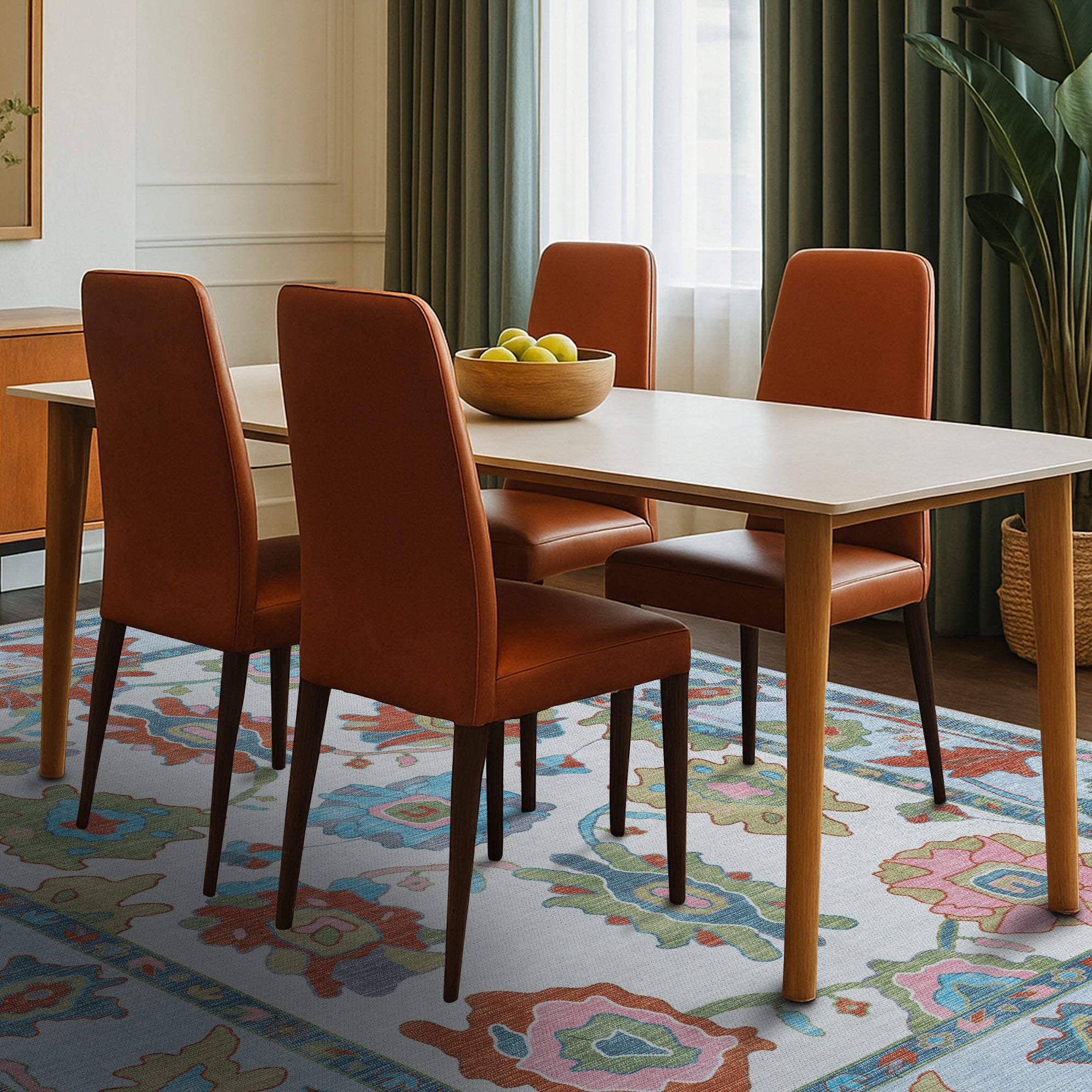
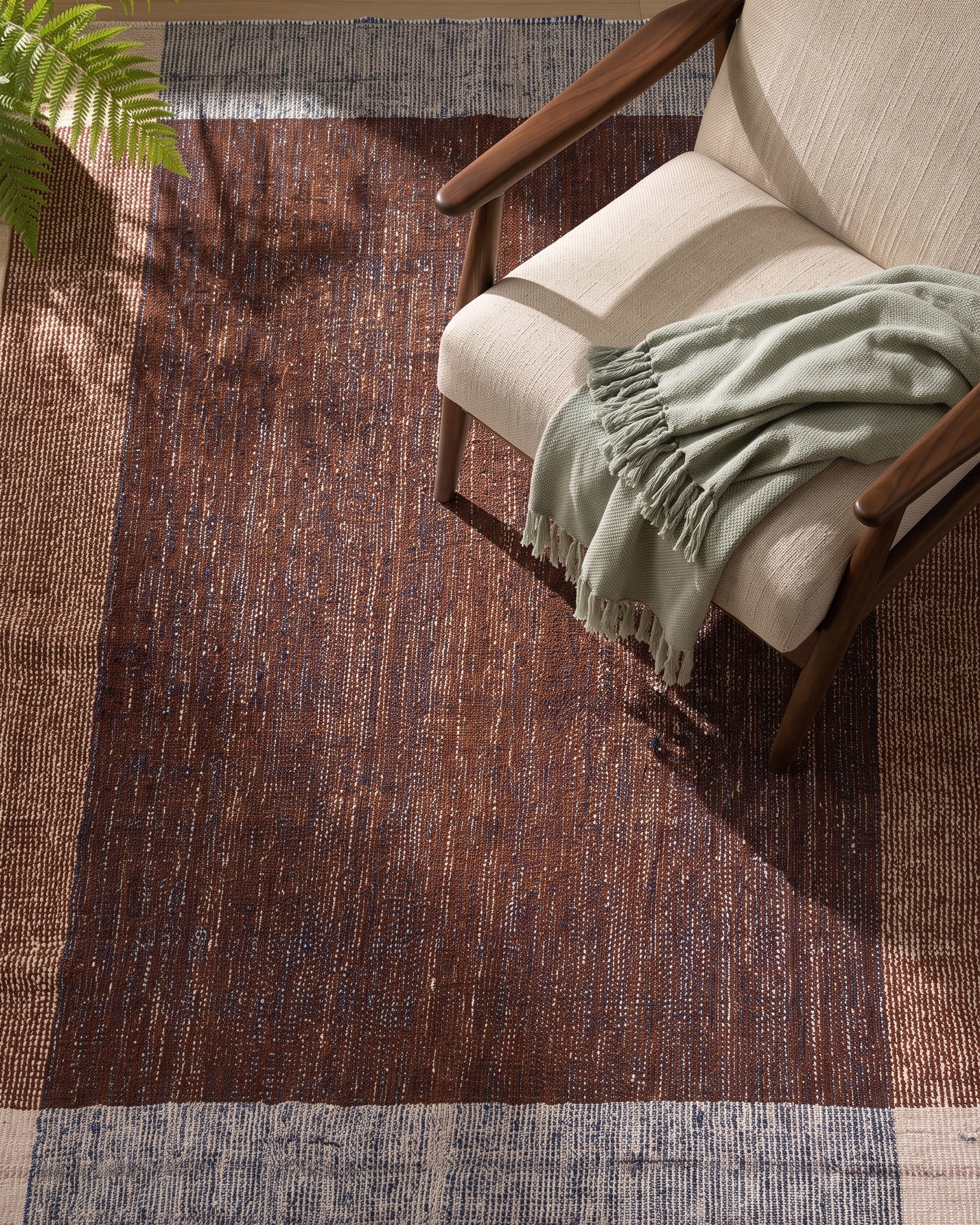
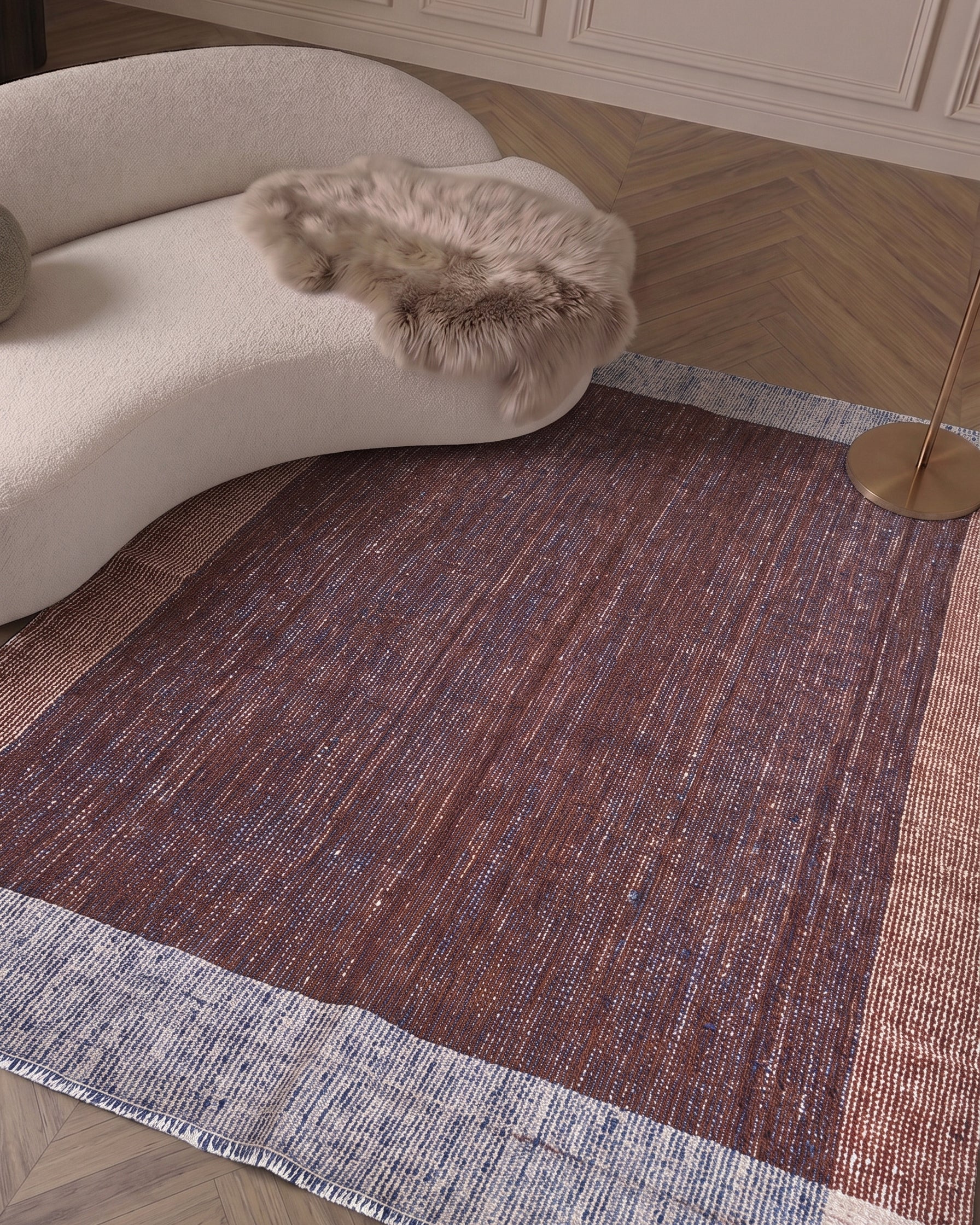
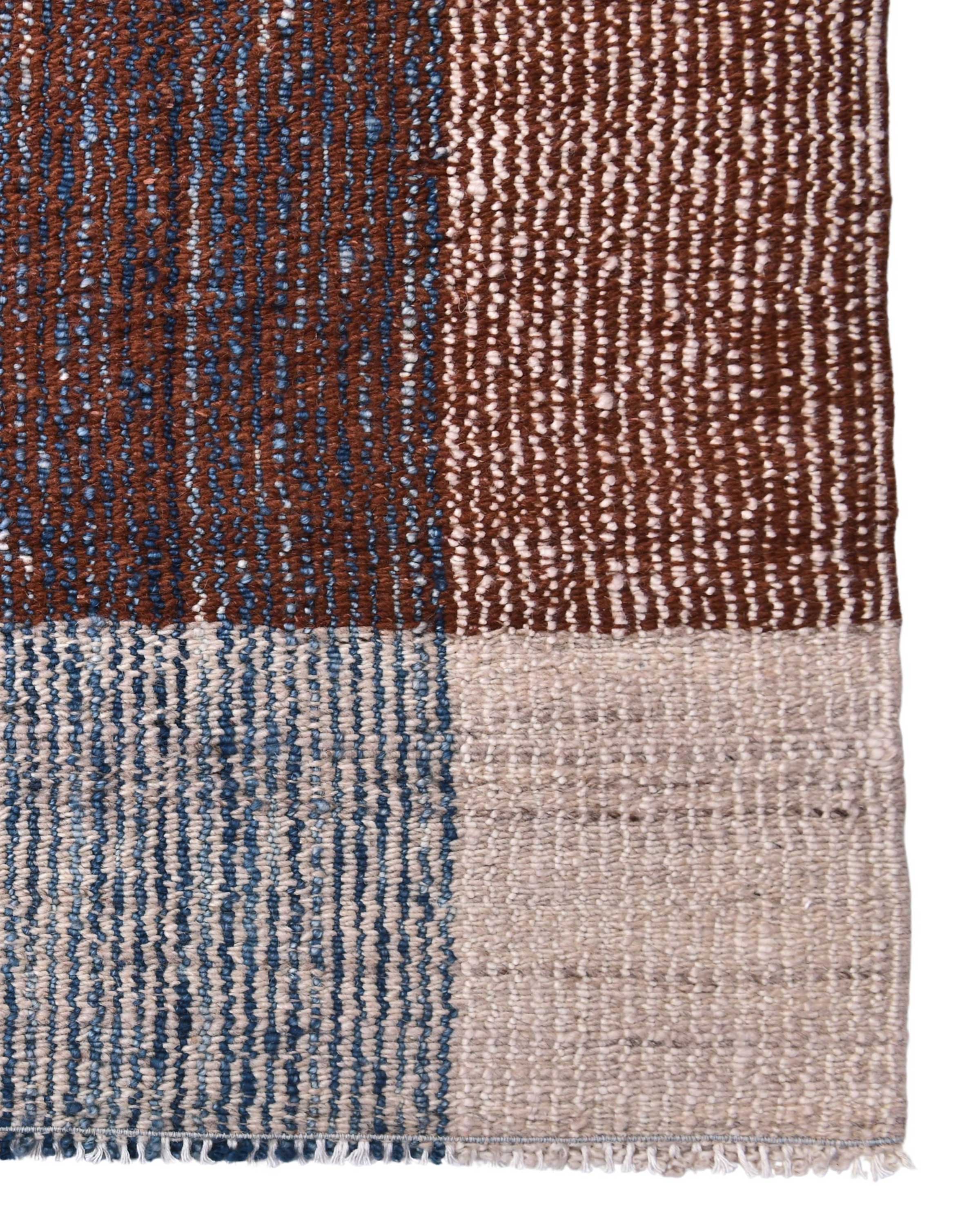
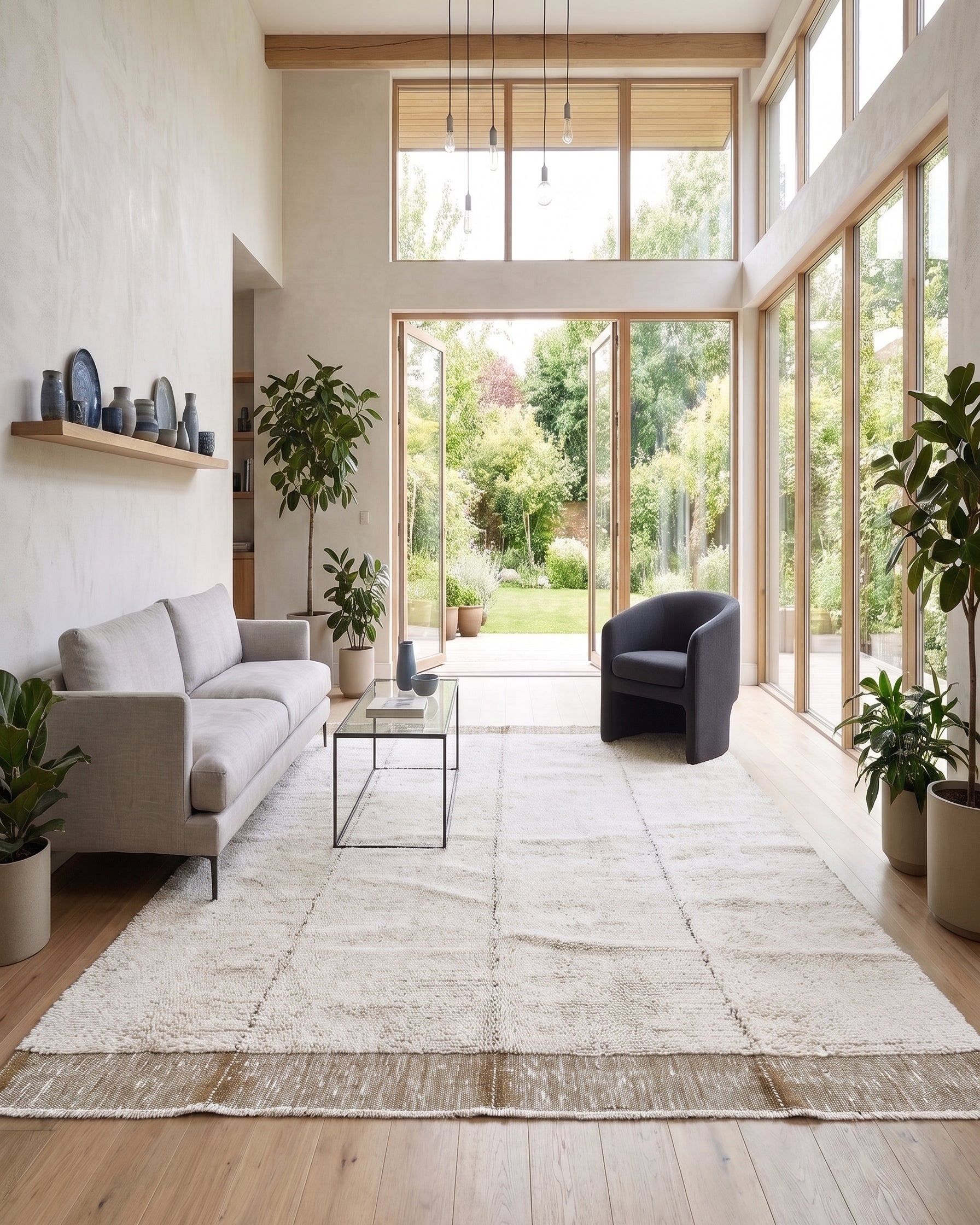
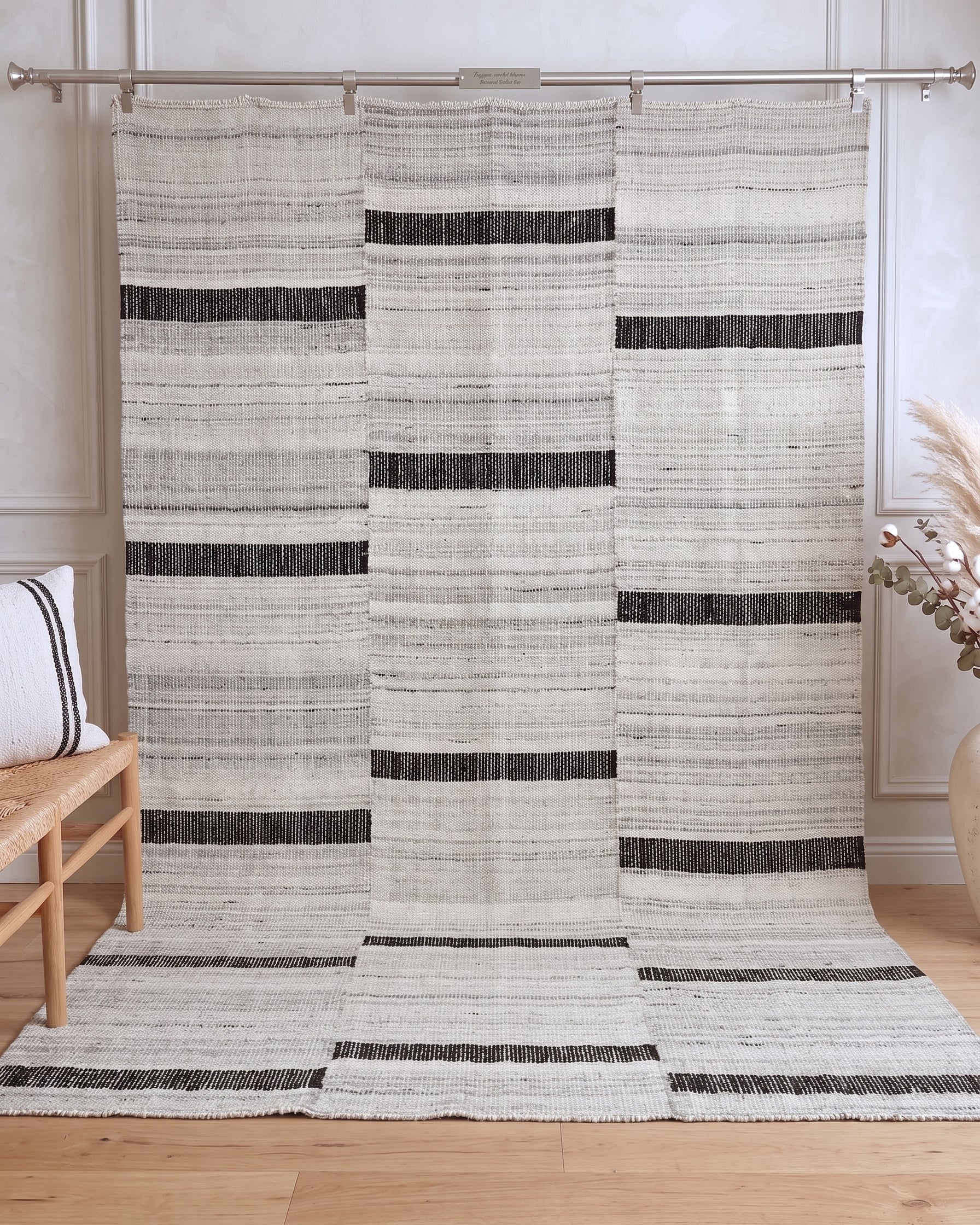
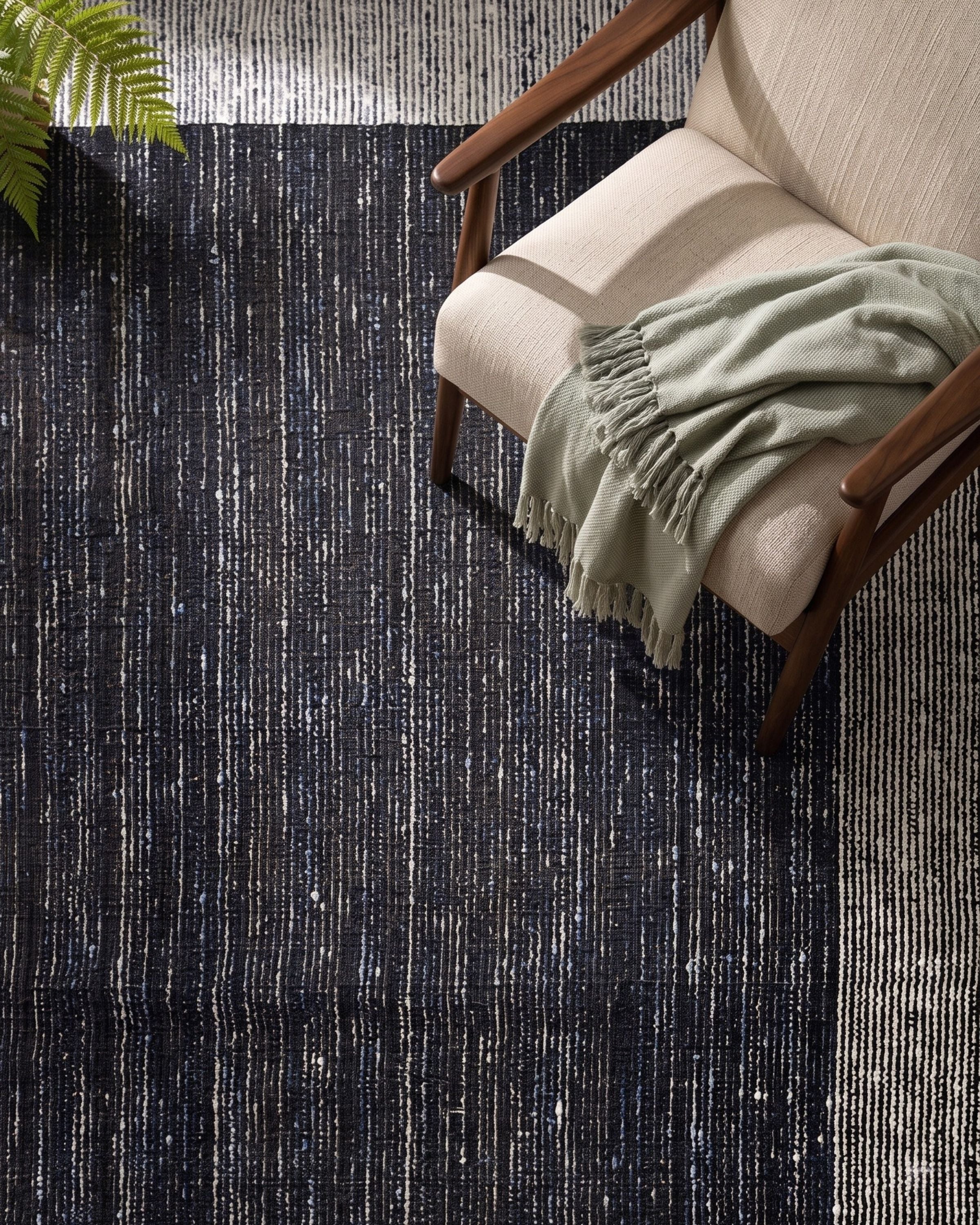
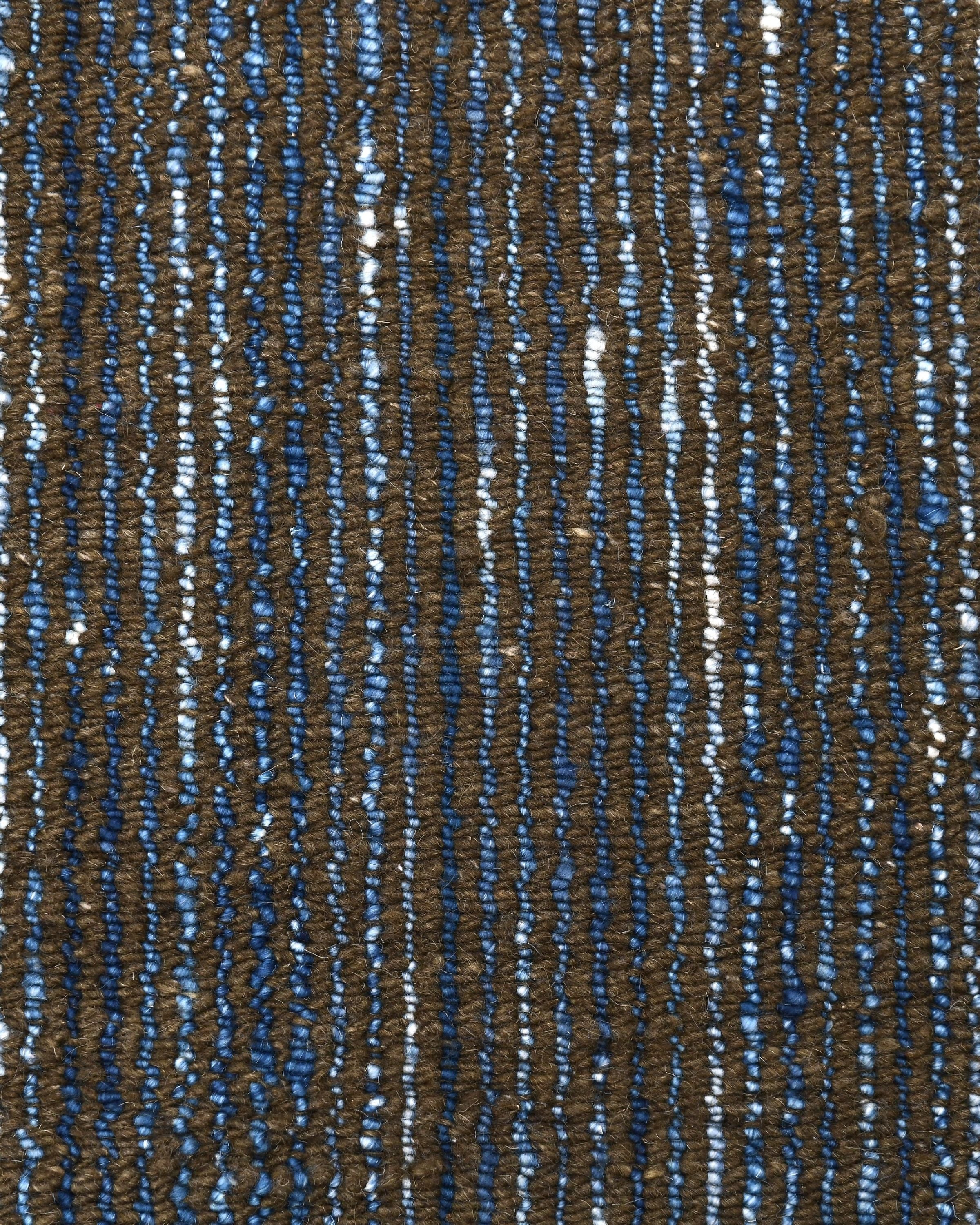
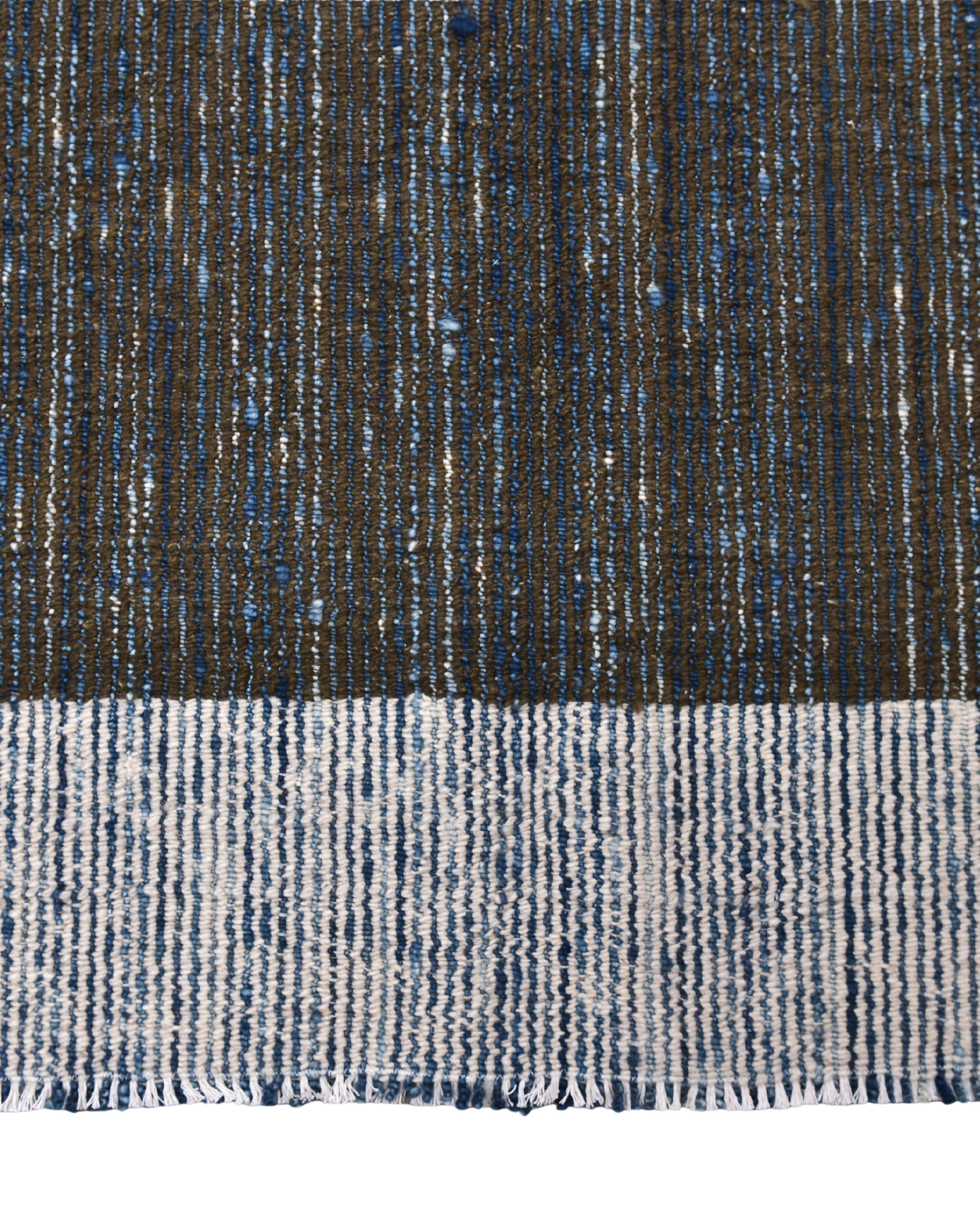
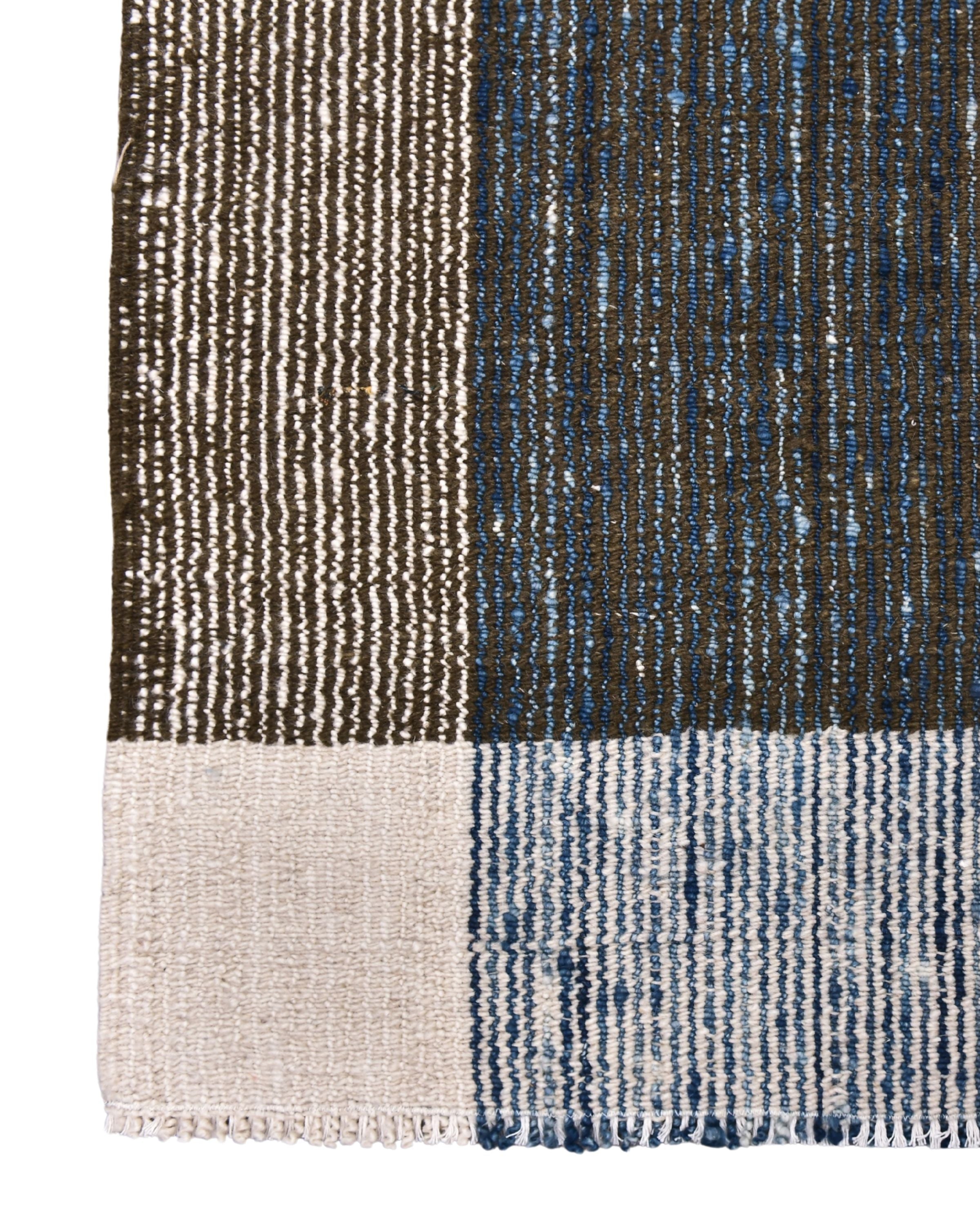
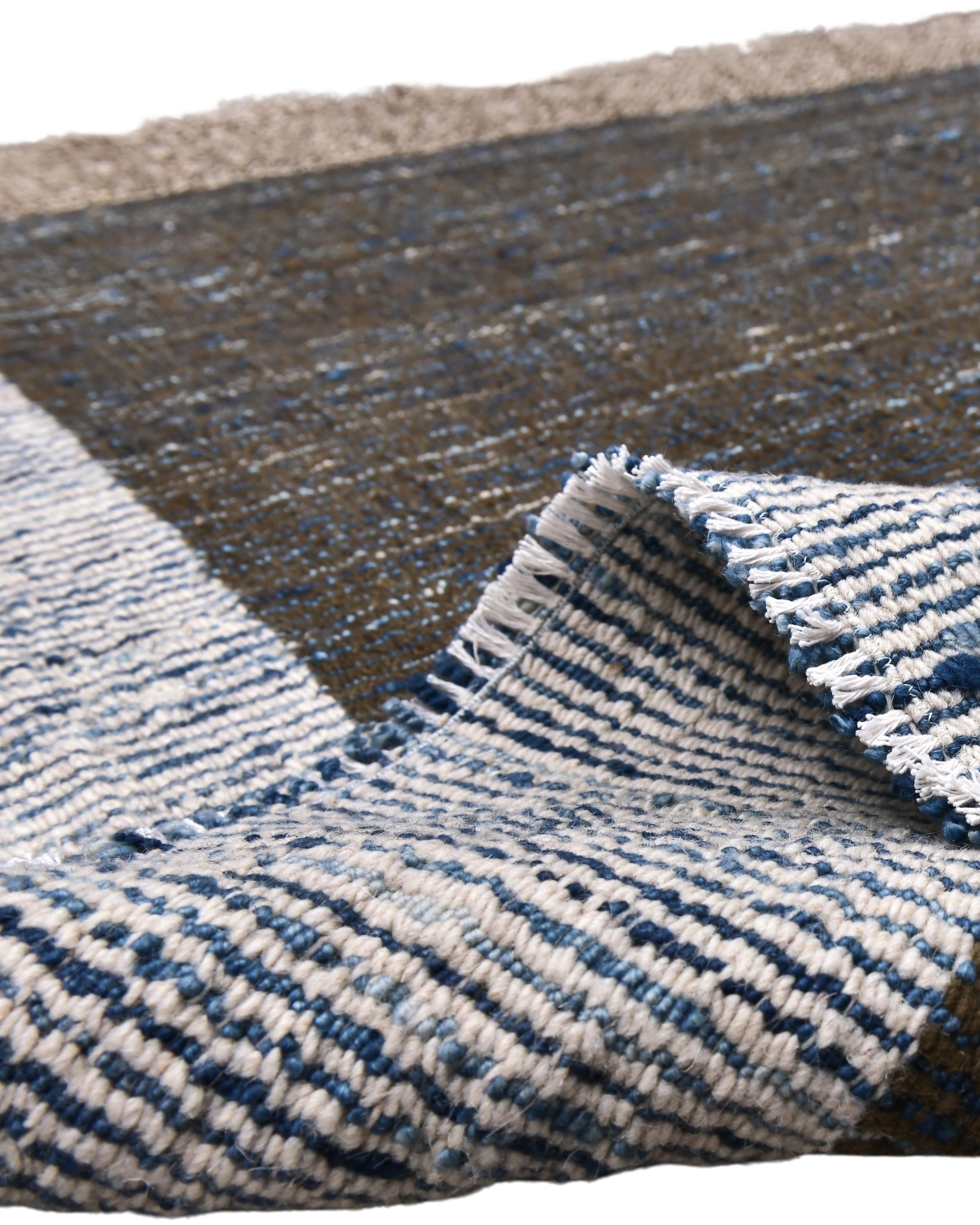
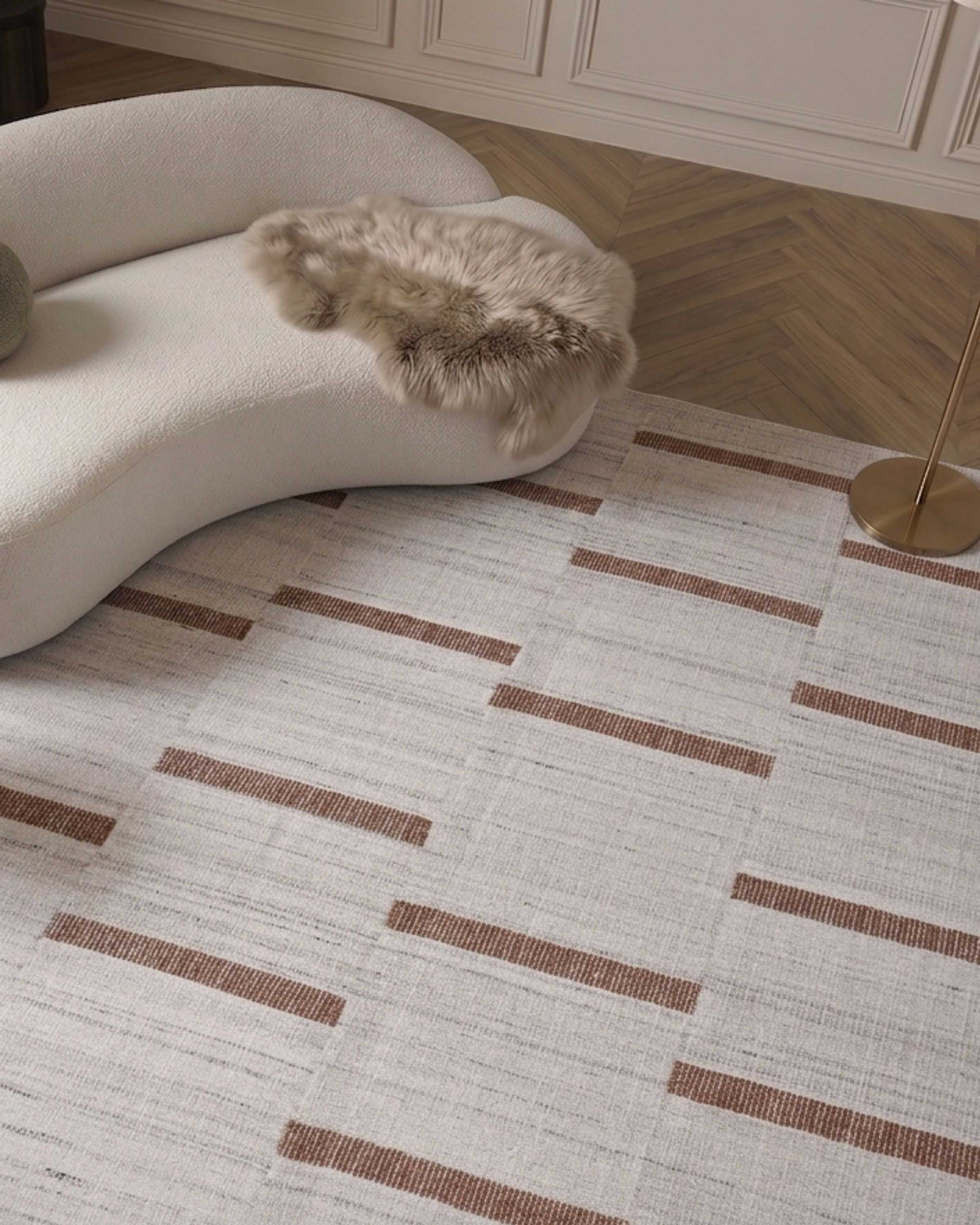
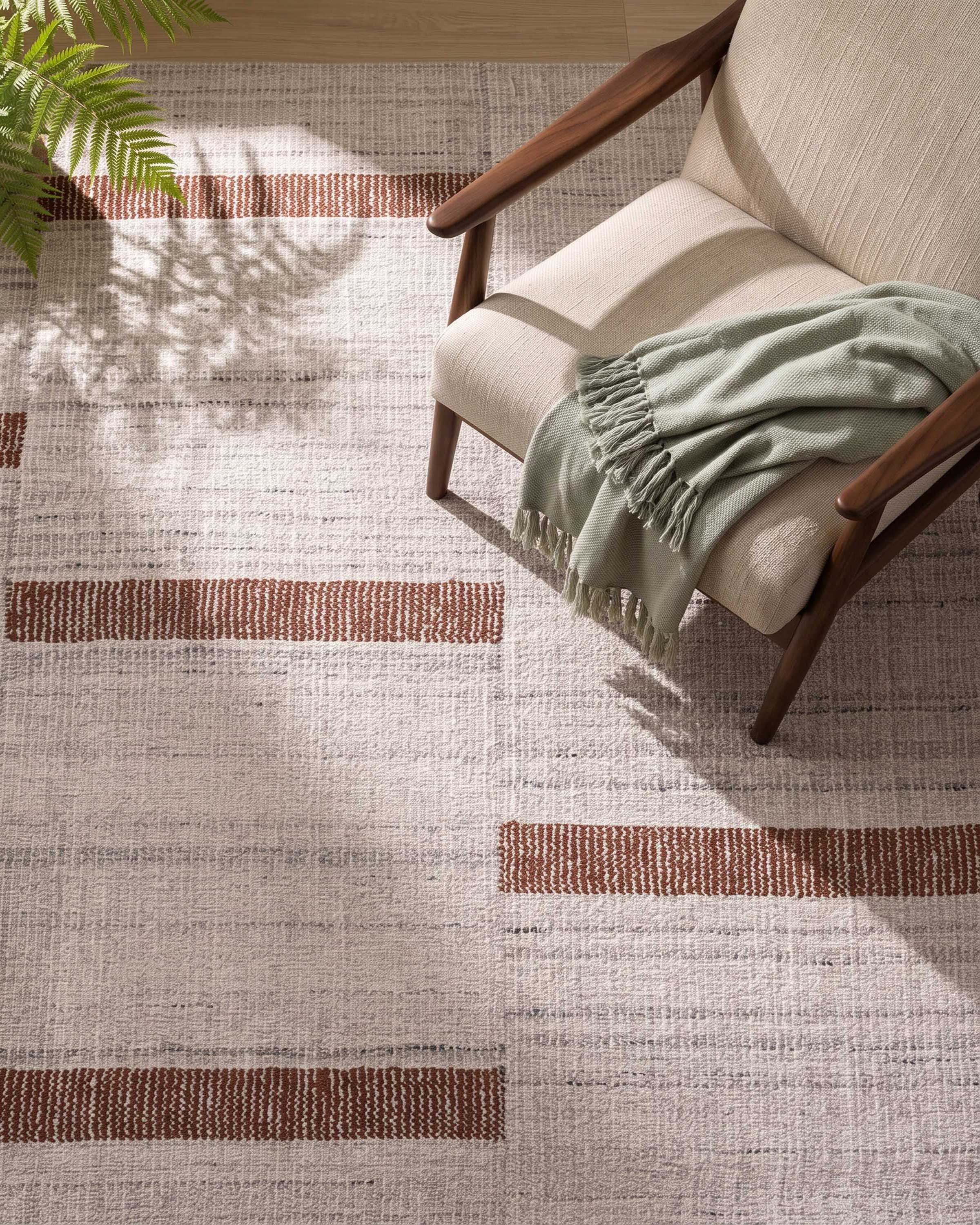
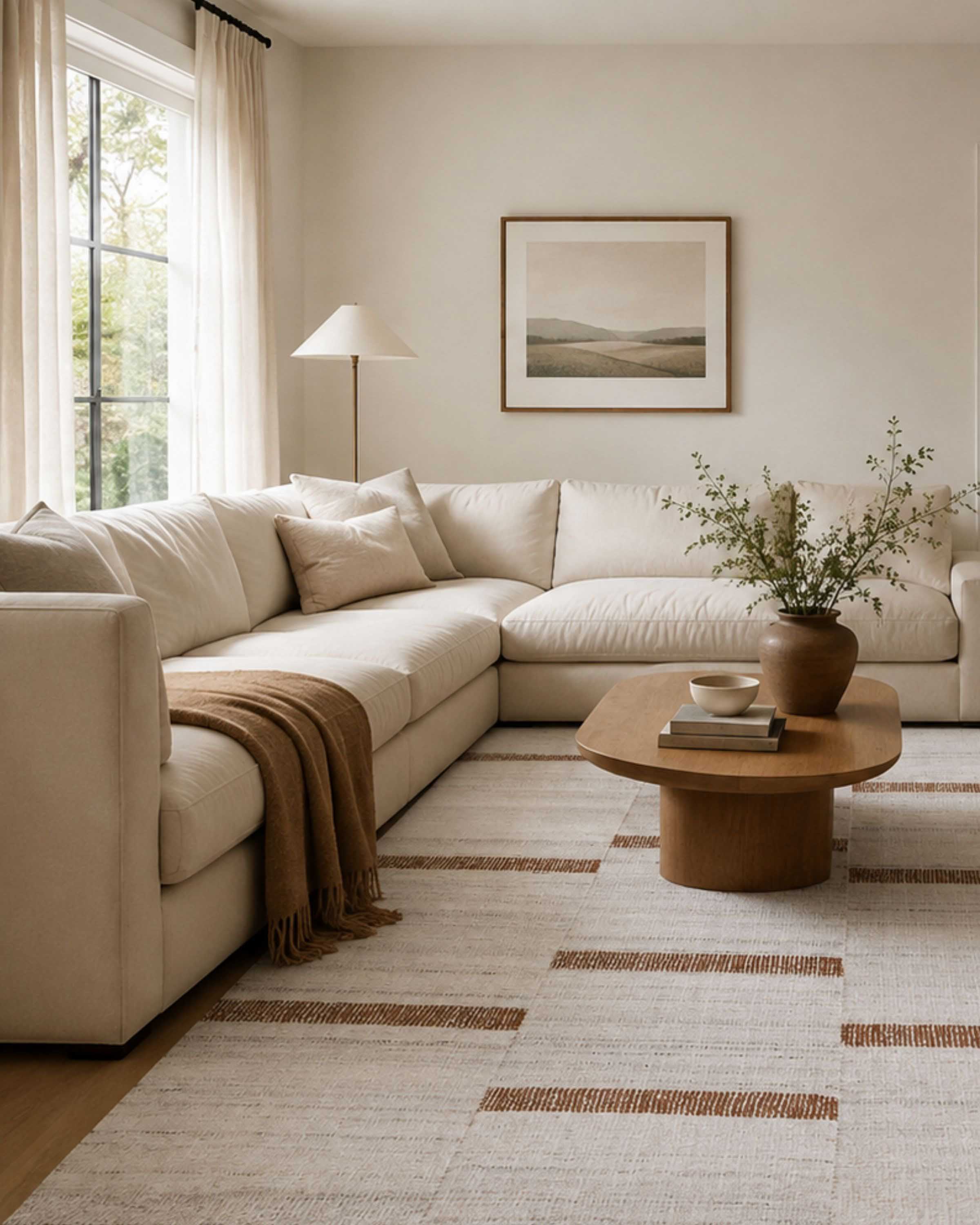
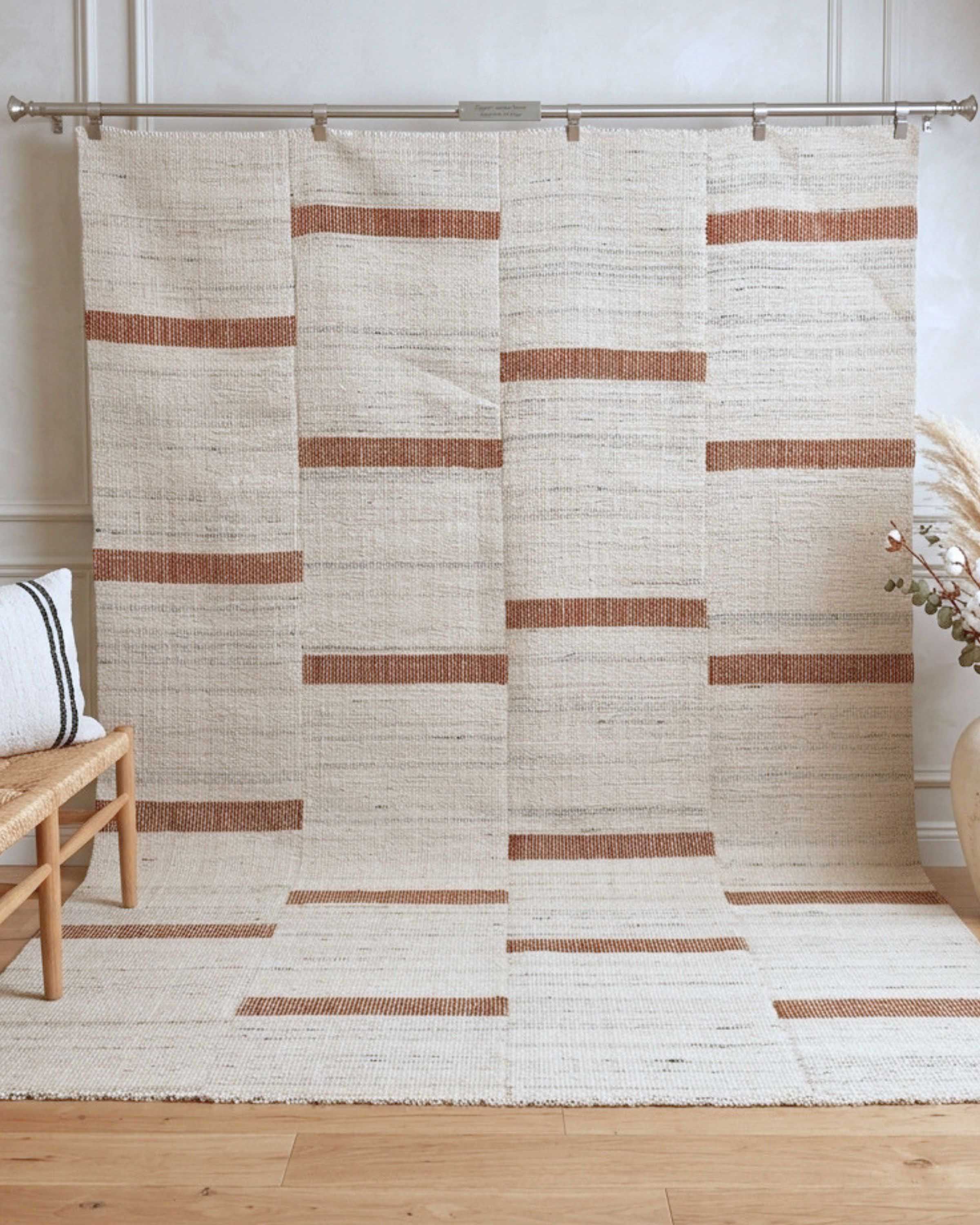
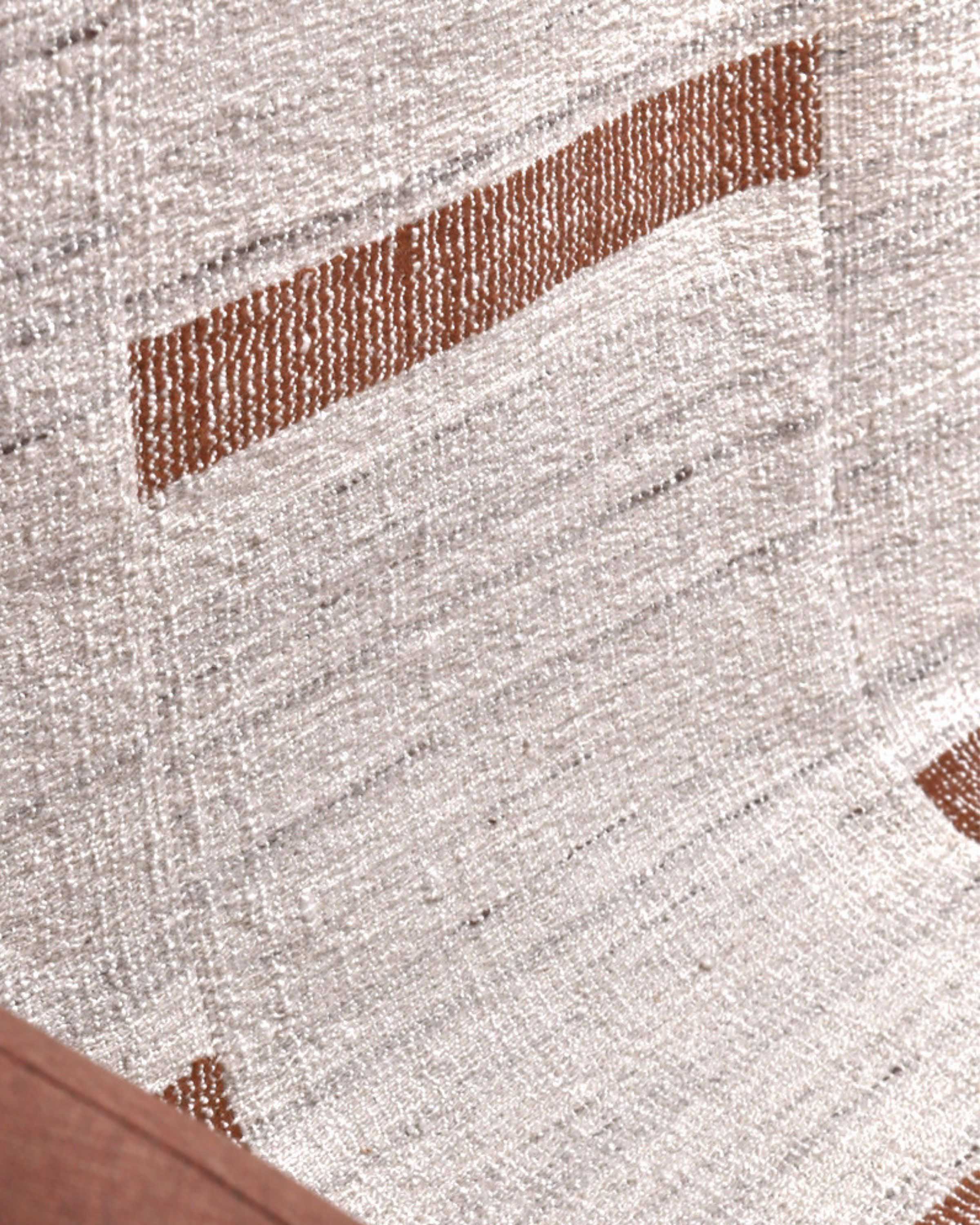
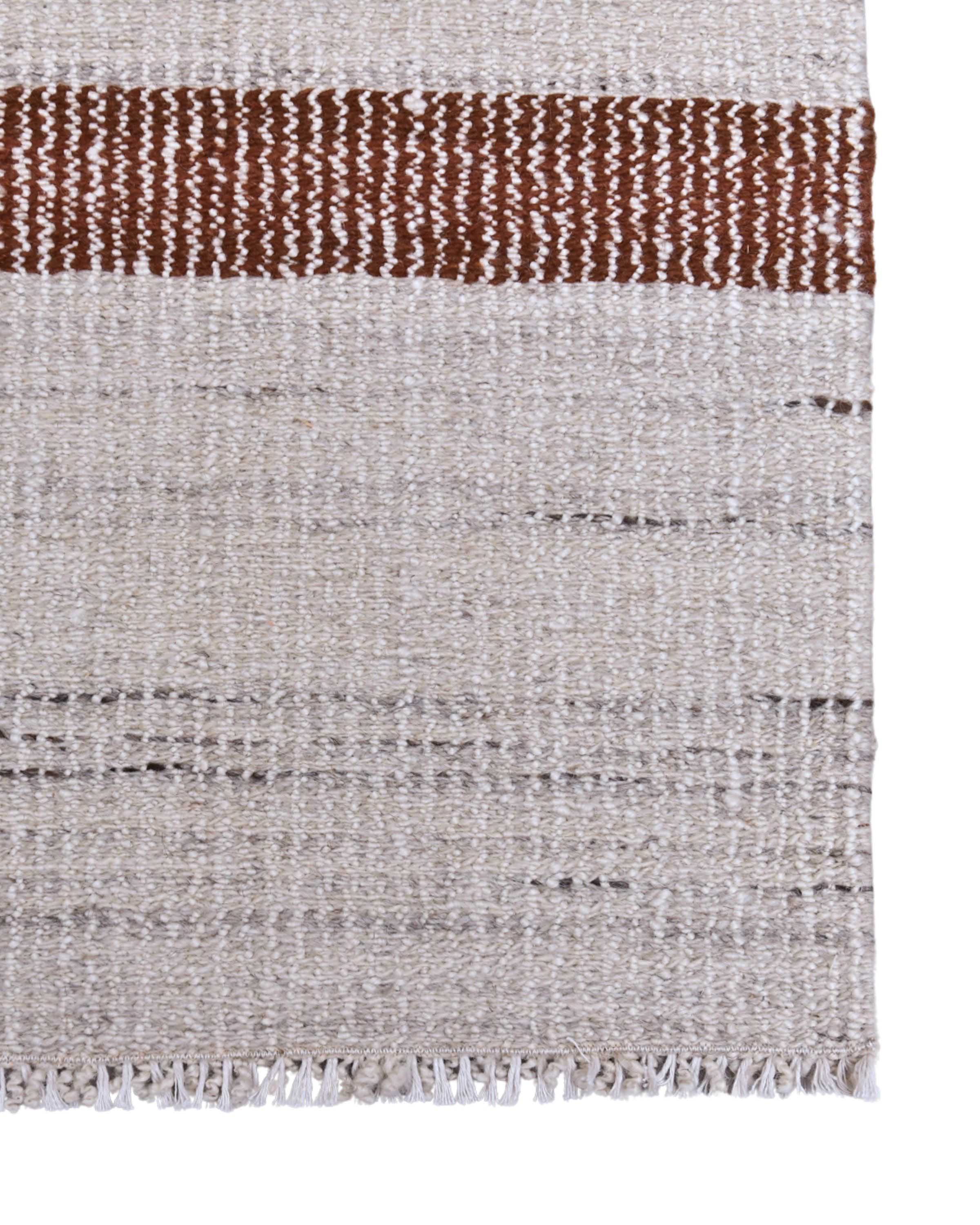
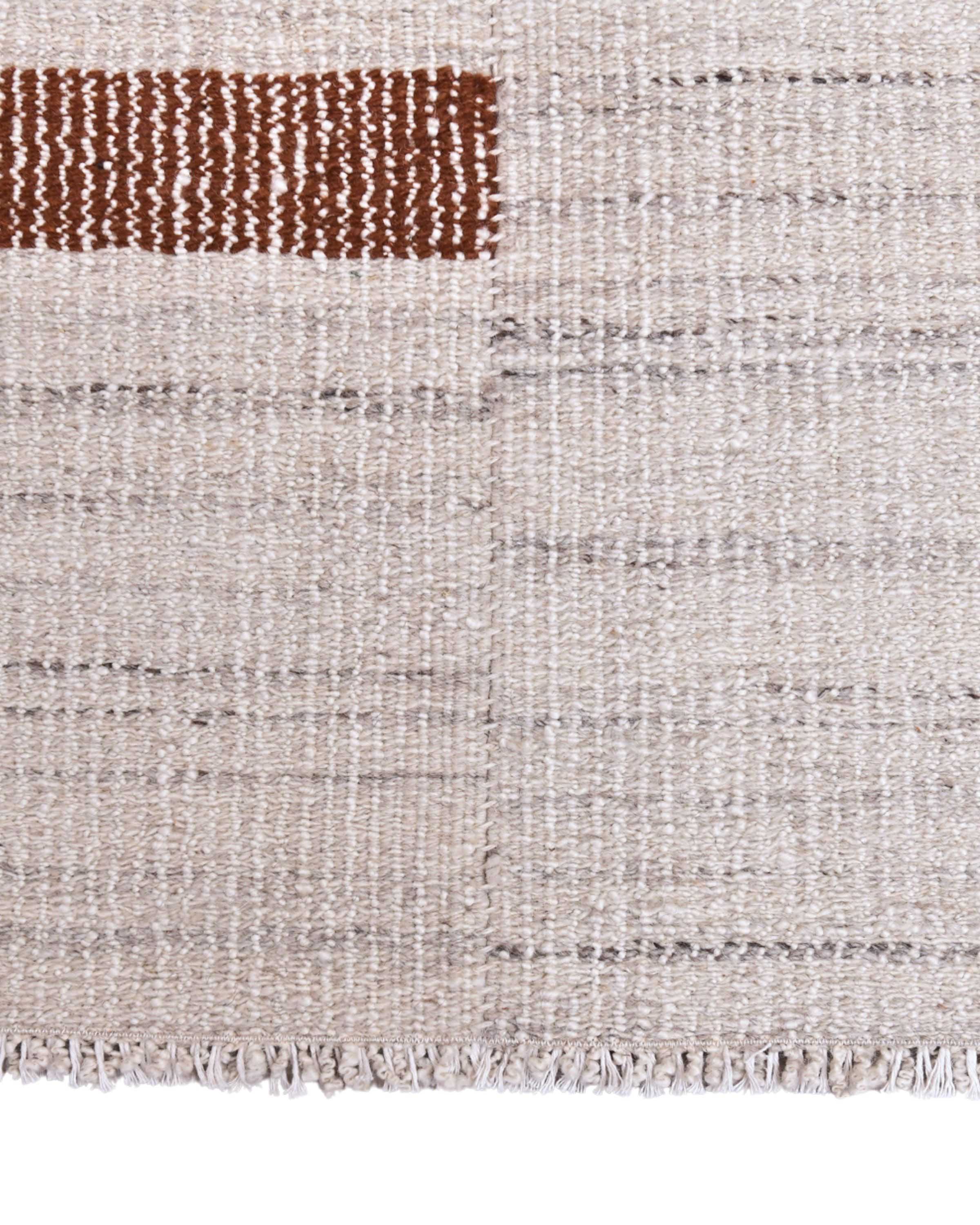
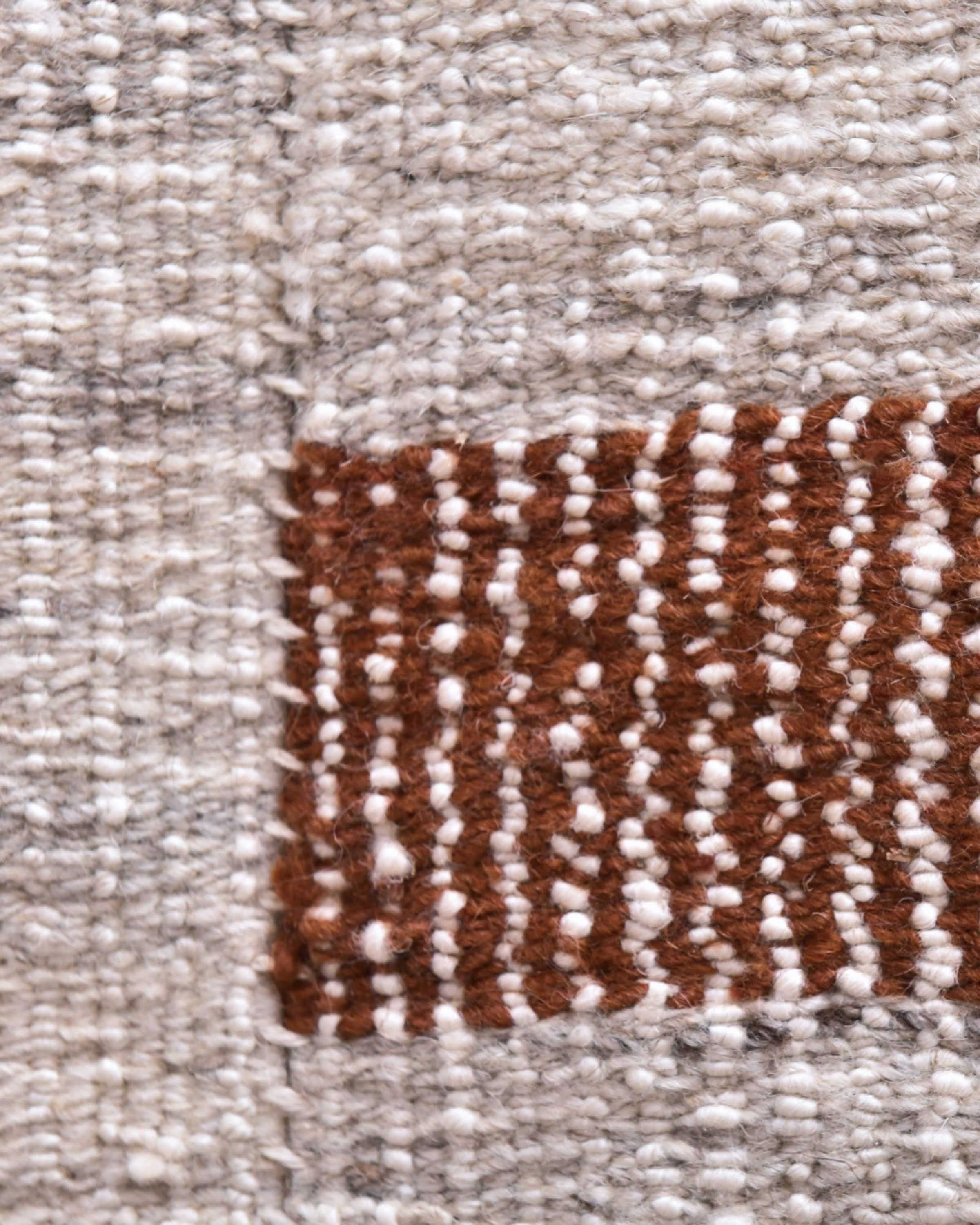
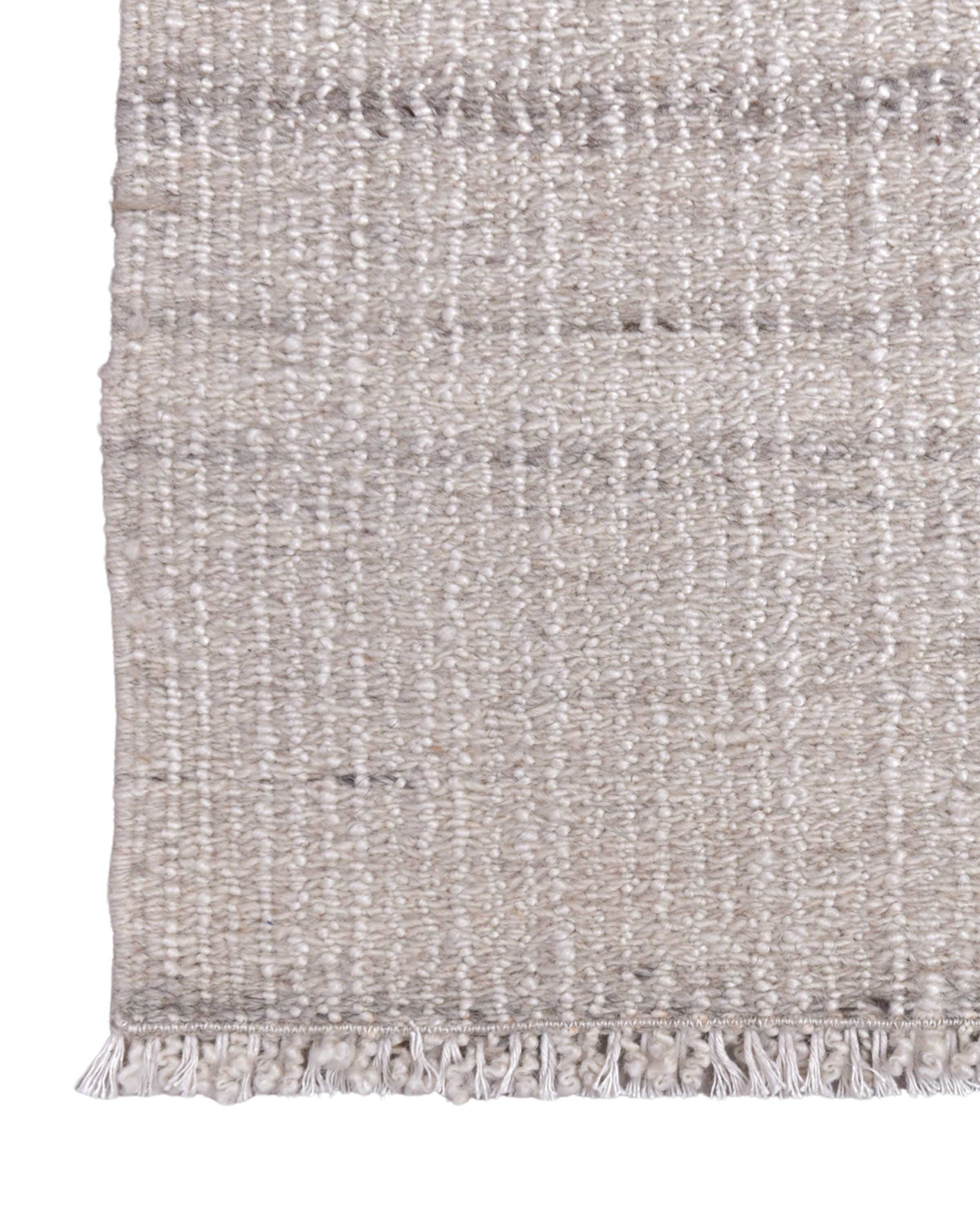
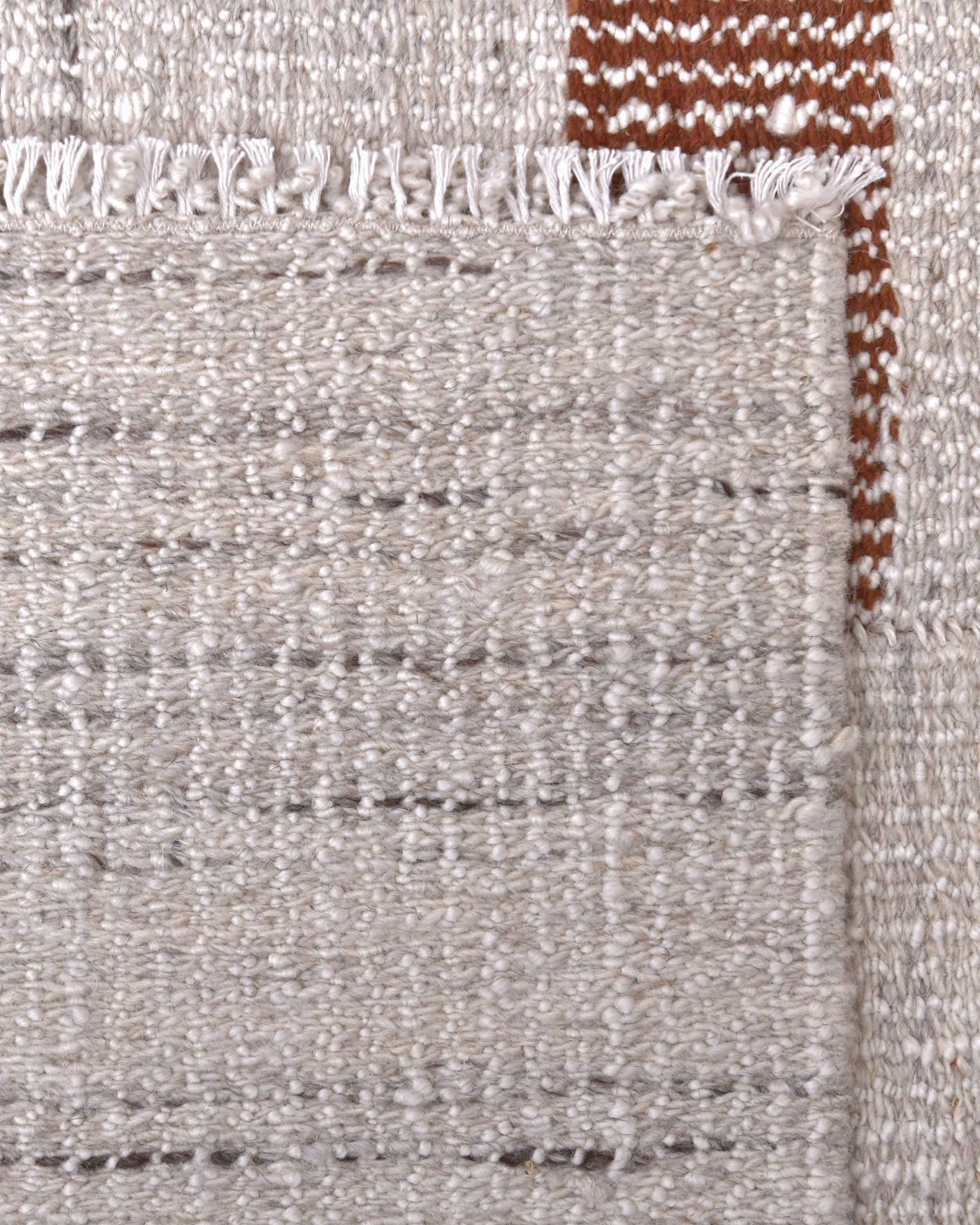
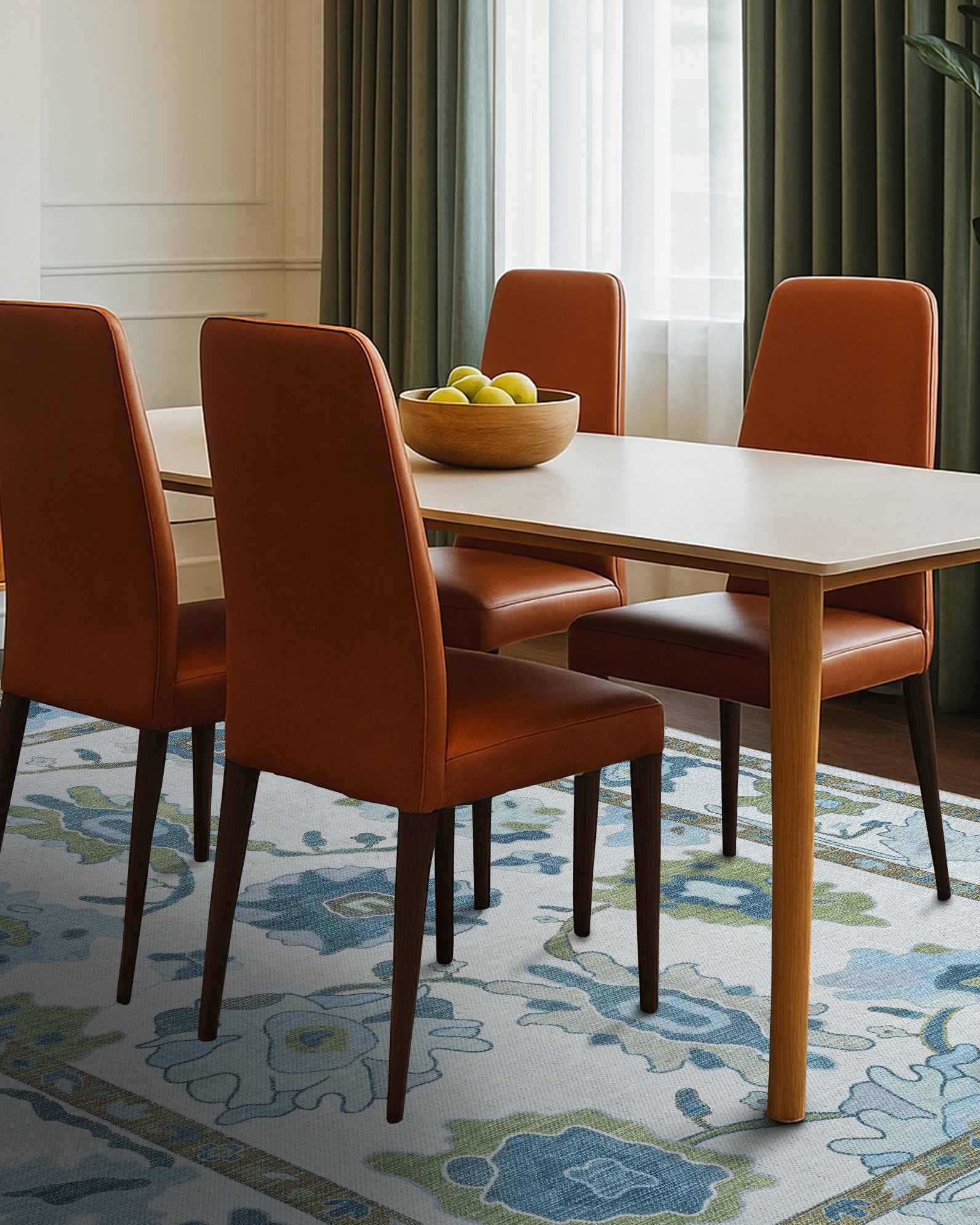
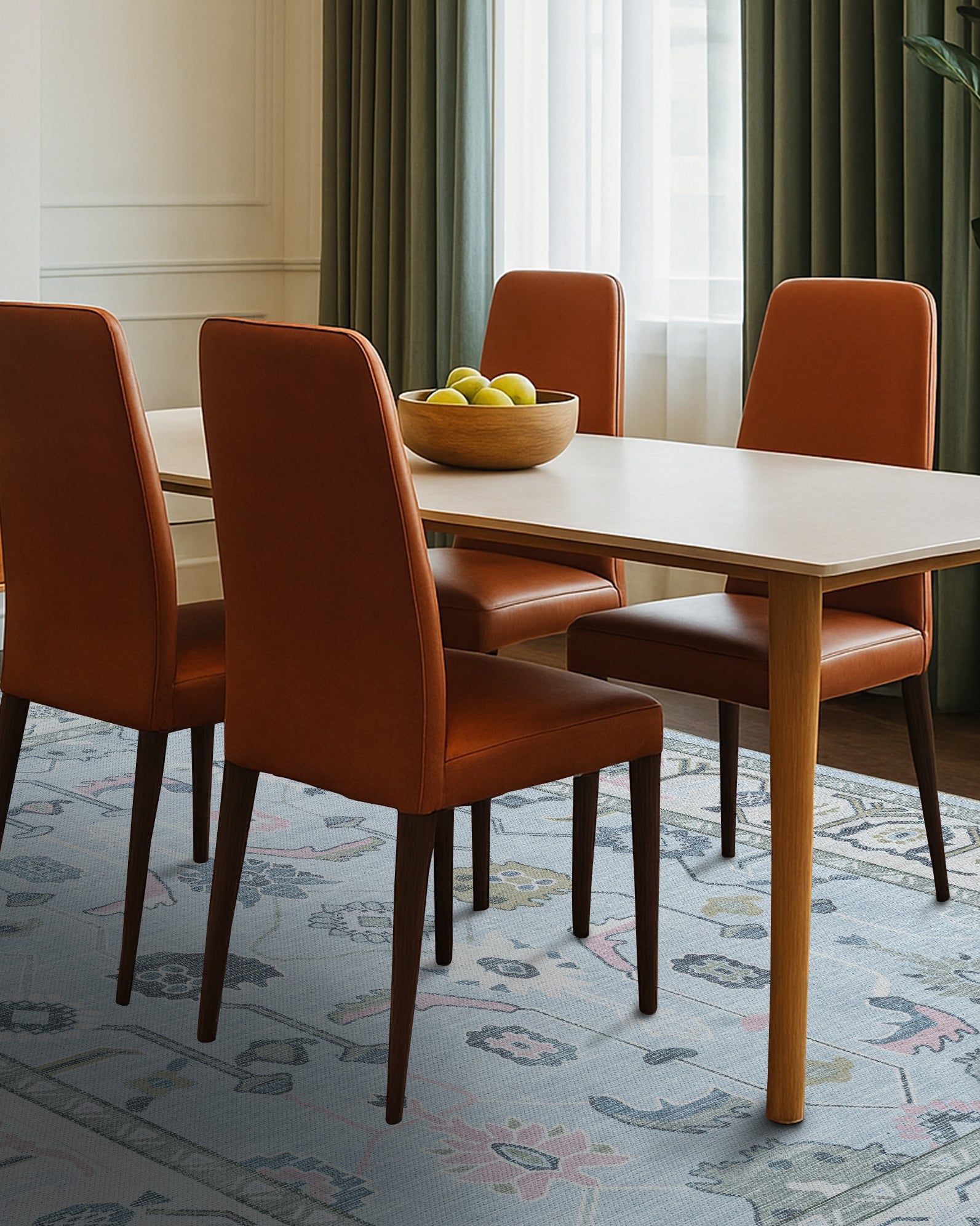
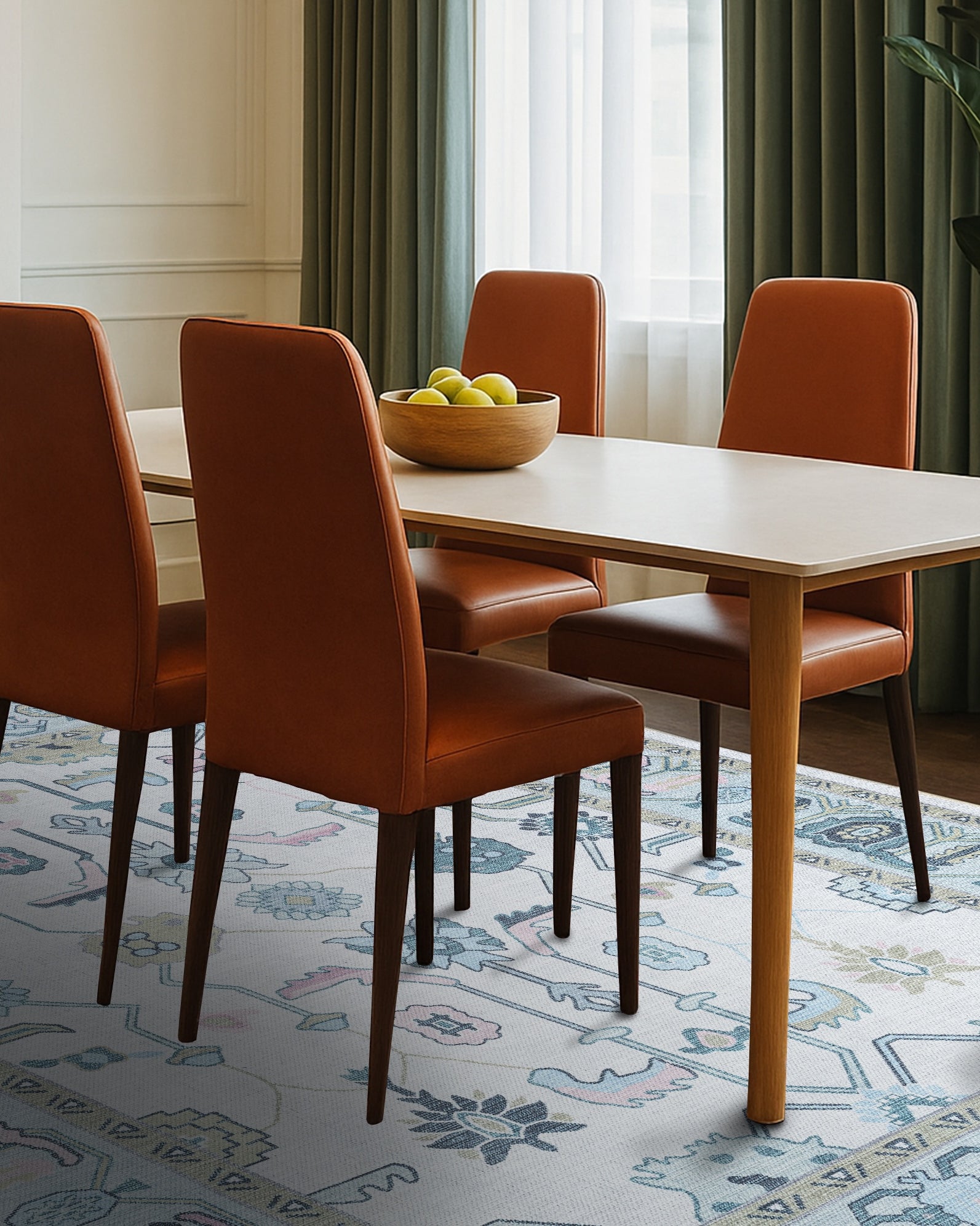
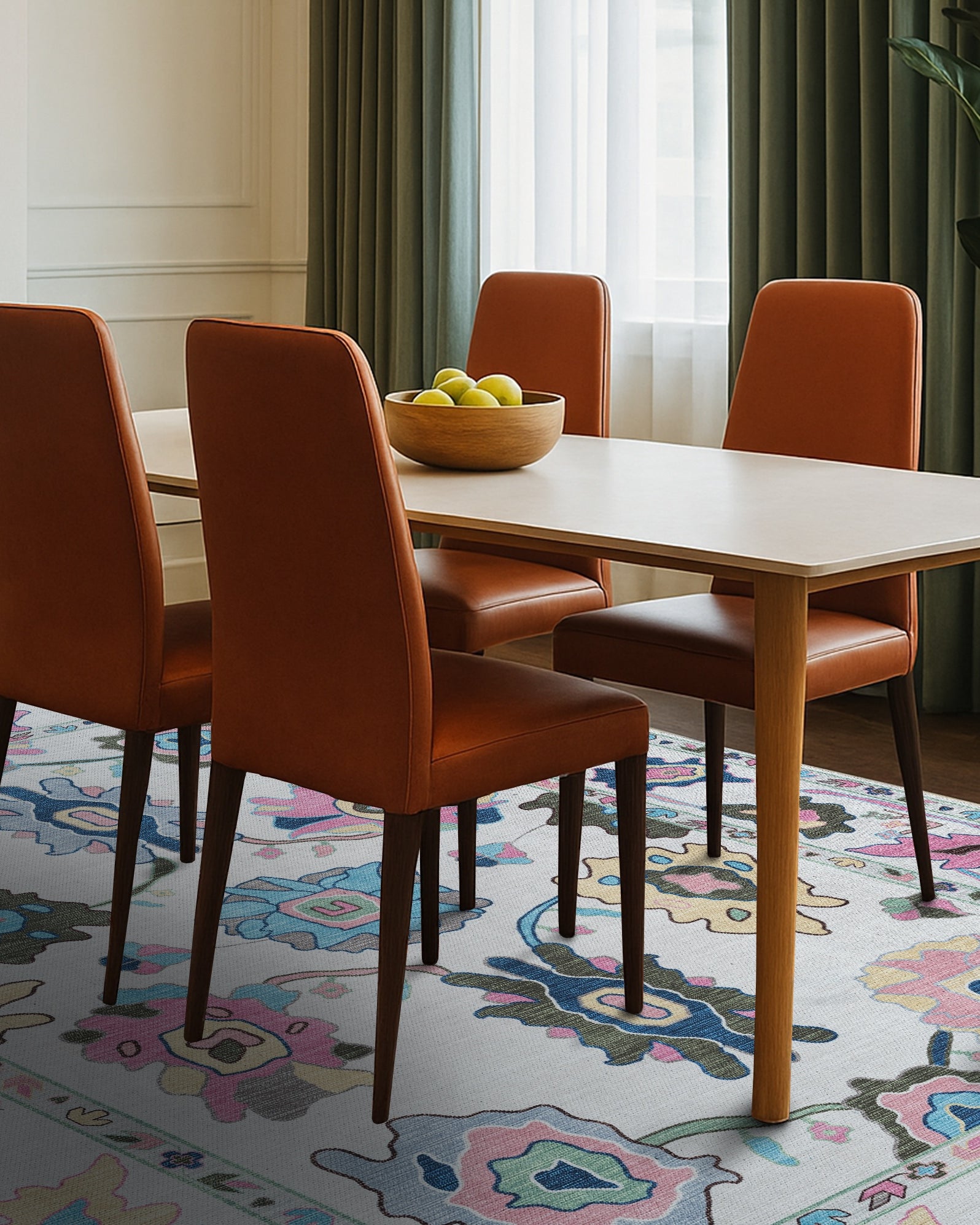
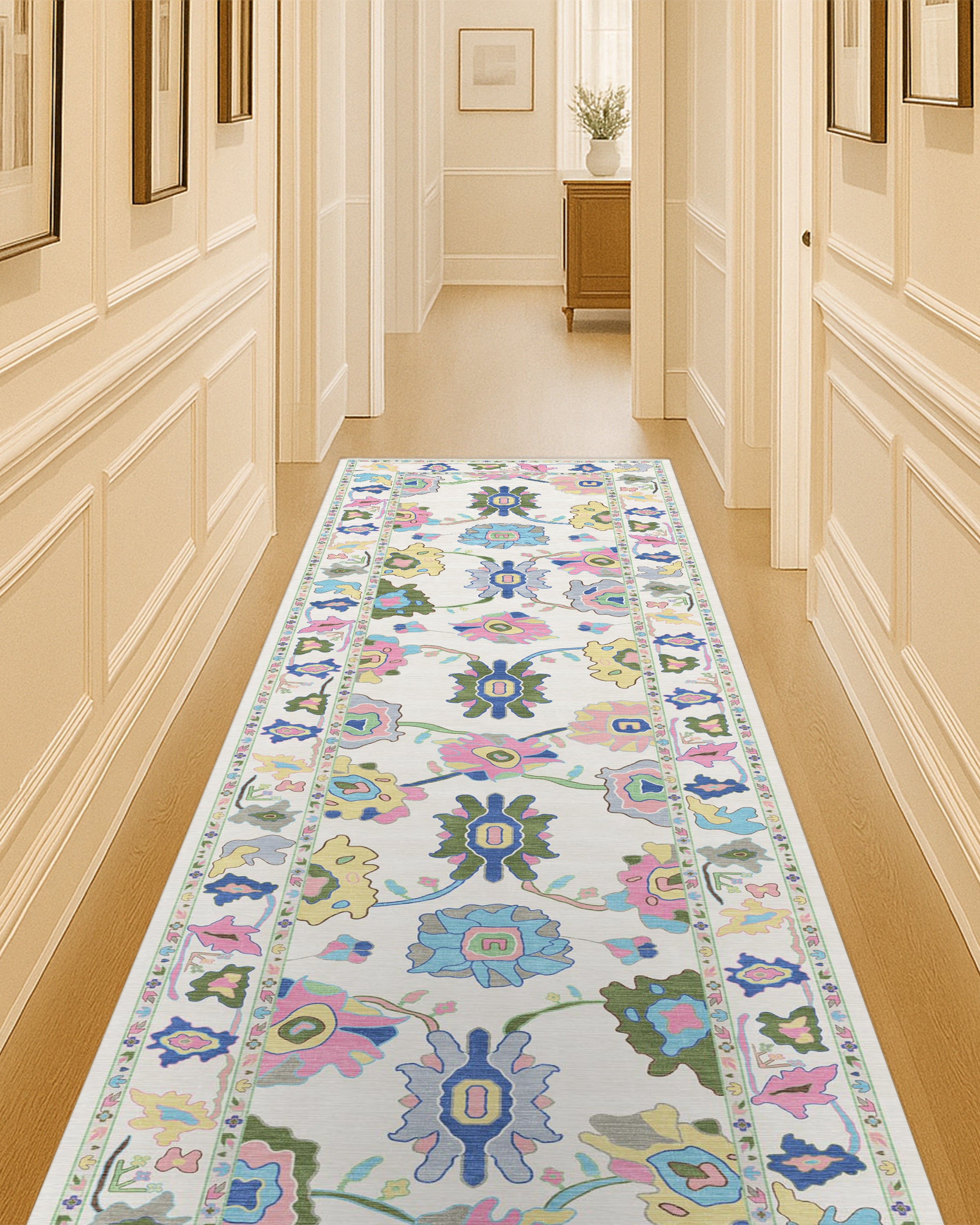
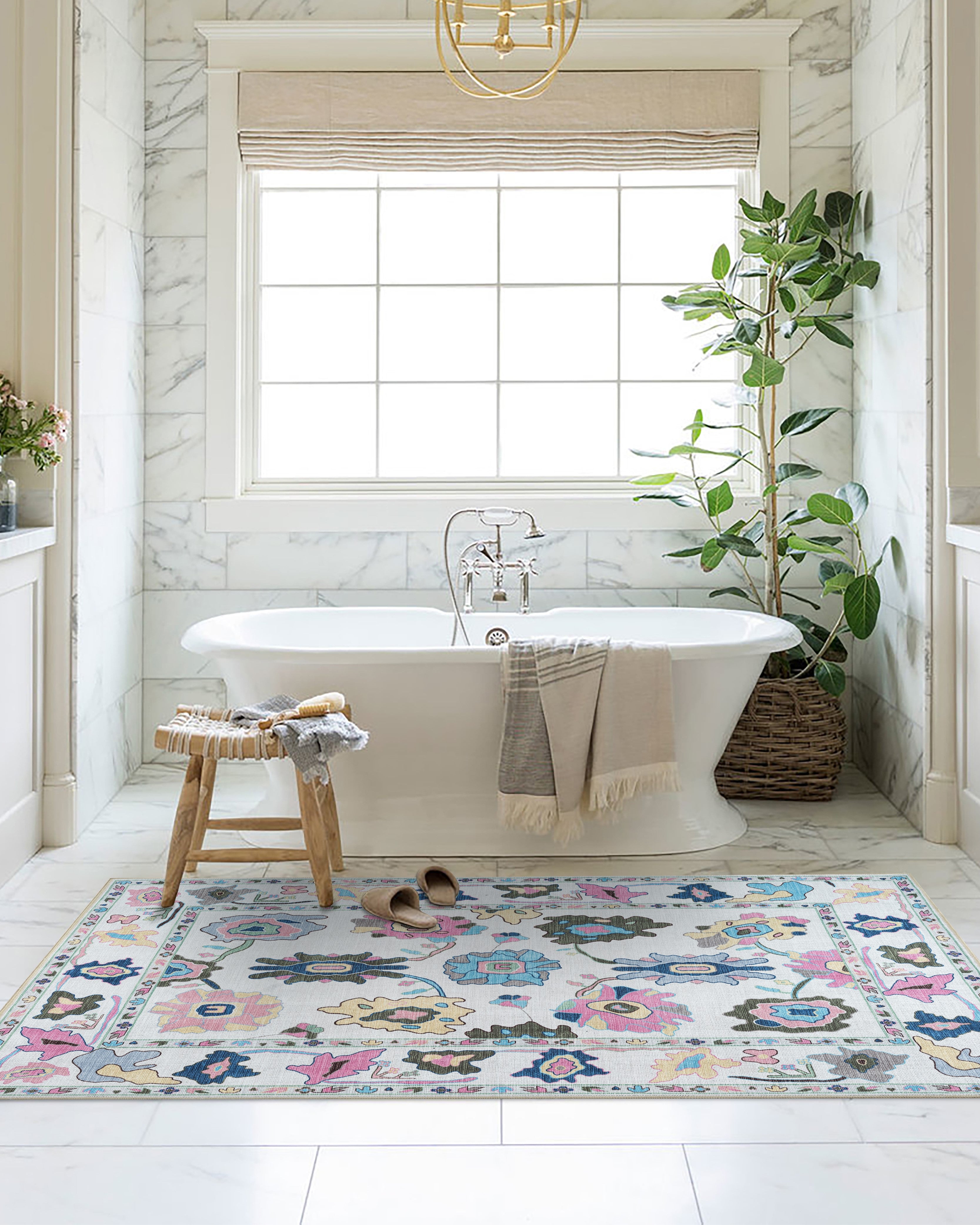
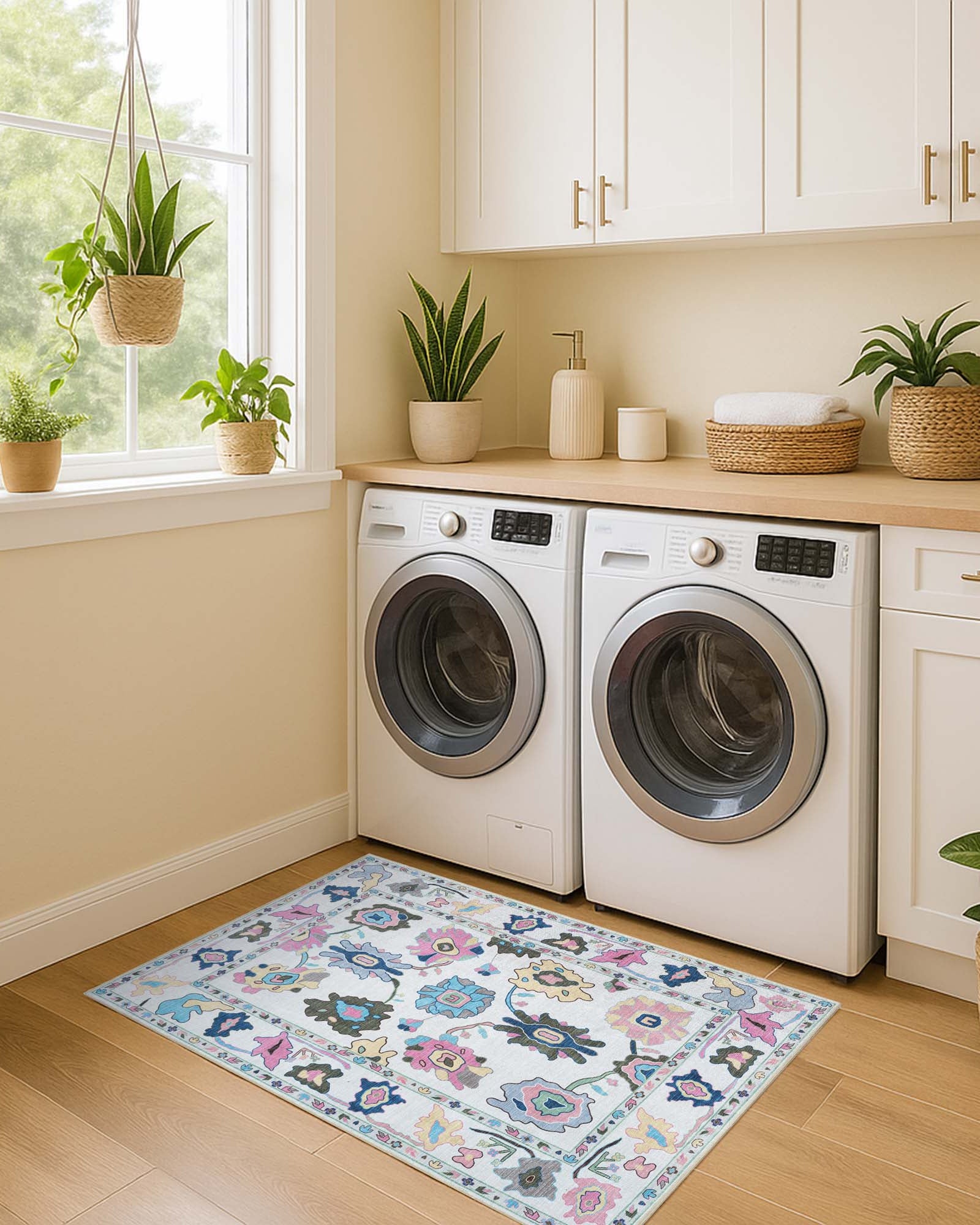
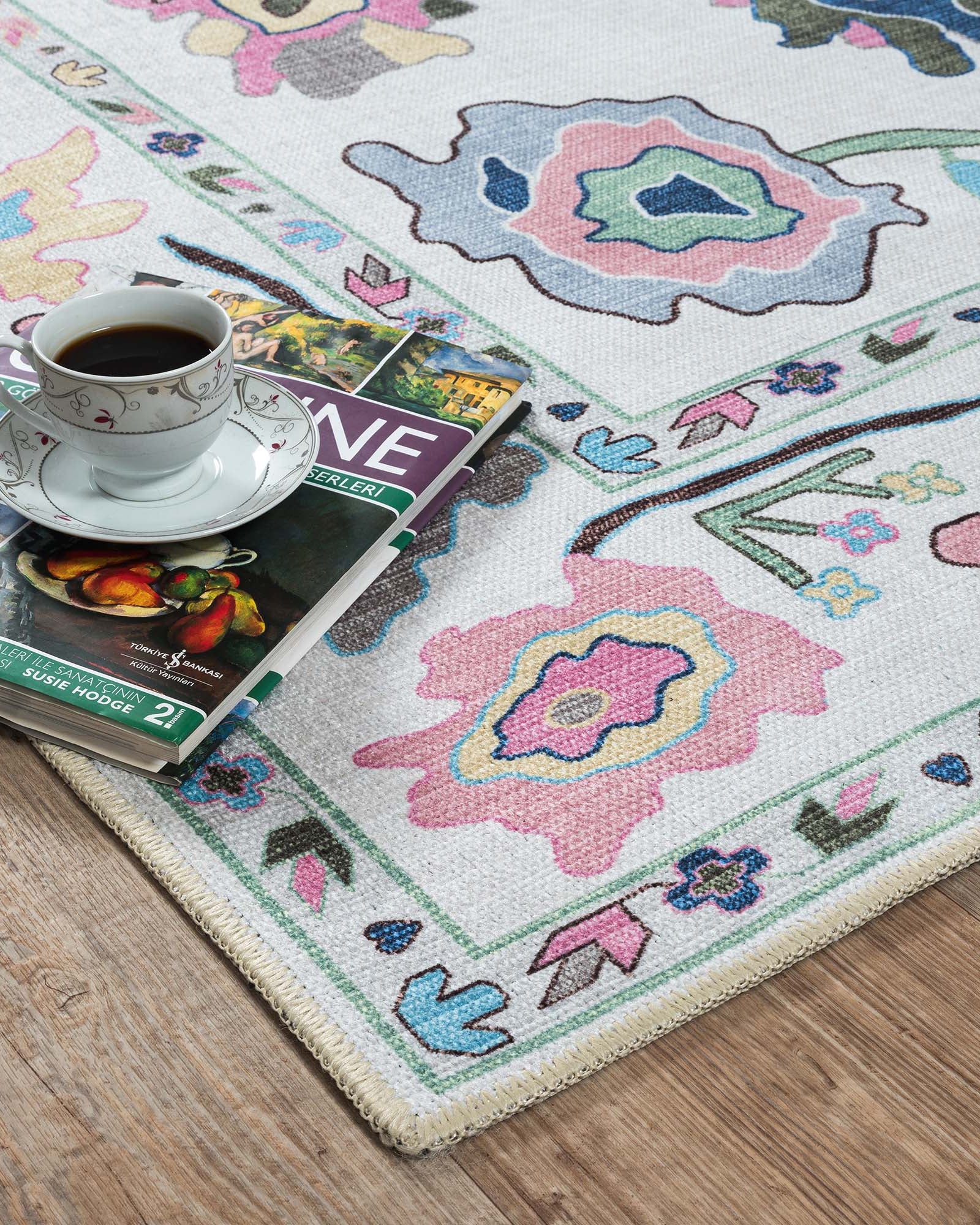
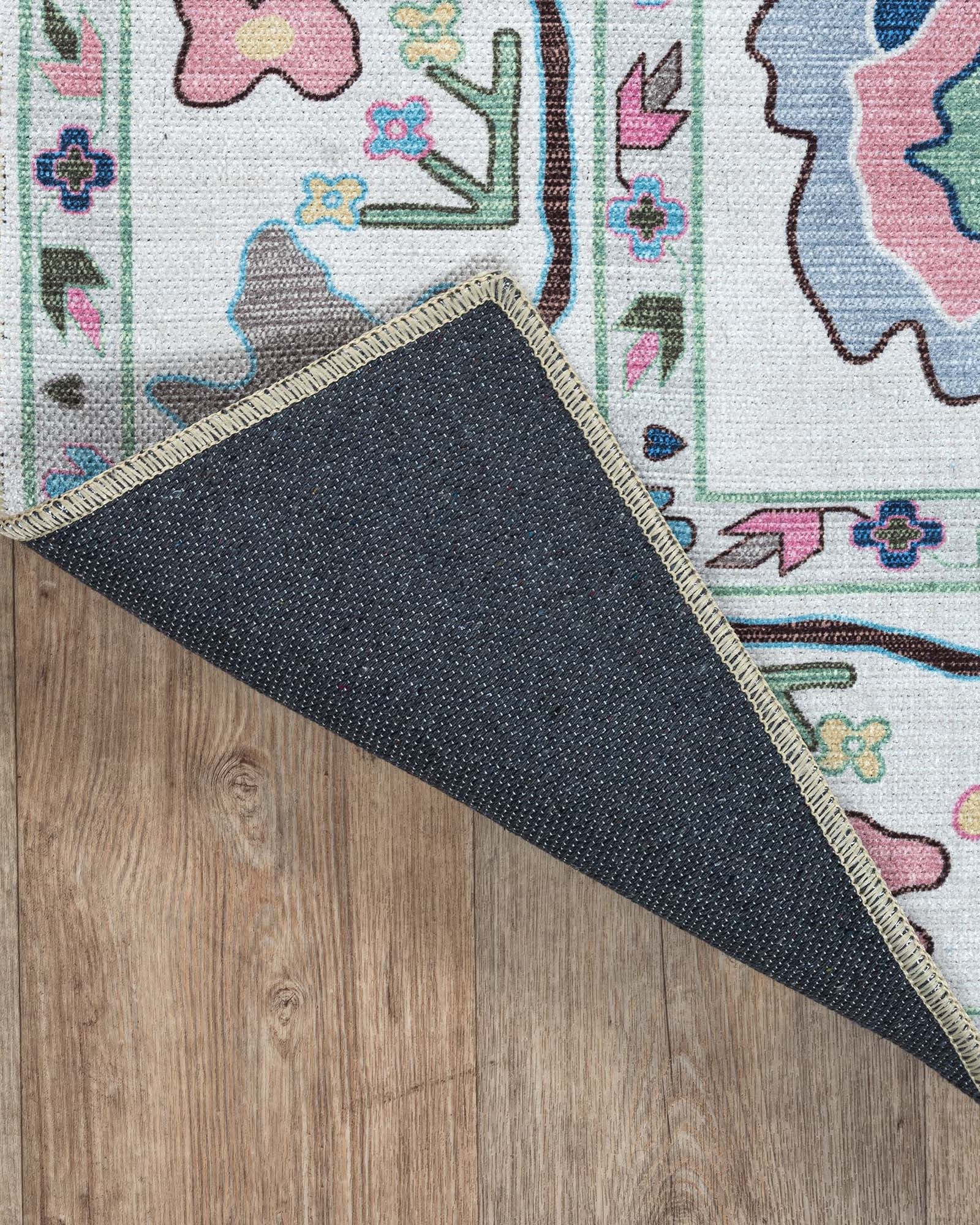
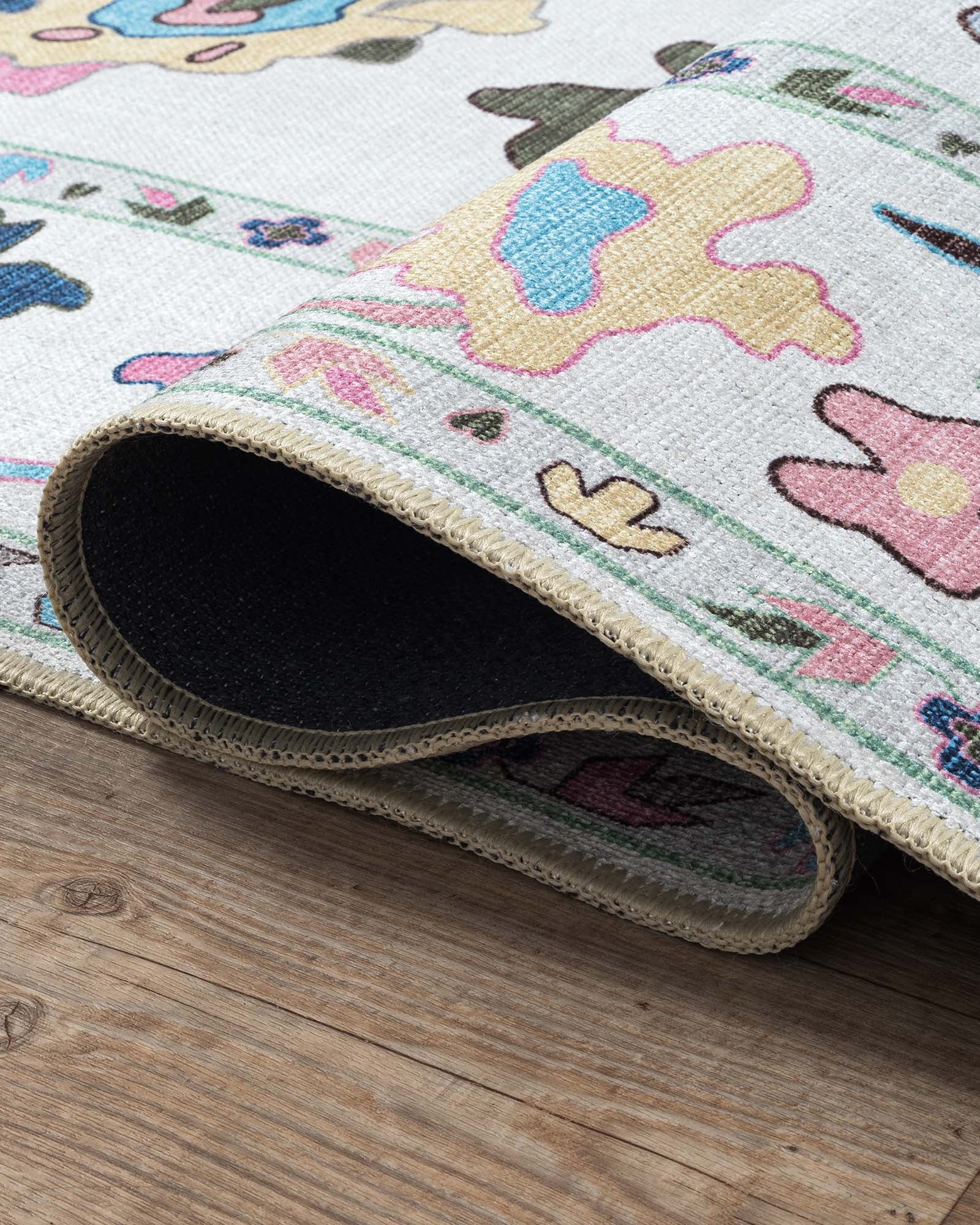
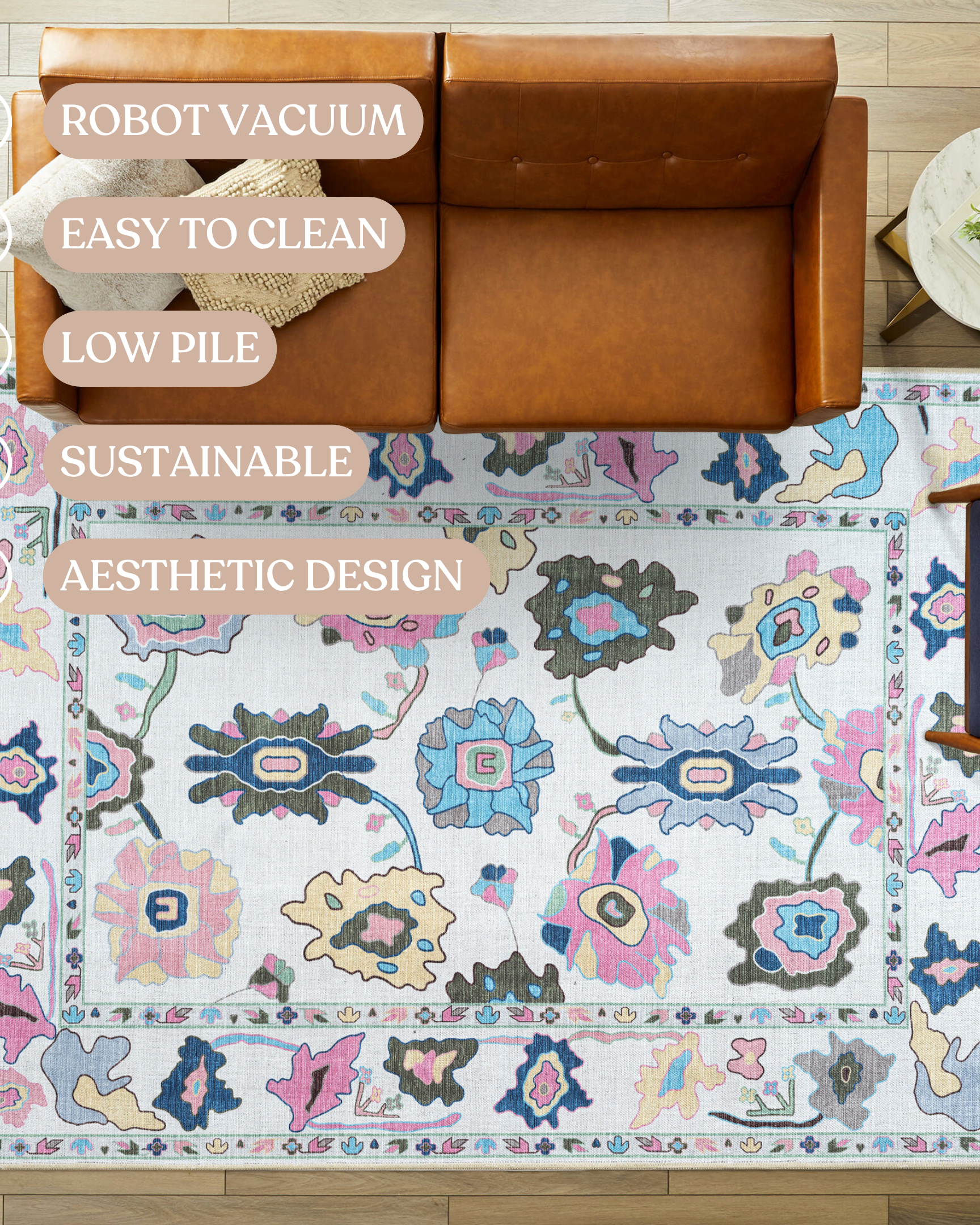
Dining rooms are one of the toughest tests for a rug — chair legs dragging in and out constantly, crumbs and spills as a matter of course, and a rug that has to look good under a table for years without becoming a maintenance headache. A flatweave handles the chair problem better than any pile rug can, which is the main reason this page exists as its own category rather than folding into the general flatweave collection.
Why Chairs Glide on a Flatweave
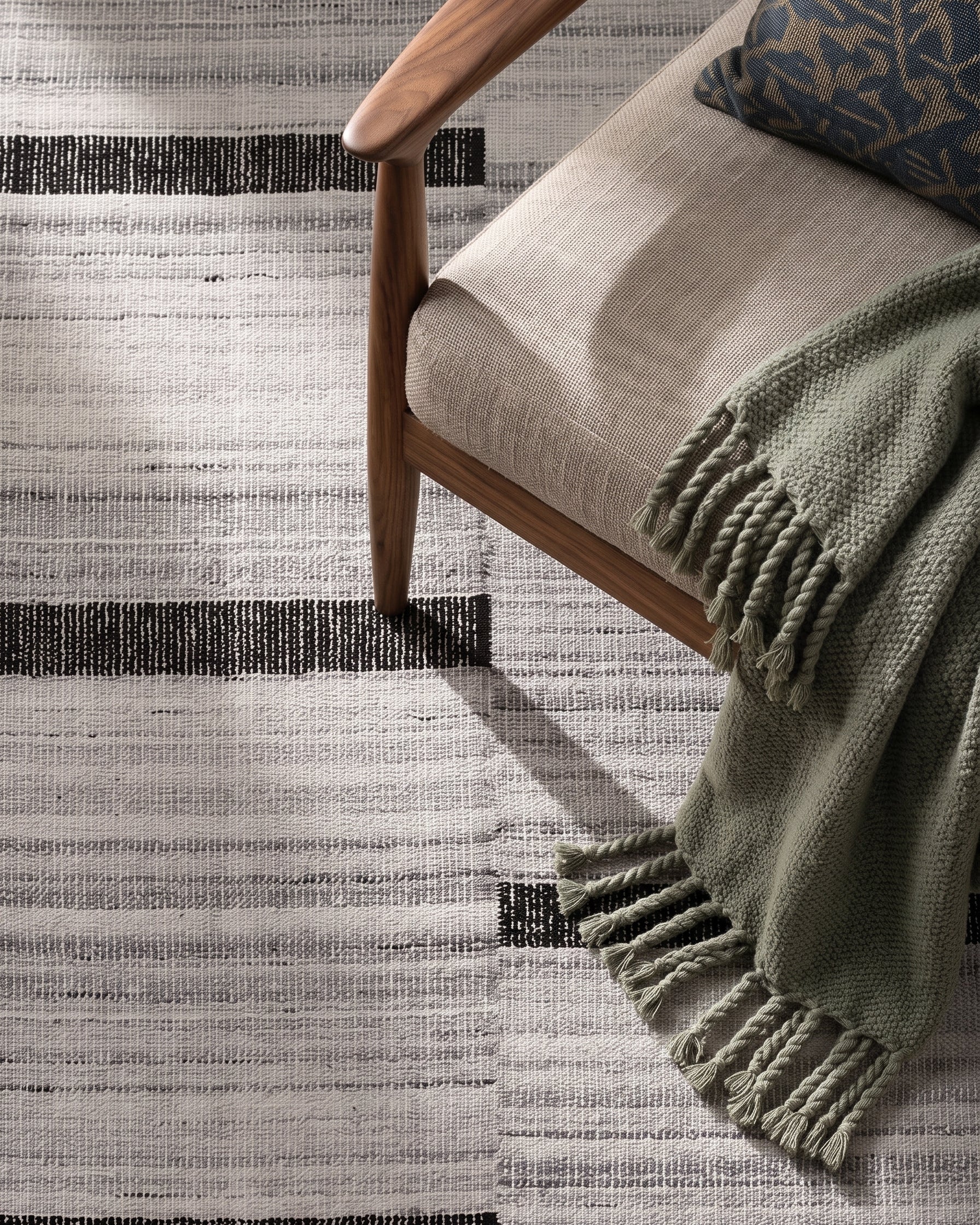
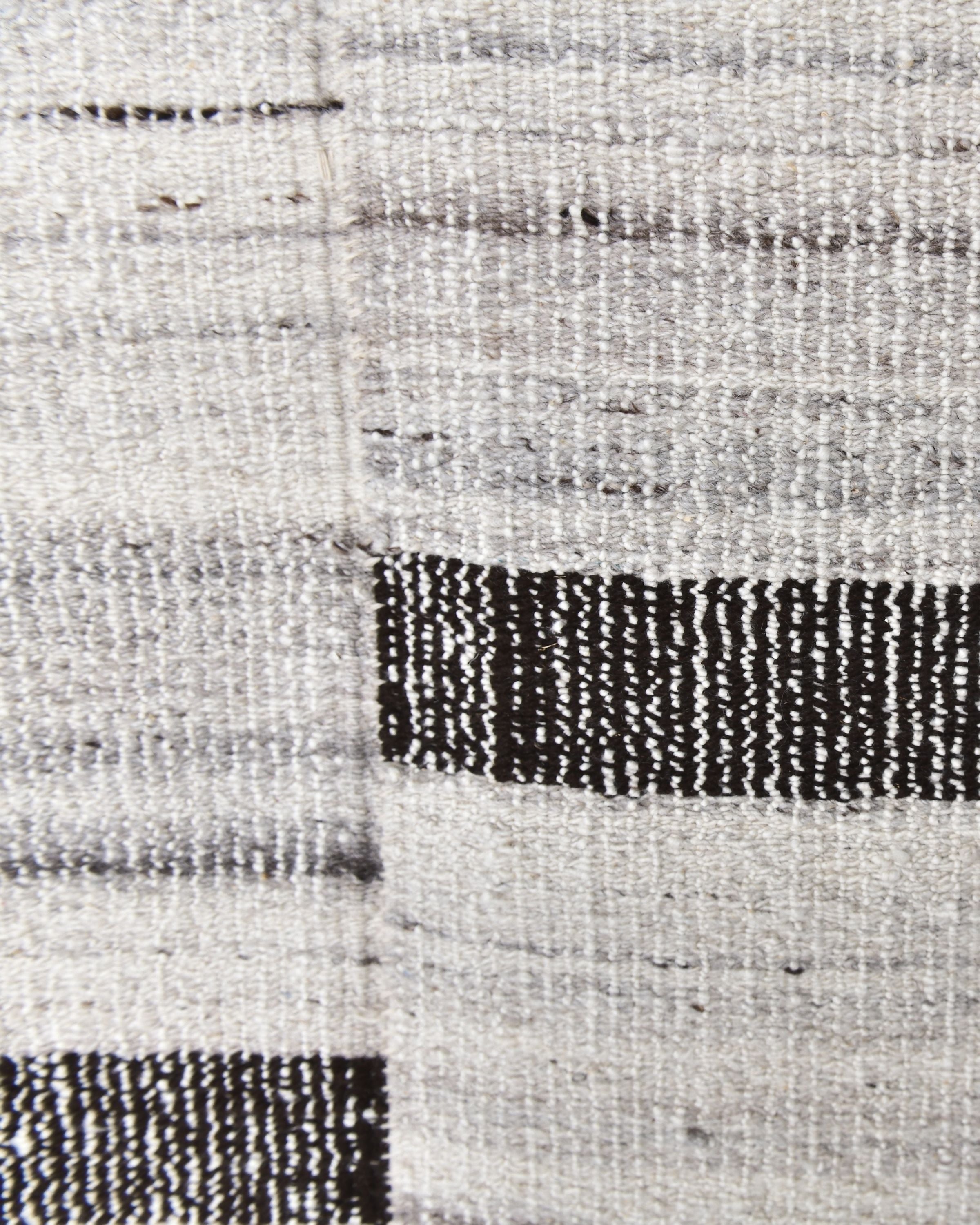
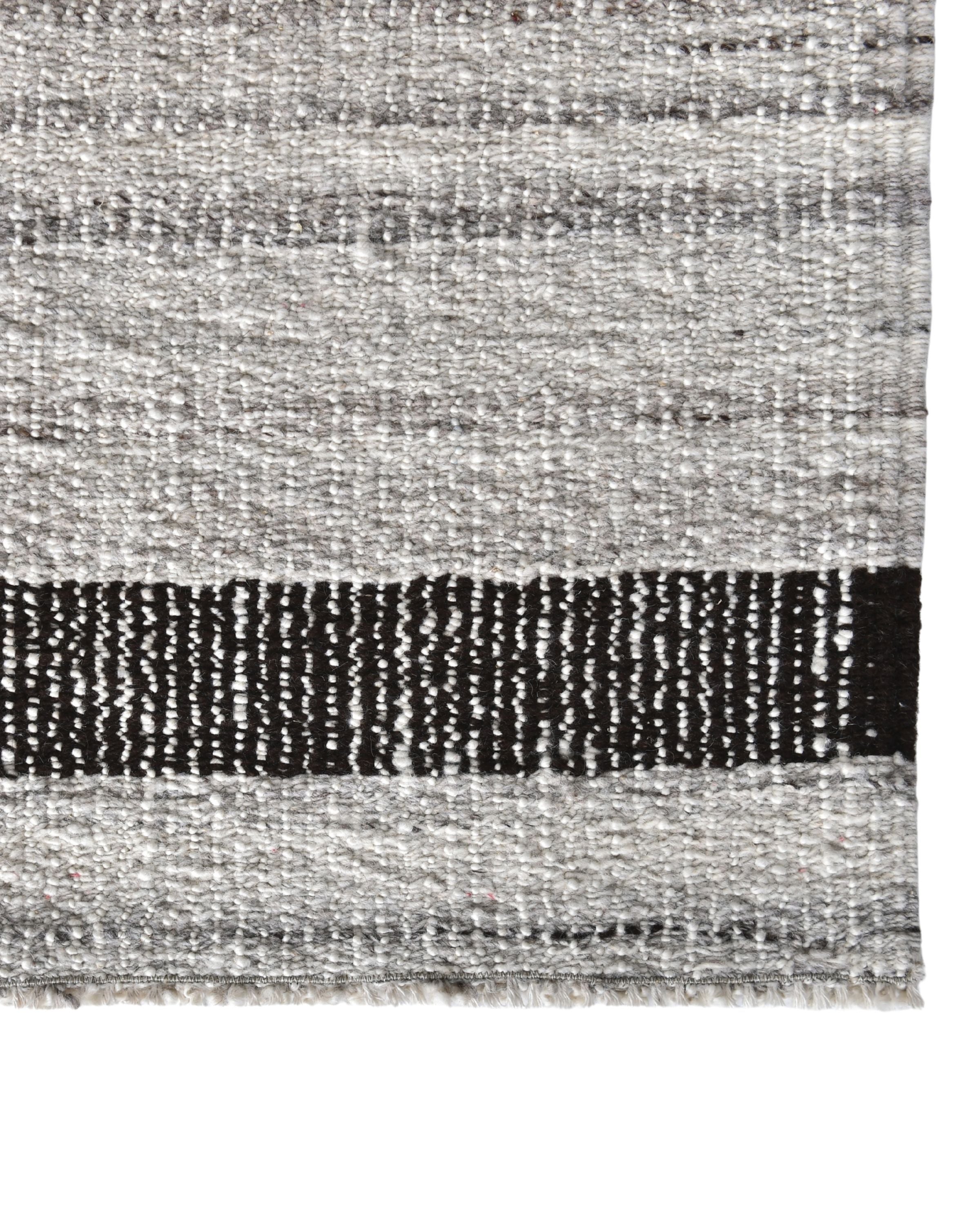
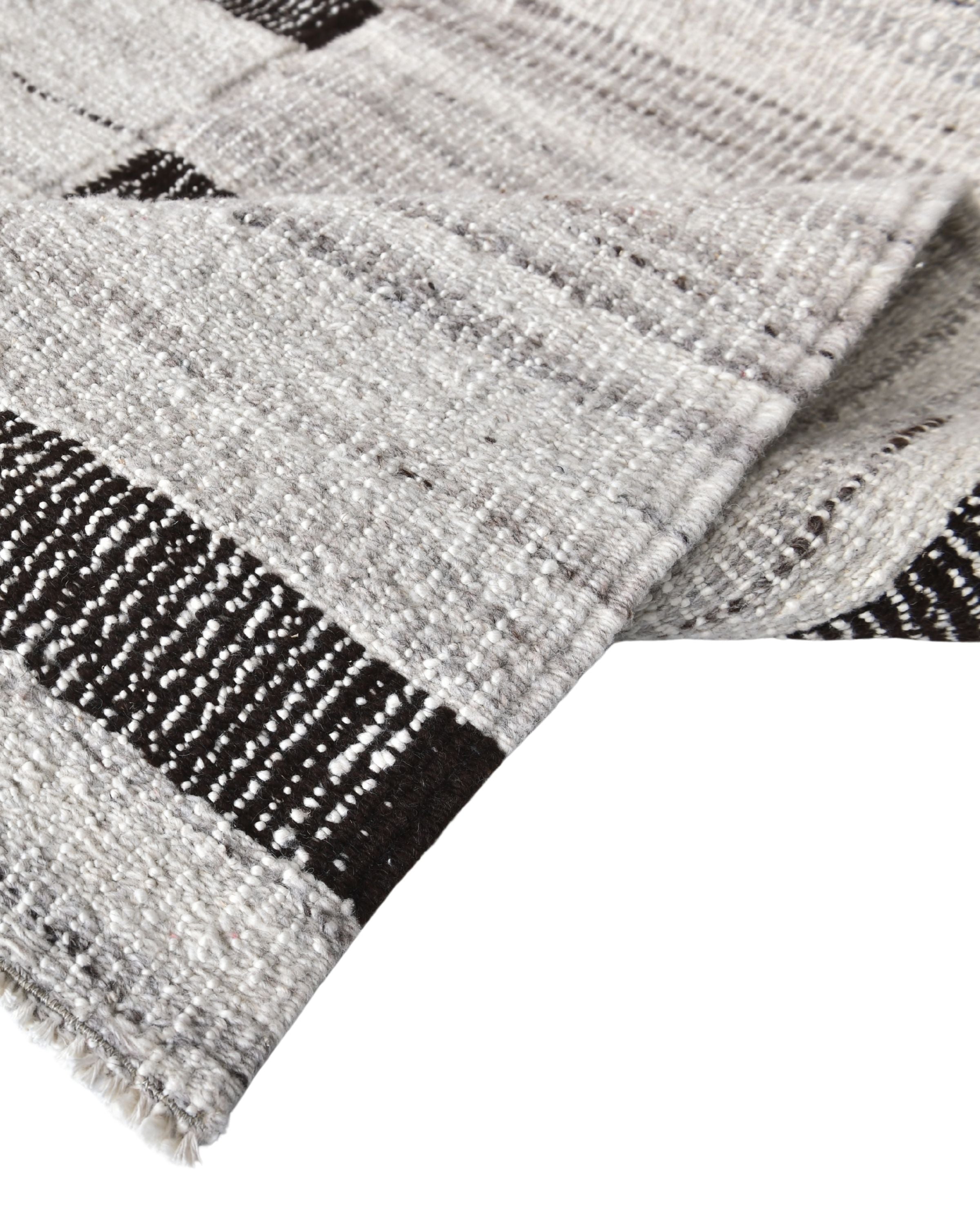
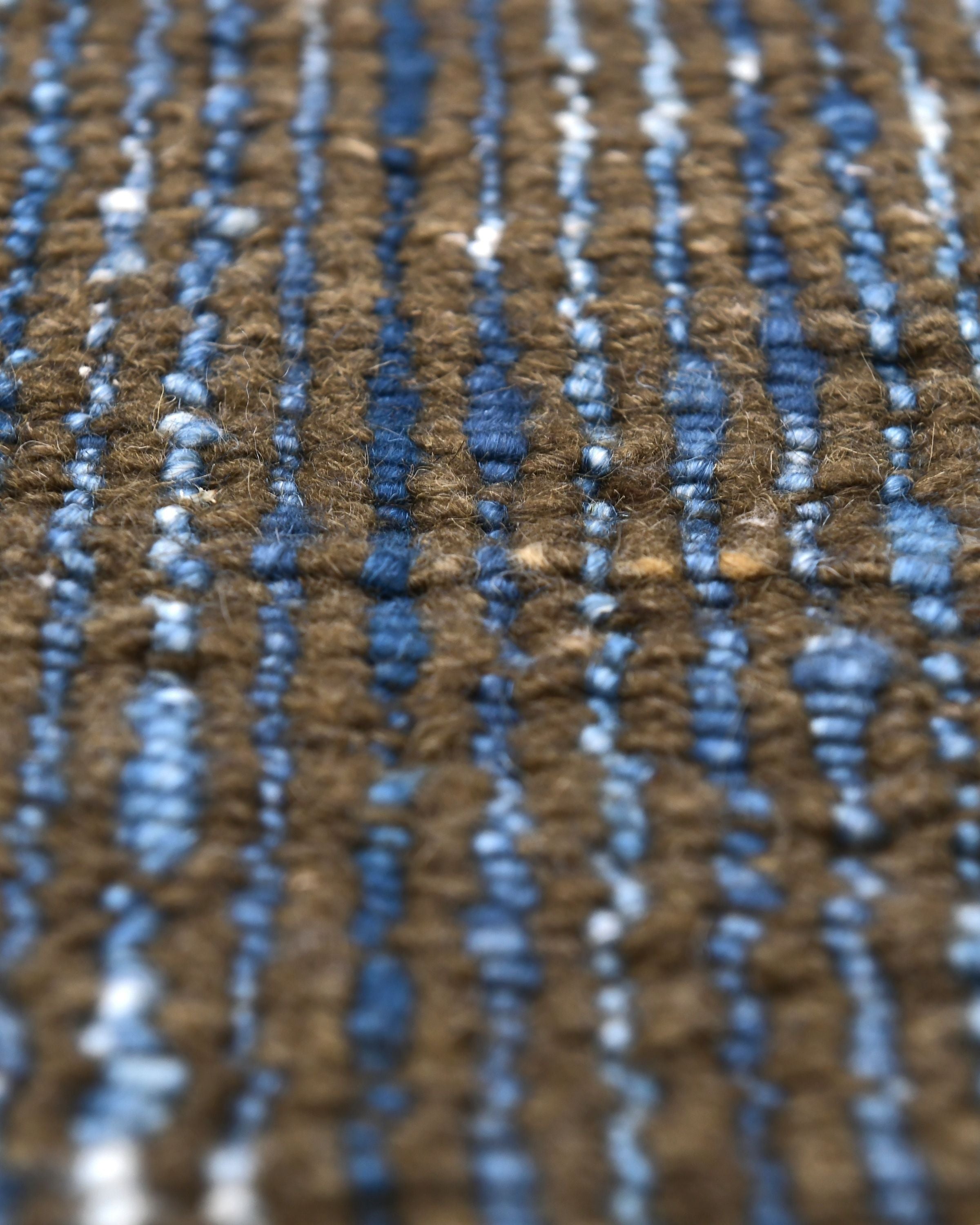
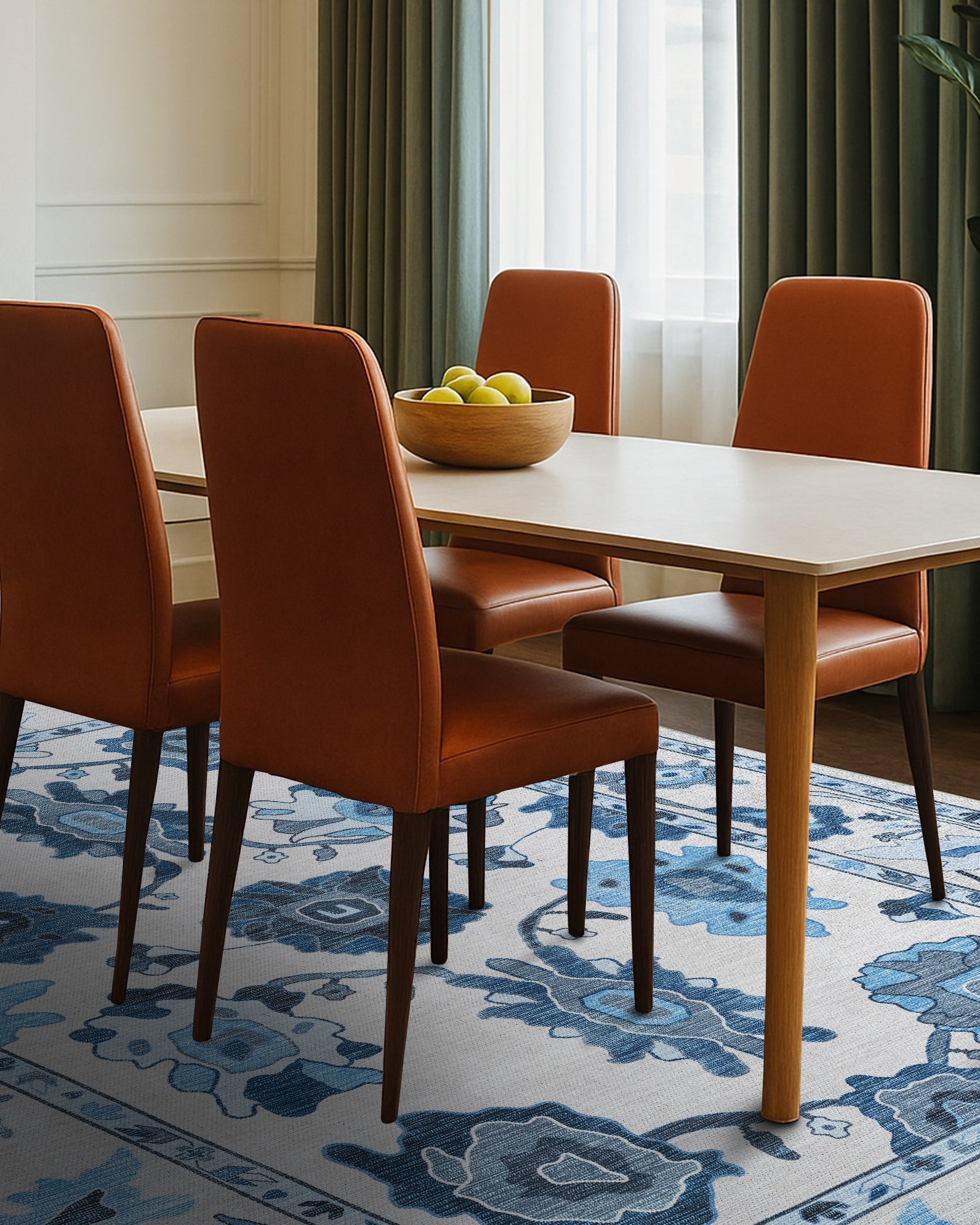
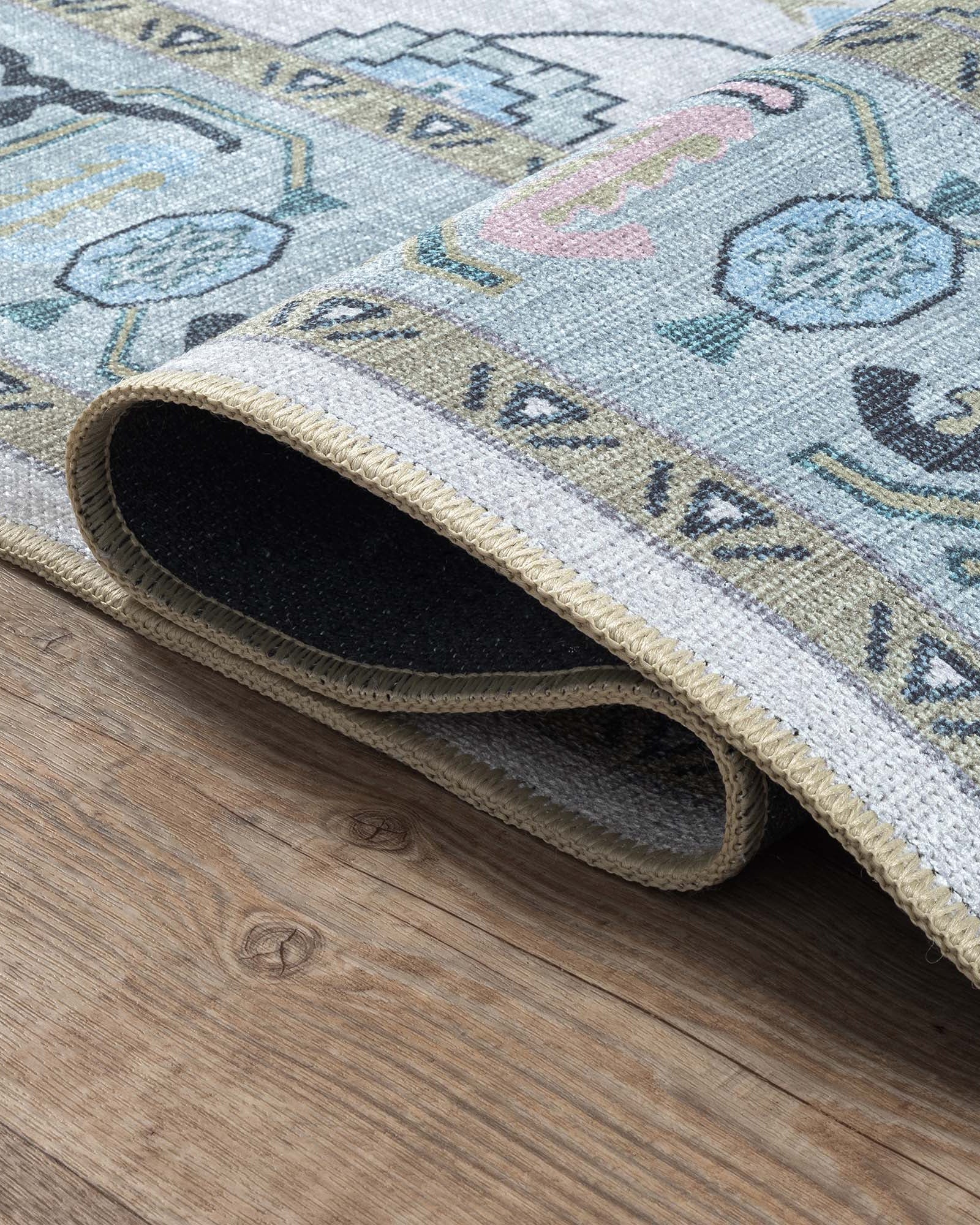
Chair legs sink into pile and catch on the fibers every time someone pushes back from the table, which over time wears grooves into a knotted rug and makes the chair itself harder to move. A flatweave has no pile to catch on — the flat, tightly woven surface lets chair legs glide across it with far less resistance and far less wear concentrated in those specific spots. If your current rug makes dinner guests grumble about scraping their chair back, a flatweave solves that specific complaint directly.
Pattern That Hides What Happens at the Table
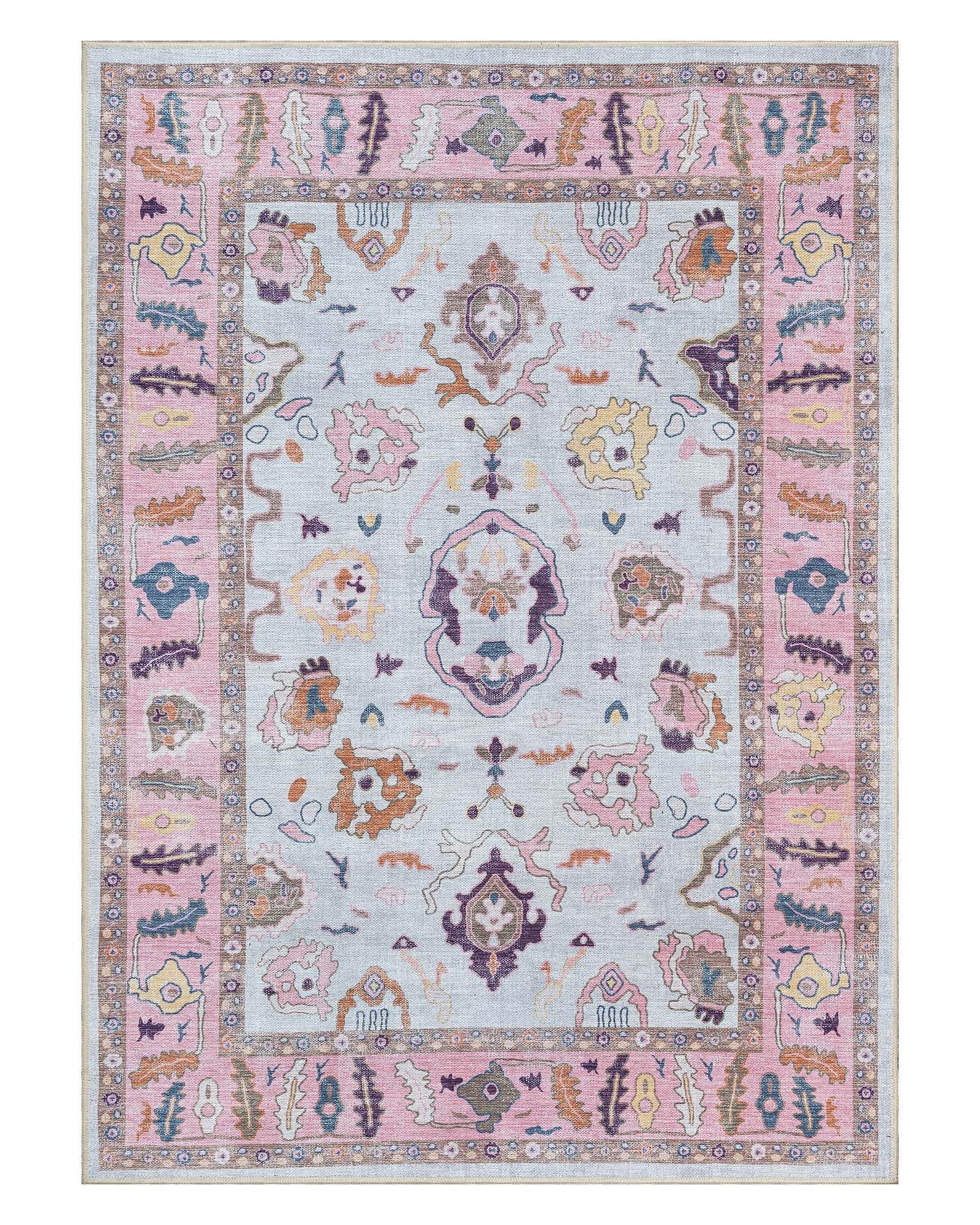
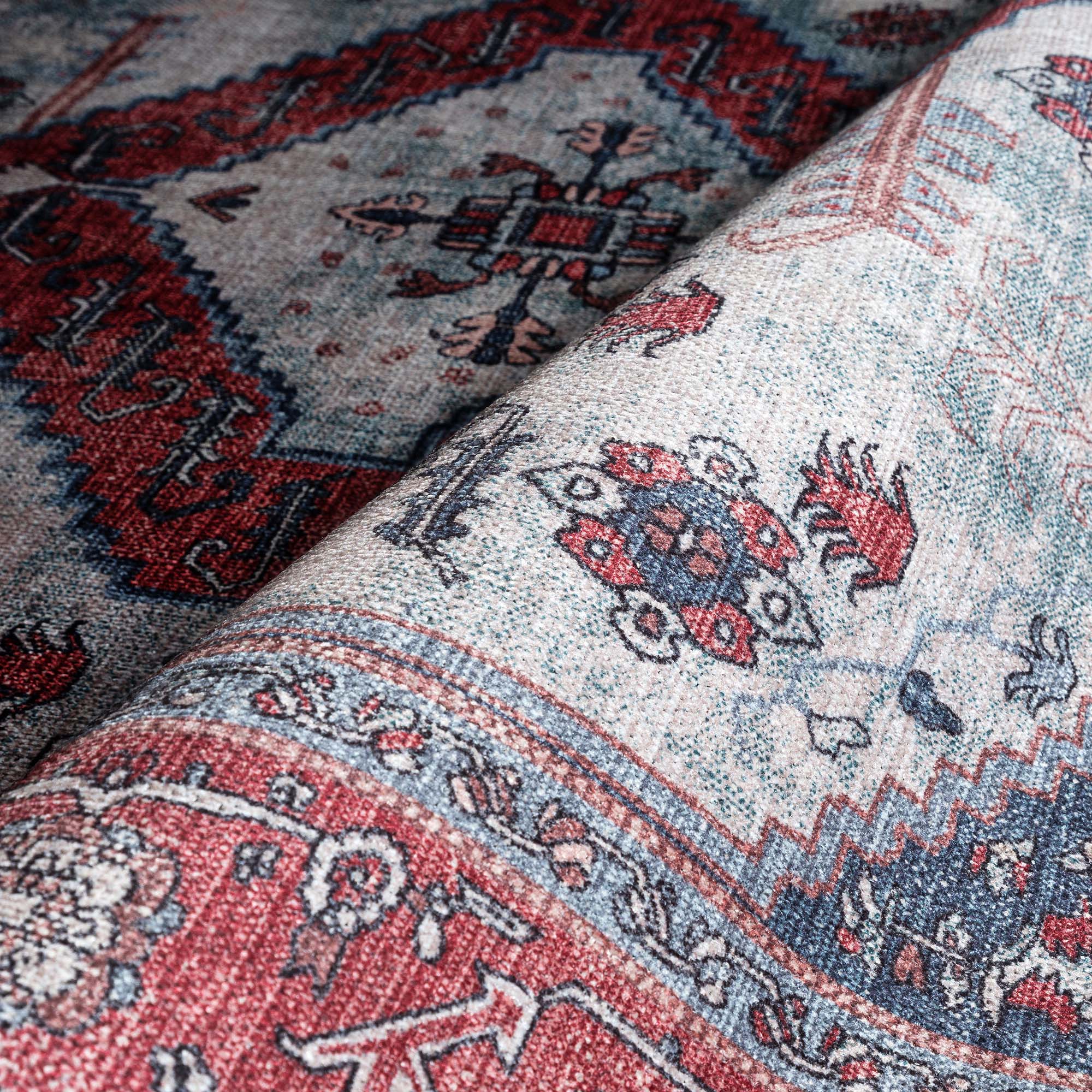
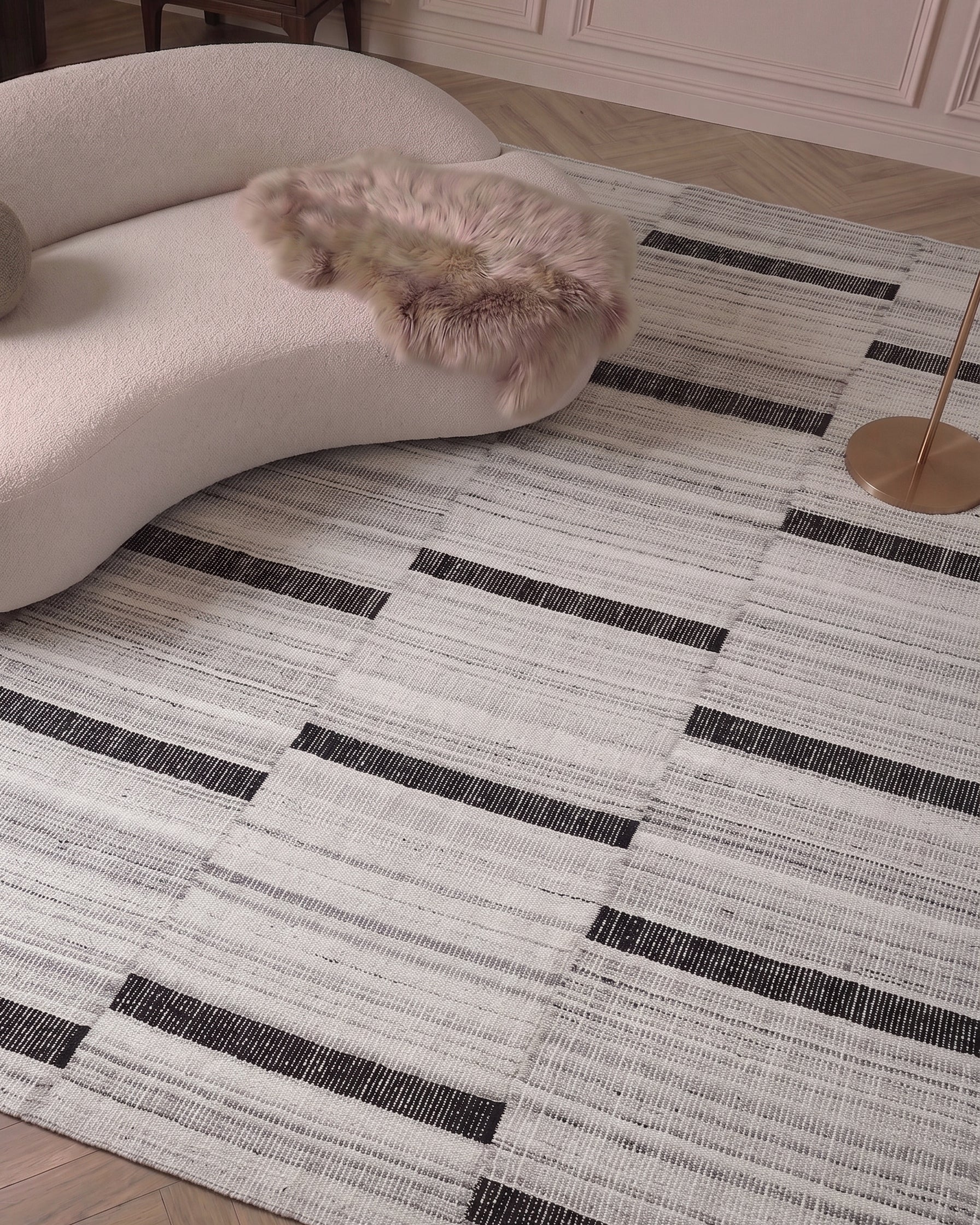
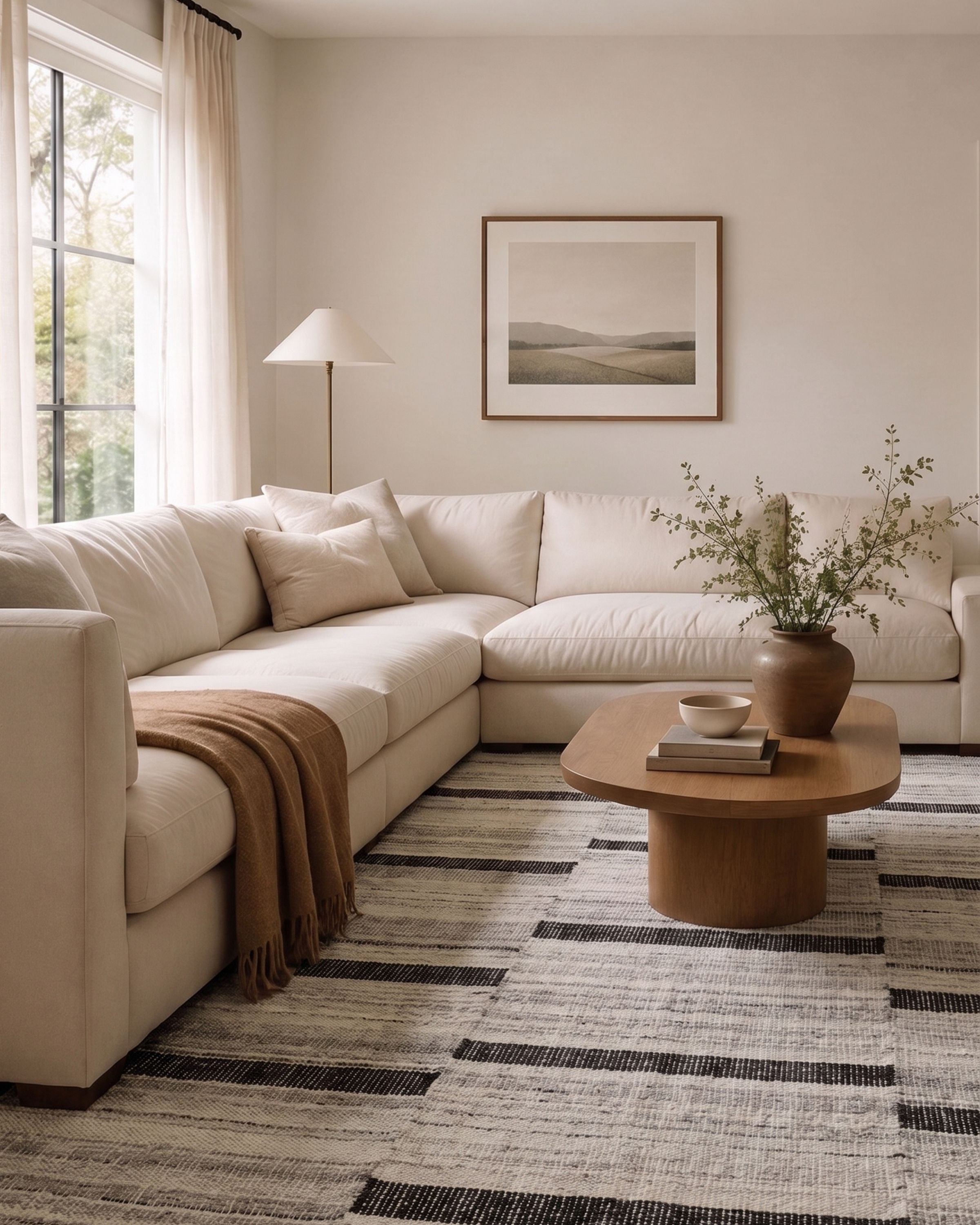
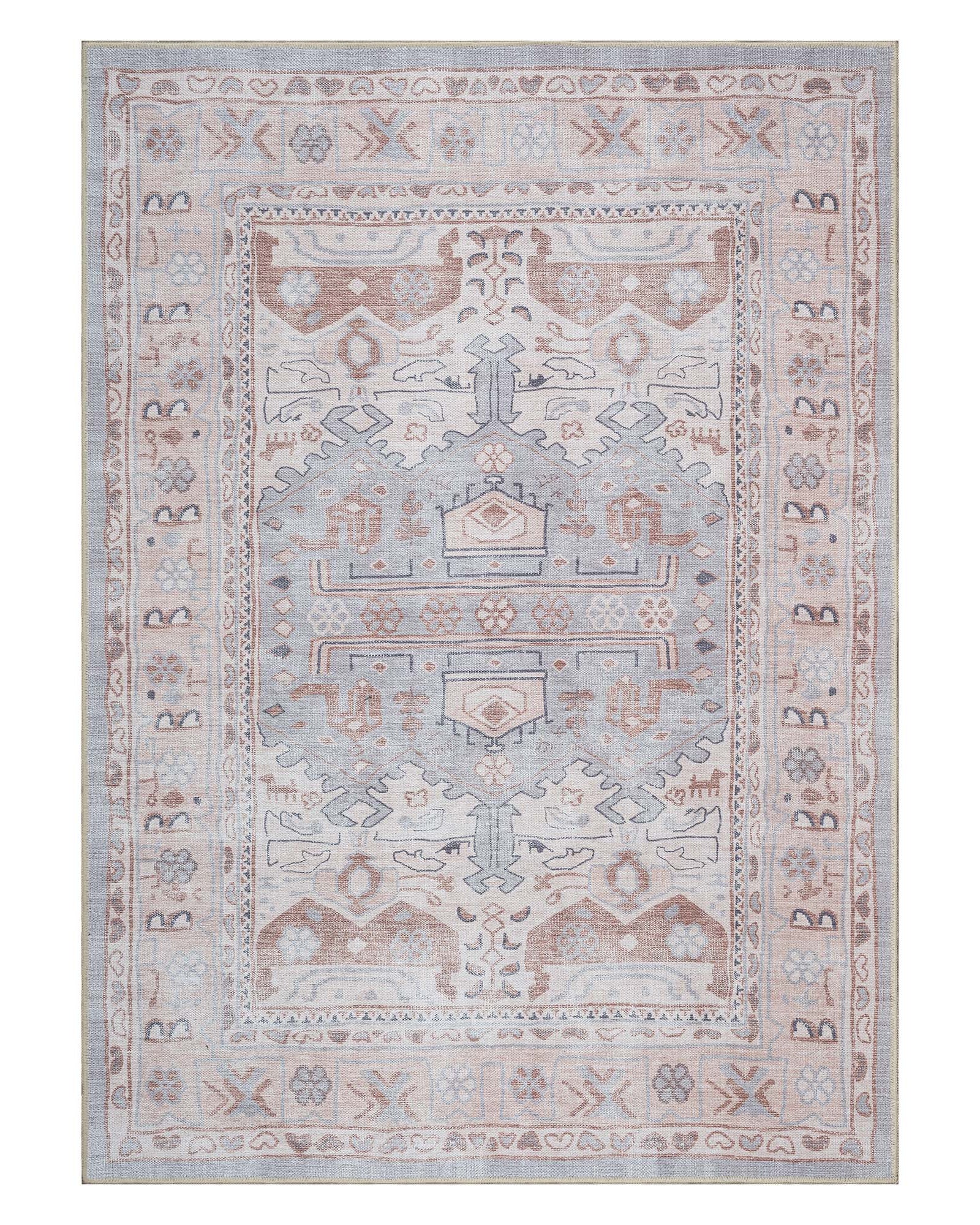
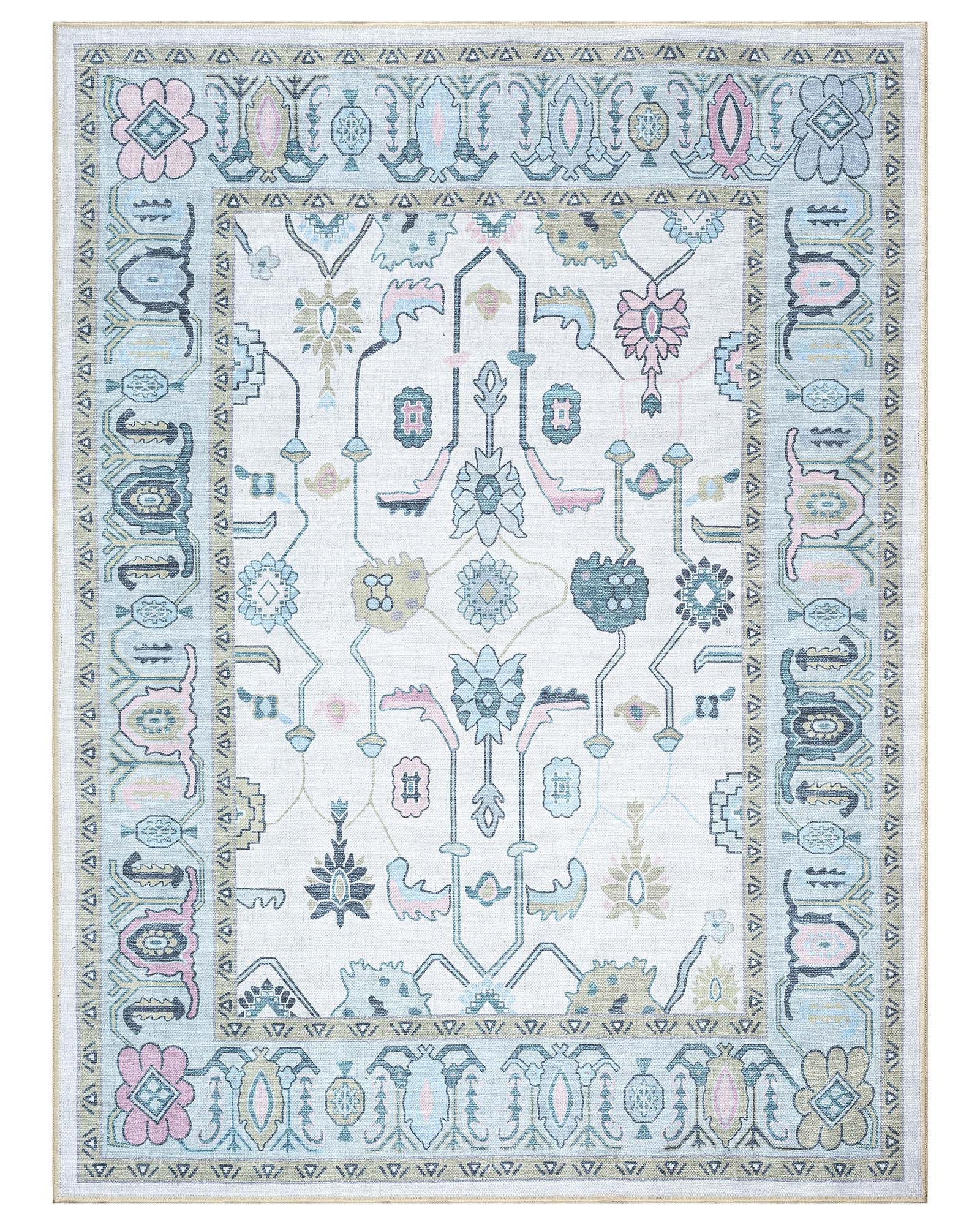
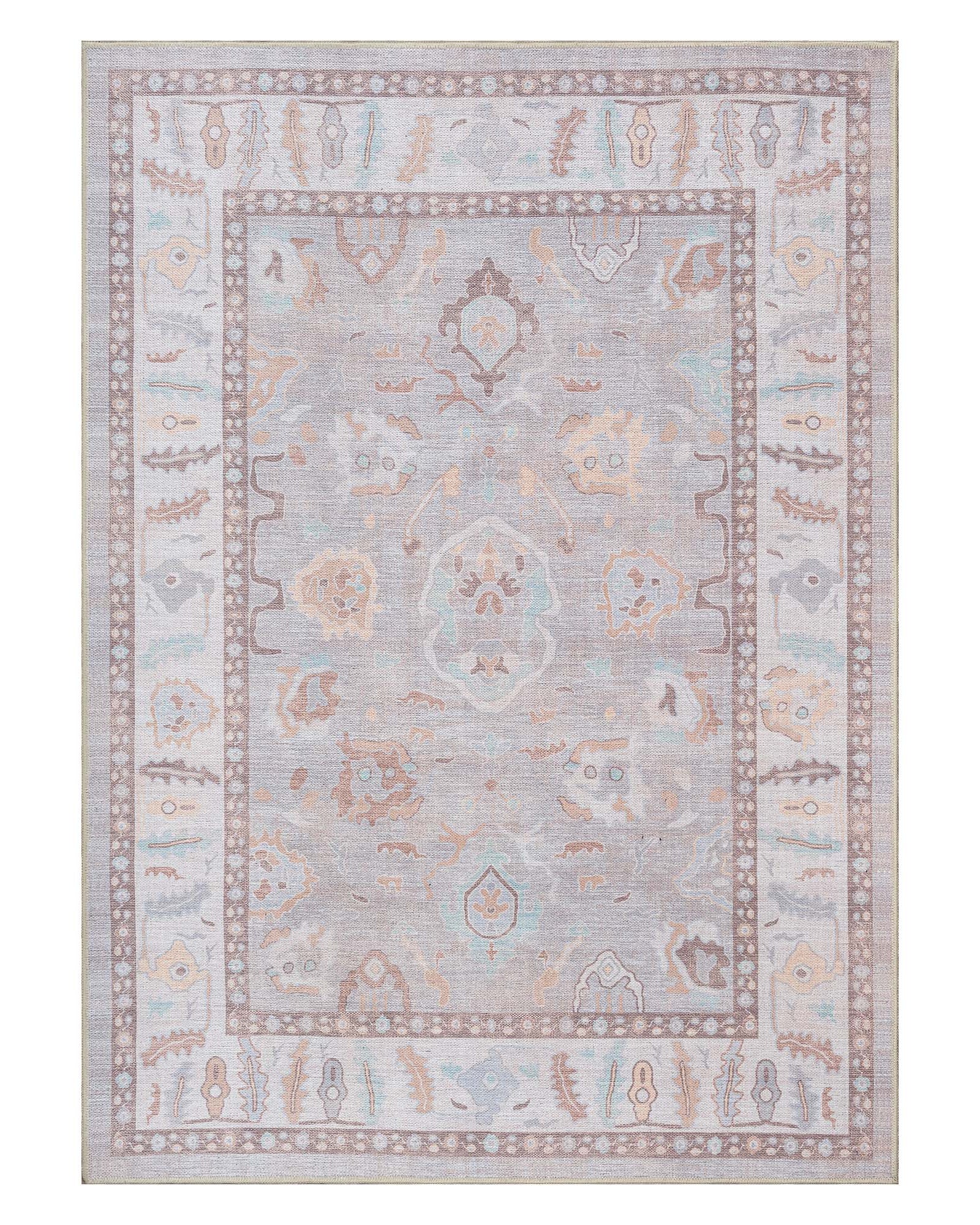
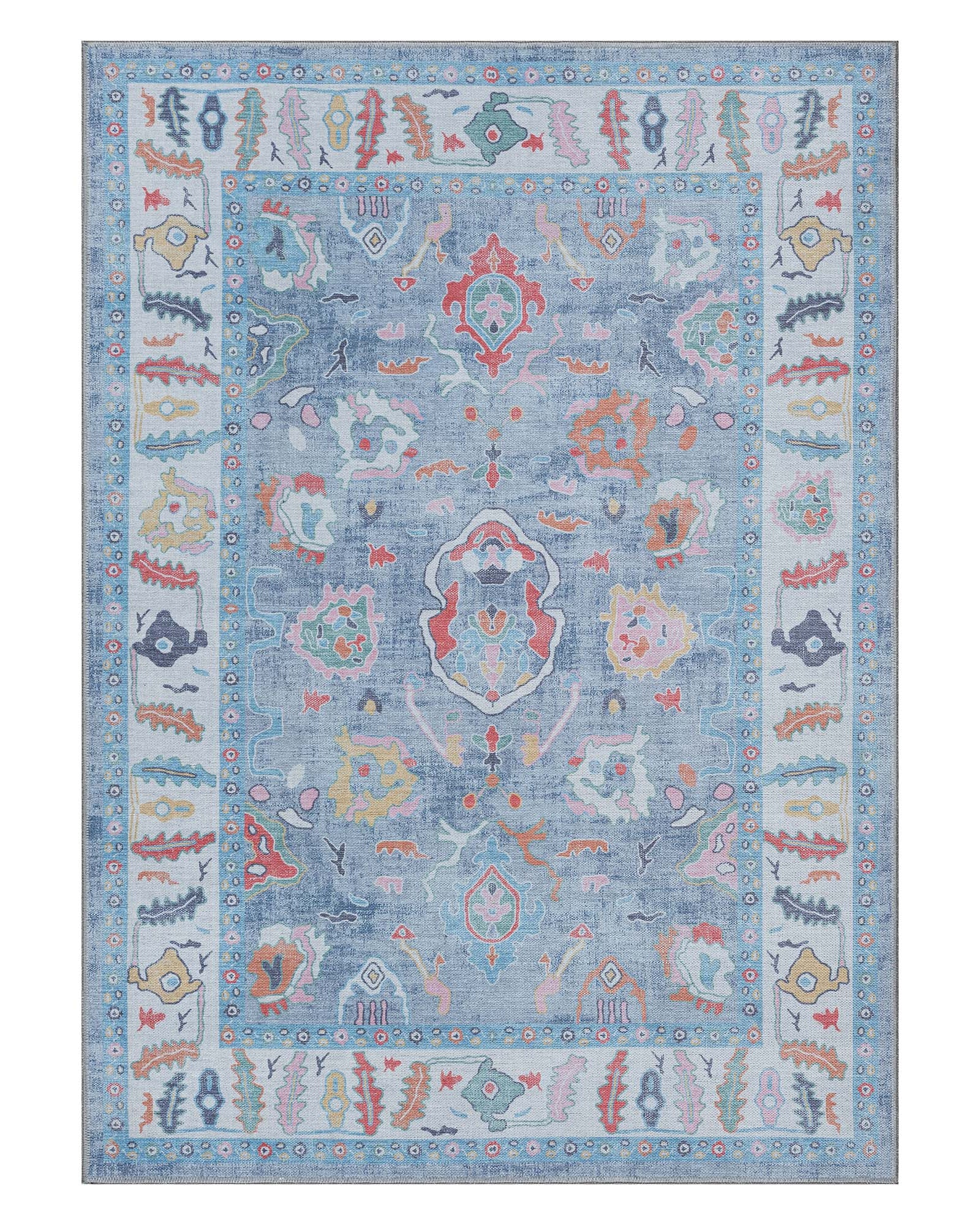
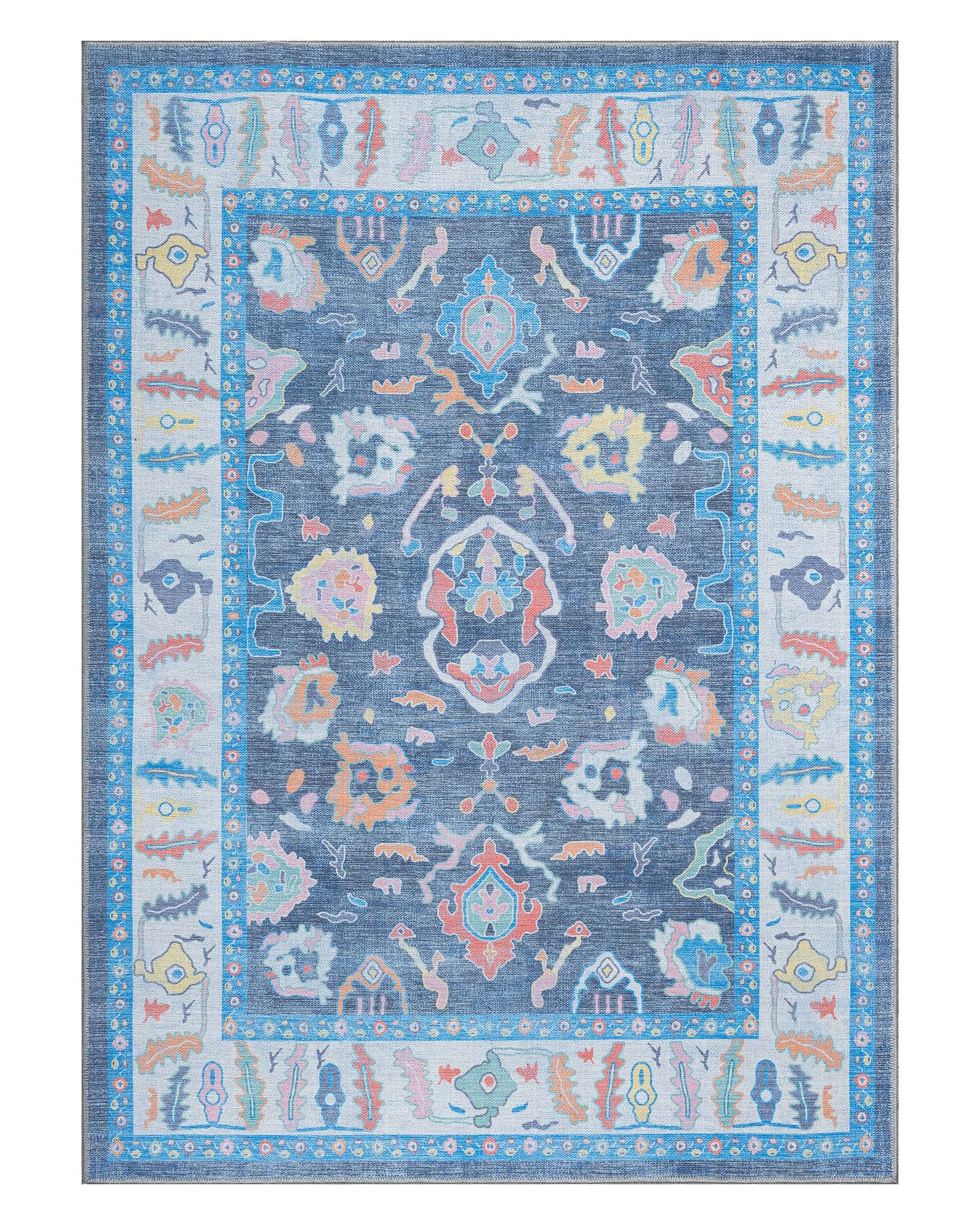
A dining room rug is going to see crumbs, dropped food, and the occasional spilled glass, no matter how careful anyone is. Bold geometric pattern with real color contrast — the kind common in Anatolian and Caucasian kilim weaving — disguises this kind of everyday mess far better than a plain or pale field does. Save quieter, undyed pieces for a lower-traffic room, since a busy pattern is doing real practical work here, not just a stylistic choice.
Sizing for the Table
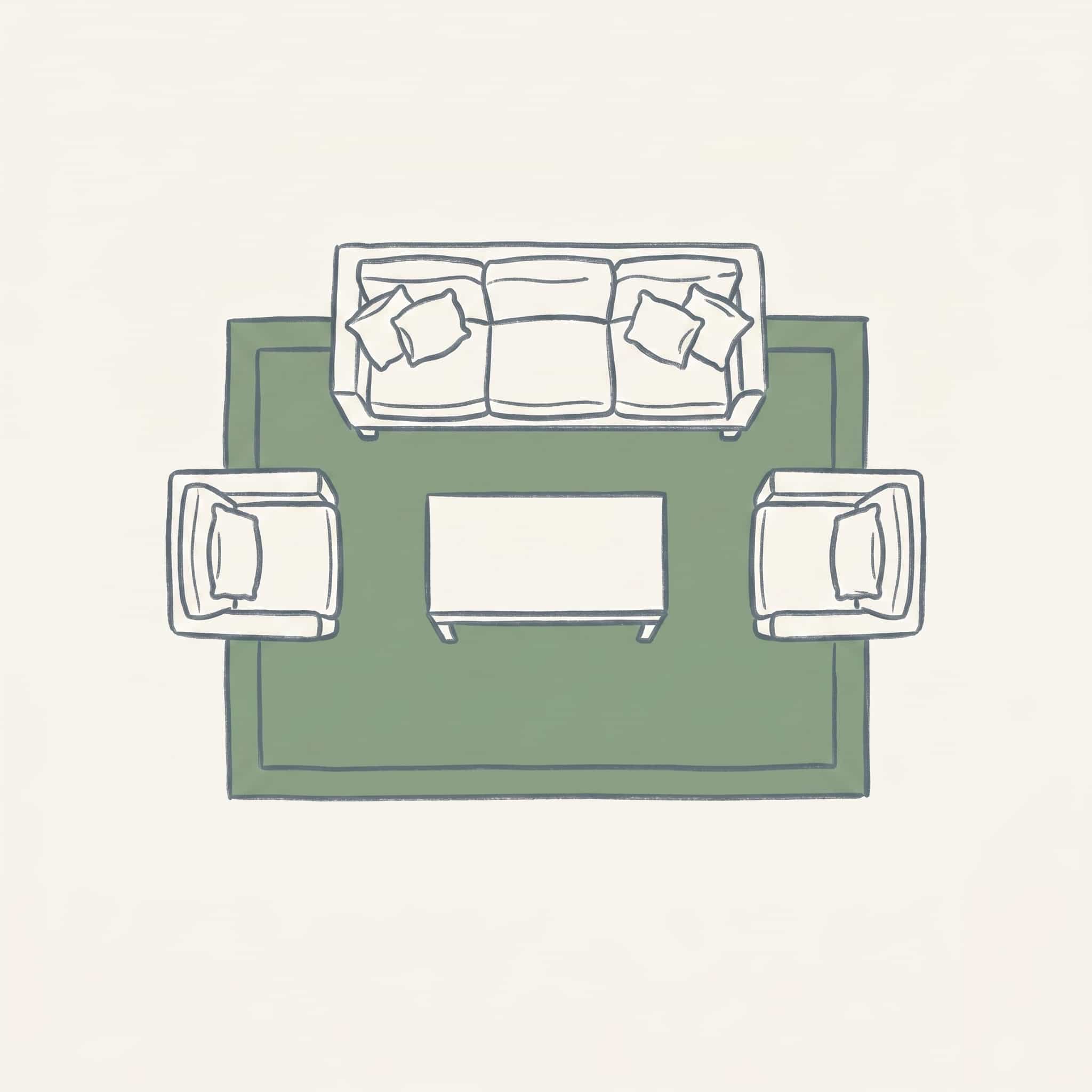
The standard rule applies regardless of construction: allow at least 24 inches of rug beyond the table's edge on all sides, so every chair stays fully on the rug even when pulled back to sit down or stand up. Measure your table and add roughly four feet to each dimension as a starting point, then check that figure against the exact measurements of the piece you're considering — vintage flatweaves don't come in standard sizes, so the product page measurements matter more than the rounded label.
Cleaning After Meals
Blot spills immediately with a white cloth and plain water rather than letting anything sit, especially wine or oil-based sauces, which set into wool fibers the longer they're left. For crumbs and dry debris, a flatweave shakes out far more easily than a pile rug — lift it, take it outside, and shake rather than relying on vacuuming alone after every meal. This ease of cleaning is a big part of why flatweaves suit dining rooms specifically, beyond the chair-gliding advantage.
Where to Look Next
For the full range of flatweave construction and pattern, browse Flatweave Rugs. If you'd rather have a hand-knotted rug that still lets chairs glide, our Low Pile Rugs collection covers that middle ground. For strong pattern specifically suited to disguising everyday mess, Vintage Turkish Rugs is a good place to continue.
Frequently Asked Questions
Why is a flatweave better than a pile rug under a dining table?
Chair legs catch on pile and can wear grooves into a knotted rug over time. A flatweave's flat surface lets chairs glide with far less resistance and far less concentrated wear in those spots.
What size flatweave do I need for my dining table?
Allow at least 24 inches of rug beyond the table's edge on every side so chairs stay fully on the rug when pulled back. Add roughly four feet to each table dimension as a starting point, then check against the rug's exact measurements.
What pattern hides spills and crumbs best in a dining room?
Bold, high-contrast geometric pattern, common in Anatolian and Caucasian kilim weaving, disguises everyday marks far better than a plain or pale field, which shows wear and mess more readily.
How do I clean a flatweave dining room rug after meals?
Blot spills immediately, especially wine or oily sauces, and shake the rug out regularly for crumbs and dry debris rather than relying only on vacuuming, since flatweaves lift and shake out far more easily than pile rugs.
Can I use a low-pile hand-knotted rug instead of a flatweave in my dining room?
Yes — a low-pile hand-knotted rug also lets chairs glide reasonably well while offering more cushioning than a flatweave. It's a good middle-ground option if you want some pile without the drag a thick rug would create.