

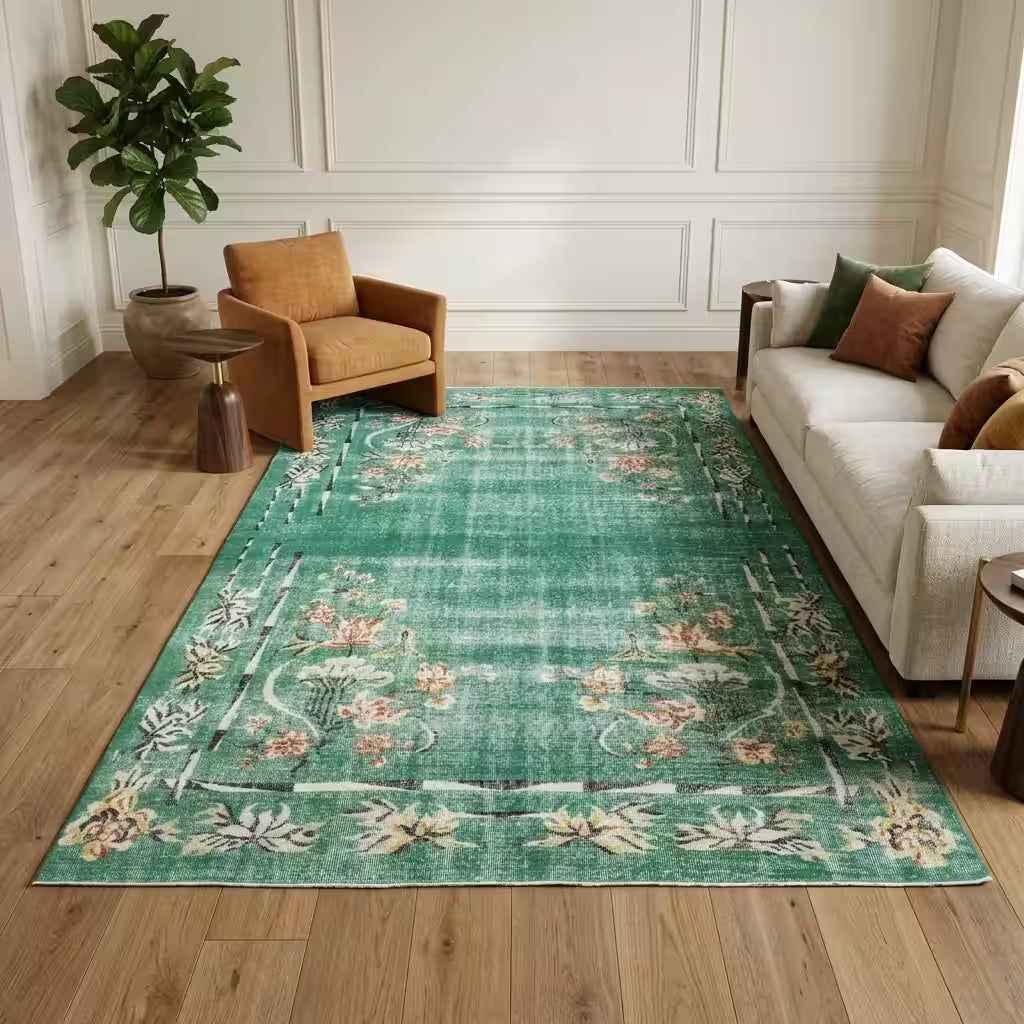
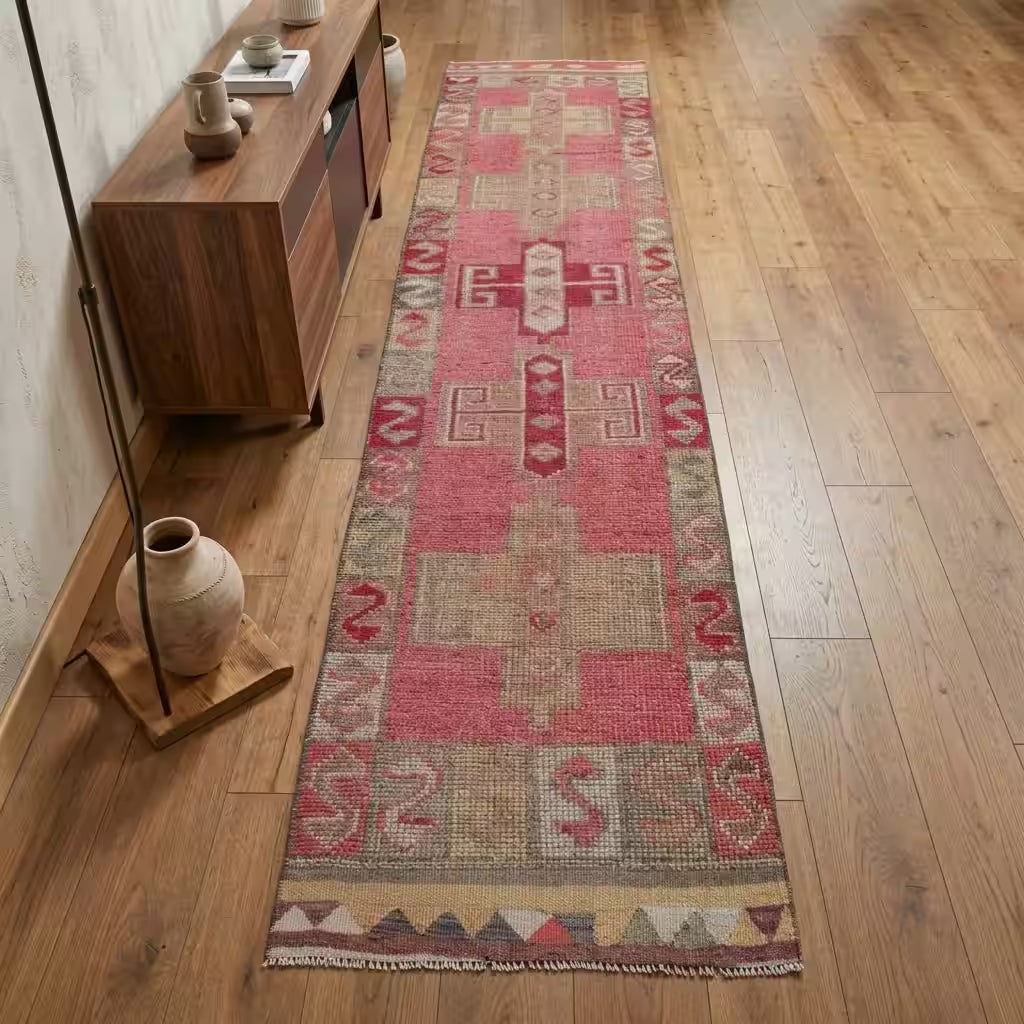
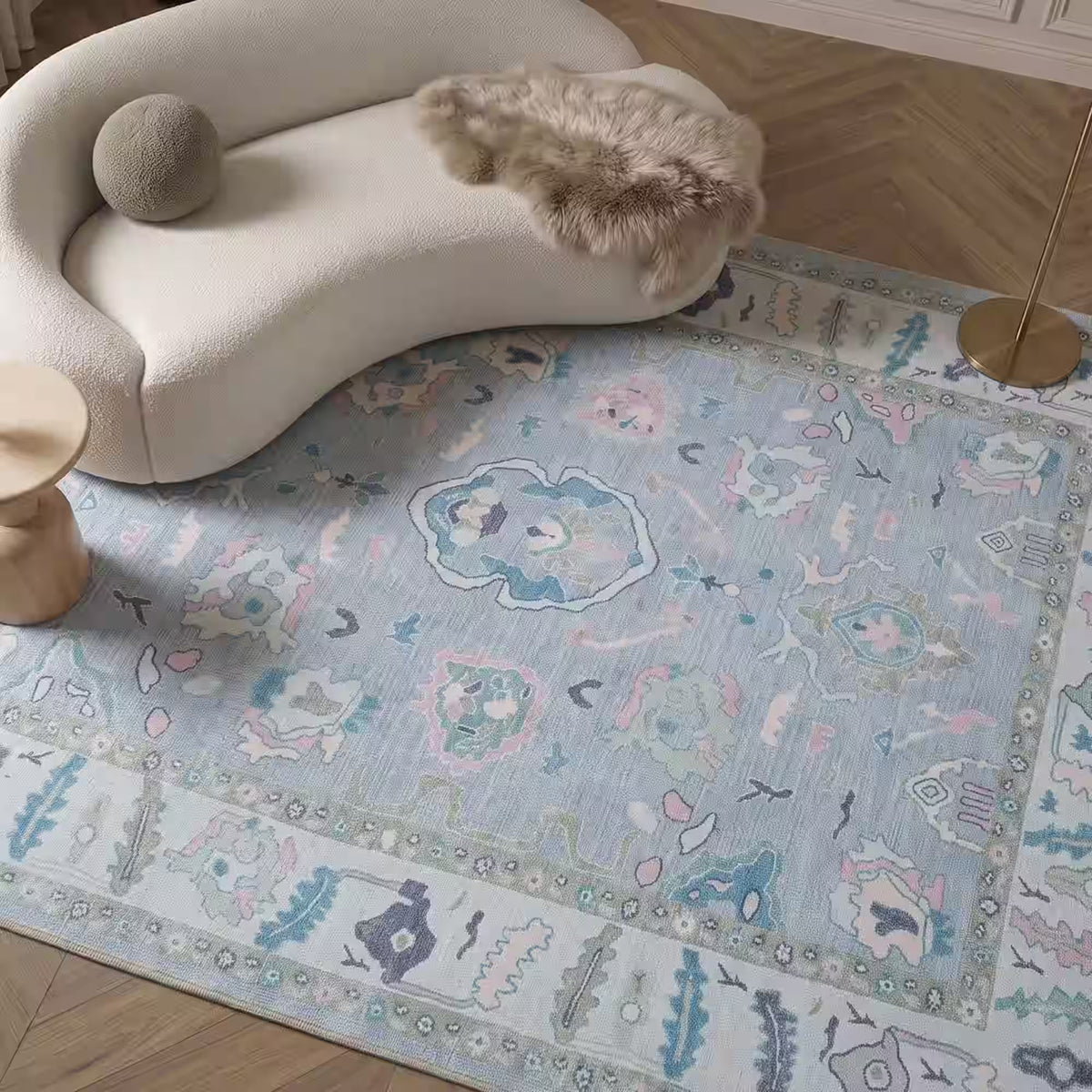
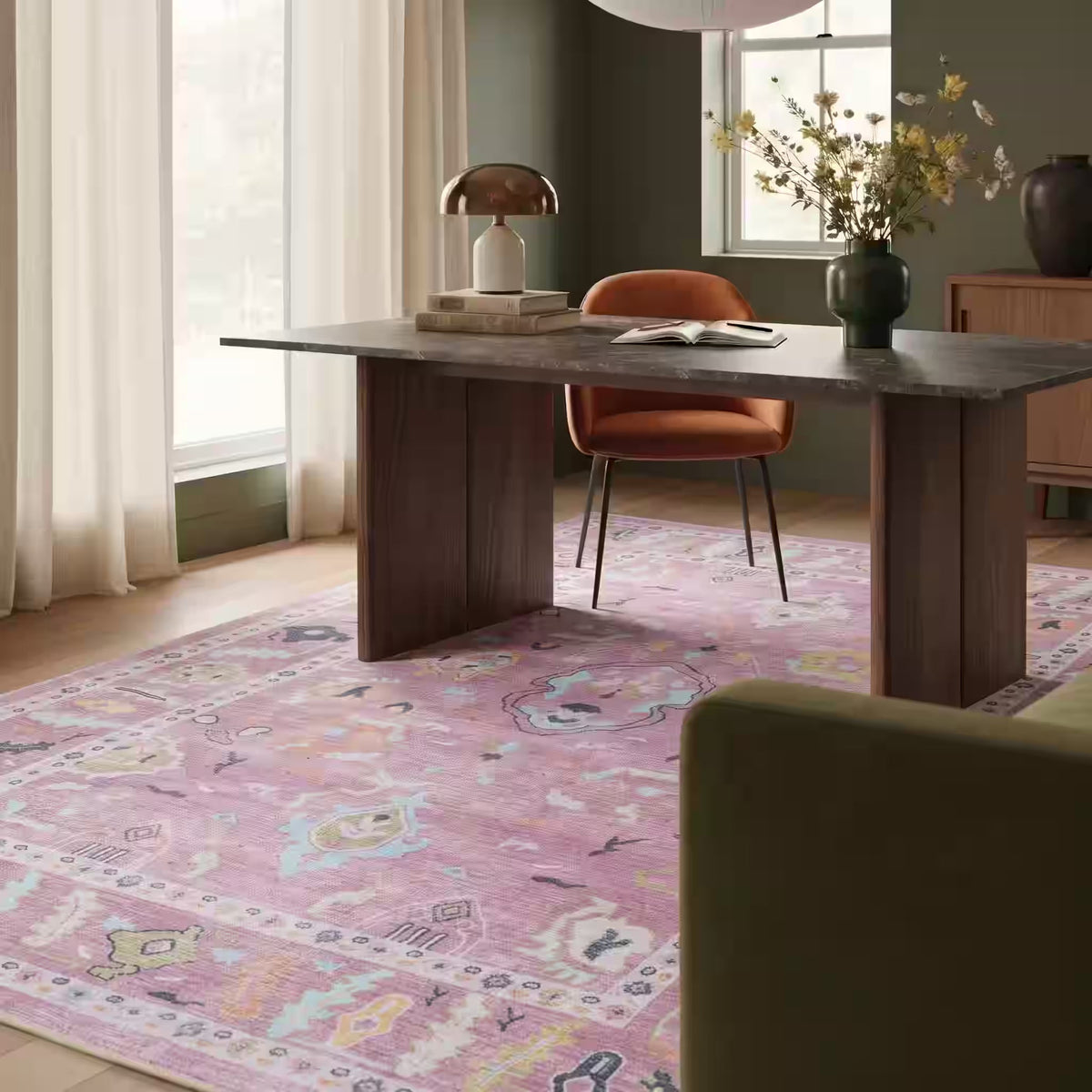




Choose Vova Rug Neutral Turkish Beige Green Faded Blue Medallion Rug for soft traditional color, Manda Rug Turkish Kilim Terracotta and Navy Blue Rug for warm geometry, or Vera Rug Neutral Turkish Gray Pastel Muted Green Ivory Rug for muted accents. Nedal Turkish Oushak Red Brown Rug supplies a deeper earthy choice. Size the rug around the sofa and chairs before deciding how much pattern should lead.
- Vova leads for a soft traditional living room.
- Manda adds terracotta and navy geometry.
- Vera layers muted accents; Nedal supplies deeper red-brown choices.
- Fame Rugs Turkish-style designs connect furniture through color and pattern.
Why this matters
Traditional furniture needs a shared setting, not another matching set. Fame Rugs suits shoppers choosing Turkish rugs for traditional living room decorating by palette and layout. Repeat a visible rug color in artwork or a cushion and keep larger supporting textiles simple.
What to look for
- A palette connected to furniture you will keep.
- A medallion or geometric pattern with a clear role.
- Enough rug beneath the seating group.
- Visible border detail around the table.
- Care suited to the individual construction.
Traditional-room picks at a glance
| Rug | Best for | Detail | Buying consideration |
|---|---|---|---|
| Vova Rug Neutral Turkish Beige Green Faded Blue Medallion Rug | Soft color | Beige, faded green, and blue | Less contrast than a dark rug |
| Manda Rug Turkish Kilim Terracotta and Navy Blue Rug | Warm geometry | Terracotta, navy, and light orange | Give angular motifs room |
| Vera Rug Neutral Turkish Gray Pastel Muted Green Ivory Rug | Muted layering | Beige with green, ivory, pink, and burgundy | Several subtle accents to coordinate |
| Nedal Turkish Oushak Red Brown Rug | Earthy depth | Red or brown with beige motifs | Choose the exact color option |
1. Vova: best for soft traditional color
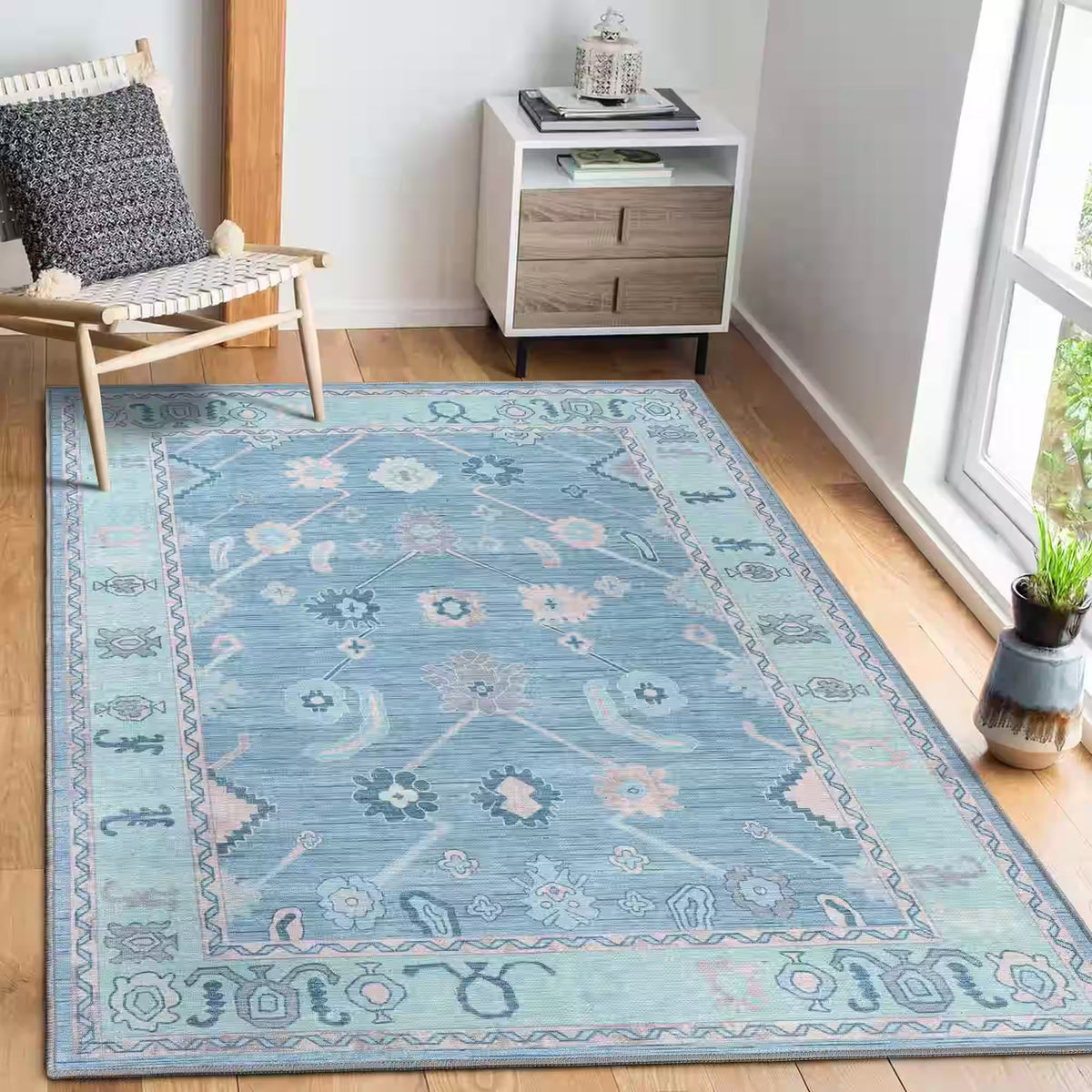
Vova brings beige, faded green, and blue into a medallion-style design. Cream upholstery and wood tables give its gentle colors a relaxed setting.
Pros: Several light accent colors; a listed 0.2-inch pile; machine-washable care.
Cons: Faded color creates less drama than saturated red; the center needs a place in the furniture layout.
Best for: A soft traditional living room. Verdict: Buy Vova as the default palette.
2. Manda: best for warm geometry
Manda pairs terracotta and navy with light orange in a vintage-inspired geometric pattern. Repeat navy selectively and let wood echo the warmer direction.
Pros: Clear warm-cool contrast; geometric structure; a listed 0.2-inch pile.
Cons: Angular motifs compete with similar upholstery; warm orange is a specific palette choice.
Best for: Warm wood and plain seating. Verdict: Buy Manda for geometric character.
3. Vera: best for muted layering
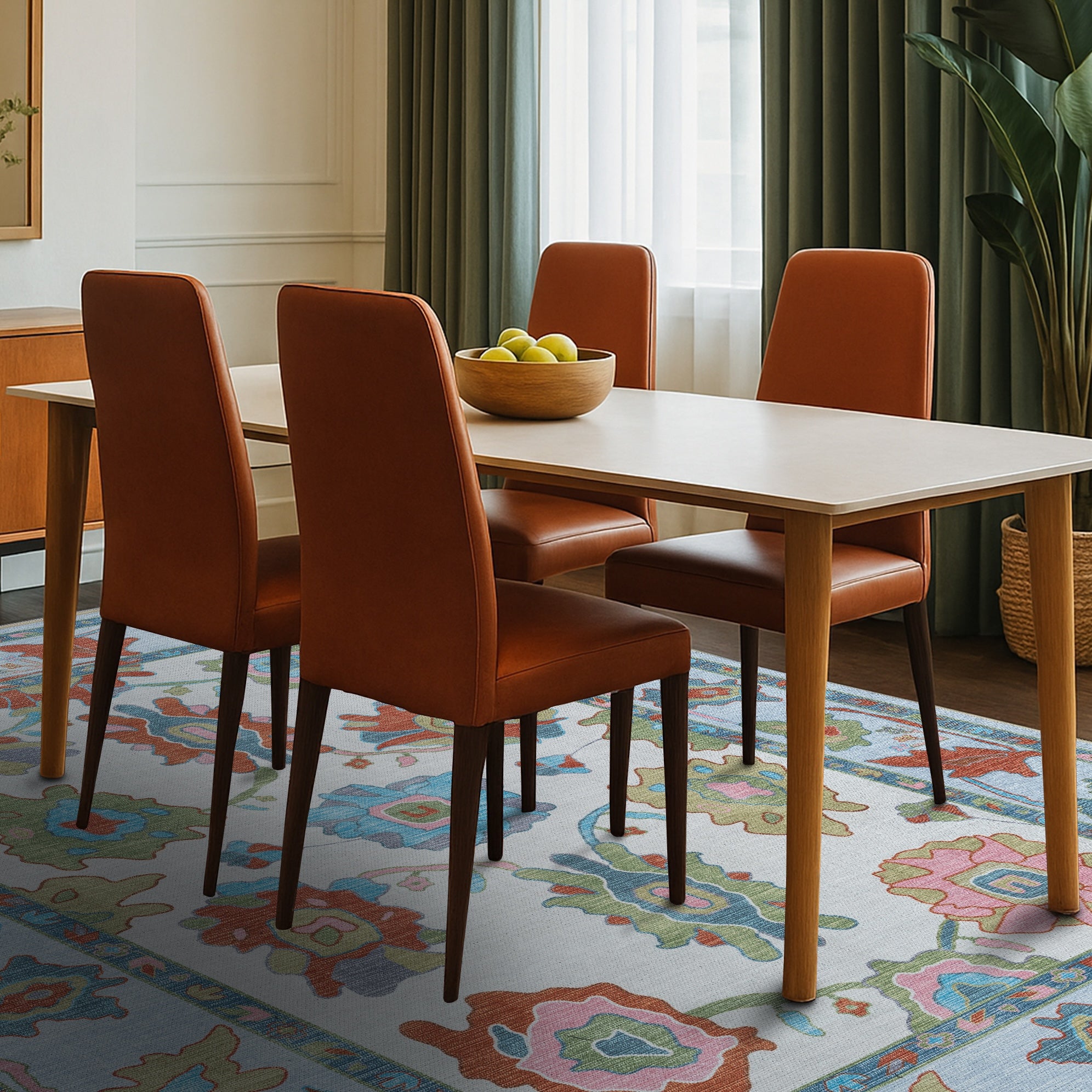
Vera combines a faded beige foundation with green, ivory, pink, and burgundy motif lines. Choose a single accent to carry into the room rather than matching every shade.
Pros: Gentle coordinating colors; vintage-inspired detail; machine-washable care.
Cons: Subtle tones give limited dark contrast; too many matching accessories can overcomplicate the palette.
Best for: Light upholstery and softer accents. Verdict: Buy Vera for a quiet collected room.
4. Nedal: best for earthy depth
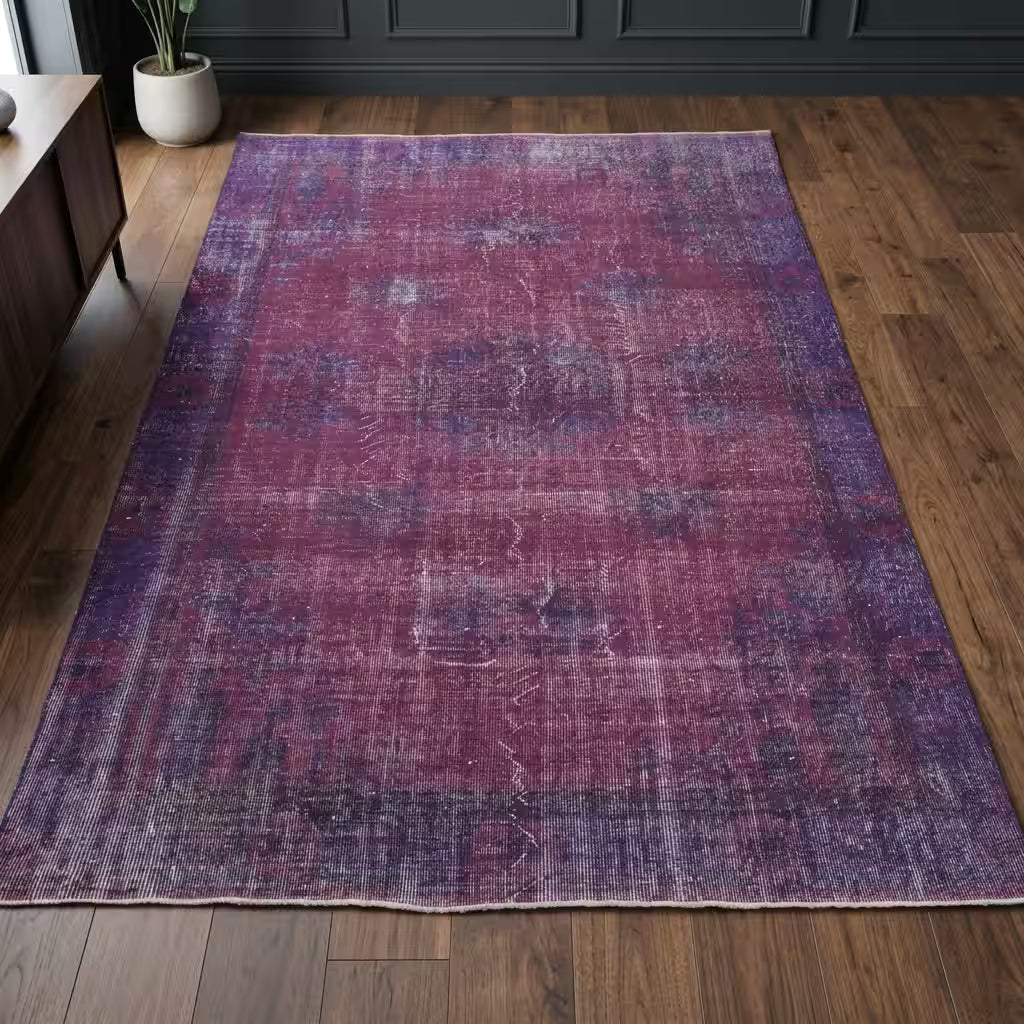
Nedal offers red and brown options with beige motifs. Use lighter cushions and curtains to separate a deeper floor palette from dark furniture.
Pros: Richer color; beige coordinating details; a listed low-pile profile.
Cons: Dark rooms need light contrast; red and brown versions create different room effects.
Best for: Earthy traditional furniture. Verdict: Buy Nedal when depth is missing.


Fit the seating
Compare 8-by-10-foot and 9-by-12-foot planning outlines, then select actual offered dimensions. Include the main seating’s front legs and leave comfortable circulation.
Care and selection
Vova and Vera have machine-washable care in their descriptions. Follow Manda and Nedal’s individual instructions for their cleaning methods. Keep the chosen size’s directions accessible and plan drying before washing.
The University of Delaware’s rug-care guide covers textile construction and maintenance. The EPA’s moisture guidance explains prompt drying of damp carpet and backing.
How the picks were ranked
Fame Rugs choices cover soft medallion color, warm geometry, muted layering, and earthy depth. Palette and seating fit determine the match.
Which should you choose?
Start with Vova for soft traditional color. Choose Manda for geometry, Vera for muted accents, or Nedal for a deeper palette.
Anatolian-inspired motifs and traditional seating proportions
Measure the furniture island
For a layout comparison, an 8-by-10-foot outline is 96 by 120 inches; a 9-by-12-foot outline is 108 by 144 inches. That changes the width by 12 inches (30 cm) and the length by 24 inches (61 cm). Test whether the added room brings the armchairs onto the patterned field, then select actual offered dimensions.
Balance medallions, geometry, and ornamental borders
A traditional conversation area can combine Anatolian-inspired geometric motifs, a faded medallion, and carved wood through a shared muted palette. These are decorating references rather than extra construction or origin claims. Let the border frame plain upholstery and repeat a soft blue, terracotta, or ivory accent in a smaller textile.
Traditional conversation-area measurements at a glance
The larger planning outline adds 28 square feet of coverage. Check whether that added field brings carved-wood armchairs into the same seating island while leaving an ornamental border visible beside the coffee table.
FAQ
Which rug works with a cream sofa?
Vova gives a soft beige-green-blue setting. Manda adds stronger terracotta-and-navy contrast.
How do I choose a medallion or geometric rug?
Use a medallion when a centered motif suits the room. Choose geometry for a more angular pattern direction.
Which colors work with brown furniture?
Manda’s terracotta and navy connect with warm wood; Nedal gives a deeper earthy option.
Should the rug reach the armchairs?
Connect the main seating where possible. Test the actual footprint with chairs in their usual positions.
How many rug colors should I repeat?
Choose one or two useful accents rather than matching every motif.
What if the table covers the center?
Compare the exposed border and surrounding field. Choose the pattern you will actually see.
One last thing
Look at the room from your usual seat as well as the doorway. The rug should feel connected from both views.
