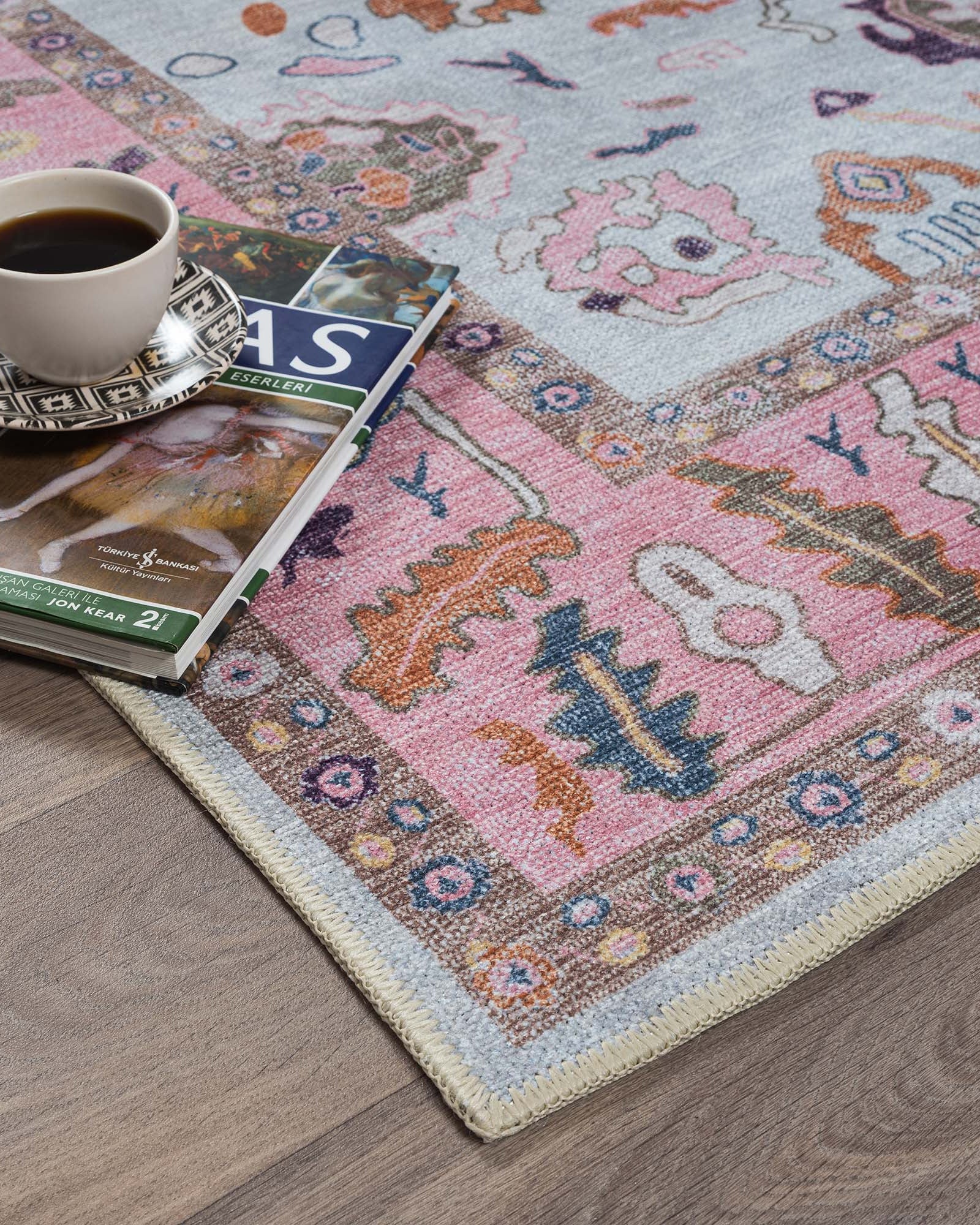
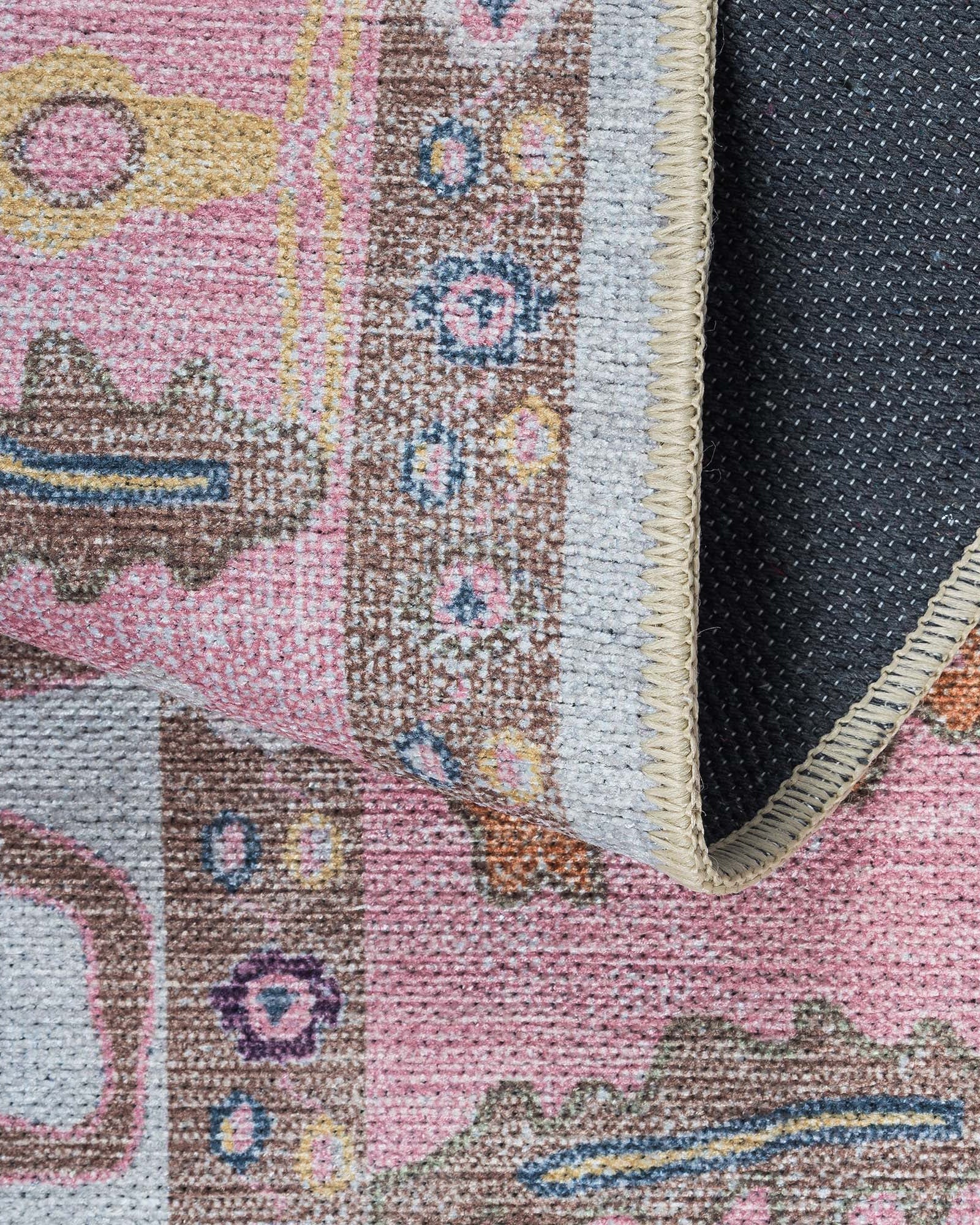
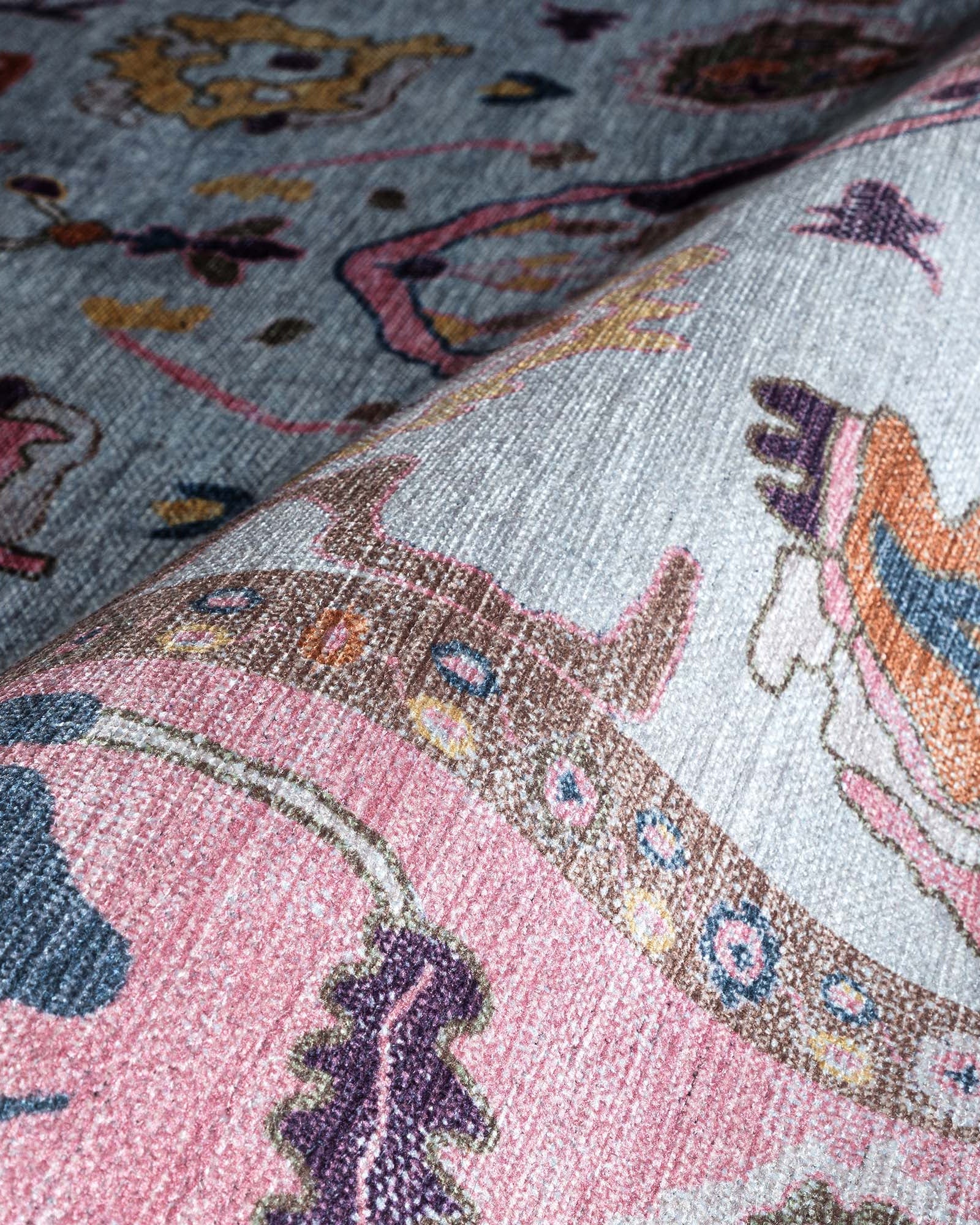
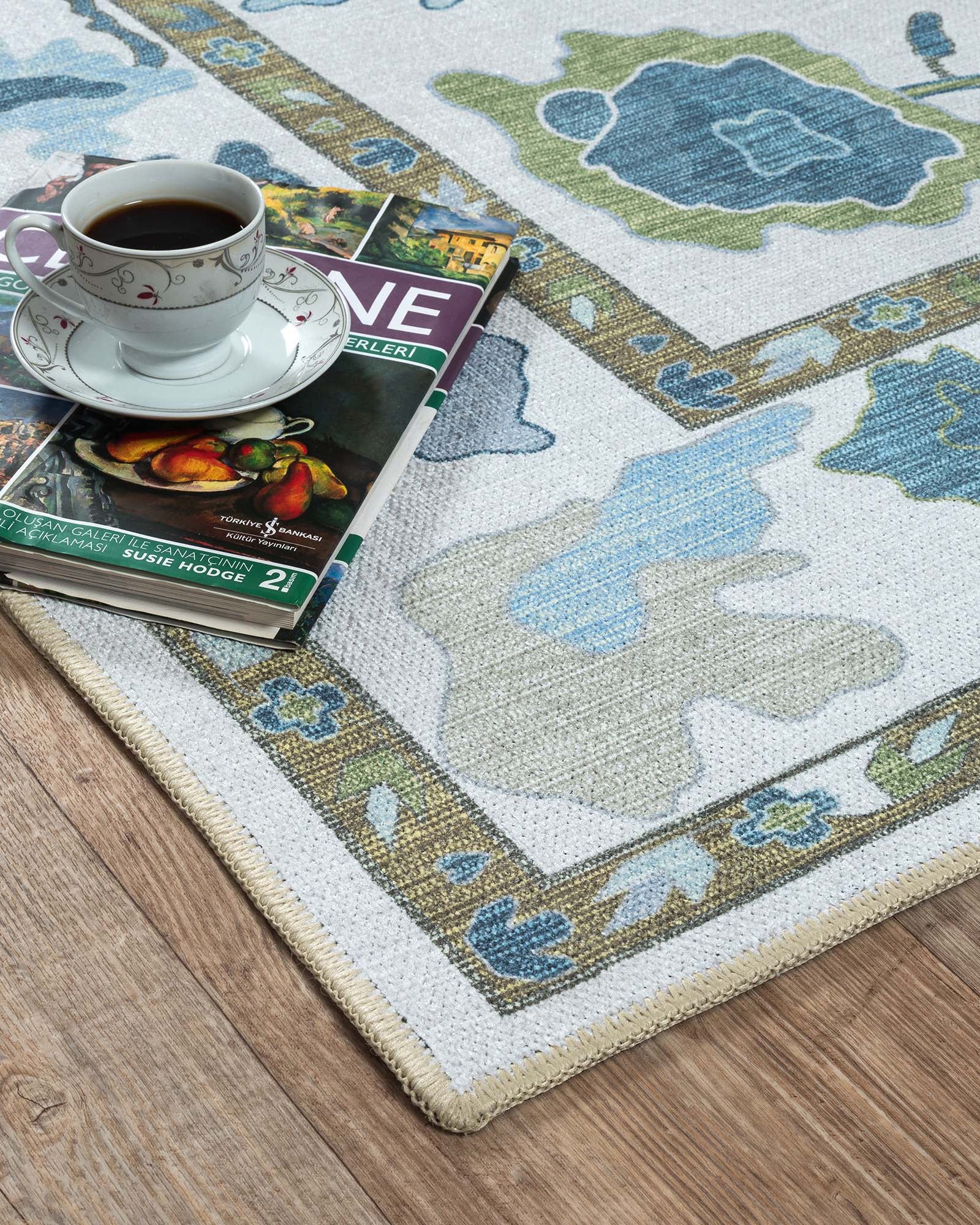
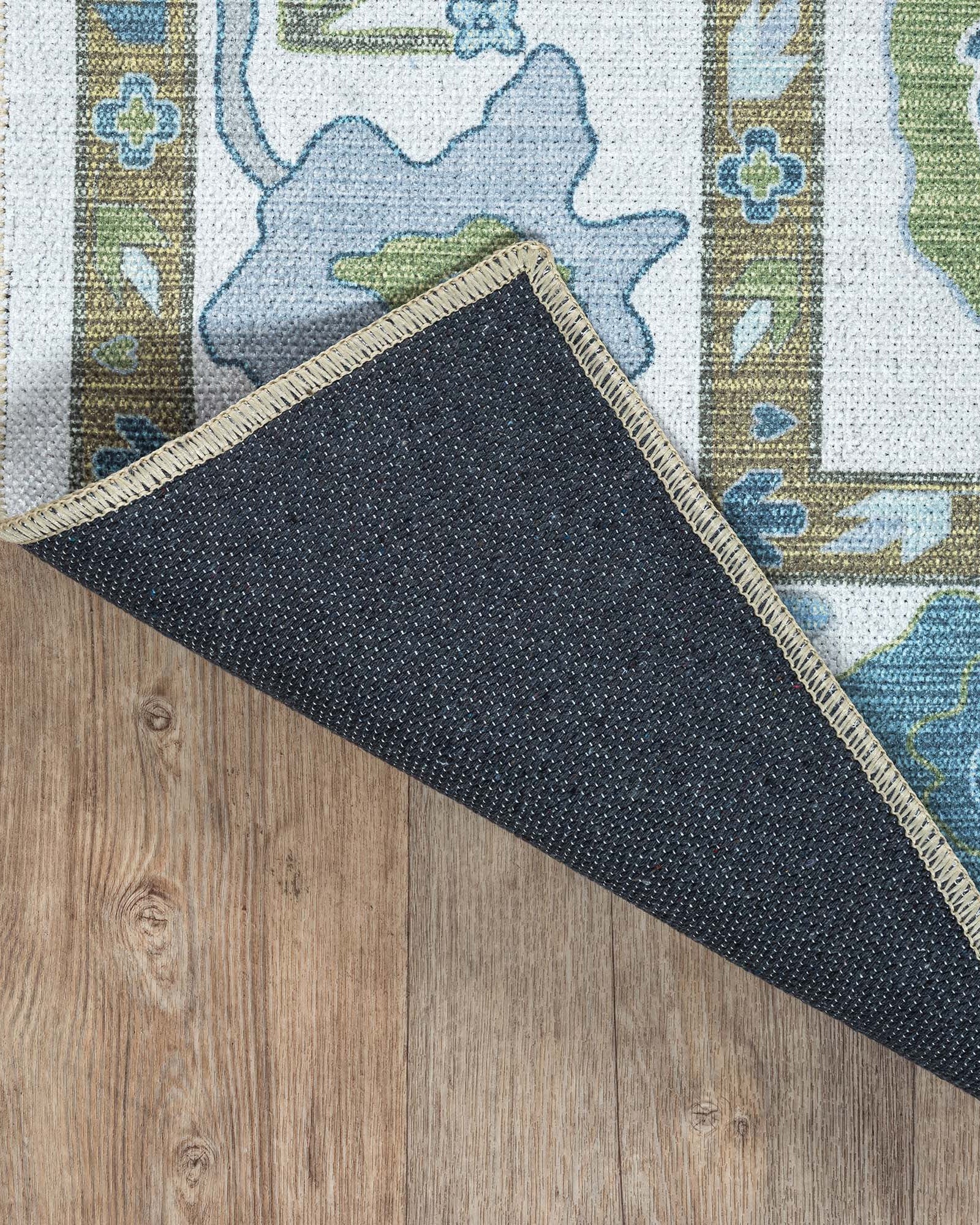
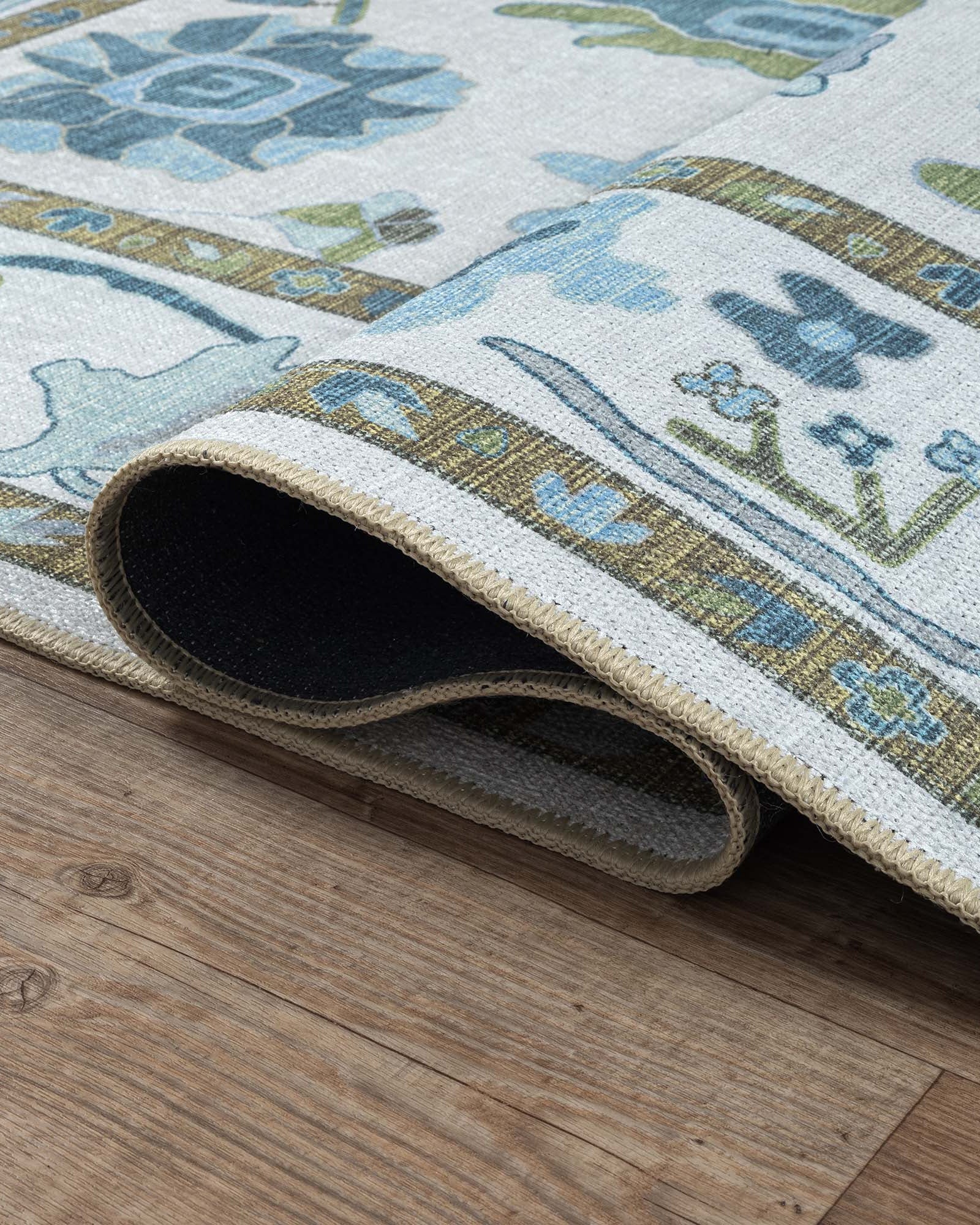
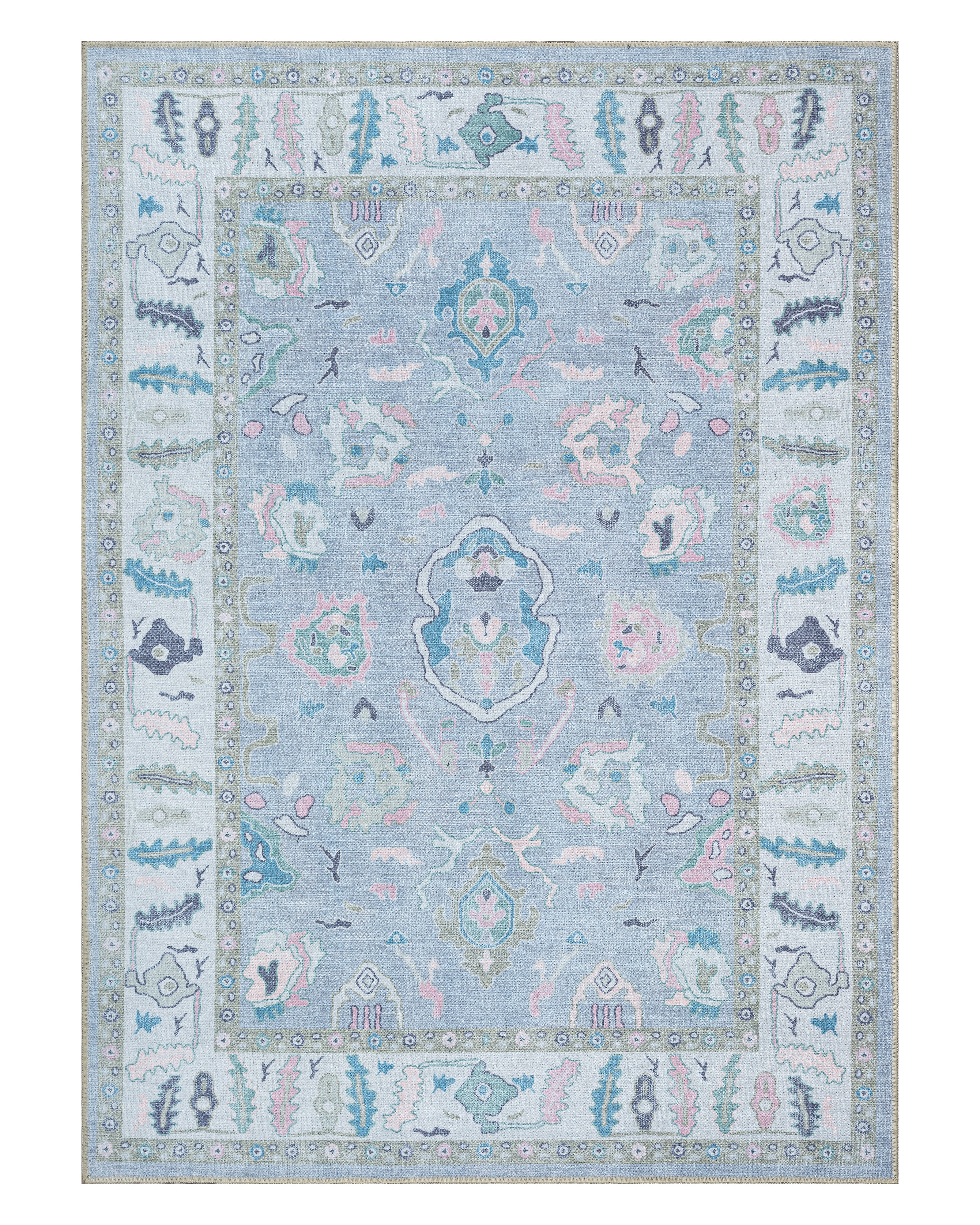
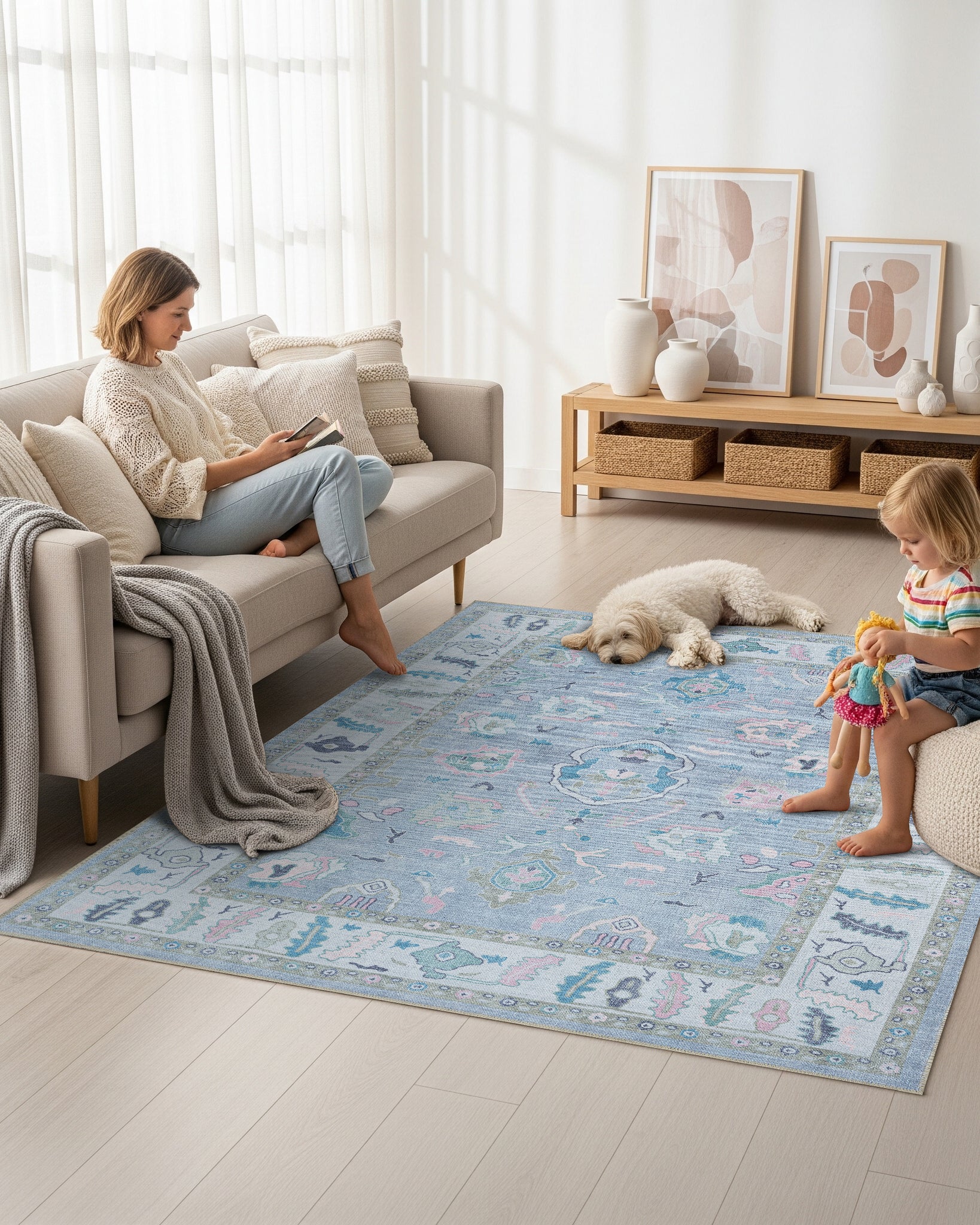
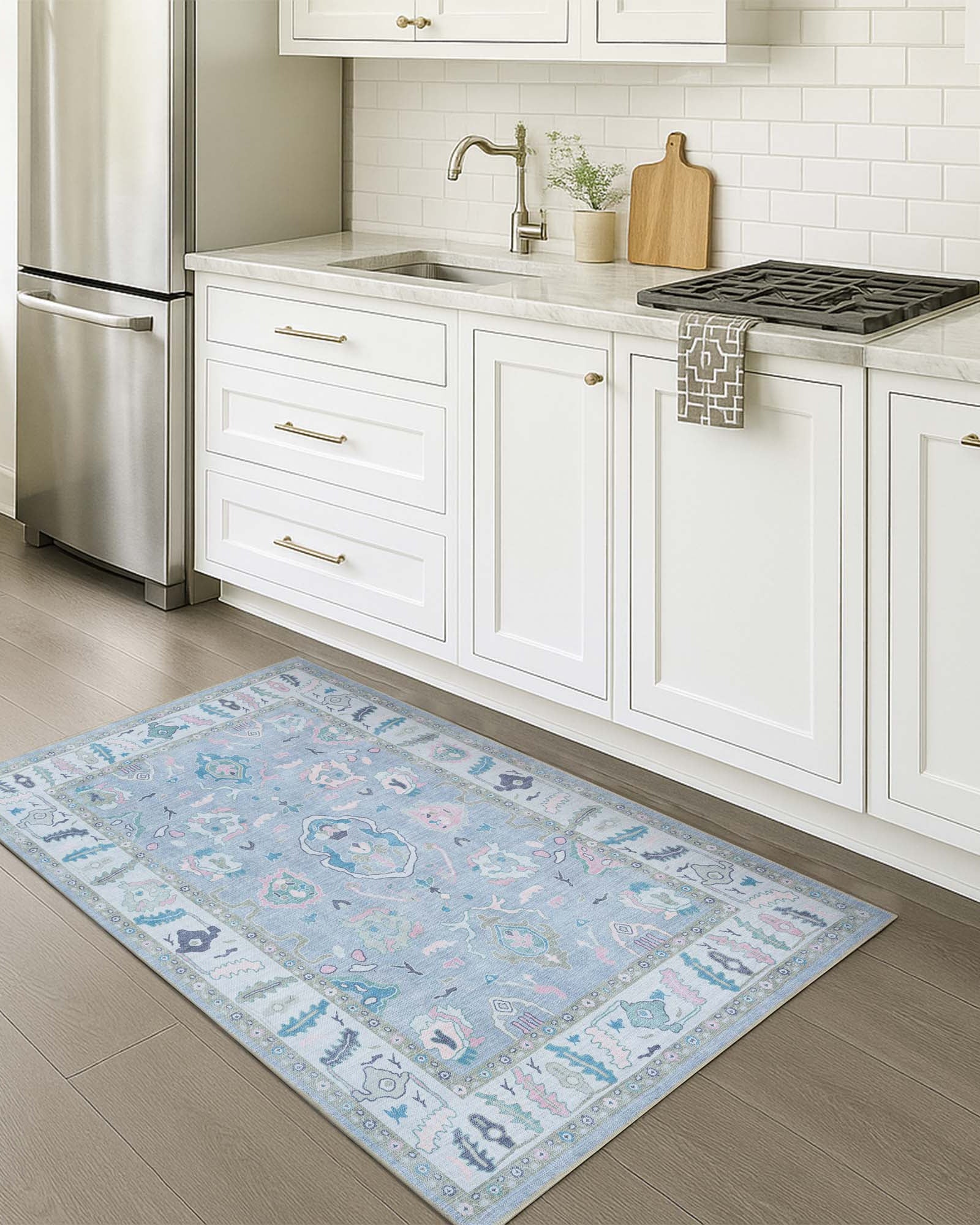
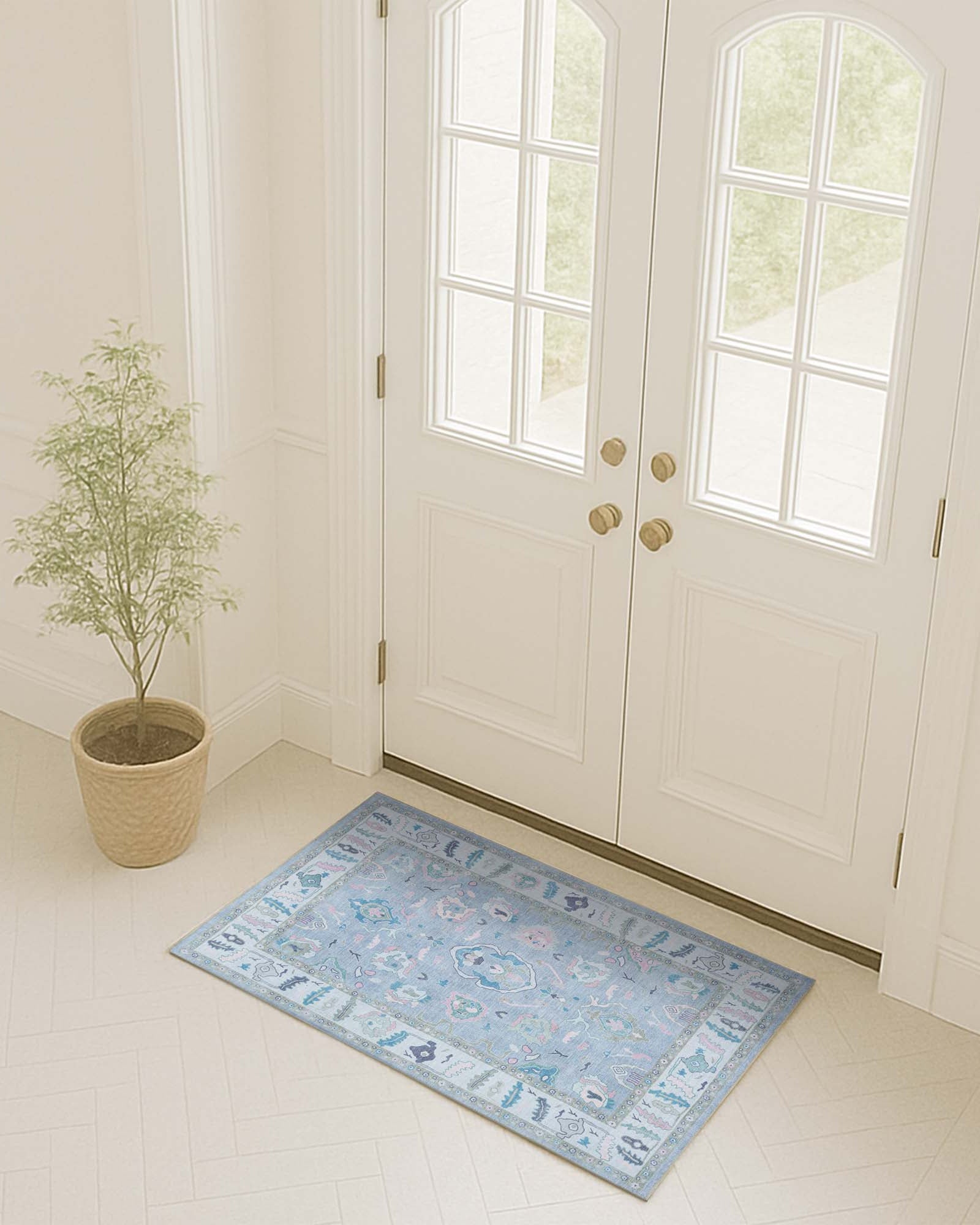
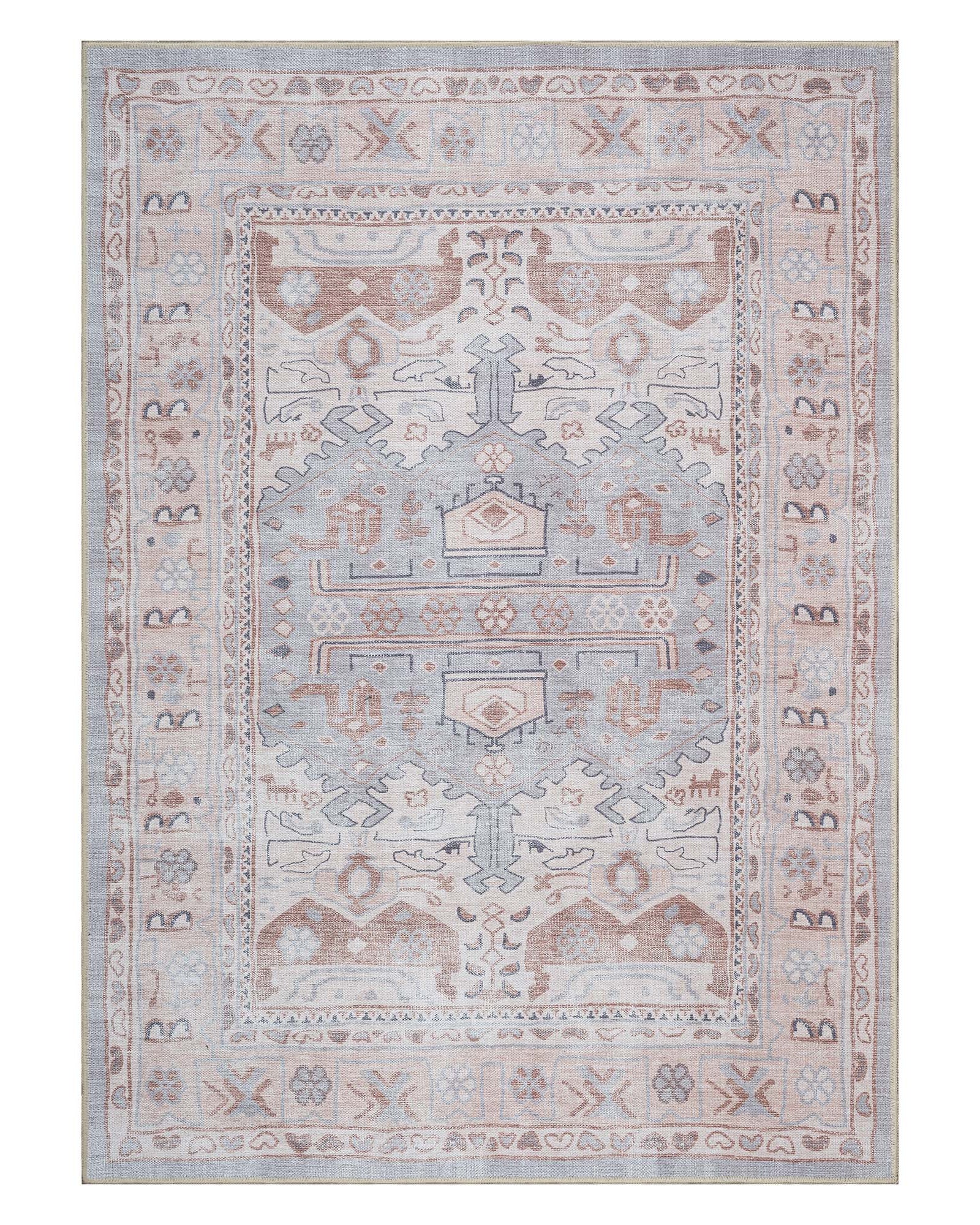
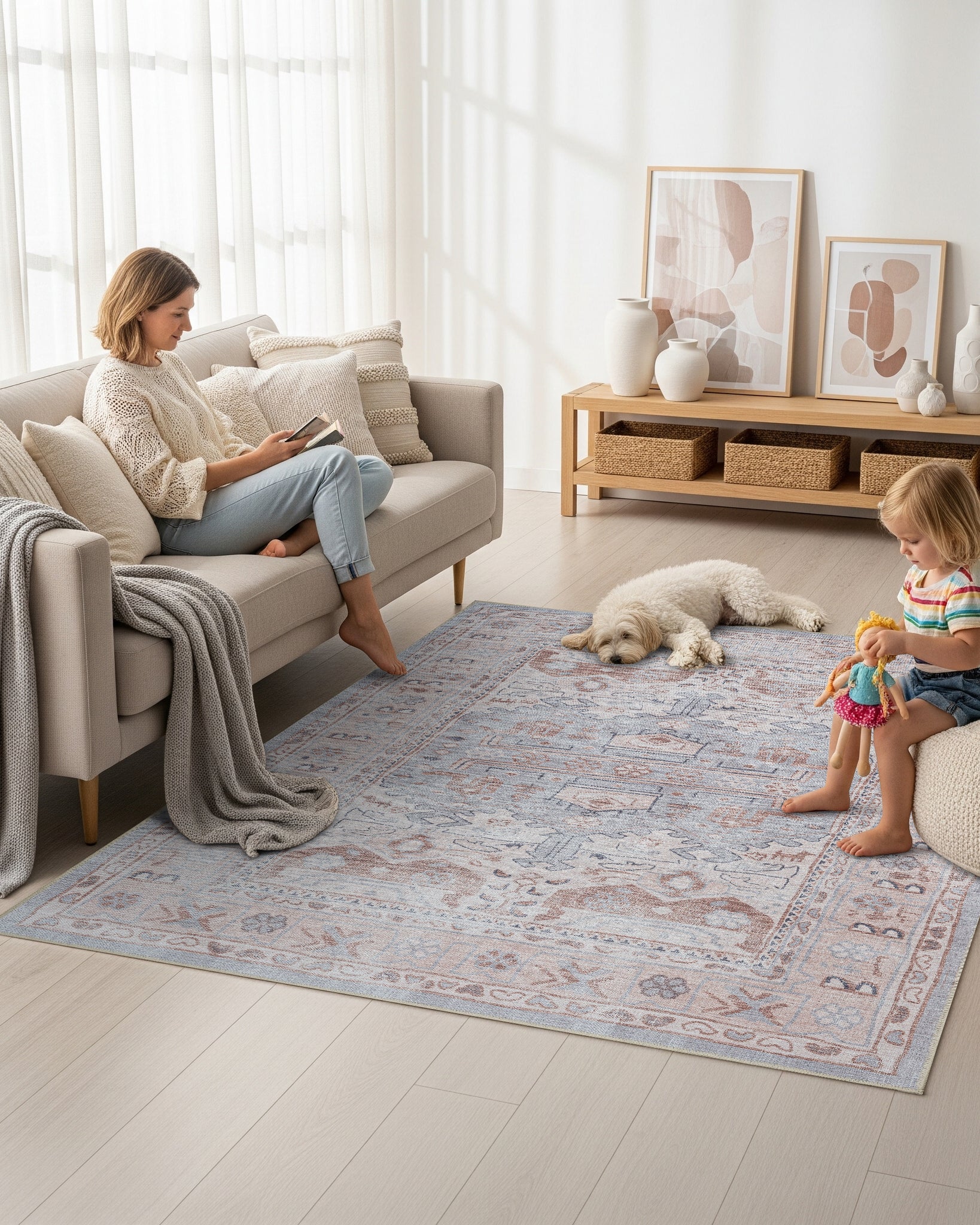
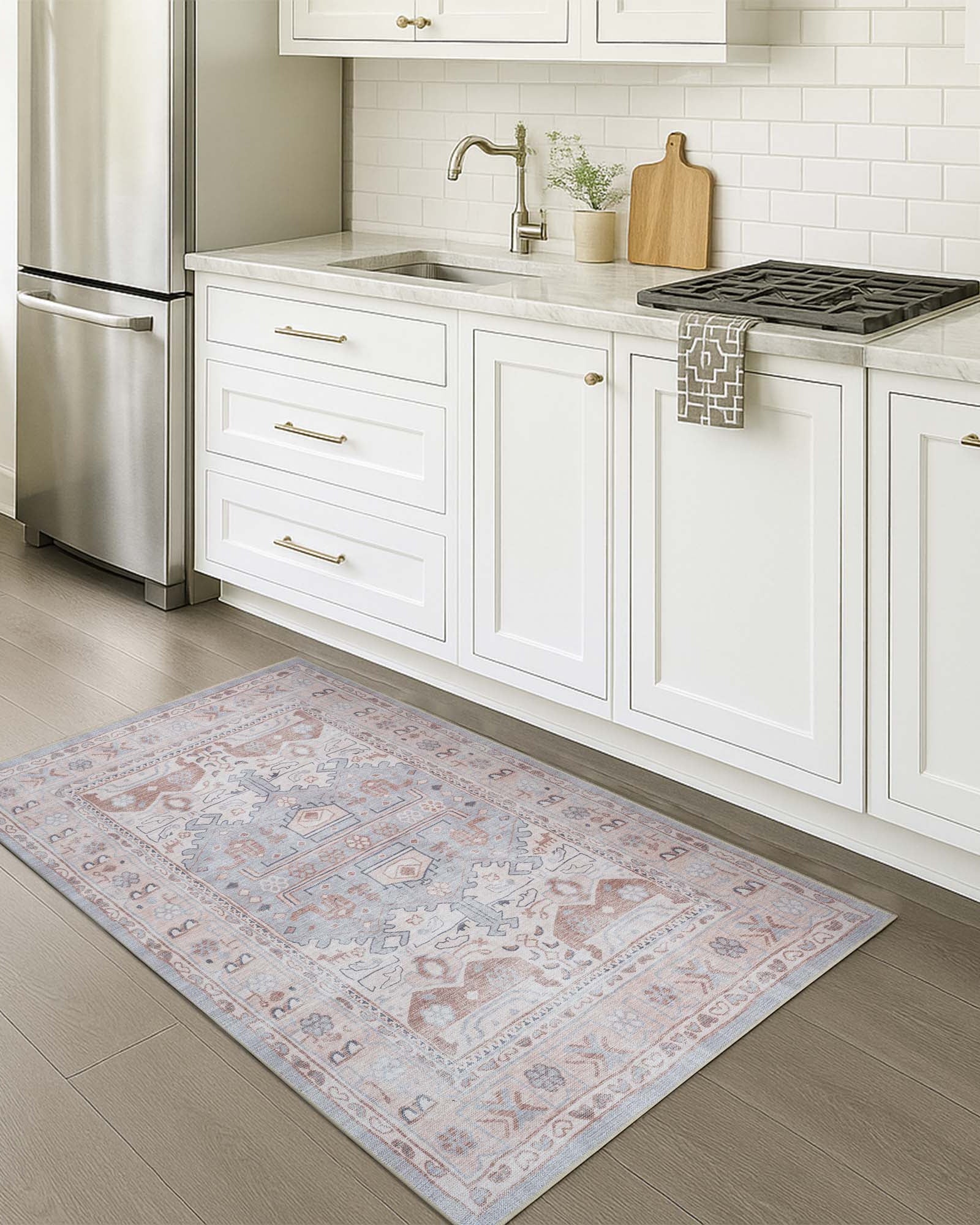
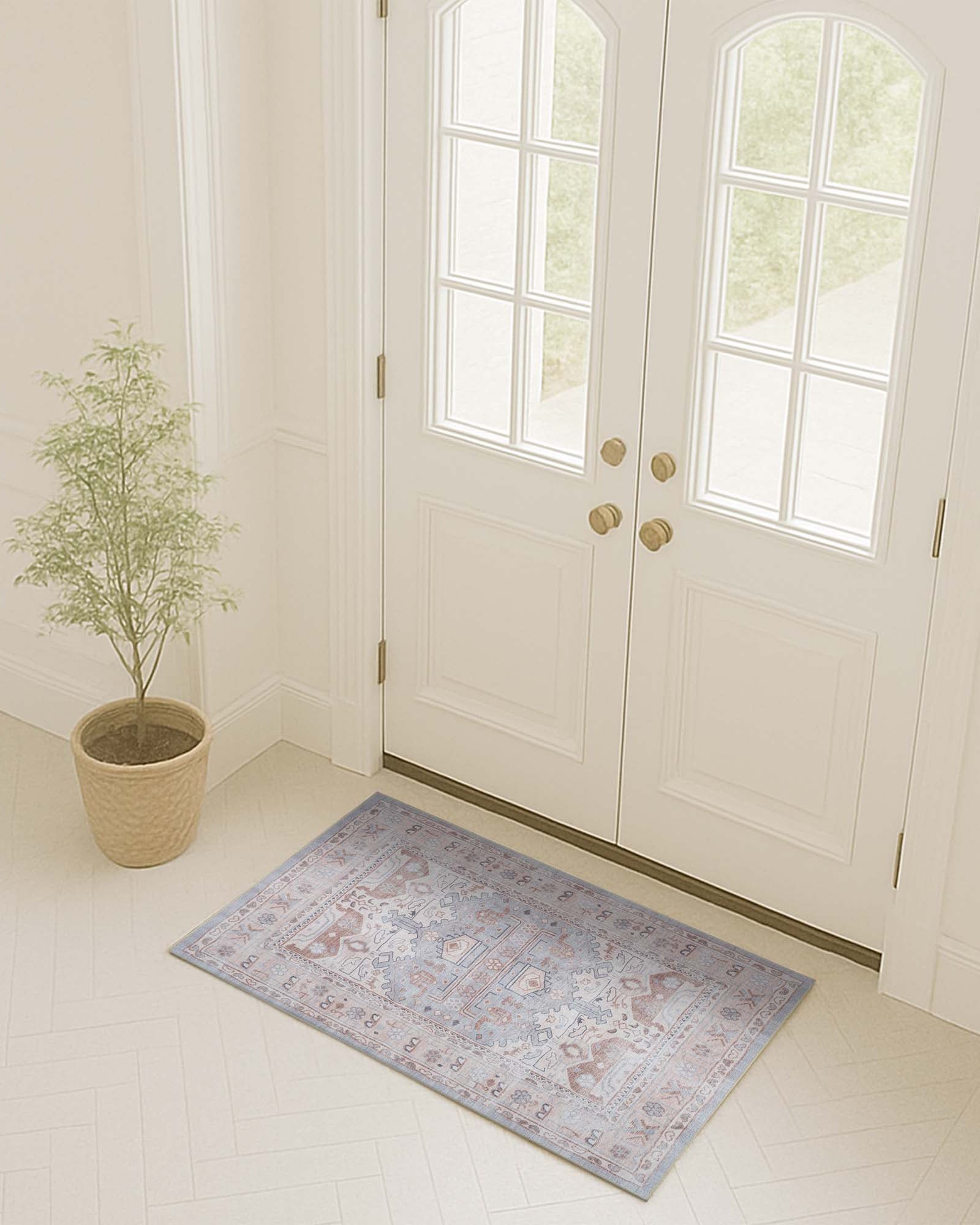
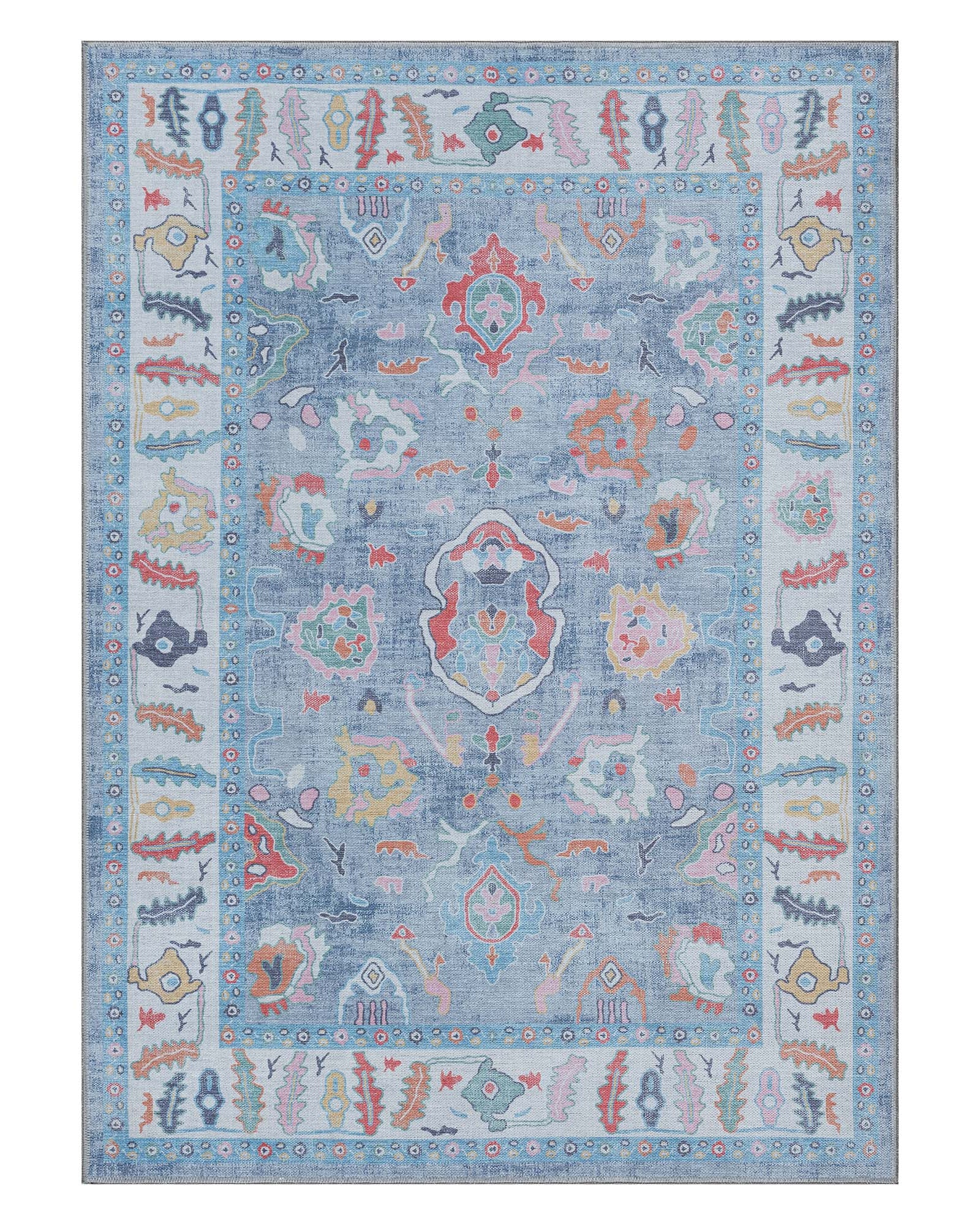
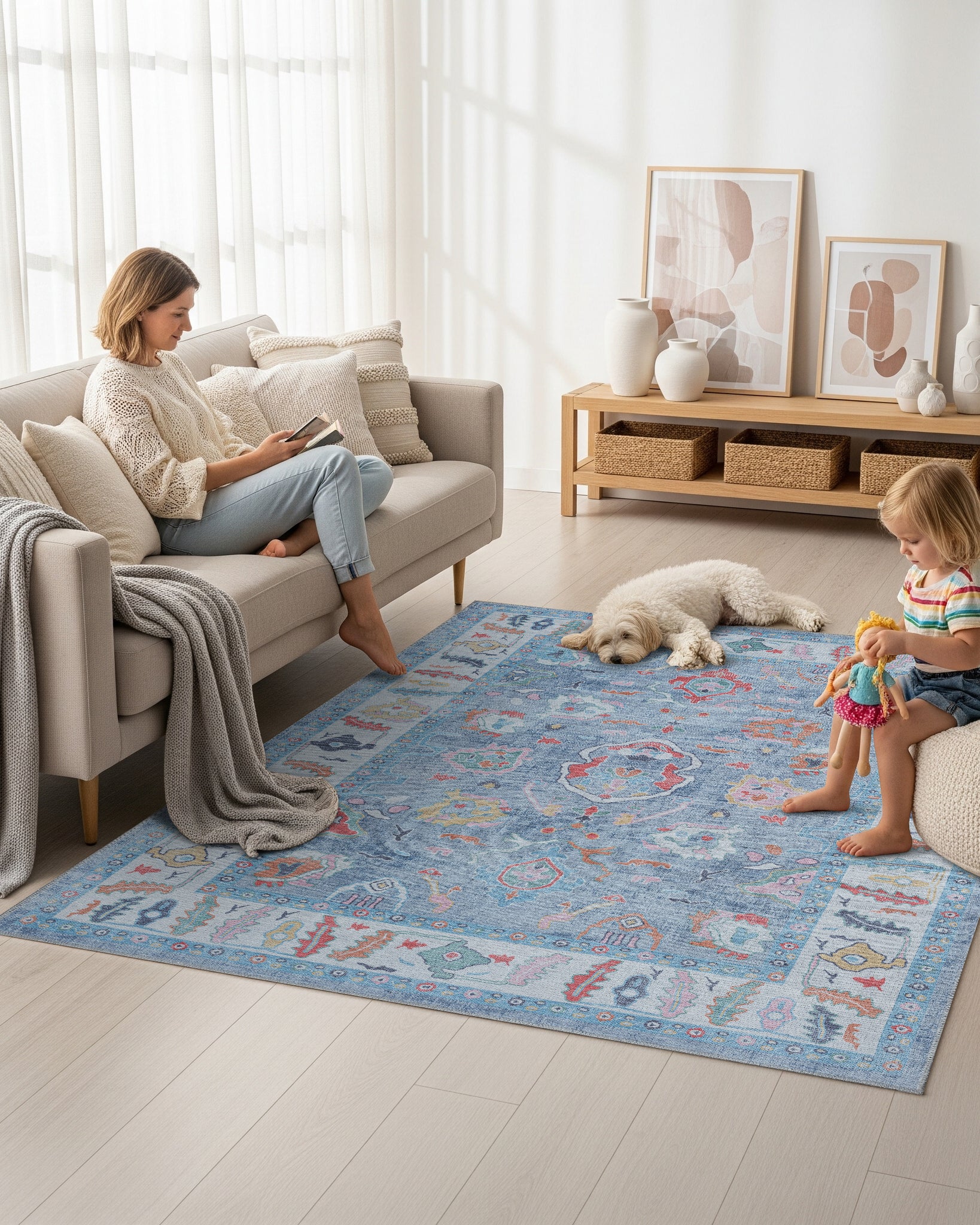
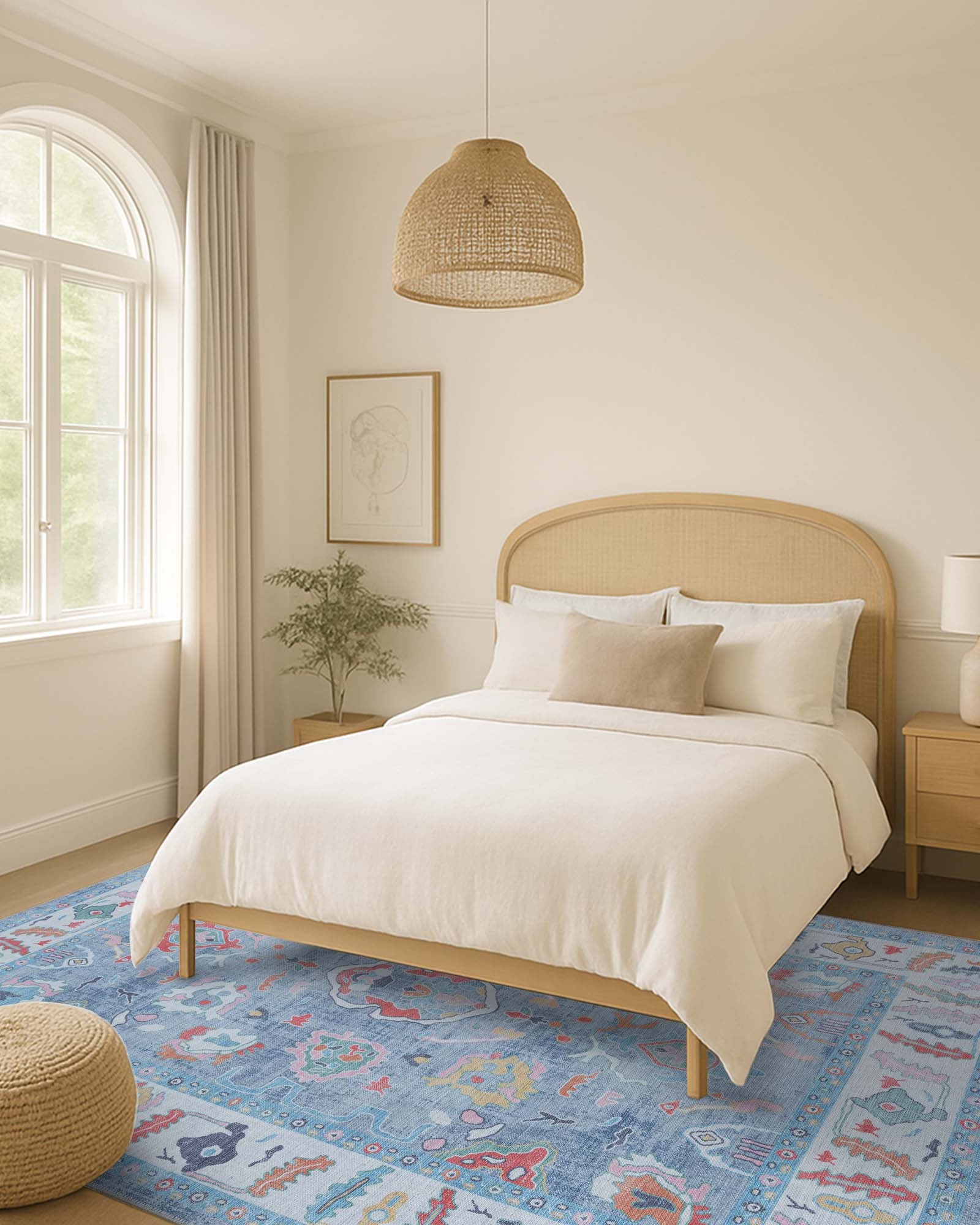
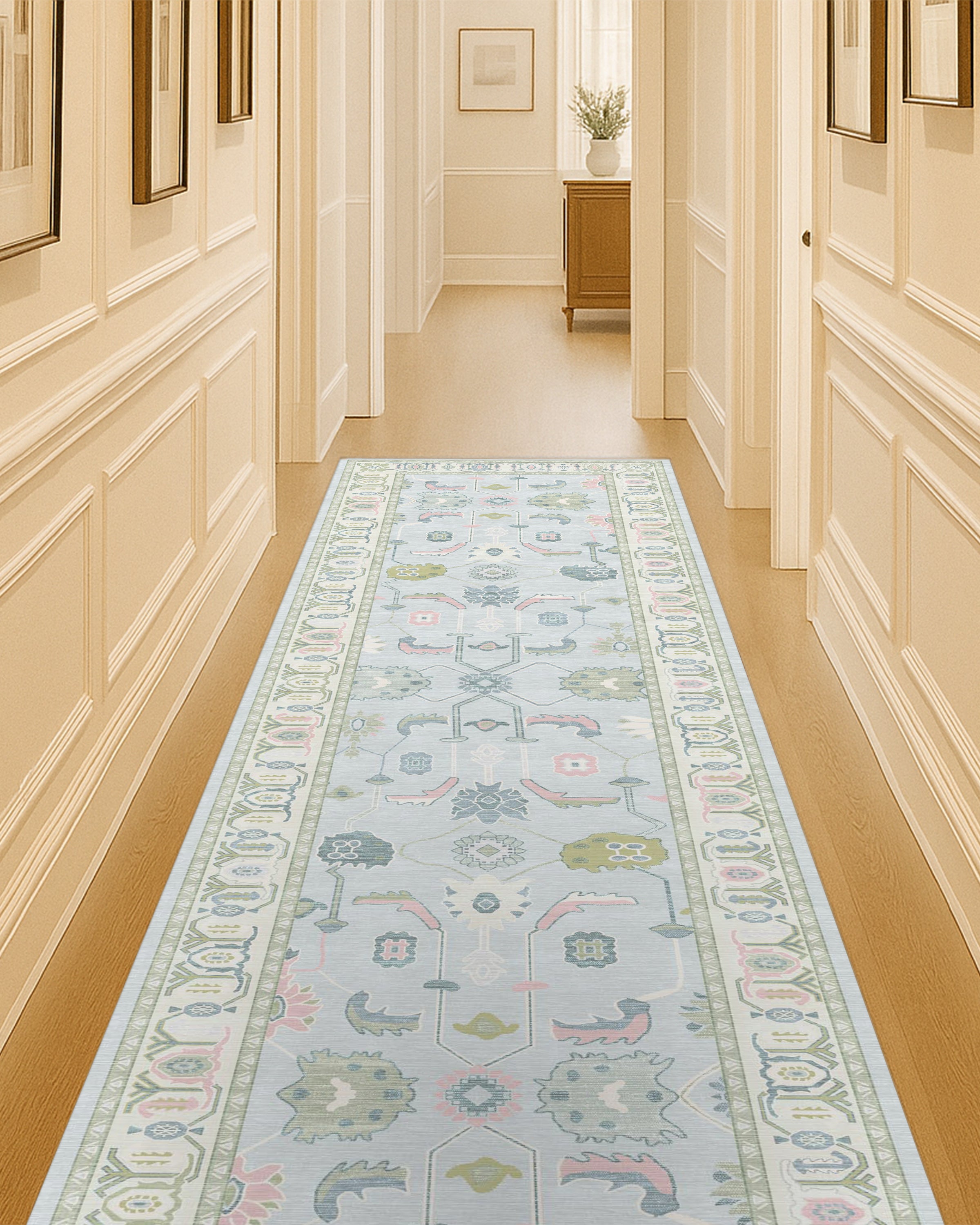
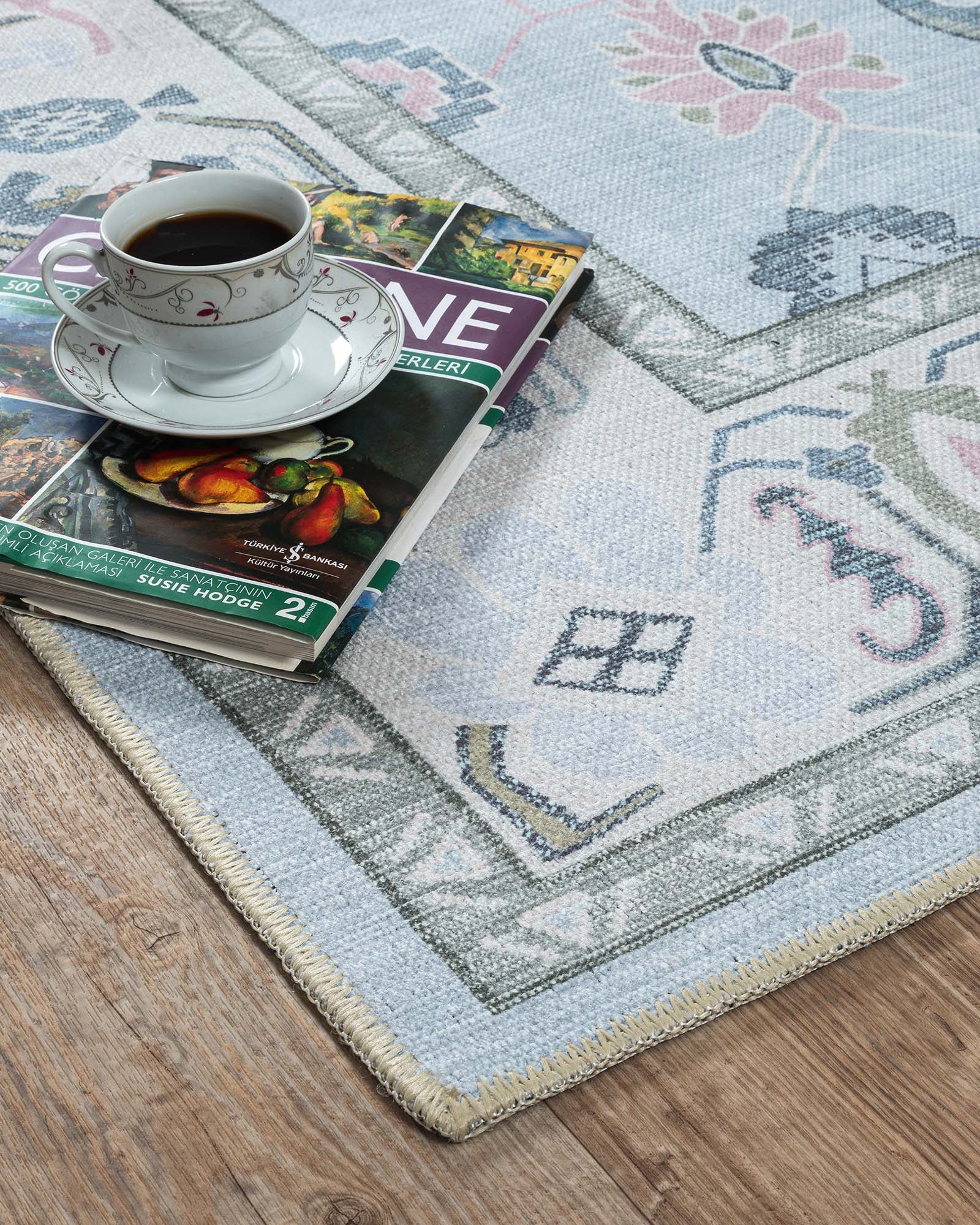
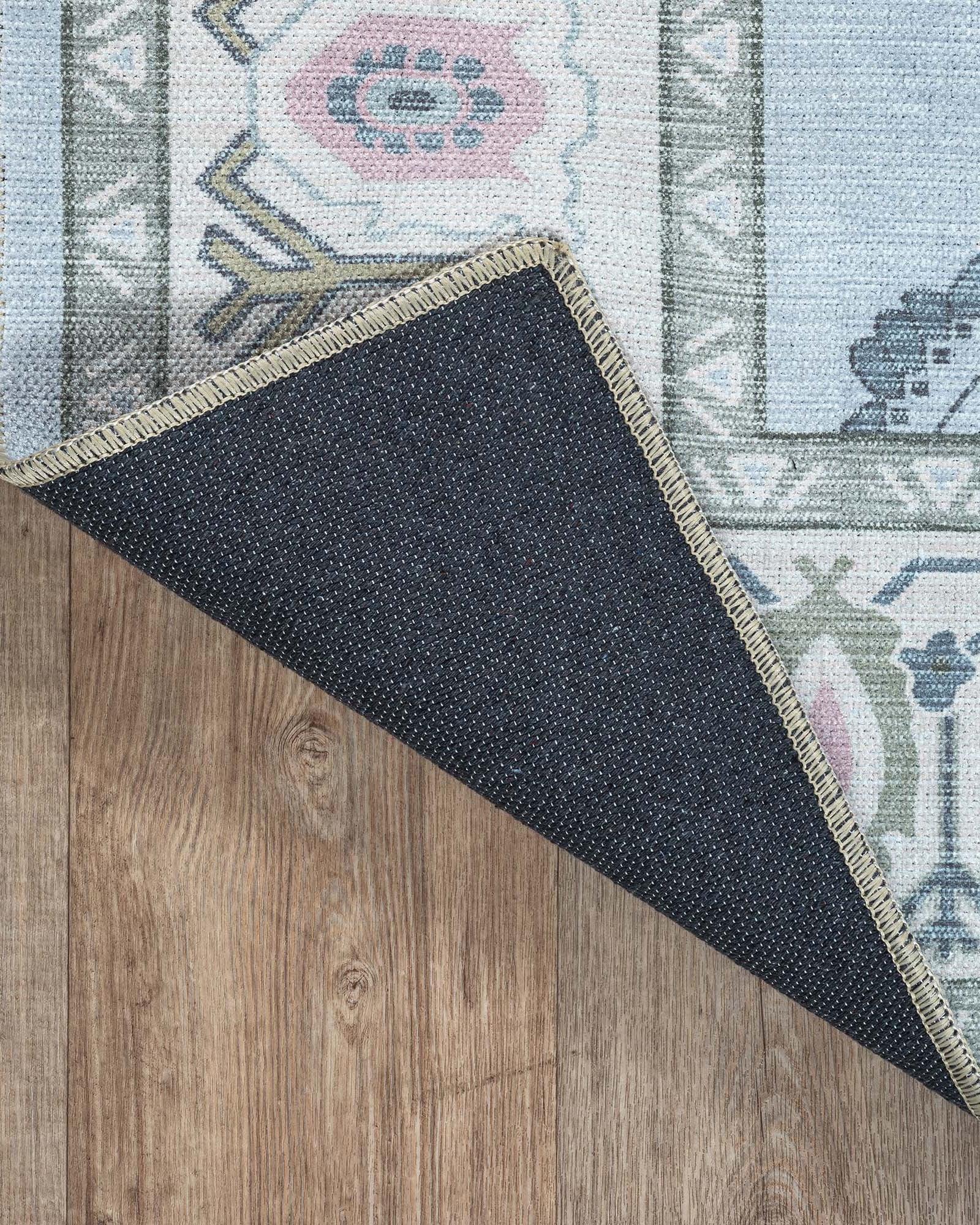
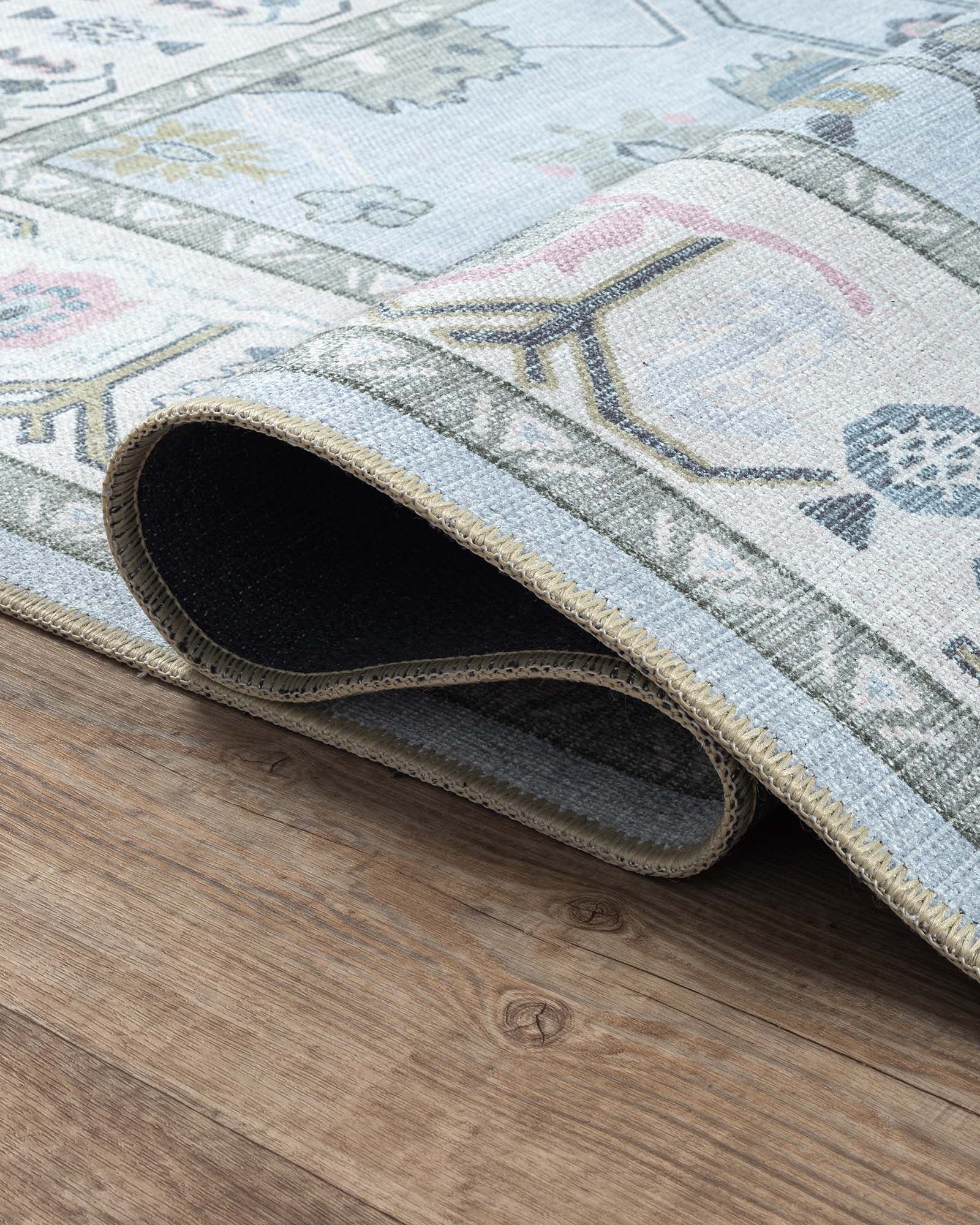
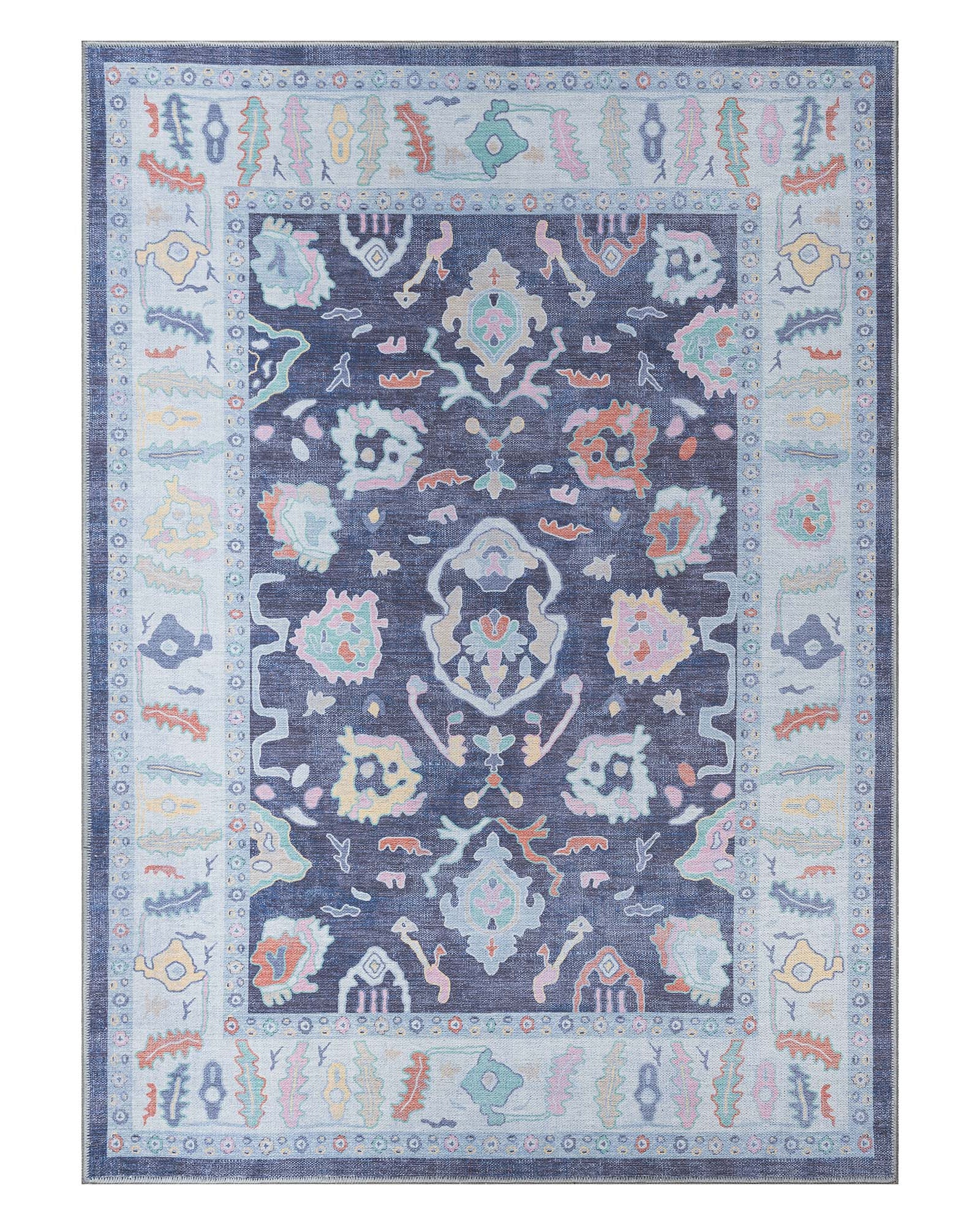
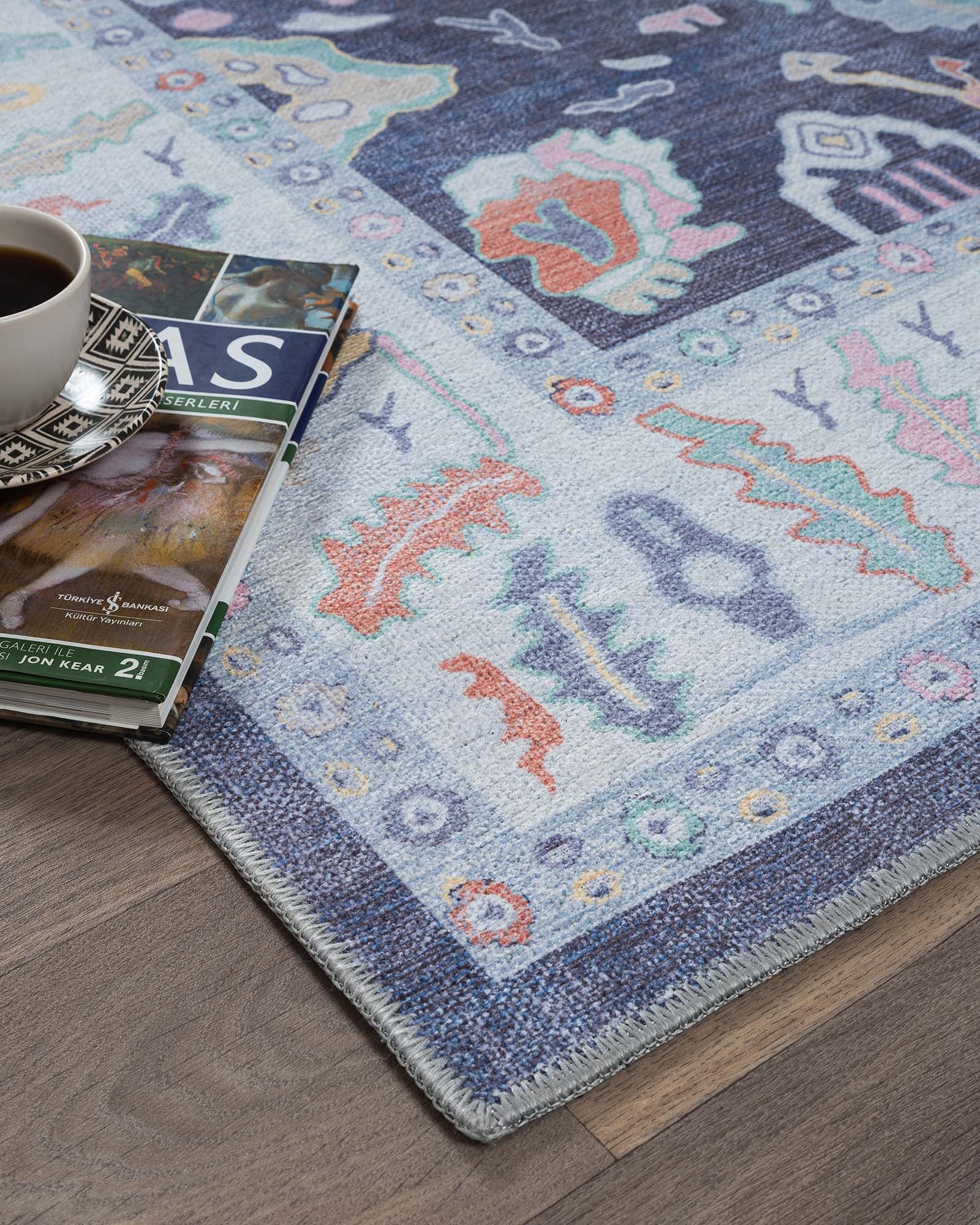
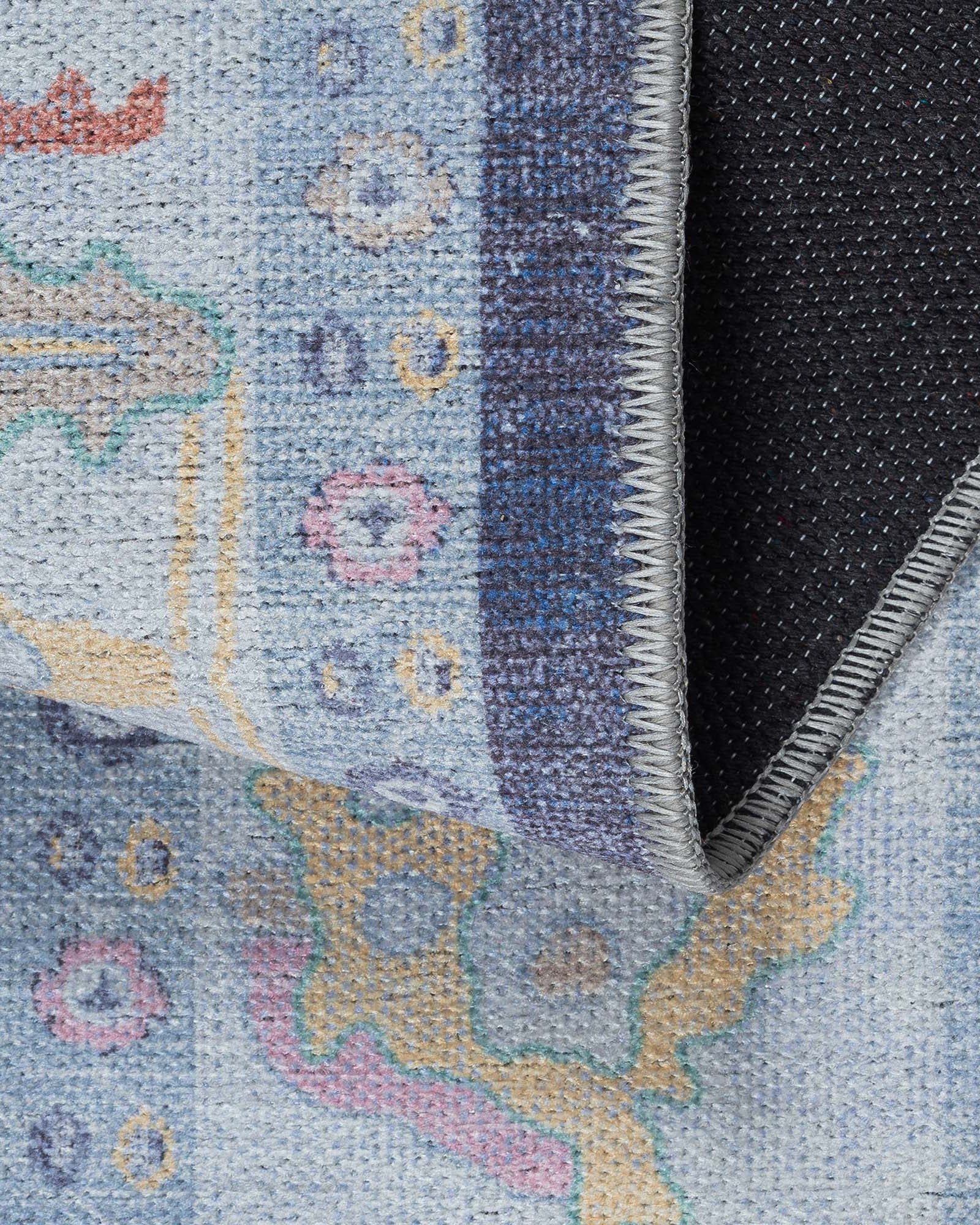
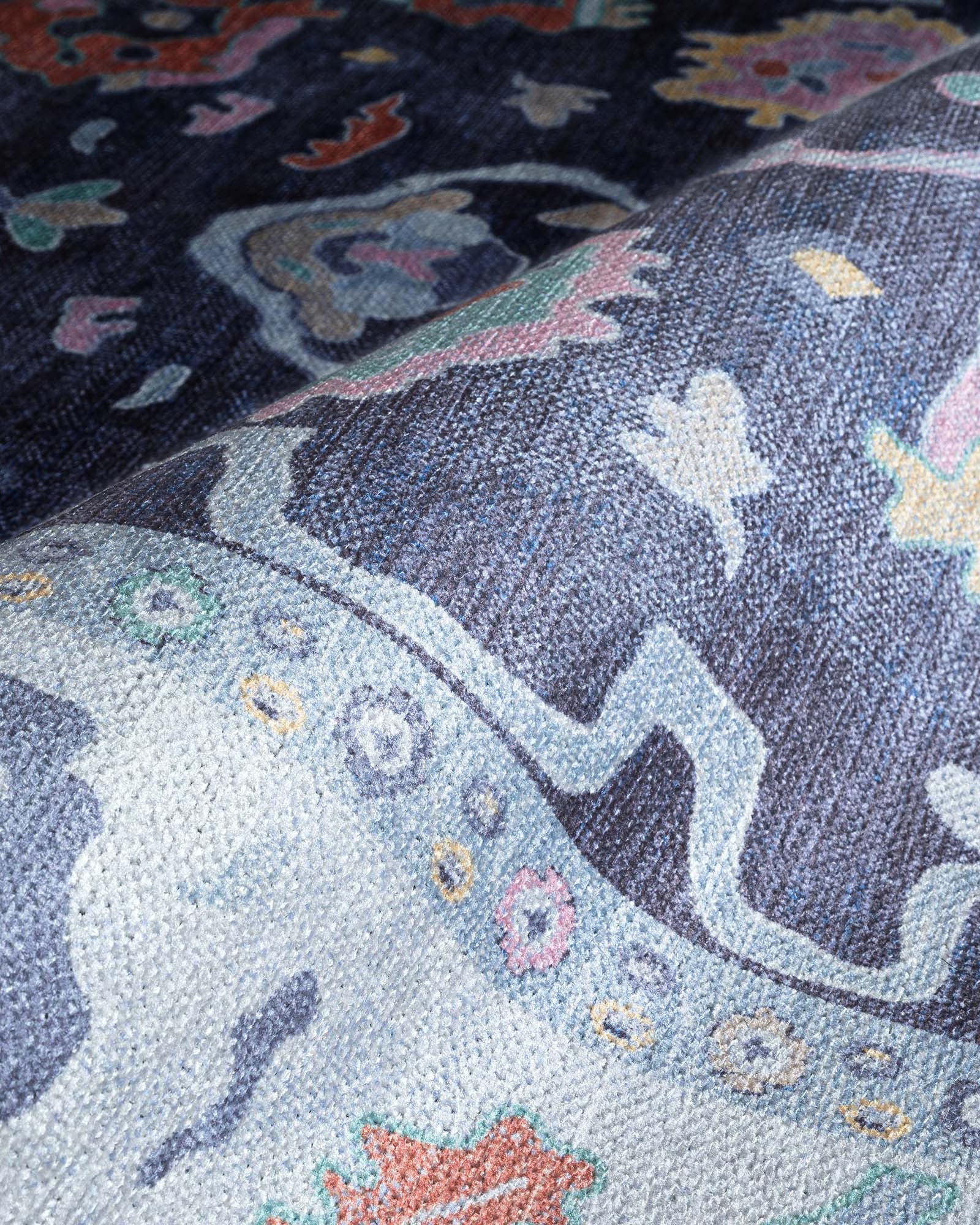
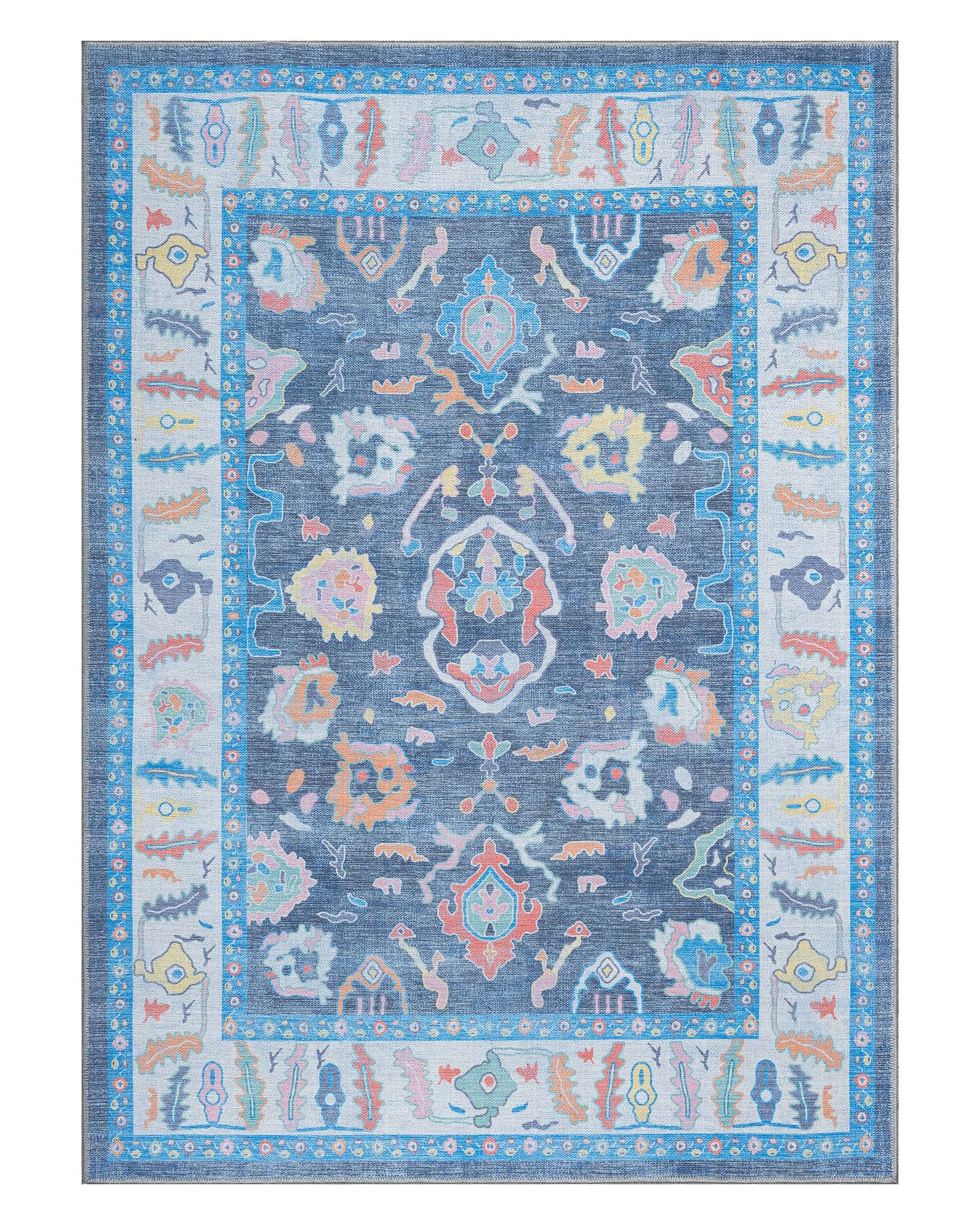
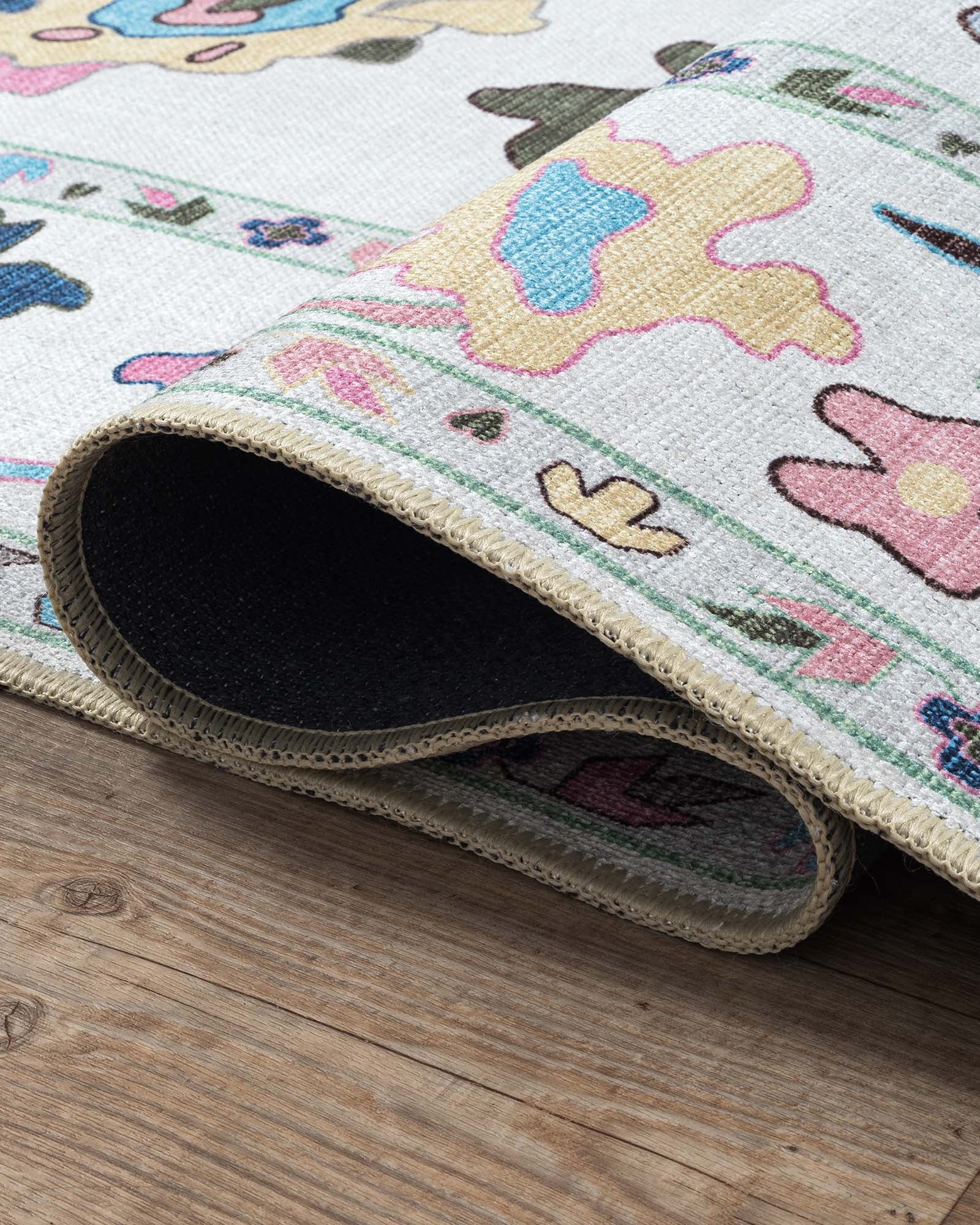
Before a rug can be woven, the wool has to become yarn, and how that happens changes the finished rug more than almost any other single factor. Hand-spinning — drawing and twisting raw fleece by hand or on a drop spindle — produces yarn that is never perfectly uniform. That irregularity, which a machine would treat as a defect to eliminate, is precisely what gives a hand-knotted rug its depth of colour and texture. Every piece in this collection is knotted from hand-spun wool.
How Hand-Spinning Actually Works
Raw fleece is washed, carded to align the fibres, and then drawn out and twisted into yarn, traditionally using a drop spindle or a simple spinning wheel. The spinner controls thickness by feel — how much fibre they draw from the mass at any moment, how much twist they put in, how fast they let the spindle turn. There is no mechanism enforcing consistency, only the spinner's hands and years of practice.
The result is yarn with genuine variation in diameter along its length: thicker in places, thinner in others, with twist that is never perfectly even. This is not a sign of a beginner's work — even highly skilled hand-spinners produce yarn with natural variation, because that is simply what hand-spinning is.
Why Irregular Yarn Takes Colour Differently
Dye penetrates yarn based on fibre density and surface area, and both of those shift constantly along a hand-spun thread. Slightly thicker sections resist dye penetration more than thinner ones; looser twist exposes more surface area than tight twist. The same dye bath, applied to the same skein, produces subtle variation in colour intensity along the yarn's length purely because the yarn itself is not uniform.
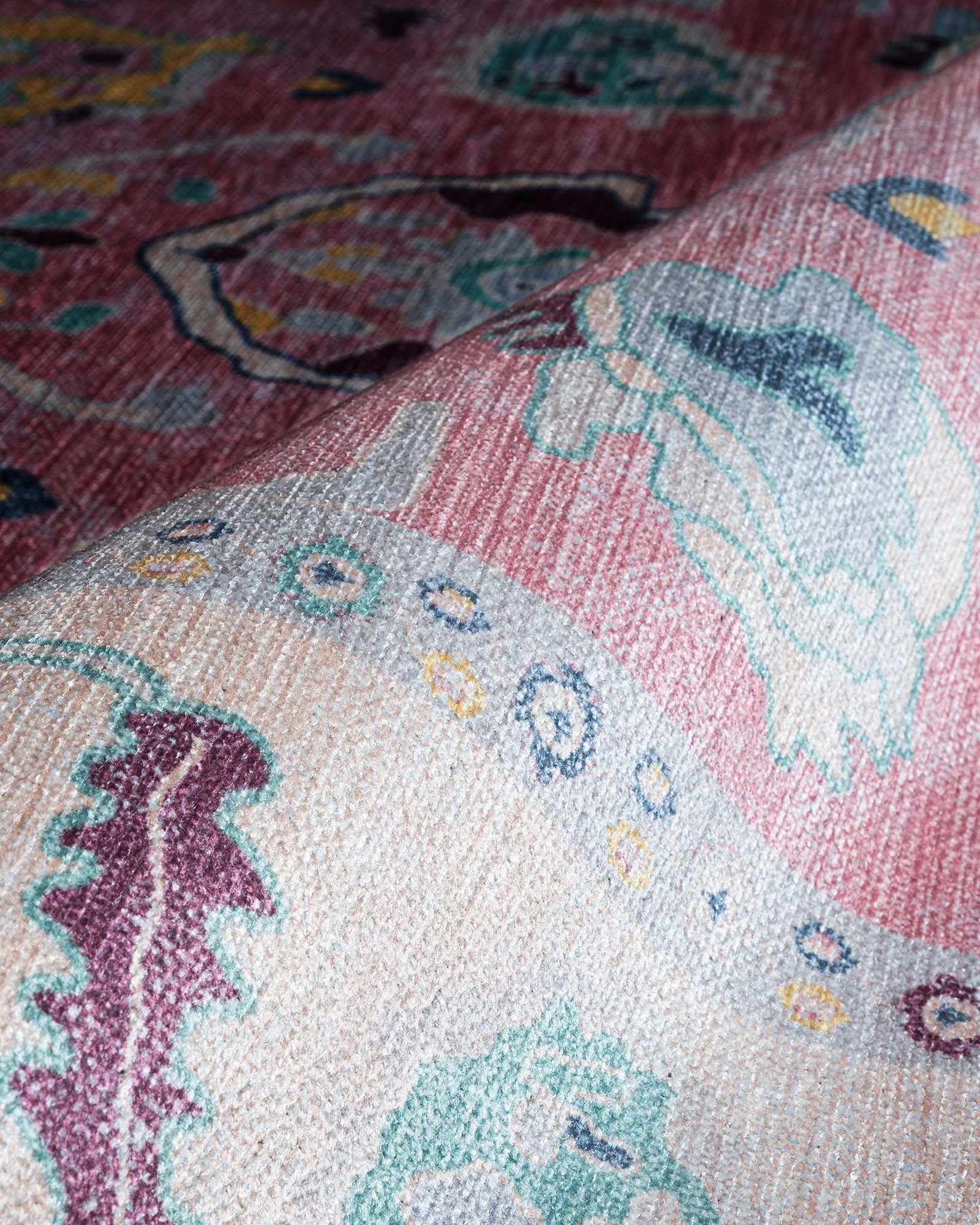
This is the real source of the depth people notice in old hand-knotted rugs and cannot quite name. It is not abrash, which comes from separate dye batches — it is a finer-grained variation built into the yarn itself, visible as a kind of shimmer or liveliness across a field that machine-spun, perfectly uniform yarn simply does not produce, even when dyed with the same recipe.
Machine-Spun Versus Hand-Spun
Machine spinning, introduced to rug production in the twentieth century, draws and twists fibre mechanically to a precise, consistent diameter. It is faster, cheaper, and produces yarn that dyes evenly and predictably — genuinely useful properties for large-scale, consistent production. What it cannot replicate is the micro-variation of hand-spun yarn, because consistency is the entire point of a machine. A rug knotted from machine-spun wool reads flatter under close inspection, even at identical knot density and dye recipe, because the yarn itself carries no internal variation for the dye to catch differently.
How to Recognise Hand-Spun Wool
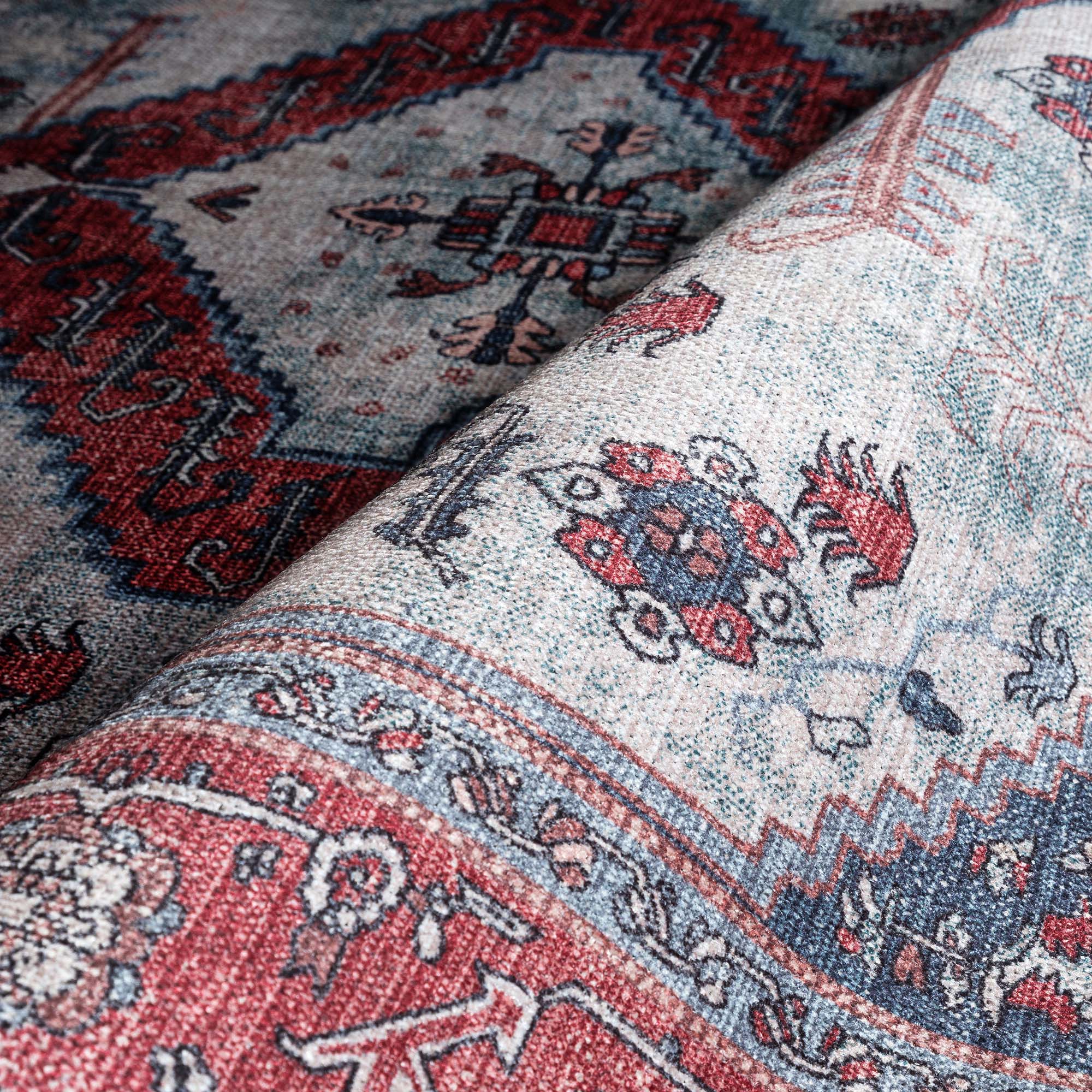
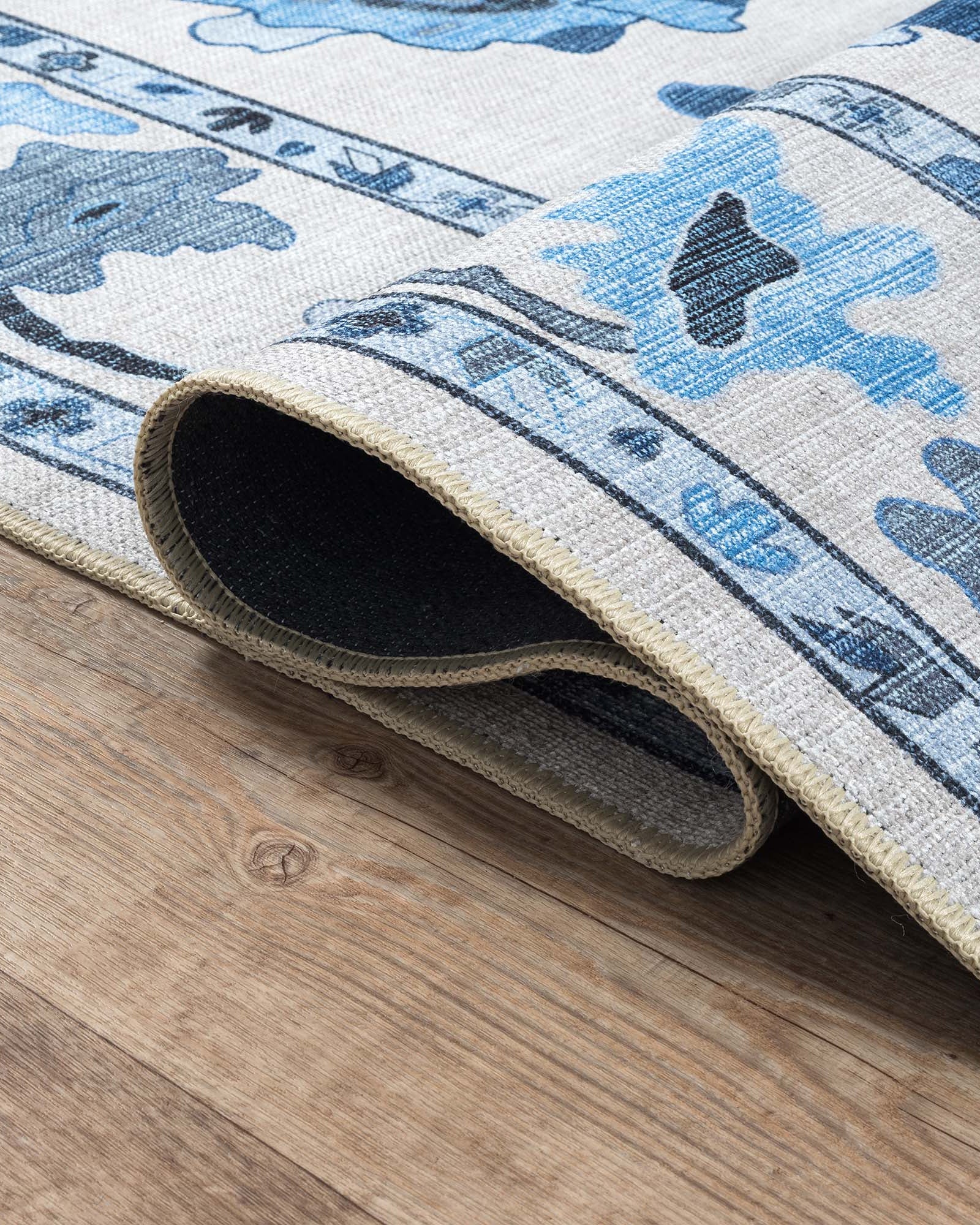
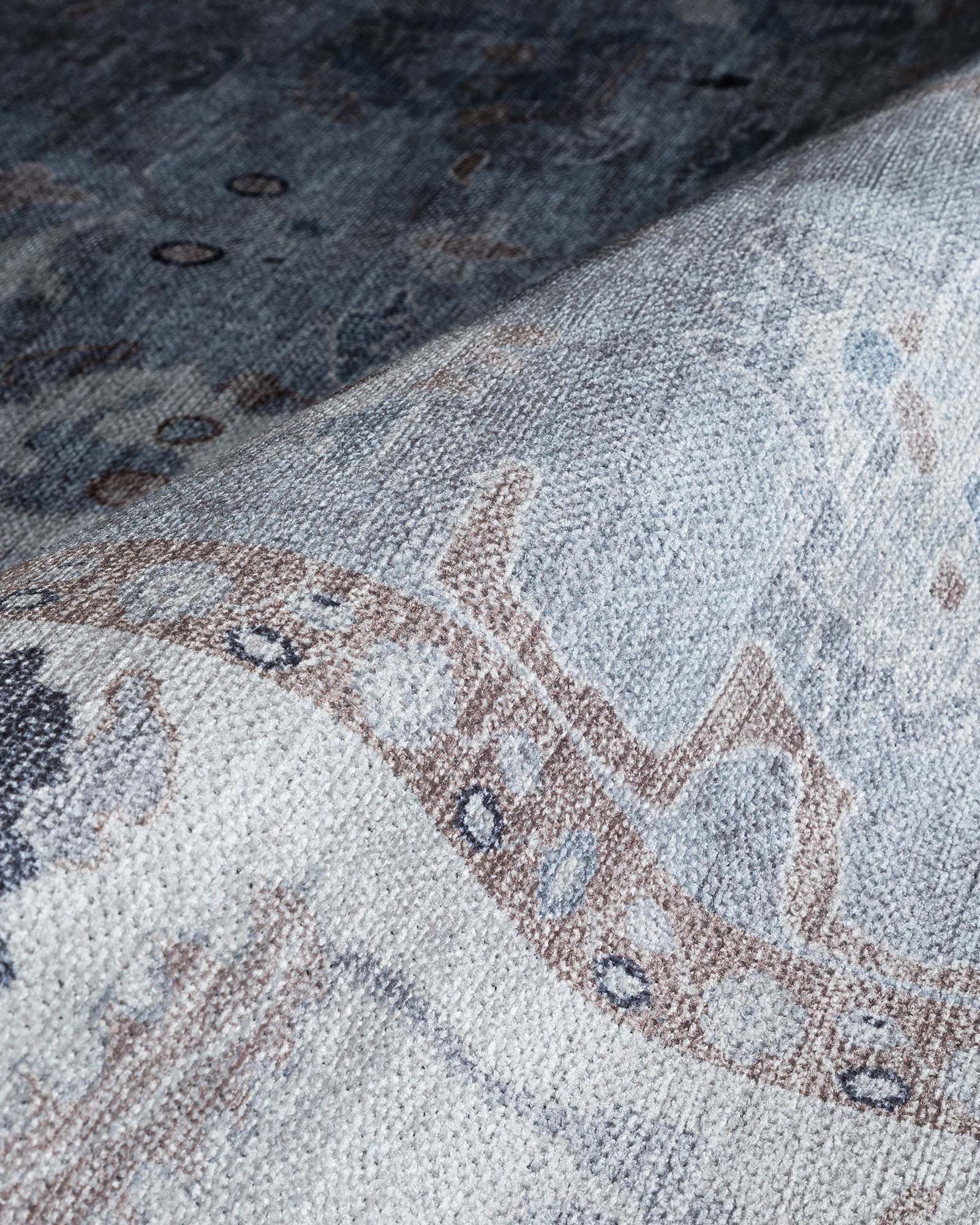
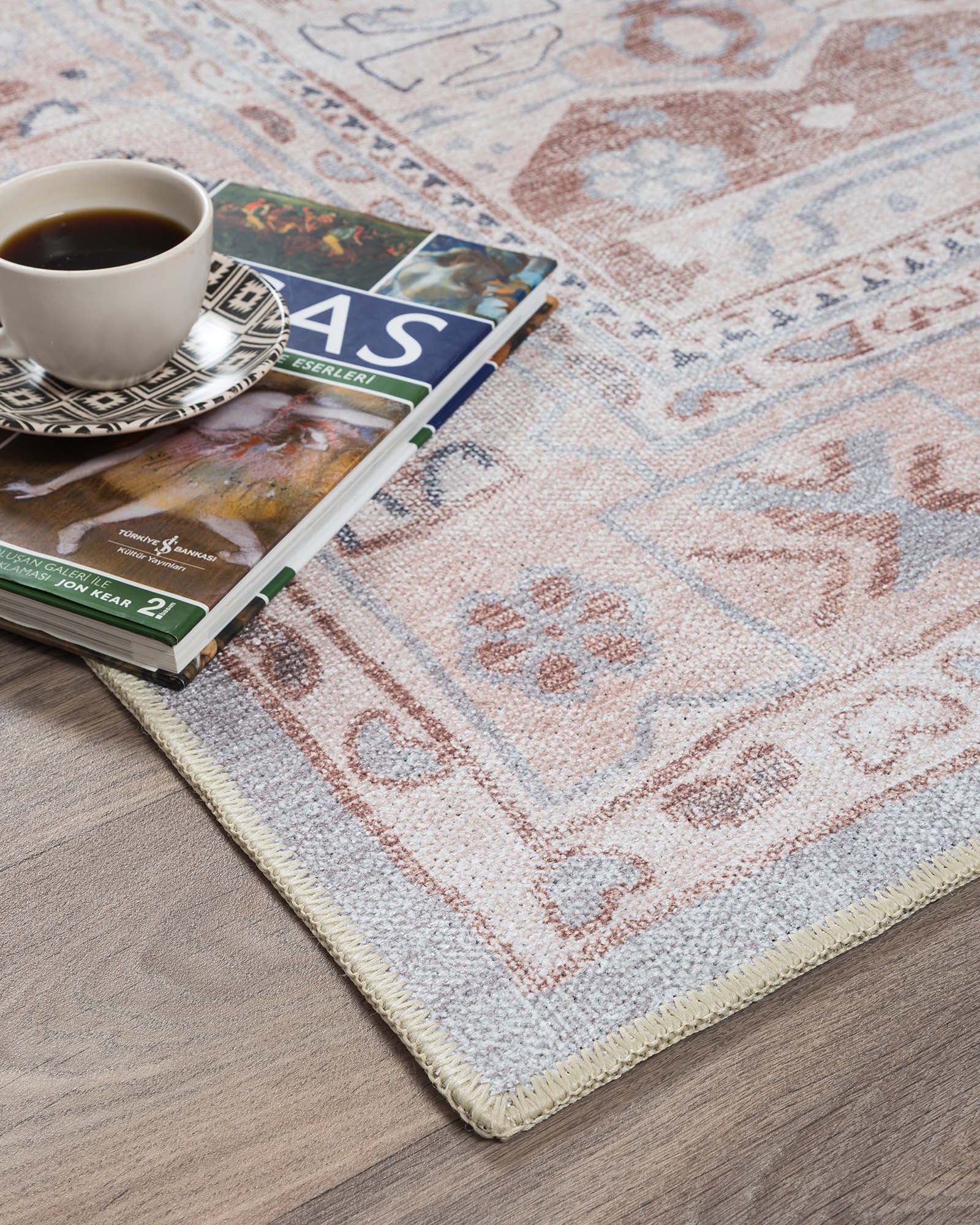
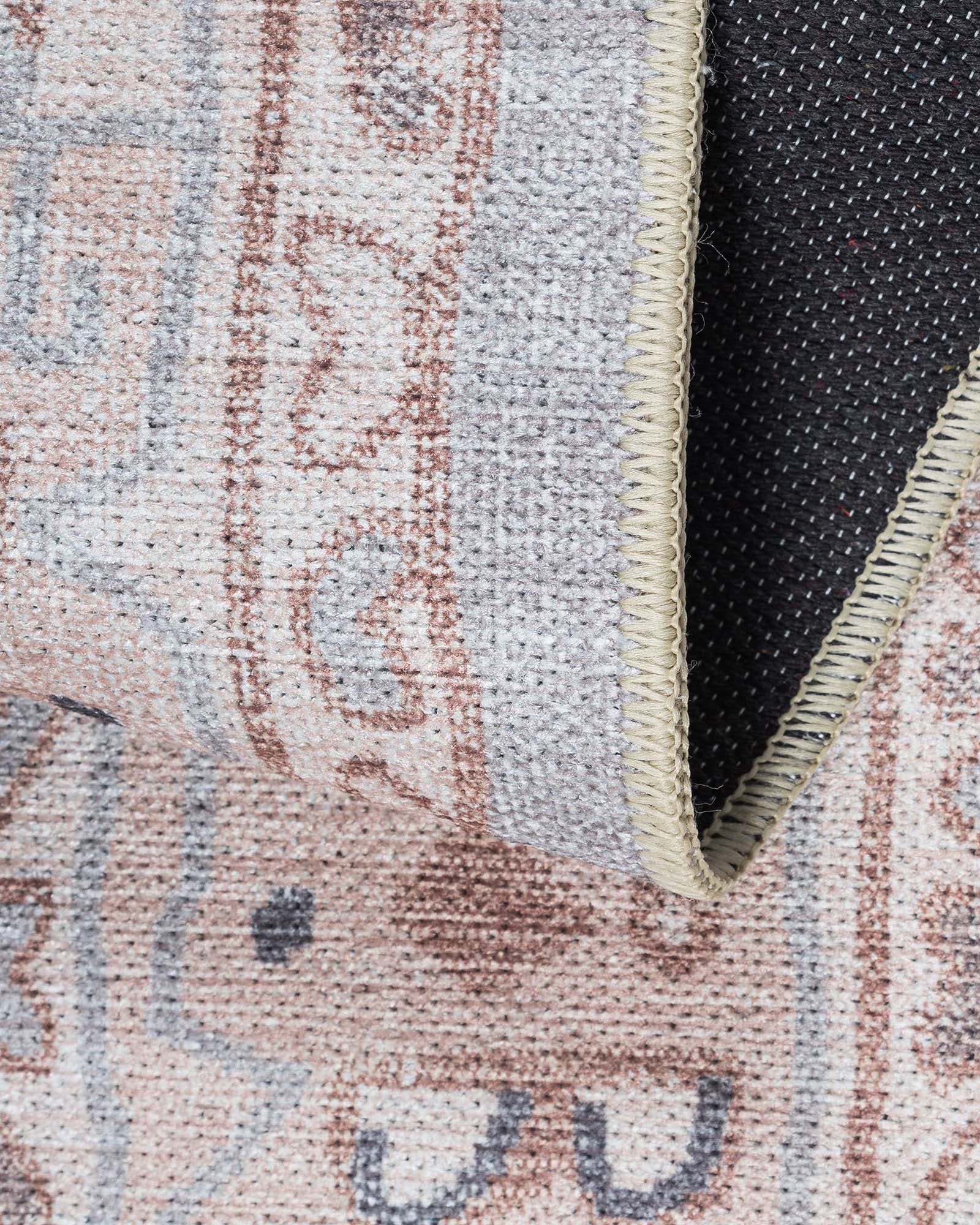
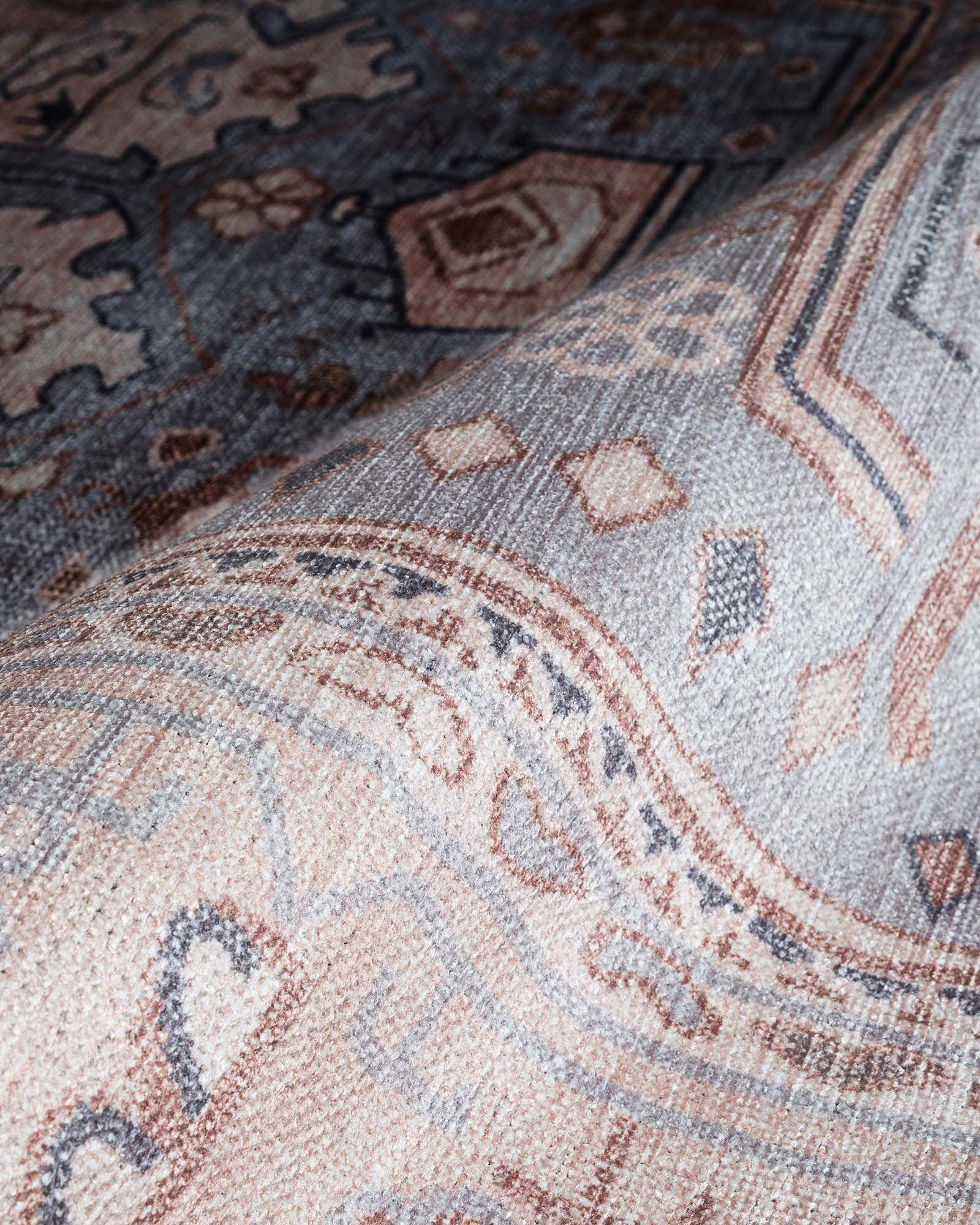
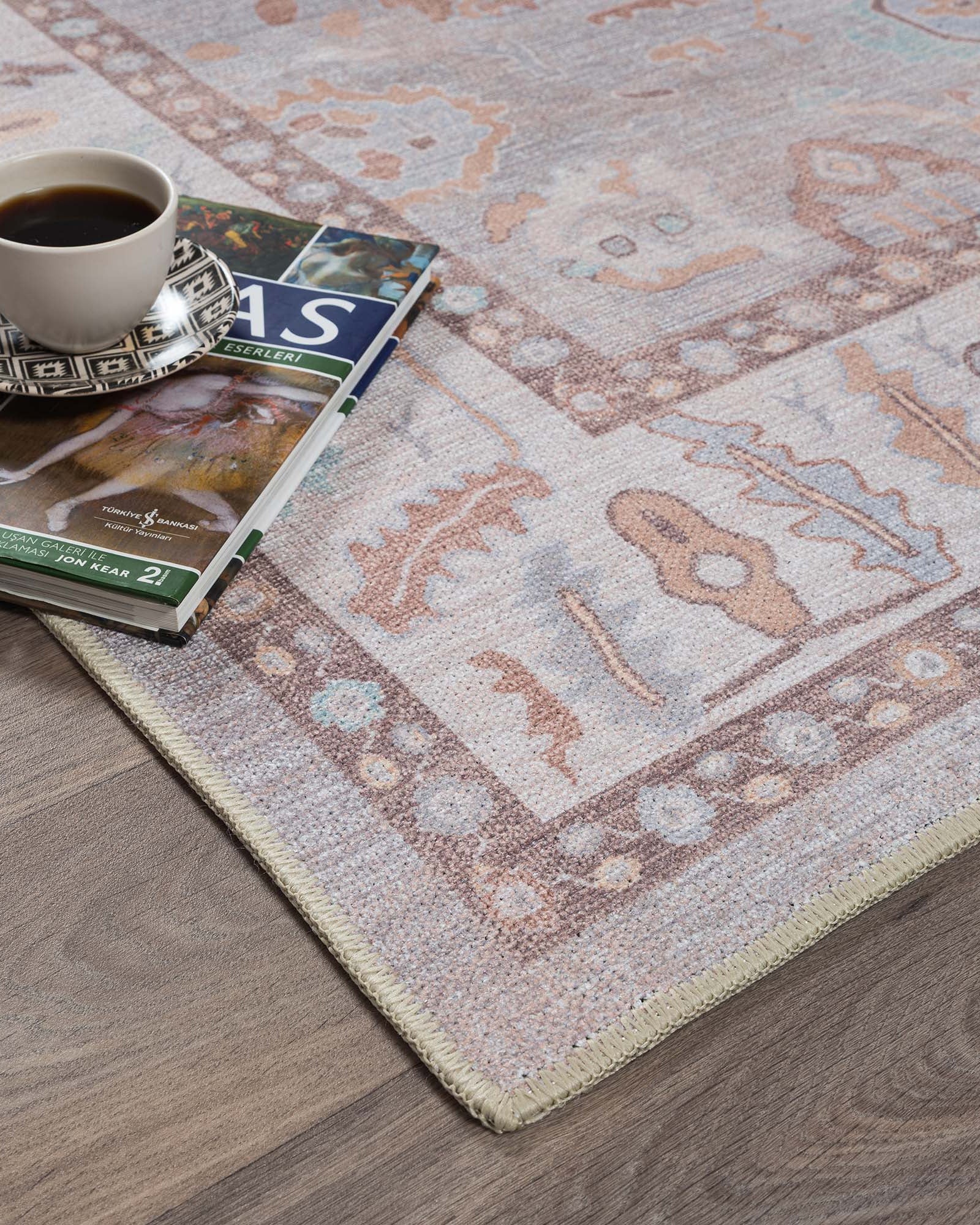
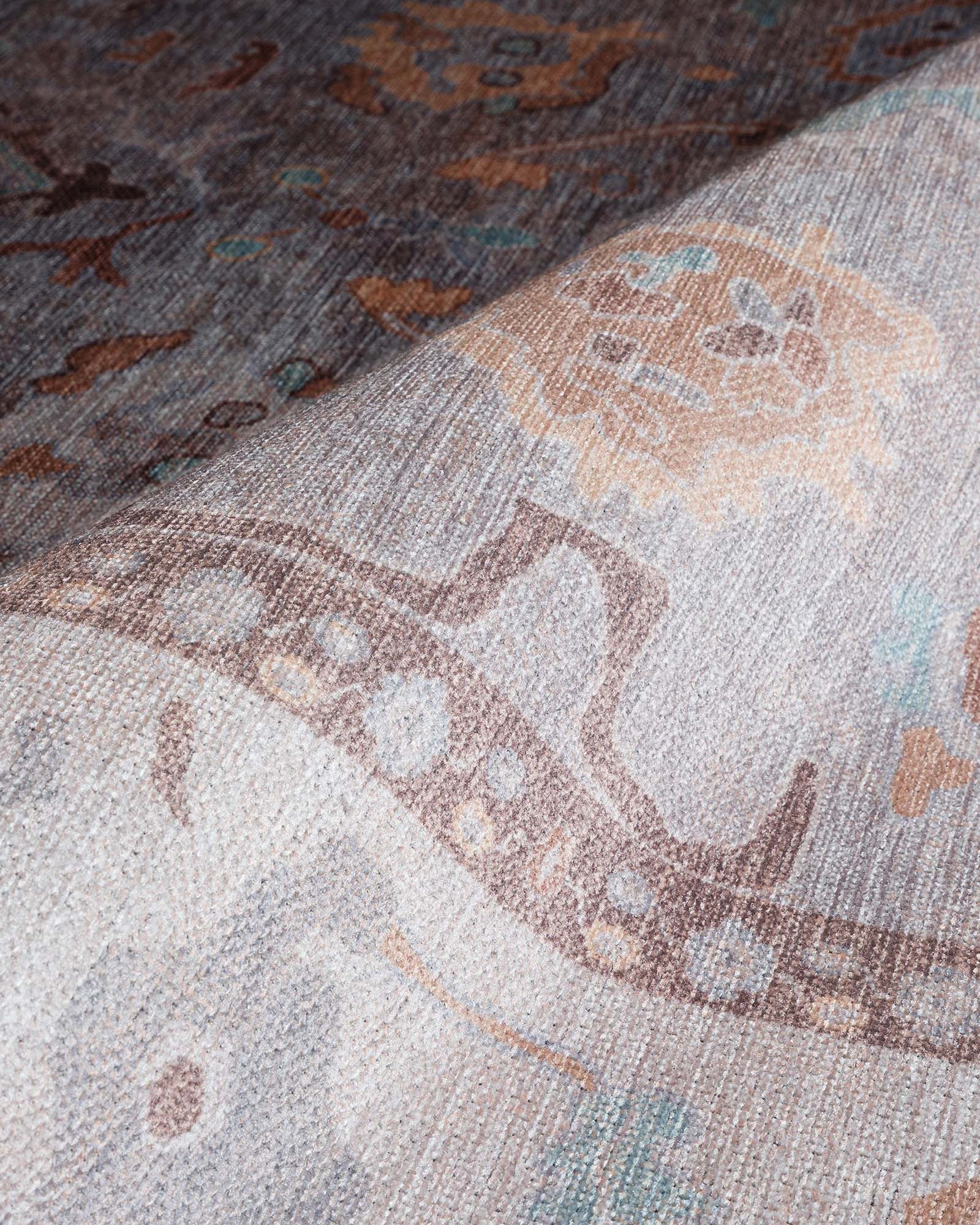
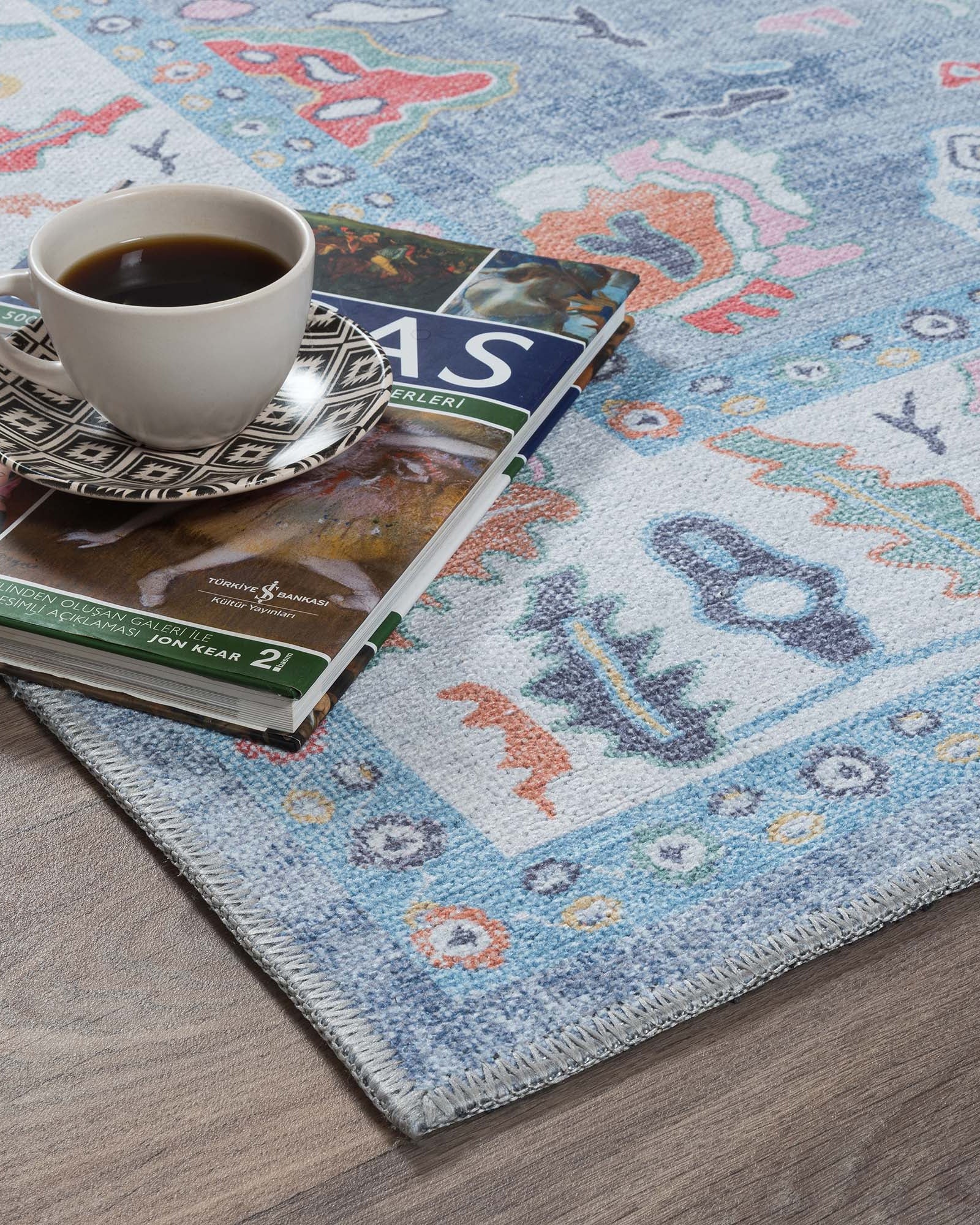
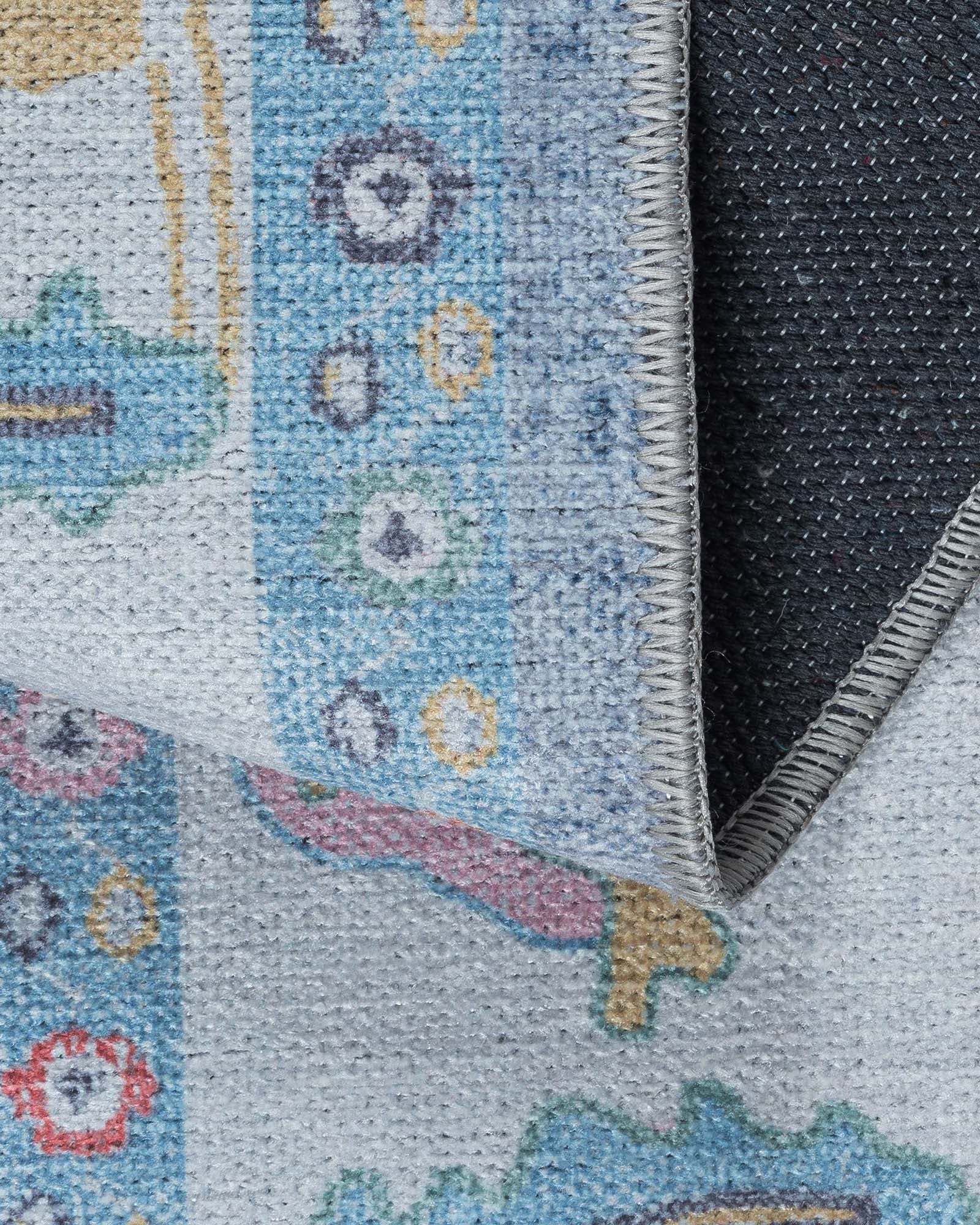
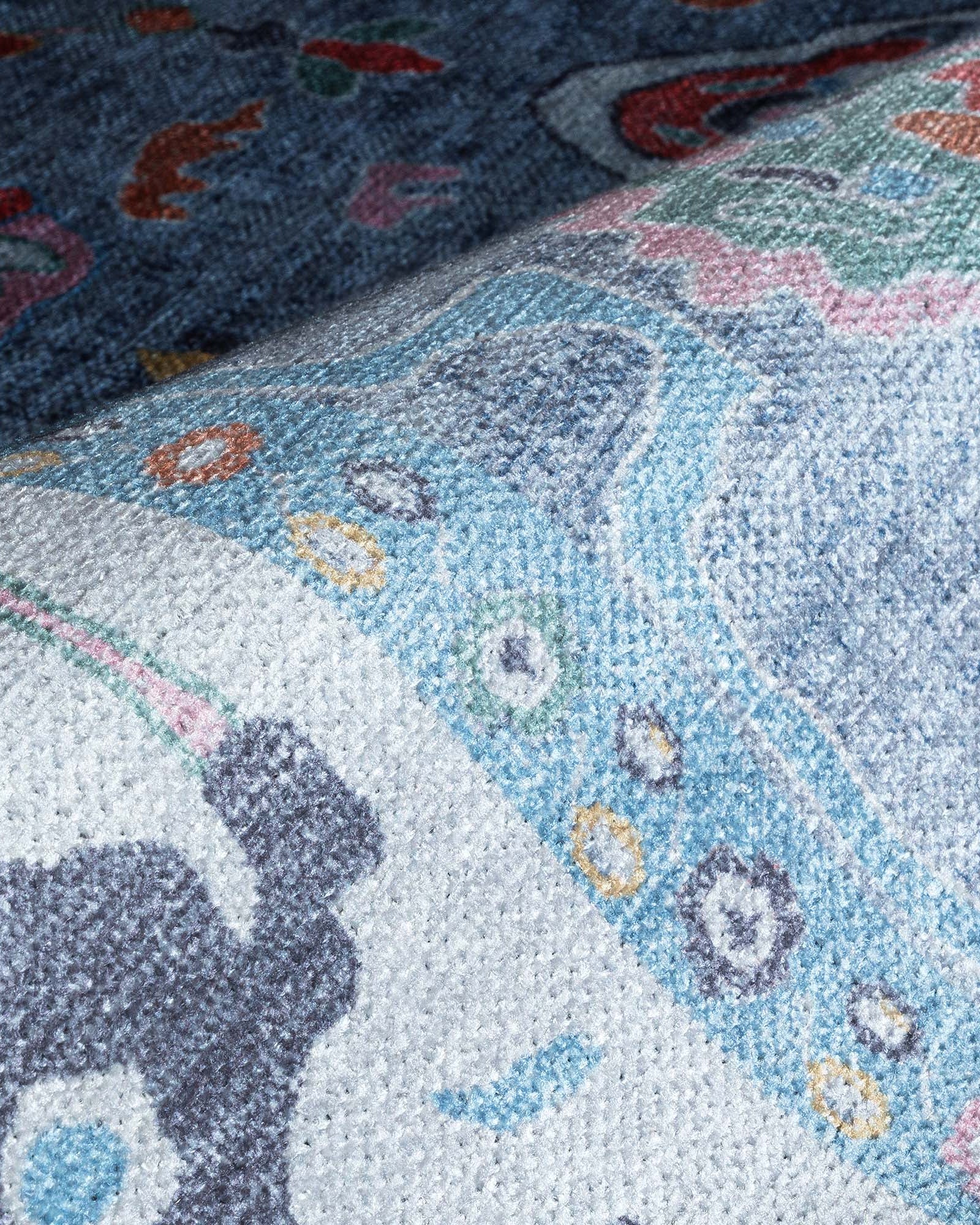
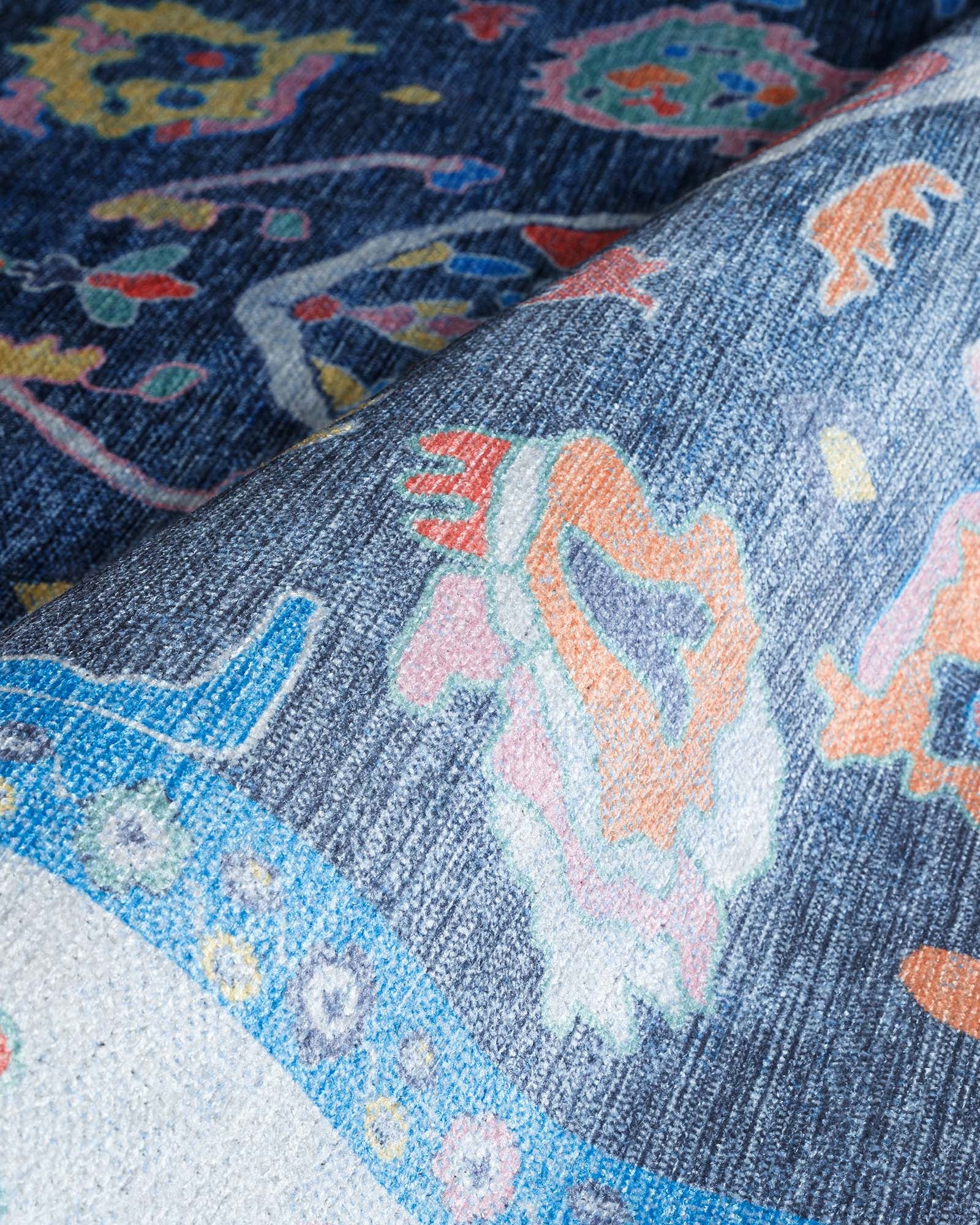
Look closely at an individual strand of pile, ideally against strong light. Hand-spun yarn shows visible thickness variation along its length and slightly uneven twist — it will not look like a perfectly cylindrical, machine-extruded thread. Colour within a single knot often shows subtle tonal shift rather than one flat, even tone. Across a whole field, the surface has a quiet liveliness rather than a uniform flatness, most visible as light crosses the pile at an angle. On older pieces this is usually straightforward to confirm, since machine-spun wool only became common in rug production well into the twentieth century.
What This Means for the Feel of the Rug
Beyond appearance, hand-spun yarn behaves differently underfoot and over time. The irregular twist traps more air than a tightly, uniformly spun machine yarn, which gives hand-spun wool a slightly softer, springier hand-feel. It also tends to felt and compress more gracefully under long-term wear, developing the burnished sheen associated with old hand-knotted rugs rather than matting flat.
Age, Condition and Measurement
Pieces are grouped as antique at over eighty years, vintage at roughly forty to eighty, and semi-vintage below that. Every product page carries the estimated decade, origin where identifiable, foundation type, exact measured dimensions and a plain condition note. On hand-spun pieces specifically, expect the tonal liveliness described above across the field, along with the same honest wear found throughout handmade collections — lower pile in traffic lanes, softened selvages, occasional old repairs. Sizes are never standard; order against the measurements shown.
Care
Vacuum with the beater bar off or raised and keep it off the fringe. Use a rug pad on hard floors. Rotate the rug twice a year so sunlight and footfall distribute evenly. Blot spills immediately with a white cloth and plain water, pressing rather than rubbing so the yarn's natural loft is not flattened. Avoid home carpet-cleaning machines and steam cleaners, which can felt hand-spun wool more readily than the tighter, more uniform structure of machine-spun yarn. For deep cleaning, use a professional rug washer experienced with hand-knotted wool.