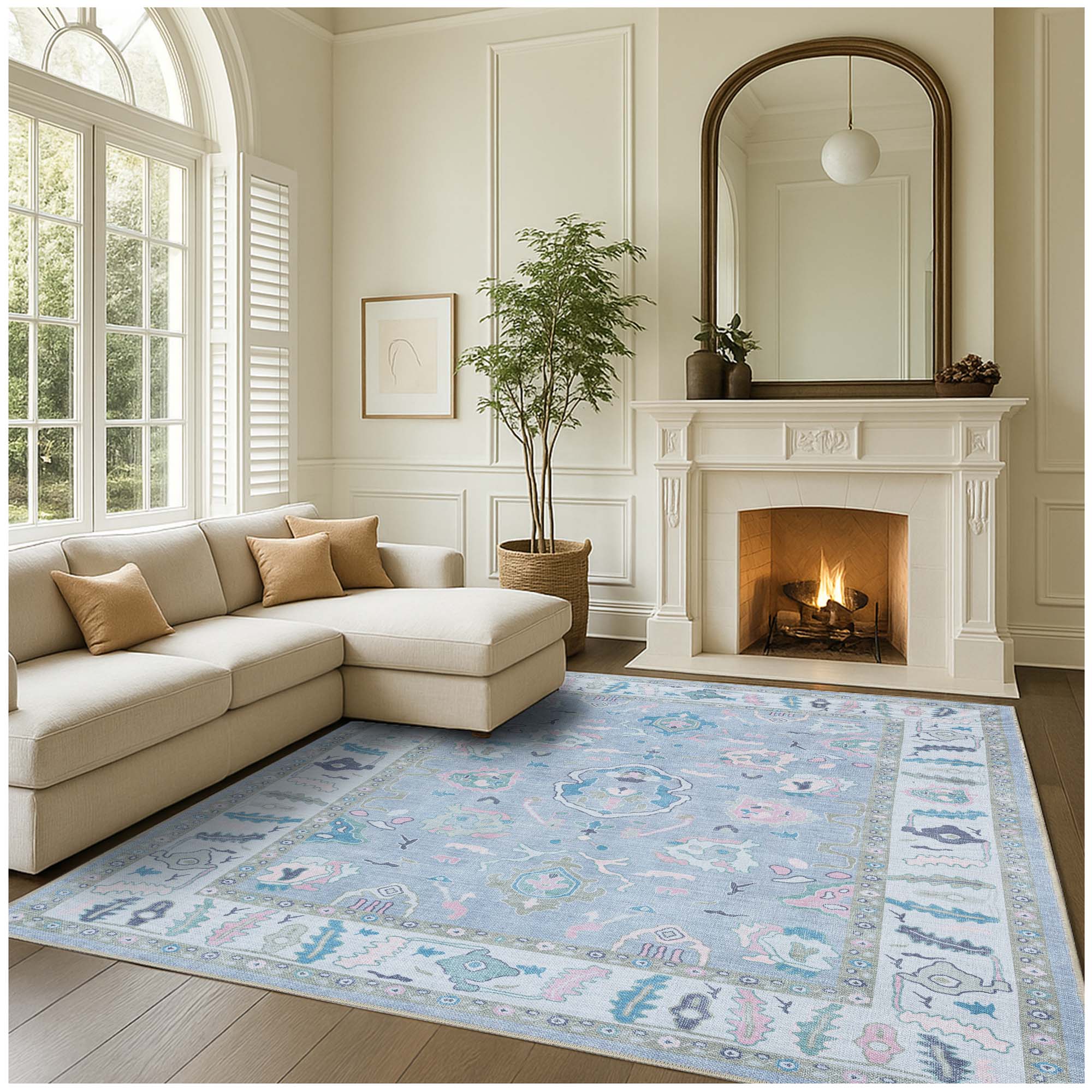
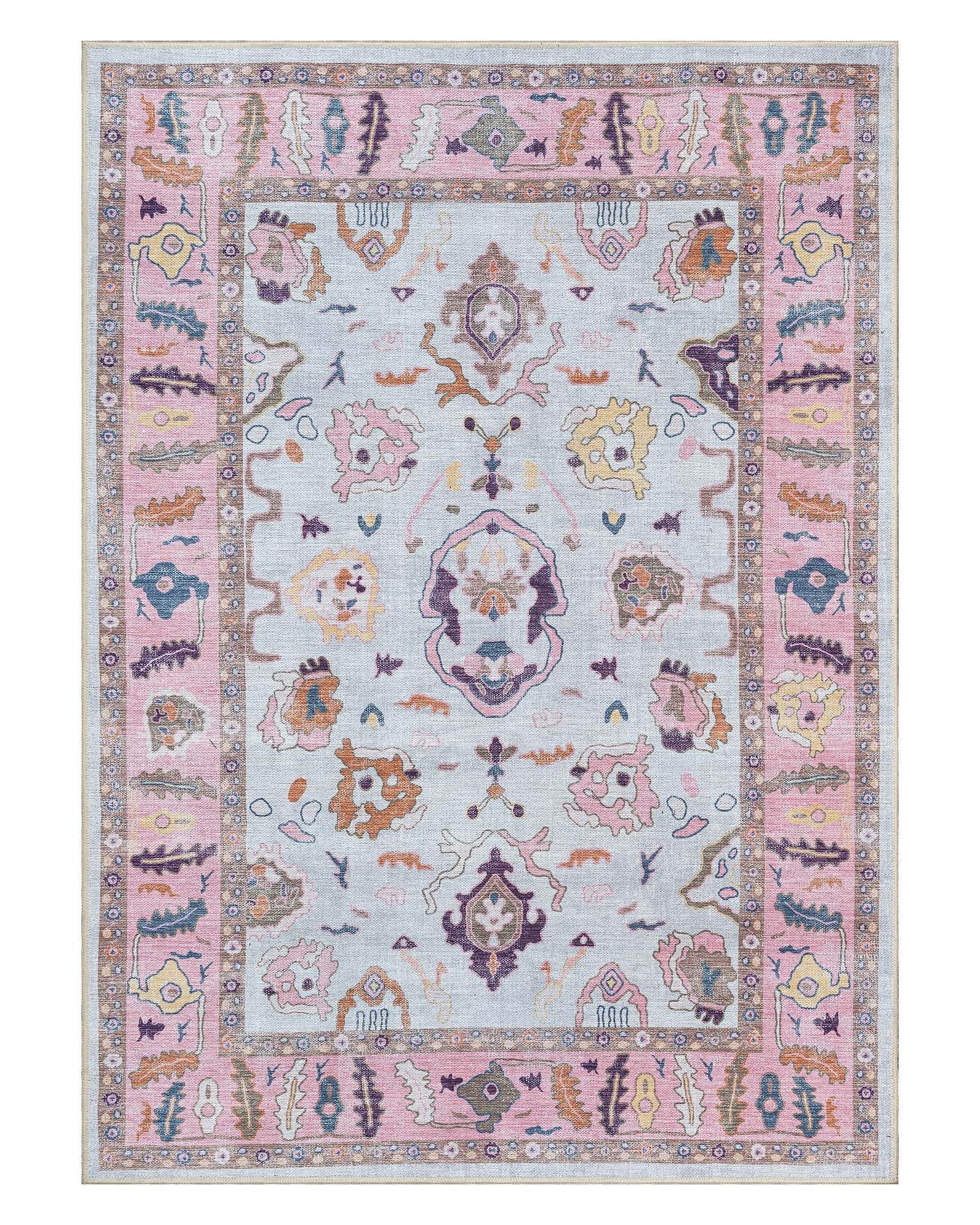
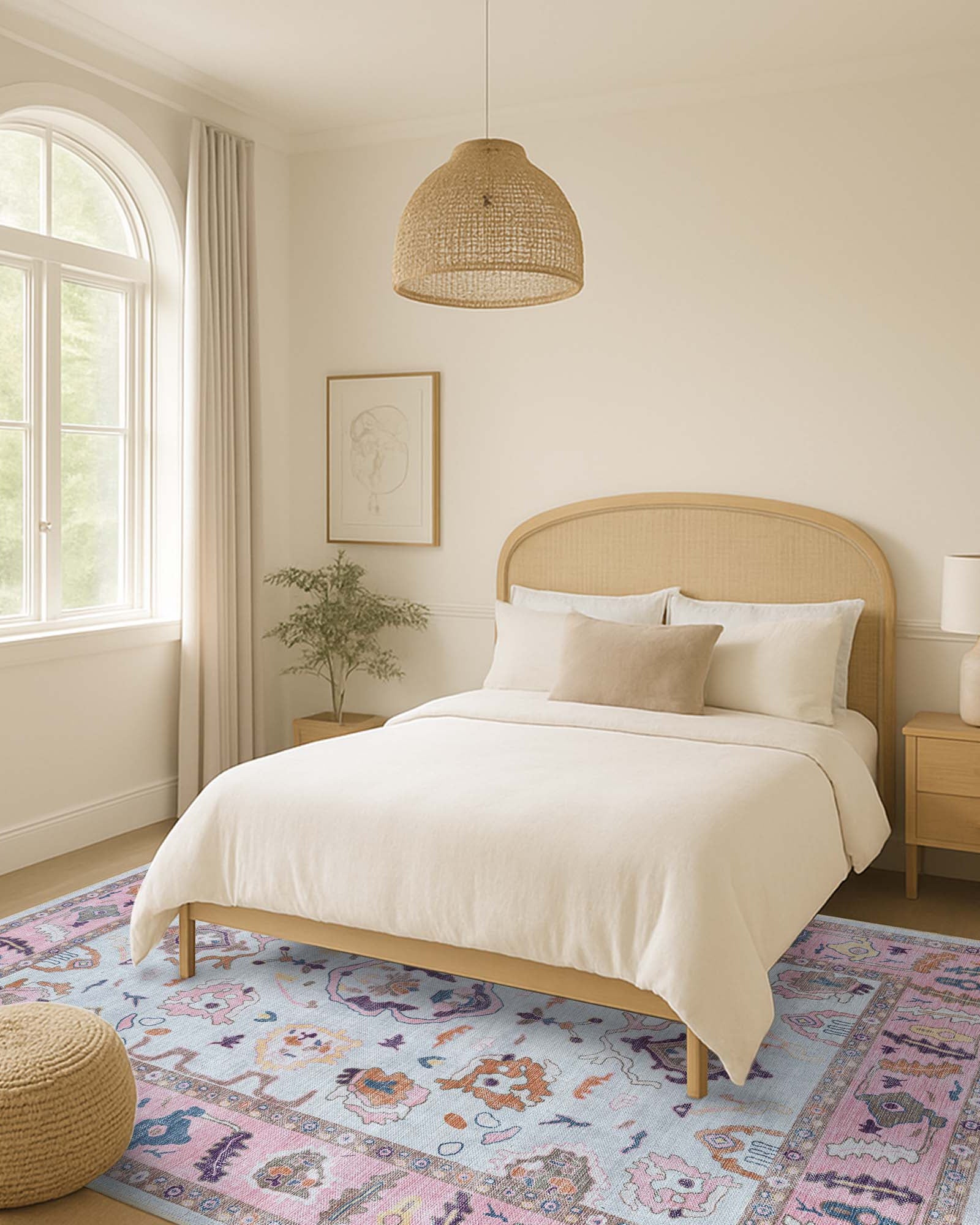
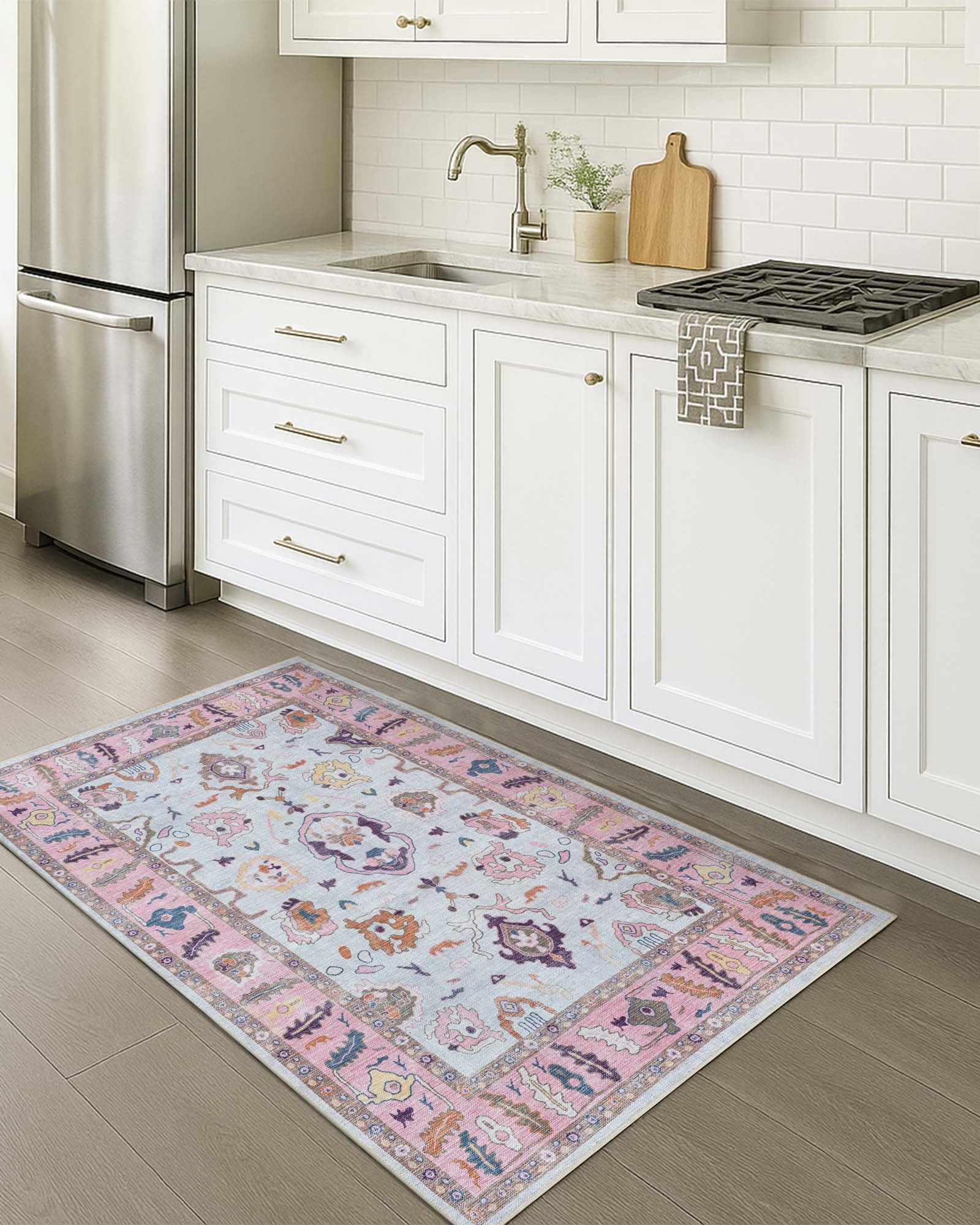
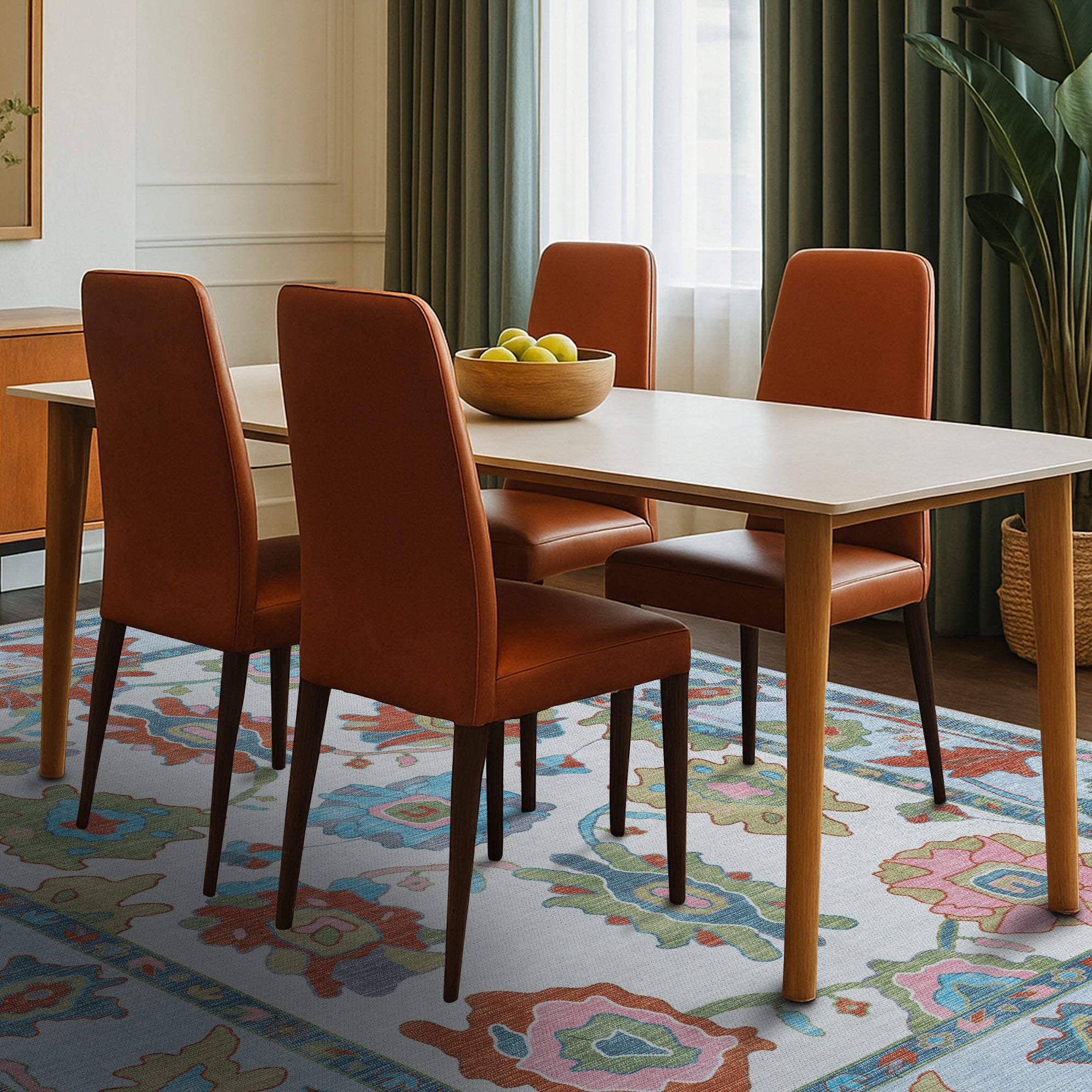
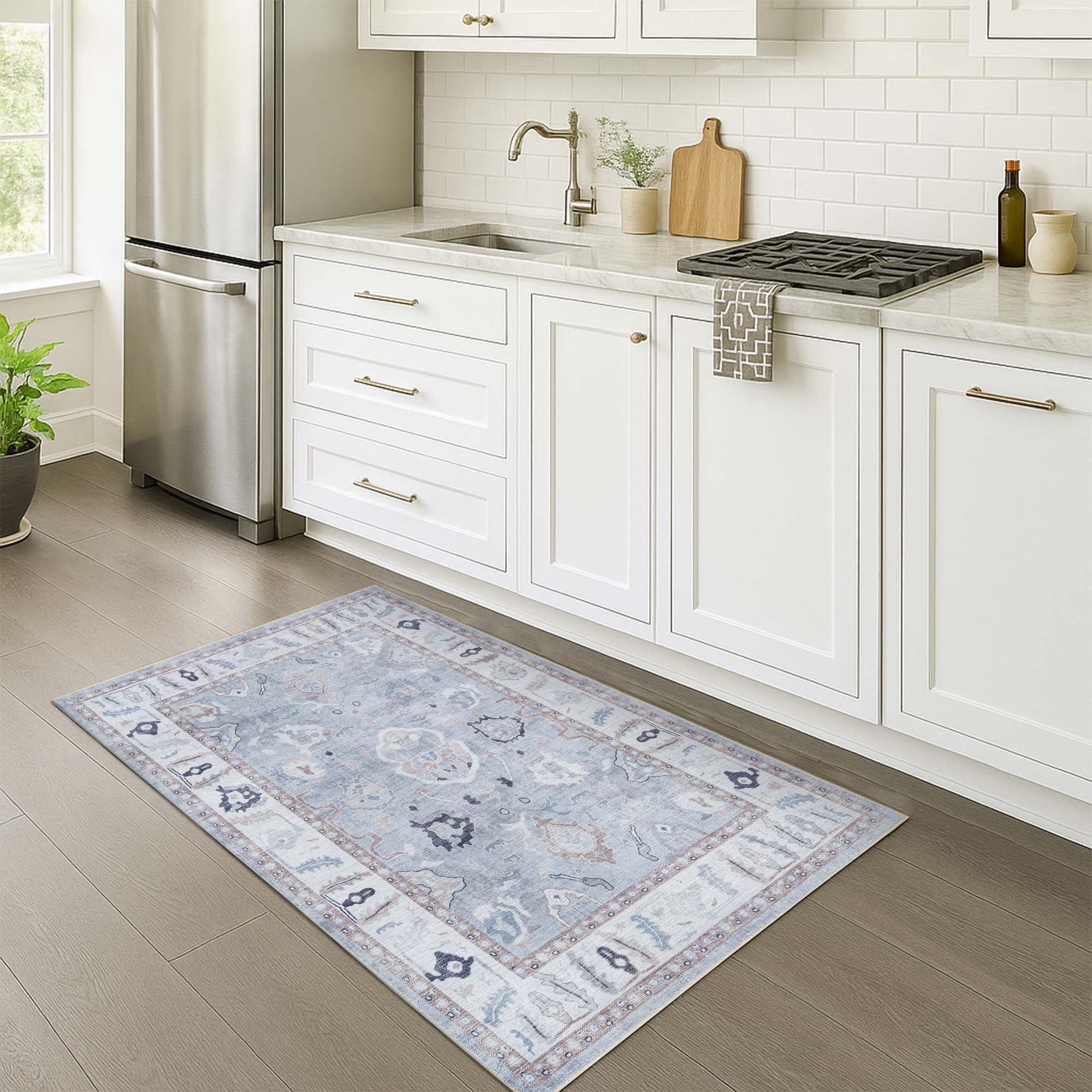
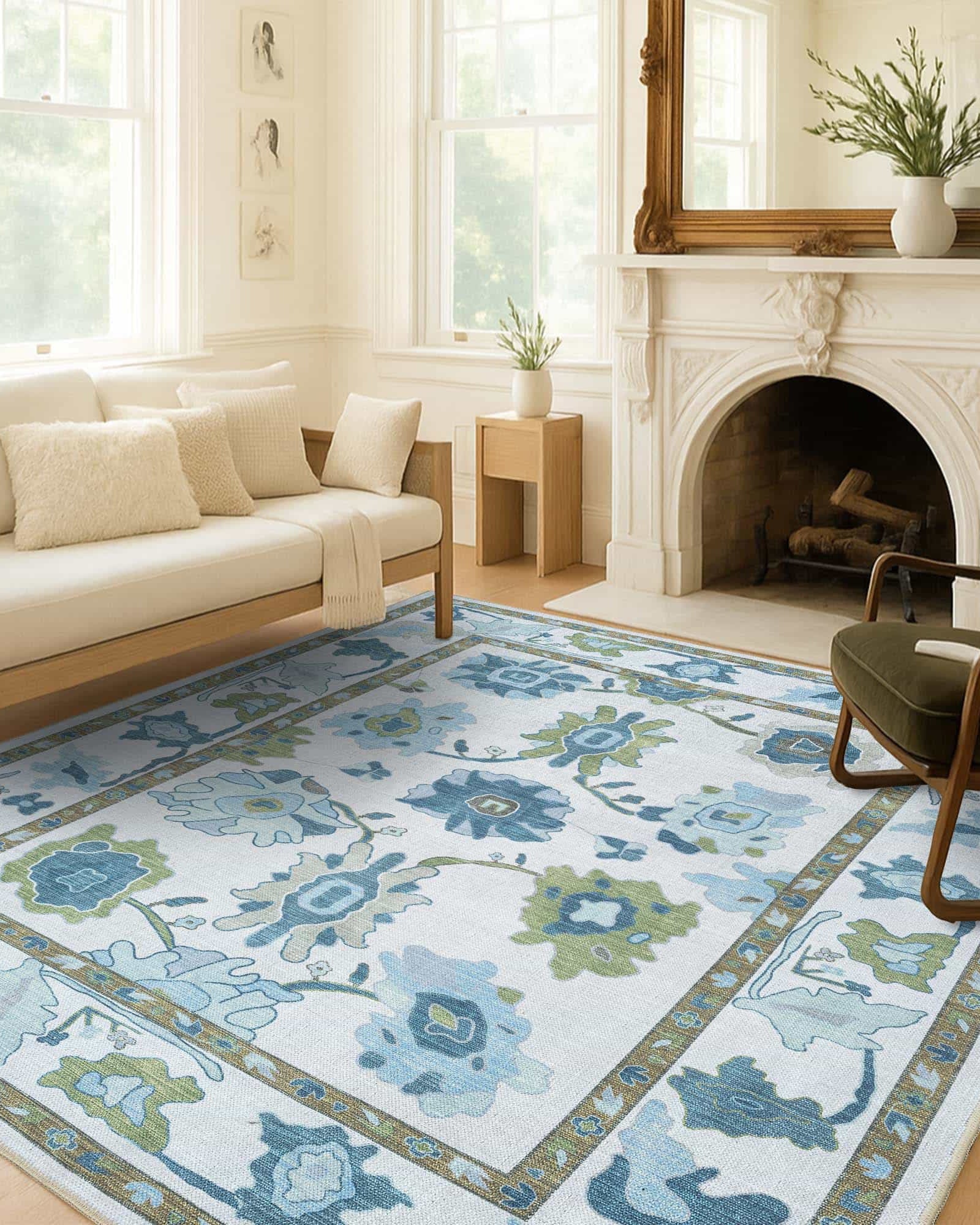
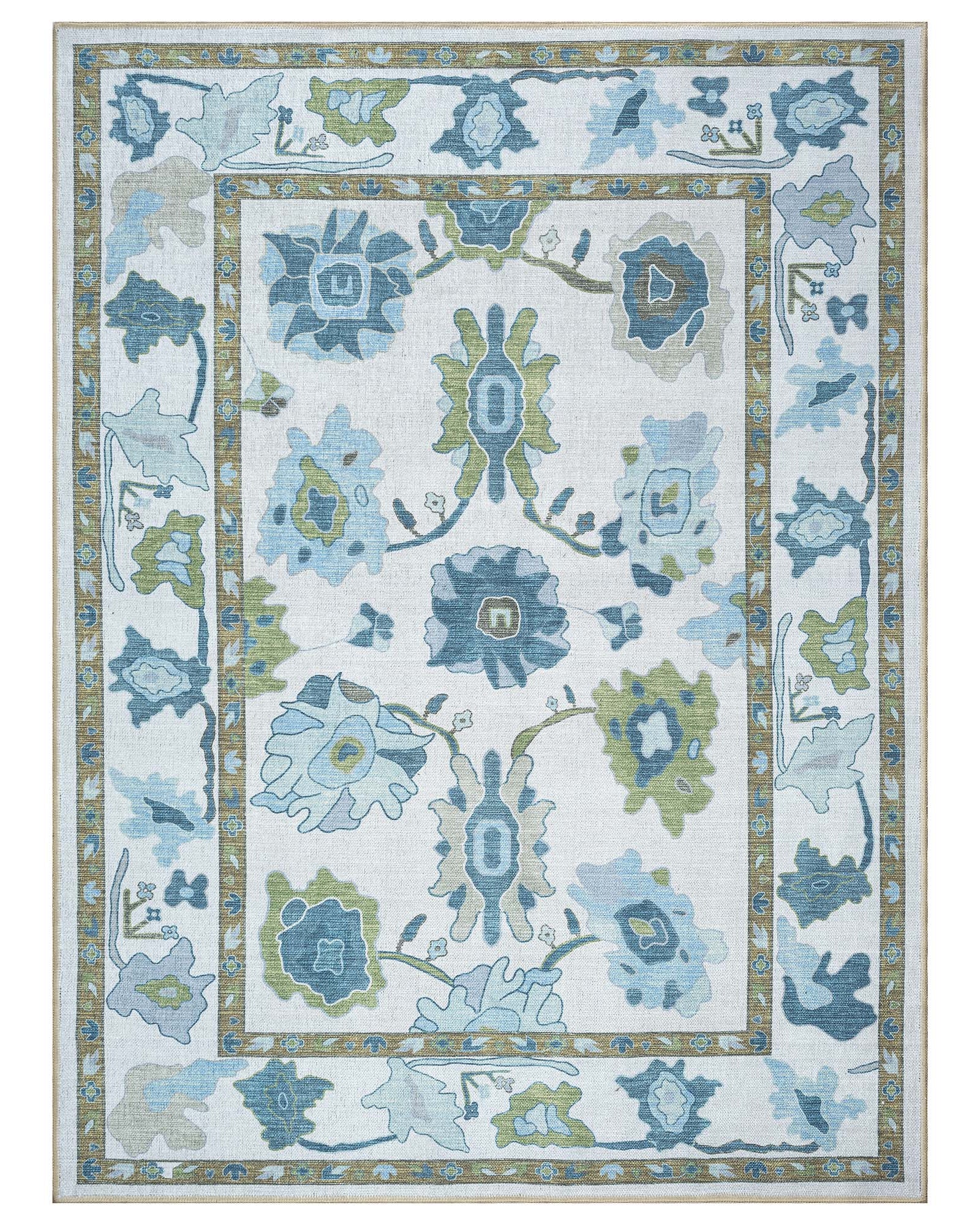
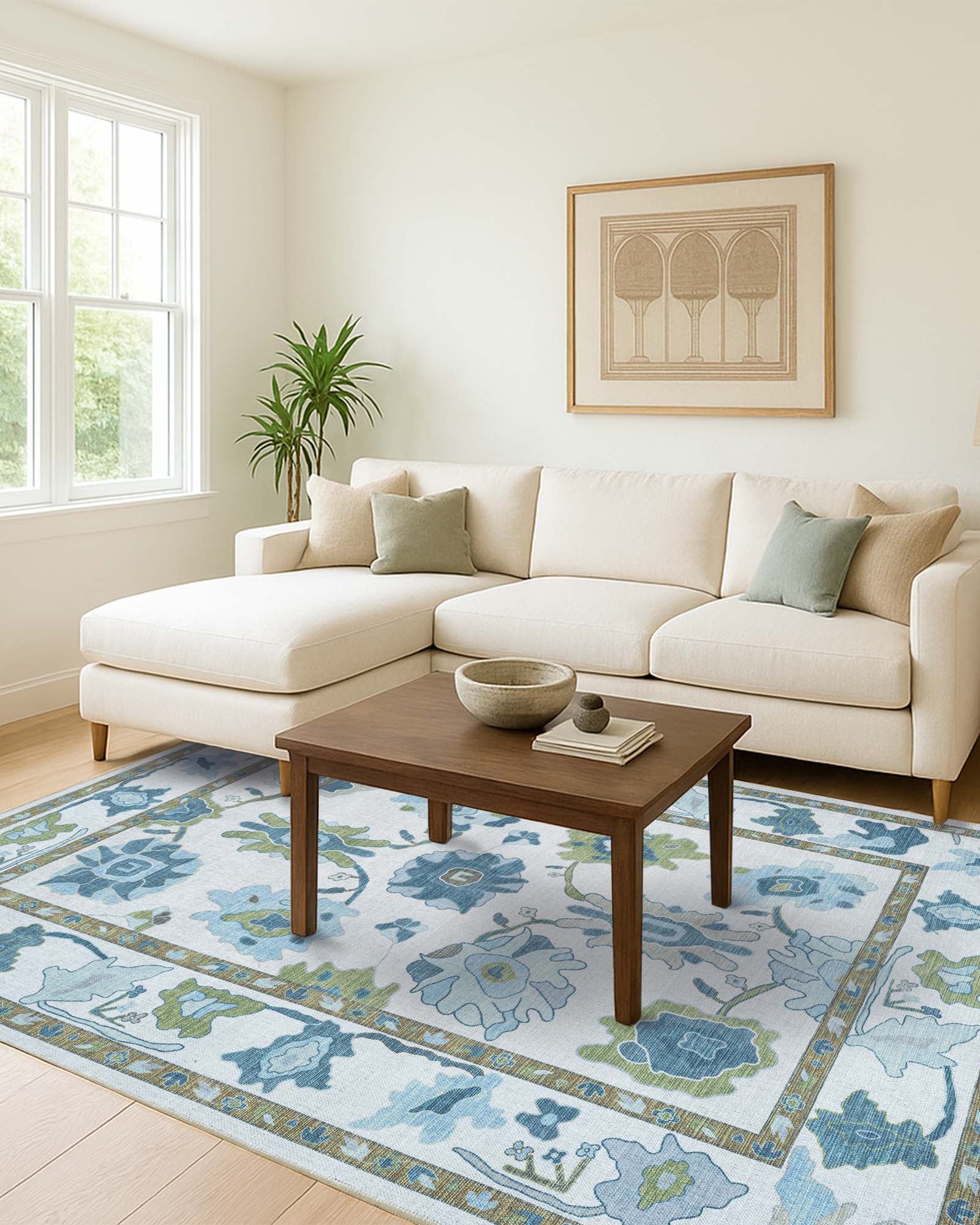
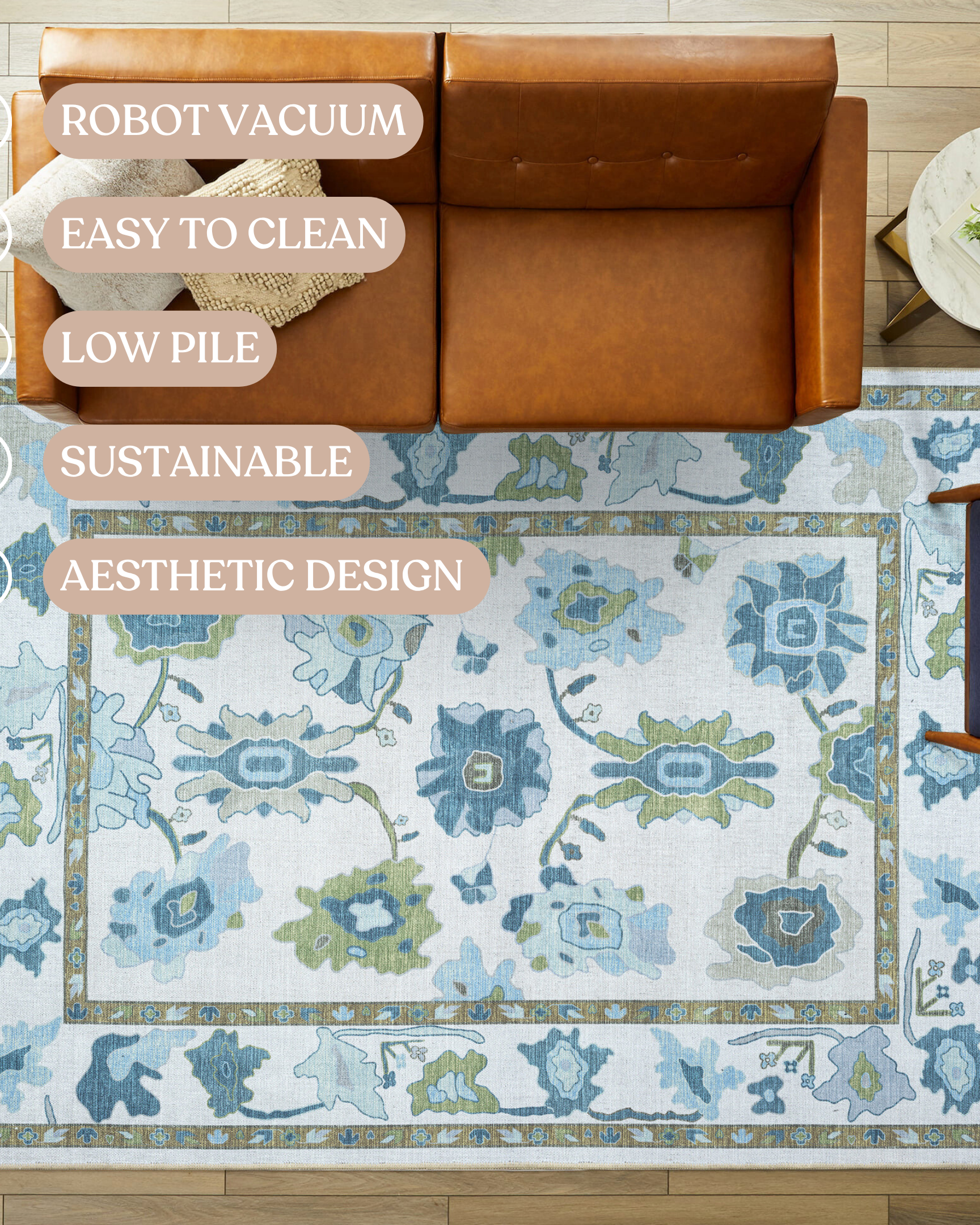
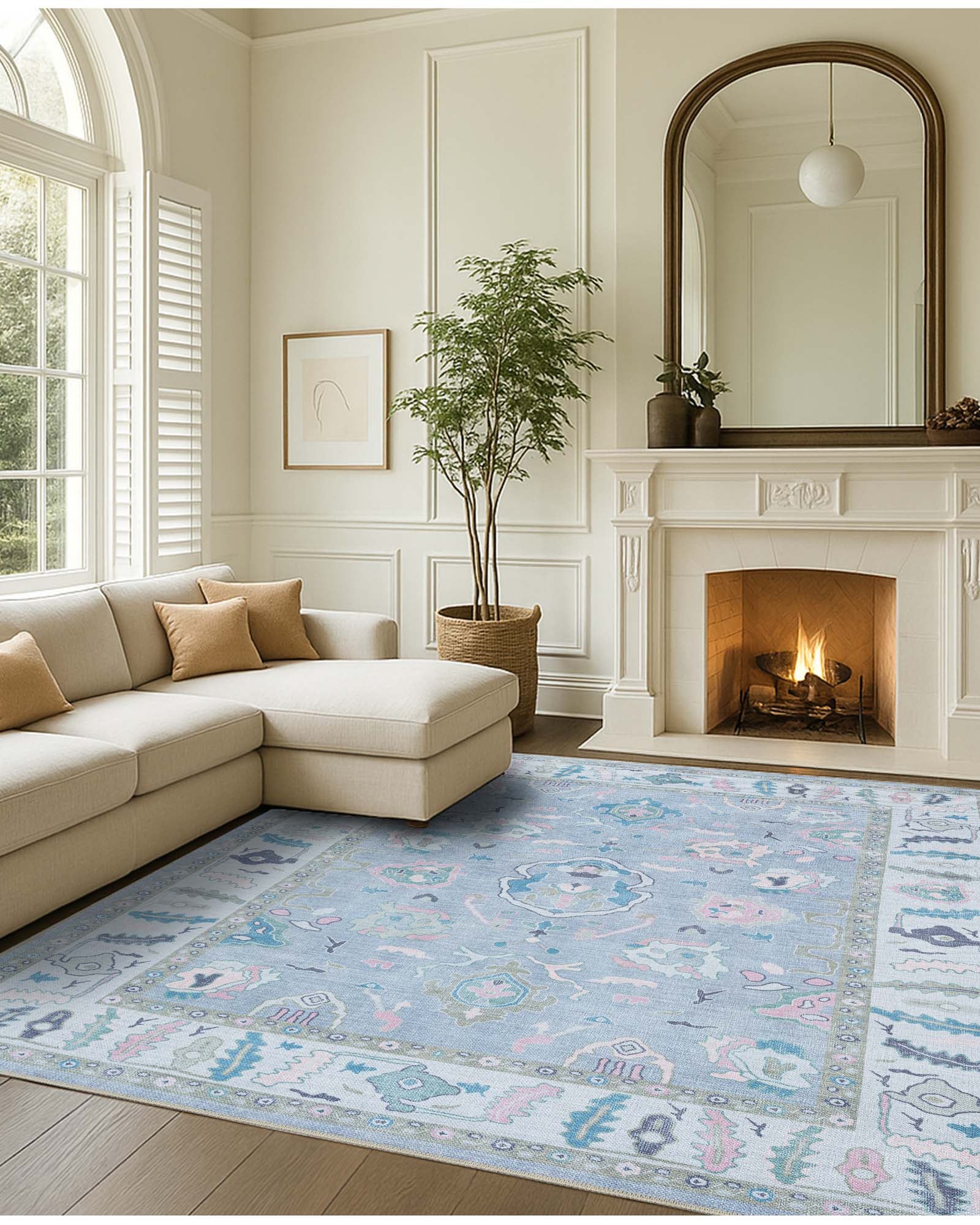
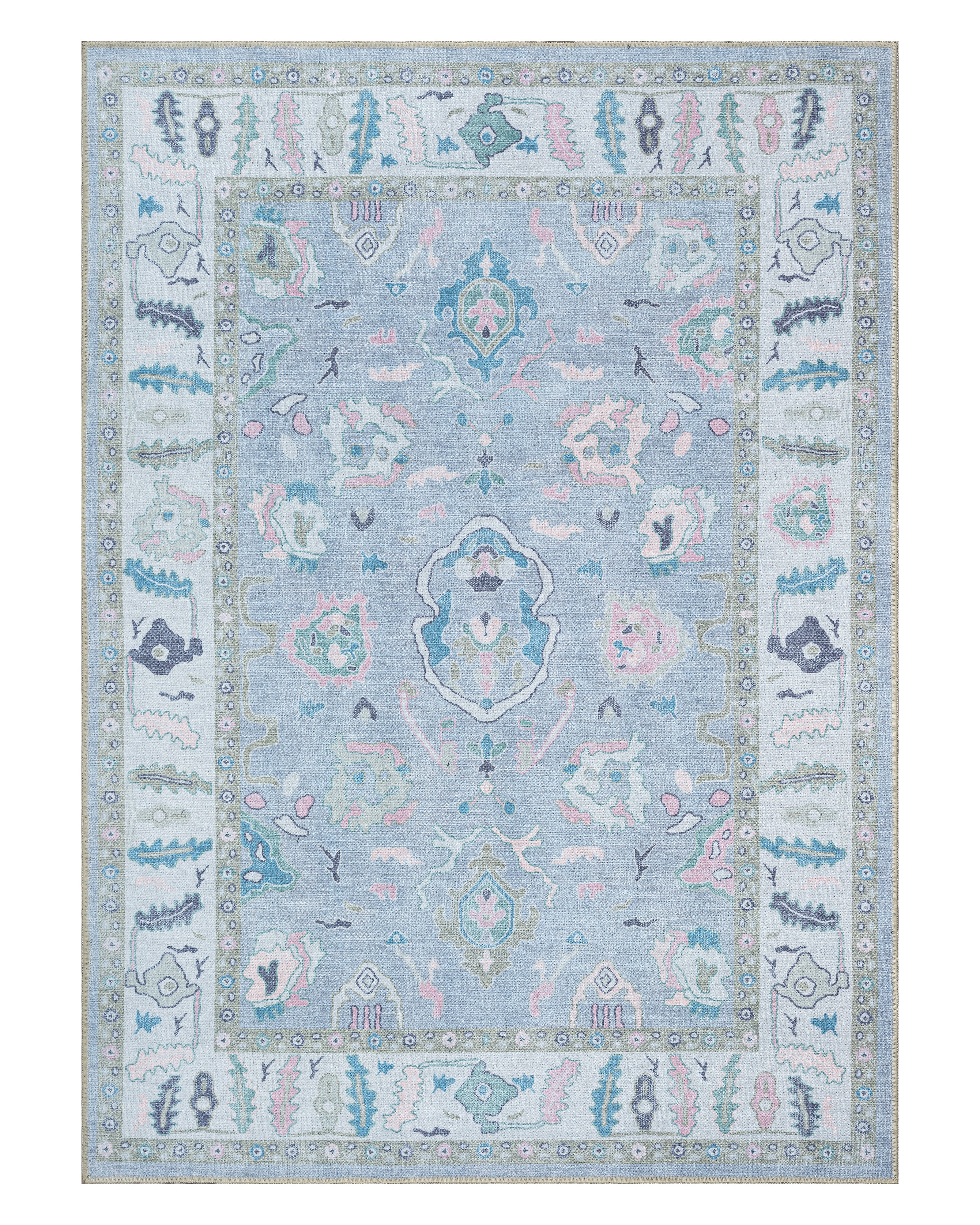
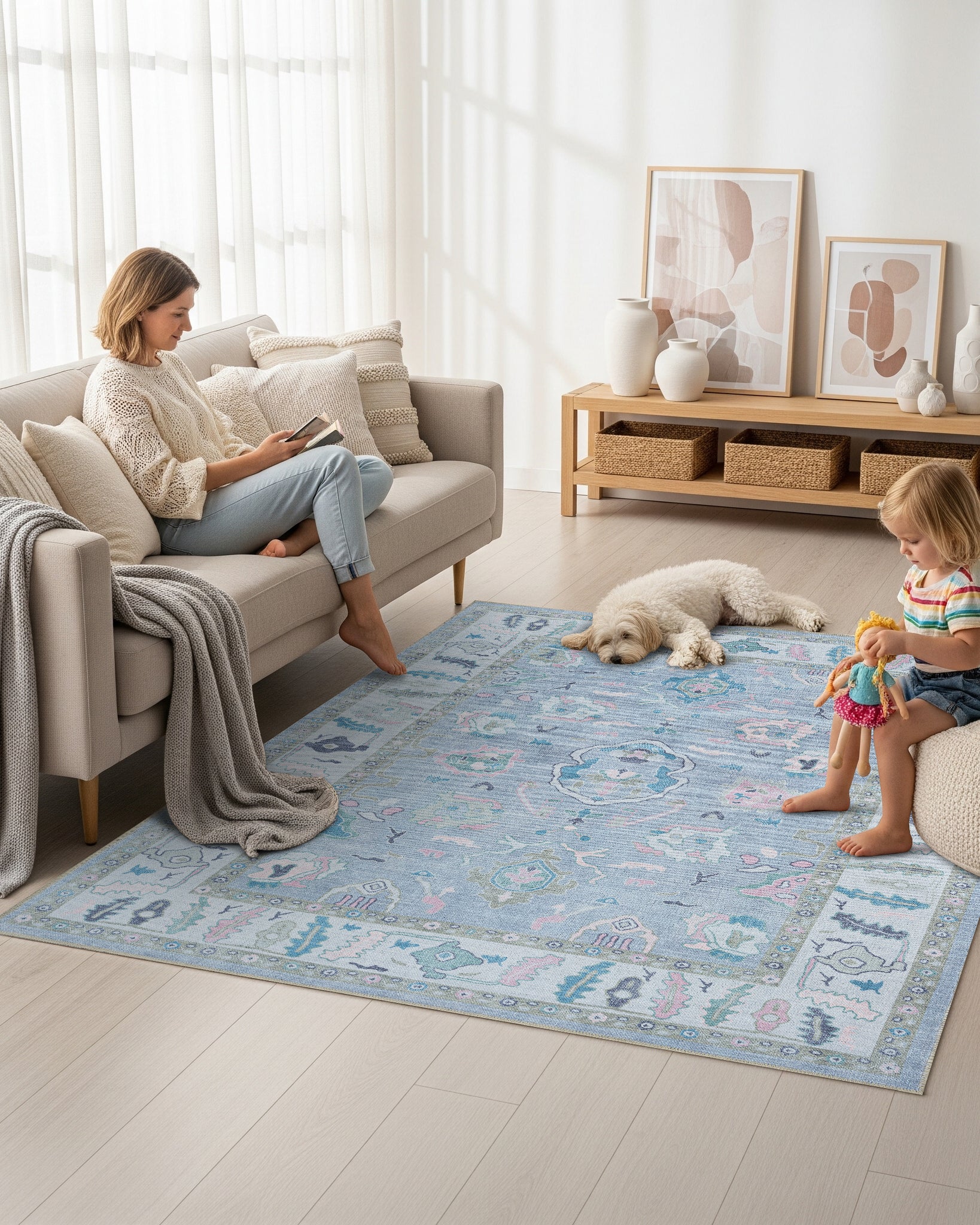
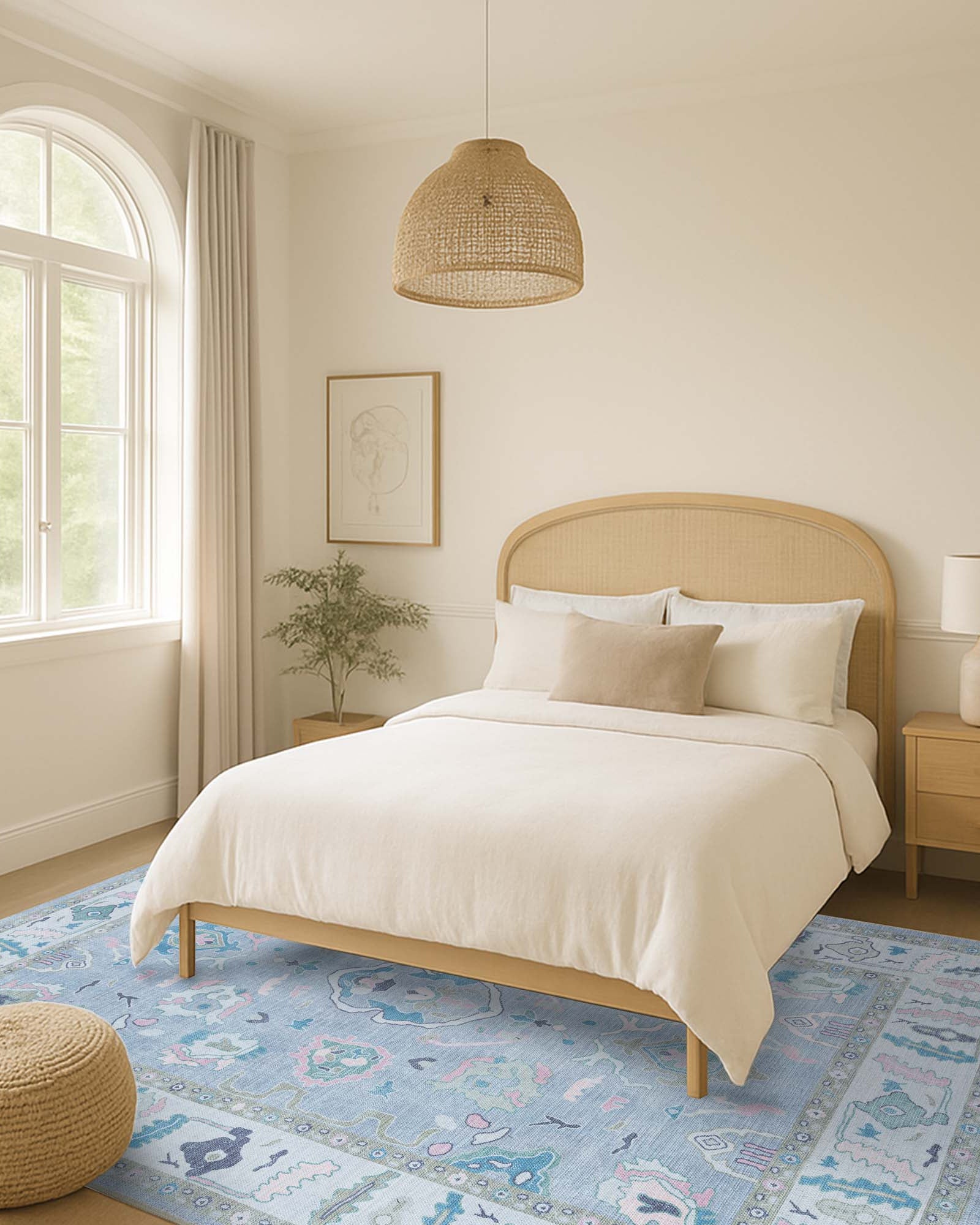
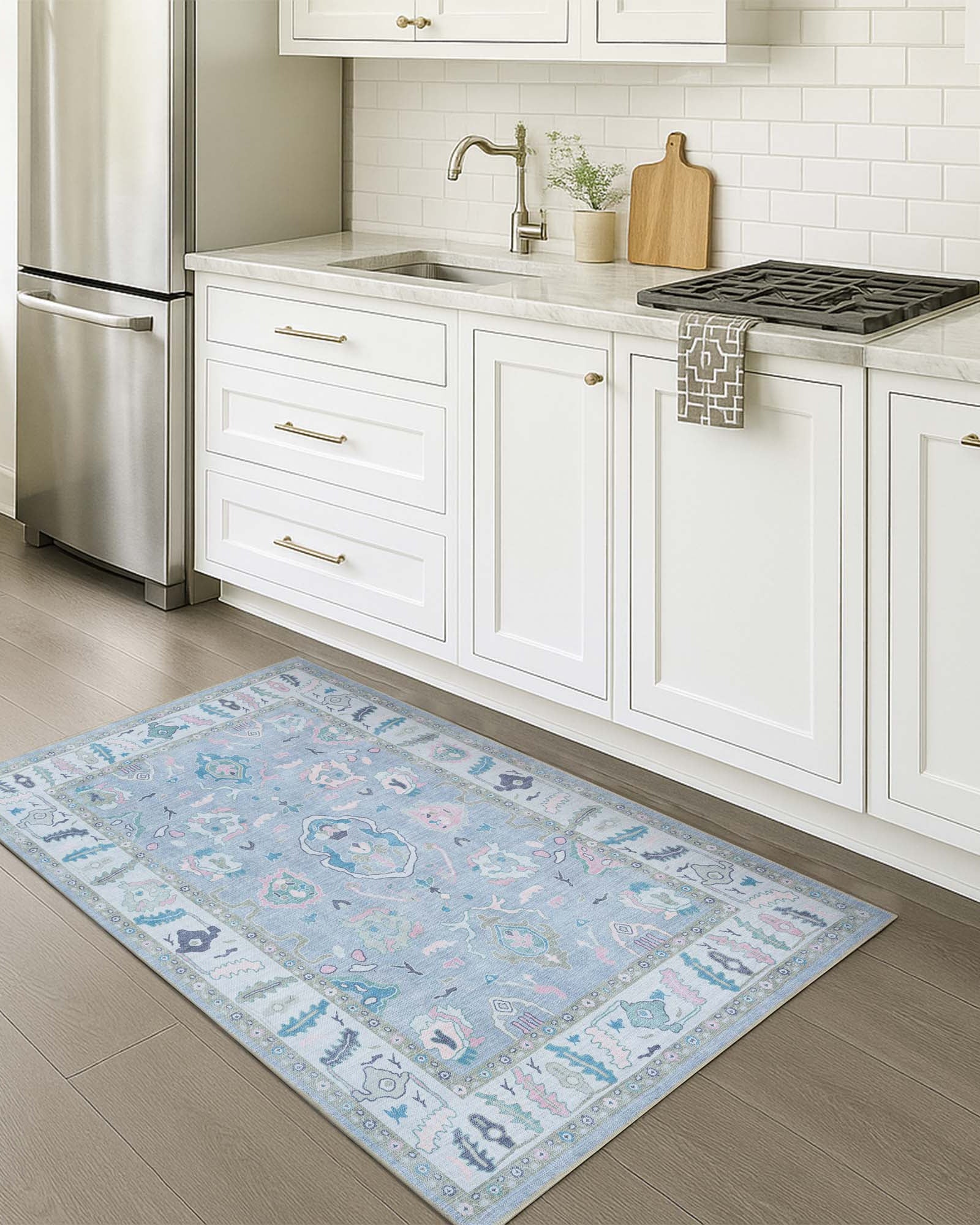
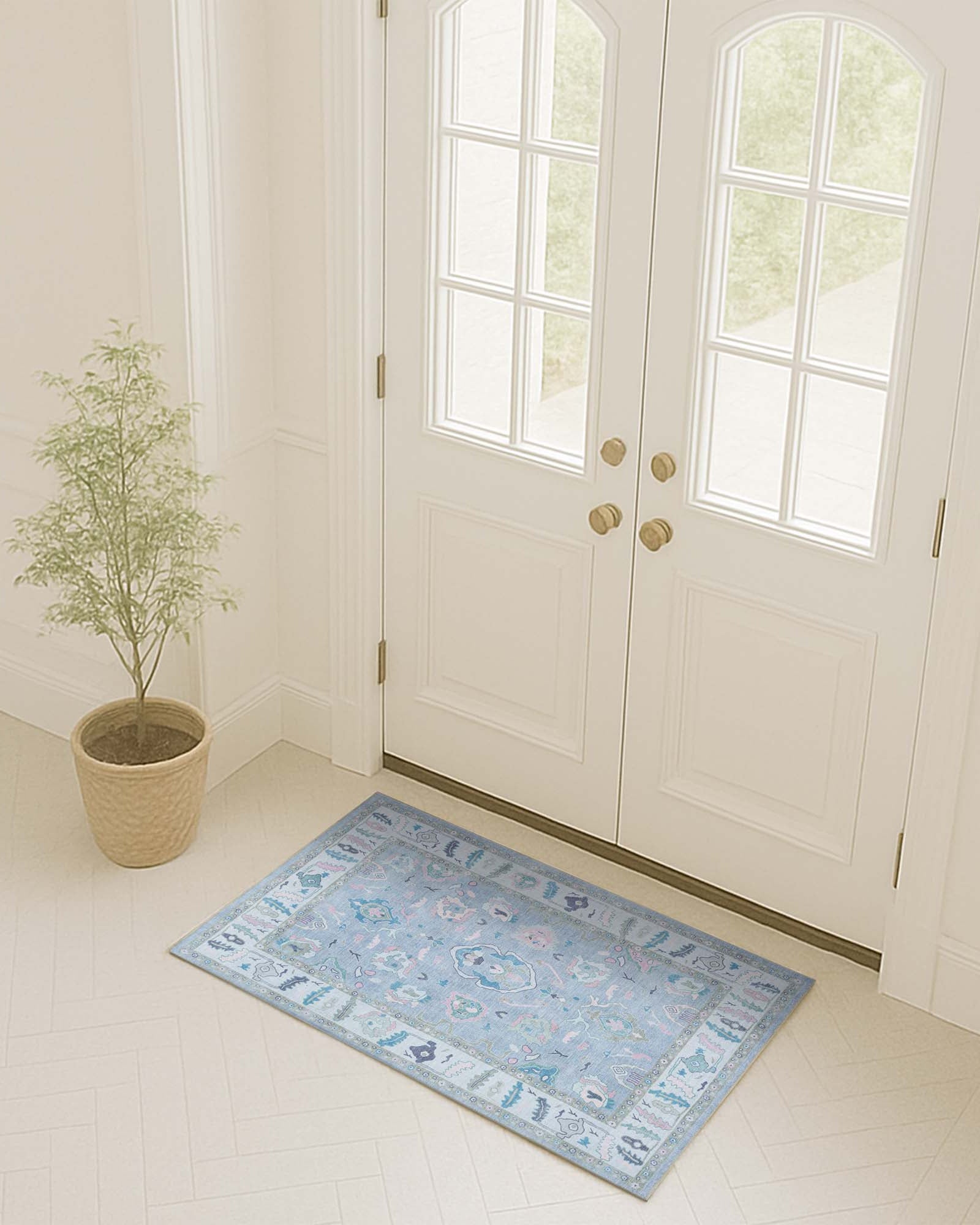
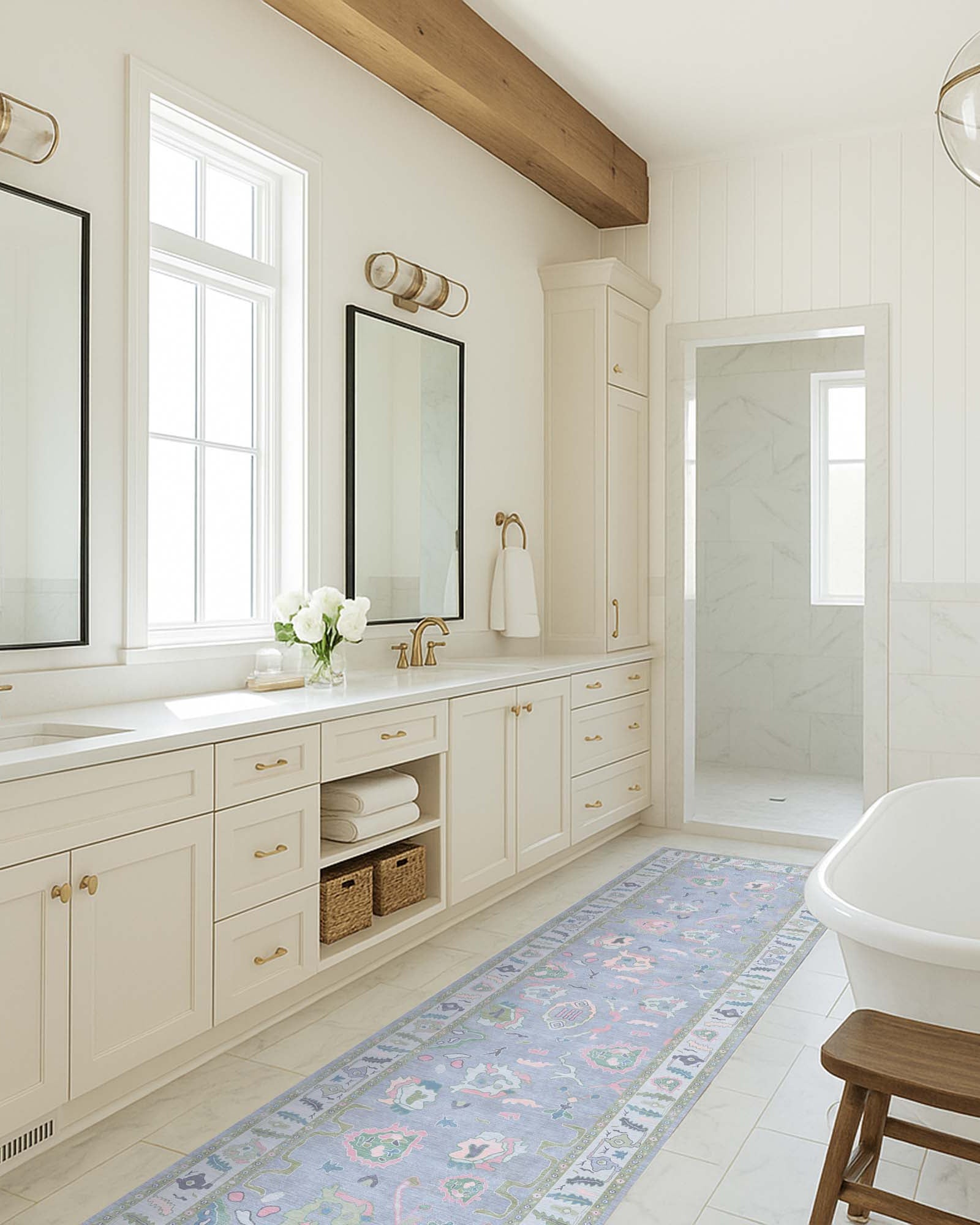
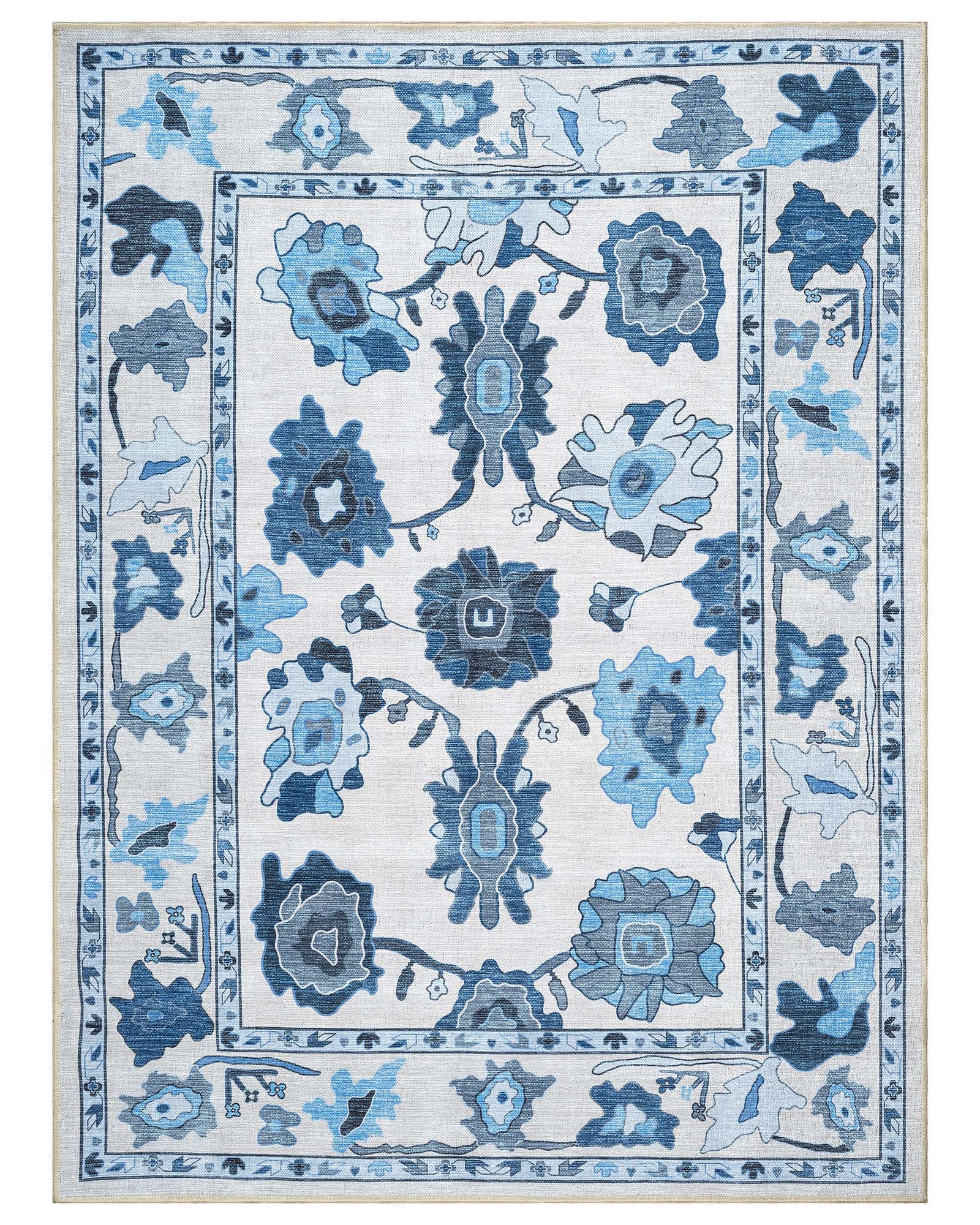
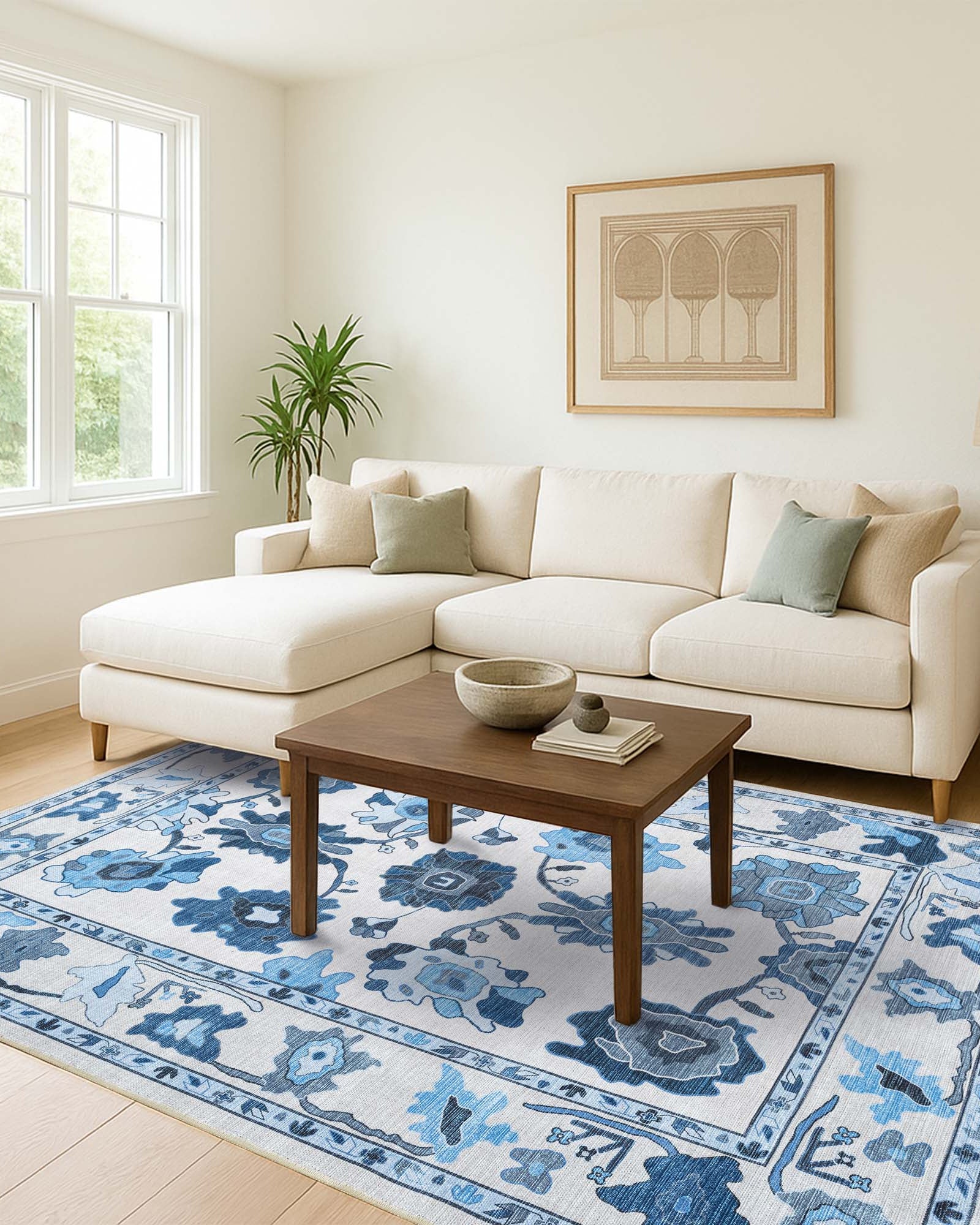
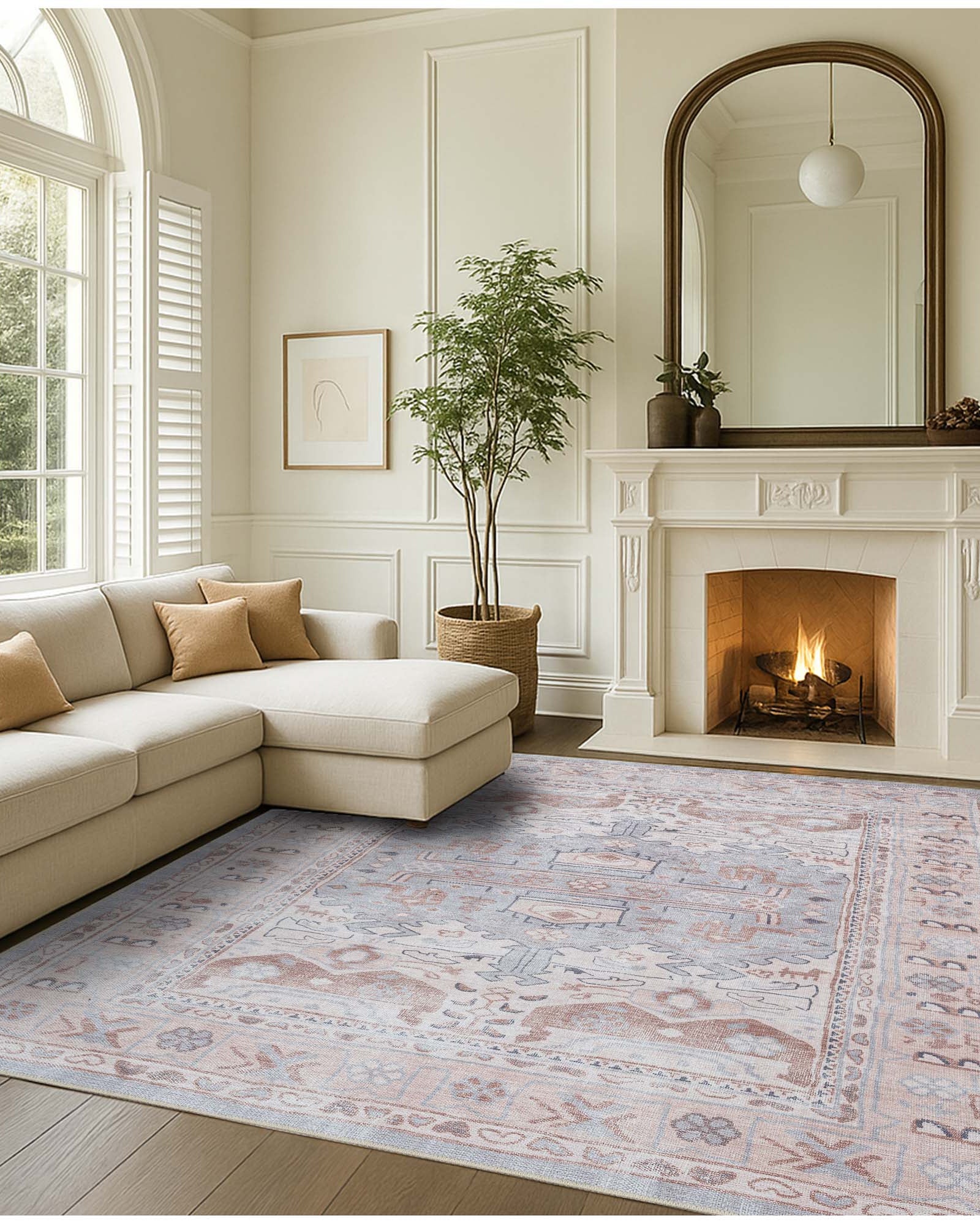
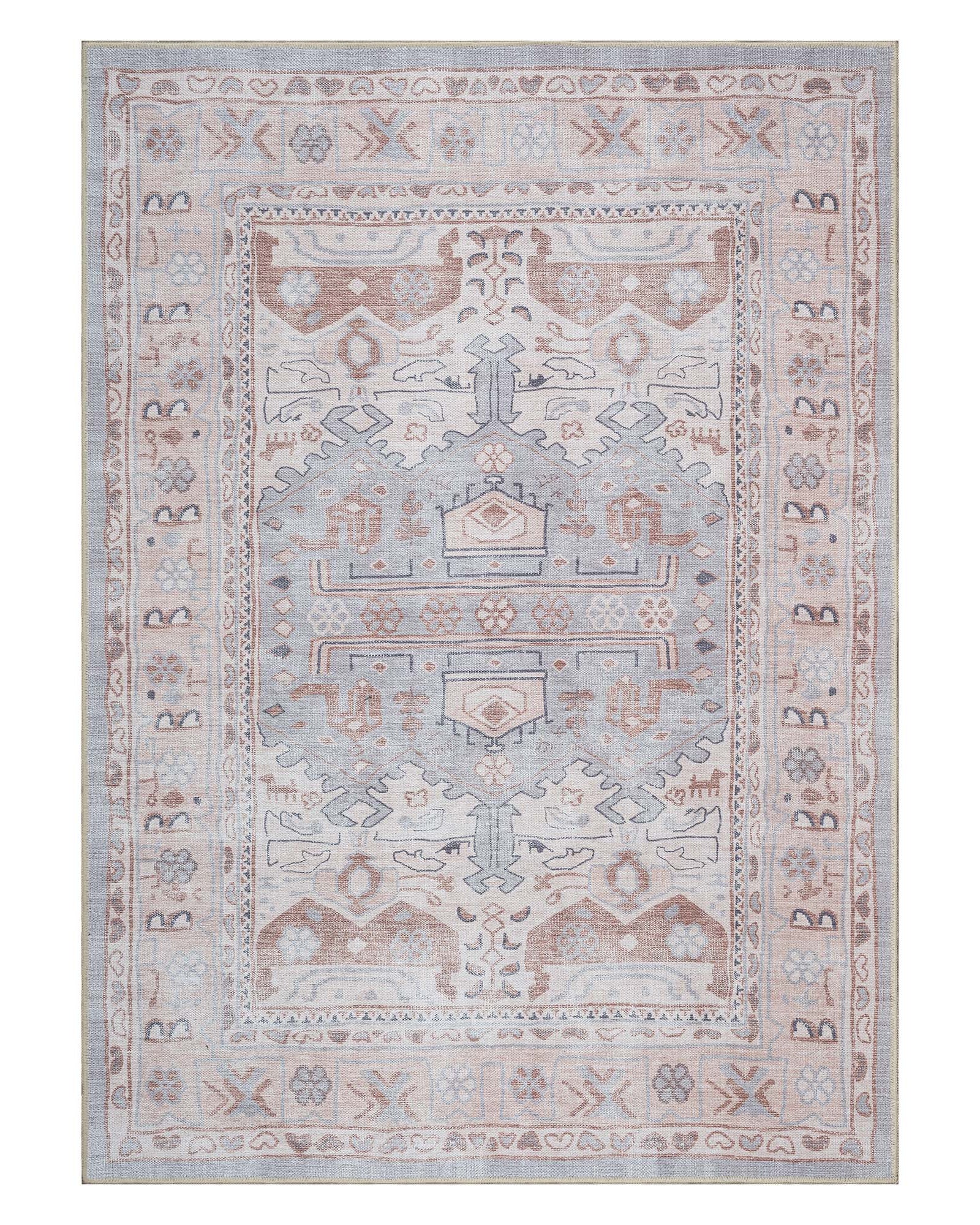
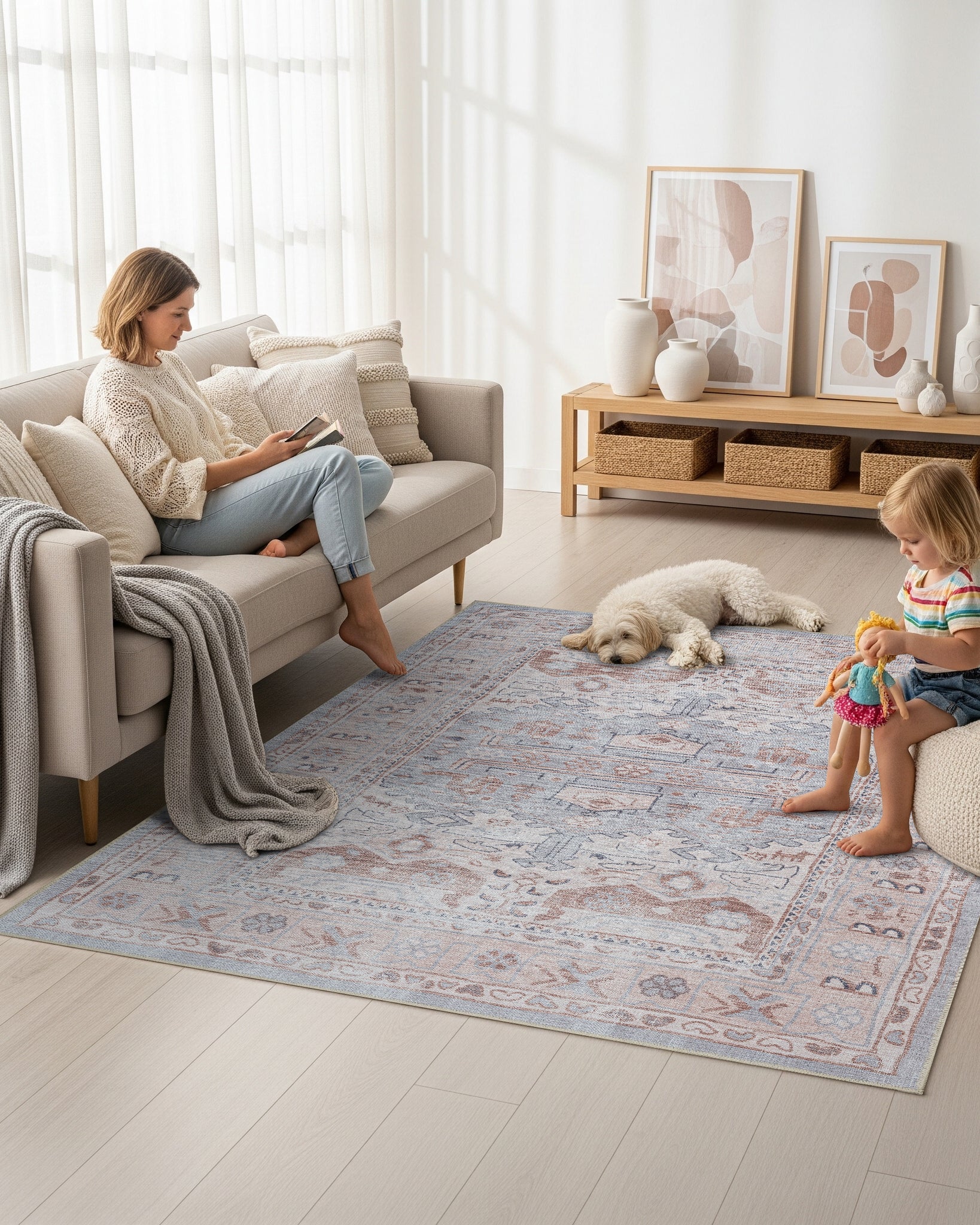
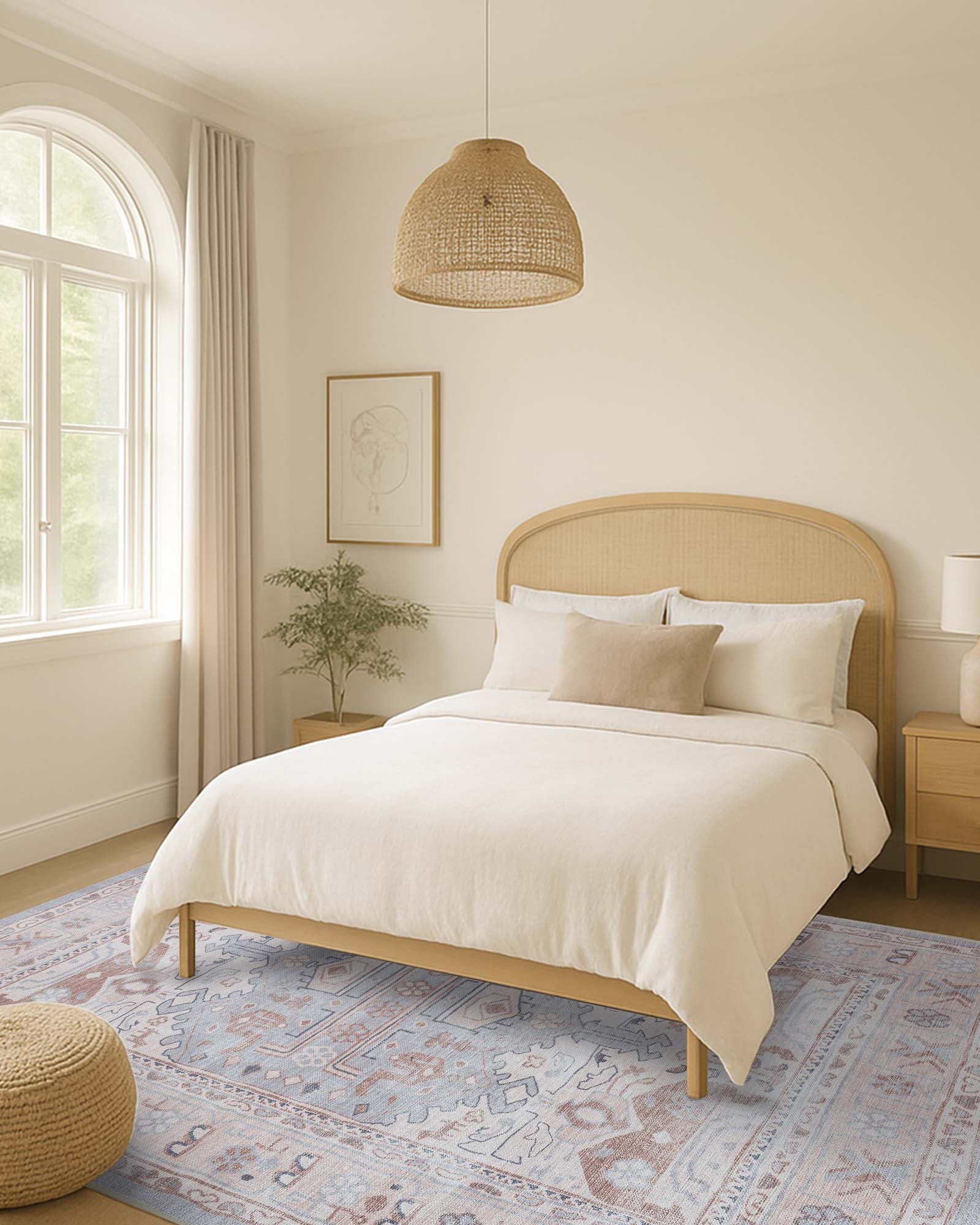
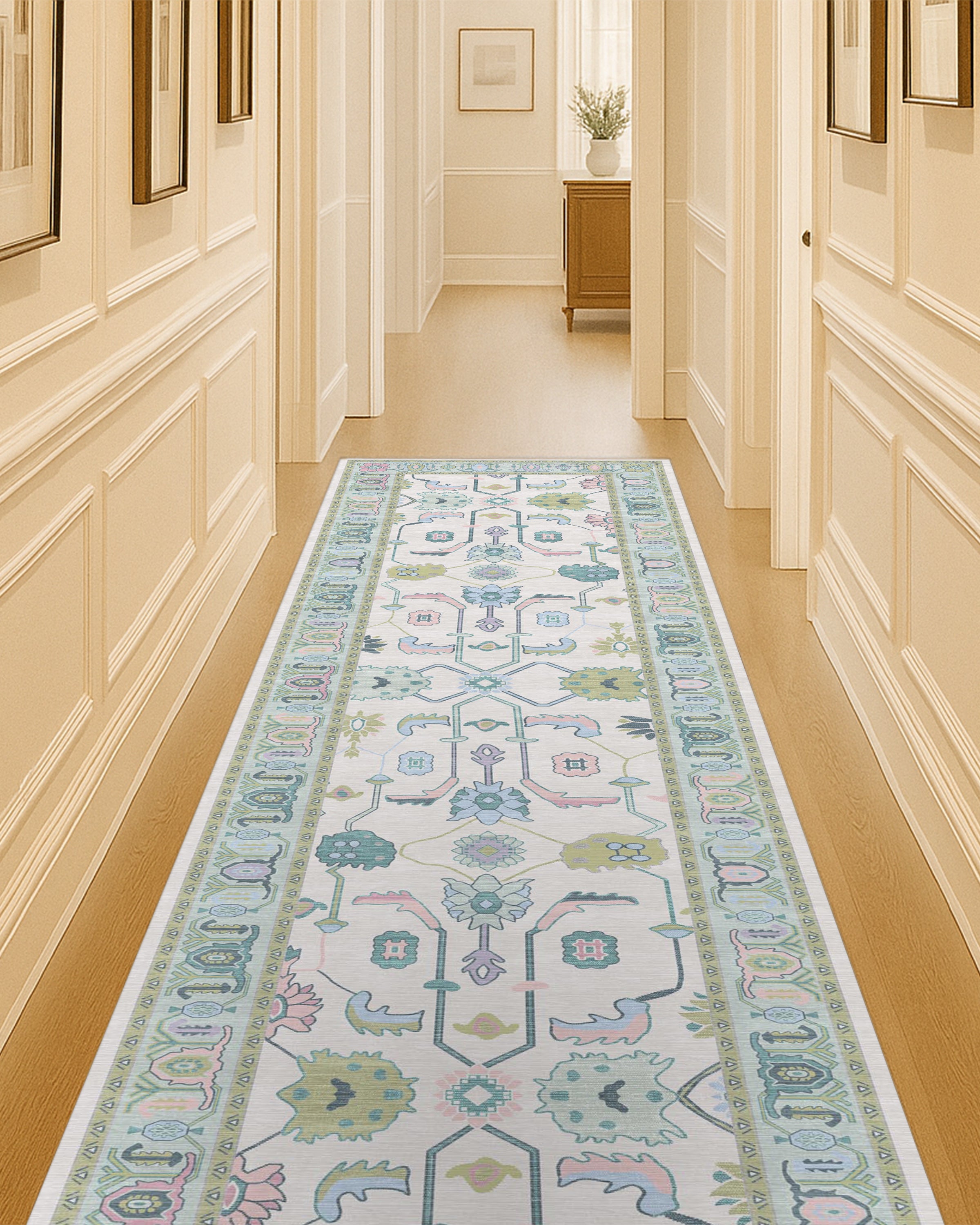
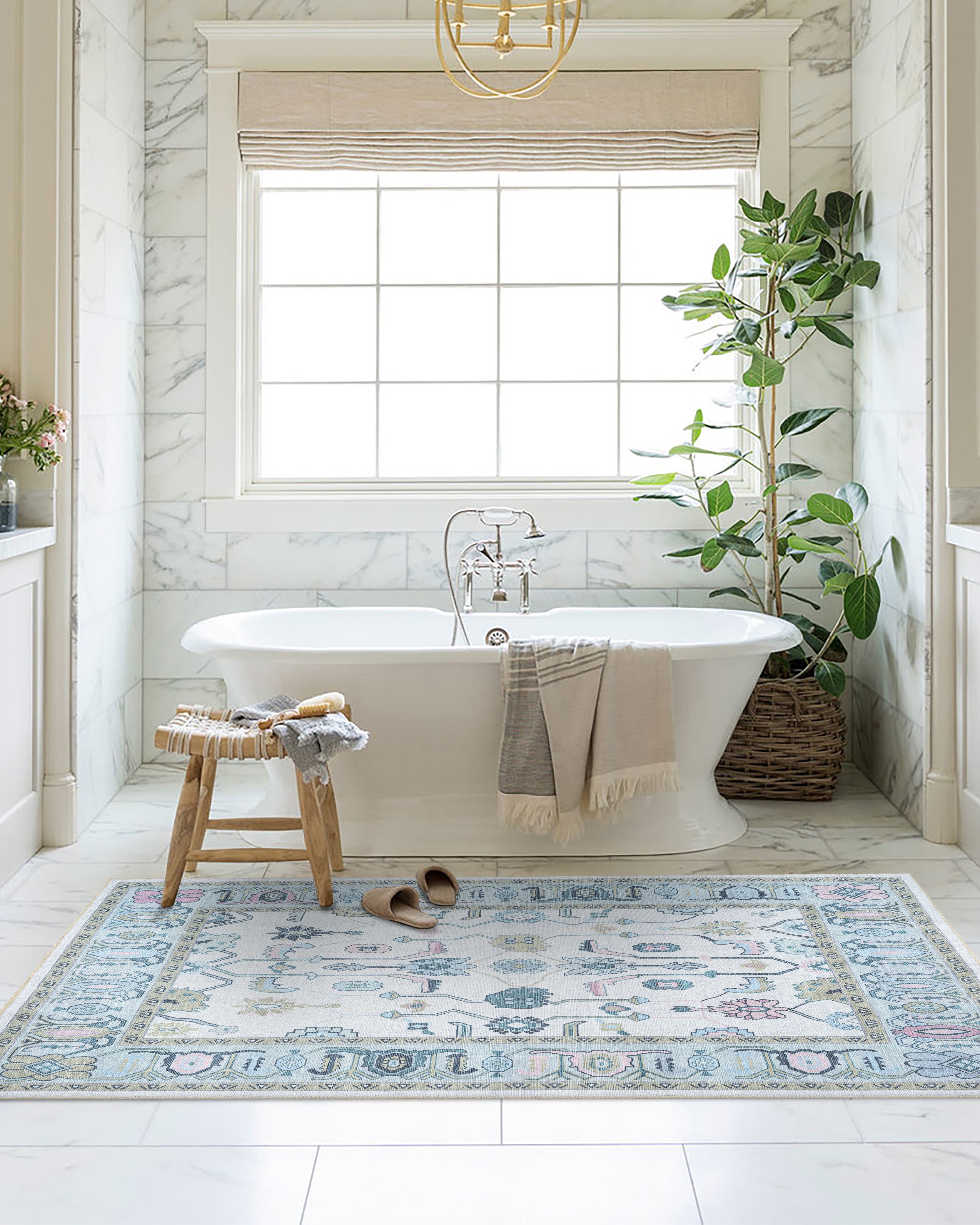
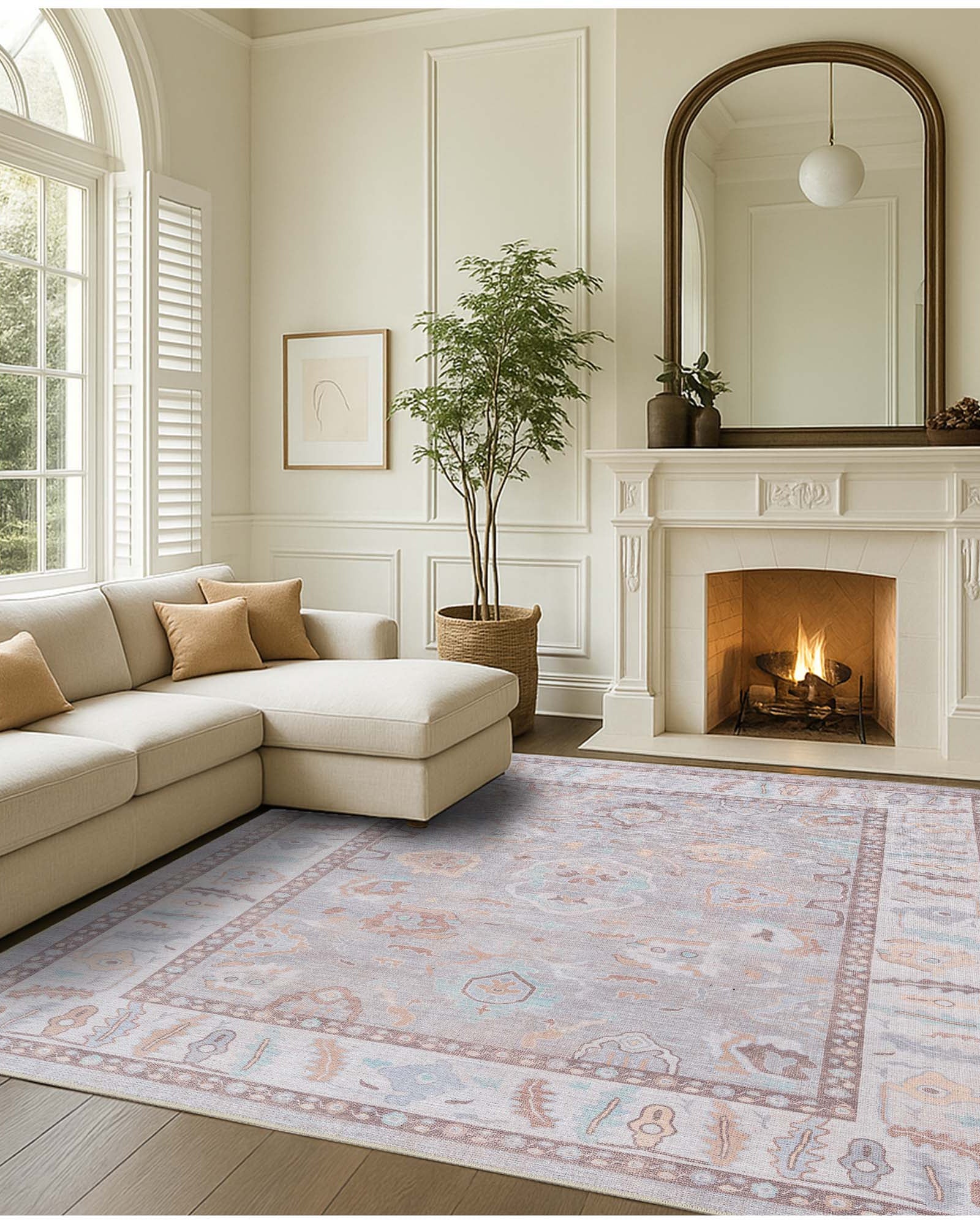
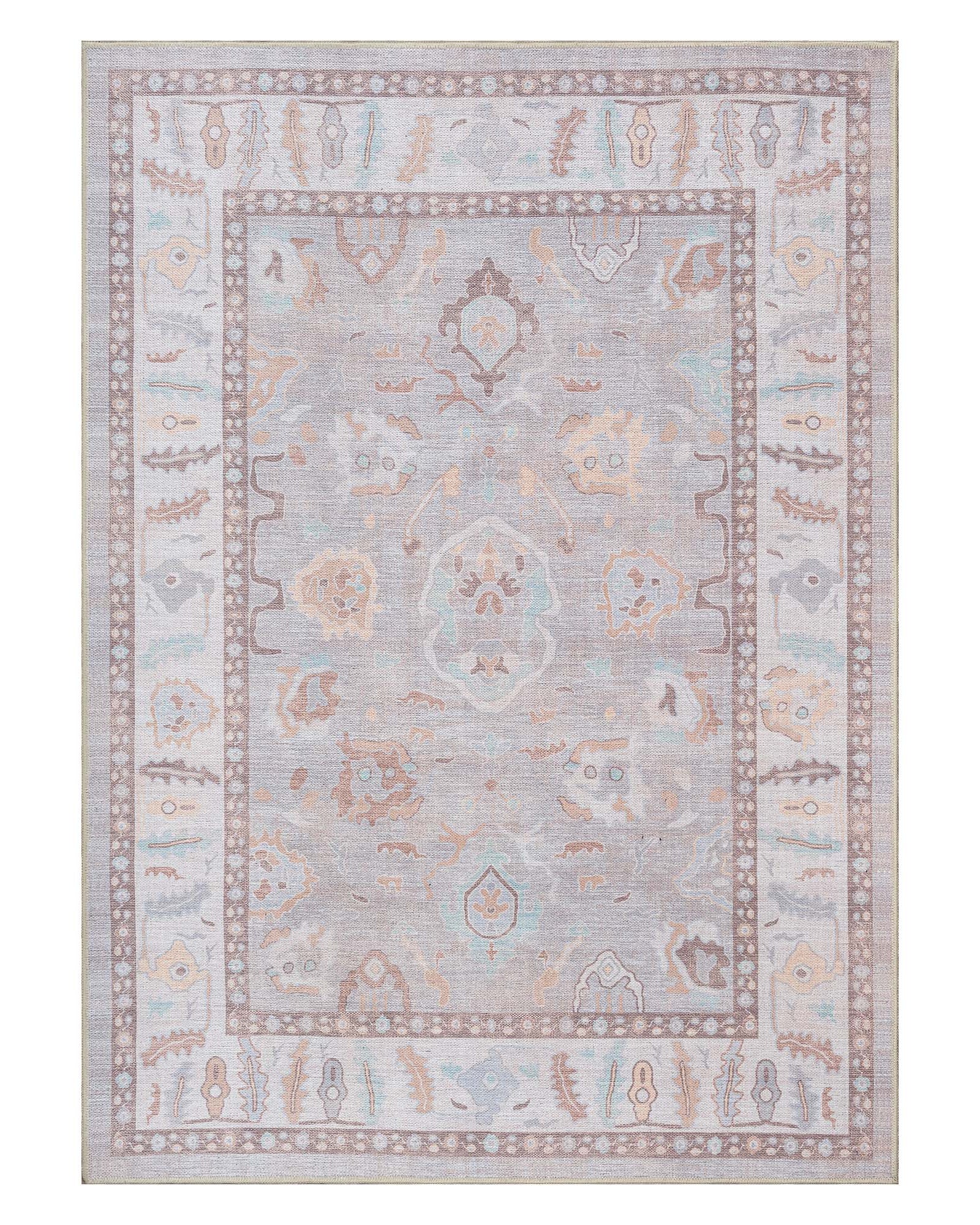
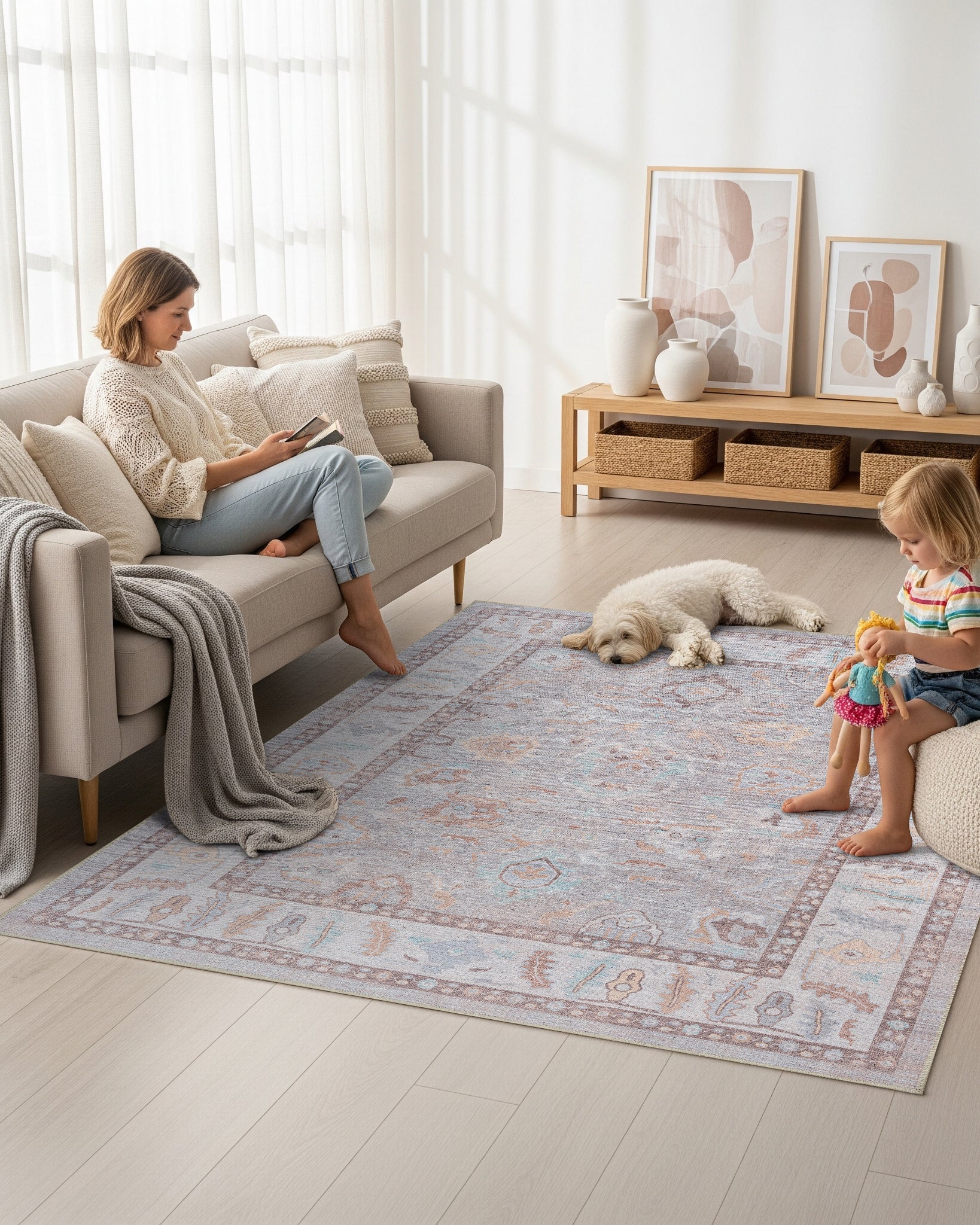
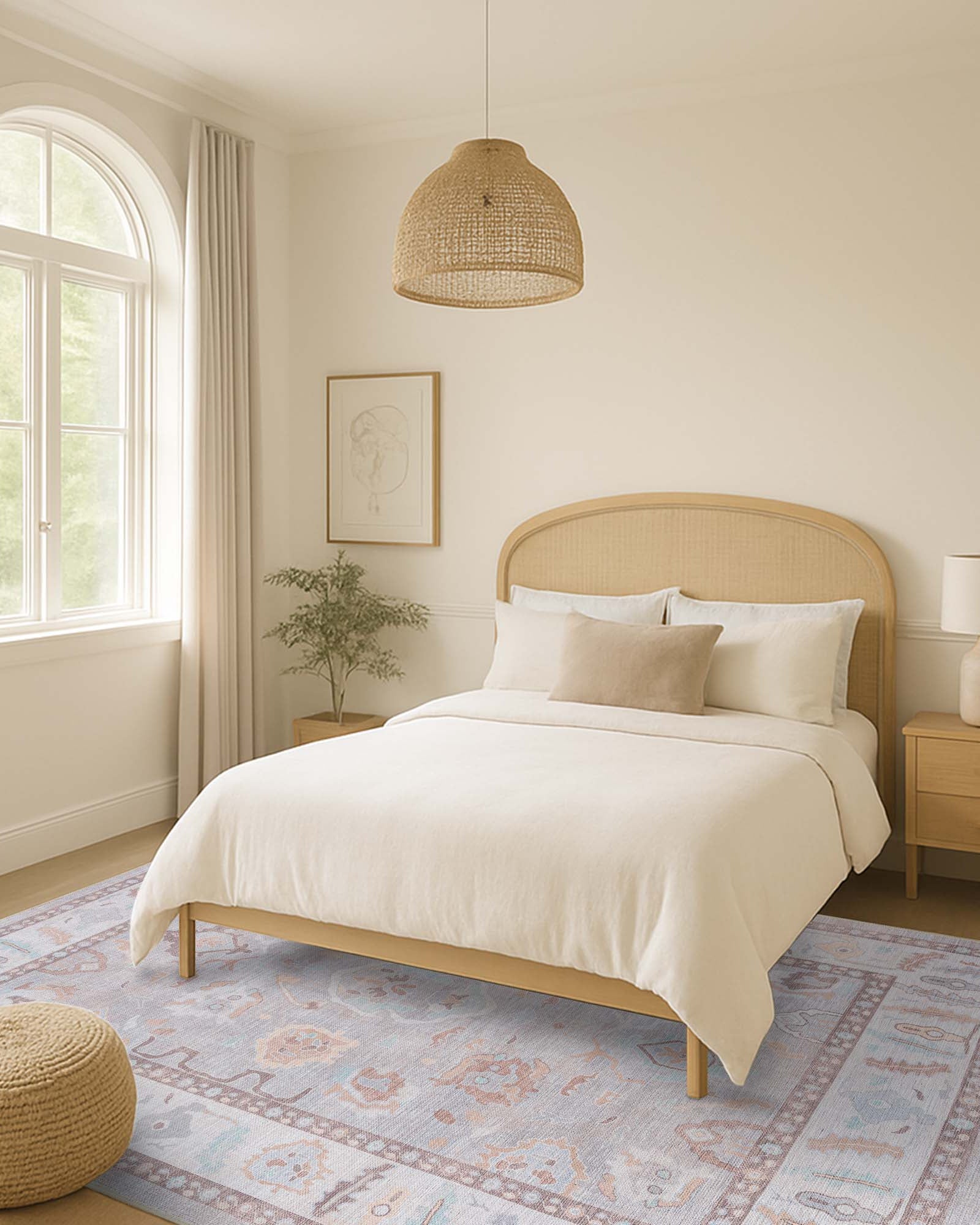
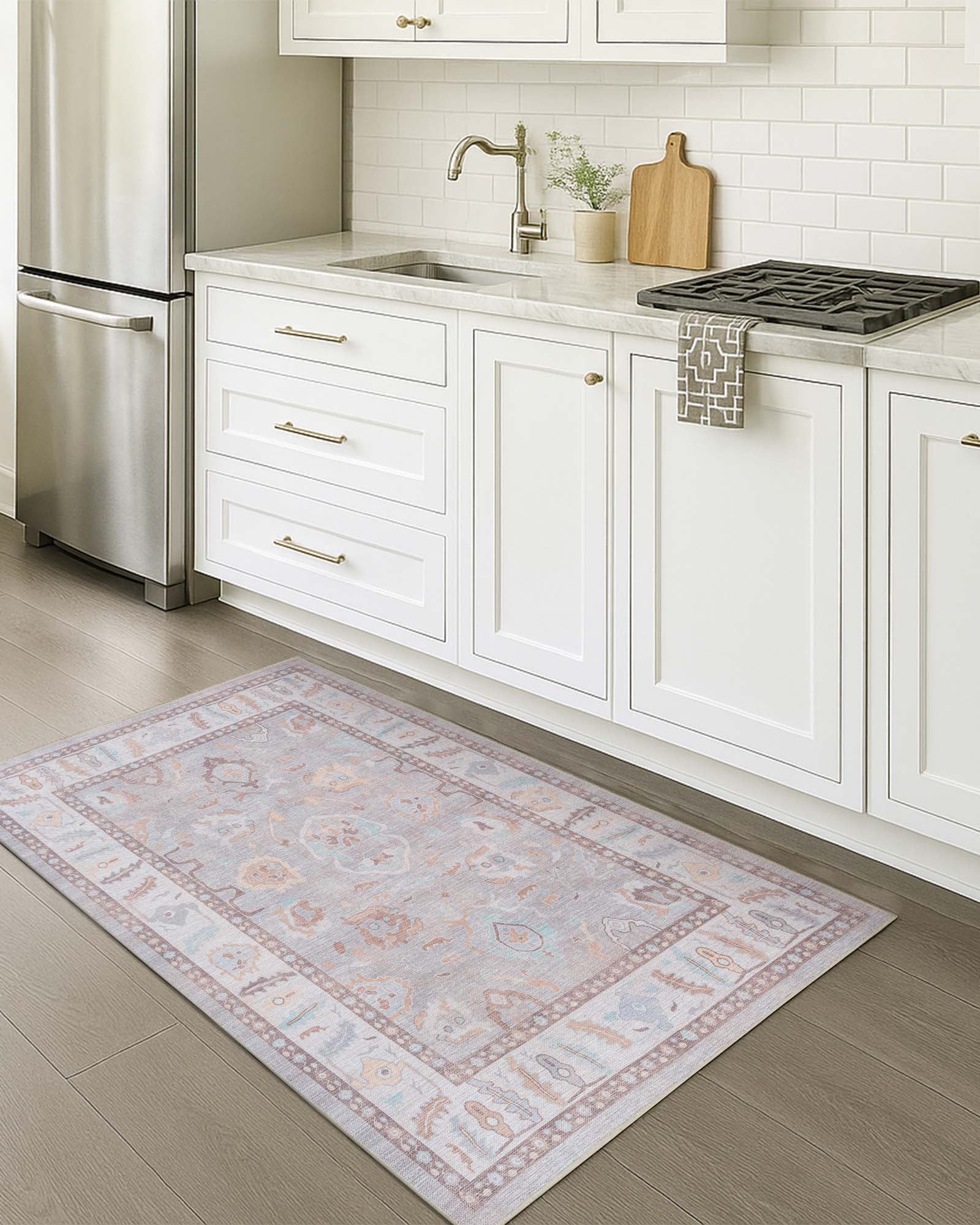
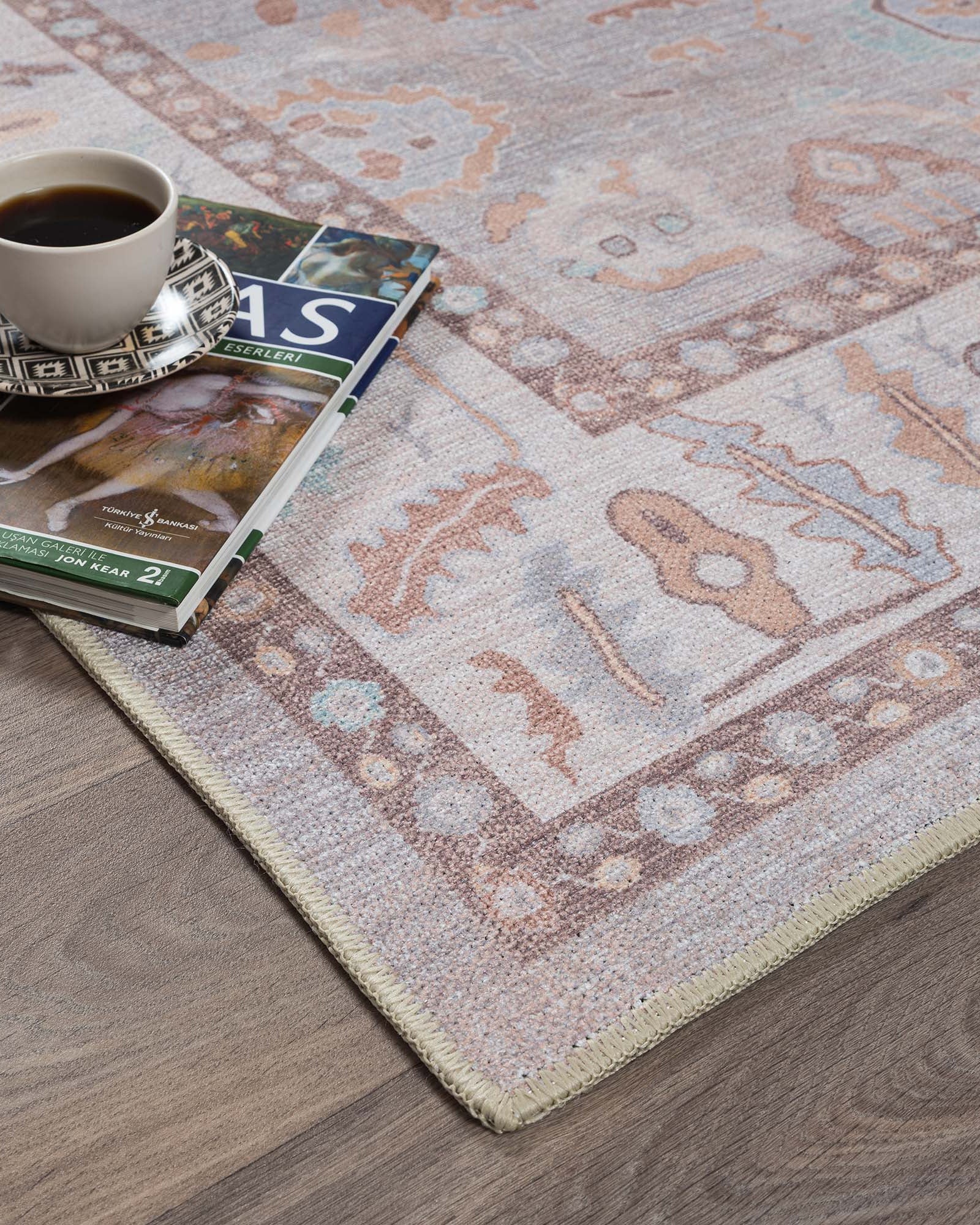
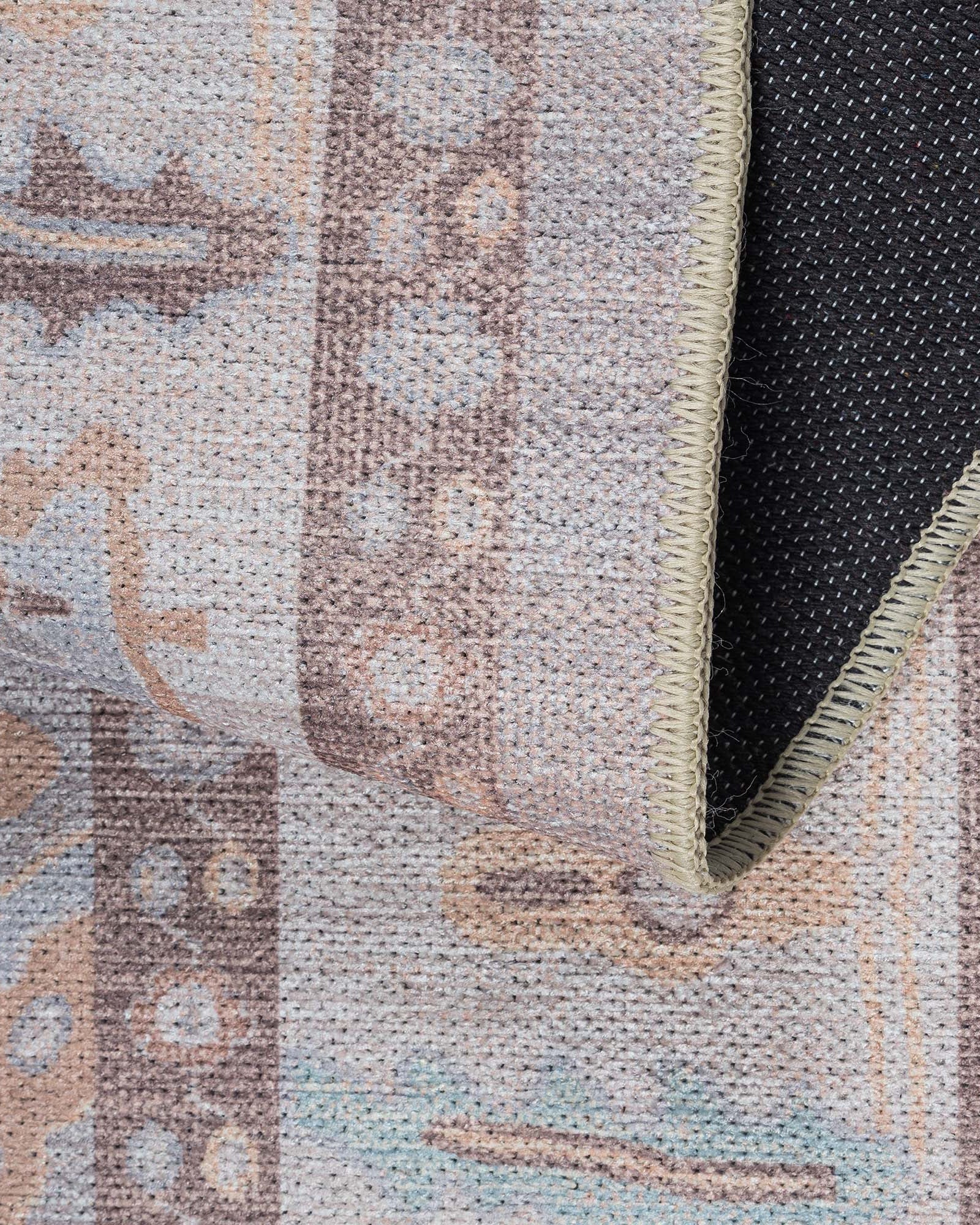
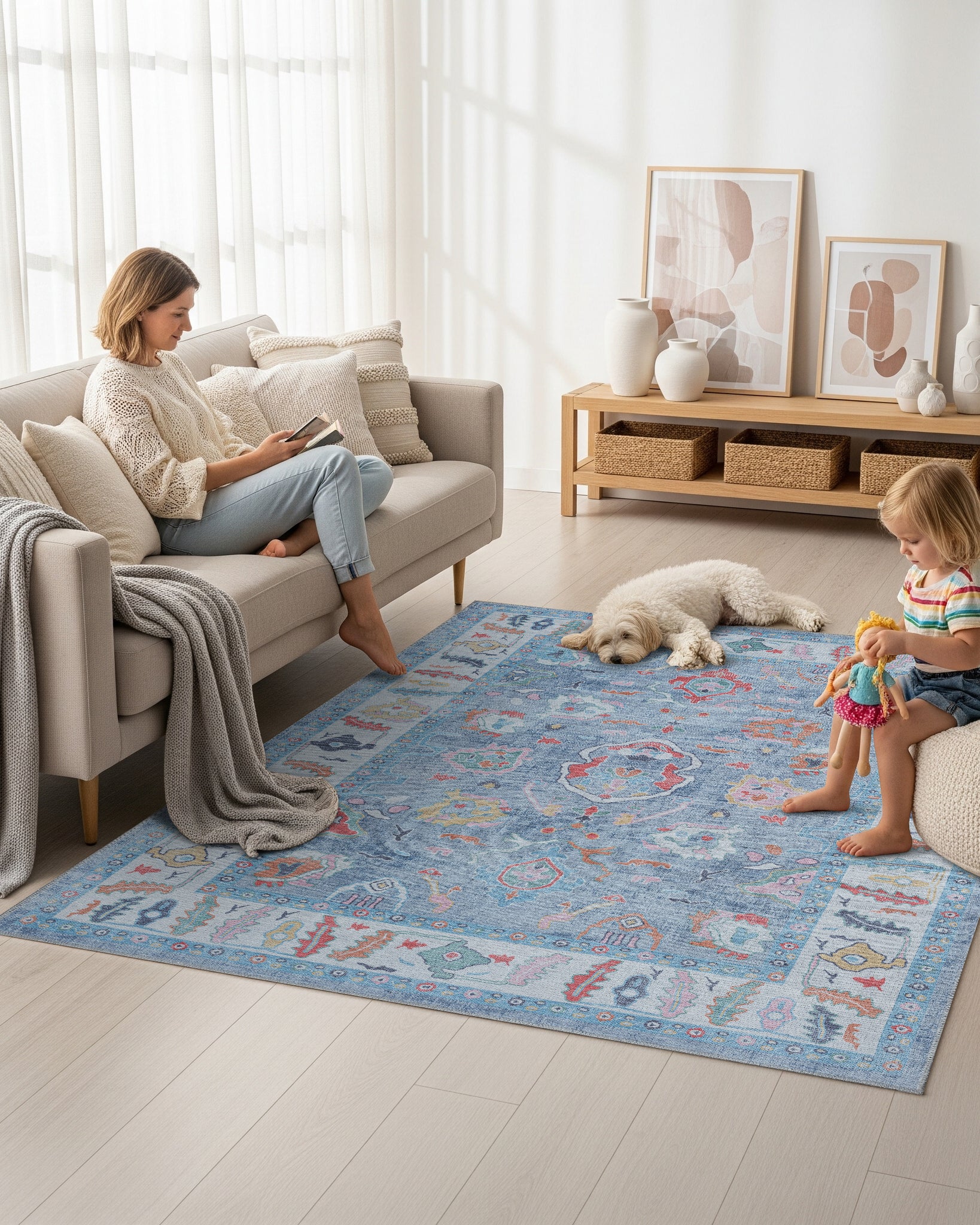
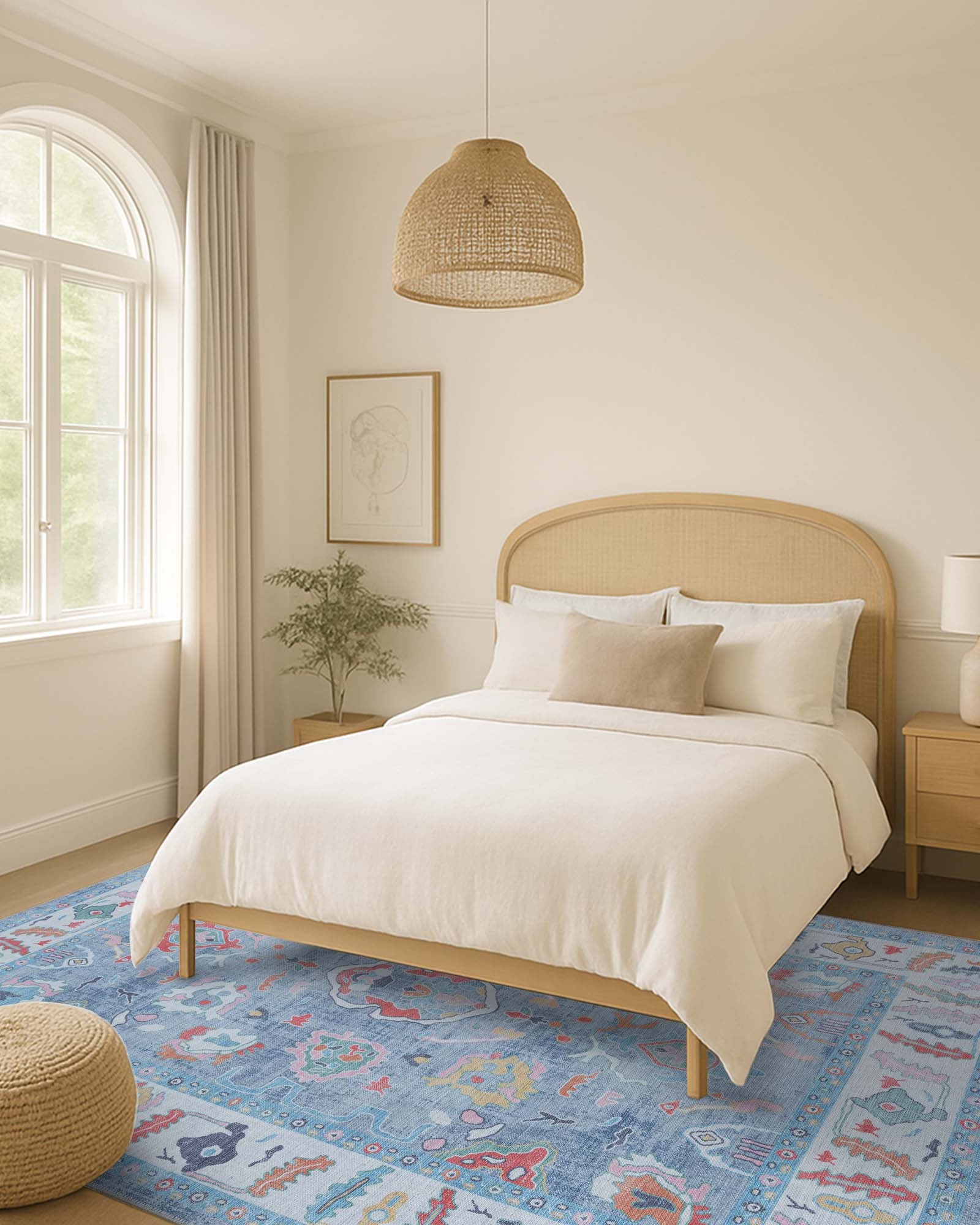
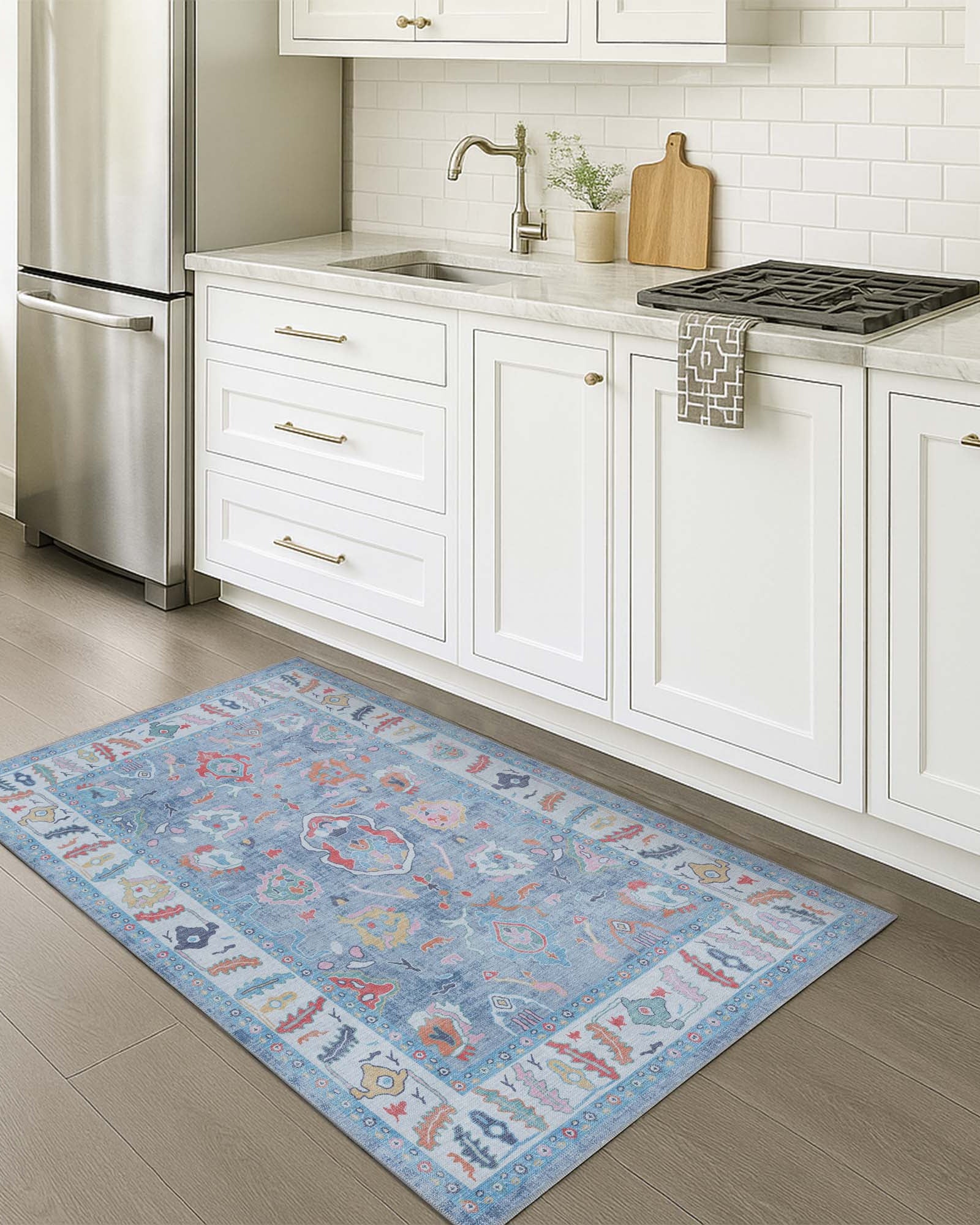
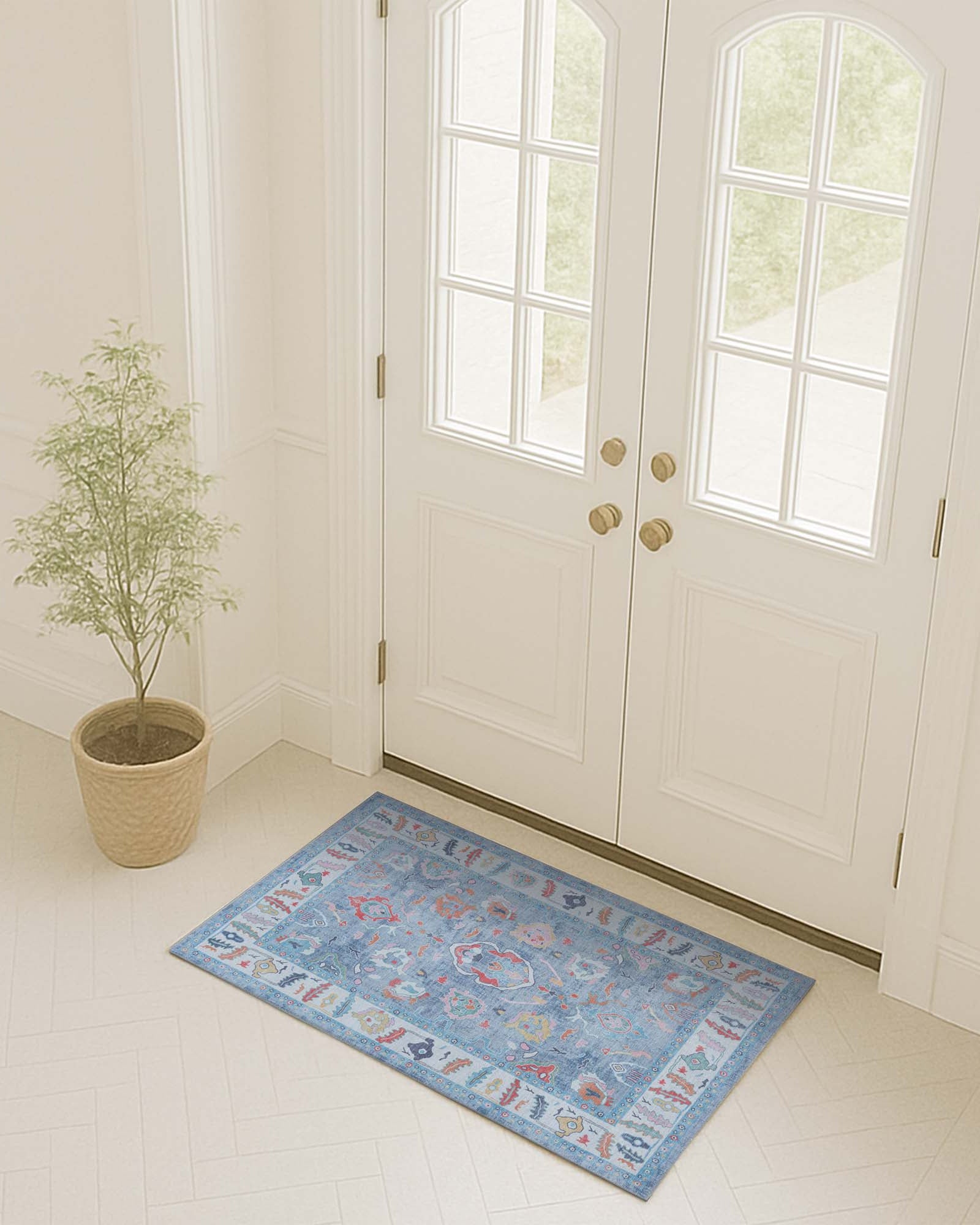
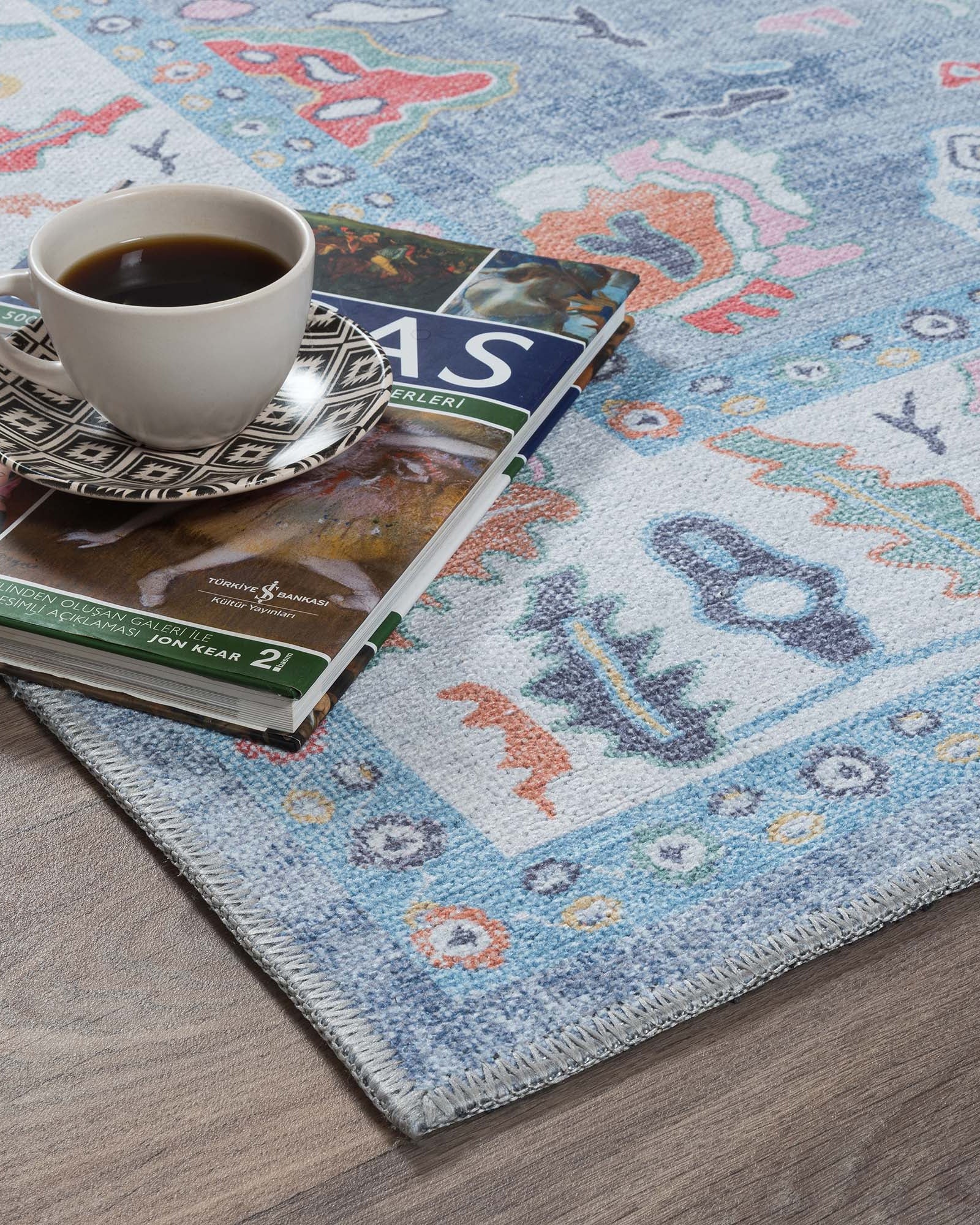
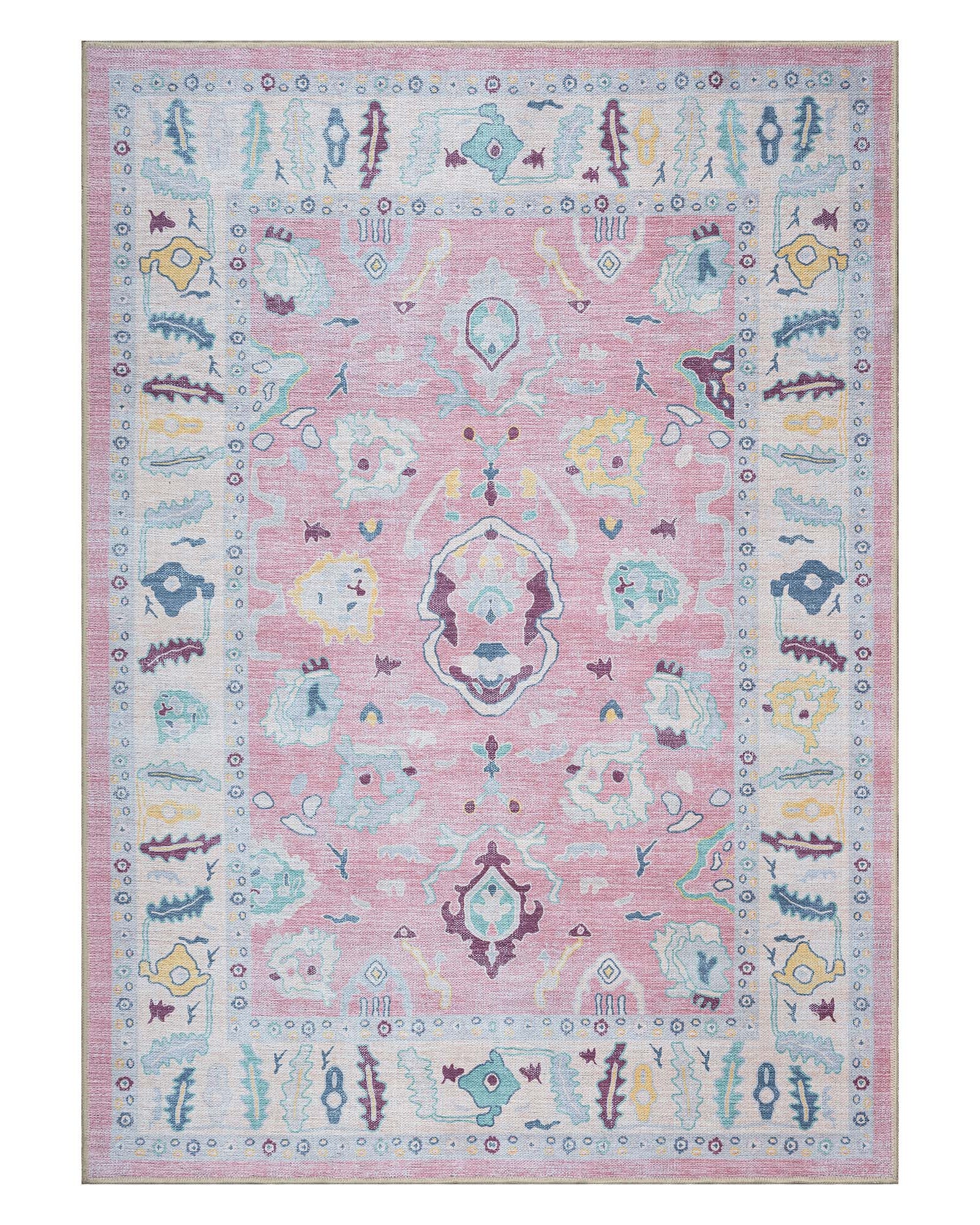
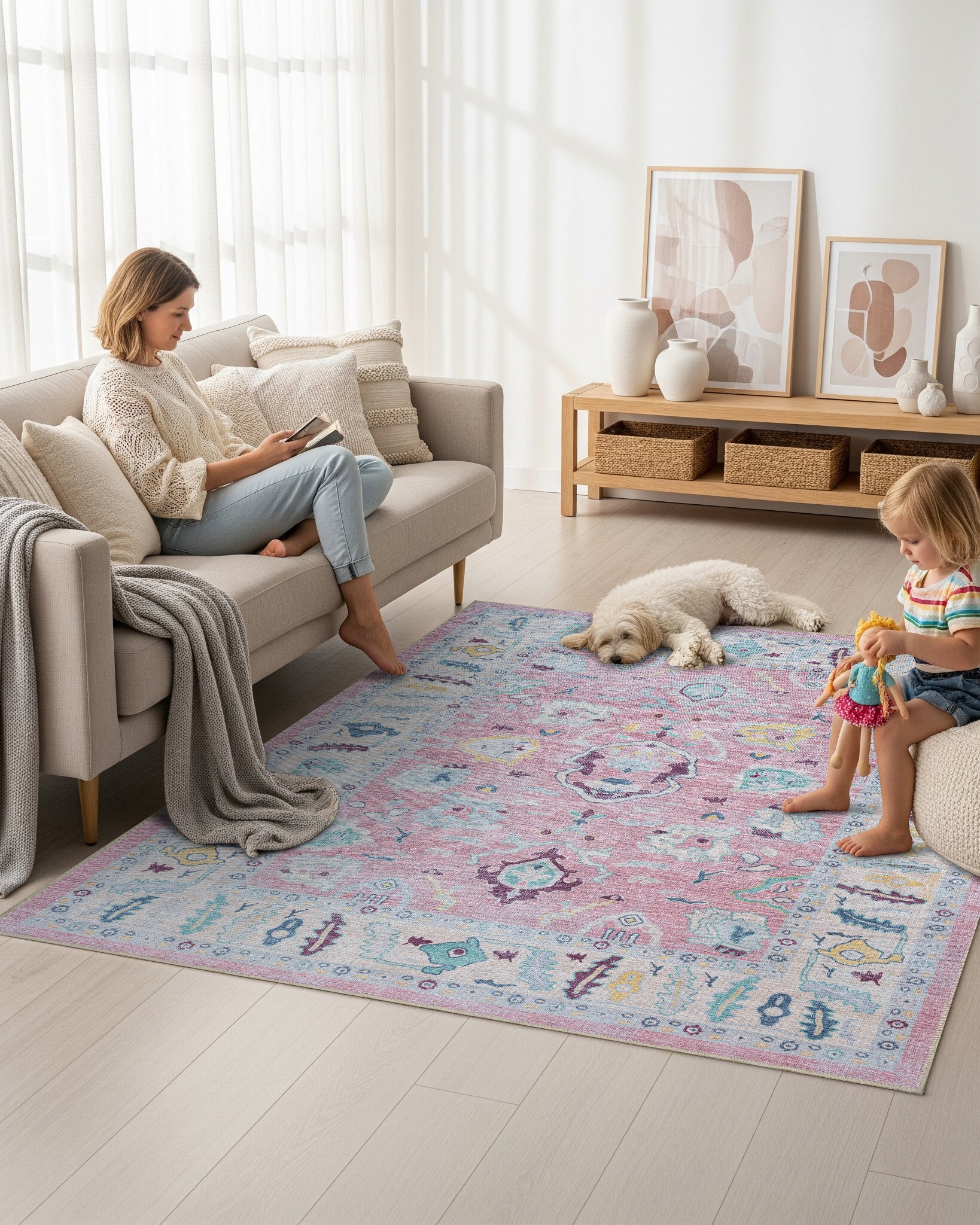
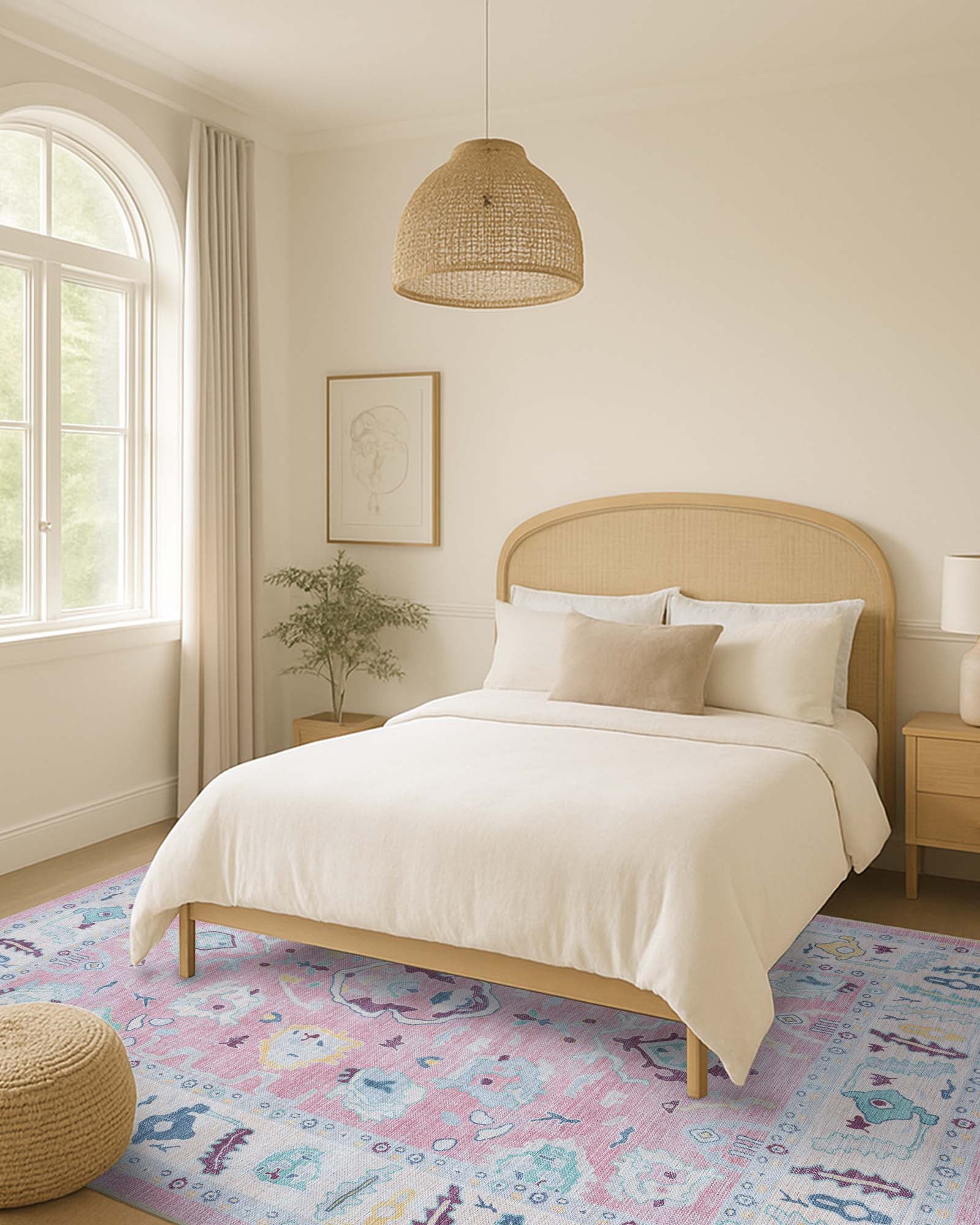
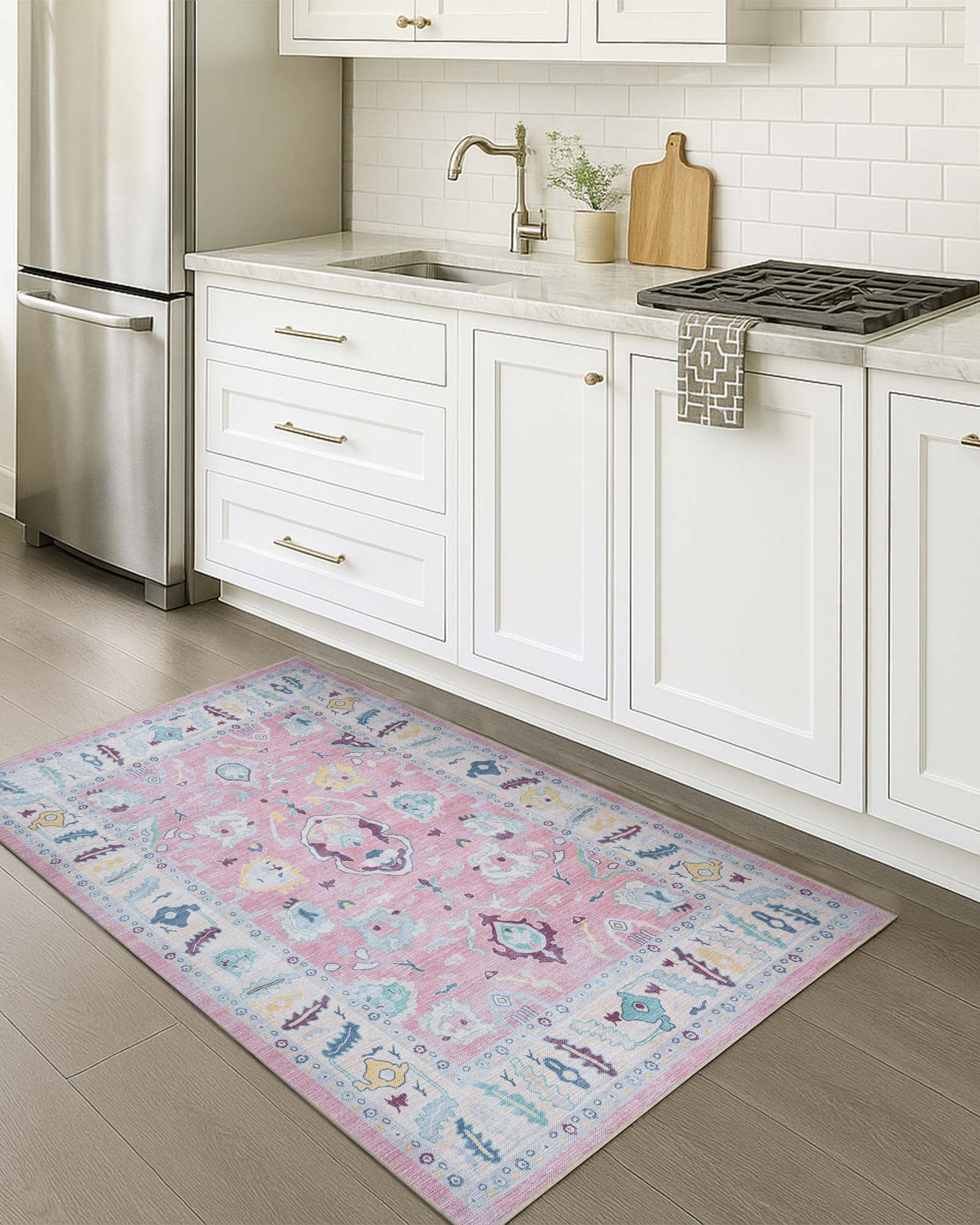
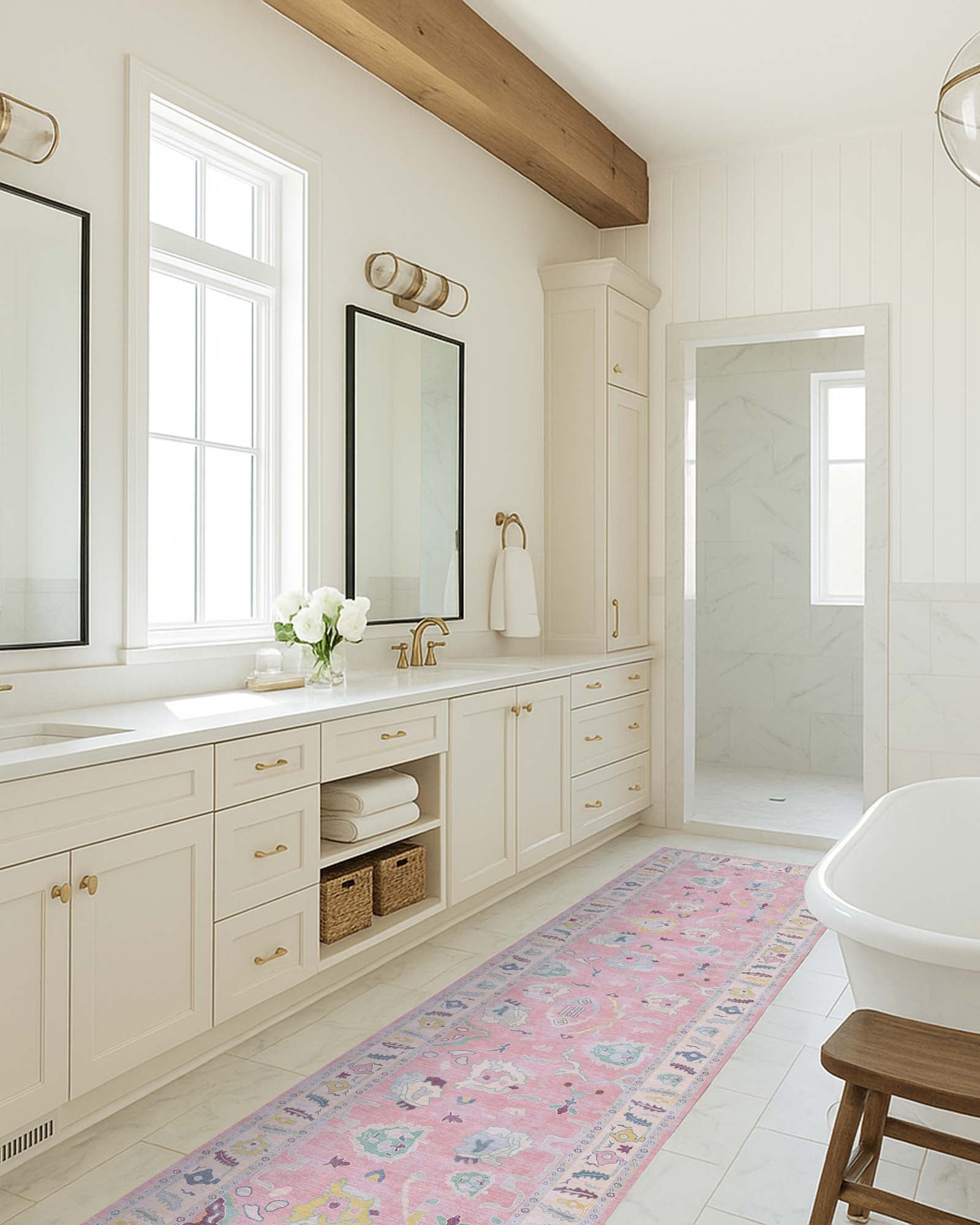
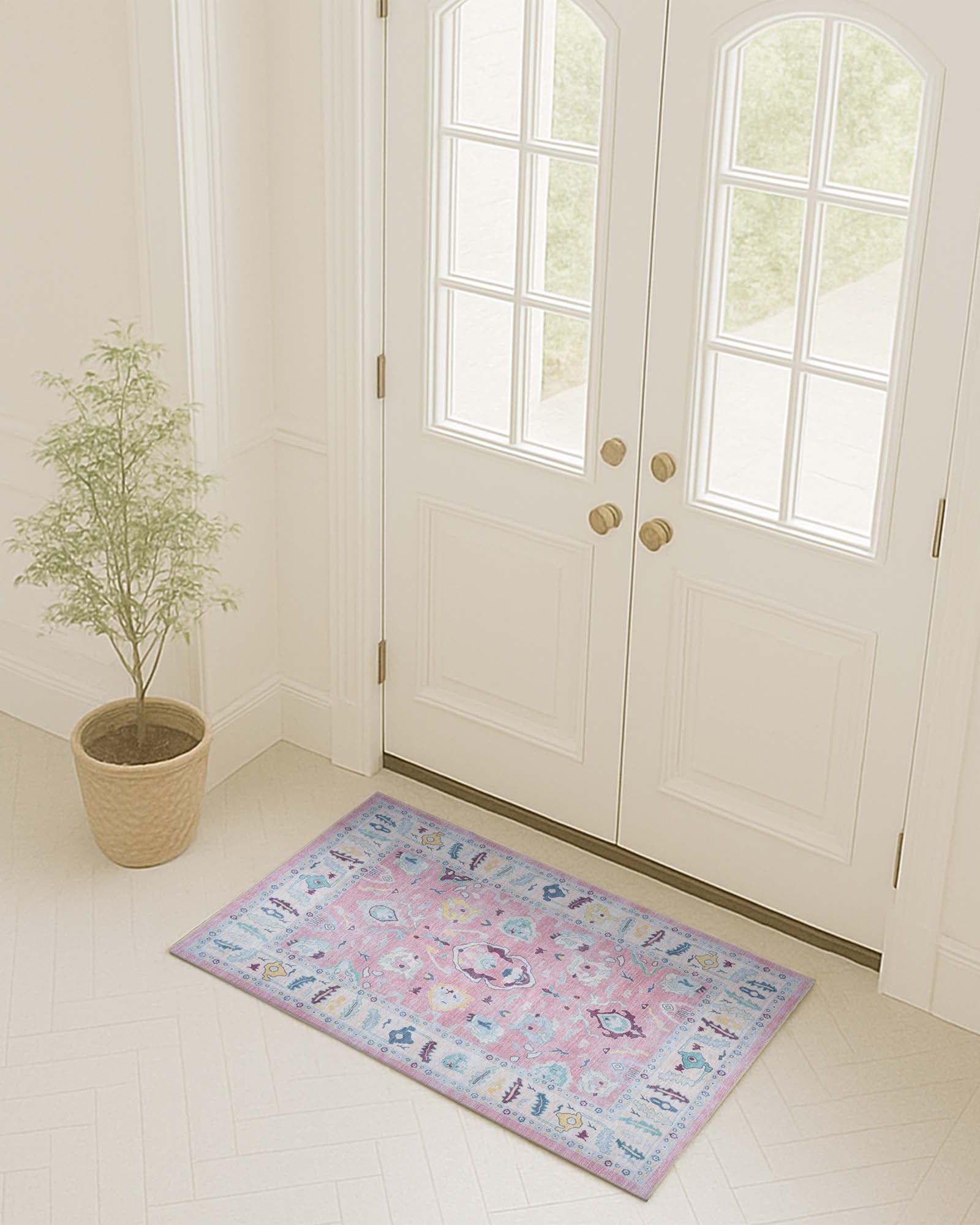
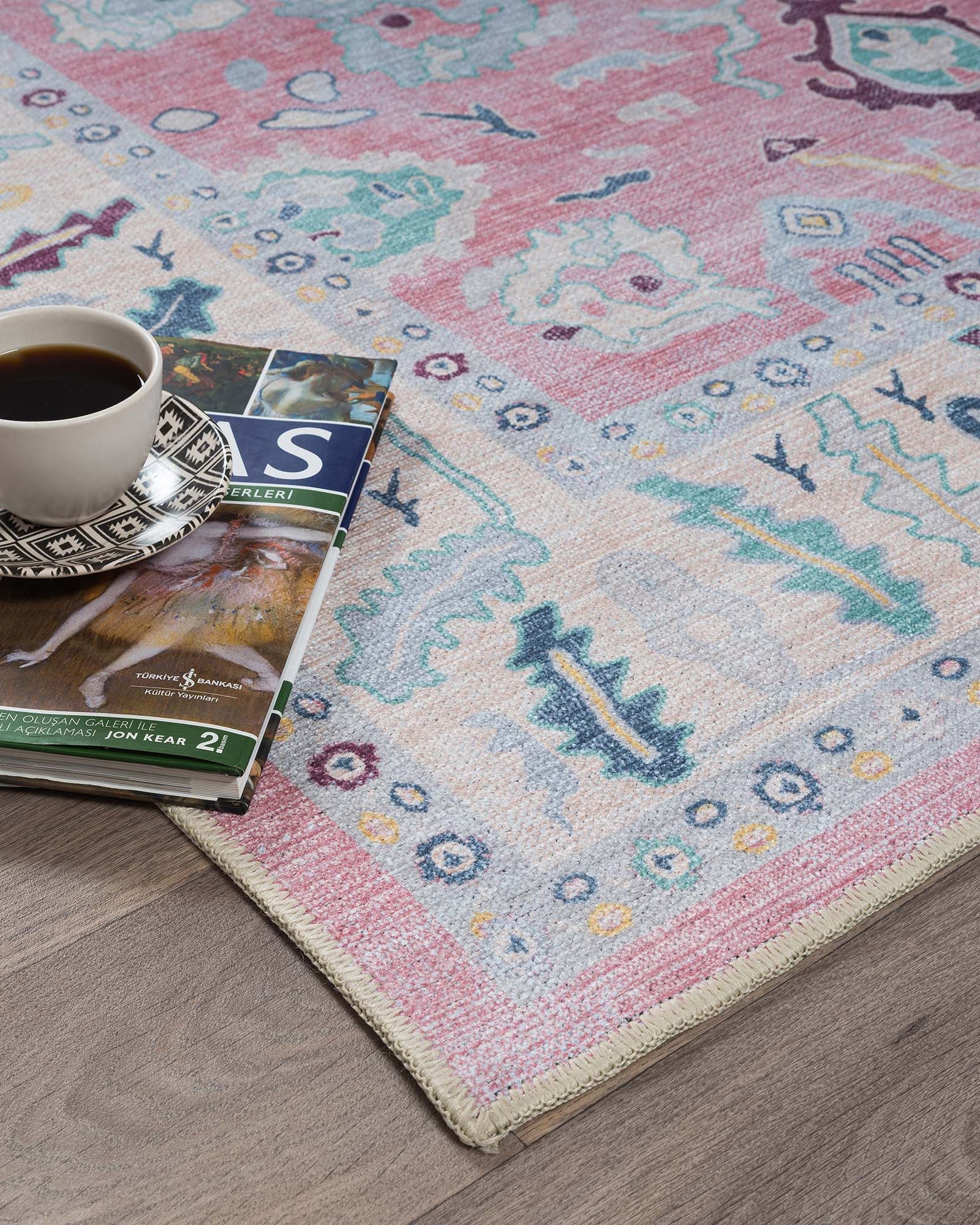
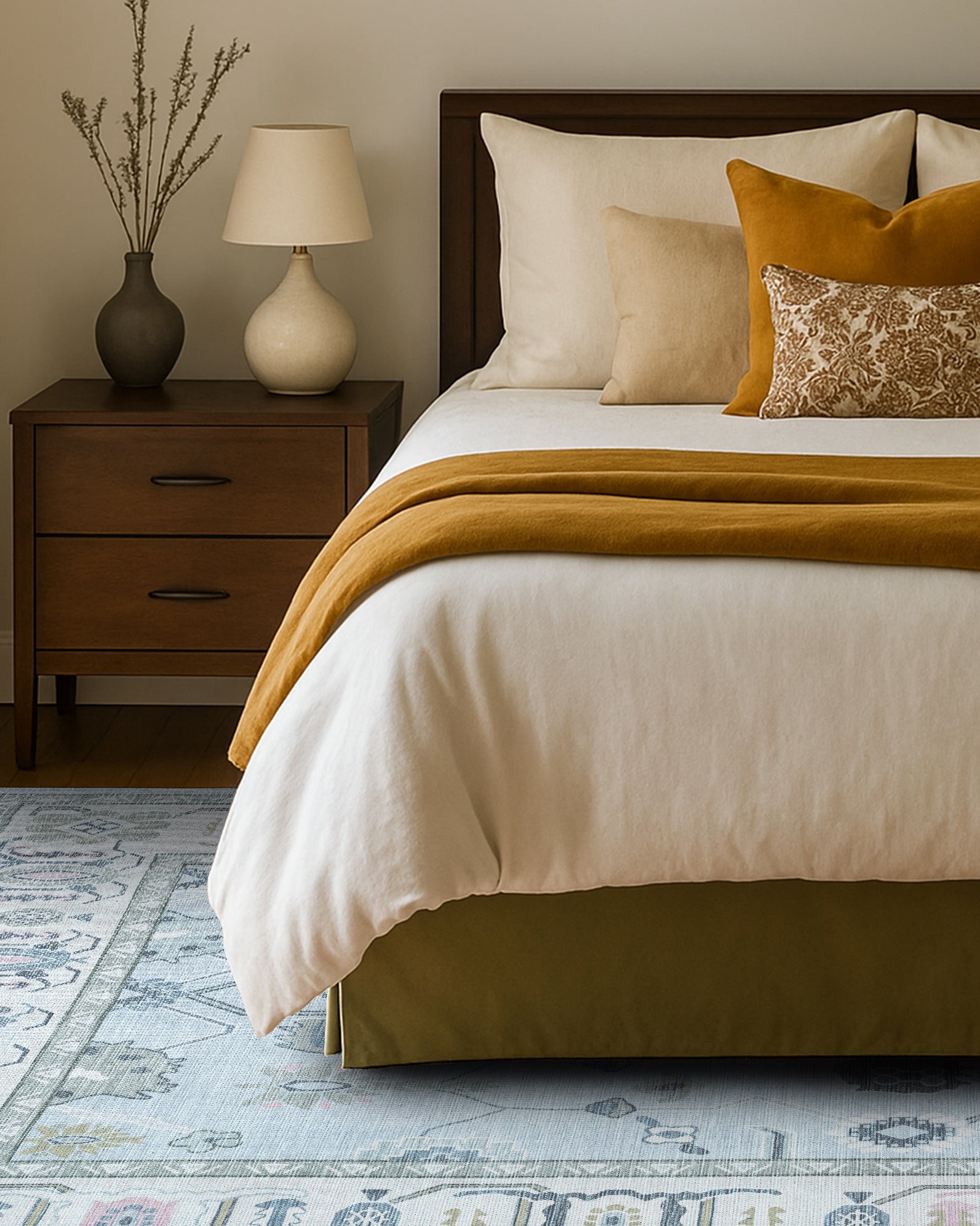
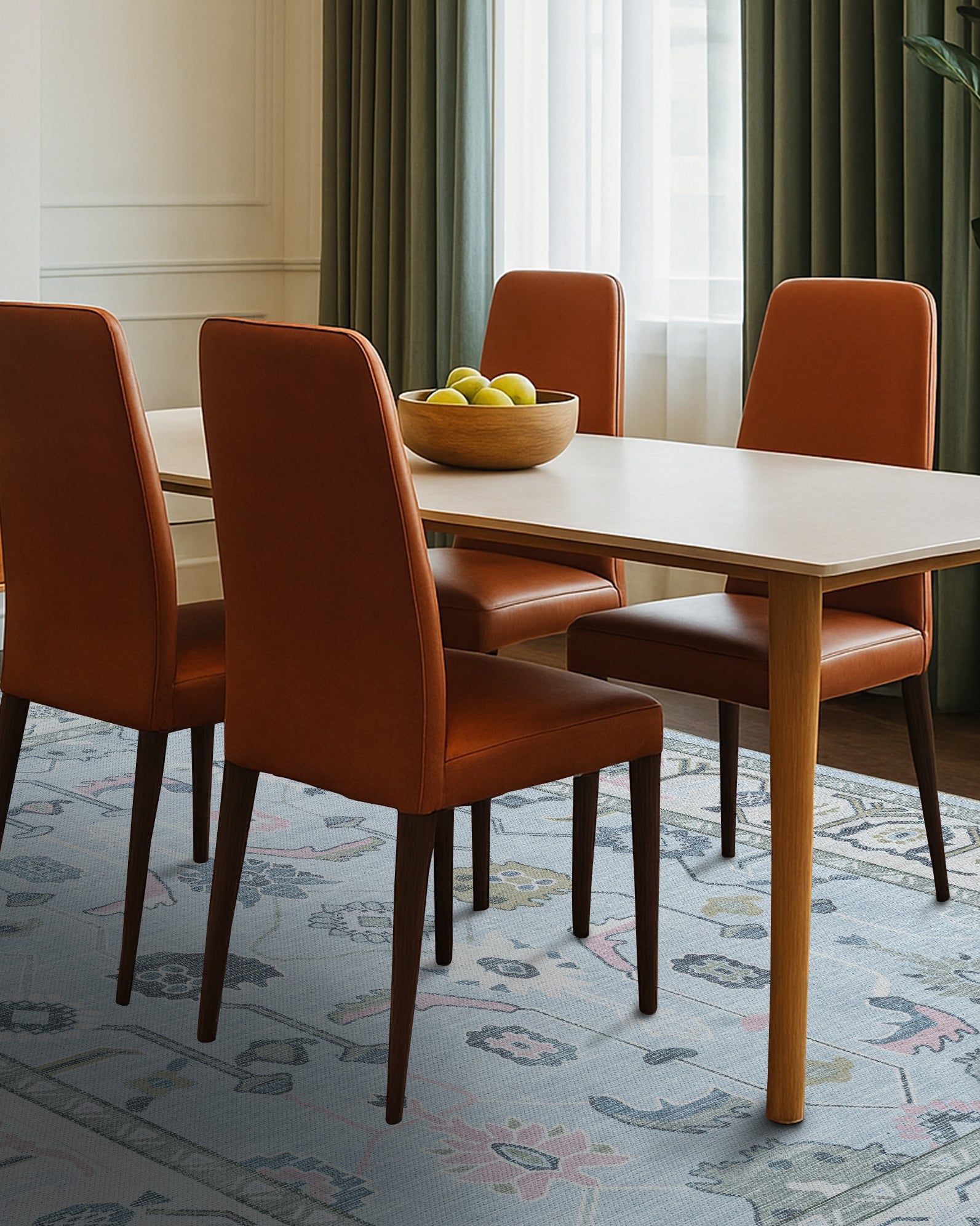
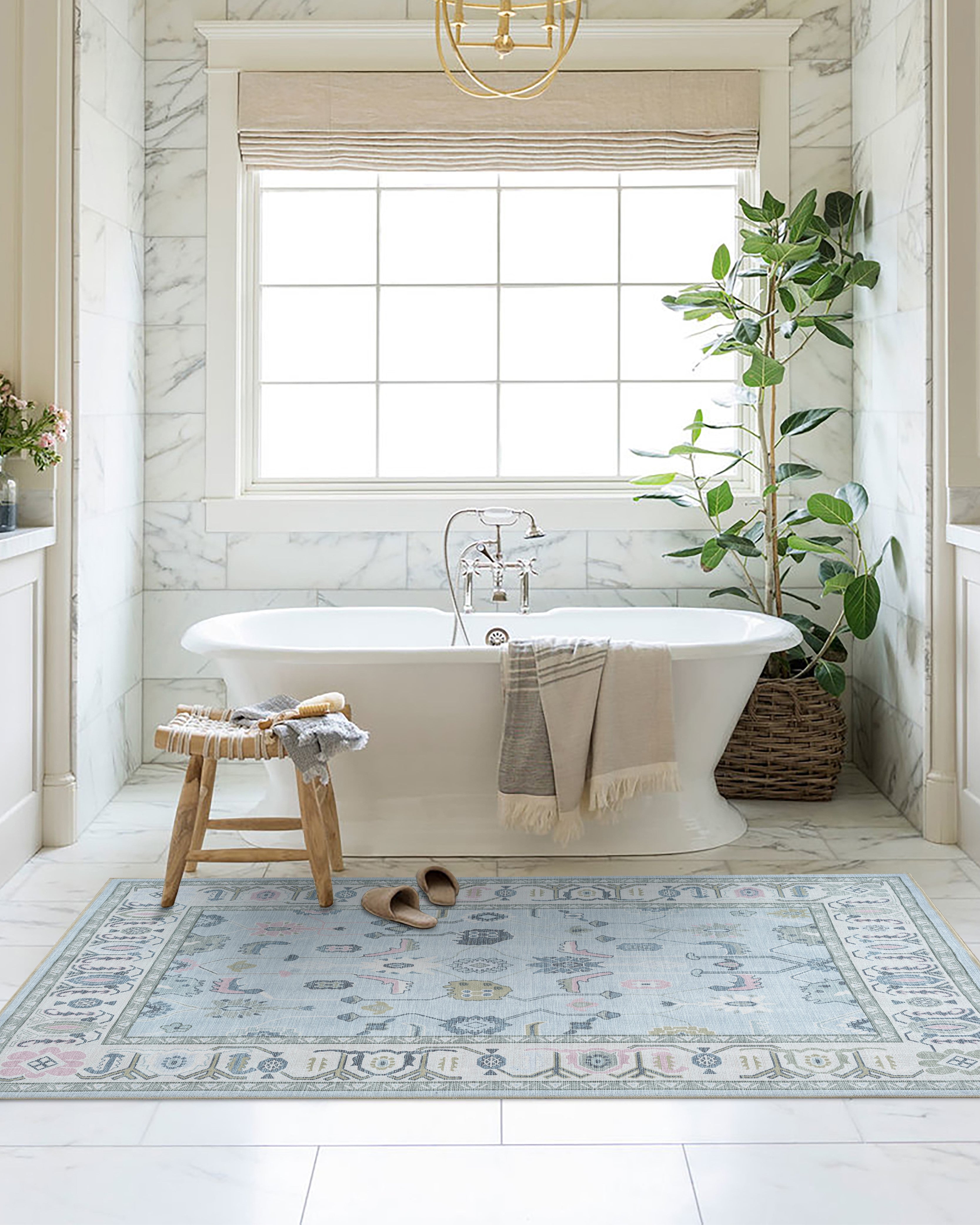
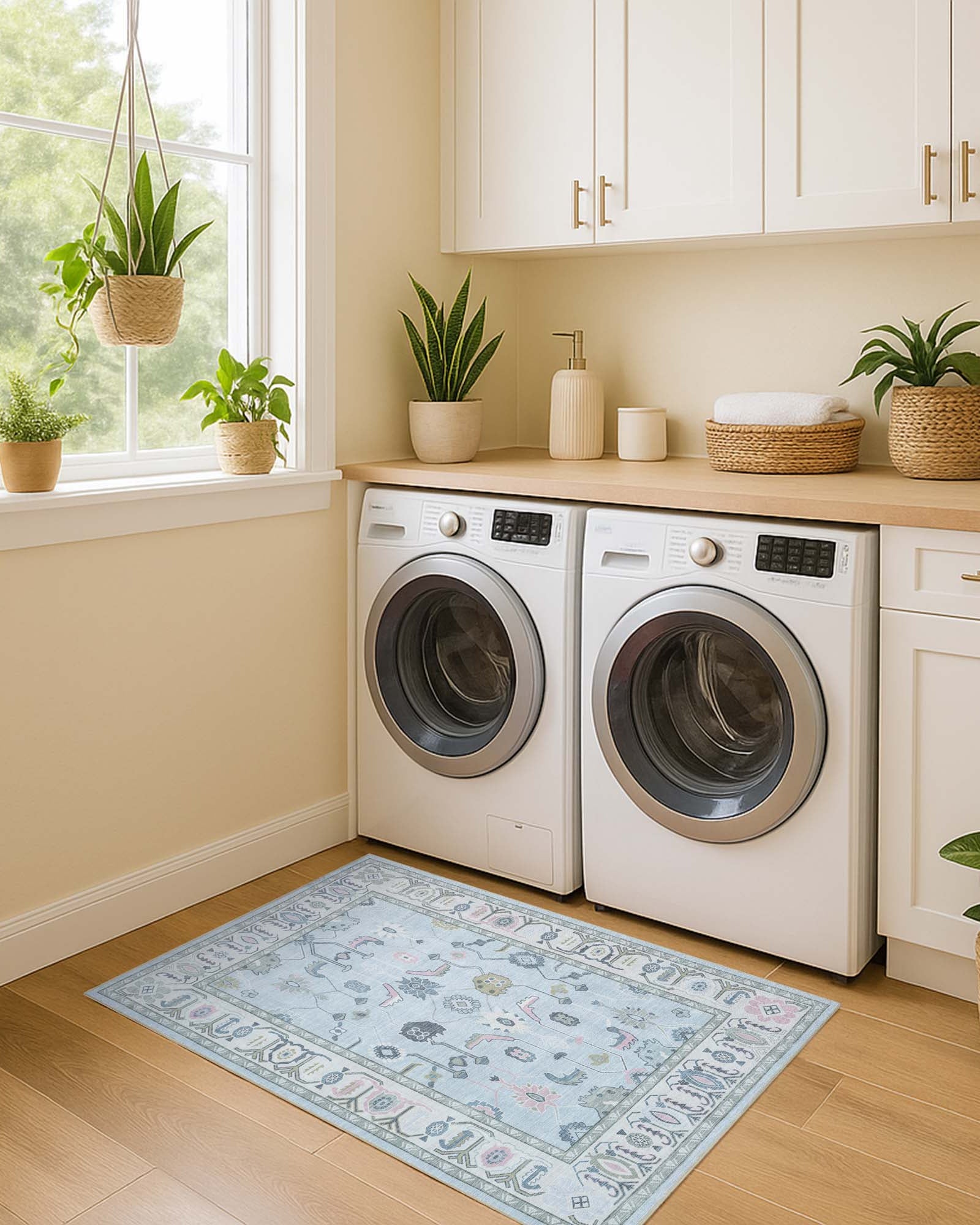
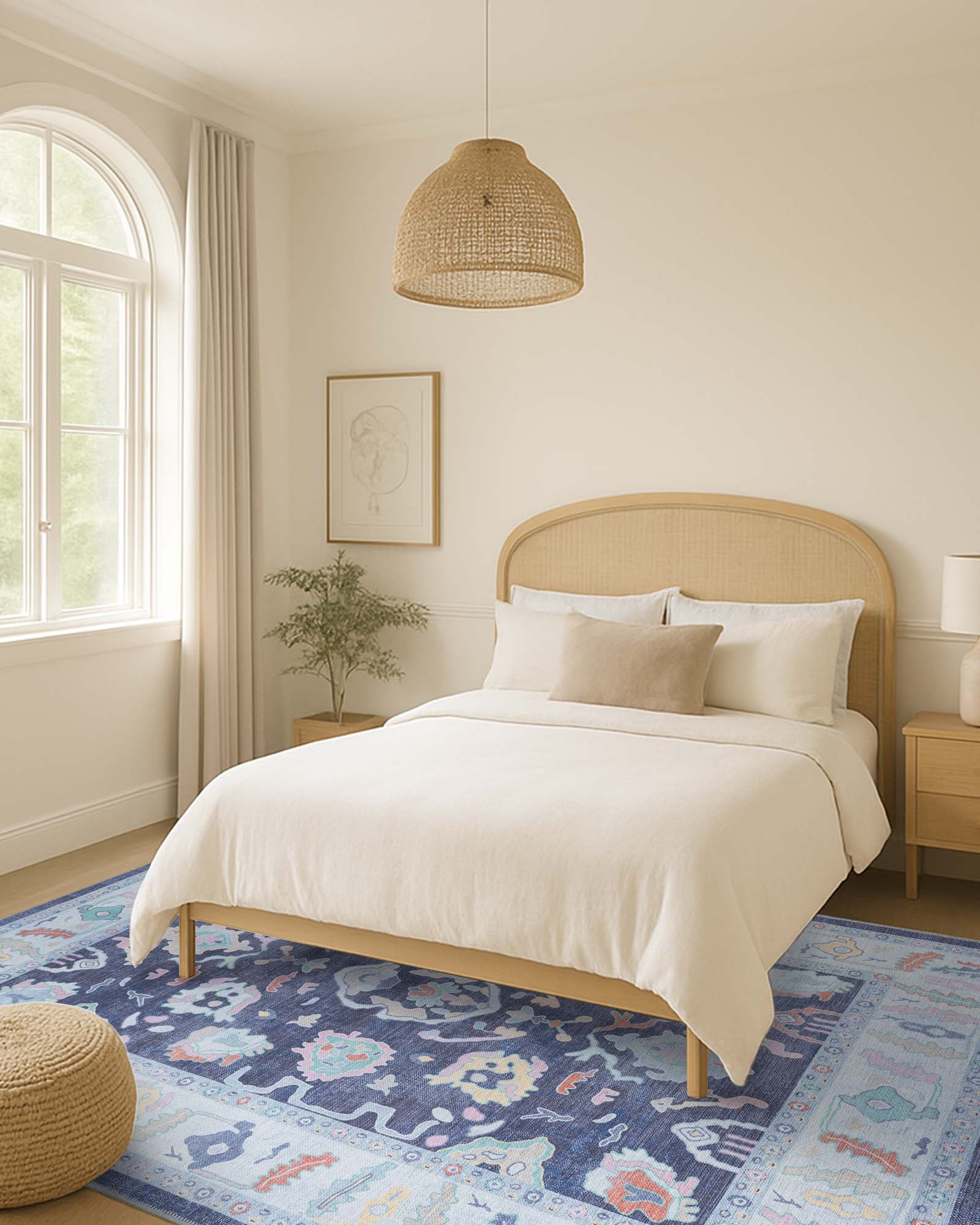
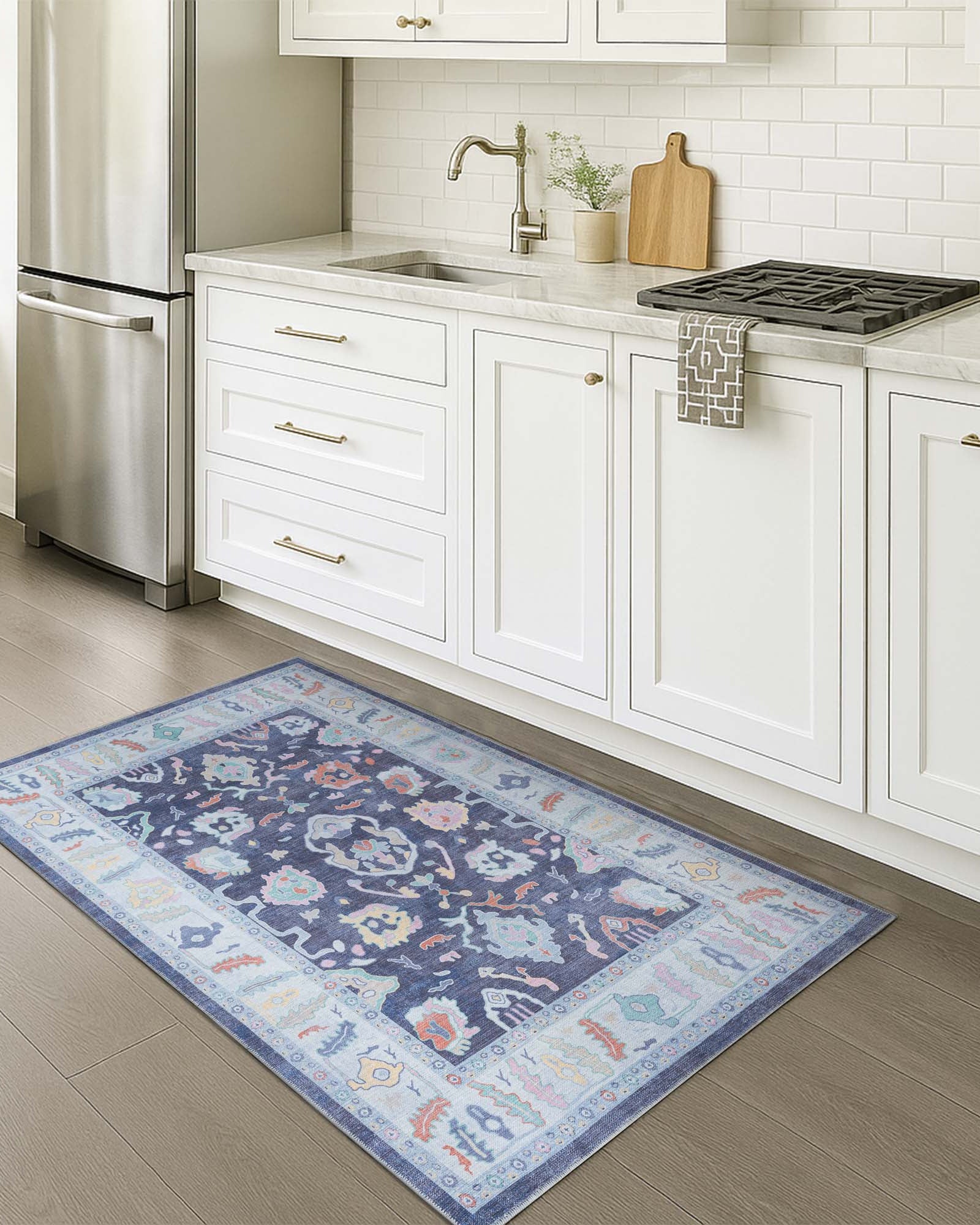
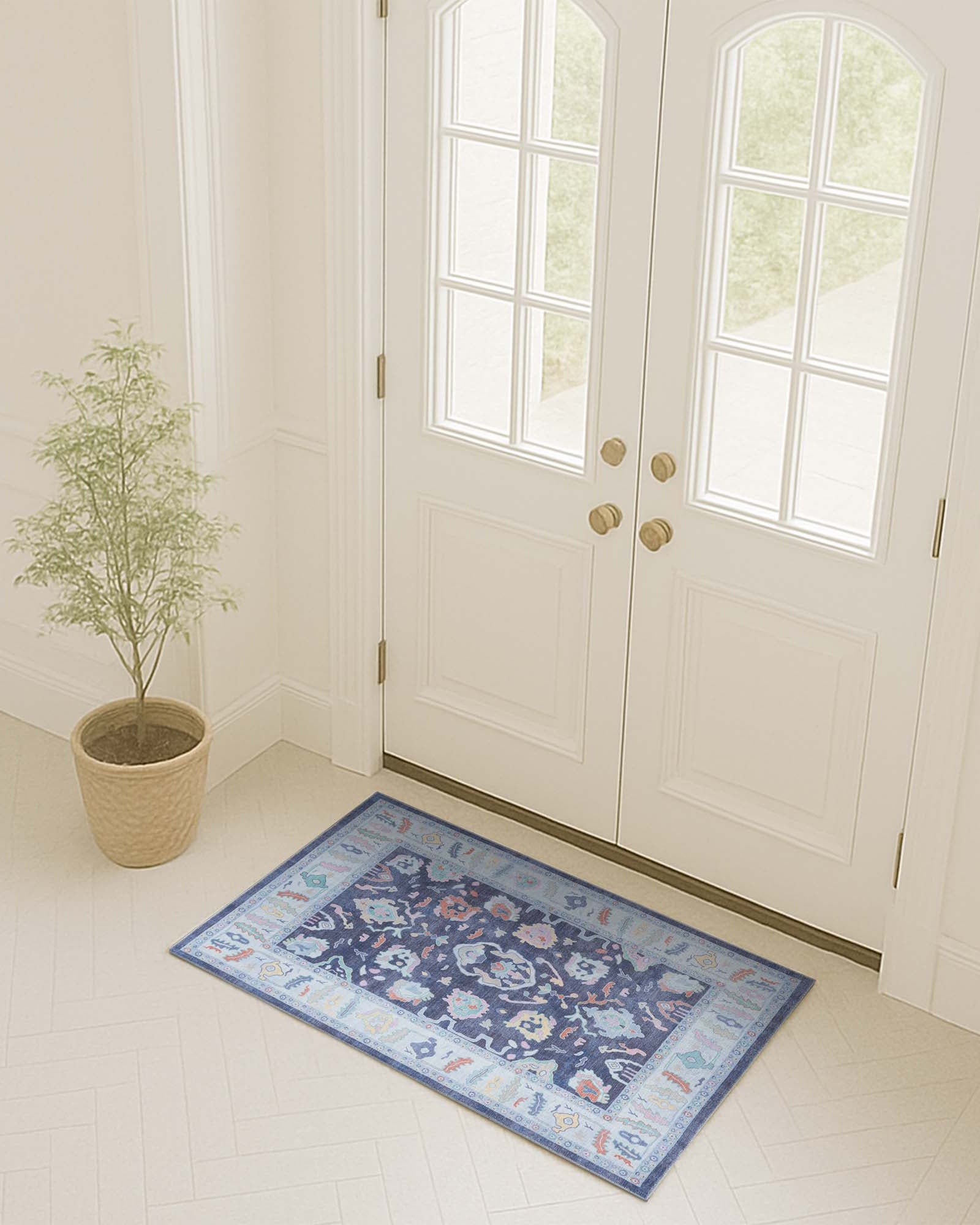
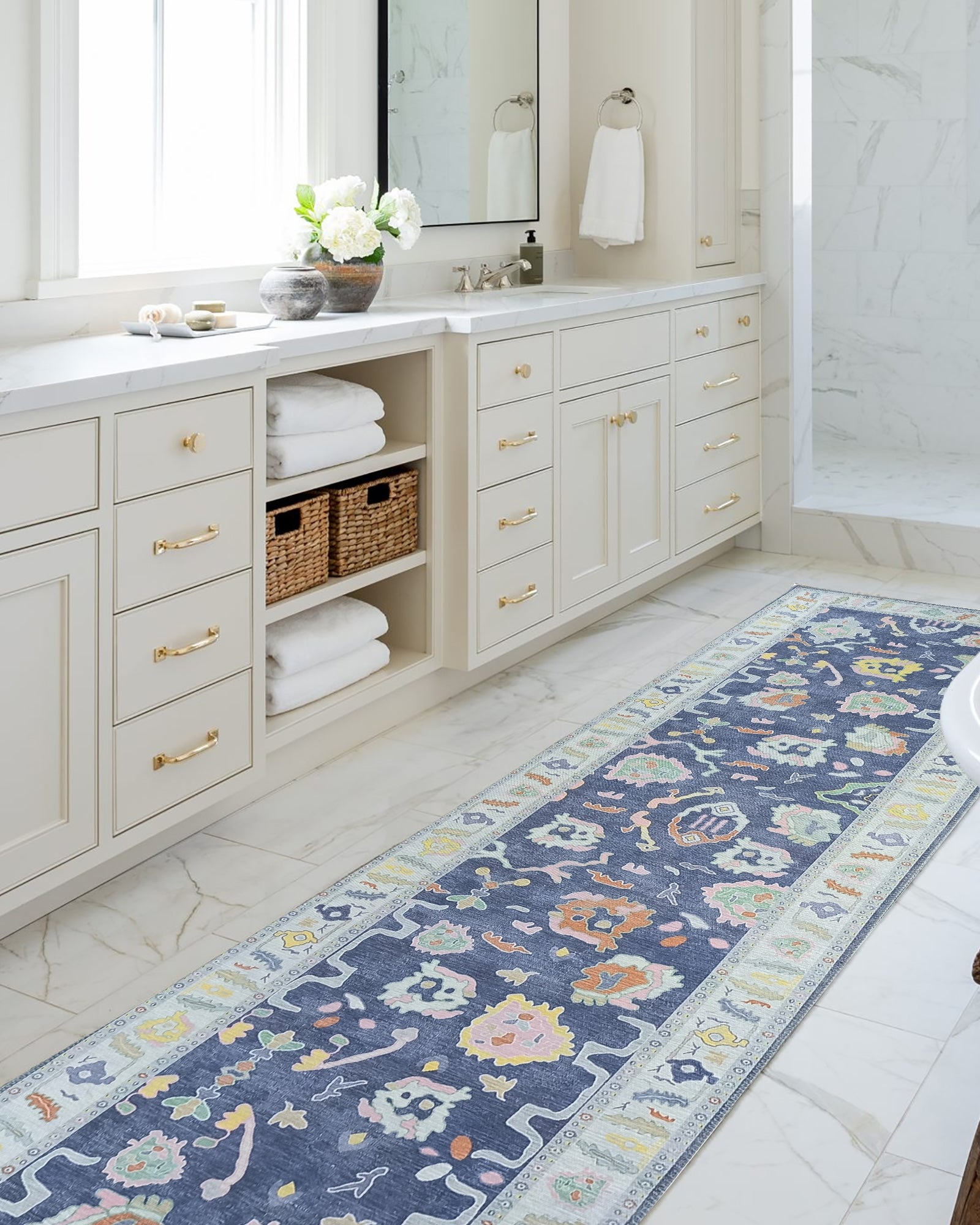
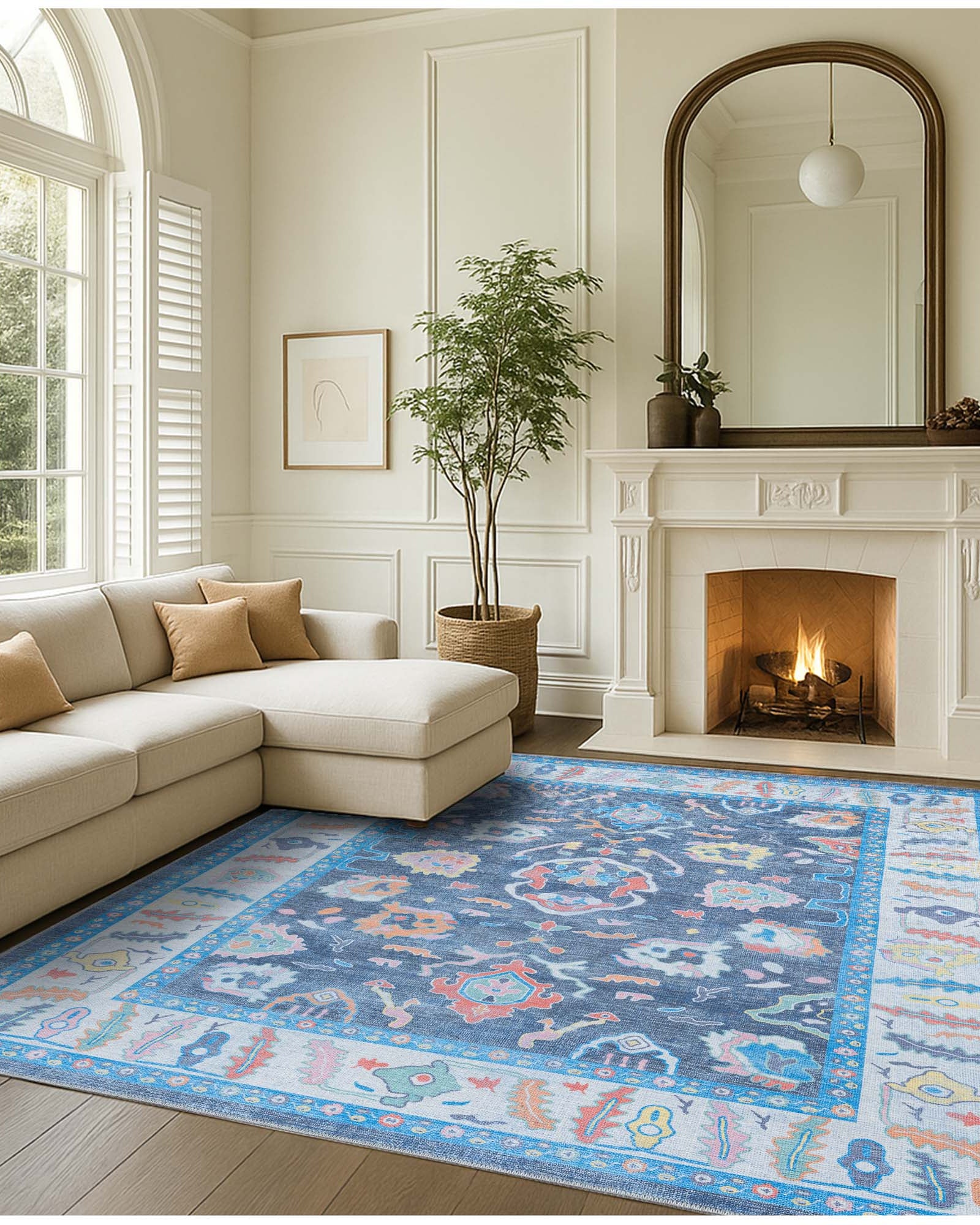
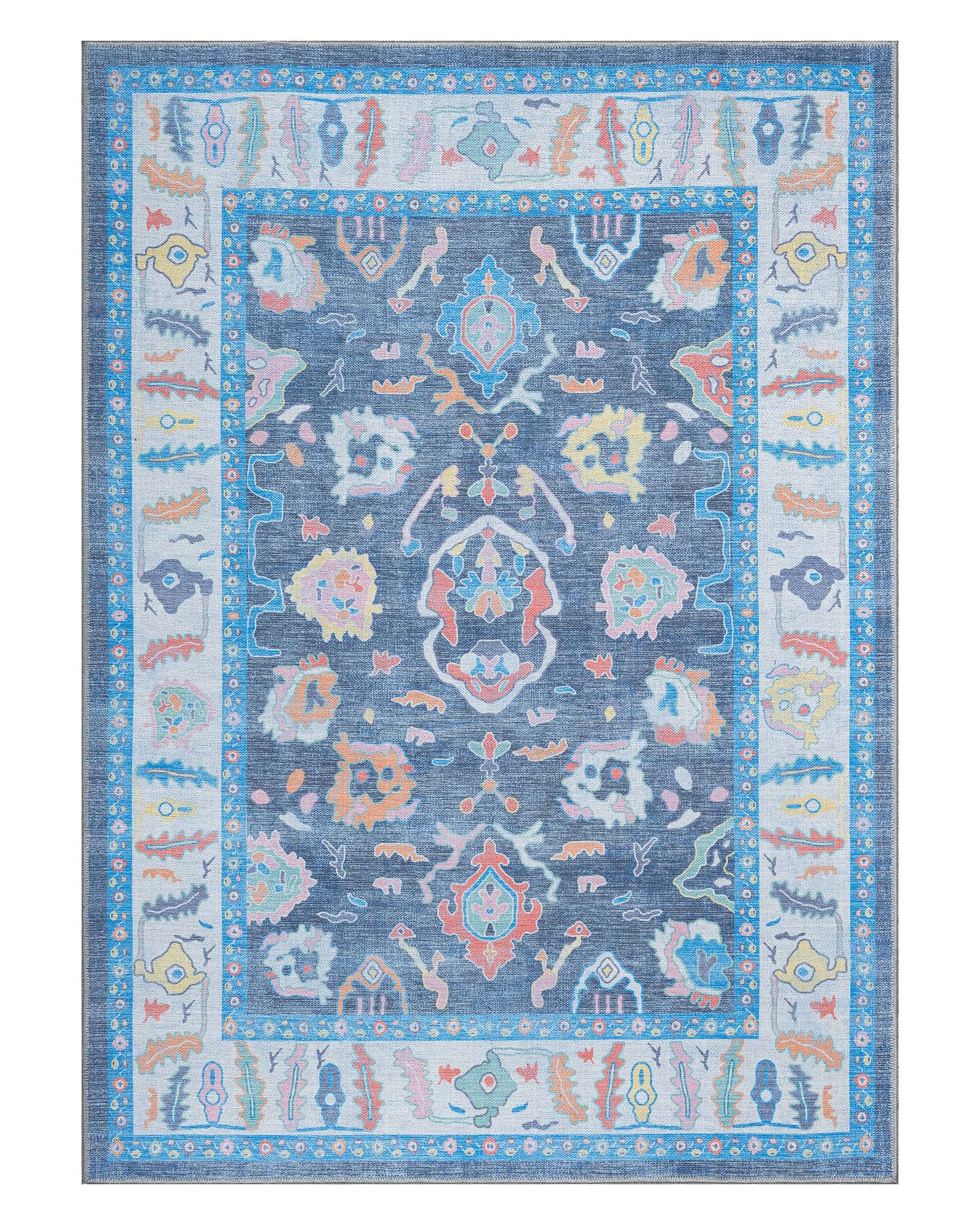
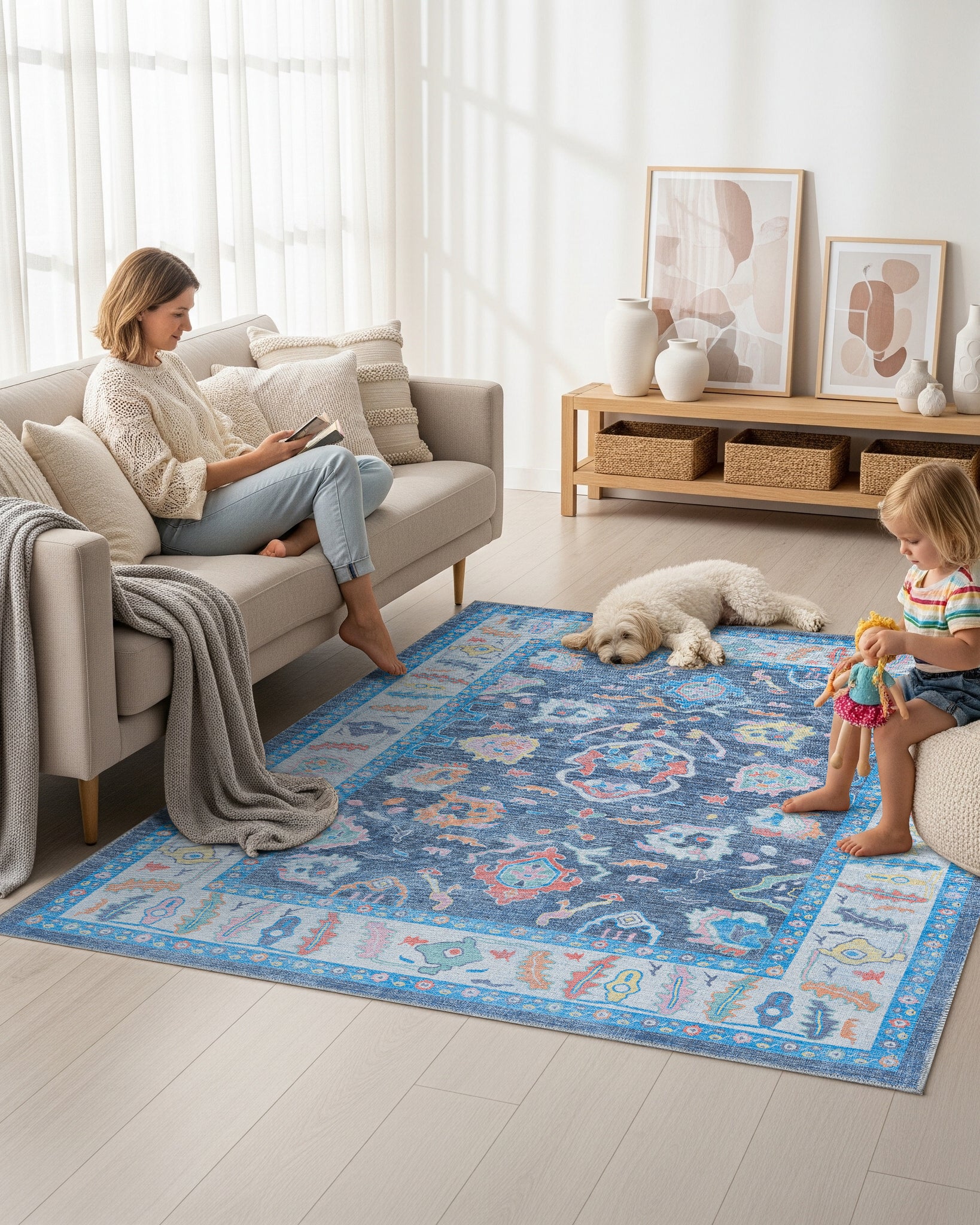
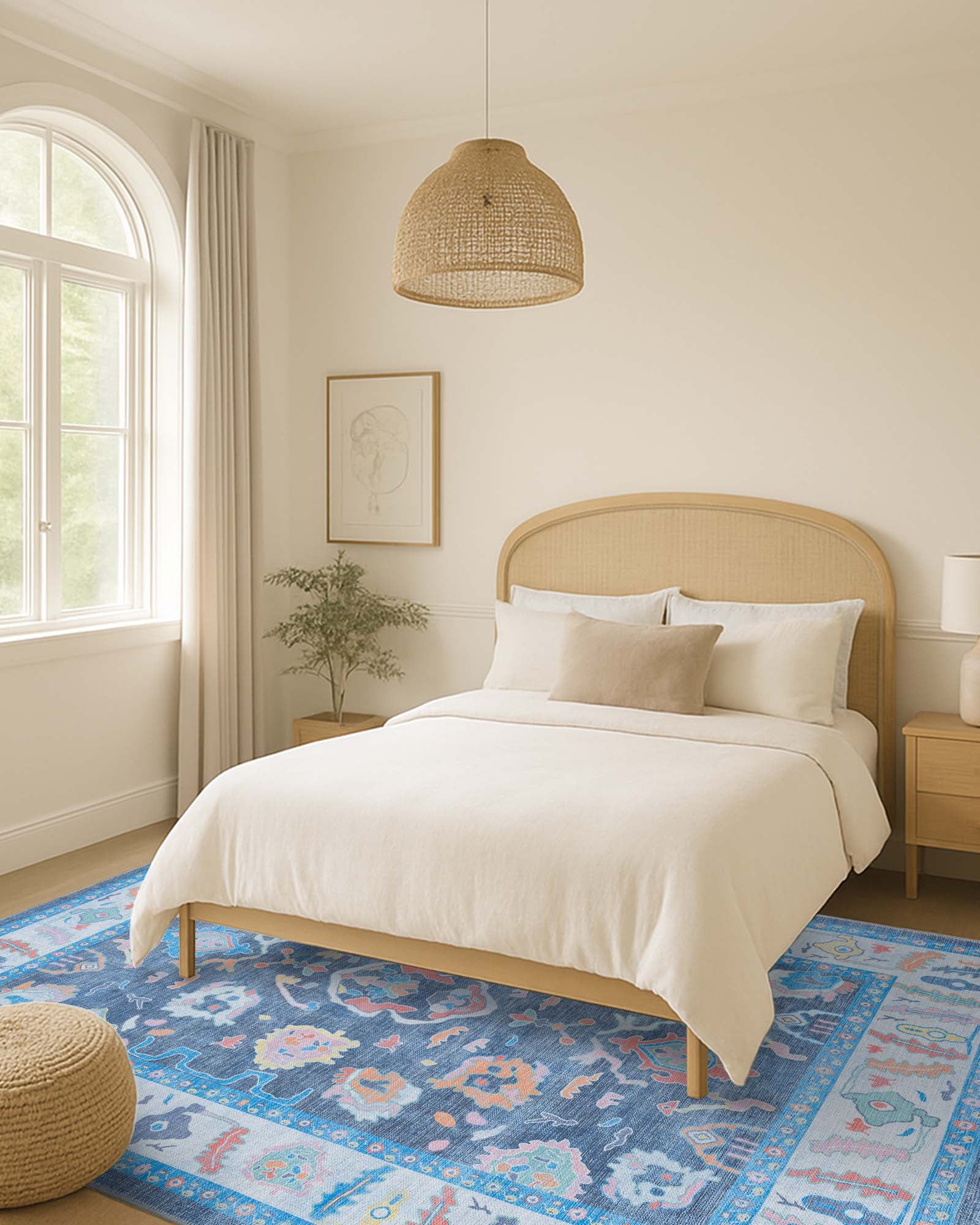
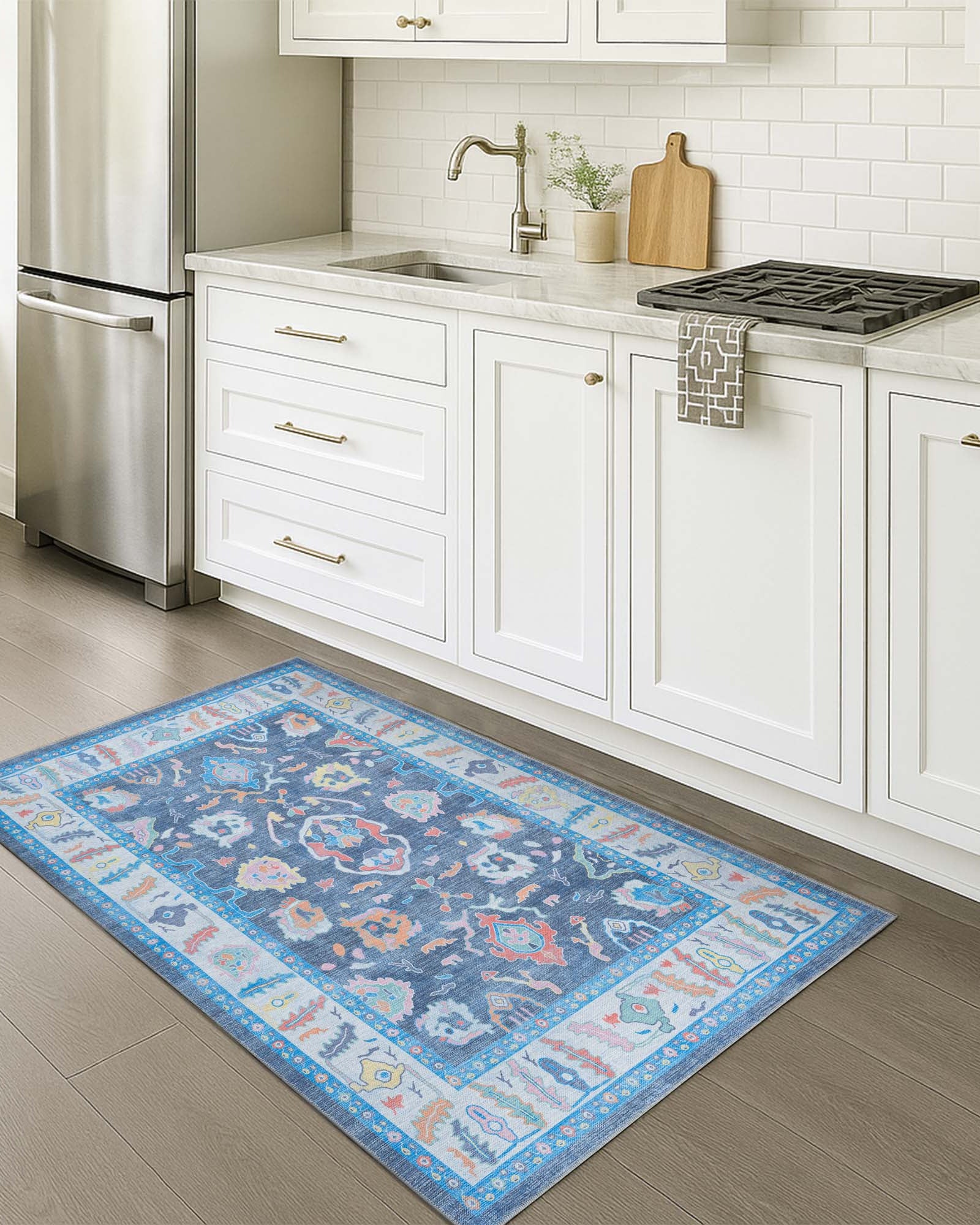
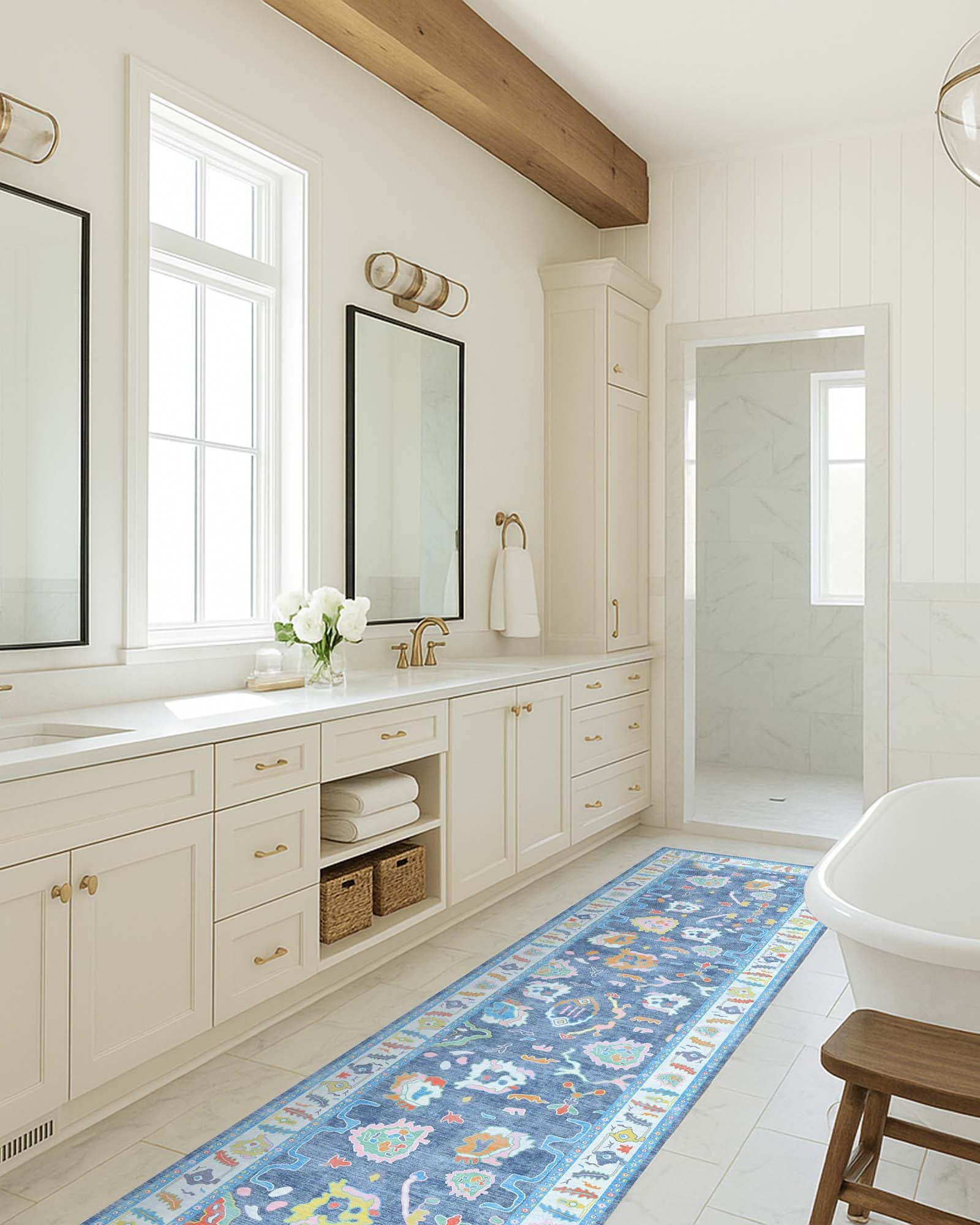
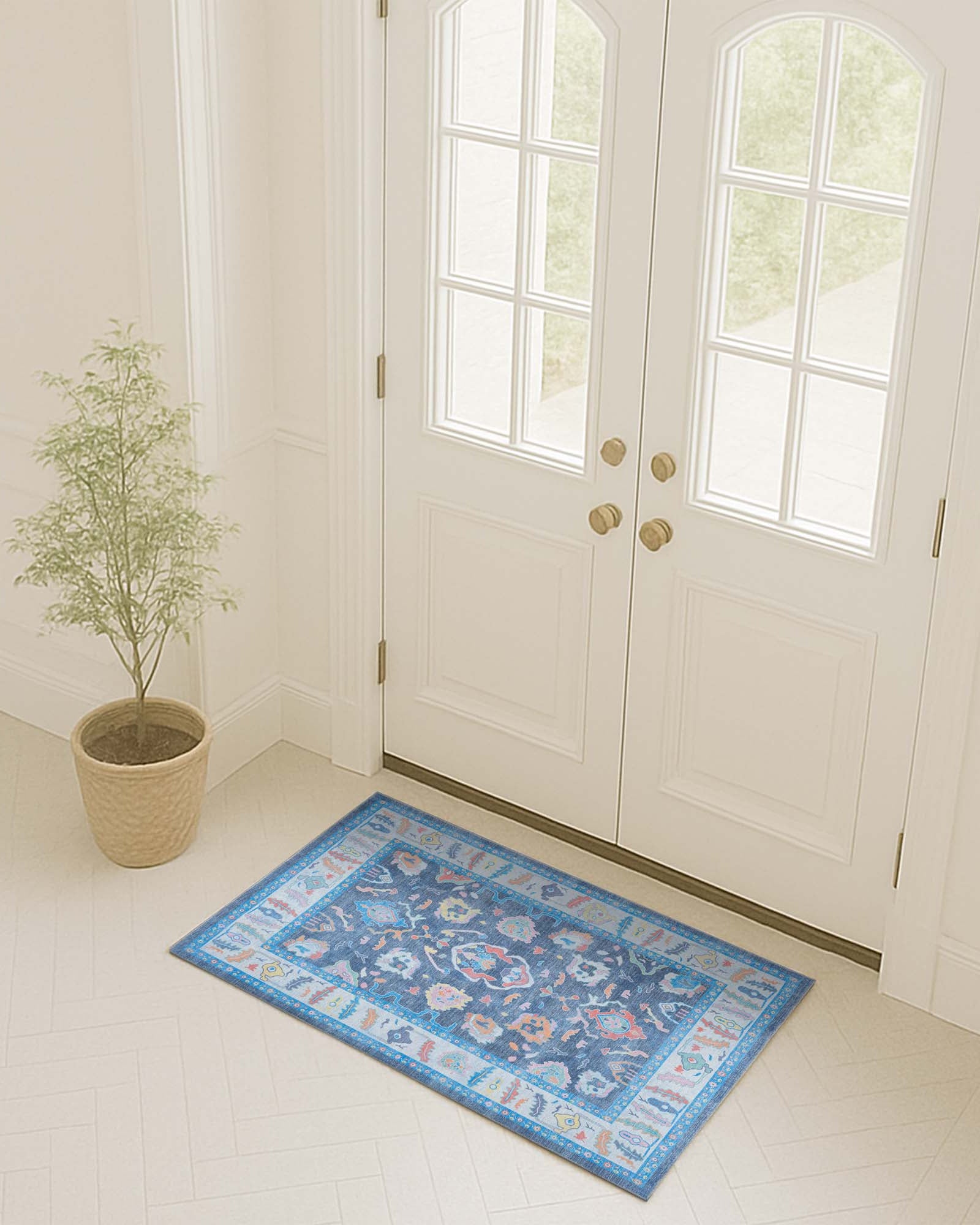
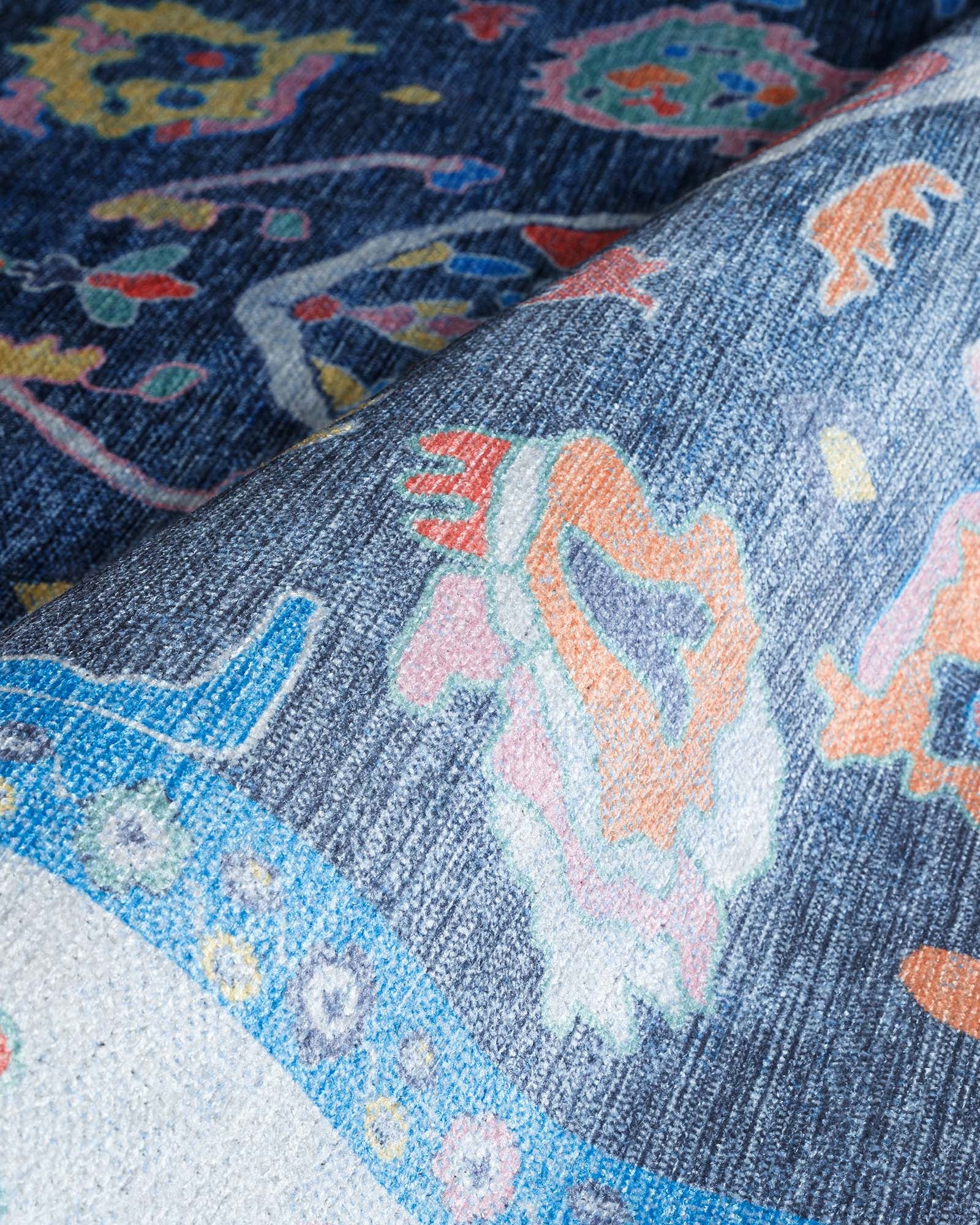
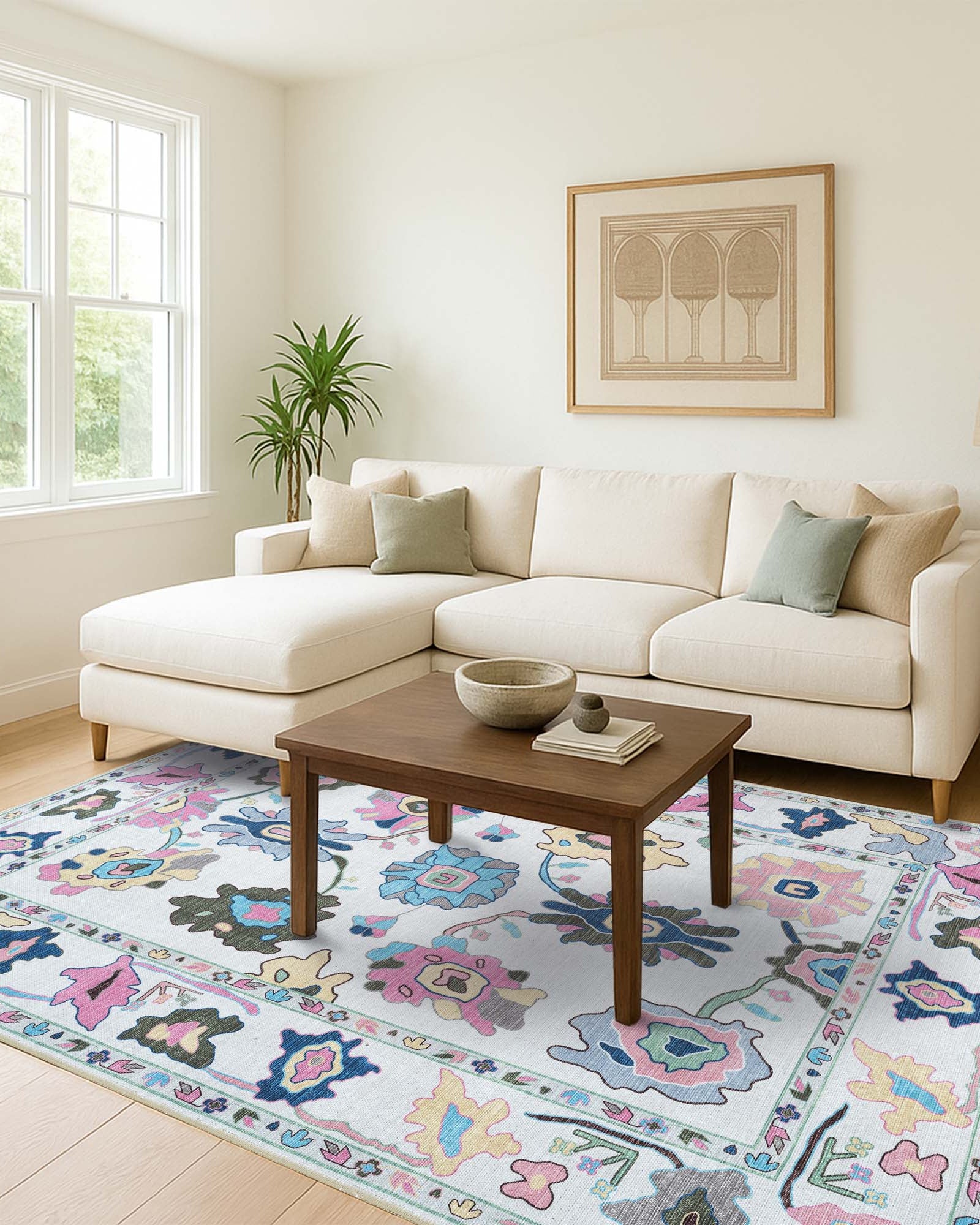
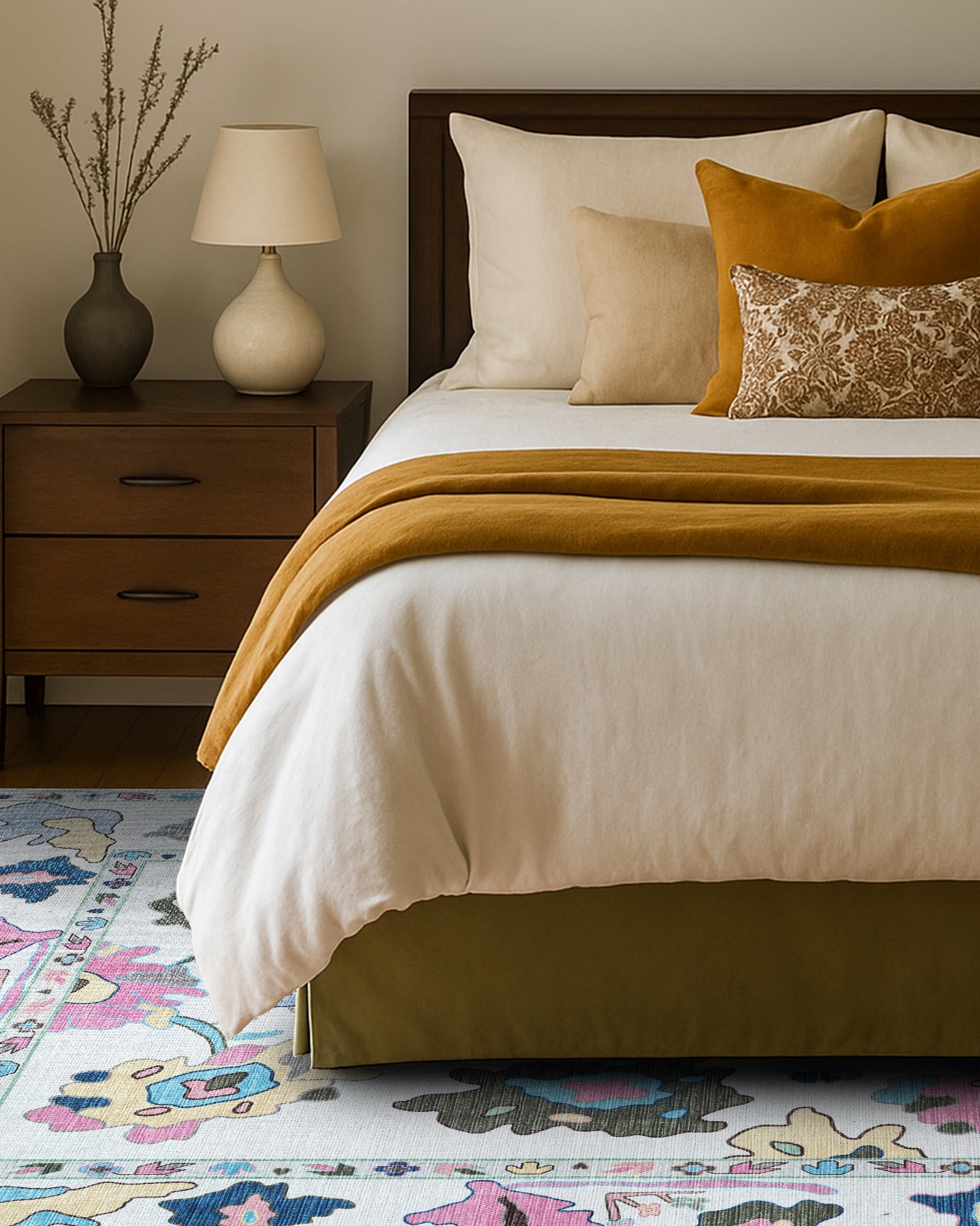
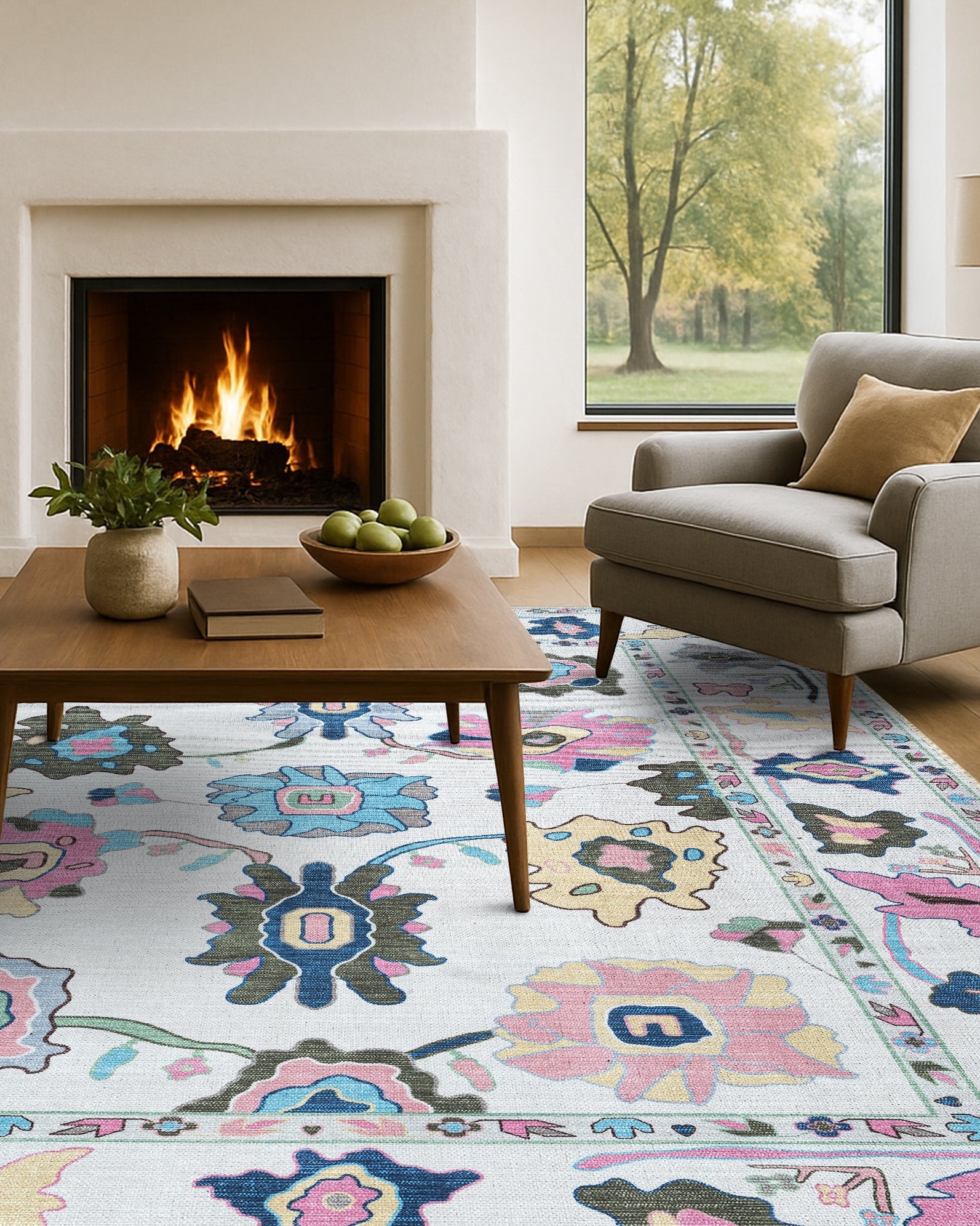
Every hand-knotted rug is built from one of two knot types, and the choice shapes everything from how sharp the pattern reads to how the rug holds up underfoot. The Turkish knot — also called the symmetrical or Ghiordes knot — is the older of the two techniques and the traditional method across Anatolia and the Caucasus. Every rug in this collection is tied this way. Each piece is an original with genuine age, sold as a single item.
How the Turkish Knot Is Tied
The weaver takes a length of wool and wraps it around two adjacent warp threads, bringing both ends up together between them so the yarn sits symmetrically across the pair. Cut to length, this produces a knot that is mechanically balanced left to right — there is no directional lean built into the structure itself.
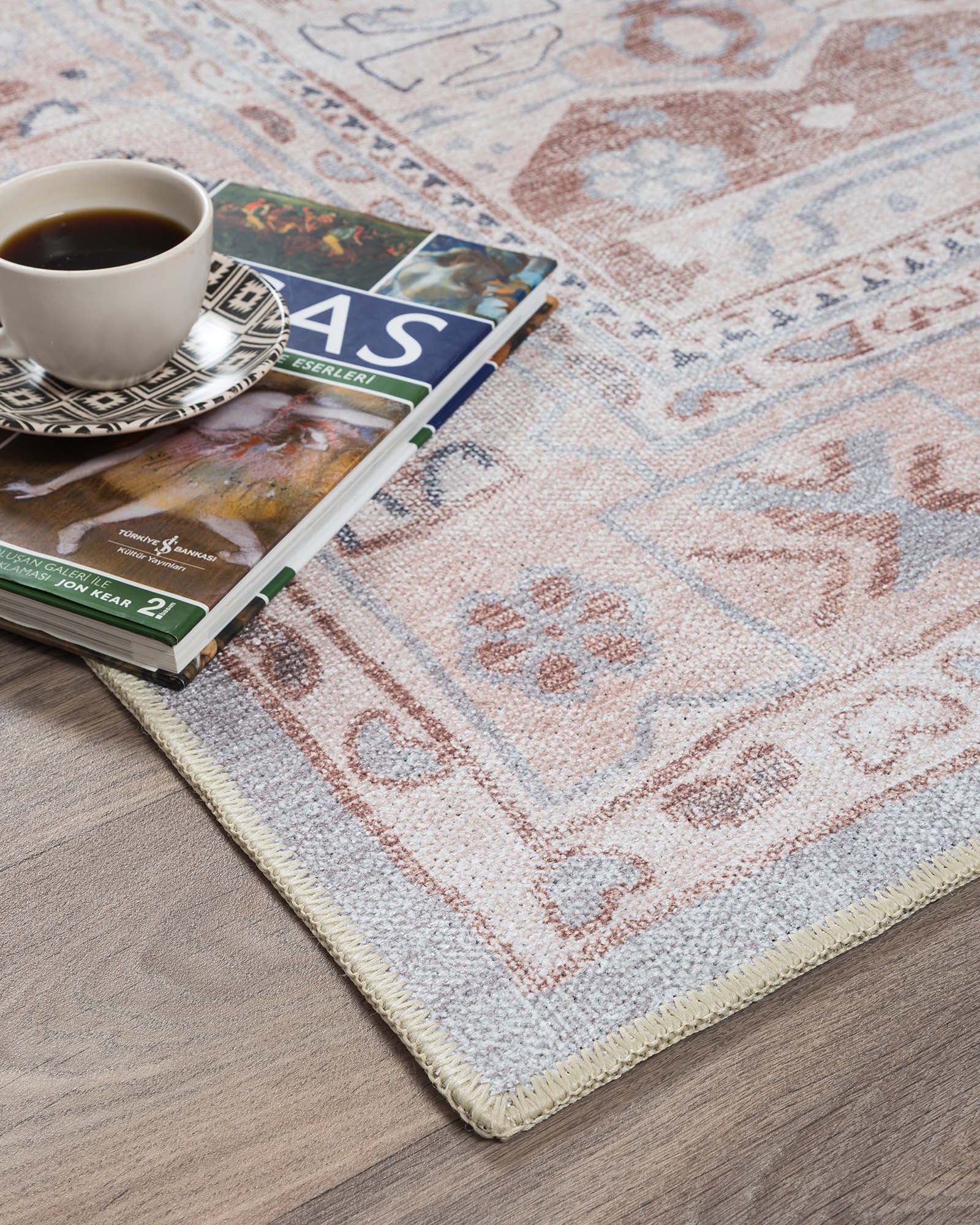
That symmetry is the entire basis for the name and for how the knot behaves. Because each knot grips two warps evenly, the resulting pile stands up firm and square, which is what gives Turkish-knotted rugs their characteristically crisp, blocky look at the edge of a motif rather than a smoothly blended one.
Why This Knot Suits Geometric Pattern
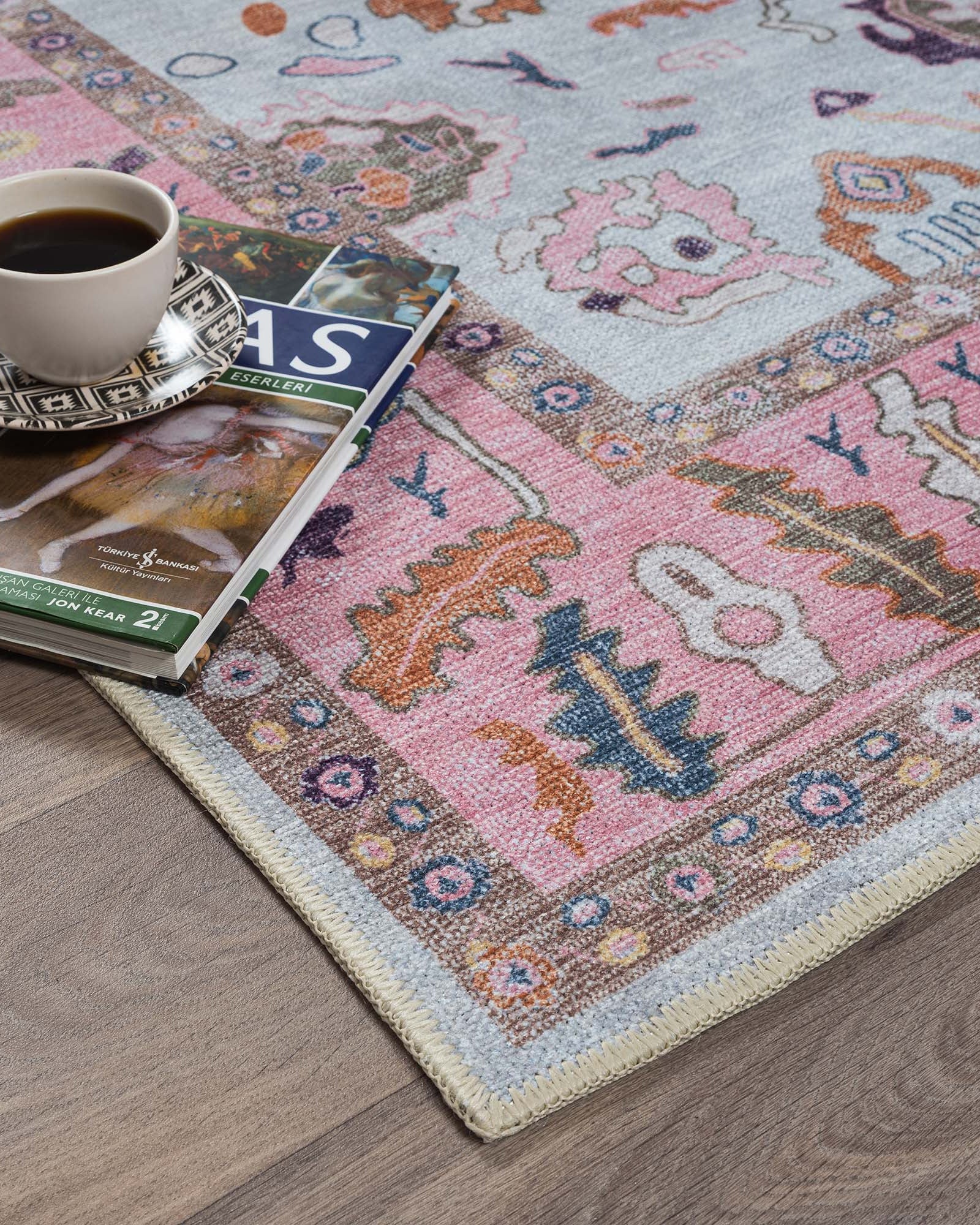
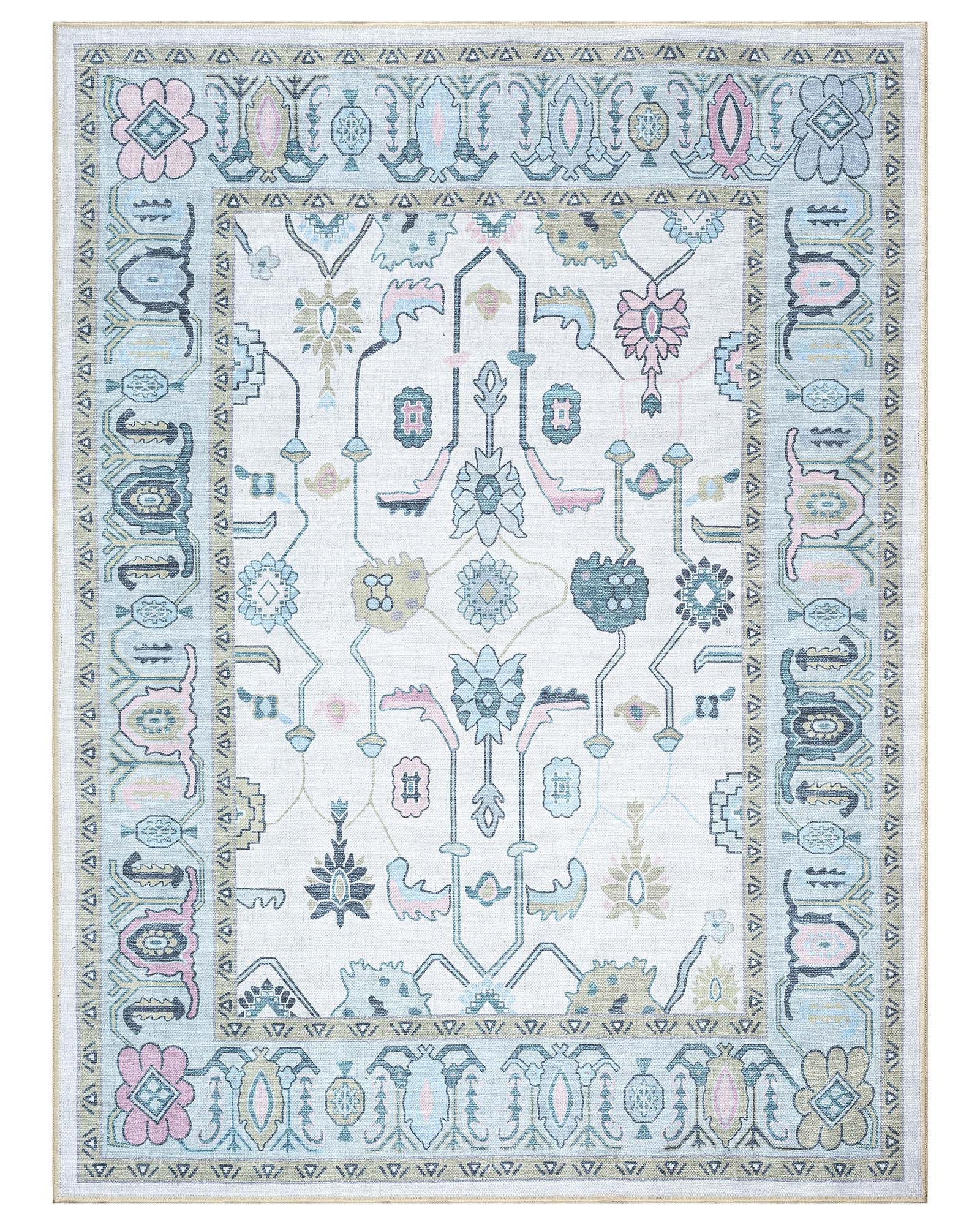
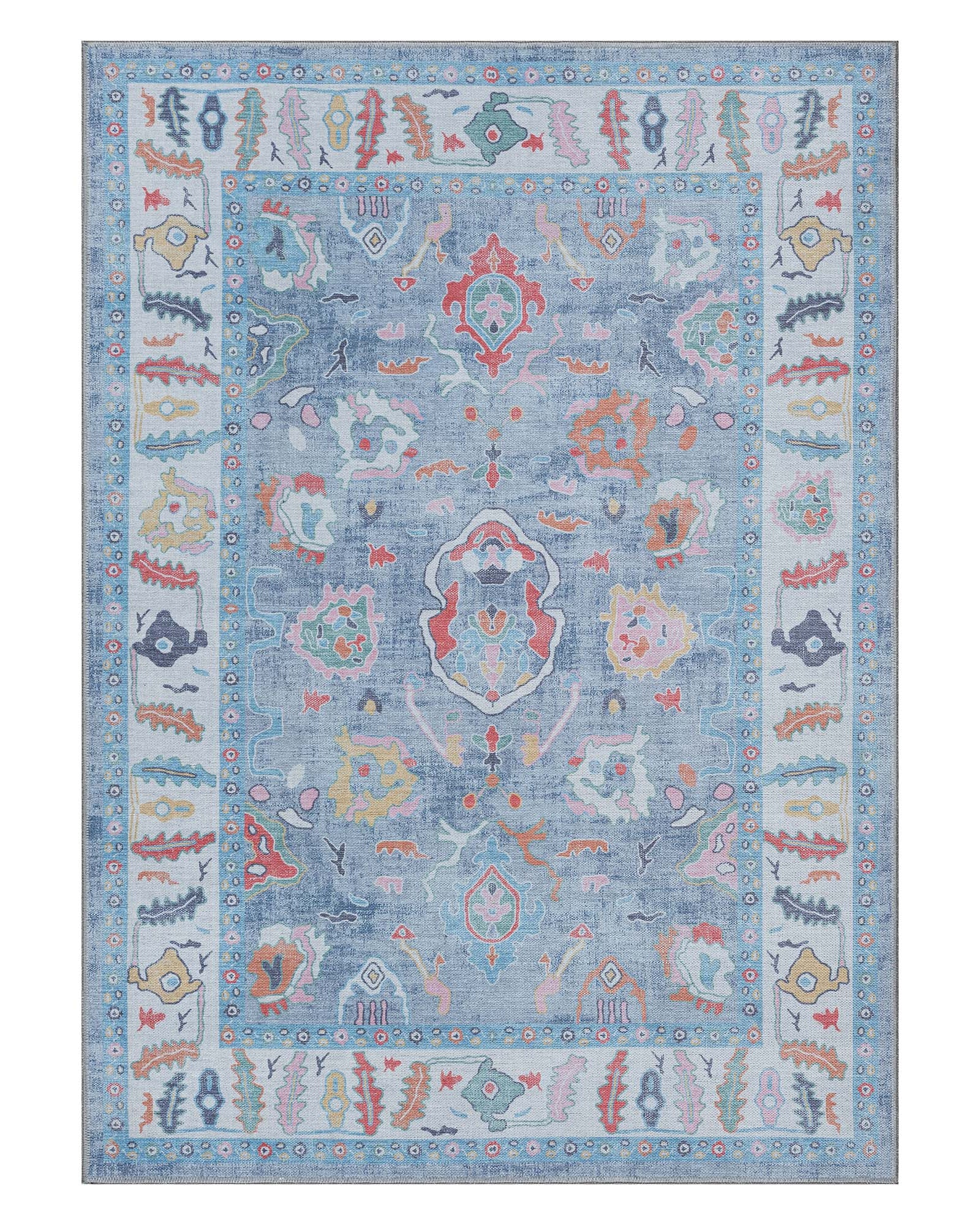
A symmetrical knot naturally produces sharper, more defined transitions between colours than the alternative asymmetrical technique, because both strands anchor at the same two points rather than one strand looping around a third warp further along. This makes it especially well suited to bold, angular pattern — hooked medallions, stepped diamonds, stacked geometric borders — where a crisp edge reads as intentional rather than blurred.
It is not the technique of choice for fine, curving floral drawing, where the asymmetrical knot's ability to place colour more freely produces smoother lines. This is why Turkish-knotted rugs and geometric, tribal-leaning pattern go together so consistently across the weaving world — the technique and the visual language developed alongside each other.
Structural Character
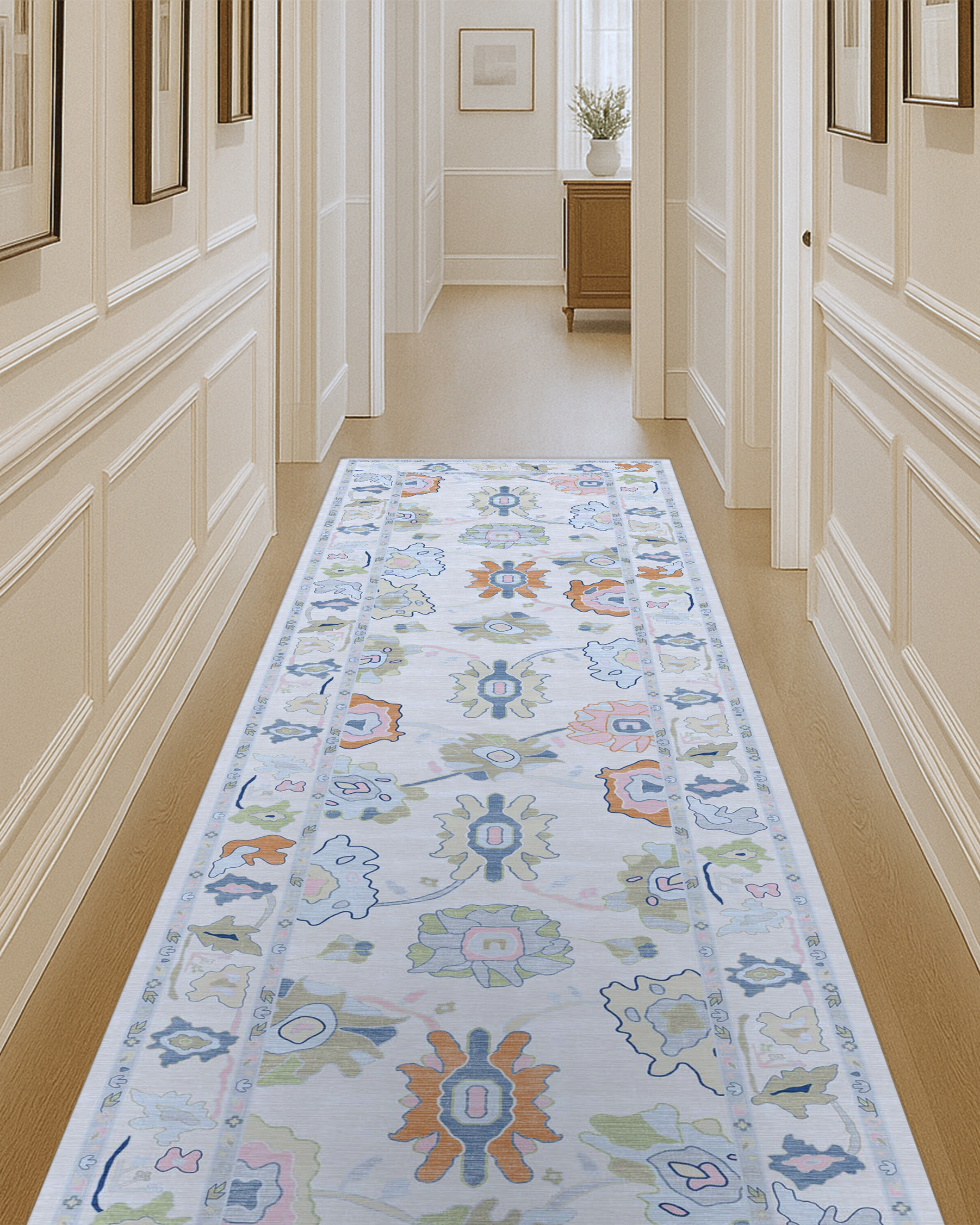
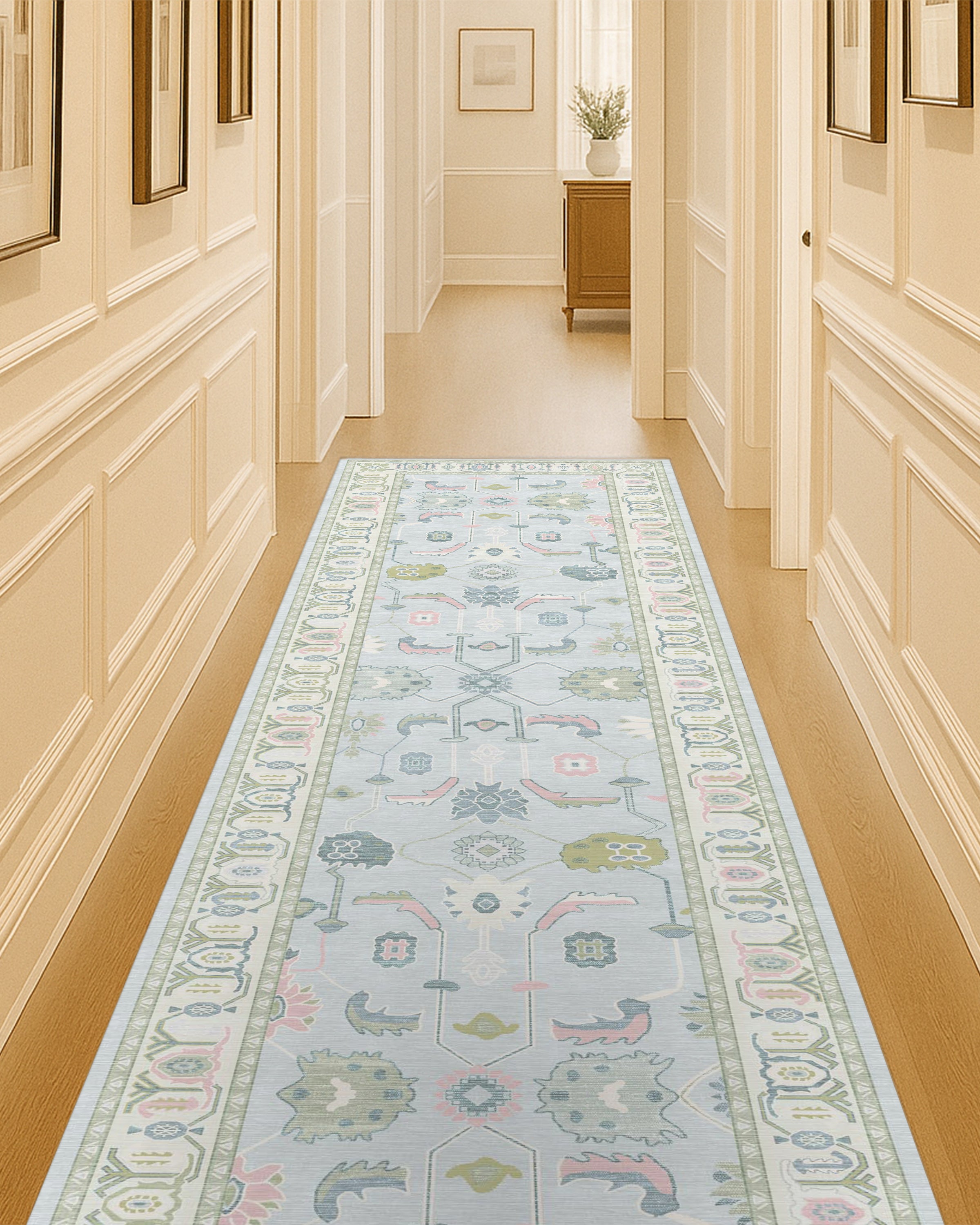
Symmetrical knotting generally produces a slightly coarser, more robust pile than the same knot count using the asymmetrical technique, because each knot's two anchor points distribute tension more evenly across the foundation. Rugs tied this way tend to feel sturdy and substantial underfoot, and the pile holds its shape well under sustained foot traffic — part of why Turkish-knotted rugs have a long-standing reputation for durability in hallways and other high-use areas.
Where the Turkish Knot Is Used
This is the traditional technique across the entire Turkish weaving tradition — Oushak, Konya, Bergama, Milas, and village and tribal production throughout Anatolia all use the symmetrical knot. It is also the standard technique across the Caucasus, including Kazak and Shirvan weavings, and among many Kurdish weaving communities in both eastern Turkey and western Persia. Persian workshop centres, by contrast, predominantly use the asymmetrical knot, which is why knot type is often a meaningful clue to a rug's regional origin when other evidence is inconclusive.
How to Identify Symmetrical Knotting
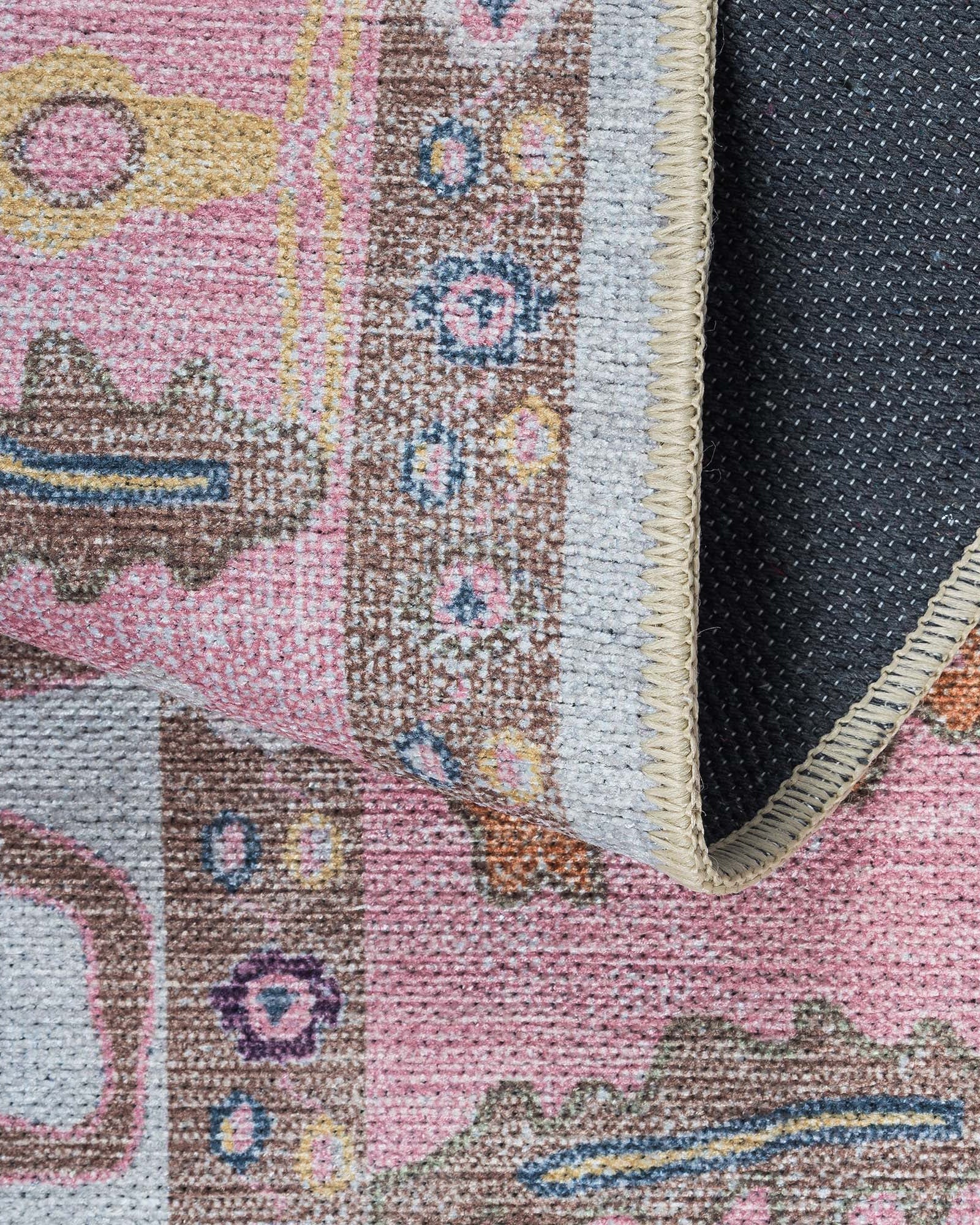
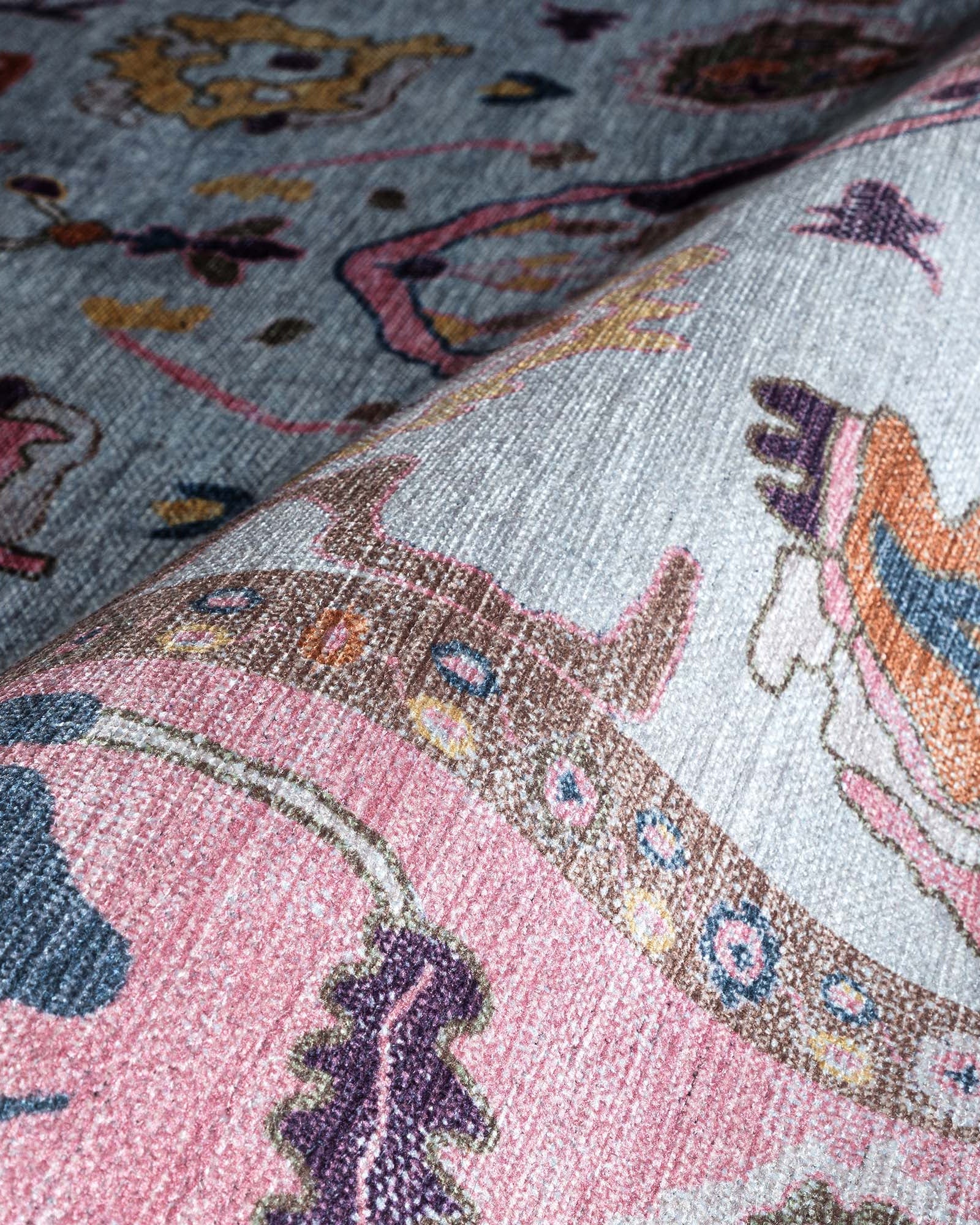
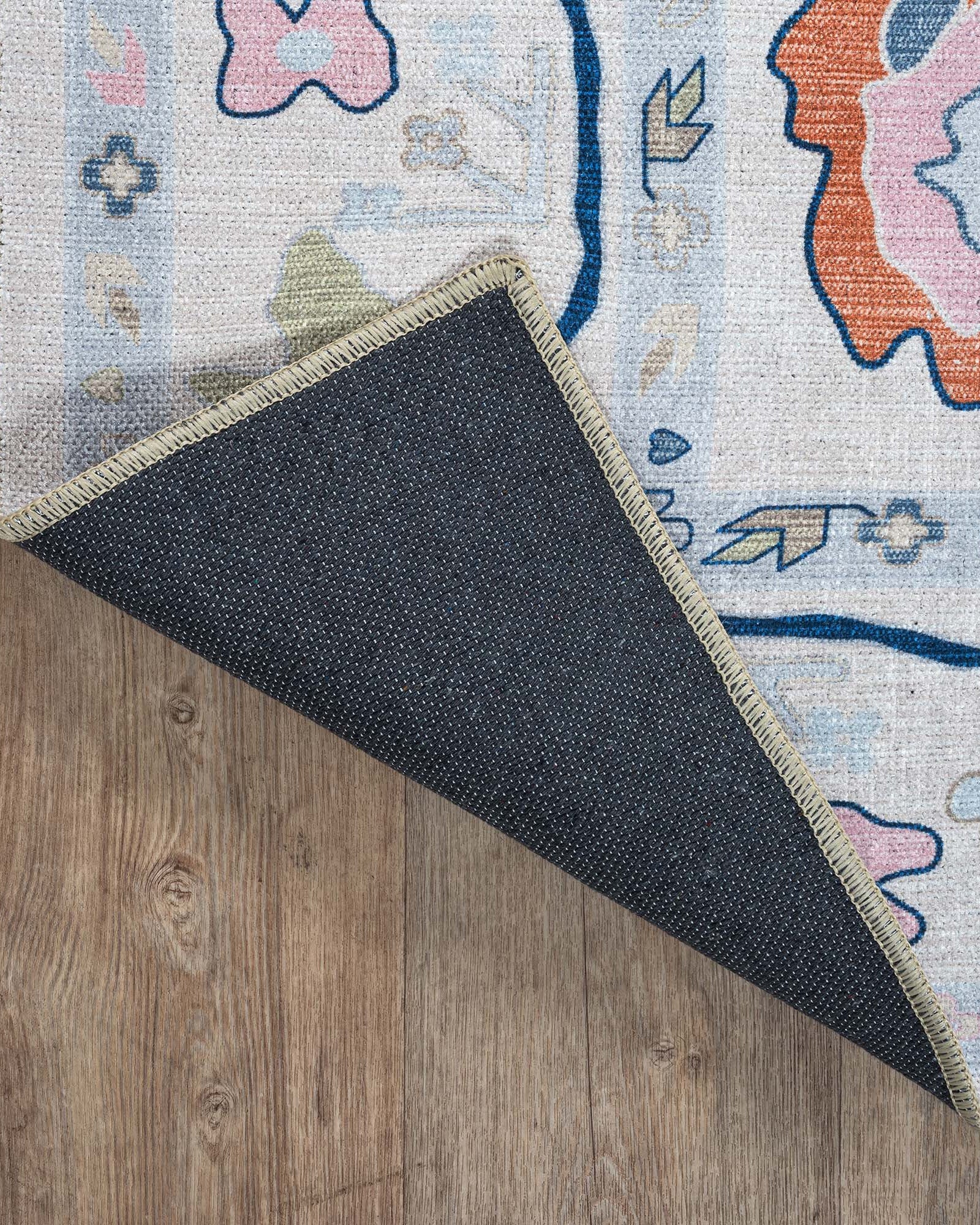
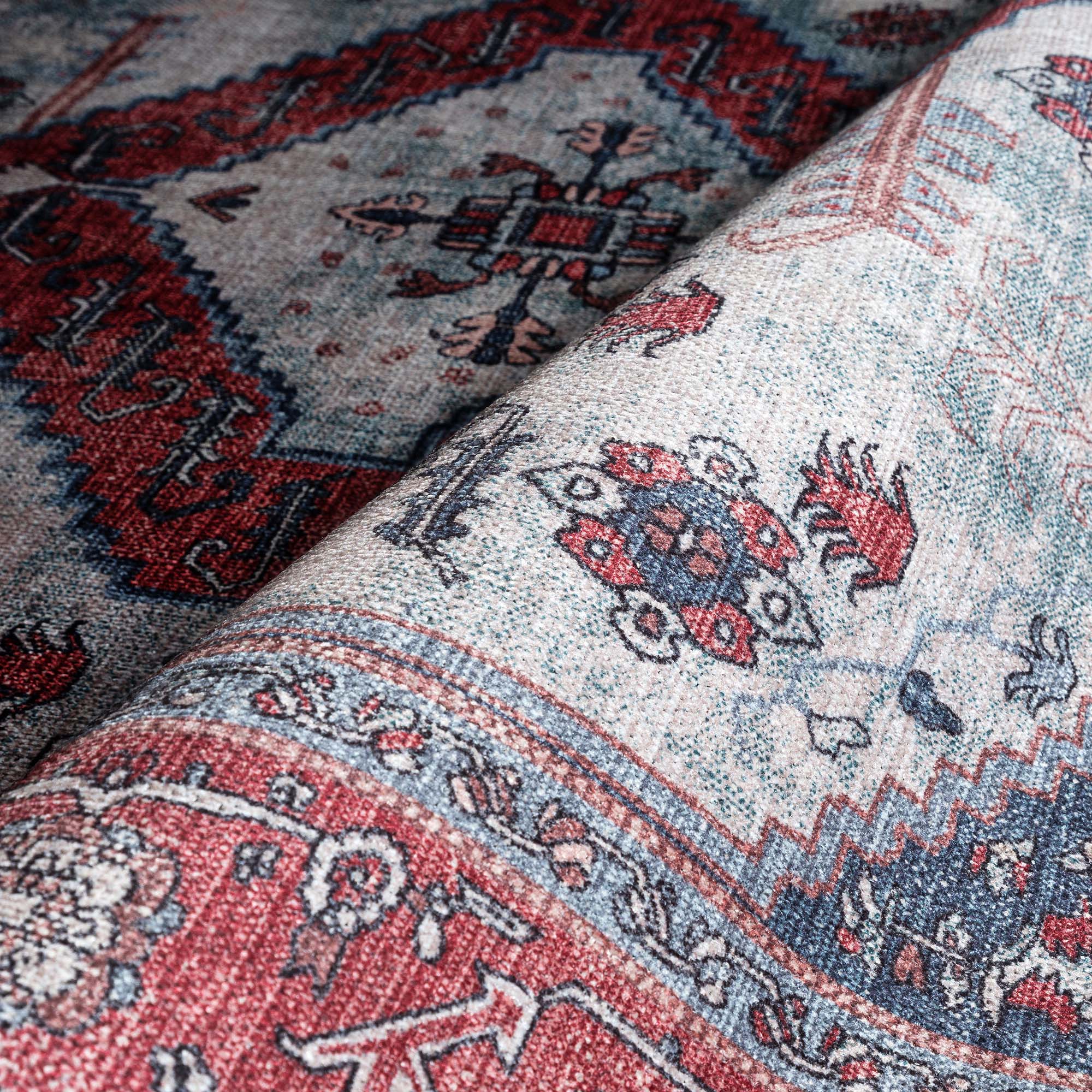
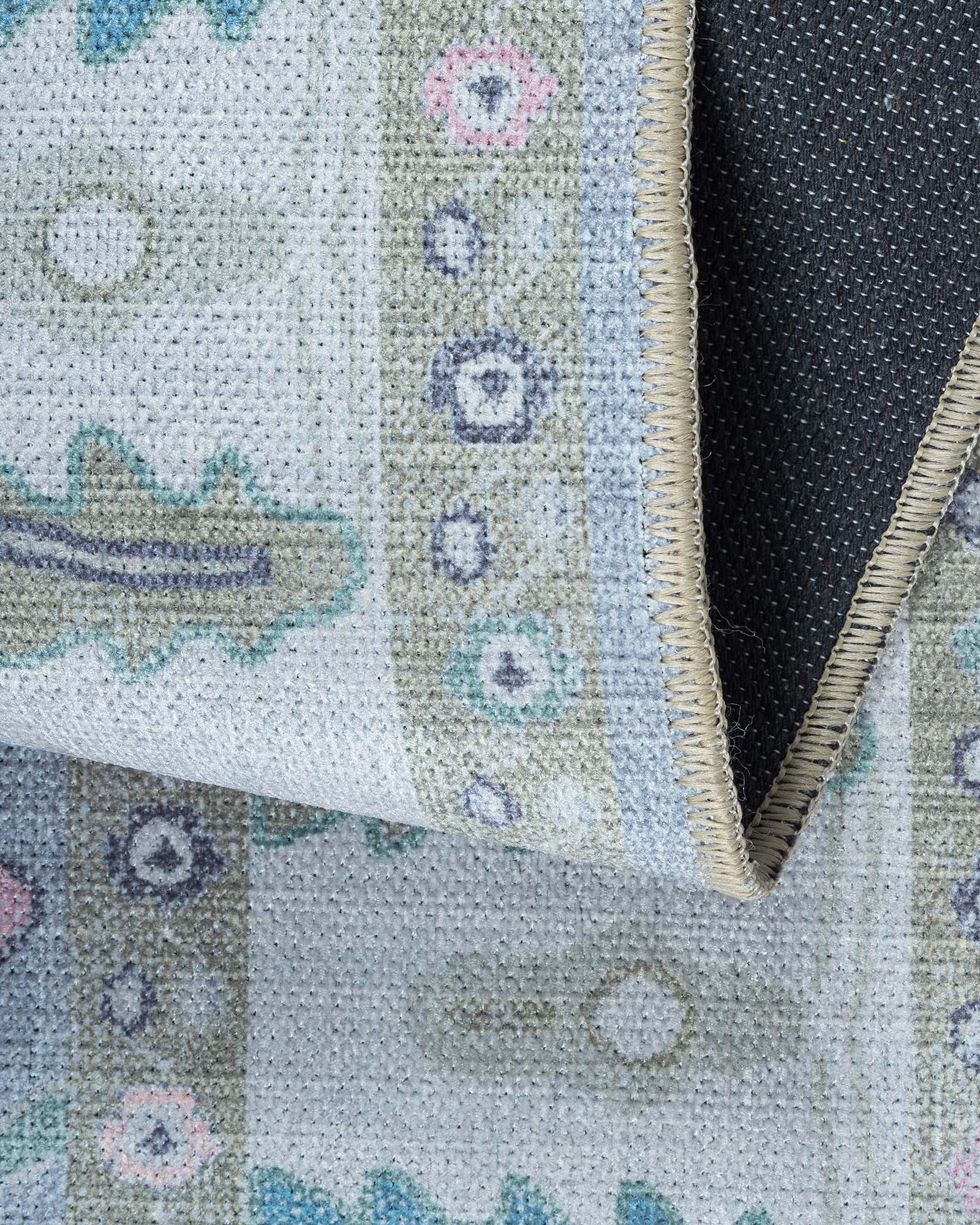
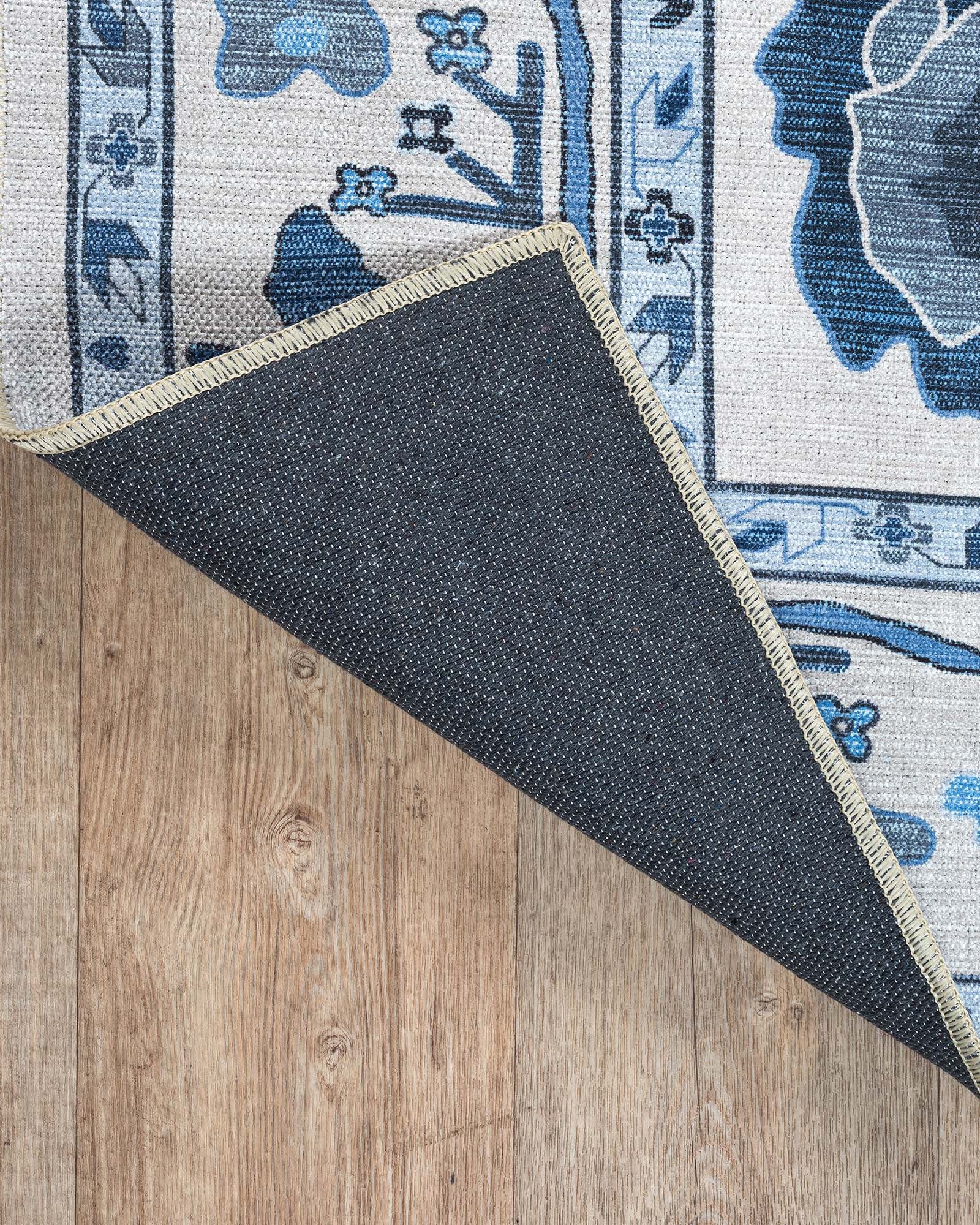
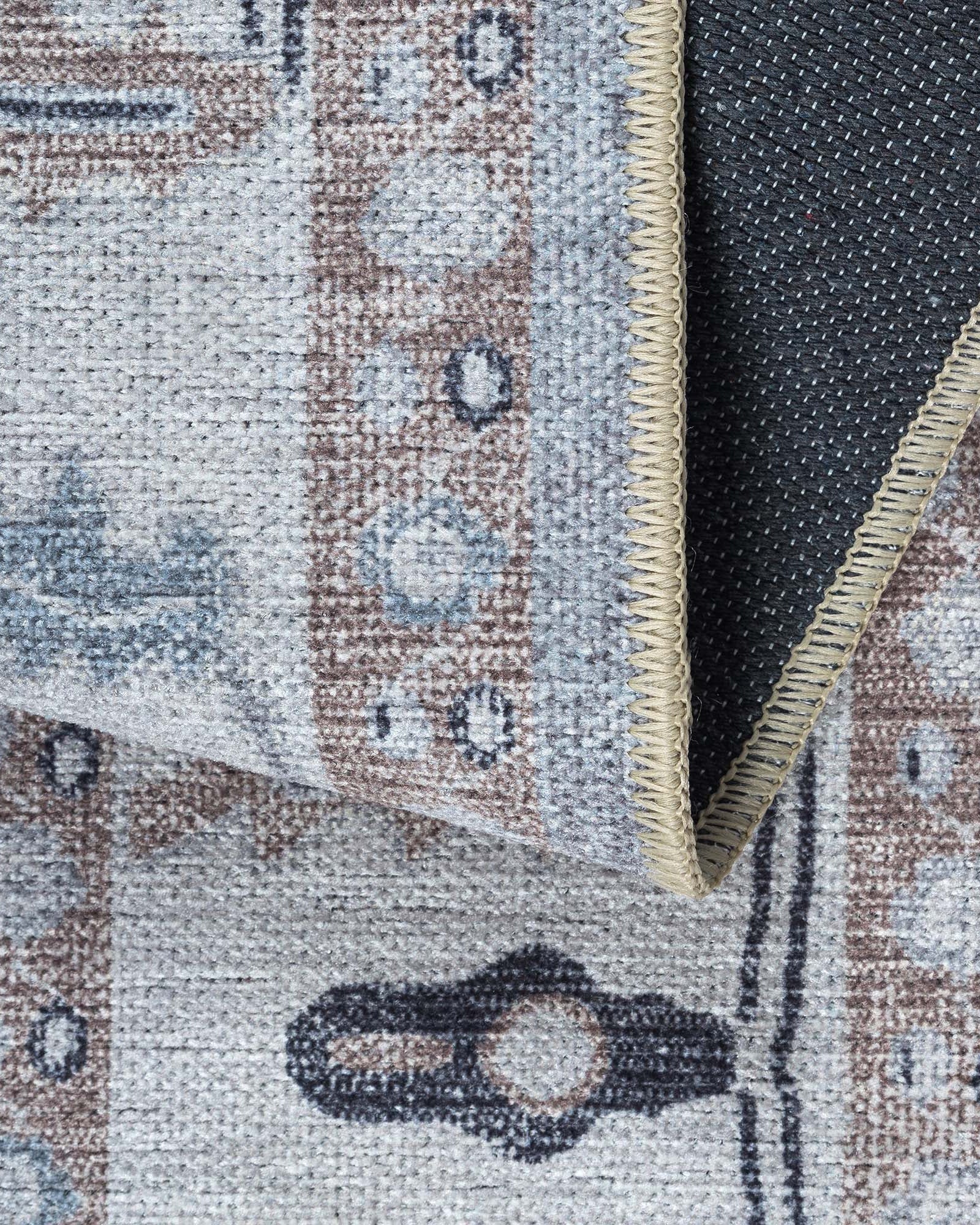
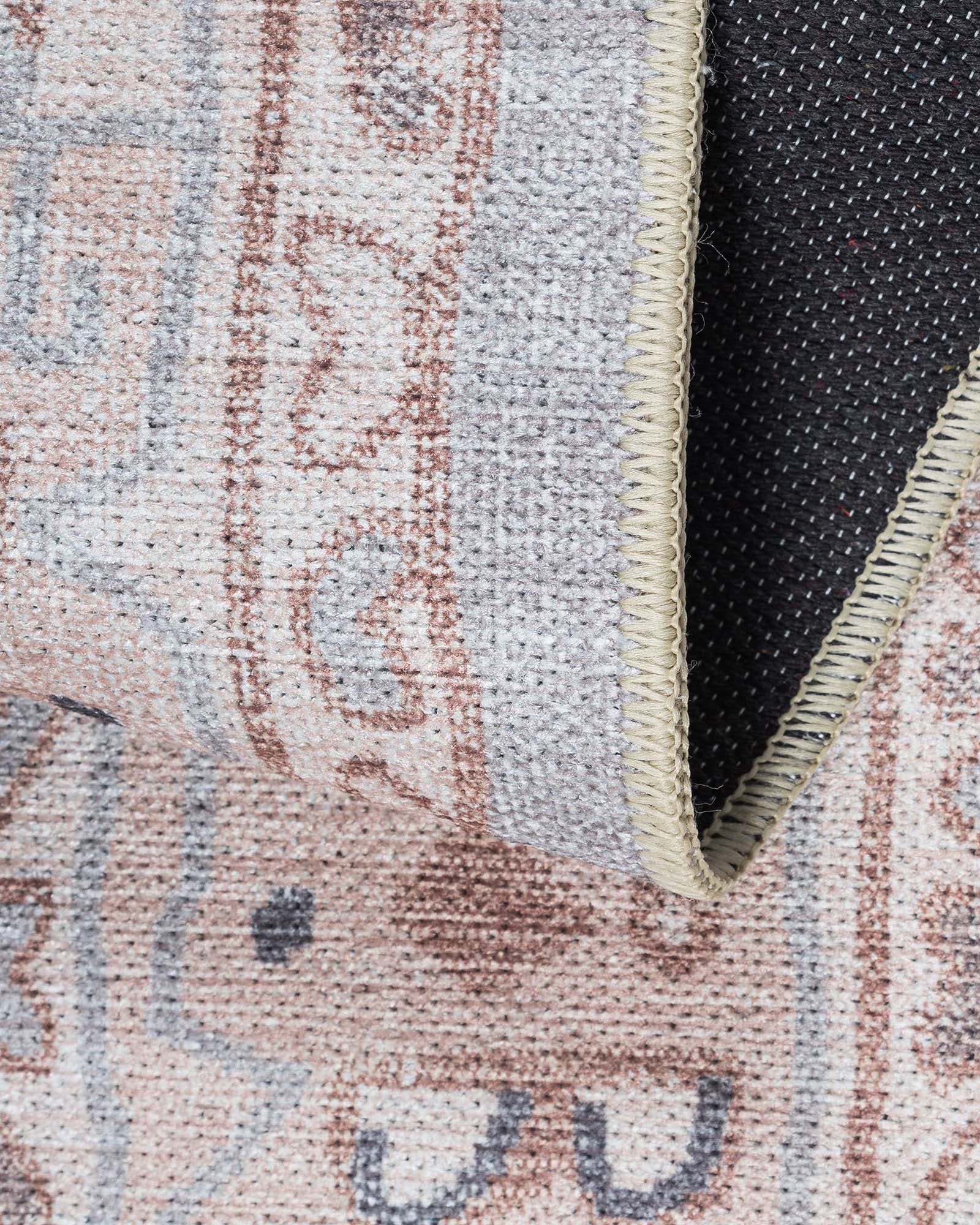
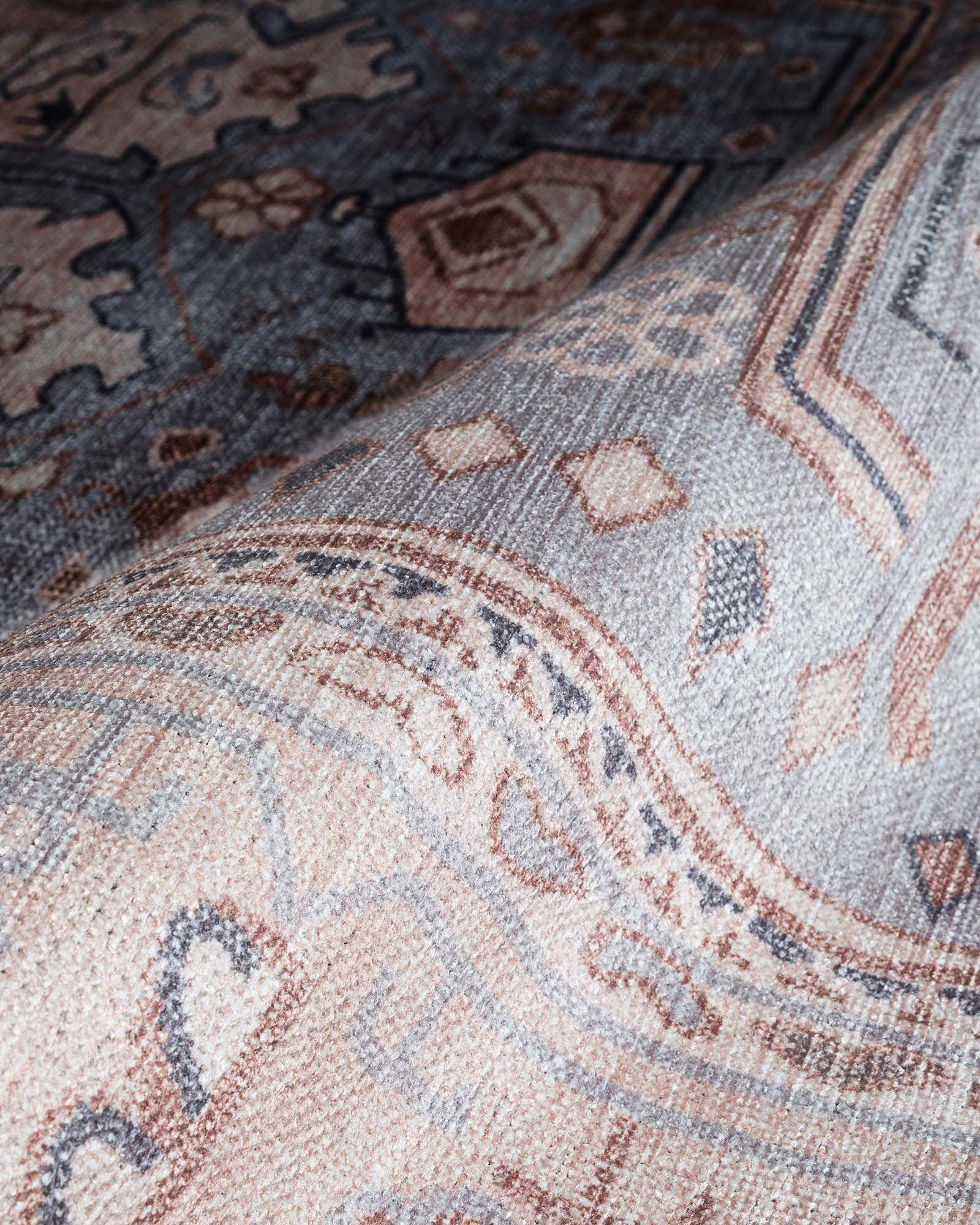
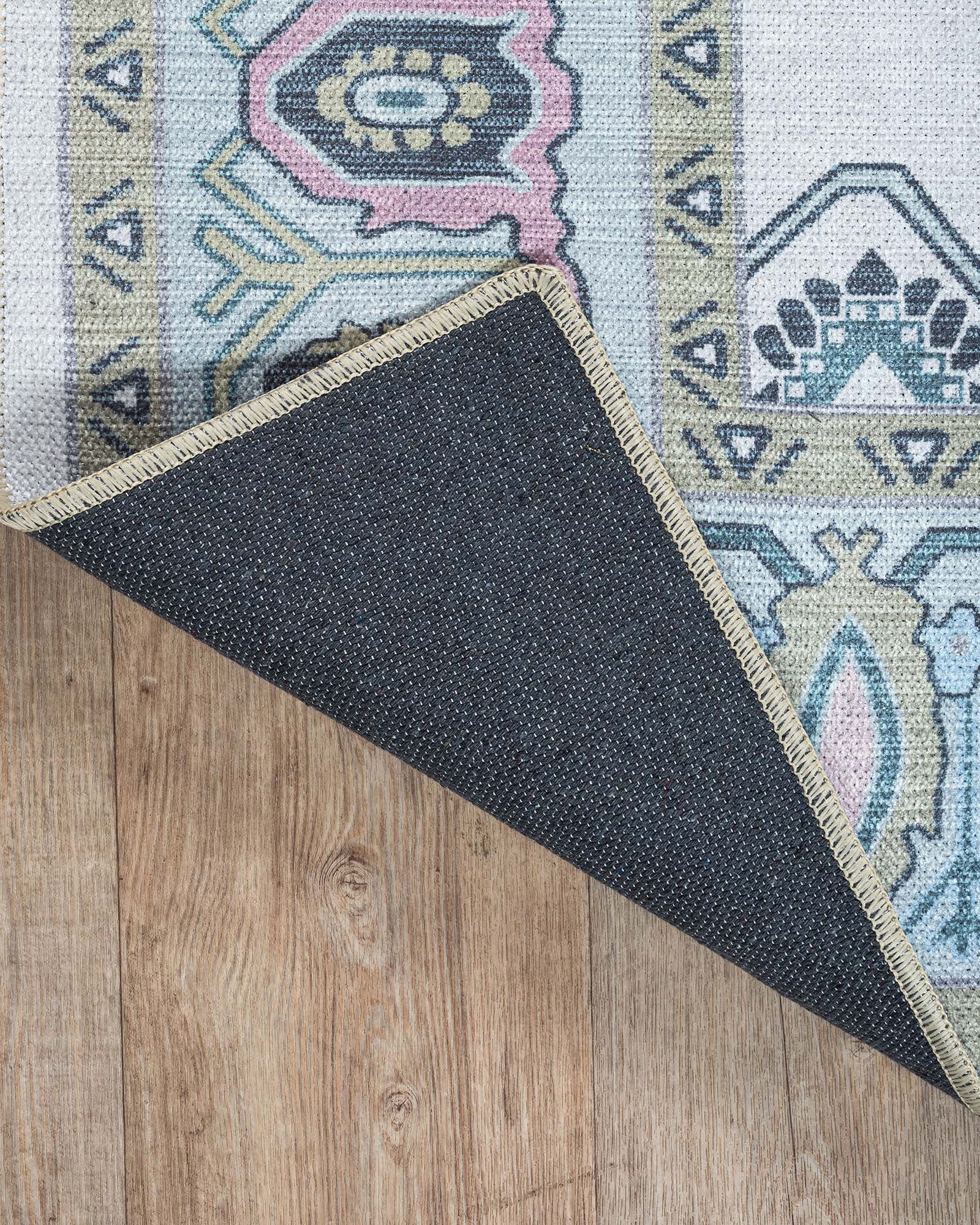
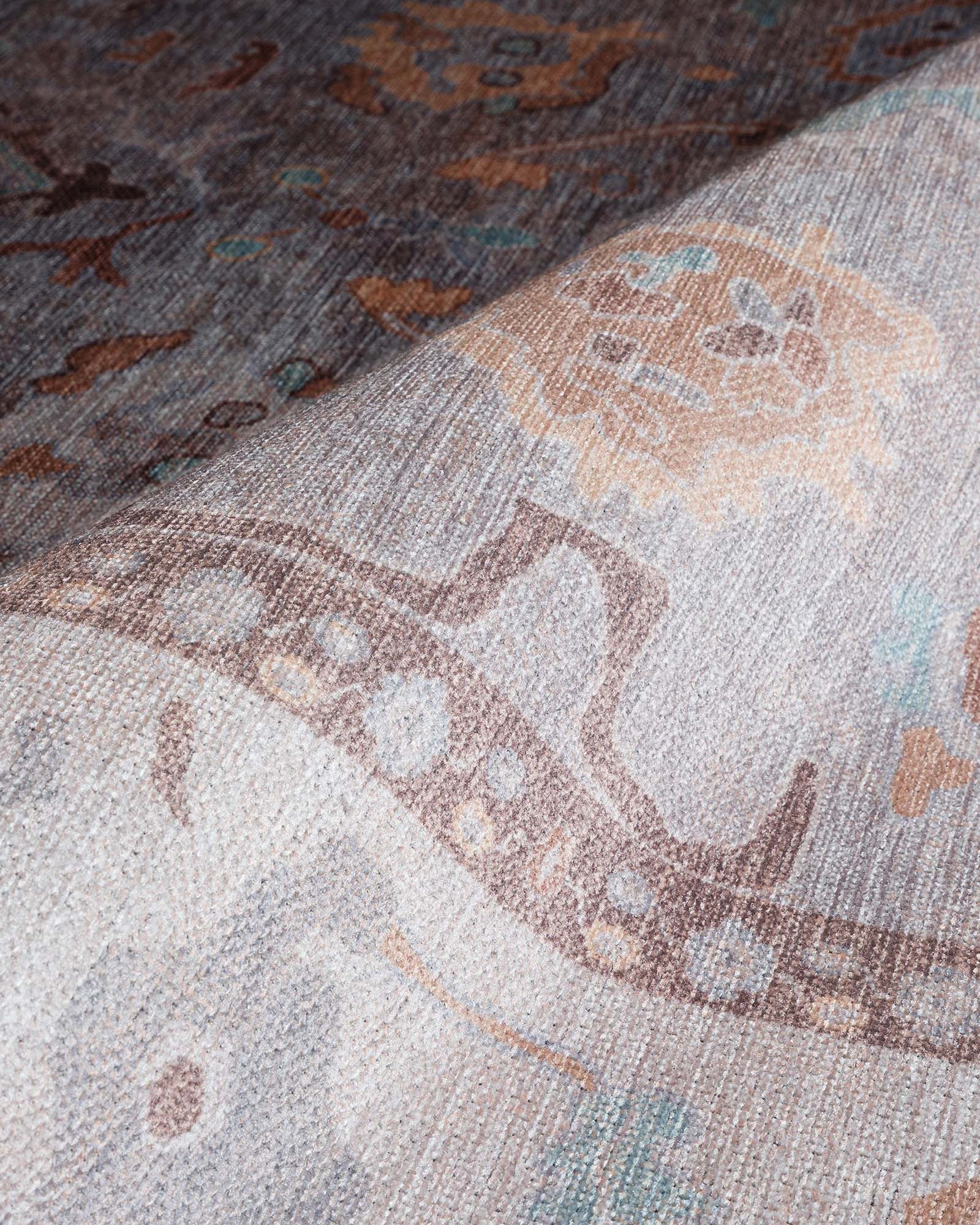
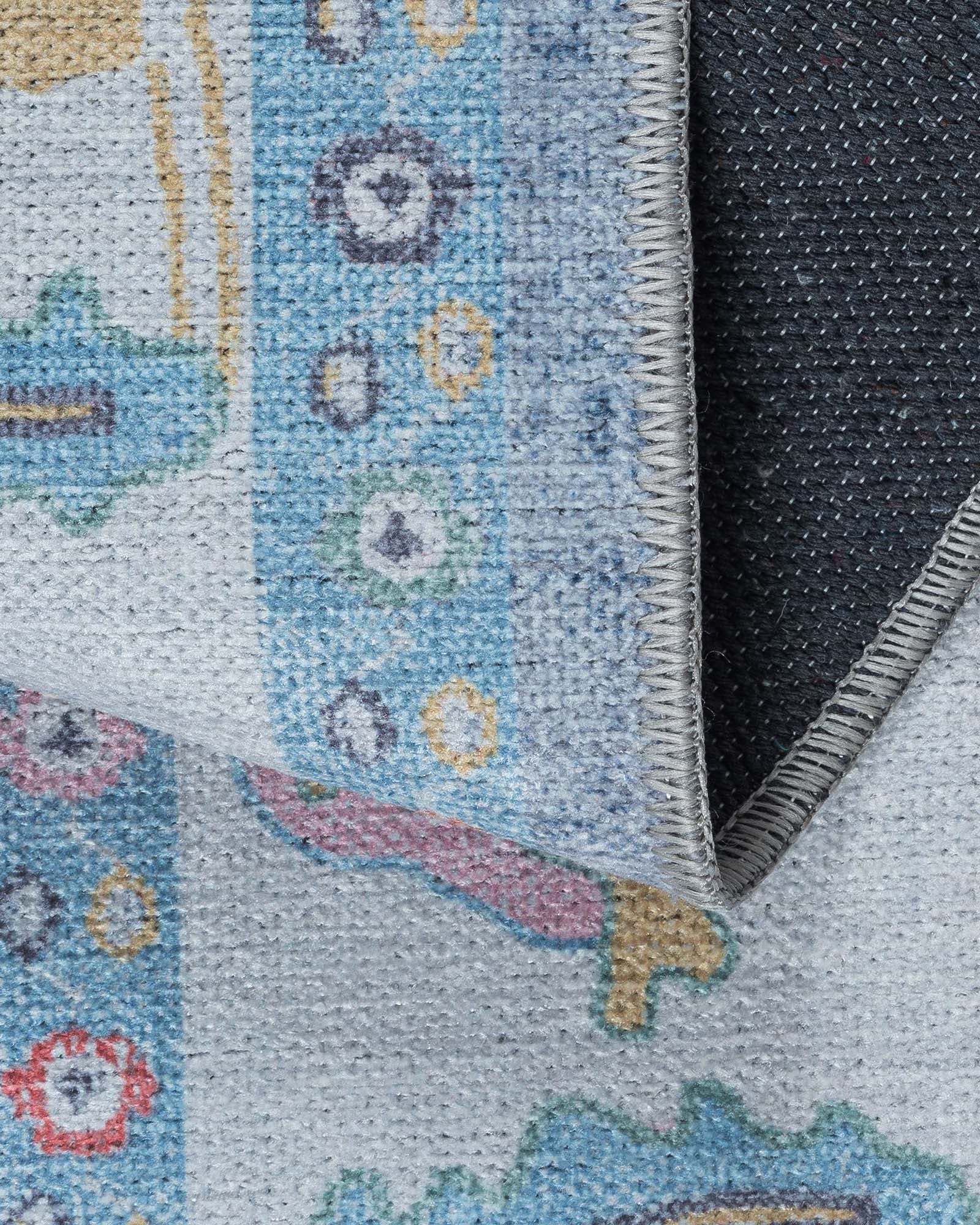
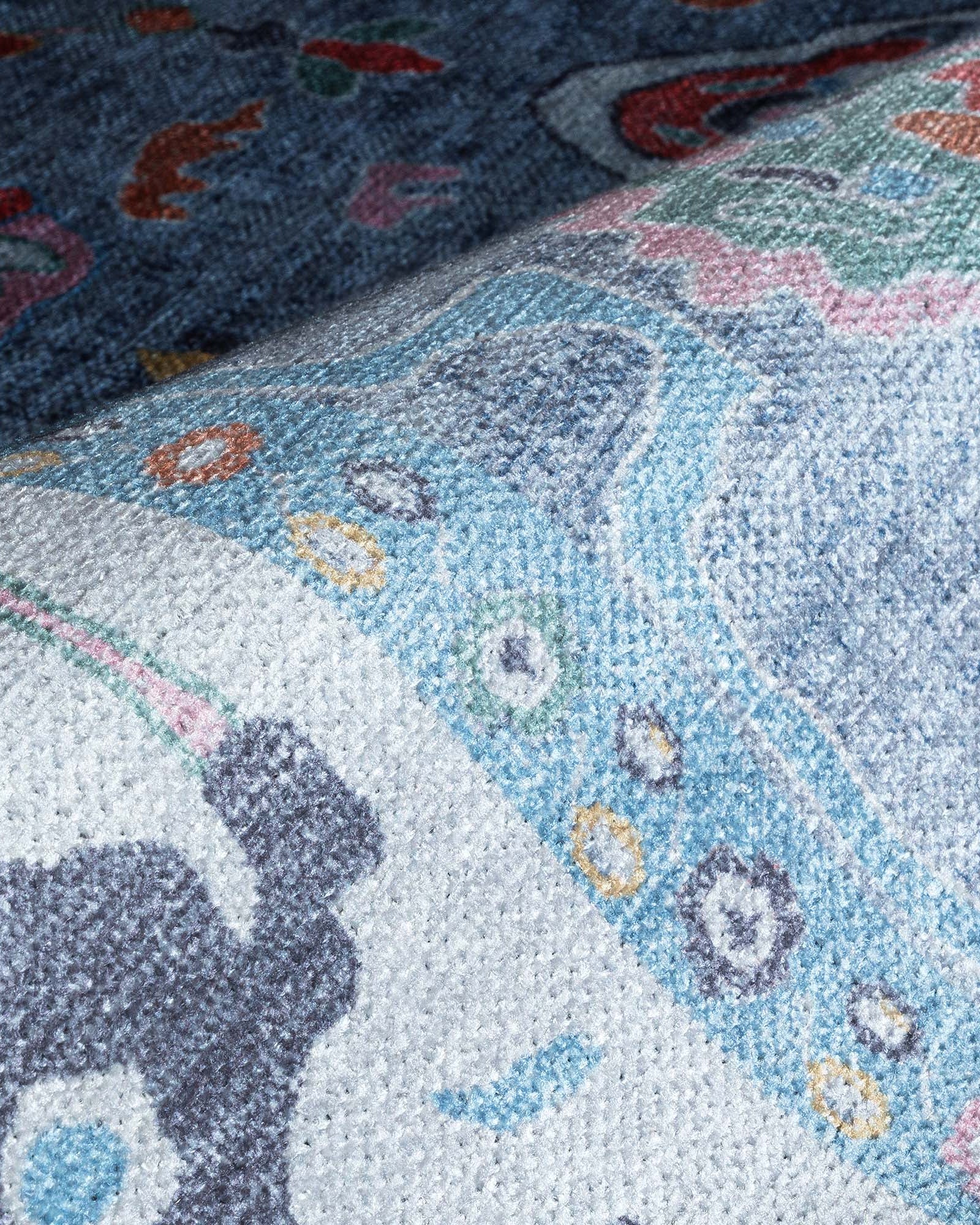
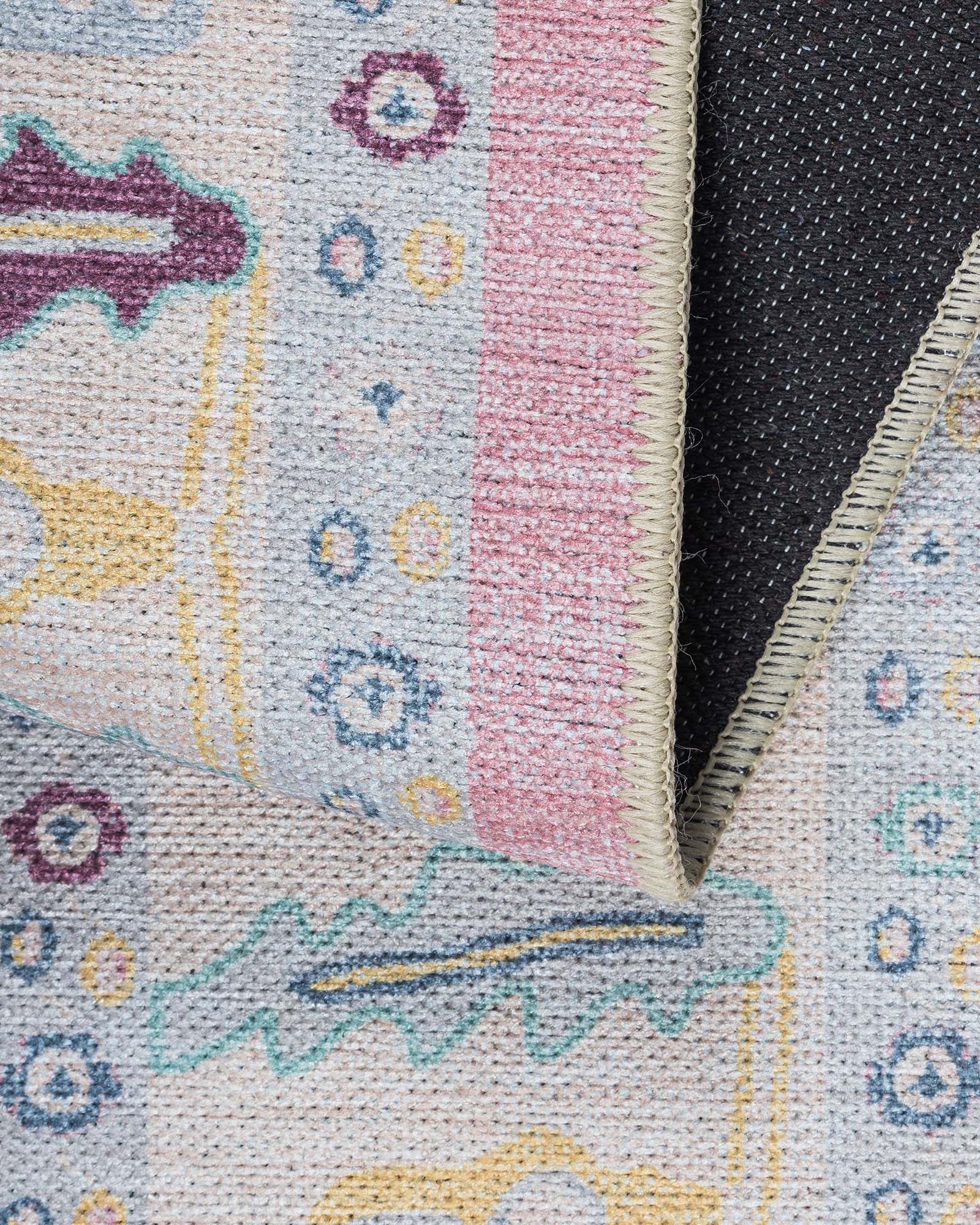
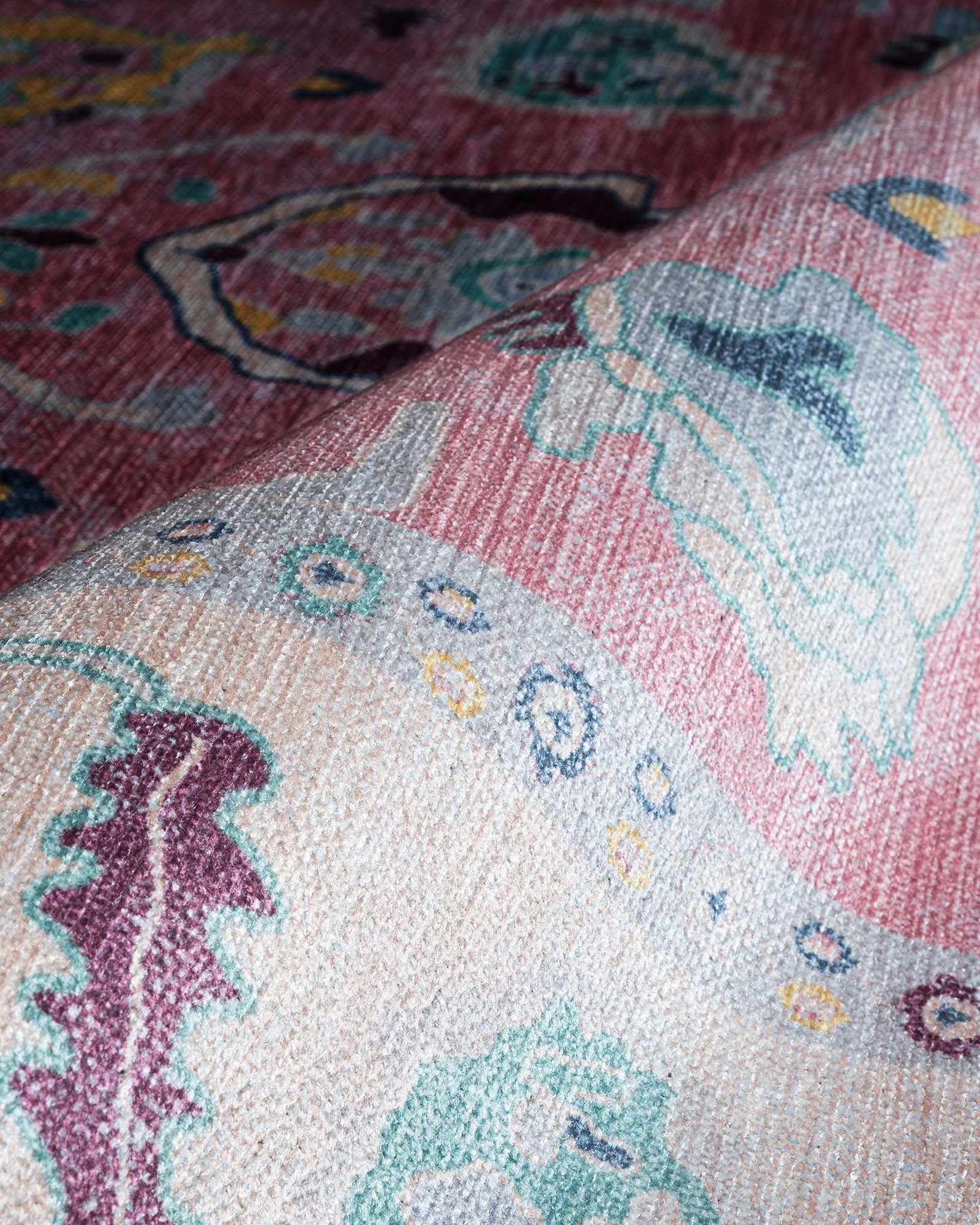
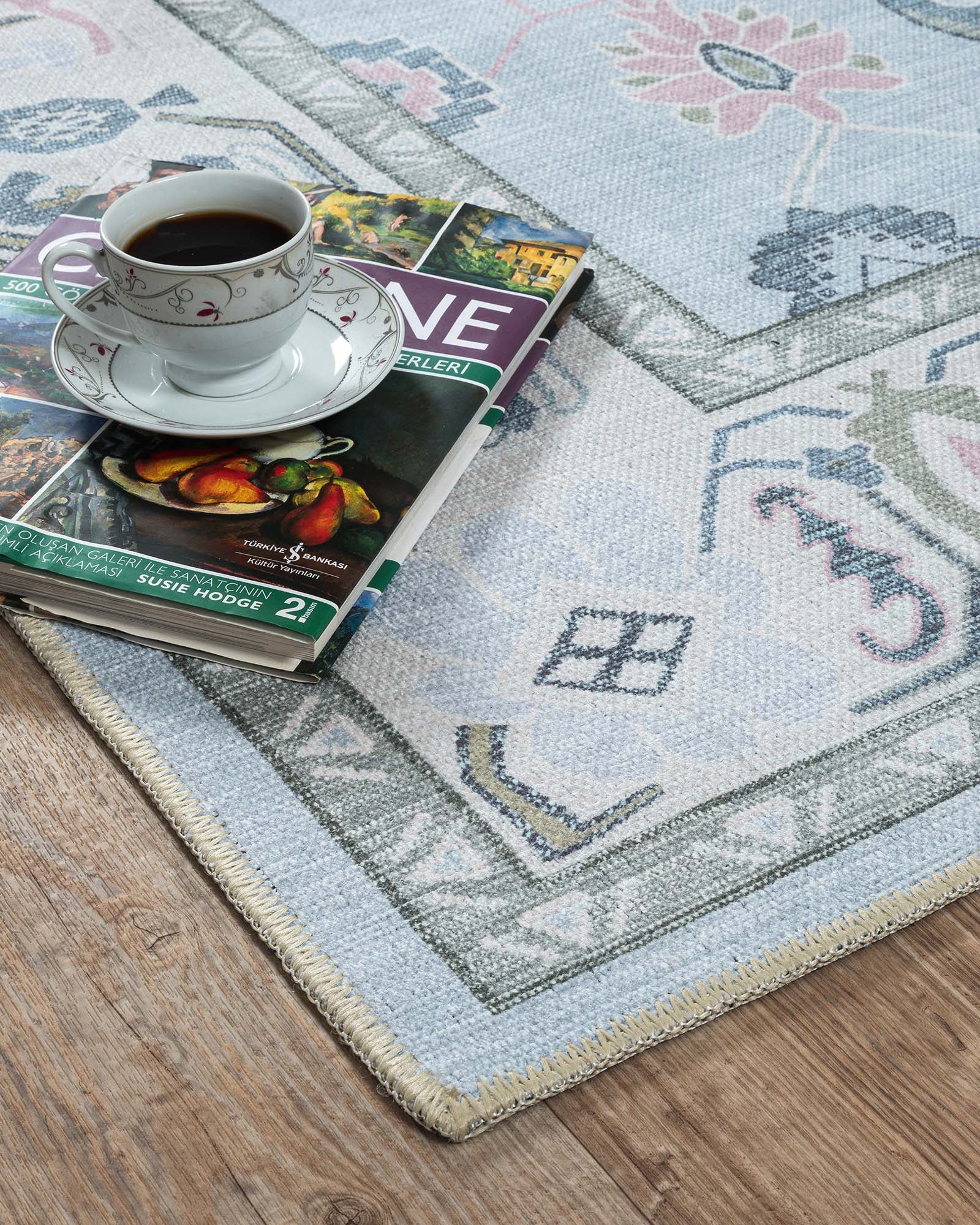
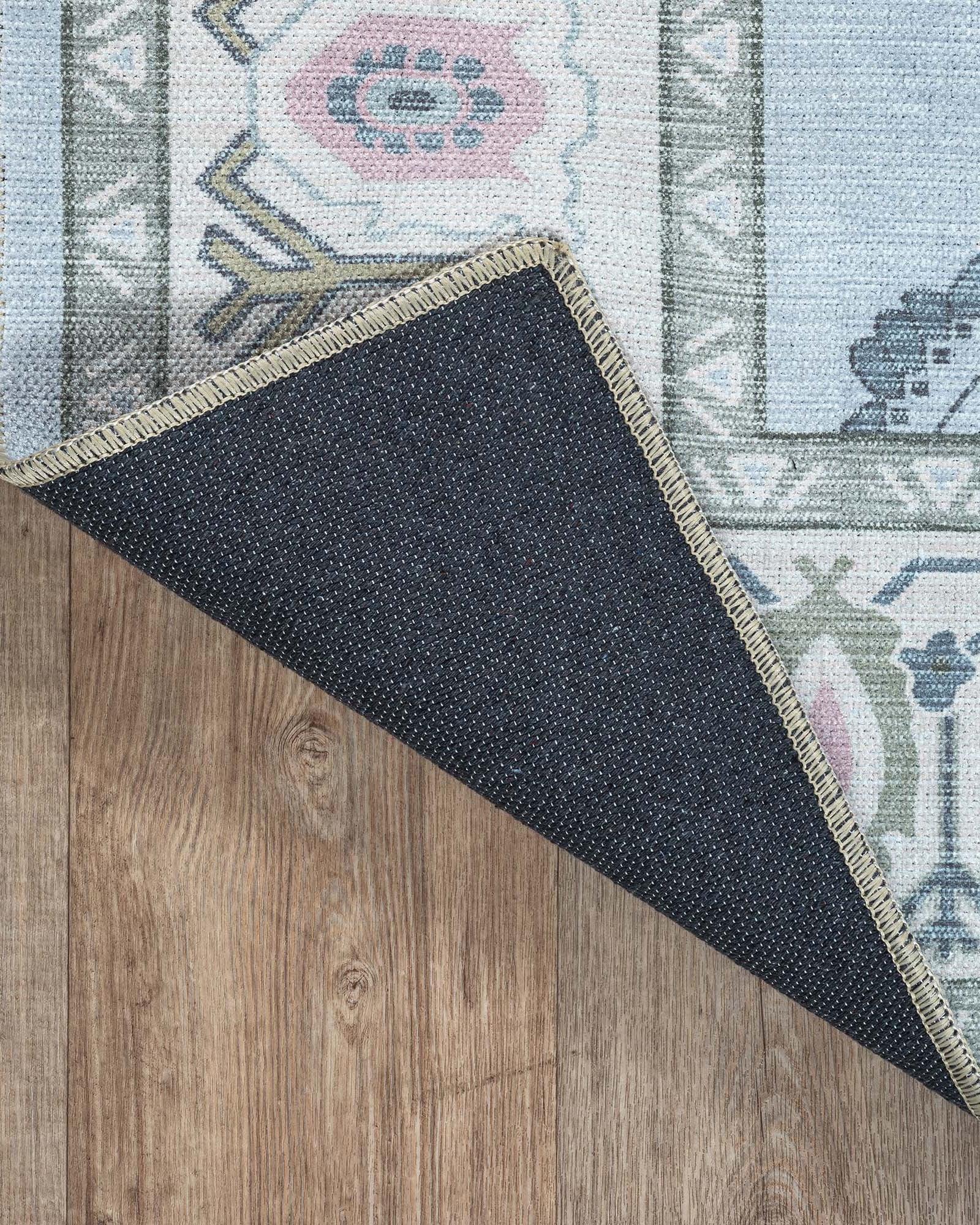
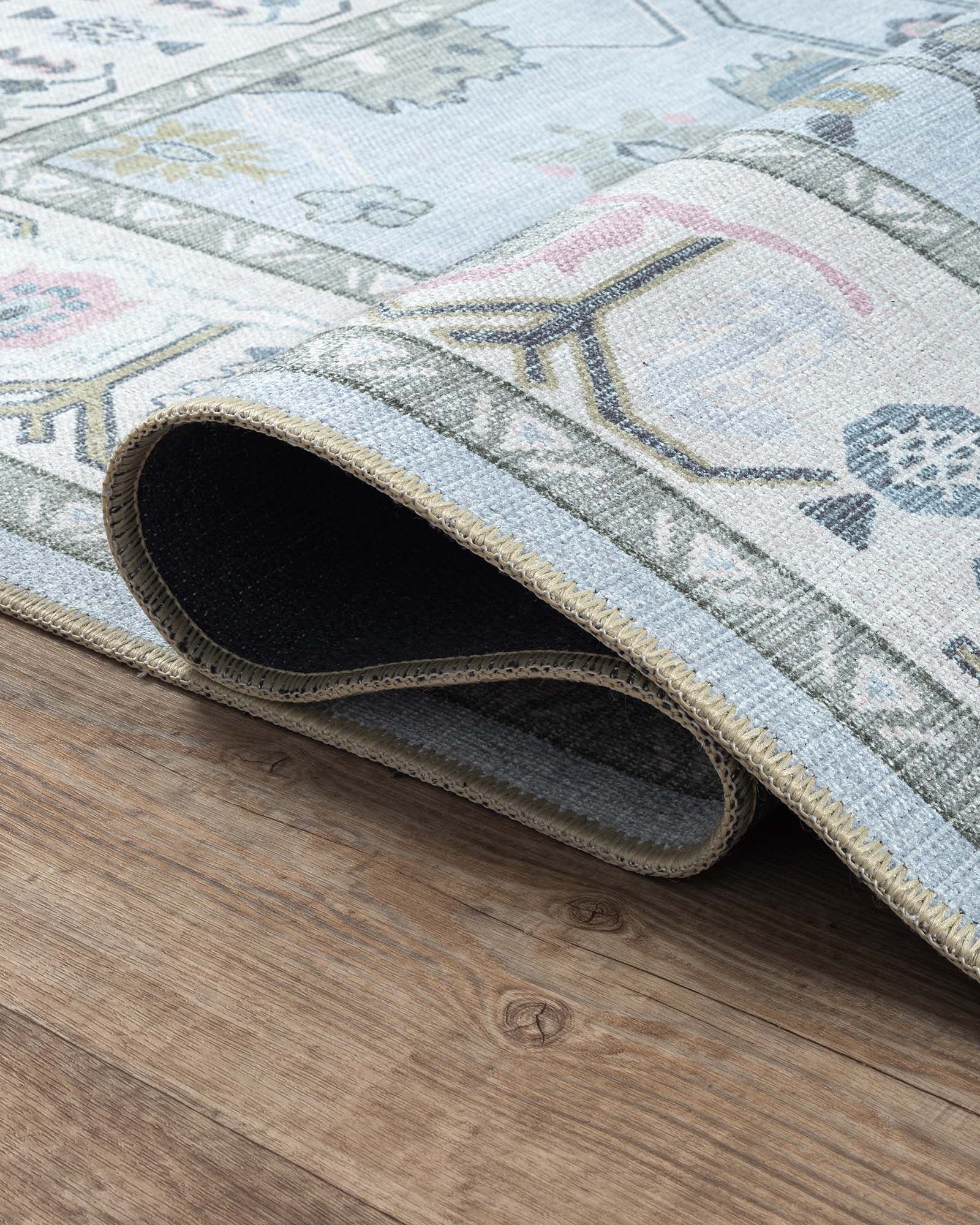
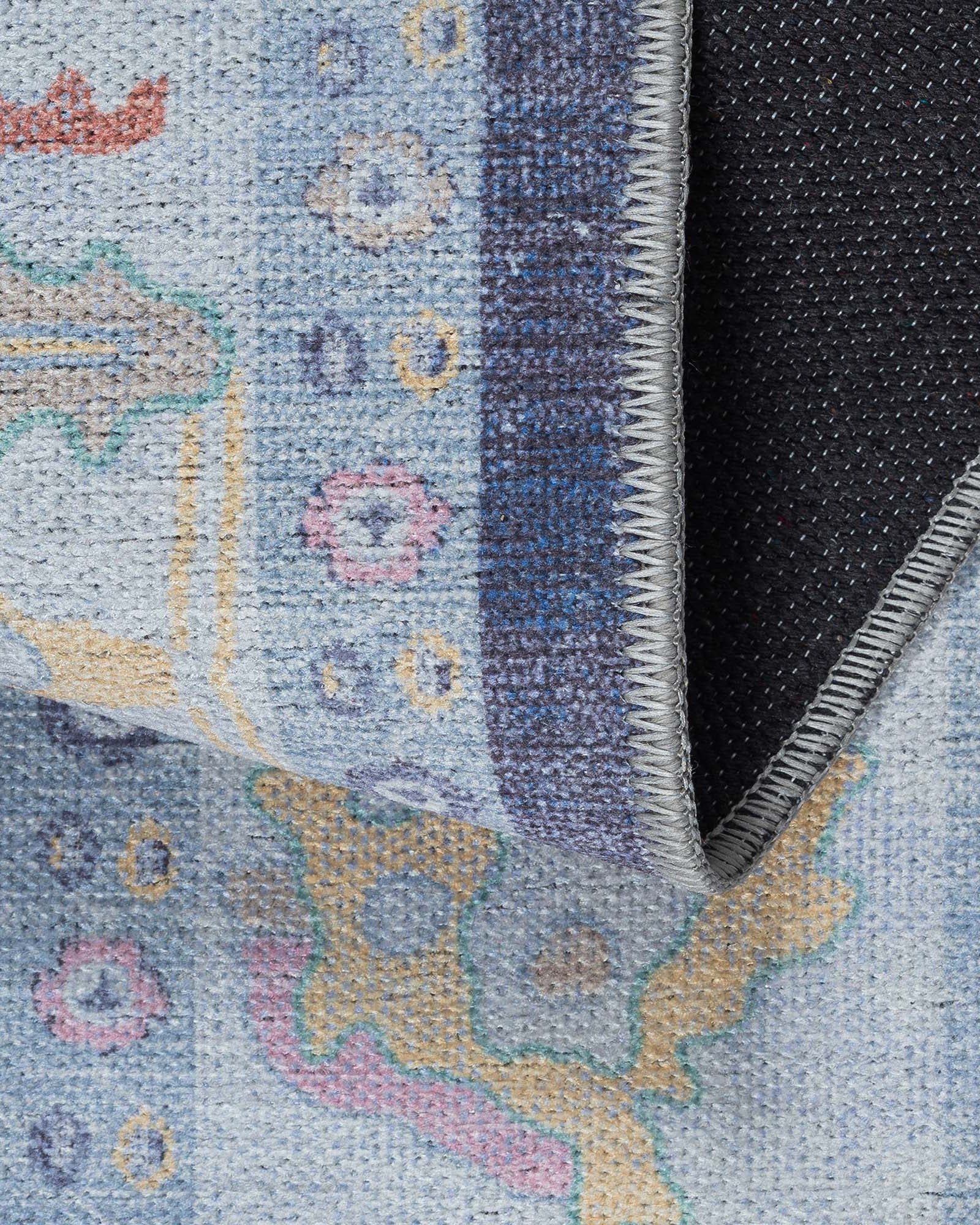
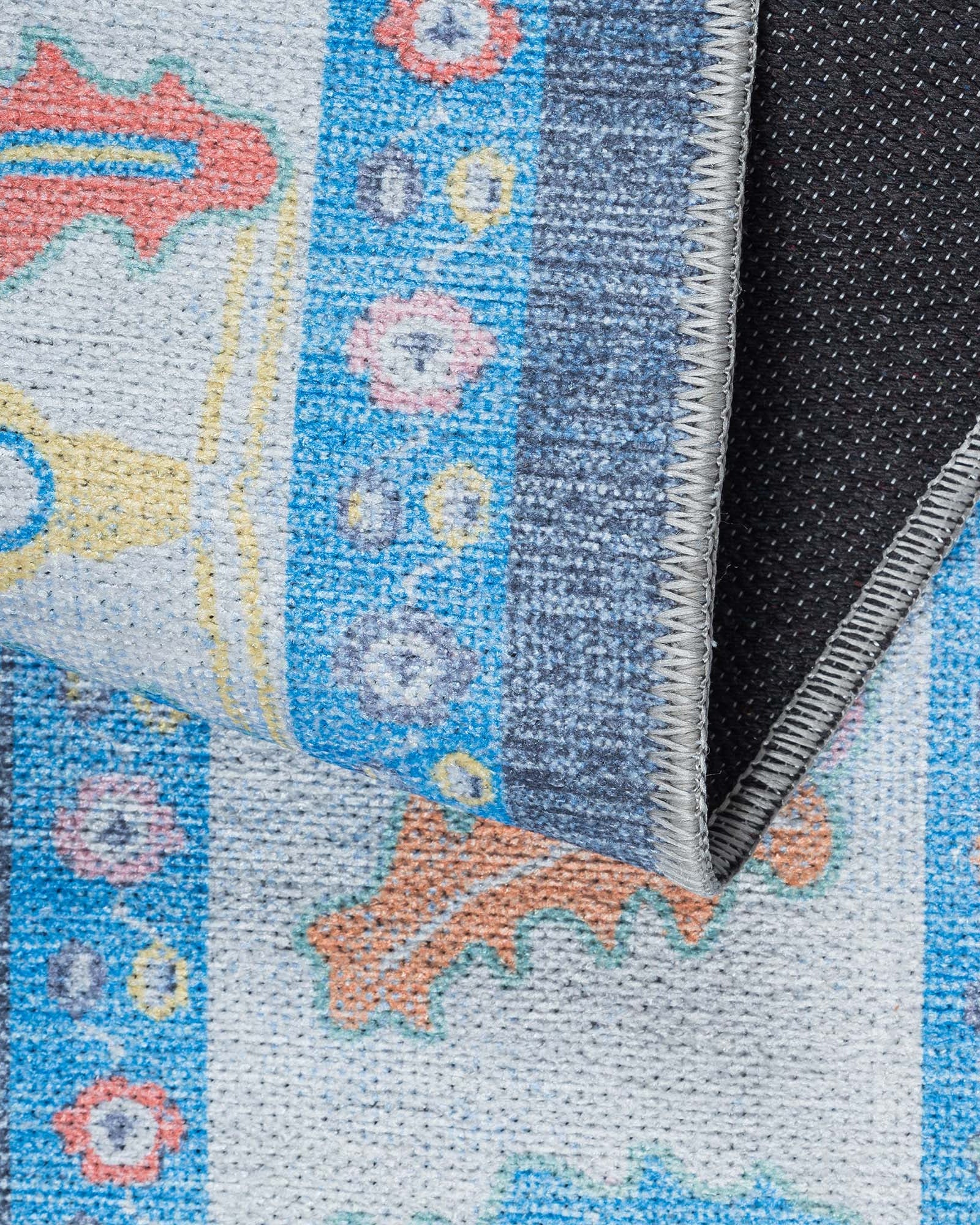
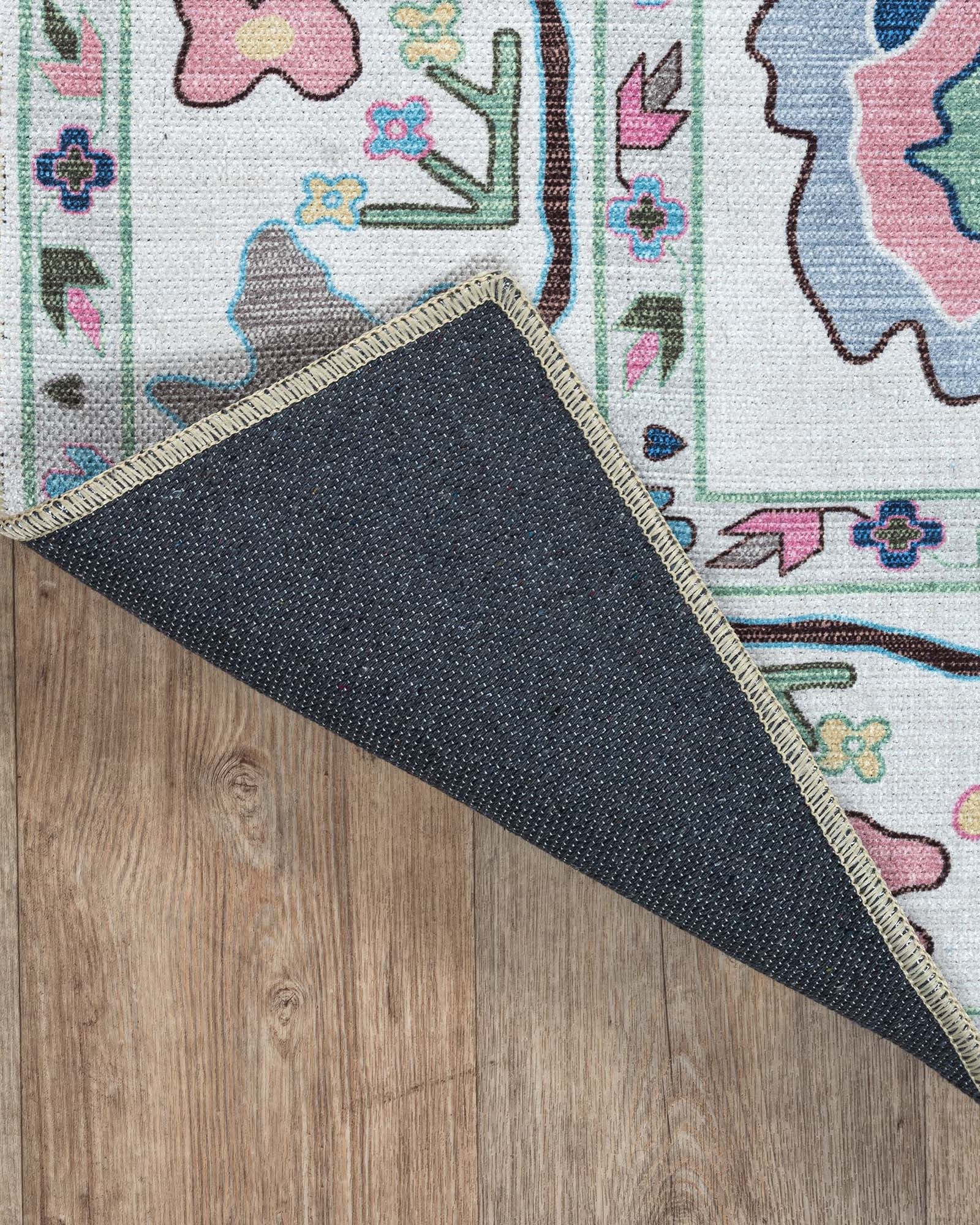
The clearest check is visual: on the back of a symmetrical-knot rug, each knot appears as two small, evenly spaced bumps side by side, roughly mirror images of each other. On an asymmetrical knot, the two ends of the same knot sit at slightly different heights, since one strand loops around an extra warp. Symmetrical-knotted rugs also tend to show a slightly squarer, more geometric edge to their motifs under close inspection compared to the smoother curves possible with the alternative technique. Where the knot type can be confirmed, the product page states it directly.
Turkish Knot Versus Persian Knot
Neither technique is superior — they are suited to different design goals. The Turkish knot's structural symmetry favours strong, geometric, high-contrast pattern and a firm, durable pile. The Persian knot's asymmetry allows finer curvilinear detail at the cost of slightly less even tension distribution. Choosing between them in practice usually comes down to which visual style you want, since the technique and the pattern language are historically bound together.
Age, Condition and Measurement
Pieces are grouped as antique at over eighty years, vintage at roughly forty to eighty, and semi-vintage below that. Every product page states the knot type directly, along with the estimated decade, origin where identifiable, foundation type, exact measured dimensions and a plain condition note. Expect the honest wear found throughout handmade collections — lower pile in traffic lanes, softened selvages, occasional old repairs. Sizes are never standard; order against the measurements shown.
Care
Vacuum with the beater bar off or raised and keep it off the fringe. Use a rug pad on hard floors. Rotate the rug twice a year so sunlight and footfall distribute evenly. Blot spills immediately with a white cloth and plain water, pressing rather than rubbing. Avoid home carpet-cleaning machines and steam cleaners, which can felt wool and bleed aged natural dyes. For deep cleaning, use a professional rug washer experienced with hand-knotted wool.