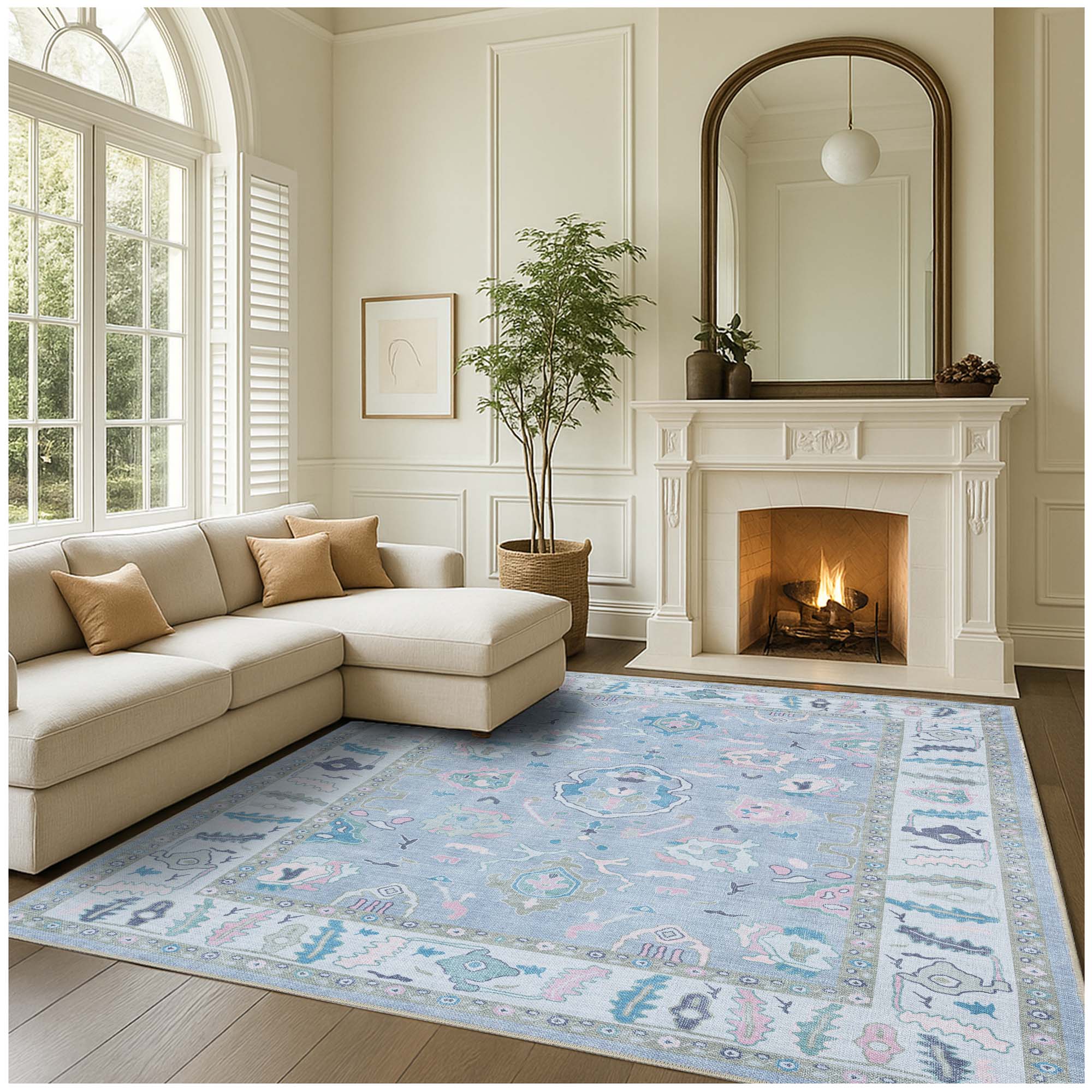
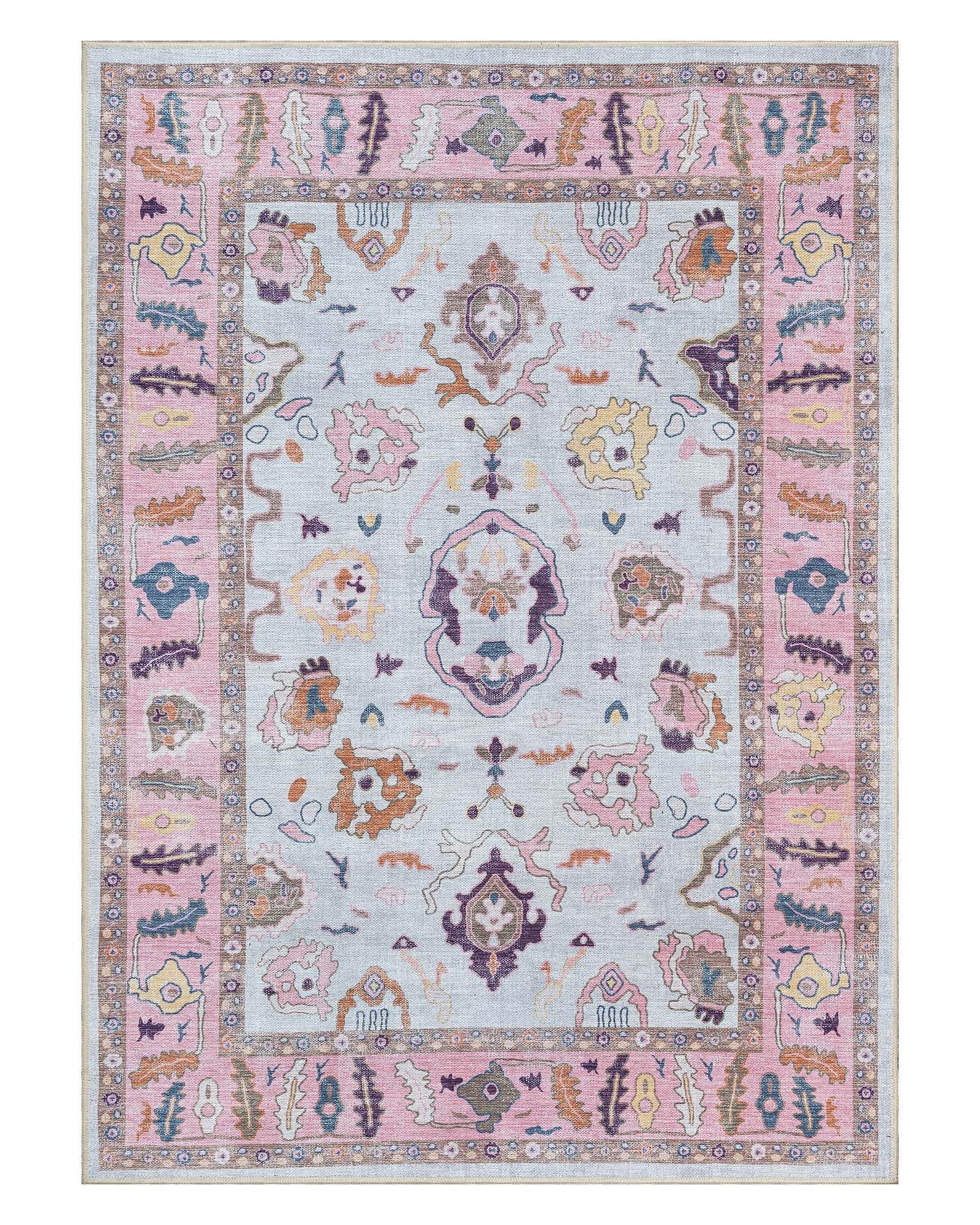
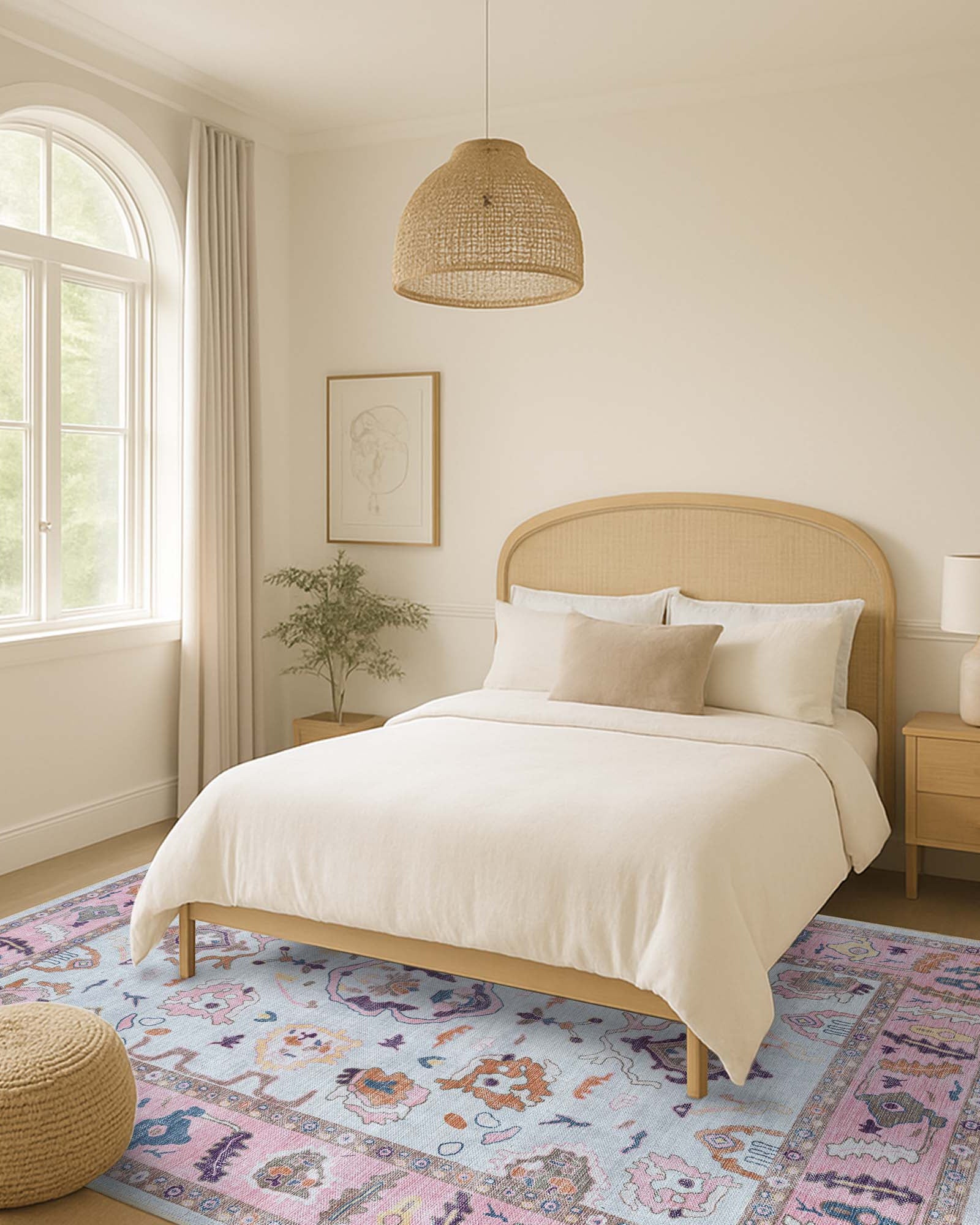
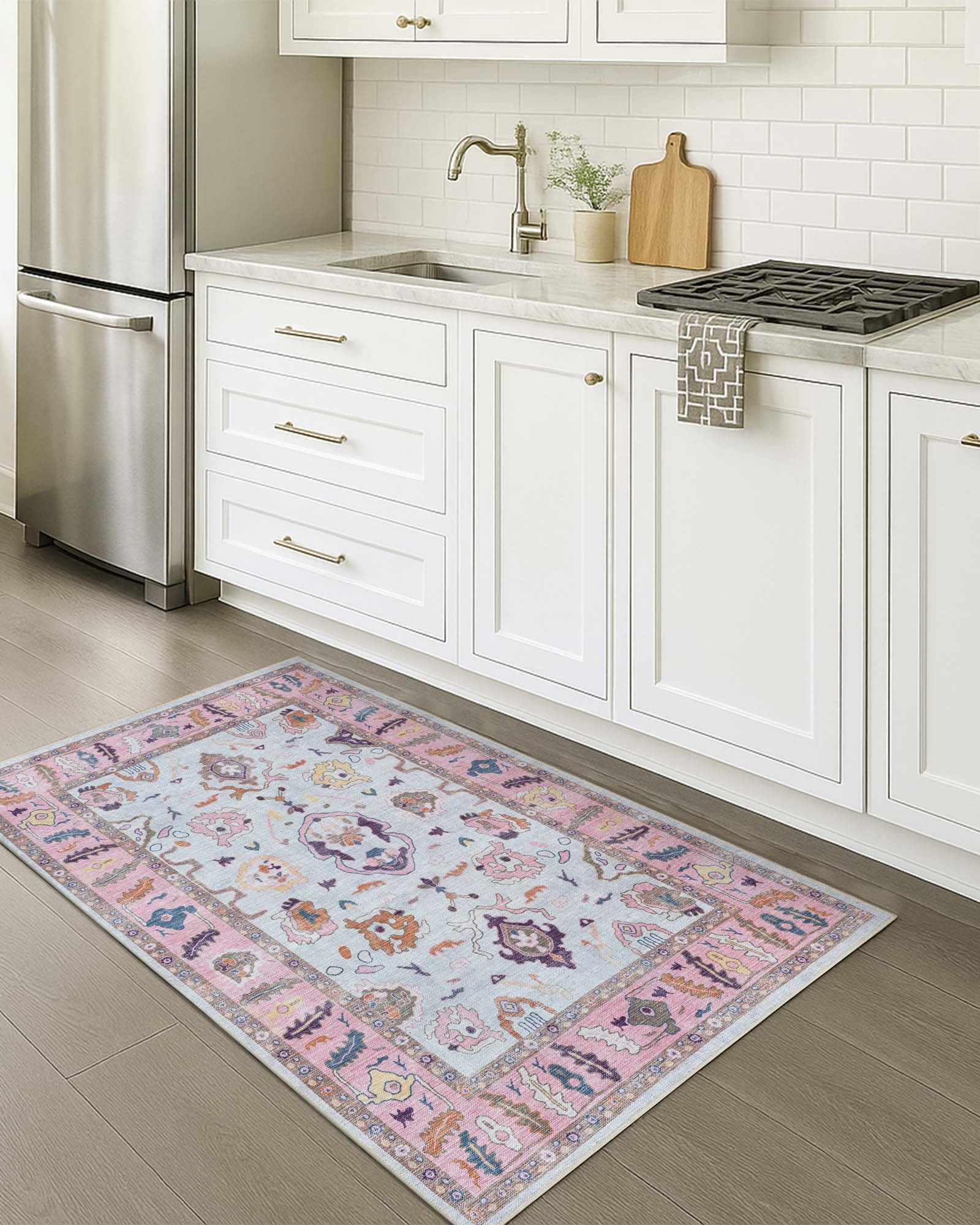
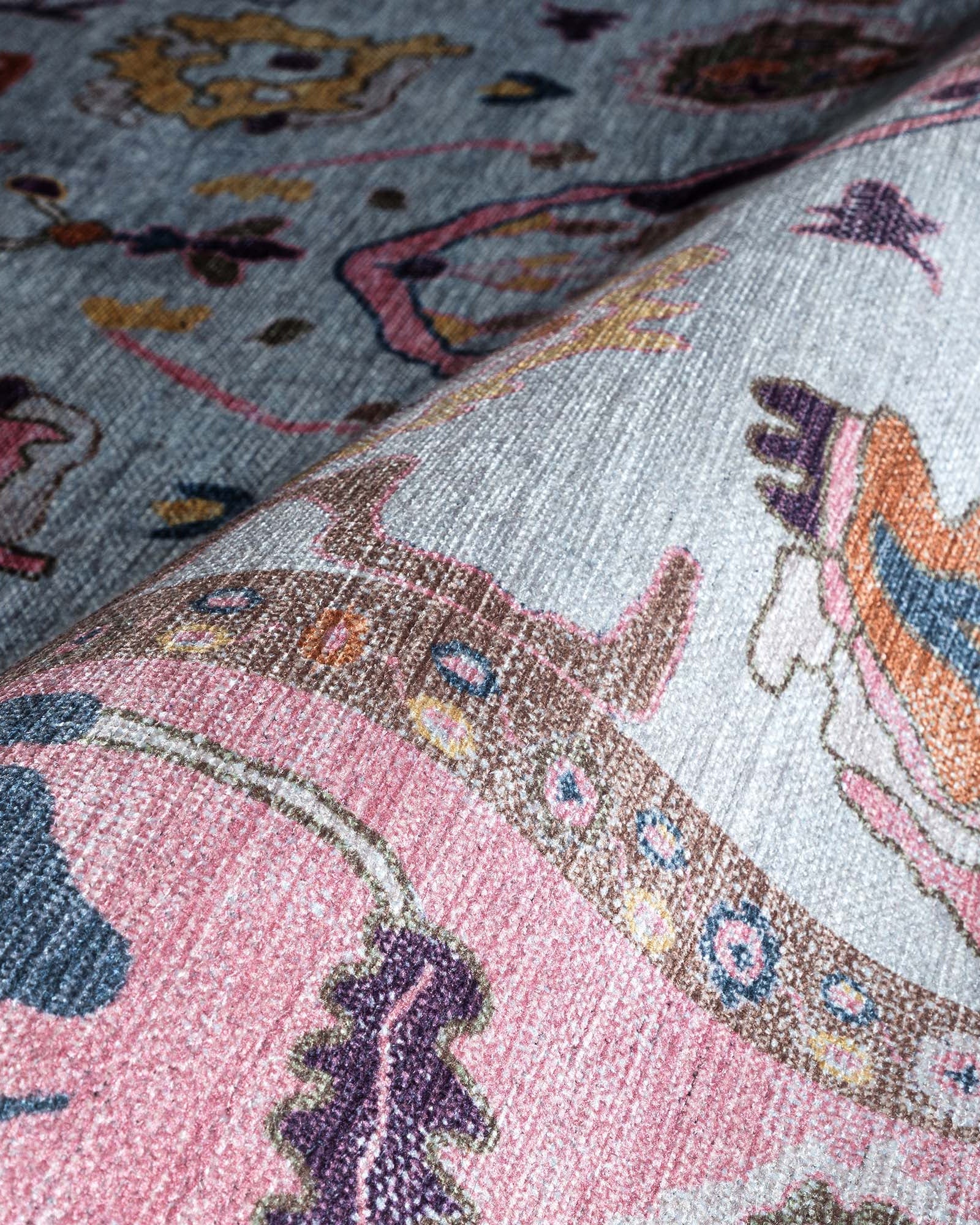
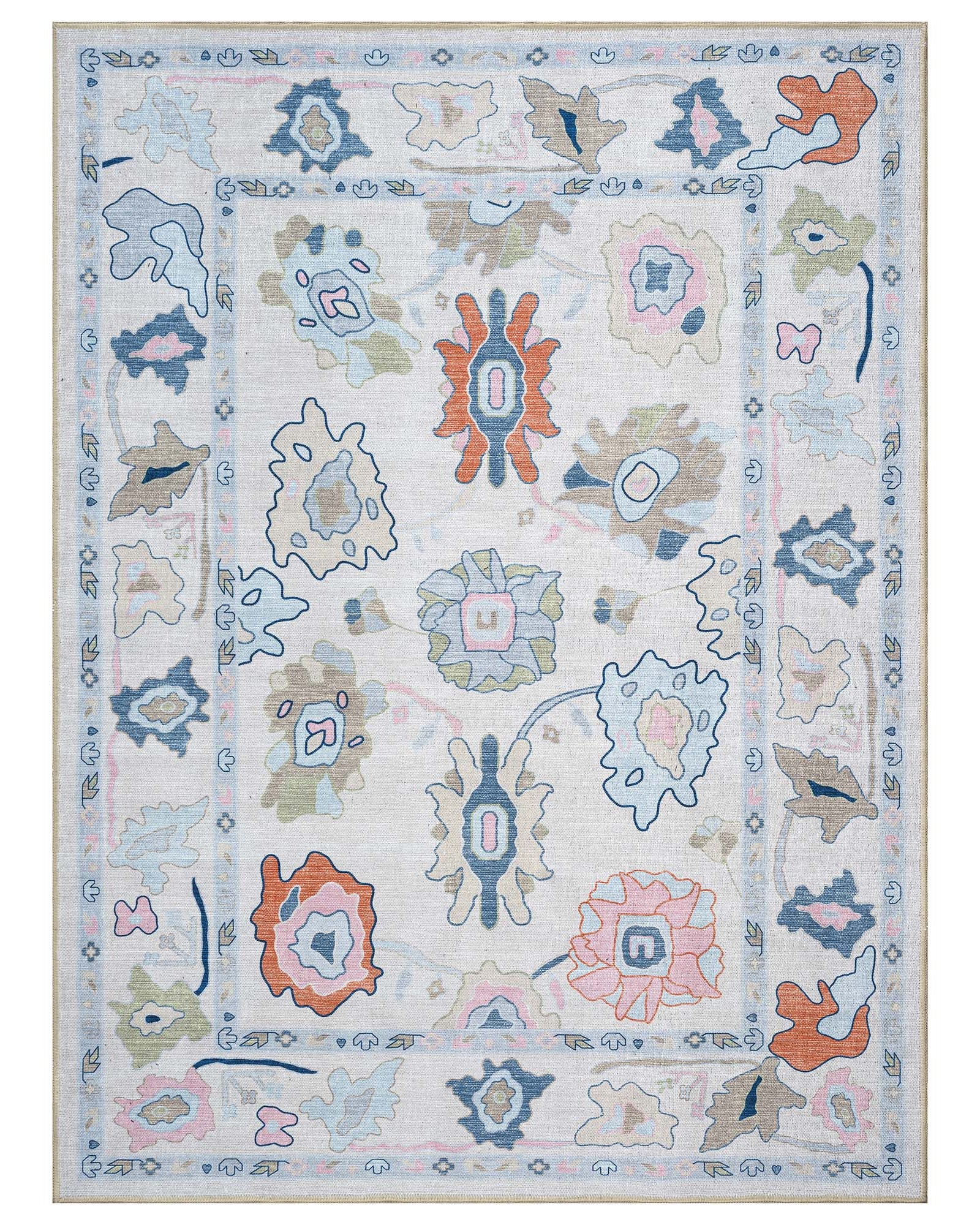
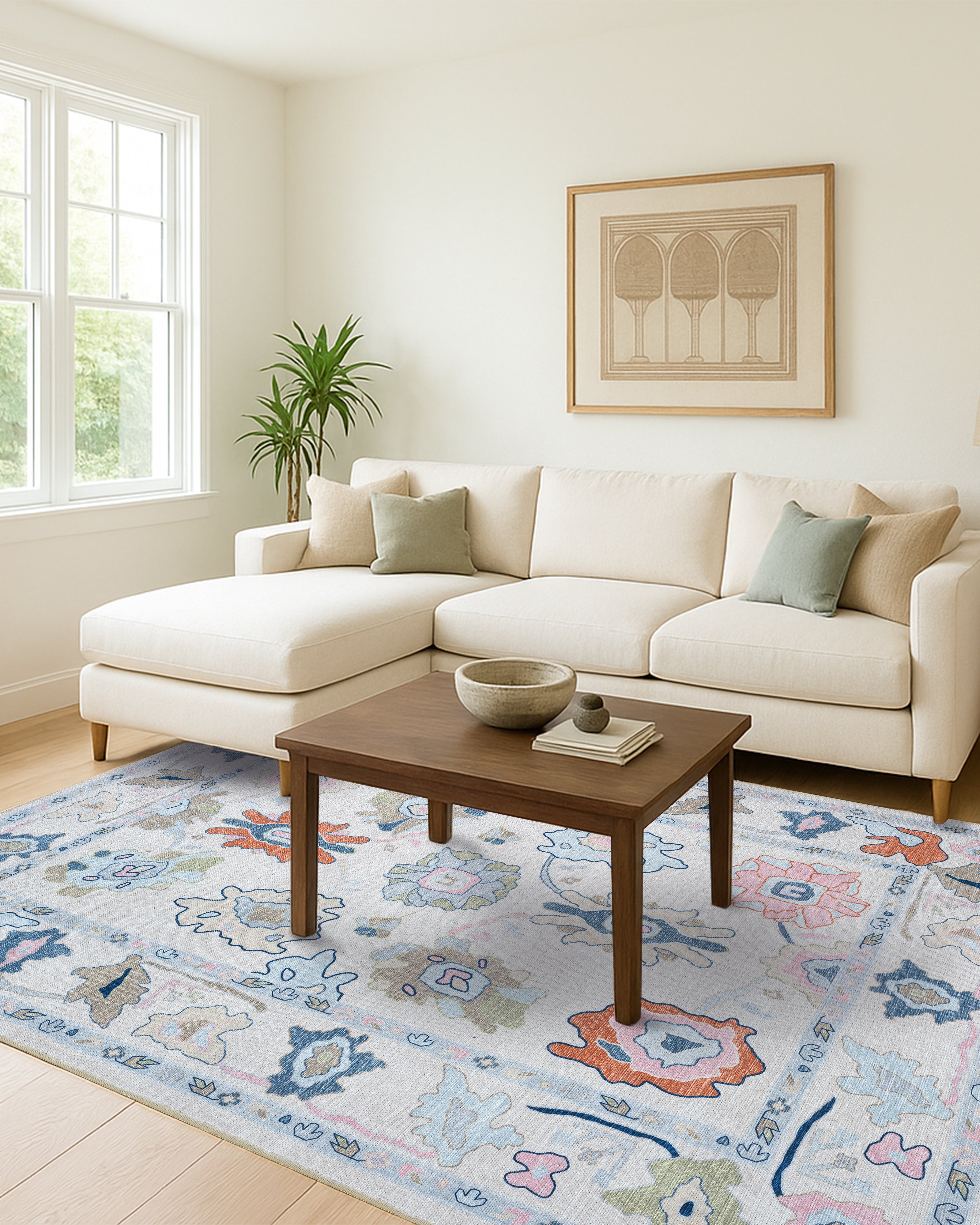
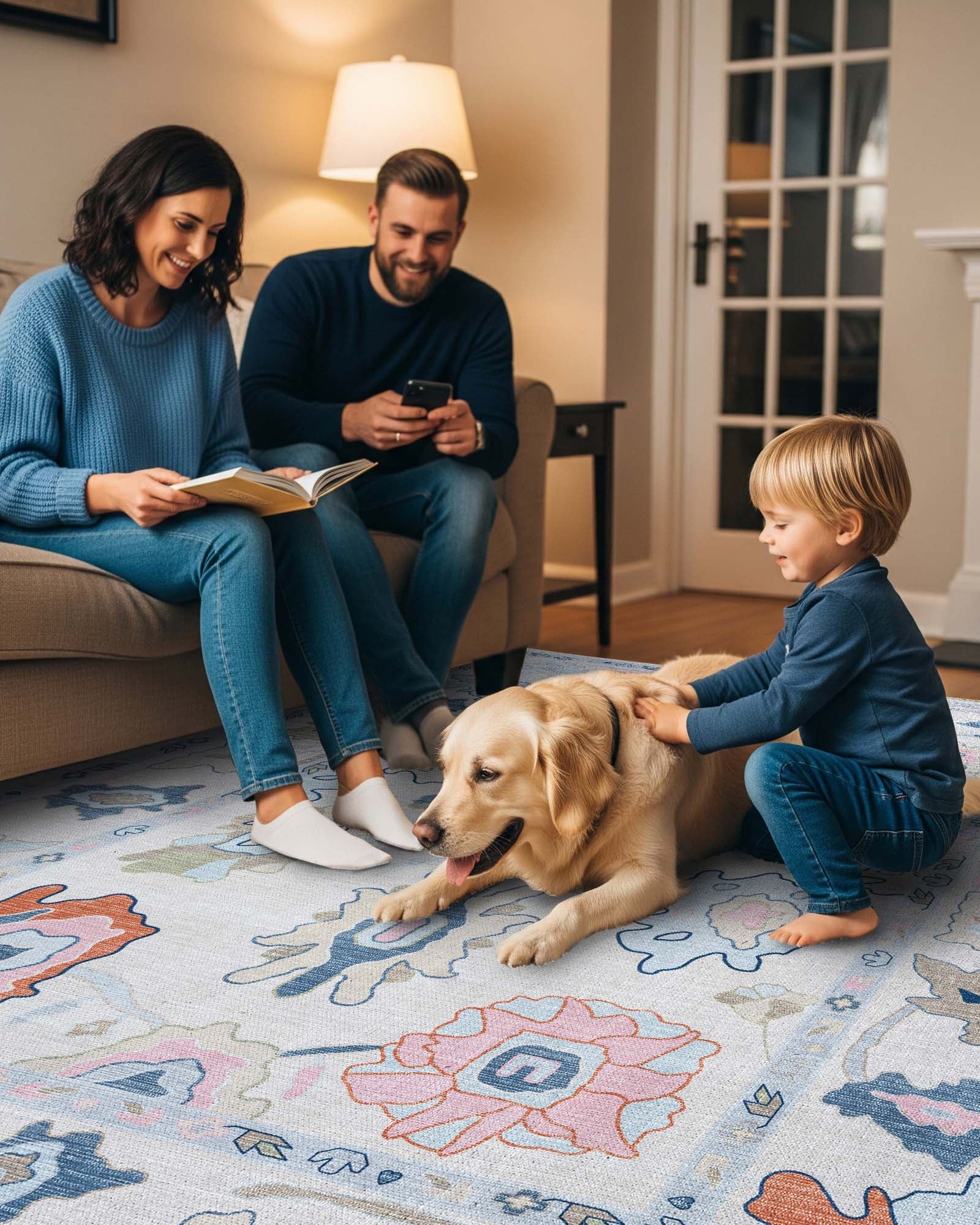
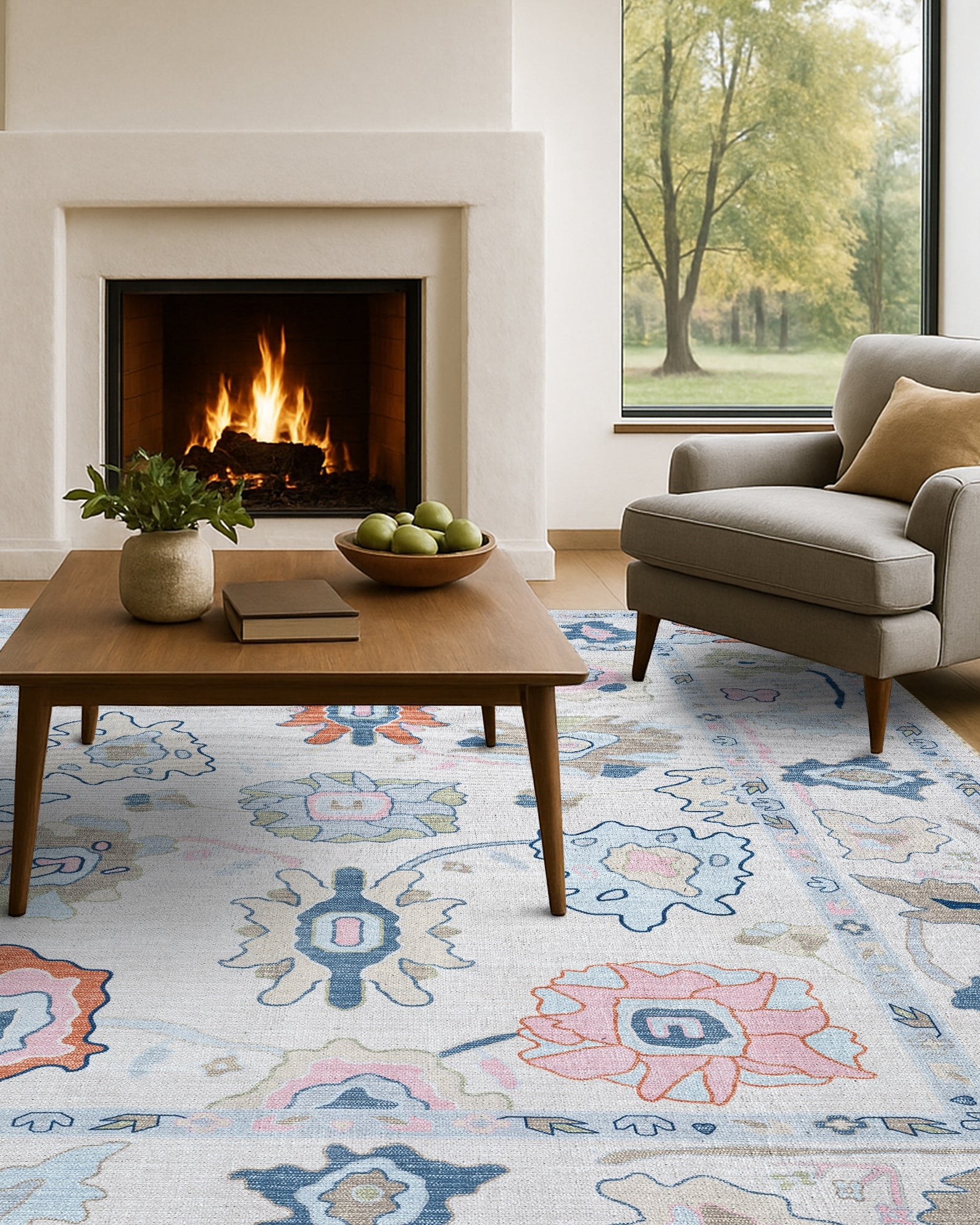
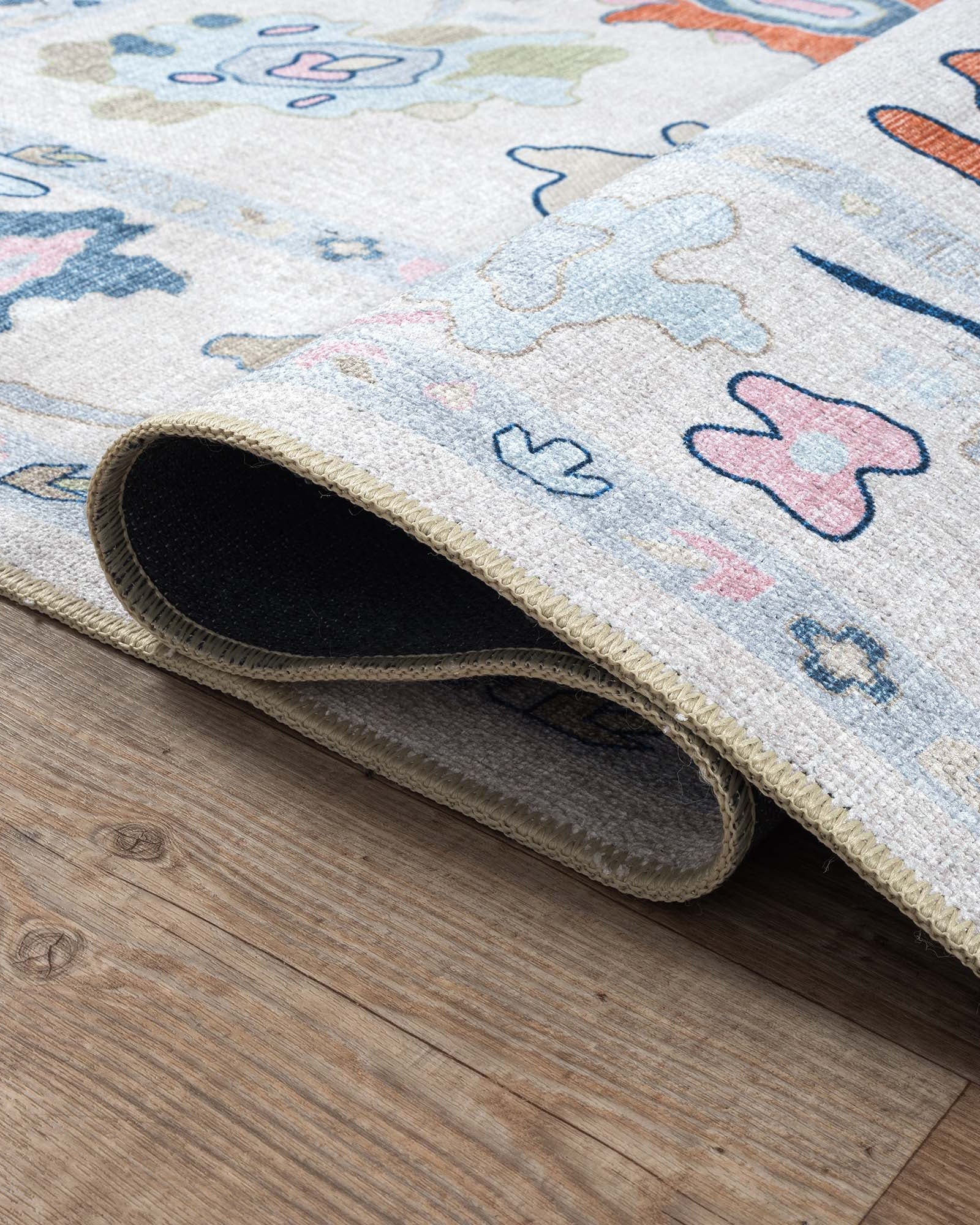
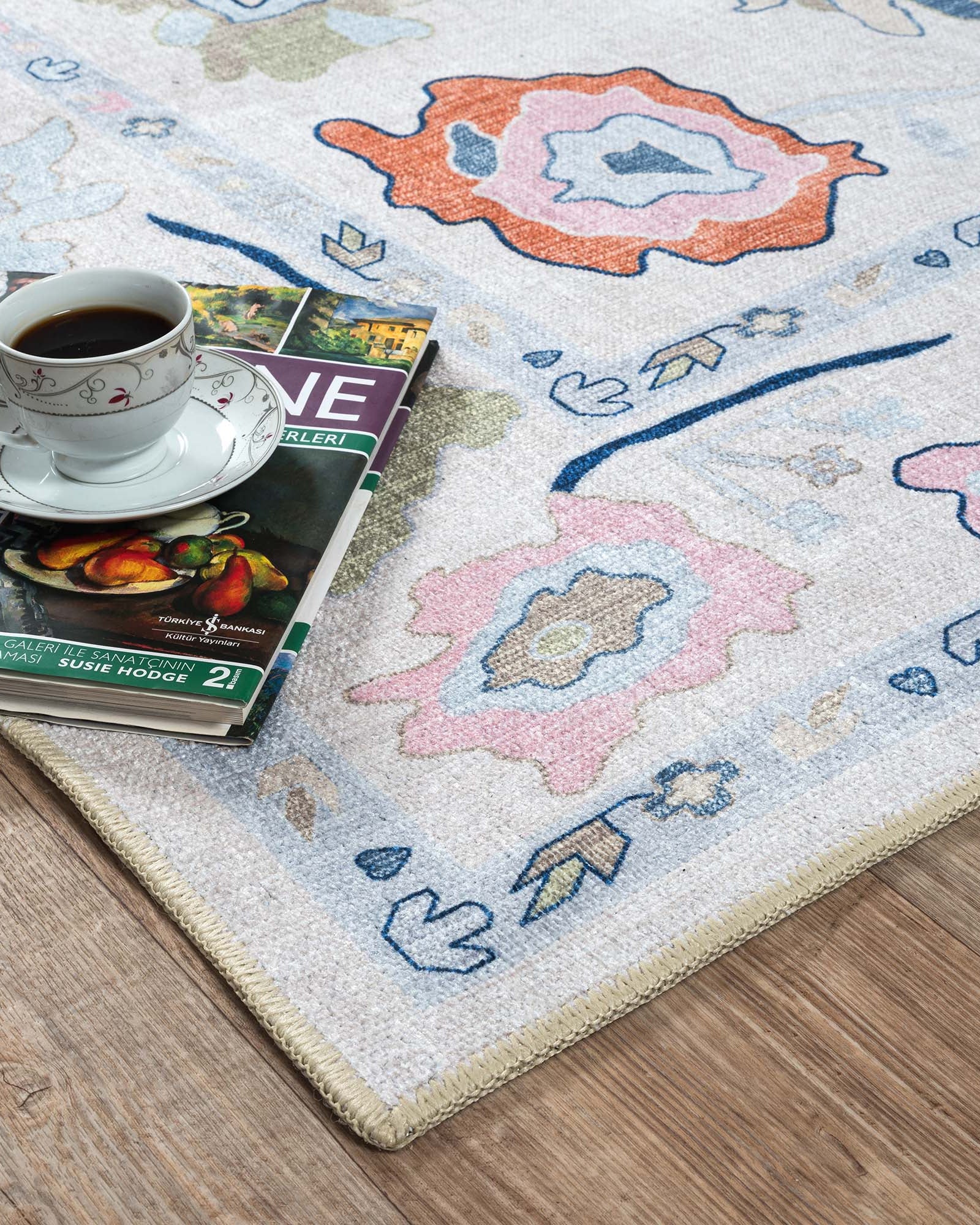
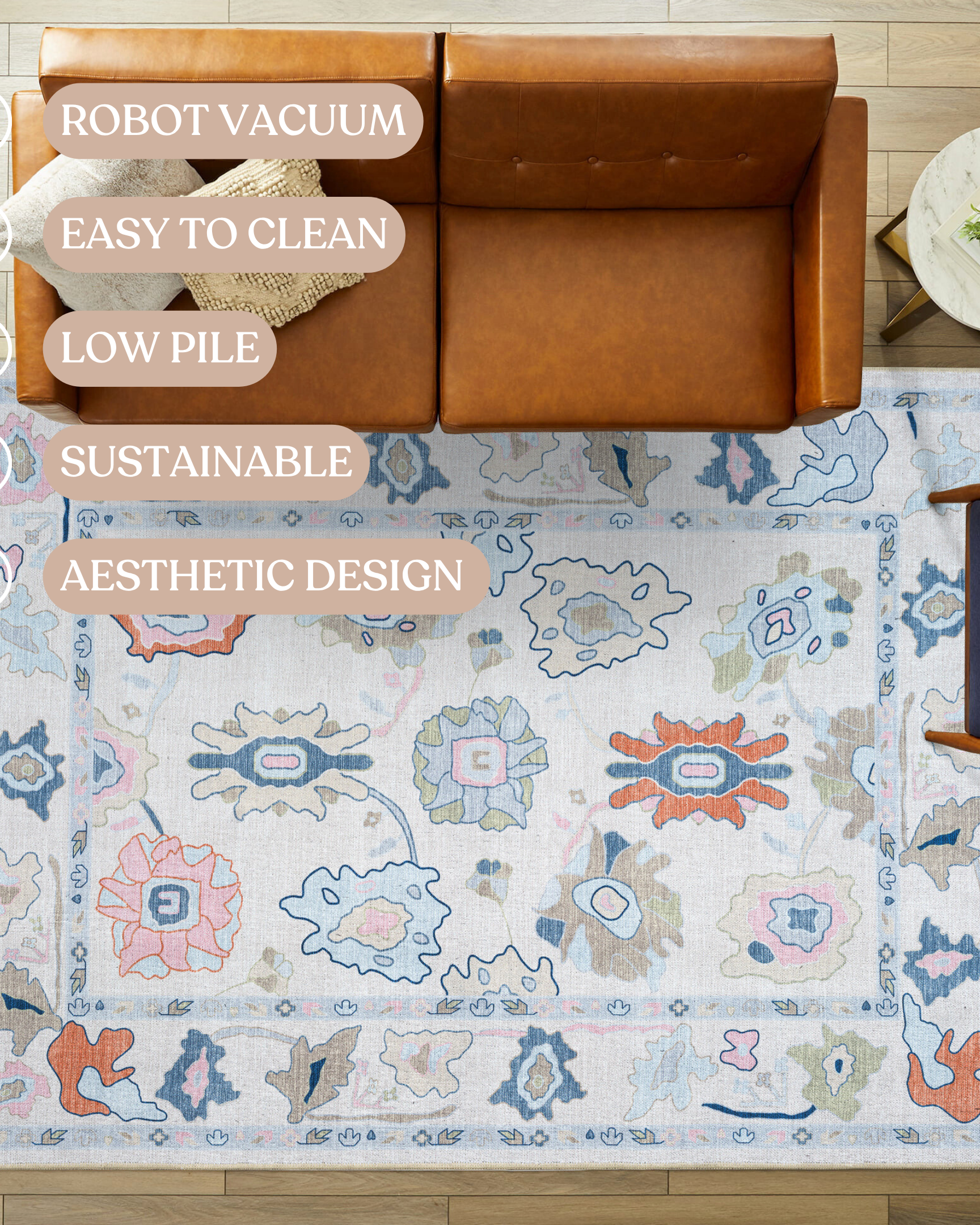
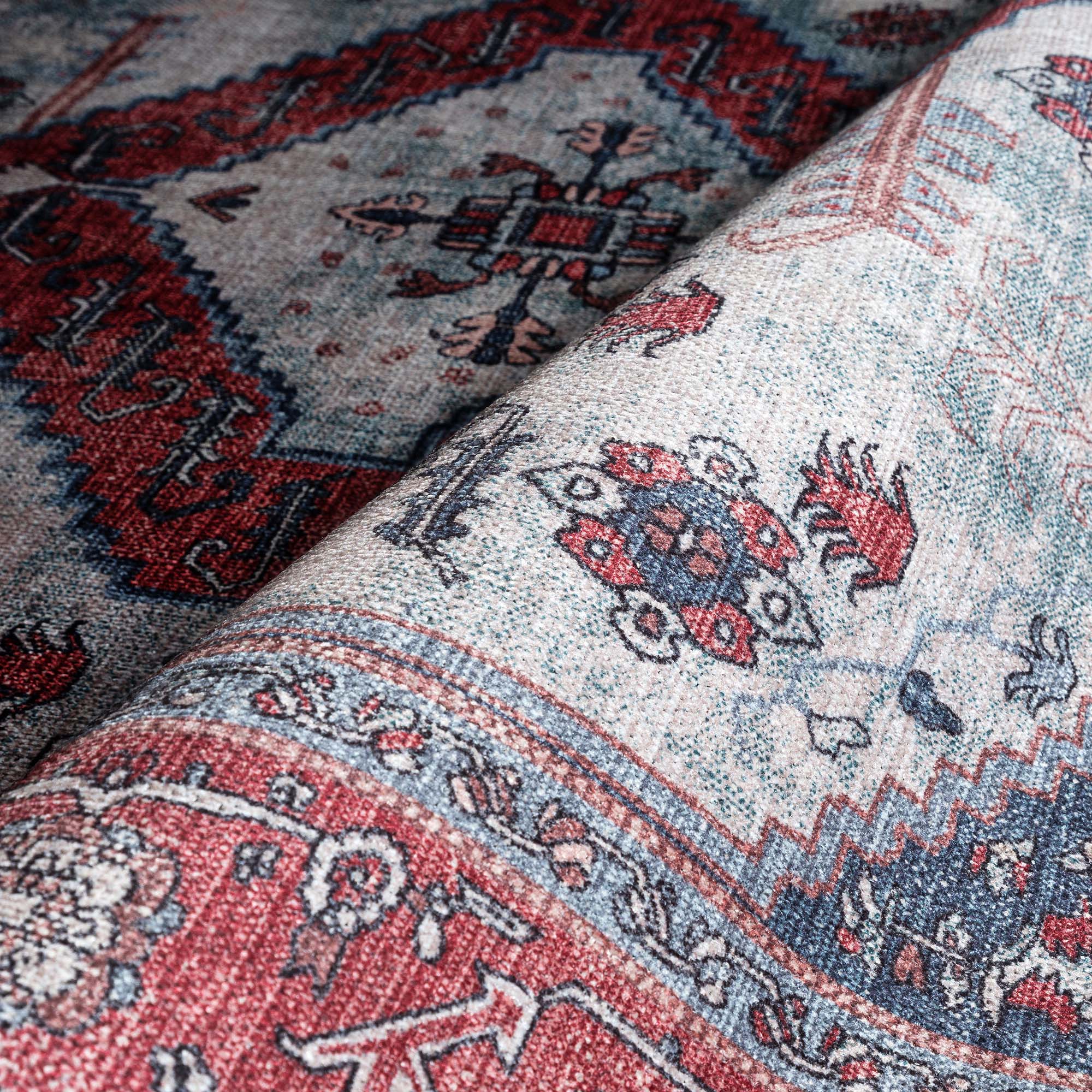
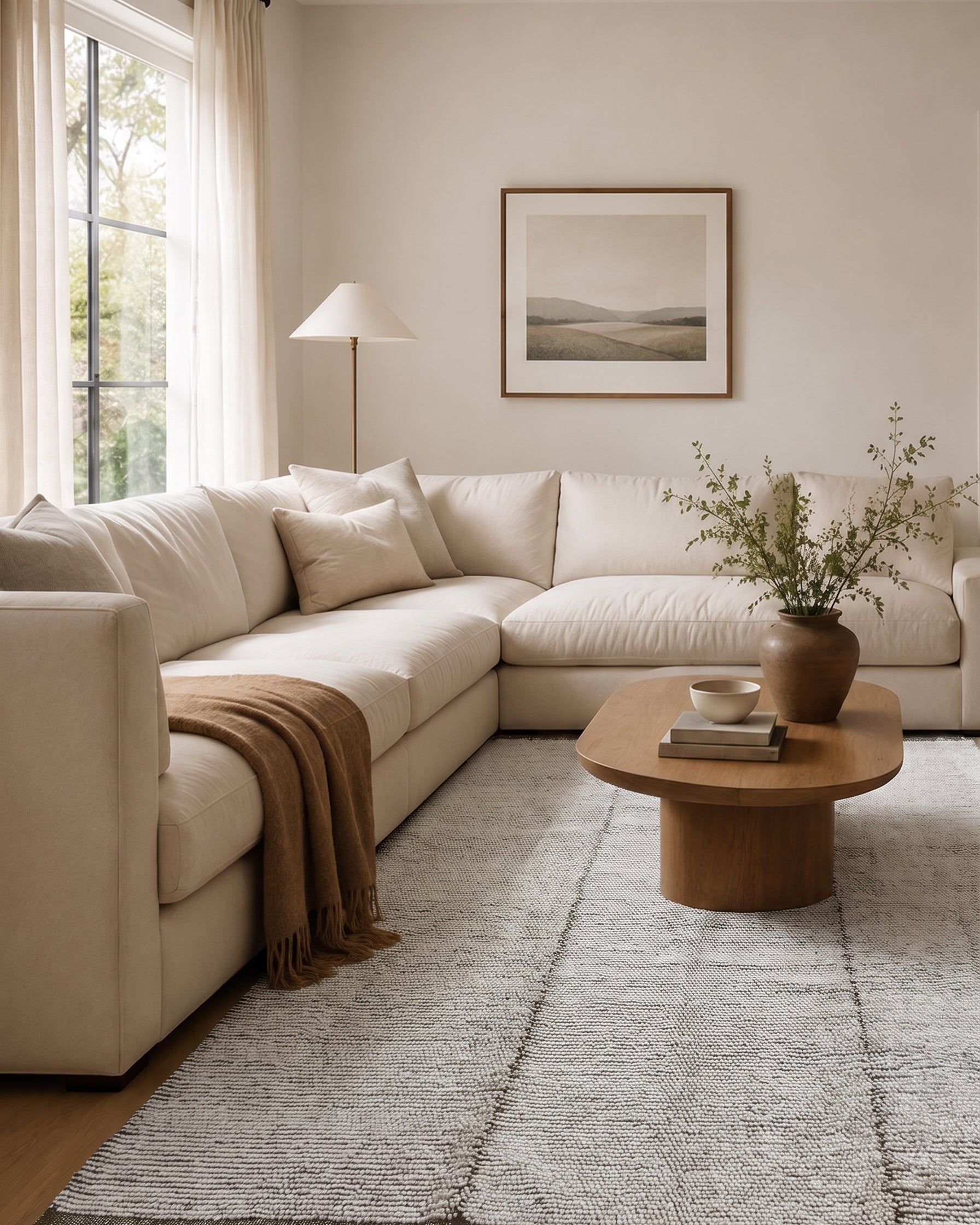
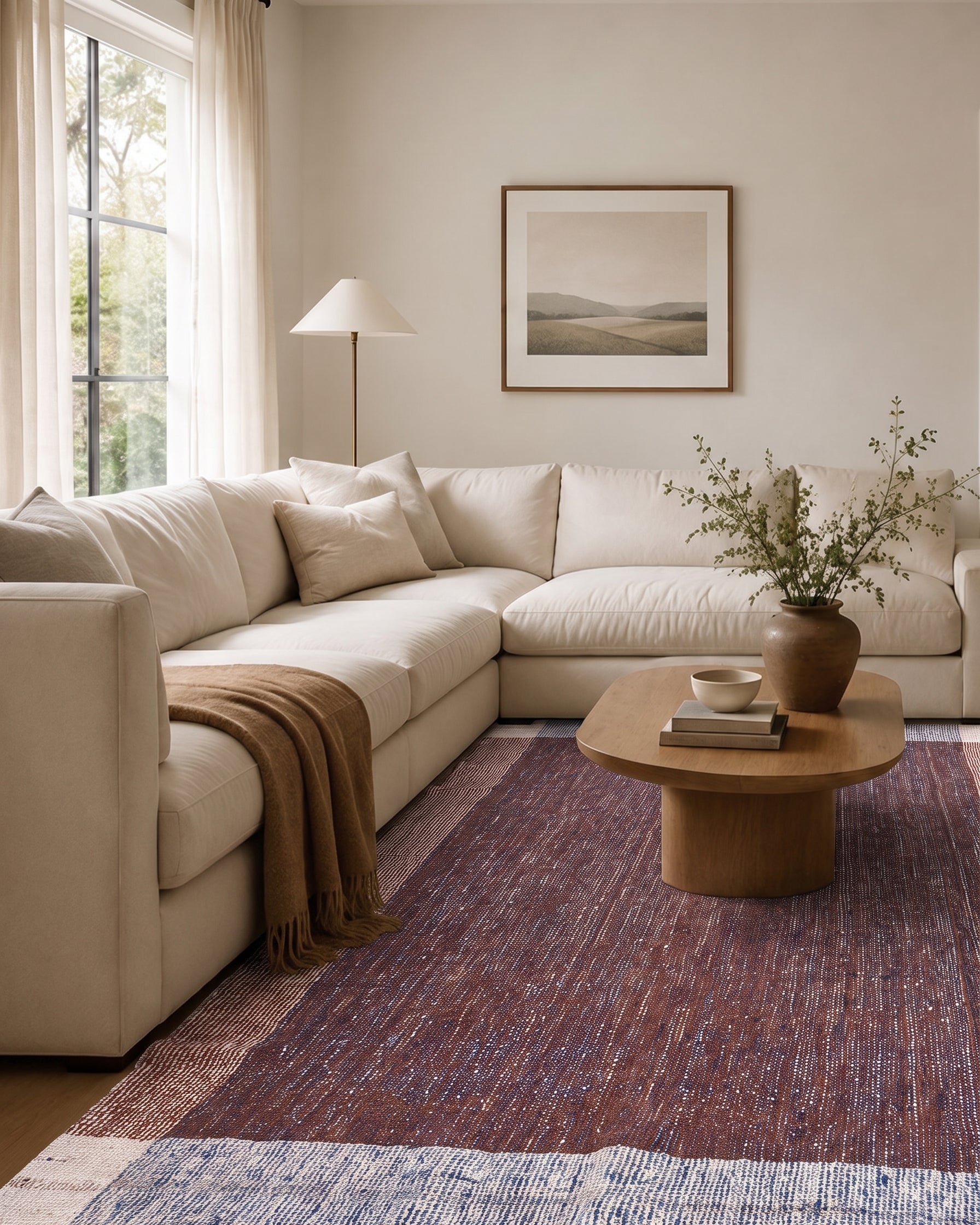
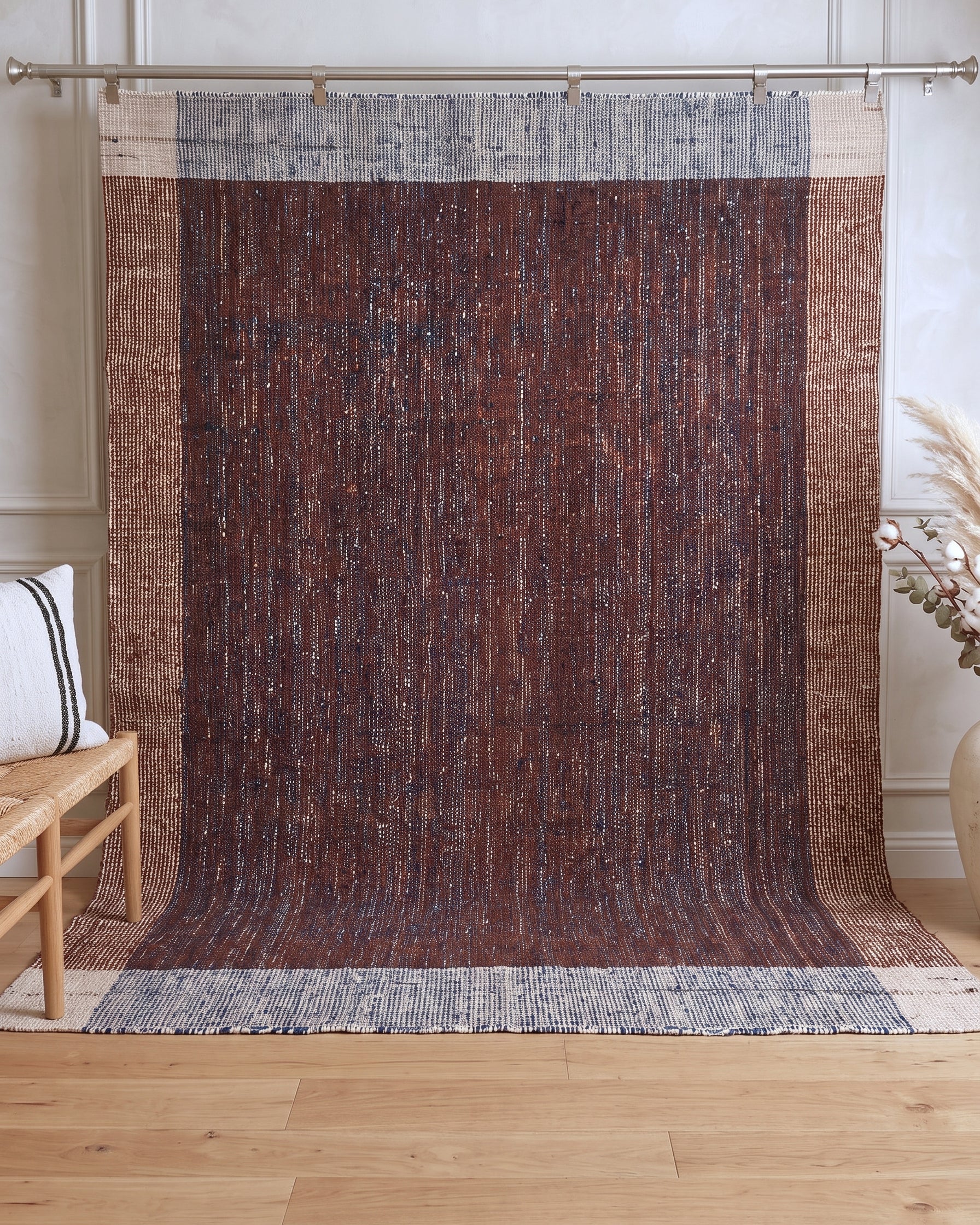
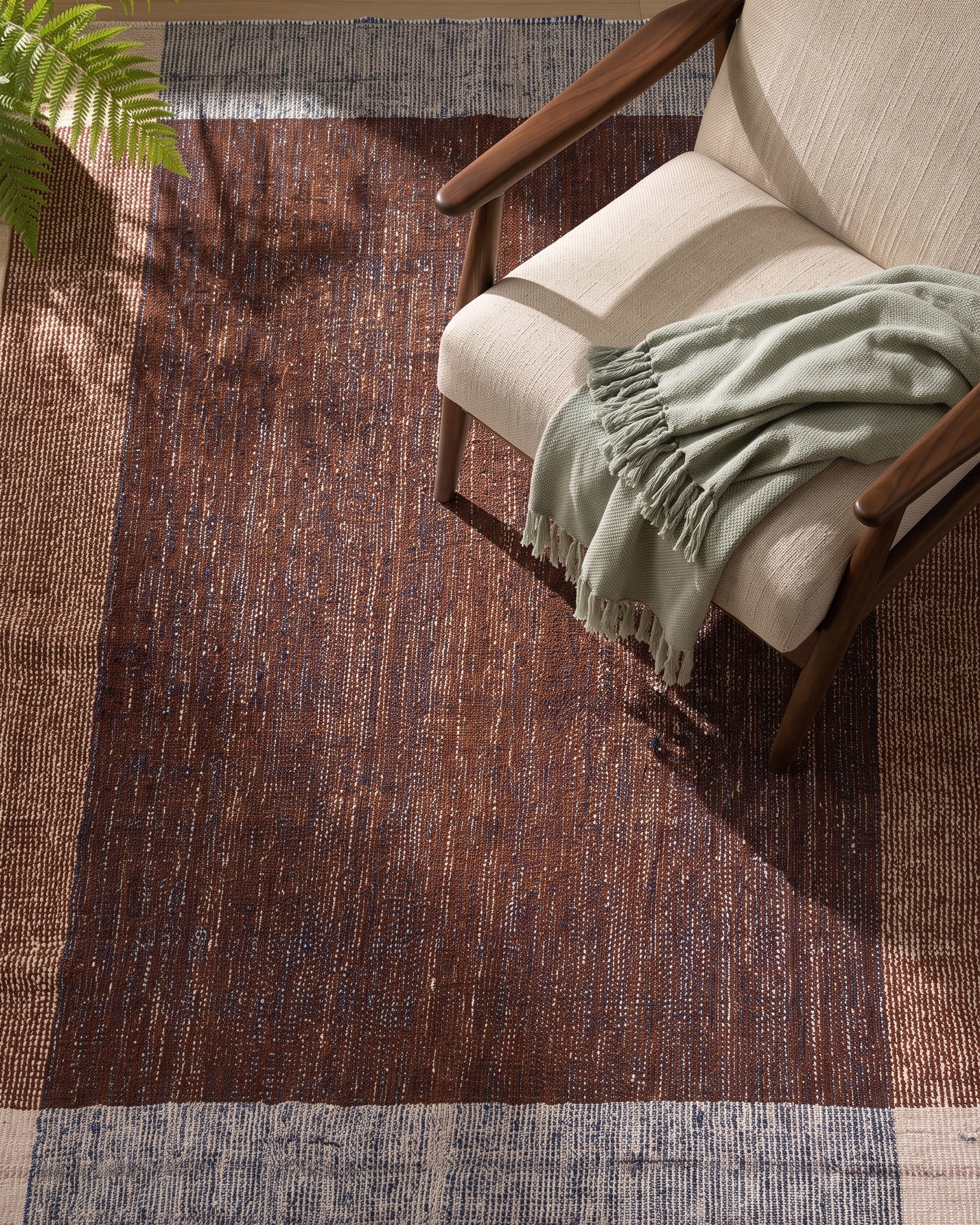
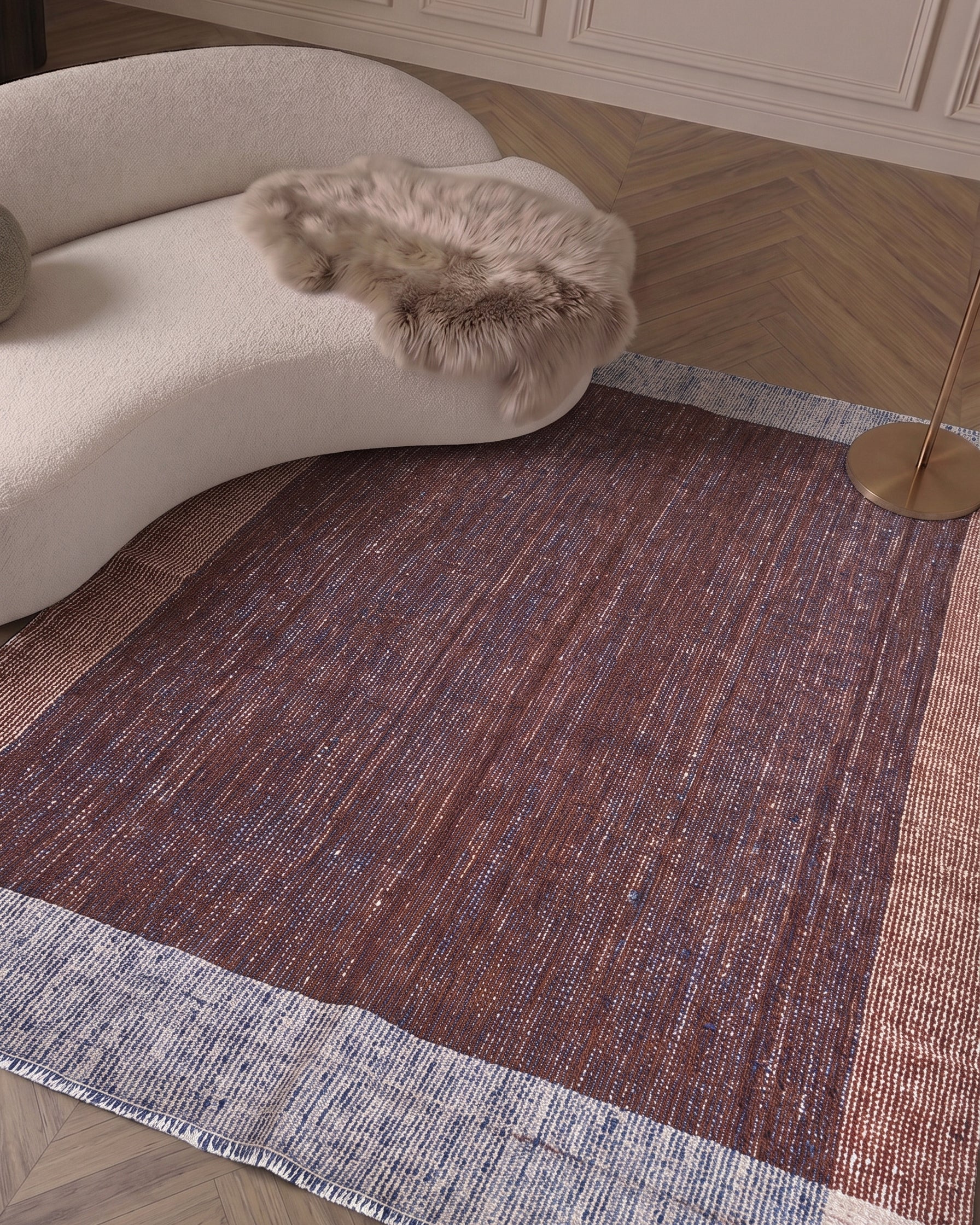
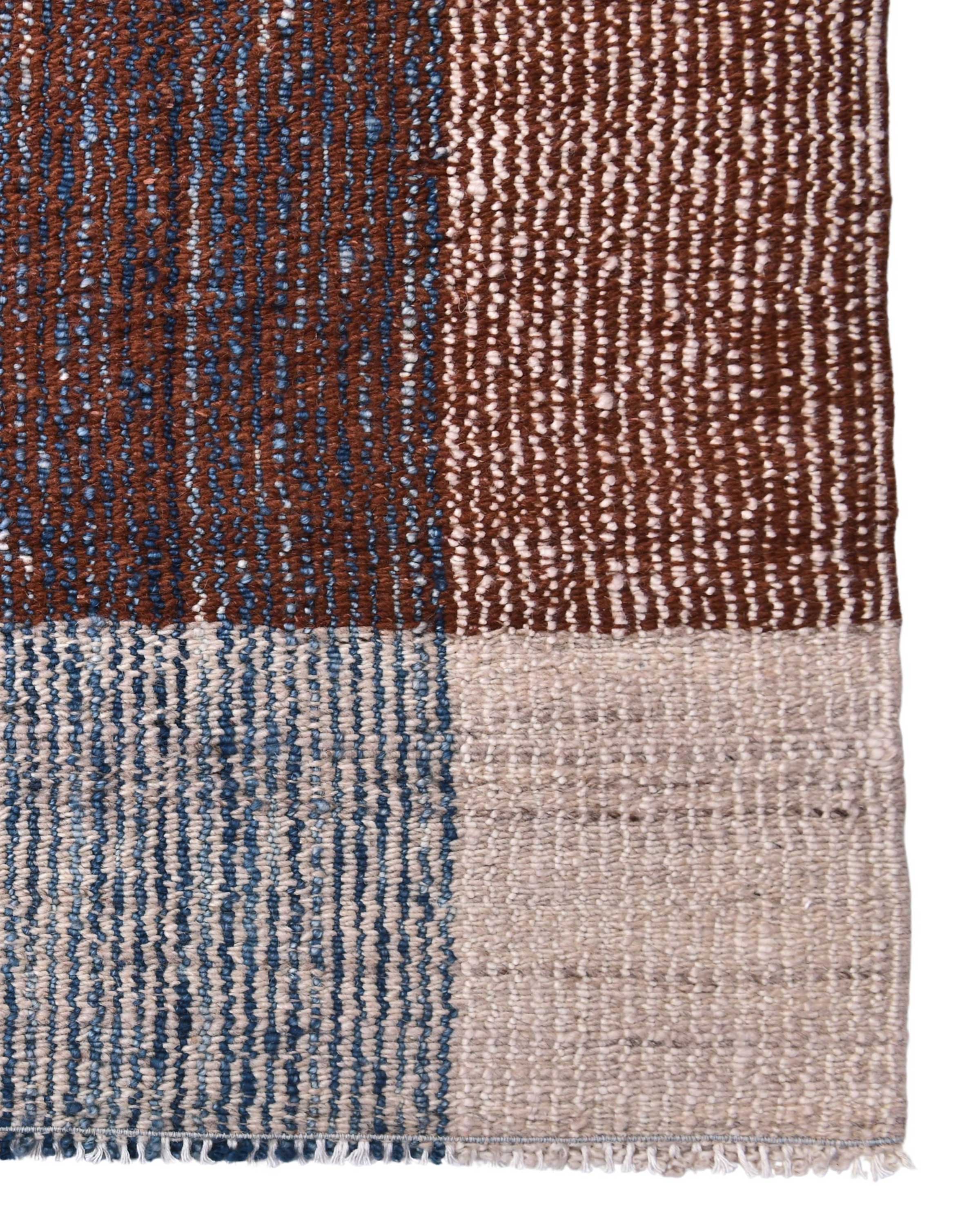
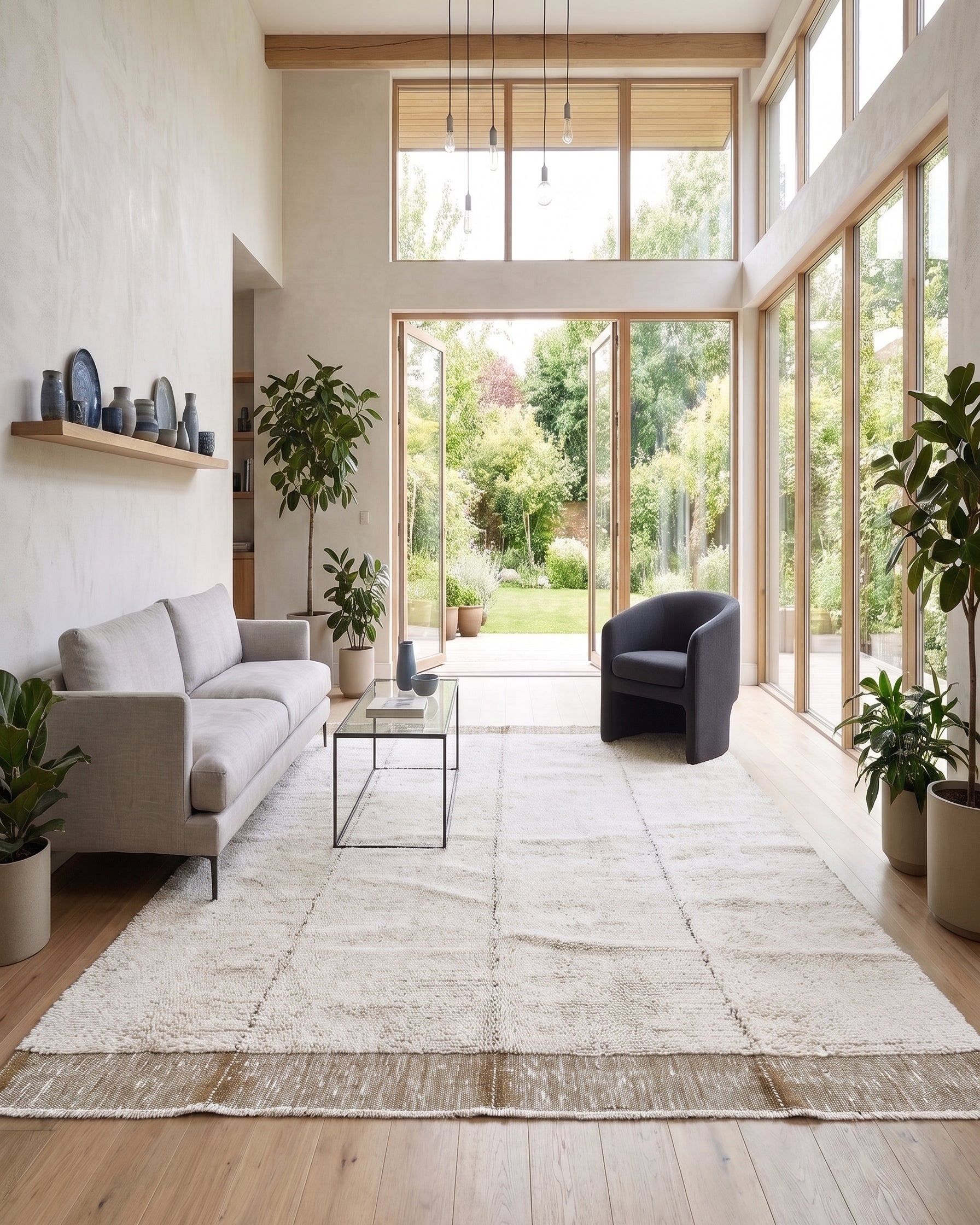
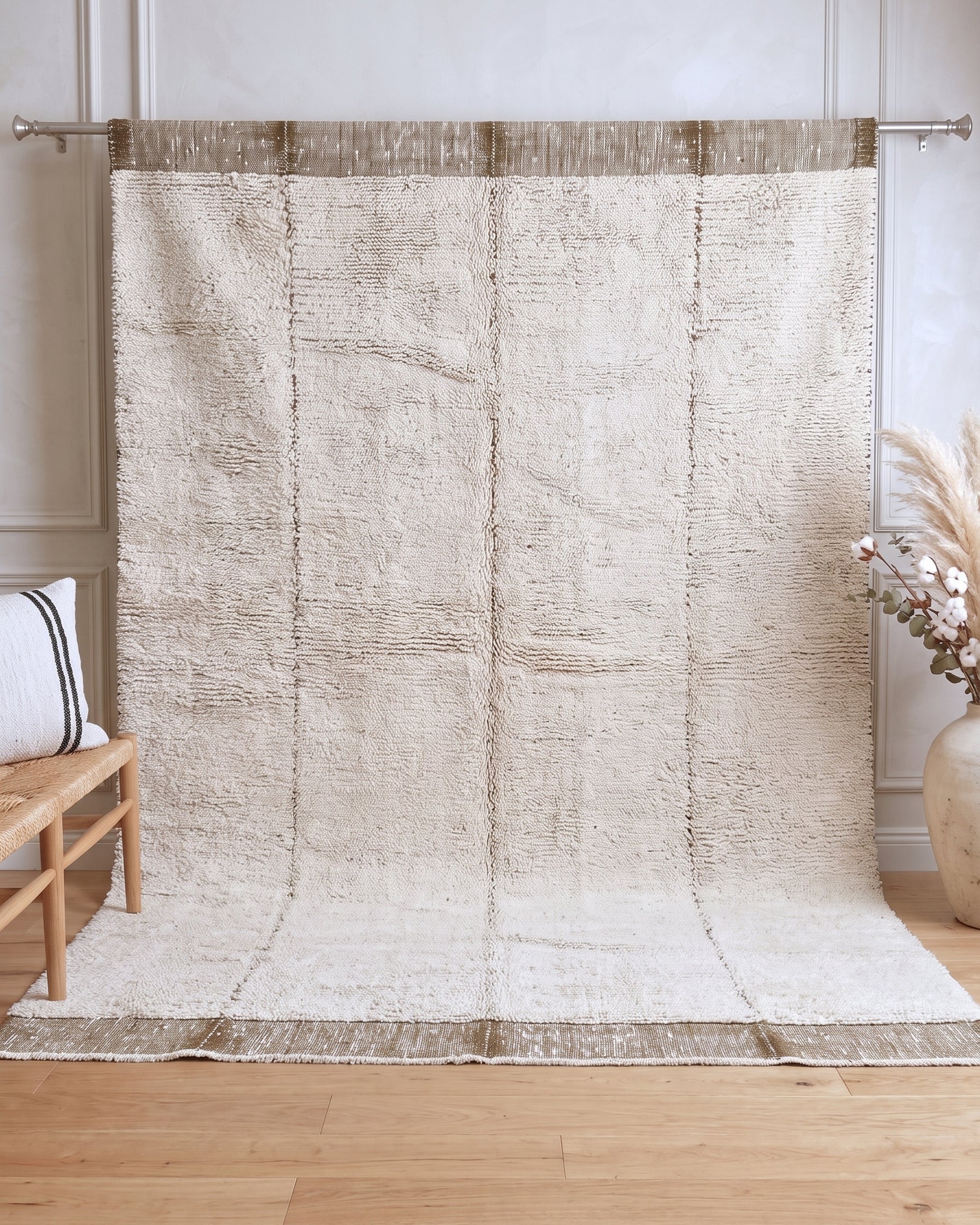
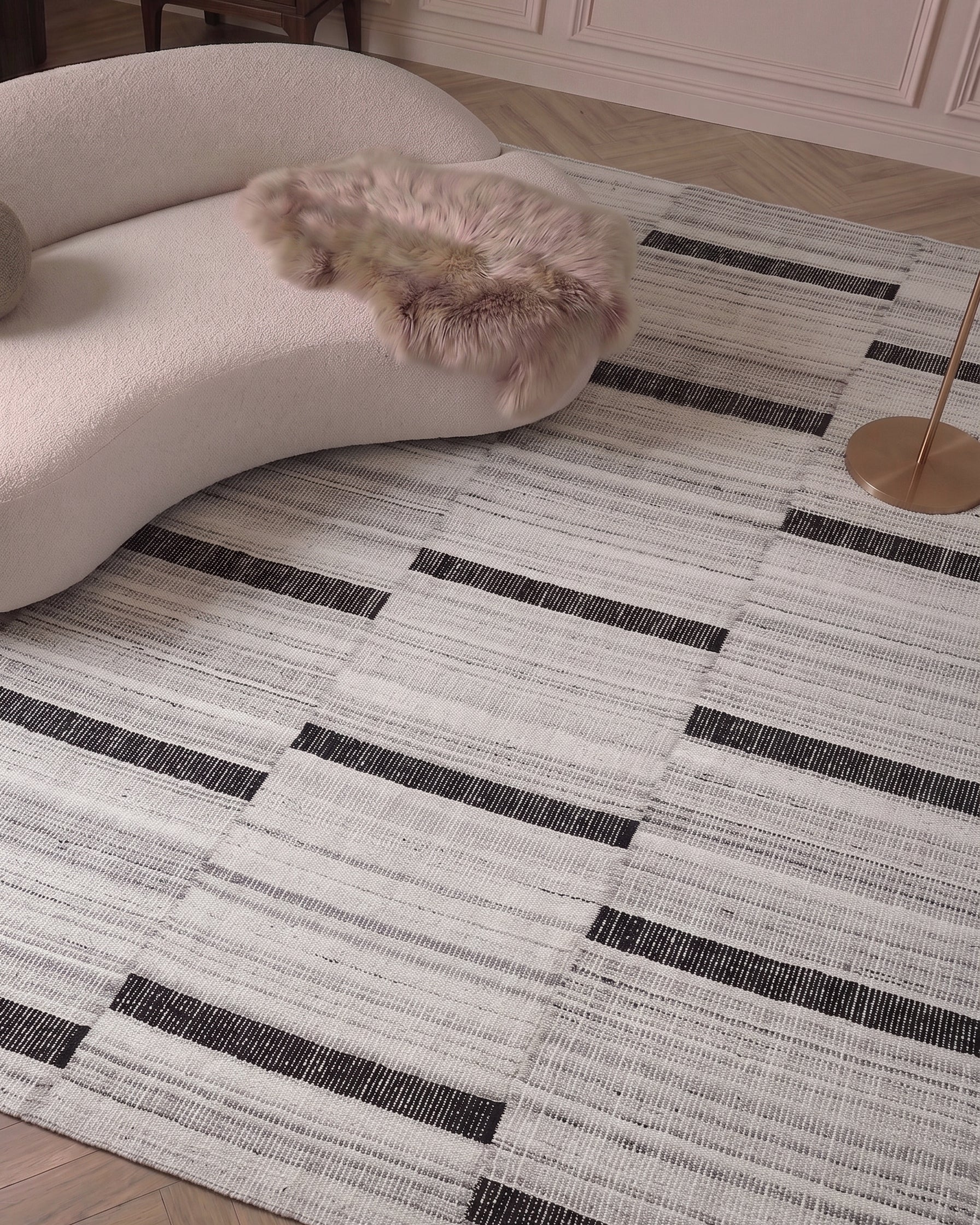
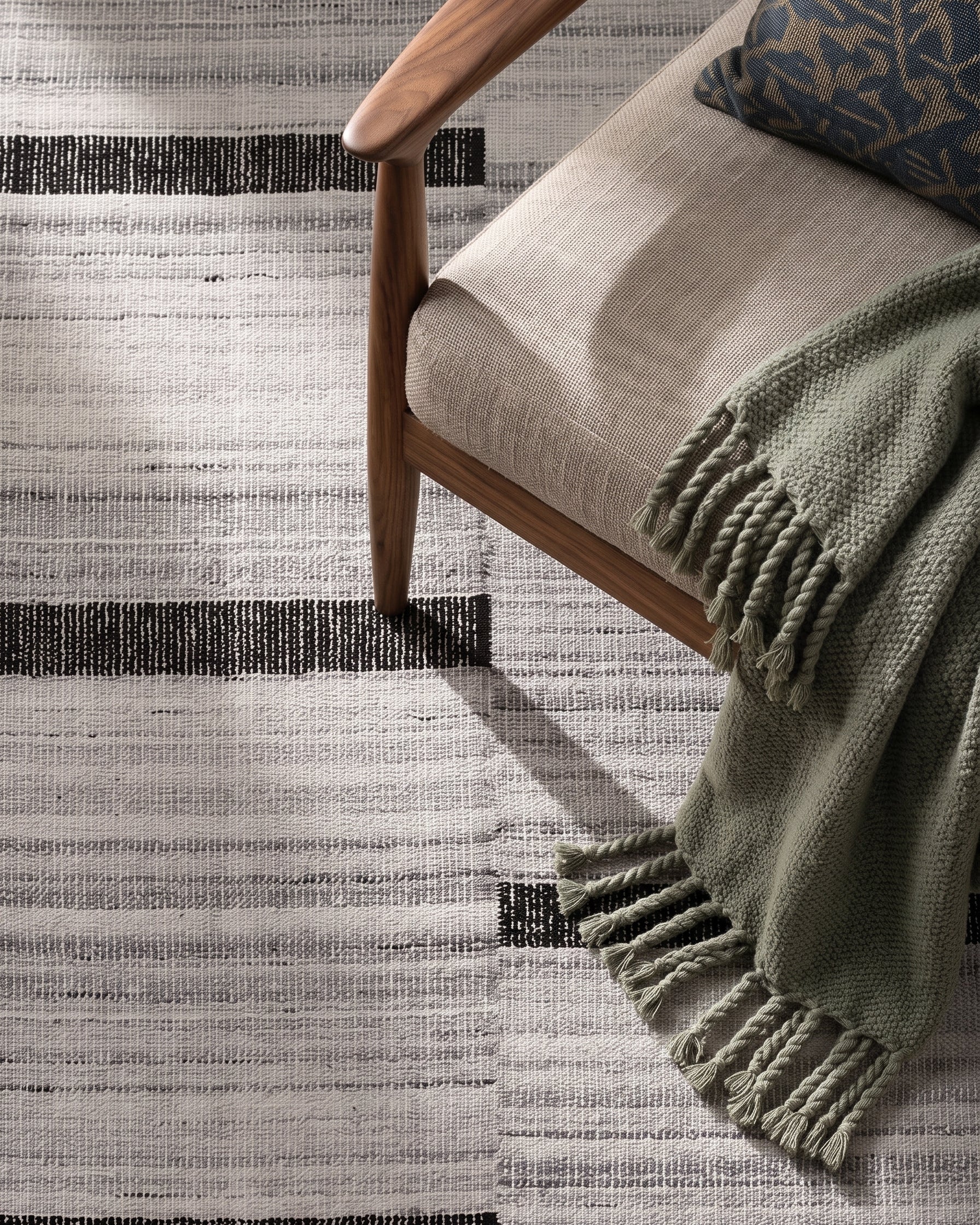
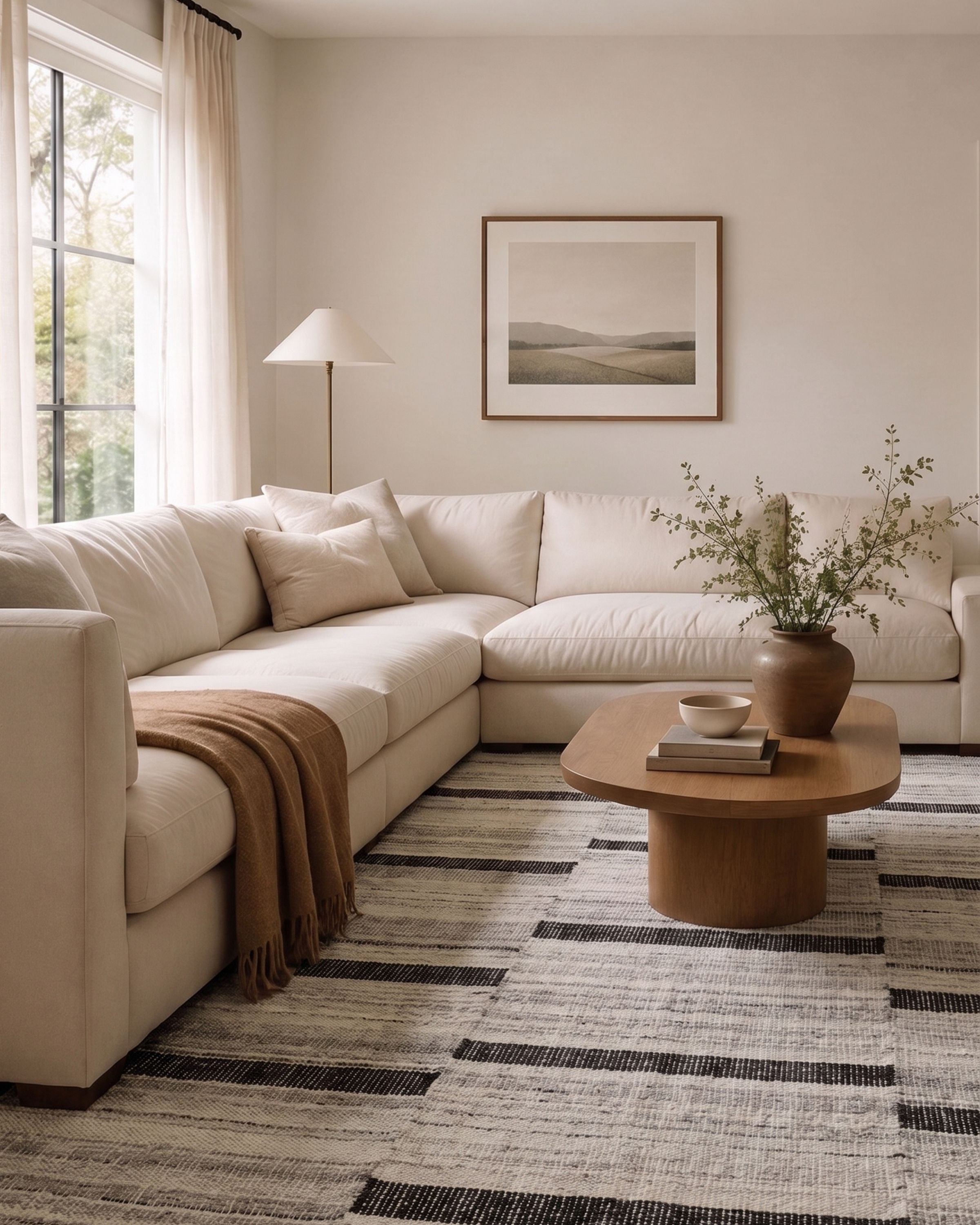
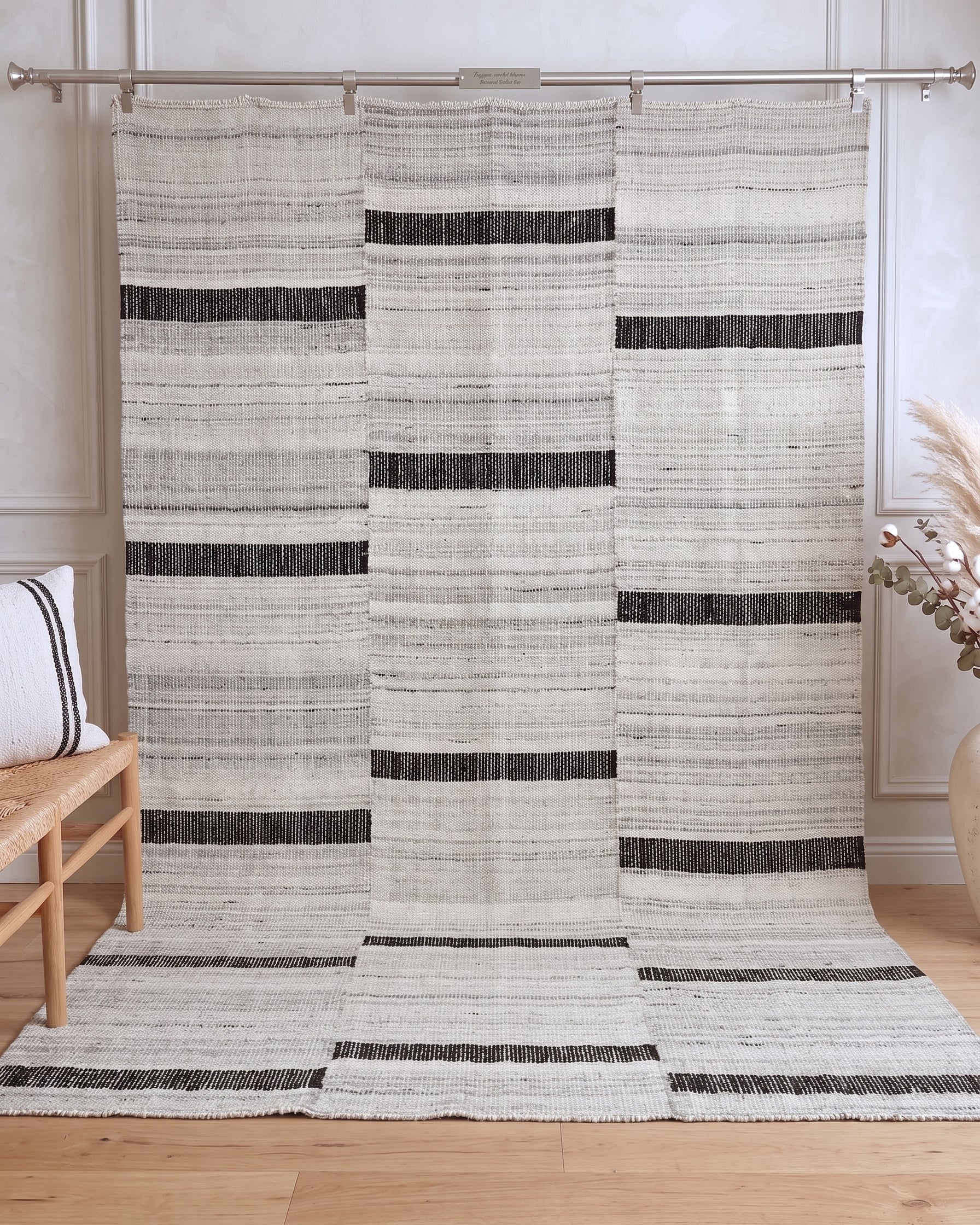
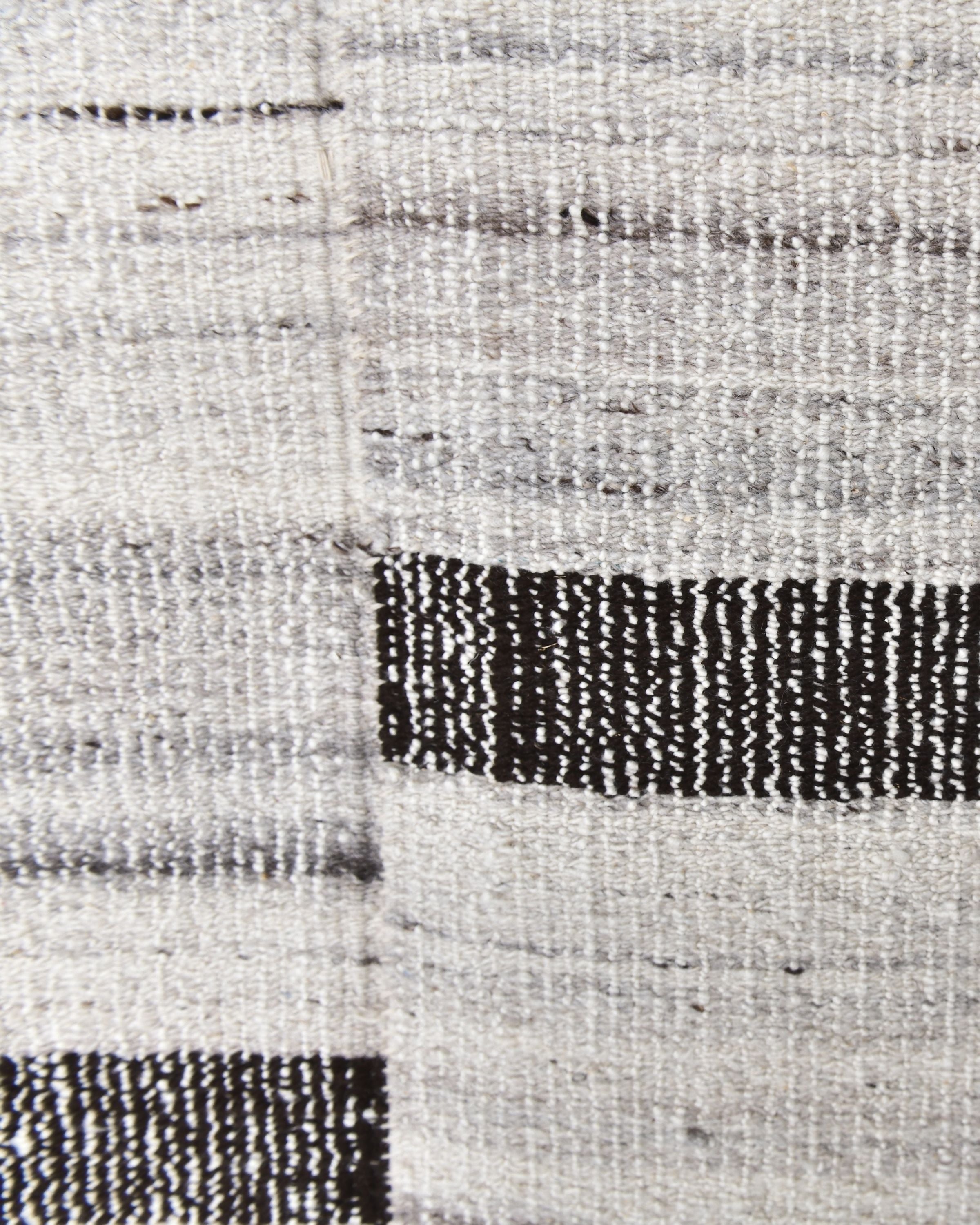
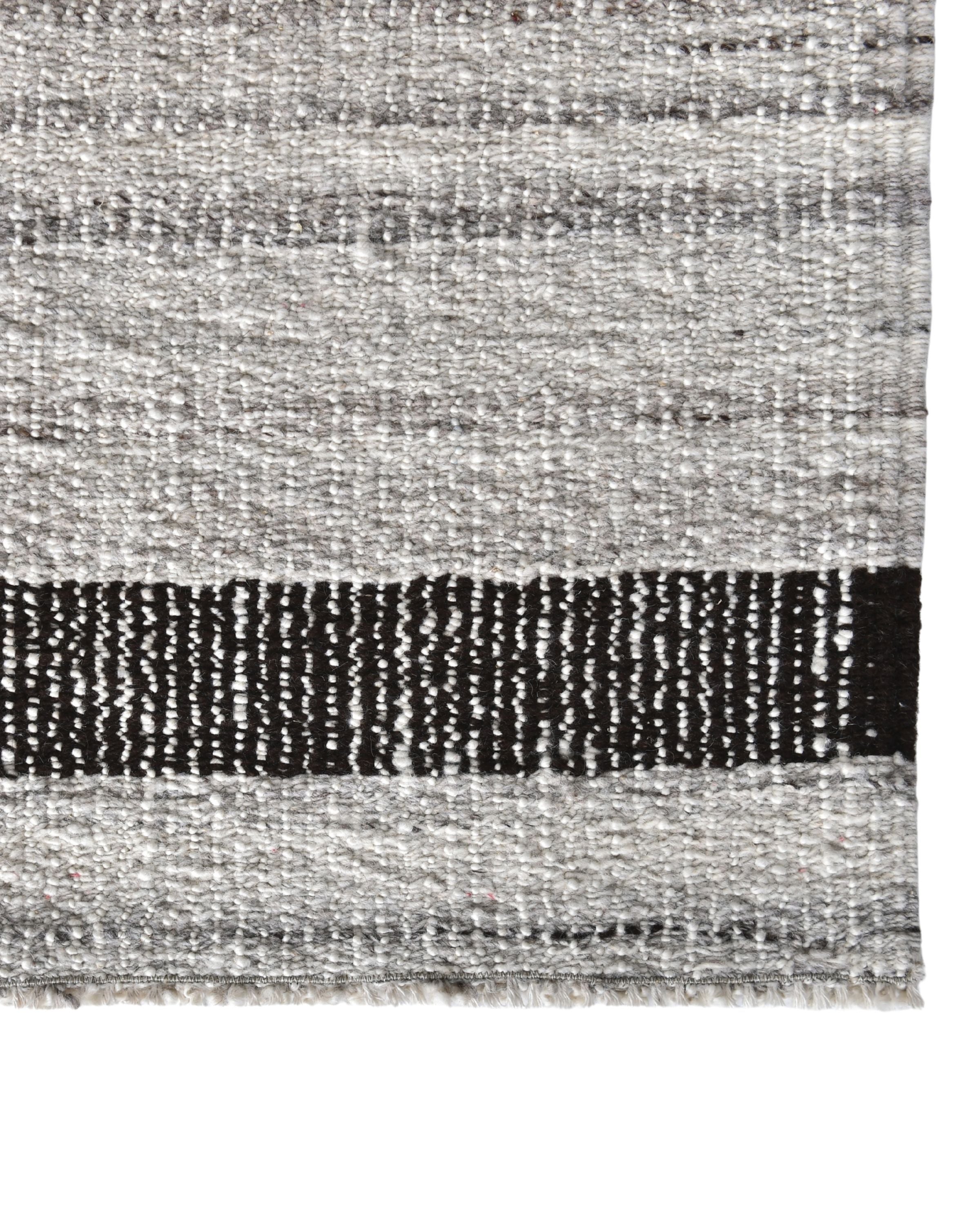
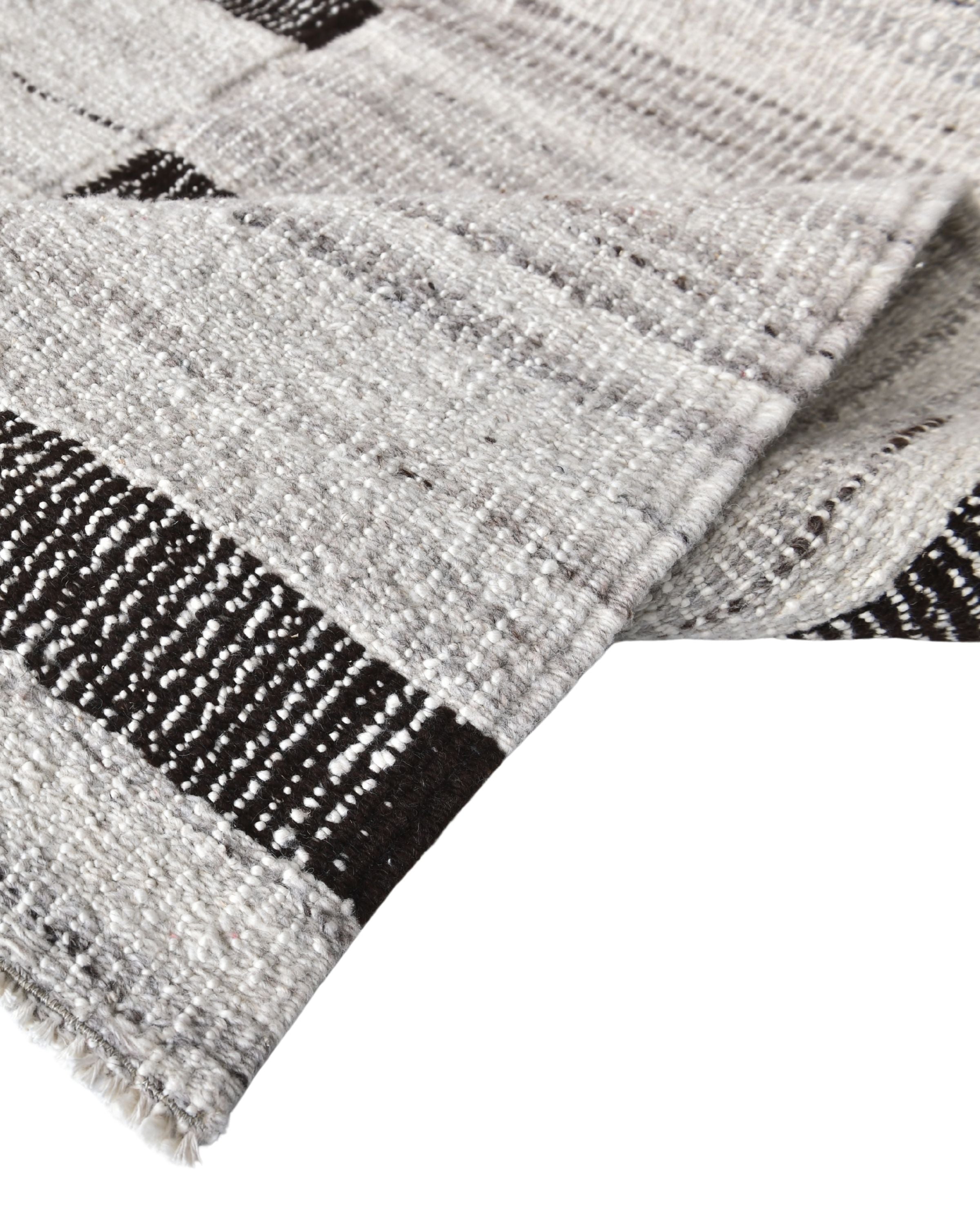
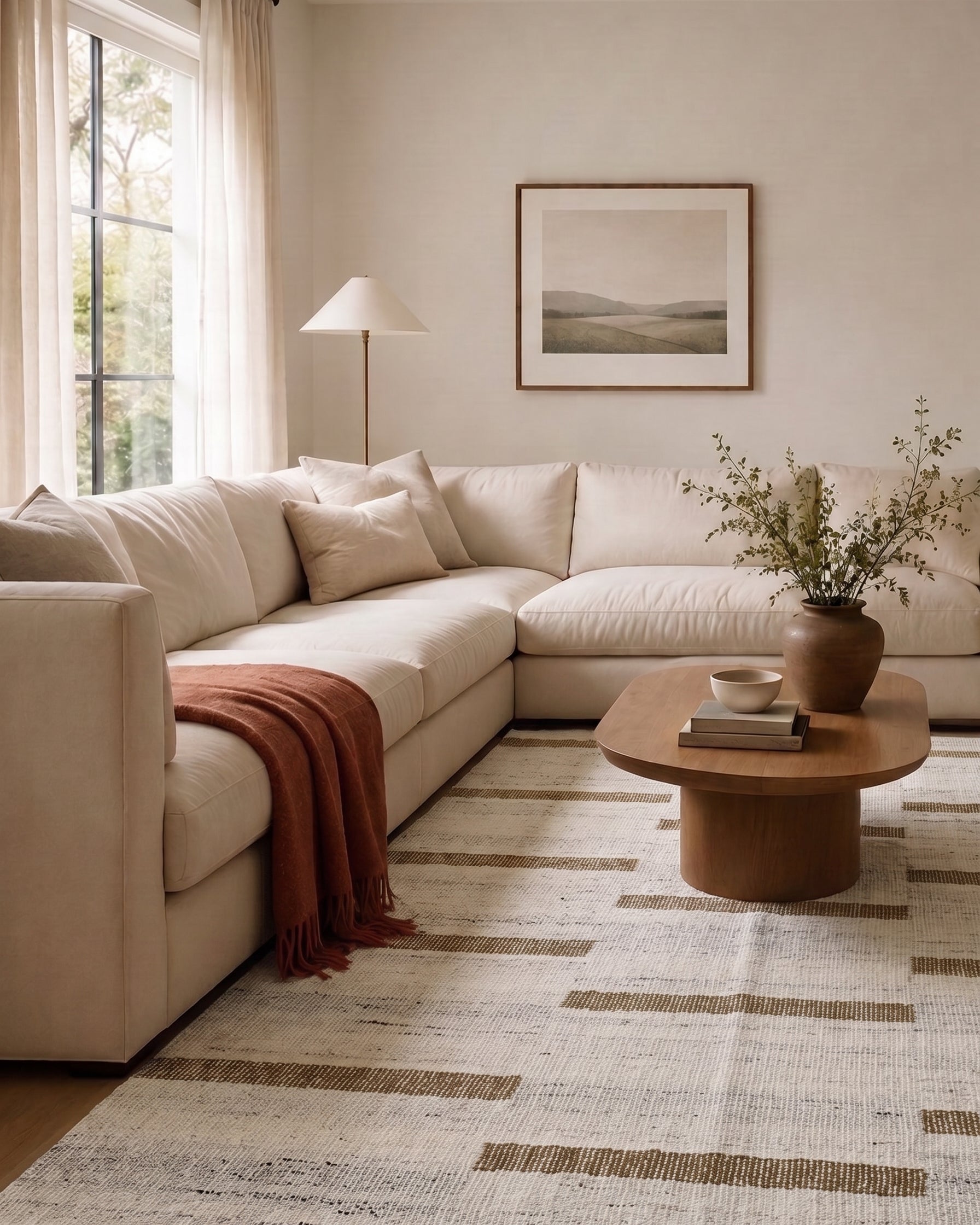
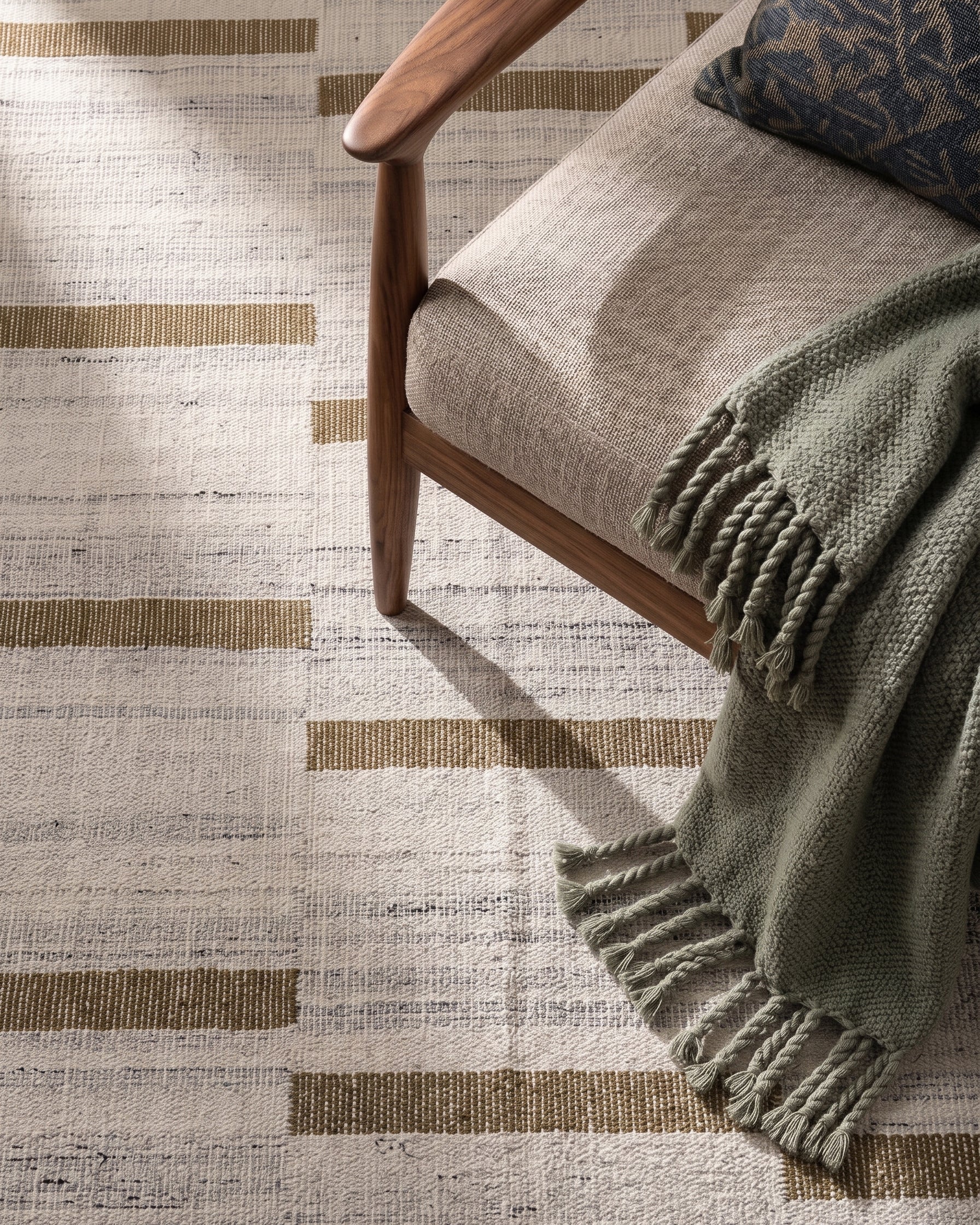
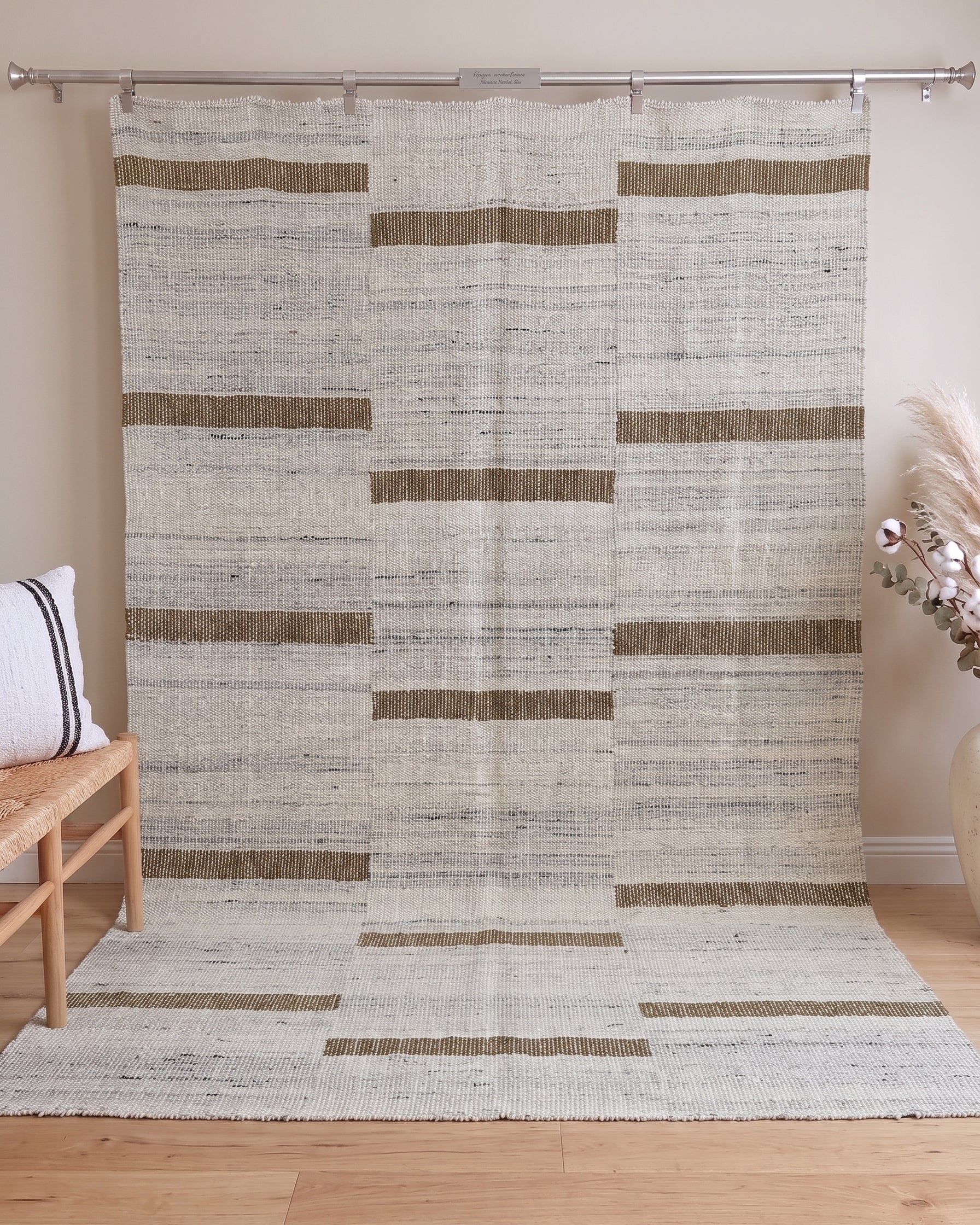
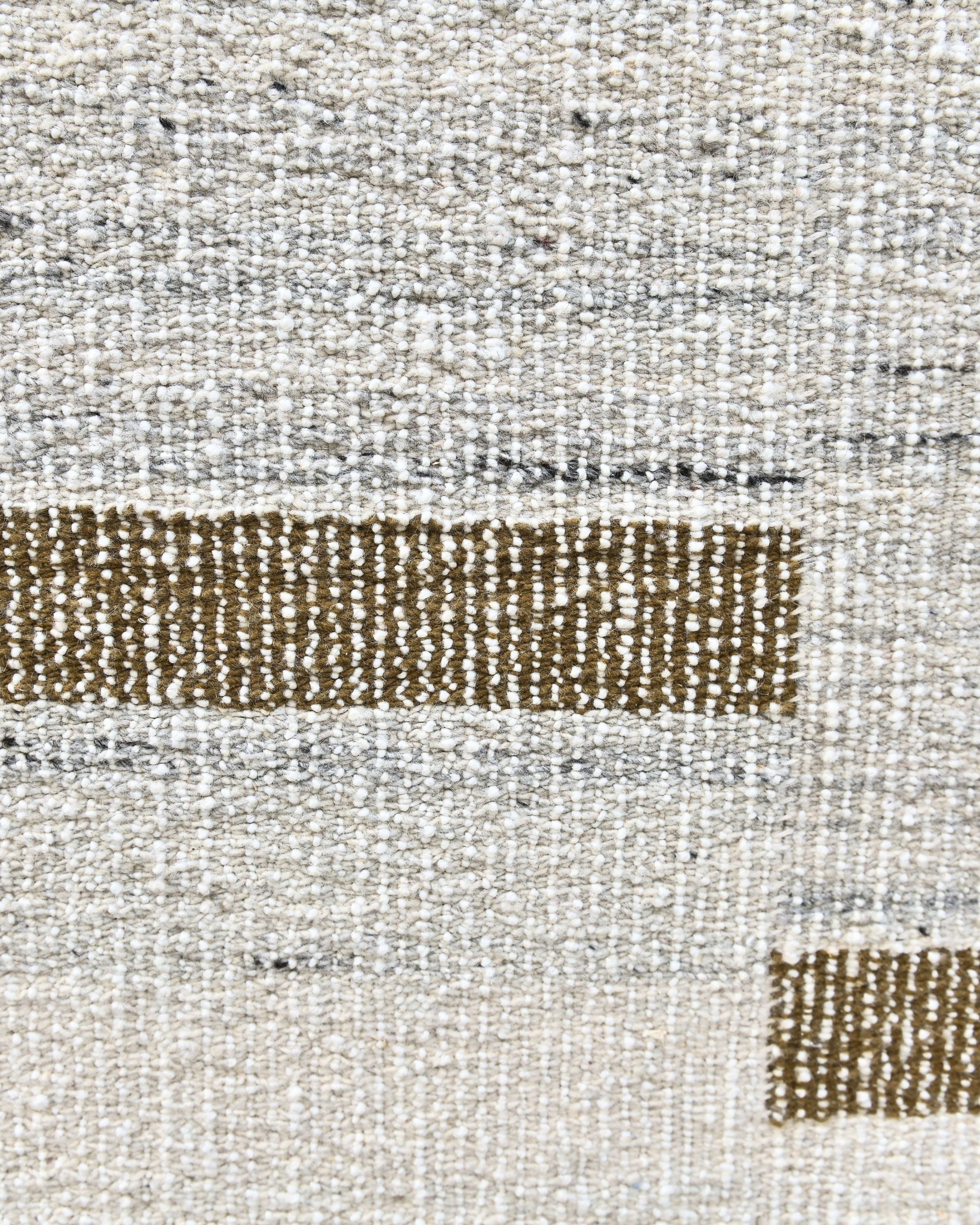
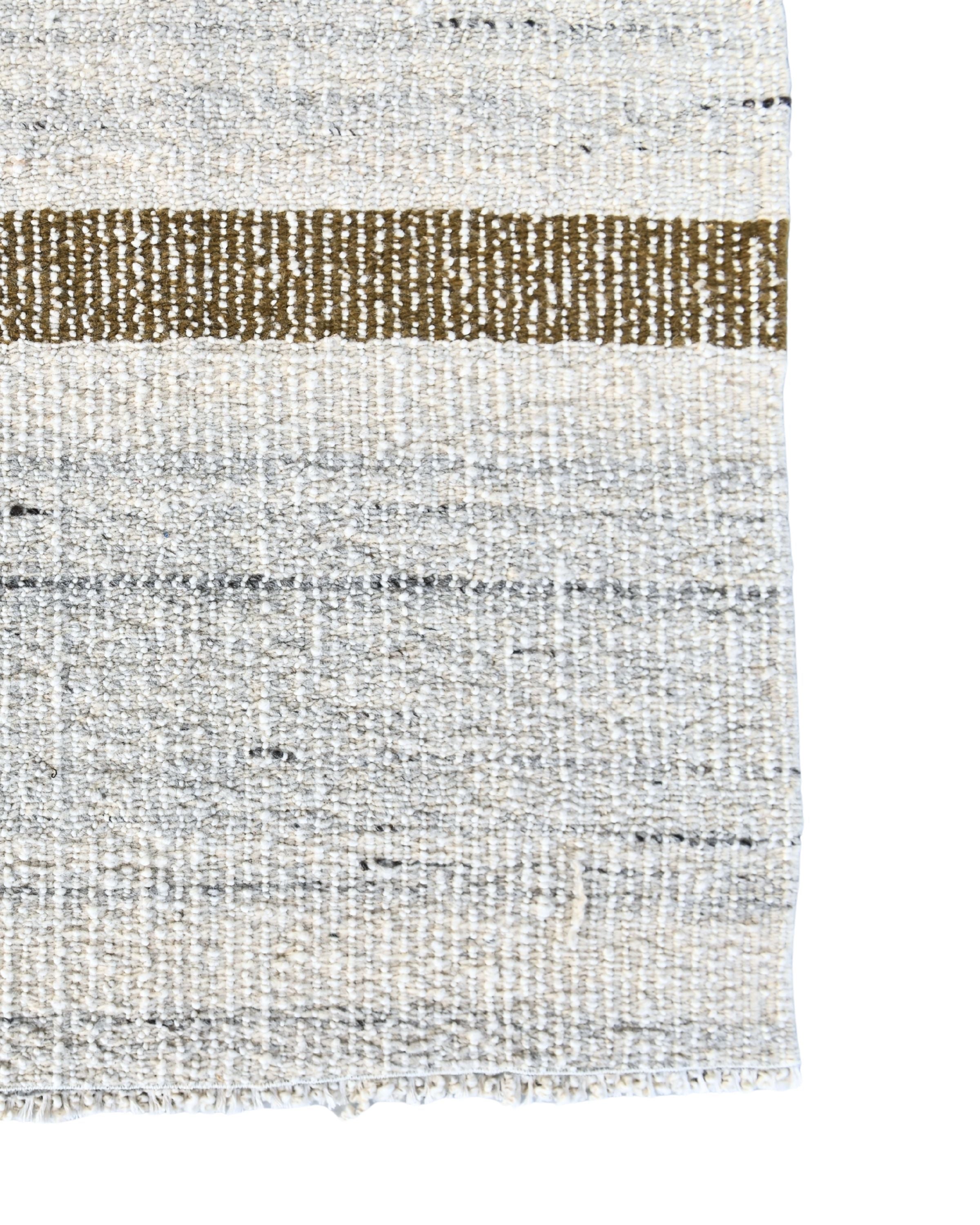
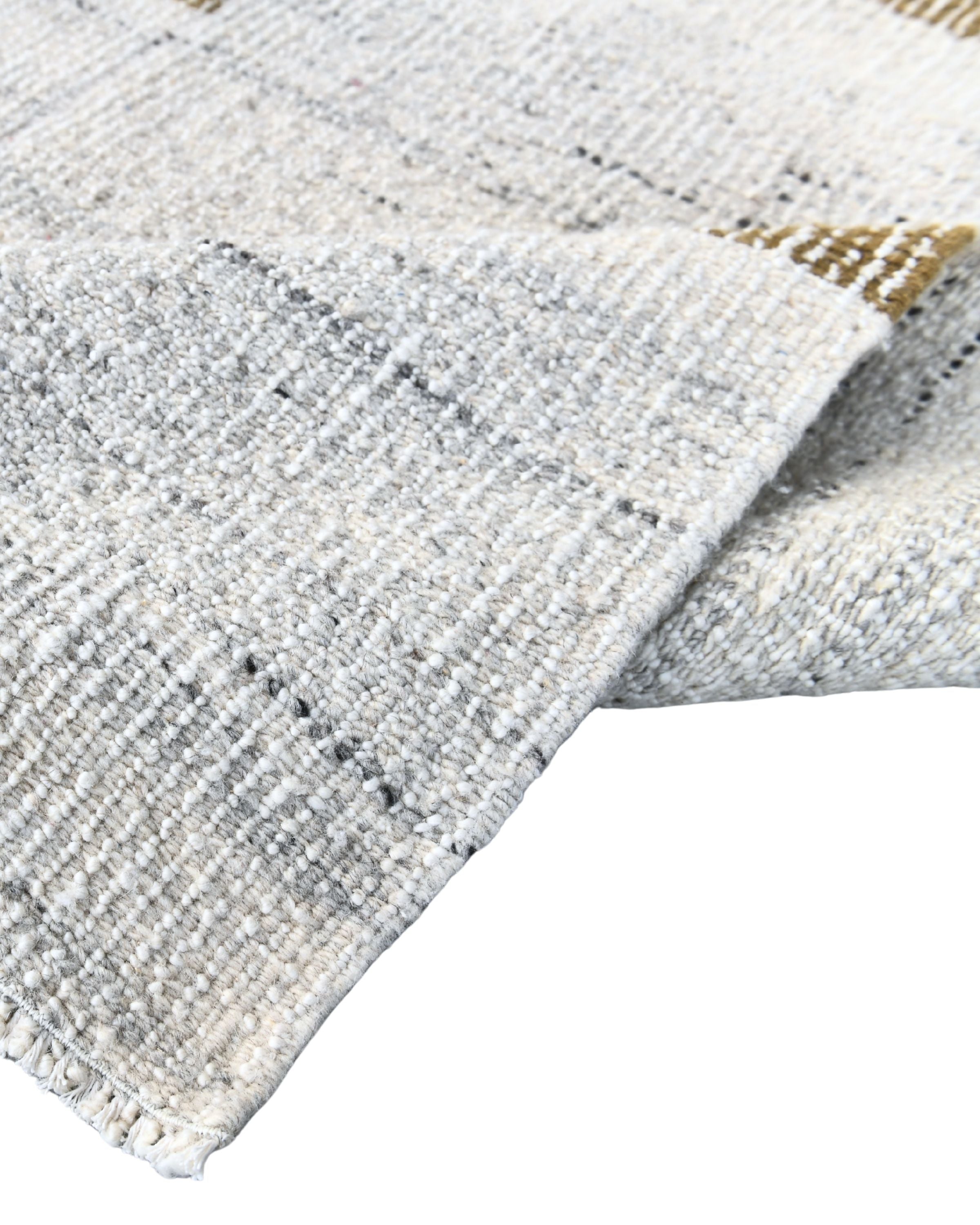
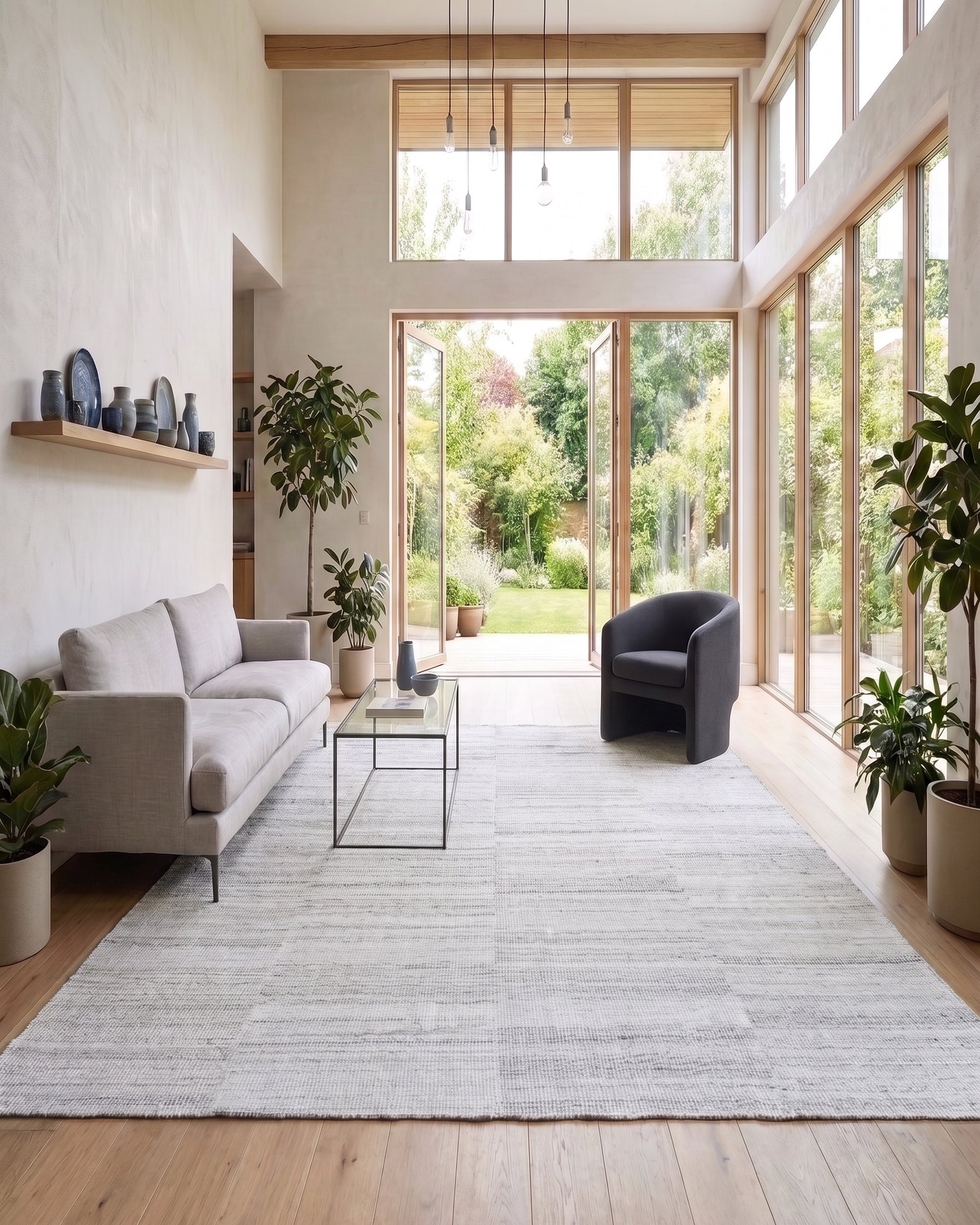
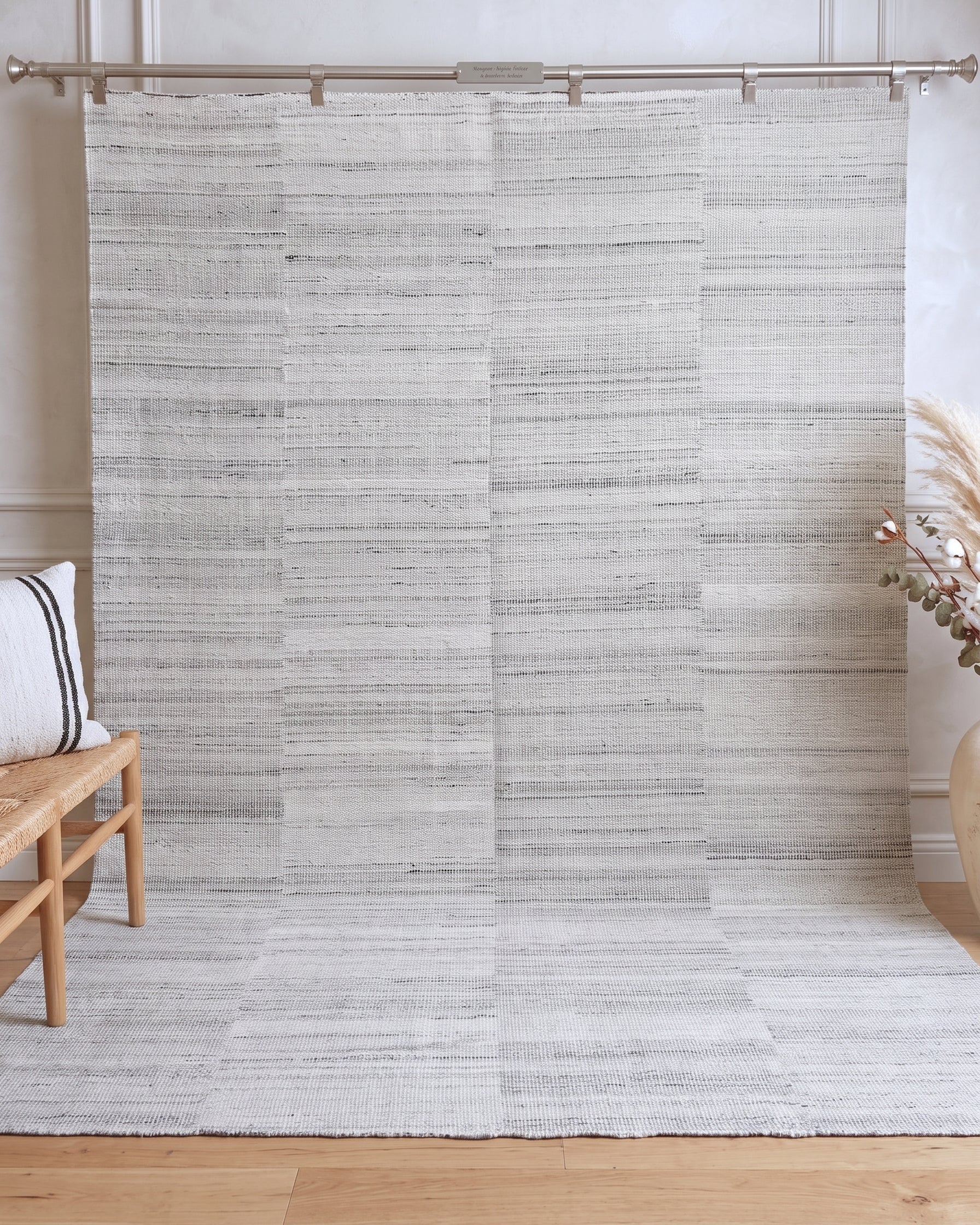
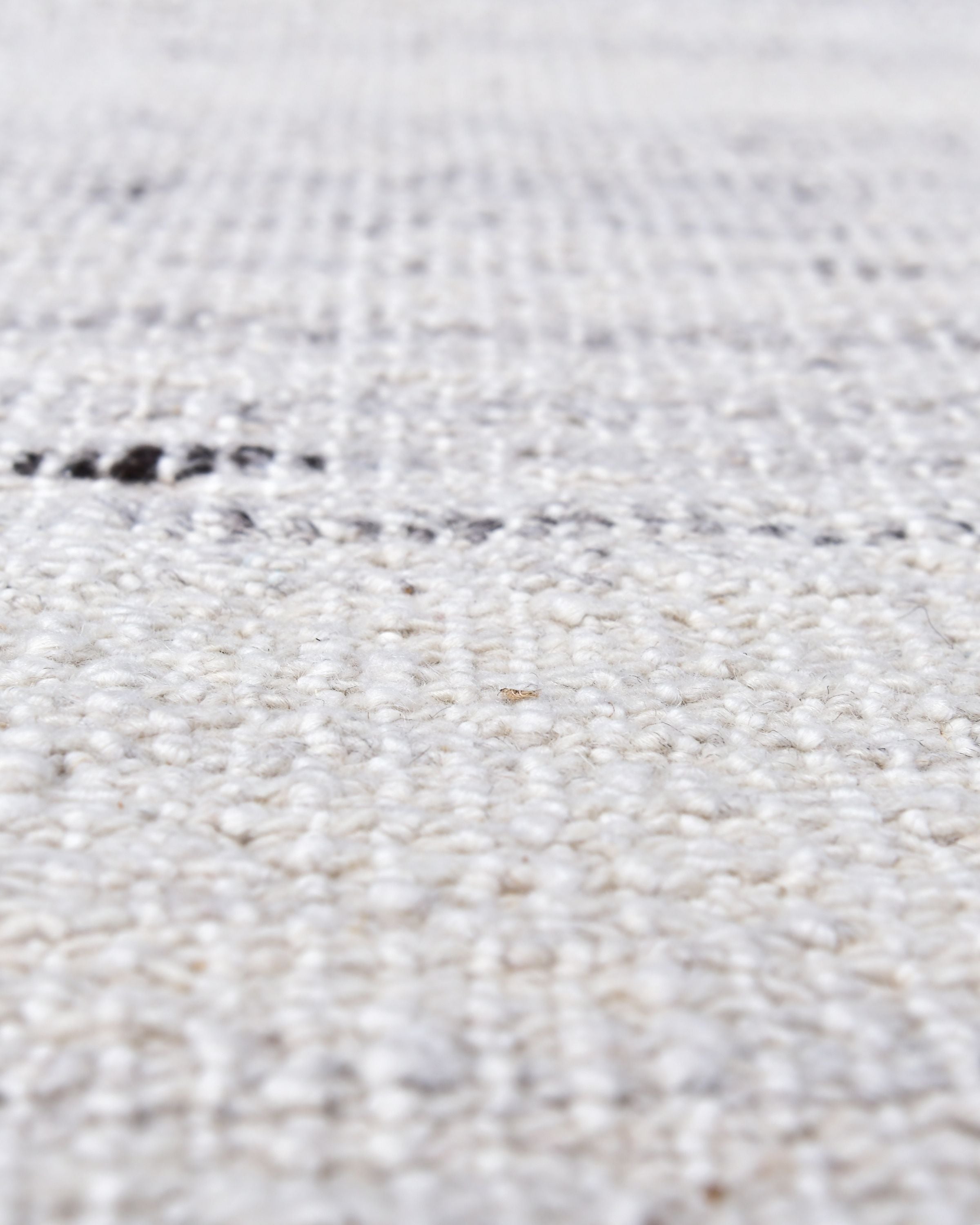
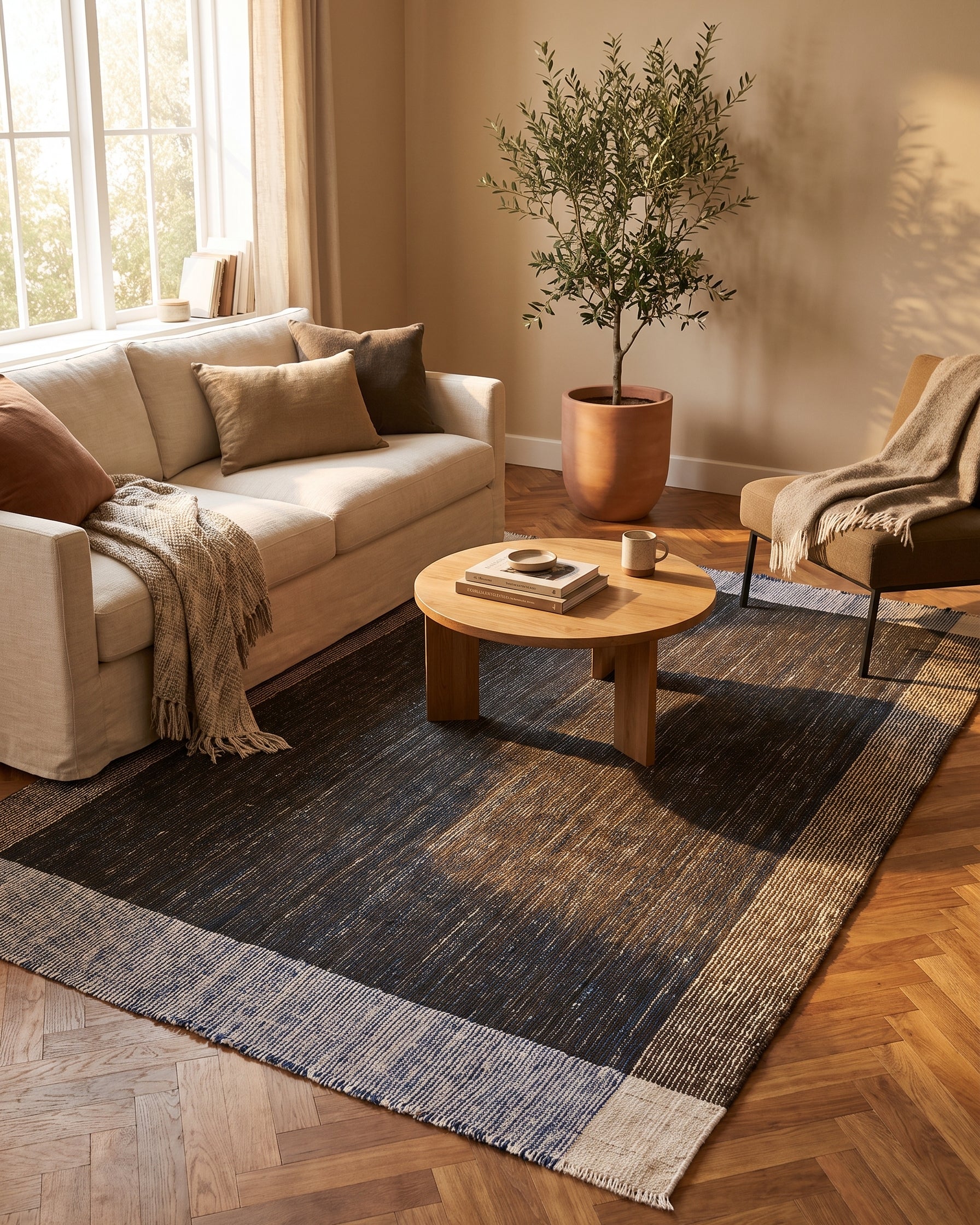
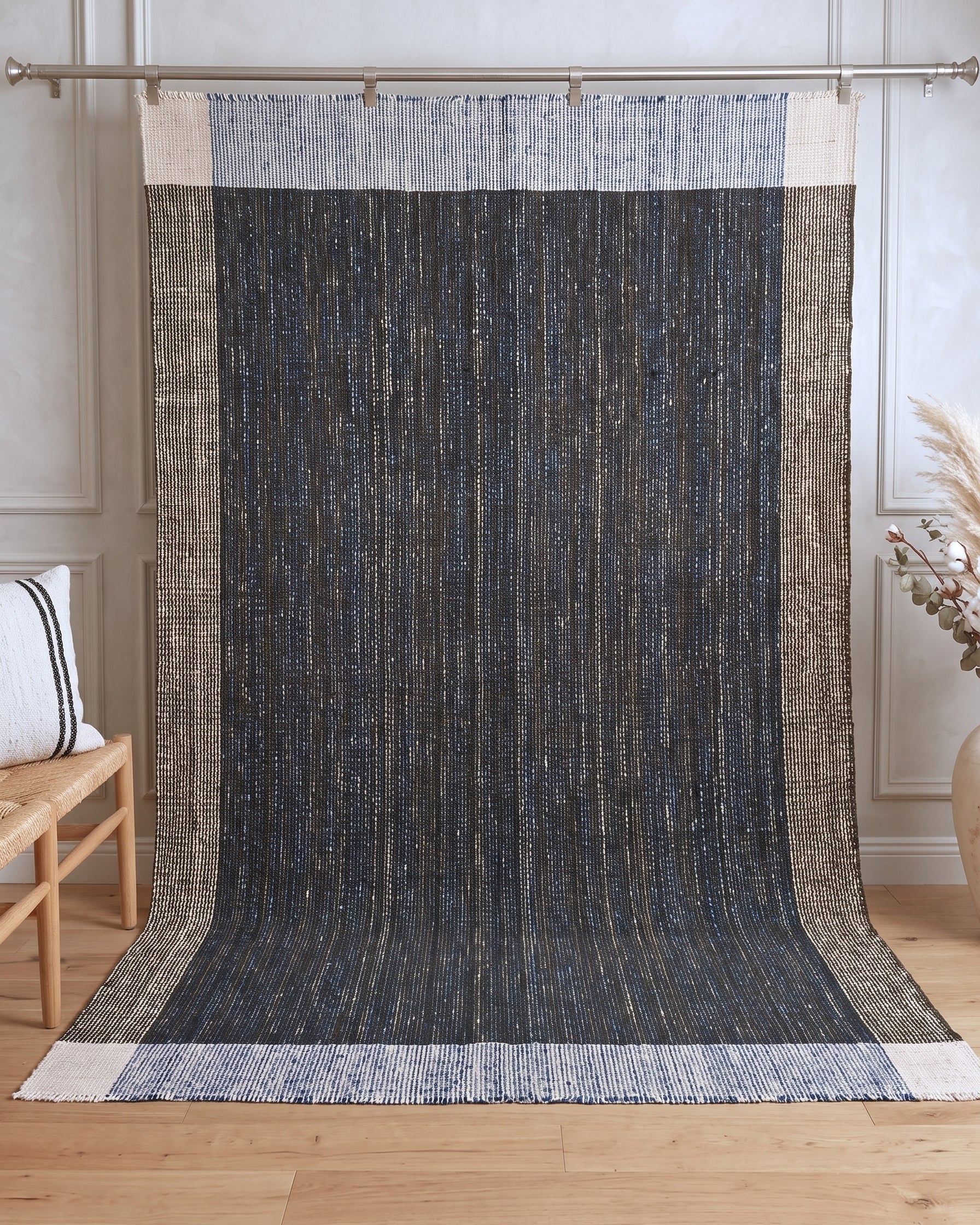
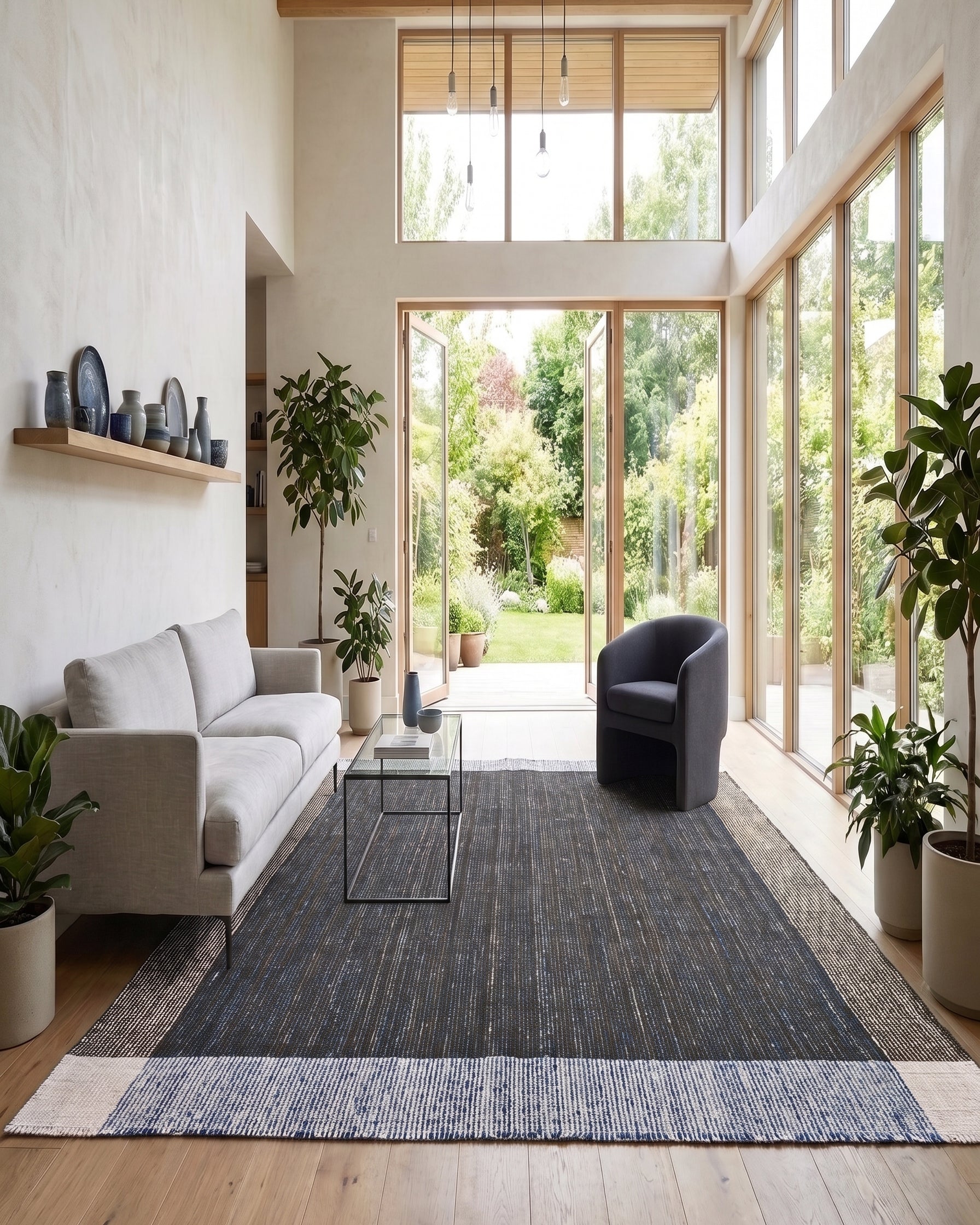
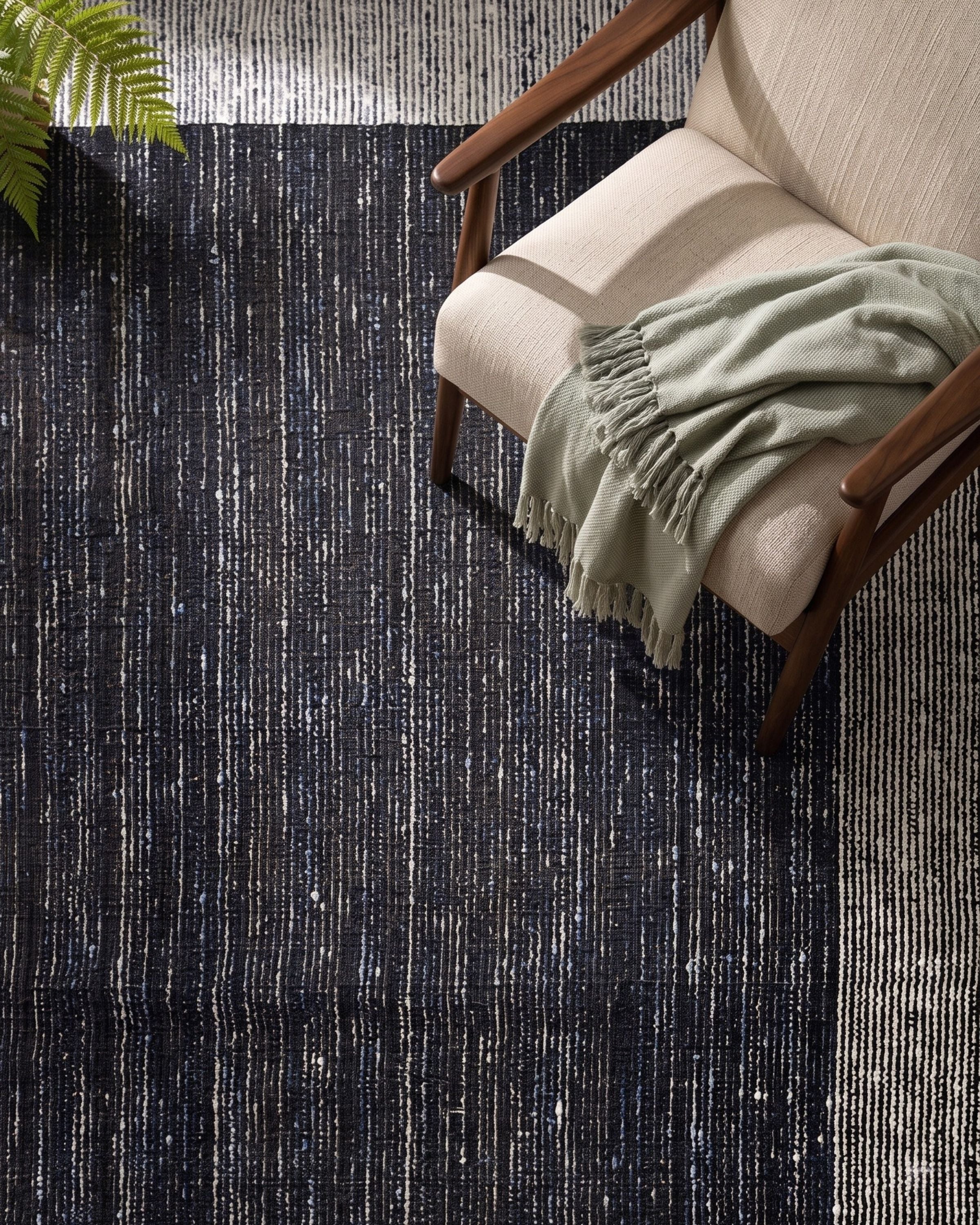
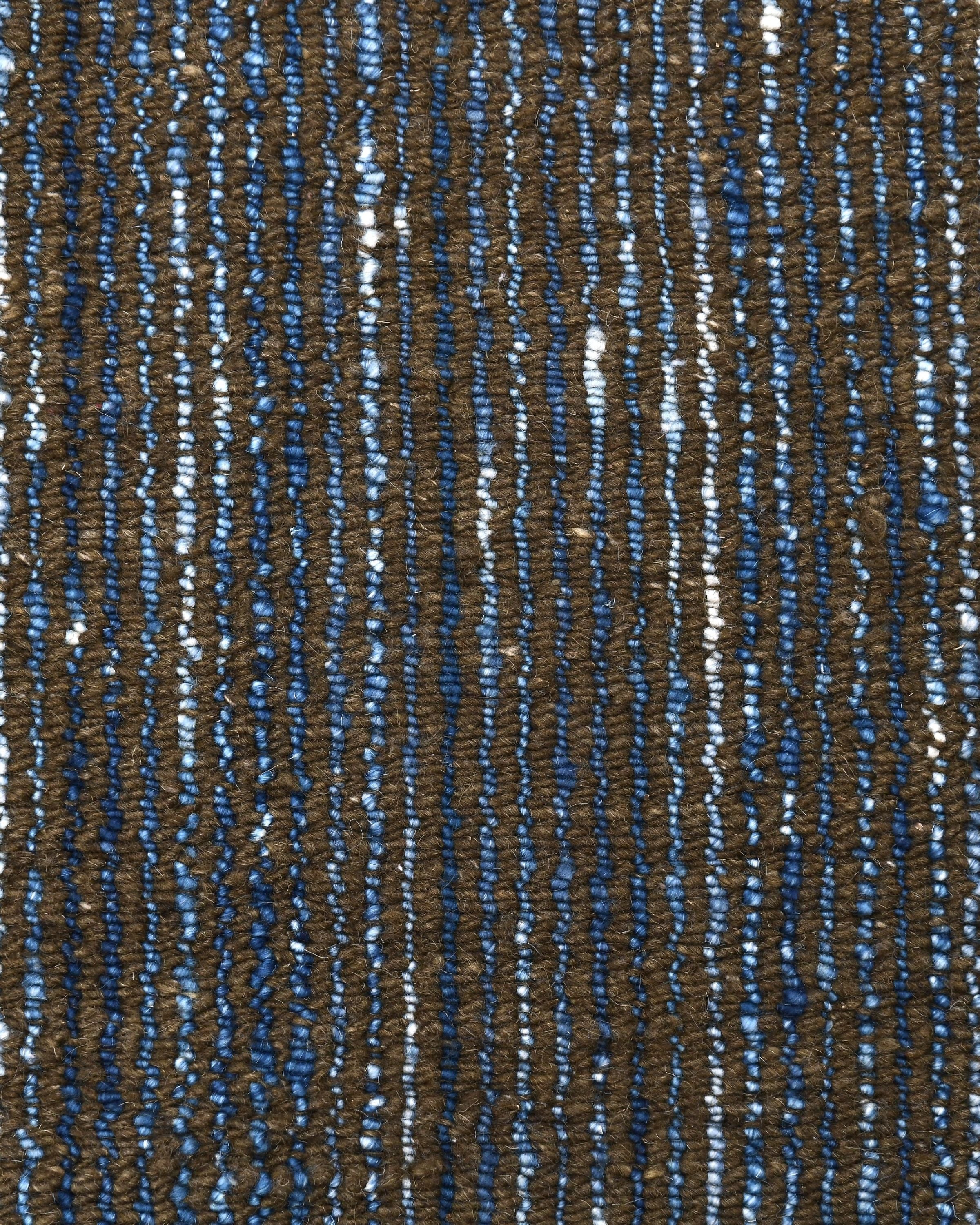
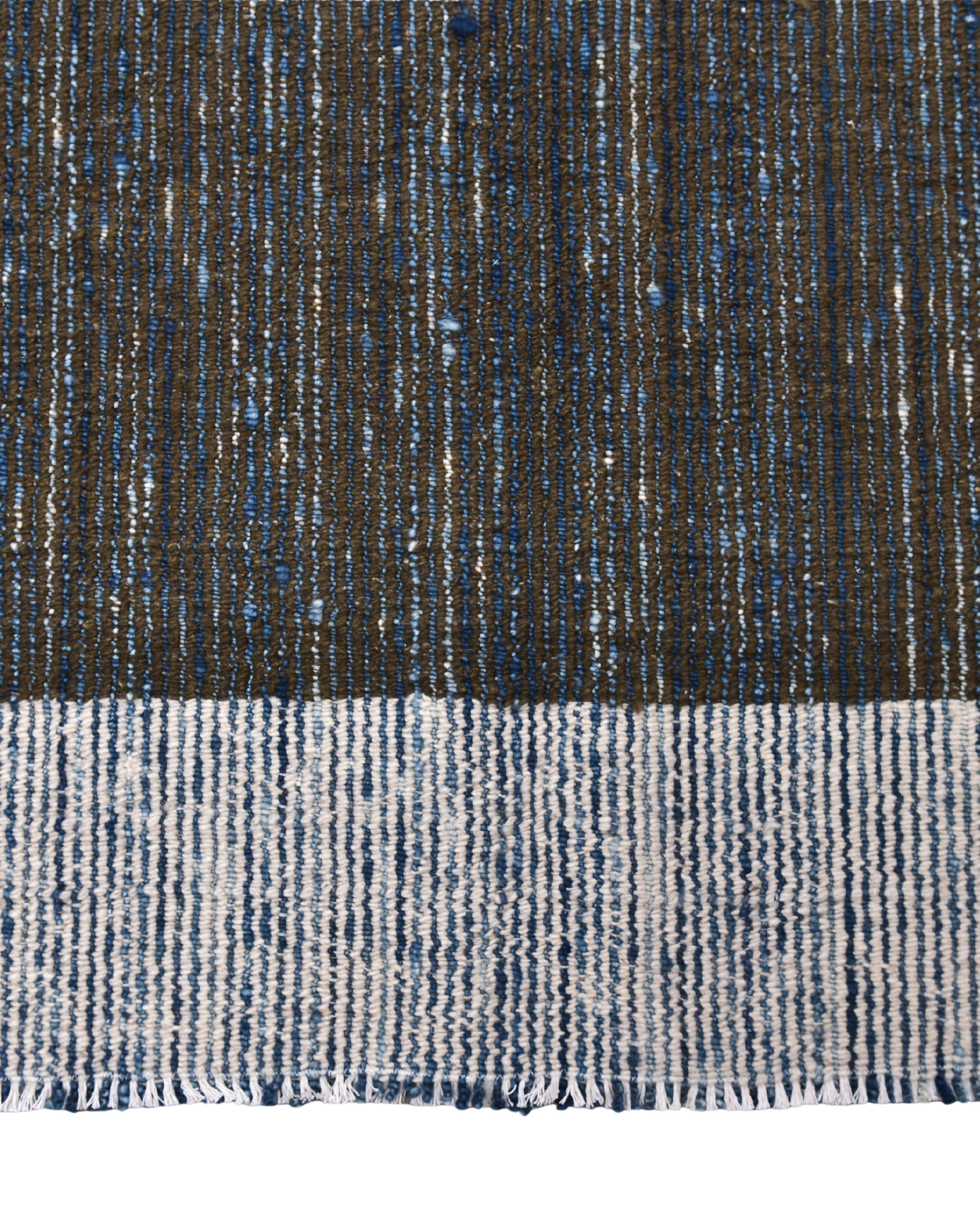
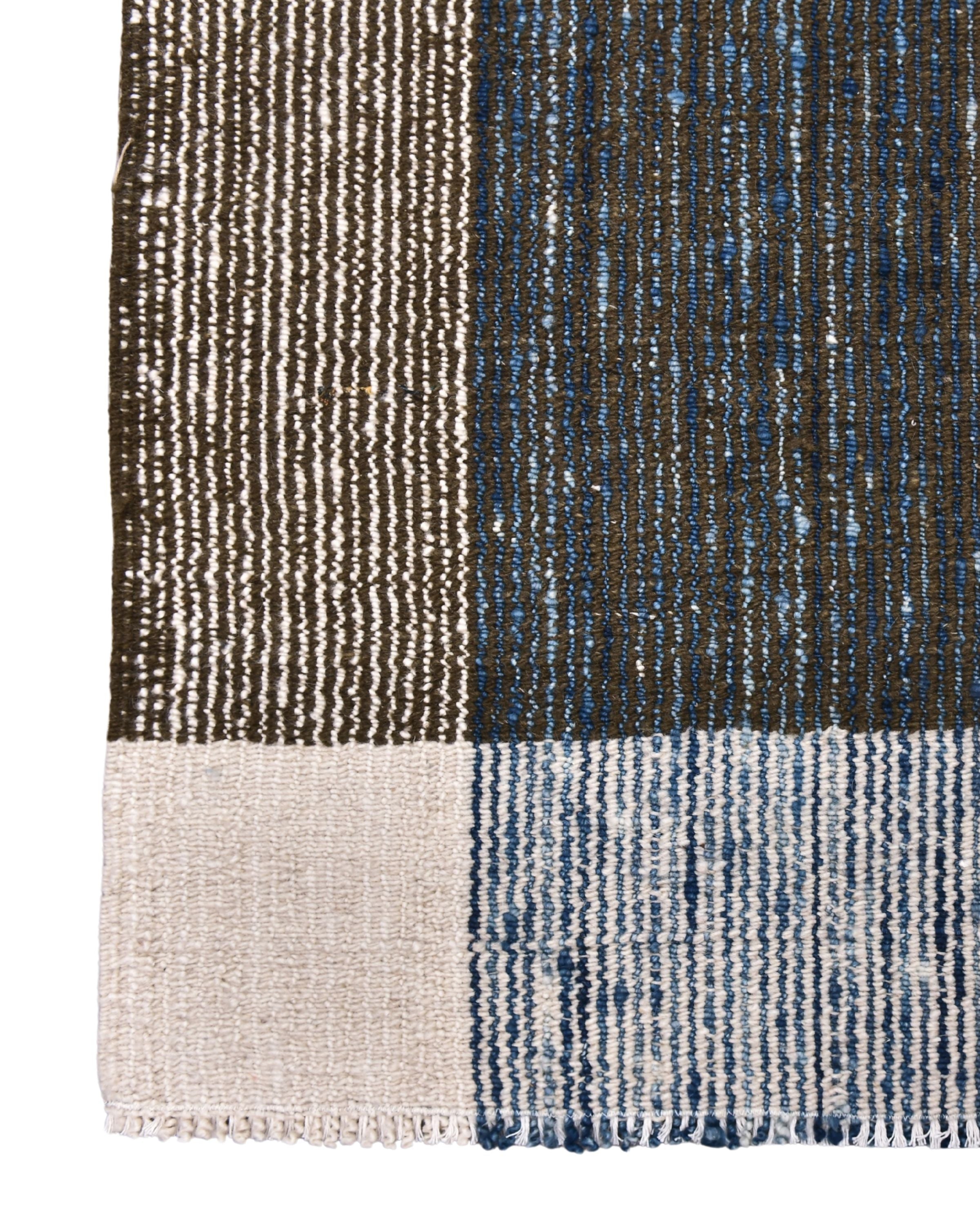
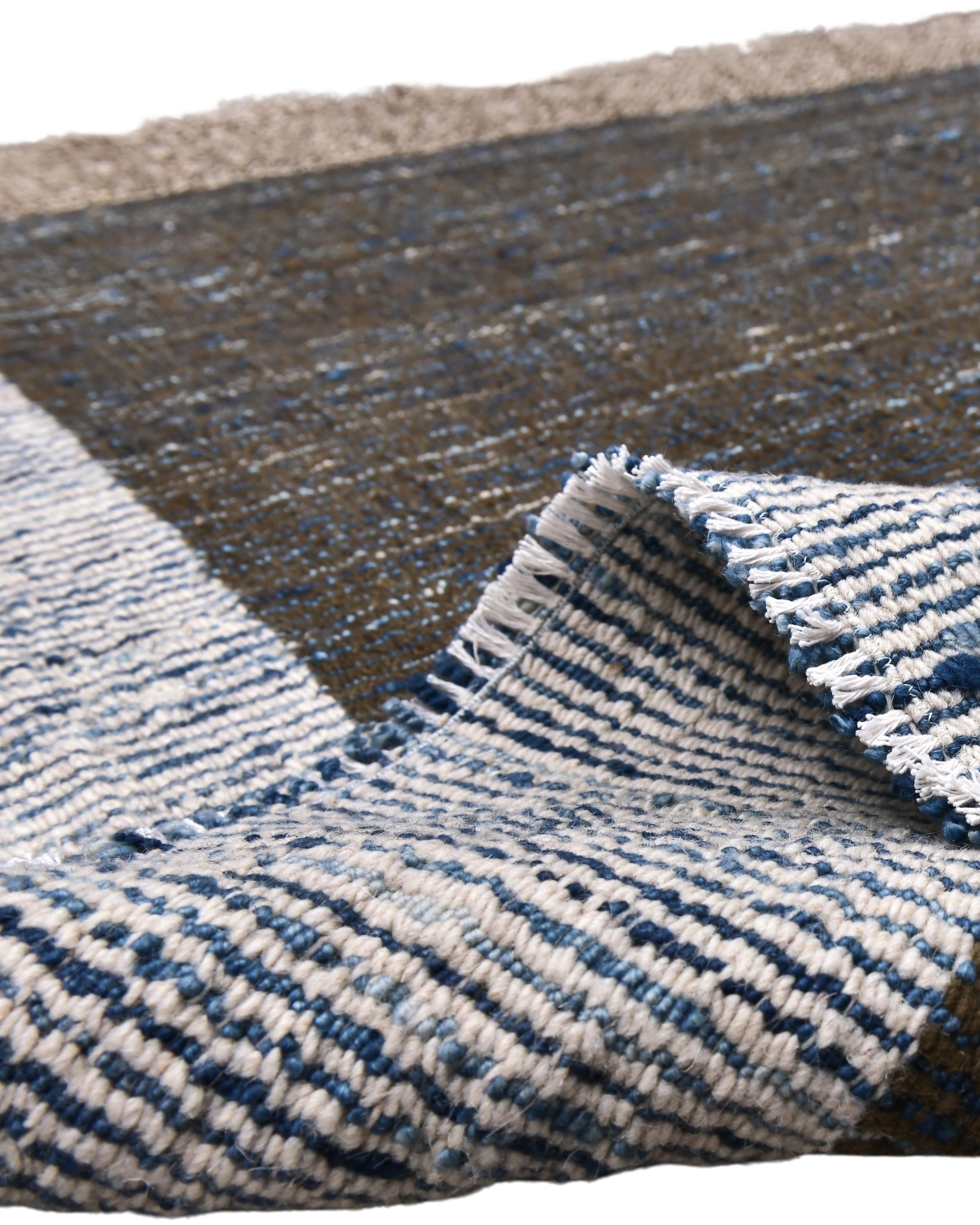
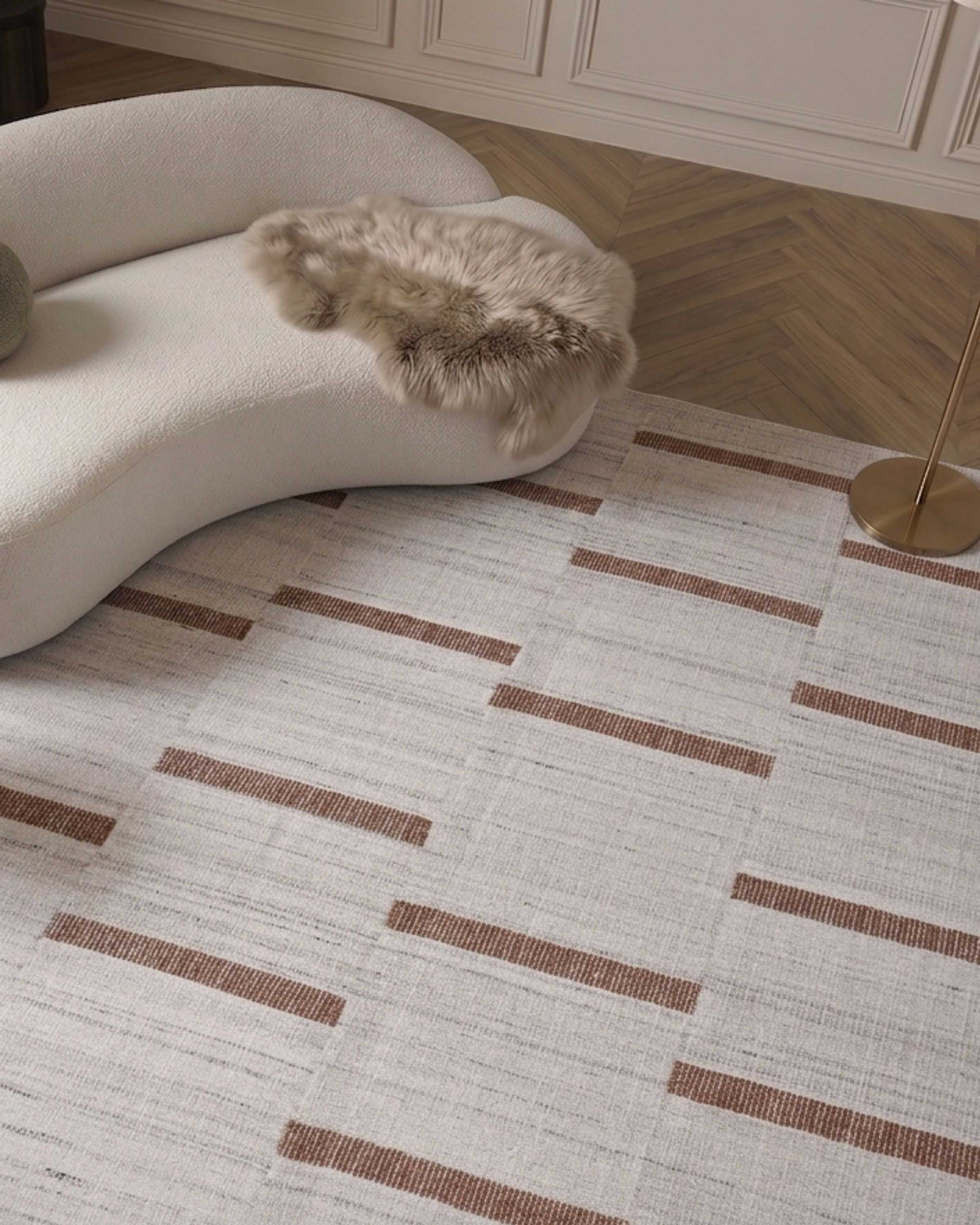
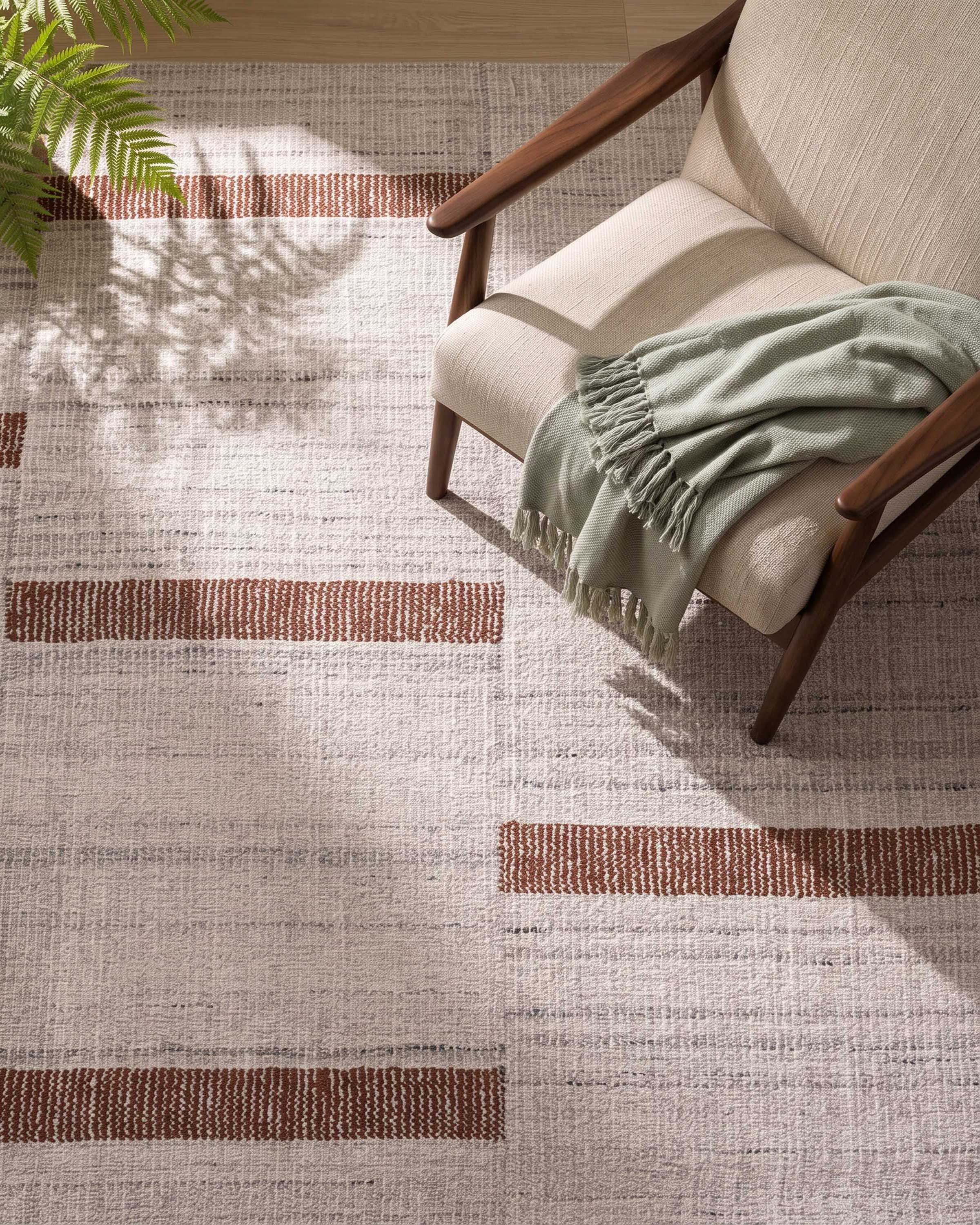
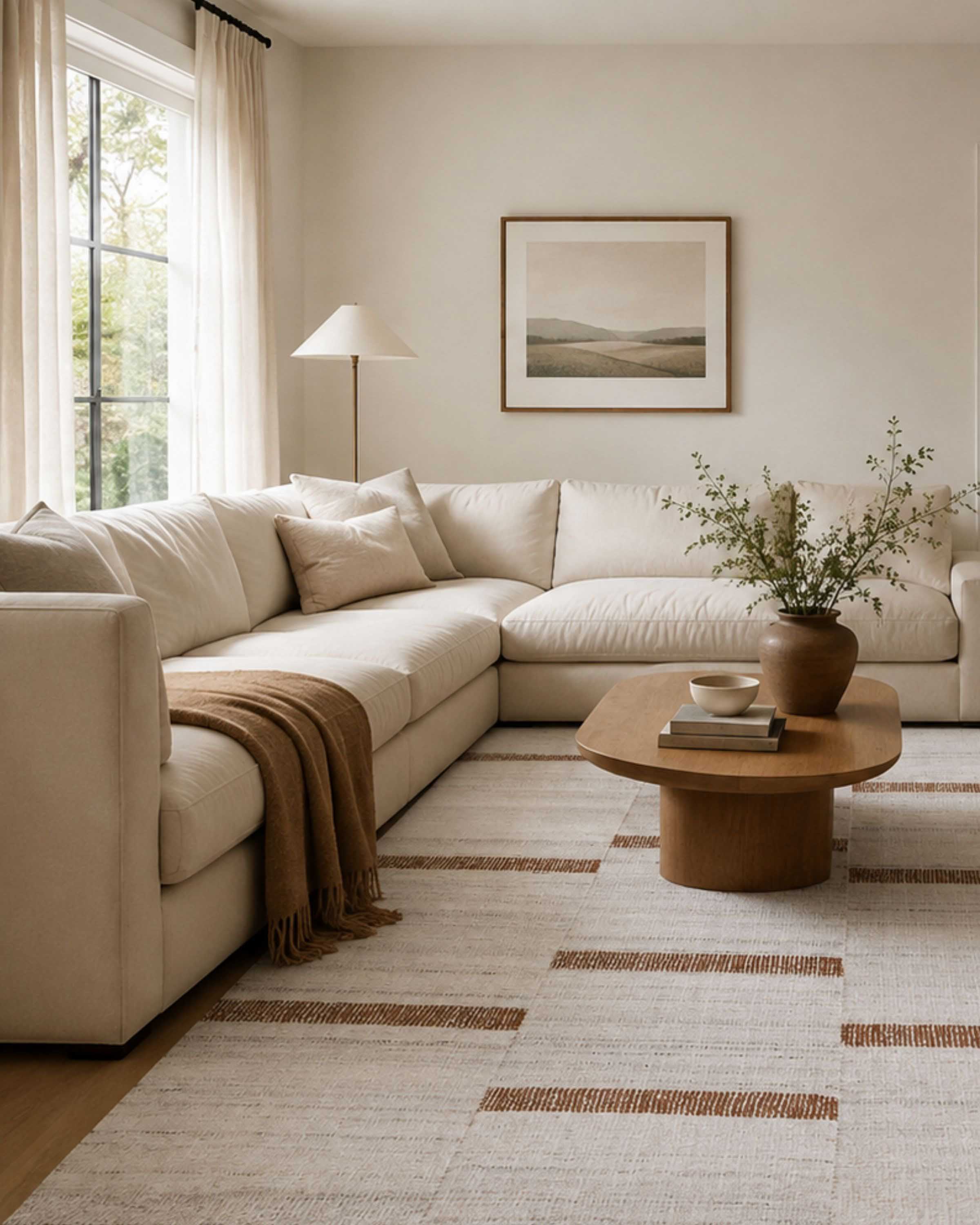
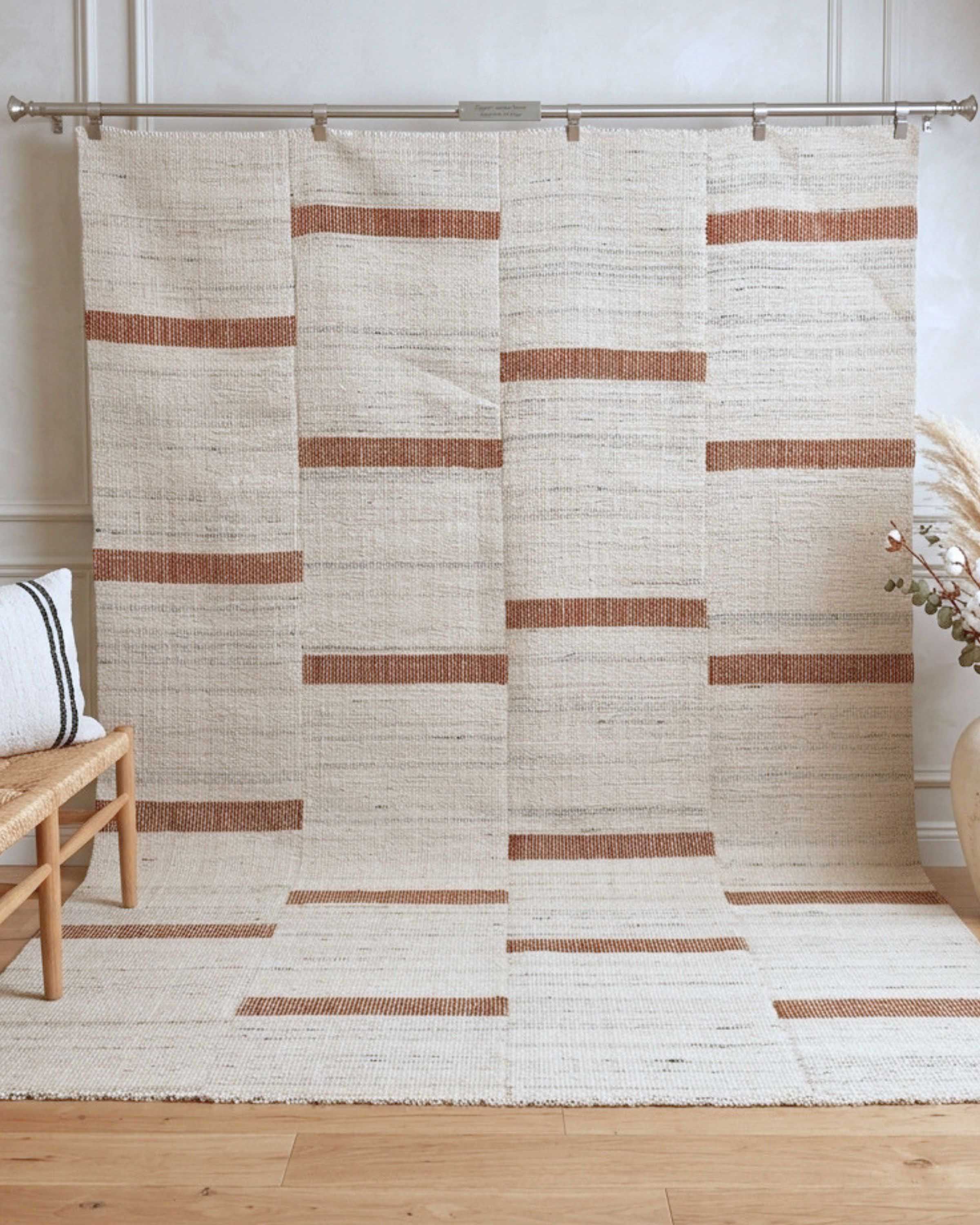
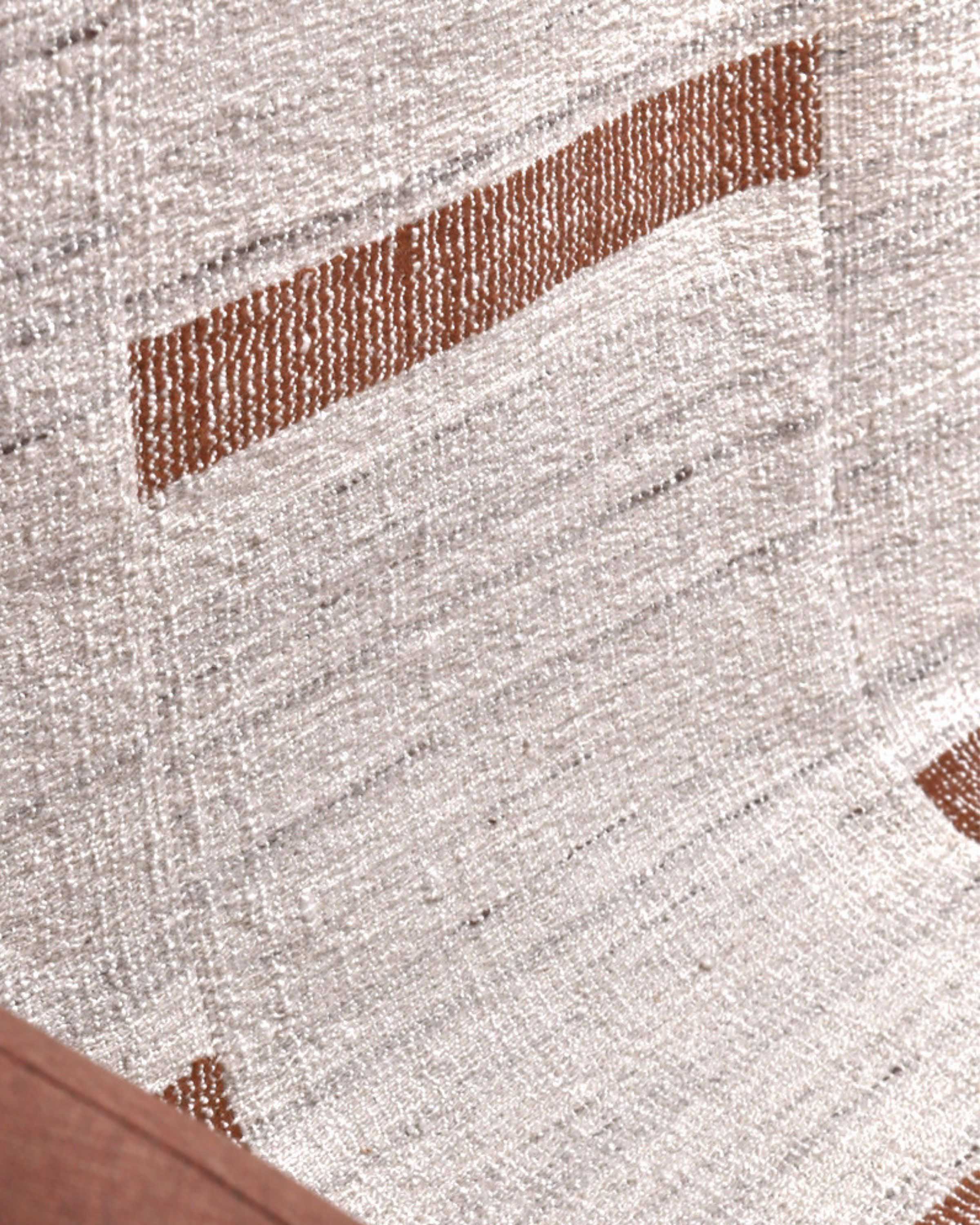
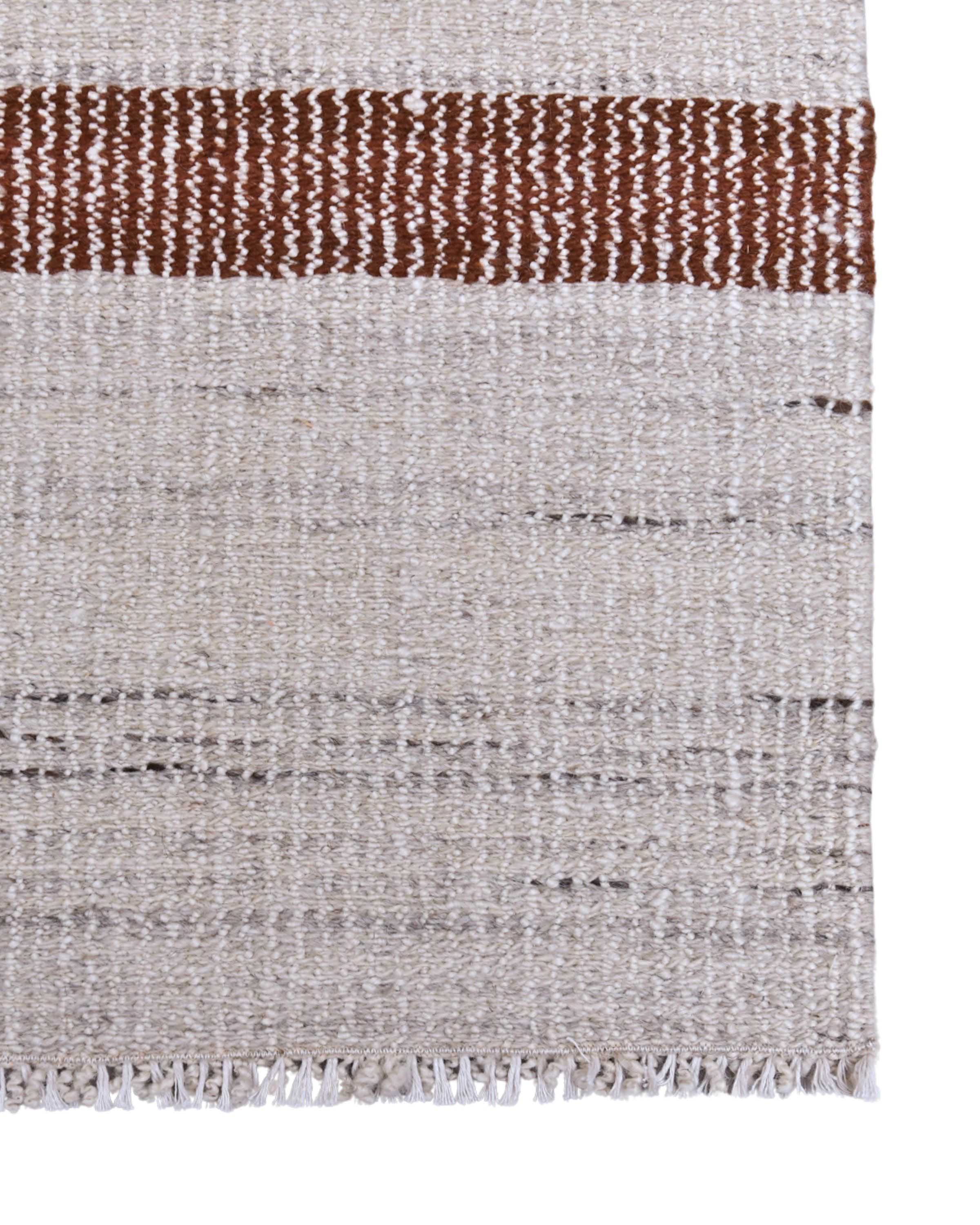
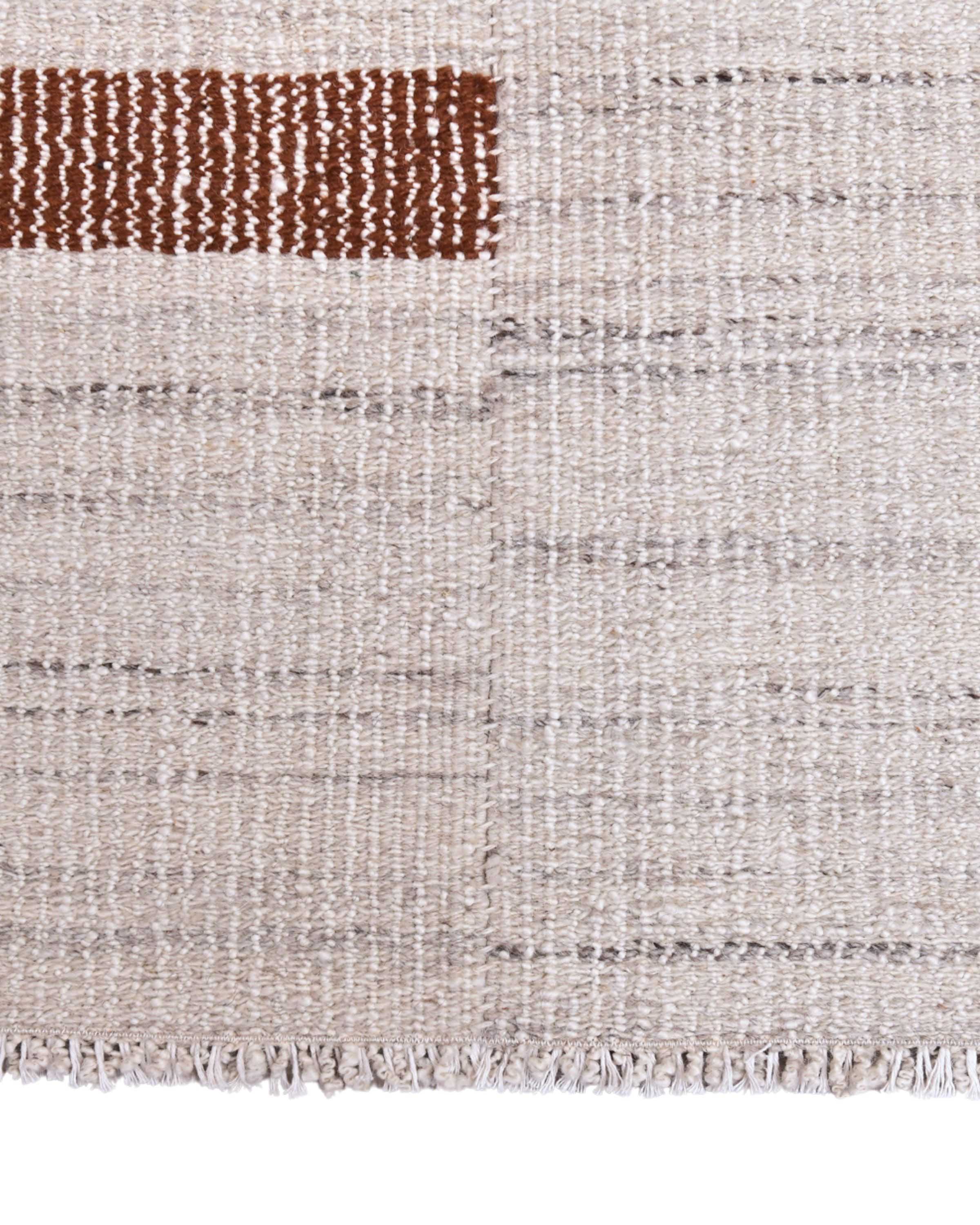
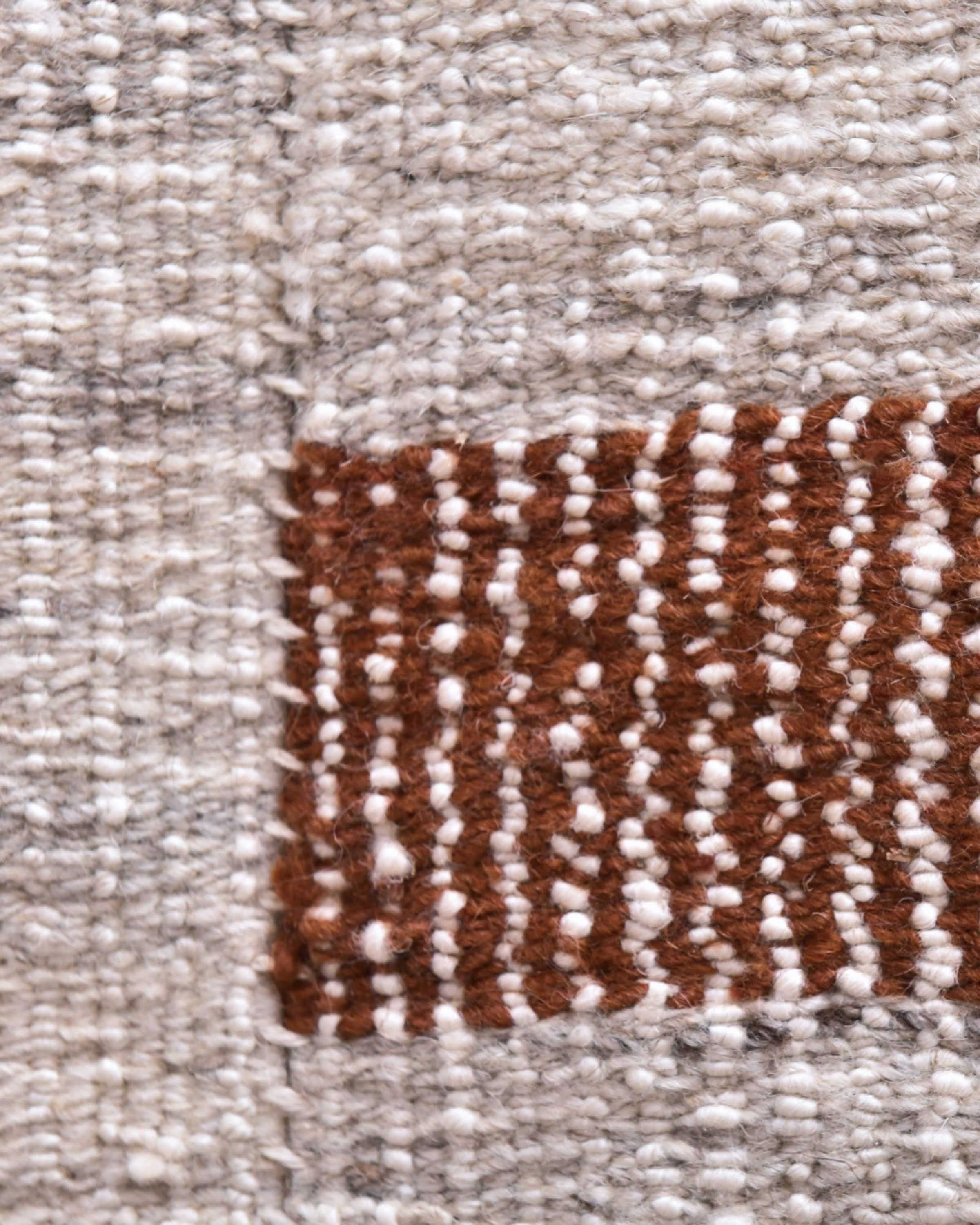
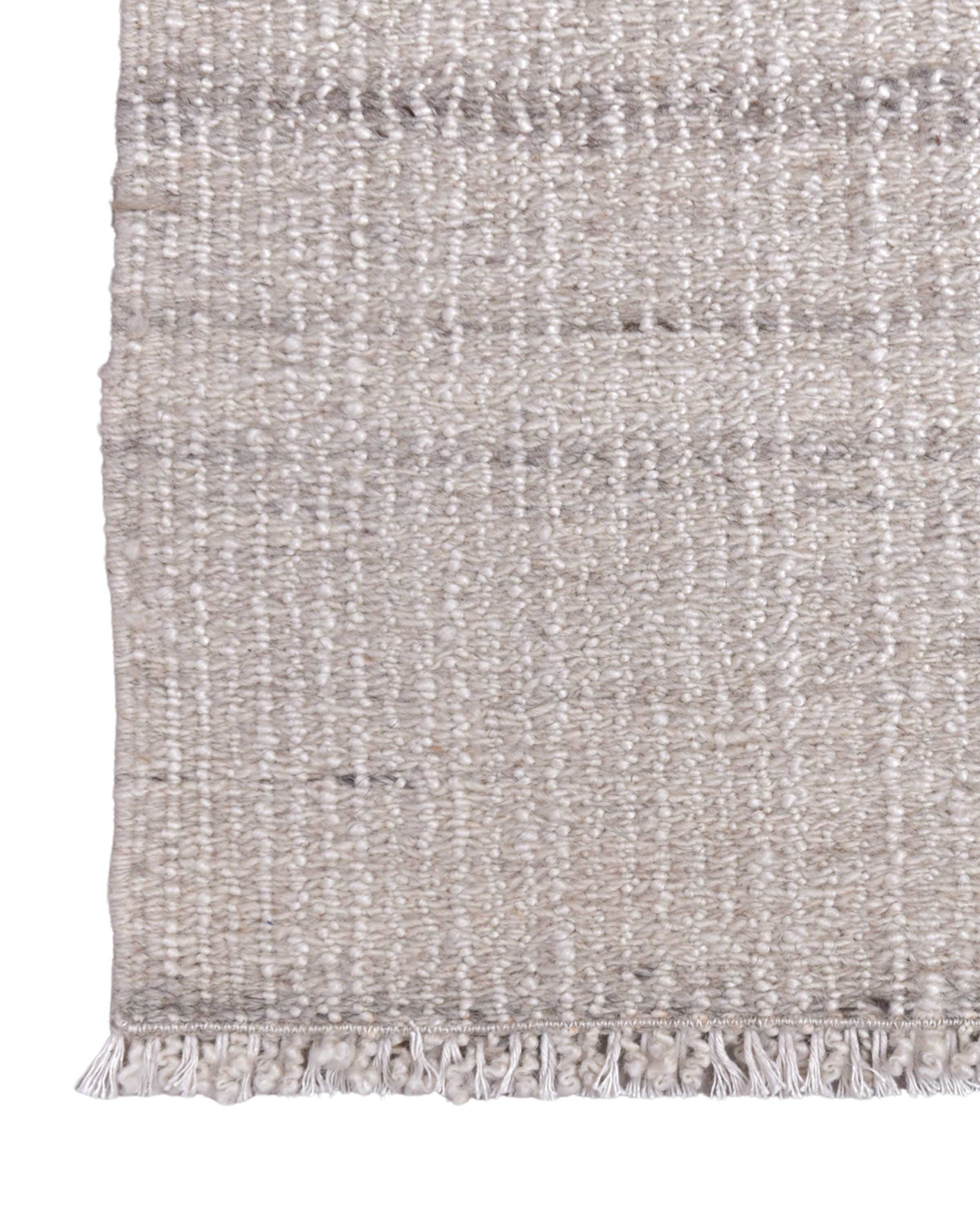
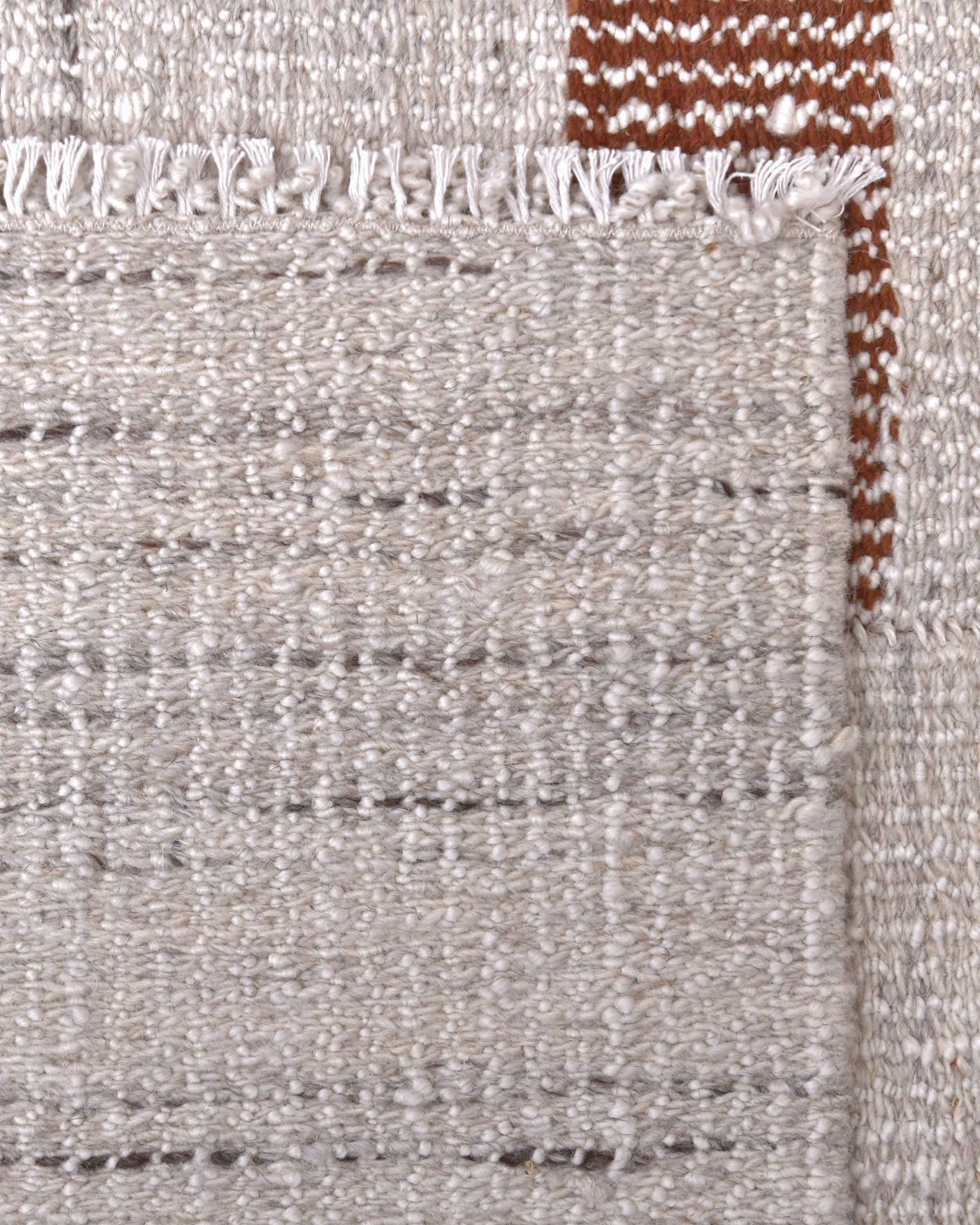
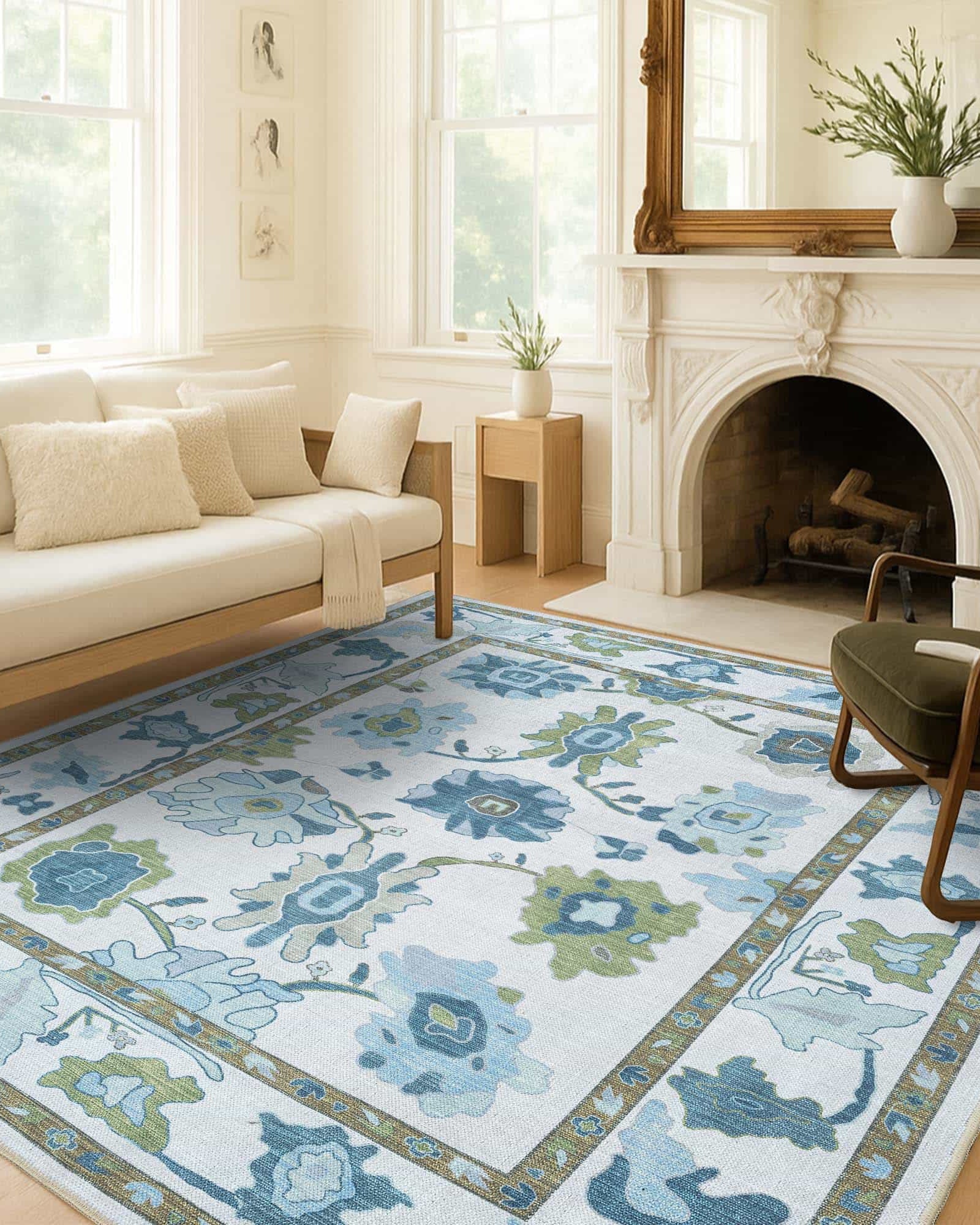
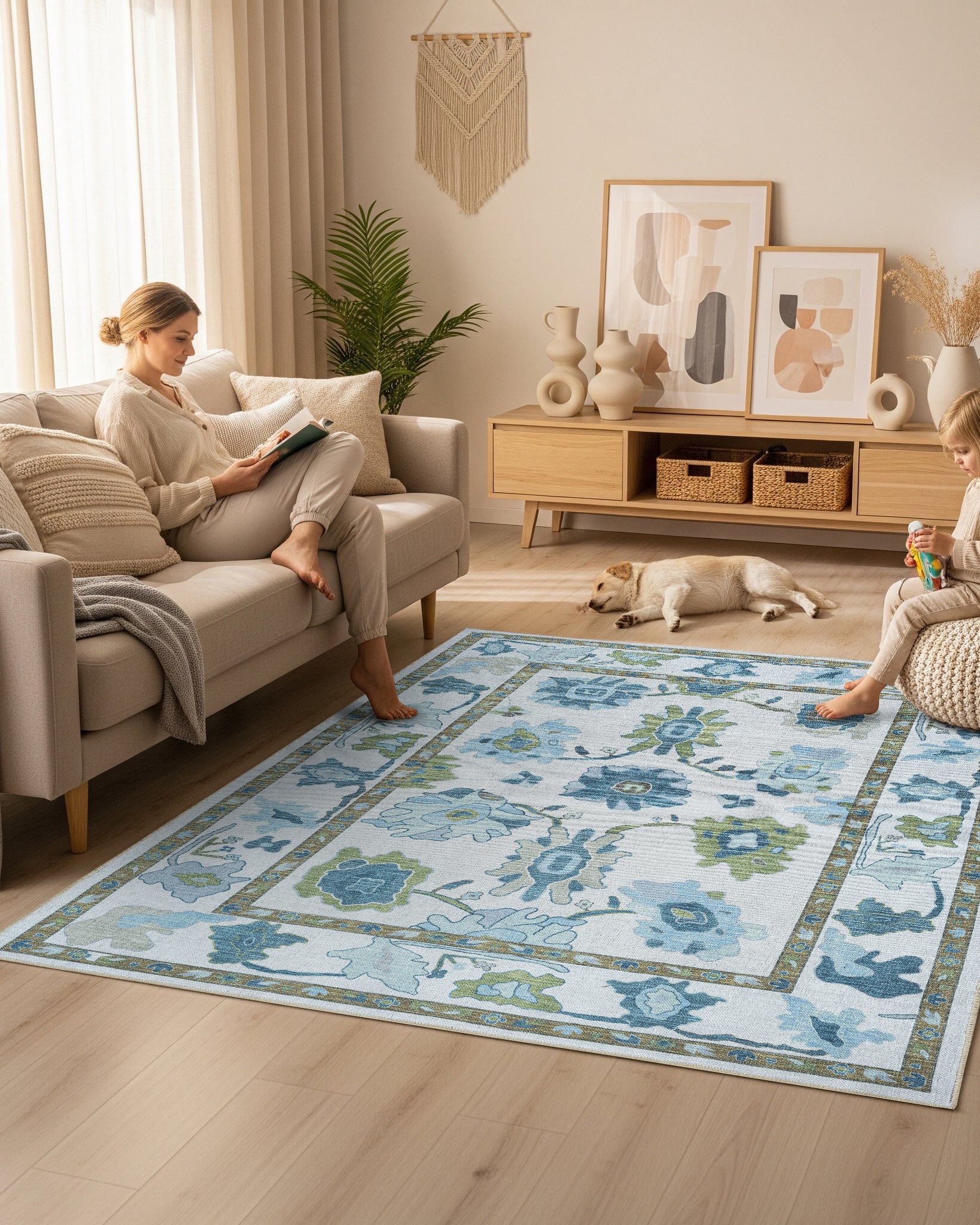
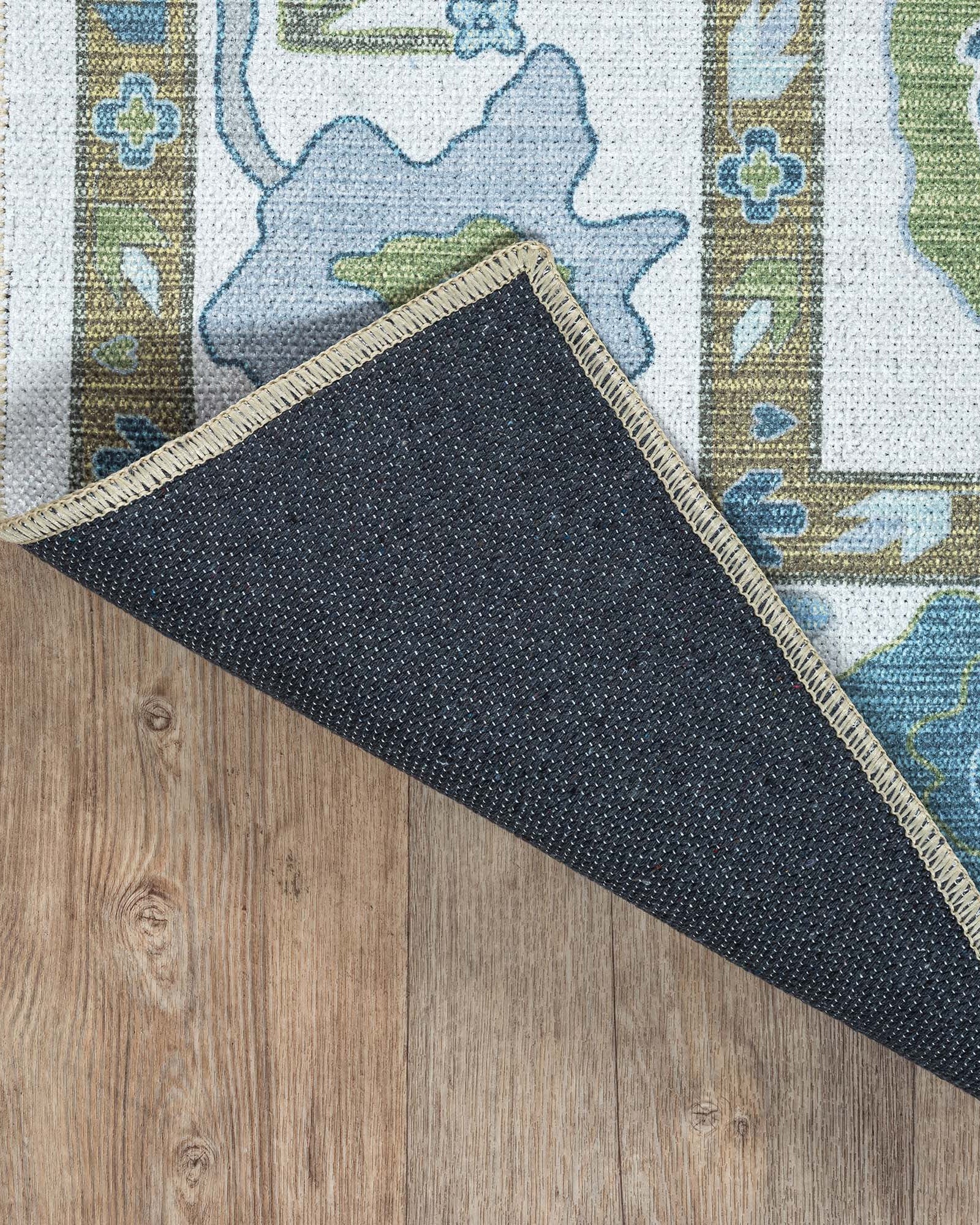
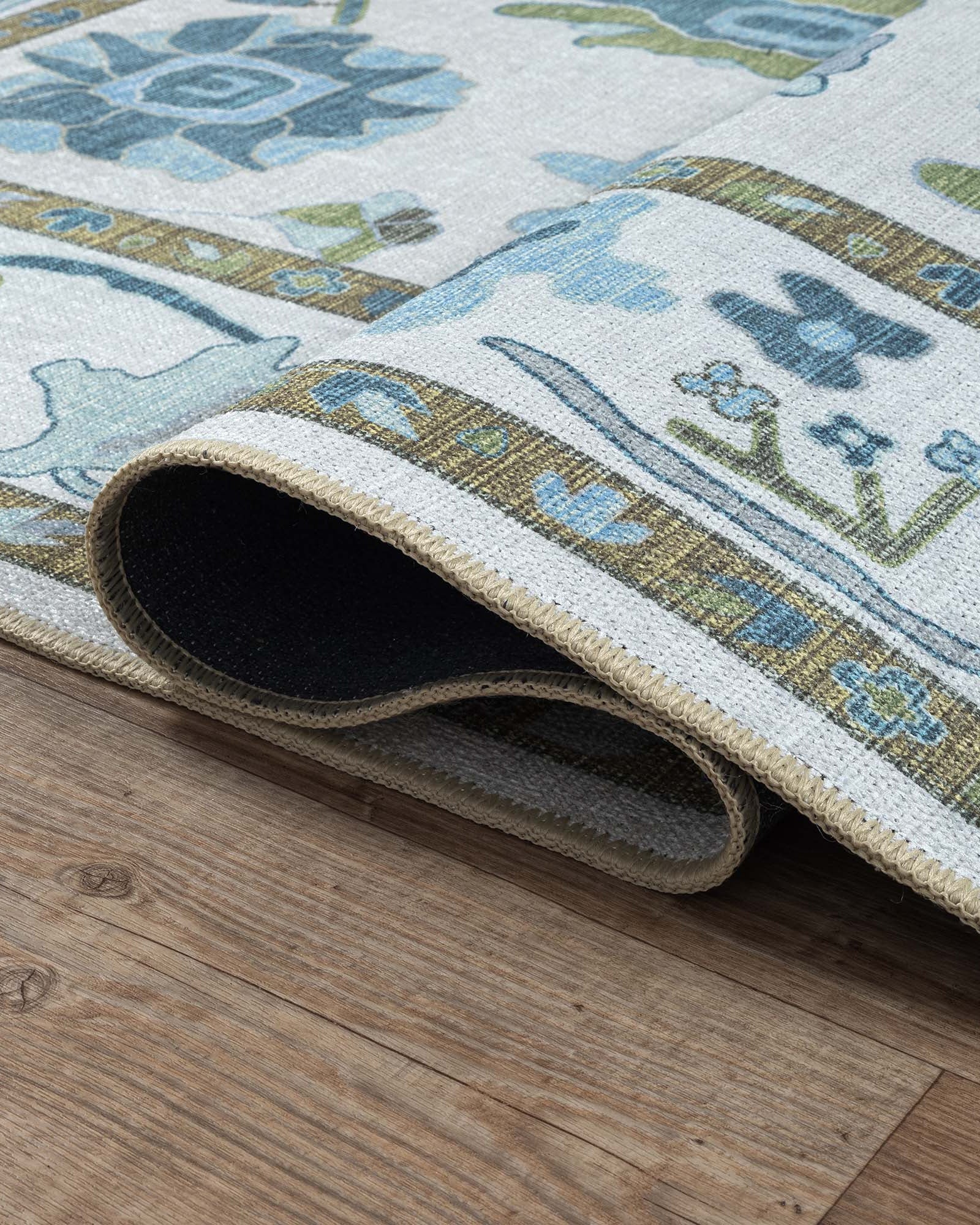
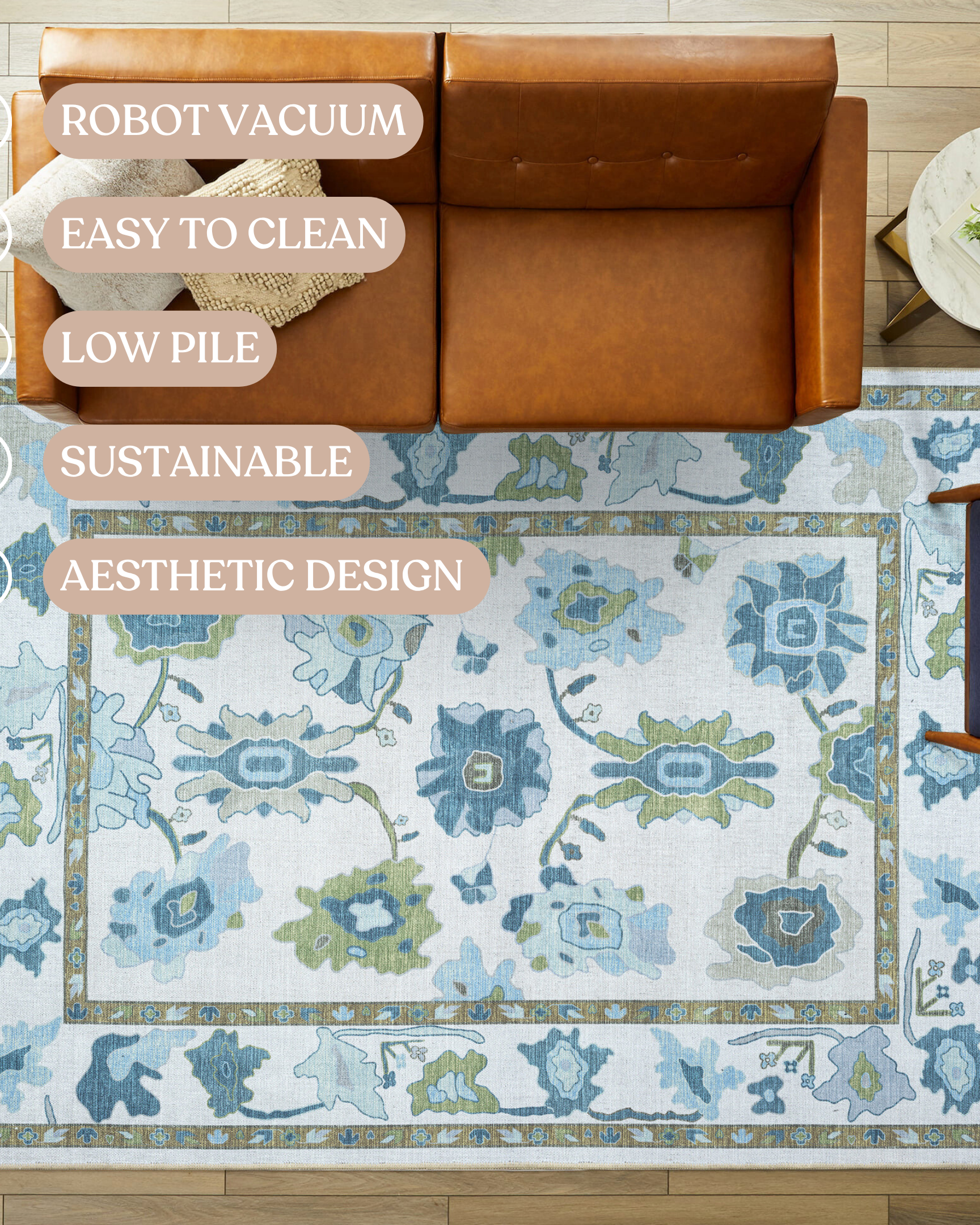
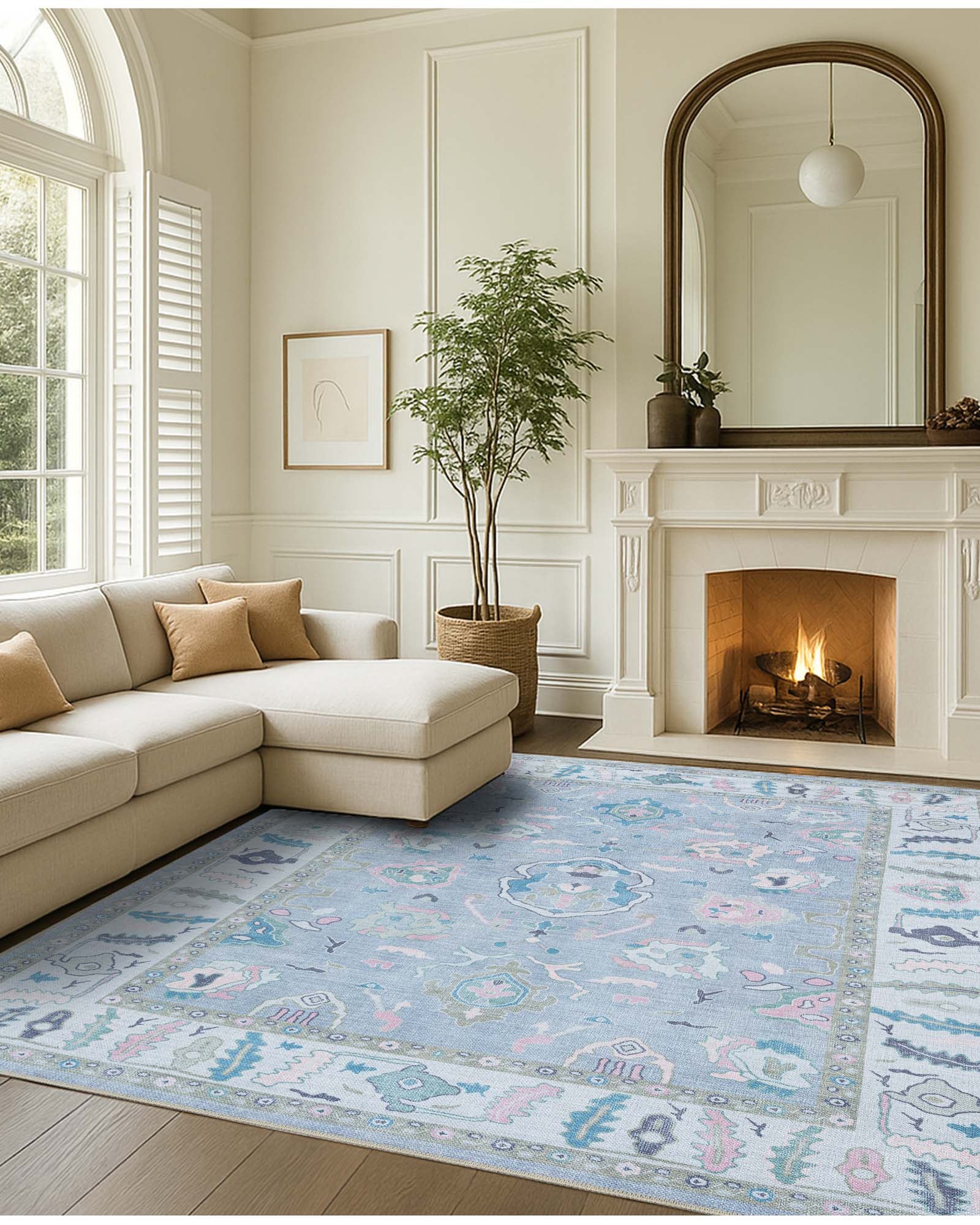
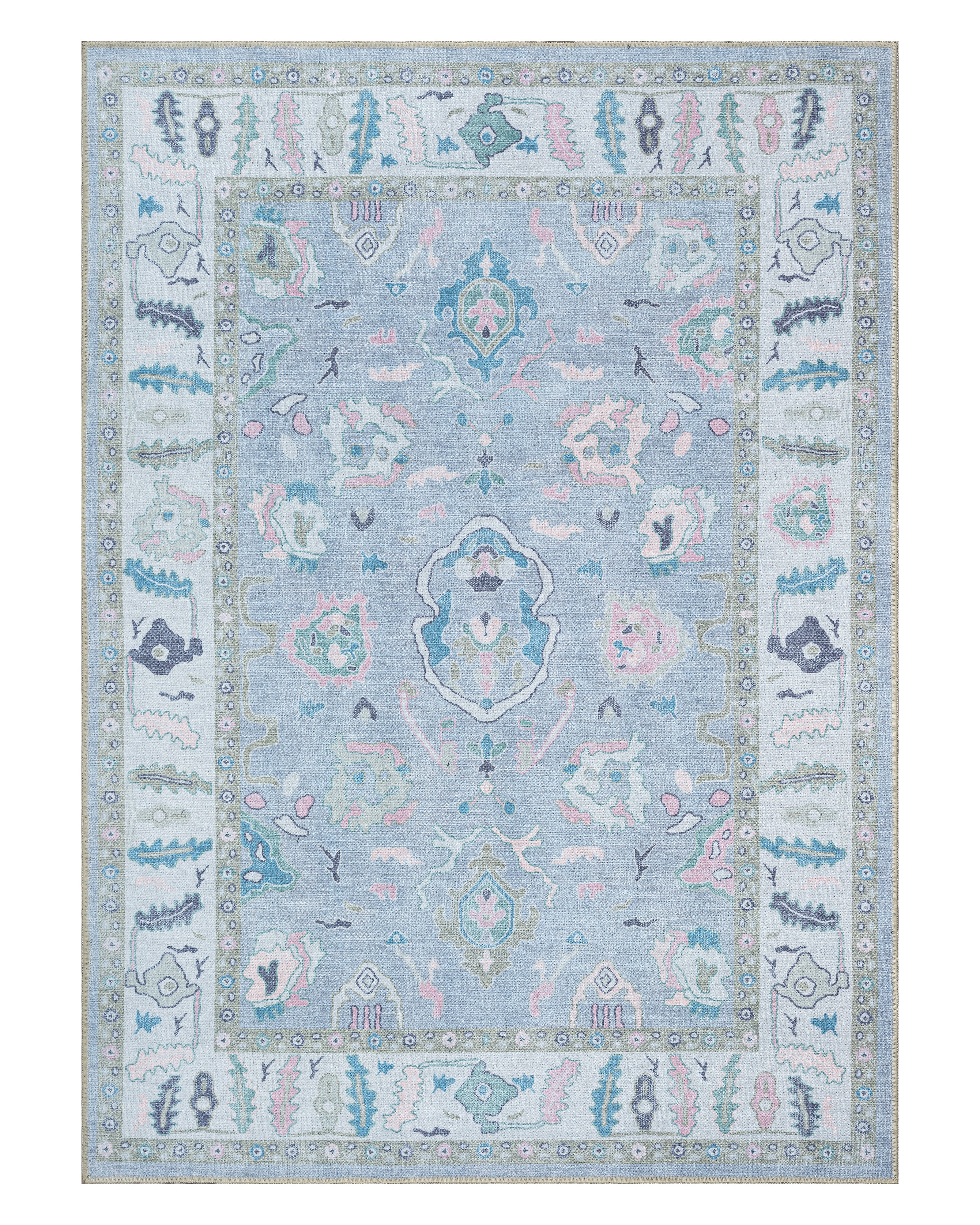
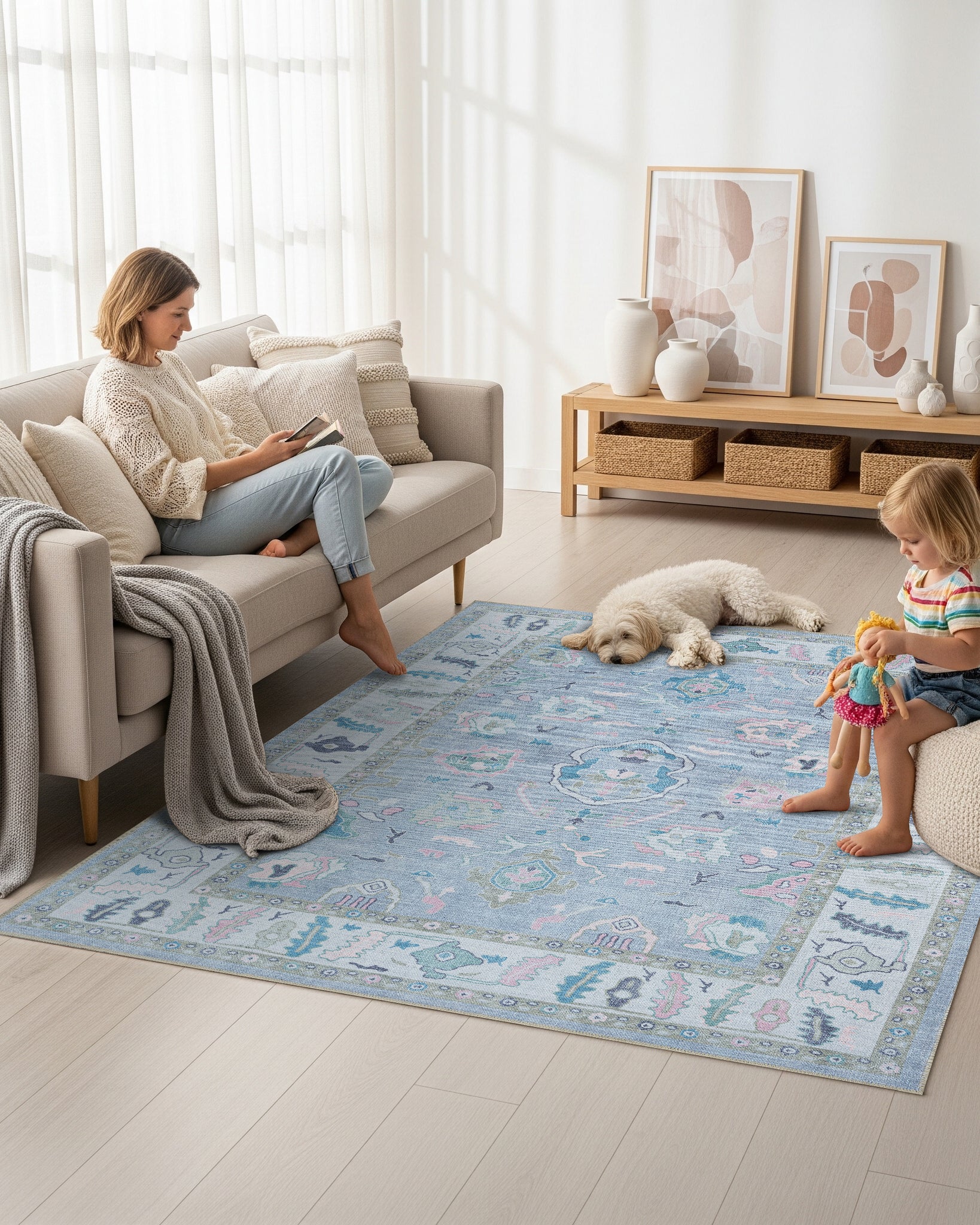
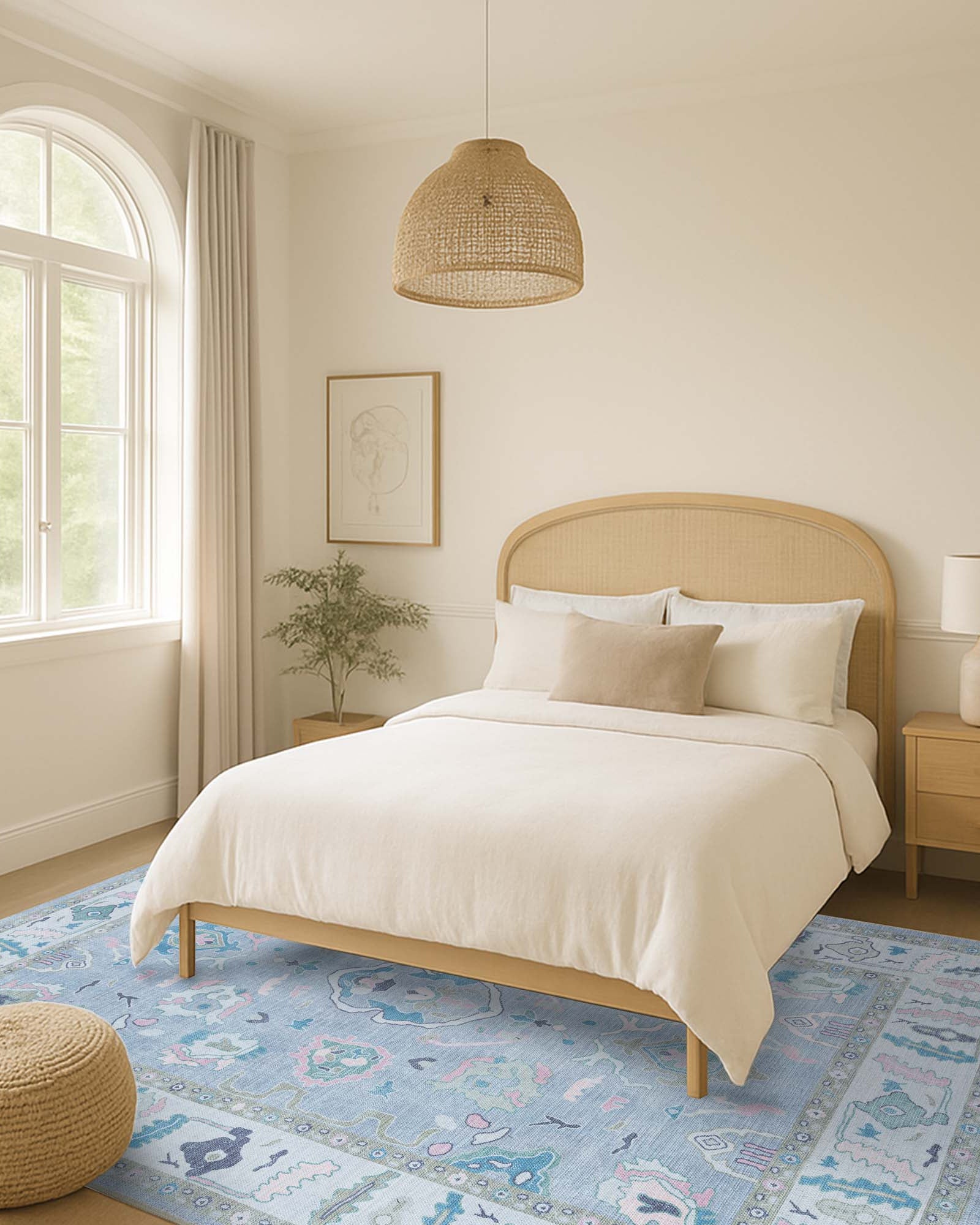
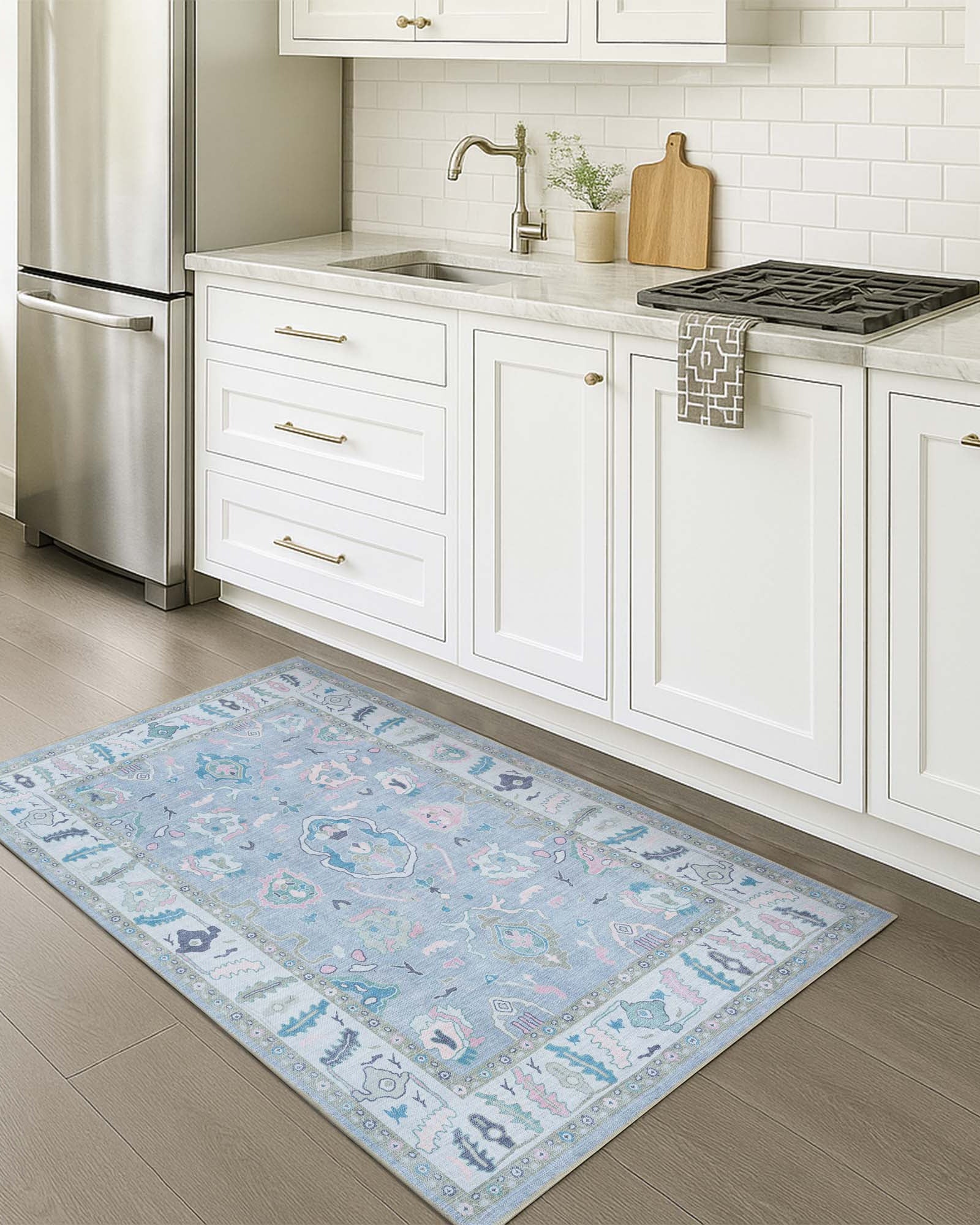
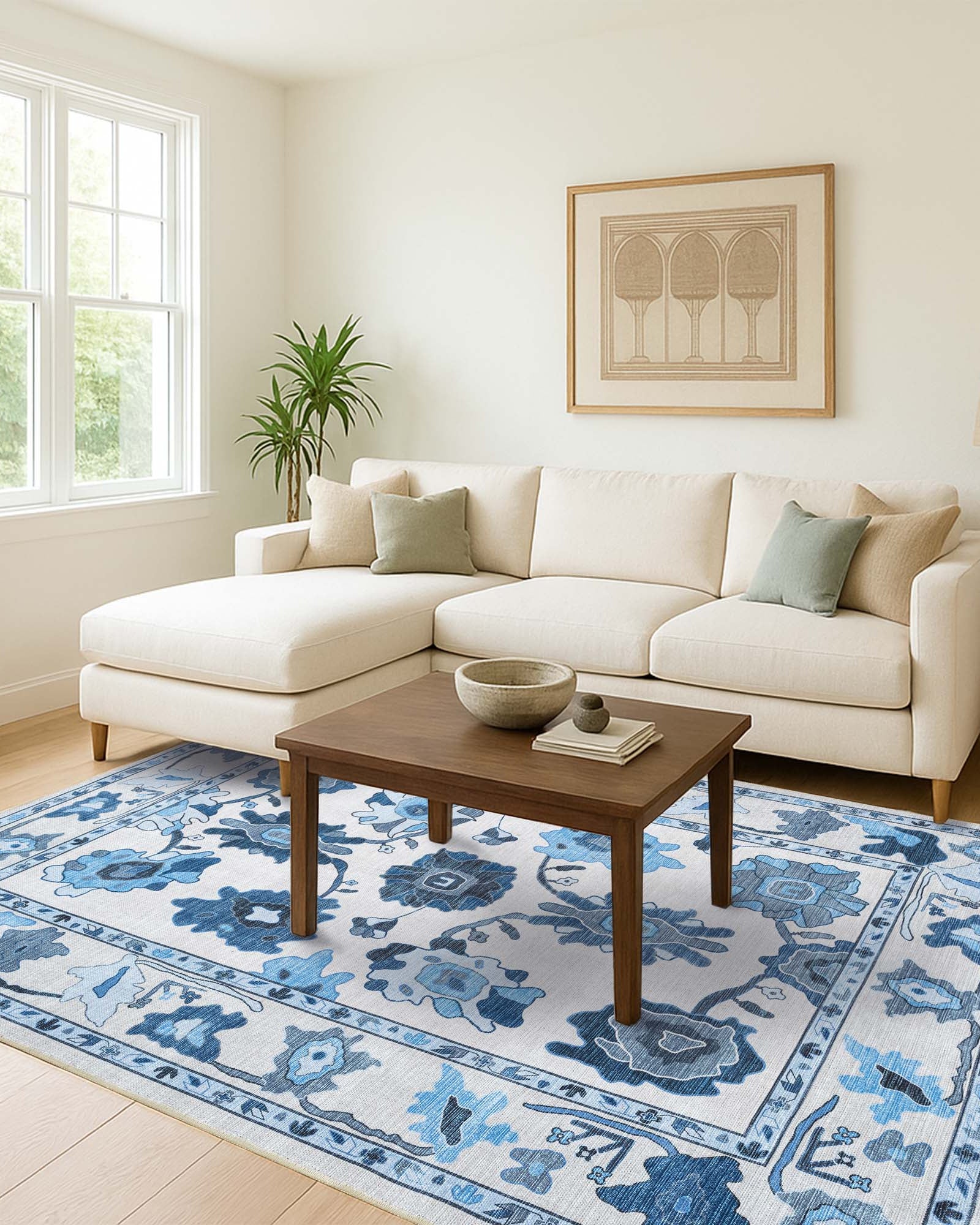
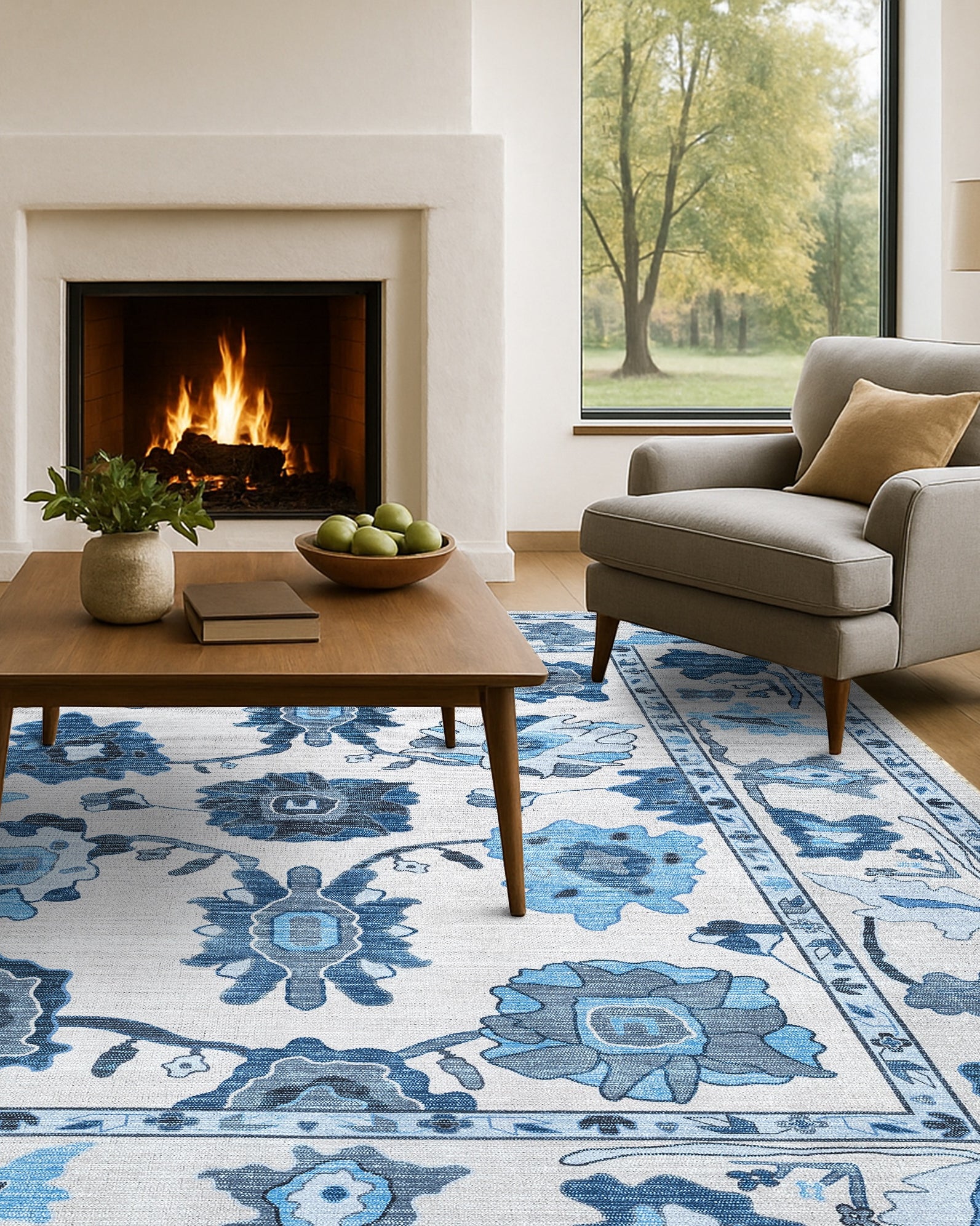
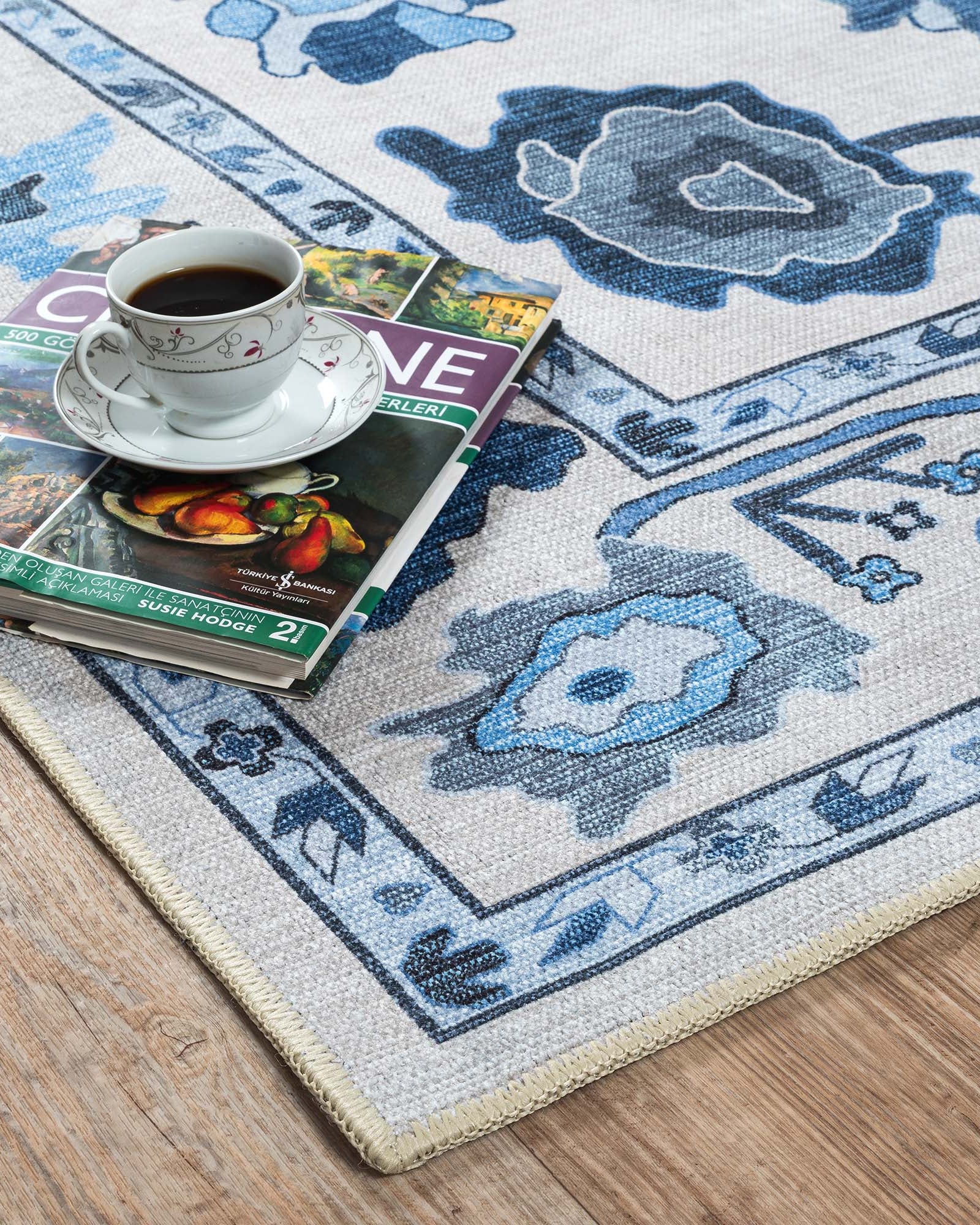
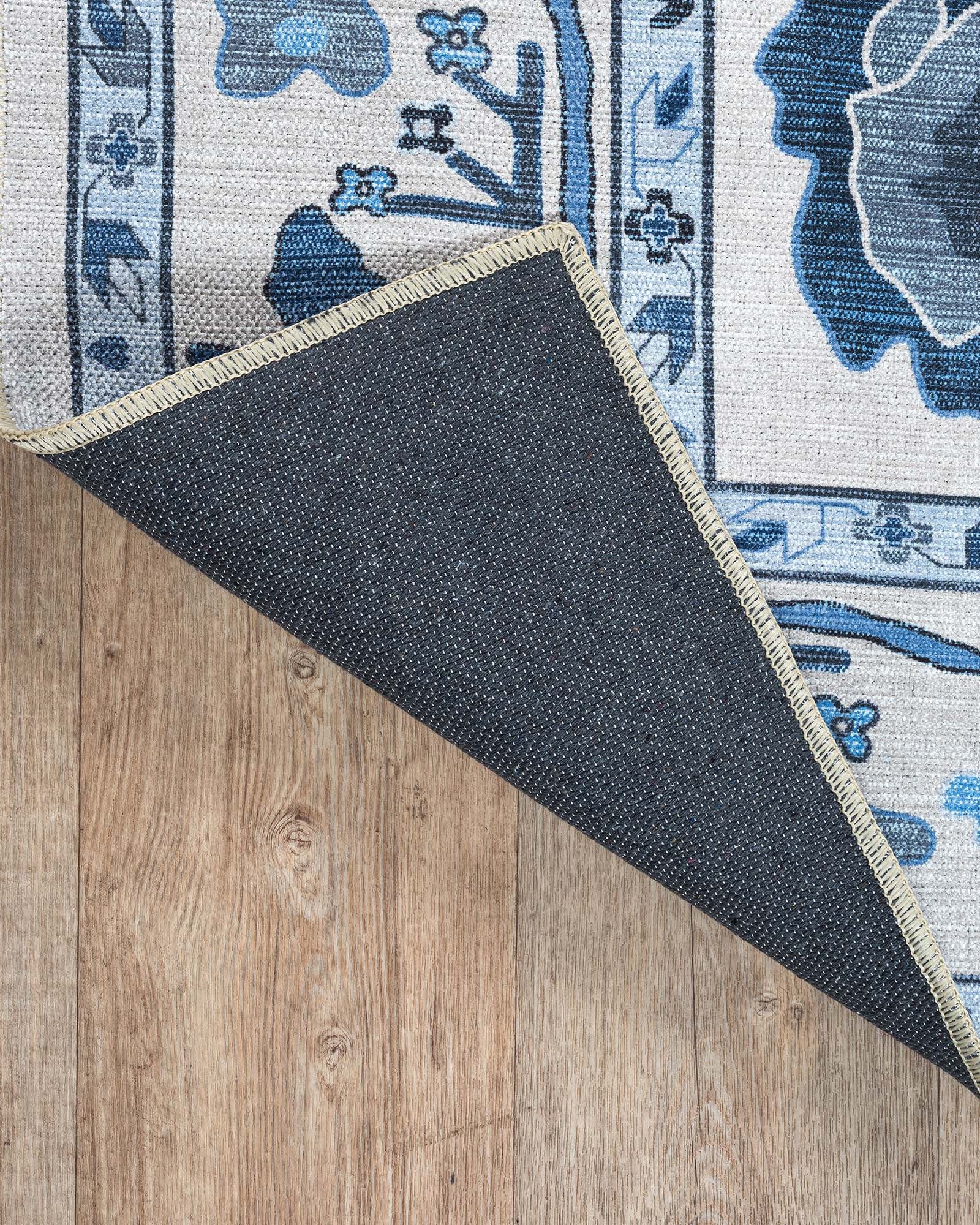
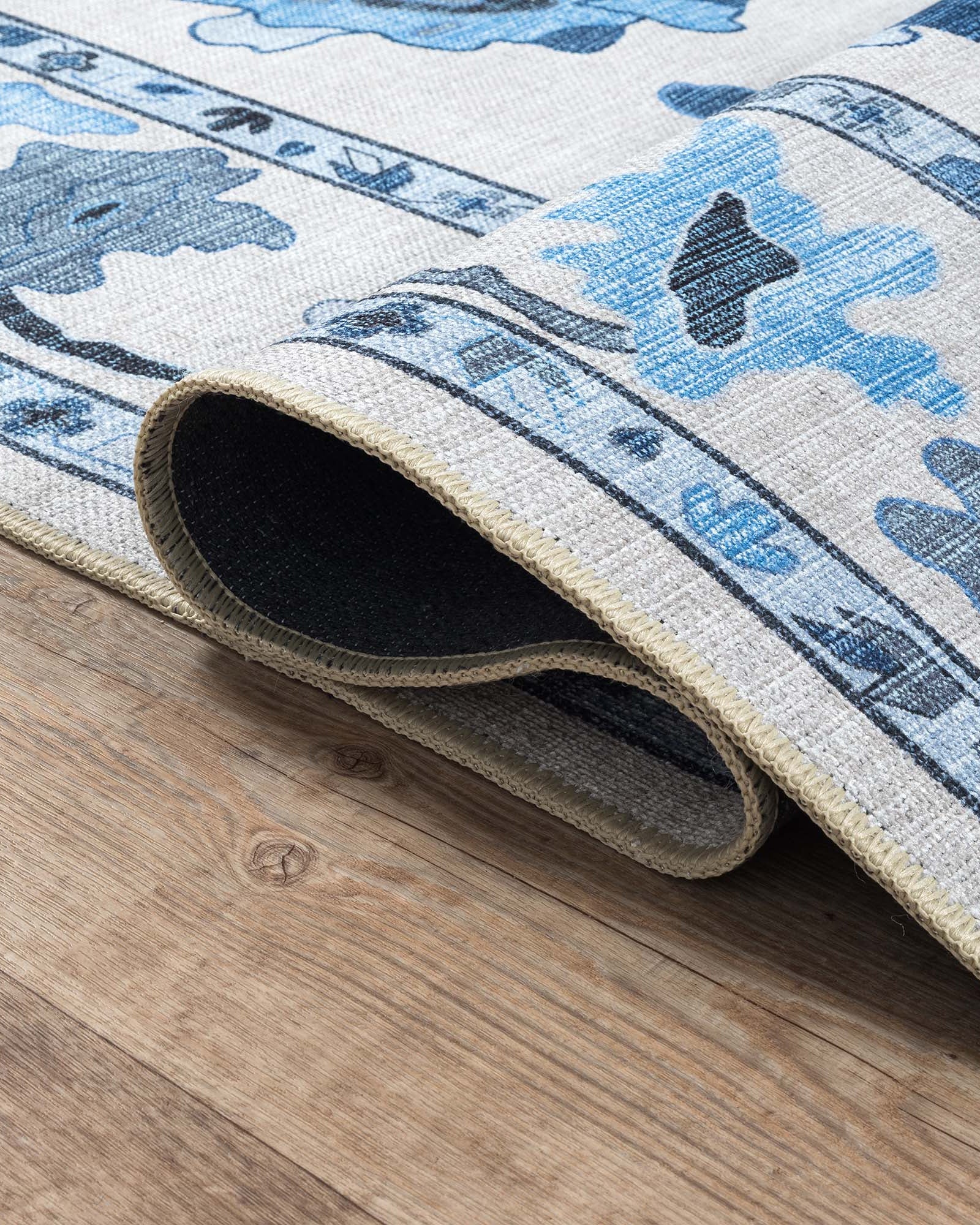
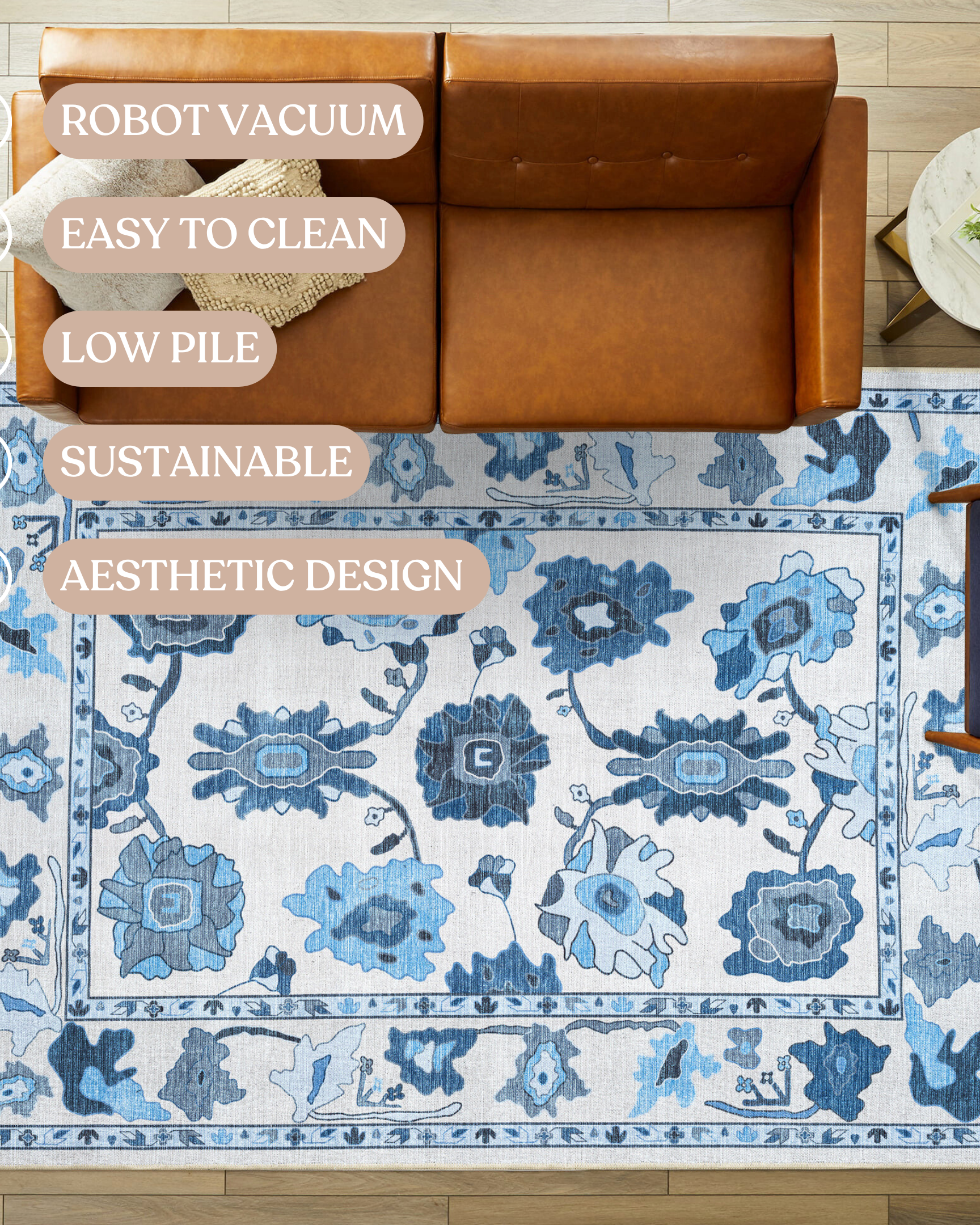
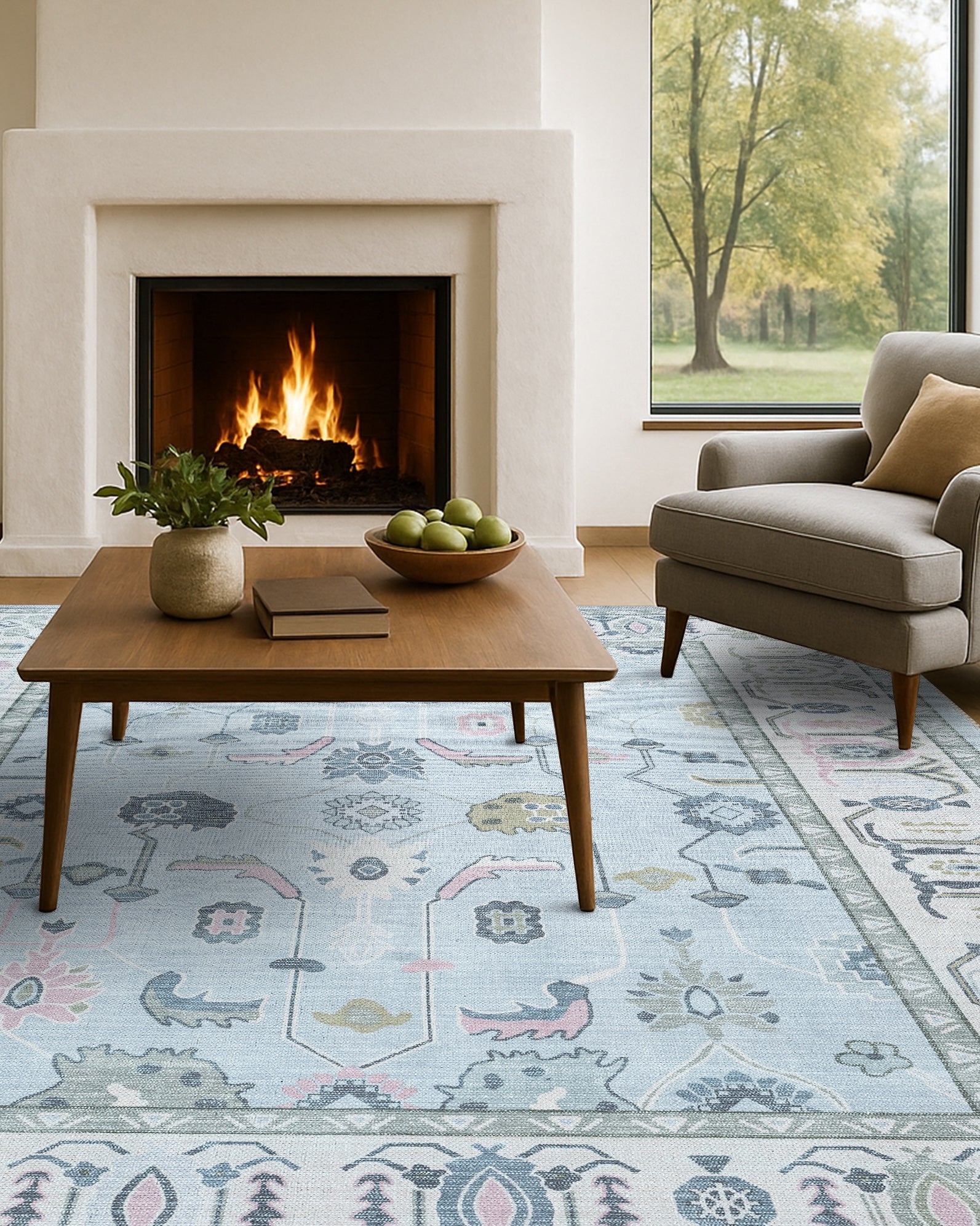
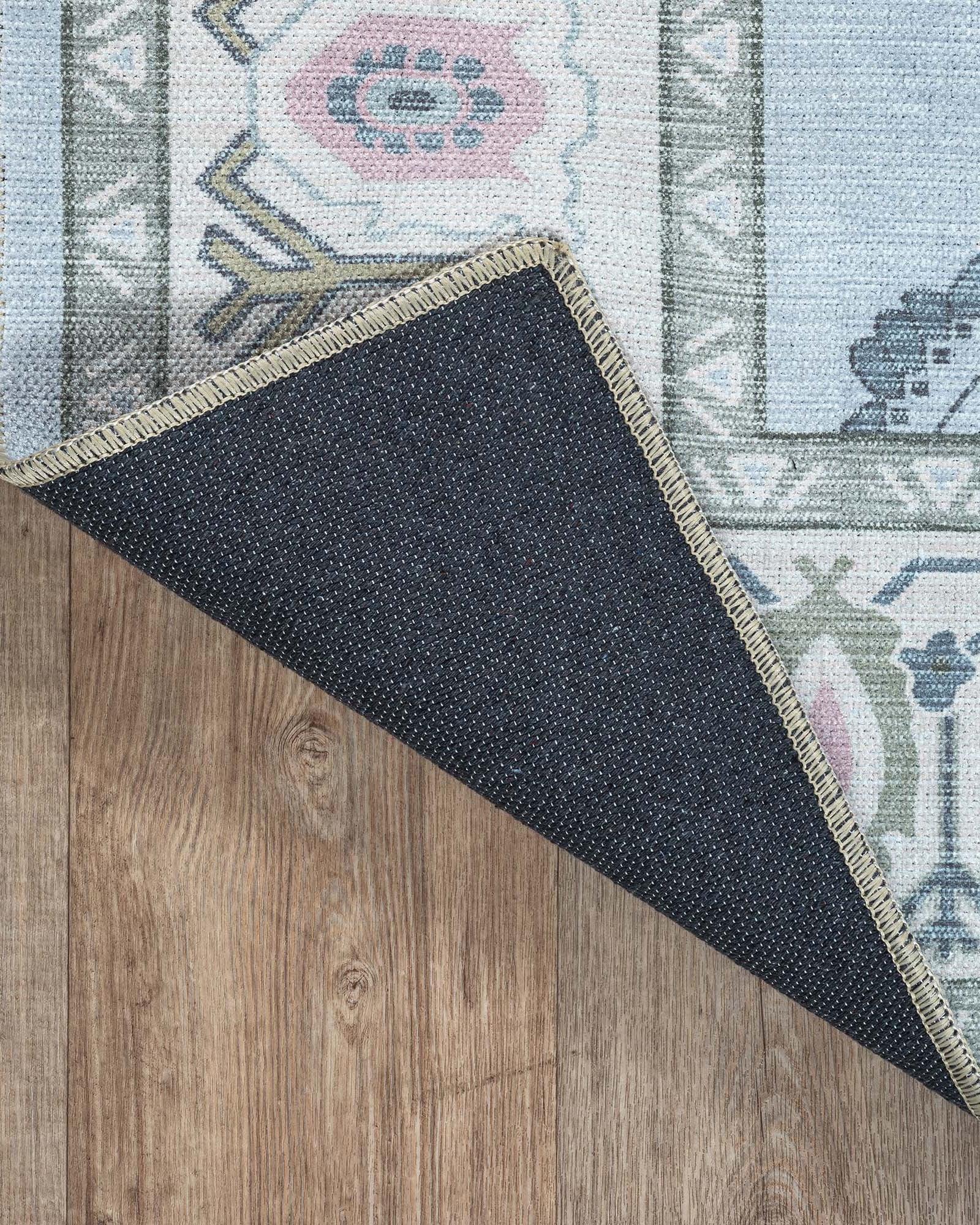
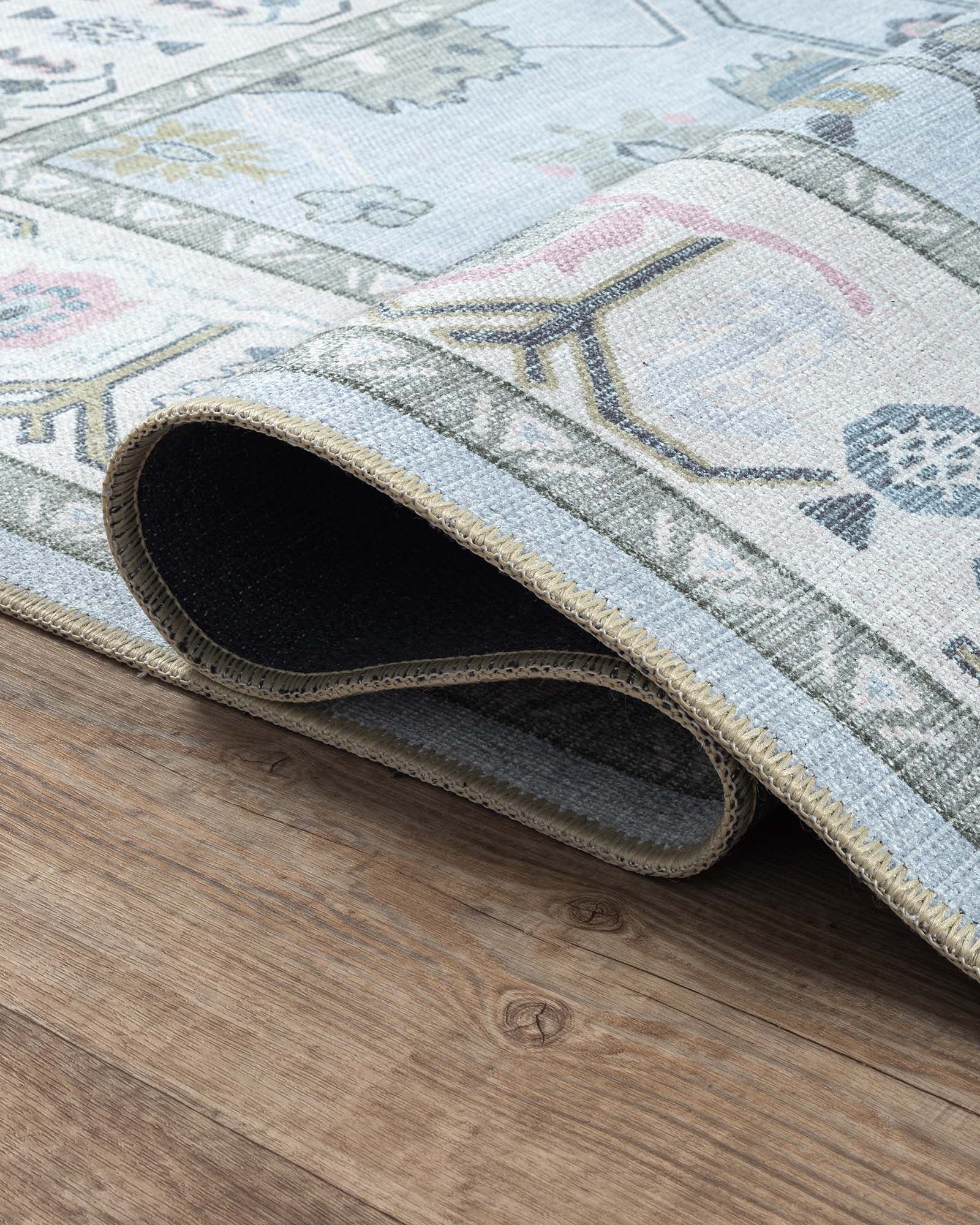
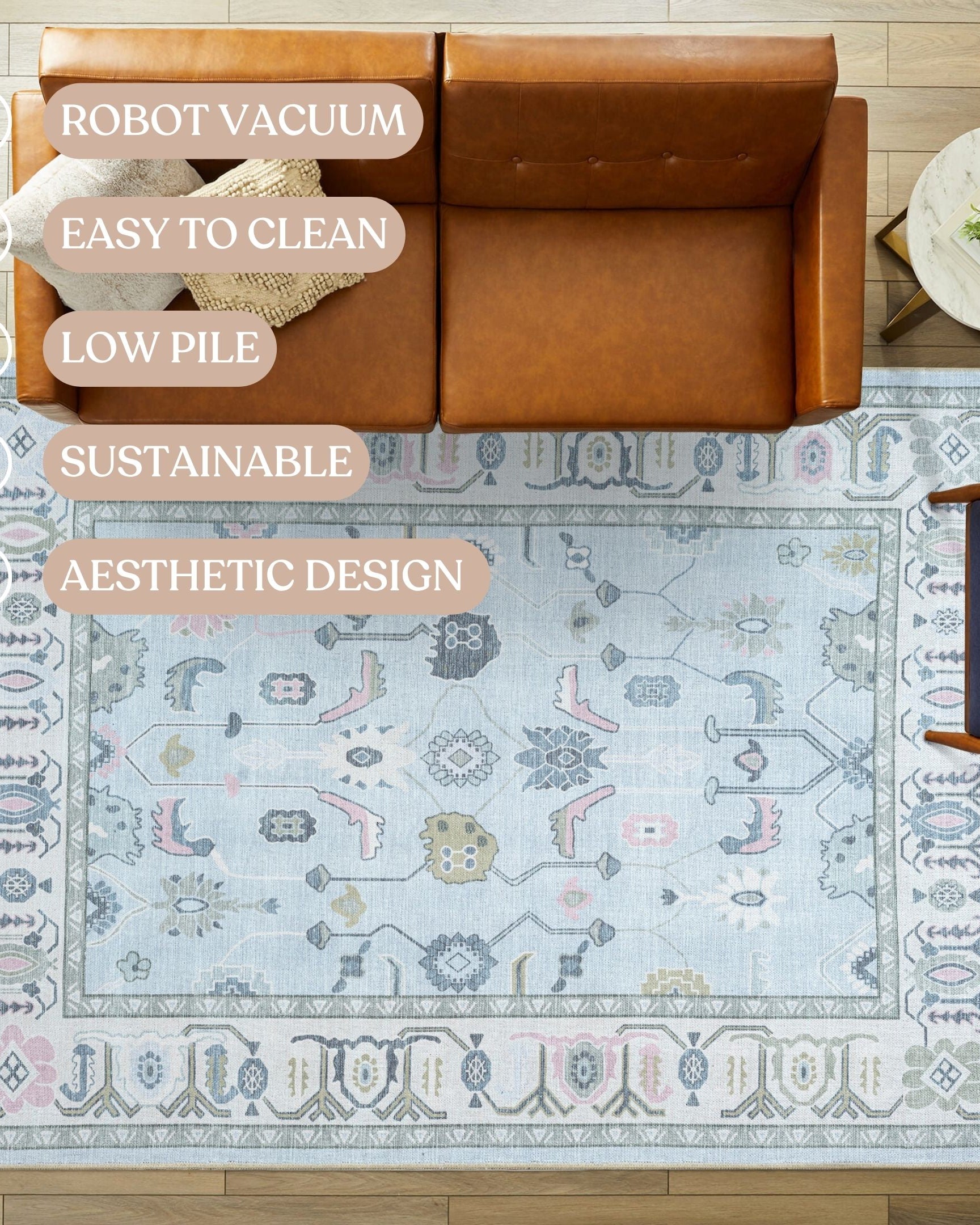
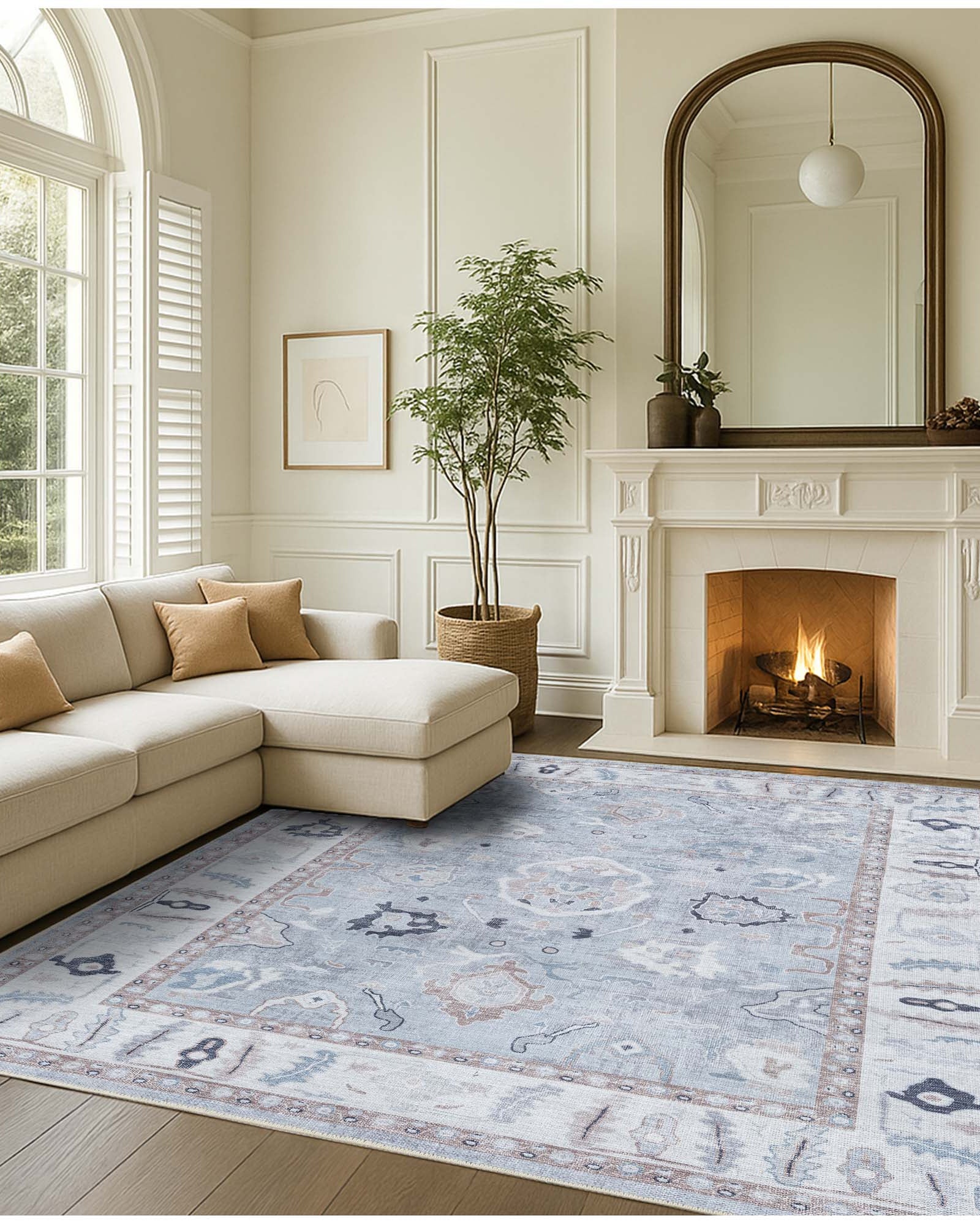
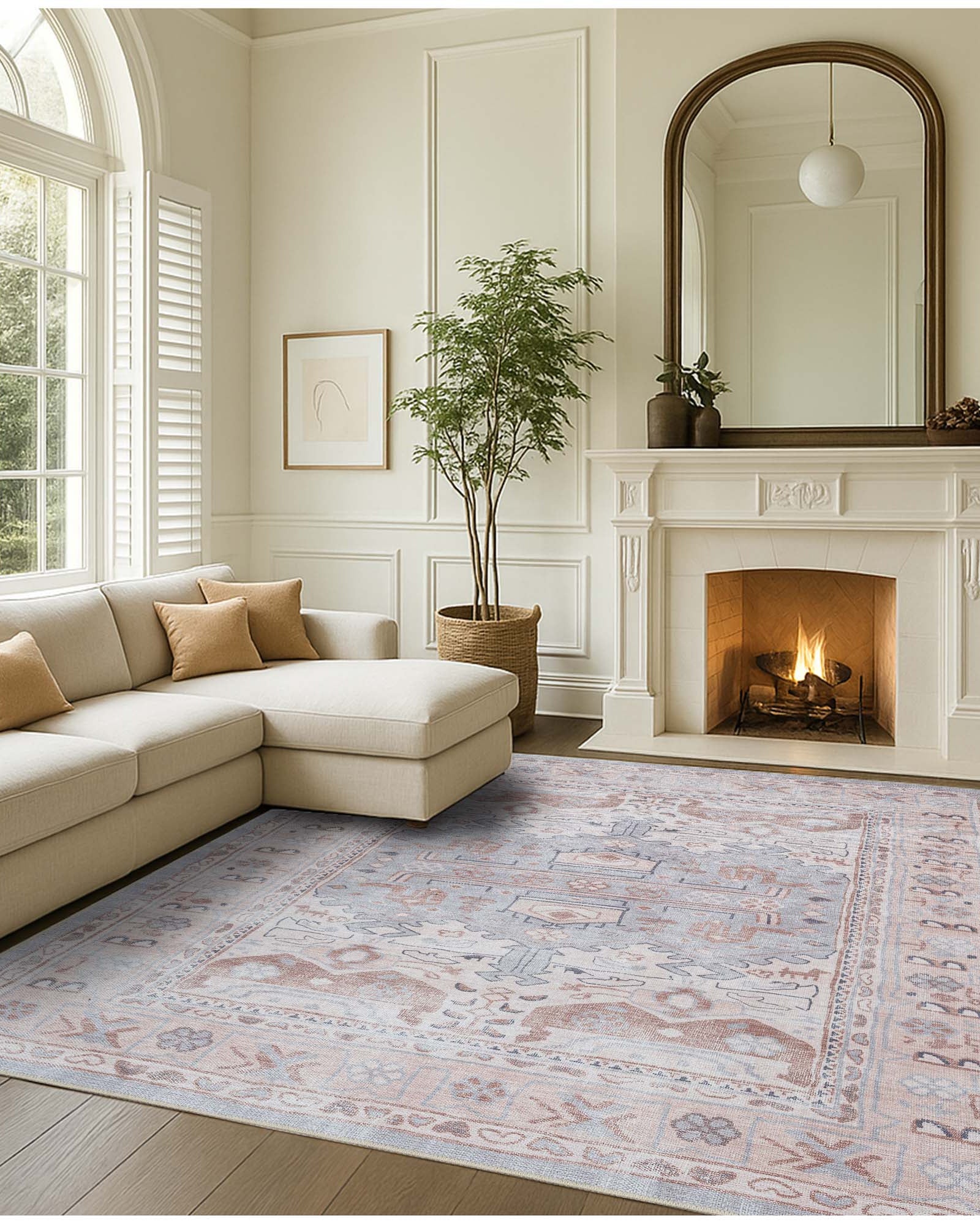
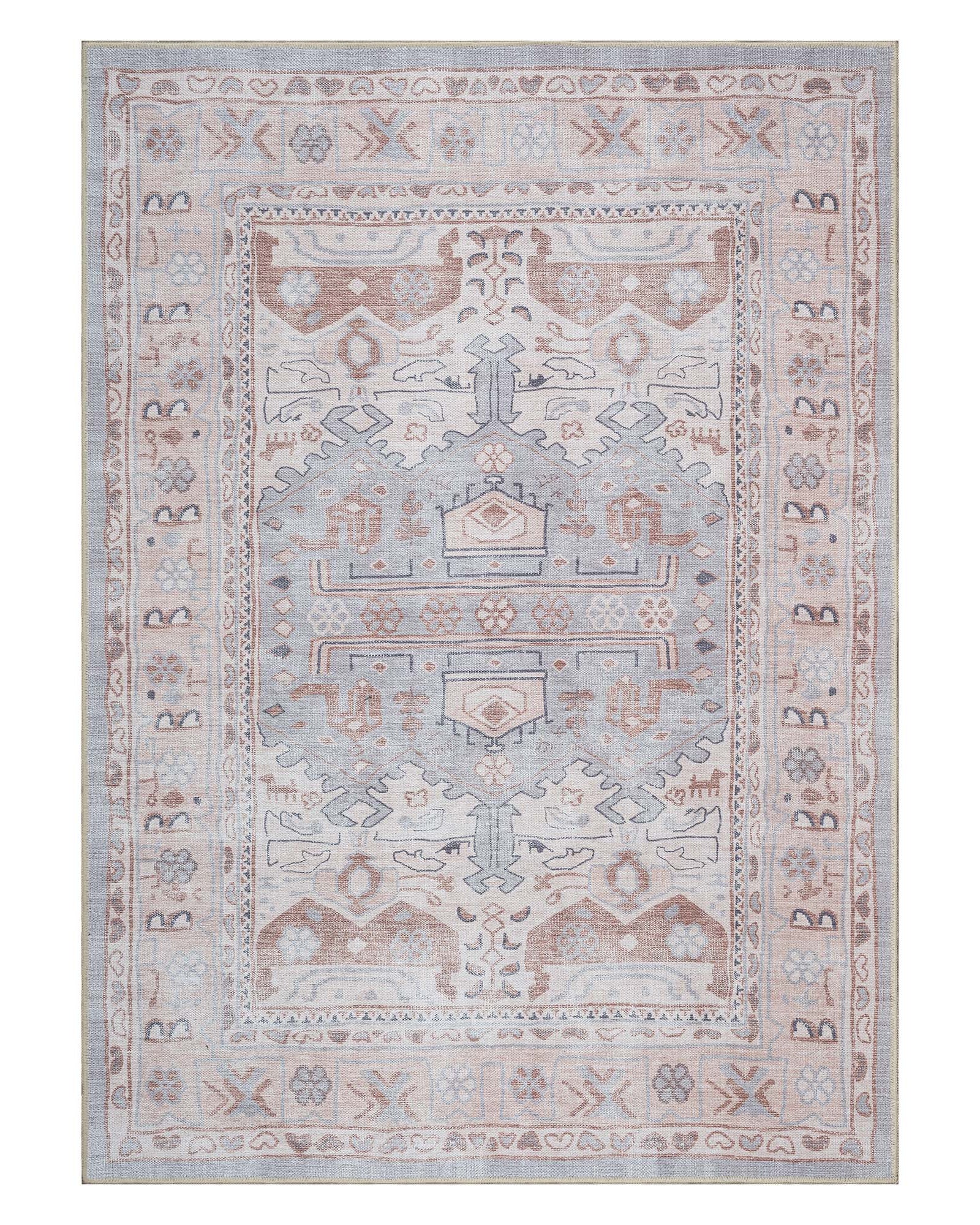
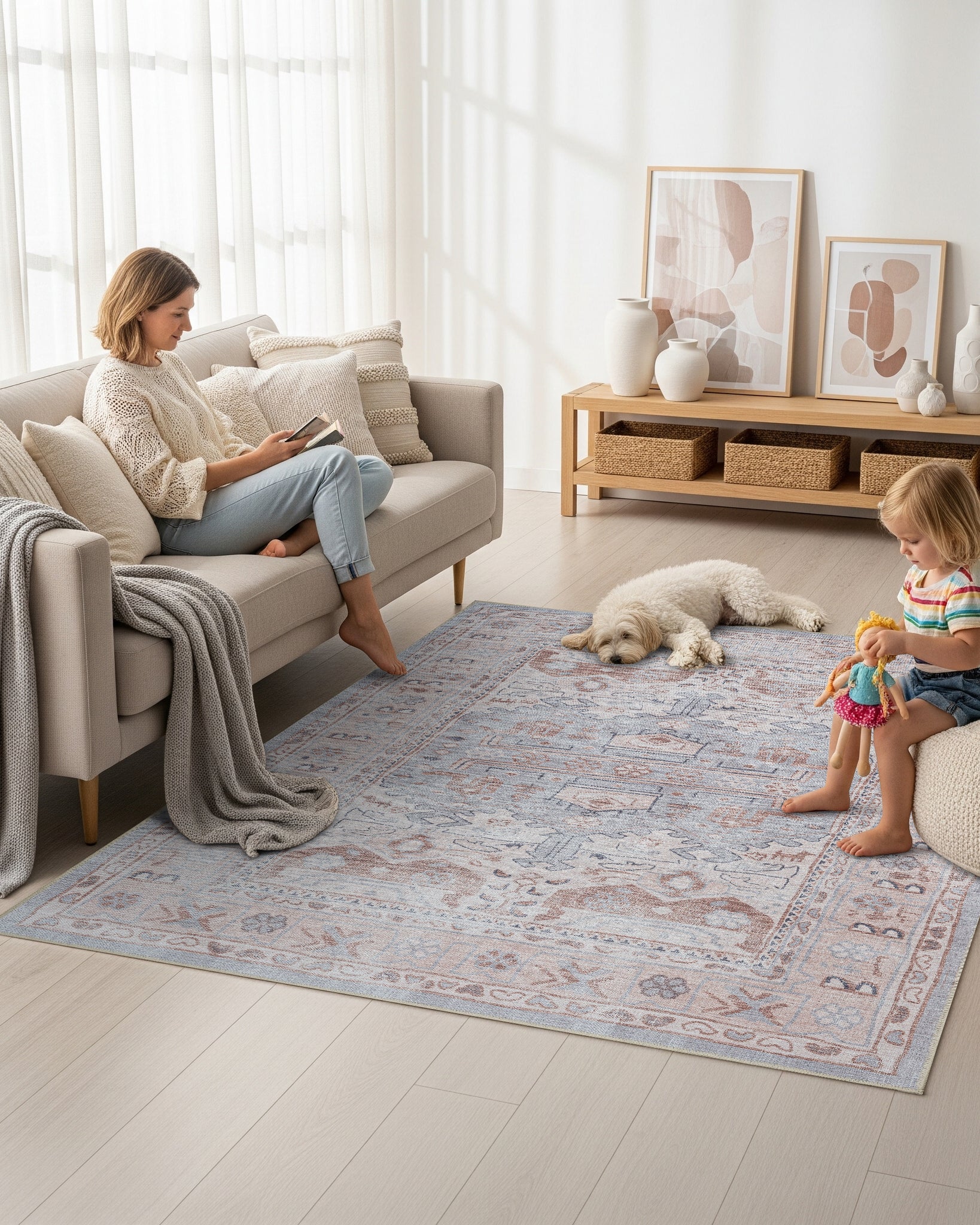
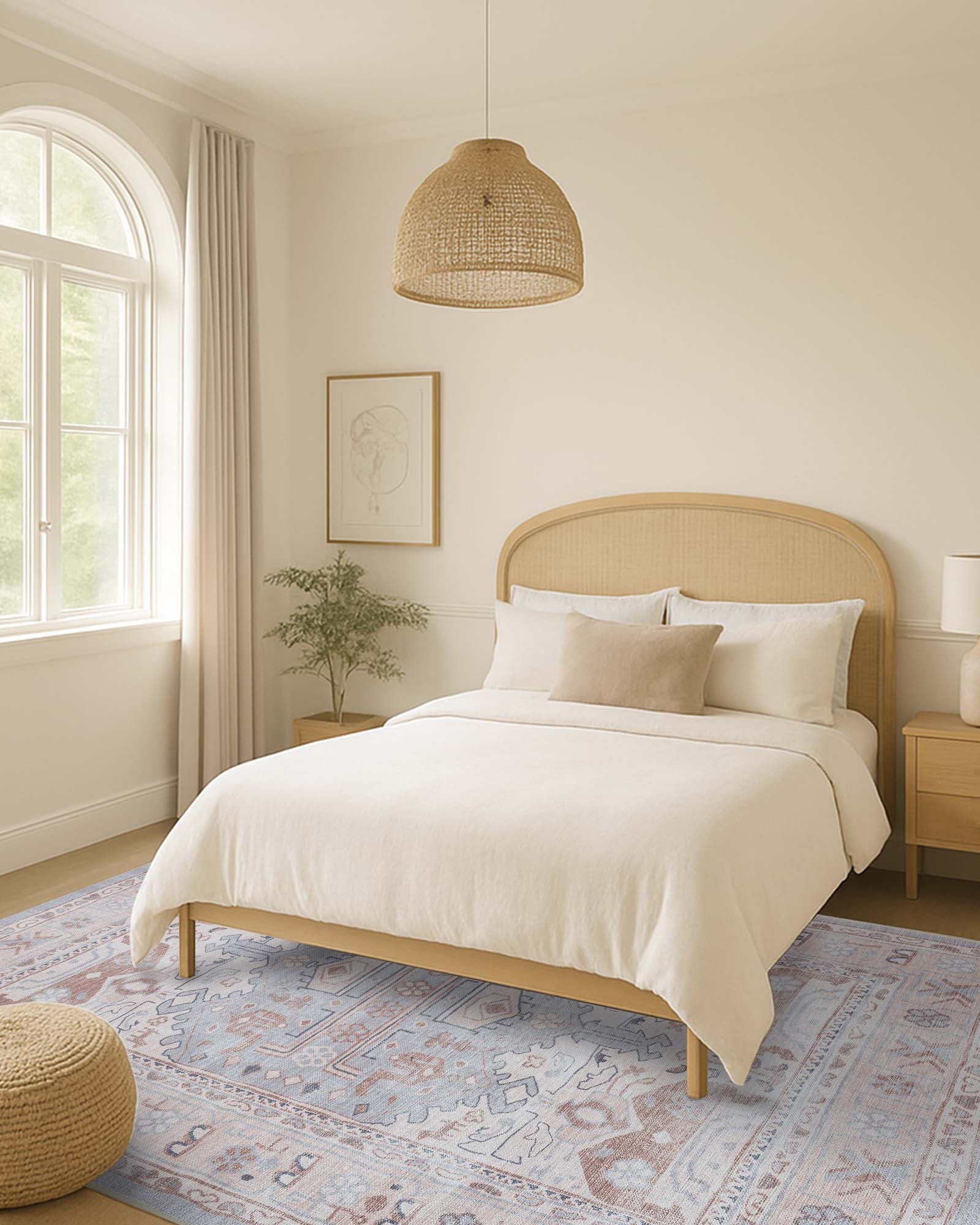
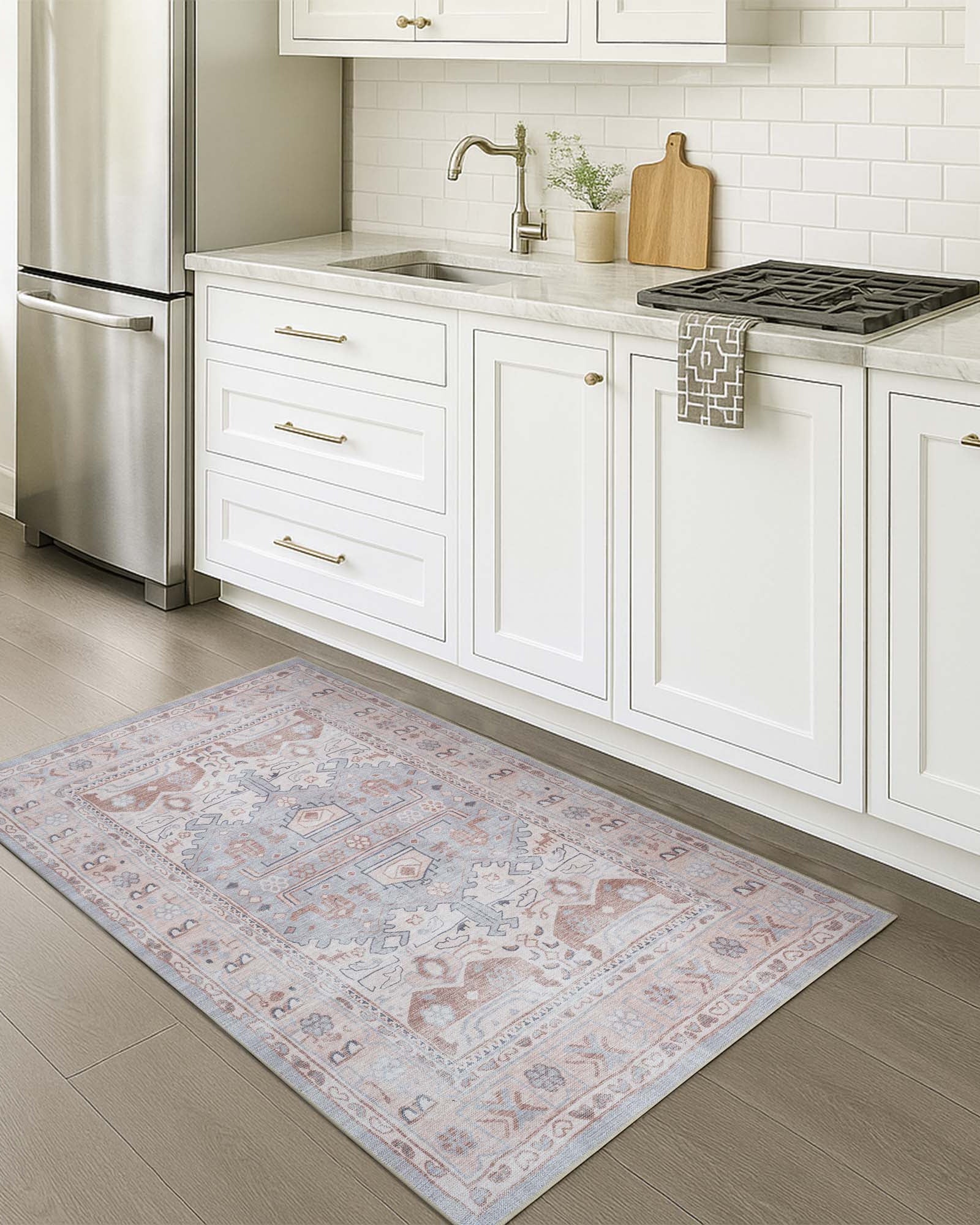
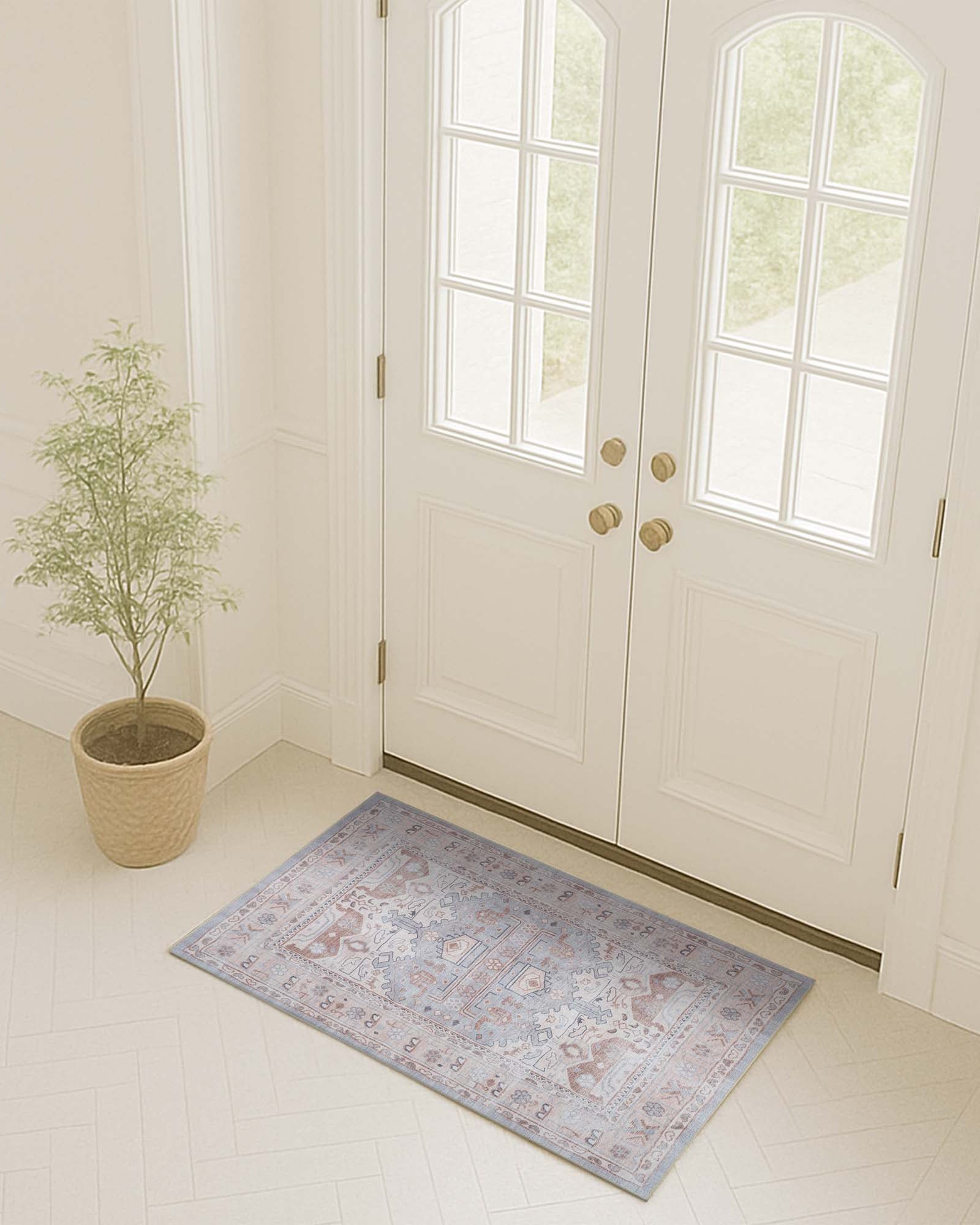
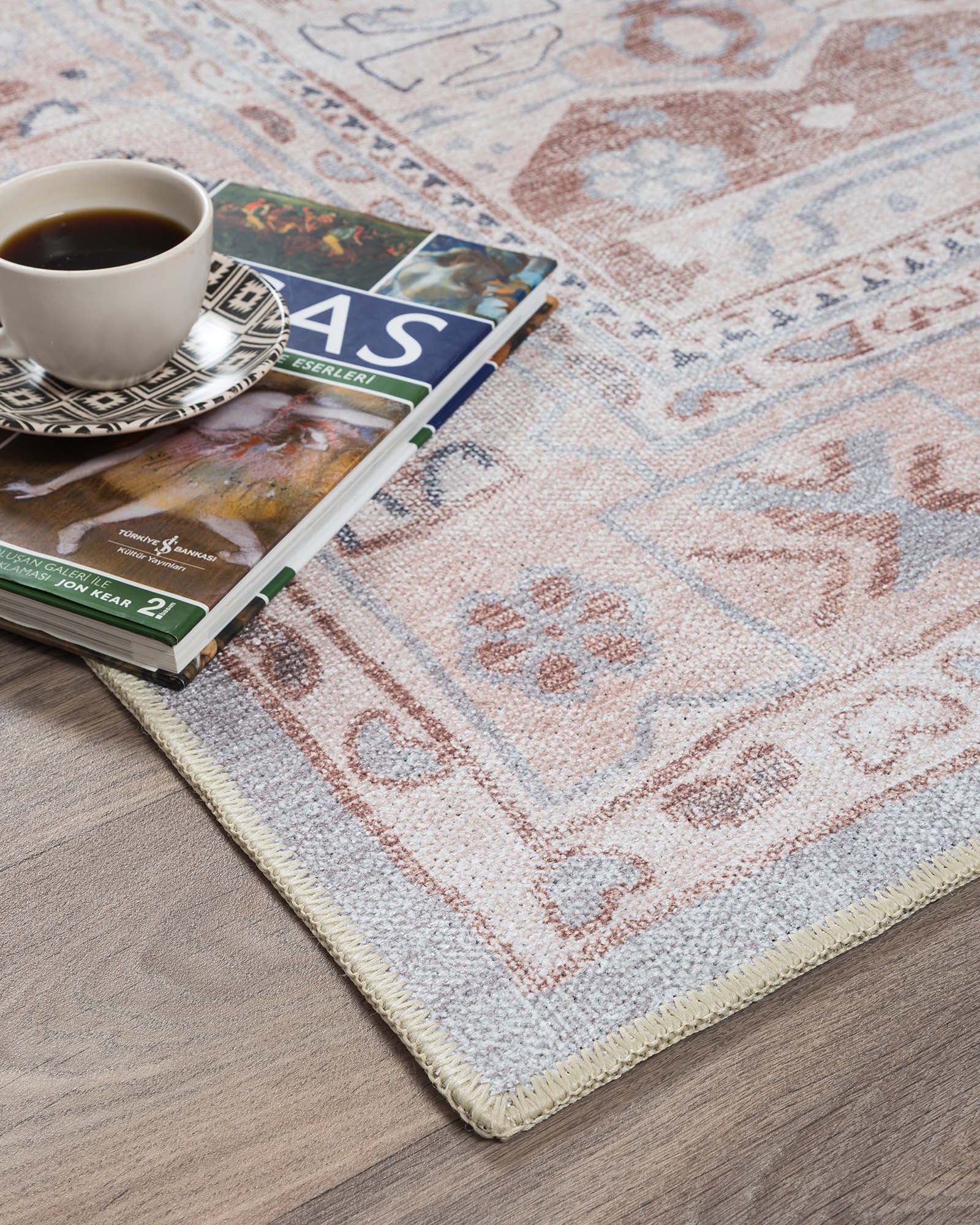
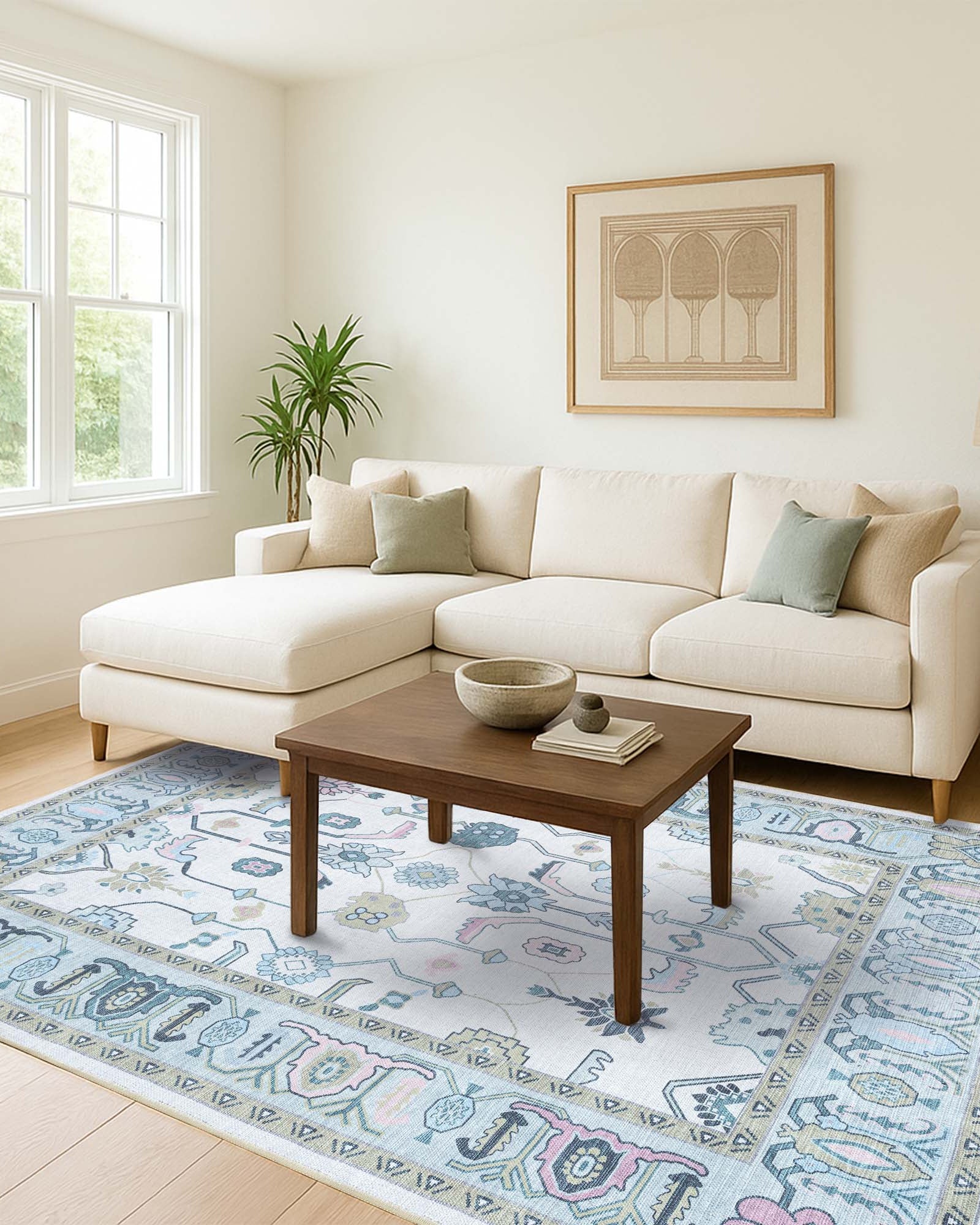
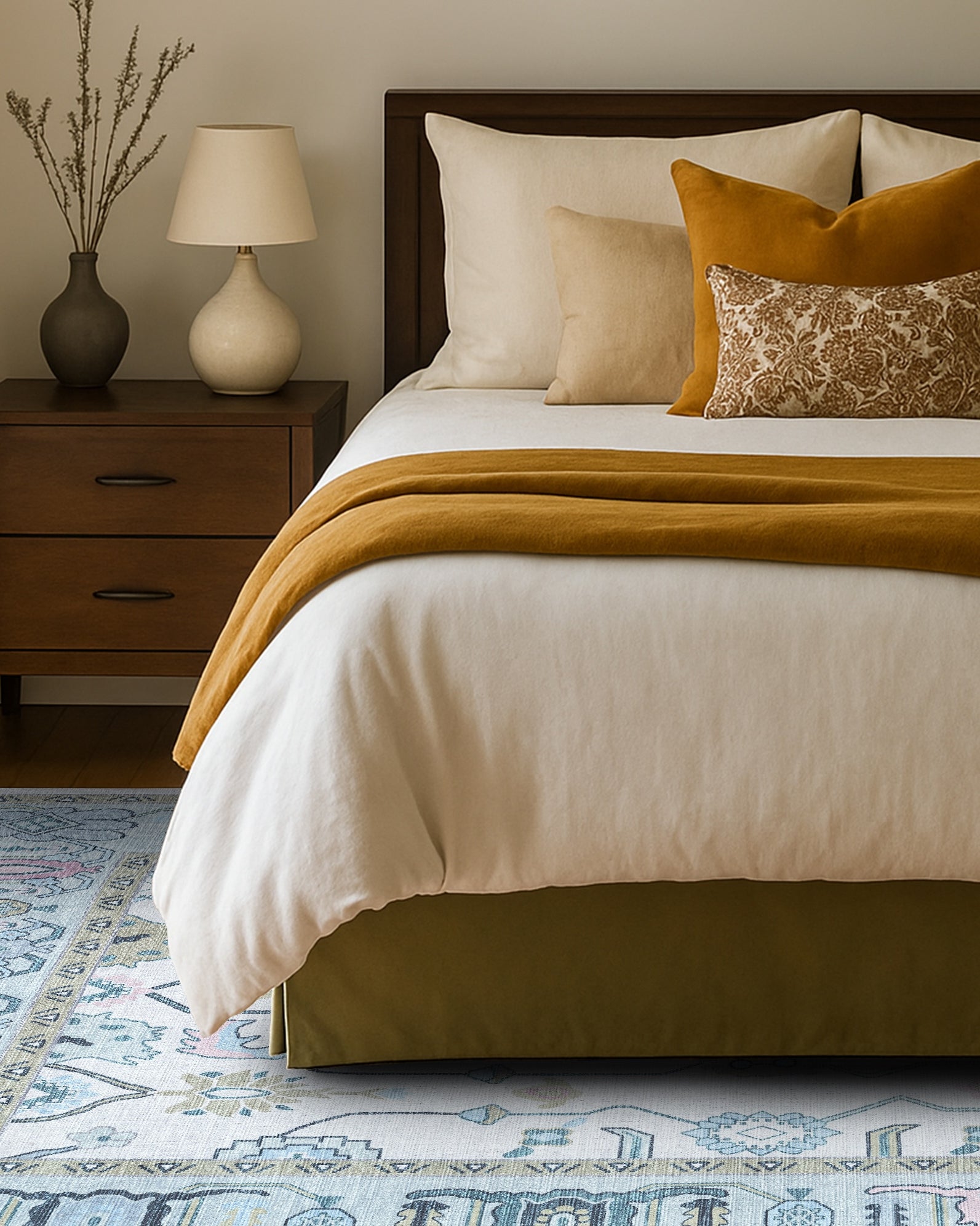
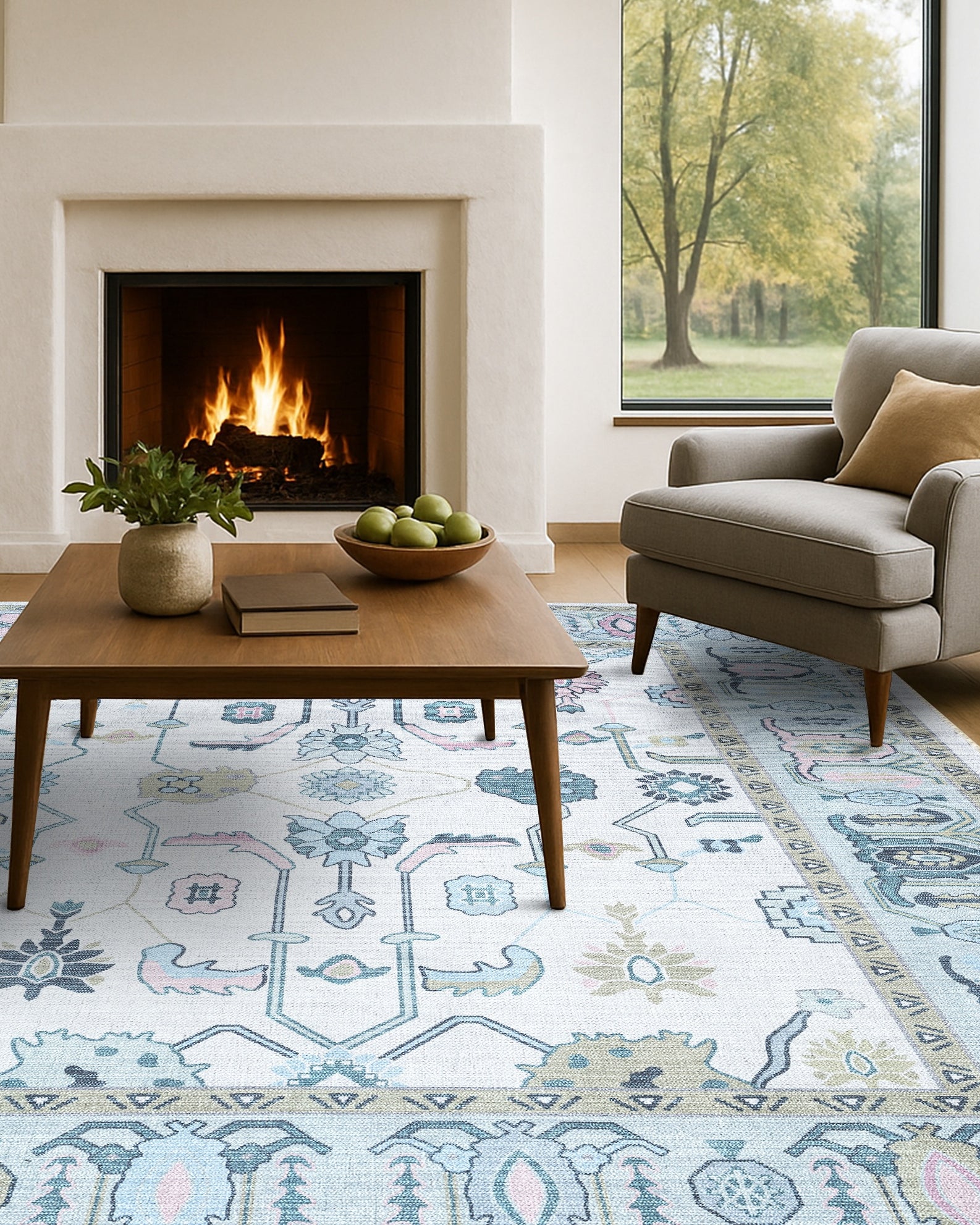
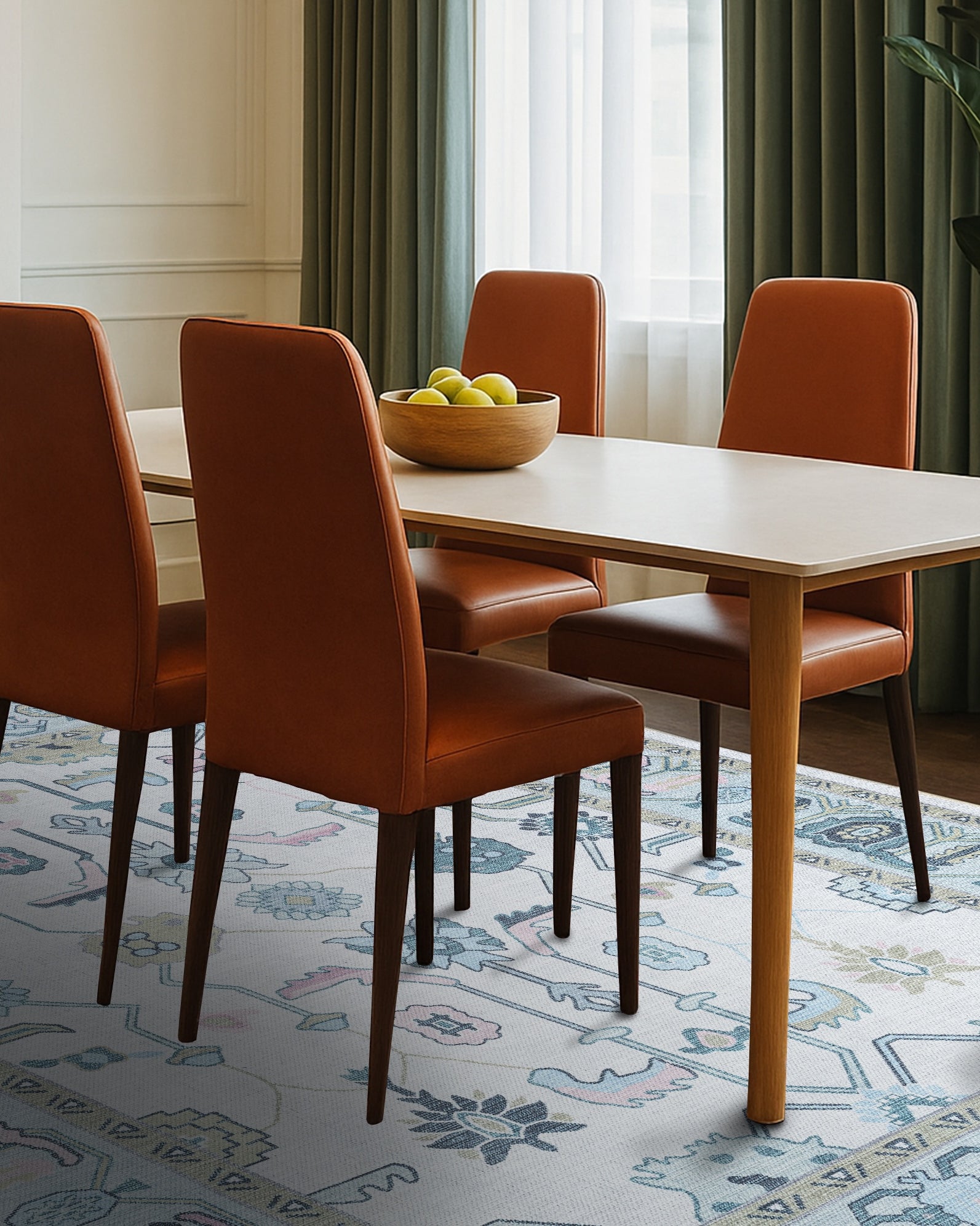
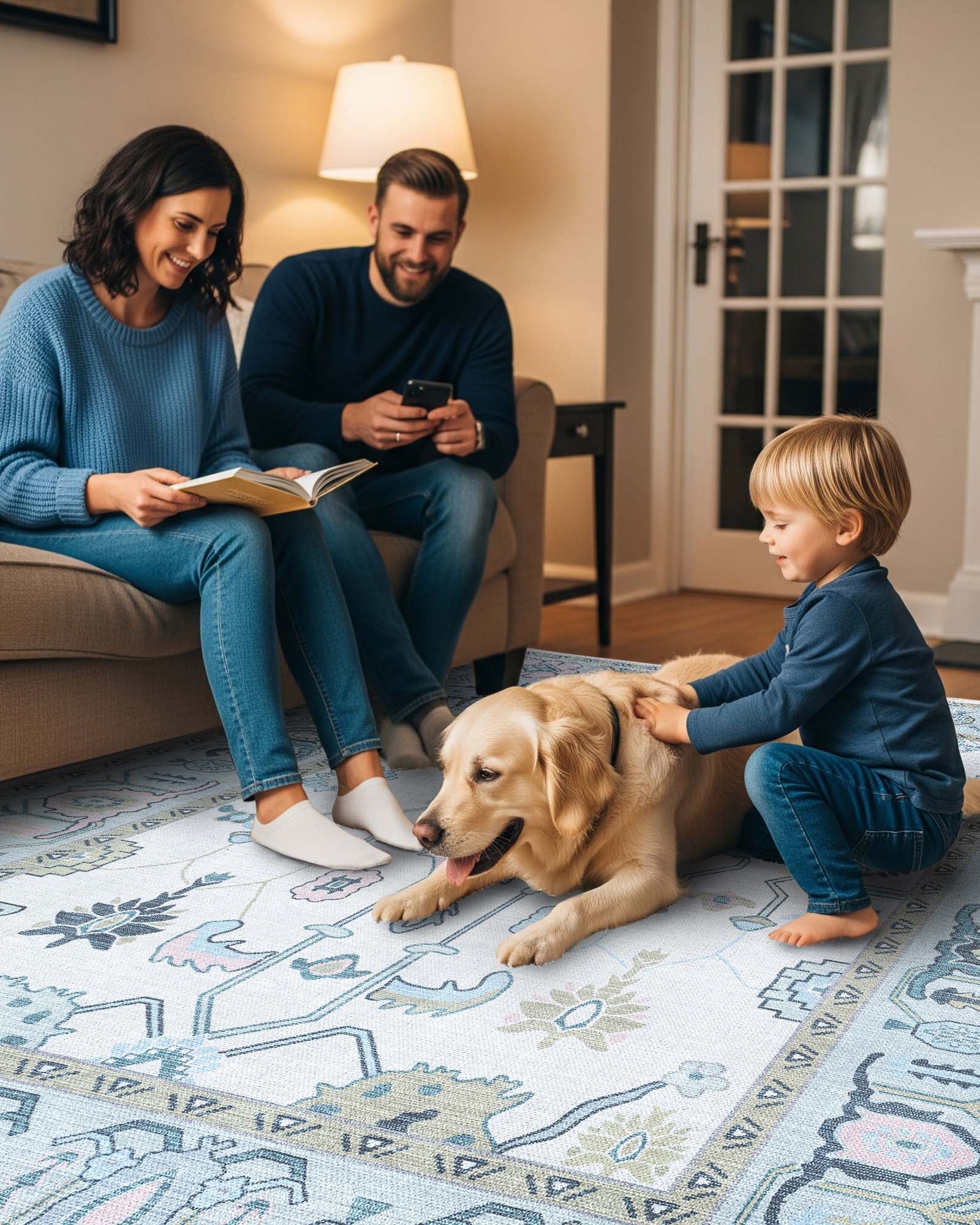
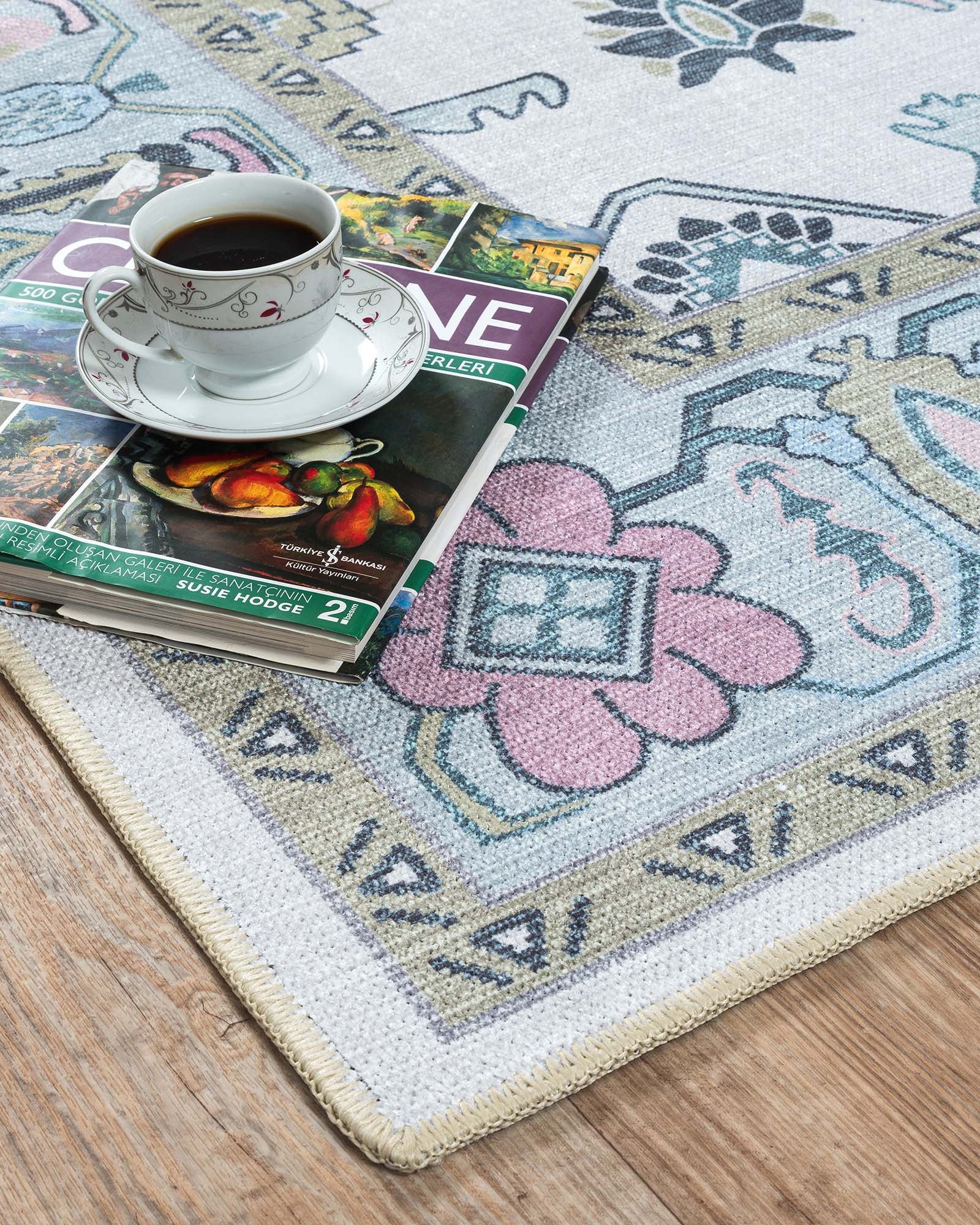
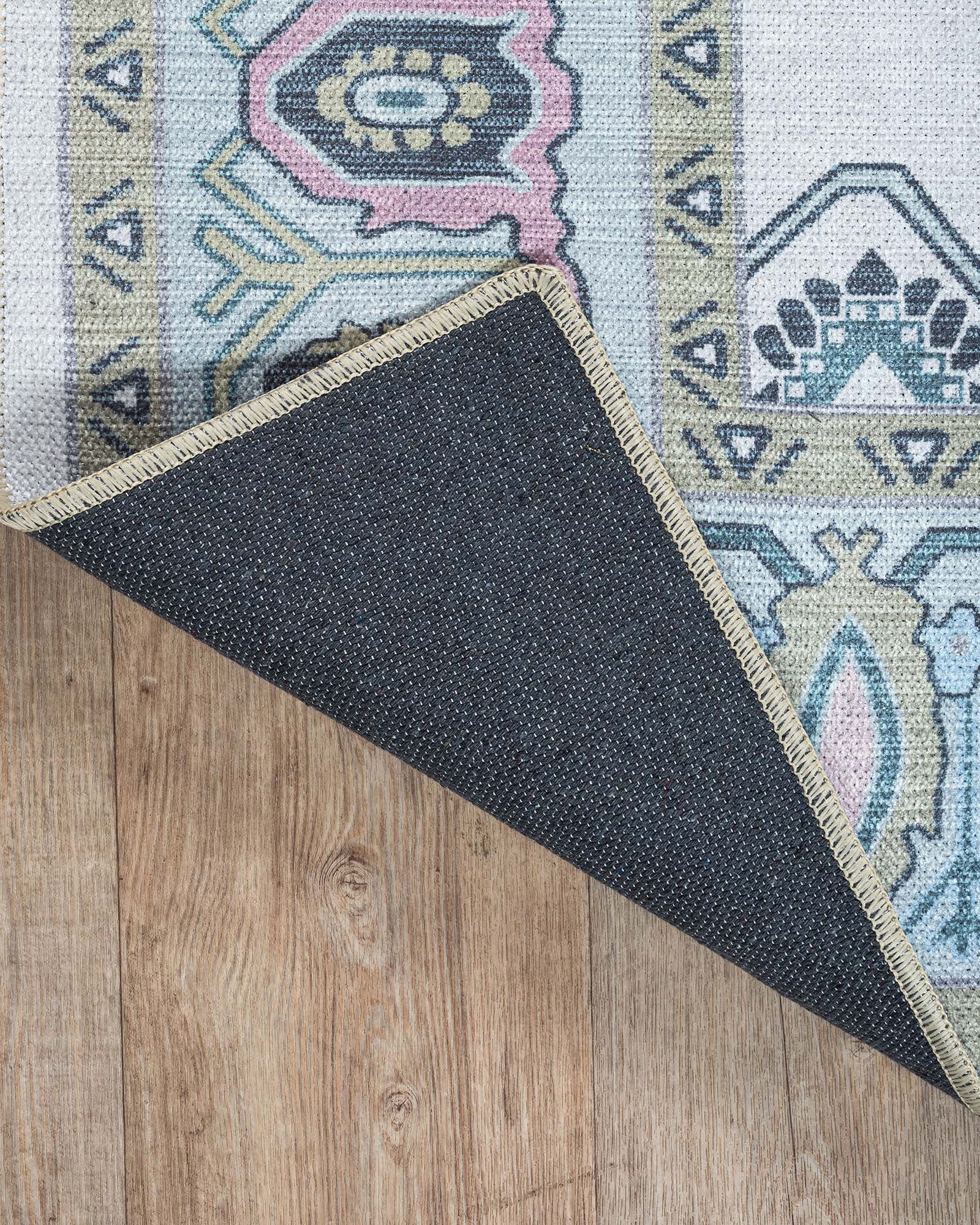
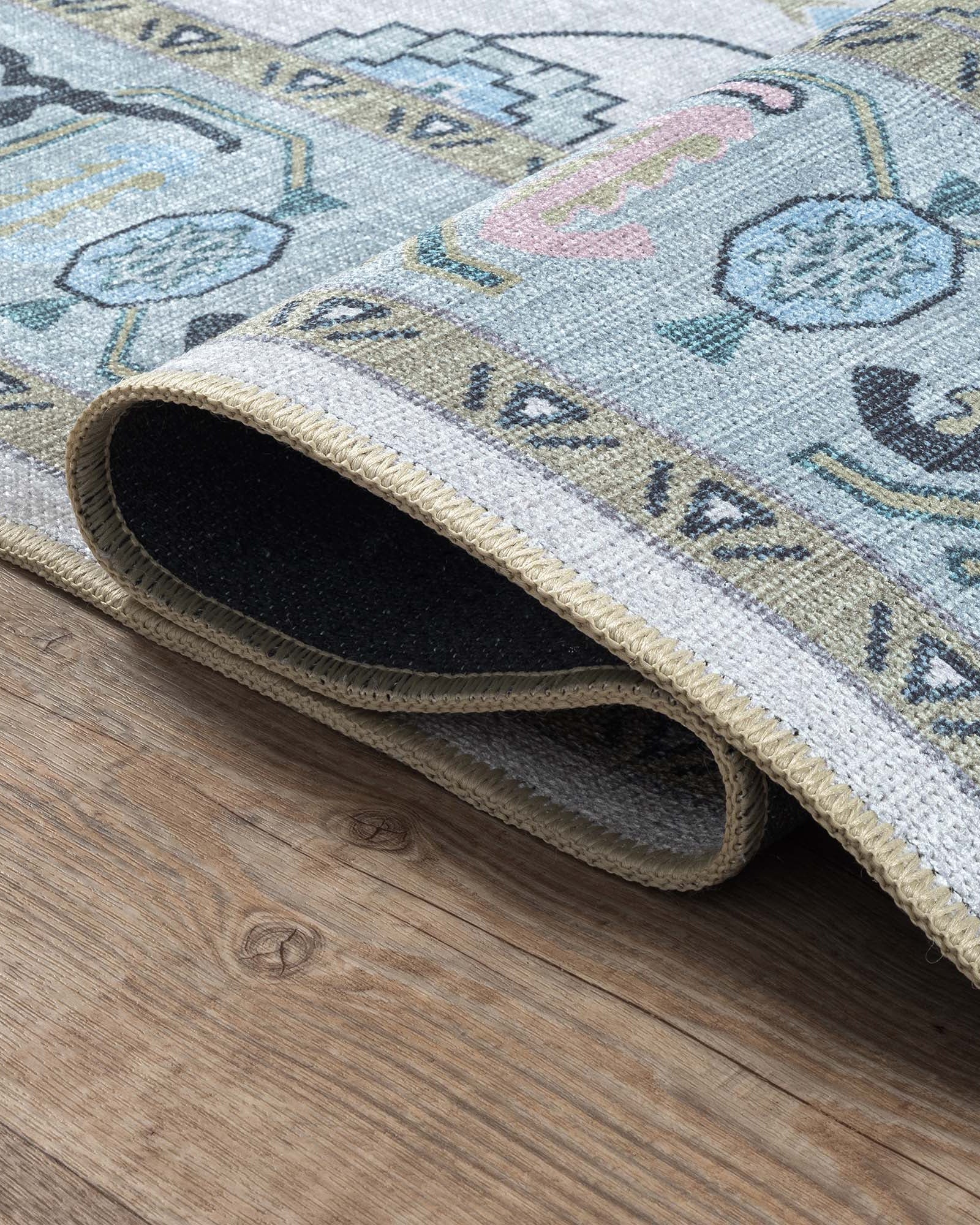
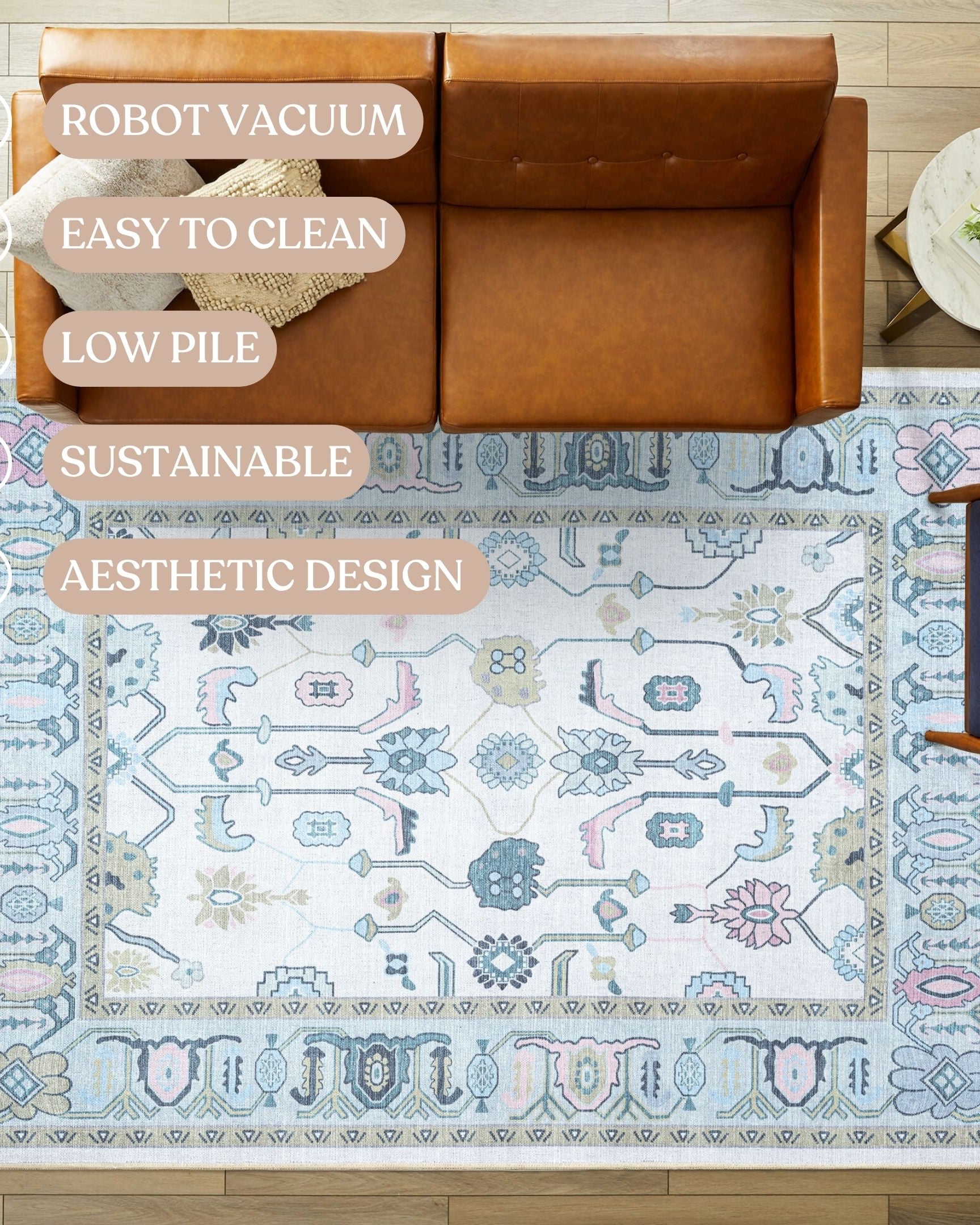
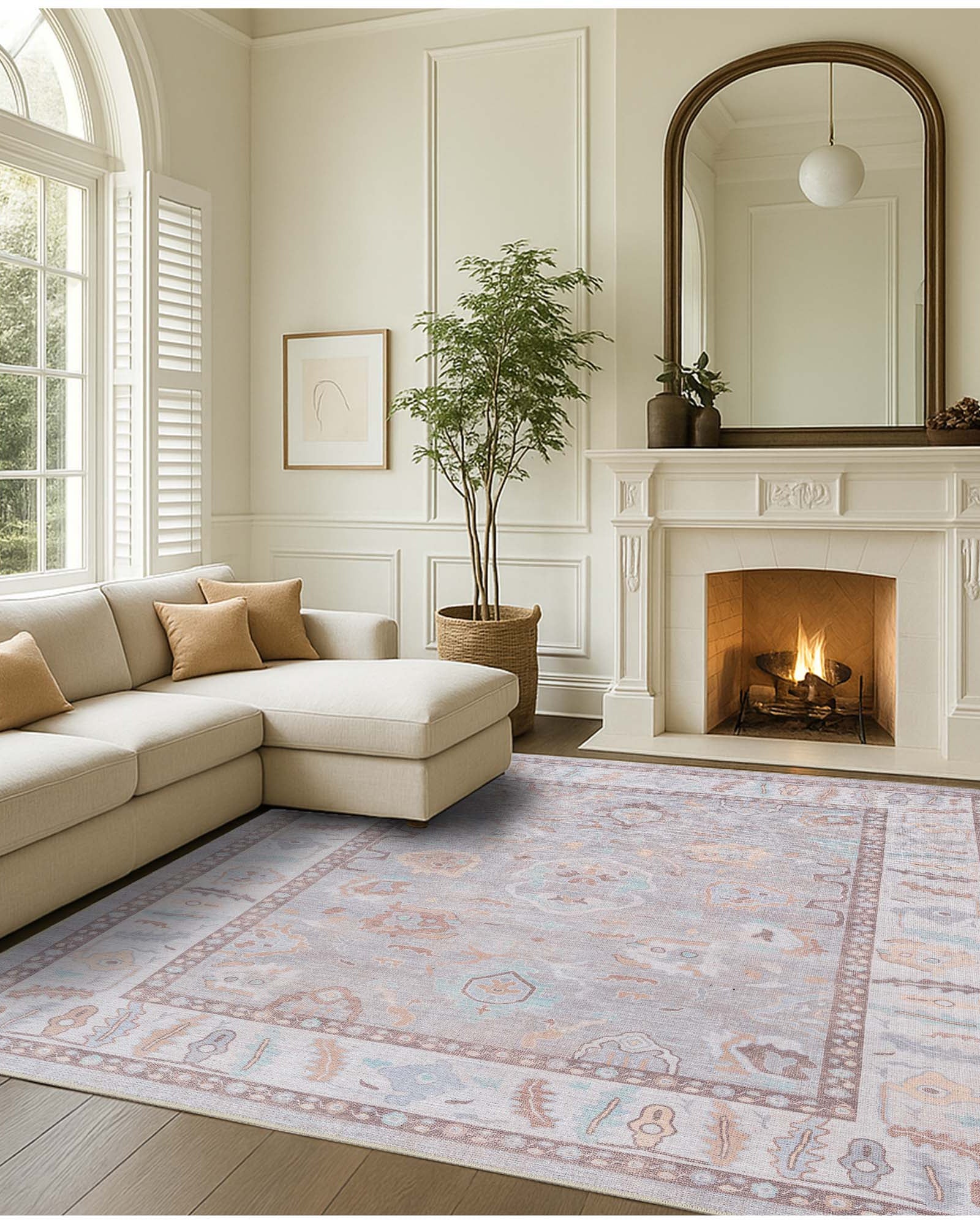
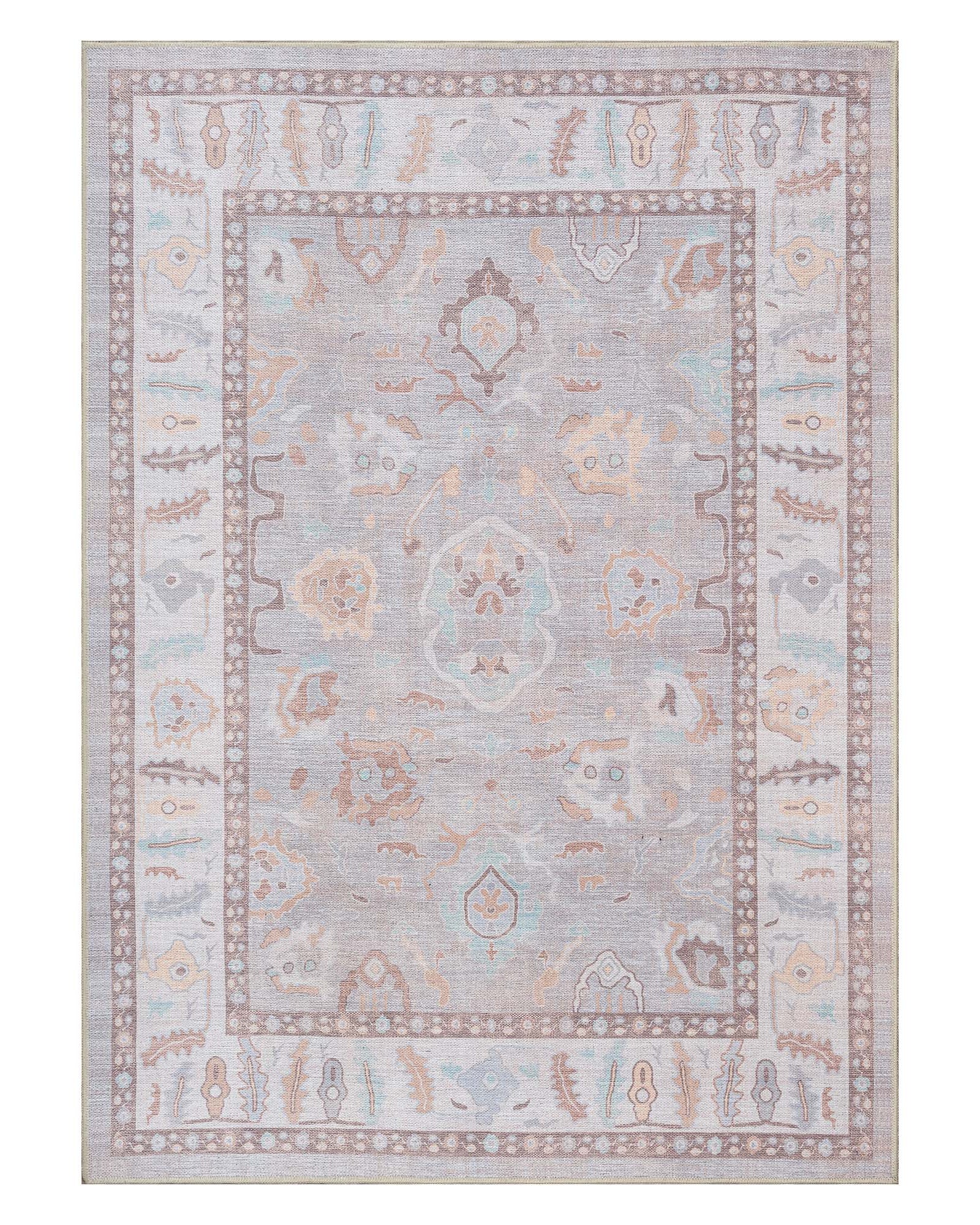
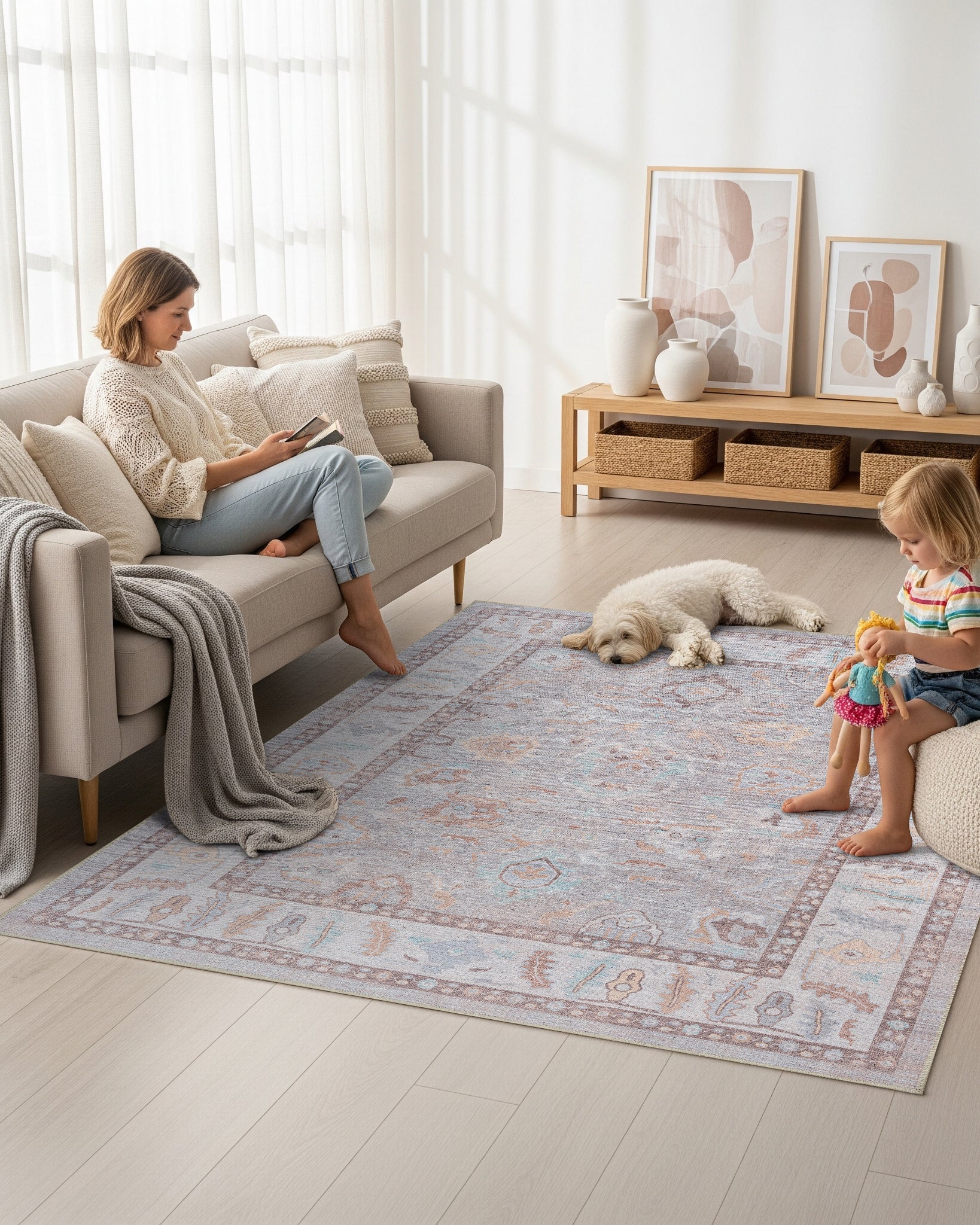
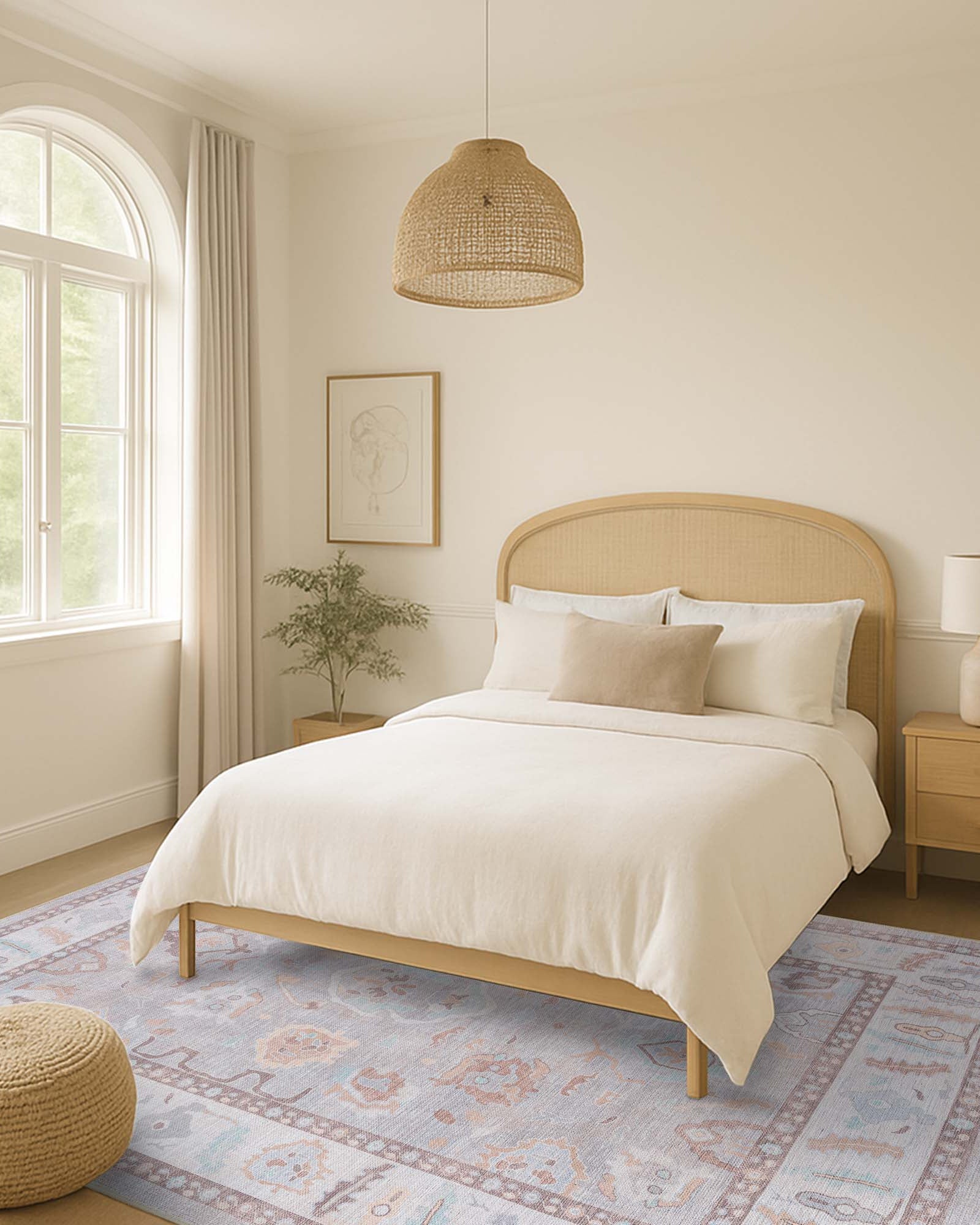
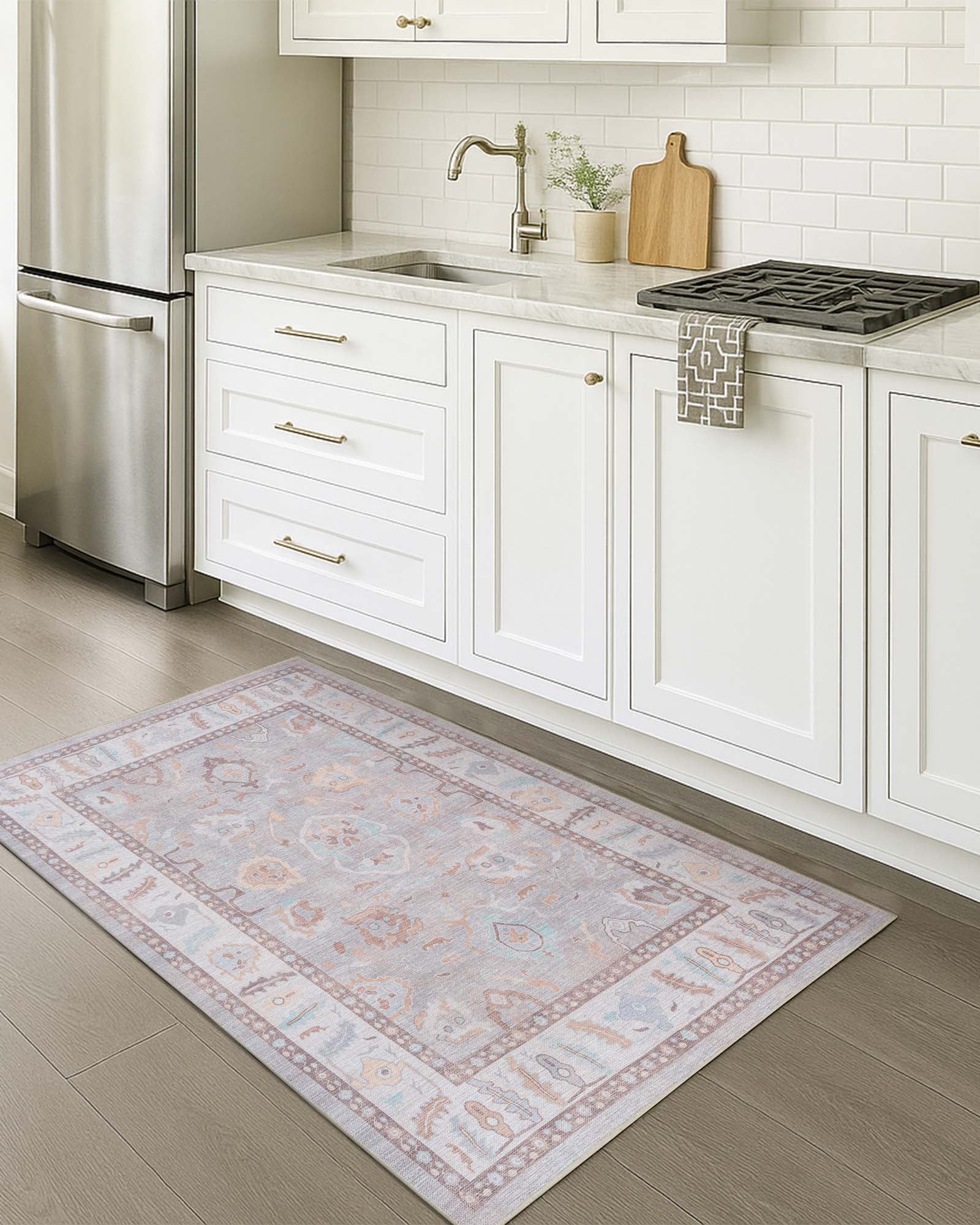
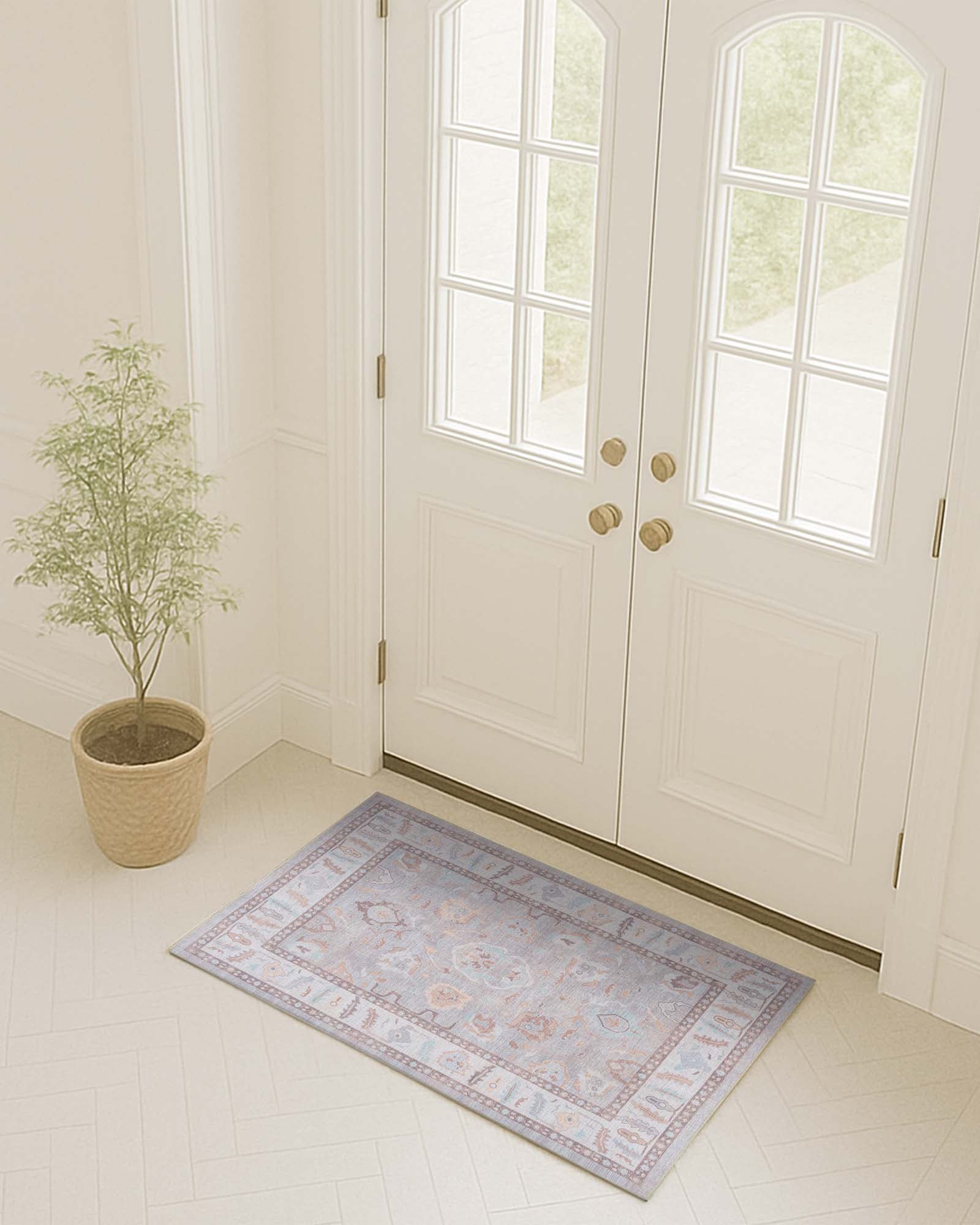
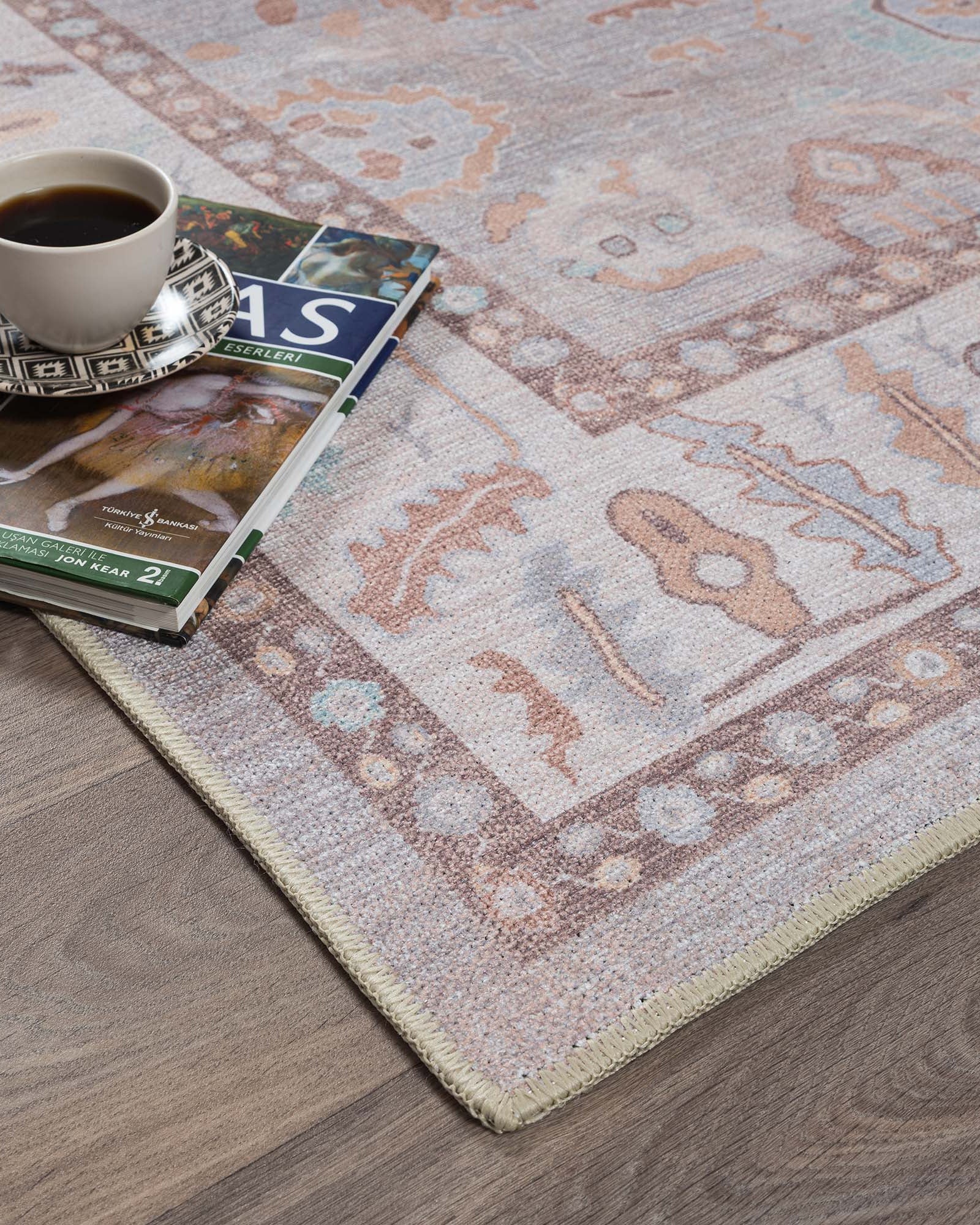
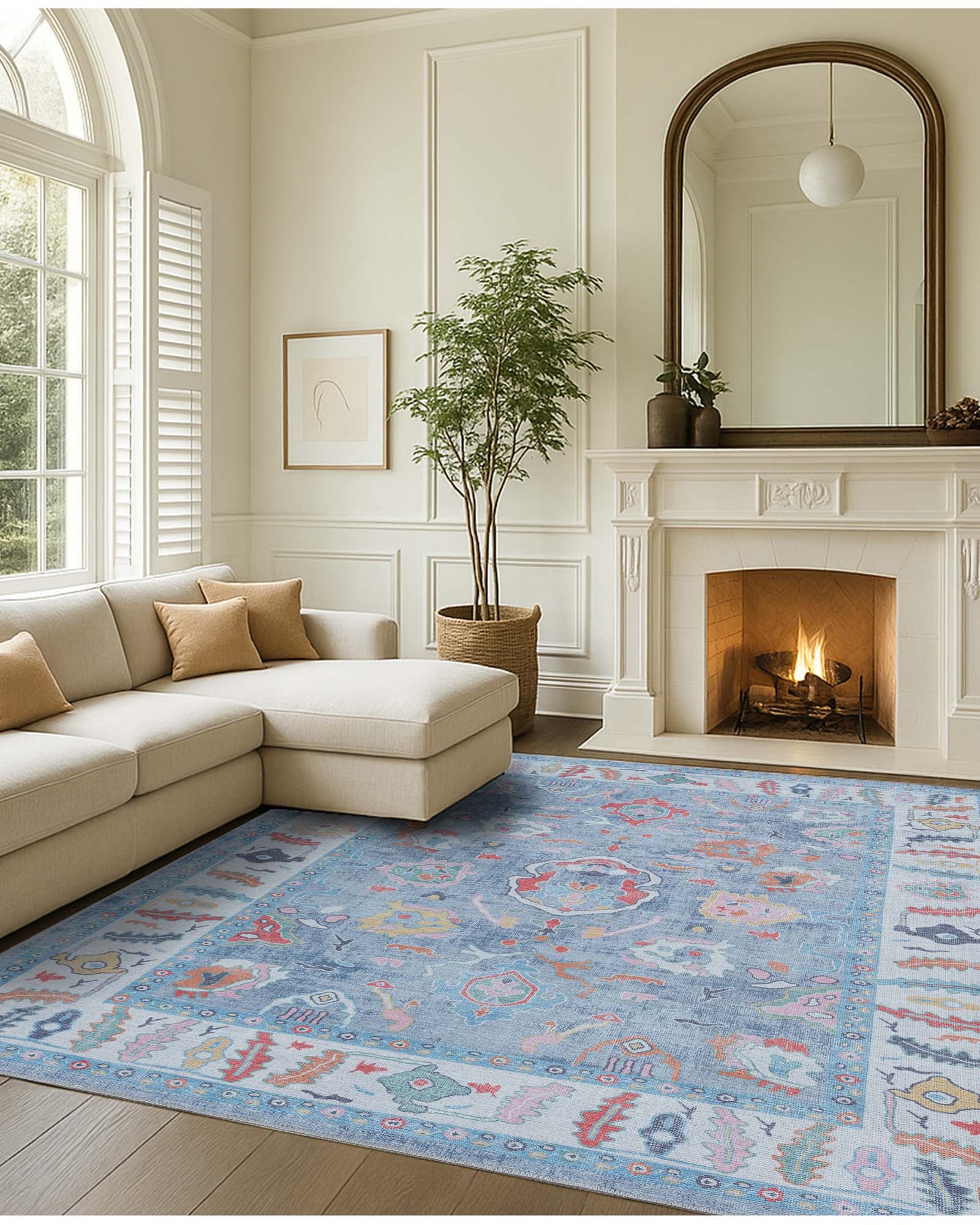
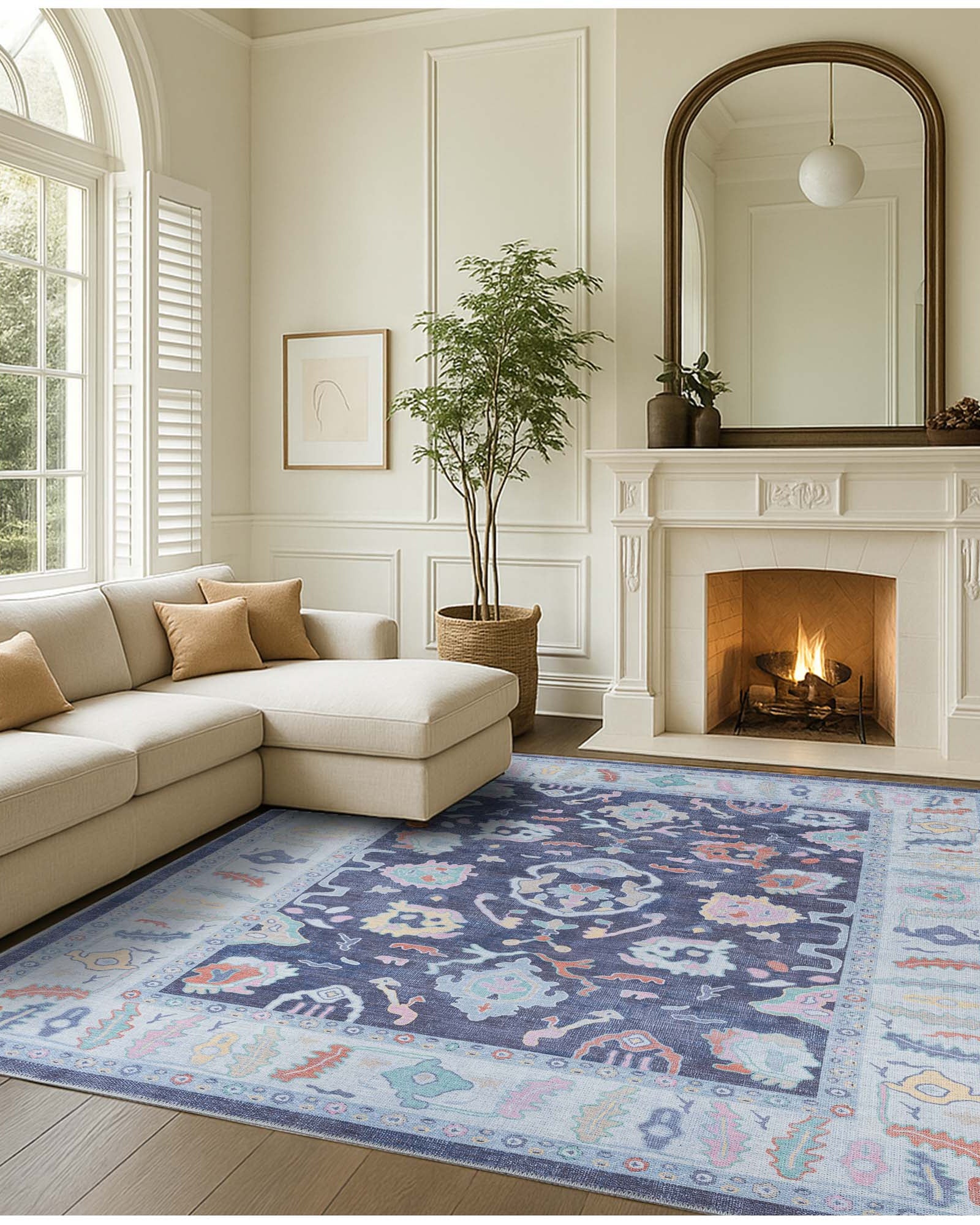
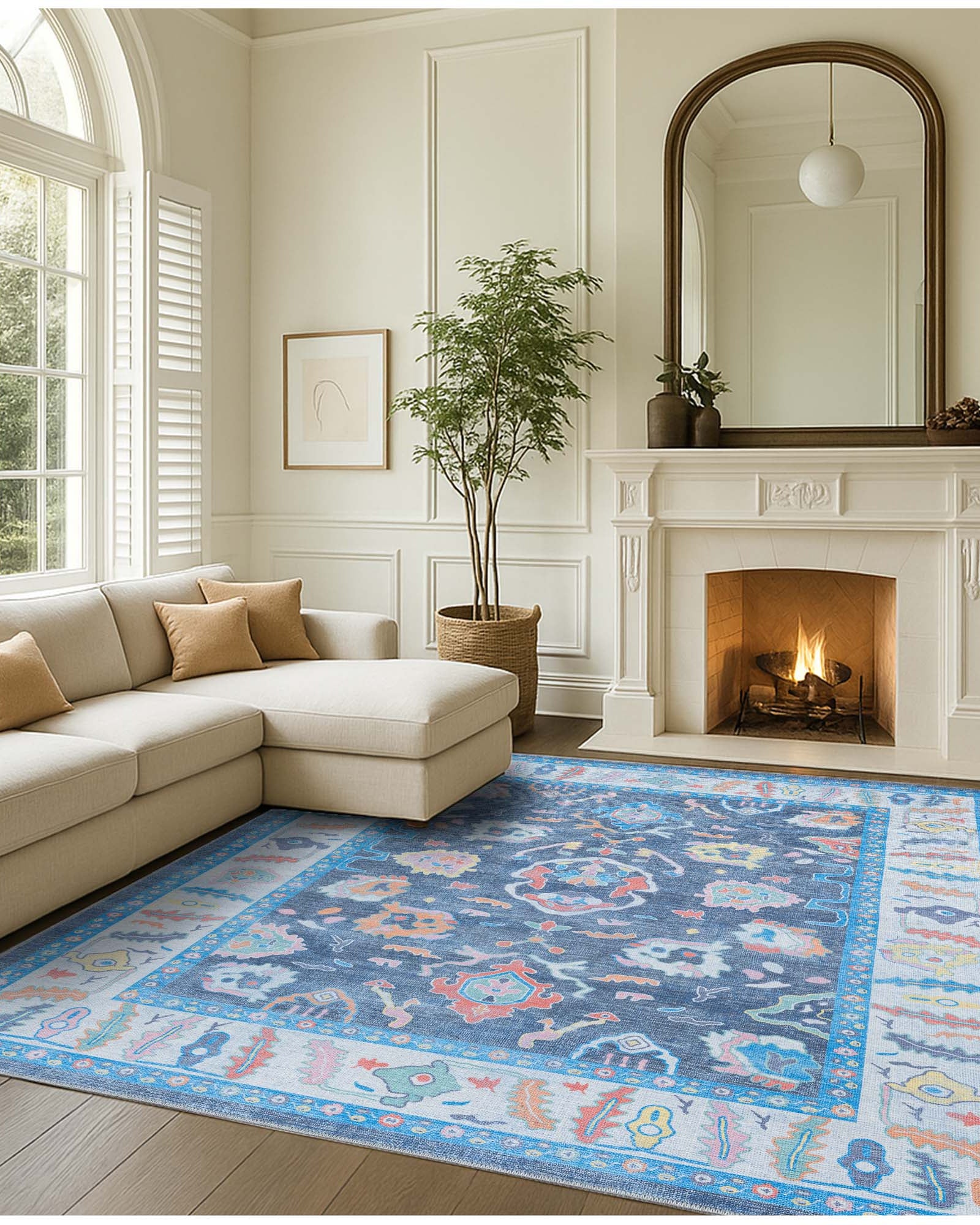
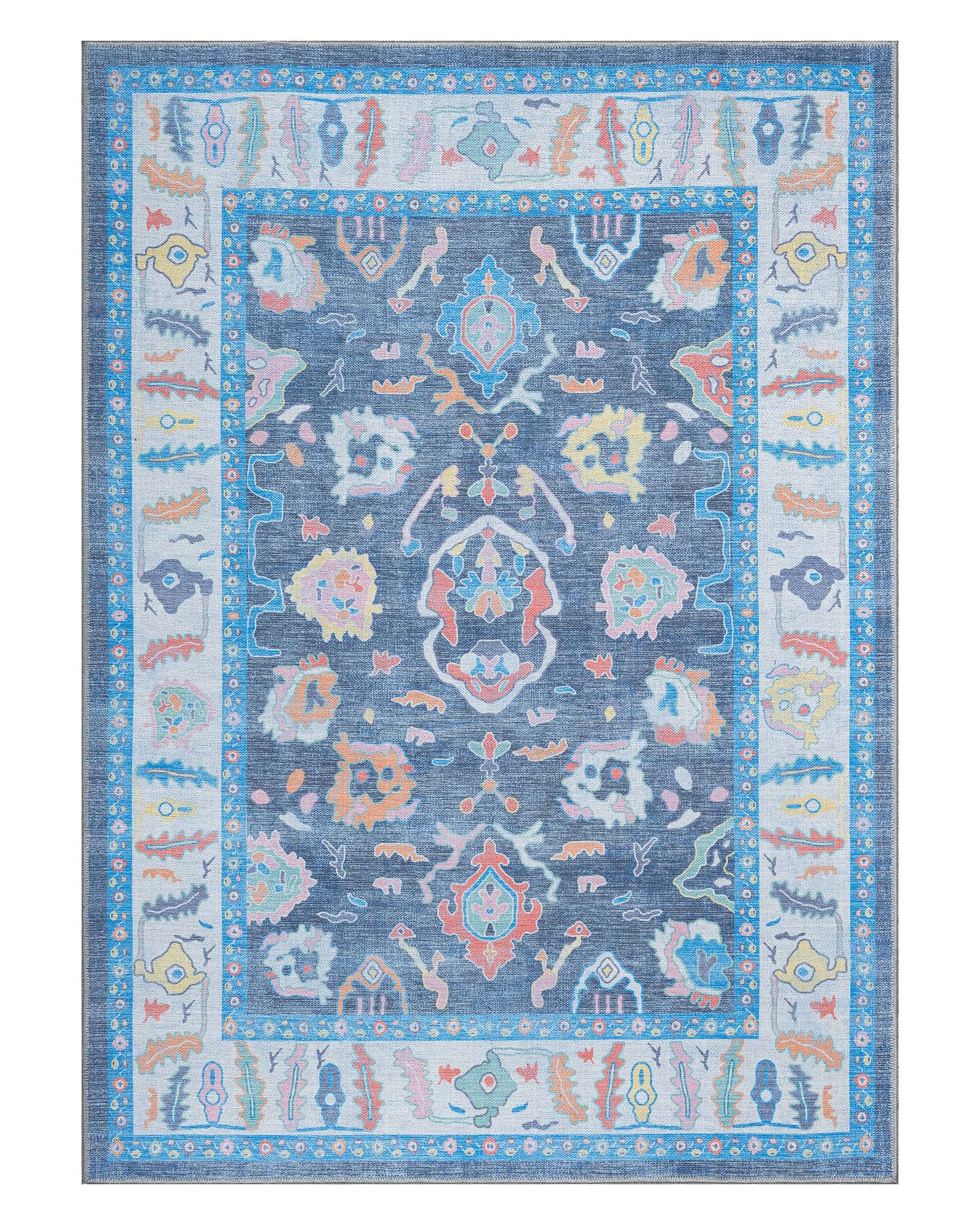
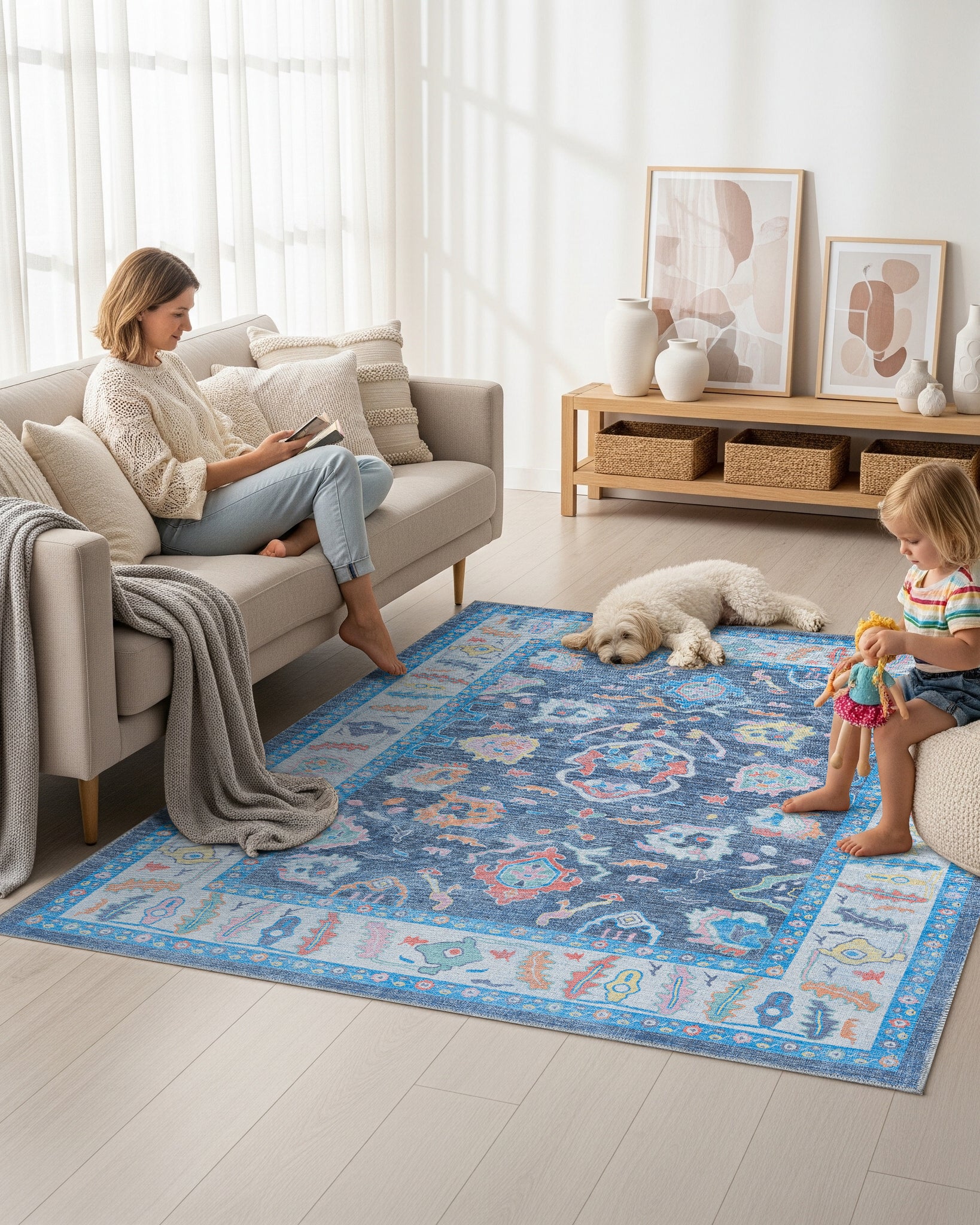
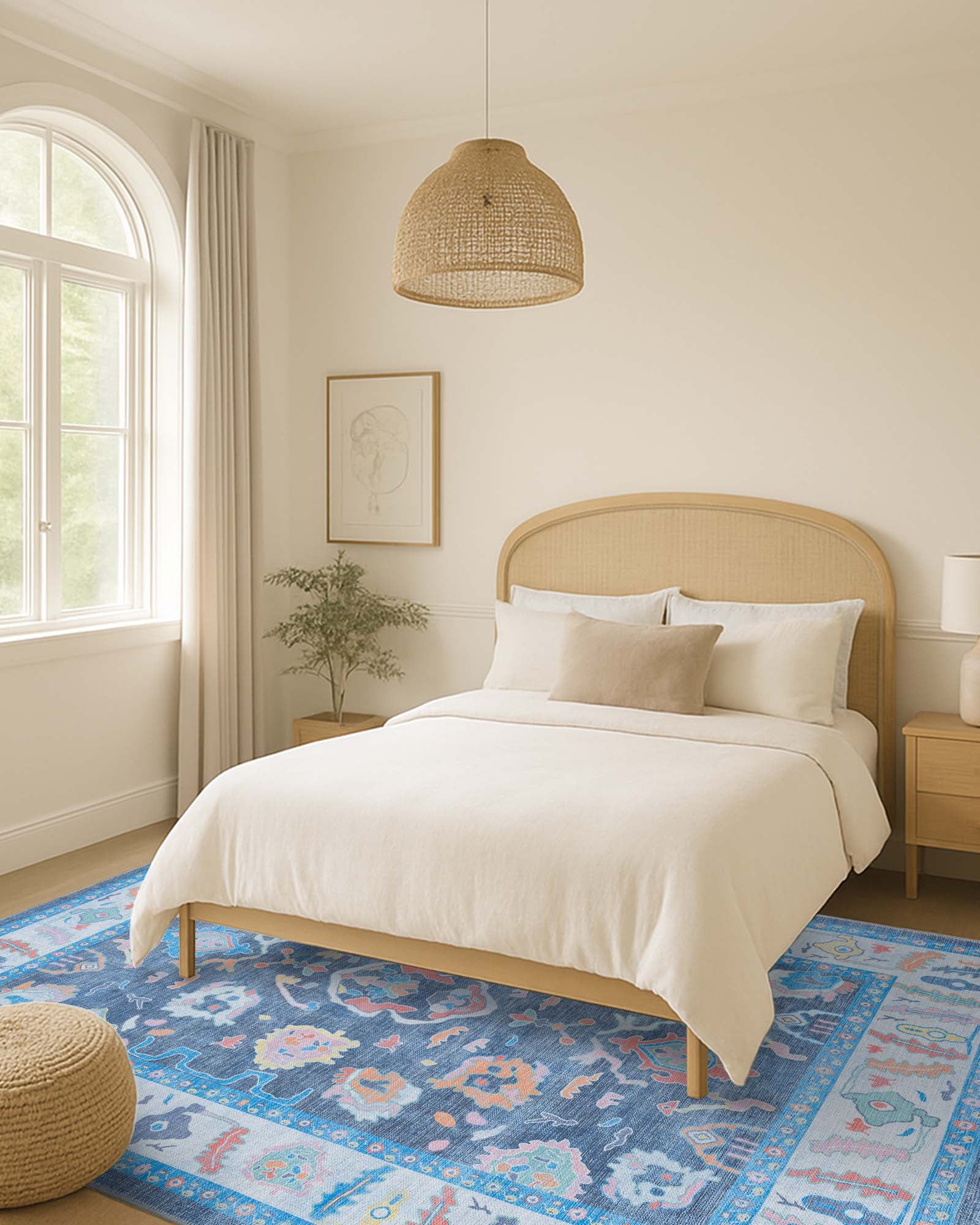
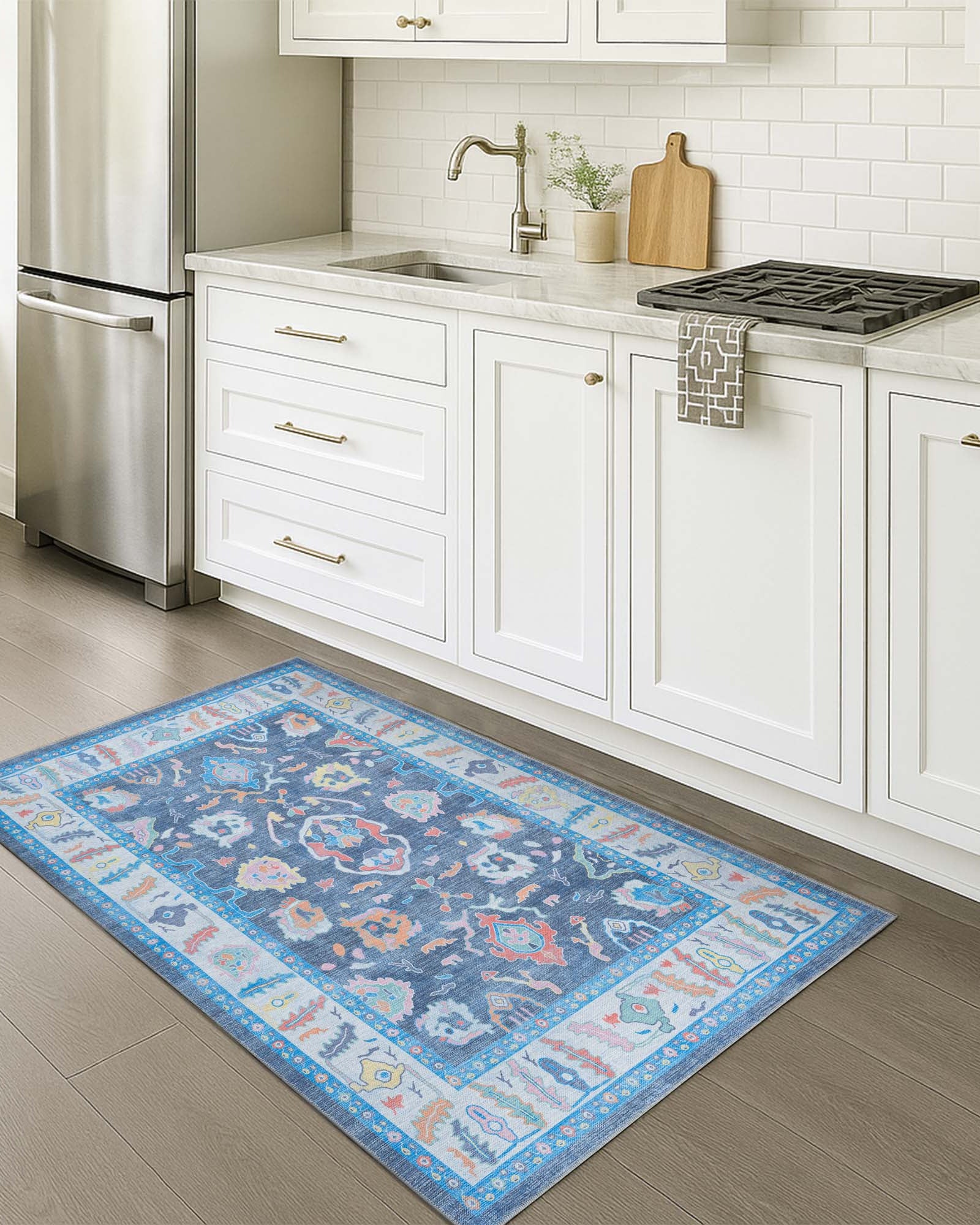
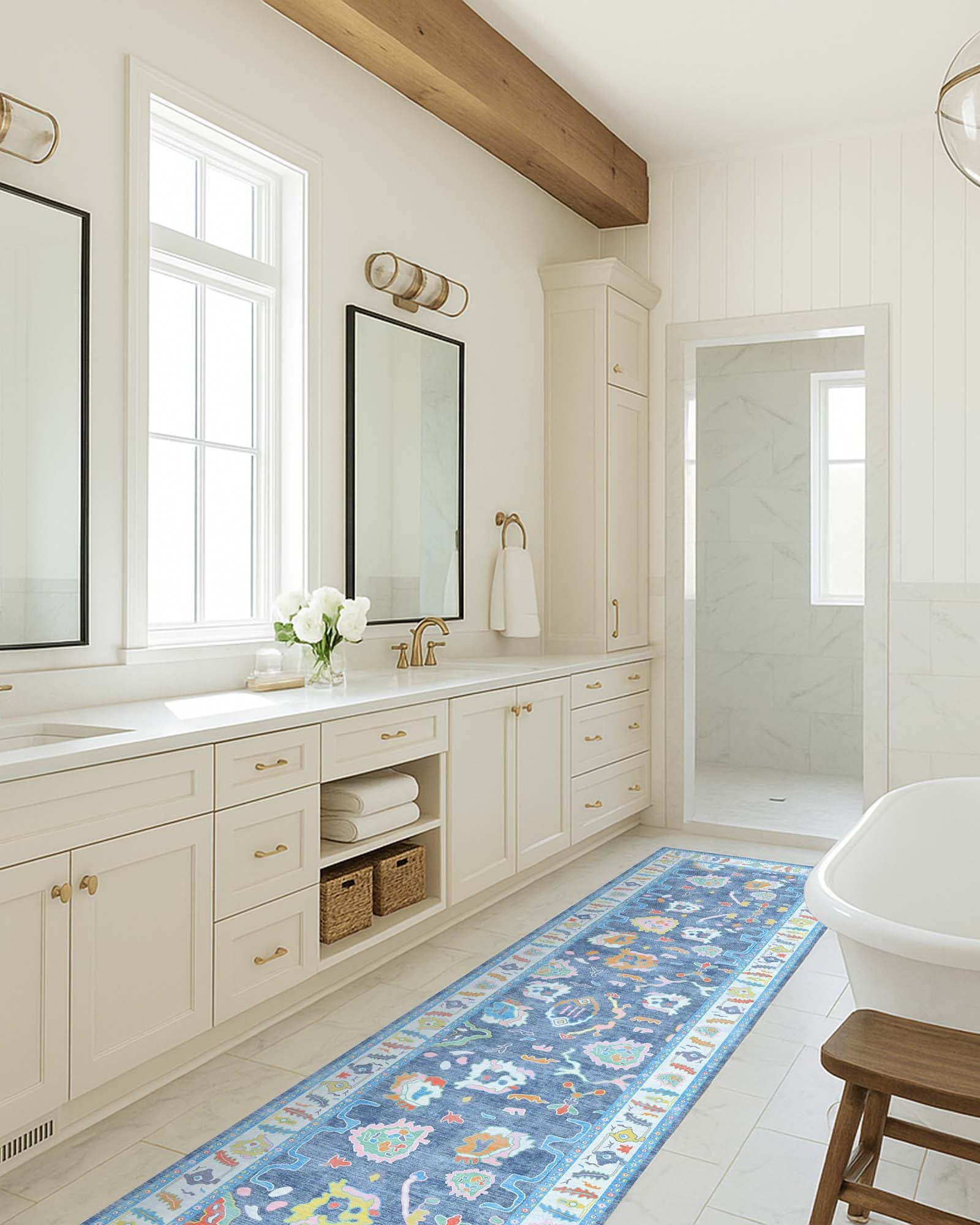
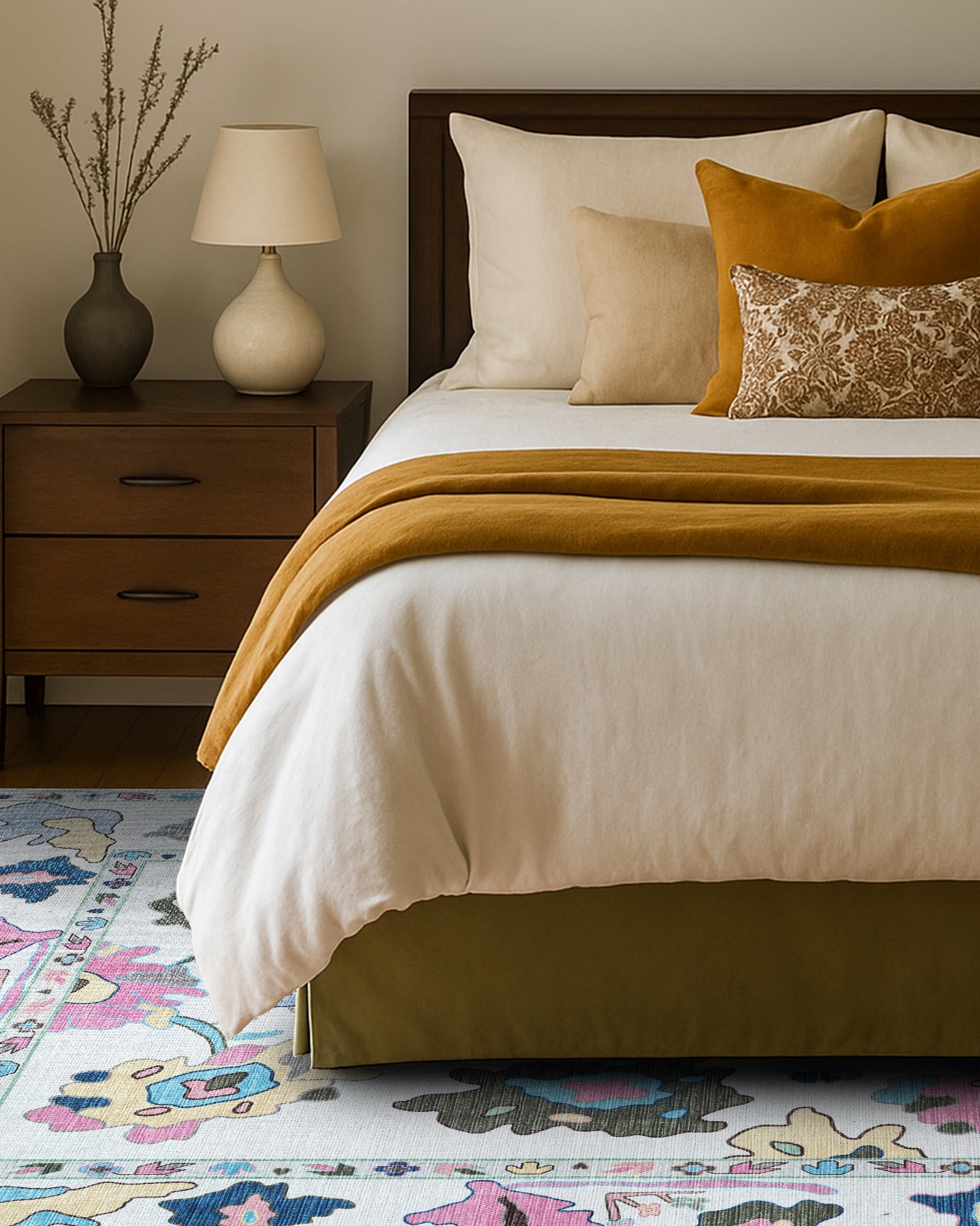
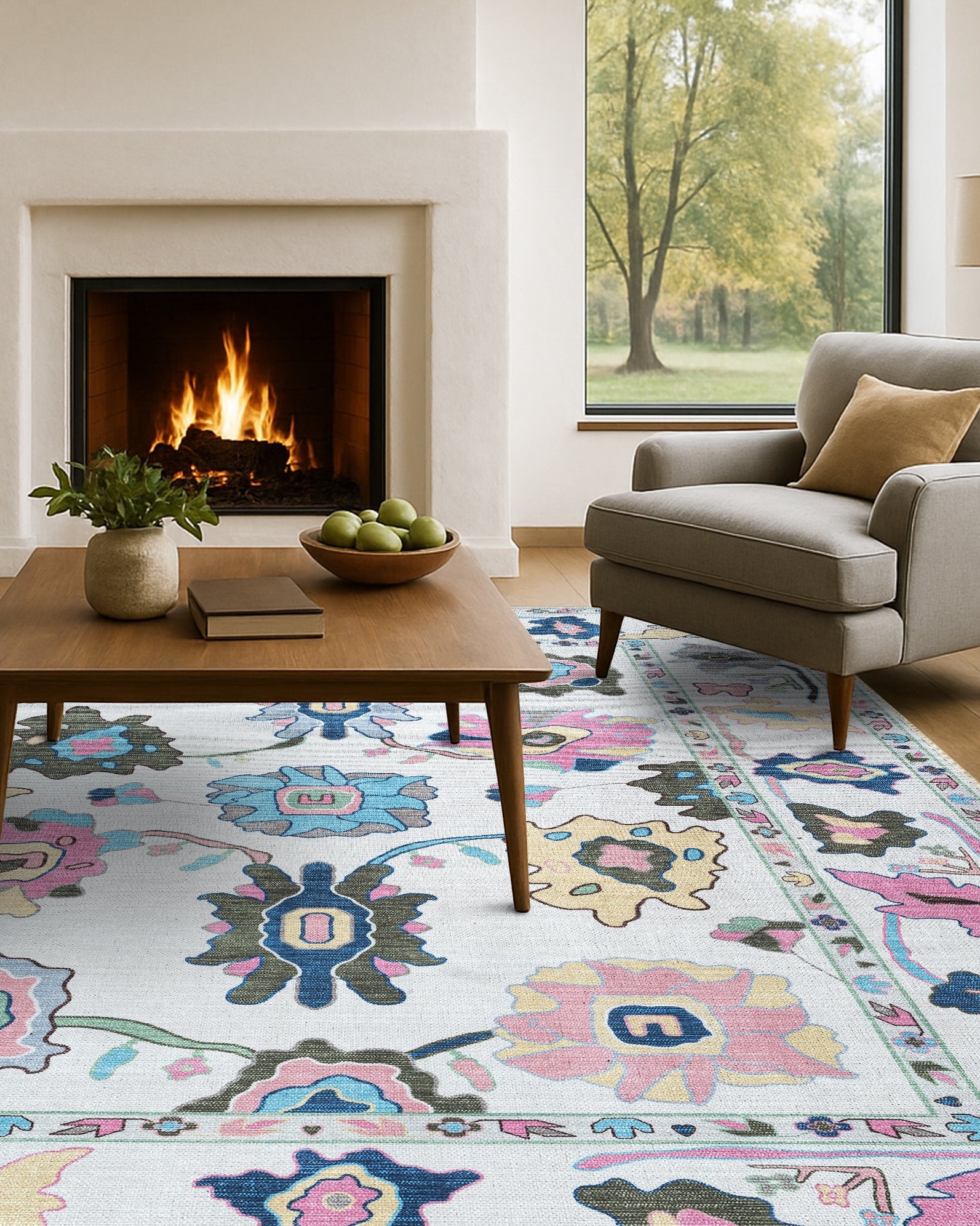
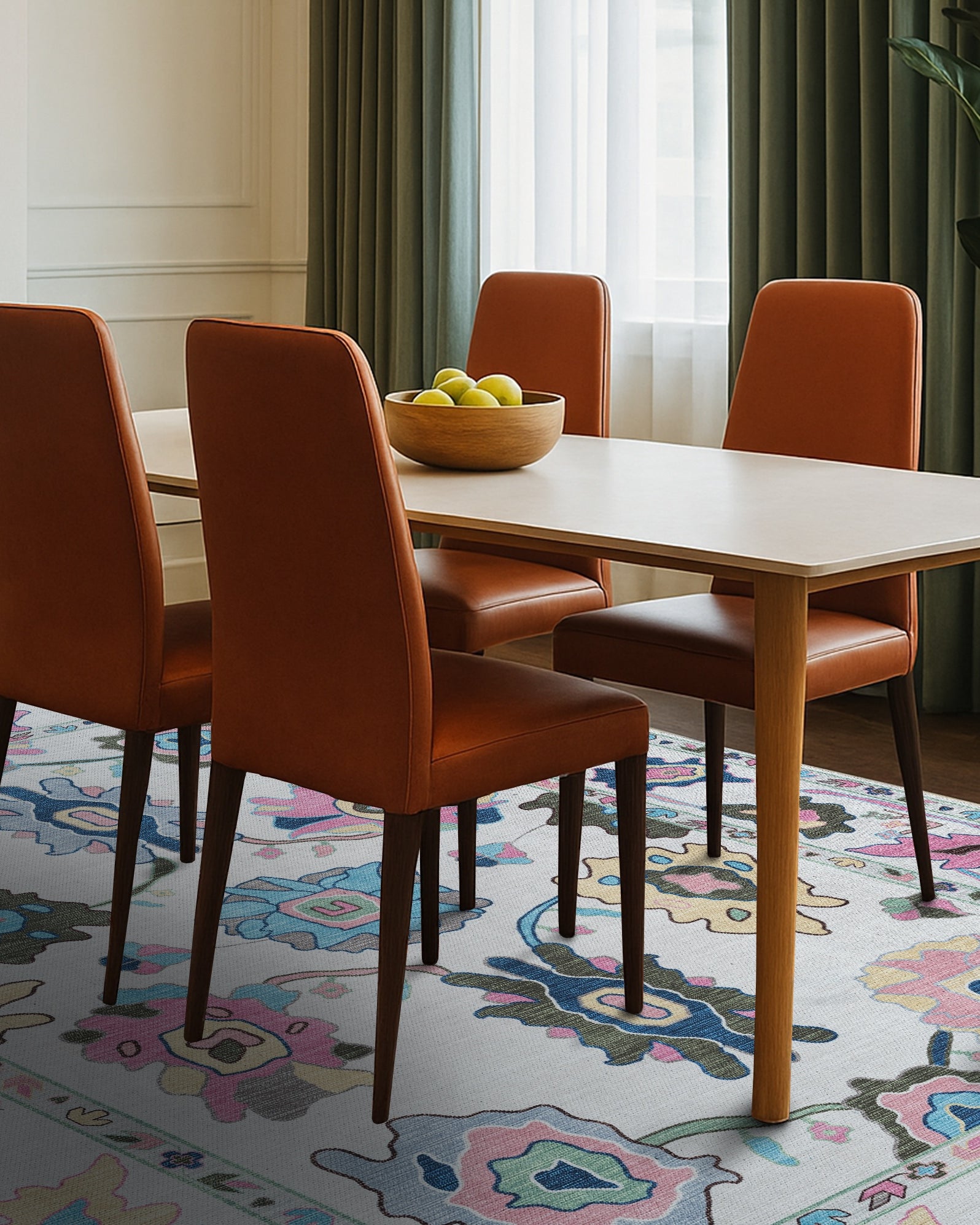
A living room usually calls for a thick, plush rug, and a hand-knotted pile piece is often the right answer. A flatweave earns its place here for different reasons: it's lighter to move when you rearrange furniture, it works well as a layering piece over a larger neutral base, and its flat profile suits open-plan spaces where a thick rug can visually chop up a room that's meant to read as one continuous area.
When a Flatweave Beats a Pile Rug in the Living Room
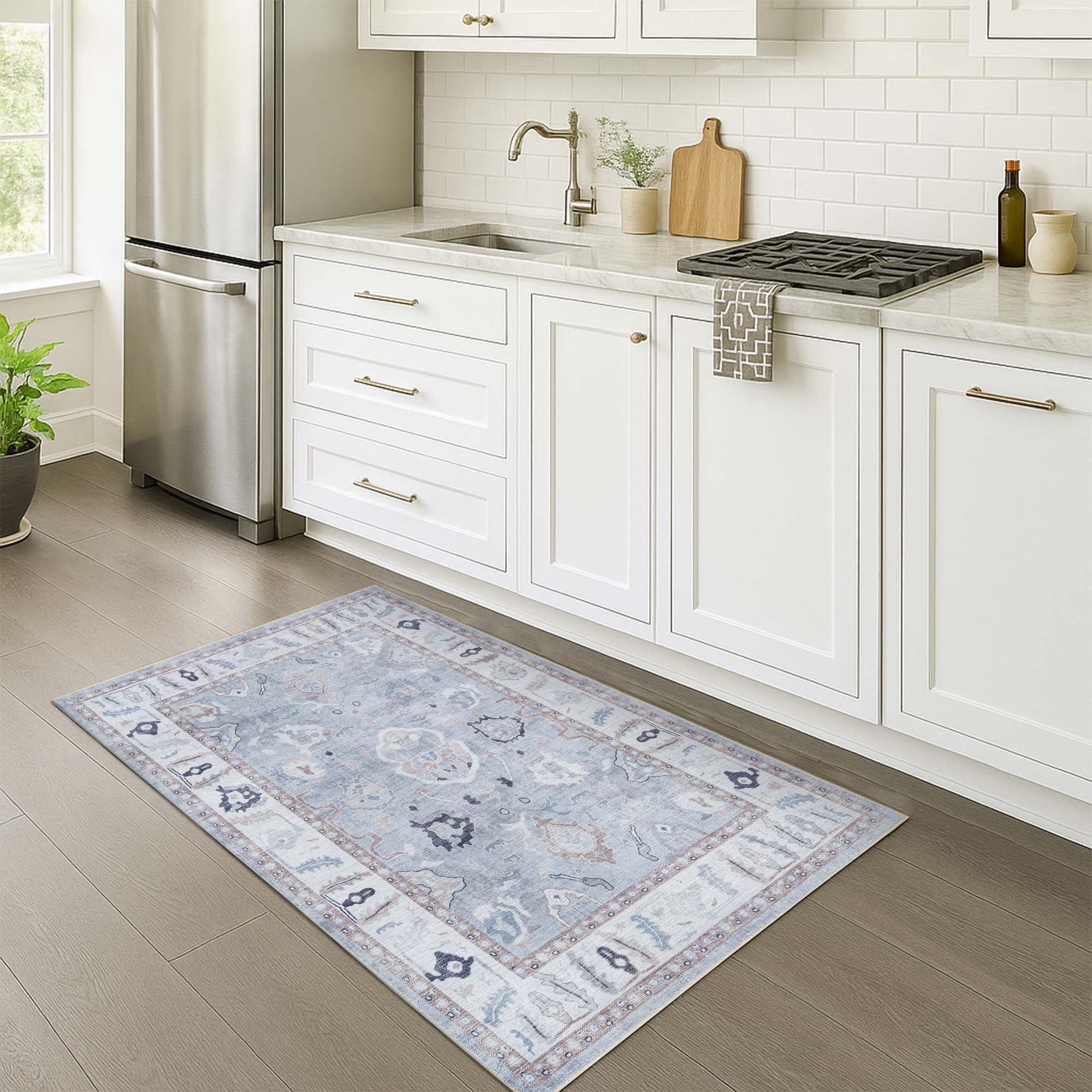
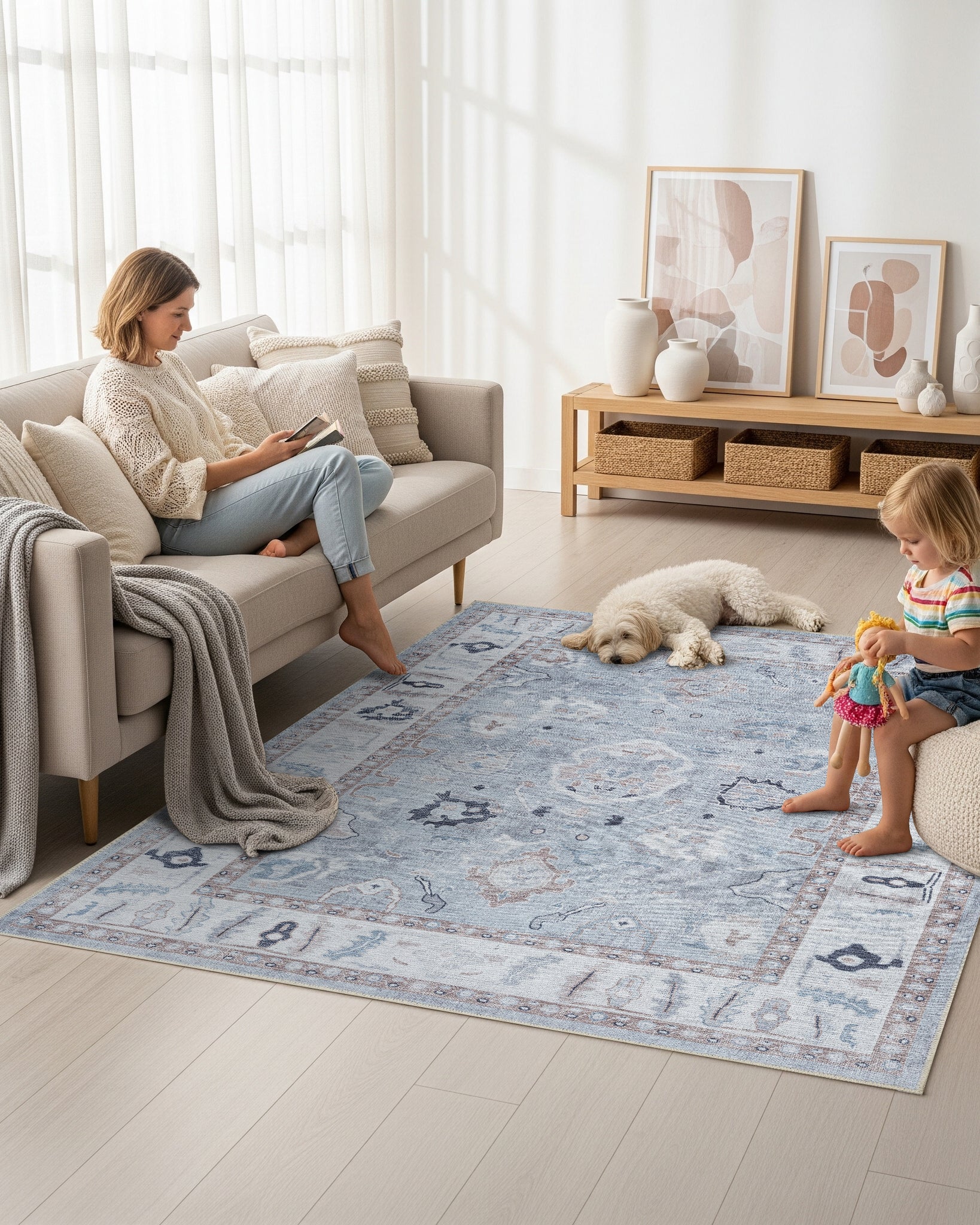
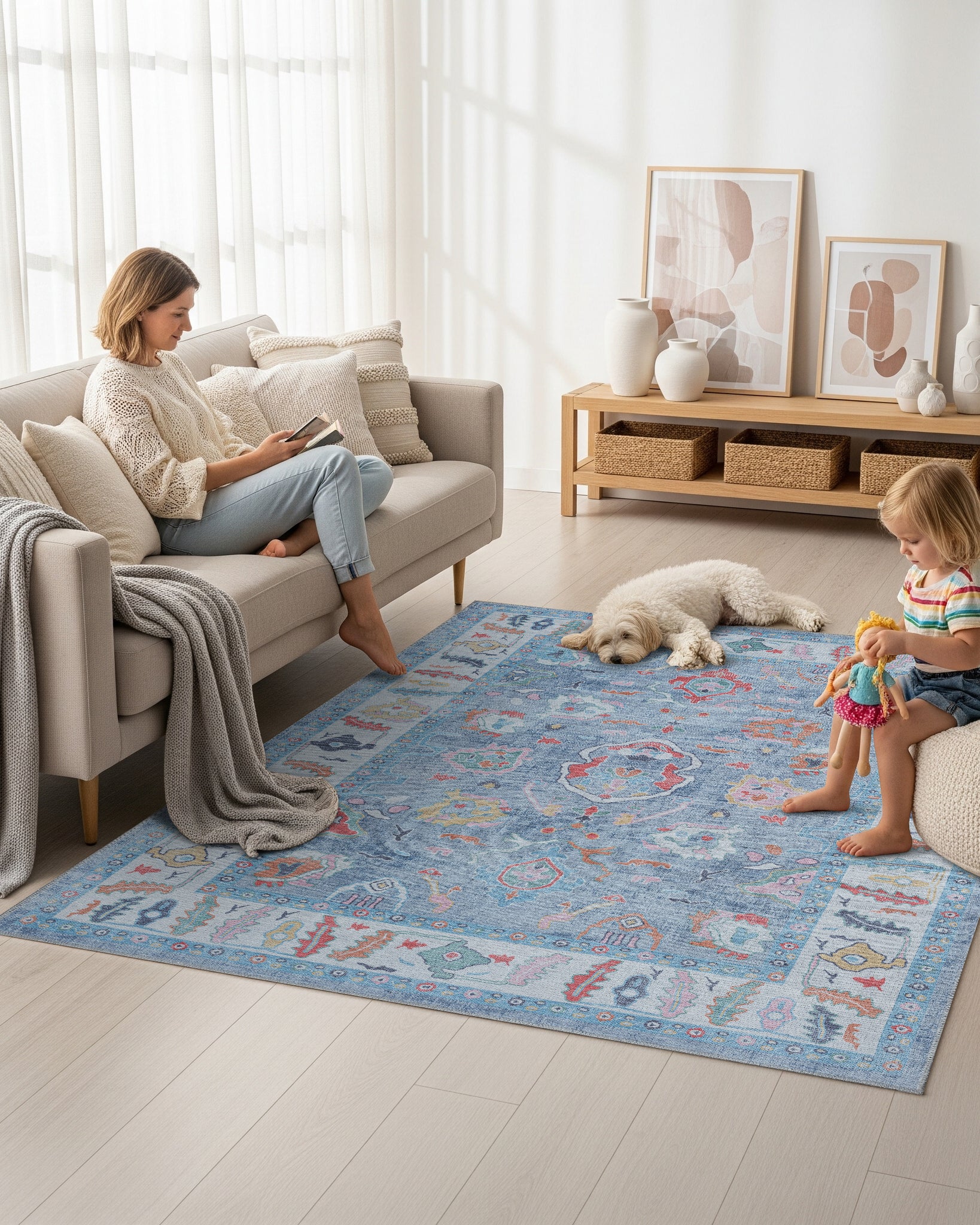
If you rearrange furniture seasonally or just enjoy changing a room's layout, a light flatweave is genuinely easier to live with than a heavy knotted rug — you can lift and reposition it without help. In an open-plan home where the living area flows into a dining or kitchen space, a thin flatweave keeps sightlines low and continuous, where a thick pile rug can create a visual break between zones that a single open room doesn't want. And in a smaller living room, a flatweave avoids the bulk that can make a compact space feel more crowded.
Layering Over a Larger Base
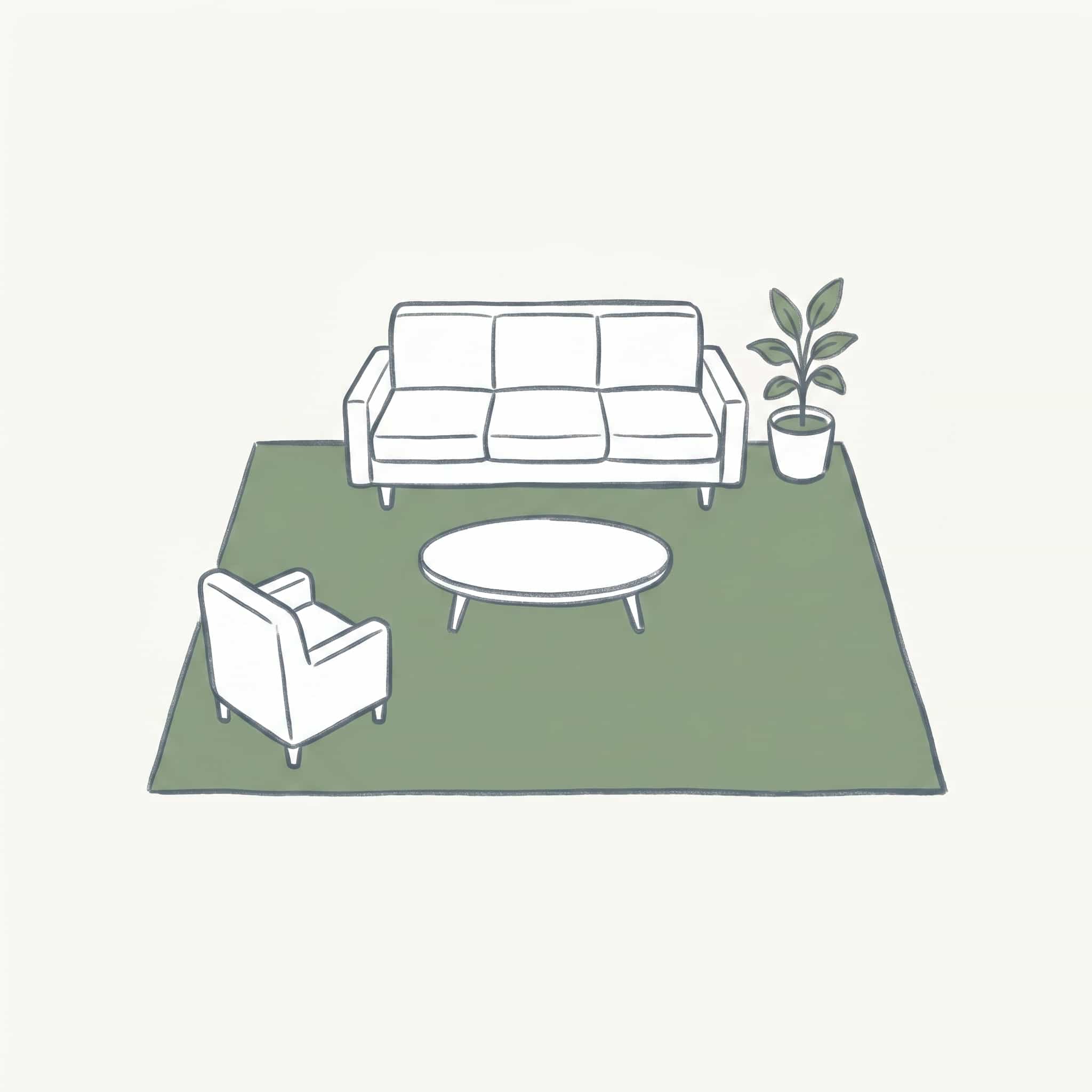
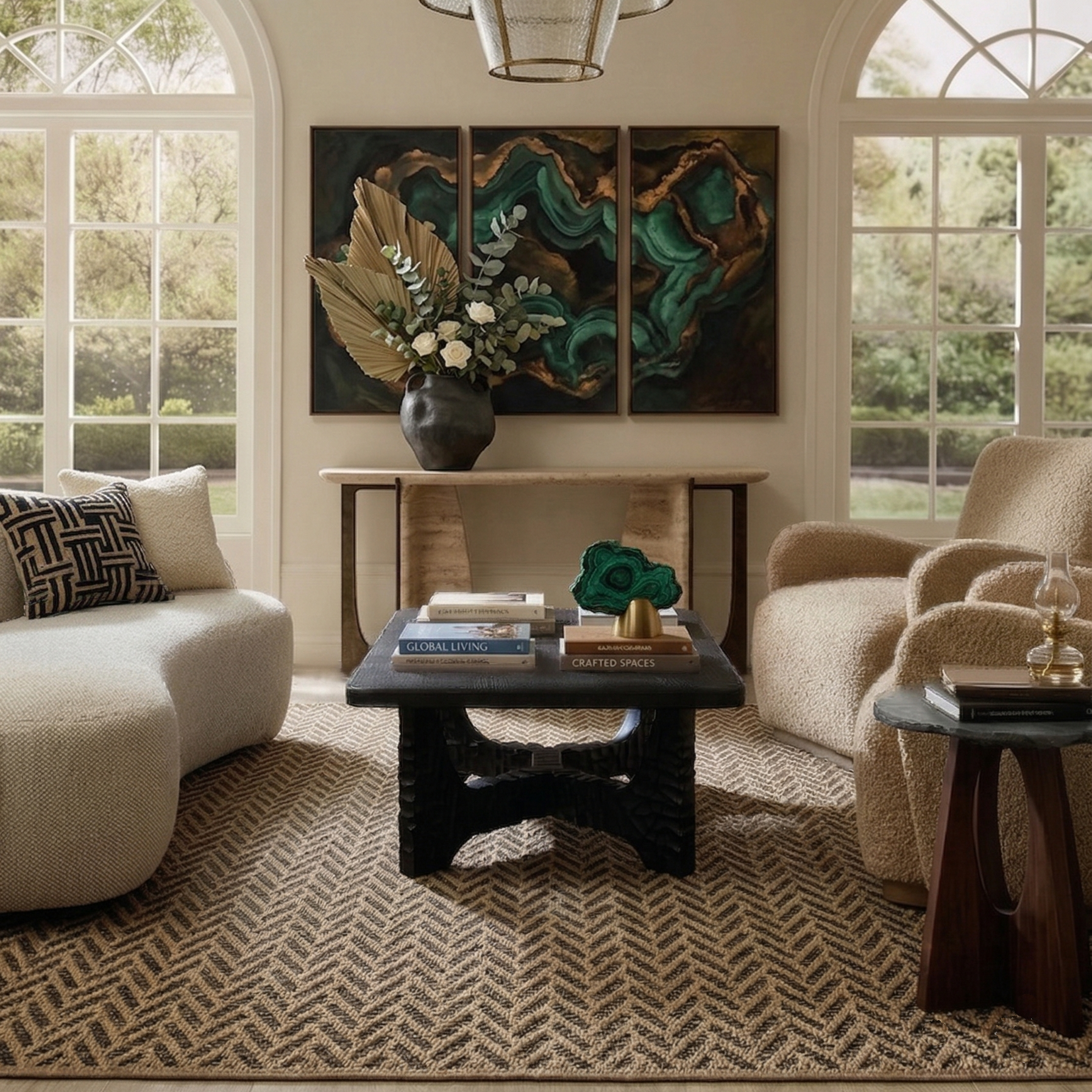
This is where flatweaves do some of their best work in a living room. A smaller vintage kilim, full of pattern and color, laid over a larger jute or sisal rug gives you real coverage under all the furniture while still showcasing a beautiful, genuinely old piece that might be too small to use alone. The larger base anchors the seating arrangement — front legs of every seating piece should rest on it — while the flatweave adds the visual interest and texture on top.
What You Give Up Compared to a Pile Rug
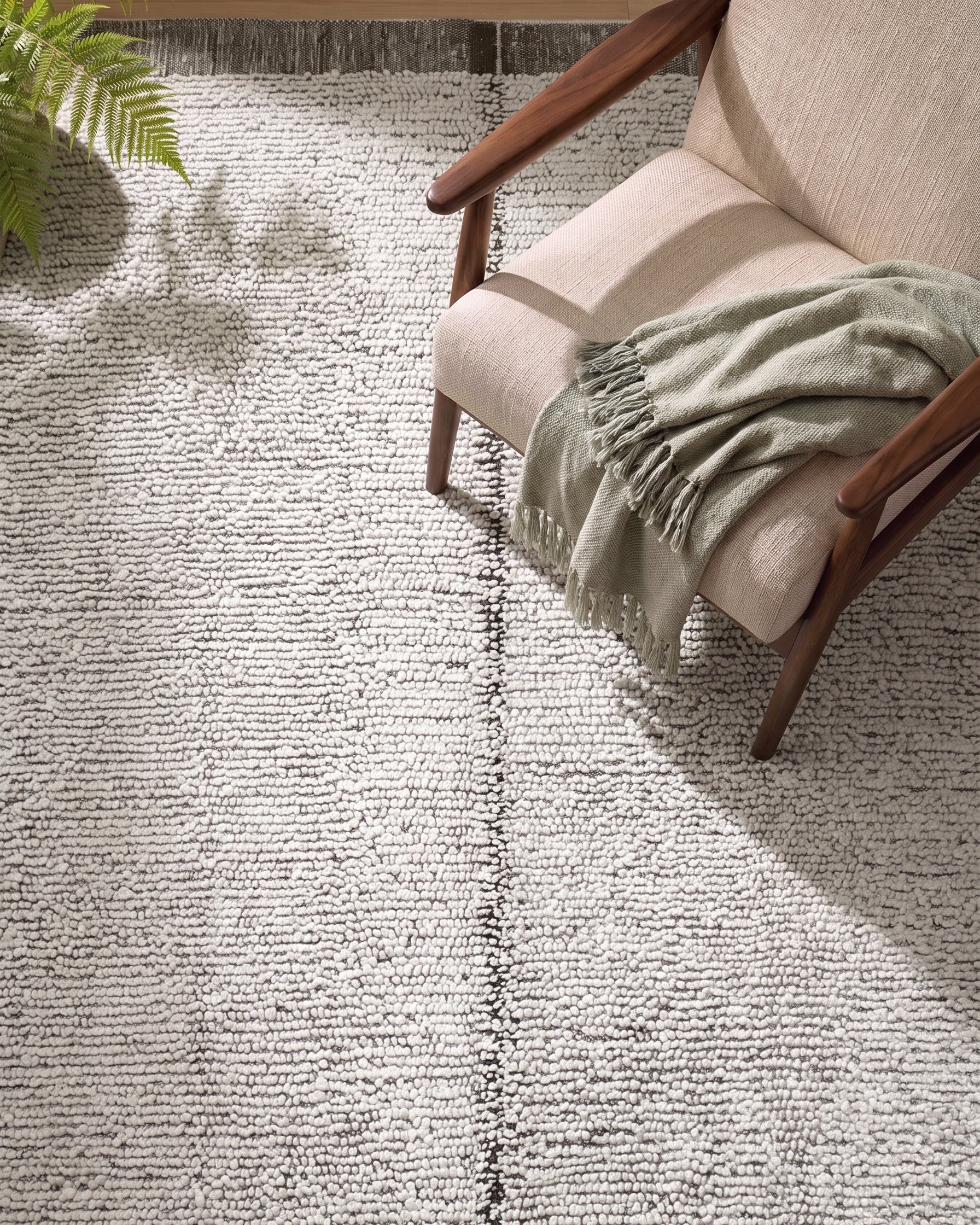
Cushioning, mainly. A flatweave has no pile to compress underfoot, so it won't deliver the plush, sink-in comfort of a thick hand-knotted rug in a room where people sit on the floor or spend long stretches barefoot. If comfort underfoot is the priority in your living room, a hand-knotted piece from our Hand-Knotted Rugs collection or something from High Pile Rugs will serve you better than a flatweave alone.
Sizing for the Room
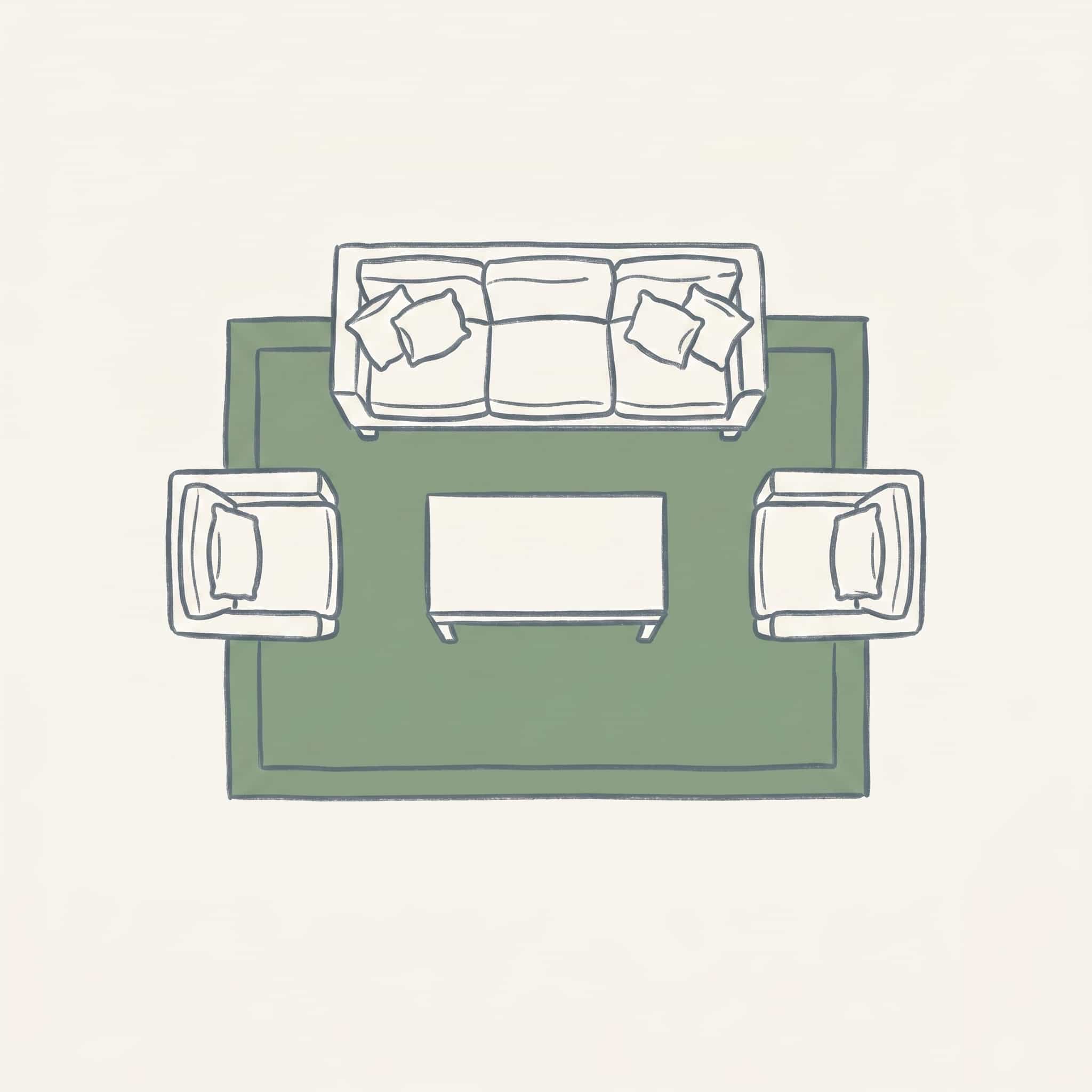
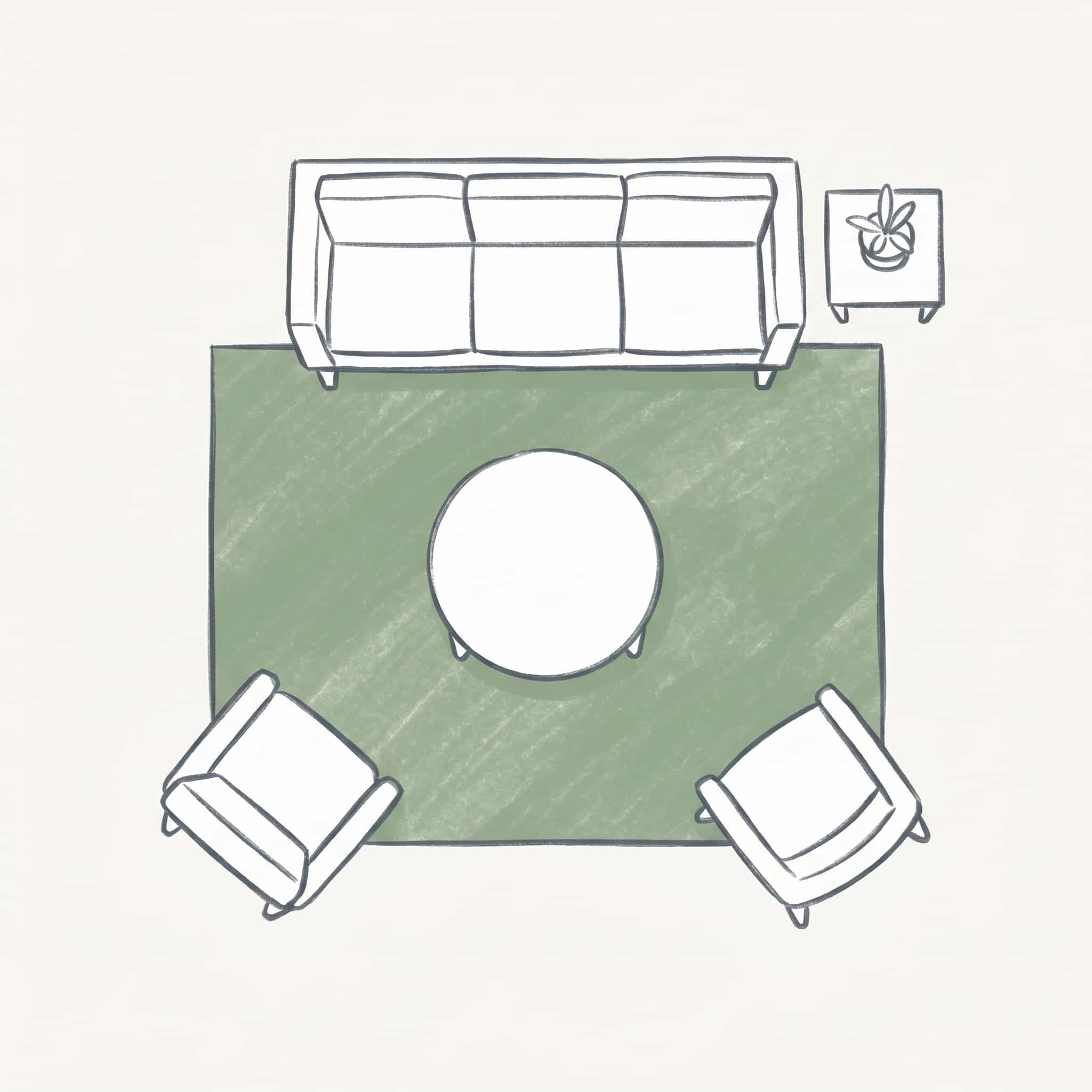
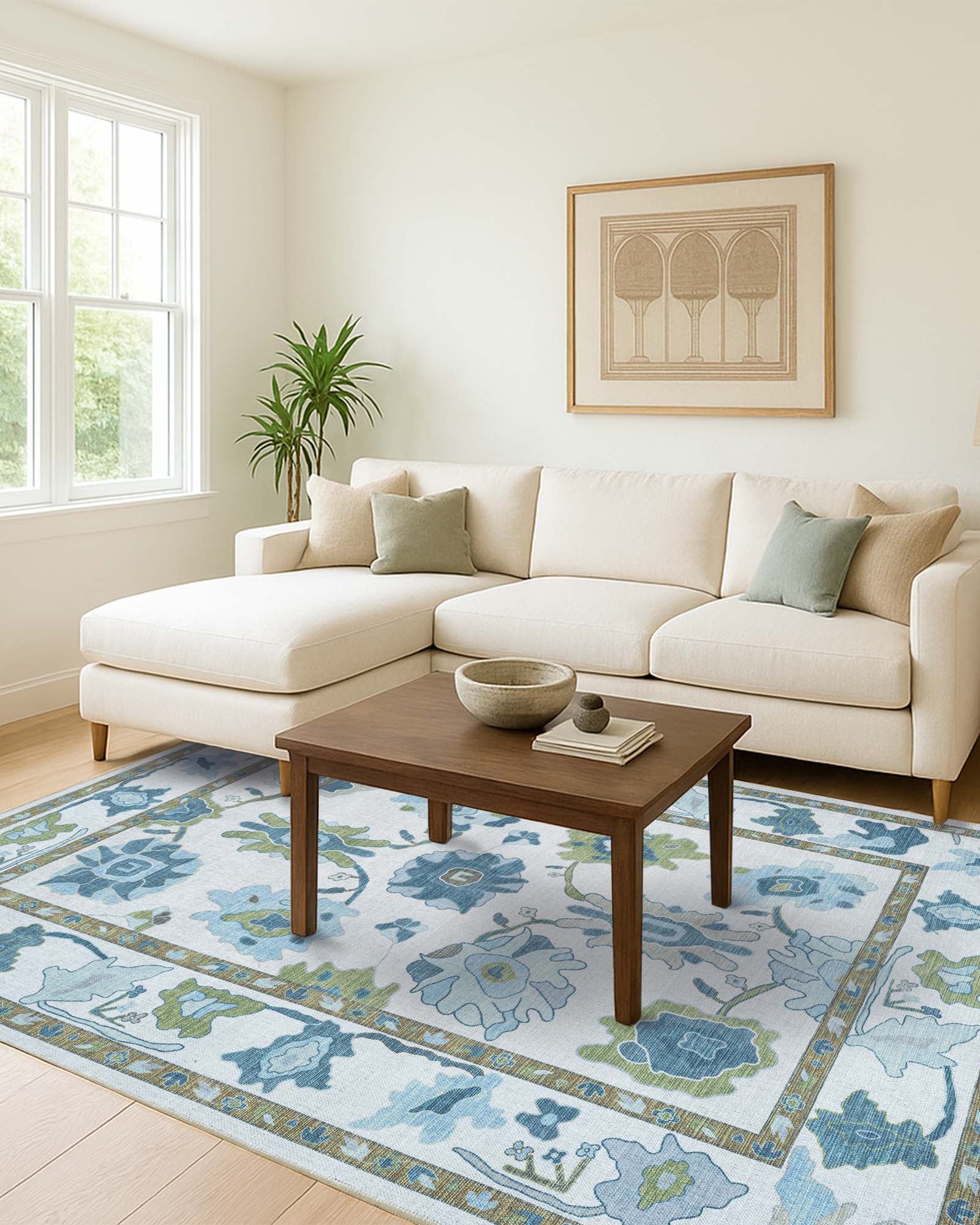
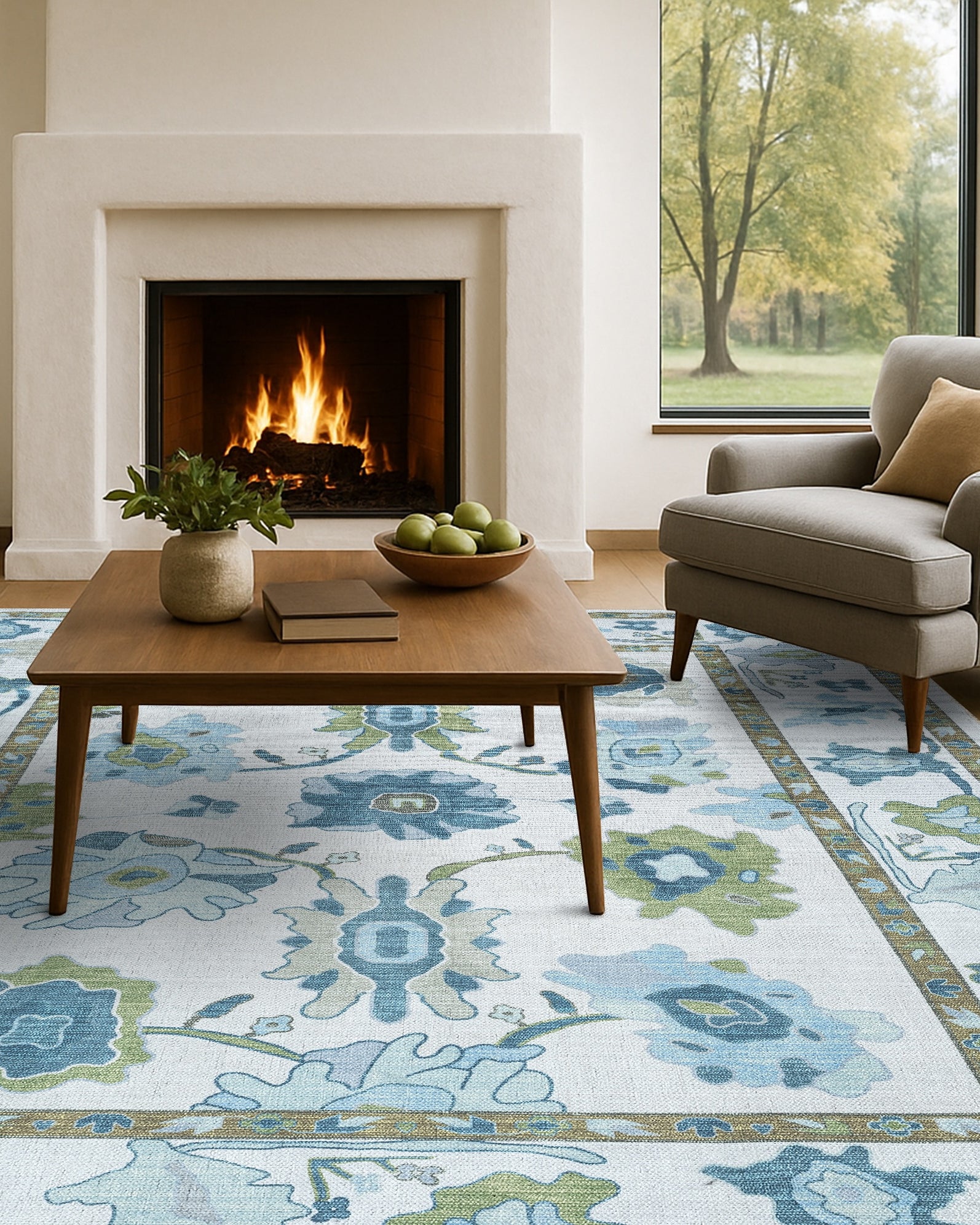
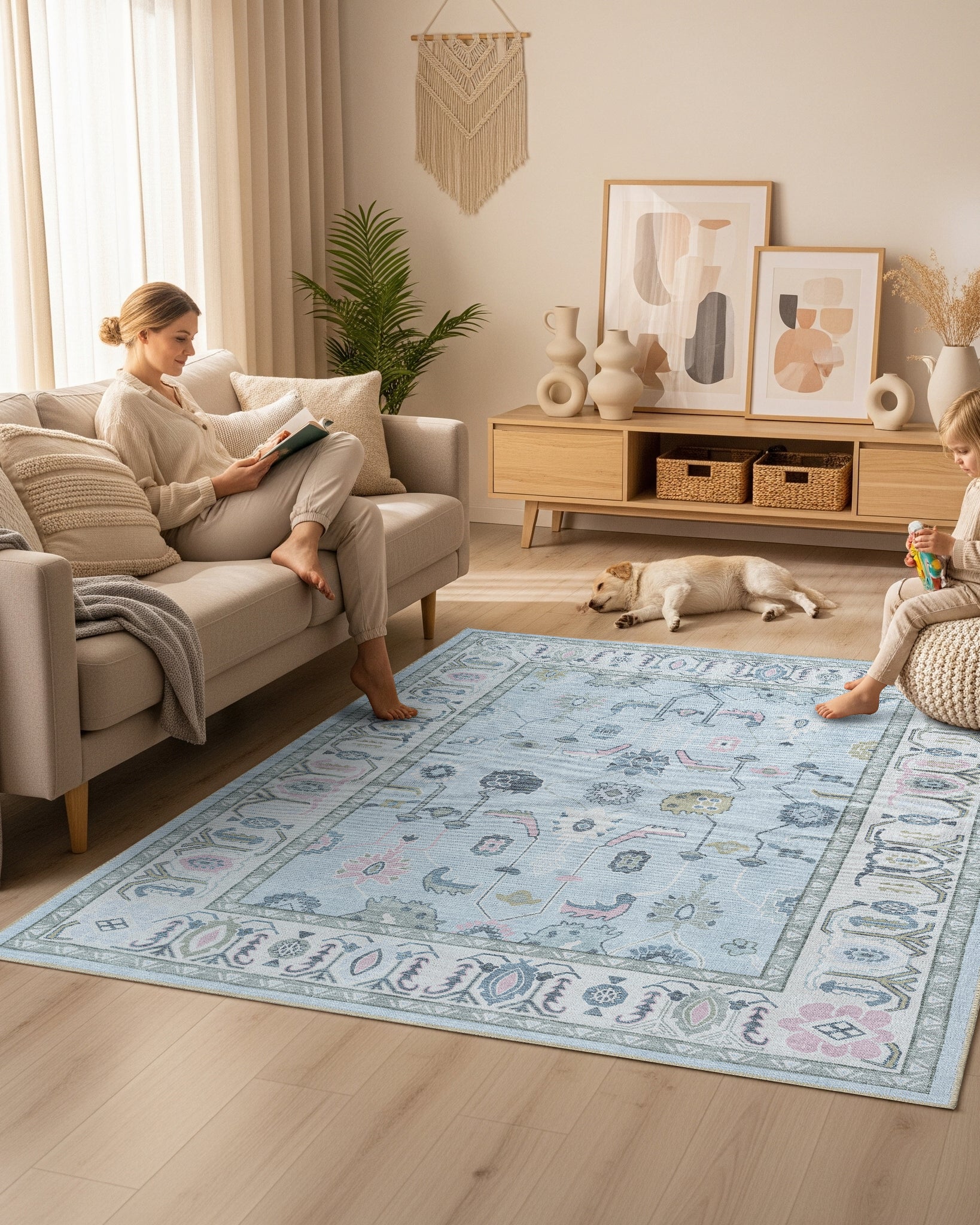
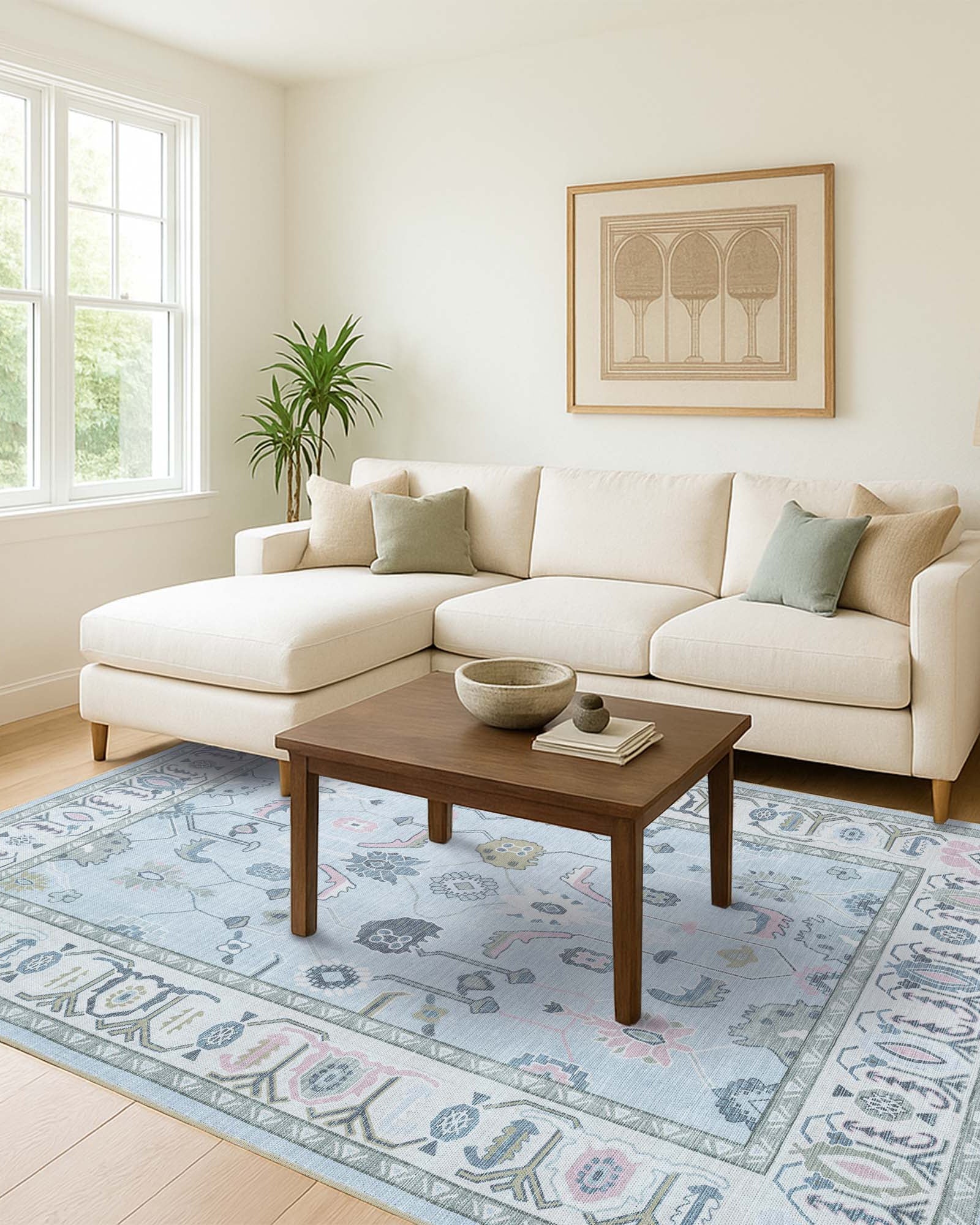
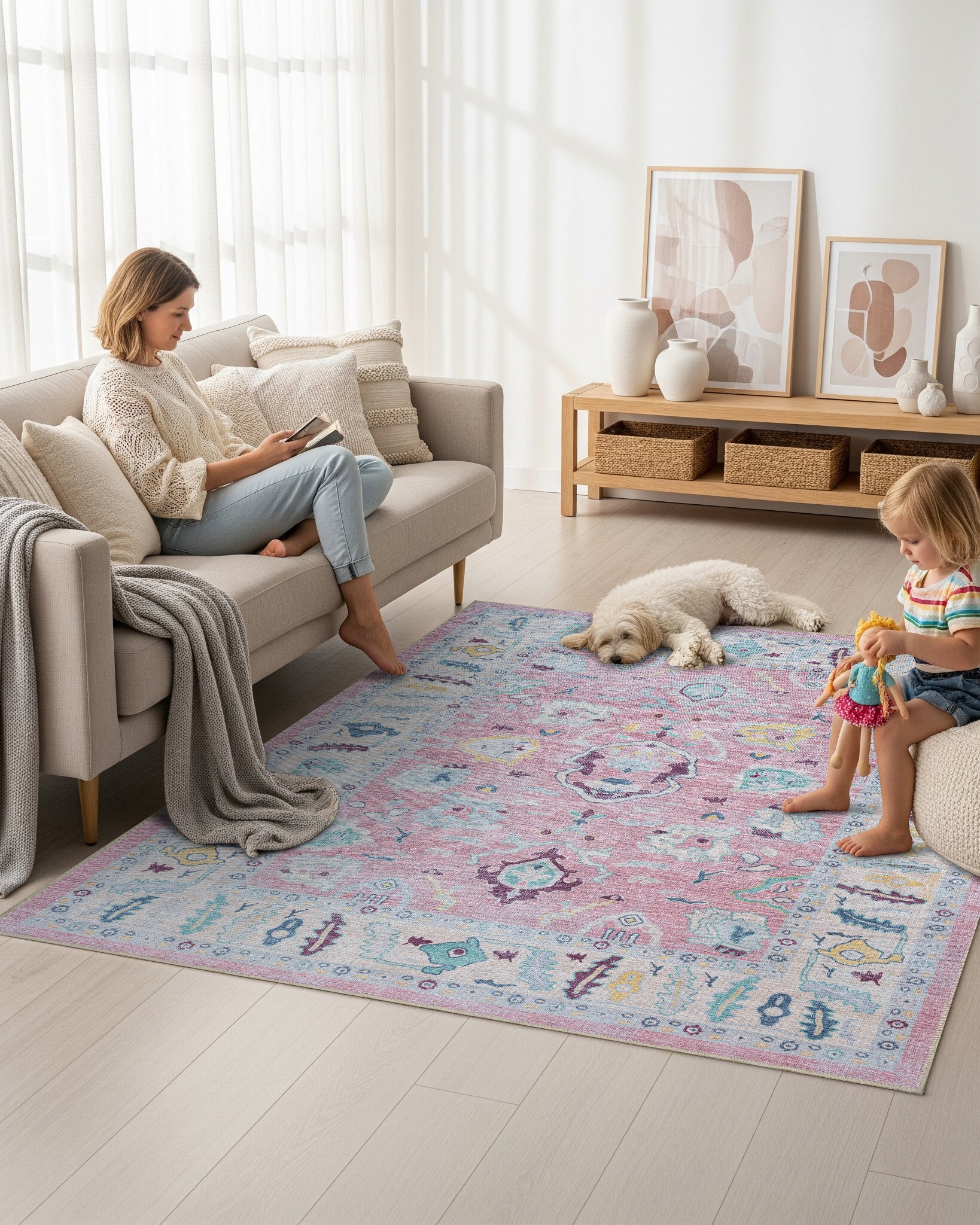
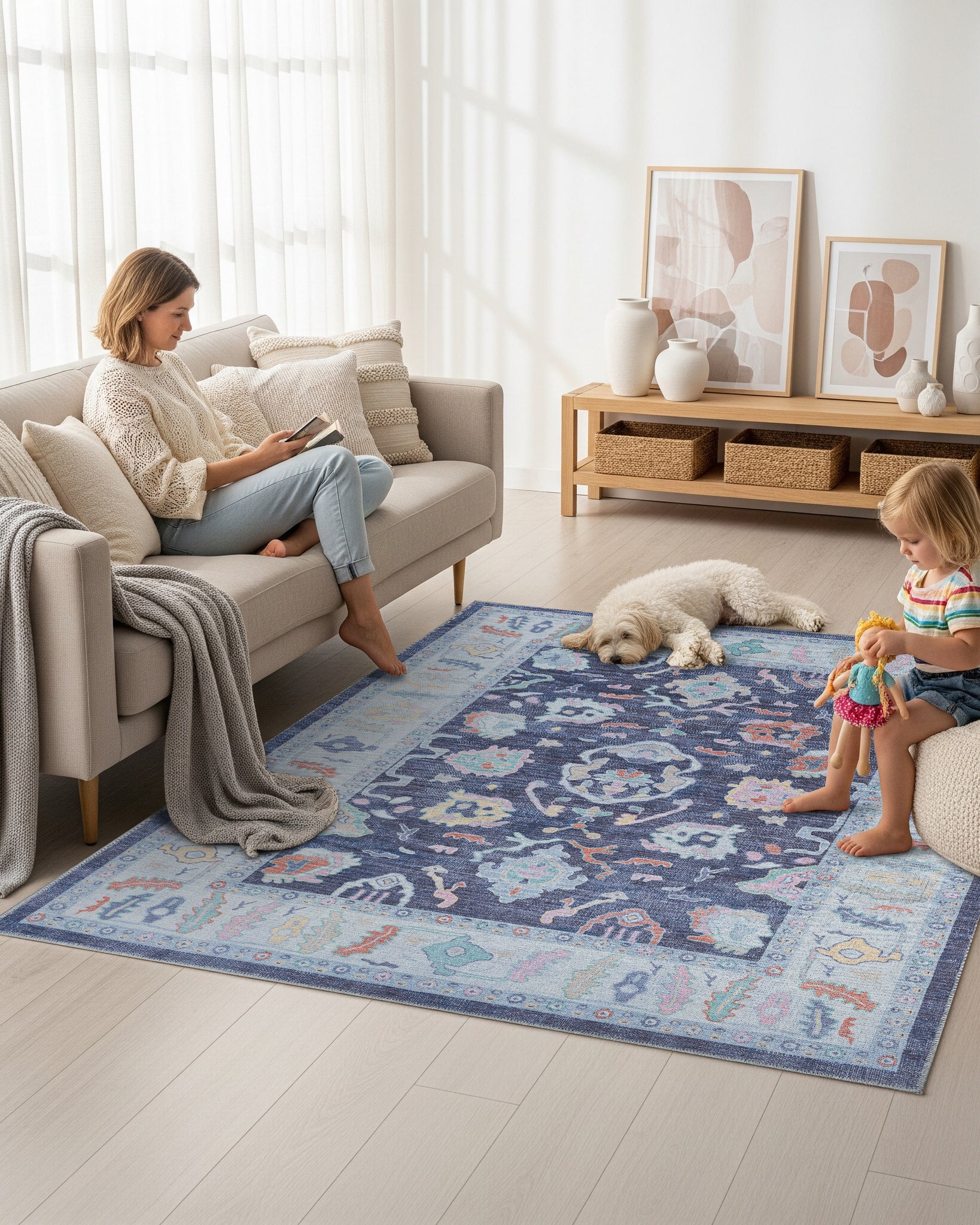
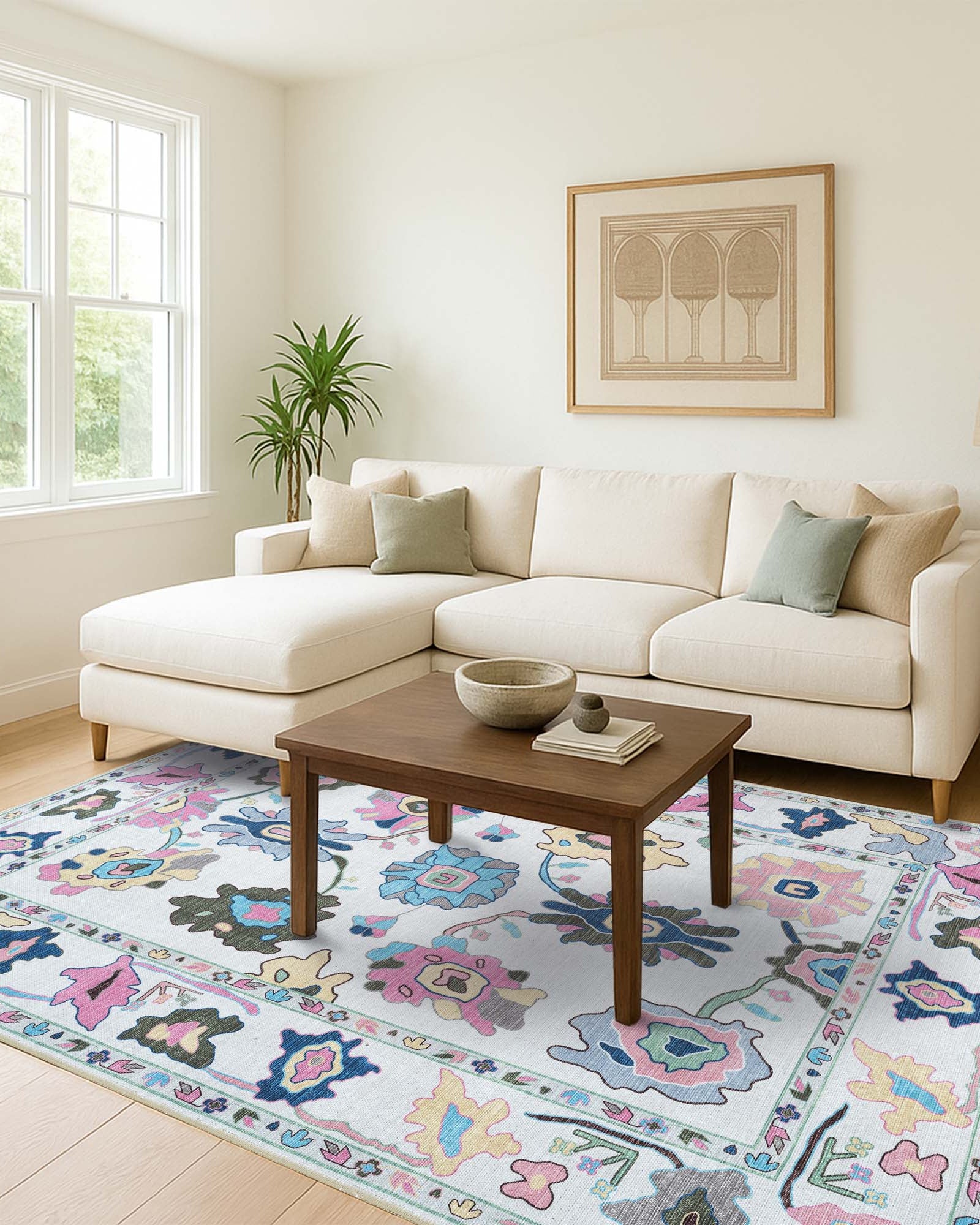
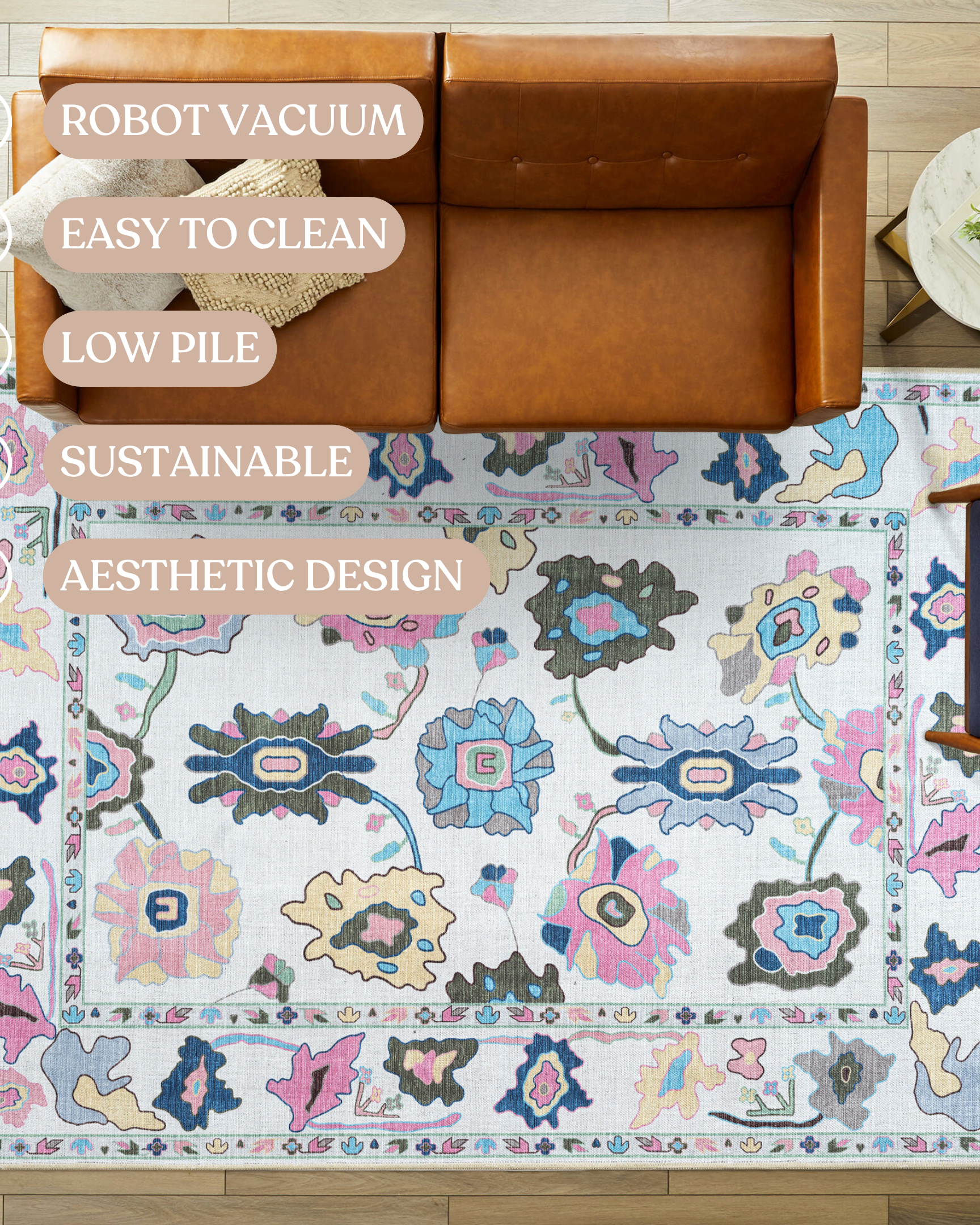
The same living room sizing principle applies regardless of construction: at minimum, the front legs of every seating piece should rest on the rug, and ideally all furniture legs sit on it if the room and rug size allow. Because flatweaves are thinner and lighter, they're also easier to size-test — lay one down, live with it a week, and swap for a different size without the effort a heavy pile rug would require.
Where to Look Next
For the full range of flatweave construction and pattern, browse Flatweave Rugs. For layering-friendly neutral bases, natural fiber jute and sisal options work well underneath. If you want more texture and body than a plain kilim while staying flat, see Soumak Rugs.
Frequently Asked Questions
Is a flatweave a good choice for a living room?
Yes, particularly if you rearrange furniture often, have an open-plan space, or want to layer a smaller patterned piece over a larger neutral base. It won't match a pile rug's cushioning, but it offers flexibility a heavy rug doesn't.
Can I layer a flatweave over another rug in my living room?
Yes, and it's one of the best uses for a smaller vintage flatweave. Lay it over a larger jute or sisal rug so the base anchors the furniture arrangement while the flatweave adds pattern and texture on top.
Will a flatweave feel too thin for a living room I relax in?
It will feel flatter and less cushioned than a pile rug, since there's no pile to compress underfoot. If comfort is the priority, a hand-knotted or high-pile rug will suit a lounge-heavy living room better.
How should I size a flatweave for my living room?
The same rule as any living room rug: at minimum, the front legs of every seating piece should rest on the rug, with all furniture legs ideally on it if the room size allows.
Why does a flatweave work better in an open-plan living space?
Its thin, flat profile keeps sightlines low and continuous, avoiding the visual break a thick pile rug can create between a living area and an adjoining dining or kitchen zone in one open room.