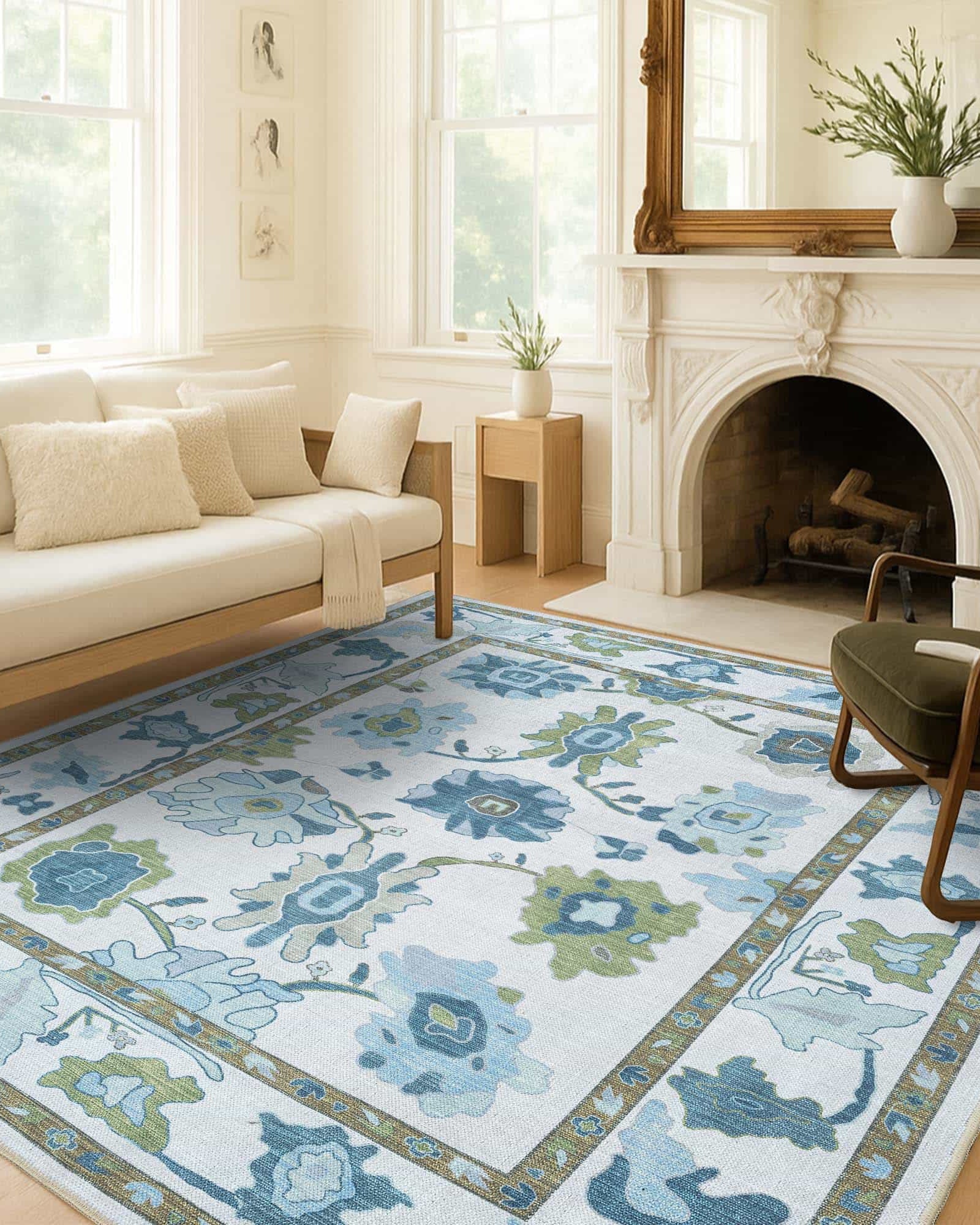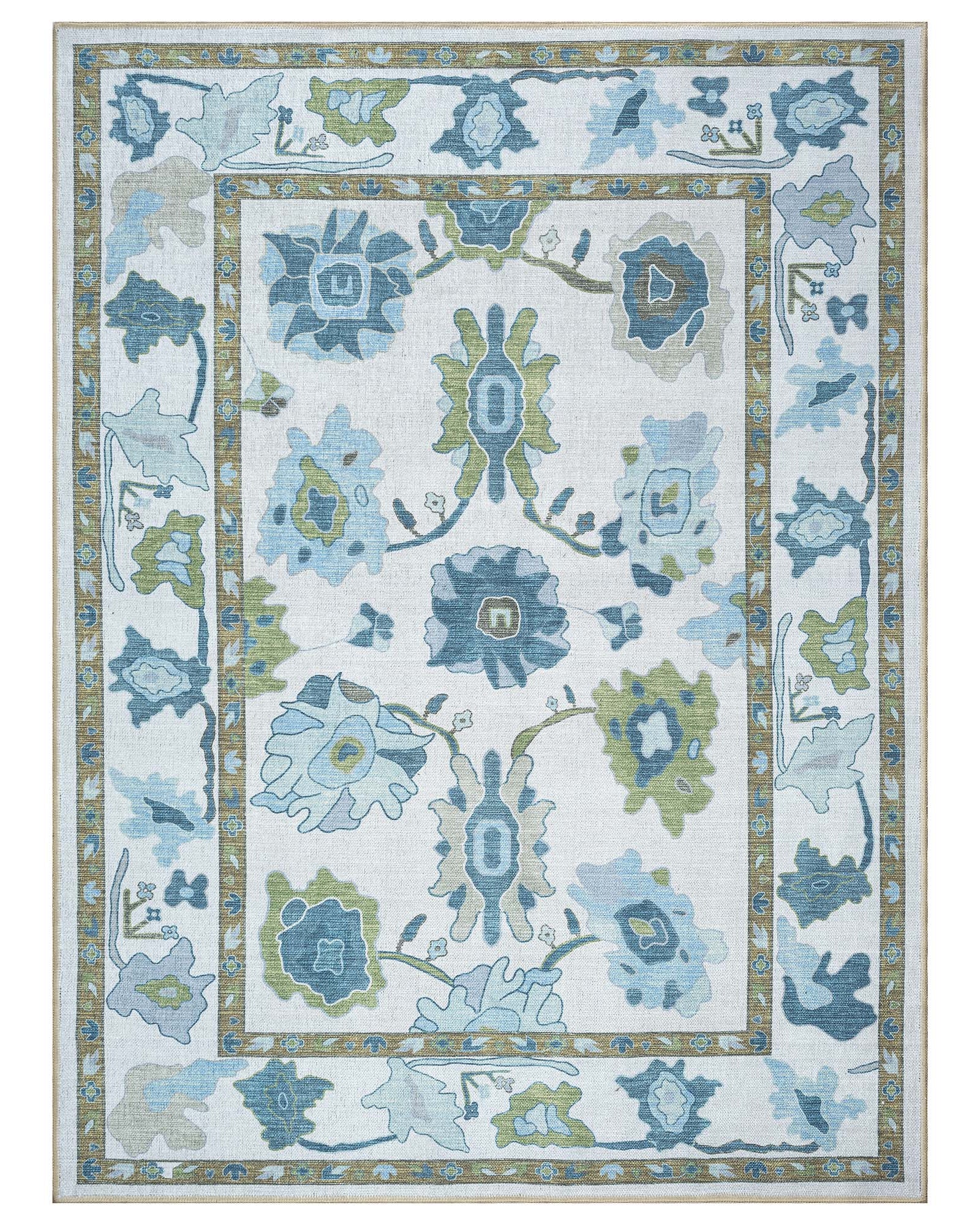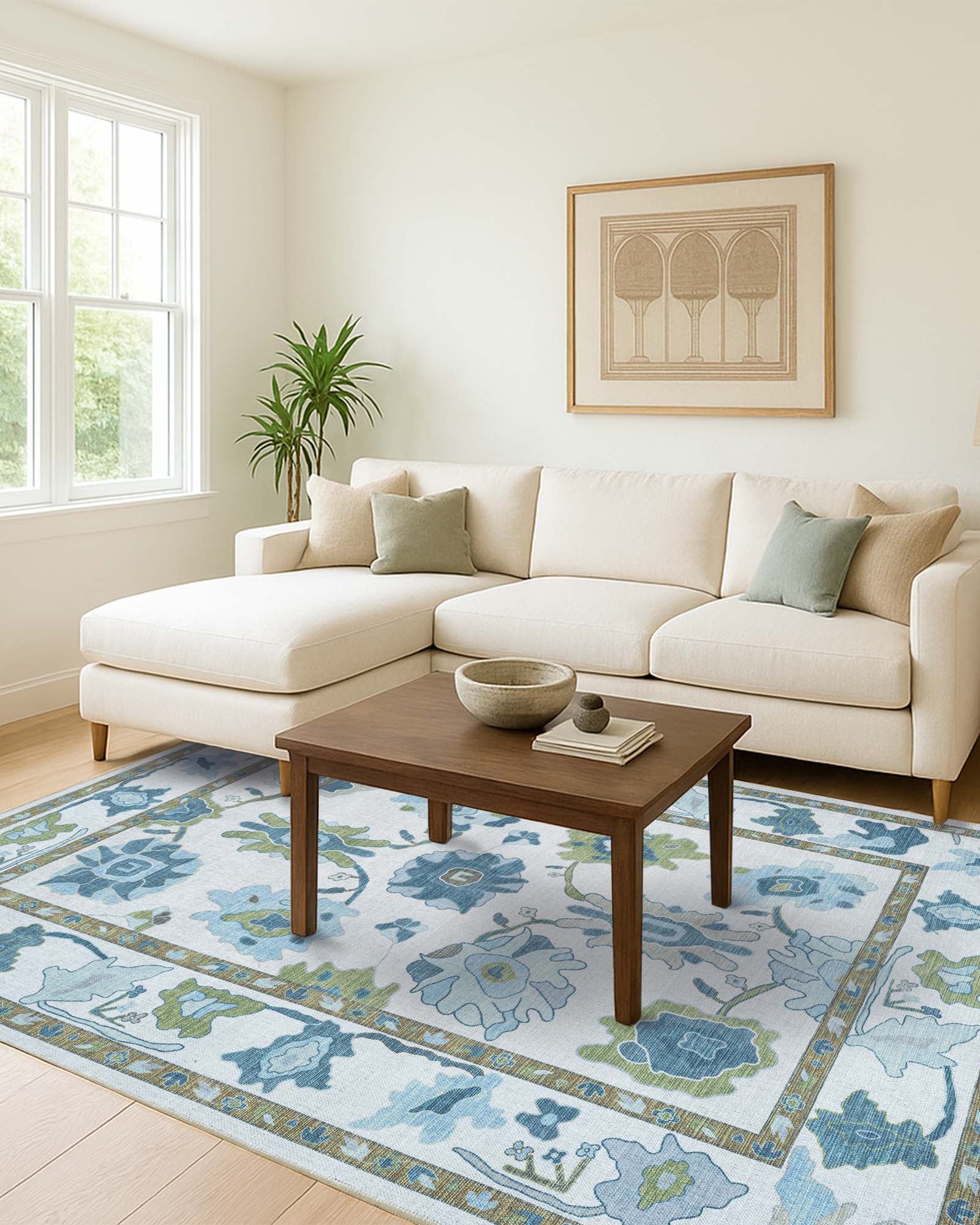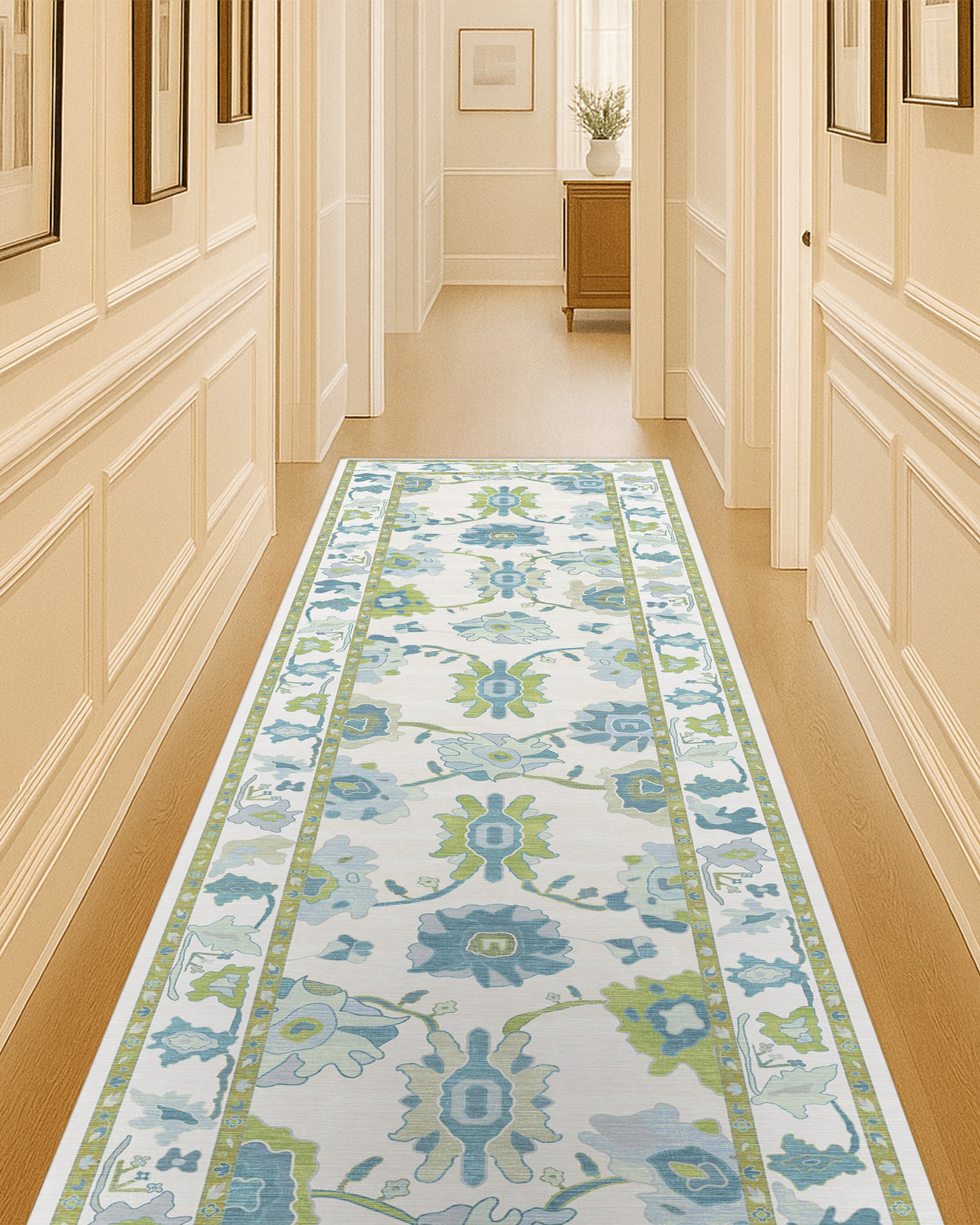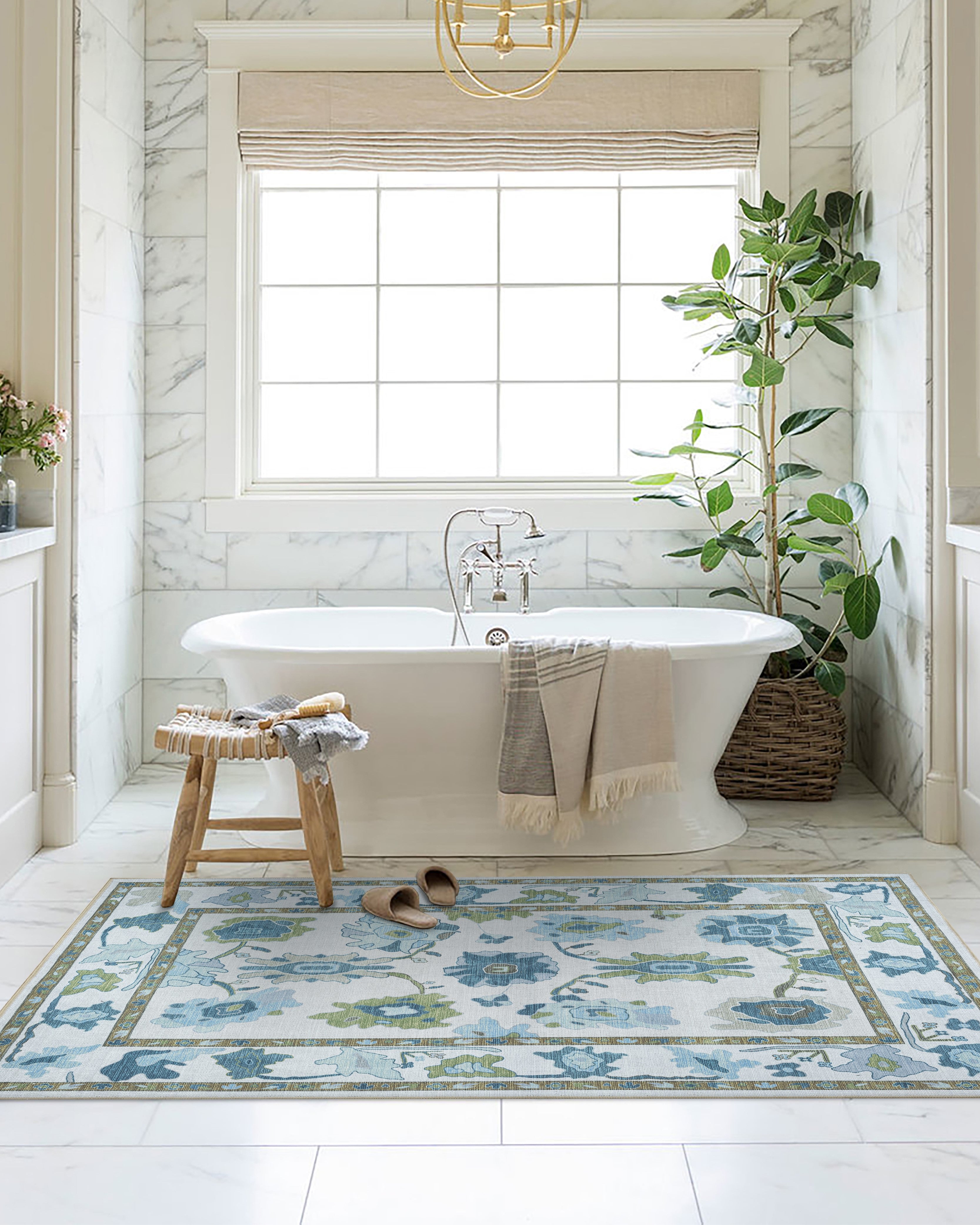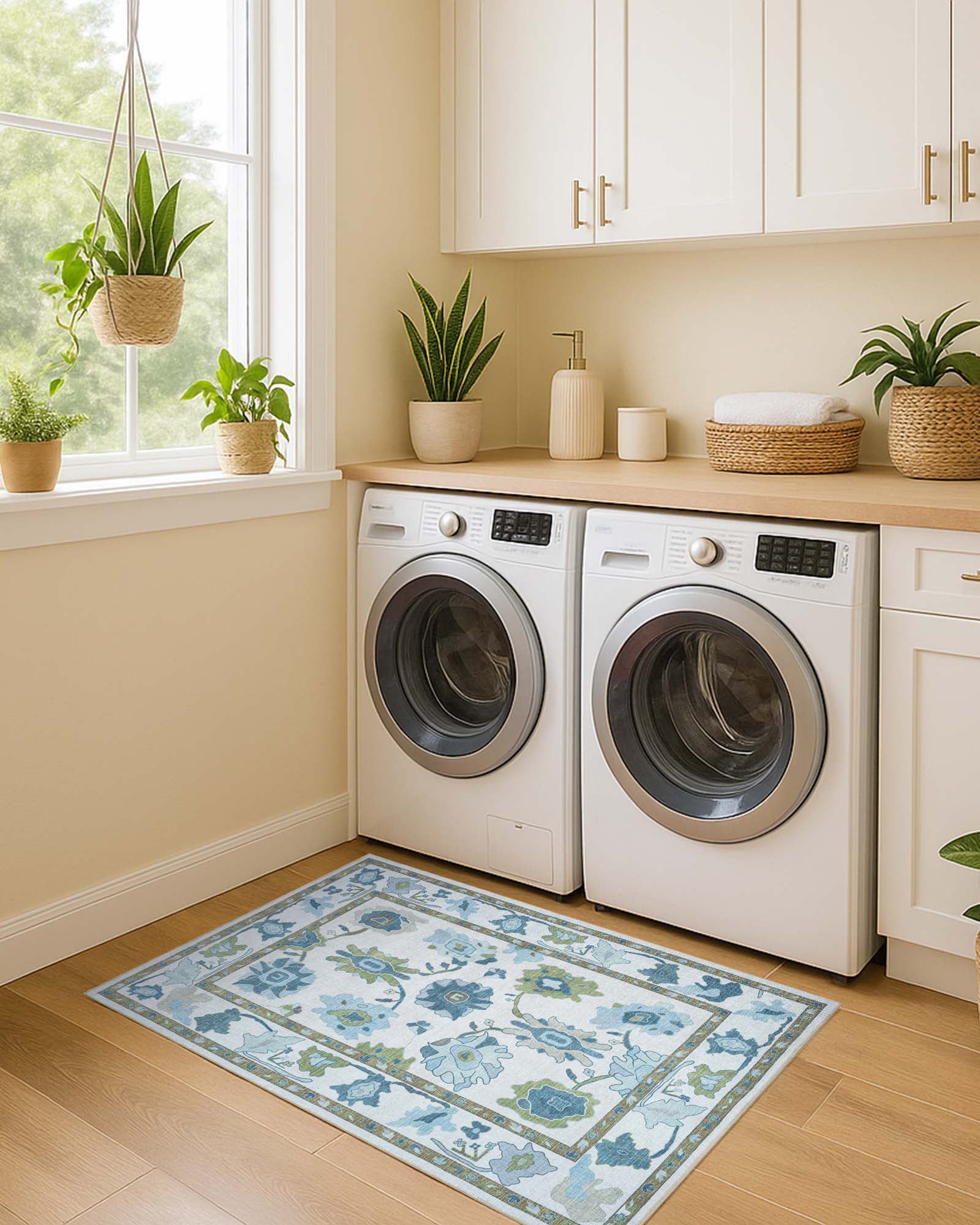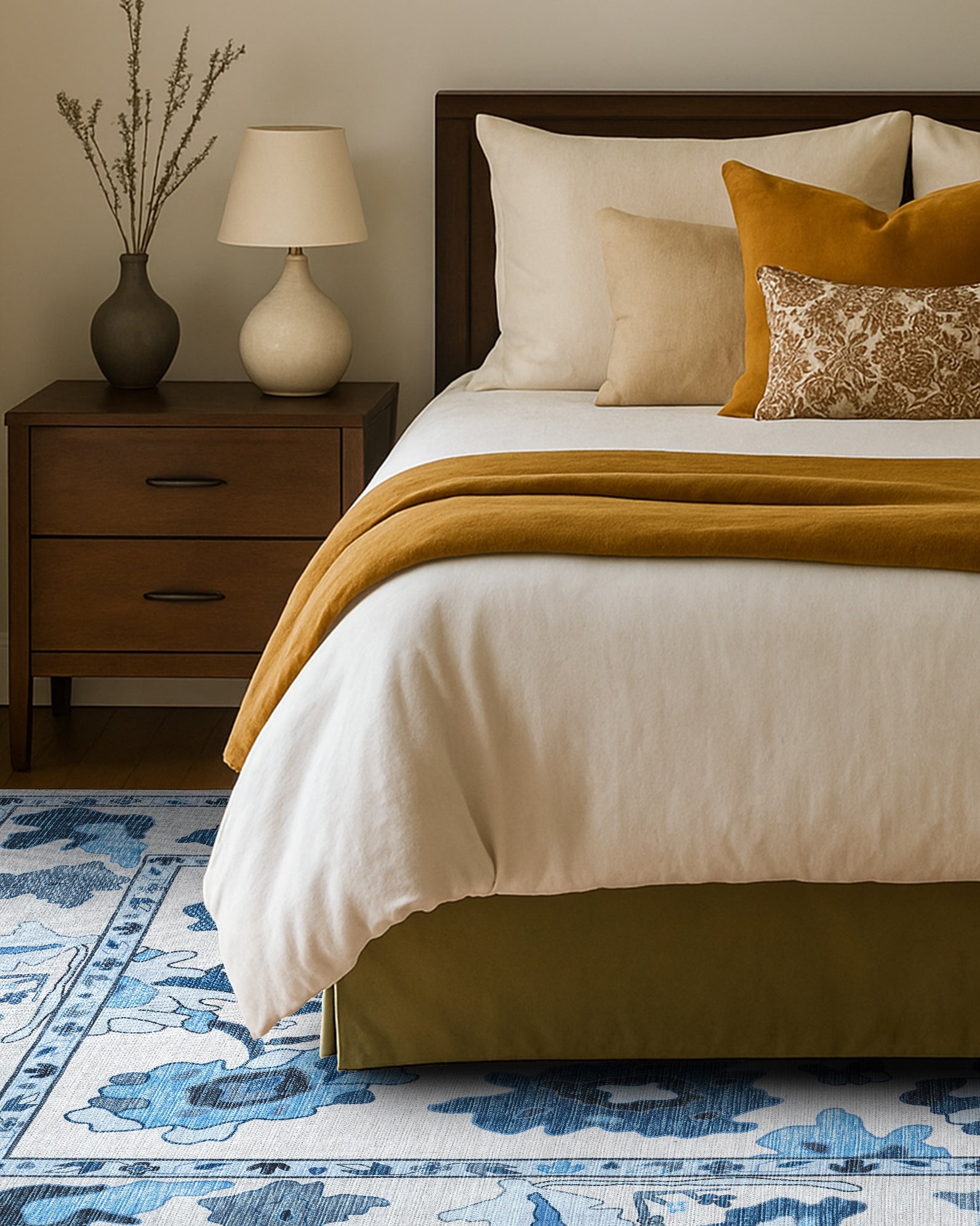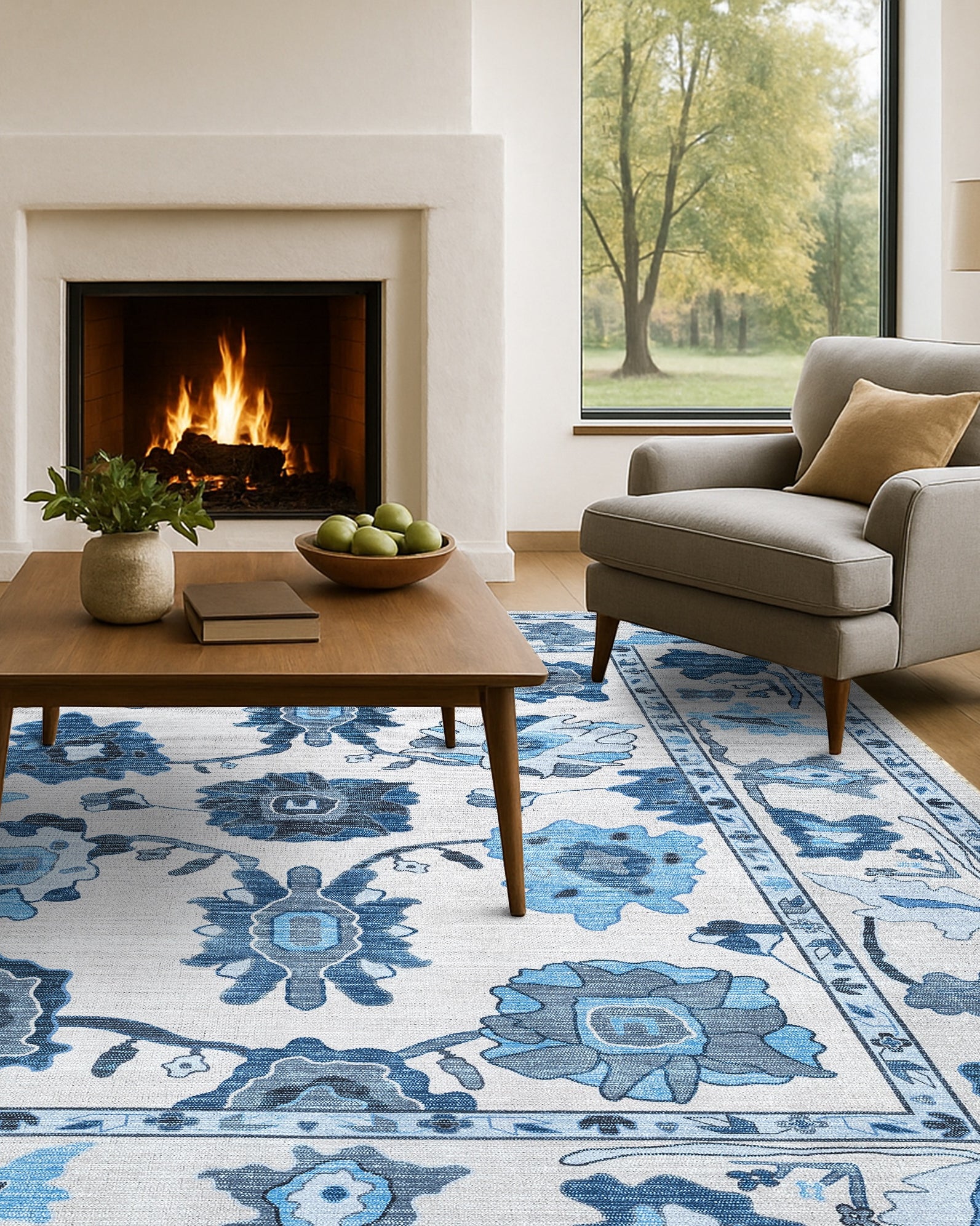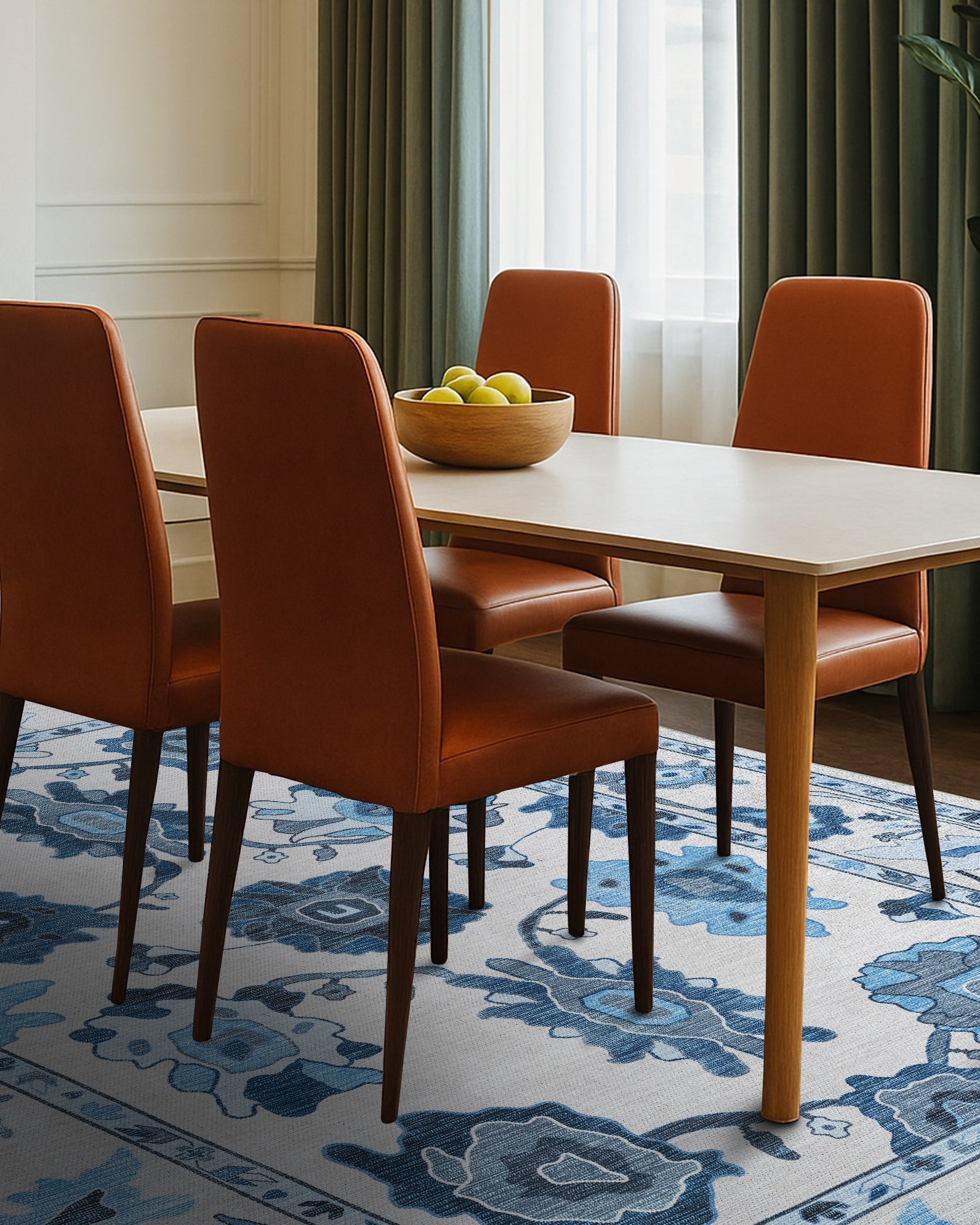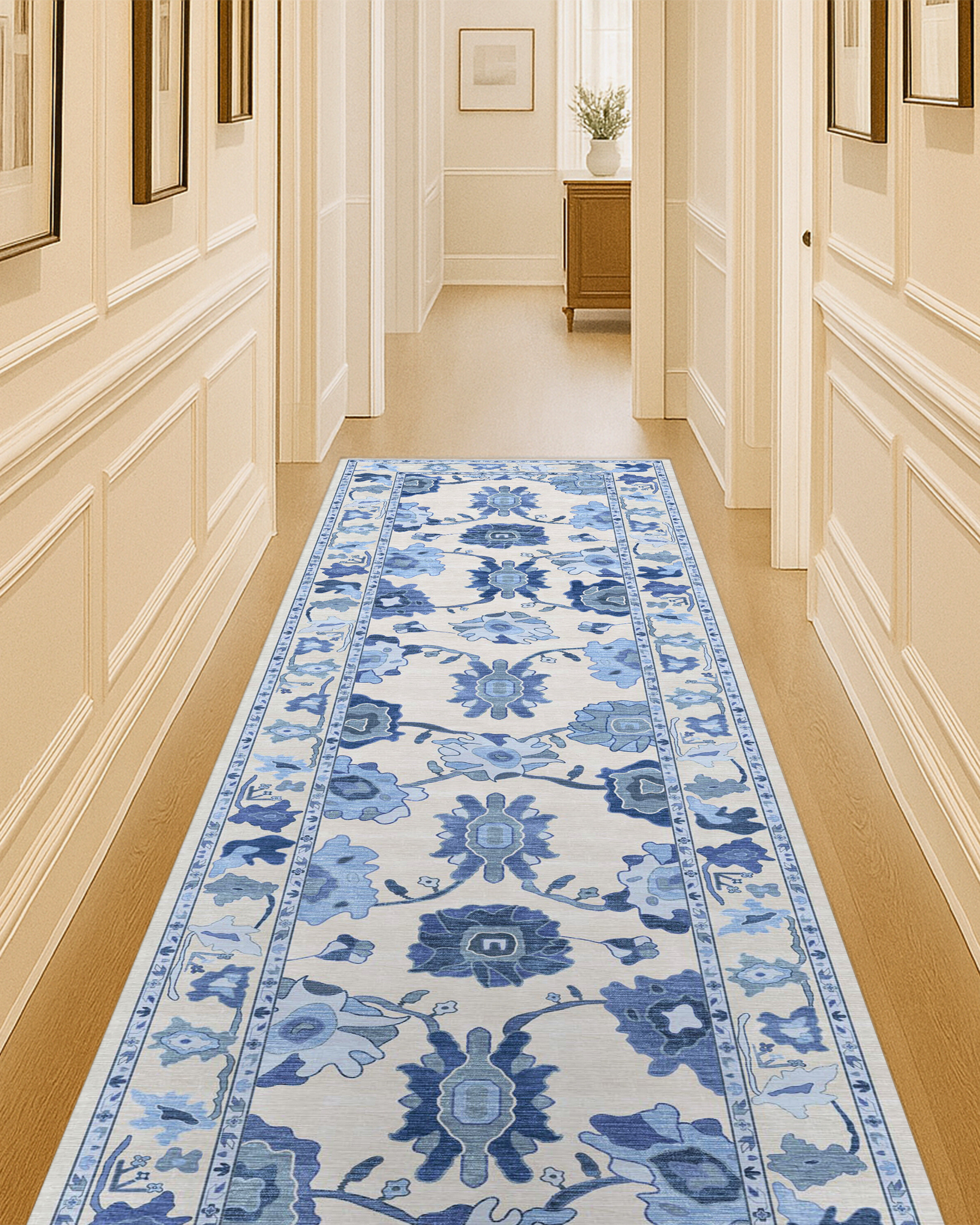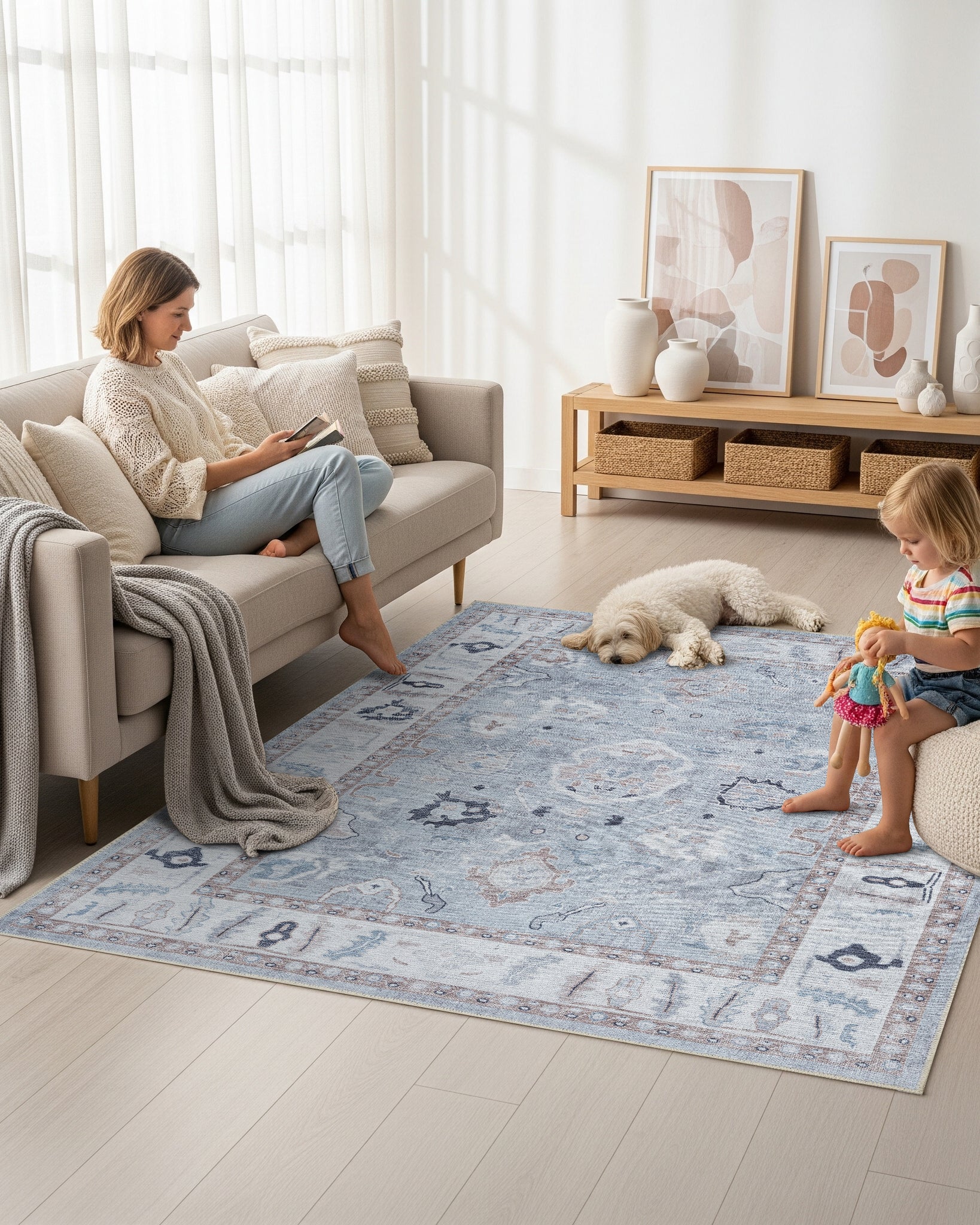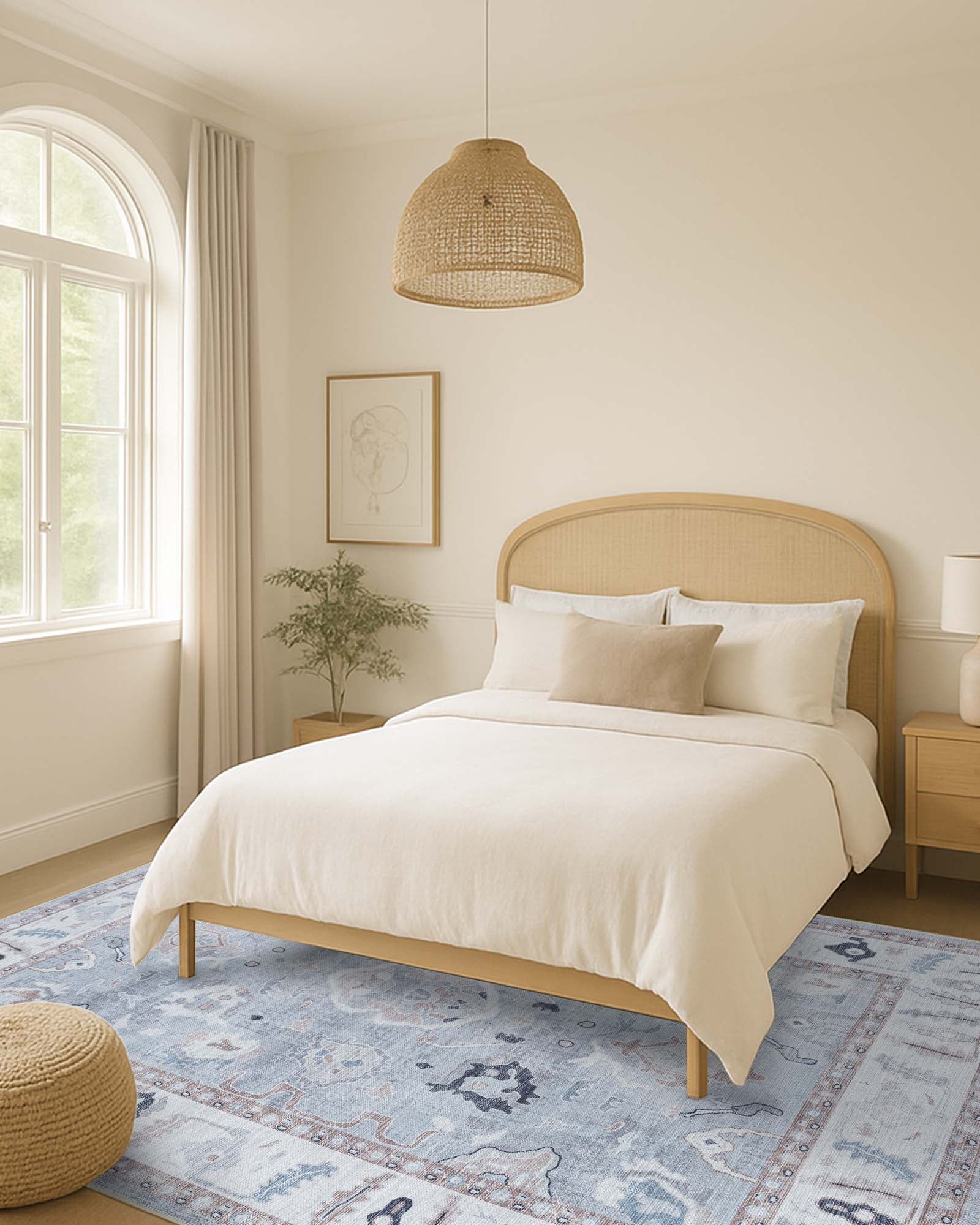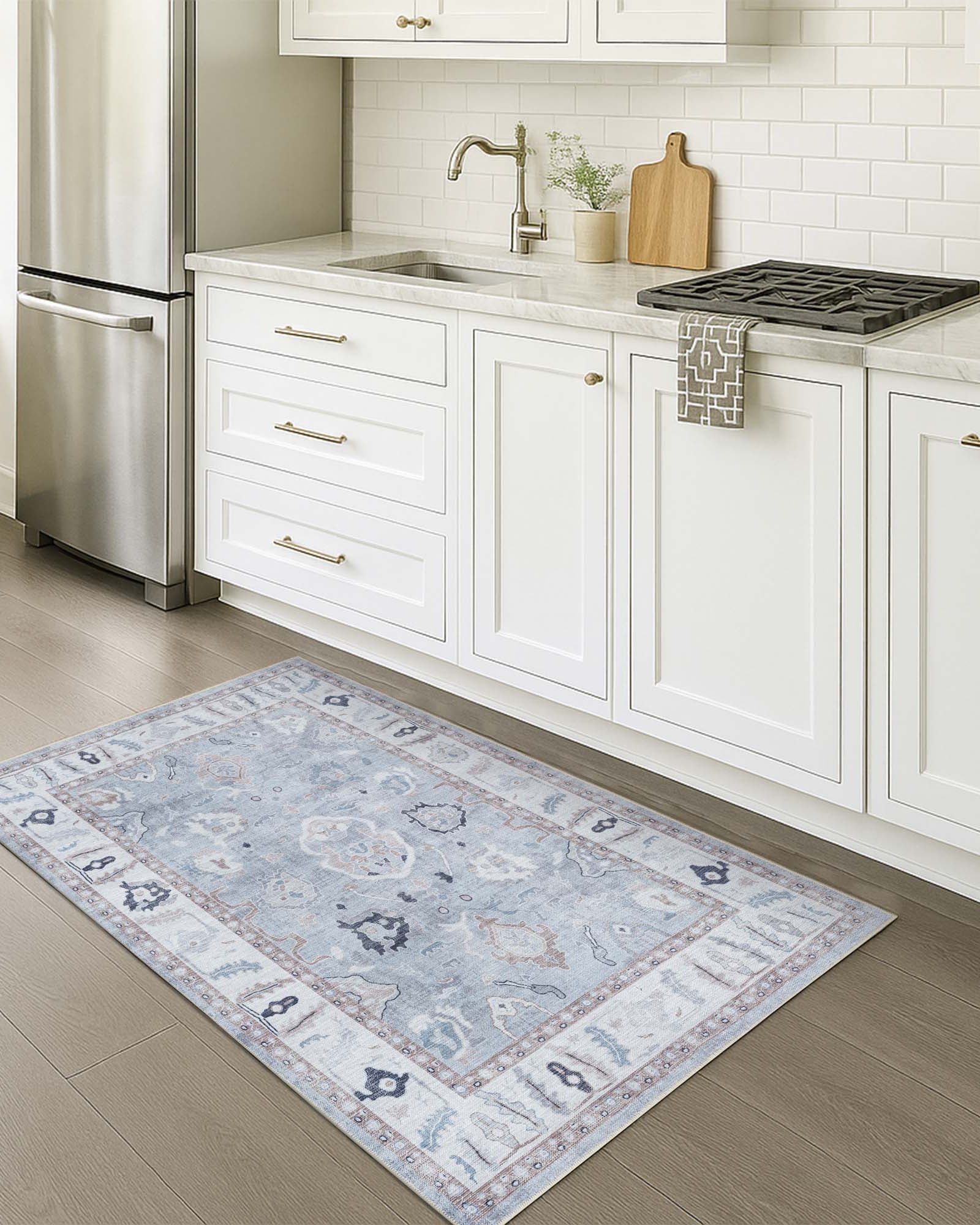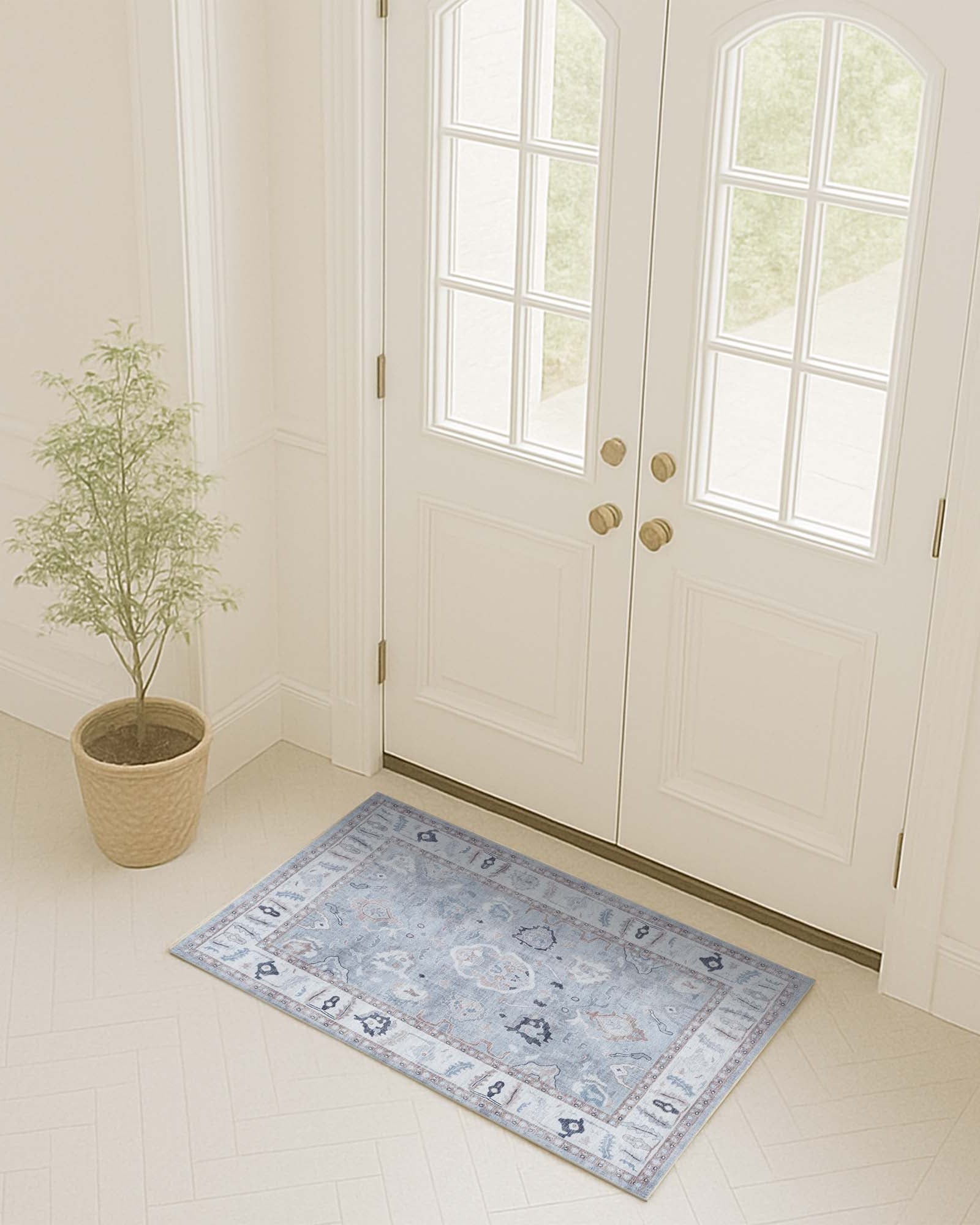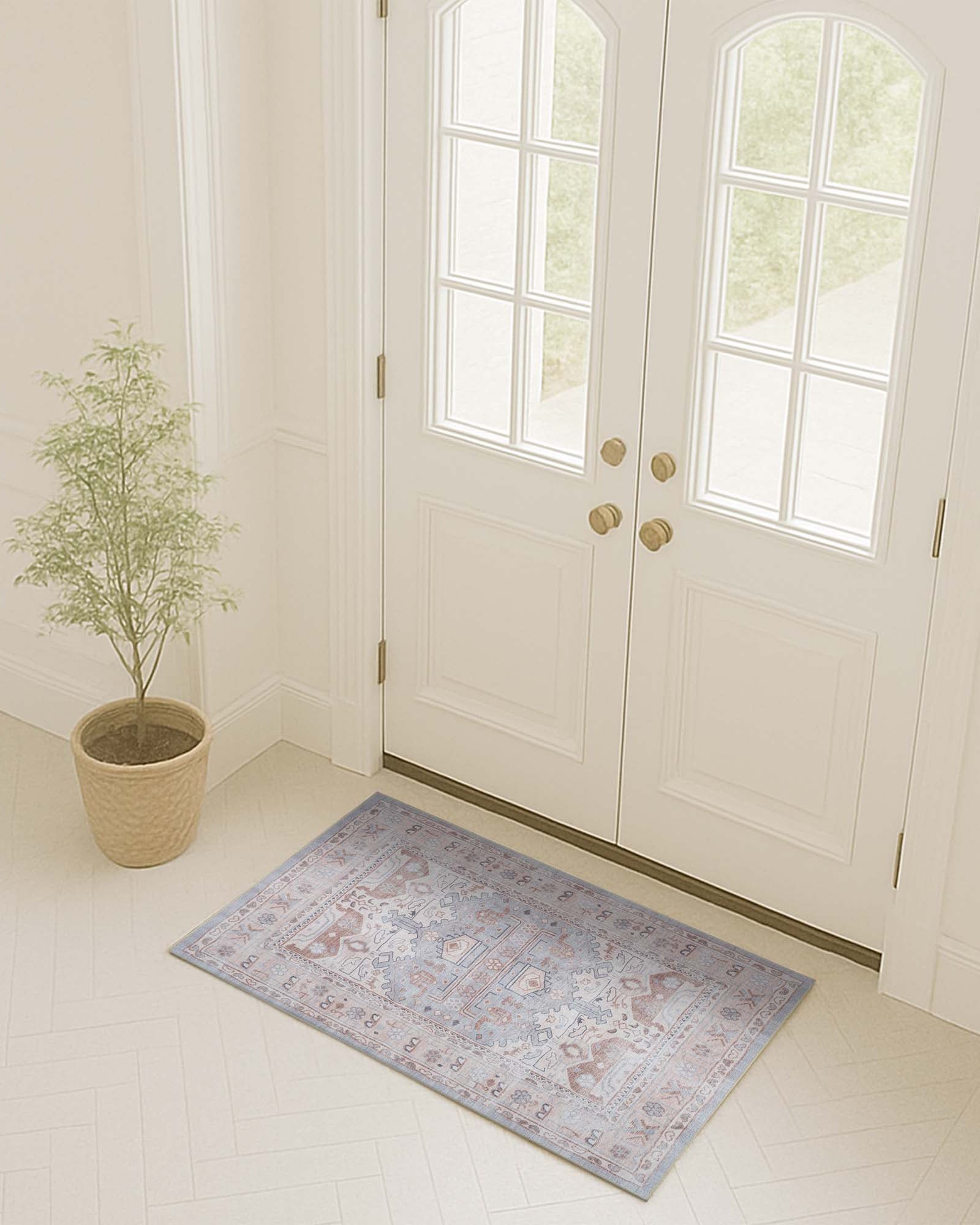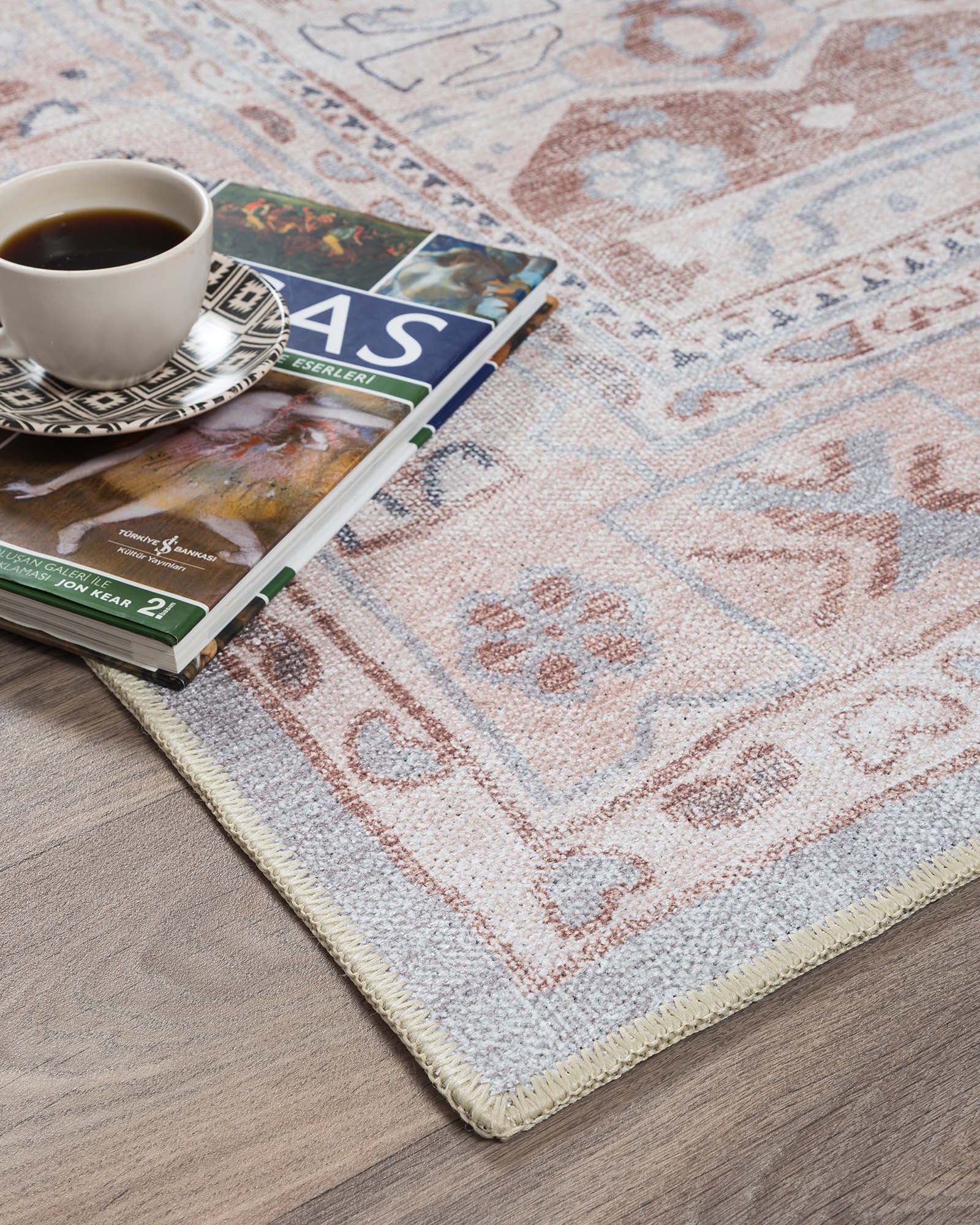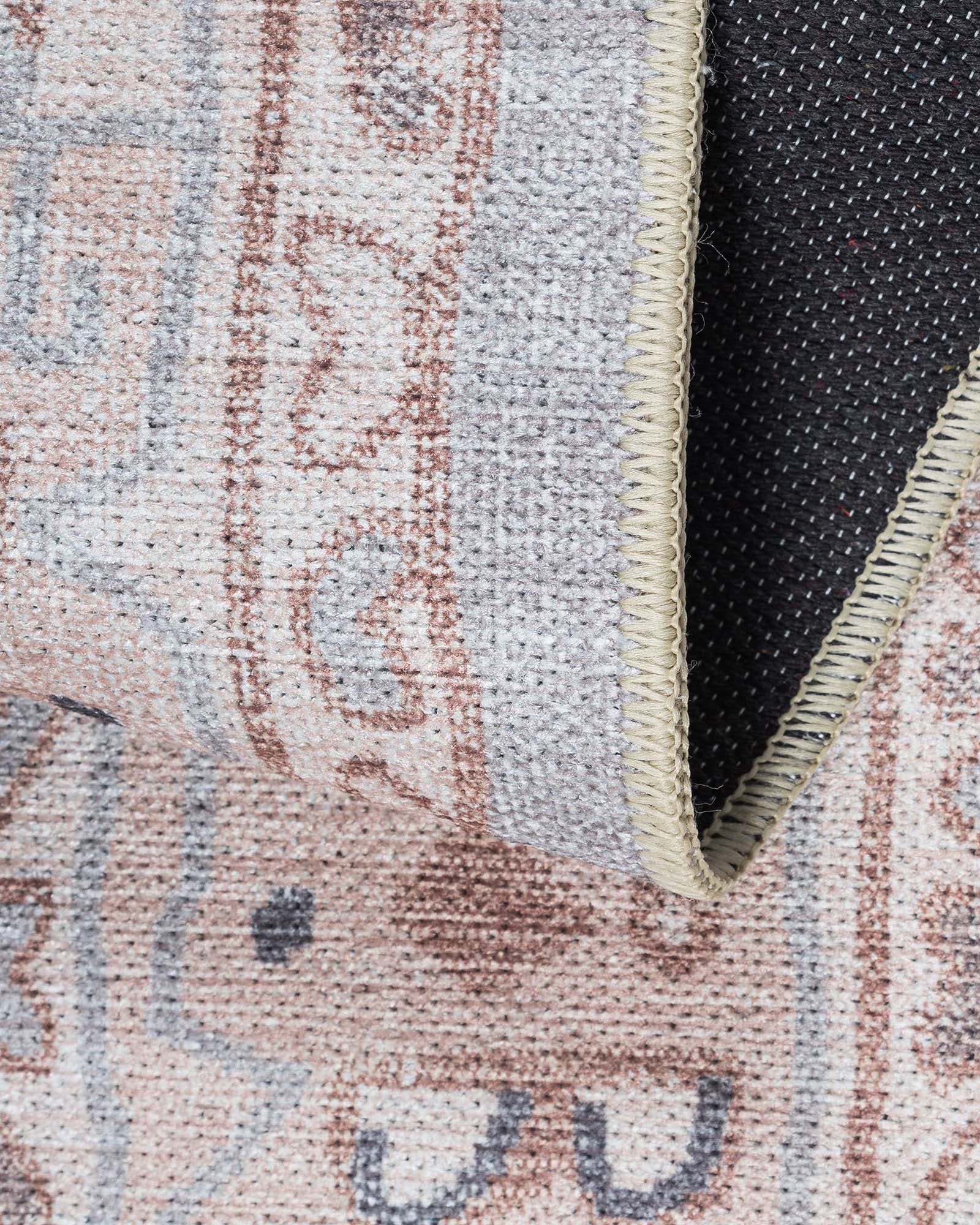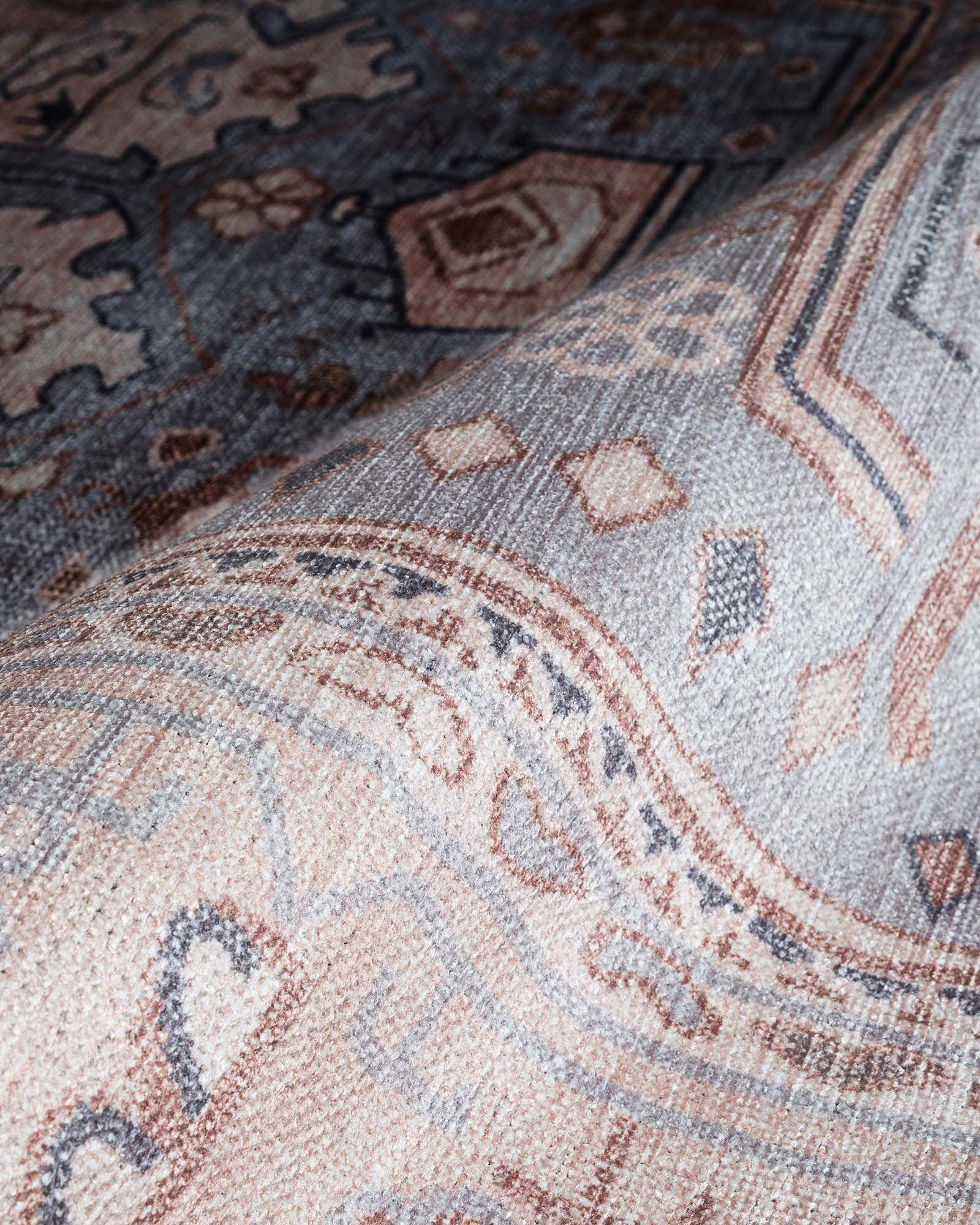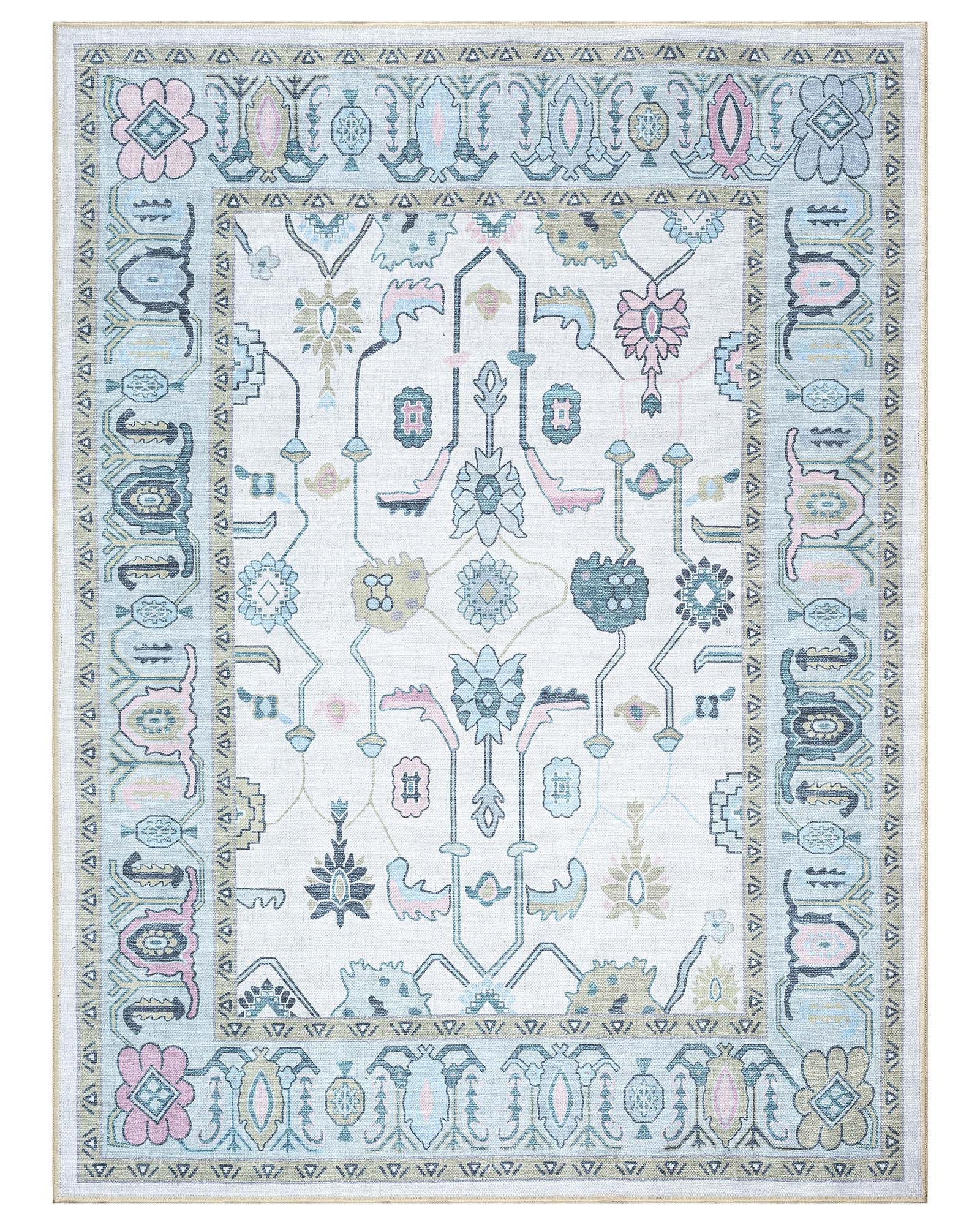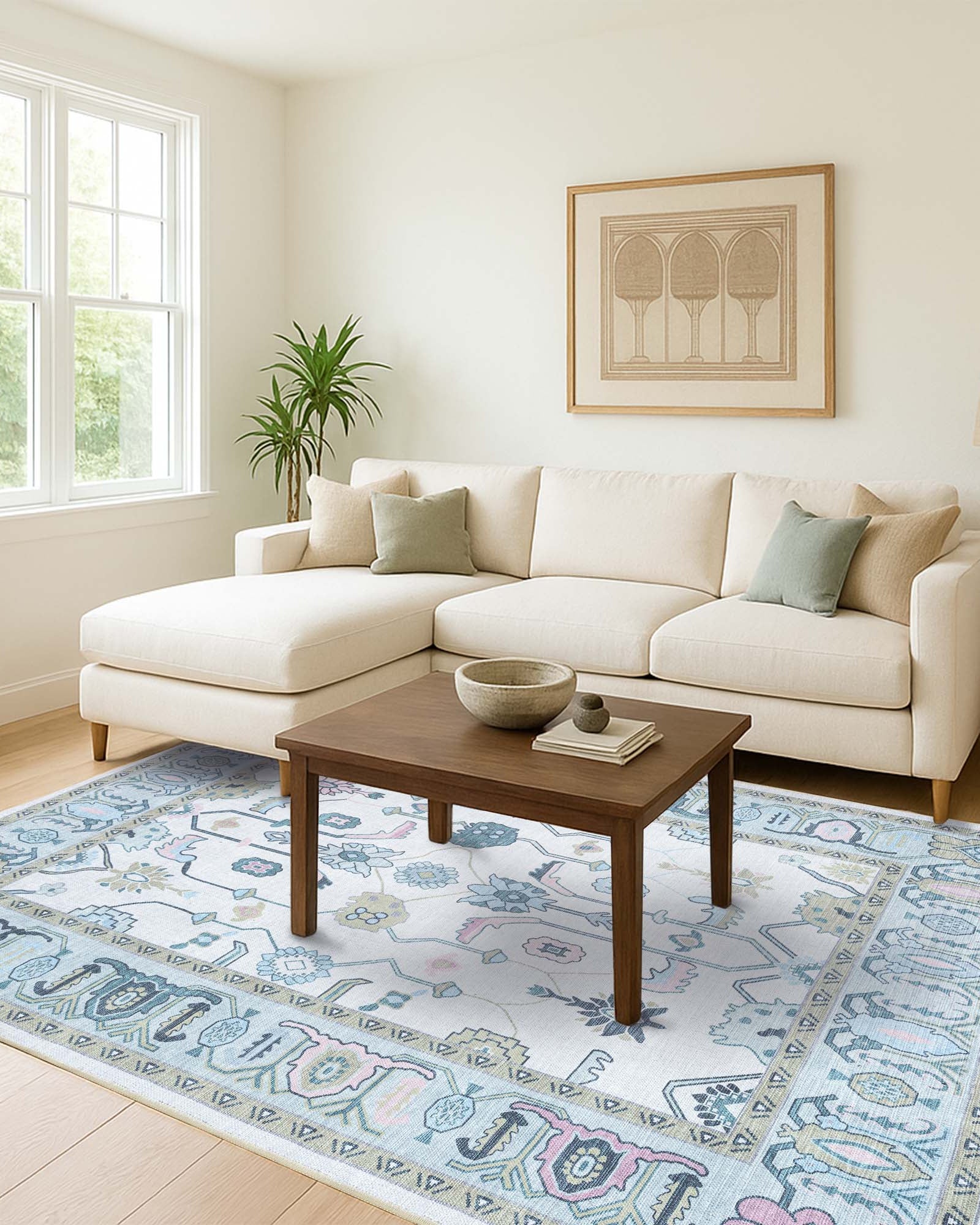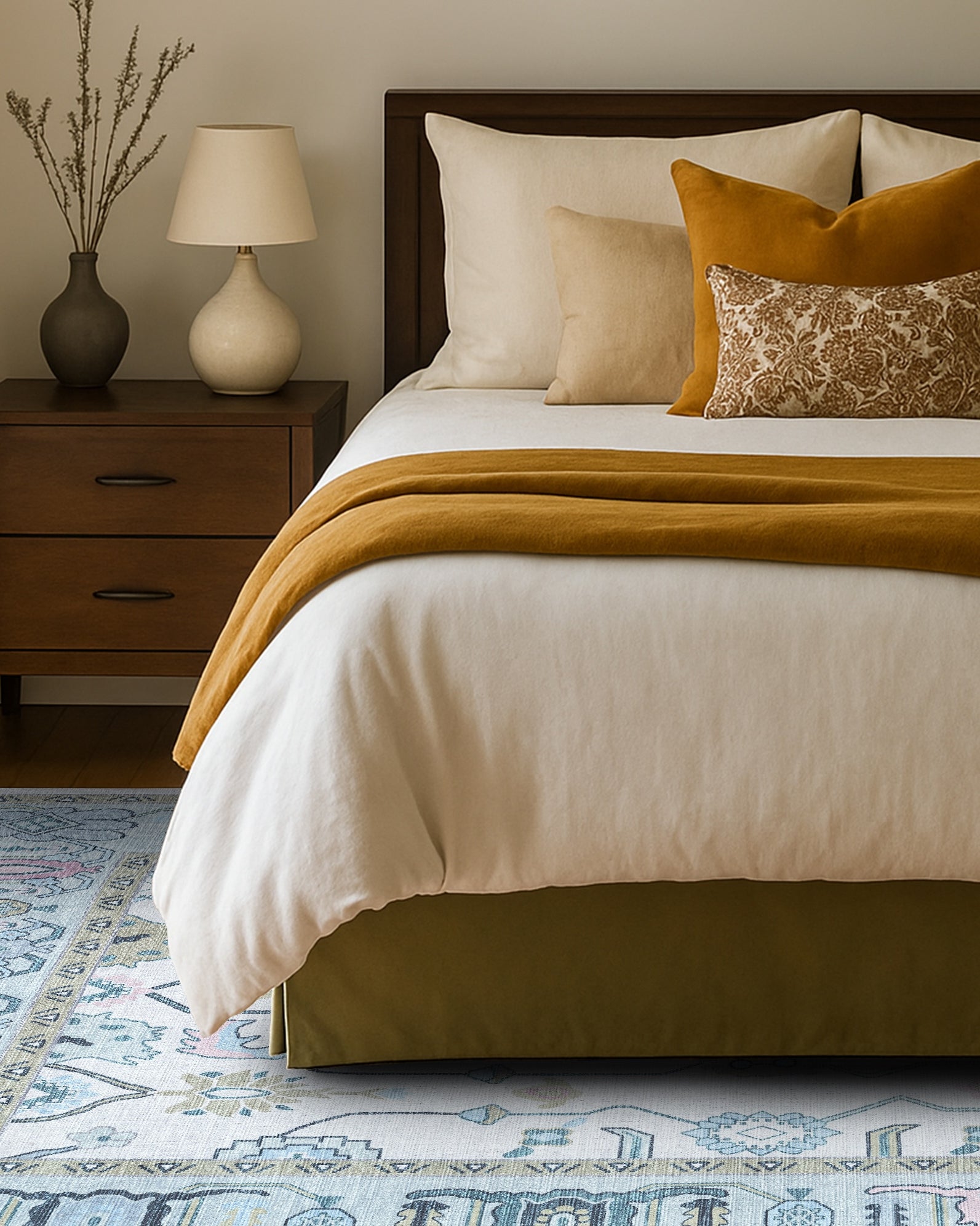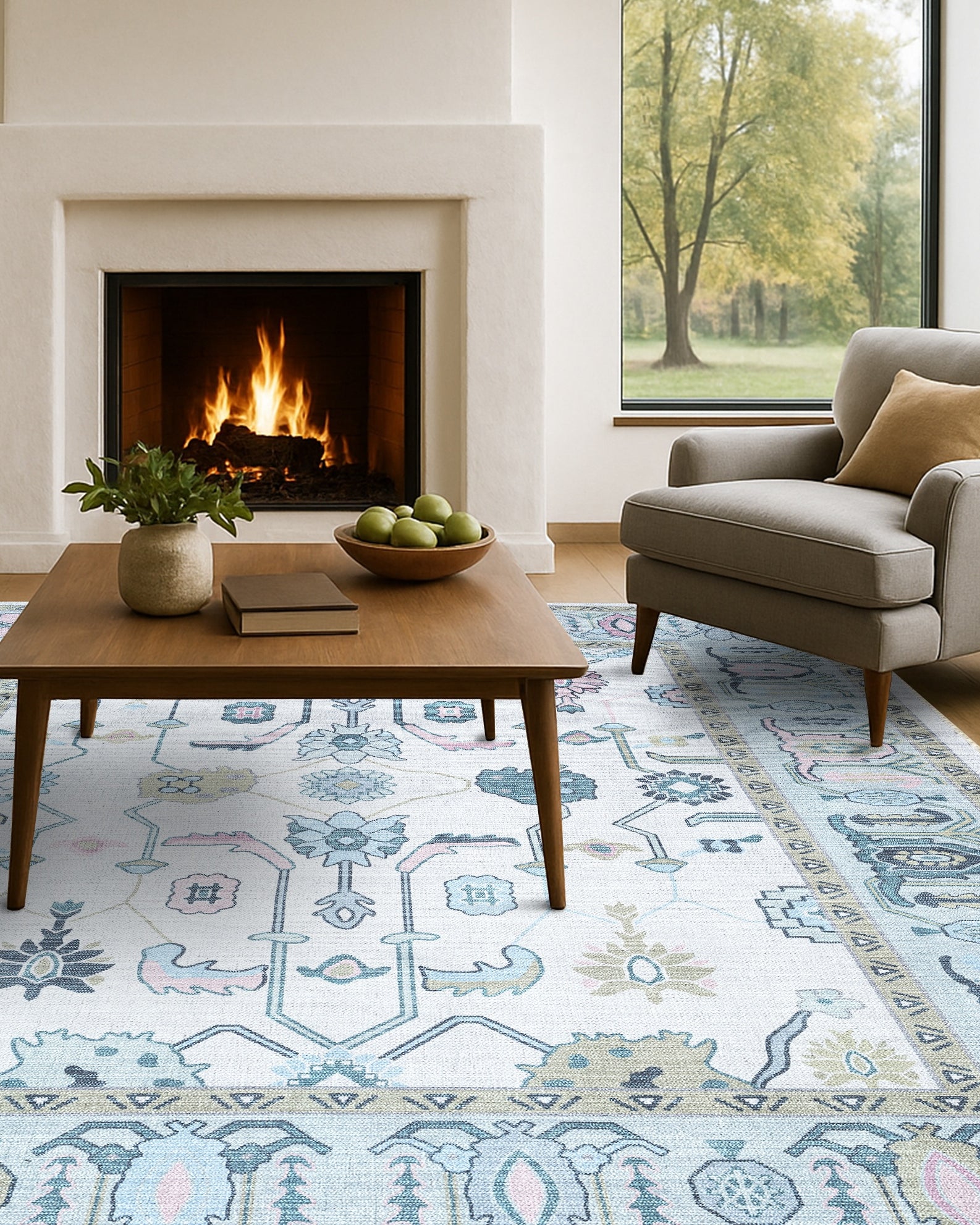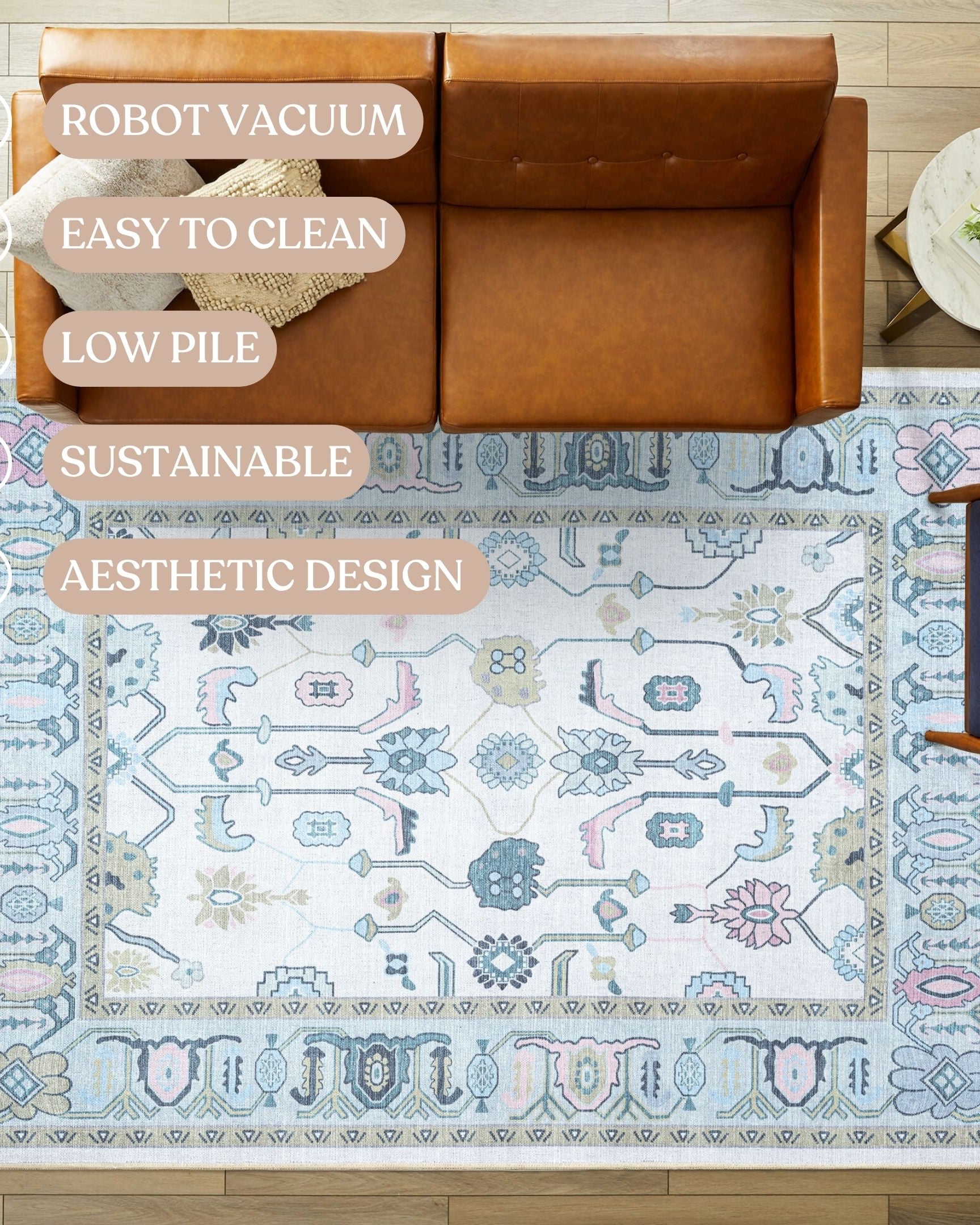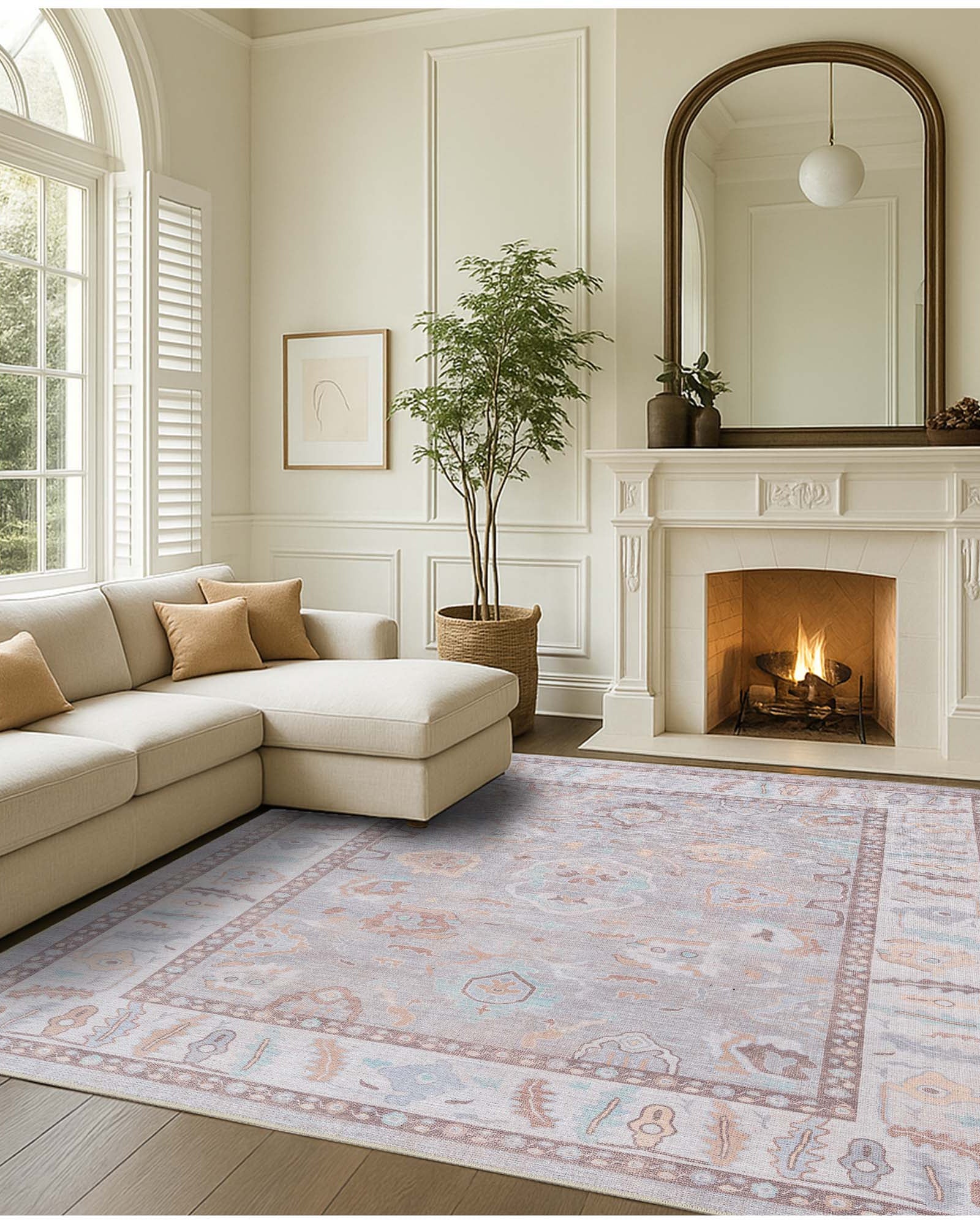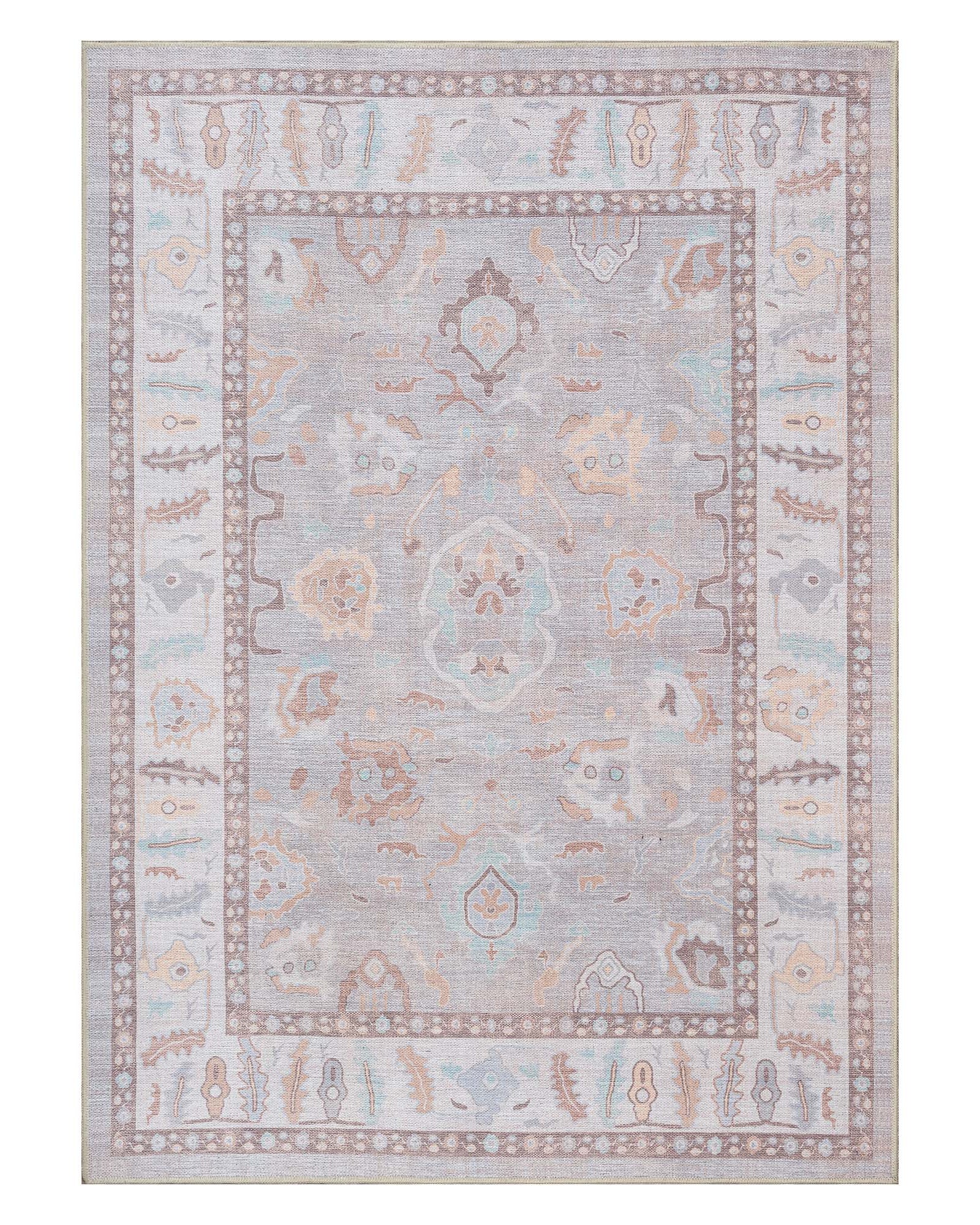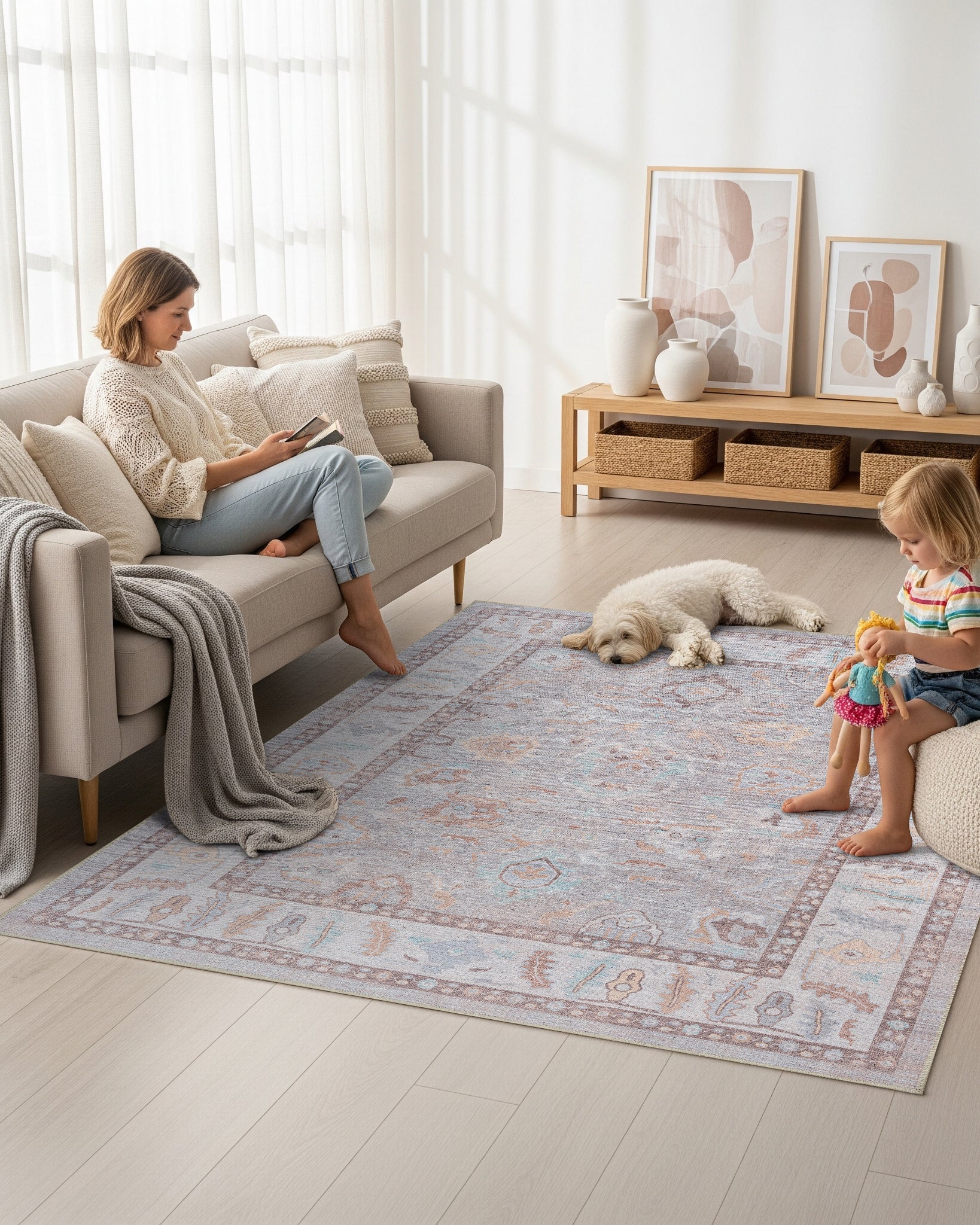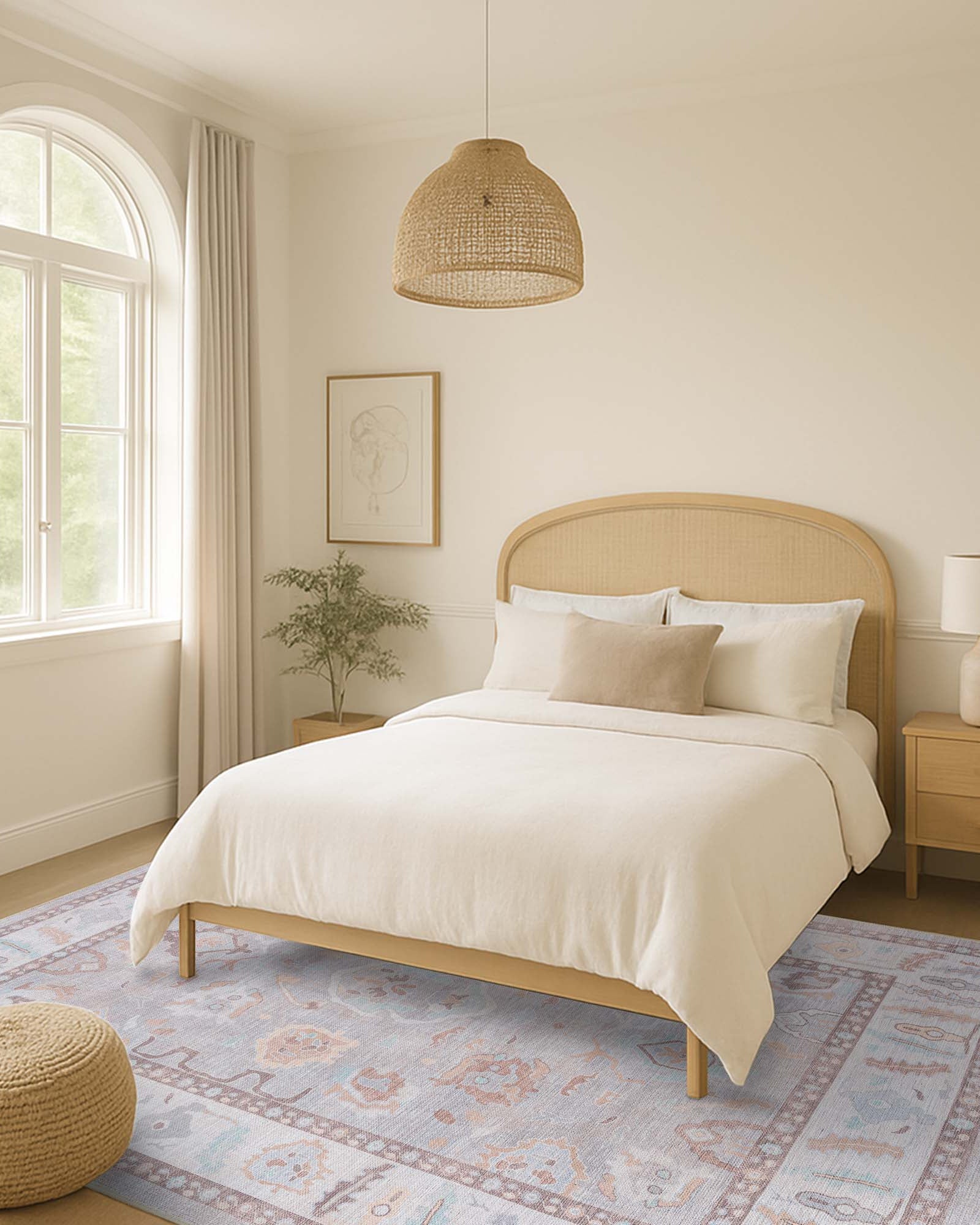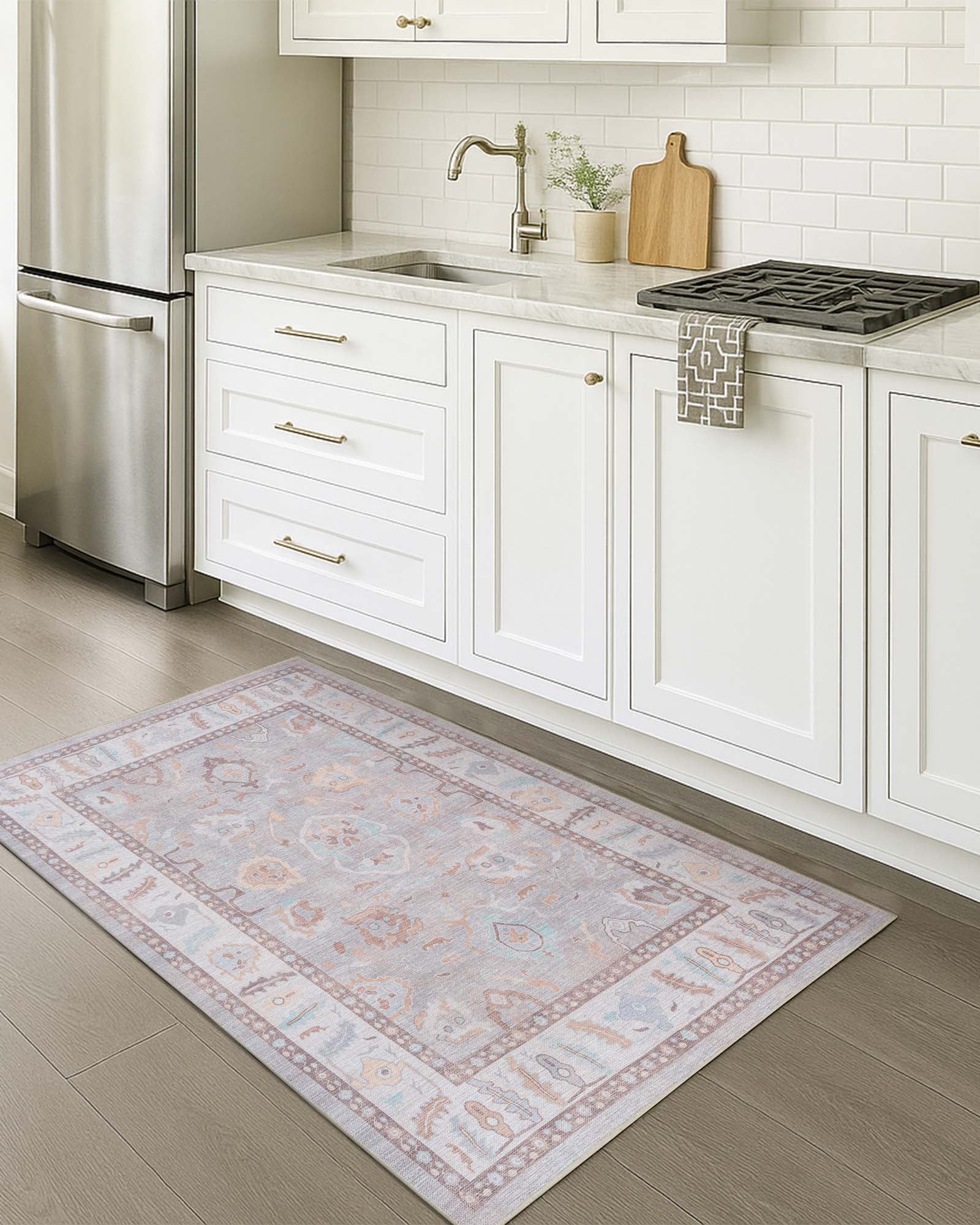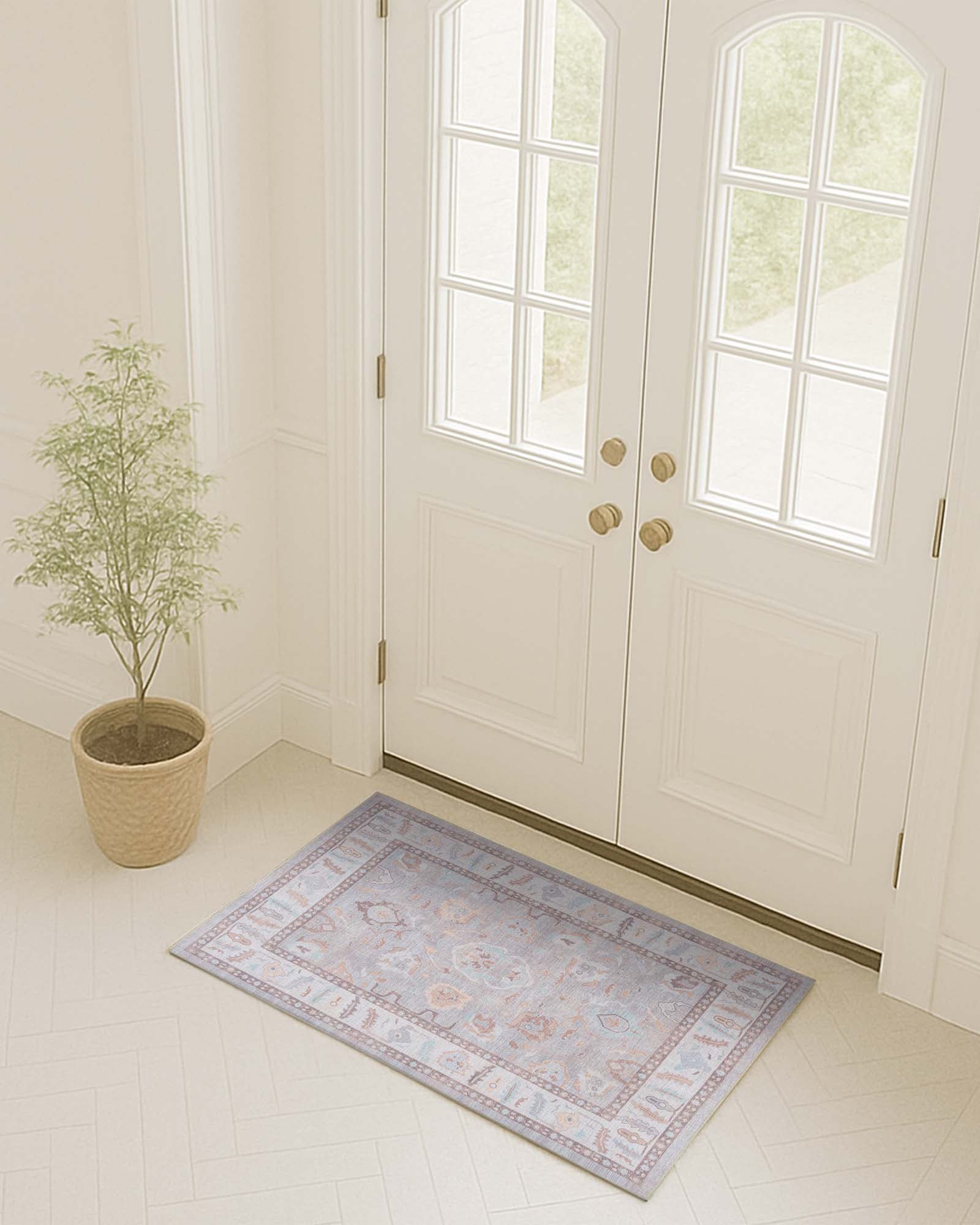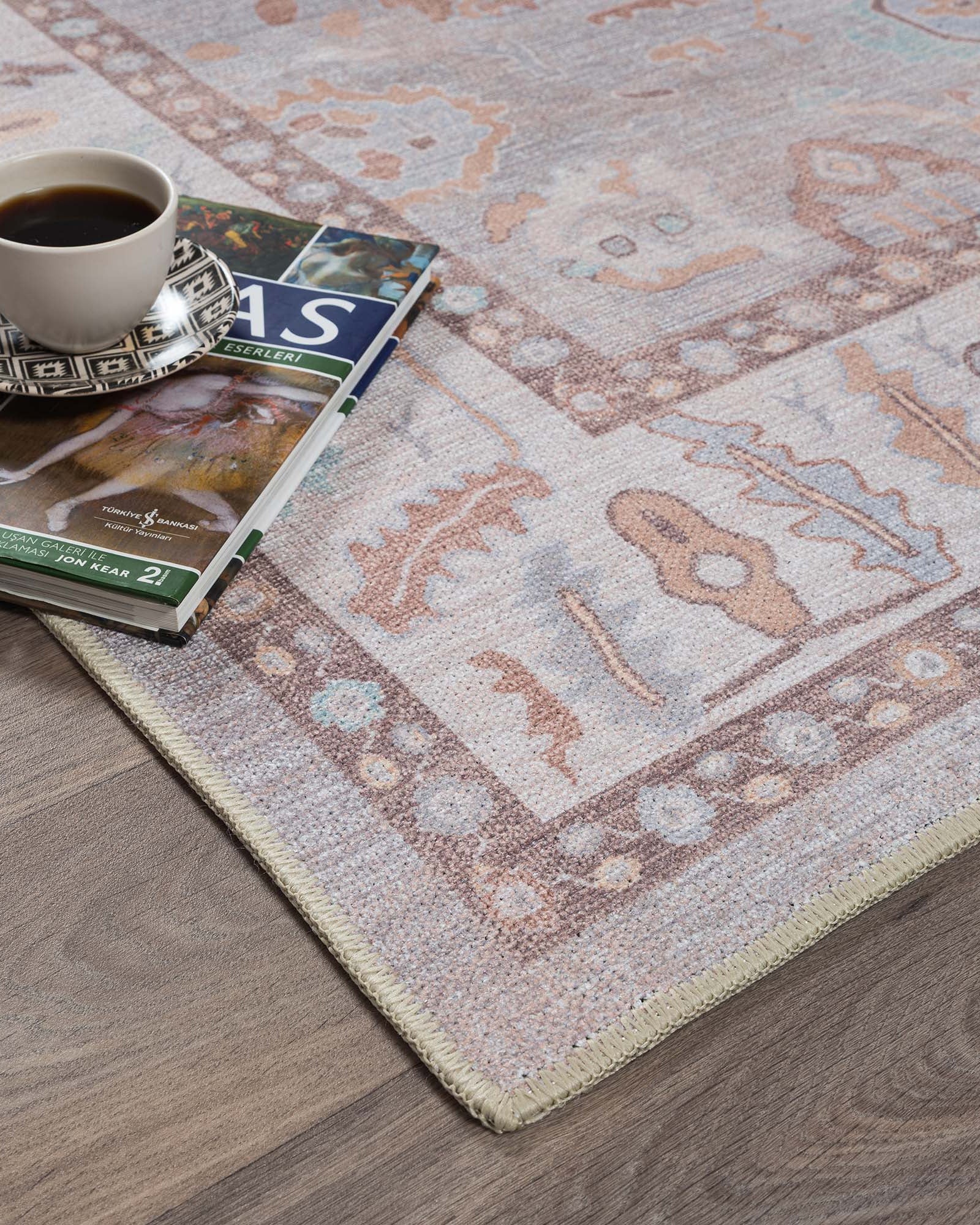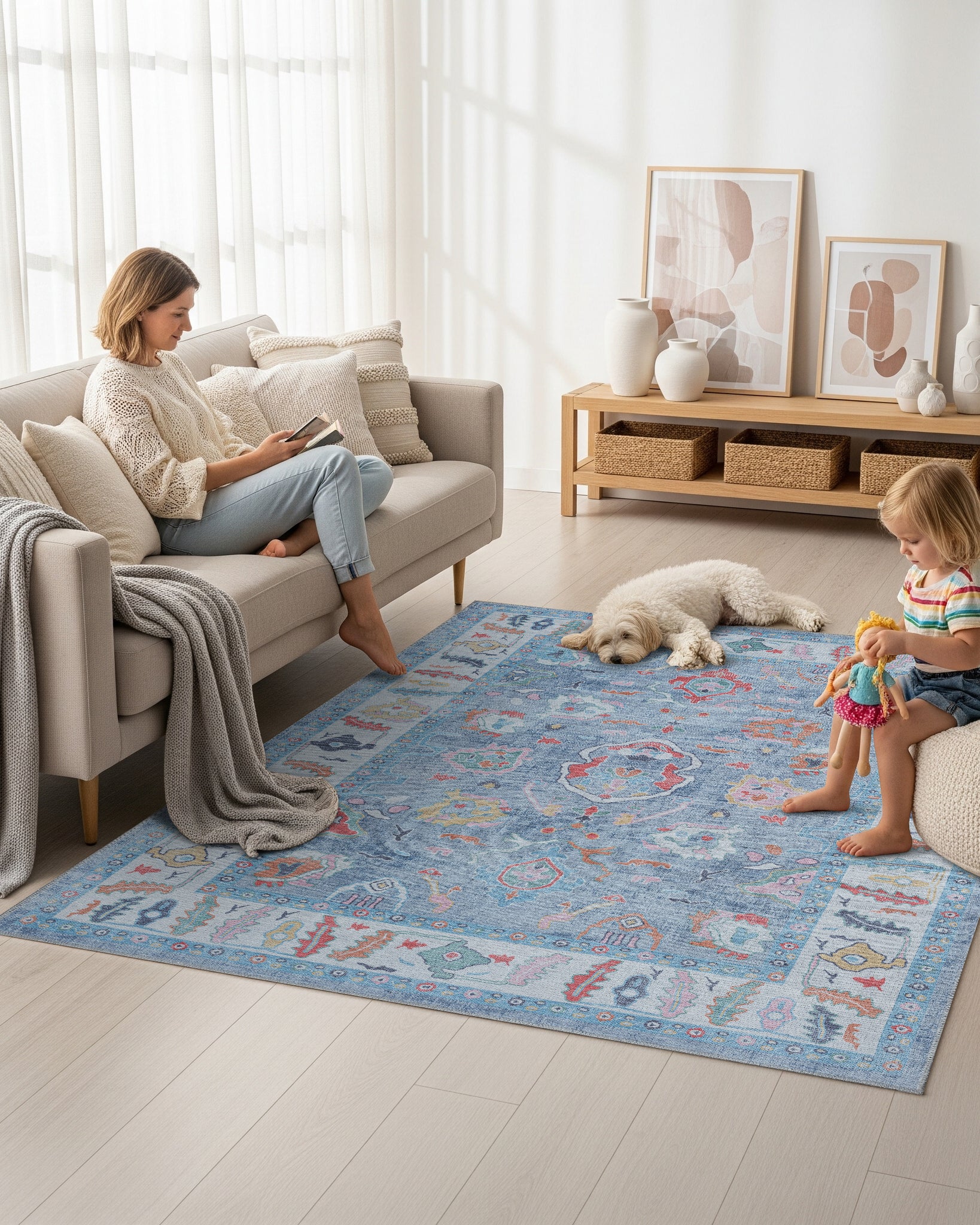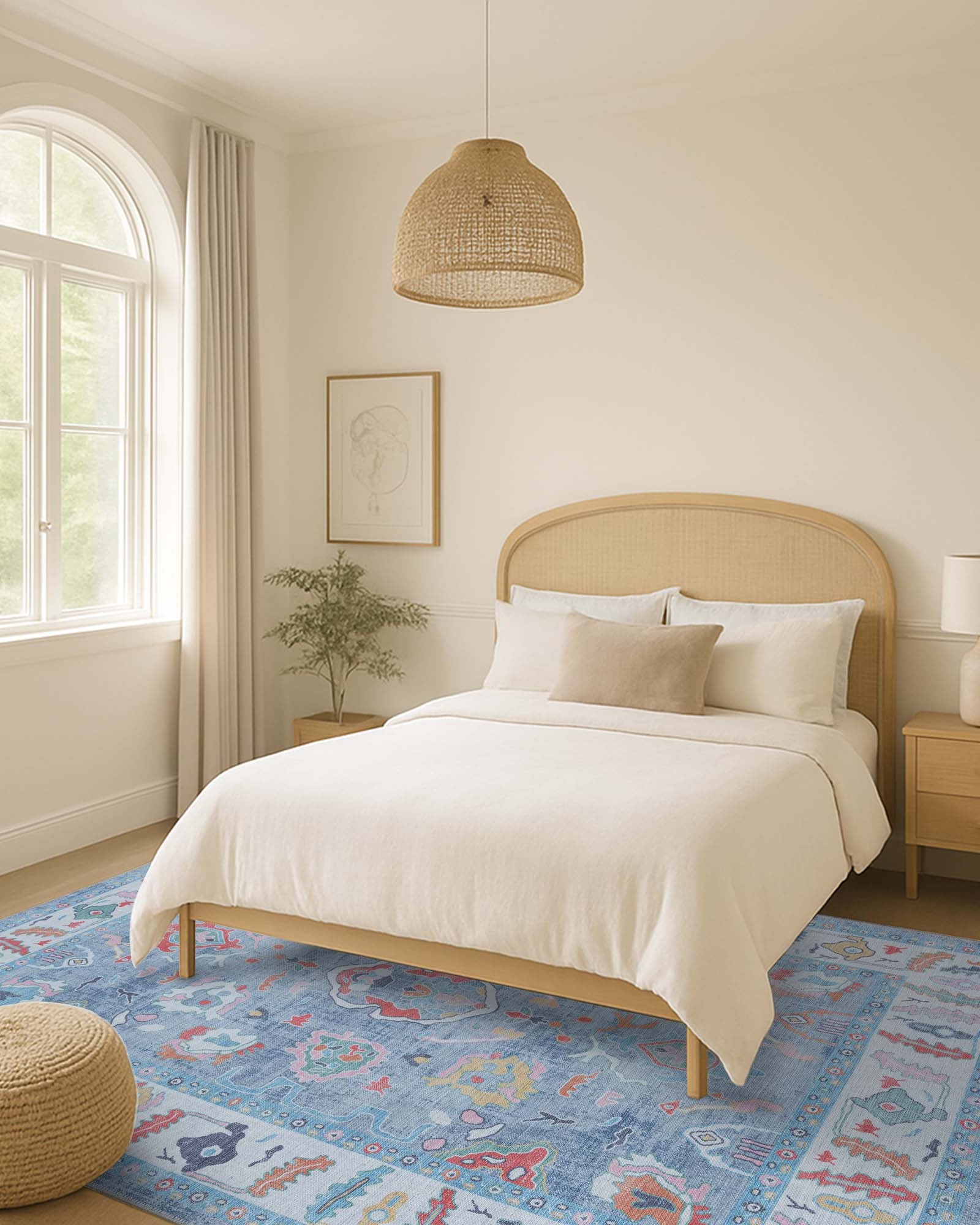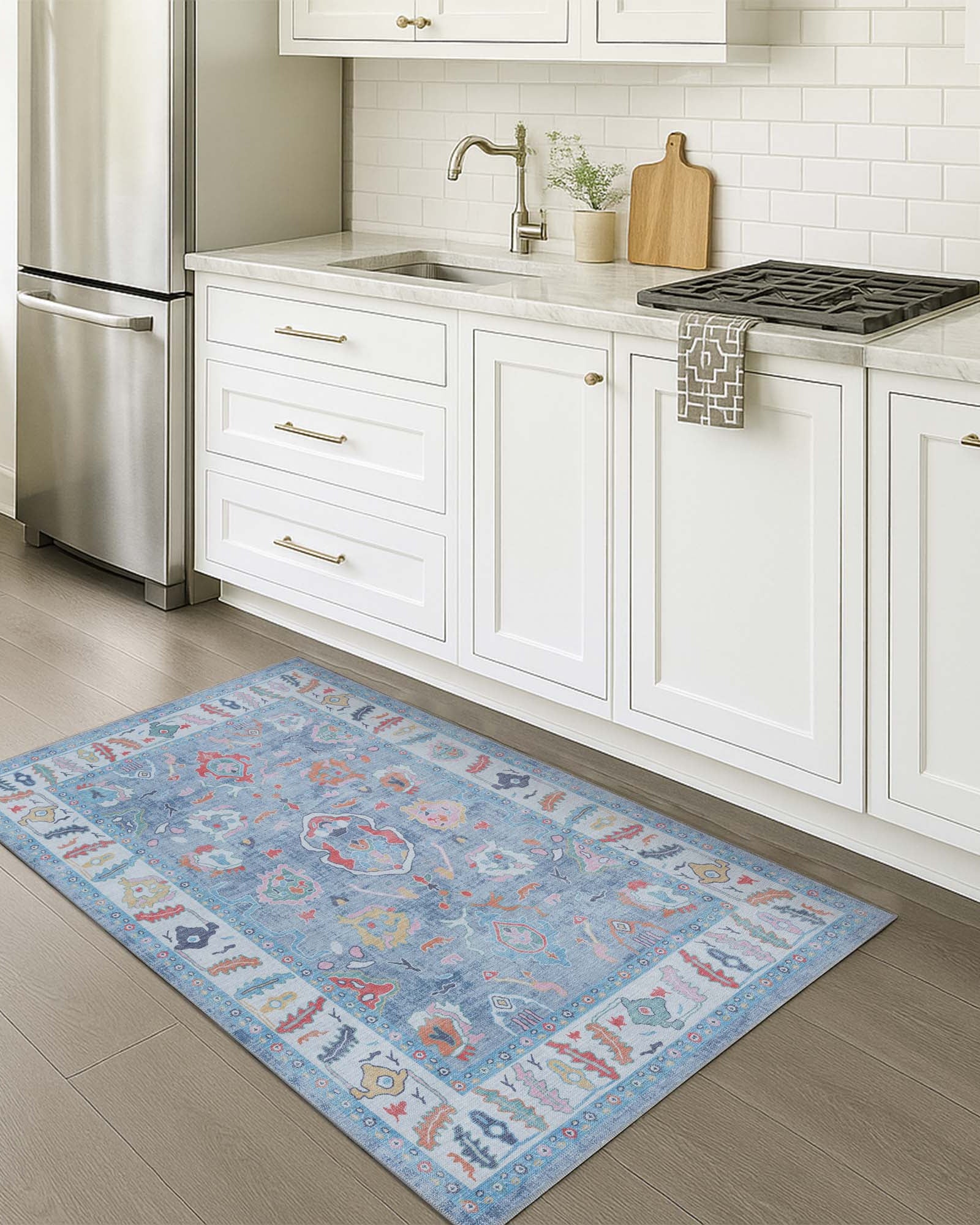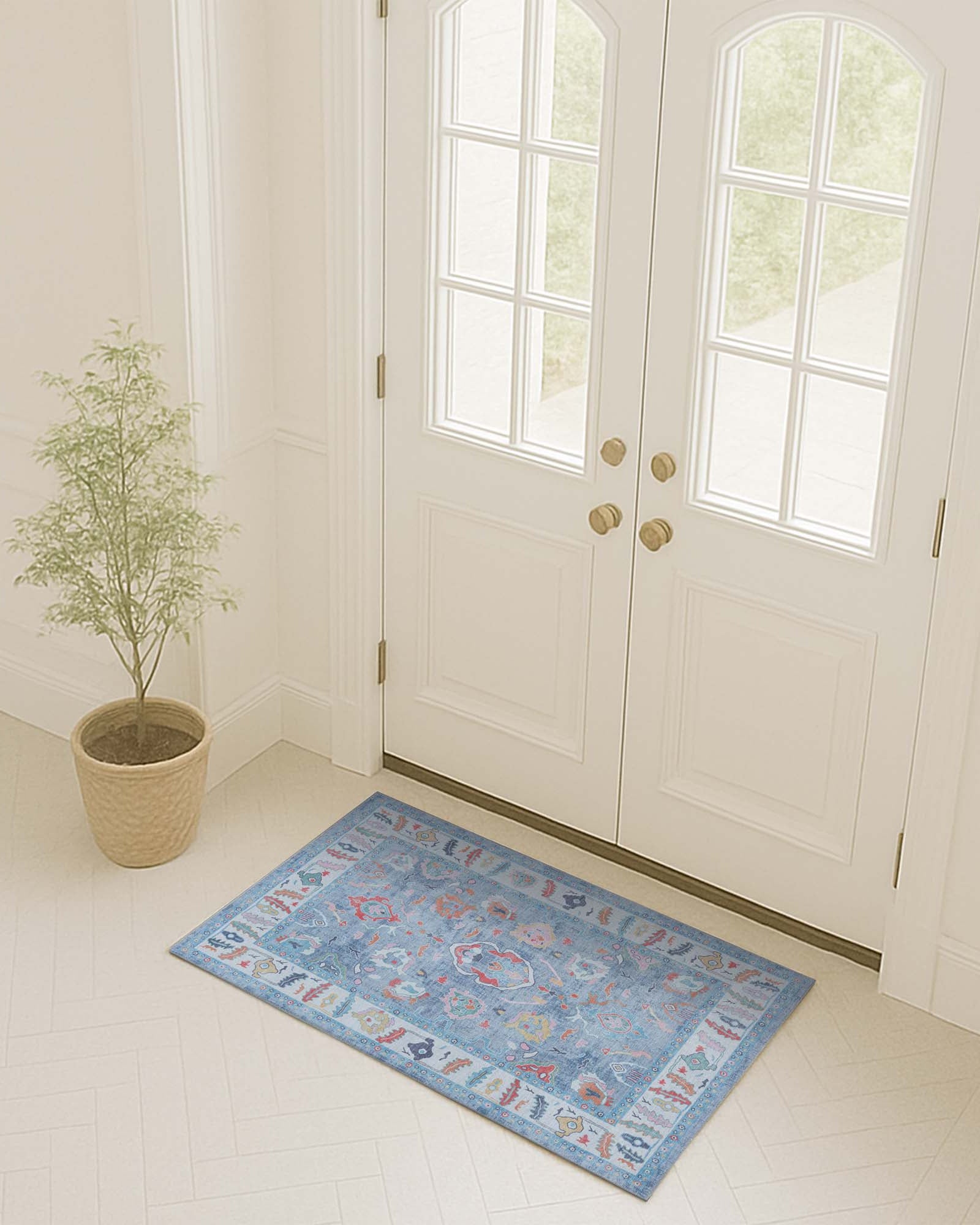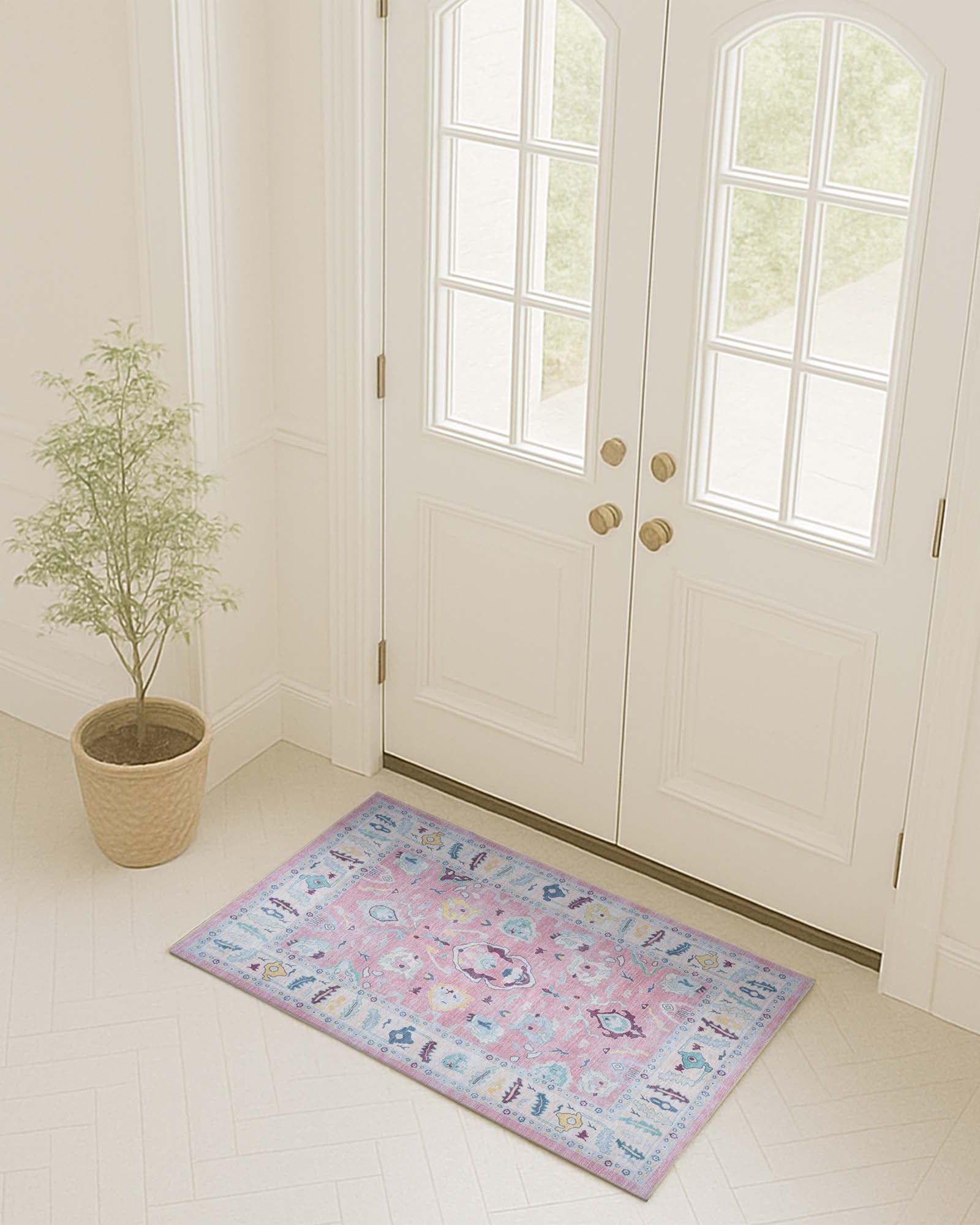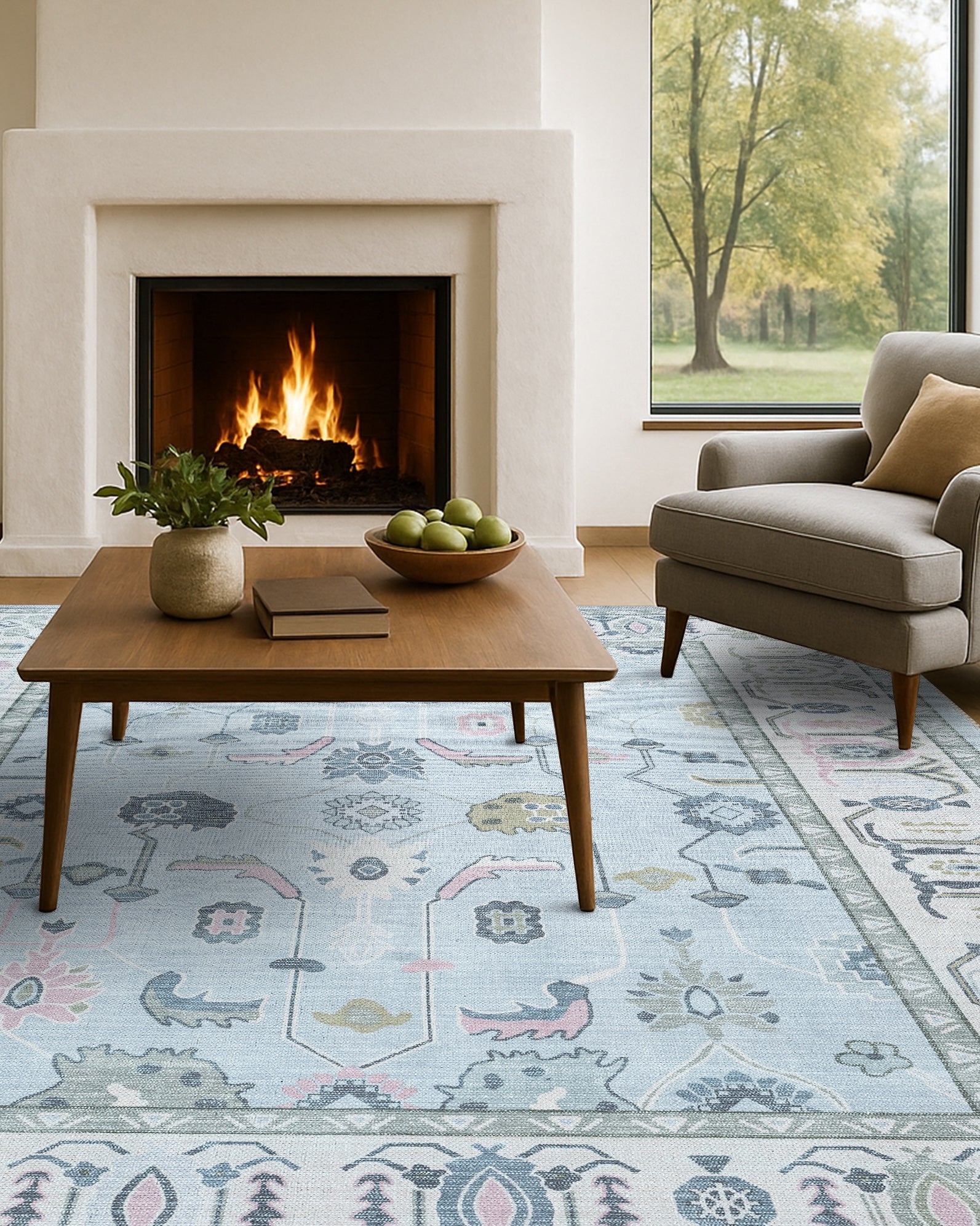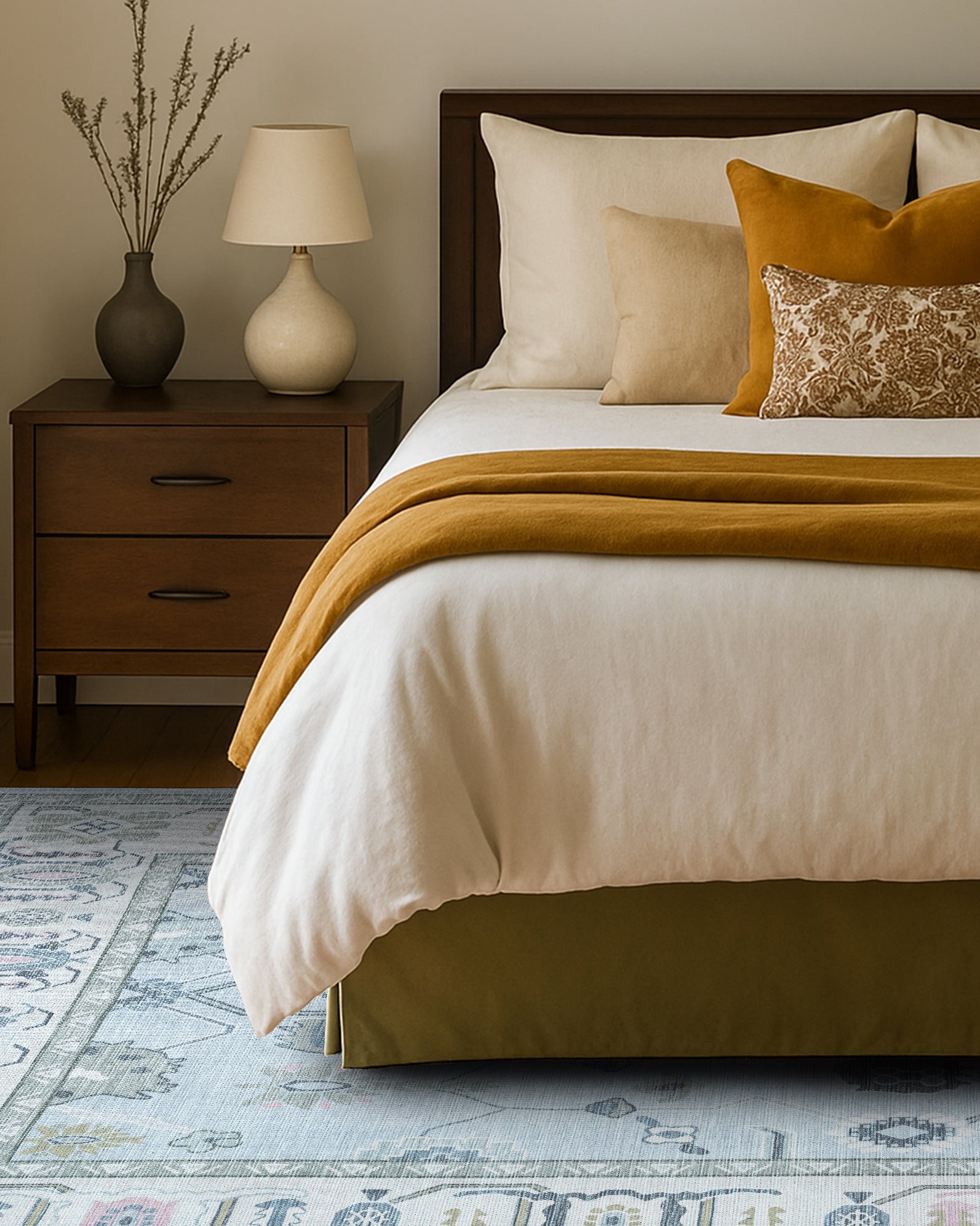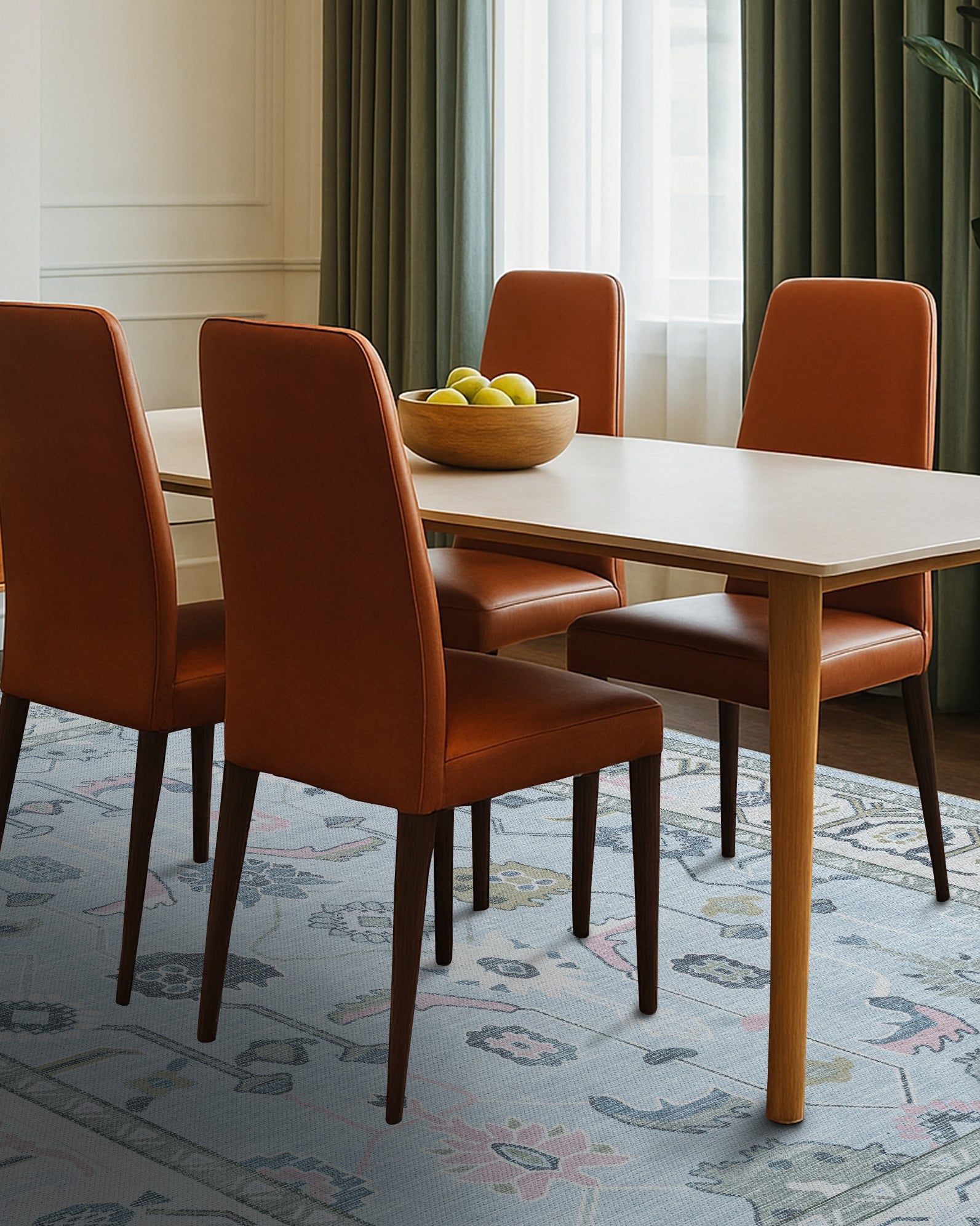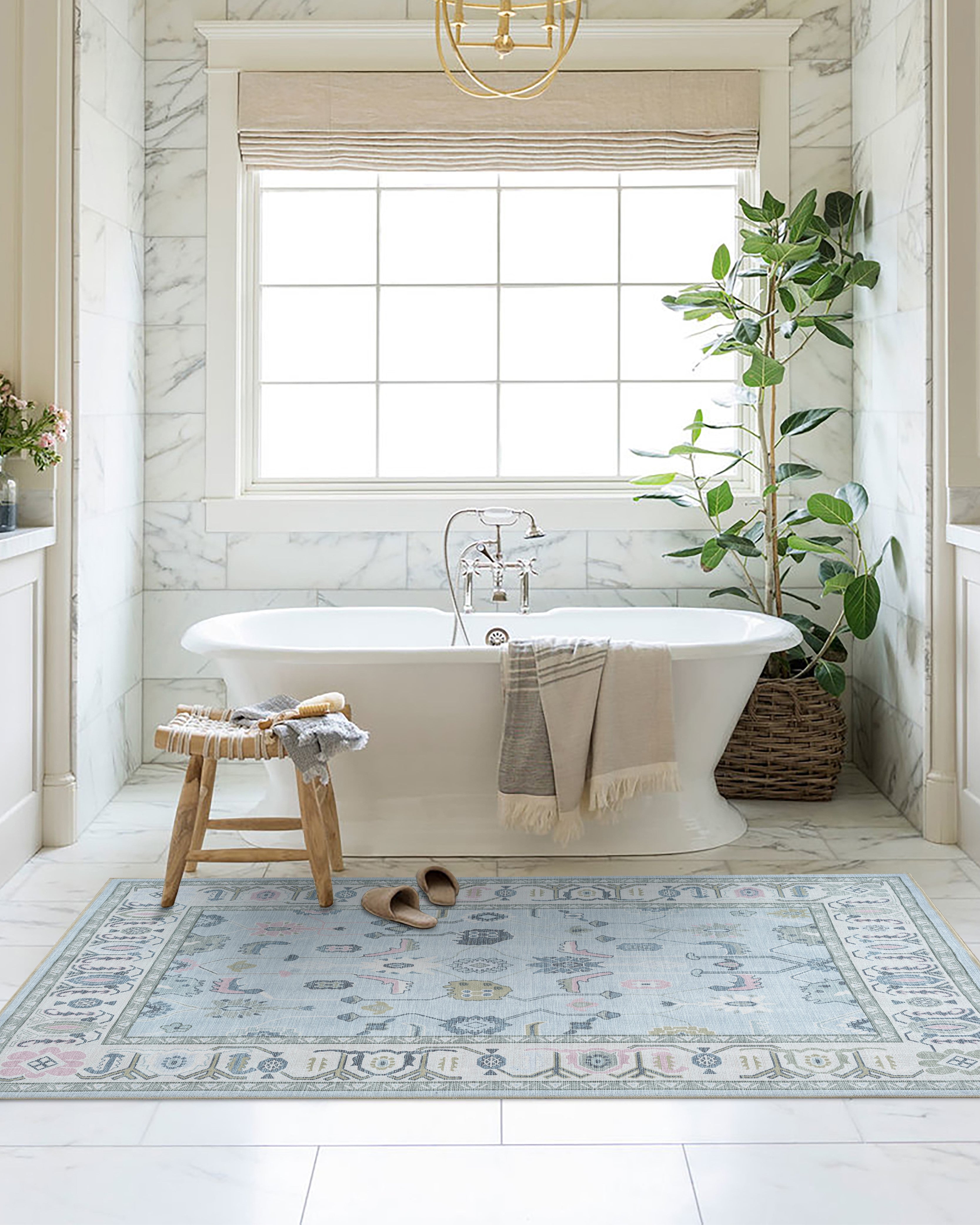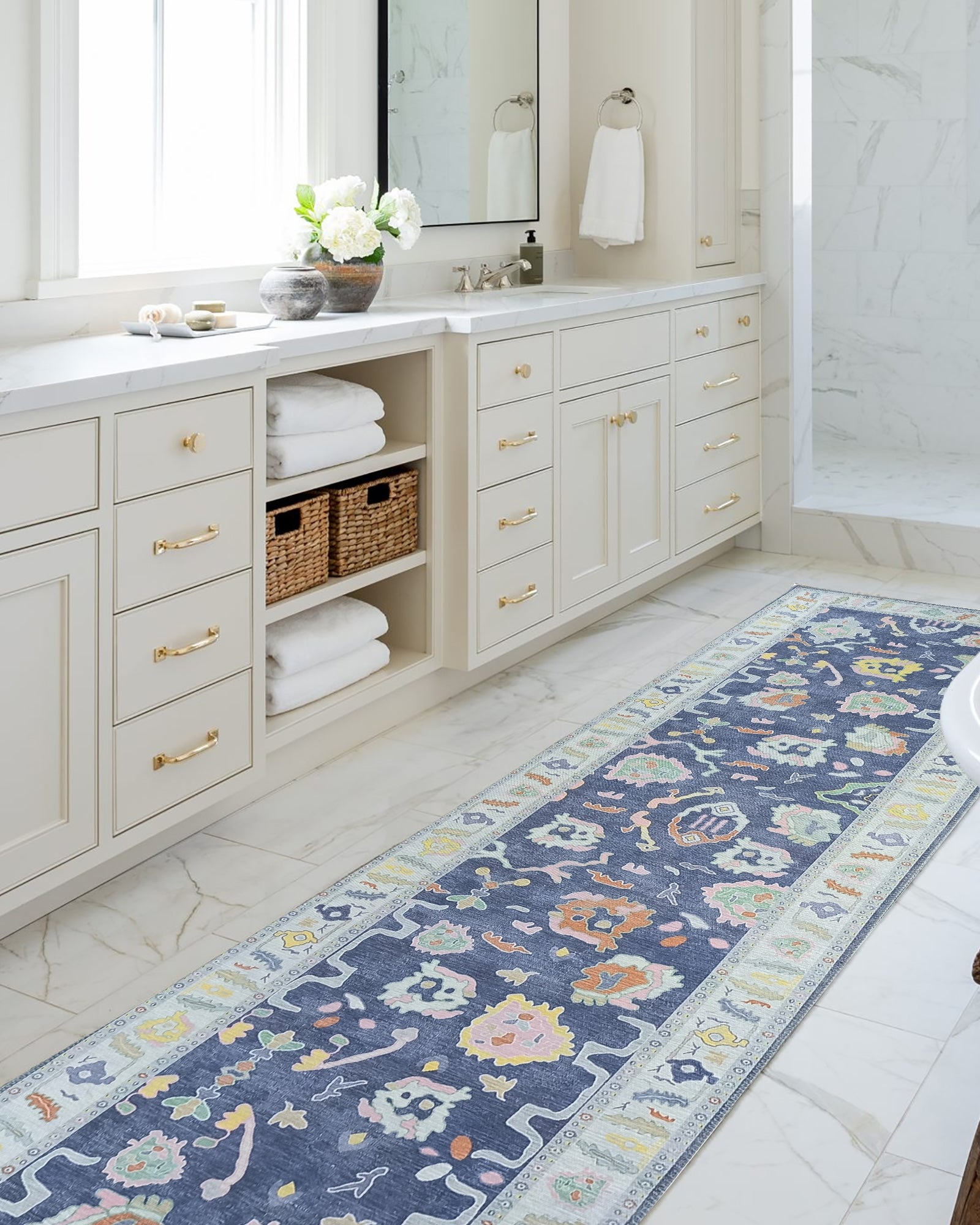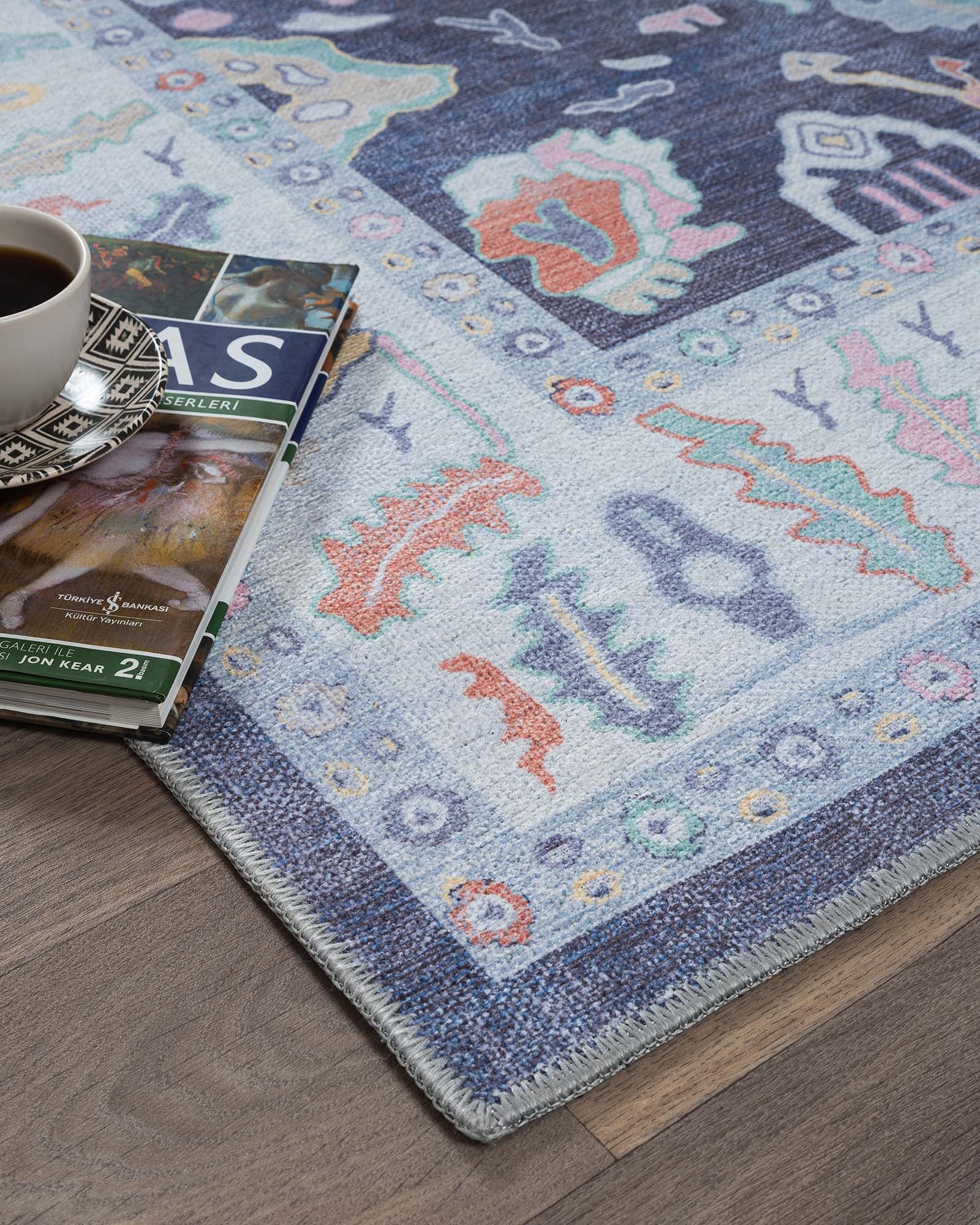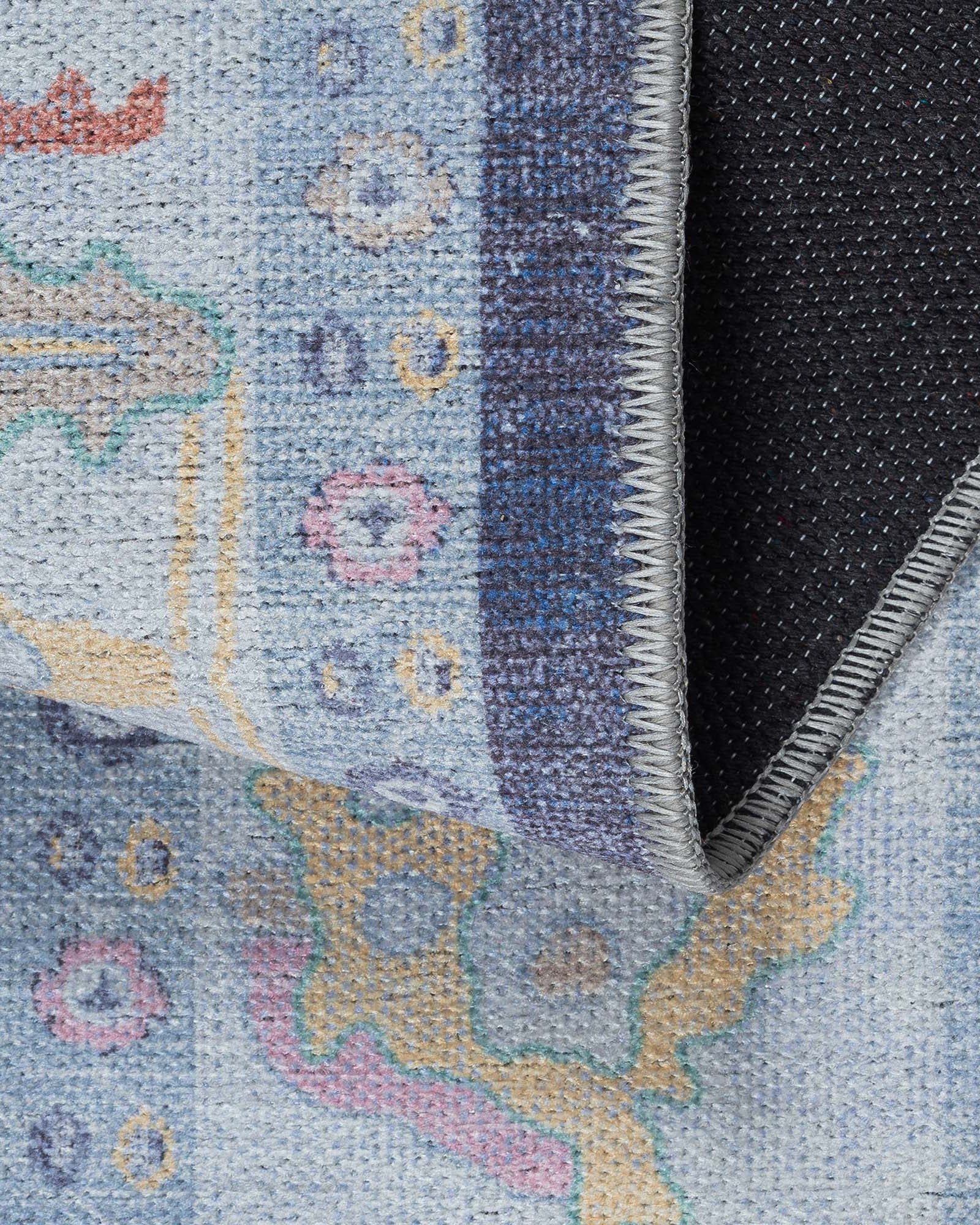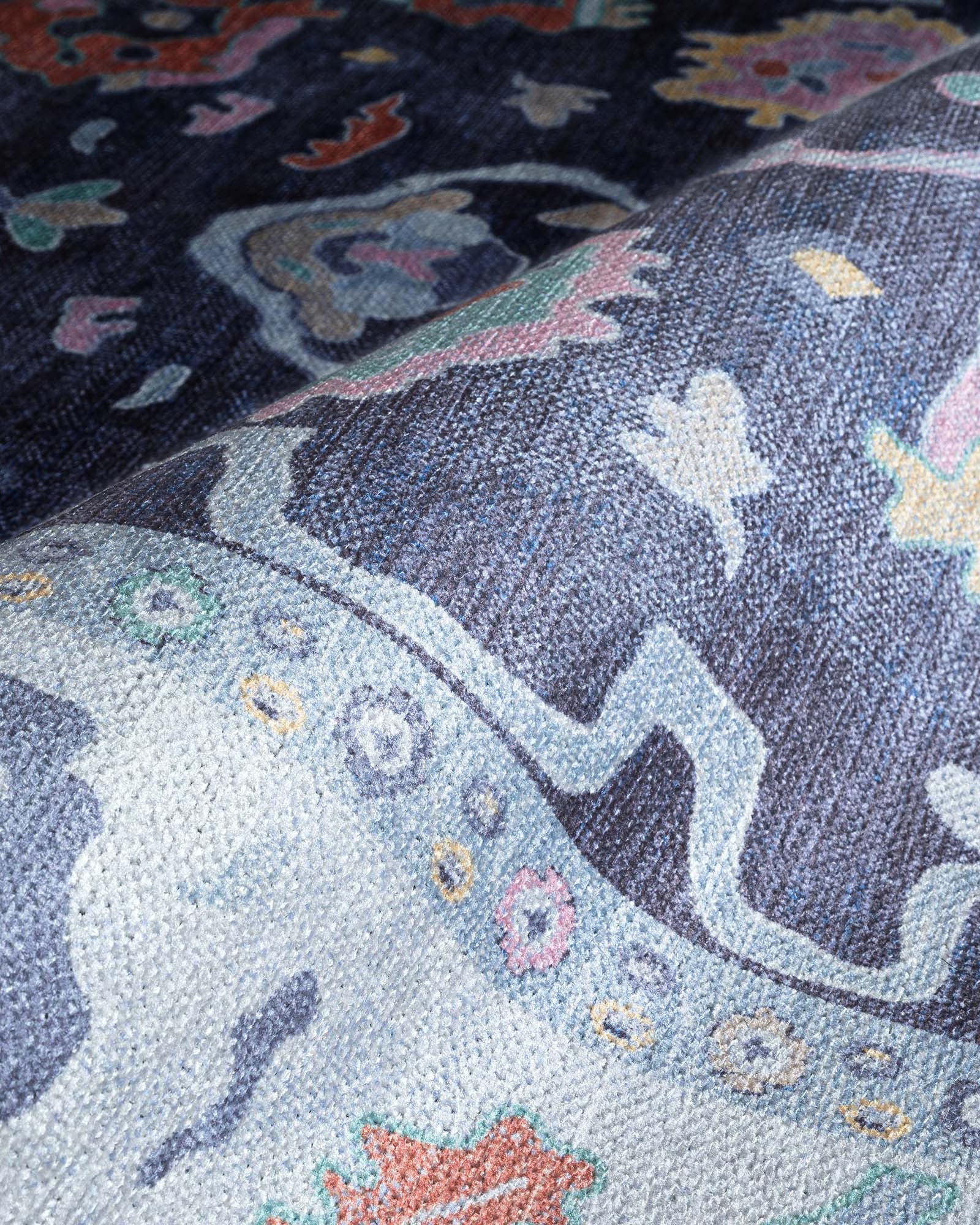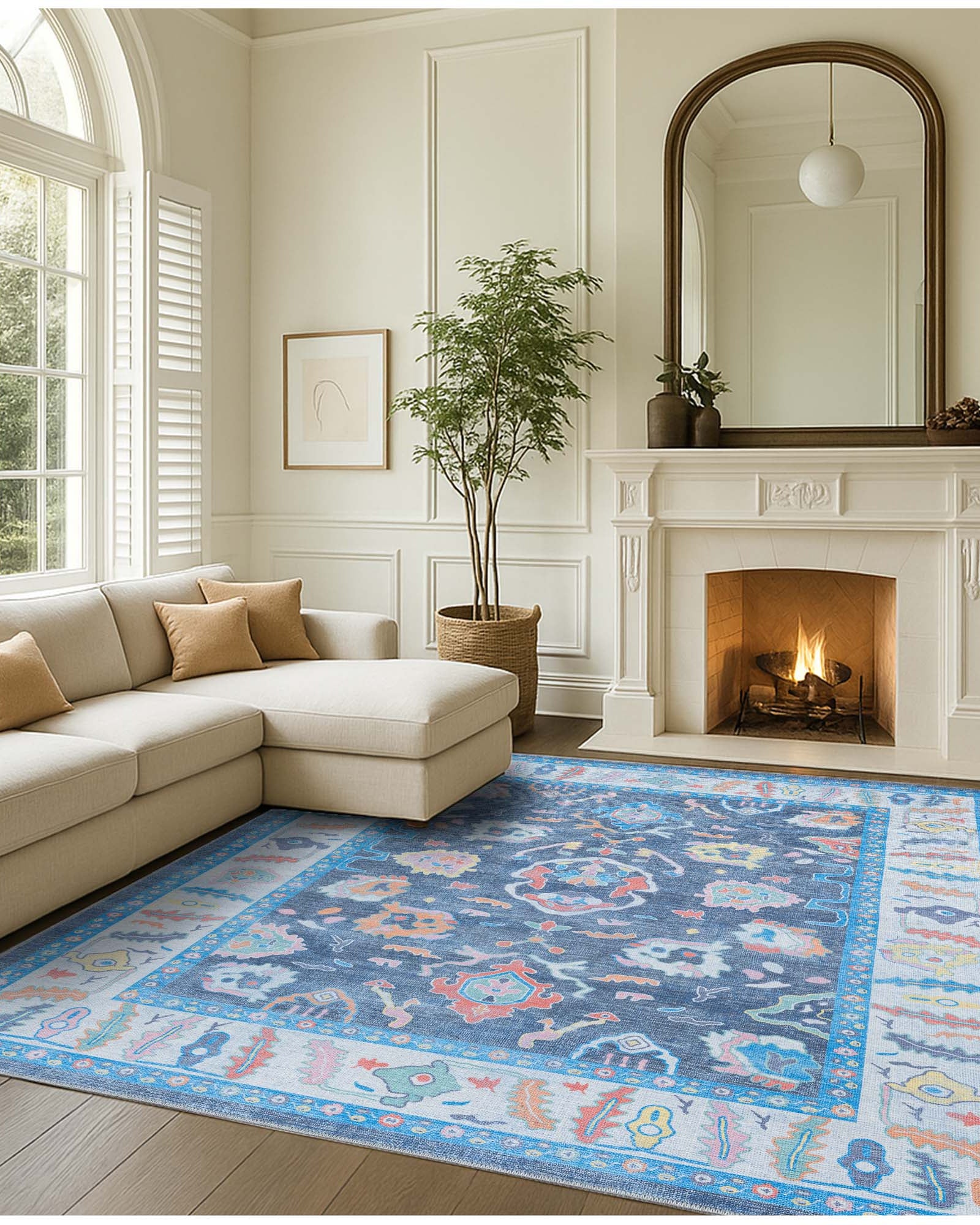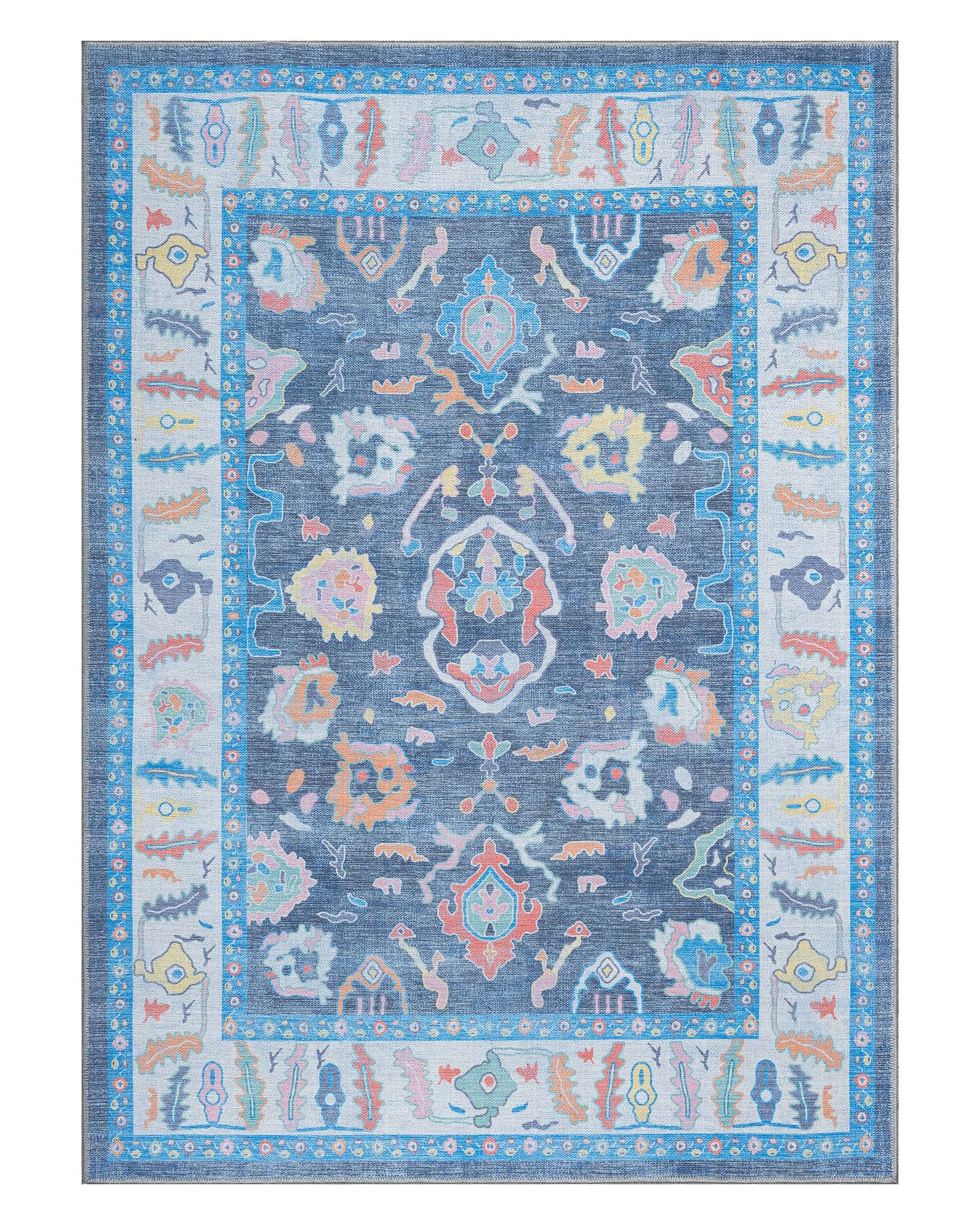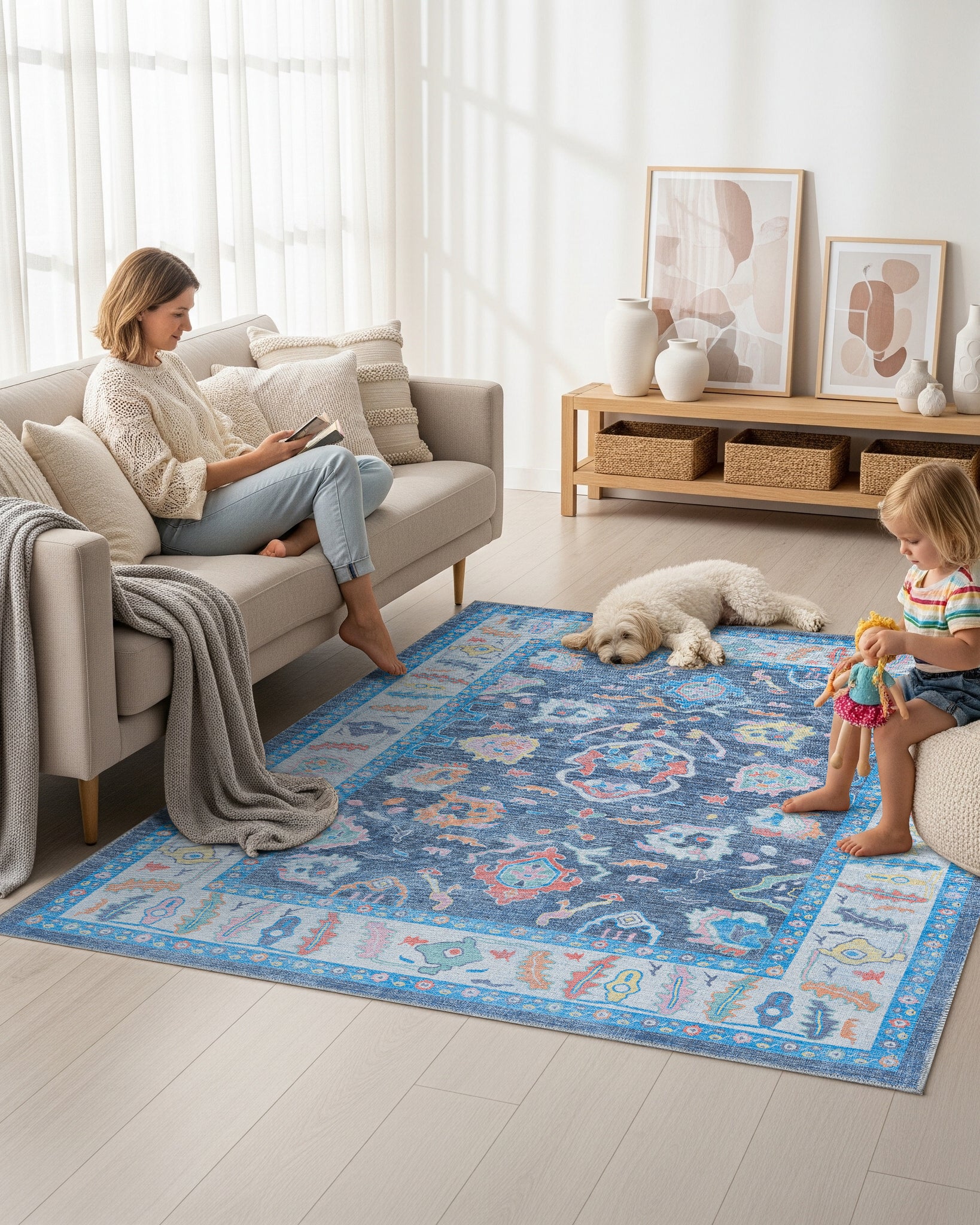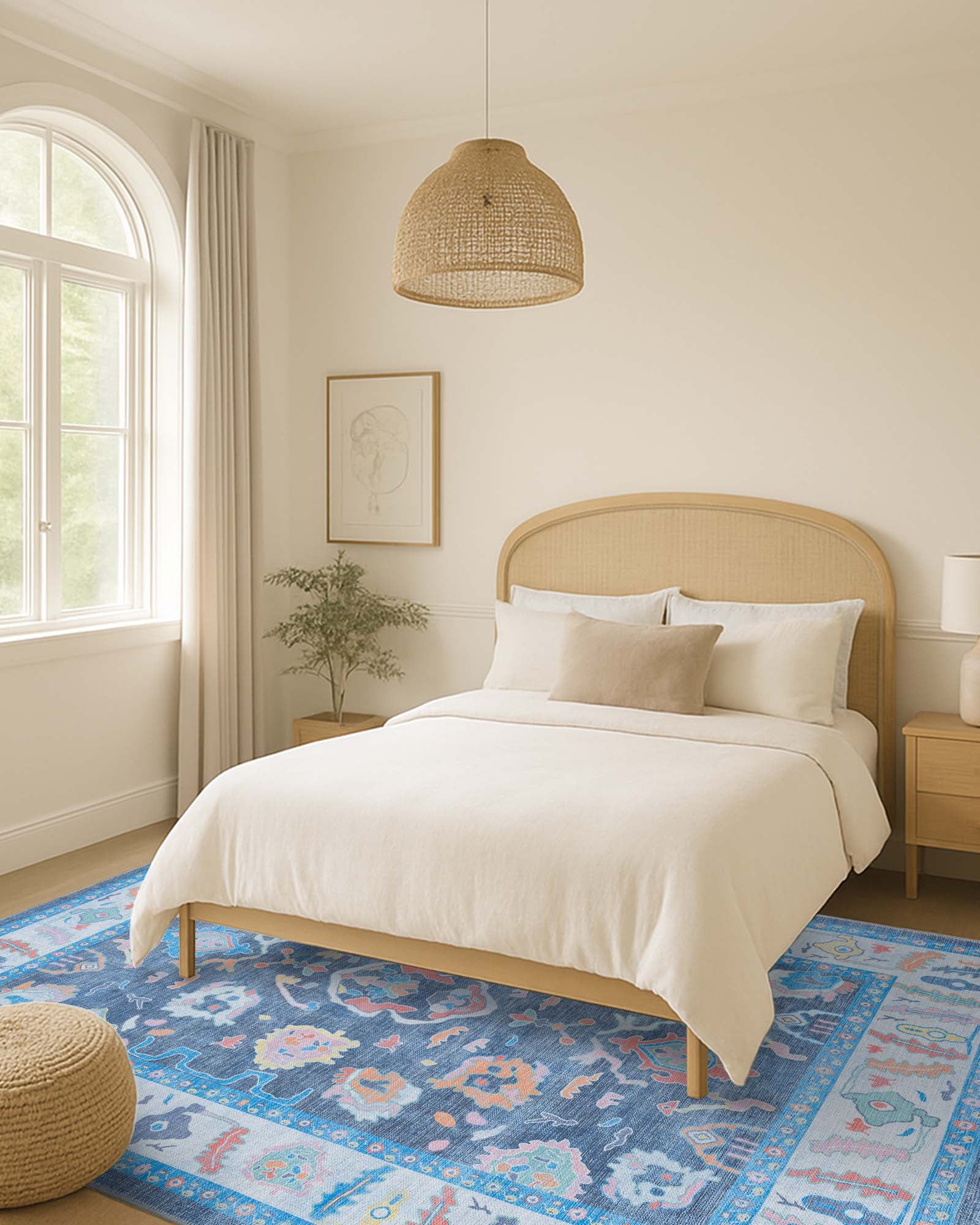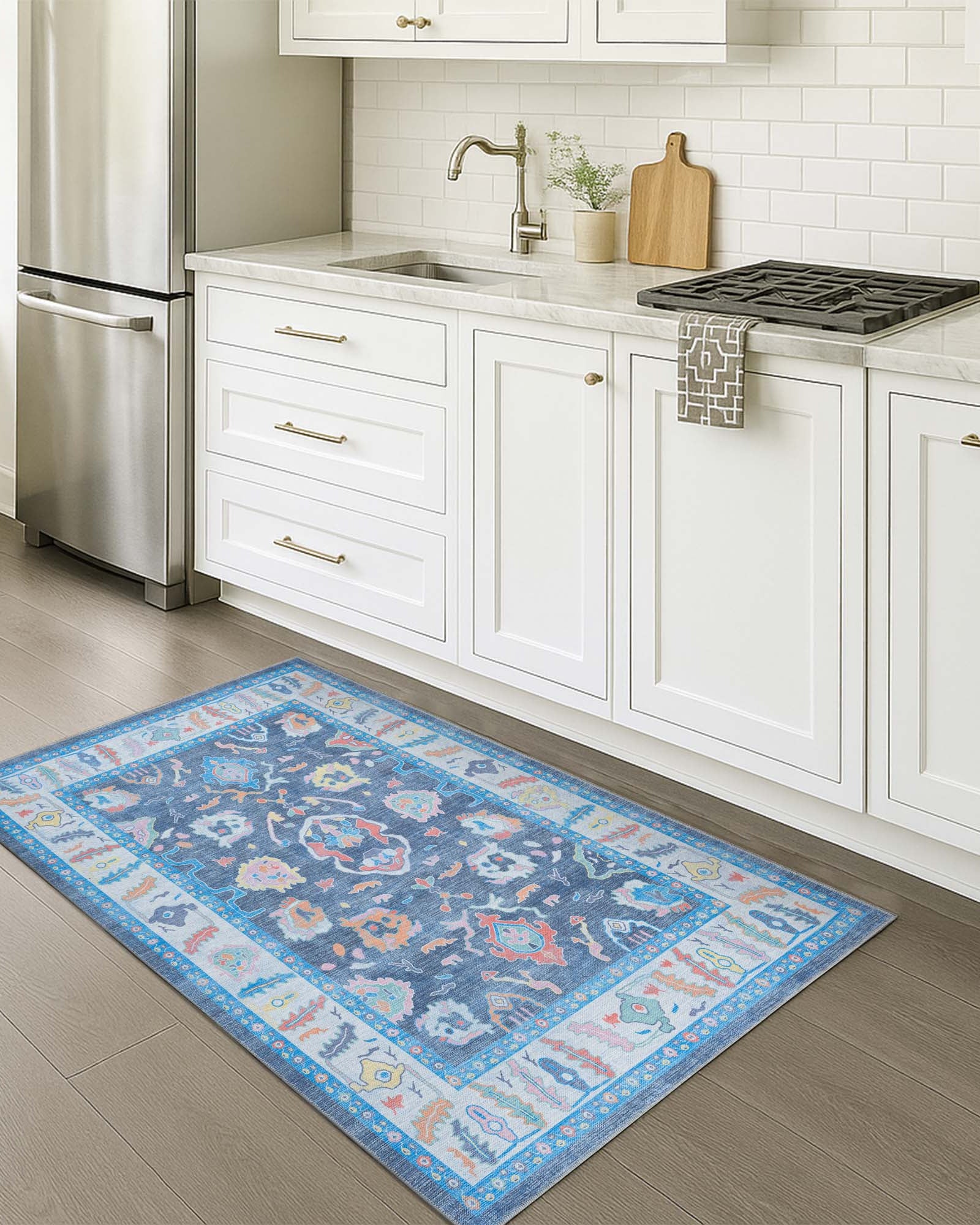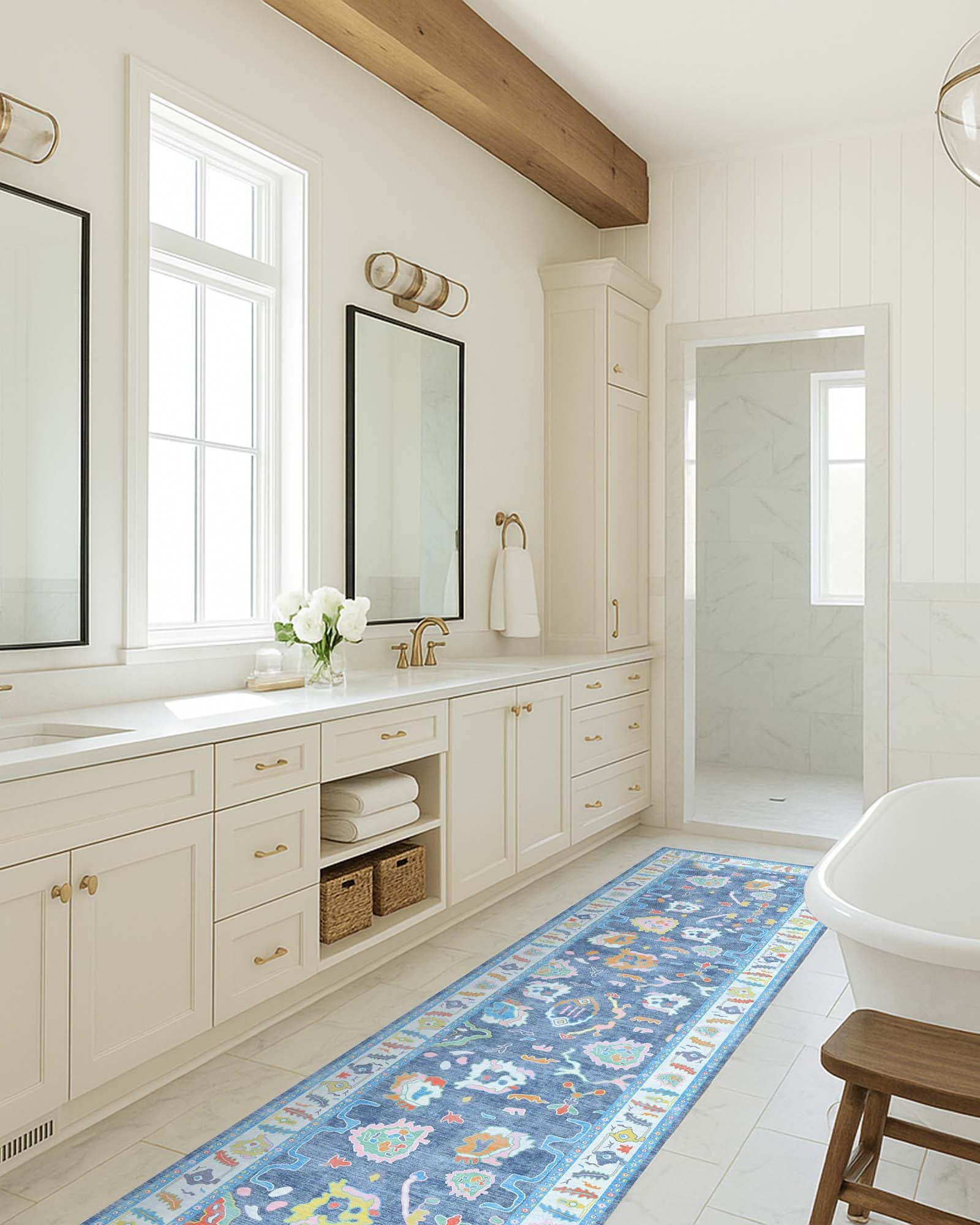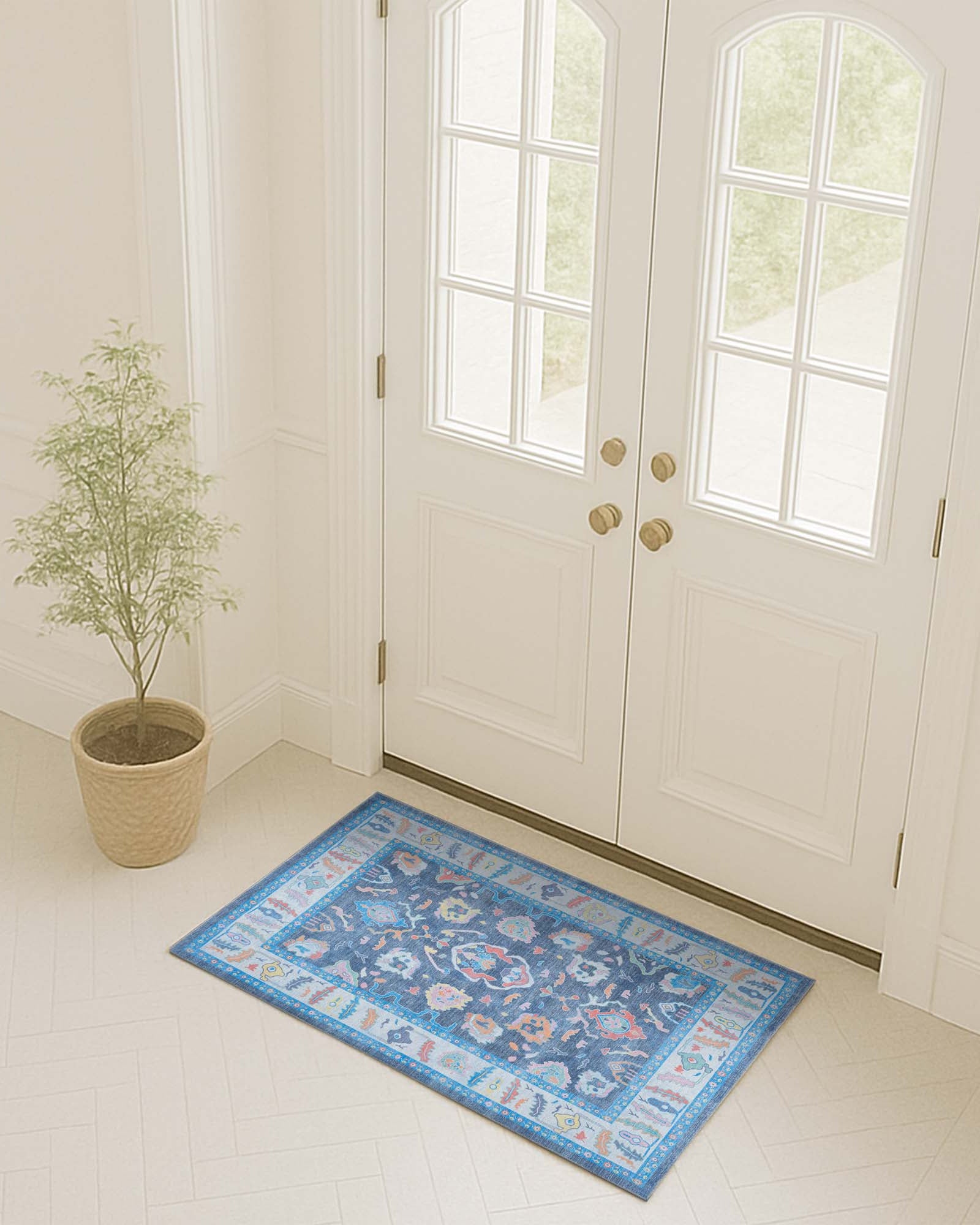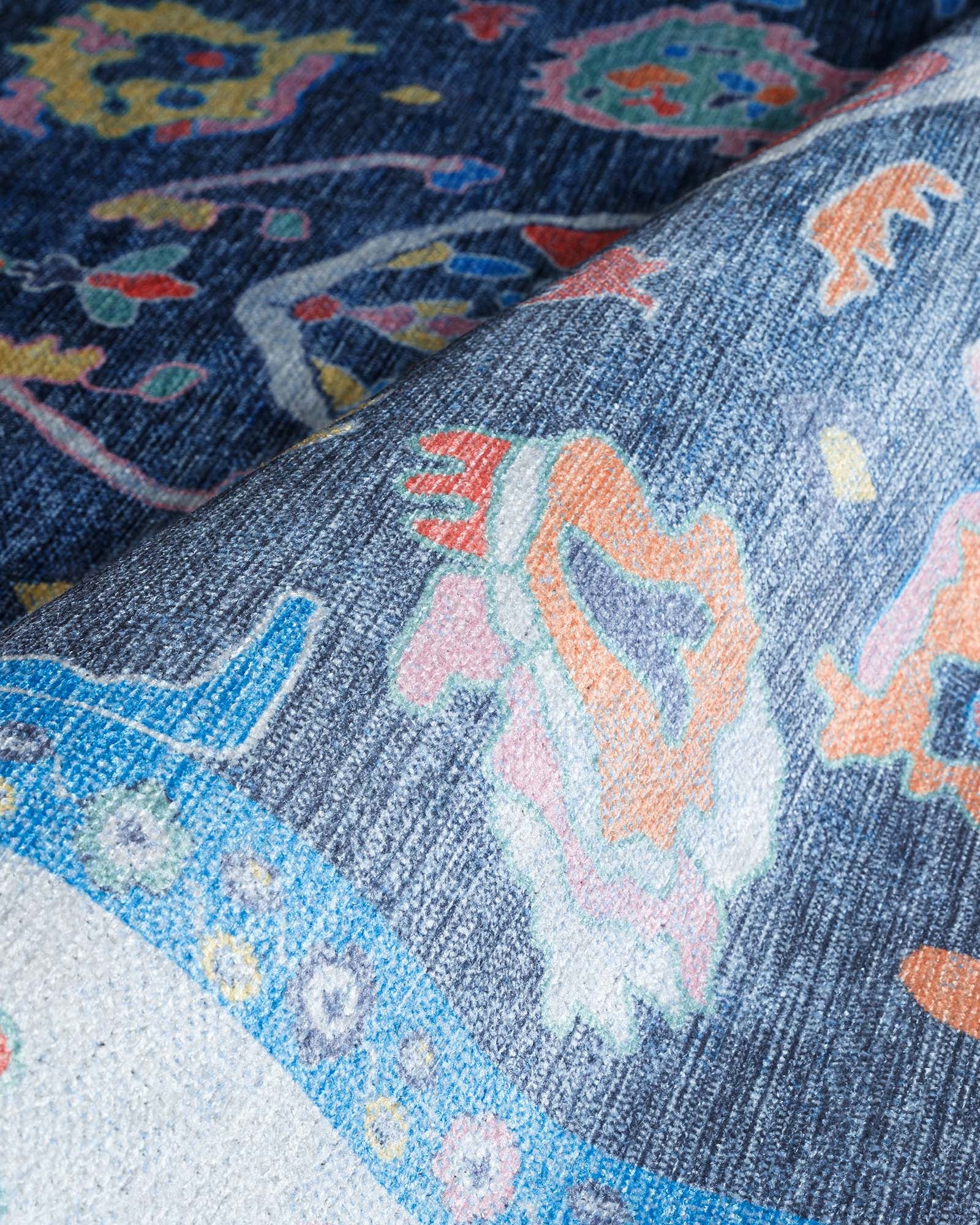




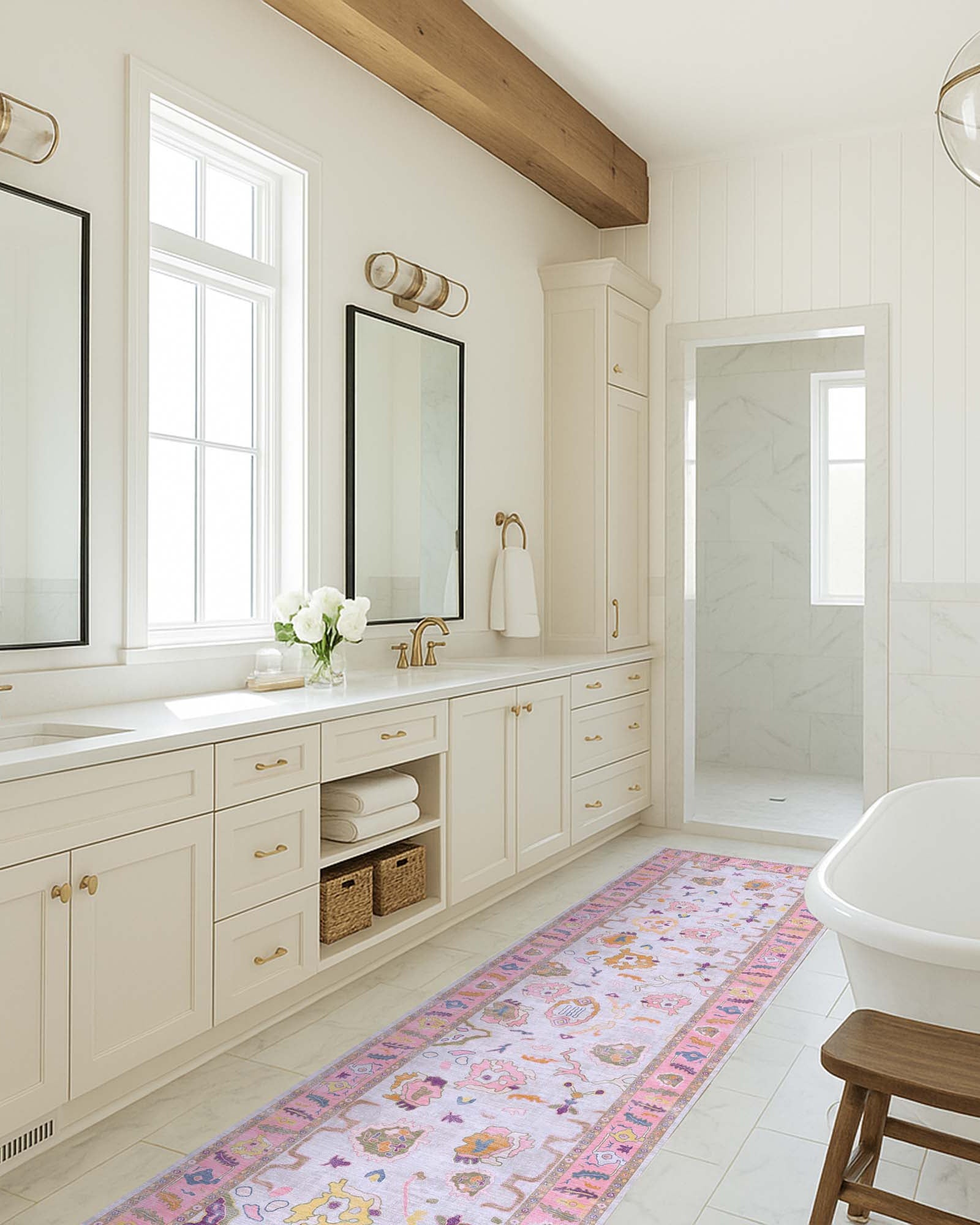
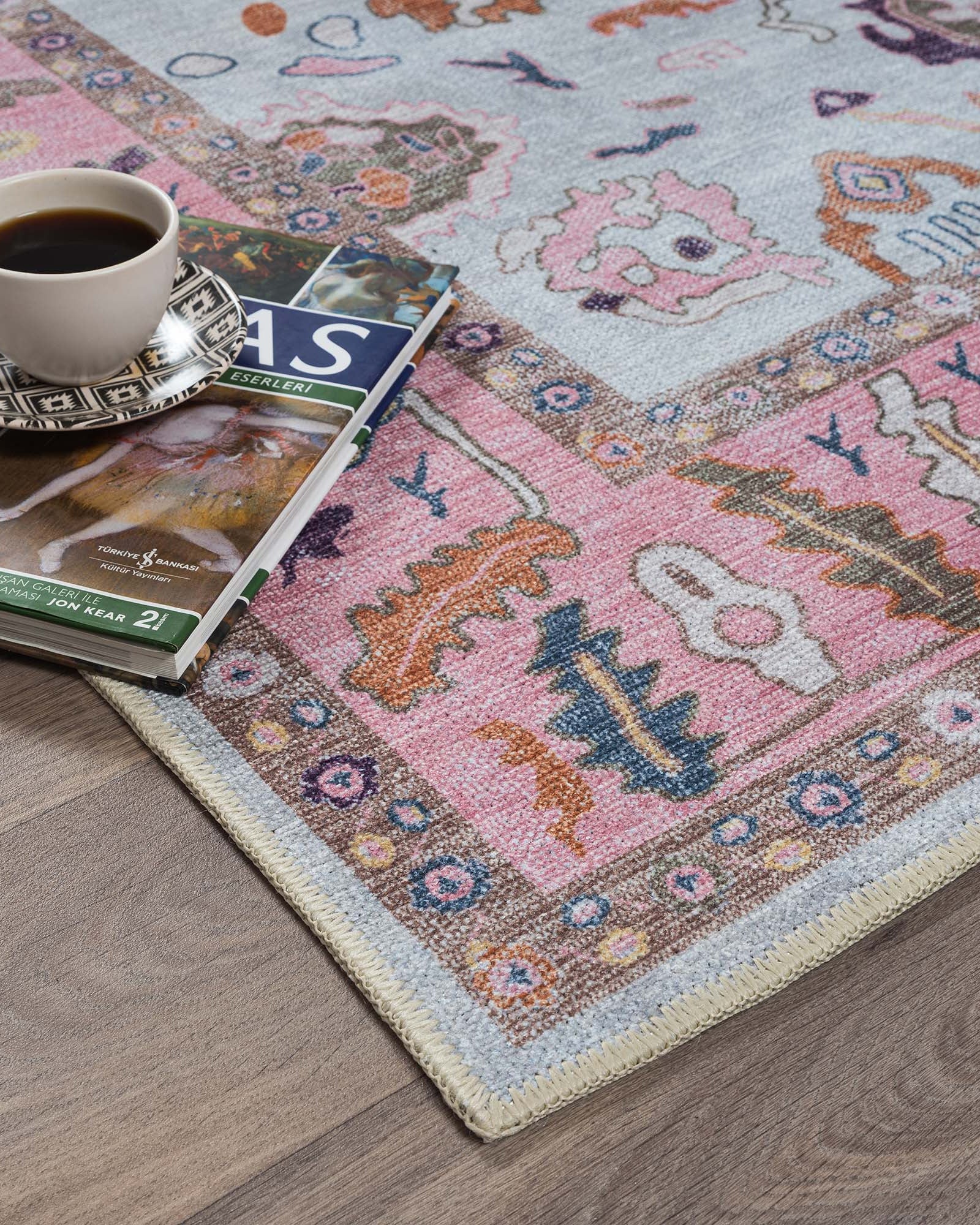


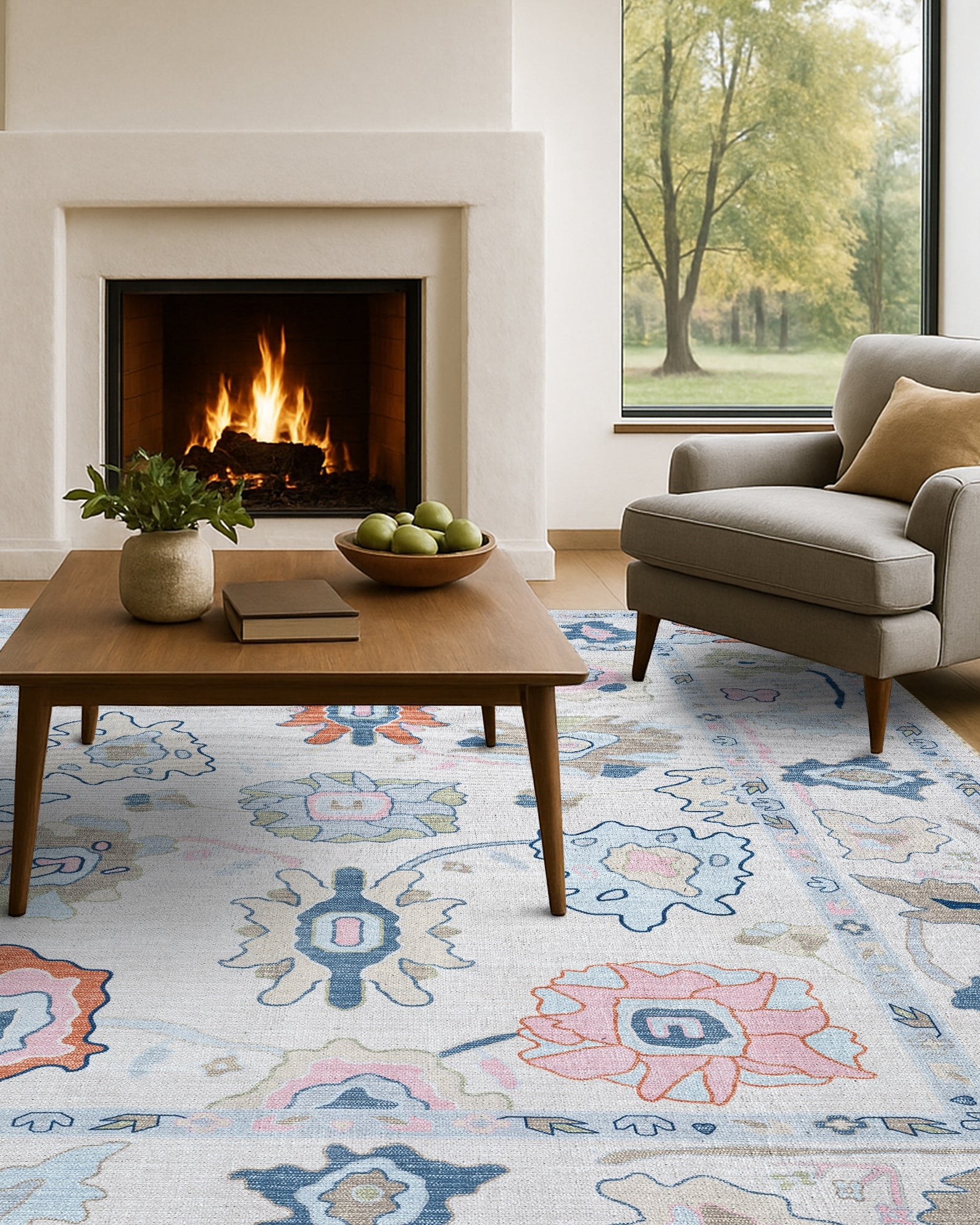

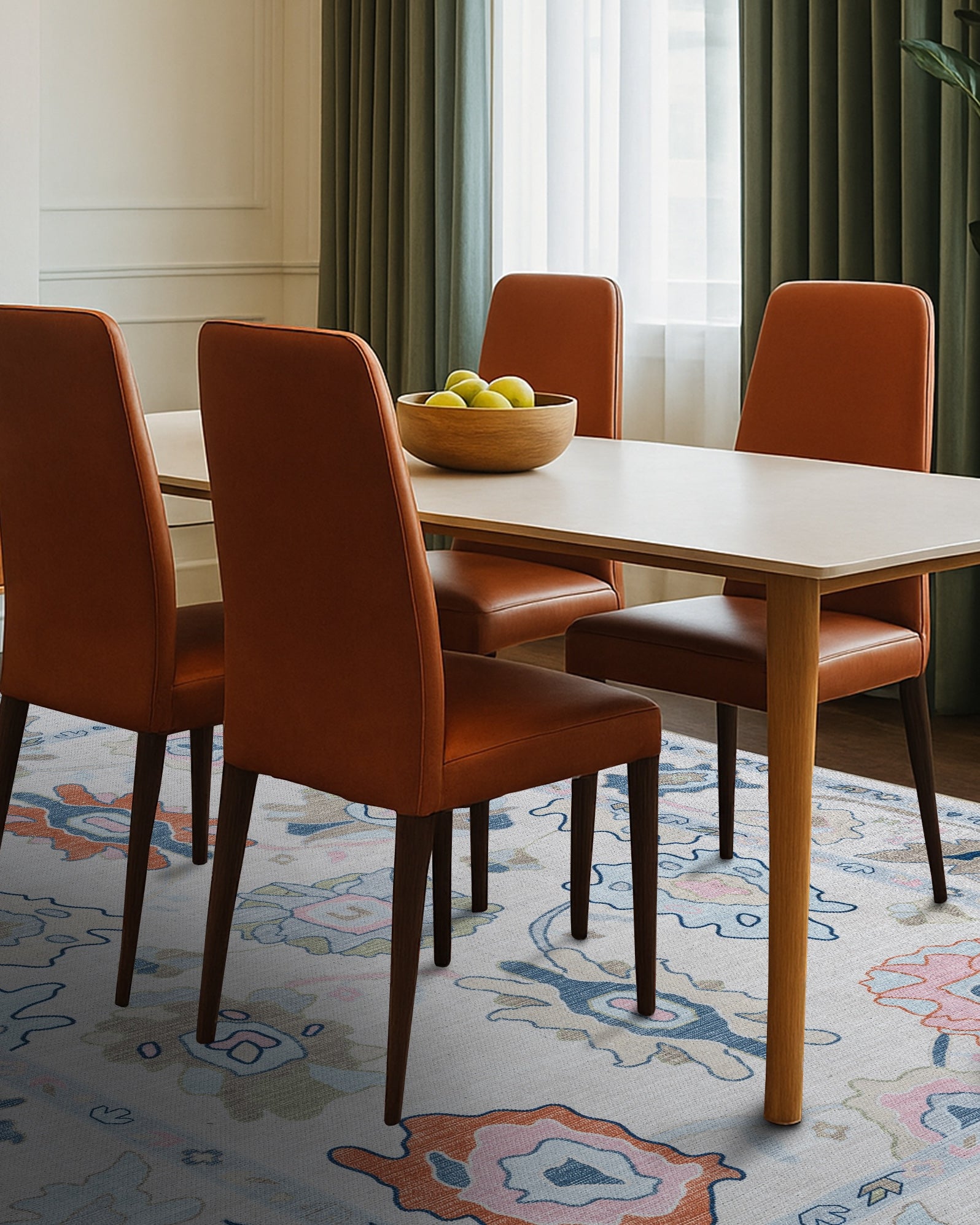
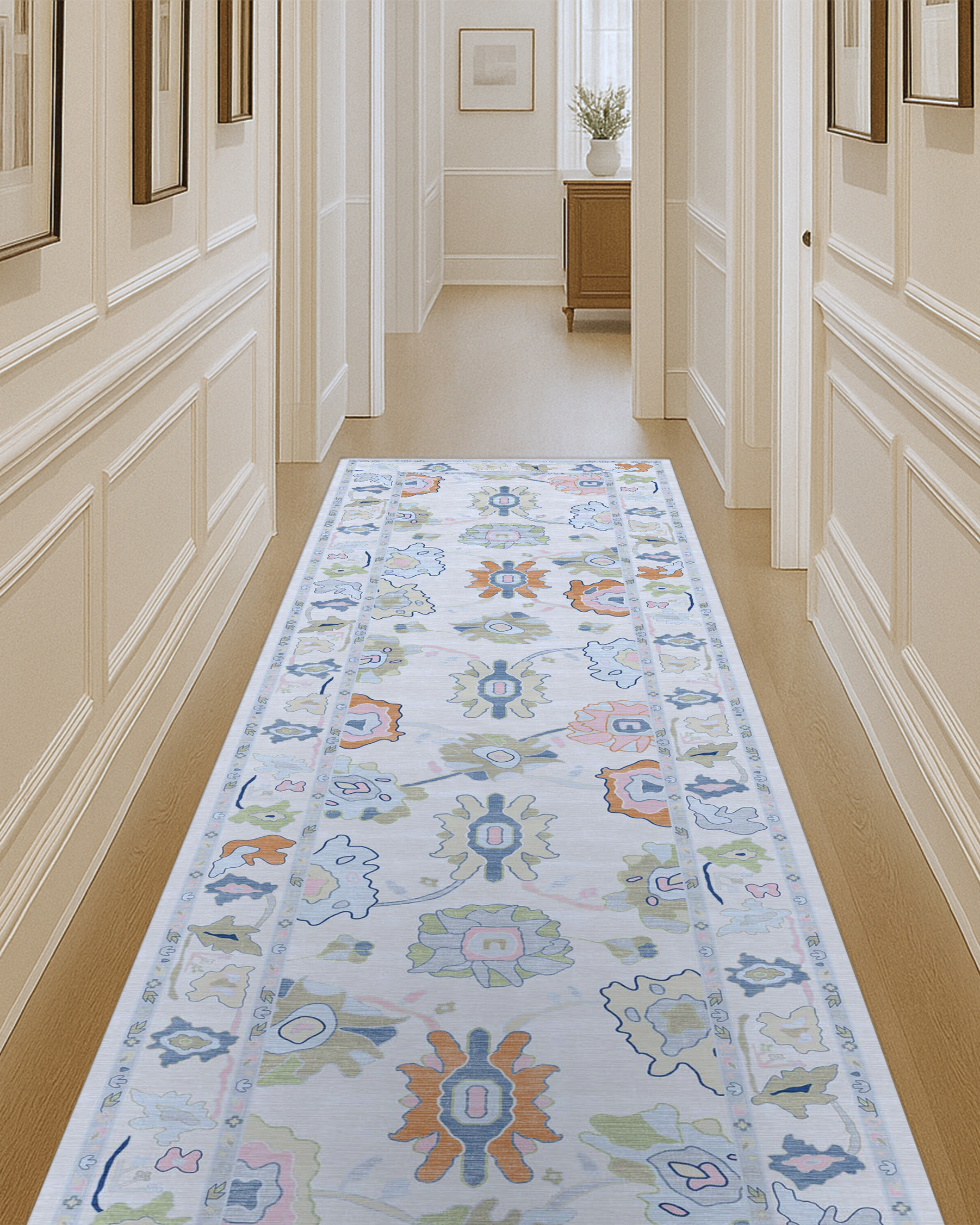
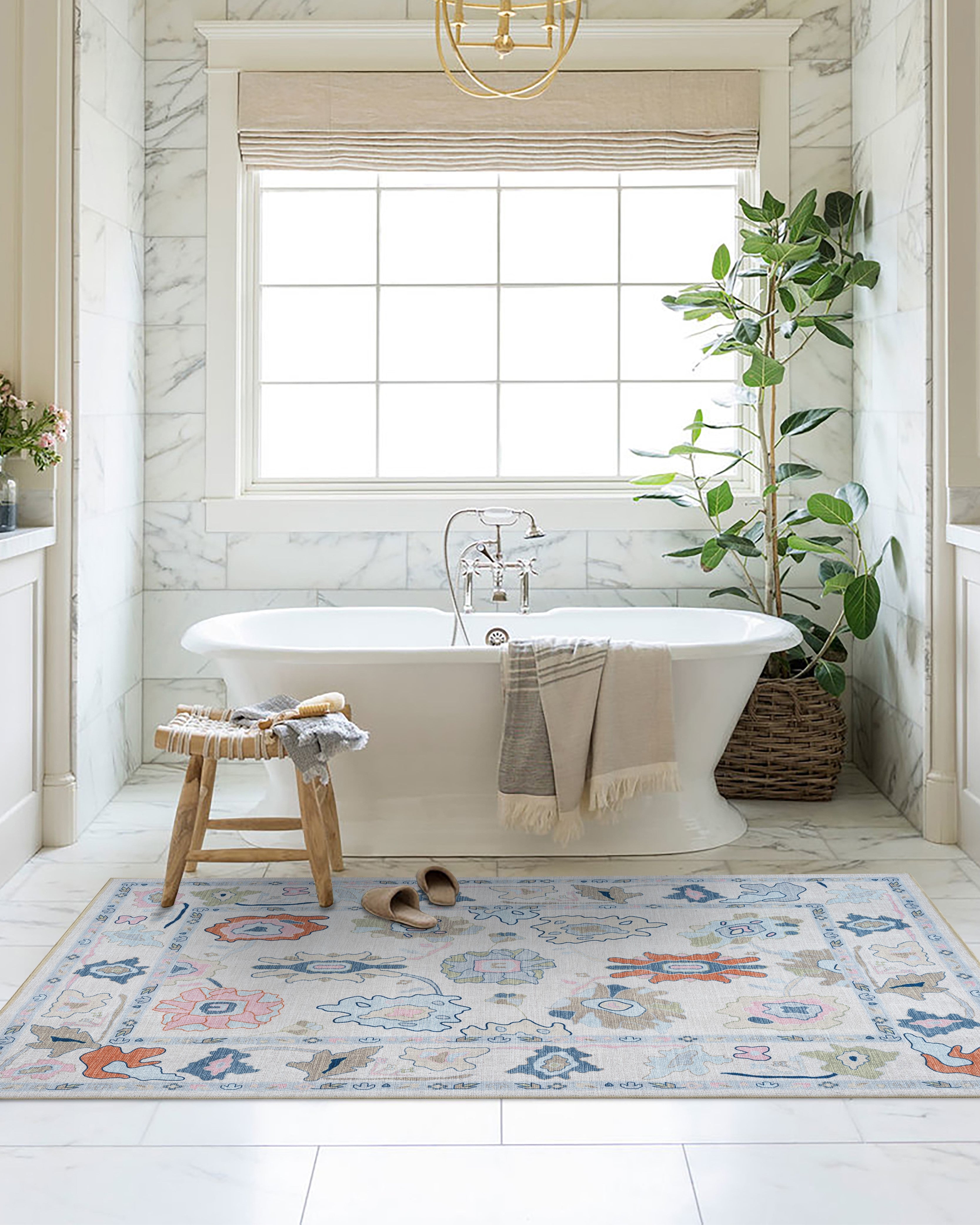








Pick Your Wall Color
Tap your paint shade to see the rug colors that work with it.
The safest rug colors for most walls are cream, ivory and greige — they sit quietly under any paint shade and let the room's color come from the walls. For contrast, choose a rug two or three steps darker than the wall. The rule that decides everything: match the undertone, not the color.
Undertone over hue
A warm greige wall next to a cool grey rug reads as a mistake. Check whether your paint leans yellow, red or blue before choosing.
Walls are 60%, the rug is 10%
The wall is the largest surface in the room. The rug does not have to match it — it has to work with it without competing.
Light changes everything
North-facing rooms pull colors cooler and greyer. South-facing rooms push them warmer. Test the rug in your own light, not on a screen.
Last updated: August 2026
The 60-30-10 Rule
Designers use this ratio to keep a room from feeling either chaotic or flat. It also explains why your rug does not need to match your walls.
-
60%
Your walls set the base
Paint covers the largest surface in the room, so it decides the overall temperature. Everything else is chosen in response to it, not the other way around.
-
30%
Furniture carries the secondary tone
Sofas, chairs and larger wood pieces sit between the wall and the floor. They should relate to the wall without repeating it exactly.
-
10%
The rug and accents bring the accent
This is where color and pattern earn their place. A rug that matches the walls wastes the one surface that could add depth to the whole room.
White & Off-White Walls
What Color Rug Goes With White Walls?
Taupe, camel and greige are the safest rug colors for white walls — they give a bright room the weight it needs without closing it in. For contrast, charcoal defines the space sharply and reads distinctly modern. Avoid a pure white rug: with white walls above it, the floor loses all definition and the room reads unfinished.

- White walls need grounding. With an LRV around 80, the walls reflect a lot of light — the rug is what stops the room from feeling washed out.
- Check your white's undertone. Warm whites like Alabaster pair with sand and camel. Cooler whites work better with greige and soft grey.
- Pattern earns its place here. A plain room needs texture and motif on the floor, or it reads as unfurnished rather than minimal.
- Never white on white. A pale rug against pale walls erases every edge in the room.


Greige Walls
What Color Rug Goes With Greige Walls?
Cream, ivory and sand are the safest rug colors for greige walls — they keep the warm neutral scheme intact while adding a lighter layer underfoot. For contrast, rust brings life without breaking the calm. Avoid cool grey rugs: greige leans warm, and a cool rug beneath it will read as a mismatch.

- Follow the warmth. Greige carries a warm undertone, so cream, sand and camel sit naturally beneath it.
- Watch the grey side. Some greiges lean cooler than others — hold a rug sample against the wall in daylight before deciding.
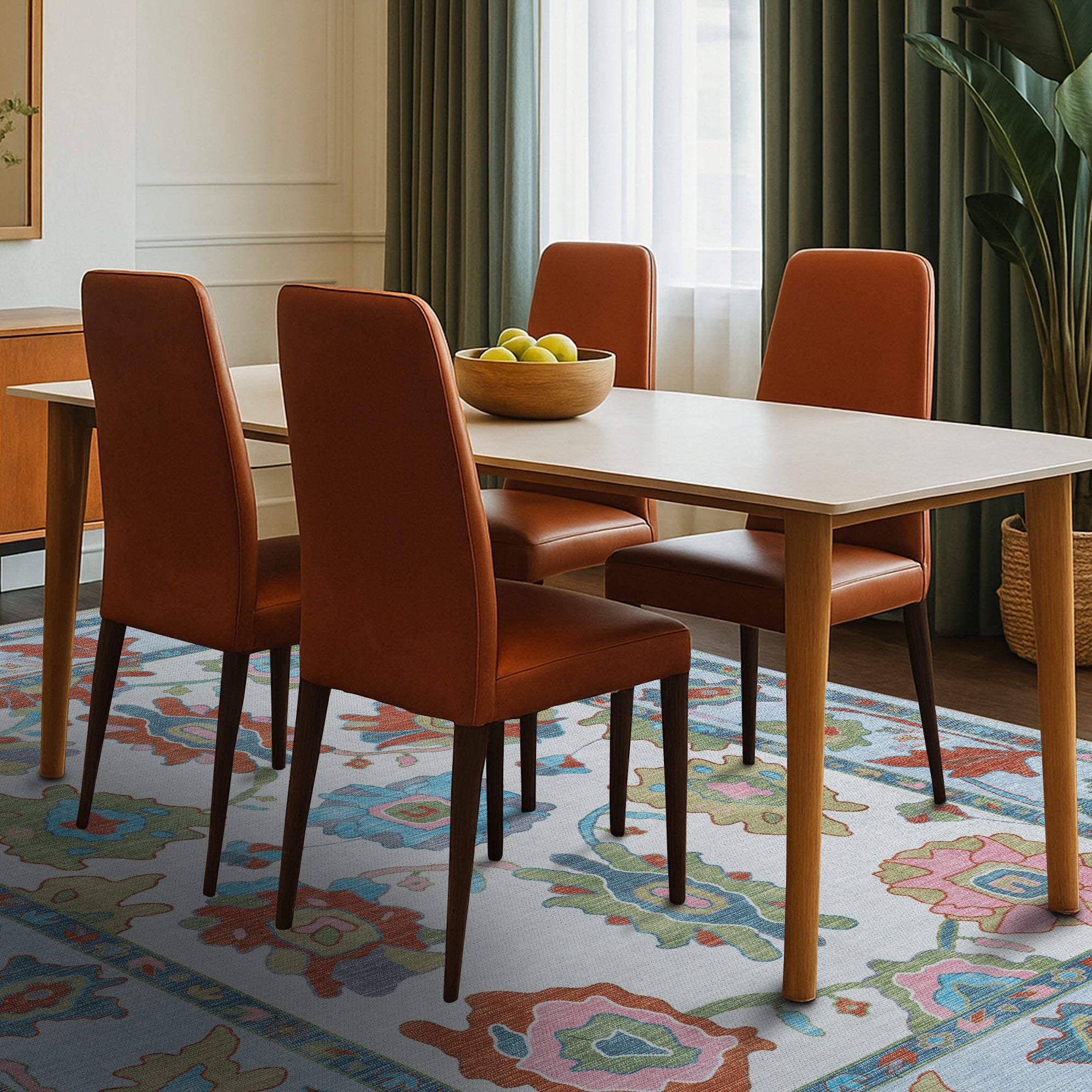
- Rust is the easy accent. Against a neutral wall, a rug with rust or terracotta motifs adds the room's only real color.
- Avoid cool grey. A grey rug under a warm greige wall makes both surfaces look slightly wrong.


Beige & Tan Walls
What Color Rug Goes With Beige Walls?
Ivory and cream are the safest rug colors for beige walls — a step lighter than the wall keeps the room from flattening into one tone. For contrast, teal and turquoise give the neutral scheme an unexpected cool base. Avoid a rug in the same beige as the wall; without separation the room has no visual structure.

- Go a step lighter. Beige walls sit mid-range on LRV, so an ivory rug creates separation without demanding contrast.
- Or introduce a cool note. Teal and turquoise work precisely because they sit far from beige in both temperature and depth.
- Mind the yellow-green cast. Warm tans like Universal Khaki push slightly green — cream reads cleaner beneath them than stark white.
- Avoid matching beige. Wall and floor in the same tone makes the room feel like a single flat surface.


Sage & Olive Walls
What Color Rug Goes With Sage Green Walls?
Cream and oatmeal are the safest rug colors for sage green walls — a warm neutral floor balances the cool grey-green above it. For contrast, terracotta sits opposite green and makes both look richer. Avoid a green rug: two greens rarely agree, and the room ends up looking unresolved.

- Warm the room back up. Sage carries a cool grey-green undertone, so cream and oatmeal restore the balance.
- Terracotta is the complementary move. Clay tones sit opposite green on the color wheel and make the wall color read intentional.
- Deeper olive walls need lighter floors. As the wall darkens, the rug should lighten to keep the room open.
- One green per room. A green rug beneath a green wall almost never matches, and the near-miss is more obvious than a clear contrast.


Navy & Deep Blue Walls
What Color Rug Goes With Navy Walls?
Ivory and light beige are the safest rug colors for navy walls — with an LRV under 12, a dark room needs a bright floor to stay livable. For contrast, camel brings warmth against the cool blue. Avoid dark or blue rugs; they turn the whole room into one heavy block.

- Light floor, dark walls. An ivory rug is what keeps a navy room from feeling like a cave.
- Camel softens the cool. Navy runs cold — a warm tan floor balances the room's temperature.
- Warm accents make navy deliberate. A rug carrying camel or rust motifs makes dark walls look like a design decision rather than a dark room.
- Avoid blue rugs. Blue on blue removes every edge and the walls stop reading as a choice.

Warm Brown Walls
What Color Rug Goes With Brown Walls?
Cream and oatmeal are the safest rug colors for warm brown walls — a light floor keeps a deep, enveloping room from feeling closed in. For contrast, blue-grey cools down the red-brown undertone. Avoid brown or rust rugs; they collapse into the walls and the room loses all depth.

- Lift the room from below. Brown walls sit low on LRV, so the rug is the surface doing the lightening.
- Cool contrast reads sophisticated. Blue-grey and soft slate sit against the red-brown undertone and stop the room from feeling one-note.
- Espresso shades need real contrast. Deep browns like Silhouette are close to black — treat them the way you would a charcoal wall.
- Avoid brown and rust rugs. Warm on warm at similar depth erases the line between floor and wall.


Charcoal & Black Walls
What Color Rug Goes With Charcoal or Black Walls?
Ivory and light grey are the safest rug colors for charcoal walls — maximum contrast is what makes a dark room feel designed rather than dim. For warmth, camel takes the hard edge off. Avoid a charcoal rug; wall and floor in the same depth turn the room into a single dark box.

- Contrast is the whole point. With an LRV near 6, charcoal walls need the lightest floor you are willing to live with.
- Camel adds humanity. A warm tan rug stops a dark room from feeling severe or corporate.
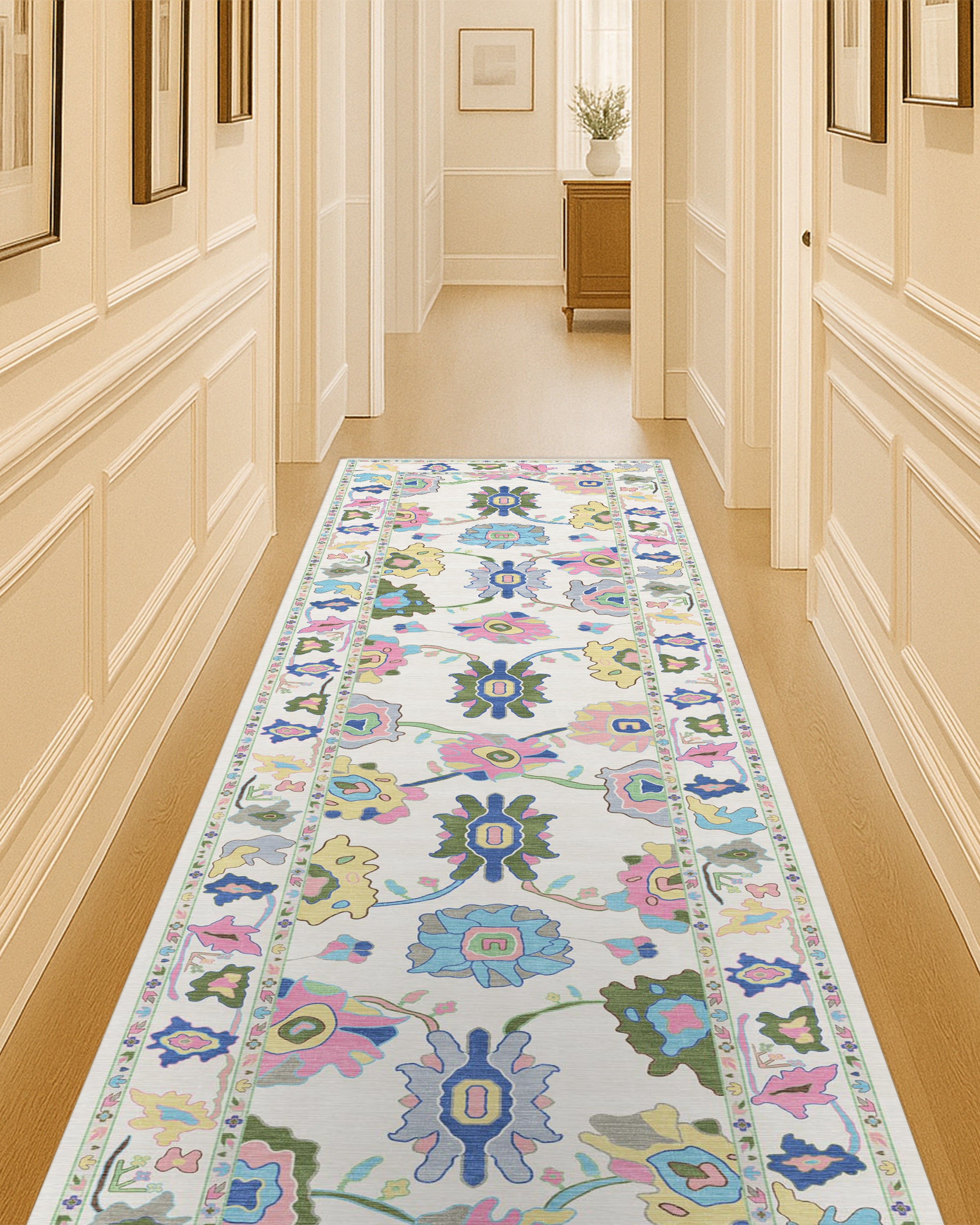
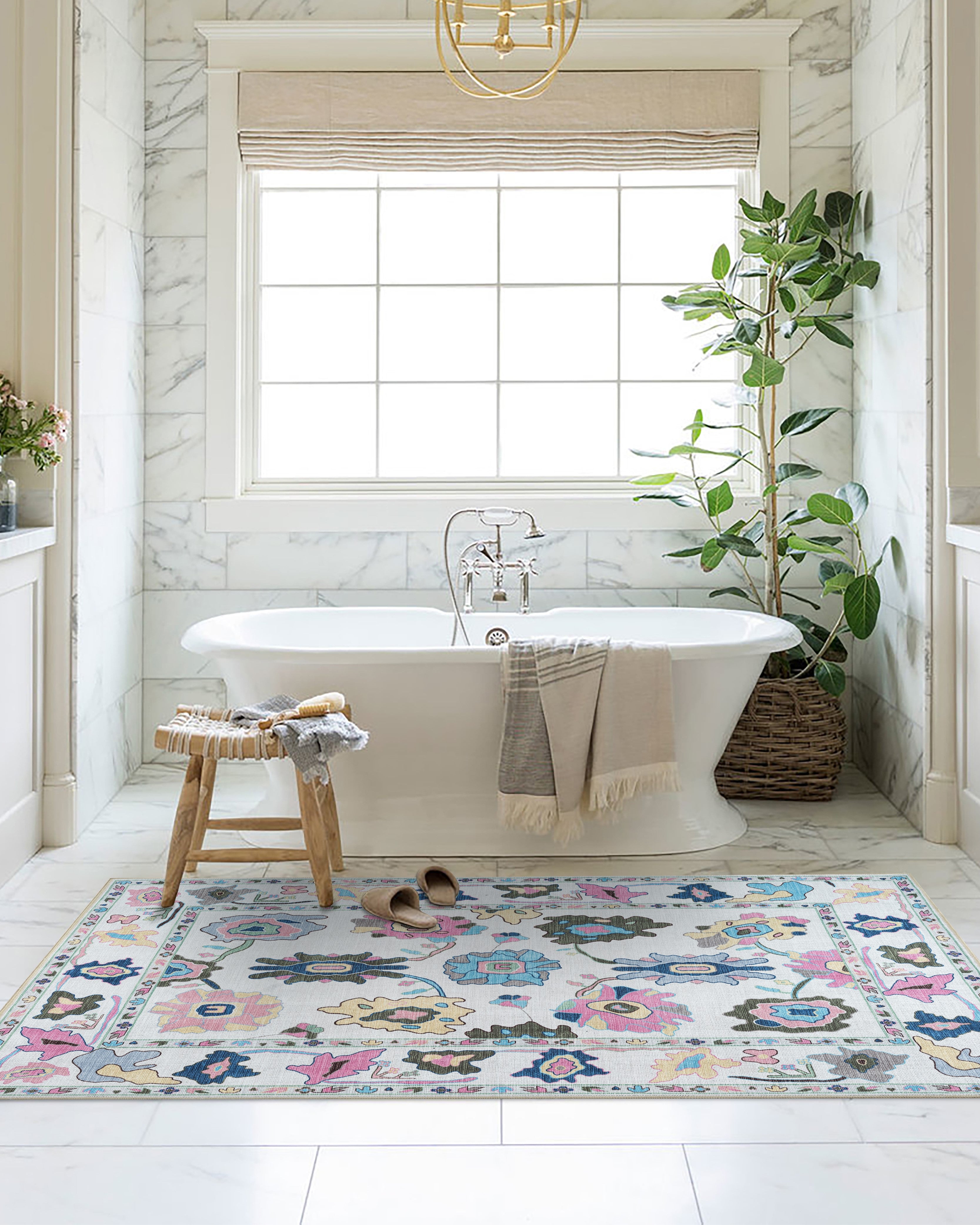
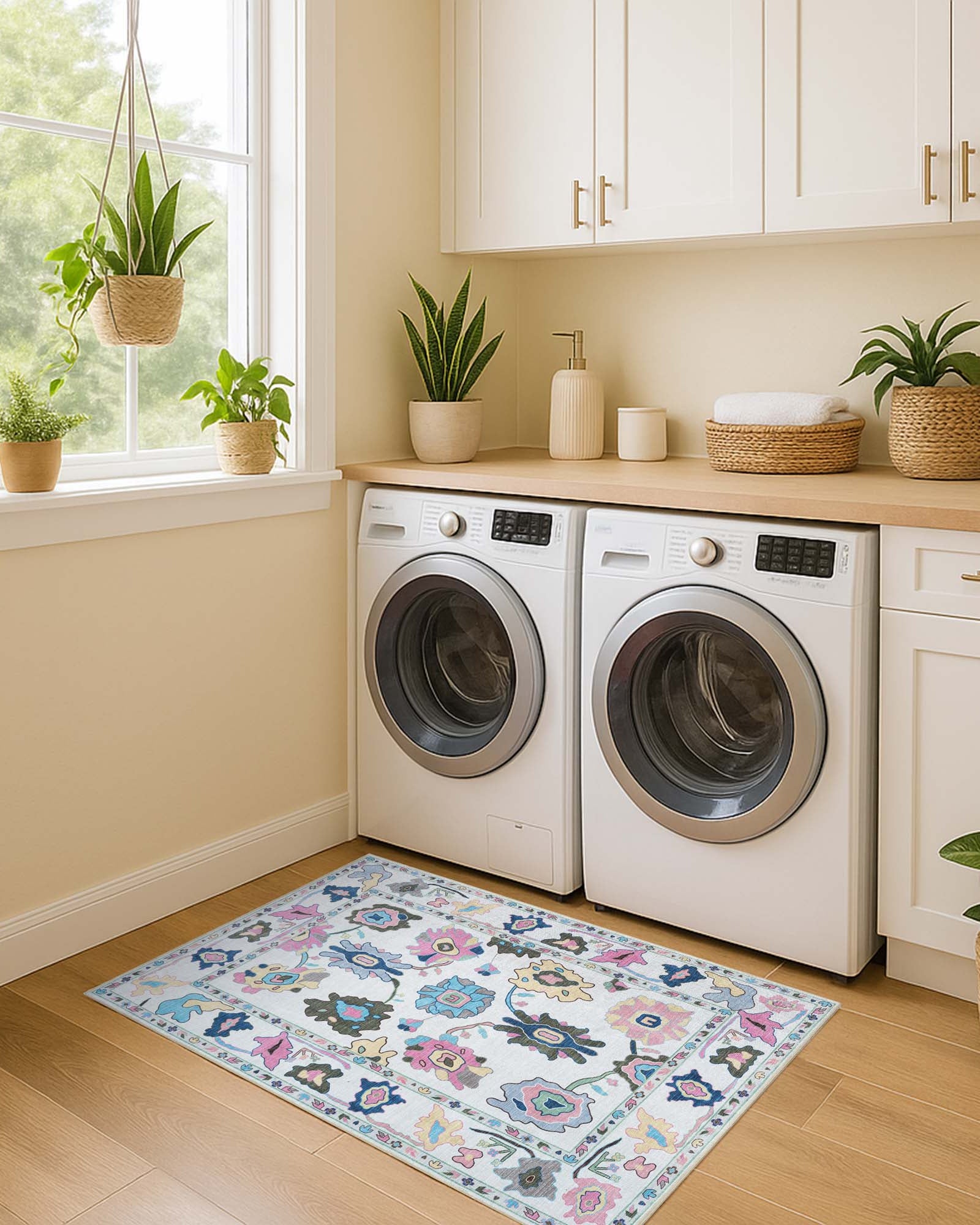
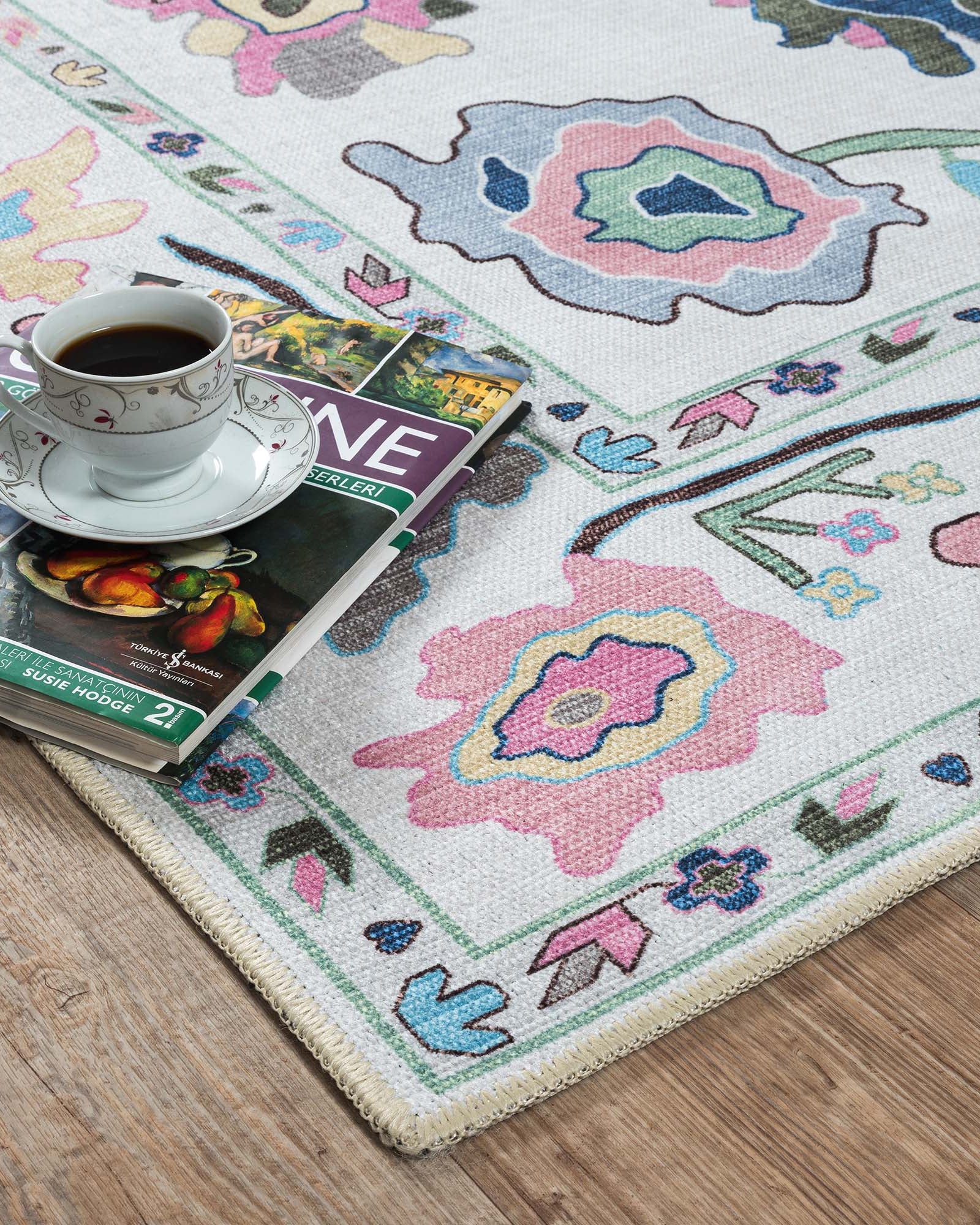
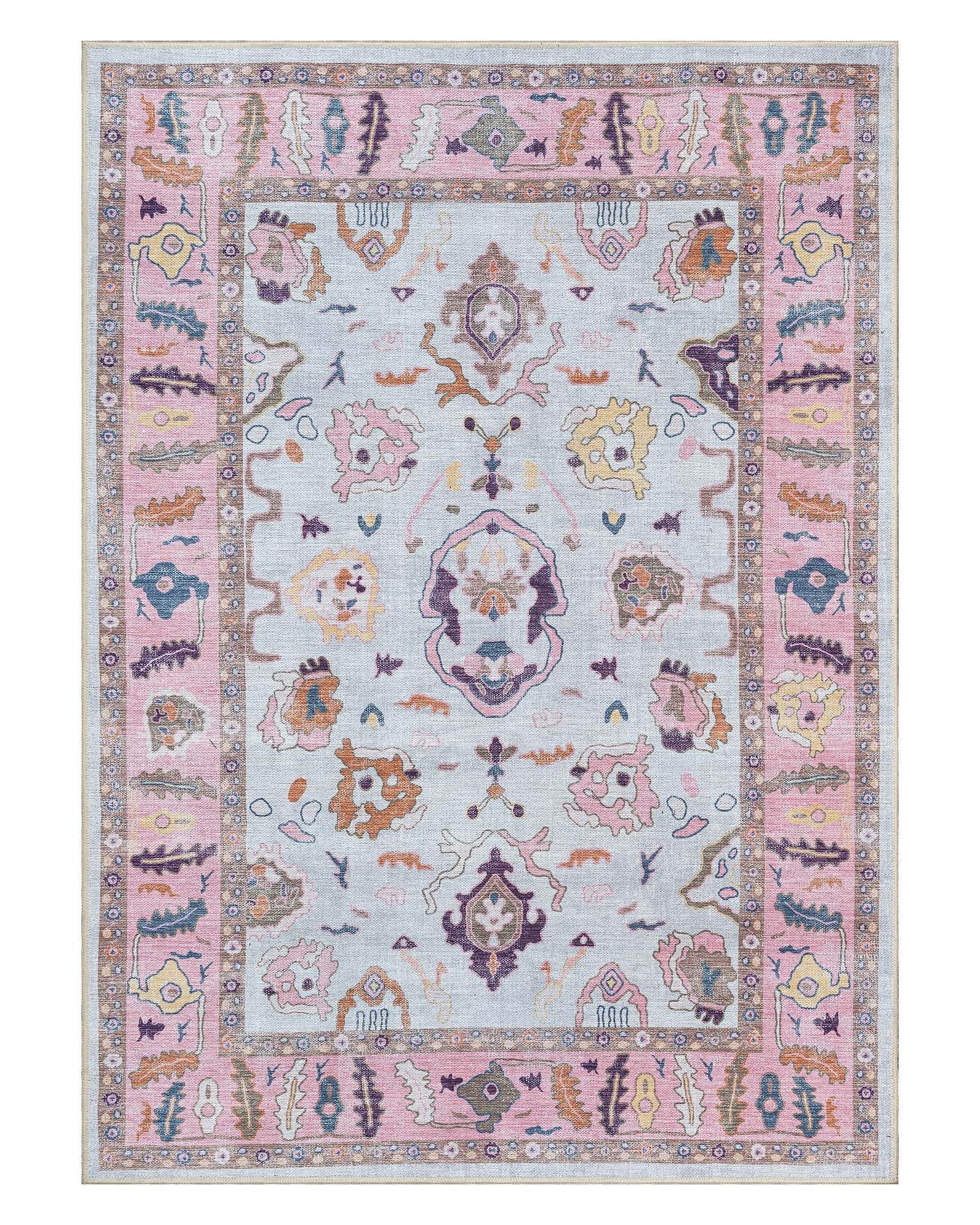
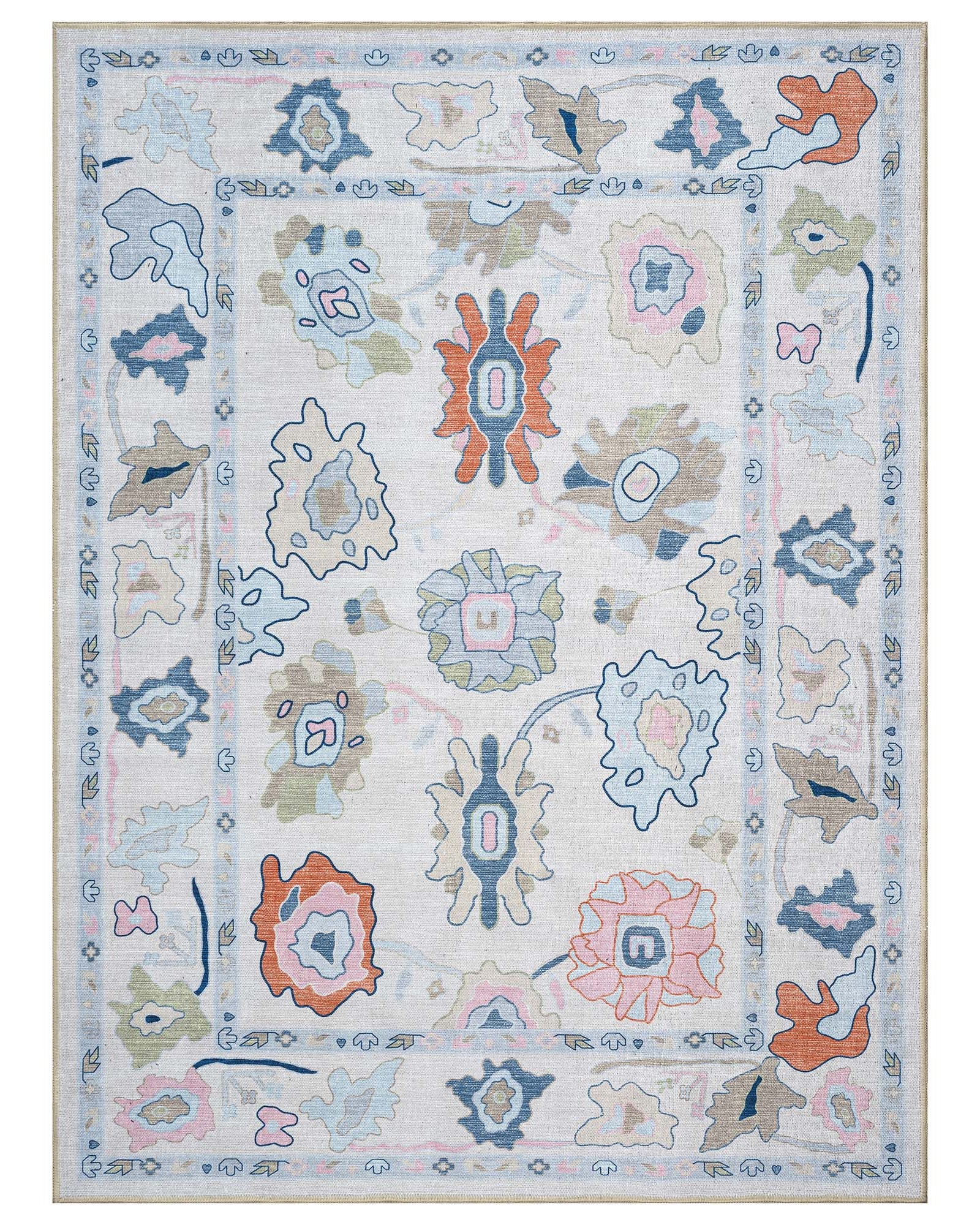
- Vintage patterns soften modern black. Faded Oushak motifs bring age and texture to a room that could otherwise feel stark.
- Avoid dark rugs entirely. Charcoal on charcoal removes the horizon line and the room feels smaller than it is.


How Your Room's Light Changes the Color
The same rug looks different in a north-facing room than a south-facing one. Before you commit to a shade, check which way your windows face.
North-facing
Cool, even, indirect light all day. It pulls colors greyer and flatter. Choose rugs a step warmer than you think you need — cream over stark ivory, camel over grey.
South-facing
Bright, warm, direct light for most of the day. It pushes colors yellower. Cooler rugs hold their tone here — greige, soft grey and blue-toned motifs stay true.
East-facing
Warm in the morning, cool and blue by afternoon. Neutral rugs handle the shift best — anything strongly warm or strongly cool will look wrong half the day.
West-facing
Dim mornings, intense golden light in the evening. That late warmth exaggerates reds and oranges, so terracotta and rust rugs read much stronger than they will in the photo.
The practical test: whatever the light, look at the rug in your own room at two different times of day before deciding. A shade that looks perfect at 10am can look like a different color entirely at 6pm.
Wall Color & Rug Pairing FAQ
The questions we get asked most.
Should the rug match the wall color?
No. The wall is roughly 60 percent of the room's color and the rug is closer to 10 percent — they serve different jobs. The rug should share the wall's undertone, warm with warm or cool with cool, while sitting clearly lighter or darker so the two surfaces stay distinct.
What is LRV and why does it matter for rugs?
LRV, or Light Reflectance Value, measures how much light a paint color reflects on a scale from 0 to 100. It tells you how much contrast your rug needs. Walls above 60 call for a darker rug; walls below 30 call for a lighter one. Between those numbers, either direction works and the undertone decides.
How do I find my wall's undertone?
Hold a sheet of pure white paper against the wall in daylight. Next to true white, the undertone becomes obvious — the paint will lean yellow, pink, green or blue. Match the rug to that lean rather than to the color name on the paint can.
What rug color works with dark walls?
Ivory, cream and light grey. Navy, charcoal and deep brown walls all sit low on LRV, so the floor is the surface that keeps the room open. Warm accents like camel stop a dark room from feeling severe. A dark rug under dark walls removes the horizon line and makes the space feel smaller.
Should I pick the rug or paint the walls first?
Choose the rug first if you can. Paint comes in effectively unlimited shades and can be matched to anything, while rugs come in fixed colorways. Starting with the rug means you are choosing from thousands of paint options rather than hoping a rug happens to suit a wall you already committed to.
Does the light in my room really change the rug color?
Yes, more than most people expect. North-facing rooms pull colors cooler and greyer, south-facing rooms push them warmer and yellower, and west-facing rooms intensify reds in the evening. The same rug can look noticeably different at 10am and 6pm in the same space.
Can I use a patterned rug with a bold wall color?
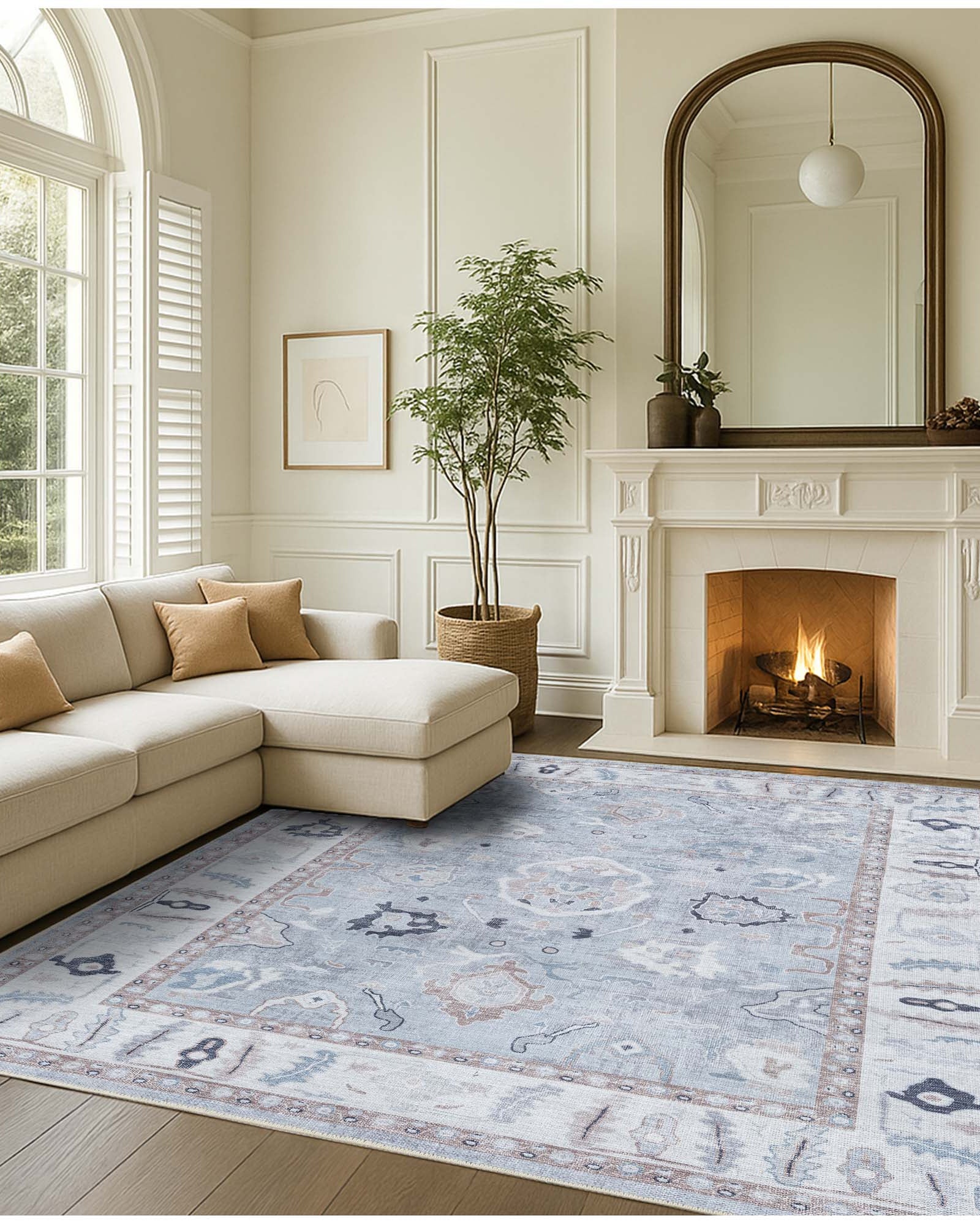
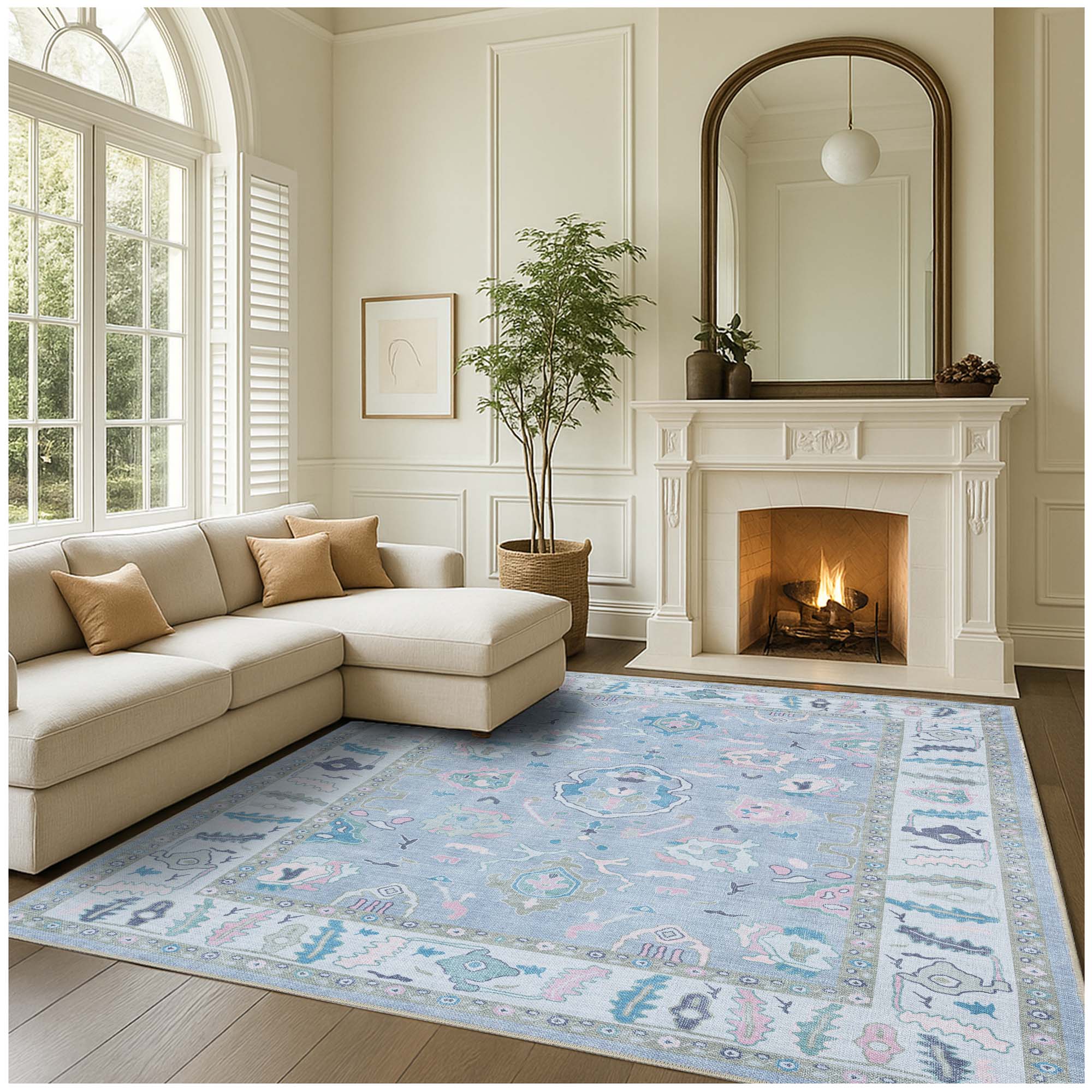
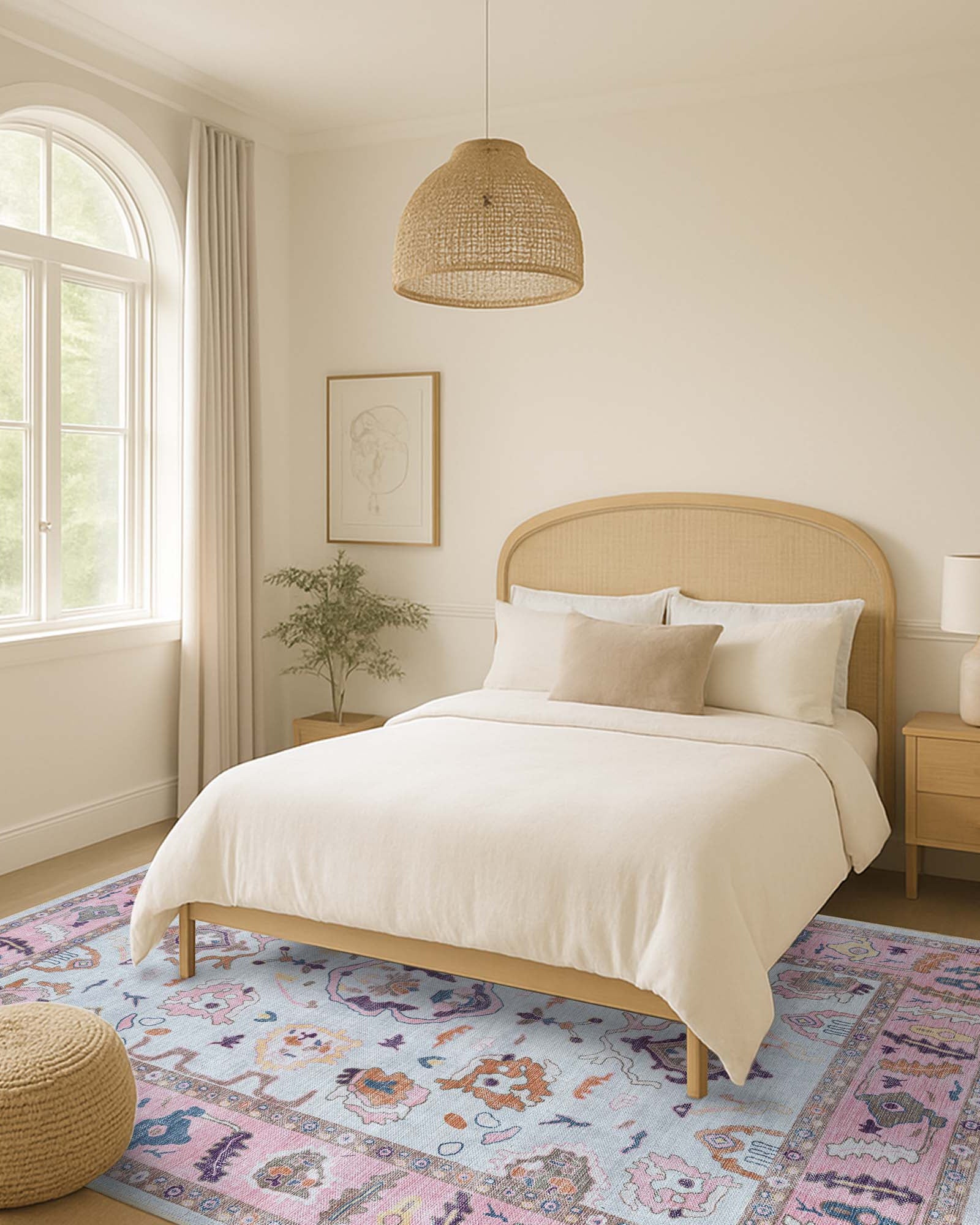
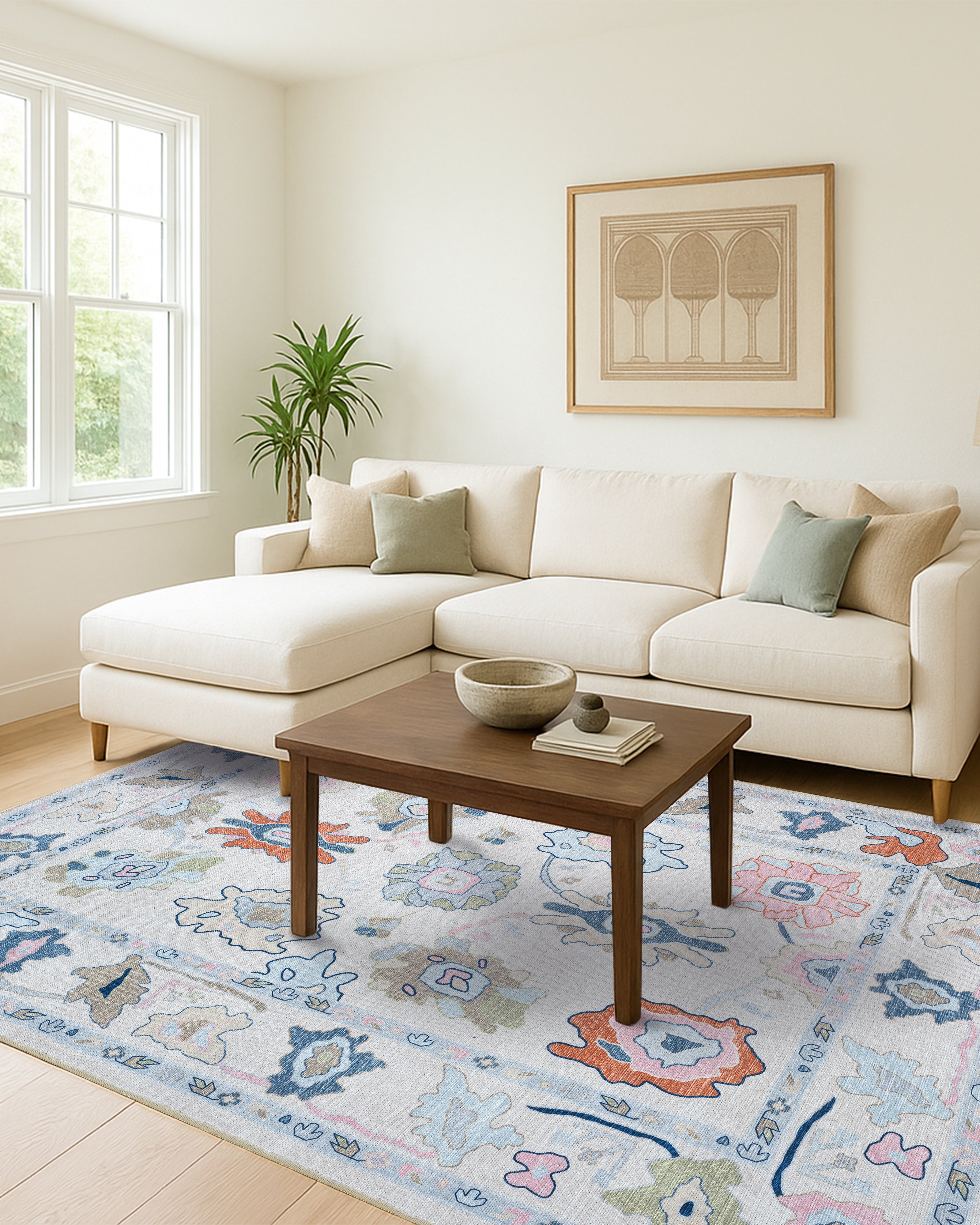
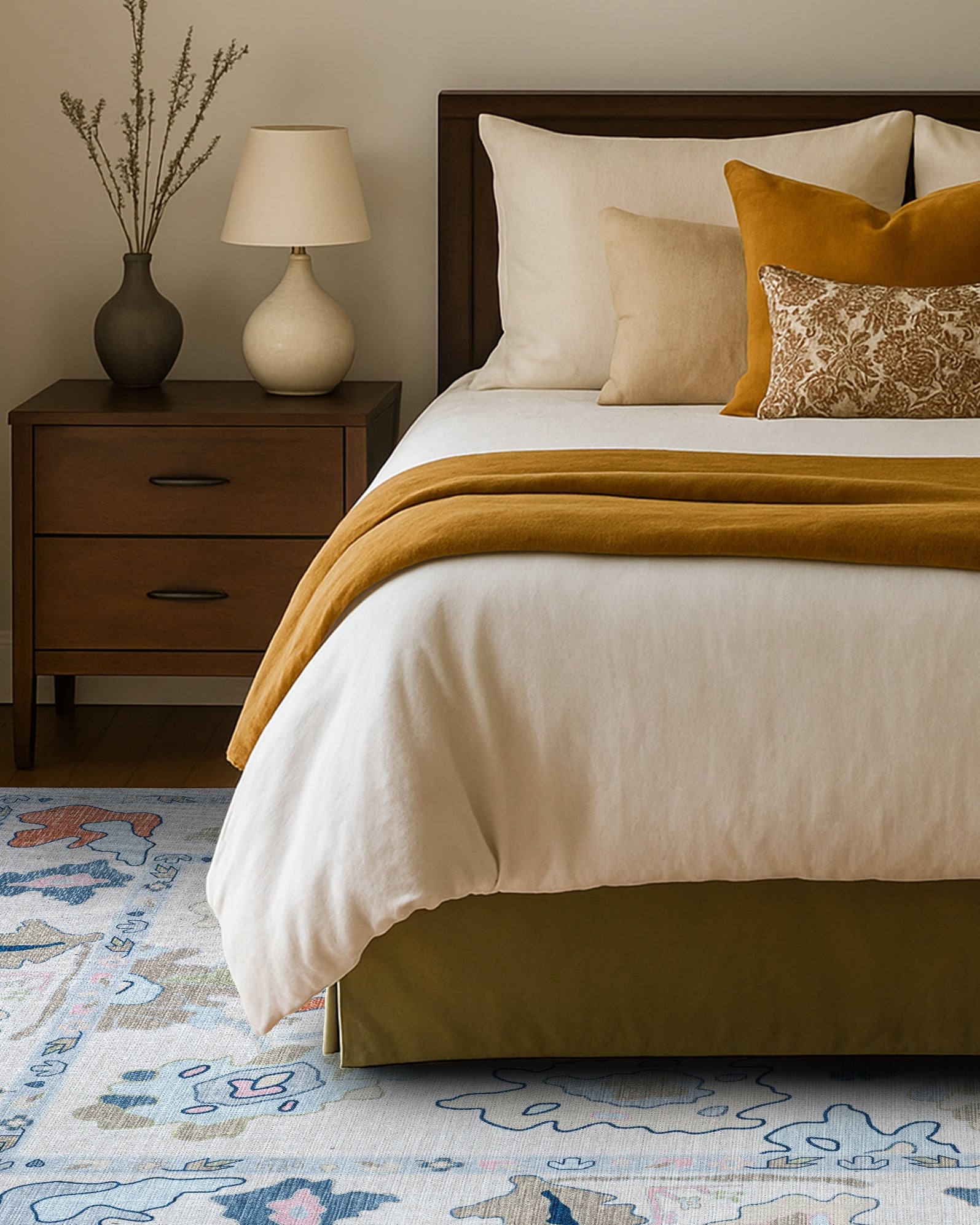
Yes, if the rug's palette is quieter than the wall. A faded Oushak in cream with soft motifs works beneath sage, navy or terracotta walls because it reads almost as texture from a distance. Two saturated surfaces competing for attention is what makes a room feel busy.
What if my walls are a warm white?
Warm whites like Alabaster pair naturally with sand, camel and taupe. Cooler whites work better with greige and soft grey. Either way the rug should be clearly darker than the wall — a pale rug under pale walls leaves the seating area with no definition at all.

Starting From Your Couch Instead?
Your sofa sits directly on the rug, so that pairing is the one people notice first. See the rug colors that work with every couch shade — grey, beige, brown, navy and more.