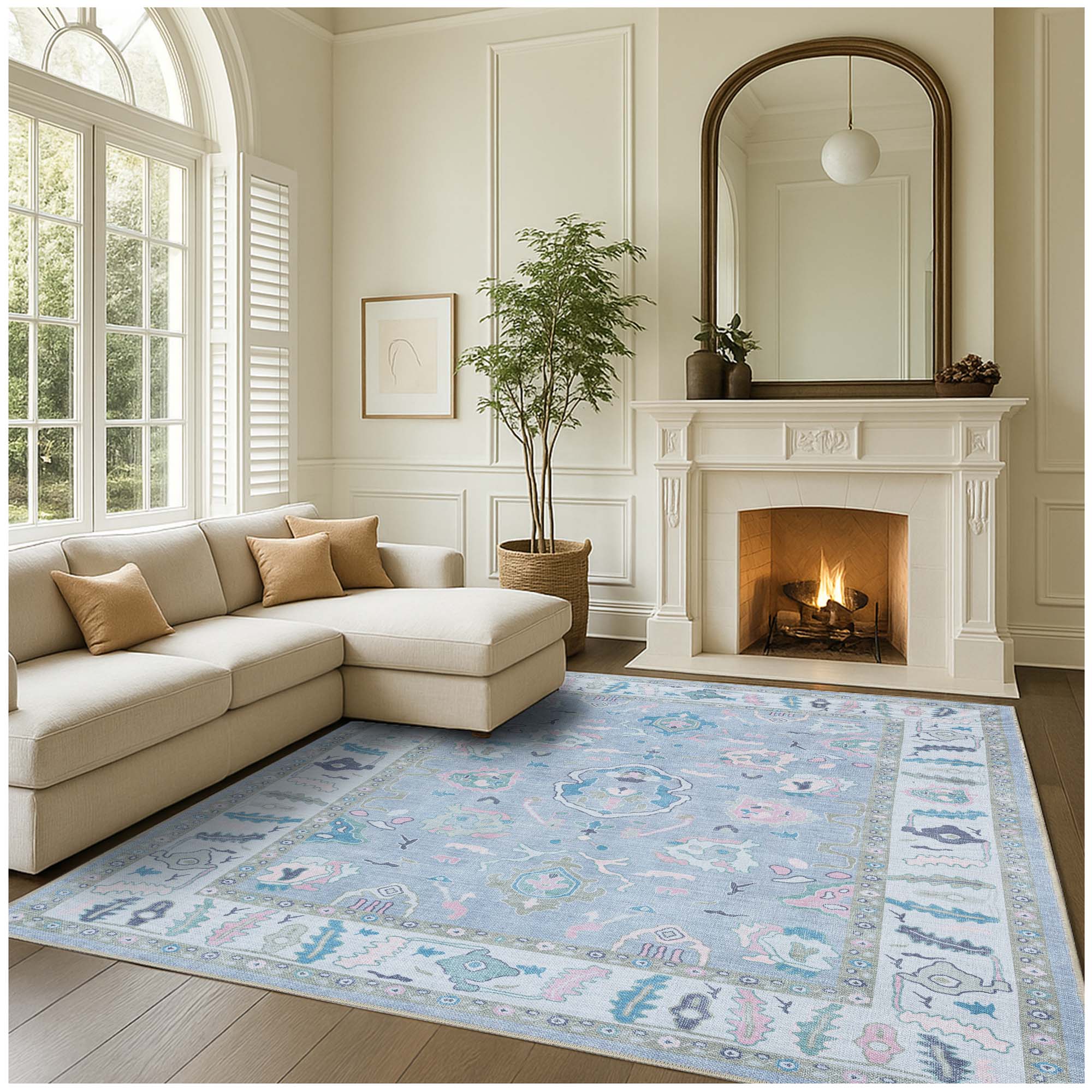
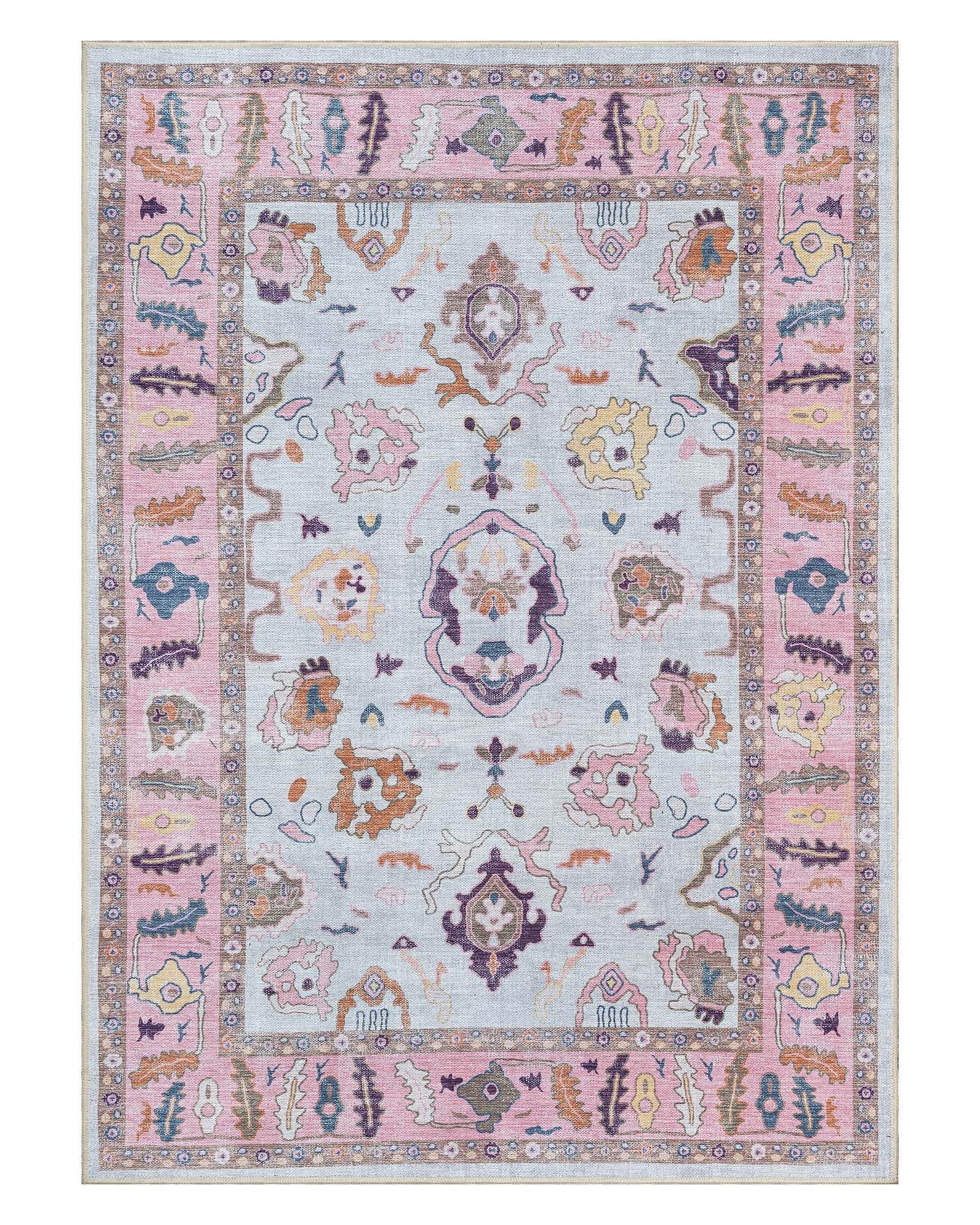
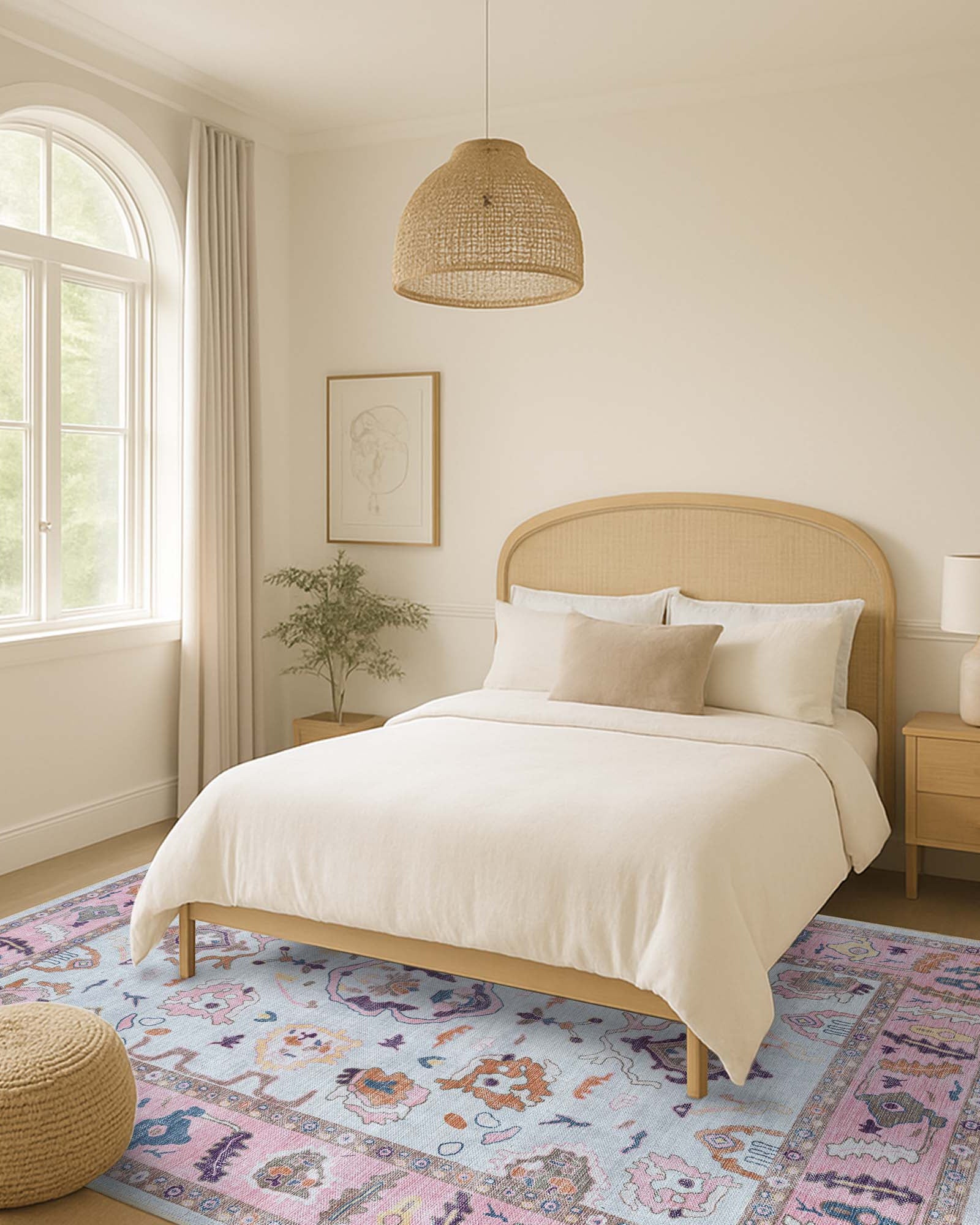
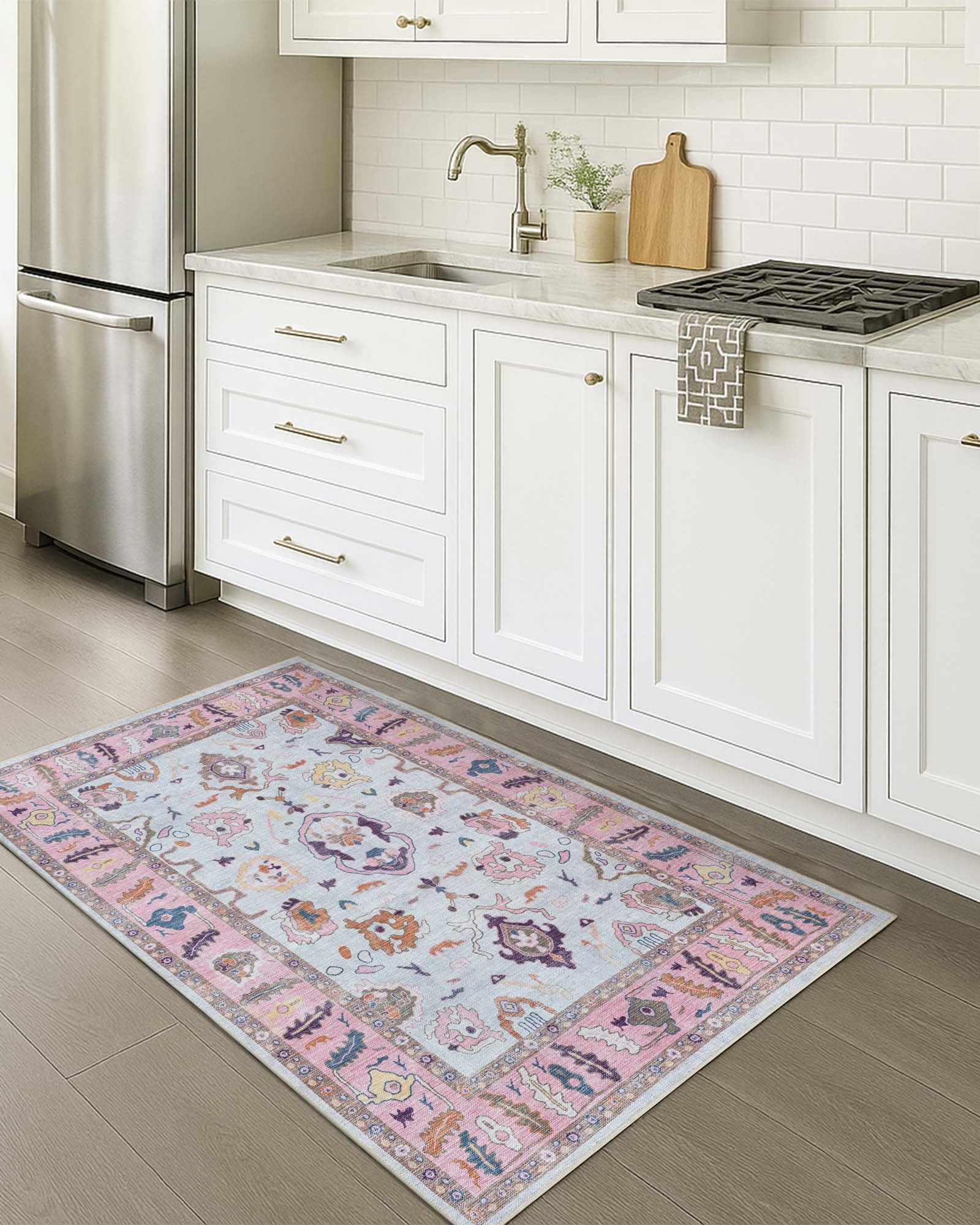
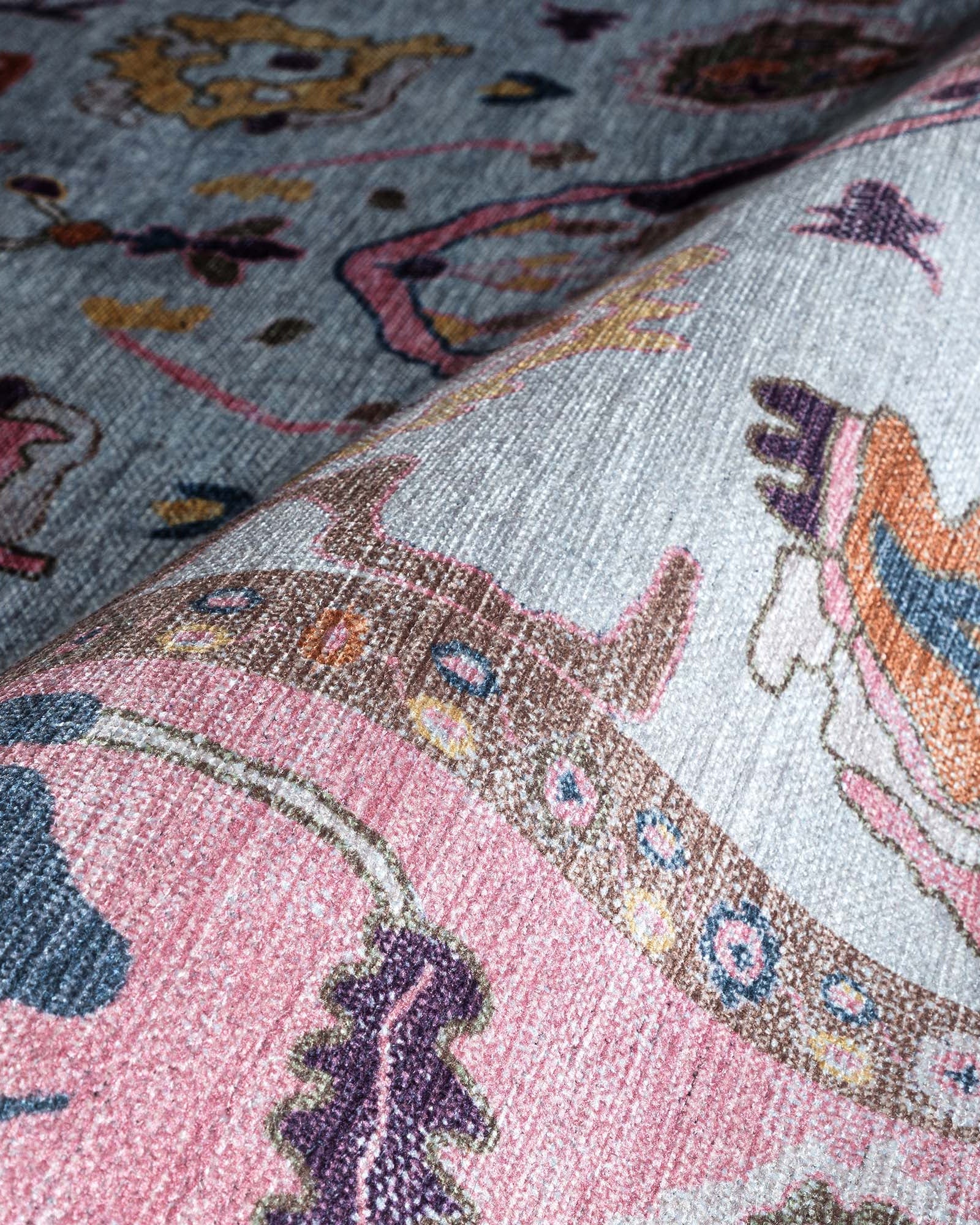
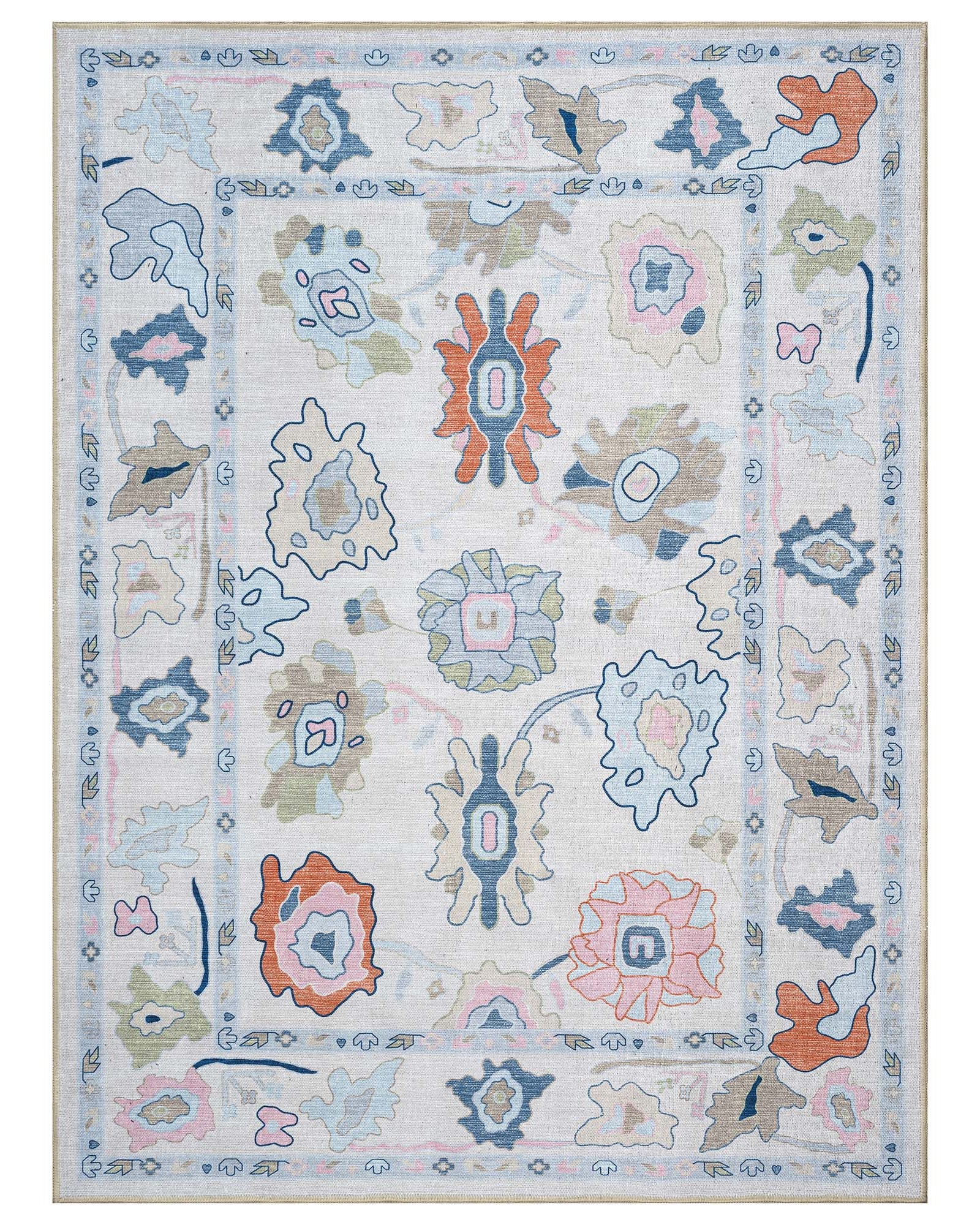
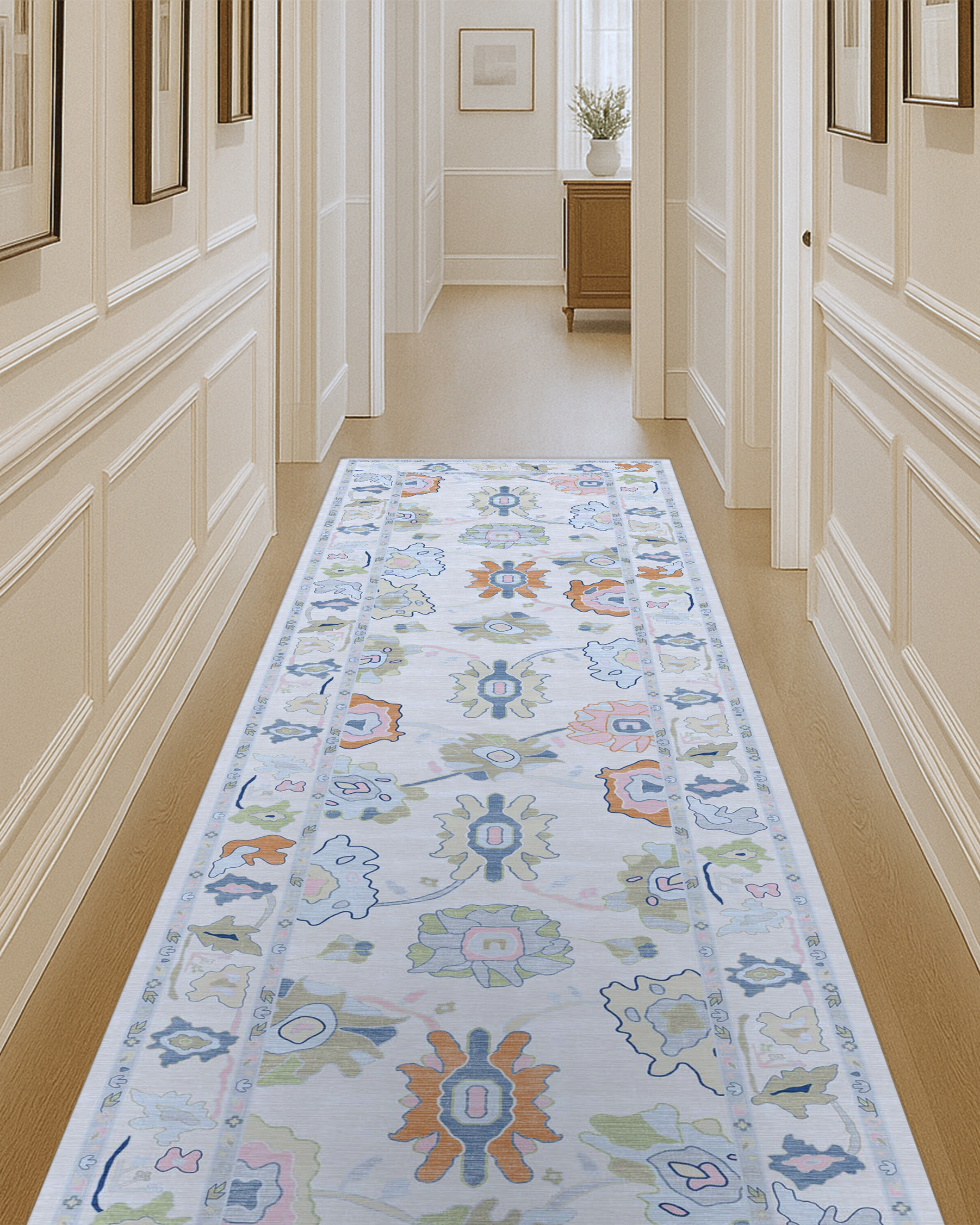
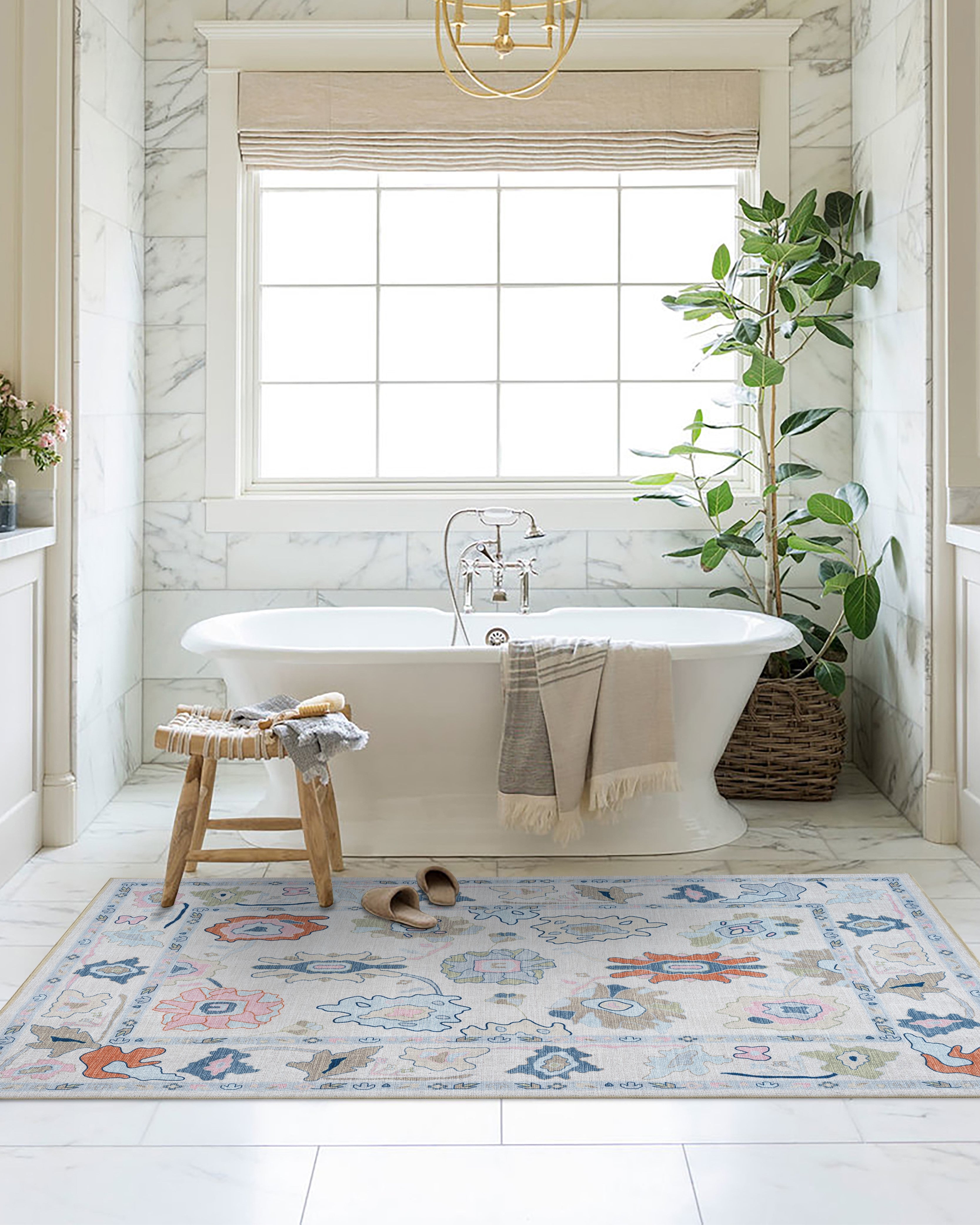
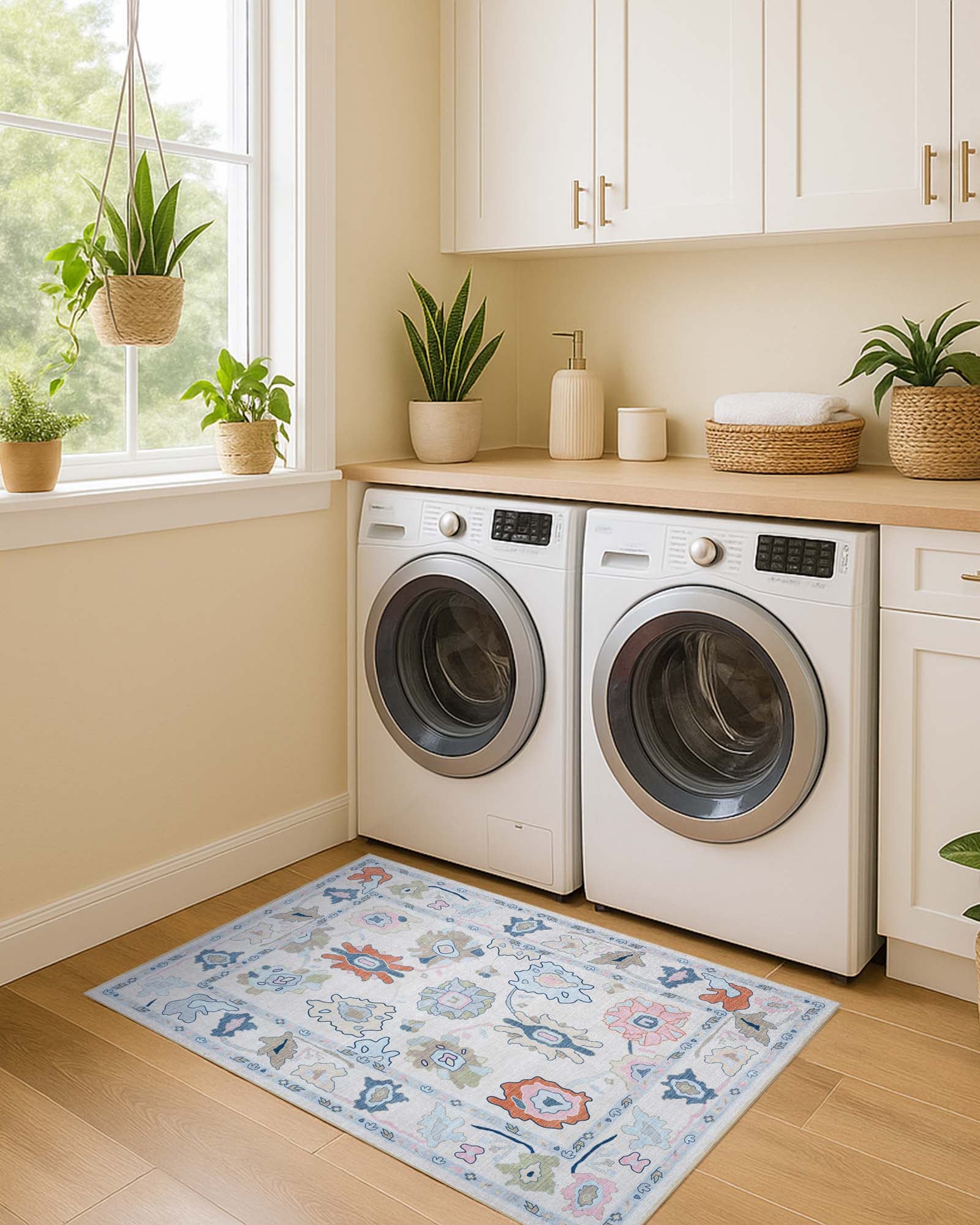
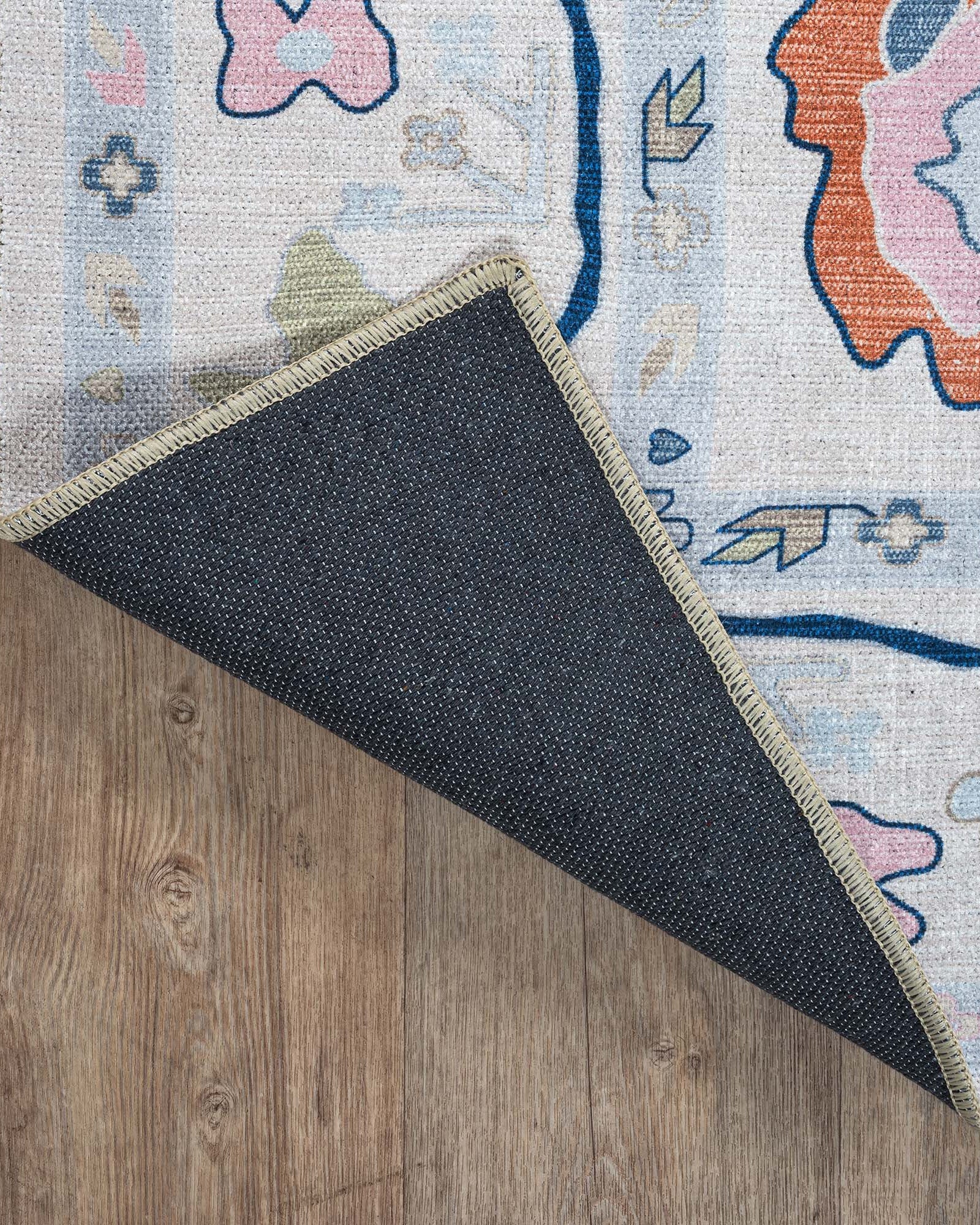
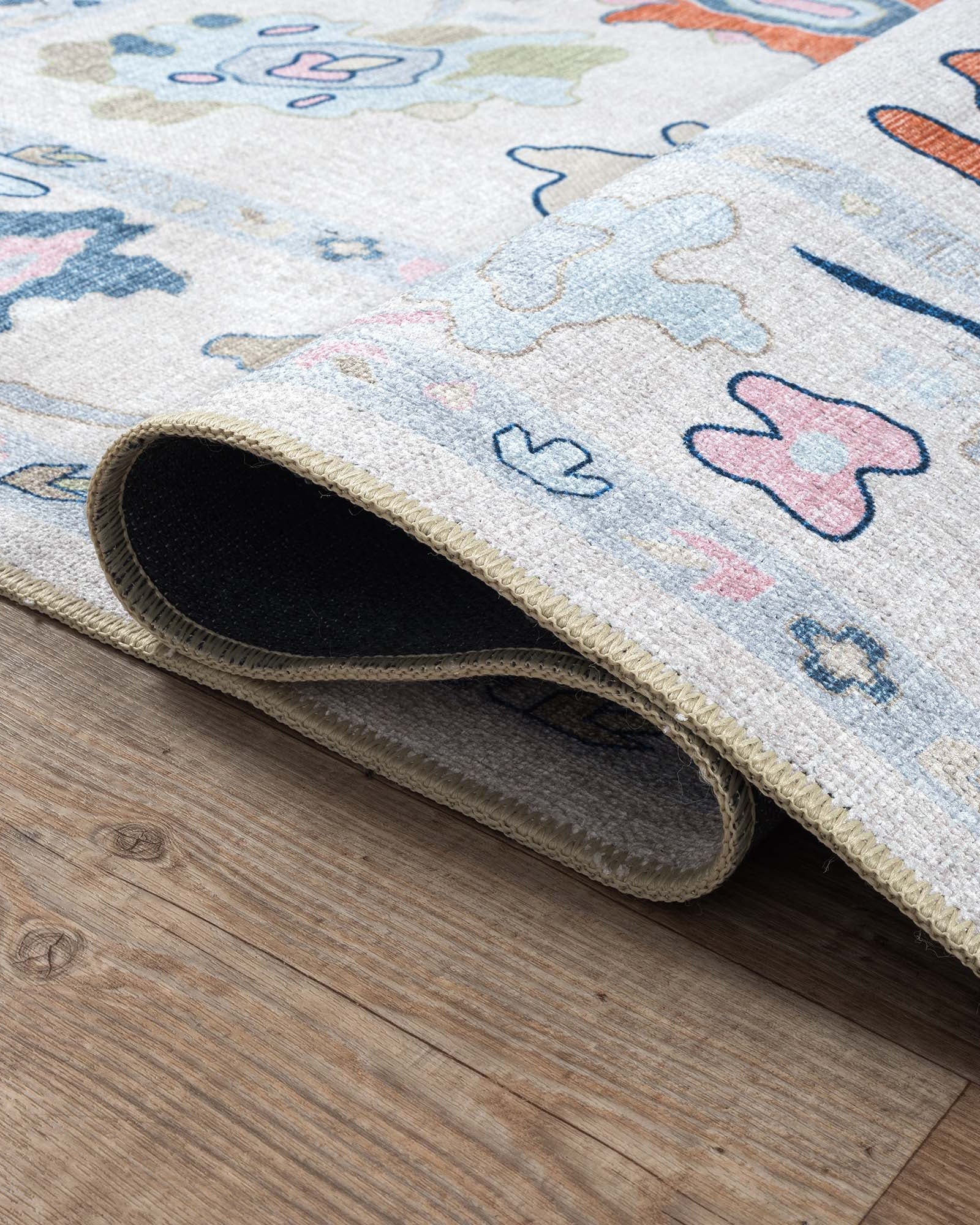
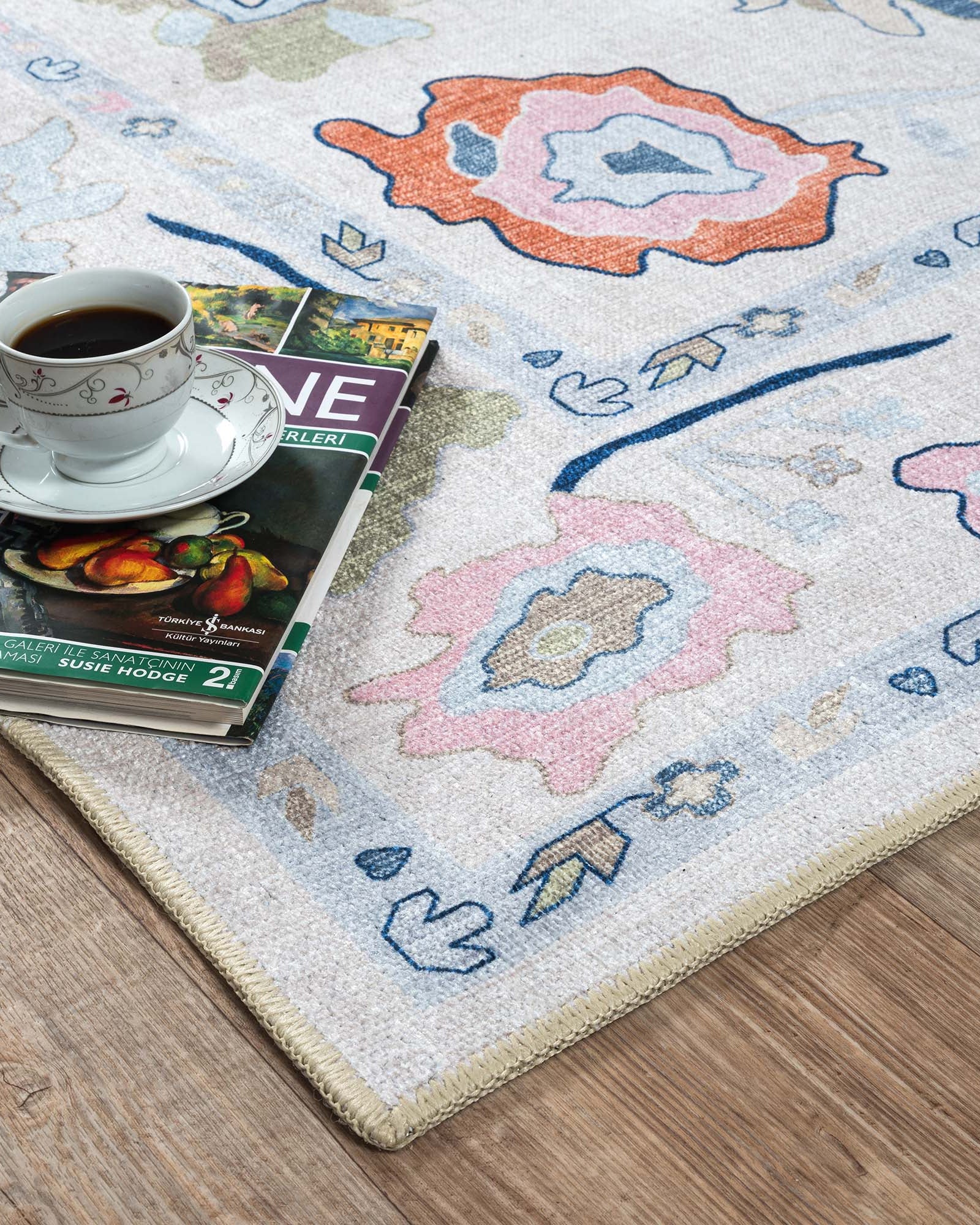
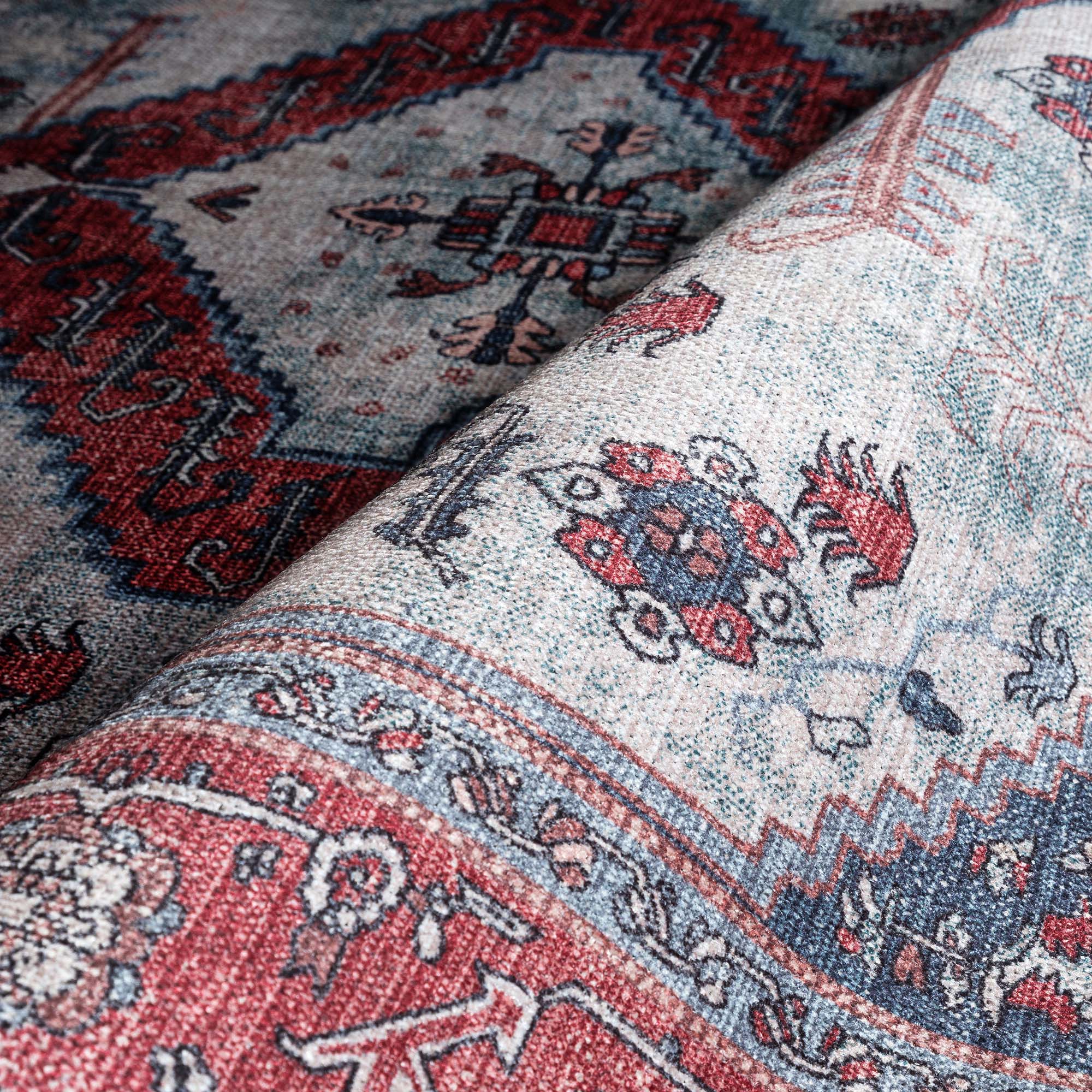
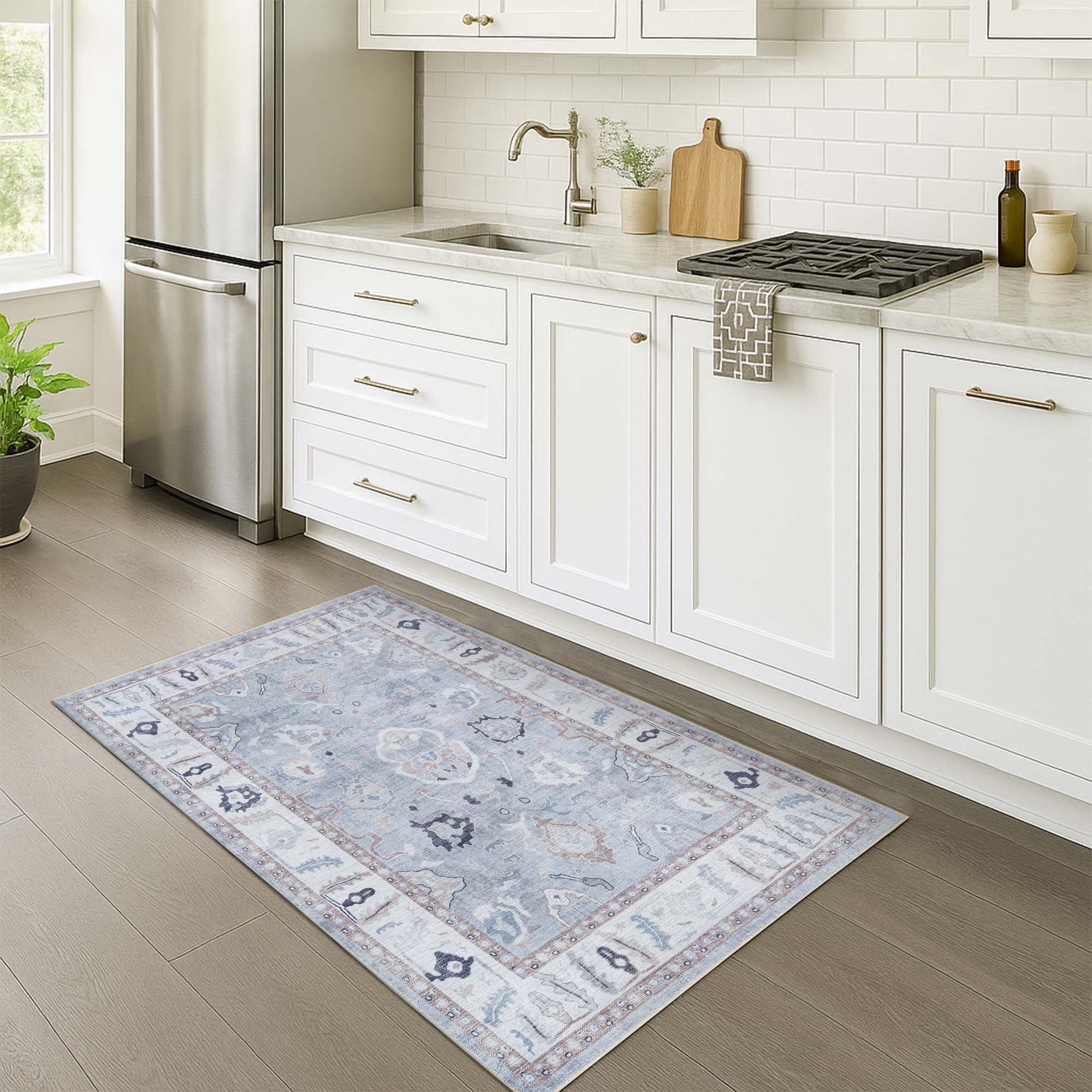
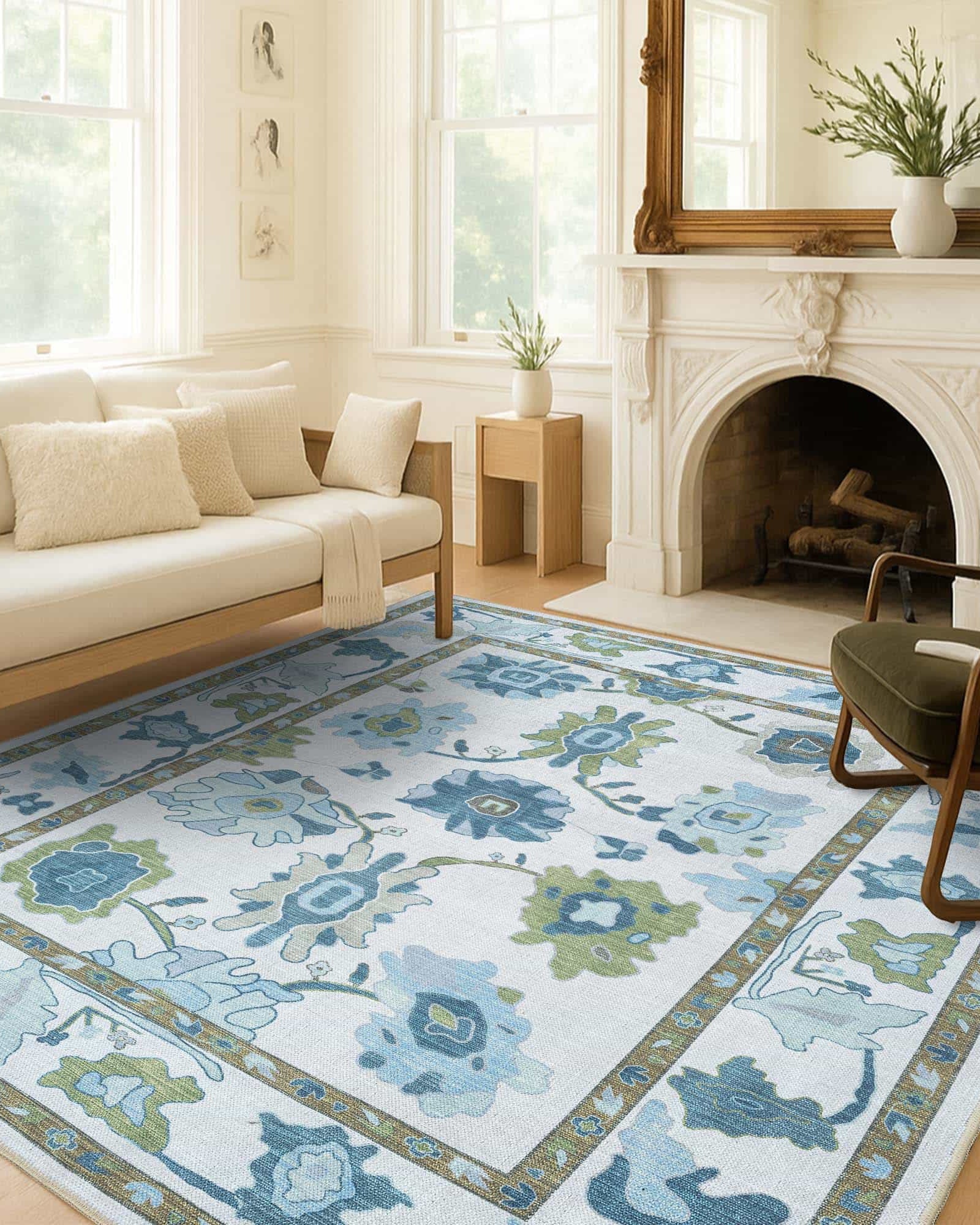
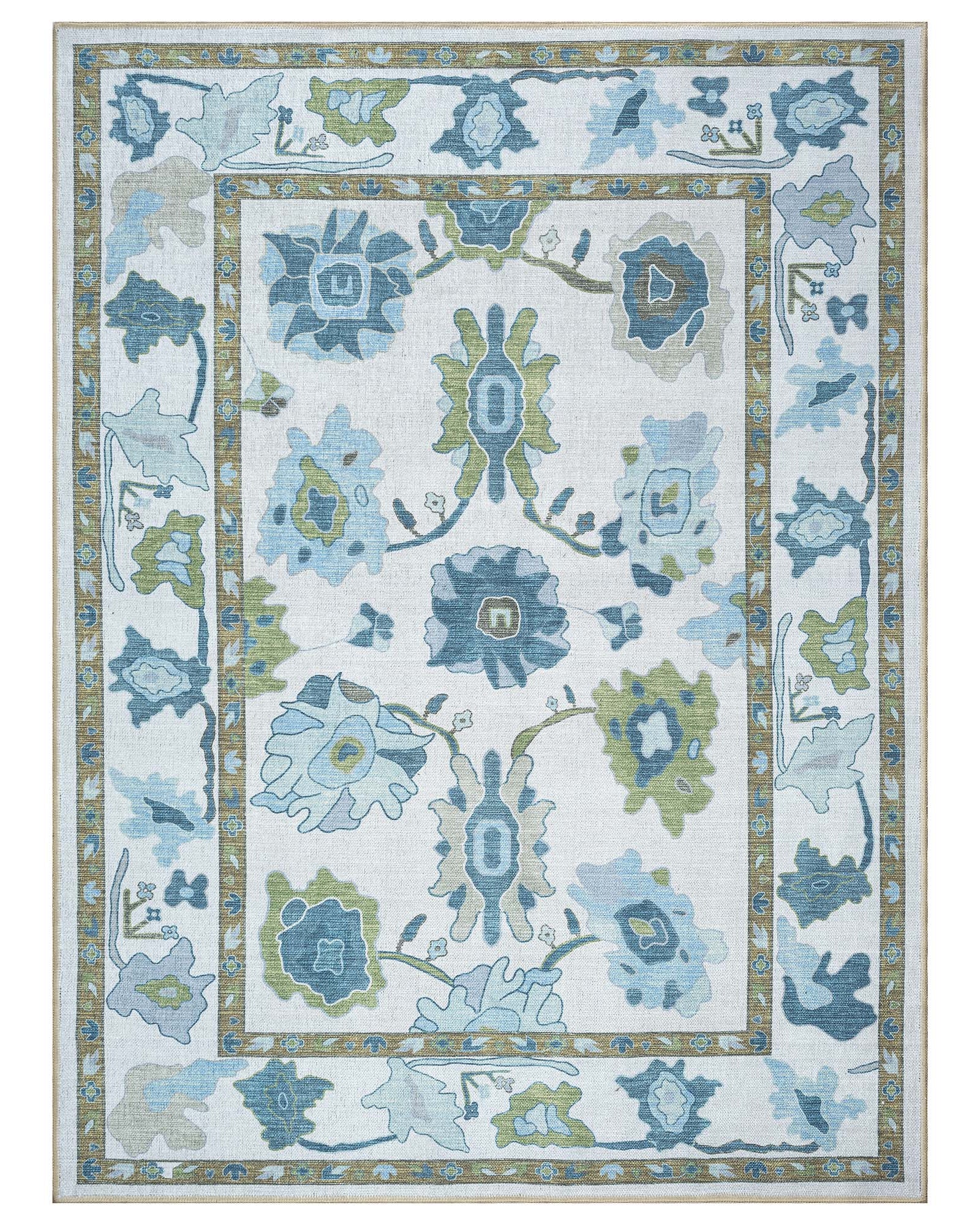
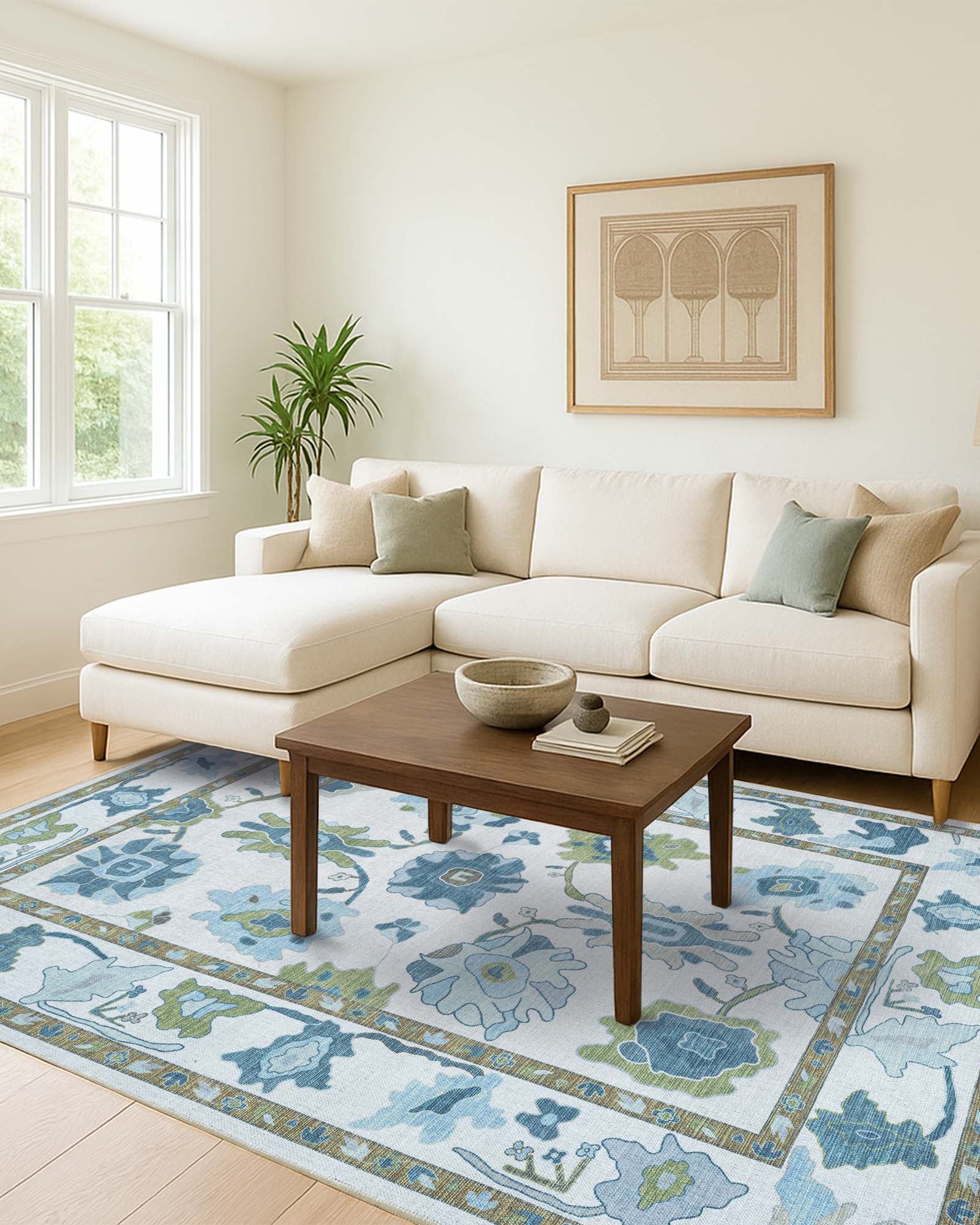
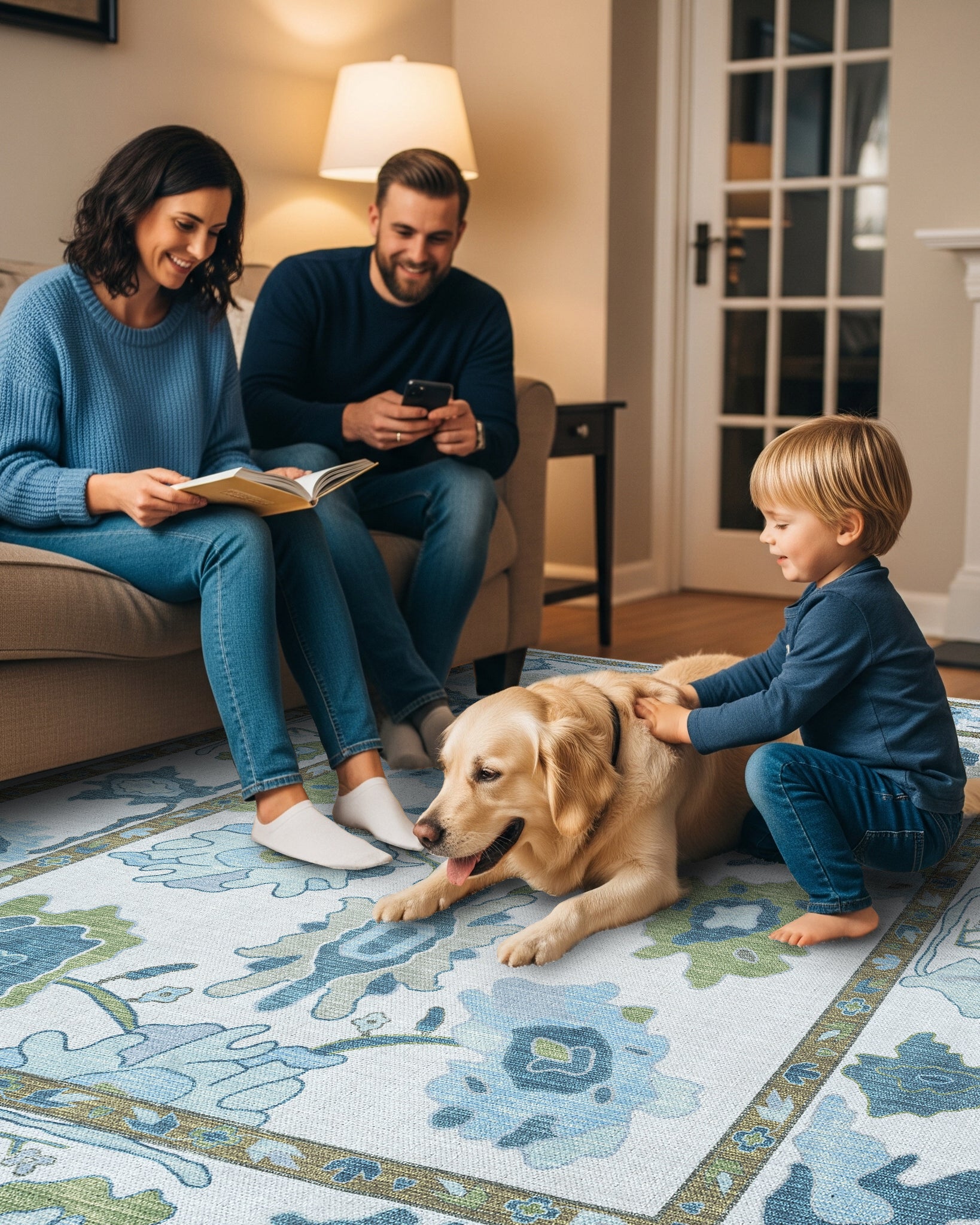
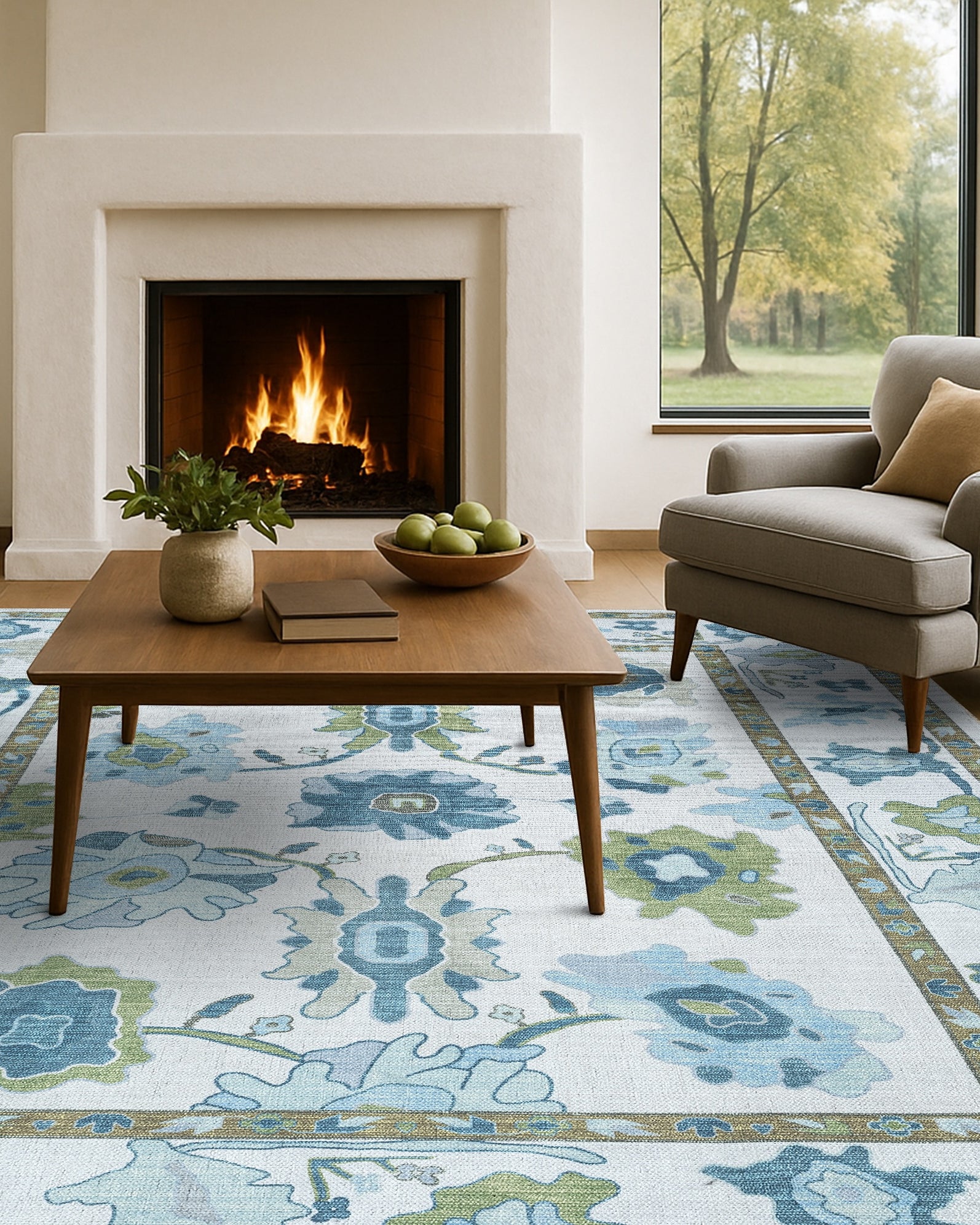
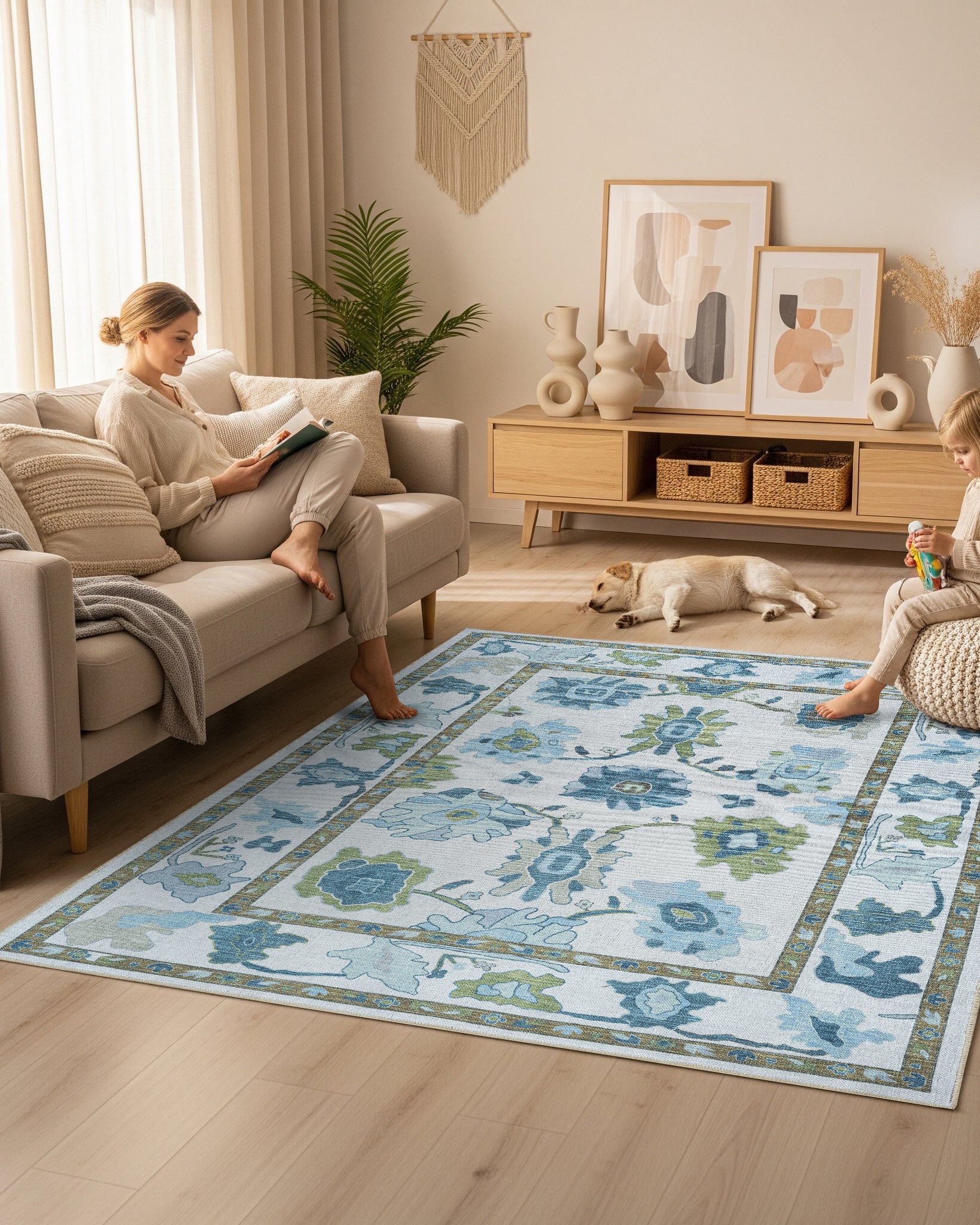
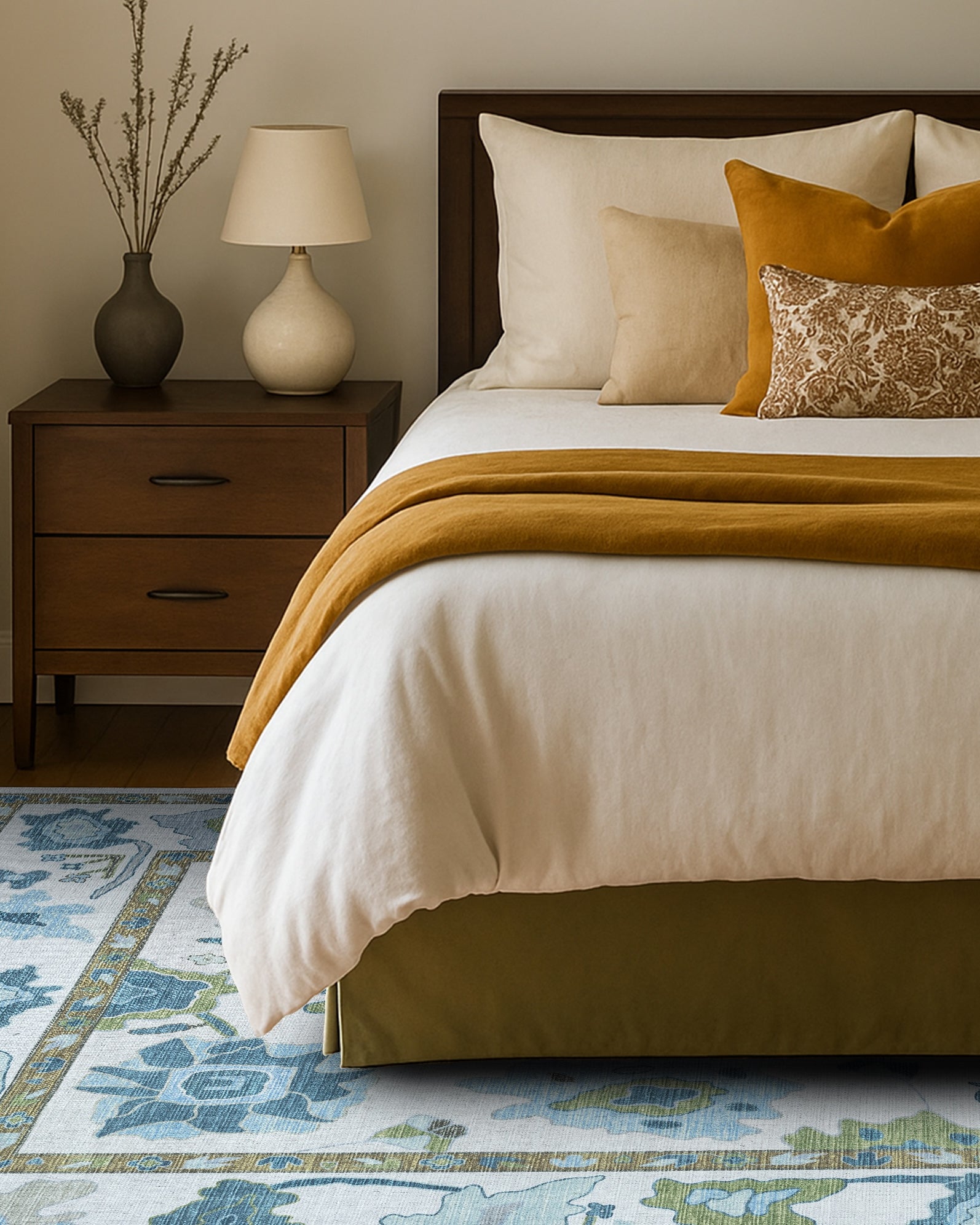
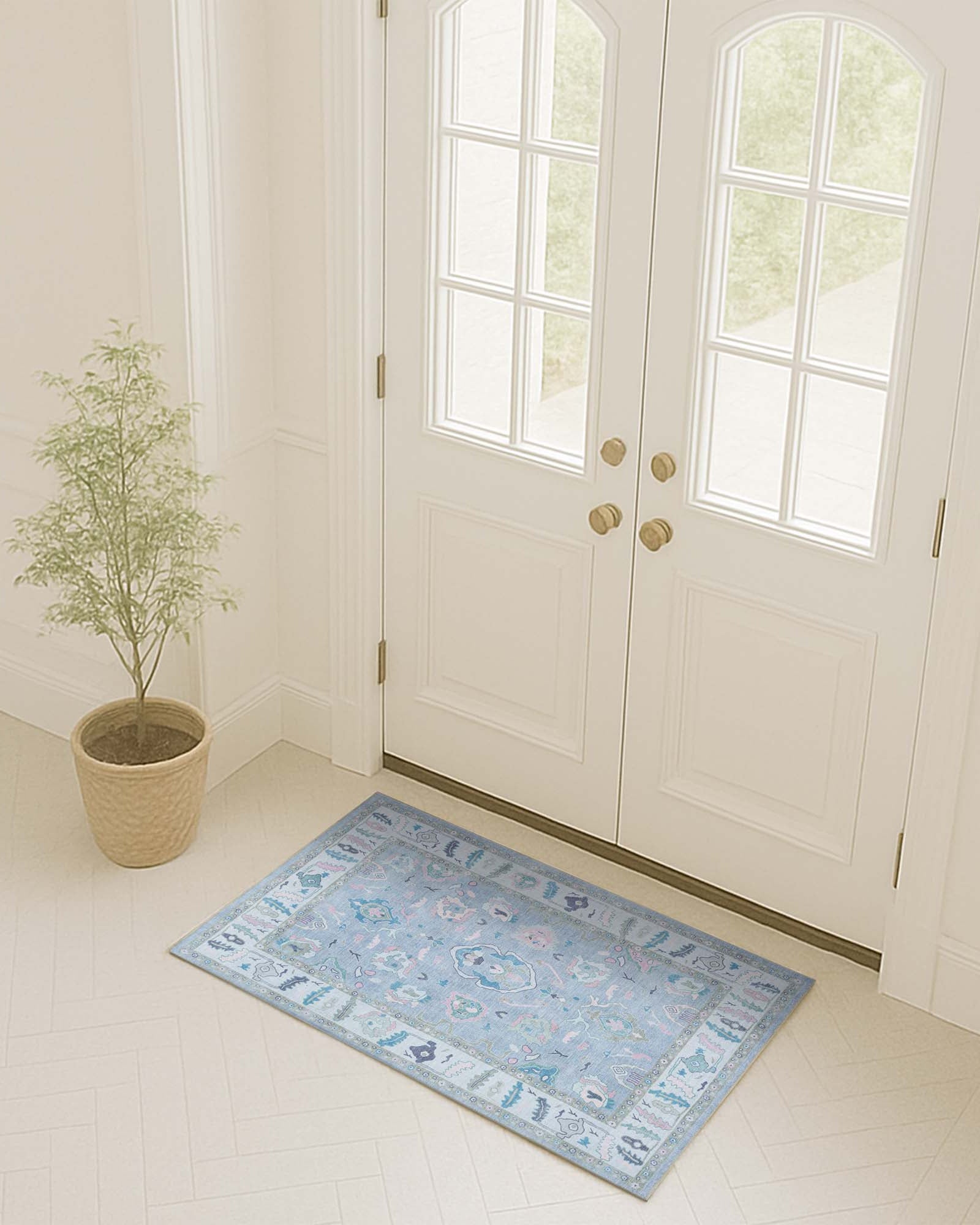
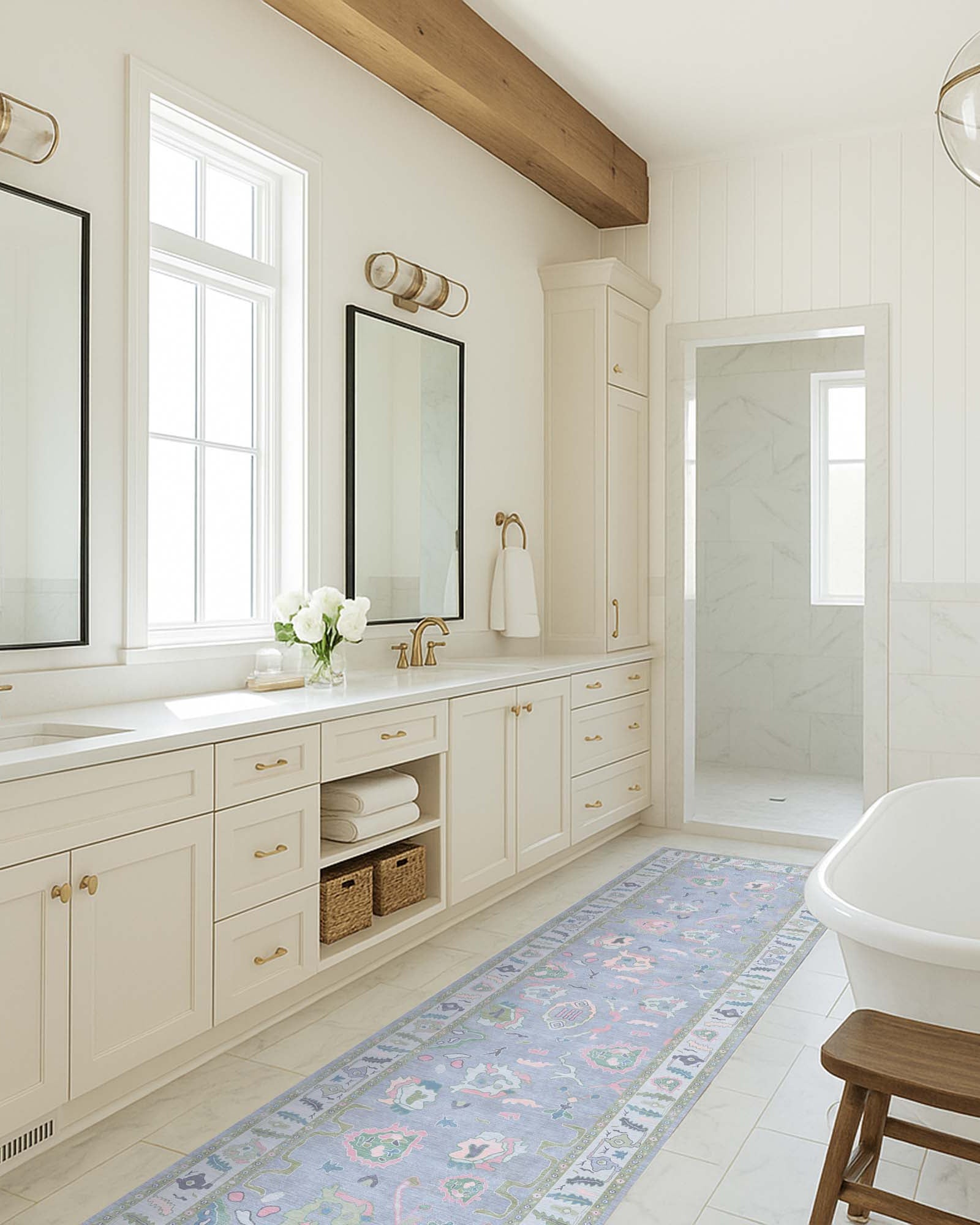
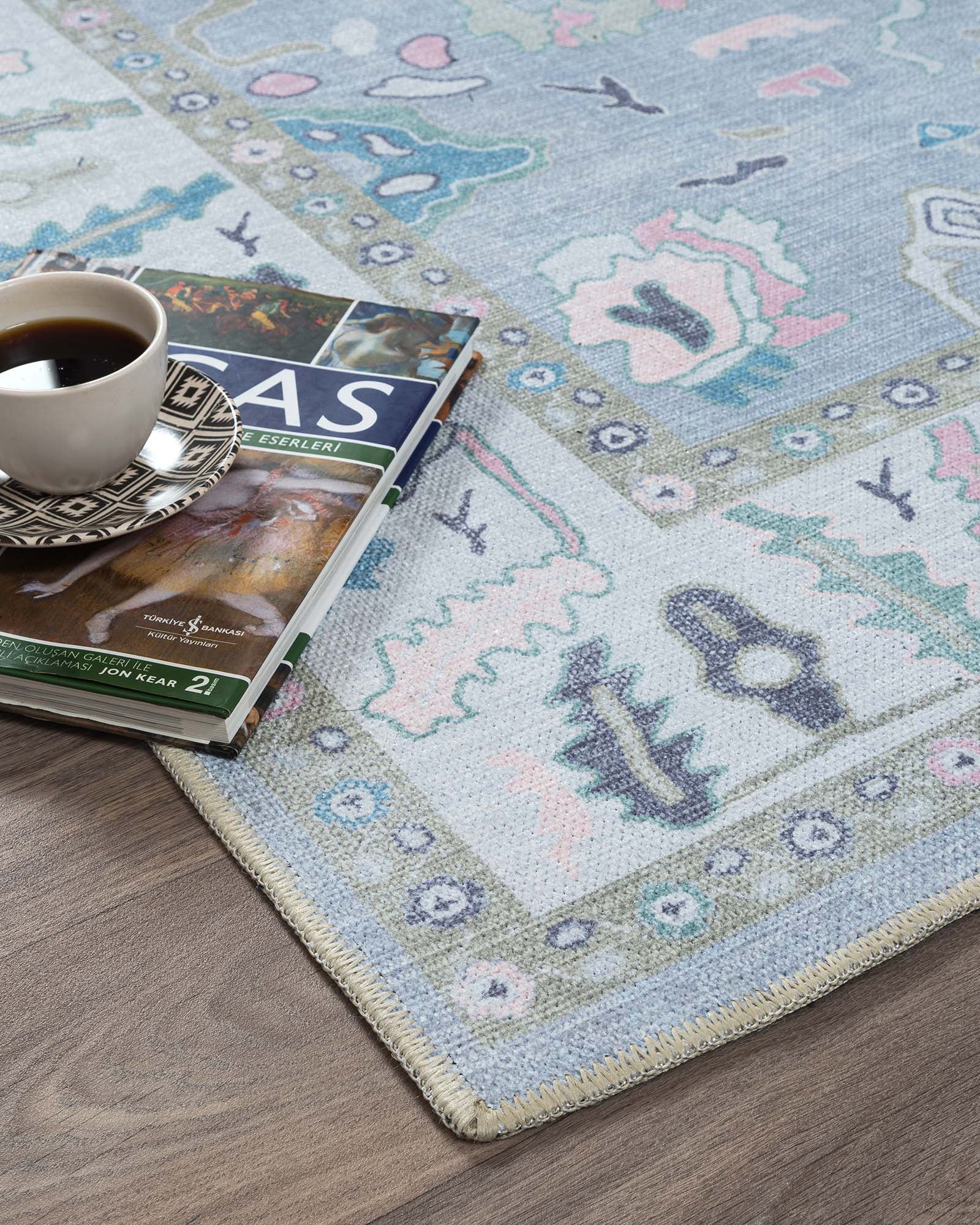
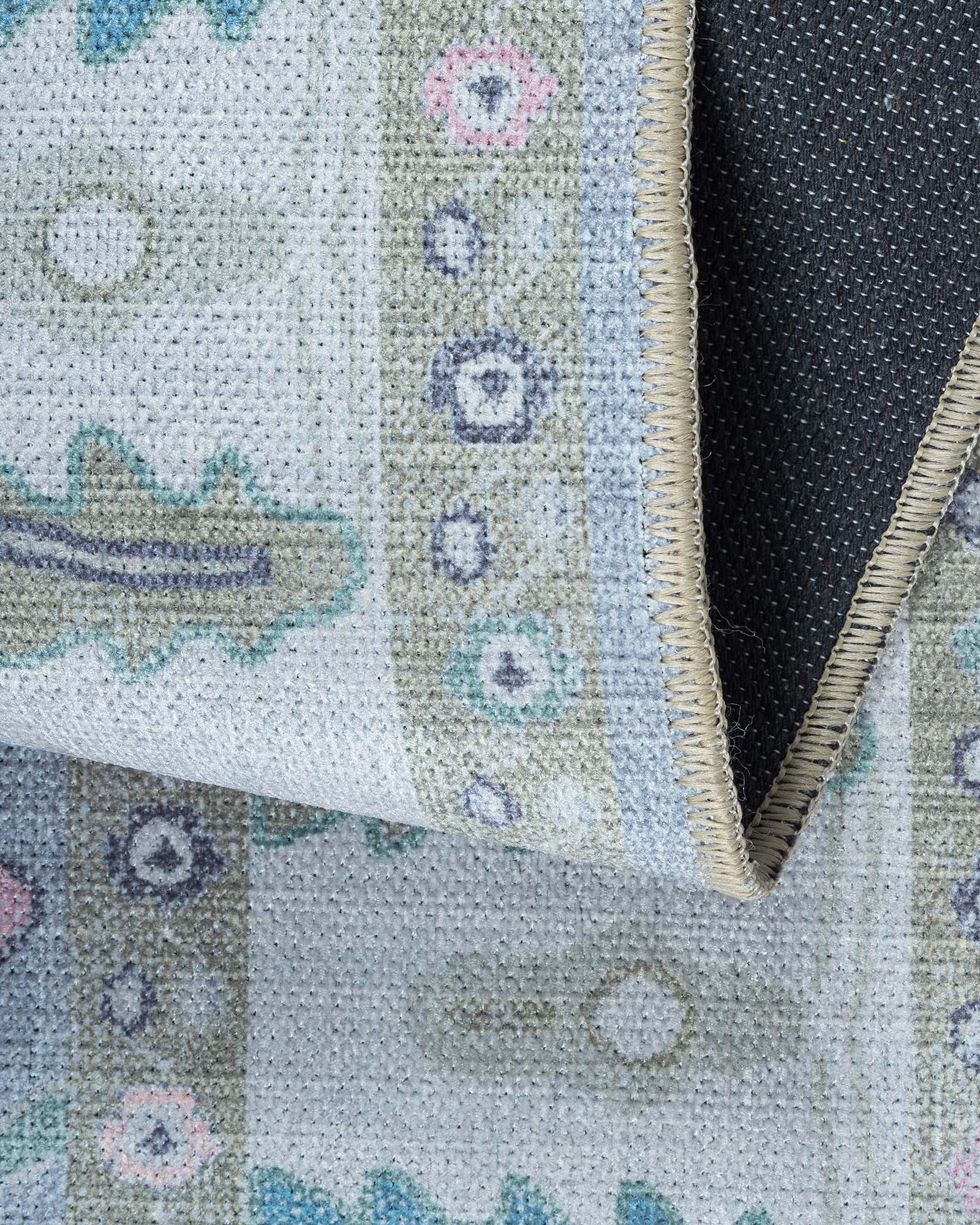
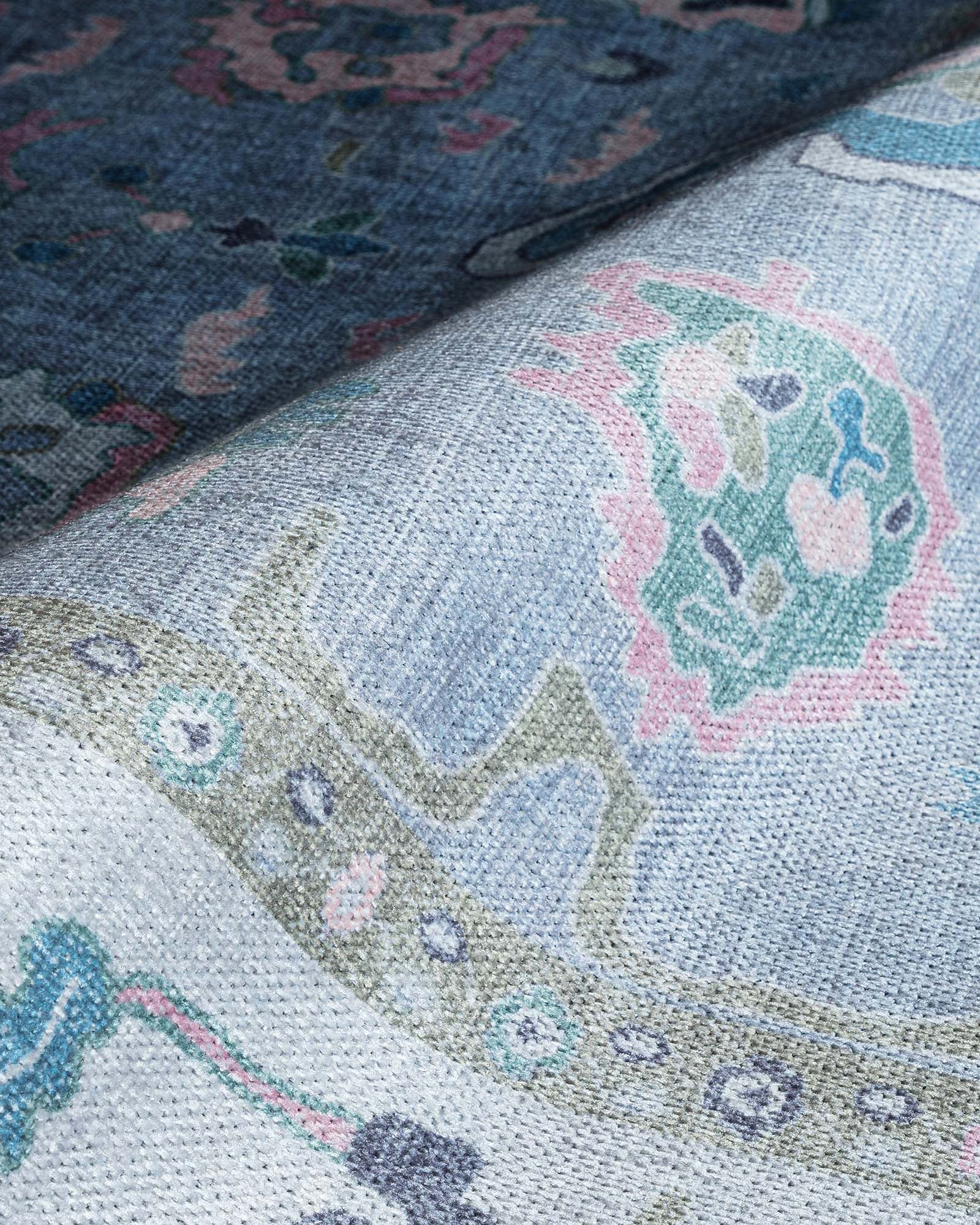
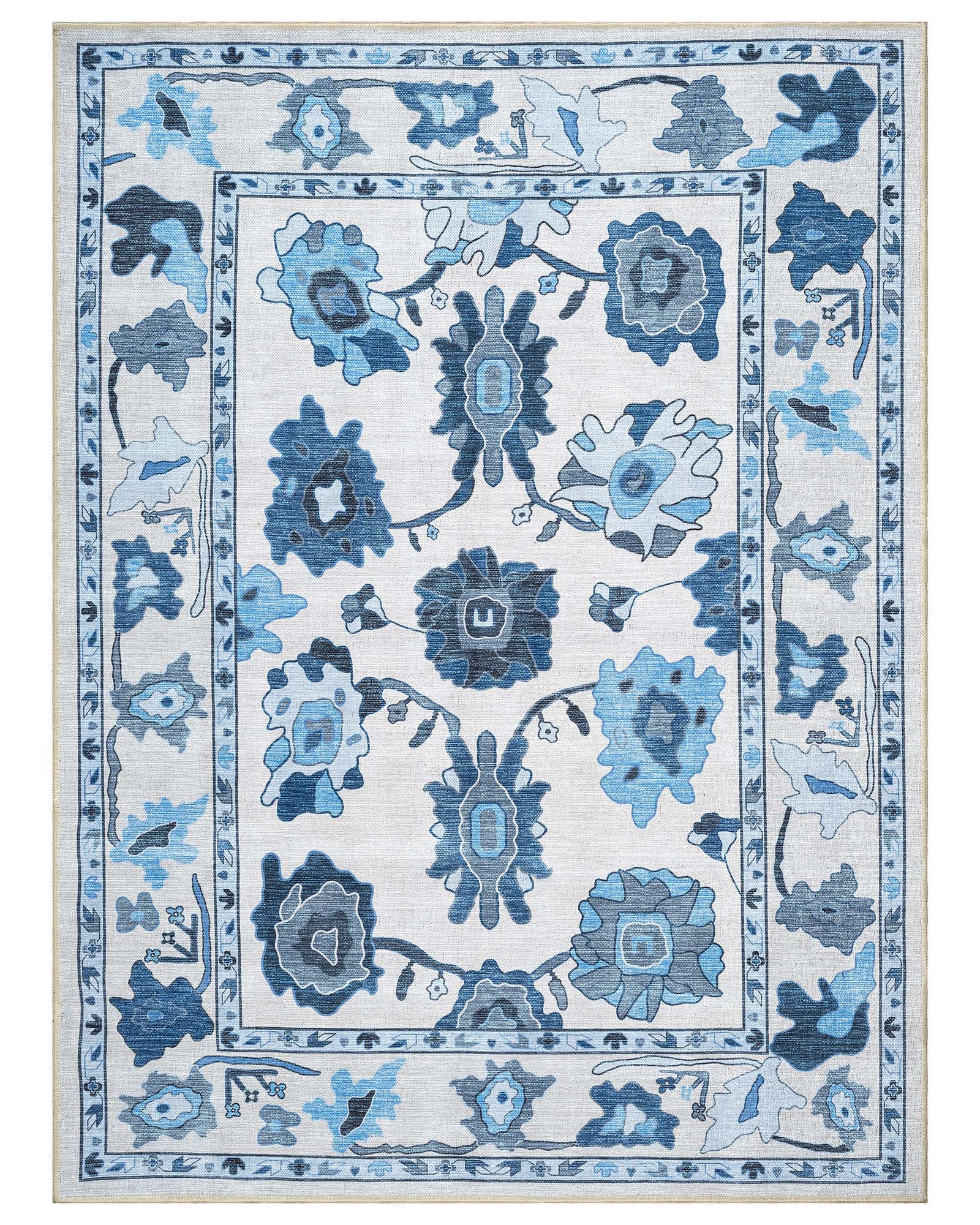
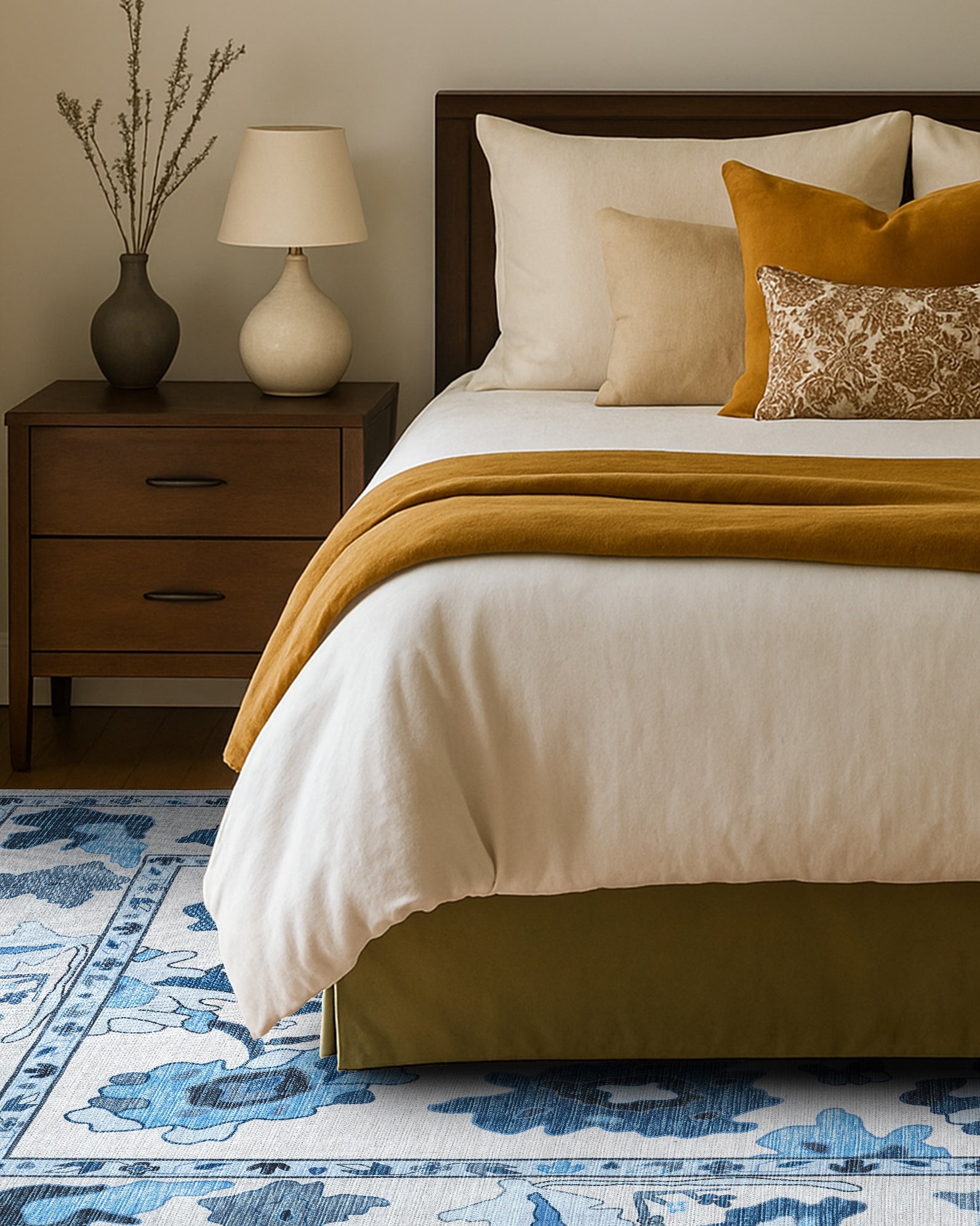
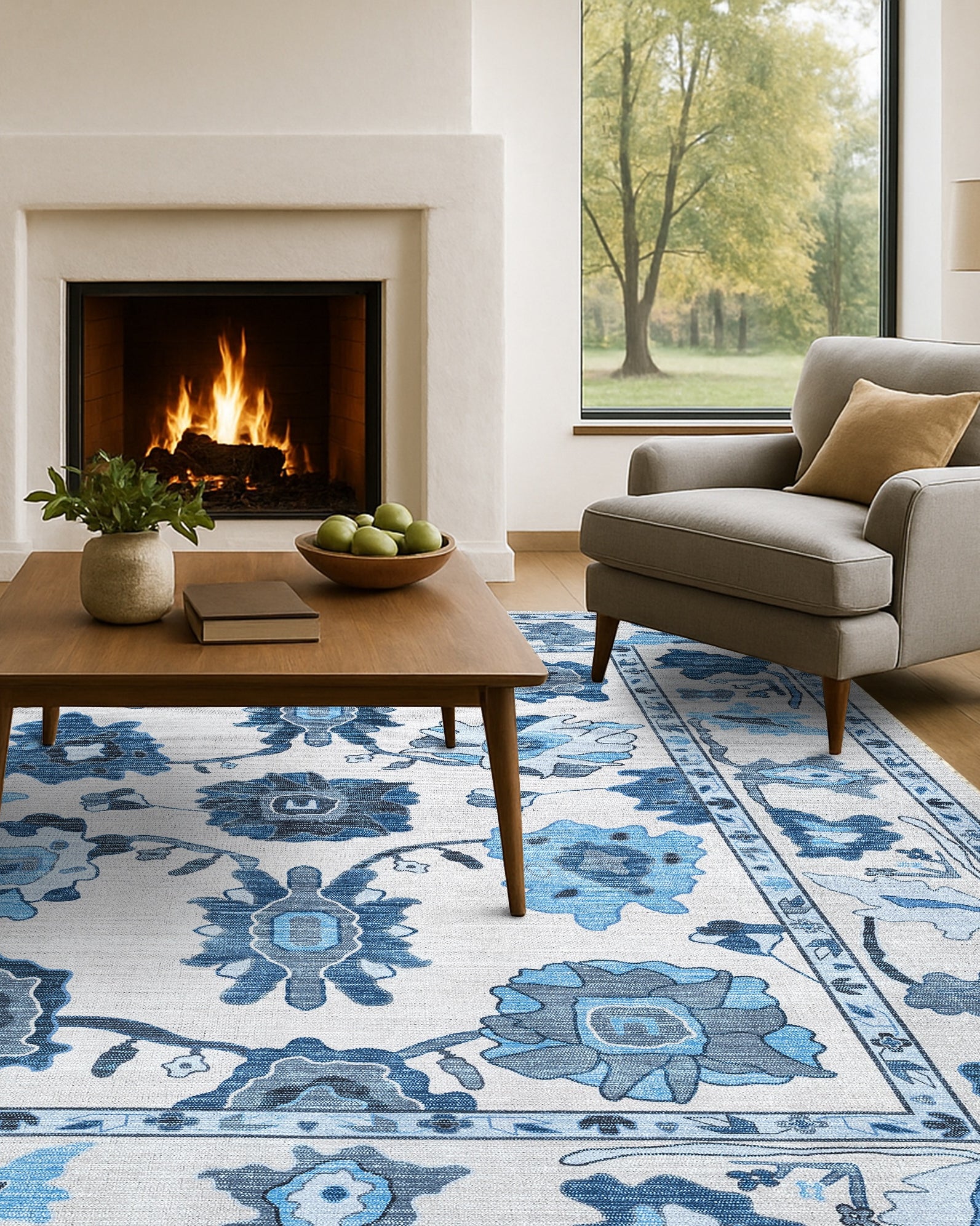
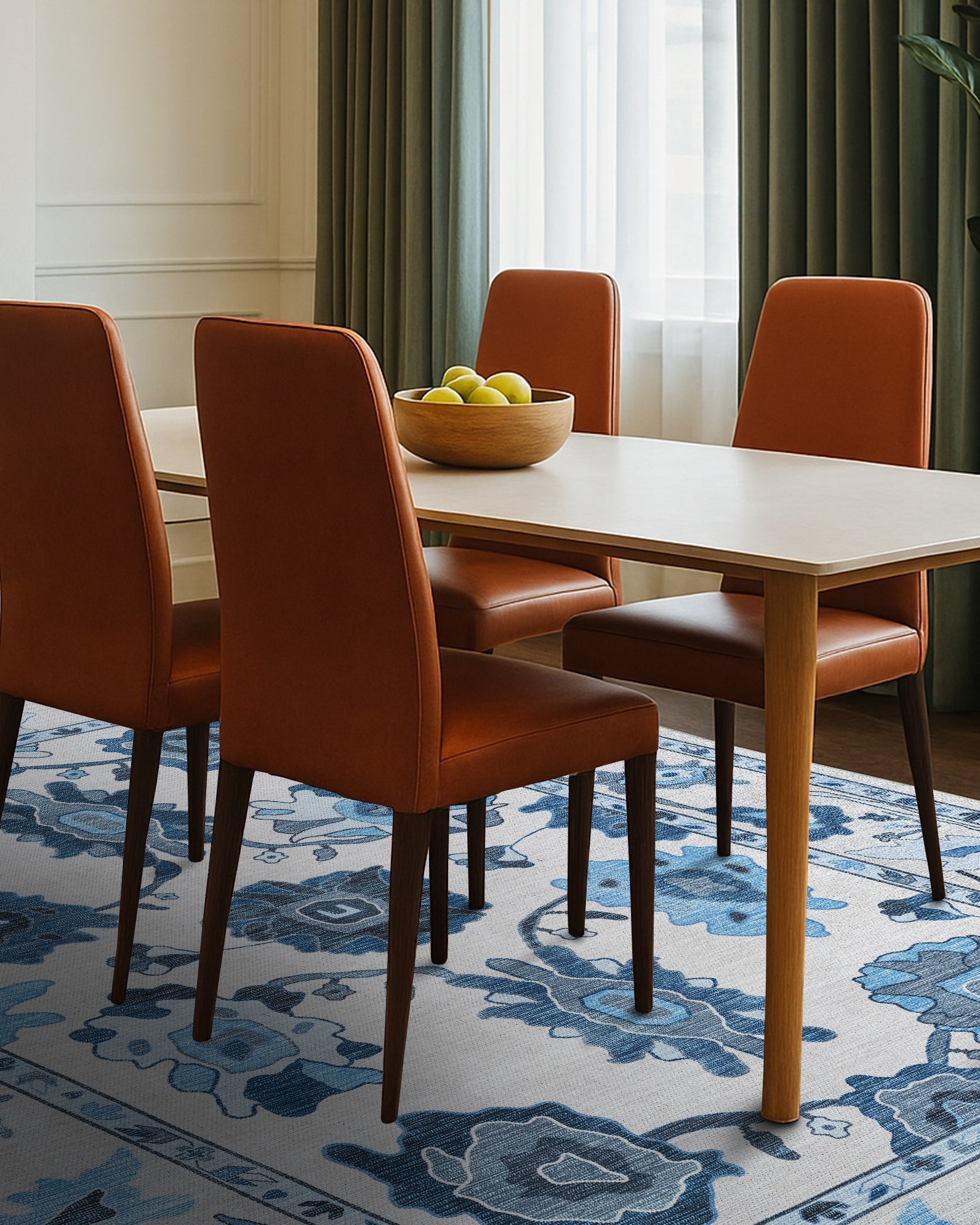
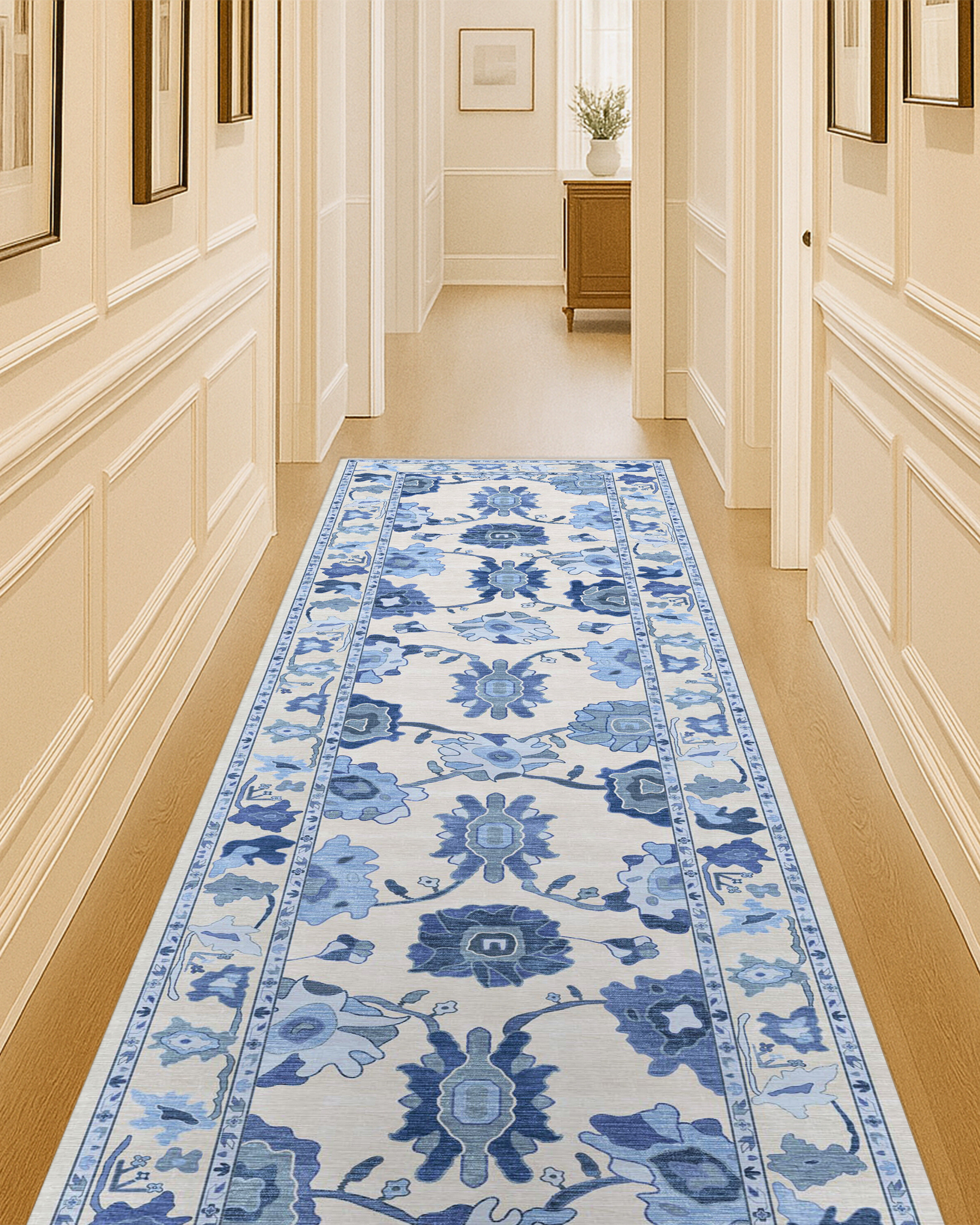
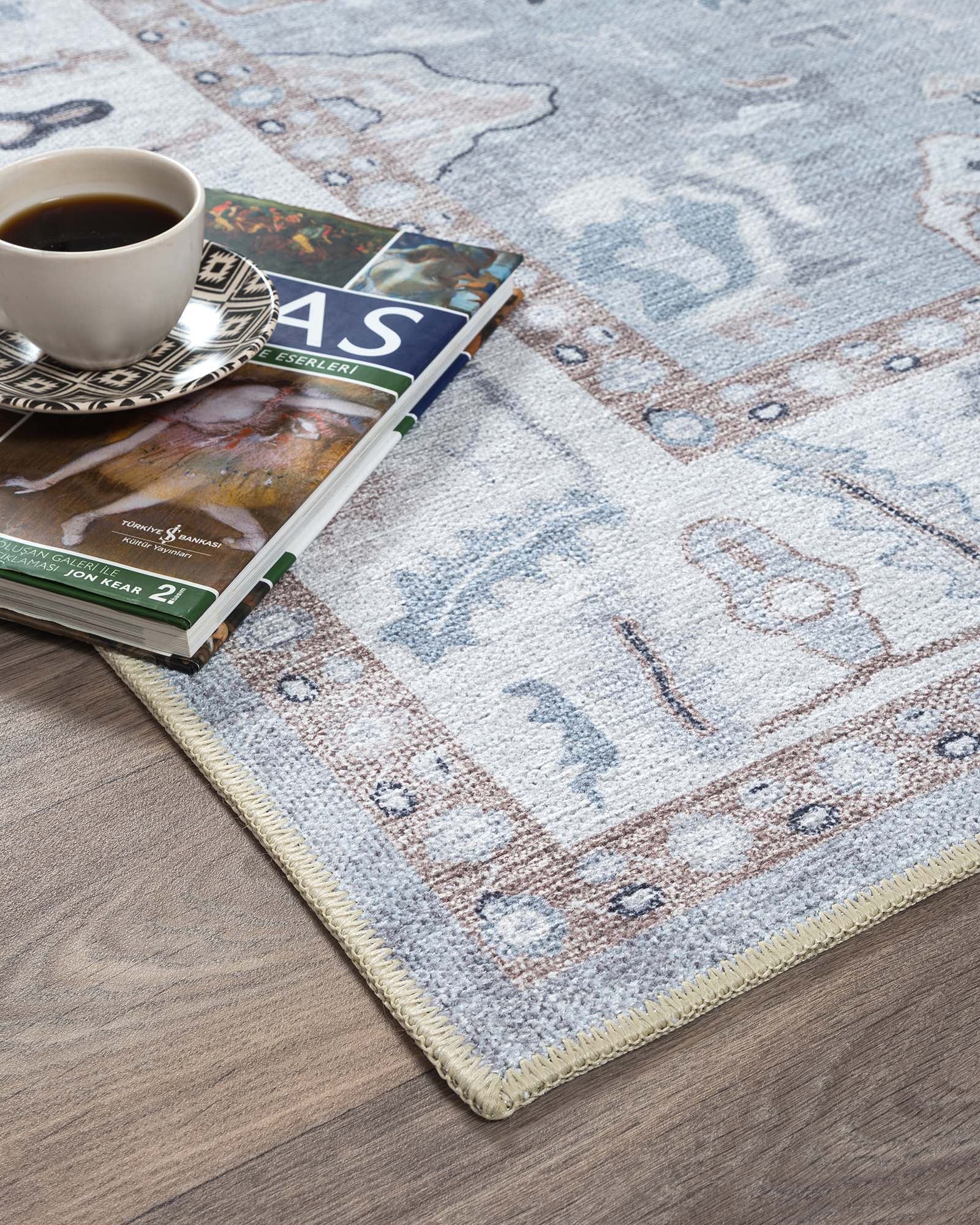
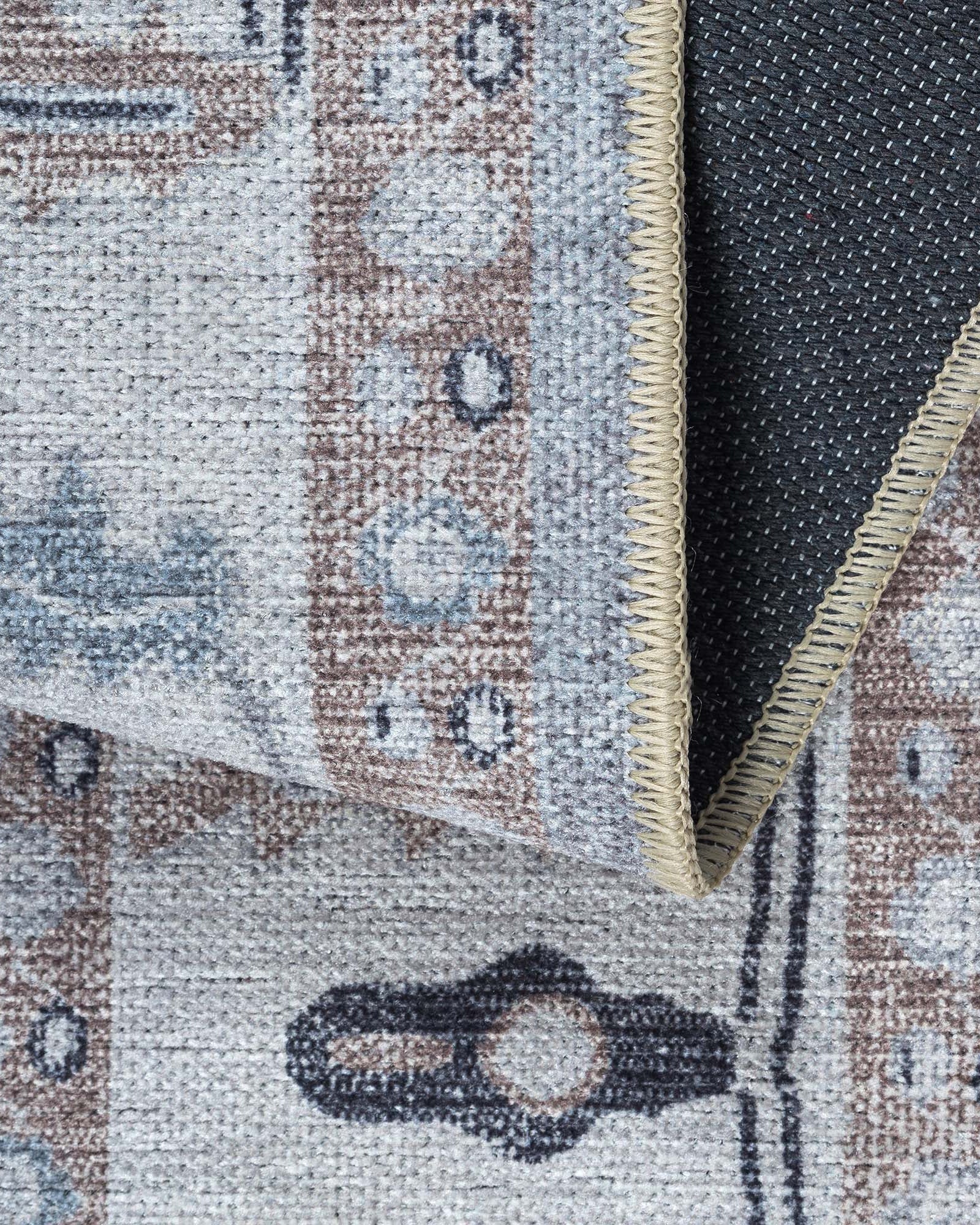
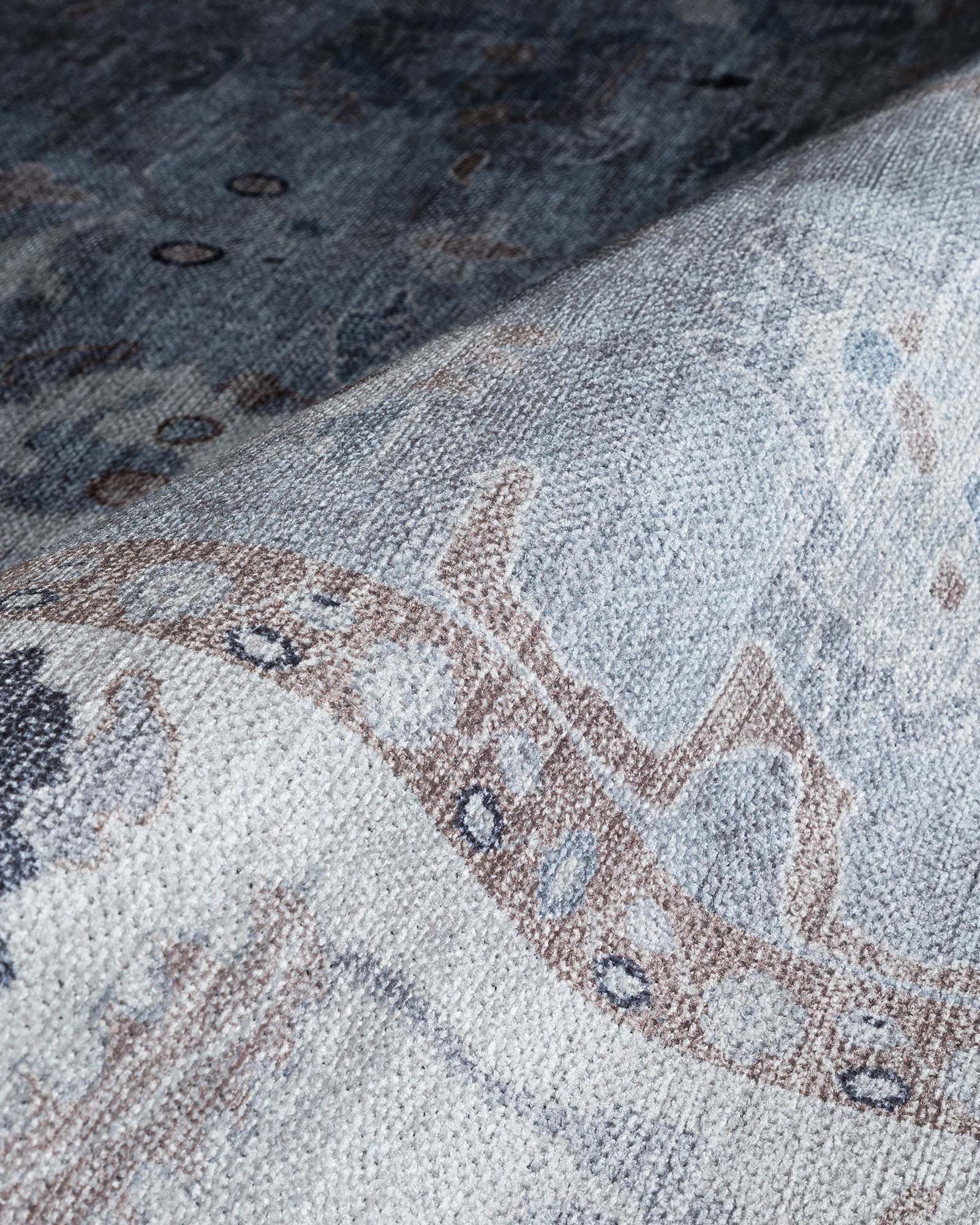
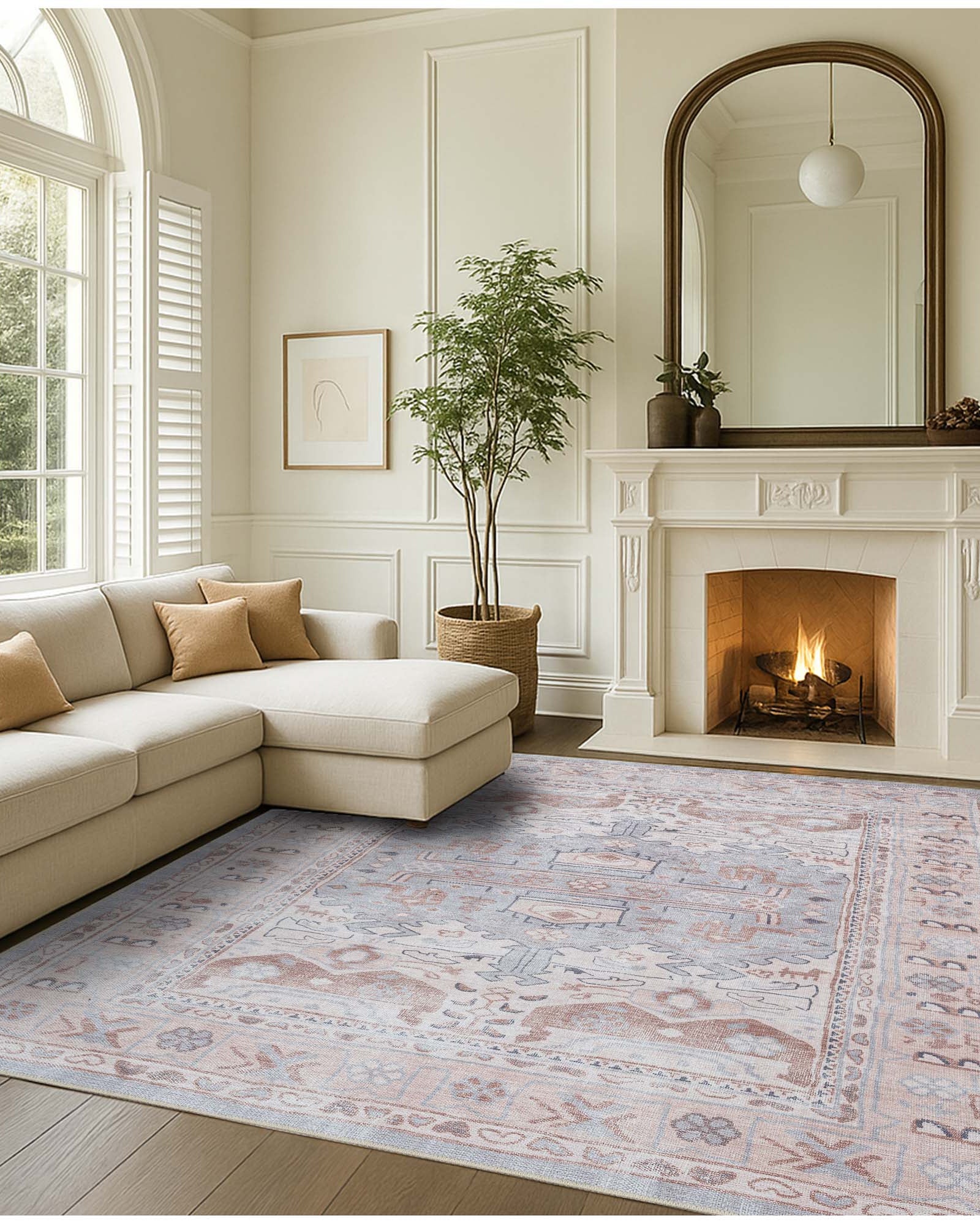
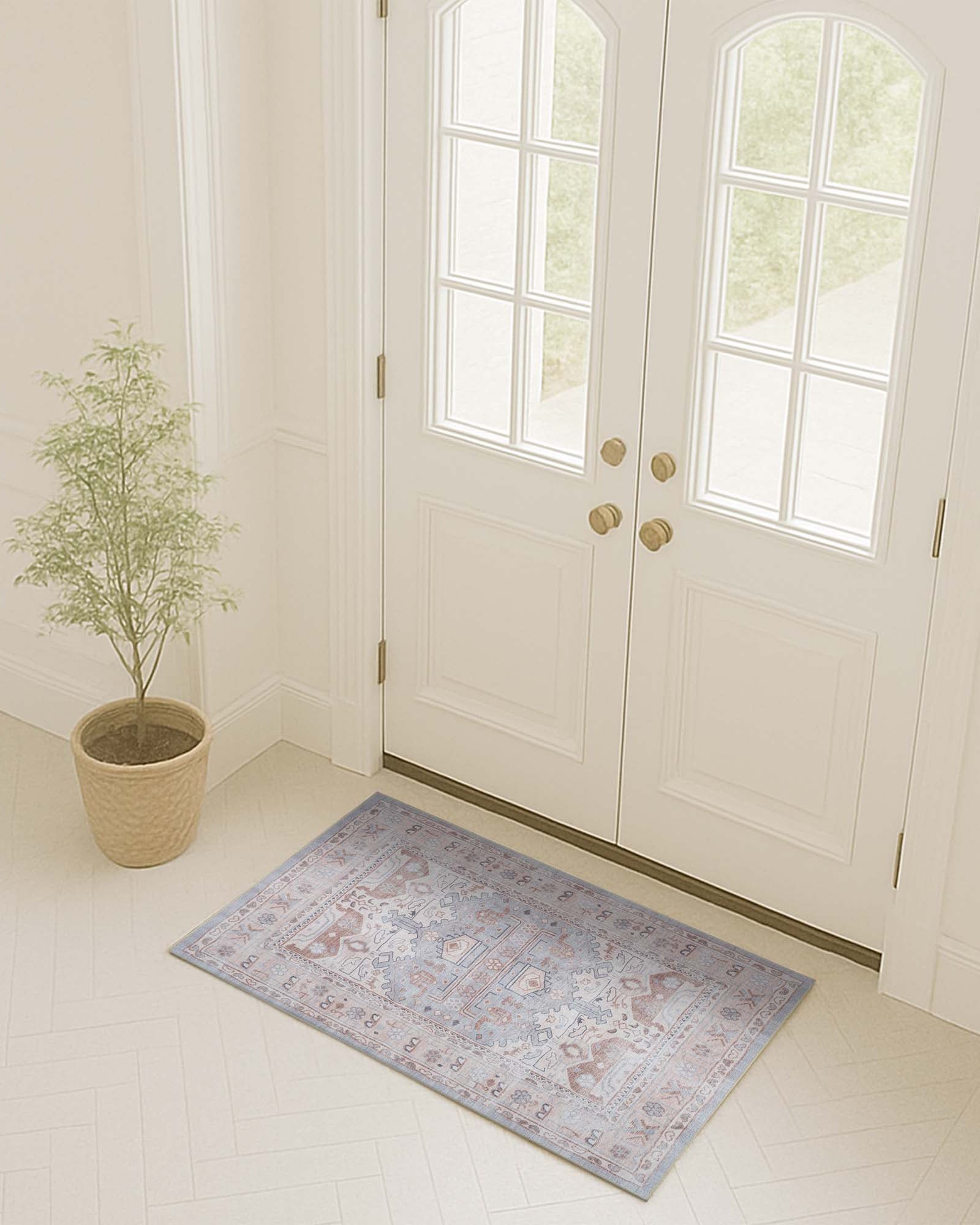
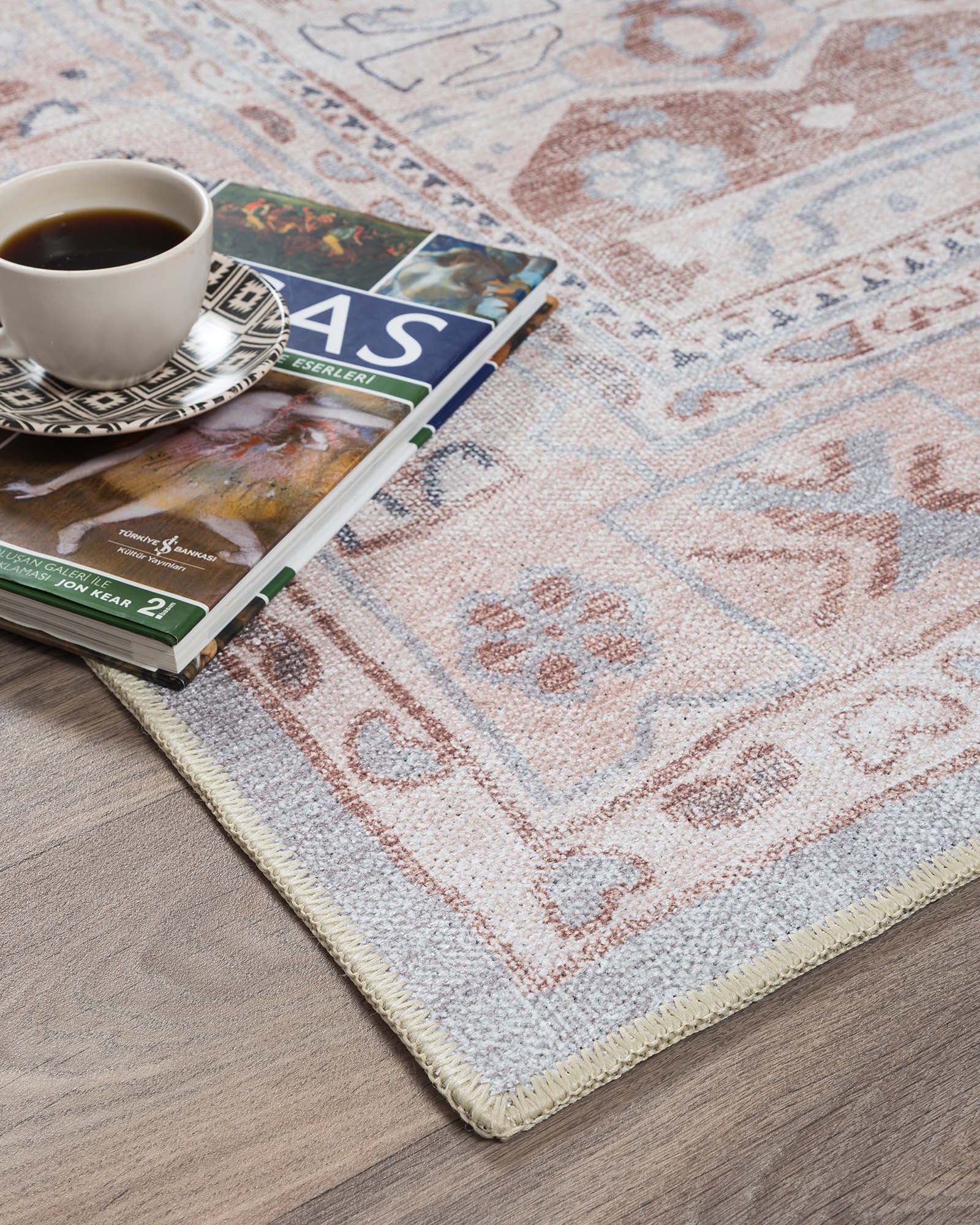
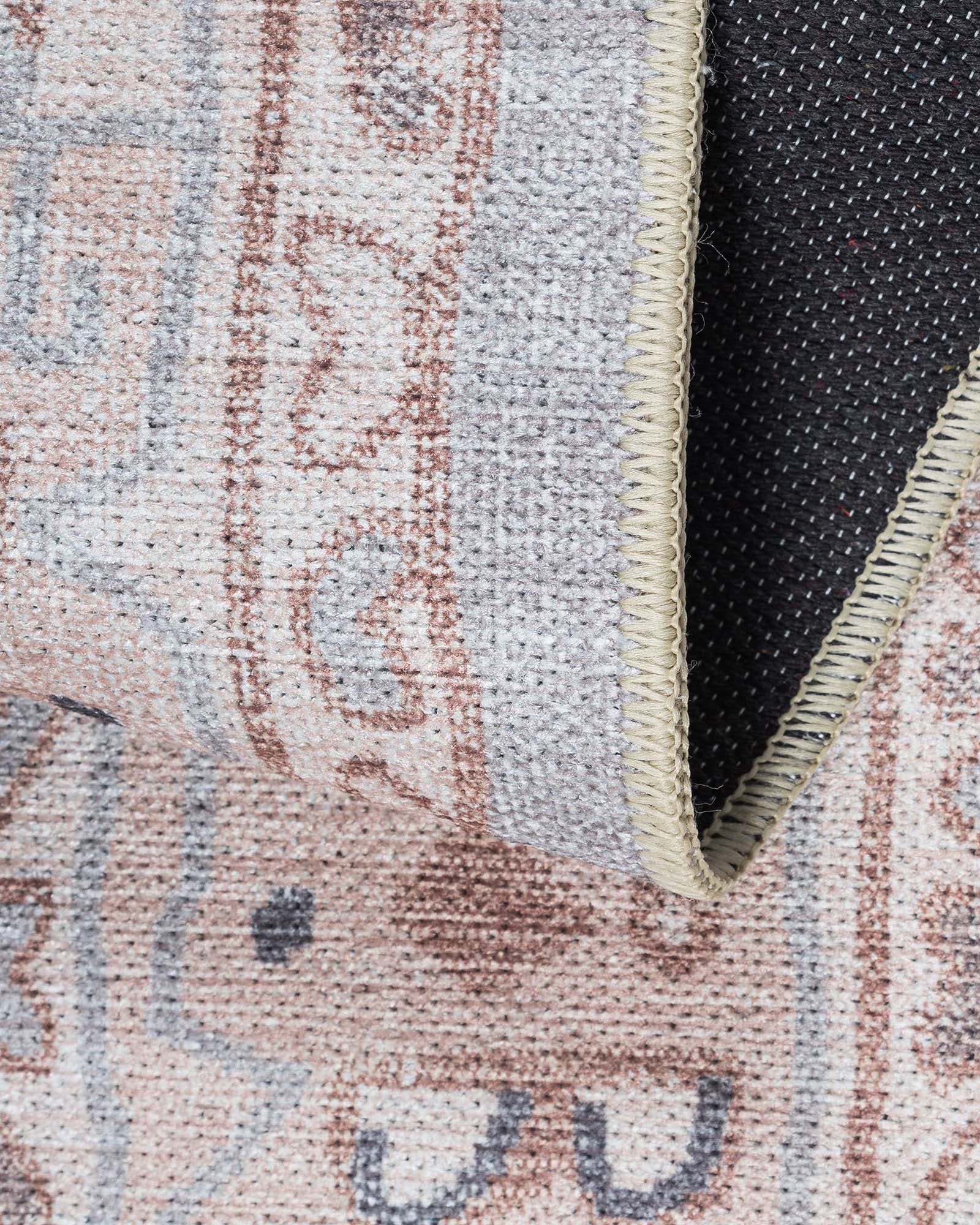
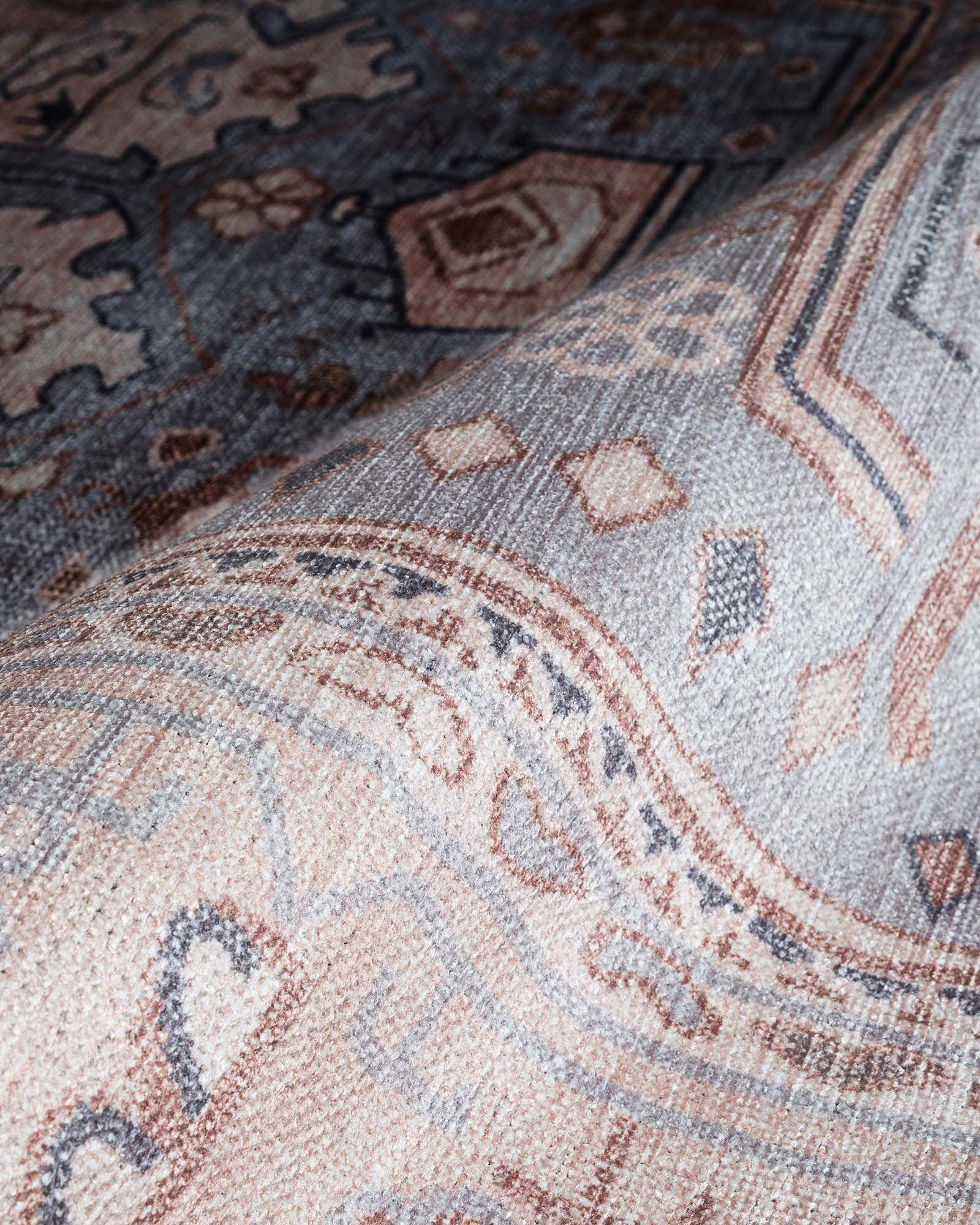
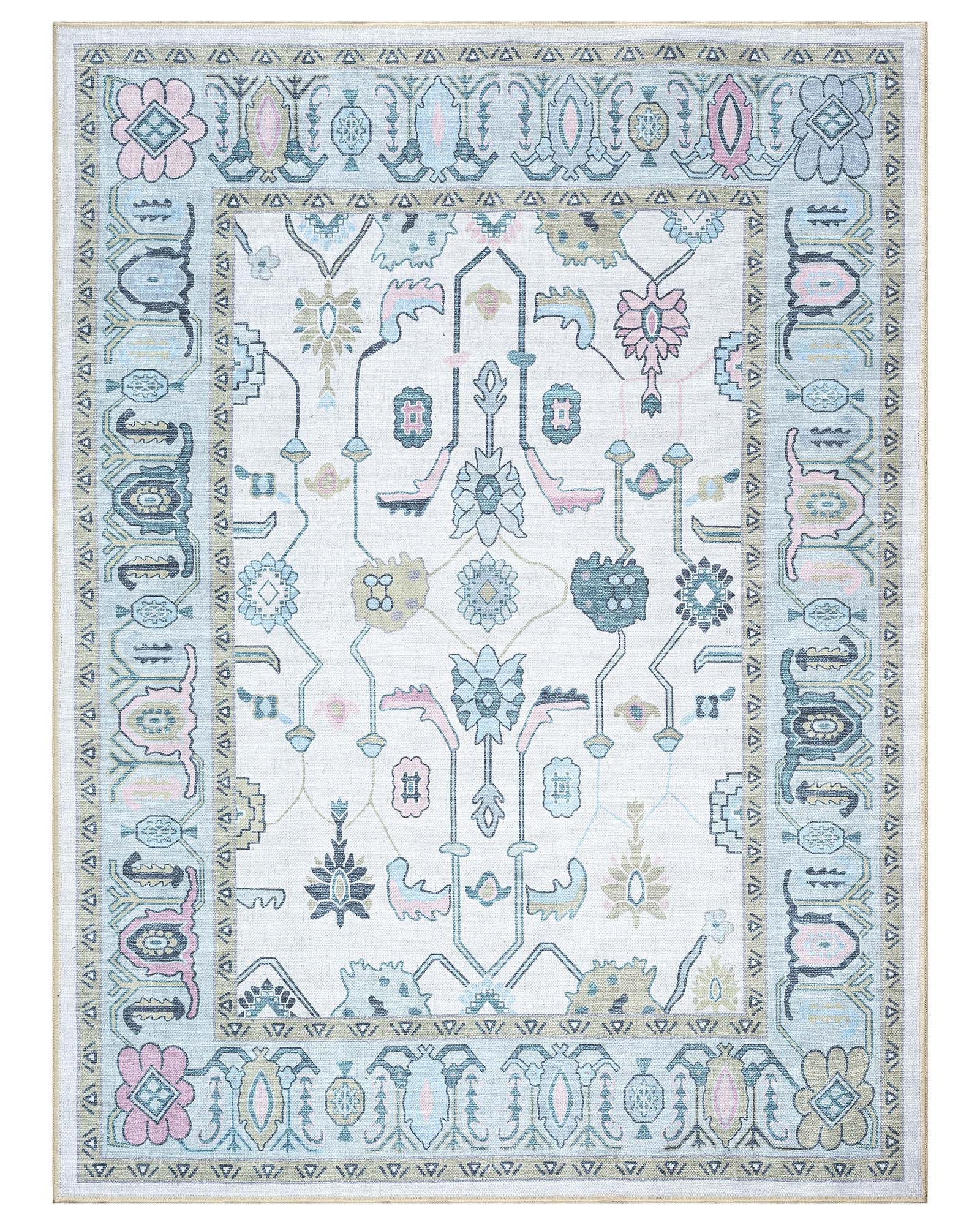
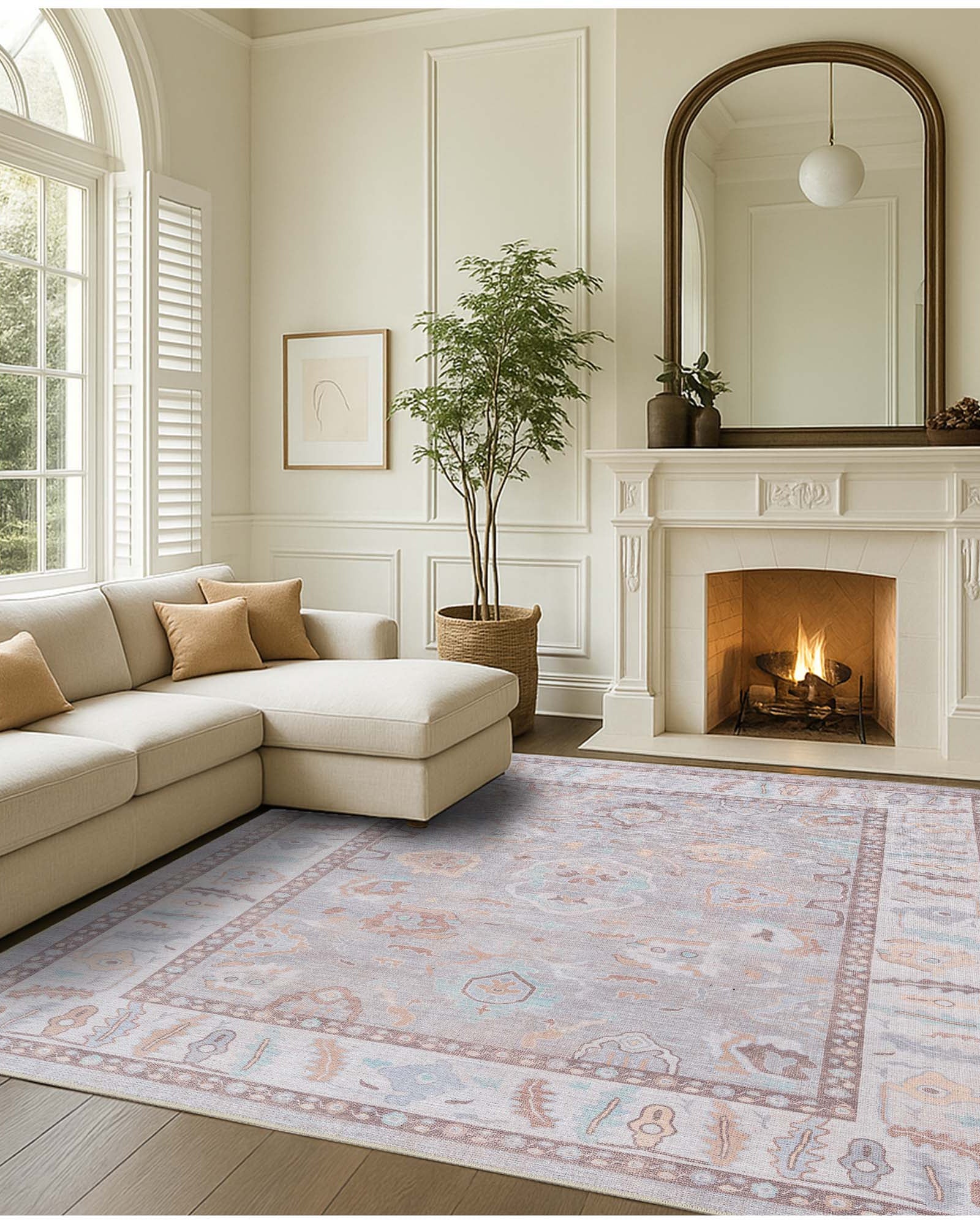
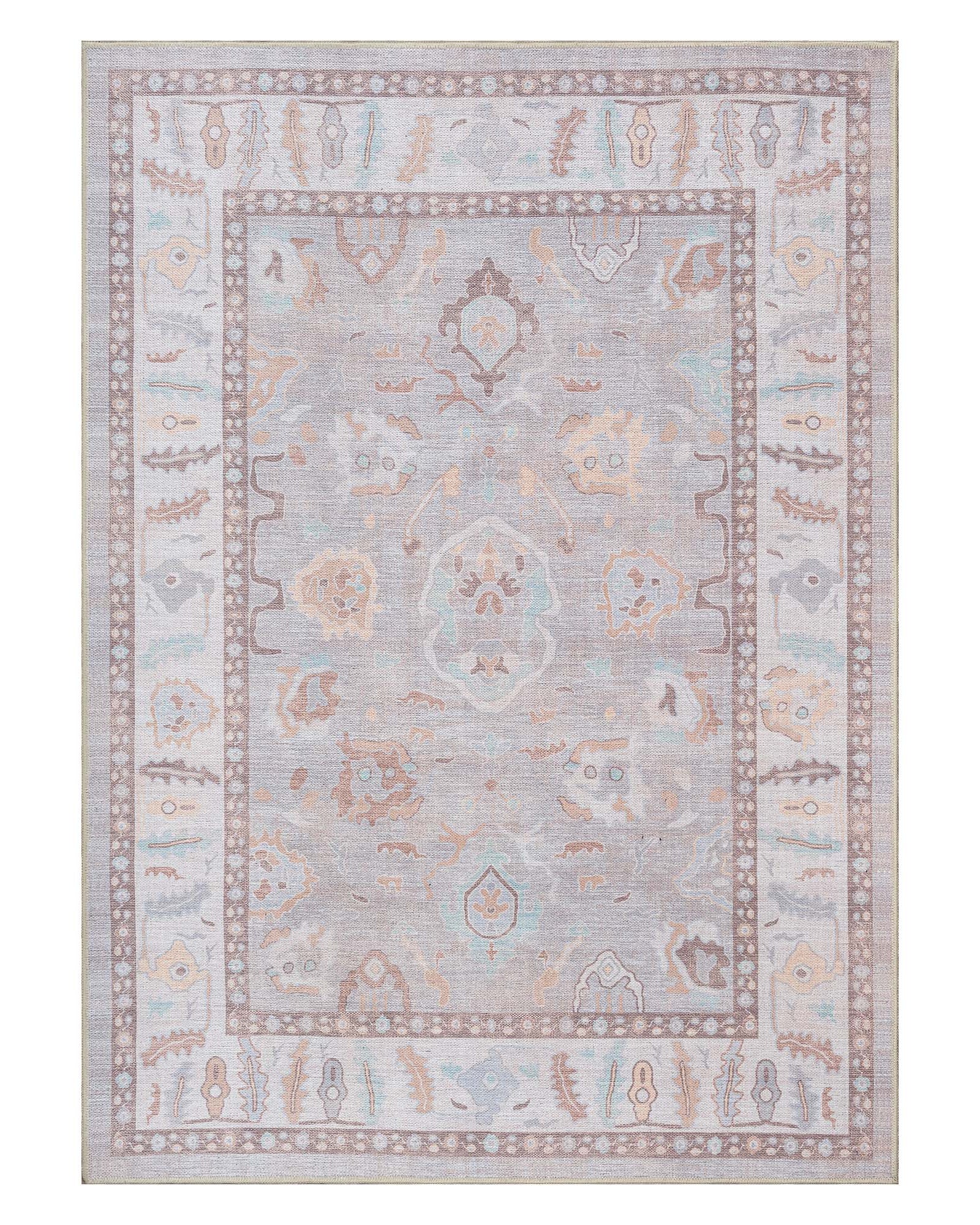
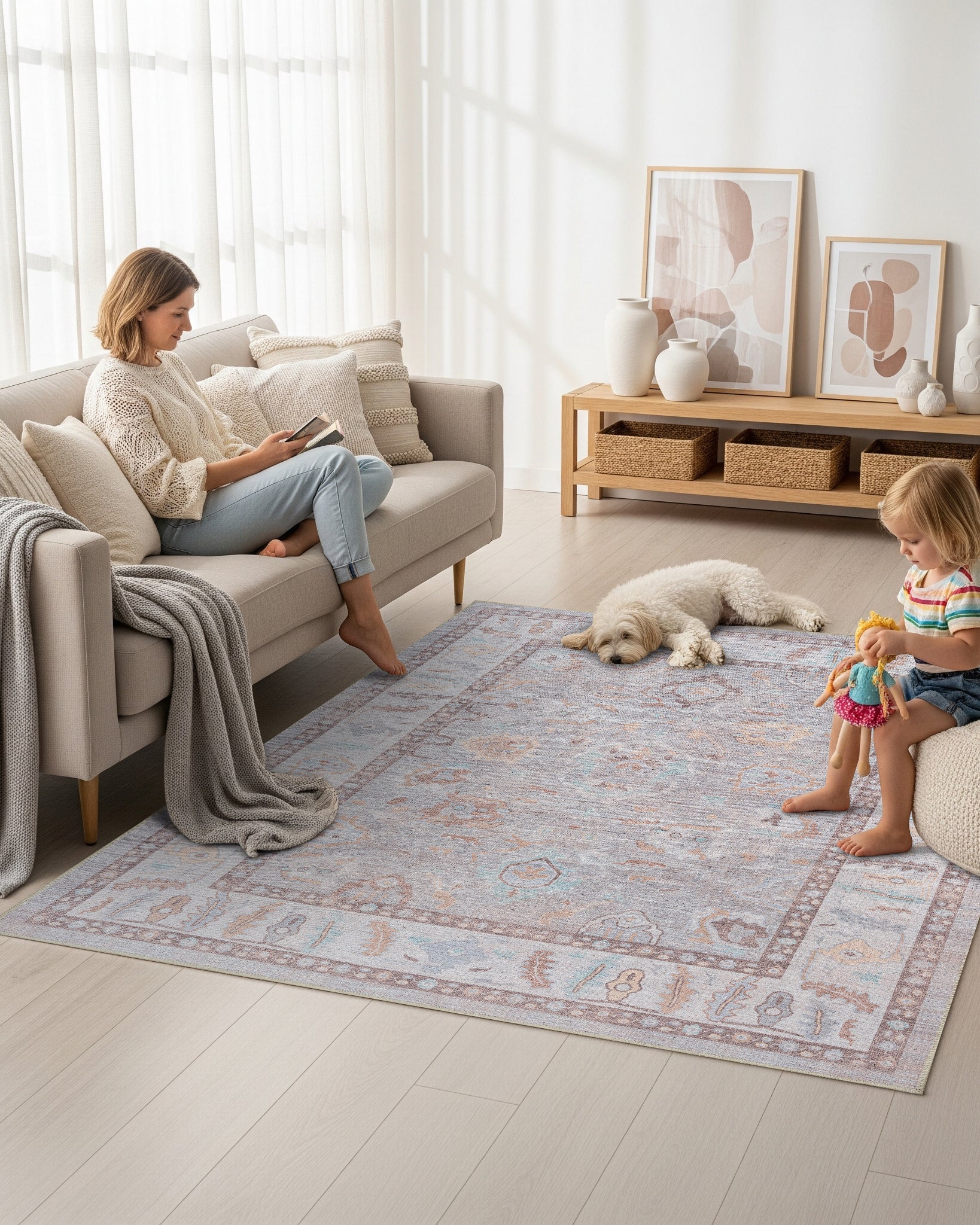
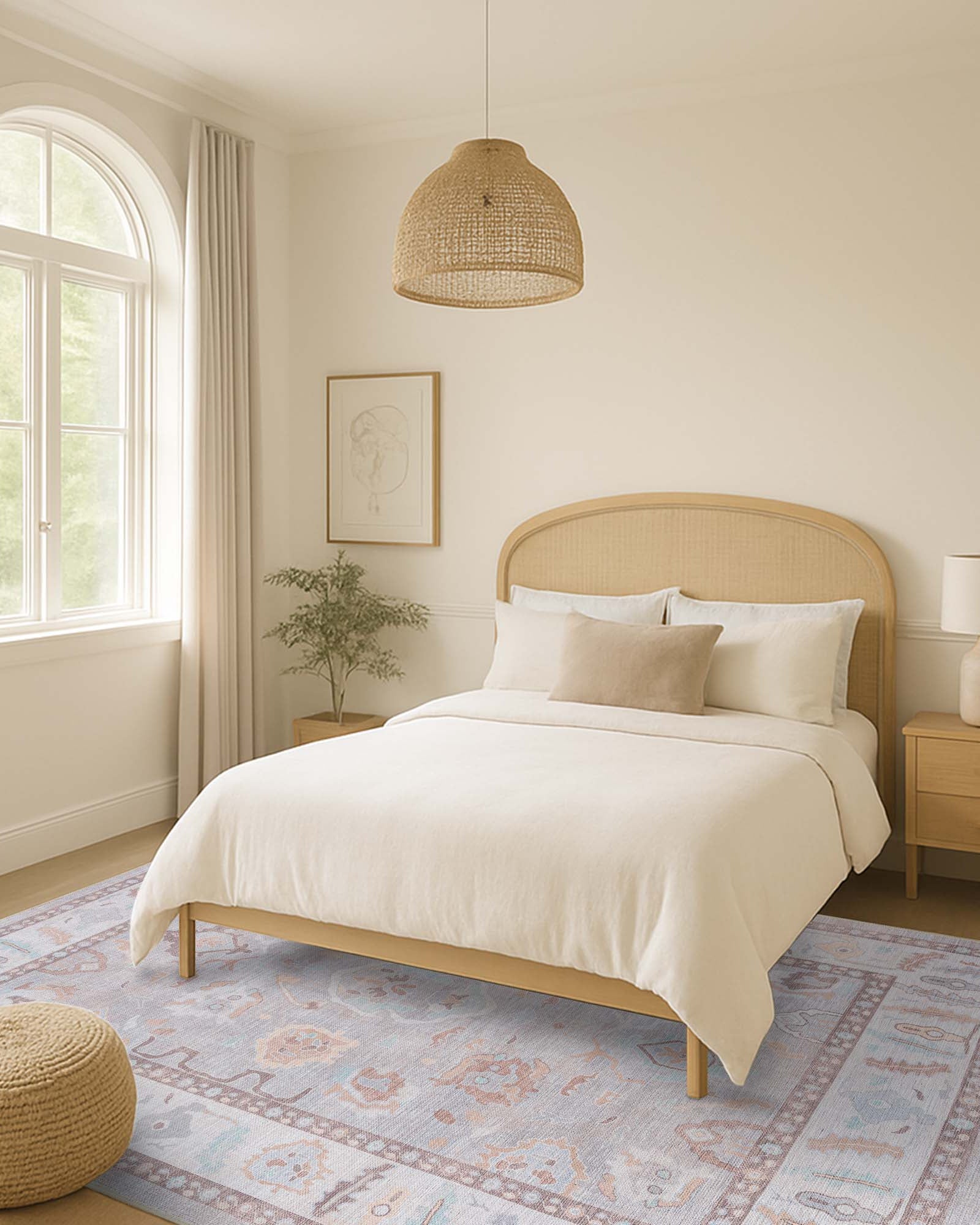
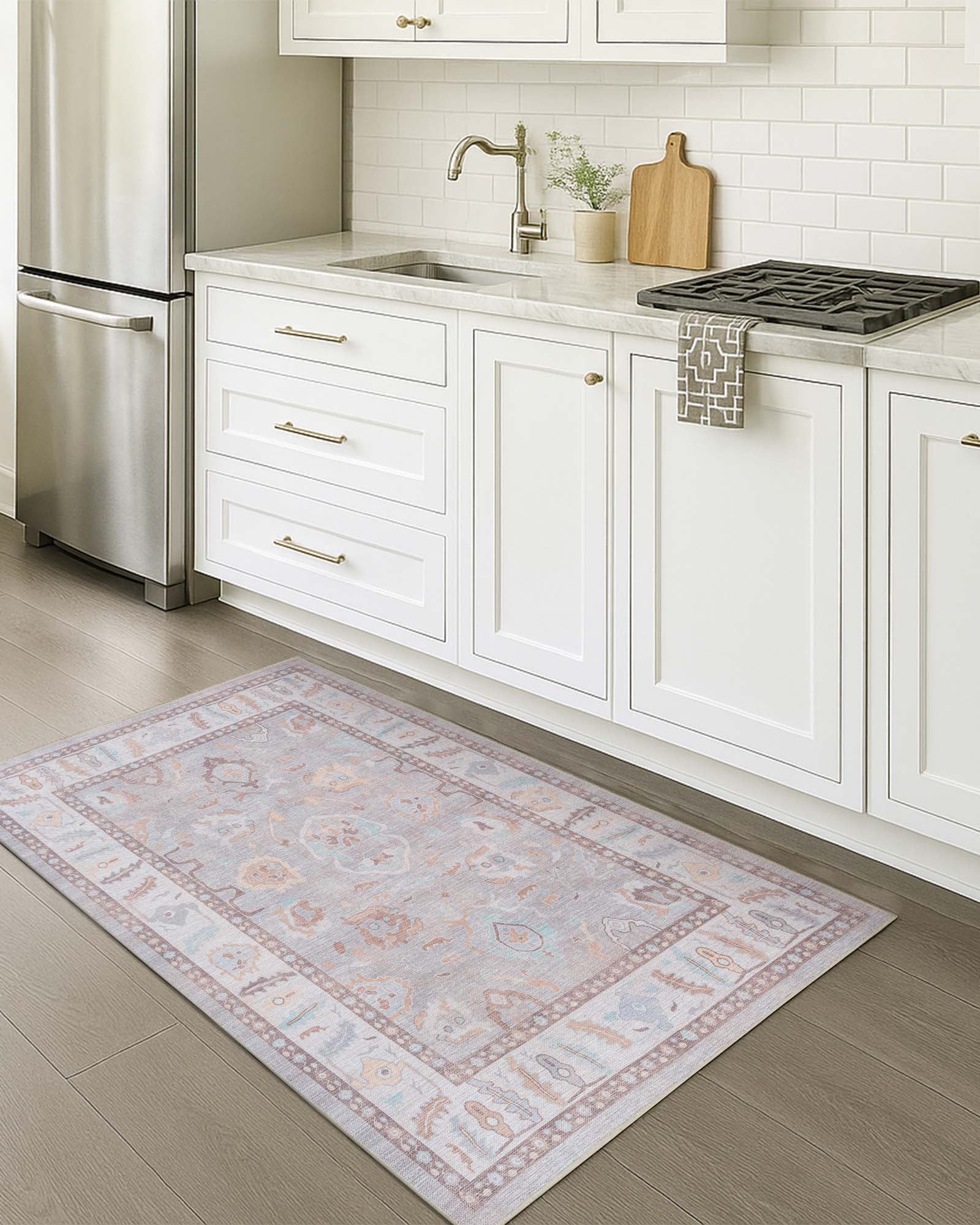
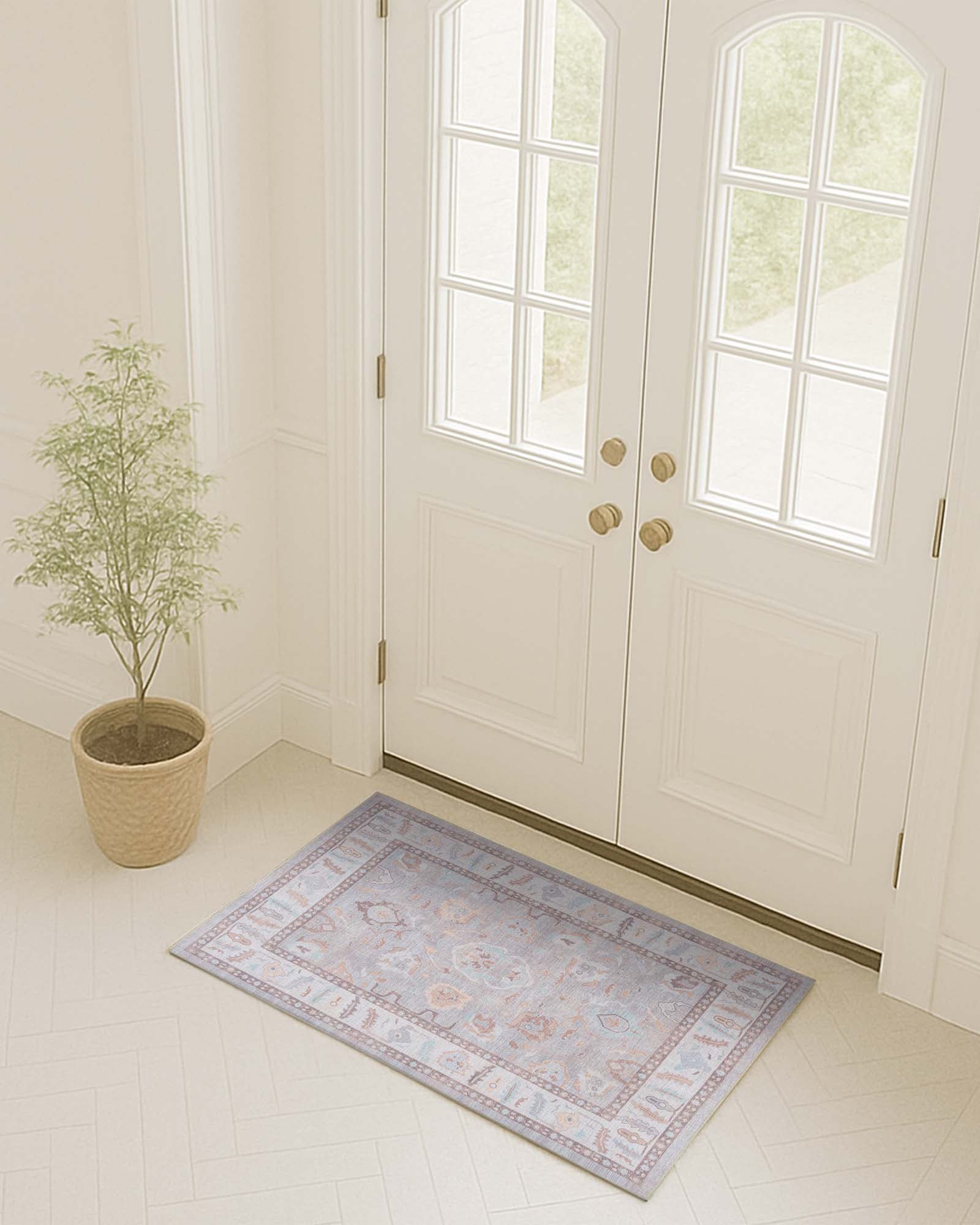
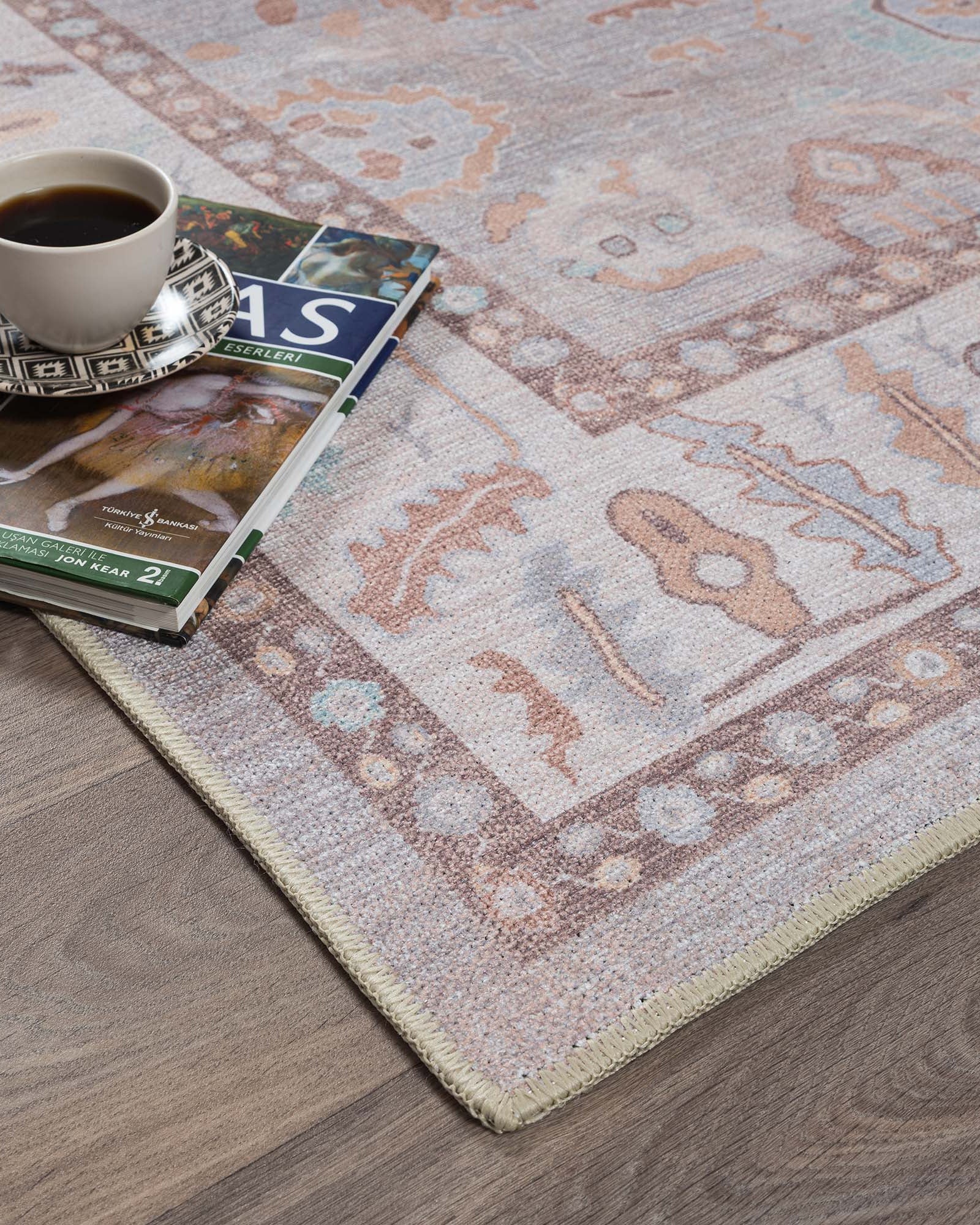
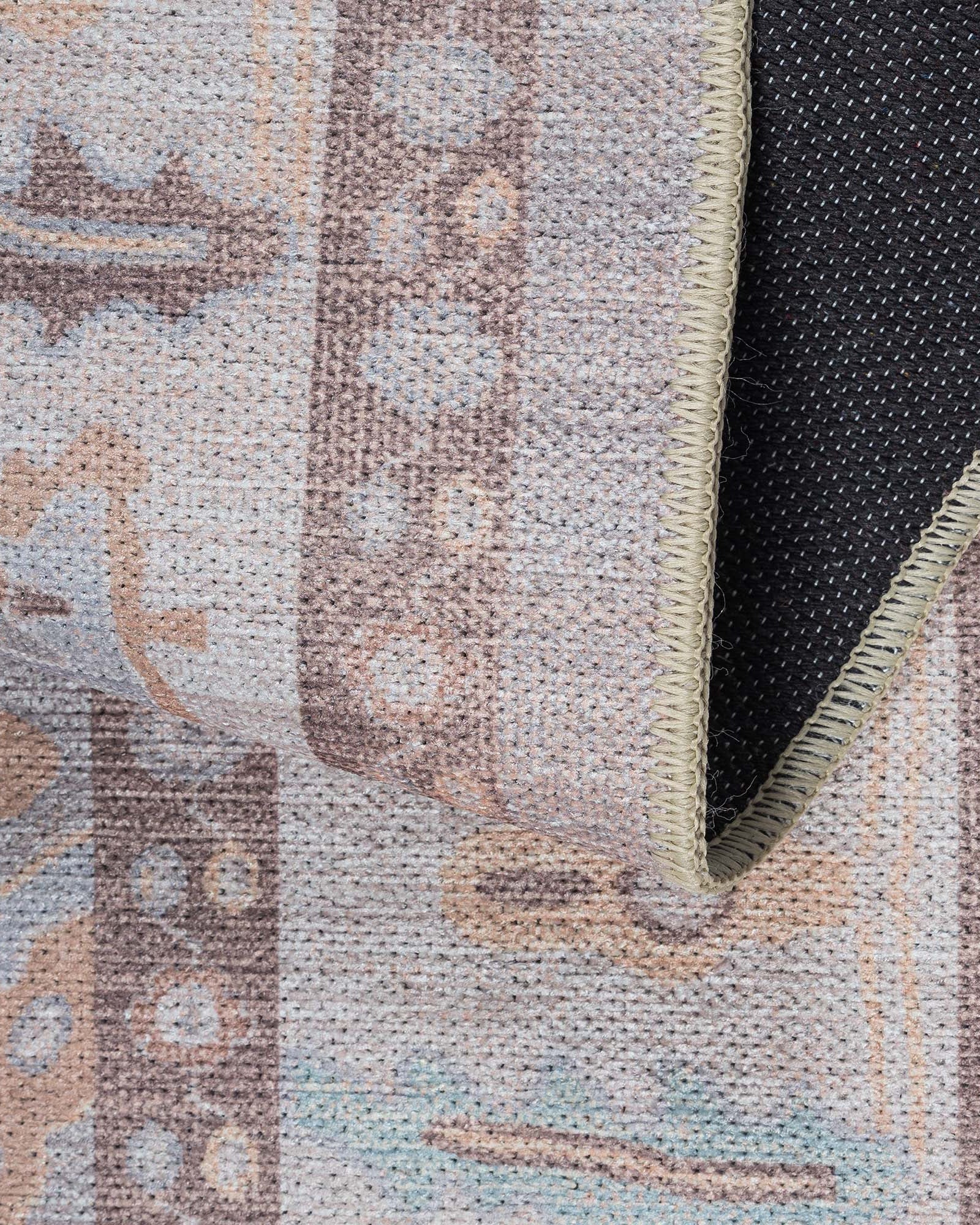
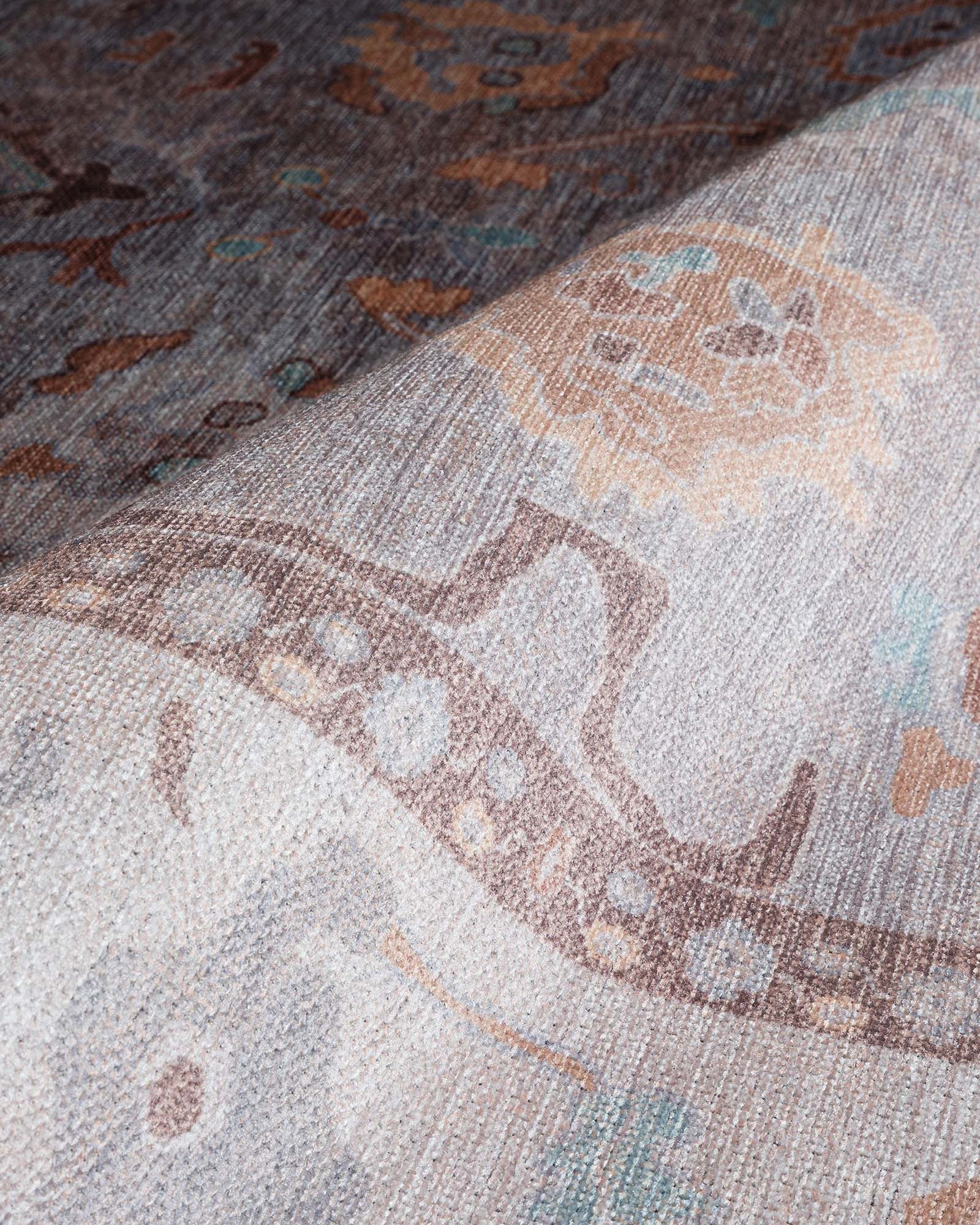
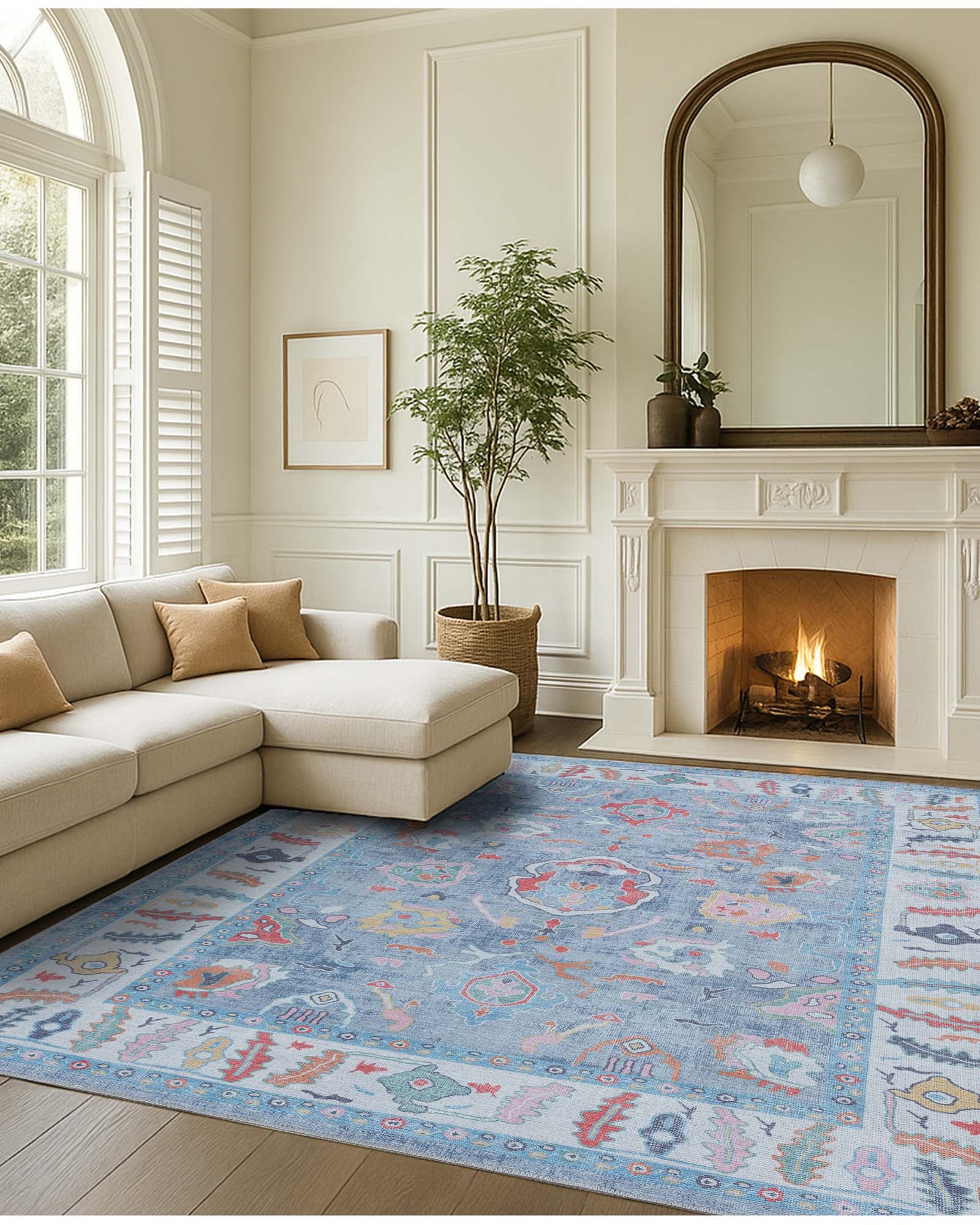
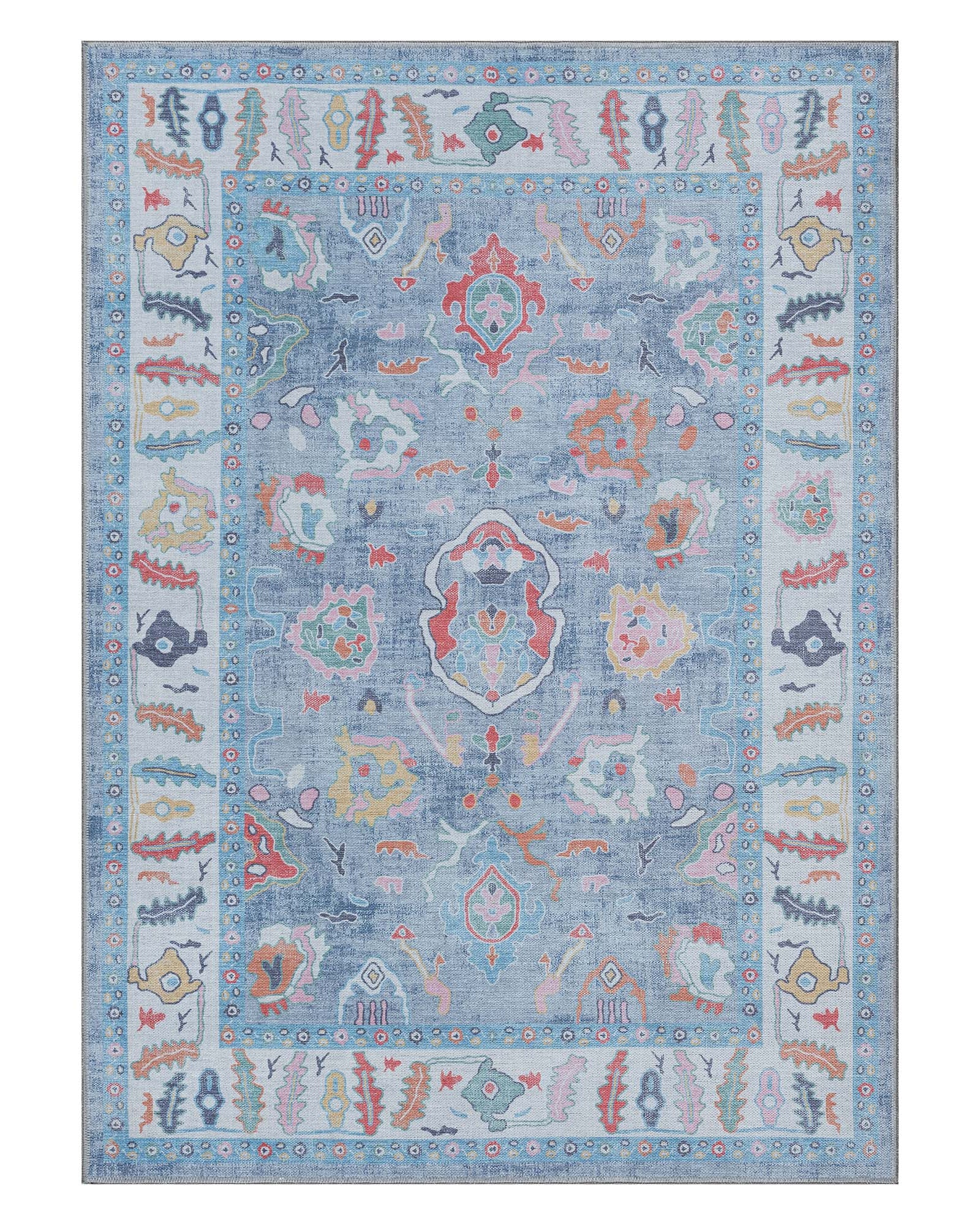
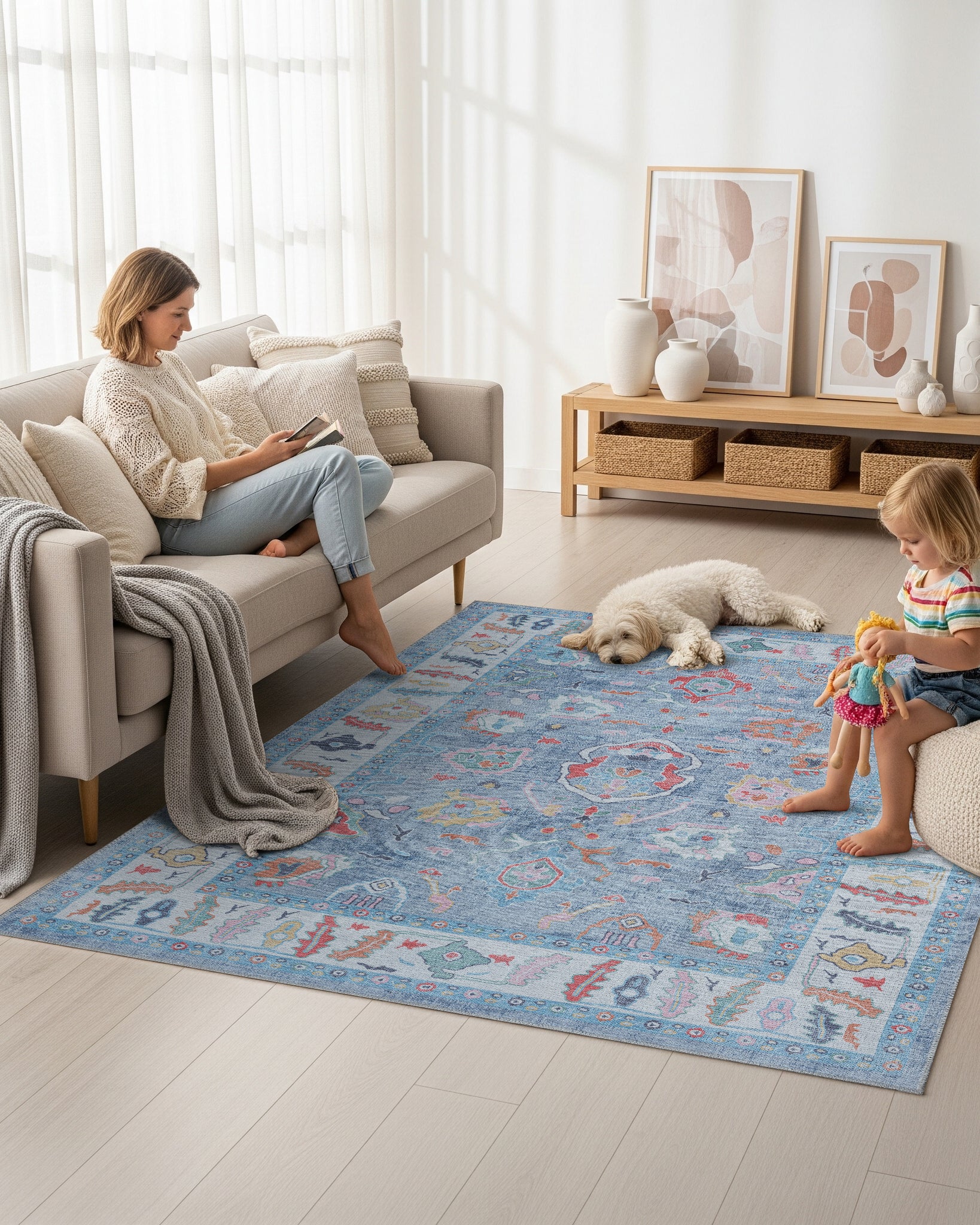
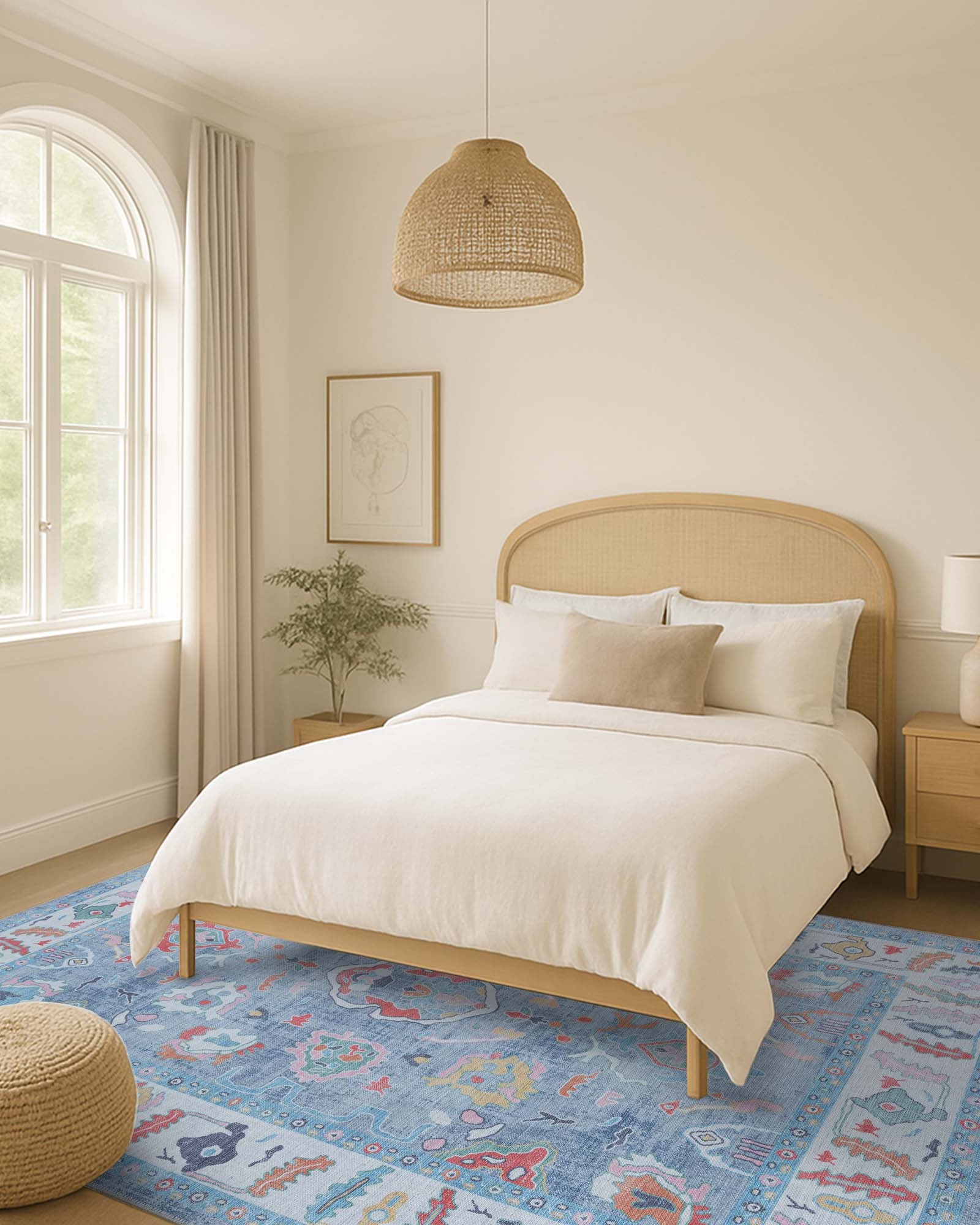
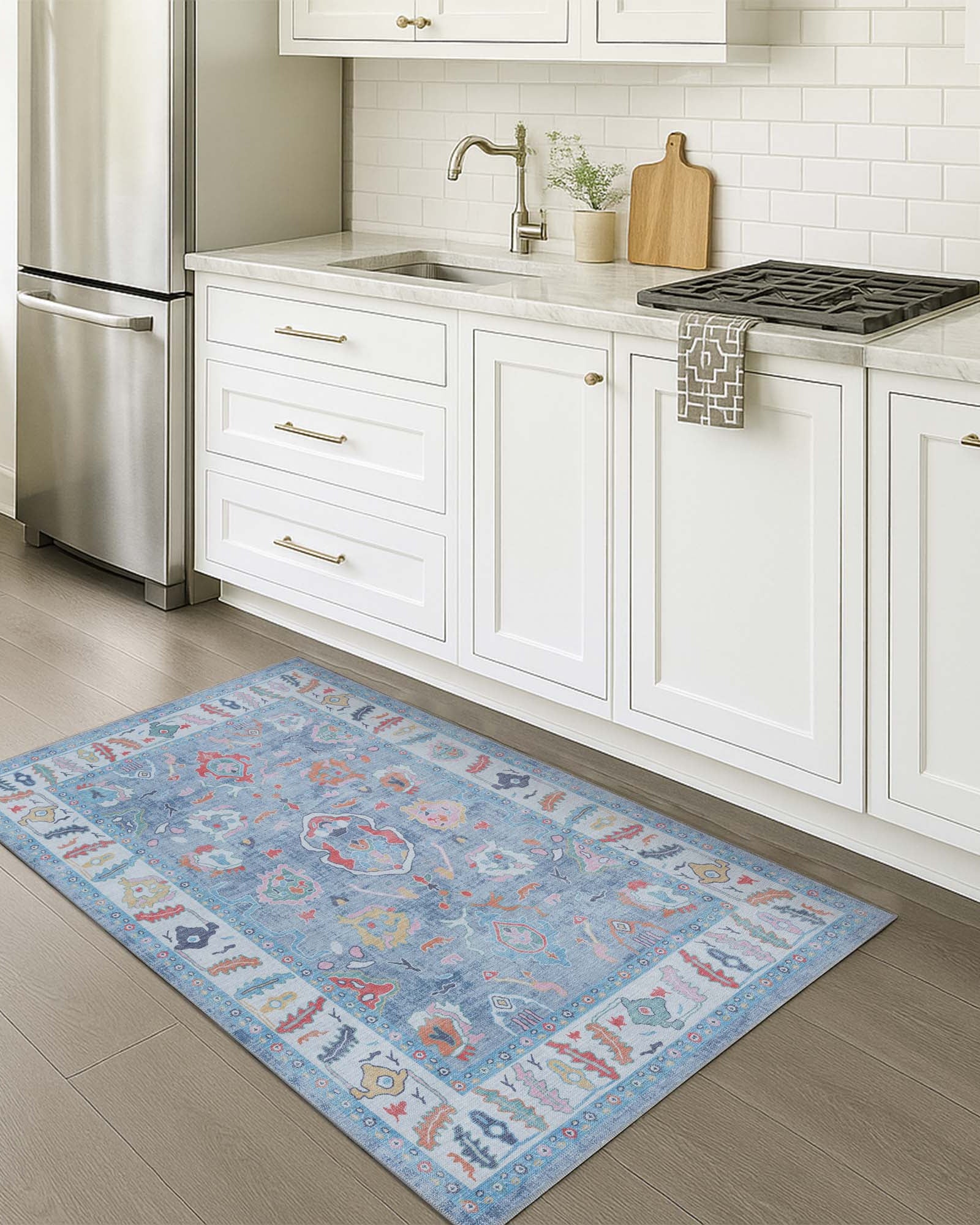
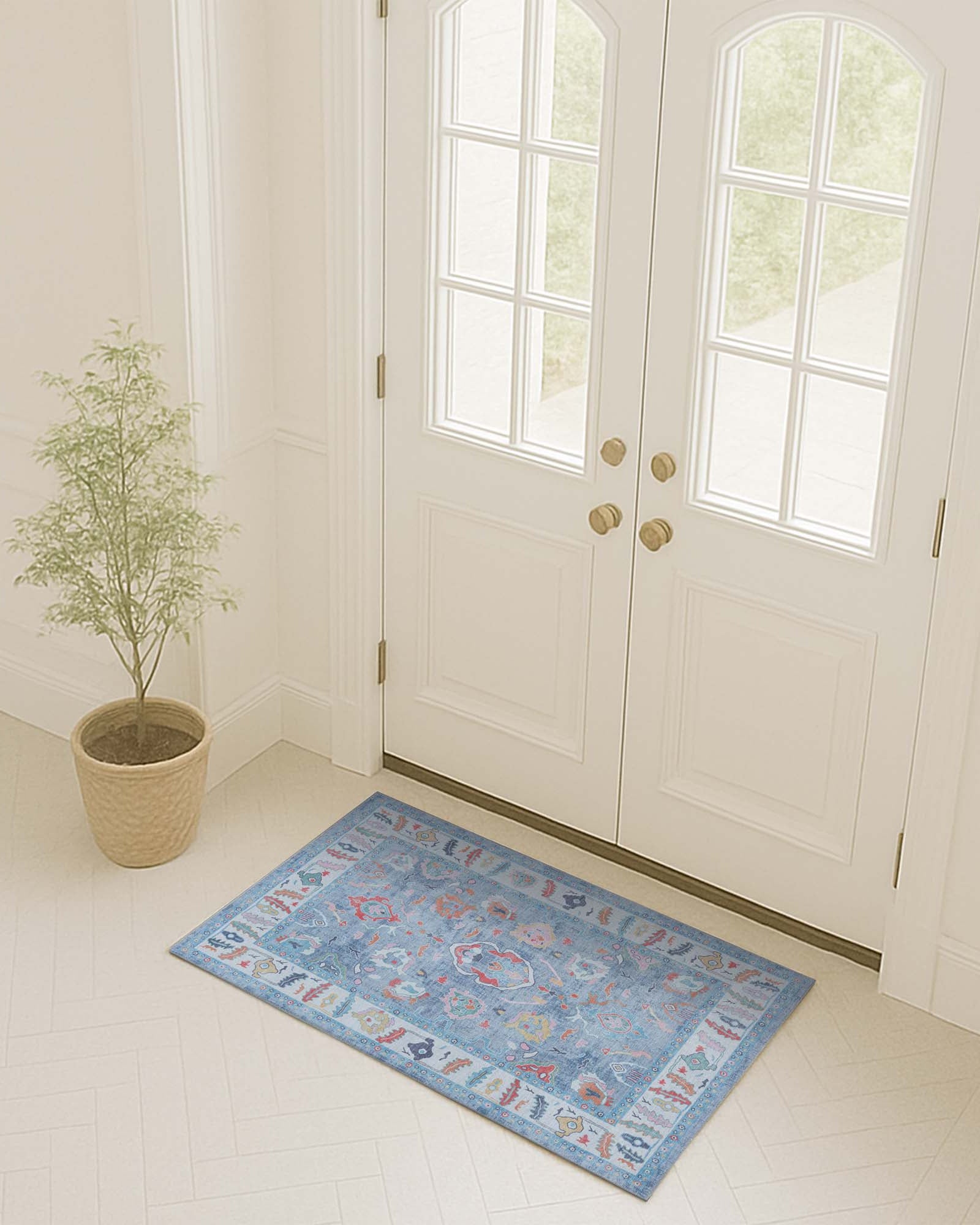
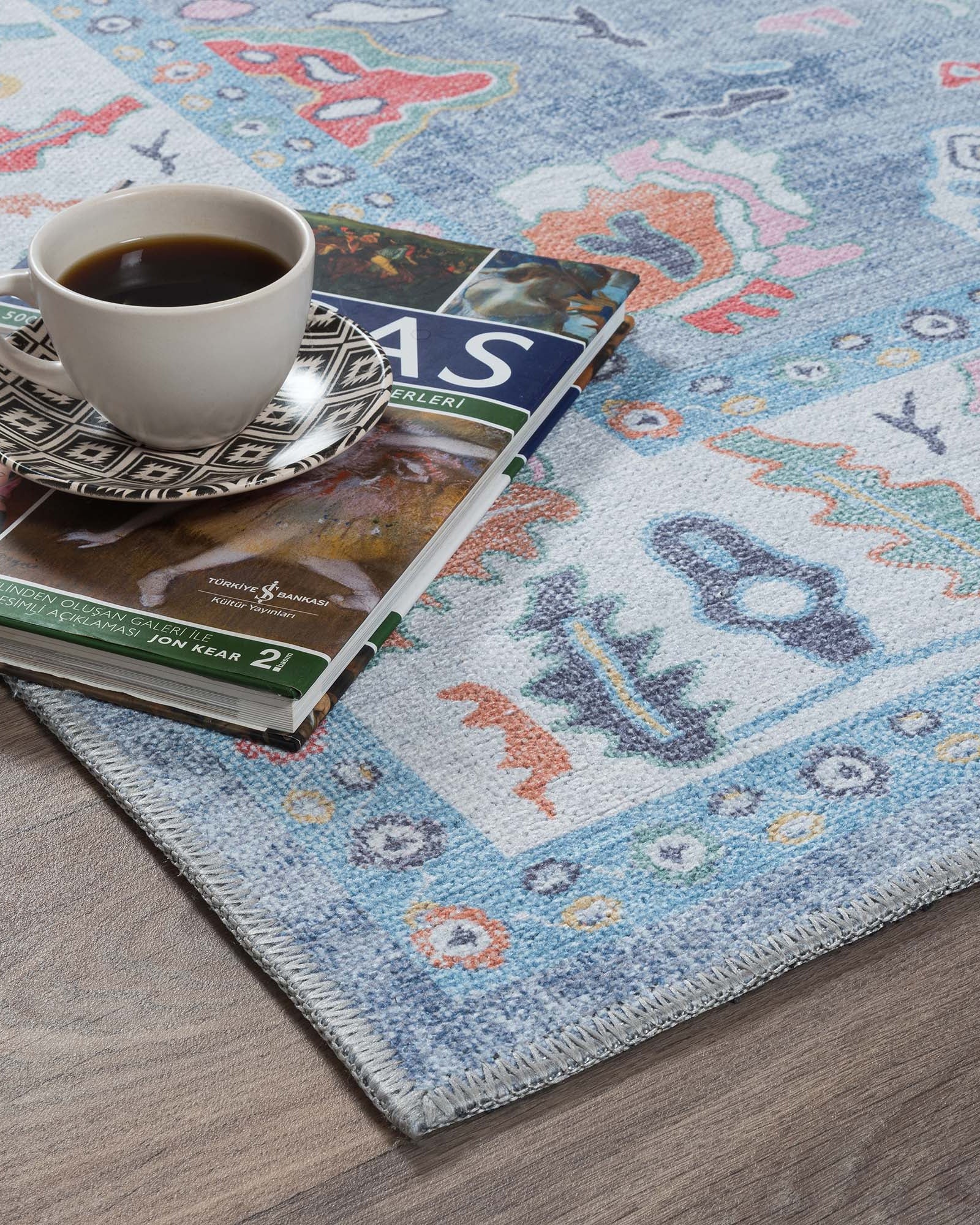
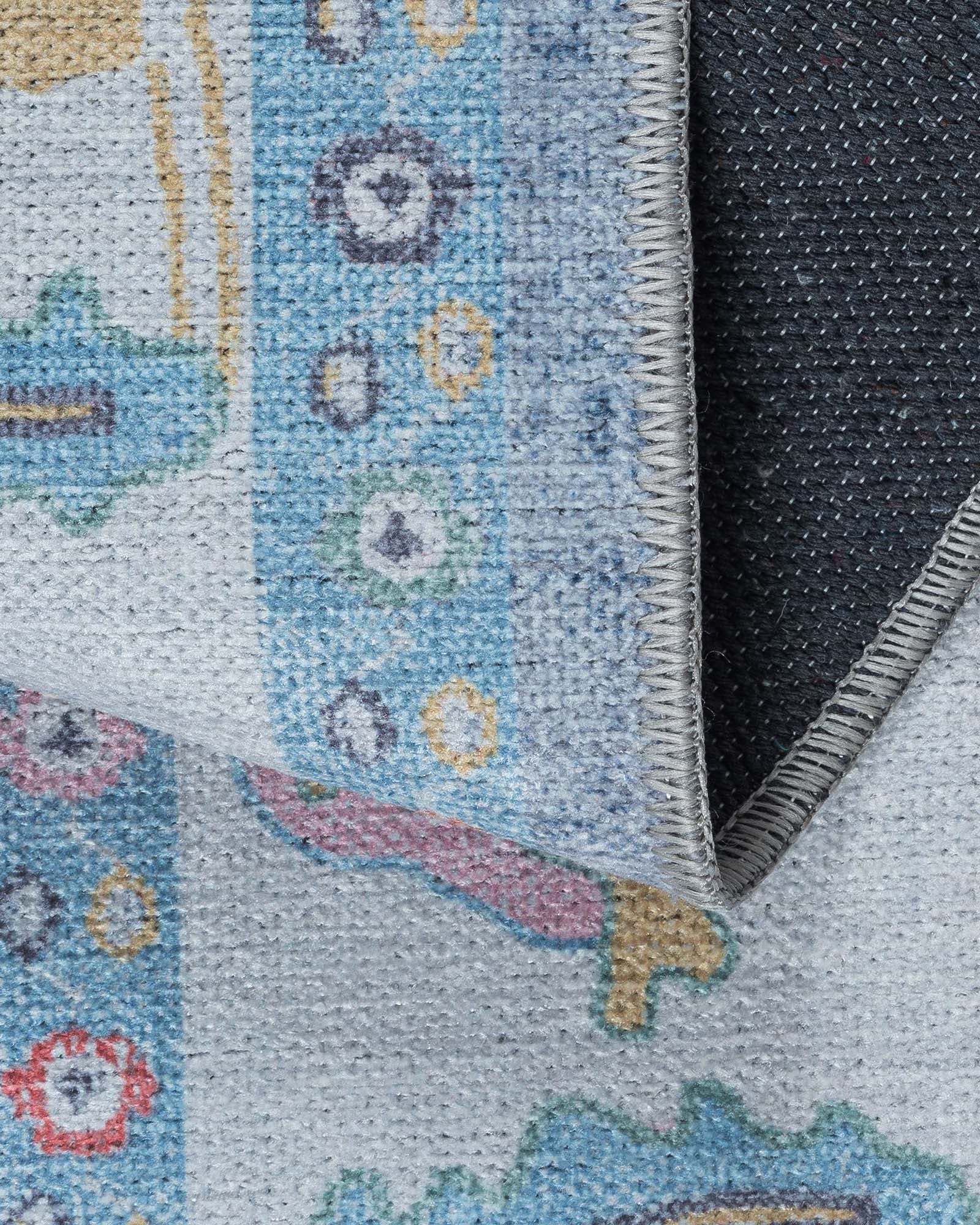
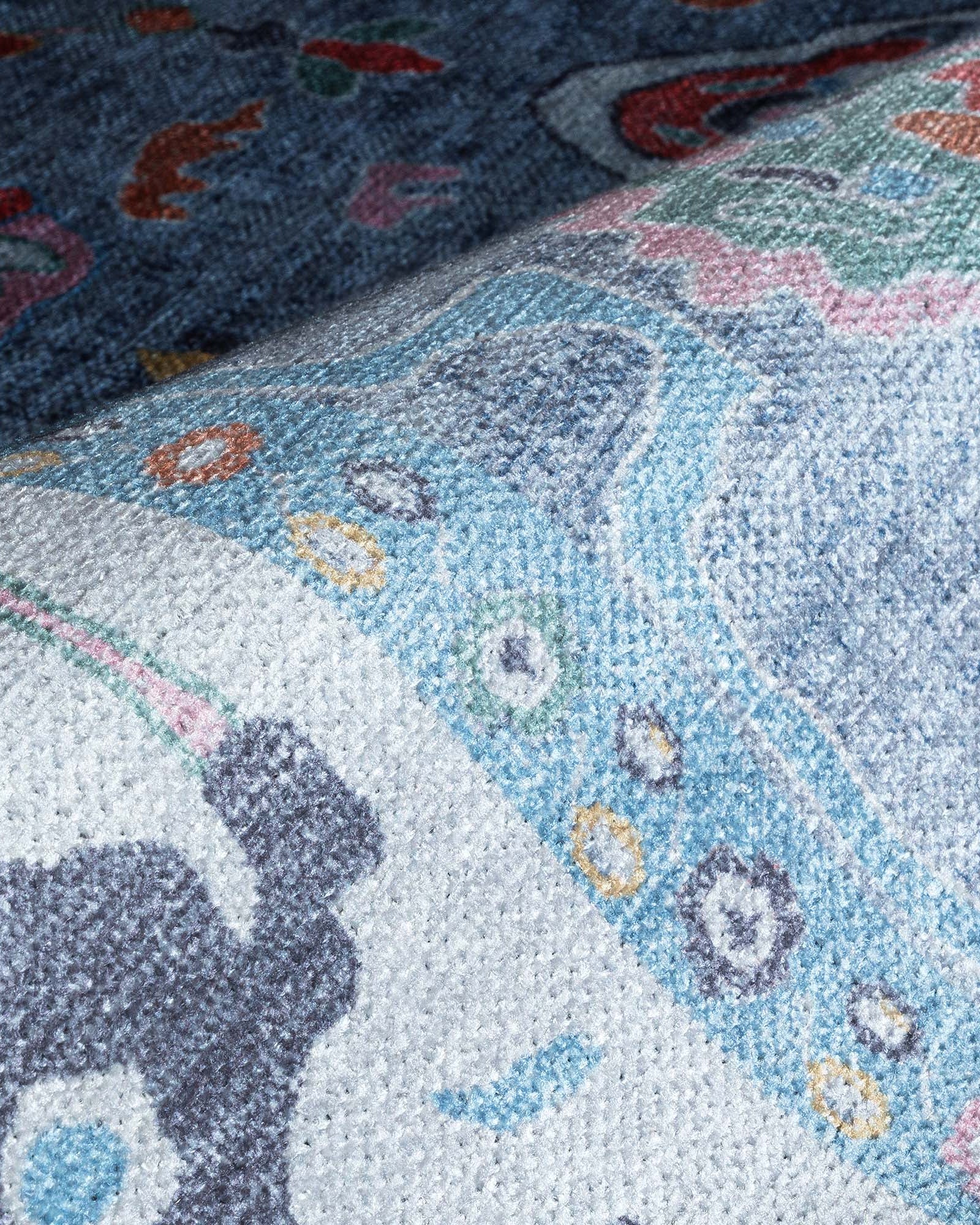
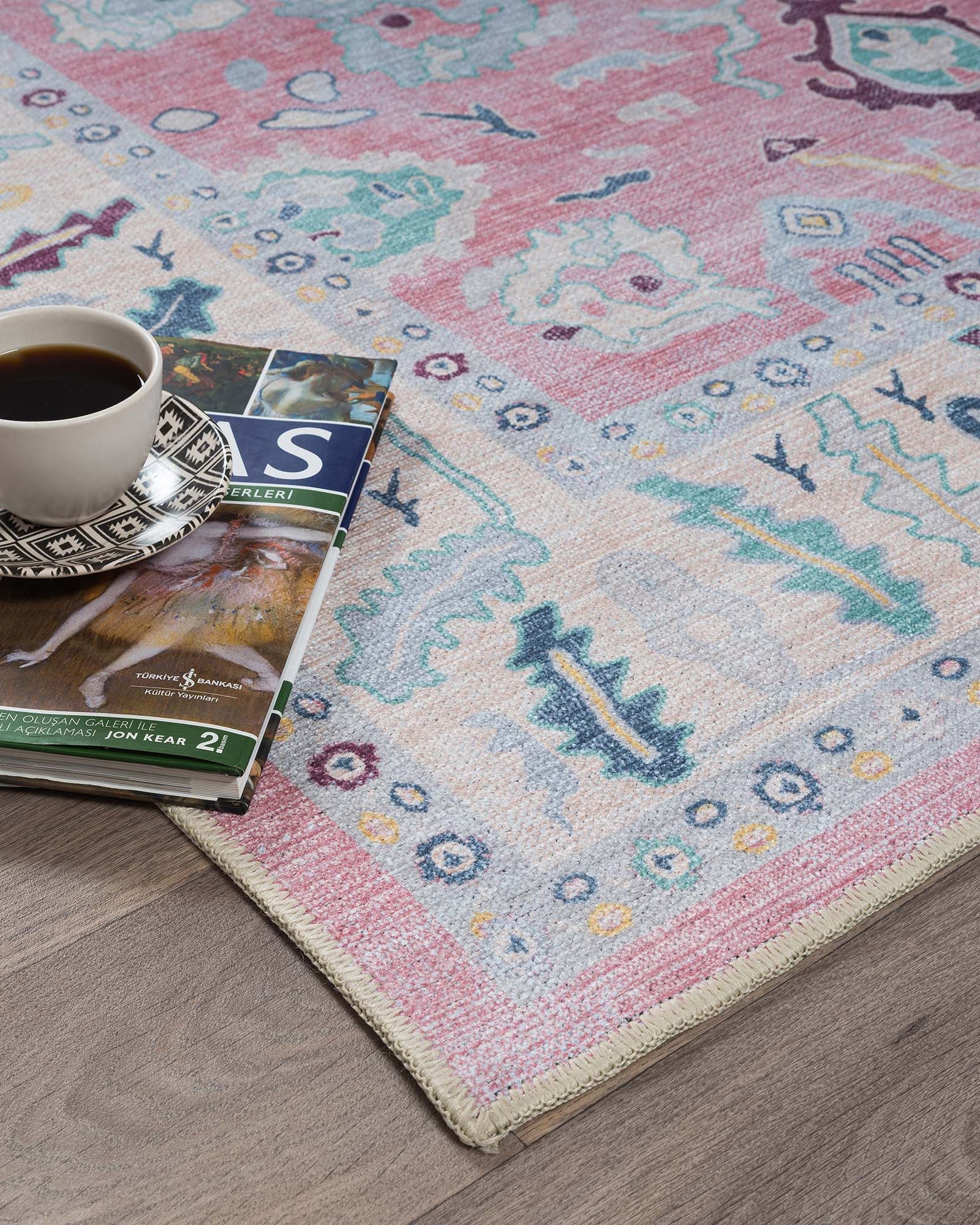
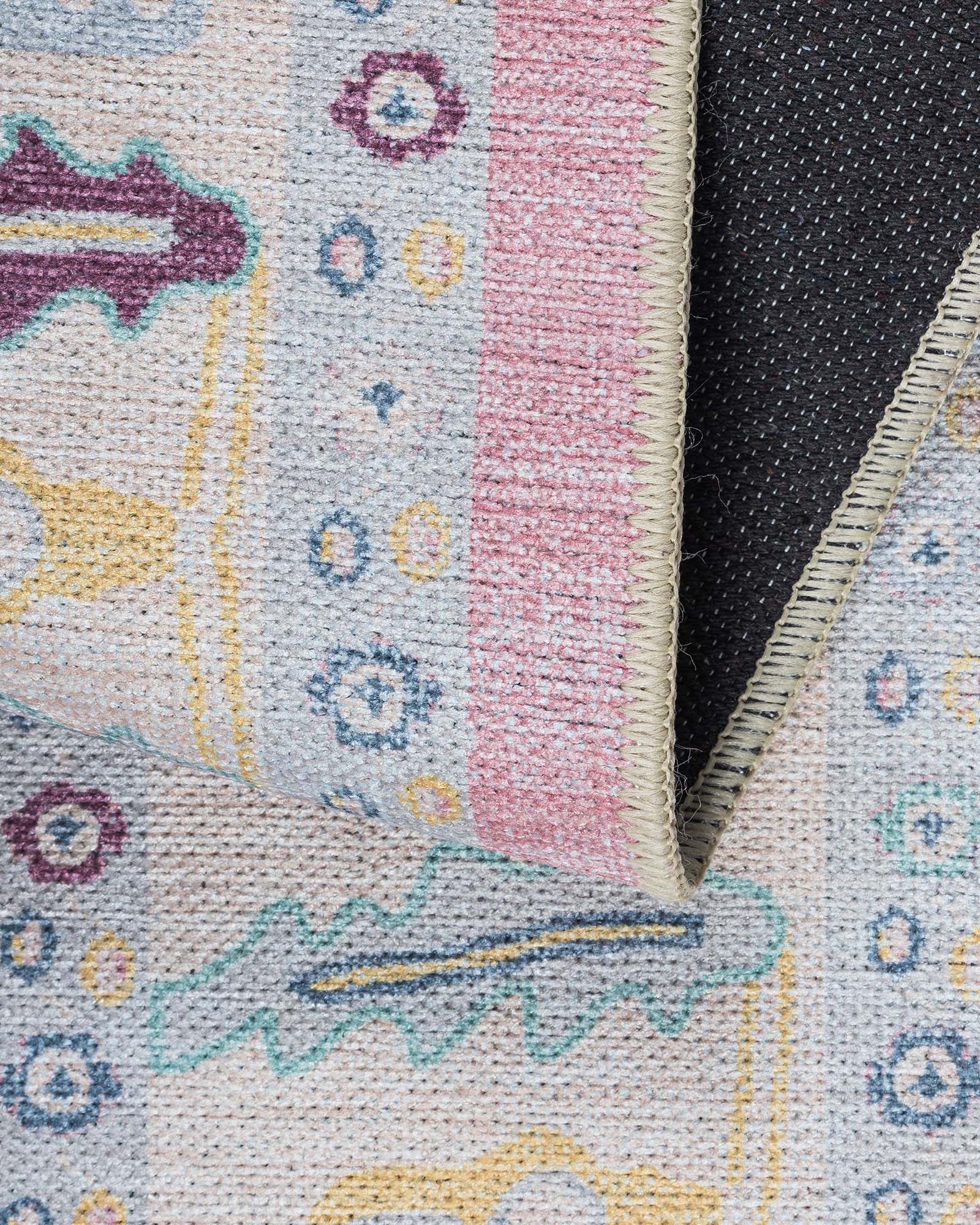
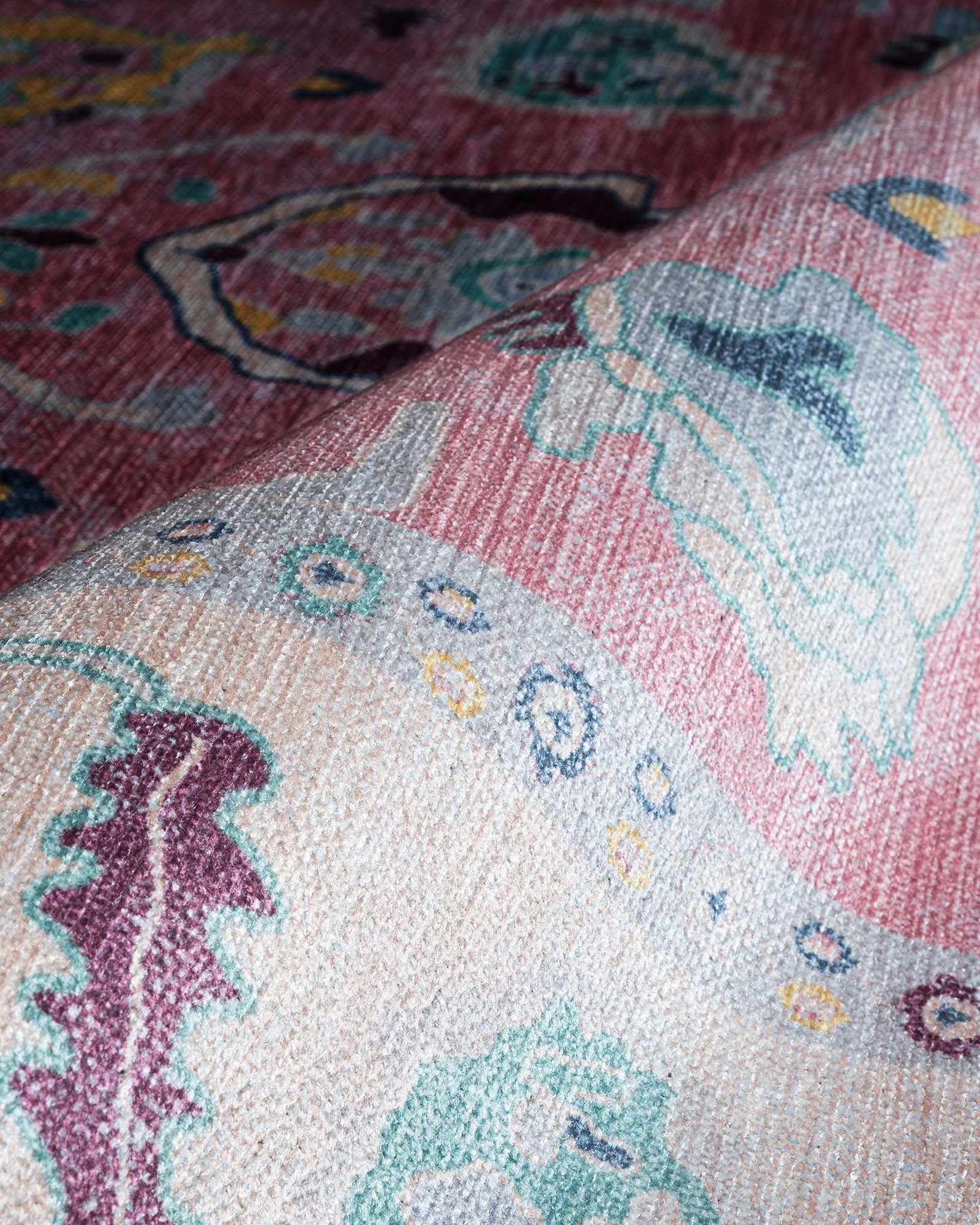
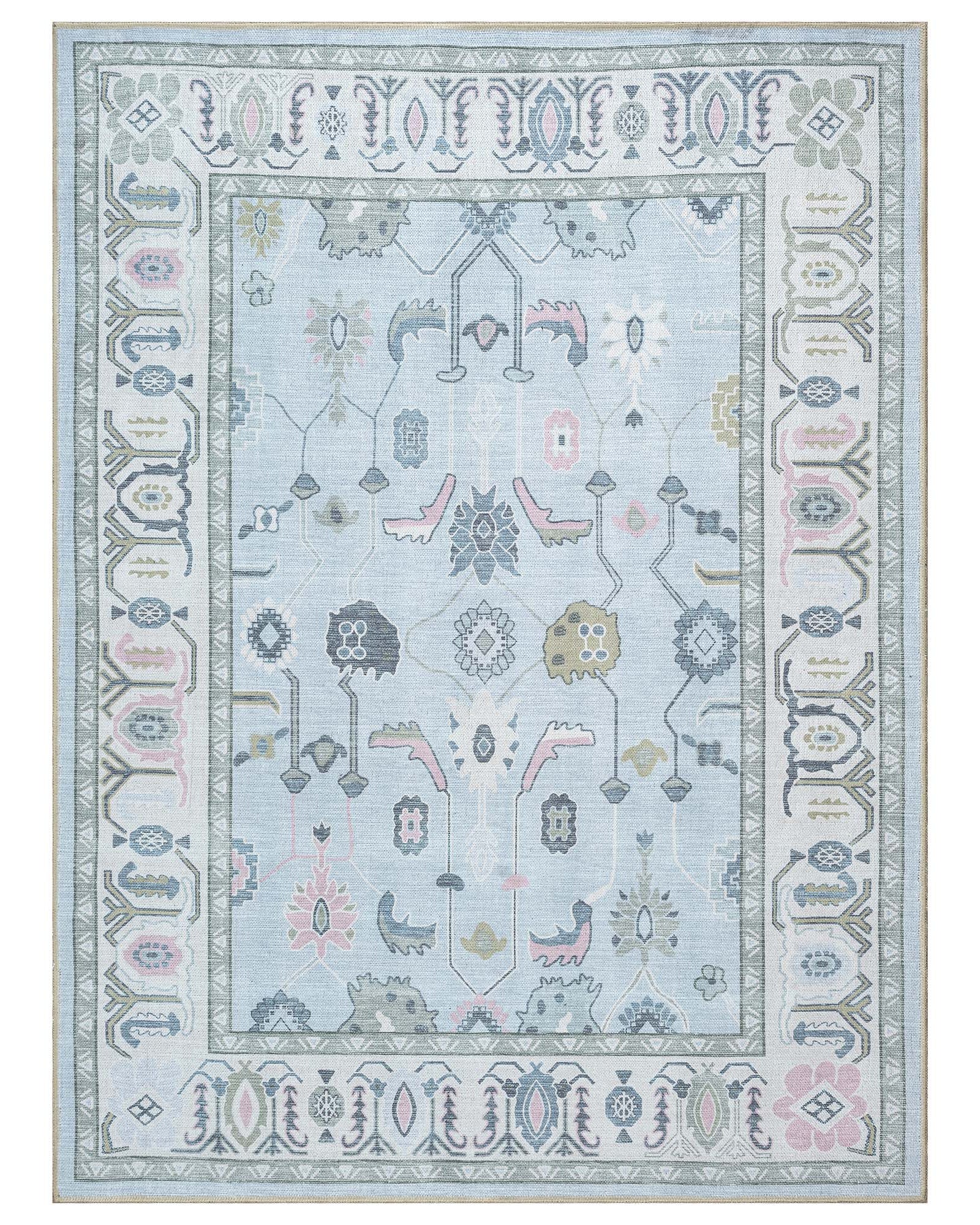
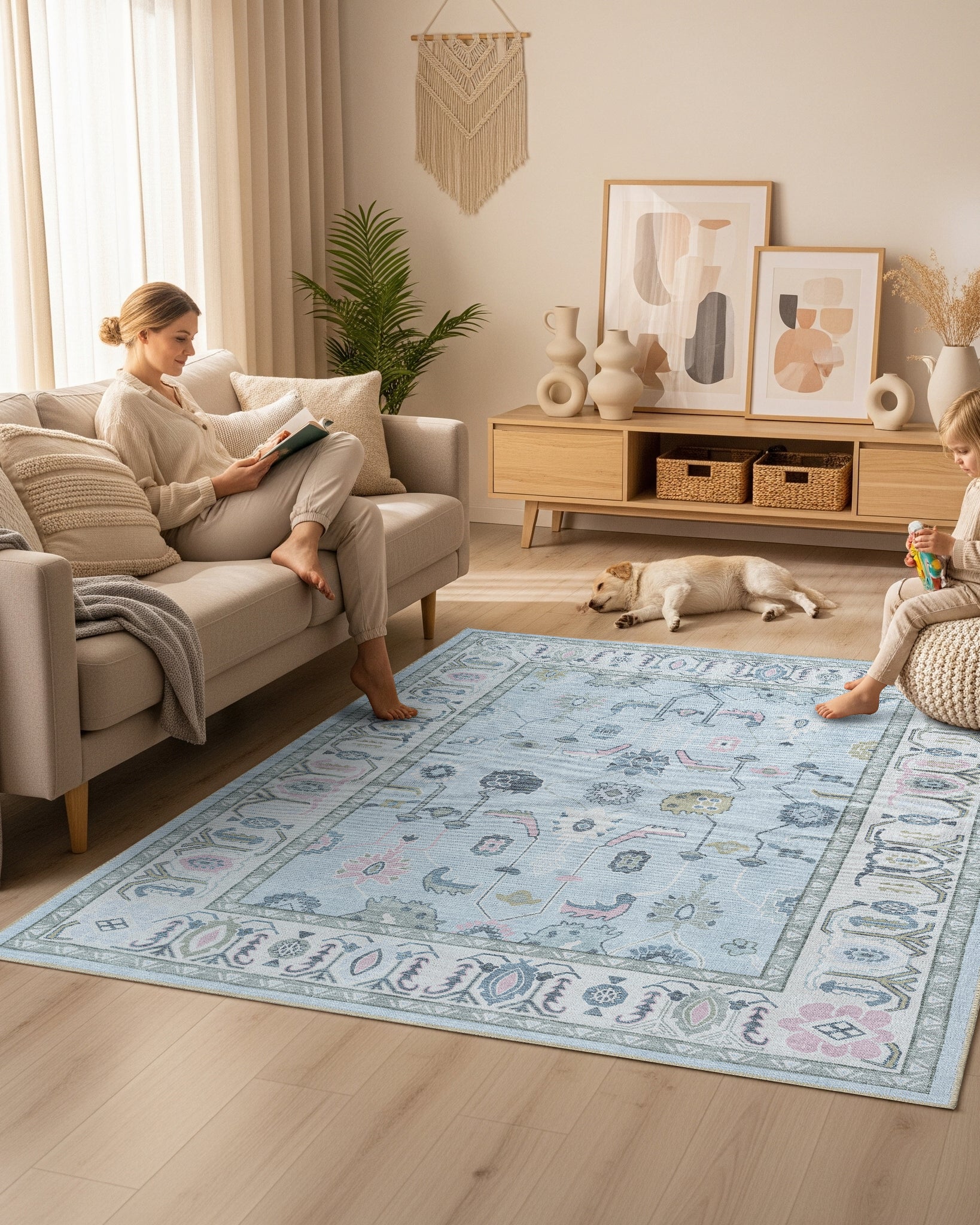
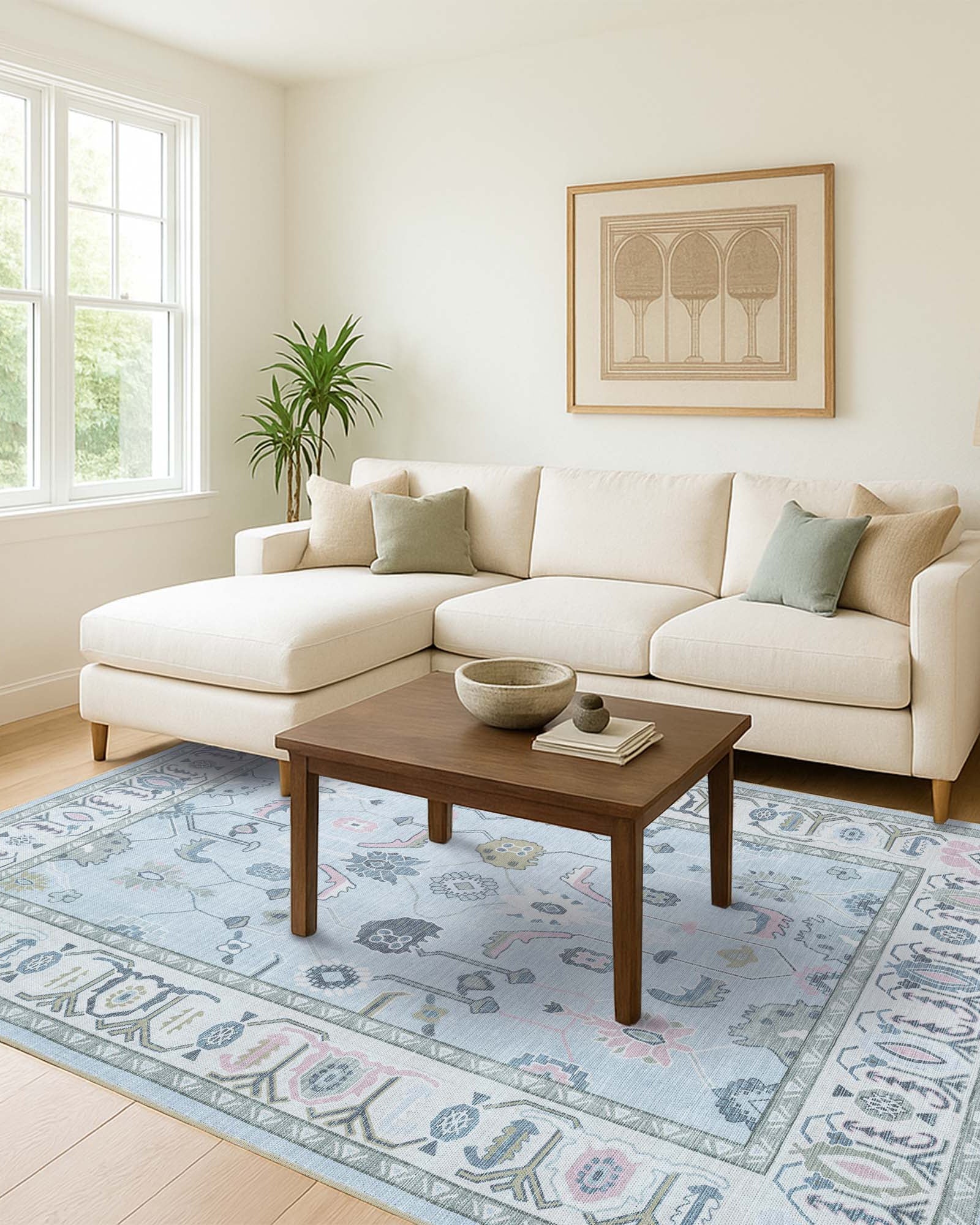
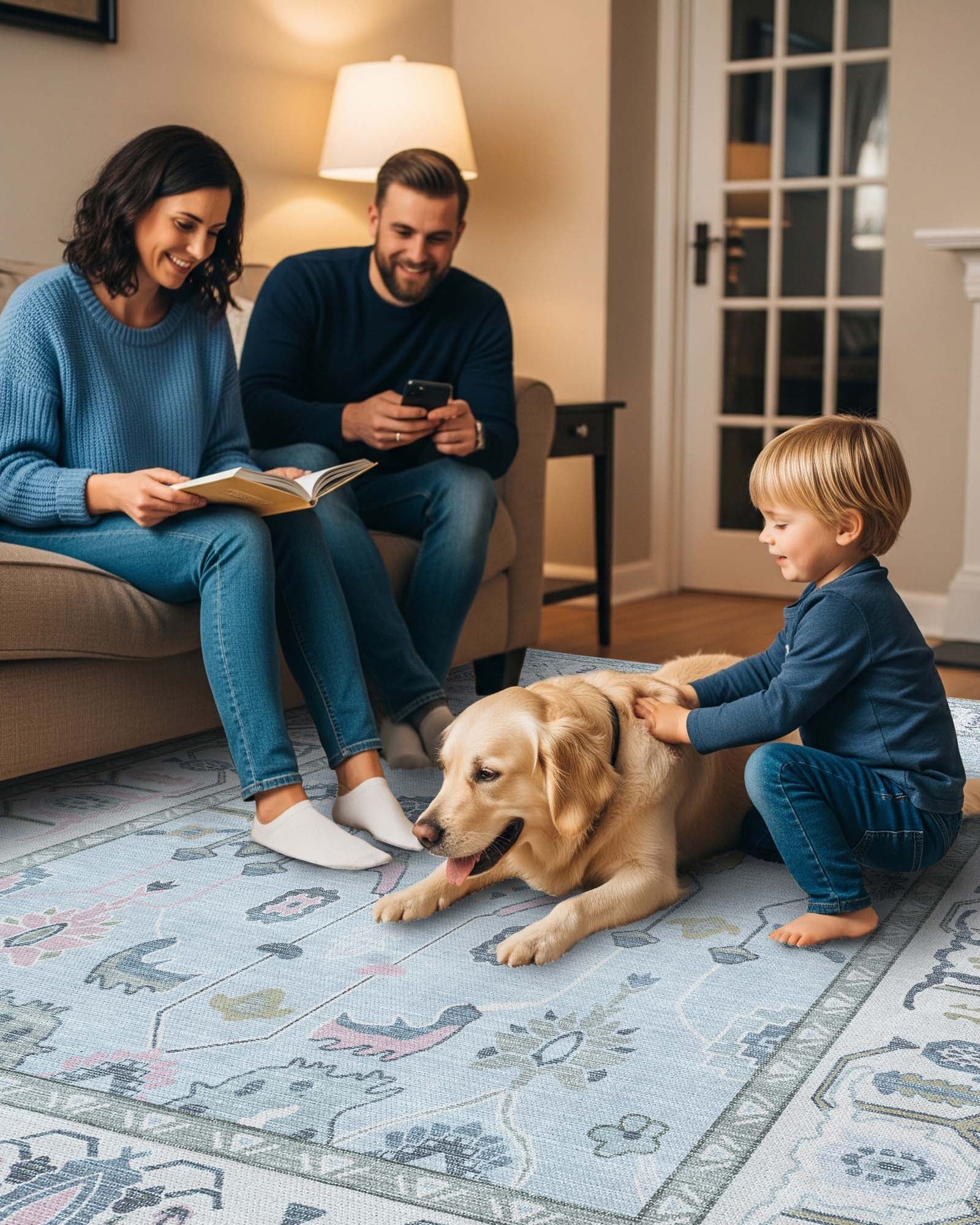
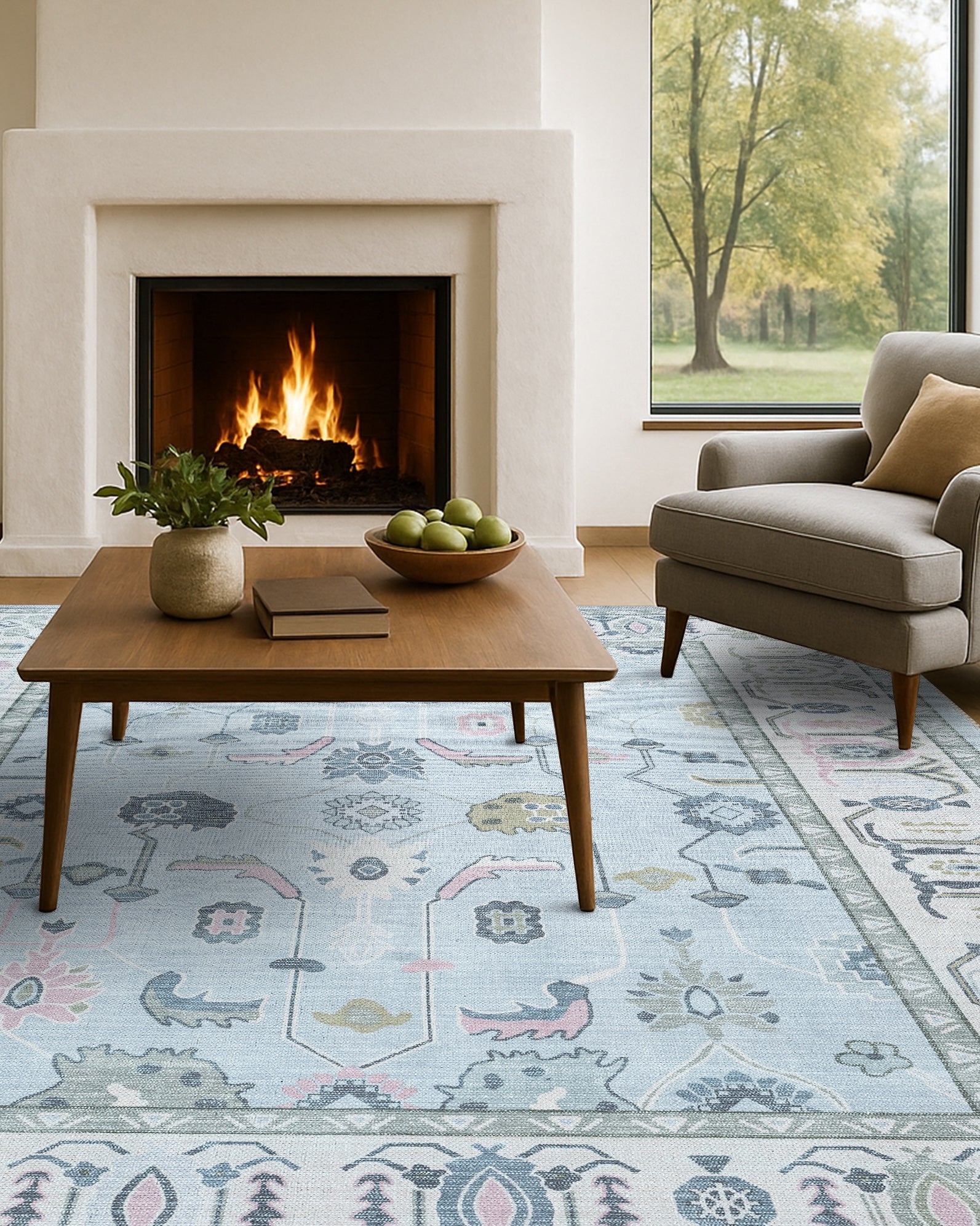
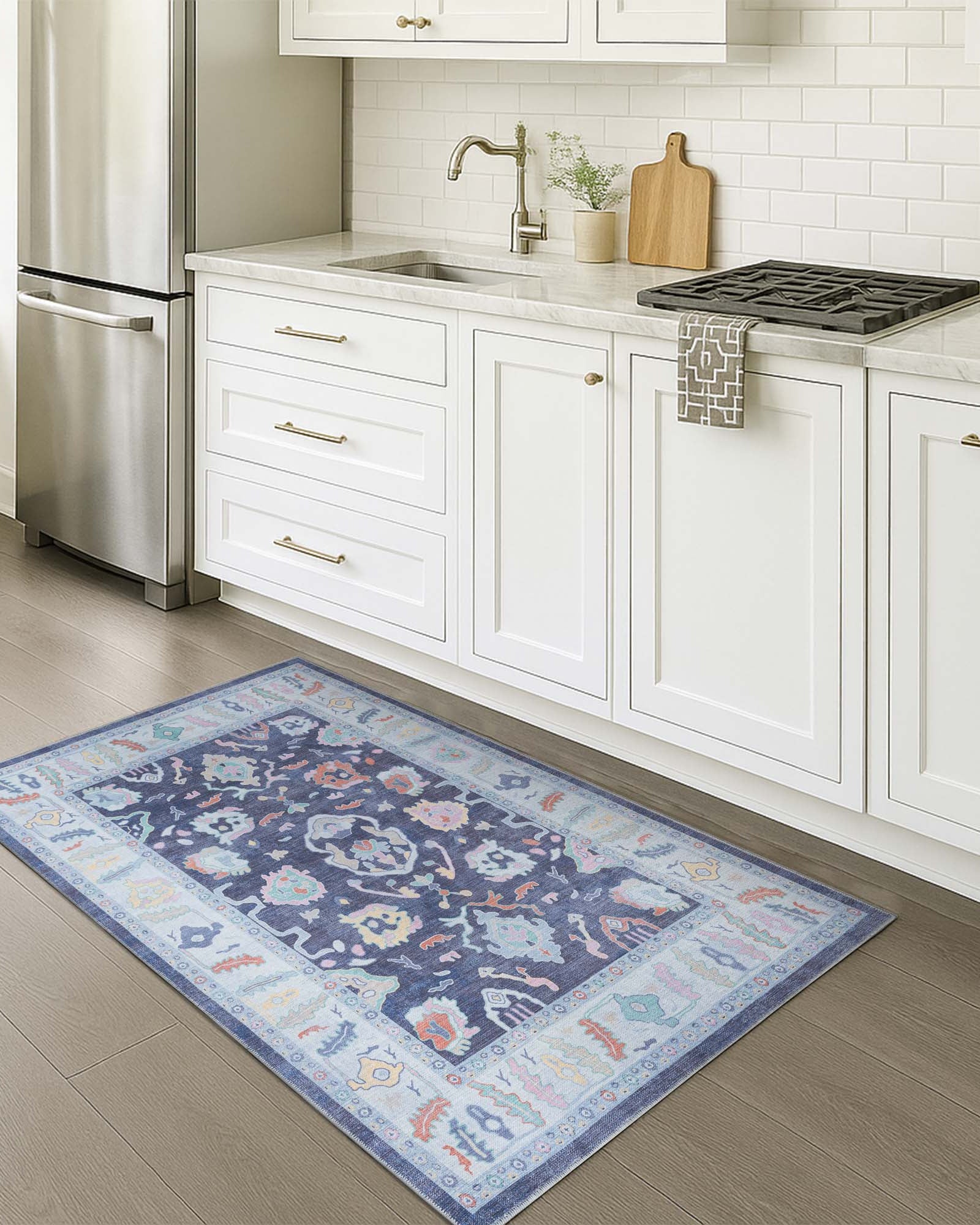
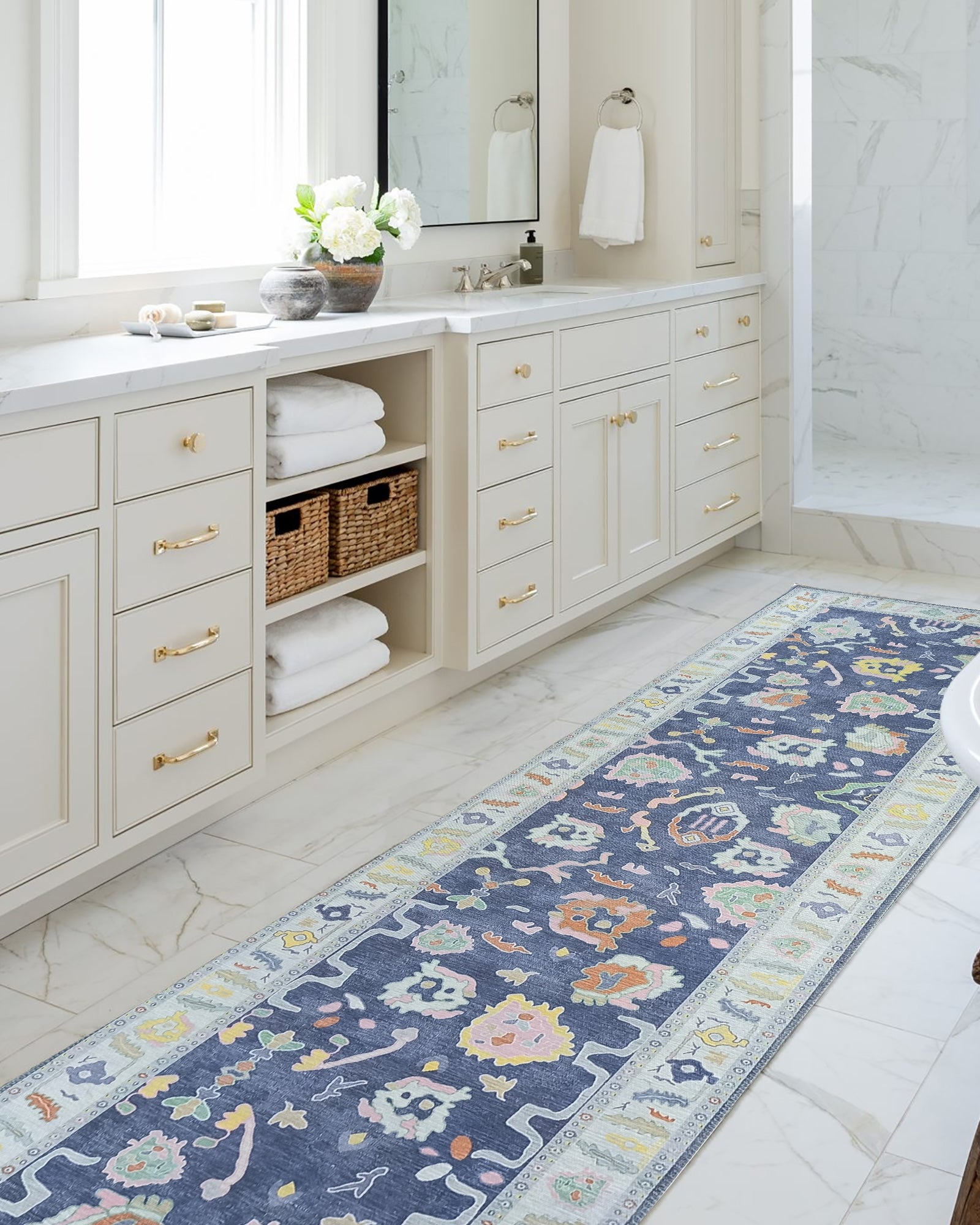
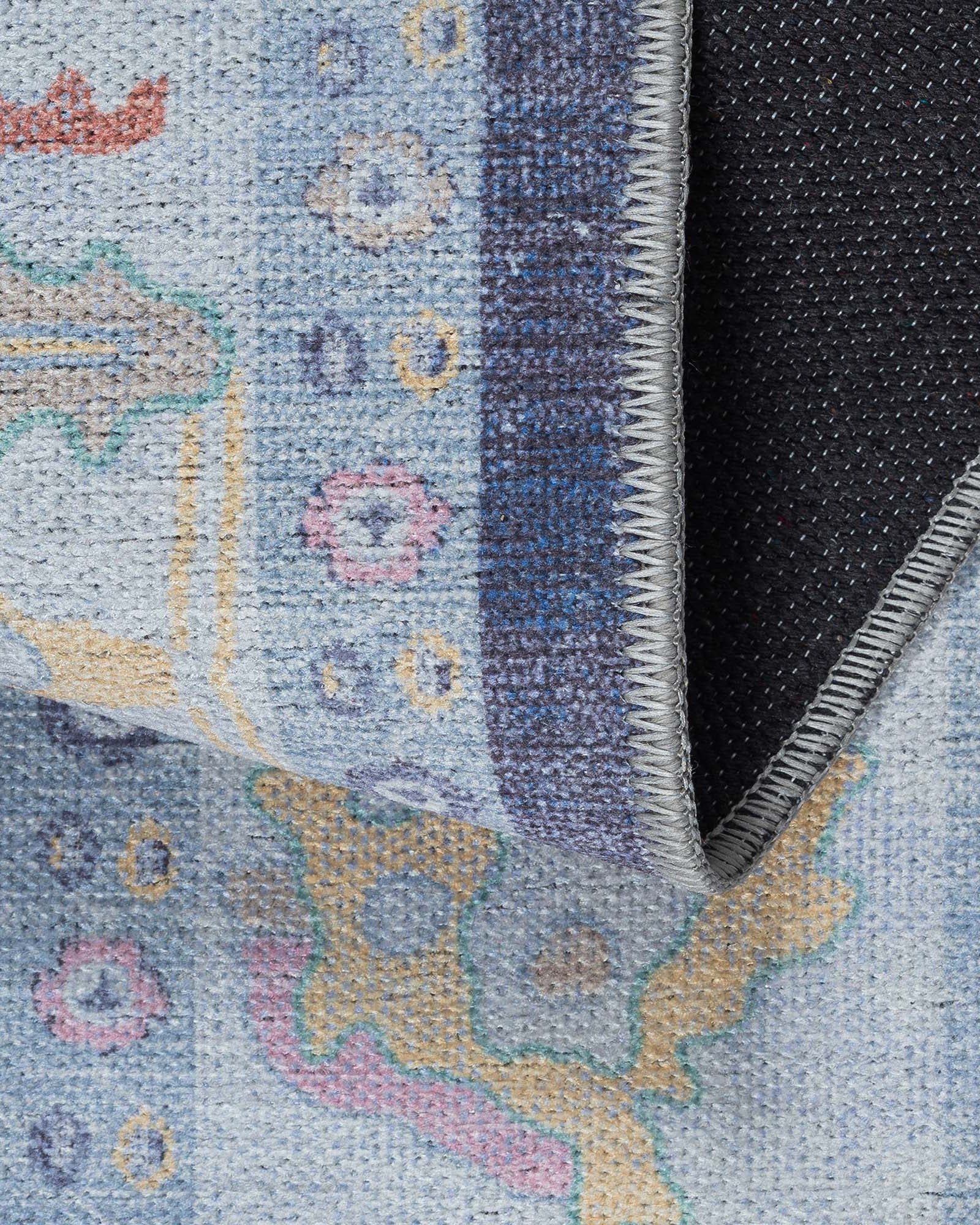
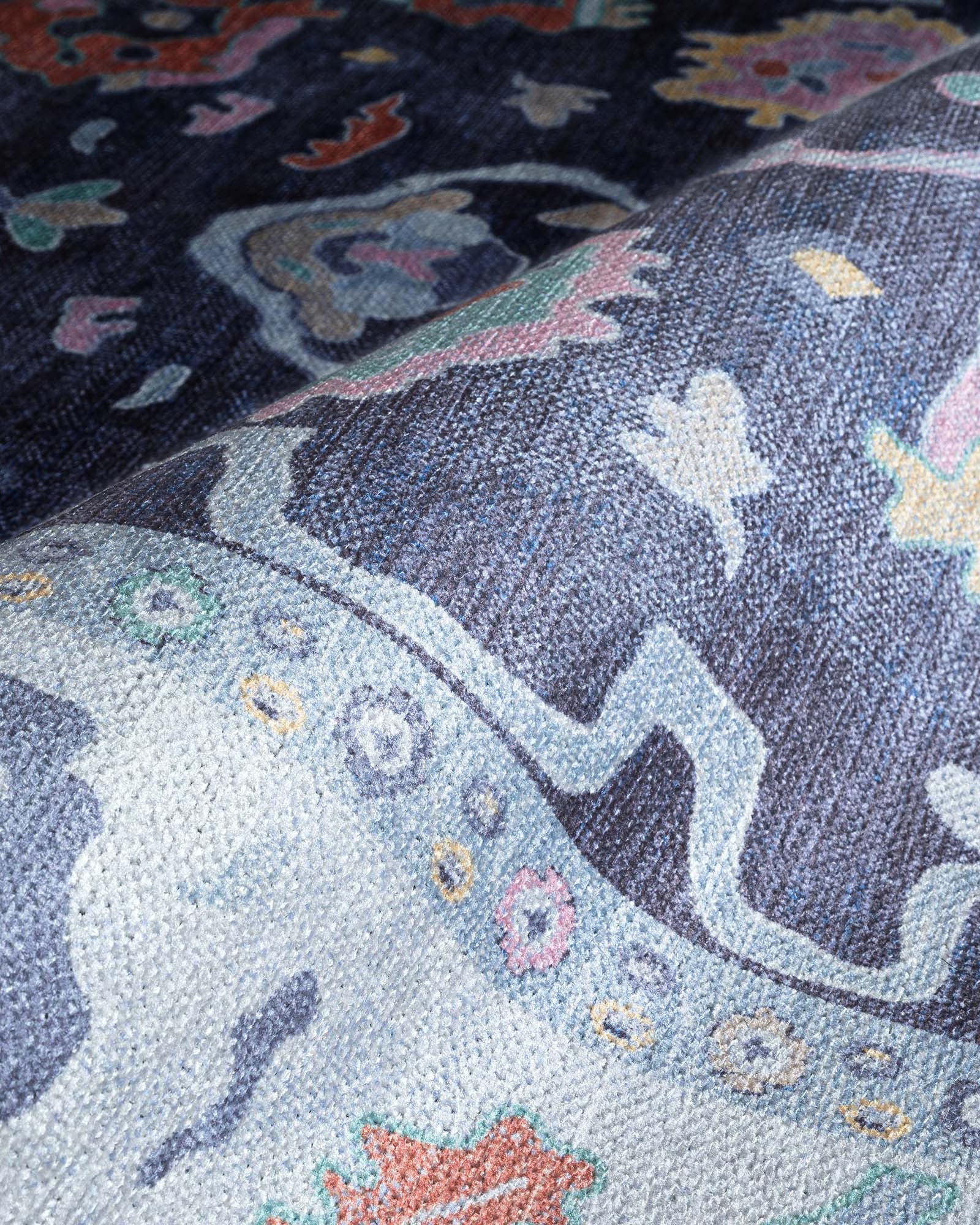
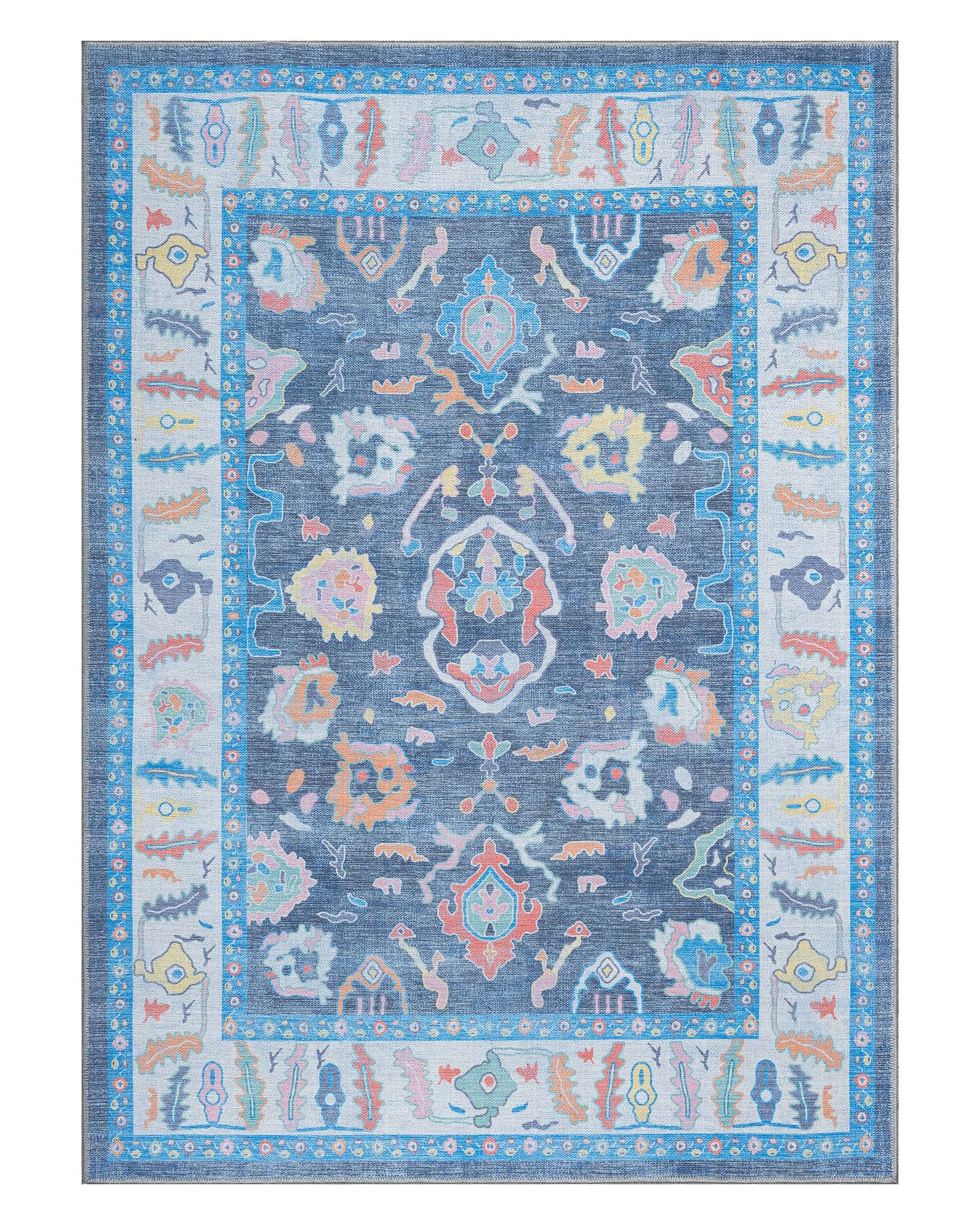
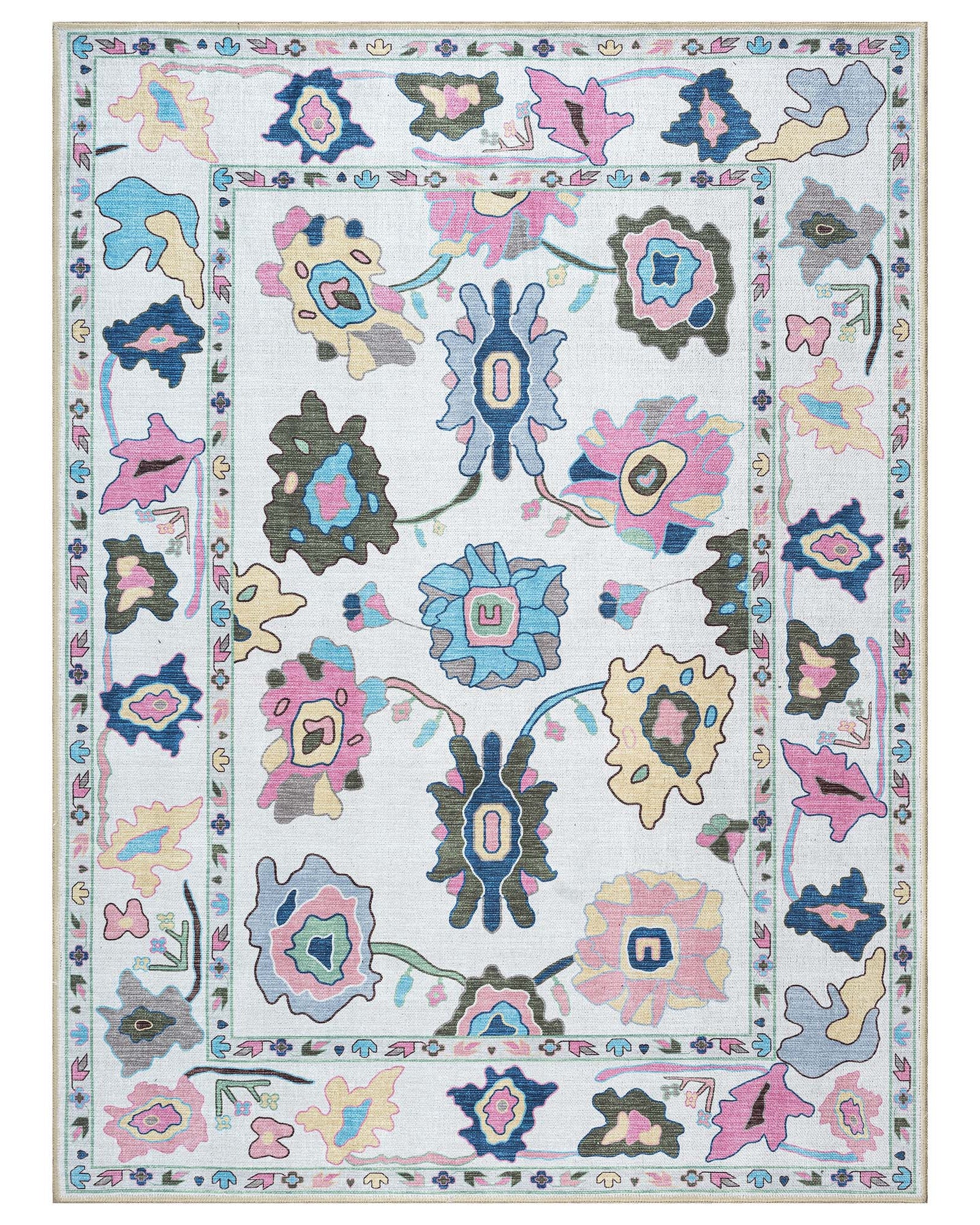
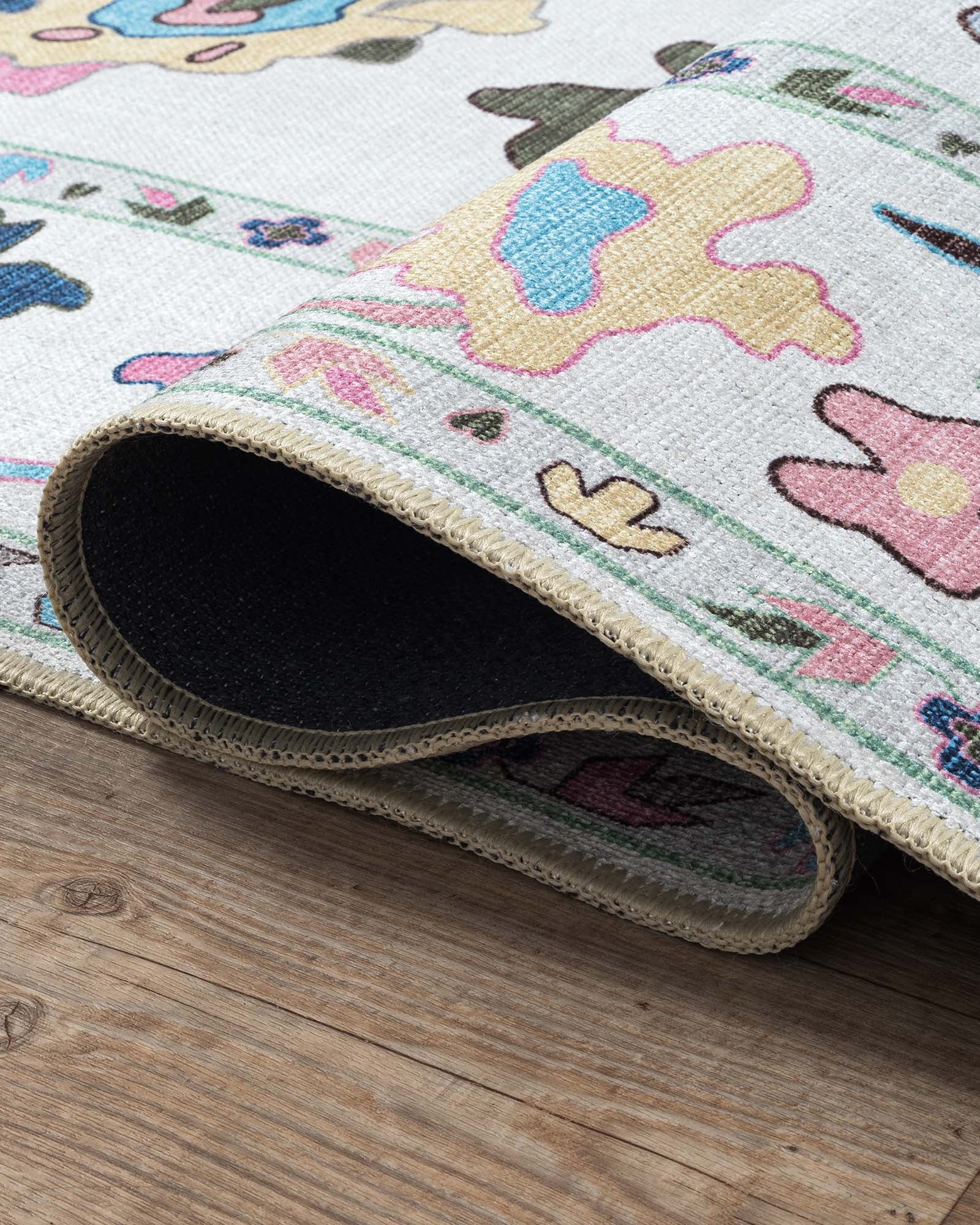
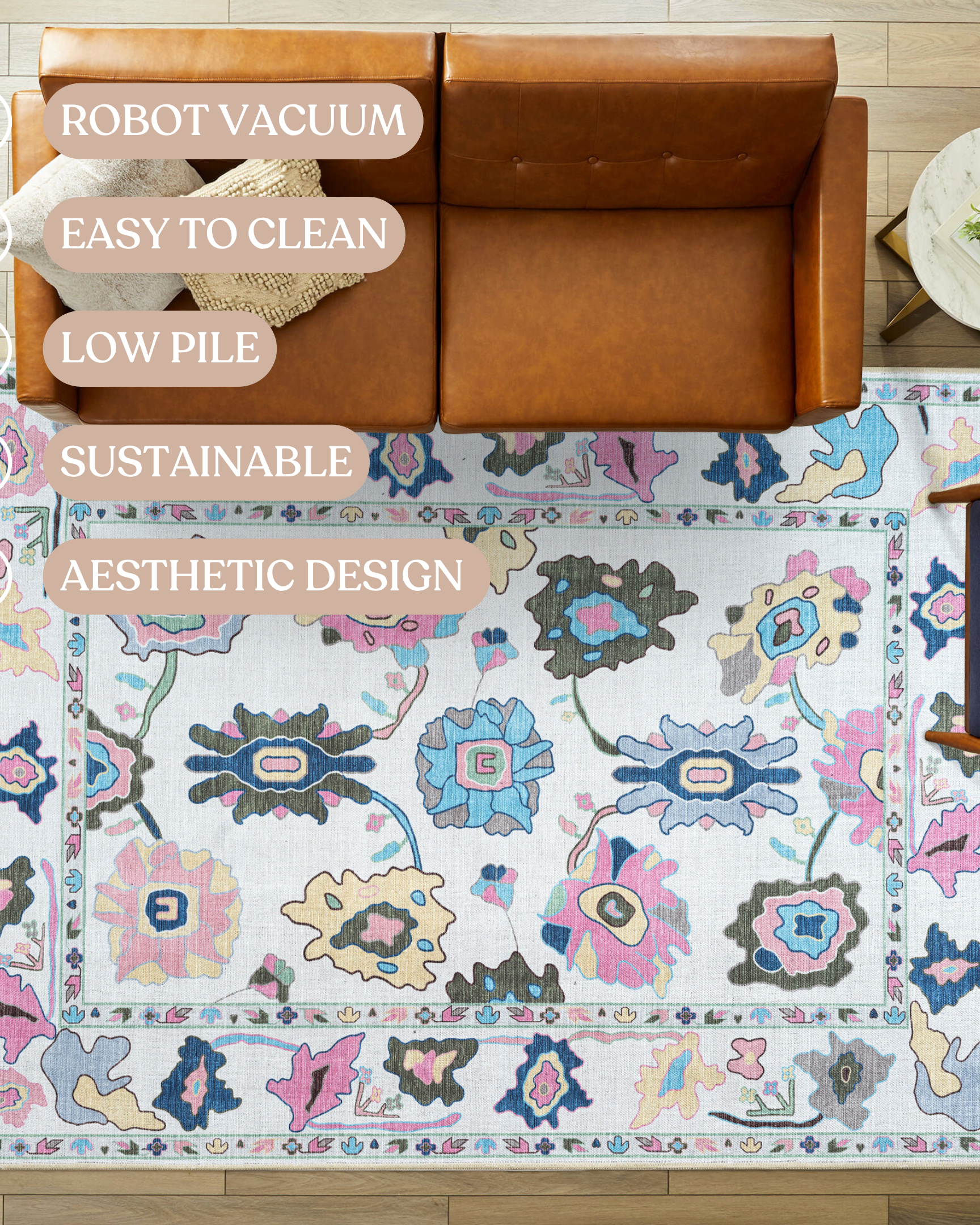
Coarse weaving is the opposite end of the same spectrum that produces fine, intricate rugs — fewer knots packed into each square inch, each one larger, holding thicker wool. What that trades away in fine detail it gives back in durability: a coarse rug carries more wool per knot and a taller pile, which is exactly why village and tribal rugs woven this way are still in daily use generations later. Every piece here is an original hand-knotted rug sold as a single item.
What Lower Density Actually Means
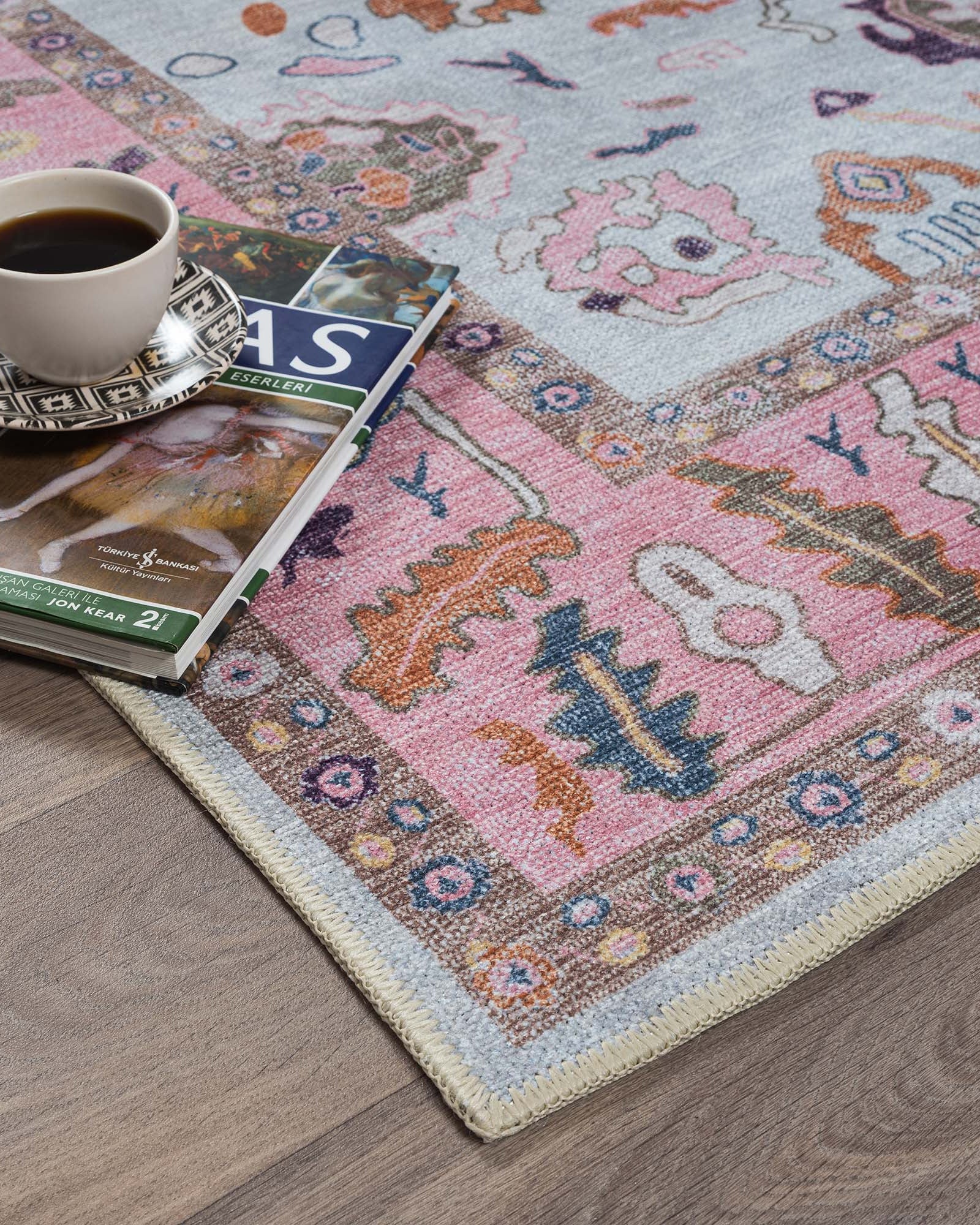
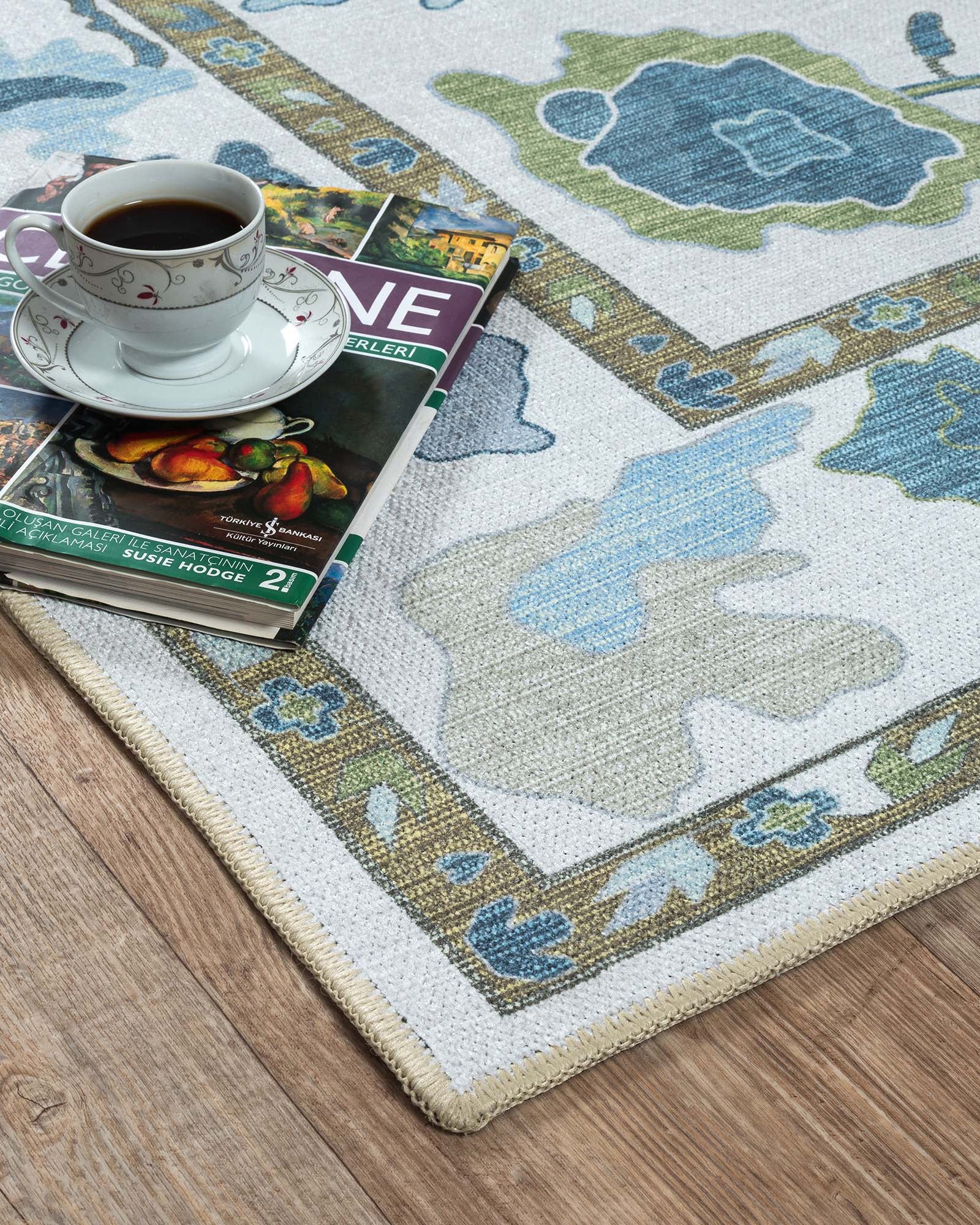
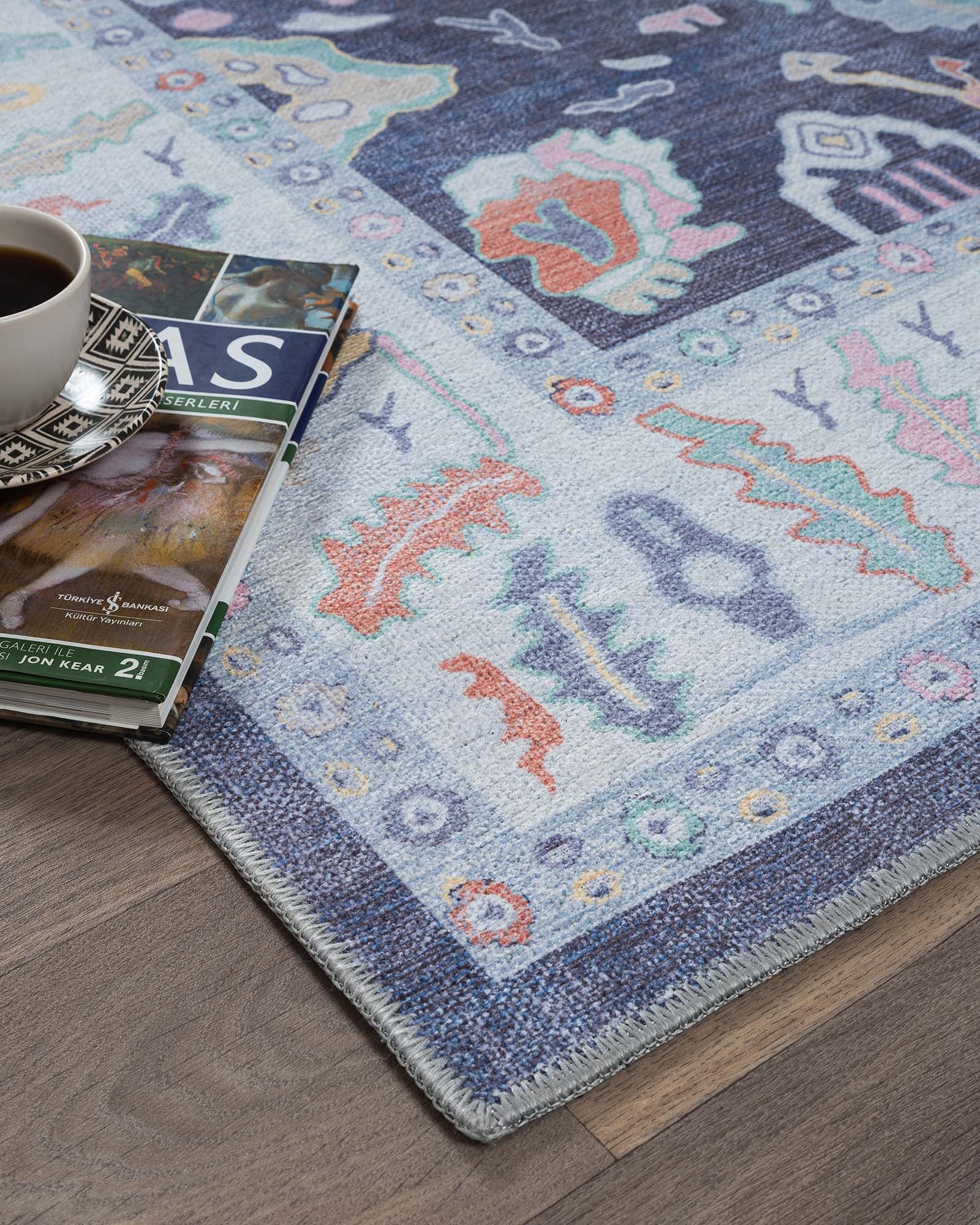
Knot density is the number of knots tied into each square inch of rug, and it sets a hard limit on how much detail a design can carry. Coarse weaving generally runs under about 100 knots per square inch, sometimes well under. At that scale, curved lines and shaded detail are simply not possible — each knot is too large relative to the pattern for a smooth curve to read as anything but a stepped edge. This is not a limitation weavers were fighting against. It is the format that bold, confident geometric pattern is built for, and it produces some of the most graphically striking rugs in existence.
Why Coarse Rugs Last
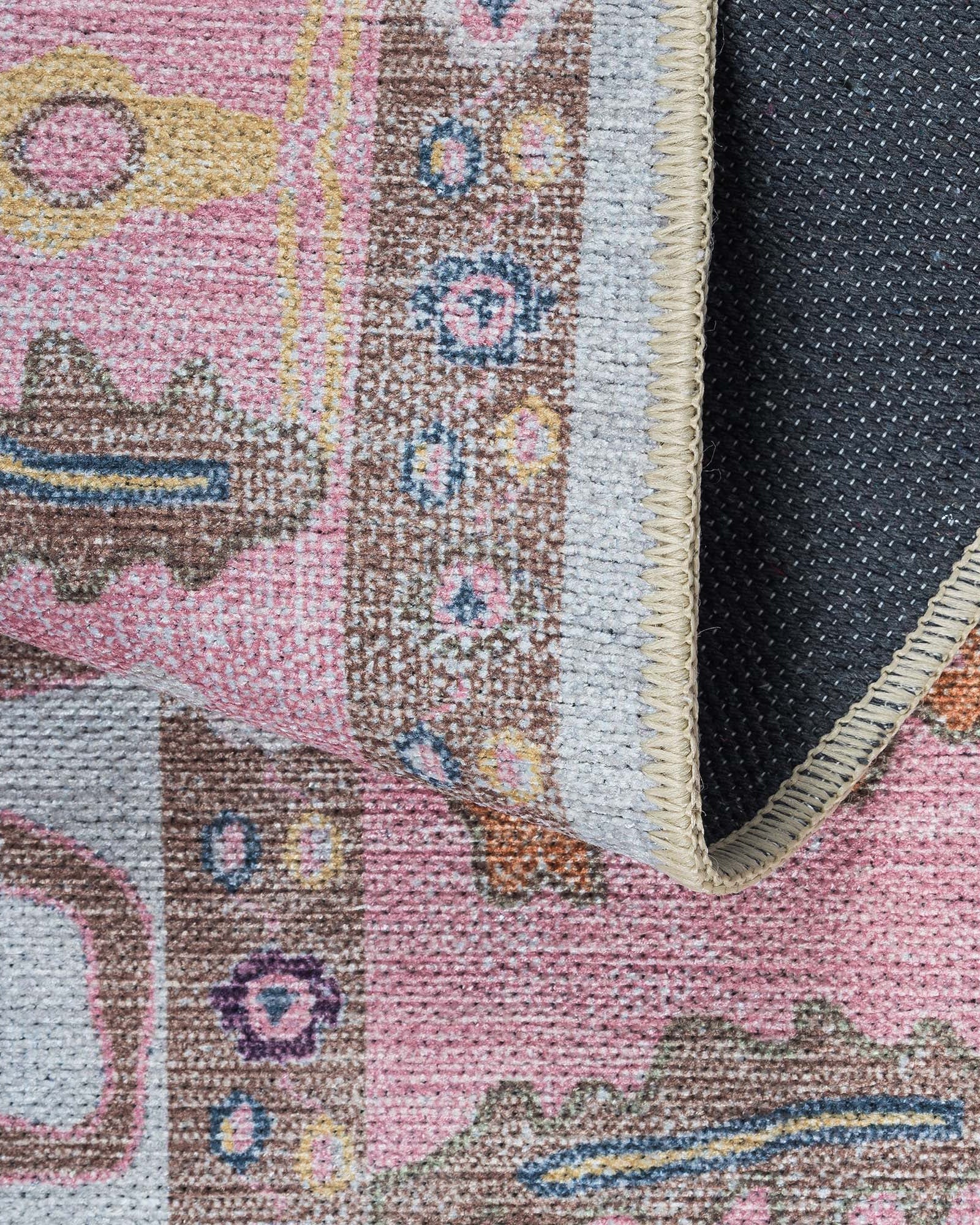
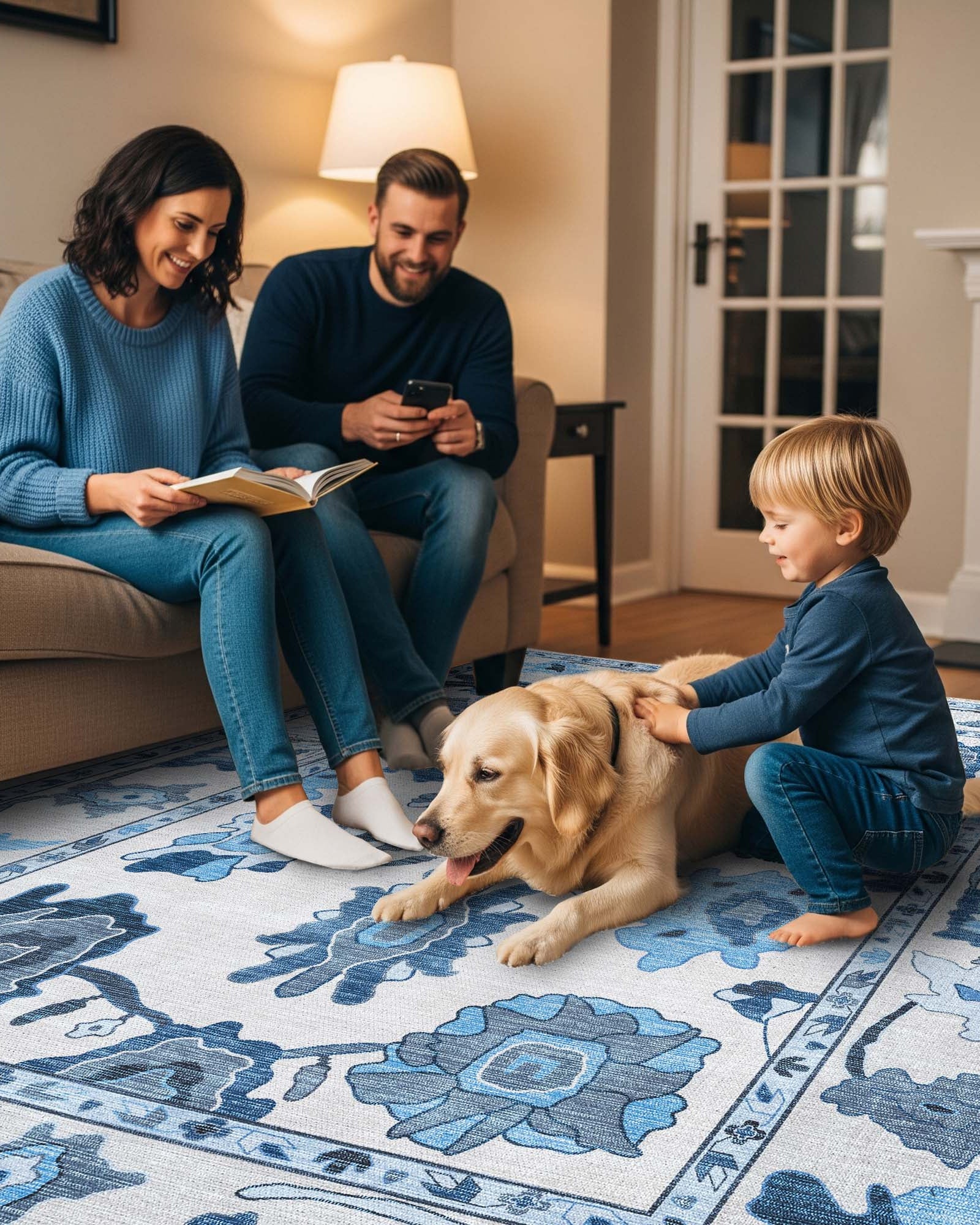
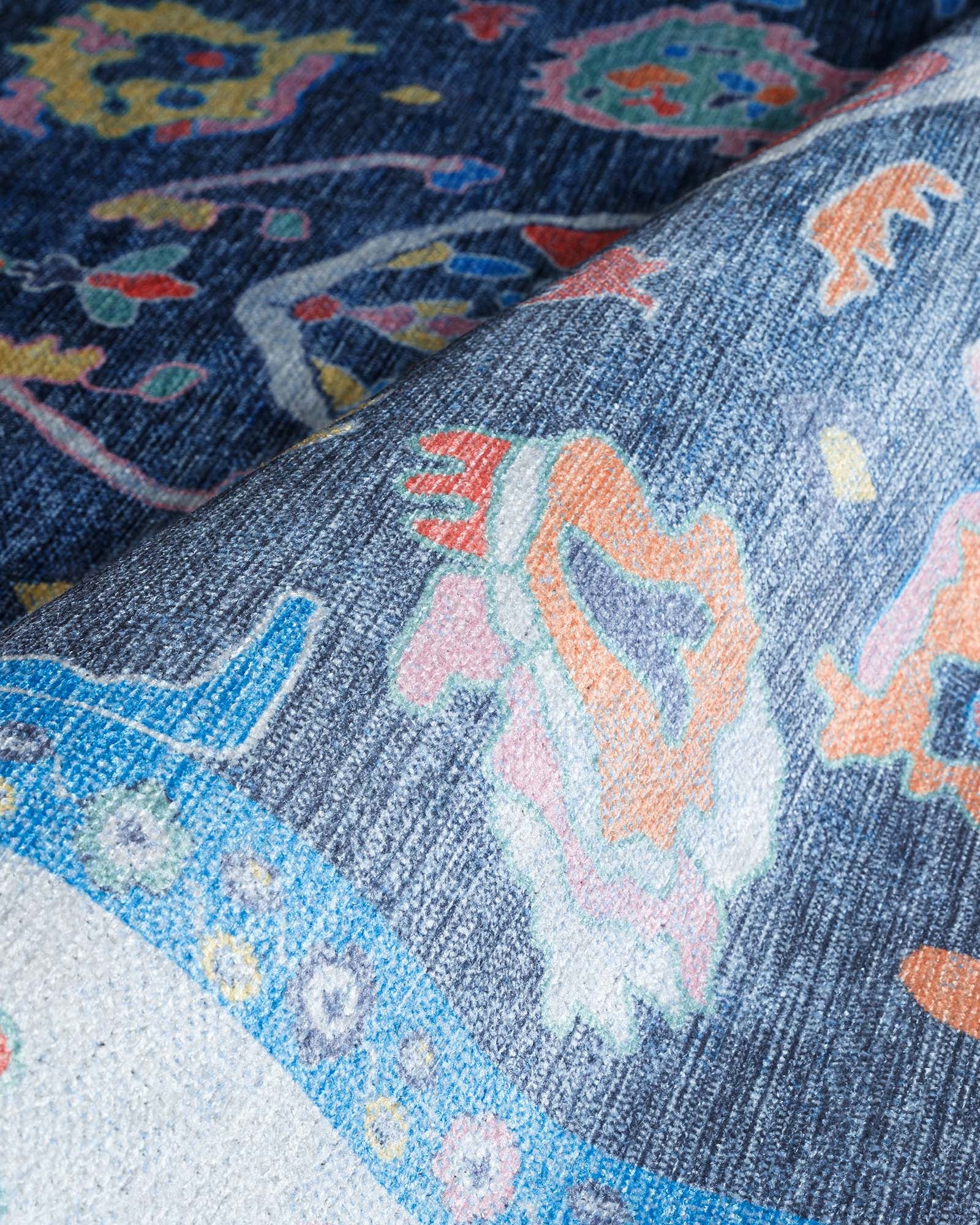
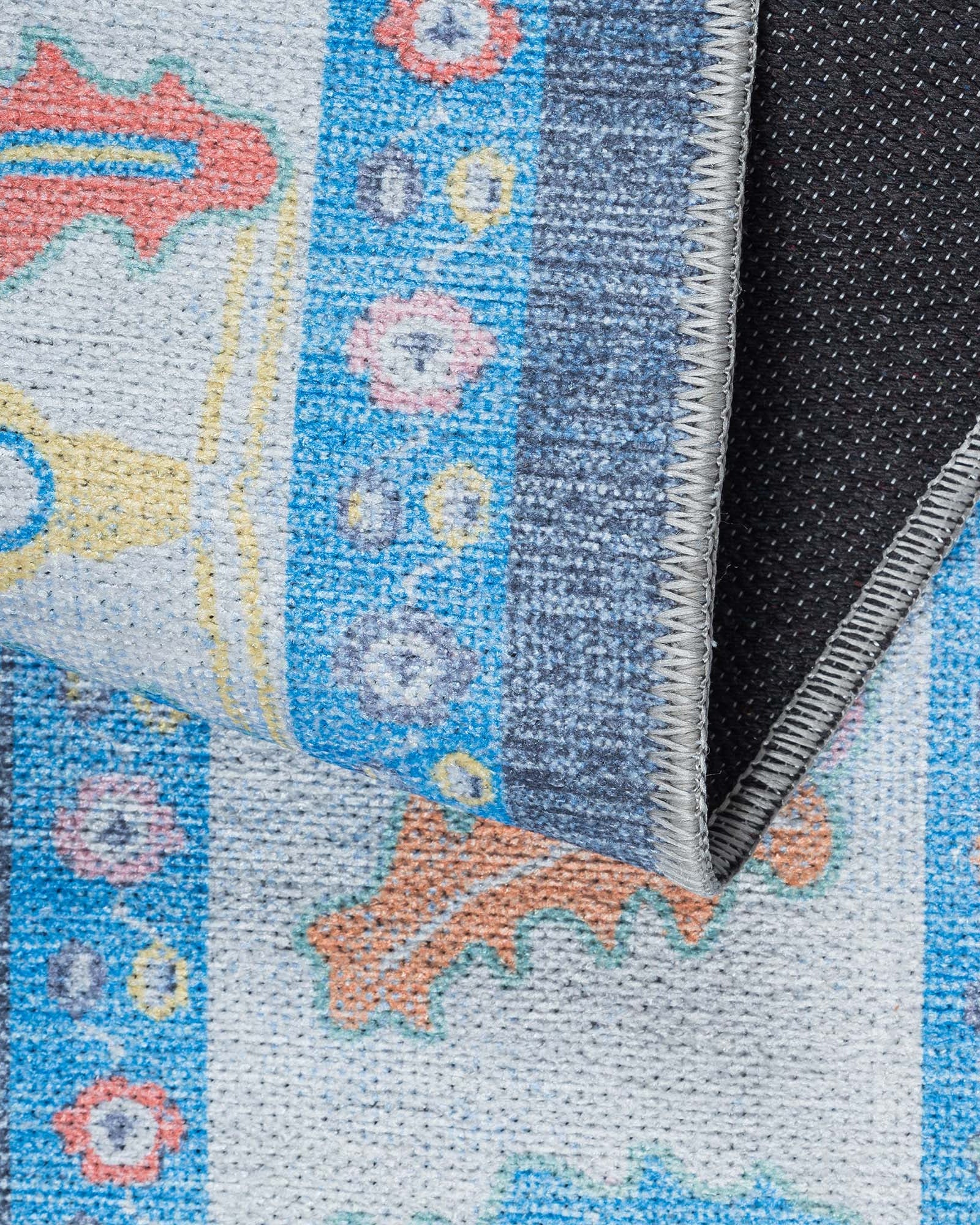
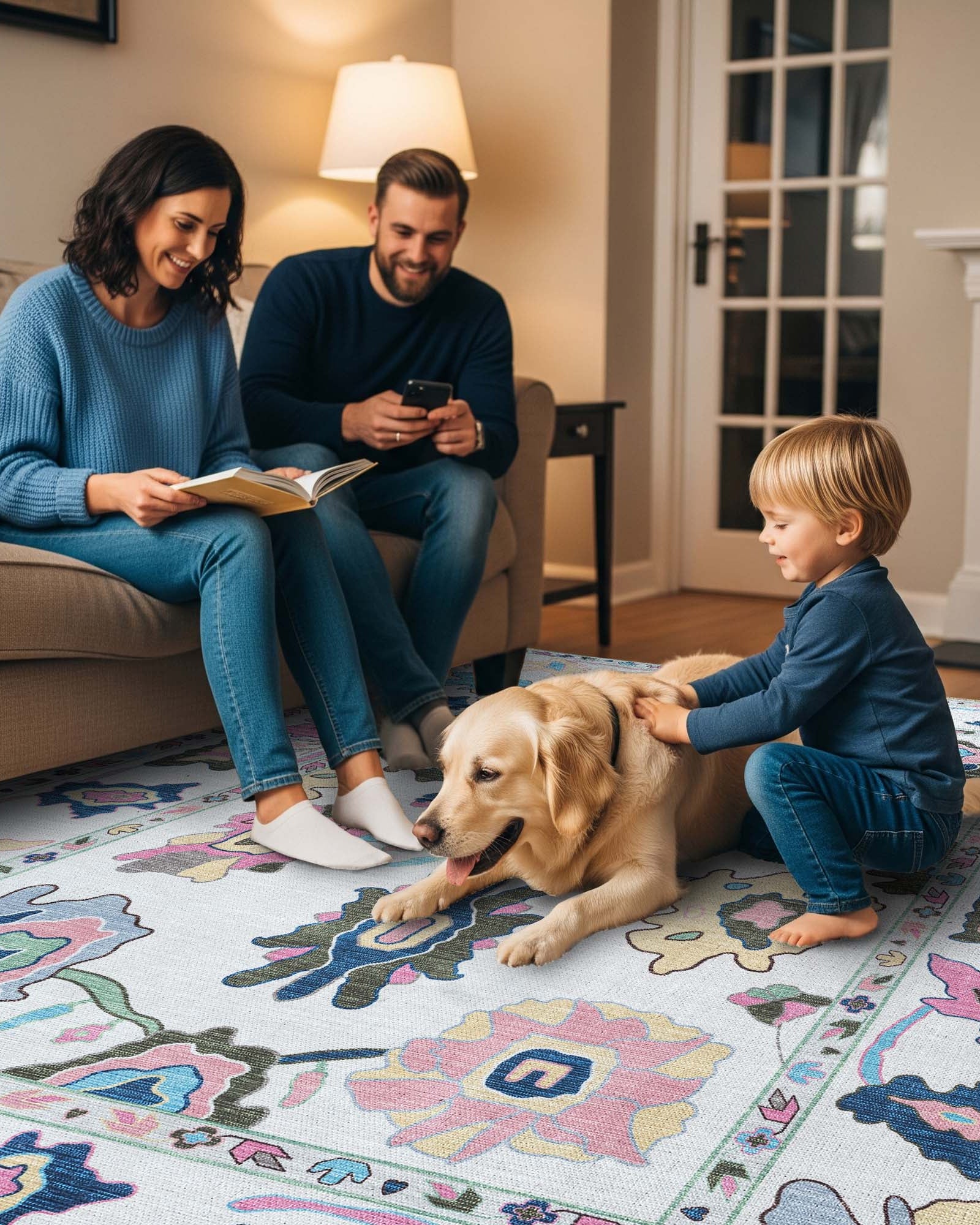
Durability in a knotted rug comes down to how much wool is standing between the floor and whatever is walking on it. A coarse knot holds more fibre and sits taller off the foundation than a fine one, so there is simply more pile to wear through before a coarse rug shows its age. Combined with the heavier, often wool-on-wool construction typical of village and tribal weaving, this is why coarse rugs are the workhorses of the handmade world — pieces made for constant household use, not for ceremonial display, and built accordingly.
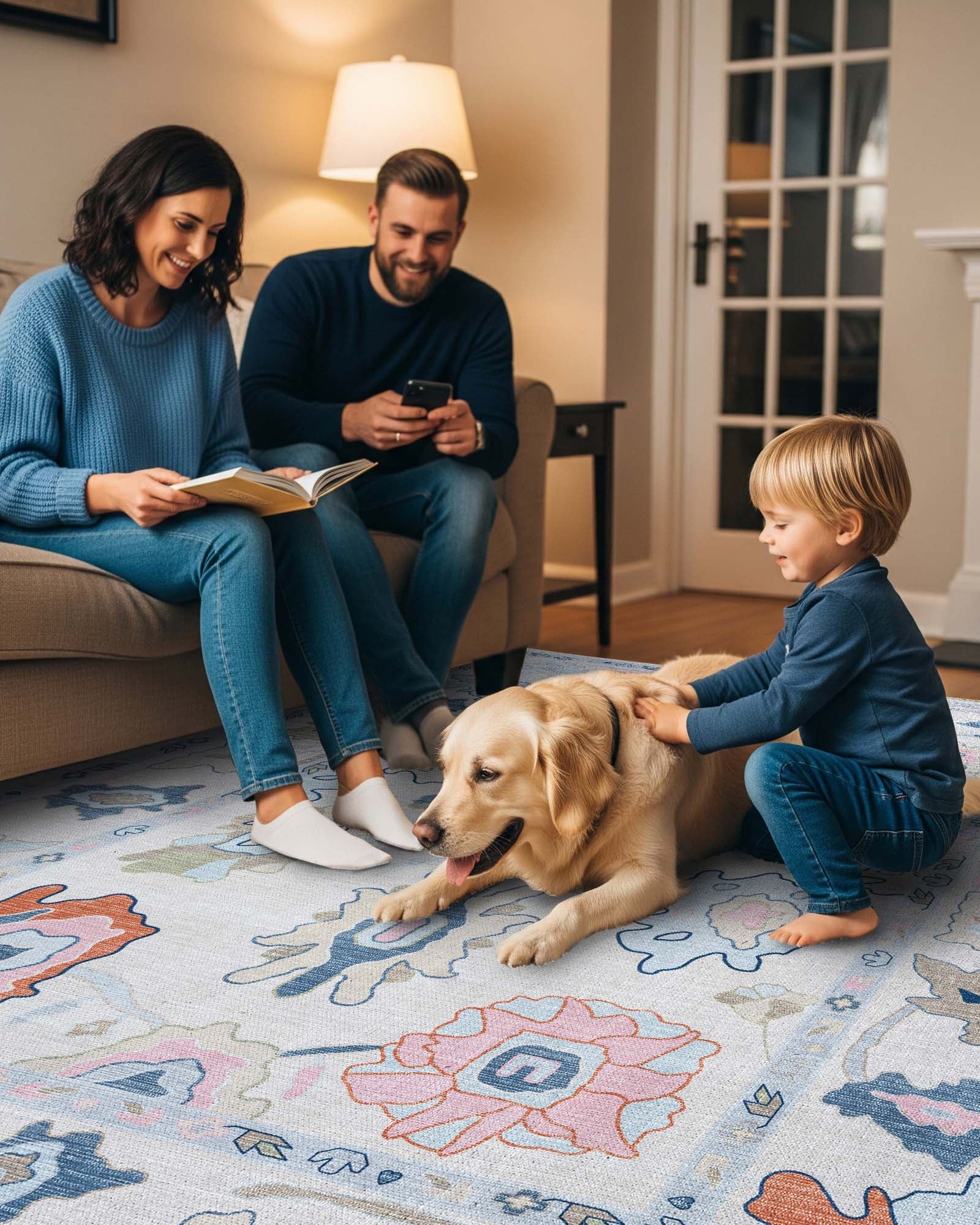
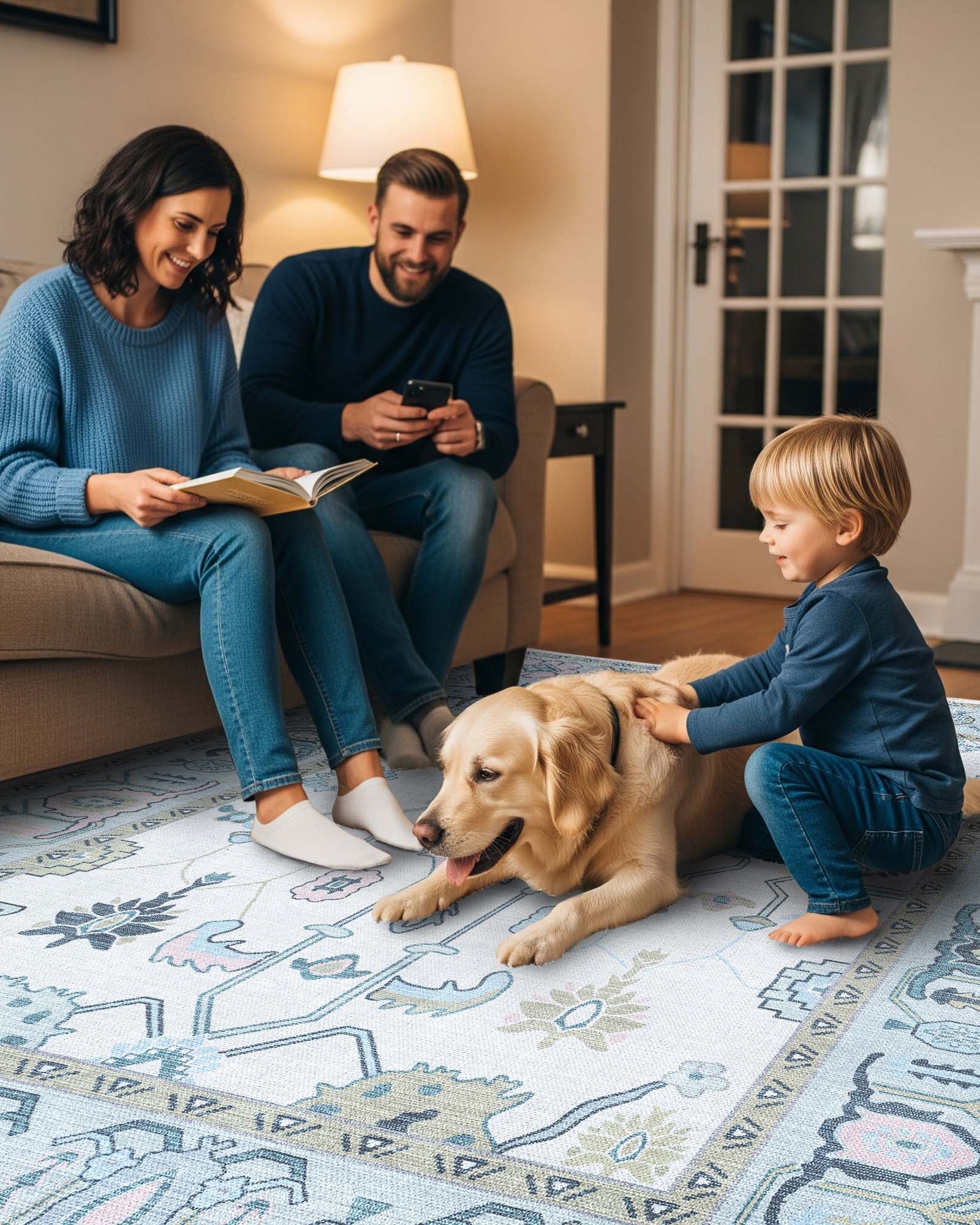
The trade-off runs the other way from fine weaving: what you give up in intricate detail, you gain in a rug that tolerates daily traffic, pets, and decades of use without needing the careful placement a finer piece would.
Where Coarse Weaving Comes From
This is overwhelmingly village and tribal work rather than workshop production, because coarse weaving does not require the years of specialized training or the patron funding that fine weaving depends on. Anatolian village rugs — from Konya, Karapınar, and across central Turkey — are woven coarse and confident, in bold geometric medallions and repeating motifs. Caucasian pieces, particularly Kazak weavings, push this further: large-scale geometry in saturated colour, knotted thick and fast. Kurdish and eastern Anatolian tribal rugs are typically the coarsest and heaviest of all, built from the densest highland wool available. Persian village weaving — Hamadan, Malayer, Bakhtiari — sits in the middle, coarser than workshop production but more refined than pure tribal work.
The Visual Language of Coarse Weaving
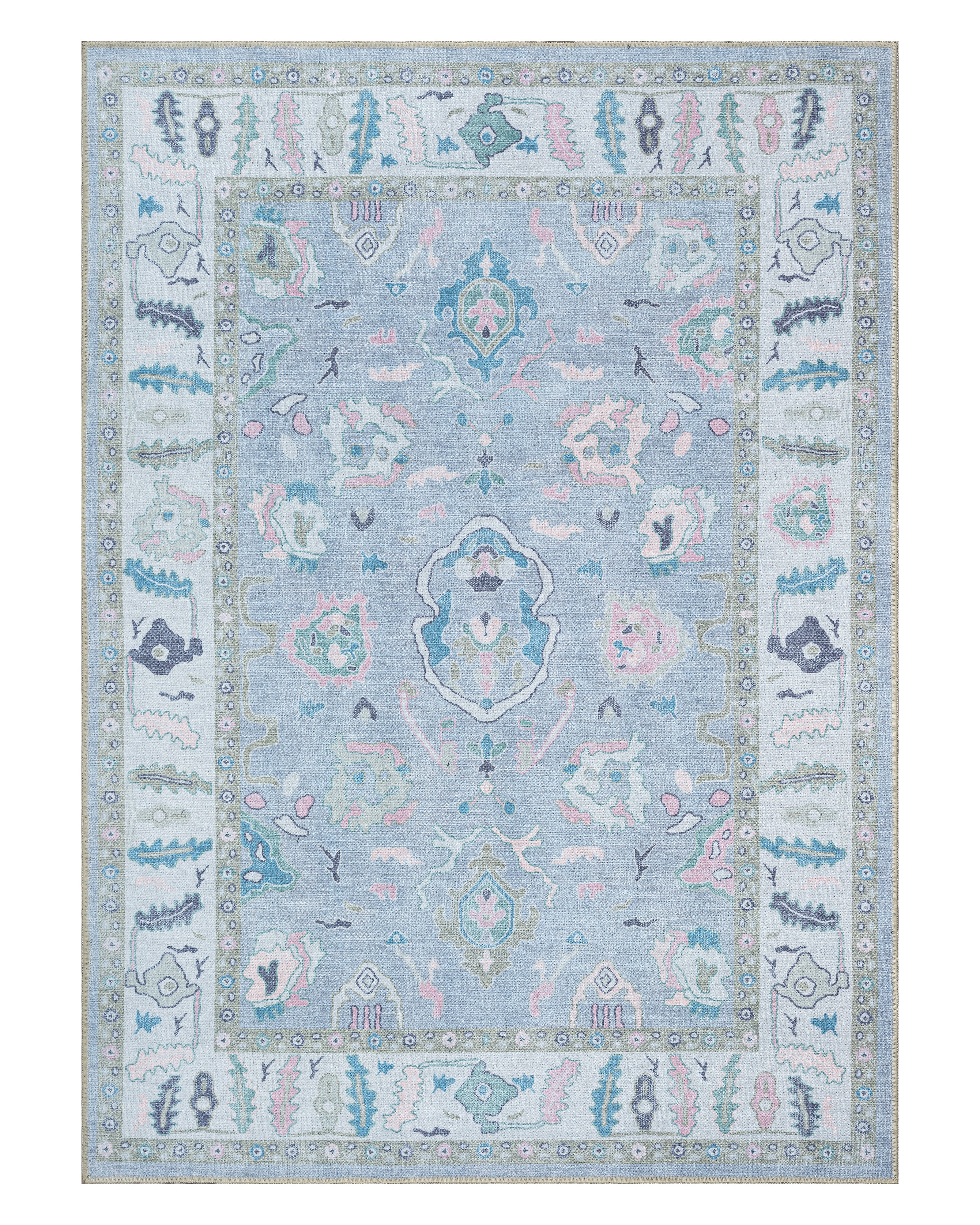
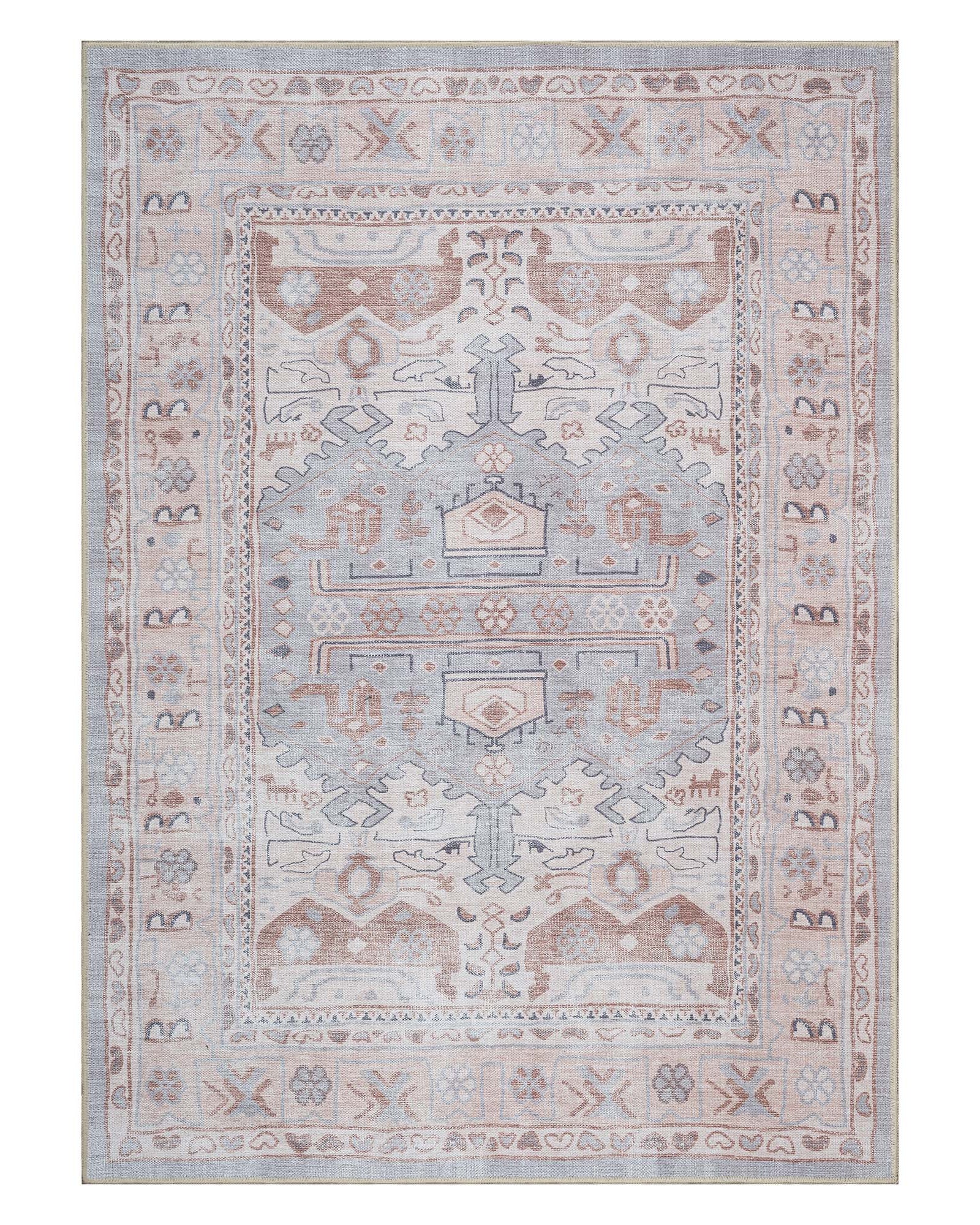
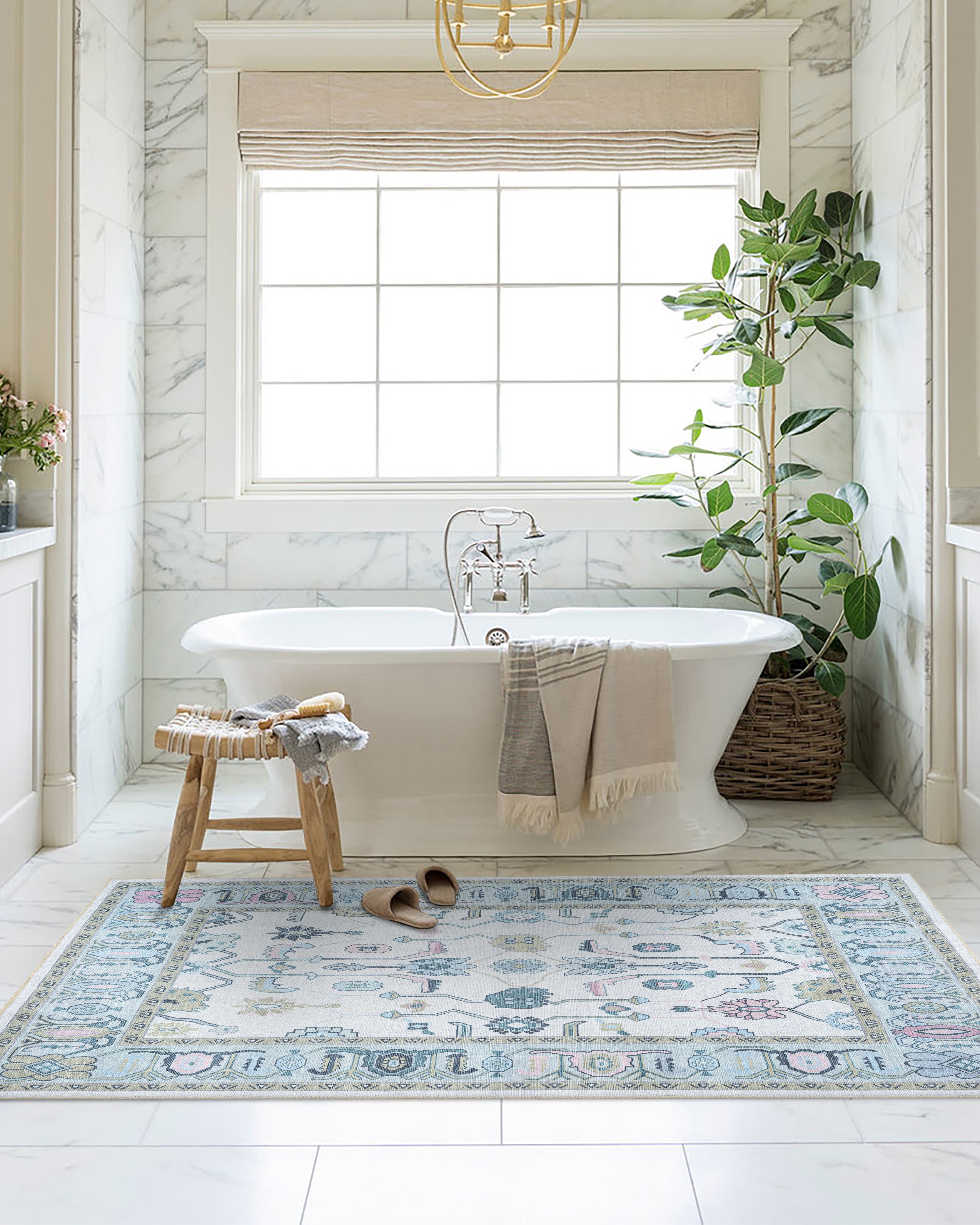
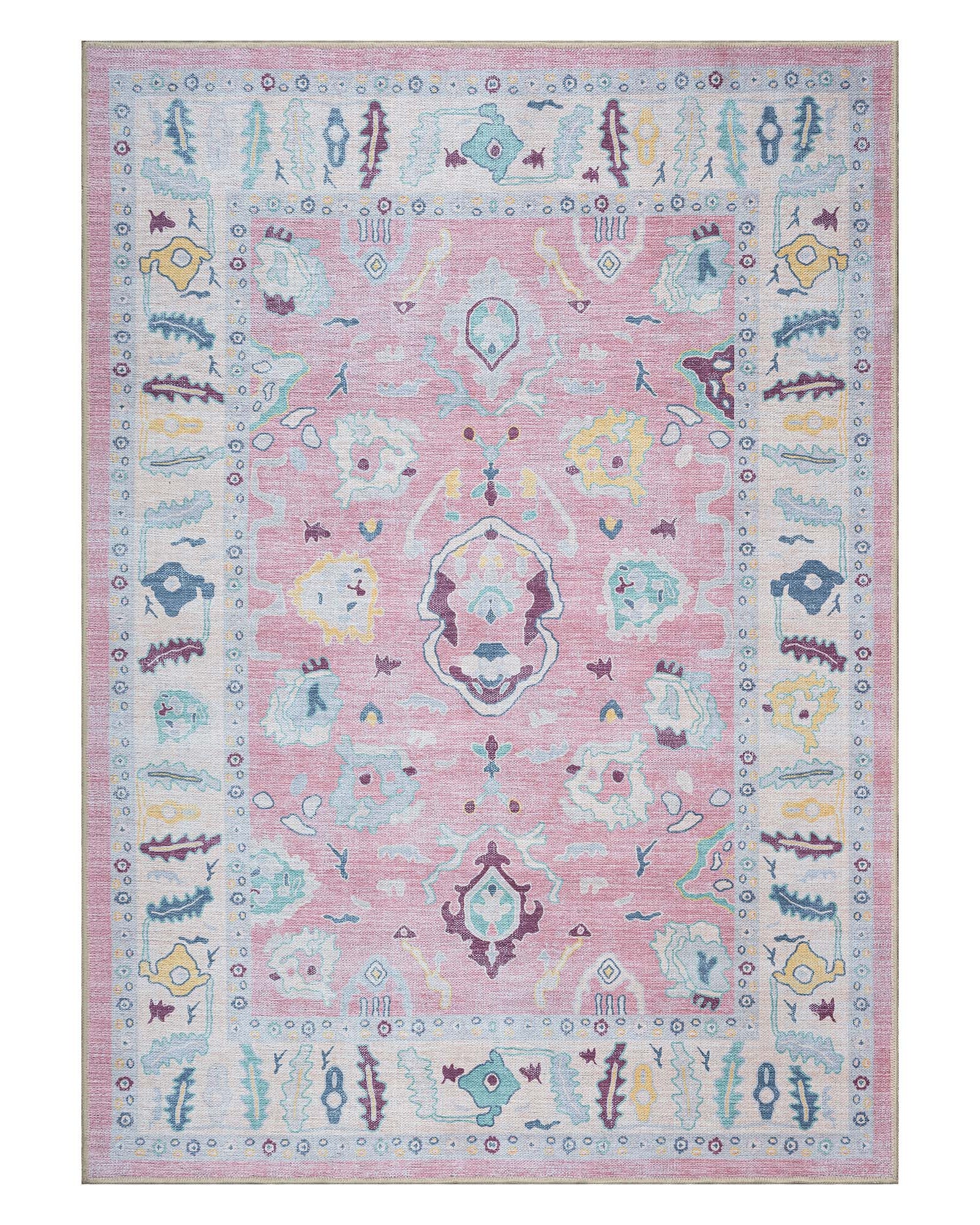
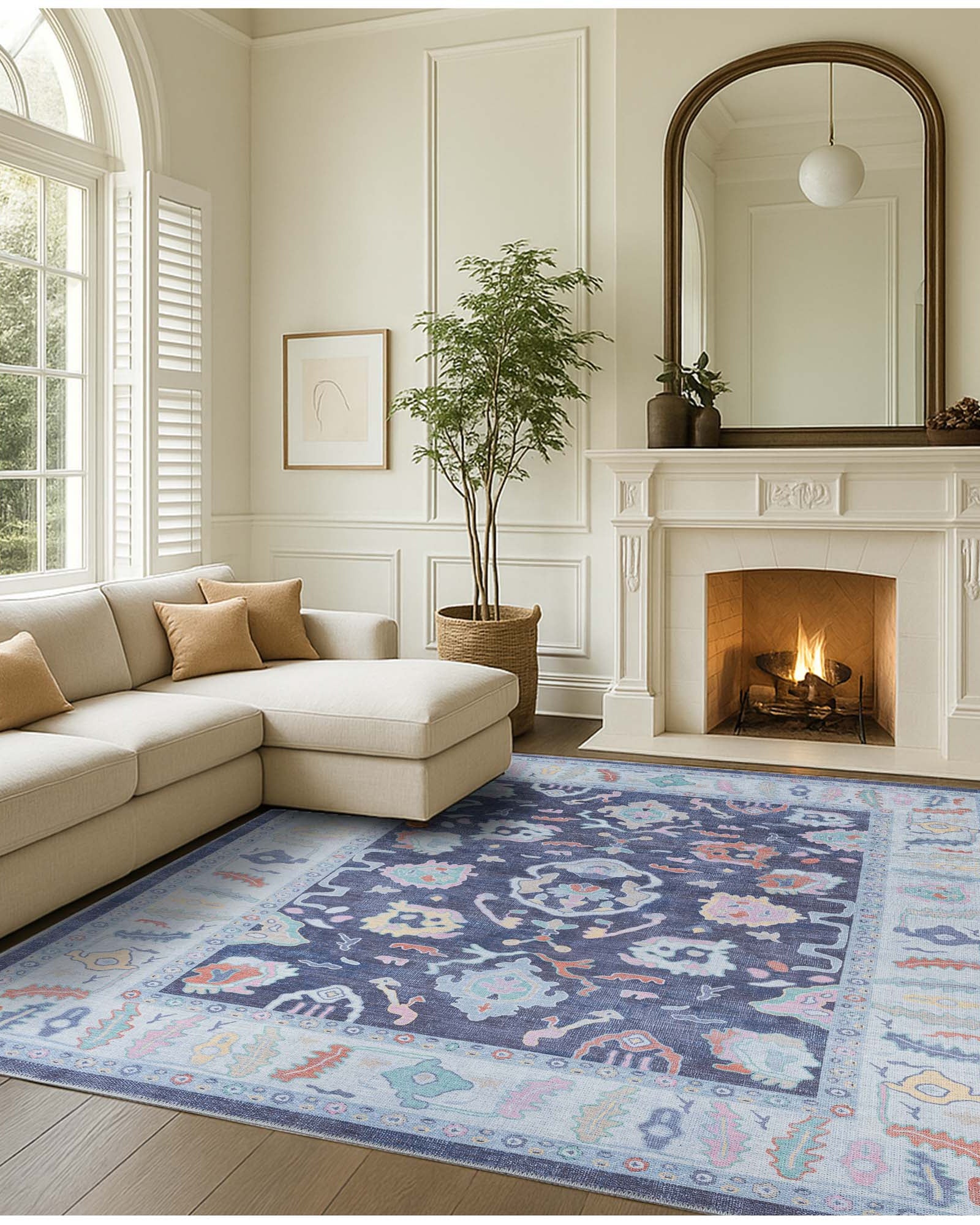
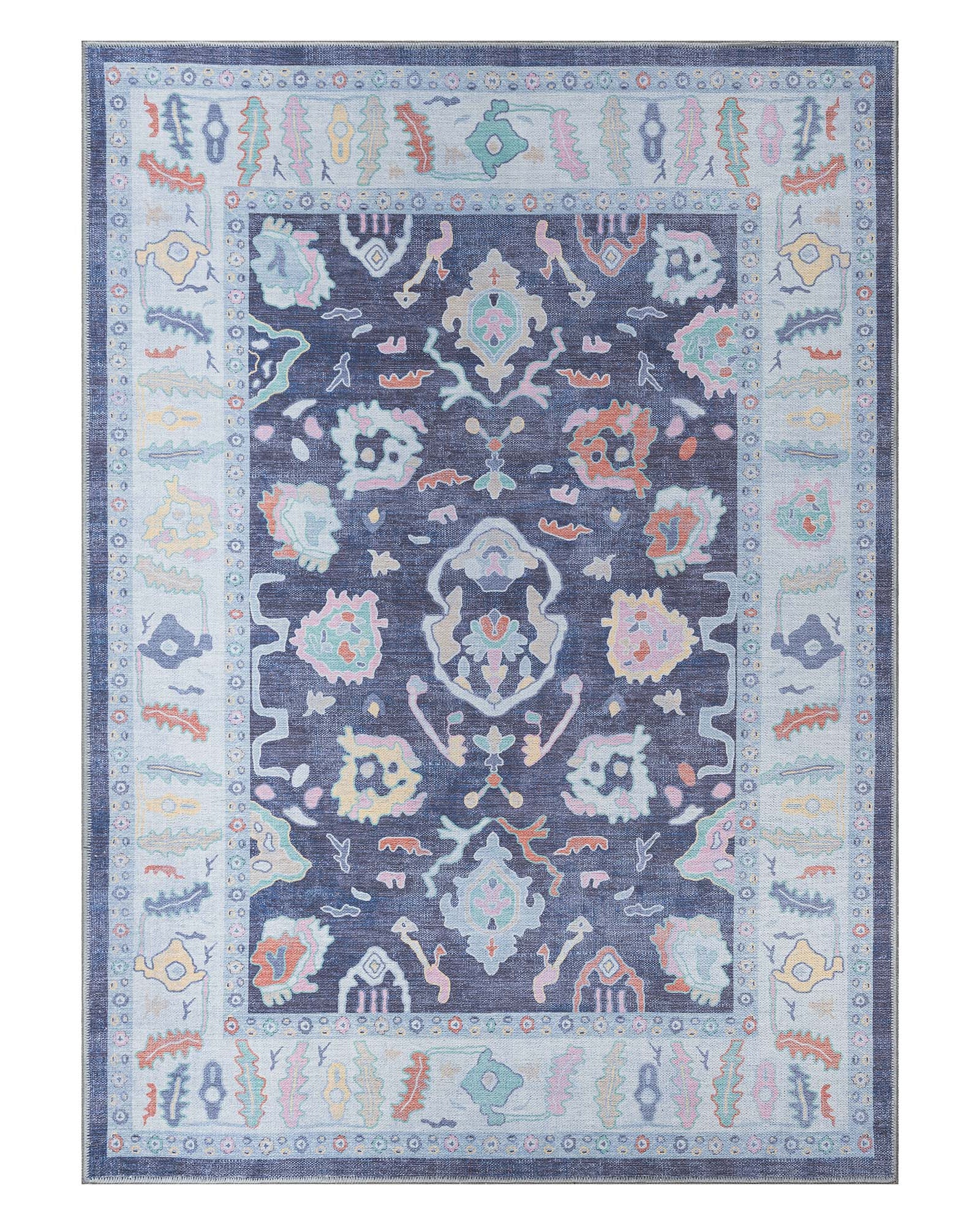
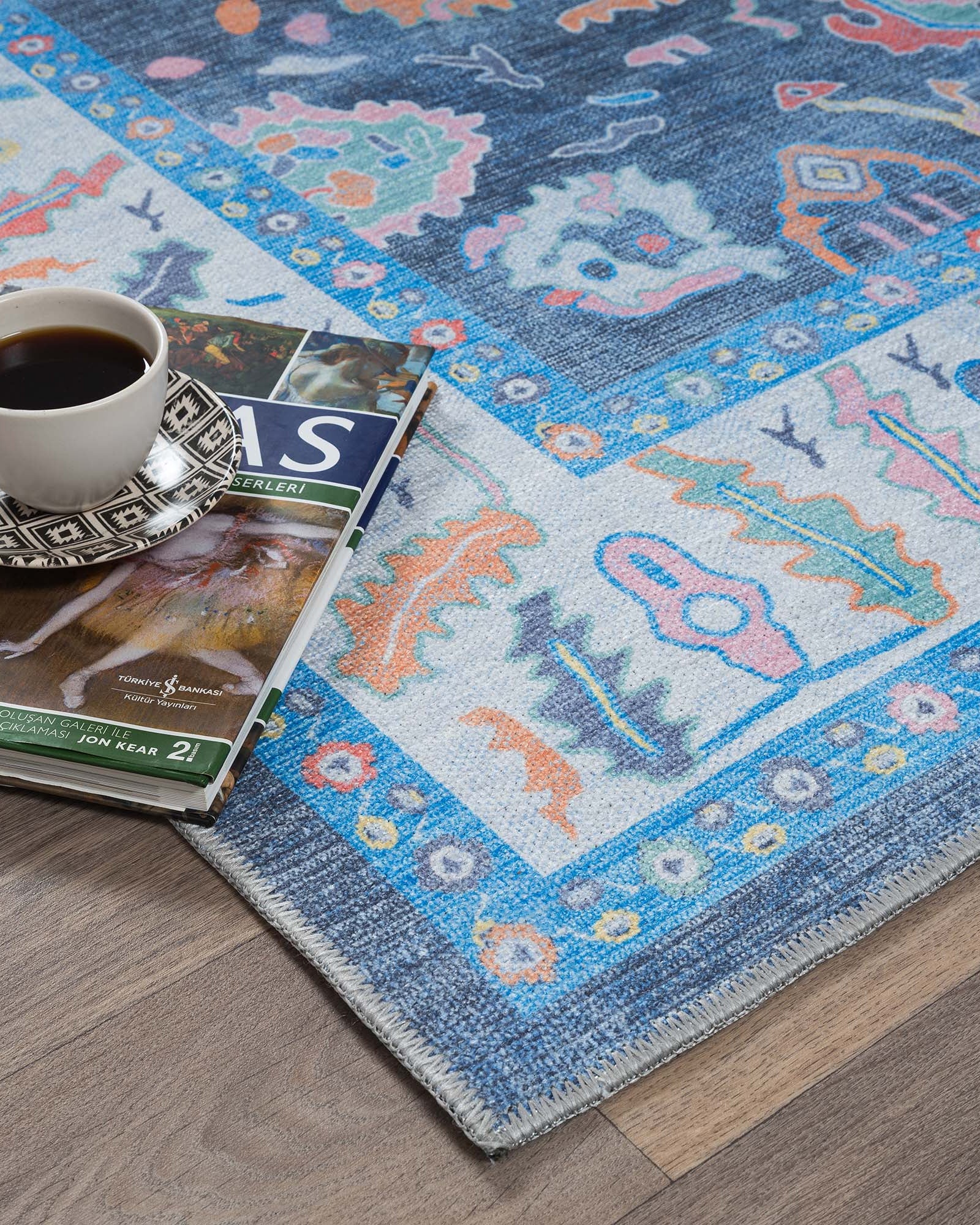
Bold, angular, high-contrast pattern is not a stylistic choice here — it is what the technique makes possible. Large hooked medallions, repeating diamond lattices, stacked geometric columns and thick, confident borders all read clearly at coarse density in a way delicate florals never could. This is also why coarse tribal rugs pair so naturally with contemporary interiors: the graphic, high-contrast pattern language these weavers developed centuries ago reads as strikingly modern today, without any deliberate styling toward that end.
Choosing a Coarse Weave Rug for Your Room
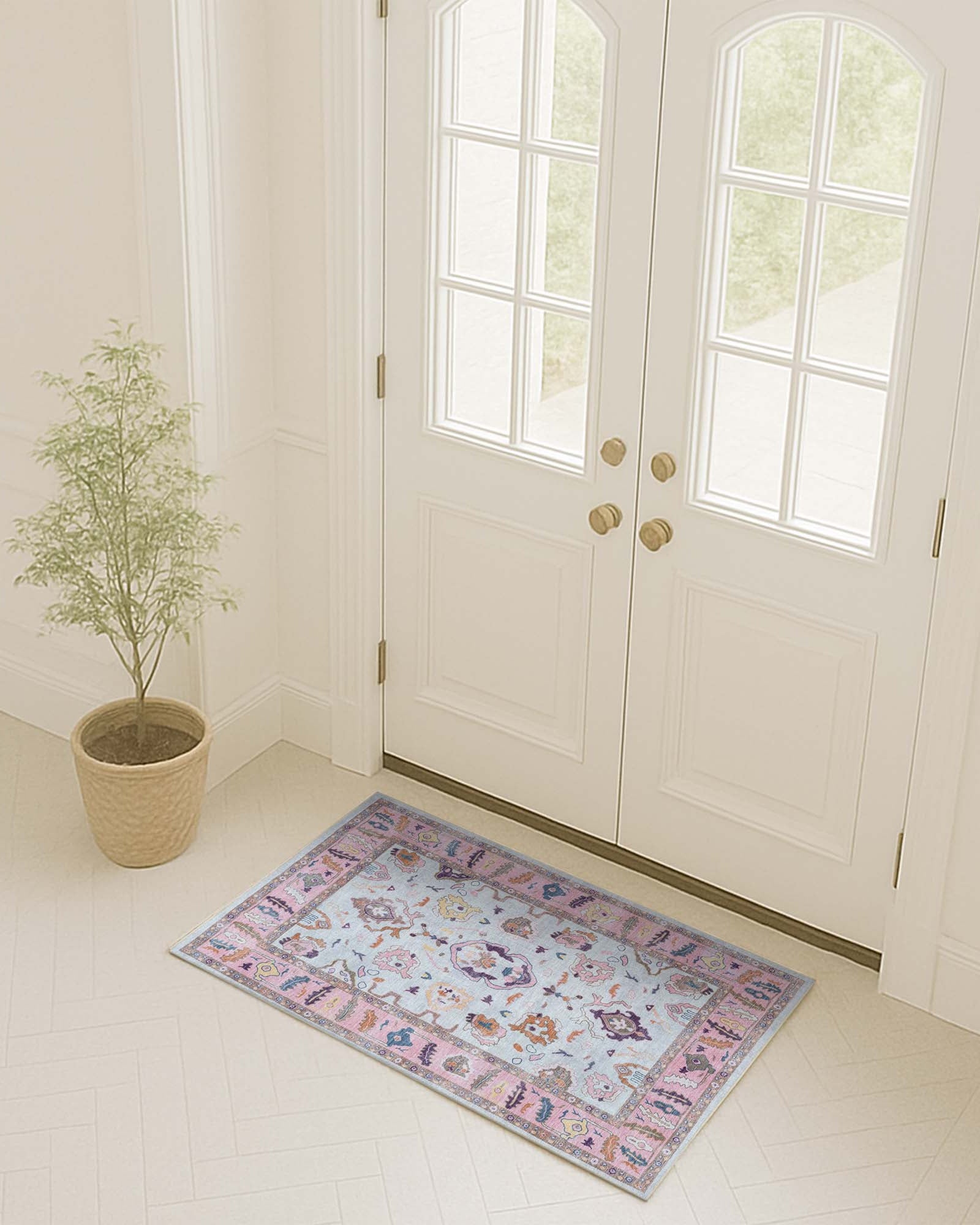
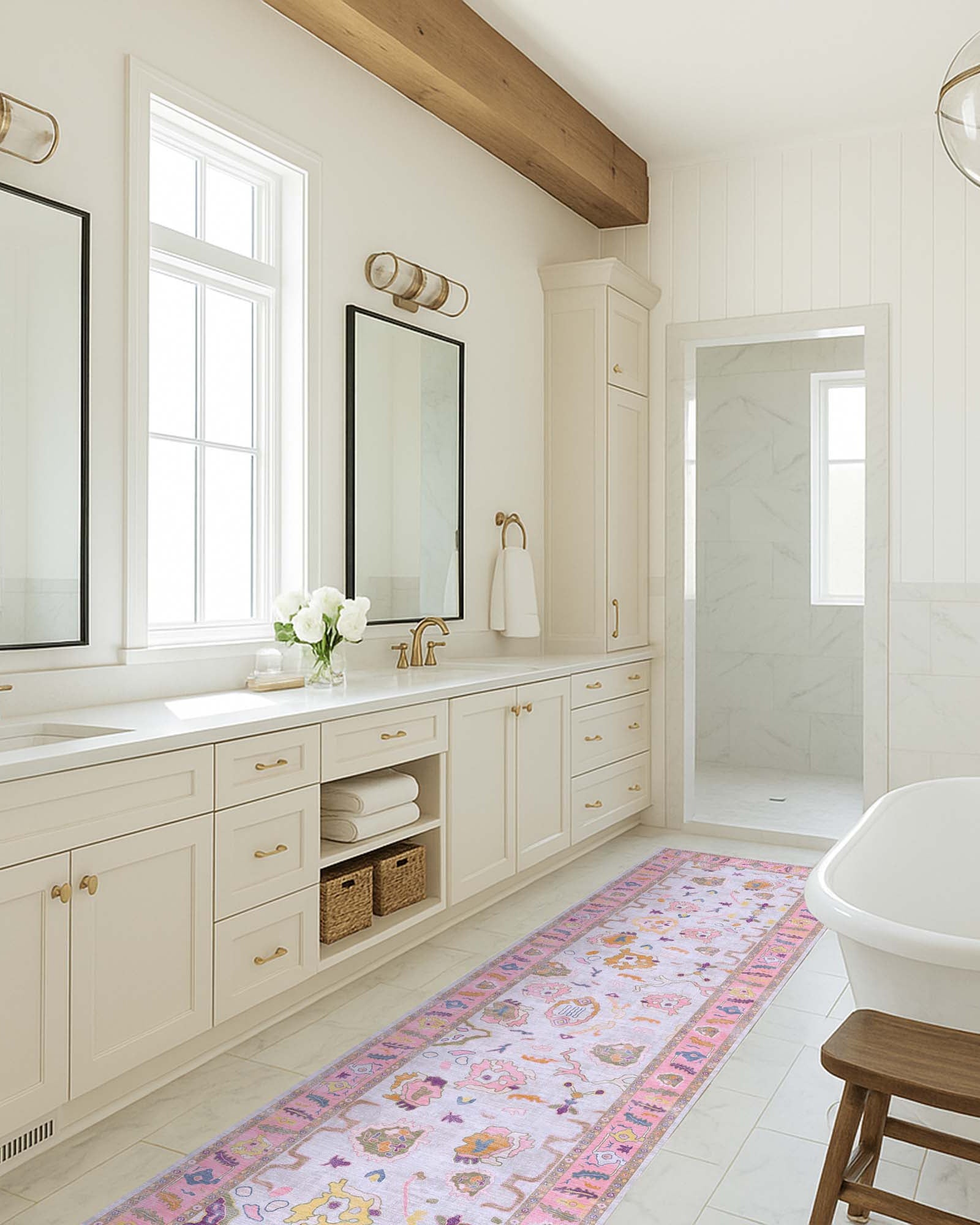
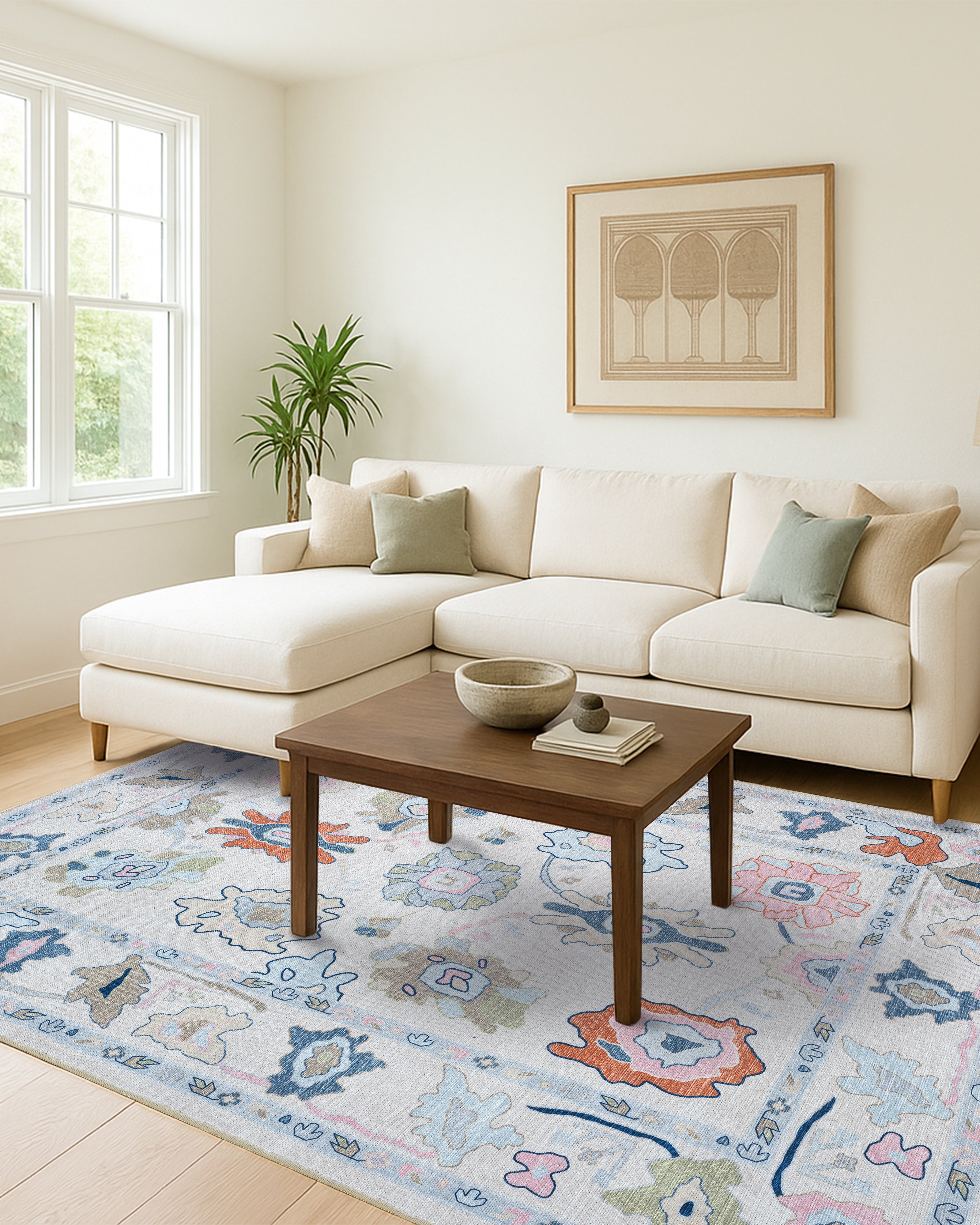
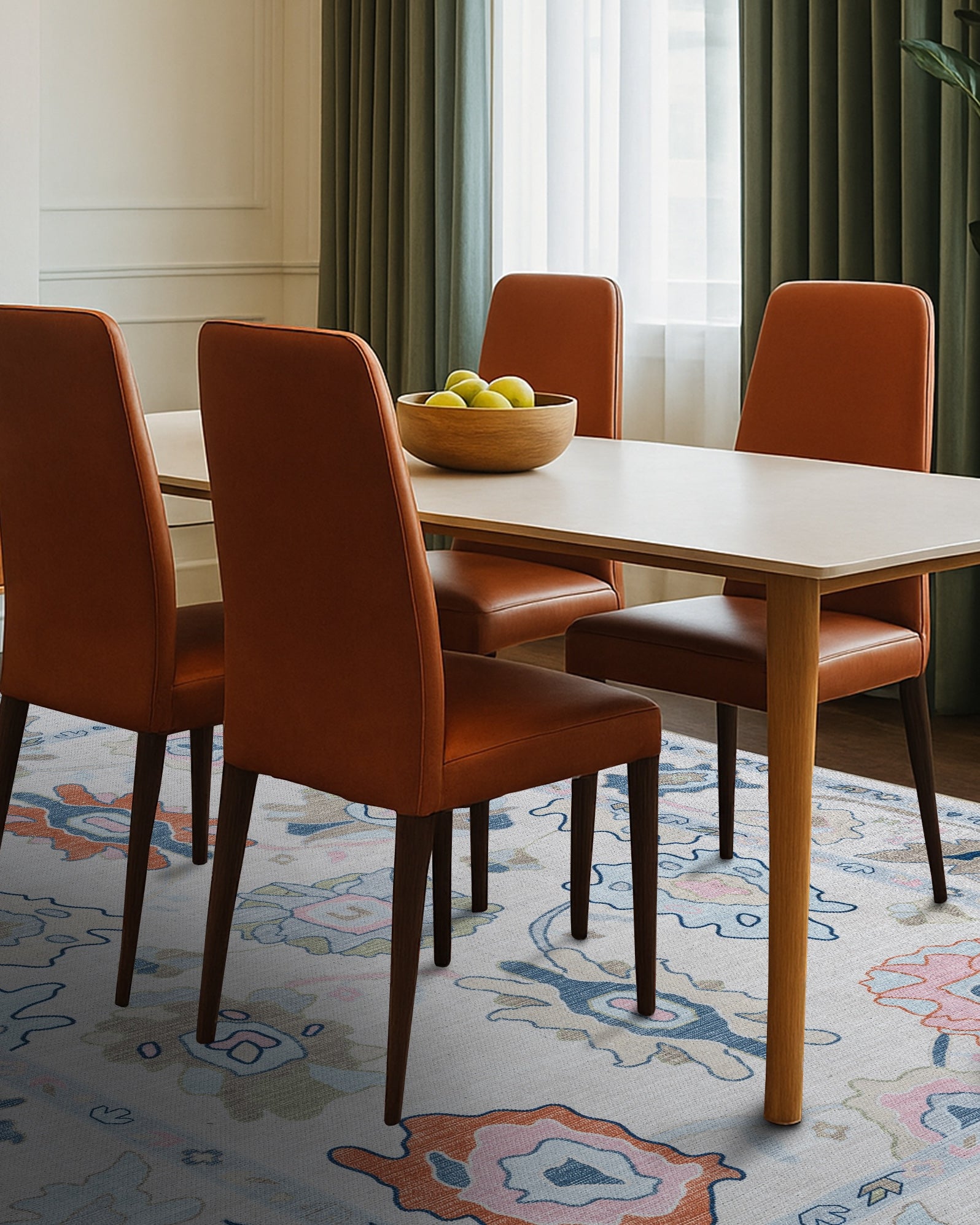
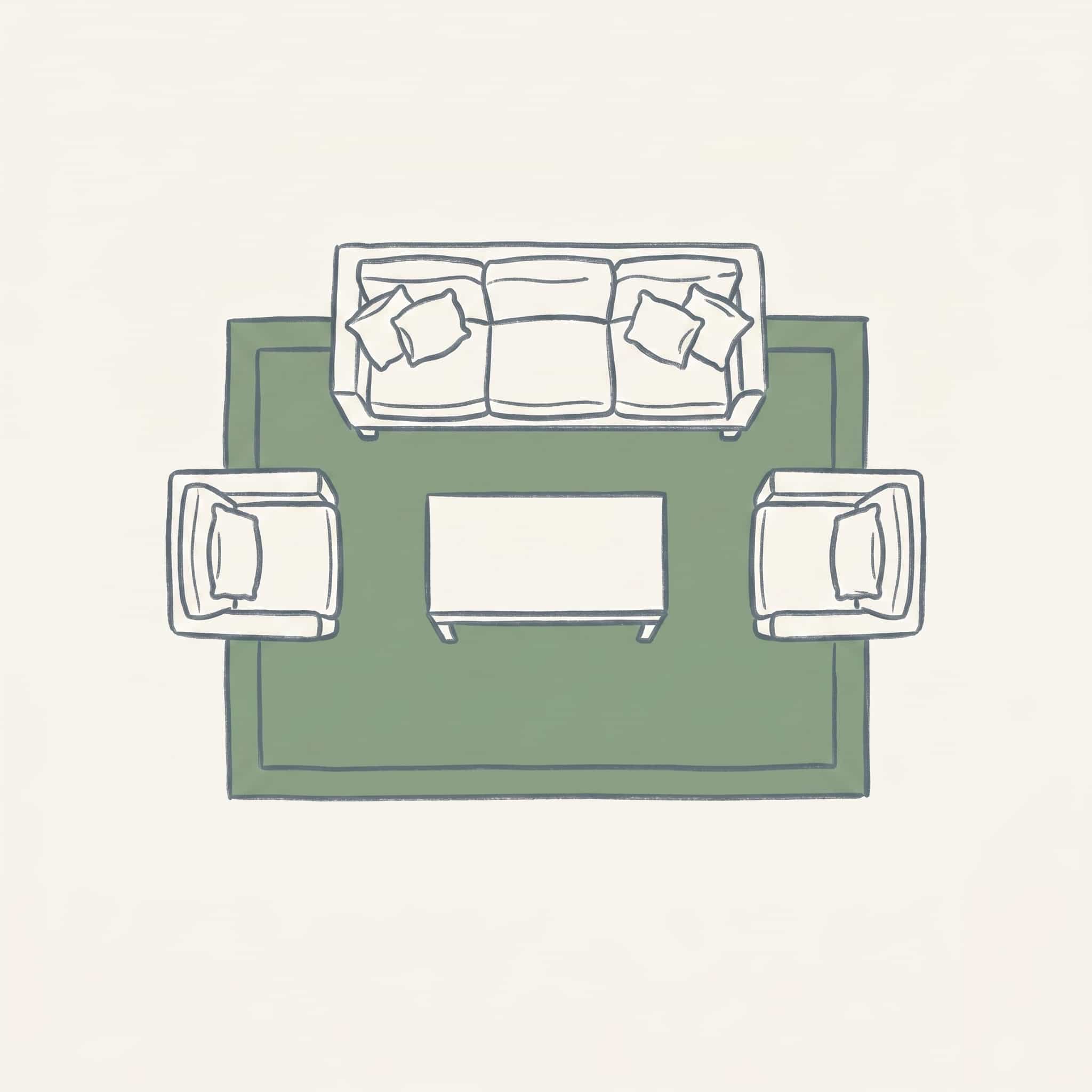
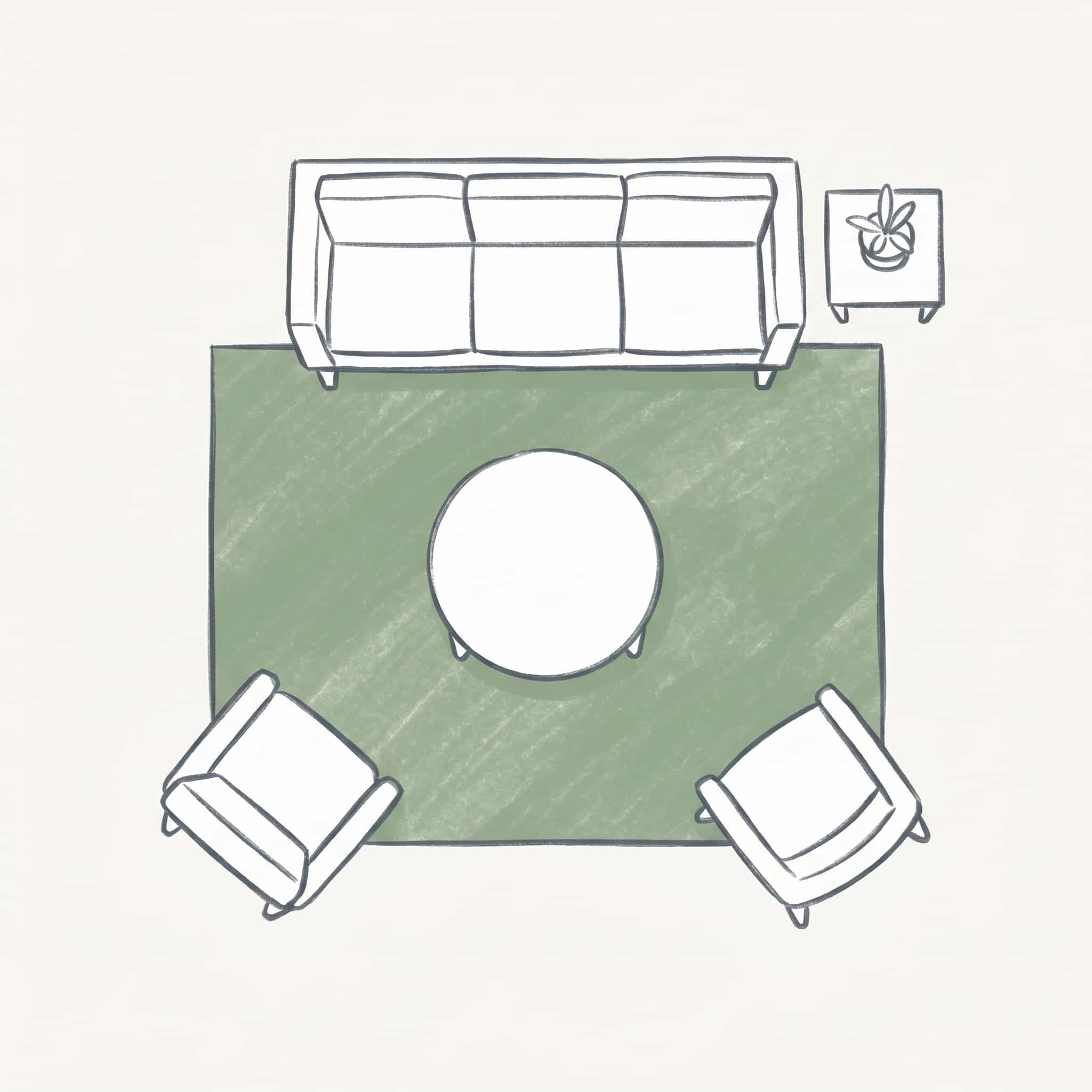
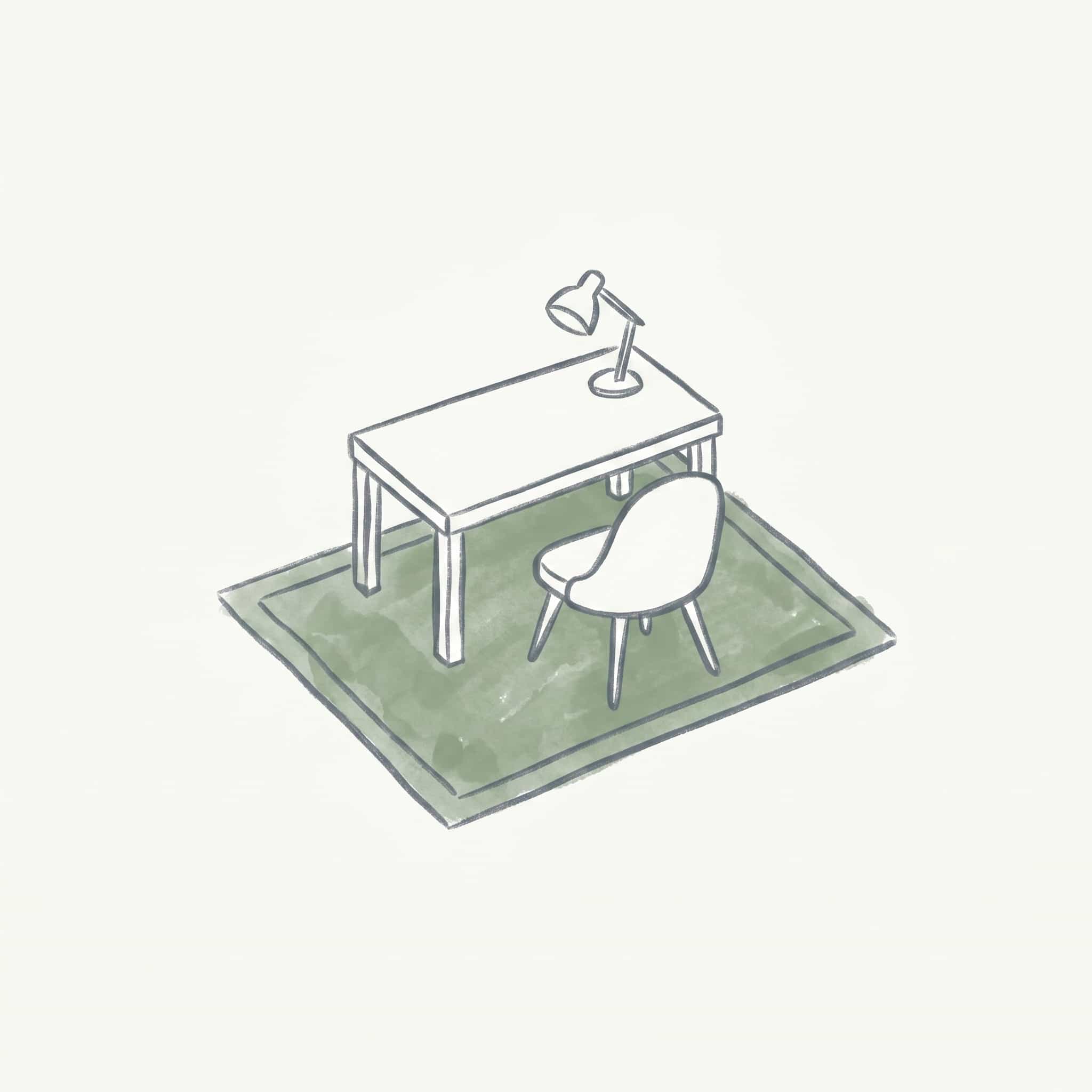
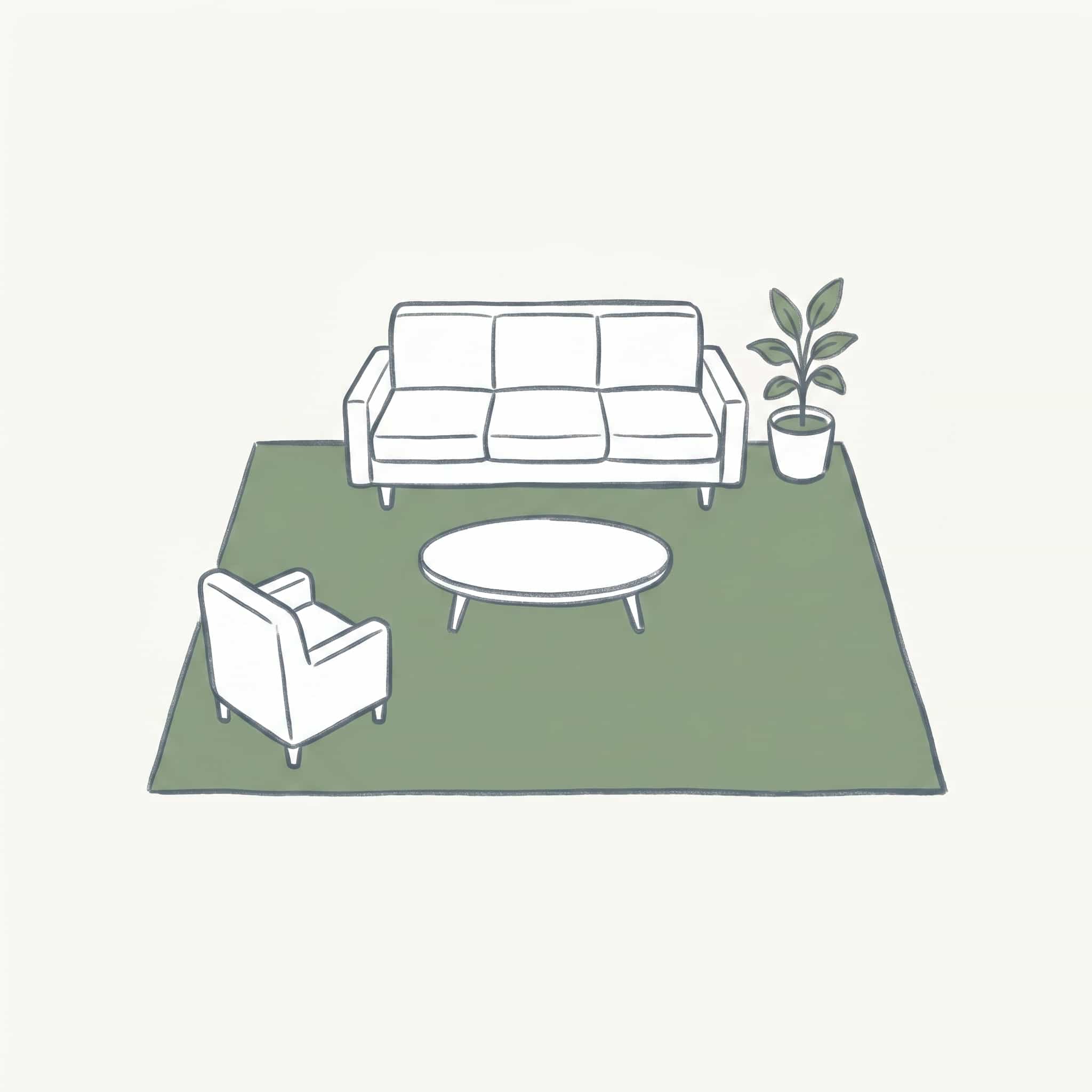
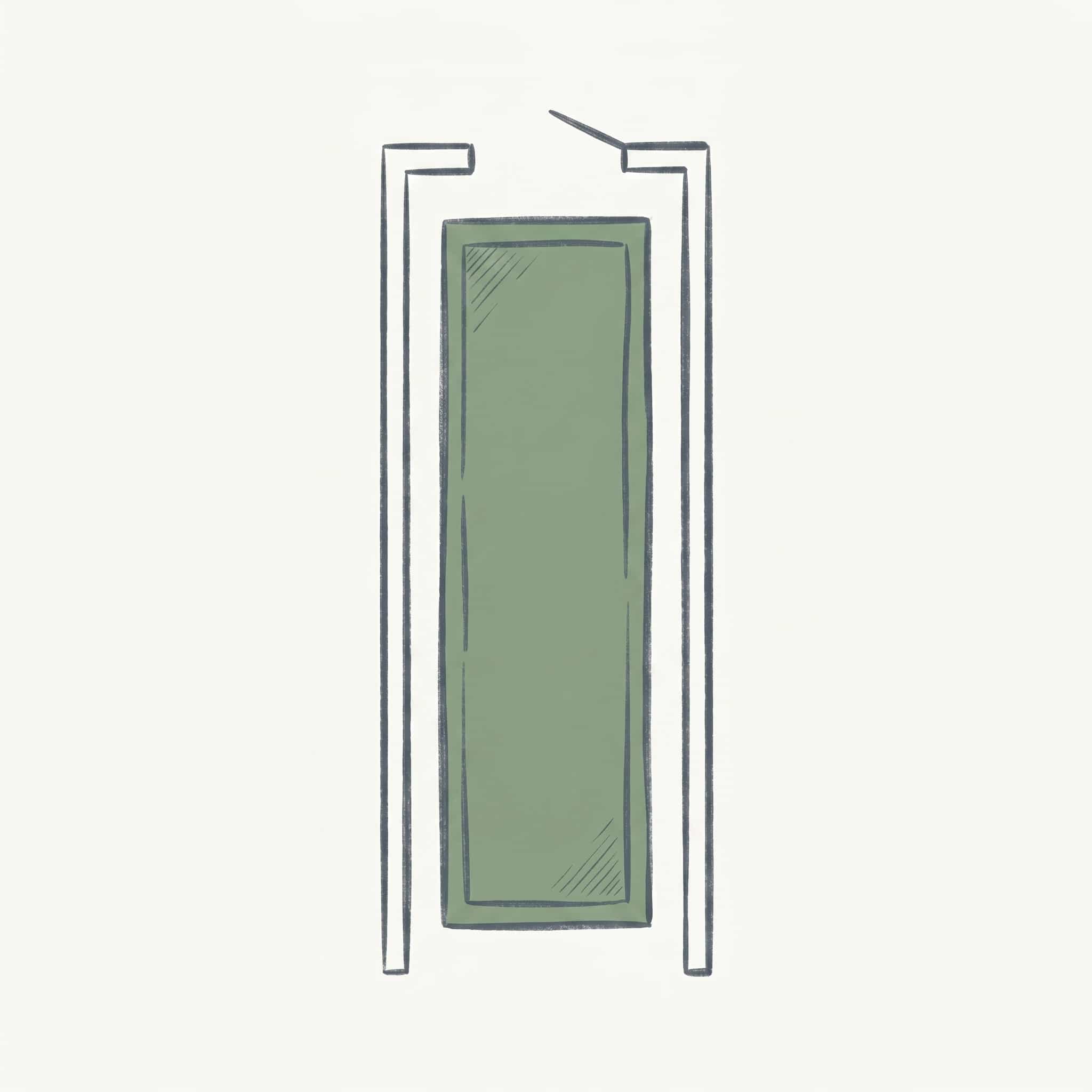
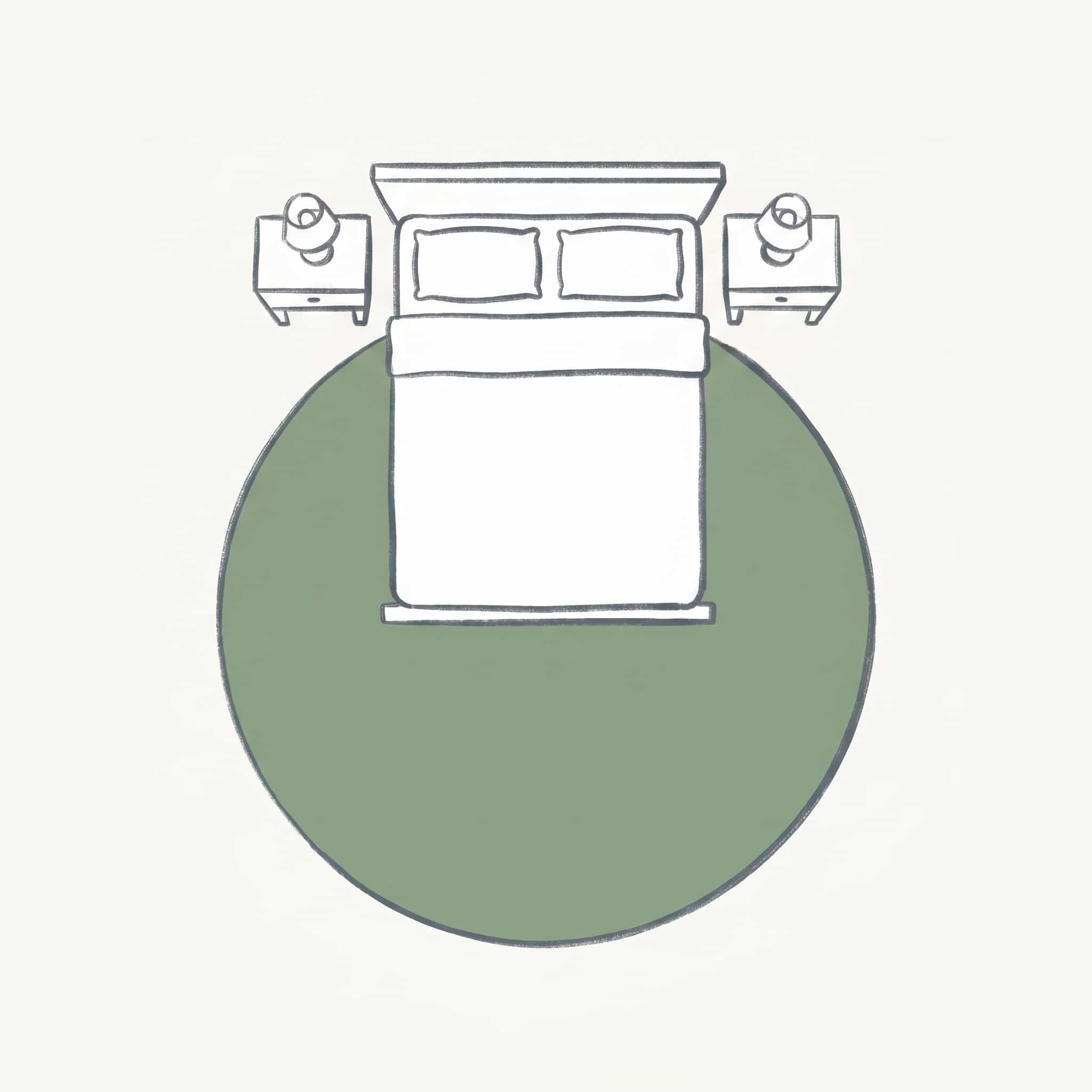
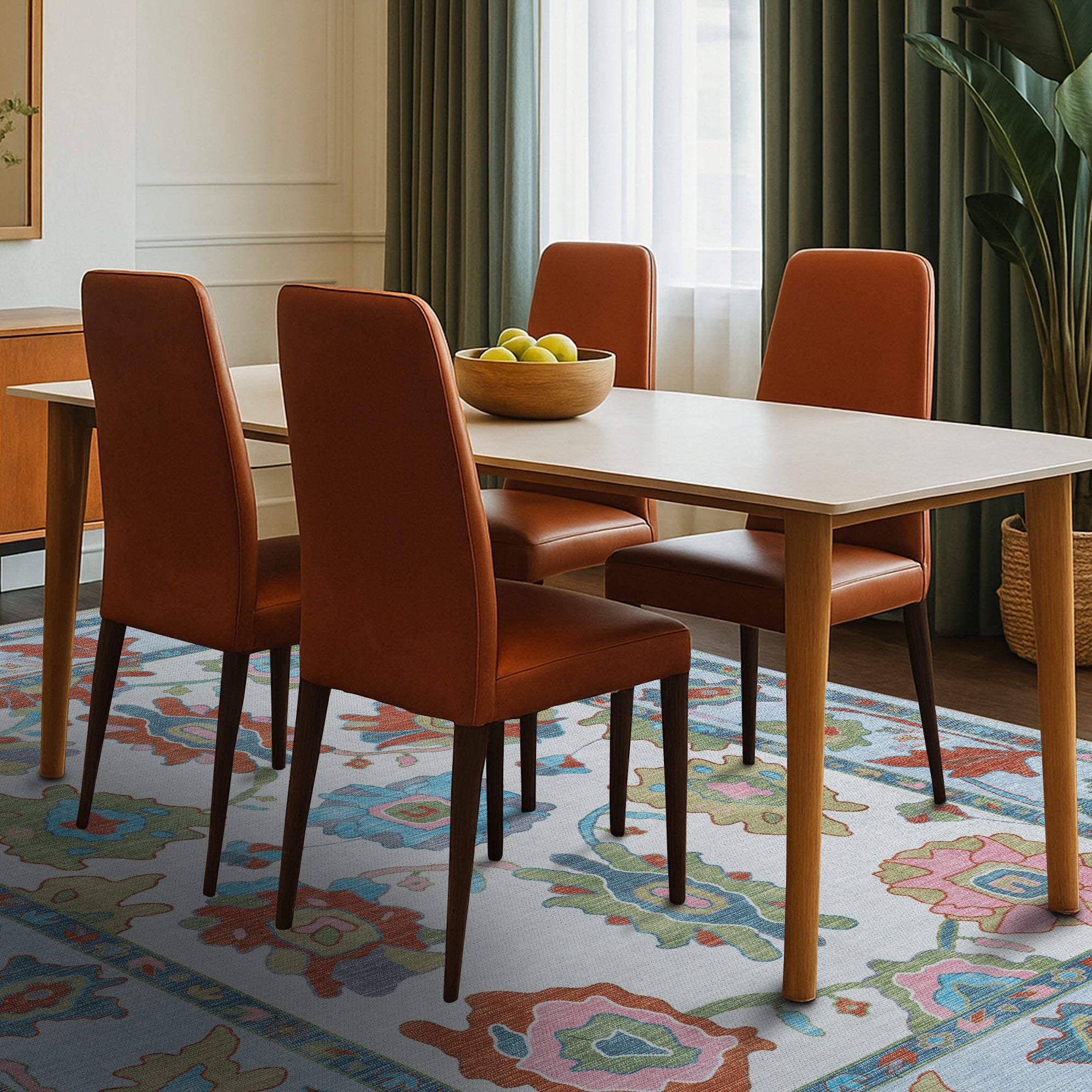
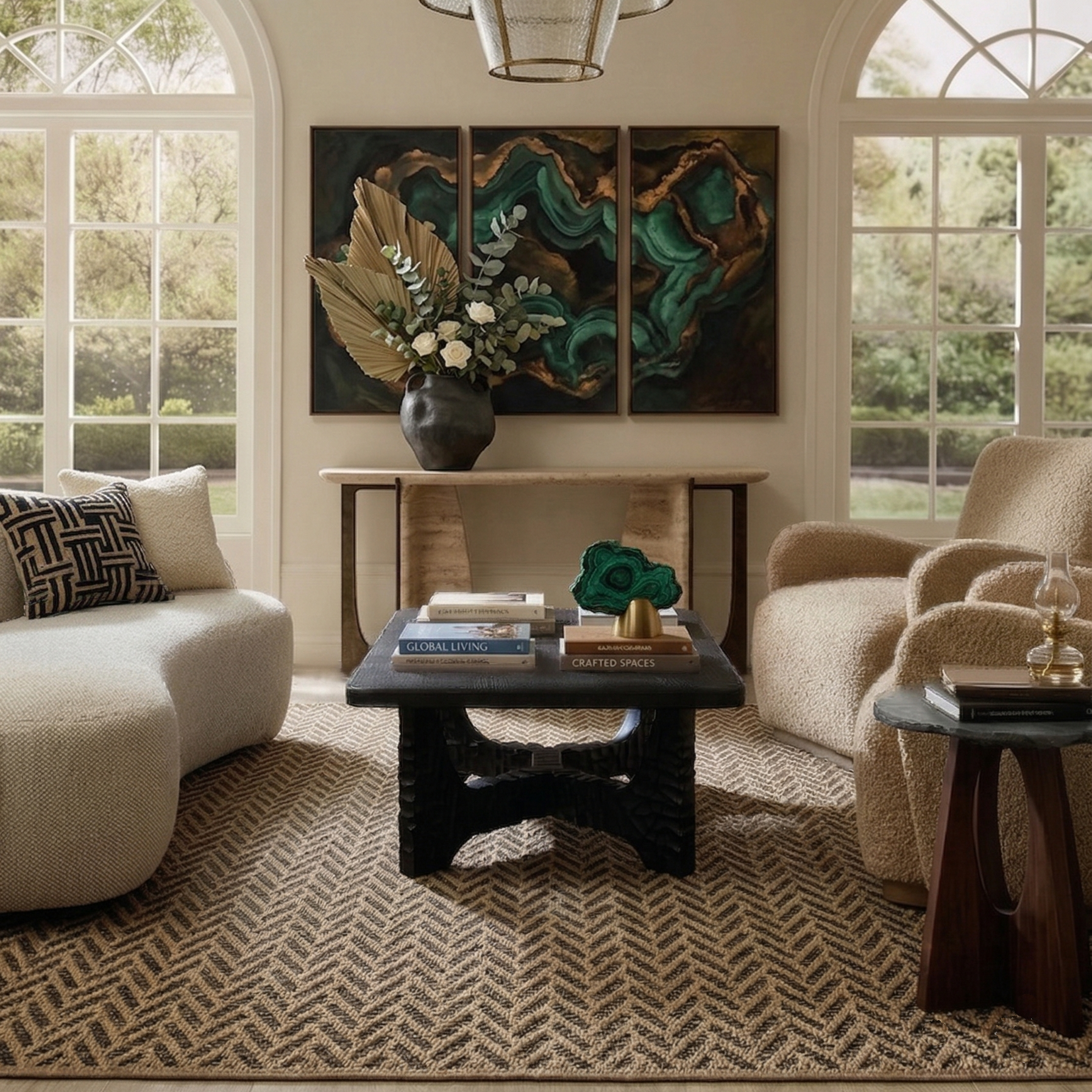
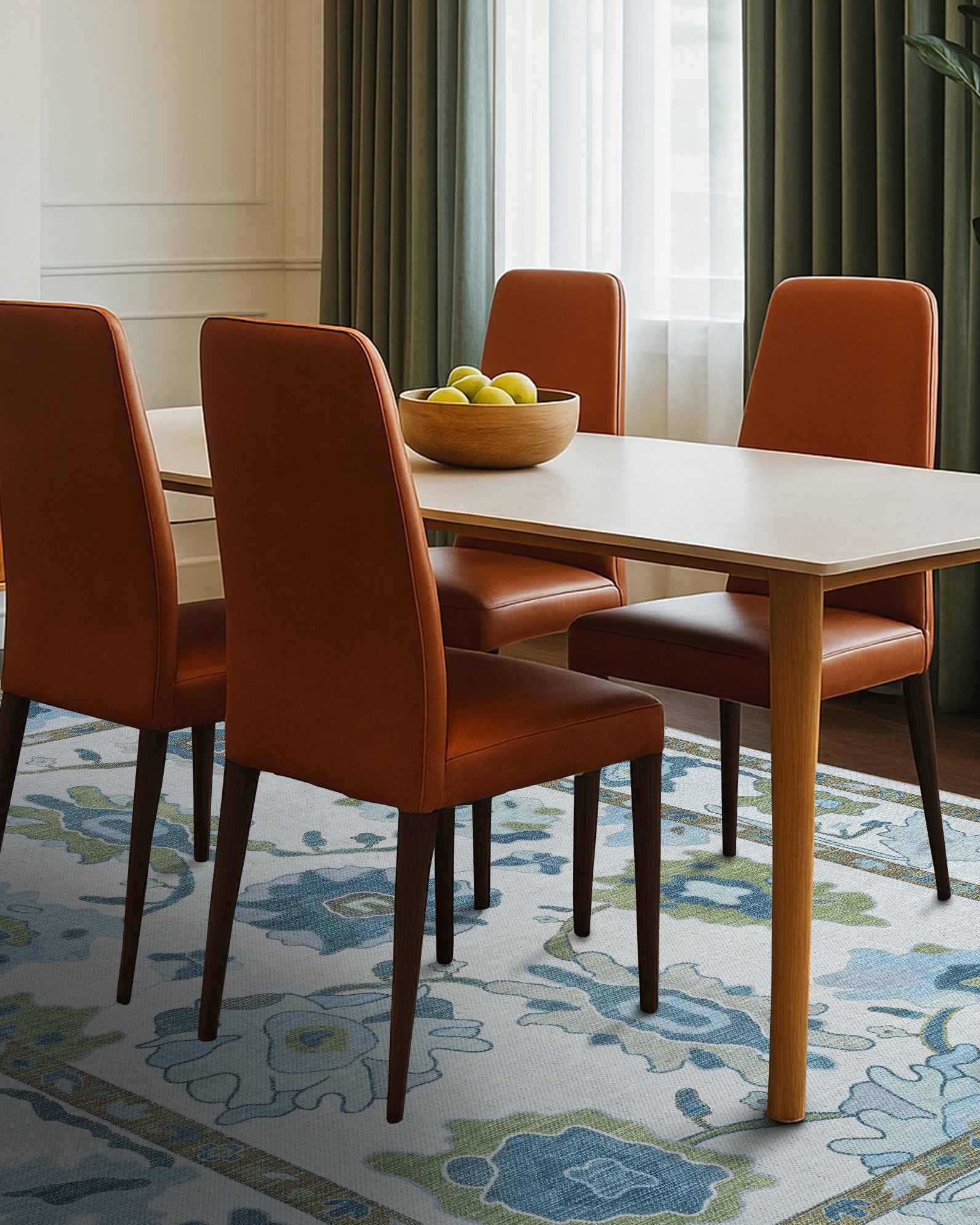
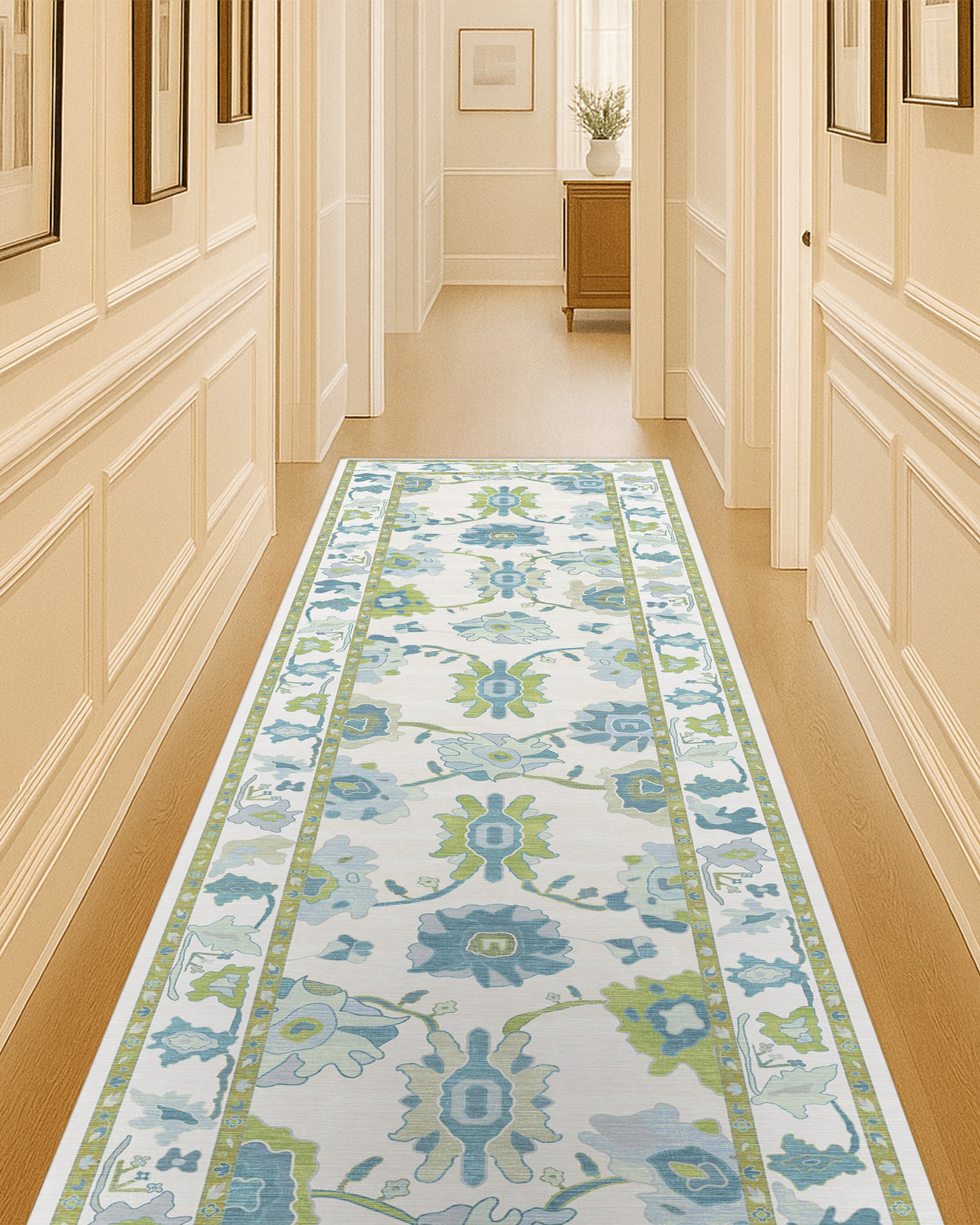
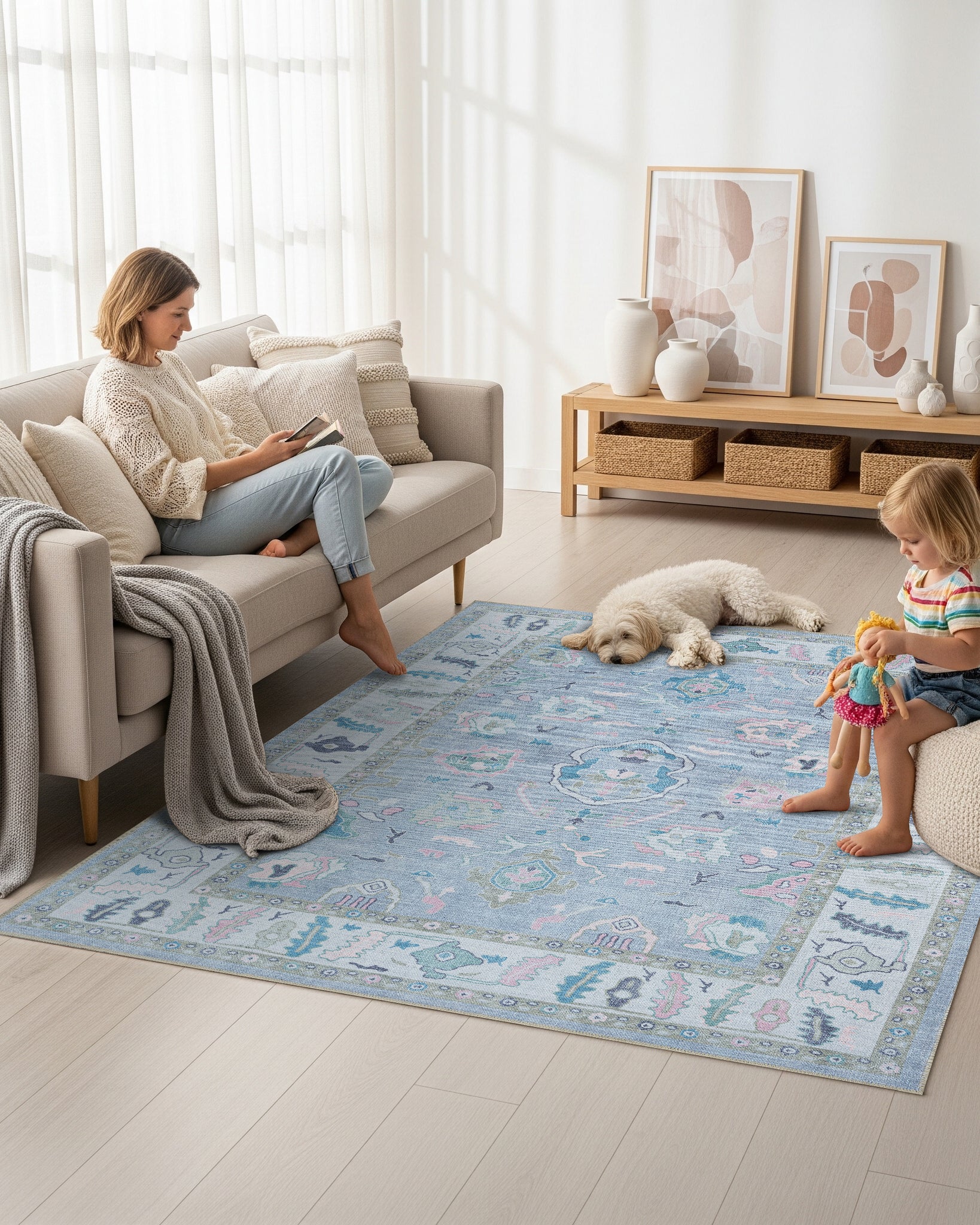
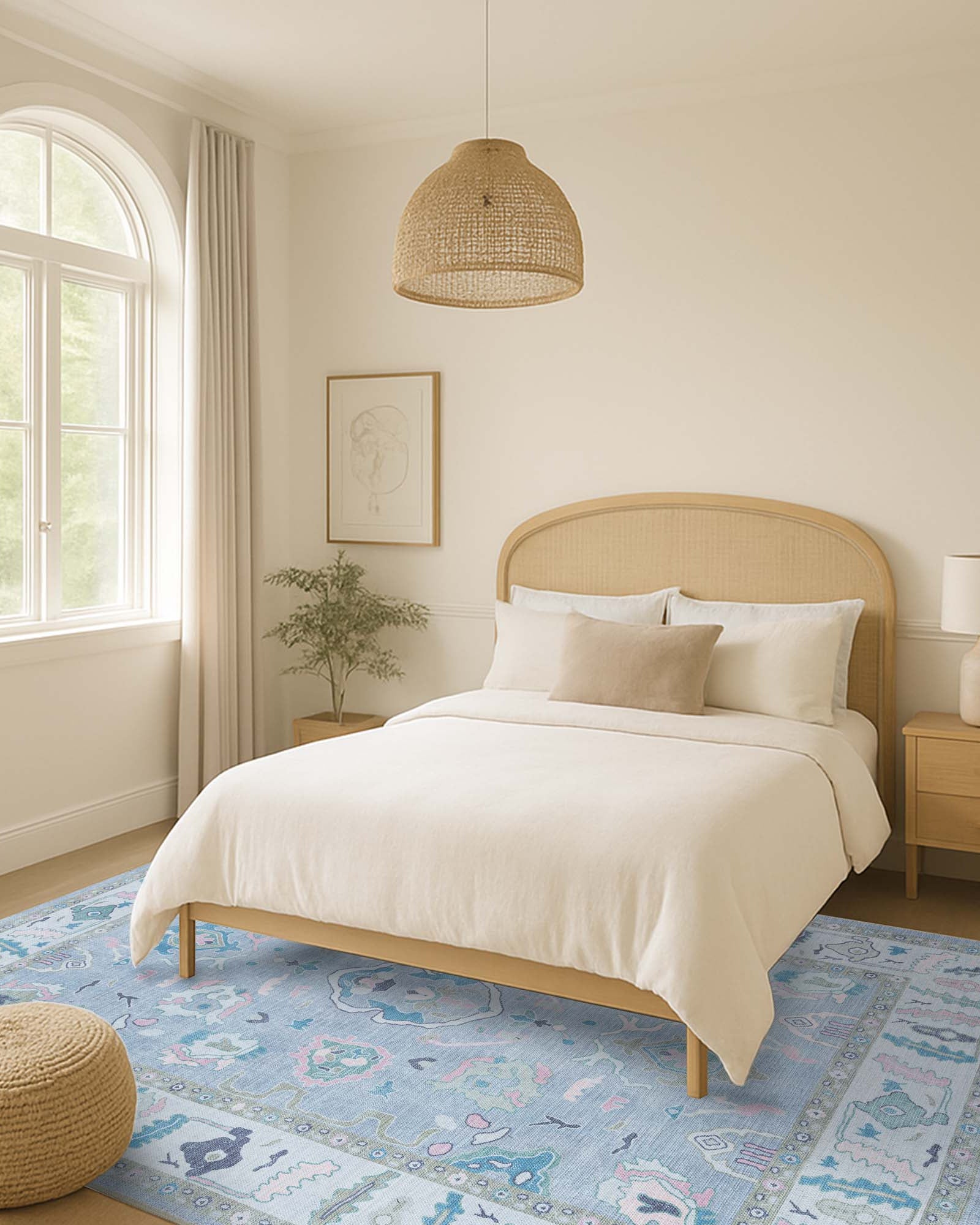
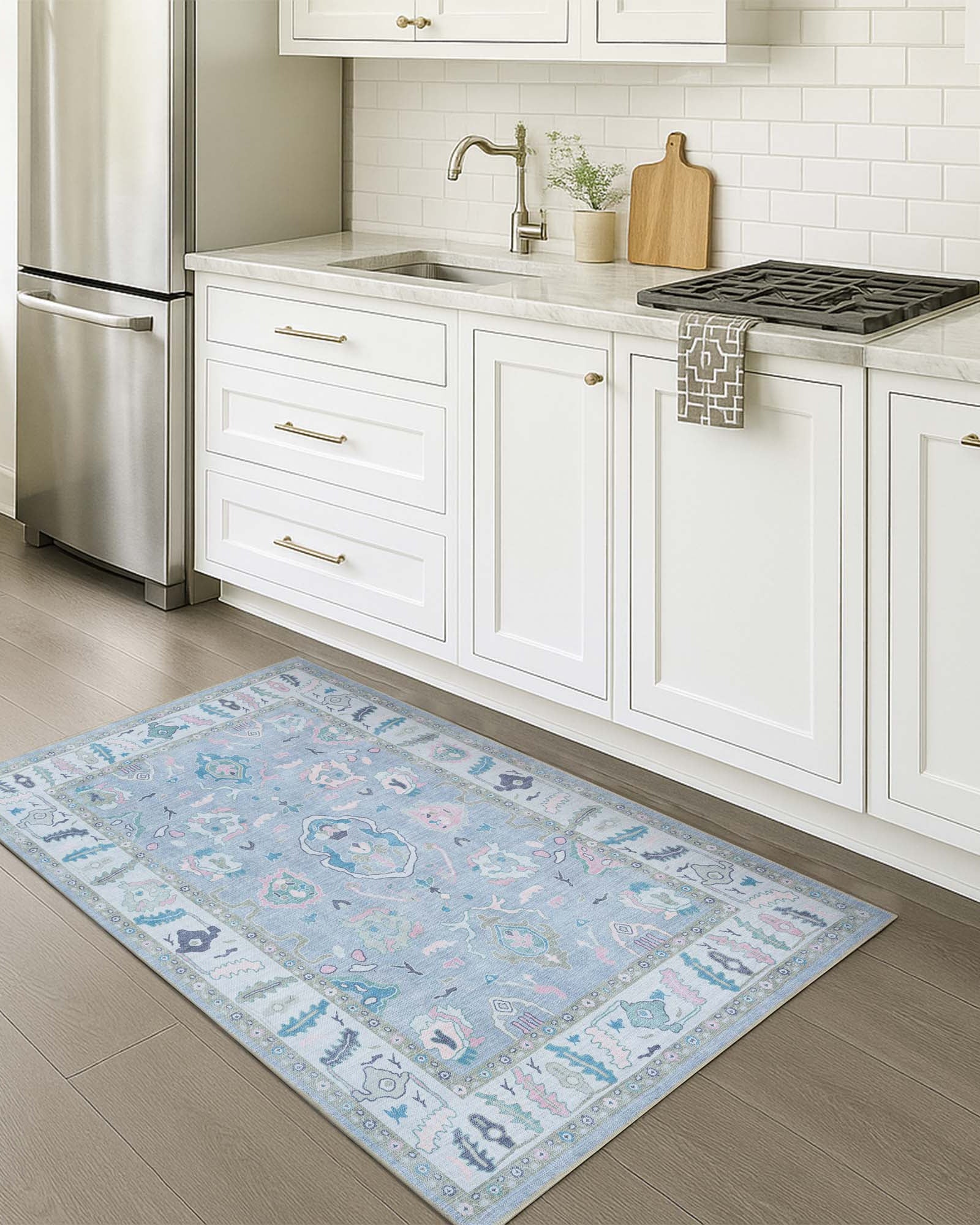
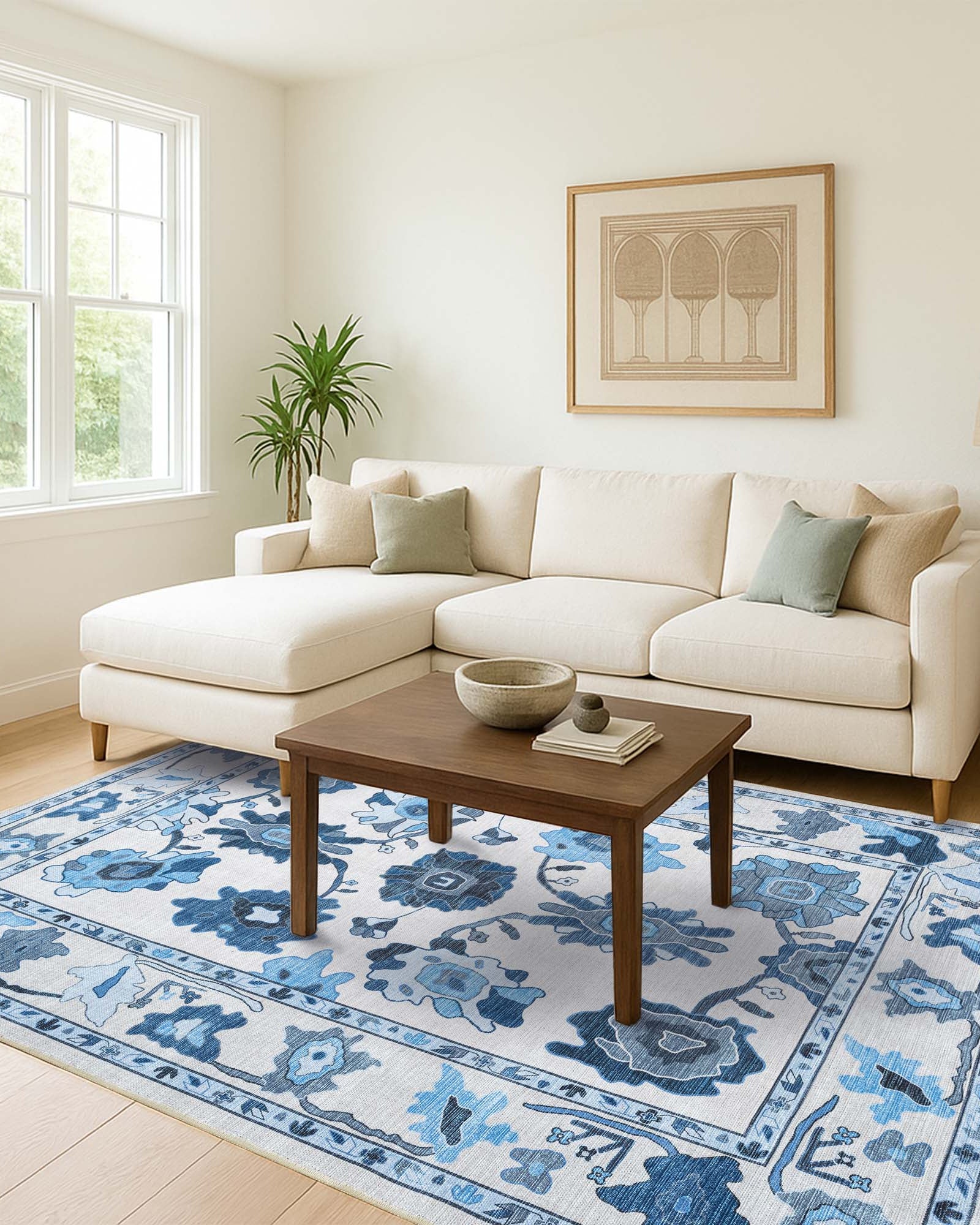
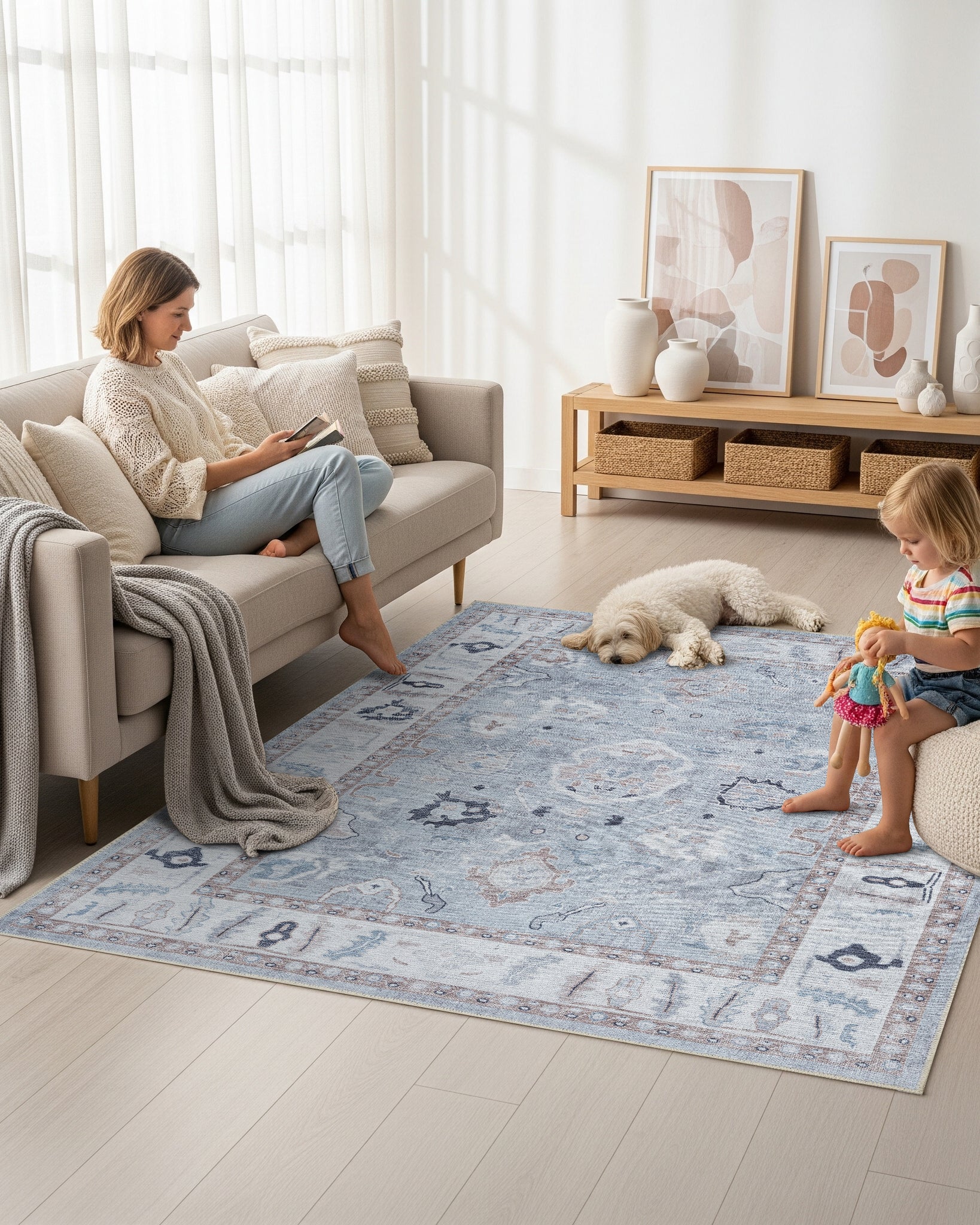
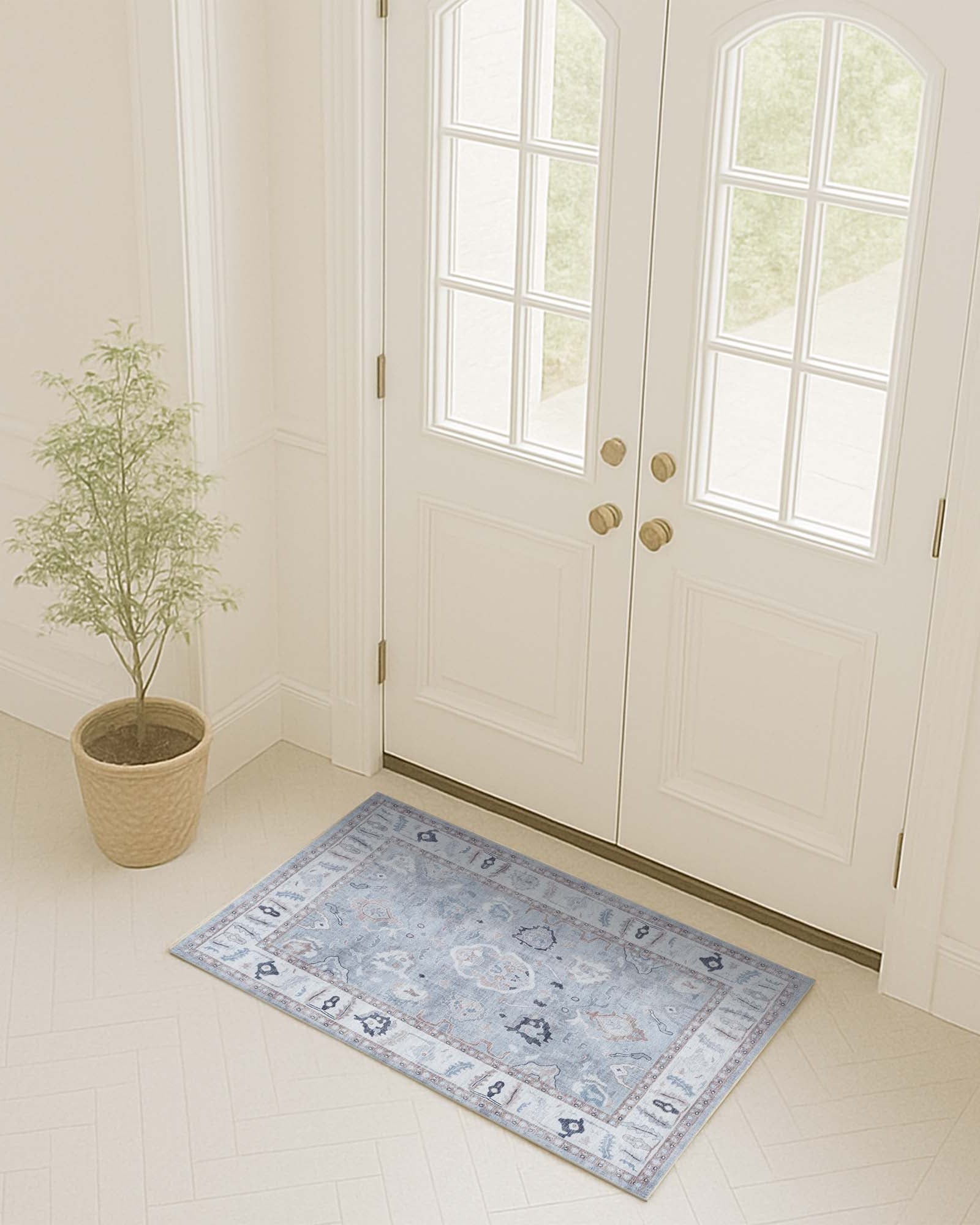
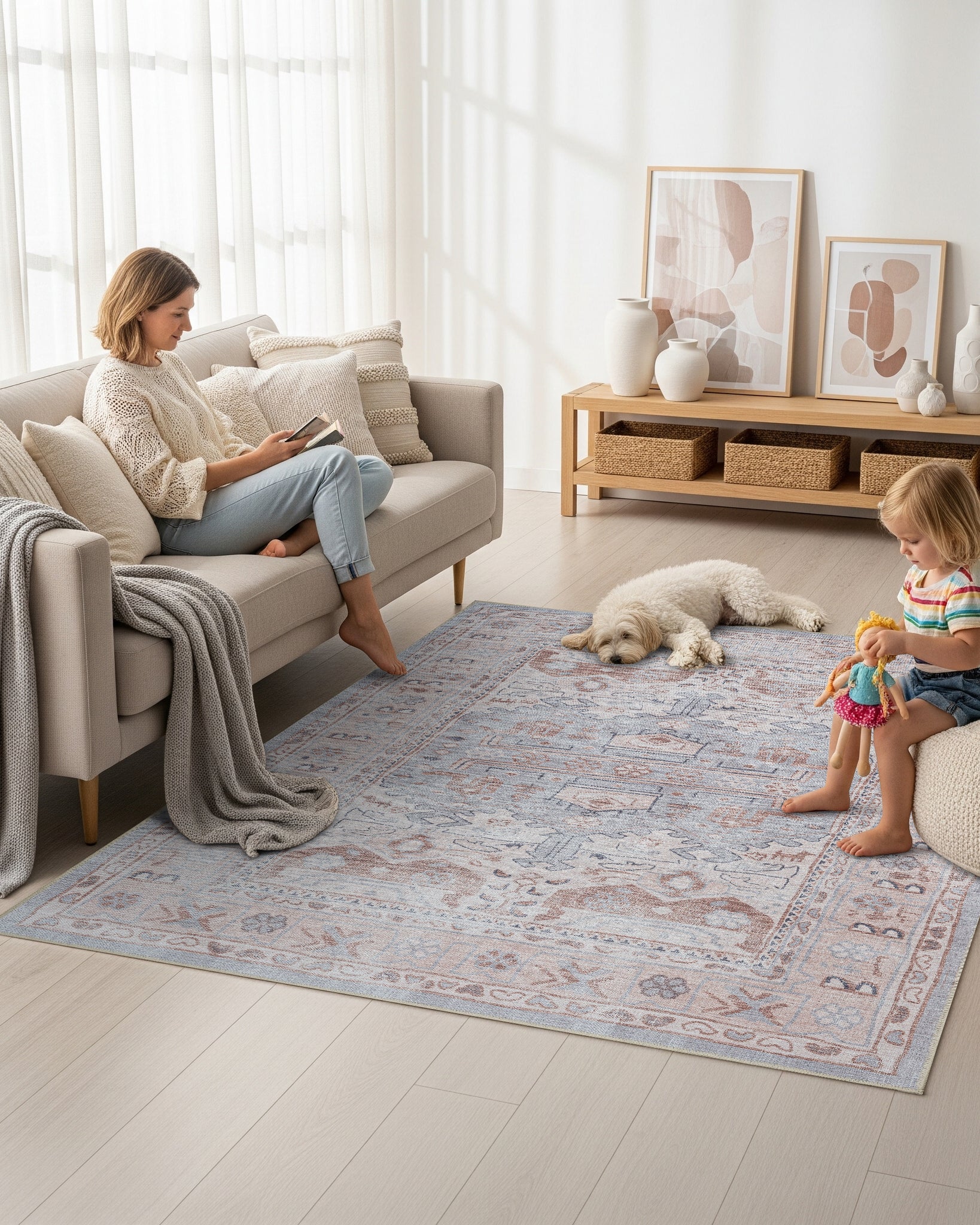
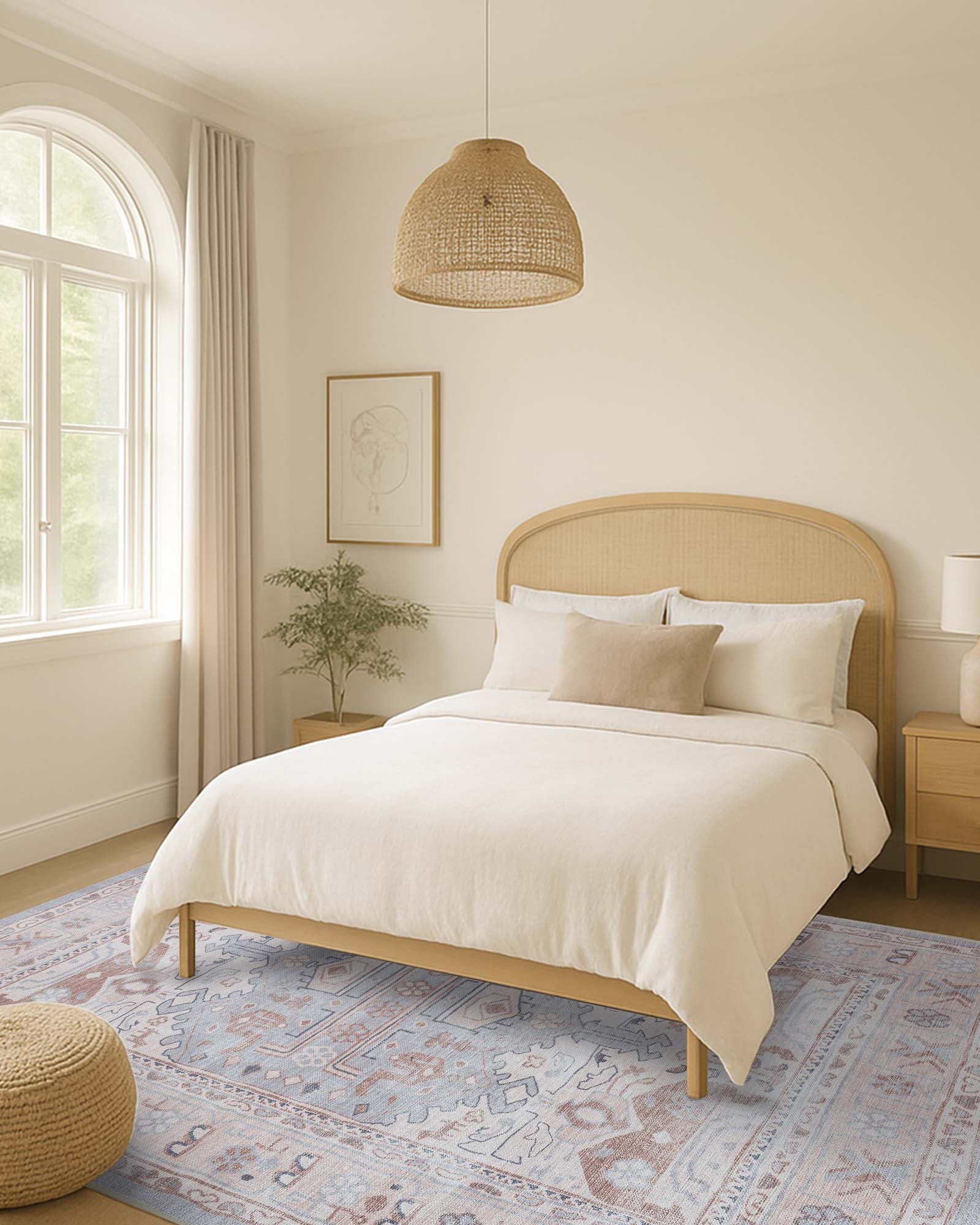
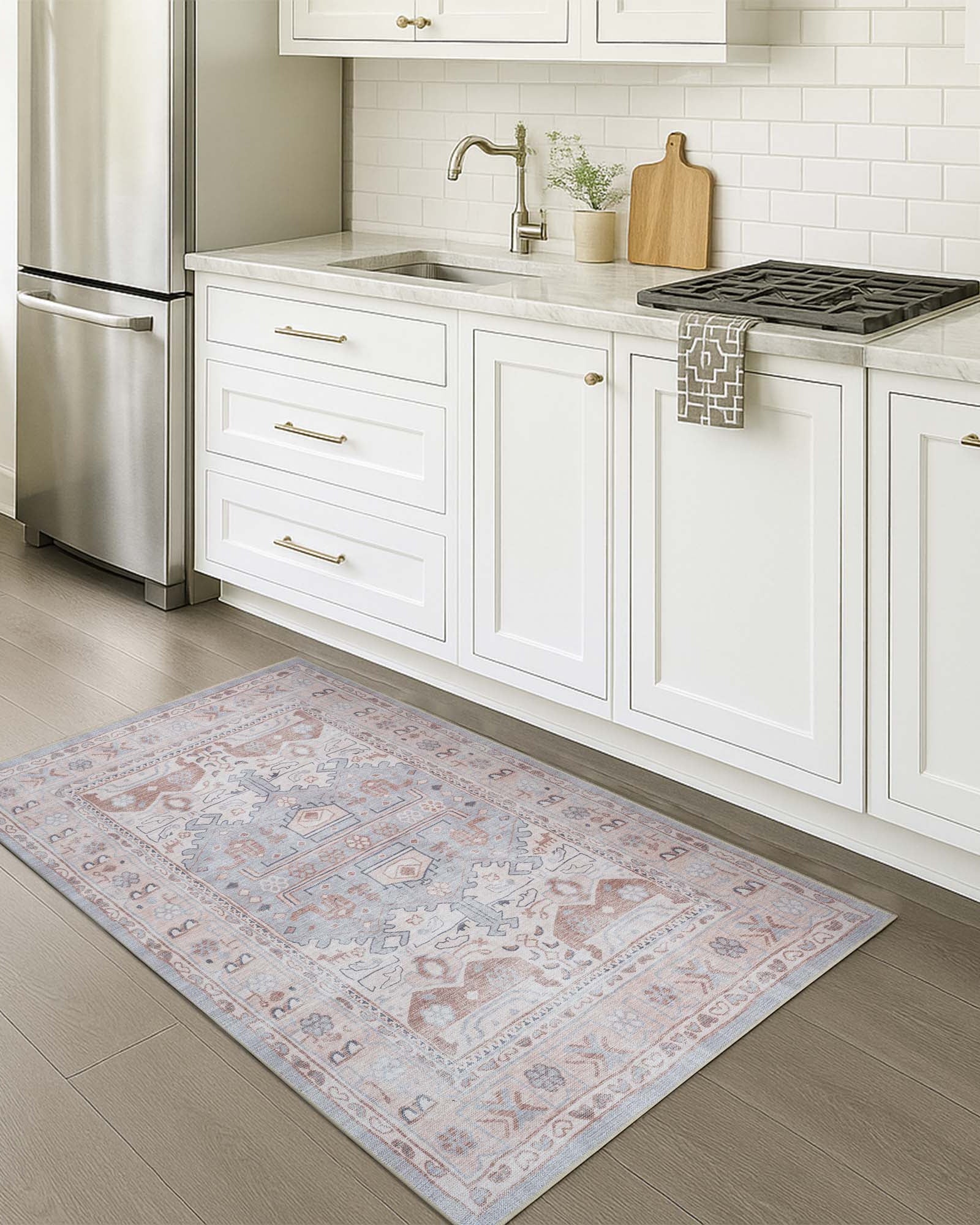
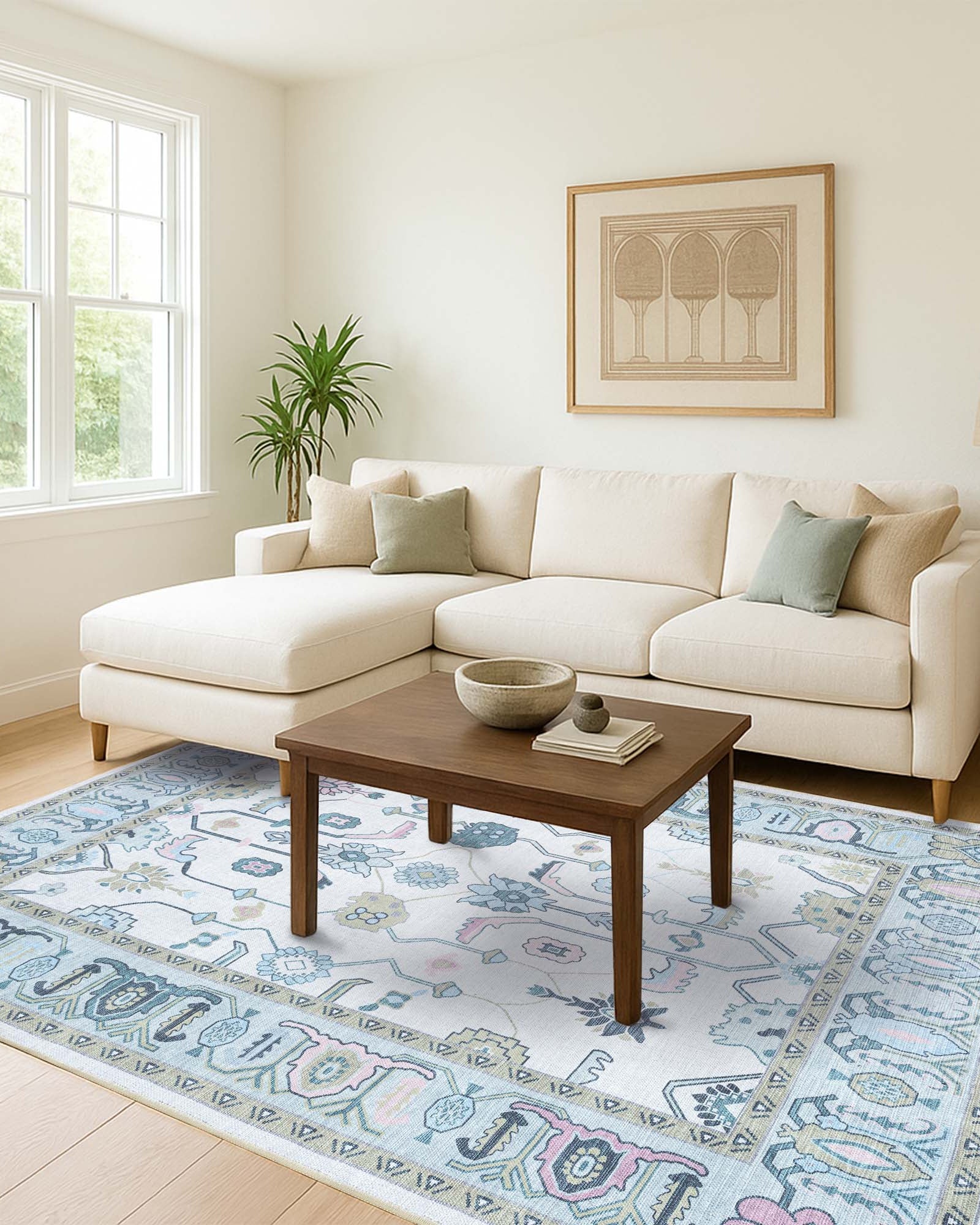
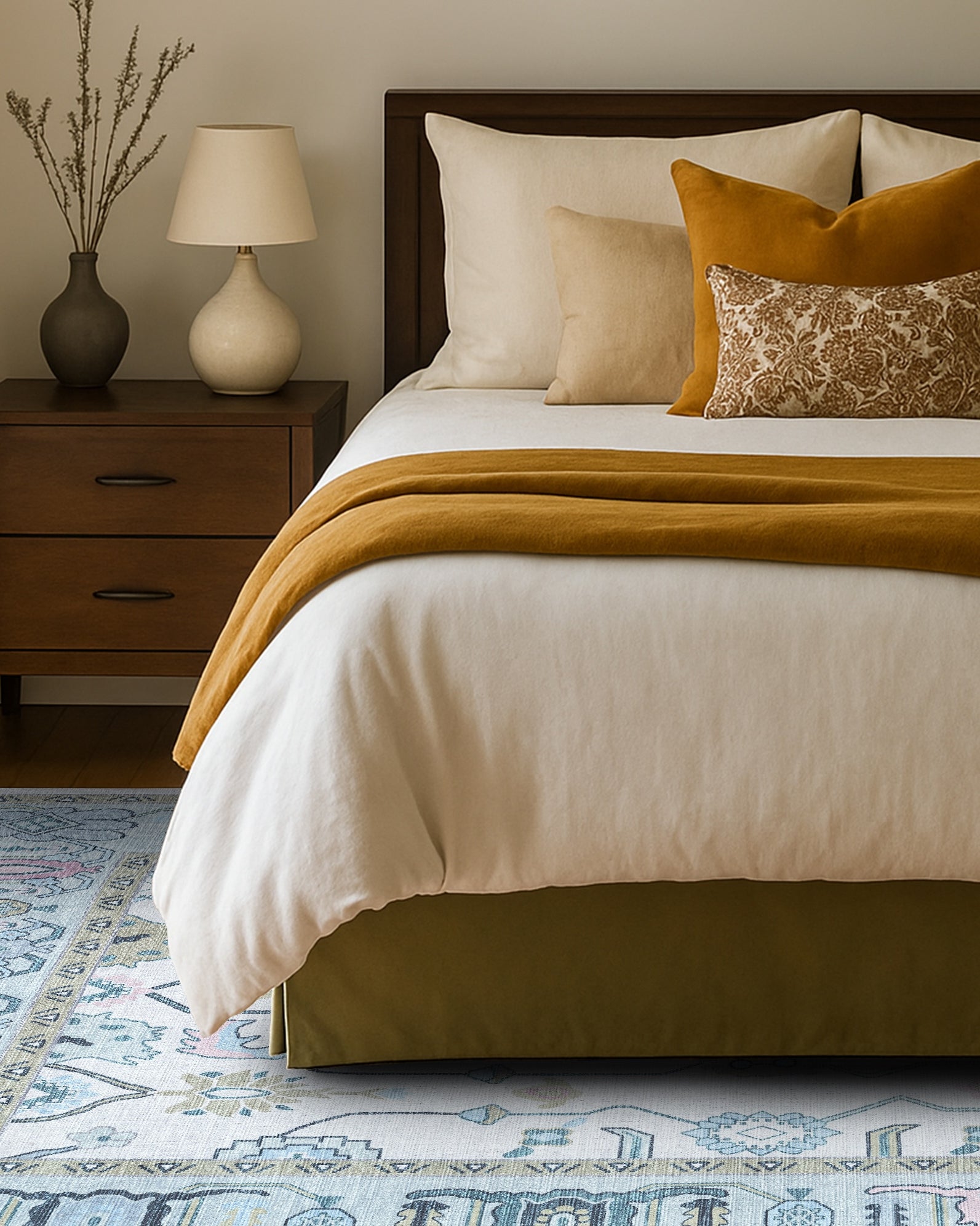
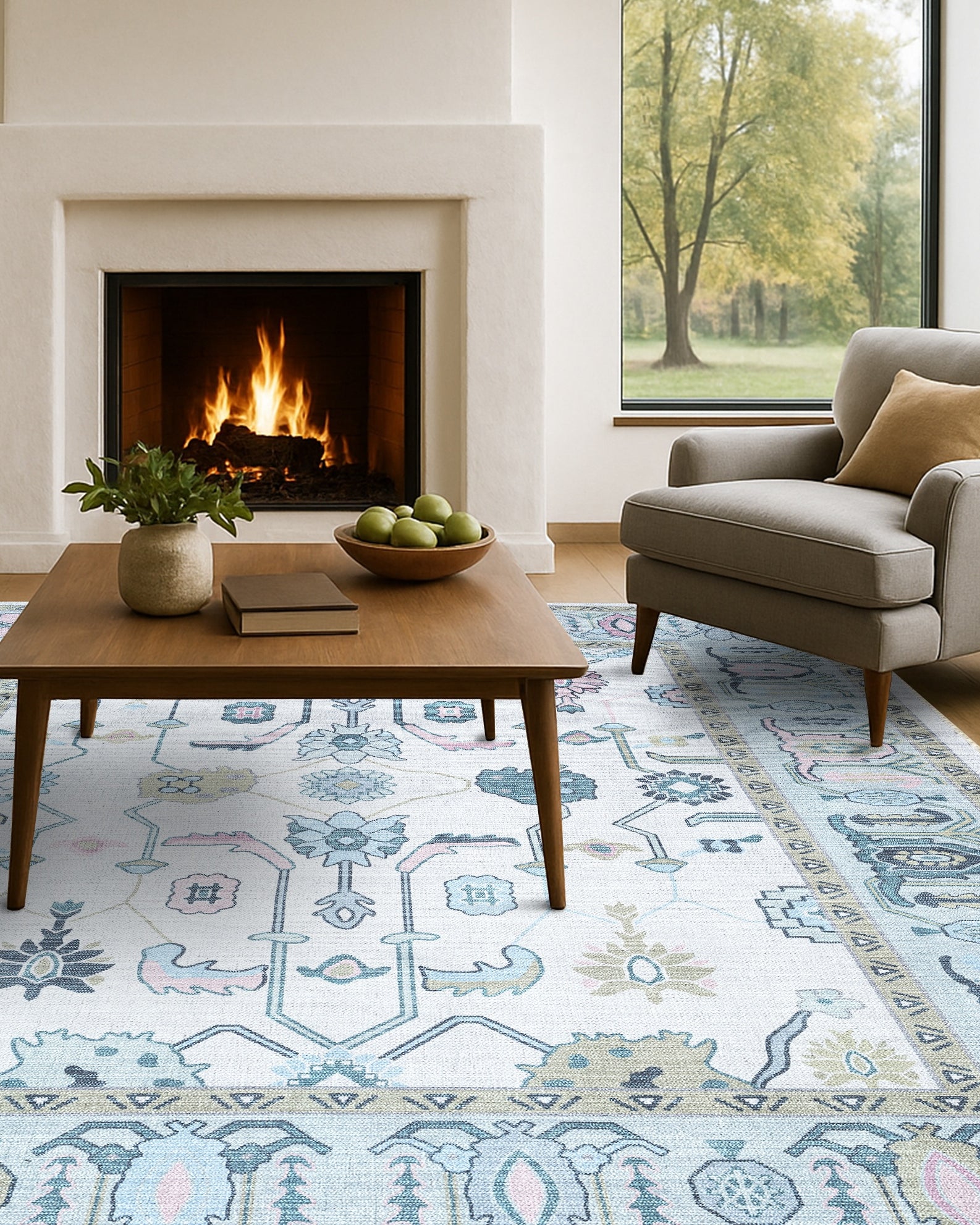
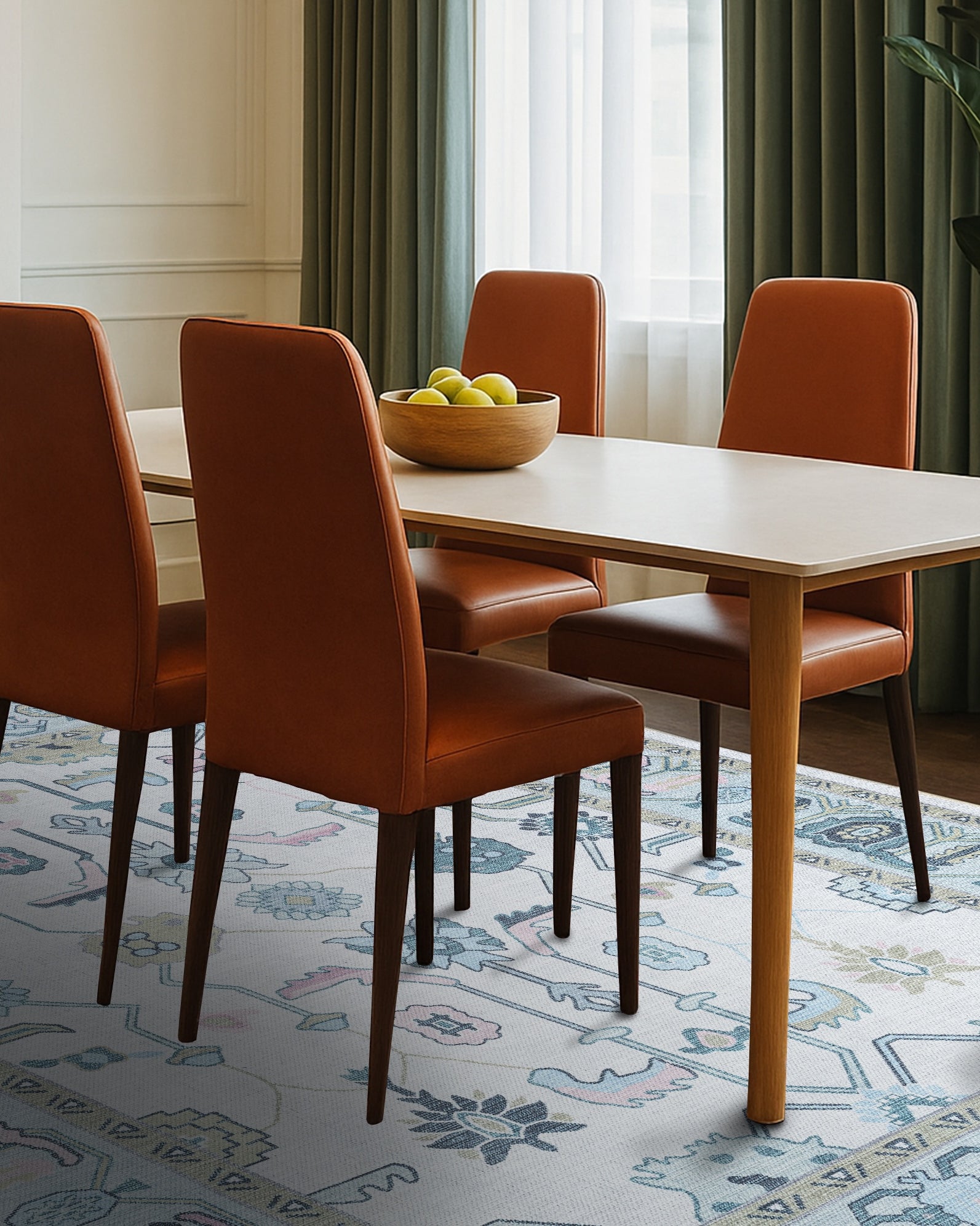
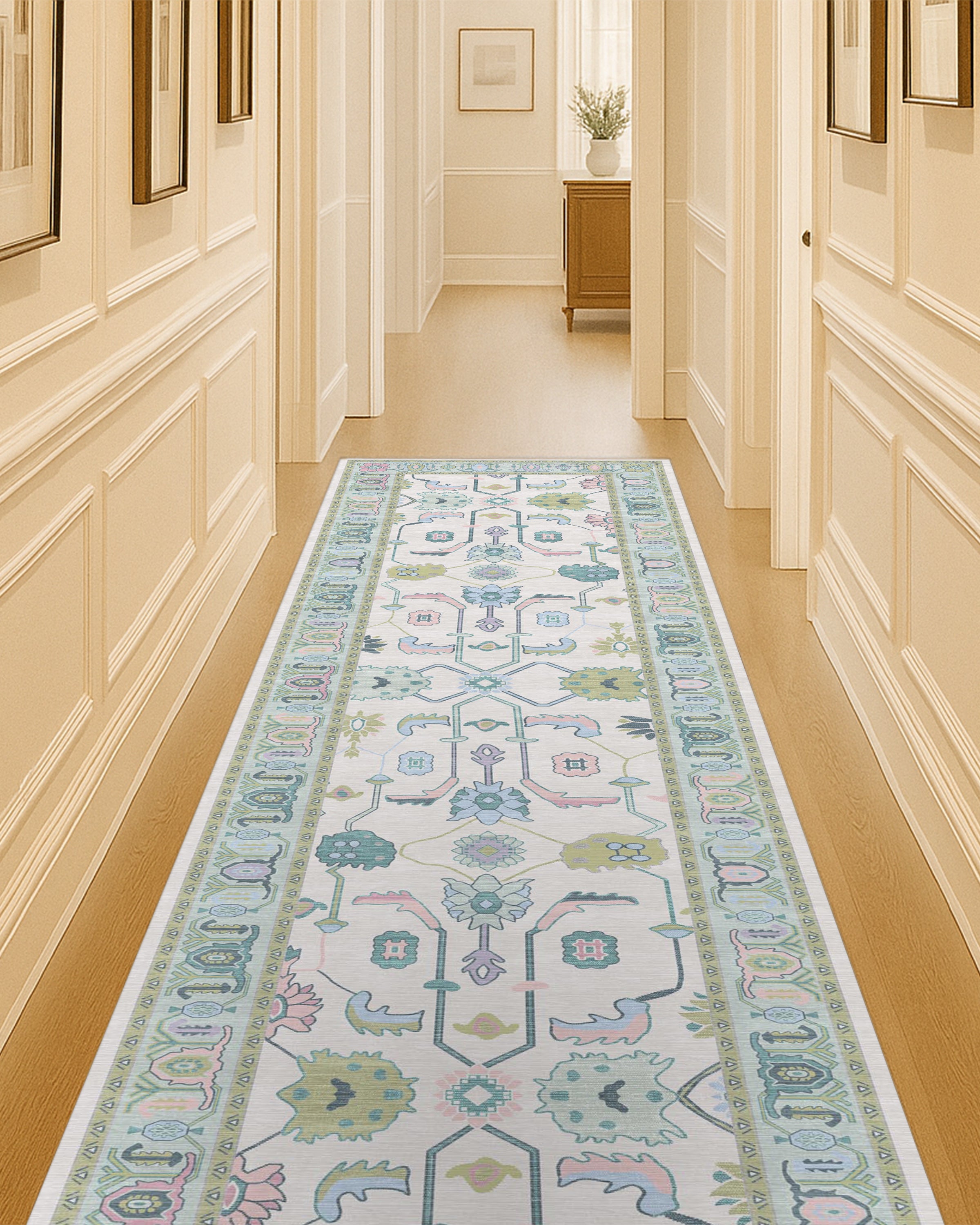
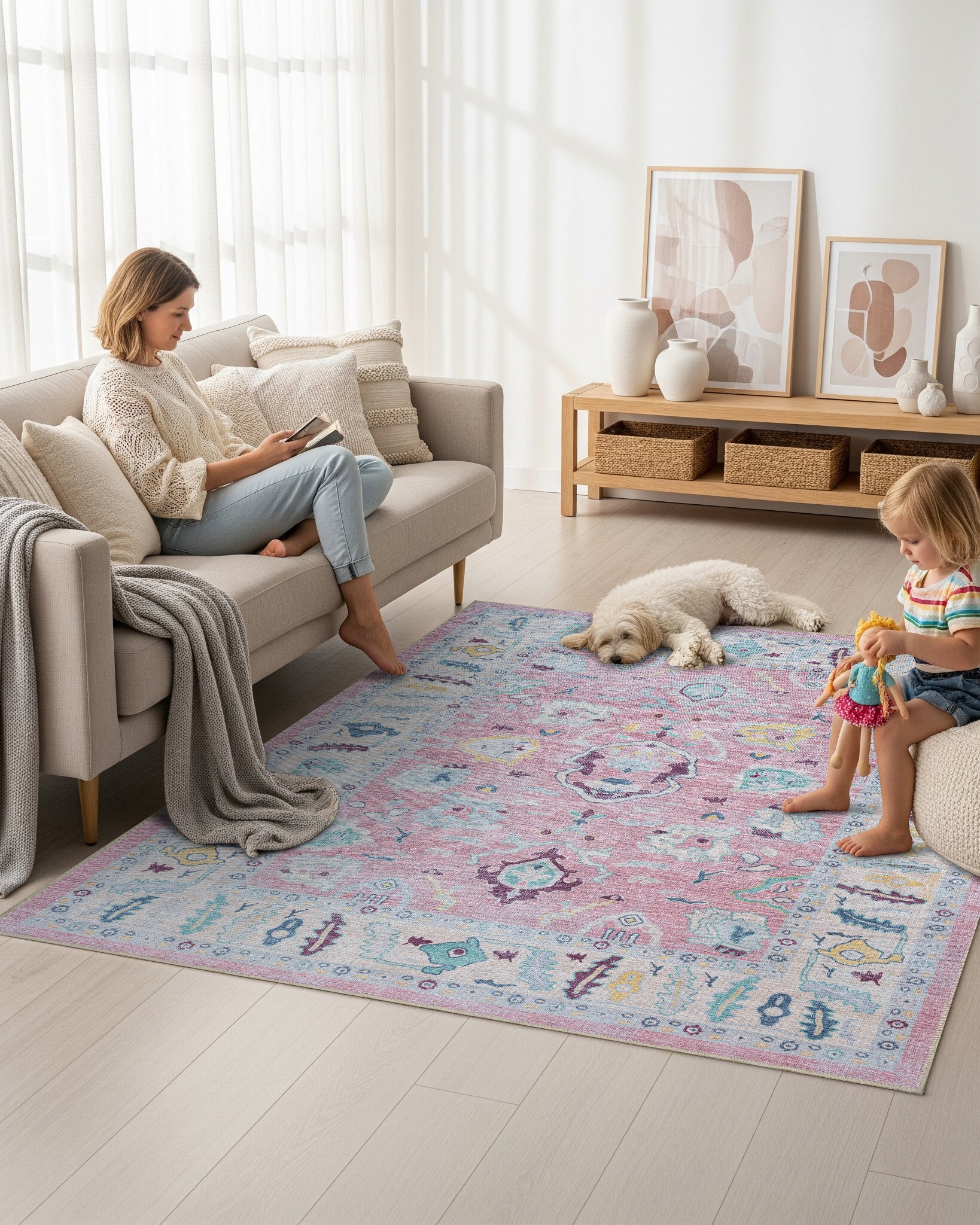
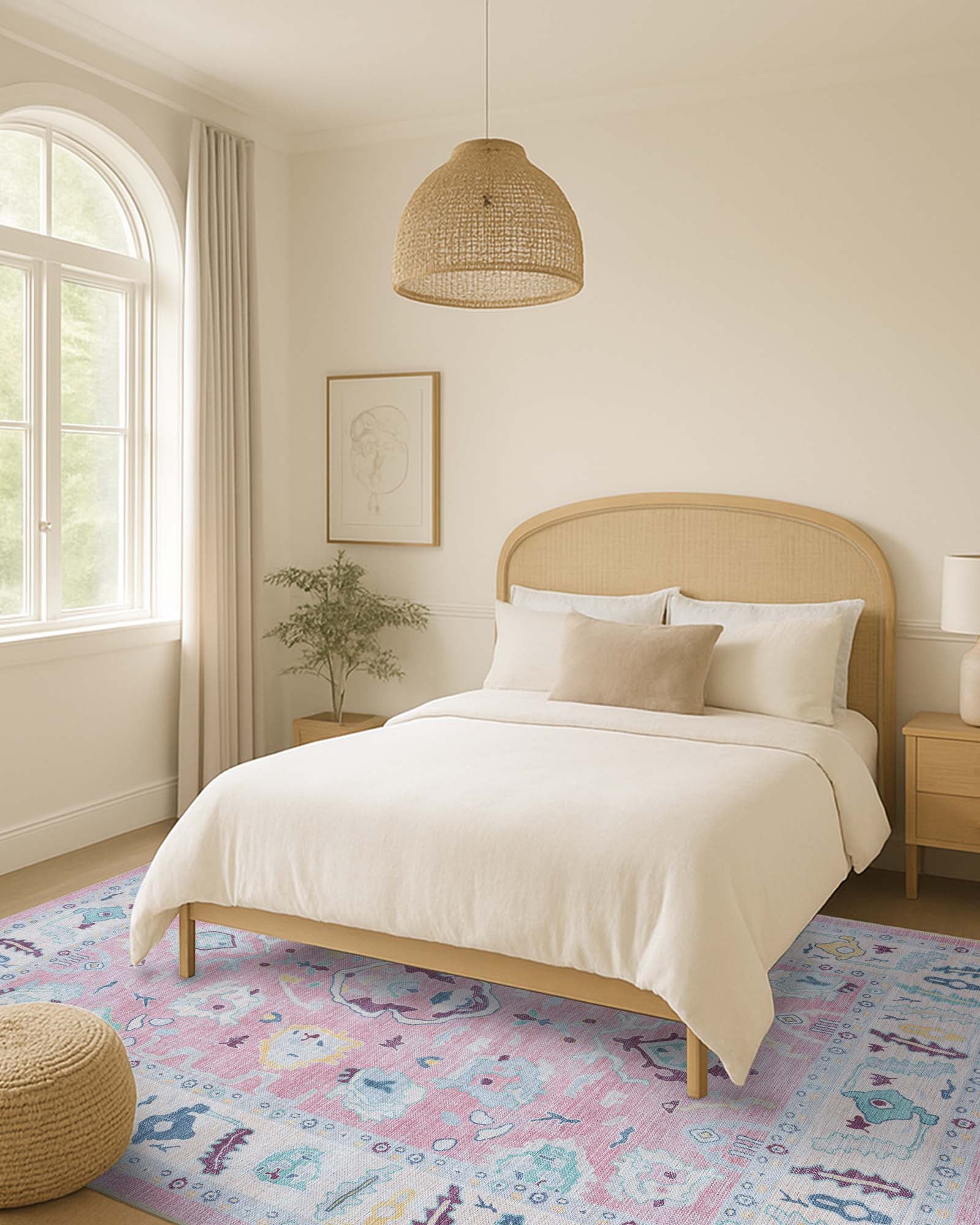
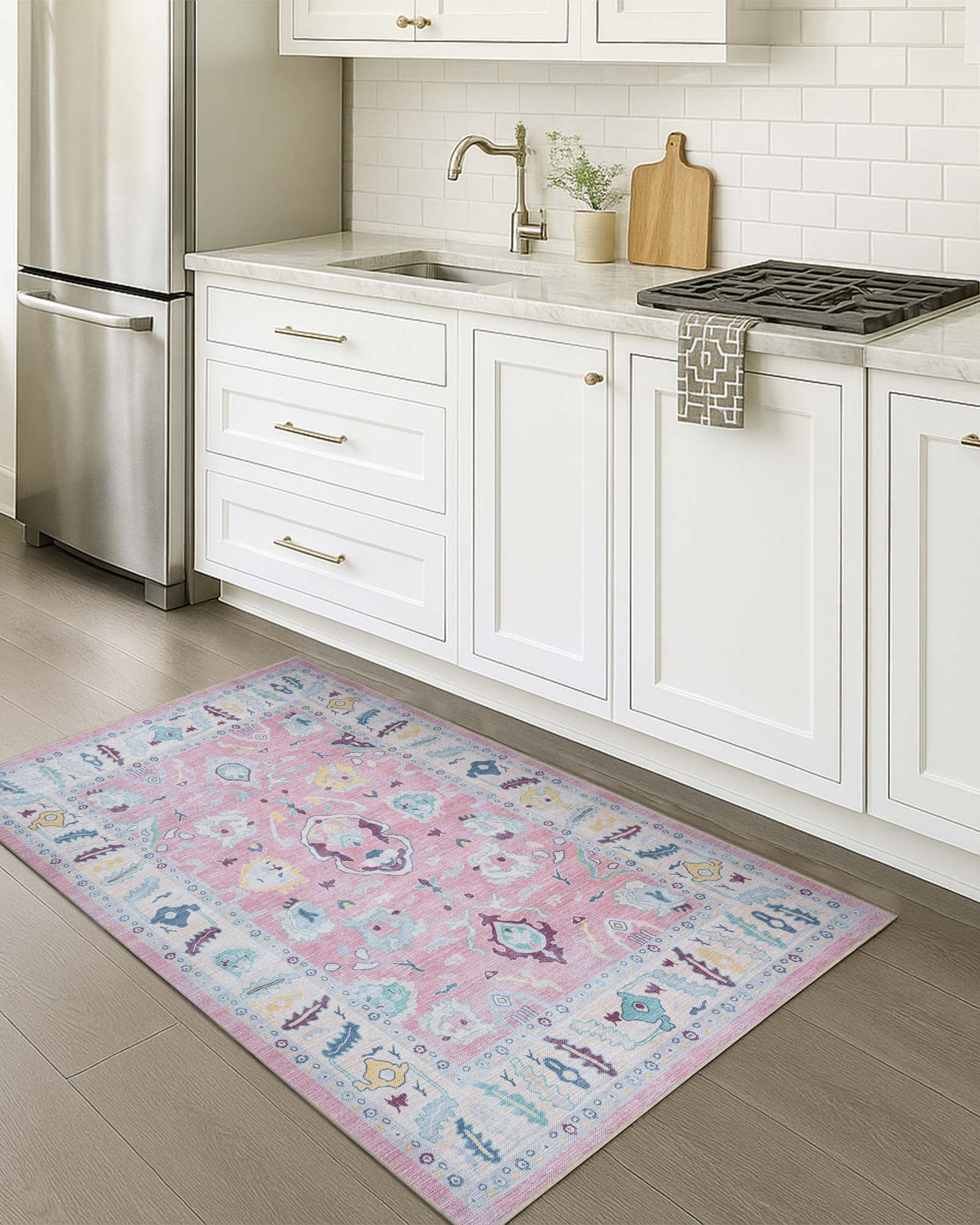
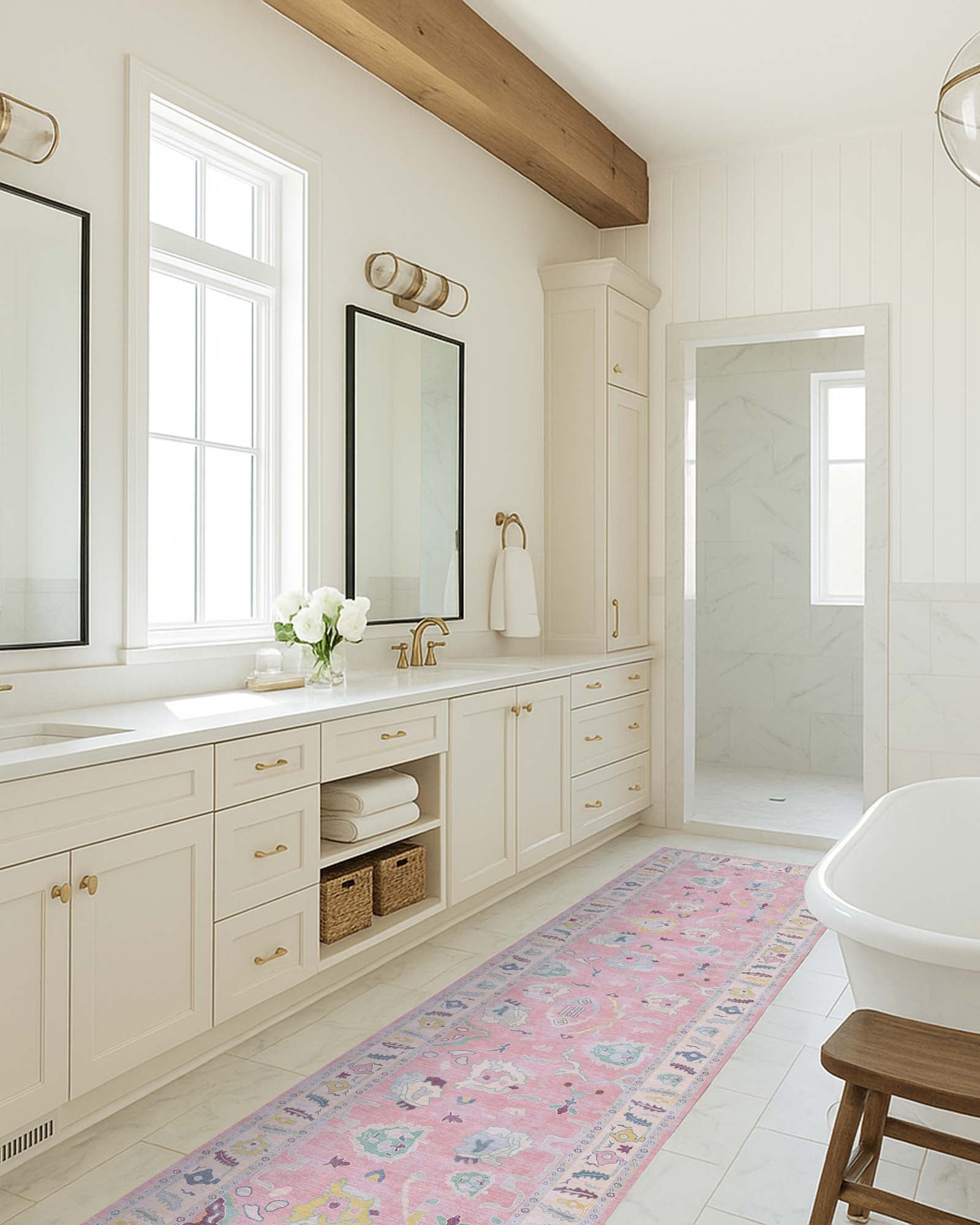
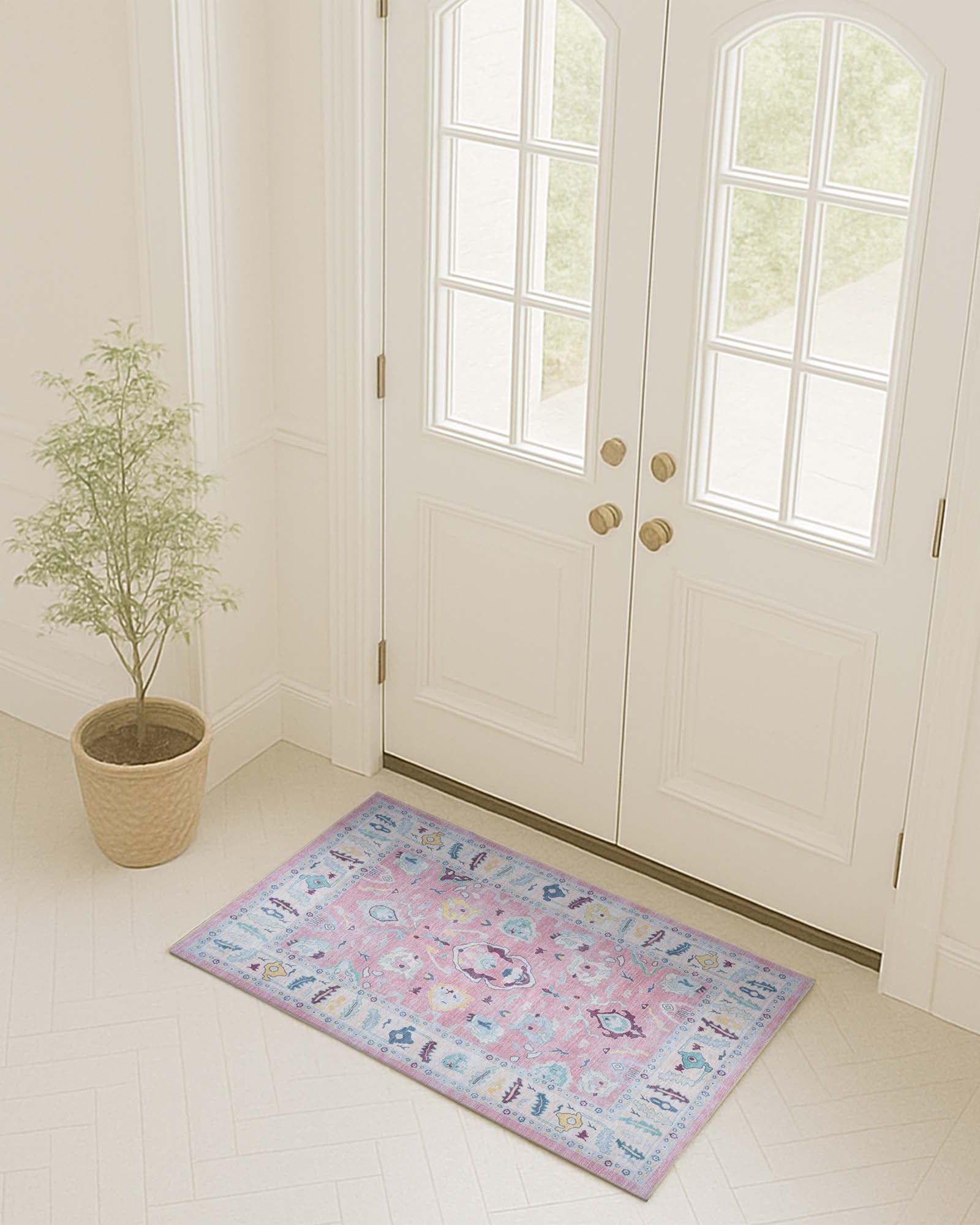
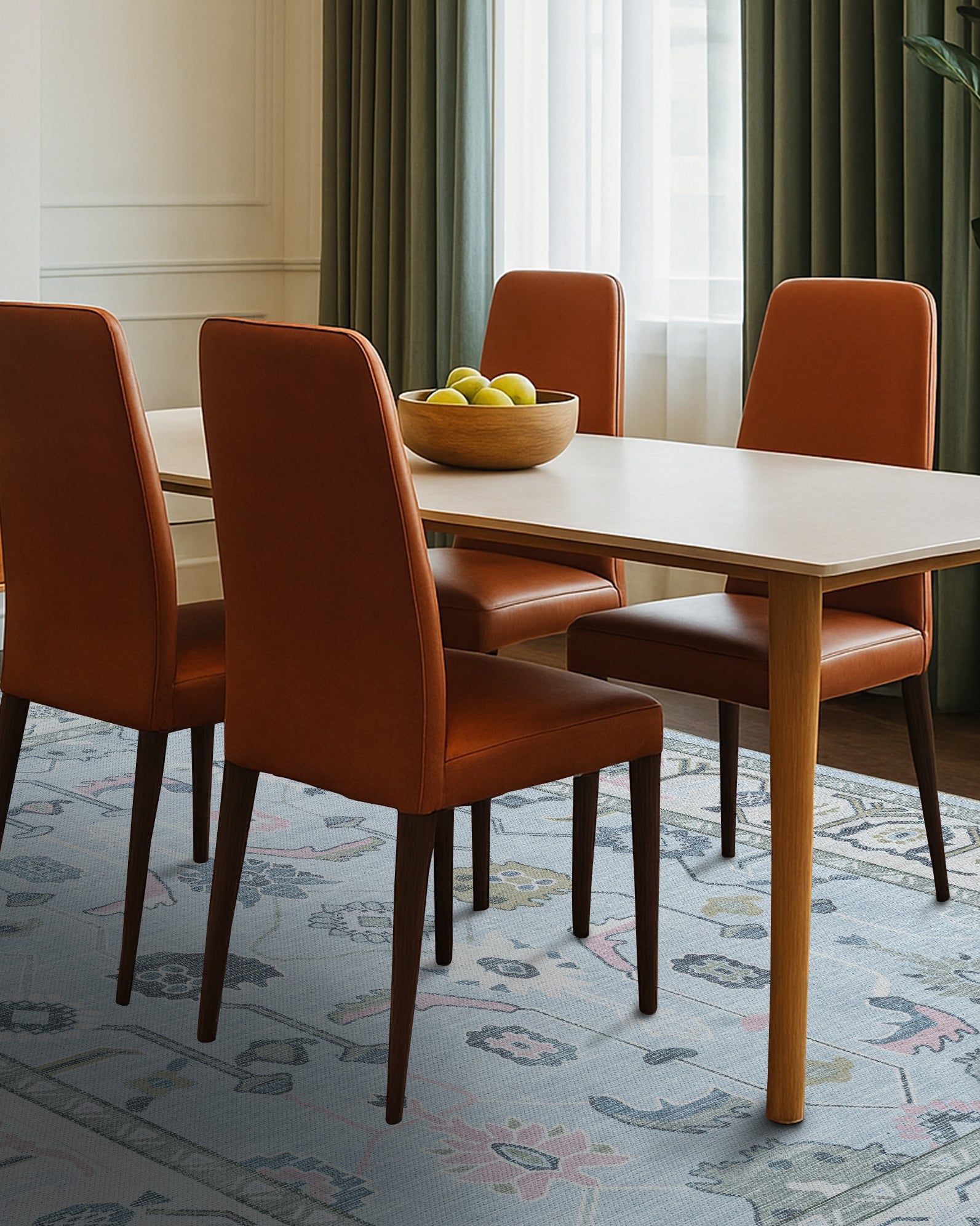
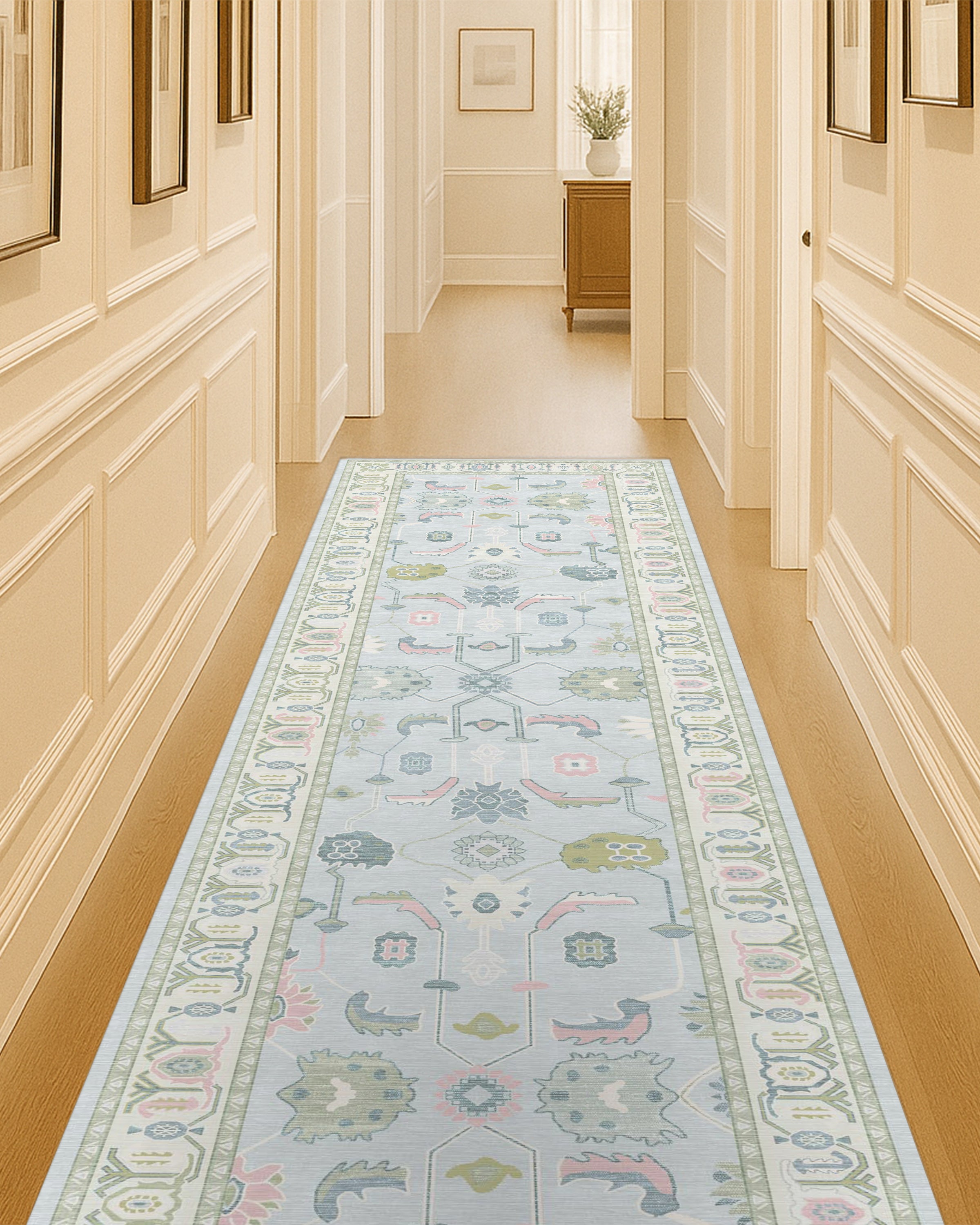
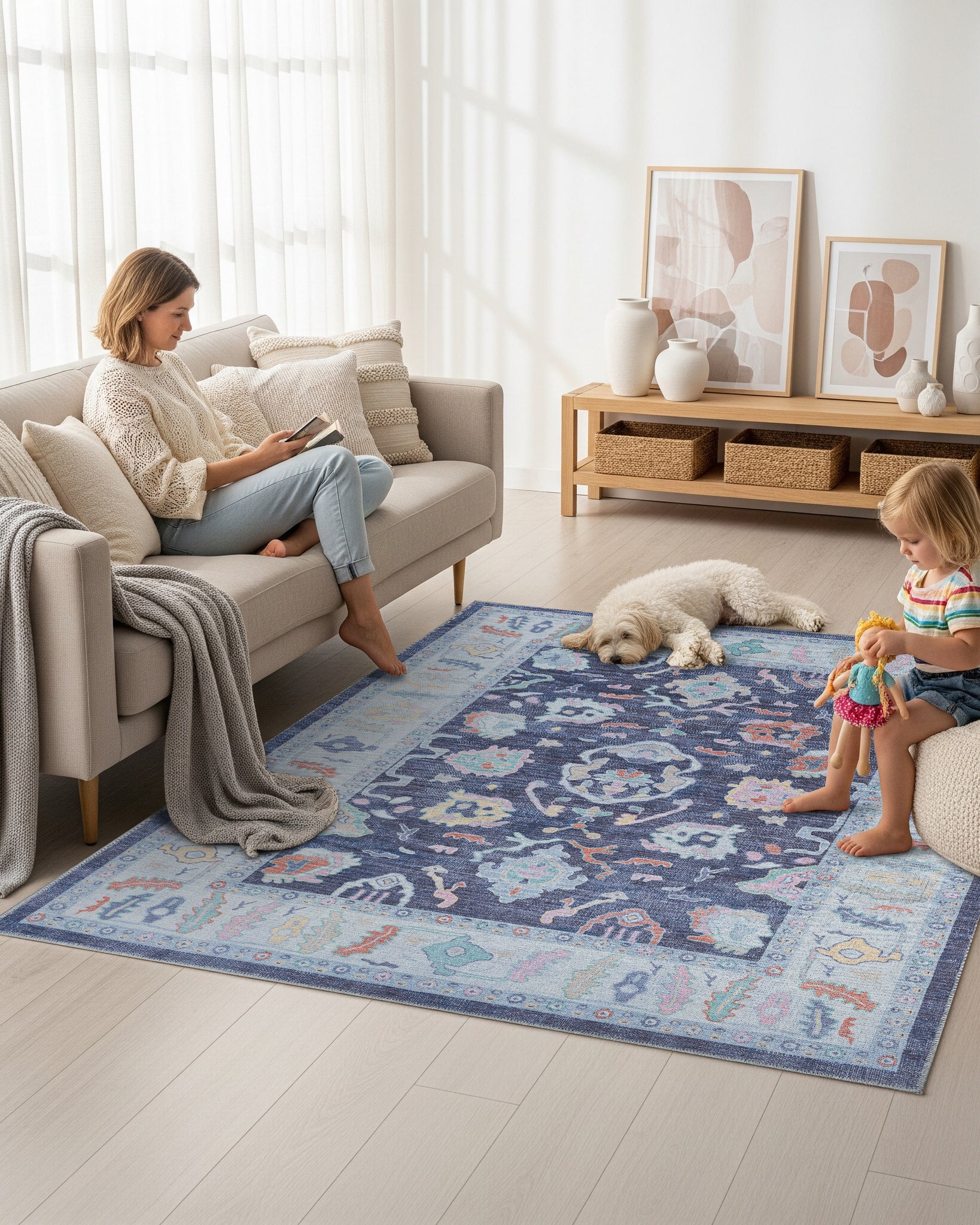
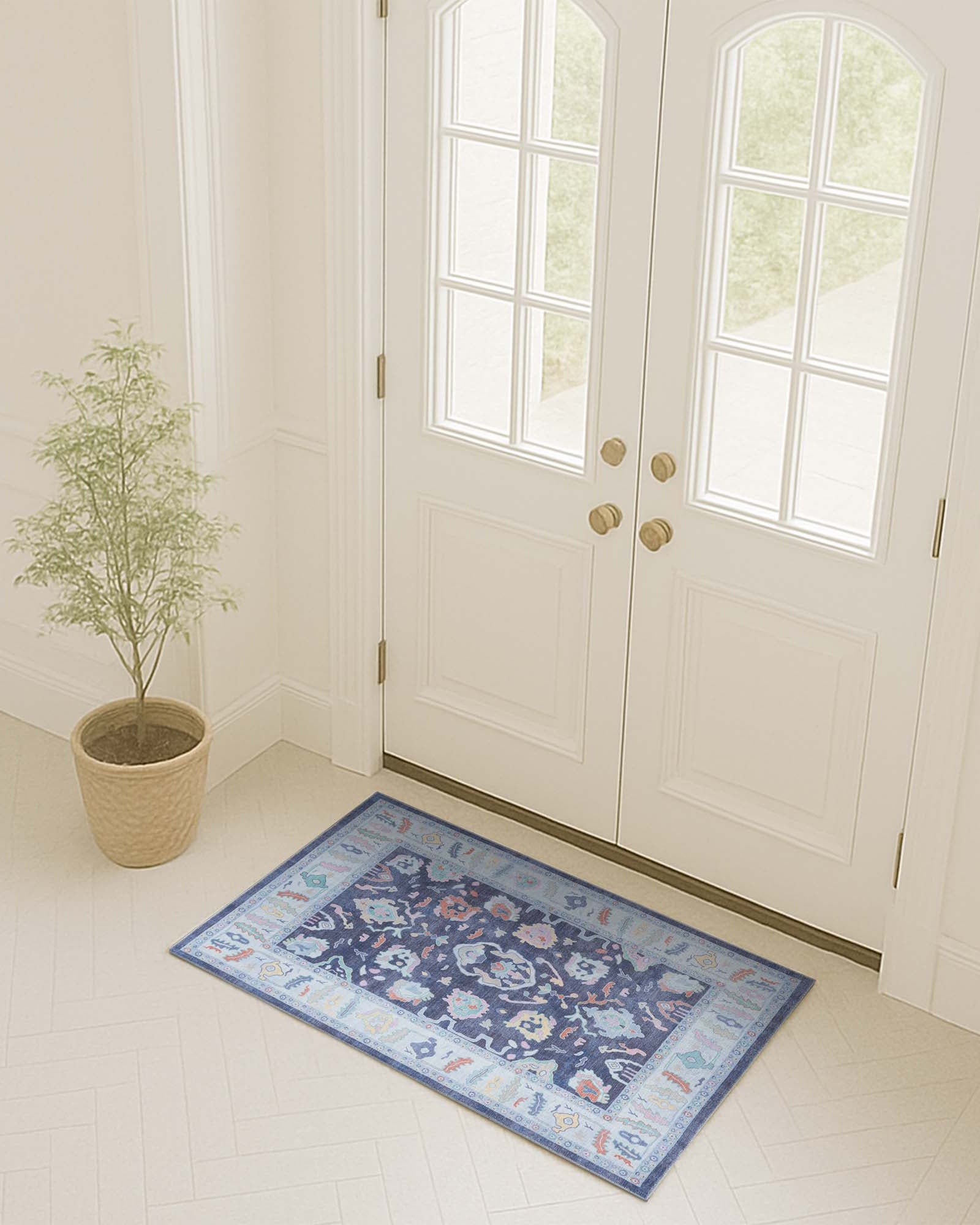
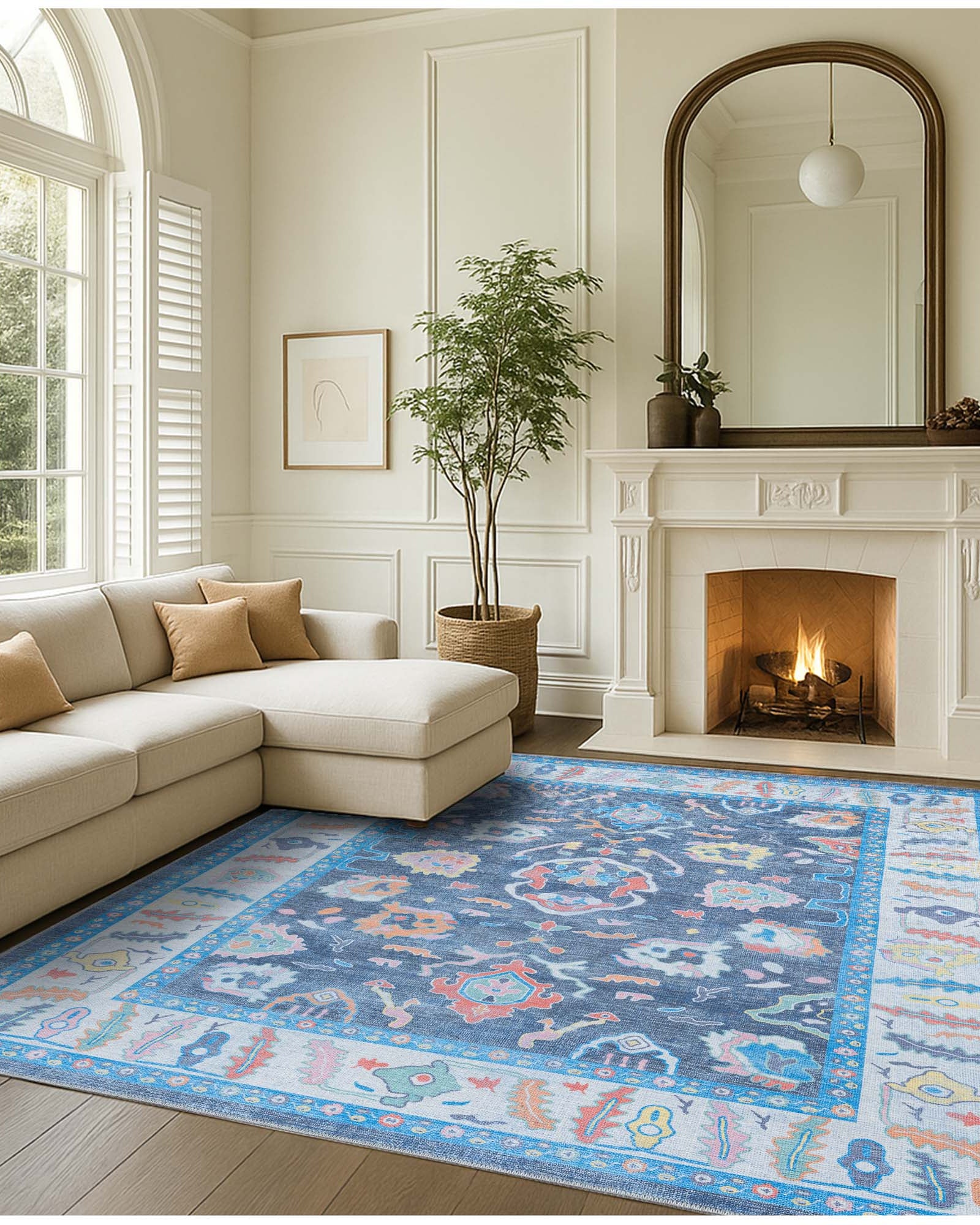
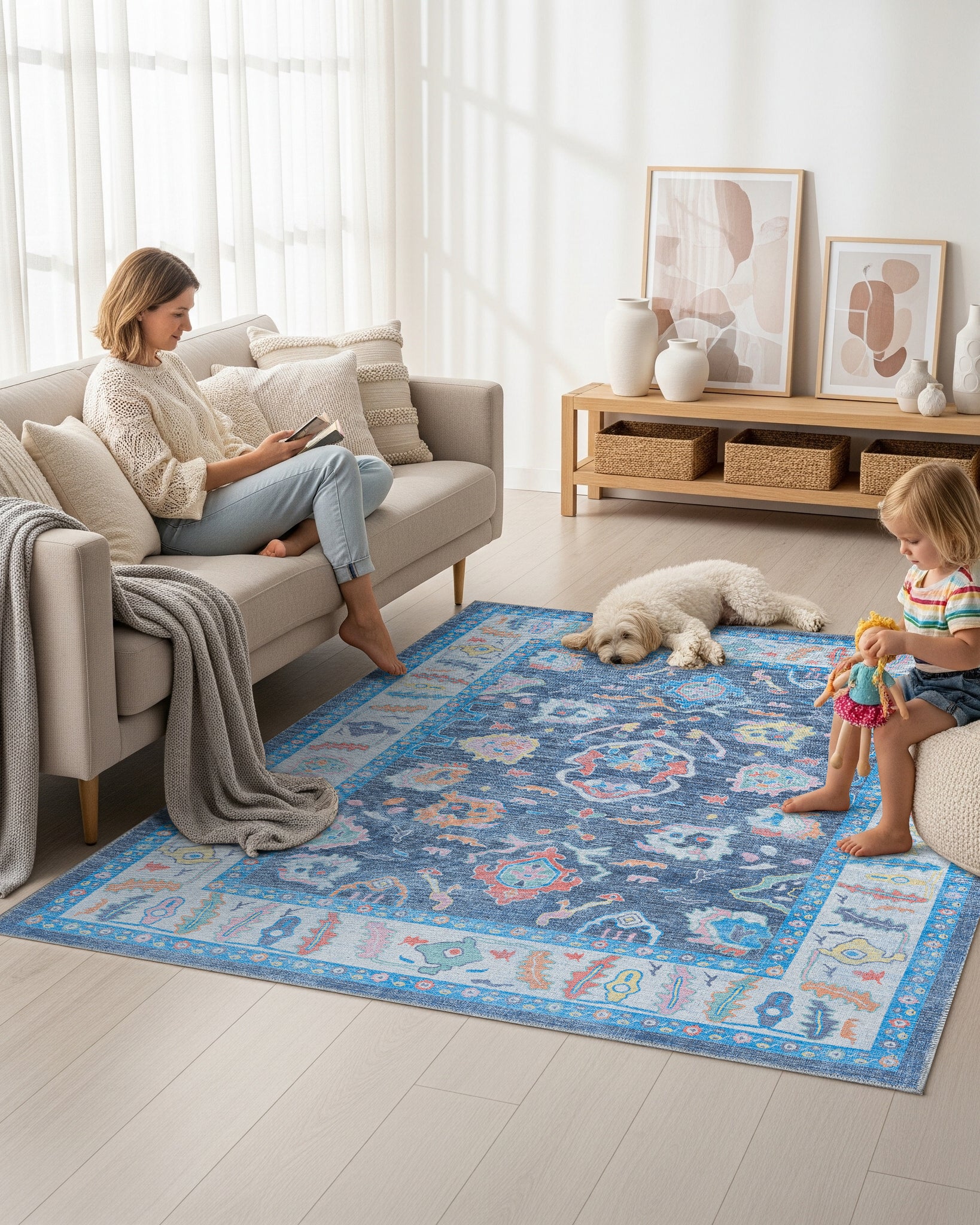
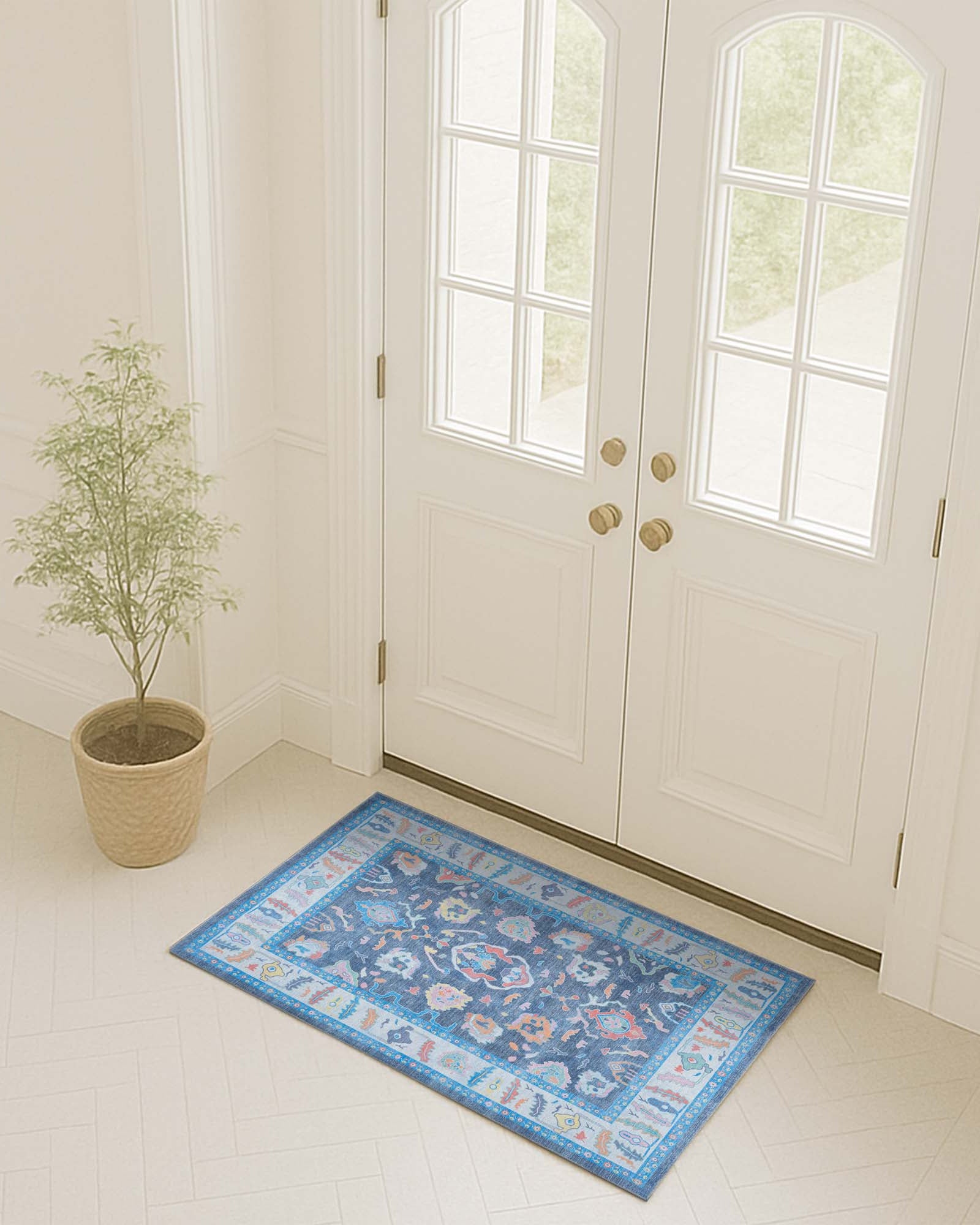
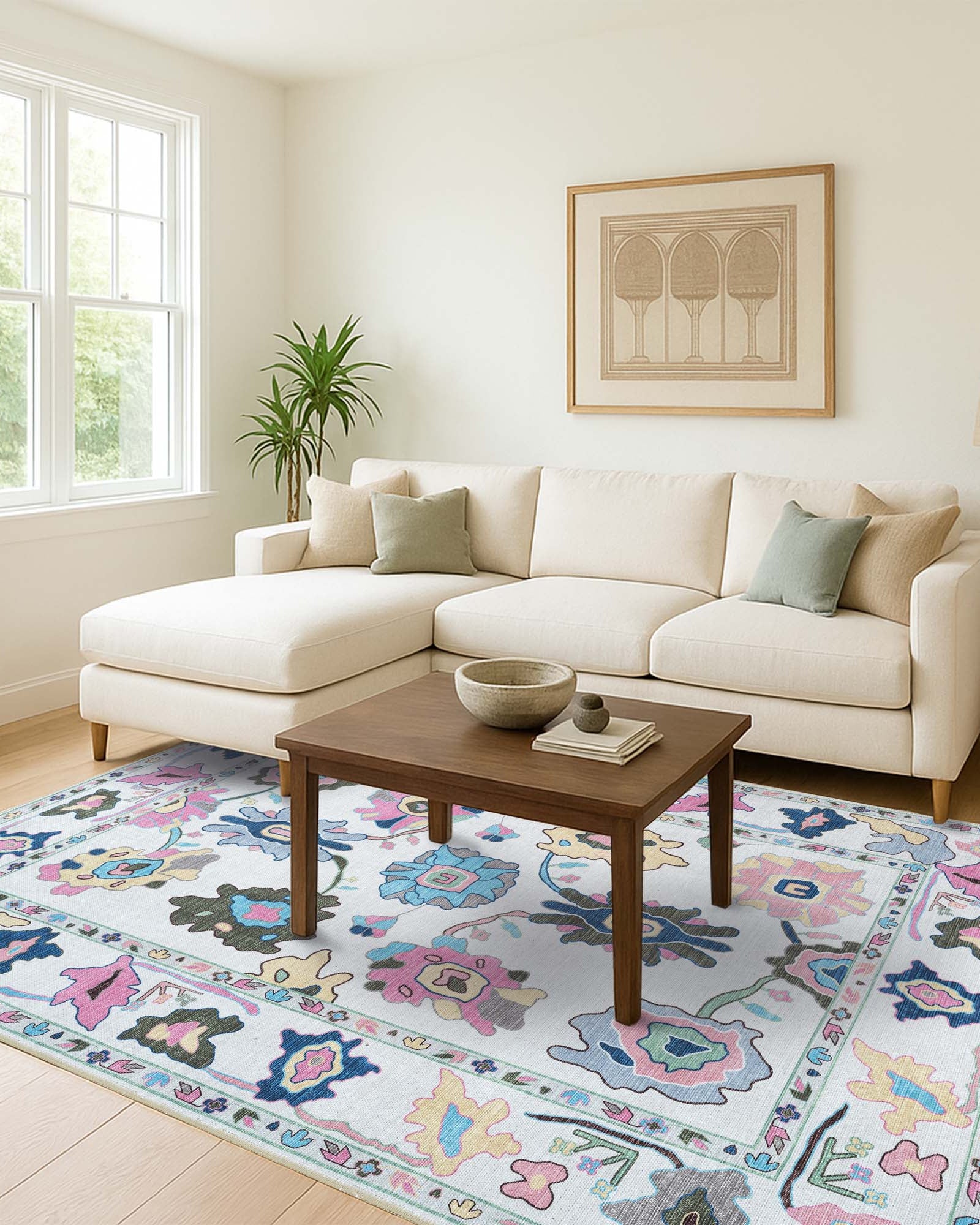
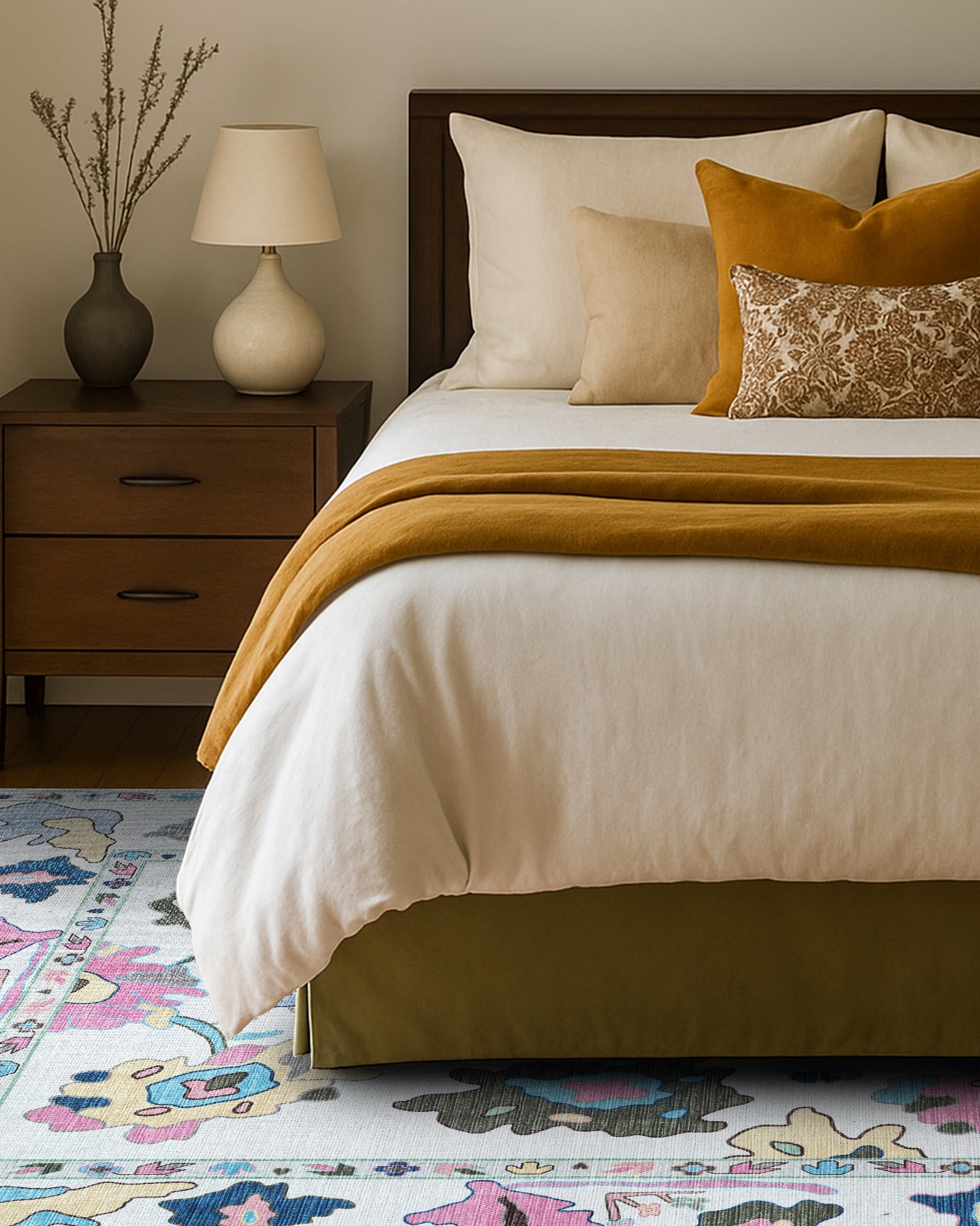
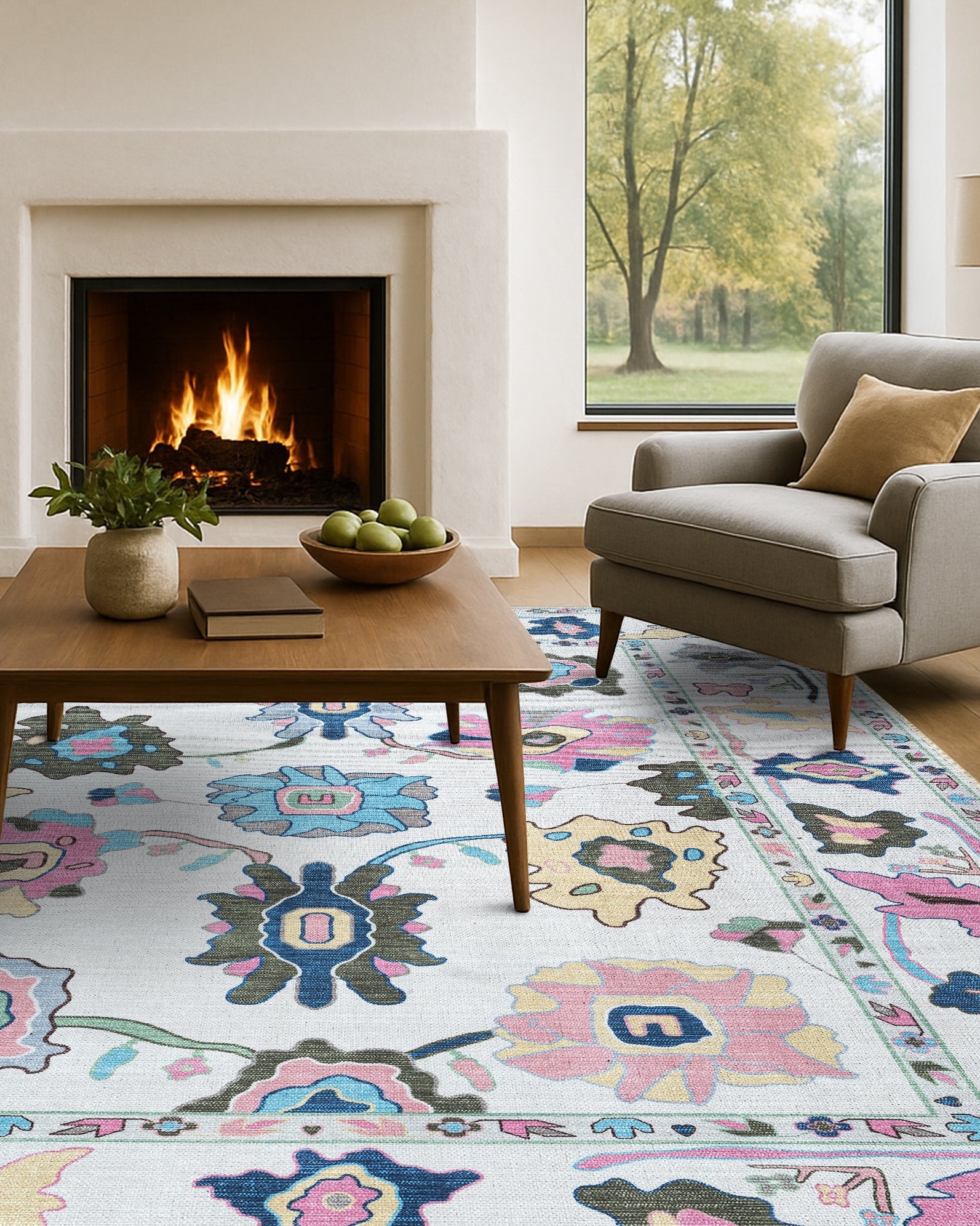
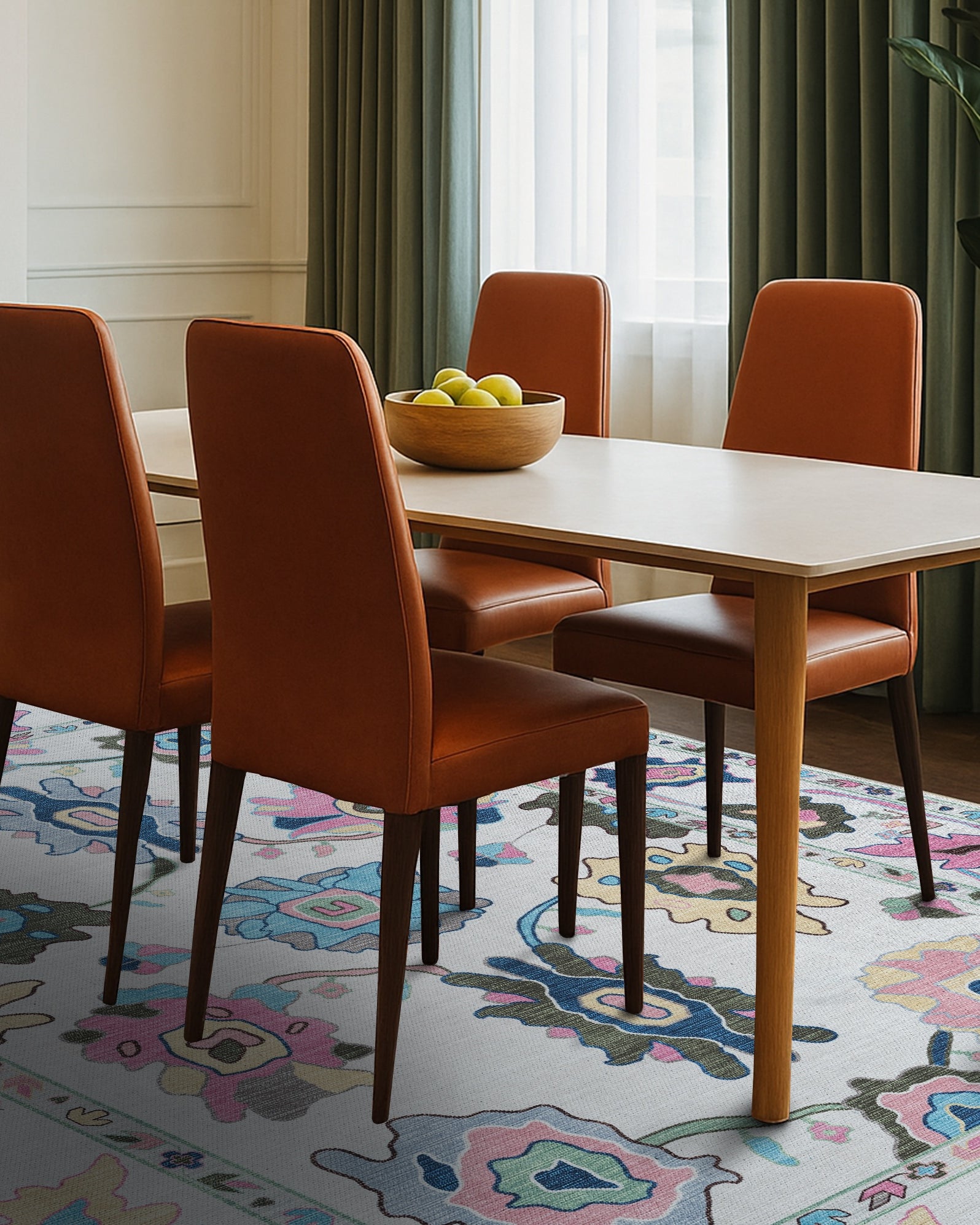
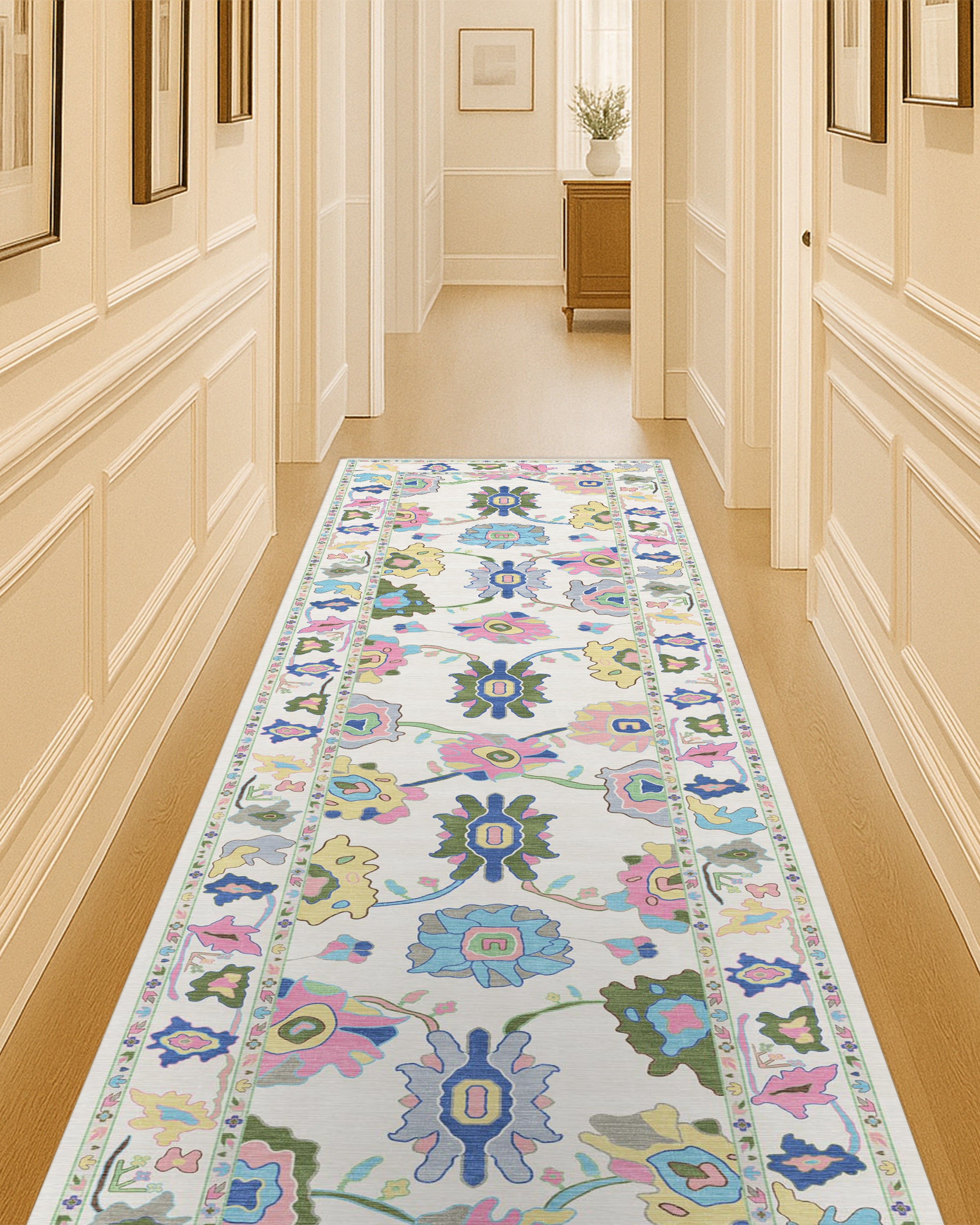
These are the rugs to reach for in the busiest parts of a house — entryways, hallways, family rooms, stairs, anywhere daily wear is heaviest. The thick pile also does real acoustic and thermal work, absorbing sound and insulating a hard floor more effectively than a finer, thinner weave. In a living room, keep at least the front legs of every seating piece on the rug. In a dining room, allow 24 inches of rug beyond the table on all sides — a coarse weave's durability makes it a sound choice here even under heavy daily use, though a lower-pile piece will still let chairs glide more easily than a very thick one.
Age, Condition and Measurement
Pieces are grouped as antique at over eighty years, vintage at roughly forty to eighty, and semi-vintage below that. Every product page carries the estimated decade, origin, foundation type, exact measured dimensions and a plain condition note. Because coarse rugs were made for hard daily use, expect real evidence of it — lower pile in traffic lanes, softened selvages, old repairs — all photographed as it is. Sizes are never standard, and village pieces in particular can vary noticeably along their length; order against the measurements shown.
Care
Vacuum with the beater bar off or raised and keep it off the fringe — even a robust coarse pile benefits from gentle handling over time. Use a rug pad on hard floors to prevent slipping. Rotate the rug 180 degrees once or twice a year so wear and sun exposure distribute evenly. Blot spills immediately with a white cloth and plain water, pressing rather than rubbing. Avoid home carpet-cleaning machines and steam cleaners, which can felt wool and bleed aged natural dyes even on a durable coarse weave. For deep cleaning, use a professional rug washer experienced with hand-knotted wool.