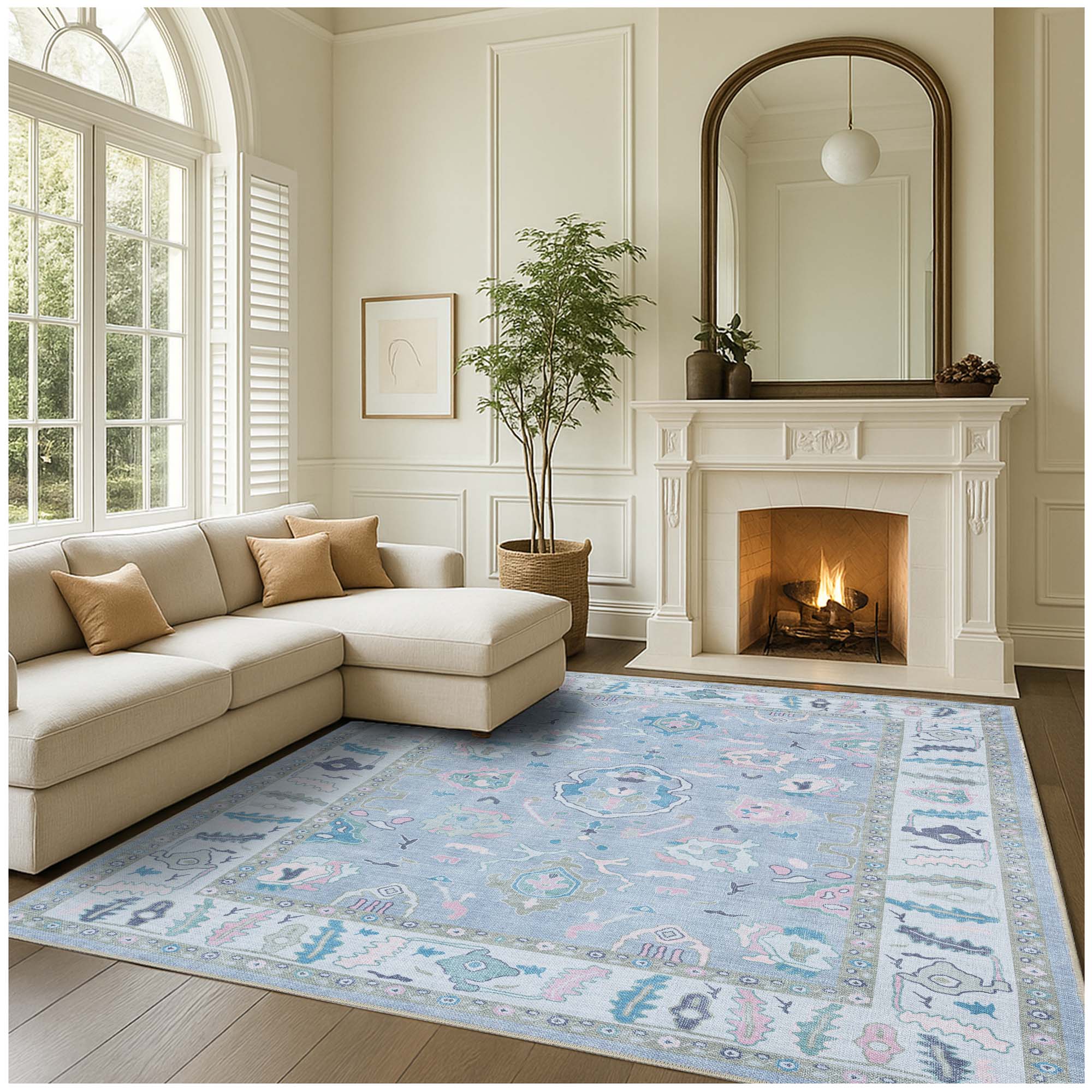
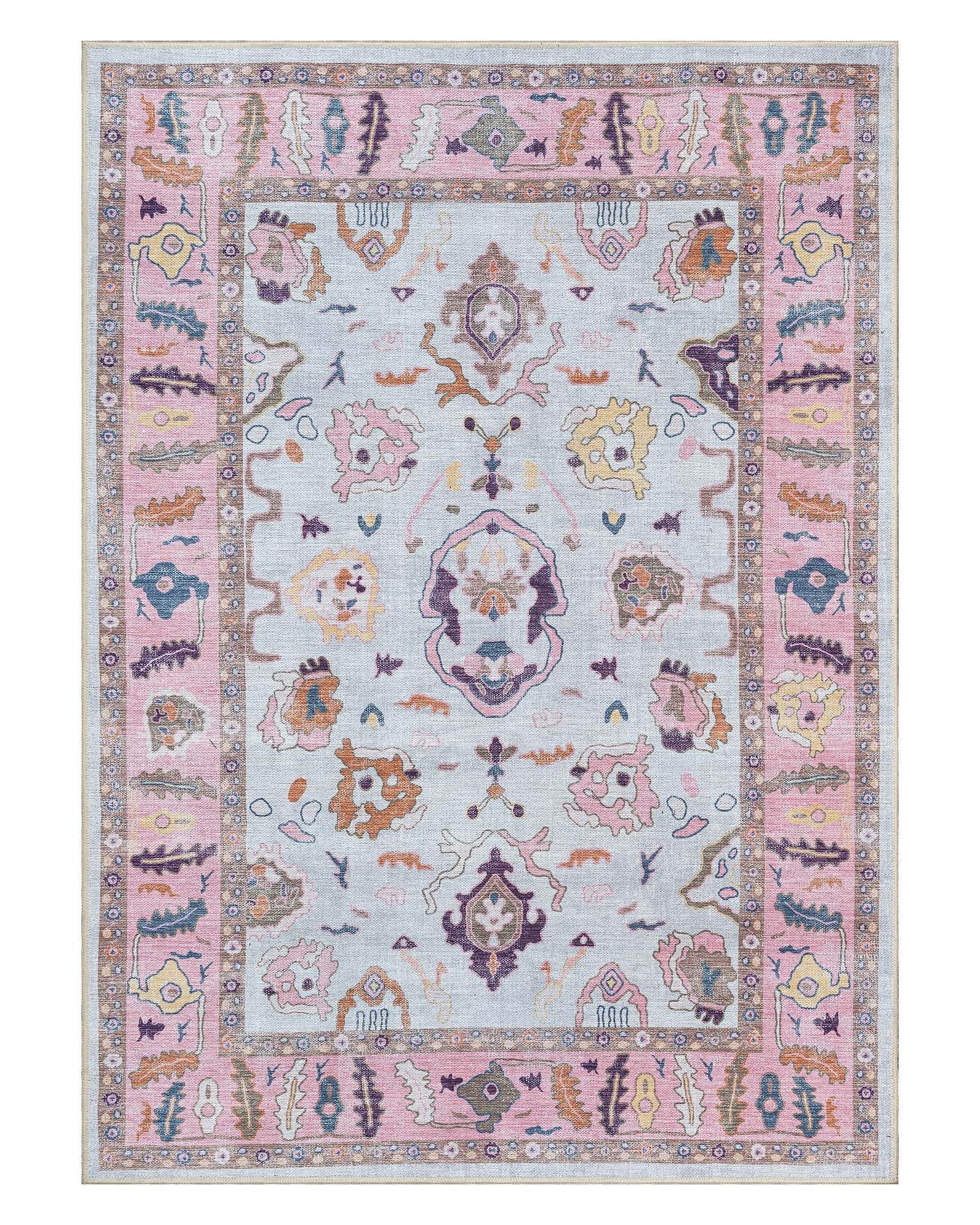
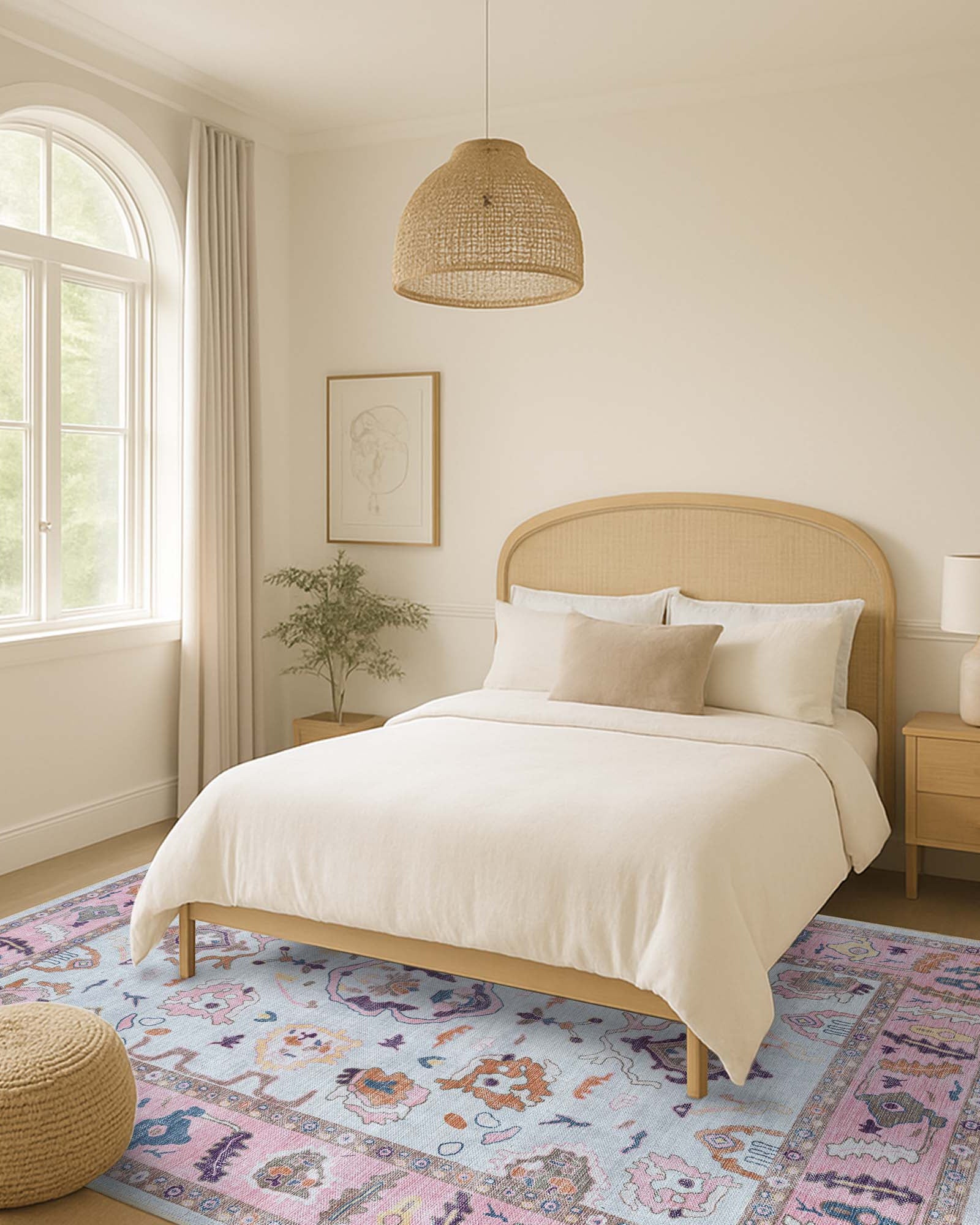
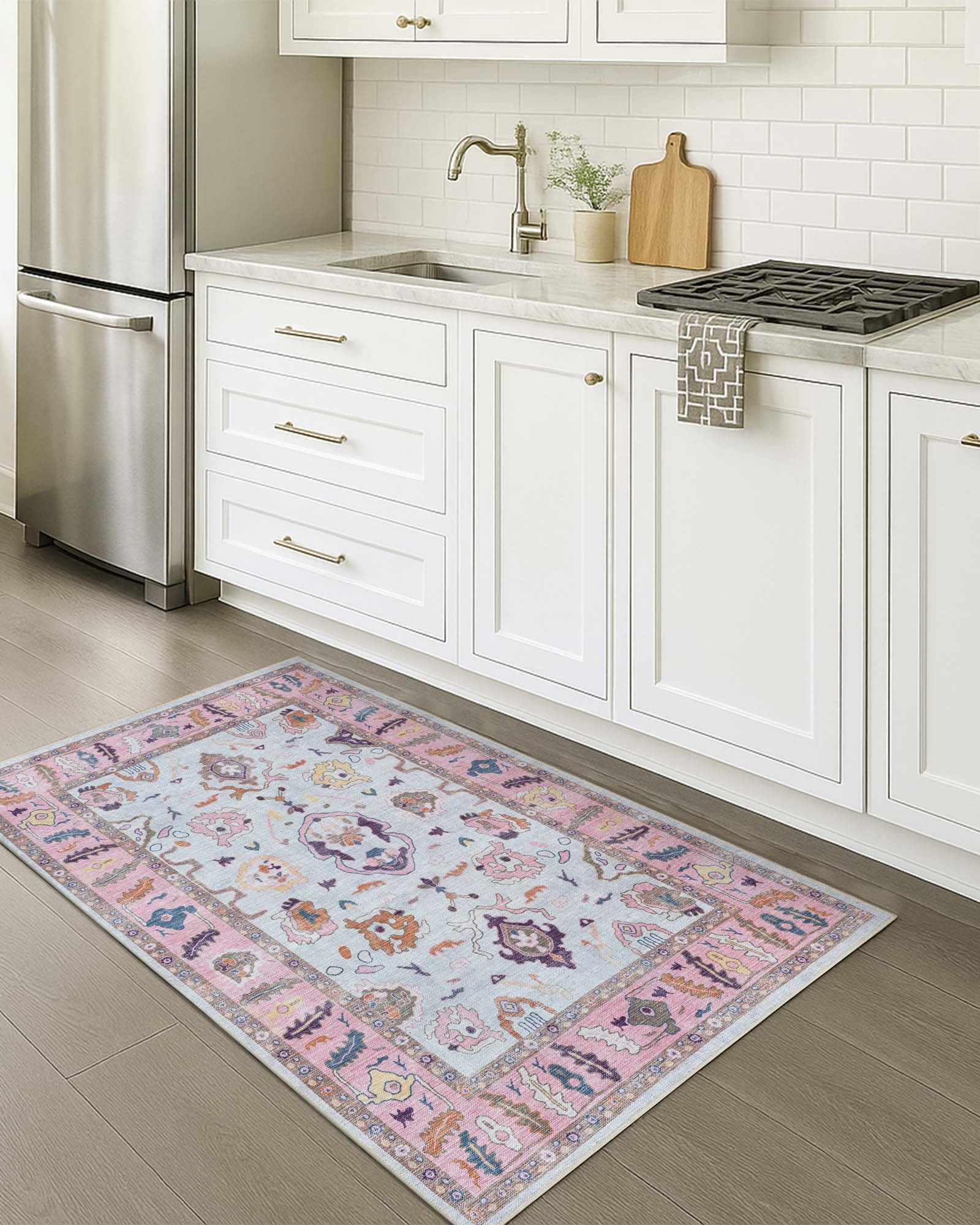
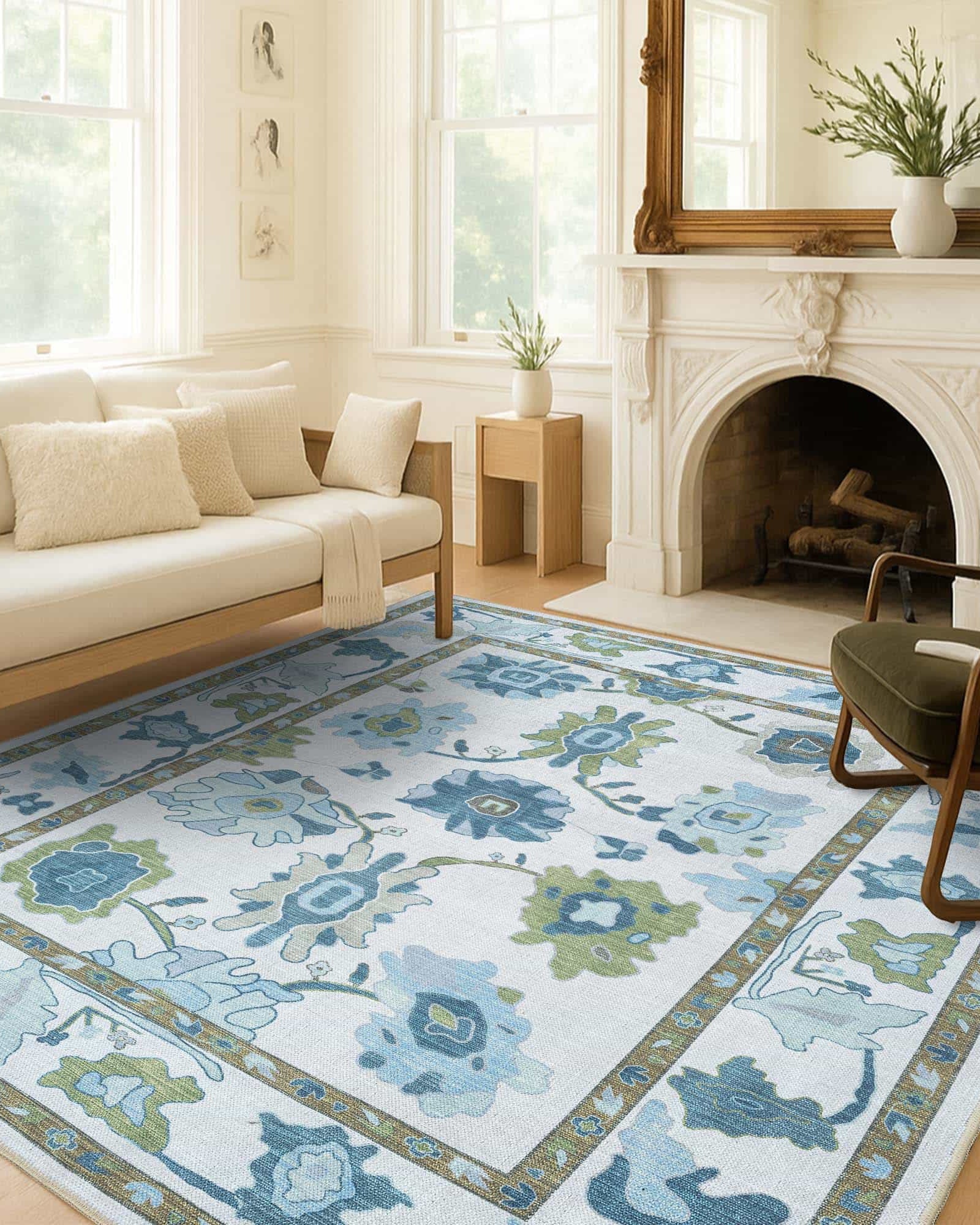
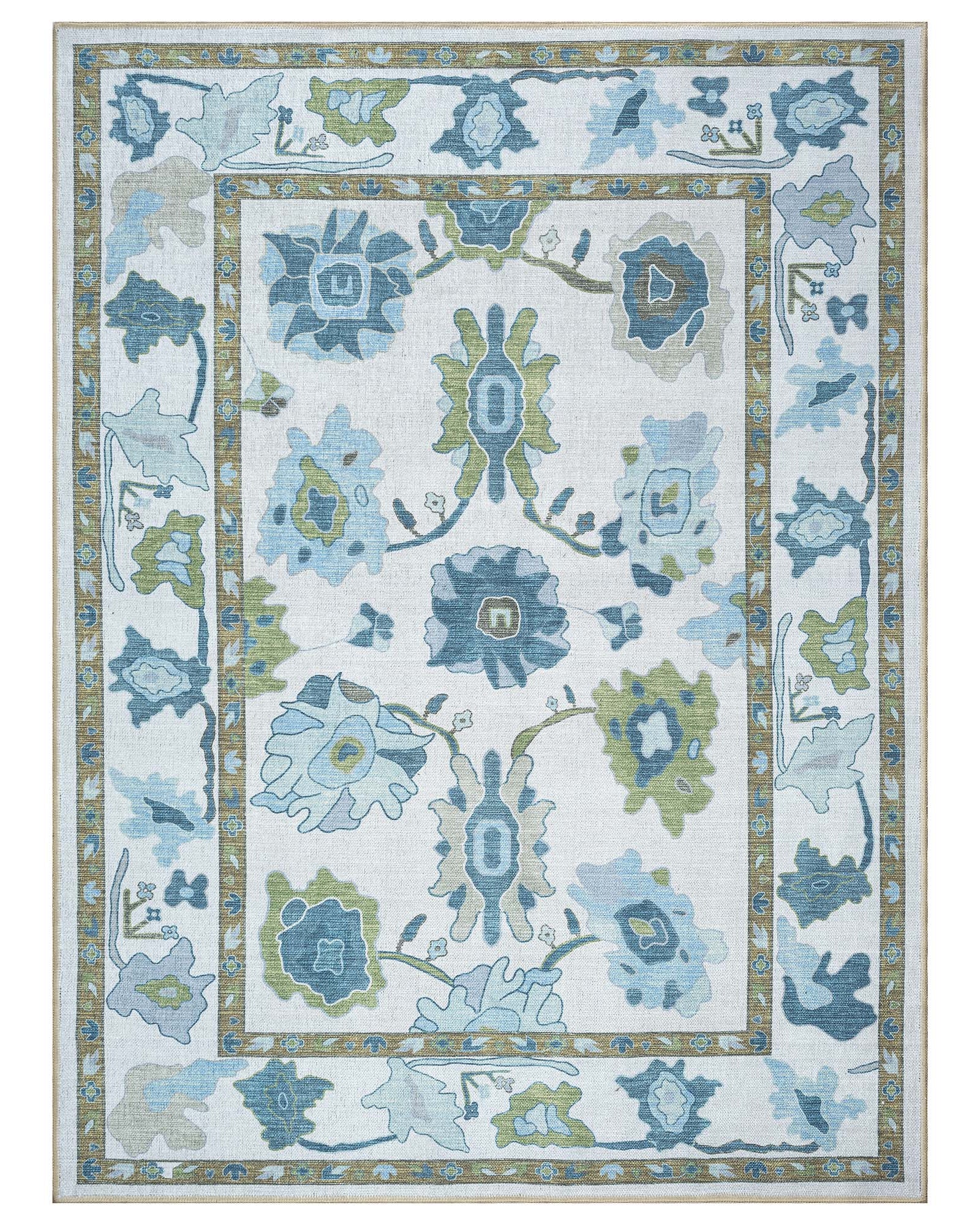
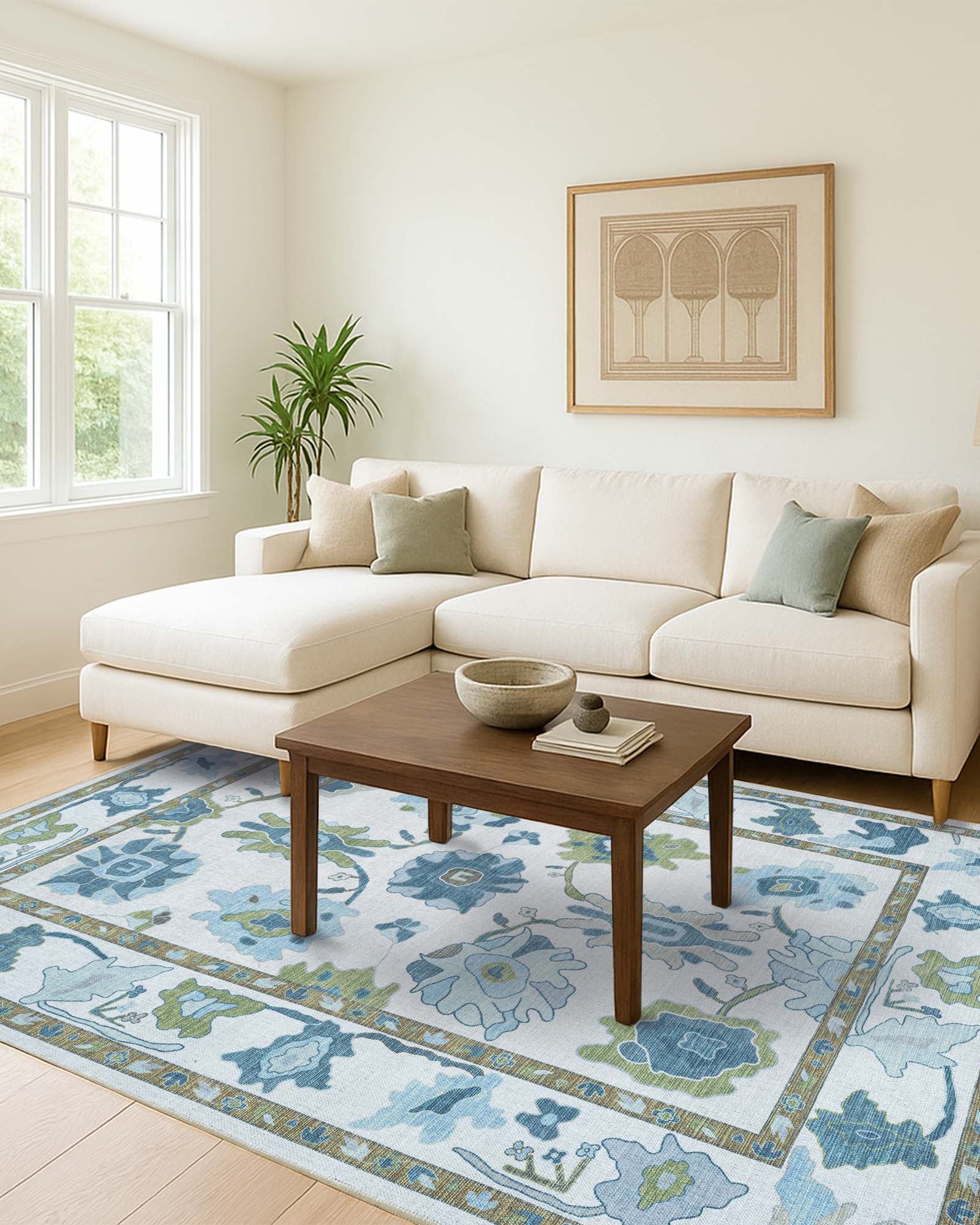
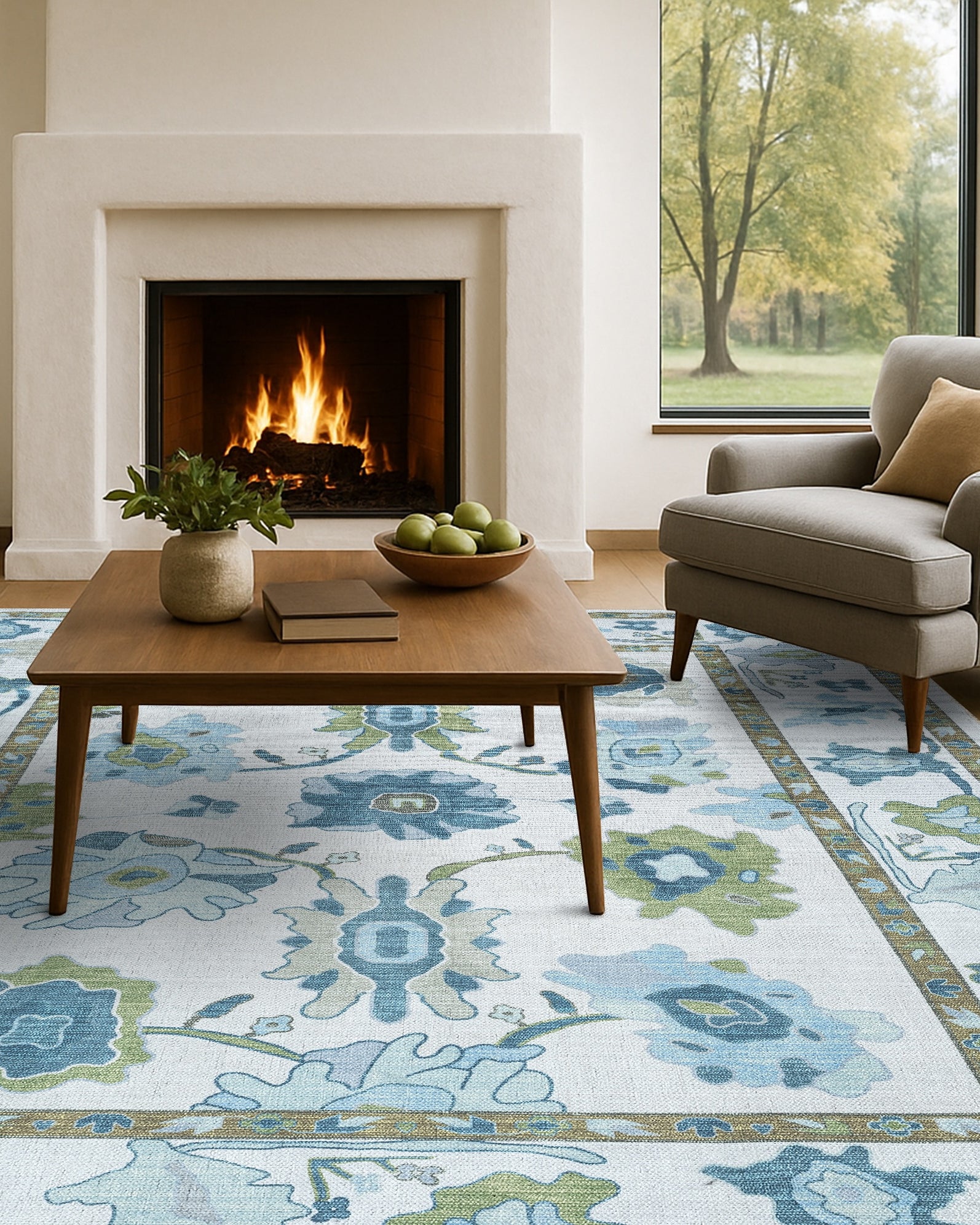
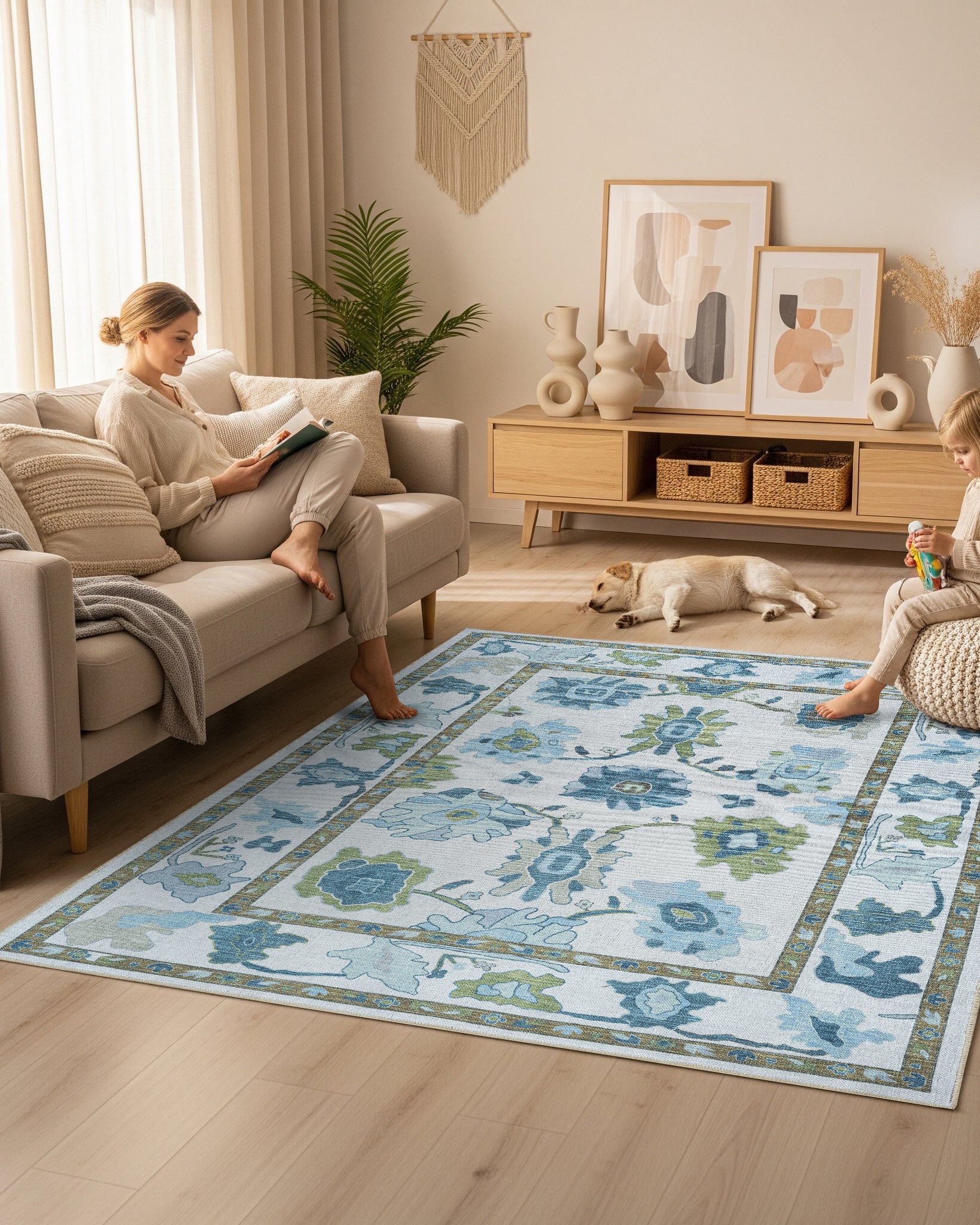
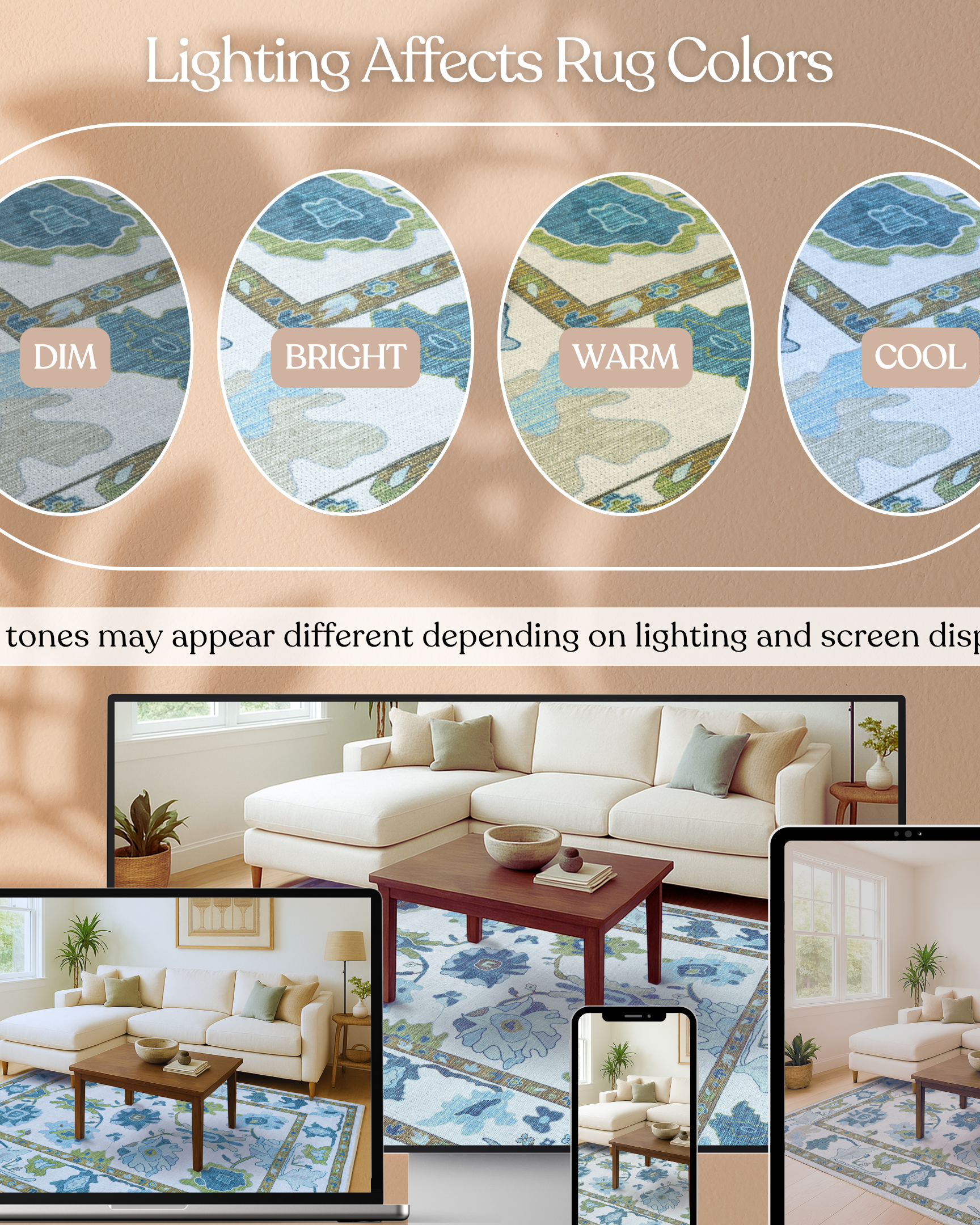
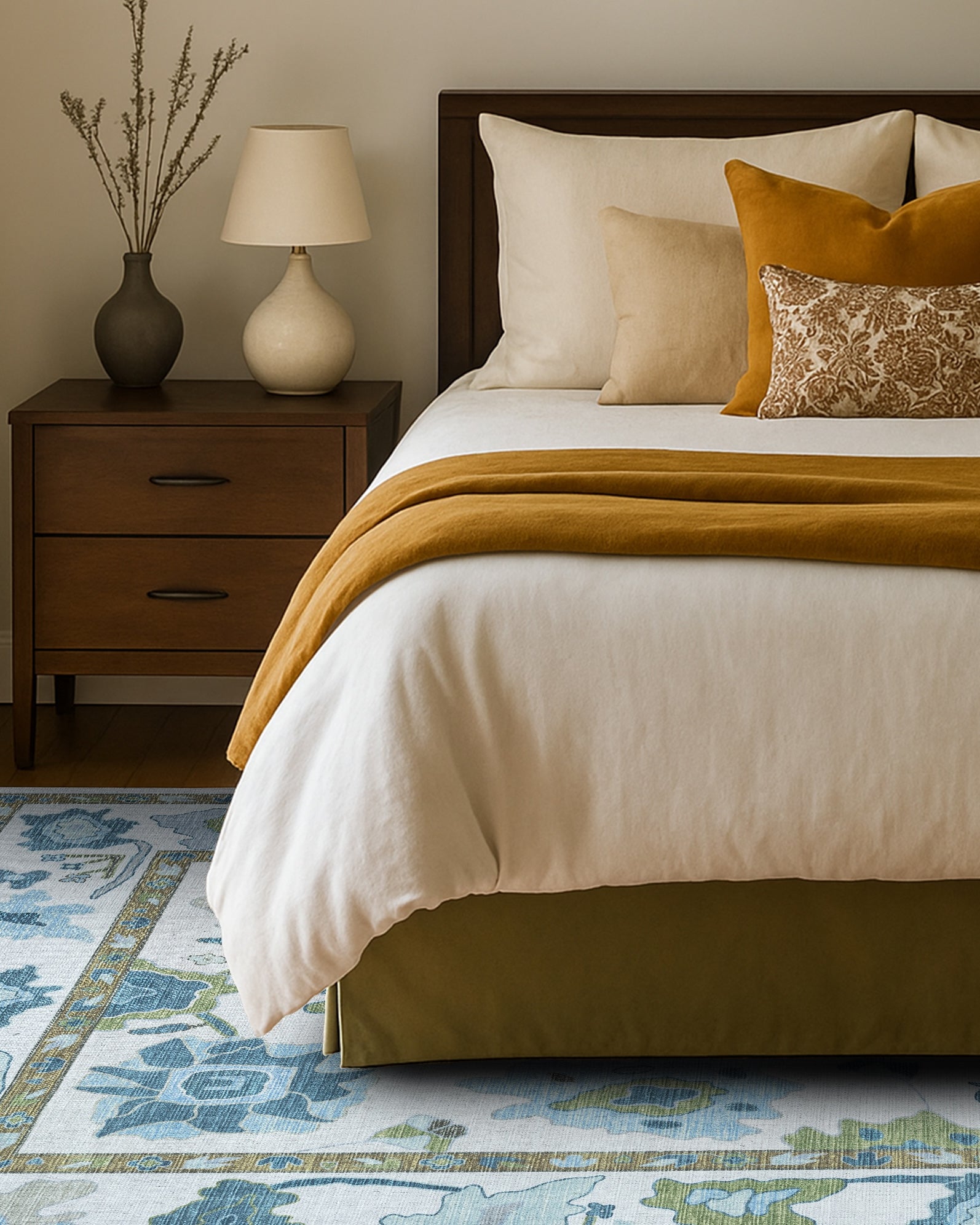
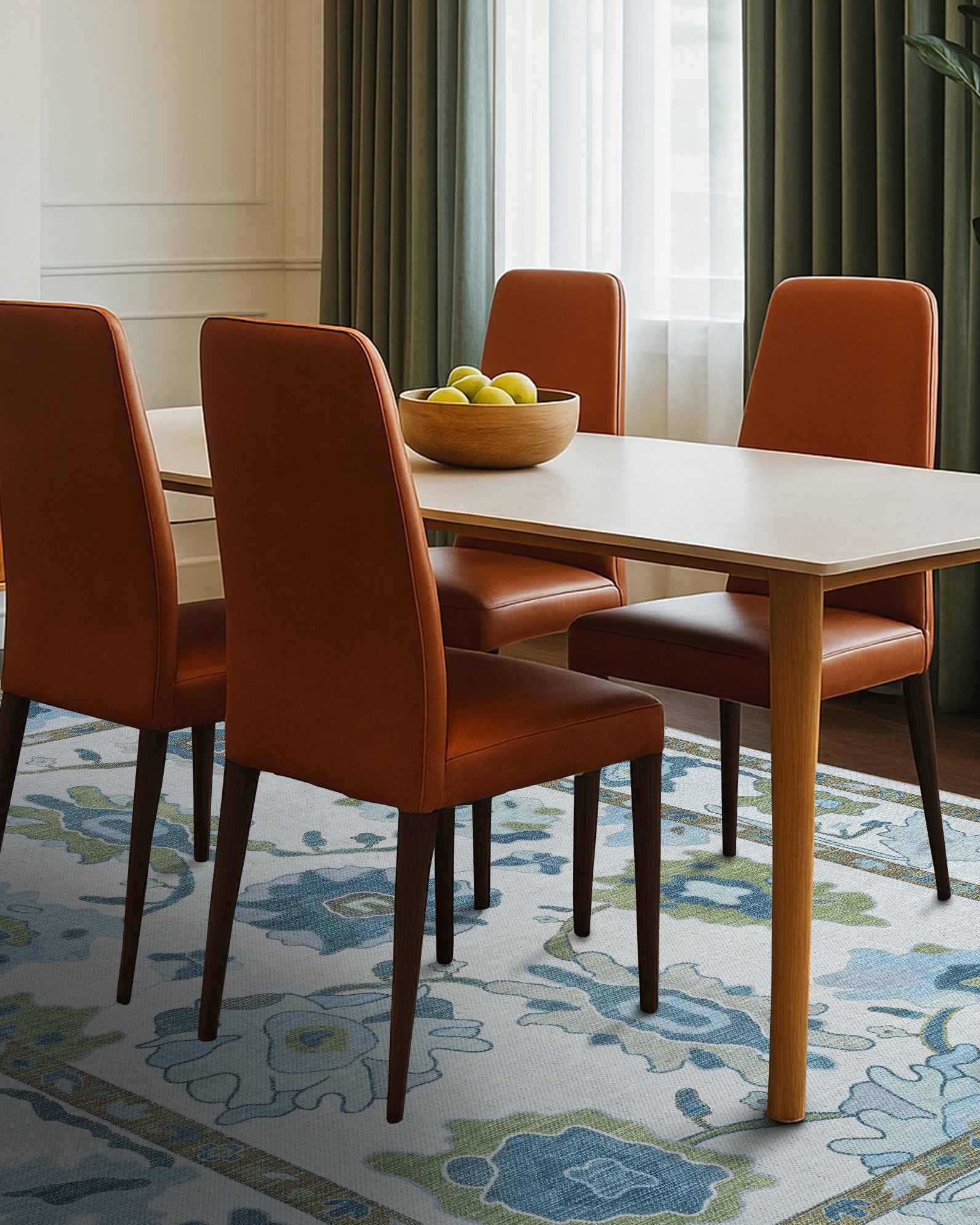
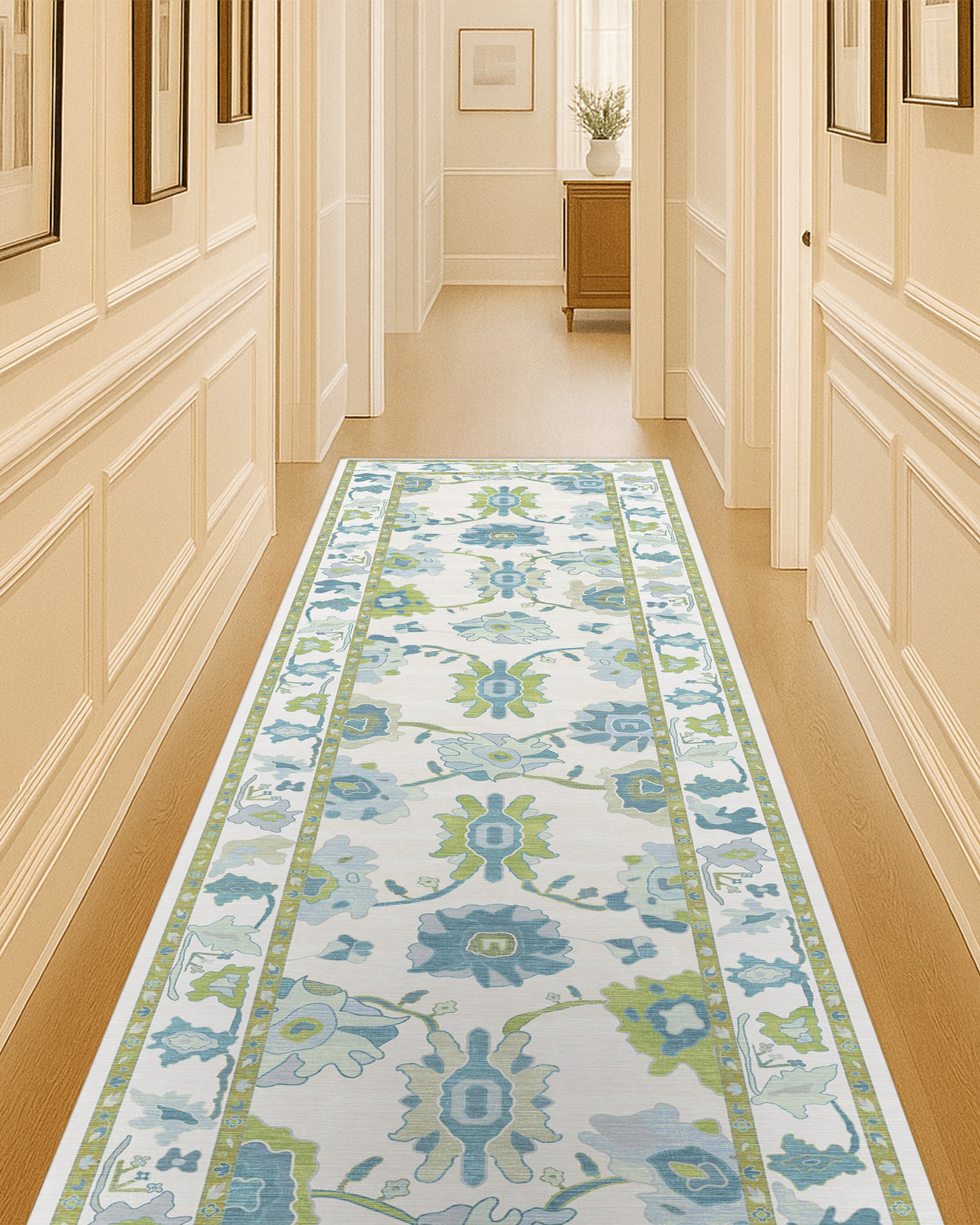
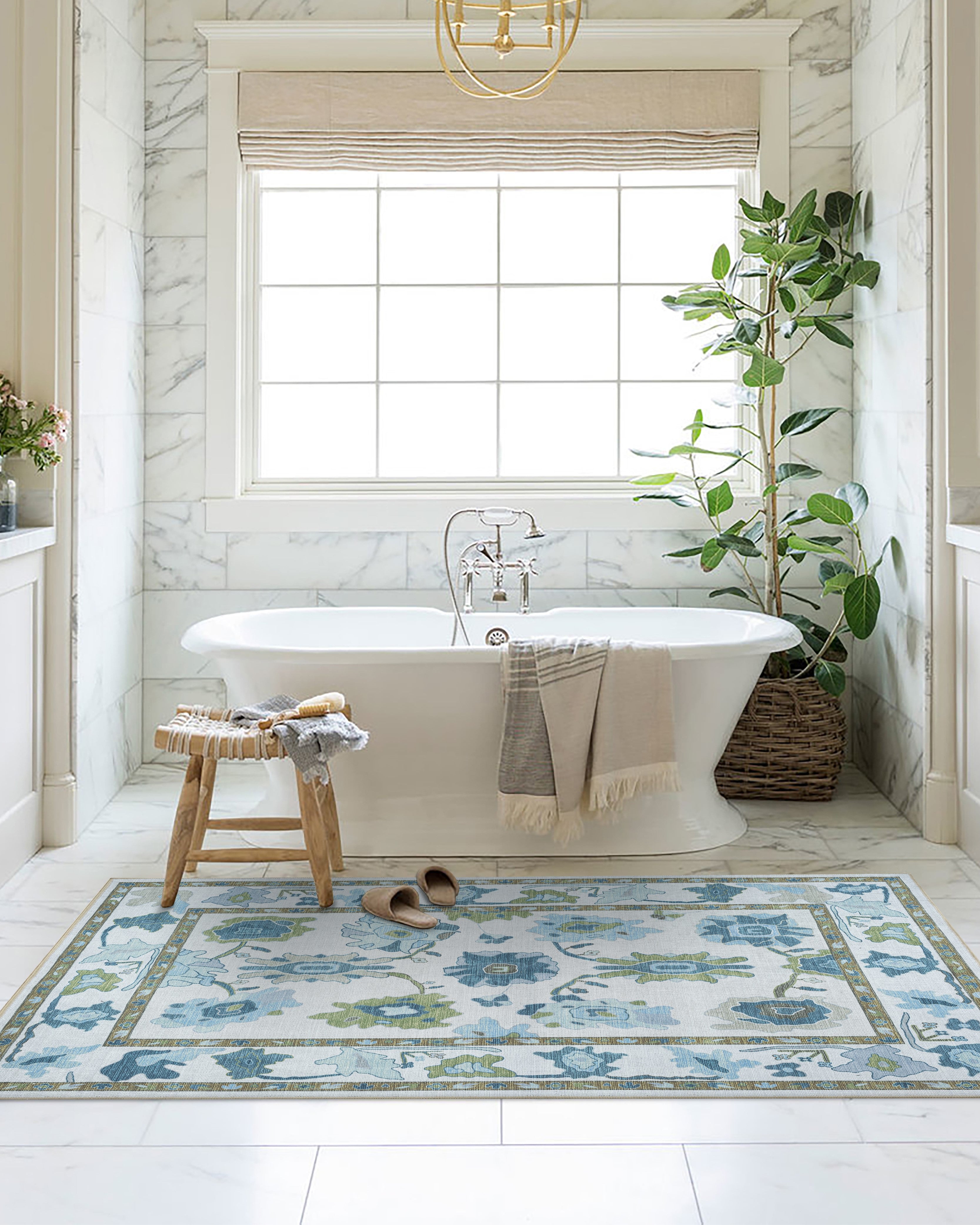
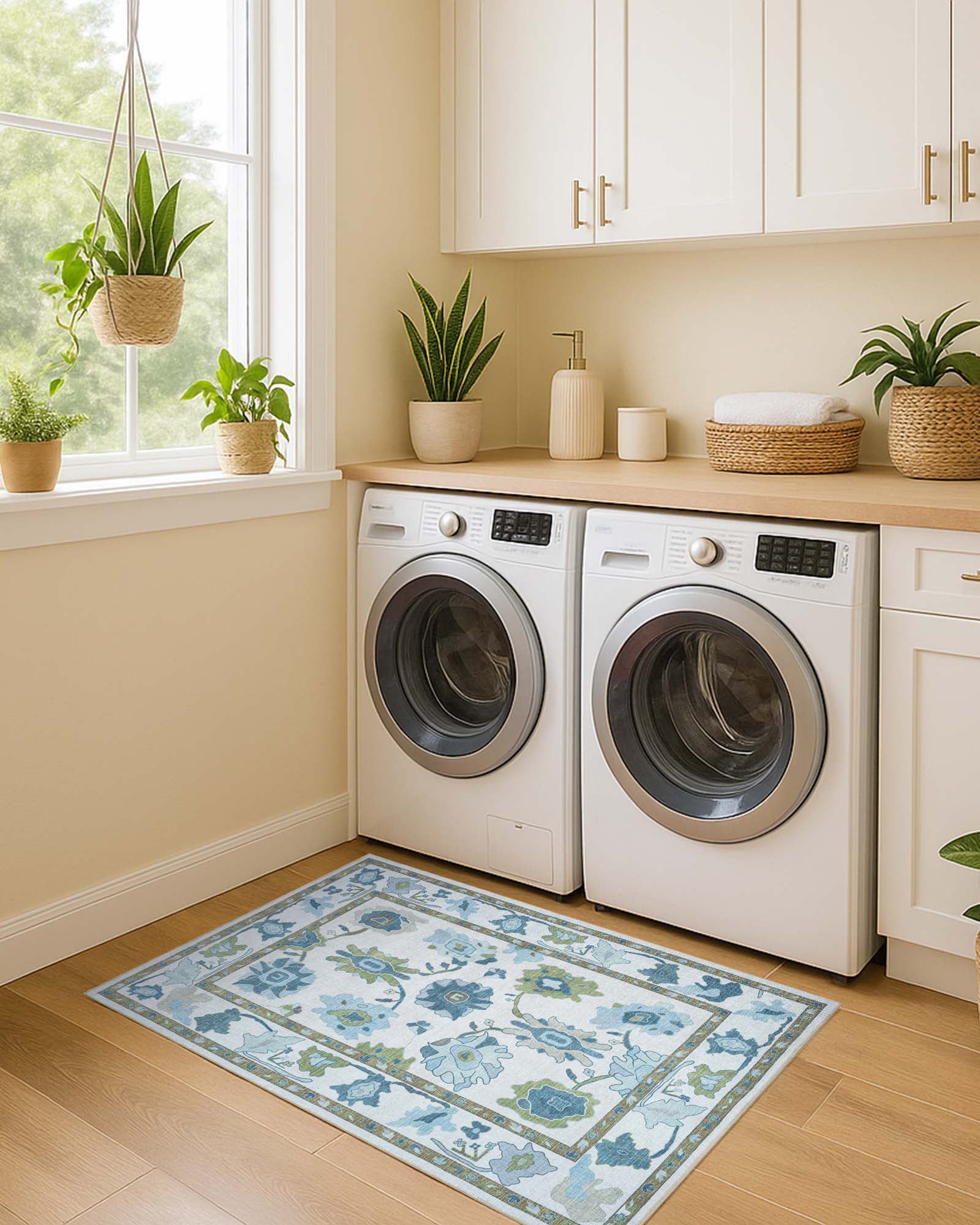
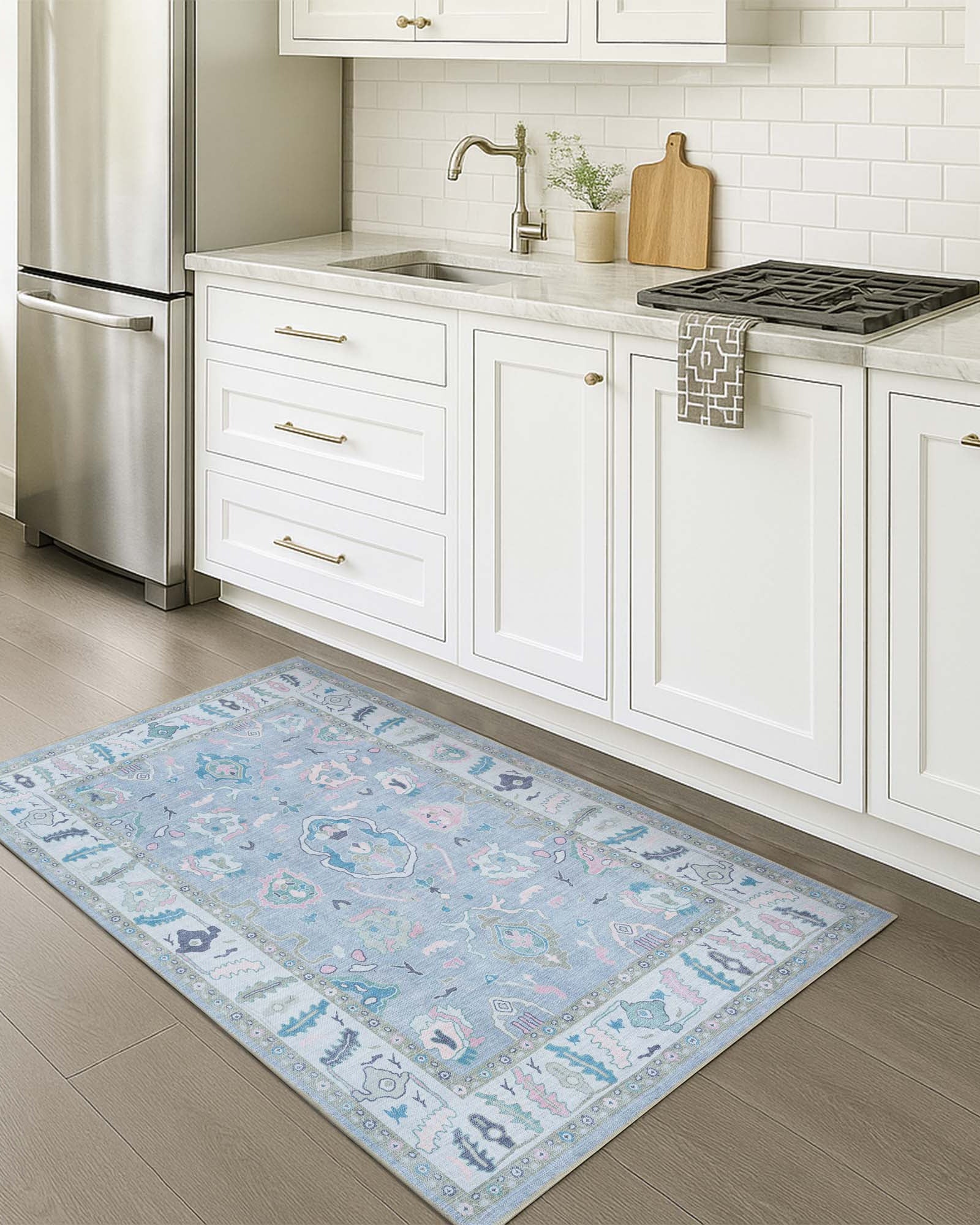
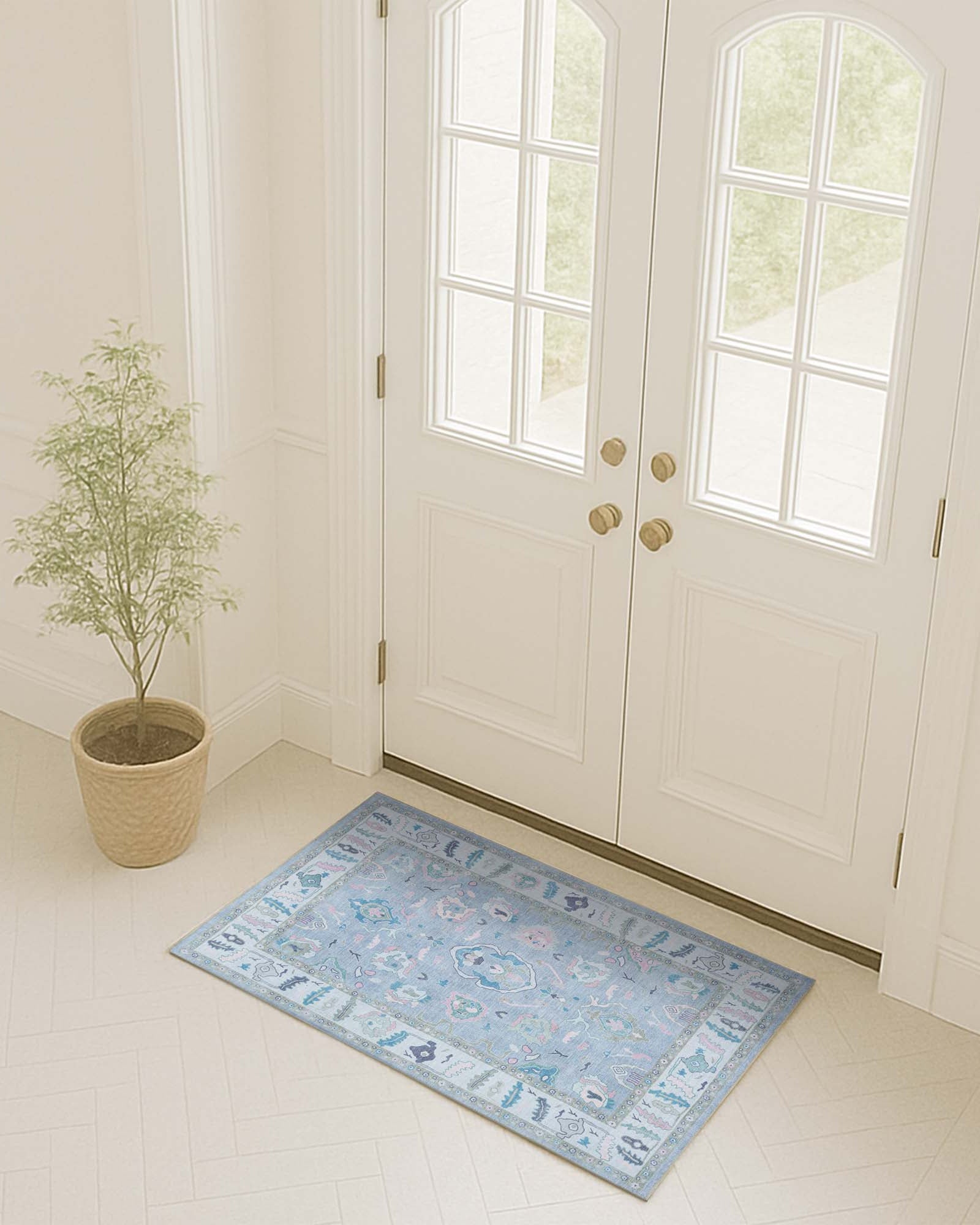
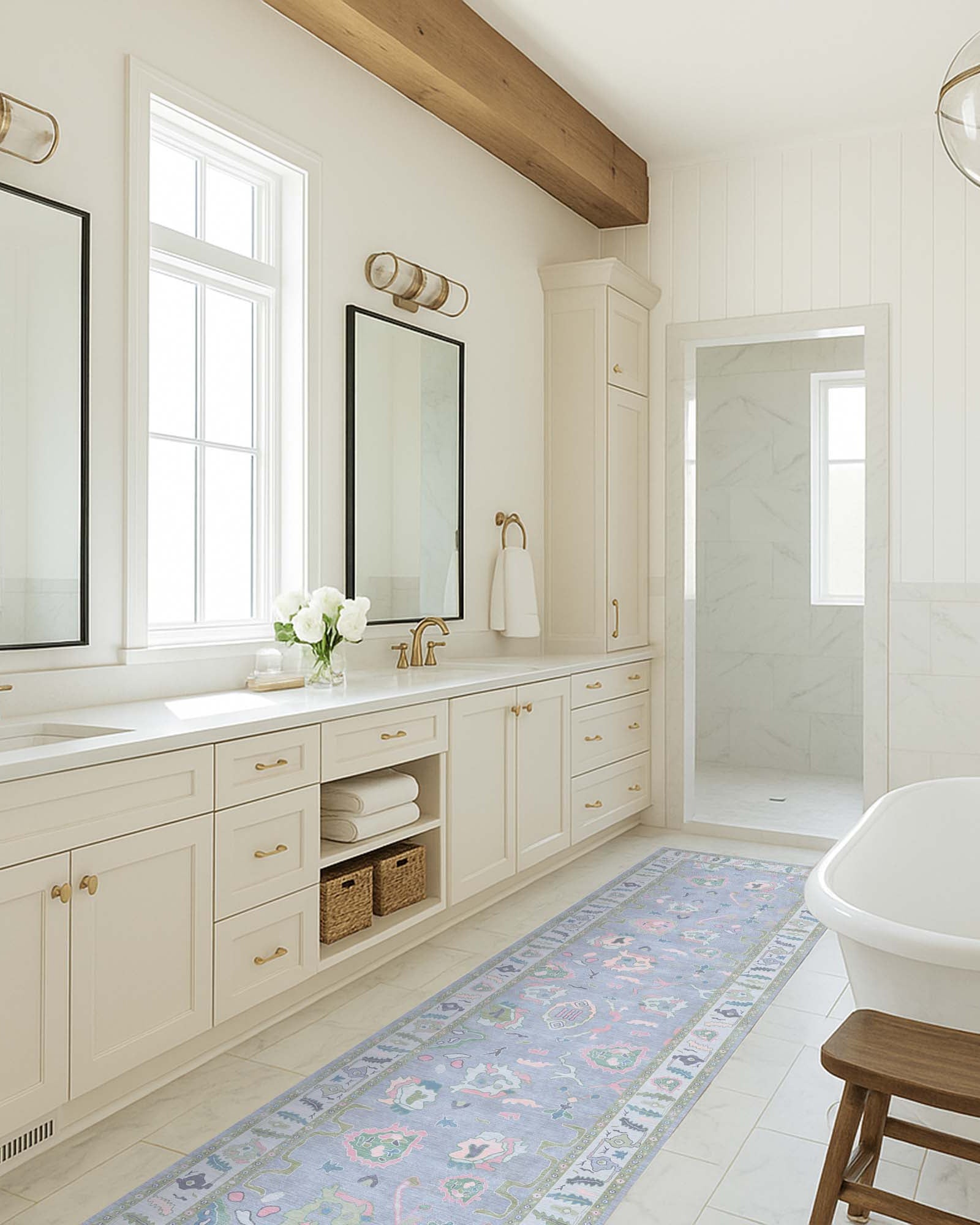
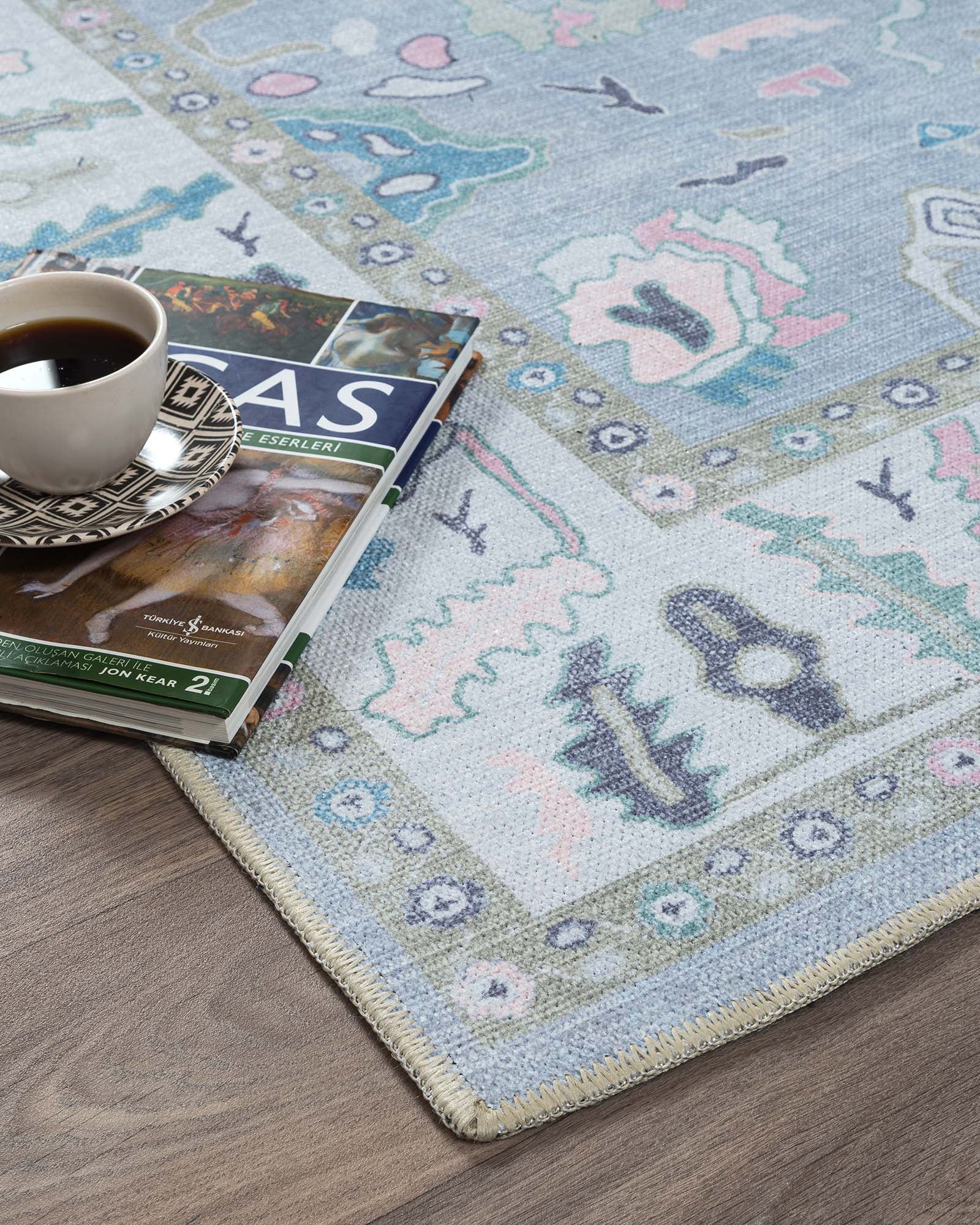
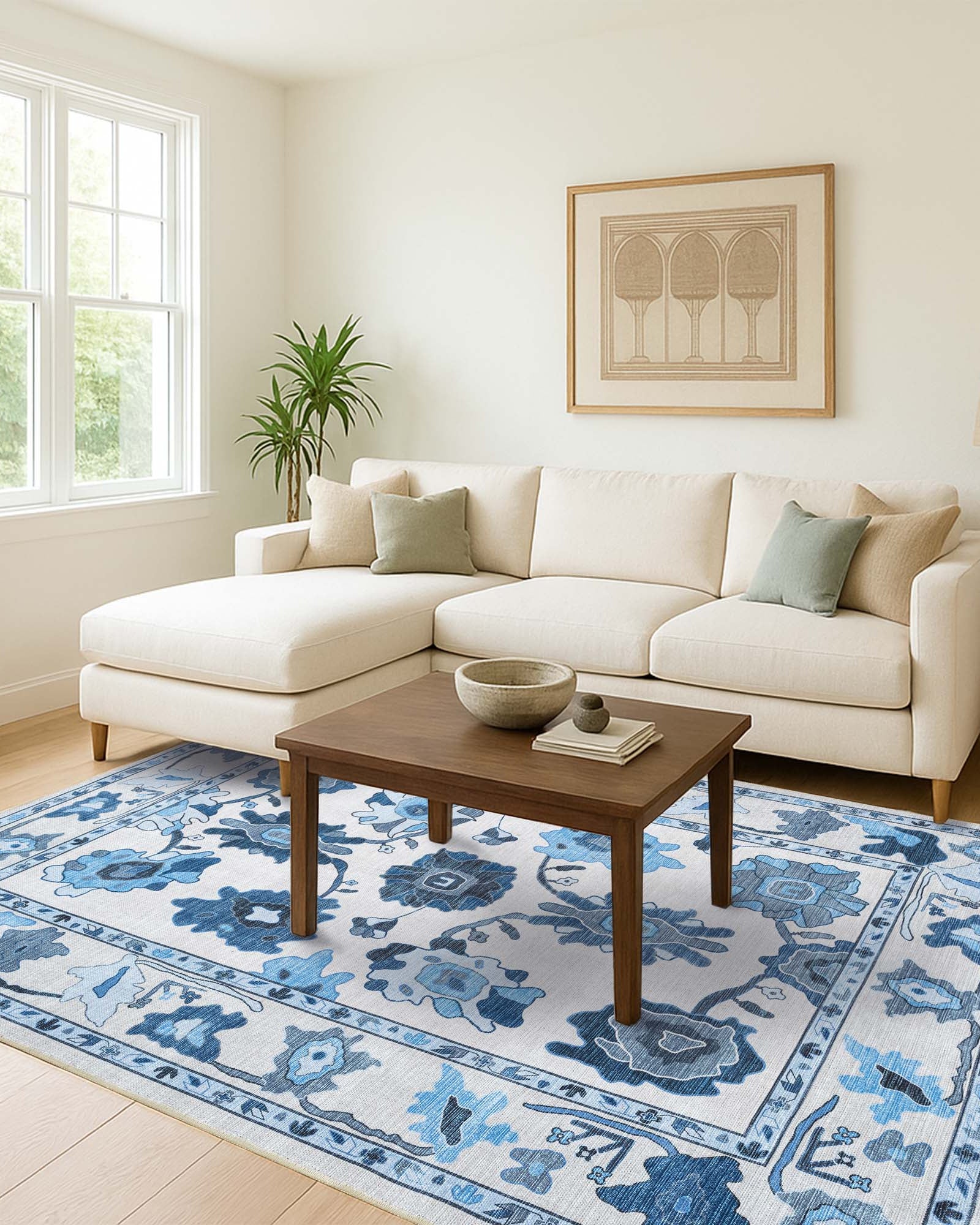
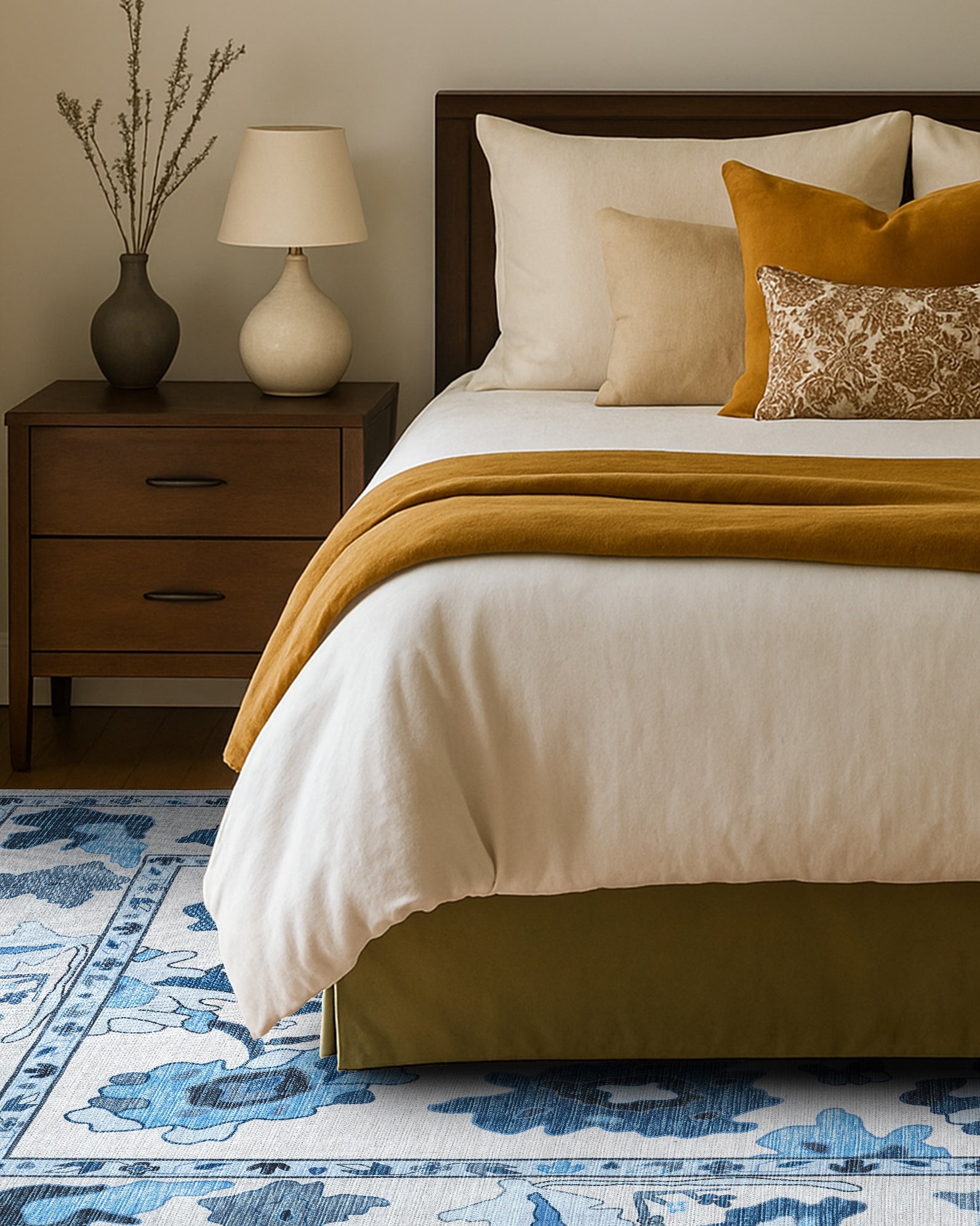
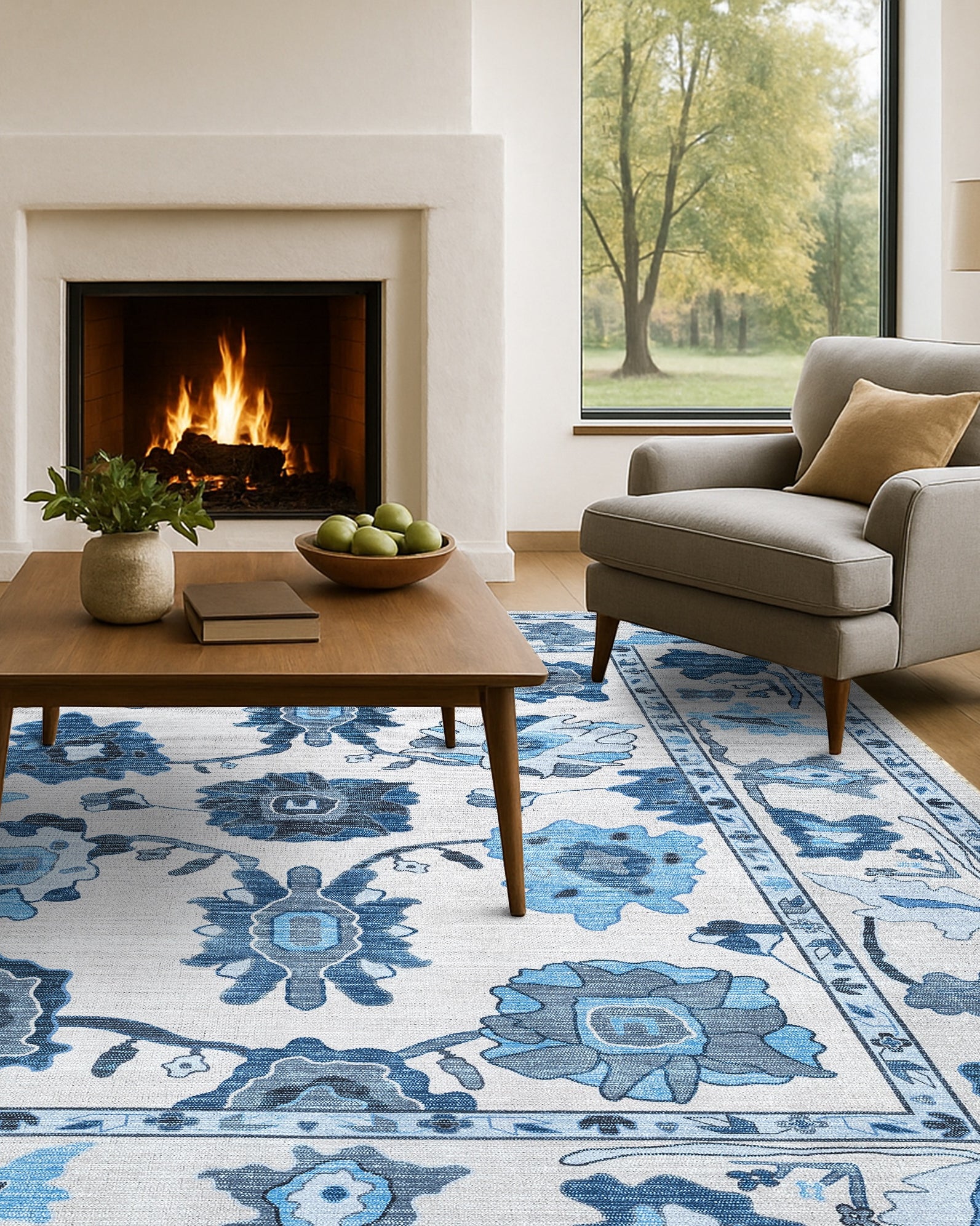
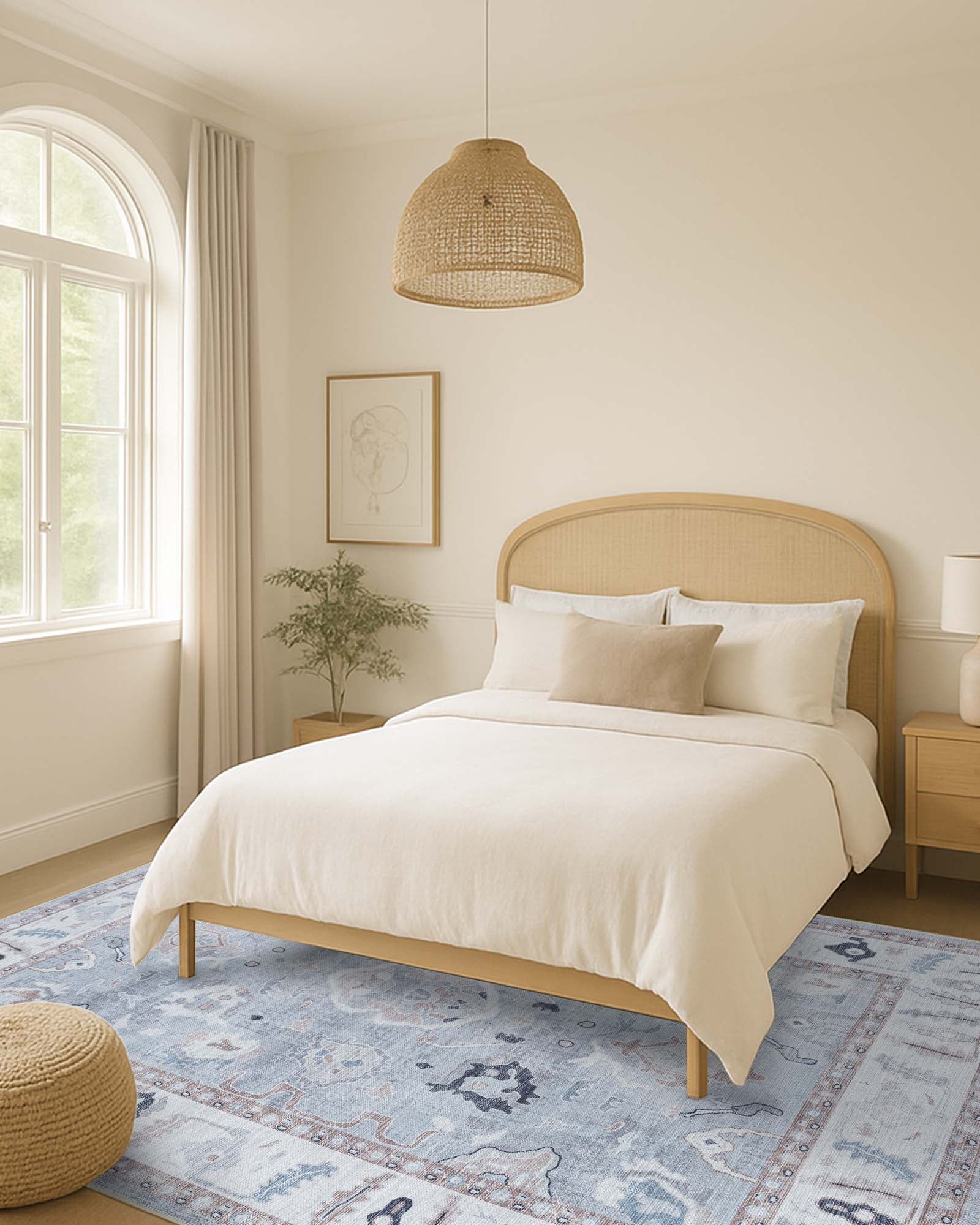
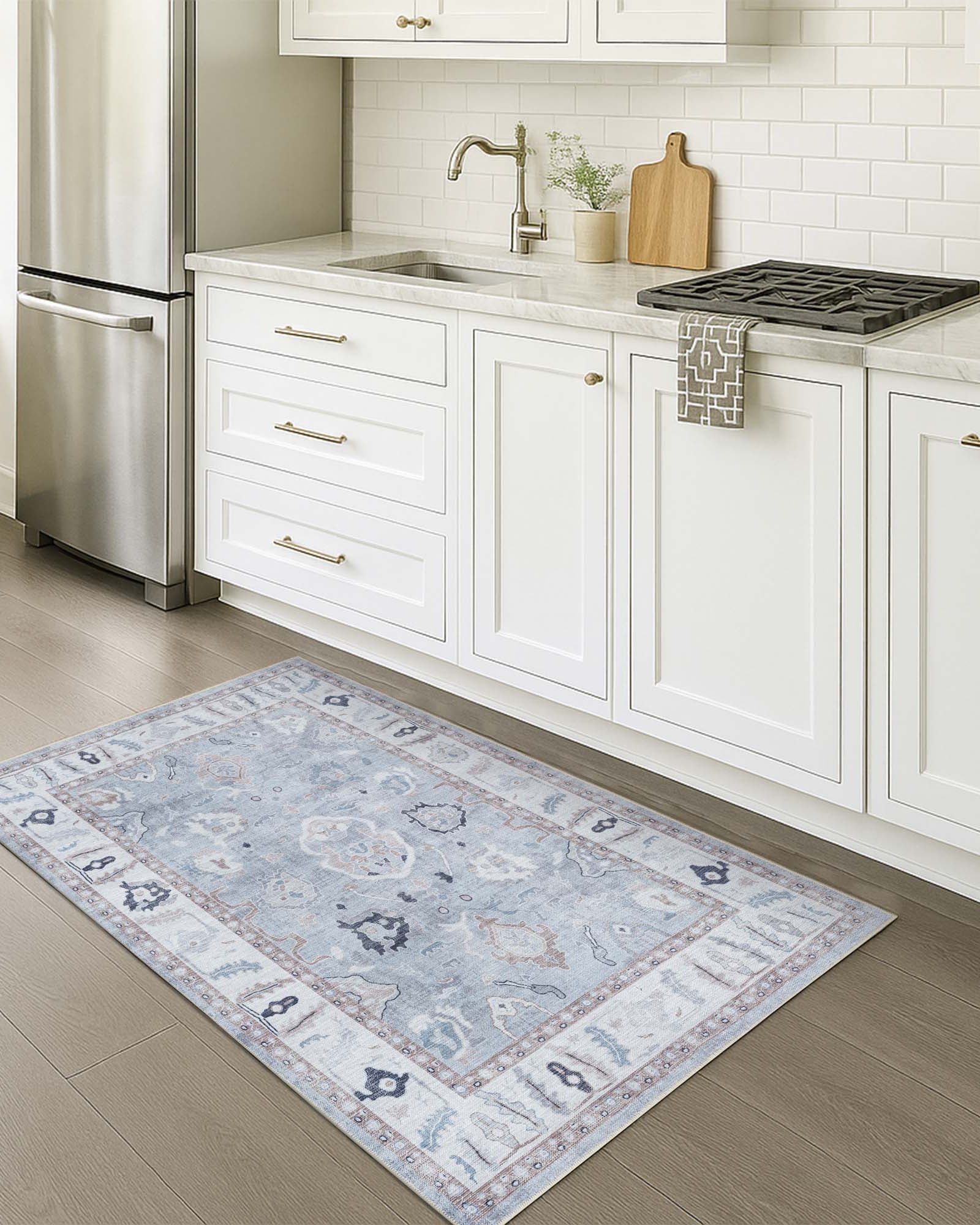
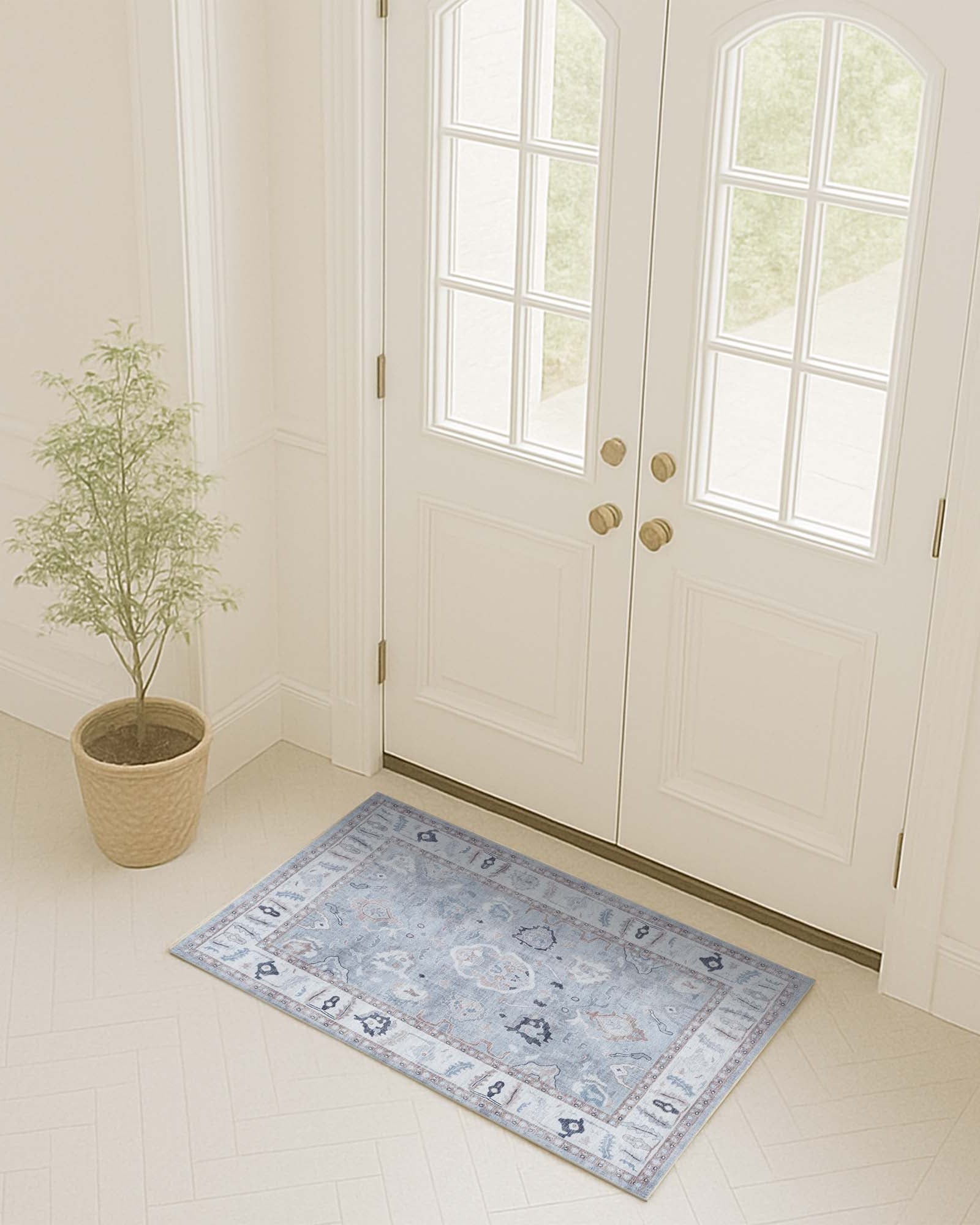
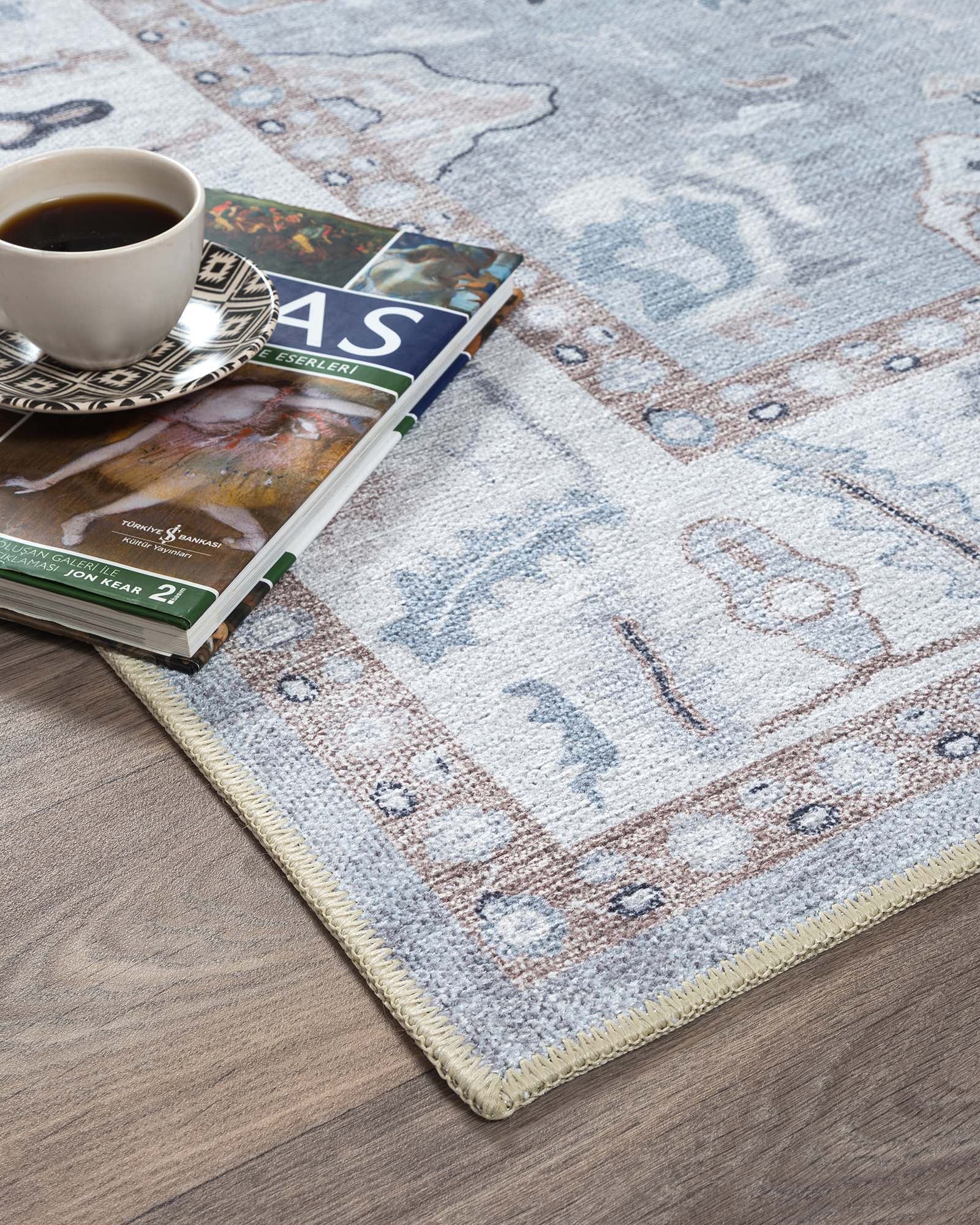
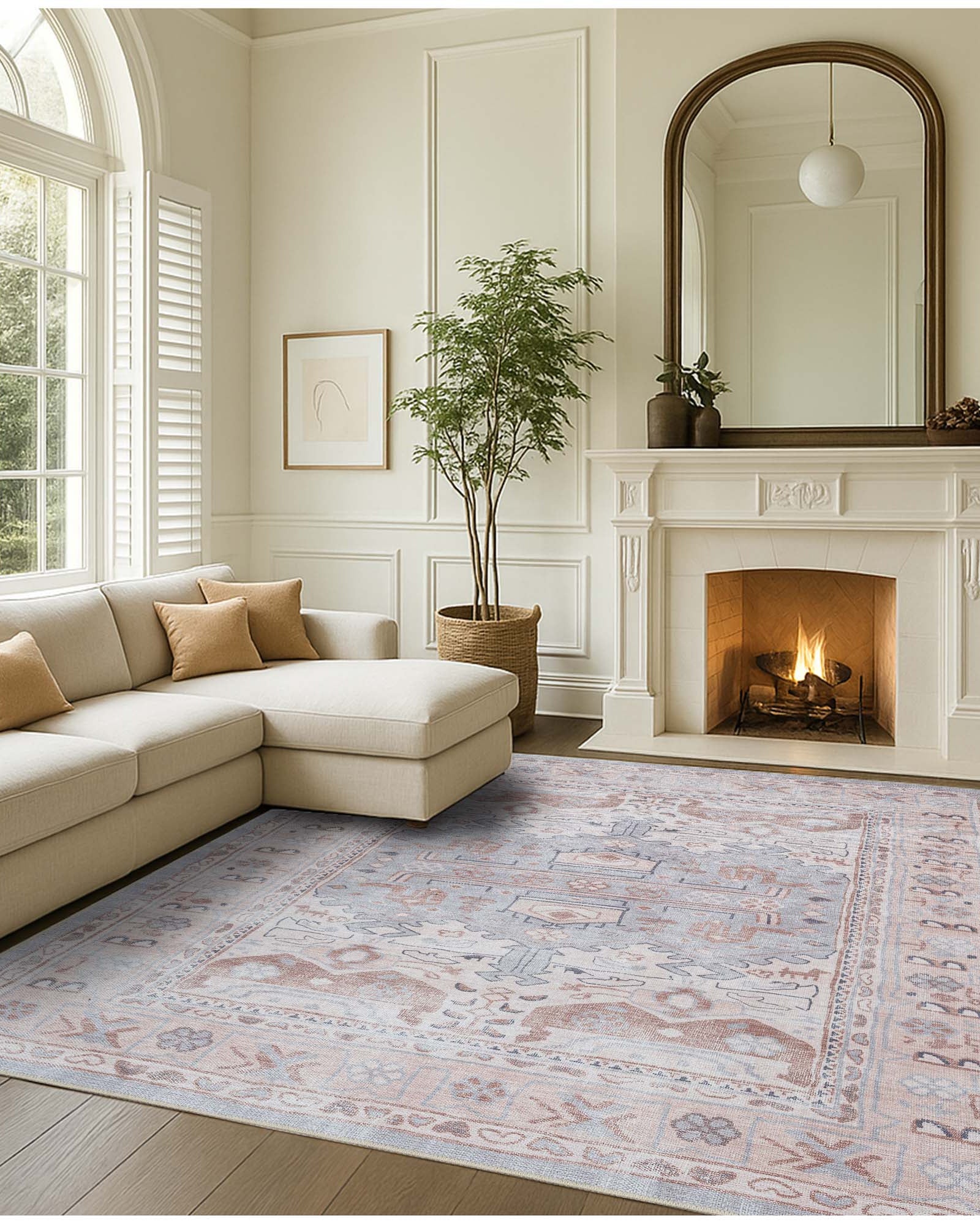
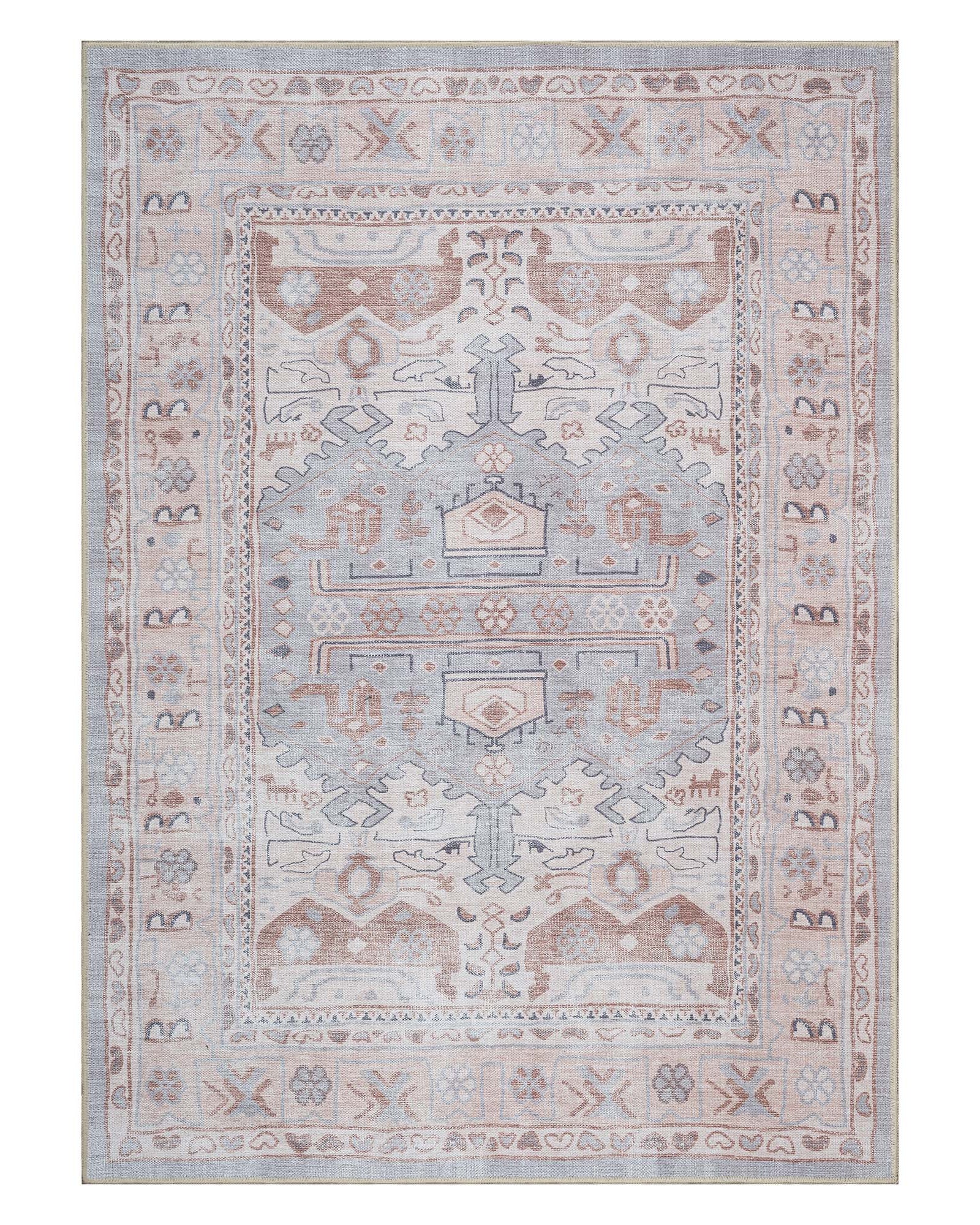
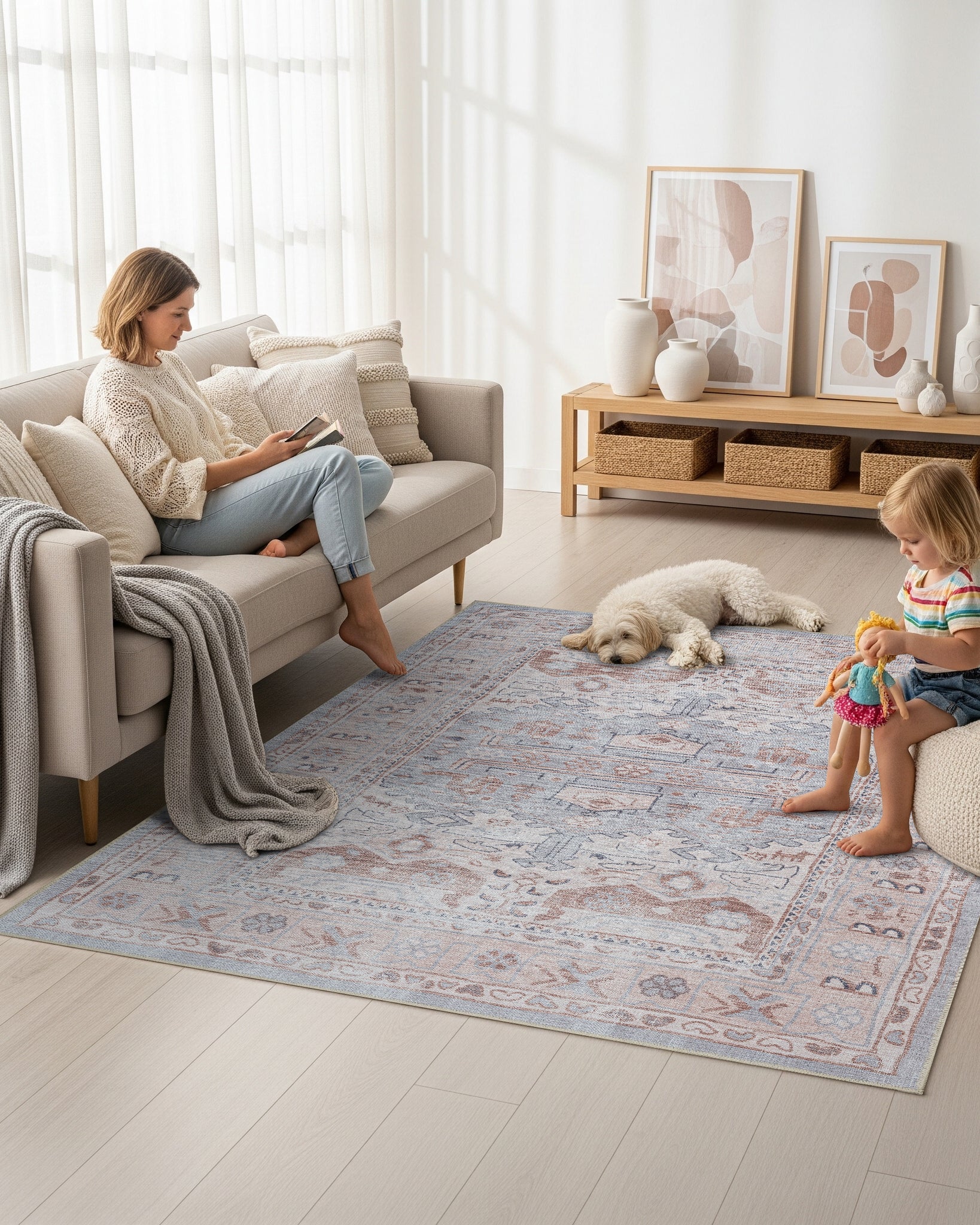
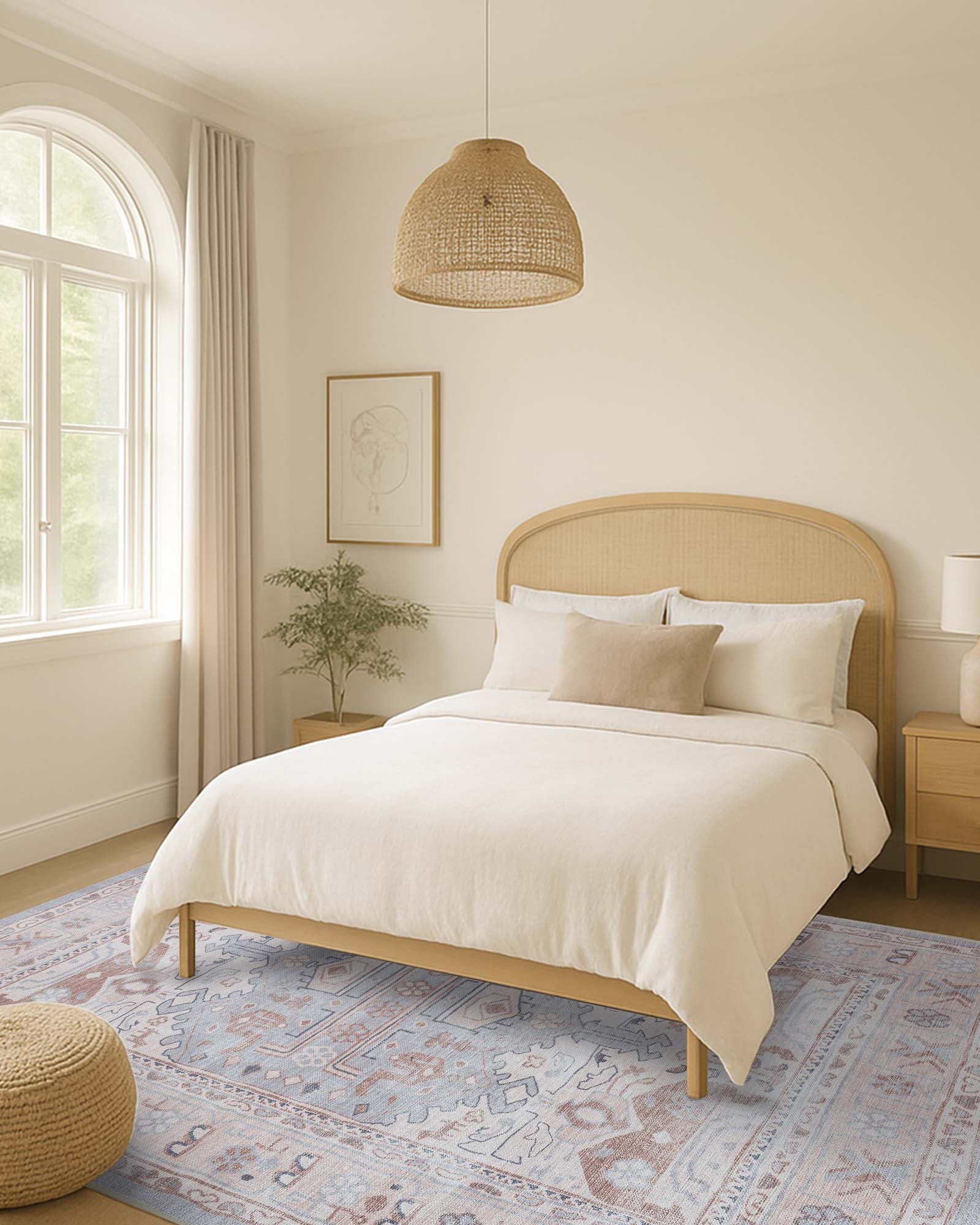
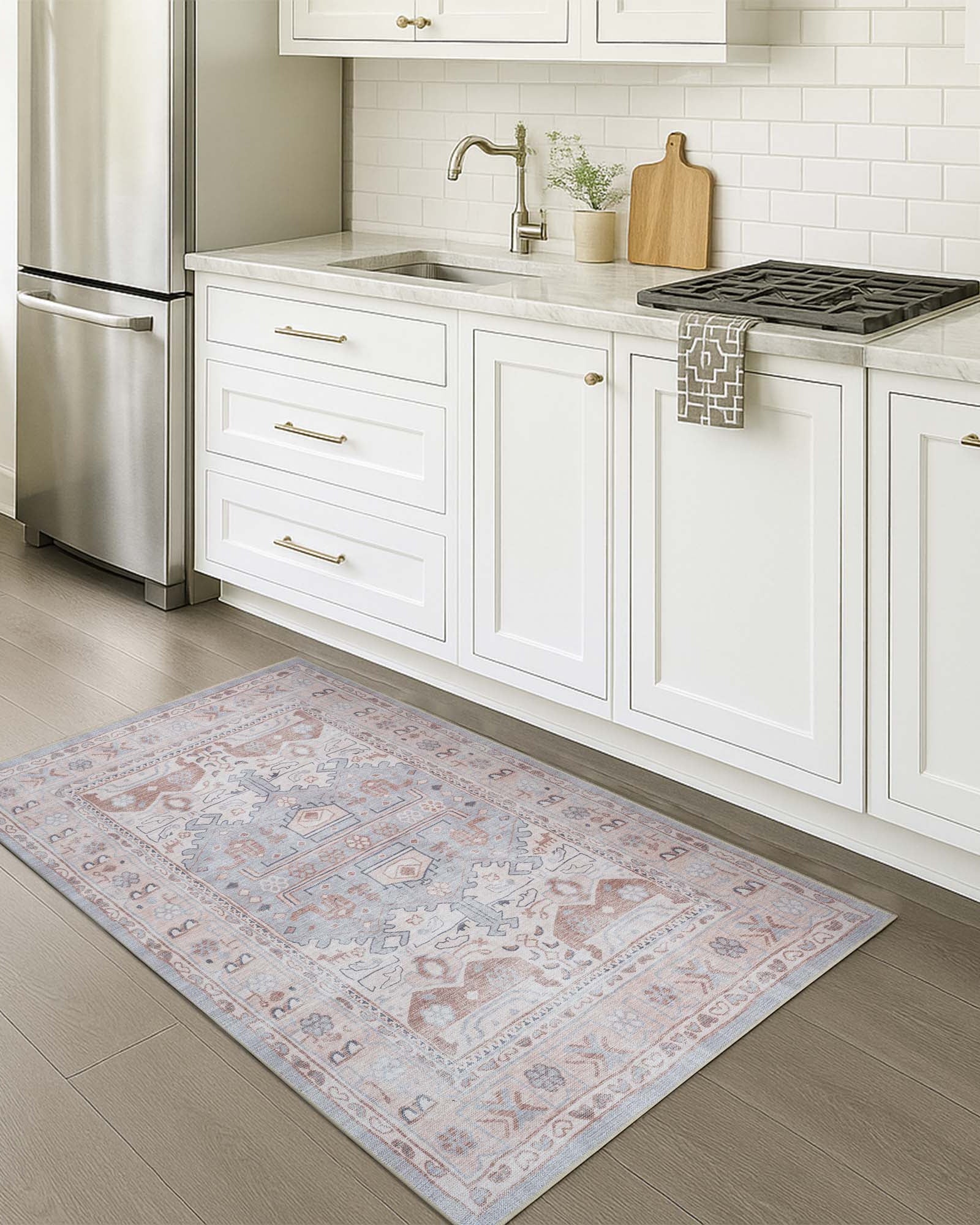
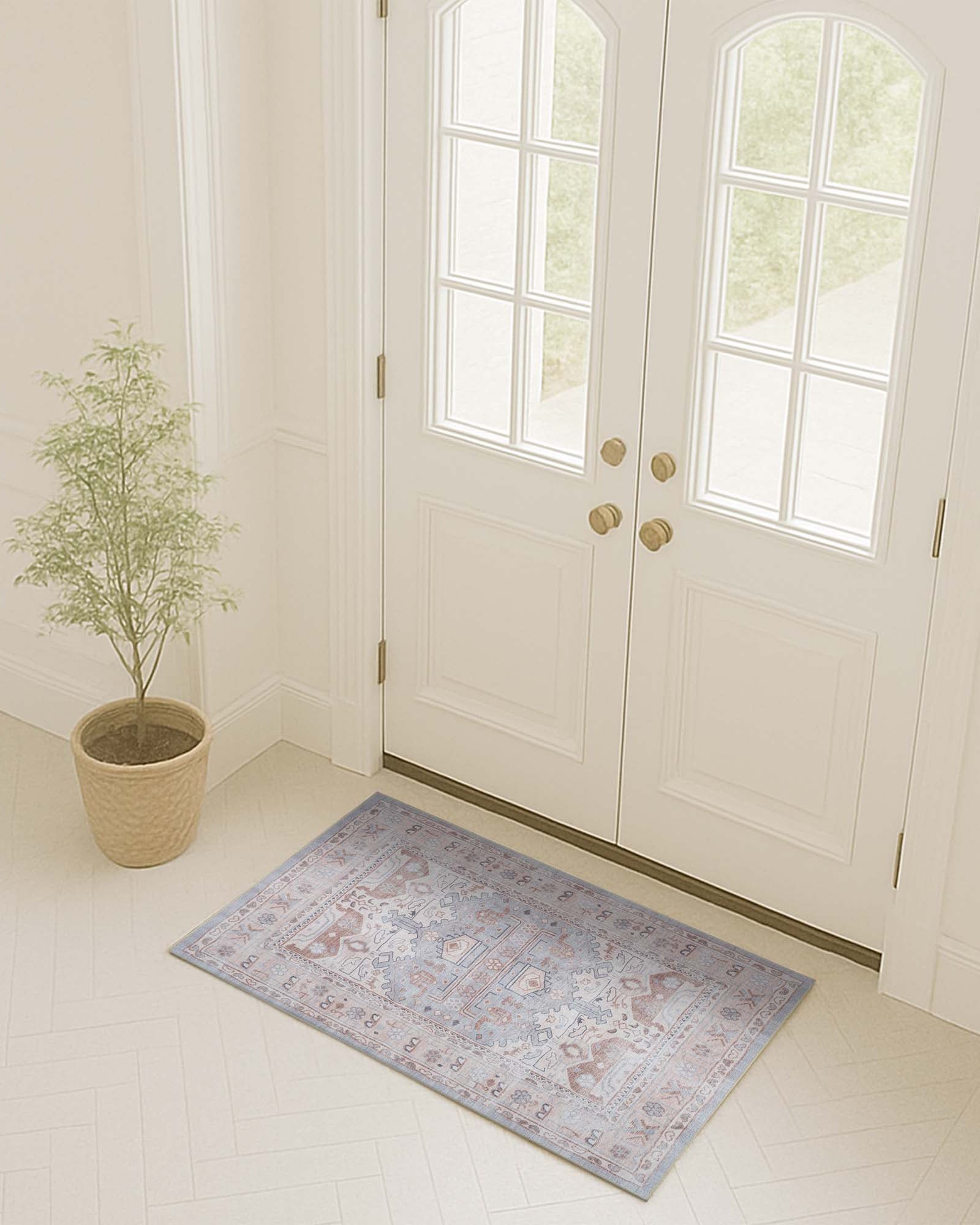
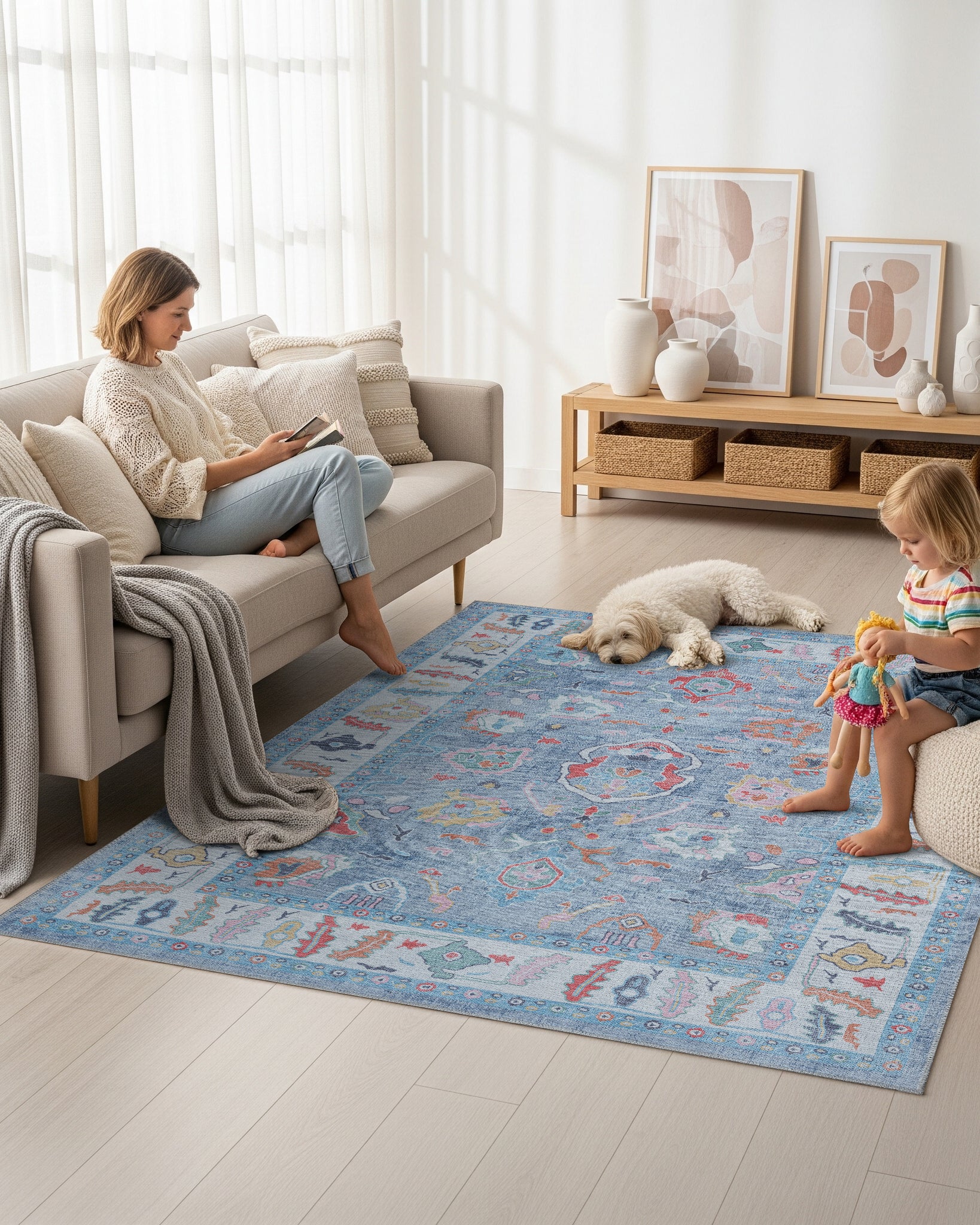
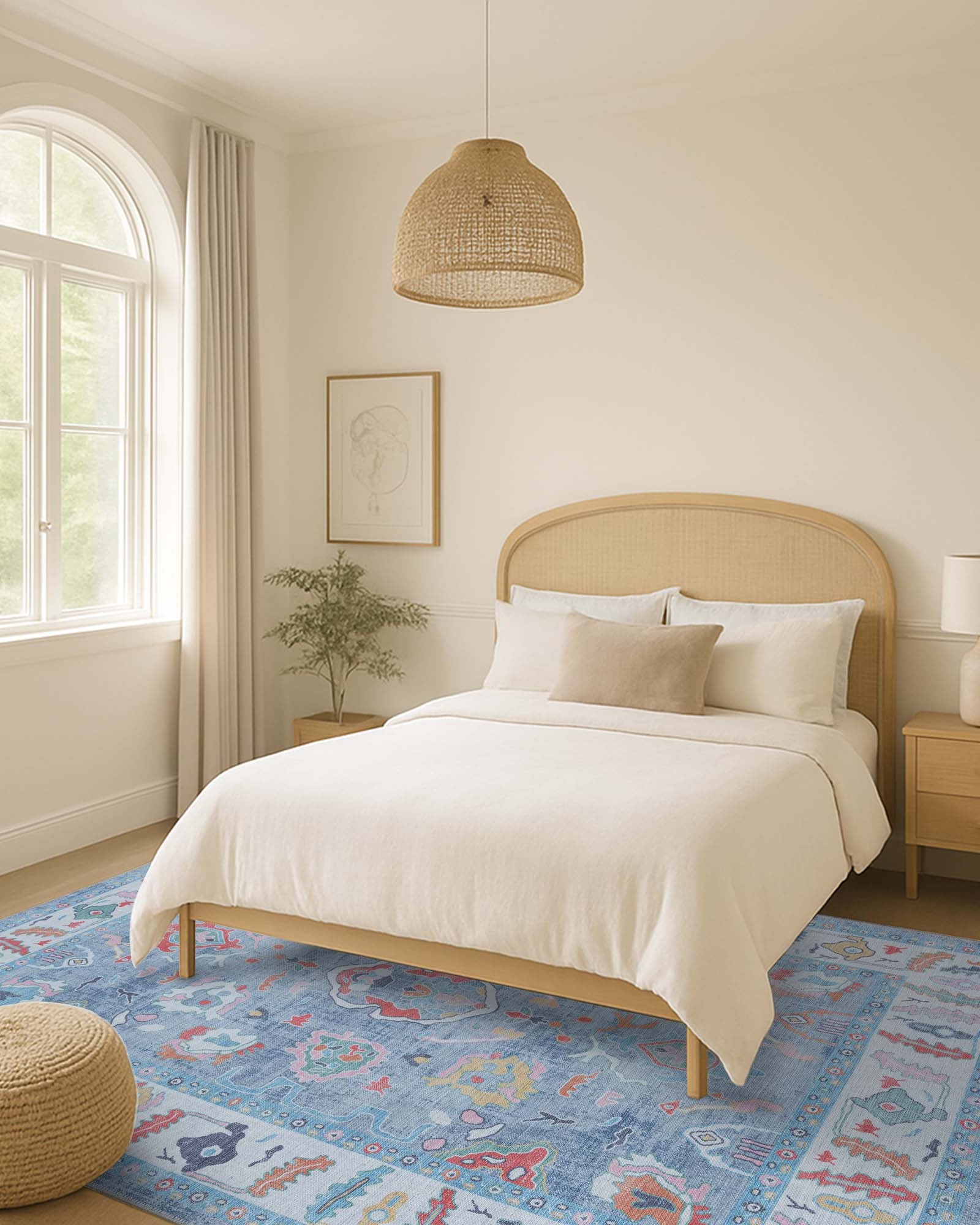
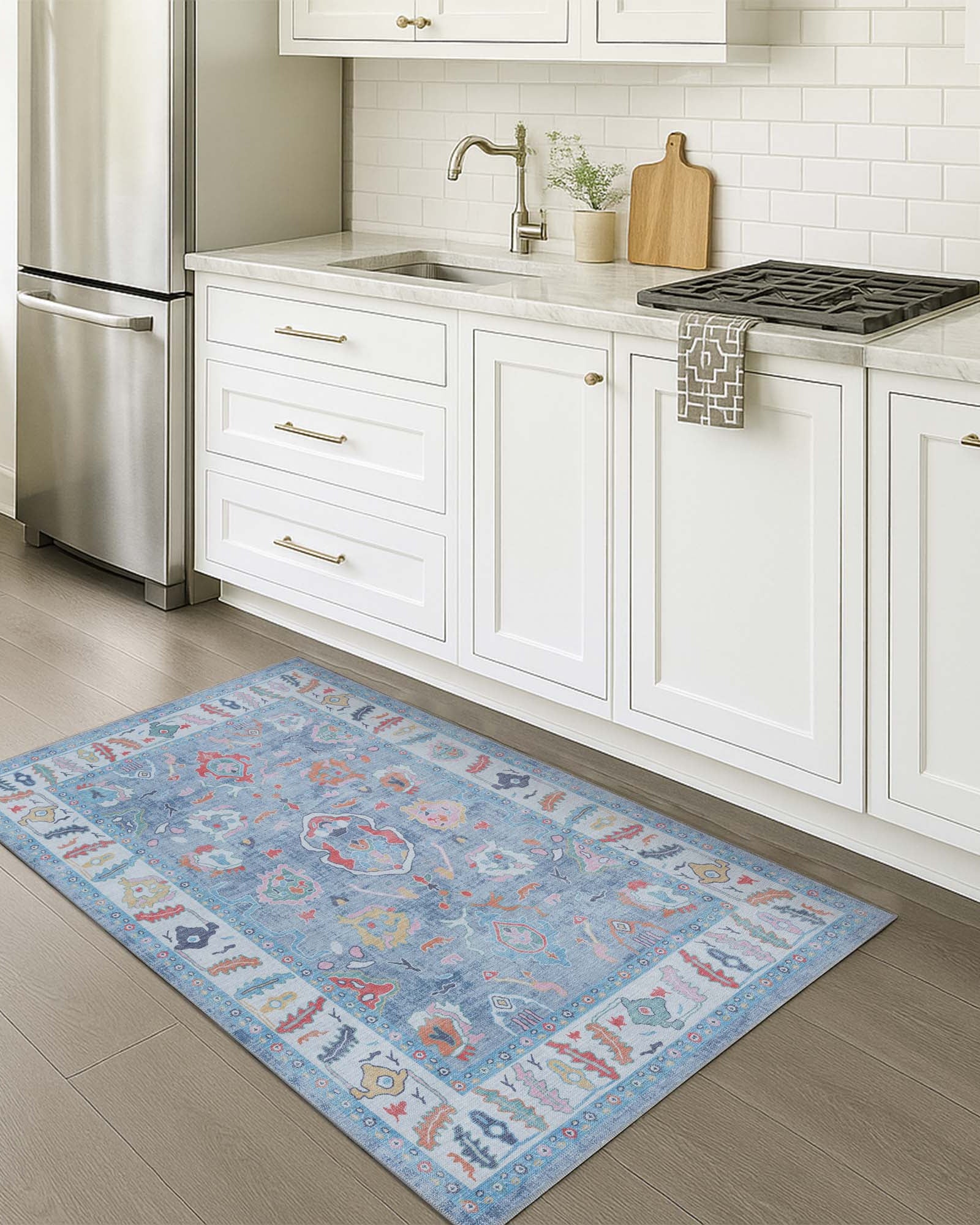
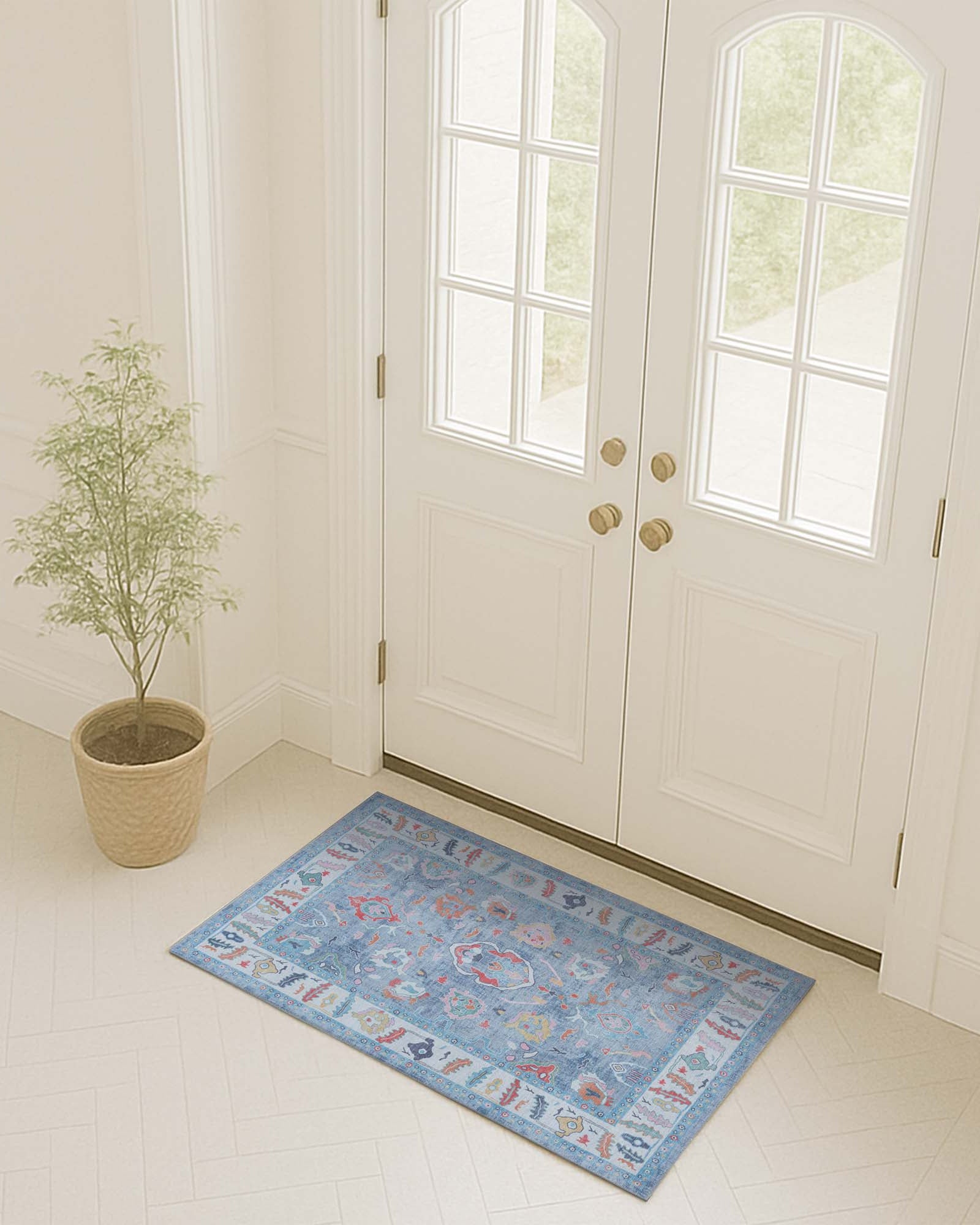
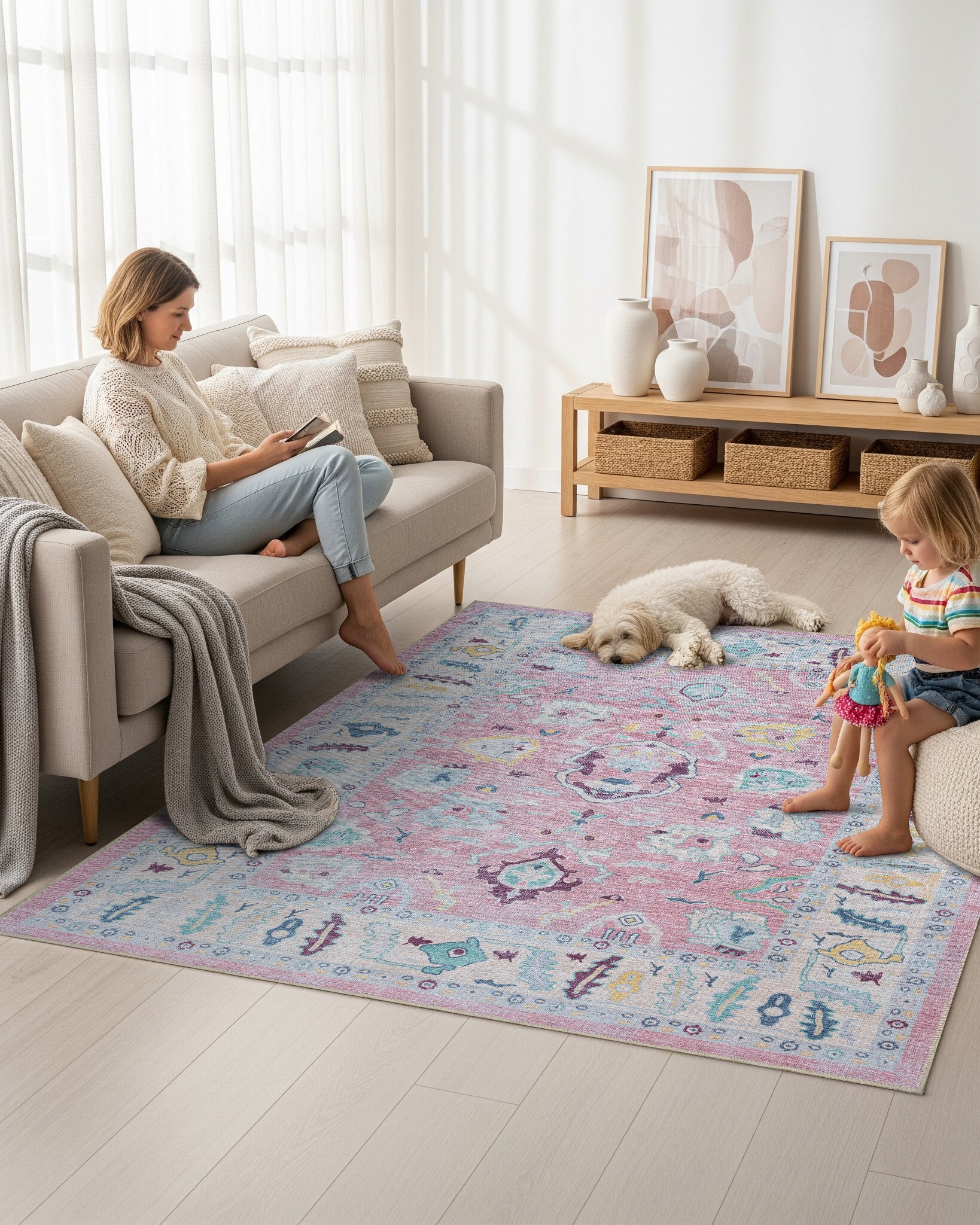
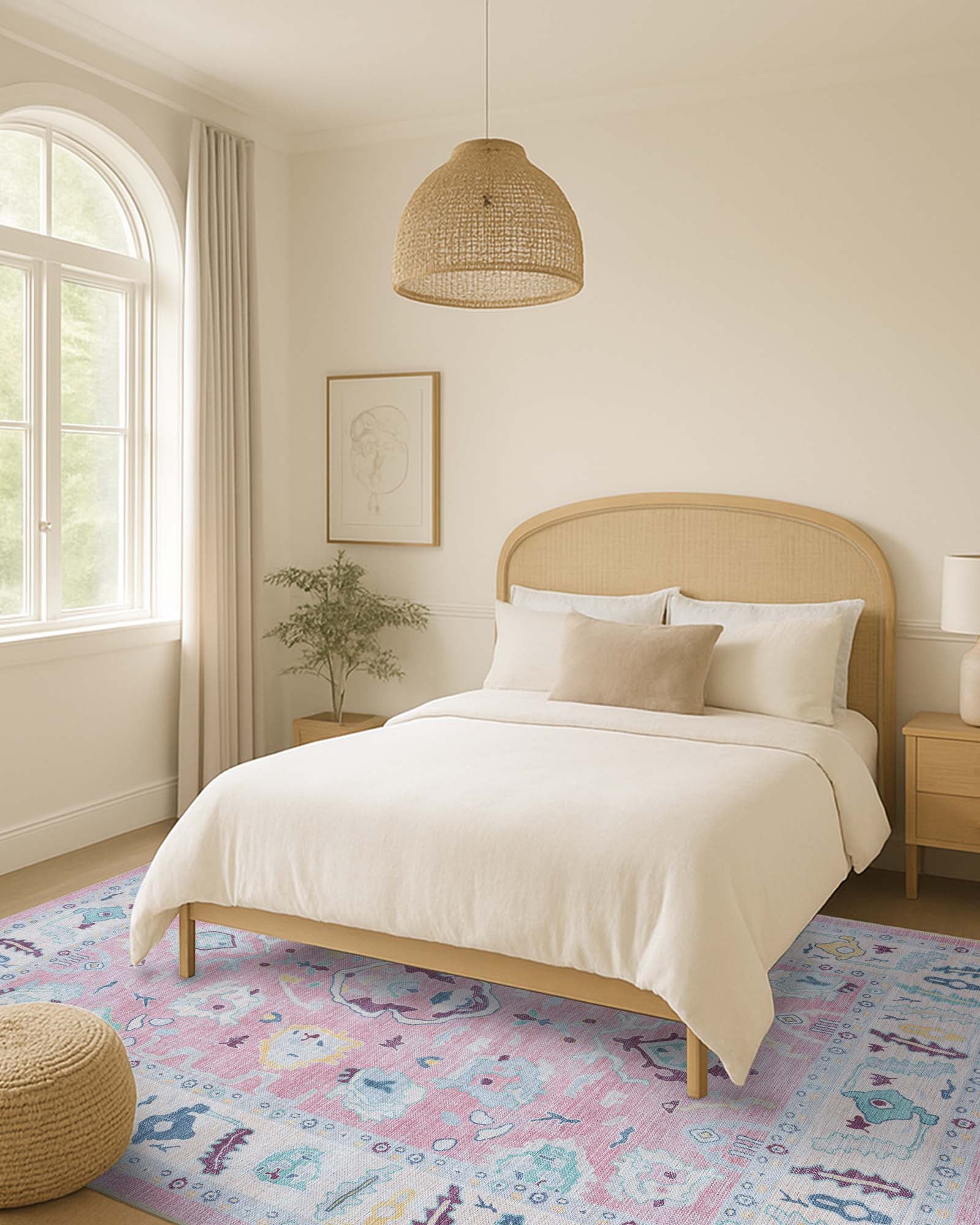
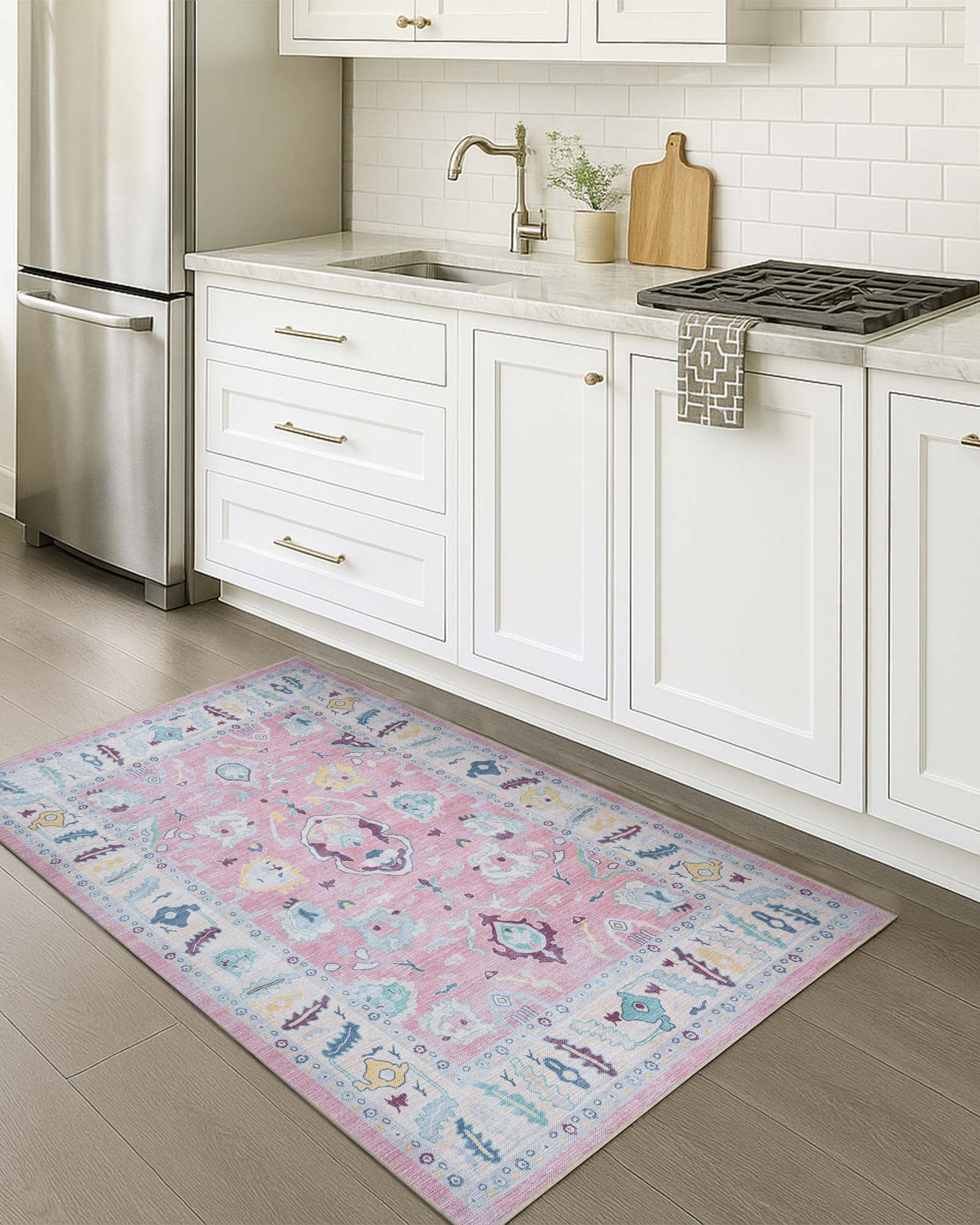
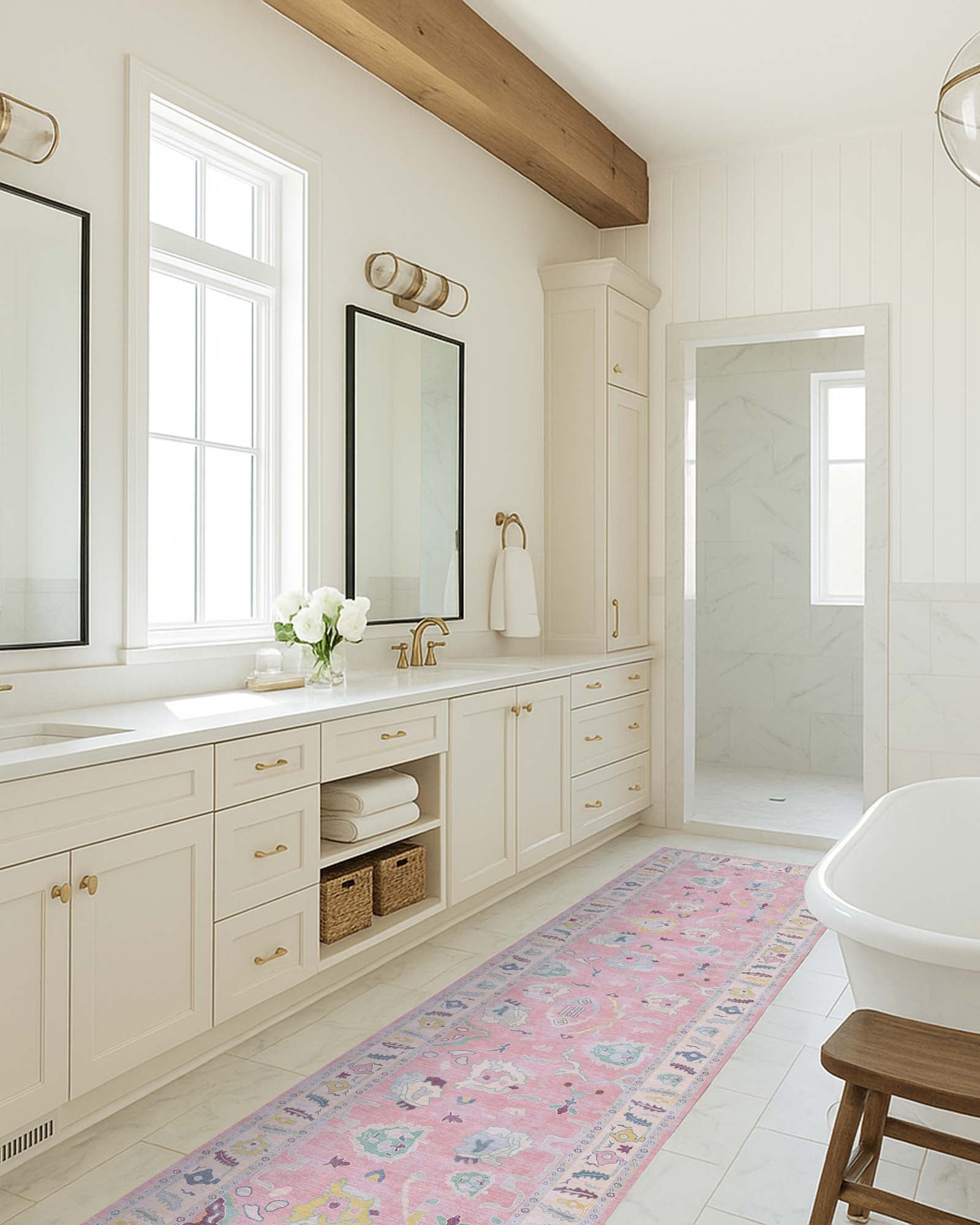
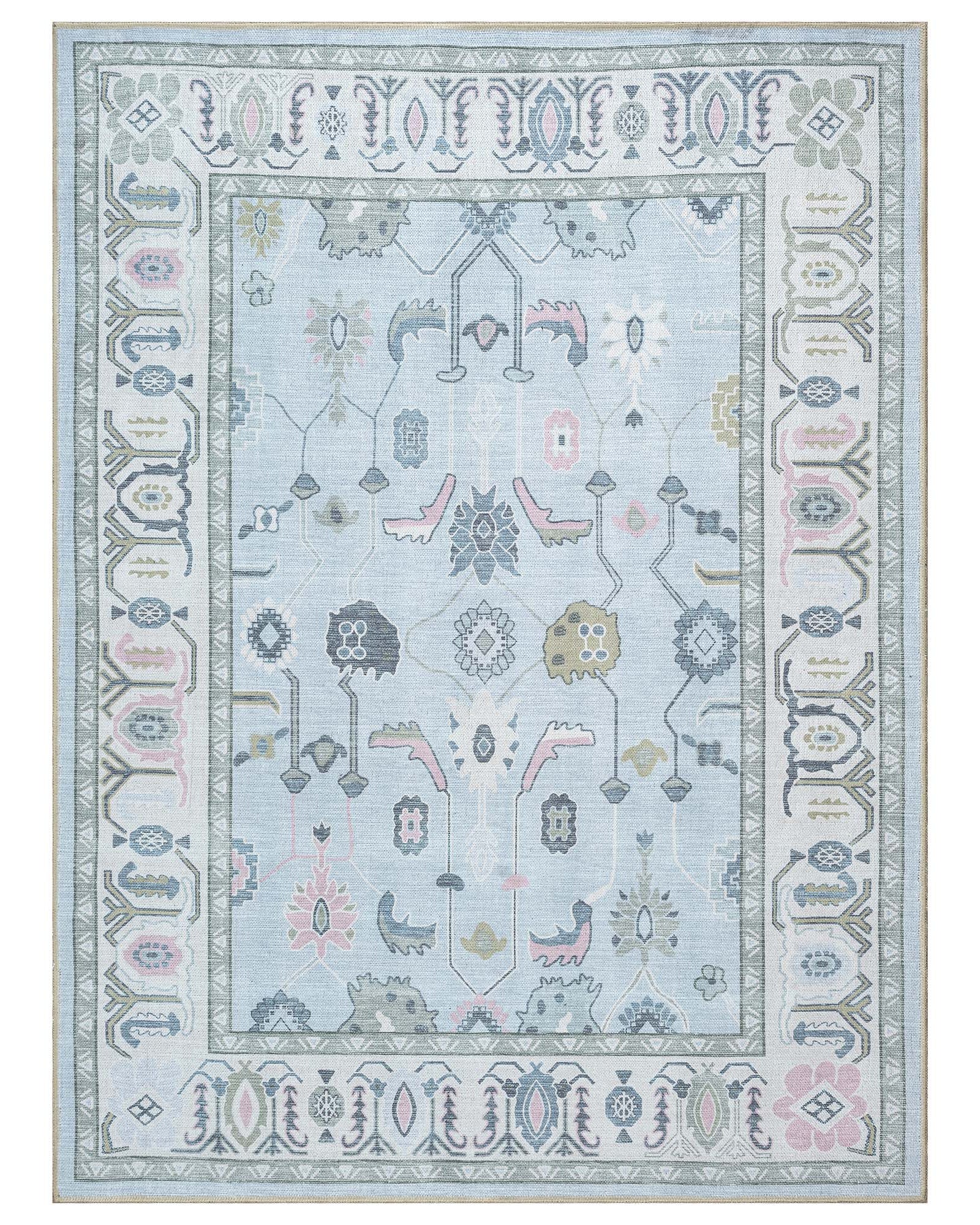
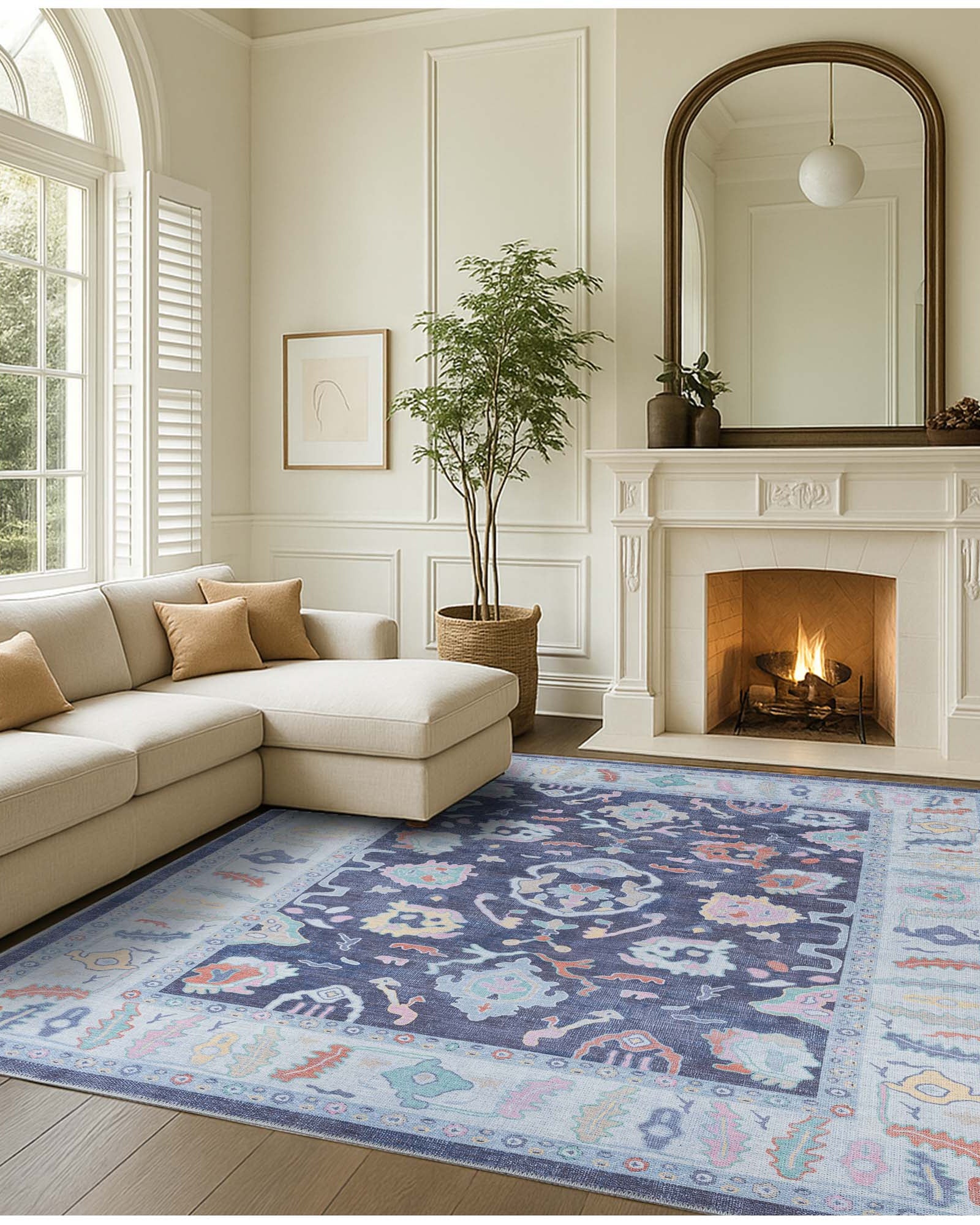
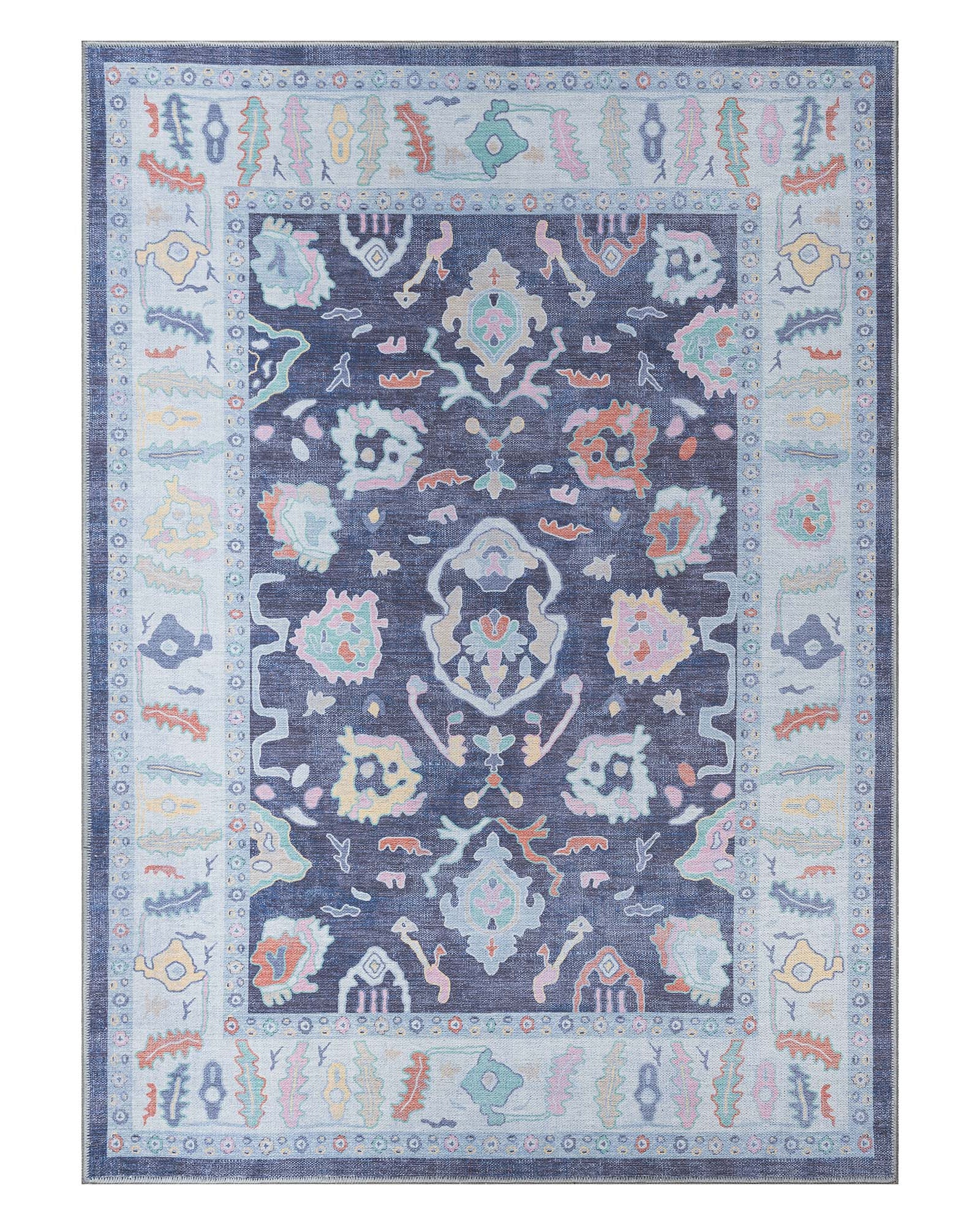
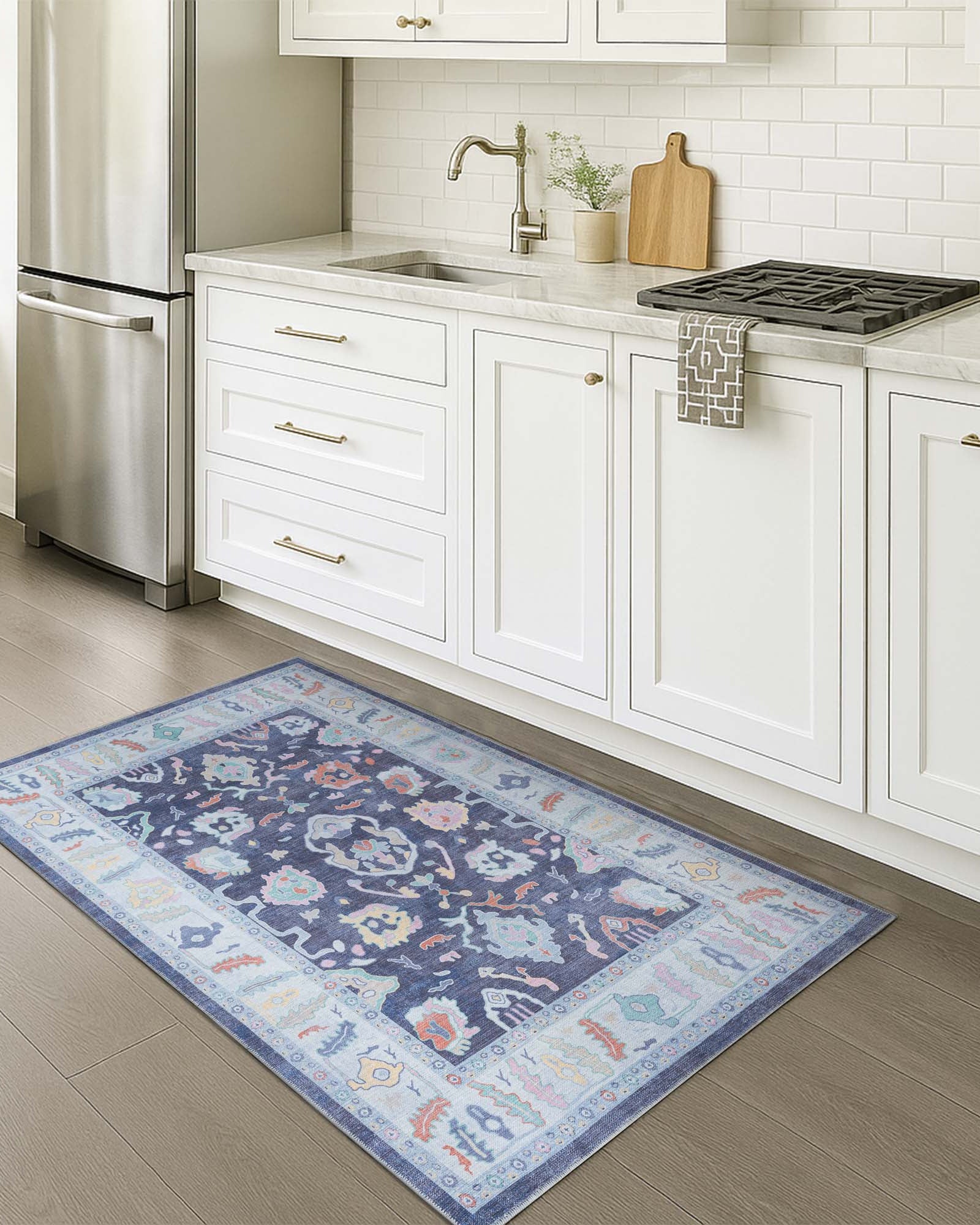
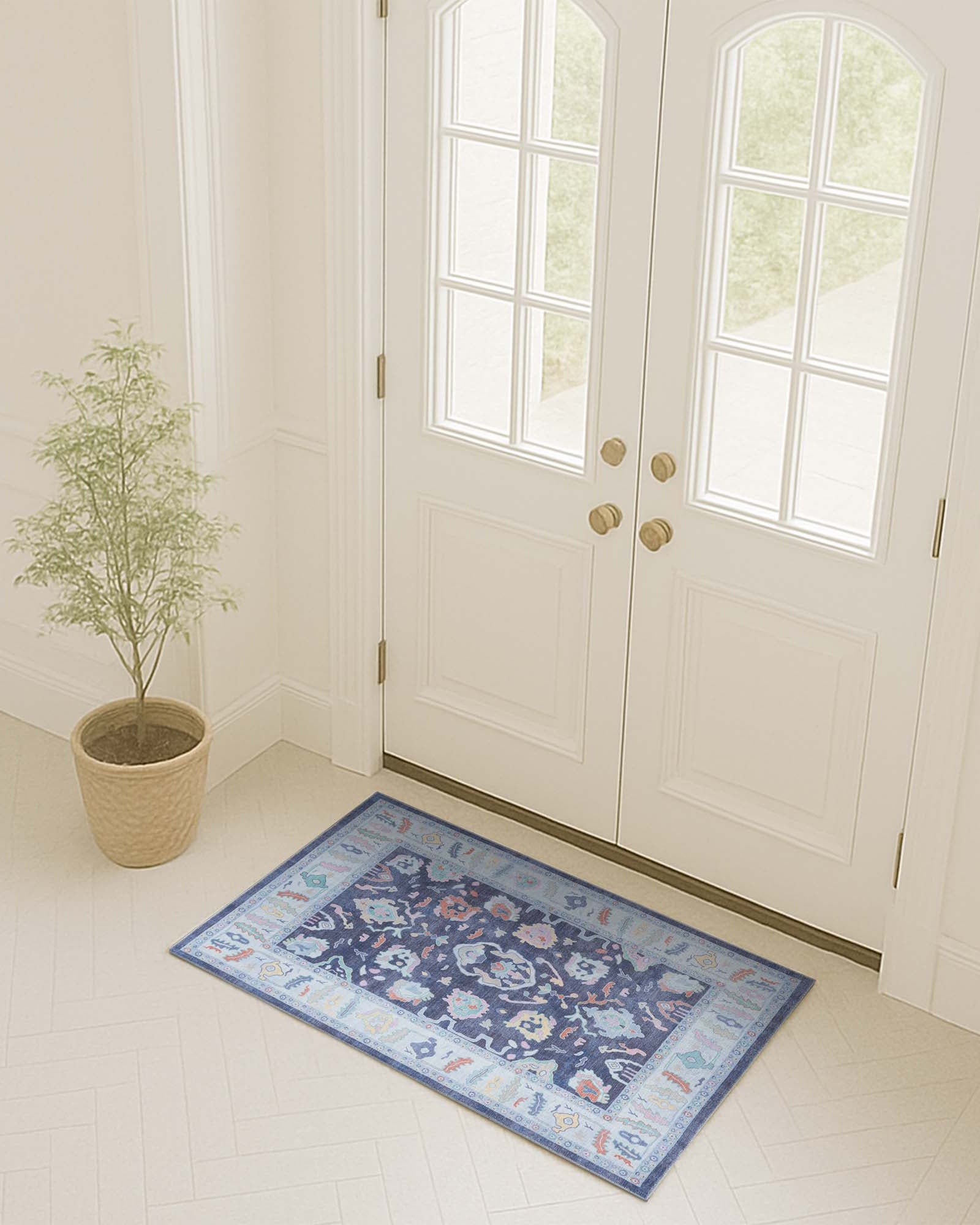
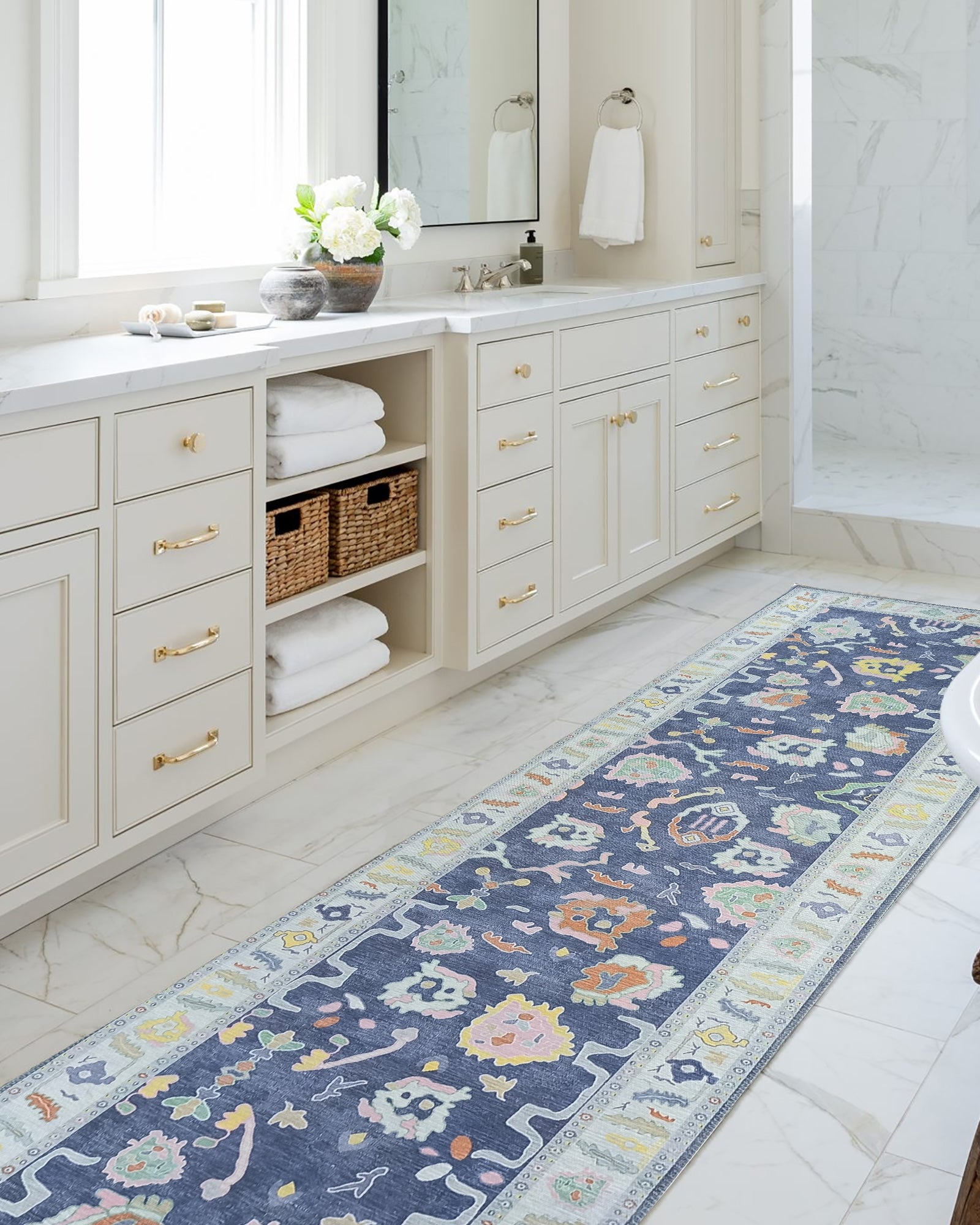
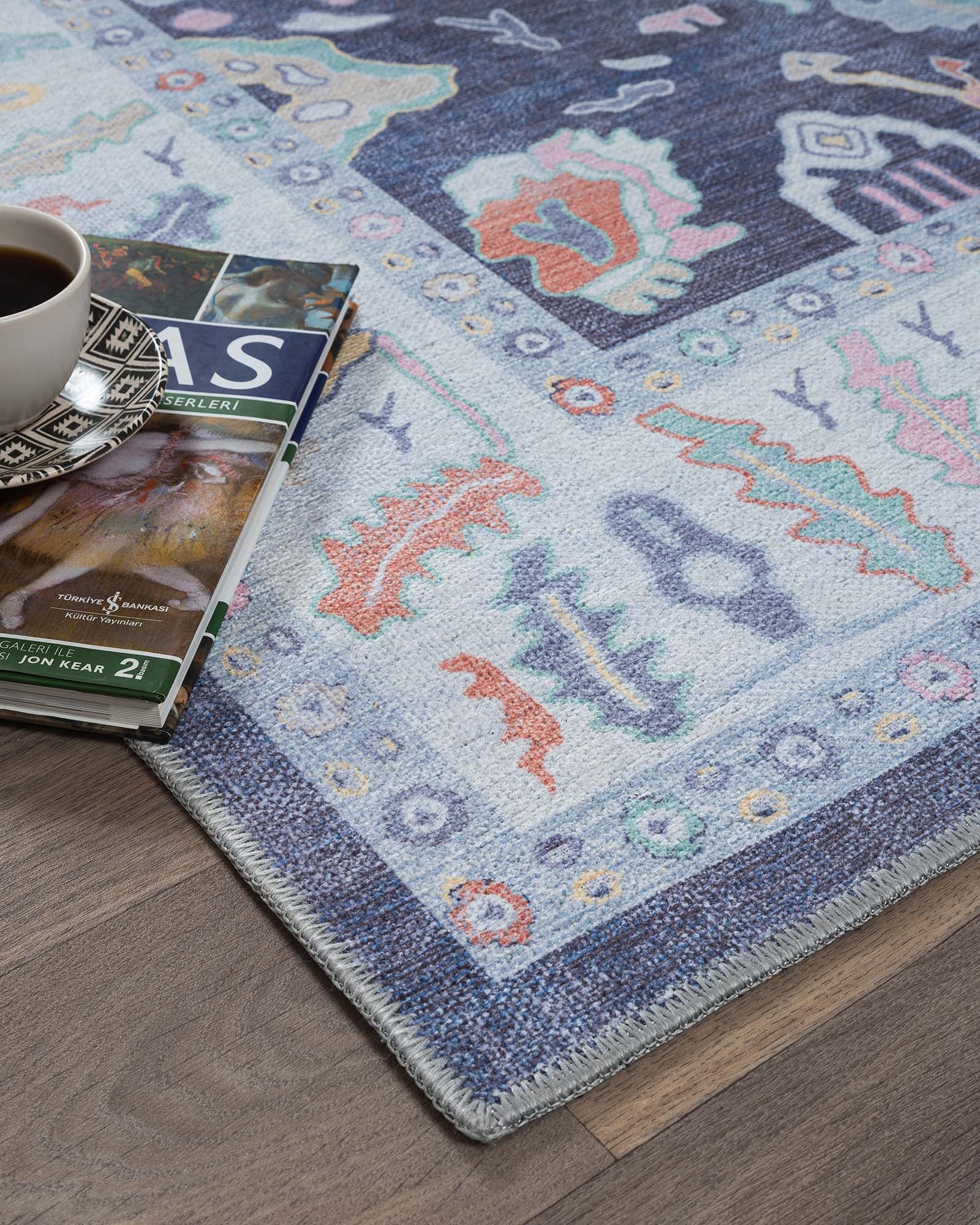
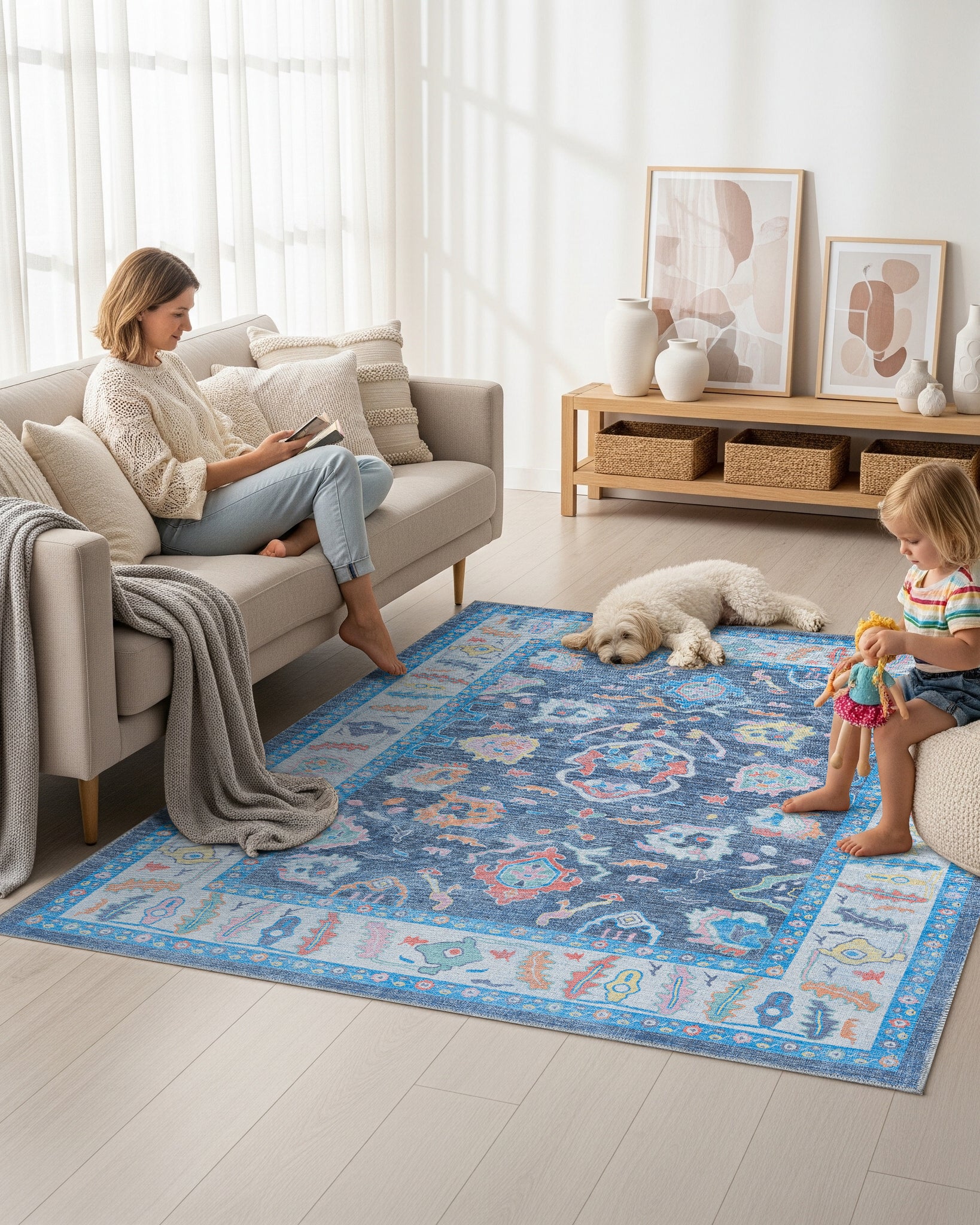
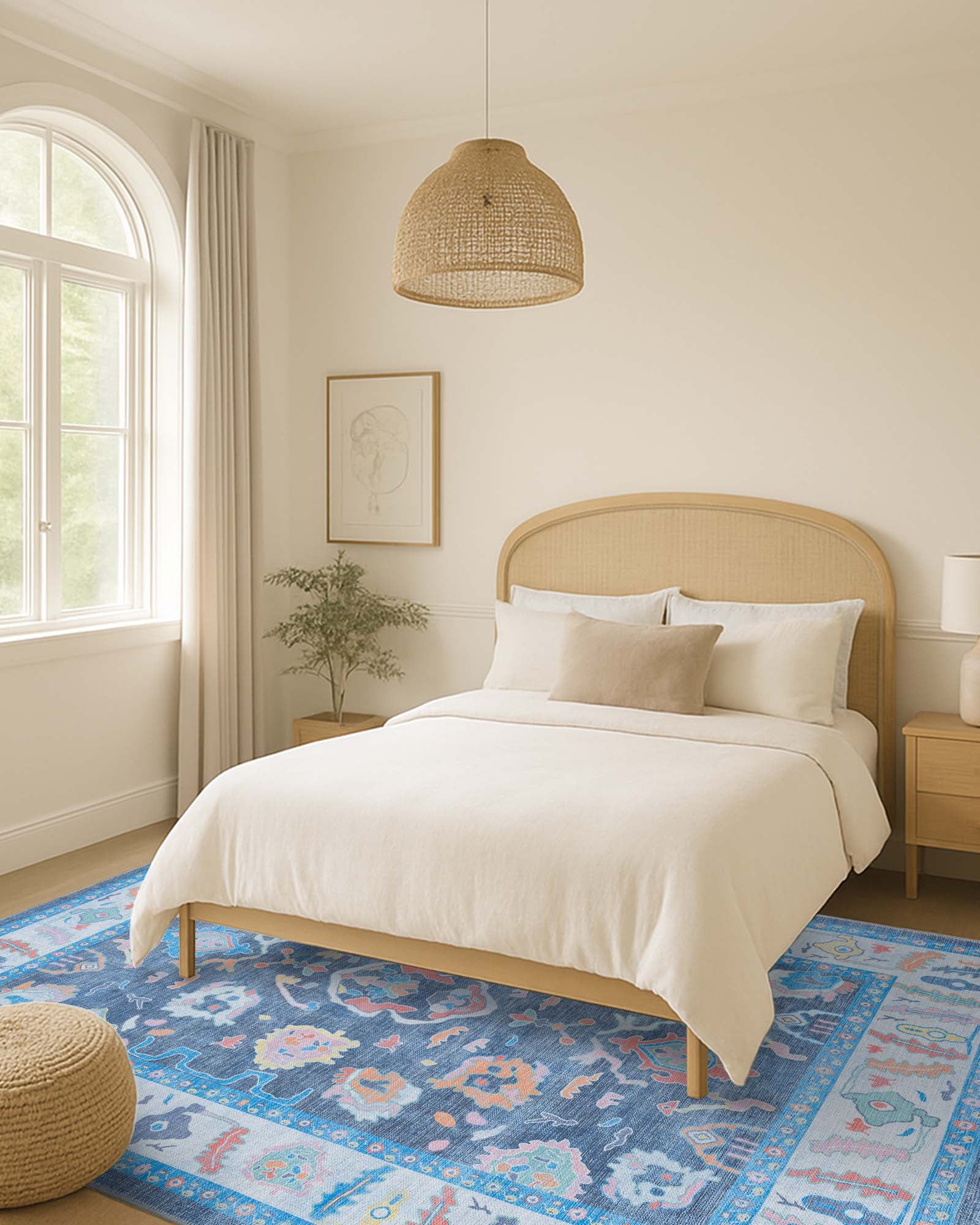
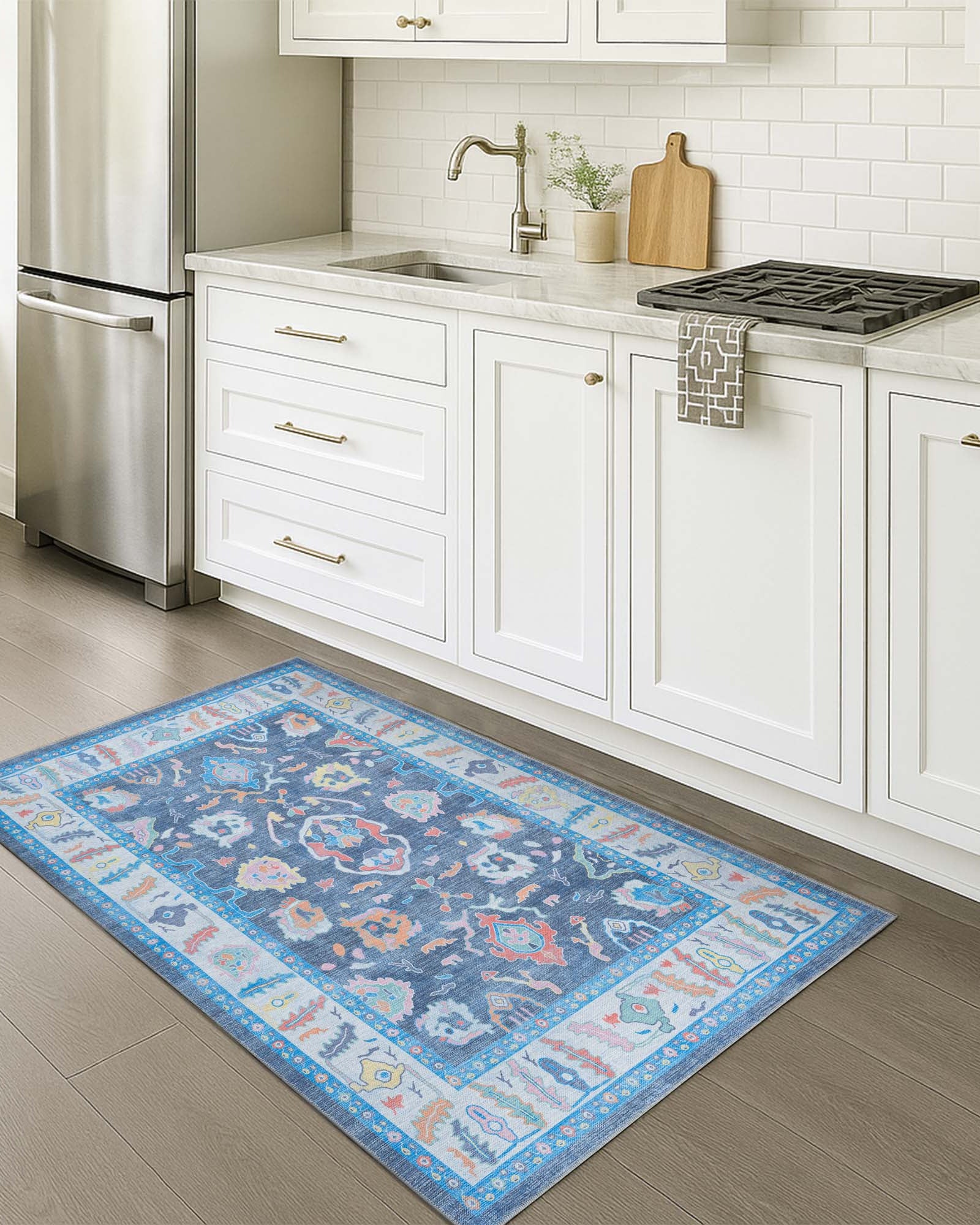
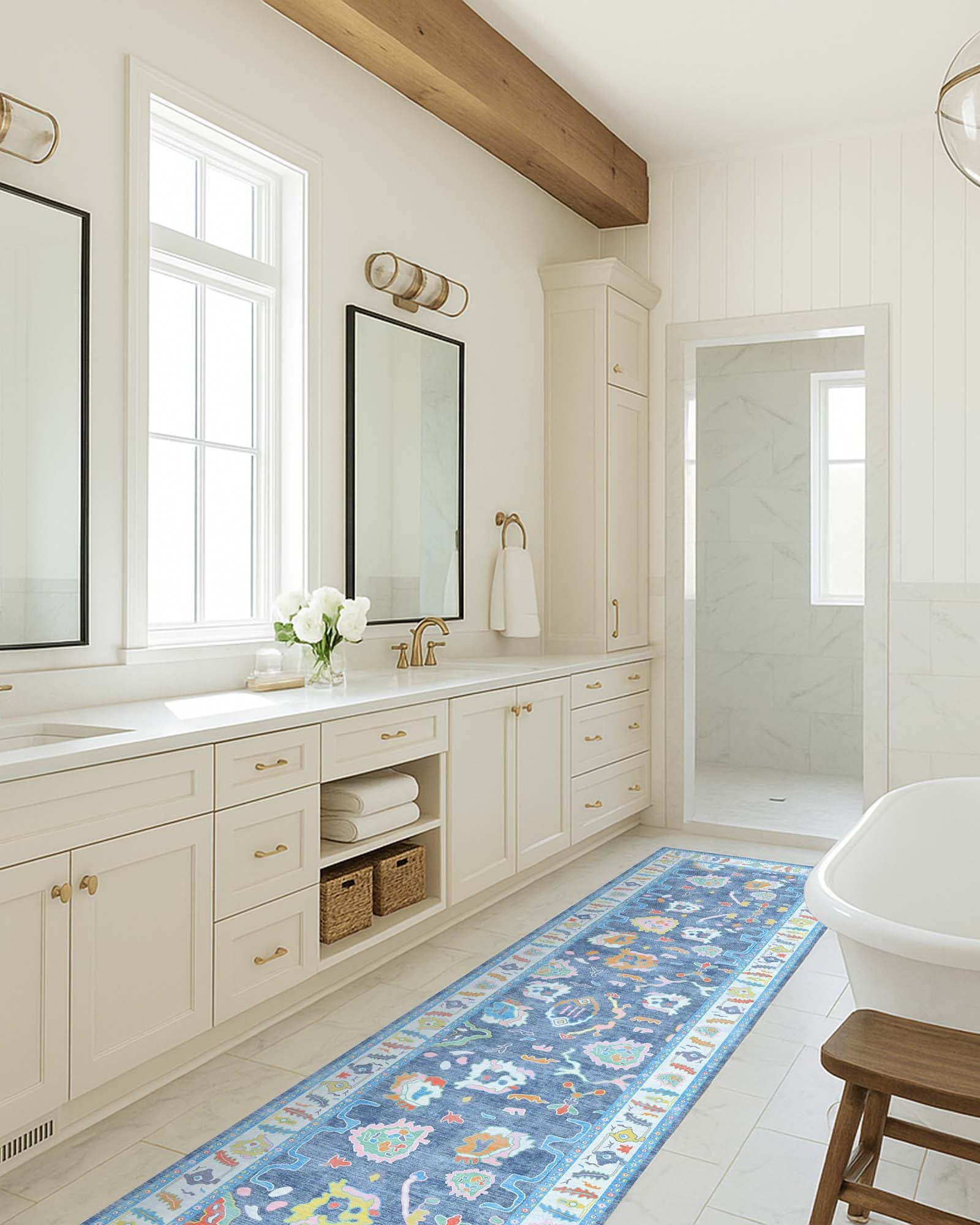
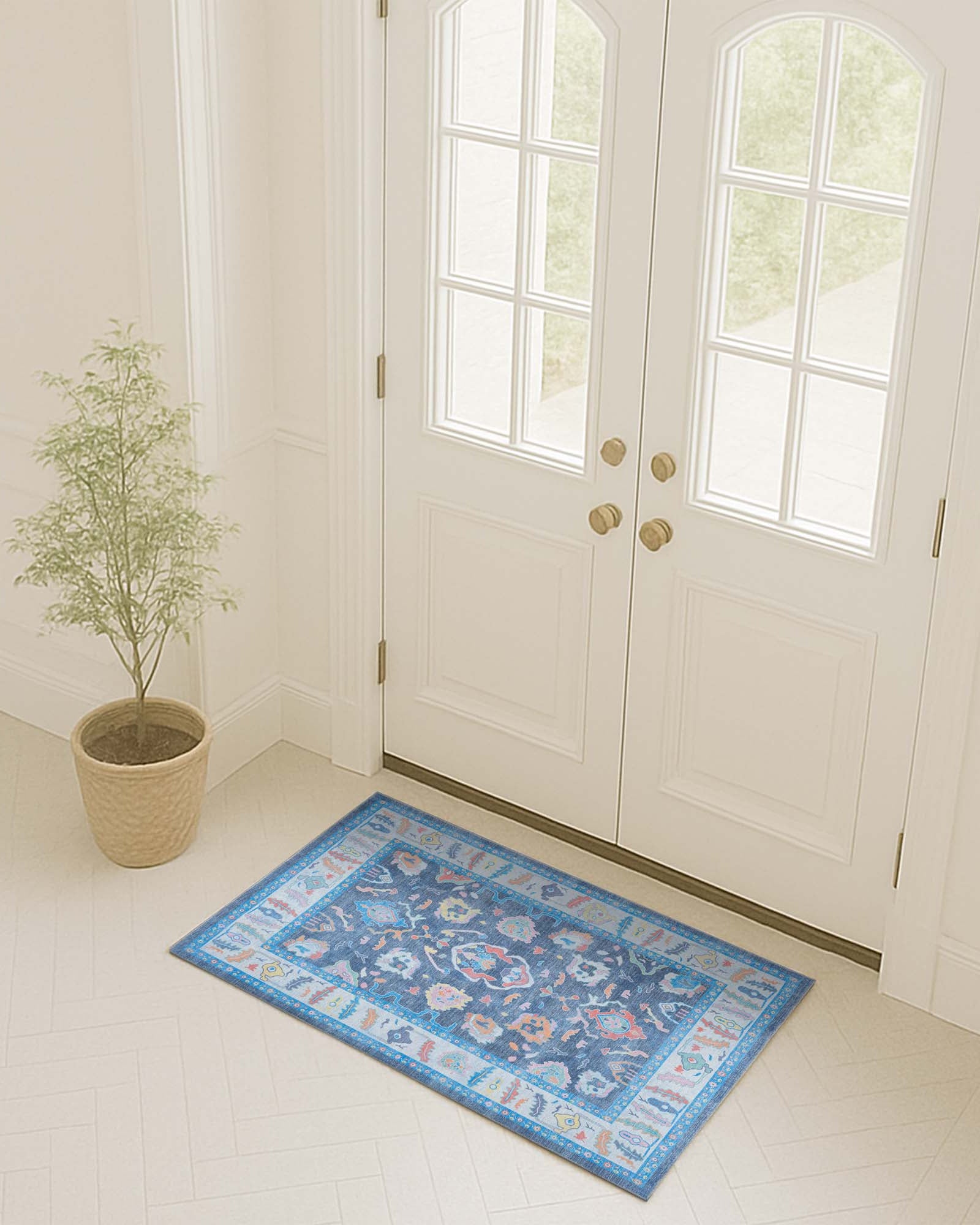
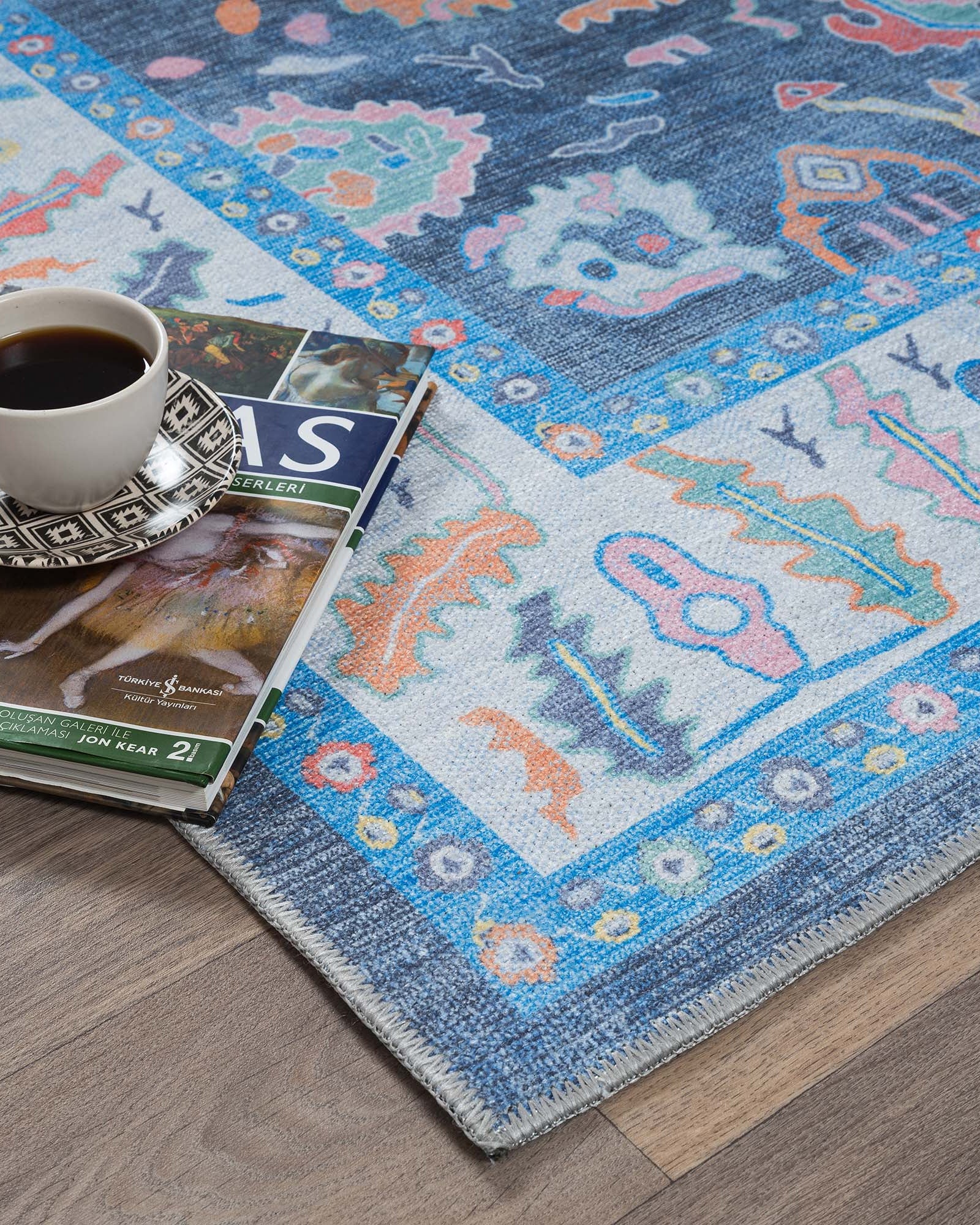
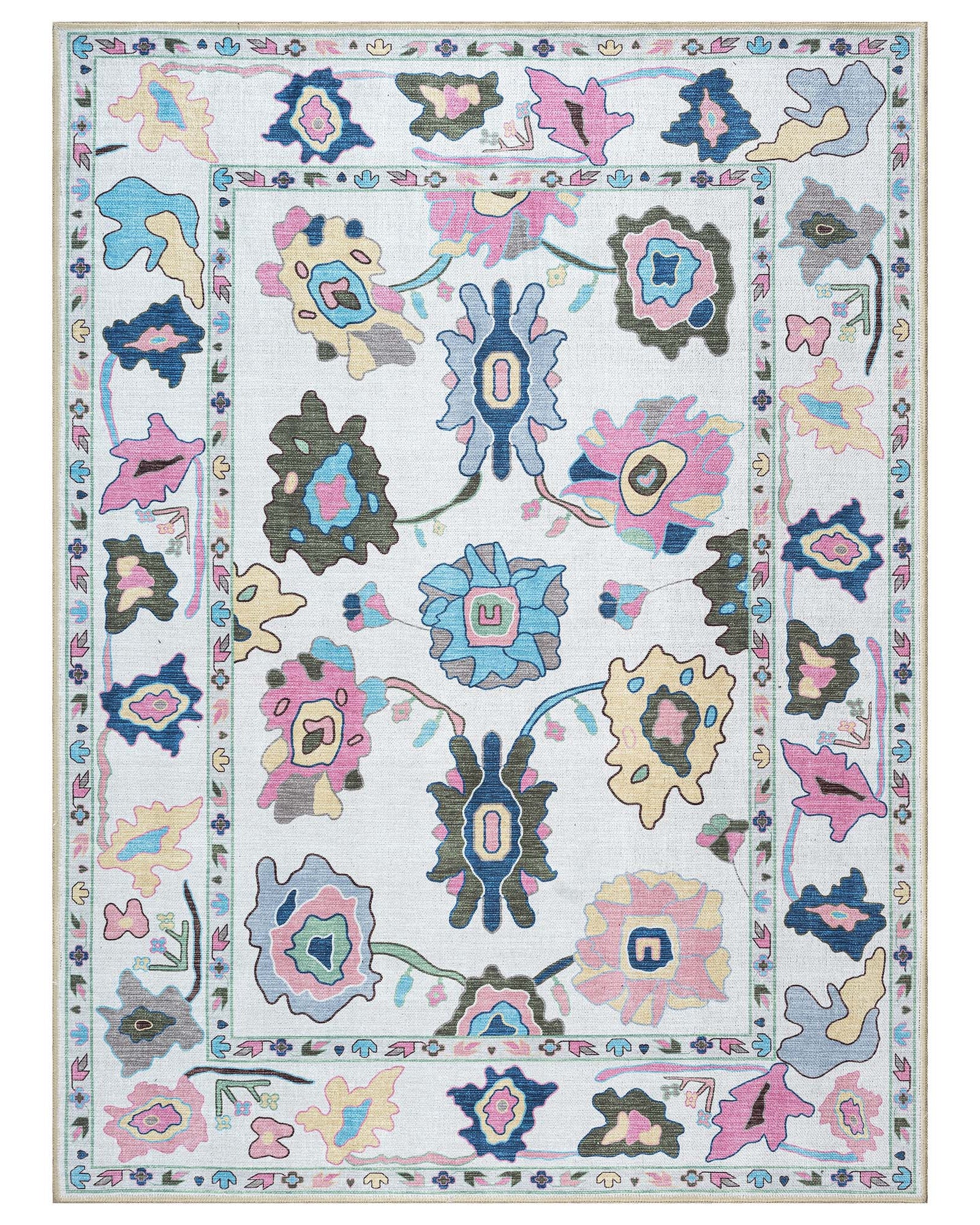
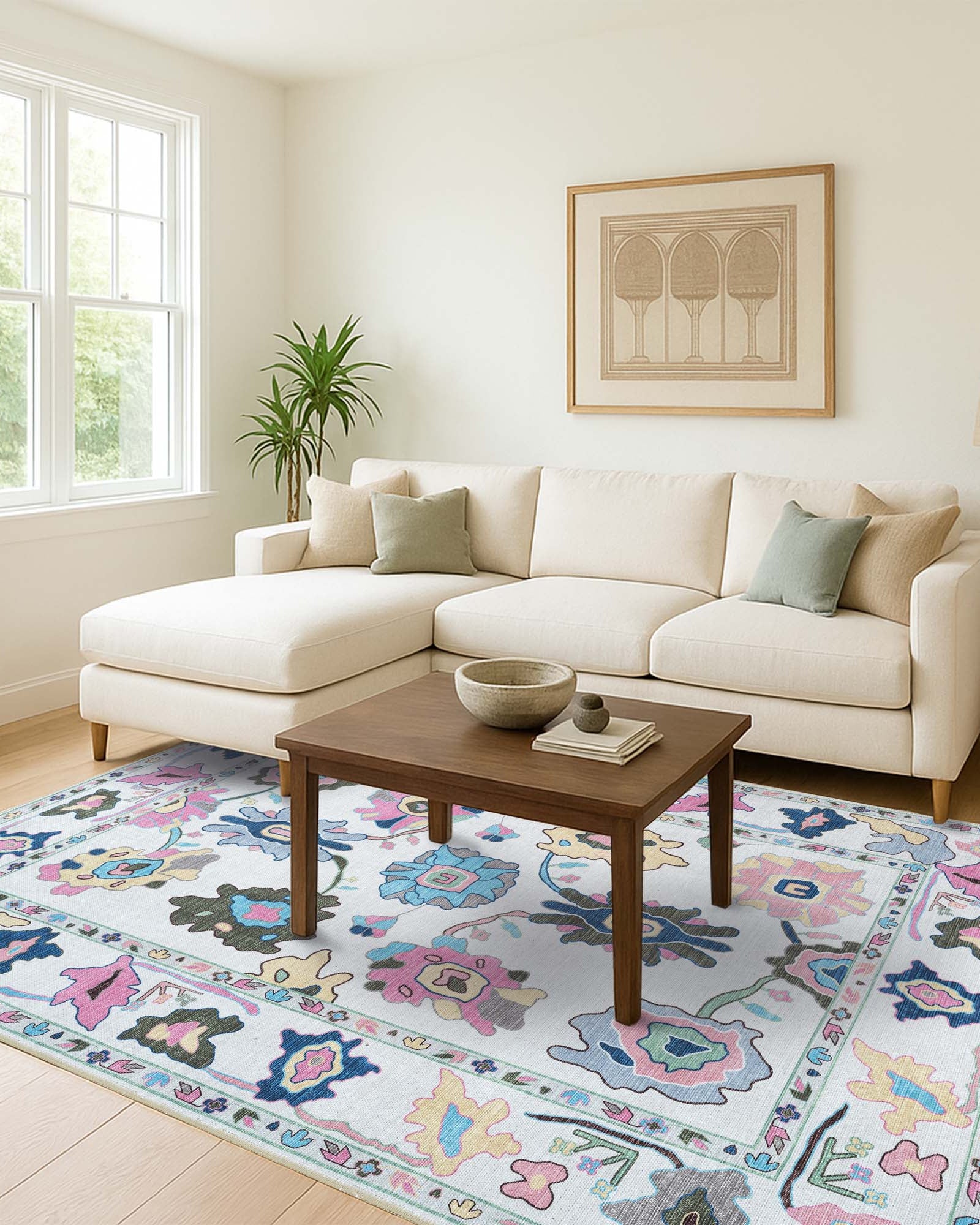
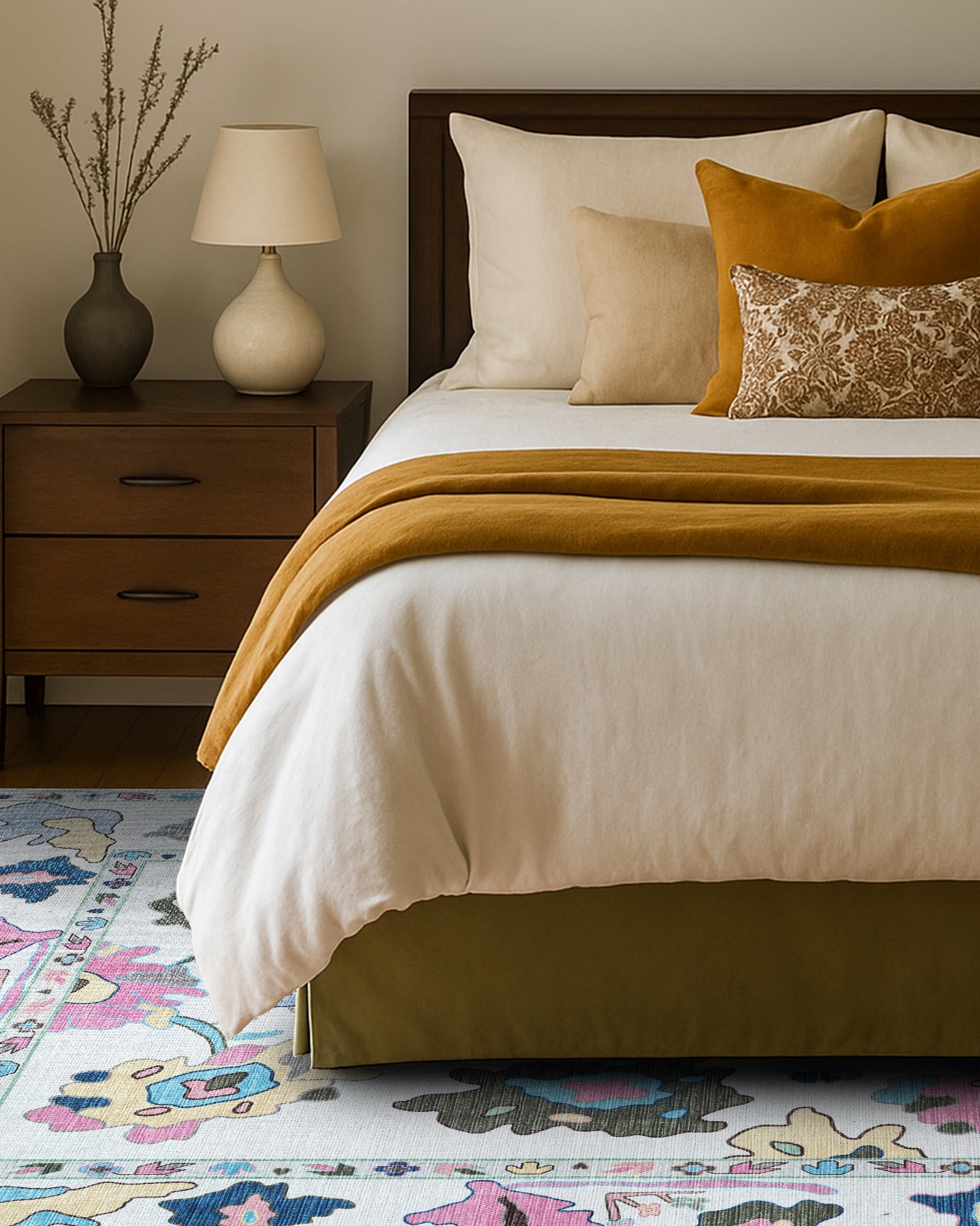
Every hand-knotted rug is built from one of two knot types, and the Persian knot — also called the asymmetrical or Senneh knot — is the technique that makes fine, curving detail possible. It is the standard method across most Persian workshop weaving and much of Central and South Asian production. Every rug in this collection is tied this way, and each is an original piece with genuine age, sold as a single item.
How the Persian Knot Is Tied
The weaver wraps a length of wool completely around one warp thread, then passes the other end behind the adjacent warp without wrapping it, leaving that side open. The result is a knot that is structurally asymmetrical — one strand anchored fully, the other resting more freely — which sounds like a small technical difference but changes what the weaver can do with colour placement.
Why This Knot Suits Fine, Curving Detail
Because one side of each knot is not fully wrapped, the weaver has finer control over exactly where a colour begins and ends, knot by knot. This is what allows smoothly curving lines, shaded petals, and gradual colour transitions that a fully symmetrical knot cannot render as cleanly — a symmetrical knot anchors evenly at two fixed points, which naturally produces sharper, more stepped edges.
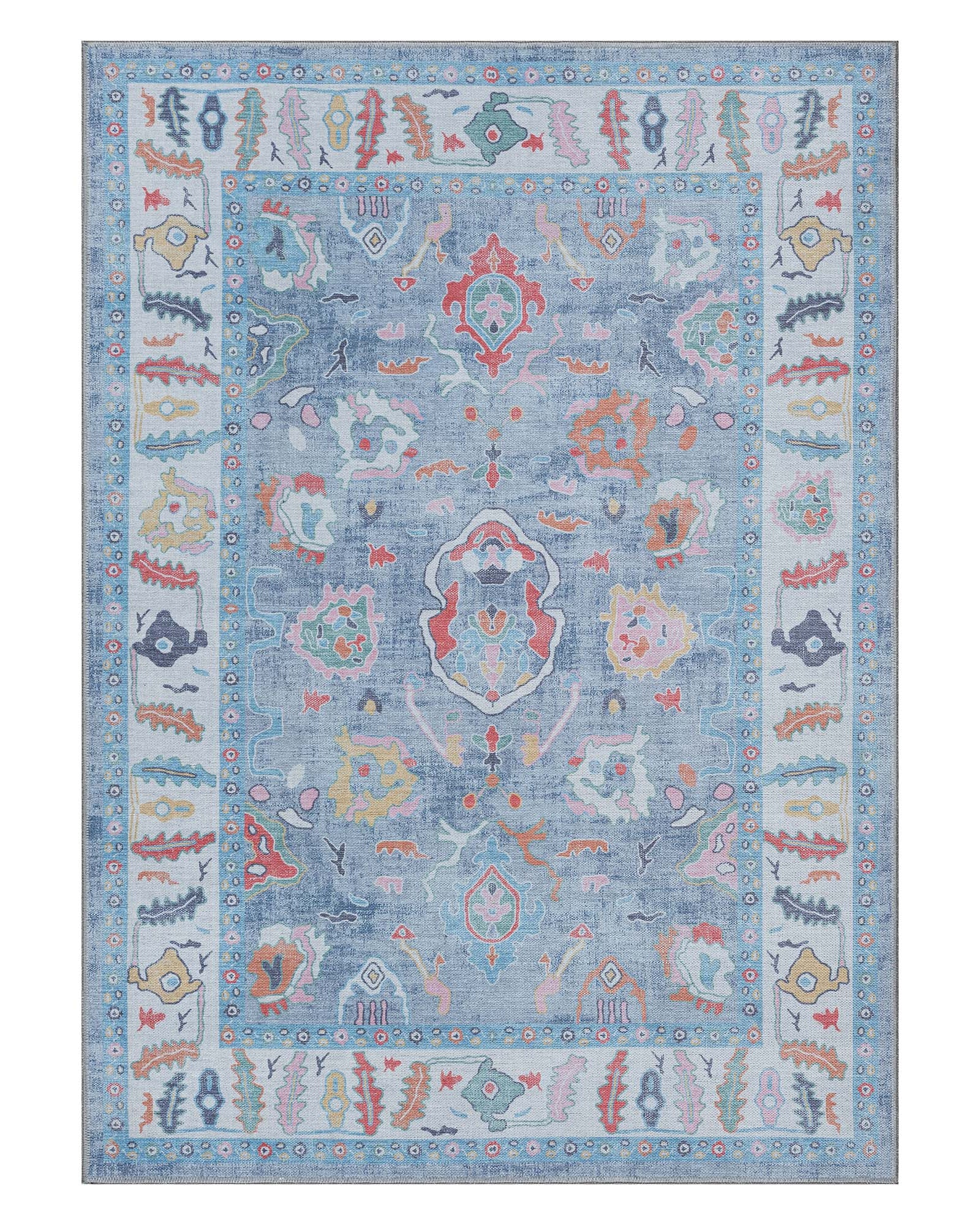
This is why the most intricate, curvilinear workshop weaving in the world — dense floral vines, layered medallions, finely shaded borders — is almost always tied with the asymmetrical knot. The technique and that visual style developed together, and one enabled the other.
Structural Character
Asymmetrical knotting can be tied at higher density than symmetrical knotting in the same space, because the knot's construction allows it to sit slightly more compactly. This is part of why fine Persian workshop rugs, with their very high knot counts, are almost universally tied this way — the technique itself supports the density that fine detail requires. The pile it produces tends to read as slightly softer and less blocky at pattern edges than symmetrical knotting, trading a small amount of structural firmness for finer visual resolution.
Where the Persian Knot Is Used
This is the standard technique across nearly all Persian workshop centres — Tabriz, Kashan, Isfahan, Kerman, Nain and Qum all use the asymmetrical knot, which is a large part of why those traditions are known for intricate floral and medallion work. It is also used across much of Central and South Asia, including Indian and Pakistani weaving traditions that trace their technique back to Persian workshop practice. Turkish and Caucasian weaving, by contrast, predominantly uses the symmetrical knot, making knot type a genuinely useful clue to a rug's likely regional origin.
How to Identify Asymmetrical Knotting
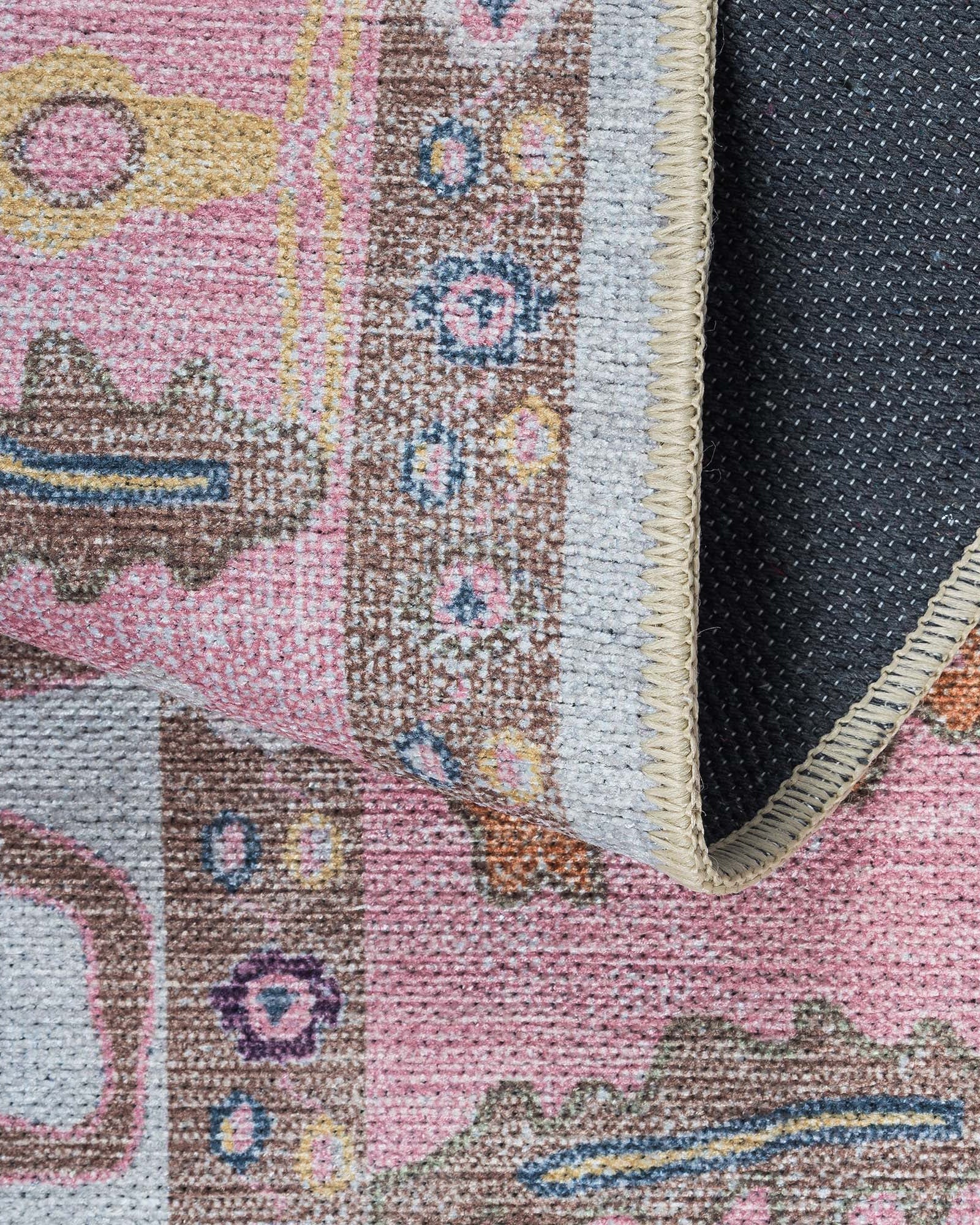
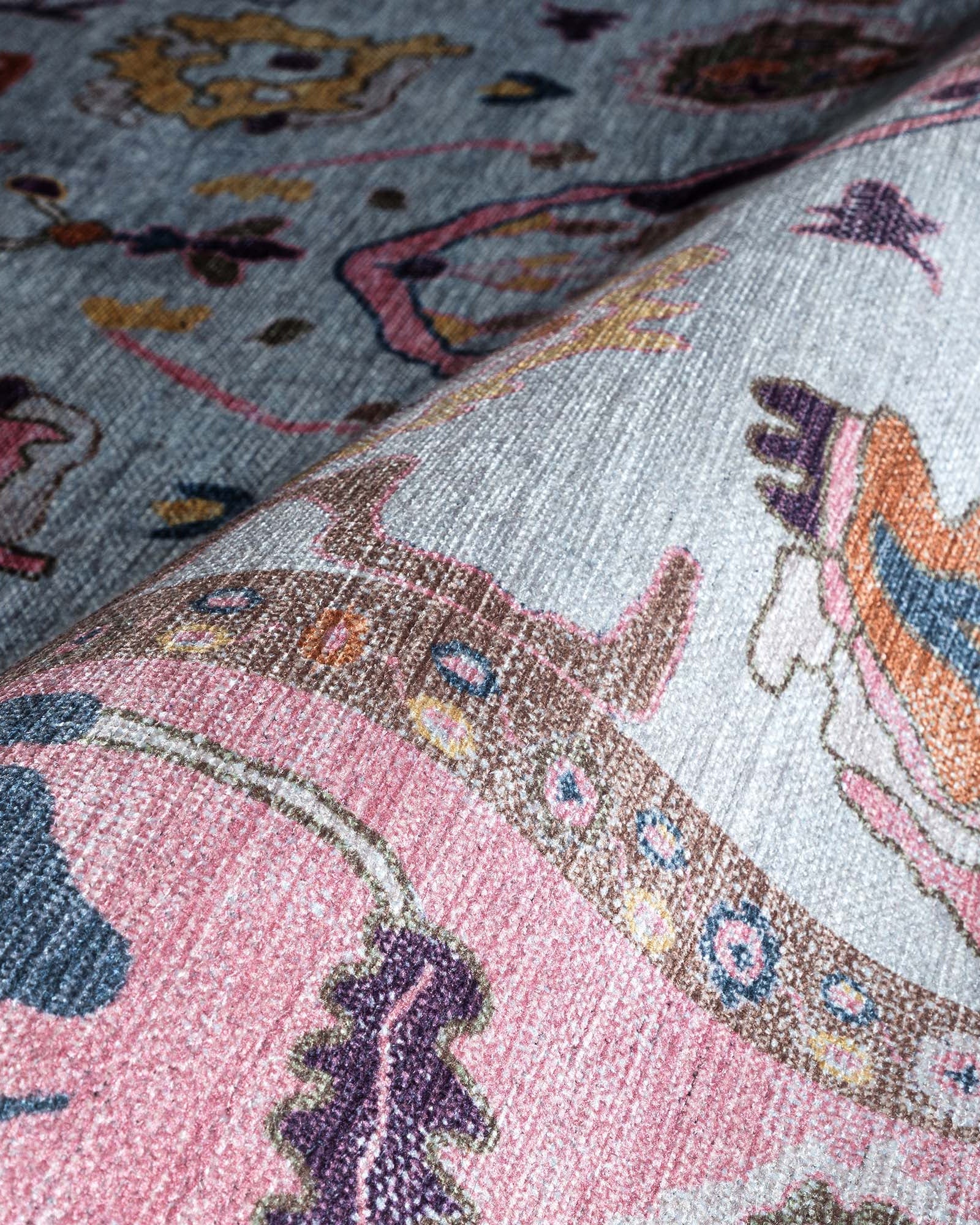
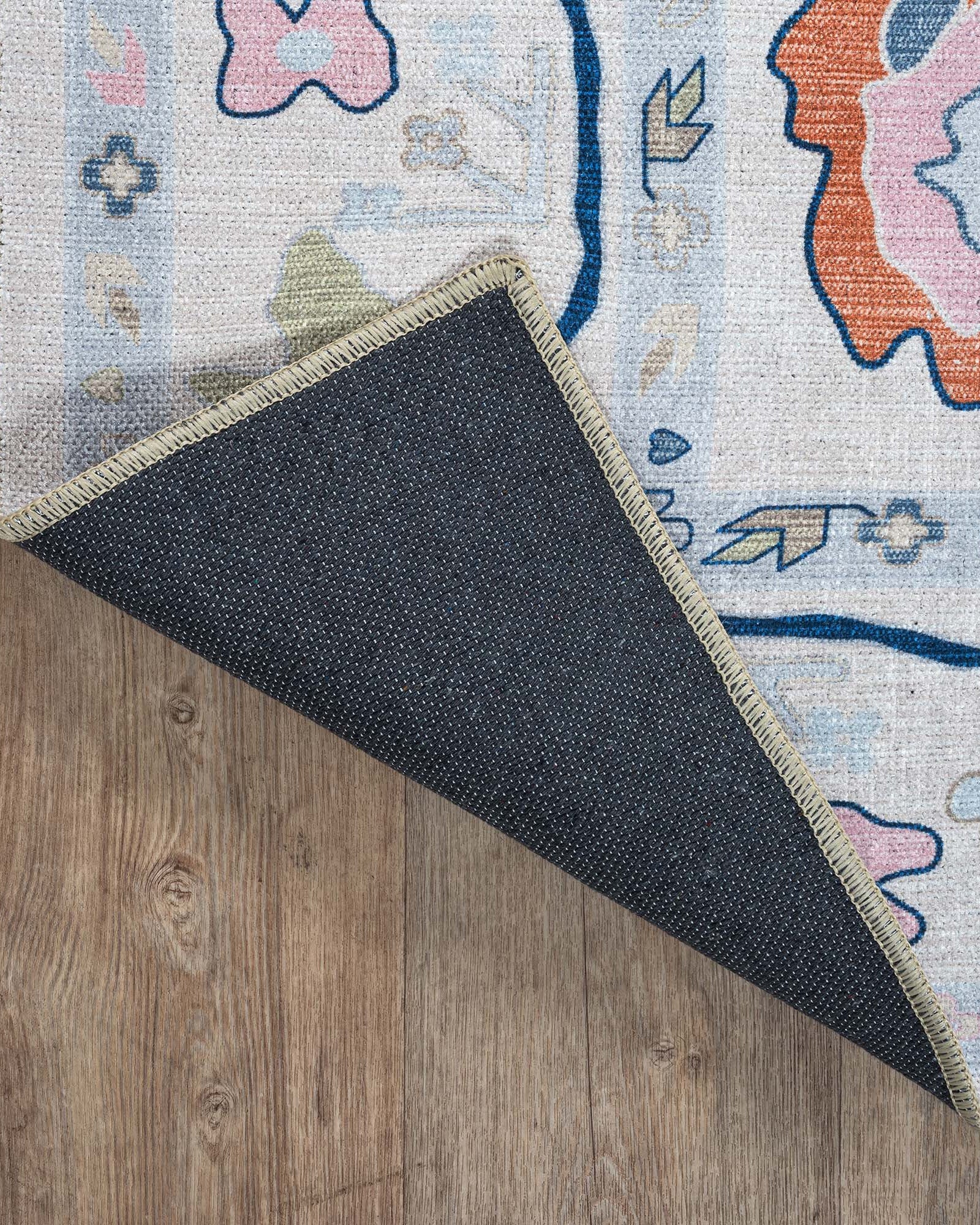
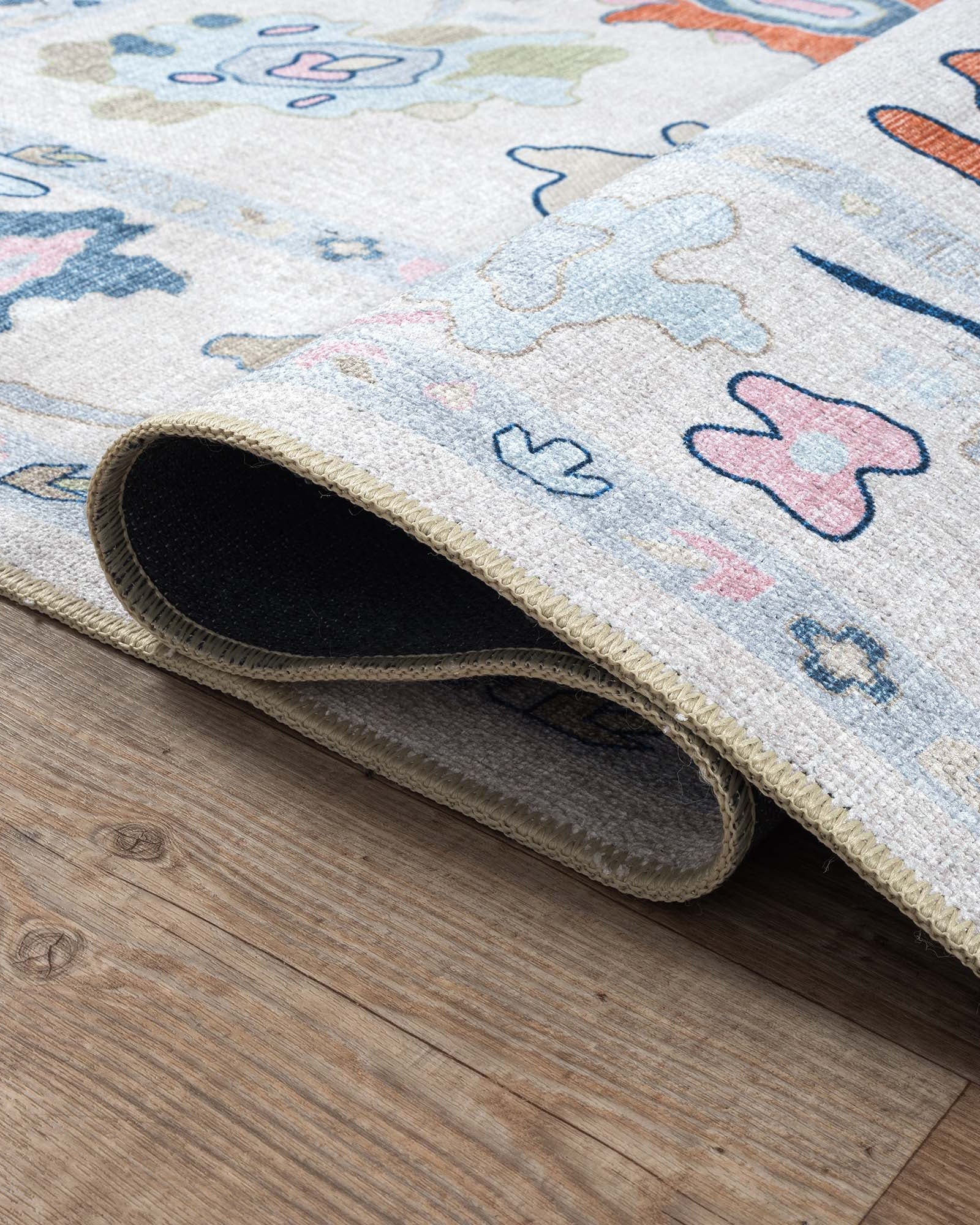
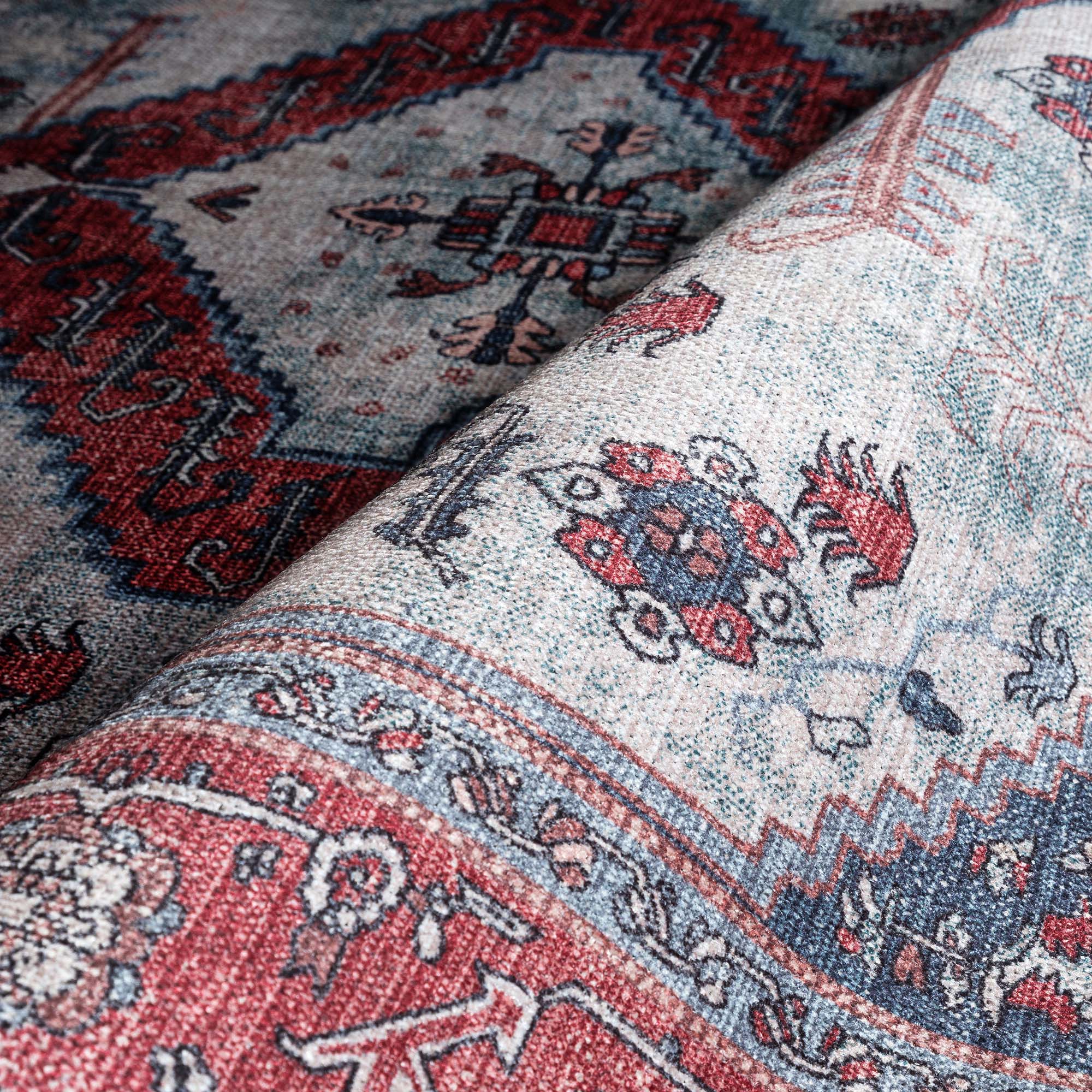
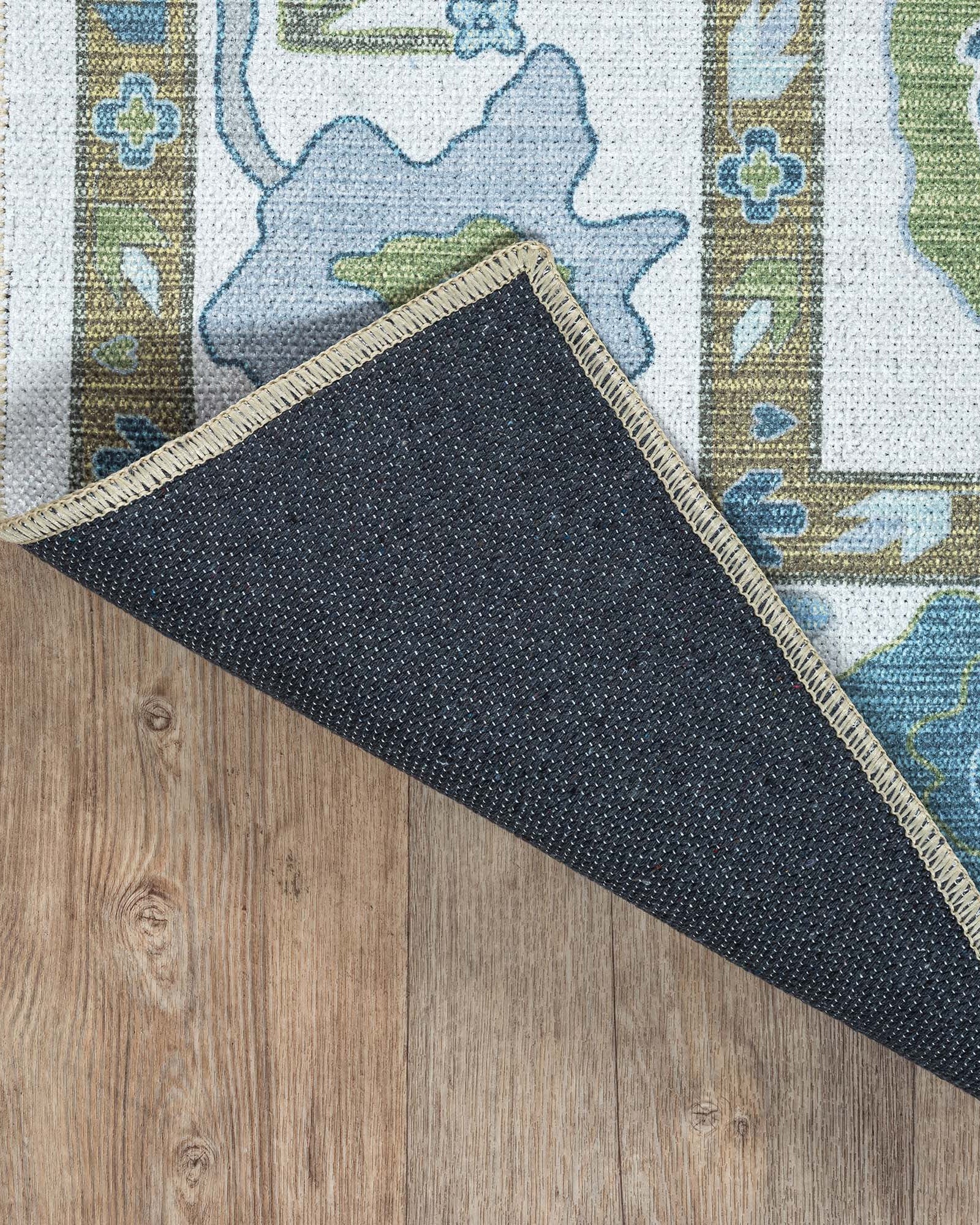
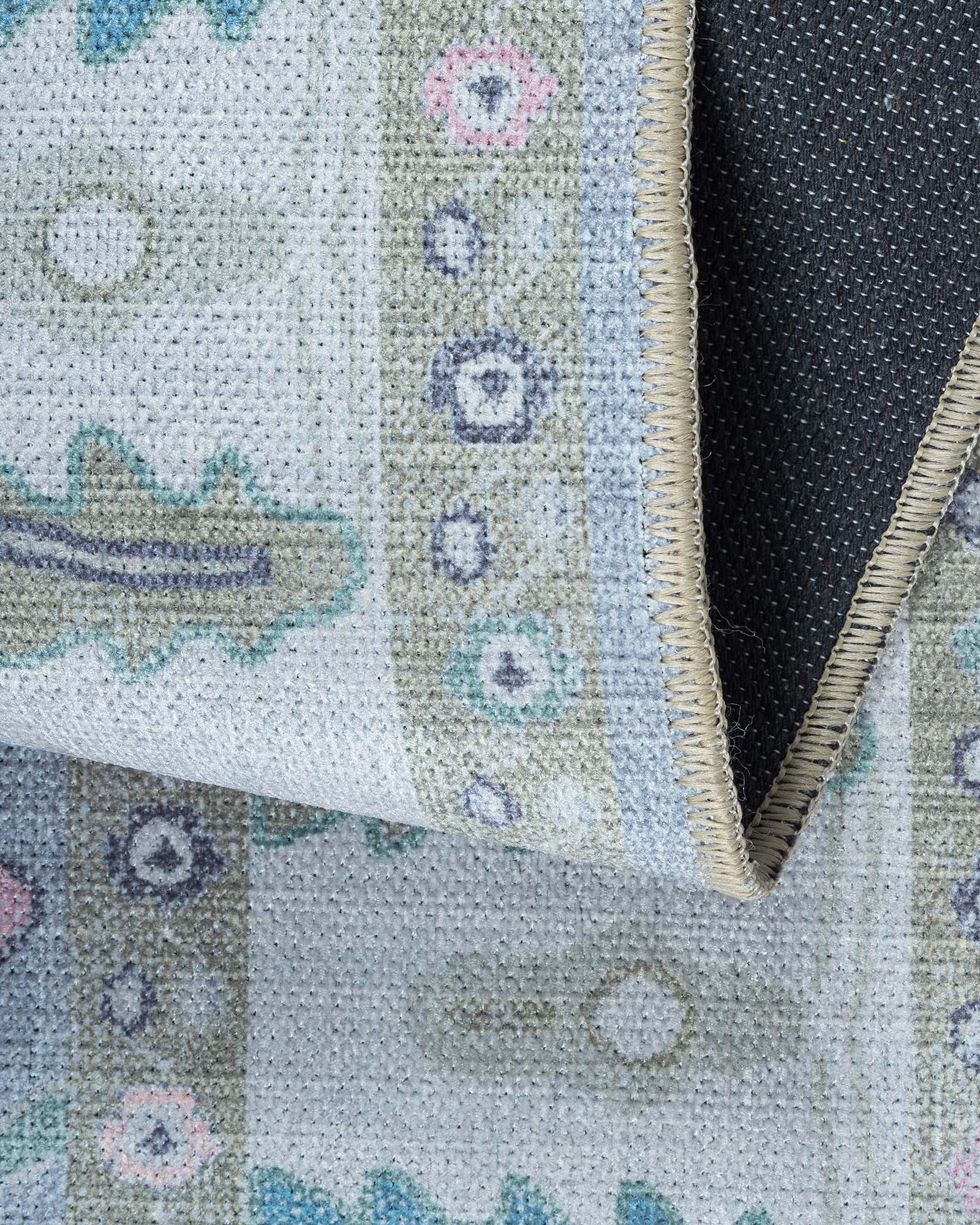
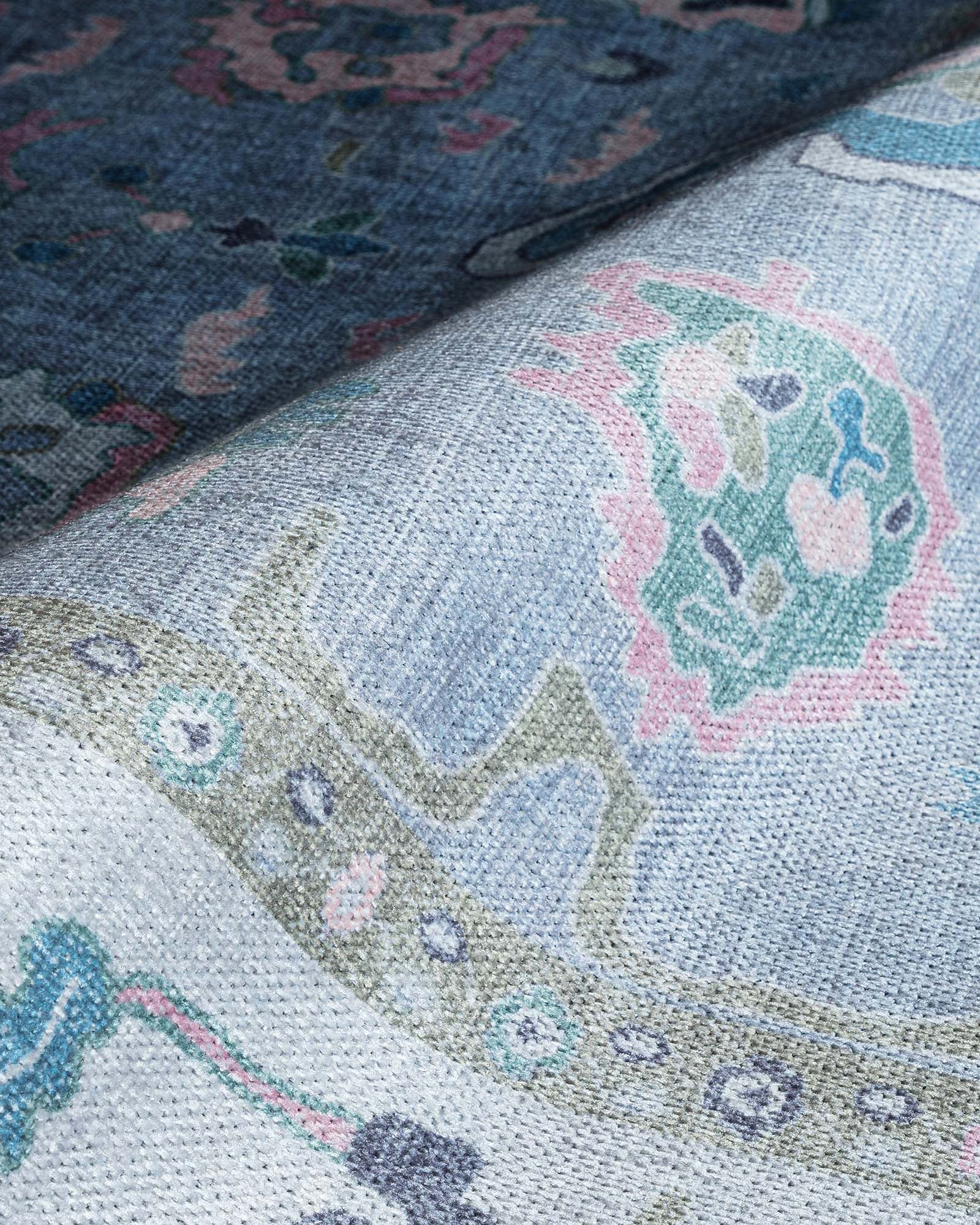
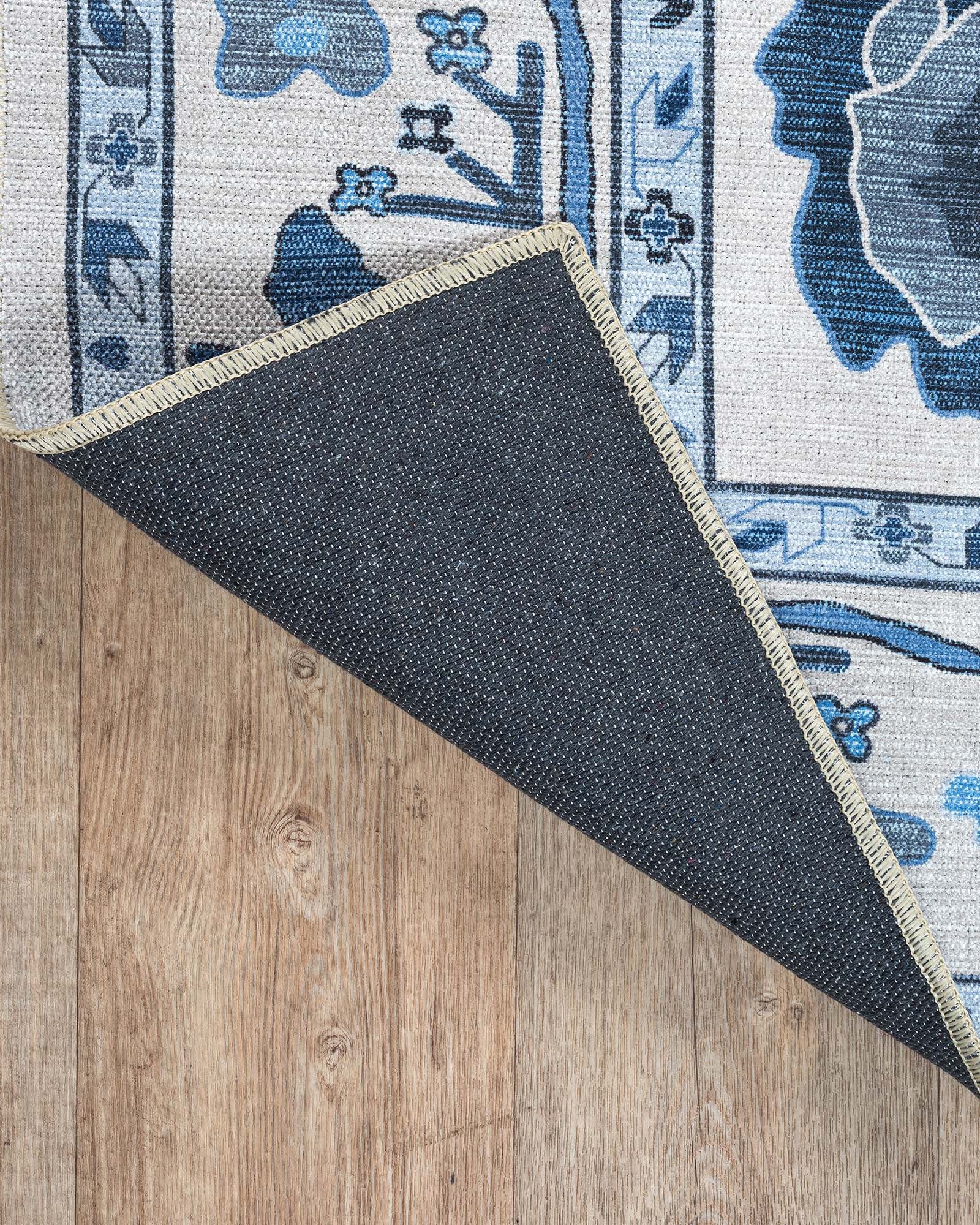
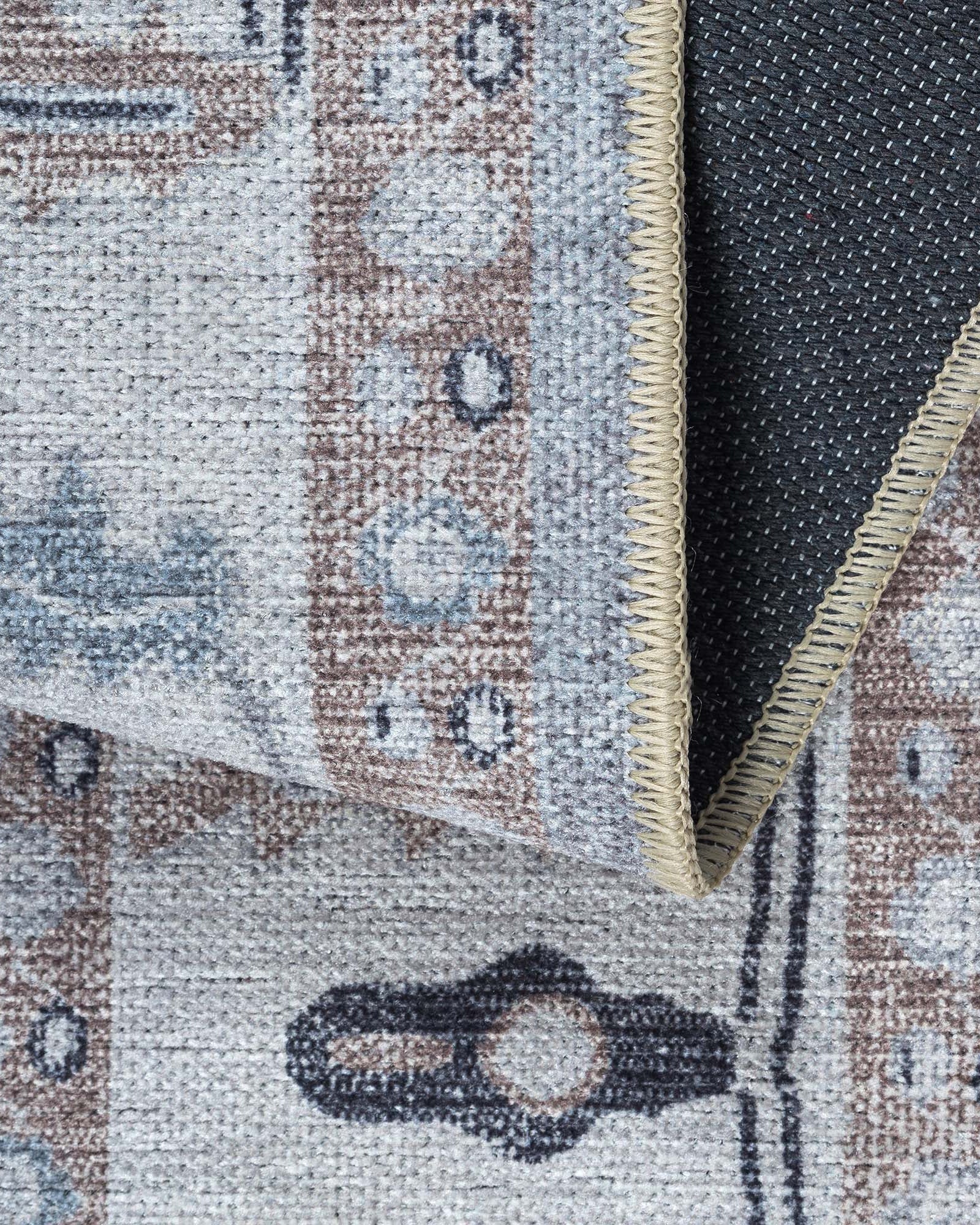
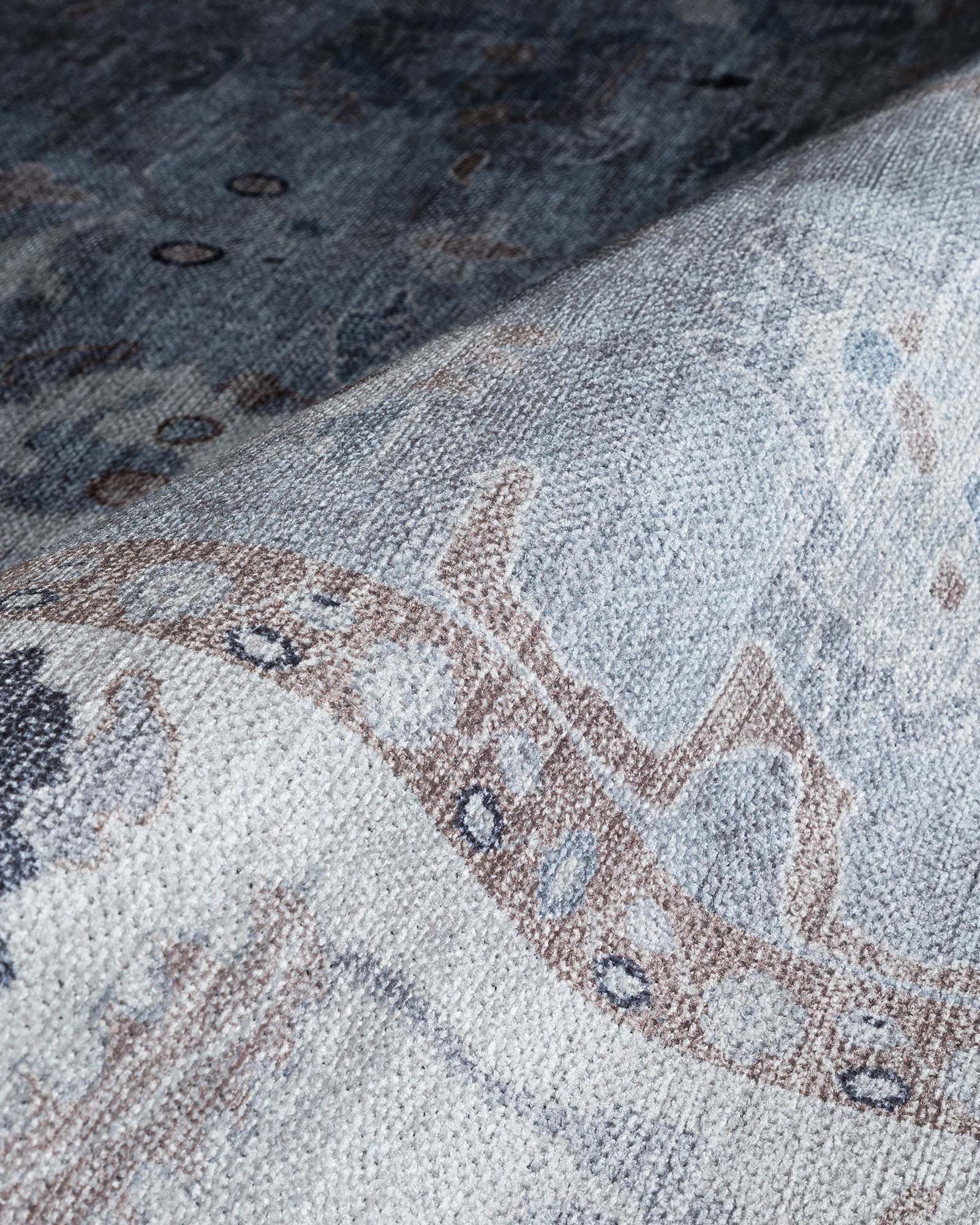
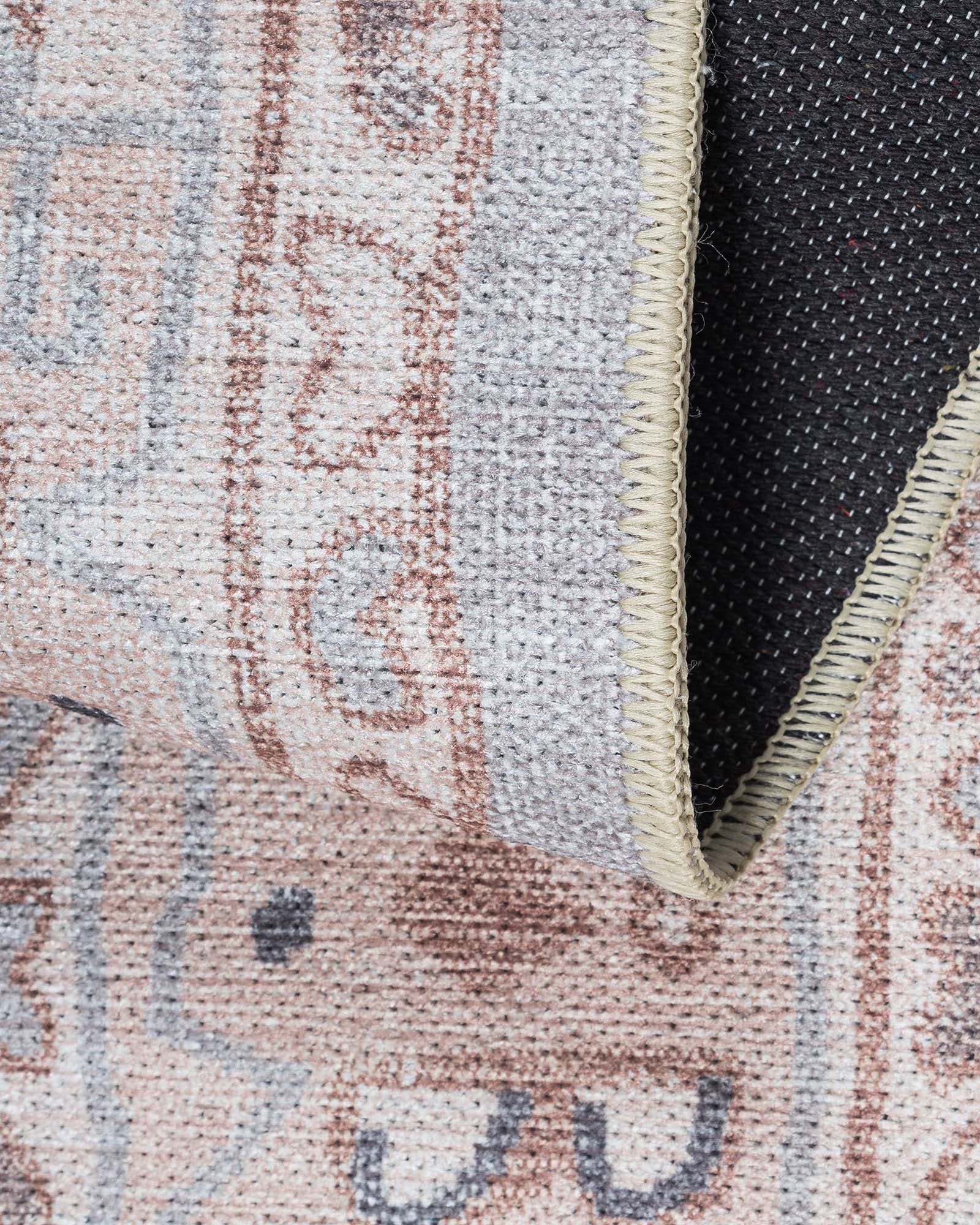
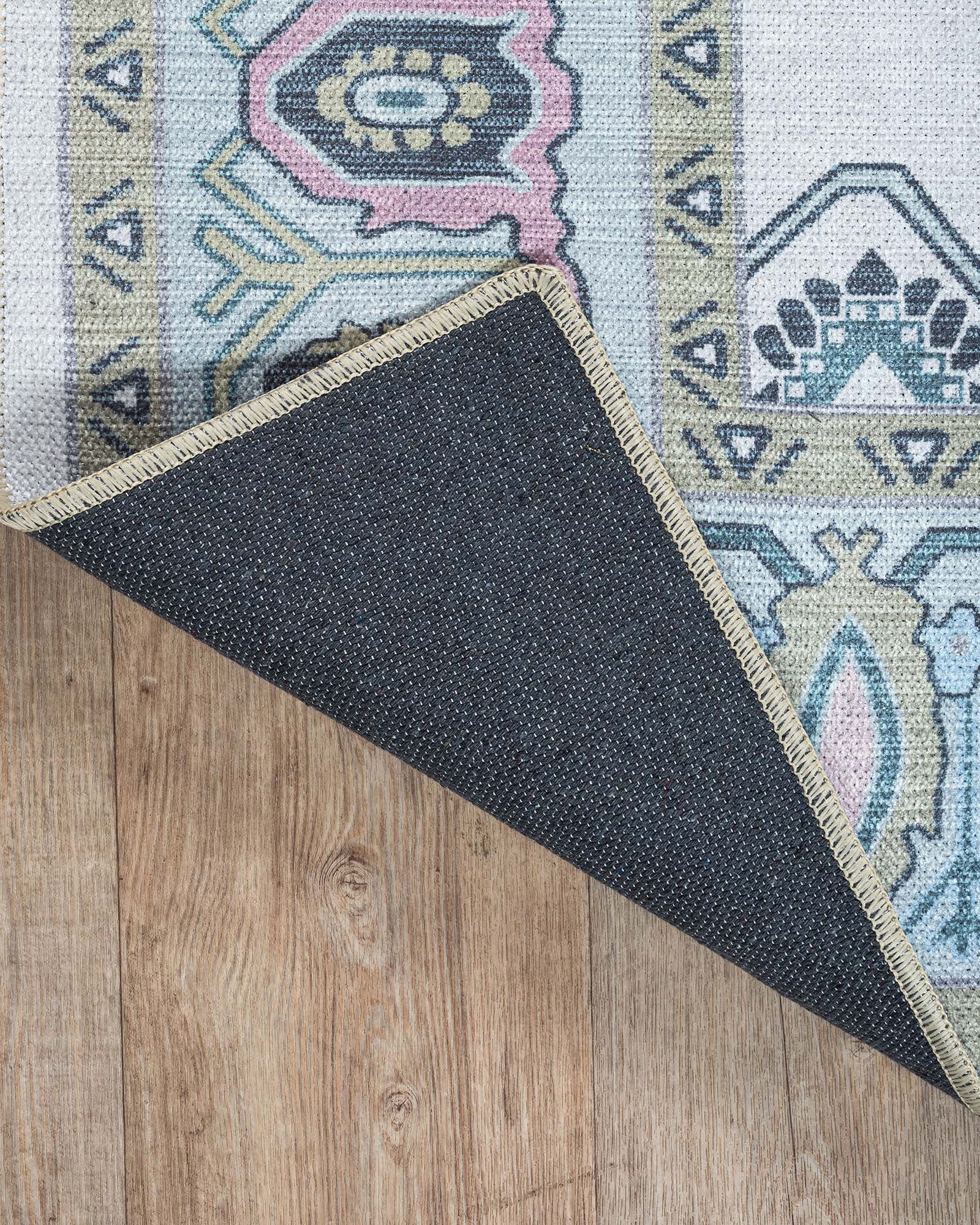
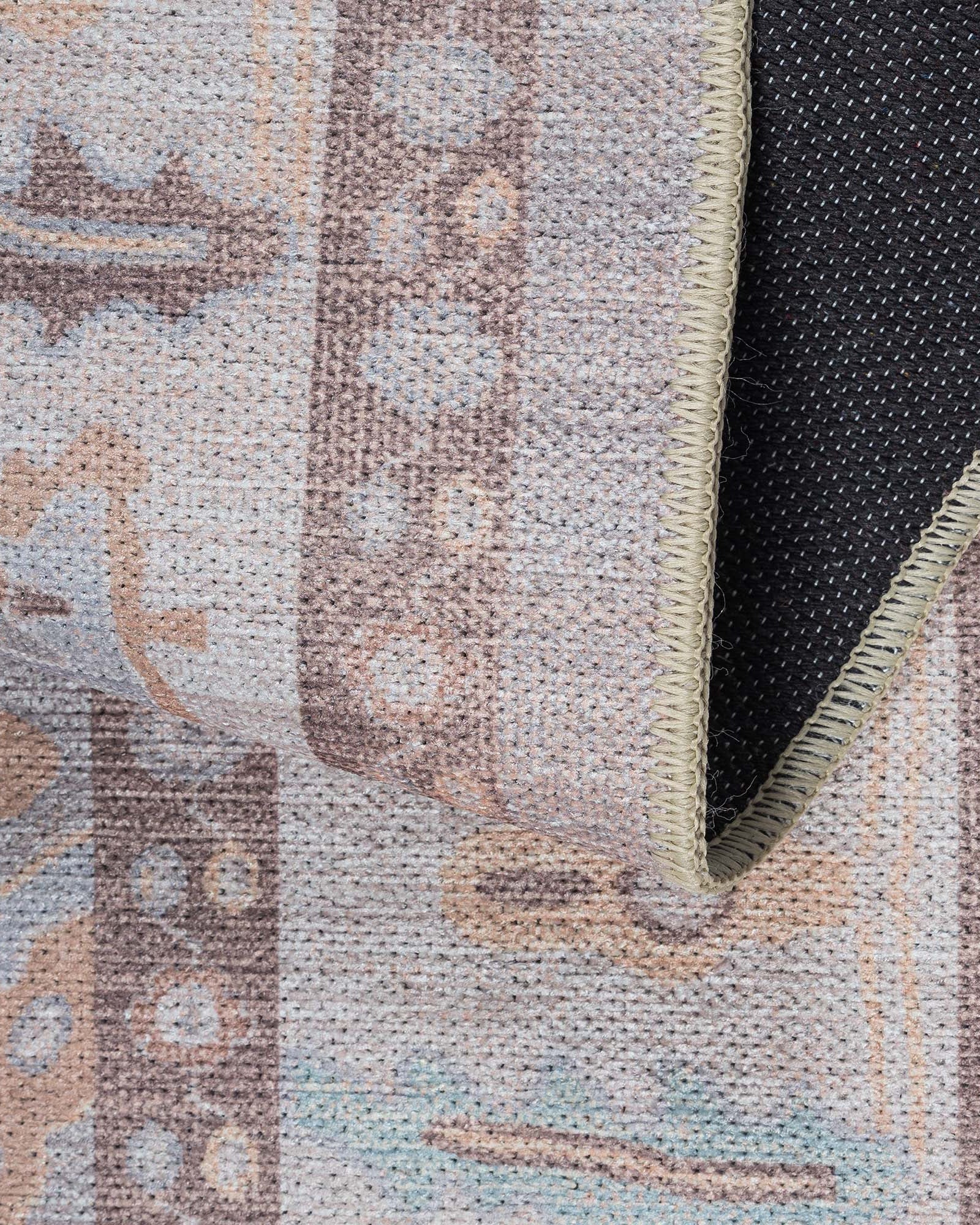
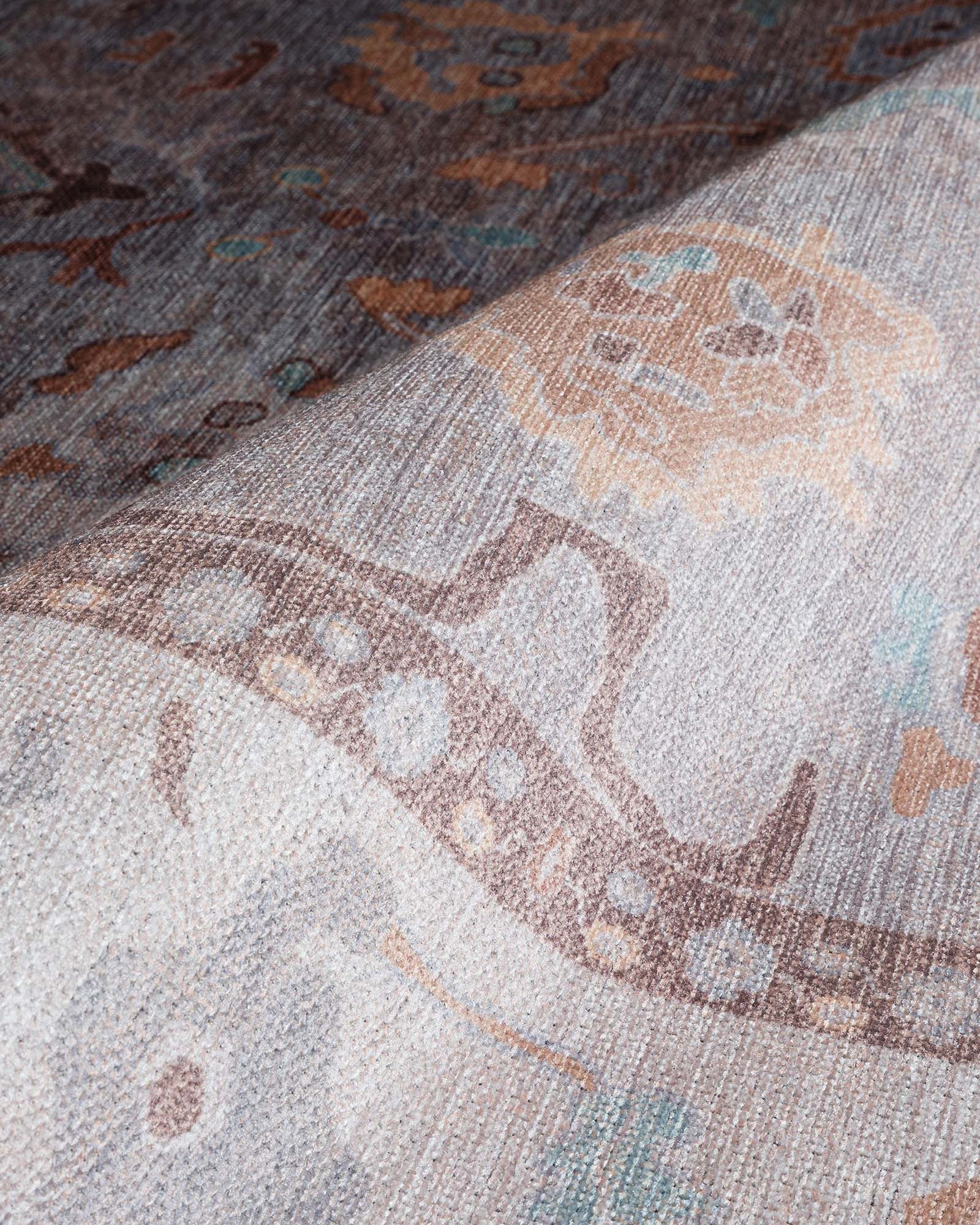
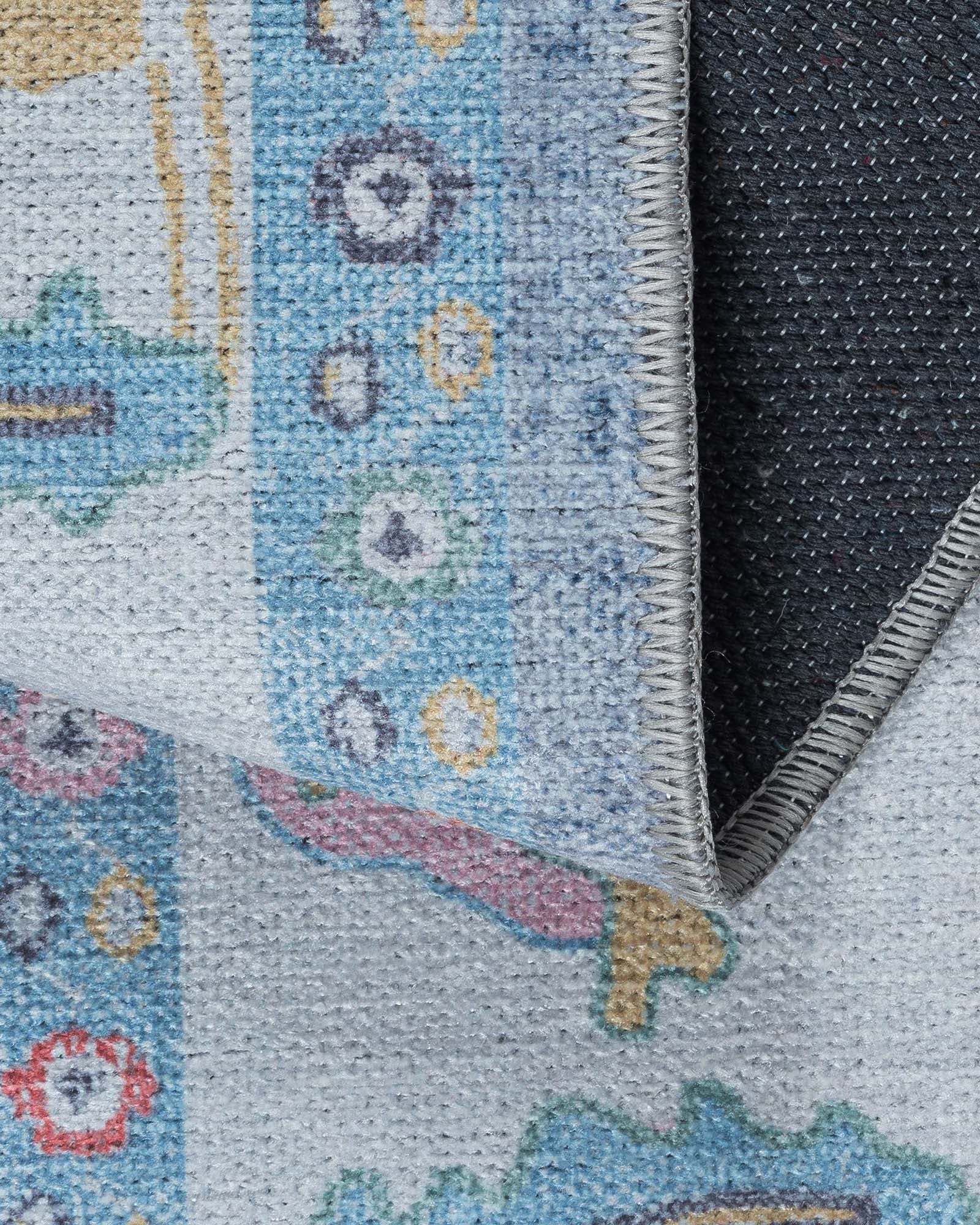
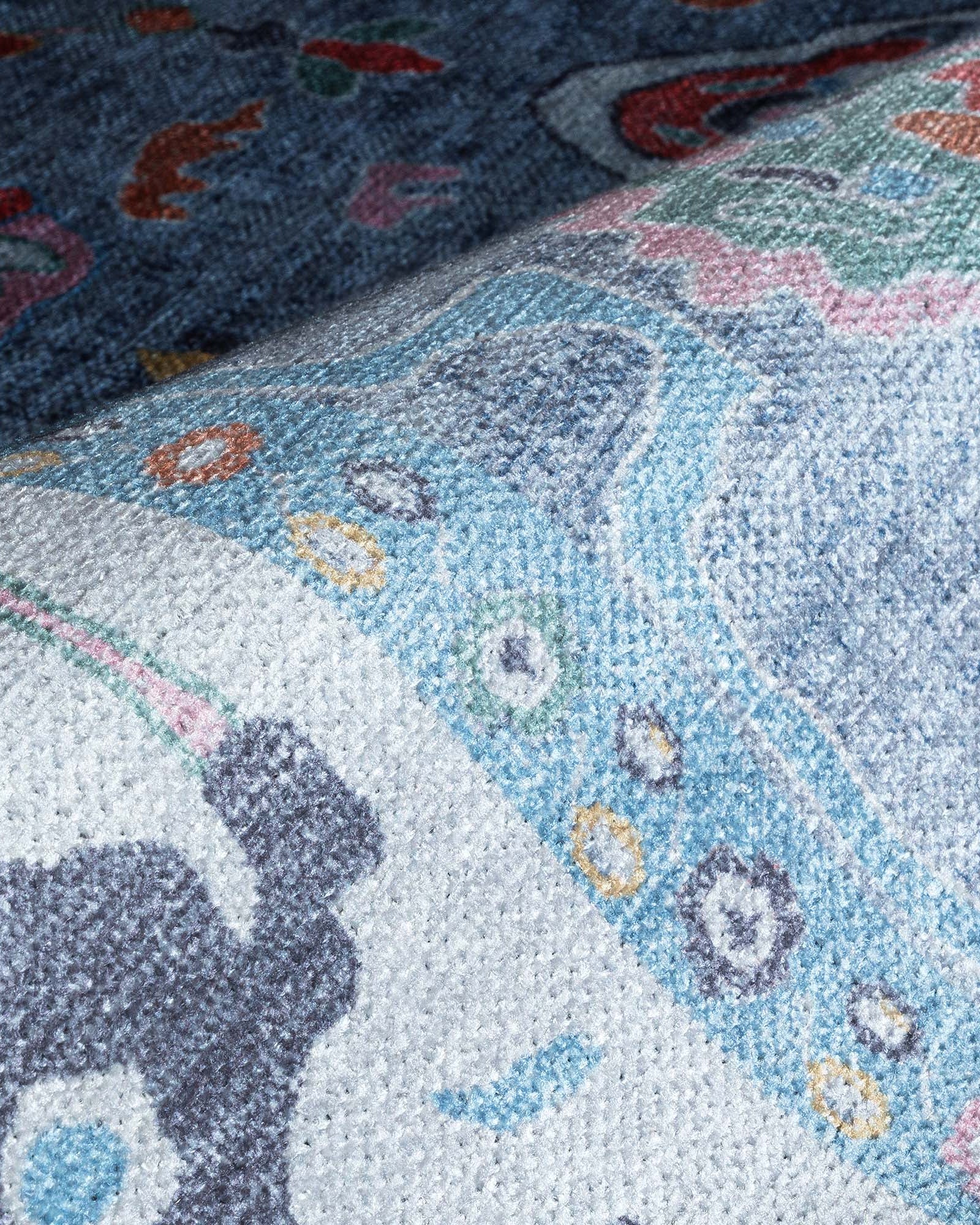
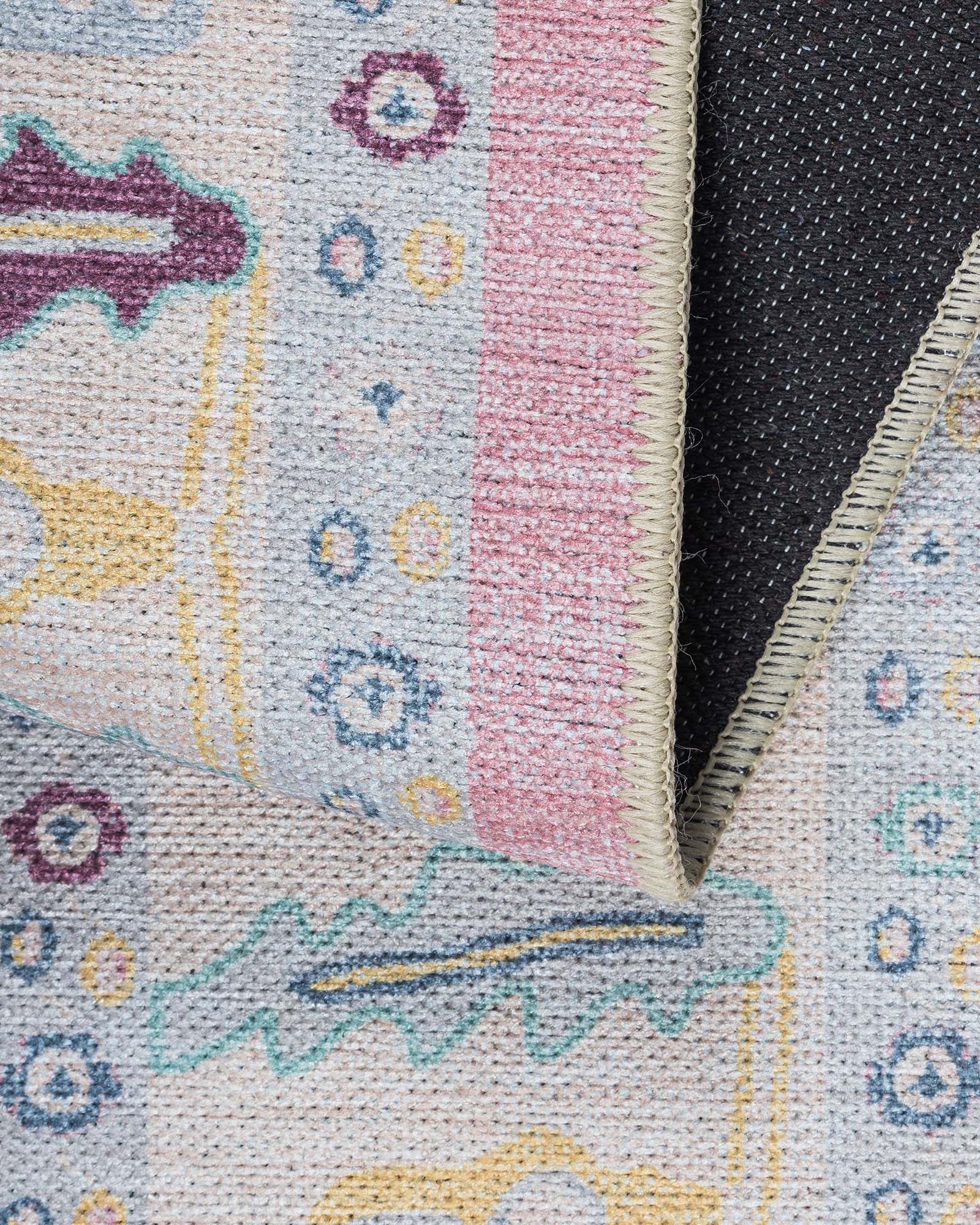
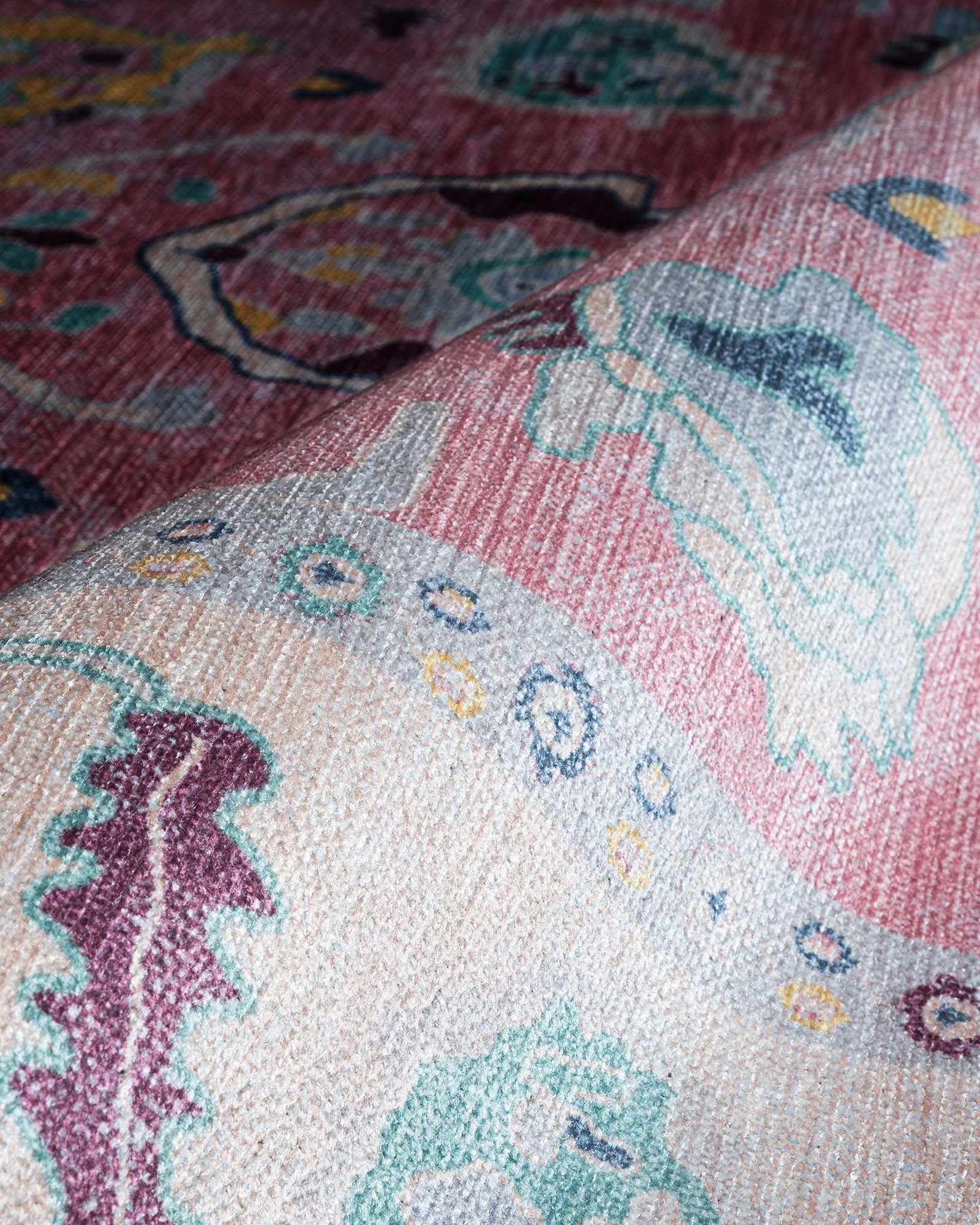
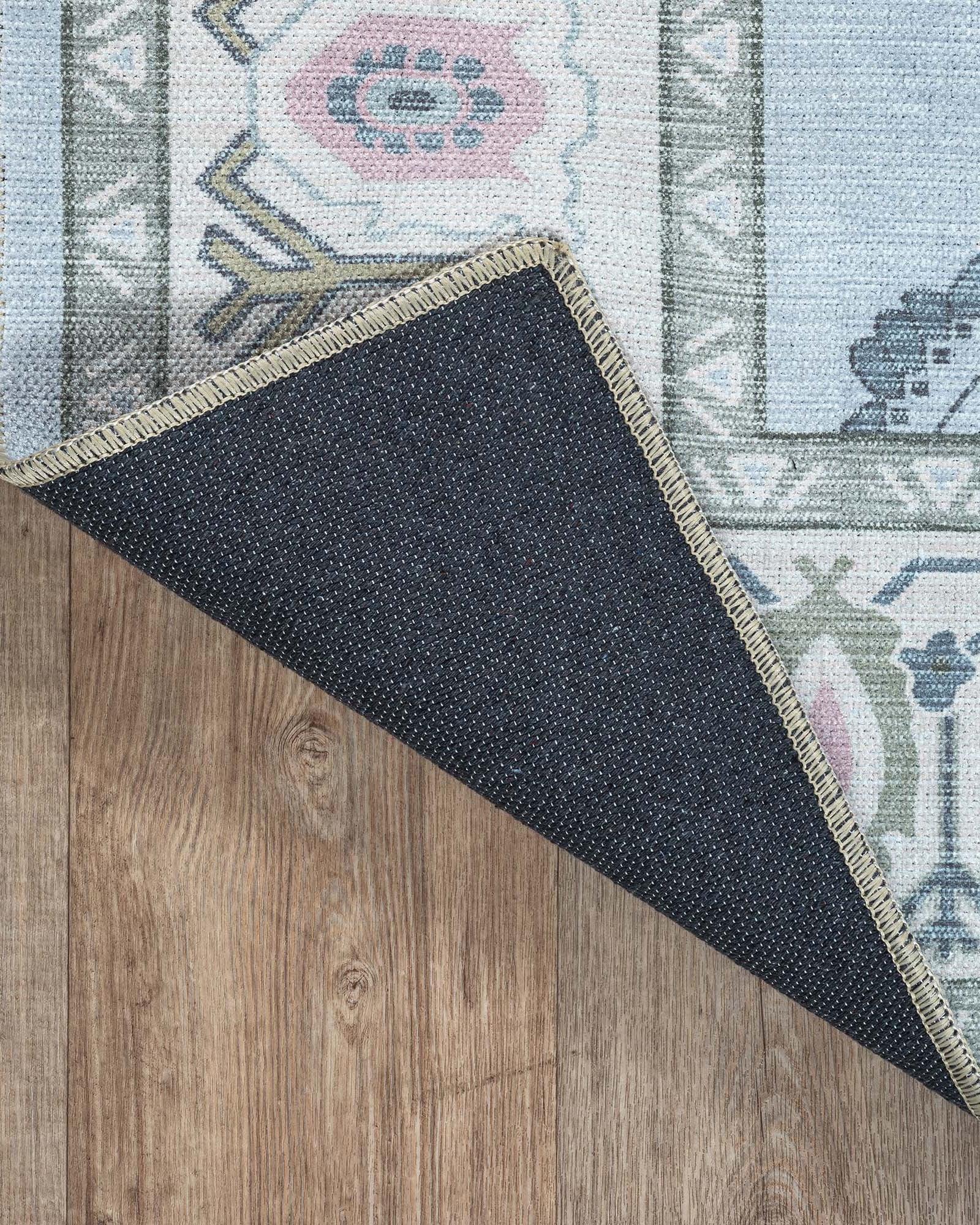
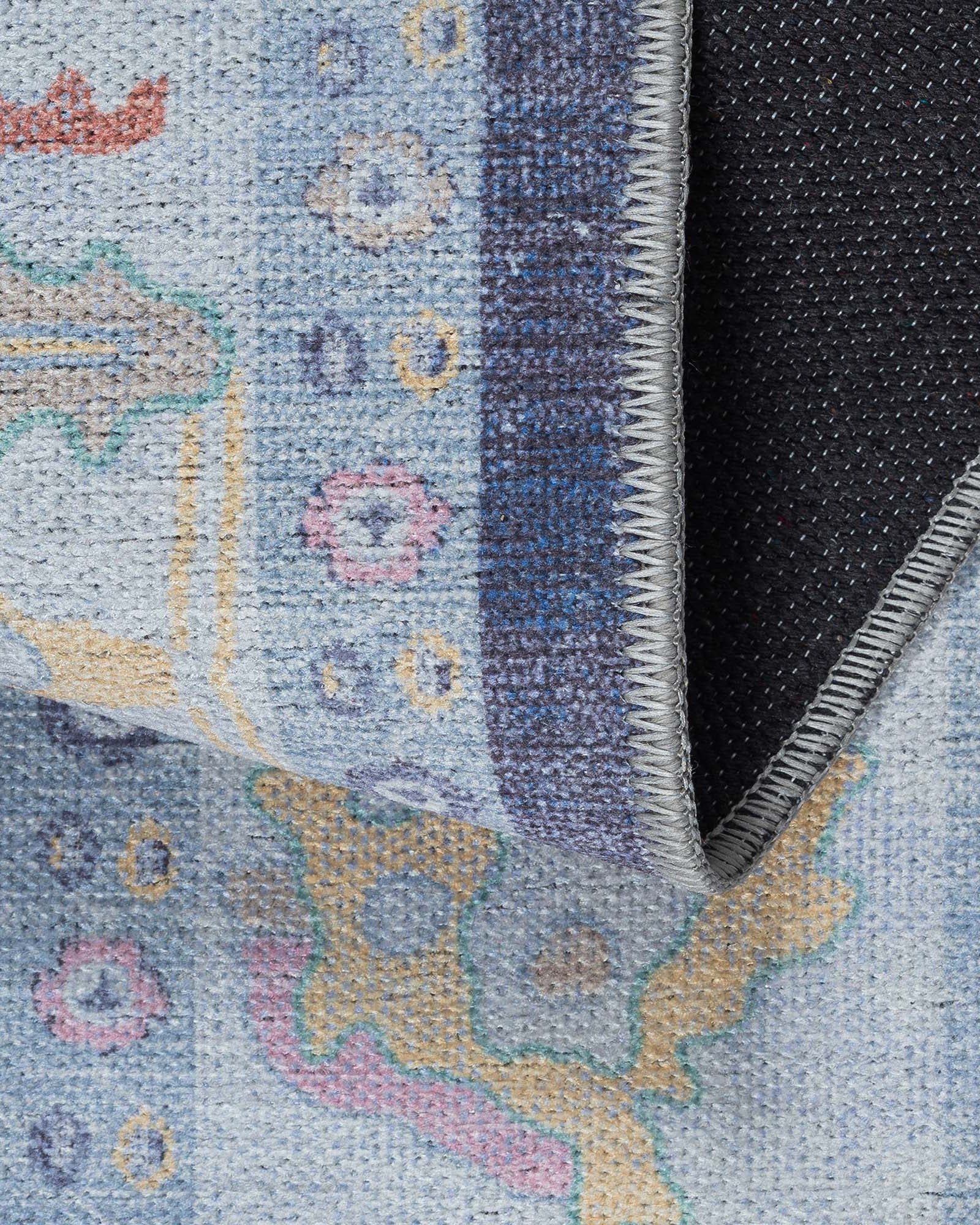
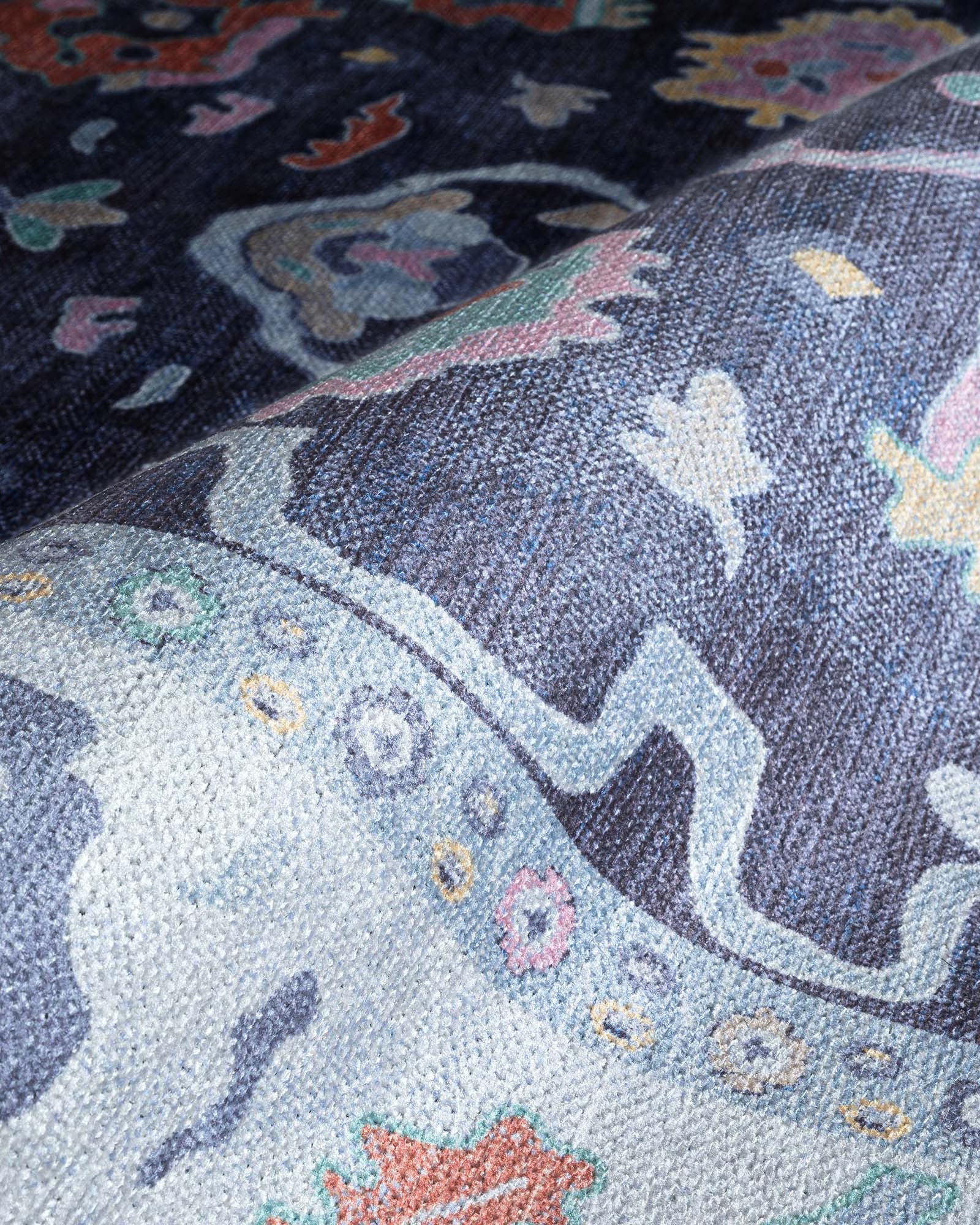
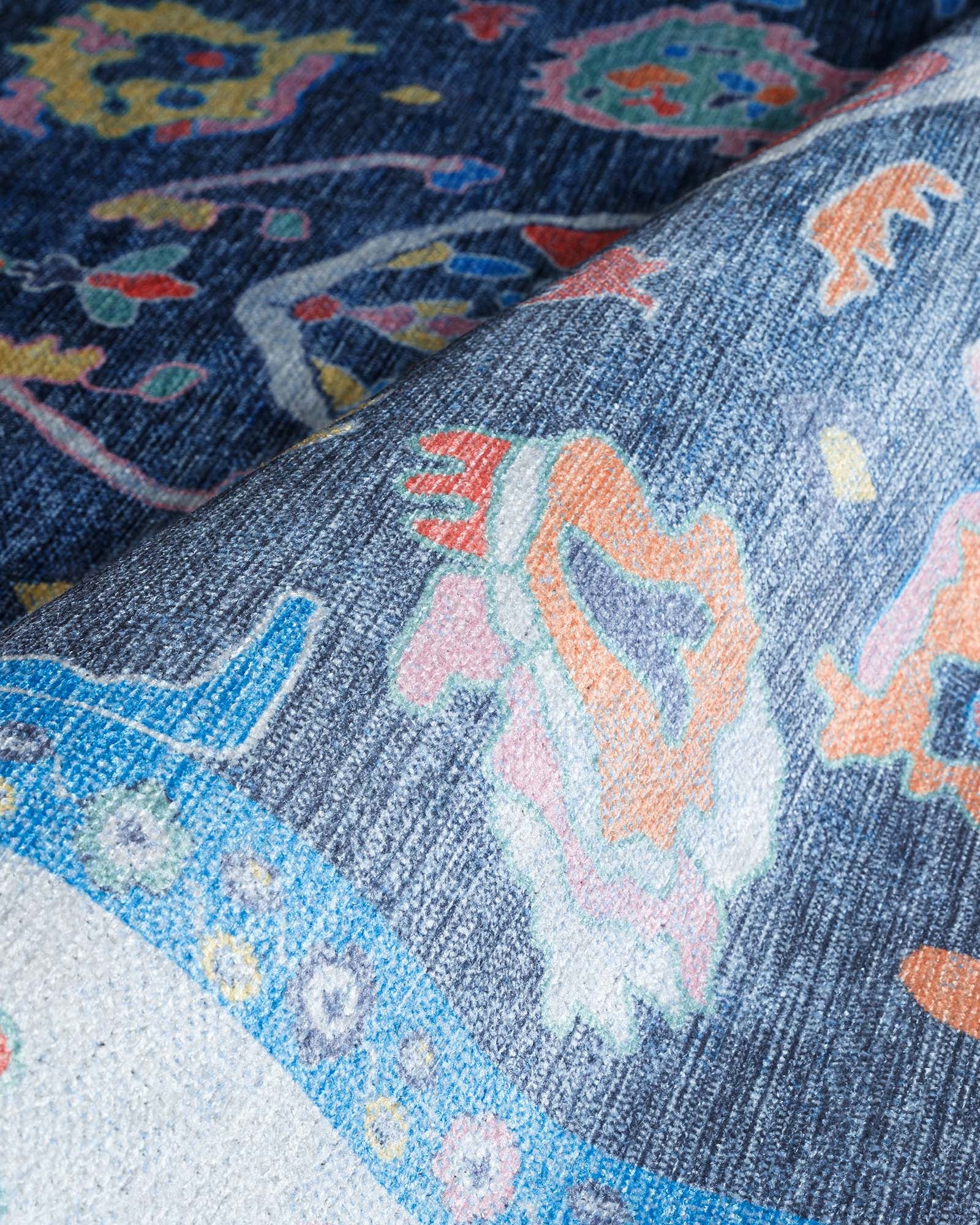
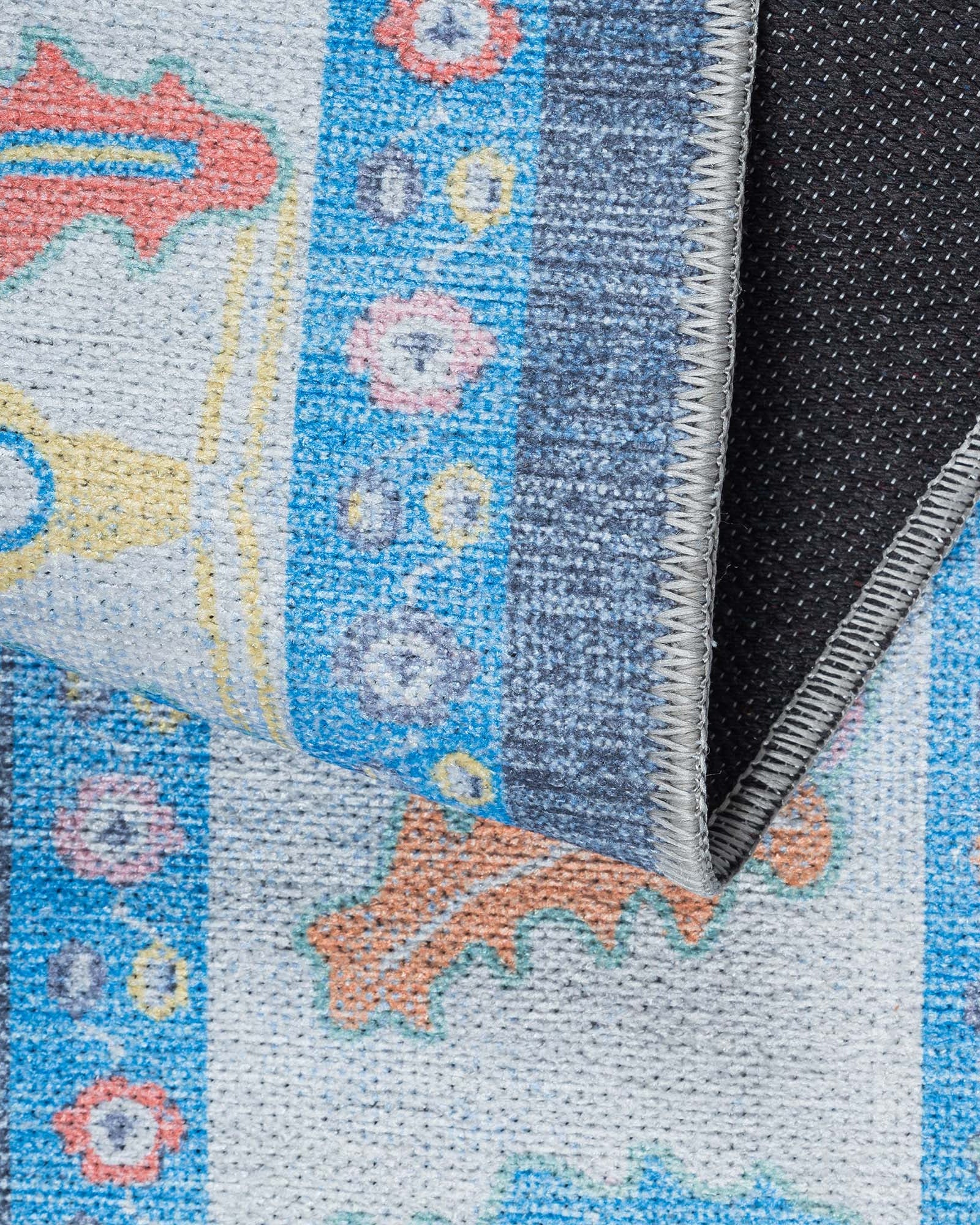
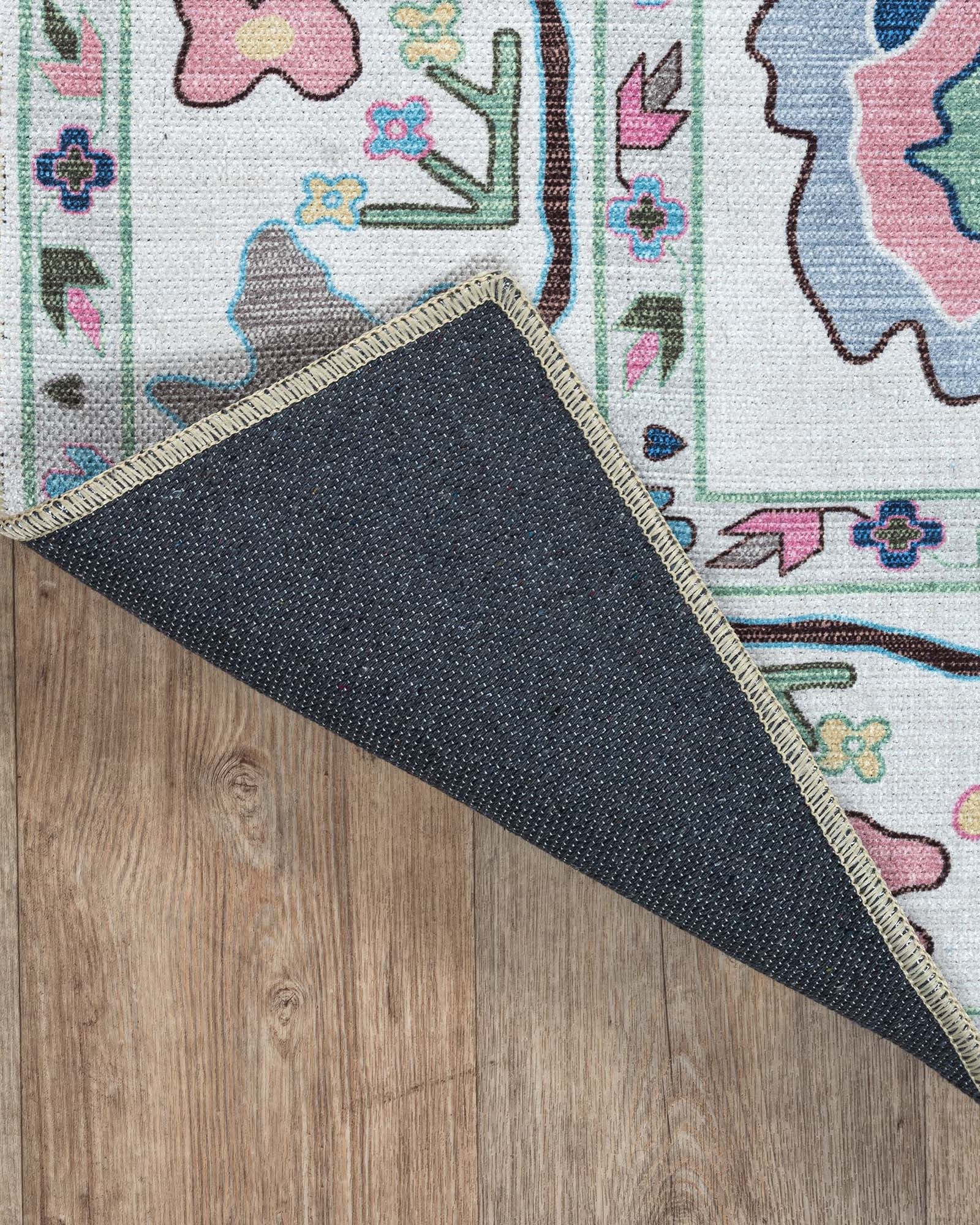
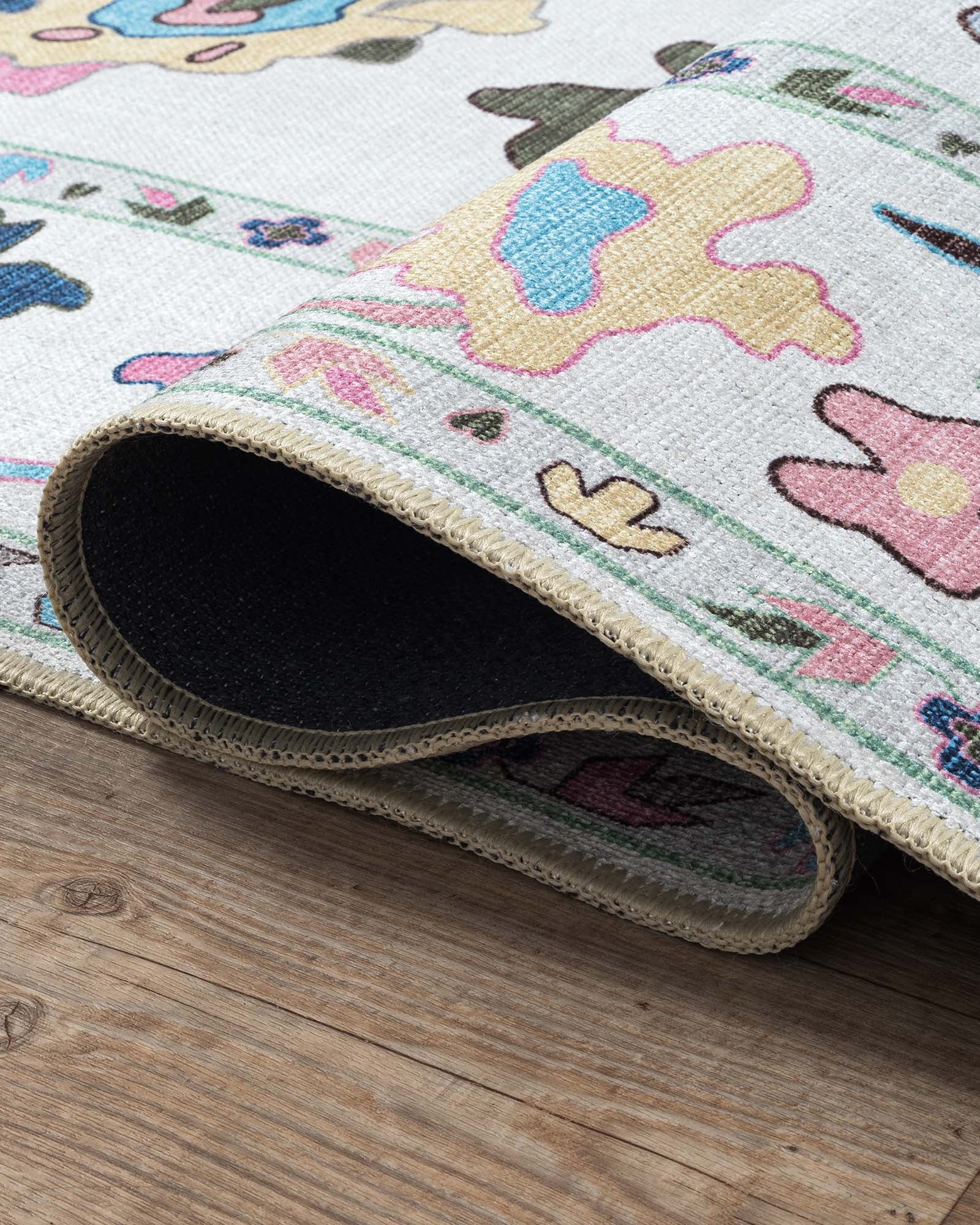
Turn the rug over. On an asymmetrical knot, the two ends sit at visibly different heights on the back — one strand fully wrapped and prominent, the other looping past and sitting lower. On a symmetrical knot, both ends appear as evenly matched bumps side by side. From the front, look at how curved elements resolve: asymmetrical knotting produces smoother, more gradual transitions along a curve, where symmetrical knotting tends to show a slightly stepped edge at the same scale of detail. Where the knot type can be confirmed, the product page states it directly.
Persian Knot Versus Turkish Knot
Neither technique is objectively better — each is suited to a different design goal, and the choice usually reflects the weaving tradition rather than a quality judgment. The Persian knot's asymmetry favours fine, curvilinear detail and high knot density, at a small cost in the even tension distribution the symmetrical knot provides. The Turkish knot favours a firmer, more geometric result. If your priority is intricate floral or medallion pattern, asymmetrical knotting is almost always the underlying technique.
Age, Condition and Measurement
Pieces are grouped as antique at over eighty years, vintage at roughly forty to eighty, and semi-vintage below that. Every product page states the knot type directly, along with the estimated decade, origin where identifiable, foundation type, exact measured dimensions and a plain condition note. Expect the honest wear found throughout handmade collections — lower pile in traffic lanes, softened selvages, occasional old repairs. Sizes are never standard; order against the measurements shown.
Care
Vacuum with the beater bar off or raised and keep it off the fringe. Use a rug pad on hard floors. Rotate the rug twice a year so sunlight and footfall distribute evenly. Blot spills immediately with a white cloth and plain water, pressing rather than rubbing. Avoid home carpet-cleaning machines and steam cleaners, which can felt wool and bleed aged natural dyes. For deep cleaning, use a professional rug washer experienced with finely knotted hand-woven wool.